AB 2318: Law enforcement: facilitating medical care.
- Session Year: 2025-2026
- House: Assembly
- Latest Version Date: 2026-09-29
Current Status:
Passed
(2026-09-29: Chaptered by Secretary of State - Chapter 747, Statutes of 2026.)
Introduced
In Committee
Awaiting First Chamber Vote
Passed First Chamber
In Committee
Awaiting Second Chamber Vote
Passed Second Chamber
Enacted
Existing law generally provides for the regulation of law enforcement agencies and requires specified law enforcement agencies to maintain policies on, among other things, use of force, hate crimes, and gun violence restraining orders. Existing law requires the Commission on Peace Officer Standards and Training to establish and keep updated a field training officer course relating to competencies of the field training program and police training program that addresses how to interact with persons with certain conditions.
This bill would make it unlawful for a law enforcement officer to deny, delay, obstruct, or fail to facilitate access to medical evaluation or treatment for an individual under law enforcement control, but who is not in the custody of, or detained by, the Department of Corrections and Rehabilitation, if it is safe and reasonable to provide access to treatment and a medical professional has been requested or is present and is willing to render care to the individual. If access to medical evaluation or treatment is denied or delayed when a medical professional is present and is willing to assist, the bill would require law enforcement to document the basis of the denial within 72 hours of the incident, as specified. The bill would authorize administrative discipline, including suspension or termination, against a law enforcement officer who violates those provisions. By creating a new crime and by increasing the duties on local law enforcement relating to reporting, the bill would impose a state-mandated local program.
The California Constitution requires the state to reimburse local agencies and school districts for certain costs mandated by the state. Statutory provisions establish procedures for making that reimbursement.
This bill would provide that with regard to certain mandates no reimbursement is required by this act for a specified reason.
With regard to any other mandates, this bill would provide that, if the Commission on State Mandates determines that the bill contains costs so mandated by the state, reimbursement for those costs shall be made pursuant to the statutory provisions noted above.
Existing law generally provides for the regulation of law enforcement agencies and requires specified law enforcement agencies to maintain policies on, among other things, use of force, hate crimes, and gun violence restraining orders. Existing law requires the Commission on Peace Officer Standards and Training to establish and keep updated a field training officer course relating to competencies of the field training program and police training program that addresses how to interact with persons with certain conditions.
This bill would make it unlawful for a law enforcement officer to deny, delay, obstruct, or fail to facilitate access to medical evaluation or treatment for an individual under law enforcement control, but who is not in the custody of, or detained in, a county jail or the state prison, by, the Department of Corrections and Rehabilitation, if it is safe and reasonable to provide access to treatment and a medical professional has been requested or is present and is willing to render care to the individual. If access to medical evaluation or treatment is denied or delayed when a medical professional is present and is willing to assist, the bill would require law enforcement to document the basis of the denial within 72 hours of the incident, as specified. The bill would authorize administrative discipline, including suspension or termination, against a law enforcement officer who violates those provisions. By creating a new crime and by increasing the duties on local law enforcement relating to reporting, the bill would impose a state-mandated local program.
The California Constitution requires the state to reimburse local agencies and school districts for certain costs mandated by the state. Statutory provisions establish procedures for making that reimbursement.
This bill would provide that with regard to certain mandates no reimbursement is required by this act for a specified reason.
With regard to any other mandates, this bill would provide that, if the Commission on State Mandates determines that the bill contains costs so mandated by the state, reimbursement for those costs shall be made pursuant to the statutory provisions noted above.
Existing law generally provides for the regulation of law enforcement agencies and requires specified law enforcement agencies to maintain policies on, among other things, use of force, hate crimes, and gun violence restraining orders. Existing law requires the Commission on Peace Officer Standards and Training to establish and keep updated a field training officer course relating to competencies of the field training program and police training program that addresses how to interact with persons with certain conditions.
This bill would make it unlawful for a law enforcement officer to deny, delay, obstruct, or fail to facilitate access to medical evaluation or treatment for an individual under law enforcement control, but who is not in the custody of, or detained in, a county jail or the state prison, if it is safe and reasonable to provide access to treatment and a medical professional has been requested or is present or has been requested. and is willing to render care to the individual. If access to medical evaluation or treatment is denied or delayed when a medical professional is present, present and is willing to assist, the bill would require law enforcement to provide written documentation for document the basis of a the denial within 72 hours of the incident, as specified. The bill would authorize administrative discipline, including suspension or termination, against a law enforcement officer who violates those provisions. The bill would require the Commission on Peace Officer Standards and Training to incorporate guidance on those provisions into law enforcement training curricula. By creating a new crime and by increasing the duties on local law enforcement relating to reporting, the bill would impose a state-mandated local program.
The California Constitution requires the state to reimburse local agencies and school districts for certain costs mandated by the state. Statutory provisions establish procedures for making that reimbursement.
This bill would provide that with regard to certain mandates no reimbursement is required by this act for a specified reason.
With regard to any other mandates, this bill would provide that, if the Commission on State Mandates determines that the bill contains costs so mandated by the state, reimbursement for those costs shall be made pursuant to the statutory provisions noted above.
Existing law generally provides for the regulation of law enforcement agencies and requires specified law enforcement agencies to maintain policies on, among other things, use of force, hate crimes, and gun violence restraining orders. Existing law requires the Commission on Peace Officer Standards and Training to establish and keep updated a field training officer course relating to competencies of the field training program and police training program that addresses how to interact with persons with certain conditions.
This bill would make it unlawful for a law enforcement officer to deny, delay, obstruct, or fail to facilitate access to medical evaluation or treatment for an individual in custody, detention, or under law enforcement control control, but who is not in the custody of, or detained in, a county jail or the state prison, if it is safe and reasonable to provide access to treatment and a medical professional is present or has been requested. If access is denied or delayed when a medical professional is present, the bill would require law enforcement to provide written documentation for the basis of a denial within 72 hours of the incident, as specified. The bill would authorize administrative discipline, including suspension or termination, against a law enforcement officer who violates those provisions. The bill would require the Commission on Peace Officer Standards and Training to incorporate guidance on those provisions into law enforcement training curricula. By creating a new crime and by increasing the duties on local law enforcement relating to reporting, the bill would impose a state-mandated local program.
The California Constitution requires the state to reimburse local agencies and school districts for certain costs mandated by the state. Statutory provisions establish procedures for making that reimbursement.
This bill would provide that with regard to certain mandates no reimbursement is required by this act for a specified reason.
With regard to any other mandates, this bill would provide that, if the Commission on State Mandates determines that the bill contains costs so mandated by the state, reimbursement for those costs shall be made pursuant to the statutory provisions noted above.
Existing law generally provides for the regulation of law enforcement agencies and requires specified law enforcement agencies to maintain policies on, among other things, use of force, hate crimes, and gun violence restraining orders. Existing law requires the Commission on Peace Officer Standards and Training to establish and keep updated a field training officer course relating to competencies of the field training program and police training program that addresses how to interact with persons with certain conditions.
Under existing law, the Tom Bane Civil Rights Act, if a person or persons, whether or not acting under color of law, interferes or attempts to interfere, by threats, intimidation, or coercion, with the exercise or enjoyment by any individual or individuals of rights secured by the Constitution or laws of the United States, or of the rights secured by the Constitution or laws of this state, the Attorney General, or any district attorney or city attorney, is authorized to bring a civil action for injunctive and other appropriate equitable relief in the name of the people of the State of California, in order to protect the exercise or enjoyment of the right or rights secured. Under the act, an individual may also institute and prosecute in their own name and on their own behalf a civil action for damages, as described, for any resulting interference or attempt at interference of the individuals exercise or enjoyment of rights secured by the Constitution or laws of the United States or this state. The act authorizes the court to award the petitioner or plaintiff reasonable attorneys fees in addition to any damages, injunction, or other equitable relief awarded in these civil actions.This bill would require law enforcement, as defined, to ensure that a medical professional is allowed reasonable access to provide emergency care once the scene of an incident is secure. The bill would make it unlawful for law enforcement to deny, delay, obstruct, or fail to facilitate access to a medical evaluation or treatment for an individual in custody or detention, or under law enforcement control, as specified. The bill would require law enforcement, if disclosure would not compromise an ongoing investigation or officer safety, to provide documentation, as specified, identifying the basis for denying or delaying access to medical treatment to specified entities within 72 hours of the incident, as specified. The bill would authorize various punishments against a law enforcement officer who violates those provisions including, among other things, administrative discipline and criminal prosecution. make it unlawful for a law enforcement officer to deny, delay, obstruct, or fail to facilitate access to medical evaluation or treatment for an individual in custody, detention, or under law enforcement control if it is safe and reasonable to provide access to treatment and a medical professional is present or has been requested. If access is denied or delayed when a medical professional is present, the bill would require law enforcement to provide written documentation for the basis of a denial within 72 hours of the incident, as specified. The bill would authorize administrative discipline, including suspension or termination, against a law enforcement officer who violates those provisions. The bill would require the Commission on Peace Officer Standards and Training to incorporate guidance on those provisions into law enforcement training curricula. By creating a new crime and by increasing the duties on local law enforcement relating to reporting, the bill would impose a state-mandated local program.
The California Constitution requires the state to reimburse local agencies and school districts for certain costs mandated by the state. Statutory provisions establish procedures for making that reimbursement.
This bill would provide that with regard to certain mandates no reimbursement is required by this act for a specified reason.
With regard to any other mandates, this bill would provide that, if the Commission on State Mandates determines that the bill contains costs so mandated by the state, reimbursement for those costs shall be made pursuant to the statutory provisions noted above.
Existing law generally provides for the regulation of law enforcement agencies and requires specified law enforcement agencies to maintain policies on, among other things, use of force, hate crimes, and gun violence restraining orders. Existing law requires the Commission on Peace Officer Standards and Training to establish and keep updated a field training officer course relating to competencies of the field training program and police training program that addresses how to interact with persons with certain conditions.
Under existing law, the Tom Bane Civil Rights Act, if a person or persons, whether or not acting under color of law, interferes or attempts to interfere, by threats, intimidation, or coercion, with the exercise or enjoyment by any individual or individuals of rights secured by the Constitution or laws of the United States, or of the rights secured by the Constitution or laws of this state, the Attorney General, or any district attorney or city attorney, is authorized to bring a civil action for injunctive and other appropriate equitable relief in the name of the people of the State of California, in order to protect the exercise or enjoyment of the right or rights secured. Under the act, an individual may also institute and prosecute in their own name and on their own behalf a civil action for damages, as described, for any resulting interference or attempt at interference of the individuals exercise or enjoyment of rights secured by the Constitution or laws of the United States or this state. The act authorizes the court to award the petitioner or plaintiff reasonable attorneys fees in addition to any damages, injunction, or other equitable relief awarded in these civil actions.
This bill would require law enforcement, as defined, to ensure that a medical professional is allowed reasonable access to provide emergency care once the scene of an incident is secure. The bill would make it unlawful for law enforcement to deny, delay, obstruct, or fail to facilitate access to a medical evaluation or treatment for an individual in custody or detention, or under law enforcement control, as specified. The bill would require law enforcement, if disclosure would not compromise an ongoing investigation or officer safety, to provide documentation, as specified, identifying the basis for denying or delaying access to medical treatment to specified entities within 72 hours of the incident, as specified. The bill would authorize various punishments against a law enforcement officer who violates those provisions including, among other things, administrative discipline and criminal prosecution. By creating a new crime and by increasing the duties on local law enforcement relating to reporting, the bill would impose a state-mandated local program.
The California Constitution requires the state to reimburse local agencies and school districts for certain costs mandated by the state. Statutory provisions establish procedures for making that reimbursement.
This bill would provide that with regard to certain mandates no reimbursement is required by this act for a specified reason.
With regard to any other mandates, this bill would provide that, if the Commission on State Mandates determines that the bill contains costs so mandated by the state, reimbursement for those costs shall be made pursuant to the statutory provisions noted above.
(a)For the purposes of this section, the following definitions apply:
(1)Law enforcement means any federal, state, or local law enforcement, acting under the color of the law, to the extent permitted by federal law.
(2)Medical professional means an individual who is qualified by education, training, licensure, or regulation to perform a professional medical service within their scope of practice.
(b)(1)It shall be unlawful for any law enforcement officer to deny, delay, obstruct, or fail to facilitate access to medical evaluation or treatment for an individual under law enforcement control if it is safe and reasonable to provide access to the treatment and a medical professional has been requested or is present and is willing to render care to the individual.
(2)This subdivision does not apply to an individual in the custody of, or detained by, the Department of Corrections and Rehabilitation.
(c)(1)To the extent documenting the incident does not compromise an ongoing criminal investigation or officer safety, if access to medical evaluation or treatment is denied or delayed when a medical professional is present and is willing to assist, law enforcement shall document the basis for the denial within 72 hours of the incident and include the following information:
(A)The basis for denial or delay.
(B)A detailed incident narrative that includes, but is not limited to, time of the incident, location of the incident, and personnel involved in the incident.
(C)Any available supporting evidence, including body-worn camera footage, radio transmissions, or written incident reports.
(2)Reporting pursuant to this subdivision shall be provided to the relevant civilian oversight body responsible for reviewing law enforcement conduct or the Office of the Inspector General.
(d)Failure to comply with subdivision (b) or (c) may result in administrative discipline, including suspension or termination.
SEC. 2.No reimbursement is required by this act pursuant to Section 6 of Article XIIIB of the California Constitution for certain costs that may be incurred by a local agency or school district because, in that regard, this act creates a new crime or infraction, eliminates a crime or infraction, or changes the penalty for a crime or infraction, within the meaning of Section 17556 of the Government Code, or changes the definition of a crime within the meaning of Section 6 of Article XIIIB of the California Constitution.
However, if the Commission on State Mandates determines that this act contains other costs mandated by the state, reimbursement to local agencies and school districts for those costs shall be made pursuant to Part 7 (commencing with Section 17500) of Division 4 of Title 2 of the Government Code.
(a)For the purposes of this section, the following definitions apply:
(1)Law enforcement means any federal, state, or local law enforcement, acting under the color of the law, to the extent permitted by federal law.
(2)Medical professional means an individual who is qualified by education, training, licensure, or regulation to perform a professional medical service within their scope of practice.
(b)(1)It shall be unlawful for any law enforcement officer to deny, delay, obstruct, or fail to facilitate access to medical evaluation or treatment for an individual under law enforcement control if it is safe and reasonable to provide access to the treatment and a medical professional has been requested or is present and is willing to render care to the individual.
(2)This subdivision does not apply to an individual in the custody of, or detained in, a county jail or the state prison. by, the Department of Corrections and Rehabilitation.
(c)(1)To the extent documenting the incident does not compromise an ongoing criminal investigation or officer safety, if access to medical evaluation or treatment is denied or delayed when a medical professional is present and is willing to assist, law enforcement shall document the basis for the denial within 72 hours of the incident and include the following information:
(A)The basis for denial or delay.
(B)A detailed incident narrative that includes, but is not limited to, time of the incident, location of the incident, and personnel involved in the incident.
(C)Any available supporting evidence, including body-worn camera footage, radio transmissions, or written incident reports.
(2)Reporting pursuant to this subdivision shall be provided to the relevant civilian oversight body responsible for reviewing law enforcement conduct, conduct or the Office of the Inspector General, or the Attorney General.
(d)Failure to comply with subdivision (b) or (c) may result in administrative discipline, including suspension or termination.
SEC. 2.No reimbursement is required by this act pursuant to Section 6 of Article XIIIB of the California Constitution for certain costs that may be incurred by a local agency or school district because, in that regard, this act creates a new crime or infraction, eliminates a crime or infraction, or changes the penalty for a crime or infraction, within the meaning of Section 17556 of the Government Code, or changes the definition of a crime within the meaning of Section 6 of Article XIIIB of the California Constitution.
However, if the Commission on State Mandates determines that this act contains other costs mandated by the state, reimbursement to local agencies and school districts for those costs shall be made pursuant to Part 7 (commencing with Section 17500) of Division 4 of Title 2 of the Government Code.
(a)For the purposes of this section, the following definitions apply:
(1)Law enforcement means any federal, state, or local law enforcement, acting under the color of the law, to the extent permitted by federal law.
(2)Medical professional means an individual licensed or certified to provide emergency medical care. who is qualified by education, training, licensure, or regulation to perform a professional medical service within their scope of practice.
(b)(1)It shall be unlawful for any law enforcement officer to deny, delay, obstruct, or fail to facilitate access to medical evaluation or treatment for an individual under law enforcement control if it is safe and reasonable to provide access to the treatment and a medical professional has been requested or is present or has been requested. and is willing to render care to the individual.
(2)This subdivision does not apply to an individual in the custody of, or detained in, a county jail or the state prison.
(c)(1)To the extent disclosure documenting the incident does not compromise an ongoing criminal investigation or officer safety, if access to medical evaluation or treatment is denied or delayed when a medical professional is present, present and is willing to assist, law enforcement shall provide written documentation indicating document the basis for the denial within 72 hours of the incident that meets all of the following requirements: and include the following information:
(A)States the The basis for denial or delay.
(B)Identifies the specific threat relied upon.(C)Provides a(B)A detailed incident narrative that includes, but is not limited to, time of the incident, location of the incident, and personnel involved in the incident.
(D)Includes any(C)Any available supporting evidence, including body-worn camera footage, radio transmissions, or written incident reports.
(2)Reporting pursuant to this subdivision shall be provided to the relevant civilian oversight body responsible for reviewing law enforcement conduct, the Office of the Inspector General, or the Attorney General.
(d)Failure to comply with subdivision (b) or (c) may result in administrative discipline, including suspension or termination.
(e)The Commission on Peace Officer Standards and Training shall incorporate guidance on facilitating emergency medical access, scene security standards, and coordination with emergency medical services into law enforcement training curricula.SEC. 2.No reimbursement is required by this act pursuant to Section 6 of Article XIIIB of the California Constitution for certain costs that may be incurred by a local agency or school district because, in that regard, this act creates a new crime or infraction, eliminates a crime or infraction, or changes the penalty for a crime or infraction, within the meaning of Section 17556 of the Government Code, or changes the definition of a crime within the meaning of Section 6 of Article XIIIB of the California Constitution.
However, if the Commission on State Mandates determines that this act contains other costs mandated by the state, reimbursement to local agencies and school districts for those costs shall be made pursuant to Part 7 (commencing with Section 17500) of Division 4 of Title 2 of the Government Code.
(a)For the purposes of this section, the following definitions apply:
(1)Law enforcement means any federal, state, or local law enforcement, acting under the color of the law, to the extent permitted by federal law.
(2)Medical professional means an individual licensed or certified to provide emergency medical care.
(b)(1)It shall be unlawful for any law enforcement officer to deny, delay, obstruct, or fail to facilitate access to medical evaluation or treatment for an individual in custody, detention, or under law enforcement control if it is safe and reasonable to provide access to the treatment and a medical professional is present or has been requested.
(2)This subdivision does not apply to an individual in the custody of, or detained in, a county jail or the state prison.
(c)(1)To the extent disclosure does not compromise an ongoing criminal investigation or officer safety, if access is denied or delayed when a medical professional is present, law enforcement shall provide written documentation indicating the basis for denial within 72 hours of the incident that meets all of the following requirements:
(A)States the basis for denial or delay.
(B)Identifies the specific threat relied upon.
(C)Provides a detailed incident narrative that includes, but is not limited to, time of the incident, location of the incident, and personnel involved in the incident.
(D)Includes any available supporting evidence, including body-worn camera footage, radio transmissions, or written incident reports.
(2)Reporting pursuant to this subdivision shall be provided to the relevant civilian oversight body responsible for reviewing law enforcement conduct, the Office of the Inspector General, or the Attorney General.
(d)Failure to comply with subdivision (b) or (c) may result in administrative discipline, including suspension or termination.
(e)The Commission on Peace Officer Standards and Training shall incorporate guidance on facilitating emergency medical access, scene security standards, and coordination with emergency medical services into law enforcement training curricula.
SEC. 2.No reimbursement is required by this act pursuant to Section 6 of Article XIIIB of the California Constitution for certain costs that may be incurred by a local agency or school district because, in that regard, this act creates a new crime or infraction, eliminates a crime or infraction, or changes the penalty for a crime or infraction, within the meaning of Section 17556 of the Government Code, or changes the definition of a crime within the meaning of Section 6 of Article XIIIB of the California Constitution.
However, if the Commission on State Mandates determines that this act contains other costs mandated by the state, reimbursement to local agencies and school districts for those costs shall be made pursuant to Part 7 (commencing with Section 17500) of Division 4 of Title 2 of the Government Code.
(a)For the purposes of this section, the following definitions apply:
(1)Law enforcement means any federal, state, or local law enforcement, acting under the color of the law, to the extent permitted by federal law.
(2)Medical professional means an individual licensed or certified to provide emergency medical care.
(3)Secure means that law enforcement has determined that no imminent threat to public safety exists based on a documented risk assessment.(b)If law enforcement has secured a scene following an injury causing incident, officers shall ensure that a medical professional is allowed reasonable access to provide emergency care once the scene is secure.(c)Once the scene is secure, law enforcement shall not unreasonably deny access to a medical professional who identifies themself and presents credentials.(d)Law enforcement shall coordinate with emergency medical services to prioritize rapid patient assessment and lifesaving interventions, including, but not limited to, requesting emergency medical services immediately once the scene is secured after law enforcement has determined, or reasonably should have determined, that a person has sustained a critical injury.(e)(b)It shall be unlawful for any law enforcement officer to deny, delay, obstruct, or fail to facilitate access to medical evaluation or treatment for an individual in custody, detention, or under law enforcement control if it is safe and reasonable to provide access to the treatment and a medical professional is present or has been requested, without proper written justification based on a specific and articulable safety necessity. requested.
(f)(c)(1)To the extent disclosure does not compromise an ongoing criminal investigation or officer safety, if access is denied or delayed when a medical professional is present, law enforcement shall provide written documentation indicating the basis for denial within 72 hours of the incident that meets all of the following requirements:
(A)States the basis for denial or delay.
(B)Identifies the specific threat relied upon.
(C)Provides a detailed incident narrative that includes, but is not limited to, time of the incident, location of the incident, and personnel involved in the incident.
(D)Includes any available supporting evidence, including body-worn camera footage, radio transmissions, or written incident reports.
(2)Reporting pursuant to this subdivision shall be provided to the relevant civilian oversight body responsible for reviewing law enforcement conduct, the Office of the Inspector General, or the Attorney General.
(g)A law enforcement officer who knowingly and negligently fails to comply with their duty to facilitate medical assistance or the documentation requirements of paragraph (b), (e), or (f), or who provides materially false, misleading, or incomplete information in a report, shall be deemed to have violated a statutory duty of care owed to the individual in custody.(h)A law enforcement officer who violates subdivision (b), (e), or (f) may be subject to the following:(1)Administrative discipline, including suspension or termination.(2)Civil liability.(3)Criminal proceedings, including prosecution, if the conduct constitutes a criminal offense.(d)Failure to comply with subdivision (b) or (c) may result in administrative discipline, including suspension or termination.
(i)(e)The Commission on Peace Officer Standards and Training shall incorporate guidance on facilitating emergency medical access, scene security standards, and coordination with emergency medical services into law enforcement training curricula.
SEC. 2.No reimbursement is required by this act pursuant to Section 6 of Article XIIIB of the California Constitution for certain costs that may be incurred by a local agency or school district because, in that regard, this act creates a new crime or infraction, eliminates a crime or infraction, or changes the penalty for a crime or infraction, within the meaning of Section 17556 of the Government Code, or changes the definition of a crime within the meaning of Section 6 of Article XIIIB of the California Constitution.
However, if the Commission on State Mandates determines that this act contains other costs mandated by the state, reimbursement to local agencies and school districts for those costs shall be made pursuant to Part 7 (commencing with Section 17500) of Division 4 of Title 2 of the Government Code.
REVISIONS: HeadingLine 2.(a)For the purposes of this section, the following definitions apply:
(1)Law enforcement means any federal, state, or local law enforcement, acting under the color of the law, to the extent permitted by federal law.
(2)Medical professional means an individual licensed or certified to provide emergency medical care.
(3)Secure means that law enforcement has determined that no imminent threat to public safety exists based on a documented risk assessment.
(b)If law enforcement has secured a scene following an injury causing incident, officers shall ensure that a medical professional is allowed reasonable access to provide emergency care once the scene is secure.
(c)Once the scene is secure, law enforcement shall not unreasonably deny access to a medical professional who identifies themself and presents credentials.
(d)Law enforcement shall coordinate with emergency medical services to prioritize rapid patient assessment and lifesaving interventions, including, but not limited to, requesting emergency medical services immediately once the scene is secured after law enforcement has determined, or reasonably should have determined, that a person has sustained a critical injury.
(e)It shall be unlawful for any law enforcement officer to deny, delay, obstruct, or fail to facilitate access to medical evaluation or treatment for an individual in custody, detention, or under law enforcement control if a medical professional is present or has been requested, without proper written justification based on a specific and articulable safety necessity.
(f)(1)To the extent disclosure does not compromise an ongoing criminal investigation or officer safety, if access is denied or delayed when a medical professional is present, law enforcement shall provide written documentation indicating the basis for denial within 72 hours of the incident that meets all of the following requirements:
(A)States the basis for denial or delay.
(B)Identifies the specific threat relied upon.
(C)Provides a detailed incident narrative that includes, but is not limited to, time of the incident, location of the incident, and personnel involved in the incident.
(D)Includes any available supporting evidence, including body-worn camera footage, radio transmissions, or written incident reports.
(2)Reporting pursuant to this subdivision shall be provided to the relevant civilian oversight body responsible for reviewing law enforcement conduct, the Office of the Inspector General, or the Attorney General.
(g)A law enforcement officer who knowingly and negligently fails to comply with their duty to facilitate medical assistance or the documentation requirements of paragraph (b), (e), or (f), or who provides materially false, misleading, or incomplete information in a report, shall be deemed to have violated a statutory duty of care owed to the individual in custody.
(h)A law enforcement officer who violates subdivision (b), (e), or (f) may be subject to the following:
(1)Administrative discipline, including suspension or termination.
(2)Civil liability.
(3)Criminal proceedings, including prosecution, if the conduct constitutes a criminal offense.
(i)The Commission on Peace Officer Standards and Training shall incorporate guidance on facilitating emergency medical access, scene security standards, and coordination with emergency medical services into law enforcement training curricula.
SEC. 2.No reimbursement is required by this act pursuant to Section 6 of Article XIIIB of the California Constitution for certain costs that may be incurred by a local agency or school district because, in that regard, this act creates a new crime or infraction, eliminates a crime or infraction, or changes the penalty for a crime or infraction, within the meaning of Section 17556 of the Government Code, or changes the definition of a crime within the meaning of Section 6 of Article XIIIB of the California Constitution.
However, if the Commission on State Mandates determines that this act contains other costs mandated by the state, reimbursement to local agencies and school districts for those costs shall be made pursuant to Part 7 (commencing with Section 17500) of Division 4 of Title 2 of the Government Code.
|
Date
|
Status
|
|---|---|
| Sep 29, 2026 | Chaptered by Secretary of State - Chapter 747, Statutes of 2026. |
| Sep 29, 2026 | Approved by the Governor. |
| Sep 8, 2026 | Enrolled and presented to the Governor at 3:30 p.m. |
| Aug 28, 2026 | Senate amendments concurred in. To Engrossing and Enrolling. (Ayes 52. Noes 18. Page 6785.). |
| Aug 28, 2026 | Senate amendments concurred in. To Engrossing and Enrolling. (Ayes 52. Noes 18.). |
| Aug 27, 2026 | In Assembly. Concurrence in Senate amendments pending. |
| Aug 27, 2026 | Read third time. Passed. Ordered to the Assembly. (Ayes 26. Noes 10. Page 5950.). |
| Aug 27, 2026 | Read third time. Passed. Ordered to the Assembly. (Ayes 25. Noes 10.). |
| Aug 17, 2026 | Read second time. Ordered to third reading. |
| Aug 13, 2026 | Read second time and amended. Ordered returned to second reading. |
| Aug 13, 2026 | From committee: Amend, and do pass as amended. (Ayes 5. Noes 2.) (August 13). |
| Aug 3, 2026 | In committee: Referred to APPR. suspense file. |
| Jun 25, 2026 | Read second time and amended. Re-referred to Com. on APPR. |
| Jun 24, 2026 | From committee: Amend, and do pass as amended and re-refer to Com. on APPR. (Ayes 5. Noes 1.) (June 23). |
| Jun 10, 2026 | Referred to Com. on PUB. S. |
| May 28, 2026 | In Senate. Read first time. To Com. on RLS. for assignment. |
| May 27, 2026 | Read third time. Passed. Ordered to the Senate. (Ayes 53. Noes 19. Page 5436.) |
| May 27, 2026 | Read third time. Passed. Ordered to the Senate. (Ayes 53. Noes 19.) |
| May 27, 2026 | Read third time. Passed. Ordered to the Senate. |
| May 19, 2026 | Read second time. Ordered to third reading. |
| May 18, 2026 | Read second time and amended. Ordered returned to second reading. |
| May 14, 2026 | From committee: Amend, and do pass as amended. (Ayes 10. Noes 4.) (May 14). |
| May 6, 2026 | In committee: Set, first hearing. Referred to APPR. suspense file. |
| Apr 16, 2026 | Re-referred to Com. on APPR. pursuant to Assembly Rule 96. |
| Apr 15, 2026 | From committee: Do pass and re-refer to Com. on JUD. (Ayes 7. Noes 2.) (April 14). Re-referred to Com. on JUD. |
| Apr 15, 2026 | Coauthors revised. |
| Apr 8, 2026 | Re-referred to Com. on PUB. S. |
| Apr 7, 2026 | In committee: Set, first hearing. Hearing canceled at the request of author. |
| Apr 7, 2026 | From committee chair, with author's amendments: Amend, and re-refer to Com. on PUB. S. Read second time and amended. |
| Mar 9, 2026 | Referred to Coms. on PUB. S. and JUD. |
| Feb 20, 2026 | From printer. May be heard in committee March 22. |
| Feb 19, 2026 | Read first time. To print. |
|
Date
|
Description
|
Location
|
Votes
|
|
|---|---|---|---|---|
| Aug 28, 2026 | AB 2318 Elhawary Concurrence in Senate Amendments | Assembly Floor |
Passed |
|
| Aug 27, 2026 | Assembly 3rd Reading AB2318 Elhawary et al. By Gonzalez | Senate Floor |
Passed |
|
| Aug 13, 2026 | Do pass as amended | Senate Standing Committee on Appropriations |
Passed |
|
| Aug 3, 2026 | Placed on suspense file | Senate Standing Committee on Appropriations |
Passed |
|
| Jun 23, 2026 | Do pass as amended, but first amend, and re-refer to the Committee on [Appropriations] | Senate Standing Committee on Public Safety |
Passed |
|
| May 27, 2026 | AB 2318 Elhawary Assembly Third Reading | Assembly Floor |
Passed |
|
| May 14, 2026 | Do pass as amended. | Assembly Standing Committee on Appropriations |
Passed |
|
| Apr 14, 2026 | Do pass and be re-referred to the Committee on [Judiciary] | Assembly Standing Committee on Public Safety |
Passed |
This list shows positions taken on this bill by organizations on the date displayed, which is linked to the original source.
Positions by individuals are not included.
|
Organization
|
Position
|
Date
|
|---|---|---|
| Aclu California Action | ** Support | |
| Alameda; City of | ** Support | |
| A New PATH | ** Support | |
| Arcadia Police Officers' Association | ** Against | |
| Association For Los Angeles Deputy Sheriffs | ** Against | |
| Brea Police Association | ** Against | |
| Burbank Police Officers' Association | ** Against | |
| California Academy Of Family Physicians | ** Support | |
| California Association of School Police Chiefs | ** Against | |
| California Black Power Network | ** Support | |
| California Chapter of the American College of Emergency Physicians | ** Support | |
| California Coalition for Sheriff Oversight | ** Support | |
| California Coalition for Women Prisoners | ** Support | |
| California Coalition of School Safety Professionals | ** Against | |
| California Community Foundation | ** Support | |
| California Immigrant Policy Center | ** Support | |
| California Latino Legislative Caucus | ** Support | |
| California Narcotic Officers' Association | ** Against | |
| Californians United for a Responsible Budget | ** Support | |
| california peace officers' association | ** Against | |
| California Police Chiefs Association | ** Against | |
| California Public Defenders Association | ** Support | |
| California Reserve Peace Officers Association | ** Against | |
| California School Employees Association | ** Support | |
| California State Sheriff's Association | ** Against | |
| California States Sheriff's Association | ** Against | |
| Chief Probation Officers Of California | ** Against | |
| CLAREMONT POLICE OFFICERS ASSOCIATION | ** Against | |
| Communities United for Restorative Youth Justice | ** Support | |
| Community Health Project LA | ** Support | |
| Community Works | ** Support | |
| Community Works West | ** Support | |
| Corona Police Officers Association | ** Against | |
| Courage California | ** Support | |
| Culver City Police Officers' Association | ** Against | |
| Disability Rights California | ** Support | |
| Drug Policy Alliance | ** Support | |
| Ella Baker Center For Human Rights | ** Support | |
| Fair Chance Project | ** Support | |
| Families Inspiring Reentry & Reunification 4 Everyone | ** Support | |
| Felony Murder Elimination Project | ** Support | |
| Fresh Lifelines for Youth | ** Support | |
| Fullerton Police Officers' Association | ** Against | |
| Glide | ** Support | |
| HealthRight 360 | ** Support | |
| Justice2jobs Coalition | ** Support | |
| LA Defensa | ** Support | |
| Los Angeles Regional Reentry Partnership | ** Support | |
| Los Angeles School Police Management Association | ** Against | |
| los angeles school police officers association | ** Against | |
| Murrieta Police Officers' Association | ** Against | |
| Newport Beach Police Association | ** Against | |
| Palos Verdes Police Officers' Association | ** Against | |
| Peace and Justice Law Center | ** Support | |
| Peace Officers Research Association Of California | ** Against | |
| Pillars of the Community | ** Support | |
| Placer County Deputy Sheriffs' Association | ** Against | |
| Pomona Police Officers' Association | ** Against | |
| Riverside Police Officers' Association | ** Against | |
| Riverside Sheriffs' Association | ** Against | |
| Rubicon Programs | ** Support | |
| San Francisco Public Defender | ** Support | |
| San Quentin Skunkworks | ** Support | |
| Sister Warriors Freedom Coalition | ** Support | |
| Smart Justice California, a Project of Beyond Impact | ** Support | |
| Starting Over Inc. | ** Support | |
| Sustainable Economies Law Center | ** Support | |
| The Sidewalk Project | ** Support | |
| transitions clinic network | ** Support | |
| United EMS Workers, AFSCME Local 4911 | ** Support | |
| Universities Allied for Essential Medicines At Ucla | ** Support | |
| Voters of Tomorrow | ** Support |
CONCURRENCE IN SENATE AMENDMENTS
CSA1 Bill Id:AB 2318
Author:(Elhawary)
As Amended Ver:August 13, 2026
Majority vote
SUMMARY
Prohibits a federal, state, or local law enforcement officer from denying or delaying access to medical care for an individual under law enforcement control if it is safe and reasonable to provide access to care, and requires law enforcement officers to document when they do deny or delay access to medical care.
Senate Amendments
- Change the definition of "medical professional" to mean an individual who is qualified by education, training, licensure, or regulation to perform a professional medical service within their scope of practice.
- Clarify that the prohibition against a law enforcement officer denying or delaying access to medical care for an individual under law enforcement control applies only if a medical professional is willing to render care to the individual.
- Clarify that law enforcement must document, rather than disclose, when access to medical care is denied or delayed to the extent that it does not compromise an ongoing criminal investigation or officer safety.
- Remove the requirement that law enforcement document the specific threat relied upon to deny medical care.
- Remove the requirement that the Commission on Peace Officer Standards and Training (POST) incorporate guidance on facilitating emergency medical access, scene security standards, and coordination with emergency medical services into law enforcement training curricula.
- Expand the prohibition against a law enforcement officer obstructing access to medical evaluation for an individual under law enforcement control, as specified, to apply to individuals in custody in a county jail, and specify that this prohibition does not apply to an individual in the custody of the Department of Corrections and Rehabilitation.
- Limit the entities that must be provided with the law enforcement reports required by this bill to a relevant civilian oversight body or the Office of Inspector General (OIG).
- Make conforming and clarifying changes.
COMMENTS
As Passed by the Assembly: Prohibited a federal, state, or local law enforcement officer from denying or delaying access to medical treatment for an individual under law enforcement control if it is safe and reasonable to provide access to treatment, as specified, and required law enforcement officers to provide written documentation when they do deny or delay access to medical treatment.
Major Provisions
- Made it unlawful for any federal, state, or local law enforcement officer to deny, delay, obstruct, or fail to facilitate access to medical evaluation or treatment for an individual under law enforcement control if it is safe and reasonable to provide access to the treatment and a medical professional is present or has been requested.
- Specifies that the above provision does not apply to an individual in the custody of, or detained in, a county jail or the state prison.
- Requires federal, state, and local law enforcement, to the extent disclosure does not compromise an ongoing criminal investigation or officer safety, if access is denied or delayed when a medical professional is present, to provide written documentation indicating the basis for denial within 72 hours of the incident that meets all of the following requirements:
- States the basis for denial or delay.
- Identifies the specific threat relied upon.
- Provides a detailed incident narrative that includes, but is not limited to, time of the incident, location of the incident, and personnel involved in the incident.
- Includes any available supporting evidence, including body-worn camera footage, radio transmissions, or written incident reports.
- Requires this reporting to be provided to the relevant civilian oversight body responsible for reviewing law enforcement conduct, the OIG, or the Attorney General (AG).
- Provides that failure to comply with the above provisions may result in administrative discipline, including suspension or termination.
- Requires POST to incorporate guidance on facilitating emergency medical access, scene security standards, and coordination with emergency medical services into law enforcement training curricula.
- Defines the following terms:
- "Law enforcement" means any federal, state, or local law enforcement, acting under the color of the law, to the extent permitted by federal law.
- "Medical professional" means an individual licensed or certified to provide emergency medical care.
According to the Author
"Far too many individuals have died at the hands of Immigration and Customs Enforcement (ICE) in this year alone. We saw how medical treatment for Renee Nicole Good was consistently denied for no logical reason. This bill is a critical step in increasing transparency regarding access to medical treatment at the scene of incidents, while making it easier for medical professionals to provide lifesaving interventions."
Arguments in Support
According to the Drug Policy Alliance, AB 2318 "establishes a clear, reasonable standard whereby, once a scene is safely secure, law enforcement must allow willing and qualified medical professionals to provide emergency care and may not deny, delay, or obstruct treatment without subsequent documented justification. This is a narrowly tailored, commonsense requirement that aligns law enforcement practice with basic medical ethics and the fundamental expectation that Californians deserve to receive lifesaving care without unnecessary delay.
"Delays in emergency medical care frequently lead to significantly worse health outcomes, including preventable complications, prolonged hospitalizations, and long-term disability. These risks are especially acute in situations involving overdose, withdrawal, or co-occurring conditions. These outcomes impose far greater costs on California’s healthcare system than timely interventions would. Early medical evaluation and treatment is consistently one of the most cost-effective interventions in emergency medicine, requiring downstream expenditures that would multiply many times over if care is delayed.
"Additionally, failure to provide timely medical care exposes local governments and the state to substantial legal liability. AB 2318 explicitly clarifies duties of care and creates accountability mechanisms. By setting clear expectations and procedures, the bill helps reduce costly litigation, settlements, and judgments arising from preventable harm.
"At its core, AB 2318 affirms that access to emergency medical care should not depend on circumstance. Ensuring that medical professionals can do their jobs without unnecessary interference is a critical investment in public health, public trust, and responsible governance. Protecting and saving lives across California is an investment worth making."
Arguments in Opposition
According to the California State Sheriff's Association, AB 2318 would "make it unlawful for any law enforcement officer to deny, delay, obstruct, or fail to facilitate access to medical evaluation or treatment for an individual under law enforcement control if it is safe and reasonable to provide access to the treatment and a medical professional is present or has been requested.
"California peace officers are trained in assessing emergency situations and initiating appropriate emergency medical care. Further, police agencies have policies that guide how officers are expected to respond in situations where a person may require medical assistance on scene. In this regard, the bill is, at best, unnecessary.
"AB 2318 makes it unlawful for any law enforcement officer to deny, delay, obstruct, or fail to facilitate access to medical evaluation or treatment for an individual under law enforcement control if it is safe and reasonable to provide access to the treatment and a medical professional is present or has been requested. In practice, this means that a peace officer could violate the law by denying access to a person by a medical professional who just happens to be present at a scene. This is an unwarranted intrusion into law enforcement authority based on a case that happened outside of California that would apply in situations far less dynamic than the scenario from which this bill originates."
FISCAL COMMENTS
According to the Senate Appropriations Committee, "Potential costs in the hundreds of thousands of dollars in administrative work for state law enforcement entities. The fiscal impact is difficult to quantify due to the capacity for administrative, civil or criminal penalties for any failure to comply with the provisions of the bill. Written documentation within 72-hours each time an officer delays or denies access to medical care may equate into thousands of new reports annually, expanded review, storage and oversight systems that likely would result in a cost of hundreds of thousands of dollars in administrative work. Likely greater impacts on local law enforcement entities. Penalty and reporting costs for each instance will likely be low, but costs could be significant in the aggregate statewide, with actual costs dependent on whether the duties imposed by this bill constitute a reimbursable state mandate, as determined by the Commission on State Mandates. (special funds, General Fund)
"Potentially significant costs to the California Peace Officers Standards and Training (POST) to the extent the curriculum update triggers additional training hours that agencies claim for reimbursement. The Peace Officer Training Fund (POTF) has a structural deficit as criminal fine and penalty assessment collections have declined, and POST's operations are increasingly supported by General Fund appropriations. (Peace Officers Training Fund, General Fund)
"Minor and absorbable costs to POST to incorporate the new guidance into existing training curricula. POST reports that California peace officers are already required to render first aid in use-of-force situations under existing law and POST guidelines, and that the bill is largely duplicative of existing requirements. (General Fund)
"Minor and absorbable costs to the Office of the Inspector General to review law enforcement conduct. (General Fund)
"Costs of an unknown but likely minor and ongoing amount for local law enforcement agencies to prepare the required 72-hour documentation in cases where access to medical care is denied or delayed while a medical professional is present, subject to the bill’s investigation- and safety-based disclosure carve-out. The volume of work depends on how frequently denial or delay occurs in practice. Costs will depend on whether the duties imposed by this bill constitute a reimbursable state mandate, as determined by the Commission on State Mandates. (General Fund)"
VOTES:
ASM PUBLIC SAFETY: 7-2-0
YES: Schultz, Mark González, Haney, Harabedian, Nguyen, Ramos, Sharp-Collins
NO: Alanis, Lackey
ASM APPROPRIATIONS: 10-4-1
YES: Wicks, Aguiar-Curry, Calderon, Caloza, Fong, Mark González, Krell, Pellerin, Sharp-Collins, Solache
NO: Hoover, Dixon, Ta, Tangipa
ABS, ABST OR NV: Pacheco
ASSEMBLY FLOOR: 53-19-8
YES: Addis, Aguiar-Curry, Ahrens, Alvarez, Arambula, Ávila Farías, Bains, Bauer-Kahan, Berman, Boerner, Bonta, Bryan, Calderon, Caloza, Carrillo, Connolly, Elhawary, Fong, Gabriel, Garcia, Gipson, Mark González, Haney, Harabedian, Hart, Irwin, Jackson, Kalra, Krell, Lee, Lowenthal, McKinnor, Muratsuchi, Nguyen, Ortega, Papan, Patel, Pellerin, Petrie-Norris, Quirk-Silva, Ransom, Rogers, Schiavo, Schultz, Sharp-Collins, Solache, Stefani, Valencia, Ward, Wicks, Wilson, Zbur, Rivas
NO: Alanis, Chen, Davies, DeMaio, Dixon, Ellis, Flora, Gallagher, Jeff Gonzalez, Hadwick, Hoover, Johnson, Lackey, Macedo, Patterson, Sanchez, Ta, Tangipa, Wallis
ABS, ABST OR NV: Bennett, Castillo, Pacheco, Ramos, Celeste Rodriguez, Michelle Rodriguez, Blanca Rubio, Soria
UPDATED
VERSION: August 13, 2026
CONSULTANT: Ilan Zur / PUB. S. / (916) 319-3744 FN: 0004355
SENATE RULES COMMITTEE Office of Senate Floor Analyses (916) 651-4171 | AB 2318 |
THIRD READING
Bill No: AB 2318
Author: Elhawary (D), et al.
Amended: 8/13/26 in Senate
Vote: 21
SENATE PUBLIC SAFETY COMMITTEE: 5-1, 6/23/26
AYES: Arreguín, Caballero, Cortese, Pérez, Wiener
NOES: Seyarto
SENATE APPROPRIATIONS COMMITTEE: 5-2, 8/13/26
AYES: Cervantes, Cabaldon, Grayson, Richardson, Wahab
NOES: Seyarto, Dahle
ASSEMBLY FLOOR: 53-19, 5/27/26 - See last page for vote
SUBJECT: Law enforcement: facilitating medical care
SOURCE: Voters of Tomorrow
DIGEST:
This bill prohibits a law enforcement officer from denying, delaying, obstructing, or failing to facilitate access to medical evaluation or treatment for an individual under law enforcement control when certain conditions are met, and requires law enforcement to document the basis for a denial within 72 hours of the incident, as specified.
ANALYSIS:
Existing law:
- States the intent of the Legislature that the authority to use physical force, conferred on peace officers by existing law, is a serious responsibility that shall be exercised judiciously and with respect for human rights and dignity and for the sanctity of every human life, and that every person has a right to be free from excessive use of force by officers acting under color of law. (Penal (Pen.) Code, § 835a, subd. (a)(1).)
- Includes a legislative finding and declaration that the decision by a peace officer to use force shall be evaluated carefully and thoroughly, in a manner that reflects the gravity of that authority and the serious consequences of the use of force by peace officers, in order to ensure that officers use force consistent with law and agency policies. (Pen. Code, § 835a, subd. (a)(3).)
- Authorizes a peace officer who has reasonable cause to believe that a person to be arrested has committed a public offense to use objectively reasonable force to effect the arrest, to prevent escape, or to overcome resistance. (Pen. Code, § 835a, subd. (b).)
- Permits a peace officer who is authorized to make an arrest and who has stated their intention to do so, to use all necessary means to effect the arrest if the person to be arrested either flees or forcibly resists. (Pen. Code, § 843.)
- Authorizes a peace officer to release a person arrested without a warrant, instead of taking the person before a magistrate, if, among other reasons, the person was arrested only for being under the influence and the person is delivered to a facility or hospital for treatment and no further proceedings are desirable, the person was arrested for driving under the influence and the person is delivered to a hospital for medical treatment that prohibits immediate delivery before a magistrate, the person was arrested and subsequently delivered to a hospital or other urgent care facility, as specified, and no further proceedings are desirable, or the person was arrested and subsequently delivered or referred to a public health or social service organization that provides services including medical care, and the organization agrees to accept the delivery or referral, and no further proceedings are desirable. (Pen. Code, § 849, subd. (b)(3)-(6).)
- Requires each law enforcement agency to maintain a policy that provides a minimum standard on the use of force which, among other elements, must include all of the following:
- A requirement that an officer may only use a level of force that they reasonably believe is proportional to the seriousness of the suspected offense or the reasonably perceived level of actual or threatened resistance.
- A requirement that an officer intercede when present and observing another officer using force that is clearly beyond that which is necessary, as determined by an objectively reasonable officer under the circumstances, taking into account the possibility that other officers may have additional information regarding the threat posed by a subject.
- A requirement that officers promptly provide, if properly trained, or otherwise promptly procure medical assistance for persons injured in a use of force incident, when reasonable and safe to do so. (Government (Gov.) Code, § 7286, subd. (b).)
- Prohibits a law enforcement agency from authorizing the use of a carotid restraint, as defined, by any peace officer employed by that agency. (Gov. Code, § 7286.5, subd. (a).)
- Prohibits a law enforcement agency from authorizing techniques or transport methods that involve a substantial risk of positional asphyxia. (Gov. Code, §7286.5, subd. (b).)
- Authorizes a court to order the removal of a prisoner confined in any city or county jail to a hospital when it is made to appear by any judge by affidavit of the sheriff or district attorney and oral testimony that a prisoner requires medical or surgical treatment necessitating hospitalization, which treatment cannot be furnished at the city or county jail. (Pen. Code, § 4011, subd. (a).)
- Authorizes a sheriff or jailer, who determines that a prisoner in a county jail or a city jail is in need of immediate medical or hospital care, and that the health and welfare of the prisoner will be injuriously affected unless the prisoner is removed to a hospital, to remove the prisoner to a hospital, without first obtaining a court order, as specified. (Pen. Code, § 4011.5.)
- Requires each law enforcement agency to report to the Department of Justice (DOJ) on a monthly basis all instances when a peace officer employed by that agency is involved in specified incidents, including an incident involving the shooting of a civilian by a peace officer, the shooting of a peace officer by a civilian, the use of force by a peace officer against a civilian that results in serious bodily injury or death, and use of force by a civilian against a peace officer that results in serious bodily injury or death, and to include specified information relating to the incident, including whether any medical aid was rendered. (Gov. Code, § 12525.2, subds. (a) & (b)(12).)
- Provides that in any case in which a person dies while in the custody of a law enforcement agency or a local or state correctional facility, the applicable agency shall report in writing to the Attorney General, within 10 days after the death, all facts in the possession of the agency concerning the death. (Gov. Code, § 12525, subd. (a).)
- Provides that if any of the in-custody death report changes or if new information becomes available regarding the death, including, but not limited to, the manner and means of death, the agency shall update its written report to the Attorney General within 10 days of the date of the change or the date the new information becomes available. (Gov. Code, § 12525, subd. (b).)
- Provides that when a person in custody dies, the agency with jurisdiction over the state or local correctional facility with custodial responsibility for the person at the time of their death shall post specified information on its website for the public to view within 10 days of the date of death. (Pen. Code, § 10008, subds. (a) & (b).)
- Defines “in custody death,” for purposes of the above reporting requirement, to mean the death of a person who is detained, under arrest, or is in the process of being arrested, is in route to be incarcerated, or is incarcerated at a municipal or county jail, state prison, state-run boot camp prison, boot camp prison that is contracted out by the state, any state or local contract facility, or other local or state correctional facility, including any juvenile facility. “In-custody death” also includes deaths that occur in medical facilities while in law-enforcement custody. (Pen. Code, § 10008.)
This bill:
- Provides that it is unlawful for any law enforcement officer to deny, delay, obstruct, or fail to facilitate access to medical evaluation or treatment for an individual under law enforcement control if it is safe and reasonable to provide access to the treatment and a medical professional has been requested or is present and is willing to render care to the individual.
- Specifies that the above prohibition does not apply to an individual in the custody of, or detained by, the Department of Corrections and Rehabilitation.
- Provides that to the extent that documenting the incident does not compromise an ongoing investigation or officer safety, if access to medical evaluation or treatment is denied or delayed when a medical professional is present and is willing to assist, law enforcement shall document the basis for the denial within 72 hours of the incident and include the following information:
- The basis for denial or delay.
- A detailed incident narrative that includes, but is not limited to, time of the incident, location of the incident, and personnel involved in the incident.
- Any available supporting evidence, including body-worn camera footage, radio transmissions, or written incident reports.
- Provides that incident reporting shall be provided to either the relevant civilian oversight body responsible for reviewing law enforcement conduct or the Office of the Inspector General.
- Specifies that failure to comply with the above provisions may result in administrative discipline, including suspension or termination.
Comments
Aggressive tactics have been one of the hallmarks of federal immigration enforcement during President Trump’s second term, especially here in California. Hundreds of federal agents conducted raids and immigration sweeps across Los Angeles, detaining and arresting individuals through “at large” arrests on the street, and often through blatant racial profiling. Federal agents often conducted raids in civilian clothing or military uniforms, and often while masked, heavily armed, and without providing identification. There have also been numerous reports of federal agents using excessive force and causing injury and property damage while conducting these raids, as well as reports that agents have denied those detained access to legal counsel. Such tactics were also on full display during Operation Metro Surge, a joint operation of Immigration and Customs Enforcement (ICE) and Customs and Border Patrol (CBP) that took place throughout Minnesota (though primarily in the Twin Cities area) beginning in December 2025 and concluding early February 2026. During this operation, federal immigration officials employed harsh, confrontational, and arguably illegal tactics to make arrests, serve warrants, conduct raids and contain protesters. Operation Metro Surge also resulted in the shooting of three civilians by federal immigration agents, two of which were fatal: the killings of Alex Pretti and Renee Good.
The author cites the killing of Renee Good as the driving force behind this bill. After the shooting, witnesses to the scene claimed that federal officers impeded emergency medical personnel from accessing the scene by blocking the road with their vehicles. A video from the scene shows that a man who identified himself as a physician attempted to check Renee Good for a pulse, but was rejected by the federal officers who claimed they had their own medics. Ultimately, firefighters began lifesaving measures, and Ms. Good was transported to a local medical center, where she passed away.
The Department of Homeland Security’s (DHS) policy on the use of force, which was updated in February 2023, sets forth the standards and guidelines that DHS officers must follow in an array of scenarios, including the provision of medical care. Specifically, the policy provides that:
As soon as practicable following a use of force and the end of any perceived public safety threat, DHS law enforcement officers shall obtain appropriate medical assistance for any subject who has visible or apparent injuries, complaints of being injured, or requests medical attention. This may include rendering first aid if properly trained and equipped to do so, requesting emergency medical services, and/or arranging transportation to an appropriate medical facility.
This policy also requires DHS offices employing law enforcement officers to provide annual trainings to those officers regarding the affirmative duty to request and/or render medical aid following the use of force, and the affirmative duty to intervene if an officer is misusing force or using excessive force, among other topics.
California law enforcement agencies are also subject to certain medical assistance requirements pursuant to existing law regarding permissible use of force. In 2019, California refined its use of force statutes in order to provide clearer guidance to law enforcement and the public, specifically regarding when the use of deadly force is appropriate. Namely, AB 392 (Weber, Chapter 170, Statutes of 2019), specified the circumstances in which deadly force is and is not appropriate, and SB 230 (Caballero, Chapter 285, Statutes of 2019), required law enforcement agencies to update their training and policies with specific requirements regarding use of force, including a requirement “that officers promptly provide, if properly trained, or otherwise promptly procure medical assistance for persons injured in a use of force incident, when reasonable and safe to do so.” Pursuant to SB 230, agency policies must also include training and guidelines regarding vulnerable populations, including, but not limited to, children, elderly persons, people who are pregnant, and people with physical, mental, and developmental disabilities.
SB 230 also required California Peace Officers Standards and Training (POST) to implement a course of training in the use of force, although notably, the training is not required to include instruction on procurement of medical assistance for persons injured as the result of a use of force. However, in response to SB 230, POST developed new use of force standards and guidelines, which “include the statewide minimum standards law enforcement executives are now required to incorporate into their agency’s use of force policy.” The singular standard related to medical aid provides, in relevant part:
The highest priority of officers is safeguarding the life, dignity, and liberty of all persons, without prejudice to anyone. Officers have a duty, as soon as it safe and practical, to provide or request medical aid. As such, an agency’s policy shall require that officers promptly provide, if properly trained, or otherwise promptly procure medical assistance for persons injured in a use of force incident, when reasonable and safe to do so. […] Whenever a person requires or reasonably requests medical attention after a use of force incident, an officer should request medical aid (such as calling for emergency medical services) and/or if properly trained, provide medical attention (such as first aid and/or transport to an emergency medical facility), as soon as feasible.
FISCAL EFFECT: Appropriation: No Fiscal Com.: Yes Local: Yes
According to the Senate Appropriations Committee:
Potential costs in the hundreds of thousands of dollars in administrative work for state law enforcement entities. The fiscal impact is difficult to quantify due to the capacity for administrative, civil or criminal penalties for any failure to comply with the provisions of the bill. Written documentation within 72-hours each time an officer delays or denies access to medical care may equate into thousands of new reports annually, expanded review, storage and oversight systems that likely would result in a cost of hundreds of thousands of dollars in administrative work. Likely greater impacts on local law enforcement entities. Penalty and reporting costs for each instance will likely be low, but costs could be significant in the aggregate statewide, with actual costs dependent on whether the duties imposed by this bill constitute a reimbursable state mandate, as determined by the Commission on State Mandates. (special funds, General Fund)
Potentially significant costs to POST to the extent the curriculum update triggers additional training hours that agencies claim for reimbursement. The Peace Officer Training Fund (POTF) has a structural deficit as criminal fine and penalty assessment collections have declined, and POST’s operations are increasingly supported by General Fund appropriations. (Peace Officers Training Fund, General Fund)
Minor and absorbable costs to POST to incorporate the new guidance into existing training curricula. POST reports that California peace officers are already required to render first aid in use-of-force situations under existing law and POST guidelines, and that the bill is largely duplicative of existing requirements. (General Fund)
Minor and absorbable costs to the Office of the Inspector General to review law enforcement conduct. (General Fund)
Costs of an unknown but likely minor and ongoing amount for local law enforcement agencies to prepare the required 72-hour documentation in cases where access to medical care is denied or delayed while a medical professional is present, subject to the bill’s investigation- and safety-based disclosure carve-out. The volume of work depends on how frequently denial or delay occurs in practice. Costs will depend on whether the duties imposed by this bill constitute a reimbursable state mandate, as determined by the Commission on State Mandates. (General Fund)
SUPPORT: (Verified 8/13/26)
Voters of Tomorrow (source)
A New Path
ACLU California Action
Alameda; City of
California Academy of Family Physicians
California Black Power Network
California Chapter of the American College of Emergency Physicians
California Coalition for Sheriff Oversight
California Coalition for Women Prisoners
California Community Foundation
California Immigrant Policy Center
California Latino Legislative Caucus
California Public Defenders Association
California School Employees Association
Californians United for a Responsible Budget
Communities United for Restorative Youth Justice
Community Health Project LA
Community Works
Community Works West
Courage California
Disability Rights California
Drug Policy Alliance
Ella Baker Center for Human Rights
Fair Chance Project
Families Inspiring Reentry & Reunification 4 Everyone
Felony Murder Elimination Project
Fresh Lifelines for Youth
Glide
Healthright 360
Justice2jobs Coalition
LA Defensa
Los Angeles Regional Reentry Partnership
Peace and Justice Law Center
Pillars of the Community
Rubicon Programs
San Francisco Public Defender
San Quentin Skunkworks
Sister Warriors Freedom Coalition
Smart Justice California, a Project of Beyond Impact
Starting Over INC.
Sustainable Economies Law Center
The Sidewalk Project
Transitions Clinic Network
United EMS Workers, Afscme Local 4911
OPPOSITION: (Verified 8/13/26)
Association for Los Angeles Deputy Sheriffs
California Peace Officers' Association
California Police Chiefs Association
California State Sheriffs' Association
Chief Probation Officers of California
Peace Officers Research Association of California
ASSEMBLY FLOOR: 53-19, 5/27/26
AYES: Addis, Aguiar-Curry, Ahrens, Alvarez, Arambula, Ávila Farías, Bains, Bauer-Kahan, Berman, Boerner, Bonta, Bryan, Calderon, Caloza, Carrillo, Connolly, Elhawary, Fong, Gabriel, Garcia, Gipson, Mark González, Haney, Harabedian, Hart, Irwin, Jackson, Kalra, Krell, Lee, Lowenthal, McKinnor, Muratsuchi, Nguyen, Ortega, Papan, Patel, Pellerin, Petrie-Norris, Quirk-Silva, Ransom, Rogers, Schiavo, Schultz, Sharp-Collins, Solache, Stefani, Valencia, Ward, Wicks, Wilson, Zbur, Rivas
NOES: Alanis, Chen, Davies, DeMaio, Dixon, Ellis, Flora, Gallagher, Jeff Gonzalez, Hadwick, Hoover, Johnson, Lackey, Macedo, Patterson, Sanchez, Ta, Tangipa, Wallis
NO VOTE RECORDED: Bennett, Castillo, Pacheco, Ramos, Celeste Rodriguez, Michelle Rodriguez, Blanca Rubio, Soria
Prepared by: Alex Barnett / PUB. S. /
8/17/26 11:13:23
**** END ****
SENATE COMMITTEE ON
Senator Sabrina Cervantes, Chair
2025 - 2026 Regular Session
AB 2318 (Elhawary) - Law enforcement: facilitating medical care
Version: | Policy Vote: |
Urgency: | Mandate: |
Hearing Date: | Consultant: |
Bill Summary:
AB 2318 would prohibit a law enforcement officer from denying, delaying, obstructing, or failing to facilitate access to medical evaluation and treatment for an individual under law enforcement control.
*********** ANALYSIS ADDENDUM – SUSPENSE FILE ***********
The following information is revised to reflect amendments
adopted by the committee on August 13, 2026
Fiscal Impact:
: Potential costs in the hundreds of thousands of dollars in administrative work for state law enforcement entities. The fiscal impact is difficult to quantify due to the capacity for administrative, civil or criminal penalties for any failure to comply with the provisions of the bill. Written documentation within 72-hours each time an officer delays or denies access to medical care may equate into thousands of new reports annually, expanded review, storage and oversight systems that likely would result in a cost of hundreds of thousands of dollars in administrative work. Likely greater impacts on local law enforcement entities. Penalty and reporting costs for each instance will likely be low, but costs could be significant in the aggregate statewide, with actual costs dependent on whether the duties imposed by this bill constitute a reimbursable state mandate, as determined by the Commission on State Mandates. (special funds, General Fund)
Potentially significant costs to the California Peace Officers Standards and Training (POST) to the extent the curriculum update triggers additional training hours that agencies claim for reimbursement. The Peace Officer Training Fund (POTF) has a structural deficit as criminal fine and penalty assessment collections have declined, and POST’s operations are increasingly supported by General Fund appropriations. (Peace Officers Training Fund, General Fund)
Minor and absorbable costs to POST to incorporate the new guidance into existing training curricula. POST reports that California peace officers are already required to render first aid in use-of-force situations under existing law and POST guidelines, and that the bill is largely duplicative of existing requirements. (General Fund)
Minor and absorbable costs to the Office of the Inspector General to review law enforcement conduct. (General Fund)
Costs of an unknown but likely minor and ongoing amount for local law enforcement agencies to prepare the required 72-hour documentation in cases where access to medical care is denied or delayed while a medical professional is present, subject to the bill’s investigation- and safety-based disclosure carve-out. The volume of work depends on how frequently denial or delay occurs in practice. Costs will depend on whether the duties imposed by this bill constitute a reimbursable state mandate, as determined by the Commission on State Mandates. (General Fund)
Author Amendments:
- Strike provisions excluding individuals in the custody of or detained in a county jail or state prison, and instead make provisions inapplicable to individuals in the custody of the California Department of Corrections and Rehabilitation.
- Delete the requirement that the Attorney General review reporting of law enforcement conduct, as specified.
-- END --
SENATE COMMITTEE ON
Senator Sabrina Cervantes, Chair
2025 - 2026 Regular Session
AB 2318 (Elhawary) - Law enforcement: facilitating medical care
Version: | Policy Vote: |
Urgency: | Mandate: |
Hearing Date: | Consultant: |
Bill Summary:
AB 2318 would prohibit a law enforcement officer from denying, delaying, obstructing, or failing to facilitate access to medical evaluation and treatment for an individual under law enforcement control. The bill would require law enforcement to document the basis of the denial within 72 hours and would authorize administrative discipline against a law enforcement officer who violates these provisions. By creating a new crime and by increasing the duties on law enforcement, the bill imposes a state mandated local program.
Fiscal Impact:
Potential costs in the hundreds of thousands of dollars in administrative work for state law enforcement entities. The fiscal impact is difficult to quantify due to the capacity for administrative, civil or criminal penalties for any failure to comply with the provisions of the bill. Written documentation within 72-hours each time an officer delays or denies access to medical care may equate into thousands of new reports annually, expanded review, storage and oversight systems that likely would result in a cost of hundreds of thousands of dollars in administrative work. Likely greater impacts on local law enforcement entities. Penalty and reporting costs for each instance will likely be low, but costs could be significant in the aggregate statewide, with actual costs dependent on whether the duties imposed by this bill constitute a reimbursable state mandate, as determined by the Commission on State Mandates. (special funds, General Fund)
Potentially significant costs to the California Peace Officers Standards and Training (POST) to the extent the curriculum update triggers additional training hours that agencies claim for reimbursement. The Peace Officer Training Fund (POTF) has a structural deficit as criminal fine and penalty assessment collections have declined, and POST’s operations are increasingly supported by General Fund appropriations. (Peace Officers Training Fund, General Fund)
Minor and absorbable costs to POST to incorporate the new guidance into existing training curricula. POST reports that California peace officers are already required to render first aid in use-of-force situations under existing law and POST guidelines, and that the bill is largely duplicative of existing requirements. (General Fund)
Minor and absorbable costs to the Department of Justice (DOJ) and the Office of the Inspector General to review law enforcement conduct. (General Fund)
Costs of an unknown but likely minor and ongoing amount for local law enforcement agencies to prepare the required 72-hour documentation in cases where access to medical care is denied or delayed while a medical professional is present, subject to the bill’s investigation- and safety-based disclosure carve-out. The volume of work depends on how frequently denial or delay occurs in practice. Costs will depend on whether the duties imposed by this bill constitute a reimbursable state mandate, as determined by the Commission on State Mandates. (General Fund)
Background:
Existing law requires each law enforcement agency to maintain a policy that provides a minimum standard on the use of force including a requirement that officers promptly provide, if properly trained, or otherwise promptly procure medical assistance for persons injured in a use of force incident, when reasonable and safe to do so.
POST is required to set minimum standards for the recruitment and training of peace officers, develop training courses and curriculum, and establish a professional certificate program that awards different levels of certification based on training, education, experience and other relevant prerequisites.
A course or courses of the regular basic course for law enforcement officers shall include using public service, including the rendering of first aid, to provide a positive point of contact between law enforcement officers and community members to increase trust and reduce conflicts.
Proposed Law:
The bill would make it unlawful for any law enforcement officer to deny, delay, obstruct, or fail to facilitate access to medical evaluation or treatment for an individual under law enforcement control if it is safe and reasonable to provide access to the treatment and a medical professional has been requested or is present and is willing to render care to the individual.
For any incident, if access to medical evaluation or treatment is denied or delayed when a medical professional is present and is willing to assist, law enforcement shall document the basis for the denial within 72 hours of the incident and include the following information:
1) The basis for denial or delay.
2) A detailed incident narrative that includes, but is not limited to, time of the incident, location of the incident, and personnel involved in the incident.
3) Any available supporting evidence, including body-worn camera footage, radio transmissions, or written incident reports.
4) Reporting pursuant to this subdivision shall be provided to the relevant civilian oversight body responsible for reviewing law enforcement conduct, the Office of the Inspector General, or the Attorney General.
Failure to comply with 1 and 2 above may result in administrative discipline, including suspension or termination.
SENATE COMMITTEE ON
Senator Sabrina Cervantes, Chair
2025 - 2026 Regular Session
AB 2318 (Elhawary) - Law enforcement: facilitating medical care
Version: | Policy Vote: |
Urgency: | Mandate: |
Hearing Date: | Consultant: |
Bill Summary:
AB 2318 would prohibit a law enforcement officer from denying, delaying, obstructing, or failing to facilitate access to medical evaluation and treatment for an individual under law enforcement control. The bill would require law enforcement to document the basis of the denial within 72 hours and would authorize administrative discipline against a law enforcement officer who violates these provisions. By creating a new crime and by increasing the duties on law enforcement, the bill imposes a state mandated local program.
Fiscal Impact:
Potentially significant costs to the California Peace Officers Standards and Training (POST) to the extent the curriculum update triggers additional training hours that agencies claim for reimbursement. The Peace Officer Training Fund (POTF) has a structural deficit as criminal fine and penalty assessment collections have declined, and POST’s operations are increasingly supported by General Fund appropriations. (Peace Officers Training Fund, General Fund)
Minor and absorbable costs to POST to incorporate the new guidance into existing training curricula. POST reports that California peace officers are already required to render first aid in use-of-force situations under existing law and POST guidelines, and that the bill is largely duplicative of existing requirements. (General Fund)
Minor and absorbable costs to the Department of Justice (DOJ) and the Office of the Inspector General to review law enforcement conduct. (General Fund)
Costs of an unknown but likely minor and ongoing amount for local law enforcement agencies to prepare the required 72-hour documentation in cases where access to medical care is denied or delayed while a medical professional is present, subject to the bill’s investigation- and safety-based disclosure carve-out. The volume of work depends on how frequently denial or delay occurs in practice. Costs will depend on whether the duties imposed by this bill constitute a reimbursable state mandate, as determined by the Commission on State Mandates. (General Fund)
Background:
Existing law requires each law enforcement agency to maintain a policy that provides a minimum standard on the use of force including a requirement that officers promptly provide, if properly trained, or otherwise promptly procure medical assistance for persons injured in a use of force incident, when reasonable and safe to do so.
POST is required to set minimum standards for the recruitment and training of peace officers, develop training courses and curriculum, and establish a professional certificate program that awards different levels of certification based on training, education, experience and other relevant prerequisites.
A course or courses of the regular basic course for law enforcement officers shall include using public service, including the rendering of first aid, to provide a positive point of contact between law enforcement officers and community members to increase trust and reduce conflicts.
Proposed Law:
The bill would make it unlawful for any law enforcement officer to deny, delay, obstruct, or fail to facilitate access to medical evaluation or treatment for an individual under law enforcement control if it is safe and reasonable to provide access to the treatment and a medical professional has been requested or is present and is willing to render care to the individual.
For any incident, if access to medical evaluation or treatment is denied or delayed when a medical professional is present and is willing to assist, law enforcement shall document the basis for the denial within 72 hours of the incident and include the following information:
1) The basis for denial or delay.
2) A detailed incident narrative that includes, but is not limited to, time of the incident, location of the incident, and personnel involved in the incident.
3) Any available supporting evidence, including body-worn camera footage, radio transmissions, or written incident reports.
4) Reporting pursuant to this subdivision shall be provided to the relevant civilian oversight body responsible for reviewing law enforcement conduct, the Office of the Inspector General, or the Attorney General.
Failure to comply with 1 and 2 above may result in administrative discipline, including suspension or termination.
SENATE COMMITTEE ON PUBLIC SAFETY
Senator Jesse Arreguín, Chair
2025 - 2026 Regular
Bill No: AB 2318 Hearing Date: June 23, 2026
Author: | Elhawary | ||
Version: | May 18, 2026 | ||
Urgency: | No | Fiscal: | Yes |
Consultant: | AB | ||
Subject: Law enforcement: facilitating medical care
HISTORY
Source: Voters of Tomorrow
Prior Legislation: AB 1108 (Hart), Ch. 389, Stats. of 2025
AB 3092 (Ortega), Ch. 69, Stats. of 2024
AB 2531 (Bryan), Ch. 968, Stats. of 2024
SB 519 (Atkins), Ch. 306, Stats. of 2023
AB 2761 (McCarty), Ch. 802, Stats. of 2022
AB 26 (Holden), Ch. 402, Stats. of 2021
SB 230 (Caballero), Ch. 285, Stats. of 2019
Support: A New Path; ACLU California Action; California Academy of Family Physicians; California Chapter of the American College of Emergency Physicians; California Coalition for Women Prisoners; California Public Defenders Association; California School Employees Association; Californians United for a Responsible Budget; Communities United for Restorative Youth Justice; Community Health Project LA; Community Works West; Courage California; Disability Rights California; Drug Policy Alliance; Ella Baker Center for Human Rights; Felony Murder Elimination Project; Fresh Lifelines for Youth; Glide; Healthright 360; Justice2jobs Coalition; LA Defensa; Los Angeles Regional Reentry Partnership; Pillars of the Community; Rubicon Programs; San Francisco Public Defender; San Quentin Skunkworks; Sister Warriors Freedom Coalition; Smart Justice California; Starting Over INC.; The Sidewalk Project; Transitions Clinic Network
Opposition: Association for Los Angeles Deputy Sheriffs; California Peace Officers Association; California Police Chiefs Association; California State Sheriffs Association; Peace Officers Research Association of California
Assembly Floor Vote: 53 - 19
PURPOSE
The purpose of this bill is to prohibit a law enforcement officer from denying, delaying, obstructing, or failing to facilitate access to medical evaluation or treatment for an individual under law enforcement control when certain conditions are met; to require law enforcement to provide written documentation indicating the basis for denial of care when care is denied; and to require the Commission on Peace Officer Standards and Training (POST) to incorporate guidance on certain relevant topics into law enforcement training curricula.
Existing law declares the intent of the Legislature that the authority to use physical force, conferred on peace officers by existing law, is a serious responsibility that shall be exercised judiciously and with respect for human rights and dignity and for the sanctity of every human life, and that every person has a right to be free from excessive use of force by officers acting under color of law. (Pen. Code, § 835a, subd. (a)(1).)
Existing law includes a legislative finding and declaration that the decision by a peace officer to use force shall be evaluated carefully and thoroughly, in a manner that reflects the gravity of that authority and the serious consequences of the use of force by peace officers, in order to ensure that officers use force consistent with law and agency policies. (Pen. Code, § 835a, subd. (a)(3).)
Existing law authorizes a peace officer who has reasonable cause to believe that a person to be arrested has committed a public offense to use objectively reasonable force to effect the arrest, to prevent escape, or to overcome resistance. (Pen. Code, § 835a, subd. (b).)
Existing law permits a peace officer who is authorized to make an arrest and who has stated their intention to do so, to use all necessary means to effect the arrest if the person to be arrested either flees or forcibly resists. (Pen. Code, § 843.)
Existing law authorizes a peace officer to release a person arrested without a warrant, instead of taking the person before a magistrate, if, among other reasons, the person was arrested only for being under the influence and the person is delivered to a facility or hospital for treatment and no further proceedings are desirable, the person was arrested for driving under the influence and the person is delivered to a hospital for medical treatment that prohibits immediate delivery before a magistrate, the person was arrested and subsequently delivered to a hospital or other urgent care facility, as specified, and no further proceedings are desirable, or the person was arrested and subsequently delivered or referred to a public health or social service organization that provides services including medical care, and the organization agrees to accept the delivery or referral, and no further proceedings are desirable. (Pen. Code, § 849, subd. (b)(3)-(6).)
Existing law requires each law enforcement agency to maintain a policy that provides a minimum standard on the use of force which, among other elements, must include all of the following:
- A requirement that an officer may only use a level of force that they reasonably believe is proportional to the seriousness of the suspected offense or the reasonably perceived level of actual or threatened resistance.
- A requirement that an officer intercede when present and observing another officer using force that is clearly beyond that which is necessary, as determined by an objectively reasonable officer under the circumstances, taking into account the possibility that other officers may have additional information regarding the threat posed by a subject.
- A requirement that officers promptly provide, if properly trained, or otherwise promptly procure medical assistance for persons injured in a use of force incident, when reasonable and safe to do so. (Gov. Code, § 7286, subd. (b).)
Existing law prohibits a law enforcement agency from authorizing the use of a carotid restraint, as defined, by any peace officer employed by that agency. (Gov. Code, § 7286.5, subd. (a).)
Existing law prohibits a law enforcement agency from authorizing techniques or transport methods that involve a substantial risk of positional asphyxia. (Gov. Code, §7286.5, subd. (b).)
Existing law establishes the Commission on Peace Officer Standards and Training (POST) to set minimum standards for the recruitment and training of peace officers, develop training courses and curriculum, and establish a professional certificate program that awards different levels of
certification based on training, education, experience, and other relevant prerequisites. (Pen. Code, §§ 830-832.10; 13500 et seq.)
Existing law requires every peace officer in California to satisfactorily complete an introductory training course prescribed by POST, as specified. (Pen. Code, § 832, subd. (a).)
Existing law authorizes POST to suspend or revoke the certification of a peace officer if the person has been terminated for cause from employment as a peace officer for, or has, while employed as a peace officer, otherwise engaged in, any serious misconduct, as described. (Pen. Code, § 13510.8, subd. (a)(2).)
Existing law requires POST to develop and deliver training courses for peace officers on a wide array of topics, including, the use of tear gas, SWAT operations, elder abuse, persons with disabilities, behavioral health, technology crimes, sexual assault, first aid, missing persons, gang and drug enforcement, use of force and human trafficking, among others. (Pen. Code, §§13514-13519.15.)
Existing law requires POST to implement a course or courses of instruction for the regular and periodic training of law enforcement officers in the use of force and shall also develop uniform, minimum guidelines for adoption and promulgation by California law enforcement agencies for use of force. (Pen. Code, § 13519.10, subd. (a)(1).)
Existing law requires the course or courses of the regular basic course for law enforcement officers and the guidelines to include, among other things, using public service, including the rendering of first aid, to provide a positive point of contact between law enforcement officers and community members to increase trust and reduce conflicts. (Pen. Code, § 13519.10, subd. (b)(14).)
Existing law authorizes a court to order the removal of a prisoner confined in any city or county jail to a hospital when it is made to appear by any judge by affidavit of the sheriff or district attorney and oral testimony that a prisoner requires medical or surgical treatment necessitating hospitalization, which treatment cannot be furnished at the city or county jail. (Pen. Code, § 4011, subd. (a).)
Existing law authorizes a sheriff or jailer, who determines that a prisoner in a county jail or a city jail is in need of immediate medical or hospital care, and that the health and welfare of the prisoner will be injuriously affected unless the prisoner is removed to a hospital, to remove the prisoner to a hospital, without first obtaining a court order, as specified. (Pen. Code, § 4011.5.)
Existing law requires each law enforcement agency to report to the Department of Justice (DOJ) on a monthly basis all instances when a peace officer employed by that agency is involved in specified incidents, including an incident involving the shooting of a civilian by a peace officer, the shooting of a peace officer by a civilian, the use of force by a peace officer against a civilian that results in serious bodily injury or death, and use of force by a civilian against a peace officer that results in serious bodily injury or death, and to include specified information relating to the incident, including whether any medical aid was rendered. (Gov. Code, § 12525.2, subds. (a) & (b)(12).)
Existing law provides that in any case in which a person dies while in the custody of a law enforcement agency or a local or state correctional facility, the applicable agency shall report in writing to the Attorney General, within 10 days after the death, all facts in the possession of the agency concerning the death. (Gov. Code, § 12525, subd. (a).)
Existing law provides that if any of the in-custody death report changes or if new information becomes available regarding the death, including, but not limited to, the manner and means of death, the agency shall update its written report to the Attorney General within 10 days of the date of the change or the date the new information becomes available. (Gov. Code, § 12525, subd. (b).)
Existing law provides that when a person in custody dies, the agency with jurisdiction over the state or local correctional facility with custodial responsibility for the person at the time of their death shall post specified information on its website for the public to view within 10 days of the date of death. (Pen. Code, § 10008, subds. (a) & (b).)
Existing law defines “in custody death,” for purposes of the above reporting requirement, to mean the death of a person who is detained, under arrest, or is in the process of being arrested, is in route to be incarcerated, or is incarcerated at a municipal or county jail, state prison, state-run boot camp prison, boot camp prison that is contracted out by the state, any state or local contract facility, or other local or state correctional facility, including any juvenile facility. “In-custody death” also includes deaths that occur in medical facilities while in law-enforcement custody. (Pen. Code, § 10008.)
This bill provides that it shall be unlawful for any law enforcement officer to deny, delay, obstruct, or fail to facilitate access to medical evaluation or treatment for an individual under law enforcement control if it is safe and reasonable to provide access to the treatment and a medical professional is present or has been requested.
This bill specifies that the above prohibition does not apply to an individual in the custody of, or detained in, a county jail or the state prison.
This bill provides that to the extent disclosure does not compromise an ongoing criminal investigation or officer safety, if access is denied or delayed when a medical professional is present, law enforcement shall provide written documentation indicating the basis for denial within 72 hours of the incident that meets all of the following requirements:
- States the basis for denial or delay.
- Identifies the specific threat relied upon.
- Provides a detailed incident narrative that includes, but is not limited to, time of the incident, location of the incident, and personnel involved in the incident.
- Includes any available supporting evidence, including body-worn camera footage, radio transmissions, or written incident reports.
This bill provides that reporting pursuant to the above requirement shall be provided to the relevant civilian oversight body responsible for reviewing law enforcement conduct, the Office of the Inspector General, or the Attorney General.
This bill provides that failure to comply with the prohibition regarding obstruction of medical care and the related reporting requirement may result in administrative discipline, including suspension or termination.
This bill requires POST to incorporate guidance on facilitating emergency medical access, scene security standards, and coordination with emergency medical services into law enforcement training curricula.
This bill defines the following terms:
- “Law enforcement” means any federal, state, or local law enforcement, acting under the color of the law, to the extent permitted by federal law.
- “Medical professional” means an individual licensed or certified to provide emergency medical care.
COMMENTS
- Need for This Bill
According to the author:
Far too many individuals have died at the hands of ICE in this year alone. We saw how medical treatment for Renee Nicole Good was consistently denied for no logical reason. This bill is a critical step in increasing transparency regarding access to medical treatment at the scene of incidents, while making it easier for medical professionals to provide lifesaving interventions.
- Recent Federal Immigration Enforcement Actions
From the outset of President Trump’s second term, his Administration has expanded immigration enforcement and altered the immigration system at an unprecedented scale. Through various executive actions, President Trump has declared a national emergency at the southern border to limit lawful entries, halted refugee admission, expanded who immigration enforcement officers can prioritize for deportation, expanded expedited removal, increased the hiring of immigration officers, expanded immigration detention, and attempted to significantly curtail the availability of various immigration visas and statuses.[1] On January 25, 2025, Immigration and Customs Enforcement (ICE) field offices were told that each office must detain at least 75 noncitizens every day, or more than 1,800 per day nationwide.[2] To hold more detainees, the Trump Administration opened Guantanamo Bay and sent detained individuals there in February, and has also started sending detained individuals to a mega-prison in El Salvador, in many cases before their due process rights can be vindicated.[3]
The Trump Administration’s ramp-up of immigration enforcement has been accompanied by aggressive recruitment efforts, including attempts by federal immigration agencies to lure state peace officers.[4] ICE has taken steps to significantly expand hiring, such as giving out $50,000 signing bonuses, offering student loan forgiveness, lowering the age limit for recruits from 21 to 18, and waiving the 37-year-old hiring cap, among others.[5] But amid this hiring surge, evidence has surfaced that ICE had misrepresented the rigor of its training for new officers, including legal training over whether they are permitted to use deadly force. According to a recent whistleblower account, training for new officers has been pared down to the point where it is “deficient, defective and broken.”[6] Moreover, a recent review by the Associated Press found that at least two dozen ICE employees and contractors have been charged with crimes since 2020, including 9 such instances in 2025 alone.[7] According to the report, while most cases happened before the passage of the OBB Act, “experts say such crimes could accelerate given the volume of new employees and their empowerment to use aggressive tactics to deport people.”[8]
Indeed, aggressive tactics have been one of the hallmarks of federal immigration enforcement during President Trump’s second term, especially here in California. Hundreds of federal agents conducted raids and immigration sweeps across Los Angeles, detaining and arresting individuals through “at large” arrests on the street, and often through blatant racial profiling.[9] Federal agents often conducted raids in civilian clothing or military uniforms, and often while masked, heavily armed, and without providing identification.[10] There have also been numerous reports of federal agents using excessive force and causing injury and property damage while conducting these raids, as well as reports that agents have denied those detained access to legal counsel.[11] Such tactics were also on full display during Operation Metro Surge, a joint operation of ICE and Customs and Border Patrol (CBP) that took place throughout Minnesota (though primarily in the Twin Cities area) beginning in December 2025 and concluding early February 2026. During this operation, federal immigration officials employed harsh, confrontational, and arguably illegal tactics to make arrests, serve warrants, conduct raids and contain protesters.[12] Operation Metro Surge also resulted in the shooting of three civilians by federal immigration agents, two of which were fatal: the killings of Alex Pretti and Renee Good.[13]
As referenced in the previous comment, the author cites the killing of Renee Good as the driving force behind this bill. After the shooting, witnesses to the scene claimed that federal officers impeded emergency medical personnel from accessing the scene by blocking the road with their vehicles.[14] A video from the scene shows that a man who identified himself as a physician attempted to check Renee Good for a pulse, but was rejected by the federal officers who claimed they had their own medics.[15] Ultimately, firefighters began lifesaving measures, and Ms. Good was transported to a local medical center, where she passed away.[16]
Extensive investigation and reporting have also highlighted the medical neglect occurring at federally operated immigration detention centers. According to a recent report published jointly by the Associated Press and Kaiser Family Foundation, hundreds of detainees across at least 33 states have alleged in federal lawsuits that such facilities are failing to provide adequate medical care. The report states:
[Court filings allege that] detainees say they didn’t get medications on time — or at all — for conditions including high blood pressure, diabetes, depression, epilepsy, Parkinson’s, and HIV. Requests for help went unanswered for weeks. Blood sugars rose. Infections festered. Cancers remained untreated. Detainees collapsed and had seizures. […] ICE custody is deadlier than it has been in two decades […] The Department of Homeland Security reported 51 people had died in detention since the start of Trump’s second administration — with suicides spiking to an unprecedented number. […] Some detainees or their lawyers said even basic care was denied: gauze to protect an open foot wound, prenatal care for a high-risk pregnancy, a pillow to ease the pain of sleeping with advanced stomach cancer, sanitary pads for postpartum bleeding.[17]
In response to one of these lawsuits, a federal judge in Southern California earlier this year ordered the Department of Homeland Security (DHS) to provide “constitutionally adequate healthcare” to people detained in California’s largest immigration detention center, the California City Detention Facility.[18] It is against this backdrop that the author submits this bill to prohibit law enforcement – including local, state, and federal – agencies from preventing access to medical treatment for individuals under law enforcement control.
- Existing Medical Assistance Requirements
In response to prior allegations that detainees had been receiving inadequate medical care at DHS detention centers, DHS Chief Medical Officer Dr. Sean Conley has stated that “it is both policy and longstanding practice for aliens to receive timely and appropriate medical care from the moment they enter ICE custody. This includes medical, dental, women’s health, mental health services, any needed follow up medical appointments, as well as 24-hour emergency care. This is better, more responsive healthcare than many aliens have ever received in their entire lives.”[19] The veracity of that specific statement notwithstanding, it is true that DHS detention facilities generally apply one of three sets of standards for the adult detainee population, all of which require the facility to provide, either directly or contractually: 1) initial medical, dental, and mental health screenings, 2) routine and preventive care, specialty care, emergency care, and hospitalization, as medically indicated, 3) timely responses to medical complaints; and, 4) language services when needed during any appointment, treatment, or consultation.[20]
Beyond the immigration detention setting, DHS’ policy on the use of force, which was updated in February 2023, sets forth the standards and guidelines that DHS officers must follow in an array of scenarios, including the provision of medical care. Specifically, the policy provides that:
As soon as practicable following a use of force and the end of any perceived public safety threat, DHS law enforcement officers shall obtain appropriate medical assistance for any subject who has visible or apparent injuries, complaints of being injured, or requests medical attention. This may include rendering first aid if properly trained and equipped to do so, requesting emergency medical services, and/or arranging transportation to an appropriate medical facility.[21]
This policy also requires DHS offices employing law enforcement officers to provide annual trainings to those officers regarding the affirmative duty to request and/or render medical aid following the use of force, and the affirmative duty to intervene if an officer is misusing force or using excessive force, among other topics.[22]
California law enforcement agencies are also subject to certain medical assistance requirements pursuant to existing law regarding permissible use of force. In 2019, California refined its use of force statutes in order to provide clearer guidance to law enforcement and the public, specifically regarding when the use of deadly force is appropriate. Namely, AB 392 (Weber), Chapter 170, Statutes of 2019, specified the circumstances in which deadly force is and is not appropriate, and SB 230 (Caballero), Chapter 285, Statutes of 2019, required law enforcement agencies to update their training and policies with specific requirements regarding use of force, including a requirement “that officers promptly provide, if properly trained, or otherwise promptly procure medical assistance for persons injured in a use of force incident, when reasonable and safe to do so.”[23] Pursuant to SB 230, agency policies must also include training and guidelines regarding vulnerable populations, including, but not limited to, children, elderly persons, people who are pregnant, and people with physical, mental, and developmental disabilities.[24]
SB 230 also required POST to implement a course of training in the use of force, although notably, the training is not required to include instruction on procurement of medical assistance for persons injured as the result of a use of force.[25] However, in response to SB 230, POST developed new use of force standards and guidelines, which “include the statewide minimum standards law enforcement executives are now required to incorporate into their agency’s use of force policy.”[26] The singular standard related to medical aid provides, in relevant part:
The highest priority of officers is safeguarding the life, dignity, and liberty of all persons, without prejudice to anyone. Officers have a duty, as soon as it safe and practical, to provide or request medical aid. As such, an agency’s policy shall require that officers promptly provide, if properly trained, or otherwise promptly procure medical assistance for persons injured in a use of force incident, when reasonable and safe to do so. […] Whenever a person requires or reasonably requests medical attention after a use of force incident, an officer should request medical aid (such as calling for emergency medical services) and/or if properly trained, provide medical attention (such as first aid and/or transport to an emergency medical facility), as soon as feasible.[27]
In addition to use of force policies, many agencies have distinct general orders regarding medical treatment that, among other things, require officers to have first aid kits, receive specified emergency care training, and follow certain procedures during incidents where emergency medical treatment is necessary.[28]
- Effect of This Bill
Arguing that “under current law, officers largely rely on discretion when responding to medical emergencies,” the author submits this bill, which makes it unlawful for any law enforcement officer to deny, delay, obstruct, or fail to facilitate access to medical evaluation or treatment for an individual under law enforcement control if it is safe and reasonable to provide access to the treatment and a medical professional is present or has been requested. However, this provision does not apply to an individual detained in a county jail or state prison. Moreover, the bill provides that if access is denied or delayed when a medical professional is present, officers must document, in writing, the basis for denial. Within 72 hours of the incident, this writing must be provided to the relevant civilian oversight body, the Office of the Inspector General, or the Attorney General. Additional provision of this bill provide that failure to comply with the above may result in administrative discipline, and require POST to incorporate guidance on facilitating medical access, scene security standards, and coordination with other emergency services into its training curricula.
Several of these provisions raise questions that that author and Committee should consider. First, for the purposes of the bill, “medical professional” is defined as “an individual licensed or certified to provide emergency medical care.” Although the definition uses the useful qualifier for individuals licensed or certified to provide emergency medical care, it could still apply to a bystander who claims to be an off-duty paramedic (or even merely be certified in CPR), leaving the officer responsible for verifying the credentials of this individual during a fluid, high-stress situation or potentially liable for discipline under the bill. The author and Committee may wish to consider requiring that the individual be dispatched to the scene, or be an on-duty, easily identifiable emergency care provider.
Second, the bill requires officers to document and report denials or delays of emergency medical care, but only “to the extent disclosure does not compromise an ongoing criminal investigation or officer safety.” This reference to “disclosure” indicates some intent that these records be made public, but the bill contains no other provision to this effect. The author and Committee should consider modifying this language to instead reference “reporting” or “documentation,” or otherwise include a public disclosure requirement.
Third, and also related to the reporting requirement, recall that the bill requires reporting to either the relevant civilian oversight body, the Office of the Inspector General, or the Attorney General. How do officers decide which entity to submit reports to? To whom do they submit the reports? Can they submit to more than one? Such an open-ended reporting requirement is likely to lead to inconsistent and non-standardized reporting, and efforts to code, aggregate, and potentially publish data derived from the reports will face significant logistical challenges. Accordingly, the author and Committee may wish to consider having officers report to a single entity.
- Constitutional Considerations
State laws that conflict with federal laws or attempt to regulate the federal government may be invalided for several reasons. The Supremacy Clause of the U.S. Constitution provides that federal law “shall be the supreme Law of the Land; and the Judges in every State shall be bound thereby, any Thing in the Constitution or Laws of any State to the Contrary notwithstanding.”[29] The doctrine of intergovernmental immunity is derived from the Supremacy Clause of the Constitution, and demands that “the activities of the Federal Government are free from regulation by any state.”[30] This makes a state regulation invalid if it “regulates the United States directly or discriminates against the Federal Government or those with whom it deals.”[31] Whether a state law “directly regulates” the federal government demands a functional inquiry into whether the regulations at issue “interfere with or control the operations of the federal government.”[32] Moreover, “a state or local law discriminates against the federal government if it treats a state entity more favorably than it treats a comparable federal entity.”[33] There is no de minimis exception to a discriminatory burden – any such burden is impermissible.[34] However, it is well settled that generally applicable state laws can apply to federal entities.[35] It should be noted that “the scope of a federal contractor’s protection from state law under the Supremacy Clause is substantially narrower than that of a federal employee or other federal instrumentality.”[36]
Crucially, the Ninth Circuit Court of Appeals’ recently issued a ruling with regard to Senate Bill 805 (Perez), Chapter 126, Statutes of 2025, which among other changes, required local, state, out-of-state, and federal law enforcement agencies operating in California to adopt policies on the visible identification of sworn personnel, and required officers from such agencies to visibly display identification when performing their enforcement duties.[37] That ruling was based on an appeal of an earlier ruling handed down by the United States District Court for the Central District of California in the case of United States v. California, which enjoined enforcement of a related bill, Senate Bill 627 (Wiener), Chapter 125, Statutes of 2025, because it unlawfully discriminated against the federal government in violation of the intergovernmental immunity doctrine.[38] However, the district court also found that the United States was unlikely to succeed on its claim that the two bills unlawfully directly regulated the federal government, and the United States therefore appealed the ruling to the Ninth Circuit, seeking to enjoin SB 805’s requirements on federal law enforcement.[39]
On April 22, 2026, the Ninth Circuit granted the federal government’s injunction, finding that the United States was likely to succeed on its claim that SB 805’s requirement that federal officers visibly display identification when performing their duties was an unlawful direct regulation of the federal government in violation of the intergovernmental immunity doctrine.[40] The Ninth Circuit’s discussion of what constitutes a direct regulation under intergovernmental immunity is instructive here. Specifically, the Ninth Circuit rejected the district court’s reasoning that direct regulation of the federal government demands a functional inquiry into whether the regulation interferes with or controls the operation of the federal government, stating that this particular standard pertains to the regulation of federal contractors and third-party employers, but is not the standard that governs direct regulation of United States governmental activities.[41] Instead, the Ninth Circuit articulated a far more stringent standard for what constitutes a direct regulation under intergovernmental immunity, stating that intergovernmental immunity “forbids States from regulating the federal government qua government and from controlling federal governmental functions in any manner and to any degree.” (Id. at pp. 13-14) As the panel reasoned:
A direct regulation is one that "lays hold of" federal officers "in their specific attempt to obey orders and requires qualifications in addition to those that the [federal] Government has pronounced sufficient." It imposes conditions upon "a function of government," and regulates "the right to carry on the business" of the federal government. […] [I]f a state law directly regulates the conduct of the United States, it is void irrespective of whether the regulated activities are essential to federal functions or operations, and irrespective of the degree to which the state law interferes with federal functions or operations.[42]
In the instant case, the bill’s central prohibition on a law enforcement officer’s denial, delay, obstruction or failure to allow medical care explicitly applies to federal law enforcement officers via the bill’s definition of “law enforcement.” And although the bill exempts individuals detained in county jails and state prisons, it does not exempt individuals detained in federal immigration detention facilities, provided they are “under law enforcement control,” and not technically under the control of non-government federal contractors. Thus, to the extent that the bill is constitutionally valid, it would also apply to any immigration detainee. However, given the Ninth Circuit’s exacting definition for what constitutes a “direct regulation,” the prohibition in this bill appears to fall squarely within it. Conversely, the bill’s application to local, state and federal officers would appear to rebut an argument that it discriminates against the federal government. It should be noted that the bill does contain a savings clause of sorts, providing that the term “law enforcement” applies to any federal entity acting under color of law “to the extent permitted by federal law.” Such a clause could render these constitutional issues moot, as federal authorities would be free to ignore the bill’s requirements where they come into conflict with federal dictates and how they have been interpreted by the courts.
- Committee Amendments
To address some of the issues discussed above and others raised by opponents of the bill, the author intends to take several amendments in Committee, including:
- Redefine “medical professional” as “an individual who is qualified by education, training, and/or licensure/regulation to perform a professional medical service within his/her scope of practice.”
- Require, for the purposes of the bill’s central prohibition, that any medical professional present must also be willing to render care to the individual, and make a conforming change to the reporting requirement.
- Strike “identifies the threat relied upon” in the reportable information.
- Strike the requirement that POST incorporate specified guidance in training curricula.
- Argument in Support
According to Courage California:
AB 2318 was prompted by the tragic shooting of Renee Nicole Good, where eyewitness video shows law enforcement denying timely medical aid. Her death—along with Californian cases of denied medical evaluation—highlights a critical gap in law enforcement conduct that California can address by establishing a statutory duty for all officers to ensure proper medical care when an individual is in custody and reaffirming the preservation of life as a preeminent objective. This bill establishes a clear, reasonable standard whereby, once a scene is safely secure, law enforcement must allow willing and qualified medical professionals to provide emergency care and may not deny, delay, or obstruct treatment without subsequent documented justification.
This is a narrowly tailored, commonsense requirement that aligns law enforcement practice with basic medical ethics and the fundamental expectation that Californians deserve to receive lifesaving care without unnecessary delay.
Delays in emergency medical care frequently lead to significantly worse health outcomes, including preventable complications, prolonged hospitalizations, and long-term disability. Timely care avoids downstream costs that multiply when treatment is delayed. Additionally, failure to provide timely medical care exposes local governments and the state to substantial legal liability. AB 2318 explicitly clarifies duties of care by setting clear expectations and procedures which reduces costly litigation, settlements, and judgements arising from preventable harm.
At its core, AB 2318 affirms that access to emergency medical care should not depend on circumstance. Ensuring that medical professionals can do their jobs without unnecessary interference is a critical investment in public health, public trust, and responsible governance.
- Argument in Opposition
According to the California Peace Officers Association:
While we support the goal of ensuring individuals receive appropriate medical care, we are concerned that this measure creates an unclear and overly broad standard that could expose peace officers to discipline and liability for making good-faith decisions during rapidly evolving and often unpredictable circumstances. Peace officers already have a legal and professional duty to provide and obtain medical care for individuals in their custody or under their control when needed. Departments throughout California maintain policies addressing medical response and emergency care, and officers receive extensive training on identifying medical emergencies and responding appropriately. AB 2318 instead establishes a new statutory standard that risks creating confusion regarding officers’ obligations and decision-making responsibilities during dynamic field situations.
The bill’s language prohibiting an officer from “denying,” “delaying,” “obstructing,” or “failing to facilitate” medical treatment creates substantial ambiguity and may subject officers to second-guessing after the fact. In many situations, officers are simultaneously balancing multiple public safety considerations, including scene security, threats to officer or public safety, suspect resistance, ongoing investigations, and the availability of emergency personnel. Decisions made in those moments often require officers to assess competing priorities within seconds, yet the bill creates a framework that could later evaluate those decisions through the benefit of hindsight.
We are also concerned that officers produce written justification when medical access is delayed or denied, combined with the bill’s authorization of suspension or termination for violations. These provisions create additional administrative burdens and disciplinary exposure without clear standards for what constitutes a violation. This could have the unintended consequence of encouraging defensive decision-making and uncertainty in situations where officers must act quickly under stressful conditions.
-- END --
Proclamation 10888. 20 January 2025. 90 Fed. Register 8333-8336; U.S. Const. Art. IV, Section 4.
Executive Order 14159. 20 January 2025. 90 Fed. Register 8443. https://www.whitehouse.gov/presidential- actions/2025/01/protecting-the-american-people-against-invasion/ ↑
Washington Post, Trump Officials Issue Quotas to ICE Officers to Ramp up Arrests, January 26, 2025, https://www.washingtonpost.com/immigration/2025/01/26/ice-arrests-raids-trump-quota ↑
M. Lee, AP News, Immigration Officials Defend Authority to Hold Migrants at Guantanamo Bay, March 10, 2025, https://apnews.com/article/us-immigration-detention-guantanamo-bay-d4fe8f0d051e0cd7e3f04ce02c8e7564; M. Aleman, AP News, Venezuelan Migrants Deported by the US Ended up in a Salvadoran Prison. This is Their Legal Status, March 25, 2025, https://apnews.com/article/el-salvador-trump-tren-de-aragua-venezuela-dde4259e5dcd502101b7b8fbd3c03659 ↑
“ICE offers big bucks – but California police officers prove tough to poach.” Los Angeles Times 22 September 2025, available at: https://www.latimes.com/california/story/2025-09-22/ice-poaching-cops ↑
Ray and Sanchez, “ICE expansion has outpaced accountability. What are the remedies?” Brookings 26 January 2026. Available at: https://www.brookings.edu/articles/ice-expansion-has-outpaced-accountability-what-are-the-remedies/ ↑
“ICE whistleblower accuses agency of ‘deficient, defective and broken’ training amid hiring surge.” The Hill. 23 February 2026. https://thehill.com/homenews/administration/5751455-ice-officer-training-whistleblower/ ↑
“Takeaways from AP’s review of recent criminal cases against ICE employees and contractors.” Associated Press. 10 February 2026. https://apnews.com/article/ice-agents-arrested-misconduct-abuse-corruption-charged-d3aeb8c20191fa357f87078fc169cc17 ↑
Ibid. ↑
“Trump’s immigration crackdown upended life in California. It continues as the new year begins,” Cal Matters, 29 December 2025. https://calmatters.org/justice/2025/12/immigration-2025-year-in-review/. ↑
Ibid. ↑
Ibid. ↑
“Minneapolis, MN: Operation Metro Surge. Sanctuary Information, December 2025.” Immigrant Legal Resource Center. https://www.ilrc.org/immigration-enforcement/federal-tracking/large-scale-raids/minneapolis-mn-operation-metro-surge ; “Judge Partially Blocks Operation Metro Surge Tactics Against Protesters in Minnesota.” JURIST News. 17 January 2024, https://www.jurist.org/news/2026/01/judge-partially-blocks-operation-metro-surge-tactics-against-protesters-in-minnesota/ ↑
“Minneapolis ICE shooting: A minute-by-minute timeline of how Renee Nicole Good died.”
ABC News. 9 January 2026 https://abcnews.com/US/minneapolis-ice-shooting-minute-minute-timeline-renee-nicole/story?id=129021809 ; “A minute-by-minute timeline of the fatal shooting of Alex Pretti involving federal agents.” ABC News 26 January 2026, https://abcnews.com/Politics/minute-minute-timeline-fatal-shooting-alex-pretti-federal/story?id=129547199 ↑
“Federal offices blocked medics from scene of ICE shooting, witnesses say.” The Guardian. 9 January 2026), https://www.theguardian.com/us-news/2026/jan/09/federal-officers-blocked-medics-from-scene-of-ice-shooting-witnesses-say ↑
Ibid. ↑
Ibid. ↑
“Festering Infesctions to Untreated Cancer: Ice Detainees Describe Medical Neglect Across US.” KFF Health News, 2 June 2026. https://kffhealthnews.org/courts/ice-immigration-detention-medical-care-neglect-court-records-ap-investigation/ ↑
“Department of Homeland Security must provide ‘constitutionally adequate healthcare’ at ICE detention center, judge rules.” Los Angeles Times. 11 February 2026. https://www.latimes.com/california/story/2026-02-11/california-judge-orders-government-to-provide-constitutionally-adequate-healthcare-at-ice-detention-center ↑
“DHS Sets the Record Straight on New York Time’s FALSE Claims Regarding Medical Care at ICE Detention Facilities.” Department of Homeland Security, Press Release, 17 February 2026. https://www.dhs.gov/news/2026/02/17/dhs-sets-record-straight-new-york-times-false-claims-regarding-medical-care-ice ↑
“Medical Care Standards in Immigrant Detention Facilities.” Congressional Research Service. 2 April 2024. https://www.congress.gov/crs_external_products/IF/PDF/IF12623/IF12623.2.pdf ↑
“Update to the Department Policy on the Use of Force,” U.S. Department of Homeland Security, 6 February 2023, https://www.dhs.gov/sites/default/files/2023-02/23_0206_s1_use-of-force-policy-update.pdf ↑
Ibid. ↑
Gov. Code, § 7286, subd. (b)(15) ↑
Gov. Code, § 7286, subd. (b)(17). ↑
Pen. Code, § 13519.10, subd. (b). ↑
“POST Use of Force Standards and Guidelines,” Commission on Peace Officer Standards and Training. Published 2021. https://post.ca.gov/Portals/0/post_docs/publications/Use_Of_Force_Standards_Guidelines.pdf ↑
Ibid. at pp. 21-22. ↑
For instance, see Sacramento Police Department General Order 522.02: Medical Treatment, available at: https://www.cityofsacramento.gov/content/dam/portal/police/Transparency/policy/GO/Section-500/GO%20522.02%20Medical%20Treatment-Transparency.pdf ↑
U.S. Const., art. VI, Cl 2. ↑
United States v. California (9th Cir. 2019) 921 F.3d 865, 879. ↑
N.D. v. United States (1990) 495 U.S. 423, 435; Boeing Co. v. Movassaghi (9th Cir. 2014) 768 F.3d 832, 839. ↑
United States v. Washington, (2022) 596 U.S. 832, 838. ↑
Boeing, supra, 768 F.3d at p. 842, quoting United States v. City of Arcata (9th Cir. 2010) 629 F.3d 986, 991. ↑
United States v. California, supra, 921 F.3d at 880. ↑
See United States ex rel. Drury v. Lewis, 200 U.S. 1, 7-8 (1906); Johnson v. Maryland, 254 U.S. 51, 56 (1920). ↑
Geo Grp., Inc. v. Newsom (2022) 50 F.4th 745, 755. ↑
Gov. Code, § 7288, subds. (a) & (c)(2); Pen. Code, § 13654, subds. (a) & (d)(2). ↑
United States v. California (C.D.Cal. 2026) 819 F.Supp. 3d 1109; SB 805 (Pérez), which was substantially similar to SB 627 in its application to the federal government but did not contain such an exemption for state law enforcement officers, was not challenged by the Trump Administration as unlawful discrimination against the federal government, see p. 35, fn. 9. ↑
United States v. California, supra, 819 F.Supp.3d at p. 35; United States v. California (9th Cir. 2026) 173 F.4th 1060, 7-8, fn. 4. ↑
Id. at pp. 3, 16. ↑
Id. at pp. 11-12. ↑
Id. at pp. 10, 12. ↑
ASSEMBLY THIRD READING
ATR Bill Id:AB 2318
Author:(Elhawary)
As Amended Ver:May 18, 2026
Majority vote
SUMMARY
Prohibits a federal, state, or local law enforcement officer from denying or delaying access to medical treatment for an individual under law enforcement control if it is safe and reasonable to provide access to treatment, as specified, and requires law enforcement officers to provide written documentation when they do deny or delay access to medical treatment.
Major Provisions
- Makes it unlawful for any federal, state, or local law enforcement officer to deny, delay, obstruct, or fail to facilitate access to medical evaluation or treatment for an individual under law enforcement control if it is safe and reasonable to provide access to the treatment and a medical professional is present or has been requested.
- Specifies that the above provision does not apply to an individual in the custody of, or detained in, a county jail or the state prison.
- Requires federal, state, and local law enforcement, to the extent disclosure does not compromise an ongoing criminal investigation or officer safety, if access is denied or delayed when a medical professional is present, to provide written documentation indicating the basis for denial within 72 hours of the incident that meets all of the following requirements:
- States the basis for denial or delay.
- Identifies the specific threat relied upon.
- Provides a detailed incident narrative that includes, but is not limited to, time of the incident, location of the incident, and personnel involved in the incident.
- Includes any available supporting evidence, including body-worn camera footage, radio transmissions, or written incident reports.
- Requires this reporting to be provided to the relevant civilian oversight body responsible for reviewing law enforcement conduct, the Office of the Inspector General (OIG), or the Attorney General (AG).
- Provides that failure to comply with the above provisions may result in administrative discipline, including suspension or termination.
- Requires the Commission on Peace Officer Standards and Training (POST) to incorporate guidance on facilitating emergency medical access, scene security standards, and coordination with emergency medical services into law enforcement training curricula.
- Defines the following terms:
- "Law enforcement" means any federal, state, or local law enforcement, acting under the color of the law, to the extent permitted by federal law.
- "Medical professional" means an individual licensed or certified to provide emergency medical care.
COMMENTS
According to the Author
"Far too many individuals have died at the hands of ICE in this year alone. We saw how medical treatment for Renee Nicole Good was consistently denied for no logical reason. This bill is a critical step in increasing transparency regarding access to medical treatment at the scene of incidents, while making it easier for medical professionals to provide lifesaving interventions."
Arguments in Support
According to the Drug Policy Alliance, AB 2318 "would make it unlawful for a law enforcement officer to deny, delay, obstruct, or fail to facilitate access to medical evaluation or treatment for an individual in custody, detention, or under law enforcement control if it is safe and reasonable to provide access to treatment and a medical professional is present or has been requested."
"AB 2318 will help to make sure that people in custody or detention are still able to receive timely and appropriate medical care without custodial interference. By clarifying expectations and accountability around access to medical care, this bill is an important safeguard for incarcerated and detained people's health and dignity.
"People who come into contact with the criminal legal system are disproportionately likely to have unmet medical needs, including chronic conditions, mental health needs, and substance use disorders. Delays or denials of care can lead to severe complications, preventable hospitalizations, and, in the most tragic cases, death. For those who use drugs, timely medical attention can be the difference between life and death. This is particularly true in cases involving overdose, withdrawal, or co-occurring health conditions. Ensuring prompt access to care while in custody is essential to reducing preventable mortality.
"AB 2318 is a common-sense measure to safeguard human life and recognizes that access to medical care is a basic standard of care."
Arguments in Opposition
According to the California States Sheriff's Association, AB 2318 would "make it unlawful for any law enforcement officer to deny, delay, obstruct, or fail to facilitate access to medical evaluation or treatment for an individual in custody, detention, or under law enforcement control if it is safe and reasonable to provide access to the treatment and a medical professional is present or has been requested.
"California peace officers are trained in assessing emergency situations and initiating appropriate emergency medical care. Further, police agencies have policies that guide how officers are expected to respond in situations where a person may require medical assistance on scene. In this regard, the bill is, at best, unnecessary.
"AB 2318 makes it unlawful for any law enforcement officer to deny, delay, obstruct, or fail to facilitate access to medical evaluation or treatment for an individual in custody, detention, or under law enforcement control if it is safe and reasonable to provide access to the treatment and a medical professional is present or has been requested. In practice, this means that a peace officer could violate the law by denying access to a person by a medical professional who just happens to be present at a scene. This is an unwarranted intrusion into law enforcement authority based on a case that happened outside of California that would apply in situations far less dynamic than the scenario from which this bill originates."
FISCAL COMMENTS
According to the Assembly Appropriations Committee:
- Potentially reimbursable state-mandated local program costs (General Fund) of an unknown but likely minor and ongoing amount for local law enforcement agencies to prepare the required 72-hour documentation in cases where access to medical care is denied or delayed while a medical professional is present, subject to the bill's investigation- and safety-based disclosure carve-out. The volume of work depends on how frequently denial or delay occurs in practice. Actual reimbursement is contingent on the Commission on State Mandates' determination.
- Minor and absorbable costs to POST (General Fund) to incorporate the new guidance into existing training curricula. POST reports that California peace officers are already required to render first aid in use-of-force situations under existing law and POST guidelines, and that the bill is largely duplicative of existing requirements.
- Cost pressure of an unknown but potentially significant magnitude (Peace Officers Training Fund (POTF), General Fund) to the extent the curriculum update triggers additional training hours that agencies claim for reimbursement. POTF has faced structural revenue shortfalls for over a decade as criminal fine and penalty assessment collections have declined, and POST's state operations are increasingly supported by General Fund appropriations.
- Minor and absorbable costs (General Fund) to the Department of Justice (DOJ). DOJ reports that the bill would not have a significant fiscal impact.
The Legislative Analyst's Office recently warned of General Fund structural deficits of around $35 billion per year beginning in the 2027-28 fiscal year.
VOTES
ASM PUBLIC SAFETY: 7-2-0
YES: Schultz, Mark González, Haney, Harabedian, Nguyen, Ramos, Sharp-Collins
NO: Alanis, Lackey
ASM APPROPRIATIONS: 10-4-1
YES: Wicks, Aguiar-Curry, Calderon, Caloza, Fong, Mark González, Krell, Pellerin, Sharp-Collins, Solache
NO: Hoover, Dixon, Ta, Tangipa
ABS, ABST OR NV: Pacheco
UPDATED
VERSION: May 18, 2026
CONSULTANT: Ilan Zur / PUB. S. / (916) 319-3744 FN: 0002918
Date of Hearing: May 6, 2026
ASSEMBLY COMMITTEE ON APPROPRIATIONS
Buffy Wicks, Chair
ABPCA Bill Id:AB 2318
Author:(Elhawary) – As Amended Ver:April 7, 2026
Policy Committee: | Public Safety | Vote: | 7 - 2 |
|
| ||
|
|
Urgency: No State Mandated Local Program: Yes Reimbursable: Yes
SUMMARY:
This bill makes it unlawful for any federal, state, or local law enforcement officer, to the extent permitted by federal law, to deny, delay, obstruct, or fail to facilitate access to medical evaluation or treatment for an individual in custody, detention, or under law enforcement control, if it is safe and reasonable to provide access and a medical professional is present or has been requested.
Specifically, this bill:
- Requires law enforcement, if access is denied or delayed while a medical professional is present, to provide written documentation within 72 hours stating the basis for denial, identifying the specific threat relied upon, providing a detailed incident narrative, and including available supporting evidence (body-worn camera footage, radio transmissions, and incident reports).
- Requires documentation to be submitted to the relevant civilian oversight body, the Office of the Inspector General, or the Attorney General.
- Authorizes administrative discipline, including suspension or termination, for officers who violate the bill’s provisions.
- Requires the Commission on Peace Officer Standards and Training (POST) to incorporate guidance on facilitating emergency medical access, scene security standards, and coordination with emergency medical services into law enforcement training curricula.
FISCAL EFFECT:
- Potentially reimbursable state-mandated local program costs (General Fund) of an unknown but likely minor and ongoing amount for local law enforcement agencies to prepare the required 72-hour documentation in cases where access to medical care is denied or delayed while a medical professional is present, subject to the bill’s investigation- and safety-based disclosure carve-out. The volume of work depends on how frequently denial or delay occurs in practice. Actual reimbursement is contingent on the Commission on State Mandates’ determination.
- Minor and absorbable costs to POST (General Fund) to incorporate the new guidance into existing training curricula. POST reports that California peace officers are already required to render first aid in use-of-force situations under existing law and POST guidelines, and that the bill is largely duplicative of existing requirements.
- Cost pressure of an unknown but potentially significant magnitude (Peace Officers Training Fund (POTF), General Fund) to the extent the curriculum update triggers additional training hours that agencies claim for reimbursement. POTF has faced structural revenue shortfalls for over a decade as criminal fine and penalty assessment collections have declined, and POST’s state operations are increasingly supported by General Fund appropriations.
- Minor and absorbable costs (General Fund) to the Department of Justice (DOJ). DOJ reports that the bill would not have a significant fiscal impact, contingent on amendments that would clarify the bill does not apply to prisons or jails. If those amendments are not adopted, DOJ’s fiscal exposure would increase to address application of the documentation duty to state and local custody operations.
The Legislative Analyst’s Office recently warned of General Fund structural deficits of around $35 billion per year beginning in the 2027-28 fiscal year.
COMMENTS:
- Purpose. According to the author:
Far too many individuals have died at the hands of ICE in this year alone. We saw how medical treatment for Renee Nicole Good was consistently denied for no logical reason. This bill is a critical step in increasing transparency regarding access to medical treatment at the scene of incidents, while making it easier for medical professionals to provide lifesaving interventions.
- Background. California law already requires law enforcement agencies to maintain use-of-force policies that include a requirement that officers “promptly provide, if properly trained, or otherwise promptly procure medical assistance for persons injured in a use of force incident, when reasonable and safe to do so” (Government Code Section 7286(b)(15), established by SB 230 (Caballero), Chapter 285, Statutes of 2019. POST’s 2021 Use of Force Standards and Guidelines further detail officers’ duty to provide or request medical assistance, including continuous monitoring before booking, attention to vulnerable populations, and procedures for refusal of care. Federal agencies operate under parallel but distinct policies — the Department of Homeland Security’s (DHS) 2023 Use of Force policy requires DHS officers to obtain appropriate medical assistance for subjects with visible or apparent injuries or who request care.
This bill extends these duties in three ways. First, it applies to any individual in custody, detention, or under law enforcement control, regardless of whether an injury resulted from a use-of-force incident. Second, it requires written documentation within 72 hours when access to a medical professional is denied or delayed, while a medical professional is present, subject to an investigation- and safety-based disclosure carve-out. Third, it requires POST to incorporate the bill’s subject matter into training curricula. Unlike existing state law, the bill purports to apply to federal law enforcement officers operating in California. As discussed in the policy committee’s analysis, the application to federal law enforcement officers raises Supremacy Clause, intergovernmental immunity, and conflict preemption questions. In the recent United States v. California, the Ninth Circuit recently enjoined Section 10 of SB 805 (Pérez), Chapter 126, Statutes of 2025, which required federal law enforcement officers to visibly display identification when performing enforcement duties, holding that direct state regulation of federal officers performing federal duties is per se invalid under intergovernmental immunity. To the extent the bill is challenged in court, any defense costs would be borne by the Department of Justice.
Analysis Prepared by: Shiran Zohar / APPR. / (916) 319-2081
Date of Hearing:
Counsel: Ilan Zur
ASSEMBLY COMMITTEE ON
Nick Schultz, Chair
ABPCA Bill Id:
Author:() – As Ver:
SUMMARY:
Prohibits a federal, state, or local law enforcement officer from denying or delaying access to medical treatment for an individual in custody or detention if it is safe and reasonable to provide access to treatment, as specified, and requires law enforcement officers to provide written documentation when they do deny or delay access to medical treatment. Specifically, this bill:
- Makes it unlawful for any federal, state, or local law enforcement officer to deny, delay, obstruct, or fail to facilitate access to medical evaluation or treatment for an individual in custody, detention, or under law enforcement control if it is safe and reasonable to provide access to the treatment and a medical professional is present or has been requested.
- Requires federal, state, and local law enforcement, to the extent disclosure does not compromise an ongoing criminal investigation or officer safety, if access is denied or delayed when a medical professional is present, to provide written documentation indicating the basis for denial within 72 hours of the incident that meets all of the following requirements:
- States the basis for denial or delay.
- Identifies the specific threat relied upon.
- Provides a detailed incident narrative that includes, but is not limited to, time of the incident, location of the incident, and personnel involved in the incident.
- Includes any available supporting evidence, including body-worn camera footage, radio transmissions, or written incident reports.
- Requires this reporting to be provided to the relevant civilian oversight body responsible for reviewing law enforcement conduct, the Office of the Inspector General (OIG), or the Attorney General (AG).
- Provides that failure to comply with the above provisions may result in administrative discipline, including suspension or termination.
- Requires the Commission on Peace Officer Standards and Training (POST) to incorporate guidance on facilitating emergency medical access, scene security standards, and coordination with emergency medical services into law enforcement training curricula.
- Defines the following terms:
- “Law enforcement” means any federal, state, or local law enforcement, acting under the color of the law, to the extent permitted by federal law.
- “Medical professional” means an individual licensed or certified to provide emergency medical care.
EXISTING LAW:
- Requires each law enforcement agency, by January 1, 2021, to maintain a policy that provides a minimum standard on the use of force, which among other things, must include a requirement that officers promptly provide, if properly trained, or otherwise promptly procure medical assistance for persons injured in a use of force incident, when reasonable and safe to do so. (Gov. Code, § 7286, subd. (b)(15).)
- Requires POST to implement a course or courses of instruction for the regular and periodic training of law enforcement officers in the use of force and shall also develop uniform, minimum guidelines for adoption and promulgation by California law enforcement agencies for use of force. (Pen. Code, § 13519.10, subd. (a)(1).)
- Requires the course or courses of the regular basic course for law enforcement officers and the guidelines to include, among other things, using public service, including the rendering of first aid, to provide a positive point of contact between law enforcement officers and community members to increase trust and reduce conflicts. (Pen. Code, § 13519.10, subd. (b)(14).)
- Encourages law enforcement agencies to include, as part of their advanced officer training program, periodic updates and training on the use of force. (Pen. Code, § 13519.10, subd. (c).)
- Requires specified law enforcement officers, except those whose duties are primarily clerical or administrative, to meet specified training standards for the administration of first aid and cardiopulmonary resuscitation, which shall include instruction in the use of a portable manual mask and airway assembly designed to prevent the spread of communicable diseases, requires satisfactory completion of periodic training or appropriate testing in cardiopulmonary resuscitation and other first aid, and requires the POST basic course of training to include adequate instruction in the above. (Pen. Code, § 13518, subds. (a) & (b).)
- Authorizes law enforcement agencies employing peace officers to provide to each peace officer an appropriate portable manual mask and airway assembly for use when applying cardiopulmonary resuscitation. (Pen. Code, § 13518.1.)
- Authorizes a peace officer to release a person arrested without a warrant, instead of taking the person before a magistrate, if, among other reasons, the person was arrested only for being under the influence and the person is delivered to a facility or hospital for treatment and no further proceedings are desirable, the person was arrested for driving under the influence and the person is delivered to a hospital for medical treatment that prohibits immediate delivery before a magistrate, the person was arrested and subsequently delivered to a hospital or other urgent care facility, as specified, and no further proceedings are desirable, or the person was arrested and subsequently delivered or referred to a public health or social service organization that provides services including medical care, and the organization agrees to accept the delivery or referral, and no further proceedings are desirable. (Pen. Code, § 849, subd. (b)(3)-(6).)
- Authorizes a court to order the removal of a prisoner confined in any city or county jail to a hospital when it is made to appear by any judge by affidavit of the sheriff or district attorney and oral testimony that a prisoner requires medical or surgical treatment necessitating hospitalization, which treatment cannot be furnished at the city or county jail. (Pen. Code, § 4011.), subd. (a).)
- Authorizes a sheriff or jailer, who determines that a prisoner in a county jail or a city jail is in need of immediate medical or hospital care, and that the health and welfare of the prisoner will be injuriously affected unless the prisoner is removed to a hospital, to remove the prisoner to a hospital, without first obtaining a court order, as specified. (Pen. Code, § 4011.5.)
- Requires each law enforcement agency to report to the DOJ on a monthly basis all instances when a peace officer employed by that agency is involved in specified incidents, including an incident involving the shooting of a civilian by a peace officer, the shooting of a peace officer by a civilian, the use of force by a peace officer against a civilian that results in serious bodily injury or death, and use of force by a civilian against a peace officer that results in serious bodily injury or death, and to include specified information relating to the incident, including whether any medical aid was rendered. (Gov. Code, § 12525.2, subds. (a) & (b)(12).)
- Provides that in any case in which a person dies while in the custody of a law enforcement agency or a local or state correctional facility, the applicable agency shall report in writing to the Attorney General, within 10 days after the death, all facts in the possession of the agency concerning the death. (Gov. Code, § 12525, subd. (a).)
- Provides that if any of the in-custody death report changes or if new information becomes available regarding the death, including, but not limited to, the manner and means of death, the agency shall update its written report to the Attorney General within 10 days of the date of the change or the date the new information becomes available. (Gov. Code, § 12525, subd. (b).)
- Provides that such in-custody death reports are public records within the meaning of the California Public Records Act and are open to public inspection. (Gov. Code, § 12525.)
- Provides that when a person in custody dies, the agency with jurisdiction over the state or local correctional facility with custodial responsibility for the person at the time of their death shall post the following information on its website for the public to view within 10 days of the date of death.
- The full name of the agency with custodial responsibility at the time of death;
- The county in which the death occurred;
- The facility in which the death occurred, and the location within that facility where the death occurred;
- The race, gender, and age of the decedent;
- The date on which the death occurred;
- The custodial status of the decedent, including, but not limited to, whether the person was awaiting arraignment, awaiting trial, or incarcerated; and
- The manner and means of death. (Pen. Code, § 10008, subds. (a) & (b).)
- The full name of the agency with custodial responsibility at the time of death;
- Defines “in custody death,” for purposes of the above reporting requirement, to mean the death of a person who is detained, under arrest, or is in the process of being arrested, is in route to be incarcerated, or is incarcerated at a municipal or county jail, state prison, state-run boot camp prison, boot camp prison that is contracted out by the state, any state or local contract facility, or other local or state correctional facility, including any juvenile facility. “In-custody death” also includes deaths that occur in medical facilities while in law-enforcement custody. (Pen. Code, § 10008.)
FISCAL EFFECT:
Unknown
COMMENTS:
- Author's Statement: According to the author, “Far too many individuals have died at the hands of ICE in this year alone. We saw how medical treatment for Renee Nicole Good was consistently denied for no logical reason. This bill is a critical step in increasing transparency regarding access to medical treatment at the scene of incidents, while making it easier for medical professionals to provide lifesaving interventions.”
- Impetus for this Bill: The impetus for this bill is the January 7, 2026, shooting of Renee Nicole Good by an Immigration and Customs Enforcement (ICE) officer. After the shooting, witnesses to the scene claimed that federal officers impeded emergency medical personnel from accessing the scene by blocking the road with their vehicles.[1] A video from the scene shows that a man who identified himself as a physician attempted to check Renee Good for a pulse, but was rejected by the federal officers who claimed they had their own medics.[2] Ultimately, firefighters began lifesaving measures, and Ms. Good was transported to a local medical center, where she passed away.[3] This bill seeks to remedy this issue by prohibiting federal, state, and local law enforcement officers from delaying or obstructing medical treatment for an individual being detained or in custody.
- Law Enforcement Duties to Provide Access to Medical Treatment: California law enforcement agencies are already required to provide medical assistance for a person injured in a use-of-force incident. SB 230 (Caballero), Chapter 285, Statutes of 2019, required law enforcement agencies to maintain a policy that provides a minimum standard on the use of force. (Gov. Code, § 7286, subd. (b).) The policy must contain requirements that officers utilize de-escalation techniques, only use a level of force that they reasonably believe is proportional to the seriousness of the suspected offense, and among other things, “a requirement that officers promptly provide, if properly trained, or otherwise promptly procure medical assistance for persons injured in a use of force incident, when reasonable and safe to do so.” (Gov. Code, § 7286, subd. (b)(15).) This policy requirement applies to the majority of state and local law enforcement agencies, such as police departments, sheriff’s departments, the California Highway Patrol (CHP), and the Department of Justice (DOJ), but not federal agencies. (Gov. Code, § 7286, subd. (a)(5).)
Existing law additionally requires POST to implement a course of instruction for the regular and periodic training of law enforcement officers in the use of force and to develop uniform, minimum guidelines for adoption and promulgation by California law enforcement agencies for use of force. (Pen. Code, § 13519.10, subd. (a)(1).) The guidelines must include “[u]sing public service, including the rendering of first aid, to provide a positive point of contact between law enforcement officers and community members to increase trust and reduce conflicts.” (Pen. Code, § 13519.10, subd. (b)(14).)
In 2021, POST issued Use of Force Standards and Guidelines, which expanded upon the requirement to properly procure medical assistance for a person injured by a peace officer’s use of force.[4] Standard #11 of the POST guidelines pertains to the duty to provide or procure medical assistance.[5] Among other things, POST guidelines specify that: 1) officers have a duty, as soon as it is safe and practical, to provide or request medical aid; 2) when a person requires or reasonably requests medical attention after a use of force incident, an officer must request medical aid as soon as feasible, and medical assistance is specifically required to be obtained for certain types of symptoms such as visible injury or lack of consciousness; 3) offices must pay attention to populations who may be particularly vulnerable to injury; 4) before booking, officers should continuously monitor an individual until medical assessment is provided; 5) if an individual effuses medical attention, that refusal should be documented; 6) following a use of force incident the on-the-scene supervisor should ensure that the person providing medical assistance is enforced that the person was subjected to force; and 7) an individual that is extremely agitated or exhibits violent and irrational behavior accompanied by other physical symptoms should be treated with emergency medical attention as soon as possible.[6]
Specifically, the POST guidelines outlining peace officer duties pertaining to medical assistance are as follows:
- The highest priority of officers is safeguarding the life, dignity, and liberty of all persons, without prejudice to anyone. Officers have a duty, as soon as it is safe and practical, to provide or request medical aid. As such, an agency’s policy shall require that officers promptly provide, if properly trained, or otherwise promptly procure medical assistance for persons injured in a use of force incident, when reasonable and safe to do so (Government Code § 7286(b)).
- Whenever a person requires or reasonably requests medical attention after a use of force incident, an officer should request medical aid (such as calling for emergency medical services) and/or if properly trained, provide medical attention (such as first aid and/or transport to an emergency medical facility), as soon as feasible. Medical assistance should be obtained for any person who exhibits signs of [physical distress, visible injury, alleged injury or complaint of continuous pain, experienced a lack of consciousness, any other reason the officer may deem necessary, based on training and experience.]
- Officers should pay particular attention to vulnerable populations, including but not limited to, children, elderly persons, pregnant individuals and individuals with physical, mental and developmental disabilities, whose vulnerabilities could exacerbate the impact or risk of injury.
- Prior to booking or release, officers should continuously monitor an individual until medical assessment is provided. Medical assessment may consist of examination by fire personnel, emergency medical technicians, paramedics, hospital staff, or medical staff at the jail.
- If an individual refuses medical attention, the refusal should be fully documented in any related reports. When practicable, the refusal should be witnessed by another officer or medical personnel and/or recorded.
- Following a use of force incident, the on-scene supervisor, or, if the on-scene supervisor is not available, the primary officer should ensure that any person providing medical assistance or receiving custody of an individual on which force was used, is informed that the person was subjected to force. Notification should include all relevant information, including the type and level of force used, duration of the force or struggle, visible injuries, respiration impairment, and any other information an objectively reasonable officer would believe relevant to the health and safety of the individual.
- An individual who appears extremely agitated or exhibits violent and irrational behavior, accompanied by other physical symptoms (e.g. profuse sweating, imperviousness to pain, extraordinary strength beyond their physical characteristics) or who requires a protracted physical encounter with multiple officers, should be treated with emergency medical attention as soon as feasible.[7]
Similar duties to provide medical care exist at the federal level. For example, the Department of Homeland Security’s (DHS) 2023 Update to the Department Policy on the Use of Force outlines DHS agents' duties regarding medical care as follows:
As soon as practicable following a use of force and the end of any perceived public safety threat, DHS LEOs shall obtain appropriate medical assistance for any subject who has visible or apparent injuries, complaints of being injured, or requests medical attention. This may include rendering first aid if properly trained and equipped to do so, requesting emergency medical services, and/or arranging transportation to an appropriate medical facility.[8]
While this policy exists, whether it is being faithfully adhered to by federal immigration agents is unclear, as evidenced by the recent uptick in fatal shootings by federal immigration officers. These events have led to heightened scrutiny of DHS’s use-of-force policy,[9] including congressional legislative efforts to improve transparency, among other changes, surrounding DHS use-of-force incidents.[10]
- Effect of this Bill: This bill seeks to strengthen California law pertaining to when law enforcement officers must provide or permit medical assistance to injured individuals under their control. This bill is not limited to California peace officers. Rather, it defines “law enforcement” for purposes of this bill to mean “any federal, state, or local law enforcement, acting under the color of the law, to the extent permitted by federal law.”
The changes made by this bill can be broken into three primary categories. First, it makes it unlawful for any federal, state, or local law enforcement officer to deny, delay, obstruct, or fail to facilitate access to medical evaluation or treatment for an individual in custody, detention, or under law enforcement control if it is safe and reasonable to provide access to the treatment and a medical professional is present or has been requested. This broadly applies to all people in custody, whether a person is under arrest or incarcerated in a county jail, and similarly broadly applies to any medical treatment needs, irrespective of whether it was an injury caused by law enforcement. As previously noted, Government Code section 7286 already requires law enforcement agencies to adopt policies that include a requirement that officers “promptly provide, if properly trained, or otherwise promptly procure medical assistance for persons injured in a use of force incident, when reasonable and safe to do so.” (Gov. Code, § 7286, subd. (b).) In sum, if a California peace officer makes an arrest, and during that arrest, the detainee is injured by the force used by the officer, the officer is generally required, as long as it is reasonable and safe to do so, to either provide medical assistance themselves or alternatively procure external medical assistance for the person. This bill partially overlaps with this existing requirement but applies more expansively to any person in law enforcement custody or control, regardless of whether the injuries resulted from a use-of-force incident. On the other hand, it is somewhat narrower in that it only applies when a medical professional is present or has been requested.
Second, it requires law enforcement officers to provide specified documentation if they deny or delay access to medical treatment. Specifically, it requires law enforcement officers, if access is denied or delayed when a medical professional is present, to provide written documentation indicating the basis for denial within 72 hours of the incident. Such documentation must be provided to the relevant civilian oversight body responsible for reviewing law enforcement conduct, the OIG, or the AG and must: 1) state the basis for denial or delay; 2) identify the specific threat relied upon; 3) provide a detailed incident narrative that includes, but is not limited to, time of the incident, location of the incident, and personnel involved in the incident; and includes any available supporting evidence, including body-worn camera footage, radio transmissions, or written incident reports. This requirement does not apply if disclosure would compromise an ongoing criminal investigation or officer safety. Failure to comply with this documentation requirement, as well as the above prohibition against denying or delaying access to medical treatment, may be subject to administrative discipline.
While well-intended, this provision could be interpreted to undermine the current obligations of law enforcement to provide medical treatment. Currently, the primary restriction on when peace officers must provide, or secure, medical treatment is “when reasonable and safe to do so.” (Gov. Code, § 7286, subd. (b)(15).) This bill, by requiring documentation when medical access is denied or delayed, suggests that such medical treatment is permitted to be delayed or even denied entirely. This could unintentionally permit law enforcement to delay or deny care simply by providing specified documentation after the fact. Further, no written documentation would be required if this would “compromise an ongoing criminal investigation or officer safety.” This bill also requires such documentation to identify the personnel involved in the incident and include available supported evidence, including body-worn camera footage. The author may wish to consider adding protection for privacy or anonymity. Further, the process, once this documentation is submitted, is unclear. It is uncertain whether the submission of documentation is sufficient to delay or deny treatment, or whether the entities receiving the documentation are required to review and verify the reason for the delayed or denied treatment.
Finally, this bill requires POST to adopt these obligations pertaining to medical access into a specified training. Specifically, it requires POST to incorporate guidance on facilitating emergency medical access, scene security standards, and coordination with emergency medical services into law enforcement training curricula. The need for this additional training is unclear. POST is already required to implement a course or courses of instruction for the regular and periodic training of law enforcement officers in the use of force. (Pen. Code, § 13519.10, subd. (a)(1).) This course or courses of the regular basic course for law enforcement officers and the guidelines to include, among other things, using public service, including the rendering of first aid, to provide a positive point of contact between law enforcement officers and community members to increase trust and reduce conflicts. (Pen. Code, § 13519.10, subd. (b)(14).) Additionally, existing law requires law enforcement officers to meet specified training standards for the administration of first aid and cardiopulmonary resuscitation, requires satisfactory completion of periodic training or appropriate testing in cardiopulmonary resuscitation and other first aid, and requires the POST basic course of training to include adequate instruction in the above. (Pen. Code, § 13518, subds. (a) & (b).)
- Constitutional Considerations: This bill prohibits federal law enforcement officers from denying or delaying access to medical care, subject to potential administrative discipline, and thus may be subject to a legal challenge under the Supremacy Clause.
State laws that conflict with federal laws or attempt to regulate the federal government may be invalidated for several reasons. The Supremacy Clause of the U.S. Constitution provides that federal law “shall be the supreme Law of the Land; and the Judges in every State shall be bound thereby, any Thing in the Constitution or Laws of any State to the Contrary notwithstanding.” (U.S. Const., art. VI, cl. 2.)
The doctrine of intergovernmental immunity is derived from the Supremacy Clause of the Constitution. Intergovernmental immunity demands that “the activities of the Federal Government are free from regulation by any state.” (United States v. California (9th Cir. 2019) 921 F.3d 865, 878 (citations omitted.) This makes a state regulation invalid if it “regulates the United States directly or discriminates against the Federal Government or those with whom it deals.” (N.D. v. United States (1990) 495 U.S. 423, 435); Boeing Co. v. Movassaghi (9th Cir. 2014) 768 F.3d 832, 839.) This prohibition against directly regulating the federal government prohibits states from “interfering with or controlling the operations of the Federal Government.” (United States v. Washington (2022) 596 U.S. 832, 838.) In contrast, “‘[a] state or local law discriminates against the federal government if it treats someone else better than it treats the government.’” (Boeing, supra, 768 F.3d at p. 842, quoting United States v. City of Arcata (9th Cir. 2010) 629 F.3d 986, 991.) Notably, “any discriminatory burden on the federal government” is prohibited. (United States v. California, supra, 921 F.3d at p. 880) (emphasis in original). However, generally applicable state laws can apply to federal entities. (See Johnson v. Maryland, 254 U.S. 51, 56 (1920); N.D, supra, 495 U.S. at pp. 435-438; United States v. Washington, supra, 596 U.S. at p. 839.)
A related doctrine is conflict preemption, whereby state laws that conflict with federal law are preempted. (U.S. v. California, supra, F.3d at pp. 878-879.) “This includes cases where compliance with both federal and state regulations is a physical impossibility, and those instances where the challenged state law stands as an obstacle to the accomplishment and execution of the full purposes and objectives of Congress.” (Arizona v. United States (2012) 567 U.S. 387, 399.) For example, in United States v. California (2019) 921 F.3d 865, the Ninth Circuit Court of Appeals upheld the provisions of the California Values Act relating to law enforcement cooperation with ICE. The court of appeals had “no doubt that SB 54 makes the jobs of federal immigration authorities more difficult.” (Id. at p. 886.) But the court concluded that “this frustration does not constitute obstacle preemption,” because federal law “does not require any particular action on the part of California or its political subdivisions.” (Id. at p. 889.) “Even if SB 54 obstructs federal immigration enforcement,” the court stated, “the United States’ position that such obstruction is unlawful runs directly afoul of the Tenth Amendment and the anticommandeering rule.” (Id. at p. 888.) “California has the right, pursuant to the anticommandeering rule, to refrain from assisting with federal efforts.” (Id. at p. 891.) The court concluded that SB 54 does not violate the United States’ intergovernmental immunity for similar reasons. (Ibid.)
Here, this bill prohibits federal law enforcement officers from denying or delaying access to medical care, and requires such officers to document any such delayed or denied care, which could lead to a lawsuit alleging that it directly regulates or discriminates against the federal government in violation of intergovernmental immunity, or that this bill conflicts with federal law in violation of conflict preemption. The likelihood of success of these claims is unclear. The bill applies not just to federal law enforcement officers, but also to state and local law enforcement officers, which could increase its likelihood of withstanding a discrimination-based intergovernmental immunity challenge. However, the requirements of this bill, as well as its broad application to medical needs unrelated to law enforcement use-of-force, could lead to claims that this interferes with federal operations or that this bill conflicts with existing federal policies.
In the event this bill is enacted and subsequently challenged in court, the author may wish to add a severability clause. This may preserve the application of the rest of this bill’s provisions if the provisions of this bill applying to federal officers are found unconstitutional.
- Argument in Support: According to the Drug Policy Alliance, AB 2318 “would make it unlawful for a law enforcement officer to deny, delay, obstruct, or fail to facilitate access to medical evaluation or treatment for an individual in custody, detention, or under law enforcement control if it is safe and reasonable to provide access to treatment and a medical professional is present or has been requested.”
“AB 2318 will help to make sure that people in custody or detention are still able to receive timely and appropriate medical care without custodial interference. By clarifying expectations and accountability around access to medical care, this bill is an important safeguard for incarcerated and detained people’s health and dignity.
“People who come into contact with the criminal legal system are disproportionately likely to have unmet medical needs, including chronic conditions, mental health needs, and substance use disorders. Delays or denials of care can lead to severe complications, preventable hospitalizations, and, in the most tragic cases, death. For those who use drugs, timely medical attention can be the difference between life and death. This is particularly true in cases involving overdose, withdrawal, or co-occurring health conditions. Ensuring prompt access to care while in custody is essential to reducing preventable mortality.
“AB 2318 is a common-sense measure to safeguard human life and recognizes that access to medical care is a basic standard of care.”
- Argument in Opposition: According to the California States Sheriff’s Association, AB 2318 would “make it unlawful for any law enforcement officer to deny, delay, obstruct, or fail to facilitate access to medical evaluation or treatment for an individual in custody, detention, or under law enforcement control if it is safe and reasonable to provide access to the treatment and a medical professional is present or has been requested.
“California peace officers are trained in assessing emergency situations and initiating appropriate emergency medical care. Further, police agencies have policies that guide how officers are expected to respond in situations where a person may require medical assistance on scene. In this regard, the bill is, at best, unnecessary.
“AB 2318 makes it unlawful for any law enforcement officer to deny, delay, obstruct, or fail to facilitate access to medical evaluation or treatment for an individual in custody, detention, or under law enforcement control if it is safe and reasonable to provide access to the treatment and a medical professional is present or has been requested. In practice, this means that a peace officer could violate the law by denying access to a person by a medical professional who just happens to be present at a scene. This is an unwarranted intrusion into law enforcement authority based on a case that happened outside of California that would apply in situations far less dynamic than the scenario from which this bill originates.”
- Prior Legislation:
- AB 3092 (Ortega), Chapter 69, Statutes of 2024, required law enforcement agencies or state correctional facilities that report a death of a person in their custody to update their written report to the Attorney General within 10 days of when a change within the case occurs or when the new information becomes available.
- AB 2531 (Bryan), clarified that death-in-custody reporting requirements apply to juveniles who die in custody and defines "in-custody death."
- SB 519 (Atkins), Chapter 306, Statutes of 2023, made records relating to an investigation conducted by a local detention facility into a death incident available to the public and creates the position of Director of In-Custody Death Review within the Board of State and Community Corrections to review investigations of any death incident, as defined, occurring within a local detention facility.
- AB 2761 (McCarty), Chapter 802, Statutes of 2022, required a state or local correctional facility to post specified information on its website within 10 days after the death of a person who died while in custody, and to update that information within 30 days of any change.
- SB 230 (Caballero), Chapter 285, Statutes of 2019, required law enforcement agencies to maintain a policy that provides guidelines on the use of force, that, among things, includes a requirement that officers promptly provide medical assistance when reasonable and safe to do so.
- AB 66 (Gonzalez), of the 2019-2020 Legislative Session, would have required, among other things, kinetic energy projectiles or chemical agents to be deployed to disperse an assembly or demonstration, conditioned on medical assistance being promptly procured or provided for injured persons, among other conditions. AB 66 died on the Senate inactive file.
REGISTERED SUPPORT / OPPOSITION:
Support
ACLU California Action
California Academy of Family Physicians
California Chapter of the American College of Emergency Physicians
California Public Defenders Association
California School Employees Association
Drug Policy Alliance
Ella Baker Center for Human Rights
United EMS Workers, Afscme Local 4911
Universities Allied for Essential Medicines At Ucla
Voters of Tomorrow
Oppose
Arcadia Police Officers' Association
Brea Police Association
Burbank Police Officers' Association
California Association of School Police Chiefs
California Coalition of School Safety Professionals
California Narcotic Officers' Association
California Police Chiefs Association
California Reserve Peace Officers Association
California State Sheriffs' Association
Claremont Police Officers Association
Corona Police Officers Association
Culver City Police Officers' Association
Fullerton Police Officers' Association
Los Angeles School Police Management Association
Los Angeles School Police Officers Association
Murrieta Police Officers' Association
Newport Beach Police Association
Palos Verdes Police Officers Association
Peace Officers Research Association of California (PORAC)
Placer County Deputy Sheriffs' Association
Pomona Police Officers' Association
Riverside Police Officers Association
Riverside Sheriffs' Association
Analysis Prepared by:
George Chidi, Federal offices blocked medics from scene of ICE shooting, witnesses say, The Guardian (Jan. 9, 2026), available at: https://www.theguardian.com/us-news/2026/jan/09/federal-officers-blocked-medics-from-scene-of-ice-shooting-witnesses-say ↑
Ibid. ↑
Ibid. ↑
POST, POST USE OF FORCE STANDARDS AND GUIDELINES (2021), available at: https://post.ca.gov/Portals/0/post_docs/publications/Use_Of_Force_Standards_Guidelines.pdf ↑
Id. at p. 9. ↑
Id. at p. 21-22. ↑
Ibid. ↑
U.S. Department of Homeland Security, Update to the Department Policy on the Use of Force (Feb. 6, 2023), available at: https://www.dhs.gov/sites/default/files/2023-02/23_0206_s1_use-of-force-policy-update.pdf ↑
KOCO News 5 ABC, Examining DHS Use of Force Policy after 2 deadly Minneapolis shootings (Jan. 29, 2026), available at: https://www.koco.com/article/examining-dhs-use-of-force-policy-after-2-deadly-minneapolis-shootings/70162218 ↑
H.R.7984 - DHS Use of Force Transparency Act of 2026 (accessed March 31, 2026), available at: https://www.congress.gov/bill/119th-congress/house-bill/7984/text/ih ↑
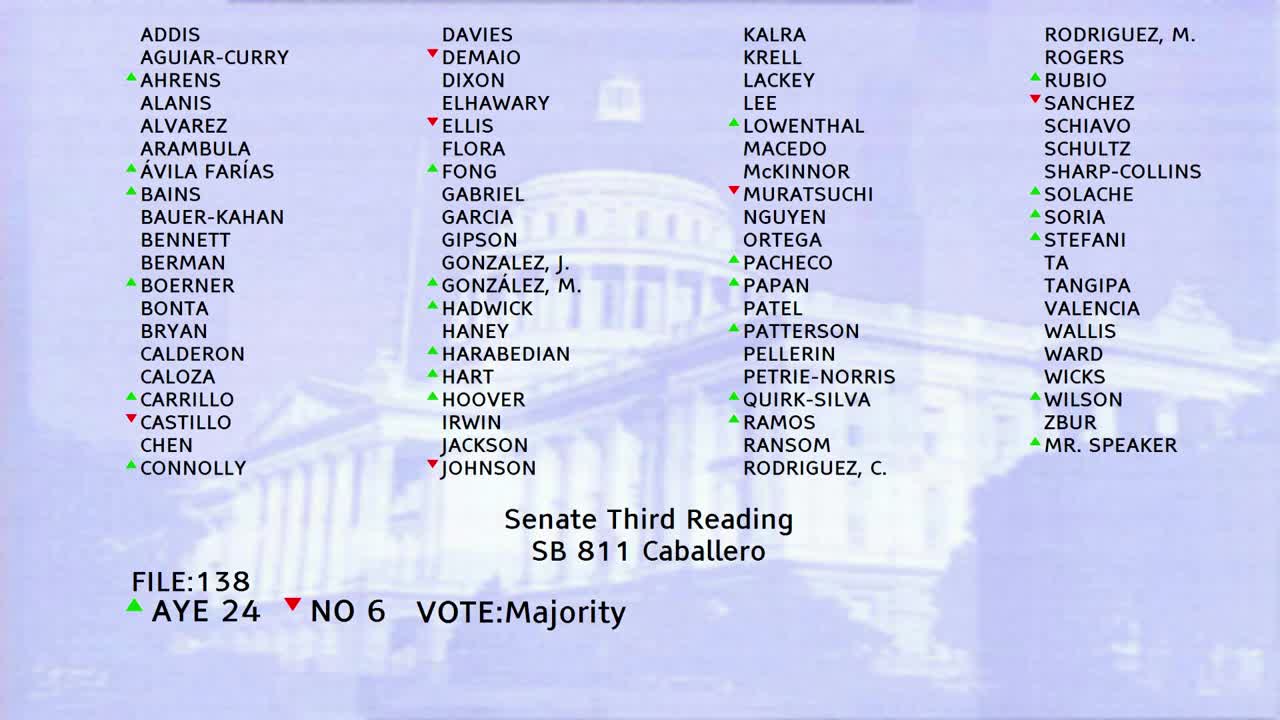
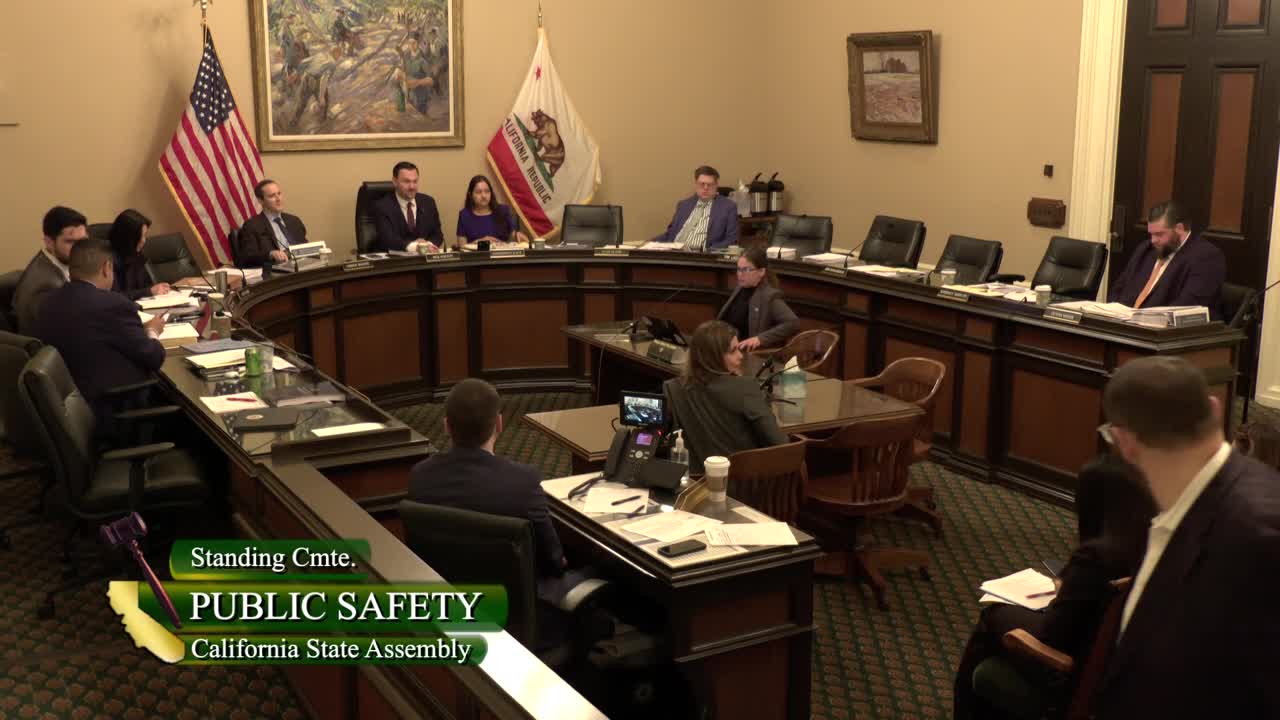
Bill Author

Bill Co-Author(s):