AB 234: California FAIR Plan Association governing committee.
- Session Year: 2025-2026
- House: Assembly
- Latest Version Date: 2025-10-09
Current Status:
Passed
(2025-10-09: Chaptered by Secretary of State - Chapter 474, Statutes of 2025.)
Introduced
In Committee
Awaiting First Chamber Vote
Passed First Chamber
In Committee
Awaiting Second Chamber Vote
Passed Second Chamber
Enacted
The California FAIR Plan Association is a joint reinsurance association in which all insurers licensed to write basic property insurance participate to administer a program for the equitable apportionment of basic property insurance for persons who are unable to obtain that coverage through normal channels. Existing law establishes a governing committee for the association and prescribes its membership.
This bill would require the Speaker of the Assembly and the Chairperson of the Senate Committee on Rules to serve as nonvoting, ex officio members of the governing committee, and would authorize each to name a designee to serve in their place.
This bill would declare that it is to take effect immediately as an urgency statute.
The California FAIR Plan Association is a joint reinsurance association in which all insurers licensed to write basic property insurance participate to administer a program for the equitable apportionment of basic property insurance for persons who are unable to obtain that coverage through normal channels. Existing law establishes a governing committee for the association and prescribes its membership.
This bill would require the Speaker of the Assembly and the Chairperson of the Senate Committee on Rules to serve as nonvoting, ex officio members of the governing committee, and would authorize each to name a designee to serve in their place.
This bill would declare that it is to take effect immediately as an urgency statute.
The California FAIR Plan Association is a joint reinsurance association in which all insurers licensed to write basic property insurance participate to administer a program for the equitable apportionment of basic property insurance for persons who are unable to obtain that coverage through normal channels. Existing law establishes a governing committee for the association and prescribes its membership.
This bill would require the Speaker of the Assembly and the Chairperson of the Senate Committee on Rules to serve as nonvoting, ex officio members of the governing committee, and would authorize each to name a designee to serve in their place.
This bill would declare that it is to take effect immediately as an urgency statute.
(a)Within 30 days after the effective date of this chapter, with the approval of the commissioner, all insurers licensed to write and engaged in writing in this state, on a direct basis, basic property insurance or any component of basic property insurance in multiperil policies, shall establish an industry placement facility, the California FAIR Plan Association, to formulate and administer a program for the equitable apportionment among insurers of basic property insurance that may be afforded to persons having an interest in real or tangible personal property who, after diligent effort, as specified in subdivision (a) of Section 10093, are unable to procure insurance through normal channels from an admitted insurer or a surplus line broker. Each insurer, as a condition of its authority to transact those kinds of insurance in this state, shall participate in an industry placement facility program in accordance with rules to be established by a governing committee, composed of nine insurers annually elected in the manner to be provided in the program. The governing committee shall also have as nonvoting members one representative of insurance agents, one representative of insurance brokers, one representative of surplus line brokers, and one representative of the public, each to be appointed by the Governor. The Speaker of the Assembly and the Chairperson of the Senate Committee on Rules shall serve as nonvoting, ex officio members of the governing committee, and each may name a designee to serve in their place.
(b)The governing committee may establish separate classifications of written premiums for the purpose of equitable distribution, but shall not include premiums from automobile risks, commercial agricultural commodities or livestock, or equipment used to cultivate or transport agricultural commodities or livestock.
(c)The program may provide, with the approval of the commissioner, for assessment of all members in amounts sufficient to operate the facility, and may establish maximum limits of liability to be placed through the program, reasonable underwriting standards for determining insurability of a risk, and commission to be paid to the licensed producer designated by the applicant.
SEC. 2.This act is an urgency statute necessary for the immediate preservation of the public peace, health, or safety within the meaning of Article IV of the California Constitution and shall go into immediate effect. The facts constituting the necessity are:
California is experiencing catastrophic wildfires in the state. Availability within the property insurance market normally provided by admitted insurers and licensed surplus line brokers is having the result that needed coverage is often unavailable in the normal insurance market, forcing consumers to resort to the California FAIR Plan Association. The association has grown to such an extent that its financial capacity to pay claims after a catastrophic fire is unlikely. Increased transparency is imperative.
The Legislature finds that access to basic property insurance suitable for protection of all types of habitational risk, including personal and commercial lines of insurance, has become increasingly unavailable and that, as a result, all Californians may suffer because of this unavailability. In order for insurance consumers to obtain adequate policy coverage from the California FAIR Plan, which is subject to regulation by the commissioner, as soon as possible, it is necessary that this act take effect immediately.
(a)Within 30 days after the effective date of this chapter, with the approval of the commissioner, all insurers licensed to write and engaged in writing in this state, on a direct basis, basic property insurance or any component of basic property insurance in multiperil policies, shall establish an industry placement facility, the California FAIR Plan Association, to formulate and administer a program for the equitable apportionment among insurers of basic property insurance that may be afforded to persons having an interest in real or tangible personal property who, after diligent effort, as specified in subdivision (a) of Section 10093, are unable to procure insurance through normal channels from an admitted insurer or a surplus line broker. Each insurer, as a condition of its authority to transact those kinds of insurance in this state, shall participate in an industry placement facility program in accordance with rules to be established by a governing committee, composed of nine insurers annually elected in the manner to be provided in the program. The governing committee shall also have as nonvoting members one representative of insurance agents, one representative of insurance brokers, one representative of surplus line brokers, and one representative of the public, each to be appointed by the Governor. The Speaker of the Assembly and the Chairperson of the Senate Committee on Rules shall serve as nonvoting, ex officio members of the governing committee, and each may name a designee to serve in their place.
(b)The governing committee may establish separate classifications of written premiums for the purpose of equitable distribution, but shall not include premiums from automobile risks, commercial agricultural commodities or livestock, or equipment used to cultivate or transport agricultural commodities or livestock.
(c)The program may provide, with the approval of the commissioner, for assessment of all members in amounts sufficient to operate the facility, and may establish maximum limits of liability to be placed through the program, reasonable underwriting standards for determining insurability of a risk, and commission to be paid to the licensed producer designated by the applicant.
SEC. 2.This act is an urgency statute necessary for the immediate preservation of the public peace, health, or safety within the meaning of Article IV of the California Constitution and shall go into immediate effect. The facts constituting the necessity are:
California is experiencing catastrophic wildfires in the state. Availability within the property insurance market normally provided by admitted insurers and licensed surplus line brokers is having the result that needed coverage is often unavailable in the normal insurance market, forcing consumers to resort to the California FAIR Plan Association. The association has grown to such an extent that its financial capacity to pay claims after a catastrophic fire is unlikely. Increased transparency is imperative.
The Legislature finds that access to basic property insurance suitable for protection of all types of habitational risk, including personal and commercial lines of insurance, has become increasingly unavailable and that, as a result, all Californians may suffer because of this unavailability. In order for insurance consumers to obtain adequate policy coverage from the California FAIR Plan, which is subject to regulation by the commissioner, as soon as possible, it is necessary that this act take effect immediately.
(a)Within 30 days after the effective date of this chapter, with the approval of the commissioner, all insurers licensed to write and engaged in writing in this state, on a direct basis, basic property insurance or any component of basic property insurance in multiperil policies, shall establish an industry placement facility, the California FAIR Plan Association, to formulate and administer a program for the equitable apportionment among insurers of basic property insurance that may be afforded to persons having an interest in real or tangible personal property who, after diligent effort, as specified in subdivision (a) of Section 10093, are unable to procure insurance through normal channels from an admitted insurer or a surplus line broker. Each insurer, as a condition of its authority to transact those kinds of insurance in this state, shall participate in an industry placement facility program in accordance with rules to be established by a governing committee, composed of nine insurers annually elected in the manner to be provided in the program. The governing committee shall also have as nonvoting members one representative of insurance agents, one representative of insurance brokers, one representative of surplus line brokers, and one representative of the public, each to be appointed by the Governor. The Speaker of the Assembly and the Chairperson of the Senate Committee on Rules shall serve as nonvoting, ex officio members of the governing committee, and each may name a designee to serve in their place.
(b)The governing committee may establish separate classifications of written premiums for the purpose of equitable distribution, but shall not include premiums from automobile risks, commercial agricultural commodities or livestock, or equipment used to cultivate or transport agricultural commodities or livestock.
(c)The program may provide, with the approval of the commissioner, for assessment of all members in amounts sufficient to operate the facility, and may establish maximum limits of liability to be placed through the program, reasonable underwriting standards for determining insurability of a risk, and commission to be paid to the licensed producer designated by the applicant.
SEC. 2.This act is an urgency statute necessary for the immediate preservation of the public peace, health, or safety within the meaning of Article IV of the California Constitution and shall go into immediate effect. The facts constituting the necessity are:
California is experiencing catastrophic wildfires in the state. Availability within the property insurance market normally provided by admitted insurers and licensed surplus line brokers is having the result that needed coverage is often unavailable in the normal insurance market, forcing consumers to resort to the California FAIR Plan Association. The association has grown to such an extent that its financial capacity to pay claims after a catastrophic fire is unlikely. Increased transparency is imperative.
The Legislature finds that access to basic property insurance suitable for protection of all types of habitational risk, including personal and commercial lines of insurance, has become increasingly unavailable and that, as a result, all Californians may suffer because of this unavailability. In order for insurance consumers to obtain adequate policy coverage from the California FAIR Plan, which is subject to regulation by the commissioner, as soon as possible, it is necessary that this act take effect immediately.
REVISIONS: HeadingLine 2.|
Date
|
Status
|
|---|---|
| Oct 9, 2025 | Chaptered by Secretary of State - Chapter 474, Statutes of 2025. |
| Oct 9, 2025 | Approved by the Governor. |
| Sep 24, 2025 | Enrolled and presented to the Governor at 3 p.m. |
| Sep 13, 2025 | In Assembly. Ordered to Engrossing and Enrolling. |
| Sep 12, 2025 | Read third time. Urgency clause adopted. Passed. Ordered to the Assembly. (Ayes 28. Noes 0. Page 3003.). |
| Jun 26, 2025 | Read second time. Ordered to third reading. |
| Jun 25, 2025 | From committee: Do pass. (Ayes 5. Noes 0.) (June 25). |
| May 7, 2025 | Referred to Com. on INS. |
| Apr 7, 2025 | In Senate. Read first time. To Com. on RLS. for assignment. |
| Apr 7, 2025 | Read third time. Urgency clause adopted. Passed. Ordered to the Senate. (Ayes 64. Noes 0. Page 1034.). |
| Apr 3, 2025 | Read second time. Ordered to third reading. |
| Apr 2, 2025 | From committee: Do pass. (Ayes 16. Noes 0.) (April 2). |
| Apr 2, 2025 | Coauthors revised. |
| Feb 10, 2025 | Referred to Com. on INS. |
| Jan 14, 2025 | From printer. May be heard in committee February 13. |
| Jan 13, 2025 | Read first time. To print. |
|
Date
|
Description
|
Location
|
Votes
|
|
|---|---|---|---|---|
| Sep 12, 2025 | Assembly 3rd Reading AB234 Calderon et al. By Caballero Urgency Clause | Senate Floor |
Passed |
|
| Jun 25, 2025 | Do pass | Senate Standing Committee on Insurance |
Passed |
|
| Apr 7, 2025 | AB 234 Calderon Third Reading Urgency | Assembly Floor |
Passed |
|
| Apr 2, 2025 | Do pass. | Assembly Standing Committee on Insurance |
Passed |
This list shows positions taken on this bill by organizations on the date displayed, which is linked to the original source.
Positions by individuals are not included.
|
Organization
|
Position
|
Date
|
|---|---|---|
| California Democratic Party Rural Caucus | ** Support | |
| Consumer Federation Of California | ** Against | |
| Insurance Commissioner Ricardo Lara / California Department of Insurance | ** Support |
SENATE RULES COMMITTEE Office of Senate Floor Analyses (916) 651-1520 Fax: (916) 327-4478 | AB 234 |
THIRD READING
Bill No: AB 234
Author: Calderon (D), et al.
Introduced: 1/13/25
Vote: 27 - Urgency
SENATE INSURANCE COMMITTEE: 5-0, 6/25/25
AYES: Rubio, Becker, Caballero, Padilla, Wahab
NO VOTE RECORDED: Niello, Jones
ASSEMBLY FLOOR: 66-0, 4/7/25 - See last page for vote
SUBJECT: California FAIR Plan Association governing committee
SOURCE: Author
DIGEST:
This bill requires the Speaker of the Assembly and the Chairperson of the Senate Committee on Rules, or their designee, to serve as non-voting, ex officio members of the California Fair Access to Insurance Requirements Plan (FAIR Plan) Governing Committee.
ANALYSIS:
Existing law:
- Establishes the FAIR Plan to assure the stability of the property insurance market, to assure the availability of basic property insurance, as defined, to encourage maximum use of the normal insurance market in obtaining basic property insurance provided by admitted insurers and licensed surplus line brokers.
- Provides, as part of the FAIR Plan, for the equitable distribution among admitted insurers of the responsibility for insuring qualified property for which basic property insurance cannot be obtained through the normal insurance market.
- Stipulates that the FAIR Plan Governing Committee be composed of nine annually elected insurers, as well as the following non-voting members: one representative of insurance agents, one representative of insurance brokers, one representative of surplus lines brokers, and one representative of the public, each appointed by the Governor.
This bill:
- Requires the Speaker of the Assembly and the Chairperson of the Senate Committee on Rules, or their designee, to serve as non-voting, ex officio members of the FAIR Plan Governing Committee.
- Would take effect immediately as an urgency statute.
Background
FAIR Plan Governing Committee. According to its Plan of Operation, the FAIR Plan is administered by a Governing Committee (Committee), subject to the supervision of the Insurance Commissioner, and operated by a President appointed by the Committee. The nine voting members of the Committee are usually comprised of two members of the American Property Casualty Insurance Association, one member from an insurer owned by shareholders, known as “stock insurers”, one member from a non-stock insurer, and five members from at-large insurers. Furthermore, participating insurer members cannot be from the same group under the same management or ownership, as another. These voting members serve for one year or until their successors are elected by the admitted insurers who make up the FAIR Plan. Additionally, the four previously mentioned non-voting members serve on this Committee.
Status of the FAIR Plan’s Exposure and Policy Count. According to the FAIR Plan, as of March 2025, the FAIR Plan’s total exposure, or total potential for loss, is $599 billion, reflecting a 31% increase since September 2024 (prior fiscal year-end) and a 259% increase since September 2021 (Fiscal Year End 2021). Furthermore, as of March 2025, the FAIR Plan’s total number of dwelling and commercial policies is 573,739 reflecting a 23% increase since September 2024 (prior fiscal year-end) and a 139% increase since September 2021 (Fiscal Year End 2021).
FAIR Plan Transparency Update. As of May 2025, the FAIR Plan has made additional operational information available on its website. This information includes its Plan of Operation, Governing Committee membership, certain financial reports, dwelling and commercial coverage forms, and relevant statutory provisions.
Related/Prior Legislation
AB 69 (Calderon, 2025). Would require a broker of record to determine if a FAIR Plan policy can be moved to the voluntary market before the policy is renewed. This bill is pending in Senate Insurance Committee.
AB 1844 (Calderon, 2024). Would have required the Speaker of the Assembly and the Chairperson of the Senate Committee on Rules to serve as non-voting, ex officio members of the Governing Committee, and would have authorized each to name a designee to serve in their place. This bill was not heard in Senate Insurance Committee.
FISCAL EFFECT: Appropriation: No Fiscal Com.: No Local: No
SUPPORT: (Verified 6/25/25)
Insurance Commissioner Ricardo Lara/California Department of Insurance
California Democratic Party Rural Caucus
OPPOSITION: (Verified 6/25/25)
Consumer Federation of California
ARGUMENTS IN SUPPORT:
According to Insurance Commissioner Ricardo Lara:
“We must reverse the trend of a growing FAIR Plan if we are going to safeguard the state’s admitted insurance market as a whole. While I have made many reforms to the FAIR Plan since I first took office, further improvements are needed to serve its legislatively intended purpose of creating stability in the property insurance market, while providing consumers with the best possible customer service.
This is why a crucial element of my Sustainable Insurance Strategy focuses on modernizing a growing FAIR Plan, allowing rates to reflect catastrophe modeling and California reinsurance only if insurers commit to writing more policies in wildfire risk areas. With my support, the Legislature created FAIR Plan Clearinghouse programs for both residential policies (AB 2012, Wood, Chapter 258, Statutes of 2020) and commercial policies (SB 505, Rubio, Chapter 180, Statutes of 2023), which is a list of policies that companies pull from the FAIR Plan to reduce the numbers. Access to FAIR Plan coverage is more critical than ever as we face the devastating wildfires sweeping across California.
The FAIR Plan was established by the Legislature and Governor – and it must work harder to be more accountable to the public. By establishing additional nonvoting members on the FAIR Plan’s Governing Committee, AB 234 will help further needed transparency of this insurance safety net while supporting legislative policymakers’ oversight efforts.”
ARGUMENTS IN OPPOSITION:
According to the Consumer Federation of California:
“When compared to most of the other similarly situated ‘insurer of last resort’ programs in 30+ states, the California FAIR Plan is one of the most opaque, if not the most opaque, of all such programs. Indeed, as recently as March 2025 the current Insurance Commissioner stated that the FAIR Plan needed to be more transparent. But CDI has had this core information for almost three years and is supporting AB 234. Yet the only thing AB 234 does is to add two legislative leaders, or their designees, as non-voting ex officio members of the FAIR Plan Governing Committee. This is wholly insufficient and it is unclear if this would even make any difference at all to transparency.
For AB 234 to make any meaningful public contribution to FAIR Plan transparency it will need to go significantly beyond its current contents. For example, the FAIR Plan should be required to publicly disclose their financial statements, or at least key elements of such financial statements. It needs to significantly open up to be much more transparent, especially in the wake of the FAIR Plan's growing policy count, premium dollars collected and market share. And perhaps before going to all policyholders to cover half of the $1 billion shortfall the FAIR Plan announced earlier this year, FAIR Plan member companies should refund previous year’s dividends. Those three items would be a useful beginning to a bill that actually accomplished something meaningful in terms of reforming the FAIR Plan and its operations. However, as currently drafted AB 234 falls far short of what is minimally necessary to truly protect consumers.”
ASSEMBLY FLOOR: 66-0, 4/7/25
AYES: Addis, Aguiar-Curry, Ahrens, Alanis, Alvarez, Arambula, Ávila Farías, Bains, Berman, Boerner, Bonta, Bryan, Calderon, Caloza, Carrillo, Chen, Connolly, Davies, DeMaio, Dixon, Elhawary, Ellis, Flora, Fong, Gabriel, Garcia, Gipson, Mark González, Haney, Harabedian, Hart, Hoover, Irwin, Jackson, Kalra, Krell, Lackey, Lowenthal, McKinnor, Muratsuchi, Nguyen, Ortega, Pacheco, Papan, Patel, Patterson, Pellerin, Petrie-Norris, Quirk-Silva, Ramos, Celeste Rodriguez, Michelle Rodriguez, Rogers, Blanca Rubio, Schiavo, Schultz, Sharp-Collins, Solache, Soria, Stefani, Valencia, Ward, Wicks, Wilson, Zbur, Rivas
NO VOTE RECORDED: Bauer-Kahan, Bennett, Castillo, Gallagher, Jeff Gonzalez, Hadwick, Lee, Macedo, Ransom, Sanchez, Ta, Tangipa, Wallis
Prepared by: Brandon Seto / INS. / (916) 651-4110
6/26/25 16:11:37
**** END ****
SENATE COMMITTEE ON INSURANCE
Senator Susan Rubio, Chair
2025 - 2026 Regular
Bill No: AB 234 Hearing Date: June 25, 2025
Author: | Calderon | ||
Version: | January 13, 2025 Introduced | ||
Urgency: | Yes | Fiscal: | No |
Consultant: | Brandon Seto | ||
SUBJECT: California FAIR Plan Association governing committee
DIGEST:
Requires the Speaker of the Assembly and the Chairperson of the Senate Committee on Rules, or their designee, to serve as non-voting, ex officio members of the California Fair Access to Insurance Requirements Plan (FAIR Plan) Governing Committee.
ANALYSIS:
Existing law:
- Establishes the FAIR Plan to assure the stability of the property insurance market, to assure the availability of basic property insurance, as defined, to encourage maximum use of the normal insurance market in obtaining basic property insurance provided by admitted insurers and licensed surplus line brokers.
- Provides, as part of the FAIR Plan, for the equitable distribution among admitted insurers of the responsibility for insuring qualified property for which basic property insurance cannot be obtained through the normal insurance market.
- Stipulates that the FAIR Plan Governing Committee be composed of nine annually elected insurers, as well as the following non-voting members: one representative of insurance agents, one representative of insurance brokers, one representative of surplus lines brokers, and one representative of the public, each appointed by the Governor.
This bill:
- Requires the Speaker of the Assembly and the Chairperson of the Senate Committee on Rules, or their designee, to serve as non-voting, ex officio members of the FAIR Plan Governing Committee.
- Would take effect immediately as an urgency statute.
Background
According to the Author:
“The California FAIR Plan is in the spotlight now, more than ever. As the California FAIR Plan navigates increased exposure and the impacts of the recent devastating catastrophes, it’s our obligation to have eyes and ears insight into the California FAIR Plan. AB 234 will increase transparency as the FAIR Plan continues to grow, so the Insurance Commissioner, Legislature, and public have relevant information to collectively navigate the insurance crisis.”
FAIR Plan Governing Committee
According to its Plan of Operations, the FAIR Plan is administered by a Governing Committee (Committee), subject to the supervision of the Insurance Commissioner, and operated by a President appointed by the Committee. The nine voting members of the Committee are usually comprised of two members of the American Property Casualty Insurance Association, one member from an insurer owned by shareholders, known as “stock insurers”, one member from a non-stock insurer, and five members from at-large insurers. Furthermore, participating insurer members cannot be from the same group under the same management or ownership, as another. These voting members serve for one year or until their successors are elected by the admitted insurers who make up the FAIR Plan. Additionally, the four previously mentioned non-voting members serve on this Committee.
Status of the FAIR Plan’s Exposure and Policy Count
According to the FAIR Plan, as of March 2025, the FAIR Plan’s total exposure, or total potential for loss, is $599 billion, reflecting a 31% increase since September 2024 (prior fiscal year-end) and a 259% increase since September 2021 (Fiscal Year End 2021). Furthermore, as of March 2025, the FAIR Plan’s total number of dwelling and commercial policies is 573,739 reflecting a 23% increase since September 2024 (prior fiscal year-end) and a 139% increase since September 2021 (Fiscal Year End 2021).
FAIR Plan Transparency Update
As of May 2025, the FAIR Plan has made the following information available on its website:
- Plan of Operation: Explains how the FAIR Plan operates, including governance structure, membership requirements, coverage, and administrative procedures, as approved by the California Department of Insurance
- Governing Committee Membership
- Certain Financial Reports: Including certified and audited income statements and balance sheets, distribution and assessment history, and reinsurance and claims pay towers
- Dwelling and Commercial Coverage Forms
- Relevant Statutory Provisions: Describe the statutory framework for the FAIR Plan as well as its responsibilities and governance
Related/Prior Legislation
AB 69 (Calderon): requires a broker of record to determine if a FAIR Plan policy can be moved to the voluntary market before the policy is renewed. This bill is pending in Senate Insurance Committee.
AB 1844 (Calderon, 2024): would have required the Speaker of the Assembly and the Chairperson of the Senate Committee on Rules to serve as non-voting, ex officio members of the Governing Committee, and would have authorized each to name a designee to serve in their place. This bill was not heard in Senate Insurance Committee.
ARGUMENTS IN SUPPORT:
According to Insurance Commissioner Ricardo Lara:
“We must reverse the trend of a growing FAIR Plan if we are going to safeguard the state’s admitted insurance market as a whole. While I have made many reforms to the FAIR Plan since I first took office, further improvements are needed to serve its legislatively intended purpose of creating stability in the property insurance market, while providing consumers with the best possible customer service.
This is why a crucial element of my Sustainable Insurance Strategy focuses on modernizing a growing FAIR Plan, allowing rates to reflect catastrophe modeling and California reinsurance only if insurers commit to writing more policies in wildfire risk areas. With my support, the Legislature created FAIR Plan Clearinghouse programs for both residential policies (AB 2012, Wood, Chapter 258, Statutes of 2020) and commercial policies (SB 505, Rubio, Chapter 180, Statutes of 2023), which is a list of policies that companies pull from the FAIR Plan to reduce the numbers. Access to FAIR Plan coverage is more critical than ever as we face the devastating wildfires sweeping across California.
The FAIR Plan was established by the Legislature and Governor – and it must work harder to be more accountable to the public. By establishing additional nonvoting members on the FAIR Plan’s Governing Committee, AB 234 will help further needed transparency of this insurance safety net while supporting legislative policymakers’ oversight efforts.”
ARGUMENTS IN OPPOSITION:
According to the Consumer Federation of California:
“When compared to most of the other similarly situated ‘insurer of last resort’ programs in 30+ states, the California FAIR Plan is one of the most opaque, if not the most opaque, of all such programs. Indeed, as recently as March 2025 the current Insurance Commissioner stated that the FAIR Plan needed to be more transparent. But CDI has had this core information for almost three years and is supporting AB 234. Yet the only thing AB 234 does is to add two legislative leaders, or their designees, as non-voting ex officio members of the FAIR Plan Governing Committee. This is wholly insufficient and it is unclear if this would even make any difference at all to transparency.
For AB 234 to make any meaningful public contribution to FAIR Plan transparency it will need to go significantly beyond its current contents. For example, the FAIR Plan should be required to publicly disclose their financial statements, or at least key elements of such financial statements. It needs to significantly open up to be much more transparent, especially in the wake of the FAIR Plan's growing policy count, premium dollars collected and market share. And perhaps before going to all policyholders to cover half of the $1 billion shortfall the FAIR Plan announced earlier this year, FAIR Plan member companies should refund previous year’s dividends. Those three items would be a useful beginning to a bill that actually accomplished something meaningful in terms of reforming the FAIR Plan and its operations. However, as currently drafted AB 234 falls far short of what is minimally necessary to truly protect consumers.”
SUPPORT:
Insurance Commissioner Ricardo Lara/California Department of Insurance
California Democratic Party Rural Caucus
OPPOSITION:
Consumer Federation of California
-- END --
ASSEMBLY THIRD READING
ATR Bill Id:AB 234
Author:(Calderon)
As Introduced Ver:January 13, 2025
2/3 vote. Urgency
SUMMARY
Allows the Speaker of the Assembly and the Chairperson of the Senate Committee on Rules to serve as nonvoting, ex officio members of the Fair Access to Insurance Requirements (FAIR) Plan Governing Committee.
Major Provisions
- Authorizes the Speaker of the Assembly and the Chairperson of the Senate Committee on Rules to name a designee to serve in their place.
- Contains an urgency clause.
COMMENTS
- The FAIR Plan Governing Committee: The FAIR Plan is administered by a Governing Committee, and subject to the supervision of the Insurance Commissioner. The Governing Committee consists of nine voting insurers and four non-voting members appointed by the Governor, which include one representative of insurance agents, one representative of insurance brokers, one representative of the public, and one representative of surplus line brokers. The purpose of the Governing Committee is to ensure the requirements laid out in California Insurance Code 10090 are followed (referenced under existing law). Legislation (signed by the Governor) or a rule, regulation or administrative determination by the Insurance Commissioner can require the FAIR Plan Governing Committee to amend its plan of operation.
A point of reference is the California Earthquake Authority (CEA), which is governed by a three-member governing board consisting of the Governor, the Treasurer, and the Insurance Commissioner, each of whom may name designees to serve as board members in their place. The Speaker of the Assembly and the Chairperson of the Senate Committee on Rules serve as nonvoting, ex officio members of the board, and may name designees to serve in their place.
- FAIR Plan Transformation: In the last five years, primarily in response to catastrophic wildfires and admitted market withdrawal, legislation and actions taken by California Department of Insurance (CDI) has resulted in the FAIR Plan going through a complete transformation. To summarize, these actions include:
- Increasing FAIR Plan residential limits to $3.3 million;
- Increasing FAIR Plan commercial limits to $8.4 million per location to $20 million per structure;
- Potential expansion and requirement to offer homeowners a more comprehensive coverage aka HO-3 light policy (pending litigation);
- Expanding commercial coverage to farms, ranches and other agricultural businesses;
- Developing residential and commercial clearinghouse programs; and,
- Implementing "Safer from Wildfire" discounts to FAIR Plan policyholders.
According to the Author
According to the author, "Increased transparency is vital. The FAIR Plan is no longer California's insurers of last resort. The recent devastating wildfires highlighted the exposure of the FAIR Plan, which caused them to seek approval from the Insurance Commissioner to assess their members companies for $1 billion. The Speaker and the Pro Tem need a seat at the FAIR Plan table."
Arguments in Support
According to Insurance Commissioner Ricardo Lara, "the FAIR Plan was established by the Legislature and Governor – and it must work harder to be more accountable to the public. By establishing additional nonvoting members on the FAIR Plan's Governing Committee, AB 234 will help further needed transparency of this insurance safety net while supporting legislative policymakers' oversight efforts."
Arguments in Opposition
According to the Consumer Federation of California who are oppose unless amended,
"For AB 234 to make any meaningful public contribution to FAIR Plan transparency it will need to go significantly beyond its current contents. For example, the FAIR Plan should be required to publicly disclose their financial statements, or at least key elements of such financial statements."
FISCAL COMMENTS
Non-fiscal
VOTES
ASM INSURANCE: 16-0-1
YES: Calderon, Wallis, Addis, Alvarez, Ávila Farías, Berman, Chen, Ellis, Gipson, Harabedian, Krell, Nguyen, Ortega, Petrie-Norris, Michelle Rodriguez, Valencia
ABS, ABST OR NV: Hadwick
UPDATED
VERSION: January 13, 2025
CONSULTANT: Kathleen O'Malley / INS. / (916) 319-2086 FN: 0000204
Date of Hearing: April 2, 2025
ASSEMBLY COMMITTEE ON INSURANCE
Lisa Calderon, Chair
ABPCA Bill Id:AB 234 (
Author:Calderon) – As Introduced Ver:January 13, 2025
SUBJECT: California FAIR Plan Association governing committee
SUMMARY: Allows the Speaker of the Assembly and the Chairperson of the Senate Committee on Rules to serve as nonvoting, ex officio members of the Fair Access to Insurance Requirements (FAIR) Plan Governing Committee. Specifically, this bill:
- Authorizes the Speaker of the Assembly and the Chairperson of the Senate Committee on Rules to name a designee to serve in their place.
- Contains an urgency clause.
EXISTING LAW:
- Specifies that the Governing Committee includes nine insurers, as well as, as nonvoting members, one representative of insurance agents, one representative of insurance brokers, one representative of surplus line brokers, and one representative of the public, each appointed by the Governor. (Insurance (Ins.) Code, Section 10094)
- Allows the FAIR Plan, with approval from the Insurance Commissioner, to assess all members in amounts sufficient to operate the facility. (Ins. Code, Section 10094)
- States that the FAIR Plan was established to assure stability, to assure the availability, to encourage maximum use, and to provide for equitable distribution among admitted insurers of the responsibility for insuring qualified property for which basic property insurance cannot be obtained through the normal insurance market. (Ins. Code, Section 10090)
- Specifies that rates for the FAIR Plan shall not be excessive, inadequate, or unfairly discriminatory, shall be actuarially sound so that premiums are adequate to cover expected losses, expenses and taxes, and shall reflect investment income of the plan. (Ins. Code, Section 10100.2)
FISCAL EFFECT: None
COMMENTS:
- Purpose: According to the author, “Increased transparency is vital. The FAIR Plan is no longer California’s insurers of last resort. The recent devastating wildfires highlighted the exposure of the FAIR Plan, which caused them to seek approval from the Insurance Commissioner to assess their members companies for $1 billion. The Speaker and the Pro Tem need a seat at the FAIR Plan table.”
- Background: The FAIR Plan is an “association” of all insurance companies licensed by the California Department of Insurance (CDI) that provides basic property insurance in California. It was created in 1968, following urban disturbances after the Watts Riots in Los Angeles.
Simply stated, the purpose of the FAIR Plan is to be the “insurer of last resort” for “basic” property insurance in the event of a market failure. At inception, that was essentially urban commercial property. Ultimately, it has expanded to include homeowners’ insurance anywhere in the state, provided that the insurance “cannot be obtained” in the normal manner in the market. The FAIR Plan is not intended to compete with the voluntary market.
The FAIR Plan was established to ensure that urban property owners, mostly businesses, would have “fair access” to the property insurance necessary to continue to operate in a market that insurers viewed as too risky to cover. That risk evaluation resulted in a substantial market withdrawal by insurers from the urban property market. Despite its initial creation as an urban/business “insurer of last resort,” the FAIR Plan expanded to provide coverage in “designated” brush fire regions of the state. It operated fairly well in this manner until the mid-1990’s, when, as a consequence of the genuine homeowners’ insurance crisis that followed the Northridge earthquake in 1994, the entire state was designated as the appropriate FAIR Plan coverage region.
By statute, the FAIR Plan policy is not as broad as traditional homeowners’ policies. It is, nonetheless, a fully sound and guaranteed policy that satisfies lenders’ security requirements and protects the property against the primary risk factor faced by homeowners, which is fire. Other coverages are readily available in the market (typically through the purchase of a “difference-in-conditions” or “DIC” policy), which provides wraparound coverage that, coupled with a FAIR Plan policy, results in the same protection provided by a standard homeowner’s policy. Because the FAIR plan’s role is to provide coverage when the regular market won’t, it is not the role of the FAIR Plan to provide DIC policies when there is a healthy market for those policies.
According to the FAIR Plan, as of December 2024, the FAIR Plan’s total policies in force stands at 516,313, reflecting an 11.1% increase since September 2024 and a 115% increase since September 2021. The FAIR Plan’s total exposure is $529 billion, reflecting a 15.5% increase since September 2024 and a 217% increase since September 2021. Following the Palisades and Eaton fires, the FAIR Plan sought approval to assess their member companies. It had been over 30 years since the FAIR Plan requested to assess. The FAIR Plan requested $1 billion from member companies to ensure solvency and claims-paying capacity.
- The FAIR Plan Governing Committee: The FAIR Plan is administered by a Governing Committee, and subject to the supervision of the Insurance Commissioner. The Governing Committee consists of nine voting insurers and four non-voting members appointed by the Governor, which include one representative of insurance agents, one representative of insurance brokers, one representative of the public, and one representative of surplus line brokers. The purpose of the Governing Committee is to ensure the requirements laid out in California Insurance Code 10090 are followed (referenced under existing law). Legislation (signed by the Governor) or a rule, regulation or administrative determination by the Insurance Commissioner can require the FAIR Plan Governing Committee to amend its plan of operation.
A point of reference is the CEA, which is governed by a three-member governing board consisting of the Governor, the Treasurer, and the Insurance Commissioner, each of whom may name designees to serve as board members in their place. The Speaker of the Assembly and the Chairperson of the Senate Committee on Rules serve as nonvoting, ex officio members of the board, and may name designees to serve in their place.
- FAIR Plan Transformation: In the last five years, primarily in response to catastrophic wildfires and admitted market withdrawal, legislation and actions taken by CDI has resulted in the FAIR Plan going through a complete transformation. To summarize, these actions include:
- Increasing FAIR Plan residential limits to $3.3 million;
- Increasing FAIR Plan commercial limits to $8.4 million per location to $20 million per structure;
- Potential expansion and requirement to offer homeowners a more comprehensive coverage aka HO-3 light policy (pending litigation);
- Expanding commercial coverage to farms, ranches and other agricultural businesses;
- Developing residential and commercial clearinghouse programs; and,
- Implementing “Safer from Wildfire” discounts to FAIR Plan policyholders.
- Related Legislation: AB 69 (Calderon) requires a broker of record to determine if a FAIR Plan policy can be moved to the voluntary market before the policy is renewed. Pending before the Assembly Insurance Committee.
- Previous legislation: AB 1844 ((Calderon) 2024 Legislative Year) would have required the Speaker of the Assembly and the Chairperson of the Senate Committee on Rules to serve as nonvoting, ex officio members of the governing committee, and would have authorized each to name a designee to serve in their place. (Pulled from committee hearing by the Senate Insurance Committee)
AB 2260 (Calderon) would have required the FAIR Plan, until December 31, 2027, to quarterly provide specified information about policies and clearinghouse program progress to the relevant policy committees of the Legislature and to post the information on the association’s public internet website. (Never set for a hearing in the Senate Insurance Committee.)
AB 3012 (Daly & Wood) Chapter 258, Statutes of 2020, directs the FAIR Plan to implement a clearinghouse program whereby property insurers will be provided information about FAIR Plan policies for the purpose of encouraging those insurers to offer regular private insurance to FAIR Plan policyholders.
SB 505 (Rubio) Chapter 180, Statutes of 2023, required the FAIR Plan to establish a clearinghouse program for commercial insurance policies by July 1, 2024.
REGISTERED SUPPORT / OPPOSITION:
Support
Insurance Commissioner Ricardo Lara / California Department of Insurance
Oppose Unless Amended
Consumer Federation of California
Analysis Prepared by: Kathleen O'Malley / INS. / (916) 319-2086
Discussed in Hearing
 2MIN
Senate Floor
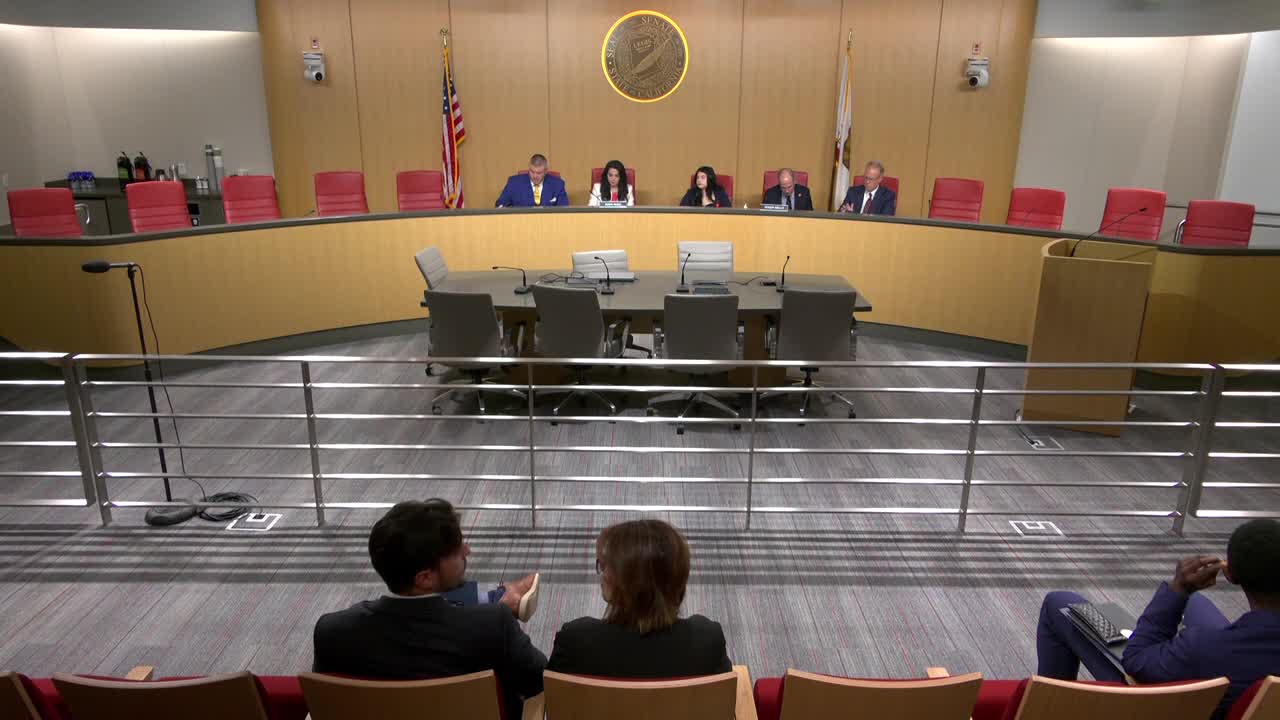 6MIN
Senate Standing Committee on Insurance
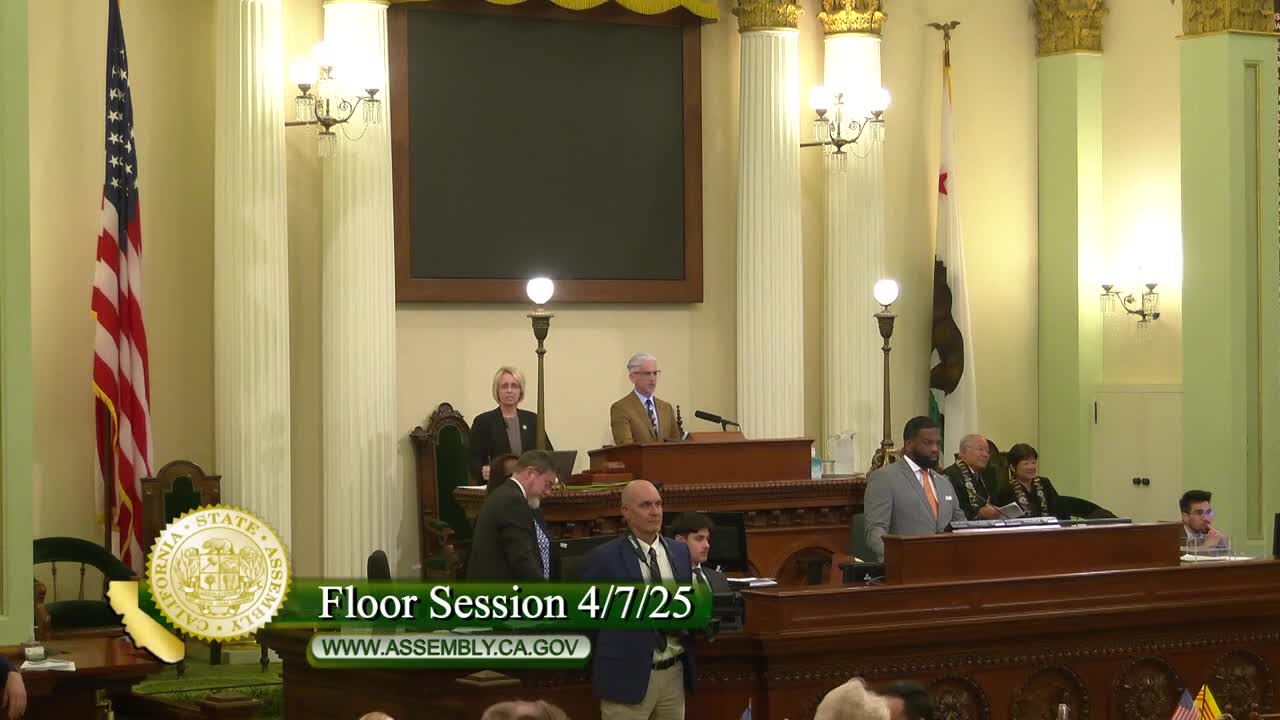 2MIN
Assembly Floor
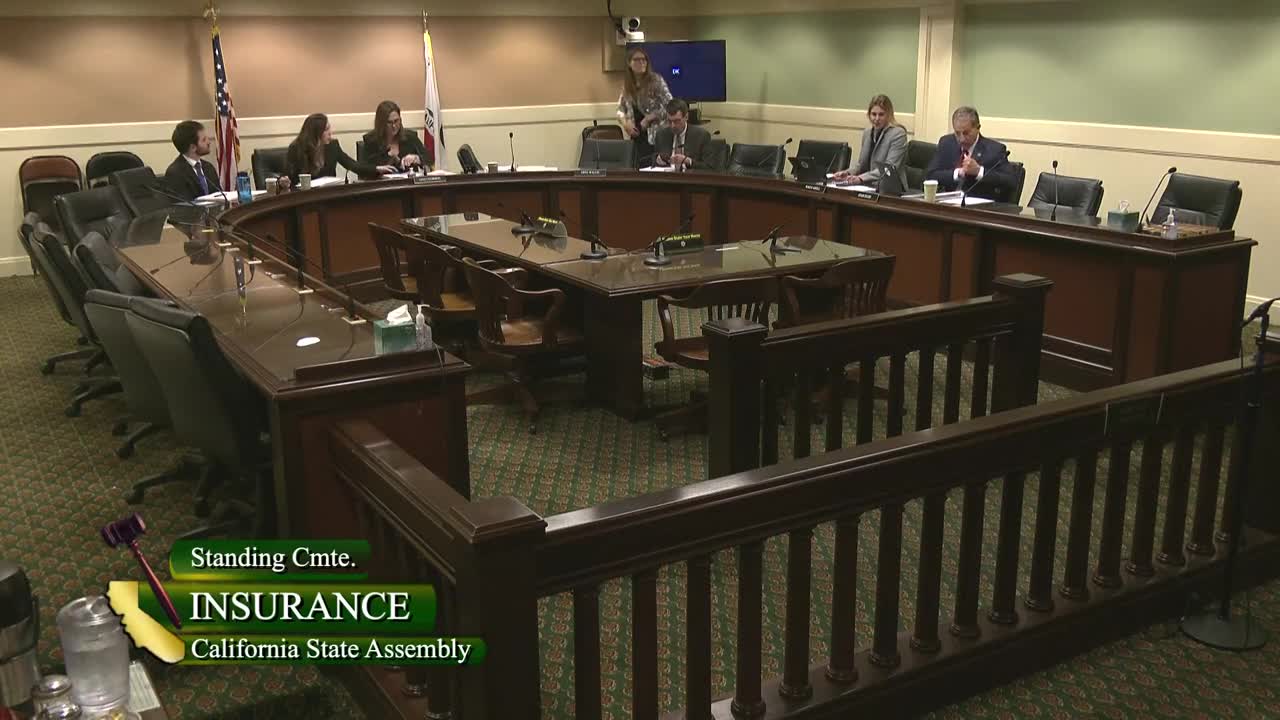 10MIN
Assembly Standing Committee on Insurance
Bill Author
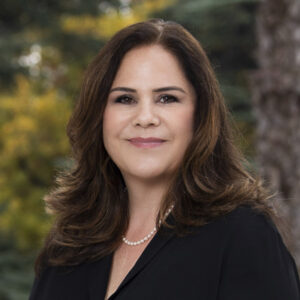
Bill Co-Author(s):
