AB 2346: Vehicles: electric bicycles and speed limits.
- Session Year: 2025-2026
- House: Assembly
- Latest Version Date: 2026-09-30
Current Status:
Passed
(2026-09-30: Chaptered by Secretary of State - Chapter 842, Statutes of 2026.)
Introduced
In Committee
Awaiting First Chamber Vote
Passed First Chamber
In Committee
Awaiting Second Chamber Vote
Passed Second Chamber
Enacted
(1)Existing law defines an electric bicycle as a bicycle equipped with fully operable pedals and an electric motor of less than 750 watts, and classifies electric bicycles into 3 classes with different restrictions for various purposes.
This bill would require all class 2 electric bicycles manufactured, sold, or offered for sale on or after January 1, 2029, to be equipped with a speedometer. The bill would also require all electric bicycles manufactured, sold, or offered for sale on or after January 1, 2029, to be equipped with an integrated or detachable front lamp and a rear lamp, as specified.
The bill would also require sellers and distributors of electric bicycles to disclose specified information at or before the point of sale, including, among other things, the classification and maximum speed of the electric bicycle and a recommendation that persons under 16 years of age should not ride an electric bicycle at a speed greater than 15 miles per hour. The bill would make a violation of these provisions punishable as an infraction, as specified.
(2)Existing law regulates the operation of bicycles on highways and authorizes local authorities to, among other things, prohibit, by ordinance, the operation of an electric bicycle or any class of electric bicycle on equestrian trails or hiking or recreational trails.
This bill would authorize a local authority to set a speed limit on a bicycle path of 10, 15, or 20 miles an hour or on a multiuse trail to 10, 15, or 20 miles per hour, as specified, subject to specified signage requirements. However, the bill would specify that speed limits on a bicycle path or multiuse trail established prior to January 1, 2027, shall remain in effect. The bill would also make technical, nonsubstantive changes to these provisions.
(3)Existing law establishes various prima facie speed limits. Existing law establishes that specified convictions and violations under the Vehicle Code and traffic-related incidents count as points against a drivers record for purposes of the suspension or revocation of the privilege to drive, except as specified.
This bill would additionally set a prima facie speed limit of 10 miles per hour on a sidewalk and specify that a conviction of a violation of that speed limit shall not result in a violation point count.
(4)Under existing law, a violation of the Vehicle Code is a crime.
By creating new requirements within the Vehicle Code, the violation of which would be a crime, this bill would impose a state-mandated local program.
The California Constitution requires the state to reimburse local agencies and school districts for certain costs mandated by the state. Statutory provisions establish procedures for making that reimbursement.
This bill would provide that no reimbursement is required by this act for a specified reason.
(1)Existing law defines an electric bicycle as a bicycle equipped with fully operable pedals and an electric motor of less than 750 watts, and classifies electric bicycles into 3 classes with different restrictions for various purposes.
This bill would require all class 2 electric bicycles manufactured, sold, or offered for sale on or after January 1, 2029, to be equipped with a speedometer. The bill would also require all electric bicycles manufactured, sold, or offered for sale on or after January 1, 2029, to be equipped with an integrated or detachable front lamp and a rear lamp, as specified.
The bill would also require sellers and distributors of electric bicycles to provide specified disclosures disclose specified information at or before the point of sale. sale, including, among other things, the classification and maximum speed of the electric bicycle and a recommendation that persons under 16 years of age should not ride an electric bicycle at a speed greater than 15 miles per hour. The bill would make a violation of these provisions punishable as an infraction, as specified.
(2)Existing law regulates the operation of bicycles on highways and authorizes local authorities to, among other things, prohibit, by ordinance, the operation of an electric bicycle or any class of electric bicycle on equestrian trails or hiking or recreational trails.
This bill would authorize a local authority to set a speed limit on a bicycle path of 10, 15, or 20 miles an hour or on a multiuse trail to 10, 15, or 20 miles per hour, as specified, subject to specified signage requirements. However, the bill would specify that speed limits on a bicycle path or multiuse trail established prior to January 1, 2027, shall remain in effect. The bill would also prohibit a person under 16 years of age from riding an electric bicycle at a speed greater than 15 miles per hour on a highway or a bicycle path, but would require a peace officer to only issue warning citations until December 31, 2027. The bill would also make technical, nonsubstantive changes to these provisions.
(3)Existing law establishes various prima facie speed limits. Existing law establishes that specified convictions and violations under the Vehicle Code and traffic-related incidents count as points against a drivers record for purposes of the suspension or revocation of the privilege to drive, except as specified.
This bill would additionally set a prima facie speed limit of 10 miles per hour on a sidewalk and specify that a conviction of a violation of that speed limit shall not result in a violation point count.
(4)Under existing law, a violation of the Vehicle Code is a crime.
By creating new requirements within the Vehicle Code, the violation of which would be a crime, this bill would impose a state-mandated local program.
The California Constitution requires the state to reimburse local agencies and school districts for certain costs mandated by the state. Statutory provisions establish procedures for making that reimbursement.
This bill would provide that no reimbursement is required by this act for a specified reason.
(1)Existing law defines an electric bicycle as a bicycle equipped with fully operable pedals and an electric motor of less than 750 watts, and classifies electric bicycles into 3 classes with different restrictions for various purposes.
This bill would require all class 1 and class 2 electric bicycles manufactured, sold, or offered for sale on or after January 1, 2029, to be equipped with a speedometer. The bill would also require all electric bicycles manufactured, sold, or offered for sale on or after January 1, 2029, to be equipped with an integrated or detachable front lamp and a rear lamp, as specified.
The bill would also require manufacturers and distributors of electric bicycles to include a written description of Californias electric bicycle laws with the bicycles packaging to be provided to the consumer. The bill would also require sellers and distributors of electric bicycles to provide specified disclosures at or before the point of sale. The bill would make a violation of these provisions punishable by a civil penalty not to exceed $15,000 for a first violation and not to exceed $50,000 for each subsequent violation, upon an action brought by the Attorney General, a city attorney, a county counsel, or a district attorney. The bill would specify that a violation of these provisions is not a criminal offense. punishable as an infraction, as specified.
(2)Existing law regulates the operation of bicycles on highways and authorizes local authorities to, among other things, prohibit, by ordinance, the operation of an electric bicycle or any class of electric bicycle on equestrian trails or hiking or recreational trails.
This bill would authorize a local authority to set a speed limit on a bicycle path of 15 10, 15, or 20 miles an hour or on a multiuse trail to 10, 15, or 20 miles per hour, as specified, subject to specified signage requirements. However, the bill would specify that speed limits on a bicycle path or multiuse trail established prior to January 1, 2027, shall remain in effect. The bill would also prohibit a person under 16 years of age from riding an electric bicycle at a speed greater than 15 miles per hour on a highway or a bicycle path. path, but would require a peace officer to only issue warning citations until December 31, 2027. The bill would also make technical, nonsubstantive changes to these provisions.
(3)Existing law establishes various prima facie speed limits. Existing law establishes that specified convictions and violations under the Vehicle Code and traffic-related incidents count as points against a drivers record for purposes of the suspension or revocation of the privilege to drive, except as specified.
This bill would additionally set a prima facie speed limit of 10 miles per hour on a sidewalk and specify that a conviction of a violation of that speed limit shall not result in a violation point count.
(4)Under existing law, a violation of the Vehicle Code is a crime.
By creating new requirements within the Vehicle Code, the violation of which would be a crime, this bill would impose a state-mandated local program.
The California Constitution requires the state to reimburse local agencies and school districts for certain costs mandated by the state. Statutory provisions establish procedures for making that reimbursement.
This bill would provide that no reimbursement is required by this act for a specified reason.
(1)Existing law defines an electric bicycle as a bicycle equipped with fully operable pedals and an electric motor of less than 750 watts, and classifies electric bicycles into 3 classes with different restrictions for various purposes.
This bill would require all class 1 and class 2 electric bicycles manufactured, sold, or offered for sale on or after January 1, 2029, to be equipped with a speedometer. The bill would also require all electric bicycles manufactured, sold, or offered for sale on or after January 1, 2029, to be equipped with an integrated front lamp and a rear lamp, as specified.
The bill would also require manufacturers and distributors of electric bicycles to include a written description of Californias electric bicycle laws with the bicycles packaging to be provided to the consumer. The bill would also require sellers and distributors of electric bicycles to provide specified disclosures at or before the point of sale. The bill would make a violation of these provisions punishable by a civil penalty not to exceed $15,000 for a first violation and not to exceed $50,000 for each subsequent violation, upon an action brought by the Attorney General, a city attorney, a county counsel, or a district attorney. The bill would specify that a violation of these provisions is not a criminal offense.
(2)Existing law regulates the operation of bicycles on highways and authorizes local authorities to, among other things, prohibit, by ordinance, the operation of an electric bicycle or any class of electric bicycle on equestrian trails or hiking or recreational trails.
This bill would authorize a local authority to set a speed limit on a bicycle path of 15 or 20 miles an hour or on a multiuse trail to 10, 15, or 20 miles per hour, subject to specified signage requirements. The bill would also prohibit a person under 16 years of age from riding a self-propelled device an electric bicycle at a speed greater than 15 miles per hour on a highway or a bicycle path unless that person possesses an instruction permit issued by the department. path. The bill would also make technical, nonsubstantive changes to these provisions.
(3)Existing law establishes various prima facie speed limits. Existing law establishes that specified convictions and violations under the Vehicle Code and traffic-related incidents count as points against a drivers record for purposes of the suspension or revocation of the privilege to drive, except as specified.
This bill would set additionally set a prima facie speed limit of 5 10 miles per hour on a sidewalk and 15 miles per hour for a Class IV bikeway. and specify that a conviction of a violation of that speed limit shall not result in a violation point count.
(4)Under existing law, a violation of the Vehicle Code is a crime.
By creating new requirements within the Vehicle Code, the violation of which would be a crime, this bill would impose a state-mandated local program.
The California Constitution requires the state to reimburse local agencies and school districts for certain costs mandated by the state. Statutory provisions establish procedures for making that reimbursement.
This bill would provide that no reimbursement is required by this act for a specified reason.
(1)Existing law defines an electric bicycle as a bicycle equipped with fully operable pedals and an electric motor of less than 750 watts, and classifies electric bicycles into 3 classes with different restrictions for various purposes.
This bill would require all class 1 and class 2 electric bicycles manufactured, sold, or offered for sale on or after January 1, 2029, to be equipped with a speedometer. The bill would also require all electric bicycles manufactured, sold, or offered for sale on or after January 1, 2029, to be equipped with an integrated front lamp and a rear lamp, as specified.
The bill would also require manufacturers and distributors of electric bicycles to include a written description of Californias electric bicycle laws with the bicycles packaging to be provided to the consumer. The bill would also require sellers and distributors of electric bicycles to provide specified disclosures at or before the point of sale. The bill would make a violation of these provisions punishable by a civil penalty not to exceed $15,000 for a first violation and not to exceed $50,000 for each subsequent violation, upon an action brought by the Attorney General, a city attorney, a county counsel, or a district attorney. The bill would specify that a violation of these provisions is not a criminal offense.
(2)Existing law regulates the operation of bicycles on highways and authorizes local authorities to, among other things, prohibit, by ordinance, the operation of an electric bicycle or any class of electric bicycle on equestrian trails or hiking or recreational trails.
This bill would authorize a local authority to set a speed limit on a bicycle path of 15 or 20 miles an hour or on a multiuse trail to 10, 15, or 20 miles per hour, subject to specified signage requirements. The bill would also prohibit a person under 16 years of age from riding a self-propelled device at a speed greater than 15 miles per hour on a highway or a bicycle path unless that person possesses an instruction permit issued by the department. The bill would also make technical, nonsubstantive changes to these provisions.
(3)Existing law establishes various prima facie speed limits.
This bill would set a prima facie speed limit of 5 miles per hour on a sidewalk and 15 miles per hour for a Class IV bikeway.
(4)Under existing law, a violation of the Vehicle Code is a crime.
By creating new requirements within the Vehicle Code, the violation of which would be a crime, this bill would impose a state-mandated local program.
The California Constitution requires the state to reimburse local agencies and school districts for certain costs mandated by the state. Statutory provisions establish procedures for making that reimbursement.
This bill would provide that no reimbursement is required by this act for a specified reason.
Notwithstanding subdivision (f) of Section 12810, a violation point count shall not be given for a conviction of a violation of Section 22352.1.
SEC. 2.Section 21214.8 is added to the Vehicle Code, to read:21214.8.(a)A local authority may, by ordinance, set a speed limit on a bicycle path of 15 or 20 miles per hour, or 10 miles per hour in limited areas with high pedestrian volumes or sight distance challenges, subject to subdivision (c).
(b)A local authority may, by ordinance, set a speed limit on a multiuse trail of 15 or 20 miles per hour, or 10 miles per hour in limited areas with high pedestrian volumes or sight distance challenges, subject to subdivision (c).
(c)A local authority that sets a speed limit pursuant to this section shall place appropriate signs that indicate the limits of the restricted zone and the applicable speed limit within 400 feet of each end of the restricted zone.
(d)Any speed limit on a bicycle path or multiuse trail established prior to January 1, 2027, shall remain in effect.
SEC. 3.Section 22352.1 is added to the Vehicle Code, to read:22352.1.(a)In addition to the prima facie speed limits imposed by Section 22352, the prima facie speed limit for a sidewalk, as defined in Section 555, is 10 miles per hour and shall be applicable as authorized in this code and, if so changed, only when signs have been erected giving notice thereof.
(b)A conviction of a violation of this section shall not result in a violation point count pursuant to Section 12810.1.
SEC. 4.Article 19 (commencing with Section 28170) is added to Chapter 5 of Division 12 of the Vehicle Code, to read:19.Electric Bicycles28170.(a)Manufacturers and distributors of electric bicycles shall apply a label that is permanently affixed, in a prominent location, to each electric bicycle. The label shall contain the classification number, top assisted speed, and motor wattage of the electric bicycle, and shall be printed in Arial font in at least 9-point type.
(b)(1)Sellers and distributors of electric bicycles shall disclose, in writing, all of the following information at or before the point of sale of each electric bicycle:
(A)The classification of the electric bicycle.
(B)The maximum speed of the electric bicycle.
(C)The continuous and peak wattage of the electric bicycle.
(D)Any age restrictions on the use of the electric bicycle.
(E)The helmet requirements for an electric bicycle.
(F)A written description of Californias electric bicycle laws.
(G)The internet website address for the electric bicycle safety and training program developed by the Department of the California Highway Patrol pursuant to Section 894 of the Streets and Highways Code.
(H)A recommendation that persons under 16 years of age should not ride an electric bicycle at a speed greater than 15 miles per hour.
(2)Sellers and distributors of electric bicycles shall also provide a disclosure at or before the point of sale that contains the following statement in 12-point:
IT IS AGAINST CALIFORNIA LAW FOR A PERSON TO TAMPER WITH, OR MODIFY, AN ELECTRIC BICYCLE SO AS TO CHANGE THE SPEED CAPABILITY OF THE DEVICE IN A MANNER THAT WOULD ALLOW THE DEVICE TO GO FASTER THAN PERMITTED BY LAW. MODIFYING THE DEVICE TO GO FASTER MAY RESULT IN REQUIREMENTS TO OPERATE THE DEVICE WITH AN M1 OR M2 LICENSE ENDORSEMENT, TO REGISTER THE DEVICE WITH THE DEPARTMENT OF MOTOR VEHICLES, AND TO INSURE THE DEVICE AS A MOTORIZED BICYCLE OR MOTORCYCLE. |
(c)A violation of this section is an infraction and is punishable as follows:
(1)Upon a first conviction of a violation of this section, by a fine not to exceed five hundred dollars ($500). With respect to a first conviction, multiple sales of electric bicycles in violation of subdivision (a) or (b) shall constitute a single violation.
(2)Upon a conviction of a violation under this section within three years of a prior conviction under this section, by a fine not to exceed seven hundred fifty dollars ($750).
(3)Upon a conviction of a violation under this section within five years of two or more prior convictions under this section, by a fine not to exceed one thousand dollars ($1,000).
28172.(a)All class 2 electric bicycles, as defined in Section 312.5, manufactured, sold, or offered for sale on or after January 1, 2029, shall be required to be equipped with a speedometer.
(b)All electric bicycles manufactured, sold, or offered for sale on or after January 1, 2029, shall be required to have the following equipment:
(1)An integrated or detachable front lamp emitting a white light that, while the bicycle is in motion, illuminates the highway, sidewalk, or bikeway in front of the bicyclist and is visible from a distance of 300 feet in front, and from the sides, of the bicycle.
(2)A rear lamp emitting a red light that, while the bicycle is in motion, illuminates the highway, sidewalk, or bikeway behind the bicyclist and is visible from a distance of 500 feet behind, and from the sides, of the bicycle.
SEC. 5.No reimbursement is required by this act pursuant to Section 6 of Article XIIIB of the California Constitution because the only costs that may be incurred by a local agency or school district will be incurred because this act creates a new crime or infraction, eliminates a crime or infraction, or changes the penalty for a crime or infraction, within the meaning of Section 17556 of the Government Code, or changes the definition of a crime within the meaning of Section 6 of Article XIIIB of the California Constitution.
Notwithstanding subdivision (f) of Section 12810, a violation point count shall not be given for a conviction of a violation of Section 22352.1.
SEC. 2.Section 21214.8 is added to the Vehicle Code, to read:21214.8.(a)A local authority may, by ordinance, set a speed limit on a bicycle path of 15 or 20 miles per hour, or 10 miles per hour in limited areas with high pedestrian volumes or sign sight distance challenges, subject to subdivision (c).
(b)A local authority may, by ordinance, set a speed limit on a multiuse trail of 15 or 20 miles per hour, or 10 miles per hour in limited areas with high pedestrian volumes or sign sight distance challenges, subject to subdivision (c).
(c)A local authority that sets a speed limit pursuant to this section shall place appropriate signs that indicate the limits of the restricted zone and the applicable speed limit within 400 feet of each end of the restricted zone.
(d)Any speed limit on a bicycle path or multiuse trail established prior to January 1, 2027, shall remain in effect.
SEC. 3.Section 21214.9 is added to the Vehicle Code, to read:21214.9.(a)A person under 16 years of age shall not ride an electric bicycle at a speed greater than 15 miles per hour on a highway or a bicycle path.(b)A peace officer shall only issue warning citations until December 31, 2027.SEC. 4.SEC. 3.Section 22352.1 is added to the Vehicle Code, to read:22352.1.(a)In addition to the prima facie speed limits imposed by Section 22352, the prima facie speed limit for a sidewalk, as defined in Section 555, is 10 miles per hour and shall be applicable as authorized in this code and, if so changed, only when signs have been erected giving notice thereof.
(b)A conviction of a violation of this section shall not result in a violation point count pursuant to Section 12810.1.
SEC. 5.SEC. 4.Article 19 (commencing with Section 28170) is added to Chapter 5 of Division 12 of the Vehicle Code, to read:19.Electric Bicycles28170.(a)Manufacturers and distributors of electric bicycles shall apply a label that is permanently affixed, in a prominent location, to each electric bicycle. The label shall contain the classification number, top assisted speed, and motor wattage of the electric bicycle, and shall be printed in Arial font in at least 9-point type.
(b)(1)Sellers and distributors of electric bicycles shall disclose, in writing, all of the following information at or before the point of sale of each electric bicycle:
(A)The classification of the electric bicycle.
(B)The maximum speed of the electric bicycle.
(C)The continuous and peak wattage of the electric bicycle.
(D)Any age restrictions on the use of the electric bicycle.
(E)The helmet requirements for an electric bicycle.
(F)A written description of Californias electric bicycle laws.
(G)The internet website address for the electric bicycle safety and training program developed by the Department of the California Highway Patrol pursuant to Section 894 of the Streets and Highways Code.
(H)A recommendation that persons under 16 years of age should not ride an electric bicycle at a speed greater than 15 miles per hour.
(2)Sellers and distributors of electric bicycles shall also provide a disclosure at or before the point of sale that contains the following statement in 12-point:
IT IS AGAINST CALIFORNIA LAW FOR A PERSON TO TAMPER WITH, OR MODIFY, AN ELECTRIC BICYCLE SO AS TO CHANGE THE SPEED CAPABILITY OF THE DEVICE IN A MANNER THAT WOULD ALLOW THE DEVICE TO GO FASTER THAN PERMITTED BY LAW. MODIFYING THE DEVICE TO GO FASTER MAY RESULT IN REQUIREMENTS TO OPERATE THE DEVICE WITH AN M1 OR M2 LICENSE ENDORSEMENT, TO REGISTER THE DEVICE WITH THE DEPARTMENT OF MOTOR VEHICLES, AND TO INSURE THE DEVICE AS A MOTORIZED BICYCLE OR MOTORCYCLE. |
(c)A violation of this section is an infraction and is punishable as follows:
(1)Upon a first conviction of a violation of this section, by a fine not to exceed five hundred dollars ($500). With respect to a first conviction, multiple sales of electric bicycles in violation of subdivision (a) or (b) shall constitute a single violation.
(2)Upon a conviction of a violation under this section within three years of a prior conviction under this section, by a fine not to exceed seven hundred fifty dollars ($750).
(3)Upon a conviction of a violation under this section within five years of two or more prior convictions under this section, by a fine not to exceed one thousand dollars ($1,000).
28172.(a)All class 2 electric bicycles, as defined in Section 312.5, manufactured, sold, or offered for sale on or after January 1, 2029, shall be required to be equipped with a speedometer.
(b)All electric bicycles manufactured, sold, or offered for sale on or after January 1, 2029, shall be required to have the following equipment:
(1)An integrated or detachable front lamp emitting a white light that, while the bicycle is in motion, illuminates the highway, sidewalk, or bikeway in front of the bicyclist and is visible from a distance of 300 feet in front, and from the sides, of the bicycle.
(2)A rear lamp emitting a red light that, while the bicycle is in motion, illuminates the highway, sidewalk, or bikeway behind the bicyclist and is visible from a distance of 500 feet behind, and from the sides, of the bicycle.
SEC. 6.SEC. 5.No reimbursement is required by this act pursuant to Section 6 of Article XIIIB of the California Constitution because the only costs that may be incurred by a local agency or school district will be incurred because this act creates a new crime or infraction, eliminates a crime or infraction, or changes the penalty for a crime or infraction, within the meaning of Section 17556 of the Government Code, or changes the definition of a crime within the meaning of Section 6 of Article XIIIB of the California Constitution.
Notwithstanding subdivision (f) of Section 12810, a violation point count shall not be given for a conviction of a violation of Section 22352.1.
SEC. 2.Section 21214.8 is added to the Vehicle Code, to read:21214.8.(a)A local authority may may, by ordinance, set a speed limit on a bicycle path of 15 or 20 miles per hour, or 10 miles per hour in limited areas with high pedestrian volumes or sign distance challenges, subject to subdivision (c).
(b)A local authority may may, by ordinance, set a speed limit on a multiuse trail of 10, 15, 15 or 20 miles per hour, or 10 miles per hour in limited areas with high pedestrian volumes or sign distance challenges, subject to subdivision (c).
(c)A local authority that sets a speed limit pursuant to this section shall place appropriate signs that indicate the limits of the restricted zone and the applicable speed limit within 400 feet of each end of the restricted zone.
(d)Any speed limit on a bicycle path or multiuse trail established prior to January 1, 2027, shall remain in effect.
SEC. 3.Section 21214.9 is added to the Vehicle Code, to read:21214.9.(a)A person under 16 years of age shall not ride an electric bicycle at a speed greater than 15 miles per hour on a highway or a bicycle path.
(b)A peace officer shall only issue warning citations until December 31, 2027.
SEC. 4.Section 22352.1 is added to the Vehicle Code, to read:22352.1.(a)In addition to the prima facie speed limits imposed by Section 22352, the prima facie speed limit for a sidewalk, as defined in Section 555, is 10 miles per hour and shall be applicable as authorized in this code and, if so changed, only when signs have been erected giving notice thereof.
(b)A conviction of a violation of this section shall not result in a violation point count pursuant to Section 12810.1.
SEC. 5.Article 19 (commencing with Section 28170) is added to Chapter 5 of Division 12 of the Vehicle Code, to read:19.Electric Bicycles28170.(a)Manufacturers and distributors of electric bicycles shall apply a label that is permanently affixed, in a prominent location, to each electric bicycle. The label shall contain the classification number, top assisted speed, and motor wattage of the electric bicycle, and shall be printed in Arial font in at least 9-point type.
(b)Manufacturers and distributors of electric bicycles shall include a written description of Californias electric bicycle laws with the bicycles packaging to be provided to the consumer.(c)(b)(1)Sellers and distributors of electric bicycles shall disclose, in writing, all of the following information at or before the point of sale of each electric bicycle:
(A)The classification of the electric bicycle.
(B)The maximum speed of the electric bicycle.
(C)The continuous and peak wattage of the electric bicycle.
(D)Any age restrictions on the use of the electric bicycle.
(E)The helmet requirements for an electric bicycle.
(F)A written description of Californias electric bicycle laws.
(G)The internet website address for the electric bicycle safety and training program developed by the Department of the California Highway Patrol pursuant to Section 894 of the Streets and Highways Code.
(2)Sellers and distributors of electric bicycles shall also provide a disclosure at or before the point of sale that contains the following statement in 12-point:
IT IS AGAINST CALIFORNIA LAW FOR A PERSON TO TAMPER WITH, OR MODIFY, AN ELECTRIC BICYCLE SO AS TO CHANGE THE SPEED CAPABILITY OF THE DEVICE IN A MANNER THAT WOULD ALLOW THE DEVICE TO GO FASTER THAN PERMITTED BY LAW. MODIFYING THE DEVICE TO GO FASTER MAY RESULT IN REQUIREMENTS TO OPERATE THE DEVICE WITH AN M1 OR M2 LICENSE ENDORSEMENT, TO REGISTER THE DEVICE WITH THE DEPARTMENT OF MOTOR VEHICLES, AND TO INSURE THE DEVICE AS A MOTORIZED BICYCLE OR MOTORCYCLE. |
(c)A violation of this section is an infraction and is punishable as follows:
(1)Upon a first conviction of a violation of this section, by a fine not to exceed five hundred dollars ($500). With respect to a first conviction, multiple sales of electric bicycles in violation of subdivision (a) or (b) shall constitute a single violation.
(2)Upon a conviction of a violation under this section within three years of a prior conviction under this section, by a fine not to exceed seven hundred fifty dollars ($750).
(3)Upon a conviction of a violation under this section within five years of two or more prior convictions under this section, by a fine not to exceed one thousand dollars ($1,000).
28172.(a)All class 1 and class 2 electric bicycles, as defined in Section 312.5, manufactured, sold, or offered for sale on or after January 1, 2029, shall be required to be equipped with a speedometer.
(b)All electric bicycles manufactured, sold, or offered for sale on or after January 1, 2029, shall be required to have the following equipment:
(1)An integrated or detachable front lamp emitting a white light that, while the bicycle is in motion, illuminates the highway, sidewalk, or bikeway in front of the bicyclist and is visible from a distance of 300 feet in front, and from the sides, of the bicycle.
(2)A rear lamp emitting a red light that, while the bicycle is in motion, illuminates the highway, sidewalk, or bikeway behind the bicyclist and is visible from a distance of 300 500 feet behind, and from the sides, of the bicycle.
SEC. 6.No reimbursement is required by this act pursuant to Section 6 of Article XIIIB of the California Constitution because the only costs that may be incurred by a local agency or school district will be incurred because this act creates a new crime or infraction, eliminates a crime or infraction, or changes the penalty for a crime or infraction, within the meaning of Section 17556 of the Government Code, or changes the definition of a crime within the meaning of Section 6 of Article XIIIB of the California Constitution.
Notwithstanding subdivision (f) of Section 12810, a violation point count shall not be given for a conviction of a violation of Section 22352.1.
SECTION 1.SEC. 2.Section 21214.8 is added to the Vehicle Code, to read:21214.8.(a)A local authority may set a speed limit on a bicycle path of 15 or 20 miles per hour, subject to subdivision (c).
(b)A local authority may set a speed limit on a multiuse trail of 10, 15, or 20 miles per hour, subject to subdivision (c).
(c)A local authority that sets a speed limit pursuant to this section shall place appropriate signs that indicate the limits of the restricted zone and the applicable speed limit within 400 feet of each end of the restricted zone.
SEC. 2.SEC. 3.Section 21214.9 is added to the Vehicle Code, to read:21214.9.A person under 16 years of age shall not ride a self-propelled device an electric bicycle at a speed greater than 15 miles per hour on a highway or a bicycle path. This section does not apply to a person who possesses an instruction permit issued by the department.
SEC. 3.Section 22352 of the Vehicle Code, as amended by Section 1 of Chapter 555 of the Statutes of 2025, is amended to read:22352.The prima facie limits are as follows and shall be applicable unless changed as authorized in this code and, if so changed, only when signs have been erected giving notice thereof:(a)Five miles per hour on a sidewalk, as defined in Section 555.(b)Fifteen miles per hour:(1)When traversing a railway grade crossing, if, during the last 100 feet of the approach to the crossing, the driver does not have a clear and unobstructed view of the crossing and of any traffic on the railway for a distance of 400 feet in both directions along the railway. This paragraph does not apply in the case of any railway grade crossing where a human flagperson is on duty or a clearly visible electrical or mechanical railway crossing signal device is installed but does not then indicate the immediate approach of a railway train or car.(2)When traversing any intersection of highways, if, during the last 100 feet of the drivers approach to the intersection, the driver does not have a clear and unobstructed view of the intersection and of any traffic upon all of the highways entering the intersection for a distance of 100 feet along all those highways, except at an intersection protected by stop signs or yield right-of-way signs or controlled by official traffic control signals.(3)On any alley.(4)On a Class IV bikeway, as defined in Section 890.4 of the Streets and Highways Code.(c)Twenty-five miles per hour:(1)On any highway in any business or residence district unless a different speed is determined by local authority or the Department of Transportation under procedures set forth in this code.(2)When approaching or passing a school building or the grounds thereof, contiguous to a highway and posted with a standard SCHOOL warning sign, while children are going to or leaving the school either during school hours or during the noon recess period. The prima facie limit shall also apply when approaching or passing any school grounds which are not separated from the highway by a fence, gate, or other physical barrier while the grounds are in use by children and the highway is posted with a standard SCHOOL warning sign. For purposes of this subparagraph, standard SCHOOL warning signs may be placed at any distance up to 500 feet away from school grounds.(3)When passing a senior center or other facility primarily used by senior citizens, contiguous to a street other than a state highway and posted with a standard SENIOR warning sign. A local authority may erect a sign pursuant to this paragraph when the local agency makes a determination that the proposed signing should be implemented. A local authority may request grant funding from the Active Transportation Program pursuant to Chapter 8 (commencing with Section 2380) of Division 3 of the Streets and Highways Code, or any other grant funding available to it, and use that grant funding to pay for the erection of those signs, or may utilize any other funds available to it to pay for the erection of those signs, including, but not limited to, donations from private sources.(d)This section shall remain in effect until January 1, 2031, and as of that date is repealed.SEC. 4.Section 22352 of the Vehicle Code, as added by Section 2 of Chapter 555 of the Statutes of 2025, is amended to read:22352.The prima facie limits are as follows and shall be applicable unless changed as authorized in this code and, if so changed, only when signs have been erected giving notice thereof:(a)Five miles per hour on a sidewalk, as defined in Section 555.(b)Fifteen miles per hour:(1)When traversing a railway grade crossing, if, during the last 100 feet of the approach to the crossing, the driver does not have a clear and unobstructed view of the crossing and of any traffic on the railway for a distance of 400 feet in both directions along the railway. This paragraph does not apply in the case of any railway grade crossing where a human flagperson is on duty or a clearly visible electrical or mechanical railway crossing signal device is installed but does not then indicate the immediate approach of a railway train or car.(2)When traversing any intersection of highways, if, during the last 100 feet of the drivers approach to the intersection, the driver does not have a clear and unobstructed view of the intersection and of any traffic upon all of the highways entering the intersection for a distance of 100 feet along all those highways, except at an intersection protected by stop signs or yield right-of-way signs or controlled by official traffic control signals.(3)On any alley.(4)On a Class IV bikeway, as defined in Section 890.4 of the Streets and Highways Code.(c)Twenty miles per hour in a school zone when any of the following apply:(1)A school speed limit sign with attached beacons states speed limit 20 when flashing and the beacons are flashing.(2)A school speed limit sign states children are present and children are present.(3)A school speed limit sign with specific hours, which shall be determined by the local jurisdiction.(d)Twenty-five miles per hour:(1)On any highway in any business or residence district unless a different speed is determined by local authority or the Department of Transportation under procedures set forth in this code.(2)When passing a senior center or other facility primarily used by senior citizens, contiguous to a street other than a state highway and posted with a standard SENIOR warning sign. A local authority may erect a sign pursuant to this paragraph when the local agency makes a determination that the proposed signing should be implemented. A local authority may request grant funding from the Active Transportation Program pursuant to Chapter 8 (commencing with Section 2380) of Division 3 of the Streets and Highways Code, or any other grant funding available to it, and use that grant funding to pay for the erection of those signs, or may utilize any other funds available to it to pay for the erection of those signs, including, but not limited to, donations from private sources.(e)For purposes of this section, the following definitions shall apply:(1)School zone means an area of a highway within 500 feet of school grounds in any direction, unless otherwise posted, marked with appropriate signs giving notice of the area.(2)(A)Children are present means whenever either of the following occurs:(i)Children are going to or leaving the school.(ii)School grounds are in use by children and the highway is posted with a standard SCHOOL warning sign.(B)Children are present does not include children who are separated from the highway by a fence, gate, or other physical barrier.(f)This section shall become operative on January 1, 2031.SEC. 4.Section 22352.1 is added to the Vehicle Code, to read:22352.1.(a)In addition to the prima facie speed limits imposed by Section 22352, the prima facie speed limit for a sidewalk, as defined in Section 555, is 10 miles per hour and shall be applicable as authorized in this code and, if so changed, only when signs have been erected giving notice thereof.
(b)A conviction of a violation of this section shall not result in a violation point count pursuant to Section 12810.1.
SEC. 5.Article 19 (commencing with Section 28170) is added to Chapter 5 of Division 12 of the Vehicle Code, to read:19.Electric Bicycles28170.(a)Manufacturers and distributors of electric bicycles shall apply a label that is permanently affixed, in a prominent location, to each electric bicycle. The label shall contain the classification number, top assisted speed, and motor wattage of the electric bicycle, and shall be printed in Arial font in at least 9-point type.
(b)Manufacturers and distributors of electric bicycles shall include a written description of Californias electric bicycle laws with the bicycles packaging to be provided to the consumer.
(c)(1)Sellers and distributors of electric bicycles shall disclose, in writing, all of the following information at or before the point of sale of each electric bicycle:
(A)The classification of the electric bicycle.
(B)The maximum speed of the electric bicycle.
(C)The continuous and peak wattage of the electric bicycle.
(D)Any age restrictions on the use of the electric bicycle.
(E)The helmet requirements for an electric bicycle.
(2)Sellers and distributors of electric bicycles shall also provide a disclosure at or before the point of sale that contains the following statement in 12-point:
IT IS AGAINST CALIFORNIA LAW FOR A PERSON TO TAMPER WITH, OR MODIFY, AN ELECTRIC BICYCLE SO AS TO CHANGE THE SPEED CAPABILITY OF THE DEVICE IN A MANNER THAT WOULD ALLOW THE DEVICE TO GO FASTER THAN PERMITTED BY LAW. MODIFYING THE DEVICE TO GO FASTER MAY RESULT IN REQUIREMENTS TO OPERATE THE DEVICE WITH AN M1 OR M2 LICENSE ENDORSEMENT, TO REGISTER THE DEVICE WITH THE DEPARTMENT OF MOTOR VEHICLES, AND TO INSURE THE DEVICE AS A MOTORIZED BICYCLE OR MOTORCYCLE. |
(d)(1)Notwithstanding Section 40000.1, a violation of this section is not a criminal offense.
(2)Upon an action brought by the Attorney General, a city attorney, a county counsel, or a district attorney, a person or entity that violates this section shall be liable for a civil penalty not to exceed fifteen thousand dollars ($15,000) for a first violation, and not to exceed fifty thousand dollars ($50,000) for each subsequent violation.
(3)A prevailing plaintiff in an action brought for a violation of this section shall be entitled to an award of reasonable attorneys fees and costs.
28172.(a)All class 1 and class 2 electric bicycles, as defined in Section 312.5, manufactured, sold, or offered for sale on or after January 1, 2029, shall be required to be equipped with a speedometer.
(b)All electric bicycles manufactured, sold, or offered for sale on or after January 1, 2029, shall be required to have the following equipment:
(1)An integrated front lamp emitting a white light that, while the bicycle is in motion, illuminates the highway, sidewalk, or bikeway in front of the bicyclist and is visible from a distance of 300 feet in front, and from the sides, of the bicycle.
(2)A rear lamp emitting a red light that, while the bicycle is in motion, illuminates the highway, sidewalk, or bikeway behind the bicyclist and is visible from a distance of 300 feet behind, and from the sides, of the bicycle.
SEC. 6.No reimbursement is required by this act pursuant to Section 6 of Article XIIIB of the California Constitution because the only costs that may be incurred by a local agency or school district will be incurred because this act creates a new crime or infraction, eliminates a crime or infraction, or changes the penalty for a crime or infraction, within the meaning of Section 17556 of the Government Code, or changes the definition of a crime within the meaning of Section 6 of Article XIIIB of the California Constitution.
(a)A local authority may set a speed limit on a bicycle path of 15 or 20 miles per hour, subject to subdivision (c).
(b)A local authority may set a speed limit on a multiuse trail of 10, 15, or 20 miles per hour, subject to subdivision (c).
(c)A local authority that sets a speed limit pursuant to this section shall place appropriate signs that indicate the limits of the restricted zone and the applicable speed limit within 400 feet of each end of the restricted zone.
SEC. 2.Section 21214.9 is added to the Vehicle Code, to read:21214.9.A person under 16 years of age shall not ride a self-propelled device at a speed greater than 15 miles per hour on a highway or a bicycle path. This section does not apply to a person who possesses an instruction permit issued by the department.
SEC. 3.Section 22352 of the Vehicle Code, as amended by Section 1 of Chapter 555 of the Statutes of 2025, is amended to read:22352.The prima facie limits are as follows and shall be applicable unless changed as authorized in this code and, if so changed, only when signs have been erected giving notice thereof:
(a)Five miles per hour on a sidewalk, as defined in Section 555.
(a)(b)Fifteen miles per hour:
(1)When traversing a railway grade crossing, if, during the last 100 feet of the approach to the crossing, the driver does not have a clear and unobstructed view of the crossing and of any traffic on the railway for a distance of 400 feet in both directions along the railway. This paragraph does not apply in the case of any railway grade crossing where a human flagperson is on duty or a clearly visible electrical or mechanical railway crossing signal device is installed but does not then indicate the immediate approach of a railway train or car.
(2)When traversing any intersection of highways, if, during the last 100 feet of the drivers approach to the intersection, the driver does not have a clear and unobstructed view of the intersection and of any traffic upon all of the highways entering the intersection for a distance of 100 feet along all those highways, except at an intersection protected by stop signs or yield right-of-way signs or controlled by official traffic control signals.
(3)On any alley.
(4)On a Class IV bikeway, as defined in Section 890.4 of the Streets and Highways Code.
(b)(c)Twenty-five miles per hour:
(1)On any highway in any business or residence district unless a different speed is determined by local authority or the Department of Transportation under procedures set forth in this code.
(2)When approaching or passing a school building or the grounds thereof, contiguous to a highway and posted with a standard SCHOOL warning sign, while children are going to or leaving the school either during school hours or during the noon recess period. The prima facie limit shall also apply when approaching or passing any school grounds which are not separated from the highway by a fence, gate, or other physical barrier while the grounds are in use by children and the highway is posted with a standard SCHOOL warning sign. For purposes of this subparagraph, standard SCHOOL warning signs may be placed at any distance up to 500 feet away from school grounds.
(3)When passing a senior center or other facility primarily used by senior citizens, contiguous to a street other than a state highway and posted with a standard SENIOR warning sign. A local authority may erect a sign pursuant to this paragraph when the local agency makes a determination that the proposed signing should be implemented. A local authority may request grant funding from the Active Transportation Program pursuant to Chapter 8 (commencing with Section 2380) of Division 3 of the Streets and Highways Code, or any other grant funding available to it, and use that grant funding to pay for the erection of those signs, or may utilize any other funds available to it to pay for the erection of those signs, including, but not limited to, donations from private sources.
(c)(d)This section shall remain in effect until January 1, 2031, and as of that date is repealed.
SEC. 4.Section 22352 of the Vehicle Code, as added by Section 2 of Chapter 555 of the Statutes of 2025, is amended to read:22352.The prima facie limits are as follows and shall be applicable unless changed as authorized in this code and, if so changed, only when signs have been erected giving notice thereof:
(a)Five miles per hour on a sidewalk, as defined in Section 555.
(a)(b)Fifteen miles per hour:
(1)When traversing a railway grade crossing, if, during the last 100 feet of the approach to the crossing, the driver does not have a clear and unobstructed view of the crossing and of any traffic on the railway for a distance of 400 feet in both directions along the railway. This paragraph does not apply in the case of any railway grade crossing where a human flagperson is on duty or a clearly visible electrical or mechanical railway crossing signal device is installed but does not then indicate the immediate approach of a railway train or car.
(2)When traversing any intersection of highways, if, during the last 100 feet of the drivers approach to the intersection, the driver does not have a clear and unobstructed view of the intersection and of any traffic upon all of the highways entering the intersection for a distance of 100 feet along all those highways, except at an intersection protected by stop signs or yield right-of-way signs or controlled by official traffic control signals.
(3)On any alley.
(4)On a Class IV bikeway, as defined in Section 890.4 of the Streets and Highways Code.
(b)(c)Twenty miles per hour in a school zone when any of the following apply:
(1)A school speed limit sign with attached beacons states speed limit 20 when flashing and the beacons are flashing.
(2)A school speed limit sign states children are present and children are present.
(3)A school speed limit sign with specific hours, which shall be determined by the local jurisdiction.
(c)(d)Twenty-five miles per hour:
(1)On any highway in any business or residence district unless a different speed is determined by local authority or the Department of Transportation under procedures set forth in this code.
(2)When passing a senior center or other facility primarily used by senior citizens, contiguous to a street other than a state highway and posted with a standard SENIOR warning sign. A local authority may erect a sign pursuant to this paragraph when the local agency makes a determination that the proposed signing should be implemented. A local authority may request grant funding from the Active Transportation Program pursuant to Chapter 8 (commencing with Section 2380) of Division 3 of the Streets and Highways Code, or any other grant funding available to it, and use that grant funding to pay for the erection of those signs, or may utilize any other funds available to it to pay for the erection of those signs, including, but not limited to, donations from private sources.
(d)(e)For purposes of this section, the following definitions shall apply:
(1)School zone means an area of a highway within 500 feet of school grounds in any direction, unless otherwise posted, marked with appropriate signs giving notice of the area.
(2)(A)Children are present means whenever either of the following occurs:
(i)Children are going to or leaving the school.
(ii)School grounds are in use by children and the highway is posted with a standard SCHOOL warning sign.
(B)Children are present does not include children who are separated from the highway by a fence, gate, or other physical barrier.
(e)(f)This section shall become operative on January 1, 2031.
SEC. 5.Article 19 (commencing with Section 28170) is added to Chapter 5 of Division 12 of the Vehicle Code, to read:19.Electric Bicycles28170.(a)Manufacturers and distributors of electric bicycles shall apply a label that is permanently affixed, in a prominent location, to each electric bicycle. The label shall contain the classification number, top assisted speed, and motor wattage of the electric bicycle, and shall be printed in Arial font in at least 9-point type.
(b)Manufacturers and distributors of electric bicycles shall include a written description of Californias electric bicycle laws with the bicycles packaging to be provided to the consumer.
(c)(1)Sellers and distributors of electric bicycles shall disclose, in writing, all of the following information at or before the point of sale of each electric bicycle:
(A)The classification of the electric bicycle.
(B)The maximum speed of the electric bicycle.
(C)The continuous and peak wattage of the electric bicycle.
(D)Any age restrictions on the use of the electric bicycle.
(E)The helmet requirements for an electric bicycle.
(2)Sellers and distributors of electric bicycles shall also provide a disclosure at or before the point of sale that contains the following statement in 12-point:
IT IS AGAINST CALIFORNIA LAW FOR A PERSON TO TAMPER WITH, OR MODIFY, AN ELECTRIC BICYCLE SO AS TO CHANGE THE SPEED CAPABILITY OF THE DEVICE IN A MANNER THAT WOULD ALLOW THE DEVICE TO GO FASTER THAN PERMITTED BY LAW. MODIFYING THE DEVICE TO GO FASTER MAY RESULT IN REQUIREMENTS TO OPERATE THE DEVICE WITH AN M1 OR M2 LICENSE ENDORSEMENT, TO REGISTER THE DEVICE WITH THE DEPARTMENT OF MOTOR VEHICLES, AND TO INSURE THE DEVICE AS A MOTORIZED BICYCLE OR MOTORCYCLE. |
(d)(1)Notwithstanding Section 40000.1, a violation of this section is not a criminal offense.
(2)Upon an action brought by the Attorney General, a city attorney, a county counsel, or a district attorney, a person or entity that violates this section shall be liable for a civil penalty not to exceed fifteen thousand dollars ($15,000) for a first violation, and not to exceed fifty thousand dollars ($50,000) for each subsequent violation.
(3)A prevailing plaintiff in an action brought for a violation of this section shall be entitled to an award of reasonable attorneys fees and costs.
28172.(a)All class 1 and class 2 electric bicycles, as defined in Section 312.5, manufactured, sold, or offered for sale on or after January 1, 2029, shall be required to be equipped with a speedometer.
(b)All electric bicycles manufactured, sold, or offered for sale on or after January 1, 2029, shall be required to have the following equipment:
(1)An integrated front lamp emitting a white light that, while the bicycle is in motion, illuminates the highway, sidewalk, or bikeway in front of the bicyclist and is visible from a distance of 300 feet in front, and from the sides, of the bicycle.
(2)A rear lamp emitting a red light that, while the bicycle is in motion, illuminates the highway, sidewalk, or bikeway behind the bicyclist and is visible from a distance of 300 feet behind, and from the sides, of the bicycle.
SEC. 6.No reimbursement is required by this act pursuant to Section 6 of Article XIIIB of the California Constitution because the only costs that may be incurred by a local agency or school district will be incurred because this act creates a new crime or infraction, eliminates a crime or infraction, or changes the penalty for a crime or infraction, within the meaning of Section 17556 of the Government Code, or changes the definition of a crime within the meaning of Section 6 of Article XIIIB of the California Constitution.
|
Date
|
Status
|
|---|---|
| Sep 30, 2026 | Chaptered by Secretary of State - Chapter 842, Statutes of 2026. |
| Sep 30, 2026 | Approved by the Governor. |
| Aug 25, 2026 | Enrolled and presented to the Governor at 4 p.m. |
| Aug 19, 2026 | Senate amendments concurred in. To Engrossing and Enrolling. (Ayes 77. Noes 0. Page 6253.). |
| Aug 19, 2026 | Senate amendments concurred in. To Engrossing and Enrolling. (Ayes 77. Noes 0.). |
| Aug 17, 2026 | In Assembly. Concurrence in Senate amendments pending. |
| Aug 17, 2026 | Read third time. Passed. Ordered to the Assembly. (Ayes 38. Noes 0. Page 5497.). |
| Aug 17, 2026 | Read third time. Passed. Ordered to the Assembly. (Ayes 38. Noes 0.). |
| Aug 4, 2026 | Read second time. Ordered to third reading. |
| Aug 3, 2026 | From committee: Be ordered to second reading pursuant to Senate Rule 28.8. |
| Jun 24, 2026 | Referred to Com. on APPR. |
| Jun 24, 2026 | Withdrawn from committee. |
| Jun 24, 2026 | From committee: Do pass and re-refer to Com. on JUD. (Ayes 12. Noes 0.) (June 23). Re-referred to Com. on JUD. |
| Jun 18, 2026 | From committee chair, with author's amendments: Amend, and re-refer to committee. Read second time, amended, and re-referred to Com. on TRANS. |
| Jun 15, 2026 | From committee chair, with author's amendments: Amend, and re-refer to committee. Read second time, amended, and re-referred to Com. on TRANS. |
| Jun 10, 2026 | Referred to Coms. on TRANS. and JUD. |
| May 28, 2026 | In Senate. Read first time. To Com. on RLS. for assignment. |
| May 27, 2026 | Read third time. Passed. Ordered to the Senate. (Ayes 74. Noes 0. Page 5458.) |
| May 27, 2026 | Read third time. Passed. Ordered to the Senate. (Ayes 74. Noes 0.) |
| May 27, 2026 | Read third time. Passed. Ordered to the Senate. |
| May 18, 2026 | Read second time. Ordered to third reading. |
| May 14, 2026 | From committee: Do pass. (Ayes 13. Noes 0.) (May 14). |
| May 6, 2026 | In committee: Set, first hearing. Referred to APPR. suspense file. |
| Apr 22, 2026 | From committee: Do pass and re-refer to Com. on APPR. (Ayes 12. Noes 0.) (April 21). Re-referred to Com. on APPR. |
| Apr 7, 2026 | From committee: Do pass and re-refer to Com. on JUD. (Ayes 15. Noes 0.) (April 6). Re-referred to Com. on JUD. |
| Apr 6, 2026 | Re-referred to Com. on TRANS. |
| Mar 26, 2026 | From committee chair, with author's amendments: Amend, and re-refer to Com. on TRANS. Read second time and amended. |
| Mar 9, 2026 | Referred to Coms. on TRANS. and JUD. |
| Feb 20, 2026 | From printer. May be heard in committee March 22. |
| Feb 19, 2026 | Read first time. To print. |
|
Date
|
Description
|
Location
|
Votes
|
|
|---|---|---|---|---|
| Aug 19, 2026 | AB 2346 Wilson Concurrence in Senate Amendments | Assembly Floor |
Passed |
|
| Aug 17, 2026 | Assembly 3rd Reading AB2346 Wilson et al. By Weber Pierson | Senate Floor |
Passed |
|
| Jun 23, 2026 | Do pass, but first be re-referred to the Committee on [Judiciary] | Senate Standing Committee on Transportation |
Passed |
|
| May 27, 2026 | AB 2346 Wilson Assembly Third Reading | Assembly Floor |
Passed |
|
| May 14, 2026 | Do pass. | Assembly Standing Committee on Appropriations |
Passed |
|
| Apr 21, 2026 | Do pass and be re-referred to the Committee on [Appropriations] | Assembly Standing Committee on Judiciary |
Passed |
|
| Apr 6, 2026 | Do pass and be re-referred to the Committee on [Judiciary] | Assembly Standing Committee on Transportation |
Passed |
This list shows positions taken on this bill by organizations on the date displayed, which is linked to the original source.
Positions by individuals are not included.
|
Organization
|
Position
|
Date
|
|---|---|---|
| AAA Northern California, Nevada & Utah | ** Support | |
| American Academy Of Pediatrics, California | ** Support | |
| American College of Surgeons: Southern and San Diego Chapters | ** Support | |
| American College of Surgeons, Southern California Chapter | ** Support | |
| Association of California Cities - Orange County | ** Support | |
| Auto Club of Southern California | ** Support | |
| Brea; City of | ** Support | |
| California Academy of Preventive Medicine | ** Support | |
| California Association Of Recreation & Park Districts | ** Support | |
| California Bicycle Coalition | ** Against | |
| California Children's Hospital Assn | ** Support | |
| California Contract Cities Association | ** Support | |
| California Emergency Nurses Association | ** Support | |
| California Medical Association | ** Support | |
| California Orthopedic Association | ** Support | |
| California Osteopathic Association | ** Support | |
| California Police Chiefs Association | ** Support | |
| Children’s Specialty Care Coalition | ** Support | |
| Children'S Specialty Care Coalition | ** Support | |
| Chino Hills; City of | ** Support | |
| City and County Association of Governments of San Mateo County | ** Support | |
| city of carlsbad | ** Support | |
| City of Coronado | ** Support | |
| City Of Fillmore | ** Support | |
| City of Fremont | ** Support | |
| City Of Huntington Beach | ** Support | |
| city of laguna niguel | ** Support | |
| City of Lakewood CA | ** Support | |
| City of Norwalk | ** Support | |
| City of Orinda | ** Support | |
| City of Pico Rivera | ** Support | |
| City of Rocklin | ** Support | |
| City of San Luis Obispo | ** Support | |
| City Of San Mateo | ** Support | |
| City of Vacaville Police Department | ** Support | |
| City of Walnut Creek | ** Support | |
| Cupertino; City of | ** Support | |
| Ecology Action | ** Against | |
| Fillmore; City of | ** Support | |
| GOLETA; CITY OF | ** Support | |
| Irvine; City Of | ** Support | |
| LAFAYETTE; CITY OF | ** Support | |
| LAKEWOOD; CITY OF | ** Support | |
| Lamorinda Legislative Coalition | ** Support | |
| League Of California Cities | ** Support | |
| Marin County Council of Mayors and Councilmembers | ** Support | |
| National Association of Pediatric Nurse Practitioners | ** Support | |
| National Association of Pediatric Nurse Practitioners (NAPNAP) | ** Support | |
| NEWPORT BEACH; CITY OF | ** Support | |
| ORINDA; CITY OF | ** Support | |
| PeopleforBikes | ** Against | |
| san francisco marin medical society | ** Support | |
| Santa Barbara; City of | ** Support | |
| Scripps Health | ** Support | |
| South Bay Cities Council of Governments | ** Support | |
| Streets Are For Everyone | ** Against | |
| Streets for All | ** Against | |
| Town of Hillsborough | ** Support | |
| Town of Truckee | ** Support |
CONCURRENCE IN SENATE AMENDMENTS
CSA1 Bill Id:AB 2346
Author:(Wilson and Berman)
As Amended Ver:June 18, 2026
Majority vote
SUMMARY
Sets speed limits for electric bicycles (e-bikes) and bicycle paths, requires certain disclosures when selling an e-bike, and requires some e-bikes to have a speedometer and lights.
Senate Amendments
- Remove the provision requiring a person under the age of 16 from riding an electric bicycle at a speed greater than 15 mph and instead require a disclosure recommending riders under 16 to travel no more than 15 mph.
- Authorize a 10-mph speed limit on bicycle paths in limited areas with high pedestrian volumes or sight distance challenges and require all bicycle path and multiuse trail speed limits are set by ordinance.
- Provide that any speed limit set for bicycle path or multiuse trail established prior to January 1, 2027, shall remain in effect.
- Remove the civil penalties and instead provide for criminal infractions of fines not to exceed $750 for a first offense and $1000 for subsequent offenses for failing to make the disclosures required under the bill.
- Remove the requirement for class 1 electric bicycles to have a speedometer and permits an integrated or detachable front lamp instead of just an integrated front lamp on e-bikes manufactured, sold, or offered for sale on or after January 1, 2029.
COMMENTS
More than half of all trips made in the United States are shorter than three miles. To cover these distances, e-bikes are surging in popularity, evolving from recreational devices into genuine car replacements. The speed of these devices, coupled with the reduced physical strain they require, makes them a convenient, low-cost choice for short-range commuting. Furthermore, with average prices ranging from $1,000 to $3,500, e-bikes offer a significantly more affordable alternative to traditional motor vehicles. Their expanded use supports California's environmental goals while potentially reducing traffic-related injuries and fatalities. which claimed over 4,400 lives in the state in 2024.
The lack of licensing and insurance requirements has further fueled this proliferation. In fact, e-bikes are now outselling electric cars: according to Kelley Blue Book, while 800,000 electric cars were purchased in the U.S. in 2022, e-bike imports reached 1.1 million. Projections indicate U.S. sales could reach 6.4 million units by 2025 due to rising demand. A 2024 survey by the Mineta Transportation Institute (MTI) found that 16% of U.S. adults had ridden an e-bike in the previous year, with 6% riding weekly. Additionally, the North American Bikeshare and Scootershare Association (NABSA) reported that riders logged 59 million trips on 76,000 shared e-bikes in 2024.
Electric bicycle safety. As electric bicycle popularity has gone up, so have injuries. In 2023, the Legislature passed SB 381 (Min), Chapter 869, Statutes of 2023 which directed the MTI at San Jose State University to study electric bicycles and the safety of riders and pedestrians.
MTI released the report Exploring Electric Bicycle Safety Performance Policy Options for California in December of 2025. That report provided a comprehensive review of how California and other states and countries regulate electric bicycles, a review of the electric bicycle safety literature, and strategies that the state could adopt to promote the safe use of electric bicycles.
According to the report, "In 2023, a total of 461,062 patients were treated at California hospitals with transportation-related injuries. Only 4,757 patients were identified as electric bicycle riders. Thus, electric bicycle riders comprised just 1% of all patients with transportation-related injury. Comparatively, 44,039 patients were identified as conventional bicycle riders, or 10% of all transportation-related patients. Overall, there were more than 9 times more injured conventional bicycle riders than injured electric bicycle riders. By far the most patients were injured in motor vehicle incidents: 62%."
The report found that electric bicycle-related injuries may result in slightly more hospitalizations than conventional bicycle incidents, specifically "In the National Electronic Injury Surveillance System (NEISS) injury dataset of U.S. hospital patients, electric bicycle patients were hospitalized at only a three-percentage point greater rate than conventional bicycle patients (16% vs. 13%). Also, that gap disappeared when making an apples-to apples comparison of only those injuries occurring on streets. Finally, while the California hospital data did show more electric bicycle than conventional bicycle hospitalizations, the difference was a relatively modest six percentage points (17% vs. 11%). Looking at just injuries that took place on streets, conventional bicycles and electric bicycles had virtually identical hospitalization rates (18% vs 17%, respectively)."
In addition, most of the people involved in electric bicycle incidents are adults. NEISS reported that one in five electric bicycle patients (20%) were minors, almost identical to their share of the U.S. population. In comparison, 43% of conventional bicycle patients were minors. Slightly over half of the electric bicycle patients (54%) were adults aged 18 to 49 years. Electric bicycle patients had the oldest median age (34 years), a full decade higher than conventional bicycles (24 years). Mopeds/power-assisted cycles have the second highest median age, 30 years.
This bill and recommendations from the Mineta Institute Report. This bill implements several recommendations made by the Mineta Institute Report or are based on recommendations from the report. The Mineta Institute recommended all electric bicycles, not just class 3 electric bicycles, to have speedometers. The Mineta Institute report recommending following Switzerland's lead in requiring integrated lights for electric bicycles. This bill partially implements both of those recommendations and gives e-bike manufacturers two years to change the design of their devices. Class 2 e-bikes will be required to have speedometers. All e-bikes will be required to be sold with front and rear lights, either detachable or integrated.
The Mineta report recommended to "require that if local governments ban bicycles or electric bicycles from sidewalks or bike facilities, or add speed limits for micromobility devices, then these rules must be prominently signed at any location where a rider would enter the sidewalk or path." To address that provision, this bill sets a statewide speed limit of 10 mph on sidewalks and requires signs to be posted if a city opts to have a different sidewalk speed.
Finally, the Mineta Institute report recommended that the California Legislature requires better disclosures for the sale of e-bikes so that consumers know what they are purchasing. The report further recommends Attorney General enforcement of such rules. This bill requires the sellers of electric bicycles to disclose certain specifications and laws related to an e-bike, as well as a mandatory disclosure that it is illegal to modify the device to go faster and a warning that if they do so the device may no longer be considered an electric bicycle under the law.
According to the Author
"As e-bikes become a bigger part of daily life in our communities, we must ensure they are used safely and responsibly. AB 2346 strikes a balanced, commonsense approach - creating clear rules, strengthening safety standards, and improving rider education to protect pedestrians, cyclists, and drivers alike."
Arguments in Support
According to the California Medical Association, the sponsor of this bill, " Across California, physicians are seeing a sharp increase in severe e-bike injuries, particularly among youth. Emergency physicians and trauma surgeons report that these crashes often result in significant head injuries, fractures, and other serious trauma. A report commissioned by the California Legislature and conducted by Mineta Transportation Institute1 found a 334% increase in traumatic e-bike injuries among children at Rady Children's Hospital of Orange County between 2022 and 2025.
These are the most seriously injured patients who require the activation of a trauma team. National research reflects a similar pattern, with pediatric e-bike injuries rising sharply among and frequently resulting in more severe trauma than traditional bicycle injuries2.
This trend is not surprising. E-bikes can reach speeds far greater than traditional bicycles, increasing both the likelihood of crashes and the severity of injuries. Physicians across California are increasingly concerned that many young riders are operating e-bikes that are capable of motorcycle-like acceleration without adequate safety protections or clear information about rules of the road.
AB 2346 proposes practical, commonsense reforms that address these risks of e-bikes while still allowing Californians to continue benefiting from their use as a convenient and environmentally friendly mode of transportation."
Arguments in Opposition
According to Peopleforbikes, "Our primary remaining concern is the bill's requirement that Class 1 electric bicycles manufactured after January 1, 2029, be sold with front and rear lighting equipment.
California already requires bicycles and electric bicycles operated during hours of darkness to be equipped with lights and reflectors. AB 2346 would go beyond regulating operation and instead mandate that lighting equipment be included as standard equipment on all Class 1 electric bicycles at the point of sale.
This requirement is particularly problematic for Class 1 electric mountain bikes and other performance-oriented bicycles that are frequently operated off-road and primarily during daylight hours. Riders of these products often prefer to select lighting systems that match their intended use, while many riders have no need for permanently installed lighting equipment at all.
FISCAL COMMENTS
According to the Senate Appropriations Committee, pursuant to Senate Rule 28.8, negligible state costs.
VOTES:
ASM TRANSPORTATION: 15-0-1
YES: Wilson, Davies, Aguiar-Curry, Ahrens, Harabedian, Hart, Hoover, Jackson, Lackey, Macedo, Papan, Ransom, Rogers, Sharp-Collins, Ward
ABS, ABST OR NV: Carrillo
ASM JUDICIARY: 12-0-0
YES: Kalra, Macedo, Bauer-Kahan, Bryan, Connolly, Dixon, Harabedian, Pacheco, Papan, Sanchez, Stefani, Zbur
ASM APPROPRIATIONS: 13-0-2
YES: Wicks, Hoover, Aguiar-Curry, Calderon, Caloza, Dixon, Fong, Mark González, Krell, Pacheco, Pellerin, Sharp-Collins, Solache
ABS, ABST OR NV: Ta, Tangipa
ASSEMBLY FLOOR: 74-0-6
YES: Addis, Aguiar-Curry, Ahrens, Alanis, Alvarez, Arambula, Ávila Farías, Bains, Bauer-Kahan, Bennett, Berman, Boerner, Bonta, Bryan, Calderon, Caloza, Carrillo, Castillo, Chen, Connolly, Davies, DeMaio, Dixon, Elhawary, Ellis, Flora, Fong, Gabriel, Gallagher, Garcia, Gipson, Jeff Gonzalez, Hadwick, Haney, Harabedian, Hart, Hoover, Irwin, Jackson, Johnson, Kalra, Krell, Lackey, Lee, Lowenthal, Macedo, McKinnor, Muratsuchi, Nguyen, Ortega, Pacheco, Papan, Patel, Patterson, Pellerin, Petrie-Norris, Quirk-Silva, Ramos, Ransom, Michelle Rodriguez, Rogers, Blanca Rubio, Sanchez, Schiavo, Sharp-Collins, Solache, Soria, Stefani, Valencia, Wallis, Ward, Wicks, Wilson, Rivas
ABS, ABST OR NV: Mark González, Celeste Rodriguez, Schultz, Ta, Tangipa, Zbur
SENATE FLOOR: 39-0-1
YES: Allen, Alvarado-Gil, Archuleta, Arreguín, Ashby, Becker, Blakespear, Cabaldon, Caballero, Cervantes, Choi, Cortese, Dahle, Durazo, Gonzalez, Grayson, Grove, Hurtado, Jones, Laird, Limón, McGuire, McNerney, Menjivar, Niello, Ochoa Bogh, Padilla, Pérez, Reyes, Richardson, Rubio, Seyarto, Smallwood-Cuevas, Stern, Strickland, Umberg, Valladares, Wahab, Weber Pierson
ABS, ABST OR NV: Wiener
UPDATED
VERSION: June 18, 2026
CONSULTANT: David Sforza / TRANS. / (916) 319-2093 FN: 0003442
CONCURRENCE IN SENATE AMENDMENTS
CSA1 Bill Id:AB 2346
Author:(Wilson and Berman)
As Amended Ver:June 18, 2026
Majority vote
SUMMARY
Sets speed limits for electric bicycles (e-bikes) and bicycle paths, requires certain disclosures when selling an e-bike, and requires some e-bikes to have a speedometer and lights.
Senate Amendments
- Remove the provision requiring a person under the age of 16 from riding an electric bicycle at a speed greater than 15 mph and instead require a disclosure recommending riders under 16 to travel no more than 15 mph.
- Authorize a 10-mph speed limit on bicycle paths in limited areas with high pedestrian volumes or sight distance challenges and require all bicycle path and multiuse trail speed limits are set by ordinance.
- Provide that any speed limit set for bicycle path or multiuse trail established prior to January 1, 2027, shall remain in effect.
- Remove the civil penalties and instead provide for criminal infractions of fines not to exceed $750 for a first offense and $1000 for subsequent offenses for failing to make the disclosures required under the bill.
- Remove the requirement for class 1 electric bicycles to have a speedometer and permits an integrated or detachable front lamp instead of just an integrated front lamp on e-bikes manufactured, sold, or offered for sale on or after January 1, 2029.
COMMENTS
More than half of all trips made in the United States are shorter than three miles. To cover these distances, e-bikes are surging in popularity, evolving from recreational devices into genuine car replacements. The speed of these devices, coupled with the reduced physical strain they require, makes them a convenient, low-cost choice for short-range commuting. Furthermore, with average prices ranging from $1,000 to $3,500, e-bikes offer a significantly more affordable alternative to traditional motor vehicles. Their expanded use supports California's environmental goals while potentially reducing traffic-related injuries and fatalities. which claimed over 4,400 lives in the state in 2024.
The lack of licensing and insurance requirements has further fueled this proliferation. In fact, e-bikes are now outselling electric cars: according to Kelley Blue Book, while 800,000 electric cars were purchased in the U.S. in 2022, e-bike imports reached 1.1 million. Projections indicate U.S. sales could reach 6.4 million units by 2025 due to rising demand. A 2024 survey by the Mineta Transportation Institute (MTI) found that 16% of U.S. adults had ridden an e-bike in the previous year, with 6% riding weekly. Additionally, the North American Bikeshare and Scootershare Association (NABSA) reported that riders logged 59 million trips on 76,000 shared e-bikes in 2024.
Electric bicycle safety. As electric bicycle popularity has gone up, so have injuries. In 2023, the Legislature passed SB 381 (Min), Chapter 869, Statutes of 2023 which directed the MTI at San Jose State University to study electric bicycles and the safety of riders and pedestrians.
MTI released the report Exploring Electric Bicycle Safety Performance Policy Options for California in December of 2025. That report provided a comprehensive review of how California and other states and countries regulate electric bicycles, a review of the electric bicycle safety literature, and strategies that the state could adopt to promote the safe use of electric bicycles.
According to the report, "In 2023, a total of 461,062 patients were treated at California hospitals with transportation-related injuries. Only 4,757 patients were identified as electric bicycle riders. Thus, electric bicycle riders comprised just 1% of all patients with transportation-related injury. Comparatively, 44,039 patients were identified as conventional bicycle riders, or 10% of all transportation-related patients. Overall, there were more than 9 times more injured conventional bicycle riders than injured electric bicycle riders. By far the most patients were injured in motor vehicle incidents: 62%."
The report found that electric bicycle-related injuries may result in slightly more hospitalizations than conventional bicycle incidents, specifically "In the National Electronic Injury Surveillance System (NEISS) injury dataset of U.S. hospital patients, electric bicycle patients were hospitalized at only a three-percentage point greater rate than conventional bicycle patients (16% vs. 13%). Also, that gap disappeared when making an apples-to apples comparison of only those injuries occurring on streets. Finally, while the California hospital data did show more electric bicycle than conventional bicycle hospitalizations, the difference was a relatively modest six percentage points (17% vs. 11%). Looking at just injuries that took place on streets, conventional bicycles and electric bicycles had virtually identical hospitalization rates (18% vs 17%, respectively)."
In addition, most of the people involved in electric bicycle incidents are adults. NEISS reported that one in five electric bicycle patients (20%) were minors, almost identical to their share of the U.S. population. In comparison, 43% of conventional bicycle patients were minors. Slightly over half of the electric bicycle patients (54%) were adults aged 18 to 49 years. Electric bicycle patients had the oldest median age (34 years), a full decade higher than conventional bicycles (24 years). Mopeds/power-assisted cycles have the second highest median age, 30 years.
This bill and recommendations from the Mineta Institute Report. This bill implements several recommendations made by the Mineta Institute Report or are based on recommendations from the report. The Mineta Institute recommended all electric bicycles, not just class 3 electric bicycles, to have speedometers. The Mineta Institute report recommending following Switzerland's lead in requiring integrated lights for electric bicycles. This bill partially implements both of those recommendations and gives e-bike manufacturers two years to change the design of their devices. Class 2 e-bikes will be required to have speedometers. All e-bikes will be required to be sold with front and rear lights, either detachable or integrated.
The Mineta report recommended to "require that if local governments ban bicycles or electric bicycles from sidewalks or bike facilities, or add speed limits for micromobility devices, then these rules must be prominently signed at any location where a rider would enter the sidewalk or path." To address that provision, this bill sets a statewide speed limit of 10 mph on sidewalks and requires signs to be posted if a city opts to have a different sidewalk speed.
Finally, the Mineta Institute report recommended that the California Legislature requires better disclosures for the sale of e-bikes so that consumers know what they are purchasing. The report further recommends Attorney General enforcement of such rules. This bill requires the sellers of electric bicycles to disclose certain specifications and laws related to an e-bike, as well as a mandatory disclosure that it is illegal to modify the device to go faster and a warning that if they do so the device may no longer be considered an electric bicycle under the law.
According to the Author
"As e-bikes become a bigger part of daily life in our communities, we must ensure they are used safely and responsibly. AB 2346 strikes a balanced, commonsense approach - creating clear rules, strengthening safety standards, and improving rider education to protect pedestrians, cyclists, and drivers alike."
Arguments in Support
According to the California Medical Association, the sponsor of this bill, " Across California, physicians are seeing a sharp increase in severe e-bike injuries, particularly among youth. Emergency physicians and trauma surgeons report that these crashes often result in significant head injuries, fractures, and other serious trauma. A report commissioned by the California Legislature and conducted by Mineta Transportation Institute1 found a 334% increase in traumatic e-bike injuries among children at Rady Children's Hospital of Orange County between 2022 and 2025.
These are the most seriously injured patients who require the activation of a trauma team. National research reflects a similar pattern, with pediatric e-bike injuries rising sharply among and frequently resulting in more severe trauma than traditional bicycle injuries2.
This trend is not surprising. E-bikes can reach speeds far greater than traditional bicycles, increasing both the likelihood of crashes and the severity of injuries. Physicians across California are increasingly concerned that many young riders are operating e-bikes that are capable of motorcycle-like acceleration without adequate safety protections or clear information about rules of the road.
AB 2346 proposes practical, commonsense reforms that address these risks of e-bikes while still allowing Californians to continue benefiting from their use as a convenient and environmentally friendly mode of transportation."
Arguments in Opposition
According to Peopleforbikes, "Our primary remaining concern is the bill's requirement that Class 1 electric bicycles manufactured after January 1, 2029, be sold with front and rear lighting equipment.
California already requires bicycles and electric bicycles operated during hours of darkness to be equipped with lights and reflectors. AB 2346 would go beyond regulating operation and instead mandate that lighting equipment be included as standard equipment on all Class 1 electric bicycles at the point of sale.
This requirement is particularly problematic for Class 1 electric mountain bikes and other performance-oriented bicycles that are frequently operated off-road and primarily during daylight hours. Riders of these products often prefer to select lighting systems that match their intended use, while many riders have no need for permanently installed lighting equipment at all.
FISCAL COMMENTS
According to the Senate Appropriations Committee, pursuant to Senate Rule 28.8, negligible state costs.
VOTES:
ASM TRANSPORTATION: 15-0-1
YES: Wilson, Davies, Aguiar-Curry, Ahrens, Harabedian, Hart, Hoover, Jackson, Lackey, Macedo, Papan, Ransom, Rogers, Sharp-Collins, Ward
ABS, ABST OR NV: Carrillo
ASM JUDICIARY: 12-0-0
YES: Kalra, Macedo, Bauer-Kahan, Bryan, Connolly, Dixon, Harabedian, Pacheco, Papan, Sanchez, Stefani, Zbur
ASM APPROPRIATIONS: 13-0-2
YES: Wicks, Hoover, Aguiar-Curry, Calderon, Caloza, Dixon, Fong, Mark González, Krell, Pacheco, Pellerin, Sharp-Collins, Solache
ABS, ABST OR NV: Ta, Tangipa
ASSEMBLY FLOOR: 74-0-6
YES: Addis, Aguiar-Curry, Ahrens, Alanis, Alvarez, Arambula, Ávila Farías, Bains, Bauer-Kahan, Bennett, Berman, Boerner, Bonta, Bryan, Calderon, Caloza, Carrillo, Castillo, Chen, Connolly, Davies, DeMaio, Dixon, Elhawary, Ellis, Flora, Fong, Gabriel, Gallagher, Garcia, Gipson, Jeff Gonzalez, Hadwick, Haney, Harabedian, Hart, Hoover, Irwin, Jackson, Johnson, Kalra, Krell, Lackey, Lee, Lowenthal, Macedo, McKinnor, Muratsuchi, Nguyen, Ortega, Pacheco, Papan, Patel, Patterson, Pellerin, Petrie-Norris, Quirk-Silva, Ramos, Ransom, Michelle Rodriguez, Rogers, Blanca Rubio, Sanchez, Schiavo, Sharp-Collins, Solache, Soria, Stefani, Valencia, Wallis, Ward, Wicks, Wilson, Rivas
ABS, ABST OR NV: Mark González, Celeste Rodriguez, Schultz, Ta, Tangipa, Zbur
UPDATED
VERSION: June 18, 2026
CONSULTANT: David Sforza / TRANS. / (916) 319-2093 FN: 0003442
SENATE RULES COMMITTEE Office of Senate Floor Analyses (916) 651-4171 | AB 2346 |
THIRD READING
Bill No: AB 2346
Author: Wilson (D) and Berman (D), et al.
Amended: 6/18/26 in Senate
Vote: 21
SENATE TRANSPORTATION COMMITTEE: 12-0, 6/23/26
AYES: Cortese, Strickland, Archuleta, Arreguín, Blakespear, Dahle, Gonzalez, Grayson, Menjivar, Richardson, Seyarto, Valladares
NO VOTE RECORDED: Wiener
SENATE APPROPRIATIONS COMMITTEE: Senate Rule 28.8
ASSEMBLY FLOOR: 74-0, 5/27/26 - See last page for vote
SUBJECT: Vehicles: electric bicycles and speed limits
SOURCE: California Medical Association
DIGEST:
This bill 1) requires sellers and distributors of electric bicycles (e-bikes) to provide informational disclosures to consumers at or before the point of sale and imposes new equipment requirements on e-bikes, as specified; and 2) grants local authorities more flexibility to set speed limits on bike paths and trails, as specified, and sets a 10 miles per hour (mph) statewide speed limit on sidewalks.
ANALYSIS:
Existing law:
- Defines an e-bike as a bicycle equipped with fully operational pedals and an electric motor that is not physically capable of exceeding 750 watts of power. (Vehicle Code Section (VEH) 312.5)
- Defines a class 1 e-bike as a bicycle equipped with a motor that provides assistance only when the rider is pedaling, that is not capable of exclusively propelling the bicycle, that ceases to provide assistance when the bicycle reaches the speed of 20 mph, and is not capable of providing assistance to reach speeds greater than 20 mph. (VEH 312.5)
- Defines a class 2 e-bike as a bicycle equipped with a motor that may be used exclusively to propel the bicycle, and that is not capable of providing assistance when the bicycle reaches the speed of 20 mph. (VEH 312.5)
- Defines a class 3 e-bike as a bicycle equipped with a motor that provides assistance only when the rider is pedaling, that is not capable of exclusively propelling the bicycle, and that ceases to provide assistance when the bicycle reaches the speed of 28 mph. (VEH 312.5)
- Requires class 3 e-bikes to be equipped with a speedometer. (VEH 312.5)
- Prohibits a person from tampering with or modifying an electric bicycle as to change the speed capability of the bicycle unless the modification keeps within the existing speed allowances of an electric bicycle. (VEH 24016)
- Prohibits a person from selling a product, device or application that can modify the speed capability of an electric bicycle such that it no longer meets the definition of an electric bicycle. (VEH 24016)
- Authorizes a peace officer to impound a vehicle that does not meet the definition of an electric bicycle and is both powered by an electric motor capable of exclusively propelling the vehicle in excess of 20 mph on a highway and is being operated without a license to operate that vehicle, or a person operating a vehicle that is a class 2 electric bicycle and is not 16 years of age. (VEH 22651.08)
This bill:
- Authorizes local authorities to, by ordinance, set speed limits of 15 or 20 mph on bicycle paths or bike trails and 10 mph in limited areas with high pedestrian volumes or sight distance challenges.
- Requires local authorities that set a speed limit detailed above to place appropriate signs that indicate the limits of the restricted zone and the applicable speed limit within 400 feet of each end of the restricted zone.
- Specifies that any speed limit on a bicycle path or multiuse trail established prior to January 1, 2027, shall remain in effect.
- Establishes the prima facie speed limit on sidewalks at 10 mph and specifies that a violation of this provision will not result in a negligent operator point.
- Clarifies that manufacturers and distributors of e-bikes must apply a permanent label to each e-bike specifying the classification number, top assisted speed, and motor wattage of the bicycle, in Arial font in at least 9-point type.
- Requires sellers and distributors of e-bikes to disclose, in writing, all of the following information at or before the point of sale of each e-bike:
- The classification of the e-bike;
- The maximum speed of the e-bike;
- The continuous and peak wattage of the e-bike;
- Any age restrictions on the use of the e-bike;
- The helmet use requirements for an e-bike;
- A written description of California’s e-bike laws;
- The website for the California Highway Patrol’s (CHP) e-bike safety course; and,
- A recommendation that persons under 16 years of age should not ride an e-bike at a speed greater than 15 miles per hour.
- Requires sellers and distributors of electric bicycles to provide a disclosure at or before the point of sale stating that it is against California law for a person to tamper with or modify an e-bike to achieve speeds greater than permitted and that doing so may require a M1 or M2 license, insurance, and registration with the Department of Motor Vehicles (DMV).
- Specifies that a violation of the labeling and disclosure requirements is an infraction punishable by a fine up to $500 for the first conviction, $750 for second conviction in three years, and $1,000 for two or more convictions within five years.
- Requires all class 2 e-bikes manufactured or sold on or after January 1, 2029, to be equipped with a speedometer.
- Requires all e-bikes sold on or after January 1, 2029, to have an integrated or detachable front lamp emitting a white light that, while the bicycle is in motion, illuminates the highway, sidewalk, or bikeway in front of the bicyclist and is visible from a distance of 300 feet in front, and from the sides, of the bicycle and a rear lamp emitting a red light that, while the bicycle is in motion, illuminates the highway, sidewalk, or bikeway behind the bicyclist and is visible from a distance of 500 feet behind, and from the sides, of the bicycle.
Comments
- Purpose of the bill. According to the author, “As e-bikes become a bigger part of daily life in our communities, we must ensure they are used safely and responsibly. AB 2346 strikes a balanced, commonsense approach - creating clear rules, strengthening safety standards, and improving rider education to protect pedestrians, cyclists, and drivers alike.”
- What’s an e-bike? Electric bicycles, or e-bikes, typically look similar to regular bicycles but include an electric motor and battery. In California, e-bikes must be equipped with fully operable pedals and an electric motor that does not exceed 750 watts of power. E-bikes fall into the following classifications based on their technical specifications:
- Class 1 e-bikes provide assistance only while being pedaled and only at speeds under 20 mph.
- Class 2 e-bikes provide power assistance up to 20 mph with a throttle that allows the rider to engage the motor without pedaling.
- Class 3 e-bikes provide pedal assistance up to 28 mph. Class 3 e-bikes may only be ridden by people who are 16 years old or older and who are wearing helmets. Class 3 e-bikes must be equipped with a speedometer.
A device that is capable of going faster than 20 mph using a throttle alone, or faster than 28 mph with pedal assist, is not an e-bike under California law.
- Benefits of e-bikes. Shifting trips from personal vehicles to active transportation is a key strategy for achieving the state’s environmental goals. E-bikes are an increasingly popular tool to reduce car travel, particularly given that more than half of all trips in the United States are under three miles. Research indicates that even modest use can have significant impacts—for example, riding a bicycle once per day can reduce an individual’s transportation emissions by up to 67%, and surveys show many e-bike users purchase them as a substitute for a car. Evidence also shows that e-bikes are used by a diverse range of individuals, including children, older adults, and people with disabilities who may be unable to drive or use a conventional bicycle. In addition to expanding mobility, e‑bikes present an opportunity to address persistent transportation challenges, including vehicle traffic injuries and fatalities, transportation-related emissions, and roadway congestion.
- Growing concerns with e-bikes and other devices. Californians have seen a surge of news headlines in recent years about the dangers of e-bikes. Many places where conventional bicycles were common have experienced a proliferation of e-bikes, such as schools, coastal communities, and bike trails. The rapid growth in the visibility of faster devices has resulted in a swift backlash against e-bikes across the country, including calls for increased restrictions and, in some cases, bans.
- Illegal, overpowered devices a key problem. A fundamental challenge in evaluating and implementing e-bike policy is differentiating between legal e‑bikes and illegal, overpowered devices, such as electric motorcycles. The Mineta Transportation Institute (MTI) at San Jose State University released a report commissioned by the California Legislature titled: Exploring Electric Bicycle Safety Performance Data and Policy Options for California in December 2025. The report found, “many devices marketed in California as electric bicycles have much higher motor power and/or faster motor-assisted speed than the law allows. While nobody knows how many of these illegal electric bicycles are on the road, the percentage might be quite high. Counts of electric two-wheelers parked at a dozen northern California middle and high schools found that almost 90% may not meet the standards for legal electric bicycles. Some of these devices have as much as eight times more power than legal limits.” The study went on to report that many consumers unknowingly purchase illegal devices, believing them to be legal e-bikes.
The report also found that, “[m]ost people involved in electric bicycle incidents are adults, although some local data points to particularly high rates of children in crashes. Also, the medical experts we interviewed are concerned older adults are more likely than children or younger adults to suffer serious medical consequences from crashes. In the national NEISS [National Electronic Injury Surveillance System] dataset, seniors had the highest rates of both hospitalizations and head injuries.”[1] Of the nine devices MTI studied with NEISS data, patients with e-bike-related injuries had the oldest median age (34) and second lowest share of patients who were minors (20%).
- Speed limits on bike paths, trails, and sidewalks. This bill authorizes local jurisdictions to establish additional speed limits on bicycle and multi-use paths. A local authority that sets a new speed limit must place appropriate signs that indicate the limits of the restricted zone and the applicable speed limit within 400 feet of each end of the restricted zone. Additionally, the bill establishes a statewide speed limit of 10 mph on all sidewalks.
Writing in support, the City of Carlsbad explains, “[t]he bill's provision granting local authorities the ability to set speed limits on bicycle paths and multiuse trails is of particular importance to Carlsbad. Currently, cities lack clear statutory authority to establish enforceable speed limits on these facilities, even as electric bicycles capable of speeds well in excess of what is safe for shared environments become increasingly common… This flexibility will enable Carlsbad and other cities to tailor speed limits to the specific conditions of individual facilities — accounting for factors such as trail width, sightlines, pedestrian volume, and proximity to schools or parks — rather than relying on a one-size-fits-all approach.”
Opponents, including bicycle advocates, raise concerns primarily with the 10 mph speed limit on sidewalks, questioning the practicality of a statewide speed limit. Instead, they suggest that bicyclists be required to slow when pedestrians are present on a sidewalk or yield to pedestrians on sidewalks.
- Disclosures provided at point of sale. The MTI report made comprehensive recommendations for actions the state can take to improve e-bike safety, several of which are included in this bill. Among these recommendations, the researchers suggested that the state require e-bike sellers to disclose the device type they are selling and laws on how that device may be used. In accordance with this recommendation, this bill requires e-bike sellers and distributors to provide purchasers with written information at or before the point of sale. The disclosure must identify the bicycle’s classification, maximum speed, continuous and peak motor wattage, applicable age restrictions, helmet requirements, a summary of California’s electric bicycle laws, and the web address for CHP’s e-bike safety course. The disclosure must also recommend that those under the age of 16 should not ride over 15 mph. In addition, sellers and distributors must provide a separate disclosure warning that modifying an e-bike to exceed legal speed limits is prohibited under California law and may subject the rider to licensing, registration, and insurance requirements applicable to motorized bicycles or motorcycles.
- Speedometers and lights required. The MTI report recommended that the state establish standards for appropriate device characteristics for e-bikes, including, among other things, speedometers and lighting for “high-speed” e-bikes. This bill requires class 2 e-bikes to be equipped with a speedometer. Current law already requires class 3 e-bikes to be equipped with speedometers. It is reasonable to expand this requirement to include additional classes of e-bikes. The bill additionally adds new lighting equipment requirements for all e-bikes sold or manufactured after January 1, 2027.
FISCAL EFFECT: Appropriation: No Fiscal Com.: Yes Local: Yes
SUPPORT: (Verified 8/3/26)
California Medical Association (source)
AAA Northern California, Nevada & Utah
American Academy of Pediatrics, California
American College of Surgeons, Southern California Chapter
American College of Surgeons: Southern and San Diego Chapters
Association of California Cities - Orange County
Auto Club of Southern California
Brea; City of
California Academy of Preventive Medicine
California Association of Recreation & Park Districts
California Children's Hospital Assn
California Contract Cities Association
California Emergency Nurses Association
California Orthopedic Association
California Police Chiefs Association
Children's Specialty Care Coalition
Chino Hills; City of
City and County Association of Governments of San Mateo County
City of Carlsbad
City of Coronado
City of Fremont
City of Huntington Beach
City of Laguna Niguel
City of Lakewood CA
City of Norwalk
City of Pico Rivera
City of Rocklin
City of San Luis Obispo
City of San Mateo
City of Vacaville Police Department
City of Walnut Creek
Cupertino; City of
Fillmore; City of
Goleta; City of
Irvine; City of
Lafayette; City of
Lakewood; City of
Lamorinda Legislative Coalition
League of California Cities
Marin County Council of Mayors and Councilmembers
National Association of Pediatric Nurse Practitioners
Newport Beach; City of
Orinda; City of
San Francisco Marin Medical Society
Santa Barbara; City of
Scripps Health
South Bay Cities Council of Governments
Town of Hillsborough
Town of Truckee
OPPOSITION: (Verified 8/3/26)
Ecology Action
Peopleforbikes
ARGUMENTS IN SUPPORT: According to the California Association of Recreation and Park Districts, “As electric bicycle use has grown rapidly, so too have conflicts between higher-speed e-bikes and other trail users on facilities that were not designed for those speeds. Despite these evolving conditions, local agencies have lacked clear statutory authority to establish and enforce reasonable speed limits on bicycle paths and multiuse trails, limiting their ability to respond to local safety concerns.
“AB 2346 provides a practical, commonsense solution by expressly authorizing local agencies to establish enforceable speed limits on bicycle paths and multiuse trails. The bill also promotes responsible e-bike use through equipment standards and point-of-sale disclosures that better educate riders about the safe operation of electric bicycles. Together, these provisions provide local agencies with meaningful tools to improve public safety while preserving safe, welcoming, and accessible trail systems for the millions of Californians who use them each year.”
ASSEMBLY FLOOR: 74-0, 5/27/26
AYES: Addis, Aguiar-Curry, Ahrens, Alanis, Alvarez, Arambula, Ávila Farías, Bains, Bauer-Kahan, Bennett, Berman, Boerner, Bonta, Bryan, Calderon, Caloza, Carrillo, Castillo, Chen, Connolly, Davies, DeMaio, Dixon, Elhawary, Ellis, Flora, Fong, Gabriel, Gallagher, Garcia, Gipson, Jeff Gonzalez, Hadwick, Haney, Harabedian, Hart, Hoover, Irwin, Jackson, Johnson, Kalra, Krell, Lackey, Lee, Lowenthal, Macedo, McKinnor, Muratsuchi, Nguyen, Ortega, Pacheco, Papan, Patel, Patterson, Pellerin, Petrie-Norris, Quirk-Silva, Ramos, Ransom, Michelle Rodriguez, Rogers, Blanca Rubio, Sanchez, Schiavo, Sharp-Collins, Solache, Soria, Stefani, Valencia, Wallis, Ward, Wicks, Wilson, Rivas
NO VOTE RECORDED: Mark González, Celeste Rodriguez, Schultz, Ta, Tangipa, Zbur
Prepared by: Isabelle LaSalle / TRANS. / (916) 651-4121
8/12/26 9:19:58
**** END ****
SENATE RULES COMMITTEE Office of Senate Floor Analyses (916) 651-4171 | AB 2346 |
THIRD READING
Bill No: AB 2346
Author: Wilson (D) and Berman (D), et al.
Amended: 6/18/26 in Senate
Vote: 21
SENATE TRANSPORTATION COMMITTEE: 12-0, 6/23/26
AYES: Cortese, Strickland, Archuleta, Arreguín, Blakespear, Dahle, Gonzalez, Grayson, Menjivar, Richardson, Seyarto, Valladares
NO VOTE RECORDED: Wiener
SENATE APPROPRIATIONS COMMITTEE: Senate Rule 28.8
ASSEMBLY FLOOR: 74-0, 5/27/26 - See last page for vote
SUBJECT: Vehicles: electric bicycles and speed limits
SOURCE: California Medical Association
DIGEST:
This bill 1) requires sellers and distributors of electric bicycles (e-bikes) to provide informational disclosures to consumers at or before the point of sale and imposes new equipment requirements on e-bikes, as specified; and 2) grants local authorities more flexibility to set speed limits on bike paths and trails, as specified, and sets a 10 miles per hour (mph) statewide speed limit on sidewalks.
ANALYSIS:
Existing law:
- Defines an e-bike as a bicycle equipped with fully operational pedals and an electric motor that is not physically capable of exceeding 750 watts of power. (Vehicle Code Section (VEH) 312.5)
- Defines a class 1 e-bike as a bicycle equipped with a motor that provides assistance only when the rider is pedaling, that is not capable of exclusively propelling the bicycle, that ceases to provide assistance when the bicycle reaches the speed of 20 mph, and is not capable of providing assistance to reach speeds greater than 20 mph. (VEH 312.5)
- Defines a class 2 e-bike as a bicycle equipped with a motor that may be used exclusively to propel the bicycle, and that is not capable of providing assistance when the bicycle reaches the speed of 20 mph. (VEH 312.5)
- Defines a class 3 e-bike as a bicycle equipped with a motor that provides assistance only when the rider is pedaling, that is not capable of exclusively propelling the bicycle, and that ceases to provide assistance when the bicycle reaches the speed of 28 mph. (VEH 312.5)
- Requires class 3 e-bikes to be equipped with a speedometer. (VEH 312.5)
- Prohibits a person from tampering with or modifying an electric bicycle as to change the speed capability of the bicycle unless the modification keeps within the existing speed allowances of an electric bicycle. (VEH 24016)
- Prohibits a person from selling a product, device or application that can modify the speed capability of an electric bicycle such that it no longer meets the definition of an electric bicycle. (VEH 24016)
- Authorizes a peace officer to impound a vehicle that does not meet the definition of an electric bicycle and is both powered by an electric motor capable of exclusively propelling the vehicle in excess of 20 mph on a highway and is being operated without a license to operate that vehicle, or a person operating a vehicle that is a class 2 electric bicycle and is not 16 years of age. (VEH 22651.08)
This bill:
- Authorizes local authorities to, by ordinance, set speed limits of 15 or 20 mph on bicycle paths or bike trails and 10 mph in limited areas with high pedestrian volumes or sight distance challenges.
- Requires local authorities that set a speed limit detailed above to place appropriate signs that indicate the limits of the restricted zone and the applicable speed limit within 400 feet of each end of the restricted zone.
- Specifies that any speed limit on a bicycle path or multiuse trail established prior to January 1, 2027, shall remain in effect.
- Establishes the prima facie speed limit on sidewalks at 10 mph and specifies that a violation of this provision will not result in a negligent operator point.
- Clarifies that manufacturers and distributors of e-bikes must apply a permanent label to each e-bike specifying the classification number, top assisted speed, and motor wattage of the bicycle, in Arial font in at least 9-point type.
- Requires sellers and distributors of e-bikes to disclose, in writing, all of the following information at or before the point of sale of each e-bike:
- The classification of the e-bike;
- The maximum speed of the e-bike;
- The continuous and peak wattage of the e-bike;
- Any age restrictions on the use of the e-bike;
- The helmet use requirements for an e-bike;
- A written description of California’s e-bike laws;
- The website for the California Highway Patrol’s (CHP) e-bike safety course; and,
- A recommendation that persons under 16 years of age should not ride an e-bike at a speed greater than 15 miles per hour.
- Requires sellers and distributors of electric bicycles to provide a disclosure at or before the point of sale stating that it is against California law for a person to tamper with or modify an e-bike to achieve speeds greater than permitted and that doing so may require a M1 or M2 license, insurance, and registration with the Department of Motor Vehicles (DMV).
- Specifies that a violation of the labeling and disclosure requirements is an infraction punishable by a fine up to $500 for the first conviction, $750 for second conviction in three years, and $1,000 for two or more convictions within five years.
- Requires all class 2 e-bikes manufactured or sold on or after January 1, 2029, to be equipped with a speedometer.
- Requires all e-bikes sold on or after January 1, 2029, to have an integrated or detachable front lamp emitting a white light that, while the bicycle is in motion, illuminates the highway, sidewalk, or bikeway in front of the bicyclist and is visible from a distance of 300 feet in front, and from the sides, of the bicycle and a rear lamp emitting a red light that, while the bicycle is in motion, illuminates the highway, sidewalk, or bikeway behind the bicyclist and is visible from a distance of 500 feet behind, and from the sides, of the bicycle.
Comments
- Purpose of the bill. According to the author, “As e-bikes become a bigger part of daily life in our communities, we must ensure they are used safely and responsibly. AB 2346 strikes a balanced, commonsense approach - creating clear rules, strengthening safety standards, and improving rider education to protect pedestrians, cyclists, and drivers alike.”
- What’s an e-bike? Electric bicycles, or e-bikes, typically look similar to regular bicycles but include an electric motor and battery. In California, e-bikes must be equipped with fully operable pedals and an electric motor that does not exceed 750 watts of power. E-bikes fall into the following classifications based on their technical specifications:
- Class 1 e-bikes provide assistance only while being pedaled and only at speeds under 20 mph.
- Class 2 e-bikes provide power assistance up to 20 mph with a throttle that allows the rider to engage the motor without pedaling.
- Class 3 e-bikes provide pedal assistance up to 28 mph. Class 3 e-bikes may only be ridden by people who are 16 years old or older and who are wearing helmets. Class 3 e-bikes must be equipped with a speedometer.
A device that is capable of going faster than 20 mph using a throttle alone, or faster than 28 mph with pedal assist, is not an e-bike under California law.
- Benefits of e-bikes. Shifting trips from personal vehicles to active transportation is a key strategy for achieving the state’s environmental goals. E-bikes are an increasingly popular tool to reduce car travel, particularly given that more than half of all trips in the United States are under three miles. Research indicates that even modest use can have significant impacts—for example, riding a bicycle once per day can reduce an individual’s transportation emissions by up to 67%, and surveys show many e-bike users purchase them as a substitute for a car. Evidence also shows that e-bikes are used by a diverse range of individuals, including children, older adults, and people with disabilities who may be unable to drive or use a conventional bicycle. In addition to expanding mobility, e‑bikes present an opportunity to address persistent transportation challenges, including vehicle traffic injuries and fatalities, transportation-related emissions, and roadway congestion.
- Growing concerns with e-bikes and other devices. Californians have seen a surge of news headlines in recent years about the dangers of e-bikes. Many places where conventional bicycles were common have experienced a proliferation of e-bikes, such as schools, coastal communities, and bike trails. The rapid growth in the visibility of faster devices has resulted in a swift backlash against e-bikes across the country, including calls for increased restrictions and, in some cases, bans.
- Illegal, overpowered devices a key problem. A fundamental challenge in evaluating and implementing e-bike policy is differentiating between legal e‑bikes and illegal, overpowered devices, such as electric motorcycles. The Mineta Transportation Institute (MTI) at San Jose State University released a report commissioned by the California Legislature titled: Exploring Electric Bicycle Safety Performance Data and Policy Options for California in December 2025. The report found, “many devices marketed in California as electric bicycles have much higher motor power and/or faster motor-assisted speed than the law allows. While nobody knows how many of these illegal electric bicycles are on the road, the percentage might be quite high. Counts of electric two-wheelers parked at a dozen northern California middle and high schools found that almost 90% may not meet the standards for legal electric bicycles. Some of these devices have as much as eight times more power than legal limits.” The study went on to report that many consumers unknowingly purchase illegal devices, believing them to be legal e-bikes.
The report also found that, “[m]ost people involved in electric bicycle incidents are adults, although some local data points to particularly high rates of children in crashes. Also, the medical experts we interviewed are concerned older adults are more likely than children or younger adults to suffer serious medical consequences from crashes. In the national NEISS [National Electronic Injury Surveillance System] dataset, seniors had the highest rates of both hospitalizations and head injuries.”[1] Of the nine devices MTI studied with NEISS data, patients with e-bike-related injuries had the oldest median age (34) and second lowest share of patients who were minors (20%).
- Speed limits on bike paths, trails, and sidewalks. This bill authorizes local jurisdictions to establish additional speed limits on bicycle and multi-use paths. A local authority that sets a new speed limit must place appropriate signs that indicate the limits of the restricted zone and the applicable speed limit within 400 feet of each end of the restricted zone. Additionally, the bill establishes a statewide speed limit of 10 mph on all sidewalks.
Writing in support, the City of Carlsbad explains, “[t]he bill's provision granting local authorities the ability to set speed limits on bicycle paths and multiuse trails is of particular importance to Carlsbad. Currently, cities lack clear statutory authority to establish enforceable speed limits on these facilities, even as electric bicycles capable of speeds well in excess of what is safe for shared environments become increasingly common… This flexibility will enable Carlsbad and other cities to tailor speed limits to the specific conditions of individual facilities — accounting for factors such as trail width, sightlines, pedestrian volume, and proximity to schools or parks — rather than relying on a one-size-fits-all approach.”
Opponents, including bicycle advocates, raise concerns primarily with the 10 mph speed limit on sidewalks, questioning the practicality of a statewide speed limit. Instead, they suggest that bicyclists be required to slow when pedestrians are present on a sidewalk or yield to pedestrians on sidewalks.
- Disclosures provided at point of sale. The MTI report made comprehensive recommendations for actions the state can take to improve e-bike safety, several of which are included in this bill. Among these recommendations, the researchers suggested that the state require e-bike sellers to disclose the device type they are selling and laws on how that device may be used. In accordance with this recommendation, this bill requires e-bike sellers and distributors to provide purchasers with written information at or before the point of sale. The disclosure must identify the bicycle’s classification, maximum speed, continuous and peak motor wattage, applicable age restrictions, helmet requirements, a summary of California’s electric bicycle laws, and the web address for CHP’s e-bike safety course. The disclosure must also recommend that those under the age of 16 should not ride over 15 mph. In addition, sellers and distributors must provide a separate disclosure warning that modifying an e-bike to exceed legal speed limits is prohibited under California law and may subject the rider to licensing, registration, and insurance requirements applicable to motorized bicycles or motorcycles.
- Speedometers and lights required. The MTI report recommended that the state establish standards for appropriate device characteristics for e-bikes, including, among other things, speedometers and lighting for “high-speed” e-bikes. This bill requires class 2 e-bikes to be equipped with a speedometer. Current law already requires class 3 e-bikes to be equipped with speedometers. It is reasonable to expand this requirement to include additional classes of e-bikes. The bill additionally adds new lighting equipment requirements for all e-bikes sold or manufactured after January 1, 2027.
FISCAL EFFECT: Appropriation: No Fiscal Com.: Yes Local: Yes
SUPPORT: (Verified 8/3/26)
California Medical Association (source)
AAA Northern California, Nevada & Utah
American Academy of Pediatrics, California
American College of Surgeons, Southern California Chapter
American College of Surgeons: Southern and San Diego Chapters
Association of California Cities - Orange County
Auto Club of Southern California
Brea; City of
California Academy of Preventive Medicine
California Association of Recreation & Park Districts
California Children's Hospital Assn
California Contract Cities Association
California Emergency Nurses Association
California Orthopedic Association
California Police Chiefs Association
Children's Specialty Care Coalition
Chino Hills; City of
City and County Association of Governments of San Mateo County
City of Carlsbad
City of Coronado
City of Fremont
City of Huntington Beach
City of Laguna Niguel
City of Lakewood CA
City of Norwalk
City of Pico Rivera
City of Rocklin
City of San Luis Obispo
City of San Mateo
City of Vacaville Police Department
City of Walnut Creek
Cupertino; City of
Fillmore; City of
Goleta; City of
Irvine; City of
Lafayette; City of
Lakewood; City of
Lamorinda Legislative Coalition
League of California Cities
Marin County Council of Mayors and Councilmembers
National Association of Pediatric Nurse Practitioners
Newport Beach; City of
Orinda; City of
San Francisco Marin Medical Society
Santa Barbara; City of
Scripps Health
South Bay Cities Council of Governments
Town of Hillsborough
Town of Truckee
OPPOSITION: (Verified 8/3/26)
Ecology Action
Peopleforbikes
Streets are for Everyone
ARGUMENTS IN SUPPORT: According to the California Association of Recreation and Park Districts, “As electric bicycle use has grown rapidly, so too have conflicts between higher-speed e-bikes and other trail users on facilities that were not designed for those speeds. Despite these evolving conditions, local agencies have lacked clear statutory authority to establish and enforce reasonable speed limits on bicycle paths and multiuse trails, limiting their ability to respond to local safety concerns.
“AB 2346 provides a practical, commonsense solution by expressly authorizing local agencies to establish enforceable speed limits on bicycle paths and multiuse trails. The bill also promotes responsible e-bike use through equipment standards and point-of-sale disclosures that better educate riders about the safe operation of electric bicycles. Together, these provisions provide local agencies with meaningful tools to improve public safety while preserving safe, welcoming, and accessible trail systems for the millions of Californians who use them each year.”
ARGUMENTS IN OPPOSITION: According to StreetsAreForEveryone, “Many of the concerns regarding e-bike safety are actually problems regarding e-motorcycles, or “e-motos.” A study done by the Mineta Institute at San Jose State University found that, contrary to popular belief, the “e-bikes” that are involved in most collisions are actually e-motorcycles that are going over 30 mph. These are not e-bikes, as e-bikes do not reach these speeds. The language in AB 2346 does not address e-motorcycles, only e-bikes. SAFE suggests that this language be clarified to include all electric-powered 2 and 3-wheeled devices sold in CA, including those with power greater than 750W.
“Secondly, this bill would authorize local authorities to set a speed limit on a bicycle path of 15 or 20 mph or on a multiuse trail to 10, 15, or 20 mph, subject to specified signage requirements. This is confusing because a “multiuse trail” could be any kind of road without further definition. Imposing a speed limit on e-bikes specifically doesn’t make sense because regular bicycles can reach these speeds as well; SAFE is concerned that a speed limit on e-bikes could result in a limit on regular bikes as well, and result in people being turned away from using bikes and e-bikes as a means of safe transportation.”
ASSEMBLY FLOOR: 74-0, 5/27/26
AYES: Addis, Aguiar-Curry, Ahrens, Alanis, Alvarez, Arambula, Ávila Farías, Bains, Bauer-Kahan, Bennett, Berman, Boerner, Bonta, Bryan, Calderon, Caloza, Carrillo, Castillo, Chen, Connolly, Davies, DeMaio, Dixon, Elhawary, Ellis, Flora, Fong, Gabriel, Gallagher, Garcia, Gipson, Jeff Gonzalez, Hadwick, Haney, Harabedian, Hart, Hoover, Irwin, Jackson, Johnson, Kalra, Krell, Lackey, Lee, Lowenthal, Macedo, McKinnor, Muratsuchi, Nguyen, Ortega, Pacheco, Papan, Patel, Patterson, Pellerin, Petrie-Norris, Quirk-Silva, Ramos, Ransom, Michelle Rodriguez, Rogers, Blanca Rubio, Sanchez, Schiavo, Sharp-Collins, Solache, Soria, Stefani, Valencia, Wallis, Ward, Wicks, Wilson, Rivas
NO VOTE RECORDED: Mark González, Celeste Rodriguez, Schultz, Ta, Tangipa, Zbur
Prepared by: Isabelle LaSalle / TRANS. / (916) 651-4121
8/5/26 15:04:40
**** END ****
SENATE COMMITTEE ON TRANSPORTATION
Senator Dave Cortese, Chair
2025 - 2026 Regular
Bill No: Hearing Date: 06/23/2026
Author: | Wilson | ||
Version: | 6/18/2026 Amended | ||
Urgency: | No | Fiscal: | Yes |
Consultant: | Isabelle LaSalle | ||
SUBJECT:
DIGEST: This bill requires disclosures, as specified, be provided to e-bike consumers at or before the point of sale and imposes new equipment requirements on e-bikes. Additionally grants local authorities more flexibility to set speed limits on bike paths and trails, as specified, and sets a 10 miles per hour (mph) statewide speed limit on sidewalks.
ANALYSIS:
Existing law:
- Defines an e-bike as a bicycle equipped with fully operational pedals and an electric motor that is not physically capable of exceeding 750 watts of power. (Vehicle Code Section (VEH) 312.5)
- Defines a class 1 e-bike as a bicycle equipped with a motor that provides assistance only when the rider is pedaling, that is not capable of exclusively propelling the bicycle, that ceases to provide assistance when the bicycle reaches the speed of 20 mph, and is not capable of providing assistance to reach speeds greater than 20 mph. (VEH 312.5)
- Defines a class 2 e-bike as a bicycle equipped with a motor that may be used exclusively to propel the bicycle, and that is not capable of providing assistance when the bicycle reaches the speed of 20 mph. (VEH 312.5)
- Defines a class 3 e-bike as a bicycle equipped with a motor that provides assistance only when the rider is pedaling, that is not capable of exclusively propelling the bicycle, and that ceases to provide assistance when the bicycle reaches the speed of 28 mph. (VEH 312.5)
- Requires class 3 e-bikes to be equipped with a speedometer. (VEH 312.5)
- Prohibits a person from tampering with or modifying an electric bicycle as to change the speed capability of the bicycle unless the modification keeps within the existing speed allowances of an electric bicycle. (VEH 24016)
- Prohibits a person from selling a product, device or application that can modify the speed capability of an electric bicycle such that it no longer meets the definition of an electric bicycle. (VEH 24016)
- Authorizes a peace officer to impound a vehicle that does not meet the definition of an electric bicycle and is both powered by an electric motor capable of exclusively propelling the vehicle in excess of 20 mph on a highway and is being operated without a license to operate that vehicle, or a person operating a vehicle that is a class 2 electric bicycle and is not 16 years of age. (VEH 22651.08)
This bill:
- Authorizes local authorities to, by ordinance, set speed limits of 20 or 15 mph on bicycle paths or bike trails and 10 mph in limited areas with high pedestrian volumes or sight distance challenges.
- Requires local authorities that set a speed limit detailed above to place appropriate signs that indicate the limits of the restricted zone and the applicable speed limit within 400 feet of each end of the restricted zone.
- Specifies that any speed limit on a bicycle path or multiuse trail established prior to January 1, 2027 shall remain in effect.
- Establishes the prima facie speed limit on sidewalks at 10 mph and specifies that a violation of this provision will not result in a negligent operator point.
- Clarifies that manufacturers and distributors of e-bikes must apply a permanent label to each electric bike specifying the classification number, top assisted speed, and motor wattage of the electric bicycle, in Arial font in at least 9-point type.
- Requires sellers and distributors of e-bikes to disclose, in writing, all of the following information at or before the point of sale of each electric bicycle:
- The classification of the electric bicycle;
- The maximum speed of the electric bicycle;
- The continuous and peak wattage of the electric bicycle;
- Any age restrictions on the use of the electric bicycle;
- The helmet use requirements for an electric bicycle;
- A written description of California’s e-bike laws; and,
- The website for the California Highway Patrol’s (CHP) e-bike safety course.
- A recommendation that persons under 16 years of age should not ride an e-bike at a speed greater than 15 miles per hour.
- Requires sellers and distributors of electric bicycles to provide a disclosure at or before the point of sale stating that it is against California law for a person to tamper with or modify an electric bicycle to achieve speeds greater than permitted and that doing so may require a M1 or M2 license, insurance, and registration with the Department of Motor Vehicles (DMV).
- Specifies that a violation of the labeling and disclosure requirements is an infraction punishable by a fine up to $500 for the first conviction, $750 for second conviction in three years, and $1,000 for two or more convictions within five years.
- Requires all class 2 e-bikes manufactured or sold on or after January 1, 2029, to be equipped with a speedometer.
- Requires all e-bikes sold on or after January 1, 2029, to have an integrated or detachable front lamp emitting a white light that, while the bicycle is in motion, illuminates the highway, sidewalk, or bikeway in front of the bicyclist and is visible from a distance of 300 feet in front, and from the sides, of the bicycle and a rear lamp emitting a red light that, while the bicycle is in motion, illuminates the highway, sidewalk, or bikeway behind the bicyclist and is visible from a distance of 500 feet behind, and from the sides, of the bicycle.
COMMENTS:
- Purpose of the bill. According to the author, “As e-bikes become a bigger part of daily life in our communities, we must ensure they are used safely and responsibly. AB 2346 strikes a balanced, commonsense approach - creating clear rules, strengthening safety standards, and improving rider education to protect pedestrians, cyclists, and drivers alike.”
- What’s an e-bike? Electric bicycles, or e-bikes, typically look similar to regular bicycles but include an electric motor and battery. In California, e-bikes must be equipped with fully operable pedals and an electric motor that does not exceed 750 watts of power. E-bikes fall into the following classifications based on their technical specifications:
- Class 1 e-bikes provide assistance only while being pedaled and only at speeds under 20 mph.
- Class 2 e-bikes provide power assistance up to 20 mph with a throttle that allows the rider to engage the motor without pedaling.
- Class 3 e-bikes provide pedal assistance up to 28 mph. Class 3 e-bikes may only be ridden by people who are 16 years old or older and who are wearing helmets. Class 3 e-bikes must be equipped with a speedometer.
A device that is capable of going faster than 20 mph using a throttle alone, or faster than 28 mph with pedal assist, is not an e-bike under California law.
- Benefits of e-bikes. Shifting trips from personal vehicles to active transportation is a key strategy for achieving the state’s environmental goals. E-bikes are an increasingly popular tool to reduce car travel, particularly given that more than half of all trips in the United States are under three miles. Research indicates that even modest use can have significant impacts—for example, riding a bicycle once per day can reduce an individual’s transportation emissions by up to 67%, and surveys show many e-bike users purchase them as a substitute for a car. Evidence also shows that e-bikes are used by a diverse range of individuals, including children, older adults, and people with disabilities who may be unable to drive or use a conventional bicycle. In addition to expanding mobility, e‑bikes present an opportunity to address persistent transportation challenges, including vehicle traffic injuries and fatalities, transportation-related emissions, and roadway congestion.
- Growing concerns with e-bikes and other devices. Californians have seen a surge of news headlines in recent years about the dangers of e-bikes. Many places where conventional bicycles were common have experienced a proliferation of e-bikes, such as schools, coastal communities, and bike trails. The rapid growth in the visibility of faster devices has resulted in a swift backlash against e-bikes across the country, including calls for increased restrictions and, in some cases, bans.
- Illegal, overpowered devices a key problem. A fundamental challenge in evaluating and implementing e-bike policy is differentiating between legal e‑bikes and illegal, overpowered devices, such as electric motorcycles. Historically, much of the news coverage of “e-bike” crashes fails to differentiate between these types of devices, labeling nearly every two-wheeled electric device as an e-bike. For example, in June 2026 the Los Angeles Times published an article with the headline California’s new Hell’s Angels: Teens on e-bikes cut a path of danger. Only upon opening the article would a reader learn that many of the devices in question are illegal electric motorcycles that can reach speeds over 50 mph.
The Mineta Transportation Institute (MTI) at San Jose State University released a report commissioned by the California Legislature titled: Exploring Electric Bicycle Safety Performance Data and Policy Options for California in December 2025. The report found, “many devices marketed in California as electric bicycles have much higher motor power and/or faster motor-assisted speed than the law allows. While nobody knows how many of these illegal electric bicycles are on the road, the percentage might be quite high. Counts of electric two-wheelers parked at a dozen northern California middle and high schools found that almost 90% may not meet the standards for legal electric bicycles. Some of these devices have as much as eight times more power than legal limits.” The study went on to report that many consumers unknowingly purchase illegal devices, believing them to be legal e-bikes.
- Snapshot of crash data for kids on e-bikes. A 2026 study from the University of California, San Diego titled E-Bike Orthopaedic Injuries Amongst Pediatric and Adolescent Patients at a Level 1 Trauma Center found that injuries in San Diego among e-bike riders under the age of 18 rose by 300% from 2019 to 2023.[1] Researchers conducted a retrospective review of 338 e-bike and traditional bicycle trauma activations at a pediatric Level I trauma center in San Diego between 2017 and 2023. The study found that compared with traditional bicycle riders, e-bike riders were more likely to sustain extremity injuries and fractures, and patients tended to be older and from more socioeconomically advantaged backgrounds. In contrast, riders involved in traditional bicycle crashes were less likely to wear helmets and more likely to suffer head injuries. These findings suggest that while traditional bicycle crashes continue to pose significant risks for head trauma, the rapid growth of e-bike use among youth is contributing to an increasing number of serious orthopedic injuries. It is unclear to what extent, if any, the study differentiated between legal e-bikes, and illegal, overpowered devices.
The San Jose State University MTI e-bike report found that, “[m]ost people involved in electric bicycle incidents are adults, although some local data points to particularly high rates of children in crashes. Also, the medical experts we interviewed are concerned older adults are more likely than children or younger adults to suffer serious medical consequences from crashes. In the national NEISS [National Electronic Injury Surveillance System] dataset, seniors had the highest rates of both hospitalizations and head injuries.”[2] Of the nine devices MTI studied with NEISS data, patients with e-bike-related injuries had the oldest median age (34) and second lowest share of patients who were minors (20%).
- Speed limits on bike paths, trails, and sidewalks. This bill authorizes local jurisdictions to establish additional speed limits on bicycle and multi-use paths. A local authority that sets a new speed limit must place appropriate signs that indicate the limits of the restricted zone and the applicable speed limit within 400 feet of each end of the restricted zone. Additionally, the bill establishes a statewide speed limit of 10 mph on all sidewalks.
Writing in support, the City of Carlsbad explains, “[t]he bill's provision granting local authorities the ability to set speed limits on bicycle paths and multiuse trails is of particular importance to Carlsbad. Currently, cities lack clear statutory authority to establish enforceable speed limits on these facilities, even as electric bicycles capable of speeds well in excess of what is safe for shared environments become increasingly common… This flexibility will enable Carlsbad and other cities to tailor speed limits to the specific conditions of individual facilities — accounting for factors such as trail width, sightlines, pedestrian volume, and proximity to schools or parks — rather than relying on a one-size-fits-all approach.”
Opponents, including bicycle advocates, raise concerns primarily with the 10 mph speed limit on sidewalks, questioning the practicality of a statewide speed limit. Instead, they suggest that bicyclists be required to slow when pedestrians are present on a sidewalk or yield to pedestrians on sidewalks.
- Disclosures provided at point of sale. The MTI report made comprehensive recommendations for actions the state can take to improve e-bike safety, several of which are included in this bill. Among these recommendations, the researchers suggested that the state require e-bike sellers to disclose the device type they are selling and laws on how that device may be used. In accordance with this recommendation, AB 2346 requires e-bike sellers and distributors to provide purchasers with written information at or before the point of sale. The disclosure must identify the bicycle’s classification, maximum speed, continuous and peak motor wattage, applicable age restrictions, helmet requirements, a summary of California’s electric bicycle laws, and the web address for CHP’s e-bike safety course. The disclosure must also recommend that those under the age of 16 should not ride over 15 mph. In addition, sellers and distributors must provide a separate disclosure warning that modifying an e-bike to exceed legal speed limits is prohibited under California law and may subject the rider to licensing, registration, and insurance requirements applicable to motorized bicycles or motorcycles.
- Speedometers and lights required. The MTI report recommended that the state establish standards for appropriate device characteristics for e-bikes, including, among other things, speedometers and lighting for “high-speed” e-bikes. This bill requires class 2 e-bikes to be equipped with a speedometer. Current law already requires class 3 e-bikes to be equipped with speedometers. It is reasonable to expand this requirement to include additional classes of e-bikes. The bill additionally adds new lighting equipment requirements for all e-bikes sold or manufactured after January 1, 2027.
- Double referral. This bill has been double referred to the Senate Judiciary Committee.
Related/previous Legislation:
SB 1167 (Blakespear, 2026) – Revises the definitions of e-bikes, motor-driven cycles, and mopeds, and updates labeling and disclosure requirements for manufacturers and sellers of these devices. It also expands prohibitions on false advertising related to e-bikes. The bill additionally establishes new operational and safety requirements, as specified, expands reckless driving provisions to include bicycles, and imposes additional reporting requirements on law enforcement. This bill is currently in the Assembly Transportation Committee.
AB 2595 (Papan, 2026) – Would authorize cities within San Mateo County and the county of San Mateo to prohibit a person under the age of 12 from riding a class 1 or 2 electric bicycle. This bill is currently in the Senate Transportation Committee.
AB 1569 (Davies, 2026) – Requires, on or before March 1, 2028, the State Department of Education, in consultation with CHP, to develop a standardized e‑bike safety and training program for pupils in grades 7 to 12, and would encourage local educational agencies and parent organizations to offer training demonstrations to pupils and parents. This bill is currently in the Senate Transportation Committee.
AB 875 (Muratsuchi, Chapter 168, Statutes of 2025) – This bill authorized a peace officer to either impound a bicycle with an electric motor capable of going speeds greater than what is permitted by an e-bike or a class 3 e-bike if the person operating it is under the age of 16.
AB 2234 (Boerner, Chapter 823, Statutes of 2024) – Authorized cities within San Diego County and the county of San Diego to prohibit a person under the age of 12 from riding a class 1 or 2 electric bicycle.
AB 1778 (Connolly, Chapter 1005, Statutes of 2024) – Authorized cities in Marin and the county of Marin to prohibit persons under 16 from riding a class 2 electric bicycle and require everyone riding a class 2 electric bicycle to wear a helmet.
SB 381 (Min, Chapter 869, Statutes of 2023) – This bill required MTI at San Jose State University, in consultation with relevant stakeholders, to conduct a study on electric bicycles and the safety of riders and pedestrians by January 1, 2026.
FISCAL EFFECT: Appropriation: Fiscal Com.: Local:
POSITIONS: (Communicated to the committee before noon on Wednesday, June 17, 2026.)
SUPPORT:
California Medical Association (CMA) (source)
AAA Northern California, Nevada & Utah
American Academy of Pediatrics, California
American College of Surgeons, Southern California Chapter
Association of California Cities - Orange County (ACC-OC)
Auto Club of Southern California (AAA)
Brea; City of
California Academy of Preventive Medicine
California Contract Cities Association
California Emergency Nurses Association
California Orthopedic Association
California Police Chiefs Association
Children's Specialty Care Coalition
Chino Hills; City of
City and County Association of Governments of San Mateo County
City of Carlsbad
City of Huntington Beach
City of Laguna Niguel
City of Lakewood CA
City of Orinda
City of Pico Rivera
City of Rocklin
City of San Luis Obispo
City of San Mateo
City of Vacaville Police Department
City of Walnut Creek
Fillmore; City of
Goleta; City of
Irvine; City of
Lafayette; City of
Lakewood; City of
League of California Cities
Marin County Council of Mayors and Councilmembers
National Association of Pediatric Nurse Practitioners (NAPNAP)
Newport Beach; City of
San Francisco Marin Medical Society
Santa Barbara; City of
South Bay Cities Council of Governments
Town of Truckee
OPPOSITION:
California Bicycle Coalition
Ecology Action
Peopleforbikes
Streets are for Everyone (SAFE)
Streets for All
ARGUMENTS IN SUPPORT: Writing in sponsorship of AB 2346, the California Medical Association states, “E-bikes can reach speeds far greater than traditional bicycles, increasing both the likelihood of crashes and the severity of injuries. Physicians across California are increasingly concerned that many young riders are operating e-bikes that are capable of motorcycle-like acceleration without adequate safety protections or clear information about rules of the road.
“Pilot programs in San Diego County and Marin County are currently evaluating whether limiting access to throttle-assisted e-bikes can help reduce the growing number of severe youth injuries. While these programs are important for evaluating the efficacy of those interventions, the rapid rise in injuries among children demonstrates that California must take additional steps now to improve safety.
“AB 2346 proposes practical, commonsense reforms that address these risks of e-bikes while still allowing Californians to continue benefiting from their use as a convenient and environmentally friendly mode of transportation.”
ARGUMENTS IN OPPOSITION: Writing in opposition, Ecology Action states, “Effective policy should therefore focus on clarifying definitions, improving labeling, and targeting higher-risk vehicles. Unfortunately, AB 2346 moves in a different direction by applying broader constraints to the legal e-bike market without directly addressing the misclassification and sale of higher-powered devices.
“From an implementation perspective, these impacts are significant. Through Ecology Action’s e-bike rebate programs in Santa Cruz County, we have helped hundreds of residents access affordable, climate-friendly transportation since 2021. These programs support mobility for working families, reduce emissions, and provide viable alternatives to driving.
“Policies that introduce new barriers or restrict commonly used e-bike models risk undermining these investments and limiting access—particularly for communities that benefit most from low-cost transportation options. This raises concerns about equity, effective use of public funds, and progress toward California’s climate goals.”
-- END --
ASSEMBLY THIRD READING
ATR Bill Id:AB 2346
Author:(Wilson and Berman)
As Amended Ver:March 26, 2026
Majority vote
SUMMARY
Sets speed limits for electric bicycles (e-bikes) and bicycle paths, requires certain disclosures when selling an e-bike, and requires all e-bikes to have a speedometer and integrated lights.
Major Provisions
- Prohibits a person under the age of 16 from riding an electric bicycle at a speed greater than 15 miles per hour (mph).
- Authorizes local authorities to set speed limits on bicycle paths of 20 or 15 mph and on multiuse trails at 20, 15 or 10 mph.
- Sets a prima facia speed limit of 10 mph on sidewalks and specifies that a violation of this provision does not result in a negligent operator point.
- Requires manufactures and distributors of electric bikes to apply a permanent label to each electric bike specifying the classification number, top assisted speed, and motor wattage of the electric bicycle, in Arial font in at least 9-point type.
- Requires manufacturers and distributors of electric bicycles to include a written description of California's electric bicycle laws with the bicycle's packaging to provide to the consumer.
- Requires sellers and distributors of electric bicycles to disclose, in writing, all of the following information at or before the point of sale of each electric bicycle:
- The classification of the electric bicycle;
- The maximum speed of the electric bicycle;
- The continuous and peak wattage of the electric bicycle;
- Any age restrictions on the use of the electric bicycle;
- The helmet use requirements for an electric bicycle; and,
- A specified disclosure that it is against California law for a person to tamper with or modify an electric bicycle to achieve speeds greater than permitted and that doing so may require a M1 or M2 license, insurance, and registration with the Department of Motor Vehicles.
- Specifies that a failure to make such a disclosure is not a criminal violation but is subject to civil penalties up to $15,000 for the first offense and up to $50,000 for a second offense upon an action brought by the Attorney General, a city attorney, or a county counsel, or a district attorney.
- Provides that a prevailing plaintiff in an action brought for a violation is entitled to reasonable attorney fees and costs.
- Requires class 1 and 2 electric bicycles sold on or after January 1, 2029 to be equipped with a speedometer.
- Requires all electric bikes sold on or after January, 1 2029 to have an integrated front lamp emitting a white light that, while the bicycle is in motion, illuminates the highway, sidewalk, or bikeway in front of the bicyclist and is visible from a distance of 300 feet in front, and from the sides, of the bicycle and a rear lamp emitting a red light that, while the bicycle is in motion, illuminates the highway, sidewalk, or bikeway behind the bicyclist and is visible from a distance of 300 feet behind, and from the sides, of the bicycle.
COMMENTS
Click here to enter text.
More than half of all trips made in the United States are shorter than three miles. To cover these distances, e-bikes are surging in popularity, evolving from recreational devices into genuine car replacements. The speed of these devices, coupled with the reduced physical strain they require, makes them a convenient, low-cost choice for short-range commuting. Furthermore, with average prices ranging from $1,000 to $3,500, e-bikes offer a significantly more affordable alternative to traditional motor vehicles. Their expanded use supports California's environmental goals while potentially reducing traffic-related injuries and fatalities. which claimed over 4,400 lives in the state in 2024.
The lack of licensing and insurance requirements has further fueled this proliferation. In fact, e-bikes are now outselling electric cars: according to Kelley Blue Book, while 800,000 electric cars were purchased in the U.S. in 2022, e-bike imports reached 1.1 million. Projections indicate U.S. sales could reach 6.4 million units by 2025 due to rising demand. A 2024 survey by the Mineta Transportation Institute (MTI) found that 16% of U.S. adults had ridden an e-bike in the previous year, with 6% riding weekly. Additionally, the North American Bikeshare and Scootershare Association (NABSA) reported that riders logged 59 million trips on 76,000 shared e-bikes in 2024.
Electric bicycle safety. As electric bicycle popularity has gone up, so have injuries. In 2023, the Legislature passed SB 381 (Min), Chapter 869, which directed the MTI at San Jose State University to study electric bicycles and the safety of riders and pedestrians.
MTI released the report Exploring Electric Bicycle Safety Performance Policy Options for California in December of 2025. That report provided a comprehensive review of how California and other states and countries regulate electric bicycles, a review of the electric bicycle safety literature, and strategies that the state could adopt to promote the safe use of electric bicycles.
According to the report, "In 2023, a total of 461,062 patients were treated at California hospitals with transportation-related injuries. Only 4,757 patients were identified as electric bicycle riders. Thus, electric bicycle riders comprised just 1% of all patients with transportation-related injury. Comparatively, 44,039 patients were identified as conventional bicycle riders, or 10% of all transportation-related patients. Overall, there were more than 9 times more injured conventional bicycle riders than injured electric bicycle riders. By far the most patients were injured in motor vehicle incidents: 62%."
The report found that electric bicycle-related injuries may result in slightly more hospitalizations than conventional bicycle incidents, specifically "In the National Electronic Injury Surveillance System (NEISS) injury dataset of U.S. hospital patients, electric bicycle patients were hospitalized at only a three-percentage point greater rate than conventional bicycle patients (16% vs. 13%). Also, that gap disappeared when making an apples-to apples comparison of only those injuries occurring on streets. Finally, while the California hospital data did show more electric bicycle than conventional bicycle hospitalizations, the difference was a relatively modest six percentage points (17% vs. 11%). Looking at just injuries that took place on streets, conventional bicycles and electric bicycles had virtually identical hospitalization rates (18% vs 17%, respectively)."
In addition, most of the people involved in electric bicycle incidents are adults. NEISS reported that one in five electric bicycle patients (20%) were minors, almost identical to their share of the U.S. population. In comparison, 43% of conventional bicycle patients were minors. Slightly over half of the electric bicycle patients (54%) were adults aged 18 to 49 years. Electric bicycle patients had the oldest median age (34 years), a full decade higher than conventional bicycles (24 years). Mopeds/power-assisted cycles have the second highest median age, 30 years.
This bill and recommendations from the Mineta Institute Report. This bill implements several recommendations made by the Mineta Institute Report or are based on recommendations from the report. The Mineta Institute recommended all electric bicycles, not just class 3 electric bicycles, to have speedometers. The Mineta Institute report recommending following Switzerland's lead in requiring integrated lights for electric bicycles. This bill implements both of those recommendations and gives e-bike manufacturers two years to change the design of their devices.
The Mineta report recommended to "require that if local governments ban bicycles or electric bicycles from sidewalks or bike facilities, or add speed limits for micromobility devices, then these rules must be prominently signed at any location where a rider would enter the sidewalk or path." To address that provision, this bill sets a statewide speed limit of 10 mph on sidewalks and requires signs to be posted if a city opts to have a different sidewalk speed.
Finally, the Mineta Institute report focuses heavily on the fact that e-bikes in the United States are far more powerful than e-bikes in other countries. Europe, Japan and Australia cap e-bikes at 250 continuous watts and a 15.5 mph speed. In contrast, the US permits a 750-watt e-bike with a maximum speed of 28 mph. Those higher speed devices are permitted in Europe, but unlike in California, require a driver’s license.
The Consumer Product Safety Commission recommends children under the age of 12 should not ride a vehicle with a motor capable of going faster than 10 mph. As the Mineta Institute report indicated, higher speeds produce more serious injuries. To address the concern that law enforcement cannot simply look at an electric bicycle and determine what class it is, this bill sets a 15-mph speed limit for those under the age of 16, aligned with the speed electric bicycles outside the United States are generally capped at before they require a driver’s license to operate.
Finally, the Mineta Institute report recommended that the California Legislature requires better disclosures for the sale of e-bikes so that consumers know what they are purchasing. The report further recommends Attorney General enforcement of such rules. This bill requires the sellers of electric bicycles to disclose certain specifications and laws related to an e-bike, as well as a mandatory disclosure that it is illegal to modify the device to go faster and a warning that if they do so the device may no longer be considered an electric bicycle under the law.
According to the Author
"As e-bikes become a bigger part of daily life in our communities, we must ensure they are used safely and responsibly. AB 2346 strikes a balanced, commonsense approach - creating clear rules, strengthening safety standards, and improving rider education to protect pedestrians, cyclists, and drivers alike."
Arguments in Support
The California Medical Association, the sponsor of this bill, argues "Across California, physicians are seeing a sharp increase in severe e-bike injuries, particularly among youth. Emergency physicians and trauma surgeons report that these crashes often result in significant head injuries, fractures, and other serious trauma. A report commissioned by the California Legislature and conducted by Mineta Transportation Institute1 found a 334% increase in traumatic e-bike injuries among children at Rady Children's Hospital of Orange County between 2022 and 2025. These are the most seriously injured patients who require the activation of a trauma team. National research reflects a similar pattern, with pediatric e-bike injuries rising sharply among and frequently resulting in more severe trauma than traditional bicycle injuries.
"This trend is not surprising. E-bikes can reach speeds far greater than traditional bicycles, increasing both the likelihood of crashes and the severity of injuries. Physicians across California are increasingly concerned that many young riders are operating e-bikes that are capable of motorcycle-like acceleration without adequate safety protections or clear information about rules of the road.
"AB 2346 proposes practical, commonsense reforms that address these risks of e-bikes while still allowing Californians to continue benefiting from their use as a convenient and environmentally friendly mode of transportation….Together, these reforms will help ensure consumers have clear information to protect themselves and their children; provide communities with tools to address local safety concerns; and reduce the growing number of injuries associated with high-speed e-bikes, particularly among young riders."
Arguments in Opposition
According to PeopleForBikes "PeopleForBikes has concerns about the OEM lighting requirement in the bill. California law (CVC Section 21201) already requires all bicycles operated in darkness (darkness to dawn) to have a white front light/lamp (visible from 300 ft), a rear red reflector (visible from 500 ft), and white/yellow reflectors on pedals/ankles and sides (visible from 200 ft). There are many reasons why e-bikers would not want factory lighting systems on their bikes, including additional weight for competitive riding and the loss of the ability to select their own lighting systems. E-mountain bikers and e-gravel riders are also unlikely to ride at night. Additionally, this requirement would increase manufacturing costs.
"PeopleForBikes supports reasonable consumer notification requirements, but would prefer that this happen at the federal level to avoid multiple conflicting state requirements, not to mention the annual and seemingly endless changes to those requirements in CA. For example, some local jurisdictions now have age limits that do not apply elsewhere in the state. Importantly, Congressman Dave Min will be introducing a bill to direct the CPSC to adopt standard classification and labeling requirements for e-bikes and electric dirt bikes, which multiple national advocacy groups, including PeopleForBikes, support."
FISCAL COMMENTS
According to Assembly Appropriations Committee, "Ongoing cost pressures of an unknown amount, potentially in excess of $150,000, to the courts in additional workload by authorizing a new civil action to enforce e-bike disclosure requirements that may be filed by the Attorney General, county counsel, or city attorney (General Fund (GF) or Trial Court Trust Fund (TCTF)). It is unclear how many civil actions may be filed statewide and how much court time may be needed to resolve each case, but it generally costs approximately $1,000 to operate a courtroom for one hour. Although courts are not funded on the basis of workload, increased pressure on staff and the TCTF may create a demand for increased court funding from the GF. The state budget provides annual GF backfills to the TCTF to offset revenue reductions, totaling approximately $117.3 million in fiscal year 2025-26."
VOTES
ASM TRANSPORTATION: 15-0-1
YES: Wilson, Davies, Aguiar-Curry, Ahrens, Harabedian, Hart, Hoover, Jackson, Lackey, Macedo, Papan, Ransom, Rogers, Sharp-Collins, Ward
ABS, ABST OR NV: Carrillo
ASM JUDICIARY: 12-0-0
YES: Kalra, Macedo, Bauer-Kahan, Bryan, Connolly, Dixon, Harabedian, Pacheco, Papan, Sanchez, Stefani, Zbur
ASM APPROPRIATIONS: 13-0-2
YES: Wicks, Hoover, Aguiar-Curry, Calderon, Caloza, Dixon, Fong, Mark González, Krell, Pacheco, Pellerin, Sharp-Collins, Solache
ABS, ABST OR NV: Ta, Tangipa
UPDATED
VERSION: March 26, 2026
CONSULTANT: David Sforza / TRANS. / (916) 319-2093 FN: 0002673
Date of Hearing: May 6, 2026
ASSEMBLY COMMITTEE ON APPROPRIATIONS
Buffy Wicks, Chair
ABPCA Bill Id:AB 2346
Author:(Wilson) – As Amended Ver:March 26, 2026
Policy Committee: | Transportation | Vote: | 15 - 0 |
Judiciary | 12 - 0 | ||
|
|
Urgency: No State Mandated Local Program: Yes Reimbursable: No
SUMMARY:
This bill, among other things, requires labeling and disclosure requirements of manufacturers and distributors of electric bicycles (e-bikes), requires e-bikes come equipped with speedometers and lights and sets speed limits for e-bike riders who are under 16 years of age.
More specifically, this bill, among other things:
- Requires the manufacturer and distributor of e-bikes:
- To apply a permanently affixed label to each e-bike that indicates the e-bike’s classification number, top assisted speed and motor wattage.
- Include a written description of California’s e-bike laws in each e-bike’s packaging.
- Disclose, in writing, at the point of sale, the e-bike’s classification number, maximum speed and continuous and peak wattage, and any applicable age restrictions and helmet requirements, as well as a 12-point font, all-caps statement, as follows: IT IS AGAINST CALIFORNIA LAW FOR A PERSON TO TAMPER WITH, OR MODIFY, AN ELECTRIC BICYCLE SO AS TO CHANGE THE SPEED CAPABILITY OF THE DEVICE IN A MANNER THAT WOULD ALLOW THE DEVICE TO GO FASTER THAN PERMITTED BY LAW. MODIFYING THE DEVICE TO GO FASTER MAY RESULT IN REQUIREMENTS TO OPERATE THE DEVICE WITH AN M1 OR M2 LICENSE ENDORSEMENT, TO REGISTER THE DEVICE WITH THE DEPARTMENT OF MOTOR VEHICLES, AND TO INSURE THE DEVICE AS A MOTORIZED BICYCLE OR MOTORCYCLE.
- Provides that a violation of any of the above requirements on e-bike manufacturers is not a criminal offense, and states that an entity that violates this shall be liable for a civil penalty not to exceed $15,000 for a first violation, and not to exceed $50,000 for each subsequent violation, and that a prevailing plaintiff shall be entitled to an award of reasonable attorney’s fees and costs.
- Requires every e-bike sold in the state, as of January 1, 2029, be equipped with a speedometer and front and rear lights.
- Prohibits a person under the age of 16 years from riding an e-bike at a speed greater than 15 miles per hour.
- Authorizes a local authority to set a speed limit on a bike path or multiuse trail of 15 or 20 miles per hour, provided the local authority places appropriate speed limit signs.
- Declares the prima facie speed limit for a sidewalk is 10 miles per hour and requires a local government, if it changes such a speed limit, to post appropriate signs indicating the sidewalk speed limit, and specifies that a violation of a sidewalk speed limit is not to result in a violation point count.
FISCAL EFFECT:
Ongoing cost pressures of an unknown amount, potentially in excess of $150,000, to the courts in additional workload by authorizing a new civil action to enforce e-bike disclosure requirements that may be filed by the Attorney General, county counsel, or city attorney (General Fund (GF) or Trial Court Trust Fund (TCTF)). It is unclear how many civil actions may be filed statewide and how much court time may be needed to resolve each case, but it generally costs approximately $1,000 to operate a courtroom for one hour. Although courts are not funded on the basis of workload, increased pressure on staff and the TCTF may create a demand for increased court funding from the GF. The state budget provides annual GF backfills to the TCTF to offset revenue reductions, totaling approximately $117.3 million in fiscal year 2025-26.
COMMENTS:
The popularity of e-bikes has grown tremendously in recent years. Some sources report that annual e-bike sales exceed that of new cars. Not surprisingly, as e-bikes have become prevalent, so have conflicts between e-bike riders and other users of the road (and sidewalk, and bike path, and trail, and seemingly any other public space.) So, too, have injuries attributed to e-bikes grown.
But not every e-bike is an e-bike; at least, not as California law defines that term. According to California law, an e-bike is a two-wheeled or three-wheeled vehicle with pedals and an electric motor that produces no more than 750 watts of power. California law sorts e-bikes into three classes, as follows:
- Class 1 — low-speed pedal-assisted electric bicycle. The motor provides assistance only when the rider is pedaling and ceases to provide assistance when the e-bike reaches a speed of 20 miles per hour.
- Class 2 — low-speed throttle-assisted electric bicycle. The motor may provide assistance even when the rider is not pedaling and ceases to provide assistance when the e-bike reaches 20 miles per hour.
- Class 3 — speed pedal-assisted electric bicycle. The motor provides assistance only when the rider is pedaling and ceases to provide assistance when the e-bike reaches 28 miles per hour.
Any vehicle that does not meet the definition of e-bike provided in California law is not considered an e-bike in California, as far as the law is concerned. This includes a bicycle-shaped device with an electric motor that is capable of exceeding the speed limits described above. It also includes a device that, when sold, conformed to California law’s definition of an e-bike but was subsequently modified—for example, the speed governor hacked to allow faster top speeds—so that it no longer meets the e-bike definition. Such electric devices may be many things, but, according to California law, they are not e-bikes. Many, or most, such devices require a license to operate and are subject to registration and insurance requirements.
“E-bikes” that are not e-bikes are common. The Mineta Transportation Institute (Mineta Institute) at San Jose State University studies e-bikes at the direction of legislation (SB 381 (Min), Chapter 869, Statutes of 2023). In a survey of middle and high schools in Marin and San Mateo counites, the Mineta Institute observed that 88% of the e-bike-like devices at Marin schools and 87% of such devices at San Mateo schools did not meet the state’s definition. It is not clear if these students, or, more likely, their parents, knew they were buying a device that was not a legal e-bike and illegal for them to ride on California public roads.
This bill seeks to ensure purchasers of e-bikes can easily tell whether the device being purchased is actually an e-bike, as defined in California law, by making disclosure requirements of manufacturers and distributors of e-bikes, and requires such bikes come with materials explaining California’s e-bike laws. And it provides stinging consequences for e-bike manufacturers and distributors who violate these requirements. It also makes a number of safety-related equipment and ridership requirements and provides locals authority to establish speed limits in certain locations.
The bill is supported by, among many others, the California Medical Association (CMA), which describes the bill as “targeted safety reforms and reasonable speed limits to ensure e-bikes are operated safely and to better protect riders—especially children.” The CMA cites reports, like the Mineta Institute report, that show increased e-bike related injuries, including traumatic injuries. The CMA asserts that “E-bikes can reach speeds far greater than traditional bicycles” and “capable of motorcycle-like acceleration.” It is not clear if the CMA is distinguishing between devices that meet California’s e-bike definition and devices that do not.
Streets for All, while expressing appreciation for the author’s intent, objects to the bill, in part, as follows:
Many of the concerns regarding e-bike safety are actually problems regarding e-motorcycles, or “e-motos.” A study done by the Mineta Institute at San Jose State University found that, contrary to popular belief, the “e-bikes” that are involved in most collisions are actually e-motorcycles that are going over 30 mph. These are not e-bikes, as e-bikes do not reach these speeds. The language in AB 2346 does not address e-motorcycles, only e-bikes.
California law does not recognize the term “e-moto.”
Analysis Prepared by: Jay Dickenson / APPR. / (916) 319-2081
Date of Hearing: April 21, 2026
ASSEMBLY COMMITTEE ON JUDICIARY
Ash Kalra, Chair
ABPCA Bill Id:AB 2346
Author:(Wilson and Berman) – As Amended Ver:March 26, 2026
SUBJECT: Vehicles: electric bicycles and speed limits
KEY ISSUES:
- SHould the Legislature authorize speed limits for electric bicycles?
- Should the legislature require manufacturers TO EQUIp Electric bicycles with certain safety equipment, provide specified disclosures, and impose civil penalties on manufacturers failing to meet specifed notice requirements for consumers?
SYNOPSIS
Electric bikes are a highly popular means of transportation for people looking to move away from automobiles without requiring the person to expend significant energy to go from point A to point B. These bikes function by using an electric motor to assist the rider to power the bike, or in some cases, power the bike wholly through battery power. As popular as these bikes have become, and how beneficial the deployment of electric bikes can be for the environment, the speeds these bikes can reach make them a potential threat to public health and safety. Not only do the speeds reached by electric bikes make them more susceptible to accidents, the speed also exacerbates the severity of injuries caused by e-bike crashes when compared to their wholly pedal powered counterparts.
Seeking to improve electric bike safety in California, this bill enacts several changes to the existing law. First, the bill permits local governments to establish bike speed limits for bike lanes and multiuse trails. The bill establishes a prima facie statewide speed limit of ten miles per hour for sidewalks. The bill then requires e-bike manufacturers to provide consumers with specified notices about the bike and how to operate it safely. The bill would impose civil penalties on manufacturers who fail to provide these notices. Finally, the bill mandates that electric bicycles be equipped with lights sufficient so that the bike can see and be seen from a distance of at least three hundred feet.
This bill is co-sponsored by the California Medical Association and the California Osteopathic Association and is supported by a coalition of medical professionals, local governments, and law enforcement agencies. The proponents of the bill contend that for all of their benefits, e-bikes must be used safely to avoid injuries to the rider and bystanders. The bill is opposed, unless amended, by several bicycle advocacy organizations. The opposition objects to some of the speed restrictions proposed by this bill, which largely fall outside the purview of this Committee. The bill was previously heard and approved by the Committee on Transportation by a vote of 15 to zero.
SUMMARY: Establishes speed limits for electric bicycles and requires the manufacturers, sellers, and distributors of electric bicycles to equip electric bicycles with speedometers, lights, and provide specified disclosures regarding safety. Specifically, this bill:
- Authorizes a local authority to set a speed limit on a bicycle path of 15 or 20 miles per hour.
- Authorizes a local authority to set a speed limit on a multiuse trail of 10, 15, or 20 miles per hour.
- Requires a local authority that sets a speed limit pursuant to 1) and 2) to place appropriate signs that indicate the limits of the restricted zone and the applicable speed limit within 400 feet of each end of the restricted zone.
- Prohibits a person under 16 years of age from riding an electric bicycle at a speed greater than 15 miles an hour on a highway or a bicycle path.
- States that the prima facie speed limit for a sidewalk is 10 miles per hour.
- Specifies that a conviction of a violation of the speed limit in 5) will not result in a violation point count.
- Requires manufacturers and distributors of electric bicycles to apply a label that is permanently affixed, in a prominent location, to each electric bicycle. Requires such labels to contain the classification number, top assisted speed, and motor wattage of the electric bicycle, and to be printed in Arial font in at least 9-point type.
- Requires manufacturers and distributors of electric bicycles to include a written description of California’s electric bicycles laws with the bicycle’s packaging to be provided to the consumer.
- Requires sellers and distributors of electric bicycles to disclose, in writing, all of the following information at or before the point of sale of each electric bicycle:
- The classification of the electric bicycle.
- The maximum speed of the electric bicycle.
- The continuous and peak wattage of the electric bicycle.
- Any age restrictions on the use of the electric bicycle.
- The helmet requirements for an electric bicycle.
- Requires sellers and distributors of electric bicycles to provide a disclosure at or before the point of dale that contains the following statement in 12-point:
- “IT IS AGAINST CALIFORNIA LAW FOR A PERSON TO TAMPER WITH, OR MODIFY, AN ELECTRIC BICYCLE SO AS TO CHANGE THE SPEED CAPABILITY OF THE DEVICE IN A MANNER THAT WOULD ALLOW THE DEVICE TO GO FASTER THAN PERMITTED BY LAW. MODIFYING THE DEVICE TO GO FASTER MAY RESULT IN REQUIREMENTS TO OPERATE THE DEVICE WITH AN M1 OR M2 LICENSE ENDORSEMENT, TO REGISTER THE DEVICE WITH THE DEPARTMENT OF MOTOR VEHICLES, AND TO INSURE THE DEVICE AS A MOTORIZED BICYCLE OR MOTORCYCLE.”
- Specifies that a violation of any of the provisions in 7) through 10) will not be a criminal offense.
- Authorizes the imposition of civil penalties for a violation of the provisions of 7) through 10) not to exceed fifteen thousand dollars ($15,000) for a first violation, and not to exceed fifty thousand dollars ($50,000) for each subsequent violation.
- Authorizes the Attorney General, a city attorney, a county counsel, or a district attorney to file an action seeking the civil penalties specified in 12).
- Provides a prevailing plaintiff in an action pursuant to 12) reasonable attorney’s fees and costs.
- Requires all class 1 and class 2 electric bicycles manufactured, sold, or offered for sale on or after January 1, 2029 to be equipped with a speedometer.
- Requires all electric bicycles manufactured, sold, or offered for sale on or after January 1, 2029, to have the following equipment:
- An integrated front lamp emitting a white light that, while the bicycle is in motion, illuminates the highway, sidewalk, or bikeway in front of the bicyclist and is visible from a distance of 300 feet in front, and from the sides, of the bicycle.
- A rear lamp emitting a red light that, while the bicycle is in motion, illuminates the highway, sidewalk, or bikeway behind the bicyclist and is visible from a distance of 300 feet behind, and from the sides, of the bicycle.
EXISTING LAW:
- Defines an e-bike as a bicycle equipped with fully operational pedals and an electric motor that is not physically capable of exceeding 750 watts of power. (Vehicle Code Section 312.5 (a).)
- Defines a class 1 e-bike as a bicycle equipped with a motor that provides assistance only when the rider is pedaling, that is not capable of exclusively propelling the bicycle, that ceases to provide assistance when the bicycle reaches the speed of 20 miles per hour, and is not capable of providing assistance to reach speeds greater than 20 miles per hour. (Vehicle Code Section 312.5 (a)(1).)
- Defines a class 2 e-bike as a bicycle equipped with a motor that may be used exclusively to propel the bicycle, and that is not capable of providing assistance when the bicycle reaches the speed of 20 miles per hour. (Vehicle Code Section 312.5 (a)(2).)
- Defines a class 3 electric bicycle as a bicycle equipped with a motor that provides assistance only when the rider is pedaling, that is not capable of exclusively propelling the bicycle, and that ceases to provide assistance when the bicycle reaches the speed of 28 miles per hour, and equipping with a speedometer. (Vehicle Code Section 312.5 (a)(3).)
- Prohibits a person from tampering with or modifying an electric bicycle as to change the speed capability of the bicycle unless the modification keeps within the existing speed allowances of an electric bicycle. (Vehicle Code Section 24016 (d).)
- Prohibits a person from selling a product, device or application that can modify the speed capability of an electric bicycle such that it no longer meets the definition of an electric bicycle. (Vehicle Code Section 24016 (e).)
- Authorizes a peace officer to impound a vehicle that does not meet the definition of an electric bicycle and is both powered by an electric motor capable of exclusively propelling the vehicle in excess of 20 miles per hour on a highway and is being operated without a license to operate that vehicle, or a person operating a vehicle that is a class 2 electric bicycle and is not 16 years of age. (Vehicle Code Section 22651.082.)
FISCAL EFFECT: As currently in print this bill is keyed fiscal.
COMMENTS: As California seeks to develop more infill housing and boost public transit use to reduce greenhouse gas emissions, the state remains plagued by the so called “first mile, last mile” problem. This issue essentially boils down to the fact that while most Californians live close to some transit, getting to the transit stop from a person’s home or business can require them to walk a mile. Understandably, many Californians do not want to exert that much effort, especially when dressed for work. Although traditional pedal powered bicycles help close this gap, the proliferation of electronically assisted bikes, or e-bikes, makes using a bike to get to transit a far more appealing option. However, electronic bicycles are capable of reaching and maintaining speeds only attainable by the world’s most elite cyclists for short periods of time. When used irresponsibly and in areas saturated with pedestrians, these bikes can pose significant safety hazards. This measure seeks to reduce the dangers of e-bikes by permitting local agencies to impose speed limits, and requiring manufacturers to better inform consumers of the characteristics of their e-bike. In support of the bill, the author states:
As e-bikes become a bigger part of daily life in our communities, we must ensure they are used safely and responsibly. AB 2346 strikes a balanced, commonsense approach - creating clear rules, strengthening safety standards, and improving rider education to protect pedestrians, cyclists, and drivers alike.
When used safely, electronic bicycles are a useful tool in meeting California’s climate goals. According to the federal Bureau of Transportation Statistics within United States Department of Energy, in 2021, half of all “trips” taken by Americans were three miles or less. (https://www.energy.gov/cmei/vehicles/articles/fotw-1230-march-21-2022-more-half-all-daily-trips-were-less-three-miles-2021.) Although these trips may be too far for many people to consider walking, taking these trips in gas-powered vehicles significantly contributes to greenhouse gas emissions. The Federal Highway Administration notes that the number of these trips using cars could be reduced significantly if people had improved access to transit. While many Americans live within a relatively reasonable distance to transit, according to the Federal Highway administration, having to walk more than a mile significantly lessens a person’s willingness to use transit. (https://highways.dot.gov/safety/pedestrian-bicyclist/safety-tools/pg-17-33-improving-safety-pedestrians-and-bicyclists.)
One means by which to encourage Americans to move away from car trips and onto transit or other more climate friendly modes of transportation is the deployment of electronic bicycles. Thankfully, many Americans are embracing electronic bicycles. A report by the Institute for Transportation & Development Policy notes that as of 2023 the global market for electronic bikes grew to $40 billion. (Why We Need E-Bikes As A Climate and Mobility Solution, Institute for Transportation & Development Policy (Mar. 12, 2024) available at: https://itdp.org/2024/03/12/why-we-need-e-bikes-as-a-climate-and-mobility-solution/.) The same report noted that consumers in the United States and Canada drove most of the industry’s rapid growth. (Ibid.) While much of the appetite for electronic bicycles in the North American market may be driven by the fact that much of the rest of the world embraced traditional cycling as a means of transportation years earlier, it is still an encouraging sign.
When used in an irresponsible manner, electric bicycles pose a significant safety risk. As beneficial to the future of clean transportation as electronic bicycles may be, they do pose safety hazards. While most human powered bicycles can reach speeds between five and 15 miles per hour, depending on the bike’s characteristics and the athleticism of the rider, electric bikes can easily reach speeds between 20 and 30 miles an hour. (John Maa, MD, et al., Electric Bikes Are Emerging as Public Health Hazard, The American College of Surgeons (July 17, 2024) available at: https://www.facs.org/for-medical-professionals/news-publications/news-and-articles/bulletin/2024/julyaugust-2024-volume-109-issue-7/electric-bikes-are-emerging-as-public-health-hazard/.) At these higher speeds, avoiding obstacles becomes significantly more difficult. According to the American College of Surgeons, serious crashes involving electric bikes are quickly approaching the same levels as regular bicycles, despite the fact that regular bikes still vastly outnumber e-bikes. (Ibid.) The same study noted that in San Diego, the most common tickets issued to regular cyclists were for illegal turns whereas speeding tickets make up the most prominent citation to e-bike riders. (Ibid.)
These risks can be compounded by riding an electric bike in an irresponsible manner. The American Academy of Orthopedic Surgeons note that the benefits to musculoskeletal health derived from traditional cycling far outweigh the risks of a crash. However, they note that given the high speeds e-bikes can achieve, and the lack of corresponding health benefits, make the bikes particularly dangerous. (https://www.aaos.org/aaos-home/newsroom/press-releases/the-hidden-dangers-of-e-bikes-orthopaedic-surgeons-warn-of-rising-injury-risks-for-riders-of-all-ages/.) Unfortunately, just last month, a traditional cyclist was killed in Davis, California after they were hit by a juvenile riding an e-bike. (Peyton Headlee, Bicyclist killed in collision with e-bike rider on Davis bike path was Sutter Health employee, KCRA News (Mar. 3, 2026) available at: https://www.kcra.com/article/bicyclist-dies-after-collision-on-davis-bike-path-near-high-school/70580634.)
This bill seeks to balance the need to deploy more e-bikes to California’s streets with the need to do so safely. To that end, the bill makes several reforms to existing law. First, the bill authorizes local governments to set speed limits on bike paths and multi-use trails. The bill also prohibits persons under 16 from riding an e-bike in excess of 15 miles per hour and sets a statewide prima facie speed limit for sidewalks at 10 miles per hour for all bikes. The bill then requires a series of disclosures be made to the purchaser of an e-bike about helmet requirements, the classification of the bike, as well as the peak speed and wattage the bike can produce. The bill imposes civil penalties of up to $50,000 against a manufacturer who fails to make such disclosures. Finally, the bill requires e-bikes to be equipped with head and taillights capable of illuminating the roadway and making the cyclist visible from at least 300 feet in distance.
ARGUMENTS IN SUPPORT: This bill is co-sponsored by the California Medical Association and the California Osteopathic Association and is supported by a coalition of medical professionals, local governments, and law enforcement agencies. In support of the bill, the California Medical Association writes:
Across California, physicians are seeing a sharp increase in severe e-bike injuries, particularly among youth. Emergency physicians and trauma surgeons report that these crashes often result in significant head injuries, fractures, and other serious trauma. A report commissioned by the California Legislature and conducted by Mineta Transportation Institute1 found a 334% increase in traumatic e-bike injuries among children at Rady Children’s Hospital of Orange County between 2022 and 2025. These are the most seriously injured patients who require the activation of a trauma team. National research reflects a similar pattern, with pediatric e-bike injuries rising sharply among and frequently resulting in more severe trauma than traditional bicycle injuries2.
This trend is not surprising. E-bikes can reach speeds far greater than traditional bicycles, increasing both the likelihood of crashes and the severity of injuries. Physicians across California are increasingly concerned that many young riders are operating e-bikes that are capable of motorcycle-like acceleration without adequate safety protections or clear information about rules of the road.
Pilot programs in San Diego County and Marin County are currently evaluating whether limiting access to throttle-assisted e-bikes can help reduce the growing number of severe youth injuries. While these Pilot programs in San Diego County and Marin County are currently evaluating whether limiting access to throttle-assisted e-bikes can help reduce the growing number of severe youth injuries. While these
ARGUMENTS IN OPPOSITION: This bill is opposed, unless amended, by several bicycle advocacy organizations. In opposition to the bill, the California Bicycle Coalition writes:
We are supportive of speedometers and lights, including the need for manufacturers to provide information to consumers. However, several provisions of this bill we oppose. We recommend that the below provisions be removed from the bill.
First, we oppose setting a statewide law that limits riding on the sidewalk. Already under statute, we agree that decisions should be made by local governments regarding bicycle use on sidewalks. It would not be consistent with state law to provide some limits, yet leave it entirely to cities to allow sidewalk riding. A local authority already has the power to enforce use on sidewalks.
Second, we oppose setting speed limits for people on bikes. There is no evidence that younger e-bike riders are at more risk of injury, whether due to speed or any other factors. In fact, it is more common for older adults to be injured while on an e-bike.
Third, setting limits in class IV bike lanes is unrealistic and unpragmatic. Class IV bike lanes are on-street facilities often used for commuting. Setting a speed limit on a bicycle facility would heavily burden riders. Although we understand that varying speeds within a bike lane may cause confusion and some risk for more vulnerable riders, we do not understand that changing the state statute is a necessary remedy. Imposing speed limits in bike lanes to address e-bike concerns is impractical when riders of regular pedal bikes can easily reach those speeds as well.
REGISTERED SUPPORT / OPPOSITION:
Support
AAA Northern California, Nevada & Utah
American Academy of Pediatrics, California
American College of Surgeons, Southern California Chapter
Auto Club of Southern California
Brea; City of
California Emergency Nurses Association
California Medical Association
California Orthopedic Association
California Police Chiefs Association
Children's Specialty Care Coalition
Chino Hills; City of
City and County Association of Governments of San Mateo County
City of Carlsbad
City of Fillmore
City of Huntington Beach
City of Laguna Niguel
City of Lakewood
City of Newport Beach
City of Orinda
City of Rocklin
City of Santa Barbara
City of Walnut Creek
City/County Association of Governments of San Mateo County
League of California Cities
National Association of Pediatric Nurse Practitioners
Opposition (unless amended)
California Bicycle Coalition
Peopleforbikes
Streets are for Everyone
Streets for All
Analysis Prepared by: Nicholas Liedtlke / JUD. / (916) 319-2334
Date of Hearing: April 6, 2026
ASSEMBLY COMMITTEE ON TRANSPORTATION
Lori D. Wilson, Chair
ABPCA Bill Id:AB 2346 (
Author:Wilson) – As Amended Ver:March 26, 2026
SUBJECT: Vehicles: electric bicycles and speed limits
SUMMARY: Sets speed limits for electric bicycles (e-bikes) and bicycle paths, requires certain disclosures when selling an e-bike, and requires all e-bikes to have a speedometer and integrated lights. Specifically, this bill:
- Prohibits a person under the age of 16 from riding an electric bicycle at a speed greater than 15 miles per hour (mph).
- Authorizes local authorities to set speed limits on bicycle paths of 20 or 15 mph and on multiuse trails at 20, 15 or 10 mph.
- Sets a prima facia speed limit of 10 mph on sidewalks and specifies that a violation of this provision does not result in a negligent operator point.
- Requires manufactures and distributors of electric bikes to apply a permanent label to each electric bike specifying the classification number, top assisted speed, and motor wattage of the electric bicycle, in Arial font in at least 9-point type.
- Requires manufacturers and distributors of electric bicycles to include a written description of California’s electric bicycle laws with the bicycle’s packaging to provide to the consumer.
- Requires sellers and distributors of electric bicycles to disclose, in writing, all of the following information at or before the point of sale of each electric bicycle:
- The classification of the electric bicycle;
- The maximum speed of the electric bicycle;
- The continuous and peak wattage of the electric bicycle;
- Any age restrictions on the use of the electric bicycle;
- The helmet use requirements for an electric bicycle; and,
- A specified disclosure that it is against California law for a person to tamper with or modify an electric bicycle to achieve speeds greater than permitted and that doing so may require a M1 or M2 license, insurance, and registration with the Department of Motor Vehicles.
- Specifies that a failure to make such a disclosure is not a criminal violation but is subject to civil penalties up to $15,000 for the first offense and up to $50,000 for a second offense upon an action brought by the Attorney General, a city attorney, or a county counsel, or a district attorney.
- Provides that a prevailing plaintiff in an action brought for a violation is entitled to reasonable attorney fees and costs.
- Requires class 1 and 2 electric bicycles sold on or after January 1, 2029 to be equipped with a speedometer.
- Requires all electric bikes sold on or after January, 1 2029 to have an integrated front lamp emitting a white light that, while the bicycle is in motion, illuminates the highway, sidewalk, or bikeway in front of the bicyclist and is visible from a distance of 300 feet in front, and from the sides, of the bicycle and a rear lamp emitting a red light that, while the bicycle is in motion, illuminates the highway, sidewalk, or bikeway behind the bicyclist and is visible from a distance of 300 feet behind, and from the sides, of the bicycle..
EXISTING LAW:
- Defines an e-bike as a bicycle equipped with fully operational pedals and an electric motor that is not physically capable of exceeding 750 watts of power. (Vehicle Code Section (VEH) 312.5)
- Defines a class 1 e-bike as a bicycle equipped with a motor that provides assistance only when the rider is pedaling, that is not capable of exclusively propelling the bicycle, that ceases to provide assistance when the bicycle reaches the speed of 20 miles per hour (mph), and is not capable of providing assistance to reach speeds greater than 20 miles per hour. (VEH 312.5)
- Defines a class 2 e-bike as a bicycle equipped with a motor that may be used exclusively to propel the bicycle, and that is not capable of providing assistance when the bicycle reaches the speed of 20 mph. (VEH 312.5)
- Defines a class 3 electric bicycle as a bicycle equipped with a motor that provides assistance only when the rider is pedaling, that is not capable of exclusively propelling the bicycle, and that ceases to provide assistance when the bicycle reaches the speed of 28 mph, and equipping with a speedometer. (VEH 312.5)
- Prohibits a person from tampering with or modifying an electric bicycle as to change the speed capability of the bicycle unless the modification keeps within the existing speed allowances of an electric bicycle. (VEH 24016)
- Prohibits a person from selling a product, device or application that can modify the speed capability of an electric bicycle such that it no longer meets the definition of an electric bicycle. (VEH 24016)
- Authorizes a peace officer to impound a vehicle that does not meet the definition of an electric bicycle and is both powered by an electric motor capable of exclusively propelling the vehicle in excess of 20 mph on a highway and is being operated without a license to operate that vehicle, or a person operating a vehicle that is a class 2 electric bicycle and is not 16 years of age. (VEH 22651.08)
FISCAL EFFECT: Unknown
COMMENTS: More than half of all trips made in the United States are shorter than three miles. To cover these distances, e-bikes are surging in popularity, evolving from recreational devices into genuine car replacements. The speed of these devices, coupled with the reduced physical strain they require, makes them a convenient, low-cost choice for short-range commuting. Furthermore, with average prices ranging from $1,000 to $3,500, e-bikes offer a significantly more affordable alternative to traditional motor vehicles. Their expanded use supports California’s environmental goals while potentially reducing traffic-related injuries and fatalities—which claimed over 4,400 lives in the state in 2024.
The lack of licensing and insurance requirements has further fueled this proliferation. In fact, e-bikes are now outselling electric cars: according to Kelley Blue Book, while 800,000 electric cars were purchased in the U.S. in 2022, e-bike imports reached 1.1 million. Projections indicate U.S. sales could reach 6.4 million units by 2025 due to rising demand. A 2024 survey by the Mineta Transportation Institute (MTI) found that 16% of U.S. adults had ridden an e-bike in the previous year, with 6% riding weekly. Additionally, the North American Bikeshare and Scootershare Association (NABSA) reported that riders logged 59 million trips on 76,000 shared e-bikes in 2024.
Growth in e-bike use has been accompanied by a rise in e-bike-related injuries. A new wave of high-speed electric motors has entered the California market, often exceeding the speed capabilities originally intended by California law. In response to the rising number of hospitalizations across the state, several bills have been introduced this year to address safety and regulation.
Meeting California’s environmental goals. In California, the transportation sector is the leading contributor of greenhouse gas (GHG) emissions and is responsible for about 40% of the state’s emissions with light-duty passenger vehicles being the single leading contributor. The Legislature has set several goals to reduce greenhouse (GHG) emissions and address climate change. The Global Warming Solutions Act of 2006 [AB 32 (Nunez), Chapter 488, Statutes of 2006] and subsequent companion legislation SB 32 (Pavley), Chapter 249, Statutes of 2016, requires California to reduce statewide GHG emissions to 40% below the 1990 level by 2030.
Reducing the number of miles people drive every day will have a significant impact on reducing GHG emissions. Providing alternative modes of transportation such as public transit. e-bikes, or other shared ride approaches could significantly reduce the number of vehicle miles traveled (VMT) in California. California has targeted a 15% reduction in VMT by 2050 as part of its larger strategy to reduce GHG emissions by 80% from 1990 levels by 2050.
In the 2023 study titled "Impacts of E-bike Ownership on Travel Behavior: Evidence from three Northern California rebate programs," researchers from UC Davis found that e-bike ownership leads to a measurable reduction in vehicle use. E-bike owners reported replacing one to three car trips per week with an e-bike, diverting between 12 and 44 kilograms of CO2 per month, or roughly equivalent to not burning five gallons of gasoline or the total emissions produced by running an average refrigerator for four months. If 1 million Californians (roughly 3% of the population) used e-bikes at the "high end" rate of this study, the state would reduce emissions by 528,000 metric tons of CO2 per year, The equivalent of taking 125,000 gas-powered cars off the road entirely.
Electric bicycle safety. As electric bicycle popularity has gone up, so have injuries. In 2023, the Legislature passed SB 381 (Min) Chapter 869, which directed the Mineta Transportation Institute at San Jose State University (MTI) to study electric bicycles and the safety of riders and pedestrians.
MTI released the report Exploring Electric Bicycle Safety Performance Policy Options for California in December of 2025. That report provided a comprehensive review of how California and other states and countries regulate electric bicycles, a review of the electric bicycle safety literature, and strategies that the state could adopt to promote the safe use of electric bicycles.
According to the report, “In 2023, a total of 461,062 patients were treated at California hospitals with transportation related injuries. Only 4,757 patients were identified as electric bicycle riders. Thus, electric bicycle riders comprised just 1% of all patients with transportation-related injury. Comparatively, 44,039 patients were identified as conventional bicycle riders, or 10% of all transportation-related patients. Overall, there were more than 9 times more injured conventional bicycle riders than injured electric bicycle riders. By far the most patients were injured in motor vehicle incidents: 62%.”
The report notes that electric bicycle-related incidents typically have more severe outcomes than conventional bicycle incidents. According to that report, “In the National Electronic Injury Surveillance System (NEISS) injury dataset of U.S. hospital patients, electric bicycle patients were hospitalized at only a three-percentage point greater rate than conventional bicycle patients (16% vs. 13%). Also, that gap disappeared when making an apples-to apples comparison of only those injuries occurring on streets. Finally, while the California hospital data did show more electric bicycle than conventional bicycle hospitalizations, the difference was a relatively modest six percentage points (17% vs. 11%). Looking at just injuries that took place on streets, conventional bicycles and electric bicycles had virtually identical hospitalization rates (18% vs 17%, respectively).”
Moreover, most of the people involved in electric bicycle incidents are adults. NEISS reported that one in five electric bicycle patients (20%) were minors, almost identical to their share of the U.S. population. In comparison, 43% of conventional bicycle patients were minors. Slightly over half of the electric bicycle patients (54%) were adults aged 18 to 49 years. Electric bicycle patients had the oldest median age (34 years), a full decade higher than conventional bicycles (24 years). Mopeds/power-assisted cycles have the second highest median age, 30 years.
Most e-bike injuries are the operators of the devices. According to NEISS data, 92% of patients were operating on the device when injured, and 4% of electric bicycle patients were injured by the struck by the move. Bystanders struck by electric bicycles were hospitalized 12% of time, and bystanders struck by conventional bicycles were hospitalized 5% of the time.
The cause of the injuries to e-bikes was found to be nearly identical to the cause of injuries for bicycles. For e-bikes, 20% of injuries were caused by a collision with a motor vehicle, 4% were caused by a collision with another road user, and 51% were solo crashes. (The report notes that some of the solo crashes may have been caused by cyclists trying to avoid collisions with vehicles.) Twenty-five percent of the collisions were unspecified.
Illegal e-bikes are likely the problem. Not every bicycle with an electric motor is a legal electric bicycle, and writing laws targeting electric bicycles does not address illegal devices. As part of the Mineta Institute report, surveys were conducted at Marin and San Mateo County middle and high schools to see what types of devices children were riding. Those surveys found that 88% of the devices at Marin County Schools and 87% of the devices at San Mateo County Schools were bicycles with electric motors that did not meet the definition of an electric bicycle, suggesting a significant proliferation of illegal devices into the marketplace, particularly for devices marketed towards children.
Legislative attempts to address electric bicycles and bicycle shaped devices. The increased popularity of e-bikes and the rise of bicycle shaped devices with electric motors has lead to an influx of legislation over the last several years trying to address e-bike safety and curb the abuse of devices that look like an electric bicycle, but travel at speeds much greater than permitted by existing law.
State law prohibits people from modifying their e-bikes to operate at speeds greater than what is allowed. AB 1774 (Dixon), Chapter 55, Statutes of 2024 prohibited a person from selling a product or device that can modify the speed capability of an e-bike. AB 545 (Davies) Chapter 37, Statutes of 2025 prohibited the sale of applications that can boost an electric bicycle’s speed greater than permitted by law. SB 1271 (Min), Chapter 891, Statutes of 2024 modifies the definition of an e-bike to make it clear that it cannot be capable of going greater than 20 miles per hour (class 1 or 2) or 28 miles per hour on pedal assist (class 3). AB 965 (Dixon) Chapter 65, Statutes of 2025 prohibits the sale of a class 3 electric bicycle to a person under the age of 16.
AB 875 (Muratsuchi) Chapter 168, Statutes of 2025 Authorized a peace officer to remove a vehicle with fewer than four wheels that does not meet the definition of an electric bicycle (e-bike) and is powered by an electric motor capable of exclusively propelling the vehicle in excess of 20 mph and is being operated without a current vehicle registration or by an operator who is not licensed to operate the vehicle.
In addition, there are two ongoing legislatively authorized pilots with age prohibition on persons allowed to ride e-bikes. AB 2234 (Boerner) Chapter 823, Statutes of 2024, authorized cities and the county of San Diego to prohibit a person under the age of 12 from riding a class 1 or 2 electric bicycle. AB 1778 (Connolly) authorized cities in Marin and the county of Marin to prohibit persons under 16 from riding a class 2 electric bicycle and require everyone riding a class 2 electric bicycle to wear a helmet.
This year at least nine bills have been introduced to address concerns surrounding electric bicycles and bicycle shaped devices with electric motors. AB 1557 (Papan) makes changes to the definition of an electric bicycle around their speed capabilities and the wattage of the motor. AB 1942 (Bauer-Kahan) requires class 2 and 3 electric bicycles to have a license plate. AB 2284 (Dixon) requires the Attorney General’s office to create a list of devices that do not meet California’s specifications to be an electric bicycle. AB 2595 (Papan) expands the San Diego pilot program to San Mateo, prohibiting those under 12 years old from riding a class 1 or 2 electric bicycle. AB 1569 (Davies) requires students to pass an electric bicycle safety course from the CHP to park their bicycles at school.
In the Senate, SB 1167 (Blakespear) redefines motordriven cycle and mopeds, and creates disclosure requirements for selling such devices. SB 956 (Choi) would authorize local authorities to adopt and enforce speed limits, age requirements, and equipment requirements for electric bicycles.
This bill and recommendations from the Mineta Institute Report. This bill implements several recommendations made by the Mineta Institute Report or are based on recommendations from the report. The Mineta Institute recommended all electric bicycles, not just class 3 electric bicycles, to have speedometers. The Mineta Institute report recommending following Switzerland’s lead in requiring integrated lights for electric bicycles. This bill implements both of those recommendations and gives e-bike manufacturers two years to change the design of their devices.
The Mineta report recommended to “require that if local governments ban bicycles or electric bicycles from sidewalks or bike facilities, or add speed limits for micromobility devices, then these rules must be prominently signed at any location where a rider would enter the sidewalk or path.” To address that provision, this bill sets a statewide speed limit of 10 mph on sidewalks and requires signs to be posted if a city opts to have a different sidewalk speed. The city of Irvine recently set a 10-mph speed limit on its sidewalks and a 5 mph speed limit in school zones.
Finally, the Mineta Institute report focuses heavily on the fact that e-bikes in the United States are far more powerful than e-bikes in other countries. Europe, Japan and Australia cap e-bikes at 250 continuous watts and a 15.5 mph speed. In contrast, the US permits a 750-watt e-bike with a maximum speed of 28 mph. Those higher speed devices are permitted in Europe, but unlike in California, require a driver’s license. When California created the 3- class system, it set an age limit of 16 years or older for those riding a class 3 electric bicycle. However, it is becoming increasingly common for electric bicycle manufacturers to make devices that “change classes” allowing the bike to greatly exceed in some cases maximum allowed speeds. For example, parents are purchasing a bicycle for their child that they think is a class 1 electric bicycle can easily be modified with an app to go 28 mph.
The Consumer Product Safety Commission recommends children under the age of 12 should not ride a vehicle with a motor capable of going faster than 10 mph. As the Mineta Institute report indicated, higher speeds produce more serious injuries. To address the concern that law enforcement cannot simply look at an electric bicycle and determine what class it is, this bill sets a 15-mph speed limit for those under the age of 16, aligned with the speed electric bicycles outside the United States are generally capped at before they require a driver’s license to operate.
AB 1909 (Friedman) Chapter 343, Statutes of 2022, removed the prohibition against class 3 electric bicycles on bicycle paths and removed the authority for locals to prohibit class 1 and 2 electric bicycles on bicycle paths. AB 1909 helped prevent local governments from taking a draconian step of prohibiting electric bicycles from using infrastructure that was designed to protect cyclists from cars. Locals today already have the authority to set speed limits on bicycle paths to prevent dangerous speeds on these roadways, similar to how we manage car speeds in sensitive areas with speed limits. This bill creates a clearer process of authorizing locals to set a speed limit of 15 or 20 mph on a bicycle path, or 20, 15 or 10 mph on a multiuse trail. The State Parks Department has defined a multiuse trail as one that allows bicycles, pedestrians and equestrians, similar to the American River Trail, which currently has a 15-mph speed limit.
Finally, the Mineta Institute report recommended that the California Legislature requires better disclosures for the sale of e-bikes so that consumers know what they are purchasing. The report further recommends Attorney General enforcement of such rules. This bill requires the sellers of electric bicycles to disclose certain specifications and laws related to an e-bike, as well as a mandatory disclosure that it is illegal to modify the device to go faster and a warning that if they do so the device may no longer be considered an electric bicycle under the law.
According to the author, “As e-bikes become a bigger part of daily life in our communities, we must ensure they are used safely and responsibly. AB 2346 strikes a balanced, commonsense approach - creating clear rules, strengthening safety standards, and improving rider education to protect pedestrians, cyclists, and drivers alike.”
The California Medical Association, the sponsor of this bill, argues “Across California, physicians are seeing a sharp increase in severe e-bike injuries, particularly among youth. Emergency physicians and trauma surgeons report that these crashes often result in significant head injuries, fractures, and other serious trauma. A report commissioned by the California Legislature and conducted by Mineta Transportation Institute1 found a 334% increase in traumatic e-bike injuries among children at Rady Children’s Hospital of Orange County between 2022 and 2025. These are the most seriously injured patients who require the activation of a trauma team. National research reflects a similar pattern, with pediatric e-bike injuries rising sharply among and frequently resulting in more severe trauma than traditional bicycle injuries.
“This trend is not surprising. E-bikes can reach speeds far greater than traditional bicycles, increasing both the likelihood of crashes and the severity of injuries. Physicians across California are increasingly concerned that many young riders are operating e-bikes that are capable of motorcycle-like acceleration without adequate safety protections or clear information about rules of the road.
“AB 2346 proposes practical, commonsense reforms that address these risks of e-bikes while still allowing Californians to continue benefiting from their use as a convenient and environmentally friendly mode of transportation….Together, these reforms will help ensure consumers have clear information to protect themselves and their children; provide communities with tools to address local safety concerns; and reduce the growing number of injuries associated with high-speed e-bikes, particularly among young riders.”
PeopleForBikes, writing in opposition to this bill, argues “PeopleForBikes has concerns about the OEM lighting requirement in the bill. California law (CVC §21201) already requires all bicycles operated in darkness (darkness to dawn) to have a white front light/lamp (visible from 300 ft), a rear red reflector (visible from 500 ft), and white/yellow reflectors on pedals/ankles and sides (visible from 200 ft). There are many reasons why e-bikers would not want factory lighting systems on their bikes, including additional weight for competitive riding and the loss of the ability to select their own lighting systems. E-mountain bikers and e-gravel riders are also unlikely to ride at night. Additionally, this requirement would increase manufacturing costs.
“California represents a large portion of the U.S. e-bike market. As a result, manufacturers would likely add integrated lighting systems to all bikes rather than produce a separate model specifically for California….Class 1 and Class 2 e-bikes are limited to a maximum assisted speed of 20 mph and should be regulated similarly to traditional bicycles, which are not required to have speedometers or integrated lighting systems.
“PeopleForBikes supports reasonable consumer notification requirements, but would prefer that this happen at the federal level to avoid multiple conflicting state requirements, not to mention the annual and seemingly endless changes to those requirements in CA. For example, some local jurisdictions now have age limits that do not apply elsewhere in the state. Importantly, Congressman Dave Min will be introducing a bill to direct the CPSC to adopt standard classification and labeling requirements for e-bikes and electric dirt bikes, which multiple national advocacy groups, including PeopleForBikes, support.”
Unlike PeopleForBikes, the California Bicycle Coalition and Streets for all support the speedometer and lighting requirements in this bill. They also support the disclosure requirements. However, writing in opposition, they both take issue with the speed limit provisions of the bill. Since their letters have been submitted the author has removed the 15-mph speed limit in class IV bike lanes and has increased the speed limit on sidewalks from 5 mph to 10 mph.
Related and previous legislation:
AB 1557 (Papan) of 2025 makes changes to the definition of an electric bicycle around their speed capabilities and the wattage of the motor. That bill is pending before this committee.
AB 1942 (Bauer-Kahan) requires class 2 and 3 electric bicycles to have a license plate. That bill is pending before this committee.
AB 2284 (Dixon) requires the Attorney General’s office to create a list of devices that do not meet California’s specifications to be an electric bicycle. That bill is pending before this committee.
AB 2595 (Papan) expands the San Diego pilot program to San Mateo, prohibiting those under 12 years old from riding a class 1 or 2 electric bicycle. That bill is pending before this committee.
AB 1569 (Davies) requires students to pass an electric bicycle safety course from the CHP in order to park their bicycles at school. That bill is pending before Assembly Education Committee.
In the Senate, SB 1167 (Blakespear) redefines motordriven cycle and mopeds, and creates disclosure requirements for selling such devices. That bill is pending before Senate Transportation Committee.
SB 956 (Choi) would authorize local authorities to adopt and enforce speed limits, age requirements, and equipment requirements for electric bicycles. That bill is pending before Senate Transportation Committee.
AB 965 (Dixon) Chapter 65, Statutes of 2025 prohibits the sale of a class 3 electric bicycle to a person under the age of 16.
AB 875 (Muratsuchi) Chapter 168, Statutes of 2025 authorized a peace officer to remove a vehicle with fewer than four wheels that does not meet the definition of an electric bicycle (e-bike) and is powered by an electric motor capable of exclusively propelling the vehicle in excess of 20 mph and is being operated without a current vehicle registration or by an operator who is not licensed to operate the vehicle.
AB 545 (Davies) Chapter 37, Statutes of 2025 prohibited the sale of applications that can boost an electric bicycle’s speed greater than permitted by law.
AB 1774 (Dixon), Chapter 55, Statutes of 2024 prohibits the sale of a device that makes it someone can increase the speed of an e-bike beyond the speed permitted by law (28 mph).
SB 1271 (Min), Chapter 891, Statutes of 2024 modifies the definition of an e-bike to make it clear that it cannot be capable of going speeds greater than 20 miles per hour (class 1 or 2) or 28 miles per hour on pedal assist (class 3).
SB 381 (Min), Chapter 869, Statutes of 2023 requires the Mineta Transportation Institute at San Jose State University, in consultation with relevant stakeholders, to conduct a study on electric bicycles and the safety of riders and pedestrians by January 1, 2026.
AB 1909 (Friedman) chapter 343, Statutes of 2022, removed the prohibition against class 3 electric bicycles on bicycle paths and removed the authority for locals to prohibit class 1 and 2 electric bicycles on bicycle paths.
AB 1096 (Chiu), Chapter 568, Statutes of 2015 established the definitions, classification, and requirements for the operation, sale, and manufacturing of e-bikes.
REGISTERED SUPPORT / OPPOSITION:
Support
California Medical Association (sponsor)
American Academy of Pediatrics, California
California Orthopedic Association
Children’s Specialty Care Coalition
City and County Association of Governments of San Mateo County
City of Carlsbad
City of Huntington Beach
City of Laguna Niguel
City of Orinda
City of Santa Barbara
League of California Cities
Opposition
California Bicycle Coalition (unless amended)
PeopleforBikes (unless amended)
Streets for All (unless amended)
Analysis Prepared by: David Sforza / TRANS. / (916) 319-2093
Discussed in Hearing
 53SEC
Assembly Floor
 3MIN
Senate Floor
 31MIN
Senate Standing Committee on Transportation
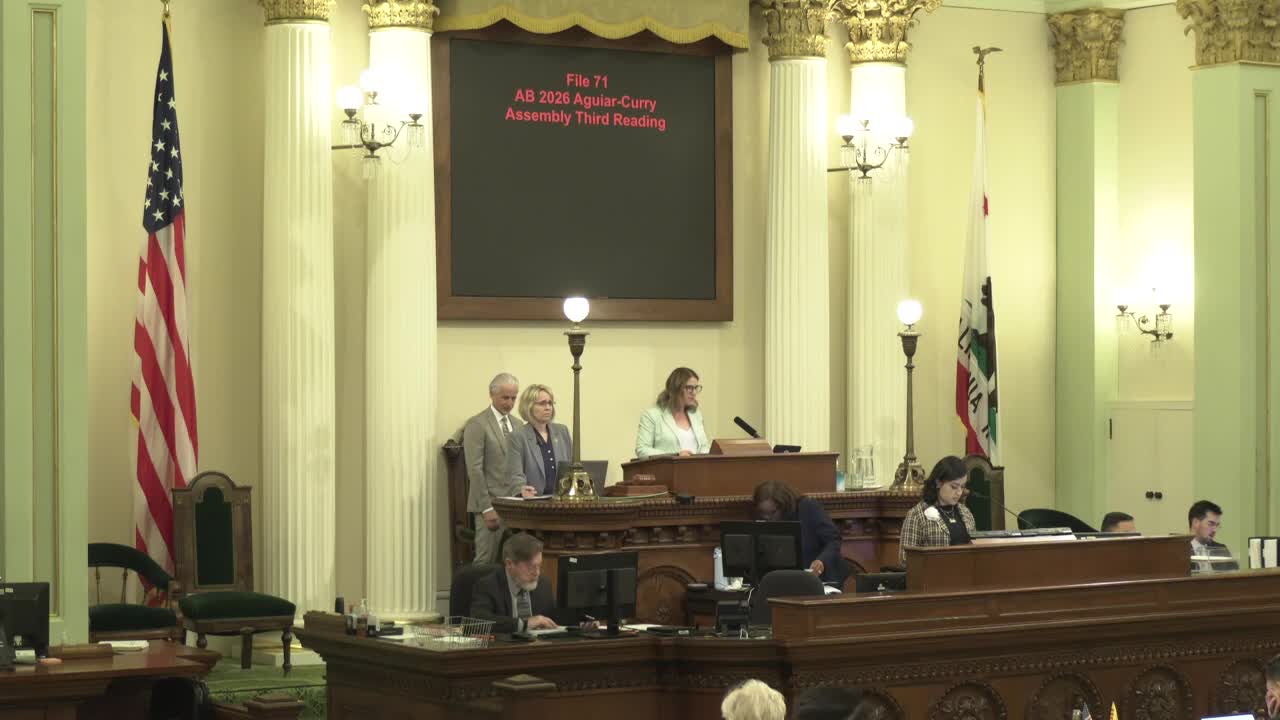 3MIN
Assembly Floor
 1MIN
Assembly Floor
 8MIN
Assembly Standing Committee on Judiciary
 45MIN