AB 2353: Health Mandates Review Program.
- Session Year: 2025-2026
- House: Assembly
- Latest Version Date: 2026-04-28
Current Status:
In Progress
(2026-07-01: In committee: Set, first hearing. Hearing canceled at the request of author.)
Introduced
In Committee
Awaiting First Chamber Vote
Passed First Chamber
In Committee
Awaiting Second Chamber Vote
Passed Second Chamber
Enacted
Existing law requests the University of California to establish the California Health Benefit Review Program (CHBRP) to assess legislation proposing to mandate a health care benefit or service or repeal a mandated benefit or service and to prepare a written analysis. Existing law authorizes an appropriate policy or fiscal committee chairperson, the Speaker of the Assembly, or the President pro Tempore of the Senate to request that written analysis. Under existing law, a written analysis is requested to be provided to the Legislature not later than 60 days after a request for analysis is made. Existing law establishes the Health Care Benefits Fund, funded by an annual fee on health care service plans and health insurers, to support the University of California and CHBRP.
This bill would request the University of California to establish the Health Mandates Review Program to assess legislation proposing to mandate new or additional services or activities for a designated provider, beginning no later than January 1, 2028. The bill would require the appropriate policy or fiscal committee within the legislations house of origin to request the program to assess legislation if the legislation is expected to affect the operations of a majority of the states hospitals, or a majority of hospitals within a recognized class of hospitals, by requiring specified actions. The bill would request the Health Mandates Review Program to provide a written analysis of the legislation, as specified, and would request that the analysis include information on specified impacts. The bill would request that the program publish an annual summary of legislation it analyzed and that it convene a workgroup of members with relevant expertise in hospital finance or operations to advise on the development and implementation of the program.This bill would establish the Health Care Mandates Fund in the State Treasury to support the University of California and its work in implementing the Health Mandates Review Program, including providing bill analyses. The bill would require the Department of Health Care Access and Information to annually transfer an unspecified amount from the California Health Data and Planning Fund to the Health Care Mandates Fund starting in the 202728 fiscal year.This bill would require the Department of Health Care Access and Information to seek to partner with the University of California to develop a plan to establish the Center for Health Provider Policy Impact to assess and evaluate the impact of state and federal policies on hospitals. The bill would require the center to evaluate anticipated and actual impacts of proposed policies on health care delivery, access, workforce, and system sustainability and would require the center to create reports, at least annually, as specified. The bill would authorize the Legislature to request that the center review specific legislation or issues. The bill would establish the Health Provider Impact Fund. The bill would require the department to assess a fee for each hospital for the costs required to fund the above-described activities, as specified, thus imposing a tax. The bill would repeal these provisions on January 1, 2033.
Existing law requests the University of California to establish the California Health Benefit Review Program (CHBRP) to assess legislation proposing to mandate a health care benefit or service or repeal a mandated benefit or service and to prepare a written analysis. Existing law authorizes an appropriate policy or fiscal committee chairperson, the Speaker of the Assembly, or the President pro Tempore of the Senate to request that written analysis. Under existing law, a written analysis is requested to be provided to the Legislature not later than 60 days after a request for analysis is made. Existing law establishes the Health Care Benefits Fund, funded by an annual fee on health care service plans and health insurers, to support the University of California and CHBRP.
This bill would request the University of California to establish the Health Mandates Review Program to assess legislation proposing to mandate new or additional services or activities for a designated provider, beginning no later than January 1, 2028. The bill would require the appropriate policy or fiscal committee within the legislations house of origin to request the program to assess legislation if the legislation is expected to affect the operations of a majority of the states hospitals, or a majority of hospitals within a recognized class of hospitals, by requiring specified actions. The bill would request the Health Mandates Review Program to provide a written analysis of the legislation, as specified, and would request that the analysis include information on specified impacts. The bill would request that the program publish an annual summary of legislation it analyzed and that it convene a workgroup of members with relevant expertise in hospital finance or operations to advise on the development and implementation of the program.
This bill would establish the Health Care Mandates Fund in the State Treasury to support the University of California and its work in implementing the Health Mandates Review Program, including providing bill analyses. The bill would require the Department of Health Care Access and Information to annually transfer an unspecified amount from the California Health Data and Planning Fund to the Health Care Mandates Fund starting in the 202728 fiscal year.
Existing law requests the University of California to establish the California Health Benefit Review Program to assess legislation proposing to mandate a health care benefit or service or repeal a mandated benefit or service and to prepare a written analysis, as specified.This bill would state the intent of the Legislature to enact legislation to identify an independent, nonpartisan body to estimate the cost of legislative proposals that require new services or activities by health care providers and ensure a written analysis of these proposals is published, among other things. The bill would also make related findings and declarations.Existing law requests the University of California to establish the California Health Benefit Review Program to assess legislation proposing to mandate a health care benefit or service or repeal a mandated benefit or service and to prepare a written analysis, as specified.
This bill would state the intent of the Legislature to enact legislation to identify an independent, nonpartisan body to estimate the cost of legislative proposals that require new services or activities by health care providers and ensure a written analysis of these proposals is published, among other things. The bill would also make related findings and declarations.
(a)The Department of Health Care Access and Information shall seek to partner with the University of California to develop a plan, no later than January 1, 2028, to establish the Center for Health Provider Policy Impact to assess and evaluate the impact of state and federal policies on hospitals.
(b)The center shall evaluate the anticipated and actual impacts of proposed policies on health care delivery, access, workforce, and system sustainability.
(c)The center shall, at least annually, and no later than June 1 each year for analyses of proposed legislation, publish reports that do, but are not limited to, all of the following:
(1)Review and analyze proposed legislation, regulations, and other policy actions affecting hospitals and health care providers.
(2)Assess the impacts of those policies on public health outcomes, health care access, delivery, workforce, and system sustainability.
(3)Analyze disparities in policy impacts across regions, including rural and underserved areas.
(4)Identify emerging trends and policy issues likely to affect access to care, quality of care, and system sustainability.
(d)The Legislature may request that the center review specific legislation or issues.
(e)The center shall post all requested, initiated, and completed analyses on its internet website and submit all reports to the appropriate policy and fiscal committees of the Legislature and to appropriate state departments and agencies. The reports required by subdivision (c) shall be submitted in compliance with Section 9795 of the Government Code.
(f)In order to effectively support the University of California and its work in implementing this chapter, there is hereby established in the State Treasury the Health Provider Impact Fund. The universitys work in providing the bill analyses shall be supported from the fund.
(g)Each hospital shall be assessed an annual fee in an amount determined by the Department of Health Care Access and Information through regulation and shall be limited to the amount necessary to fund the actual and necessary expenses of the university and its work in implementing this chapter. The total annual assessment shall not exceed three million dollars ($3,000,000).
(h)The Department of Health Care Access and Information shall assess each hospital respectively, for the costs required to fund the activities pursuant to subdivision (c).
(1)Hospitals shall be notified of the assessment on or before June 15 of each year.
(2)The assessed fee shall be paid on an annual basis no later than August 1 of each year. The Department of Health Care Access and Information shall forward the assessed fees to the Controller for deposit in the Health Provider Impact Fund immediately following their receipt.
(i)For the purposes of this section, hospital includes the following entities:
(1)A general acute care hospital, as defined in subdivision (a) of Section 1250.
(2)An acute psychiatric hospital, as defined in subdivision (b) of Section 1250.
(3)A special hospital, as defined in subdivision (f) of Section 1250.
127669.This chapter shall remain in effect only until January 1, 2033, and as of that date is repealed.
SECTION 1.(a)The Legislature finds and declares all of the following:(1)There is an increasing number of proposals that mandate health care providers to provide specific services or activities.(2)Some of these health care services or activities could potentially result in better health outcomes that would be in the public interest.(3)Mandated health care services and activities contribute to the cost and lack of affordability of health care for patients, providers, payers, and purchasers.(b)It is the intent of the Legislature that this act do all of the following:(1)Ensure that all residents of this state have reasonable access to affordable, high-quality, and equitable health care.(2)Facilitate the provision of high-quality, cost-effective, and equitable health care services by providing current, credible data and information to the Governor and the Legislature for the purpose of evaluating proposed legislation.(3)Identify an independent, nonpartisan body with the requisite capabilities to estimate the cost to Californians of legislative proposals that mandate new services or activities for hospitals.(4)Ensure that the independent, nonpartisan body publish a written analysis of the estimated costs of legislative proposals that significantly affect the public health, the delivery and administration of hospital services, the cost of health care services, health care affordability, and the financial stability of hospitals.(c)Therefore, it is the intent of the Legislature that the Health Mandates Review Program conduct a systematic review of proposed mandated or mandatorily offered services and activities that affect hospitals before enactment of the legislation. This review will assist the Governor and the Legislature to determine if mandating a particular service or activity is in the public interest.SEC. 2.Section 127660 of the Health and Safety Code is amended to read:127660.(a)The Legislature hereby requests the University of California to establish the California Health Benefit Review Program to assess legislation proposing to mandate a benefit or service and legislation proposing to repeal a mandated benefit or service, and to prepare a written analysis with relevant data on the following:(1)Public health impacts, including, but not limited to, all of the following:(A)The impact on the health of the community, including the reduction of communicable disease and the benefits of prevention such as those provided by childhood immunizations and prenatal care.(B)The impact on the health of the community, including diseases and conditions where disparities in outcomes associated with the social determinants of health as well as gender, race, sexual orientation, or gender identity are established in peer-reviewed scientific and medical literature.(C)The extent to which the benefit or service reduces premature death and the economic loss associated with disease.(2)Medical impacts, including, but not limited to, all of the following:(A)The extent to which the benefit or service is generally recognized by the medical community as being effective in the screening, diagnosis, or treatment of a condition or disease, as demonstrated by a review of scientific and peer-reviewed medical literature.(B)The extent to which the benefit or service is generally available and utilized by treating physicians.(C)The contribution of the benefit or service to the health status of the population, including the results of any research demonstrating the efficacy of the benefit or service compared to alternatives, including not providing the benefit or service.(D)The extent to which mandating or repealing the benefits or services would not diminish or eliminate access to currently available health care benefits or services.(3)Financial impacts, including, but not limited to, all of the following:(A)The extent to which the coverage or repeal of coverage will increase or decrease the benefit or cost of the benefit or service.(B)The extent to which the coverage or repeal of coverage will increase the utilization of the benefit or service, or will be a substitute for, or affect the cost of, alternative benefits or services.(C)The extent to which the coverage or repeal of coverage will increase or decrease the administrative expenses of health care service plans and health insurers and the premium and expenses of subscribers, enrollees, and policyholders.(D)The impact of this coverage or repeal of coverage on the total cost of health care.(E)The impact of this coverage or repeal of coverage on anticipated costs or savings estimated upon implementation for one subsequent calendar year, or, if applicable, two subsequent calendar years through a long-range estimate.(F)The potential cost or savings to the private sector, including the impact on small employers as defined in paragraph (1) of subdivision (l) of Section 1357, the Public Employees Retirement System, other retirement systems funded by the state or by a local government, individuals purchasing individual health insurance, and publicly funded state health insurance programs, including the Medi-Cal program.(G)The extent to which costs resulting from lack of coverage or repeal of coverage are or would be shifted to other payers, including both public and private entities.(H)The extent to which mandating or repealing the proposed benefit or service would not diminish or eliminate access to currently available health care benefits or services.(I)The extent to which the benefit or service is generally utilized by a significant portion of the population.(J)The extent to which health care coverage for the benefit or service is already generally available.(K)The level of public demand for health care coverage for the benefit or service, including the level of interest of collective bargaining agents in negotiating privately for inclusion of this coverage in group contracts, and the extent to which the mandated benefit or service is covered by self-funded employer groups.(L)In assessing and preparing a written analysis of the financial impact of legislation proposing to mandate a benefit or service and legislation proposing to repeal a mandated benefit or service pursuant to this paragraph, the Legislature requests the University of California to use a certified actuary or other person with relevant knowledge and expertise to determine the financial impact.(4)The impact on essential health benefits, as defined in Section 1367.005 of this code and Section 10112.27 of the Insurance Code, and the impact on the California Health Benefit Exchange.(b)The Legislature further requests that the California Health Benefit Review Program assess legislation that impacts health insurance benefit design, cost sharing, premiums, and other health insurance topics.(c)The Legislature requests that the University of California provide every analysis to the appropriate policy and fiscal committees of the Legislature not later than 60 days, or in a manner and pursuant to a timeline agreed to by the Legislature and the California Health Benefit Review Program, after receiving a request made pursuant to Section 127661. In addition, the Legislature requests that the university post every analysis on the internet and make every analysis available to the public upon request.(d)(1)The Legislature further requests that the University of California establish the Health Mandates Review Program to assess legislation proposing to mandate new or additional services or activities for hospitals beginning no later than January 1, 2028.(2)The appropriate policy or fiscal committee within the legislations house of origin shall request that the Health Mandates Review Program assess legislation if the legislation is expected to affect the operations of a majority of the states hospitals, or a majority of hospitals within a recognized class of hospitals, by requiring hospitals to hire new staff or otherwise increase workforce costs, purchase or lease new equipment, make physical alterations to their facilities, or provide additional discounted or charitable care.(3)After receiving a request made pursuant to this subdivision, the Legislature requests that the Health Mandates Review Program provide a written analysis of the legislation to the appropriate policy and fiscal committees of the Legislature not later than 72 hours before the legislation is to be heard in the relevant fiscal committee of the house of origin, or in a manner and pursuant to a timeline agreed to by the Legislature and the Health Mandates Review Program.(4)The Legislature requests that the written analysis provided pursuant to paragraph (3) include analysis of all of the following impacts:(A)To the extent applicable and feasible within the timeframe for the request, hospital care delivery impacts, including all of the following:(i)The extent to which the proposed mandated service or activity is generally recognized as effective in the screening, diagnosis, treatment, or prevention of a condition or disease, as demonstrated by a review of scientific and peer-reviewed literature.(ii)The extent to which the proposed mandated service or activity is generally currently utilized by hospitals.(iii)The results of research demonstrating the efficacy of the proposed mandated service or activity compared to alternatives, including not providing the service or activity.(B)To the extent applicable and feasible within the timeframe for the request, public health impacts, including both of the following:(i)The impact of the mandated service or activity on the health of patients and the community, including the reduction and prevention of disease and disparities in health outcomes, premature death, and economic loss associated with disease.(ii)The results of any research demonstrating the efficacy of the activity or service compared to alternatives, including not providing the activity or service.(C)Financial impacts, including all of the following:(i)The extent to which the mandate will affect the cost of providing and administering hospital services or affect the cost of providing uncompensated care.(ii)The extent to which the proposed mandated service or activity may affect access to currently available health care services or affect the financial stability of hospitals.(iii)The extent to which the mandate will increase or decrease the utilization of hospital services or will be a substitute for, or affect the cost of, services at other sites of care.(iv)Impacts on the cost of health care for patients, purchasers, and payers, including commercial payers, the Medi-Cal program, and the federal Medicare Program.(v)The total effect on the cost of health care services resulting from the proposed mandated service or activity compared to the total cost of health care in California.(5)To the extent feasible and applicable, the Legislature requests that the written analysis provided pursuant to paragraph (3) separately identify impacts for different recognized classes of hospitals and for the major payer categories of the Medi-Cal program, the federal Medicare Program, and commercial payers.(6)To prepare the written analysis provided pursuant to paragraph (3), the Health Mandates Review Program may make and execute contracts and interagency agreements consistent with its duties under this chapter.(7)There shall not be an independent review board process by the state for full data access to all claims payer database and hospital discharge data.(8)On or before December 31 of each year, and no sooner than following the completion of an analysis pursuant to paragraph (3), the Legislature requests that the University of Californias Health Mandates Review Program publish a summary of legislation analyzed by the Health Mandates Review Program enacted in the same year that mandates new or additional services or activities, as well as their impacts on cost if a written analysis was conducted.(9)The Legislature requests the Health Mandates Review Program to convene a workgroup of members with relevant expertise in hospital finance or operations to advise on the development and implementation of the program.(e)As used in this section:(1)Hospital means a health facility described in subdivision (a) or (b) of Section 1250.(2)Legislation proposing to mandate a benefit or service means a proposed statute that requires a health care service plan or a health insurer, or both, to do any of the following:(A)Permit a person insured or covered under the policy or contract to obtain health care treatment or services from a particular type of health care provider.(B)Offer or provide coverage for the screening, diagnosis, or treatment of a particular disease or condition.(C)Offer or provide coverage of a particular type of health care treatment or service, or of medical equipment, medical supplies, or drugs used in connection with a health care treatment or service.(3)Legislation proposing to mandate new or additional services or activities means a proposed statute that requires hospitals to offer or provide specific services or perform specific activities that have not previously been required. This includes changes to existing requirements that are expected to increase the cost of providing existing services or performing existing activities.(4)Legislation proposing to repeal a mandated benefit or service means a proposed statute that would repeal an existing requirement that a health care service plan or a health insurer, or both, do any of the following:(A)Permit a person insured or covered under the policy or contract to obtain health care treatment or services from a particular type of health care provider.(B)Offer or provide coverage for the screening, diagnosis, or treatment of a particular disease or condition.(C)Offer or provide coverage of a particular type of health care treatment or service, or of medical equipment, medical supplies, or drugs used in connection with a health care treatment or service.SEC. 3.Section 127662 of the Health and Safety Code is amended to read:127662.(a)In order to effectively support the University of California and its work in implementing the California Health Benefit Review Program, there is hereby established in the State Treasury, the Health Care Benefits Fund. The universitys work in providing the bill analyses pursuant to subdivisions (a) to (c), inclusive, of Section 127660 shall be supported from this fund.(b)For the 202627 to 203233 fiscal years, inclusive, each health care service plan, except a specialized health care service plan, and each health insurer offering health insurance, as defined in Section 106 of the Insurance Code, shall be assessed an annual fee in an amount determined through regulation. The amount of the fee shall be determined by the Department of Managed Health Care and the Department of Insurance in consultation with the university and shall be limited to the amount necessary to fund the actual and necessary expenses of the university and its work in implementing this chapter. The total annual assessment on health care service plans and health insurers shall not exceed three million two hundred thousand dollars ($3,200,000).(c)The Department of Managed Health Care and the Department of Insurance, in coordination with the university, shall assess the health care service plans and health insurers, respectively, for the costs required to fund the universitys activities pursuant to subdivision (b).(1)Health care service plans shall be notified of the assessment on or before June 15 of each year with the annual assessment notice issued pursuant to Section 1356. The assessment pursuant to this section is separate and independent of the assessments in Section 1356.(2)Health insurers shall be noticed of the assessment in accordance with the notice for the annual assessment or quarterly premium tax revenues.(3)The assessed fees required pursuant to subdivision (b) shall be paid on an annual basis no later than August 1 of each year. The Department of Managed Health Care and the Department of Insurance shall forward the assessed fees to the Controller for deposit in the Health Care Benefits Fund immediately following their receipt.(4)Health insurance, as used in this subdivision, does not include Medicare supplement, vision-only, dental-only, or CHAMPUS supplement insurance, or hospital indemnity, accident-only, or specified disease insurance that does not pay benefits on a fixed benefit, cash payment only basis.(d)(1)In order to effectively support the University of California and its work in implementing the Health Mandates Review Program, there is hereby established in the State Treasury the Health Care Mandates Fund. The University of Californias work in providing bill analyses pursuant to subdivision (d) of Section 127660 shall be supported from this fund.(2)Notwithstanding any other law, starting in the 202728 fiscal year, and no later than August 1 of each year, the Department of Health Care Access and Information shall transfer ____ dollars ($____) from the California Health Data and Planning Fund, created pursuant to subdivision (g) of Section 127280, to the Health Care Mandates Fund.(a)The Legislature finds and declares all of the following:
(1)There is an increasing number of proposals that mandate health care providers to provide specific services or activities.
(2)Some of these health care services or activities could potentially result in better health outcomes that would be in the public interest.
(3)Mandated health care services and activities contribute to the cost and lack of affordability of health care for patients, providers, payers, and purchasers.
(b)It is the intent of the Legislature that this act do all of the following:
(1)Ensure that all residents of this state have reasonable access to affordable, high-quality, and equitable health care.
(2)Facilitate the provision of high-quality, cost-effective, and equitable health care services by providing current, credible data and information to the Governor and the Legislature for the purpose of evaluating proposed legislation.
(3)Identify an independent, nonpartisan body with the requisite capabilities to estimate the cost to Californians of legislative proposals that mandate new services or activities for hospitals.
(4)Ensure that the independent, nonpartisan body publish a written analysis of the estimated costs of legislative proposals that significantly affect the public health, the delivery and administration of hospital services, the cost of health care services, health care affordability, and the financial stability of hospitals.
(c)Therefore, it is the intent of the Legislature that the Health Mandates Review Program conduct a systematic review of proposed mandated or mandatorily offered services and activities that affect hospitals before enactment of the legislation. This review will assist the Governor and the Legislature to determine if mandating a particular service or activity is in the public interest.
SEC. 2.Section 127660 of the Health and Safety Code is amended to read:127660.(a)The Legislature hereby requests the University of California to establish the California Health Benefit Review Program to assess legislation proposing to mandate a benefit or service, as defined in subdivision (d), service and legislation proposing to repeal a mandated benefit or service, as defined in subdivision (e), and to prepare a written analysis with relevant data on the following:
(1)Public health impacts, including, but not limited to, all of the following:
(A)The impact on the health of the community, including the reduction of communicable disease and the benefits of prevention such as those provided by childhood immunizations and prenatal care.
(B)The impact on the health of the community, including diseases and conditions where disparities in outcomes associated with the social determinants of health as well as gender, race, sexual orientation, or gender identity are established in peer-reviewed scientific and medical literature.
(C)The extent to which the benefit or service reduces premature death and the economic loss associated with disease.
(2)Medical impacts, including, but not limited to, all of the following:
(A)The extent to which the benefit or service is generally recognized by the medical community as being effective in the screening, diagnosis, or treatment of a condition or disease, as demonstrated by a review of scientific and peer-reviewed medical literature.
(B)The extent to which the benefit or service is generally available and utilized by treating physicians.
(C)The contribution of the benefit or service to the health status of the population, including the results of any research demonstrating the efficacy of the benefit or service compared to alternatives, including not providing the benefit or service.
(D)The extent to which mandating or repealing the benefits or services would not diminish or eliminate access to currently available health care benefits or services.
(3)Financial impacts, including, but not limited to, all of the following:
(A)The extent to which the coverage or repeal of coverage will increase or decrease the benefit or cost of the benefit or service.
(B)The extent to which the coverage or repeal of coverage will increase the utilization of the benefit or service, or will be a substitute for, or affect the cost of, alternative benefits or services.
(C)The extent to which the coverage or repeal of coverage will increase or decrease the administrative expenses of health care service plans and health insurers and the premium and expenses of subscribers, enrollees, and policyholders.
(D)The impact of this coverage or repeal of coverage on the total cost of health care.
(E)The impact of this coverage or repeal of coverage on anticipated costs or savings estimated upon implementation for one subsequent calendar year, or, if applicable, two subsequent calendar years through a long-range estimate.
(F)The potential cost or savings to the private sector, including the impact on small employers as defined in paragraph (1) of subdivision (l) of Section 1357, the Public Employees Retirement System, other retirement systems funded by the state or by a local government, individuals purchasing individual health insurance, and publicly funded state health insurance programs, including the Medi-Cal program.
(G)The extent to which costs resulting from lack of coverage or repeal of coverage are or would be shifted to other payers, including both public and private entities.
(H)The extent to which mandating or repealing the proposed benefit or service would not diminish or eliminate access to currently available health care benefits or services.
(I)The extent to which the benefit or service is generally utilized by a significant portion of the population.
(J)The extent to which health care coverage for the benefit or service is already generally available.
(K)The level of public demand for health care coverage for the benefit or service, including the level of interest of collective bargaining agents in negotiating privately for inclusion of this coverage in group contracts, and the extent to which the mandated benefit or service is covered by self-funded employer groups.
(L)In assessing and preparing a written analysis of the financial impact of legislation proposing to mandate a benefit or service and legislation proposing to repeal a mandated benefit or service pursuant to this paragraph, the Legislature requests the University of California to use a certified actuary or other person with relevant knowledge and expertise to determine the financial impact.
(4)The impact on essential health benefits, as defined in Section 1367.005 of this code and Section 10112.27 of the Insurance Code, and the impact on the California Health Benefit Exchange.
(b)The Legislature further requests that the California Health Benefit Review Program assess legislation that impacts health insurance benefit design, cost sharing, premiums, and other health insurance topics.
(c)The Legislature requests that the University of California provide every analysis to the appropriate policy and fiscal committees of the Legislature not later than 60 days, or in a manner and pursuant to a timeline agreed to by the Legislature and the California Health Benefit Review Program, after receiving a request made pursuant to Section 127661. In addition, the Legislature requests that the university post every analysis on the Internet internet and make every analysis available to the public upon request.
(d)(1)The Legislature further requests that the University of California establish the Health Mandates Review Program to assess legislation proposing to mandate new or additional services or activities for hospitals beginning no later than January 1, 2028.
(2)The appropriate policy or fiscal committee within the legislations house of origin shall request that the Health Mandates Review Program assess legislation if the legislation is expected to affect the operations of a majority of the states hospitals, or a majority of hospitals within a recognized class of hospitals, by requiring hospitals to hire new staff or otherwise increase workforce costs, purchase or lease new equipment, make physical alterations to their facilities, or provide additional discounted or charitable care.
(3)After receiving a request made pursuant to this subdivision, the Legislature requests that the Health Mandates Review Program provide a written analysis of the legislation to the appropriate policy and fiscal committees of the Legislature not later than 72 hours before the legislation is to be heard in the relevant fiscal committee of the house of origin, or in a manner and pursuant to a timeline agreed to by the Legislature and the Health Mandates Review Program.
(4)The Legislature requests that the written analysis provided pursuant to paragraph (3) include analysis of all of the following impacts:
(A)To the extent applicable and feasible within the timeframe for the request, hospital care delivery impacts, including all of the following:
(i)The extent to which the proposed mandated service or activity is generally recognized as effective in the screening, diagnosis, treatment, or prevention of a condition or disease, as demonstrated by a review of scientific and peer-reviewed literature.
(ii)The extent to which the proposed mandated service or activity is generally currently utilized by hospitals.
(iii)The results of research demonstrating the efficacy of the proposed mandated service or activity compared to alternatives, including not providing the service or activity.
(B)To the extent applicable and feasible within the timeframe for the request, public health impacts, including both of the following:
(i)The impact of the mandated service or activity on the health of patients and the community, including the reduction and prevention of disease and disparities in health outcomes, premature death, and economic loss associated with disease.
(ii)The results of any research demonstrating the efficacy of the activity or service compared to alternatives, including not providing the activity or service.
(C)Financial impacts, including all of the following:
(i)The extent to which the mandate will affect the cost of providing and administering hospital services or affect the cost of providing uncompensated care.
(ii)The extent to which the proposed mandated service or activity may affect access to currently available health care services or affect the financial stability of hospitals.
(iii)The extent to which the mandate will increase or decrease the utilization of hospital services or will be a substitute for, or affect the cost of, services at other sites of care.
(iv)Impacts on the cost of health care for patients, purchasers, and payers, including commercial payers, the Medi-Cal program, and the federal Medicare Program.
(v)The total effect on the cost of health care services resulting from the proposed mandated service or activity compared to the total cost of health care in California.
(5)To the extent feasible and applicable, the Legislature requests that the written analysis provided pursuant to paragraph (3) separately identify impacts for different recognized classes of hospitals and for the major payer categories of the Medi-Cal program, the federal Medicare Program, and commercial payers.
(6)To prepare the written analysis provided pursuant to paragraph (3), the Health Mandates Review Program may make and execute contracts and interagency agreements consistent with its duties under this chapter.
(7)There shall not be an independent review board process by the state for full data access to all claims payer database and hospital discharge data.
(8)On or before December 31 of each year, and no sooner than following the completion of an analysis pursuant to paragraph (3), the Legislature requests that the University of Californias Health Mandates Review Program publish a summary of legislation analyzed by the Health Mandates Review Program enacted in the same year that mandates new or additional services or activities, as well as their impacts on cost if a written analysis was conducted.
(9)The Legislature requests the Health Mandates Review Program to convene a workgroup of members with relevant expertise in hospital finance or operations to advise on the development and implementation of the program.
(d)(e)As used in this section, legislation section:
(1)Hospital means a health facility described in subdivision (a) or (b) of Section 1250.
(2)Legislation proposing to mandate a benefit or service means a proposed statute that requires a health care service plan or a health insurer, or both, to do any of the following:
(1)(A)Permit a person insured or covered under the policy or contract to obtain health care treatment or services from a particular type of health care provider.
(2)(B)Offer or provide coverage for the screening, diagnosis, or treatment of a particular disease or condition.
(3)(C)Offer or provide coverage of a particular type of health care treatment or service, or of medical equipment, medical supplies, or drugs used in connection with a health care treatment or service.
(e)As used in this section, legislation(3)Legislation proposing to mandate new or additional services or activities means a proposed statute that requires hospitals to offer or provide specific services or perform specific activities that have not previously been required. This includes changes to existing requirements that are expected to increase the cost of providing existing services or performing existing activities.
(4)Legislation proposing to repeal a mandated benefit or service means a proposed statute that would repeal an existing requirement that a health care service plan or a health insurer, or both, do any of the following:
(1)(A)Permit a person insured or covered under the policy or contract to obtain health care treatment or services from a particular type of health care provider.
(2)(B)Offer or provide coverage for the screening, diagnosis, or treatment of a particular disease or condition.
(3)(C)Offer or provide coverage of a particular type of health care treatment or service, or of medical equipment, medical supplies, or drugs used in connection with a health care treatment or service.
SEC. 3.Section 127662 of the Health and Safety Code is amended to read:127662.(a)In order to effectively support the University of California and its work in implementing this chapter, the California Health Benefit Review Program, there is hereby established in the State Treasury, the Health Care Benefits Fund. The universitys work in providing the bill analyses pursuant to subdivisions (a) to (c), inclusive, of Section 127660 shall be supported from the this fund.
(b)For the 202627 to 203233 fiscal years, inclusive, each health care service plan, except a specialized health care service plan, and each health insurer offering health insurance, as defined in Section 106 of the Insurance Code, shall be assessed an annual fee in an amount determined through regulation. The amount of the fee shall be determined by the Department of Managed Health Care and the Department of Insurance in consultation with the university and shall be limited to the amount necessary to fund the actual and necessary expenses of the university and its work in implementing this chapter. The total annual assessment on health care service plans and health insurers shall not exceed three million two hundred thousand dollars ($3,200,000).
(c)The Department of Managed Health Care and the Department of Insurance, in coordination with the university, shall assess the health care service plans and health insurers, respectively, for the costs required to fund the universitys activities pursuant to subdivision (b).
(1)Health care service plans shall be notified of the assessment on or before June 15 of each year with the annual assessment notice issued pursuant to Section 1356. The assessment pursuant to this section is separate and independent of the assessments in Section 1356.
(2)Health insurers shall be noticed of the assessment in accordance with the notice for the annual assessment or quarterly premium tax revenues.
(3)The assessed fees required pursuant to subdivision (b) shall be paid on an annual basis no later than August 1 of each year. The Department of Managed Health Care and the Department of Insurance shall forward the assessed fees to the Controller for deposit in the Health Care Benefits Fund immediately following their receipt.
(4)Health insurance, as used in this subdivision, does not include Medicare supplement, vision-only, dental-only, or CHAMPUS supplement insurance, or hospital indemnity, accident-only, or specified disease insurance that does not pay benefits on a fixed benefit, cash payment only basis.
(d)(1)In order to effectively support the University of California and its work in implementing the Health Mandates Review Program, there is hereby established in the State Treasury the Health Care Mandates Fund. The University of Californias work in providing bill analyses pursuant to subdivision (d) of Section 127660 shall be supported from this fund.
(2)Notwithstanding any other law, starting in the 202728 fiscal year, and no later than August 1 of each year, the Department of Health Care Access and Information shall transfer ____ dollars ($____) from the California Health Data and Planning Fund, created pursuant to subdivision (g) of Section 127280, to the Health Care Mandates Fund.
SECTION 1.(a)The Legislature finds and declares that there is an increasing number of legislative proposals that mandate health care providers to provide specific services or activities. The Legislature further finds and declares that some of these services or activities could potentially result in better health outcomes that would be in the public interest. However, the Legislature also recognizes that the costs of these services and activities contribute to the affordability of health care. Therefore, it is the intent of the Legislature that an independent, nonpartisan body conduct a systematic review for costs of proposed legislation requiring new services or operational activities that affect providers before enactment of the legislation. This review will assist the Governor and the Legislature in determining whether mandating a particular service or activity is in the public interest.(b)It is the intent of the Legislature to enact legislation to do all of the following:(1)Assure that all residents of this state have reasonable access to affordable, high-quality, and equitable health care.(2)Facilitate the provision of high-quality, cost-effective, and equitable health care services by providing current, credible data and information to the Governor and the Legislature for the purpose of evaluating proposed legislation.(3)Identify an independent, nonpartisan body with the requisite capabilities to estimate the cost to Californians of legislative proposals that require new services or activities by health care providers.(4)To ensure that the independent, nonpartisan body publishes a written analysis of legislative proposals that significantly affect the public health, delivery and administration of health care services, costs of health care services, health care affordability, and financial stability of health care providers.(a)The Legislature finds and declares that there is an increasing number of legislative proposals that mandate health care providers to provide specific services or activities. The Legislature further finds and declares that some of these services or activities could potentially result in better health outcomes that would be in the public interest. However, the Legislature also recognizes that the costs of these services and activities contribute to the affordability of health care. Therefore, it is the intent of the Legislature that an independent, nonpartisan body conduct a systematic review for costs of proposed legislation requiring new services or operational activities that affect providers before enactment of the legislation. This review will assist the Governor and the Legislature in determining whether mandating a particular service or activity is in the public interest.
(b)It is the intent of the Legislature to enact legislation to do all of the following:
(1)Assure that all residents of this state have reasonable access to affordable, high-quality, and equitable health care.
(2)Facilitate the provision of high-quality, cost-effective, and equitable health care services by providing current, credible data and information to the Governor and the Legislature for the purpose of evaluating proposed legislation.
(3)Identify an independent, nonpartisan body with the requisite capabilities to estimate the cost to Californians of legislative proposals that require new services or activities by health care providers.
(4)To ensure that the independent, nonpartisan body publishes a written analysis of legislative proposals that significantly affect the public health, delivery and administration of health care services, costs of health care services, health care affordability, and financial stability of health care providers.
|
Date
|
Status
|
|---|---|
| Jul 1, 2026 | In committee: Set, first hearing. Hearing canceled at the request of author. |
| Jun 10, 2026 | Referred to Com. on HEALTH. |
| May 28, 2026 | In Senate. Read first time. To Com. on RLS. for assignment. |
| May 27, 2026 | Read third time. Passed. Ordered to the Senate. (Ayes 56. Noes 1. Page 5462.) |
| May 27, 2026 | Read third time. Passed. Ordered to the Senate. (Ayes 56. Noes 1.) |
| May 27, 2026 | Read third time. Passed. Ordered to the Senate. |
| May 18, 2026 | Read second time. Ordered to third reading. |
| May 14, 2026 | From committee: Do pass. (Ayes 12. Noes 0.) (May 14). |
| May 14, 2026 | Joint Rule 62(a), file notice suspended. (Page 5030.) |
| May 14, 2026 | Joint Rule 62(a), file notice suspended. |
| May 13, 2026 | In committee: Set, first hearing. Referred to APPR. suspense file. |
| Apr 29, 2026 | Re-referred to Com. on APPR. |
| Apr 28, 2026 | Read second time and amended. |
| Apr 27, 2026 | From committee: Amend, and do pass as amended and re-refer to Com. on APPR. (Ayes 11. Noes 0.) (April 21). |
| Mar 17, 2026 | Re-referred to Com. on HEALTH. |
| Mar 16, 2026 | From committee chair, with author's amendments: Amend, and re-refer to Com. on HEALTH. Read second time and amended. |
| Mar 16, 2026 | Referred to Com. on HEALTH. |
| Feb 20, 2026 | From printer. May be heard in committee March 22. |
| Feb 19, 2026 | Read first time. To print. |
|
Date
|
Description
|
Location
|
Votes
|
|
|---|---|---|---|---|
| May 27, 2026 | AB 2353 Pacheco Assembly Third Reading | Assembly Floor |
Passed |
|
| May 14, 2026 | Do pass. | Assembly Standing Committee on Appropriations |
Passed |
|
| Apr 21, 2026 | Do pass as amended and be re-referred to the Committee on [Appropriations] | Assembly Standing Committee on Health |
Passed |
This list shows positions taken on this bill by organizations on the date displayed, which is linked to the original source.
Positions by individuals are not included.
|
Organization
|
Position
|
Date
|
|---|---|---|
| Adventist Health | ** Support | |
| Alliance for TransYouth Rights | ** Against | |
| Alliance Of Catholic Health Care | ** Support | |
| American Federation of Government Employees | ** Against | |
| Association of California Healthcare Districts | ** Support | |
| Barstow Community Hospital | ** Support | |
| Bear Valley Community Hospital | ** Support | |
| Blood Cancer United | ** Against | |
| California Alliance For Retired Americans | ** Against | |
| California Association Of Health Facilities | ** Support | |
| California Chamber Of Commerce | ** Support | |
| California Children's Hospital Assn | ** Support | |
| California Federation of Labor Unions | ** Against | |
| California Federation Of Teachers | ** Against | |
| California Hospital Association | ** Support | |
| California Kidney Care Alliance | ** Support | |
| California LGBTQ Health and Human Services Network | ** Against | |
| California Nurses Association | ** Against | |
| California Pan-Ethnic Health Network | ** Against | |
| California Physicians Alliance | ** Against | |
| California School Employees Association | ** Against | |
| California Society Of Health-System Pharmacists | ** Support | |
| California State Council Service Employees International Union | ** Against | |
| California Teachers Association | ** Against | |
| Canyon Ridge Hospital | ** Support | |
| Cedars Sinai | ** Support | |
| Community Health System | ** Support | |
| Community Hospital of San Bernardino | ** Support | |
| Cottage Health | ** Support | |
| County of Contra Costa | ** Support | |
| Courage California | ** Against | |
| Dignity Health | ** Support | |
| District Hospital Leadership Forum | ** Support | |
| East Bay Leadership Council | ** Support | |
| Engineers and Scientists of California | ** Against | |
| Enloe Health | ** Support | |
| Gender Affirming Professionals | ** Against | |
| Health Access California | ** Against | |
| Healthy California Now | ** Against | |
| Huntington Health | ** Support | |
| Indivisible Tri-Valley | ** Against | |
| John Muir Health | ** Support | |
| Kaiser Permanente | ** Support | |
| Kindred Hospitals | ** Support | |
| Marshall Medical Center | ** Support | |
| Mayers Memorial Hospital District | ** Support | |
| Memorialcare | ** Support | |
| Modoc Medical Center | ** Support | |
| monterey bay central labor council | ** Against | |
| National Health Law Program | ** Against | |
| National Union Of Healthcare Workers | ** Against | |
| Pflag Danville-san Ramon Valley Chapter | ** Against | |
| PFLAG Los Angeles | ** Against | |
| PIH Health | ** Support | |
| Pomona Valley Hospital Medical Center | ** Support | |
| Prime Healthcare | ** Support | |
| Private Essential Access Community Hospitals | ** Support | |
| Providence | ** Support | |
| Rady Children's Health | ** Support | |
| Rady Children's Hospital | ** Support | |
| Ridgecrest Regional Hospital | ** Support | |
| Saint Agnes Medical Center | ** Support | |
| Salinas Valley Federation of Teachers | ** Against | |
| Santa Monica Chamber of Commerce | ** Support | |
| Scripps Health | ** Support | |
| Sharp Healthcare | ** Support | |
| Silicon Valley Leadership Group | ** Support | |
| Small Business Majority | ** Against | |
| Stanford Health Care | ** Support | |
| Teamsters California | ** Against | |
| Tenet Health | ** Support | |
| Torrance Memorial Health | ** Support | |
| Transfamily Support Services | ** Against | |
| United Hospital Association | ** Support | |
| United Nurses Associations Of California/Union Of Health Care Professionals | ** Against | |
| Unite Here | ** Against | |
| western center on law & poverty | ** Against |
SENATE COMMITTEE ON HEALTH
Senator Akilah Weber Pierson, Chair
BILL NO: AB 2353
AUTHOR: | Pacheco | ||
VERSION: | April 28, 2026 | ||
HEARING DATE: | July 1, 2026 | ||
CONSULTANT: | Vincent D. Marchand | ||
SUBJECT: Health Mandates Review Program
SUMMARY:
Requires the Department of Health Care Access and Information to partner with the University of California (UC) to establish the Center for Health Provider Policy Impact to assess and evaluate the impact of state and federal policies on hospitals. Requires this center, at least annually and no later than June 1st of each year to publish reports that review and analyze proposed legislation, regulations, and other policy actions affecting hospitals and health care providers. Assesses hospitals a fee of up to $3,000,000 annually to fund the expenses of the UC in implementing this bill.
Existing law:
- Requests the University of California (UC) to establish the California Health Benefits Review Program (CHBRP) to assess legislation proposing to mandate a health insurance benefit or service, repeal a mandated benefit or service, alter a health insurance benefit design, cost-sharing, or premiums, and other health insurance topics. Requests a written report on the public health, medical, and financial impacts of the health insurance coverage mandated legislation, and essential health benefits. [HSC §127660]
- Permits a request for an analysis by CHBRP to be made by an appropriate policy or fiscal committee chairperson, the Speaker of the Assembly, or the President pro Tempore of the Senate, who are required to forward the introduced bill to CHBRP for assessment. [HSC §127661]
- Requires each health plan, except a specialized health plan, and each health insurer offering health insurance to be assessed an annual fee in an amount determined through regulation by the Department of Managed Health Care and California Department of Insurance in consultation with the UC and to be limited to the amount necessary to fund the actual and necessary expenses of UC and the work of CHBRP. Caps the assessment at $3.2 million, and sunsets the statute on July 1, 2033. [HSC §127662 and §127665]
- Requires the UC, in order to avoid conflicts of interest, to develop and implement conflict of interest provisions to prohibit a person from participating in any analysis in which the person knows or has reason to know he or she has a material financial interest, including a person who has a consulting or other agreement with a person or organization that would be affected by the legislation. [HSC §127663]
This bill:
- Requires the Department of Health Care Access and Information (HCAI) to seek to partner with the UC to develop a plan, no later than January 1, 2028, to establish the Center for Health Provider Policy Impact (Center) to assess and evaluate the impact of state and federal policies on hospitals.
- Requires the Center to evaluate the anticipated and actual impacts of proposed policies on health care delivery, access, workforce, and system sustainability.
- Requires the Center, at least annually, and by June 1 each year for analyses of proposed legislation, to publish reports that:
- Review and analyze proposed legislation, regulations, and other policy actions affecting hospitals and health care providers;
- Assess the impacts of those policies on public health outcomes, health care access, delivery, workforce, and system sustainability;
- Analyze disparities in policy impacts across regions, including rural and underserved areas; and,
- Identify emerging trends and policy issues likely to affect access to care, quality of care, and system sustainability.
- Requires the Center to post all requested, initiated, and completed analyses on its website and submit all reports to the appropriate policy and fiscal committees of the Legislature and to appropriate state departments and agencies.
- Establishes the Health Provider Impact Fund in the State Treasury to support the UC and its work in implementing this bill. Requires UC’s work in providing the bill analyses to be supported from this fund.
- Requires each hospital to be assessed an annual fee in an amount determined by HCAI through regulation and to be limited to the amount necessary to fund the actual and necessary expenses of the UC and its work in implementing this bill. Prohibits the total annual assessment from exceeding $3 million.
- Requires HCAI to assess each hospital respectively for the costs required to fund the activities of this bill. Requires hospitals to be notified of the assessment by June 15 of each year, and requires the assessed fee to be paid on an annual basis by August 1 of each year. Requires HCAI to forward the assessed fees to the Controller for deposit in the Health Provider Impact Fund immediately following their receipt.
- Defines “hospital,” for purposes of this bill, as including a general acute care hospital, an acute psychiatric hospital, and a special hospital, as each of these are defined.
- Sunsets the provisions of this bill on January 1, 2033.
FISCAL EFFECT:
According to the Assembly Appropriations Committee, HCAI estimates costs of approximately $500,000 General Fund in fiscal year (FY) 2026-27 for one-time vendor support for modifications to the data request portal and data transmission. HCAI estimates staffing costs in FY 2026-27 of approximately $2.44 million General Fund to support 11 positions and approximately $2.64 million General Fund in FY 2027-28 and ongoing, for a total of 12 positions. HCAI states these staff are needed to manage project activities, coordinate inter-agency agreements, and support system enhancements and technical operations; format data products and support content development; lead work evaluating the impacts of state and federal policies on health care delivery, access, workforce capacity, and system sustainability in collaboration with UC partners; conduct advanced analyses and complex data modeling; provide legal support and advice on partnership development, privacy and security requirements, and regulatory activities necessary for fee assessment and collection; manage receivables, reconciliations, ensure revenue accuracy; and ensure information security and privacy compliance, including response to potential cybersecurity or privacy incidents.
The UC estimates costs of approximately $3.5 million annually, to implement this bill, and notes the cost could be greater, depending on the number of reports and complexity of the analysis. The UC′s costs would be for staff to manage the center, lead the analysis work, acquire and securely store data, and perform data analytics. Other staffing needs include editing, research expertise, peer review, and subject matter expertise. The UC anticipates additional costs to include facility, infrastructure, technology, administration and the development and maintenance of new data analytics tools. This bill provides for the collection of up to $3 million per year in hospital fees to fund the UC′s work to implement this bill (Health Provider Impact Fund, which will be created pursuant to the provisions of this bill).
PRIOR VOTES:
Assembly Floor: | 56 - 1 |
Assembly Appropriations Committee: | 12 - 0 |
Assembly Health Committee: | 11 - 0 |
COMMENTS:
- Author’s statement. According to the author, California’s hospital system is under significant financial strain. Nearly 45% of the state’s hospitals operate at a deficit. In 2025 alone, financial pressure forced hospitals and health systems to lay off nearly 3,500 workers. Three hospitals closed in the last three years, and dozens more have reduced services – diminishing access to care for patients across the state. Each year, state policymakers consider hundreds of health care-related bills, regulations, and other policy proposals – often absent independent information about how each proposal will affect patient costs or access to care. To confront health care affordability, we need to understand the factors that are driving costs, including the impacts of new regulatory requirements on hospitals, their patients, and the communities they serve. This bill tasks the UC, in partnership with HCAI, with assessing and evaluating the impact of state and federal policies on hospitals, giving policymakers an objective, evidence-based foundation before making decisions that affect the health care of nearly 40 million Californians. This bill would give the Legislature a clearer picture of how policies affect hospitals – and ultimately, the people they serve.
- CHBRP background. CHBRP was created by AB 1996 (Thomson, Chapter 795, Statutes of 2002) with the intent to provide current, accurate data and quality information on both the quality and cost of proposed legislation for the purpose of determining whether certain mandated health insurance benefits should be part of the basic health insurance benefit package, enabling the Legislature to be better informed when making decisions on mandated benefit legislative proposals. Over the last 22 years, CHBRP has issued reports on approximately 248 bills and has issued other policy briefs on federal and state health insurance mandates. Legislative requests for reports per year can range between 10 and 22. According to CHBRP, a team of analytic staff at UC Berkeley works with a task force of faculty and researchers from several campuses of the UC, as well as actuarial consultants to complete each analysis during a 60-day period, usually before the Legislature begins formal consideration of a mandate bill. CHBRP indicates that a strict conflict of interest policy ensures that the analyses are undertaken without financial or other interests that could bias the results. A National Advisory Council, made up of experts from outside the state of California and designed to provide balanced representation among groups with an interest in health insurance benefit-related legislation, reviews draft analyses to assure their quality before they are transmitted to the Legislature. CHBRP indicates that each analysis summarizes sound scientific evidence relevant to the proposed legislation but does not make recommendations, deferring policy decision-making to the Legislature. CHBRP’s expenses include staff salary and benefits (42%), operational expenses such as training, rent, travel, information technology (4%), faculty and researcher task force (28%), actuarial costs (19%-28%), editors, contractors, librarians, and content experts (3%-6%), and National Advisory Council Honorariums (1%).
- Prior legislation. SB 439 (Weber Pierson, Chapter 318, Statutes of 2025) extends the authorization for funding for CHBRP, and increases the limit on the health insurance assessment that supports CHBRP’s work to $3.2 million. Additionally, extended the sunset date to July 1, 2033.
AB 1082 (Waldron, Chapter 592, Statutes of 2021) extends the assessment on health plans and insurers that supports CHBRP to July 1, 2027, and increases the annual cap on the health plan and insurer assessment by $200,000 for a total annual assessment limit of $2.2 million to support CHBRP.
AB 1996 (Thomson, Chapter 795, Statutes of 2002) requests UC to assess legislation proposing a mandated benefit or service, and to prepare a written analysis with relevant data on the public health, medical and economic impact of proposed health plan and health insurance benefit mandate legislation. Requires, for fiscal years 2002-03 to 2005-06, health plans and insurers to be assessed an annual fee in an amount determined through regulation to fund the actual and necessary expenses of UC in implementing AB 1996, and caps the total annual assessment on health plans and insurers at $2 million. - Support. This bill is sponsored by the California Hospital Association (CHA), which states that one way to protect hospital’s ability to care for patients is to help ensure proposed policies that place new requirements on hospitals strike the right balance of providing meaningful benefits to patients, health care workers, and communities without reducing access to vital services or, in the worst cases, jeopardizing a hospital’s viability entirely. This bill would further this goal by providing policymakers with additional, in-depth information before they make decisions on bills and other policies that could add to an increasingly unsustainable burden on hospitals. Without better informing policymakers of the costs and potential savings of new policies, along with their risks and benefits, the cumulative impact of rising expenses will continue to have devastating consequences, including service reductions, layoffs, and hospital closures. According to CHA, recent legislative mandates have added billions of dollars to hospitals’ costs, which must be considered in reimbursement negotiations with payers, and ultimately are borne by families, patients, employers, and taxpayers. CHA states that through this legislation, the independent Center for Health Provider Policy Impact would be established to comprehensively analyze the impacts of pending legislation, regulations, and other policies that impose new requirements on hospitals, their patients, and communities. According to CHA, it will leverage the expertise of experienced academic researchers to perform these analyses, similar to the current review of health plan and insurer mandate legislation under CHBRP. CHA argues that these analyses would elevate consideration of costs in policy decisions, which would improve policymakers’ ability to ensure that the benefits of enacted legislation and finalized regulations justify their costs. Numerous hospitals, health systems and business organizations also support this bill for similar reasons.
- Opposition. Numerous labor organizations, Health Access California, Western Center on Law and Poverty, the California LGBTQ Health and Human Services Network, and many other organizations submitted a coalition letter opposing this bill. Opponents argue that the analyses created by this bill would focus on the impacts to hospitals, not Californians, and would be used to challenge hard fought existing consumer and worker laws already vetted through the legislative process, and stop future efforts to address the health care affordability crisis facing Californians. If passed, this bill would create a Center and required analyses to influence the legislative process and policy debates in favor of hospitals’ interests. Opponents point out that these analyses would be conducted by the UC, which is a large and growing health system, with a clear conflict of interest to favor the hospital perspective. The state should not establish state-mandated analyses to allow perspectives of any business to influence policy debates. According to opponents, this bill relies on the false premise that laws passed in Sacramento are the reason that hospitals have to raise prices and some hospitals face financial challenges. First, hospital prices are driven by market power, and high hospital prices directly translate to higher premiums and cost-sharing for consumers. Second, California hospitals posted $11.3 billion in net income in 2024, exceeding pre-pandemic levels. While there are hospitals in financial distress, hospitals in general remain profitable, and the state and existing laws consider the hospital’s financial status in implementing laws and programs.
- Policy comments.
- Chasing a moving target in a compressed legislative calendar. The proponents of this bill have modeled it on the CHBRP process of analyzing new insurance mandates. Already, the compressed timeline between the bill introduction deadline and the policy committee deadline in the house of origin forces most insurance mandate proposals to be heard at the last available hearing before the deadline, so that the CHBRP analysis can be included in the policy discussion on the bill. Insurance mandate bills do not typically change as much as other legislative proposals, partly because amendments are discouraged: substantial changes could trigger a request for a revised analysis by a policy committee, which could jeopardize passage of the bill until a new revised analysis was completed. Legislative proposals impacting hospital operations are often amended in substantial ways prior to the first policy committee deadline, so any analysis based on the introduced version of a bill is likely to be outdated as soon as it is published. This bill differs from CHBRP in that the analysis is not due until June 1st, which is after the house of origin deadline. The later deadline potentially allows for some early amendments to be incorporated into the analyses, but at the cost of only the second house having the benefit of the analyses during the policy and fiscal committee hearings on the proposed legislation. Even then, amendments taken in the second house could render the analyses out of date depending on the extent of the amendments. Again, these issues exist with the current CHBRP process, but analyses of legislative proposals in the hospital space are likely to be less formulaic than insurance mandate analyses, further complicating timely completion of the analyses. The wide range of legislation impacting hospitals makes the challenge of providing a detailed impact analysis in the midst of a dynamic legislative session, with multiple opportunities to amend, especially challenging.
- Much broader scope than CHBRP. Unlike CHBRP, which as a fairly narrow mandate on what it reviews, this bill requires the center to evaluate the impacts of state and federal policies on hospitals, including “proposed legislation, regulations, and other policy actions.” In addition to federal legislation and regulations, this could also be interpreted to apply to regulations more broadly – those already adopted, in addition to those that are proposed. With only $3 million annually, which is slightly less than the $3.2 million annual budget for CHBRP, the author and committee may wish to more narrowly target legislation and regulations that are proposed in California moving forward.
- UC operates numerous large health systems. As noted by the opponents, placing this center at the UC poses a question of conflict of interest. CHBRP is housed at UC Berkely, which is not one of the campuses that includes a hospital, and HCAI could choose to locate the Center at that campus or another campus without a hospital. Still, the UC as a whole is a major operator of hospitals and health systems, and frequently engages with the legislature on legislation that would affect them as a hospital operator. The Committee may wish to consider whether there is another entity that would not pose the same conflict of interest concerns.
SUPPORT AND OPPOSITION:
Support: California Hospital Association (sponsor)
Adventist Health
Association of California Healthcare Districts
Barstow Community Hospital
Bear Valley Community Hospital
California Association of Health Facilities
California Chamber of Commerce
California Children's Hospital Assn
California Kidney Care Alliance
California Society of Health-System Pharmacists
Canyon Ridge Hospital
Cedars Sinai
Community Health System
Community Hospital of San Bernardino
County of Contra Costa
Cottage Health
District Hospital Leadership Forum
East Bay Leadership Council
Enloe Health
Huntington Health
Kaiser Permanente
Kindred Hospitals
Marshall Medical Center
Mayers Memorial Hospital District
MemorialCare
Modoc Medical Center
PIH Health
Pomona Valley Hospital Medical Center
Prime Healthcare
Providence
Ridgecrest Regional Hospital
Saint Agnes Medical Center
Santa Monica Chamber of Commerce
Scripps Health
Sharp Healthcare
Silicon Valley Leadership Group
Stanford Health Care
Tenet Health
Torrance Memorial Health
United Hospital Association
Oppose: Alliance for Transyouth Rights
American Federation of Government Employees
Blood Cancer United
California Alliance for Retired Americans
California Federation of Labor Unions
California Federation of Teachers
California LGBTQ Health and Human Services Network
California Nurses Association
California Pan-ethnic Health Network
California Physicians Alliance
California School Employees Association
California State Council Service Employees International Union
California Teachers Association
Courage California
Engineers and Scientists of California
Gender Affirming Professionals
Health Access California
Healthy California Now
Indivisible Tri-Valley
Monterey Bay Central Labor Council
National Health Law Program
National Union of Healthcare Workers
PFLAG Danville-San Ramon Valley Chapter
PFLAG Los Angeles
Salinas Valley Federation of Teachers
Small Business Majority
Teamsters California
TransFamily Support Services
Unite Here
United Nurses Associations of California/Union of Health Care Professionals
Western Center on Law & Poverty
-- END --
ASSEMBLY THIRD READING
ATR Bill Id:AB 2353
Author:(Pacheco)
As Amended Ver:April 28, 2026
2/3 vote
SUMMARY
Requires the Department of Health Care Access and Information (HCAI) to seek to partner with the University of California (UC) to develop a plan to establish the Center for Health Provider Policy Impact (Center) to assess and evaluate the impact of state and federal policies on hospitals, including health care delivery, access, workforce, and system sustainability, and would require the center to create and publish reports at least annually.
Major Provisions
COMMENTS
California Health Benefits Review Program (CHBRP). CHBRP was created by AB 1996 (Thomson), Chapter 795, Statutes of 2002 with the intent to provide current, accurate data and quality information on both the quality and cost of proposed legislation for the purpose of determining whether certain mandated health insurance benefits should be part of the basic health insurance benefit package, enabling the Legislature to be better informed when making decisions on mandated benefit legislative proposals.
According to CHBRP, a team of analytic staff at UC Berkeley works with a task force of faculty and researchers from several campuses of the UC, as well as actuarial consultants to complete each analysis during a 60-day period, usually before the Legislature begins formal consideration of a mandate bill. CHBRP indicates that a strict conflict of interest policy ensures that the analyses are undertaken without financial or other interests that could bias the results. A National Advisory Council, made up of experts from outside the state of California and designed to provide balanced representation among groups with an interest in health insurance benefit-related legislation, reviews draft analyses to assure their quality before they are transmitted to the Legislature. CHBRP indicates that each analysis summarizes sound scientific evidence relevant to the proposed legislation but does not make recommendations, deferring policy decision-making to the Legislature.
Over the last 22 years, CHBRP indicates it produced nearly 300 analyses in addition to dozens of supporting publications to assist policymakers in understanding the impact of proposed legislation. Legislative requests for analyses vary by year, and can range from between 10 and 22. CHBRP indicates it aims to have the capacity to complete between 12 to 15 bill analyses per year. CHBRP also indicates the cost of each analysis varies significantly, and depending upon the complexity of the bill, actuarial costs generally range from $15,000 to $70,000 or more, most of which are $45,000 and up. CHBRP′s expenses include staff salary and benefits (42%), operational expenses such as training, rent, travel, information technology (4%), faculty and researcher task force (28%), actuarial costs (19%- 28%), editors, contractors, librarians, and content experts (3%-6%), and National Advisory Council Honorariums (1%).
Peterson-Milbank Program for Sustainable Health Care Costs. The Peterson-Milbank Program published a study in September of 2025 titled "Separating the Haves from the Have-Nots: State Options for Targeted Application of Hospital Affordability Policies," which notes that states pursuing health care affordability strategies face major pushback from hospitals and their lobbying groups. The study acknowledges that certain increase in uncompensated care in the coming years (resulting from people losing their insurance due to the terms of federal HR 1 of 2025, recently passed and signed into law) will increase financial pressures. Hospitals argue that these policies will have disastrous financial impacts for them and that this legislation could force them to make service cuts or even close facilities, endangering patient access to care. However, these arguments mask a critical truth: Not all hospitals and health systems are in the same financial position. Rather, the hospital industry is characterized by a mix of what the study coauthors have referred to as haves and have-nots. Some hospitals and health systems (the haves) retain large reserves and strong market power, and others (the have-nots) are financially precarious. The haves are often large and/or located in high-income communities, whereas the have-nots are often small and/or located in low-income communities. Historical information suggests that high-asset hospitals grow their assets particularly through nonpatient care activities, using their wealth to generate more funds, while low-asset hospitals are likely to stay asset-poor.
The study notes that while the hospital industry has faced serious challenges since 2020 and, in particular, experienced widescale losses in fiscal year (FY) 2022 as federal pandemic relief programs ended and stock market swings decreased investment portfolio values. Though industry-wide financial performance has improved since then, with gradual recovery starting in late FY2023 and continuing in FY2024, some hospitals continue to struggle. However, these challenges have not been felt evenly. While some hospitals and systems have seen degradation of their finances (e.g., poor margins, low liquidity, and downgraded credit ratings), others have maintained robust financial health, maintaining significant reserves and high credit ratings.
According to the Author
Hospital care in California is under threat. The author states that nearly 45% of the state′s hospitals operate at a deficit, financial strain forced hospitals and health systems to lay off nearly 3,500 workers in 2025, three hospitals closed in the last three years, and dozens more have reduced services. The author continues that each year, state policymakers consider hundreds of health care-related bills – often absent independent information about how each proposal will affect patient costs or access to care. The author argues that to confront health care affordability, we need to understand the factors that are driving costs, including the impact of new regulatory requirements on hospitals. The author continues that this bill tasks an independent agency with reviewing legislation that places additional requirements on hospitals, so that lawmakers understand the cost and patient impact before making legislative decisions. The author concludes that this bill gives the Legislature a clearer picture of how policies affect hospitals – and ultimately, the people they serve.
Arguments in Support
The California Hospital Association (CHA) is sponsoring this bill, stating that protection for hospitals′ ability to care for patients is needed now, more than ever. CHA continues that one way to do that at the state level is to help ensure proposed legislation that places new mandates on hospitals strikes the right balance of providing meaningful benefits to patients, health care workers, and communities without reducing access to vital services or, in the worst cases, jeopardizing a hospital′s viability entirely. CHA states that this bill would further this aim by providing legislators with additional in-depth information before they make decisions on bills that could add to an increasingly unsustainable burden on hospitals. CHA argues that without enhanced clarity of the costs, cost savings, risks, and benefits of new hospital mandates, the cumulative effect of rising costs will result in devastating consequences such as service reductions, layoffs, and hospital closures — leaving more Californians in health care "deserts," unable to access the lifesaving and life-changing care they need and deserve. CHA continues that labor costs — the largest share of hospital spending on care — have increased 51% since 2019, more than twice the rate of general inflation. CHA states that regulation plays an important role in protecting the safety, quality, and accessibility of hospital care, as well as the safety of the invaluable health care workers who make care delivery possible. However, CHA believes that any new regulations must be considered in light of current pressures and the objective impact that new mandates would have on our ability to sustain access to affordable care.
Arguments in Opposition
Health Access California opposes this bill, stating that this bill warps CHBRP′s purpose by requiring an analysis of the impacts on the hospitals′ finances – using state resources to influence public policy in service of private actors in the health care system. Health Access continues that this bill would propose a hospital impact analysis by CHBRP, which is housed at the UC. Because the UC is a major health system, one of the largest in California, this jeopardizes the independence of the analysis. Health Access California notes that the current legislative intent for CHBRP is to analyze to the impacts of proposed legislation for consumers, not hospitals. Health Access California states that hospitals are a primary driver of consumers′ health care costs and nearly 75% of consumers owe some or all of their medical debt to a hospital. Health Access California continues that while keeping hospitals open is critical to consumer access, the state has existing tools to address these concerns. Health Access California notes that California already collects information about the financial status of hospitals through HCAI and is monitoring the impacts of H.R. 1. Health Access California states that despite arguments to the contrary, consumers, not hospitals, will bear the brunt of the negative effects of H.R. 1. Health Access California concludes that at a time when consumers are losing coverage and health care costs are rising, this bill requires an analysis of legislation that would improve access to health care and prevent consumers from being crushed by hospital debt. But that analysis would focus on hospitals′ finances, not the needs of Californians – and put a thumb on the scale on the side of the same hospital actors responsible for today′s high costs.
SEIU California (SEIU) is also opposed to this bill. SEIU states that this bill is framed as an affordability measure, but in practice it risks becoming a new procedural tool to slow or weaken legislation meant to protect patients, workers, and communities. SEIU continues that the stated premise for the bill is that hospitals face costs due to mounting regulatory burdens, yet statewide data show that California hospitals as a whole posted $11.3 billion in net income in 2024, with profits exceeding pre-pandemic levels. SEIU argues that this matters because the core narrative behind this bill does not match the broader financial reality. While some facilities are financially distressed, SEIU notes that the sector overall has regained strong profitability, making it inappropriate to create a special new review process built around the assumption that additional hospital standards are inherently unaffordable. SEIU states that nothing in this bill guarantees that consumers will benefit from this added review layer. SEIU continues that this bill does not require hospitals to justify existing price growth, does not ensure savings are passed on to patients or purchasers, and does not demonstrate that delaying or discouraging new hospital standards will reduce premiums, deductibles, or out-of-pocket costs or improve the quality of patient care. SEIU concludes that this bill risks shifting the policy conversation away from accountability for excessive hospital pricing and toward a process that could make it harder to enact protections for patients, workers, and communities. California should not create a special policy step for hospitals—especially one housed in a university system that itself runs major hospitals—without clear evidence that consumers and patients will see measurable benefits.
FISCAL COMMENTS
According to the Assembly Committee on Appropriations:
- HCAI estimates costs of approximately $500,000 General Fund in fiscal year (FY) 2026-27 for one-time vendor support for modifications to the data request portal and data transmission. HCAI estimates staffing costs in FY 2026-27 of approximately $2.44 million General Fund to support 11 positions and approximately $2.64 million General Fund in FY 2027-28 and ongoing, for a total of 12 positions. HCAI states these staff are needed to manage project activities, coordinate inter-agency agreements, and support system enhancements and technical operations; format data products and support content development; lead work evaluating the impacts of state and federal policies on health care delivery, access, workforce capacity, and system sustainability in collaboration with UC partners; conduct advanced analyses and complex data modeling; provide legal support and advice on partnership development, privacy and security requirements, and regulatory activities necessary for fee assessment and collection; manage receivables, reconciliations, ensure revenue accuracy; and ensure information security and privacy compliance, including response to potential cybersecurity or privacy incidents.
- The UC estimates costs of approximately $3.5 million annually, to implement this bill, and notes the cost could be greater, depending on the number of reports and complexity of the analysis. The UC′s costs would be for staff to manage the center, lead the analysis work, acquire and securely store data, and perform data analytics. Other staffing needs include editing, research expertise, peer review, and subject matter expertise. The UC anticipates additional costs to include facility, infrastructure, technology, administration and the development and maintenance of new data analytics tools. This bill provides for the collection of up to $3 million per year in hospital fees to fund the UC′s work to implement this bill (Health Provider Impact Fund, which will be created pursuant to the provisions of this bill).
VOTES
ASM HEALTH: 11-0-5
YES: Bonta, Chen, Aguiar-Curry, Ahrens, Caloza, Carrillo, Johnson, Patel, Patterson, Sanchez, Sharp-Collins
ABS, ABST OR NV: Addis, Mark González, Rogers, Schiavo, Stefani
ASM APPROPRIATIONS: 12-0-3
YES: Wicks, Aguiar-Curry, Calderon, Caloza, Dixon, Fong, Krell, Pacheco, Pellerin, Sharp-Collins, Solache, Tangipa
ABS, ABST OR NV: Hoover, Mark González, Ta
UPDATED
VERSION: April 28, 2026
CONSULTANT: Riana King and Lara Flynn / HEALTH / (916) 319-2097 FN: 0002985
Date of Hearing: May 13, 2026
ASSEMBLY COMMITTEE ON APPROPRIATIONS
Buffy Wicks, Chair
ABPCA Bill Id:AB 2353
Author:(Pacheco) – As Amended Ver:April 28, 2026
Policy Committee: | Health | Vote: | 11 - 0 |
|
| ||
|
|
Urgency: No State Mandated Local Program: No Reimbursable: No
SUMMARY:
This bill requires the Department of Health Care Access and Information (HCAI) to seek to partner with the University of California (UC) to develop a plan to establish the Center for Health Provider Policy Impact (Center) to assess and evaluate the impact of state and federal policies on hospitals, including health care delivery, access, workforce, and system sustainability, and would require the center to create and publish reports at least annually. The bill establishes a fund and requires HCAI to assess fees on hospitals to fund the UC’s activities of the Center.
FISCAL EFFECT:
HCAI estimates costs of approximately $500,000 General Fund in fiscal year (FY) 2026-27 for one-time vendor support for modifications to the data request portal and data transmission.
HCAI estimates staffing costs in FY 2026-27 of approximately $2.44 million General Fund to support 11 positions and approximately $2.64 million General Fund in FY 2027-28 and ongoing, for a total of 12 positions. HCAI states these staff are needed to manage project activities, coordinate inter-agency agreements, and support system enhancements and technical operations; format data products and support content development; lead work evaluating the impacts of state and federal policies on health care delivery, access, workforce capacity, and system sustainability in collaboration with UC partners; conduct advanced analyses and complex data modeling; provide legal support and advice on partnership development, privacy and security requirements, and regulatory activities necessary for fee assessment and collection; manage receivables, reconciliations, ensure revenue accuracy; and ensure information security and privacy compliance, including response to potential cybersecurity or privacy incidents.
The UC estimates costs of approximately $3.5 million annually, to implement this bill, and notes the cost could be greater, depending on the number of reports and complexity of the analysis. The UC’s costs would be for staff to manage the center, lead the analysis work, acquire and securely store data, and perform data analytics. Other staffing needs include editing, research expertise, peer review, and subject matter expertise. The UC anticipates additional costs to include facility, infrastructure, technology, administration and the development and maintenance of new data analytics tools. This bill provides for the collection of up to $3 million per year in hospital fees to fund the UC’s work to implement this bill (Health Provider Impact Fund, which will be created pursuant to the provisions of this bill).
The Legislative Analyst’s Office recently warned of General Fund structural deficits of around $35 billion per year in the 2027-28 fiscal year and ongoing.
COMMENTS:
Purpose. This bill is sponsored by the California Hospital Association. According to the author:
Hospital care in California is under threat. Nearly 45% of the state’s hospitals operate at a deficit. In 2025, financial strain forced hospitals and health systems to lay off nearly 3,500 workers. Three hospitals closed in the last three years, and dozens more have reduced services.
Each year, state policymakers consider hundreds of health care-related bills – often absent independent information about how each proposal will affect patient costs or access to care. To confront health care affordability, we need to understand the factors that are driving costs, including the impact of new regulatory requirements on hospitals.
[This bill] tasks the [HCAI], in partnership with [UC], with reviewing legislation that places additional requirements on hospitals, so that lawmakers understand the cost and patient impact before making legislative decisions. This bill gives the Legislature a clearer picture of how policies affect hospitals – and ultimately, the people they serve.
Analysis Prepared by: Allegra Kim / APPR. / (916) 319-2081
Date of Hearing: April 21, 2026
ASSEMBLY COMMITTEE ON HEALTH
Mia Bonta, Chair
ABPCA Bill Id:AB 2353
Author:(Pacheco) – As Amended Ver:March 16, 2026
SUBJECT: Health Mandates Review Program.
SUMMARY: Requests the University of California (UC) to establish the Health Mandates Review Program to assess legislation proposing to mandate new or additional services or activities for a designated provider, beginning no later than January 1, 2028. Specifically, this bill:
- Requests the UC to establish the Health Mandates Review Program to assess legislation proposing to mandate new or additional services or activities for hospitals beginning no later than January 1, 2028.
- Requires the appropriate policy or fiscal committee within the legislation’s house of origin to request that the Health Mandates Review Program assess legislation if the legislation is expected to affect the operations of a majority of the state’s hospitals, or a majority of hospitals within a recognized class of hospitals, by requiring hospitals to hire new staff or otherwise increase workforce costs, purchase or lease new equipment, make physical alterations to their facilities, or provide additional discounted or charitable care.
- Requests the Health Mandates Review Program, after receiving a request made by the Legislature, to provide a written analysis of the legislation to the appropriate policy and fiscal committees of the Legislature not later than 72 hours before the legislation is to be heard in the relevant fiscal committee of the house of origin, or in a manner and pursuant to a timeline agreed to by the Legislature and the Health Mandates Review Program.
- Requests that the written analysis include an analysis of the following impacts:
- To the extent applicable and feasible within the timeframe for the request, hospital care delivery impacts, including all of the following:
- The extent to which the proposed mandated service or activity is generally recognized as effective in the screening, diagnosis, treatment, or prevention of a condition or disease, as demonstrated by a review of scientific and peer-reviewed literature;
- The extent to which the proposed mandated service or activity is generally currently utilized by hospitals; and,
- The results of research demonstrating the efficacy of the proposed mandated service or activity compared to alternatives, including not providing the service or activity.
- To the extent applicable and feasible within the timeframe for the request, public health impacts, including both of the following:
- The impact of the mandated service or activity on the health of patients and the community, including the reduction and prevention of disease and disparities in health outcomes, premature death, and economic loss associated with disease; and,
- The results of any research demonstrating the efficacy of the activity or service compared to alternatives, including not providing the activity or service.
- Financial impacts, including all of the following:
- The extent to which the mandate will affect the cost of providing and administering hospital services or affect the cost of providing uncompensated care;
- The extent to which the proposed mandated service or activity may affect access to currently available health care services or affect the financial stability of hospitals;
- The extent to which the mandate will increase or decrease the utilization of hospital services or will be a substitute for, or affect the cost of, services at other sites of care;
- Impacts on the cost of health care for patients, purchasers, and payers, including commercial payers, the Medi-Cal program, and the federal Medicare Program; and,
- The total effect on the cost of health care services resulting from the proposed mandated service or activity compared to the total cost of health care in California.
- To the extent applicable and feasible within the timeframe for the request, hospital care delivery impacts, including all of the following:
- Requests, to the extent feasible and applicable, that the written analysis separately identify impacts for different recognized classes of hospitals and for the major payer categories of the Medi-Cal program, the federal Medicare Program, and commercial payers.
- Permits the Health Mandates Review Program, to prepare the written analysis provided, to make and execute contracts and interagency agreements consistent with its duties.
- Prohibits an independent review board process by the state for full data access to all claims payer database and hospital discharge data.
- Requests, on or before December 31 of each year, and no sooner than following the completion of an analysis, that the Health Mandates Review Program publish a summary of legislation analyzed by the Health Mandates Review Program enacted in the same year that mandates new or additional services or activities, as well as their impacts on cost if a written analysis was conducted.
- Requests the Health Mandates Review Program to convene a workgroup of members with relevant expertise in hospital finance or operations to advise on the development and implementation of the program.
- Defines “legislation proposing to mandate new or additional services or activities” as a proposed statute that requires hospitals to offer or provide specific services or perform specific activities that have not previously been required. Including changes to existing requirements that are expected to increase the cost of providing existing services or performing existing activities.
- Establishes the Health Care Mandates Fund to support the UC and its work in implementing the program. Annually transfers an unspecified amount of money from the California Health Data and Planning Fund to the newly established Health Care Mandates Fund.
EXISTING LAW:
- Requests the UC to establish the California Health Benefits Review Program (CHBRP) to assess legislation proposing to mandate a benefit or service or to repeal a mandated benefit or service, and to prepare a written analysis with relevant data on public health, medical and financial impacts, as defined. [Health and Safety Code (HSC) § 127660]
- Defines “legislation proposing to mandate a benefit or service” as a proposed statute that requires a health plan or a health insurer, or both, to do any of the following:
- Permit a person insured or covered under the policy or contract to obtain health care treatment or services from a particular type of health care provider;
- Offer or provide coverage for the screening, diagnosis, or treatment of a particular disease or condition; or,
- Offer or provide coverage of a particular type of health care treatment or service, or of medical equipment, medical supplies, or drugs used in connection with a health care treatment or service. [Ibid.]
- Establishes in the State Treasury the Health Care Benefits Fund to support UC and its work in implementing CHBRP. [HSC § 127662]
- Requires, for the 2022–23 to 2025–26 fiscal years, inclusive, each health plan, except a specialized health plan, and each health insurer offering health insurance, to be assessed an annual fee in an amount determined through regulation. Requires the amount of the fee to be determined by the Department of Managed Health Care and the Department of Insurance in consultation with the UC and to be limited to the amount necessary to fund the actual and necessary expenses of UC and its work in implementing the CHBRP-related provisions. [Ibid.]
- Prohibits the total annual assessment on health plans and health insurers from exceeding $3.2 million dollars. [Ibid.]
- Sunsets the CHBRP and its related financing and operational provisions on July 1, 2033. [HSC § 127665]
- Establishes the Department of Health Care Access and Information (HCAI) in the California Health and Human Services Agency to expand equitable access to quality, affordable health care for all Californians through resilient facilities, actionable information, and the health workforce each community needs. [HSC § 127000, et seq.]
FISCAL EFFECT: Unknown. This bill has not been analyzed by a fiscal committee.
COMMENTS:
- PURPOSE OF THIS BILL. According to the author, hospital care in California is under threat. The author states that nearly 45% of the state’s hospitals operate at a deficit, financial strain forced hospitals and health systems to lay off nearly 3,500 workers in 2025, three hospitals closed in the last three years, and dozens more have reduced services. The author continues that each year, state policymakers consider hundreds of health care-related bills – often absent independent information about how each proposal will affect patient costs or access to care. The author argues that to confront health care affordability, we need to understand the factors that are driving costs, including the impact of new regulatory requirements on hospitals. The author continues that this bill tasks an independent agency with reviewing legislation that places additional requirements on hospitals, so that lawmakers understand the cost and patient impact before making legislative decisions. The author concludes that this bill gives the Legislature a clearer picture of how policies affect hospitals – and ultimately, the people they serve.
- BACKGROUND.
- CHBRP. CHBRP was created by AB 1996 (Thomson), Chapter 795, Statutes of 2002 with the intent to provide current, accurate data and quality information on both the quality and cost of proposed legislation for the purpose of determining whether certain mandated health insurance benefits should be part of the basic health insurance benefit package, enabling the Legislature to be better informed when making decisions on mandated benefit legislative proposals.
According to CHBRP, a team of analytic staff at UC Berkeley works with a task force of faculty and researchers from several campuses of the UC, as well as actuarial consultants to complete each analysis during a 60-day period, usually before the Legislature begins formal consideration of a mandate bill. CHBRP indicates that a strict conflict of interest policy ensures that the analyses are undertaken without financial or other interests that could bias the results. A National Advisory Council, made up of experts from outside the state of California and designed to provide balanced representation among groups with an interest in health insurance benefit-related legislation, reviews draft analyses to assure their quality before they are transmitted to the Legislature. CHBRP indicates that each analysis summarizes sound scientific evidence relevant to the proposed legislation but does not make recommendations, deferring policy decision-making to the Legislature.
Over the last 22 years, CHBRP indicates it produced nearly 300 analyses in addition to dozens of supporting publications to assist policymakers in understanding the impact of proposed legislation. Legislative requests for analyses vary by year, and can range from between 10 and 22. CHBRP indicates it aims to have the capacity to complete between 12 to 15 bill analyses per year. CHBRP also indicates the cost of each analysis varies significantly, and depending upon the complexity of the bill, actuarial costs generally range from $15,000 to $70,000 or more, most of which are $45,000 and up. CHBRP’s expenses include staff salary and benefits (42%), operational expenses such as training, rent, travel, information technology (4%), faculty and researcher task force (28%), actuarial costs (19%- 28%), editors, contractors, librarians, and content experts (3%-6%), and National Advisory Council Honorariums (1%).
- Peterson-Milbank Program for Sustainable Health Care Costs. The Peterson-Milbank Program published a study in September of 2025 titled “Separating the Haves from the Have-Nots: State Options for Targeted Application of Hospital Affordability Policies,” which notes that states pursuing health care affordability strategies face major pushback from hospitals and their lobbying groups. The study acknowledges that certain increase in uncompensated care in the coming years (resulting from people losing their insurance due to the terms of federal HR1, recently passed and signed into law) will increase financial pressures. Hospitals argue that these policies will have disastrous financial impacts for them and that this legislation could force them to make service cuts or even close facilities, endangering patient access to care. However, these arguments mask a critical truth: Not all hospitals and health systems are in the same financial position. Rather, the hospital industry is characterized by a mix of what the study coauthors have referred to as haves and have-nots. Some hospitals and health systems (the haves) retain large reserves and strong market power, and others (the have-nots) are financially precarious. The haves are often large and/or located in high-income communities, whereas the have-nots are often small and/or located in low-income communities. Historical information suggests that high-asset hospitals grow their assets particularly through nonpatient care activities, using their wealth to generate more funds, while low-asset hospitals are likely to stay asset-poor.
The study notes that while the hospital industry has faced serious challenges since 2020 and, in particular, experienced widescale losses in fiscal year (FY) 2022 as federal pandemic relief programs ended and stock market swings decreased investment portfolio values. Though industry-wide financial performance has improved since then, with gradual recovery starting in late FY2023 and continuing in FY2024, some hospitals continue to struggle. However, these challenges have not been felt evenly. While some hospitals and systems have seen degradation of their finances (e.g., poor margins, low liquidity, and downgraded credit ratings), others have maintained robust financial health, maintaining significant reserves and high credit ratings.
- SUPPORT. The California Hospital Association (CHA) is sponsoring this bill, stating that protection for hospitals’ ability to care for patients is needed now, more than ever. CHA continues that one way to do that at the state level is to help ensure proposed legislation that places new mandates on hospitals strikes the right balance of providing meaningful benefits to patients, health care workers, and communities without reducing access to vital services or, in the worst cases, jeopardizing a hospital’s viability entirely. CHA states that this bill would further this aim by providing legislators with additional in-depth information before they make decisions on bills that could add to an increasingly unsustainable burden on hospitals. CHA argues that without enhanced clarity of the costs, cost savings, risks, and benefits of new hospital mandates, the cumulative effect of rising costs will result in devastating consequences such as service reductions, layoffs, and hospital closures — leaving more Californians in health care “deserts,” unable to access the lifesaving and life-changing care they need and deserve. CHA continues that labor costs — the largest share of hospital spending on care — have increased 51% since 2019, more than twice the rate of general inflation. CHA states that regulation plays an important role in protecting the safety, quality, and accessibility of hospital care, as well as the safety of the invaluable health care workers who make care delivery possible. However, CHA believes that any new regulations must be considered in light of current pressures and the objective impact that new mandates would have on our ability to sustain access to affordable care.
- OPPOSITION. Health Access California opposes this bill, stating that this bill warps CHBRP’s purpose by requiring an analysis of the impacts on the hospitals’ finances – using state resources to influence public policy in service of private actors in the health care system. Health Access continues that this bill would propose a hospital impact analysis by CHBRP, which is housed at the UC. Because the UC is a major health system, one of the largest in California, this jeopardizes the independence of the analysis. Health Access California notes that the current legislative intent for CHBRP is to analyze to the impacts of proposed legislation for consumers, not hospitals. Health Access California states that hospitals are a primary driver of consumers’ health care costs and nearly 75% of consumers owe some or all of their medical debt to a hospital. Health Access California continues that while keeping hospitals open is critical to consumer access, the state has existing tools to address these concerns. Health Access California notes that California already collects information about the financial status of hospitals through HCAI and is monitoring the impacts of H.R. 1. Health Access California states that despite arguments to the contrary, consumers, not hospitals, will bear the brunt of the negative effects of H.R. 1. Health Access California concludes that at a time when consumers are losing coverage and health care costs are rising, this bill requires an analysis of legislation that would improve access to health care and prevent consumers from being crushed by hospital debt. But that analysis would focus on hospitals’ finances, not the needs of Californians – and put a thumb on the scale on the side of the same hospital actors responsible for today’s high costs.
SEIU California (SEIU) is also opposed to this bill. SEIU states that this bill is framed as an affordability measure, but in practice it risks becoming a new procedural tool to slow or weaken legislation meant to protect patients, workers, and communities. SEIU continues that the stated premise for the bill is that hospitals face costs due to mounting regulatory burdens, yet statewide data show that California hospitals as a whole posted $11.3 billion in net income in 2024, with profits exceeding pre-pandemic levels. SEIU argues that this matters because the core narrative behind this bill does not match the broader financial reality. While some facilities are financially distressed, SEIU notes that the sector overall has regained strong profitability, making it inappropriate to create a special new review process built around the assumption that additional hospital standards are inherently unaffordable. SEIU states that nothing in this bill guarantees that consumers will benefit from this added review layer. SEIU continues that this bill does not require hospitals to justify existing price growth, does not ensure savings are passed on to patients or purchasers, and does not demonstrate that delaying or discouraging new hospital standards will reduce premiums, deductibles, or out-of-pocket costs or improve the quality of patient care. SEIU concludes that this bill risks shifting the policy conversation away from accountability for excessive hospital pricing and toward a process that could make it harder to enact protections for patients, workers, and communities. California should not create a special policy step for hospitals—especially one housed in a university system that itself runs major hospitals—without clear evidence that consumers and patients will see measurable benefits.
- PREVIOUS LEGISLATION.
- SB 439 (Weber Pierson), Chapter 318, Statutes of 2025, extends the operation of CHBRP through July 1, 2033. Extends the continued assessment of the annual charge on health plans and health insurers for the purpose of funding CHBRP for the 2026–27 to 2032–33 fiscal years, inclusive. Increases the maximum allowable total annual assessment on health plans and health insurers from $2.2 million to $3.2 million. Removes an obsolete reference to the Healthy Families Program.
- AB 1082 (Waldron) Chapter 592, Statutes of 2021 extends the assessment on health plans and insurers that supports CHBRP to July 1, 2027, and increases the annual cap on the health plan and insurer assessment by $200,000 (for a total annual assessment amount of $2.2 million) to support CHBRP.
- SB 406 (Pan) Chapter 302, Statutes of 2020, among other provisions, extends the CHBRP assessment and sunset date to July 1, 2022.
- AB 114 (Committee on Budget) Chapter 38, Statutes of 2017, extends the CHBRP sunset date to July 1, 2020.
- SB 125 (Hernández) Chapter 9, Statutes of 2015, among other provisions, extends the sunset date of CHBRP to June 30, 2017 and makes changes to its analyses and timelines.
- SB 1465 (Committee on Health) Chapter 442, Statutes of 2014, among other provisions, extends the sunset date by six months, to December 31, 2015.
- AB 1540 (Committee on Health) Chapter 298, Statutes of 2009 extends the CHBRP sunset date to June 30, 2015.
- SB 1704 (Kuehl) Chapter 684, Statutes of 2006 extends the CHBRP sunset date to January 1, 2011 and adds within the scope of legislation bills that would propose to repeal a mandated service or benefit, that if enacted, would become effective on or after January 1, 2008.
- AB 1996 (Thomson) Chapter 795, Statutes of 2002 establishes CHBRP by requesting UC to assess legislation proposing a mandated benefit or service, and to prepare a written analysis with relevant data on the public health, medical and economic impact of proposed health plan and health insurance benefit mandate legislation. Requires, for fiscal years 2002-03 to 2005-06, health plans and insurers to be assessed an annual fee in an amount determined through regulation to fund the actual and necessary expenses of UC in implementing this bill, and capped the total annual assessment on health plans and insurers at $2 million. Repeals the provisions of the bill on January 1, 2007.
- POLICY COMMENTS. It should be noted that CHBRP was created by the legislature, for the legislature, when a gap in the body’s ability to thoroughly analyze the impacts of bills mandating the coverage of new health benefits was identified. CHBRP’s scope was broadened after the Affordable Care Act significantly shifted the insurance market, but their scope is still focused and purposefully narrow. This committee reviews dozens of bills each year that impact health insurers – detailing what benefits they must cover, adding and altering licensure requirements, establishing consumer protections and standards, setting requirements on how they manage contracts and relationships with providers, etc. CHBRP’s current mandate is so clear that the committee only sends a fraction of introduced bills to the program for review. Furthermore, CHBRP’s reports analyze and detail impacts of new benefit mandates through a lens that’s meant to meaningfully inform public policy decision-making. As a policy committee, this committee relies on CHBRP’s analysis of the medical effectiveness of the services being considered, short-and long-term public health impacts of changing benefit design, and impacts to consumer premiums and out-of-pocket costs. These are incredibly important factors to consider when weighing the public benefit of changing benefit design. Notably, the impact to the bottom line of insurance companies is not a factor that is considered.
In contrast to CHBRP’s origins and current focus, this bill is being pursued by an industry, requesting reports that detail the impact of bills on that industry. As drafted, it would subject every single bill that impacts a hospital to CHBRP’s review. This insinuates that to date the legislature has been inadequately analyzing and voting on bills that range from labor standards, building standards, care standards, and more. It also assumes that CHBRP could easily build statistical models, access meaningful data, and translate the same detailed reports that they do for a narrow set of insurance benefit bills to this drastically broad range of issues. CHBRP’s reports on proposed legislation, as drafted under this bill, would primarily focus on the financial impacts to hospitals without thoroughly weighing the impact to public health, health care access, or health outcomes. For example, if there were a bill on staffing ratios aiming to ensure that patients have adequate access to providers when they’re hospitalized, the analyses under this bill would primarily focus on how much the proposed staffing ratio would cost as opposed to what it would mean for the quality of care and health outcomes for patients.
As raised by the opposition, there are also significant concerns with conflicts of interest. CHBRP is currently housed under the UC. UC Health manages academic health centers and children’s hospitals that treat patients across the state. Tasking an entity that has significant financial investment in the analyses being produced would create ongoing questions on integrity and bias. There are also significant concerns that this bill could establish a slippery slope. If one line of business can pass a bill to require additional layers of analyses on proposed legislation that impacts them, what’s stopping other businesses from following suit? Does the legislature truly need multiple, formal, in-depth analyses on every bill that impacts oil? Car manufacturers? Software companies?
The crux of the argument from the sponsors of this bill is that hospitals are going through a tough time and that needs to be considered as new legislation is proposed. There is no denying that the entire health care system, including hospitals, is at a moment of crisis. The question is whether the state needs to establish and fund additional analyses, which as noted above cost $15,000 to $70,000 a piece, to make such considerations on every single bill that impacts hospitals. Is it not within the realm of responsibility for hospitals, or the association that represents them, to do such research on how policies impact them and bring that information to the legislature for consideration? If they aren’t capable of presenting impact on their industry to the legislature, are there other options to pursue? Such as establishing their own version of the UC Labor Center or other independently funded and established research arm to do that work?
- AMENDMENTS. To address some of the concerns raised on conflict of interest and scope, the committee is proposing to strike the current contents of the bill and insert the following amendments:
- Require HCAI to seek to partner with UC to establish a Center for Health Provider Policy Impact to assess and evaluate the impact of state and federal policies on hospitals.
- Require the Center to evaluate impacts of proposed policies on healthcare delivery, access, workforce, and system sustainability, as specified.
- Require the Center to publish reports and submit to the legislature.
- Permit the legislature to request reports on certain legislation.
- Require hospitals to be assessed by HCAI to fund the work of the Center.
REGISTERED SUPPORT / OPPOSITION:
Support
California Hospital Association (sponsor)
Adventist Health
Alliance of Catholic Health Care
Association of California Healthcare Districts
Barstow Community Hospital
Bear Valley Community Hospital
California Association of Health Facilities
California Chamber of Commerce
California Children's Hospital Association
California Society of Health-system Pharmacists
Canyon Ridge Hospital
Cedars Sinai
Community Health System
Community Hospital of San Bernardino
Contra Costa County
Cottage Health
Cottage Health
Dignity Health
District Hospital Leadership Forum
Enloe Health
Huntington Health
John Muir Health
Kaiser Permanente
Kindred Hospitals
Marshall Medical Center
Mayers Memorial Hospital District
Memorialcare
Modoc Medical Center
Pih Health
Pomona Valley Hospital Medical Center
Prime Healthcare
Private Essential Access Community Hospitals
Rady Children's Health
Rady Children's Hospital
Ridgecrest Regional Hospital
Saint Agnes Medical Center
Scripps Health
Sharp Healthcare
Silicon Valley Leadership Group (SVLG)
Stanford Health Care
Tenet Health
Tenet Healthcare Corporation
Torrance Memorial Health
United Hospital Association
Opposition
Blood Cancer United, Formerly the Leukemia & Lymphoma Society
California Federation of Labor Unions, AFL-CIO
California Nurses Association
California Pan - Ethnic Health Network
California Physicians Alliance
California State Council of Service Employees International Union
California Teachers Association
CFT – a Union of Educators & Classified Professionals, AFT, AFL-CIO
Courage California
Health Access California
Indivisible Tri-valley
National Health Law Program
Western Center on Law & Poverty
Analysis Prepared by: Riana King and Lara Flynn / HEALTH / (916) 319-2097
Discussed in Hearing
View Older Hearings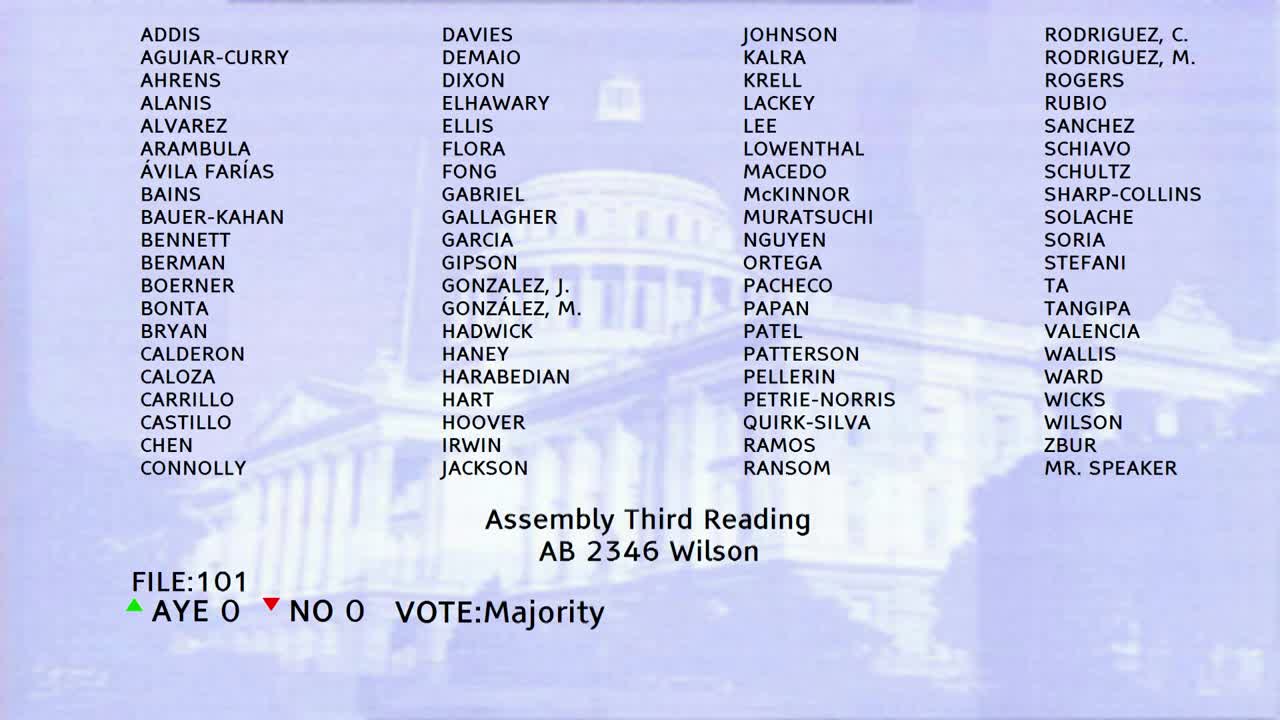
Bill Author