AB 2369: Electricity: energy storage: energy-only resources.
- Session Year: 2025-2026
- House: Assembly
- Latest Version Date: 2026-09-02
Current Status:
Failed
(2026-09-27: Vetoed by Governor.)
Introduced
In Committee
Awaiting First Chamber Vote
Passed First Chamber
In Committee
Awaiting Second Chamber Vote
Passed Second Chamber
Enacted
Existing law vests the Public Utilities Commission (PUC) with regulatory authority over public utilities, including electrical corporations.
Existing law requires the PUC to adopt a process for each load-serving entity to file an integrated resource plan, and a schedule for periodic updates to the plan, as provided. Existing law requires the PUC, in consultation with the State Energy Resources Conservation and Development Commission (Energy Commission) and the Independent System Operator (ISO), to determine if there is a need for the procurement of eligible energy resources based on a review of the integrated resource plans.
This bill would require the PUC, when requiring procurement of resources under an integrated resource plan, to account for the ability of energy-only resources to achieve required clean energy deployment rates, to charge storage resources during off-peak periods, and to increase resource diversity, and would require the PUC to enable energy-only resources to satisfy procurement requirements to the maximum extent feasible.
Existing law requires the PUC, in consultation with the Energy Commission, to provide transmission-focused guidance to the ISO about resource portfolios of expected future renewable energy resources and zero-carbon resources, as specified, to allow the ISO to identify and approve transmission facilities needed to interconnect resources and reliably serve the needs of load centers.
This bill would require the PUC and the Energy Commission to identify cost-effective opportunities to enable planned or operating energy-only resources to obtain deliverability through transmission capacity expansions, and to request the ISO to reserve associated deliverability for geothermal and wind. The bill would require the commission to designate energy-only resources as long lead-time resources for purposes of the ISOs scoring in its interconnection process, as specified.
This bill would incorporate additional changes to Section 454.52 of the Public Utilities Code proposed by AB 2476 to be operative only if this bill and AB 2476 are enacted and this bill is enacted last.
This bill would incorporate additional changes to Section 454.57 of the Public Utilities Code proposed by AB 2111 to be operative only if this bill and AB 2111 are enacted and this bill is enacted last.
Existing law vests the Public Utilities Commission (PUC) with regulatory authority over public utilities, including electrical corporations. Existing
Existing law requires the PUC to adopt a process for each load-serving entity to file an integrated resource plan, and a schedule for periodic updates to the plan, as provided. Existing law requires the PUC, in consultation with the State Energy Resources Conservation and Development Commission (Energy Commission) and the Independent System Operator (ISO), to determine if there is a need for the procurement of eligible energy resources based on a review of the integrated resource plans.
This bill would require the PUC, when requiring procurement of resources under an integrated resource plan, to account for the ability of energy-only resources to achieve required clean energy deployment rates, to charge storage resources during off-peak periods, and to increase resource diversity, and would require the PUC to enable energy-only resources to satisfy procurement requirements to the maximum extent feasible.
Existing law requires the PUC, in consultation with the State Energy Resources Conservation and Development Commission (Energy Commission), Energy Commission, to provide transmission-focused guidance to the Independent System Operator (ISO) ISO about resource portfolios of expected future renewable energy resources and zero-carbon resources, as specified, to allow the ISO to identify and approve transmission facilities needed to interconnect resources and reliably serve the needs of load centers. In providing that guidance, existing law requires the PUC and the Energy Commission to annually provide projections to support the Independent System Operators planning and approvals in its annual transmission planning process, as provided.
This bill would require the PUC and the Energy Commission, as part of providing those projections, to also Commission to identify cost-effective opportunities to increase the reliability contribution or mitigate congestion of planned or existing energy-only resources through transmission capacity expansions. to enable planned or operating energy-only resources to obtain deliverability through transmission capacity expansions, and to request the ISO to reserve associated deliverability for geothermal and wind. The bill would require the commission to designate energy-only resources as long lead-time resources for purposes of the ISOs scoring in its interconnection process, as specified.
Existing law vests the Public Utilities Commission (PUC) with regulatory authority over public utilities, including electrical corporations. Existing law requires the PUC, in consultation with the State Energy Resources Conservation and Development Commission (Energy Commission), to provide transmission-focused guidance to the Independent System Operator (ISO) about resource portfolios of expected future renewable energy resources and zero-carbon resources, as specified, to allow the ISO to identify and approve transmission facilities needed to interconnect resources and reliably serve the needs of load centers. In providing that guidance, existing law requires the PUC and the Energy Commission to annually provide projections to support the Independent System Operators planning and approvals in its annual transmission planning process, as provided.
This bill would require the PUC and Energy Commission, as part of providing those projections, to also identify cost-effective opportunities to increase the reliability contribution or mitigate congestion of planned or existing energy-only resources through transmission capacity expansions. The bill would require the PUC, in consultation with the ISO, on or before January 1, 2029, to develop a methodology for evaluating the contribution of energy-only resources to provide charging sufficiency for energy storage, as provided.
Under existing law, a violation of the Public Utilities Act or any order, decision, rule, direction, demand, or requirement of the PUC is a crime.Because the provisions of this bill would be a part of the act and a violation of a PUC action implementing its requirements would be a crime, the bill would impose a state-mandated local program.The California Constitution requires the state to reimburse local agencies and school districts for certain costs mandated by the state. Statutory provisions establish procedures for making that reimbursement.This bill would provide that no reimbursement is required by this act for a specified reason.Existing law vests the Public Utilities Commission (PUC) with regulatory authority over public utilities, including electrical corporations. Existing law requires each electrical corporation, electric service provider, and community choice aggregator to maintain physical generating capacity and electrical demand response adequate to meet its load requirements, and requires that the generating capacity or electrical demand response be deliverable to locations and at times as may be necessary to maintain electrical service system reliability, local area reliability, and flexibility.
This bill would instead additionally require each electrical corporation, electric service provider, and community choice aggregator to maintain physical generating capacity, energy storage, and electrical demand response storage adequate to meet its load requirements in order to maintain electrical service system reliability, local area reliability, and flexibility. requirements, as provided.
Existing law requires the PUC, in consultation with the State Energy Resources Conservation and Development Commission (Energy Commission), to provide transmission-focused guidance to the ISO Independent System Operator (ISO) about resource portfolios of expected future renewable energy resources and zero-carbon resources, as specified, to allow the ISO to identify and approve transmission facilities needed to interconnect resources and reliably serve the needs of load centers. In providing that guidance, existing law requires the PUC and the Energy Commission to annually provide projections to support the Independent System Operators planning and approvals in its annual transmission planning process, as provided.
This bill would require the PUC and Energy Commission, as part of providing those projections, to also identify cost-effective opportunities to increase the reliability contribution or mitigate congestion of planned or existing energy-only resources through transmission capacity expansions. The bill would require the PUC, in consultation with the ISO, on or before January 1, 2029, to develop a methodology for evaluating the contribution of energy-only resources to provide charging sufficiency for energy storage, as provided.
Under existing law, a violation of the Public Utilities Act or any order, decision, rule, direction, demand, or requirement of the PUC is a crime.
Because the provisions of this bill would be a part of the act and a violation of a PUC action implementing its requirements would be a crime, the bill would impose a state-mandated local program.
The California Constitution requires the state to reimburse local agencies and school districts for certain costs mandated by the state. Statutory provisions establish procedures for making that reimbursement.
This bill would provide that no reimbursement is required by this act for a specified reason.
Existing law vests the Public Utilities Commission (PUC) with regulatory authority over public utilities, including electrical corporations. Existing law requires the PUC, in consultation with the Independent System Operator (ISO), to establish resource adequacy requirements for all electrical corporations, electric service providers, and community choice aggregators, as provided, and requires that the resource adequacy program achieve certain objectives.
This bill would require that the resource adequacy program also achieve the objectives of recognizing a reliability contribution for energy-only resources that reflects the value of those resources in supporting grid reliability, maximizing the timely development and interconnection of certain energy resources, and promoting increased use of electrical grid infrastructure, as provided.
Existing law requires each electrical corporation, electric service provider, and community choice aggregator to maintain physical generating capacity and electrical demand response adequate to meet its load requirements, and requires that the generating capacity or electrical demand response be deliverable to locations and at times as may be necessary to maintain electrical service system reliability, local area reliability, and flexibility.
This bill would instead require each electrical corporation, electric service provider, and community choice aggregator to maintain physical generating capacity, energy storage, and electrical demand response adequate to meet its load requirements in order to maintain electrical service system reliability, local area reliability, and flexibility.
Existing law requires the PUC, in consultation with the State Energy Resources Conservation and Development Commission (Energy Commission), to provide transmission-focused guidance to the ISO about resource portfolios of expected future renewable energy resources and zero-carbon resources, as specified, to allow the ISO to identify and approve transmission facilities needed to interconnect resources and reliably serve the needs of load centers. In providing that guidance, existing law requires the PUC and the Energy Commission to annually provide projections to support the Independent System Operators planning and approvals in its annual transmission planning process, as provided.
This bill would require the PUC and Energy Commission, as part of those projections, to also identify cost-effective opportunities to increase the reliability contribution or mitigate congestion of planned or existing energy-only resources through transmission capacity expansions.
Under existing law, a violation of the Public Utilities Act or any order, decision, rule, direction, demand, or requirement of the PUC is a crime.
Because the provisions of this bill would be a part of the act and a violation of a PUC action implementing its requirements would be a crime, the bill would impose a state-mandated local program.
The California Constitution requires the state to reimburse local agencies and school districts for certain costs mandated by the state. Statutory provisions establish procedures for making that reimbursement.
This bill would provide that no reimbursement is required by this act for a specified reason.
Existing law authorizes the Public Utilities Commission to supervise and regulate every public utility in the state, as specified.This bill would make nonsubstantive changes to that authorization.Existing law authorizes the Public Utilities Commission to supervise and regulate every public utility in the state, as specified.
This bill would make nonsubstantive changes to that authorization.
(a)(1)Beginning in 2017, and to be updated regularly thereafter, the commission shall adopt a process for each load-serving entity to file an integrated resource plan, and a schedule for periodic updates to the plan, and shall ensure that load-serving entities do all of the following:
(A)Meet the greenhouse gas emissions reduction targets established by the State Air Resources Board, in coordination with the commission and the Energy Commission, for the electricity sector and each load-serving entity that reflect the electricity sectors percentage in achieving the economywide greenhouse gas emissions reductions pursuant to Section 38566 of the Health and Safety Code.
(B)Procure at least 60 percent eligible renewable energy resources by December 31, 2030, consistent with the state policy specified in Section 454.53 and Article 16 (commencing with Section 399.11) of Chapter 2.3.
(C)Enable each electrical corporation to fulfill its obligation to serve its customers at just and reasonable rates.
(D)Minimize impacts on ratepayers bills.
(E)(i)Ensure system and local reliability on a short-term, midterm, and long-term basis, including meeting the short-term and forecast long-term resource adequacy requirements of Section 380, and require sufficient, predictable resource procurement and development to avoid unplanned energy supply shortfalls by taking into account impacts due to climate change, forecasted levels of building and transportation electrification, and other factors that can result in those shortfalls.
(ii)In furtherance of avoiding unplanned energy supply shortfalls or expensive emergency procurement and ensuring a more accurate understanding of electrical grid operational needs, the commission shall aggregate reported short-term and midterm resource procurement from all load-serving entities conducted under Section 380 or this section and assess midterm resource sufficiency, and annually provide anonymized reports to the Independent System Operator. The commission shall report forward resource procurement using counting conventions that provide the data to the Independent System Operator to be used in its grid planning.
(iii)To accomplish clause (i), the commission shall, as part of the integrated planning process, assess short-term, midterm, and long-term reliability by conducting probabilistic reliability modeling, including if there is sufficient capacity available for procurement in the short term and midterm by all load-serving entities to meet their procurement requirements. The commission shall review the results of that reliability modeling in a public proceeding at the same frequency as the forecast conducted in accordance with this section. When modeling short-term and midterm reliability, the commission shall model all procurement consistent with clause (ii) and may rely upon or incorporate probabilistic reliability modeling conducted by the Energy Commission into the commissions public process. The commission shall also report the modeling results in the joint Reliability Planning Assessments conducted under Section 25233 of the Public Resources Code.
(F)Comply with paragraph (1) of subdivision (b) of Section 399.13.
(G)Strengthen the diversity, sustainability, and resilience of the bulk transmission and distribution systems, and local communities.
(H)Enhance distribution systems and demand-side energy management.
(I)Minimize localized air pollutants and other greenhouse gas emissions, with early priority on disadvantaged communities identified pursuant to Section 39711 of the Health and Safety Code.
(J)Maintain a diverse portfolio of energy resources, which may include eligible energy resources procured by the Department of Water Resources.
(2)(A)The commission may authorize all source procurement for load-serving entities that includes various resource types including demand-side resources, supply-side resources, and resources that may be either demand-side resources or supply-side resources, taking into account the differing load-serving entities geographic service areas, to ensure that each load-serving entity meets the goals set forth in paragraph (1).
(B)The commission may approve procurement of resource types that will reduce the overall emissions of greenhouse gases from the electricity sector and meet the other goals specified in paragraph (1), but due to the nature of the technology or fuel source may not compete favorably in price against other resources over the time period of the integrated resource plan.
(3)In furtherance of the requirements of paragraph (1), the commission shall consider the role of existing renewable generation, grid operational efficiencies, energy storage, and distributed energy resources, including energy efficiency, in helping to ensure each load-serving entity meets energy needs and reliability needs in hours to encompass the hour of peak demand of electricity, excluding demand met by variable renewable generation directly connected to a California balancing authority, as defined in Section 399.12, while reducing the need for new electricity generation resources and new transmission resources in achieving the states energy goals at the least cost to ratepayers.
(4)(A)On or before September 1, 2024, and consistent with the process and schedule adopted pursuant to paragraph (1), the commission, in consultation with the Energy Commission and the Independent System Operator, shall determine if there is a need for the procurement of eligible energy resources based on a review of the integrated resource plans submitted by load-serving entities in compliance with the requirements of this section and Section 454.53 and the progress towards meeting the portfolio of resources identified pursuant to subdivision (a) of Section 454.51.
(B)If the commission determines that there is a need for the procurement of eligible energy resources, the commission shall specify the eligible energy resources that should be procured to meet that need.
(C)Within six months of determining that there is a need for the procurement of eligible energy resources, the commission may request the Department of Water Resources to exercise its central procurement function to procure those eligible energy resources specified pursuant to subparagraph (B) that meet the portfolio of resources identified in subdivision (a) of Section 454.51.
(D)(i)Upon receiving a request pursuant to subparagraph (C), the Department of Water Resources, before January 1, 2035, may exercise its central procurement function to conduct one or more competitive solicitations and enter into contracts to procure eligible energy resources in order to achieve the policy of the state specified in Section 454.53.
(ii)Any contract entered into by the Department of Water Resources pursuant to clause (i) and approved by the commission pursuant to Section 80821 of the Water Code before January 1, 2035, shall remain in force for the duration of the contract.
(E)The Department of Water Resources exercising of its central procurement function to procure eligible energy resources pursuant to this paragraph shall be conducted in accordance with Division 29.5 (commencing with Section 80800) of the Water Code.
(5)When requiring procurement pursuant to this subdivision, including, but not limited to, ad hoc procurement orders and programmatic requirements, the commission shall account for the ability of energy-only resources to achieve required clean energy deployment rates, to charge storage resources during off-peak periods, and to increase resource diversity, and shall enable energy-only resources to satisfy procurement requirements to the maximum extent feasible.
(b)(1)Each load-serving entity shall prepare and file an integrated resource plan consistent with paragraph (2) of subdivision (a) on a time schedule directed by the commission and subject to commission review.
(2)Each electrical corporations plan shall follow Section 454.5.
(3)The plan of a community choice aggregator shall be submitted to its governing board for approval and provided to the commission for certification, consistent with paragraph (5) of subdivision (a) of Section 366.2, and shall achieve all of the following:
(A)Economic, reliability, environmental, security, and other benefits and performance characteristics that are consistent with the goals set forth in paragraph (1) of subdivision (a).
(B)A diversified procurement portfolio consisting of short-term, midterm, and long-term electricity, electricity-related, and demand reduction products.
(C)The resource adequacy requirements established pursuant to Section 380.
(4)The plan of an electric service provider shall achieve the goals set forth in paragraph (1) of subdivision (a) through a diversified portfolio consisting of short-term, midterm, and long-term electricity, electricity-related, and demand reduction products.
(c)To the extent that additional procurement is authorized for the electrical corporation in the integrated resource plan or the procurement process authorized pursuant to Section 454.5, the commission shall ensure that the costs are allocated in a fair and equitable manner to all customers consistent with Section 454.51, that there is no cost shifting among customers of load-serving entities, and that community choice aggregators may self-provide renewable integration resources consistent with Section 454.51. The commission may order the procurement of resources with specific attributes by load-serving entities as a result of the integrated resource planning process and shall enforce any resource procurement requirements on a nondiscriminatory basis. Enforcement may include the assessment of penalties for noncompliance.
(d)To eliminate redundancy and increase efficiency, the process adopted pursuant to subdivision (a) shall incorporate, and not duplicate, any other planning processes of the commission.
(e)This section applies to an electrical cooperative, as defined in Section 2776, only if the electrical cooperative has an annual electrical demand exceeding 700 gigawatthours, as determined based on a three-year average commencing with January 1, 2013.
(f)(1)The commission shall not include the energy, capacity, or any attribute from Diablo Canyon Unit 1 beyond November 1, 2024, or Unit 2 beyond August 26, 2025, in the adopted integrated resource plan portfolios, resource stacks, or preferred system plans.
(2)The commission shall disallow a load-serving entity from including in their adopted integrated resource plan any energy, capacity, or any attribute from the Diablo Canyon Unit 1 beyond November 1, 2024, or Unit 2 beyond August 26, 2025.
(g)For a thermal powerplant that uses nuclear fission technology not constructed in the twenty-first century, all resource attributes shall be retired on January 1, 2031, and shall be reported as a separate, line item resource for purposes of complying with Section 398.4.
(h)(1)Only a new energy resource that meets all of the following requirements is eligible to be procured by the Department of Water Resources pursuant to this section:
(A)The resource directly supports attainment of the goals specified in Section 454.53 without increasing the states dependence on any fossil fuel-based resources.
(B)The resource is determined by the commission to not be under contract at sufficient levels as shown in load-serving entities most recent individual integrated resource plans submitted to and reviewed by the commission pursuant to this section to achieve the goals specified in Section 454.53.
(C)The resource has a construction and development lead time of at least five years.
(D)The resource does not generate electricity using fossil fuels or fuels derived from fossil fuels.
(E)The resource does not use combustion to generate electricity, unless that combustion use is ancillary and necessary to facilitate geothermal electricity generation.
(2)Resources from a pump hydroelectric facility may be procured by the Department of Water Resources pursuant to this section if the pump hydroelectric facility does not exceed 500 megawatts and has been directly appropriated funding by the state before January 1, 2023.
(i)For purposes of this section, all of the following definitions apply:
(1)Load-serving entity has the same meaning as defined in Section 380.
(2)Long term means a time period that includes five or more years in the future.
(3)Midterm means a time period between two and five years in the future.
(4)Short term means a time period between the present and two years in the future.
SEC. 1.5.Section 454.52 of the Public Utilities Code is amended to read:454.52.(a)(1)Beginning in 2017, and to be updated regularly thereafter, the commission shall adopt a process for each load-serving entity to file an integrated resource plan, and a schedule for periodic updates to the plan, and shall ensure that load-serving entities do all of the following:
(A)Meet the greenhouse gas emissions reduction targets established by the State Air Resources Board, in coordination with the commission and the Energy Commission, for the electricity sector and each load-serving entity that reflect the electricity sectors percentage in achieving the economywide greenhouse gas emissions reductions pursuant to Section 38566 of the Health and Safety Code.
(B)Procure at least 60 percent eligible renewable energy resources by December 31, 2030, consistent with the state policy specified in Section 454.53 and Article 16 (commencing with Section 399.11) of Chapter 2.3.
(C)Enable each electrical corporation to fulfill its obligation to serve its customers at just and reasonable rates.
(D)Minimize impacts on ratepayers bills.
(E)(i)Ensure system and local reliability on a short-term, midterm, and long-term basis, including meeting the short-term and forecast long-term resource adequacy requirements of Section 380, and require sufficient, predictable resource procurement and development to avoid unplanned energy supply shortfalls by taking into account impacts due to climate change, forecasted levels of building and transportation electrification, and other factors that can result in those shortfalls.
(ii)In furtherance of avoiding unplanned energy supply shortfalls or expensive emergency procurement and ensuring a more accurate understanding of electrical grid operational needs, the commission shall aggregate reported short-term and midterm resource procurement from all load-serving entities conducted under Section 380 or this section and assess midterm resource sufficiency, and annually provide anonymized reports to the Independent System Operator. The commission shall report forward resource procurement using counting conventions that provide the data to the Independent System Operator to be used in its grid planning.
(iii)To accomplish clause (i), the commission shall, as part of the integrated planning process, assess short-term, midterm, and long-term reliability by conducting probabilistic reliability modeling, including if there is sufficient capacity available for procurement in the short term and midterm by all load-serving entities to meet their procurement requirements. The commission shall review the results of that reliability modeling in a public proceeding at the same frequency as the forecast conducted in accordance with this section. When modeling short-term and midterm reliability, the commission shall model all procurement consistent with clause (ii) and may rely upon or incorporate probabilistic reliability modeling conducted by the Energy Commission into the commissions public process. The commission shall also report the modeling results in the joint Reliability Planning Assessments conducted under Section 25233 of the Public Resources Code.
(F)Comply with paragraph (1) of subdivision (b) of Section 399.13.
(G)Strengthen the diversity, sustainability, and resilience of the bulk transmission and distribution systems, and local communities.
(H)Enhance distribution systems and demand-side energy management.
(I)Minimize localized air pollutants and other greenhouse gas emissions, with early priority on disadvantaged communities identified pursuant to Section 39711 of the Health and Safety Code.
(J)Maintain a diverse portfolio of energy resources, which may include eligible energy resources procured by the Department of Water Resources.
(2)(A)The commission may authorize all source procurement for load-serving entities that includes various resource types including demand-side resources, supply-side resources, and resources that may be either demand-side resources or supply-side resources, taking into account the differing load-serving entities geographic service areas, to ensure that each load-serving entity meets the goals set forth in paragraph (1).
(B)The commission may approve procurement of resource types that will reduce the overall emissions of greenhouse gases from the electricity sector and meet the other goals specified in paragraph (1), but due to the nature of the technology or fuel source may not compete favorably in price against other resources over the time period of the integrated resource plan.
(3)In furtherance of the requirements of paragraph (1), the commission shall consider the role of existing renewable generation, grid operational efficiencies, energy storage, and distributed energy resources, including energy efficiency, in helping to ensure each load-serving entity meets energy needs and reliability needs in hours to encompass the hour of peak demand of electricity, excluding demand met by variable renewable generation directly connected to a California balancing authority, as defined in Section 399.12, while reducing the need for new electricity generation resources and new transmission resources in achieving the states energy goals at the least cost to ratepayers.
(4)(A)On or before September 1, 2024, and consistent with the process and schedule adopted pursuant to paragraph (1), the commission, in consultation with the Energy Commission and the Independent System Operator, shall determine if there is a need for the procurement of eligible energy resources based on a review of the integrated resource plans submitted by load-serving entities in compliance with the requirements of this section and Section 454.53 and the progress towards meeting the portfolio of resources identified pursuant to subdivision (a) of Section 454.51.
(B)If the commission determines that there is a need for the procurement of eligible energy resources, the commission shall specify the eligible energy resources that should be procured to meet that need.
(C)Within six months of determining that there is a need for the procurement of eligible energy resources, the commission may request the Department of Water Resources to exercise its central procurement function to procure those eligible energy resources specified pursuant to subparagraph (B) that meet the portfolio of resources identified in subdivision (a) of Section 454.51.
(D)(i)Upon receiving a request pursuant to subparagraph (C), the Department of Water Resources, before January 1, 2035, may exercise its central procurement function to conduct one or more competitive solicitations and enter into contracts to procure eligible energy resources in order to achieve the policy of the state specified in Section 454.53.
(ii)Any contract entered into by the Department of Water Resources pursuant to clause (i) and approved by the commission pursuant to Section 80821 of the Water Code before January 1, 2035, shall remain in force for the duration of the contract.
(E)The Department of Water Resources exercising of its central procurement function to procure eligible energy resources pursuant to this paragraph shall be conducted in accordance with Division 29.5 (commencing with Section 80800) of the Water Code.
(5)When requiring procurement pursuant to this subdivision, including, but not limited to, ad hoc procurement orders and programmatic requirements, the commission shall account for the ability of energy-only resources to achieve required clean energy deployment rates, to charge storage resources during off-peak periods, and to increase resource diversity, and shall enable energy-only resources to satisfy procurement requirements to the maximum extent feasible.
(b)(1)Each load-serving entity shall prepare and file an integrated resource plan consistent with paragraph (2) of subdivision (a) on a time schedule directed by the commission and subject to commission review.
(2)Each electrical corporations plan shall follow Section 454.5.
(3)The plan of a community choice aggregator shall be submitted to its governing board for approval and provided to the commission for certification, consistent with paragraph (5) of subdivision (a) of Section 366.2, and shall achieve all of the following:
(A)Economic, reliability, environmental, security, and other benefits and performance characteristics that are consistent with the goals set forth in paragraph (1) of subdivision (a).
(B)A diversified procurement portfolio consisting of short-term, midterm, and long-term electricity, electricity-related, and demand reduction products.
(C)The resource adequacy requirements established pursuant to Section 380.
(4)The plan of an electric service provider shall achieve the goals set forth in paragraph (1) of subdivision (a) through a diversified portfolio consisting of short-term, midterm, and long-term electricity, electricity-related, and demand reduction products.
(c)To the extent that additional procurement is authorized for the electrical corporation in the integrated resource plan or the procurement process authorized pursuant to Section 454.5, the commission shall ensure that the costs are allocated in a fair and equitable manner to all customers consistent with Section 454.51, that there is no cost shifting among customers of load-serving entities, and that community choice aggregators may self-provide renewable integration resources consistent with Section 454.51. The commission may order the procurement of resources with specific attributes by load-serving entities as a result of the integrated resource planning process and shall enforce any resource procurement requirements on a nondiscriminatory basis. Enforcement may include the assessment of penalties for noncompliance.
(d)To eliminate redundancy and increase efficiency, the process adopted pursuant to subdivision (a) shall incorporate, and not duplicate, any other planning processes of the commission.
(e)This section applies to an electrical cooperative, as defined in Section 2776, only if the electrical cooperative has an annual electrical demand exceeding 700 gigawatthours, as determined based on a three-year average commencing with January 1, 2013.
(f)(1)The commission shall not include the energy, capacity, or any attribute from Diablo Canyon Unit 1 beyond November 1, 2024, or Unit 2 beyond August 26, 2025, in the adopted integrated resource plan portfolios, resource stacks, or preferred system plans.
(2)The commission shall disallow a load-serving entity from including in their adopted integrated resource plan any energy, capacity, or any attribute from the Diablo Canyon Unit 1 beyond November 1, 2024, or Unit 2 beyond August 26, 2025.
(g)For a thermal powerplant that uses nuclear fission technology not constructed in the 21st century, all resource attributes shall be retired on January 1, 2031, and shall be reported as a separate line item resource for purposes of complying with Section 398.4.
(h)(1)Only a new energy resource that meets all of the following requirements is eligible to be procured by the Department of Water Resources pursuant to this section:
(A)The resource directly supports attainment of the goals specified in Section 454.53 without increasing the states dependence on any fossil fuel-based resources.
(B)The resource is determined by the commission to not be under contract at sufficient levels as shown in load-serving entities most recent individual integrated resource plans submitted to and reviewed by the commission pursuant to this section to achieve the goals specified in Section 454.53.
(C)The resource has a construction and development lead time of at least five years.
(D)The resource does not generate electricity using fossil fuels or fuels derived from fossil fuels.
(E)The resource does not use combustion to generate electricity, unless that combustion use is ancillary and necessary to facilitate geothermal electricity generation.
(2)Resources from a pump hydroelectric facility may be procured by the Department of Water Resources pursuant to this section if the pump hydroelectric facility does not exceed 500 megawatts.
(i)For purposes of this section, all of the following definitions apply:
(1)Load-serving entity has the same meaning as defined in Section 380.
(2)Long term means a time period that includes five or more years in the future.
(3)Midterm means a time period between two and five years in the future.
(4)Short term means a time period between the present and two years in the future.
SEC. 2.Section 454.57 of the Public Utilities Code is amended to read:454.57.(a)This section shall be known, and may be cited, as the Accelerating Renewable Energy Delivery Act.
(b)The Legislature finds and declares all of the following:
(1)The commission, the Energy Commission, and the State Air Resources Board have jointly estimated that the states installed electrical generation may need a threefold increase in capacity to meet state carbon-free electricity policy targets.
(2)Record-setting renewable energy generation build rates are needed to meet the goals of the California Renewables Portfolio Standard Program and the Senate Bill 100 (Chapter 312 of the Statutes of 2018) target of supplying 100 percent of retail sales of electricity from renewable energy resources and zero-carbon resources. However, these build rates are not achievable without additional electrical transmission lines and facilities connecting new resources to consumers in the states load centers.
(3)In recent years, California has seen problems in delivering renewable energy resources and zero-carbon resources to customers, including problems caused by constraints on the transmission system. First, there are generation pockets where the total potential output from renewable energy generation exceeds the capacity of the transmission system to export that energy. Second, there are load pockets where there is insufficient transmission capacity to import the renewable energy resources and zero-carbon resources that are available. Both types of constraints should be promptly fixed so that all available renewable energy resources and zero-carbon resources can be delivered to customers.
(4)Reducing the use of nonpreferred resources in disadvantaged communities has been a priority for those communities, and they would benefit from increased access to electricity from new renewable energy resources and zero-carbon resources delivered to serve in-city loads.
(5)New transmission facilities have many steps that must be accomplished before they are online and delivering electricity. Major new transmission lines can take more than a decade from initial planning to operation.
(6)New transmission facilities should be planned proactively to support delivery to load centers from expected locations for future renewable energy resource and zero-carbon resource development, where those locations are identified in the integrated resource planning process pursuant to Sections 454.52 and 9621 or as part of longer range planning processes pursuant to Section 454.53.
(7)New transmission facilities should be designed to minimize the risk of transmission-triggered wildfires.
(8)New transmission facilities should be designed to facilitate renewable energy transmission across California to better manage the variability of the electrical supply.
(9)The Independent System Operator has issued a 20-Year Transmission Outlook that identifies substantial additional transmission projects needed to integrate renewable energy resources and storage for retail suppliers within the Independent System Operator balancing authority. Given the scale of this challenge, there is an urgent need to prioritize and accelerate the substantial effort needed to build transmission projects with long development times.
(c)Recognizing that the Independent System Operators Federal Energy Regulatory Commission-approved tariff requires the Independent System Operator to plan and approve new transmission facilities needed to achieve the states goals, it is the intent of the Legislature that the Independent System Operator shall take notice of the state policies expressed in this section.
(d)(1)In support of the states policy to supply increasing amounts of electricity from renewable energy resources and zero-carbon resources pursuant to Article 16 (commencing with Section 399.11) of Chapter 2.3 and Section 454.53, beginning as soon as possible and not later than March 31, 2024, the commission, in consultation with the Energy Commission, shall provide transmission-focused guidance to the Independent System Operator about resource portfolios of expected future renewable energy resources and zero-carbon resources. The guidance shall include the allocation of those resources by region based on technical feasibility and commercial interest in each region to allow the Independent System Operator to identify and approve transmission facilities needed to interconnect resources and reliably serve the needs of load centers.
(2)The commission and Energy Commission shall identify cost-effective opportunities to enable planned or operating energy-only resources to obtain deliverability through transmission capacity expansions and shall request the Independent System Operator to reserve associated deliverability for geothermal and wind in the Independent System Operators balancing authority area for this purpose.
(3)For purposes of the Independent System Operators scoring in its interconnection process, the commission shall designate energy-only resources as long lead-time resources, using criteria consistent with its designation of long lead-time deliverable resources, as applicable.
(e)In providing the guidance described in subdivision (d), the commission and the Energy Commission shall provide projections each year, including from the integrated energy policy report prepared pursuant to Section 25302 of the Public Resources Code and the load-serving entities integrated resource plans prepared pursuant to Section 454.52, to support planning and approvals by the Independent System Operator in its annual transmission planning process, including by doing all of the following:
(1)Providing projections of resource portfolios and electricity demand by region for at least 15 years into the future to ensure adequate lead time for the Independent System Operator to analyze and approve transmission development, and for the permitting and construction of the approved facilities, to meet the projections.
(2)Providing load growth projections, including projected growth from building and transportation electrification, that are consistent with achieving the economywide greenhouse gas emissions reductions required pursuant to the California Global Warming Solutions Act of 2006 (Division 25.5 (commencing with Section 38500) of the Health and Safety Code).
(3)Providing projections of new renewable energy resources and zero-carbon resources consistent with the build rates necessary to achieve the targets established in Article 16 (commencing with Section 399.11) of Chapter 2.3 and Section 454.53.
(4)(A)Providing resource projections that, combined with transmission capacity expansions, are expected to substantially reduce, no later than 2035, the need to rely on nonpreferred resources in local capacity areas.
(B)The resource projections in subparagraph (A) shall include consideration of cost-effective and feasible alternatives to transmission capacity expansions, including the use of energy storage resources, renewable energy resources, or zero-carbon resources that are located within the local capacity areas.
(5)Providing projections for offshore wind generation as identified by the SB 100 Joint Agency Report of the commission, the Energy Commission, and the State Air Resources Board, and informed by the strategic plan developed pursuant to Section 25991 of the Public Resources Code, to allow the Independent System Operator to identify and approve transmission facilities needed from offshore wind resource areas that would be sufficient to make offshore wind resources fully deliverable to load centers.
(6)Providing projections for increases in imports of electricity into the state that reflect the expected development of renewable energy resources and zero-carbon resources in other parts of the Western Interconnection for the purpose of delivering clean energy to California balancing authorities.
(f)On or before January 15, 2023, the commission shall request the Independent System Operator to do both of the following:
(1)Identify, based as much as possible on studies completed before January 1, 2023, by the Independent System Operator and projections provided before January 1, 2023, by the commission and the Energy Commission, the highest priority transmission facilities that are needed to allow for increased transmission capacity into local capacity areas to deliver renewable energy resources or zero-carbon resources that are expected to be developed by 2035 into those areas.
(2)Consider whether to approve transmission projects identified pursuant to paragraph (1) as part of its 202223 transmission planning process.
(g)It is the policy of the state that new transmission facilities be built on a timely basis and in anticipation of new electrical generation that will be built to meet the states renewable energy resource and zero-carbon resource targets, with interim targets for transmission capacity additions that demonstrate adequate progress toward meeting these long-term transmission needs. The commission shall request that the Independent System Operator implement this policy by approving transmission projects needed based on a longer planning period supported by the guidance provided pursuant to subdivisions (d) and (e). The projects should be approved in time to be online when needed, considering permitting and construction lead times.
(h)It is the policy of the state that planning for new transmission facilities considers all of the following goals:
(1)Minimizing the risk of wildfire.
(2)Increasing systemwide reliability and cost efficiency, including through the sharing of diverse electrical generation resources within California and with other parts of the Western Interconnection.
(3)Eliminating transmission constraints that prevent electrical generation resources from delivering to the wider electrical grid and that prevent importing energy into load pockets.
(i)For purposes of this section, both of the following definitions apply:
(1)Local capacity area means a transmission constrained load pocket, as identified by the Independent System Operator, where local generation capacity is needed for reliability due to insufficient transmission capacity into the load pocket to meet electricity demand with electricity from outside of the load pocket.
(2)Nonpreferred resources means electrical generation resources that are not renewable energy resources or zero-carbon resources pursuant to Section 454.53.
SEC. 2.5.Section 454.57 of the Public Utilities Code is amended to read:454.57.(a)This section shall be known, and may be cited, as the Accelerating Renewable Energy Delivery Act.
(b)The Legislature finds and declares all of the following:
(1)The commission, the Energy Commission, and the State Air Resources Board have jointly estimated that the states installed electrical generation may need a threefold increase in capacity to meet state carbon-free electricity policy targets.
(2)Record setting renewable energy generation build rates are needed to meet the goals of the California Renewables Portfolio Standard Program and the Senate Bill 100 (Chapter 312 of the Statutes of 2018) target of supplying 100 percent of retail sales of electricity from renewable energy resources and zero-carbon resources. However, these build rates are not achievable without additional electrical transmission lines and facilities connecting new resources to consumers in the states load centers.
(3)In recent years, California has seen problems in delivering renewable energy resources and zero-carbon resources to customers, including problems caused by constraints on the transmission system. First, there are generation pockets where the total potential output from renewable energy generation exceeds the capacity of the transmission system to export that energy. Second, there are load pockets where there is insufficient transmission capacity to import the renewable energy resources and zero-carbon resources that are available. Both types of constraints should be promptly fixed so that all available renewable energy resources and zero-carbon resources can be delivered to customers.
(4)Reducing the use of nonpreferred resources in disadvantaged communities has been a priority for those communities, and they would benefit from increased access to electricity from new renewable energy resources and zero-carbon resources delivered to serve in-city loads.
(5)New transmission facilities have many steps that must be accomplished before they are online and delivering electricity. Major new transmission lines can take more than a decade from initial planning to operation.
(6)New transmission facilities should be planned to support delivery of future renewable energy and zero-carbon resources to load centers, where those resource locations are identified in the integrated resource planning process pursuant to Sections 454.52 and 9621 or as part of longer range planning processes pursuant to Section 454.53.
(7)New transmission facilities should be designed to minimize the risk of transmission-triggered wildfires.
(8)New transmission facilities should be designed to facilitate renewable energy transmission across California to better manage the variability of the electrical supply.
(9)The Independent System Operator has issued a 20-Year Transmission Outlook that identifies substantial additional transmission projects needed to integrate renewable energy resources and storage for retail suppliers within the Independent System Operator balancing authority. Given the scale of this challenge, there is an urgent need to prioritize and accelerate the substantial effort needed to build transmission projects with long development times, while ensuring that associated costs are just and reasonable for ratepayers.
(c)Recognizing that the Independent System Operators Federal Energy Regulatory Commission-approved tariff requires the Independent System Operator to plan and approve new transmission facilities needed to achieve the states goals, it is the intent of the Legislature that the Independent System Operator shall take notice of the state policies expressed in this section.
(d)(1)In support of the states policy to supply increasing amounts of electricity from renewable energy resources and zero-carbon resources pursuant to Article 16 (commencing with Section 399.11) of Chapter 2.3 and Section 454.53, the commission, in consultation with the Energy Commission, shall provide transmission-focused guidance to the Independent System Operator about resource portfolios of expected future renewable energy resources and zero-carbon resources that takes into account uncertainty and optionality, is risk prudent, and supports compliance with Federal Energy Regulatory Commission orders, including, but not limited to, FERC Order 1920, as later clarified by FERC Order 1920-A and FERC Order 1920-B, as applicable.
(2)In developing the guidance pursuant to paragraph (1) the commission shall do all of the following:
(A)Provide an allocation of the renewable energy and zero-carbon resources by region based on consideration of technical feasibility and commercial interest in each region to allow the Independent System Operator to identify and approve transmission facilities needed to interconnect resources and reliably serve the needs of load centers.
(B)Use methods that enable decisionmaking under uncertainty, such as robust optimization or stochastic optimization, to develop candidate near-term planning decisions.
(C)Evaluate candidate planning decisions via a stress testing process through which the cost and reliability of the electrical system and the implications for future planning decisions and flexibility to support the resource portfolios are assessed, and, in a new or existing proceeding, examine the costs and risks of each candidate planning decision.
(D)(i)Submit at least three resource portfolios to the Independent System Operator that are reflective of risk-prudent, near-term planning decisions and collectively representative of the range of resource procurement trajectories that could be necessary to reliably serve load across a range of plausible futures informed by planning uncertainties, to support the Independent System Operators compliance with the requirements of Federal Energy Regulatory Commission Order 1920, as later clarified by FERC Order 1920-A and FERC Order 1920-B, as applicable.
(ii)The commission shall provide the Independent System Operator with relevant load forecasts and resource availability assumptions for each resource portfolio submitted pursuant to clause (i).
(E)Request that the Independent System Operator approve transmission projects that align with this guidance and that the commission finds to be reasonable in supporting any of the resource portfolios submitted pursuant to subparagraph (D).
(F)Ensure that resource portfolios submitted to the Independent System Operator support resources identified as under contract in integrated resource plans submitted pursuant to Section 454.52 and the interconnection of resources of strategic importance to load-serving entities.
(G)Include in this guidance any supplemental or accelerated transmission needs, beyond the requirements of an individual resource portfolio.
(H)Implement this guidance in a manner that ensures rates remain just and reasonable, in accordance with Section 451.
(3)The commission and Energy Commission shall identify cost-effective opportunities to enable planned or operating energy-only resources to obtain deliverability through transmission capacity expansions and shall request the Independent System Operator to reserve associated deliverability for geothermal and wind in the Independent System Operators balancing authority area for this purpose.
(4)For purposes of the Independent System Operators scoring in its interconnection process, the commission shall designate energy-only resources as long lead-time resources, using criteria consistent with its designation of long lead-time deliverable resources, as applicable.
(e)In providing the guidance described in subdivision (d), the commission and the Energy Commission shall provide projections, including from the integrated energy policy report prepared pursuant to Section 25302 of the Public Resources Code and the load-serving entities integrated resource plans prepared pursuant to Section 454.52, to support planning and approvals by the Independent System Operator in its transmission planning process, including by doing all of the following:
(1)Providing projections of resource portfolios and electricity demand by region for at least 20 years into the future to ensure adequate lead time for the Independent System Operator to analyze and approve transmission development, and for the permitting and construction of the approved facilities, to meet the projections.
(2)Providing load growth projections, including projected growth from building and transportation electrification, that are consistent with achieving the economywide greenhouse gas emissions reductions required pursuant to the California Global Warming Solutions Act of 2006 (Division 25.5 (commencing with Section 38500) of the Health and Safety Code).
(3)Providing projections of new renewable energy resources and zero-carbon resources consistent with the build rates necessary to achieve the targets established in Article 16 (commencing with Section 399.11) of Chapter 2.3 and Section 454.53.
(4)(A)Providing resource projections that, combined with transmission capacity expansions, are expected to substantially reduce, no later than 2035, the need to rely on nonpreferred resources in local capacity areas.
(B)The resource projections in subparagraph (A) shall include consideration of cost-effective and feasible alternatives to transmission capacity expansions, including the use of energy storage resources, renewable energy resources, or zero-carbon resources that are located within the local capacity areas.
(5)Providing projections for offshore wind generation as identified by the SB 100 Joint Agency Report of the commission, the Energy Commission, and the State Air Resources Board, and informed by the strategic plan developed pursuant to Section 25991 of the Public Resources Code, to allow the Independent System Operator to identify and approve transmission facilities needed from offshore wind resource areas that would be sufficient to make offshore wind resources fully deliverable to load centers.
(6)Providing projections for increases in imports of electricity into the state that reflect the expected development of renewable energy resources and zero-carbon resources in other parts of the Western Interconnection for the purpose of delivering clean energy to California balancing authorities.
(f)On or before January 15, 2023, the commission shall request the Independent System Operator to do both of the following:
(1)Identify, based as much as possible on studies completed before January 1, 2023, by the Independent System Operator and projections provided before January 1, 2023, by the commission and the Energy Commission, the highest priority transmission facilities that are needed to allow for increased transmission capacity into local capacity areas to deliver renewable energy resources or zero-carbon resources that are expected to be developed by 2035 into those areas.
(2)Consider whether to approve transmission projects identified pursuant to paragraph (1) as part of its 202223 transmission planning process.
(g)It is the policy of the state that new transmission facilities be built on a timely basis and in anticipation of new electrical generation that will be built to meet the states renewable energy resource and zero-carbon resource targets, with interim targets for transmission capacity additions that demonstrate adequate progress toward meeting these long-term transmission needs. The commission shall request that the Independent System Operator implement this policy by approving transmission projects needed based on a longer planning period supported by the guidance provided pursuant to subdivisions (d) and (e). The projects should be approved in time to be online when needed, considering permitting and construction lead times.
(h)It is the policy of the state that planning for new transmission facilities is conducted in a cost-effective and risk-prudent manner and considers all of the following goals:
(1)Minimizing the risk of wildfire.
(2)Increasing systemwide reliability and cost efficiency, including through the sharing of diverse electrical generation resources within California and with other parts of the Western Interconnection.
(3)Supporting the achievement of the states energy, climate change, and air quality goals, including, but not limited to, the goals established pursuant to Section 454.53.
(4)Eliminating transmission constraints that prevent electrical generation resources from delivering to the wider electrical grid and that prevent importing energy into load pockets.
(5)Reducing resource interconnection timelines.
(i)For purposes of this section, all of the following definitions apply:
(1)Load-serving entity has the same meaning as set forth in Section 380.
(2)Local capacity area means a transmission constrained load pocket, as identified by the Independent System Operator, where local generation capacity is needed for reliability due to insufficient transmission capacity into the load pocket to meet electricity demand with electricity from outside of the load pocket.
(3)Near-term planning decisions means resource and transmission planning decisions that must be made in the current planning cycle without certainty as to the resolution of planning uncertainties, including, but not limited to, procurement of long lead-time resources, resources that need to be contracted within the succeeding five years, and planning for new transmission facilities with long lead times.
(4)Nonpreferred resources means electrical generation resources that are not renewable energy resources or zero-carbon resources pursuant to Section 454.53.
(5)Planning uncertainties has the same meaning as set forth in Section 454.51.
(6)Risk prudent has the same meaning as set forth in Section 454.51.
SEC. 3.Section 1.5 of this bill incorporates amendments to Section 454.52 of the Public Utilities Code proposed by both this bill and Assembly Bill 2476. That section of this bill shall only become operative if (1) both bills are enacted and become effective on or before January 1, 2027, (2) each bill amends Section 454.52 of the Public Utilities Code, and (3) this bill is enacted after Assembly Bill 2476, in which case Section 1 of this bill shall not become operative.
SEC. 4.Section 2.5 of this bill incorporates amendments to Section 454.57 of the Public Utilities Code proposed by both this bill and Assembly Bill 2111. That section of this bill shall only become operative if (1) both bills are enacted and become effective on or before January 1, 2027, (2) each bill amends Section 454.57 of the Public Utilities Code, and (3) this bill is enacted after Assembly Bill 2111, in which case Section 2 of this bill shall not become operative.
(a)(1)Beginning in 2017, and to be updated regularly thereafter, the commission shall adopt a process for each load-serving entity to file an integrated resource plan, and a schedule for periodic updates to the plan, and shall ensure that load-serving entities do all of the following:
(A)Meet the greenhouse gas emissions reduction targets established by the State Air Resources Board, in coordination with the commission and the Energy Commission, for the electricity sector and each load-serving entity that reflect the electricity sectors percentage in achieving the economywide greenhouse gas emissions reductions pursuant to Section 38566 of the Health and Safety Code.
(B)Procure at least 60 percent eligible renewable energy resources by December 31, 2030, consistent with the state policy specified in Section 454.53 and Article 16 (commencing with Section 399.11) of Chapter 2.3.
(C)Enable each electrical corporation to fulfill its obligation to serve its customers at just and reasonable rates.
(D)Minimize impacts on ratepayers bills.
(E)(i)Ensure system and local reliability on a short-term, midterm, and long-term basis, including meeting the short-term and forecast long-term resource adequacy requirements of Section 380, and require sufficient, predictable resource procurement and development to avoid unplanned energy supply shortfalls by taking into account impacts due to climate change, forecasted levels of building and transportation electrification, and other factors that can result in those shortfalls.
(ii)In furtherance of avoiding unplanned energy supply shortfalls or expensive emergency procurement and ensuring a more accurate understanding of electrical grid operational needs, the commission shall aggregate reported short-term and midterm resource procurement from all load-serving entities conducted under Section 380 or this section and assess midterm resource sufficiency, and annually provide anonymized reports to the Independent System Operator. The commission shall report forward resource procurement using counting conventions that provide the data to the Independent System Operator to be used in its grid planning.
(iii)To accomplish clause (i), the commission shall, as part of the integrated planning process, assess short-term, midterm, and long-term reliability by conducting probabilistic reliability modeling, including if there is sufficient capacity available for procurement in the short term and midterm by all load-serving entities to meet their procurement requirements. The commission shall review the results of that reliability modeling in a public proceeding at the same frequency as the forecast conducted in accordance with this section. When modeling short-term and midterm reliability, the commission shall model all procurement consistent with clause (ii) and may rely upon or incorporate probabilistic reliability modeling conducted by the Energy Commission into the commissions public process. The commission shall also report the modeling results in the joint Reliability Planning Assessments conducted under Section 25233 of the Public Resources Code.
(F)Comply with paragraph (1) of subdivision (b) of Section 399.13.
(G)Strengthen the diversity, sustainability, and resilience of the bulk transmission and distribution systems, and local communities.
(H)Enhance distribution systems and demand-side energy management.
(I)Minimize localized air pollutants and other greenhouse gas emissions, with early priority on disadvantaged communities identified pursuant to Section 39711 of the Health and Safety Code.
(J)Maintain a diverse portfolio of energy resources, which may include eligible energy resources procured by the Department of Water Resources.
(2)(A)The commission may authorize all source procurement for load-serving entities that includes various resource types including demand-side resources, supply-side resources, and resources that may be either demand-side resources or supply-side resources, taking into account the differing load-serving entities geographic service areas, to ensure that each load-serving entity meets the goals set forth in paragraph (1).
(B)The commission may approve procurement of resource types that will reduce the overall emissions of greenhouse gases from the electricity sector and meet the other goals specified in paragraph (1), but due to the nature of the technology or fuel source may not compete favorably in price against other resources over the time period of the integrated resource plan.
(3)In furtherance of the requirements of paragraph (1), the commission shall consider the role of existing renewable generation, grid operational efficiencies, energy storage, and distributed energy resources, including energy efficiency, in helping to ensure each load-serving entity meets energy needs and reliability needs in hours to encompass the hour of peak demand of electricity, excluding demand met by variable renewable generation directly connected to a California balancing authority, as defined in Section 399.12, while reducing the need for new electricity generation resources and new transmission resources in achieving the states energy goals at the least cost to ratepayers.
(4)(A)On or before September 1, 2024, and consistent with the process and schedule adopted pursuant to paragraph (1), the commission, in consultation with the Energy Commission and the Independent System Operator, shall determine if there is a need for the procurement of eligible energy resources based on a review of the integrated resource plans submitted by load-serving entities in compliance with the requirements of this section and Section 454.53 and the progress towards meeting the portfolio of resources identified pursuant to subdivision (a) of Section 454.51.
(B)If the commission determines that there is a need for the procurement of eligible energy resources, the commission shall specify the eligible energy resources that should be procured to meet that need.
(C)Within six months of determining that there is a need for the procurement of eligible energy resources, the commission may request the Department of Water Resources to exercise its central procurement function to procure those eligible energy resources specified pursuant to subparagraph (B) that meet the portfolio of resources identified in subdivision (a) of Section 454.51.
(D)(i)Upon receiving a request pursuant to subparagraph (C), the Department of Water Resources, before January 1, 2035, may exercise its central procurement function to conduct one or more competitive solicitations and enter into contracts to procure eligible energy resources in order to achieve the policy of the state specified in Section 454.53.
(ii)Any contract entered into by the Department of Water Resources pursuant to clause (i) and approved by the commission pursuant to Section 80821 of the Water Code before January 1, 2035, shall remain in force for the duration of the contract.
(E)The Department of Water Resources exercising of its central procurement function to procure eligible energy resources pursuant to this paragraph shall be conducted in accordance with Division 29.5 (commencing with Section 80800) of the Water Code.
(5)When requiring procurement pursuant to this subdivision, including, but not limited to, ad hoc procurement orders and programmatic requirements, the commission shall account for the ability of energy-only resources to achieve required clean energy deployment rates, to charge storage resources during off-peak periods, and to increase resource diversity, and shall enable energy-only resources to satisfy procurement requirements to the maximum extent feasible.
(b)(1)Each load-serving entity shall prepare and file an integrated resource plan consistent with paragraph (2) of subdivision (a) on a time schedule directed by the commission and subject to commission review.
(2)Each electrical corporations plan shall follow Section 454.5.
(3)The plan of a community choice aggregator shall be submitted to its governing board for approval and provided to the commission for certification, consistent with paragraph (5) of subdivision (a) of Section 366.2, and shall achieve all of the following:
(A)Economic, reliability, environmental, security, and other benefits and performance characteristics that are consistent with the goals set forth in paragraph (1) of subdivision (a).
(B)A diversified procurement portfolio consisting of short-term, midterm, and long-term electricity, electricity-related, and demand reduction products.
(C)The resource adequacy requirements established pursuant to Section 380.
(4)The plan of an electric service provider shall achieve the goals set forth in paragraph (1) of subdivision (a) through a diversified portfolio consisting of short-term, midterm, and long-term electricity, electricity-related, and demand reduction products.
(c)To the extent that additional procurement is authorized for the electrical corporation in the integrated resource plan or the procurement process authorized pursuant to Section 454.5, the commission shall ensure that the costs are allocated in a fair and equitable manner to all customers consistent with Section 454.51, that there is no cost shifting among customers of load-serving entities, and that community choice aggregators may self-provide renewable integration resources consistent with Section 454.51. The commission may order the procurement of resources with specific attributes by load-serving entities as a result of the integrated resource planning process and shall enforce any resource procurement requirements on a nondiscriminatory basis. Enforcement may include the assessment of penalties for noncompliance.
(d)To eliminate redundancy and increase efficiency, the process adopted pursuant to subdivision (a) shall incorporate, and not duplicate, any other planning processes of the commission.
(e)This section applies to an electrical cooperative, as defined in Section 2776, only if the electrical cooperative has an annual electrical demand exceeding 700 gigawatthours, as determined based on a three-year average commencing with January 1, 2013.
(f)(1)The commission shall not include the energy, capacity, or any attribute from Diablo Canyon Unit 1 beyond November 1, 2024, or Unit 2 beyond August 26, 2025, in the adopted integrated resource plan portfolios, resource stacks, or preferred system plans.
(2)The commission shall disallow a load-serving entity from including in their adopted integrated resource plan any energy, capacity, or any attribute from the Diablo Canyon Unit 1 beyond November 1, 2024, or Unit 2 beyond August 26, 2025.
(g)For a thermal powerplant that uses nuclear fission technology not constructed in the twenty-first century, all resource attributes shall be retired on January 1, 2031, and shall be reported as a separate, line item resource for purposes of complying with Section 398.4.
(h)(1)Only a new energy resource that meets all of the following requirements is eligible to be procured by the Department of Water Resources pursuant to this section:
(A)The resource directly supports attainment of the goals specified in Section 454.53 without increasing the states dependence on any fossil fuel-based resources.
(B)The resource is determined by the commission to not be under contract at sufficient levels as shown in load-serving entities most recent individual integrated resource plans submitted to and reviewed by the commission pursuant to this section to achieve the goals specified in Section 454.53.
(C)The resource has a construction and development lead time of at least five years.
(D)The resource does not generate electricity using fossil fuels or fuels derived from fossil fuels.
(E)The resource does not use combustion to generate electricity, unless that combustion use is ancillary and necessary to facilitate geothermal electricity generation.
(2)Resources from a pump hydroelectric facility may be procured by the Department of Water Resources pursuant to this section if the pump hydroelectric facility does not exceed 500 megawatts and has been directly appropriated funding by the state before January 1, 2023.
(i)For purposes of this section, all of the following definitions apply:
(1)Load-serving entity has the same meaning as defined in Section 380.
(2)Long term means a time period that includes five or more years in the future.
(3)Midterm means a time period between two and five years in the future.
(4)Short term means a time period between the present and two years in the future.
SEC. 1.5.Section 454.52 of the Public Utilities Code is amended to read:454.52.(a)(1)Beginning in 2017, and to be updated regularly thereafter, the commission shall adopt a process for each load-serving entity to file an integrated resource plan, and a schedule for periodic updates to the plan, and shall ensure that load-serving entities do all of the following:
(A)Meet the greenhouse gas emissions reduction targets established by the State Air Resources Board, in coordination with the commission and the Energy Commission, for the electricity sector and each load-serving entity that reflect the electricity sectors percentage in achieving the economywide greenhouse gas emissions reductions pursuant to Section 38566 of the Health and Safety Code.
(B)Procure at least 60 percent eligible renewable energy resources by December 31, 2030, consistent with the state policy specified in Section 454.53 and Article 16 (commencing with Section 399.11) of Chapter 2.3.
(C)Enable each electrical corporation to fulfill its obligation to serve its customers at just and reasonable rates.
(D)Minimize impacts on ratepayers bills.
(E)(i)Ensure system and local reliability on a short-term, midterm, and long-term basis, including meeting the short-term and forecast long-term resource adequacy requirements of Section 380, and require sufficient, predictable resource procurement and development to avoid unplanned energy supply shortfalls by taking into account impacts due to climate change, forecasted levels of building and transportation electrification, and other factors that can result in those shortfalls.
(ii)In furtherance of avoiding unplanned energy supply shortfalls or expensive emergency procurement and ensuring a more accurate understanding of electrical grid operational needs, the commission shall aggregate reported short-term and midterm resource procurement from all load-serving entities conducted under Section 380 or this section and assess midterm resource sufficiency, and annually provide anonymized reports to the Independent System Operator. The commission shall report forward resource procurement using counting conventions that provide the data to the Independent System Operator to be used in its grid planning.
(iii)To accomplish clause (i), the commission shall, as part of the integrated planning process, assess short-term, midterm, and long-term reliability by conducting probabilistic reliability modeling, including if there is sufficient capacity available for procurement in the short term and midterm by all load-serving entities to meet their procurement requirements. The commission shall review the results of that reliability modeling in a public proceeding at the same frequency as the forecast conducted in accordance with this section. When modeling short-term and midterm reliability, the commission shall model all procurement consistent with clause (ii) and may rely upon or incorporate probabilistic reliability modeling conducted by the Energy Commission into the commissions public process. The commission shall also report the modeling results in the joint Reliability Planning Assessments conducted under Section 25233 of the Public Resources Code.
(F)Comply with paragraph (1) of subdivision (b) of Section 399.13.
(G)Strengthen the diversity, sustainability, and resilience of the bulk transmission and distribution systems, and local communities.
(H)Enhance distribution systems and demand-side energy management.
(I)Minimize localized air pollutants and other greenhouse gas emissions, with early priority on disadvantaged communities identified pursuant to Section 39711 of the Health and Safety Code.
(J)Maintain a diverse portfolio of energy resources, which may include eligible energy resources procured by the Department of Water Resources.
(2)(A)The commission may authorize all source procurement for load-serving entities that includes various resource types including demand-side resources, supply-side resources, and resources that may be either demand-side resources or supply-side resources, taking into account the differing load-serving entities geographic service areas, to ensure that each load-serving entity meets the goals set forth in paragraph (1).
(B)The commission may approve procurement of resource types that will reduce the overall emissions of greenhouse gases from the electricity sector and meet the other goals specified in paragraph (1), but due to the nature of the technology or fuel source may not compete favorably in price against other resources over the time period of the integrated resource plan.
(3)In furtherance of the requirements of paragraph (1), the commission shall consider the role of existing renewable generation, grid operational efficiencies, energy storage, and distributed energy resources, including energy efficiency, in helping to ensure each load-serving entity meets energy needs and reliability needs in hours to encompass the hour of peak demand of electricity, excluding demand met by variable renewable generation directly connected to a California balancing authority, as defined in Section 399.12, while reducing the need for new electricity generation resources and new transmission resources in achieving the states energy goals at the least cost to ratepayers.
(4)(A)On or before September 1, 2024, and consistent with the process and schedule adopted pursuant to paragraph (1), the commission, in consultation with the Energy Commission and the Independent System Operator, shall determine if there is a need for the procurement of eligible energy resources based on a review of the integrated resource plans submitted by load-serving entities in compliance with the requirements of this section and Section 454.53 and the progress towards meeting the portfolio of resources identified pursuant to subdivision (a) of Section 454.51.
(B)If the commission determines that there is a need for the procurement of eligible energy resources, the commission shall specify the eligible energy resources that should be procured to meet that need.
(C)Within six months of determining that there is a need for the procurement of eligible energy resources, the commission may request the Department of Water Resources to exercise its central procurement function to procure those eligible energy resources specified pursuant to subparagraph (B) that meet the portfolio of resources identified in subdivision (a) of Section 454.51.
(D)(i)Upon receiving a request pursuant to subparagraph (C), the Department of Water Resources, before January 1, 2035, may exercise its central procurement function to conduct one or more competitive solicitations and enter into contracts to procure eligible energy resources in order to achieve the policy of the state specified in Section 454.53.
(ii)Any contract entered into by the Department of Water Resources pursuant to clause (i) and approved by the commission pursuant to Section 80821 of the Water Code before January 1, 2035, shall remain in force for the duration of the contract.
(E)The Department of Water Resources exercising of its central procurement function to procure eligible energy resources pursuant to this paragraph shall be conducted in accordance with Division 29.5 (commencing with Section 80800) of the Water Code.
(5)When requiring procurement pursuant to this subdivision, including, but not limited to, ad hoc procurement orders and programmatic requirements, the commission shall account for the ability of energy-only resources to achieve required clean energy deployment rates, to charge storage resources during off-peak periods, and to increase resource diversity, and shall enable energy-only resources to satisfy procurement requirements to the maximum extent feasible.
(b)(1)Each load-serving entity shall prepare and file an integrated resource plan consistent with paragraph (2) of subdivision (a) on a time schedule directed by the commission and subject to commission review.
(2)Each electrical corporations plan shall follow Section 454.5.
(3)The plan of a community choice aggregator shall be submitted to its governing board for approval and provided to the commission for certification, consistent with paragraph (5) of subdivision (a) of Section 366.2, and shall achieve all of the following:
(A)Economic, reliability, environmental, security, and other benefits and performance characteristics that are consistent with the goals set forth in paragraph (1) of subdivision (a).
(B)A diversified procurement portfolio consisting of short-term, midterm, and long-term electricity, electricity-related, and demand reduction products.
(C)The resource adequacy requirements established pursuant to Section 380.
(4)The plan of an electric service provider shall achieve the goals set forth in paragraph (1) of subdivision (a) through a diversified portfolio consisting of short-term, midterm, and long-term electricity, electricity-related, and demand reduction products.
(c)To the extent that additional procurement is authorized for the electrical corporation in the integrated resource plan or the procurement process authorized pursuant to Section 454.5, the commission shall ensure that the costs are allocated in a fair and equitable manner to all customers consistent with Section 454.51, that there is no cost shifting among customers of load-serving entities, and that community choice aggregators may self-provide renewable integration resources consistent with Section 454.51. The commission may order the procurement of resources with specific attributes by load-serving entities as a result of the integrated resource planning process and shall enforce any resource procurement requirements on a nondiscriminatory basis. Enforcement may include the assessment of penalties for noncompliance.
(d)To eliminate redundancy and increase efficiency, the process adopted pursuant to subdivision (a) shall incorporate, and not duplicate, any other planning processes of the commission.
(e)This section applies to an electrical cooperative, as defined in Section 2776, only if the electrical cooperative has an annual electrical demand exceeding 700 gigawatthours, as determined based on a three-year average commencing with January 1, 2013.
(f)(1)The commission shall not include the energy, capacity, or any attribute from Diablo Canyon Unit 1 beyond November 1, 2024, or Unit 2 beyond August 26, 2025, in the adopted integrated resource plan portfolios, resource stacks, or preferred system plans.
(2)The commission shall disallow a load-serving entity from including in their adopted integrated resource plan any energy, capacity, or any attribute from the Diablo Canyon Unit 1 beyond November 1, 2024, or Unit 2 beyond August 26, 2025.
(g)For a thermal powerplant that uses nuclear fission technology not constructed in the twenty-first 21st century, all resource attributes shall be retired on January 1, 2031, and shall be reported as a separate, separate line item resource for purposes of complying with Section 398.4.
(h)(1)Only a new energy resource that meets all of the following requirements is eligible to be procured by the Department of Water Resources pursuant to this section:
(A)The resource directly supports attainment of the goals specified in Section 454.53 without increasing the states dependence on any fossil fuel-based resources.
(B)The resource is determined by the commission to not be under contract at sufficient levels as shown in load-serving entities most recent individual integrated resource plans submitted to and reviewed by the commission pursuant to this section to achieve the goals specified in Section 454.53.
(C)The resource has a construction and development lead time of at least five years.
(D)The resource does not generate electricity using fossil fuels or fuels derived from fossil fuels.
(E)The resource does not use combustion to generate electricity, unless that combustion use is ancillary and necessary to facilitate geothermal electricity generation.
(2)Resources from a pump hydroelectric facility may be procured by the Department of Water Resources pursuant to this section if the pump hydroelectric facility does not exceed 500 megawatts and has been directly appropriated funding by the state before January 1, 2023. megawatts.
(i)For purposes of this section, all of the following definitions apply:
(1)Load-serving entity has the same meaning as defined in Section 380.
(2)Long term means a time period that includes five or more years in the future.
(3)Midterm means a time period between two and five years in the future.
(4)Short term means a time period between the present and two years in the future.
SEC. 2.Section 454.57 of the Public Utilities Code is amended to read:454.57.(a)This section shall be known, and may be cited, as the Accelerating Renewable Energy Delivery Act.
(b)The Legislature finds and declares all of the following:
(1)The commission, the Energy Commission, and the State Air Resources Board have jointly estimated that the states installed electrical generation may need a threefold increase in capacity to meet state carbon-free electricity policy targets.
(2)Record-setting renewable energy generation build rates are needed to meet the goals of the California Renewables Portfolio Standard Program and the Senate Bill 100 (Chapter 312 of the Statutes of 2018) target of supplying 100 percent of retail sales of electricity from renewable energy resources and zero-carbon resources. However, these build rates are not achievable without additional electrical transmission lines and facilities connecting new resources to consumers in the states load centers.
(3)In recent years, California has seen problems in delivering renewable energy resources and zero-carbon resources to customers, including problems caused by constraints on the transmission system. First, there are generation pockets where the total potential output from renewable energy generation exceeds the capacity of the transmission system to export that energy. Second, there are load pockets where there is insufficient transmission capacity to import the renewable energy resources and zero-carbon resources that are available. Both types of constraints should be promptly fixed so that all available renewable energy resources and zero-carbon resources can be delivered to customers.
(4)Reducing the use of nonpreferred resources in disadvantaged communities has been a priority for those communities, and they would benefit from increased access to electricity from new renewable energy resources and zero-carbon resources delivered to serve in-city loads.
(5)New transmission facilities have many steps that must be accomplished before they are online and delivering electricity. Major new transmission lines can take more than a decade from initial planning to operation.
(6)New transmission facilities should be planned proactively to support delivery to load centers from expected locations for future renewable energy resource and zero-carbon resource development, where those locations are identified in the integrated resource planning process pursuant to Sections 454.52 and 9621 or as part of longer range planning processes pursuant to Section 454.53.
(7)New transmission facilities should be designed to minimize the risk of transmission-triggered wildfires.
(8)New transmission facilities should be designed to facilitate renewable energy transmission across California to better manage the variability of the electrical supply.
(9)The Independent System Operator has issued a 20-Year Transmission Outlook that identifies substantial additional transmission projects needed to integrate renewable energy resources and storage for retail suppliers within the Independent System Operator balancing authority. Given the scale of this challenge, there is an urgent need to prioritize and accelerate the substantial effort needed to build transmission projects with long development times.
(c)Recognizing that the Independent System Operators Federal Energy Regulatory Commission-approved tariff requires the Independent System Operator to plan and approve new transmission facilities needed to achieve the states goals, it is the intent of the Legislature that the Independent System Operator shall take notice of the state policies expressed in this section.
(d)(1)In support of the states policy to supply increasing amounts of electricity from renewable energy resources and zero-carbon resources pursuant to Article 16 (commencing with Section 399.11) of Chapter 2.3 and Section 454.53, beginning as soon as possible and not later than March 31, 2024, the commission, in consultation with the Energy Commission, shall provide transmission-focused guidance to the Independent System Operator about resource portfolios of expected future renewable energy resources and zero-carbon resources. The guidance shall include the allocation of those resources by region based on technical feasibility and commercial interest in each region to allow the Independent System Operator to identify and approve transmission facilities needed to interconnect resources and reliably serve the needs of load centers.
(2)The commission and Energy Commission shall identify cost-effective opportunities to enable planned or operating energy-only resources to obtain deliverability through transmission capacity expansions and shall request the Independent System Operator to reserve associated deliverability for geothermal and wind in the Independent System Operators balancing authority area for this purpose.
(3)For purposes of the Independent System Operators scoring in its interconnection process, the commission shall designate energy-only resources as long lead-time resources, using criteria consistent with its designation of long lead-time deliverable resources, as applicable.
(e)In providing the guidance described in subdivision (d), the commission and the Energy Commission shall provide projections each year, including from the integrated energy policy report prepared pursuant to Section 25302 of the Public Resources Code and the load-serving entities integrated resource plans prepared pursuant to Section 454.52, to support planning and approvals by the Independent System Operator in its annual transmission planning process, including by doing all of the following:
(1)Providing projections of resource portfolios and electricity demand by region for at least 15 years into the future to ensure adequate lead time for the Independent System Operator to analyze and approve transmission development, and for the permitting and construction of the approved facilities, to meet the projections.
(2)Providing load growth projections, including projected growth from building and transportation electrification, that are consistent with achieving the economywide greenhouse gas emissions reductions required pursuant to the California Global Warming Solutions Act of 2006 (Division 25.5 (commencing with Section 38500) of the Health and Safety Code).
(3)Providing projections of new renewable energy resources and zero-carbon resources consistent with the build rates necessary to achieve the targets established in Article 16 (commencing with Section 399.11) of Chapter 2.3 and Section 454.53.
(4)(A)Providing resource projections that, combined with transmission capacity expansions, are expected to substantially reduce, no later than 2035, the need to rely on nonpreferred resources in local capacity areas.
(B)The resource projections in subparagraph (A) shall include consideration of cost-effective and feasible alternatives to transmission capacity expansions, including the use of energy storage resources, renewable energy resources, or zero-carbon resources that are located within the local capacity areas.
(5)Providing projections for offshore wind generation as identified by the SB 100 Joint Agency Report of the commission, the Energy Commission, and the State Air Resources Board, and informed by the strategic plan developed pursuant to Section 25991 of the Public Resources Code, to allow the Independent System Operator to identify and approve transmission facilities needed from offshore wind resource areas that would be sufficient to make offshore wind resources fully deliverable to load centers.
(6)Providing projections for increases in imports of electricity into the state that reflect the expected development of renewable energy resources and zero-carbon resources in other parts of the Western Interconnection for the purpose of delivering clean energy to California balancing authorities.
(f)On or before January 15, 2023, the commission shall request the Independent System Operator to do both of the following:
(1)Identify, based as much as possible on studies completed before January 1, 2023, by the Independent System Operator and projections provided before January 1, 2023, by the commission and the Energy Commission, the highest priority transmission facilities that are needed to allow for increased transmission capacity into local capacity areas to deliver renewable energy resources or zero-carbon resources that are expected to be developed by 2035 into those areas.
(2)Consider whether to approve transmission projects identified pursuant to paragraph (1) as part of its 202223 transmission planning process.
(g)It is the policy of the state that new transmission facilities be built on a timely basis and in anticipation of new electrical generation that will be built to meet the states renewable energy resource and zero-carbon resource targets, with interim targets for transmission capacity additions that demonstrate adequate progress toward meeting these long-term transmission needs. The commission shall request that the Independent System Operator implement this policy by approving transmission projects needed based on a longer planning period supported by the guidance provided pursuant to subdivisions (d) and (e). The projects should be approved in time to be online when needed, considering permitting and construction lead times.
(h)It is the policy of the state that planning for new transmission facilities considers all of the following goals:
(1)Minimizing the risk of wildfire.
(2)Increasing systemwide reliability and cost efficiency, including through the sharing of diverse electrical generation resources within California and with other parts of the Western Interconnection.
(3)Eliminating transmission constraints that prevent electrical generation resources from delivering to the wider electrical grid and that prevent importing energy into load pockets.
(i)For purposes of this section, both of the following definitions apply:
(1)Local capacity area means a transmission constrained load pocket, as identified by the Independent System Operator, where local generation capacity is needed for reliability due to insufficient transmission capacity into the load pocket to meet electricity demand with electricity from outside of the load pocket.
(2)Nonpreferred resources means electrical generation resources that are not renewable energy resources or zero-carbon resources pursuant to Section 454.53.
SEC. 2.5.Section 454.57 of the Public Utilities Code is amended to read:454.57.(a)This section shall be known, and may be cited, as the Accelerating Renewable Energy Delivery Act.
(b)The Legislature finds and declares all of the following:
(1)The commission, the Energy Commission, and the State Air Resources Board have jointly estimated that the states installed electric electrical generation may need a threefold increase in capacity to meet state carbon-free electricity policy targets.
(2)Record-setting Record setting renewable energy generation build rates are needed to meet the goals of the California Renewables Portfolio Standard Program and the Senate Bill 100 (Chapter 312 of the Statutes of 2018) target of supplying 100 percent of retail sales of electricity from renewable energy resources and zero-carbon resources. However, these build rates are not achievable without additional electrical transmission lines and facilities connecting new resources to consumers in the states load centers.
(3)In recent years, California has seen problems in delivering renewable energy resources and zero-carbon resources to customers, including problems caused by constraints on the transmission system. First, there are generation pockets where the total potential output from renewable energy generation exceeds the capacity of the transmission system to export that energy. Second, there are load pockets where there is insufficient transmission capacity to import the renewable energy resources and zero-carbon resources that are available. Both types of constraints should be promptly fixed so that all available renewable energy resources and zero-carbon resources can be delivered to customers.
(4)Reducing the use of nonpreferred resources in disadvantaged communities has been a priority for those communities, and they would benefit from increased access to electricity from new renewable energy resources and zero-carbon resources delivered to serve in-city loads.
(5)New transmission facilities have many steps that must be accomplished before they are online and delivering electricity. Major new transmission lines can take more than a decade from initial planning to operation.
(6)New transmission facilities should be planned proactively to support delivery to load centers from expected locations for of future renewable energy resource and zero-carbon resource development, resources to load centers, where those resource locations are identified in the integrated resource planning process pursuant to Sections 454.52 and 9621 or as part of longer range planning processes pursuant to Section 454.53.
(7)New transmission facilities should be designed to minimize the risk of transmission-triggered wildfires.
(8)New transmission facilities should be designed to facilitate renewable energy transmission across California to better manage the variability of the electrical supply.
(9)The Independent System Operator has issued a 20-Year Transmission Outlook that identifies substantial additional transmission projects needed to integrate renewable energy resources and storage for retail suppliers within the Independent System Operator balancing authority. Given the scale of this challenge, there is an urgent need to prioritize and accelerate the substantial effort needed to build transmission projects with long development times. times, while ensuring that associated costs are just and reasonable for ratepayers.
(c)Recognizing that the Independent System Operators Federal Energy Regulatory Commission-approved tariff requires the Independent System Operator to plan and approve new transmission facilities needed to achieve the states goals, it is the intent of the Legislature that the Independent System Operator shall take notice of the state policies expressed in this section.
(d)(1)In support of the states policy to supply increasing amounts of electricity from renewable energy resources and zero-carbon resources pursuant to Article 16 (commencing with Section 399.11) of Chapter 2.3 and Section 454.53, beginning as soon as possible and not later than March 31, 2024, 454.53, the commission, in consultation with the Energy Commission, shall provide transmission-focused guidance to the Independent System Operator about resource portfolios of expected future renewable energy resources and zero-carbon resources. The guidance shall include the allocation of those resources by region based on technical feasibility and commercial interest in each region to allow the Independent System Operator to identify and approve transmission facilities needed to interconnect resources and reliably serve the needs of load centers. resources that takes into account uncertainty and optionality, is risk prudent, and supports compliance with Federal Energy Regulatory Commission orders, including, but not limited to, FERC Order 1920, as later clarified by FERC Order 1920-A and FERC Order 1920-B, as applicable.
(2)In developing the guidance pursuant to paragraph (1) the commission shall do all of the following:
(A)Provide an allocation of the renewable energy and zero-carbon resources by region based on consideration of technical feasibility and commercial interest in each region to allow the Independent System Operator to identify and approve transmission facilities needed to interconnect resources and reliably serve the needs of load centers.
(B)Use methods that enable decisionmaking under uncertainty, such as robust optimization or stochastic optimization, to develop candidate near-term planning decisions.
(C)Evaluate candidate planning decisions via a stress testing process through which the cost and reliability of the electrical system and the implications for future planning decisions and flexibility to support the resource portfolios are assessed, and, in a new or existing proceeding, examine the costs and risks of each candidate planning decision.
(D)(i)Submit at least three resource portfolios to the Independent System Operator that are reflective of risk-prudent, near-term planning decisions and collectively representative of the range of resource procurement trajectories that could be necessary to reliably serve load across a range of plausible futures informed by planning uncertainties, to support the Independent System Operators compliance with the requirements of Federal Energy Regulatory Commission Order 1920, as later clarified by FERC Order 1920-A and FERC Order 1920-B, as applicable.
(ii)The commission shall provide the Independent System Operator with relevant load forecasts and resource availability assumptions for each resource portfolio submitted pursuant to clause (i).
(E)Request that the Independent System Operator approve transmission projects that align with this guidance and that the commission finds to be reasonable in supporting any of the resource portfolios submitted pursuant to subparagraph (D).
(F)Ensure that resource portfolios submitted to the Independent System Operator support resources identified as under contract in integrated resource plans submitted pursuant to Section 454.52 and the interconnection of resources of strategic importance to load-serving entities.
(G)Include in this guidance any supplemental or accelerated transmission needs, beyond the requirements of an individual resource portfolio.
(H)Implement this guidance in a manner that ensures rates remain just and reasonable, in accordance with Section 451.
(3)The commission and Energy Commission shall identify cost-effective opportunities to enable planned or operating energy-only resources to obtain deliverability through transmission capacity expansions and shall request the Independent System Operator to reserve associated deliverability for geothermal and wind in the Independent System Operators balancing authority area for this purpose.
(4)For purposes of the Independent System Operators scoring in its interconnection process, the commission shall designate energy-only resources as long lead-time resources, using criteria consistent with its designation of long lead-time deliverable resources, as applicable.
(e)In providing the guidance described in subdivision (d), the commission and the Energy Commission shall provide projections each year, projections, including from the integrated energy policy report prepared pursuant to Section 25302 of the Public Resources Code and the load-serving entities integrated resource plans prepared pursuant to Section 454.52, to support planning and approvals by the Independent System Operator in its annual transmission planning process, including by doing all of the following:
(1)Providing projections of resource portfolios and electricity demand by region for at least 15 20 years into the future to ensure adequate lead time for the Independent System Operator to analyze and approve transmission development, and for the permitting and construction of the approved facilities, to meet the projections.
(2)Providing load growth projections, including projected growth from building and transportation electrification, that are consistent with achieving the economywide greenhouse gas emissions reductions required pursuant to Division the California Global Warming Solutions Act of 2006 (Division 25.5 (commencing with Section 38500) of the Health and Safety Code. Code).
(3)Providing projections of new renewable energy resources and zero-carbon resources consistent with the build rates necessary to achieve the targets established in Article 16 (commencing with Section 399.11) of Chapter 2.3 and Section 454.53.
(4)(A)Providing resource projections that, combined with transmission capacity expansions, are expected to substantially reduce, no later than 2035, the need to rely on nonpreferred resources in local capacity areas.
(B)The resource projections in subparagraph (A) shall include consideration of cost-effective and feasible alternatives to transmission capacity expansions, including the use of energy storage resources, renewable energy resources, or zero-carbon resources that are located within the local capacity areas.
(5)Providing projections for offshore wind generation as identified by the SB 100 Joint Agency Report of the commission, the Energy Commission, and the State Air Resources Board, and informed by the strategic plan developed pursuant to Section 25991 of the Public Resources Code, to allow the Independent System Operator to identify and approve transmission facilities needed from offshore wind resource areas that would be sufficient to make offshore wind resources fully deliverable to load centers.
(6)Providing projections for increases in imports of electricity into the state that reflect the expected development of renewable energy resources and zero-carbon resources in other parts of the Western Interconnection for the purpose of delivering clean energy to California balancing authorities.
(f)On or before January 15, 2023, the commission shall request the Independent System Operator to do both of the following:
(1)Identify, based as much as possible on studies completed before January 1, 2023, by the Independent System Operator and projections provided before January 1, 2023, by the commission and the Energy Commission, the highest priority transmission facilities that are needed to allow for increased transmission capacity into local capacity areas to deliver renewable energy resources or zero-carbon resources that are expected to be developed by 2035 into those areas.
(2)Consider whether to approve transmission projects identified pursuant to paragraph (1) as part of its 202223 transmission planning process.
(g)It is the policy of the state that new transmission facilities be built on a timely basis and in anticipation of new electrical generation that will be built to meet the states renewable energy resource and zero-carbon resource targets, with interim targets for transmission capacity additions that demonstrate adequate progress toward meeting these long-term transmission needs. The commission shall request that the Independent System Operator implement this policy by approving transmission projects needed based on a longer planning period supported by the guidance provided pursuant to subdivisions (d) and (e). The projects should be approved in time to be online when needed, considering permitting and construction lead times.
(h)It is the policy of the state that planning for new transmission facilities is conducted in a cost-effective and risk-prudent manner and considers all of the following goals:
(1)Minimizing the risk of wildfire.
(2)Increasing systemwide reliability and cost efficiency, including through the sharing of diverse electrical generation resources within California and with other parts of the Western Interconnection.
(3)Supporting the achievement of the states energy, climate change, and air quality goals, including, but not limited to, the goals established pursuant to Section 454.53.
(3)(4)Eliminating transmission constraints that prevent electrical generation resources from delivering to the wider electrical grid and that prevent importing energy into load pockets.
(5)Reducing resource interconnection timelines.
(i)For purposes of this section, all of the following definitions apply:
(1)Load-serving entity has the same meaning as set forth in Section 380.
(1)(2)Local capacity area means a transmission constrained load pocket, as identified by the Independent System Operator, where local generation capacity is needed for reliability due to insufficient transmission capacity into the load pocket to meet electricity demand with electricity from outside of the load pocket.
(3)Near-term planning decisions means resource and transmission planning decisions that must be made in the current planning cycle without certainty as to the resolution of planning uncertainties, including, but not limited to, procurement of long lead-time resources, resources that need to be contracted within the succeeding five years, and planning for new transmission facilities with long lead times.
(2)(4)Nonpreferred resources means electrical generation resources that are not renewable energy resources or zero-carbon resources pursuant to Section 454.53.
(5)Planning uncertainties has the same meaning as set forth in Section 454.51.
(6)Risk prudent has the same meaning as set forth in Section 454.51.
SEC. 3.Section 1.5 of this bill incorporates amendments to Section 454.52 of the Public Utilities Code proposed by both this bill and Assembly Bill 2476. That section of this bill shall only become operative if (1) both bills are enacted and become effective on or before January 1, 2027, (2) each bill amends Section 454.52 of the Public Utilities Code, and (3) this bill is enacted after Assembly Bill 2476, in which case Section 1 of this bill shall not become operative.
SEC. 4.Section 2.5 of this bill incorporates amendments to Section 454.57 of the Public Utilities Code proposed by both this bill and Assembly Bill 2111. That section of this bill shall only become operative if (1) both bills are enacted and become effective on or before January 1, 2027, (2) each bill amends Section 454.57 of the Public Utilities Code, and (3) this bill is enacted after Assembly Bill 2111, in which case Section 2 of this bill shall not become operative.
(a)(1)Beginning in 2017, and to be updated regularly thereafter, the commission shall adopt a process for each load-serving entity to file an integrated resource plan, and a schedule for periodic updates to the plan, and shall ensure that load-serving entities do all of the following:
(A)Meet the greenhouse gas emissions reduction targets established by the State Air Resources Board, in coordination with the commission and the Energy Commission, for the electricity sector and each load-serving entity that reflect the electricity sectors percentage in achieving the economywide greenhouse gas emissions reductions pursuant to Section 38566 of the Health and Safety Code.
(B)Procure at least 60 percent eligible renewable energy resources by December 31, 2030, consistent with the state policy specified in Section 454.53 and Article 16 (commencing with Section 399.11) of Chapter 2.3.
(C)Enable each electrical corporation to fulfill its obligation to serve its customers at just and reasonable rates.
(D)Minimize impacts on ratepayers bills.
(E)(i)Ensure system and local reliability on a short-term, midterm, and long-term basis, including meeting the short-term and forecast long-term resource adequacy requirements of Section 380, and require sufficient, predictable resource procurement and development to avoid unplanned energy supply shortfalls by taking into account impacts due to climate change, forecasted levels of building and transportation electrification, and other factors that can result in those shortfalls.
(ii)In furtherance of avoiding unplanned energy supply shortfalls or expensive emergency procurement and ensuring a more accurate understanding of electrical grid operational needs, the commission shall aggregate reported short-term and midterm resource procurement from all load-serving entities conducted under Section 380 or this section and assess midterm resource sufficiency, and annually provide anonymized reports to the Independent System Operator. The commission shall report forward resource procurement using counting conventions that provide the data to the Independent System Operator to be used in its grid planning.
(iii)To accomplish clause (i), the commission shall, as part of the integrated planning process, assess short-term, midterm, and long-term reliability by conducting probabilistic reliability modeling, including if there is sufficient capacity available for procurement in the short term and midterm by all load-serving entities to meet their procurement requirements. The commission shall review the results of that reliability modeling in a public proceeding at the same frequency as the forecast conducted in accordance with this section. When modeling short-term and midterm reliability, the commission shall model all procurement consistent with clause (ii) and may rely upon or incorporate probabilistic reliability modeling conducted by the Energy Commission into the commissions public process. The commission shall also report the modeling results in the joint Reliability Planning Assessments conducted under Section 25233 of the Public Resources Code.
(F)Comply with paragraph (1) of subdivision (b) of Section 399.13.
(G)Strengthen the diversity, sustainability, and resilience of the bulk transmission and distribution systems, and local communities.
(H)Enhance distribution systems and demand-side energy management.
(I)Minimize localized air pollutants and other greenhouse gas emissions, with early priority on disadvantaged communities identified pursuant to Section 39711 of the Health and Safety Code.
(J)Maintain a diverse portfolio of energy resources, which may include eligible energy resources procured by the Department of Water Resources.
(2)(A)The commission may authorize all source procurement for load-serving entities that includes various resource types including demand-side resources, supply-side resources, and resources that may be either demand-side resources or supply-side resources, taking into account the differing load-serving entities geographic service areas, to ensure that each load-serving entity meets the goals set forth in paragraph (1).
(B)The commission may approve procurement of resource types that will reduce the overall emissions of greenhouse gases from the electricity sector and meet the other goals specified in paragraph (1), but due to the nature of the technology or fuel source may not compete favorably in price against other resources over the time period of the integrated resource plan.
(3)In furtherance of the requirements of paragraph (1), the commission shall consider the role of existing renewable generation, grid operational efficiencies, energy storage, and distributed energy resources, including energy efficiency, in helping to ensure each load-serving entity meets energy needs and reliability needs in hours to encompass the hour of peak demand of electricity, excluding demand met by variable renewable generation directly connected to a California balancing authority, as defined in Section 399.12, while reducing the need for new electricity generation resources and new transmission resources in achieving the states energy goals at the least cost to ratepayers.
(4)(A)On or before September 1, 2024, and consistent with the process and schedule adopted pursuant to paragraph (1), the commission, in consultation with the Energy Commission and the Independent System Operator, shall determine if there is a need for the procurement of eligible energy resources based on a review of the integrated resource plans submitted by load-serving entities in compliance with the requirements of this section and Section 454.53 and the progress towards meeting the portfolio of resources identified pursuant to subdivision (a) of Section 454.51.
(B)If the commission determines that there is a need for the procurement of eligible energy resources, the commission shall specify the eligible energy resources that should be procured to meet that need.
(C)Within six months of determining that there is a need for the procurement of eligible energy resources, the commission may request the Department of Water Resources to exercise its central procurement function to procure those eligible energy resources specified pursuant to subparagraph (B) that meet the portfolio of resources identified in subdivision (a) of Section 454.51.
(D)(i)Upon receiving a request pursuant to subparagraph (C), the Department of Water Resources, before January 1, 2035, may exercise its central procurement function to conduct one or more competitive solicitations and enter into contracts to procure eligible energy resources in order to achieve the policy of the state specified in Section 454.53.
(ii)Any contract entered into by the Department of Water Resources pursuant to clause (i) and approved by the commission pursuant to Section 80821 of the Water Code before January 1, 2035, shall remain in force for the duration of the contract.
(E)The Department of Water Resources exercising of its central procurement function to procure eligible energy resources pursuant to this paragraph shall be conducted in accordance with Division 29.5 (commencing with Section 80800) of the Water Code.
(5)When requiring procurement pursuant to this subdivision, including, but not limited to, ad hoc procurement orders and programmatic requirements, the commission shall account for the ability of energy-only resources to achieve required clean energy deployment rates, to charge storage resources during off-peak periods, and to increase resource diversity, and shall enable energy-only resources to satisfy procurement requirements to the maximum extent feasible.
(b)(1)Each load-serving entity shall prepare and file an integrated resource plan consistent with paragraph (2) of subdivision (a) on a time schedule directed by the commission and subject to commission review.
(2)Each electrical corporations plan shall follow Section 454.5.
(3)The plan of a community choice aggregator shall be submitted to its governing board for approval and provided to the commission for certification, consistent with paragraph (5) of subdivision (a) of Section 366.2, and shall achieve all of the following:
(A)Economic, reliability, environmental, security, and other benefits and performance characteristics that are consistent with the goals set forth in paragraph (1) of subdivision (a).
(B)A diversified procurement portfolio consisting of short-term, midterm, and long-term electricity, electricity-related, and demand reduction products.
(C)The resource adequacy requirements established pursuant to Section 380.
(4)The plan of an electric service provider shall achieve the goals set forth in paragraph (1) of subdivision (a) through a diversified portfolio consisting of short-term, midterm, and long-term electricity, electricity-related, and demand reduction products.
(c)To the extent that additional procurement is authorized for the electrical corporation in the integrated resource plan or the procurement process authorized pursuant to Section 454.5, the commission shall ensure that the costs are allocated in a fair and equitable manner to all customers consistent with Section 454.51, that there is no cost shifting among customers of load-serving entities, and that community choice aggregators may self-provide renewable integration resources consistent with Section 454.51. The commission may order the procurement of resources with specific attributes by load-serving entities as a result of the integrated resource planning process and shall enforce any resource procurement requirements on a nondiscriminatory basis. Enforcement may include the assessment of penalties for noncompliance.
(d)To eliminate redundancy and increase efficiency, the process adopted pursuant to subdivision (a) shall incorporate, and not duplicate, any other planning processes of the commission.
(e)This section applies to an electrical cooperative, as defined in Section 2776, only if the electrical cooperative has an annual electrical demand exceeding 700 gigawatthours, as determined based on a three-year average commencing with January 1, 2013.
(f)(1)The commission shall not include the energy, capacity, or any attribute from Diablo Canyon Unit 1 beyond November 1, 2024, or Unit 2 beyond August 26, 2025, in the adopted integrated resource plan portfolios, resource stacks, or preferred system plans.
(2)The commission shall disallow a load-serving entity from including in their adopted integrated resource plan any energy, capacity, or any attribute from the Diablo Canyon Unit 1 beyond November 1, 2024, or Unit 2 beyond August 26, 2025.
(g)For a thermal powerplant that uses nuclear fission technology not constructed in the twenty-first century, all resource attributes shall be retired on January 1, 2031, and shall be reported as a separate, line item resource for purposes of complying with Section 398.4.
(h)(1)Only a new energy resource that meets all of the following requirements is eligible to be procured by the Department of Water Resources pursuant to this section:
(A)The resource directly supports attainment of the goals specified in Section 454.53 without increasing the states dependence on any fossil fuel-based resources.
(B)The resource is determined by the commission to not be under contract at sufficient levels as shown in load-serving entities most recent individual integrated resource plans submitted to and reviewed by the commission pursuant to this section to achieve the goals specified in Section 454.53.
(C)The resource has a construction and development lead time of at least five years.
(D)The resource does not generate electricity using fossil fuels or fuels derived from fossil fuels.
(E)The resource does not use combustion to generate electricity, unless that combustion use is ancillary and necessary to facilitate geothermal electricity generation.
(2)Resources from a pump hydroelectric facility may be procured by the Department of Water Resources pursuant to this section if the pump hydroelectric facility does not exceed 500 megawatts and has been directly appropriated funding by the state before January 1, 2023.
(i)For purposes of this section, all of the following definitions apply:
(1)Load-serving entity has the same meaning as defined in Section 380.
(2)Long term means a time period that includes five or more years in the future.
(3)Midterm means a time period between two and five years in the future.
(4)Short term means a time period between the present and two years in the future.
SECTION 1.SEC. 2.Section 454.57 of the Public Utilities Code is amended to read:454.57.(a)This section shall be known, and may be cited, as the Accelerating Renewable Energy Delivery Act.
(b)The Legislature finds and declares all of the following:
(1)The commission, the Energy Commission, and the State Air Resources Board have jointly estimated that the states installed electrical generation may need a threefold increase in capacity to meet state carbon-free electricity policy targets.
(2)Record-setting renewable energy generation build rates are needed to meet the goals of the California Renewables Portfolio Standard Program and the Senate Bill 100 (Chapter 312 of the Statutes of 2018) target of supplying 100 percent of retail sales of electricity from renewable energy resources and zero-carbon resources. However, these build rates are not achievable without additional electrical transmission lines and facilities connecting new resources to consumers in the states load centers.
(3)In recent years, California has seen problems in delivering renewable energy resources and zero-carbon resources to customers, including problems caused by constraints on the transmission system. First, there are generation pockets where the total potential output from renewable energy generation exceeds the capacity of the transmission system to export that energy. Second, there are load pockets where there is insufficient transmission capacity to import the renewable energy resources and zero-carbon resources that are available. Both types of constraints should be promptly fixed so that all available renewable energy resources and zero-carbon resources can be delivered to customers.
(4)Reducing the use of nonpreferred resources in disadvantaged communities has been a priority for those communities, and they would benefit from increased access to electricity from new renewable energy resources and zero-carbon resources delivered to serve in-city loads.
(5)New transmission facilities have many steps that must be accomplished before they are online and delivering electricity. Major new transmission lines can take more than a decade from initial planning to operation.
(6)New transmission facilities should be planned proactively to support delivery to load centers from expected locations for future renewable energy resource and zero-carbon resource development, where those locations are identified in the integrated resource planning process pursuant to Sections 454.52 and 9621 or as part of longer range planning processes pursuant to Section 454.53.
(7)New transmission facilities should be designed to minimize the risk of transmission-triggered wildfires.
(8)New transmission facilities should be designed to facilitate renewable energy transmission across California to better manage the variability of the electrical supply.
(9)The Independent System Operator has issued a 20-Year Transmission Outlook that identifies substantial additional transmission projects needed to integrate renewable energy resources and storage for retail suppliers within the Independent System Operator balancing authority. Given the scale of this challenge, there is an urgent need to prioritize and accelerate the substantial effort needed to build transmission projects with long development times.
(c)Recognizing that the Independent System Operators Federal Energy Regulatory Commission-approved tariff requires the Independent System Operator to plan and approve new transmission facilities needed to achieve the states goals, it is the intent of the Legislature that the Independent System Operator shall take notice of the state policies expressed in this section.
(d)(1)In support of the states policy to supply increasing amounts of electricity from renewable energy resources and zero-carbon resources pursuant to Article 16 (commencing with Section 399.11) of Chapter 2.3 and Section 454.53, beginning as soon as possible and not later than March 31, 2024, the commission, in consultation with the Energy Commission, shall provide transmission-focused guidance to the Independent System Operator about resource portfolios of expected future renewable energy resources and zero-carbon resources. The guidance shall include the allocation of those resources by region based on technical feasibility and commercial interest in each region to allow the Independent System Operator to identify and approve transmission facilities needed to interconnect resources and reliably serve the needs of load centers.
(2)The commission and Energy Commission shall identify cost-effective opportunities to enable planned or operating energy-only resources to obtain deliverability through transmission capacity expansions and shall request the Independent System Operator to reserve associated deliverability for geothermal and wind in the Independent System Operators balancing authority area for this purpose.
(3)For purposes of the Independent System Operators scoring in its interconnection process, the commission shall designate energy-only resources as long lead-time resources, using criteria consistent with its designation of long lead-time deliverable resources, as applicable.
(e)In providing the guidance described in subdivision (d), the commission and the Energy Commission shall provide projections each year, including from the integrated energy policy report prepared pursuant to Section 25302 of the Public Resources Code and the load-serving entities integrated resource plans prepared pursuant to Section 454.52, to support planning and approvals by the Independent System Operator in its annual transmission planning process, including by doing all of the following:
(1)Providing projections of resource portfolios and electricity demand by region for at least 15 years into the future to ensure adequate lead time for the Independent System Operator to analyze and approve transmission development, and for the permitting and construction of the approved facilities, to meet the projections.
(2)Providing load growth projections, including projected growth from building and transportation electrification, that are consistent with achieving the economywide greenhouse gas emissions reductions required pursuant to the California Global Warming Solutions Act of 2006 (Division 25.5 (commencing with Section 38500) of the Health and Safety Code).
(3)Providing projections of new renewable energy resources and zero-carbon resources consistent with the build rates necessary to achieve the targets established in Article 16 (commencing with Section 399.11) of Chapter 2.3 and Section 454.53.
(4)(A)Providing resource projections that, combined with transmission capacity expansions, are expected to substantially reduce, no later than 2035, the need to rely on nonpreferred resources in local capacity areas.
(B)The resource projections in subparagraph (A) shall include consideration of cost-effective and feasible alternatives to transmission capacity expansions, including the use of energy storage resources, renewable energy resources, or zero-carbon resources that are located within the local capacity areas.
(5)Providing projections for offshore wind generation as identified by the SB 100 Joint Agency Report of the commission, the Energy Commission, and the State Air Resources Board, and informed by the strategic plan developed pursuant to Section 25991 of the Public Resources Code, to allow the Independent System Operator to identify and approve transmission facilities needed from offshore wind resource areas that would be sufficient to make offshore wind resources fully deliverable to load centers.
(6)Providing projections for increases in imports of electricity into the state that reflect the expected development of renewable energy resources and zero-carbon resources in other parts of the Western Interconnection for the purpose of delivering clean energy to California balancing authorities.
(7)Identifying cost-effective opportunities to increase the reliability contribution or mitigate congestion of planned or existing energy-only resources through transmission capacity expansions.(f)On or before January 15, 2023, the commission shall request the Independent System Operator to do both of the following:
(1)Identify, based as much as possible on studies completed before January 1, 2023, by the Independent System Operator and projections provided before January 1, 2023, by the commission and the Energy Commission, the highest priority transmission facilities that are needed to allow for increased transmission capacity into local capacity areas to deliver renewable energy resources or zero-carbon resources that are expected to be developed by 2035 into those areas.
(2)Consider whether to approve transmission projects identified pursuant to paragraph (1) as part of its 202223 transmission planning process.
(g)It is the policy of the state that new transmission facilities be built on a timely basis and in anticipation of new electrical generation that will be built to meet the states renewable energy resource and zero-carbon resource targets, with interim targets for transmission capacity additions that demonstrate adequate progress toward meeting these long-term transmission needs. The commission shall request that the Independent System Operator implement this policy by approving transmission projects needed based on a longer planning period supported by the guidance provided pursuant to subdivisions (d) and (e). The projects should be approved in time to be online when needed, considering permitting and construction lead times.
(h)It is the policy of the state that planning for new transmission facilities considers all of the following goals:
(1)Minimizing the risk of wildfire.
(2)Increasing systemwide reliability and cost efficiency, including through the sharing of diverse electrical generation resources within California and with other parts of the Western Interconnection.
(3)Eliminating transmission constraints that prevent electrical generation resources from delivering to the wider electrical grid and that prevent importing energy into load pockets.
(i)For purposes of this section, both of the following definitions apply:
(1)Local capacity area means a transmission constrained load pocket, as identified by the Independent System Operator, where local generation capacity is needed for reliability due to insufficient transmission capacity into the load pocket to meet electricity demand with electricity from outside of the load pocket.
(2)Nonpreferred resources means electrical generation resources that are not renewable energy resources or zero-carbon resources pursuant to Section 454.53.
(a)This section shall be known, and may be cited, as the Accelerating Renewable Energy Delivery Act.
(b)The Legislature finds and declares all of the following:
(1)The commission, the Energy Commission, and the State Air Resources Board have jointly estimated that the states installed electrical generation may need a threefold increase in capacity to meet state carbon-free electricity policy targets.
(2)Record-setting renewable energy generation build rates are needed to meet the goals of the California Renewables Portfolio Standard Program and the Senate Bill 100 (Chapter 312 of the Statutes of 2018) target of supplying 100 percent of retail sales of electricity from renewable energy resources and zero-carbon resources. However, these build rates are not achievable without additional electrical transmission lines and facilities connecting new resources to consumers in the states load centers.
(3)In recent years, California has seen problems in delivering renewable energy resources and zero-carbon resources to customers, including problems caused by constraints on the transmission system. First, there are generation pockets where the total potential output from renewable energy generation exceeds the capacity of the transmission system to export that energy. Second, there are load pockets where there is insufficient transmission capacity to import the renewable energy resources and zero-carbon resources that are available. Both types of constraints should be promptly fixed so that all available renewable energy resources and zero-carbon resources can be delivered to customers.
(4)Reducing the use of nonpreferred resources in disadvantaged communities has been a priority for those communities, and they would benefit from increased access to electricity from new renewable energy resources and zero-carbon resources delivered to serve in-city loads.
(5)New transmission facilities have many steps that must be accomplished before they are online and delivering electricity. Major new transmission lines can take more than a decade from initial planning to operation.
(6)New transmission facilities should be planned proactively to support delivery to load centers from expected locations for future renewable energy resource and zero-carbon resource development, where those locations are identified in the integrated resource planning process pursuant to Sections 454.52 and 9621 or as part of longer range planning processes pursuant to Section 454.53.
(7)New transmission facilities should be designed to minimize the risk of transmission-triggered wildfires.
(8)New transmission facilities should be designed to facilitate renewable energy transmission across California to better manage the variability of the electrical supply.
(9)The Independent System Operator has issued a 20-Year Transmission Outlook that identifies substantial additional transmission projects needed to integrate renewable energy resources and storage for retail suppliers within the Independent System Operator balancing authority. Given the scale of this challenge, there is an urgent need to prioritize and accelerate the substantial effort needed to build transmission projects with long development times.
(c)Recognizing that the Independent System Operators Federal Energy Regulatory Commission-approved tariff requires the Independent System Operator to plan and approve new transmission facilities needed to achieve the states goals, it is the intent of the Legislature that the Independent System Operator shall take notice of the state policies expressed in this section.
(d)In support of the states policy to supply increasing amounts of electricity from renewable energy resources and zero-carbon resources pursuant to Article 16 (commencing with Section 399.11) of Chapter 2.3 and Section 454.53, beginning as soon as possible and not later than March 31, 2024, the commission, in consultation with the Energy Commission, shall provide transmission-focused guidance to the Independent System Operator about resource portfolios of expected future renewable energy resources and zero-carbon resources. The guidance shall include the allocation of those resources by region based on technical feasibility and commercial interest in each region to allow the Independent System Operator to identify and approve transmission facilities needed to interconnect resources and reliably serve the needs of load centers.
(e)In providing the guidance described in subdivision (d), the commission and the Energy Commission shall provide projections each year, including from the integrated energy policy report prepared pursuant to Section 25302 of the Public Resources Code and the load-serving entities integrated resource plans prepared pursuant to Section 454.52, to support planning and approvals by the Independent System Operator in its annual transmission planning process, including by doing all of the following:
(1)Providing projections of resource portfolios and electricity demand by region for at least 15 years into the future to ensure adequate lead time for the Independent System Operator to analyze and approve transmission development, and for the permitting and construction of the approved facilities, to meet the projections.
(2)Providing load growth projections, including projected growth from building and transportation electrification, that are consistent with achieving the economywide greenhouse gas emissions reductions required pursuant to the California Global Warming Solutions Act of 2006 (Division 25.5 (commencing with Section 38500) of the Health and Safety Code).
(3)Providing projections of new renewable energy resources and zero-carbon resources consistent with the build rates necessary to achieve the targets established in Article 16 (commencing with Section 399.11) of Chapter 2.3 and Section 454.53.
(4)(A)Providing resource projections that, combined with transmission capacity expansions, are expected to substantially reduce, no later than 2035, the need to rely on nonpreferred resources in local capacity areas.
(B)The resource projections in subparagraph (A) shall include consideration of cost-effective and feasible alternatives to transmission capacity expansions, including the use of energy storage resources, renewable energy resources, or zero-carbon resources that are located within the local capacity areas.
(5)Providing projections for offshore wind generation as identified by the SB 100 Joint Agency Report of the commission, the Energy Commission, and the State Air Resources Board, and informed by the strategic plan developed pursuant to Section 25991 of the Public Resources Code, to allow the Independent System Operator to identify and approve transmission facilities needed from offshore wind resource areas that would be sufficient to make offshore wind resources fully deliverable to load centers.
(6)Providing projections for increases in imports of electricity into the state that reflect the expected development of renewable energy resources and zero-carbon resources in other parts of the Western Interconnection for the purpose of delivering clean energy to California balancing authorities.
(7)Identifying cost-effective opportunities to increase the reliability contribution or mitigate congestion of planned or existing energy-only resources through transmission capacity expansions.
(f)On or before January 1, 2029, the commission, in consultation with the Independent System Operator, shall develop a methodology for evaluating the contribution of energy-only resources to provide charging sufficiency for energy storage. The methodology shall be informed by the Independent System Operators 202627 transmission planning process, including its study of whether the transmission system will be more reliable with energy-only resources used to charge energy storage.(g)(f)On or before January 15, 2023, the commission shall request the Independent System Operator to do both of the following:
(1)Identify, based as much as possible on studies completed before January 1, 2023, by the Independent System Operator and projections provided before January 1, 2023, by the commission and the Energy Commission, the highest priority transmission facilities that are needed to allow for increased transmission capacity into local capacity areas to deliver renewable energy resources or zero-carbon resources that are expected to be developed by 2035 into those areas.
(2)Consider whether to approve transmission projects identified pursuant to paragraph (1) as part of its 202223 transmission planning process.
(h)(g)It is the policy of the state that new transmission facilities be built on a timely basis and in anticipation of new electrical generation that will be built to meet the states renewable energy resource and zero-carbon resource targets, with interim targets for transmission capacity additions that demonstrate adequate progress toward meeting these long-term transmission needs. The commission shall request that the Independent System Operator implement this policy by approving transmission projects needed based on a longer planning period supported by the guidance provided pursuant to subdivisions (d) and (e). The projects should be approved in time to be online when needed, considering permitting and construction lead times.
(i)(h)It is the policy of the state that planning for new transmission facilities considers the following goals:
(1)Minimizing the risk of wildfire.
(2)Increasing systemwide reliability and cost efficiency, including through the sharing of diverse electrical generation resources within California and with other parts of the Western Interconnection.
(3)Eliminating transmission constraints that prevent electrical generation resources from delivering to the wider electrical grid and that prevent importing energy into load pockets.
(j)(i)For purposes of this section, both of the following definitions apply:
(1)Local capacity area means a transmission constrained load pocket, as identified by the Independent System Operator, where local generation capacity is needed for reliability due to insufficient transmission capacity into the load pocket to meet electricity demand with electricity from outside of the load pocket.
(2)Nonpreferred resources means electrical generation resources that are not renewable energy resources or zero-carbon resources pursuant to Section 454.53.
SEC. 3.No reimbursement is required by this act pursuant to Section 6 of Article XIIIB of the California Constitution because the only costs that may be incurred by a local agency or school district will be incurred because this act creates a new crime or infraction, eliminates a crime or infraction, or changes the penalty for a crime or infraction, within the meaning of Section 17556 of the Government Code, or changes the definition of a crime within the meaning of Section 6 of Article XIIIB of the California Constitution.(a)The commission, in consultation with the Independent System Operator, shall establish resource adequacy requirements for all load-serving entities.
(b)In establishing resource adequacy requirements, the commission shall ensure the reliability of electrical service in the state while advancing, to the extent possible, the states goals for clean energy, reducing air pollution, and reducing emissions of greenhouse gases. The resource adequacy program shall achieve all of the following objectives:
(1)Facilitate the development of new generating, nongenerating, and hybrid capacity and the retention of existing generating, nongenerating, and hybrid capacity that is economical and needed for reliability and to achieve the state policy specified in Section 454.53.
(2)Establish new, or maintain existing, demand response products and tariffs that facilitate the economical dispatch and use of demand response that can either meet or reduce an electrical corporations resource adequacy requirements, as determined by the commission.
(3)Equitably allocate the cost of generating capacity and demand response in a manner that prevents the shifting of costs between customer classes.
(4)Minimize enforcement requirements and costs.
(5)Consideration of mitigation measures, if the commission determines they are needed, to reduce costs to ratepayers.
(6)Maximize the ability of community choice aggregators to determine the generation resources used to serve their customers.
(7)Recognize a reliability contribution for energy-only resources that reflects the value of those resources in supporting grid reliability, including through their importance in charging energy storage resources and ability to support decarbonization and reliability in all hours of the year. This paragraph does not limit the commissions authority to ensure that sufficient resources are available to reliably serve peak demand.(8)Maximize the timely development and interconnection of resources in the portfolio identified pursuant to Section 454.51, including by removing procurement barriers for resource types that meet identified reliability, energy, or climate change objectives.(9)Promote increased use of grid infrastructure, including, but not limited to, leveraging the flexibility of energy storage resources and allowing market signals to guide least-cost solutions.(c)Each load-serving entity shall maintain physical generating capacity, energy storage, and electrical demand response adequate to meet its load requirements, including, but not limited to, peak demand and planning and operating reserves, in order reserves. The generating capacity or electrical demand response shall be deliverable to locations and at times as may be necessary to maintain electrical service system reliability, local area reliability, and flexibility.
(d)Each load-serving entity shall, at a minimum, meet the most recent minimum planning reserve and reliability criteria approved by the board of directors of the Western Systems Coordinating Council or the Western Electricity Coordinating Council.
(e)The commission shall implement and enforce the resource adequacy requirements established in accordance with this section in a nondiscriminatory manner. Each load-serving entity shall be subject to the same requirements for resource adequacy, the renewables portfolio standard program, and the integrated resource planning process pursuant to Section 454.52 that apply to electrical corporations pursuant to this section, or are otherwise required by law or by order or decision of the commission. The commission shall exercise its enforcement powers to ensure compliance by all load-serving entities.
(f)(1)The commission shall require sufficient information, including, but not limited to, anticipated load, actual load, and measures undertaken by a load-serving entity to ensure resource adequacy, to be reported to enable the commission to determine compliance with the resource adequacy requirements established by the commission.
(2)The commission shall calculate and publish annually on its internet website, in a new report or as part of another report, the percentage of each load-serving entitys local and system resource adequacy requirements from the previous calendar year that was met with capacity from eligible renewable energy resources pursuant to the California Renewables Portfolio Standard Program (Article 16 (commencing with Section 399.11)), other zero-carbon resources, including large hydroelectric and nuclear resources, or energy storage resources. In determining the percentage of each load-serving entitys resource adequacy requirements, the commission shall include all directly owned or contracted resources and each load-serving entitys allocation of any centrally procured resources or allocation of resources pursuant to any other mechanism that involves an assignment or allocation of resources purchased or owned by a single buyer, and shall exclude any share of a load-serving entitys resources that were allocated to another load-serving entity.
(g)An electrical corporations costs of meeting or reducing resource adequacy requirements, including, but not limited to, the costs associated with system reliability, local area reliability, or flexible resource adequacy, that are determined to be reasonable by the commission, or are otherwise recoverable under a procurement plan approved by the commission pursuant to Section 454.5, shall be fully recoverable from those customers on whose behalf the costs are incurred, as determined by the commission, at the time the commitment to incur the cost is made, on a fully nonbypassable basis, as determined by the commission. The commission shall exclude any amounts authorized to be recovered pursuant to Section 366.2 when authorizing the amount of costs to be recovered from customers of a community choice aggregator or from customers that purchase electricity through a direct transaction pursuant to this subdivision.
(h)The commission shall determine and authorize the most efficient and equitable means for achieving all of the following:
(1)Meeting the objectives of this section.
(2)Ensuring that investment is made in new generating capacity.
(3)Ensuring that existing generating capacity that is economical is retained to ensure reliability.
(4)Ensuring that the resource adequacy program can reasonably maintain a standard measure of reliability, such as a one-day-in-10-year loss-of-load expectation or a similarly robust reliability metric adopted by the commission, and use it for planning purposes.
(5)Ensuring that the cost of generating capacity and demand response is allocated equitably.
(6)Ensuring that community choice aggregators can determine the generation resources used to serve their customers.
(7)Ensuring that investments are made in new and existing demand response resources that are cost effective and help to achieve electrical grid reliability and the states goals for reducing emissions of greenhouse gases.
(8)Minimizing the need for backstop procurement by the Independent System Operator.
(i)In making the determination pursuant to subdivision (h), the commission may consider a centralized resource adequacy mechanism among other options.
(j)The commission shall ensure appropriate valuation of both supply and load modifying demand response resources. The commission, in an existing or new proceeding, shall establish a mechanism to value load modifying demand response resources, including, but not limited to, the ability of demand response resources to help meet distribution needs and transmission system needs and to help reduce a load-serving entitys resource adequacy obligation pursuant to this section. In determining this value, the commission shall consider how these resources further the states electrical grid reliability and the states goals for reducing emissions of greenhouse gases. The commission, Energy Commission, and Independent System Operator shall coordinate to jointly ensure that changes in demand caused by load modifying demand response are expeditiously and comprehensively reflected in the Energy Commissions Integrated Energy Policy Report forecast and in planning proceedings and associated analyses, and shall encourage reflection of these changes in demand in the operation of the grid.
(k)For purposes of this section, load-serving entity means an electrical corporation, electric service provider, or community choice aggregator. Load-serving entity does not include any of the following:
(1)A local publicly owned electric utility.
(2)The State Water Resources Development System commonly known as the State Water Project.
(3)Customer generation located on the customers site or providing electrical service through arrangements authorized by Section 218, if the customer generation, or the load it serves, meets one of the following criteria:
(A)It takes standby service from the electrical corporation on a commission-approved rate schedule that provides for adequate backup planning and operating reserves for the standby customer class.
(B)It is not physically interconnected to the electrical transmission or distribution grid, so that, if the customer generation fails, backup electricity is not supplied from the electrical grid.
(C)There is physical assurance that the load served by the customer generation will be curtailed concurrently and commensurately with an outage of the customer generation.
SEC. 2.Section 454.57 of the Public Utilities Code is amended to read:454.57.(a)This section shall be known, and may be cited, as the Accelerating Renewable Energy Delivery Act.
(b)The Legislature finds and declares all of the following:
(1)The commission, the Energy Commission, and the State Air Resources Board have jointly estimated that the states installed electrical generation may need a threefold increase in capacity to meet state carbon-free electricity policy targets.
(2)Record-setting renewable energy generation build rates are needed to meet the goals of the California Renewables Portfolio Standard Program and the Senate Bill 100 (Chapter 312 of the Statutes of 2018) target of supplying 100 percent of retail sales of electricity from renewable energy resources and zero-carbon resources. However, these build rates are not achievable without additional electrical transmission lines and facilities connecting new resources to consumers in the states load centers.
(3)In recent years, California has seen problems in delivering renewable energy resources and zero-carbon resources to customers, including problems caused by constraints on the transmission system. First, there are generation pockets where the total potential output from renewable energy generation exceeds the capacity of the transmission system to export that energy. Second, there are load pockets where there is insufficient transmission capacity to import the renewable energy resources and zero-carbon resources that are available. Both types of constraints should be promptly fixed so that all available renewable energy resources and zero-carbon resources can be delivered to customers.
(4)Reducing the use of nonpreferred resources in disadvantaged communities has been a priority for those communities, and they would benefit from increased access to electricity from new renewable energy resources and zero-carbon resources delivered to serve in-city loads.
(5)New transmission facilities have many steps that must be accomplished before they are online and delivering electricity. Major new transmission lines can take more than a decade from initial planning to operation.
(6)New transmission facilities should be planned proactively to support delivery to load centers from expected locations for future renewable energy resource and zero-carbon resource development, where those locations are identified in the integrated resource planning process pursuant to Sections 454.52 and 9621 or as part of longer range planning processes pursuant to Section 454.53.
(7)New transmission facilities should be designed to minimize the risk of transmission-triggered wildfires.
(8)New transmission facilities should be designed to facilitate renewable energy transmission across California to better manage the variability of the electrical supply.
(9)The Independent System Operator has issued a 20-Year Transmission Outlook that identifies substantial additional transmission projects needed to integrate renewable energy resources and storage for retail suppliers within the Independent System Operator balancing authority. Given the scale of this challenge, there is an urgent need to prioritize and accelerate the substantial effort needed to build transmission projects with long development times.
(c)Recognizing that the Independent System Operators Federal Energy Regulatory Commission-approved tariff requires the Independent System Operator to plan and approve new transmission facilities needed to achieve the states goals, it is the intent of the Legislature that the Independent System Operator shall take notice of the state policies expressed in this section.
(d)In support of the states policy to supply increasing amounts of electricity from renewable energy resources and zero-carbon resources pursuant to Article 16 (commencing with Section 399.11) of Chapter 2.3 and Section 454.53, beginning as soon as possible and not later than March 31, 2024, the commission, in consultation with the Energy Commission, shall provide transmission-focused guidance to the Independent System Operator about resource portfolios of expected future renewable energy resources and zero-carbon resources. The guidance shall include the allocation of those resources by region based on technical feasibility and commercial interest in each region to allow the Independent System Operator to identify and approve transmission facilities needed to interconnect resources and reliably serve the needs of load centers.
(e)In providing the guidance described in subdivision (d), the commission and the Energy Commission shall provide projections each year, including from the integrated energy policy report prepared pursuant to Section 25302 of the Public Resources Code and the load-serving entities integrated resource plans prepared pursuant to Section 454.52, to support planning and approvals by the Independent System Operator in its annual transmission planning process, including by doing all of the following:
(1)Providing projections of resource portfolios and electricity demand by region for at least 15 years into the future to ensure adequate lead time for the Independent System Operator to analyze and approve transmission development, and for the permitting and construction of the approved facilities, to meet the projections.
(2)Providing load growth projections, including projected growth from building and transportation electrification, that are consistent with achieving the economywide greenhouse gas emissions reductions required pursuant to the California Global Warming Solutions Act of 2006 (Division 25.5 (commencing with Section 38500) of the Health and Safety Code).
(3)Providing projections of new renewable energy resources and zero-carbon resources consistent with the build rates necessary to achieve the targets established in Article 16 (commencing with Section 399.11) of Chapter 2.3 and Section 454.53.
(4)(A)Providing resource projections that, combined with transmission capacity expansions, are expected to substantially reduce, no later than 2035, the need to rely on nonpreferred resources in local capacity areas.
(B)The resource projections in subparagraph (A) shall include consideration of cost-effective and feasible alternatives to transmission capacity expansions, including the use of energy storage resources, renewable energy resources, or zero-carbon resources that are located within the local capacity areas.
(5)Providing projections for offshore wind generation as identified by the SB 100 Joint Agency Report of the commission, the Energy Commission, and the State Air Resources Board, and informed by the strategic plan developed pursuant to Section 25991 of the Public Resources Code, to allow the Independent System Operator to identify and approve transmission facilities needed from offshore wind resource areas that would be sufficient to make offshore wind resources fully deliverable to load centers.
(6)Providing projections for increases in imports of electricity into the state that reflect the expected development of renewable energy resources and zero-carbon resources in other parts of the Western Interconnection for the purpose of delivering clean energy to California balancing authorities.
(7)Identifying cost-effective opportunities to increase the reliability contribution or mitigate congestion of planned or existing energy-only resources through transmission capacity expansions.
(f)On or before January 1, 2029, the commission, in consultation with the Independent System Operator, shall develop a methodology for evaluating the contribution of energy-only resources to provide charging sufficiency for energy storage. The methodology shall be informed by the Independent System Operators 202627 transmission planning process, including its study of whether the transmission system will be more reliable with energy-only resources used to charge energy storage.
(f)(g)On or before January 15, 2023, the commission shall request the Independent System Operator to do both of the following:
(1)Identify, based as much as possible on studies completed before January 1, 2023, by the Independent System Operator and projections provided before January 1, 2023, by the commission and the Energy Commission, the highest priority transmission facilities that are needed to allow for increased transmission capacity into local capacity areas to deliver renewable energy resources or zero-carbon resources that are expected to be developed by 2035 into those areas.
(2)Consider whether to approve transmission projects identified pursuant to paragraph (1) as part of its 202223 transmission planning process.
(g)(h)It is the policy of the state that new transmission facilities be built on a timely basis and in anticipation of new electrical generation that will be built to meet the states renewable energy resource and zero-carbon resource targets, with interim targets for transmission capacity additions that demonstrate adequate progress toward meeting these long-term transmission needs. The commission shall request that the Independent System Operator implement this policy by approving transmission projects needed based on a longer planning period supported by the guidance provided pursuant to subdivisions (d) and (e). The projects should be approved in time to be online when needed, considering permitting and construction lead times.
(h)(i)It is the policy of the state that planning for new transmission facilities considers the following goals:
(1)Minimizing the risk of wildfire.
(2)Increasing systemwide reliability and cost efficiency, including through the sharing of diverse electrical generation resources within California and with other parts of the Western Interconnection.
(3)Eliminating transmission constraints that prevent electrical generation resources from delivering to the wider electrical grid and that prevent importing energy into load pockets.
(i)(j)For purposes of this section, both of the following definitions apply:
(1)Local capacity area means a transmission constrained load pocket, as identified by the Independent System Operator, where local generation capacity is needed for reliability due to insufficient transmission capacity into the load pocket to meet electricity demand with electricity from outside of the load pocket.
(2)Nonpreferred resources means electrical generation resources that are not renewable energy resources or zero-carbon resources pursuant to Section 454.53.
SEC. 3.No reimbursement is required by this act pursuant to Section 6 of Article XIIIB of the California Constitution because the only costs that may be incurred by a local agency or school district will be incurred because this act creates a new crime or infraction, eliminates a crime or infraction, or changes the penalty for a crime or infraction, within the meaning of Section 17556 of the Government Code, or changes the definition of a crime within the meaning of Section 6 of Article XIIIB of the California Constitution.
(a)The commission, in consultation with the Independent System Operator, shall establish resource adequacy requirements for all load-serving entities.
(b)In establishing resource adequacy requirements, the commission shall ensure the reliability of electrical service in California the state while advancing, to the extent possible, the states goals for clean energy, reducing air pollution, and reducing emissions of greenhouse gases. The resource adequacy program shall achieve all of the following objectives:
(1)Facilitate the development of new generating, nongenerating, and hybrid capacity and the retention of existing generating, nongenerating, and hybrid capacity that is economical and needed for reliability and to achieve the state policy specified in Section 454.53.
(2)Establish new, or maintain existing, demand response products and tariffs that facilitate the economical dispatch and use of demand response that can either meet or reduce an electrical corporations resource adequacy requirements, as determined by the commission.
(3)Equitably allocate the cost of generating capacity and demand response in a manner that prevents the shifting of costs between customer classes.
(4)Minimize enforcement requirements and costs.
(5)Consideration of mitigation measures, if the commission determines they are needed, to reduce costs to ratepayers.
(6)Maximize the ability of community choice aggregators to determine the generation resources used to serve their customers.
(7)Recognize a reliability contribution for energy-only resources that reflects the value of those resources in supporting grid reliability, including through their importance in charging energy storage resources and ability to support decarbonization and reliability in all hours of the year. This paragraph does not limit the commissions authority to ensure that sufficient resources are available to reliably serve peak demand.
(8)Maximize the timely development and interconnection of resources in the portfolio identified pursuant to Section 454.51, including by removing procurement barriers for resource types that meet identified reliability, energy, or climate change objectives.
(9)Promote increased use of grid infrastructure, including, but not limited to, leveraging the flexibility of energy storage resources and allowing market signals to guide least-cost solutions.
(c)Each load-serving entity shall maintain physical generating capacity capacity, energy storage, and electrical demand response adequate to meet its load requirements, including, but not limited to, peak demand and planning and operating reserves. The generating capacity or electrical demand response shall be deliverable to locations and at times as may be necessary reserves, in order to maintain electrical service system reliability, local area reliability, and flexibility.
(d)Each load-serving entity shall, at a minimum, meet the most recent minimum planning reserve and reliability criteria approved by the board of directors of the Western Systems Coordinating Council or the Western Electricity Coordinating Council.
(e)The commission shall implement and enforce the resource adequacy requirements established in accordance with this section in a nondiscriminatory manner. Each load-serving entity shall be subject to the same requirements for resource adequacy, the renewables portfolio standard program, and the integrated resource planning process pursuant to Section 454.52 that apply to electrical corporations pursuant to this section, or are otherwise required by law or by order or decision of the commission. The commission shall exercise its enforcement powers to ensure compliance by all load-serving entities.
(f)(1)The commission shall require sufficient information, including, but not limited to, anticipated load, actual load, and measures undertaken by a load-serving entity to ensure resource adequacy, to be reported to enable the commission to determine compliance with the resource adequacy requirements established by the commission.
(2)The commission shall calculate and publish annually on its internet website, in a new report or as part of another report, the percentage of each load-serving entitys local and system resource adequacy requirements from the previous calendar year that was met with capacity from eligible renewable energy resources pursuant to the California Renewables Portfolio Standard Program (Article 16 (commencing with Section 399.11)), other zero-carbon resources, including large hydroelectric and nuclear resources, or energy storage resources. In determining the percentage of each load-serving entitys resource adequacy requirements, the commission shall include all directly owned or contracted resources and each load-serving entitys allocation of any centrally procured resources or allocation of resources pursuant to any other mechanism that involves an assignment or allocation of resources purchased or owned by a single buyer, and shall exclude any share of a load-serving entitys resources that were allocated to another load-serving entity.
(g)An electrical corporations costs of meeting or reducing resource adequacy requirements, including, but not limited to, the costs associated with system reliability, local area reliability, or flexible resource adequacy, that are determined to be reasonable by the commission, or are otherwise recoverable under a procurement plan approved by the commission pursuant to Section 454.5, shall be fully recoverable from those customers on whose behalf the costs are incurred, as determined by the commission, at the time the commitment to incur the cost is made, on a fully nonbypassable basis, as determined by the commission. The commission shall exclude any amounts authorized to be recovered pursuant to Section 366.2 when authorizing the amount of costs to be recovered from customers of a community choice aggregator or from customers that purchase electricity through a direct transaction pursuant to this subdivision.
(h)The commission shall determine and authorize the most efficient and equitable means for achieving all of the following:
(1)Meeting the objectives of this section.
(2)Ensuring that investment is made in new generating capacity.
(3)Ensuring that existing generating capacity that is economical is retained to ensure reliability.
(4)Ensuring that the resource adequacy program can reasonably maintain a standard measure of reliability, such as a one-day-in-10-year loss-of-load expectation or a similarly robust reliability metric adopted by the commission, and use it for planning purposes.
(5)Ensuring that the cost of generating capacity and demand response is allocated equitably.
(6)Ensuring that community choice aggregators can determine the generation resources used to serve their customers.
(7)Ensuring that investments are made in new and existing demand response resources that are cost effective and help to achieve electrical grid reliability and the states goals for reducing emissions of greenhouse gases.
(8)Minimizing the need for backstop procurement by the Independent System Operator.
(i)In making the determination pursuant to subdivision (h), the commission may consider a centralized resource adequacy mechanism among other options.
(j)The commission shall ensure appropriate valuation of both supply and load modifying demand response resources. The commission, in an existing or new proceeding, shall establish a mechanism to value load modifying demand response resources, including, but not limited to, the ability of demand response resources to help meet distribution needs and transmission system needs and to help reduce a load-serving entitys resource adequacy obligation pursuant to this section. In determining this value, the commission shall consider how these resources further the states electrical grid reliability and the states goals for reducing emissions of greenhouse gases. The commission, Energy Commission, and Independent System Operator shall coordinate to jointly ensure that changes in demand caused by load modifying demand response are expeditiously and comprehensively reflected in the Energy Commissions Integrated Energy Policy Report forecast and in planning proceedings and associated analyses, and shall encourage reflection of these changes in demand in the operation of the grid.
(k)For purposes of this section, load-serving entity means an electrical corporation, electric service provider, or community choice aggregator. Load-serving entity does not include any of the following:
(1)A local publicly owned electric utility.
(2)The State Water Resources Development System commonly known as the State Water Project.
(3)Customer generation located on the customers site or providing electric electrical service through arrangements authorized by Section 218, if the customer generation, or the load it serves, meets one of the following criteria:
(A)It takes standby service from the electrical corporation on a commission-approved rate schedule that provides for adequate backup planning and operating reserves for the standby customer class.
(B)It is not physically interconnected to the electrical transmission or distribution grid, so that, if the customer generation fails, backup electricity is not supplied from the electrical grid.
(C)There is physical assurance that the load served by the customer generation will be curtailed concurrently and commensurately with an outage of the customer generation.
SEC. 2.Section 454.57 of the Public Utilities Code is amended to read:454.57.(a)This section shall be known, and may be cited, as the Accelerating Renewable Energy Delivery Act.
(b)The Legislature finds and declares all of the following:
(1)The commission, the Energy Commission, and the State Air Resources Board have jointly estimated that the states installed electric electrical generation may need a threefold increase in capacity to meet state carbon-free electricity policy targets.
(2)Record-setting renewable energy generation build rates are needed to meet the goals of the California Renewables Portfolio Standard Program and the Senate Bill 100 (Chapter 312 of the Statutes of 2018) target of supplying 100 percent of retail sales of electricity from renewable energy resources and zero-carbon resources. However, these build rates are not achievable without additional electrical transmission lines and facilities connecting new resources to consumers in the states load centers.
(3)In recent years, California has seen problems in delivering renewable energy resources and zero-carbon resources to customers, including problems caused by constraints on the transmission system. First, there are generation pockets where the total potential output from renewable energy generation exceeds the capacity of the transmission system to export that energy. Second, there are load pockets where there is insufficient transmission capacity to import the renewable energy resources and zero-carbon resources that are available. Both types of constraints should be promptly fixed so that all available renewable energy resources and zero-carbon resources can be delivered to customers.
(4)Reducing the use of nonpreferred resources in disadvantaged communities has been a priority for those communities, and they would benefit from increased access to electricity from new renewable energy resources and zero-carbon resources delivered to serve in-city loads.
(5)New transmission facilities have many steps that must be accomplished before they are online and delivering electricity. Major new transmission lines can take more than a decade from initial planning to operation.
(6)New transmission facilities should be planned proactively to support delivery to load centers from expected locations for future renewable energy resource and zero-carbon resource development, where those locations are identified in the integrated resource planning process pursuant to Sections 454.52 and 9621 or as part of longer range planning processes pursuant to Section 454.53.
(7)New transmission facilities should be designed to minimize the risk of transmission-triggered wildfires.
(8)New transmission facilities should be designed to facilitate renewable energy transmission across California to better manage the variability of the electrical supply.
(9)The Independent System Operator has issued a 20-Year Transmission Outlook that identifies substantial additional transmission projects needed to integrate renewable energy resources and storage for retail suppliers within the Independent System Operator balancing authority. Given the scale of this challenge, there is an urgent need to prioritize and accelerate the substantial effort needed to build transmission projects with long development times.
(c)Recognizing that the Independent System Operators Federal Energy Regulatory Commission-approved tariff requires the Independent System Operator to plan and approve new transmission facilities needed to achieve the states goals, it is the intent of the Legislature that the Independent System Operator shall take notice of the state policies expressed in this section.
(d)In support of the states policy to supply increasing amounts of electricity from renewable energy resources and zero-carbon resources pursuant to Article 16 (commencing with Section 399.11) of Chapter 2.3 and Section 454.53, beginning as soon as possible and not later than March 31, 2024, the commission, in consultation with the Energy Commission, shall provide transmission-focused guidance to the Independent System Operator about resource portfolios of expected future renewable energy resources and zero-carbon resources. The guidance shall include the allocation of those resources by region based on technical feasibility and commercial interest in each region to allow the Independent System Operator to identify and approve transmission facilities needed to interconnect resources and reliably serve the needs of load centers.
(e)In providing the guidance described in subdivision (d), the commission and the Energy Commission shall provide projections each year, including from the integrated energy policy report prepared pursuant to Section 25302 of the Public Resources Code and the load-serving entities integrated resource plans prepared pursuant to Section 454.52, to support planning and approvals by the Independent System Operator in its annual transmission planning process, including by doing all of the following:
(1)Providing projections of resource portfolios and electricity demand by region for at least 15 years into the future to ensure adequate lead time for the Independent System Operator to analyze and approve transmission development, and for the permitting and construction of the approved facilities, to meet the projections.
(2)Providing load growth projections, including projected growth from building and transportation electrification, that are consistent with achieving the economywide greenhouse gas emissions reductions required pursuant to Division the California Global Warming Solutions Act of 2006 (Division 25.5 (commencing with Section 38500) of the Health and Safety Code. Code).
(3)Providing projections of new renewable energy resources and zero-carbon resources consistent with the build rates necessary to achieve the targets established in Article 16 (commencing with Section 399.11) of Chapter 2.3 and Section 454.53.
(4)(A)Providing resource projections that, combined with transmission capacity expansions, are expected to substantially reduce, no later than 2035, the need to rely on nonpreferred resources in local capacity areas.
(B)The resource projections in subparagraph (A) shall include consideration of cost-effective and feasible alternatives to transmission capacity expansions, including the use of energy storage resources, renewable energy resources, or zero-carbon resources that are located within the local capacity areas.
(5)Providing projections for offshore wind generation as identified by the SB 100 Joint Agency Report of the commission, the Energy Commission, and the State Air Resources Board, and informed by the strategic plan developed pursuant to Section 25991 of the Public Resources Code, to allow the Independent System Operator to identify and approve transmission facilities needed from offshore wind resource areas that would be sufficient to make offshore wind resources fully deliverable to load centers.
(6)Providing projections for increases in imports of electricity into the state that reflect the expected development of renewable energy resources and zero-carbon resources in other parts of the Western Interconnection for the purpose of delivering clean energy to California balancing authorities.
(7)Identifying cost-effective opportunities to increase the reliability contribution or mitigate congestion of planned or existing energy-only resources through transmission capacity expansions.
(f)On or before January 15, 2023, the commission shall request the Independent System Operator to do both of the following:
(1)Identify, based as much as possible on studies completed before January 1, 2023, by the Independent System Operator and projections provided before January 1, 2023, by the commission and the Energy Commission, the highest priority transmission facilities that are needed to allow for increased transmission capacity into local capacity areas to deliver renewable energy resources or zero-carbon resources that are expected to be developed by 2035 into those areas.
(2)Consider whether to approve transmission projects identified pursuant to paragraph (1) as part of its 202223 transmission planning process.
(g)It is the policy of the state that new transmission facilities be built on a timely basis and in anticipation of new electrical generation that will be built to meet the states renewable energy resource and zero-carbon resource targets, with interim targets for transmission capacity additions that demonstrate adequate progress toward meeting these long-term transmission needs. The commission shall request that the Independent System Operator implement this policy by approving transmission projects needed based on a longer planning period supported by the guidance provided pursuant to subdivisions (d) and (e). The projects should be approved in time to be online when needed, considering permitting and construction lead times.
(h)It is the policy of the state that planning for new transmission facilities considers the following goals:
(1)Minimizing the risk of wildfire.
(2)Increasing systemwide reliability and cost efficiency, including through the sharing of diverse electrical generation resources within California and with other parts of the Western Interconnection.
(3)Eliminating transmission constraints that prevent electrical generation resources from delivering to the wider electrical grid and that prevent importing energy into load pockets.
(i)For purposes of this section, both of the following definitions apply:
(1)Local capacity area means a transmission constrained load pocket, as identified by the Independent System Operator, where local generation capacity is needed for reliability due to insufficient transmission capacity into the load pocket to meet electricity demand with electricity from outside of the load pocket.
(2)Nonpreferred resources means electrical generation resources that are not renewable energy resources or zero-carbon resources pursuant to Section 454.53.
SEC. 3.No reimbursement is required by this act pursuant to Section 6 of Article XIIIB of the California Constitution because the only costs that may be incurred by a local agency or school district will be incurred because this act creates a new crime or infraction, eliminates a crime or infraction, or changes the penalty for a crime or infraction, within the meaning of Section 17556 of the Government Code, or changes the definition of a crime within the meaning of Section 6 of Article XIIIB of the California Constitution.
SECTION 1.Section 701 of the Public Utilities Code is amended to read:701.The commission may supervise and regulate every public utility in the state and may do all things, whether specifically designated in this part or in addition to this part, that are necessary and convenient in the exercise of that power and jurisdiction.The commission may supervise and regulate every public utility in the State state and may do all things, whether specifically designated in this part or in addition thereto, which to this part, that are necessary and convenient in the exercise of such that power and jurisdiction.
|
Date
|
Status
|
|---|---|
| Sep 27, 2026 | Vetoed by Governor. |
| Sep 8, 2026 | Enrolled and presented to the Governor at 3:30 p.m. |
| Aug 28, 2026 | Senate amendments concurred in. To Engrossing and Enrolling. (Ayes 67. Noes 6. Page 6811.). |
| Aug 28, 2026 | Senate amendments concurred in. To Engrossing and Enrolling. (Ayes 67. Noes 6.). |
| Aug 27, 2026 | In Assembly. Concurrence in Senate amendments pending. |
| Aug 27, 2026 | Read third time. Passed. Ordered to the Assembly. (Ayes 37. Noes 0. Page 6035.). |
| Aug 27, 2026 | Read third time. Passed. Ordered to the Assembly. (Ayes 37. Noes 0.). |
| Aug 24, 2026 | Read second time. Ordered to third reading. |
| Aug 21, 2026 | Read third time and amended. Ordered to second reading. |
| Aug 17, 2026 | Read second time. Ordered to third reading. |
| Aug 13, 2026 | Read second time and amended. Ordered returned to second reading. |
| Aug 13, 2026 | From committee: Amend, and do pass as amended. (Ayes 6. Noes 1.) (August 13). |
| Aug 3, 2026 | In committee: Referred to APPR. suspense file. |
| Jun 30, 2026 | From committee: Do pass and re-refer to Com. on APPR. (Ayes 17. Noes 0.) (June 30). Re-referred to Com. on APPR. |
| Jun 10, 2026 | Referred to Com. on E., U & C. |
| May 27, 2026 | In Senate. Read first time. To Com. on RLS. for assignment. |
| May 26, 2026 | Read third time. Passed. Ordered to the Senate. (Ayes 63. Noes 8. Page 5381.) |
| May 26, 2026 | Read third time. Passed. Ordered to the Senate. (Ayes 63. Noes 8.) |
| May 26, 2026 | Read third time. Passed. Ordered to the Senate. |
| May 19, 2026 | Read second time. Ordered to third reading. |
| May 18, 2026 | Read second time and amended. Ordered returned to second reading. |
| May 14, 2026 | From committee: Amend, and do pass as amended. (Ayes 12. Noes 1.) (May 14). |
| May 14, 2026 | Joint Rule 62(a), file notice suspended. (Page 5030.) |
| May 14, 2026 | Joint Rule 62(a), file notice suspended. |
| May 13, 2026 | In committee: Set, first hearing. Referred to APPR. suspense file. |
| Apr 28, 2026 | Re-referred to Com. on APPR. |
| Apr 27, 2026 | Read second time and amended. |
| Apr 23, 2026 | From committee: Amend, and do pass as amended and re-refer to Com. on APPR. (Ayes 16. Noes 0.) (April 22). |
| Mar 23, 2026 | Re-referred to Com. on U. & E. |
| Mar 19, 2026 | From committee chair, with author's amendments: Amend, and re-refer to Com. on U. & E. Read second time and amended. |
| Mar 19, 2026 | Referred to Com. on U. & E. |
| Feb 20, 2026 | From printer. May be heard in committee March 22. |
| Feb 19, 2026 | Read first time. To print. |
|
Date
|
Description
|
Location
|
Votes
|
|
|---|---|---|---|---|
| Aug 28, 2026 | AB 2369 Rogers Concurrence in Senate Amendments | Assembly Floor |
Passed |
|
| Aug 27, 2026 | Assembly 3rd Reading AB2369 Rogers By Becker | Senate Floor |
Passed |
|
| Aug 13, 2026 | Do pass as amended | Senate Standing Committee on Appropriations |
Passed |
|
| Aug 3, 2026 | Placed on suspense file | Senate Standing Committee on Appropriations |
Passed |
|
| Jun 30, 2026 | Do pass, but first be re-referred to the Committee on [Appropriations] | Senate Standing Committee on Energy, Utilities and Communications |
Passed |
|
| May 26, 2026 | AB 2369 Rogers Assembly Third Reading | Assembly Floor |
Passed |
|
| May 14, 2026 | Do pass as amended. | Assembly Standing Committee on Appropriations |
Passed |
|
| Apr 22, 2026 | Do pass as amended and be re-referred to the Committee on [Appropriations] | Assembly Standing Committee on Utilities and Energy |
Passed |
This list shows positions taken on this bill by organizations on the date displayed, which is linked to the original source.
Positions by individuals are not included.
|
Organization
|
Position
|
Date
|
|---|---|---|
| Abundance Network | ** Support | |
| Advanced Energy United | ** Support | |
| California Community Choice Association | ** Support | |
| California Wind Energy Association | ** Support | |
| Climate Action Campaign | ** Support | |
| County of Humboldt | ** Support | |
| Edison International And Affiliates, Including Southern California Edison | ** Against | |
| Geothermal Rising | ** Support | |
| Independent Energy Producers Association | ** Against | |
| Marin Clean Energy (MCE) | ** Support | |
| Natural Resources Defense Council (NRDC) | ** Support | |
| Ormat Technologies, Inc. | ** Support | |
| Renewable Properties | ** Support | |
| San Diego Community Power | ** Support | |
| San Jose Clean Energy | ** Support | |
| Sonoma Clean Power | ** Support | |
| The Nature Conservancy | ** Support |
GOVERNOR'S VETO
GV Bill Id:AB 2369
Author:(Rogers)
As Enrolled Ver:September 2, 2026
2/3 vote
SUMMARY
Requires specified actions to increase opportunities for the deployment of energy-only resources, including requiring California's energy agencies to provide transmission-focused information to California Independent System Operator (CAISO) to identify cost-effective transmission capacity expansions that increase the reliability contribution of, or mitigate congestion affecting planned or existing energy-only resources.
Senate Amendments
- Addresses chaptering conflicts with AB 2369 (Rogers) of the current legislative session by adding double-jointing language to Public Utilities Code Section 454.57.
- Makes technical changes for clarification purposes.
Governor’s Veto Message
This bill makes energy-only resources eligible to satisfy long-term planning and procurement requirements under the Integrated Resource Plan and would designate energy-only resources as long-lead-time resources for purposes of the California Independent System Operator's (CAISO) interconnection process.
Increasing the role of "energy-only" resources in state procurement and transmission planning is an important goal, and I appreciate the author's work on this issue. However, this bill is premature. The CAISO is currently studying the potential of energy-only resources as part of the 2026–2027 Transmission Planning Process, with results expected in November 2026. These results will inform the California Public Utilities Commission's development of the new Reliable and Clean Power Procurement Program, which seeks to align requirements of long-term procurement planning, resource adequacy, and other processes. This bill would predetermine the treatment of these energy-only resources before that essential work is complete.
COMMENTS
Clean Energy and Transmission Planning in California. SB 100 (De León, Chapter 312, Statutes of 2018) established the state's policy of supplying 100% of retail electricity sales with renewable and zero-carbon resources by 2045. Meeting these goals will require significant development of new generation and transmission infrastructure. The California Public Utilities Commission's (CPUC's) Integrated Resource Planning (IRP) process identifies the resources needed to meet the state's clean energy, reliability, and greenhouse gas reduction goals, while the California Energy Commission (CEC) develops demand forecasts used by the CPUC and CAISO in resource and transmission planning.
CAISO conducts an annual transmission planning process to identify transmission needed to maintain reliability, meet state policy goals, and address economic needs. SB 887 (Becker, Chapter 358, Statutes of 2022) requires the CPUC, in consultation with the CEC, to provide CAISO with transmission-focused guidance regarding expected renewable and zero-carbon resources and requires the CPUC and CEC to provide resource and demand projections extending at least 15 years to inform CAISO transmission planning.
Energy-Only Resources and Deliverability. Energy-only resources can interconnect to the grid without being studied for deliverability and therefore generally do not provide resource adequacy capacity. CAISO has explored pathways that could allow certain energy-only resources to obtain deliverability after coming online when sufficient transmission capacity becomes available. Limited transmission capacity can constrain the ability of renewable resources, including geothermal and wind, to obtain deliverability and participate more fully in the state's resource planning and procurement processes.
AB 2369 seeks to increase the role of energy-only resources in state procurement and transmission planning. It also requires the CPUC and CEC to identify cost-effective transmission expansions that could enable planned or operating energy-only resources to obtain deliverability and request CAISO to reserve associated deliverability for geothermal and wind resources. Additionally, the bill requires the CPUC to designate energy-only resources as long lead-time resources for purposes of CAISO's interconnection process scoring. While acknowledging the importance of increasing the role of energy-only resources, the Governor vetoed the bill as premature, citing CAISO's ongoing evaluation of these resources through its 2026–2027 Transmission Planning Process.
According to the Author
According to the author, "Today, most of California is functionally off-limits to new renewable energy development due to a lack of interconnection availability caused by transmission constraints. This is especially acute in Northern California, where there is great potential for expansion of wind and geothermal resources. Over 21 gigawatts (GAW) of projects currently in the queue are functionally unable to be interconnected to the grid, and that's just in 2026. The state risks losing hundreds of GWs of projects over the next two decades if this challenge is not addressed, along with the associated ratepayer benefits, jobs, and reinvestment in our communities. A new approach to grid management can help resolve this problem by allowing vastly more clean energy resources to interconnect to the grid through a smarter approach to grid management. Simply put, California will not reach our ambitious clean energy goals without a better approach to interconnecting new projects to the grid."
Arguments in Support
According to the bill's co-sponsors, Abundance Network and Sonoma Clean Power, transmission constraints have made much of California functionally off-limits to new clean energy development because of limited interconnection availability. They argue that, if these constraints are not addressed, California could lose hundreds of gigawatts of clean energy projects over the next two decades, along with associated ratepayer benefits, jobs, and community investment. The co-sponsors also contend that AB 2369 would help address these constraints by allowing clean energy resources to interconnect to the existing grid more quickly and at a greater scale.
Arguments in Opposition
The Independent Energy Producers Association (IEP) opposes AB 2369, arguing that the bill could create reliability risks and increase ratepayer costs by allowing energy-only resources that lack full deliverability to satisfy long-term planning procurement requirements. IEP argues that, if those resources are not fully deliverable when needed, load-serving entities may have to procure more expensive backup resources. IEP also notes that CAISO and the CPUC are already studying the role energy-only resources can play in meeting the state's reliability needs. While IEP recognizes that these resources can help meet California's clean energy goals, it believes their use should be considered through the work already underway at CAISO and the CPUC.
FISCAL COMMENTS
According to the Senate Committee on Appropriations, this bill would result in ongoing CPUC costs of an unknown amount, potentially in the hundreds of thousands of dollars annually from ratepayer funds, to identify transmission opportunities for energy-only resources, analyze CAISO deliverability and transmission capacity data, and incorporate those findings into transmission planning guidance, among other activities. The CEC anticipates minor and absorbable costs.
VOTES
ASM UTILITIES AND ENERGY: 16-0-2
YES: Petrie-Norris, Patterson, Boerner, Calderon, Davies, Mark González, Harabedian, Hart, Irwin, Kalra, Papan, Rogers, Schiavo, Schultz, Wallis, Zbur
ABS, ABST OR NV: Chen, Ta
ASM APPROPRIATIONS: 12-1-2
YES: Wicks, Hoover, Aguiar-Curry, Calderon, Caloza, Fong, Mark González, Krell, Pacheco, Pellerin, Sharp-Collins, Solache
NO: Tangipa
ABS, ABST OR NV: Dixon, Ta
ASSEMBLY FLOOR: 63-8-9
YES: Addis, Aguiar-Curry, Ahrens, Alvarez, Arambula, Ávila Farías, Bains, Bauer-Kahan, Bennett, Berman, Boerner, Bonta, Bryan, Calderon, Caloza, Carrillo, Castillo, Chen, Connolly, Davies, Elhawary, Fong, Gabriel, Garcia, Gipson, Jeff Gonzalez, Mark González, Haney, Harabedian, Hart, Irwin, Jackson, Kalra, Krell, Lee, Lowenthal, McKinnor, Nguyen, Ortega, Pacheco, Papan, Patel, Patterson, Pellerin, Petrie-Norris, Quirk-Silva, Ramos, Ransom, Michelle Rodriguez, Rogers, Blanca Rubio, Schiavo, Schultz, Sharp-Collins, Solache, Soria, Stefani, Valencia, Ward, Wicks, Wilson, Zbur, Rivas
NO: Alanis, DeMaio, Ellis, Gallagher, Johnson, Macedo, Sanchez, Tangipa
ABS, ABST OR NV: Dixon, Flora, Hadwick, Hoover, Lackey, Muratsuchi, Celeste Rodriguez, Ta, Wallis
SENATE FLOOR: 37-2-1
YES: Allen, Archuleta, Arreguín, Ashby, Becker, Blakespear, Cabaldon, Caballero, Cervantes, Cortese, Dahle, Durazo, Gonzalez, Grayson, Grove, Hurtado, Jones, Laird, Limón, McGuire, McNerney, Menjivar, Niello, Ochoa Bogh, Padilla, Pérez, Reyes, Richardson, Rubio, Smallwood-Cuevas, Stern, Strickland, Umberg, Valladares, Wahab, Weber Pierson, Wiener
NO: Alvarado-Gil, Seyarto
ABS, ABST OR NV: Choi
ASSEMBLY FLOOR: 67-6-6
YES: Addis, Aguiar-Curry, Ahrens, Alanis, Alvarez, Arambula, Ávila Farías, Bains, Bauer-Kahan, Bennett, Berman, Boerner, Bonta, Bryan, Calderon, Caloza, Carrillo, Castillo, Chen, Connolly, Davies, Elhawary, Fong, Gabriel, Garcia, Gipson, Jeff Gonzalez, Mark González, Haney, Harabedian, Hart, Hoover, Irwin, Jackson, Kalra, Krell, Lee, Lowenthal, Muratsuchi, Nguyen, Ortega, Pacheco, Papan, Patel, Patterson, Pellerin, Petrie-Norris, Quirk-Silva, Ramos, Ransom, Celeste Rodriguez, Michelle Rodriguez, Rogers, Blanca Rubio, Schiavo, Schultz, Sharp-Collins, Solache, Soria, Stefani, Valencia, Wallis, Ward, Wicks, Wilson, Zbur, Rivas
NO: DeMaio, Ellis, Johnson, Macedo, Sanchez, Tangipa
ABS, ABST OR NV: Dixon, Flora, Hadwick, Lackey, McKinnor, Ta
UPDATED
VERSION: September 2, 2026
CONSULTANT: Lina V. Malova / U. & E. / (916) 319-2083 FN: 0004614
CONCURRENCE IN SENATE AMENDMENTS
CSA1 Bill Id:AB 2369
Author:(Rogers)
As Amended Ver:August 21, 2026
Majority vote
SUMMARY
Requires specified actions to increase opportunities for the deployment of energy-only resources, including requiring California's energy agencies to provide transmission-focused information to California Independent System Operator (CAISO) to identify cost-effective transmission capacity expansions that increase the reliability contribution of, or mitigate congestion affecting planned or existing energy-only resources.
Senate Amendments
- Addresses chaptering conflicts with AB 2369 (Rogers) of the current legislative session by adding double-jointing language to Public Utilities Code Section 454.57.
- Makes technical changes for clarification purposes.
COMMENTS
Clean Energy and Transmission Planning in California. SB 100 (De León, Chapter 312, Statutes of 2018) established the state's policy of supplying 100% of retail electricity sales with renewable and zero-carbon resources by 2045. Meeting these goals will require significant development of new generation and transmission infrastructure. The California Public Utilities Commission's (CPUC's) Integrated Resource Planning (IRP) process identifies the resources needed to meet the state's clean energy, reliability, and greenhouse gas reduction goals, while the CEC develops demand forecasts used by the CPUC and CAISO in resource and transmission planning.
CAISO conducts an annual transmission planning process to identify transmission needed to maintain reliability, meet state policy goals, and address economic needs. SB 887 (Becker, Chapter 358, Statutes of 2022) requires the CPUC, in consultation with the CEC, to provide CAISO with transmission-focused guidance regarding expected renewable and zero-carbon resources and requires the CPUC and CEC to provide resource and demand projections extending at least 15 years to inform CAISO transmission planning.
Energy-Only Resources and Deliverability. Energy-only resources can interconnect to the grid without being studied for deliverability and therefore generally do not provide resource adequacy capacity. CAISO has explored pathways that could allow certain energy-only resources to obtain deliverability after coming online when sufficient transmission capacity becomes available. Limited transmission capacity can constrain the ability of renewable resources, including geothermal and wind, to obtain deliverability and participate more fully in the state's resource planning and procurement processes.
This bill seeks to increase the role of energy-only resources in state procurement and transmission planning. It also requires the CPUC and CEC to identify cost-effective transmission expansions that could enable planned or operating energy-only resources to obtain deliverability and request CAISO to reserve associated deliverability for geothermal and wind resources. Additionally, the bill requires the CPUC to designate energy-only resources as long lead-time resources for purposes of CAISO's interconnection process scoring.
According to the Author
According to the author, "Today, most of California is functionally off-limits to new renewable energy development due to a lack of interconnection availability caused by transmission constraints. This is especially acute in Northern California, where there is great potential for expansion of wind and geothermal resources. Over 21 gigawatts (GAW) of projects currently in the queue are functionally unable to be interconnected to the grid, and that's just in 2026. The state risks losing hundreds of GWs of projects over the next two decades if this challenge is not addressed, along with the associated ratepayer benefits, jobs, and reinvestment in our communities. A new approach to grid management can help resolve this problem by allowing vastly more clean energy resources to interconnect to the grid through a smarter approach to grid management. Simply put, California will not reach our ambitious clean energy goals without a better approach to interconnecting new projects to the grid."
Arguments in Support
According to the bill's co-sponsors, Abundance Network and Sonoma Clean Power, transmission constraints have made much of California functionally off-limits to new clean energy development because of limited interconnection availability. They argue that, if these constraints are not addressed, California could lose hundreds of gigawatts of clean energy projects over the next two decades, along with associated ratepayer benefits, jobs, and community investment. The co-sponsors also contend that AB 2369 would help address these constraints by allowing clean energy resources to interconnect to the existing grid more quickly and at a greater scale.
Arguments in Opposition
The Independent Energy Producers Association (IEP) opposes AB 2369, arguing that the bill could create reliability risks and increase ratepayer costs by allowing energy-only resources that lack full deliverability to satisfy long-term planning procurement requirements. IEP argues that, if those resources are not fully deliverable when needed, load-serving entities may have to procure more expensive backup resources. IEP also notes that CAISO and the CPUC are already studying the role energy-only resources can play in meeting the state's reliability needs. While IEP recognizes that these resources can help meet California's clean energy goals, it believes their use should be considered through the work already underway at CAISO and the CPUC.
FISCAL COMMENTS
According to the Senate Committee on Appropriations, this bill would result in ongoing CPUC costs of an unknown amount, potentially in the hundreds of thousands of dollars annually from ratepayer funds, to identify transmission opportunities for energy-only resources, analyze CAISO deliverability and transmission capacity data, and incorporate those findings into transmission planning guidance, among other activities. The CEC anticipates minor and absorbable costs.
VOTES:
ASM UTILITIES AND ENERGY: 16-0-2
YES: Petrie-Norris, Patterson, Boerner, Calderon, Davies, Mark González, Harabedian, Hart, Irwin, Kalra, Papan, Rogers, Schiavo, Schultz, Wallis, Zbur
ABS, ABST OR NV: Chen, Ta
ASM APPROPRIATIONS: 12-1-2
YES: Wicks, Hoover, Aguiar-Curry, Calderon, Caloza, Fong, Mark González, Krell, Pacheco, Pellerin, Sharp-Collins, Solache
NO: Tangipa
ABS, ABST OR NV: Dixon, Ta
ASSEMBLY FLOOR: 63-8-9
YES: Addis, Aguiar-Curry, Ahrens, Alvarez, Arambula, Ávila Farías, Bains, Bauer-Kahan, Bennett, Berman, Boerner, Bonta, Bryan, Calderon, Caloza, Carrillo, Castillo, Chen, Connolly, Davies, Elhawary, Fong, Gabriel, Garcia, Gipson, Jeff Gonzalez, Mark González, Haney, Harabedian, Hart, Irwin, Jackson, Kalra, Krell, Lee, Lowenthal, McKinnor, Nguyen, Ortega, Pacheco, Papan, Patel, Patterson, Pellerin, Petrie-Norris, Quirk-Silva, Ramos, Ransom, Michelle Rodriguez, Rogers, Blanca Rubio, Schiavo, Schultz, Sharp-Collins, Solache, Soria, Stefani, Valencia, Ward, Wicks, Wilson, Zbur, Rivas
NO: Alanis, DeMaio, Ellis, Gallagher, Johnson, Macedo, Sanchez, Tangipa
ABS, ABST OR NV: Dixon, Flora, Hadwick, Hoover, Lackey, Muratsuchi, Celeste Rodriguez, Ta, Wallis
UPDATED
VERSION: August 21, 2026
CONSULTANT: Lina V. Malova / U. & E. / (916) 319-2083 FN: 0004417
SENATE RULES COMMITTEE Office of Senate Floor Analyses (916) 651-4171 | AB 2369 |
THIRD READING
Bill No: AB 2369
Author: Rogers (D)
Amended: 8/21/26 in Senate
Vote: 21
SENATE ENERGY, U. & C. COMMITTEE: 17-0, 6/30/26
AYES: Allen, Ochoa Bogh, Archuleta, Arreguín, Ashby, Becker, Caballero, Dahle, Gonzalez, Grove, Hurtado, McNerney, Reyes, Richardson, Stern, Strickland, Wahab
SENATE APPROPRIATIONS COMMITTEE: 6-1, 8/13/26
AYES: Cervantes, Cabaldon, Dahle, Grayson, Richardson, Wahab
NOES: Seyarto
ASSEMBLY FLOOR: 63-8, 5/26/26 - See last page for vote
SUBJECT: Electricity: energy storage: energy-only resources
SOURCE: Abundance Network
Sonoma Clean Power
DIGEST:
This bill requires specified actions to increase the opportunities for the deployment of energy-only resources, including requiring California’s energy agencies provide transmission-focused information to the California Independent System Operator (CAISO) to identify cost-effective opportunities to increase the reliability contribution or mitigate congestion of planned or existing energy-only resources through transmission capacity expansions.
Senate Floor Amendments of 8/21/26 address chaptering amendments with AB 2476 (Ellis) and AB 2111 (Papan).
ANALYSIS:
Existing law:
- Establishes that U.S. Federal Energy Regulatory Commission (FERC) has exclusive jurisdiction over the transmission of electric energy in interstate commerce. (Federal Power Act §§§201, 205, 206 (16 United States Code (USC) §§824, 824d, 824e))
- Establishes the CAISO as a nonprofit public benefit corporation, and requires the CAISO to ensure the efficient use and reliable operation of the electrical transmission grid consistent with the achievement of planning and operating reserve criteria, as specified. (Public Utilities Code §345.5)
- Establishes the California Public Utilities Commission (CPUC) with jurisdiction over all public utilities, including electrical and gas corporations.. (Article XII of the California Constitution)
- Requires the California Energy Commission (CEC) to conduct assessments and forecasts of all aspects of energy industry supply, production, transportation, delivery and distribution, demand, and prices and to use these assessments and forecasts to develop and evaluate energy policies and programs. (Public Resources Code §25301(a))
- Requires the CPUC, as part of the Public Utilities Act, to identify a diverse and balanced portfolio of resources needed to ensure a reliable electricity supply that provides optimal integration of renewable energy in a cost-effective manner. Requires the CPUC to adopt a process for each load-serving entity (LSE) to file an integrated resource plan (IRP) and a schedule for periodic updates. Requires the CPUC, in consultation with the CEC and CAISO, to determine if there is a need for the procurement of eligible energy resources based on a review of the integrated resource plans. Requires the CPUC, in consultation with the CEC, to identify all potentially achievable cost-effective electricity efficiency savings and establish efficiency targets for an electrical corporation, as specified. (Public Utilities Code §§454.51, 454.52, and 454.55)
- Requires the CPUC, in consultation with the CEC, to provide transmission-focused guidance to the CAISO about resource portfolios of expected future renewable energy resources and zero-carbon resources, as specified, to allow the CAISO to identify and approve transmission facilities needed to interconnect resources and reliably serve the needs of load centers. Requires the CPUC and the CEC to annually provide projections to support the CAISO’s planning and approvals in its annual transmission planning process, as provided. (Public Utilities Code §454.57)
This bill:
- Requires the CPUC, when requiring procurement of resources under an IRP, to account for the ability of energy-only resources to achieve required clean energy deployment rates to charge storage resources during off-peak periods, and to increase resource diversity, and requires the CPUC to enable energy-only resources to satisfy procurement requirements to the maximum extent feasible.
- Requires the CPUC and CEC, as part of providing projections to the CAISO, to also identify cost-effective opportunities to enable planned or operating energy-only resources to obtain deliverability through transmission capacity expansions, and to request the CAISO to reserve associated deliverability for geothermal and wind.
- Requires the CPUC to designate energy-only resources as long-lead time resources for purposes of the CAISO’s scoring in its interconnection process.
- Incorporates additional changes to Section 454.52 of the Public Utilities Code proposed by AB 2476 to be operative only if this bill and AB 2476 are enacted and this bill is enacted last.
- Incorporates additional changes to Section 454.57 of the Public Utilities Code proposed by AB 2111 to be operative only if this bill and AB 2111 are enacted and this bill is enacted last.
Background
CAISO. The CAISO is a nonprofit public benefit corporation created by California statute as part of the effort to deregulate the electricity market in the late 1990s. The CAISO manages the flow of electricity across the high-voltage bulk power system that makes up 80% of California’s, and a small part of Nevada’s, electric grid. CAISO is registered as both a transmission operator and balancing authority (BA) under federal reliability requirements. As a general matter, BAs may contain transmission operators. As with other BAs, the CAISO is regulated by federal statute and regulations with oversight by FERC and the North American Energy Reliability Corporation (NERC).
Transmission planning process. Each year, the CAISO conducts its transmission planning process to identify potential system limitations as well as opportunities for system reinforcements that improve reliability and efficiency. The CAISO Transmission Plan provides a comprehensive evaluation of the CAISO transmission grid to address grid reliability requirements, identify upgrades needed to successfully meet California’s policy goals, and explore projects that can bring economic benefits to consumers. The plan relies heavily on key inputs from state agencies in translating legislative policy into actionable policy driven inputs. The development of the transmission plan entails annual public stakeholder process that is conducted pursuant to the CAISO’s FERC-approved tariff. It includes a three-phase process that leads to annual CAISO Board of Governor approval of transmission plan and associated transmission projects.
Forecasting by CEC. The CEC conducts demand forecast that is used to inform several planning processes, including the CAISO’s transmission planning process and the CPUC’s IRP process. The demand forecast is often a 10-year (recently 15-year) outlook for electricity and natural gas sales, consumption, and peak and hourly electricity demand. Additionally, the CPUC provides energy resource supply-side inputs, including an annual resource portfolio, to inform the transmission planning by the CAISO.
SB 100 (De León, Chapter 312, 2018). SB 100 established the state’s target to meet 100% of the state’s electricity retail load with renewable and zero-carbon resources by 2045. SB 1020 (Laird, Chapter 361, Statutes of 2022) established interim goals to meeting the SB 100 target, specifically requiring 90% of retail sales by 2035, 95% by 2040 to be met with renewable and zero-carbon energy resources. SB 100 Joint Agency Report evaluates the challenges and opportunities in implementing SB 100. It includes an initial assessment of the additional energy resources and the resource building rates needed to achieve 100% clean electricity, along with the associated costs. The report is scheduled to be updated every four years. The first report issued March 2021 identified preliminarily that on average the state may need six gigawatts of new renewable and energy storage annually to meet the SB 100 goals. The California Energy Commission (CEC) is developing the 2025 report.
IRP process. SB 350 (De León, Chapter 547, Statutes of 2015) required each LSE to file a biennial IRP for approval or certification by the CPUC. The CPUC combines all LSEs’ IRPs to ensure the state is on its path to meet its clean energy procurement goals. Public owned utilities (POUs) are required to file their own IRPs with the CEC. The goal of the IRP is a two-year planning process to ensure that LSEs are meeting targets that allow the electricity sector to contribute to California’s economy-wide GHG emissions reductions goals and that helps to reduce overall costs. The CPUC adopted a 2023 portfolio that reduces 25 million metric ton (MMT) of GHG emissions by 2035, as compared to the previously adopted 38 MMT by 2030 planning target. The IRP is intended to forecast needs on a 10-year horizon. In this regard, the IRP is a forward-looking activity. As part of the IRP process, the CPUC has issued several procurement orders on LSEs to address near-term and mid-term procurement needs. Within the procurement orders, the CPUC has directed central procurement for local RA and mid-term reliability by electric investor-owned utilities (IOUs) for customers, including those of other LSEs.
CAISO 20-year Transmission Outlook. The CAISO embarked on creating a 20-Year Transmission Outlook for the electric grid, in collaboration with the CPUC and the CEC, with the goal of exploring the longer-term grid requirements and options for meeting California’s greenhouse gas (GHG) reduction and renewable energy objectives reliably and cost-effectively. The CAISO also intends for the expanded planning horizon to provide valuable input for resource planning processes conducted by the CPUC and CEC, and to provide a longer-term context and framing of pertinent issues in the CAISO’s ongoing annual 10-Year Transmission Plan.
SB 887 (Becker, Chapter 358, Statutes of 2022). SB 887 required the CPUC and CEC to provide forecasts and inputs to the CAISO that extend at least 15 years into the future to inform transmission planning process. Specifically, SB 887 required the CPUC, in consultation with the CEC and CARB, to provide transmission-focused guidance to the CAISO about resource portfolios of expected future renewable energy resources and zero-carbon resources. Required the guidance to include allocation of resources by region, make full use of studies completed before January 1, 2023, and additional projections each year to support the CAISO’s planning and approvals in its annual transmission planning process. The legislation also required the CPUC and CEC to provide 15-year resource portfolios and demand forecasts, provide load growth projections that achieve economy-wide GHG reductions, eliminate the need for carbon-emitting resources for reliability in locally constrained regions by no later than 2035, among other provisions.
Comments
Need for this bill. According to the author:
Today, most of California is functionally off-limits to new renewable energy development due to a lack of interconnection availability caused by transmission constraints. This is especially acute in Northern California, where there is great potential for expansion of wind and geothermal resources. Over 21 gigawatts of projects currently in the queue are functionally unable to be interconnected to the grid, and that’s just in 2026. The state risks losing hundreds of GWs of projects over the next two decades if this challenge is not addressed, along with the associated ratepayer benefits, jobs, and reinvestment in our communities. A new approach to grid management can help resolve this problem by allowing vastly more clean energy resources to interconnect to the grid through a smarter approach to grid management. Simply put, California will not reach our ambitious clean energy goals without a better approach to interconnecting new projects to the grid.
Energy-only resources. Energy-only resources are those that generating resources that are interconnected to the electric grid but are not studied for deliverability. The CAISO has begun exploring pathways through its Interconnection Process Enhancements to allow certain energy-only resources to seek deliverability after coming online, where sufficient transmission capacity exists and no network upgrades are required. Under this concept, some projects may come online earlier as energy-only and later obtain deliverability if conditions permit. The proponents of this bill are supportive of expanding the use of these energy-only resources, particularly geothermal and wind resources that lack deliverability due to limited transmission capacity.
This bill requires the CPUC to account for energy-only resources to meet needs of procurement orders. The bill would require the CPUC to account for the role energy-only resources can provide to achieve clean energy deployment rates, including the ability to charge storage resources during off-peak periods and increase resource diversity. CPUC’s recent procurement orders have increased deployment of solar and battery storage (record amounts). The CPUC has also made a request to the Department of Water Resources for long lead-time resources, including offshore wind and enhanced geothermal. However, DWR has not procured or signaled their intent to procure the resources requested. This bill seeks to have the CPUC better account for the role energy-only resources can provide to increase resource diversity. It’s unclear whether this addition will result in a different outcome in CPUC procurement orders, but the proponents intend for this language to support their efforts in CPUC proceedings to increase the deployment of geothermal and wind energy resources that lack deliverability.
This bill amends the SB 887 transmission-focused guidance to enable opportunities to connect energy-only resources and request wind, and geothermal resources are considered long lead-time resources. Recent amendments require the CPUC and CEC to identify cost-effective opportunities to enable planned or operating energy-only resources to obtain deliverability through transmission capacity expansions and require the CAISO to reserve associated deliverability for geothermal and wind in the BA for that purpose. The bill also requires the CPUC and CEC to request CAISO to designate the energy-only resources as long lead-time resources for purposes of the CAISO’s scoring in its interconnection process (the process to connect generating resources to the electric transmission system). Although in-state wind had been identified as a long lead-time resource, the CPUC and CAISO changed this definition to no longer include in-state wind (though out of state wind, geothermal and offshore wind are considered long lead-time resources) contending that in-state wind does not face the same time horizon challenges of the other resources for which they reserve transmission capacity. The change has raised concerns by stakeholders representing in-state wind energy resources that the loss of the designation will further limit the ability for wind to be developed in California. The proponents for this bill contend this approach will help ensure California is taking better advantage of connecting clean energy resources more quickly to help achieve our clean energy goals.
Prior/Related Legislation
AB 2111 (Papan, 2026) requires various actions to better incorporate uncertainty and risk in resource portfolio planning to inform transmission planning. The bill is pending before the full Senate.
SB 887 (Becker, Chapter 358, Statutes of 2022) among its provisions, required the CPUC, in consultation with the CEC and the CARB, to provide transmission-focused guidance to the CAISO about resource portfolios of expected future renewable energy resources and zero-carbon resources to allow the CAISO to identify and approve transmission facilities needed to allow for full deliverability of those resources to load centers.
FISCAL EFFECT: Appropriation: No Fiscal Com.: Yes Local: No
According to the Senate Appropriations Committee:
- The CPUC estimates ongoing costs of about $185,000 annually (ratepayer funds) to support the annual transmission-focused guidance provided to the CAISO under Public Utilities Code §454.57 by identifying cost-effective opportunities to increase the reliability contribution of, and mitigate transmission congestion affecting, planned and existing energy-only resources, analyze CAISO deliverability studies and transmission capacity data to determine where targeted transmission expansions would most improve reliability value or reduce curtailment risk, and translate those findings into the annual guidance package the CPUC and California Energy Commission (CEC) jointly submit to the CAISO's transmission planning process — among other things.
- The CEC anticipates its costs would be minor and absorbable.
SUPPORT: (Verified 8/21/26)
Abundance Network (Co-source)
Sonoma Clean Power (Co-source)
California Community Choice Association
County of Humboldt
San José Clean Energy
The Nature Conservancy
OPPOSITION: (Verified 8/21/26)
Independent Energy Producers Association
ARGUMENTS IN SUPPORT: According to the co-sponsors of the bill: “Today, most of California is functionally off-limits to new clean energy development due to a lack of interconnection availability caused by transmission constraints. Our state risks losing hundreds of gigawatts’ worth of diverse clean energy projects over the next two decades – along with the associated ratepayer benefits, jobs, and reinvestment in our communities – if this challenge is not addressed. … AB 2369 can help resolve this problem by allowing clean energy resources to interconnect to the existing grid more quickly and on a much greater scale.”
ARGUMENTS IN OPPOSITION: According to the Independent Energy Producers Association, this bill creates reliability risks, increased ratepayer costs, and bypasses active studies. They note that the CAISO is already studying the reliability contribution of energy-only resources and results are expected in November to inform the CPUC’s development of new Reliable Clean Power Procurement Program. They contend this bill will lock in energy-only resource treatment before that technical work is completed.
ASSEMBLY FLOOR: 63-8, 5/26/26
AYES: Addis, Aguiar-Curry, Ahrens, Alvarez, Arambula, Ávila Farías, Bains, Bauer-Kahan, Bennett, Berman, Boerner, Bonta, Bryan, Calderon, Caloza, Carrillo, Castillo, Chen, Connolly, Davies, Elhawary, Fong, Gabriel, Garcia, Gipson, Jeff Gonzalez, Mark González, Haney, Harabedian, Hart, Irwin, Jackson, Kalra, Krell, Lee, Lowenthal, McKinnor, Nguyen, Ortega, Pacheco, Papan, Patel, Patterson, Pellerin, Petrie-Norris, Quirk-Silva, Ramos, Ransom, Michelle Rodriguez, Rogers, Blanca Rubio, Schiavo, Schultz, Sharp-Collins, Solache, Soria, Stefani, Valencia, Ward, Wicks, Wilson, Zbur, Rivas
NOES: Alanis, DeMaio, Ellis, Gallagher, Johnson, Macedo, Sanchez, Tangipa
NO VOTE RECORDED: Dixon, Flora, Hadwick, Hoover, Lackey, Muratsuchi, Celeste Rodriguez, Ta, Wallis
Prepared by: Nidia Bautista / E., U. & C. / (916) 651-4107
8/24/26 13:40:20
SENATE RULES COMMITTEE Office of Senate Floor Analyses (916) 651-4171 | AB 2369 |
THIRD READING
Bill No: AB 2369
Author: Rogers (D)
Amended: 8/13/26 in Senate
Vote: 21
SENATE ENERGY, U. & C. COMMITTEE: 17-0, 6/30/26
AYES: Allen, Ochoa Bogh, Archuleta, Arreguín, Ashby, Becker, Caballero, Dahle, Gonzalez, Grove, Hurtado, McNerney, Reyes, Richardson, Stern, Strickland, Wahab
SENATE APPROPRIATIONS COMMITTEE: 6-1, 8/13/26
AYES: Cervantes, Cabaldon, Dahle, Grayson, Richardson, Wahab
NOES: Seyarto
ASSEMBLY FLOOR: 63-8, 5/26/26 - See last page for vote
SUBJECT: Electricity: energy storage: energy-only resources
SOURCE: Abundance Network
Sonoma Clean Power
DIGEST:
This bill requires specified actions to increase the opportunities for the deployment of energy-only resources, including requiring California’s energy agencies provide transmission-focused information to the California Independent System Operator (CAISO) to identify cost-effective opportunities to increase the reliability contribution or mitigate congestion of planned or existing energy-only resources through transmission capacity expansions.
ANALYSIS:
Existing law:
- Establishes that U.S. Federal Energy Regulatory Commission (FERC) has exclusive jurisdiction over the transmission of electric energy in interstate commerce. (Federal Power Act §§§201, 205, 206 (16 USC 824, 824d, 824e))
- Establishes the CAISO as a nonprofit public benefit corporation, and requires the CAISO to ensure the efficient use and reliable operation of the electrical transmission grid consistent with the achievement of planning and operating reserve criteria, as specified. (Public Utilities Code §345.5)
- Establishes the California Public Utilities Commission (CPUC) with jurisdiction over all public utilities, including electrical and gas corporations.. (Article XII of the California Constitution)
- Requires the California Energy Commission (CEC) to conduct assessments and forecasts of all aspects of energy industry supply, production, transportation, delivery and distribution, demand, and prices and to use these assessments and forecasts to develop and evaluate energy policies and programs. (Public Resources Code 25301(a))
- Requires the CPUC, as part of the Public Utilities Act, to identify a diverse and balanced portfolio of resources needed to ensure a reliable electricity supply that provides optimal integration of renewable energy in a cost-effective manner. Requires the CPUC to adopt a process for each load-serving entity (LSE) to file an integrated resource plan (IRP) and a schedule for periodic updates. Requires the CPUC, in consultation with the CEC and CAISO, to determine if there is a need for the procurement of eligible energy resources based on a review of the integrated resource plans. Requires the CPUC, in consultation with the CEC, to identify all potentially achievable cost-effective electricity efficiency savings and establish efficiency targets for an electrical corporation, as specified. (Public Utilities Code §§454.51, 454.52, and 454.55)
- Requires the CPUC, in consultation with the CEC, to provide transmission-focused guidance to the CAISO about resource portfolios of expected future renewable energy resources and zero-carbon resources, as specified, to allow the CAISO to identify and approve transmission facilities needed to interconnect resources and reliably serve the needs of load centers. Requires the CPUC and the CEC to annually provide projections to support the CAISO’s planning and approvals in its annual transmission planning process, as provided. (Public Utilities Code §454.57)
This bill:
- Requires the CPUC, when requiring procurement of resources under an IRP, to account for the ability of energy-only resources to achieve required clean energy deployment rates to charge storage resources during off-peak periods, and to increase resource diversity, and requires the CPUC to enable energy-only resources to satisfy procurement requirements to the maximum extent feasible.
- Requires the CPUC and CEC, as part of providing projections to the CAISO, to also identify cost-effective opportunities to enable planned or operating energy-only resources to obtain deliverability through transmission capacity expansions, and to request the CAISO to reserve associated deliverability for geothermal and wind.
- Requires the CPUC to designate energy-only resources as long-lead time resources for purposes of the CAISO’s scoring in its interconnection process.
Background
CAISO. The CAISO is a nonprofit public benefit corporation created by California statute as part of the effort to deregulate the electricity market in the late 1990s. The CAISO manages the flow of electricity across the high-voltage bulk power system that makes up 80% of California’s, and a small part of Nevada’s, electric grid. CAISO is registered as both a transmission operator and balancing authority (BA) under federal reliability requirements. As a general matter, BAs may contain transmission operators. As with other BAs, the CAISO is regulated by federal statute and regulations with oversight by FERC and the North American Energy Reliability Corporation (NERC).
Transmission planning process. Each year, the CAISO conducts its transmission planning process to identify potential system limitations as well as opportunities for system reinforcements that improve reliability and efficiency. The CAISO Transmission Plan provides a comprehensive evaluation of the CAISO transmission grid to address grid reliability requirements, identify upgrades needed to successfully meet California’s policy goals, and explore projects that can bring economic benefits to consumers. The plan relies heavily on key inputs from state agencies in translating legislative policy into actionable policy driven inputs. The development of the transmission plan entails annual public stakeholder process that is conducted pursuant to the CAISO’s FERC-approved tariff. It includes a three-phase process that leads to annual CAISO Board of Governor approval of transmission plan and associated transmission projects.
Forecasting by CEC. The CEC conducts demand forecast that is used to inform several planning processes, including the CAISO’s transmission planning process and the CPUC’s IRP process. The demand forecast is often a 10-year (recently 15-year) outlook for electricity and natural gas sales, consumption, and peak and hourly electricity demand. Additionally, the CPUC provides energy resource supply-side inputs, including an annual resource portfolio, to inform the transmission planning by the CAISO.
SB 100 (De León, Chapter 312, 2018). SB 100 established the state’s target to meet 100% of the state’s electricity retail load with renewable and zero-carbon resources by 2045. SB 1020 (Laird, Chapter 361, Statutes of 2022) established interim goals to meeting the SB 100 target, specifically requiring 90% of retail sales by 2035, 95% by 2040 to be met with renewable and zero-carbon energy resources. SB 100 Joint Agency Report evaluates the challenges and opportunities in implementing SB 100. It includes an initial assessment of the additional energy resources and the resource building rates needed to achieve 100% clean electricity, along with the associated costs. The report is scheduled to be updated every four years. The first report issued March 2021 identified preliminarily that on average the state may need six gigawatts of new renewable and energy storage annually to meet the SB 100 goals. The California Energy Commission (CEC) is developing the 2025 report.
IRP process. SB 350 (De León, Chapter 547, Statutes of 2015) required each LSE to file a biennial IRP for approval or certification by the CPUC. The CPUC combines all LSEs’ IRPs to ensure the state is on its path to meet its clean energy procurement goals. Public owned utilities (POUs) are required to file their own IRPs with the CEC. The goal of the IRP is a two-year planning process to ensure that LSEs are meeting targets that allow the electricity sector to contribute to California’s economy-wide GHG emissions reductions goals and that helps to reduce overall costs. The CPUC adopted a 2023 portfolio that reduces 25 million metric ton (MMT) of GHG emissions by 2035, as compared to the previously adopted 38 MMT by 2030 planning target. The IRP is intended to forecast needs on a 10-year horizon. In this regard, the IRP is a forward-looking activity. As part of the IRP process, the CPUC has issued several procurement orders on LSEs to address near-term and mid-term procurement needs. Within the procurement orders, the CPUC has directed central procurement for local RA and mid-term reliability by electric investor-owned utilities (IOUs) for customers, including those of other LSEs.
CAISO 20-year Transmission Outlook. The CAISO embarked on creating a 20-Year Transmission Outlook for the electric grid, in collaboration with the CPUC and the CEC, with the goal of exploring the longer-term grid requirements and options for meeting California’s greenhouse gas (GHG) reduction and renewable energy objectives reliably and cost-effectively. The CAISO also intends for the expanded planning horizon to provide valuable input for resource planning processes conducted by the CPUC and CEC, and to provide a longer-term context and framing of pertinent issues in the CAISO’s ongoing annual 10-Year Transmission Plan.
SB 887 (Becker, Chapter 358, Statutes of 2022). SB 887 required the CPUC and CEC to provide forecasts and inputs to the CAISO that extend at least 15 years into the future to inform transmission planning process. Specifically, SB 887 required the CPUC, in consultation with the CEC and CARB, to provide transmission-focused guidance to the CAISO about resource portfolios of expected future renewable energy resources and zero-carbon resources. Required the guidance to include allocation of resources by region, make full use of studies completed before January 1, 2023, and additional projections each year to support the CAISO’s planning and approvals in its annual transmission planning process. The legislation also required the CPUC and CEC to provide 15-year resource portfolios and demand forecasts, provide load growth projections that achieve economy-wide GHG reductions, eliminate the need for carbon-emitting resources for reliability in locally constrained regions by no later than 2035, among other provisions.
Comments
Need for this bill. According to the author:
Today, most of California is functionally off-limits to new renewable energy development due to a lack of interconnection availability caused by transmission constraints. This is especially acute in Northern California, where there is great potential for expansion of wind and geothermal resources. Over 21 gigawatts of projects currently in the queue are functionally unable to be interconnected to the grid, and that’s just in 2026. The state risks losing hundreds of GWs of projects over the next two decades if this challenge is not addressed, along with the associated ratepayer benefits, jobs, and reinvestment in our communities. A new approach to grid management can help resolve this problem by allowing vastly more clean energy resources to interconnect to the grid through a smarter approach to grid management. Simply put, California will not reach our ambitious clean energy goals without a better approach to interconnecting new projects to the grid.
Energy-only resources. Energy-only resources are those that generating resources that are interconnected to the electric grid but are not studied for deliverability. The CAISO has begun exploring pathways through its Interconnection Process Enhancements to allow certain energy-only resources to seek deliverability after coming online, where sufficient transmission capacity exists and no network upgrades are required. Under this concept, some projects may come online earlier as energy-only and later obtain deliverability if conditions permit. The proponents of this bill are supportive of expanding the use of these energy-only resources, particularly geothermal and wind resources that lack deliverability due to limited transmission capacity.
This bill requires the CPUC to account for energy-only resources to meet needs of procurement orders. The bill would require the CPUC to account for the role energy-only resources can provide to achieve clean energy deployment rates, including the ability to charge storage resources during off-peak periods and increase resource diversity. CPUC’s recent procurement orders have increased deployment of solar and battery storage (record amounts). The CPUC has also made a request to the Department of Water Resources for long lead-time resources, including offshore wind and enhanced geothermal. However, DWR has not procured or signaled their intent to procure the resources requested. This bill seeks to have the CPUC better account for the role energy-only resources can provide to increase resource diversity. It’s unclear whether this addition will result in a different outcome in CPUC procurement orders, but the proponents intend for this language to support their efforts in CPUC proceedings to increase the deployment of geothermal and wind energy resources that lack deliverability.
This bill amends the SB 887 transmission-focused guidance to enable opportunities to connect energy-only resources and request wind, and geothermal resources are considered long lead-time resources. Recent amendments require the CPUC and CEC to identify cost-effective opportunities to enable planned or operating energy-only resources to obtain deliverability through transmission capacity expansions and require the CAISO to reserve associated deliverability for geothermal and wind in the BA for that purpose. The bill also requires the CPUC and CEC to request CAISO to designate the energy-only resources as long lead-time resources for purposes of the CAISO’s scoring in its interconnection process (the process to connect generating resources to the electric transmission system). Although in-state wind had been identified as a long lead-time resource, the CPUC and CAISO changed this definition to no longer include in-state wind (though out of state wind, geothermal and offshore wind are considered long lead-time resources) contending that in-state wind does not face the same time horizon challenges of the other resources for which they reserve transmission capacity. The change has raised concerns by stakeholders representing in-state wind energy resources that the loss of the designation will further limit the ability for wind to be developed in California. The proponents for this bill contend this approach will help ensure California is taking better advantage of connecting clean energy resources more quickly to help achieve our clean energy goals.
Prior/Related Legislation
AB 2111 (Papan, 2026) requires various actions to better incorporate uncertainty and risk in resource portfolio planning to inform transmission planning. The bill is pending in the Senate.
SB 887 (Becker, Chapter 358, Statutes of 2022) among its provisions, required the CPUC, in consultation with the CEC and the CARB, to provide transmission-focused guidance to the CAISO about resource portfolios of expected future renewable energy resources and zero-carbon resources to allow the CAISO to identify and approve transmission facilities needed to allow for full deliverability of those resources to load centers.
FISCAL EFFECT: Appropriation: No Fiscal Com.: Yes Local: No
According to the Senate Appropriations Committee:
- The CPUC estimates ongoing costs of about $185,000 annually (ratepayer funds) to support the annual transmission-focused guidance provided to the CAISO under Public Utilities Code §454.57 by identifying cost-effective opportunities to increase the reliability contribution of, and mitigate transmission congestion affecting, planned and existing energy-only resources, analyze CAISO deliverability studies and transmission capacity data to determine where targeted transmission expansions would most improve reliability value or reduce curtailment risk, and translate those findings into the annual guidance package the CPUC and California Energy Commission (CEC) jointly submit to the CAISO's transmission planning process — among other things.
- The CEC anticipates its costs would be minor and absorbable.
SUPPORT: (Verified 8/21/26)
Abundance Network (Co-source)
Sonoma Clean Power (Co-source)
California Community Choice Association
County of Humboldt
San Jose Clean Energy
The Nature Conservancy
OPPOSITION: (Verified 8/21/26)
Independent Energy Producers Association
ARGUMENTS IN SUPPORT: According to the co-sponsors of the bill: “Today, most of California is functionally off-limits to new clean energy development due to a lack of interconnection availability caused by transmission constraints. Our state risks losing hundreds of gigawatts’ worth of diverse clean energy projects over the next two decades – along with the associated ratepayer benefits, jobs, and reinvestment in our communities – if this challenge is not addressed. … AB 2369 can help resolve this problem by allowing clean energy resources to interconnect to the existing grid more quickly and on a much greater scale.”
ASSEMBLY FLOOR: 63-8, 5/26/26
AYES: Addis, Aguiar-Curry, Ahrens, Alvarez, Arambula, Ávila Farías, Bains, Bauer-Kahan, Bennett, Berman, Boerner, Bonta, Bryan, Calderon, Caloza, Carrillo, Castillo, Chen, Connolly, Davies, Elhawary, Fong, Gabriel, Garcia, Gipson, Jeff Gonzalez, Mark González, Haney, Harabedian, Hart, Irwin, Jackson, Kalra, Krell, Lee, Lowenthal, McKinnor, Nguyen, Ortega, Pacheco, Papan, Patel, Patterson, Pellerin, Petrie-Norris, Quirk-Silva, Ramos, Ransom, Michelle Rodriguez, Rogers, Blanca Rubio, Schiavo, Schultz, Sharp-Collins, Solache, Soria, Stefani, Valencia, Ward, Wicks, Wilson, Zbur, Rivas
NOES: Alanis, DeMaio, Ellis, Gallagher, Johnson, Macedo, Sanchez, Tangipa
NO VOTE RECORDED: Dixon, Flora, Hadwick, Hoover, Lackey, Muratsuchi, Celeste Rodriguez, Ta, Wallis
Prepared by: Nidia Bautista / E., U. & C. / (916) 651-4107
8/21/26 15:55:22
SENATE RULES COMMITTEE Office of Senate Floor Analyses (916) 651-4171 | AB 2369 |
THIRD READING
Bill No: AB 2369
Author: Rogers (D)
Amended: 8/13/26 in Senate
Vote: 21
SENATE ENERGY, U. & C. COMMITTEE: 17-0, 6/30/26
AYES: Allen, Ochoa Bogh, Archuleta, Arreguín, Ashby, Becker, Caballero, Dahle, Gonzalez, Grove, Hurtado, McNerney, Reyes, Richardson, Stern, Strickland, Wahab
SENATE APPROPRIATIONS COMMITTEE: 6-1, 8/13/26
AYES: Cervantes, Cabaldon, Dahle, Grayson, Richardson, Wahab
NOES: Seyarto
ASSEMBLY FLOOR: 63-8, 5/26/26 - See last page for vote
SUBJECT: Electricity: energy storage: energy-only resources
SOURCE: Abundance Network
Sonoma Clean Power
DIGEST:
This bill requires specified actions to increase the opportunities for the deployment of energy-only resources, including requiring California’s energy agencies provide transmission-focused information to the California Independent System Operator (CAISO) to identify cost-effective opportunities to increase the reliability contribution or mitigate congestion of planned or existing energy-only resources through transmission capacity expansions.
ANALYSIS:
Existing law:
- Establishes that U.S. Federal Energy Regulatory Commission (FERC) has exclusive jurisdiction over the transmission of electric energy in interstate commerce. (Federal Power Act §§§201, 205, 206 (16 USC 824, 824d, 824e))
- Establishes the CAISO as a nonprofit public benefit corporation, and requires the CAISO to ensure the efficient use and reliable operation of the electrical transmission grid consistent with the achievement of planning and operating reserve criteria, as specified. (Public Utilities Code §345.5)
- Establishes the California Public Utilities Commission (CPUC) with jurisdiction over all public utilities, including electrical and gas corporations.. (Article XII of the California Constitution)
- Requires the California Energy Commission (CEC) to conduct assessments and forecasts of all aspects of energy industry supply, production, transportation, delivery and distribution, demand, and prices and to use these assessments and forecasts to develop and evaluate energy policies and programs. (Public Resources Code 25301(a))
- Requires the CPUC, as part of the Public Utilities Act, to identify a diverse and balanced portfolio of resources needed to ensure a reliable electricity supply that provides optimal integration of renewable energy in a cost-effective manner. Requires the CPUC to adopt a process for each load-serving entity (LSE) to file an integrated resource plan (IRP) and a schedule for periodic updates. Requires the CPUC, in consultation with the CEC and CAISO, to determine if there is a need for the procurement of eligible energy resources based on a review of the integrated resource plans. Requires the CPUC, in consultation with the CEC, to identify all potentially achievable cost-effective electricity efficiency savings and establish efficiency targets for an electrical corporation, as specified. (Public Utilities Code §§454.51, 454.52, and 454.55)
- Requires the CPUC, in consultation with the CEC, to provide transmission-focused guidance to the CAISO about resource portfolios of expected future renewable energy resources and zero-carbon resources, as specified, to allow the CAISO to identify and approve transmission facilities needed to interconnect resources and reliably serve the needs of load centers. Requires the CPUC and the CEC to annually provide projections to support the CAISO’s planning and approvals in its annual transmission planning process, as provided. (Public Utilities Code §454.57)
This bill:
- Requires the CPUC, when requiring procurement of resources under an IRP, to account for the ability of energy-only resources to achieve required clean energy deployment rates to charge storage resources during off-peak periods, and to increase resource diversity, and requires the CPUC to enable energy-only resources to satisfy procurement requirements to the maximum extent feasible.
- Requires the CPUC and CEC, as part of providing projections to the CAISO, to also identify cost-effective opportunities to enable planned or operating energy-only resources to obtain deliverability through transmission capacity expansions, and to request the CAISO to reserve associated deliverability for geothermal and wind.
- Requires the CPUC to designate energy-only resources as long-lead time resources for purposes of the CAISO’s scoring in its interconnection process.
Background
CAISO. The CAISO is a nonprofit public benefit corporation created by California statute as part of the effort to deregulate the electricity market in the late 1990s. The CAISO manages the flow of electricity across the high-voltage bulk power system that makes up 80% of California’s, and a small part of Nevada’s, electric grid. CAISO is registered as both a transmission operator and balancing authority (BA) under federal reliability requirements. As a general matter, BAs may contain transmission operators. As with other BAs, the CAISO is regulated by federal statute and regulations with oversight by FERC and the North American Energy Reliability Corporation (NERC).
Transmission planning process. Each year, the CAISO conducts its transmission planning process to identify potential system limitations as well as opportunities for system reinforcements that improve reliability and efficiency. The CAISO Transmission Plan provides a comprehensive evaluation of the CAISO transmission grid to address grid reliability requirements, identify upgrades needed to successfully meet California’s policy goals, and explore projects that can bring economic benefits to consumers. The plan relies heavily on key inputs from state agencies in translating legislative policy into actionable policy driven inputs. The development of the transmission plan entails annual public stakeholder process that is conducted pursuant to the CAISO’s FERC-approved tariff. It includes a three-phase process that leads to annual CAISO Board of Governor approval of transmission plan and associated transmission projects.
Forecasting by CEC. The CEC conducts demand forecast that is used to inform several planning processes, including the CAISO’s transmission planning process and the CPUC’s IRP process. The demand forecast is often a 10-year (recently 15-year) outlook for electricity and natural gas sales, consumption, and peak and hourly electricity demand. Additionally, the CPUC provides energy resource supply-side inputs, including an annual resource portfolio, to inform the transmission planning by the CAISO.
SB 100 (De León, Chapter 312, 2018). SB 100 established the state’s target to meet 100% of the state’s electricity retail load with renewable and zero-carbon resources by 2045. SB 1020 (Laird, Chapter 361, Statutes of 2022) established interim goals to meeting the SB 100 target, specifically requiring 90% of retail sales by 2035, 95% by 2040 to be met with renewable and zero-carbon energy resources. SB 100 Joint Agency Report evaluates the challenges and opportunities in implementing SB 100. It includes an initial assessment of the additional energy resources and the resource building rates needed to achieve 100% clean electricity, along with the associated costs. The report is scheduled to be updated every four years. The first report issued March 2021 identified preliminarily that on average the state may need six gigawatts of new renewable and energy storage annually to meet the SB 100 goals. The California Energy Commission (CEC) is developing the 2025 report.
IRP process. SB 350 (De León, Chapter 547, Statutes of 2015) required each LSE to file a biennial IRP for approval or certification by the CPUC. The CPUC combines all LSEs’ IRPs to ensure the state is on its path to meet its clean energy procurement goals. Public owned utilities (POUs) are required to file their own IRPs with the CEC. The goal of the IRP is a two-year planning process to ensure that LSEs are meeting targets that allow the electricity sector to contribute to California’s economy-wide GHG emissions reductions goals and that helps to reduce overall costs. The CPUC adopted a 2023 portfolio that reduces 25 million metric ton (MMT) of GHG emissions by 2035, as compared to the previously adopted 38 MMT by 2030 planning target. The IRP is intended to forecast needs on a 10-year horizon. In this regard, the IRP is a forward-looking activity. As part of the IRP process, the CPUC has issued several procurement orders on LSEs to address near-term and mid-term procurement needs. Within the procurement orders, the CPUC has directed central procurement for local RA and mid-term reliability by electric investor-owned utilities (IOUs) for customers, including those of other LSEs.
CAISO 20-year Transmission Outlook. The CAISO embarked on creating a 20-Year Transmission Outlook for the electric grid, in collaboration with the CPUC and the CEC, with the goal of exploring the longer-term grid requirements and options for meeting California’s greenhouse gas (GHG) reduction and renewable energy objectives reliably and cost-effectively. The CAISO also intends for the expanded planning horizon to provide valuable input for resource planning processes conducted by the CPUC and CEC, and to provide a longer-term context and framing of pertinent issues in the CAISO’s ongoing annual 10-Year Transmission Plan.
SB 887 (Becker, Chapter 358, Statutes of 2022). SB 887 required the CPUC and CEC to provide forecasts and inputs to the CAISO that extend at least 15 years into the future to inform transmission planning process. Specifically, SB 887 required the CPUC, in consultation with the CEC and CARB, to provide transmission-focused guidance to the CAISO about resource portfolios of expected future renewable energy resources and zero-carbon resources. Required the guidance to include allocation of resources by region, make full use of studies completed before January 1, 2023, and additional projections each year to support the CAISO’s planning and approvals in its annual transmission planning process. The legislation also required the CPUC and CEC to provide 15-year resource portfolios and demand forecasts, provide load growth projections that achieve economy-wide GHG reductions, eliminate the need for carbon-emitting resources for reliability in locally constrained regions by no later than 2035, among other provisions.
Comments
Need for this bill. According to the author:
Today, most of California is functionally off-limits to new renewable energy development due to a lack of interconnection availability caused by transmission constraints. This is especially acute in Northern California, where there is great potential for expansion of wind and geothermal resources. Over 21 gigawatts of projects currently in the queue are functionally unable to be interconnected to the grid, and that’s just in 2026. The state risks losing hundreds of GWs of projects over the next two decades if this challenge is not addressed, along with the associated ratepayer benefits, jobs, and reinvestment in our communities. A new approach to grid management can help resolve this problem by allowing vastly more clean energy resources to interconnect to the grid through a smarter approach to grid management. Simply put, California will not reach our ambitious clean energy goals without a better approach to interconnecting new projects to the grid.
Energy-only resources. Energy-only resources are those that generating resources that are interconnected to the electric grid but are not studied for deliverability. The CAISO has begun exploring pathways through its Interconnection Process Enhancements to allow certain energy-only resources to seek deliverability after coming online, where sufficient transmission capacity exists and no network upgrades are required. Under this concept, some projects may come online earlier as energy-only and later obtain deliverability if conditions permit. The proponents of this bill are supportive of expanding the use of these energy-only resources, particularly geothermal and wind resources that lack deliverability due to limited transmission capacity.
This bill requires the CPUC to account for energy-only resources to meet needs of procurement orders. The bill would require the CPUC to account for the role energy-only resources can provide to achieve clean energy deployment rates, including the ability to charge storage resources during off-peak periods and increase resource diversity. CPUC’s recent procurement orders have increased deployment of solar and battery storage (record amounts). The CPUC has also made a request to the Department of Water Resources for long lead-time resources, including offshore wind and enhanced geothermal. However, DWR has not procured or signaled their intent to procure the resources requested. This bill seeks to have the CPUC better account for the role energy-only resources can provide to increase resource diversity. It’s unclear whether this addition will result in a different outcome in CPUC procurement orders, but the proponents intend for this language to support their efforts in CPUC proceedings to increase the deployment of geothermal and wind energy resources that lack deliverability.
This bill amends the SB 887 transmission-focused guidance to enable opportunities to connect energy-only resources and request wind, and geothermal resources are considered long lead-time resources. Recent amendments require the CPUC and CEC to identify cost-effective opportunities to enable planned or operating energy-only resources to obtain deliverability through transmission capacity expansions and require the CAISO to reserve associated deliverability for geothermal and wind in the BA for that purpose. The bill also requires the CPUC and CEC to request CAISO to designate the energy-only resources as long lead-time resources for purposes of the CAISO’s scoring in its interconnection process (the process to connect generating resources to the electric transmission system). Although in-state wind had been identified as a long lead-time resource, the CPUC and CAISO changed this definition to no longer include in-state wind (though out of state wind, geothermal and offshore wind are considered long lead-time resources) contending that in-state wind does not face the same time horizon challenges of the other resources for which they reserve transmission capacity. The change has raised concerns by stakeholders representing in-state wind energy resources that the loss of the designation will further limit the ability for wind to be developed in California. The proponents for this bill contend this approach will help ensure California is taking better advantage of connecting clean energy resources more quickly to help achieve our clean energy goals.
Prior/Related Legislation
AB 2111 (Papan, 2026) requires various actions to better incorporate uncertainty and risk in resource portfolio planning to inform transmission planning. The bill is pending in the Senate.
SB 887 (Becker, Chapter 358, Statutes of 2022) among its provisions, required the CPUC, in consultation with the CEC and the CARB, to provide transmission-focused guidance to the CAISO about resource portfolios of expected future renewable energy resources and zero-carbon resources to allow the CAISO to identify and approve transmission facilities needed to allow for full deliverability of those resources to load centers.
FISCAL EFFECT: Appropriation: No Fiscal Com.: Yes Local: No
According to the Senate Appropriations Committee:
- The CPUC estimates ongoing costs of about $185,000 annually (ratepayer funds) to support the annual transmission-focused guidance provided to the CAISO under Public Utilities Code §454.57 by identifying cost-effective opportunities to increase the reliability contribution of, and mitigate transmission congestion affecting, planned and existing energy-only resources, analyze CAISO deliverability studies and transmission capacity data to determine where targeted transmission expansions would most improve reliability value or reduce curtailment risk, and translate those findings into the annual guidance package the CPUC and California Energy Commission (CEC) jointly submit to the CAISO's transmission planning process — among other things.
- The CEC anticipates its costs would be minor and absorbable.
SUPPORT: (Verified 8/13/26)
Abundance Network (Co-source)
Sonoma Clean Power (Co-source)
California Community Choice Association
County of Humboldt
The Nature Conservancy
OPPOSITION: (Verified 8/13/26)
None received
ARGUMENTS IN SUPPORT: According to the co-sponsors of the bill:
Today, most of California is functionally off-limits to new clean energy development due to a lack of interconnection availability caused by transmission constraints. Our state risks losing hundreds of gigawatts’ worth of diverse clean energy projects over the next two decades – along with the associated ratepayer benefits, jobs, and reinvestment in our communities – if this challenge is not addressed. … AB 2369 can help resolve this problem by allowing clean energy resources to interconnect to the existing grid more quickly and on a much greater scale.
ASSEMBLY FLOOR: 63-8, 5/26/26
AYES: Addis, Aguiar-Curry, Ahrens, Alvarez, Arambula, Ávila Farías, Bains, Bauer-Kahan, Bennett, Berman, Boerner, Bonta, Bryan, Calderon, Caloza, Carrillo, Castillo, Chen, Connolly, Davies, Elhawary, Fong, Gabriel, Garcia, Gipson, Jeff Gonzalez, Mark González, Haney, Harabedian, Hart, Irwin, Jackson, Kalra, Krell, Lee, Lowenthal, McKinnor, Nguyen, Ortega, Pacheco, Papan, Patel, Patterson, Pellerin, Petrie-Norris, Quirk-Silva, Ramos, Ransom, Michelle Rodriguez, Rogers, Blanca Rubio, Schiavo, Schultz, Sharp-Collins, Solache, Soria, Stefani, Valencia, Ward, Wicks, Wilson, Zbur, Rivas
NOES: Alanis, DeMaio, Ellis, Gallagher, Johnson, Macedo, Sanchez, Tangipa
NO VOTE RECORDED: Dixon, Flora, Hadwick, Hoover, Lackey, Muratsuchi, Celeste Rodriguez, Ta, Wallis
Prepared by: Nidia Bautista / E., U. & C. / (916) 651-4107
8/17/26 10:03:14
SENATE COMMITTEE ON
Senator Sabrina Cervantes, Chair
2025 - 2026 Regular Session
AB 2369 (Rogers) - Electricity: energy storage: energy-only resources
Version: | Policy Vote: |
Urgency: | Mandate: |
Hearing Date: | Consultant: |
Bill Summary:
This bill would require California's energy agencies to provide transmission-focused information to the California Independent System Operator (CAISO) to identify cost-effective opportunities to increase the reliability contribution or mitigate congestion of planned or existing energy-only resources through transmission capacity expansions.
*********** ANALYSIS ADDENDUM – SUSPENSE FILE ***********
The following information is revised to reflect amendments
adopted by the committee on August 13, 2026
Fiscal Impact:
- Ongoing costs of an unknown amount, possibly in the hundreds of thousands of dollars annually (ratepayer funds), for the California Public Utilities Commission (CPUC) to identify cost-effective opportunities for increasing the reliability contribution of, and mitigate transmission congestion affecting, planned and existing energy-only resources; analyze CAISO deliverability studies and transmission capacity data to determine where targeted transmission expansions would most improve reliability value or reduce curtailment risk; and translate those findings into the annual guidance package the CPUC and California Energy Commission (CEC) jointly submit to the CAISO's transmission planning process — among other things.
- The CEC anticipates its costs would be minor and absorbable.
Author Amendments:
Author amendments would require the CPUC, when requiring procurement under the integrated resource planning process, to account for the ability of energy-only resources to achieve required clean energy deployment rates, charge storage resources during off-peak periods, and increase resource diversity, and to enable those resources to satisfy procurement requirements to the maximum extent feasible. These amendments would also require the CPUC and CEC to identify cost-effective opportunities for energy-only resources to obtain deliverability through transmission capacity expansions, with the ISO requested to reserve associated deliverability for geothermal and wind, among other changes.
-- END --
SENATE COMMITTEE ON
Senator Sabrina Cervantes, Chair
2025 - 2026 Regular Session
AB 2369 (Rogers) - Electricity: energy storage: energy-only resources
Version: | Policy Vote: |
Urgency: | Mandate: |
Hearing Date: | Consultant: |
Bill Summary:
This bill would require California's energy agencies to provide transmission-focused information to the California Independent System Operator (CAISO) to identify cost-effective opportunities to increase the reliability contribution or mitigate congestion of planned or existing energy-only resources through transmission capacity expansions.
Fiscal Impact:
- The CPUC estimates ongoing costs of about $185,000 annually (ratepayer funds) to support the annual transmission-focused guidance provided to the CAISO under Public Utilities Code §454.57 by identifying cost-effective opportunities to increase the reliability contribution of, and mitigate transmission congestion affecting, planned and existing energy-only resources, analyze CAISO deliverability studies and transmission capacity data to determine where targeted transmission expansions would most improve reliability value or reduce curtailment risk, and translate those findings into the annual guidance package the CPUC and California Energy Commission (CEC) jointly submit to the CAISO's transmission planning process — among other things.
- The CEC anticipates its costs would be minor and absorbable.
Background:
CAISO. The CAISO is a nonprofit public benefit corporation created by California statute as part of the effort to deregulate the electricity market in the late 1990s. The CAISO manages the flow of electricity across the high-voltage bulk power system that makes up 80% of California’s, and a small part of Nevada’s, electric grid. CAISO is registered as both a transmission operator and balancing authority (BA) under federal reliability requirements. As a general matter, BAs may contain transmission operators. As with other BAs, the CAISO is regulated by federal statute and regulations with oversight by FERC and the North American Energy Reliability Corporation (NERC).
Transmission planning process. Each year, the CAISO conducts its transmission planning process to identify potential system limitations as well as opportunities for system reinforcements that improve reliability and efficiency. The transmission plan fulfills the CAISO’s core responsibility to identify and plan the development of solutions, transmission or otherwise, to meet the future needs of the electricity grid. The CAISO Transmission Plan provides a comprehensive evaluation of the CAISO transmission grid to address grid reliability requirements, identify upgrades needed to successfully meet California’s policy goals, and explore projects that can bring economic benefits to consumers. The plan relies heavily on key inputs from state agencies in translating legislative policy into actionable policy driven inputs. The development of the transmission plan entails annual public stakeholder process that is conducted pursuant to the CAISO’s FERC-approved tariff. It includes a three-phase process that leads to annual CAISO Board of Governor approval of transmission plan and associated transmission projects. The plan is prepared in the larger context of supporting important energy and environmental policies while maintaining reliability through a resilient electric system.
There are three main categories of CAISO approved transmission projects:
- Reliability projects to meet federal standards.
- Policy projects to meet state policy goals (i.e., renewable portfolio standard).
- Economic projects that reduce congestion, production costs, transmission losses, capacity requirements or other electric supply costs.
Additionally, there are other transmission planning efforts, including local capacity requirements, special studies, interregional transmission project, and others. Transmission owners recover the costs of CAISO-approved projects through the Transmission Access Charge (TAC). The transmission owner submits an application to FERC to recover project costs. FERC approves just and reasonable costs and rate of return. CAISO charges transmission customers based on FERC-approved costs.
Forecasting by CEC and supply-side inputs by CPUC. The CEC conducts demand forecast that is used to inform several planning processes, including the CAISO’s transmission planning process. The demand forecast is often a 10-year (recently 15-year) outlook for electricity and natural gas sales, consumption, and peak and hourly electricity demand. Additionally, the CPUC provides energy resource supply-side inputs, including an annual resource portfolio, to inform the transmission planning by the CAISO.
Transmission Development Forum. The Transmission Development Forum is a recent joint effort between the CAISO and the CPUC to discuss and track Participating Transmission Owners expansion and network upgrade projects and schedules. The Transmission Development Forum creates a single forum to track the status of transmission network upgrade projects that affect generators and all other transmission projects approved in the CAISO’s transmission planning process. The effort allows for increased transparency for all stakeholders about transmission projects and enhances accountability of transmission owners by having them explain schedule changes, delays, and address stakeholders’ questions.
Tracking Energy Development (TED) Task Force. The TED Taskforce is also a recent joint effort of the CPUC, CEC, CAISO, and the Governor’s Office of Business and Economic Development (GO-Biz) to track new energy projects under development. According to the CPUC, the objective is to build on the success of ad hoc 2021 efforts to provide energy resource project development support, as appropriate, and identify barriers and mitigation strategies to accelerate energy project development.
SB 100 (De León, Chapter 312, Statutes of 2018). SB 100 established the 100 Percent Clean Energy Act of 2017 which increases the Renewables Portfolio Standard (RPS) requirement from 50% by 2030 to 60% and created the policy of planning to meet all of the state's retail electricity supply with a mix of RPS-eligible and zero-carbon resources by December 31, 2045, for a total of 100% clean energy. SB 100 also required California Air Resources Board (CARB), CEC, and CPUC to issue a joint report by January 1, 2021, and at least every four years, that describes technologies, forecasts, affordability, and system and local reliability. The report is required to include an evaluation of costs and benefits to customer rate impacts, as well as barriers to achieving the SB 100 policy. The first Joint Agency report was issued January 2021.
CAISO 20-year Transmission Outlook. The CAISO embarked on creating a 20-Year Transmission Outlook for the electric grid, in collaboration with the CPUC and the CEC, with the goal of exploring the longer-term grid requirements and options for meeting California’s greenhouse gas (GHG) reduction and renewable energy objectives reliably and cost-effectively. The CAISO also intends for the expanded planning horizon to provide valuable input for resource planning processes conducted by the CPUC and CEC, and to provide a longer-term context and framing of pertinent issues in the CAISO’s ongoing annual 10-Year Transmission Plan.
SB 887 (Becker, Chapter 358, Statutes of 2022). SB 887 required the CPUC and CEC to provide forecasts and inputs to the CAISO that extend at least 15 years into the future to inform transmission planning process. Specifically, SB 887 required the CPUC, in consultation with the CEC and CARB, to provide transmission-focused guidance to the CAISO about resource portfolios of expected future renewable energy resources and zero-carbon resources. Required the guidance to include allocation of resources by region, make full use of studies completed before January 1, 2023, and additional projections each year to support the CAISO’s planning and approvals in its annual transmission planning process. The legislation also required the CPUC and CEC to provide 15-year resource portfolios and demand forecasts, provide load growth projections that achieve economy-wide GHG reductions, eliminate the need for carbon-emitting resources for reliability in locally constrained regions by no later than 2035, among other provisions.
Proposed Law:
This bill would amend the SB 887 transmission-focused guidance to identify cost-effective opportunities to connect energy-only resources. Specifically, this bill would require the CPUC and CEC, when providing transmission-focused guidance to the CAISO, to identify cost-effective opportunities to increase the reliability contribution or mitigate congestion of planned and existing energy-only resources through transmission capacity expansions.
Related Legislation:
AB 2111 (Papan, 2026) would require various actions to better incorporate uncertainty and risk in resource portfolio planning to inform transmission planning. The bill would require the CEC and CPUC, in coordination with the CAISO, on or before January 1, 2028, to incorporate specified requirements into an update to the Memorandum of Understanding (MOU) regarding transmission and resource planning adopted by the CEC, CPUC, and CAISO on December 23, 2022, and any related workplan. The proponents of the bill seek greater certainty to connect energy-only resources by requiring risk-prudency and uncertainty to be more formally injected within the existing guidance for transmission planning.
SB 254 (Becker, 2025) established the Transmission Infrastructure Accelerator and required the GO-Biz Energy Unit, in coordination with specified entities, to develop a financing and development strategy for eligible transmission projects, select projects that may receive public financing, and take steps to accelerate transmission development.
AB 2779 (Petrie-Norris, 2024) required the CAISO, upon approval of each transmission plan, to report to the CPUC and the relevant policy committees of the Legislature any new use of grid-enhancing technology deemed reasonable in that plan, and the costs and efficiency savings associated with that technology.
SB 1006 (Padilla, 2024) required electrical corporations to evaluate the use of advanced conductors and grid-enhancing technologies to increase transmission capacity and to report those evaluations to the CAISO.
SB 319 (McGuire, 2023) required specified actions related to electric transmission planning, including a review and update to a December 2022 MOU and related workplan among California energy agencies and the CAISO, the development of an electrical transmission infrastructure guidebook, and a report to the Legislature regarding the status of transmission projects.
SB 887 (Becker, 2022) among its provisions, required the CPUC, in consultation with the CEC and the CARB, to provide transmission-focused guidance to the CAISO about resource portfolios of expected future renewable energy resources and zero-carbon resources to allow the CAISO to identify and approve transmission facilities needed to allow for full deliverability of those resources to load centers.
SB 1174 (Hertzberg, 2022) required certain CPUC reports and assessments, including to identify interconnection transmission projects and prioritize necessary approvals.
SB 100 (De León, 2018) established the 100 Percent Clean Energy Act, which increased the RPS requirement from 50% by 2030 to 60% and established a state policy that eligible renewable and zero-carbon resources supply 100% of retail electricity sales by December 31, 2045.
SB 350 (De León, 2015) established the Clean Energy and Pollution Reduction Act, which increased the RPS requirement from 33% to 50% by 2030 and created the IRP process at the CPUC to ensure long-term electricity planning aligns with the state's GHG reduction targets while maintaining reliability and controlling costs.
-- END --
SENATE COMMITTEE ON ENERGY, UTILITIES AND COMMUNICATIONS
Senator Benjamin Allen, Chair
2025 - 2026 Regular
Bill No: Hearing Date: 6/30/2026
Author: | |||
Version: | Amended | ||
Urgency: | Fiscal: | ||
Consultant: | |||
SUBJECT:
DIGEST: This bill requires California’s energy agencies provide transmission-focused information to the California Independent System Operator (CAISO) to identify cost-effective opportunities to increase the reliability contribution or mitigate congestion of planned or existing energy-only resources through transmission capacity expansions.
ANALYSIS:
Existing law:
- Establishes that U.S. Federal Energy Regulatory Commission (FERC) has exclusive jurisdiction over the transmission of electric energy in interstate commerce. Also establishes the process and procedures for establishing transmission of electric energy in interstate commerce by public utilities, i.e., the rates, terms & conditions of interstate electric transmission by public utilities. (Federal Power Act §§§201, 205, 206 (16 USC 824, 824d, 824e))
- Establishes the CAISO as a nonprofit public benefit corporation, and requires the CAISO to ensure the efficient use and reliable operation of the electrical transmission grid consistent with the achievement of planning and operating reserve criteria, as specified. (Public Utilities Code §345.5)
- Establishes the California Public Utilities Commission (CPUC) with jurisdiction over all public utilities, including electrical and gas corporations. Grants the CPUC certain general powers over all public utilities, subject to control by the Legislature. (Article XII of the California Constitution)
- Requires the California Energy Commission (CEC) to conduct assessments and forecasts of all aspects of energy industry supply, production, transportation, delivery and distribution, demand, and prices and to use these assessments and forecasts to develop and evaluate energy policies and programs that conserve resources, protect the environment, ensure energy reliability, enhance the state's economy, and protect public health and safety. (Public Resources Code 25301(a))
- Requires the CPUC, as part of the Public Utilities Act, to identify a diverse and balanced portfolio of resources needed to ensure a reliable electricity supply that provides optimal integration of renewable energy in a cost-effective manner. The act also requires the CPUC, in consultation with the State Energy Resources Conservation and Development Commission (also known as the CEC), to identify all potentially achievable cost-effective electricity efficiency savings and establish efficiency targets for an electrical corporation, as specified. (Public Utilities Code §§454.51 and 454.55)
- Requires the CPUC, in consultation with the CEC, to provide transmission-focused guidance to the CAISO about resource portfolios of expected future renewable energy resources and zero-carbon resources, as specified, to allow the CAISO to identify and approve transmission facilities needed to interconnect resources and reliably serve the needs of load centers. Requires the CPUC and the CEC to annually provide projections to support the CAISO’s planning and approvals in its annual transmission planning process, as provided. (Public Utilities Code §454.57)
This bill requires the CPUC and CEC, as part of providing projections to the CAISO, to also identify cost-effective opportunities to increase the reliability contribution or mitigate congestion of planned or existing energy-only resources through transmission capacity expansions.
Background
CAISO. The CAISO is a nonprofit public benefit corporation created by California statute as part of the effort to deregulate the electricity market in the late 1990s. The CAISO manages the flow of electricity across the high-voltage bulk power system that makes up 80% of California’s, and a small part of Nevada’s, electric grid. CAISO is registered as both a transmission operator and balancing authority (BA) under federal reliability requirements. As a general matter, BAs may contain transmission operators. As with other BAs, the CAISO is regulated by federal statute and regulations with oversight by FERC and the North American Energy Reliability Corporation (NERC).
Transmission planning process. Each year, the CAISO conducts its transmission planning process to identify potential system limitations as well as opportunities for system reinforcements that improve reliability and efficiency. The transmission plan fulfills the CAISO’s core responsibility to identify and plan the development of solutions, transmission or otherwise, to meet the future needs of the electricity grid. The CAISO Transmission Plan provides a comprehensive evaluation of the CAISO transmission grid to address grid reliability requirements, identify upgrades needed to successfully meet California’s policy goals, and explore projects that can bring economic benefits to consumers. The plan relies heavily on key inputs from state agencies in translating legislative policy into actionable policy driven inputs. The development of the transmission plan entails annual public stakeholder process that is conducted pursuant to the CAISO’s FERC-approved tariff. It includes a three-phase process that leads to annual CAISO Board of Governor approval of transmission plan and associated transmission projects. The plan is prepared in the larger context of supporting important energy and environmental policies while maintaining reliability through a resilient electric system.
There are three main categories of CAISO approved transmission projects:
- Reliability projects to meet federal standards.
- Policy projects to meet state policy goals (i.e., renewable portfolio standard).
- Economic projects that reduce congestion, production costs, transmission losses, capacity requirements or other electric supply costs.
Additionally, there are other transmission planning efforts, including local capacity requirements, special studies, interregional transmission project, and others. Transmission owners recover the costs of CAISO-approved projects through the Transmission Access Charge (TAC). The transmission owner submits an application to FERC to recover project costs. FERC approves just and reasonable costs and rate of return. CAISO charges transmission customers based on FERC-approved costs.
Forecasting by CEC and supply-side inputs by CPUC. The CEC conducts demand forecast that is used to inform several planning processes, including the CAISO’s transmission planning process. The demand forecast is often a 10-year (recently 15-year) outlook for electricity and natural gas sales, consumption, and peak and hourly electricity demand. Additionally, the CPUC provides energy resource supply-side inputs, including an annual resource portfolio, to inform the transmission planning by the CAISO.
Transmission Development Forum. The Transmission Development Forum is a recent joint effort between the CAISO and the CPUC to discuss and track Participating Transmission Owners expansion and network upgrade projects and schedules. The Transmission Development Forum creates a single forum to track the status of transmission network upgrade projects that affect generators and all other transmission projects approved in the CAISO’s transmission planning process. The effort allows for increased transparency for all stakeholders about transmission projects and enhances accountability of transmission owners by having them explain schedule changes, delays, and address stakeholders’ questions.
Tracking Energy Development (TED) Task Force. The TED Taskforce is also a recent joint effort of the CPUC, CEC, CAISO, and the Governor’s Office of Business and Economic Development (GO-Biz) to track new energy projects under development. According to the CPUC, the objective is to build on the success of ad hoc 2021 efforts to provide energy resource project development support, as appropriate, and identify barriers and mitigation strategies to accelerate energy project development.
SB 100 (De León, Chapter 312, Statutes of 2018). SB 100 established the 100 Percent Clean Energy Act of 2017 which increases the Renewables Portfolio Standard (RPS) requirement from 50% by 2030 to 60% and created the policy of planning to meet all of the state's retail electricity supply with a mix of RPS-eligible and zero-carbon resources by December 31, 2045, for a total of 100% clean energy. SB 100 also required California Air Resources Board (CARB), CEC, and CPUC to issue a joint report by January 1, 2021, and at least every four years, that describes technologies, forecasts, affordability, and system and local reliability. The report is required to include an evaluation of costs and benefits to customer rate impacts, as well as barriers to achieving the SB 100 policy. The first Joint Agency report was issued January 2021.
CAISO 20-year Transmission Outlook. The CAISO embarked on creating a 20-Year Transmission Outlook for the electric grid, in collaboration with the CPUC and the CEC, with the goal of exploring the longer-term grid requirements and options for meeting California’s greenhouse gas (GHG) reduction and renewable energy objectives reliably and cost-effectively. The CAISO also intends for the expanded planning horizon to provide valuable input for resource planning processes conducted by the CPUC and CEC, and to provide a longer-term context and framing of pertinent issues in the CAISO’s ongoing annual 10-Year Transmission Plan.
SB 887 (Becker, Chapter 358, Statutes of 2022). SB 887 required the CPUC and CEC to provide forecasts and inputs to the CAISO that extend at least 15 years into the future to inform transmission planning process. Specifically, SB 887 required the CPUC, in consultation with the CEC and CARB, to provide transmission-focused guidance to the CAISO about resource portfolios of expected future renewable energy resources and zero-carbon resources. Required the guidance to include allocation of resources by region, make full use of studies completed before January 1, 2023, and additional projections each year to support the CAISO’s planning and approvals in its annual transmission planning process. The legislation also required the CPUC and CEC to provide 15-year resource portfolios and demand forecasts, provide load growth projections that achieve economy-wide GHG reductions, eliminate the need for carbon-emitting resources for reliability in locally constrained regions by no later than 2035, among other provisions.
Comments
Need for this bill. According to the author:
Today, most of California is functionally off-limits to new renewable energy development due to a lack of interconnection availability caused by transmission constraints. This is especially acute in Northern California, where there is great potential for expansion of wind and geothermal resources. Over 21 gigawatts of projects currently in the queue are functionally unable to be interconnected to the grid, and that’s just in 2026. The state risks losing hundreds of GWs of projects over the next two decades if this challenge is not addressed, along with the associated ratepayer benefits, jobs, and reinvestment in our communities. A new approach to grid management can help resolve this problem by allowing vastly more clean energy resources to interconnect to the grid through a smarter approach to grid management. Simply put, California will not reach our ambitious clean energy goals without a better approach to interconnecting new projects to the grid.
Energy-only resources. Energy-only resources are those that generating resources that are interconnected to the electric grid but are not studied for deliverability. The CAISO has begun exploring pathways through its Interconnection Process Enhancements to allow certain energy-only resources to seek deliverability after coming online, where sufficient transmission capacity exists and no network upgrades are required. Under this concept, some projects may come online earlier as energy-only and later obtain deliverability if conditions permit.
This bill amends the SB 887 transmission-focused guidance to identify cost-effective opportunities to connect energy-only resources. Specifically, this bill requires the CPUC, CEC, and CARB when providing transmission-focused guidance to the CAISO to identify cost-effective opportunities to increase the reliability contribution or mitigate congestion of planned and existing energy-only resources through transmission capacity expansions. The proponents for this bill contend this approach will help ensure California is taking better advantage of connecting clean energy resources more quickly to help achieve our clean energy goals.
Prior/Related Legislation
AB 2111 (Papan, 2026) requires various actions to better incorporate uncertainty and risk in resource portfolio planning to inform transmission planning. The bill requires the CEC and CPUC, in coordination with CAISO, on or before January 1, 2028, to incorporate specified requirements into an update to the Memorandum of Understanding (MOU) regarding transmission and resource planning adopted by the CEC, CPUC, and CAISO on December 23, 2022, and any related workplan. The proponents of the bill seek greater certainty to connect energy-only resources by requiring risk-prudency and uncertainty to be more formally injected within the existing guidance for transmission planning. The bill is pending in the Senate Appropriations Committee.
SB 887 (Becker, Chapter 358, Statutes of 2022) among its provisions, required the CPUC, in consultation with the CEC and the CARB, to provide transmission-focused guidance to the CAISO about resource portfolios of expected future renewable energy resources and zero-carbon resources to allow the CAISO to identify and approve transmission facilities needed to allow for full deliverability of those resources to load centers.
SB 254 (Becker, Chapter 119, Statutes of 2025) established the Transmission Infrastructure Accelerator and required the Go-Biz Energy Unit, in coordination with specified entities, to develop a financing and development strategy for eligible transmission projects, select projects that may receive public financing, and take steps to accelerate transmission development.
AB 2779 (Petrie-Norris, Chapter 741, Statutes of 2024) required the CAISO, upon approval of each transmission plan, to report to the CPUC and the relevant policy committees of the Legislature any new use of grid-enhancing technology deemed reasonable in that plan, and the costs and efficiency savings associated with that technology.
SB 1006 (Padilla, Chapter 597, Statutes of 2024) required electrical corporations to evaluate the use of advanced conductors and grid-enhancing technologies to increase transmission capacity and to report those evaluations to the CAISO.
SB 319 (McGuire, Chapter 390, Statutes of 2023) required specified actions related to electric transmission planning, including: requires a review and update to a December 2022 MOU and related workplan among California energy agencies and CAISO the development of an electrical transmission infrastructure guidebook; and a report to the Legislature regarding the status of transmission projects.
SB 1174 (Herzberg, Chapter 229, Statutes of 2022) required certain CPUC reports and assessments, including to identify interconnection transmission projects and prioritize necessary approvals.
SB 100 (De León, Chapter 312, Statutes of 2018) established the 100 Percent Clean Energy Act of 2018, which increased the RPS requirement from 50% by 2030 to 60% and established a state policy that eligible renewable and zero-carbon resources supply 100% of retail electricity sales by December 31, 2045.
SB 350 (De León, Chapter 547, Statutes of 2015) established the Clean Energy and Pollution Reduction Act of 2015, which increased the RPS requirement from 33% to 50% by 2030 and created the IRP process at the CPUC to ensure long-term electricity planning aligns with the state’s GHG reduction targets while maintaining reliability and controlling costs.
FISCAL EFFECT: Appropriation: Fiscal Com.: Local:
SUPPORT:
Abundance Network (Co-Sponsor)
Sonoma Clean Power (Co-Sponsor)
California Community Choice Association
County of Humboldt
The Nature Conservancy
OPPOSITION:
None received
ARGUMENTS IN SUPPORT: According to the co-sponsors of the bill:
Today, most of California is functionally off-limits to new clean energy development due to a lack of interconnection availability caused by transmission constraints. Our state risks losing hundreds of gigawatts’ worth of diverse clean energy projects over the next two decades – along with the associated ratepayer benefits, jobs, and reinvestment in our communities – if this challenge is not addressed. … AB 2369 can help resolve this problem by allowing clean energy resources to interconnect to the existing grid more quickly and on a much greater scale.
-- END --
SENATE COMMITTEE ON ENERGY, UTILITIES AND COMMUNICATIONS
Senator Benjamin Allen, Chair
2025 - 2026 Regular
Bill No: Hearing Date: 6/30/2026
Author: | |||
Version: | Amended | ||
Urgency: | Fiscal: | ||
Consultant: | |||
SUBJECT:
DIGEST: This bill requires California’s energy agencies providing transmission-focused information to the California Independent System Operator (CAISO) to identify cost-effective opportunities to increase the reliability contribution or mitigate congestion of planned or existing energy-only resources through transmission capacity expansions.
ANALYSIS:
Existing law:
- Establishes that U.S. Federal Energy Regulatory Commission (FERC) has exclusive jurisdiction over the transmission of electric energy in interstate commerce. Also establishes the process and procedures for establishing transmission of electric energy in interstate commerce by public utilities, i.e., the rates, terms & conditions of interstate electric transmission by public utilities. (Federal Power Act §§§201, 205, 206 (16 USC 824, 824d, 824e))
- Establishes the CAISO as a nonprofit public benefit corporation, and requires the CAISO to ensure the efficient use and reliable operation of the electrical transmission grid consistent with the achievement of planning and operating reserve criteria, as specified. (Public Utilities Code §345.5)
- Establishes the California Public Utilities Commission (CPUC) with jurisdiction over all public utilities, including electrical and gas corporations. Grants the CPUC certain general powers over all public utilities, subject to control by the Legislature. (Article XII of the California Constitution)
- Requires the California Energy Commission (CEC) to conduct assessments and forecasts of all aspects of energy industry supply, production, transportation, delivery and distribution, demand, and prices and to use these assessments and forecasts to develop and evaluate energy policies and programs that conserve resources, protect the environment, ensure energy reliability, enhance the state's economy, and protect public health and safety. (Public Resources Code 25301(a))
- Requires the CPUC, as part of the Public Utilities Act, to identify a diverse and balanced portfolio of resources needed to ensure a reliable electricity supply that provides optimal integration of renewable energy in a cost-effective manner. The act also requires the CPUC, in consultation with the State Energy Resources Conservation and Development Commission (also known as the CEC), to identify all potentially achievable cost-effective electricity efficiency savings and establish efficiency targets for an electrical corporation, as specified. (Public Utilities Code §§454.51 and 454.55)
- Requires the CPUC, in consultation with the CEC, to provide transmission-focused guidance to the CAISO about resource portfolios of expected future renewable energy resources and zero-carbon resources, as specified, to allow the CAISO to identify and approve transmission facilities needed to interconnect resources and reliably serve the needs of load centers. Requires the CPUC and the CEC to annually provide projections to support the CAISO’s planning and approvals in its annual transmission planning process, as provided. (Public Utilities Code §454.57)
This bill requires the CPUC and CEC, as part of providing projections to the CAISO, to also identify cost-effective opportunities to increase the reliability contribution or mitigate congestion of planned or existing energy-only resources through transmission capacity expansions.
Background
CAISO. The CAISO is a nonprofit public benefit corporation created by California statute as part of the effort to deregulate the electricity market in the late 1990s. The CAISO manages the flow of electricity across the high-voltage bulk power system that makes up 80% of California’s, and a small part of Nevada’s, electric grid. CAISO is registered as both a transmission operator and balancing authority (BA) under federal reliability requirements. As a general matter, BAs may contain transmission operators. As with other BAs, the CAISO is regulated by federal statute and regulations with oversight by FERC and the North American Energy Reliability Corporation (NERC).
Transmission planning process. Each year, the CAISO conducts its transmission planning process to identify potential system limitations as well as opportunities for system reinforcements that improve reliability and efficiency. The transmission plan fulfills the CAISO’s core responsibility to identify and plan the development of solutions, transmission or otherwise, to meet the future needs of the electricity grid. The CAISO Transmission Plan provides a comprehensive evaluation of the CAISO transmission grid to address grid reliability requirements, identify upgrades needed to successfully meet California’s policy goals, and explore projects that can bring economic benefits to consumers. The plan relies heavily on key inputs from state agencies in translating legislative policy into actionable policy driven inputs. The development of the transmission plan entails annual public stakeholder process that is conducted pursuant to the CAISO’s FERC-approved tariff. It includes a three-phase process that leads to annual CAISO Board of Governor approval of transmission plan and associated transmission projects. The plan is prepared in the larger context of supporting important energy and environmental policies while maintaining reliability through a resilient electric system.
There are three main categories of CAISO approved transmission projects:
- Reliability projects to meet federal standards.
- Policy projects to meet state policy goals (i.e., renewable portfolio standard).
- Economic projects that reduce congestion, production costs, transmission losses, capacity requirements or other electric supply costs.
Additionally, there are other transmission planning efforts, including local capacity requirements, special studies, interregional transmission project, and others. Transmission owners recover the costs of CAISO-approved projects through the Transmission Access Charge (TAC). The transmission owner submits an application to FERC to recover project costs. FERC approves just and reasonable costs and rate of return. CAISO charges transmission customers based on FERC-approved costs.
Forecasting by CEC and supply-side inputs by CPUC. The CEC conducts demand forecast that is used to inform several planning processes, including the CAISO’s transmission planning process. The demand forecast is often a 10-year (recently 15-year) outlook for electricity and natural gas sales, consumption, and peak and hourly electricity demand. Additionally, the CPUC provides energy resource supply-side inputs, including an annual resource portfolio, to inform the transmission planning by the CAISO.
Transmission Development Forum. The Transmission Development Forum is a recent joint effort between the CAISO and the CPUC to discuss and track Participating Transmission Owners expansion and network upgrade projects and schedules. The Transmission Development Forum creates a single forum to track the status of transmission network upgrade projects that affect generators and all other transmission projects approved in the CAISO’s transmission planning process. The effort allows for increased transparency for all stakeholders about transmission projects and enhances accountability of transmission owners by having them explain schedule changes, delays, and address stakeholders’ questions.
Tracking Energy Development (TED) Task Force. The TED Taskforce is also a recent joint effort of the CPUC, CEC, CAISO, and the Governor’s Office of Business and Economic Development (GO-Biz) to track new energy projects under development. According to the CPUC, the objective is to build on the success of ad hoc 2021 efforts to provide energy resource project development support, as appropriate, and identify barriers and mitigation strategies to accelerate energy project development.
SB 100 (De León, Chapter 312, Statutes of 2018). SB 100 established the 100 Percent Clean Energy Act of 2017 which increases the Renewables Portfolio Standard (RPS) requirement from 50% by 2030 to 60% and created the policy of planning to meet all of the state's retail electricity supply with a mix of RPS-eligible and zero-carbon resources by December 31, 2045, for a total of 100% clean energy. SB 100 also required California Air Resources Board (CARB), CEC, and CPUC to issue a joint report by January 1, 2021, and at least every four years, that describes technologies, forecasts, affordability, and system and local reliability. The report is required to include an evaluation of costs and benefits to customer rate impacts, as well as barriers to achieving the SB 100 policy. The first Joint Agency report was issued January 2021.
CAISO 20-year Transmission Outlook. The CAISO embarked on creating a 20-Year Transmission Outlook for the electric grid, in collaboration with the CPUC and the CEC, with the goal of exploring the longer-term grid requirements and options for meeting California’s greenhouse gas (GHG) reduction and renewable energy objectives reliably and cost-effectively. The CAISO also intends for the expanded planning horizon to provide valuable input for resource planning processes conducted by the CPUC and CEC, and to provide a longer-term context and framing of pertinent issues in the CAISO’s ongoing annual 10-Year Transmission Plan.
SB 887 (Becker, Chapter 358, Statutes of 2022). SB 887 required the CPUC and CEC to provide forecasts and inputs to the CAISO that extend at least 15 years into the future to inform transmission planning process. Specifically, SB 887 required the CPUC, in consultation with the CEC and CARB, to provide transmission-focused guidance to the CAISO about resource portfolios of expected future renewable energy resources and zero-carbon resources. Required the guidance to include allocation of resources by region, make full use of studies completed before January 1, 2023, and additional projections each year to support the CAISO’s planning and approvals in its annual transmission planning process. The legislation also required the CPUC and CEC to provide 15-year resource portfolios and demand forecasts, provide load growth projections that achieve economy-wide GHG reductions, eliminate the need for carbon-emitting resources for reliability in locally constrained regions by no later than 2035, among other provisions.
Comments
Need for this bill. According to the author:
Today, most of California is functionally off-limits to new renewable energy development due to a lack of interconnection availability caused by transmission constraints. This is especially acute in Northern California, where there is great potential for expansion of wind and geothermal resources. Over 21 gigawatts of projects currently in the queue are functionally unable to be interconnected to the grid, and that’s just in 2026. The state risks losing hundreds of GWs of projects over the next two decades if this challenge is not addressed, along with the associated ratepayer benefits, jobs, and reinvestment in our communities. A new approach to grid management can help resolve this problem by allowing vastly more clean energy resources to interconnect to the grid through a smarter approach to grid management. Simply put, California will not reach our ambitious clean energy goals without a better approach to interconnecting new projects to the grid.
Energy-only resources. Energy-only resources are those that generating resources that are interconnected to the electric grid but are not studied for deliverability. The CAISO has begun exploring pathways through its Interconnection Process Enhancements to allow certain energy-only resources to seek deliverability after coming online, where sufficient transmission capacity exists and no network upgrades are required. Under this concept, some projects may come online earlier as energy-only and later obtain deliverability if conditions permit.
This bill amends the SB 887 transmission-focused guidance to identify cost-effective opportunities to connect energy-only resources. Specifically, this bill requires the CPUC, CEC, and CARB when providing transmission-focused guidance to the CAISO to identify cost-effective opportunities to increase the reliability contribution or mitigate congestion of planned and existing energy-only resources through transmission capacity expansions. The proponents for this bill contend this approach will help ensure California is taking better advantage of connecting clean energy resources more quickly to help achieve our clean energy goals.
Prior/Related Legislation
AB 2111 (Papan, 2026) requires various actions to better incorporate uncertainty and risk in resource portfolio planning to inform transmission planning. The bill requires the CEC and CPUC, in coordination with CAISO, on or before January 1, 2028, to incorporate specified requirements into an update to the Memorandum of Understanding (MOU) regarding transmission and resource planning adopted by the CEC, CPUC, and CAISO on December 23, 2022, and any related workplan. The proponents of the bill seek greater certainty to connect energy-only resources by requiring risk-prudency and uncertainty to be more formally injected within the existing guidance for transmission planning. The bill is pending in the Senate Appropriations Committee.
SB 887 (Becker, Chapter 358, Statutes of 2022) among its provisions, required the CPUC, in consultation with the CEC and the CARB, to provide transmission-focused guidance to the CAISO about resource portfolios of expected future renewable energy resources and zero-carbon resources to allow the CAISO to identify and approve transmission facilities needed to allow for full deliverability of those resources to load centers.
SB 254 (Becker, Chapter 119, Statutes of 2025) established the Transmission Infrastructure Accelerator and required the Go-Biz Energy Unit, in coordination with specified entities, to develop a financing and development strategy for eligible transmission projects, select projects that may receive public financing, and take steps to accelerate transmission development.
AB 2779 (Petrie-Norris, Chapter 741, Statutes of 2024) required the CAISO, upon approval of each transmission plan, to report to the CPUC and the relevant policy committees of the Legislature any new use of grid-enhancing technology deemed reasonable in that plan, and the costs and efficiency savings associated with that technology.
SB 1006 (Padilla, Chapter 597, Statutes of 2024) required electrical corporations to evaluate the use of advanced conductors and grid-enhancing technologies to increase transmission capacity and to report those evaluations to the CAISO.
SB 319 (McGuire, Chapter 390, Statutes of 2023) required specified actions related to electric transmission planning, including: requires a review and update to a December 2022 MOU and related workplan among California energy agencies and CAISO the development of an electrical transmission infrastructure guidebook; and a report to the Legislature regarding the status of transmission projects.
SB 1174 (Herzberg, Chapter 229, Statutes of 2022) required certain CPUC reports and assessments, including to identify interconnection transmission projects and prioritize necessary approvals.
SB 100 (De León, Chapter 312, Statutes of 2018) established the 100 Percent Clean Energy Act of 2018, which increased the RPS requirement from 50% by 2030 to 60% and established a state policy that eligible renewable and zero-carbon resources supply 100% of retail electricity sales by December 31, 2045.
SB 350 (De León, Chapter 547, Statutes of 2015) established the Clean Energy and Pollution Reduction Act of 2015, which increased the RPS requirement from 33% to 50% by 2030 and created the IRP process at the CPUC to ensure long-term electricity planning aligns with the state’s GHG reduction targets while maintaining reliability and controlling costs.
FISCAL EFFECT: Appropriation: Fiscal Com.: Local:
SUPPORT:
Abundance Network (Co-Sponsor)
Sonoma Clean Power (Co-Sponsor)
California Community Choice Association
County of Humboldt
The Nature Conservancy
OPPOSITION:
None received
ARGUMENTS IN SUPPORT: According to the co-sponsors of the bill:
Today, most of California is functionally off-limits to new clean energy development due to a lack of interconnection availability caused by transmission constraints. Our state risks losing hundreds of gigawatts’ worth of diverse clean energy projects over the next two decades – along with the associated ratepayer benefits, jobs, and reinvestment in our communities – if this challenge is not addressed. … AB 2369 can help resolve this problem by allowing clean energy resources to interconnect to the existing grid more quickly and on a much greater scale.
-- END --
ASSEMBLY THIRD READING
ATR Bill Id:AB 2369
Author:(Rogers)
As Amended Ver:May 18, 2026
Majority vote
SUMMARY
Modifies the transmission-focused information the California Public Utilities Commission (CPUC) and the California Energy Commission (CEC) provide, pursuant to existing law, to the California Independent System Operator (CAISO).
Major Provisions
Requires the CPUC and CEC, in providing transmission-focused information to CAISO, pursuant to current law, that helps CAISO to identify and approve transmission facilities needed to interconnect resources and reliably serve the needs of load centers, to identify cost-effective opportunities to increase the reliability contribution or mitigate congestion of planned or existing energy-only resources through transmission capacity expansions.
COMMENTS
Coordinated Transmission Planning. The Accelerating Renewable Energy Delivery Act requires the CPUC and CEC to provide annual transmission-focused guidance to CAISO regarding expected future renewable and zero-carbon resource portfolios. In 2022, the three energy entities formalized this coordination through a Memorandum of Understanding (MOU) integrating demand forecasting, resource planning, and transmission planning. As part of this process, the CEC develops long-term demand forecasts, the CPUC develops forward looking resource portfolios, and CAISO uses those portfolios to identify and approve needed transmission projects. The portfolios look at least 15 years ahead to provide adequate lead time for transmission planning, permitting, and construction.
Transmission Constraints. California has experienced increasing transmission constraints that limit the delivery of renewable and zero-carbon electricity across the grid. In some areas, renewable generation exceeds available transmission export capacity, preventing electricity from being fully delivered to other parts of the state. In other areas, limited transmission import capacity restricts the ability to bring available clean energy resources into load centers with high electricity demand. As electricity demand grows from transportation and building electrification, these transmission limitations may make it more difficult to deliver renewable and zero-carbon electricity where it is needed.
Energy-Only Resources. Some renewable and zero-carbon resources are unable to obtain "deliverability" because of limitations on the transmission system. Deliverability generally refers to whether electricity generated by a resource can be reliably transmitted to load under stressed system conditions. Resources that do not have deliverability are referred to as "energy-only” resources. These resources can still generate and sell electricity into wholesale energy markets, but transmission limitations may restrict when and where that electricity can be delivered across the grid. In some areas with significant renewable resource potential, existing transmission limitations may also prevent new renewable generation and energy storage projects from obtaining deliverability needed to deliver electricity to demand centers.
This Bill seeks to incorporate consideration of energy-only resources into the existing CPUC-CEC-CAISO transmission planning process. The bill would require the CPUC and CEC to identify transmission expansion opportunities that could reduce congestion affecting planned or existing energy-only resources or improve their ability to contribute electricity to the grid.
According to the Author
According to the author, "Today, most of California is functionally off-limits to new renewable energy development due to a lack of interconnection availability caused by transmission constraints. This is especially acute in Northern California, where there is great potential for expansion of wind and geothermal resources. Over 21 gigawatts of projects currently in the queue are functionally unable to be interconnected to the grid, and that's just in 2026. The state risks losing hundreds of GWs of projects over the next two decades if this challenge is not addressed, along with the associated ratepayer benefits, jobs, and reinvestment in our communities. A new approach to grid management can help resolve this problem by allowing vastly more clean energy resources to interconnect to the grid through a smarter approach to grid management. Simply put, California will not reach our ambitious clean energy goals without a better approach to interconnecting new projects to the grid."
Arguments in Support
AB 2369 is supported by environmental organizations, clean energy developers, community choice aggregators, and renewable energy advocates who argue that existing transmission constraints and interconnection limitations are preventing significant amounts of clean energy resources from being developed and connected to the grid.
Note: Support letters were submitted prior to the amendments adopted in the Assembly Appropriations Committee and may only partially reflect the bill as amended.
Arguments in Opposition
None on file.
FISCAL COMMENTS
According to the Assembly Committee on Appropriations, this bill would create new analytical responsibilities for the CPUC and, to a lesser extent, the CEC, related to identifying cost-effective opportunities to increase the reliability contribution of, or reduce congestion associated with, planned or existing energy-only resources through transmission capacity expansions. The resulting workload for both agencies is expected to be minor and absorbable.
VOTES
ASM UTILITIES AND ENERGY: 16-0-2
YES: Petrie-Norris, Patterson, Boerner, Calderon, Davies, Mark González, Harabedian, Hart, Irwin, Kalra, Papan, Rogers, Schiavo, Schultz, Wallis, Zbur
ABS, ABST OR NV: Chen, Ta
ASM APPROPRIATIONS: 12-1-2
YES: Wicks, Hoover, Aguiar-Curry, Calderon, Caloza, Fong, Mark González, Krell, Pacheco, Pellerin, Sharp-Collins, Solache
NO: Tangipa
ABS, ABST OR NV: Dixon, Ta
UPDATED
VERSION: May 18, 2026
CONSULTANT: Lina V. Malova / U. & E. / (916) 319-2083 FN: 0003022
Date of Hearing: May 13, 2026
ASSEMBLY COMMITTEE ON APPROPRIATIONS
Buffy Wicks, Chair
ABPCA Bill Id:AB 2369
Author:(Rogers) – As Amended Ver:April 27, 2026
Policy Committee: | Utilities and Energy | Vote: | 16 - 0 |
|
| ||
|
|
Urgency: No State Mandated Local Program: Yes Reimbursable: No
SUMMARY:
This bill modifies the transmission-focused information the California Public Utilities Commission (CPUC) and the California Energy Commission (CEC) provide, pursuant to existing law, to the California Independent System Operator (CAISO).
Specifically, this bill:
- Requires the CPUC and CEC, in providing transmission-focused information to CAISO, pursuant to current law, that helps CAISO to identify and approve transmission facilities needed to interconnect resources and reliably serve the needs of load centers, to identify cost-effective opportunities to increase the reliability contribution or mitigate congestion of planned or existing energy-only resources through transmission capacity expansions.
- Requires the CPUC, in consultation with CAISO, to develop, by January 1, 2029, a methodology for evaluating the contribution of energy-only resources to provide charging sufficiency for energy storage and specifies the methodology is to be informed by CAISO’s 2026–27 transmission planning process, including its study of whether the transmission system will be more reliable with energy-only resources used to charge energy storage.
FISCAL EFFECT:
This bill creates new analytical work of the CPUC and, to a much lesser extent, to the CEC to identify cost-effective opportunities to increase the reliability contribution or mitigate congestion of planned or existing energy-only resources through transmission capacity expansions. Resulting work to each agency should be minor and absorbable.
The bill also creates significant new analytical work of the CPUC to develop a methodology for evaluating the contribution of energy-only resources, as specified.
The CPUC estimates it will need staff and contract resources totaling $370,000 (Public Utilities Commission Reimbursement Account) to evaluate, in consultation with the CAISO, the contribution of energy-only resources to charging sufficiency for energy storage in the resource adequacy (RA) framework. This work will entail:
- Analyzing time-series data from energy-only resource generation, developing staff proposals on accreditation value, summarizing party comments on proposals, and operationalizing implementation details in the RA compliance template.
- Evaluating resource deliverability frameworks, with a particular emphasis on how deliverability is assessed and integrated into resource, transmission planning, and procurement processes.
- Reviewing CAISO studies to assess the capacity the transmission system can reliably support with deliveries from RA-eligible supply resources to the overall CAISO system load.
- Translating technical findings into actionable inputs for the methodology.
COMMENTS:
- Purpose. The author intends this bill to make enable more California-based clean energy resources to interconnect to the state’s electricity grid to meet California’s clean energy needs. According to the author:
Today, most of California is functionally off-limits to new renewable energy development due to a lack of interconnection availability caused by transmission constraints. This is especially acute in Northern California, where there is great potential for expansion of wind and geothermal resources…A new approach to grid management can help resolve this problem by allowing vastly more clean energy resources to interconnect to the grid through a smarter approach to grid management. Simply put, California will not reach our ambitious clean energy goals without a better approach to interconnecting new projects to the grid.
- Background. The state energy regulators work together in an iterative process to ensure there is enough electricity supplied to the electrical “grid” to satisfy the demand for electrical load. The process is complex, but generally can be summarized as follows:
- The Air Resources Board’s Scoping Plan establishes a target range for the electricity sector’s greenhouse gas (GHG) emission reductions.
- The CEC’s Integrated Energy Policy Report (IEPR) provides a demand forecast to anticipate statewide load in the next decade or longer.
- The CPUC’s integrated resource plan (IRP) forecasts system generation resource needs to meet the customer demand forecast by the IEPR 10 years in the future.
- The CPUC’s resource adequacy process identifies resources needed to meet customer demand and ensure reliability today.
- CAISO’s transmission planning process (TPP) identifies the transmission needs to interconnect and balance the system supply described by the IRP with the customer demand projected by the IEPR.
- The TPP relies on the CPUC’s IRP planning targets. CAISO receives the IRP results as inputs into its TPP. The CAISO also considers recommendations from the CEC’s IEPR. The plan is updated annually and culminates in a CAISO Board of Governors-approved transmission plan that identifies the needed transmission solutions and authorizes cost recovery through CAISO transmission rates, subject to federal regulatory approval.
CAISO is considering allowing energy-only resources to count toward RA or storage charging requirements issue as part of the 2026–27 TPP. CAISO expects preliminary results in November 2026, with findings incorporated into a subsequent TPP.
Analysis Prepared by: Jay Dickenson / APPR. / (916) 319-2081
Date of Hearing: April 22, 2026
ASSEMBLY COMMITTEE ON UTILITIES AND ENERGY
Cottie Petrie-Norris, Chair
ABPCA Bill Id:AB 2369 (
Author:Rogers) – As Amended Ver:March 19, 2026
SUBJECT: Electricity: resource adequacy requirements: transmission facility planning
SUMMARY: Modifies the resource adequacy (RA) program to no longer require resources to be “deliverable,” a key component to ensuring system reliability. Rather, this bill requires the RA program to instead value “energy-only” resources – those that aren’t guaranteed to be physically delivered at peak grid conditions – and to maximize the interconnection of these resources.
Specifically, this bill:
- Requires the RA program to recognize a reliability contribution for energy-only resources that reflects the value of those resources in supporting grid reliability, including through their importance in charging energy storage resources and ability to support decarbonization in all hours of the year.
- Requires the RA program to maximize the timely development and interconnection of resources in the IRP portfolio, including by removing procurement barriers for resource types that meet identified reliability, energy, or climate change objectives.
- Requires the RA program to promote increased use of grid infrastructure, including by leveraging the flexibility of energy storage resources and allowing market signals to guide least-cost solutions.
- Requires each load-serving entity (LSE) to maintain physical generating capacity, energy storage, and electrical demand response adequate to meet its load requirements, including, but not limited to, peak demand and planning and operating reserves, in order to maintain electrical service system reliability, local area reliability, and flexibility.
- Deletes the requirement that generating capacity or electrical demand response shall be deliverable to locations and at times as may be necessary to maintain electrical service system reliability, local area reliability, and flexibility.
- Requires the California Public Utilities Commission (CPUC), in consultation with the California Energy Commission (CEC), to provide the California Independent System Operator (CAISO) projections that identify cost-effective opportunities that increase the reliability contribution or mitigate congestion of planned or existing energy-only resources through transmission capacity expansions.
EXISTING LAW:
- Establishes and vests the CPUC with regulatory authority over public utilities, including electrical and natural gas corporations. (California Constitution, Article XII)
- Requires the CPUC, in consultation with the CAISO, to establish RA requirements for LSEs, facilitate the development of resources, equitably allocate costs of generating capacity, minimize enforcement requirements and costs, and maximize the ability of community choice aggregators (CCAs) to determine the generation resources used to serve their customers. (Public Utilities Code § 380)
- Requires each LSE to maintain physical generating capacity and demand response resources adequate to meet its load requirements and requires that those resources be deliverable to locations and at times necessary to ensure system reliability, local area reliability, and operational flexibility. (Public Utilities Code § 380(c)).
- Requires the CPUC, in consultation with the CEC, to provide the CAISO with a preferred resource portfolio reflecting expected future renewable energy and zero-carbon resources to inform transmission planning. Existing law further requires the CPUC and the CEC to update projections and planning assumptions to support CAISO’s annual transmission planning process (Public Utilities Code § 454.57).
FISCAL EFFECT: Unknown. This bill is keyed fiscal and will be referred to the Assembly Committee on Appropriations for its review.
California’s RA Program. Following the 2000–2001 California electricity crisis, the Legislature adopted reforms to reduce the risk of capacity shortfalls, reliability events, including rotating shortages, and insufficient procurement of generating capacity. AB 380 (Núñez, Chapter 367, Statutes of 2005) established the state’s Resource Adequacy (RA) program and added Public Utilities Code Section 380, which directs the CPUC, in consultation with CAISO, to establish and enforce RA requirements for all load-serving entities (LSEs), including investor-owned utilities (IOUs), electric service providers (ESPs), and community choice aggregators (CCAs). Although CCAs did not exist at the time of the crisis, they are now fully subject to RA compliance requirements.
LSEs — those that supply electricity to customers — must purchase more power capacity than they expect to need (a “reserve margin”) for the busiest time (“peak demand”), so there's always a buffer of extra resources ready to go if demand spikes or something goes wrong. The RA program is the compliance and enforcement program to ensure this adequate supply is always maintained. LSEs demonstrate compliance through annual and monthly filings, showing that their capacity is deliverable to areas with reliability needs. Hence, resources are compensated for being available to provide electricity when called upon, namely during times of system stress, rather than for the actual production of energy. This is the core concept in the RA program of “deliverability.”
The CPUC establishes procurement requirements and compliance rules, while the CAISO evaluates system and local reliability needs and determines if procured resources are sufficient to maintain grid reliability.[1]
Separately, the CEC develops electricity demand forecasts through the Integrated Energy Policy Report (IEPR), which establishes the demand assumptions used across state energy planning.[2] The CPUC uses these forecasts in its Integrated Resource Planning (IRP) process to identify long-term resource needs and in the RA program to set near-term capacity requirements.
RA Requirements and Compliance. The current RA program consists of system, local, and flexible requirements for each month of a compliance year. System requirements are determined for each LSE based on the CEC’s IEPR electricity forecast plus a 18% planning reserve margin established by the CPUC.[3] Local requirements are based on annual studies conducted by the CAISO to ensure sufficient capacity is available in transmission-constrained areas under reliability scenarios, including a one-in-ten-year weather assumption and N-1-1 contingency conditions.[4] Flexible RA requirements are based on an annual study by the CAISO that identifies the largest three-hour ramp in each month and are intended to ensure sufficient flexible capacity is available to run the system reliably.[5]
In October, LSEs must demonstrate that they have procured 90% of their system RA obligations for the five summer months (May-September) of the following year. They must also show 100% of their local requirements, and 90% of their flexible requirements for each month of the compliance year. There is an additional monthly reporting requirement for RA, where LSEs must demonstrate they have procured 100% of their monthly compliance across system and flexible RA obligations.
Slice-of-Day Framework. The CPUC is shifting the RA program away from a monthly peak approach and toward a slice-of-day (SOD) framework that evaluates if sufficient capacity is available in each hour of need. In 2021, the CPUC determined that this approach better reflects evolving grid conditions, including increased renewable penetration, shifting load profiles, and the growing role of energy storage.[6] Implementation began in 2023, with 2024 serving as a test year and 2025 as the first compliance year.[7] Under SOD, LSEs must demonstrate they have procured sufficient capacity to meet hourly demand plus a planning reserve margin (approximately 17%), evaluated for each hour of the most stressed day in each month.
Deliverability. Deliverability refers to a resource’s ability to deliver electricity to load when and where it is needed, accounting for transmission constraints and system conditions. Deliverability is a prerequisite for a resource to receive a net qualifying capacity (NQC) and count toward RA requirements. Resources that have not undergone a deliverability assessment, often referred to as “energy-only” resources, are not eligible to count toward RA compliance because their ability to serve load under system conditions has not been demonstrated. While they contribute energy to the grid, they are not counted toward reliability needs because their ability to deliver electricity during system stress conditions has not been demonstrated.
Energy-Only Resources and Pathways to Deliverability. CAISO has also begun exploring pathways through its Interconnection Process Enhancements to allow certain energy-only resources to seek deliverability after coming online, where sufficient transmission capacity exists and no network upgrades are required. Under this concept, some projects may come online earlier as energy-only and later obtain deliverability if conditions permit. This pathway does not replace the need for additional transmission development. Deliverability remains central to the RA program, as it indicates whether a resource can perform during system stress, and transmission capacity determines whether and when a resource can obtain that designation. Hence, this pathway may allow some projects to come online sooner but does not address the need for sufficient transmission capacity for those resources to be deliverable.
RA Compensation and Resource Counting. Resources used to meet an LSE’s RA requirement are compensated for being available when needed. These resources are subject to a “must-offer obligation,” meaning they must bid or self-schedule their capacity into the CAISO wholesale market so it is available to support reliability.[8] To count toward RA, a resource must first be assigned a qualifying capacity (QC) value by the CPUC, which reflects how much of its capacity can be counted. The resource must also be evaluated for deliverability by CAISO to determine whether it can serve load when the system is under peak demand.[9]
Recent Trends in the RA Market. The RA market has experienced tightening conditions in recent years, driven in part by resource retirements across the Western United States, changing load patterns, and heightened reliability risks associated with extreme weather events. In response, California energy agencies have taken steps to increase RA requirements for LSEs, including raising the planning reserve margin (PRM) from 15 percent to 16% beginning in 2023,[10] with further increases adopted in subsequent decisions (e.g., 17% for 2025 and 18% for 2026 under the slice-of-day framework).[11]
These changes have contributed to higher system and local RA prices in recent years, reflecting strong demand for qualifying capacity, although prices are declining. Because RA revenues make up a substantial share of a resource’s value, eligibility for RA can influence investment decisions. Resources that are not expected to qualify are less likely to be developed. Therefore, resources that cannot qualify for RA, including energy-only resources, may face barriers to development despite contributing energy and other benefits – like decarbonization – to the grid.
COMMENTS:
- Author’s Statement. According to the author, “Today, most of California is functionally off-limits to new renewable energy development due to a lack of interconnection availability caused by transmission constraints. This is especially acute in Northern California, where there is great potential for expansion of wind and geothermal resources. Over 21 gigawatts of projects currently in the queue are functionally unable to be interconnected to the grid, and that’s just in 2026. The state risks losing hundreds of GWs of projects over the next two decades if this challenge is not addressed, along with the associated ratepayer benefits, jobs, and reinvestment in our communities. A new approach to grid management can help resolve this problem by allowing vastly more clean energy resources to interconnect to the grid through a smarter approach to grid management. Simply put, California will not reach our ambitious clean energy goals without a better approach to interconnecting new projects to the grid.”
- Why this Bill? AB 2369 is designed to address a set of interconnected challenges in California's resource adequacy framework. Under current rules, a resource must demonstrate deliverability through CAISO — meaning it can physically move power to load centers under stressed conditions — in order to count toward an LSE's RA requirements. Resources that can't clear this bar are classified as "energy-only" and, while they can generate electricity, they receive no RA value, making them harder to finance and contract even when they produce power during many hours of the year. This problem is compounded by transmission constraints: in many parts of the state, there simply isn't enough grid capacity to move power to major load centers, blocking projects from ever obtaining deliverability status regardless of their ability to generate. Although CAISO has begun exploring pathways that would let some energy-only projects seek deliverability after coming online where capacity already exists, that does nothing to solve the underlying transmission gap. The cumulative effect is a narrower pool of RA-eligible resources, which the bill's sponsors argue reduces competition among suppliers vying to meet LSE procurement requirements — and may ultimately drive up costs for customers.
- Undermine RA. This measure deletes the requirement that generating capacity or demand response be deliverable to locations and at times necessary to maintain reliability. That requirement is central to the RA program, which depends not only on having sufficient capacity, but on that capacity being able to serve load when and where it is needed. Removing this provision would change that standard. For this reason, the Committee recommends reverting back to existing law.
- Keep Focus. Paragraph (8) of Section 380 would require the RA program to “maximize the timely development and interconnection” of resources in the integrated resource plan (IRP), which reflects the CPUC’s identified mix of resources needed to maintain reliable electric service and meet the state’s clean energy goals. As drafted, the bill does not specify how this directive would be applied within the RA program, which is designed to ensure that sufficient capacity is available and can be relied upon to serve load during stressed system conditions. It also does not explain how the CPUC would determine whether development or interconnection has been “maximized,” or how that would relate to whether resources are actually available and deliverable when needed. It is therefore unclear how this requirement can be interpreted within the RA program.
Paragraph (9) would require the RA program to "promote increased use of grid infrastructure," including by leveraging storage and market signals to find the least cost solutions. This is a broad directive that does not fit within the RA framework. At its core, RA is a reliability program. The central question is whether a resource can be counted toward reliability and deliver electricity when and where it is needed most. Grid utilization and market-driven solutions are important considerations but are better addressed in planning and procurement processes where they can be fully assessed. Embedding them in Section 380 could blur the program's reliability focus without a clear mechanism for how the CPUC would implement or measure compliance with those objectives.
For these reasons, the Committee recommends deleting the provisions in paragraphs (7), (8), and (9) from Section 380 of the Public Utilities Code to keep the RA program focused on ensuring sufficient capacity is available to serve load during stressed system conditions.
- Energy-Only and Charging. AB 2369 revises the statutory objectives of the RA program. Paragraph (7) of section 380 would require the CPUC to recognize a reliability contribution for energy-only resources, including their role in charging, storage, and ability to support decarbonization and reliability in all hours of the year. However, the timing matters. How energy-only resources contribute to reliability remains under development at the CPUC and CAISO. The CPUC is implementing the SOD RA framework, and its approach is still being refined.[12]
One such refinement under study is to allow energy-only resources to count toward RA or storage charging requirements. CAISO has raised two concerns. First, on RA eligibility, CAISO notes that energy-only resources may contribute energy in certain hours, including during non-peak periods, but cannot be relied upon to serve load during stressed system conditions because they have not demonstrated deliverability. Second, on storage charging, CAISO has raised concerns that the ability of energy-only resources to reliably support storage charging has not been fully evaluated. Additionally, transmission constraints may limit when and where that energy can be delivered, and the RA framework does not currently include a transmission study to assess this. Relying on the assumption that energy-only resources can reliably charge storage without supporting analysis could result in storage being insufficiently charged when needed for reliability.[13]
CAISO is studying this issue as part of the 2026–2027 Transmission Planning Process. That analysis will inform whether it is reasonable to assume that energy-only resources can reliably support storage charging under transmission constraints. Preliminary results are expected in November 2026, with findings incorporated into the Transmission Plan in 2027.[14] Given this direction, the Committee further recommends adding a new paragraph (8) to Section 454.57(e), which would require that, no later than January 1, 2029, the CPUC, in consultation with CAISO, develop a methodology for evaluating the contribution of energy-only resources to storage charging sufficiency. The methodology shall be informed by the CAISO’s 2026–2027 transmission planning process, including its study of whether energy-only resources can reliably support storage charging under transmission constraints.
- Prior Legislation.
AB 2368 (Petrie-Norris) modifies several aspects of the RA program and IRP process at the CPUC in order to address challenges with electric reliability. Earlier versions of the bill included requiring the same “counting” rules between the IRP and RA programs. Status: Chapter 713, Statutes of 2024.
REGISTERED SUPPORT / OPPOSITION:
Support
Abundance Network
Advanced Energy United
California Community Choice Association
California Wind Energy Association
Climate Action Campaign
Geothermal Rising
Marin Clean Energy (MCE)
Natural Resources Defense Council (NRDC)
Ormat Technologies, INC.
Renewable Properties
San Diego Community Power
Sonoma Clean Power
Opposition
Edison International and Affiliates, Including Southern California Edison
Analysis Prepared by: Lina V. Malova / U. & E. / (916) 319-2083
Public Utilities Code § 380 (a) (1) ↑
Public Utilities Code § 25302 ↑
pg. 5, CPUC, “2026 Resource Adequacy and Slice of Day Guide,” September 23, 2025, https://www.cpuc.ca.gov/-/media/cpuc-website/divisions/energy-division/documents/resource-adequacy-homepage/resource-adequacy-compliance-materials/guides-and-resources/2026-ra-slice-of-day-filing-guide.pdf ↑
N-1-1 Contingency: A sequence of events consisting of the initial loss of a single generator or transmission component (Primary Contingency), followed by system adjustments, followed by another loss of a single generator, or transmission component (Secondary Contingency). ↑
CPUC; “2026 Resource Adequacy and Slice of Day Guide”; pp. 9 (Table 1); Issued September 23, 2025 ↑
CPUC, Decision Requiring Procurement to Address Mid-Term Reliability (2023–2026), Decision 21-06-035; Adopted June 24, 2021; https://docs.cpuc.ca.gov/PublishedDocs/Published/G000/M389/K603/389603637.PDF ↑
CPUC, Decision Adopting Local Capacity Obligations for 2024–2026, Flexible Capacity Obligations for 2024, and Reform Track Framework, Decision 23-06-029; Adopted June 29, 2023; https://docs.cpuc.ca.gov/PublishedDocs/Published/G000/M511/K140/511140071.PDF ↑
CAISO Tariff § 40.6 (Must-Offer Obligation); https://www.caiso.com/Documents/Section40-ResourceAdequacyRequirements.pdf ↑
CAISO, On-Peak Deliverability Assessment Methodology for Resource Adequacy Purposes; Issued Apr. 11, 2024; https://www.caiso.com/documents/on-peak-deliverability-assessment-methodology.pdf ↑
CPUC, 2023 Resource Adequacy Report, at pp.3 (2023) the CPUC increased the System RA Planning Reserve Margin (PRM) from 15% to 16%” pursuant to Decision 22-06-050); https://www.cpuc.ca.gov/-/media/cpuc-website/divisions/energy-division/documents/resource-adequacy-homepage/2023-resource-adequacy-reportv2.pdf ↑
CPUC, 2023 Resource Adequacy (Slice-of-Day) Filing Guide (2024) (reflecting a 17% PRM for the 2025 compliance year); https://www.cpuc.ca.gov/-/media/cpuc-website/divisions/energy-division/documents/resource-adequacy-homepage/resource-adequacy-compliance-materials/guides-and-resources/2025-ra-slice-of-day-filing-guide121724.pdf ↑
CPUC, Order Instituting Rulemaking to Continue Reforms to the Resource Adequacy Program, R.25-10-003, https://docs.cpuc.ca.gov/PublishedDocs/Efile/G000/M590/K884/590884355.PDF ↑
CAISO, Opening Comments on Track 1 Proposals, Rulemaking 25-10-003; March 2026, pp. 3–4, https://www.caiso.com/documents/mar-6-2026-opening-comments-on-track-1-proposals-resource-adequacy-program-r-25-10-003.pdf ↑
CAISO, Opening Comments on Track 1 Proposals, Rulemaking 25-10-003; March 2026, pp. 4-5, https://www.caiso.com/documents/mar-6-2026-opening-comments-on-track-1-proposals-resource-adequacy-program-r-25-10-003.pdf ↑
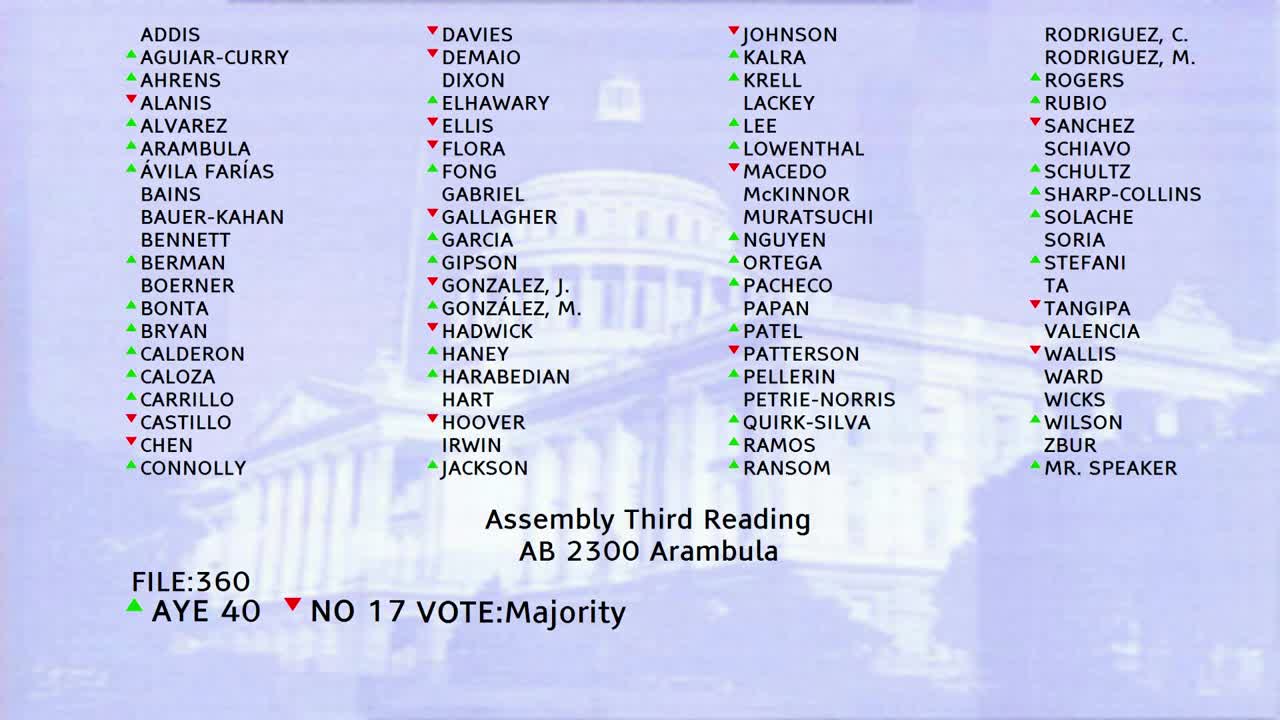
Bill Author

Bill Co-Author(s):