AB 2374: Postsecondary education: Designation of California Asian American- and Native Hawaiian Pacific Islander-Serving Institutions.
- Session Year: 2025-2026
- House: Assembly
- Latest Version Date: 2026-09-29
Current Status:
Passed
(2026-09-29: Chaptered by Secretary of State - Chapter 760, Statutes of 2026.)
Introduced
In Committee
Awaiting First Chamber Vote
Passed First Chamber
In Committee
Awaiting Second Chamber Vote
Passed Second Chamber
Enacted
Existing law establishes the California State University, under the administration of the Trustees of the California State University, the University of California, under the administration of the Regents of the University of California, the California Community Colleges, under the administration of the Board of Governors of the California Community Colleges, and independent institutions of higher education, as defined, as 4 segments of postsecondary education in the state.
This bill would establish the Designation of California Asian American- and Native Hawaiian Pacific Islander-Serving Institutions to recognize campuses of those segments of postsecondary education that excel at providing academic resources to Asian American, Native Hawaiian, and Pacific Islander students. The bill would establish a California Asian American- and Native Hawaiian Pacific Islander-Serving Institutions governing board to designate colleges and universities as California Asian American- and Native Hawaiian Pacific Islander-Serving Institutions and would require the office of the Chancellor of the California Community Colleges to, among other duties, develop the application processes and to process and present initial and renewal applications to receive this designation to the governing board, as specified. The bill would make an initial and renewal designation valid for 5 years.
Existing law establishes the California State University, under the administration of the Trustees of the California State University, the University of California, under the administration of the Regents of the University of California, the California Community Colleges, under the administration of the Board of Governors of the California Community Colleges, and independent institutions of higher education, as defined, as 4 segments of postsecondary education in the state.
This bill would establish the Designation of California Asian American- and Native Hawaiian Pacific Islander-Serving Institutions to recognize campuses of those segments of postsecondary education that excel at providing academic resources to Asian American, Native Hawaiian, and Pacific Islander students. The bill would establish a California Asian American- and Native Hawaiian Pacific Islander-Serving Institutions governing board to designate colleges and universities as California Asian American- and Native Hawaiian Pacific Islander-Serving Institutions and would require an unspecified managing entity the office of the Chancellor of the California Community Colleges to, among other duties, develop the application processes and to process and present initial and renewal applications to receive this designation to the governing board, as specified. The bill would make an initial and renewal designation valid for 5 years.
Existing law establishes the California State University, under the administration of the Trustees of the California State University, the University of California, under the administration of the Regents of the University of California, the California Community Colleges, under the administration of the Board of Governors of the California Community Colleges, and independent institutions of higher education, as defined, as 4 segments of postsecondary education in the state.
This bill would establish the Designation of California Asian American- and Native American Hawaiian Pacific Islander-Serving Institutions to recognize campuses of those segments of postsecondary education that excel at providing academic resources to Asian American and Native American American, Native Hawaiian, and Pacific Islander students. The bill would establish a California Asian American- and Native American Hawaiian Pacific Islander-Serving Institutions governing board to designate colleges and universities as California Asian American- and Native American Hawaiian Pacific Islander-Serving Institutions and would require an unspecified managing entity to, among other duties, develop the application processes and to process and present initial and renewal applications to receive this designation to the governing board, as specified. The bill would make an initial and renewal designation valid for 5 years.
Existing law establishes the California State University, under the administration of the Trustees of the California State University, the University of California, under the administration of the Regents of the University of California, the California Community Colleges, under the administration of the Board of Governors of the California Community Colleges, and independent institutions of higher education, as defined, as 4 segments of postsecondary education in the state.
This bill would establish the Designation of California Asian American- and Native American Pacific Islander-Serving Institutions to recognize campuses of those segments of postsecondary education that excel at providing academic resources to Asian American and Native American Pacific Islander students. The bill would establish a California Asian American- and Native American Pacific Islander-Serving Institutions governing board to designate colleges and universities as California Asian American- and Native American Pacific Islander-Serving Institutions and would require an unspecified managing entity to, among other duties, develop the application processes and to process and present initial and renewal applications to receive this designation to the governing board, as specified. The bill would make an initial and renewal designation valid for 5 years.
The Legislature finds and declares all of the following:
(a)Supporting Asian American, Native Hawaiian, and Pacific Islander students attending postsecondary educational institutions in California serves the interests of all Californians.
(b)Historically, Asian American, Native Hawaiian, and Pacific Islander students have faced discrimination and have been prevented from attending many colleges and universities due to explicit segregation and exclusionary policies.
(c)Before the landmark United States Supreme Court case of Brown v. Board of Education of Topeka (1954) 347 U.S. 483, which declared that segregated schools were unconstitutional, racial segregation in education was common in the United States.
(d)Title VI of the federal Civil Rights Act of 1964 (42 U.S.C. Sec. 2000d et seq.) continues to advance access and equality in education by prohibiting any person, on the ground of race, color, or national origin, from being excluded from participation in, being denied the benefits of, or being subject to discrimination under any program or activity receiving federal financial assistance.
(e)Seventy years after the United States Supreme Courts ruling in Brown v. Board of Education of Topeka (1954) 347 U.S. 483, barriers and disparities for Asian American, Native Hawaiian, and Pacific Islander students in postsecondary education remain.
(f)Nationally, college and university enrollment of Asian American, Native Hawaiian, and Pacific Islander students continues to face challenges related to access and equity.
(g)Federal designation of Asian American- and Native American Pacific Islander-Serving Institutions (AANAPISIs), which are public and private institutions in the United States that serve a significant population of Asian American, Native Hawaiian, and Pacific Islander students, have an important history of supporting these diverse communities.
(h)Today, AANAPISIs continue their vital mission of creating opportunities for Asian American, Native Hawaiian, and Pacific Islander students, and racially diverse students, to earn a postsecondary degree in a culturally responsive environment.
(i)According to federal data, there are numerous colleges and universities identified as AANAPISIs in the United States, which collectively serve hundreds of thousands of students from diverse Asian American, Native Hawaiian, and Pacific Islander backgrounds.
SEC. 2.Article 7.6 (commencing with Section 66077) is added to Chapter 2 of Part 40 of Division 5 of Title 3 of the Education Code, to read:7.6.Designation of California Asian American- and Native Hawaiian Pacific Islander-Serving Institutions66077.This article shall be known, and may be cited, as the Designation of California Asian American- and Native Hawaiian Pacific Islander-Serving Institutions.
66077.1.As used in this article, the following definitions apply:
(a)Applicant means an eligible college or university that applies for a designation pursuant to this article.
(b)College or university means a University of California, California State University, or California Community Colleges campus, or an independent institution of higher education, as defined in Section 66010.
(c)Governing board means the governing board established pursuant to this article.
(d)Managing entity means the office of the Chancellor of the California Community Colleges.
(e)Normal time means the time it would take a full-time student to complete the requirements for a degree or certificate offered by a college or university.
(f)Recipient means a college or university that receives a designation pursuant to this article.
66077.2.(a)The Designation of California Asian American- and Native Hawaiian Pacific Islander-Serving Institutions is hereby established to recognize colleges and universities that excel at providing academic resources to Asian American, Native Hawaiian, and Pacific Islander students enrolled in degree or certificate programs offered by colleges and universities. This designation shall be awarded to qualifying applicants only by a two-thirds vote of approval by the governing board.
(b)An initial designation awarded pursuant to this article shall be valid for five academic years. Thereafter, a recipient may submit an application for renewal. A renewal designation awarded pursuant to this article shall be valid for five years.
(c)An applicant is eligible for designation pursuant to this article if the applicant meets all of the following requirements:
(1)Submits an initial or renewal application, as applicable, to the managing entity on or before the application deadline established by the managing entity pursuant to Section 66077.3.
(2)Meets either of the following, as applicable:
(A)Submits an initial application that complies with subdivision (d).
(B)Submits a renewal application that complies with subdivision (e).
(3)Posts the initial or renewal application submitted pursuant to subparagraph (A) or (B) of paragraph (2), as applicable, on the applicants internet website.
(d)An initial application shall include, but not be limited to, all of the following:
(1)A certification, in writing, by the chief administrative officer of the college or university, of the applicants commitment to address Asian American, Native Hawaiian, and Pacific Islander student success that is consistent with the applicants mission.
(2)Academic goals for the applicant to achieve within the five-year period in which the initial designation awarded pursuant to this article shall be valid. The goals described in this paragraph shall improve retention, time-to-degree or time-to-certificate completion, and graduation rates of Asian American, Native Hawaiian, and Pacific Islander students based on the data submitted by the applicant pursuant to paragraph (5) or (6), as applicable, within the five-year period in which the initial designation shall be valid.
(3)Academic equity goals for the applicant to achieve within the five-year period in which the initial designation awarded pursuant to this article shall be valid. The goals described in this paragraph shall reduce the academic equity gaps in the retention, time-to-degree or time-to-certificate completion, and graduation rates between the applicants Asian American, Native Hawaiian, and Pacific Islander students and the overall student population based on data submitted by the applicant pursuant to paragraph (5) or (6), as applicable.
(4)A strategic plan for the five-year period in which the initial designation awarded pursuant to this article shall be valid, on how the applicant intends to meet the academic goals and academic equity goals submitted pursuant to paragraphs (2) and (3). The strategic plan shall include, but not be limited to, all of the following:
(A)A mission statement that addresses the applicants commitment to serve Asian American, Native Hawaiian, and Pacific Islander students.
(B)Outreach services to Asian American, Native Hawaiian, and Pacific Islander students to encourage them to enroll at the college or university.
(C)Academic and basic needs support services to assist in the academic success of Asian American, Native Hawaiian, and Pacific Islander students. Support services described in this subparagraph may include campus affinity centers and corequisite coursework or concurrent support activities.
(D)An outline of the planned allocation of resources during the five-year period in which the initial designation awarded pursuant to this article shall be valid, to ensure that the strategic plan described in this paragraph can be implemented.
(E)An outline of how the applicant will use existing resources to provide culturally relevant professional development to the applicants faculty and staff.
(F)Academic curriculum, including incorporating and expanding curriculum and course offerings in ethnic studies and other culturally responsive coursework to reflect the diverse backgrounds of Asian American, Native Hawaiian, and Pacific Islander students and to support their academic engagement and retention.
(G)Research initiatives, including institutional research to address the needs of lived experiences of Asian American, Native Hawaiian, and Pacific Islander populations, both on campus and in the broader community.
(H)Data disaggregation collection and analysis to identify and address the distinct needs and achievement gaps of diverse Asian American, Native Hawaiian, and Pacific Islander ethnic subgroups.
(I)Intersegmental collaboration with the University of California, the California State University, the California Community Colleges, and independent nonprofit university institutions of higher education to strengthen the educational pipeline for Asian American, Native Hawaiian, and Pacific Islander students, including support for transfer and the completion of undergraduate, graduate, and professional degrees.
(5)A four-year college or university applicant shall submit, in its application, graduation rates for the previous three academic years for all students, and for Asian American, Native Hawaiian, and Pacific Islander students, within the normal time and up to 150 percent of the normal time-to-degree completion, yield, retention, and graduation rate. To the extent possible, the graduation rates for Native Hawaiian and Pacific Islander students shall be reported as a separate category.
(6)A community college applicant shall submit, in its application, both of the following for the previous three academic years:
(A)The number of degree and certificate programs completed by all students, and by Asian American, Native Hawaiian, and Pacific Islander students. To the extent possible, the number of degree and certificate programs completed by Native Hawaiian and Pacific Islander students shall be reported as a separate category.
(B)The student transfer rates for all students, and for Asian American, Native Hawaiian, and Pacific Islander students, to four-year colleges and universities. To the extent possible, the student transfer rates for Native Hawaiian and Pacific Islander students shall be reported as a separate category.
(7)A description of campus resources to promote a campus of equity and inclusion for Asian American, Native Hawaiian, and Pacific Islander students.
(e)A renewal application shall include, but not be limited to, all of the following:
(1)Either of the following, as applicable:
(A)An applicant seeking renewal upon expiration of an initial designation awarded pursuant to this article shall resubmit the application it submitted to receive that initial designation.
(B)An applicant seeking renewal upon expiration of a renewal designation awarded pursuant to this article shall resubmit the application it submitted to receive that previous renewal designation.
(2)Demonstration of the applicants progress to achieve the academic goals and academic equity goals provided in the application submitted pursuant to paragraph (1).
(3)Demonstration of the applicants progress to implement the strategic plan provided in the application submitted pursuant to paragraph (1).
(4)Any changes made by the applicant to either of the following items provided in the application submitted pursuant to paragraph (1):
(A)The mission statement in the strategic plan that addresses the applicants commitment to serve Asian American, Native Hawaiian, and Pacific Islander students.
(B)The description of campus resources to promote a campus of equity and inclusion for Asian American, Native Hawaiian, and Pacific Islander students.
(5)A certification, in writing, by the chief administrative officer of the college or university, of the applicants continual commitment to address Asian American, Native Hawaiian, and Pacific Islander student success that is consistent with the applicants mission.
(6)Academic goals for the applicant to achieve within the five-year period in which the renewal designation shall be valid. The goals described in this paragraph shall improve retention, time-to-degree or time-to-certificate completion, and graduation rates of Asian American, Native Hawaiian, and Pacific Islander students based on the data submitted by the applicant pursuant to paragraph (9) or (10), as applicable, within the five-year period in which the renewal designation shall be valid.
(7)Academic equity goals for the applicant to achieve within the five-year period in which the renewal designation shall be valid. The goals described in this paragraph shall reduce the academic equity gaps in the retention, time-to-degree or time-to-certificate completion, and graduation rates between the applicants Asian American, Native Hawaiian, and Pacific Islander students and the overall student population based on data submitted by the applicant pursuant to paragraph (9) or (10), as applicable.
(8)A strategic plan for the five-year period in which the renewal designation shall be valid, on how the applicant intends to meet the academic goals and academic equity goals submitted pursuant to paragraphs (6) and (7). The strategic plan shall include, but not be limited to, all of the following:
(A)Outreach services to Asian American, Native Hawaiian, and Pacific Islander students to encourage them to enroll at the college or university.
(B)Academic and basic needs support services to assist in the academic success of Asian American, Native Hawaiian, and Pacific Islander students. Support services described in this subparagraph may include campus affinity centers and corequisite coursework or concurrent support activities.
(C)An outline of the planned allocation of resources for the five-year period in which the renewal designation shall be valid, to ensure that the strategic plan described in this paragraph can be implemented.
(D)An outline of how the applicant will use existing resources to provide culturally relevant professional development to the applicants faculty and staff.
(E)Academic curriculum, including incorporating and expanding curriculum and course offerings in ethnic studies and other culturally responsive coursework to reflect the diverse backgrounds of Asian American, Native Hawaiian, and Pacific Islander students and to support their academic engagement and retention.
(F)Research initiatives, including institutional research to address the needs of lived experiences of Asian American, Native Hawaiian, and Pacific Islander populations, both on campus and in the broader community.
(G)Data disaggregation collection and analysis to identify and address the distinct needs and achievement gaps of diverse Asian American, Native Hawaiian, and Pacific Islander ethnic subgroups.
(H)Intersegmental collaboration with the University of California, the California State University, the California Community Colleges, and independent nonprofit institutions of higher education to strengthen the educational pipeline for Asian American, Native Hawaiian, and Pacific Islander students, including support for transfer and the completion of undergraduate, graduate, and professional degrees.
(9)A four-year college or university applicant shall submit, in its application, graduation rates for the previous five academic years for all students, and for Asian American, Native Hawaiian, and Pacific Islander students, within the normal time and up to 150 percent of normal time-to-degree completion, yield, retention, and graduation rate. To the extent possible, the graduation rates for Native Hawaiian and Pacific Islander students shall be reported as a separate category.
(10)A community college campus shall submit, in its application, both of the following for the previous five academic years:
(A)The number of degree or certificate programs completed by all students, and by Asian American, Native Hawaiian, and Pacific Islander students. To the extent possible, the number of degree or certificate programs completed by Native Hawaiian and Pacific Islander students shall be reported as a separate category.
(B)The student transfer rates for all students, and for Asian American, Native Hawaiian, and Pacific Islander students, to four-year colleges and universities. To the extent possible, the student transfer rates for Native Hawaiian and Pacific Islander students shall be reported as a separate category.
(f)(1)If an applicants renewal application is denied by the governing board, the applicant may submit only an application to receive an initial designation pursuant to this article.
(2)Notwithstanding paragraph (1), an applicant described in paragraph (1) may submit an application for a renewal designation following the award of a subsequent initial designation by the governing board pursuant to this article.
(g)An applicant is encouraged to inform and consult with the academic senate of the college or university on the applicants initial and renewal applications prepared pursuant to this article.
66077.3.The office of the Chancellor of the California Community Colleges is hereby designated as the managing entity for initial and renewal designations pursuant to this article. The managing entity shall act as a neutral administrative body with all of the following duties:
(a)Developing application processes that contain the requirements described in Section 66077.2 for applicants.
(b)Accepting initial and renewal applications from applicants. The managing entity shall set one application deadline each year on a date determined by the managing entity.
(c)Processing each application received and presenting those applications to the governing board at least once each year on a date determined by the governing board, but the governing board may hold additional meetings to review additional applications at the discretion of the governing board.
(d)Upon the governing boards approval or denial of an applicants application, informing the applicant of this outcome.
(e)Preparing and delivering to an applicant approved by the governing board to receive a designation pursuant to this article an appropriate insignia recognizing the designation.
66077.4.(a)The governing board of the California Asian American- and Native Hawaiian Pacific Islander-Serving Institutions is hereby established. The purpose of the governing board is to award colleges and universities with designations pursuant to this article based on applications presented by the managing entity pursuant to Section 66074.3.
(b)(1)The governing board shall be composed of all of the following nine members:
(A)The Lieutenant Governor, or the Lieutenant Governors designee.
(B)One member of the public, to be appointed by the Speaker of the Assembly.
(C)One member of the public, to be appointed by the President pro Tempore of the Senate.
(D)A designee of the President of the University of California.
(E)A designee of the Chancellor of the California State University.
(F)A designee of the Chancellor of the California Community Colleges.
(G)A designee of the Association of Independent California Colleges and Universities.
(H)The chair of the California Asian American & Pacific Islander (AAPI) Legislative Caucus, or the chairs designee.
(I)A designee of the California Commission on Asian and Pacific Islander American Affairs.
(2)Any designee described in paragraph (1) shall be qualified to make decisions on behalf of that appointed position.
(3)A member of the public appointed pursuant to paragraph (1) by either the Speaker of the Assembly or the President pro Tempore of the Senate shall serve a two-year term.
(4)It is the intent of the Legislature that in appointing members of the public pursuant to paragraph (1), the appointing authority shall make every effort to ensure that the membership of the governing board includes persons who have a strong interest in the further development and improvement of the academic success of Asian American, Native Hawaiian, and Pacific Islander students.
(c)For purposes of the first two years of the governing boards operations, the chair of the governing board shall be the Lieutenant Governor or the Lieutenant Governors designee. The governing board shall select each subsequent chairperson from within its membership by a vote of two-thirds of the governing boards voting members.
(d)The governing board shall complete both of the following actions:
(1)Convene at least once each year to vote on the approval or denial of new or renewal applications that have been submitted to the managing entity at least 30 days before the meeting. The governing board may schedule additional meetings, as necessary.
(2)Approve or deny each application presented by the managing entity pursuant to Section 66077.3.
(e)All decisions made by the governing board shall require a two-thirds vote of approval by the governing board members who are present for the vote.
(f)The governing board shall be subject to the Bagley-Keene Open Meeting Act (Article 9 (commencing with Section 11120) of Chapter 1 of Part 1 of Division 3 of Title 2 of the Government Code).
The Legislature finds and declares all of the following:
(a)Supporting Asian American, Native Hawaiian, and Pacific Islander students attending postsecondary educational institutions in California serves the interests of all Californians.
(b)Historically, Asian American, Native Hawaiian, and Pacific Islander students have faced discrimination and have been prevented from attending many colleges and universities due to explicit segregation and exclusionary policies.
(c)Before the landmark United States Supreme Court case of Brown v. Board of Education of Topeka (1954) 347 U.S. 483, which declared that segregated schools were unconstitutional, racial segregation in education was common in the United States.
(d)Title VI of the federal Civil Rights Act of 1964 (42 U.S.C. Sec. 2000d et seq.) continues to advance access and equality in education by prohibiting any person, on the ground of race, color, or national origin, from being excluded from participation in, being denied the benefits of, or being subject to discrimination under any program or activity receiving federal financial assistance.
(e)Seventy years after the United States Supreme Courts ruling in Brown v. Board of Education of Topeka (1954) 347 U.S. 483, barriers and disparities for Asian American, Native Hawaiian, and Pacific Islander students in postsecondary education remain.
(f)Nationally, college and university enrollment of Asian American, Native Hawaiian, and Pacific Islander students continues to face challenges related to access and equity.
(g)Federal designation of Asian American- and Native American Pacific Islander-Serving Institutions (AANAPISIs), which are public and private institutions in the United States that serve a significant population of Asian American, Native Hawaiian, and Pacific Islander students, have an important history of supporting these diverse communities.
(h)Today, AANAPISIs continue their vital mission of creating opportunities for Asian American, Native Hawaiian, and Pacific Islander students, and racially diverse students, to earn a postsecondary degree in a culturally responsive environment.
(i)According to federal data, there are numerous colleges and universities identified as AANAPISIs in the United States, which collectively serve hundreds of thousands of students from diverse Asian American, Native Hawaiian, and Pacific Islander backgrounds.
SEC. 2.Article 7.6 (commencing with Section 66077) is added to Chapter 2 of Part 40 of Division 5 of Title 3 of the Education Code, to read:7.6.Designation of California Asian American- and Native Hawaiian Pacific Islander-Serving Institutions66077.This article shall be known, and may be cited, as the Designation of California Asian American- and Native Hawaiian Pacific Islander-Serving Institutions.
66077.1.As used in this article, the following definitions apply:
(a)Applicant means an eligible college or university that applies for a designation pursuant to this article.
(b)College or university means a University of California, California State University, or California Community Colleges campus, or an independent institution of higher education, as defined in Section 66010.
(c)Governing board means the governing board established pursuant to this article.
(d)Managing entity means the office of the Chancellor of the California Community Colleges.
(e)Normal time means the time it would take a full-time student to complete the requirements for a degree or certificate offered by a college or university.
(f)Recipient means a college or university that receives a designation pursuant to this article.
66077.2.(a)The Designation of California Asian American- and Native Hawaiian Pacific Islander-Serving Institutions is hereby established to recognize colleges and universities that excel at providing academic resources to Asian American, Native Hawaiian, and Pacific Islander students enrolled in degree or certificate programs offered by colleges and universities. This designation shall be awarded to qualifying applicants only by a two-thirds vote of approval by the governing board.
(b)An initial designation awarded pursuant to this article shall be valid for five academic years. Thereafter, a recipient may submit an application for renewal. A renewal designation awarded pursuant to this article shall be valid for five years.
(c)An applicant is eligible for designation pursuant to this article if the applicant meets all of the following requirements:
(1)Submits an initial or renewal application, as applicable, to the managing entity on or before the application deadline established by the managing entity pursuant to Section 66077.3.
(2)Meets either of the following, as applicable:
(A)Submits an initial application that complies with subdivision (d).
(B)Submits a renewal application that complies with subdivision (e).
(3)Posts the initial or renewal application submitted pursuant to subparagraph (A) or (B) of paragraph (2), as applicable, on the applicants internet website.
(d)An initial application shall include, but not be limited to, all of the following:
(1)A certification, in writing, by the chief administrative officer of the college or university, of the applicants commitment to address Asian American, Native Hawaiian, and Pacific Islander student success that is consistent with the applicants mission.
(2)Academic goals for the applicant to achieve within the five-year period in which the initial designation awarded pursuant to this article shall be valid. The goals described in this paragraph shall improve retention, time-to-degree or time-to-certificate completion, and graduation rates of Asian American, Native Hawaiian, and Pacific Islander students based on the data submitted by the applicant pursuant to paragraph (5) or (6), as applicable, within the five-year period in which the initial designation shall be valid.
(3)Academic equity goals for the applicant to achieve within the five-year period in which the initial designation awarded pursuant to this article shall be valid. The goals described in this paragraph shall reduce the academic equity gaps in the retention, time-to-degree or time-to-certificate completion, and graduation rates between the applicants Asian American, Native Hawaiian, and Pacific Islander students and the overall student population based on data submitted by the applicant pursuant to paragraph (5) or (6), as applicable.
(4)A strategic plan for the five-year period in which the initial designation awarded pursuant to this article shall be valid, on how the applicant intends to meet the academic goals and academic equity goals submitted pursuant to paragraphs (2) and (3). The strategic plan shall include, but not be limited to, all of the following:
(A)A mission statement that addresses the applicants commitment to serve Asian American, Native Hawaiian, and Pacific Islander students.
(B)Outreach services to Asian American, Native Hawaiian, and Pacific Islander students to encourage them to enroll at the college or university.
(C)Academic and basic needs support services to assist in the academic success of Asian American, Native Hawaiian, and Pacific Islander students. Support services described in this subparagraph may include campus affinity centers and corequisite coursework or concurrent support activities.
(D)An outline of the planned allocation of resources during the five-year period in which the initial designation awarded pursuant to this article shall be valid, to ensure that the strategic plan described in this paragraph can be implemented.
(E)An outline of how the applicant will use existing resources to provide culturally relevant professional development to the applicants faculty and staff.
(F)Academic curriculum, including incorporating and expanding curriculum and course offerings in ethnic studies and other culturally responsive coursework to reflect the diverse backgrounds of Asian American, Native Hawaiian, and Pacific Islander students and to support their academic engagement and retention.
(G)Research initiatives, including institutional research to address the needs of lived experiences of Asian American, Native Hawaiian, and Pacific Islander populations, both on campus and in the broader community.
(H)Data disaggregation collection and analysis to identify and address the distinct needs and achievement gaps of diverse Asian American, Native Hawaiian, and Pacific Islander ethnic subgroups.
(I)Intersegmental collaboration with the University of California, the California State University, the California Community Colleges, and independent nonprofit university institutions of higher education to strengthen the educational pipeline for Asian American, Native Hawaiian, and Pacific Islander students, including support for transfer and the completion of undergraduate, graduate, and professional degrees.
(5)A four-year college or university applicant shall submit, in its application, graduation rates for the previous three academic years for all students, and for Asian American, Native Hawaiian, and Pacific Islander students, within the normal time and up to 150 percent of the normal time-to-degree completion, yield, retention, and graduation rate. To the extent possible, the graduation rates for Native Hawaiian and Pacific Islander students shall be reported as a separate category.
(6)A community college applicant shall submit, in its application, both of the following for the previous three academic years:
(A)The number of degree and certificate programs completed by all students, and by Asian American, Native Hawaiian, and Pacific Islander students. To the extent possible, the number of degree and certificate programs completed by Native Hawaiian and Pacific Islander students shall be reported as a separate category.
(B)The student transfer rates for all students, and for Asian American, Native Hawaiian, and Pacific Islander students, to four-year colleges and universities. To the extent possible, the student transfer rates for Native Hawaiian and Pacific Islander students shall be reported as a separate category.
(7)A description of campus resources to promote a campus of equity and inclusion for Asian American, Native Hawaiian, and Pacific Islander students.
(e)A renewal application shall include, but not be limited to, all of the following:
(1)Either of the following, as applicable:
(A)An applicant seeking renewal upon expiration of an initial designation awarded pursuant to this article shall resubmit the application it submitted to receive that initial designation.
(B)An applicant seeking renewal upon expiration of a renewal designation awarded pursuant to this article shall resubmit the application it submitted to receive that previous renewal designation.
(2)Demonstration of the applicants progress to achieve the academic goals and academic equity goals provided in the application submitted pursuant to paragraph (1).
(3)Demonstration of the applicants progress to implement the strategic plan provided in the application submitted pursuant to paragraph (1).
(4)Any changes made by the applicant to either of the following items provided in the application submitted pursuant to paragraph (1):
(A)The mission statement in the strategic plan that addresses the applicants commitment to serve Asian American, Native Hawaiian, and Pacific Islander students.
(B)The description of campus resources to promote a campus of equity and inclusion for Asian American, Native Hawaiian, and Pacific Islander students.
(5)A certification, in writing, by the chief administrative officer of the college or university, of the applicants continual commitment to address Asian American, Native Hawaiian, and Pacific Islander student success that is consistent with the applicants mission.
(6)Academic goals for the applicant to achieve within the five-year period in which the renewal designation shall be valid. The goals described in this paragraph shall improve retention, time-to-degree or time-to-certificate completion, and graduation rates of Asian American, Native Hawaiian, and Pacific Islander students based on the data submitted by the applicant pursuant to paragraph (9) or (10), as applicable, within the five-year period in which the renewal designation shall be valid.
(7)Academic equity goals for the applicant to achieve within the five-year period in which the renewal designation shall be valid. The goals described in this paragraph shall reduce the academic equity gaps in the retention, time-to-degree or time-to-certificate completion, and graduation rates between the applicants Asian American, Native Hawaiian, and Pacific Islander students and the overall student population based on data submitted by the applicant pursuant to paragraph (9) or (10), as applicable.
(8)A strategic plan for the five-year period in which the renewal designation shall be valid, on how the applicant intends to meet the academic goals and academic equity goals submitted pursuant to paragraphs (6) and (7). The strategic plan shall include, but not be limited to, all of the following:
(A)Outreach services to Asian American, Native Hawaiian, and Pacific Islander students to encourage them to enroll at the college or university.
(B)Academic and basic needs support services to assist in the academic success of Asian American, Native Hawaiian, and Pacific Islander students. Support services described in this subparagraph may include campus affinity centers and corequisite coursework or concurrent support activities.
(C)An outline of the planned allocation of resources for the five-year period in which the renewal designation shall be valid, to ensure that the strategic plan described in this paragraph can be implemented.
(D)An outline of how the applicant will use existing resources to provide culturally relevant professional development to the applicants faculty and staff.
(E)Academic curriculum, including incorporating and expanding curriculum and course offerings in ethnic studies and other culturally responsive coursework to reflect the diverse backgrounds of Asian American, Native Hawaiian, and Pacific Islander students and to support their academic engagement and retention.
(F)Research initiatives, including institutional research to address the needs of lived experiences of Asian American, Native Hawaiian, and Pacific Islander populations, both on campus and in the broader community.
(G)Data disaggregation collection and analysis to identify and address the distinct needs and achievement gaps of diverse Asian American, Native Hawaiian, and Pacific Islander ethnic subgroups.
(H)Intersegmental collaboration with the University of California, the California State University, the California Community Colleges, and independent nonprofit institutions of higher education to strengthen the educational pipeline for Asian American, Native Hawaiian, and Pacific Islander students, including support for transfer and the completion of undergraduate, graduate, and professional degrees.
(9)A four-year college or university applicant shall submit, in its application, graduation rates for the previous five academic years for all students, and for Asian American, Native Hawaiian, and Pacific Islander students, within the normal time and up to 150 percent of normal time-to-degree completion, yield, retention, and graduation rate. To the extent possible, the graduation rates for Native Hawaiian and Pacific Islander students shall be reported as a separate category.
(10)A community college campus shall submit, in its application, both of the following for the previous five academic years:
(A)The number of degree or certificate programs completed by all students, and by Asian American, Native Hawaiian, and Pacific Islander students. To the extent possible, the number of degree or certificate programs completed by Native Hawaiian and Pacific Islander students shall be reported as a separate category.
(B)The student transfer rates for all students, and for Asian American, Native Hawaiian, and Pacific Islander students, to four-year colleges and universities. To the extent possible, the student transfer rates for Native Hawaiian and Pacific Islander students shall be reported as a separate category.
(f)(1)If an applicants renewal application is denied by the governing board, the applicant may submit only an application to receive an initial designation pursuant to this article.
(2)Notwithstanding paragraph (1), an applicant described in paragraph (1) may submit an application for a renewal designation following the award of a subsequent initial designation by the governing board pursuant to this article.
(g)An applicant is encouraged to inform and consult with the academic senate of the college or university on the applicants initial and renewal applications prepared pursuant to this article.
66077.3.The office of the Chancellor of the California Community Colleges is hereby designated as the managing entity for initial and renewal designations pursuant to this article. The managing entity shall act as a neutral administrative body with all of the following duties:
(a)Developing application processes that contain the requirements described in Section 66077.2 for applicants.
(b)Accepting initial and renewal applications from applicants. The managing entity shall set one application deadline each year on a date determined by the managing entity.
(c)Processing each application received and presenting those applications to the governing board at least once each year on a date determined by the governing board, but the governing board may hold additional meetings to review additional applications at the discretion of the governing board.
(d)Upon the governing boards approval or denial of an applicants application, informing the applicant of this outcome.
(e)Preparing and delivering to an applicant approved by the governing board to receive a designation pursuant to this article an appropriate insignia recognizing the designation.
66077.4.(a)The governing board of the California Asian American- and Native Hawaiian Pacific Islander-Serving Institutions is hereby established. The purpose of the governing board is to award colleges and universities with designations pursuant to this article based on applications presented by the managing entity pursuant to Section 66074.3.
(b)(1)The governing board shall be composed of all of the following eight nine members:
(A)The Lieutenant Governor, or the Lieutenant Governors designee.
(B)One member of the public, to be appointed by the Speaker of the Assembly.
(C)One member of the public, to be appointed by the President pro Tempore of the Senate.
(D)A designee of the President of the University of California.
(E)A designee of the Chancellor of the California State University.
(F)A designee of the Chancellor of the California Community Colleges.
(G)A designee of the Association of Independent California Colleges and Universities.
(H)The chair of the California Asian American & Pacific Islander (AAPI) Legislative Caucus, or the chairs designee.
(I)A designee of the California Commission on Asian and Pacific Islander American Affairs.
(2)Any designee described in paragraph (1) shall be qualified to make decisions on behalf of that appointed position.
(3)A member of the public appointed pursuant to paragraph (1) by either the Speaker of the Assembly or the President pro Tempore of the Senate shall serve a two-year term.
(4)It is the intent of the Legislature that in appointing members of the public pursuant to paragraph (1), the appointing authority shall make every effort to ensure that the membership of the governing board includes persons who have a strong interest in the further development and improvement of the academic success of Asian American, Native Hawaiian, and Pacific Islander students.
(c)For purposes of the first two years of the governing boards operations, the chair of the governing board shall be the Lieutenant Governor or the Lieutenant Governors designee. The governing board shall select each subsequent chairperson from within its membership by a vote of two-thirds of the governing boards voting members.
(d)The governing board shall complete both of the following actions:
(1)Convene at least once each year to vote on the approval or denial of new or renewal applications that have been submitted to the managing entity at least 30 days before the meeting. The governing board may schedule additional meetings, as necessary.
(2)Approve or deny each application presented by the managing entity pursuant to Section 66077.3.
(e)All decisions made by the governing board shall require a two-thirds vote of approval by the governing board members who are present for the vote.
(f)The governing board shall be subject to the Bagley-Keene Open Meeting Act (Article 9 (commencing with Section 11120) of Chapter 1 of Part 1 of Division 3 of Title 2 of the Government Code).
The Legislature finds and declares all of the following:
(a)Supporting Asian American, Native Hawaiian, and Pacific Islander students attending postsecondary educational institutions in California serves the interests of all Californians.
(b)Historically, Asian American, Native Hawaiian, and Pacific Islander students have faced discrimination and have been prevented from attending many colleges and universities due to explicit segregation and exclusionary policies.
(c)Before the landmark United States Supreme Court case of Brown v. Board of Education of Topeka (1954) 347 U.S. 483, which declared that segregated schools were unconstitutional, racial segregation in education was common in the United States.
(d)Title VI of the federal Civil Rights Act of 1964 (42 U.S.C. Sec. 2000d et seq.) continues to advance access and equality in education by prohibiting any person, on the ground of race, color, or national origin, from being excluded from participation in, being denied the benefits of, or being subject to discrimination under any program or activity receiving federal financial assistance.
(e)Seventy years after the United States Supreme Courts ruling in Brown v. Board of Education of Topeka (1954) 347 U.S. 483, barriers and disparities for Asian American, Native Hawaiian, and Pacific Islander students in postsecondary education remain.
(f)Nationally, college and university enrollment of Asian American, Native Hawaiian, and Pacific Islander students continues to face challenges related to access and equity.
(g)Federal designation of Asian American- and Native American Pacific Islander-Serving Institutions (AANAPISIs), which are public and private institutions in the United States that serve a significant population of Asian American, Native Hawaiian, and Pacific Islander students, have an important history of supporting these diverse communities.
(h)Today, AANAPISIs continue their vital mission of creating opportunities for Asian American, Native Hawaiian, and Pacific Islander students, and racially diverse students, to earn a postsecondary degree in a culturally responsive environment.
(i)According to federal data, there are numerous colleges and universities identified as AANAPISIs in the United States, which collectively serve hundreds of thousands of students from diverse Asian American, Native Hawaiian, and Pacific Islander backgrounds.
SEC. 2.Article 7.6 (commencing with Section 66077) is added to Chapter 2 of Part 40 of Division 5 of Title 3 of the Education Code, to read:7.6.Designation of California Asian American- and Native Hawaiian Pacific Islander-Serving Institutions66077.This article shall be known, and may be cited, as the Designation of California Asian American- and Native Hawaiian Pacific Islander-Serving Institutions.
66077.1.As used in this article, the following definitions apply:
(a)Applicant means an eligible college or university that applies for a designation pursuant to this article.
(b)College or university means a University of California, California State University, or California Community Colleges campus, or an independent institution of higher education. education, as defined in Section 66010.
(c)Governing board means the governing board established pursuant to this article.
(d)Managing entity means the ____ described in this article. office of the Chancellor of the California Community Colleges.
(e)Normal time means the time it would take a full-time student to complete the requirements for a degree or certificate offered by a college or university.
(f)Recipient means a college or university that receives a designation pursuant to this article.
66077.2.(a)The Designation of California Asian American- and Native Hawaiian Pacific Islander-Serving Institutions is hereby established to recognize colleges and universities that excel at providing academic resources to Asian American, Native Hawaiian, and Pacific Islander students enrolled in degree or certificate programs offered by colleges and universities. This designation shall be awarded to qualifying applicants only by a two-thirds vote of approval by the governing board.
(b)An initial designation awarded pursuant to this article shall be valid for five academic years. Thereafter, a recipient may submit an application for renewal. A renewal designation awarded pursuant to this article shall be valid for five years.
(c)An applicant is eligible for designation pursuant to this article if the applicant meets all of the following requirements:
(1)Submits an initial or renewal application, as applicable, to the managing entity on or before the application deadline established by the managing entity pursuant to Section 66077.3.
(2)Meets either of the following, as applicable:
(A)Submits an initial application that complies with subdivision (d).
(B)Submits a renewal application that complies with subdivision (e).
(3)Posts the initial or renewal application submitted pursuant to subparagraph (A) or (B) of paragraph (2), as applicable, on the applicants internet website.
(d)An initial application shall include, but not be limited to, all of the following:
(1)A certification, in writing, by the chief administrative officer of the college or university, of the applicants commitment to address Asian American, Native Hawaiian, and Pacific Islander student success that is consistent with the applicants mission.
(2)Academic goals for the applicant to achieve within the five-year period in which the initial designation awarded pursuant to this article shall be valid. The goals described in this paragraph shall improve retention, time-to-degree or time-to-certificate completion, and graduation rates of Asian American, Native Hawaiian, and Pacific Islander students based on the data submitted by the applicant pursuant to paragraph (5) or (6), as applicable, within the five-year period in which the initial designation shall be valid.
(3)Academic equity goals for the applicant to achieve within the five-year period in which the initial designation awarded pursuant to this article shall be valid. The goals described in this paragraph shall reduce the academic equity gaps in the retention, time-to-degree or time-to-certificate completion, and graduation rates between the applicants Asian American, Native Hawaiian, and Pacific Islander students and the overall student population based on data submitted by the applicant pursuant to paragraph (5) or (6), as applicable.
(4)A strategic plan for the five-year period in which the initial designation awarded pursuant to this article shall be valid, on how the applicant intends to meet the academic goals and academic equity goals submitted pursuant to paragraphs (2) and (3). The strategic plan shall include, but not be limited to, all of the following:
(A)A mission statement that addresses the applicants commitment to serve Asian American, Native Hawaiian, and Pacific Islander students.
(B)Outreach services to Asian American, Native Hawaiian, and Pacific Islander students to encourage them to enroll at the college or university.
(C)Academic and basic needs support services to assist in the academic success of Asian American, Native Hawaiian, and Pacific Islander students. Support services described in this subparagraph may include campus affinity centers and corequisite coursework or concurrent support activities.
(D)An outline of the planned allocation of resources during the five-year period in which the initial designation awarded pursuant to this article shall be valid, to ensure that the strategic plan described in this paragraph can be implemented.
(E)An outline of how the applicant will use existing resources to provide culturally relevant professional development to the applicants faculty and staff.
(F)Academic curriculum, including incorporating and expanding curriculum and course offerings in ethnic studies and other culturally responsive coursework to reflect the diverse backgrounds of Asian American, Native Hawaiian, and Pacific Islander students and to support their academic engagement and retention.
(G)Research initiatives, including institutional research to address the needs of lived experiences of Asian American, Native Hawaiian, and Pacific Islander populations, both on campus and in the broader community.
(H)Data disaggregation collection and analysis to identify and address the distinct needs and achievement gaps of diverse Asian American, Native Hawaiian, and Pacific Islander ethnic subgroups.
(I)Intersegmental collaboration with the University of California, the California State University, the California Community Colleges, and independent nonprofit university institutions of higher education to strengthen the educational pipeline for Asian American, Native Hawaiian, and Pacific Islander students, including support for transfer and the completion of undergraduate, graduate, and professional degrees.
(5)A four-year college or university applicant shall submit, in its application, graduation rates for the previous three academic years for all students, and for Asian American, Native Hawaiian, and Pacific Islander students, within the normal time and up to 150 percent of the normal time-to-degree completion, yield, retention, and graduation rate. To the extent possible, the graduation rates for Native Hawaiian and Pacific Islander students shall be reported as a separate category.
(6)A community college applicant shall submit, in its application, either both of the following for the previous three academic years:
(A)The number of degree and certificate programs completed by all students, and by Asian American, Native Hawaiian, and Pacific Islander students. To the extent possible, the number of degree and certificate programs completed by Native Hawaiian and Pacific Islander students shall be reported as a separate category.
(B)The student transfer rates for all students, and for Asian American, Native Hawaiian, and Pacific Islander students, to four-year colleges and universities. To the extent possible, the student transfer rates for Native Hawaiian and Pacific Islander students shall be reported as a separate category.
(7)A description of campus resources to promote a campus of equity and inclusion for Asian American, Native Hawaiian, and Pacific Islander students.
(e)A renewal application shall include, but not be limited to, all of the following:
(1)Either of the following, as applicable:
(A)An applicant seeking renewal upon expiration of an initial designation awarded pursuant to this article shall resubmit the application it submitted to receive that initial designation.
(B)An applicant seeking renewal upon expiration of a renewal designation awarded pursuant to this article shall resubmit the application it submitted to receive that previous renewal designation.
(2)Demonstration of the applicants progress to achieve the academic goals and academic equity goals provided in the application submitted pursuant to paragraph (1).
(3)Demonstration of the applicants progress to implement the strategic plan provided in the application submitted pursuant to paragraph (1).
(4)Any changes made by the applicant to either of the following items provided in the application submitted pursuant to paragraph (1):
(A)The mission statement in the strategic plan that addresses the applicants commitment to serve Asian American, Native Hawaiian, and Pacific Islander students.
(B)The description of campus resources to promote a campus of equity and inclusion for Asian American, Native Hawaiian, and Pacific Islander students.
(5)A certification, in writing, by the chief administrative officer of the college or university, of the applicants continual commitment to address Asian American, Native Hawaiian, and Pacific Islander student success that is consistent with the applicants mission.
(6)Academic goals for the applicant to achieve within the five-year period in which the renewal designation shall be valid. The goals described in this paragraph shall improve retention, time-to-degree or time-to-certificate completion, and graduation rates of Asian American, Native Hawaiian, and Pacific Islander students based on the data submitted by the applicant pursuant to paragraph (9) or (10), as applicable, within the five-year period in which the renewal designation shall be valid.
(7)Academic equity goals for the applicant to achieve within the five-year period in which the renewal designation shall be valid. The goals described in this paragraph shall reduce the academic equity gaps in the retention, time-to-degree or time-to-certificate completion, and graduation rates between the applicants Asian American, Native Hawaiian, and Pacific Islander students and the overall student population based on data submitted by the applicant pursuant to paragraph (9) or (10), as applicable.
(8)A strategic plan for the five-year period in which the renewal designation shall be valid, on how the applicant intends to meet the academic goals and academic equity goals submitted pursuant to paragraphs (6) and (7). The strategic plan shall include, but not be limited to, all of the following:
(A)Outreach services to Asian American, Native Hawaiian, and Pacific Islander students to encourage them to enroll at the college or university.
(B)Academic and basic needs support services to assist in the academic success of Asian American, Native Hawaiian, and Pacific Islander students. Support services described in this subparagraph may include campus affinity centers and corequisite coursework or concurrent support activities.
(C)An outline of the planned allocation of resources for the five-year period in which the renewal designation shall be valid, to ensure that the strategic plan described in this paragraph can be implemented.
(D)An outline of how the applicant will use existing resources to provide culturally relevant professional development to the applicants faculty and staff.
(E)Academic curriculum, including incorporating and expanding curriculum and course offerings in ethnic studies and other culturally responsive coursework to reflect the diverse backgrounds of Asian American, Native Hawaiian, and Pacific Islander students and to support their academic engagement and retention.
(F)Research initiatives, including institutional research to address the needs of lived experiences of Asian American, Native Hawaiian, and Pacific Islander populations, both on campus and in the broader community.
(G)Data disaggregation collection and analysis to identify and address the distinct needs and achievement gaps of diverse Asian American, Native Hawaiian, and Pacific Islander ethnic subgroups.
(H)Intersegmental collaboration with the University of California, the California State University, the California Community Colleges, and independent nonprofit institutions of higher education to strengthen the educational pipeline for Asian American, Native Hawaiian, and Pacific Islander students, including support for transfer and the completion of undergraduate, graduate, and professional degrees.
(9)A four-year college or university applicant shall submit, in its application, graduation rates for the previous five academic years for all students, and for Asian American, Native Hawaiian, and Pacific Islander students, within the normal time and up to 150 percent of normal time-to-degree completion, yield, retention, and graduation rate. To the extent possible, the graduation rates for Native Hawaiian and Pacific Islander students shall be reported as a separate category.
(10)A community college campus shall submit, in its application, either both of the following for the previous five academic years:
(A)The number of degree or certificate programs completed by all students, and by Asian American, Native Hawaiian, and Pacific Islander students. To the extent possible, the number of degree or certificate programs completed by Native Hawaiian and Pacific Islander students shall be reported as a separate category.
(B)The student transfer rates for all students, and for Asian American, Native Hawaiian, and Pacific Islander students, to four-year colleges and universities. To the extent possible, the student transfer rates for Native Hawaiian and Pacific Islander students shall be reported as a separate category.
(f)(1)If an applicants renewal application is denied by the governing board, the applicant may submit only an application to receive an initial designation pursuant to this article.
(2)Notwithstanding paragraph (1), an applicant described in paragraph (1) may submit an application for a renewal designation following the award of a subsequent initial designation by the governing board pursuant to this article.
(g)An applicant is encouraged to inform and consult with the academic senate of the college or university on the applicants initial and renewal applications prepared pursuant to this article.
66077.3.The ____ office of the Chancellor of the California Community Colleges is hereby designated as the managing entity for initial and renewal designations pursuant to this article. The managing entity shall act as a neutral administrative body with all of the following duties:
(a)Developing application processes that contain the requirements described in Section 66077.2 for applicants.
(b)Accepting initial and renewal applications from applicants. The managing entity shall set two one application deadlines deadline each year on dates a date determined by the managing entity.
(c)Processing each application received and presenting those applications to the governing board twice at least once each year on dates a date determined by the governing board. board, but the governing board may hold additional meetings to review additional applications at the discretion of the governing board.
(d)Upon the governing boards approval or denial of an applicants application, informing the applicant of this outcome.
(e)Preparing and delivering to an applicant approved by the governing board to receive a designation pursuant to this article an appropriate insignia recognizing the designation.
66077.4.(a)The governing board of the California Asian American- and Native Hawaiian Pacific Islander-Serving Institutions is hereby established. The purpose of the governing board is to award colleges and universities with designations pursuant to this article based on applications presented by the managing entity pursuant to Section 66074.3.
(b)(1)The governing board shall be composed of all of the following eight members:
(A)The Lieutenant Governor, or the Lieutenant Governors designee.
(B)One member of the public, to be appointed by the Speaker of the Assembly.
(C)One member of the public, to be appointed by the President pro Tempore of the Senate.
(D)A designee of the President of the University of California.
(E)A designee of the Chancellor of the California State University.
(F)A designee of the Chancellor of the California Community Colleges.
(G)A designee of the Association of Independent California Colleges and Universities.
(H)The chair of the California Asian American & Pacific Islander (AAPI) Legislative Caucus, or the chairs designee.
(2)Any designee described in paragraph (1) shall be qualified to make decisions on behalf of that appointed position.
(3)A member of the public appointed pursuant to paragraph (1) by either the Speaker of the Assembly or the President pro Tempore of the Senate shall serve a two-year term.
(4)It is the intent of the Legislature that in appointing members of the public pursuant to paragraph (1), the appointing authority shall make every effort to ensure that the membership of the governing board includes persons who have a strong interest in the further development and improvement of the academic success of Asian American, Native Hawaiian, and Pacific Islander students.
(c)For purposes of the first two years of the governing boards operations, the chair of the governing board shall be the Lieutenant Governor or the Lieutenant Governors designee. The governing board shall select each subsequent chairperson from within its membership by a vote of two-thirds of the governing boards voting members.
(d)The governing board shall complete both of the following actions:
(1)Convene twice a year to vote on the approval or denial of applications. at least once each year to vote on the approval or denial of new or renewal applications that have been submitted to the managing entity at least 30 days before the meeting. The governing board may schedule additional meetings, as necessary.
(2)Approve or deny each application presented by the managing entity pursuant to Section 66077.3.
(e)All decisions made by the governing board shall require a two-thirds vote of approval by the governing board members who are present for the vote.
(f)The governing board shall be subject to the Bagley-Keene Open Meeting Act (Article 9 (commencing with Section 11120) of Chapter 1 of Part 1 of Division 3 of Title 2 of the Government Code).
The Legislature finds and declares all of the following:
(a)Supporting Asian American and Native American American, Native Hawaiian, and Pacific Islander students attending postsecondary educational institutions in California serves the interests of all Californians.
(b)Historically, Asian American and Native American American, Native Hawaiian, and Pacific Islander students have faced discrimination and have been prevented from attending many colleges and universities due to explicit segregation and exclusionary policies.
(c)Before the landmark United States Supreme Court case of Brown v. Board of Education of Topeka (1954) 347 U.S. 483, which declared that segregated schools were unconstitutional, racial segregation in education was common in the United States.
(d)Title VI of the federal Civil Rights Act of 1964 (42 U.S.C. Sec. 2000d, 2000d et seq.) continues to advance access and equality in education by prohibiting any person, on the ground of race, color, or national origin, from being excluded from participation in, being denied the benefits of, or being subject to discrimination under any program or activity receiving federal financial assistance.
(e)Seventy years after the United States Supreme Courts ruling in Brown v. Board of Education of Topeka (1954) 347 U.S. 483, barriers and disparities for Asian American and Native American American, Native Hawaiian, and Pacific Islander students in postsecondary education remain.
(f)Nationally, college and university enrollment of Asian American and Native American American, Native Hawaiian, and Pacific Islander students continues to face challenges related to access and equity.
(g)Federal designation of Asian American- and Native American Pacific Islander-Serving Institutions (AANAPISIs), which are public and private institutions in the United States that serve a significant population of Asian American and Native American American, Native Hawaiian, and Pacific Islander students, have an important history of supporting these diverse communities.
(h)Today, AANAPISIs continue their vital mission of creating opportunities for Asian American and Native American American, Native Hawaiian, and Pacific Islander students, and racially diverse students, to earn a postsecondary degree in a culturally responsive environment.
(i)According to federal data, there are numerous colleges and universities identified as AANAPISIs in the United States, which collectively serve hundreds of thousands of students from diverse Asian American and Native American American, Native Hawaiian, and Pacific Islander backgrounds.
SEC. 2.Article 7.6 (commencing with Section 66077) is added to Chapter 2 of Part 40 of Division 5 of Title 3 of the Education Code, to read:7.6.Designation of California Asian American- and Native American Hawaiian Pacific Islander-Serving Institutions66077.This article shall be known, and may be cited, as the Designation of California Asian American- and Native American Hawaiian Pacific Islander-Serving Institutions.
66077.1.As used in this article, the following definitions apply:
(a)Applicant means an eligible college or university that applies for a designation pursuant to this article.
(b)College or university means a University of California, California State University, or California Community Colleges campus, or an independent institution of higher education.
(c)Governing board means the governing board established pursuant to this article.
(d)Managing entity means the ____ described in this article.
(e)Normal time means the time it would take a full-time student to complete the requirements for a degree or certificate offered by a college or university.
(f)Recipient means a college or university that receives a designation pursuant to this article.
66077.2.(a)The Designation of California Asian American- and Native American Hawaiian Pacific Islander-Serving Institutions is hereby established to recognize colleges and universities that excel at providing academic resources to Asian American and Native American American, Native Hawaiian, and Pacific Islander students enrolled in degree or certificate programs offered by colleges and universities. This designation shall be awarded to qualifying applicants only by a two-thirds vote of approval by the governing board.
(b)An initial designation awarded pursuant to this article shall be valid for five academic years. Thereafter, a recipient may submit an application for renewal. A renewal designation awarded pursuant to this article shall be valid for five years.
(c)An applicant is eligible for designation pursuant to this article if the applicant meets all of the following requirements:
(1)Submits an initial or renewal application, as applicable, to the managing entity on or before the application deadline established by the managing entity pursuant to Section 66077.3.
(2)Meets either of the following, as applicable:
(A)Submits an initial application that complies with subdivision (d).
(B)Submits a renewal application that complies with subdivision (e).
(3)Posts the initial or renewal application submitted pursuant to subparagraph (A) or (B) of paragraph (2), as applicable, on the applicants internet website.
(d)An initial application shall include, but not be limited to, all of the following:
(1)A certification, in writing, by the chief administrative officer of the college or university, of the applicants commitment to address Asian American and Native American American, Native Hawaiian, and Pacific Islander student success that is consistent with the applicants mission.
(2)Academic goals for the applicant to achieve within the five-year period in which the initial designation awarded pursuant to this article shall be valid. The goals described in this paragraph shall improve retention, time-to-degree or time-to-certificate completion, and graduation rates of Asian American and Native American American, Native Hawaiian, and Pacific Islander students based on the data submitted by the applicant pursuant to paragraph (5) or (6), as applicable, within the five-year period in which the initial designation shall be valid.
(3)Academic equity goals for the applicant to achieve within the five-year period in which the initial designation awarded pursuant to this article shall be valid. The goals described in this paragraph shall reduce the academic equity gaps in the retention, time-to-degree or time-to-certificate completion, and graduation rates between the applicants Asian American and Native American American, Native Hawaiian, and Pacific Islander students and the overall student population based on data submitted by the applicant pursuant to paragraph (5) or (6), as applicable.
(4)A strategic plan for the five-year period in which the initial designation awarded pursuant to this article shall be valid, on how the applicant intends to meet the academic goals and academic equity goals submitted pursuant to paragraphs (2) and (3). The strategic plan shall include, but not be limited to, all of the following:
(A)A mission statement that addresses the applicants commitment to serve Asian American and Native American American, Native Hawaiian, and Pacific Islander students.
(B)Outreach services to Asian American and Native American American, Native Hawaiian, and Pacific Islander students to encourage them to enroll at the college or university.
(C)Academic and basic needs support services to assist in the academic success of Asian American and Native American American, Native Hawaiian, and Pacific Islander students. Support services described in this subparagraph may include campus affinity centers and corequisite coursework or concurrent support activities.
(D)An outline of the planned allocation of resources during the five-year period in which the initial designation awarded pursuant to this article shall be valid, to ensure that the strategic plan described in this paragraph can be implemented.
(E)An outline of how the applicant will use existing resources to provide culturally relevant professional development to the applicants faculty and staff.
(5)A four-year college or university applicant shall submit, in its application, graduation rates for the previous three academic years for all students, and for Asian American and Native American American, Native Hawaiian, and Pacific Islander students, within the normal time and up to 150 percent of the normal time-to-degree completion, yield, retention, and graduation rate.
(6)A community college applicant shall submit, in its application, either of the following for the previous three academic years:
(A)The number of degree and certificate programs completed by all students, and by Asian American and Native American American, Native Hawaiian, and Pacific Islander students.
(B)The student transfer rates for all students, and for Asian American and Native American American, Native Hawaiian, and Pacific Islander students, to four-year colleges and universities.
(7)A description of campus resources to promote a campus of equity and inclusion for Asian American and Native American American, Native Hawaiian, and Pacific Islander students.
(e)A renewal application shall include, but not be limited to, all of the following:
(1)Either of the following, as applicable:
(A)An applicant seeking renewal upon expiration of an initial designation awarded pursuant to this article shall resubmit the application it submitted to receive that initial designation.
(B)An applicant seeking renewal upon expiration of a renewal designation awarded pursuant to this article shall resubmit the application it submitted to receive that previous renewal designation.
(2)Demonstration of the applicants progress to achieve the academic goals and academic equity goals provided in the application submitted pursuant to paragraph (1).
(3)Demonstration of the applicants progress to implement the strategic plan provided in the application submitted pursuant to paragraph (1).
(4)Any changes made by the applicant to either of the following items provided in the application submitted pursuant to paragraph (1):
(A)The mission statement in the strategic plan that addresses the applicants commitment to serve Asian American and Native American American, Native Hawaiian, and Pacific Islander students.
(B)The description of campus resources to promote a campus of equity and inclusion for Asian American and Native American American, Native Hawaiian, and Pacific Islander students.
(5)A certification, in writing, by the chief administrative officer of the college or university, of the applicants continual commitment to address Asian American and Native American American, Native Hawaiian, and Pacific Islander student success that is consistent with the applicants mission.
(6)Academic goals for the applicant to achieve within the five-year period in which the renewal designation shall be valid. The goals described in this paragraph shall improve retention, time-to-degree or time-to-certificate completion, and graduation rates of Asian American and Native American American, Native Hawaiian, and Pacific Islander students based on the data submitted by the applicant pursuant to paragraph (9) or (10), as applicable, within the five-year period in which the renewal designation shall be valid.
(7)Academic equity goals for the applicant to achieve within the five-year period in which the renewal designation shall be valid. The goals described in this paragraph shall reduce the academic equity gaps in the retention, time-to-degree or time-to-certificate completion, and graduation rates between the applicants Asian American and Native American American, Native Hawaiian, and Pacific Islander students and the overall student population based on data submitted by the applicant pursuant to paragraph (9) or (10), as applicable.
(8)A strategic plan for the five-year period in which the renewal designation shall be valid, on how the applicant intends to meet the academic goals and academic equity goals submitted pursuant to paragraphs (6) and (7). The strategic plan shall include, but not be limited to, all of the following:
(A)Outreach services to Asian American and Native American American, Native Hawaiian, and Pacific Islander students to encourage them to enroll at the college or university.
(B)Academic and basic needs support services to assist in the academic success of Asian American and Native American American, Native Hawaiian, and Pacific Islander students. Support services described in this subparagraph may include campus affinity centers and corequisite coursework or concurrent support activities.
(C)An outline of the planned allocation of resources for the five-year period in which the renewal designation shall be valid, to ensure that the strategic plan described in this paragraph can be implemented.
(D)An outline of how the applicant will use existing resources to provide culturally relevant professional development to the applicants faculty and staff.
(E)Academic curriculum, including incorporating and expanding curriculum and course offerings in ethnic studies and other culturally responsive coursework to reflect the diverse backgrounds of Asian American, Native Hawaiian, and Pacific Islander students and to support their academic engagement and retention.
(F)Research initiatives, including institutional research to address the needs of lived experiences of Asian American, Native Hawaiian, and Pacific Islander populations, both on campus and in the broader community.
(G)Data disaggregation collection and analysis to identify and address the distinct needs and achievement gaps of diverse Asian American, Native Hawaiian, and Pacific Islander ethnic subgroups.
(H)Intersegmental collaboration with the University of California, the California State University, the California Community Colleges, and independent nonprofit institutions of higher education to strengthen the educational pipeline for Asian American, Native Hawaiian, and Pacific Islander students, including support for transfer and the completion of undergraduate, graduate, and professional degrees.
(9)A four-year college or university applicant shall submit, in its application, graduation rates for the previous five academic years for all students, and for Asian American and Native American American, Native Hawaiian, and Pacific Islander students, within the normal time and up to 150 percent of normal time-to-degree completion, yield, retention, and graduation rate.
(10)A community college campus shall submit, in its application, either of the following for the previous five academic years:
(A)The number of degree or certificate programs completed by all students, and by Asian American and Native American American, Native Hawaiian, and Pacific Islander students.
(B)The student transfer rates for all students, and for Asian American and Native American American, Native Hawaiian, and Pacific Islander students, to four-year colleges and universities.
(f)(1)If an applicants renewal application is denied by the governing board, the applicant may submit only an application to receive an initial designation pursuant to this article.
(2)Notwithstanding paragraph (1), an applicant described in paragraph (1) may submit an application for a renewal designation following the award of a subsequent initial designation by the governing board pursuant to this article.
(g)An applicant is encouraged to inform and consult with the academic senate of the college or university on the applicants initial and renewal applications prepared pursuant to this article.
66077.3.The ____ is hereby designated as the managing entity for initial and renewal designations pursuant to this article. The managing entity shall act as a neutral administrative body with all of the following duties:
(a)Developing application processes that contain the requirements described in Section 66077.2 for applicants.
(b)Accepting initial and renewal applications from applicants. The managing entity shall set two application deadlines each year on dates determined by the managing entity.
(c)Processing each application received and presenting those applications to the governing board twice each year on dates determined by the governing board.
(d)Upon the governing boards approval or denial of an applicants application, informing the applicant of this outcome.
(e)Preparing and delivering to an applicant approved by the governing board to receive a designation pursuant to this article an appropriate insignia recognizing the designation.
66077.4.(a)The governing board of the California Asian American- and Native American Hawaiian Pacific Islander-Serving Institutions is hereby established. The purpose of the governing board is to award colleges and universities with designations pursuant to this article based on applications presented by the managing entity pursuant to Section 66074.3.
(b)(1)The governing board shall be composed of all of the following eight members:
(A)The Lieutenant Governor, or the Lieutenant Governors designee.
(B)One member of the public, to be appointed by the Speaker of the Assembly.
(C)One member of the public, to be appointed by the President pro Tempore of the Senate.
(D)A designee of the President of the University of California.
(E)A designee of the Chancellor of the California State University.
(F)A designee of the Chancellor of the California Community Colleges.
(G)A designee of the Association of Independent California Colleges and Universities.
(H)The chair of the California Asian American & Pacific Islander (AAPI) Legislative Caucus, or the chairs designee.
(2)Any designee described in paragraph (1) shall be qualified to make decisions on behalf of that appointed position.
(3)A member of the public appointed pursuant to paragraph (1) by either the Speaker of the Assembly or the President pro Tempore of the Senate shall serve a two-year term.
(4)It is the intent of the Legislature that in appointing members of the public pursuant to paragraph (1), the appointing authority shall make every effort to ensure that the membership of the governing board includes persons who have a strong interest in the further development and improvement of the academic success of Asian American and Native American American, Native Hawaiian, and Pacific Islander students.
(c)For purposes of the first two years of the governing boards operations, the chair of the governing board shall be the Lieutenant Governor or the Lieutenant Governors designee. The governing board shall select each subsequent chairperson from within its membership by a vote of two-thirds of the governing boards voting members.
(d)The governing board shall complete both of the following actions:
(1)Convene twice a year to vote on the approval or denial of applications.
(2)Approve or deny each application presented by the managing entity pursuant to Section 66077.3.
(e)All decisions made by the governing board shall require a two-thirds vote of approval by the governing board members who are present for the vote.
(f)The governing board shall be subject to the Bagley-Keene Open Meeting Act (Article 9 (commencing with Section 11120) of Chapter 1 of Part 1 of Division 3 of Title 2 of the Government Code).
REVISIONS: HeadingLine 3.The Legislature finds and declares all of the following:
(a)Supporting Asian American and Native American Pacific Islander students attending postsecondary educational institutions in California serves the interests of all Californians.
(b)Historically, Asian American and Native American Pacific Islander students have faced discrimination and have been prevented from attending many colleges and universities due to explicit segregation and exclusionary policies.
(c)Before the landmark United States Supreme Court case of Brown v. Board of Education of Topeka (1954) 347 U.S. 483, which declared that segregated schools were unconstitutional, racial segregation in education was common in the United States.
(d)Title VI of the federal Civil Rights Act of 1964 (42 U.S.C. Sec. 2000d, et seq.) continues to advance access and equality in education by prohibiting any person, on the ground of race, color, or national origin, from being excluded from participation in, being denied the benefits of, or being subject to discrimination under any program or activity receiving federal financial assistance.
(e)Seventy years after the United States Supreme Courts ruling in Brown v. Board of Education of Topeka (1954) 347 U.S. 483, barriers and disparities for Asian American and Native American Pacific Islander students in postsecondary education remain.
(f)Nationally, college and university enrollment of Asian American and Native American Pacific Islander students continues to face challenges related to access and equity.
(g)Asian American- and Native American Pacific Islander-Serving Institutions (AANAPISIs), which are public and private institutions in the United States that serve a significant population of Asian American and Native American Pacific Islander students, have an important history of supporting these diverse communities.
(h)Today, AANAPISIs continue their vital mission of creating opportunities for Asian American and Native American Pacific Islander students, and racially diverse students, to earn a postsecondary degree in a culturally responsive environment.
(i)According to federal data, there are numerous colleges and universities identified as AANAPISIs in the United States, which collectively serve hundreds of thousands of students from diverse Asian American and Native American Pacific Islander backgrounds.
SEC. 2.Article 7.6 (commencing with Section 66077) is added to Chapter 2 of Part 40 of Division 5 of Title 3 of the Education Code, to read:7.6.Designation of California Asian American- and Native American Pacific Islander-Serving Institutions66077.This article shall be known, and may be cited, as the Designation of California Asian American- and Native American Pacific Islander-Serving Institutions.
66077.1.As used in this article, the following definitions apply:
(a)Applicant means an eligible college or university that applies for a designation pursuant to this article.
(b)College or university means a University of California, California State University, or California Community Colleges campus, or an independent institution of higher education.
(c)Governing board means the governing board established pursuant to this article.
(d)Managing entity means the ____ described in this article.
(e)Normal time means the time it would take a full-time student to complete the requirements for a degree or certificate offered by a college or university.
(f)Recipient means a college or university that receives a designation pursuant to this article.
66077.2.(a)The Designation of California Asian American- and Native American Pacific Islander-Serving Institutions is hereby established to recognize colleges and universities that excel at providing academic resources to Asian American and Native American Pacific Islander students enrolled in degree or certificate programs offered by colleges and universities. This designation shall be awarded to qualifying applicants only by a two-thirds vote of approval by the governing board.
(b)An initial designation awarded pursuant to this article shall be valid for five academic years. Thereafter, a recipient may submit an application for renewal. A renewal designation awarded pursuant to this article shall be valid for five years.
(c)An applicant is eligible for designation pursuant to this article if the applicant meets all of the following requirements:
(1)Submits an initial or renewal application, as applicable, to the managing entity on or before the application deadline established by the managing entity pursuant to Section 66077.3.
(2)Meets either of the following, as applicable:
(A)Submits an initial application that complies with subdivision (d).
(B)Submits a renewal application that complies with subdivision (e).
(3)Posts the initial or renewal application submitted pursuant to subparagraph (A) or (B) of paragraph (2), as applicable, on the applicants internet website.
(d)An initial application shall include, but not be limited to, all of the following:
(1)A certification, in writing, by the chief administrative officer of the college or university, of the applicants commitment to address Asian American and Native American Pacific Islander student success that is consistent with the applicants mission.
(2)Academic goals for the applicant to achieve within the five-year period in which the initial designation awarded pursuant to this article shall be valid. The goals described in this paragraph shall improve retention, time-to-degree or time-to-certificate completion, and graduation rates of Asian American and Native American Pacific Islander students based on the data submitted by the applicant pursuant to paragraph (5) or (6), as applicable, within the five-year period in which the initial designation shall be valid.
(3)Academic equity goals for the applicant to achieve within the five-year period in which the initial designation awarded pursuant to this article shall be valid. The goals described in this paragraph shall reduce the academic equity gaps in the retention, time-to-degree or time-to-certificate completion, and graduation rates between the applicants Asian American and Native American Pacific Islander students and the overall student population based on data submitted by the applicant pursuant to paragraph (5) or (6), as applicable.
(4)A strategic plan for the five-year period in which the initial designation awarded pursuant to this article shall be valid, on how the applicant intends to meet the academic goals and academic equity goals submitted pursuant to paragraphs (2) and (3). The strategic plan shall include, but not be limited to, all of the following:
(A)A mission statement that addresses the applicants commitment to serve Asian American and Native American Pacific Islander students.
(B)Outreach services to Asian American and Native American Pacific Islander students to encourage them to enroll at the college or university.
(C)Academic and basic needs support services to assist in the academic success of Asian American and Native American Pacific Islander students. Support services described in this subparagraph may include campus affinity centers and corequisite coursework or concurrent support activities.
(D)An outline of the planned allocation of resources during the five-year period in which the initial designation awarded pursuant to this article shall be valid, to ensure that the strategic plan described in this paragraph can be implemented.
(E)An outline of how the applicant will use existing resources to provide culturally relevant professional development to the applicants faculty and staff.
(5)A four-year college or university applicant shall submit, in its application, graduation rates for the previous three academic years for all students, and for Asian American and Native American Pacific Islander students, within the normal time and up to 150 percent of the normal time-to-degree completion, yield, retention, and graduation rate.
(6)A community college applicant shall submit, in its application, either of the following for the previous three academic years:
(A)The number of degree and certificate programs completed by all students, and by Asian American and Native American Pacific Islander students.
(B)The student transfer rates for all students, and for Asian American and Native American Pacific Islander students, to four-year colleges and universities.
(7)A description of campus resources to promote a campus of equity and inclusion for Asian American and Native American Pacific Islander students.
(e)A renewal application shall include, but not be limited to, all of the following:
(1)Either of the following, as applicable:
(A)An applicant seeking renewal upon expiration of an initial designation awarded pursuant to this article shall resubmit the application it submitted to receive that initial designation.
(B)An applicant seeking renewal upon expiration of a renewal designation awarded pursuant to this article shall resubmit the application it submitted to receive that previous renewal designation.
(2)Demonstration of the applicants progress to achieve the academic goals and academic equity goals provided in the application submitted pursuant to paragraph (1).
(3)Demonstration of the applicants progress to implement the strategic plan provided in the application submitted pursuant to paragraph (1).
(4)Any changes made by the applicant to either of the following items provided in the application submitted pursuant to paragraph (1):
(A)The mission statement in the strategic plan that addresses the applicants commitment to serve Asian American and Native American Pacific Islander students.
(B)The description of campus resources to promote a campus of equity and inclusion for Asian American and Native American Pacific Islander students.
(5)A certification, in writing, by the chief administrative officer of the college or university, of the applicants continual commitment to address Asian American and Native American Pacific Islander student success that is consistent with the applicants mission.
(6)Academic goals for the applicant to achieve within the five-year period in which the renewal designation shall be valid. The goals described in this paragraph shall improve retention, time-to-degree or time-to-certificate completion, and graduation rates of Asian American and Native American Pacific Islander students based on the data submitted by the applicant pursuant to paragraph (9) or (10), as applicable, within the five-year period in which the renewal designation shall be valid.
(7)Academic equity goals for the applicant to achieve within the five-year period in which the renewal designation shall be valid. The goals described in this paragraph shall reduce the academic equity gaps in the retention, time-to-degree or time-to-certificate completion, and graduation rates between the applicants Asian American and Native American Pacific Islander students and the overall student population based on data submitted by the applicant pursuant to paragraph (9) or (10), as applicable.
(8)A strategic plan for the five-year period in which the renewal designation shall be valid, on how the applicant intends to meet the academic goals and academic equity goals submitted pursuant to paragraphs (6) and (7). The strategic plan shall include, but not be limited to, all of the following:
(A)Outreach services to Asian American and Native American Pacific Islander students to encourage them to enroll at the college or university.
(B)Academic and basic needs support services to assist in the academic success of Asian American and Native American Pacific Islander students. Support services described in this subparagraph may include campus affinity centers and corequisite coursework or concurrent support activities.
(C)An outline of the planned allocation of resources for the five-year period in which the renewal designation shall be valid, to ensure that the strategic plan described in this paragraph can be implemented.
(D)An outline of how the applicant will use existing resources to provide culturally relevant professional development to the applicants faculty and staff.
(9)A four-year college or university applicant shall submit, in its application, graduation rates for the previous five academic years for all students, and for Asian American and Native American Pacific Islander students, within the normal time and up to 150 percent of normal time-to-degree completion, yield, retention, and graduation rate.
(10)A community college campus shall submit, in its application, either of the following for the previous five academic years:
(A)The number of degree or certificate programs completed by all students, and by Asian American and Native American Pacific Islander students.
(B)The student transfer rates for all students, and for Asian American and Native American Pacific Islander students, to four-year colleges and universities.
(f)(1)If an applicants renewal application is denied by the governing board, the applicant may submit only an application to receive an initial designation pursuant to this article.
(2)Notwithstanding paragraph (1), an applicant described in paragraph (1) may submit an application for a renewal designation following the award of a subsequent initial designation by the governing board pursuant to this article.
(g)An applicant is encouraged to inform and consult with the academic senate of the college or university on the applicants initial and renewal applications prepared pursuant to this article.
66077.3.The ____ is hereby designated as the managing entity for initial and renewal designations pursuant to this article. The managing entity shall act as a neutral administrative body with all of the following duties:
(a)Developing application processes that contain the requirements described in Section 66077.2 for applicants.
(b)Accepting initial and renewal applications from applicants. The managing entity shall set two application deadlines each year on dates determined by the managing entity.
(c)Processing each application received and presenting those applications to the governing board twice each year on dates determined by the governing board.
(d)Upon the governing boards approval or denial of an applicants application, informing the applicant of this outcome.
(e)Preparing and delivering to an applicant approved by the governing board to receive a designation pursuant to this article an appropriate insignia recognizing the designation.
66077.4.(a)The governing board of the California Asian American- and Native American Pacific Islander-Serving Institutions is hereby established. The purpose of the governing board is to award colleges and universities with designations pursuant to this article based on applications presented by the managing entity pursuant to Section 66074.3.
(b)(1)The governing board shall be composed of all of the following eight members:
(A)The Lieutenant Governor, or the Lieutenant Governors designee.
(B)One member of the public, to be appointed by the Speaker of the Assembly.
(C)One member of the public, to be appointed by the President pro Tempore of the Senate.
(D)A designee of the President of the University of California.
(E)A designee of the Chancellor of the California State University.
(F)A designee of the Chancellor of the California Community Colleges.
(G)A designee of the Association of Independent California Colleges and Universities.
(H)The chair of the California Asian American & Pacific Islander (AAPI) Legislative Caucus, or the chairs designee.
(2)Any designee described in paragraph (1) shall be qualified to make decisions on behalf of that appointed position.
(3)A member of the public appointed pursuant to paragraph (1) by either the Speaker of the Assembly or the President pro Tempore of the Senate shall serve a two-year term.
(4)It is the intent of the Legislature that in appointing members of the public pursuant to paragraph (1), the appointing authority shall make every effort to ensure that the membership of the governing board includes persons who have a strong interest in the further development and improvement of the academic success of Asian American and Native American Pacific Islander students.
(c)For purposes of the first two years of the governing boards operations, the chair of the governing board shall be the Lieutenant Governor or the Lieutenant Governors designee. The governing board shall select each subsequent chairperson from within its membership by a vote of two-thirds of the governing boards voting members.
(d)The governing board shall complete both of the following actions:
(1)Convene twice a year to vote on the approval or denial of applications.
(2)Approve or deny each application presented by the managing entity pursuant to Section 66077.3.
(e)All decisions made by the governing board shall require a two-thirds vote of approval by the governing board members who are present for the vote.
(f)The governing board shall be subject to the Bagley-Keene Open Meeting Act (Article 9 (commencing with Section 11120) of Chapter 1 of Part 1 of Division 3 of Title 2 of the Government Code).
|
Date
|
Status
|
|---|---|
| Sep 29, 2026 | Chaptered by Secretary of State - Chapter 760, Statutes of 2026. |
| Sep 29, 2026 | Approved by the Governor. |
| Sep 3, 2026 | Enrolled and presented to the Governor at 4 p.m. |
| Aug 26, 2026 | Senate amendments concurred in. To Engrossing and Enrolling. (Ayes 60. Noes 14. Page 6644.). |
| Aug 26, 2026 | Senate amendments concurred in. To Engrossing and Enrolling. (Ayes 60. Noes 14.). |
| Aug 26, 2026 | In Assembly. Concurrence in Senate amendments pending. |
| Aug 26, 2026 | Read third time. Passed. Ordered to the Assembly. (Ayes 35. Noes 5. Page 5836.). |
| Aug 26, 2026 | Read third time. Passed. Ordered to the Assembly. (Ayes 34. Noes 5.). |
| Aug 17, 2026 | Read second time. Ordered to third reading. |
| Aug 13, 2026 | Read second time and amended. Ordered returned to second reading. |
| Aug 13, 2026 | From committee: Amend, and do pass as amended. (Ayes 5. Noes 2.) (August 13). |
| Aug 3, 2026 | In committee: Referred to APPR. suspense file. |
| Jun 25, 2026 | From committee: Do pass and re-refer to Com. on APPR. (Ayes 6. Noes 1.) (June 24). Re-referred to Com. on APPR. |
| Jun 15, 2026 | From committee chair, with author's amendments: Amend, and re-refer to committee. Read second time, amended, and re-referred to Com. on ED. |
| Jun 10, 2026 | Referred to Com. on ED. |
| Jun 1, 2026 | In Senate. Read first time. To Com. on RLS. for assignment. |
| May 28, 2026 | Read third time. Passed. Ordered to the Senate. (Ayes 58. Noes 16. Page 5528.) |
| May 28, 2026 | Read third time. Passed. Ordered to the Senate. (Ayes 58. Noes 16.) |
| May 18, 2026 | Read second time. Ordered to third reading. |
| May 14, 2026 | From committee: Do pass. (Ayes 11. Noes 4.) (May 14). |
| May 6, 2026 | In committee: Set, first hearing. Referred to APPR. suspense file. |
| Apr 22, 2026 | From committee: Do pass and re-refer to Com. on APPR. (Ayes 7. Noes 3.) (April 21). Re-referred to Com. on APPR. |
| Apr 22, 2026 | Coauthors revised. |
| Apr 14, 2026 | Re-referred to Com. on HIGHER ED. |
| Apr 13, 2026 | From committee chair, with author's amendments: Amend, and re-refer to Com. on HIGHER ED. Read second time and amended. |
| Mar 9, 2026 | Referred to Com. on HIGHER ED. |
| Feb 20, 2026 | From printer. May be heard in committee March 22. |
| Feb 19, 2026 | Read first time. To print. |
|
Date
|
Description
|
Location
|
Votes
|
|
|---|---|---|---|---|
| Aug 26, 2026 | AB 2374 Fong Concurrence in Senate Amendments | Assembly Floor |
Passed |
|
| Aug 26, 2026 | Assembly 3rd Reading AB2374 Fong et al. By Reyes | Senate Floor |
Passed |
|
| Aug 13, 2026 | Do pass as amended | Senate Standing Committee on Appropriations |
Passed |
|
| Aug 3, 2026 | Placed on suspense file | Senate Standing Committee on Appropriations |
Passed |
|
| Jun 24, 2026 | Do pass, but first be re-referred to the Committee on [Appropriations] | Senate Standing Committee on Education |
Passed |
|
| May 28, 2026 | AB 2374 Fong Assembly Third Reading | Assembly Floor |
Passed |
|
| May 14, 2026 | Do pass. | Assembly Standing Committee on Appropriations |
Passed |
|
| Apr 21, 2026 | Do pass and be re-referred to the Committee on [Appropriations] | Assembly Standing Committee on Higher Education |
Passed |
This list shows positions taken on this bill by organizations on the date displayed, which is linked to the original source.
Positions by individuals are not included.
|
Organization
|
Position
|
Date
|
|---|---|---|
| AAPI Data | ** Support | |
| African American Male Education Network & Development | ** Support | |
| African American Male Education Network & Development (A2MEND) | ** Support | |
| Asian American Pacific Islander Trustees and Administrators Caucus | ** Support | |
| Asian Pacific American in Higher Education | ** Support | |
| Asian Pacific American Leadership Institute | ** Support | |
| Asian Pacific American Public Affairs Association | ** Support | |
| Association Of California School Administrators | ** Support | |
| Association of Independent California Colleges & Universities | ** Support | |
| California Asian Pacific American Bar Association | ** Support | |
| California Association of Asian & Pasifika Leaders in Education | ** Support | |
| California Commission on Asian and Pacific Islander American Affairs | ** Support | |
| California Commission on Asian and Pacific Islander American Affairs | ** Support | |
| California Community Colleges Chancellor’s Office | ** Support | |
| California Community Colleges Organización de Latinx Empowerment, Guidance, and Advocacy for Success | ** Support | |
| California Faculty Association | ** Support | |
| California State University, Office Of The Chancellor | ** Support | |
| California Teachers Association | ** Support | |
| Cal State Student Association | ** Support | |
| Campaign For College Opportunity | ** Support | |
| Cerritos College | ** Support | |
| CFT – a Union of Educators & Classified Professionals, AFT, AFL-CIO | ** Support | |
| Chief Executive Officers of California’s Community Colleges | ** Support | |
| Chinese School of San Diego | ** Support | |
| Community Health for Asian Americans | ** Support | |
| Contra Costa Community College District | ** Support | |
| Delta Kappa Gamma International - Chi State | ** Support | |
| EdTrust-West | ** Support | |
| Empowering Pacific Islander Communities | ** Support | |
| Faculty Association Of California Community Colleges | ** Support | |
| Foothill-De Anza Community College District | ** Support | |
| Hispanas Organized for Political Equality | ** Support | |
| Hispanic Association Of Colleges And Universities (Hacu) | ** Support | |
| Island Grad and SBCUSD Pasifika Program | ** Support | |
| Lieutenant Governor Eleni Kounalakis | ** Support | |
| Long Beach Community College District | ** Support | |
| Los Angeles Community College District | ** Support | |
| Malo Motivating Action Leadership Opportunity | ** Support | |
| National Pacific Islander Education Network | ** Support | |
| Native Hawaiian Pacific Islander Educators Collective | ** Support | |
| Pacific Islanders for Progress | ** Support | |
| Pasadena Area Community College District | ** Support | |
| San Bernardino Community College District | ** Support | |
| San Diego Community College District | ** Support | |
| San Jose-Evergreen Community College District | ** Support | |
| SDSU Office of AANHPISI Affairs & APIDA Center | ** Support | |
| Southern California Pacific Islander Community Response Team | ** Support | |
| Southwestern Community College District | ** Support | |
| Student Senate for California Community Colleges | ** Support | |
| Taulama For Tongans | ** Support | |
| University of California | ** Support | |
| University of California Chicanx Latinx Alumni Association | ** Support | |
| University of California Los Angeles | ** Support | |
| University of California Office of the President | ** Support | |
| University Of California Student Association | ** Support |
CONCURRENCE IN SENATE AMENDMENTS
CSA1 Bill Id:AB 2374
Author:(Fong)
As Amended Ver:August 13, 2026
Majority vote
SUMMARY
Establishes criteria and procedures for a postsecondary education institution in California to receive a designation as a "California Asian American – and Native Hawaiian Pacific Islander – Serving Institution" (AANHPI designation).
Senate Amendments
- Increase the governing board from eight to nine members by adding a representative from the California Commission on Asian and Pacific Islander American Affairs to the governing board.
- Identifies the managing entity for the AANHPI designation to be the Chancellor of the California Community Colleges.
- Adds additional content to the strategic plan required as part of the AANHPI designation’s application.
- Provides clarity on the data elements provided by applicants for the AANHPI designation.
- Specifies that the governing board is only required to meet once per year and that the managing entity is only required to accept applications once per year.
COMMENTS
Asian American – and Native Hawaiian Pacific Islander (AANHPI) students at public higher education institutions. Of the 2.2 million students enrolled at a community college in the 2024-2025 academic year, 248,686 identified as Asian and 7,979 identified as Native Hawaiian or Pacific Islander. In 2025, the California State University (CSU) enrolled 471,451 students, of whom 71,413 identified as Asian and 1,333 identified as Native Hawaiian or Pacific Islander. The University of California (UC) enrolled 237,616 students in fall 2025 with 131,933 identifying as Asian and 2,454 identifying as Native Hawaiian or Pacific Islander.
Other than the UC, AANHPI students comprise a minority of the overall student population on California higher education campuses. Providing for a safe and inclusive environment is paramount, when 1 in 10 Asian American adults in Californians experienced a hate crime in a single year. This measure seeks to accomplish this by providing a California AANHPI designation to help students make informed decisions regarding colleges and universities who are actively providing academic and basic needs support to assist in the academic success of all of their students.
The provision of the measure asks institutions who are seeking the AANHPI designation to provide a strategic plan for how they will provide targeted support opportunities for AANHPI students to improve graduation and retention rates. In 2022, due to advocacy efforts by the Commission on Asian and Pacific Islander American Affairs, the State provided $16 million in ongoing funding to the CSU and the CCC to establish the AANHPI student achievement program. The purpose of the funds was to be used to "provide culturally responsive services to enhance student educational experiences and promote higher education success for low-income, underserved, and first generation AANHPI students and other underrepresented students." The Chancellor's Office of the CCC provided $100,000 to 51 eligible colleges and the CSU provided funds to all 23 CSU campuses to provide students with the following services: culturally responsive learning communities, advising and counseling services, mental health counseling, career development, supplemental instruction/tutoring, AANHPI ethnic studies courses and curriculum development, and internship/mentorship opportunities.
The measure expands upon the work completed by the Legislature to provide additional services to AANHPI students. The measure requires applicants for the designation to develop a strategic plan to provide similar services to those currently being provided at the CCC and CSU through the AANHPI student achievement program.
Please see the policy committee analysis for a full discussion of the bill.
According to the Author
As denoted by the author, "California's Asian American, Native Hawaiian and Pacific Islander (AANHPI) students come from diverse backgrounds and income levels. AB 2374 establishes a state level designation to recognize public and private higher education institutions that show commitment toward supporting AANHPI students in increasing retention and graduation rates. With the increase in anti-Asian hate sentiments and attack on immigrant communities, the designation will help AANHPI students make important enrollment decisions at institutions where they know they will be welcomed and supported in a cultural context."
Arguments in Support
As the sponsors of the measure, the California Commission on Asian and Pacific Islander American Affairs (Commission) states "California's Asian American, Native Hawaiian, and Pacific Islander students comprise diverse populations whose educational experiences and outcomes are often obscured by aggregated data and persistent stereotypes, masking documented equity gaps among specific subpopulations. Despite this, a statewide designation that honors organizations that serve this population does not yet exist. AB 2374 fills this need by providing a transparent and fair application process for designation and demonstrating long-term commitment via strategic planning and accountability."
The Commission further states, "A statewide designation process for AANAPHI serving institutions will encourage institutional accountability, strategic planning, and targeted support structures aligned with statewide equity and student success goals. In addition to creating conditions where AANHPI students may flourish both academically and personally, it pushes schools to improve their student support programs. This designation is a testament to California's leadership in promoting educational fairness and advancing disadvantaged communities. We also acknowledge your leadership and dedication to the advancement of the entire AANHPI community, paving the road to our continued success. AB 2374 will benefit students, families, and institutions throughout the state in a significant and long-lasting way."
Arguments in Opposition
None on file.
FISCAL COMMENTS
According to the Senate Committee on Appropriations:
- The Chancellor's Office for the California Community Colleges indicates that it has requested $700,000 in ongoing General Fund support to establish an Office of Civil Rights. The proposed office would lead systemwide civil rights and Title IX efforts and could also support implementation of the designated California AANHPI serving institutions. If these funds are not provided, the Chancellor's Office would implement the designation using existing resources and available administrative funding, including Student Equity and Achievement Program set-aside funds.
- The California State University and University of California estimate minor and absorbable costs to participate in the designation of California Asian American- and Native Hawaiian Pacific Islander-Serving Institutions. The Chancellor's Office indicates that if a community college district applies for the bill's designation, it could result in optional but minor, one-time Proposition 98 General Fund workload costs for a college to gather the requested data and information.
VOTES:
ASM HIGHER EDUCATION: 7-3-0
YES: Fong, Boerner, Jackson, Muratsuchi, Patel, Ramos, Sharp-Collins
NO: DeMaio, Macedo, Tangipa
ASM APPROPRIATIONS: 11-4-0
YES: Wicks, Aguiar-Curry, Calderon, Caloza, Fong, Mark González, Krell, Pacheco, Pellerin, Sharp-Collins, Solache
NO: Hoover, Dixon, Ta, Tangipa
ASSEMBLY FLOOR: 58-16-6
YES: Addis, Aguiar-Curry, Ahrens, Alvarez, Arambula, Ávila Farías, Bains, Bauer-Kahan, Bennett, Berman, Boerner, Bonta, Bryan, Calderon, Caloza, Carrillo, Connolly, Elhawary, Fong, Gabriel, Garcia, Gipson, Mark González, Haney, Harabedian, Hart, Irwin, Jackson, Kalra, Krell, Lee, Lowenthal, McKinnor, Muratsuchi, Nguyen, Ortega, Pacheco, Papan, Patel, Pellerin, Petrie-Norris, Ramos, Ransom, Michelle Rodriguez, Rogers, Blanca Rubio, Schiavo, Schultz, Sharp-Collins, Solache, Soria, Stefani, Valencia, Ward, Wicks, Wilson, Zbur, Rivas
NO: Davies, DeMaio, Dixon, Ellis, Flora, Gallagher, Jeff Gonzalez, Hadwick, Hoover, Johnson, Lackey, Macedo, Patterson, Sanchez, Tangipa, Wallis
ABS, ABST OR NV: Alanis, Castillo, Chen, Quirk-Silva, Celeste Rodriguez, Ta
UPDATED
VERSION: August 13, 2026
CONSULTANT: Ellen Cesaretti-Monroy / HIGHER ED. / (916) 319-3960 FN: 0004261
SENATE RULES COMMITTEE Office of Senate Floor Analyses (916) 651-4171 | AB 2374 |
THIRD READING
Bill No: AB 2374
Author: Fong (D), et al.
Amended: 8/13/26 in Senate
Vote: 21
SENATE EDUCATION COMMITTEE: 6-1, 6/24/26
AYES: Pérez, Cabaldon, Choi, Cortese, Gonzalez, Reyes
NOES: Ochoa Bogh
SENATE APPROPRIATIONS COMMITTEE: 5-2, 8/13/26
AYES: Cervantes, Cabaldon, Grayson, Richardson, Wahab
NOES: Seyarto, Dahle
ASSEMBLY FLOOR: 58-16, 5/28/26 - See last page for vote
SUBJECT: Postsecondary education: Designation of California Asian American- and Native Hawaiian Pacific Islander-Serving Institutions
SOURCE: California Commission on Asian and Pacific Islander American Affairs
DIGEST:
This bill establishes criteria and procedures for postsecondary educational institutions in California to receive a designation as a California Asian American- and Native Hawaiian Pacific Islander-Serving Institution and recognize institutions that excel at providing academic resources to Asian American, Native Hawaiian, and Pacific Islander (AANHPI) students.
ANALYSIS:
Existing law:
- Establishes the California State University (CSU), under the administration of the Trustees of the CSU, the University of California (UC), under the administration of the UC Regents, the California Community Colleges (CCC), under the administration the Board of Governors of the CCC, and independent institutions of higher education, as defined, as 4 segments of postsecondary education in the state. (Education Code (EC) §§ 66600, 70901, 66010.4 et al., and California Constitution Article IX, § (9)(a))
- Establishes criteria and procedures for postsecondary education institutions in California to receive a designation as a California Black-Serving Institution (BSI). It designates the CSU Central Office for Advancement of Black Excellence to serve as the managing entity and authorizes the office to process applications for the designation. An eight-person governing board is established to determine, through a 2/3 vote, whether a college or university is qualified for the BSI designation. (EC § 66076 et al.)
This bill:
- Establishes the Designation of California AANHPI-Serving Institutions to recognize colleges and universities that excel at providing academic resources to AANHPI students enrolled in degree or certificate programs offered by colleges and universities. This designation shall be awarded to qualifying applicants only by a two-thirds vote of approval by the governing board.
- Authorizes the designation for a period of five academic years and permits a recipient to apply for renewal after five years.
- Specifies that an applicant is eligible for designation if the applicant meets all of the following requirements:
- Meets the application deadline established by the managing entity.
- Has submitted either an initial or renewal application that meets specified criteria.
- Posts the initial or renewal application on the applicant’s internet website.
Initial Application
- Requires that the initial application include, at a minimum, all of the following:
- A certification by the chief administrative officer of their commitment to address AANHPI student success that is consistent with the applicant’s mission.
- Academic goals for the applicant to achieve within the five-year period in which the initial designation awarded is valid. The goals described in the application are to improve retention, time-to-degree or time-to-certificate completion, and graduation rates of AANHPI students based on the data submitted by the applicant, as applicable.
- Academic equity goals for the applicant to achieve within the five-year period in which the initial designation awarded is valid. The goals described by the applicant are to reduce the academic equity gaps in the retention, time-to-degree or time-to-certificate completion, and graduation rates between the applicant’s AANHPI students and the overall student population based on data submitted by the applicant, as applicable.
- A strategic plan for the five-year period in which the initial designation awarded is valid, on how the applicant intends to meet the academic goals and academic equity goals. The strategic plan is to include, but not be limited to, all of the following:
- A mission statement that addresses the applicant’s commitment to serve AANHPI students.
- Outreach services to AANHPI students that encourage them to enroll at the college or university.
- Academic and basic needs support services to assist in the academic success of AANHPI students, which may include campus affinity centers and corequisite coursework or concurrent support activities.
- An outline of the planned allocation of resources during the five-year period in which the initial designation awarded is valid to ensure that the strategic plan can be implemented.
- An outline of how the applicant will use existing resources to provide culturally relevant professional development to the applicant’s faculty and staff.
- Academic curriculum, including incorporating and expanding curriculum and course offerings in ethnic studies and other culturally responsive coursework to reflect the diverse backgrounds of AANHPI students and to support their academic engagement and retention.
- Research initiatives, including institutional research to address the needs of lived experiences of AANHPI populations, both on campus and in the broader community.
- Data disaggregation collection and analysis to identify and address the distinct needs and achievement gaps of diverse AANHPI ethnic subgroups.
- Intersegmental collaboration with UC, CSU, CCC, and independent nonprofit university institutions of higher education to strengthen the educational pipeline for AANHPI students, including support for transfer and the completion of undergraduate, graduate, and professional degrees.
- A four-year college or university applicant is to include in its application, graduation rates for the previous three academic years for all students, and for AANHPI students, within the normal time and up to 150% of the normal time-to-degree completion, yield, retention, and graduation rate. To the extent possible, report the graduation rates for Native Hawaiian and Pacific Islander students as a separate category.
- A community college applicant is to include, in its application, both of the following for the previous three academic years:
- The number of degree and certificate programs completed by all students, and by AANHPI students. To the extent possible, report the number of degree and certificate programs completed by Native Hawaiian and Pacific Islander students as a separate category.
- The student transfer rates for all students, and for AANHPI students, to four-year colleges and universities. To the extent possible, report the student transfer rates for Native Hawaiian and Pacific Islander students as a separate category.
- A description of campus resources to promote a campus of equity and inclusion for AANHPI students.
Renewal Process
- Establishes a renewal application process that takes effect upon expiration of an application and specifies the requirements for renewal.
Operations
- Provides that if a renewal application is denied by the governing board, the applicant is only authorized to apply to receive an initial designation but may use the renewal process following the award of a subsequent initial designation.
- States that an applicant is encouraged to inform and consult with the academic senate of the college or university on the applicant’s initial and renewal applications prepared.
- Designates the California Community Colleges Office of the Chancellor (CCCCO) as the managing entity for initial and renewal designations charged with various duties including developing application processes, accepting initial and renewal applications from applicants, establishing annual application deadlines, annually processing each application, presenting applications to the governing board, informing applicants of their approval or denial and preparing and delivering the appropriate insignia to approved applicants.
Governing Board
- Establishes a nine-member governing board of the California AANHPI-Serving Institutions for the purpose of awarding colleges and universities with the designation based on the applications presented by the CCCCO as the managing entity.
- Specifies the composition of the nine-member board, which includes the Chair of the California Asian American and Pacific Islander Legislative Caucus or their designee, and specifies that the Legislature’s intent when appointing members of the public, the appointing authority, is to make every effort to ensure that the membership of the governing board includes persons who have a strong interest in the further development and improvement of the academic success of AANHPI students.
- Requires, for purposes of the first two years of the governing board’s operations, the chair to be the Lieutenant Governor or their designee. Thereafter, the governing board is authorized to select a chairperson from within its membership by a two-thirds vote, as specified.
- Makes the board subject to the Bagley-Keen Open Meeting Act and requires that they convene at least once a year to vote on the approval or denial of applications and make decisions by a two-thirds vote of those present, as specified.
Miscellaneous
- Defines various terms for the purposes of this bill.
- States various legislative findings and declarations relating to the importance of supporting AANHPI students in higher education and barriers faced by AANHPI students related to access and equity.
Comments
Need for the bill. According to the author, “California’s Asian American, Native Hawaiian and Pacific Islander (AANHPI) students come from diverse backgrounds and income levels. AB 2374 establishes a state level designation to recognize public and private higher education institutions that show commitment toward supporting AANHPI students in increasing retention and graduation rates. With the increase in anti-Asian hate sentiments and attack on immigrant communities, the designation will help AANHPI students make important enrollment decisions at institutions where they know they will be welcomed and supported in a cultural context.”
Federal Minority Serving Institution program uncertainty. Federally, the Minority-Serving Institutions (MSI) program supports higher education institutions that serve high concentrations of minority and low-income students by helping strengthen institutional capacity and student success efforts. One category of MSI is the Asian American and Native American Pacific Islander-Serving Institution (AANAPISI) program. Eligible institutions may compete for federal grants to support academic programs, student services, research, and institutional development. The federal MSI programs face uncertainty regarding ongoing funding and program structure, which has prompted consideration of state-level recognition. Unlike federal MSI programs, the bill does not establish a grant program or provide direct financial assistance to designated institutions.
AANHPI student population. The author notes that over seven million people identify as AANHPIs in California, representing 18% of the population. AANHPIs are not monolithic, with 26 subgroups, according to the US Census Bureau. AANHPIs students represent a significant share of enrollment across California’s public higher education segments. According to AAPI DATA, 44% of Asian Americans and 50% of Native Hawaiians/Pacific Islanders (NHPIs) attend CCCs, with NHPIs having lower college attainment than the statewide average. In 2025, of the 471,451 students enrolled at the CSU, 71,413 identified as Asian and 1,333 identified as Native Hawaiian or Pacific Islander. UC enrolled 237,616 students in fall 2025, with 131,933 identifying as Asian and 2,454 identifying as Native Hawaiian or Pacific Islander. The state has long prioritized higher education access, equity, and achievement, especially for those from disadvantaged communities. AANHPI students come from diverse family backgrounds and incomes, many of whom would benefit from additional support and attention, particularly NHPI students. The bill requires applicants to report student outcomes data and, where possible, separately identify Native Hawaiian and Pacific Islander student outcomes. The collection and reporting of disaggregated data may provide institutions with additional information regarding student needs and educational outcomes among AANHPI student populations.
Creates California AANHPI-serving institution program designation. The bill establishes a California designation for institutions that demonstrate a commitment to serving AANHPI students. Applicants must provide information regarding student outcomes, campus resources, academic support services, and institutional strategies intended to improve student success. The designation is valid for five years and may be renewed upon demonstration of continued progress. Similar to California’s BSI designation, the proposed designation serves as a recognition program.
Modeled after BSI designation. This bill’s provisions appear to be modeled after SB 1348 (Bradford, Chapter 627, Statutes of 2024), which created California’s BSI designation, the first of its kind, to recognize colleges and universities that excel at providing academic resources to Black and African American students. CSU’s Statewide Central Office for Advancement of Black Excellence serves as its managing entity, with determinations made by a separate governing board. The BSI governing board convened its inaugural meeting in December of 2025 and approved an initial cohort of 31 campuses for the designation, including two UC campuses, three CSU campuses, 25 CCCs, and one independent institution of higher education. Similar to SB 1348, this bill establishes a statewide recognition program, creates a managing entity and governing board, and requires institutions to demonstrate efforts to improve educational outcomes of a historically underserved student population.
While this bill is modeled on California’s existing BSI program, it designates the CCCCO, not CSU, as its managing entity. The Hispanic-Serving Institution designation proposed in SB 1255 (Reyes, 2026) also identifies CSU as the managing entity. Of the three state programs, AANHPI will be the only program that is not managed by CSU.
FISCAL EFFECT: Appropriation: No Fiscal Com.: Yes Local: No
According to the Senate Appropriations Committee analysis, this bill would have the following fiscal impact:
• The Chancellor’s Office for the California Community Colleges indicates that it has requested $700,000 in ongoing General Fund support to establish an Office of Civil Rights. The proposed office would lead systemwide civil rights and Title IX efforts and could also support implementation of the designated California AANHPI serving institutions. If these funds are not provided, the Chancellor's Office would implement the designation using existing resources and available administrative funding, including Student Equity and Achievement Program set-aside funds.
• The California State University and University of California estimate minor and absorbable costs to participate in the designation of California Asian American- and Native Hawaiian Pacific Islander-Serving Institutions. The Chancellor’s Office indicates that if a community college district applies for the bill’s designation, it could result in optional but minor, one-time Proposition 98 General Fund workload costs for a college to gather the requested data and information.
SUPPORT: (Verified 8/15/26)
California Commission on Asian and Pacific Islander American Affairs (source)
Lieutenant Governor Eleni Kounalakis
AAPI Data
African American Male Education Network & Development
Asian American Pacific Islander Trustees and Administrators Caucus
Asian Pacific American in Higher Education
Asian Pacific American Leadership Institute
Asian Pacific American Public Affairs Association
Association of California School Administrators
Association of Independent California Colleges & Universities
Cal State Student Association
California Asian Pacific American Bar Association
California Association of Asian & Pasifika Leaders in Education
California Community Colleges Chancellor’s Office
California Community Colleges Organización de Latinx Empowerment, Guidance, and Advocacy for Success
California Faculty Association
California State University, Office of the Chancellor
California Teachers Association
Campaign for College Opportunity
CFT – A Union of Educators & Classified Professionals, AFT, AFL-CIO
Chief Executive Officers of California’s Community Colleges
Chinese School of San Diego
Community Health for Asian Americans
Contra Costa Community College District
EdTrust-West
Empowering Pacific Islander Communities
Faculty Association of California Community Colleges
Foothill-De Anza Community College District
Hispanas Organized for Political Equality
Island Grad and SBCUSD Pasifika Program
Long Beach Community College District
Los Angeles Community College District
Malo Motivating Action Leadership Opportunity
National Pacific Islander Education Network
Native Hawaiian Pacific Islander Educators Collective
Pacific Islanders for Progress
Pasadena Area Community College District
San Bernardino Community College District
San Diego Community College District
San Jose-Evergreen Community College District
SDSU Office of AANHPISI Affairs & APIDA Center
Southern California Pacific Islander Community Response Team
Southwestern Community College District
Student Senate for California Community Colleges
Taulama for Tongans
University of California
University of California Student Association
OPPOSITION: (Verified 8/15/26)
None received
ASSEMBLY FLOOR: 58-16, 5/28/26
AYES: Addis, Aguiar-Curry, Ahrens, Alvarez, Arambula, Ávila Farías, Bains, Bauer-Kahan, Bennett, Berman, Boerner, Bonta, Bryan, Calderon, Caloza, Carrillo, Connolly, Elhawary, Fong, Gabriel, Garcia, Gipson, Mark González, Haney, Harabedian, Hart, Irwin, Jackson, Kalra, Krell, Lee, Lowenthal, McKinnor, Muratsuchi, Nguyen, Ortega, Pacheco, Papan, Patel, Pellerin, Petrie-Norris, Ramos, Ransom, Michelle Rodriguez, Rogers, Blanca Rubio, Schiavo, Schultz, Sharp-Collins, Solache, Soria, Stefani, Valencia, Ward, Wicks, Wilson, Zbur, Rivas
NOES: Davies, DeMaio, Dixon, Ellis, Flora, Gallagher, Jeff Gonzalez, Hadwick, Hoover, Johnson, Lackey, Macedo, Patterson, Sanchez, Tangipa, Wallis
NO VOTE RECORDED: Alanis, Castillo, Chen, Quirk-Silva, Celeste Rodriguez, Ta
Prepared by: Olgalilia Ramirez / ED. / (916) 651-4105
8/17/26 11:19:13
**** END ****
SENATE COMMITTEE ON
Senator Sabrina Cervantes, Chair
2025 - 2026 Regular Session
AB 2374 (Fong) - Postsecondary education: Designation of California Asian American- and Native Hawaiian Pacific Islander-Serving Institutions
Version: | Policy Vote: |
Urgency: | Mandate: |
Hearing Date: | Consultant: |
Bill Summary:
This bill establishes criteria and procedures for postsecondary educational institutions in California to receive a designation as a California Asian American- and Native Hawaiian Pacific Islander-Serving Institution and recognize institutions that excel at providing academic resources to Asian American, Native Hawaiian, and Pacific Islander (AANHPI) students.
*********** ANALYSIS ADDENDUM – SUSPENSE FILE ***********
The following information is revised to reflect amendments
adopted by the committee on August 13, 2026
Fiscal Impact:
- The Chancellor’s Office for the California Community Colleges indicates that it has requested $700,000 in ongoing General Fund support to establish an Office of Civil Rights. The proposed office would lead systemwide civil rights and Title IX efforts and could also support implementation of the designated California AANHPI serving institutions. If these funds are not provided, the Chancellor's Office would implement the designation using existing resources and available administrative funding, including Student Equity and Achievement Program set-aside funds.
- The California State University and University of California estimate minor and absorbable costs to participate in the designation of California Asian American- and Native Hawaiian Pacific Islander-Serving Institutions. The Chancellor’s Office indicates that if a community college district applies for the bill’s designation, it could result in optional but minor, one-time Proposition 98 General Fund workload costs for a college to gather the requested data and information.
Author Amendments:
Add the Commission on APIA Affairs to the governing board.
-- END --
SENATE COMMITTEE ON
Senator Sabrina Cervantes, Chair
2025 - 2026 Regular Session
AB 2374 (Fong) - Postsecondary education: Designation of California Asian American- and Native Hawaiian Pacific Islander-Serving Institutions
Version: | Policy Vote: |
Urgency: | Mandate: |
Hearing Date: | Consultant: |
Bill Summary:
This bill establishes criteria and procedures for postsecondary educational institutions in California to receive a designation as a California Asian American- and Native Hawaiian Pacific Islander-Serving Institution and recognize institutions that excel at providing academic resources to Asian American, Native Hawaiian, and Pacific Islander (AANHPI) students.
Fiscal Impact:
- The Chancellor’s Office for the California Community Colleges indicates that it has requested $700,000 in ongoing General Fund support to establish an Office of Civil Rights. The proposed office would lead systemwide civil rights and Title IX efforts and could also support implementation of the designation California AANHPI serving institutions. If these funds are not provided, the Chancellor's Office would implement the designation using existing resources and available administrative funding, including Student Equity and Achievement Program set-aside funds.
- The California State University (CSU) and University of California (UC) estimate minor and absorbable costs to participate in the designation of California Asian American- and Native Hawaiian Pacific Islander-Serving Institutions. Additionally, the Chancellor’s Office indicates that if a community college district applies for the bill’s designation, it could result in optional but minor, one-time Proposition 98 General Fund workload costs for a college to gather the requested data and information.
Background:
Existing law establishes the CSU, under the administration of the Trustees of the CSU, the UC, under the administration of the UC Regents, the California Community Colleges, under the administration the Board of Governors, and independent institutions of higher education, as defined, as the four segments of postsecondary education in the state.
Existing law establishes criteria and procedures for postsecondary education institutions in California to receive a designation as a California Black-Serving Institution (BSI). The law designates the CSU Central Office for Advancement of Black Excellence to serve as the managing entity and authorizes the office to process applications for the designation. An eight-person governing board is established to determine, through a 2/3 vote, whether a college or university is qualified for the BSI designation.
Proposed Law:
This bill establishes the Designation of California AANHPI-Serving Institutions to recognize colleges and universities that excel at providing academic resources to AANHPI students enrolled in degree or certificate programs offered by colleges and universities. This designation shall be awarded to qualifying applicants only by a two-thirds vote of approval by the governing board.
This bill authorizes the designation for a period of five academic years and permits a recipient to apply for renewal after five years. The bill specifies that an applicant is eligible for designation if the applicant meets specified requirements. The initial application shall include specified components, including a certification by the chief administrative officer of their commitment to address AANHPI student success that is consistent with the applicant’s mission and academic goals for the applicant to achieve within the five-year period in which the initial designation awarded is valid. The goals described in the application are to improve retention, time-to-degree or time-to-certificate completion, and graduation rates of AANHPI students based on the data submitted by the applicant, as applicable.
This bill establishes a renewal application process that takes effect upon expiration of an application and specifies the requirements for renewal, which must include specified criteria. The bill provides that if a renewal application is denied by the governing board, the applicant is only authorized to apply to receive an initial designation but may use the renewal process following the award of a subsequent initial designation.
This bill designates the California Community Colleges Office of the Chancellor as the managing entity for initial and renewal designations charged with various duties including developing application processes, accepting initial and renewal applications from applicants, establishing annual application deadlines, annually processing each application, presenting applications to the governing board, informing applicants of their approval or denial and preparing and delivering the appropriate insignia to approved applicants.
This bill establishes an eight-member governing board of the California AANHPI-Serving Institutions for the purpose of awarding colleges and universities with the designation based on the applications presented by the Chancellor’s Office as the managing entity. It specifies the composition of the eight-member board, which includes the Chair of the California Asian American and Pacific Islander Legislative Caucus or their designee, and specifies that the Legislature’s intent when appointing members of the public, the appointing authority, is to make every effort to ensure that the membership of the governing board includes persons who have a strong interest in the further development and improvement of the academic success of AANHPI students. It also requires the chair to be the Lieutenant Governor or their designee for the first two years of operations, and authorizes the governing board to select a chairperson from within its membership by a two-thirds vote thereafter.
Related Legislation:
SB 1255 (Reyes, 2026) would create the Designation of California Hispanic-Serving Institutions and names the CSU Chancellor’s Office as managing entity. SB 1255 is pending in the Assembly Appropriations Committee.
SB 1348 (Bradford, Chapter 627, Statutes of 2024) establishes the Designation for Black-Serving Institutions (BSI), managed by the CSU Statewide Central Office for the Advancement of Black Excellence.
Staff Comments:
Similar to California’s existing BSI designation, this bill proposes to establish a recognition program and designate institutions that demonstrate a commitment to serving AANHPIs students. Applicants must provide information regarding student outcomes, campus resources, academic support services, and institutional strategies intended to improve student success. The designation would be valid for five years and may be renewed upon demonstration of continued progress. The Chancellor’s Office for the California Community Colleges would serve as the managing entity for initial and renewal designations and be responsible for various duties, including developing the application process, accepting initial and renewal applications from applicants, and processing applications each year for the governing board.
-- END --
SENATE COMMITTEE ON EDUCATION
Senator Sasha Renée Pérez, Chair
2025 - 2026 Regular
Bill No: Hearing Date: June 24, 2026
Author: | |||
Version: |
| ||
Urgency: | Fiscal: | ||
Consultant: | |||
Subject: .
SUMMARY
This bill establishes criteria and procedures for postsecondary educational institutions in California to receive a designation as a California Asian American- and Native Hawaiian Pacific Islander-Serving Institution for purposes of recognizing institutions that excel at providing academic resources to Asian American, Native Hawaiian, and Pacific Islander (AANHPI) students.
BACKGROUND
Existing law:
- Establishes the California State University (CSU), under the administration of the Trustees of the CSU, the University of California (UC), under the administration of the UC Regents, the California Community Colleges (CCC), under the administration the Board of Governors of the CCC, and independent institutions of higher education, as defined, as 4 segments of postsecondary education in the state. (Education Code (EC) §§ 66600, 70901, 66010.4 et al., and California Constitution Article IX, § (9)(a))
- Establishes criteria and procedures for postsecondary education institutions in California to receive a designation as a California Black-Serving Institution (BSI). It designates the CSU Central Office for Advancement of Black Excellence to serve as the managing entity and authorizes the office to process applications for the designation. An eight-person governing board is established to determine, through a 2/3 vote, whether a college or university is qualified for the BSI designation. (EC § 66076 et al.)
ANALYSIS
This bill:
- Establishes the Designation of California AANHPI-Serving Institutions to recognize colleges and universities that excel at providing academic resources to AANHPI students enrolled in degree or certificate programs offered by colleges and universities. This designation shall be awarded to qualifying applicants only by a two-thirds vote of approval by the governing board.
- Authorizes the designation for a period of five academic years and permits a recipient to apply for renewal after five years.
- Specifies that an applicant is eligible for designation if the applicant meets all of the following requirements:
- Meets the application deadline established by the managing entity.
- Has submitted either an initial or renewal application that meets specified
criteria.
- Posts the initial or renewal application on the applicant’s internet website.
Initial Application
- Requires that the initial application include, at a minimum, all of the following:
- A certification by the chief administrative officer of their commitment to
address AANHPI student success that is consistent with the applicant’s mission.
- Academic goals for the applicant to achieve within the five-year period in
which the initial designation awarded is valid. The goals described in the application are to improve retention, time-to-degree or time-to-certificate completion, and graduation rates of AANHPI students based on the data submitted by the applicant, as applicable.
- Academic equity goals for the applicant to achieve within the five-year
period in which the initial designation awarded is valid. The goals described by the applicant are to reduce the academic equity gaps in the retention, time-to-degree or time-to-certificate completion, and graduation rates between the applicant’s AANHPI students and the overall student population based on data submitted by the applicant, as applicable.
- A strategic plan for the five-year period in which the initial designation
awarded is valid, on how the applicant intends to meet the academic goals and academic equity goals. The strategic plan is to include, but not be limited to, all of the following:
- A mission statement that addresses the applicant’s commitment to
serve AANHPI students.
- Outreach services to AANHPI students encourage them to enroll at
the college or university.
- Academic and basic needs support services to assist in the
academic success of AANHPI students, which may include campus affinity centers and corequisite coursework or concurrent support activities.
- An outline of the planned allocation of resources during the five-
year period in which the initial designation awarded is valid to ensure that the strategic plan can be implemented.
- An outline of how the applicant will use existing resources to
provide culturally relevant professional development to the applicant’s faculty and staff.
- Academic curriculum, including incorporating and expanding
curriculum and course offerings in ethnic studies and other culturally responsive coursework to reflect the diverse backgrounds of AANHPI students and to support their academic engagement and retention.
- Research initiatives, including institutional research to address the
needs of lived experiences of AANHPI populations, both on campus and in the broader community.
- Data disaggregation collection and analysis to identify and address
the distinct needs and achievement gaps of diverse AANHPI ethnic subgroups.
- Intersegmental collaboration with UC, CSU, CCC, and independent
nonprofit university institutions of higher education to strengthen the educational pipeline for AANHPI students, including support for transfer and the completion of undergraduate, graduate, and professional degrees.
- A four-year college or university applicant is to include in its application,
graduation rates for the previous three academic years for all students, and for AANHPI students, within the normal time and up to 150% of the normal time-to-degree completion, yield, retention, and graduation rate. To the extent possible, report the graduation rates for Native Hawaiian and Pacific Islander students as a separate category.
- A community college applicant is to include, in its application, both of the
following for the previous three academic years:
- The number of degree and certificate programs completed by all
students, and by AANHPI students. To the extent possible, report the number of degree and certificate programs completed by Native Hawaiian and Pacific Islander students as a separate category.
- The student transfer rates for all students, and for AANHPI
students, to four-year colleges and universities. To the extent possible, report the student transfer rates for Native Hawaiian and Pacific Islander students as a separate category.
- A description of campus resources to promote a campus of equity and
inclusion for AANHPI students.
Renewal Process
- Establishes a renewal application process that takes effect upon expiration of an application and specifies the requirements for renewal, which must include all of the following:
- A demonstration of the applicant’s progress toward achieving academic
and academic equity goals.
- A demonstration of the applicant’s progress toward implementing the
strategic plan.
- Any changes made from the initial application to the mission statement or
the description of campus resources to promote equity and inclusion.
- A certification by the chief administrative officer of the college
or university, of the applicant’s continual commitment to address AANHPI student success that is consistent with the applicant’s mission.
- Academic goals for the applicant to achieve within the five-year period in
which the renewal designation is valid, as specified.
- Academic equity goals for the applicant to achieve within the five-year
period in which the renewal designation is valid, as specified.
- A strategic plan for the five-year period in which the renewal designation is
valid, on how the applicant intends to meet the academic goals and academic equity goals. The strategic plan for the renewal application is to include similar information as required for the initial application, as specified.
- A four-year college or university applicant is to include in its renewal
application, graduation rates for the previous five academic years for all students, and for AANHPI students, within the normal time and up to 150% of normal time-to-degree completion, yield, retention, and graduation rate. To the extent possible, report the graduation rates for Native Hawaiian and Pacific Islander students as a separate category.
- A community college campus is to include, in its renewal application, both
of the following for the previous five academic years:
- The number of degree or certificate programs completed by all
students, and by AANHPI students. To the extent possible, the number of degree or certificate programs completed by Native Hawaiian and Pacific Islander students shall be reported as a separate category.
- The student transfer rates for all students, and for AANHPI
students, to four-year colleges and universities. To the extent possible, report the student transfer rates for Native Hawaiian and Pacific Islander students as a separate category.
Operations
- Provides that if a renewal application is denied by the governing board, the applicant is only authorized to apply to receive an initial designation but may use the renewal process following the award of a subsequent initial designation.
- States that an applicant is encouraged to inform and consult with the academic senate of the college or university on the applicant’s initial and renewal applications prepared.
- Designates the California Community Colleges Office of the Chancellor (CCCCO) as the managing entity for initial and renewal designations charged with various duties including developing application processes, accepting initial and renewal applications from applicants, establishing annual application deadlines, annually processing each application, presenting applications to the governing board, informing applicants of their approval or denial and preparing and delivering the appropriate insignia to approved applicants.
Governing Board
- Establishes an eight-member governing board of the California AANHPI-Serving Institutions for the purpose of awarding colleges and universities with the designation based on the applications presented by the CCCCO as the managing entity.
- Specifies the composition of the eight-member board, which includes the Chair of the California Asian American and Pacific Islander Legislative Caucus or their designee, and specifies that the Legislature’s intent when appointing members of the public, the appointing authority, is to make every effort to ensure that the membership of the governing board includes persons who have a strong interest in the further development and improvement of the academic success of AANHPI students.
- Requires, for purposes of the first two years of the governing board’s operations, the chair to be the Lieutenant Governor or their designee. Thereafter, the governing board is authorized to select a chairperson from within its membership by a two-thirds vote, as specified.
- Makes the board subject to the Bagley-Keen Open Meeting Act and requires that they convene at least once a year to vote on the approval or denial of applications and make decisions by a two-thirds vote of those present, as specified.
Miscellaneous
- Defines various terms for the purposes of this bill.
- States various legislative findings and declarations relating to the importance of supporting AANHPI students in higher education and barriers faced by AANHPI students related to access and equity.
STAFF COMMENTS
- Need for the bill. According to the author, “California’s Asian American, Native Hawaiian and Pacific Islander (AANHPI) students come from diverse backgrounds and income levels. AB 2374 establishes a state level designation to recognize public and private higher education institutions that show commitment toward supporting AANHPI students in increasing retention and graduation rates. With the increase in anti-Asian hate sentiments and attack on immigrant communities, the designation will help AANHPI students make important enrollment decisions at institutions where they know they will be welcomed and supported in a cultural context.”
- Federal Minority Serving Institution program uncertainty. Federally, the Minority-Serving Institutions (MSI) program supports higher education institutions that serve high concentrations of minority and low-income students by helping strengthen institutional capacity and student success efforts. One category of MSI is the Asian American and Native American Pacific Islander-Serving Institution (AANAPISI) program. Eligible institutions may compete for federal grants to support academic programs, student services, research, and institutional development. The federal MSI programs face uncertainty regarding ongoing funding and program structure, which has prompted consideration of state-level recognition.
- AANHPI student population. The author notes that over seven million people identify as AANHPIs in California, representing 18% of the population. AANHPIs are not monolithic, with 26 subgroups, according to the US Census Bureau. AANHPIs students represent a significant share of enrollment across California’s public higher education segments. According to AAPI DATA, 44% of Asian Americans and 50% of Native Hawaiians/Pacific Islanders (NHPIs) attend CCCs, with NHPIs having lower college attainment than the statewide average. In 2025, of the 471,451 students enrolled at the CSU, 71,413 identified as Asian and 1,333 identified as Native Hawaiian or Pacific Islander. UC enrolled 237,616 students in fall 2025, with 131,933 identifying as Asian and 2,454 identifying as Native Hawaiian or Pacific Islander. The state has long prioritized higher education access, equity, and achievement, especially for those from disadvantaged communities. AANHPI students come from diverse family backgrounds and incomes, many of whom would benefit from additional support and attention, particularly NHPI students. The bill requires applicants to report student outcomes data and, where possible, separately identify Native Hawaiian and Pacific Islander student outcomes. The collection and reporting of disaggregated data may provide institutions with additional information regarding student needs and educational outcomes among AANHPI student populations.
- Creates California AANHPI-serving institution program designation. The bill establishes a California designation for institutions that demonstrate a commitment to serving AANHPIs students. Applicants must provide information regarding student outcomes, campus resources, academic support services, and institutional strategies intended to improve student success. The designation is valid for five years and may be renewed upon demonstration of continued progress. Similar to California’s BSI designation, the proposed designation serves as a recognition program.
- Modeled after BSI designation. This bill’s provisions appear to be modeled after SB 1348 (Bradford, Chapter 627, Statutes of 2024), which created California’s BSI designation, the first of its kind, to recognize colleges and universities that excel at providing academic resources to Black and African American students. CSU’s Statewide Central Office for Advancement of Black Excellence serves as its managing entity, with determinations made by a separate governing board. The BSI governing board convened its inaugural meeting in December of 2025 and approved an initial cohort of 31 campuses for the designation, including two UC campuses, three CSU campuses, 25 CCCs, and one independent institution of higher education. Information regarding subsequent meetings is not available on the BSI’s governing board website. Similar to SB 1348, this bill establishes a statewide recognition program, creates a managing entity and governing board, and requires institutions to demonstrate efforts to improve educational outcomes of a historically underserved student population. Unlike federal MSI programs, the bill does not establish a grant program or provide direct financial assistance to designated institutions.
While the bill is modeled on California’s existing and proposed BSIs and proposed Hispanic-Serving Institution (HSI) designation programs, it utilizes a different administrative structure. The Committee may wish to consider whether maintaining consistent governance and administrative models across the state’s designation programs would improve implementation and oversight.
- Related legislation.
SB 1255 (Reyes, 2026) would establish, upon appropriation, criteria and procedures for postsecondary educational institutions in California to receive a designation as a California HSI for the purposes of recognizing institutions that excel at providing academic resources to Latino students. SB 1255 was heard by this committee on April 8 and approved by a vote of 5 to 1.
SUPPORT
California Commission on Asian and Pacific Islander American Affairs (sponsor)
Lieutenant Governor Eleni Kounalakis
AAPI Data
African American Male Education Network & Development
Asian American Pacific Islander Trustees and Administrators Caucus
Asian Pacific American in Higher Education
Asian Pacific American Leadership Institute
Asian Pacific American Public Affairs Association
Association of California School Administrators
Association of Independent California Colleges & Universities
California Association of Asian & Pasifika Leaders in Education
California Community Colleges Chancellor’s Office
California Community Colleges Organización de Latinx Empowerment, Guidance, and Advocacy for Success
California Faculty Association
California State University, Office of the Chancellor
Campaign for College Opportunity
Chief Executive Officers of California’s Community Colleges
Chinese School of San Diego
Community Health for Asian Americans
Contra Costa Community College District
EdTrust-West
Empowering Pacific Islander Communities
Faculty Association of California Community Colleges
Foothill-De Anza Community College District
Island Grad and SBCUSD Pasifika Program
Long Beach Community College District
Los Angeles Community College District
Malo Motivating Action Leadership Opportunity
National Pacific Islander Education Network
Pacific Islanders for Progress
Pasadena Area Community College District
San Bernardino Community College District
San Diego Community College District
San Jose-Evergreen Community College District
SDSU Office of AANHPISI Affairs & APIDA Center
Southern California Pacific Islander Community Response Team
Southwestern Community College District
Student Senate for California Community Colleges
Taulama for Tongans
University of California
University of California Student Association
Several individuals
OPPOSITION
None received
-- END --
ASSEMBLY THIRD READING
ATR Bill Id:AB 2374
Author:(Fong)
As Amended Ver:April 13, 2026
Majority vote
SUMMARY
Establishes criteria and procedures for a postsecondary education institution in California to receive a designation as a "California Asian American – and Native Hawaiian Pacific Islander – Serving Institution" (AANHPI designation).
Major Provisions
- Requires the governing board to assign the AANHPI designation to a qualifying applicant, if 2/3 of the board approves for the applicant to receive the AANHPI designation. If approved by the governing board, the initial AANHPI designation is valid for five years; at which point, a recipient of the AANHPI designation may seek a renewal of the AANHPI designation. A renewal of the AANHPI designation, as approved by the board, will be valid for five years.
- Establishes an array of protocols and application requirements an applicant of the AANHPI designation to complete in order to be eligible for the initial and renewal of the AANHPI designation.
- Encourages an applicant to consult with the academic senates of the college or university in the compilation of the application (either initial or renewal) for the AANHPI designation.
- Designates a managing entity to act as the neutral administrative body of the AANHPI designation. Authorizes the managing entity to conduct the following duties:
- Develop the application process for the initial and renewal of the AANHPI designation;
- Accept initial and renewal applications from colleges and universities. There will be two application deadlines each year as determined by the managing entity;
- Process each application received and present those applications to the governing board twice a year on dates determined by the governing board;
- Inform applicants of the outcome of the application and the governing board's decision to either confer or deny the AANHPI designation to the applicant; and,
- Prepare and deliver to an approved applicant, the appropriate AANHPI designation insignia.
- Establishes a governing board to oversee the approval or denial process of the AANHPI designation. The governing board will include in its membership the following:
- The Lieutenant Governor, or their designee;
- One member of the public appointed by the Speaker of the Assembly, who will serve a two year term;
- One member of the public appointed by the President of the Pro Tempore of the Seante who will serve a two year term;
- The designee of the President of the UC;
- The designee of the Chancellor of the CSU;
- The designee of the Chancellor of the CCC;
- The designee of the Association of Independent California Colleges and Universities; and,
- The chair of the California Asian American and Pacific Islander Legislative Caucus or their designee.
- Clarifies any designee identified or assigned to the governing will have the full authority of the board member they are representing.
- States it is the intent of the Legislature for any member of the public as appointed to the governing board will have a strong interest in the further development and improvement of the academic success of AANHPI students.
- Designates the Lieutenant Governor or the Lieutenant Governor's designee as the Chair of the governing board for the first two years of operations. Requires the governing board, after two years, to select a subsequent Chair of the governing board with a 2/3 vote.
- Requires the governing board to do the following:
- Convene twice a year to approve or deny applications for the AANHPI designation; and,
- Approve or deny each application as presented to the governing board by the managing entity.
- Clarifies all decisions of the governing board require a 2/3 votes of the members who are present for the vote.
- Subjects the governing board to the Bagley-Keene Open Meetings Act.
COMMENTS
Asian American – and Native Hawaiian Pacific Islander (AANHPI) students at public higher education institutions. Of the 2.2 million students enrolled at a community college in the 2024-2025 academic year, 248,686 identified as Asian and 7,979 identified as Native Hawaiian or Pacific Islander. In 2025, the California State University (CSU) enrolled 471,451 students, of whom 71,413 identified as Asian and 1,333 identified as Native Hawaiian or Pacific Islander. The University of California (UC) enrolled 237,616 students in fall 2025 with 131,933 identifying as Asian and 2,454 identifying as Native Hawaiian or Pacific Islander.
Other than the UC, AANHPI students comprise a minority of the overall student population on California higher education campuses. Providing for a safe and inclusive environment is paramount, when 1 in 10 Asian American adults in Californians experienced a hate crime in a single year. This measure seeks to accomplish this by providing a California AANHPI designation to help students make informed decisions regarding colleges and universities who are actively providing academic and basic needs support to assist in the academic success of all of their students.
The provision of the measure asks institutions who are seeking the AANHPI designation to provide a strategic plan for how they will provide targeted support opportunities for AANHPI students to improve graduation and retention rates. In 2022, due to advocacy efforts by the Commission on Asian and Pacific Islander American Affairs, the State provided $16 million in ongoing funding to the CSU and the CCC to establish the AANHPI student achievement program. The purpose of the funds was to be used to "provide culturally responsive services to enhance student educational experiences and promote higher education success for low-income, underserved, and first generation AANHPI students and other underrepresented students." The Chancellor's Office of the CCC provided $100,000 to 51 eligible colleges and the CSU provided funds to all 23 CSU campuses to provide students with the following services: culturally responsive learning communities, advising and counseling services, mental health counseling, career development, supplemental instruction/tutoring, AANHPI ethnic studies courses and curriculum development, and internship/mentorship opportunities.
The measure expands upon the work completed by the Legislature to provide additional services to AANHPI students. The measure requires applicants for the designation to develop a strategic plan to provide similar services to those currently being provided at the CCC and CSU through the AANHPI student achievement program.
Who is the managing entity? The measure requires a managing entity to oversee and facilitate the application process for the purpose of awarding postsecondary education institutions in California an AANHPI designation. However, the measure does not designate a managing entity. It is the understanding of the Committee staff that the author is asking for more time to determine who would be the best entity to oversee the administrative process of the California AANHPI designation.
For the designation for California Black-Serving Institutions (BSI designation), the CSU Statewide Central Office for the Advancement of Black Student Success oversees the administrative process for the BSI designation. SB 1255 (Reyes) of 2026 has identified the CSU Chancellor's Office to oversee the designation for Hispanic-Serving Institutions (HSI designation). Some options the author's office may wish to consider for the managing entity include:
- The CSU AANHPI Student Achievement Program Central Office;
- UC, Los Angeles (UCLA) Asian American Studies Center;
- UC Berkeley Institute for the Study of Societal Issues – Asian American Research Center; and,
- California Commission on Asian and Pacific Islander American Affairs.
Each of these entities have demonstrated the administrative ability to process the application requirements and would be able to assist the governing board in complying with the requirements of the Bagley – Keene Act.
Please see the policy committee analysis for a full discussion of the bill.
According to the Author
As denoted by the author, "California's Asian American, Native Hawaiian and Pacific Islander (AANHPI) students come from diverse backgrounds and income levels. AB 2374 establishes a state level designation to recognize public and private higher education institutions that show commitment toward supporting AANHPI students in increasing retention and graduation rates. With the increase in anti-Asian hate sentiments and attack on immigrant communities, the designation will help AANHPI students make important enrollment decisions at institutions where they know they will be welcomed and supported in a cultural context."
Arguments in Support
As the sponsors of the measure, the California Commission on Asian and Pacific Islander American Affairs (Commission) states "California's Asian American, Native Hawaiian, and Pacific Islander students comprise diverse populations whose educational experiences and outcomes are often obscured by aggregated data and persistent stereotypes, masking documented equity gaps among specific subpopulations. Despite this, a statewide designation that honors organizations that serve this population does not yet exist. AB 2374 fills this need by providing a transparent and fair application process for designation and demonstrating long-term commitment via strategic planning and accountability."
The Commission further states, "A statewide designation process for AANAPHI serving institutions will encourage institutional accountability, strategic planning, and targeted support structures aligned with statewide equity and student success goals. In addition to creating conditions where AANHPI students may flourish both academically and personally, it pushes schools to improve their student support programs. This designation is a testament to California's leadership in promoting educational fairness and advancing disadvantaged communities. We also acknowledge your leadership and dedication to the advancement of the entire AANHPI community, paving the road to our continued success. AB 2374 will benefit students, families, and institutions throughout the state in a significant and long-lasting way."
Arguments in Opposition
None on file.
FISCAL COMMENTS
According to the Assembly Committee on Appropriations:
Minor and absorbable costs to the California State University (CSU), University of California (UC), and California Community Colleges (CCC), to participate in the designation of California Asian American- and Native Hawaiian Pacific Islander-Serving Institutions.
The bill does not name a managing entity but to the extent that future legislation names the UC, CSU, or CCC Chancellor's Office as the managing entity, the bill would result in General Fund cost pressures likely in the low hundreds of thousands of dollars to support that administrative workload.
VOTES
ASM HIGHER EDUCATION: 7-3-0
YES: Fong, Boerner, Jackson, Muratsuchi, Patel, Ramos, Sharp-Collins
NO: DeMaio, Macedo, Tangipa
ASM APPROPRIATIONS: 11-4-0
YES: Wicks, Aguiar-Curry, Calderon, Caloza, Fong, Mark González, Krell, Pacheco, Pellerin, Sharp-Collins, Solache
NO: Hoover, Dixon, Ta, Tangipa
UPDATED
VERSION: April 13, 2026
CONSULTANT: Ellen Cesaretti-Monroy / HIGHER ED. / (916) 319-3960 FN: 0002761
Date of Hearing: May 6, 2026
ASSEMBLY COMMITTEE ON APPROPRIATIONS
Buffy Wicks, Chair
ABPCA Bill Id:AB 2374
Author:(Fong) – As Amended Ver:April 13, 2026
Policy Committee: | Higher Education | Vote: | 7 - 3 |
|
| ||
|
|
Urgency: No State Mandated Local Program: No Reimbursable: No
SUMMARY:
This bill creates the designation of California Asian American- and Native Hawaiian Pacific Islander-Serving Institutions to recognize colleges and universities that excel at providing academic resources to Asian American, Native Hawaiian, and Pacific Islander students.
FISCAL EFFECT:
Minor and absorbable costs to the California State University (CSU), University of California (UC), and California Community Colleges (CCC), to participate in the designation of California Asian American- and Native Hawaiian Pacific Islander-Serving Institutions.
The bill does not name a managing entity but to the extent that future legislation names the UC, CSU, or CCC Chancellor’s Office as the managing entity, the bill would result in General Fund cost pressures likely in the low hundreds of thousands of dollars to support that administrative workload.
COMMENTS:
- Purpose. According to the author:
California’s Asian American, Native Hawaiian and Pacific Islander (AANHPI) students come from diverse backgrounds and income levels. AB 2374 establishes a state level designation to recognize public and private higher education institutions that show commitment toward supporting AANHPI students in increasing retention and graduation rates. With the increase in anti-Asian hate sentiments and attack on immigrant communities, the designation will help AANHPI students make important enrollment decisions at institutions where they know they will be welcomed and supported in a cultural context.
- Background. 2020 Decennial Census data showed six million Californians identified as Asian and 157,263 identified as Native Hawaiian or Pacific Islander. Of the 2.2 million students enrolled at a community college in the 2024-2025 academic year, 248,686 identified as Asian and 7,979 identified as Native Hawaiian or Pacific Islander. In 2025, the CSU enrolled 471,451 students, of whom 71,413 identified as Asian and 1,333 identified as Native Hawaiian or Pacific Islander. The UC enrolled 237,616 students in fall 2025 with 131,933 identifying as Asian and 2,454 identifying as Native Hawaiian or Pacific Islander. Therefore, other than within the UC system, AANHPI students comprise a minority of California’s public higher education system students. Supporters of this bill, such as the California Commission on Asian and Pacific Islander American Affairs, claim this bill’s designation process “will encourage institutional accountability, strategic planning, and targeted support structures aligned with statewide equity and student success goals” and create “conditions where AANHPI students may flourish both academically and personally.”
- Related Legislation. SB 1255 (Reyes), of the current legislative session, creates the Designation of California Hispanic-Serving Institutions and names the CSU Chancellor’s Office as managing entity. SB 1255 was referred to the Senate Committee on Appropriations suspense file.
- Prior Legislation. SB 1348 (Bradford), Chapter 627, Statutes of 2024, established the Designation for Black-Serving Institutions, managed by the CSU Statewide Central Office for the Advancement of Black Excellence.
Analysis Prepared by: Aaron Heredia / APPR. / (916) 319-2081
Date of Hearing: April 21, 2026
ASSEMBLY COMMITTEE ON HIGHER EDUCATION
Mike Fong, Chair
ABPCA Bill Id:AB 2374 (
Author:Fong) – As Amended Ver:April 13, 2026
SUBJECT: Postsecondary education: Designation of California Asian American- and Native Hawaiian Pacific Islander-Serving Institutions
SUMMARY: Establishes criteria and procedures for a postsecondary education institution in California to receive a designation as a “California Asian American – and Native Hawaiian Pacific Islander – Serving Institution”. Specifically, this bill:
- Creates a California Asian American – and Native Hawaiian Pacific Islander (AANHPI) – Serving Institution Designation (AANHPI designation) to recognize colleges and universities that excel at providing academic resources to AANHPI students.
- Defines the following:
- “Applicant” as an eligible college or university that applies for the AANHPI designation;
- “College or university” as an independent institution of higher education; or a campus of the University of California (UC), California State University (CSU), or the California Community Colleges (CCC);
- “Governing board” as the board established to oversee the granting of the AANHPI designation to qualifying colleges or universities.
- “Normal time” as the time it would take for a full-time student to complete the requirement for a degree or certificate offered by a college or university; and,
- “Recipient” as a college or university that receives the AANHPI designation.
- Requires the governing board to assign the AANHPI designation to a qualifying applicant, if 2/3 of the board approves for the applicant to receive the AANHPI designation. If approved by the governing board, the initial AANHPI designation is valid for five years; at which point, a recipient of the AANHPI designation may seek a renewal of the AANHPI designation. A renewal of the AANHPI designation, as approved by the board, will be valid for five years.
- Requires a qualifying applicant to do the following:
- Submit an initial or renewal application to the managing entity on or before the application deadline, as determined by the managing entity; and,
- Post the initial and/or renewal application, as provided to the managing entity, on the application’s website.
- Requires the initial application to include the following elements:
- A commitment, certified in writing, by the chief administrative officer of the applying college or university to address AANHPI student success in a manner that is consistent with the applicant’s mission;
- Academic goals the applicant intends to achieve within a five-year period from the initial application. The goals will pertain to retention, time-to-degree, or time-to-certificate completion, and graduation rates of AANHPI students. The goals will be based on data submitted by the applicant;
- Academic equity goals the applicant intends to achieve within a five year period from the initial application. The goals will be applicants’ intention to reduce the academic equity gaps in the retention, time-to-degree, or time-to-certificate completion, and graduation rates for AANHPI students. The goals will be based on data submitted by the applicant;
- A strategic plan for a five-year period of the initial designation on how the applicant intends to address the academic and academic equity goals as listed in the application for the designation. The strategic plan will include the following:
- A mission statement of the applicant’s commitment to serve AANHPI students;
- Outreach services to encourage AANHPI students to enroll at the college or university;
- Academic and basic needs support services to assist AANHPI students achieve their academic goals. The student support services may include campus affinity centers and corequisite coursework or concurrent supports for coursework;
- An outline of the fiscal or other resources the applicant intends to designate to fulfill the strategic plan over the five-year period of the designation; and,
- An outline of how the applicant will use existing resources to provide culturally relevant professional development to faculty and staff;
- The following student success data:
- If the applicant is four-year university, the applicant will submit for the last three academic years prior to the application the graduation rates, yield and retention rates for all students and AANHPI students. The completion rates will include data on students who complete their degree within the normal time-to-degree and within 150% of the normal time-to-degree; and,
- If the applicant is a two-year community college, the applicant will submit for the previous three years, prior to the application:
- The number of degrees or certificates completed by all students and AANHPI students;
- The student transfer rates for all students and for AANHPI students; and,
- A description of campus resources used by the applicant to promote equity and inclusion for AANHPI students.
- Requires a renewal applicant to include the following:
- Either the initial application for the original AANHPI designation or a renewal application if the applicant is seeking a secondary renewal after the initial renewal;
- Demonstration of the applicant’s progress in achieving the academic goals, academic equity goals, and the strategic plan as provided in either the initial application for the designation or in the renewal application for the AANHPI designation;
- Changes made by the application to any of the following:
- The mission statement addressing the applicant’s commitment to serving AANHPI students; and,
- The campus resources described by the applicant to promote a campus of equity and inclusion for AANHPI students;
- A commitment, certified in writing, by the chief administrative officer of the applying college or university to address AANHPI student success in a manner that is consistent with the applicant’s mission;
- Academic goals the applicant intends to achieve within a five-year period of the renewal AANHPI designation. The goals will pertain to retention, time-to-degree, or time-to-certificate completion, and graduation rates of AANHPI students. The goals will be based on data submitted by the applicant.
- Academic equity goals the applicant intends to achieve within a five year period of the renewal AANHPI designation. The goals will be applicants’ intention to reduce the academic equity gaps in the retention, time-to-degree, or time-to-certificate completion, and graduation rates for AANHPI students. The goals will be based on data submitted by the applicant.
- A strategic plan for a five-year period of the renewal designation on how the applicant intends to address the academic and academic equity goals as listed in the application for the designation. The strategic plan will include the following:
- Outreach services to encourage AANHPI students to enroll at the college or university;
- Academic and basic needs support services to assist AANHPI students achieve their academic goals. The student support services may include campus affinity centers and corequisite coursework or concurrent supports for coursework;
- An outline of the fiscal or other resources the applicant intends to designate to fulfill the strategic plan over the five-year period of the designation;
- An outline of how the applicant will use existing resources to provide culturally relevant professional development to faculty and staff;
- Academic curriculum, including incorporating and expanding ethnic studies and other culturally responsive coursework, to reflect the diverse backgrounds of AANHPI students and to support their academic engagement and retention;
- Research initiatives to address the needs of lived experiences of AANHPI populations both on campus and in the boarder community of the campus;
- Data disaggregation collection and analysis to identify and address the distinct needs and achievement gaps of AANHPI ethnic subgroups; and,
- Intersegmental collaboration between the UC, CSU, CCC, and independent colleges and universities to strengthen the educational pipeline for AANHPI students. The educational pipeline is in reference to the ability of the student to transfer, and successfully complete undergraduate, graduate, and professional degrees.
- The following student success data:
- If the applicant is four-year university, the applicant will submit for the previous five years graduation rates, completion rates, yield, and retention rates for all students and AANHPI students. The completion rates will include data on students who complete their degree within the normal time-to-degree and within 150% of the normal time-to-degree; and,
- If the applicant is a two-year community college, the applicant will submit for the previous five years:
- The number of degrees or certificates completed by all students and AANHPI students; and,
- The student transfer rates for all students and for AANHPI students.
- Clarifies if an applicant is denied a renewal of the designation, the applicant may submit an initial application for the AANHPI designation and a subsequent renewal application if re-approved for the initial designation.
- Encourages an applicant to consult with the academic senates of the college or university in the compilation of the application (either initial or renewal) for the AANHPI designation.
- Designates a managing entity to act as the neutral administrative body of the AANHPI designation. Authorizes the managing entity to conduct the following duties:
- Develop the application process for the initial and renewal of the AANHPI designation;
- Accept initial and renewal applications from colleges and universities. There will be two application deadlines each year as determined by the managing entity;
- Process each application received and present those applications to the governing board twice a year on dates determined by the governing board;
- Inform applicants of the outcome of the application and the governing board’s decision to either confer or deny the AANHPI designation to the applicant; and,
- Prepare and deliver to an approved applicant, the appropriate AANHPI designation insignia.
- Establishes a governing board to oversee the approval or denial process of the AANHPI designation. The governing board will include in its membership the following:
- The Lieutenant Governor, or their designee;
- One member of the public appointed by the Speaker of the Assembly, who will serve a two year term;
- One member of the public appointed by the President of the Pro Tempore of the Seante who will serve a two year term;
- The designee of the President of the UC;
- The designee of the Chancellor of the CSU;
- The designee of the Chancellor of the CCC;
- The designee of the Association of Independent California Colleges and Universities; and,
- The chair of the California Asian American and Pacific Islander Legislative Caucus or their designee.
- Clarifies any designee identified or assigned to the governing will have the full authority of the board member they are representing.
- States it is the intent of the Legislature for any member of the public as appointed to the governing board will have a strong interest in the further development and improvement of the academic success of AANHPI students.
- Designates the Lieutenant Governor or the Lieutenant Governor’s designee as the Chair of the governing board for the first two years of operations. Requires the governing board, after two years, to select a subsequent Chair of the governing board with a 2/3 vote.
- Requires the governing board to do the following:
- Convene twice a year to approve or deny applications for the AANHPI designation; and,
- Approve or deny each application as presented to the governing board by the managing entity.
- Clarifies all decisions of the governing board require a 2/3 votes of the members who are present for the vote.
- Subjects the governing board to the Bagley-Keene Open Meetings Act.
EXISTING LAW:
- Establishes the University of California (UC) as a public trust to be administered by the Regents and grants the Regents full powers of organization and governance subject only to legislative control as necessary to ensure the security of funds, compliance with terms of its endowments, and the statutory requirements around competitive bidding and contracts, sales of property, and the purchase of materials, goods, and services (Article IX, Section (9) (a) of the California Constitution).
- Constitutes the Donahoe Higher Education Act to establish the definition and missions of the California Community Colleges (CCC), California State University (CSU), and the UC. Establishes the definition and mission of independent institutions of higher education as nonpublic higher education institutions who are considered nonprofits and are accredited by an agency recognized by the United States Department of Education to confer undergraduate degrees, graduate degrees, or both (Education Code (EDC) Section 66010, et seq.).
- Establishes the CSU system, comprised of 23 campuses, and bestows upon the CSU Trustees, through the Board of Trustees, the power, duties, and functions with respect to the management, administration, and control of the CSU system (EDC Sections 66606 and 89000 et. Seq.).
- Establishes the CCC under the administration of the Board of Governors of the CCC, as one of the segments of public postsecondary education in this state. The CCC shall be comprised of community college districts (EDC Section 70900).
- Establishes the purpose of the California Black Serving Institution (BSI) designation to recognize colleges and universities who excel at providing academic resources to African American students. Permits colleges who have a student population of at least 10 percent Black and African American students, or at least 1,500 students who identify as Black and African American students to apply for the designation. Creates the application criteria for the BSI designation including, but not limited to, a strategic plan on how to provide specified services to Black and African American students, academic goals to improve degree attainment and retention amongst Black and African American students, and goals to close the equity gap. Permits colleges and universities to re-apply for the BSI designation and to demonstrate progress on their initial goals and strategic plan. Each initial BSI designation is valid for five years and the renewal BSI designation is valid for an additional five years (EDC Section 66076.2).
- Establishes the CSU Central Office as the managing entity and endows the managing entity with the authority to develop, accept, process, and present to the governing board applications for the BSI designation. Permits the managing entity to inform applications of the outcome of their application for the designation and to provide insignia to those who receive the BSI designation (EDC Section 66076.3).
- Establishes the governing board of the BSI designation and permits the governing board to determine which colleges and universities who apply for the BSI designation will receive the BSI designation. Creates an eight member governing board comprised of the Lieutenant Governor, a member of the public appointed by the Speaker of the Assembly, a member of the public appointed by the President Pro Tempore of the Senate, a designee from each of the public postsecondary education segments, a designee from the Association of Independent California Colleges and Universities, and the Chair of the California Legislative Black Caucus. Permits the governing board to convene twice a year to vote on the approval or denial of applications and requires a 2/3 vote for any approval of the applications. The governing board is subject to the Bagley-Keene Open Meetings Act (EDC Section 66076.4).
- Establishes the Asian American, Native Hawaiian, Pacific Islander Student Achievement Program at the California Community Colleges to provide culturally responsive services to enhance student educational experiences and to promote higher education success for low-income, underserved, and first-generation students and other underrepresented students (EDC Section 79511).
FISCAL EFFECT: Unknown
COMMENTS: Author’s intent. As denoted by the author, “California’s Asian American, Native Hawaiian and Pacific Islander (AANHPI) students come from diverse backgrounds and income levels. AB 2374 establishes a state level designation to recognize public and private higher education institutions that show commitment toward supporting AANHPI students in increasing retention and graduation rates. With the increase in anti-Asian hate sentiments and attack on immigrant communities, the designation will help AANHPI students make important enrollment decisions at institutions where they know they will be welcomed and supported in a cultural context.”
Background – Minority Serving Institutions and the repeal of federal funding. The concept of a minority-serving institution was established in the wake of the Civil Rights Act of 1964 as a tool to provide educational equity to institutions who were serving predominately underrepresented groups in higher education. Originally comprised of Historically Black Colleges and Universities (HBCU) and Tribal Colleges and Universities, the term was expanded by amendments to the Federal Higher Education Act of 1965 to include Predominately Black Institutions (PBI), Hispanic-Serving Institutions (HSI), Asian American, Native American, and Pacific Islander-Serving Institution Program, and Alaska Native-Serving and Native Hawaiian-Serving Institutions (ANNH). Once a higher education institution qualified for one of the above designations, the institution would have subsequently qualified to apply for discretionary grants from the Federal Government.
On September 10, 2025, the U.S. Department of Education (USDE) announced “that it will end discretionary funding to several Minority-Serving Institutions (MSI) grant programs that discriminate by conferring government benefits exclusively to institutions that meet racial or ethnic quotas. This action follows the U.S. Solicitor General’s determination in July that the Hispanic-Serving Institutions (HSI) programs ‘violate the equal-protection component of the Fifth Amendment's Due Process Clause,’ and that the U.S. Department of Justice would not defend them in ongoing litigation.”[1] The announcement ended, with immediate effect, the following MSI grant programs:
- Strengthening Alaska Native and Native Hawaiian-Serving Institutions (Title III Part A);
- Strengthening Predominantly Black Institutions (Title III Part A);
- Strengthening Asian American- and Native American Pacific Islander-Serving Institutions (Title III Part A);
- Strengthening Native American-Serving Nontribal Institutions (Title III Part A);
- Minority Science and Engineering Improvement (Title III Part E);
- Developing Hispanic-Serving Institutions (Title V Part A); and
- Promoting Postbaccalaureate Opportunities for Hispanic Americans (Title V Part B).[2]
In the press release, the USDE estimated $350 million in grant funding were cancelled.2 The cancellation was directly tied to a decision by the U.S. Department of Justice to cease its defense of HSI grants:
“The Higher Education Act authorizes the Department of Education to award to "Hispanic-serving institutions." 20 U.S.C. 1l0l(c). The Act defines a "Hispanic-serving institution" as an institution of higher education that, among other requirements, "has an enrollment of undergraduate full-time equivalent students that is at least 25 percent Hispanic students." 20 U.S.C. 1101a(5)(B). The Department of Justice has determined that those provisions violate the equal-protections component of the Fifth Amendment’s Due Process Clause. The Supreme Court has explained that "[o]utright racial balancing" is "patently unconstitutional." Students for Fair Admissions, Inc. v. Presidents & Fellows of Harvard College, 600 U.S. 181, 223 (2023). And its precedents make clear that the government lacks any legitimate interest in differentiating among universities based on whether "a specified number of seats in each class" are occupied by “individuals from the preferred ethnic groups." Id. at 209. Under those principles, the challenged provisions' 25-percent racial quota violates the Constitution.”[3]
The purpose of the MSI grants was not to encourage nor mandate postsecondary education institutions into maintaining enrollment quotas of certain population of students on campus; but rather, the intention was to provide additional direct funding for support services to maintain underrepresented student populations success in higher education. Funds from MSI grants were used to provide a myriad of student support services, all of which contributed to students’ ability to successfully matriculate to a degree. In research conducted by the American Council on Education, underrepresented students attending MSI grant recipient higher education institutions had higher degree completion rates than the federal average.[4]
The CCC, the CSU, and the UC all indicated the cancellation of MSI funding would impact California colleges and universities. In preparation for the November 2025 Assembly Higher Education Committee oversight hearing on the “Impact of the Federal Government on the Future of Higher Education,” the Chancellor’s Office of the CCC shared the system was estimated to lose $61.4 million in federal funding due to the cancellation of the grants.[5] The CSU indicated “29 discretionary MSI grants, totaling approximately $43 million, were discontinued across 19 CSU campuses.”3 The Legislative Analyst Office in an annual review of the state budget proposal suggested the UC lost between $12 and $14 million in MSI grant funds.[6]
AB 2374 (M. Fong) does not seek to restore the lost funds but rather seeks to ensure the services provided to AANHPI students and the efforts to maintain a diverse, equitable, and inclusive campus environment continues through the establishment of an AANHPI designation for colleges and universities in California.
AANHPI students at public higher education institutions. According to the California Commission on Asian and Pacific Islander American Affairs, Asian Americans are the fastest-growing ethnic population in the United States.[7] Data collected as part of the 2020 Decennial Census, showed 6 million Californians identified as Asian and 157,263 identified as Native Hawaiian or Pacific Islander.[8] Of the 2.2 million students enrolled at a community college in the 2024-2025 academic year, 248,686 identified as Asian and 7,979 identified as Native Hawaiian or Pacific Islander.[9] In 2025, the CSU enrolled 471,451 students, of whom 71,413 identified as Asian and 1,333 identified as Native Hawaiian or Pacific Islander.[10] The UC enrolled 237,616 students in fall 2025 with 131,933 identifying as Asian and 2,454 identifying as Native Hawaiian or Pacific Islander.[11]
Other than the UC, ANHPI students comprise a minority of the overall student population on California higher education campuses. Providing for a safe and inclusive environment is paramount, when 1 in 10 Asian American adults in Californians experienced a hate crime in a single year.[12] AB 2374 (M. Fong) seeks to accomplish this by providing a California AANHPI designation to help students make informed decisions regarding colleges and universities who are actively providing academic and basic needs support to assist in the academic success of all of their students.
The provision of AB 2374 (M. Fong) asks institutions who are seeking the AANHPI designation to provide a strategic plan for how they will provide targeted support opportunities for AANHPI students to improve graduation and retention rates. In 2022, due to advocacy efforts by the Commission on Asian and Pacific Islander American Affairs, the State provided $16 million in ongoing funding to the CSU and the CCC to establish the AANHPI student achievement program.[13] The purpose of the funds was to be used to “provide culturally responsive services to enhance student educational experiences and promote higher education success for low-income, underserved, and first generation ANHPI students and other underrepresented students.”[14] The Chancellor’s Office of the CCC provided $100,000 to 51 eligible colleges and the CSU provided funds to all 23 CSU campuses to provide students with the following services: culturally responsive learning communities, advising and counseling services, mental health counseling, career development, supplemental instruction/tutoring, AANHPI ethnic studies courses and curriculum development, and internship/mentorship opportunities.[15]
AB 2374 (M. Fong) expands upon the work completed by the Legislature to provide additional services to AANHPI students. AB 2374 (M. Fong) requires applicants for the designation to develop a strategic plan to provide similar services to those currently being provided at the CCC and CSU through the AANHPI student achievement program.
Who is the managing entity? The measure requires a managing entity to oversee and facilitate the application process for the purpose of awarding postsecondary education institutions in California an AANHPI designation. However, the measure does not designate a managing entity. It is the understanding of the Committee staff that the author is asking for more time to determine who would be the best entity to oversee the administrative process of the California AANHPI designation.
For the designation for California Black-Serving Institutions (BSI designation), the CSU Statewide Central Office for the Advancement of Black Student Success oversees the administrative process for the BSI designation.[16] SB 1255 (Reyes), which is currently awaiting a hearing in the Senate Committee on Appropriations, has identified the CSU Chancellor’s Office to oversee the designation for Hispanic-Serving Institutions (HSI designation). Some options the author’s office may wish to consider for the managing entity include:
- The CSU AANHPI Student Achievement Program Central Office;[17]
- UC, Los Angeles (UCLA) Asian American Studies Center[18];
- UC Berkeley Institute for the Study of Societal Issues – Asian American Research Center[19]; and,
- California Commission on Asian and Pacific Islander American Affairs.[20]
Each of these entities have demonstrated the administrative ability to process the application requirements and would be able to assist the governing board in complying with the requirements of the Bagley – Keene Act.
Another entity that could at a future date could manage all the State BSI, HSI, and AANHPI designations would be the California Education Interagency Council. Given the Council has yet to operationalize, Committee staff would recommend the author select a managing entity that aligns the provisions of AB 2374 (M. Fong) with the BSI designation and the language of SB 1255 (Reyes). Perhaps providing an opportunity for the UC system to oversee a designation would provide parity and continuity in the managing entities for all three designations.
Affirmative Action and Proposition 209. In the United States, affirmative action is an effort introduced by the Federal Government to improve and increase employment and educational opportunities for minority groups. While used in all areas of government policy and contracting, affirmative action is most colloquially associated with college and university admissions, where admission quotas based on race were used to increase diversity and to establish equitable access to educational opportunities.
In 1996, the California voters established Proposition 209, which banned the use of preferential treatment by State and other public entities. Since 1996, the use of affirmative action has been prohibited by the State Constitution in California. In the Legislative Analyst Office’s ballot description of Proposition 209 (1996), provided the following examples of affirmative action program, “public colleges and university programs such as scholarship, tutoring, and outreach that are targeted toward minority or women students.”[21]
AB 2374 (M. Fong) stipulates that in order for a college or university to qualify for the AANHPI designation, a postsecondary institution must provide a strategic plan for academic and basic needs supports to assist in the academic success of AANHPI students.
The Committee may wish to consider whether the provision of this bill could be interpreted as a violation of Proposition 209.
In June 2023, the United States Supreme Court ruled on two cases, Students for Fair Admissions v. Harvard, 600 U.S. 181 (2023) and the companion case Students for Fair Admissions v. North Carolina.[22] The ruling stated affirmative action in admission decision is unconstitutional and the majority opinion concurred that Title VI of the Civil Rights Act bars affirmative action. The court ruling primarily focused on the use of affirmative action as a tool for admissions to a college or university.
AB 2374 (M. Fong) provides a tool colleges and universities can use to increase diversity in admissions without the use of affirmative action. Providing the AANHPI designation would allow colleges and universities to market the availability of inclusivity and academic support for students, which in turn could increase the enrollment of AANHPI students and close academic achievement gaps.
Arguments in support. As the sponsors of the measure, the California Commission on Asian and Pacific Islander American Affairs (Commission) states “California’s Asian American, Native Hawaiian, and Pacific Islander students comprise diverse populations whose educational experiences and outcomes are often obscured by aggregated data and persistent stereotypes, masking documented equity gaps among specific subpopulations. Despite this, a statewide designation that honors organizations that serve this population does not yet exist. AB 2374 fills this need by providing a transparent and fair application process for designation and demonstrating long-term commitment via strategic planning and accountability.”
The Commission further states, “A statewide designation process for AANAPHI serving institutions will encourage institutional accountability, strategic planning, and targeted support structures aligned with statewide equity and student success goals. In addition to creating conditions where AANHPI students may flourish both academically and personally, it pushes schools to improve their student support programs. This designation is a testament to California's leadership in promoting educational fairness and advancing disadvantaged communities. We also acknowledge your leadership and dedication to the advancement of the entire AANHPI community, paving the road to our continued success. AB 2374 will benefit students, families, and institutions throughout the state in a significant and long-lasting way.”
The UC Student Association (UCSA) contends, “by becoming designated as an AANAPISI, universities can create better opportunities for Asian American and Native Pacific Islander students to earn a postsecondary degree in a culturally responsive environment. AB 2374 requires California’s institutions to go through a rigorous application process before being designated as an AANAPISI. In order to be eligible, they need a certification by an administrative officer, five year plans for academic and academic equity goals, along with information on their graduation rates for those specific communities. By clearly stating what they desire to achieve publicly, they are held accountable to these goals and are able to more efficiently achieve them. They are also motivated to accomplish these goals in a timely manner, as the designation is required to be reapplied every five years. Through formalizing this process, we make it so the organizations that come will more easily be designated as AANAPISI and start working towards providing needed long term support. AB 2374 helps students by empowering institutions to think critically about their long term plans for academic, outreach, and basic needs goals for AANAPI students.”
REGISTERED SUPPORT / OPPOSITION:
Support
African American Male Education Network & Development (A2MEND)
Association of California School Administrators
Association of Independent California Colleges & Universities (AICCU)
California Commission on Asian and Pacific Islander American Affairs
Cerritos College
Delta Kappa Gamma International - Chi State
Hispanic Association of Colleges and Universities (HACU)
University of California Chicanx Latinx Alumni Association
University of California Los Angeles
University of California Office of the President
University of California Student Association
Opposition
None on file.
Analysis Prepared by: Ellen Cesaretti-Monroy / HIGHER ED. / (916) 319-3960
https://www.ed.gov/about/news/press-release/us-department-of-education-ends-funding-racially-discriminatory-discretionary-grant-programs-minority-serving-institutions ↑
https://www.ed.gov/about/news/press-release/us-department-of-education-ends-funding-racially-discriminatory-discretionary-grant-programs-minority-serving-institutions ↑
https://www.justice.gov/oip/media/1411811/dl?inline ↑
https://www.higheredtoday.org/2017/07/26/minority-serving-institutions-perform-better-federal-graduation-rates-suggest/#:~:text=Looking%20to%20student%20outcomes%2C%20we,graduation%20rate%20was%2034.1%20percent. ↑
https://ahed.assembly.ca.gov/media/3431 ↑
https://lao.ca.gov/Publications/Report/5143 ↑
https://capiaa.ca.gov/ ↑
https://data.census.gov/profile/California?g=040XX00US06#race-and-ethnicity ↑
CCC Chancellor’s Office Management Information System Data Mart – Students – Student Count – 2024-2025 – disaggregated by ethnicity. ↑
https://tableau.calstate.edu/views/SelfEnrollmentDashboard/EnrollmentSummary?iframeSizedToWindow=true&%3Aembed=y&%3AshowAppBanner=false&%3Adisplay_count=no&%3AshowVizHome=no ↑
https://www.universityofcalifornia.edu/about-us/information-center/disaggregated-data ↑
https://calcivilrights.ca.gov/wp-content/uploads/sites/32/2026/02/CSH_24-25_AnnualReport.pdf ↑
SB 154 (Skinner), Chapter 43, Statutes of 2022 and AB 183 (Committee on Budget), Chapter 54, Statutes of 2022. ↑
Education Code Section 89297 – 89297.1 and Education Code Section 79510 – 79511. ↑
https://www.cccco.edu/-/media/CCCCO-Website/docs/report/202425aanhpireport12a11y.pdf?la=en&hash=4BFD979B18454D64AE9F83400212466D2E36E2A9 and https://www.calstate.edu/impact-of-the-csu/government/Advocacy-and-State-Relations/legislativereports1/AANHPI%20Program%20Annual%20Report%20-%202026.pdf ↑
Education Code Section 66076.1 ↑
https://www.calstate.edu/impact-of-the-csu/diversity/csu-asap/Documents/csu-aanhpi-student-achievement-program-timeline.pdf ↑
https://newsroom.ucla.edu/magazine/ucla-asian-american-studies-center ↑
https://issi.berkeley.edu/aarc ↑
https://capiaa.ca.gov/wp-content/uploads/sites/16/2025/12/2025-CAPIAA-Annual-Report-Reduced-File-Size.pdf ↑
https://lao.ca.gov/ballot/1996/prop209_11_1996.html ↑
https://www.supremecourt.gov/opinions/22pdf/20-1199_hgdj.pdf ↑



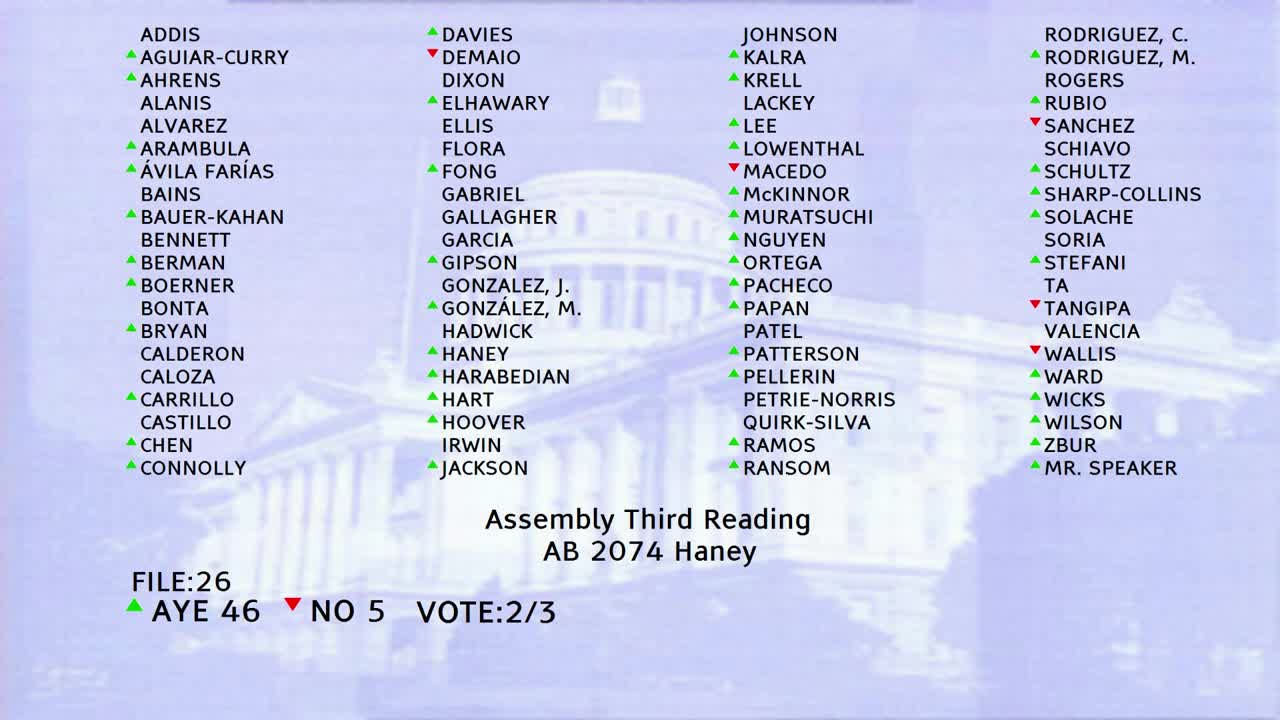
Bill Author