AB 2375: Alcoholic beverage control.
- Session Year: 2025-2026
- House: Assembly
- Latest Version Date: 2026-09-20
Current Status:
Passed
(2026-09-20: Chaptered by Secretary of State - Chapter 396, Statutes of 2026.)
Introduced
In Committee
Awaiting First Chamber Vote
Passed First Chamber
In Committee
Awaiting Second Chamber Vote
Passed Second Chamber
Enacted
Existing law, the Alcoholic Beverage Control Act, which is administered by the Department of Alcoholic Beverage Control, regulates the application, issuance, and suspension of alcoholic beverage licenses and generally makes a violation of the act a misdemeanor. Existing law defines beer for purposes of the Alcoholic Beverage Control Act as any alcoholic beverage obtained by the fermentation of any infusion or decoction of barley, malt, hops, or any other similar product, or any combination thereof in water, as specified.
This bill would revise the definition of beer for purposes of the act to provide that beer may be produced using other grain and to specify that fermentation occurs in drinkable water.
Existing law requires specified licensees who sold and delivered alcoholic beverages to a retailer and did not receive payment within 42 days of the date of delivery to charge 1% of the unpaid balance on the 43rd day and an additional 1% for each subsequent 30-day period.
This bill would instead require the above-described licensees to charge 1% of the unpaid balance on the 32nd day after 30 days without payment and an additional 1% for each subsequent 30-day period. The bill would make other nonsubstantive and conforming changes. By expanding the scope of an existing crime, this bill would impose a state-mandated local program.
Existing law requires a payment from a licensed retailer to a licensed wholesaler for the delivery of alcoholic beverages to be made by electronic funds transfer (EFT) pursuant to certain conditions, except as specified. Among other things, existing law requires the wholesaler to initiate the EFT and requires any service fees related to the EFT to be applied in an equitable manner. Existing law also provides for the selection of the third-party payment processor used to facilitate the EFT, including requiring the use of the processor used by the parties on July 1, 2025, if the parties cannot agree on a processor, and if no processor was used as of July 1, 2025, requiring the wholesaler to select the processor.
This bill would revise and recast the above-described provisions to instead apply to the sale of alcoholic beverages. The bill would define initiate and equitable manner for these purposes. The bill would require the parties to either use the third-party payment processor used by the parties on July 1, 2025, or a payment processing service offered by a financial institution that held a deposit account of the licensed retailer on that date, and, if neither apply, would require the wholesaler to select the processor. The bill would make various other clarifying and nonsubstantive changes.
The California Constitution requires the state to reimburse local agencies and school districts for certain costs mandated by the state. Statutory provisions establish procedures for making that reimbursement.
This bill would provide that no reimbursement is required by this act for a specified reason.
Existing law, the Alcoholic Beverage Control Act, which is administered by the Department of Alcoholic Beverage Control, regulates the application, issuance, and suspension of alcoholic beverage licenses and generally makes a violation of the act a misdemeanor. Existing law defines beer for purposes of the Alcoholic Beverage Control Act as any alcoholic beverage obtained by the fermentation of any infusion or decoction of barley, malt, hops, or any other similar product, or any combination thereof in water, as specified.
This bill would revise the definition of beer for purposes of the act to provide that beer may be produced using other grain and to specify that fermentation occurs in drinkable water.
Existing law requires specified licensees who sold and delivered alcoholic beverages to a retailer and did not receive payment within 42 days of the date of delivery to charge 1% of the unpaid balance on the 43rd day and an additional 1% for each subsequent 30-day period.
This bill would instead require the above-described licensees to charge 1% of the unpaid balance after 30 days without payment and an additional 1% for each subsequent 30-day period. The bill would make other nonsubstantive and conforming changes. By expanding the scope of an existing crime, this bill would impose a state-mandated local program.
Existing law requires a payment from a licensed retailer to a licensed wholesaler for the delivery of alcoholic beverages to be made by electronic funds transfer (EFT) pursuant to certain conditions, except as specified. Among other things, existing law requires the wholesaler to initiate the EFT and requires any service fees related to the EFT to be applied in an equitable manner. Existing law also provides for the selection of the third-party payment processor used to facilitate the EFT, including requiring the use of the processor used by the parties on July 1, 2025, if the parties cannot agree on a processor, and if no processor was used as of July 1, 2025, requiring the wholesaler to select the processor.
This bill would revise and recast the above-described provisions to instead apply to the sale of alcoholic beverages. The bill would define initiate and equitable manner for these purposes. The bill would require the parties to either use the third-party payment processor used by the parties on July 1, 2025, or a payment processing service offered by a financial institution that held a deposit account of the licensed retailer on that date, and, if neither apply, would require the wholesaler to select the processor. The bill would make various other clarifying and nonsubstantive changes.
The California Constitution requires the state to reimburse local agencies and school districts for certain costs mandated by the state. Statutory provisions establish procedures for making that reimbursement.
This bill would provide that no reimbursement is required by this act for a specified reason.
Existing law defines beer for purposes of the Alcoholic Beverage Control Act as any alcoholic beverage obtained by the fermentation of any infusion or decoction of barley, malt, hops, or any other similar product, or any combination thereof in water, as specified.
This bill would revise the definition of beer for purposes of the act to provide that beer may be produced using other grain and to specify that fermentation occurs in drinkable water.
Beer means any alcoholic beverage obtained by the fermentation of any infusion or decoction of barley, malt, hops, other grain, or any other similar product, or any combination of those products in drinkable water, and includes ale, porter, brown, stout, lager beer, small beer, and strong beer. The term does not include sake, known as Japanese rice wine. Beer may be produced using the following materials as adjuncts in fermentation: honey, fruit, fruit juice, fruit concentrate, herbs, spices, and other food materials. Beer aged in an empty wooden barrel previously used to contain wine or distilled spirits shall be defined exclusively as beer and shall not be considered a dilution or mixture of any other alcoholic beverage.
SEC. 2.Section 25509 of the Business and Professions Code is amended to read:25509.(a)For purposes of this section, supplier means a distilled spirits manufacturer, a brandy manufacturer, a beer manufacturer, a winegrower, a wine blender, a distilled spirits rectifier, a wine rectifier, a distilled spirits wholesaler, or a beer and wine wholesaler licensed under this division.
(b)A supplier who sold and delivered beer, wine, or distilled spirits to a licensed retailer and who did not receive payment for that beer, wine, or distilled spirits by the expiration of the 30th day from date of delivery shall charge the retailer 1 percent of the unpaid balance for that beer, wine, and distilled spirits on the 32nd day from date of delivery and an additional 1 percent for each 30 days thereafter.
(c)A supplier who sold and delivered beer, wine, or distilled spirits to a licensed retailer and who did not receive payment in full by the expiration of the 30th day from date of delivery or who has not received payment of the 1 percent charge at the expiration of the 30th day from the day the charge became due shall thereafter sell beer, wine, or distilled spirits to that licensed retailer by receiving payment in advance of delivery until such time as all payments are received for the beer, wine, or distilled spirits sold and delivered to that licensed retailer more than 30 days previously.
(d)The 30-day periods provided for in this section shall commence with the day immediately following the date of invoice and shall include all successive days including Sundays and holidays to and including the 30th day. When the 30th day from date of invoice or the expiration of each additional 30-day period falls on Saturday, Sunday, or legal holiday, the next business day shall be deemed to be the expiration day.
(e)All moneys received from a licensed retailer in payment for any beer, wine, or distilled spirits sold and delivered to them shall be first applied to the payment of the oldest balance on beer, wine, or distilled spirits. All checks received for such payments shall be deposited for collection not later than the second business day following receipt of said check. A promissory note, postdated check, or check dishonored on presentation shall not be deemed payment.
(f)In enacting this section, the Legislature finds that it is necessary and proper to remove the retailer from financial or business obligations to suppliers and to remove the incentivization of retailers by the use of favorable credit terms by the extension of credit beyond the terms contained in this section. The Legislature further finds that the exception established by this section to the general prohibition against tied interests shall be limited to its express terms so as not to undermine the general prohibition, and intends that this section shall be construed accordingly.
SEC. 3.Section 25509.1 of the Business and Professions Code is amended to read:25509.1.(a)Except as provided in subdivision (b) and paragraph (3) of subdivision (c), payment from a licensed retailer to a licensed wholesaler for the sale of beer, wine, or distilled spirits shall be made by electronic funds transfer in accordance with the following requirements:
(1)The wholesaler licensee shall initiate the electronic funds transfer.
(A)For purposes of this paragraph, initiate means presenting an invoice to the licensed retailer requiring the licensed retailer to make payment by electronic means.
(B)This paragraph does not prevent a licensed retailer from authorizing the licensed wholesaler to electronically withdraw funds directly from the licensed retailers bank account pursuant to the terms of an electronic funds transfer agreement between the licensed retailer and the licensed wholesaler if the authorization is voluntary and can be withdrawn by the licensed retailer through a written notice provided to the licensed wholesaler at least 72 hours before a scheduled electronic withdrawal.
(2)The electronic funds transfer shall be received by the licensed wholesaler no later than the end of the 30th day from the date of delivery of the beer, wine, or distilled spirits.
(3)Any costs related to electronic payment services shall be paid by the party that incurred those costs.
(A)Any service fees related to electronic payment transactions shall be applied in an equitable manner to each subscribing licensed wholesaler and licensed retailer. For purposes of this subparagraph, equitable manner means that the fees paid are for those services the paying party receives from the electronic payment service provider.
(B)The licensed wholesaler shall not pay, directly or indirectly, for electronic payment service fees incurred by a licensed retailer.
(C)The licensed retailer shall not pay, directly or indirectly, for electronic payment service fees incurred by a licensed wholesaler.
(b)A payment by a licensed retailer to a licensed wholesaler may be made using cash, check, or money order only in the following instances:
(1)If an electronic funds transfer is denied, rejected, or failed due to insufficient funds.
(2)If the licensed retailer holds an interim operating permit pursuant to Section 24044.5 or a temporary permit pursuant to Section 24045.5.
(3)During temporary service interruption of the third-party payment processor.
(4)During the first 30 days following the issuance of a license to the licensed retailer.
(c)(1)To maintain control of its ability to receive payment for delivery, a licensed wholesaler shall be responsible for selecting the third-party payment processor used to facilitate an electronic funds transfer pursuant to this section. The licensed wholesaler and licensed retailer may agree on the third-party payment processor. If the parties are unable to agree, the parties shall use the third-party payment processor used by the retailer as of July 1, 2025, or a payment processing service offered by a financial institution that held a deposit account of the licensed retailer as of July 1, 2025, to pay for wholesale alcohol purchases. If the licensed retailer did not use a third-party payment processor or a financial institution that offered a payment processing service as of July 1, 2025, the parties shall use the third-party payment processor selected by the licensed wholesaler.
(2)A licensed wholesaler shall not select a third-party payment processor that does not meet the requirements of this section or that requires more than 30 days notice from the licensed wholesaler to terminate the processors agreement with the licensed wholesaler.
(3)Notwithstanding subdivision (a), a licensed wholesaler may choose to accept credit card payments. If payment is made using a credit card, the licensed retailer shall bear the cost of the transaction, so as to mitigate the value of secondary benefits realized by the licensed retailer using the credit card.
(d)A licensed retailer shall not accept a rebate, incentive, or other thing of value from a third-party payment processor selected by a licensed wholesaler for a payment made pursuant to this section.
(e)For purposes of this section, electronic funds transfer or EFT means the electronic transfer of money from one bank account to another, either within a single financial institution or across multiple institutions, via computer-based systems.
SEC. 4.No reimbursement is required by this act pursuant to Section 6 of Article XIIIB of the California Constitution because the only costs that may be incurred by a local agency or school district will be incurred because this act creates a new crime or infraction, eliminates a crime or infraction, or changes the penalty for a crime or infraction, within the meaning of Section 17556 of the Government Code, or changes the definition of a crime within the meaning of Section 6 of Article XIIIB of the California Constitution.
Beer means any alcoholic beverage obtained by the fermentation of any infusion or decoction of barley, malt, hops, other grain, or any other similar product, or any combination of those products in drinkable water, and includes ale, porter, brown, stout, lager beer, small beer, and strong beer. The term does not include sake, known as Japanese rice wine. Beer may be produced using the following materials as adjuncts in fermentation: honey, fruit, fruit juice, fruit concentrate, herbs, spices, and other food materials. Beer aged in an empty wooden barrel previously used to contain wine or distilled spirits shall be defined exclusively as beer and shall not be considered a dilution or mixture of any other alcoholic beverage.
SEC. 2.Section 25509 of the Business and Professions Code is amended to read:25509.(a)For purposes of this section, supplier means a distilled spirits manufacturer, a brandy manufacturer, a beer manufacturer, a winegrower, a wine blender, a distilled spirits rectifier, a wine rectifier, a distilled spirits wholesaler, or a beer and wine wholesaler licensed under this division.
(b)A supplier who sold and delivered beer, wine, or distilled spirits to a licensed retailer and who did not receive payment for that beer, wine, or distilled spirits by the expiration of the 30th day from date of delivery shall charge the retailer 1 percent of the unpaid balance for that beer, wine, and distilled spirits on the 31st 32nd day from date of delivery and an additional 1 percent for each 30 days thereafter.
(c)A supplier who sold and delivered beer, wine, or distilled spirits to a licensed retailer and who did not receive payment in full by the expiration of the 30th day from date of delivery or who has not received payment of the 1 percent charge at the expiration of the 30th day from the day the charge became due shall thereafter sell beer, wine, or distilled spirits to that licensed retailer by receiving payment in advance of delivery until such time as all payments are received for the beer, wine, or distilled spirits sold and delivered to that licensed retailer more than 30 days previously.
(d)The 30-day periods provided for in this section shall commence with the day immediately following the date of invoice and shall include all successive days including Sundays and holidays to and including the 30th day. When the 30th day from date of invoice or the expiration of each additional 30-day period falls on Saturday, Sunday, or legal holiday, the next business day shall be deemed to be the expiration day.
(e)All moneys received from a licensed retailer in payment for any beer, wine, or distilled spirits sold and delivered to them shall be first applied to the payment of the oldest balance on beer, wine, or distilled spirits. All checks received for such payments shall be deposited for collection not later than the second business day following receipt of said check. A promissory note, postdated check, or check dishonored on presentation shall not be deemed payment.
(f)In enacting this section, the Legislature finds that it is necessary and proper to remove the retailer from financial or business obligations to suppliers and to remove the incentivization of retailers by the use of favorable credit terms by the extension of credit beyond the terms contained in this section. The Legislature further finds that the exception established by this section to the general prohibition against tied interests shall be limited to its express terms so as not to undermine the general prohibition, and intends that this section shall be construed accordingly.
SEC. 3.Section 25509.1 of the Business and Professions Code is amended to read:25509.1.(a)Except as provided in subdivision (b) and paragraph (3) of subdivision (c), payment from a licensed retailer to a licensed wholesaler for the sale of beer, wine, or distilled spirits shall be made by electronic funds transfer in accordance with the following requirements:
(1)The wholesaler licensee shall initiate the electronic funds transfer.
(A)For purposes of this paragraph, initiate means presenting an invoice to the licensed retailer requiring the licensed retailer to make payment by electronic means.
(B)This paragraph does not prevent a licensed retailer from authorizing the licensed wholesaler to electronically withdraw funds directly from the licensed retailers bank account pursuant to the terms of an electronic funds transfer agreement between the licensed retailer and the licensed wholesaler if the authorization is voluntary and can be withdrawn by the licensed retailer through a written notice provided to the licensed wholesaler at least 72 hours before a scheduled electronic withdrawal.
(2)The electronic funds transfer shall occur be received by the licensed wholesaler no later than the end of the 30th day from the date of delivery of the beer, wine, or distilled spirits.
(3)Any costs related to electronic payment services shall be paid by the party that incurred those costs.
(A)Any service fees related to electronic payment transactions shall be applied in an equitable manner to each subscribing licensed wholesaler and licensed retailer. For purposes of this subparagraph, equitable manner means that the fees paid are for those services the paying party receives from the electronic payment service provider.
(B)The licensed wholesaler shall not pay, directly or indirectly, for electronic payment service fees incurred by a licensed retailer.
(C)The licensed retailer shall not pay, directly or indirectly, for electronic payment service fees incurred by a licensed wholesaler.
(b)A payment by a licensed retailer to a licensed wholesaler may be made using cash, check, or money order only in the following instances:
(1)If an electronic funds transfer is denied, rejected, or failed due to insufficient funds.
(2)If the licensed retailer holds an interim operating permit pursuant to Section 24044.5 or a temporary permit pursuant to Section 24045.5.
(3)During temporary service interruption of the third-party payment processor.
(4)During the first 30 days following the issuance of a license to the licensed retailer.
(c)(1)To maintain control of its ability to receive payment for delivery, a licensed wholesaler shall be responsible for selecting the third-party payment processor used to facilitate an electronic funds transfer pursuant to this section. The licensed wholesaler and licensed retailer may agree on the third-party payment processor. If the parties are unable to agree, the parties shall use the third-party payment processor used by the retailer as of July 1, 2025, or a payment processing service offered by a financial institution that held a deposit account of the licensed retailer as of July 1, 2025, to pay for wholesale alcohol purchases. If the licensed retailer did not use a third-party payment processor or a financial institution that offered a payment processing service as of July 1, 2025, the parties shall use the third-party payment processor selected by the licensed wholesaler.
(2)A licensed wholesaler shall not select a third-party payment processor that does not meet the requirements of this section or that requires more than 30 days notice from the licensed wholesaler to terminate the processors agreement with the licensed wholesaler.
(3)Notwithstanding subdivision (a), a licensed wholesaler may choose to accept credit card payments. If payment is made using a credit card, the licensed retailer shall bear the cost of the transaction, so as to mitigate the value of secondary benefits realized by the licensed retailer using the credit card.
(d)A licensed retailer shall not accept a rebate, incentive, or other thing of value from a third-party payment processor selected by a licensed wholesaler for a payment made pursuant to this section.
(e)For purposes of this section, electronic funds transfer or EFT means the electronic transfer of money from one bank account to another, either within a single financial institution or across multiple institutions, via computer-based systems.
SEC. 4.No reimbursement is required by this act pursuant to Section 6 of Article XIIIB of the California Constitution because the only costs that may be incurred by a local agency or school district will be incurred because this act creates a new crime or infraction, eliminates a crime or infraction, or changes the penalty for a crime or infraction, within the meaning of Section 17556 of the Government Code, or changes the definition of a crime within the meaning of Section 6 of Article XIIIB of the California Constitution.
Beer means any alcoholic beverage obtained by the fermentation of any infusion or decoction of barley, malt, hops, other grain, or any other similar product, or any combination of those products in drinkable water, and includes ale, porter, brown, stout, lager beer, small beer, and strong beer. The term does not include sake, known as Japanese rice wine. Beer may be produced using the following materials as adjuncts in fermentation: honey, fruit, fruit juice, fruit concentrate, herbs, spices, and other food materials. Beer aged in an empty wooden barrel previously used to contain wine or distilled spirits shall be defined exclusively as beer and shall not be considered a dilution or mixture of any other alcoholic beverage.
SEC. 2.Section 25509 of the Business and Professions Code is amended to read:25509.(a)For purposes of this section, supplier means a distilled spirits manufacturer, a brandy manufacturer, a beer manufacturer, a winegrower, a wine blender, a distilled spirits rectifier, a wine rectifier, a distilled spirits wholesaler, or a beer and wine wholesaler licensed under this division.
(b)A supplier who sold and delivered beer, wine, or distilled spirits to a licensed retailer and who did not receive payment for that beer, wine, or distilled spirits by the expiration of the 30th day from date of delivery shall charge the retailer 1 percent of the unpaid balance for that beer, wine, and distilled spirits on the 31st day from date of delivery and an additional 1 percent for each 30 days thereafter.
(c)A supplier who sold and delivered beer, wine, or distilled spirits to a licensed retailer and who did not receive payment in full by the expiration of the 30th day from date of delivery or who has not received payment of the 1 percent charge at the expiration of the 30th day from the day the charge became due shall thereafter sell beer, wine, or distilled spirits to that licensed retailer by receiving payment in advance of delivery until such time as all payments are received for the beer, wine, or distilled spirits sold and delivered to that licensed retailer more than 30 days previously.
(d)The 30-day periods provided for in this section shall commence with the day immediately following the date of invoice and shall include all successive days including Sundays and holidays to and including the 30th day. When the 30th day from date of invoice or the expiration of each additional 30-day period falls on Saturday, Sunday, or legal holiday, the next business day shall be deemed to be the expiration day.
(e)All moneys received from a licensed retailer in payment for any beer, wine, or distilled spirits sold and delivered to them shall be first applied to the payment of the oldest balance on beer, wine, or distilled spirits. All checks received for such payments shall be deposited for collection not later than the second business day following receipt of said check. A promissory note, postdated check, or check dishonored on presentation shall not be deemed payment.
(f)In enacting this section, the Legislature finds that it is necessary and proper to remove the retailer from financial or business obligations to suppliers and to remove the incentivization of retailers by the use of favorable credit terms by the extension of credit beyond the terms contained in this section. The Legislature further finds that the exception established by this section to the general prohibition against tied interests shall be limited to its express terms so as not to undermine the general prohibition, and intends that this section shall be construed accordingly.
SEC. 3.Section 25509.1 of the Business and Professions Code is amended to read:25509.1.(a)Except as provided in subdivision (b) and paragraph (3) of subdivision (c), payment from a licensed retailer to a licensed wholesaler for the sale of beer, wine, or distilled spirits shall be made by electronic funds transfer in accordance with the following requirements:
(1)The wholesaler licensee shall initiate the electronic funds transfer.
(A)For purposes of this paragraph, initiate means presenting an invoice to the licensed retailer requiring the licensed retailer to make payment by electronic means.
(B)This paragraph does not prevent a licensed retailer from authorizing the licensed wholesaler to electronically withdraw funds directly from the licensed retailers bank account pursuant to the terms of an electronic funds transfer agreement between the licensed retailer and the licensed wholesaler if the authorization is voluntary and can be withdrawn by the licensed retailer through a written notice provided to the licensed wholesaler at least 24 72 hours before a scheduled electronic withdrawal.
(2)The electronic funds transfer shall occur no later than the end of the 30th day from the date of delivery of the beer, wine, or distilled spirits.
(3)Any costs related to electronic payment services shall be paid by the party that incurred those costs.
(A)Any service fees related to electronic payment transactions shall be applied in an equitable manner to each subscribing licensed wholesaler and licensed retailer. For purposes of this subparagraph, equitable manner means that the fees paid are for those services the paying party receives from the electronic payment service provider.
(B)The licensed wholesaler shall not pay, directly or indirectly, for electronic payment service fees incurred by a licensed retailer.
(C)The licensed retailer shall not pay, directly or indirectly, for electronic payment service fees incurred by a licensed wholesaler.
(b)A payment by a licensed retailer to a licensed wholesaler may be made using cash, check, or money order only in the following instances:
(1)If an electronic funds transfer is denied, rejected, or failed due to insufficient funds.
(2)If the licensed retailer holds an interim operating permit pursuant to Section 24044.5 or a temporary permit pursuant to Section 24045.5.
(3)During temporary service interruption of the third-party payment processor.
(4)During the first 30 days following the issuance of a license to the licensed retailer.
(c)(1)To maintain control of its ability to receive payment for delivery, a licensed wholesaler shall be responsible for selecting the third-party payment processor used to facilitate an electronic funds transfer pursuant to this section. The licensed wholesaler and licensed retailer may agree on the third-party payment processor. If the parties are unable to agree, the parties shall use the third-party payment processor used by the retailer as of July 1, 2025, or a payment processing service offered by a financial institution that held a deposit account of the licensed retailer as of July 1, 2025, to pay for wholesale alcohol purchases. If the licensed retailer did not use a third-party payment processor or a financial institution that offered a payment processing service as of July 1, 2025, the parties shall use the third-party payment processor selected by the licensed wholesaler.
(2)A licensed wholesaler shall not select a third-party payment processor that does not meet the requirements of this section or that requires more than 30 days notice from the licensed wholesaler to terminate the processors agreement with the licensed wholesaler.
(3)Notwithstanding subdivision (a), a licensed wholesaler may choose to accept credit card payments. If payment is made using a credit card, the licensed retailer shall bear the cost of the transaction, so as to mitigate the value of secondary benefits realized by the licensed retailer using the credit card.
(d)A licensed retailer shall not accept a rebate, incentive, or other thing of value from a third-party payment processor selected by a licensed wholesaler for a payment made pursuant to this section.
(e)For purposes of this section, electronic funds transfer or EFT means the electronic transfer of money from one bank account to another, either within a single financial institution or across multiple institutions, via computer-based systems.
SEC. 4.No reimbursement is required by this act pursuant to Section 6 of Article XIIIB of the California Constitution because the only costs that may be incurred by a local agency or school district will be incurred because this act creates a new crime or infraction, eliminates a crime or infraction, or changes the penalty for a crime or infraction, within the meaning of Section 17556 of the Government Code, or changes the definition of a crime within the meaning of Section 6 of Article XIIIB of the California Constitution.
Beer means any alcoholic beverage obtained by the fermentation of any infusion or decoction of barley, malt, hops, other grain, or any other similar product, or any combination of those products in drinkable water, and includes ale, porter, brown, stout, lager beer, small beer, and strong beer. The term does not include sake, known as Japanese rice wine. Beer may be produced using the following materials as adjuncts in fermentation: honey, fruit, fruit juice, fruit concentrate, herbs, spices, and other food materials. Beer aged in an empty wooden barrel previously used to contain wine or distilled spirits shall be defined exclusively as beer and shall not be considered a dilution or mixture of any other alcoholic beverage.
SEC. 2.Section 25509 of the Business and Professions Code is amended to read:25509.(a)A For purposes of this section, supplier means a distilled spirits manufacturer, a brandy manufacturer, a beer manufacturer, a winegrower, a wine blender, a distilled spirits rectifier, a wine rectifier, a distilled spirits wholesaler, or a beer and wine wholesaler who licensed under this division.
(b)A supplier who sold and delivered beer, wine, or distilled spirits to a licensed retailer and who did not receive payment for that beer, wine, or distilled spirits by the expiration of the 42nd 30th day from date of delivery shall charge the retailer 1 percent of the unpaid balance for that beer, wine, and distilled spirits on the 43rd 31st day from date of delivery and an additional 1 percent for each 30 days thereafter.
(b)(c)A distilled spirits manufacturer, a brandy manufacturer, a beer manufacturer, a winegrower, a wine blender, distilled spirits rectifier, a wine rectifier, distilled spirits wholesaler, or beer and wine wholesaler supplier who sold and delivered beer, wine, or distilled spirits to a licensed retailer and who did not receive payment in full by the expiration of the 30th day from date of delivery or who has not received payment of the 1 percent charge at the expiration of the 30th day from the day the charge became due shall thereafter sell beer, wine, or distilled spirits to that licensed retailer by receiving payment in advance of delivery until such time as all payments are received for the beer, wine, or distilled spirits sold and delivered to the said that licensed retailer more than 30 days previously.
(c)(d)The 42-day period and the 30-day period periods provided for in this section shall commence with the day immediately following the date of invoice and shall include all successive days including Sundays and holidays to and including the 42nd or 30th day as the case may be. day. When the 42nd 30th day from date of invoice or the expiration of each additional 30-day period falls on Saturday, Sunday, or legal holiday, the next business day shall be deemed to be the expiration day.
(d)(e)All moneys received from a licensed retailer in payment for any beer, wine, or distilled spirits sold and delivered to them shall be first applied to the payment of the oldest balance on beer, wine, or distilled spirits. All checks received for such payments shall be deposited for collection not later than the second business day following receipt of said check. A promissory note, postdated check, or check dishonored on presentation shall not be deemed payment.
(e)(f)In enacting the act that amends this section by adding this subdivision, this section, the Legislature finds that it is necessary and proper to remove the retailer from financial or business obligations to suppliers or wholesalers and to remove the incentivization of retailers by the use of favorable credit terms by the extension of credit beyond the terms contained in this section. The Legislature further finds that the exception established by this section to the general prohibition against tied interests shall be limited to its express terms so as not to undermine the general prohibition, and intends that this section shall be construed accordingly.
(f)This section shall become operative on January 1, 2026.SEC. 3.Section 25509.1 of the Business and Professions Code is amended to read:25509.1.(a)Commencing January 1, 2026, and except Except as provided in subdivision (b) and paragraph (3) of subdivision (c), payment from a retailer licensee licensed retailer to a wholesaler licensee licensed wholesaler for delivery the sale of beer, wine, or distilled spirits shall be made by electronic funds transfer in accordance with the following requirements:
(1)The wholesaler licensee shall initiate the electronic funds transfer by initiating the withdrawal of funds from the retailer licensees bank account. transfer.
(A)For purposes of this paragraph, initiate means presenting an invoice to the licensed retailer requiring the licensed retailer to make payment by electronic means.
(B)This paragraph does not prevent a licensed retailer from authorizing the licensed wholesaler to electronically withdraw funds directly from the licensed retailers bank account pursuant to the terms of an electronic funds transfer agreement between the licensed retailer and the licensed wholesaler if the authorization is voluntary and can be withdrawn by the licensed retailer through a written notice provided to the licensed wholesaler at least 24 hours before a scheduled electronic withdrawal.
(2)The electronic funds transfer shall occur by the expiration of no later than the end of the 30th day from the date of delivery of the beer, wine, or distilled spirits.
(3)Any costs related to electronic payment services shall be paid by the party that incurred those costs.
(A)Any service fees related to electronic payment transactions shall be applied in an equitable manner to each subscribing licensed wholesaler and retailer and shall justifiably match the services they receive from the electronic payment service provider. licensed retailer. For purposes of this subparagraph, equitable manner means that the fees paid are for those services the paying party receives from the electronic payment service provider.
(B)The licensed wholesaler shall not pay, directly or indirectly, for electronic payment service fees incurred by a licensed retailer.
(C)The licensed retailer shall not pay, directly or indirectly, for electronic payment service fees incurred by a licensed wholesaler.
(b)A payment by a licensed retailer to a licensed wholesaler may be made using cash, check, or money order only in the following instances:
(1)If accepting payment following an electronic funds transfer of is denied, rejected, or failed due to insufficient funds.
(2)If the retailer licensee licensed retailer holds an interim operating permit pursuant to Section 24044.5 or a temporary permit pursuant to Section 24045.5.
(3)During temporary service interruption of the third-party payment processor.
(4)During the first 30 days following the issuance of a license to the retailer licensee. licensed retailer.
(c)(1)To maintain control of its ability to receive payment for delivery, a wholesaler licensee licensed wholesaler shall be responsible for selecting the third-party payment processor used to facilitate an electronic funds transfer pursuant to this section. The licensed wholesaler and licensed retailer may agree on the third-party payment processor. If the parties are unable to agree, the parties shall use the third-party payment processor used by the retailer as of July 1, 2025, or a payment processing service offered by a financial institution that held a deposit account of the licensed retailer as of July 1, 2025, to pay for wholesale alcohol purchases. If by the licensed retailer did not use a third-party payment processor or a financial institution that offered a payment processing service as of July 1, 2025, the retailer does not use a third-party payment processor, the parties shall use the third-party payment processor selected by the licensed wholesaler.
(2)A wholesaler licensee licensed wholesaler shall not select a third-party payment processor that does not meet the requirements of this section or that requires more than 30 days notice from the wholesaler licensee licensed wholesaler to terminate the processors agreement with the wholesaler licensee. licensed wholesaler.
(3)Notwithstanding subdivision (a), a licensed wholesaler may choose to accept credit card payments. If payment is made using a credit card, the licensed retailer shall bear the cost of the transaction, so as to mitigate the value of secondary benefits realized by the licensed retailer using the credit card.
(d)A licensed retailer shall not accept a rebate, incentive, or other thing of value from a third-party payment processor selected by a licensed wholesaler for a payment made pursuant to this section.
(e)For purposes of this section, electronic funds transfer or EFT means the electronic transfer of money from one bank account to another, either within a single financial institution or across multiple institutions, via computer-based systems.
SEC. 4.No reimbursement is required by this act pursuant to Section 6 of Article XIIIB of the California Constitution because the only costs that may be incurred by a local agency or school district will be incurred because this act creates a new crime or infraction, eliminates a crime or infraction, or changes the penalty for a crime or infraction, within the meaning of Section 17556 of the Government Code, or changes the definition of a crime within the meaning of Section 6 of Article XIIIB of the California Constitution.
Beer means any alcoholic beverage obtained by the fermentation of any infusion or decoction of barley, malt, hops, other grain, or any other similar product, or any combination thereof of those products in drinkable water, and includes ale, porter, brown, stout, lager beer, small beer, and strong beer, but beer. The term does not include sake, known as Japanese rice wine. Beer may be produced using the following materials as adjuncts in fermentation: honey, fruit, fruit juice, fruit concentrate, herbs, spices, and other food materials. Beer aged in an empty wooden barrel previously used to contain wine or distilled spirits shall be defined exclusively as beer and shall not be considered a dilution or mixture of any other alcoholic beverage.
|
Date
|
Status
|
|---|---|
| Sep 20, 2026 | Chaptered by Secretary of State - Chapter 396, Statutes of 2026. |
| Sep 20, 2026 | Approved by the Governor. |
| Sep 8, 2026 | Enrolled and presented to the Governor at 3:30 p.m. |
| Aug 28, 2026 | Senate amendments concurred in. To Engrossing and Enrolling. (Ayes 78. Noes 0. Page 6812.). |
| Aug 28, 2026 | Senate amendments concurred in. To Engrossing and Enrolling. (Ayes 78. Noes 0.). |
| Aug 27, 2026 | In Assembly. Concurrence in Senate amendments pending. |
| Aug 27, 2026 | Read third time. Passed. Ordered to the Assembly. (Ayes 40. Noes 0. Page 6033.). |
| Aug 27, 2026 | Read third time. Passed. Ordered to the Assembly. (Ayes 40. Noes 0.). |
| Aug 24, 2026 | Read second time. Ordered to third reading. |
| Aug 20, 2026 | Read third time and amended. Ordered to second reading. |
| Aug 20, 2026 | Ordered to third reading. |
| Aug 20, 2026 | Action rescinded whereby the bill was read third time, passed, and to Assembly. |
| Aug 13, 2026 | In Senate. Held at Desk. |
| Aug 13, 2026 | Ordered to the Senate. |
| Aug 11, 2026 | In Assembly. Concurrence in Senate amendments pending. |
| Aug 10, 2026 | Read third time. Passed. Ordered to the Assembly. (Ayes 39. Noes 0. Page 5323.). |
| Aug 10, 2026 | Read third time. Passed. Ordered to the Assembly. (Ayes 39. Noes 0.). |
| Aug 4, 2026 | Read second time. Ordered to Consent Calendar. |
| Aug 3, 2026 | From committee: Be ordered to second reading file pursuant to Senate Rule 28.8 and ordered to Consent Calendar. |
| Jun 23, 2026 | From committee: Do pass and re-refer to Com. on APPR. with recommendation: To Consent Calendar. (Ayes 14. Noes 0.) (June 23). Re-referred to Com. on APPR. |
| Jun 17, 2026 | From committee chair, with author's amendments: Amend, and re-refer to committee. Read second time, amended, and re-referred to Com. on G.O. |
| Jun 8, 2026 | From committee chair, with author's amendments: Amend, and re-refer to committee. Read second time, amended, and re-referred to Com. on G.O. |
| May 6, 2026 | Referred to Com. on G.O. |
| Apr 16, 2026 | In Senate. Read first time. To Com. on RLS. for assignment. |
| Apr 16, 2026 | Read third time. Passed. Ordered to the Senate. (Ayes 68. Noes 0. Page 4683.) |
| Apr 16, 2026 | Read third time. Passed. Ordered to the Senate. (Ayes 68. Noes 0.) |
| Apr 13, 2026 | Read second time. Ordered to Consent Calendar. |
| Apr 9, 2026 | From committee: Do pass. To Consent Calendar. (Ayes 22. Noes 0.) (April 8). |
| Mar 9, 2026 | Referred to Com. on G.O. |
| Feb 20, 2026 | From printer. May be heard in committee March 22. |
| Feb 19, 2026 | Read first time. To print. |
|
Date
|
Description
|
Location
|
Votes
|
|
|---|---|---|---|---|
| Aug 28, 2026 | AB 2375 Blanca Rubio Concurrence in Senate Amendments | Assembly Floor |
Passed |
|
| Aug 27, 2026 | Assembly 3rd Reading AB2375 Blanca Rubio By Rubio | Senate Floor |
Passed |
|
| Aug 10, 2026 | Consent Calendar 2nd AB2375 Blanca Rubio | Senate Floor |
Passed |
|
| Jun 23, 2026 | Do pass, but first be re-referred to the Committee on [Appropriations] with the recommendation: To Consent Calendar | Senate Standing Committee on Governmental Organization |
Passed |
|
| Apr 16, 2026 | AB 2375 Blanca Rubio Consent Calendar Second Day Regular Session | Assembly Floor |
Passed |
|
| Apr 8, 2026 | Do pass. To Consent Calendar. | Assembly Standing Committee on Governmental Organization |
Passed |
This list shows positions taken on this bill by organizations on the date displayed, which is linked to the original source.
Positions by individuals are not included.
|
Organization
|
Position
|
Date
|
|---|---|---|
| California Family Beer Distributors | ** Support | |
| California Restaurant Association | ** Support |
CONCURRENCE IN SENATE AMENDMENTS
CSA1 Bill Id:AB 2375
Author:(Blanca Rubio)
As Amended Ver:August 20, 2026
Majority vote
SUMMARY
This bill would revise and recast provisions in the Alcoholic Beverage Control Act (Act) that currently require electronic fund transfers (EFT) for retailer to wholesaler alcohol payments. Additionally, the bill revises the definition of "beer" for purposes of the Act to provide that beer may be produced using other grains.
Senate Amendments
- Revise and recast provisions in the Act related to the requirements of payment from a licensed retailer to a licensed wholesaler for the delivery of alcoholic beverages, to instead apply to the sale of alcoholic beverages.
- Require specified licensees who sold and delivered alcoholic beverages to a retailer and did not receive payment to charge 1% of the unpaid balance after 30 days without payment and an additional 1% for each subsequent 30-day period.
- Define "initiate," for specified provisions in the Act related to the requirement that a wholesaler licensee initiate the EFT, to mean presenting an invoice to the licensed retailer requiring the licensed retailer to make payment by electronic means.
- Provide, for specified provisions in the Act related to the requirement that a wholesaler licensee initiate the EFT, that that provision does not prevent a licensed retailer from authorizing the licensed wholesaler to electronically withdraw funds directly form the licensed retailer's bank account, if the authorization is voluntary and can be withdrawn by the licensed retailer through a written notice provided to the licensed wholesaler at least 72 hours before a scheduled electronic withdrawal.
- Define "equitable manner," for specified provisions in the Act related to the requirement that any service fees related to electronic payment transactions shall be applied in an equitable manner to each subscribing licensed wholesaler and licensed retailer, to mean that the fees paid are for those services the paying party receives from the electronic payment service provider.
- Require the licensed wholesaler and licensed retailer to either use the third-party payment processor used by the parties on July 1, 2025, or a payment processing service offered by a financial institution that held a deposit account of the licensed retailer on that date, and, if neither apply, would require the wholesaler to select the processor.
- Make technical and clarifying changes.
COMMENTS
Background.
In 2024, Governor Newsom signed AB 2991 (Valencia) Chapter426, Statutes of 2024 which required payments from retailer licensees to wholesaler licensees for alcoholic beverage deliveries to be made by an EFT in accordance with various requirements. These requirements included:
- The wholesaler must initiate the EFT through the withdrawal of funds from the retailer's bank account. Initiating an EFT withdrawal can include, but is not limited to, simply generating an invoice requesting payment.
- The EFT must occur by the expiration of the 30th day from the date of delivery.
- Any costs related to the electronic payment services must be paid by the party that incurred the costs. Wholesalers cannot pay for electronic payment fees incurred by a retailer, and a retailer cannot pay for electronic payment fees incurred by a wholesaler, and service fees must be applied in an equitable manner to the licensee to match the services they receive.
The bill designated the wholesaler license with the authority to select the third-party payment processor used to facilitate the EFT transfer. Notwithstanding, a wholesaler and retailer may agree on the third-party payment processor, but if the parties are unable to agree, they must use the third-party payment processor used by the retailer as of July 1, 2025, to pay for wholesale alcohol purchase; and, if by July 1, 2025, the retailer does not use a third-party payment processor, the parties must use the third-party payment processor selected by the wholesaler.
The bill provided specified exceptions for cash, check, or money order, including, but not limited to, temporary service interruptions of third-party payment processors, accepting payment following an EFT of insufficient funds, and others.
In addition, the bill gave wholesalers the ability to accept credit card payments in lieu of an EFT, so long as the retailer bears the cost of the transaction. The bill gave wholesalers' discretion to accept credit card payment. In April 2025, the Department of Alcoholic Beverage Control (ABC) issued an advisory alerting alcohol licensees of the new law and encouraged wholesalers and retailers to work together to ensure compliance with this new law.
Change Made by this Bill. Since the enactment of AB 2991 (Valencia) Chapter 426, Statutes of 2024), ABC has received complaints from retailers, largely stemming from confusion over specific provisions of that bill. This bill seeks to clarify and improve several of those provisions.
First, existing law requires EFT payment from a retailer to a wholesaler upon delivery of alcoholic beverages. This bill changes the triggering event from delivery to sale. Second, current law requires licensees who sell and deliver alcoholic beverages to a retailer and do not receive payment within 42 days of delivery to charge 1% of the unpaid balance on the 43rd day, plus an additional 1% for each subsequent 30-day period. This bill reduces that initial window to 30 days, with the same 1% monthly charge thereafter. The 42-day period originated in mid-20th century banking practice, when checks could be delayed in transit and a 12-day buffer was considered necessary. That rationale no longer applies in an era of electronic payments.
Additionally, the chaptered legislation required the wholesaler to "initiate" an electronic funds transfer, but the term generated significant confusion regarding its precise meaning. This bill addresses that ambiguity by defining "initiate" to mean presenting an invoice to the licensed retailer requiring the licensed retailer to make payment by electronic means. Similarly, the 2024 legislation required any service fees related to electronic payments to be applied equitably to wholesalers and retailers alike. This bill defines "equitable manner" to mean that the fees paid are for those services the paying party receives from the electronic payment service provider.
Finally, this bill clarifies that the requirement for wholesalers to initiate EFTs does not preclude a retailer from voluntarily authorizing a wholesaler to withdraw funds directly from the retailer's bank account under a mutual EFT agreement, provided the retailer may revoke that authorization by written notice to the wholesaler at least 72 hours before a scheduled electronic withdrawal.
Federal rule on beer flavoring. In 2006, the Department of the Treasury and its Alcohol and Tobacco Tax and Trade Bureau adopt as a final rule (Title 27, Code of Federal Regulations, Chapter 1, Section 25.15) that states, "Beer must be brewed from malt or from substitutes for malt. Only rice, grain of any kind, bran, glucose, sugar, and molasses are substitutes for malt. In addition, the following materials may be used as adjuncts in fermenting beer: honey, fruit, fruit juice, fruit concentrate, herbs, spices, and other food materials."
Using flavors in brewing. There are a number of methods of adding flavors to beer. These are not the flavors that are imparted naturally by the barley, malt, hops, yeast or other grain, but rather intentional additions such as fruits and spices that give a beer its uniqueness. Herbs, spices, or flavorings can be added before or after the boil. There are many other brewing sugars used in brewing beer besides barley. Any starch or sugar can be used as a fermentable adjunct in the making of beer.
There are basically two classes of fermentables that need consideration: sugars that can be fermented directly without any processing, which includes processed sugars, syrups, honey, fruits, and so on; and sugars that are locked up in starches or complex carbohydrates which require some form of processing to extract or convert the simple(r) sugars needed by the yeast.
This second class includes grains, roots, vegetables, and other ingredients that do not contain readily accessible sugars. During brewing, yeast—highly efficient at fermentation—uses enzymes to break down maltose in wort (the liquid extracted during the mashing stage of beer production) into simpler sugars that can be fermented. Fruit sugar, the most abundant naturally occurring source of fermentable sugar in nature, is not widely used in brewing. Although it is similar to glucose, its different structure makes it more difficult for yeast to ferment efficiently.
According to the Author
According to the author's office, "this bill makes technical and noncontroversial changes to the Act to further facilitate implementation of AB 2991 (2024), which authorized electronic payments between retailers and wholesalers for alcoholic beverage deliveries made by an EFT in accordance with various requirements. This bill conforms the statute's payment provisions to implementation guidance issued by ABC and clarifies that both 'push' (payer) and 'pull' (payee) electronic payment systems comply with statutory requirements. The amendments preserve the underlying objectives of the 2024 legislation and the tied-house credit laws by ensuring prompt payment and a level playing field, without permitting any unlawful extension of credit between the parties."
Furthermore, "traditionally, beer has been brewed using barley, malt, and hops. However, over thousands of years, brewers have experimented with a variety of adjunct ingredients to create unique and innovative beer styles that reflect both seasonal influences and regional traditions. This bill aims to update the Act by expanding the definition of beer to acknowledge this historical diversity while aligning with Federal regulations on beer flavoring. Additionally, it ensures that fermentation occurs in drinkable water."
Arguments in Support
According to the California Family Beer Distributors, "AB 2375 preserves the purpose of AB 2991 and California's tied-house credit laws – prompt payment and a level playing field, with no extension of unlawful credit – while giving retailers, wholesalers, and payment processors clear and consistent rules."
According to the California Restaurant Association, "AB 2375 ensures restaurants, bars, and other licensees are not subject to unexpected withdrawals – instead, this common-sense legislation ensures that all payments are not only made within a reasonable timeframe, but that proper protections remain in place so that suppliers are paid on time."
Arguments in Opposition
None on file.
FISCAL COMMENTS
According to the Senate Committee on Appropriations, pursuant to Senate Rule 28.8, negligible state costs.
VOTES:
ASM GOVERNMENTAL ORGANIZATION: 22-0-0
YES: Blanca Rubio, Davies, Alvarez, Berman, Bryan, Carrillo, Dixon, Fong, Gabriel, Gallagher, Gipson, Macedo, McKinnor, Nguyen, Pacheco, Ramos, Michelle Rodriguez, Solache, Soria, Ta, Valencia, Wallis
ASSEMBLY FLOOR: 68-0-12
YES: Addis, Aguiar-Curry, Ahrens, Alanis, Alvarez, Ávila Farías, Bains, Bauer-Kahan, Bennett, Boerner, Bryan, Calderon, Caloza, Carrillo, Castillo, Chen, Connolly, Davies, DeMaio, Elhawary, Ellis, Fong, Gabriel, Gallagher, Garcia, Gipson, Jeff Gonzalez, Mark González, Hadwick, Haney, Jackson, Johnson, Kalra, Krell, Lackey, Lee, Lowenthal, Macedo, McKinnor, Muratsuchi, Nguyen, Ortega, Pacheco, Patel, Patterson, Pellerin, Petrie-Norris, Quirk-Silva, Ramos, Ransom, Michelle Rodriguez, Rogers, Blanca Rubio, Sanchez, Schultz, Sharp-Collins, Solache, Soria, Stefani, Ta, Tangipa, Valencia, Wallis, Ward, Wicks, Wilson, Zbur, Rivas
ABS, ABST OR NV: Arambula, Berman, Bonta, Dixon, Flora, Harabedian, Hart, Hoover, Irwin, Papan, Celeste Rodriguez, Schiavo
SENATE FLOOR: 39-0-1
YES: Allen, Archuleta, Arreguín, Ashby, Becker, Blakespear, Cabaldon, Caballero, Cervantes, Choi, Cortese, Dahle, Durazo, Gonzalez, Grayson, Grove, Hurtado, Jones, Laird, Limón, McGuire, McNerney, Menjivar, Niello, Ochoa Bogh, Padilla, Pérez, Reyes, Richardson, Rubio, Seyarto, Smallwood-Cuevas, Stern, Strickland, Umberg, Valladares, Wahab, Weber Pierson, Wiener
ABS, ABST OR NV: Alvarado-Gil
UPDATED
VERSION: August 20, 2026
CONSULTANT: Eric Johnson / G.O. / (916) 319-2531 FN: 0004022
SENATE RULES COMMITTEE Office of Senate Floor Analyses (916) 651-4171 | AB 2375 |
THIRD READING
Bill No: AB 2375
Author: Blanca Rubio (D)
Amended: 8/20/26 in Senate
Vote: 21
SENATE GOVERNMENTAL ORG. COMMITTEE: 14-0, 6/23/26
AYES: Rubio, Valladares, Archuleta, Ashby, Blakespear, Cervantes, Dahle, Hurtado, Ochoa Bogh, Padilla, Richardson, Smallwood-Cuevas, Wahab, Weber Pierson
NO VOTE RECORDED: Alvarado-Gil
SENATE APPROPRIATIONS COMMITTEE: Senate Rule 28.8
SENATE FLOOR: 39-0, 8/10/26 (Consent)
AYES: Allen, Archuleta, Arreguín, Ashby, Becker, Blakespear, Cabaldon, Caballero, Cervantes, Choi, Cortese, Dahle, Durazo, Gonzalez, Grayson, Grove, Hurtado, Jones, Laird, Limón, McGuire, McNerney, Menjivar, Niello, Ochoa Bogh, Padilla, Pérez, Reyes, Richardson, Rubio, Seyarto, Smallwood-Cuevas, Stern, Strickland, Umberg, Valladares, Wahab, Weber Pierson, Wiener
NO VOTE RECORDED: Alvarado-Gil
ASSEMBLY FLOOR: 68-0, 4/16/26 (Consent) - See last page for vote
SUBJECT: Alcoholic beverage control
SOURCE: Author
DIGEST: This bill revises and recasts provisions in the Alcoholic Beverage Control (ABC) Act that currently require electronic fund transfers (EFT) for retailer to wholesaler alcohol payments. This bill changes the requirement from delivery to sale, defines “initiate” and “equitable manner,” and expands processor options, as specified. Additionally, this bill revises the definition of “beer” for purposes of the ABC Act to provide that beer may be produced using other grains.
Senate floor amendments of 8/20/26 clarify that the requirement that the retailer pay the supplier a one percent charge after the 30th day from the day of the delivery shall made on the 32nd day rather than the 31st day from the date of the delivery.
ANALYSIS:
Existing law:
- Establishes the Department of ABC and grants it exclusive authority to administer the provisions of the ABC Act in accordance with laws enacted by the Legislature. This involves licensing individuals and businesses associated with the manufacture, importation, and sale of alcoholic beverages and the collection of license fees for this purpose.
- Defines “beer” to mean any alcoholic beverage obtained by the fermentation of any infusion or decoction of barley, malt, hops, or any other similar product, or any combination thereof in water, and includes ale, porter, brown, stout, lager beer, small beer, and strong beer, but does not include sake, known as Japanese rice wine. Beer may be produced using the following materials as adjuncts in fermentation: honey, fruit, fruit juice, fruit concentrate, herbs, spices, and other food materials. Beer aged in an empty wooden barrel previously used to contain wine or distilled spirits shall be defined exclusively as “beer” and shall not be considered a dilution or mixture of any other alcoholic beverage. (California Business and Professions Code [Cal. Bus. & Prof. Code] § 23006)
- Requires specified licensees who sold and delivered alcoholic beverages to a retailer and did not receive payment within 42 days of the date of delivery to charge 1% of the unpaid balance on the 43rd day and an additional 1% for each subsequent 30-day period.
- Requires a payment from a licensed retailer to a licensed wholesaler for the delivery of alcoholic beverages to be made by EFT pursuant to certain conditions, except as specified. Among other things, existing law requires the wholesaler to initiate the EFT and requires any service fees related to the EFT to be applied in an equitable manner. Existing law also provides for the selection of the third-party payment processor used to facilitate the EFT, as specified.
This bill:
- Revises and recasts provisions in the ABC Act related requirements of payment from a licensed retailer to a licensed wholesaler for the delivery of alcoholic beverages, to instead apply to the sale of alcoholic beverages.
- Requires specified licensees who sold and delivered alcoholic beverages to a retailer and did not receive payment to charge 1% of the unpaid balance after 30 days without payment and an additional 1% for each subsequent 30-day period. Under current law, the 1% charge begins after 42 days.
- Defines “initiate,” for specified provisions in the ABC Act related to the requirement that a wholesaler licensee initiate the EFT, to mean presenting an invoice to the licensed retailer requiring the licensed retailer to make payment by electronic means.
- Provides, for specified provisions in the ABC Act related to the requirement that a wholesaler licensee initiate the EFT, that that provision does not prevent a licensed retailer from authorizing the licensed wholesaler to electronically withdraw funds directly form the licensed retailer’s bank account, if the authorization is voluntary and can be withdrawn by the licensed retailer through a written notice provided to the licensed wholesaler at least 72 hours before a scheduled electronic withdrawal.
- Defines “equitable manner,” for specified provisions in the ABC Act related to the requirement that any service fees related to electronic payment transactions shall be applied in an equitable manner to each subscribing licensed wholesaler and licensed retailer, to mean that the fees paid are for those services the paying party receives from the electronic payment service provider.
- Requires the licensed wholesaler and licensed retailer to either use the third-party payment processor used by the parties on July 1, 2025, or a payment processing service offered by a financial institution that held a deposit account of the licensed retailer on that date, and, if neither apply, would require the wholesaler to select the processor.
- Revises the definition of “beer” for purposes of the ABC Act to provide that beer may be produced using other grain and to specify that fermentation occurs in drinkable water.
Background
Author Statement. According to the author’s office, “this bill makes technical and noncontroversial changes to the Act to further facilitate implementation of AB 2991 (2024), which authorized electronic payments between retailers and wholesalers for alcoholic beverage deliveries made by an EFT in accordance with various requirements. AB 2375 conforms the statute’s payment provisions to implementation guidance issued by the Department of ABC and clarifies that both ‘push’ (payer) and ‘pull’ (payee) electronic payment systems comply with statutory requirements. The amendments preserve the underlying objectives of the 2024 legislation and the tied-house credit laws by ensuring prompt payment and a level playing field, without permitting any unlawful extension of credit between the parties.”
Furthermore, “traditionally, beer has been brewed using barley, malt, and hops. However, over thousands of years, brewers have experimented with a variety of adjunct ingredients to create unique and innovative beer styles that reflect both seasonal influences and regional traditions. This bill aims to update the ABC Act by expanding the definition of beer to acknowledge this historical diversity while aligning with Federal regulations on beer flavoring. Additionally, it ensures that fermentation occurs in drinkable water.”
AB 2991 (Valencia, Chapter 426, Statutes of 2024). In 2024, Governor Newsom signed AB 2991 (Valencia, Chapter 426, Statutes of 2024) which requires payments from retailer licensees to wholesaler licensees for alcoholic beverage deliveries to be made by an EFT in accordance with various requirements. These requirements included:
- The wholesaler must initiate the EFT through the withdrawal of funds from the retailer’s bank account. Initiating an EFT withdrawal can include, but is not limited to, simply generating an invoice requesting payment.
- The EFT must occur by the expiration of the 30th day from the date of delivery.
- Any costs related to the electronic payment services must be paid by the party that incurred the costs. Wholesalers cannot pay for electronic payment fees incurred by a retailer, and a retailer cannot pay for electronic payment fees incurred by a wholesaler, and service fees must be applied in an equitable manner to the licensee to match the services they receive.
The bill designated the wholesaler license with the authority to select the third-party payment processor used to facilitate the EFT transfer. Notwithstanding, a wholesaler and retailer may agree on the third-party payment processor, but if the parties are unable to agree, they must use the third-party payment processor used by the retailer as of July 1, 2025, to pay for wholesale alcohol purchase; and, if by July 1, 2025, the retailer does not use a third-party payment processor, the parties must use the third-party payment processor selected by the wholesaler.
The bill provided specified exceptions for cash, check, or money order, including, but not limited to, temporary service interruptions of third-party payment processors, accepting payment following an EFT of insufficient funds, and others.
In addition, the bill gave wholesalers the ability to accept credit card payments in lieu of an EFT, so long as the retailer bears the cost of the transaction. The bill gave wholesalers’ discretion to accept credit card payment. In April 2025, the Department of ABC issued an advisory alerting alcohol licensees of the new law and encouraged wholesalers and retailers to work together to ensure compliance with this new law.
Change Made by this Bill. Since the enactment of AB 2991 (Valencia, Chapter 426, Statutes of 2024) the Department of ABC has received numerous complaints from retailers, largely stemming from confusion over specific provisions of that bill. This bill seeks to clarify and improve several of those provisions.
First, existing law requires EFT payment from a retailer to a wholesaler upon delivery of alcoholic beverages. This bill changes the triggering event from delivery to sale. Second, current law requires licensees who sell and deliver alcoholic beverages to a retailer and do not receive payment within 42 days of delivery to charge 1% of the unpaid balance on the 43rd day, plus an additional 1% for each subsequent 30-day period. This bill reduces that initial window to 30 days, with the same 1% monthly charge thereafter. The 42-day period originated in mid-20th century banking practice, when checks could be delayed in transit and a 12-day buffer was considered necessary. That rationale no longer applies in an era of electronic payments.
Additionally, AB 2991 requires the wholesaler to "initiate" an electronic funds transfer, but the term generated significant confusion regarding its precise meaning. This bill addresses that ambiguity by defining “initiate” to mean presenting an invoice to the licensed retailer requiring the licensed retailer to make payment by electronic means. Similarly, AB 2991 requires any service fees related to electronic payments to be applied equitably to wholesalers and retailers alike. This bill defines “equitable manner” to mean that the fees paid are for those services the paying party receives from the electronic payment service provider.
Finally, this bill clarifies that the requirement for wholesalers to initiate EFTs does not preclude a retailer from voluntarily authorizing a wholesaler to withdraw funds directly from the retailer's bank account under a mutual EFT agreement, provided the retailer may revoke that authorization by written notice to the wholesaler at least 72 hours before scheduled withdrawal.
Adding Flavors to Brewing. Beer flavor enhancement encompasses a wide range of techniques beyond the naturally occurring characteristics imparted by barley, malt, hops, yeast, and other grains. Brewers may deliberately introduce ingredients such as fruits, herbs, spices, and other flavorings — either before or after the boil — to lend a beer its distinctive character. Similarly, a diverse array of fermentable adjuncts beyond barley may be incorporated into the brewing process, as virtually any starch or sugar is capable of serving as a fermentable base.
Fermentable ingredients generally fall into two broad categories. The first encompasses sugars that are readily available for fermentation without additional processing, including refined sugars, syrups, honey, and fruits. The second comprises sugars that are bound within starches or complex carbohydrates — such as grains, roots, and vegetables — and require processing to release the simpler sugars necessary for yeast activity.
In the latter case, yeast relies on enzymatic activity to break down maltose present in the wort — the liquid extracted during mashing — into fermentable simple sugars. Fructose, though the most abundant naturally occurring fermentable sugar, sees comparatively limited use in brewing. Despite its structural similarity to glucose, its distinct molecular configuration renders it less amenable to efficient yeast fermentation.
Related/Prior Legislation
AB 1940 (Villapudua, Chapter 218, Statutes of 2024) allows a wholesaler or manufacturer to accept the return of a seasonal brand of beer from a retail licensee if the beer is exchanged for a quantity of beer of similar quality, if the original manufacturer has ceased doing business.
AB 2991 (Valencia, Chapter 426, Statutes of 2024) required, commencing on January 1, 2026, a payment by an alcohol retail licensee to a wholesaler licensee for the delivery of beer, wine, or distilled spirits, to be made by EFT, except as specified.
AB 205 (Daly, Chapter 60, Statutes of 2019) revised the definition of "beer" for purposes of the ABC Act to provide that beer may be produced using honey, fruit juice, fruit concentrate, herbs, spices, and other food materials, as adjuncts in fermentation.
AB 1812 (Chesbro, Chapter 96, Statutes of 2012) added clarity to the definition of “beer” in the ABC Act by making it explicit that beer aged in an empty wooden barrel previously used to contain wine or distilled spirits shall be defined exclusively as “beer” and shall not be considered a dilution or mixture of any other alcoholic beverage.
SB 39 (Padilla, Chapter 140, Statutes of 2011) prohibits the import, production, manufacture, distribution, or sale of beer to which caffeine has been directly added as a separate ingredient at retail locations within the state.
AB 346 (Beall, Chapter 624, Statutes of 2008) provides that any container of beer or alcoholic beverage, other than sake, that is approved for labeling as a malt beverage under the Federal Alcohol Administration Act, that derives 0.5% or more of its alcoholic content by volume from flavors or other ingredients containing distilled alcohol and that is sold within this state on or after July 1, 2009, shall bear a distinctive, conspicuous, and prominently displayed label, or firmly affixed sticker, as defined.
FISCAL EFFECT: Appropriation: No Fiscal Com.: Yes Local: Yes
According to the Senate Appropriations Committee, staff notes that the Department of ABC’s activities are funded by regulatory and license fees and generally the department does not receive support from the General Fund. New legislative mandates, although modest in scope, may in totality create new cost pressures and impact the department’s operating costs and future budget requests.
SUPPORT: (Verified 8/18/26)
California Restaurant Association
California Family Beer Distributors
OPPOSITION: (Verified 8/18/26)
None received
ARGUMENTS IN SUPPORT: According to the California Family Beer Distributors, “AB 2375 preserves the purpose of AB 2991 and California’s tied-house credit laws – prompt payment and a level playing field, with no extension of unlawful credit – while giving retailers, wholesalers, and payment processors clear and consistent rules.” According to the California Restaurant Association, “AB 2375 ensures restaurants, bars, and other licensees are not subject to unexpected withdrawals – instead, this common-sense legislation ensures that all payments are not only made within a reasonable time-frame, but that proper protections remain in place so that suppliers are paid on time.”
ASSEMBLY FLOOR: 68-0, 4/16/26
AYES: Addis, Aguiar-Curry, Ahrens, Alanis, Alvarez, Ávila Farías, Bains, Bauer-Kahan, Bennett, Boerner, Bryan, Calderon, Caloza, Carrillo, Castillo, Chen, Connolly, Davies, DeMaio, Elhawary, Ellis, Fong, Gabriel, Gallagher, Garcia, Gipson, Jeff Gonzalez, Mark González, Hadwick, Haney, Jackson, Johnson, Kalra, Krell, Lackey, Lee, Lowenthal, Macedo, McKinnor, Muratsuchi, Nguyen, Ortega, Pacheco, Patel, Patterson, Pellerin, Petrie-Norris, Quirk-Silva, Ramos, Ransom, Michelle Rodriguez, Rogers, Blanca Rubio, Sanchez, Schultz, Sharp-Collins, Solache, Soria, Stefani, Ta, Tangipa, Valencia, Wallis, Ward, Wicks, Wilson, Zbur, Rivas
NO VOTE RECORDED: Arambula, Berman, Bonta, Dixon, Flora, Harabedian, Hart, Hoover, Irwin, Papan, Celeste Rodriguez, Schiavo
Prepared by: Felipe Lopez / G.O. / (916) 651-1530
8/24/26 14:05:37
**** END ****
SENATE RULES COMMITTEE Office of Senate Floor Analyses (916) 651-4171 | AB 2375 |
CONSENT
Bill No: AB 2375
Author: Blanca Rubio (D)
Amended: 6/17/26 in Senate
Vote: 21
SENATE GOVERNMENTAL ORG. COMMITTEE: 14-0, 6/23/26
AYES: Rubio, Valladares, Archuleta, Ashby, Blakespear, Cervantes, Dahle, Hurtado, Ochoa Bogh, Padilla, Richardson, Smallwood-Cuevas, Wahab, Weber Pierson
NO VOTE RECORDED: Alvarado-Gil
SENATE APPROPRIATIONS COMMITTEE: Senate Rule 28.8
ASSEMBLY FLOOR: 68-0, 4/16/26 (Consent) - See last page for vote
SUBJECT: Alcoholic beverage control
SOURCE: Author
DIGEST: This bill revises and recasts provisions in the Alcoholic Beverage Control (ABC) Act that currently require electronic fund transfers (EFT) for retailer to wholesaler alcohol payments. This bill changes the requirement from delivery to sale, defines “initiate” and “equitable manner,” and expands processor options, as specified. Additionally, this bill revises the definition of “beer” for purposes of the ABC Act to provide that beer may be produced using other grains.
ANALYSIS:
Existing law:
- Establishes the Department of ABC and grants it exclusive authority to administer the provisions of the ABC Act in accordance with laws enacted by the Legislature. This involves licensing individuals and businesses associated with the manufacture, importation, and sale of alcoholic beverages and the collection of license fees for this purpose.
- Defines “beer” to mean any alcoholic beverage obtained by the fermentation of any infusion or decoction of barley, malt, hops, or any other similar product, or any combination thereof in water, and includes ale, porter, brown, stout, lager beer, small beer, and strong beer, but does not include sake, known as Japanese rice wine. Beer may be produced using the following materials as adjuncts in fermentation: honey, fruit, fruit juice, fruit concentrate, herbs, spices, and other food materials. Beer aged in an empty wooden barrel previously used to contain wine or distilled spirits shall be defined exclusively as “beer” and shall not be considered a dilution or mixture of any other alcoholic beverage. (California Business and Professions Code [Cal. Bus. & Prof. Code] § 23006)
- Requires specified licensees who sold and delivered alcoholic beverages to a retailer and did not receive payment within 42 days of the date of delivery to charge 1% of the unpaid balance on the 43rd day and an additional 1% for each subsequent 30-day period.
- Requires a payment from a licensed retailer to a licensed wholesaler for the delivery of alcoholic beverages to be made by EFT pursuant to certain conditions, except as specified. Among other things, existing law requires the wholesaler to initiate the EFT and requires any service fees related to the EFT to be applied in an equitable manner. Existing law also provides for the selection of the third-party payment processor used to facilitate the EFT, as specified.
This bill:
- Revises and recasts provisions in the ABC Act related requirements of payment from a licensed retailer to a licensed wholesaler for the delivery of alcoholic beverages, to instead apply to the sale of alcoholic beverages.
- Requires specified licensees who sold and delivered alcoholic beverages to a retailer and did not receive payment to charge 1% of the unpaid balance after 30 days without payment and an additional 1% for each subsequent 30-day period. Under current law, the 1% charge begins after 42 days.
- Defines “initiate,” for specified provisions in the ABC Act related to the requirement that a wholesaler licensee initiate the EFT, to mean presenting an invoice to the licensed retailer requiring the licensed retailer to make payment by electronic means.
- Provides, for specified provisions in the ABC Act related to the requirement that a wholesaler licensee initiate the EFT, that that provision does not prevent a licensed retailer from authorizing the licensed wholesaler to electronically withdraw funds directly form the licensed retailer’s bank account, if the authorization is voluntary and can be withdrawn by the licensed retailer through a written notice provided to the licensed wholesaler at least 72 hours before a scheduled electronic withdrawal.
- Defines “equitable manner,” for specified provisions in the ABC Act related to the requirement that any service fees related to electronic payment transactions shall be applied in an equitable manner to each subscribing licensed wholesaler and licensed retailer, to mean that the fees paid are for those services the paying party receives from the electronic payment service provider.
- Requires the licensed wholesaler and licensed retailer to either use the third-party payment processor used by the parties on July 1, 2025, or a payment processing service offered by a financial institution that held a deposit account of the licensed retailer on that date, and, if neither apply, would require the wholesaler to select the processor.
- Revises the definition of “beer” for purposes of the ABC Act to provide that beer may be produced using other grain and to specify that fermentation occurs in drinkable water.
Background
Author Statement. According to the author’s office, “this bill makes technical and noncontroversial changes to the Act to further facilitate implementation of AB 2991 (2024), which authorized electronic payments between retailers and wholesalers for alcoholic beverage deliveries made by an EFT in accordance with various requirements. AB 2375 conforms the statute’s payment provisions to implementation guidance issued by the Department of ABC and clarifies that both ‘push’ (payer) and ‘pull’ (payee) electronic payment systems comply with statutory requirements. The amendments preserve the underlying objectives of the 2024 legislation and the tied-house credit laws by ensuring prompt payment and a level playing field, without permitting any unlawful extension of credit between the parties.”
Furthermore, “traditionally, beer has been brewed using barley, malt, and hops. However, over thousands of years, brewers have experimented with a variety of adjunct ingredients to create unique and innovative beer styles that reflect both seasonal influences and regional traditions. This bill aims to update the ABC Act by expanding the definition of beer to acknowledge this historical diversity while aligning with Federal regulations on beer flavoring. Additionally, it ensures that fermentation occurs in drinkable water.”
AB 2991 (Valencia, Chapter 426, Statutes of 2024). In 2024, Governor Newsom signed AB 2991 (Valencia, Chapter 426, Statutes of 2024) which requires payments from retailer licensees to wholesaler licensees for alcoholic beverage deliveries to be made by an EFT in accordance with various requirements. These requirements included:
- The wholesaler must initiate the EFT through the withdrawal of funds from the retailer’s bank account. Initiating an EFT withdrawal can include, but is not limited to, simply generating an invoice requesting payment.
- The EFT must occur by the expiration of the 30th day from the date of delivery.
- Any costs related to the electronic payment services must be paid by the party that incurred the costs. Wholesalers cannot pay for electronic payment fees incurred by a retailer, and a retailer cannot pay for electronic payment fees incurred by a wholesaler, and service fees must be applied in an equitable manner to the licensee to match the services they receive.
The bill designated the wholesaler license with the authority to select the third-party payment processor used to facilitate the EFT transfer. Notwithstanding, a wholesaler and retailer may agree on the third-party payment processor, but if the parties are unable to agree, they must use the third-party payment processor used by the retailer as of July 1, 2025, to pay for wholesale alcohol purchase; and, if by July 1, 2025, the retailer does not use a third-party payment processor, the parties must use the third-party payment processor selected by the wholesaler.
The bill provided specified exceptions for cash, check, or money order, including, but not limited to, temporary service interruptions of third-party payment processors, accepting payment following an EFT of insufficient funds, and others.
In addition, the bill gave wholesalers the ability to accept credit card payments in lieu of an EFT, so long as the retailer bears the cost of the transaction. The bill gave wholesalers’ discretion to accept credit card payment. In April 2025, the Department of ABC issued an advisory alerting alcohol licensees of the new law and encouraged wholesalers and retailers to work together to ensure compliance with this new law.
Change Made by this Bill. Since the enactment of AB 2991 (Valencia, Chapter 426, Statutes of 2024) the Department of ABC has received numerous complaints from retailers, largely stemming from confusion over specific provisions of that bill. This bill seeks to clarify and improve several of those provisions.
First, existing law requires EFT payment from a retailer to a wholesaler upon delivery of alcoholic beverages. This bill changes the triggering event from delivery to sale. Second, current law requires licensees who sell and deliver alcoholic beverages to a retailer and do not receive payment within 42 days of delivery to charge 1% of the unpaid balance on the 43rd day, plus an additional 1% for each subsequent 30-day period. This bill reduces that initial window to 30 days, with the same 1% monthly charge thereafter. The 42-day period originated in mid-20th century banking practice, when checks could be delayed in transit and a 12-day buffer was considered necessary. That rationale no longer applies in an era of electronic payments.
Additionally, AB 2991 requires the wholesaler to "initiate" an electronic funds transfer, but the term generated significant confusion regarding its precise meaning. This bill addresses that ambiguity by defining “initiate” to mean presenting an invoice to the licensed retailer requiring the licensed retailer to make payment by electronic means. Similarly, AB 2991 requires any service fees related to electronic payments to be applied equitably to wholesalers and retailers alike. This bill defines “equitable manner” to mean that the fees paid are for those services the paying party receives from the electronic payment service provider.
Finally, this bill clarifies that the requirement for wholesalers to initiate EFTs does not preclude a retailer from voluntarily authorizing a wholesaler to withdraw funds directly from the retailer's bank account under a mutual EFT agreement, provided the retailer may revoke that authorization by written notice to the wholesaler at least 72 hours before scheduled withdrawal.
Adding Flavors to Brewing. Beer flavor enhancement encompasses a wide range of techniques beyond the naturally occurring characteristics imparted by barley, malt, hops, yeast, and other grains. Brewers may deliberately introduce ingredients such as fruits, herbs, spices, and other flavorings — either before or after the boil — to lend a beer its distinctive character. Similarly, a diverse array of fermentable adjuncts beyond barley may be incorporated into the brewing process, as virtually any starch or sugar is capable of serving as a fermentable base.
Fermentable ingredients generally fall into two broad categories. The first encompasses sugars that are readily available for fermentation without additional processing, including refined sugars, syrups, honey, and fruits. The second comprises sugars that are bound within starches or complex carbohydrates — such as grains, roots, and vegetables — and require processing to release the simpler sugars necessary for yeast activity.
In the latter case, yeast relies on enzymatic activity to break down maltose present in the wort — the liquid extracted during mashing — into fermentable simple sugars. Fructose, though the most abundant naturally occurring fermentable sugar, sees comparatively limited use in brewing. Despite its structural similarity to glucose, its distinct molecular configuration renders it less amenable to efficient yeast fermentation.
Related/Prior Legislation
AB 1940 (Villapudua, Chapter 218, Statutes of 2024) allows a wholesaler or manufacturer to accept the return of a seasonal brand of beer from a retail licensee if the beer is exchanged for a quantity of beer of similar quality, if the original manufacturer has ceased doing business.
AB 2991 (Valencia, Chapter 426, Statutes of 2024) required, commencing on January 1, 2026, a payment by an alcohol retail licensee to a wholesaler licensee for the delivery of beer, wine, or distilled spirits, to be made by EFT, except as specified.
AB 205 (Daly, Chapter 60, Statutes of 2019) revised the definition of "beer" for purposes of the ABC Act to provide that beer may be produced using honey, fruit juice, fruit concentrate, herbs, spices, and other food materials, as adjuncts in fermentation.
AB 1812 (Chesbro, Chapter 96, Statutes of 2012) added clarity to the definition of “beer” in the ABC Act by making it explicit that beer aged in an empty wooden barrel previously used to contain wine or distilled spirits shall be defined exclusively as “beer” and shall not be considered a dilution or mixture of any other alcoholic beverage.
SB 39 (Padilla, Chapter 140, Statutes of 2011) prohibits the import, production, manufacture, distribution, or sale of beer to which caffeine has been directly added as a separate ingredient at retail locations within the state.
AB 346 (Beall, Chapter 624, Statutes of 2008) provides that any container of beer or alcoholic beverage, other than sake, that is approved for labeling as a malt beverage under the Federal Alcohol Administration Act, that derives 0.5% or more of its alcoholic content by volume from flavors or other ingredients containing distilled alcohol and that is sold within this state on or after July 1, 2009, shall bear a distinctive, conspicuous, and prominently displayed label, or firmly affixed sticker, as defined.
FISCAL EFFECT: Appropriation: No Fiscal Com.: Yes Local: Yes
According to the Senate Appropriations Committee, staff notes that the Department of ABC’s activities are funded by regulatory and license fees and generally the department does not receive support from the General Fund. New legislative mandates, although modest in scope, may in totality create new cost pressures and impact the department’s operating costs and future budget requests
SUPPORT: (Verified 8/3/26)
California Restaurant Association
California Family Beer Distributors
OPPOSITION: (Verified 8/3/26)
None received
ARGUMENTS IN SUPPORT: According to the California Family Beer Distributors, “AB 2375 preserves the purpose of AB 2991 and California’s tied-house credit laws – prompt payment and a level playing field, with no extension of unlawful credit – while giving retailers, wholesalers, and payment processors clear and consistent rules.” According to the California Restaurant Association, “AB 2375 ensures restaurants, bars, and other licensees are not subject to unexpected withdrawals – instead, this common-sense legislation ensures that all payments are not only made within a reasonable time-frame, but that proper protections remain in place so that suppliers are paid on time.”
ASSEMBLY FLOOR: 68-0, 4/16/26
AYES: Addis, Aguiar-Curry, Ahrens, Alanis, Alvarez, Ávila Farías, Bains, Bauer-Kahan, Bennett, Boerner, Bryan, Calderon, Caloza, Carrillo, Castillo, Chen, Connolly, Davies, DeMaio, Elhawary, Ellis, Fong, Gabriel, Gallagher, Garcia, Gipson, Jeff Gonzalez, Mark González, Hadwick, Haney, Jackson, Johnson, Kalra, Krell, Lackey, Lee, Lowenthal, Macedo, McKinnor, Muratsuchi, Nguyen, Ortega, Pacheco, Patel, Patterson, Pellerin, Petrie-Norris, Quirk-Silva, Ramos, Ransom, Michelle Rodriguez, Rogers, Blanca Rubio, Sanchez, Schultz, Sharp-Collins, Solache, Soria, Stefani, Ta, Tangipa, Valencia, Wallis, Ward, Wicks, Wilson, Zbur, Rivas
NO VOTE RECORDED: Arambula, Berman, Bonta, Dixon, Flora, Harabedian, Hart, Hoover, Irwin, Papan, Celeste Rodriguez, Schiavo
Prepared by: Felipe Lopez / G.O. / (916) 651-1530
8/18/26 14:26:20
**** END ****
SENATE RULES COMMITTEE Office of Senate Floor Analyses (916) 651-4171 | AB 2375 |
CONSENT
Bill No: AB 2375
Author: Blanca Rubio (D)
Amended: 6/17/26 in Senate
Vote: 21
SENATE GOVERNMENTAL ORG. COMMITTEE: 14-0, 6/23/26
AYES: Rubio, Valladares, Archuleta, Ashby, Blakespear, Cervantes, Dahle, Hurtado, Ochoa Bogh, Padilla, Richardson, Smallwood-Cuevas, Wahab, Weber Pierson
NO VOTE RECORDED: Alvarado-Gil
SENATE APPROPRIATIONS COMMITTEE: Senate Rule 28.8
ASSEMBLY FLOOR: 68-0, 4/16/26 (Consent) - See last page for vote
SUBJECT: Alcoholic beverage control
SOURCE: Author
DIGEST: This bill revises and recasts provisions in the Alcoholic Beverage Control (ABC) Act that currently require electronic fund transfers (EFT) for retailer to wholesaler alcohol payments. This bill changes the requirement from delivery to sale, defines “initiate” and “equitable manner,” and expands processor options, as specified. Additionally, this bill revises the definition of “beer” for purposes of the ABC Act to provide that beer may be produced using other grains.
ANALYSIS:
Existing law:
- Establishes the Department of ABC and grants it exclusive authority to administer the provisions of the ABC Act in accordance with laws enacted by the Legislature. This involves licensing individuals and businesses associated with the manufacture, importation, and sale of alcoholic beverages and the collection of license fees for this purpose.
- Defines “beer” to mean any alcoholic beverage obtained by the fermentation of any infusion or decoction of barley, malt, hops, or any other similar product, or any combination thereof in water, and includes ale, porter, brown, stout, lager beer, small beer, and strong beer, but does not include sake, known as Japanese rice wine. Beer may be produced using the following materials as adjuncts in fermentation: honey, fruit, fruit juice, fruit concentrate, herbs, spices, and other food materials. Beer aged in an empty wooden barrel previously used to contain wine or distilled spirits shall be defined exclusively as “beer” and shall not be considered a dilution or mixture of any other alcoholic beverage. (California Business and Professions Code [Cal. Bus. & Prof. Code] § 23006)
- Requires specified licensees who sold and delivered alcoholic beverages to a retailer and did not receive payment within 42 days of the date of delivery to charge 1% of the unpaid balance on the 43rd day and an additional 1% for each subsequent 30-day period.
- Requires a payment from a licensed retailer to a licensed wholesaler for the delivery of alcoholic beverages to be made by EFT pursuant to certain conditions, except as specified. Among other things, existing law requires the wholesaler to initiate the EFT and requires any service fees related to the EFT to be applied in an equitable manner. Existing law also provides for the selection of the third-party payment processor used to facilitate the EFT, as specified.
This bill:
- Revises and recasts provisions in the ABC Act related requirements of payment from a licensed retailer to a licensed wholesaler for the delivery of alcoholic beverages, to instead apply to the sale of alcoholic beverages.
- Requires specified licensees who sold and delivered alcoholic beverages to a retailer and did not receive payment to charge 1% of the unpaid balance after 30 days without payment and an additional 1% for each subsequent 30-day period. Under current law, the 1% charge begins after 42 days.
- Defines “initiate,” for specified provisions in the ABC Act related to the requirement that a wholesaler licensee initiate the EFT, to mean presenting an invoice to the licensed retailer requiring the licensed retailer to make payment by electronic means.
- Provides, for specified provisions in the ABC Act related to the requirement that a wholesaler licensee initiate the EFT, that that provision does not prevent a licensed retailer from authorizing the licensed wholesaler to electronically withdraw funds directly form the licensed retailer’s bank account, if the authorization is voluntary and can be withdrawn by the licensed retailer through a written notice provided to the licensed wholesaler at least 72 hours before a scheduled electronic withdrawal.
- Defines “equitable manner,” for specified provisions in the ABC Act related to the requirement that any service fees related to electronic payment transactions shall be applied in an equitable manner to each subscribing licensed wholesaler and licensed retailer, to mean that the fees paid are for those services the paying party receives from the electronic payment service provider.
- Requires the licensed wholesaler and licensed retailer to either use the third-party payment processor used by the parties on July 1, 2025, or a payment processing service offered by a financial institution that held a deposit account of the licensed retailer on that date, and, if neither apply, would require the wholesaler to select the processor.
- Revises the definition of “beer” for purposes of the ABC Act to provide that beer may be produced using other grain and to specify that fermentation occurs in drinkable water.
Background
Author Statement. According to the author’s office, “this bill makes technical and noncontroversial changes to the Act to further facilitate implementation of AB 2991 (2024), which authorized electronic payments between retailers and wholesalers for alcoholic beverage deliveries made by an EFT in accordance with various requirements. AB 2375 conforms the statute’s payment provisions to implementation guidance issued by the Department of ABC and clarifies that both ‘push’ (payer) and ‘pull’ (payee) electronic payment systems comply with statutory requirements. The amendments preserve the underlying objectives of the 2024 legislation and the tied-house credit laws by ensuring prompt payment and a level playing field, without permitting any unlawful extension of credit between the parties.”
Furthermore, “traditionally, beer has been brewed using barley, malt, and hops. However, over thousands of years, brewers have experimented with a variety of adjunct ingredients to create unique and innovative beer styles that reflect both seasonal influences and regional traditions. This bill aims to update the ABC Act by expanding the definition of beer to acknowledge this historical diversity while aligning with Federal regulations on beer flavoring. Additionally, it ensures that fermentation occurs in drinkable water.”
AB 2991 (Valencia, Chapter 426, Statutes of 2024). In 2024, Governor Newsom signed AB 2991 (Valencia, Chapter 426, Statutes of 2024) which requires payments from retailer licensees to wholesaler licensees for alcoholic beverage deliveries to be made by an EFT in accordance with various requirements. These requirements included:
- The wholesaler must initiate the EFT through the withdrawal of funds from the retailer’s bank account. Initiating an EFT withdrawal can include, but is not limited to, simply generating an invoice requesting payment.
- The EFT must occur by the expiration of the 30th day from the date of delivery.
- Any costs related to the electronic payment services must be paid by the party that incurred the costs. Wholesalers cannot pay for electronic payment fees incurred by a retailer, and a retailer cannot pay for electronic payment fees incurred by a wholesaler, and service fees must be applied in an equitable manner to the licensee to match the services they receive.
The bill designated the wholesaler license with the authority to select the third-party payment processor used to facilitate the EFT transfer. Notwithstanding, a wholesaler and retailer may agree on the third-party payment processor, but if the parties are unable to agree, they must use the third-party payment processor used by the retailer as of July 1, 2025, to pay for wholesale alcohol purchase; and, if by July 1, 2025, the retailer does not use a third-party payment processor, the parties must use the third-party payment processor selected by the wholesaler.
The bill provided specified exceptions for cash, check, or money order, including, but not limited to, temporary service interruptions of third-party payment processors, accepting payment following an EFT of insufficient funds, and others.
In addition, the bill gave wholesalers the ability to accept credit card payments in lieu of an EFT, so long as the retailer bears the cost of the transaction. The bill gave wholesalers’ discretion to accept credit card payment. In April 2025, the Department of ABC issued an advisory alerting alcohol licensees of the new law and encouraged wholesalers and retailers to work together to ensure compliance with this new law.
Change Made by this Bill. Since the enactment of AB 2991 (Valencia, Chapter 426, Statutes of 2024) the Department of ABC has received numerous complaints from retailers, largely stemming from confusion over specific provisions of that bill. This bill seeks to clarify and improve several of those provisions.
First, existing law requires EFT payment from a retailer to a wholesaler upon delivery of alcoholic beverages. This bill changes the triggering event from delivery to sale. Second, current law requires licensees who sell and deliver alcoholic beverages to a retailer and do not receive payment within 42 days of delivery to charge 1% of the unpaid balance on the 43rd day, plus an additional 1% for each subsequent 30-day period. This bill reduces that initial window to 30 days, with the same 1% monthly charge thereafter. The 42-day period originated in mid-20th century banking practice, when checks could be delayed in transit and a 12-day buffer was considered necessary. That rationale no longer applies in an era of electronic payments.
Additionally, AB 2991 requires the wholesaler to "initiate" an electronic funds transfer, but the term generated significant confusion regarding its precise meaning. This bill addresses that ambiguity by defining “initiate” to mean presenting an invoice to the licensed retailer requiring the licensed retailer to make payment by electronic means. Similarly, AB 2991 requires any service fees related to electronic payments to be applied equitably to wholesalers and retailers alike. This bill defines “equitable manner” to mean that the fees paid are for those services the paying party receives from the electronic payment service provider.
Finally, this bill clarifies that the requirement for wholesalers to initiate EFTs does not preclude a retailer from voluntarily authorizing a wholesaler to withdraw funds directly from the retailer's bank account under a mutual EFT agreement, provided the retailer may revoke that authorization by written notice to the wholesaler at least 72 hours before scheduled withdrawal.
Adding Flavors to Brewing. Beer flavor enhancement encompasses a wide range of techniques beyond the naturally occurring characteristics imparted by barley, malt, hops, yeast, and other grains. Brewers may deliberately introduce ingredients such as fruits, herbs, spices, and other flavorings — either before or after the boil — to lend a beer its distinctive character. Similarly, a diverse array of fermentable adjuncts beyond barley may be incorporated into the brewing process, as virtually any starch or sugar is capable of serving as a fermentable base.
Fermentable ingredients generally fall into two broad categories. The first encompasses sugars that are readily available for fermentation without additional processing, including refined sugars, syrups, honey, and fruits. The second comprises sugars that are bound within starches or complex carbohydrates — such as grains, roots, and vegetables — and require processing to release the simpler sugars necessary for yeast activity.
In the latter case, yeast relies on enzymatic activity to break down maltose present in the wort — the liquid extracted during mashing — into fermentable simple sugars. Fructose, though the most abundant naturally occurring fermentable sugar, sees comparatively limited use in brewing. Despite its structural similarity to glucose, its distinct molecular configuration renders it less amenable to efficient yeast fermentation.
Related/Prior Legislation
AB 1940 (Villapudua, Chapter 218, Statutes of 2024) allows a wholesaler or manufacturer to accept the return of a seasonal brand of beer from a retail licensee if the beer is exchanged for a quantity of beer of similar quality, if the original manufacturer has ceased doing business.
AB 2991 (Valencia, Chapter 426, Statutes of 2024) required, commencing on January 1, 2026, a payment by an alcohol retail licensee to a wholesaler licensee for the delivery of beer, wine, or distilled spirits, to be made by EFT, except as specified.
AB 205 (Daly, Chapter 60, Statutes of 2019) revised the definition of "beer" for purposes of the ABC Act to provide that beer may be produced using honey, fruit juice, fruit concentrate, herbs, spices, and other food materials, as adjuncts in fermentation.
AB 1812 (Chesbro, Chapter 96, Statutes of 2012) added clarity to the definition of “beer” in the ABC Act by making it explicit that beer aged in an empty wooden barrel previously used to contain wine or distilled spirits shall be defined exclusively as “beer” and shall not be considered a dilution or mixture of any other alcoholic beverage.
SB 39 (Padilla, Chapter 140, Statutes of 2011) prohibits the import, production, manufacture, distribution, or sale of beer to which caffeine has been directly added as a separate ingredient at retail locations within the state.
AB 346 (Beall, Chapter 624, Statutes of 2008) provides that any container of beer or alcoholic beverage, other than sake, that is approved for labeling as a malt beverage under the Federal Alcohol Administration Act, that derives 0.5% or more of its alcoholic content by volume from flavors or other ingredients containing distilled alcohol and that is sold within this state on or after July 1, 2009, shall bear a distinctive, conspicuous, and prominently displayed label, or firmly affixed sticker, as defined.
FISCAL EFFECT: Appropriation: No Fiscal Com.: Yes Local: Yes
SUPPORT: (Verified 8/3/26)
California Restaurant Association
California Family Beer Distributors
OPPOSITION: (Verified 8/3/26)
None received
ARGUMENTS IN SUPPORT: According to the California Family Beer Distributors, “AB 2375 preserves the purpose of AB 2991 and California’s tied-house credit laws – prompt payment and a level playing field, with no extension of unlawful credit – while giving retailers, wholesalers, and payment processors clear and consistent rules.” According to the California Restaurant Association, “AB 2375 ensures restaurants, bars, and other licensees are not subject to unexpected withdrawals – instead, this common-sense legislation ensures that all payments are not only made within a reasonable time-frame, but that proper protections remain in place so that suppliers are paid on time.”
ASSEMBLY FLOOR: 68-0, 4/16/26
AYES: Addis, Aguiar-Curry, Ahrens, Alanis, Alvarez, Ávila Farías, Bains, Bauer-Kahan, Bennett, Boerner, Bryan, Calderon, Caloza, Carrillo, Castillo, Chen, Connolly, Davies, DeMaio, Elhawary, Ellis, Fong, Gabriel, Gallagher, Garcia, Gipson, Jeff Gonzalez, Mark González, Hadwick, Haney, Jackson, Johnson, Kalra, Krell, Lackey, Lee, Lowenthal, Macedo, McKinnor, Muratsuchi, Nguyen, Ortega, Pacheco, Patel, Patterson, Pellerin, Petrie-Norris, Quirk-Silva, Ramos, Ransom, Michelle Rodriguez, Rogers, Blanca Rubio, Sanchez, Schultz, Sharp-Collins, Solache, Soria, Stefani, Ta, Tangipa, Valencia, Wallis, Ward, Wicks, Wilson, Zbur, Rivas
NO VOTE RECORDED: Arambula, Berman, Bonta, Dixon, Flora, Harabedian, Hart, Hoover, Irwin, Papan, Celeste Rodriguez, Schiavo
Prepared by: Felipe Lopez / G.O. / (916) 651-1530
8/5/26 15:04:42
**** END ****
SENATE COMMITTEE ON GOVERNMENTAL ORGANIZATION
Senator Susan Rubio
Chair
2025 - 2026 Regular
Bill No: Hearing Date: 6/23/2026
Author: | |||
Version: | Amended | ||
Urgency: | Fiscal: | ||
Consultant: | |||
SUBJECT:
DIGEST: This bill revises and recasts provisions in the Alcoholic Beverage Control (ABC) Act that currently require electronic fund transfers (EFT) for retailer to wholesaler alcohol payments. Specifically, this bill changes the requirement from delivery to sale, defines “initiate” and “equitable manner,” and expands processor options, as specified. Additionally, the bill revises the definition of “beer” for purposes of the ABC Act to provide that beer may be produced using other grains.
ANALYSIS:
Existing law:
- Establishes the Department of ABC and grants it exclusive authority to administer the provisions of the ABC Act in accordance with laws enacted by the Legislature. This involves licensing individuals and businesses associated with the manufacture, importation, and sale of alcoholic beverages and the collection of license fees for this purpose.
- Provides, under the ABC Act, for the issuance of various alcoholic beverage licenses, including the imposition of fees, conditions, and restrictions in connection with the issuance of those licenses.
- Defines “beer” to mean any alcoholic beverage obtained by the fermentation of any infusion or decoction of barley, malt, hops, or any other similar product, or any combination thereof in water, and includes ale, porter, brown, stout, lager beer, small beer, and strong beer, but does not include sake, known as Japanese rice wine. Beer may be produced using the following materials as adjuncts in fermentation: honey, fruit, fruit juice, fruit concentrate, herbs, spices, and other food materials. Beer aged in an empty wooden barrel previously used to contain wine or distilled spirits shall be defined exclusively as “beer” and shall not be considered a dilution or mixture of any other alcoholic beverage. (Cal. Bus. & Prof. Code § 23006)
- Requires specified licensees who sold and delivered alcoholic beverages to a retailer and did not receive payment within 42 days of the date of delivery to charge 1% of the unpaid balance on the 43rd day and an additional 1% for each subsequent 30-day period.
- Requires a payment from a licensed retailer to a licensed wholesaler for the delivery of alcoholic beverages to be made by EFT pursuant to certain conditions, except as specified. Among other things, existing law requires the wholesaler to initiate the EFT and requires any service fees related to the EFT to be applied in an equitable manner. Existing law also provides for the selection of the third-party payment processor used to facilitate the EFT, as specified.
This bill:
- Revises and recasts provisions in the ABC Act related requirements of payment from a licensed retailer to a licensed wholesaler for the delivery of alcoholic beverages, to instead apply to the sale of alcoholic beverages.
- Requires specified licensees who sold and delivered alcoholic beverages to a retailer and did not receive payment to charge 1% of the unpaid balance after 30 days without payment and an additional 1% for each subsequent 30-day period. Under current law, the 1% charge begins after 42 days.
- Defines “initiate,” for specified provisions in the ABC Act related to the requirement that a wholesaler licensee initiate the EFT, to mean presenting an invoice to the licensed retailer requiring the licensed retailer to make payment by electronic means.
- Provides, for specified provisions in the ABC Act related to the requirement that a wholesaler licensee initiate the EFT, that that provision does not prevent a licensed retailer from authorizing the licensed wholesaler to electronically withdraw funds directly form the licensed retailer’s bank account, if the authorization is voluntary and can be withdrawn by the licensed retailer through a written notice provided to the licensed wholesaler at least 72 hours before a scheduled electronic withdrawal.
- Defines “equitable manner,” for specified provisions in the ABC Act related to the requirement that any service fees related to electronic payment transactions shall be applied in an equitable manner to each subscribing licensed wholesaler and licensed retailer, to mean that the fees paid are for those services the paying party receives from the electronic payment service provider.
- Requires the licensed wholesaler and licensed retailer to either use the third-party payment processor used by the parties on July 1, 2025, or a payment processing service offered by a financial institution that held a deposit account of the licensed retailer on that date, and, if neither apply, would require the wholesaler to select the processor.
- Revises the definition of “beer” for purposes of the ABC Act to provide that beer may be produced using other grain and to specify that fermentation occurs in drinkable water.
- Makes technical and clarifying changes.
Background
Author Statement. According to the author’s office, “this bill makes technical and noncontroversial changes to the Act to further facilitate implementation of AB 2991 (2024), which authorized electronic payments between retailers and wholesalers for alcoholic beverage deliveries made by an EFT in accordance with various requirements. AB 2375 conforms the statute’s payment provisions to implementation guidance issued by the Department of ABC and clarifies that both ‘push’ (payer) and ‘pull’ (payee) electronic payment systems comply with statutory requirements. The amendments preserve the underlying objectives of the 2024 legislation and the tied-house credit laws by ensuring prompt payment and a level playing field, without permitting any unlawful extension of credit between the parties.”
Furthermore, “traditionally, beer has been brewed using barley, malt, and hops. However, over thousands of years, brewers have experimented with a variety of adjunct ingredients to create unique and innovative beer styles that reflect both seasonal influences and regional traditions. This bill aims to update the ABC Act by expanding the definition of beer to acknowledge this historical diversity while aligning with Federal regulations on beer flavoring. Additionally, it ensures that fermentation occurs in drinkable water.”
AB 2991 (Valencia, Chapter 426, Statutes of 2024). In 2024, Governor Newsom signed AB 2991 (Valencia, Chapter 426, Statutes of 2024) which requires payments from retailer licensees to wholesaler licensees for alcoholic beverage deliveries to be made by an EFT in accordance with various requirements. These requirements included:
- The wholesaler must initiate the EFT through the withdrawal of funds from the retailer’s bank account. Initiating an EFT withdrawal can include, but is not limited to, simply generating an invoice requesting payment.
- The EFT must occur by the expiration of the 30th day from the date of delivery.
- Any costs related to the electronic payment services must be paid by the party that incurred the costs. Wholesalers cannot pay for electronic payment fees incurred by a retailer, and a retailer cannot pay for electronic payment fees incurred by a wholesaler, and service fees must be applied in an equitable manner to the licensee to match the services they receive.
The bill designated the wholesaler license with the authority to select the third-party payment processor used to facilitate the EFT transfer. Notwithstanding, a wholesaler and retailer may agree on the third-party payment processor, but if the parties are unable to agree, they must use the third-party payment processor used by the retailer as of July 1, 2025, to pay for wholesale alcohol purchase; and, if by July 1, 2025, the retailer does not use a third-party payment processor, the parties must use the third-party payment processor selected by the wholesaler.
The bill provided specified exceptions for cash, check, or money order, including, but not limited to, temporary service interruptions of third-party payment processors, accepting payment following an EFT of insufficient funds, and others.
In addition, the bill gave wholesalers the ability to accept credit card payments in lieu of an EFT, so long as the retailer bears the cost of the transaction. The bill gave wholesalers’ discretion to accept credit card payment. In April 2025, the Department of ABC issued an advisory alerting alcohol licensees of the new law and encouraged wholesalers and retailers to work together to ensure compliance with this new law.
Change Made by this Bill. Since the enactment of AB 2991 (Valencia), the Department of ABC has received numerous complaints from retailers, largely stemming from confusion over specific provisions of that bill. This bill seeks to clarify and improve several of those provisions.
First, existing law requires EFT payment from a retailer to a wholesaler upon delivery of alcoholic beverages. This bill changes the triggering event from delivery to sale. Second, current law requires licensees who sell and deliver alcoholic beverages to a retailer and do not receive payment within 42 days of delivery to charge 1% of the unpaid balance on the 43rd day, plus an additional 1% for each subsequent 30-day period. This bill reduces that initial window to 30 days, with the same 1% monthly charge thereafter. The 42-day period originated in mid-20th century banking practice, when checks could be delayed in transit and a 12-day buffer was considered necessary. That rationale no longer applies in an era of electronic payments.
Additionally, AB 2991 requires the wholesaler to "initiate" an electronic funds transfer, but the term generated significant confusion regarding its precise meaning. This bill addresses that ambiguity by defining “initiate” to mean presenting an invoice to the licensed retailer requiring the licensed retailer to make payment by electronic means. Similarly, AB 2991 requires any service fees related to electronic payments to be applied equitably to wholesalers and retailers alike. This bill defines “equitable manner” to mean that the fees paid are for those services the paying party receives from the electronic payment service provider.
Finally, this bill clarifies that the requirement for wholesalers to initiate EFTs does not preclude a retailer from voluntarily authorizing a wholesaler to withdraw funds directly from the retailer's bank account under a mutual EFT agreement, provided the retailer may revoke that authorization by written notice to the wholesaler at least 72 hours before scheduled withdrawal.
Adding Flavors to Brewing. Beer flavor enhancement encompasses a wide range of techniques beyond the naturally occurring characteristics imparted by barley, malt, hops, yeast, and other grains. Brewers may deliberately introduce ingredients such as fruits, herbs, spices, and other flavorings — either before or after the boil — to lend a beer its distinctive character. Similarly, a diverse array of fermentable adjuncts beyond barley may be incorporated into the brewing process, as virtually any starch or sugar is capable of serving as a fermentable base.
Fermentable ingredients generally fall into two broad categories. The first encompasses sugars that are readily available for fermentation without additional processing, including refined sugars, syrups, honey, and fruits. The second comprises sugars that are bound within starches or complex carbohydrates — such as grains, roots, and vegetables — and require processing to release the simpler sugars necessary for yeast activity.
In the latter case, yeast relies on enzymatic activity to break down maltose present in the wort — the liquid extracted during mashing — into fermentable simple sugars. Fructose, though the most abundant naturally occurring fermentable sugar, sees comparatively limited use in brewing. Despite its structural similarity to glucose, its distinct molecular configuration renders it less amenable to efficient yeast fermentation.
Prior/Related Legislation
AB 1940 (Villapudua, Chapter 218, Statutes of 2024) allows a wholesaler or manufacturer to accept the return of a seasonal brand of beer from a retail licensee if the beer is exchanged for a quantity of beer of similar quality, if the original manufacturer has ceased doing business.
AB 2991 (Valencia, Chapter 426, Statutes of 2024) required, commencing on January 1, 2026, a payment by an alcohol retail licensee to a wholesaler licensee for the delivery of beer, wine, or distilled spirits, to be made by EFT, except as specified.
AB 205 (Daly, Chapter 60, Statutes of 2019) revised the definition of "beer" for purposes of the ABC Act to provide that beer may be produced using honey, fruit juice, fruit concentrate, herbs, spices, and other food materials, as adjuncts in fermentation.
AB 1812 (Chesbro, Chapter 96, Statutes of 2012) added clarity to the definition of “beer” in the ABC Act by making it explicit that beer aged in an empty wooden barrel previously used to contain wine or distilled spirits shall be defined exclusively as “beer” and shall not be considered a dilution or mixture of any other alcoholic beverage.
SB 39 (Padilla, Chapter 140, Statutes of 2011) prohibits the import, production, manufacture, distribution, or sale of beer to which caffeine has been directly added as a separate ingredient at retail locations within the state.
AB 346 (Beall, Chapter 624, Statutes of 2008) provides that any container of beer or alcoholic beverage, other than sake, that is approved for labeling as a malt beverage under the Federal Alcohol Administration Act, that derives 0.5% or more of its alcoholic content by volume from flavors or other ingredients containing distilled alcohol and that is sold within this state on or after July 1, 2009, shall bear a distinctive, conspicuous, and prominently displayed label, or firmly affixed sticker, as defined.
FISCAL EFFECT: Appropriation: Fiscal Com.: Local:
SUPPORT:
California Restaurant Association
California Family Beer Distributors
OPPOSITION:
None received
ARGUMENTS IN SUPPORT: According to the California Family Beer Distributors, “AB 2375 preserves the purpose of AB 2991 and California’s tied-house credit laws – prompt payment and a level playing field, with no extension of unlawful credit – while giving retailers, wholesalers, and payment processors clear and consistent rules.”
According to the California Restaurant Association, “AB 2375 ensures restaurants, bars, and other licensees are not subject to unexpected withdrawals – instead, this common-sense legislation ensures that all payments are not only made within a reasonable time-frame, but that proper protections remain in place so that suppliers are paid on time.”
Date of Hearing: April 8, 2026
ASSEMBLY COMMITTEE ON GOVERNMENTAL ORGANIZATION
Blanca Rubio, Chair
ABPCA Bill Id:AB 2375 (
Author:Blanca Rubio) – As Introduced Ver:February 19, 2026
SUBJECT: Alcoholic beverages: beer.
SUMMARY: This bill would revise the definition of “beer” within the Alcoholic Beverage Control Act (Act). The changes would allow beer to be produced using alternative grains and clarify that fermentation must take place in drinkable water. Specifically, this bill:
1) Revises the definition of “beer” for purposes of the Act to provide that beer may be produced using other grain and to specify that fermentation occurs in drinkable water.
2) Makes technical and clarifying changes.
EXISTING LAW:
1) Establishes Department of Alcoholic Beverage Control (ABC) and grants it exclusive authority to administer the provisions of the Act in accordance with laws enacted by the Legislature. This involves licensing individuals and businesses associated with the manufacture, importation, and sale of alcoholic beverages in this State and the collection of license fees.
2) Separates the alcoholic beverage industry into three component parts, or tiers, of the manufacturer (including breweries, wineries, and distilleries), wholesaler, and retailer (both on-sale and off-sale). This is referred to as the “Tied-house” law or “three-tier” system. Generally, other than exceptions granted by the Legislature, the holder of one type of license is not permitted to do business as another type of licensee within the “three-tier” system.
3) Defines “beer” to mean any alcoholic beverage obtained by the fermentation of any infusion or decoction of barley, malt, hops, or any other similar product, or any combination thereof in water, and includes ale, porter, brown, stout, lager beer, small beer, and strong beer, but does not include sake, known as Japanese rice wine. Beer may be produced using the following materials as adjuncts in fermentation: honey, fruit, fruit juice, fruit concentrate, herbs, spices, and other food materials. Beer aged in an empty wooden barrel previously used to contain wine or distilled spirits shall be defined exclusively as “beer” and shall not be considered a dilution or mixture of any other alcoholic beverage. (Cal. Bus. & Prof. Code § 23006)
4) Allows the manufacture of beer for personal or family use, and not for sale by a person over the age of 21. The aggregate amount of beer with respect to any household shall not exceed 200 gallons or 100 gallons if only one adult resides in such household. (Cal. Bus. & Prof. Code § 23356.2)
5) States that no retailer shall dispense any draught beer upon which the proper tap sign or draught beer sign is not displayed or the manufacturer or bottler of which has not complied with the Act. The ABC may seize any draught beer displayed to the public in violation of the provision and may dispose of the beer, as defined. (Cal. Bus. & Prof. Code § 25206)
FISCAL EFFECT: This bill is keyed non-fiscal by Legislative Counsel.
COMMENTS:
Purpose of the bill. According to the author’s office, "Traditionally, beer has been brewed using barley, malt, and hops. However, over thousands of years, brewers have experimented with a wide variety of adjunct ingredients to create unique and innovative beer styles that reflect both seasonal influences and regional traditions. This bill aims to update the Act by expanding the definition of beer to acknowledge this historical diversity while aligning with Federal regulations on beer flavoring. Additionally, it ensures that fermentation occurs in drinkable water.”
Background.
Alcohol regulation. The enactment of the 21st Amendment to the United States Constitution in 1933 repealed the 18th Amendment and ended the era of Prohibition. Accordingly, states were granted the authority to establish alcoholic beverage laws and administrative structures to regulate the sale and distribution of alcoholic beverages. In California, this responsibility was originally entrusted to the Board of Equalization (BOE). In 1955, however, the State Constitution was amended to shift this responsibility to the newly established ABC. ABC has the exclusive authority to administer the provisions of the Act in accordance with laws enacted by the Legislature. This involves licensing individuals and businesses associated with the manufacture, importation and sale of alcoholic beverages in this state and the collection of license fees or occupation taxes for this purpose.
Federal rule on beer flavoring. In 2006, the Department of the Treasury and its Alcohol and Tobacco Tax and Trade Bureau adopt as a final rule (Title 27, Code of Federal Regulations, Chapter 1, Section 25.15) that states, "Beer must be brewed from malt or from substitutes for malt. Only rice, grain of any kind, bran, glucose, sugar, and molasses are substitutes for malt. In addition, the following materials may be used as adjuncts in fermenting beer: honey, fruit, fruit juice, fruit concentrate, herbs, spices, and other food materials.”
Using flavors in brewing. There are a number of methods of adding flavors to beer. These are not the flavors that are imparted naturally by the barley, malt, hops, yeast or other grain, but rather intentional additions such as fruits and spices that give a beer its uniqueness. Herbs, spices, or flavorings can be added before or after the boil. There are many other brewing sugars used in brewing beer besides barley. Any starch or sugar can be used as a fermentable adjunct in the making of beer.
There are basically two classes of fermentables that need consideration: sugars that can be fermented directly without any processing, which includes processed sugars, syrups, honey, fruits, and so on; and sugars that are locked up in starches or complex carbohydrates which require some form of processing to extract or convert the simple(r) sugars needed by the yeast.
This second class includes grains, roots, vegetables, and other ingredients that do not contain readily accessible sugars. During brewing, yeast—highly efficient at fermentation—uses enzymes to break down maltose in wort (the liquid extracted during the mashing stage of beer production) into simpler sugars that can be fermented. Fruit sugar, the most abundant naturally occurring source of fermentable sugar in nature, is not widely used in brewing. Although it is similar to glucose, its different structure makes it more difficult for yeast to ferment efficiently.
Related legislation. AB 744 (M. Rodriguez) of 2025. This bill would exempt draught beer drawn at a premises operated under a beer manufacturer license from labeling requirements otherwise applicable to an on-sale retail license. (Senate Committee on Governmental Organization)
AB 1287 (Fong) of 2025. This bill would provide an exception to the requirement that draught beer must be dispensed from a brand-identified tap or where a draught beer sign is displayed for licenses granted by the ABC for the retail sale of beer on a temporary basis for special events. (Senate Committee on Governmental Organization)
Prior legislation. AB 1940 (Villapudua), Chapter 218, Statutes of 2024. Allowed a wholesaler or manufacturer to accept the return of a seasonal brand of beer from a retail licensee if the beer is exchanged for a quantity of beer of similar quality, if the original manufacturer has ceased doing business.
AB 205 (Daly), Chapter 60, Statutes of 2019. Revised the definition of "beer" for purposes of the Act to provide that beer may be produced using honey, fruit juice, fruit concentrate, herbs, spices, and other food materials, as adjuncts in fermentation.
AB 1812 (Chesbro), Chapter 96, Statutes of 2012. Added clarity to the definition of “beer” in the Act by making it explicit that beer aged in an empty wooden barrel previously used to contain wine or distilled spirits shall be defined exclusively as “beer” and shall not be considered a dilution or mixture of any other alcoholic beverage.
SB 39 (Padilla) Chapter 140, Statutes of 2011. Prohibited the import, production, manufacture, distribution, or sale of beer to which caffeine has been directly added as a separate ingredient at retail locations within the state.
AB 346 (Beall) Chapter 624, Statutes of 2008. Provided that any container of beer or alcoholic beverage, other than sake, that is approved for labeling as a malt beverage under the Federal Alcohol Administration Act, that derives 0.5% or more of its alcoholic content by volume from flavors or other ingredients containing distilled alcohol and that is sold within this state on or after July 1, 2009, shall bear a distinctive, conspicuous, and prominently displayed label, or firmly affixed sticker, as defined.
REGISTERED SUPPORT / OPPOSITION:
Support
None on file
Opposition
None on file
Analysis Prepared by: Eric Johnson / G.O. / (916) 319-2531
Discussed in Hearing
View Older Hearings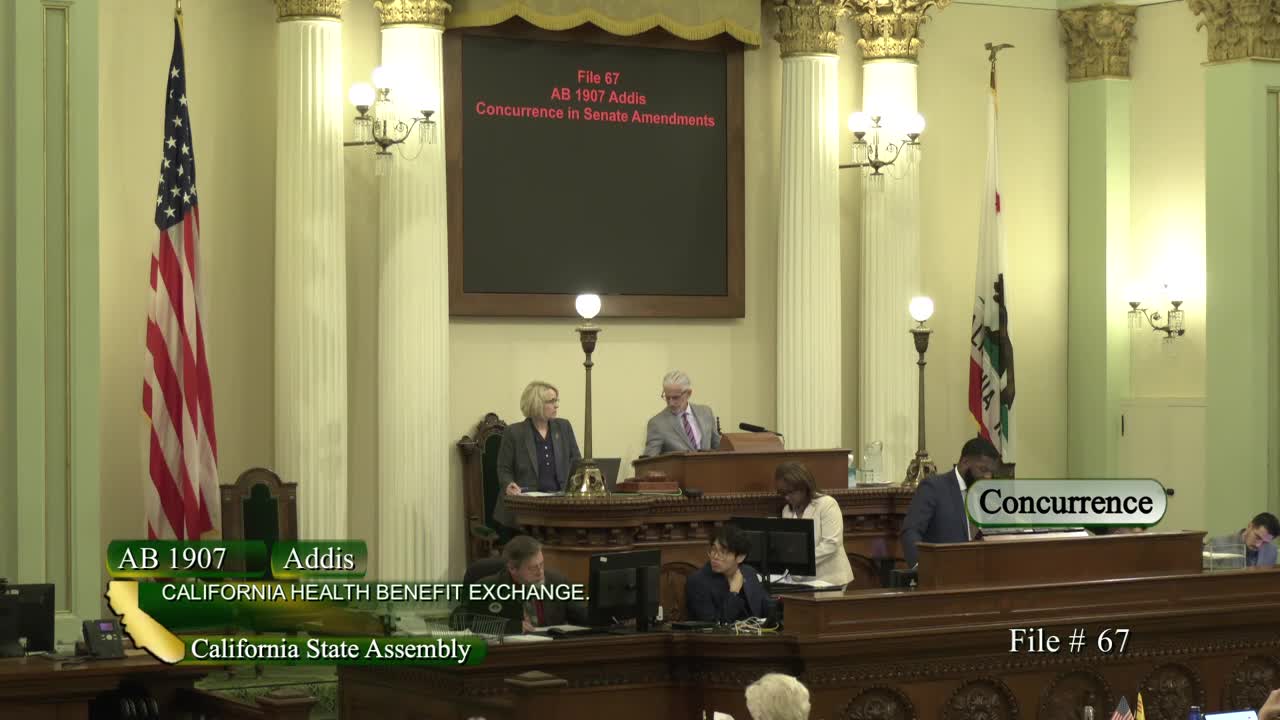
Bill Author

Bill Co-Author(s):