AB 2378: California Violence Intervention and Prevention Grant Program.
- Session Year: 2025-2026
- House: Assembly
- Latest Version Date: 2026-09-26
Current Status:
Passed
(2026-09-26: Chaptered by Secretary of State - Chapter 463, Statutes of 2026.)
Introduced
In Committee
Awaiting First Chamber Vote
Passed First Chamber
In Committee
Awaiting Second Chamber Vote
Passed Second Chamber
Enacted
Existing law establishes the Board of State and Community Corrections. Existing law establishes the California Violence Intervention and Prevention Grant Program (CalVIP) award grants to cities disproportionately impacted by community gun violence to fund gun violence reduction initiatives. Existing law authorizes the board to award these grants and to create an executive steering committee for the program. Existing law authorizes the board to reserve up to $2,000,000 of the funds appropriated for the program each year for the costs of administering and promoting the effectiveness of the program.
This bill would create the Office of Community Violence Intervention within the Board of State and Community Corrections, and would require the office to be led by a director appointed by the board. The bill would require the board to select the director. The bill would require the board to consult with organizations in the field of community violence intervention on factors to consider when evaluating candidates. The bill would also require the board to consider certain factors when selecting a director. The bill would require the office to, among other things, advise the board on the implementation of community violence intervention and prevention policies, provide technical assistance for community violence intervention and prevention organizations and CalVIP grantees, and, on July 1, 2028, and every 2 years thereafter, to produce a report on community violence intervention and prevention, as specified.
This bill would require the office to administer CalVIP, as specified. The bill would require the office to recommend grant awardees to the board and to convene and facilitate the executive steering committee for the program. The bill would require the board to reserve at least $1,000,000 and would authorize the board to reserve up to 5% of the funds appropriated for the program each year for the purposes of the office administering and promoting the effectiveness of the program.
Existing law establishes the Board of State and Community Corrections. Existing law establishes the California Violence Intervention and Prevention Grant Program (CalVIP) award grants to cities disproportionately impacted by community gun violence to fund gun violence reduction initiatives. Existing law authorizes the board to award these grants and to create an executive steering committee for the program. Existing law authorizes the board to reserve up to $2,000,000 of the funds appropriated for the program each year for the costs of administering and promoting the effectiveness of the program.
This bill would create the Office of Community Violence Intervention within the Board of State and Community Corrections, and would require the office to be led by a director appointed by the board. The bill would require the office to, among other things, advise the board on the implementation of community violence intervention and prevention policies, provide technical assistance for community violence intervention and prevention organizations and CalVIP grantees, and, on July 1, 2028, and every 2 years thereafter, to produce a report on community violence intervention and prevention, as specified.
This bill would require the office to administer CalVIP, as specified. The bill would require the office to recommend grant awardees to the board and to convene and facilitate the executive steering committee for the program. The bill would require the board to reserve at least $1,000,000 and would authorize the board to reserve up to 5% of the funds appropriated for the program each year for the purposes of the office administering and promoting the effectiveness of the program.
(a)The Office of Community Violence Intervention is hereby established within the Board of State and Community Corrections and shall be led by a director.
(b)The director shall be selected by the board. The board shall consult with organizations in the field of community violence intervention on factors to consider when evaluating candidates. In selecting a director, the board shall consider, at a minimum, all of the following:
(1)An individuals lived experience with violence, including, but not limited to, experience as an individual directly or indirectly impacted by violence.
(2)An individuals demonstrated knowledge of, and first-hand experience with, addressing the needs and challenges of communities affected by violence and of the community violence intervention field.
(3)An individuals demonstrated history of leadership, service, and professional experience at organizations in the field of community violence intervention.
(c)The Office of Community Violence Intervention shall do all of the following:
(1)Administer the California Violence Intervention and Prevention Grant Program (CalVIP) as provided in Section 14131.
(2)Advise the board on the implementation of community violence intervention and prevention policies.
(3)Coordinate with the Department of Justices Office of Gun Violence Prevention to create a statewide strategic plan for community violence intervention and prevention programs.
(4)Develop methods of measuring the capacity of the community violence intervention and prevention field in California and gather data from CalVIP grantees.
(5)Educate the public about community violence causes and effective solutions.
(6)Identify and apply for available federal grants and other funding to further its work to prevent community violence. When the office determines it is appropriate, the office may work in collaboration with other state departments and partners to identify and apply for federal grants and other funding.
(7)Convene and facilitate the executive steering committee created by subdivision (k) of Section 14131.
(8)Serve as a liaison to community violence intervention and prevention stakeholders, including other governmental agencies.
(9)Provide technical assistance for community violence intervention and prevention organizations and CalVIP grantees.
(10)On July 1, 2028, and every two years thereafter, produce a report that does all of the following:
(A)Highlights best practices in the community violence intervention and prevention field.
(B)Identifies barriers to success, policy gaps, and promising practices that could be scaled or replicated in the state.
(C)Includes the evaluations of the impact of the violence prevention initiatives prepared pursuant to subdivision (n) of Section 14131.
(D)Recommends strategies, policies, and priorities for reducing community violence to the board, Legislature, and other stakeholders.
(11)(A)Within 60 days after completing the report in paragraph (10), the office shall make the report publicly available and transmit copies to the Governors office, the Senate Committee on Public Safety, and the Assembly Committee on Public Safety.
(B)The report shall be submitted in compliance with Section 9795 of the Government Code.
SEC. 2.Section 14131 of the Penal Code is amended to read:14131.(a)The California Violence Intervention and Prevention Grant Program (CalVIP) is hereby created to be administered by the Office of Community Violence Intervention within the Board of State and Community Corrections.
(b)The purpose of CalVIP is to improve public health and safety by supporting effective community gun violence reduction initiatives in communities that are disproportionately impacted by community gun violence. For purposes of this section, community gun violence means intentional acts of interpersonal violence involving a firearm, generally committed in public areas by individuals who are not intimately related to the victim, and which result in physical injury, emotional harm, or death.
(c)CalVIP grants shall be used to develop, support, expand, and replicate evidence-based community gun violence reduction initiatives, including, without limitation, hospital-based violence intervention programs, evidence-based street outreach programs, and focused deterrence strategies, that seek to interrupt cycles of community gun violence and retaliation in order to reduce the incidence of homicides, shootings, and aggravated assaults. These initiatives shall be primarily focused on providing violence intervention services to the small segment of the population that is identified as high risk of perpetrating or being victimized by community gun violence in the near future.
(d)CalVIP grants shall be made on a competitive basis to cities that are disproportionately impacted by community gun violence, to community-based organizations that serve the residents of those cities, and to counties that have one or more cities disproportionately impacted by community gun violence within their jurisdiction. For purposes of this section, cities includes tribal governments.
(e)For purposes of this section, a city is disproportionately impacted by community gun violence if any of the following are true:
(1)The city experienced 20 or more homicides per calendar year during two or more of the three calendar years immediately preceding the grant application for which the Department of Justice has available data.
(2)The city experienced 10 or more homicides per calendar year and had a homicide rate that was at least 50 percent higher than the statewide homicide rate during two or more of the three calendar years immediately preceding the grant application for which the Department of Justice has available data.
(3)(A)An applicant otherwise demonstrates a unique and compelling need for additional resources to address the impact of community gun violence in the applicants community.
(B)Recognizing the historical challenges that California tribes have faced in gathering formal data on violent crime, the Board of State and Community Corrections, in consultation with the Office of Community Violence Intervention, shall take input from tribal governments on how to determine compelling need, in the context of tribal governments.
(C)The Board of State and Community Corrections, in consultation with the Office of Community Violence Intervention, shall also take input from cities with a population of fewer than 30,000 residents to determine compelling need, in the context of small cities.
(f)An applicant for a CalVIP grant shall submit a proposal, in a form prescribed by the board, which shall include, but not be limited to, all of the following:
(1)Clearly defined and measurable objectives for the grant.
(2)A statement describing how the applicant proposes to use the grant to implement an evidence-based community gun violence reduction initiative in accordance with this section, including how the applicant will identify, engage, and provide violence intervention services to individuals at high risk of perpetrating or being victimized by community gun violence in the near future.
(3)A statement describing how the applicant proposes to use the grant to enhance coordination of existing community gun violence prevention and intervention programs and minimize duplication of services in the proposed service area. Where relevant, this shall include a description of efforts to coordinate with tribal governments located near or within the planned service delivery area.
(4)Evidence indicating that the proposed violence reduction initiative would likely reduce the incidence of community gun violence in the proposed service area within the grant period.
(5)For city or county applicants, a statement demonstrating support for the proposed violence reduction initiative from one or more community-based organizations, or from a public agency or department other than a law enforcement agency that is primarily dedicated to community safety or violence prevention.
(g)In awarding CalVIP grants, the board shall give preference to applicants whose grant proposals demonstrate the greatest likelihood of reducing the incidence of community gun violence in the applicants community within the grant period without contributing to mass incarceration.
(h)The amount of funds awarded to an applicant shall be commensurate with the scope of the applicants proposal and the applicants demonstrated need for additional resources to address community gun violence in the applicants community.
(1)The Office of Community Violence Intervention shall recommend grant awardees, and the Board of State and Community Corrections may award competitive grants in amounts not to exceed two million five hundred thousand dollars ($2,500,000) per applicant per year. The length of the grant cycle shall be at least three years.
(2)The board shall award at least two grants to cities or counties with populations of 200,000 or less.
(i)Upon making CalVIP grant awards, the board shall make at least 20 percent of an approved grantees total grant award available to the grantee at the start of the grant period or as soon as possible thereafter, in order to enable grantees to immediately utilize such funds to support violence reduction initiatives.
(j)Each city or county that receives a CalVIP grant shall distribute no less than 50 percent of the grant funds to one or more of any of the following types of entities:
(1)Community-based organizations.
(2)Public agencies or departments, other than law enforcement agencies or departments, that are primarily dedicated to community safety or violence prevention.
(3)Tribal governments.
(k)The board shall form an executive steering committee convened and facilitated by the Office of Community Violence Intervention, including, without limitation, persons who have been impacted by community gun violence, formerly incarcerated persons, subject matter experts in community gun violence prevention and intervention, the director of the Office of Gun Violence Prevention or the directors designee, and at least three persons with direct experience in implementing evidence-based community gun violence reduction initiatives, including initiatives that incorporate public health and community-based approaches focused on providing violence intervention services to the small segment of the population identified as high risk of perpetrating or being victimized by community gun violence in the near future.
(l)(1)The board shall reserve at least one million dollars ($1,000,000) and may reserve up to 5 percent of the funds appropriated for CalVIP each year for the Office of Community Violence Intervention for the purposes of administering and promoting the effectiveness of the program including, without limitation, the employment of personnel, providing technical assistance to grantees, coordinating with other state and local agencies on community gun violence reduction efforts, and evaluation of violence reduction initiatives supported by CalVIP.
(2)The Office of Community Violence Intervention may recommend, with the advice and assistance of the CalVIP executive steering committee, and the board may reserve up to 5 percent of the funds appropriated for CalVIP each year for the purpose of supporting programs and activities designed to build and sustain capacity in the field of community gun violence intervention and prevention, and to support detailed community gun violence problem analyses that help service providers and other stakeholders inform and develop community gun violence reduction initiatives by identifying individuals in their community who are at high risk of perpetrating or being victimized by community gun violence in the near future and have the highest need for violence intervention services. Activities to build and sustain capacity in the field of community-based gun violence intervention and prevention may include any of the following:
(A)Contracting with or providing grants to organizations that provide training, certification, or continued professional development to community-based gun violence intervention and prevention professionals, including frontline professionals and technical assistance providers.
(B)Contracting with or providing grants to nonprofit intermediary organizations that foster the development and growth of community-based organizations dedicated to community gun violence intervention and prevention.
(C)Providing mental health support and other supportive services to frontline community gun violence intervention professionals in order to recruit, retain, and sustain these professionals in their field.
(D)Providing mental health services or financial assistance to family members of frontline community gun violence intervention professionals who are killed or violently injured in the performance of their work.
(m)Each grantee shall report to the Office of Community Violence Intervention, in a form and at intervals prescribed by the office, their progress in achieving the grant objectives.
(n)The Office of Community Violence Intervention shall, by no later than 120 days following the close of each grant cycle, prepare and submit a report to the Legislature in compliance with Section 9795 of the Government Code regarding the impact of the violence prevention initiatives supported by CalVIP.
(o)The Office of Community Violence Intervention shall make evaluations of CalVIP-supported initiatives available to the public.
(p)The amendments to this section made by the act that added this subdivision shall apply solely to CalVIP grant applications and awards made after January 1, 2024, and shall not be construed to affect grant applications or awards made prior to this date.
(a)The Office of Community Violence Intervention is hereby established within the Board of State and Community Corrections and shall be led by a director.
(b)The director shall be selected by the board. The board shall consult with organizations in the field of community violence intervention on factors to consider when evaluating candidates. In selecting a director, the board shall consider, at a minimum, all of the following:
(1)An individuals lived experience with violence, including, but not limited to, experience as an individual directly or indirectly impacted by violence.
(2)An individuals demonstrated knowledge of, and first-hand experience with, addressing the needs and challenges of communities affected by violence and of the community violence intervention field.
(3)An individuals demonstrated history of leadership, service, and professional experience at organizations in the field of community violence intervention.
(b)(c)The Office of Community Violence Intervention shall do all of the following:
(1)Administer the California Violence Intervention and Prevention Grant Program (CalVIP) as provided in Section 14131.
(2)Advise the board on the implementation of community violence intervention and prevention policies.
(3)Coordinate with the Department of Justices Office of Gun Violence Prevention to create a statewide strategic plan for community violence intervention and prevention programs.
(4)Develop methods of measuring the capacity of the community violence intervention and prevention field in California and gather data from CalVIP grantees.
(5)Educate the public about community violence causes and effective solutions.
(6)Identify and apply for available federal grants and other funding to further its work to prevent community violence. When the office determines it is appropriate, the office may work in collaboration with other state departments and partners to identify and apply for federal grants and other funding.
(7)Convene and facilitate the executive steering committee created by subdivision (k) of Section 14131.
(8)Serve as a liaison to community violence intervention and prevention stakeholders, including other governmental agencies.
(9)Provide technical assistance for community violence intervention and prevention organizations and CalVIP grantees.
(10)On July 1, 2028, and every two years thereafter, produce a report that does all of the following:
(A)Highlights best practices in the community violence intervention and prevention field.
(B)Identifies barriers to success, policy gaps, and promising practices that could be scaled or replicated in the state.
(C)Includes the evaluations of the impact of the violence prevention initiatives prepared pursuant to subdivision (n) of Section 14131.
(D)Recommends strategies, policies, and priorities for reducing community violence to the board, Legislature, and other stakeholders.
(11)(A)Within 60 days after completing the report in paragraph (10), the office shall make the report publicly available and transmit copies to the Governors office, the Senate Committee on Public Safety, and the Assembly Committee on Public Safety.
(B)The report shall be submitted in compliance with Section 9795 of the Government Code.
SEC. 2.Section 14131 of the Penal Code is amended to read:14131.(a)The California Violence Intervention and Prevention Grant Program (CalVIP) is hereby created to be administered by the Office of Community Violence Intervention within the Board of State and Community Corrections.
(b)The purpose of CalVIP is to improve public health and safety by supporting effective community gun violence reduction initiatives in communities that are disproportionately impacted by community gun violence. For purposes of this section, community gun violence means intentional acts of interpersonal violence involving a firearm, generally committed in public areas by individuals who are not intimately related to the victim, and which result in physical injury, emotional harm, or death.
(c)CalVIP grants shall be used to develop, support, expand, and replicate evidence-based community gun violence reduction initiatives, including, without limitation, hospital-based violence intervention programs, evidence-based street outreach programs, and focused deterrence strategies, that seek to interrupt cycles of community gun violence and retaliation in order to reduce the incidence of homicides, shootings, and aggravated assaults. These initiatives shall be primarily focused on providing violence intervention services to the small segment of the population that is identified as high risk of perpetrating or being victimized by community gun violence in the near future.
(d)CalVIP grants shall be made on a competitive basis to cities that are disproportionately impacted by community gun violence, to community-based organizations that serve the residents of those cities, and to counties that have one or more cities disproportionately impacted by community gun violence within their jurisdiction. For purposes of this section, cities includes tribal governments.
(e)For purposes of this section, a city is disproportionately impacted by community gun violence if any of the following are true:
(1)The city experienced 20 or more homicides per calendar year during two or more of the three calendar years immediately preceding the grant application for which the Department of Justice has available data.
(2)The city experienced 10 or more homicides per calendar year and had a homicide rate that was at least 50 percent higher than the statewide homicide rate during two or more of the three calendar years immediately preceding the grant application for which the Department of Justice has available data.
(3)(A)An applicant otherwise demonstrates a unique and compelling need for additional resources to address the impact of community gun violence in the applicants community. Recognizing
(B)Recognizing the historical challenges that California tribes have faced in gathering formal data on violent crime, the Board of State and Community Corrections, in consultation with the Office of Community Violence Intervention, shall take input from tribal governments on how to determine compelling need, in the context of tribal governments.
(C)The Board of State and Community Corrections, in consultation with the Office of Community Violence Intervention, shall also take input from cities with a population of fewer than 30,000 residents to determine compelling need, in the context of small cities.
(f)An applicant for a CalVIP grant shall submit a proposal, in a form prescribed by the board, which shall include, but not be limited to, all of the following:
(1)Clearly defined and measurable objectives for the grant.
(2)A statement describing how the applicant proposes to use the grant to implement an evidence-based community gun violence reduction initiative in accordance with this section, including how the applicant will identify, engage, and provide violence intervention services to individuals at high risk of perpetrating or being victimized by community gun violence in the near future.
(3)A statement describing how the applicant proposes to use the grant to enhance coordination of existing community gun violence prevention and intervention programs and minimize duplication of services in the proposed service area. Where relevant, this shall include a description of efforts to coordinate with tribal governments located near or within the planned service delivery area.
(4)Evidence indicating that the proposed violence reduction initiative would likely reduce the incidence of community gun violence in the proposed service area within the grant period.
(5)For city or county applicants, a statement demonstrating support for the proposed violence reduction initiative from one or more community-based organizations, or from a public agency or department other than a law enforcement agency that is primarily dedicated to community safety or violence prevention.
(g)In awarding CalVIP grants, the board shall give preference to applicants whose grant proposals demonstrate the greatest likelihood of reducing the incidence of community gun violence in the applicants community within the grant period without contributing to mass incarceration.
(h)The amount of funds awarded to an applicant shall be commensurate with the scope of the applicants proposal and the applicants demonstrated need for additional resources to address community gun violence in the applicants community.
(1)The Office of Community Violence Intervention shall recommend grant awardees, and the Board of State and Community Corrections may award competitive grants in amounts not to exceed two million five hundred thousand dollars ($2,500,000) per applicant per year. The length of the grant cycle shall be at least three years.
(2)The board shall award at least two grants to cities or counties with populations of 200,000 or less.
(i)Upon making CalVIP grant awards, the board shall make at least 20 percent of an approved grantees total grant award available to the grantee at the start of the grant period or as soon as possible thereafter, in order to enable grantees to immediately utilize such funds to support violence reduction initiatives.
(j)Each city or county that receives a CalVIP grant shall distribute no less than 50 percent of the grant funds to one or more of any of the following types of entities:
(1)Community-based organizations.
(2)Public agencies or departments, other than law enforcement agencies or departments, that are primarily dedicated to community safety or violence prevention.
(3)Tribal governments.
(k)The board shall form an executive steering committee convened and facilitated by the Office of Community Violence Intervention, including, without limitation, persons who have been impacted by community gun violence, formerly incarcerated persons, subject matter experts in community gun violence prevention and intervention, the director of the Office of Gun Violence Prevention or the directors designee, and at least three persons with direct experience in implementing evidence-based community gun violence reduction initiatives, including initiatives that incorporate public health and community-based approaches focused on providing violence intervention services to the small segment of the population identified as high risk of perpetrating or being victimized by community gun violence in the near future.
(l)(1)The board shall reserve at least one million dollars ($1,000,000) and may reserve up to 5 percent of the funds appropriated for CalVIP each year for the Office of Community Violence Intervention for the purposes of administering and promoting the effectiveness of the program including, without limitation, the employment of personnel, providing technical assistance to grantees, coordinating with other state and local agencies on community gun violence reduction efforts, and evaluation of violence reduction initiatives supported by CalVIP.
(2)The Office of Community Violence Intervention may recommend, with the advice and assistance of the CalVIP executive steering committee, and the board may reserve up to 5 percent of the funds appropriated for CalVIP each year for the purpose of supporting programs and activities designed to build and sustain capacity in the field of community gun violence intervention and prevention, and to support detailed community gun violence problem analyses that help service providers and other stakeholders inform and develop community gun violence reduction initiatives by identifying individuals in their community who are at high risk of perpetrating or being victimized by community gun violence in the near future and have the highest need for violence intervention services. Activities to build and sustain capacity in the field of community-based gun violence intervention and prevention may include any of the following:
(A)Contracting with or providing grants to organizations that provide training, certification, or continued professional development to community-based gun violence intervention and prevention professionals, including frontline professionals and technical assistance providers.
(B)Contracting with or providing grants to nonprofit intermediary organizations that foster the development and growth of community-based organizations dedicated to community gun violence intervention and prevention.
(C)Providing mental health support and other supportive services to frontline community gun violence intervention professionals in order to recruit, retain, and sustain these professionals in their field.
(D)Providing mental health services or financial assistance to family members of frontline community gun violence intervention professionals who are killed or violently injured in the performance of their work.
(m)Each grantee shall report to the Office of Community Violence Intervention, in a form and at intervals prescribed by the office, their progress in achieving the grant objectives.
(n)The Office of Community Violence Intervention shall, by no later than 120 days following the close of each grant cycle, prepare and submit a report to the Legislature in compliance with Section 9795 of the Government Code regarding the impact of the violence prevention initiatives supported by CalVIP.
(o)The Office of Community Violence Intervention shall make evaluations of CalVIP-supported initiatives available to the public.
(p)The amendments to this section made by the act that added this subdivision shall apply solely to CalVIP grant applications and awards made after January 1, 2024, and shall not be construed to affect grant applications or awards made prior to this date.
(a)The Office of Community Violence Intervention is hereby established within the Board of State and Community Corrections and shall be led by a director.
(b)The Office of Community Violence Intervention shall do all of the following:
(1)Administer the California Violence Intervention and Prevention Grant Program (CalVIP) as provided in Section 14131.
(2)Advise the board on the implementation of community violence intervention and prevention policies.
(3)Coordinate with the Department of Justices Office of Gun Violence Prevention to create a statewide strategic plan for community violence intervention and prevention programs.
(4)Develop methods of measuring the capacity of the community violence intervention and prevention field in California and gather data from CalVIP grantees.
(5)Educate the public about community violence causes and effective solutions.
(6)Identify and apply for available federal grants and other funding to further its work to prevent community violence. When the office determines it is appropriate, the office may work in collaboration with other state departments and partners to identify and apply for federal grants and other funding.
(7)Convene and facilitate the executive steering committee created by subdivision (k) of Section 14131.
(8)Serve as a liaison to community violence intervention and prevention stakeholders, including other governmental agencies.
(9)Provide technical assistance for community violence intervention and prevention organizations and CalVIP grantees.
(10)On July 1, 2028, and every two years thereafter, produce a report that does all of the following:
(A)Highlights best practices in the community violence intervention and prevention field.
(B)Identifies barriers to success, policy gaps, and promising practices that could be scaled or replicated in the state.
(C)Includes the evaluations of the impact of the violence prevention initiatives prepared pursuant to subdivision (n) of Section 14131.
(D)Recommends strategies, policies, and priorities for reducing community violence to the board, Legislature, and other stakeholders.
(11)(A)Within 60 days after completing the report in paragraph (10), the office shall make the report publicly available and transmit copies to the Governors office, the Senate Committee on Public Safety, and the Assembly Committee on Public Safety.
(B)The report shall be submitted in compliance with Section 9795 of the Government Code.
SEC. 2.Section 14131 of the Penal Code is amended to read:14131.(a)The California Violence Intervention and Prevention Grant Program (CalVIP) is hereby created to be administered by the Office of Community Violence Intervention within the Board of State and Community Corrections.
(b)The purpose of CalVIP is to improve public health and safety by supporting effective community gun violence reduction initiatives in communities that are disproportionately impacted by community gun violence. For purposes of this section, community gun violence means intentional acts of interpersonal violence involving a firearm, generally committed in public areas by individuals who are not intimately related to the victim, and which result in physical injury, emotional harm, or death.
(c)CalVIP grants shall be used to develop, support, expand, and replicate evidence-based community gun violence reduction initiatives, including, without limitation, hospital-based violence intervention programs, evidence-based street outreach programs, and focused deterrence strategies, that seek to interrupt cycles of community gun violence and retaliation in order to reduce the incidence of homicides, shootings, and aggravated assaults. These initiatives shall be primarily focused on providing violence intervention services to the small segment of the population that is identified as high risk of perpetrating or being victimized by community gun violence in the near future.
(d)CalVIP grants shall be made on a competitive basis to cities that are disproportionately impacted by community gun violence, to community-based organizations that serve the residents of those cities, and to counties that have one or more cities disproportionately impacted by community gun violence within their jurisdiction. For purposes of this section, cities includes tribal governments.
(e)For purposes of this section, a city is disproportionately impacted by community gun violence if any of the following are true:
(1)The city experienced 20 or more homicides per calendar year during two or more of the three calendar years immediately preceding the grant application for which the Department of Justice has available data.
(2)The city experienced 10 or more homicides per calendar year and had a homicide rate that was at least 50 percent higher than the statewide homicide rate during two or more of the three calendar years immediately preceding the grant application for which the Department of Justice has available data.
(3)An applicant otherwise demonstrates a unique and compelling need for additional resources to address the impact of community gun violence in the applicants community. Recognizing the historical challenges that California tribes have faced in gathering formal data on violent crime, the Board of State and Community Corrections Corrections, in consultation with the Office of Community Violence Intervention, shall take input from tribal governments on how to determine compelling need, in the context of tribal governments.
(f)An applicant for a CalVIP grant shall submit a proposal, in a form prescribed by the board, which shall include, but not be limited to, all of the following:
(1)Clearly defined and measurable objectives for the grant.
(2)A statement describing how the applicant proposes to use the grant to implement an evidence-based community gun violence reduction initiative in accordance with this section, including how the applicant will identify, engage, and provide violence intervention services to individuals at high risk of perpetrating or being victimized by community gun violence in the near future.
(3)A statement describing how the applicant proposes to use the grant to enhance coordination of existing community gun violence prevention and intervention programs and minimize duplication of services in the proposed service area. Where relevant, this shall include a description of efforts to coordinate with tribal governments located near or within the planned service delivery area.
(4)Evidence indicating that the proposed violence reduction initiative would likely reduce the incidence of community gun violence in the proposed service area within the grant period.
(5)For city or county applicants, a statement demonstrating support for the proposed violence reduction initiative from one or more community-based organizations, or from a public agency or department other than a law enforcement agency that is primarily dedicated to community safety or violence prevention.
(g)In awarding CalVIP grants, the board shall give preference to applicants whose grant proposals demonstrate the greatest likelihood of reducing the incidence of community gun violence in the applicants community within the grant period without contributing to mass incarceration.
(h)The amount of funds awarded to an applicant shall be commensurate with the scope of the applicants proposal and the applicants demonstrated need for additional resources to address community gun violence in the applicants community.
(1)The Office of Community Violence Intervention shall recommend grant awardees, and the Board of State and Community Corrections may award competitive grants in amounts not to exceed two million five hundred thousand dollars ($2,500,000) per applicant per year. The length of the grant cycle shall be at least three years.
(2)The board shall award at least two grants to cities or counties with populations of 200,000 or less.
(i)Upon making CalVIP grant awards, the board shall make at least 20 percent of an approved grantees total grant award available to the grantee at the start of the grant period or as soon as possible thereafter, in order to enable grantees to immediately utilize such funds to support violence reduction initiatives.
(j)Each city or county that receives a CalVIP grant shall distribute no less than 50 percent of the grant funds to one or more of any of the following types of entities:
(1)Community-based organizations.
(2)Public agencies or departments, other than law enforcement agencies or departments, that are primarily dedicated to community safety or violence prevention.
(3)Tribal governments.
(k)The board shall form an executive steering committee convened and facilitated by the Office of Community Violence Intervention, including, without limitation, persons who have been impacted by community gun violence, formerly incarcerated persons, subject matter experts in community gun violence prevention and intervention, the director of the Office of Gun Violence Prevention or the directors designee, and at least three persons with direct experience in implementing evidence-based community gun violence reduction initiatives, including initiatives that incorporate public health and community-based approaches focused on providing violence intervention services to the small segment of the population identified as high risk of perpetrating or being victimized by community gun violence in the near future.
(l)(1)The board may shall reserve up to two million dollars ($2,000,000) at least one million dollars ($1,000,000) and may reserve up to 5 percent of the funds appropriated for CalVIP each year for the costs Office of Community Violence Intervention for the purposes of administering and promoting the effectiveness of the program including, without limitation, the employment of personnel, providing technical assistance to grantees, coordinating with other state and local agencies on community gun violence reduction efforts, and evaluation of violence reduction initiatives supported by CalVIP.
(2)The board may, Office of Community Violence Intervention may recommend, with the advice and assistance of the CalVIP executive steering committee, and the board may reserve up to 5 percent of the funds appropriated for CalVIP each year for the purpose of supporting programs and activities designed to build and sustain capacity in the field of community gun violence intervention and prevention, and to support detailed community gun violence problem analyses that help service providers and other stakeholders inform and develop community gun violence reduction initiatives by identifying individuals in their community who are at high risk of perpetrating or being victimized by community gun violence in the near future and have the highest need for violence intervention services. Activities to build and sustain capacity in the field of community-based gun violence intervention and prevention may include any of the following:
(A)Contracting with or providing grants to organizations that provide training, certification, or continued professional development to community-based gun violence intervention and prevention professionals, including frontline professionals and technical assistance providers.
(B)Contracting with or providing grants to nonprofit intermediary organizations that foster the development and growth of community-based organizations dedicated to community gun violence intervention and prevention.
(C)Providing mental health support and other supportive services to frontline community gun violence intervention professionals in order to recruit, retain, and sustain these professionals in their field.
(D)Providing mental health services or financial assistance to family members of frontline community gun violence intervention professionals who are killed or violently injured in the performance of their work.
(m)Each grantee shall report to the board, Office of Community Violence Intervention, in a form and at intervals prescribed by the board, office, their progress in achieving the grant objectives.
(n)The board Office of Community Violence Intervention shall, by no later than 120 days following the close of each grant cycle, prepare and submit a report to the Legislature in compliance with Section 9795 of the Government Code regarding the impact of the violence prevention initiatives supported by CalVIP.
(o)The board Office of Community Violence Intervention shall make evaluations of CalVIP-supported initiatives available to the public.
(p)The amendments to this section made by the act that added this subdivision shall apply solely to CalVIP grant applications and awards made after January 1, 2024, and shall not be construed to affect grant applications or awards made prior to this date.
|
Date
|
Status
|
|---|---|
| Sep 26, 2026 | Chaptered by Secretary of State - Chapter 463, Statutes of 2026. |
| Sep 26, 2026 | Approved by the Governor. |
| Sep 4, 2026 | Enrolled and presented to the Governor at 4 p.m. |
| Aug 27, 2026 | Senate amendments concurred in. To Engrossing and Enrolling. (Ayes 68. Noes 3. Page 6701.). |
| Aug 27, 2026 | Senate amendments concurred in. To Engrossing and Enrolling. (Ayes 68. Noes 3.). |
| Aug 26, 2026 | In Assembly. Concurrence in Senate amendments pending. |
| Aug 26, 2026 | Read third time. Passed. Ordered to the Assembly. (Ayes 31. Noes 5. Page 5834.). |
| Aug 26, 2026 | Read third time. Passed. Ordered to the Assembly. (Ayes 31. Noes 5.). |
| Aug 13, 2026 | Read second time. Ordered to third reading. |
| Aug 13, 2026 | From committee: Do pass. (Ayes 5. Noes 2.) (August 13). |
| Aug 3, 2026 | In committee: Referred to APPR. suspense file. |
| Jun 24, 2026 | From committee: Do pass and re-refer to Com. on APPR. (Ayes 5. Noes 1.) (June 23). Re-referred to Com. on APPR. |
| Jun 11, 2026 | From committee chair, with author's amendments: Amend, and re-refer to committee. Read second time, amended, and re-referred to Com. on PUB. S. |
| Jun 10, 2026 | Referred to Com. on PUB. S. |
| May 28, 2026 | In Senate. Read first time. To Com. on RLS. for assignment. |
| May 27, 2026 | Read third time. Passed. Ordered to the Senate. (Ayes 70. Noes 0. Page 5494.) |
| May 27, 2026 | Read third time. Passed. Ordered to the Senate. (Ayes 70. Noes 0.) |
| May 27, 2026 | Read third time. Passed. Ordered to the Senate. |
| May 18, 2026 | Read second time. Ordered to third reading. |
| May 14, 2026 | From committee: Do pass. (Ayes 12. Noes 1.) (May 14). |
| May 14, 2026 | Joint Rule 62(a), file notice suspended. (Page 5030.) |
| May 14, 2026 | Joint Rule 62(a), file notice suspended. |
| May 13, 2026 | In committee: Set, first hearing. Referred to APPR. suspense file. |
| Mar 25, 2026 | From committee: Do pass and re-refer to Com. on APPR. (Ayes 8. Noes 0.) (March 24). Re-referred to Com. on APPR. |
| Mar 9, 2026 | Referred to Com. on PUB. S. |
| Feb 20, 2026 | From printer. May be heard in committee March 22. |
| Feb 19, 2026 | Read first time. To print. |
|
Date
|
Description
|
Location
|
Votes
|
|
|---|---|---|---|---|
| Aug 27, 2026 | AB 2378 Gabriel Concurrence in Senate Amendments | Assembly Floor |
Passed |
|
| Aug 26, 2026 | Assembly 3rd Reading AB2378 Gabriel et al. By Blakespear | Senate Floor |
Passed |
|
| Aug 13, 2026 | Do pass | Senate Standing Committee on Appropriations |
Passed |
|
| Aug 3, 2026 | Placed on suspense file | Senate Standing Committee on Appropriations |
Passed |
|
| Jun 23, 2026 | Do pass, but first be re-referred to the Committee on [Appropriations] | Senate Standing Committee on Public Safety |
Passed |
|
| May 27, 2026 | AB 2378 Gabriel Assembly Third Reading | Assembly Floor |
Passed |
|
| May 14, 2026 | Do pass. | Assembly Standing Committee on Appropriations |
Passed |
|
| Mar 24, 2026 | Do pass and be re-referred to the Committee on [Appropriations] | Assembly Standing Committee on Public Safety |
Passed |
This list shows positions taken on this bill by organizations on the date displayed, which is linked to the original source.
Positions by individuals are not included.
|
Organization
|
Position
|
Date
|
|---|---|---|
| Alliance for Community Empowerment | ** Support | |
| Brady United Against Gun Violence | ** Support | |
| Californians for Safety and Justice | ** Support | |
| California Public Defenders Association | ** Support | |
| City of Long Beach | ** Support | |
| City of Oakland Department of Violence Prevention | ** Support | |
| Diversity Research and Consulting Group, INC. | ** Support | |
| Ella Baker Center For Human Rights | ** Support | |
| Everytown for Gun Safety Action Fund | ** Support | |
| Giffords | ** Support | |
| Gun Owners of California | ** Against | |
| Mayor Todd Gloria, City of San Diego | ** Support | |
| Moms Demand Action for Gun Sense in America | ** Support | |
| Peace and Justice Law Center | ** Support | |
| San Quentin Skunkworks | ** Support | |
| Students Demand Action for Gun Sense in America | ** Support | |
| The Health Alliance for Violence Intervention | ** Support | |
| Youth ALIVE! | ** Support |
CONCURRENCE IN SENATE AMENDMENTS
CSA1 Bill Id:AB 2378
Author:(Gabriel and Wicks)
As Amended Ver:June 11, 2026
Majority vote
SUMMARY
Creates the Office of Community Violence Intervention (OCVI) within the Board of State and Community Corrections (BSCC).
Senate Amendments
- State that the BSCC shall select the OCVI Director and shall consult with organizations in the field of community violence intervention on factors to consider in selecting a director, which shall include:
- An individual's lived experience with violence, including experience as an individual directly or indirectly impacted by violence;
- An individual's demonstrated knowledge of, and first-hand experience with, addressing the needs and challenges of communities affected by violence and of the community violence intervention field; and
- An individual's demonstrated history of leadership, service, and professional experience at organizations in the field of community violence intervention.
- Provide that the BSCC, in consultation with the OCVI, shall take input from cities with a population under 30,000 residents to determine "compelling need" in the context of small cities.
COMMENTS
As Passed by the Assembly, this bill: Created the Office of Community Violence Intervention (OCVI) within the Board of State and Community Corrections (BSCC).
Major Provisions
- Established the OCVI within the BSCC, which shall be led by a director.
- States that the OCVI shall do all of the following:
- Administer the California Violence Intervention and Prevention Grant Program (CalVIP), as defined.
- Advise the board on the implementation of community violence intervention and prevention policies.
- Coordinate with the Department of Justice's Office of Gun Violence Prevention to create a statewide strategic plan for community violence intervention and prevention programs.
- Develop methods of measuring the capacity of the community violence intervention and prevention field in California and gather data from CalVIP grantees.
- Educate the public about community violence causes and effective solutions.
- Identify and apply for available federal grants and other funding to further its work to prevent community violence. When the office determines it is appropriate, the office may work in collaboration with other state departments and partners to identify and apply for federal grants and other funding.
- Convene and facilitate the executive steering committee.
- Serve as a liaison to community violence intervention and prevention stakeholders, including other governmental agencies.
- Provide technical assistance for community violence intervention and prevention organizations and CalVIP grantees.
- On July 1, 2028, and every two years thereafter, produce a report that does all of the following:
- Highlights best practices in the community violence intervention and prevention field.
- Identifies barriers to success, policy gaps, and promising practices that could be scaled or replicated in the state.
- Includes the evaluations of the impact of the prepared violence prevention initiatives.
- Recommends strategies, policies, and priorities for reducing community violence to the board, Legislature, and other stakeholders.
- Within 60 days after completing the specified report, the office shall make the report publicly available and transmit copies to the Governor's office, the Senate Committee on Public Safety, and the Assembly Committee on Public Safety.
- Requires BSCC to reserve at least $1,000,000, and may reserve up to 5% of the funds appropriated for CalVIP each year, for the costs of OCVI for the purposes of administering and promoting the effectiveness of the program, instead of authorizing up to $2,000,000 for that purpose.
- Makes conforming changes.
According to the Author
"California's gun violence prevention programs have proven to be some of the most effective ways of stopping gun violence in our state. Through its flagship initiative, the California Violence Intervention and Prevention (CalVIP) program, California has achieved measurable reductions in the firearm fatality rate in many communities most impacted by gun violence. To better position the program moving forward based on lessons that we've learned so far, AB 2378 would establish an Office of Community Violence Intervention, overseen by a director, to administer the CalVIP program and provide additional support to applicants and grantees. These changes will better equip the program to continue its growth, and in turn, help California remain the national leader of gun safety and community violence intervention."
Arguments in Support
According to Youth Alive!, "We write in support of Assembly Bill (AB) 2378, which would establish an Office of Community Violence Intervention to administer the California Violence Intervention and Prevention (CalVIP) Grant Program.
"Youth Alive is a nationally recognized community-based organization known for initiating an alliance to treat violence as a public health crisis and developing young leaders in the process. Through our community-based violence intervention and healing programs, we serve hundreds of gunshot victims and their families every year, while also interrupting violence and resolving conflicts to guide individuals away from committing future violence. As a leader in the community violence intervention (CVI) field, our desire to elevate the state's ability to fortify and advance the work of life-saving programs around the state informs our support of AB 2378.
"The CalVIP Grant Program supports initiatives across the state that have proven to be among the most effective strategies for preventing gun violence, and is one of the most cost-effective investments in public safety for the state of California. Last year, California had its lowest gun homicide rate ever recorded, driven by significant reductions in the age 15 – 24 demographics that are a key target population of the program. Further demonstrating this success, some communities that have historically received funding through CalVIP have made large enough public safety improvements that they may no longer be eligible for future rounds of funding.
"During the most recent application cycle, requests for over $1 billion in funding for community-based violence intervention programs were submitted, a dramatic increase from just a few years ago that greatly exceeded available funding. While CalVIP is overseen by the Board of State and Community Corrections, there is no dedicated, senior-level position to oversee the program's growth and support the grantees it serves. To better equip this flagship program to continue its growth and success, AB 2378 would establish the Office of Community Violence Intervention, to be overseen by a director, to administer CalVIP, coordinate with the Department of Justice's Office of Gun Violence Prevention, engage in strategic planning, and provide technical assistance and support to grantees and applicants.
"Through these changes, AB 2378 will provide greater support and guidance to critical community-based work, enabling California to remain a national leader for violence prevention and gun safety."
Arguments in Opposition
According to Gun Owners of California, "On behalf of Gun Owners of California, I am writing to oppose your AB 2378, which would create the Office of Community Violence Intervention within the Board of State and Community Corrections, and would require the office to improve public health and safety by supporting effective community gun violence reduction initiatives in communities that are disproportionately impacted by community gun violence. "Community gun violence" is defined as "intentional acts of interpersonal violence involving a firearm, generally committed in public areas by individuals who are not intimately related to the victim, and which result in physical injury, emotional harm, or death.
"Notwithstanding the policy arguments in opposition to this bill, it's important to note that California's budget problem is significantly larger than previously anticipated. According to the Legislative Analyst, under current revenue and spending estimates, the Legislature faces an almost $18 billion budget problem this fiscal year. This is roughly $5 billion larger than the budget problem projected by the administration in June, despite improvements in revenue. Moreover, the LAO estimates costs in other programs to be about $6 billion higher than previously thought. Starting in 2027 28, they estimate structural deficits to grow to about $35 billion annually due to spending growth continuing to outstrip revenue growth.
"This is not the time to create a new 'office.'"
FISCAL COMMENTS
According to the Senate Appropriations Committee, "Estimated $2.8 million to $3.4 million based on a five percent administrative cap and projected revenues to the Gun Violence Prevention and School Safety Fund.
"Estimated $60 million for FY 2026-27 and $62 million for FY 2027-28. (Gun Violence Prevention and School Safety Fund)"
VOTES:
ASM PUBLIC SAFETY: 8-0-1
YES: Schultz, Alanis, Mark González, Harabedian, Lackey, Nguyen, Ramos, Sharp-Collins
ABS, ABST OR NV: Haney
ASM APPROPRIATIONS: 12-1-2
YES: Wicks, Hoover, Aguiar-Curry, Calderon, Caloza, Fong, Mark González, Krell, Pacheco, Pellerin, Sharp-Collins, Solache
NO: Dixon
ABS, ABST OR NV: Ta, Tangipa
ASSEMBLY FLOOR: 70-0-10
YES: Addis, Aguiar-Curry, Ahrens, Alanis, Alvarez, Arambula, Ávila Farías, Bains, Bauer-Kahan, Bennett, Berman, Boerner, Bonta, Bryan, Calderon, Caloza, Carrillo, Chen, Connolly, Davies, DeMaio, Elhawary, Flora, Fong, Gabriel, Gallagher, Garcia, Gipson, Jeff Gonzalez, Mark González, Haney, Harabedian, Hart, Hoover, Irwin, Jackson, Kalra, Krell, Lackey, Lee, Lowenthal, McKinnor, Muratsuchi, Nguyen, Ortega, Pacheco, Papan, Patel, Patterson, Pellerin, Petrie-Norris, Ramos, Ransom, Michelle Rodriguez, Rogers, Blanca Rubio, Sanchez, Schiavo, Schultz, Sharp-Collins, Solache, Soria, Stefani, Valencia, Wallis, Ward, Wicks, Wilson, Zbur, Rivas
ABS, ABST OR NV: Castillo, Dixon, Ellis, Hadwick, Johnson, Macedo, Quirk-Silva, Celeste Rodriguez, Ta, Tangipa
UPDATED
VERSION: June 11, 2026
CONSULTANT: Dustin Weber / PUB. S. / (916) 319-3744 FN: 0004255
SENATE RULES COMMITTEE Office of Senate Floor Analyses (916) 651-4171 | AB 2378 |
THIRD READING
Bill No: AB 2378
Author: Gabriel (D) and Wicks (D), et al.
Amended: 6/11/26 in Senate
Vote: 21
SENATE PUBLIC SAFETY COMMITTEE: 5-1, 6/23/26
AYES: Arreguín, Caballero, Cortese, Pérez, Wiener
NOES: Seyarto
SENATE APPROPRIATIONS COMMITTEE: 5-2, 8/13/26
AYES: Cervantes, Cabaldon, Grayson, Richardson, Wahab
NOES: Seyarto, Dahle
ASSEMBLY FLOOR: 70-0, 5/27/26 - See last page for vote
SUBJECT: California Violence Intervention and Prevention Grant Program
SOURCE: Giffords
DIGEST:
This bill creates the Office of Community Violence Intervention (OCVI), to administer the California Violence and Intervention Grant Program (CalVIP), within the Board of State and Community Corrections (BSCC).
ANALYSIS:
Existing law:
- States that the CalVIP is created to be administered by the BSCC. (Penal (Pen.) Code, § 14131, subd. (a).)
- Establishes that the purpose of CalVIP is to improve public health and safety by supporting effective community gun violence reduction initiatives in communities that are disproportionately impacted by community gun violence. (Pen. Code, § 14131, subd. (b).)
- Requires that CalVIP grants are used to develop, support, expand, and replicate evidence-based community gun violence reduction initiatives. (Pen. Code, § 14131, subd. (c).)
- Requires that CalVIP grants be made on a competitive basis to cities that are disproportionately impacted by community gun violence, to community-based organizations that serve the residents of those cities, and to counties that have one or more cities disproportionately impacted by community gun violence within their jurisdiction. (Pen. Code, § 14131, subd. (d).)
- Enumerates factors that cause a city to be considered disproportionately impacted by community gun violence. (Pen. Code, § 14131, subd. (e).)
- Establishes that an applicant for a CalVIP grant shall submit a proposal, in a form prescribed by the BSCC, which shall include, but not be limited to, all of the following:
- Clearly defined and measurable objectives for the grant.
- A statement describing how the applicant proposes to use the grant to implement an evidence-based community gun violence reduction initiative in accordance with this section, including how the applicant will identify, engage, and provide violence intervention services.
- A statement describing how the applicant proposes to use the grant to enhance coordination of existing community gun violence prevention and intervention programs and minimize duplication of services in the proposed service area.
- Evidence indicating that the proposed violence reduction initiative would likely reduce the incidence of community gun violence in the proposed service area within the grant period.
- For city or county applicants, a statement demonstrating support for the proposed violence reduction initiative from one or more community-based organizations, or from a public agency or department other than a law enforcement agency that is primarily dedicated to community safety or violence prevention. (Pen. Code, § 14131, subd. (f).)
- States that in awarding CalVIP grants, the BSCC shall give preference to applicants whose grant proposals demonstrate the greatest likelihood of reducing the incidence of community gun violence in the applicant’s community within the grant period without contributing to mass incarceration. (Pen. Code, § 14131, subd. (g).)
- Establishes the amount of funds awarded to an applicant shall be commensurate with the scope of the applicant’s proposal and the applicant’s demonstrated need for additional resources to address community gun violence in the applicant’s community. (Pen. Code, § 14131, subd. (h).)
- Provides that upon making CalVIP grant awards, the BSCC shall make at least 20 percent of an approved grantee’s total grant award available to the grantee at the start of the grant period or as soon as possible thereafter, in order to enable grantees to immediately utilize such funds to support violence reduction initiatives. (Pen. Code, § 14131, subd. (i).)
- States that each city or county that receives a CalVIP grant shall distribute no less than 50 percent of the grant funds to one or more of any of the following types of entities: community-based organizations, public agencies or departments, other than law enforcement agencies or departments, that are primarily dedicated to community safety or violence prevention, or tribal governments. (Pen. Code, § 14131, subd. (j).)
- Requires the BSCC to form an executive steering committee, as specified, and authorizes the BSCC to reserve funding, as specified. (Pen. Code, § 14131, subds. (k)-(l).)
- Establishes that each grantee shall report to the BSCC, in a form and at intervals prescribed by the BSCC, their progress in achieving the grant objectives. (Pen. Code, § 14131, subd. (m).)
This bill:
- Creates the OCVI within the BSCC.
- Requires that the Director of the OCVI be selected by the BSCC and requires that the BSCC consult with organizations in the field of community violence intervention on factors to consider when evaluating candidates.
- Requires the OCVI to do all the following:
- Administer the CalVIP.
- Advise the BSCC on the implementation of community violence intervention and prevention policies.
- Coordinate with the Department of Justice’s Office of Gun Violence Prevention to create a statewide strategic plan for community violence intervention and prevention programs.
- Develop methods of measuring the capacity of the community violence intervention and prevention field in California and gather data from CalVIP grantees.
- Educate the public about community violence causes and effective solutions.
- Identify and apply for available federal grants and other funding to further its work to prevent community violence. When the office determines it is appropriate, the office may work in collaboration with other state departments and partners to identify and apply for federal grants and other funding.
- Convene and facilitate the executive steering committee.
- Serve as a liaison to community violence intervention and prevention stakeholders, including other governmental agencies.
- Provide technical assistance for community violence intervention and prevention organizations and CalVIP grantees.
Background
The CalVIP grant program was established in 2017 and codified as the Break the Cycle of Violence Act (AB 1603, Wicks, Chapter 735, Statutes of 2019), replacing the California Gang Reduction, Intervention and Prevention grant program that began in 2007. According to the BSCC, the purpose of the program is to “enhance public health and safety through support for community-based gun violence reduction efforts in communities that are disproportionately impacted by gun violence.” (BSCC (2026). California Violence Intervention and Prevention Program https://www.bscc.ca.gov/s_cpgpcalvipgrant/.) Grants are awarded to applicants that have developed an evidence-based program to reduce community gun violence. (Ibid.) The purpose of the grants, according to the BSCC, is “to disrupt cycles of violence and retaliatory actions in order to lower the rates of homicides, shootings, and aggravated assaults in affected communities.” (Ibid.)
The CalVIP grant program is meant to be used by communities that disproportionately suffer from gun violence. Projects funded by CalVIP must be “primarily focused on providing violence intervention services to the small segment of the population that is identified as high risk of perpetrating or being victimized by community gun violence in the near future.” (Pen. Code, § 14131, subd. (c).)
Eligible Cohort 5 (the most recently evaluated applicant cohort) of CalVIP applicants fall into four categories: 1) Cities that are “disproportionately impacted by violence,” 2) counties that have one or more cities disproportionately impacted by violence within their jurisdiction, 3) tribal governments located within the identified counties, and 4) identified community-based organizations that serve the residents of the cities and/or tribal governments. (California Grants Portal (March 2025). California Violence Intervention & Prevention Cohort 5 https://www.grants.ca.gov/grants/california-violence-intervention-prevention-cohort-5/.)
The BSCC is required to fund 20% of a grantee’s total award available at the start of the grant period. (Ibid.) Following the initial 20% disbursement, the remaining funds are released on a reimbursement basis. (Ibid.) For grantees that choose to receive an advance payment, the BSCC will withhold a minimum of 50% of funds claimed on each invoice toward reconciliation of the advance until the full advance is expended. (Ibid.)
Currently, California has an Office of Gun Violence Prevention (OGVP), which is housed within the Attorney General’s office. (State of California Department of Justice (2026). Office of Gun Violence Prevention https://oag.ca.gov/ogvp.) Their mission is to “reduce and prevent gun violence, firearm injury, and related trauma. OGVP will support DOJ’s ongoing gun violence reduction efforts led by the Bureau of Firearms and several litigation teams — including seizure of firearms from dangerous individuals using the Armed and Prohibited Persons System, prosecution of firearms trafficking cases, and defense of California’s commonsense gun laws.” (Ibid.) The OGVP does not oversee CalVIP grants.
FISCAL EFFECT: Appropriation: No Fiscal Com.: Yes Local: No
According to the Senate Committee on Appropriations:
- Estimated $2.8 million to $3.4 million based on a five percent administrative cap and projected revenues to the Gun Violence Prevention and School Safety Fund.
- Estimated $60 million for FY 2026-27 and $62 million for FY 2027-28. (Gun Violence Prevention and School Safety Fund)
SUPPORT: (Verified 8/13/26)
Giffords (source)
Brady United Against Gun Violence
California Public Defenders Association
City of Long Beach
Ella Baker Center for Human Rights
Everytown for Gun Safety Action Fund
Mayor Todd Gloria, City of San Diego
Moms Demand Action for Gun Sense in America
San Quentin Skunkworks
Students Demand Action for Gun Sense in America
OPPOSITION: (Verified 8/13/26)
None received
ASSEMBLY FLOOR: 70-0, 5/27/26
AYES: Addis, Aguiar-Curry, Ahrens, Alanis, Alvarez, Arambula, Ávila Farías, Bains, Bauer-Kahan, Bennett, Berman, Boerner, Bonta, Bryan, Calderon, Caloza, Carrillo, Chen, Connolly, Davies, DeMaio, Elhawary, Flora, Fong, Gabriel, Gallagher, Garcia, Gipson, Jeff Gonzalez, Mark González, Haney, Harabedian, Hart, Hoover, Irwin, Jackson, Kalra, Krell, Lackey, Lee, Lowenthal, McKinnor, Muratsuchi, Nguyen, Ortega, Pacheco, Papan, Patel, Patterson, Pellerin, Petrie-Norris, Ramos, Ransom, Michelle Rodriguez, Rogers, Blanca Rubio, Sanchez, Schiavo, Schultz, Sharp-Collins, Solache, Soria, Stefani, Valencia, Wallis, Ward, Wicks, Wilson, Zbur, Rivas
NO VOTE RECORDED: Castillo, Dixon, Ellis, Hadwick, Johnson, Macedo, Quirk-Silva, Celeste Rodriguez, Ta, Tangipa
Prepared by: Natalia DaSilva Telles / PUB. S. /
8/14/26 11:56:59
**** END ****
SENATE COMMITTEE ON
Senator Sabrina Cervantes, Chair
2025 - 2026 Regular Session
AB 2378 (Gabriel) - California Violence Intervention and Prevention Grant Program
Version: | Policy Vote: |
Urgency: | Mandate: |
Hearing Date: | Consultant: |
Bill Summary:
AB 2378 would establish the Office of Community Violence Intervention (OCVI) to administer the California Violence and Intervention Grant Program (CalVIP) within the Board of State and Community Corrections (BSCC).
Fiscal Impact:
Estimated $2.8 million to $3.4 million based on a five percent administrative cap and projected revenues to the Gun Violence Prevention and School Safety Fund.
Estimated $60 million for FY 2026-27 and $62 million for FY 2027-28. (Gun Violence Prevention and School Safety Fund)
Background:
The CalVIP was established in 2017 to replace the California Gang Reduction, Intervention and Prevention grant program that began in 2007. CalVIP provides funding for cities and community-based organizations with the goal of reducing violence in the city and adjacent areas. In October, 2019 the Governor signed AB 1603 (Wicks). AB 1603 codified the establishment of CalVIP and defined its purpose: to improve public health and safety by supporting effective violence reduction initiatives in communities that are disproportionately impacted by violence, particularly group-member involved homicides, shootings, and aggravated assaults.
AB 1603, The Break the Cycle of Violence Act, specifies that CalVIP grants shall be used to support, expand and replicate evidence-based violence reduction initiatives, including but not limited to: (1) hospital-based violence intervention programs, (2) evidence-based street outreach programs, and (3) focused deterrence strategies. These initiatives should seek to interrupt cycles of violence and retaliation in order to reduce the incidence of homicides, shootings, and aggravated assaults and shall be primarily focused on providing violence intervention services to the small segment of the population that is identified as having the highest risk of perpetrating or being victimized by violence in the near future.
Under existing law, only cities that are disproportionately impacted by violence and the CBOs that serve the residents of those cities are eligible to apply for a CalVIP grant. Community-based organizations eligible for CalVIP funding include any nongovernmental organization that provides direct services to the community and meets the following eligibility criteria. Private individuals, independent contractors, professional grants management organizations, consulting firms, auditors, and evaluators may not apply directly for CalVIP funds (though they may be included as partners on a CalVIP grant project).
The CalVIP grant program was established in 2017 and placed in statute by AB 1603 (Wicks) Chapter 735/2019. According to the BSCC, the purpose of the program is to “enhance public health and safety through support for community-based gun violence reduction efforts in communities that are disproportionately impacted by gun violence. Grants are awarded to applicants that have developed an evidence based program to reduce community gun violence. The purpose of the grants, according to the BSCC, is “to disrupt cycles of violence and retaliatory actions in order to lower the rates of homicides, shootings, and aggravated assaults in affected communities.
Proposed Law:
This bill specifies that the Director of the OCVI is selected by the BSCC and requires that the BSCC consult with organizations in the field of community violence intervention on factors to consider when evaluating candidates.
This bill requires the OCVI to do all the following:
- Administer the CalVIP.
- Advise the BSCC on the implementation of community violence intervention and prevention policies.
- Coordinate with the Department of Justice’s Office of Gun Violence Prevention to create a statewide strategic plan for community violence intervention and prevention programs.
- Develop methods of measuring the capacity of the community violence intervention and prevention field in California and gather data from CalVIP grantees.
- Educate the public about community violence causes and effective solutions.
- Identify and apply for available federal grants and other funding to further its work to prevent community violence. When the office determines it is appropriate, the office may work in collaboration with other state departments and partners to identify and apply for federal grants and other funding.
- Convene and facilitate the executive steering committee.
- Serve as a liaison to community violence intervention and prevention stakeholders, including other governmental agencies.
- Provide technical assistance for community violence intervention and prevention organizations and CalVIP grantees.
This bill requires the BSCC to reserve at least $1,000,000 and may reserve up to 5 percent of the funds appropriated for CalVIP each year, for the costs of OCVI for the purposes of administering and promoting the effectiveness of the program, instead of authorizing up to $2,000,000 for that purpose.
SENATE COMMITTEE ON PUBLIC SAFETY
Senator Jesse Arreguín, Chair
2025 - 2026 Regular
Bill No: AB 2378 Hearing Date: June 23, 2026
Author: | Gabriel | ||
Version: | June 11, 2026 | ||
Urgency: | No | Fiscal: | Yes |
Consultant: | NDT | ||
Subject: California Violence Intervention and Prevention Grant Program
HISTORY
Source: Giffords
Prior Legislation: AB 785 (Sharp-Collins), held in Senate Appropriations, 2025
AB 1252 (Wicks), Ch. 529, Stats. of 2024
AB 2064 (Jones-Sawyer), held in Senate Appropriations, 2024
AB 762 (Wicks), Ch. 241, Stats. of 2023
AB 912 (Jones-Sawyer), vetoed, 2023
AB 1603 (Jones-Sawyer), Ch. 735, Stats. of 2019
Support: California Public Defenders Association; City of Long Beach; Ella Baker Center for Human Rights; Mayor Todd Gloria, City of San Diego; San Quentin Skunkworks
Opposition: None known
Assembly Floor Vote: 70 - 0
PURPOSE
The purpose of this bill is to create the Office of Community Violence Intervention, to administer the California Violence and Intervention Grant Program, within the Board of State and Community Corrections.
Existing law states that the California Violence and Intervention Grant Program (CalVIP) is created to be administered by the Board of State and Community Corrections (BSCC). (Pen. Code, § 14131, subd. (a).)
Existing law establishes that the purpose of CalVIP is to improve public health and safety by supporting effective community gun violence reduction initiatives in communities that are disproportionately impacted by community gun violence. (Pen. Code, § 14131, subd. (b).)
Existing law requires that CalVIP grants are used to develop, support, expand, and replicate evidence-based community gun violence reduction initiatives. (Pen. Code, § 14131, subd. (c).)
Existing law requires that CalVIP grants be made on a competitive basis to cities that are disproportionately impacted by community gun violence, to community-based organizations that serve the residents of those cities, and to counties that have one or more cities disproportionately impacted by community gun violence within their jurisdiction. (Pen. Code, § 14131, subd. (d).)
Existing law states that a city is disproportionately impacted by community gun violence if any of the following are true:
- The city experienced 20 or more homicides per calendar year during two or more of the three calendar years immediately preceding the grant application for which the Department of Justice has available data.
- The city experienced 10 or more homicides per calendar year and had a homicide rate that was at least 50 percent higher than the statewide homicide rate during two or more of the three calendar years immediately preceding the grant application for which the Department of Justice has available data.
- An applicant otherwise demonstrates a unique and compelling need for additional resources to address the impact of community gun violence in the applicant’s community. Recognizing the historical challenges that California tribes have faced in gathering formal data on violent crime, the BSCC shall take input from tribal governments on how to determine “compelling need,” in the context of tribal governments. (Pen. Code, § 14131, subd. (e).)
Existing law establishes that an applicant for a CalVIP grant shall submit a proposal, in a form prescribed by the BSCC, which shall include, but not be limited to, all of the following:
- Clearly defined and measurable objectives for the grant.
- A statement describing how the applicant proposes to use the grant to implement an evidence-based community gun violence reduction initiative in accordance with this section, including how the applicant will identify, engage, and provide violence intervention services.
- A statement describing how the applicant proposes to use the grant to enhance coordination of existing community gun violence prevention and intervention programs and minimize duplication of services in the proposed service area.
- Evidence indicating that the proposed violence reduction initiative would likely reduce the incidence of community gun violence in the proposed service area within the grant period.
- For city or county applicants, a statement demonstrating support for the proposed violence reduction initiative from one or more community-based organizations, or from a public agency or department other than a law enforcement agency that is primarily dedicated to community safety or violence prevention. (Pen. Code, § 14131, subd. (f).)
Existing law states that in awarding CalVIP grants, the BSCC shall give preference to applicants whose grant proposals demonstrate the greatest likelihood of reducing the incidence of community gun violence in the applicant’s community within the grant period without contributing to mass incarceration. (Pen. Code, § 14131, subd. (g).)
Existing law establishes the amount of funds awarded to an applicant shall be commensurate with the scope of the applicant’s proposal and the applicant’s demonstrated need for additional resources to address community gun violence in the applicant’s community.
- The BSCC may award competitive grants in amounts not to exceed $2,500,000 per applicant per year. The length of the grant cycle shall be at least three years.
- The BSCC shall award at least two grants to cities or counties with populations of 200,000 or less. (Pen. Code, § 14131, subd. (h).)
Existing law provides that upon making CalVIP grant awards, the BSCC shall make at least 20 percent of an approved grantee’s total grant award available to the grantee at the start of the grant period or as soon as possible thereafter, in order to enable grantees to immediately utilize such funds to support violence reduction initiatives. (Pen. Code, § 14131, subd. (i).)
Existing law states that each city or county that receives a CalVIP grant shall distribute no less than 50 percent of the grant funds to one or more of any of the following types of entities:
- Community-based organizations.
- Public agencies or departments, other than law enforcement agencies or departments, that are primarily dedicated to community safety or violence prevention.
- Tribal governments. (Pen. Code, § 14131, subd. (j).)
Existing law states that the BSCC shall form an executive steering committee including, without limitation, persons who have been impacted by community gun violence, formerly incarcerated persons, subject matter experts in community gun violence prevention and intervention, the director of the Office of Gun Violence Prevention or the director’s designee, and at least three persons with direct experience in implementing evidence-based community gun violence reduction initiatives. (Pen. Code, § 14131, subd. (k).)
Existing law states that the BSCC may reserve up to $2,000,000 of the funds appropriated for CalVIP each year for the costs of administering and promoting the effectiveness of the program. (Pen. Code, § 14131, subd. (l)(1).)
Existing law states that the BSCC may, with the advice and assistance of the CalVIP executive steering committee, reserve up to 5 percent of the funds appropriated for CalVIP each year for the purpose of supporting programs and activities designed to build and sustain capacity in the field of community gun violence intervention and prevention, and to support detailed community gun violence problem analyses that help service providers and other stakeholders inform and develop community gun violence reduction initiatives. (Pen. Code, § 14131, subd. (l)(2).)
Existing law establishes that each grantee shall report to the BSCC, in a form and at intervals prescribed by the BSCC, their progress in achieving the grant objectives. (Pen. Code, § 14131, subd. (m).)
Existing law defines “community gun violence” as intentional acts of interpersonal violence involving a firearm, generally committed in public areas by individuals who are not intimately related to the victim, and which result in physical injury, emotional harm, or death. (Pen. Code, § 14131, subd. (b).)
This bill creates the Office of Community Violence Intervention (OCVI), which shall be led by a director, within the BSCC.
This bill specifies that the director of the OCVI is selected by the BSCC and requires that the BSCC consult with organizations in the field of community violence intervention on factors to consider when evaluating candidates. Requires the BSCC to consider, when selecting a director, at a minimum, all the following:
- An individual’s lived experience with violence, including, but not limited to, experience as an individual directly or indirectly impacted by violence.
- An individual’s demonstrated knowledge of, and first-hand experience with, addressing the needs and challenges of communities affected by violence and of the community violence intervention field.
- An individual’s demonstrated history of leadership, service, and professional experience at organizations in the field of community violence intervention.
This bill requires the OCVI to do all the following:
- Administer the CalVIP, as defined.
- Advise the BSCC on the implementation of community violence intervention and prevention policies.
- Coordinate with the Department of Justice’s Office of Gun Violence Prevention to create a statewide strategic plan for community violence intervention and prevention programs.
- Develop methods of measuring the capacity of the community violence intervention and prevention field in California and gather data from CalVIP grantees.
- Educate the public about community violence causes and effective solutions.
- Identify and apply for available federal grants and other funding to further its work to prevent community violence. When the office determines it is appropriate, the office may work in collaboration with other state departments and partners to identify and apply for federal grants and other funding.
- Convene and facilitate the executive steering committee.
- Serve as a liaison to community violence intervention and prevention stakeholders, including other governmental agencies.
- Provide technical assistance for community violence intervention and prevention organizations and CalVIP grantees.
- On July 1, 2028, and every two years thereafter, produce a report that does all the following:
- Highlights best practices in the community violence intervention and prevention field.
- Identifies barriers to success, policy gaps, and promising practices that could be scaled or replicated in the state.
- Includes the evaluations of the impact of the prepared violence prevention initiatives.
- Recommends strategies, policies, and priorities for reducing community violence to the BSCC, Legislature, and other stakeholders.
- Within 60 days after completing the specified report, the office shall make the report publicly available and transmit copies to the Governor’s office, the Senate Committee on Public Safety, and the Assembly Committee on Public Safety.
This bill requires the BSCC to reserve at least $1,000,000 and may reserve up to 5% of the funds appropriated for CalVIP each year, for the costs of OCVI for the purposes of administering and promoting the effectiveness of the program, instead of authorizing up to $2,000,000 for that purpose.
This bill makes conforming changes.
COMMENTS
- Need for This Bill
According to the author:
California’s gun violence prevention programs have proven to be some of the most effective ways of stopping gun violence in our state. Through its flagship initiative, the California Violence Intervention and Prevention (CalVIP) program, California has achieved measurable reductions in the firearm fatality rate in many communities most impacted by gun violence. To better position the program moving forward based on lessons that we’ve learned so far, AB 2378 would establish an Office of Community Violence Intervention, overseen by a director, to administer the CalVIP program and provide additional support to applicants and grantees. These changes will better equip the program to continue its growth, and in turn, help California remain the national leader of gun safety and community violence intervention.
- CalVIP Grant Program
The CalVIP grant program was established in 2017. According to the BSCC, the purpose of the program is to “enhance public health and safety through support for community-based gun violence reduction efforts in communities that are disproportionately impacted by gun violence.”[1] Grants are awarded to applicants that have developed an evidence-based program to reduce community gun violence.[2] The purpose of the grants, according to the BSCC, is “to disrupt cycles of violence and retaliatory actions in order to lower the rates of homicides, shootings, and aggravated assaults in affected communities.”[3]
The CalVIP grant program is meant to be used by communities that disproportionately suffer from gun violence. Projects funded by CalVIP must be “primarily focused on providing violence intervention services to the small segment of the population that is identified as high risk of perpetrating or being victimized by community gun violence in the near future.” (Pen. Code, § 14131, subd. (c).)
Eligible Cohort 5 (the most recently evaluated applicant cohort) of CalVIP applicants fall into four categories: 1) Cities that are “disproportionately impacted by violence,” 2) counties that have one or more cities disproportionately impacted by violence within their jurisdiction, 3) tribal governments located within the identified counties, and 4) identified community-based organizations that serve the residents of the cities and/or tribal governments.[4]
The BSCC is required to fund 20 percent of a grantee’s total award available at the start of the grant period.[5] Following the initial 20 percent disbursement, the remaining funds are released on a reimbursement basis.[6] For grantees that choose to receive an advance payment, the BSCC will withhold a minimum of 50 percent of funds claimed on each invoice toward reconciliation of the advance until the full advance is expended.[7]
Currently, California has an Office of Gun Violence Prevention, which is housed within the Attorney General’s office.[8] Their mission is to “reduce and prevent gun violence, firearm injury, and related trauma. OGVP will support DOJ’s ongoing gun violence reduction efforts led by the Bureau of Firearms and several litigation teams — including seizure of firearms from dangerous individuals using the Armed and Prohibited Persons System, prosecution of firearms trafficking cases, and defense of California’s commonsense gun laws.”[9] This office does not oversee CalVIP grants.
- Similar Legislation
In 2020, in Washington, SB 6288 created the Washington Office of Violence Prevention, with responsibility to “develop evidence-based policies, strategies, and interventions to reduce the impacts of firearm violence in Washington's communities. The office will also administer the Washington firearm violence intervention and prevention grant program which will provide for intentional, coordinated, and sustained investments in evidence-based violence reduction strategies.”[10]
The Biden Administration created the White House Office of Gun Violence Prevention in 2021 by executive action. Among other responsibilities, the WHOGVP was tasked with coordinating an inter-agency response to community violence and helping to support the CVI field nationwide. The office has since been disbanded under President Trump.[11]
In 2021, in Illinois, the Reimagine Public Safety Act (RPSA) (430 ILCS 69), created the Office of Firearm Violence Prevention within the Illinois Department of Human Services, with responsibility to “have grant making, operational, and procurement authority to distribute funds to violence prevention organizations, youth development organizations, high-risk youth intervention organizations, approved technical assistance and training providers, [and] evaluation and assessment organizations.”[12]
In 2023, in Virginia, Budget Amendment, Item 408 #2, established the Office of Safe Communities within the Department of Criminal Justice Services, oversees community violence intervention funding and serves “as a resource for research and best practices for community-based violence intervention.”[13]
In 2025, in New York, A 3005 established the New York State Office of Gun Violence Prevention within the Division of Criminal Justice Services.[14]
- Effect of This Bill
This bill makes some modifications to the administration of CalVIP. This bill creates the Office of Community Violence Intervention (OCVI) that would, among other things, establish that the newly created OCVI as administers of the CalVIP grant program, advise the BSCC on implementation of community violence intervention policies, and provide technical assistance to CalVIP grantees.
The OCVI would be led by a director appointed by the BSCC and be required to produce and submit a report every two years, beginning on July 1, 2028. The intent of the CalVIP program appears to remain intact under this bill. But it is unclear whether the OCVI, as a new office with new leadership, would have new or additional focuses that may impact the grants historically awarded under CalVIP. The OCVI additionally would be tasked with developing methods of measuring the capacity of the community violence intervention and prevention field in California and gather data from CalVIP grantees. It is similarly unclear exactly what data is expected to be gathered by CalVIP grantees that is not already collected.
This bill requires OCVI to measure capacity building methods in the community violence intervention space. Certain capacity building efforts are underway under existing law, including the training and certification of Frontline Community Violence Intervention (CVI) specialists, support for data collection, and technical assistance for nonprofit organizations aiming to implement CVI projects, among others.[15] Presumably, this bill will require OCVI to engage in measuring these and other capacity building attempts. This could provide useful new data on the relative efficacy of CVI programs. The requirement that OCVI identify barriers to success and scalable practices could likewise promote more effective and efficient CVI programs over the long-term.
- Argument in Support
According to the California Public Defenders Association:
AB 2378 would require the creation of an Office of Community Violence Interdiction to be established within the Board of State and Community Corrections which will among other duties administer the California Violence Intervention and Prevention Grant Program CalVIP) and advise the Board on the implementation of violence prevention programs.
Under existing law CalVIP provides funding to local community programs to reduce gun violence in schools and neighborhoods. AB 2378 would in the words of the author “better position the program moving forward based on lessons that we’ve learned so far, AB 2378 would establish an Office of Community Violence Intervention, overseen by a director, to administer the CalVIP program and provide additional support to applicants and grantees. These changes will better equip the program to continue its growth, and in turn, help California remain the national leader of gun safety and community violence intervention.”
-- END --
BSCC (2026) California Violence Intervention and Prevention Program https://www.bscc.ca.gov/s_cpgpcalvipgrant/ ↑
Ibid. ↑
Ibid. ↑
California Grants Portal (March 2025). California Violence Intervention & Prevention Cohort 5 https://www.grants.ca.gov/grants/california-violence-intervention-prevention-cohort-5/ ↑
Ibid. ↑
Ibid. ↑
Ibid. ↑
State of California Department of Justice (2026). Office of Gun Violence Prevention https://oag.ca.gov/ogvp ↑
Ibid. ↑
Washing State Department of Commerce (March 2026). Office of Firearm Safety and Violence Prevention (OFSVP) https://www.commerce.wa.gov/community-safety/ofsvp/ ↑
Biden White House (2023). Office of Gun Violence Prevention https://bidenwhitehouse.archives.gov/ogvp/ ↑
Illinois General Assembly (2021). Public Safety (430 ILCS 69/) Reimagine Public Safety Act https://www.ilga.gov/documents/House/Committees/102Testimony/Public%20Safety%20and%20Violence%20Prevention%20Task%20Force/Reimagine%20Public%20Safety%20Act%20-%20430%C2%A0ILCS%C2%A069%20-%20PDF.pdf ↑
LIS Virginia State Budget (2023). Budget Amendments - SB 800 (Floor Approved) https://budget.lis.virginia.gov/amendment/2023/1/SB800/Introduced/FA/408/2s/ ↑
The New York State Senate (2025). Assembly Bill A3005C https://www.nysenate.gov/legislation/bills/2025/A3005/amendment/C ↑
California Grants Portal (March 2025). California Violence Intervention & Prevention Cohort 5 https://www.grants.ca.gov/grants/california-violence-intervention-prevention-cohort-5/ ↑
ASSEMBLY THIRD READING
ATR Bill Id:AB 2378
Author:(Gabriel and Wicks)
As Introduced Ver:February 19, 2026
Majority vote
SUMMARY
Creates the Office of Community Violence Intervention (OCVI) within the Board of State and Community Corrections (BSCC).
Major Provisions
- Establishes the OCVI within the BSCC, which shall be led by a director.
- States that the OCVI shall do all of the following:
- Administer the California Violence Intervention and Prevention Grant Program (CalVIP), as defined.
- Advise the board on the implementation of community violence intervention and prevention policies.
- Coordinate with the Department of Justice’s Office of Gun Violence Prevention to create a statewide strategic plan for community violence intervention and prevention programs.
- Develop methods of measuring the capacity of the community violence intervention and prevention field in California and gather data from CalVIP grantees.
- Educate the public about community violence causes and effective solutions.
- Identify and apply for available federal grants and other funding to further its work to prevent community violence. When the office determines it is appropriate, the office may work in collaboration with other state departments and partners to identify and apply for federal grants and other funding.
- Convene and facilitate the executive steering committee.
- Serve as a liaison to community violence intervention and prevention stakeholders, including other governmental agencies.
- Provide technical assistance for community violence intervention and prevention organizations and CalVIP grantees.
- On July 1, 2028, and every two years thereafter, produce a report that does all of the following:
- Highlights best practices in the community violence intervention and prevention field.
- Identifies barriers to success, policy gaps, and promising practices that could be scaled or replicated in the state.
- Includes the evaluations of the impact of the prepared violence prevention initiatives.
- Recommends strategies, policies, and priorities for reducing community violence to the board, Legislature, and other stakeholders.
- Within 60 days after completing the specified report, the office shall make the report publicly available and transmit copies to the Governor’s office, the Senate Committee on Public Safety, and the Assembly Committee on Public Safety.
- Requires BSCC to reserve at least $1,000,000, and may reserve up to 5 percent of the funds appropriated for CalVIP each year, for the costs of OCVI for the purposes of administering and promoting the effectiveness of the program, instead of authorizing up to $2,000,000 for that purpose.
- Makes conforming changes.
COMMENTS
According to the Author
"California's gun violence prevention programs have proven to be some of the most effective ways of stopping gun violence in our state. Through its flagship initiative, the California Violence Intervention and Prevention (CalVIP) program, California has achieved measurable reductions in the firearm fatality rate in many communities most impacted by gun violence. To better position the program moving forward based on lessons that we've learned so far, AB 2378 would establish an Office of Community Violence Intervention, overseen by a director, to administer the CalVIP program and provide additional support to applicants and grantees. These changes will better equip the program to continue its growth, and in turn, help California remain the national leader of gun safety and community violence intervention."
Arguments in Support
According to Youth Alive!, "We write in support of Assembly Bill (AB) 2378, which would establish an Office of Community Violence Intervention to administer the California Violence Intervention and Prevention (CalVIP) Grant Program.
"Youth Alive is a nationally recognized community-based organization known for initiating an alliance to treat violence as a public health crisis and developing young leaders in the process. Through our community-based violence intervention and healing programs, we serve hundreds of gunshot victims and their families every year, while also interrupting violence and resolving conflicts to guide individuals away from committing future violence. As a leader in the community violence intervention (CVI) field, our desire to elevate the state's ability to fortify and advance the work of life-saving programs around the state informs our support of AB 2378.
"The CalVIP Grant Program supports initiatives across the state that have proven to be among the most effective strategies for preventing gun violence, and is one of the most cost-effective investments in public safety for the state of California. Last year, California had its lowest gun homicide rate ever recorded, driven by significant reductions in the age 15 – 24 demographics that are a key target population of the program. Further demonstrating this success, some communities that have historically received funding through CalVIP have made large enough public safety improvements that they may no longer be eligible for future rounds of funding.
"During the most recent application cycle, requests for over $1 billion in funding for community-based violence intervention programs were submitted, a dramatic increase from just a few years ago that greatly exceeded available funding. While CalVIP is overseen by the Board of State and Community Corrections, there is no dedicated, senior-level position to oversee the program's growth and support the grantees it serves. To better equip this flagship program to continue its growth and success, AB 2378 would establish the Office of Community Violence Intervention, to be overseen by a director, to administer CalVIP, coordinate with the Department of Justice's Office of Gun Violence Prevention, engage in strategic planning, and provide technical assistance and support to grantees and applicants.
"Through these changes, AB 2378 will provide greater support and guidance to critical community-based work, enabling California to remain a national leader for violence prevention and gun safety."
Arguments in Opposition
According to Gun Owners of California, "On behalf of Gun Owners of California, I am writing to oppose your AB 2378, which would create the Office of Community Violence Intervention within the Board of State and Community Corrections, and would require the office to improve public health and safety by supporting effective community gun violence reduction initiatives in communities that are disproportionately impacted by community gun violence. "Community gun violence" is defined as "intentional acts of interpersonal violence involving a firearm, generally committed in public areas by individuals who are not intimately related to the victim, and which result in physical injury, emotional harm, or death.
"Notwithstanding the policy arguments in opposition to this bill, it's important to note that California’s budget problem is significantly larger than previously anticipated. According to the Legislative Analyst, under current revenue and spending estimates, the Legislature faces an almost $18 billion budget problem this fiscal year. This is roughly $5 billion larger than the budget problem projected by the administration in June, despite improvements in revenue. Moreover, the LAO estimates costs in other programs to be about $6 billion higher than previously thought. Starting in 2027 28, they estimate structural deficits to grow to about $35 billion annually due to spending growth continuing to outstrip revenue growth.
"This is not the time to create a new 'office.'"
FISCAL COMMENTS
According to the Assembly Appropriations Committee, "Ongoing costs of an unknown but potentially significant amount, likely in the low millions of dollars to establish the office. The Board of State and Community Corrections (BSCC) anticipates a cost of approximately $2.3 million to $2.8 million annually from the Gun Violence Prevention and School Safety Fund for BSCC to establish and operate the Office of Community Violence Intervention, within the bill’s authorized 5% administrative set-aside. BSCC anticipates this is sufficient and requires no additional resources. Staffing includes a director (up to approximately $168,000 salary plus benefits) and one to two analyst positions (approximately $400,000 combined); remaining office staff would be redirected from existing CalVIP administration. BSCC also indicates that establishing the office will require additional office space — including an office for the director and one to two cubicles for support staff — and notes that BSCC has already outgrown its existing space and is exploring solutions; these facilities costs are not separately quantified in BSCC’s estimate. The bill shifts the administrative set-aside from a flat $2 million cap under existing law to "up to 5%" of the annual appropriation. At current and projected funding levels (approximately $52 million to $56 million annually), the 5% cap reduces funds available for grants by approximately $300,000 to $800,000 per year compared to the existing $2 million cap. Because CalVIP is funded from a continuously appropriated special fund dedicated to gun violence prevention, the bill has no direct General Fund impact. Individual CalVIP grants range from $1 million to $6 million, and BSCC characterizes the reduction in grant funds from the expanded administrative set-aside as negligible at that scale."
VOTES
ASM PUBLIC SAFETY: 8-0-1
YES: Schultz, Alanis, Mark González, Harabedian, Lackey, Nguyen, Ramos, Sharp-Collins
ABS, ABST OR NV: Haney
ASM APPROPRIATIONS: 12-1-2
YES: Wicks, Hoover, Aguiar-Curry, Calderon, Caloza, Fong, Mark González, Krell, Pacheco, Pellerin, Sharp-Collins, Solache
NO: Dixon
ABS, ABST OR NV: Ta, Tangipa
UPDATED
VERSION: February 19, 2026
CONSULTANT: Dustin Weber / PUB. S. / (916) 319-3744 FN: 0002871
Date of Hearing: May 13, 2026
ASSEMBLY COMMITTEE ON APPROPRIATIONS
Buffy Wicks, Chair
ABPCA Bill Id:AB 2378
Author:(Gabriel) – As Introduced Ver:February 19, 2026
Policy Committee: | Public Safety | Vote: | 8 - 0 |
|
| ||
|
|
Urgency: No State Mandated Local Program: No Reimbursable: No
SUMMARY:
This bill creates the Office of Community Violence Intervention within the Board of State and Community Corrections (BSCC) to administer the California Violence Intervention and Prevention Grant Program (CalVIP) and advise the board on community violence intervention and prevention policy.
Specifically, this bill:
- Establishes the office within BSCC, led by a director appointed by the board, and transfers day-to-day administration of CalVIP — including recommending grant awardees and convening the executive steering committee — from the board generally to the new office.
- Replaces the existing flat $2 million administrative set-aside with a floor of $1 million and a ceiling of up to 5% of the annual CalVIP appropriation for the office’s operations.
- Requires the office to produce a report every other year on community violence intervention and prevention beginning July 1, 2028.
FISCAL EFFECT:
Ongoing costs of an unknown but potentially significant amount, likely in the low millions of dollars to establish the office. The Board of State and Community Corrections (BSCC) anticipates a cost of approximately $2.3 million to $2.8 million annually from the Gun Violence Prevention and School Safety Fund for BSCC to establish and operate the Office of Community Violence Intervention, within the bill’s authorized 5% administrative set-aside. BSCC anticipates this is sufficient and requires no additional resources. Staffing includes a director (up to approximately $168,000 salary plus benefits) and one to two analyst positions (approximately $400,000 combined); remaining office staff would be redirected from existing CalVIP administration. BSCC also indicates that establishing the office will require additional office space — including an office for the director and one to two cubicles for support staff — and notes that BSCC has already outgrown its existing space and is exploring solutions; these facilities costs are not separately quantified in BSCC’s estimate. The bill shifts the administrative set-aside from a flat $2 million cap under existing law to “up to 5%” of the annual appropriation. At current and projected funding levels (approximately $52 million to $56 million annually), the 5% cap reduces funds available for grants by approximately $300,000 to $800,000 per year compared to the existing $2 million cap. Because CalVIP is funded from a continuously appropriated special fund dedicated to gun violence prevention, the bill has no direct General Fund impact. Individual CalVIP grants range from $1 million to $6 million, and BSCC characterizes the reduction in grant funds from the expanded administrative set-aside as negligible at that scale.
COMMENTS:
- Purpose. According to the author:
California’s gun violence prevention programs have proven to be some of the most effective ways of stopping gun violence in our state. Through its flagship initiative, the California Violence Intervention and Prevention (CalVIP) program, California has achieved measurable reductions in the firearm fatality rate in many communities most impacted by gun violence. To better position the program moving forward based on lessons that we’ve learned so far, AB 2378 would establish an Office of Community Violence Intervention, overseen by a director, to administer the CalVIP program and provide additional support to applicants and grantees. These changes will better equip the program to continue its growth, and in turn, help California remain the national leader of gun safety and community violence intervention.
- Background. CalVIP was established administratively in 2017 and codified in statute by AB 1603 (Jones-Sawyer), Chapter 735, Statutes of 2019, the Break the Cycle of Violence Act. The program awards competitive grants to cities, counties, tribal governments, and community-based organizations disproportionately impacted by community gun violence. Beginning in fiscal year 2024-25, CalVIP has been funded through the Gun Violence Prevention and School Safety Fund, which receives revenue from the firearm and ammunition excise tax enacted by AB 28 (Gabriel), Chapter 231, Statutes of 2023. Under Revenue and Taxation Code section 36005, the first $75 million of fund revenues each year (or as much as is available) is continuously appropriated to BSCC for CalVIP. According to BSCC, actual deposits have been below that cap: $56.4 million for FY 2025-26, with projected deposits of $51.9 million for FY 2026-27 and $53.2 million for FY 2027-28. Under existing law, BSCC may set aside up to $2 million of the annual CalVIP appropriation to cover the costs of administering the program. BSCC reports that it currently spends nearly all of that $2 million reserve each year.
This bill creates the Office of Community Violence Intervention within BSCC, led by a director appointed by the board, to take over day-to-day administration of CalVIP and serve as a coordinating point for community violence intervention policy. The office would administer CalVIP, recommend grant awardees to the board, convene and facilitate the executive steering committee, provide technical assistance to CalVIP grantees and community violence intervention organizations, and beginning July 1, 2028, produce a report every two years on community violence intervention and prevention. BSCC indicates the board will retain ultimate grant authority and will act on the office’s recommendations. The bill also revises the existing $2 million administrative reserve, replacing the flat dollar cap with a requirement that BSCC reserve at least $1 million and authorizing it to reserve up to 5% of the funds appropriated for CalVIP each year. BSCC’s $2.3 million to $2.8 million estimate consumes 4.4% to 5.4% of the annual CalVIP appropriation at current and projected funding levels, leaving little to no headroom under the 5% statutory cap. Because the cap is keyed to the annual appropriation rather than to a fixed dollar amount, any future reduction in CalVIP funding — including from underperformance of the firearm and ammunition excise tax that supports the Gun Violence Prevention and School Safety Fund — would proportionally shrink the amount available to administer the program while the office’s statutory duties (technical assistance, regional convenings, evaluation oversight, data collection and reporting, and coordination with state and local partners) remain fixed. To the extent the set-aside proves insufficient to fund the office’s full statutory responsibilities, BSCC would face pressure either to further reduce funds available for grants or to seek additional resources in a future budget cycle.
Analysis Prepared by: Shiran Zohar / APPR. / (916) 319-2081
Date of Hearing:
Counsel: Dustin Weber
ASSEMBLY COMMITTEE ON
Nick Schultz, Chair
ABPCA Bill Id:
Author:() – As Ver:
SUMMARY:
Creates the Office of Community Violence Intervention (OCVI) within the Board of State and Community Corrections (BSCC). Specifically, this bill:
- Establishes the OCVI within the BSCC, which shall be led by a director.
- States that the OCVI shall do all of the following:
- Administer the California Violence Intervention and Prevention Grant Program (CalVIP), as defined.
- Advise the board on the implementation of community violence intervention and prevention policies.
- Coordinate with the Department of Justice’s Office of Gun Violence Prevention to create a statewide strategic plan for community violence intervention and prevention programs.
- Develop methods of measuring the capacity of the community violence intervention and prevention field in California and gather data from CalVIP grantees.
- Educate the public about community violence causes and effective solutions.
- Identify and apply for available federal grants and other funding to further its work to prevent community violence. When the office determines it is appropriate, the office may work in collaboration with other state departments and partners to identify and apply for federal grants and other funding.
- Convene and facilitate the executive steering committee.
- Serve as a liaison to community violence intervention and prevention stakeholders, including other governmental agencies.
- Provide technical assistance for community violence intervention and prevention organizations and CalVIP grantees.
- On July 1, 2028, and every two years thereafter, produce a report that does all of the following:
- Highlights best practices in the community violence intervention and prevention field.
- Identifies barriers to success, policy gaps, and promising practices that could be scaled or replicated in the state.
- Includes the evaluations of the impact of the prepared violence prevention initiatives.
- Recommends strategies, policies, and priorities for reducing community violence to the board, Legislature, and other stakeholders.
- Within 60 days after completing the specified report, the office shall make the report publicly available and transmit copies to the Governor’s office, the Senate Committee on Public Safety, and the Assembly Committee on Public Safety.
- Requires BSCC to reserve at least $1,000,000, and may reserve up to 5 percent of the funds appropriated for CalVIP each year, for the costs of OCVI for the purposes of administering and promoting the effectiveness of the program, instead of authorizing up to $2,000,000 for that purpose.
- Makes conforming changes.
EXISTING LAW:
- States that the CalVIP is hereby created to be administered by the BSCC. (Pen. Code, § 14131, subd. (a).)
- Establishes that the purpose of CalVIP is to improve public health and safety by supporting effective community gun violence reduction initiatives in communities that are disproportionately impacted by community gun violence. (Pen. Code, § 14131, subd. (b).)
- Provides that CalVIP grants shall be used to develop, support, expand, and replicate evidence-based community gun violence reduction initiatives. (Pen. Code, § 14131, subd. (c).)
- States that CalVIP grants shall be made on a competitive basis to cities that are disproportionately impacted by community gun violence, to community-based organizations that serve the residents of those cities, and to counties that have one or more cities disproportionately impacted by community gun violence within their jurisdiction. (Pen. Code, § 14131, subd. (d).)
- States that a city is disproportionately impacted by community gun violence if any of the following are true:
- The city experienced 20 or more homicides per calendar year during two or more of the three calendar years immediately preceding the grant application for which the Department of Justice has available data.
- The city experienced 10 or more homicides per calendar year and had a homicide rate that was at least 50 percent higher than the statewide homicide rate during two or more of the three calendar years immediately preceding the grant application for which the Department of Justice has available data.
- An applicant otherwise demonstrates a unique and compelling need for additional resources to address the impact of community gun violence in the applicant’s community. Recognizing the historical challenges that California tribes have faced in gathering formal data on violent crime, the Board of State and Community Corrections shall take input from tribal governments on how to determine “compelling need,” in the context of tribal governments. (Pen. Code, § 14131, subd. (e).)
- Establishes that an applicant for a CalVIP grant shall submit a proposal, in a form prescribed by the board, which shall include, but not be limited to, all of the following:
- Clearly defined and measurable objectives for the grant.
- A statement describing how the applicant proposes to use the grant to implement an evidence-based community gun violence reduction initiative in accordance with this section, including how the applicant will identify, engage, and provide violence intervention services.
- A statement describing how the applicant proposes to use the grant to enhance coordination of existing community gun violence prevention and intervention programs and minimize duplication of services in the proposed service area.
- Evidence indicating that the proposed violence reduction initiative would likely reduce the incidence of community gun violence in the proposed service area within the grant period.
- For city or county applicants, a statement demonstrating support for the proposed violence reduction initiative from one or more community-based organizations, or from a public agency or department other than a law enforcement agency that is primarily dedicated to community safety or violence prevention. (Pen. Code, § 14131, subd. (f).)
- States that in awarding CalVIP grants, the board shall give preference to applicants whose grant proposals demonstrate the greatest likelihood of reducing the incidence of community gun violence in the applicant’s community within the grant period without contributing to mass incarceration. (Pen. Code, § 14131, subd. (g).)
- Establishes the amount of funds awarded to an applicant shall be commensurate with the scope of the applicant’s proposal and the applicant’s demonstrated need for additional resources to address community gun violence in the applicant’s community.
- The BSCC may award competitive grants in amounts not to exceed $2,500,000 per applicant per year. The length of the grant cycle shall be at least three years.
- The board shall award at least two grants to cities or counties with populations of 200,000 or less. (Pen. Code, § 14131, subd. (h).)
- Provides that upon making CalVIP grant awards, the board shall make at least 20 percent of an approved grantee’s total grant award available to the grantee at the start of the grant period or as soon as possible thereafter, in order to enable grantees to immediately utilize such funds to support violence reduction initiatives. (Pen. Code, § 14131, subd. (i).)
- States that each city or county that receives a CalVIP grant shall distribute no less than 50 percent of the grant funds to one or more of any of the following types of entities:
- Community-based organizations.
- Public agencies or departments, other than law enforcement agencies or departments, that are primarily dedicated to community safety or violence prevention.
- Tribal governments. (Pen. Code, § 14131, subd. (j).)
- States that the board shall form an executive steering committee including, without limitation, persons who have been impacted by community gun violence, formerly incarcerated persons, subject matter experts in community gun violence prevention and intervention, the director of the Office of Gun Violence Prevention or the director’s designee, and at least three persons with direct experience in implementing evidence-based community gun violence reduction initiatives. (Pen. Code, § 14131, subd. (k).)
- States that the board may reserve up to $2,000,000 of the funds appropriated for CalVIP each year for the costs of administering and promoting the effectiveness of the program. (Pen. Code, § 14131, subd. (l)(1).)
- States that the board may, with the advice and assistance of the CalVIP executive steering committee, reserve up to 5 percent of the funds appropriated for CalVIP each year for the purpose of supporting programs and activities designed to build and sustain capacity in the field of community gun violence intervention and prevention, and to support detailed community gun violence problem analyses that help service providers and other stakeholders inform and develop community gun violence reduction initiatives. (Pen. Code, § 14131, subd. (l)(2).)
- Establishes that each grantee shall report to the board, in a form and at intervals prescribed by the board, their progress in achieving the grant objectives. (Pen. Code, § 14131, subd. (m).)
- Defines “community gun violence” as intentional acts of interpersonal violence involving a firearm, generally committed in public areas by individuals who are not intimately related to the victim, and which result in physical injury, emotional harm, or death. (Pen. Code, § 14131, subd. (b).)
FISCAL EFFECT:
Unknown
COMMENTS:
- Author's Statement: According to the author, “California’s gun violence prevention programs have proven to be some of the most effective ways of stopping gun violence in our state. Through its flagship initiative, the California Violence Intervention and Prevention (CalVIP) program, California has achieved measurable reductions in the firearm fatality rate in many communities most impacted by gun violence. To better position the program moving forward based on lessons that we’ve learned so far, AB 2378 would establish an Office of Community Violence Intervention, overseen by a director, to administer the CalVIP program and provide additional support to applicants and grantees. These changes will better equip the program to continue its growth, and in turn, help California remain the national leader of gun safety and community violence intervention.”
- The CalVIP Grant Program: The CalVIP grant program was established in 2017. According to BSCC the purpose of the program is to “enhance public health and safety through support for community-based gun violence reduction efforts in communities that are disproportionately impacted by gun violence.”[1] Grants are awarded to applicants that have developed an evidence-based program to reduce community gun violence.[2] The purpose of the grants, according to BSCC, is “to disrupt cycles of violence and retaliatory actions in order to lower the rates of homicides, shootings, and aggravated assaults in affected communities.”[3]
AB 2378 would make some modifications to the administration of CalVIP. This bill would create the Office of Community Violence Intervention (OCVI) that would, among other things, establish that the newly created OCVI administers the CalVIP grant program, advise the BSCC on implementation of community violence intervention policies, and provide technical assistance to CalVIP grantees.
The OCVI would be led by a director appointed by the BSCC and be required to produce and submit a report every two years, beginning on July 1, 2028. The intent of the CalVIP program appears to remain intact under AB 2378. But it is unclear whether the OCVI, as a new office with new leadership, would have new or additional focuses that may impact the grants historically awarded under CalVIP. The OCVI additionally would be tasked with developing methods of measuring the capacity of the community violence intervention and prevention field in California and gather data from CalVIP grantees. It is similarly unclear exactly what data is expected to be gathered by CalVIP grantees that is not already collected.
AB 2378 would also require OCVI to measure capacity building methods in the community violence intervention space. Certain capacity building efforts are underway under existing law, including the training and certification of Frontline Community Violence Intervention (CVI) specialists, support for data collection, and technical assistance for nonprofit organizations aiming to implement CVI projects, among others.[4] Presumably, this bill will require OCVI to engage in measuring these and other capacity building attempts. This could provide useful new data on the relative efficacy of CVI programs. The requirement that OCVI identify barriers to success and scalable practices could likewise promote more effective and efficient CVI programs over the long-term.
- Requirements for Grant Applicants: The CalVIP grant program is meant to be used by communities that disproportionately suffer from gun violence. Projects funded by CalVIP must be “primarily focused on providing violence intervention services to the small segment of the population that is identified as high risk of perpetrating or being victimized by community gun violence in the near future.” (Pen. Code, § 14131, subd. (c).)
Eligible Cohort 5 (the most recently evaluated applicant cohort) CalVIP applicants fall into four categories: 1) Cities that are “disproportionately impacted by violence,” 2) counties that have one or more cities disproportionately impacted by violence within their jurisdiction, 3) tribal governments located within the identified counties, and 4) identified community-based organizations that serve the residents of the cities and/or tribal governments.[5]
BSCC is required to fund 20 percent of a grantee’s total award available at the start of the grant period.[6] Following the initial 20 percent disbursement, the remaining funds are released on a reimbursement basis.[7] For grantees that choose to receive an advance payment, BSCC will withhold a minimum of 50 percent of funds claimed on each invoice toward reconciliation of the advance until the full advance is expended.[8]
- Argument in Support: According to Youth Alive! “We write in support of Assembly Bill (AB) 2378, which would establish an Office of Community Violence Intervention to administer the California Violence Intervention and Prevention (CalVIP) Grant Program.
“Youth Alive is a nationally recognized community-based organization known for initiating an alliance to treat violence as a public health crisis and developing young leaders in the process. Through our community-based violence intervention and healing programs, we serve hundreds of gunshot victims and their families every year, while also interrupting violence and resolving conflicts to guide individuals away from committing future violence. As a leader in the community violence intervention (CVI) field, our desire to elevate the state’s ability to fortify and advance the work of life-saving programs around the state informs our support of AB 2378.
“The CalVIP Grant Program supports initiatives across the state that have proven to be among the most effective strategies for preventing gun violence, and is one of the most cost-effective investments in public safety for the state of California. Last year, California had its lowest gun homicide rate ever recorded, driven by significant reductions in the age 15 – 24 demographics that are a key target population of the program. Further demonstrating this success, some communities that have historically received funding through CalVIP have made large enough public safety improvements that they may no longer be eligible for future rounds of funding.
“During the most recent application cycle, requests for over $1 billion in funding for community-based violence intervention programs were submitted, a dramatic increase from just a few years ago that greatly exceeded available funding. While CalVIP is overseen by the Board of State and Community Corrections, there is no dedicated, senior-level position to oversee the program's growth and support the grantees it serves. To better equip this flagship program to continue its growth and success, AB 2378 would establish the Office of Community Violence Intervention, to be overseen by a director, to administer CalVIP, coordinate with the Department of Justice’s Office of Gun Violence Prevention, engage in strategic planning, and provide technical assistance and support to grantees and applicants.
“Through these changes, AB 2378 will provide greater support and guidance to critical community-based work, enabling California to remain a national leader for violence prevention and gun safety.”
- Argument in Opposition: According to Gun Owners of California, “On behalf of Gun Owners of California, I am writing to oppose your AB 2378, which would create the Office of Community Violence Intervention within the Board of State and Community Corrections, and would require the office to improve public health and safety by supporting effective community gun violence reduction initiatives in communities that are disproportionately impacted by community gun violence. “Community gun violence” is defined as “intentional acts of interpersonal violence involving a firearm, generally committed in public areas by individuals who are not intimately related to the victim, and which result in physical injury, emotional harm, or death.
“Notwithstanding the policy arguments in opposition to this bill, it’s important to note that California’s budget problem is significantly larger than previously anticipated. According to the Legislative Analyst, under current revenue and spending estimates, the Legislature faces an almost $18 billion budget problem this fiscal year. This is roughly $5 billion larger than the budget problem projected by the administration in June, despite improvements in revenue. Moreover, the LAO estimates costs in other programs to be about $6 billion higher than previously thought. Starting in 2027 28, they estimate structural deficits to grow to about $35 billion annually due to spending growth continuing to outstrip revenue growth.
“This is not the time to create a new ‘office.’”
- Related Legislation: AB 1743 (Wicks) would clarify that identification and tracing information for illegal firearms recovered during criminal investigations be made available to any town, city, or county, any state government agency, a California community college or California State University, or the University of California for academic and policy research purposes. AB 1743 is pending a hearing in the Assembly Appropriations Committee.
- Prior Legislation:
- AB 785 (Sharp-Collins), of the 2025-26 Legislative Session, would have created the Community Violence Interdiction Grant Program to be administered by the California Health and Human Services Agency to provide funding to local community programs for community-driven solutions to decrease violence in neighborhoods and schools. AB 785 was held in the Senate Appropriations Committee.
- AB 1452 (Wicks), Chapter 529, Statutes of 2024, established, within the Department of Justice, the Office of Gun Violence Prevention to advise the Attorney General on, among other things, gun violence prevention-related matters and the effectiveness of certain gun violence prevention laws and programs.
- AB 762 (Wicks), Chapter 241, Statutes of 2023, specified that the purpose of the CalVIP program is to support effective community gun violence reduction initiatives in communities that are disproportionately impacted by community gun violence, as defined.
- AB 912 (Jones-Sawyer), of the 2023-24 Legislative Session, would have established the Department of Justice Violence Reduction Grant Program to be administered by the DOJ for the purpose of supporting evidence-based, focus-deterrence collaborative programs that conduct outreach to targeted gangs and offer supportive services to preemptively reduce and eliminate violence and gang involvement. AB 912 was vetoed by the Governor.
- AB 2064 (Jones-Sawyer), of the 2023-24 Legislative Session, would have created the Community Violence Interdiction Grant Program to be administered by the California Health and Human Services Agency to provide funding to local community programs for community-driven solutions to decrease violence in neighborhoods and schools. AB 2064 was held in the Senate Appropriations Committee.
- AB 1603 (Jones-Sawyer) Chapter 735, Statutes of 2019, codified the establishment of the California Violence Intervention and Prevention Grant Program and the authority and duties of BSCC in administering the program, including the selection criteria for grants and reporting requirements to the Legislature.
REGISTERED SUPPORT / OPPOSITION:
Support
Alliance for Community Empowerment
Brady California
Brady United Against Gun Violence
Californians for Safety and Justice
City of Oakland Department of Violence Prevention
Diversity Research and Consulting Group, INC.
Ella Baker Center for Human Rights
Everytown for Gun Safety Action Fund
Giffords
Moms Demand Action for Gun Sense in America
Peace and Justice Law Center
Students Demand Action for Gun Sense in America
The Health Alliance for Violence Intervention
Youth Alive!
1 Private Individual
Opposition
Gun Owners of California, INC.
Analysis Prepared by:
California Violence Intervention and Prevention Program (2026) <https://www.bscc.ca.gov/s_cpgpcalvipgrant/> [as of Mar. 16, 2026]. ↑
Ibid. ↑
Ibid. ↑
Ibid. ↑
California Violence Intervention & Prevention Cohort 5 (Mar. 3, 2025) <https://www.grants.ca.gov/grants/california-violence-intervention-prevention-cohort-5/> [as of Mar. 16, 2026]. ↑
Ibid. ↑
Ibid. ↑
Ibid. ↑
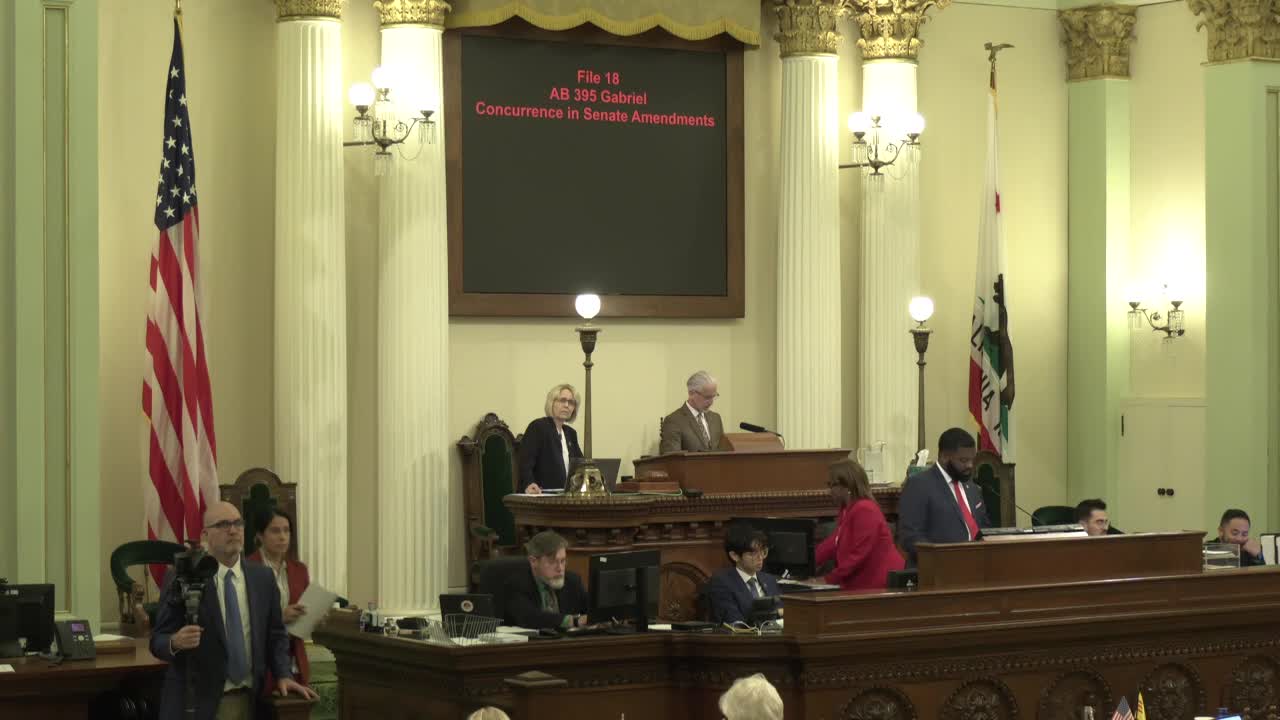
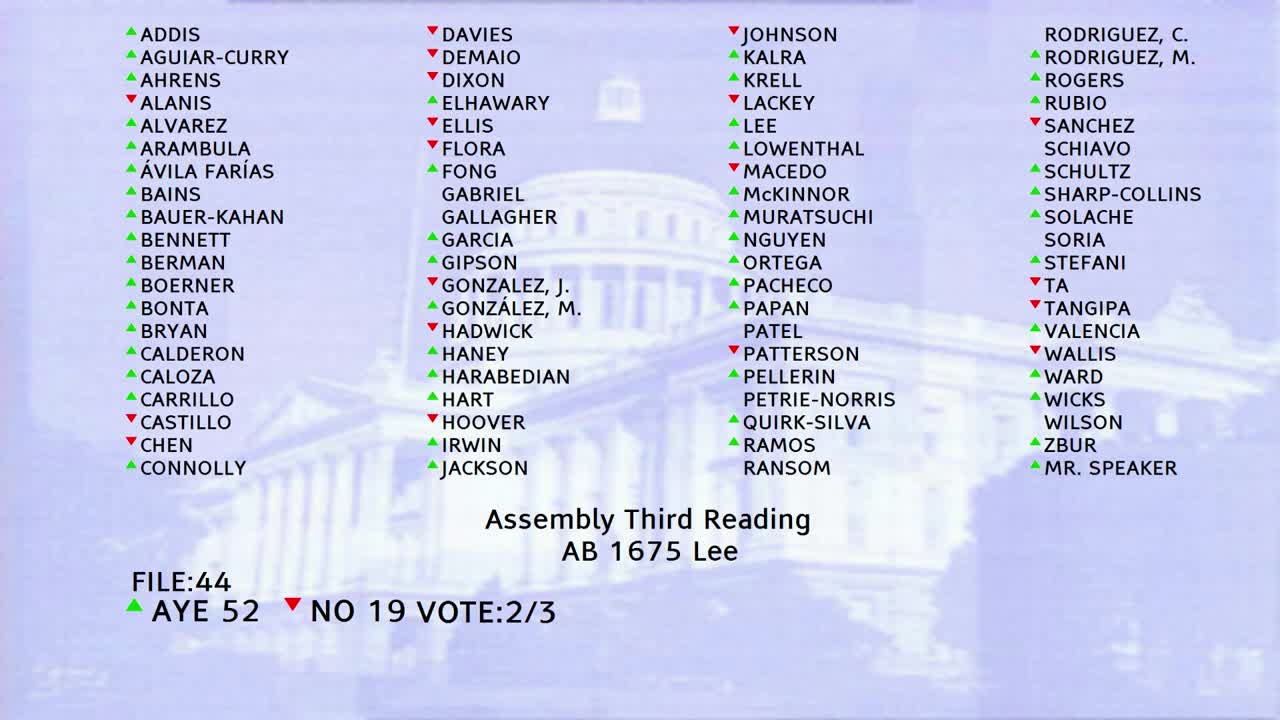
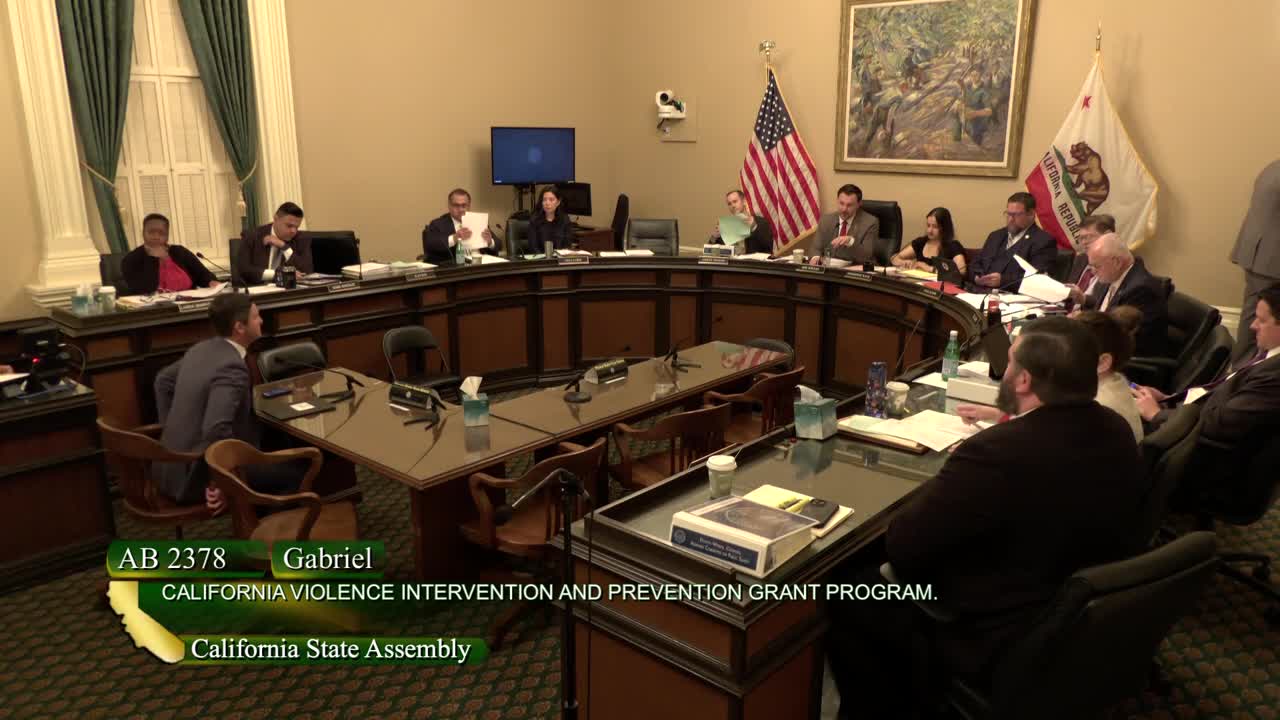


Bill Co-Author(s):