AB 2386: License to practice medicine: Licensed Physicians from Mexico Program and California Physician Expansion Act.
- Session Year: 2025-2026
- House: Assembly
- Latest Version Date: 2026-06-16
Current Status:
In Progress
(2026-08-13: In committee: Held under submission.)
Introduced
In Committee
Awaiting First Chamber Vote
Passed First Chamber
In Committee
Awaiting Second Chamber Vote
Passed Second Chamber
Enacted
Existing law, the Medical Practice Act, establishes the Medical Board of California to license and regulate the practice of medicine. Former law, repealed as of January 1, 2025, established the Licensed Physicians and Dentists from Mexico Pilot Program, which allowed up to 30 licensed physicians and up to 30 licensed dentists from Mexico to practice medicine or dentistry in California for a period not to exceed 3 years, in accordance with certain requirements. Existing law, operative January 1, 2025, instead, establishes within the act the Licensed Physicians from Mexico Program, which authorizes the board to issue a limited number of nonrenewable 3-year physicians and surgeons licenses to licensed physicians from Mexico who meet specified criteria.
This bill would require the board to issue a full and unrestricted physicians and surgeons license to a person who has completed the 2 3-year term terms of the Licensed Physicians from Mexico Program or the former Licensed Physicians and Dentists from Mexico Pilot Program in good standing upon satisfaction of specified requirements, including having an offer of continued employment from a health care facility or practice in California.
This bill would establish the California Physician Expansion Act, which would require the board to issue a provisional license to an applicant who holds a full and unrestricted license to practice medicine in another country who meets specified requirements, including that the applicant has not committed any acts or crimes constituting grounds for denial of a certificate, as specified. In this regard, the bill would require the board to submit to the Department of Justice fingerprint images and related information required by the department of all applicants for a provisional license to determine whether the applicant has a criminal conviction record, as specified, and would require the department to provide a state- and federal-level response pursuant to specified provisions for the board to determine whether the applicant is subject to denial of licensure, as specified.
The bill would make the provisional license valid for 3 years and would authorize the board to grant a one-time extension renewal for an additional period of up to 3 years, as specified. The bill would require a provisional licensee to, among other things, be employed by, and practice medicine only within, a sponsoring entity that is approved by the board, entity, as specified. The bill would authorize the board to revoke a provisional license or take any other disciplinary action deemed appropriate by the board, as specified. The bill would deem a provisional licensee applicant who meets specified requirements, including having completed at least 36 months of practice under the provisional license without any disciplinary actions, to meet the professional instruction, preliminary education, and postgraduate training requirements for a certificate under the Medical Practice Act. The bill would require the board to establish application, initial licensure, renewal, and conversion fees for the provisional license, as specified. The bill would make findings and declarations relating to its provisions.
Existing law, the Medical Practice Act, establishes the Medical Board of California to license and regulate the practice of medicine. Existing law Former law, repealed as of January 1, 2025, established the Licensed Physicians and Dentists from Mexico Pilot Program, which allowed up to 30 licensed physicians and up to 30 licensed dentists from Mexico to practice medicine or dentistry in California for a period not to exceed 3 years, in accordance with certain requirements. Existing law, operative January 1, 2025, instead, establishes within the act the Licensed Physicians from Mexico Program, which authorizes the board to issue a limited number of nonrenewable 3-year physicians and surgeons licenses to licensed physicians from Mexico who meet specified criteria.
This bill would require the board to issue a full and unrestricted physicians and surgeons license to a person who has completed the 3-year term of the program Licensed Physicians from Mexico Program or the former Licensed Physicians and Dentists from Mexico Pilot Program in good standing upon satisfaction of specified requirements, including having an offer of continued employment from a health care facility or practice in California.
This bill would establish the California Physician Expansion Act, which would require the board to issue a provisional license to an applicant who holds a full and unrestricted license to practice medicine in another country who meets specified requirements. The requirements, including that the applicant has not committed any acts or crimes constituting grounds for denial of a certificate, as specified. In this regard, the bill would require the board to submit to the Department of Justice fingerprint images and related information required by the department of all applicants for a provisional license to determine whether the applicant has a criminal conviction record, as specified, and would require the department to provide a state- and federal-level response pursuant to specified provisions for the board to determine whether the applicant is subject to denial of licensure, as specified.
The bill would make the provisional license valid for 3 years and would authorize the board to grant a one-time extension for an additional period of up to 3 years, as specified. The bill would require a provisional licensee to, among other things, be employed by, and practice medicine only within, a sponsoring entity that is approved by the board, as specified. The bill would authorize the board to revoke a provisional license or take any other disciplinary action deemed appropriate by the board, as specified. The bill would require the board to issue a full and unrestricted physicians and surgeons license to deem a provisional licensee applicant who meets specified requirements, including having completed at least 3 years 36 months of practice under the provisional license without any disciplinary actions. actions, to meet the professional instruction, preliminary education, and postgraduate training requirements for a certificate under the Medical Practice Act. The bill would require the board to establish application, initial licensure, renewal, and conversion fees for the provisional license, as specified. The bill would make findings and declarations relating to its provisions.
Existing law, the Medical Practice Act, establishes the Medical Board of California to license and regulate the practice of medicine. Existing law establishes within the act the Licensed Physicians from Mexico Program, which authorizes the board to issue a limited number of nonrenewable 3-year physicians and surgeons licenses to licensed physicians from Mexico who meet specified criteria.
This bill would require the board to issue a full and unrestricted physicians and surgeons license to a person who has completed the 3-year term of the program in good standing upon satisfaction of specified requirements, including having an offer of continued employment from a health care facility or practice in California.
This bill would establish the Provisional License for Qualified International Physicians California Physician Expansion Act, which would require the board to issue a provisional license to an applicant who holds a full and unrestricted license to practice medicine in another country who meets specified requirements. The bill would make the license valid for 5 3 years and renewable for one additional 5-year period. would authorize the board to grant a one-time extension for an additional period of up to 3 years, as specified. The bill would require a provisional licensee to, among other things, be employed by, and practice medicine only within, a sponsoring entity that is approved by the board, as specified. The bill would require the board to issue a full and unrestricted physicians and surgeons license to a provisional licensee applicant who meets specified requirements, including having completed at least 5 3 years of practice under the provisional license without any disciplinary actions. The bill would require the board to establish application, initial licensure, renewal, and conversion fees for the provisional license, as specified. The bill would make findings and declarations relating to its provisions.
Existing law, the Medical Practice Act, establishes the Medical Board of California to license and regulate the practice of medicine. Existing law establishes within the act the Licensed Physicians from Mexico Program, which authorizes the board to issue a limited number of nonrenewable 3-year physicians and surgeons licenses to licensed physicians from Mexico who meet specified criteria.
This bill would require the board to issue a full and unrestricted physicians and surgeons license to a person who has completed the 3-year term of the program in good standing upon satisfaction of specified requirements, including having an offer of continued employment from a health care facility or practice in California.
This bill would establish the Provisional License for Qualified International Physicians Act, which would require the board to issue a provisional license to an applicant who holds a full and unrestricted license to practice medicine in another country who meets specified requirements. The bill would make the license valid for 5 years and renewable for one additional 5-year period. The bill would require the board to issue a full and unrestricted physicians and surgeons license to a provisional licensee applicant who meets specified requirements, including having completed at least 5 years of practice under the provisional license without any disciplinary actions. The bill would require the board to establish application, initial licensure, renewal, and conversion fees for the provisional license, as specified.
(a)The Legislature finds and declares all of the following:
(1)California faces a severe and growing shortage of physicians, particularly in primary care specialties and in federally designated health professional shortage areas and medically underserved areas.
(2)The states diverse population, including large Spanish-speaking communities, requires culturally and linguistically competent physicians to ensure health equity and positive outcomes.
(3)The Licensed Physicians and Dentist from Mexico Pilot Program, which was originally enacted by Assembly Bill 1045 of the 200102 Regular Session, and recasted as the Licensed Physicians from Mexico Program by Assembly Bill 2860 of the 202324 Regular Session, has demonstrated success in placing qualified Mexican physicians in underserved settings but currently offers no pathway for these physicians to continue serving California communities beyond the three-year nonrenewable term.
(4)California has untapped resources of medical talent, including recent medical school graduates who have been unable to secure residency positions and experienced internationally trained physicians who seek to practice in areas of need.
(5)It is in the public interest to create additional supervised pathways to practice medicine that maintain rigorous standards for patient safety while expanding access to care in communities throughout the state.
(b)Therefore, it is the intent of the Legislature to expand access to care while maintaining appropriate standards for patient safety and professional accountability.
SEC. 2.Section 2126.1 is added to the Business and Professions Code, to read:2126.1.(a)A physician from Mexico who has completed the two three-year nonrenewable license terms of a licensing program under this article or under the Licensed Physicians and Dentists from Mexico Pilot Program, as established in former Section 853, may apply for a full and unrestricted physicians and surgeons license if the physician meets all of the following requirements:
(1)Has completed the two three-year term of the nonrenewable license program terms in good standing.
(2)Has obtained Educational Commission for Foreign Medical Graduates certification.(3)Has passed Steps 1, 2, and 3 of the United States Medical Licensing Examination.(4)(2)Has provided evidence satisfactory to the board establishing that the physician has received positive evaluations in the peer reviews described in paragraph (5) of subdivision (e) of Section 2125 and from the federally qualified health centers chief executive officer or chief medical officer for each year of licensure.
(5)(3)Has an offer of continued employment from a health care facility or practice in California, including, but not limited to, a federally qualified health care center, hospital, or clinic.
(4)Has certified that the physician will practice only in the areas of family medicine, internal medicine, pediatrics, obstetrics and gynecology, or psychiatry, as appropriate based on the physicians licensure and certification in Mexico and history of practice in California.
(6)(5)Has completed all applicable continuing medical education requirements of Article 10 (commencing with Section 2190) during the three-year term. each year of board licensure.
(6)Has not committed any acts or crimes constituting grounds for denial of licensure pursuant to Division 1.5 (commencing with Section 475) or Article 12 (commencing with Section 2220).
(7)Has no open complaints against their license and no history of enforcement action, including, but not limited to, a citation and fine or discipline, against their license.
(8)Is in good standing when applying for a full and unrestricted license and applies no earlier than nine months prior to the expiration of their current license.
(9)Has submitted payment of all fees for a full and unrestricted physician and surgeon license pursuant to Article 20 (commencing with Section 2435).
(b)The board shall issue a full and unrestricted physicians and surgeons license to an applicant who meets the requirements of subdivision (a) and who otherwise meets all requirements for licensure under this chapter.
(c)A license issued pursuant to this section shall expire, and may be renewed, pursuant to the requirements of Article 19 (commencing with Section 2421).
SEC. 3.Article 6.2 (commencing with Section 2128) is added to Chapter 5 of Division 2 of the Business and Professions Code, to read:6.2.California Physician Expansion Act2128.This article shall be known, and may be cited, as the California Physician Expansion Act.
2128.1.For purposes of this article:
(a)ACGME means the Accreditation Council for Graduate Medical Education.
(b)ECFMG means the Educational Commission for Foreign Medical Graduates.
(c)HPSA means health professional shortage area as designated by the United States Department of Health and Human Services.
(d)MUA means medically underserved area as designated by the United States Department of Health and Human Services.
(e)Sponsoring entity means an entity approved by the board that is one of the following:
(1)A federally qualified health center.
(2)A primary care clinic licensed under Section 1204 of the Health and Safety Code.
(3)A primary care clinic exempt from licensure pursuant to Section 1206 of the Health and Safety Code.
(4)A clinic owned or operated by a public hospital or health system. system located in a HPSA or a MUA.
(5)A clinic owned and operated by a hospital that maintains the primary contract with a county government to fill the countys role under Section 17000 of the Welfare and Institutions Code.
(6)Any licensed health facility located within a HPSA or MUA.2128.2.The board shall issue a provisional license to an applicant who meets all of the following requirements:
(a)The applicant holds a full and unrestricted license to practice medicine in another country and has been in good standing for at least four years. Any time spent by the applicant in a residency or postgraduate training program shall not be included in the calculation of this four-year period.
(b)The board determines that no disciplinary action has been taken against the applicant by any medical licensing authority and that the applicant has not been the subject of adverse judgments or settlements resulting from the practice of medicine that the board determines constitutes evidence of a pattern of negligence or incompetence.(b)The board determines all of the following:
(1)No disciplinary action has been taken against the applicant by any medical licensing authority.
(2)The applicant has not been subject to adverse judgments or settlements resulting from the practice of medicine.
(3)The applicant holds a license in good standing in the jurisdiction where they practiced medicine or held a license in good standing at the time they departed that jurisdiction. The board may waive this requirement if official verification of good standing is not available.
(c)(1)The applicant has not committed any acts or crimes constituting grounds for denial of a certificate under Division 1.5 (commencing with Section 475) or Article 12 (commencing with Section 2220).
(2)The board shall submit to the Department of Justice fingerprint images and related information required by the Department of Justice of all applicants for a provisional license to determine whether the applicant has a criminal conviction record in this state or in any other jurisdiction, including foreign countries, pursuant to Section 2042. The Department of Justice shall provide a state- and federal-level response in accordance with subdivision (p) of Section 11105 of the Penal Code for the board to determine whether the applicant is subject to denial of licensure under Division 1.5 (commencing with Section 475) and Section 2221.
(d)The applicant shows evidence satisfactory to the board that the licensee has received credit for at least 36 months of residency or postgraduate training in the other country that is substantially equivalent to an ACGME-accredited residency program, as determined by the board.(d)The applicant has done either of the following:
(1)Completed two years of postgraduate training in a graduate medical education program approved by the applicants country of licensure.
(2)Practiced medicine in the applicants country of licensure for at least six years after completion of medical school.
(e)The applicant has obtained ECFMG certification.
(f)The applicant has passed Steps 1 and 2 of the United States Medical Licensing Examination. Examination or has passed any other assessments approved by the board.
(g)The applicant has proficiency in the English language as demonstrated by a passing score on the Test of English as a Foreign Language or the Occupational English Test at levels established by the board.
(h)The applicant is authorized to work in the United States.
(i)The applicant has a valid offer of employment from a sponsoring entity.
2128.3.(a)(1)The provisional license shall be valid for a period of three years.
(2)Notwithstanding paragraph (1), the board may grant a one-time extension renewal of the provisional license for an additional period of up to three years upon demonstration of continued progress toward meeting licensure requirements.
(3)The total duration of any provisional license shall not exceed six years.
(b)(1)The provisional licensee shall be employed by, and practice medicine only within, a sponsoring entity that is approved by the board. entity.
(2)The sponsoring entity employing the provisional licensee shall do all of the following:
(A)Ensure that the provisional licensee practices under appropriate supervision.
(B)Maintain a peer review process consistent with applicable state and federal law.
(C)Be responsible for the medical services provided by the provisional licensee.
(D)Maintain a copy of the written agreement required pursuant to subparagraph (A) of paragraph (3) of subdivision (c). The sponsoring entity shall make the agreement available to the board upon request, including for purposes of complaint investigation, audit, or disciplinary review.
(3)The provisional licensees authority to practice shall be limited to the sponsoring entity identified in their application and approved by the board. application.
(4)If the provisional licensee ceases to be employed by the sponsoring entity, the provisional license shall no longer be valid unless the board approves a transfer to another sponsoring entity.
(c)(1)The provisional licensee shall practice under the supervision of a physician and surgeon licensed in this state and in good standing.
(2)The supervising physician and surgeon shall oversee the activities of, and accept responsibility for, the medical services rendered by the provisional licensee.
(3)(A)The supervising physician and surgeon and the provisional licensee shall enter into a written agreement that defines the medical services the provisional licensee is authorized to perform. The written agreement shall be completed and signed by the provisional licensee and the supervising physician and surgeon before the provisional licensee begins practice under the provisional license.
(B)Nothing in this section shall be construed to require the board to review, approve, or maintain a copy of the written agreement as a condition of issuing or renewing a provisional license.
(4)A supervising physician shall not supervise more than four provisional licensees at any one time.
(d)The provisional licensee shall complete all continuing medical education requirements of Article 10 (commencing with Section 2190).
(e)The board may revoke a provisional license or take any other disciplinary action deemed appropriate by the board pursuant to Article 12 (commencing with Section 2220).
2128.4.A provisional licensee shall be deemed to meet the professional instruction, preliminary education, and postgraduate training requirements for a certificate under this chapter if the provisional licensee meets all of the following requirements:
(a)The provisional licensee has passed Step 3 of the United States Medical Licensing Examination.
(b)The provisional licensee has completed at least 36 months of practice under the provisional license without any disciplinary actions.
(c)The provisional licensee has received a positive recommendation from the supervising physician or director of the sponsoring entitys medical staff.
2128.5.(a)The board shall set application, initial licensure, renewal, and conversion fees for the provisional license at an amount sufficient to cover the costs of administering this article.
(b)This section does not require the board to issue a license to any applicant who does not meet the requirements established by the board.(a)The Legislature finds and declares all of the following:
(1)California faces a severe and growing shortage of physicians, particularly in primary care specialties and in federally designated health professional shortage areas and medically underserved areas.
(2)The states diverse population, including large Spanish-speaking communities, requires culturally and linguistically competent physicians to ensure health equity and positive outcomes.
(3)The Licensed Physicians and Dentist from Mexico Pilot Program, which was originally enacted by Assembly Bill 1045 of the 200102 Regular Session, and recasted as the Licensed Physicians from Mexico Program by Assembly Bill 2860 of the 202324 Regular Session, has demonstrated success in placing qualified Mexican physicians in underserved settings but currently offers no pathway for these physicians to continue serving California communities beyond the three-year nonrenewable term.
(4)California has untapped resources of medical talent, including recent medical school graduates who have been unable to secure residency positions and experienced internationally trained physicians who seek to practice in areas of need.
(5)It is in the public interest to create additional supervised pathways to practice medicine that maintain rigorous standards for patient safety while expanding access to care in communities throughout the state.
(b)Therefore, it is the intent of the Legislature to expand access to care while maintaining appropriate standards for patient safety and professional accountability.
SEC. 2.Section 2126.1 is added to the Business and Professions Code, to read:2126.1.(a)A physician from Mexico who has completed the three-year nonrenewable license program under this article or under the Licensed Physicians and Dentists from Mexico Pilot Program, as established in former Section 853, may apply for a full and unrestricted physicians and surgeons license if the physician meets all of the following requirements:
(1)Has completed the three-year term of the nonrenewable license program in good standing.
(2)Has obtained Educational Commission for Foreign Medical Graduates certification.
(3)Has passed Steps 1, 2, and 3 of the United States Medical Licensing Examination.
(4)Has received positive evaluations in the peer reviews described in paragraph (5) of subdivision (e) of Section 2125 and from the federally qualified health centers chief medical officer for each year of licensure.
(5)Has an offer of continued employment from a health care facility or practice in California, including, but not limited to, a federally qualified health care center, hospital, or clinic.
(6)Has completed all continuing medical education requirements of Article 10 (commencing with Section 2190) during the three-year term.
(b)The board shall issue a full and unrestricted physicians and surgeons license to an applicant who meets the requirements of subdivision (a) and who otherwise meets all requirements for licensure under this chapter.
SEC. 3.Article 6.2 (commencing with Section 2128) is added to Chapter 5 of Division 2 of the Business and Professions Code, to read:6.2.California Physician Expansion Act2128.This article shall be known, and may be cited, as the California Physician Expansion Act.
2128.1.For purposes of this article:
(a)ACGME means the Accreditation Council for Graduate Medical Education.
(b)ECFMG means the Educational Commission for Foreign Medical Graduates.
(c)HPSA means health professional shortage area as designated by the United States Department of Health and Human Services.
(d)MUA means medically underserved area as designated by the United States Department of Health and Human Services.
(e)Sponsoring entity means an entity approved by the board that is one of the following:
(1)A federally qualified health center.
(2)A primary care clinic licensed under Section 1204 of the Health and Safety Code.
(3)A primary care clinic exempt from licensure pursuant to Section 1206 of the Health and Safety Code.
(4)A clinic owned or operated by a public hospital or health system.
(5)A clinic owned and operated by a hospital that maintains the primary contract with a county government to fill the countys role under Section 17000 of the Welfare and Institutions Code.
(6)Any licensed health facility located within a HPSA or MUA.
2128.2.The board shall issue a provisional license to an applicant who meets all of the following requirements:
(a)Holds The applicant holds a full and unrestricted license to practice medicine in another country and has been in good standing for at least three four years. Any time spent by the applicant in a residency or postgraduate training program shall not be included in the calculation of this four-year period.
(b)Has completed a residency or postgraduate training program in the other country, or has otherwise demonstrated education and training consistent with pathways recognized by the board, including education and training identified in nationally recognized models for international medical graduate licensure.(b)The board determines that no disciplinary action has been taken against the applicant by any medical licensing authority and that the applicant has not been the subject of adverse judgments or settlements resulting from the practice of medicine that the board determines constitutes evidence of a pattern of negligence or incompetence.
(c)(1)The applicant has not committed any acts or crimes constituting grounds for denial of a certificate under Division 1.5 (commencing with Section 475) or Article 12 (commencing with Section 2220).
(2)The board shall submit to the Department of Justice fingerprint images and related information required by the Department of Justice of all applicants for a provisional license to determine whether the applicant has a criminal conviction record in this state or in any other jurisdiction, including foreign countries, pursuant to Section 2042. The Department of Justice shall provide a state- and federal-level response in accordance with subdivision (p) of Section 11105 of the Penal Code for the board to determine whether the applicant is subject to denial of licensure under Division 1.5 (commencing with Section 475) and Section 2221.
(d)The applicant shows evidence satisfactory to the board that the licensee has received credit for at least 36 months of residency or postgraduate training in the other country that is substantially equivalent to an ACGME-accredited residency program, as determined by the board.
(c)Has(e)The applicant has obtained ECFMG certification.
(d)Has(f)The applicant has passed Steps 1 and 2 of the United States Medical Licensing Examination.
(e)Has(g)The applicant has proficiency in the English language as demonstrated by a passing score on the Test of English as a Foreign Language or the Occupational English Test at levels established by the board.
(f)Is(h)The applicant is authorized to work in the United States.
(g)Has(i)The applicant has a valid offer of employment from a health care facility or practice in California, including, but not limited to, a hospital, clinic, or facility with an ACGME-accredited residency program. sponsoring entity.
2128.3.(a)(1)The provisional license shall be valid for a period of three years.
(2)Notwithstanding paragraph (1), the board may grant a one-time extension of the provisional license for an additional period of up to three years upon demonstration of continued progress toward meeting licensure requirements.
(3)The total duration of any provisional license shall not exceed six years.
(b)(1)The provisional licensee shall be employed by, and practice medicine only within, a sponsoring entity that is approved by the board.
(1)A sponsoring entity may include a federally qualified health center, community clinic, or hospital.(2)The sponsoring entity employing the provisional licensee shall do all of the following:
(A)Ensure that the provisional licensee practices under appropriate supervision.
(B)Maintain a peer review process consistent with applicable state and federal law.
(C)Be responsible for the medical services provided by the provisional licensee.
(3)The provisional licensees authority to practice shall be limited to the sponsoring entity identified in their application and approved by the board.
(4)If the provisional licensee ceases to be employed by the sponsoring entity, the provisional license shall no longer be valid unless the board approves a transfer to another sponsoring entity.
(c)(1)The provisional licensee shall practice under the supervision of a physician and surgeon licensed in this state and in good standing.
(2)The supervising physician and surgeon shall oversee the activities of, and accept responsibility for, the medical services rendered by the provisional licensee.
(3)The supervising physician and surgeon and the provisional licensee shall enter into a written agreement that defines the medical services the provisional licensee is authorized to perform.
(4)A supervising physician shall not supervise more than four provisional licensees at any one time.
(d)The provisional licensee shall complete all continuing medical education requirements of Article 10 (commencing with Section 2190).
(e)The board may revoke a provisional license or take any other disciplinary action deemed appropriate by the board pursuant to Article 12 (commencing with Section 2220).
2128.4.(a)A provisional licensee may apply for a full and unrestricted physicians and surgeons license shall be deemed to meet the professional instruction, preliminary education, and postgraduate training requirements for a certificate under this chapter if the provisional licensee meets all of the following requirements:
(1)Has(a)The provisional licensee has passed Step 3 of the United States Medical Licensing Examination.
(2)Has(b)The provisional licensee has completed at least three years 36 months of practice under the provisional license without any disciplinary actions.
(3)Has(c)The provisional licensee has received a positive recommendation from the supervising physician or director of the facilitys sponsoring entitys medical staff.
(b)The board shall issue a full and unrestricted physicians and surgeons license to an applicant who meets the requirements of subdivision (a) and who otherwise meets all requirements for licensure under this chapter.2128.5.(a)The board shall set application, initial licensure, renewal, and conversion fees for the provisional license at an amount sufficient to cover the costs of administering this article.
(b)This section does not require the board to issue a license to any applicant who does not meet the requirements established by the board.
CORRECTIONS: TextPage 3.(a)The Legislature finds and declares all of the following:
(a)(1)California faces a severe and growing shortage of physicians, particularly in primary care specialties and in federally designated health professional shortage areas and medically underserved areas.
(b)(2)The states diverse population, including large Spanish-speaking communities, requires culturally and linguistically competent physicians to ensure health equity and positive outcomes.
(c)(3)The existing Licensed Physicians and Dentist from Mexico Pilot Program, which was originally enacted by Assembly Bill 1045 of the 2001-02 Regular Session, and recasted as the Licensed Physicians from Mexico Program, as enacted Program by Assembly Bill 2860 of the 202324 Regular Session, has demonstrated success in placing qualified Mexican physicians in underserved settings but currently offers no pathway for these physicians to continue serving California communities beyond the three-year nonrenewable term.
(d)(4)California has untapped resources of medical talent, including recent medical school graduates who have been unable to secure residency positions and experienced internationally trained physicians who seek to practice in areas of need.
(e)(5)It is in the public interest to create additional supervised pathways to practice medicine that maintain rigorous standards for patient safety while expanding access to care in communities throughout the state.
(b)Therefore, it is the intent of the Legislature to expand access to care while maintaining appropriate standards for patient safety and professional accountability.
SEC. 2.Section 2126.1 is added to the Business and Professions Code, to read:2126.1.(a)A physician from Mexico who has completed the three-year nonrenewable license program under this article may apply for a full and unrestricted physicians and surgeons license if the physician meets all of the following requirements:
(1)Has completed the three-year term of the nonrenewable license program in good standing.
(2)Has obtained Educational Commission for Foreign Medical Graduates certification.
(3)Has passed Steps 1, 2, and 3 of the United States Medical Licensing Examination.
(4)Has received positive evaluations in the peer reviews described in paragraph (5) of subdivision (e) of Section 2125 and from the federally qualified health centers chief medical officer for each year of licensure.
(5)Has an offer of continued employment from a health care facility or practice in California, including, but not limited to, a federally qualified health care center, hospital, or clinic.
(6)Has completed all continuing medical education requirements of Article 10 (commencing with Section 2190) during the three-year term.
(b)The board shall issue a full and unrestricted physicians and surgeons license to an applicant who meets the requirements of subdivision (a) and who otherwise meets all requirements for licensure under this chapter.
SEC. 3.Article 6.2 (commencing with Section 2128) is added to Chapter 5 of Division 2 of the Business and Professions Code, to read:6.2.Provisional License for Qualified International Physicians California Physician Expansion Act2128.This article shall be known, and may be cited, as the Provisional License for Qualified International Physicians California Physician Expansion Act.
2128.1.For purposes of this article:
(a)ACGME means the Accreditation Council for Graduate Medical Education.
(b)ECFMG means the Educational Commission for Foreign Medical Graduates.
(c)HPSA means health professional shortage area as designated by the United States Department of Health and Human Services.
(d)MUA means medically underserved area as designated by the United States Department of Health and Human Services.
2128.2.(a)Except as provided in subdivision (b), the The board shall issue a provisional license to an applicant who meets all of the following requirements:
(1)(a)Holds a full and unrestricted license to practice medicine in another country and has been in good standing for at least three years.
(2)(b)Has completed a residency or postgraduate training program in the other country that is substantially equivalent to an ACGME-accredited residency program as determined by the board. country, or has otherwise demonstrated education and training consistent with pathways recognized by the board, including education and training identified in nationally recognized models for international medical graduate licensure.
(3)(c)Has obtained ECFMG certification.
(4)(d)Has passed Steps 1 and 2 of the United States Medical Licensing Examination.
(5)(e)Has proficiency in the English language as demonstrated by a passing score on the Test of English as a Foreign Language or the Occupational English Test at levels established by the board.
(6)(f)Is authorized to work in the United States.
(7)(g)Has a valid offer of employment from a health care facility or practice in California, including, but not limited to, a hospital, clinic, or facility with an ACGME-accredited residency program.
(b)A physician who is a citizen of Mexico and who is eligible for the Licensed Physicians from Mexico Program under Article 6 (commencing with Section 2125) shall not be eligible for a provisional license under this article.2128.3.(a)(1)The provisional license shall be valid for five years and may be renewed for one additional five-year period. a period of three years.
(b)During the initial five-year period, the provisional licensee shall practice in a health care facility or practice in California under the supervision required in subdivision (c).(c)The provisional licensee shall be subject to supervision by a physician holding a full and unrestricted California license during the initial five-year period.(2)Notwithstanding paragraph (1), the board may grant a one-time extension of the provisional license for an additional period of up to three years upon demonstration of continued progress toward meeting licensure requirements.
(3)The total duration of any provisional license shall not exceed six years.
(b)The provisional licensee shall be employed by, and practice medicine only within, a sponsoring entity that is approved by the board.
(1)A sponsoring entity may include a federally qualified health center, community clinic, or hospital.
(2)The sponsoring entity employing the provisional licensee shall do all of the following:
(A)Ensure that the provisional licensee practices under appropriate supervision.
(B)Maintain a peer review process consistent with applicable state and federal law.
(C)Be responsible for the medical services provided by the provisional licensee.
(3)The provisional licensees authority to practice shall be limited to the sponsoring entity identified in their application and approved by the board.
(4)If the provisional licensee ceases to be employed by the sponsoring entity, the provisional license shall no longer be valid unless the board approves a transfer to another sponsoring entity.
(c)The provisional licensee shall practice under the supervision of a physician and surgeon licensed in this state and in good standing.
2128.4.(a)A provisional licensee may apply for a full and unrestricted physicians and surgeons license if the provisional licensee meets all of the following requirements:
(1)Has passed Step 3 of the United States Medical Licensing Examination.
(2)Has completed at least five three years of practice under the provisional license without any disciplinary actions.
(3)Has received a positive recommendation from the supervising physician or director of the facilitys medical staff.
(b)The board shall issue a full and unrestricted physicians and surgeons license to an applicant who meets the requirements of subdivision (a) and who otherwise meets all requirements for licensure under this chapter.
2128.5.(a)The board shall set application, initial licensure, renewal, and conversion fees for the provisional license at an amount sufficient to cover the costs of administering this article.
(b)This section does not require the board to issue a license to any applicant who does not meet the requirements established by the board.
The Legislature finds and declares all of the following:
(a)California faces a severe and growing shortage of physicians, particularly in primary care specialties and in federally designated health professional shortage areas and medically underserved areas.
(b)The states diverse population, including large Spanish-speaking communities, requires culturally and linguistically competent physicians to ensure health equity and positive outcomes.
(c)The existing Licensed Physicians from Mexico Program, as enacted by Assembly Bill 2860 of the 202324 Regular Session, has demonstrated success in placing qualified Mexican physicians in underserved settings but currently offers no pathway for these physicians to continue serving California communities beyond the three-year nonrenewable term.
(d)California has untapped resources of medical talent, including recent medical school graduates who have been unable to secure residency positions and experienced internationally trained physicians who seek to practice in areas of need.
(e)It is in the public interest to create additional supervised pathways to practice medicine that maintain rigorous standards for patient safety while expanding access to care in communities throughout the state.
SEC. 2.Section 2126.1 is added to the Business and Professions Code, to read:2126.1.(a)A physician from Mexico who has completed the three-year nonrenewable license program under this article may apply for a full and unrestricted physicians and surgeons license if the physician meets all of the following requirements:
(1)Has completed the three-year term of the nonrenewable license program in good standing.
(2)Has obtained Educational Commission for Foreign Medical Graduates certification.
(3)Has passed Steps 1, 2, and 3 of the United States Medical Licensing Examination.
(4)Has received positive evaluations in the peer reviews described in paragraph (5) of subdivision (e) of Section 2125 and from the federally qualified health centers chief medical officer for each year of licensure.
(5)Has an offer of continued employment from a health care facility or practice in California, including, but not limited to, a federally qualified health care center, hospital, or clinic.
(6)Has completed all continuing medical education requirements of Article 10 (commencing with Section 2190) during the three-year term.
(b)The board shall issue a full and unrestricted physicians and surgeons license to an applicant who meets the requirements of subdivision (a) and who otherwise meets all requirements for licensure under this chapter.
SEC. 3.Article 6.2 (commencing with Section 2128) is added to Chapter 5 of Division 2 of the Business and Professions Code, to read:6.2.Provisional License for Qualified International Physicians2128.This article shall be known, and may be cited, as the Provisional License for Qualified International Physicians Act.
2128.1.For purposes of this article:
(a)ACGME means the Accreditation Council for Graduate Medical Education.
(b)ECFMG means the Educational Commission for Foreign Medical Graduates.
(c)HPSA means health professional shortage area as designated by the United States Department of Health and Human Services.
(d)MUA means medically underserved area as designated by the United States Department of Health and Human Services.
2128.2.(a)Except as provided in subdivision (b), the board shall issue a provisional license to an applicant who meets all of the following requirements:
(1)Holds a full and unrestricted license to practice medicine in another country and has been in good standing for at least three years.
(2)Has completed a residency or postgraduate training program in the other country that is substantially equivalent to an ACGME-accredited residency program as determined by the board.
(3)Has obtained ECFMG certification.
(4)Has passed Steps 1 and 2 of the United States Medical Licensing Examination.
(5)Has proficiency in the English language as demonstrated by a passing score on the Test of English as a Foreign Language or the Occupational English Test at levels established by the board.
(6)Is authorized to work in the United States.
(7)Has a valid offer of employment from a health care facility or practice in California, including, but not limited to, a hospital, clinic, or facility with an ACGME-accredited residency program.
(b)A physician who is a citizen of Mexico and who is eligible for the Licensed Physicians from Mexico Program under Article 6 (commencing with Section 2125) shall not be eligible for a provisional license under this article.
2128.3.(a)The provisional license shall be valid for five years and may be renewed for one additional five-year period.
(b)During the initial five-year period, the provisional licensee shall practice in a health care facility or practice in California under the supervision required in subdivision (c).
(c)The provisional licensee shall be subject to supervision by a physician holding a full and unrestricted California license during the initial five-year period.
2128.4.(a)A provisional licensee may apply for a full and unrestricted physicians and surgeons license if the provisional licensee meets all of the following requirements:
(1)Has passed Step 3 of the United States Medical Licensing Examination.
(2)Has completed at least five years of practice under the provisional license without any disciplinary actions.
(3)Has received a positive recommendation from the supervising physician or director of the facilitys medical staff.
(b)The board shall issue a full and unrestricted physicians and surgeons license to an applicant who meets the requirements of subdivision (a) and who otherwise meets all requirements for licensure under this chapter.
2128.5.The board shall set application, initial licensure, renewal, and conversion fees for the provisional license at an amount sufficient to cover the costs of administering this article.
|
Date
|
Status
|
|---|---|
| Aug 13, 2026 | In committee: Held under submission. |
| Aug 3, 2026 | In committee: Referred to APPR. suspense file. |
| Jun 22, 2026 | From committee: Do pass and re-refer to Com. on APPR. (Ayes 7. Noes 2.) (June 22). Re-referred to Com. on APPR. |
| Jun 16, 2026 | From committee chair, with author's amendments: Amend, and re-refer to committee. Read second time, amended, and re-referred to Com. on B. P. & E.D. |
| Jun 10, 2026 | Referred to Com. on B. P. & E.D. |
| May 27, 2026 | In Senate. Read first time. To Com. on RLS. for assignment. |
| May 26, 2026 | Read third time. Passed. Ordered to the Senate. (Ayes 54. Noes 9. Page 5319.) |
| May 26, 2026 | Read third time. Passed. Ordered to the Senate. (Ayes 54. Noes 9.) |
| May 26, 2026 | Read third time. Passed. Ordered to the Senate. |
| May 18, 2026 | Read second time. Ordered to third reading. |
| May 14, 2026 | From committee: Do pass. (Ayes 11. Noes 2.) (May 14). |
| May 6, 2026 | In committee: Set, first hearing. Referred to APPR. suspense file. |
| Apr 23, 2026 | Measure version as amended on April 22 corrected. |
| Apr 23, 2026 | Re-referred to Com. on APPR. |
| Apr 22, 2026 | Read second time and amended. |
| Apr 21, 2026 | From committee: Amend, and do pass as amended and re-refer to Com. on APPR. (Ayes 12. Noes 2.) (April 21). |
| Apr 14, 2026 | Re-referred to Com. on B. & P. |
| Apr 13, 2026 | From committee chair, with author's amendments: Amend, and re-refer to Com. on B. & P. Read second time and amended. |
| Mar 9, 2026 | Referred to Com. on B. & P. |
| Feb 21, 2026 | From printer. May be heard in committee March 23. |
| Feb 20, 2026 | Read first time. To print. |
|
Date
|
Description
|
Location
|
Votes
|
|
|---|---|---|---|---|
| Aug 3, 2026 | Placed on suspense file | Senate Standing Committee on Appropriations |
Passed |
|
| Jun 22, 2026 | Do pass, but first be re-referred to the Committee on [Appropriations] | Senate Standing Committee on Business, Professions and Economic Development |
Passed |
|
| May 26, 2026 | AB 2386 Alvarez Assembly Third Reading | Assembly Floor |
Passed |
|
| May 14, 2026 | Do pass. | Assembly Standing Committee on Appropriations |
Passed |
|
| Apr 21, 2026 | Do pass as amended and be re-referred to the Committee on [Appropriations] | Assembly Standing Committee on Business and Professions |
Passed |
This list shows positions taken on this bill by organizations on the date displayed, which is linked to the original source.
Positions by individuals are not included.
|
Organization
|
Position
|
Date
|
|---|---|---|
| Alameda Health Consortium - San Leandro, CA | ** Support | |
| Alexander Valley Healthcare | ** Support | |
| Aliados Health | ** Support | |
| All Inclusive Community Health Center | ** Support | |
| Altamed Health Services (co-sponsor) | ** Support | |
| Altura Centers For Health | ** Support | |
| Ampla Health | ** Support | |
| Arroyo Vista Family Health Center | ** Support | |
| Asian Americans for Community Involvement | ** Support | |
| Axis Community Health | ** Support | |
| California Association Of Family Physicians | ** Against | |
| California Consortium for Urban Indian Health | ** Support | |
| California Medical Association | ** Against | |
| California Primary Care Association (co-sponsor) | ** Support | |
| Camino Health Center | ** Support | |
| Cedars Sinai | ** Against | |
| Center For Family Health & Education | ** Support | |
| Chinatown Service Center | ** Support | |
| Clinica Monsenor Oscar A. Romero | ** Support | |
| Clinica Romero | ** Support | |
| Clinicas Del Valle De Salinas | ** Against | |
| Community Clinic Association of Los Angeles County | ** Support | |
| Community Health Association of Inland Southern Region | ** Support | |
| Community Health Partnership | ** Support | |
| Comprehensive Community Health Centers | ** Support | |
| Eisner Health | ** Support | |
| Elica Health Centers | ** Support | |
| El Proyecto del Barrio, Inc. | ** Support | |
| Fresno American Indian Health Project | ** Support | |
| Garfield Health Center | ** Support | |
| Golden Valley Health Centers | ** Support | |
| Health Alliance of Northern California | ** Support | |
| Health Center Partners of Southern California | ** Support | |
| HealthRight 360 | ** Support | |
| Hill Country Community Clinic | ** Support | |
| Innercare | ** Support | |
| JWCH Institute | ** Support | |
| La Clinica de La Raza, Inc. | ** Support | |
| Latino Coalition for a Healthy California | ** Support | |
| Latinx Physicians Of California | ** Support | |
| Loma Linda University Health | ** Against | |
| MCHC Health Centers | ** Support | |
| Medical Board of California | ** Against | |
| Mendocino Community Health Clinic | ** Support | |
| More Doctors for California | ** Support | |
| More Doctors for California (MD4CA) | ** Support | |
| National Hispanic Health Foundation | ** Support | |
| Neighborhood Healthcare | ** Support | |
| Niskanen Center | ** Support | |
| North Coast Clinics Network | ** Support | |
| Northeast Valley Health Corporation | ** Support | |
| Open Door Community Health Centers | ** Support | |
| OPSAM Health | ** Support | |
| Peach Tree Healthcare | ** Support | |
| Ravenswood Family Health Network | ** Support | |
| Ritter Center | ** Support | |
| Saban Community Clinic | ** Support | |
| Sacramento Native American Health Center | ** Support | |
| Salud Para La Gente | ** Support | |
| Samuel Dixon Family Health Center | ** Support | |
| San Benito Health Foundation | ** Support | |
| San Francisco Community Clinic Consortium | ** Support | |
| Scripps Health | ** Against | |
| Share Ourselves | ** Support | |
| Shasta Community Health Center | ** Support | |
| Sikh Medical Initiative | ** Support | |
| South Central Family Health Center | ** Support | |
| Stanford Health Care | ** Against | |
| The Coalition of Orange County Community Health Centers | ** Support | |
| TrueCare | ** Support | |
| Unicare Community Health Center | ** Support | |
| Universidad Autonoma De Guadalajara | ** Support | |
| University of Southern California | ** Against | |
| Venice Family Clinic | ** Support | |
| Via Care Community Health Center | ** Support | |
| Vista Community Clinic | ** Support | |
| Westside Family Health Center | ** Support | |
| World Education Services | ** Support |
SENATE COMMITTEE ON
Senator Sabrina Cervantes, Chair
2025 - 2026 Regular Session
AB 2386 (Alvarez) - License to practice medicine: Licensed Physicians from Mexico Program and California Physician Expansion Act
Version: | Policy Vote: |
Urgency: | Mandate: |
Hearing Date: | Consultant: |
Bill Summary:
AB 2386 establishes the California Physician Expansion Act, which authorizes a new pathway for internationally licensed physicians to practice in California through a provisional license while working under supervision at qualifying clinics and health care facilities serving underserved communities. AB 2386 also authorizes physicians participating in the Licensed Physicians from Mexico Program (Mexico Program), who have successfully completed two three-year terms and met specified performance, training, and disciplinary requirements, to obtain a full and unrestricted physician license.
Fiscal Impact:
The Medical Board of California (MBC) anticipates significant total costs, ranging from the hundreds of thousands to low millions of dollars (MBC Contingent Fund) to establish and implement the Mexico Program transition and provisional licensure pathways. While MBC expects the initial year to implement the Mexico Program transition pathway to be absorbable due to a small cohort of fewer than 30 licensees, costs stemming from the creation of the provisional licensure pathway will not be absorbable.
Specifically, MBC estimates the following costs to establish and implement the provisional licensure pathway:
- Rulemaking: A one-time cost of $14,000, which includes securing a medical consultant to assist with regulatory packages.
- Personnel and Consulting: $346,000 in Fiscal Year (FY) 2028-29 for 2.0 positions and $173,000 ongoing annually for 1.0 position, alongside $10,000 ongoing for increased medical consultant workload.
- Enforcement and Litigation: Increased enforcement costs of $70,000 to $135,000 within the first three years of licensing, alongside $160,000 to $1.2 million in additional litigation costs.
- Fee Revenue: An unknown increase in fee revenue, which may offset MBC’s administrative and enforcement costs to some extent.
Additionally, the Office of Information Services (OIS) estimates unabsorbable IT costs of $147,000 to build a new license type in BreEZe and update online applications. OIS notes that delayed implementation will be necessary to secure the required vendor resources.
Background:
The MBC is authorized to issue a special faculty permit (SFP) to a person who is deemed academically eminent under the provisions of Business and Professions Code (BPC) § 2168. In order for MBC to issue a SFP, the physician must meet the following eligibility requirements: they must be clearly outstanding in a specific field of medicine or surgery and offered a full-time academic appointment at the level of full professor, or have been offered a full-time academic appointment at the level of associate professor if a great need exists. All SFP applicants are subject to the same fingerprint requirements and primary source documents as an applicant for a physician license. The MBC reports the SFP must be renewed every two years and the holder must have the dean certify that the permit holder continues to meet the eligibility criteria, is still employed at the sponsoring institution, continues to possess a current medical license in another state or country, and is not subject to permit denial under BPC § 480. To verify a SFP holder’s current status and public record, the public can search on the Board’s website. The complaint process is the same for a SFP holder as it is for any complaint the Board receives for a licensed physician.
MBC has a Special Faculty Permit Review Committee (SFPRC) that reviews SFP applications and makes recommendations for approval or denial. The review committee consists of one representative from each of the eleven medical schools in California and two Board members, one physician and one public member, for a total of 13 members. The purpose of the committee is to evaluate the credentials of internationally trained physicians sponsored by a California medical school to determine if they are academically eminent in their specialty and therefore should be issued a SFP.
The SFP authorizes the physician to practice with all of the rights and privileges of a California medical license in the sponsoring medical school and its affiliated hospitals.
Proposed Law:
- Authorizes a Mexico Physicians Program participant to apply for a full and unrestricted license if the physician meets all of the following requirements:
- The physician has completed two three-year terms of the nonrenewable license program in good standing.
- The physician has received positive evaluations in peer reviews from the federally qualified health center’s chief medical officer for each year of licensure.
- The physician has an offer of continued employment from a California health care facility or practice, including, but not limited to, a federally qualified health center, hospital, or clinic.
- The physician certifies that they will practice only in the areas of family medicine, internal medicine, pediatrics, obstetrics and gynecology, or psychiatry, as appropriate based on their licensure and certification in Mexico and history of practice in California.
- The physician completed all continuing medical education (CME) requirements during the three-year term.
- The physician has not committed any acts or crimes constituting grounds for denial of licensure.
- The physician does not have any open complaints against their license and has no history of enforcement action against their license, including, but not limited to, a citation, fine, or discipline.
- The physician is in good standing when applying for a full and unrestricted license, and applies no earlier than nine months prior to the expiration of their current license.
- The physician has submitted payment for all fees for a full and unrestricted license.
- Requires MBC to issue a full and unrestricted license to an applicant who meets the requirements described above and who otherwise meets all requirements for licensure.
- Establishes the California Physician Expansion Act, which requires the MBC to issue a provisional license to an applicant who meets the following requirements:
- The applicant holds a full and unrestricted license to practice medicine in another country and has been in good standing for at least four years. Residency or postgraduate training programs must not be included when calculating this four-year period.
- The MBC determines that no disciplinary action has been taken against the applicant by any medical licensing authority; the applicant has not been subject to adverse judgments or settlements resulting from the practice of medicine; and the applicant holds a license in good standing in the jurisdiction where they practiced medicine, or held a license in good standing at the time they departed that jurisdiction. The MBC is authorized to waive this requirement if official verification of good standing is unavailable.
- The applicant has not committed any acts or crimes constituting grounds for denial of a license.
- The MBC submits fingerprint images and related information to DOJ to determine if the applicant has a criminal conviction record in California or another state or country.
- The applicant has completed two years of postgraduate training in a graduate medical education program approved by the applicant’s country of licensure, and has practiced medicine in that country for at least six years after completing medical school.
- The applicant obtains Educational Commission for Foreign Medical Graduates (ECFMG) certification.
- The applicant has passed Steps 1 and 2 of the United States Medical Licensing Examination (USMLE) or has passed other assessments approved by the MBC.
- The applicant is proficient in English, as demonstrated by a passing score on the Test of English as a Foreign Language (TOEFL) or the Occupational English Test (OET) at levels established by the MBC.
- The applicant is authorized to work in the United States.
- The applicant has a valid offer of employment from a sponsoring entity.
- Makes the provisional license valid for a period of three years and authorizes the MBC to grant a one-time renewal for an additional period of up to three years upon demonstration of continued progress toward meeting licensure requirements; however, the total duration of a provisional license must not exceed six years.
- Limits the provisional licensee to being employed by, and practicing medicine only within, a sponsoring entity. It requires a sponsoring entity to ensure that the provisional licensee practices under appropriate supervision, to maintain a peer review process consistent with applicable state and federal law, to be responsible for the medical services provided by the provisional licensee, and to maintain a copy of the written agreement that defines the medical services the provisional licensee is authorized to perform. "Sponsoring entity" is defined as one of the following:
- A federally qualified health center.
- A licensed primary care clinic.
- A primary care clinic exempt from licensure.
- A clinic owned or operated by a public hospital or health system located in a health professional shortage area or medically underserved area.
- A clinic owned and operated by a hospital that maintains the primary contract with a county government to fill the county’s role under Section 17000 of the Welfare and Institutions Code.
- Limits a provisional licensee’s authority to practice to the sponsoring entity identified in their application, and dictates that a provisional license is invalid if the provisional licensee ceases to be employed by that sponsoring entity.
- Requires the provisional licensee to practice under the supervision of a licensed physician in good standing. The supervising physician and the provisional licensee must enter into a written agreement defining the medical services the provisional licensee is authorized to perform. This provision shall not be construed to require the MBC to review, approve, or maintain a copy of the written agreement as a condition of issuing or renewing a provisional license.
- Prohibits a supervising physician from supervising more than four provisional licensees at any one time.
- Requires a provisional licensee to complete all continuing medical education requirements.
- Authorizes the MBC to revoke a provisional license or take any other disciplinary action deemed appropriate.
- Provides that a provisional licensee is deemed to have met the professional instruction, preliminary education, and postgraduate training requirements for a full license if they meet all of the following requirements:
- The provisional licensee has passed Step 3 of the USMLE.
- The provisional licensee has completed at least 36 months of practice without any disciplinary actions.
- The provisional licensee has received a positive recommendation from the supervising physician or the director of the sponsoring entity’s medical staff.
- Requires the MBC to set application, initial licensure, renewal, and conversion fees for the provisional license at an amount sufficient to cover the costs of administering the license.
- States legislative findings and declarations.
- States legislative intent to expand access to care while maintaining appropriate standards for patient safety and professional accountability.
-- END --
SENATE COMMITTEE ON
BUSINESS, PROFESSIONS AND ECONOMIC DEVELOPMENT
Senator Dr. Aisha Wahab, Chair
2025 - 2026 Regular
Bill No: Hearing Date: June 22, 2026
Author: | |||
Version: |
| ||
Urgency: | Fiscal: | ||
Consultant: | |||
Subject:
SUMMARY:
Establishes the California Physician Expansion Act which authorizes a new pathway for internationally licensed physicians to practice in California through a provisional license while working under supervision at qualifying clinics and health care facilities serving underserved communities. Authorizes physicians participating in the Licensed Physicians from Mexico Program (Mexico Program) who have successfully completed two three-year terms and met specified performance, training, and disciplinary requirements to obtain a full and unrestricted physician license.
Existing law:
- Establishes the Medical Practice Act which provides for the licensing and regulation of physicians and surgeons in Medical Board of California (MBC). (Business and Professions Code (BPC) § 2000 et seq.)
- Provides that protection of the public shall be the highest priority for the Medical Board of California in exercising its licensing, regulatory, and disciplinary functions. (BPC § 2001.1)
- Prohibits any person who practices or attempts to practice any mode of treating the sick, or who diagnoses, treats, operates, or prescribes for any ailment, disease, injury or other physical or mental condition without having at the time of doing so a valid certificate. (BPC § 2052)
- Requires an applicant for a physician and surgeon’s license to graduate from a medical school approved or recognized by MBC and authorizes MBC to establish standards for approval or recognition of medical education, including for international medical schools. (BPC § 2084)
- Requires applicants for licensure to complete MBC-approved postgraduate training, and establishes differing minimum training requirements based on the location of medical education, including requiring additional postgraduate training for graduates of international medical schools. (BPC § 2096)
- Establishes the University of California at Los Angeles David Geffen School of Medicine’s International Medical Graduate Program, which authorizes international medical graduates (IMGs) to receive hands-on clinical instruction through a preresidency training program. (BPC § 2066.5)
- Provides that physicians who are not citizens but who meet certain requirements and who seek postgraduate study in an approved medical school or academic medical center may, after receipt of an appointment from the dean of the California medical school, or dean or chief medical officer of an academic medical center, and application to and approval by the MBC, be permitted to participate in the professional activities of the department or division in the medical school or academic medical center to which they are appointed under supervision as a “visiting fellow.” (BPC § 2111)
- Allows physicians who are not citizens and who seek postgraduate study to participate in a fellowship program in a specialty or subspecialty field, providing the fellowship program is given in a hospital in California which is approved by the Joint Commission and providing the service is satisfactory to the MBC; requires such physicians to at all times be under the direction and supervision of a licensed, board-certified physician and surgeon who is recognized as a clearly outstanding specialist in the field in which the foreign fellow is to be trained. (BPC § 2112)
- Establishes a special faculty permit (SFP) that authorizes an international physician to practice medicine within a medical school, any affiliated institution of a medical school, or an academic medical center, as specified. (BPC § 2168 (a)(1))
- Authorizes a candidate who meets all of the following eligibility requirements to apply for a SFP:
- The candidate is considered academically eminent. To be considered “academically eminent” the candidate must hold or has been offered a full- time academic appointment at the level of a full professor at an academic medical center or California medical school approved by MBC;
- The candidate possesses a current valid license to practice medicine issued from another state, country or other jurisdiction;
- The candidate has not been convicted of a crime that would disqualify them from obtaining licensure as a physician;
- The candidate pays the fees prescribed for application for, and initial licensure as a physician;
- The candidate has not held the specified position in a medical school for a period of two years or more preceding the application. (The MBC may waive this requirement). (BPC § 2168.1(a))
- Establishes a Licensed Physicians from Mexico Program (Mexico Program) that authorizes MBC to issue a nonrenewable three-year license to qualified applicants who have met various prescribed requirements for participating in the Mexico Program. (BPC § 2125)
- Requires Mexico Program participants, prior to coming to California, to: pass an interview examination developed by the National Autonomous University of Mexico (UNAM) for each specialty area; satisfactorily complete an orientation program approved by MBC that includes medical protocol, community clinic history and operations, medical administration, hospital operations and protocol, medical ethics, the California medical delivery system, health maintenance organizations and managed care practices, medication documentation and reconciliation, the electronic medical records system utilized by federally qualified health centers, and standards for medical record documentation to support medical decision making and quality care and: satisfactorily completed the Test of English as a Foreign Language by scoring a minimum of 85 percent or the Occupational English Test with a minimum score of 350. (Id.)
- Requires a Mexico Program participant to practice only in the nonprofit community health center that offered the licensee employment and the corresponding hospital. Specifies that the participant’s MBC license is deemed to be a license in good standing for the purpose of participation and reimbursement in all federal, state, and local health programs. Prohibits a physician from Mexico from being denied credentials by a health plan because the physician is a participant in the Mexico Program and did not receive their medical education and training in the United States. (Id.)
- Makes various findings and declarations about California’s population, the importance of provider-patient communication, primary care and physician shortages in California, and other related topics. (Id.)
- Authorizes a health care practitioner licensed in another state or territory to provide services to California patients if the health care is provided only during a state of emergency that overwhelms the response capabilities of California health care practitioners and only upon the request of the Director of the Emergency Medical Services Authority (EMSA). (BPC § 900)
This bill:
- Authorizes a Mexico Physicians Program participant to apply for a full and unrestricted license if the physician meets all of the following requirements:
- They completed two three-year terms of the nonrenewable license program in good standing.
- They received positive evaluations in peer reviews from the federally qualified health center’s chief medical officer for each year of licensure.
- They have an offer of continued employment from a health care facility or practice in California, including, but not limited to, a federally qualified health care center, hospital, or clinic.
- They certify they will practice only in the areas of family medicine, internal medicine, pediatrics, obstetrics and gynecology, or psychiatry, as appropriate based on the physician’s licensure and certification in Mexico and history of practice in California.
- They completed all CME requirements during the three-year term.
- They have not committed any acts or crimes constituting grounds for denial of licensure.
- They do not have any open complaints against their license and no history of enforcement action, including, but not limited to, a citation and fine or discipline, against their license.
- They are in good standing when applying for a full and unrestricted license and they do not apply earlier than nine months prior to the expiration of their current license.
- They have submitted payment for all fees for a full and unrestricted license.
- Requires MBC to issue a full and unrestricted license to an applicant who meets the requirements described above and who otherwise meets all requirements for licensure.
- Establishes the California Physician Expansion Act that requires MBC to issue a provisional license to an applicant who meets the following requirements:
- They hold a full and unrestricted license to practice medicine in another country and have been in good standing for at least four years. Residency or postgraduate training program must not be included in the calculation of this four-year period.
- MBC determines no disciplinary action has been taken against the applicant by any medical licensing authority; the applicant has not been subject to adverse judgments or settlements resulting from the practice of medicine and; the applicant holds a license in good standing in the jurisdiction where they practiced medicine or held a license in good standing at the time they departed that jurisdiction. Authorizes MBC to waive this requirement if official verification of good standing is not available.
- The applicant has not committed any acts or crimes constituting grounds for denial of a license.
- MBC submits fingerprint images and related information to DOJ to determine if the applicant has a criminal conviction record in California or another state or country.
- The applicant has completed two years of postgraduate training in a graduate medical education program approved by the applicant’s country of licensure and the applicant has practiced medicine in the applicant’s country of licensure for at least six years after completion of medical school.
- The applicant obtains Educational Commission for Foreign Medical Graduates certification.
- The applicant has passed Steps 1 and 2 of the United States Medical Licensing Examination or has passed any other assessments approved by MBC.
- The applicant is proficient in English as demonstrated by a passing score on the Test of English as a Foreign Language or the Occupational English Test at levels established by MBC.
- The applicant is authorized to work in the United States.
- The applicant has a valid offer of employment from a sponsoring entity.
- Makes the provisional license issued pursuant to 3) above valid for a period of three years and authorizes MBC to grant a one-time renewal for an additional period of up to three years upon demonstration of continued progress toward meeting licensure requirements but the total duration of a provisional license must not exceed six years.
- Limits the provisional licensee to being employed by, and practicing medicine only within, a sponsoring entity and requires a sponsoring entity to ensure that the provisional licensee practices under appropriate supervision, to maintain a peer review process consistent with applicable state and federal law, to be responsible for the medical services provided by the provisional licensee, and maintain a copy of the written agreement that defines medical services the provisional licensee is authorized to perform. Defines “Sponsoring entity” as an entity that is one of the following:
- A federally qualified health center.
- A licensed primary care clinic.
- A primary care clinic exempt from licensure.
- A clinic owned or operated by a public hospital or health system located in a health professional shortage area or medically underserved area.
- A clinic owned and operated by a hospital that maintains the primary contract with a county government to fill the county’s role under Section 17000 of the Welfare and Institutions Code.
- Limits a provisional licensee’s authority to practice to the sponsoring entity identified in their application and prohibits a provisional license from being valid if the provisional licensee ceases to be employed by the sponsoring entity.
- Requires the provisional licensee to practice under the supervision of a licensed physician in good standing. Requires the supervising physician and the provisional licensee to enter into a written agreement that defines the medical services the provisional licensee is authorized to perform. Specifies that this shall not be construed to require MBC to review, approve, or maintain a copy of the written agreement as a condition of issuing or renewing a provisional license.
- Prohibits a supervising physician from supervising more than four provisional licensees at any one time.
- Requires a provisional licensee to complete all continuing medical education requirements.
- Authorizes MBC to revoke a provisional license or take any other disciplinary action deemed appropriate.
- Provides that a provisional licensee is deemed to have met the professional instruction, preliminary education, and postgraduate training requirements for a license if provisional licensee meets all of the following requirements:
- The provisional licensee has passed Step 3 of the United States Medical Licensing Examination.
- The provisional licensee has completed at least 36 months of practice without any disciplinary actions.
- The provisional licensee has received a positive recommendation from the supervising physician or director of the sponsoring entity’s medical staff.
- Requires MBC to set application, initial licensure, renewal, and conversion fees for the provisional license at an amount sufficient to cover the costs of administering the license.
- States findings and declarations that California faces a severe and growing shortage of physicians, particularly in primary care specialties and in federally designated health professional shortage areas and medically underserved areas; The state’s diverse population, including large Spanish-speaking communities, requires culturally and linguistically competent physicians to ensure health equity and positive outcomes; the Mexico Program has demonstrated success in placing qualified Mexican physicians in underserved settings but currently offers no pathway for these physicians to continue serving California communities beyond the three-year nonrenewable term; California has untapped resources of medical talent, including recent medical school graduates who have been unable to secure residency positions and experienced internationally trained physicians who seek to practice in areas of need and; It is in the public interest to create additional supervised pathways to practice medicine that maintain rigorous standards for patient safety while expanding access to care in communities throughout the state.
- States Legislative intent to expand access to care while maintaining appropriate standards for patient safety and professional accountability.
FISCAL EFFECT:
This bill is keyed fiscal by Legislative Counsel. According to the Assembly Committee on Appropriations, the Board projects costs for the first six fiscal years as follows: FY 1: $115,761; FY 2: $0; FY 3: $473,691; FY 4: $274,153; FY 5: $298,812 and; FY 6 and ongoing: $385,840. The bill would also result in additional cost pressures, potentially in the hundreds of thousands to millions of dollars per year, because MBC also anticipates litigation. The bill requires MBC to determine whether a residency program in another country is substantially equivalent to an ACGME-accredited program in the U.S. and if MBC determines that a residency program is not equivalent and denies a license, MBC believes it will be sued, and estimates litigation costs could range from around $600,000 to $2.8 million per year, beginning in FY 3.
The Department of Consumer Affairs Office of Information Services (OIS) estimates cost of $147,000 to build a new license type in DCA’s online licensing and enforcement system, create initial, renewal, and transition applications, clone enforcement configurations, update website content, and test functionality.
COMMENTS:
- Purpose. This bill is sponsored by Alta Med and the California Primary Care Association. According to the Author, “AB 2386 will make it easier for qualified physicians to practice in California, with guardrails such as supervision requirements and a probationary period before physicians can apply for a full license. It expands an existing program that allows doctors from Mexico to get a provisional license to practice in California and establishes a program for physicians who have trained abroad to obtain a provisional license. Too many California families can't find a doctor when they need one, especially in rural and underserved communities. The California Physician Expansion Act creates a pathway for qualified international physicians to help fill that gap, with proper guardrails and oversight, so that those who need care the most can get it. By integrating international medical talent into California’s workforce, AB 2386 offers a sustainable, culturally responsive solution to the state’s evolving healthcare workforce needs.”
- Background. According to MBC and provisions of the Medical Practice Act, all applicants for physician licensure, including graduates of international medical schools, must meet uniform standards related to medical education, postgraduate training, and examination. Pursuant to BPC section 2084, applicants are required to graduate from a medical school that is approved or otherwise recognized by the MBC. For international medical graduates, this generally means the school must meet established recognition standards used by MBC in evaluating foreign medical education.
Physician applicants for licensure by MBC must pass all three components of the United States Medical Licensing Examination: Step 1, Step 2 Clinical Knowledge (CK), and Step 3. These examinations assess a physician’s understanding of basic sciences, clinical knowledge, and the application of medical judgment in patient diagnosis and treatment across core disciplines, including medicine, surgery, psychiatry, obstetrics and gynecology, pediatrics, and family medicine.
USMLE Steps 1 and 2 CK are computer-based examinations offered at testing centers worldwide to individuals enrolled in or graduates of accredited medical schools. Step 3, which is administered only in the United States, is a two-day examination that includes both multiple-choice questions and computer-based case simulations designed to assess the ability to apply medical knowledge in unsupervised clinical settings.
Applicants typically complete Steps 1 and 2 CK during medical school and become eligible to take Step 3 after graduation. While Step 3 may be taken upon graduation, many physicians elect to complete at least one year of postgraduate training prior to attempting the examination due to its emphasis on clinical decision-making.
Separately, California requires at least 12 months of approved postgraduate training for physician licensure, and the completion of three years of postgraduate training in order to remain licensed. MBC-approved postgraduate training includes training completed at a program accredited by the Accreditation Council for Graduate Medical Education (ACGME) (if postgraduate training is completed in the United States and its territories) or the Royal College of Physicians and Surgeons of Canada (RCPSC) and/or The College of Family Physicians of Canada (CFPC) if the postgraduate training is completed in Canada. Postgraduate training completed outside of the United States or Canada is generally not accepted as equivalent for purposes of physician licensure.
As a result, many internationally trained and licensed physicians must complete additional residency training in an approved program before becoming eligible for licensure in California. However, there are narrow circumstances under which such physicians may legally practice in California, including through the MBC’s Special Faculty Permit, which allows physicians and surgeons who are eminent in their field to practice in California in limited academic settings without meeting all standard licensure requirements, and the Mexico Program.
SFP Program. The MBC is authorized to issue a SFP to a person who is deemed academically eminent under the provisions of BPC § 2168. In order for MBC to issue a SFP, the physician must meet the following eligibility requirements: they must be clearly outstanding in a specific field of medicine or surgery and offered a full-time academic appointment at the level of full professor, or have been offered a full-time academic appointment at the level of associate professor if a great need exists. All SFP applicants are subject to the same fingerprint requirements and primary source documents as an applicant for a physician license. The MBC reports the SFP must be renewed every two years and the holder must have the dean certify that the permit holder continues to meet the eligibility criteria, is still employed at the sponsoring institution, continues to possess a current medical license in another state or country, and is not subject to permit denial under BPC section 480. To verify a SFP holder’s current status and public record, the public can search on the Board’s website. The complaint process is the same for a SFP holder as it is for any complaint the Board receives for a licensed physician.
MBC has a Special Faculty Permit Review Committee (SFPRC) that reviews SFP applications and makes recommendations for approval or denial. The review committee consists of one representative from each of the eleven medical schools in California and two Board members, one physician and one public member, for a total of 13 members. The purpose of the committee is to evaluate the credentials of internationally trained physicians sponsored by a California medical school to determine if they are academically eminent in their specialty and therefore should be issued a SFP.
The SFP authorizes the physician to practice with all of the rights and privileges of a California medical license in the sponsoring medical school and its affiliated hospitals.
Mexico Program. The Mexico Pilot Program, established by AB 1045 (Firebaugh, Chapter 1157, Statutes of 2002), was designed to bring physicians and dentists from Mexico with rural experience, who speak the language, understand the culture, and know how to apply this knowledge in serving the large Latino communities in rural areas who have limited or no access to primary health care services. Proponents of the measure were concerned about addressing primary care physician and dentist shortages while maintaining a high quality of care.
The bill authorized up to 30 licensed physicians specializing in family practice, internal medicine, pediatrics, and obstetrics and gynecology and up to 30 licensed dentists from Mexico to practice medicine or dentistry in California for up to three years, and required the individuals to meet certain requirements related to training and education. AB 1045 tasked MBC with oversight review of both the implementation of the program and an evaluation of the program once it is implemented. The bill specified that any funding necessary for the implementation of the program, including the evaluation and oversight functions, was to be secured from nonprofit philanthropic entities and further stated that implementation of the program could not move forward unless appropriate funding was secured from nonprofit philanthropic entities.
Physicians from Mexico finally started serving patients under the pilot program in August 2021, beginning with physicians working at San Benito Health Foundation in August 2021. Additional physicians subsequently began serving patients at CSVS in Monterey County, Altura Centers for Health in Tulare County. From January to November 2023, additional licensed physicians from Mexico began serving patients in the Alta Med Health Corporation in Los Angeles and Orange Counties.
The first annual progress report on the pilot program, submitted to the Legislature by the University of California, Davis in August of 2022, found that many patients had positive experiences with physicians practicing through the pilot program. In particular, patients reportedly had substantially positive experiences communicating with their doctor, and frequently felt welcome. While the overall efficacy of the pilot program was still under review, initial reports appeared positive.
UC Davis submitted its second annual progress report on the pilot program to the Legislature in October of 2023. As stated in the report summary, the goal of the evaluation was to provide recommendations on the pilot program and opine on "whether it should be continued, expanded, altered, or terminated." The report summary concluded with a finding that the pilot program "has strong positive feedback from all. Physicians integrated seamlessly, making healthcare more accessible, and increasing patient trust. Staff reported excellent patient care processes and a supportive environment." The report further concluded that physicians in the program "demonstrated a solid understanding of California Medical Standards."
AB 2860 (Garcia, Chapter 246, Statutes of 2024) reestablished the Licensed Physicians and Dentists from Mexico Pilot Program as the distinct Licensed Physicians from Mexico Program and made various updates and conforming changes. AB 2860 expanded the program to include many more physicians and set licensure fees for physicians from Mexico commensurate with those of California licensed physicians and surgeons, among other changes related to ongoing program administration and implementation.
Access to care. Recent analyses by the California Health Care Foundation (CHCF) and the UCSF Healthforce Center show that California continues to face significant shortages in its primary care workforce. A 2026 CHCF report Strengthening California’s Primary Care Workforce: Current Challenges and Policy Opportunities found that more than 11 million Californians, over one-quarter of the population, live in federally designated Primary Care Health Professional Shortage Areas, and that access to timely, comprehensive primary care remains out of reach for millions, even among insured populations. The report further highlights structural strain on the system, noting that meeting recommended care needs would require a single primary care physician to work the equivalent of more than 26 hours per day, underscoring the severity of workforce gaps and the need for expanded, team-based care models.
Workforce projections from the UCSF Healthforce Center outlined in the 2023 California Health Workforce Needs: Forecasts and Trends in Primary Care indicate that shortages of primary care clinicians, including physicians, nurse practitioners, and physician assistants, are expected to persist through at least 2030, driven by population growth, increased demand, and an aging workforce. Statewide estimates suggest California will need approximately 10,000 or more additional primary care providers by 2030 to meet patient needs. According to the CHCF 2025 New Survey Highlights Worsening Physician Shortages in Rural Northern California, these shortages are especially acute in rural and underserved areas, where recruitment and retention challenges have led to what researchers describe as “chronic” access gaps rather than temporary workforce fluctuations.
Access challenges are further compounded for Californians with limited English proficiency (LEP). CHCF’s 2024 Health Workforce Strategies for California emphasizes that language concordance between providers and patients is a critical factor in access, quality, and health outcomes, yet the state’s health workforce does not adequately reflect the linguistic diversity of its population. As a result, many LEP Californians face persistent barriers to accessing primary care, including difficulty navigating the health system, reduced use of preventive services, and poorer health outcomes.
- Related Legislation. SB 1179 (Menjivar of 2026) establishes a Doctors from El Salvador Program to authorize licensed physicians from El Salvador to become licensed by MBC and practice in California for three years. (Status: The bill was held under submission in the Senate Committee on Appropriations.)
AB 2398 (Alvarez of 2026) authorizes medical school graduates who have not completed a residency program to practice medicine indefinitely under supervision. (Status: The bill was held under submission in the Assembly Committee on Appropriations.)
- Arguments in Support. Supporters state that “California continues to face a significant and growing physician shortage, particularly in underserved urban and rural communities where community health centers and clinics serve as the primary source of care for Mehdi-Cal patients, uninsured individuals, and communities of color. According to the Association of American Medical Colleges, it projects that the United States could see an estimated shortage of up to 124,000 physicians by 2034, including major shortages in primary and specialty care. In California, it is projected that the state will need an additional 8,243 physicians by 2030 to meet basic health needs.”
According to supporters, “AB 2386 responds directly to this workforce and healthcare access crisis by building on the demonstrated success of the Licensed Physicians from Mexico Program. The bill expands this proven model by creating an automatic pathway to full licensure out of the Licensed Physicians from Mexico Programs to allow these qualified and talented physicians to continue providing care in underserved communities. Additionally, the bill establishes the Provisional License for Qualified International Physicians Act. Internationally trained physicians, who hold a full and unrestricted license to practice medicine in another country, and meet defined eligibility standards, would be eligible to apply for this newly created license. Importantly, AB 2386 includes provisions requiring the Medical Board of California to establish and collect application, licensure, renewal, and conversion fees for the new provisional license, ensuring that the Board’s administrative costs associated with implementing these pathways are fully offset. AB 2386 will expand access to culturally and linguistically competent care, all while maintaining high-quality standards and patient safety. By expanding pathways for internationally trained physicians to practice medicine in California, the bill will help fortify California’s healthcare workforce, improve culturally responsive care, and help mitigate the physician shortage.”
- Arguments in Opposition. The California Medical Association (CMA) writes that the bill “could create circumstances in which the Medical Board must evaluate and place substantial reliance on foreign accreditation systems that may not be subject to the same level of transparency, oversight, or quality assurance as those recognized in the United States. Accrediting bodies in other countries may utilize different curricula, clinical training requirements, supervision standards, competency assessments, or disciplinary procedures. As a result, California regulators may face challenges in determining whether training obtained abroad is truly equivalent to the standards expected of physicians practicing in California.” According to CMA, “Any alternative pathway should include transparent evaluation criteria, independent review, and requirements aligned with California’s physician licensure and residency standards.”
MBC writes that “Unfortunately, the current version of the bill offers fewer consumer protections than the prior version of the bill. We are alarmed that the June 16, 2026, amendments eliminate certain tools that the Board could have used to help ensure that [internationally trained physicians, ITPs] were adequately trained and are receiving appropriate supervision during their provisional licensure period.” MBC expresses disappointment that the Author “rejected the Board’s request to first study this matter so that the Board could appropriately consider, along with input from various interested parties, how to structure an ITP licensing program that increases access to care and provides necessary consumer protections. Before enacting significant changes to licensing standards, such changes should be thoroughly vetted, including consideration of all relevant evidence and guidance from appropriate experts.” According to MBC, the bill raises various major consumer protection questions. MBC is also concerned that the bill allows Mexico Program participants to become licensed and practice in any setting throughout California.
The California Academy of Family Physicians writes that “While this bill requires supervision and employment within a sponsoring entity, supervised employment is not equivalent to accredited residency training. The bill would effectively allow an individual to substitute employment-based experience for a standardized graduate medical education program that has long served as the benchmark for physician competency in California and across the United States. CAFP is also concerned that the bill creates multiple pathways to physician licensure that apply different standards depending on where an individual obtained their training. California patients should have confidence that all physicians holding a physician and surgeon license have met a consistent set of educational and training requirements before independently practicing medicine. Moreover, this bill represents a significant restructuring of California's physician licensure framework and physician workforce pipeline that warrants a more deliberate and collaborative process before implementation. California has spent decades building an integrated physician training continuum that includes medical school, graduate medical education, physician workforce programs, and retention initiatives designed to prepare physicians for independent practice and address workforce shortages. A proposal of this magnitude, which would establish alternative pathways to physician licensure outside of California's existing graduate medical education structure, should be thoroughly evaluated before being codified into statute. CAFP believes changes of this significance should be developed through a comprehensive stakeholder process that includes physician organizations, residency program leaders, medical schools, international medical graduates, community health centers, licensing boards, and patient advocates. Such a process would allow policymakers to carefully assess how these new pathways would interact with California's existing physician training infrastructure, whether they would achieve the intended workforce goals, and what unintended consequences they may have for physician education, residency training capacity, and patient safety.”
Cedars-Sinai states that the bill “creates a licensure pathway that does not adequately ensure clinical readiness for independent practice. Time holding a license is not equivalent to time spent delivering supervised patient care, and the proposal does not sufficiently align with established physician training standards in the United States. Graduate medical education, particularly residency training, remains the foundation for developing the clinical judgment and competency required to safely treat patients.”
SUPPORT AND OPPOSITION:
Support:
Altamed Health Services (co-sponsor)
California Primary Care Association (co-sponsor)
Aliados Health
Asian Americans for Community Involvement
Axis Community Health
California Consortium for Urban Indian Health
Camino Health Center
Clinica Monseñor Oscar A. Romero
Clinica Romero
Community Clinic Association of Los Angeles County
Community Health Association of Inland Southern Region
Comprehensive Community Health Centers
El Proyecto Del Barrio, INC.
Elica Health Centers
Fresno American Indian Health Project
Health Alliance of Northern California
Healthright 360
Hill Country Community Clinic
Innercare
LA Clinica De LA Raza, INC.
Latino Coalition for a Healthy California
Mendocino Community Health Clinic
More Doctors for California (MD4CA)
National Hispanic Health Foundation
Neighborhood Healthcare
Niskanen Center
North Coast Clinics Network
Open Door Community Health Centers
Peach Tree Healthcare
Salud Para LA Gente
San Benito Health Foundation
San Francisco Community Clinic Consortium
Share Ourselves
Sikh Medical Initiative
South Central Family Health Center
The Coalition of Orange County Community Health Centers
Truecare
Unicare Community Health Center
Via Care Community Health Center
Vista Community Clinic
World Education Services
Opposition:
California Association of Family Physicians
California Medical Association
Cedars Sinai
Medical Board of California
-- END --
ASSEMBLY THIRD READING
ATR Bill Id:AB 2386
Author:(Alvarez)
As Amended Ver:April 22, 2026
Majority vote
SUMMARY
Allows for a physician who successfully participated in the Licensed Physicians from Mexico Program to obtain a full and unrestricted license from the Medical Board of California (MBC); requires the MBC to issue a provisional license to an applicant who has been licensed to practice medicine in another country for at least four years and who meet additional requirements, including completion of a residency or postgraduate training program in the other country; authorizes provisional licensees to practice medicine under supervision for a period of three years in limited settings, which may be extended once for a total of six years if the provisional licensee demonstrates progress toward meeting full licensure requirements.
Major Provisions
- Provide that a physician from Mexico who has completed the three-year nonrenewable license program under the current or prior Licensed Physicians from Mexico Program may apply for a full and unrestricted physician’s and surgeon's license if the physician meets all of the following requirements:
- Has completed the three-year term of the nonrenewable license program in good standing.
- Has obtained Educational Commission for Foreign Medical Graduates certification.
- Has passed Steps 1, 2, and 3 of the United States Medical Licensing Examination.
- Has received positive evaluations in their peer reviews and from the FQHC's chief medical officer for each year of licensure.
- Has an offer of continued employment from a health care facility or practice in California, including, but not limited to, a federally qualified health care center, hospital, or clinic.
- Has completed all continuing medical education requirements during the three-year term.
- Establish the California Physician Expansion Act, which would require the MBC to issue a provisional license to an applicant who meets all of the following requirements:
- Holds a full and unrestricted license to practice medicine in another country and has been in good standing for at least four years.
- Has not committed any crimes or acts constituting denial of a license from the MBC.
- Has received credit for at least 36 months of residency or postgraduate training in the other country that is substantially equivalent to a program accredited by the Accreditation Council for Graduate Medical Education (ACGME), as determined by the MBC.
- Has obtained certification from the Educational Commission for Foreign Medical Graduates (ECFMG).
- Has passed Steps 1 and 2 of the United States Medical Licensing Examination.
- Has proficiency in the English language as demonstrated by a passing score on the Test of English as a Foreign Language or the Occupational English Test at established levels.
- Is authorized to work in the United States.
- Has a valid offer of employment from a sponsoring entity.
- Provide that a provisional license shall be valid for a period of three years.
- Authorize the MBC to grant a one-time extension of a provisional license for an additional period of up to three years upon demonstration of continued progress toward meeting licensure requirements; limit the total duration of a provisional license to six years.
- Require a provisional licensee to be employed by, and practice medicine only within, one of the following sponsoring entities:
- A federally qualified health center.
- A primary care clinic.
- A clinic owned or operated by a public hospital or health system.
- A clinic owned and operated by a hospital that maintains the primary contract with a county government to fill the county's role.
- Any licensed health facility located within a health professional shortage area (HPSA) or medically underserved area (MUA).
- Require the sponsoring entity employing a provisional licensee to do all of the following:
- Ensure that the provisional licensee practices under appropriate supervision.
- Maintain a peer review process consistent with applicable state and federal law.
- Be responsible for the medical services provided by the provisional licensee.
- The provisional licensee's authority to practice shall be limited to the sponsoring entity identified in their application and approved by the MBC.
- If the provisional licensee ceases to be employed by the sponsoring entity, the provisional license shall no longer be valid unless the MBC approves a transfer to another entity.
- Require a provisional licensee to practice under the supervision of a physician and surgeon licensed in California and in good standing pursuant to a written agreement.
- Allow for a provisional licensee to apply for a full and unrestricted physician's and surgeon's license if the provisional licensee meets specified requirements.
- Authorize the MBC to set application, initial licensure, renewal, and conversion fees for the provisional license at an amount sufficient to cover the costs of administering the program.
COMMENTS
Health Care Provider Access Gaps and Inequities. California has long faced significant gaps and inequities in its health care workforce. There has historically been a persistent shortage of accessible health professionals overall, which disproportionately impacts communities with concentrated populations of immigrant families and people of color. A recent study found that between 2010 and 2019, the number of primary care physicians in proportion to population remained largely unchanged nationally. Meanwhile, counties with a higher proportion of minorities saw a decline during that period.
Compounding these issues of access is a significant lack of diversity among health care practitioners, with several minority groups remaining persistently underrepresented within the healing arts fields. A study of data from the American Community Survey and the Integrated Postsecondary Education Data System found that Black, Hispanic, and Native American people are nationally represented across 10 different health care professions. As a result, minorities seeking to enter these professions face significant systemic obstacles, and patients who are representative of minority groups or immigrant communities do not have access to practitioners who possess the cultural or linguistic competence to provide them with appropriate care.
Research cited by the California Health Care Foundation (CHCF) in its 2021 report "Health Workforce Strategies for California: A Review of the Evidence" found that while 39 percent of Californians identified as Latino/x in 2019, only 14 percent of medical school matriculants and 6 percent of active patient care physicians in California were Latino/x. A 2018 study published by the Latino Policy & Politics Initiative at the University of California, Los Angeles found that while nearly 44 percent of the California population speaks a language other than English at home, many of the most commonly spoken languages are underrepresented by the physician workforce. While the physician community has worked with the MBC to improve linguistic competency among providers, these efforts have yet to resolve systemic challenges with addressing language barriers in California.
Licensed Physicians from Mexico Program. The concept of allowing physicians from Mexico to temporarily practice in California was purportedly first proposed in 1998 by board members at the Clinica de Salud del Valle de Salinas (CSVS), an FQHC in Monterey County. As described in reporting by the CHCF, "the clinic was having a hard time finding enough physicians to work in Salinas, let alone doctors who spoke Spanish and understood the culture." CSVS's chief executive officer worked with a policy consultant to develop and advocate for the proposal, which reportedly received "pushback from some California medical school officials, physicians, and the California Medical Association."
In 2000, the Legislature enacted AB 2394 by Assemblymember Marco A. Firebaugh, sponsored by the California Hispanic Healthcare Association. As amended in the Senate, the bill established the Task Force on Culturally and Linguistically Competent Physicians and Dentists. The bill briefly included language that would have created a Doctors and Dentists from Mexico Exchange Pilot Program; however, this language was subsequently removed from the bill. Instead, a Subcommittee of the Task Force, chaired by the Director of Health Services, was charged with examining "the feasibility of establishing a pilot program that would allow Mexican and Caribbean licensed physicians and dentists to practice in nonprofit community health centers in California's medically underserved areas." The Subcommittee met on July 10, 2001. During this meeting, the Subcommittee discussed comments and proposals it had received from seven organizations, including the California Medical Association, the California Dental Association, the Medical Board of California, the California Hispanic Health Care Association, the California Latino Medical Association, the Latino Coalition for a Healthy California, and the chief executive officer of CSVS (the FQHC in Monterey County). The proposal submitted by the California Hispanic Health Care Foundation comprised of language creating a Licensed Doctors and Dentists from Mexico Pilot Program that was briefly amended into AB 1045 (and removed just two days later). The draft proposal was subsequently revised based on comments from CSVS.
The chairs of the Task Force subsequently submitted the Subcommittee's report to the Legislature on September 7, 2001. The report's cover letter noted that while its transmittal fulfilled the Task Force's commitment to forward the Subcommittee's report, the contents of the report were still being discussed by the full Task Force and the submission did not constitute adoption of the report or any recommendations by the Task Force. As a result, no conclusive recommendations were ever submitted to the Legislature for consideration, but rather a collection of unresolved discussion topics and conflicting proposals.
Amendments were ultimately made to AB 1045 in May 2002 that reflected the revised language proposed to the Subcommittee by the California Hispanic Health Care Association, the bill's sponsor. By the time AB 1045 was heard by the Senate Committee on Business and Professions in August 2002, it had been amended several additional times but was still formally opposed by the California Medical Association, the California Dental Association, and the Federation of State Medical Boards, all of whom raised concerns that the proposed pilot program could result in undertrained, lower quality health care providers being allowed to practice in California.
Despite the opposition to the legislation, AB 1045 ultimately passed the Legislature and was signed into law by Governor Gray Davis on September 30, 2002. The final amended version of the bill repealed the statute establishing the Subcommittee and established the Licensed Physicians and Dentists from Mexico Pilot Program. The bill allowed up to 30 physicians and 30 dentists from Mexico to participate in the program for three-year periods—a compromise from the 150 physicians and 100 dentists that were previously proposed. Participants in the pilot program were required to hold a license in good standing in Mexico, pass a board review course, complete a six-month orientation program, and enroll in adult English-as-a-second-language (ESL) classes. The bill additionally required the MBC and the Dental Board of California to provide oversight, in consultation with other entities, to provide oversight of these entities and submit reports to the Legislature.
While AB 1045 was enacted in 2002, its vision was not effectuated for over two decades. Physicians from Mexico finally started serving California patients under the pilot program in August 2021, beginning with participating physicians working at San Benito Health Foundation. Additional physicians subsequently began serving patients at CSVS in Monterey County, Altura Centers for Health in Tulare County. From January to November 2023, additional physicians from Mexico began serving patients in the AltaMed Health Corporation in Los Angeles and Orange Counties.
With early assessments of the pilot program producing undeniably positive findings, the original supporters of AB 1045 introduced new legislation to revise and expand the program for physicians from Mexico, making a number of changes from the version that was negotiated back in 2001. AB 2860 (Garcia) was enacted in 2024 to extend the licenses of physicians currently participating in the pilot program by an additional three years and revised the requirements that physicians from Mexico must meet both prior to coming to California and upon arrival. The bill then allowed a newly codified Licensed Physicians from Mexico Program to gradually expand over fifteen years, with increases every four years to eventually reach a maximum of no more than 220 physicians from Mexico in the program, including up to 40 psychiatrists, commencing January 1, 2041.
Under each iteration of the Licensed Physicians from Mexico Program, a license issued by the MBC is nonrenewable and physicians in the program are expected to cease practicing in California, and presumably return to Mexico, upon expiration of their license. The author of this bill believes that a pathway should be established for program participants to obtain a full and unrestricted license from the MBC to continue practicing indefinitely in California. While the bill would require applicants for a full license to have an offer of continued employment from a health care facility or practice in California, the bill would no longer require the applicants to practice exclusively in an FQHC. Applicants would be required to satisfy several additional requirements, including by obtaining an Educational Commission for Foreign Medical Graduates certification, passing the United States Medical Licensing Examination, and receiving positive evaluations in their peer reviews under the Licensed Physicians from Mexico Program. The author believes that once fully licensed, these physicians will continue to contribute toward addressing the state’s provider shortage.
California Physician Expansion Act. In addition to allowing participants in the Licensed Physicians from Mexico Program to obtain a full and unrestricted license from the MBC, this bill would create a new pathway for foreign-trained physicians to practice in California. The bill would apply to physicians who have been licensed to practice medicine in another country for at least four years and who completed a residency or postgraduate training program in that country. After completing several additional certification and examination requirements, these physicians would be eligible to receive a provisional license from the MBC.
Provisional licenses issued under the bill would be valid for three years and could be extended one time by the MBC for a total duration of no more than six years. Provisional licensees would be required to have a valid offer of employment from a qualifying health care facility or practice in California that would serve as the provisional licensee’s sponsoring entity. Provisional licensees would then be authorized to practice medicine within that sponsoring entity under the supervision of a California-licensed physician and surgeon, pursuant to a written agreement.
After completing at least three years of practice under a provisional license without any disciplinary actions, a foreign-trained physician would be eligible to apply for a full and unrestricted license from the MBC. Those applicants would be required to have received a positive recommendation from the supervising physician or director of the facility's medical staff and to have completed specified additional examination requirements. The MBC would then be required to issue a full and unrestricted physician's and surgeon's license to an applicant who meets those requirements and who otherwise meets all requirements for licensure under the Medical Practice Act.
According to the Author
"AB 2386 will make it easier for qualified physicians to practice in California, with guardrails such as supervision requirements and a probationary period before physicians can apply for a full license. It expands an existing program that allows doctors from Mexico to get a provisional license to practice in California and establishes a program for physicians who have trained abroad to obtain a provisional license. Too many California families can't find a doctor when they need one, especially in rural and underserved communities. The California Physician Expansion Act creates a real pathway for qualified international physicians to help fill that gap, with proper guardrails and oversight, so that the those who need care the most can get it. By integrating international medical talent into California's workforce, AB 2386 offers a sustainable, culturally responsive solution to the state's evolving healthcare workforce needs."
Arguments in Support
AltaMed Health Services, a co-sponsor of this bill, writes: "Alongside AltaMed's Family Medicine Physician Residency Program and other workforce pipeline efforts, the Licensed Physicians from Mexico Program is part of a broader strategy to grow, retain, and diversify the provider workforce serving safety-net patients." AltaMed argues that this bill "represents a significant step in continuing and building on that commitment. Specifically, the bill would create a pathway to full licensure, thereby allowing these qualified and talented physicians to continue providing care in underserved communities. Additionally, the bill expands the Licensed Physicians from Mexico Program by authorizing other internationally trained physicians who hold a full and unrestricted license to practice medicine in another country, and meet defined eligibility standards, to apply for a provisional license under the supervision of a California licensed physician. Together, these two provisions would greatly expand access to culturally and linguistically competent care, all while maintaining high-quality standards and patient safety."
CPCA Advocates, the advocacy affiliate of the California Primary Care Association, is also a co-sponsor of this bill. CPCA Advocates writes: "The bill expands this proven model by creating an automatic pathway to full licensure out of the Licensed Physicians from Mexico Programs to allow these qualified and talented physicians to continue providing care in underserved communities. Additionally, the bill establishes the Provisional License for Qualified International Physicians Act. Internationally trained physicians who hold a full and unrestricted license to practice medicine in another country, and meet defined eligibility standards, would be eligible to apply for this newly created license. AB 2386 will expand access to culturally and linguistically competent care, all while maintaining high-quality standards and patient safety."
Arguments in Opposition
The California Academy of Family Physicians opposes this bill, writing: "Although the bill includes requirements such as ECFMG certification and partial USMLE passage, it permits extended independent practice under a provisional license without completion of an ACGME-accredited residency program. Residency training in the United States is the established mechanism for ensuring physicians are trained in standardized clinical competencies, patient safety protocols, and the U.S. health care delivery system. Substituting prolonged supervised practice for residency risks creating variability in training quality and preparedness for independent practice. The proposal also effectively establishes a parallel pathway to full licensure outside the traditional residency system. This raises concerns about maintaining uniform standards for physician training and could contribute to a fragmented licensure structure over time."
FISCAL COMMENTS
According to the Assembly Committee on Appropriations, costs ranging in the hundreds of thousands of dollars for the first six years of implementation, with approximately $385,840 ongoing; additional cost pressures, potentially in the hundreds of thousands to millions of dollars per year, because the MBC also anticipates litigation; $147,000 to the DCA for IT costs.
VOTES
ASM BUSINESS AND PROFESSIONS: 12-2-5
YES: Berman, Addis, Ahrens, Bauer-Kahan, Elhawary, Haney, Hart, Irwin, Jackson, Lowenthal, Nguyen, Pellerin
NO: Alanis, Bains
ABS, ABST OR NV: Johnson, Caloza, Chen, Hadwick, Macedo
ASM APPROPRIATIONS: 11-2-2
YES: Wicks, Aguiar-Curry, Calderon, Caloza, Fong, Mark González, Krell, Pacheco, Pellerin, Sharp-Collins, Solache
NO: Hoover, Tangipa
ABS, ABST OR NV: Dixon, Ta
UPDATED
VERSION: April 22, 2026
CONSULTANT: Robert Sumner / B. & P. / (916) 319-3301 FN: 0002613
Date of Hearing: May 6, 2026
ASSEMBLY COMMITTEE ON APPROPRIATIONS
Buffy Wicks, Chair
ABPCA Bill Id:AB 2386
Author:(Alvarez) – As Amended Ver:April 22, 2026
Policy Committee: | Business and Professions | Vote: | 12 - 2 |
|
| ||
|
|
Urgency: No State Mandated Local Program: No Reimbursable: No
SUMMARY:
This bill requires the Medical Board of California (Board) to issue a full and unrestricted physician’s license to a person who has completed the 3-year term of the Licensed Physicians from Mexico Program or the former Licensed Physicians and Dentists from Mexico Pilot Program, if specified requirements are met. The bill also requires the Board to issue a provisional license to an applicant who holds a full and unrestricted license to practice medicine in another country, if that provisional licensee is employed by, and practices medicine only within, a sponsoring entity approved by the Board. The provisional license would be valid for three years, with possibility of extension for an additional three years. This bill also deems a provisional licensee applicant who meets specified requirements, after three years of practice under the provisional license, to meet the requirements for a certificate under the Medical Practice Act.
FISCAL EFFECT:
The Board must complete regulations in the initial two fiscal years (FYs) before the program can be implemented. Beginning in the third FY, the Board will assume responsibilities related to licensing, enforcement, information systems development, and facilities expansion for additional employees. Licensing workloads include creating and processing new application types, evaluating the equivalency of international postgraduate training, reviewing supervising agreements, and processing renewals and transition applications. Enforcement workloads include complaint intake, investigations, and disciplinary actions. The Board will need to add one staff position in the third FY, another position in the third FY and ongoing, and 0.5 positions in the sixth FY and ongoing. Additional spending authority is needed for medical consultant workload in FY 3. The Board projects costs for the first six FYs as follows:
- FY 1: $115,761.
- FY 2: $0.
- FY 3: $473,691.
- FY 4: $274,153.
- FY 5: $298,812.
- FY 6 and ongoing: $385,840 (Medical Board Contingent Fund).
Additional cost pressures, potentially in the hundreds of thousands to millions of dollars per year, because the Board also anticipates litigation. This bill requires the Board to determine whether a residency program in another country is substantially equivalent to an ACGME-accredited program in the U.S. If the Board determines that a residency program is not equivalent and denies a license, the Board believes it will be sued, and estimates litigation costs could range from around $600,000 to $2.8 million per year, beginning in FY 3.
The Department of Consumer Affairs (DCA) Office of Information Services (OIS) estimates cost of $147,000 to build a new license type in DCA’s online licensing and enforcement system, create initial, renewal, and transition applications, clone enforcement configurations, update website content, and test functionality (Consumer Affairs Fund). OIS states it will need delayed implementation due to the need for a Budget Change Proposal to secure vendor resources.
COMMENTS:
- Purpose. This bill is sponsored by AltaMed and California Primary Care Association. According to the author:
[This bill] will make it easier for qualified physicians to practice in California, with guardrails such as supervision requirements and a probationary period before physicians can apply for a full license. It expands an existing program that allows doctors from Mexico to get a provisional license to practice in California and establishes a program for physicians who have trained abroad to obtain a provisional license. Too many California families can't find a doctor when they need one, especially in rural and underserved communities. The California Physician Expansion Act creates a real pathway for qualified international physicians to help fill that gap, with proper guardrails and oversight, so that the those who need care the most can get it. By integrating international medical talent into California’s workforce, [This bill] offers a sustainable, culturally responsive solution to the state’s evolving healthcare workforce needs.
- Background. AB 1045 (Firebaugh) Chapter 1157, Statutes of 2002, established the Licensed Physicians and Dentists from Mexico Pilot Program. Physicians from Mexico started serving California patients under the pilot program in August 2021, beginning with physicians working at San Benito Health Foundation. Additional physicians subsequently began serving patients in Monterey County and Tulare County. In 2023, additional physicians from Mexico began serving patients in the AltaMed Health Corporation in Los Angeles and Orange Counties.
- Related Legislation. AB 2398 (Alvarez) allows an individual who has graduated from an accredited medical school but who has not completed a residency program to receive a physician graduate license to practice under a supervising practice agreement with a sponsoring physician. AB 2398 is pending in this committee.
SB 1179 (Menjivar) establishes the Doctors from El Salvador Program for the purpose of permitting licensed physicians from El Salvador to practice medicine in California for up to three years. SB 1179 is pending on suspense in the Senate Appropriations Committee.
Analysis Prepared by: Allegra Kim / APPR. / (916) 319-2081
Date of Hearing:
ASSEMBLY COMMITTEE ON BUSINESS AND PROFESSIONS
Marc Berman, Chair
ABPCA Bill Id:AB 2386
Author:(Alvarez) – As Amended Ver:April 13, 2026
SUBJECT: License to practice medicine: Licensed Physicians from Mexico Program and California Physician Expansion Act.
SUMMARY: Allows for a physician who successfully participated in the existing three-year Licensed Physicians from Mexico Program to obtain a full and unrestricted license from the Medical Board of California (MBC); requires the MBC to issue a provisional license to an applicant who has been licensed to practice medicine in another country for at least three years and who meet additional requirements, including completion of a residency or postgraduate training program in the other country; authorizes provisional licensees to practice medicine under supervision for a period of three years, which may be extended once for a total of six years if the provisional licensee demonstrates progress toward meeting full licensure requirements.
EXISTING LAW:
- Establishes the Medical Practice Act, which provides for the licensure and regulation of physicians and surgeons. (Business and Professions Code (BPC) §§ 2000 et seq.)
- Establishes the MBC within the Department of Consumer Affairs (DCA) to administer the Medical Practice Act. (BPC § 2001)
- Provides that protection of the public shall be the highest priority for the MBC in exercising its licensing, regulatory, and disciplinary functions. (BPC § 2001.1)
- Requires applicants for a physician’s and surgeon’s certificate from the MBC to demonstrate that they meet certain requirements, including that the applicant obtained a diploma from an approved medical school and received credit for at least 36 months of approved postgraduate training. (BPC § 2082)
- Provides that the MBC shall determine a foreign medical school to be a recognized medical school if the foreign medical school meets any one of several requirements. (BPC § 2084)
- Requires the MBC to develop a process to give priority review status to applicants who can demonstrate that they intend to practice in a medically underserved area or serve a medically underserved population. (BPC § 2092)
- Establishes the Licensed Physicians from Mexico Program, which requires the MBC to issue a nonrenewable three-year license to physicians from Mexico who meets specified criteria and who will be employed in a federally qualified health center (FQHC). (BPC § 2125)
- Authorizes the MBC to charge specified fees associated with the licensing of physicians and surgeons under the Licensed Physicians from Mexico Program. (BPC § 2126)
- Requires continuing medical education courses to include cultural and linguistic competency in the practice of medicine and the understanding of implicit bias. (BPC § 2190.1)
THIS BILL:
- Provides that a physician from Mexico who has completed the three-year nonrenewable license program under the Licensed Physicians from Mexico Program may apply for a full and unrestricted physician’s and surgeon’s license if the physician meets all of the following requirements:
- Has completed the three-year term of the nonrenewable license program in good standing.
- Has obtained Educational Commission for Foreign Medical Graduates certification.
- Has passed Steps 1, 2, and 3 of the United States Medical Licensing Examination.
- Has received positive evaluations in their peer reviews and from the FQHC’s chief medical officer for each year of licensure.
- Has an offer of continued employment from a health care facility or practice in California, including, but not limited to, a federally qualified health care center, hospital, or clinic.
- Has completed all continuing medical education requirements during the three-year term.
- Establishes the California Physician Expansion Act.
- Requires the MBC to issue a provisional license to an applicant who meets all of the following requirements:
- Holds a full and unrestricted license to practice medicine in another country and has been in good standing for at least three years.
- Has completed a residency or postgraduate training program in the other country, or has otherwise demonstrated education and training consistent with pathways recognized by the MBC, including education and training identified in nationally recognized models for international medical graduate licensure.
- Has obtained certification from the Educational Commission for Foreign Medical Graduates (ECFMG).
- Has passed Steps 1 and 2 of the United States Medical Licensing Examination.
- Has proficiency in the English language as demonstrated by a passing score on the Test of English as a Foreign Language (TOEFL) or the Occupational English Test at levels established by the MBC.
- Is authorized to work in the United States.
- Has a valid offer of employment from a health care facility or practice in California, including, but not limited to, a hospital, clinic, or facility with a residency program accredited by the Accreditation Council for Graduate Medical Education (ACGME).
- Provides that a provisional license shall be valid for a period of three years.
- Authorizes the MBC to grant a one-time extension of a provisional license for an additional period of up to three years upon demonstration of continued progress toward meeting licensure requirements.
- Limits the total duration of a provisional license to no more than six years.
- Requires a provisional licensee to be employed by, and practice medicine only within, a sponsoring entity that is approved by the MBC, which may include an FQHC, community clinic, or hospital.
- Requires the sponsoring entity employing a provisional licensee to do all of the following:
- Ensure that the provisional licensee practices under appropriate supervision.
- Maintain a peer review process consistent with applicable state and federal law.
- Be responsible for the medical services provided by the provisional licensee.
- The provisional licensee’s authority to practice shall be limited to the sponsoring entity identified in their application and approved by the MBC.
- If the provisional licensee ceases to be employed by the sponsoring entity, the provisional license shall no longer be valid unless the MBC approves a transfer to another sponsoring entity.
- Requires a provisional licensee to practice under the supervision of a physician and surgeon licensed in California and in good standing.
- Allows for a provisional licensee to apply for a full and unrestricted physician’s and surgeon’s license if the provisional licensee meets all of the following requirements:
- Has passed Step 3 of the United States Medical Licensing Examination.
- Has completed at least three years of practice under the provisional license without any disciplinary actions.
- Has received a positive recommendation from the supervising physician or director of the facility’s medical staff.
- Requires the MBC to issue a full and unrestricted physician’s and surgeon’s license to an applicant who meets the requirements of subdivision (a) and who otherwise meets all requirements for licensure under the Medical Practice Act.
- Authorizes the MBC to set application, initial licensure, renewal, and conversion fees for the provisional license at an amount sufficient to cover the costs of administering the program.
FISCAL EFFECT: Unknown; this bill is keyed fiscal by the Legislative Counsel.
COMMENTS:
Purpose. This bill is co-sponsored by AltaMed and the California Primary Care Association. According to the author:
AB 2386 will make it easier for qualified physicians to practice in California, with guardrails such as supervision requirements and a probationary period before physicians can apply for a full license. It expands an existing program that allows doctors from Mexico to get a provisional license to practice in California and establishes a program for physicians who have trained abroad to obtain a provisional license. Too many California families can't find a doctor when they need one, especially in rural and underserved communities. The California Physician Expansion Act creates a real pathway for qualified international physicians to help fill that gap, with proper guardrails and oversight, so that the those who need care the most can get it. By integrating international medical talent into California’s workforce, AB 2386 offers a sustainable, culturally responsive solution to the state’s evolving healthcare workforce needs.
Background.
Medical Board of California. The MBC is primarily responsible for licensing and regulating physicians and surgeons, whose certificates authorize the plenary practice of all recognized fields of medicine. The MBC also has jurisdiction over special program registrants and organizations and special faculty permits, which allow those who are not MBC licensees but who meet certain licensure exemption criteria to perform duties in specified settings. The MBC also has authority over licensed midwives, medical assistants, and registered polysomnographic professionals. The MBC additionally approves accreditation agencies that accredit outpatient surgery settings and issues fictitious name permits to physicians practicing under a name other than their own.
Health Care Provider Access Gaps and Inequities. California has long faced significant gaps and inequities in its health care workforce. There has historically been a persistent shortage of accessible health professionals overall, which disproportionately impacts communities with concentrated populations of immigrant families and people of color. A recent study found that between 2010 and 2019, the number of primary care physicians in proportion to population remained largely unchanged nationally. Meanwhile, counties with a higher proportion of minorities saw a decline during that period.[1]
Compounding these issues of access is a significant lack of diversity among health care practitioners, with several minority groups remaining persistently underrepresented within the healing arts fields. A recent study of data from the American Community Survey and the Integrated Postsecondary Education Data System found that Black, Hispanic, and Native American people are nationally represented across 10 different health care professions.[2] As a result, minorities seeking to enter these professions face significant systemic obstacles, and patients who are representative of minority groups or immigrant communities often do not have access to practitioners who possess the cultural or linguistic competence to provide them with appropriate care.
Research cited by the California Health Care Foundation (CHCF) in its 2021 report “Health Workforce Strategies for California: A Review of the Evidence” found that while 39 percent of Californians identified as Latino/x in 2019, only 14 percent of medical school matriculants and 6 percent of active patient care physicians in California were Latino/x.[3] A 2018 study published by the Latino Policy & Politics Initiative at the University of California, Los Angeles found that while nearly 44 percent of the California population speaks a language other than English at home, many of the most commonly spoken languages are underrepresented by the physician workforce.[4] While the physician community has worked with the MBC to improve linguistic competency among providers, these efforts have yet to resolve systemic challenges with addressing language barriers in California.
Licensed Physicians from Mexico Program. The concept of allowing physicians from Mexico to temporarily practice in California was purportedly first proposed in 1998 by board members at the Clinica de Salud del Valle de Salinas (CSVS), an FQHC in Monterey County. As described in reporting by the CHCF, “the clinic was having a hard time finding enough physicians to work in Salinas, let alone doctors who spoke Spanish and understood the culture.” CSVS’s chief executive officer worked with a policy consultant to develop and advocate for the proposal, which reportedly received “pushback from some California medical school officials, physicians, and the California Medical Association.”[5]
In 2000, the Legislature enacted AB 2394 by Assemblymember Marco A. Firebaugh, sponsored by the California Hispanic Healthcare Association. As amended in the Senate, the bill established the Task Force on Culturally and Linguistically Competent Physicians and Dentists. The bill briefly included language that would have created a Doctors and Dentists from Mexico Exchange Pilot Program; however, this language was subsequently removed from the bill. Instead, a Subcommittee of the Task Force, chaired by the Director of Health Services, was charged with examining “the feasibility of establishing a pilot program that would allow Mexican and Caribbean licensed physicians and dentists to practice in nonprofit community health centers in California’s medically underserved areas.”
AB 2394 required the Subcommittee to submit its report to the full Task Force no later than March 1, 2001, and then the full Task Force was required to forward that report to the Legislature, along with any comments, by April 1, 2001. The practicality of this timeline was questioned by the Senate Committee on Business and Professions; the committee analysis noted that the Subcommittee was only allotted three months after the effective date of the bill to deliver its report to the Task Force. This due date was considered even more challenging in view of the fact that the sponsor of the bill had indicated a desire that the Subcommittee visit Mexico as part of its study.
In 2001, Assemblymember Firebaugh introduced AB 1045, once again sponsored by the California Hispanic Health Care Association. The original text of the bill proposed to simply require that the Subcommittee’s recommendations be incorporated into the Medical Practice Act by statute—despite the fact that those recommendations had not yet been made. As predicted, the Subcommittee’s report had not been accomplished by the dates prescribed in the prior legislation.
When AB 1045 was first considered by the Assembly Committee on Health, the first meeting of the Subcommittee was scheduled to take place days later on May 10, 2001. Additional amendments to the bill proposed to push out the Subcommittee’s deadline to report to the Task Force until June 15, 2001, with the final report due on August 15, 2001. AB 1045 subsequently stalled following passage to the Senate, remaining pending in the Senate Committee on Business and Professions with multiple hearings postponed over the course of the following year.
In the meantime, the Subcommittee finally met on July 10, 2001. During this meeting, the Subcommittee discussed comments and proposals it had received from seven organizations, including the California Medical Association, the California Dental Association, the Medical Board of California, the California Hispanic Health Care Association, the California Latino Medical Association, the Latino Coalition for a Healthy California, and the chief executive officer of CSVS (the FQHC in Monterey County). The proposal submitted by the California Hispanic Health Care Foundation comprised of language creating a Licensed Doctors and Dentists from Mexico Pilot Program that was briefly amended into AB 1045 (and removed just two days later). The draft proposal was subsequently revised based on comments from CSVS.
The Subcommittee compared each proposal in an element matrix and then discussed potential models for a pilot program during its meeting. According to the Subcommittee meeting minutes:
Although many members agreed on a number of the proposed elements, there was significant disagreement upon the time frame for implementing a pilot project, the temporary or permanent nature of licensure, education requirements for licensure, placements of doctors and dentists who participate in a pilot project, and how to determine cultural linguistic competency.
After extensive discussion of the different proposals and the identified areas of disagreement, it was eventually determined that the Subcommittee should disband, with members arguing that “the Subcommittee has come as far as it can with decisions and proposals.” A decision was made to simply forward the element matrix and the various proposals to the full Task Force without making any specific recommendation for adoption.
The chairs of the Task Force subsequently submitted the Subcommittee’s report to the Legislature on September 7, 2001. The report’s cover letter noted that while its transmittal fulfilled the Task Force’s commitment to forward the Subcommittee’s report, the contents of the report were still being discussed by the full Task Force and the submission did not constitute adoption of the report or any recommendations by the Task Force. As a result, no conclusive recommendations were ever submitted to the Legislature for consideration, but rather a collection of unresolved discussion topics and conflicting proposals.
Amendments were ultimately made to AB 1045 in May 2002 that reflected the revised language proposed to the Subcommittee by the California Hispanic Health Care Association, the bill’s sponsor. By the time AB 1045 was heard by the Senate Committee on Business and Professions in August 2002, it had been amended several additional times but was still formally opposed by the California Medical Association, the California Dental Association, and the Federation of State Medical Boards, all of whom raised concerns that the proposed pilot program could result in undertrained, lower quality health care providers being allowed to practice in California. The committee analysis noted that further amendments were needed to clarify the author’s intent and resolve outstanding questions about how the program would be implemented.
Despite the opposition to the legislation, AB 1045 ultimately passed the Legislature and was signed into law by Governor Gray Davis on September 30, 2002. The final amended version of the bill repealed the statute establishing the Subcommittee and established the Licensed Physicians and Dentists from Mexico Pilot Program. The bill allowed up to 30 physicians and 30 dentists from Mexico to participate in the program for three-year periods—a compromise from the 150 physicians and 100 dentists that were previously proposed. Participants in the pilot program were required to hold a license in good standing in Mexico, pass a board review course, complete a six-month orientation program, and enroll in adult English-as-a-second-language (ESL) classes. The bill additionally required the MBC and the Dental Board of California to provide oversight, in consultation with other entities, to provide oversight of these entities and submit reports to the Legislature.
While AB 1045 was enacted in 2002, its vision was not effectuated for over two decades. This substantial delay is attributable to several factors. First, the bill required that the pilot program could only be implemented “if the necessary amount of nonstate resources are obtained” and that “General Fund moneys shall not be used for these programs.” Sponsors of the bill would have to secure private philanthropic donations to fund the pilot program. Additionally, the bill required the identification of medical schools and hospitals that would accept foreign physicians, which was reportedly a challenging task.[6]
Supporters of the pilot program ultimately succeeded in overcoming the administrative hurdles to implementing AB 1045. Philanthropic dollars were collected and placed into a Special Deposit Fund to support the MBC’s implementation of the bill, with $333,000 from that fund appropriated in the Budget Act of 2020. Similar funding has continued to be appropriated in subsequent budget bills, with an estimated $498,000 in philanthropic funds appropriated in Fiscal Year 2023-24 and $299,000 appropriated in Fiscal Year 2024-25.
Physicians from Mexico finally started serving California patients under the pilot program in August 2021, beginning with participating physicians working at San Benito Health Foundation. Additional physicians subsequently began serving patients at CSVS in Monterey County, Altura Centers for Health in Tulare County. From January to November 2023, additional physicians from Mexico began serving patients in the AltaMed Health Corporation in Los Angeles and Orange Counties.
Early in the implementation of the pilot program, some barriers were identified in the process through which licensed physicians from Mexico receive approval to participate in the pilot program. As noncitizens, applicants typically would not have an individual taxpayer identification number (ITIN) or social security number (SSN) from the United States, which is required by all regulatory boards, including the MBC, as a condition of receiving a license. However, applicants typically cannot apply to receive a visa and accompanying SSN without proof that they may legally work in California, which they cannot demonstrate without a license from the MBC. To resolve this issue, AB 1395 (Garcia) was signed into law in 2023 to resolve this issue for physicians from Mexico who had previously been unable to finalize their participation in the pilot program.
Another issue identified was that some physicians from Mexico were unable to practice for significant portions of the three-year period to which their license was limited due to factors outside their control. To address this issue, language was included in SB 815 (Roth), the MBC’s sunset bill, to authorize an extension of a license when the physician was unable to work due to a delay in the visa application process beyond the established timeline by the federal Customs and Immigration Services. The MBC was also authorized to extend a license if the physician was unable to treat patients for more than 30 days due to an ongoing condition, including pregnancy, serious illness, credentialing by health plans, or serious injury. These extensions allowed those physicians from Mexico more time to serve patients under the pilot program.
The first annual progress report on the pilot program was submitted to the Legislature by the University of California, Davis in August of 2022. The report found that many patients had substantially positive experiences communicating with their doctor, and frequently felt welcome. While the overall efficacy of the pilot program was still under review, initial reports appeared positive.
UC Davis submitted its second annual progress report on the pilot program to the Legislature in October of 2023. As stated in the report summary, the goal of the evaluation was to provide recommendations on the pilot program and opine on “whether it should be continued, expanded, altered, or terminated.” The report summary concluded with a finding that the pilot program “has strong positive feedback from all. Physicians integrated seamlessly, making healthcare more accessible, and increasing patient trust. Staff reported excellent patient care processes and a supportive environment.” The report further concluded that physicians in the program “demonstrated a solid understanding of California Medical Standards.”
With early assessments of the pilot program producing undeniably positive findings, the original supporters of AB 1045 introduced new legislation to revise and expand the program for physicians from Mexico, making a number of changes from the version that was negotiated back in 2001. AB 2860 (Garcia) was enacted in 2024 to extend the licenses of physicians currently participating in the pilot program by an additional three years and revised the requirements that physicians from Mexico must meet both prior to coming to California and upon arrival. The bill then allowed a newly codified Licensed Physicians from Mexico Program to gradually expand over fifteen years, with increases every four years to eventually reach a maximum of no more than 220 physicians from Mexico in the program, including up to 40 psychiatrists, commencing January 1, 2041.
Under each iteration of the Licensed Physicians from Mexico Program, a license issued by the MBC is nonrenewable and physicians in the program are expected to cease practicing in California, and presumably return to Mexico, upon expiration of their license. The author of this bill believes that a pathway should be established for program participants to obtain a full and unrestricted license from the MBC to continue practicing indefinitely in California. While the bill would require applicants for a full license to have an offer of continued employment from a health care facility or practice in California, the bill would no longer require the applicants to practice exclusively in an FQHC. Applicants would be required to satisfy several additional requirements, including by obtaining an Educational Commission for Foreign Medical Graduates certification, passing the United States Medical Licensing Examination, and receiving positive evaluations in their peer reviews under the Licensed Physicians from Mexico Program. The author believes that once fully licensed, these physicians will continue to contribute toward addressing the state’s provider shortage.
California Physician Expansion Act. In addition to allowing participants in the Licensed Physicians from Mexico Program to obtain a full and unrestricted license from the MBC, this bill would create a new pathway for foreign-trained physicians to practice in California. The bill would apply to physicians who have been licensed to practice medicine in another country for at least three years and who completed a residency or postgraduate training program in that country. After completing several additional certification and examination requirements, these physicians would be eligible to receive a provisional license from the MBC.
Provisional licenses issued under the bill would be valid for three years and could be extended one time by the MBC for a total duration of no more than six years. Provisional licensees would be required to have a valid offer of employment from a health care facility or practice in California that would serve as the provisional licensee’s sponsoring entity. Provisional licensees would then be authorized to practice medicine within that sponsoring entity under the supervision of a California-licensed physician and surgeon.
After completing at least three years of practice under a provisional license without any disciplinary actions, a foreign-trained physician would be eligible to apply for a full and unrestricted license from the MBC. Those applicants would be required to have received a positive recommendation from the supervising physician or director of the facility’s medical staff and to have completed specified additional examination requirements. The MBC would then be required to issue a full and unrestricted physician’s and surgeon’s license to an applicant who meets those requirements and who otherwise meets all requirements for licensure under the Medical Practice Act.
Current Related Legislation. AB 2398 (Alvarez) would establish the Physician Graduate License Act, which would allow an individual who has graduated from an accredited medical school but who has not completed a residency program to receive a physician graduate license to practice under a supervising practice agreement with a sponsoring physician. This bill is pending in this committee.
AB 1307 (Ávila Farías) would reestablish the Licensed Dentists from Mexico Pilot Program and revise various requirements contained within the existing pilot program relating to the temporary state licensure of dental professionals from Mexico. This bill is pending in the Senate Committee on Business, Professions, and Economic Development.
Prior Related Legislation. AB 2860 (Garcia), Chapter 246, Statutes of 2024 reestablished the Licensed Physicians and Dentists from Mexico Pilot Program as the distinct Licensed Physicians from Mexico Program and Licensed Dentists from Mexico Pilot Program and revised various requirements contained within the existing pilot program relating to the temporary state licensure of medical professionals from Mexico.
AB 2864 (Garcia), Chapter 247, Statutes of 2024 required the MBC to extend the licenses of physicians participating in the Licensed Physicians and Dentists from Mexico Pilot Program by an additional three years.
AB 1395 (Garcia) Chapter 205, Statutes of 2023 required the MBC to issue a license to applicants for participation in the Licensed Physicians and Dentists from Mexico Pilot Program who did not possess federal documentation but otherwise meet the pilot program’s requirements, and authorizes the MBC to extend a pilot program participant’s license under certain conditions.
AB 1396 (Garcia) of 2023 was substantially similar to AB 1395. This bill died in the Assembly Committee on Appropriations.
AB 1045 (Firebaugh) Chapter 1157, Statutes of 2002 established the Licensed Physicians and Dentists from Mexico Pilot Program.
AB 2394 (Firebaugh), Chapter 802, Statutes of 2000 created the Task Force on Culturally and Linguistically Competent Physicians and Dentists and required its subcommittee to examine the feasibility of establishing a pilot program that would allow Mexican and Caribbean licensed physicians and dentists to practice in nonprofit community health centers in California’s medically underserved areas.
ARGUMENTS IN SUPPORT:
AltaMed Health Services, a co-sponsor of this bill, writes: “Alongside AltaMed’s Family Medicine Physician Residency Program and other workforce pipeline efforts, the Licensed Physicians from Mexico Program is part of a broader strategy to grow, retain, and diversify the provider workforce serving safety-net patients.” AltaMed argues that this bill “represents a significant step in continuing and building on that commitment. Specifically, the bill would create a pathway to full licensure, thereby allowing these qualified and talented physicians to continue providing care in underserved communities. Additionally, the bill expands the Licensed Physicians from Mexico Program by authorizing other internationally trained physicians who hold a full and unrestricted license to practice medicine in another country, and meet defined eligibility standards, to apply for a provisional license under the supervision of a California licensed physician. Together, these two provisions would greatly expand access to culturally and linguistically competent care, all while maintaining high-quality standards and patient safety.”
CPCA Advocates, the advocacy affiliate of the California Primary Care Association, is also a co-sponsor of this bill. CPCA Advocates writes: “The bill expands this proven model by creating an automatic pathway to full licensure out of the Licensed Physicians from Mexico Programs to allow these qualified and talented physicians to continue providing care in underserved communities. Additionally, the bill establishes the Provisional License for Qualified International Physicians Act. Internationally trained physicians who hold a full and unrestricted license to practice medicine in another country, and meet defined eligibility standards, would be eligible to apply for this newly created license. AB 2386 will expand access to culturally and linguistically competent care, all while maintaining high-quality standards and patient safety.”
ARGUMENTS IN OPPOSITION:
The California Academy of Family Physicians opposes this bill, writing: “Although the bill includes requirements such as ECFMG certification and partial USMLE passage, it permits extended independent practice under a provisional license without completion of an ACGME-accredited residency program. Residency training in the United States is the established mechanism for ensuring physicians are trained in standardized clinical competencies, patient safety protocols, and the U.S. health care delivery system. Substituting prolonged supervised practice for residency risks creating variability in training quality and preparedness for independent practice. The proposal also effectively establishes a parallel pathway to full licensure outside the traditional residency system. This raises concerns about maintaining uniform standards for physician training and could contribute to a fragmented licensure structure over time.”
A coalition of academic medical centers and teaching hospitals in California writes in opposition to this bill: “AB 2386 creates a licensure pathway that does not adequately ensure clinical readiness for independent practice. Time holding a license is not equivalent to time spent delivering supervised patient care, and the proposal does not sufficiently align with established physician training standards in the United States. Graduate medical education, particularly residency training, remains the foundation for developing the clinical judgment and competency required to safely treat patients. In addition, the bill lacks clear and consistent safeguards that hospitals rely on to ensure quality, including ECFMG certification, completion of all USMLE steps, and the ability to obtain medical staff privileges. Without these elements, implementation would create significant challenges for credentialing and could introduce variability in care standards across the state.”
POLICY ISSUE(S) FOR CONSIDERATION:
Exclusion of Prior Mexico Pilot Program Participants. This bill would authorize a physician from Mexico who has completed the three-year nonrenewable license program under current provisions of the Medical Practice Act to apply for a full and unrestricted physician’s and surgeon’s license. However, AB 2860 (Garcia) of 2024 reestablished and recodified this program. The language in this bill could reasonably be interpreted to exclude physicians from Mexico who participated in previously codified program from the pathway for a full license from the MBC, which is presumably not the author’s intent. This bill should be amended to provide for further clarification regarding eligibility for program participants to apply for full licensure.
Lack of Specificity for Sponsoring Entities. The current language of this bill would require a provisional licensee to be employed by, and practice medicine only within, a sponsoring entity that is approved by the MBC. The bill states that the sponsoring entity may include a federally qualified health center, community clinic, or hospital, but does not limit the types of facilities or practice settings that could qualify. The stated intent of the author is to increase the primary care provider workforce and increase access to care for underserved communities; however, under the broad language in this bill, provisional licensees could ultimately work in settings such as medical spas or in a capacity in which they do not provide direct patient care. The author should consider providing a definition of “sponsoring entity” that more narrowly targets the type of facilities that are envisioned by the author as utilizing the services of provisional licensees.
Licensure Period for Foreign Licensees. This bill would require applicants for a provisional license to have held a full and unrestricted license to practice medicine in another country and has been in good standing for at least three years. However, current provisions of the Medical Practice Act establishing a pathway to licensure for applicants who hold a license in another state require that the license be held continuously for a minimum of four years. The author should consider amending this bill to align these requirements by establishing a minimum four year term for provisional license applicants to have been licensed in another country.
Need for Additional Applicant Vetting Authority. This bill would require the MBC to issue a provisional license to applicants who meet specified requirements, including a requirement that the applicant’s license in another country has been in good standing. However, the bill does not expressly authorize the MBC to consider causes for denial that are applicable to other applicants for licensure, not does it authorize the MBC to require a criminal background check. This bill should be amended to incorporate this language to clarify that the MBC may engage in these additional applicant screening processes.
Postgraduate Training Requirements. As recently amended, this bill would require an applicant for a provisional license to have completed a residency or postgraduate training program in another country, or to have “otherwise demonstrated education and training consistent with pathways recognized by the board, including education and training identified in nationally recognized models for international medical graduate licensure.” The latter language is intended to encompass guidance issued by the Federation of State Medical Boards regarding how medical boards should consider programs not accredited by the ACGME. However, as written, it could be broadly interpreted beyond the level of scrutiny envisioned by the author. Prior language in the bill required the MBC to make a determination regarding whether a residency program is substantially equivalent to one accredited by the ACGME; while this would be a clearer solution, it would impose new mandates on the MBC that may prove problematic. While restoring that language for now is likely most readily identifiable solution, the author should consider discussing this provision with stakeholders to determine the most appropriate path forward.
Clarification of Supervision Requirements. This bill would require a provisional licensee to practice under the supervision of a physician and surgeon licensed in this state and in good standing. Amendments to the bill would be helpful to more clearly delineate the responsibility of the supervising physician and to ensure that the scope of the medical services provided by the provisional licensee are agreed to by the supervising physician who would ultimately be responsible for ensuring those services are effectively rendered. The author should consider placing additional requirements and limitations on supervising physicians under the bill.
Continuing Medical Education. The Medical Practice Act requires all physicians and surgeons to complete specified continuing medical education. This bill would not require provisional licensees to complete similar education. The author may wish to clarify the applicability of those requirements.
Eligibility for Full Licensure. This bill would allow for a provisional licensee to apply for a full and unrestricted license from the MBC after meeting specified requirements. The MBC would then be required to issue a license to an applicant who meets those requirements “and who otherwise meets all the requirements for licensure” under the Medical Practice Act. It is unclear what those further requirements would include or exclude. This section of the bill should be clarified to provide that successful practice as a provisional licensee satisfies the education and training requirements for licensure under the Medical Practice Act while preserving all other requirements for a license.
IMPLEMENTATION ISSUES:
Fee Amounts. This bill would authorize the MBC to “set application, initial licensure, renewal, and conversion fees for the provisional license at an amount sufficient to cover the costs of administering” the provisions of the bill. This broad authority should be narrowed to a specified range of fees that may be charged once the MBC has identified its projected costs.
Immigration Law Considerations. Both segments of this bill would clearly implicate issues regarding the ability of physicians licensed in other countries to relocate to California to practice medicine. This area of law is complex and currently subject to inconsistent and at times hostile policies at the federal level toward immigrant professionals. As this bill continues to move through the process, the author should remain mindful of these potential challenges and seek further guidance about how to resolve any identified issues.
AMENDMENTS:
- To ensure that physicians who participated under the Licensed Physicians and Dentists from Mexico Pilot Program prior to its recodification are captured by the bill, amend subdivision (a) in Section 2 of the bill as follows:
(a) A physician from Mexico who has completed the three-year nonrenewable license program under this article, or under the Licensed Physicians and Dentists from Mexico Pilot Program formerly established in Section 853, may apply for a full and unrestricted physician’s and surgeon’s license if the physician meets all of the following requirements: …
- To establish parameters for which settings and practices may sponsor a provisional licensee, amend Section 3 of the bill to add the following definition to the proposed Section 2128.1 and subsequently reference that definition throughout the bill:
(e) “Sponsoring entity” means an entity approved by the board that is one of the following:
(1) A federally qualified health center.
(2) A primary care clinic licensed under Section 1204 of the Health and Safety Code.
(3) A primary care clinic exempt from licensure pursuant to Section 1206 of the Health and Safety Code.
(4) A clinic owned or operated by a public hospital or health system.
(5) A clinic owned and operated by a hospital that maintains the primary contract with a county government to fill the county’s role under Section 17000 of the Welfare and Institutions Code.
(6) Any licensed health facility located within a HPSA or MUA.
- To strengthen the MBC’s authority to thoroughly review applications for a provisional license and to align the period of time for which the applicant must have held a license from another jurisdiction with the period specified for licensees of other states, amend the proposed Section 2128.2 to read as follows:
The board shall issue a provisional license to an applicant who meets all of the following requirements:
(a) The applicant holds a full and unrestricted license to practice medicine in another country and has been in good standing for at least three four years. Any time spent by the applicant in a residency or postgraduate training program shall not be included in the calculation of this four-year period.
(b) The board determines that no disciplinary action has been taken against the applicant by any medical licensing authority and that the applicant has not been the subject of adverse judgments or settlements resulting from the practice of medicine that the board determines constitutes evidence of a pattern of negligence or incompetence.
(c)(1) The applicant has not committed any acts or crimes constituting grounds for denial of a certificate under Division 1.5 (commencing with Section 475) or Article 12 (commencing with Section 2220).
(2) The board shall submit to the Department of Justice fingerprint images and related information required by the Department of Justice of all applicants for a provisional license to determine whether the applicant has a criminal conviction record in this state or in any other jurisdiction, including foreign countries, pursuant to Section 2042. The Department of Justice shall provide a state- and federal-level response in accordance with subdivision (p) of Section 11105 of the Penal Code for the board to determine whether the applicant is subject to denial of licensure under the provisions of Division 1.5 (commencing with Section 475) and Section 2221.
(d) The applicant shows evidence satisfactory to the board that the licensee has received credit for at least 36 months of residency or postgraduate training in the other country that is substantially equivalent to an ACGME-accredited residency program as determined by the board.
- To add greater specificity to the physician supervision requirements for provisional licensees, add the following language to subdivision (c) in the proposed Section 2128.3:
(1) The provisional licensee shall practice under the supervision of a physician and surgeon licensed in this state and in good standing.
(2) The supervising physician and surgeon shall oversee the activities of, and accept responsibility for, the medical services rendered by the provisional licensee.
(3) The supervising physician and surgeon and the provisional licensee shall enter into a written agreement that defines the medical services the provisional licensee is authorized to perform.
(4) A supervising physician shall not supervise more than four provisional licensees at any one time.
- Require provisional licensees to comply with continuing medical education requirements generally applicable to licensed physicians and surgeons.
- Clarify the MBC’s authority to revoke or discipline a provisional licensee.
- To provide greater clarify regarding the ability of a provisional licensee to apply for and obtain a full and restricted license, amend the proposed Section 2128.4 as follows:
(a) A provisional licensee shall be deemed to meet the professional instruction, preliminary education, and postgraduate training requirements for a certificate under this chapter may apply for a full and unrestricted physician’s and surgeon’s license if the provisional licensee meets all of the following requirements:
(1) Has passed Step 3 of the United States Medical Licensing Examination.
(2) Has completed at least three years 36 months of practice under the provisional license without any disciplinary actions.
(3) Has received a positive recommendation from the supervising physician or director of the facility’s sponsoring entity’s medical staff.
(b) The board shall issue a full and unrestricted physician’s and surgeon’s license to an applicant who meets the requirements of subdivision (a) and who otherwise meets all requirements for licensure under this chapter.
REGISTERED SUPPORT:
AltaMed Health Services (Sponsor)
California Primary Care Association (Sponsor)
Alameda Health Consortium - San Leandro, CA
Alexander Valley Healthcare
All Inclusive Community Health Center
Altura Centers for Health
Ampla Health
Arroyo Vista Family Health Center
Camino Health Center
Center for Family Health & Education
Chinatown Service Center
Clínica Monseñor Oscar A. Romero
Community Clinic Association of Los Angeles County
Community Health Association of Inland Southern Region
Community Health Partnership
Comprehensive Community Health Centers
Eisner Health
El Proyecto Del Barrio
Garfield Health Center
Golden Valley Health Centers
Health Alliance of Northern California
Health Center Partners of Southern California
Hill Country Community Clinic
Innercare
JWCH Institute
LA Clinica De LA Raza
LatinX Physicians of California
Latino Coalition for a Healthy California
MCHC Health Centers
More Doctors for California
National Hispanic Health Foundation
Neighborhood Healthcare
North Coast Clinics Network
Northeast Valley Health Corporation
Open Door Community Health Centers
Opsam Health
Ravenswood Family Health Network
Ritter Center
Saban Community Clinic
Sacramento Native American Health Center
Samuel Dixon Family Health Center
San Benito Health Foundation
San Francisco Community Clinic Consortium
Senator Juan Carlos Loera De la Rosa, Senate of the Republic of Mexico
Share Ourselves
Shasta Community Health Center
South Central Family Health Center
The Coalition of Orange County Community Health Centers
TrueCare
Universidad Autonoma De Guadalajara
Venice Family Clinic
Via Care Community Health Center
Westside Family Health Center
REGISTERED OPPOSITION:
California Academy of Family Physicians
Cedars-Sinai
Clinicas del Valle de Salinas
Loma Linda University Health
Scripps Health
Stanford Health Care
University of Southern California
Analysis Prepared by: Robert Sumner / B. & P. / (916) 319-3301
Liu M, Wadhera RK. Primary Care Physician Supply by County-Level Characteristics, 2010-2019. ↑
Salsberg, Edward et al. “Estimation and Comparison of Current and Future Racial/Ethnic Representation in the US Health Care Workforce.” JAMA network open vol. 4,3 e213789. 1 March 2021. ↑
https://www.chcf.org/publication/health-workforce-strategies-california ↑
https://latino.ucla.edu/wp-content/uploads/2019/08/The_Patient_Perspective-UCLA-LPPI-Final.pdf ↑
https://www.chcf.org/blog/doctors-mexico-treat-farmworkers-rural-california ↑
Quintanilla, Esther. “In California, doctors from Mexico help fill the need for some patients. ‘As good as any doctor.’” Valley Public Radio, September 28, 2023. ↑
Discussed in Hearing
 3MIN
Senate Standing Committee on Appropriations
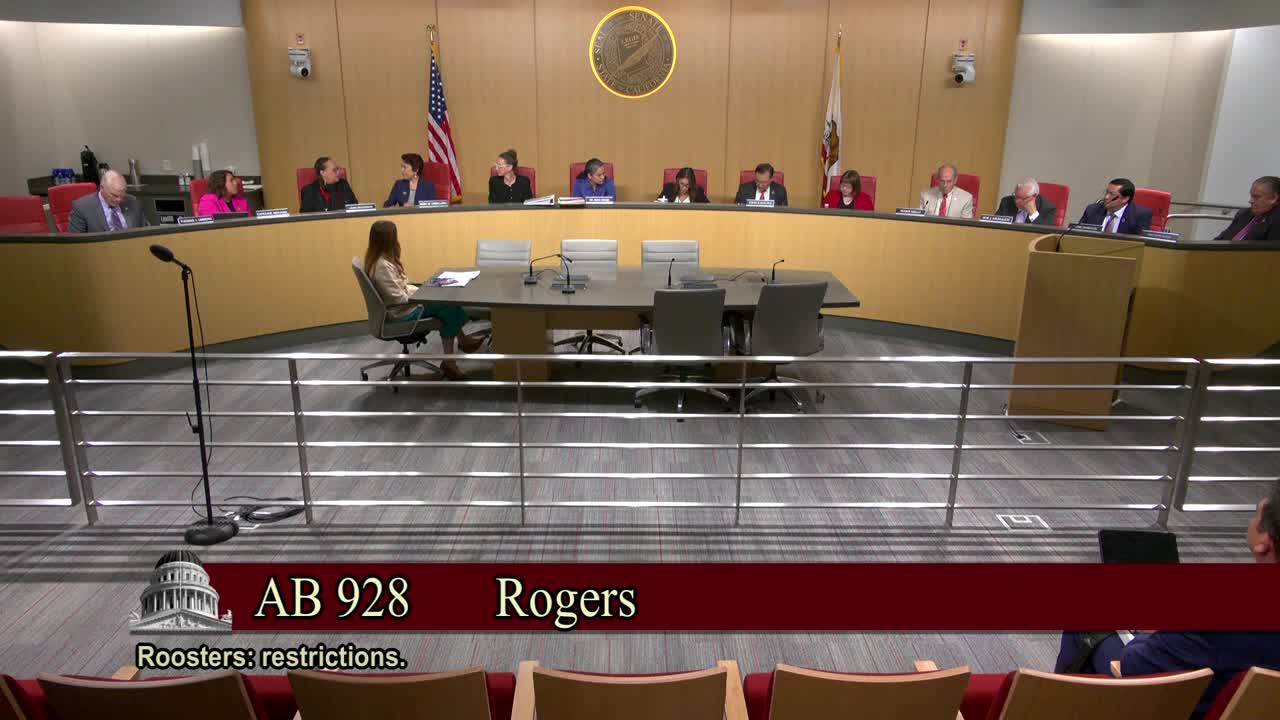 32MIN
Senate Standing Committee on Business, Professions and Economic Development
 2MIN
Assembly Floor
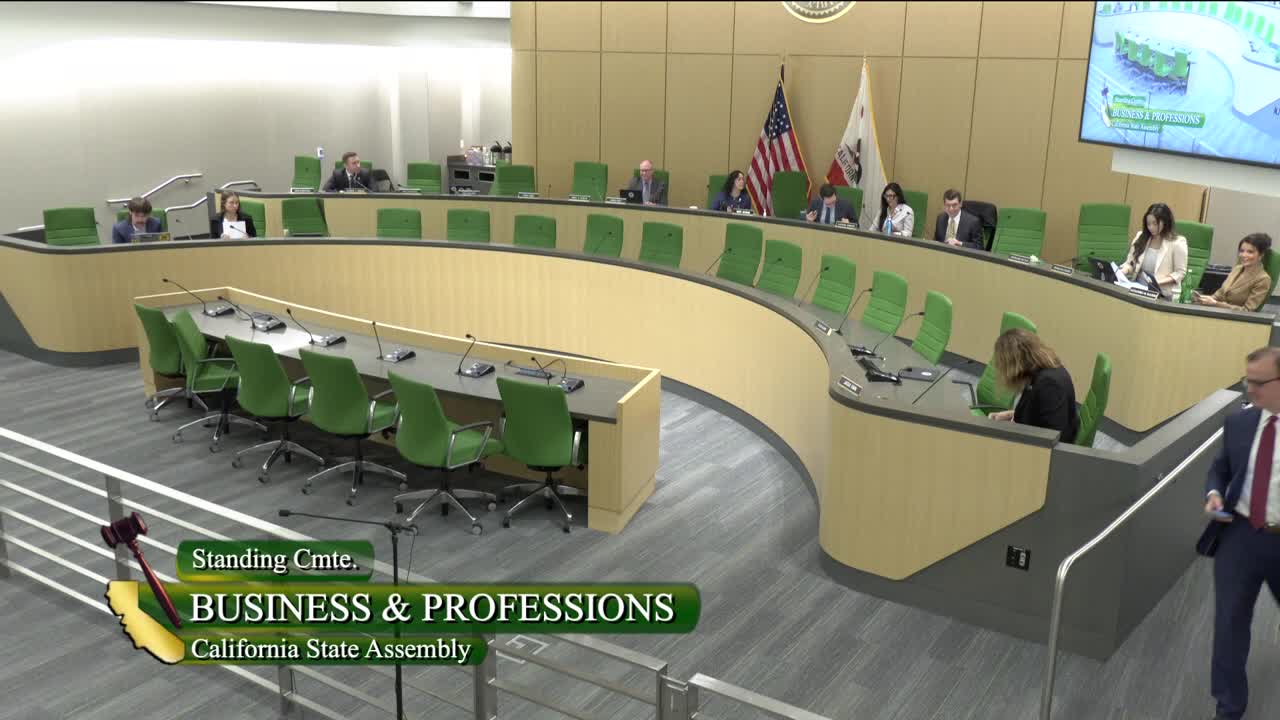 16MIN
Assembly Standing Committee on Business and Professions
Bill Author
Bill Co-Author(s):