AB 2393: False imprisonment: false arrest: remedies.
- Session Year: 2025-2026
- House: Assembly
- Latest Version Date: 2026-09-27
Current Status:
Passed
(2026-09-27: Chaptered by Secretary of State - Chapter 602, Statutes of 2026.)
Introduced
In Committee
Awaiting First Chamber Vote
Passed First Chamber
In Committee
Awaiting Second Chamber Vote
Passed Second Chamber
Enacted
Existing law prohibits false imprisonment, defined as the unlawful violation of the personal liberty of another. Existing law provides that the measure of damages for the breach of an obligation not arising from a contract is the amount that will compensate for all the detriment proximately caused thereby, whether it could have been anticipated or not, except as expressly provided otherwise.
This bill would authorize a prevailing plaintiff in an action based on false imprisonment or false arrest to elect to receive, in lieu of actual damages, $10,000 for each of specified acts committed by the defendant in the perpetration of the false imprisonment or false arrest, as specified. The bill would make defendants liable for the amounts described above for an incident of false imprisonment or false arrest jointly and severally liable and would limit the aggregate award to a person under the above provisions to $250,000 per incident of false imprisonment or false arrest. The bill would exempt causes of action brought against specified parties from the above provisions. The bill would make related findings and declarations and would make its provisions severable.
Existing law prohibits damages that are not clearly ascertainable in both their nature and origin from being recovered for a breach of contract.This bill would make nonsubstantive changes to those provisions.Existing law prohibits damages that are not clearly ascertainable in both their nature and origin from being recovered for a breach of contract.
This bill would make nonsubstantive changes to those provisions.
The Legislature finds and declares all of the following:
(a)Californians are currently faced with serious concerns regarding the commission of false arrests and false imprisonments, including by private individuals pretending to be law enforcement or emulating their methods. These concerns apply to false arrests committed by public and private actors alike.
(b)The public has an interest in ensuring that meritorious false arrest and false imprisonment claims are litigated to ensure both that victims are compensated and that offenders bear the costs, particularly when aggravating factors are likely to impose emotional distress, including the use of masks to conceal the offenders identity, the use of handcuffs or other restraints to bind the victim, the forcible transportation of the victim in a vehicle, or the brandishing of a firearm or other weapon during the false arrest or false imprisonment.
(c)In cases involving false arrest or false imprisonment, damages due to emotional distress can be difficult to quantify. Setting statutory damages for the conduct likely to exacerbate this emotional distress can help address all of these concerns by appropriately estimating compensation for damages that are difficult to quantify, streamlining litigation, and helping encourage plaintiffs to seek and obtain compensation for meritorious claims.
SEC. 2.Section 3344.4 is added to the Civil Code, to read:3344.4.(a)If a defendant performed any of the acts described in paragraphs (1) to (4), inclusive, in the perpetration of the false imprisonment or false arrest of another, a prevailing plaintiff in an action based on that false imprisonment or false arrest may elect to be awarded, in lieu of actual damages, ten thousand dollars ($10,000) for each of the following that are true:
(1)The defendant wore a face covering or other attire for the purpose of concealing their identity.
(2)The defendant used handcuffs, ties, or other restraints to bind the hands or legs of the person.
(3)The defendant forcibly transported the person in a vehicle from one location to another or falsely imprisoned the person for the purpose of transporting the person from one location to another.
(4)The defendant brandished a firearm or other weapon capable of causing death or serious bodily injury.
(b)All defendants liable to a person for amounts awarded pursuant to subdivision (a) for a single incident of false imprisonment or false arrest shall be jointly and severally liable. The aggregate award to a person under this section shall not exceed two hundred fifty thousand dollars ($250,000) for each incident of false imprisonment or false arrest.
(c)Nothing in this section shall be construed to limit the availability of punitive or exemplary damages in an action for false imprisonment or false arrest.
(d)This section shall not apply to a cause of action brought against any peace officer or custodial officer, as those terms are defined in Chapter 4.5 (commencing with Section 830) of Title 3 of Part 2 of the Penal Code, or directly against a public entity that employs a peace officer or custodial officer.
SEC. 3.The provisions of this act are severable. If any provision of this act or its application is held invalid, that invalidity shall not affect other provisions or applications that can be given effect without the invalid provision or application.
SECTION 1.Section 3301 of the Civil Code is amended to read:3301.Damages shall not be recovered for a breach of contract that are not clearly ascertainable in both their nature and origin.No damages can Damages shall not be recovered for a breach of contract which that are not clearly ascertainable in both their nature and origin.
|
Date
|
Status
|
|---|---|
| Sep 27, 2026 | Chaptered by Secretary of State - Chapter 602, Statutes of 2026. |
| Sep 27, 2026 | Approved by the Governor. |
| Sep 3, 2026 | Enrolled and presented to the Governor at 4 p.m. |
| Aug 26, 2026 | In Assembly. Ordered to Engrossing and Enrolling. |
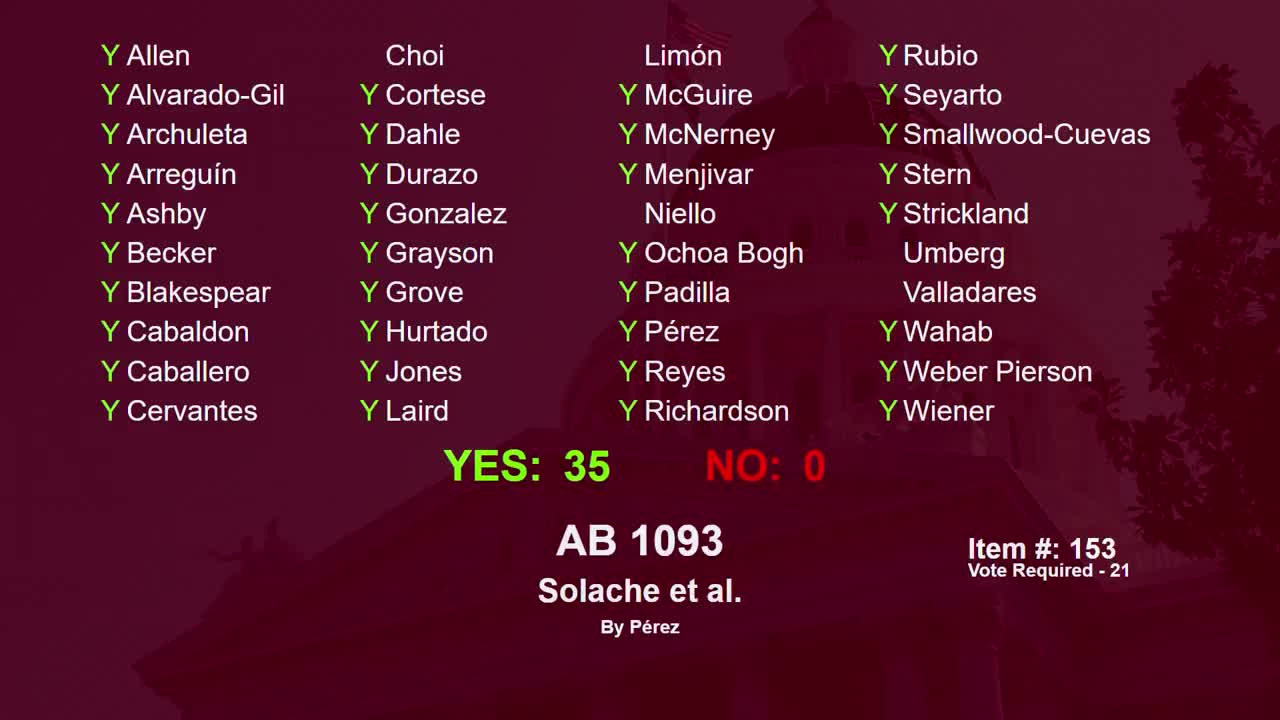
| Aug 25, 2026 | Read third time. Passed. Ordered to the Assembly. (Ayes 30. Noes 10. Page 5809.). |
| Aug 25, 2026 | Read third time. Passed. Ordered to the Assembly. (Ayes 29. Noes 10.). |
| Aug 13, 2026 | Read second time. Ordered to third reading. |
| Aug 13, 2026 | From committee: Do pass. (Ayes 5. Noes 2.) (August 13). |
| Aug 3, 2026 | In committee: Referred to APPR. suspense file. |
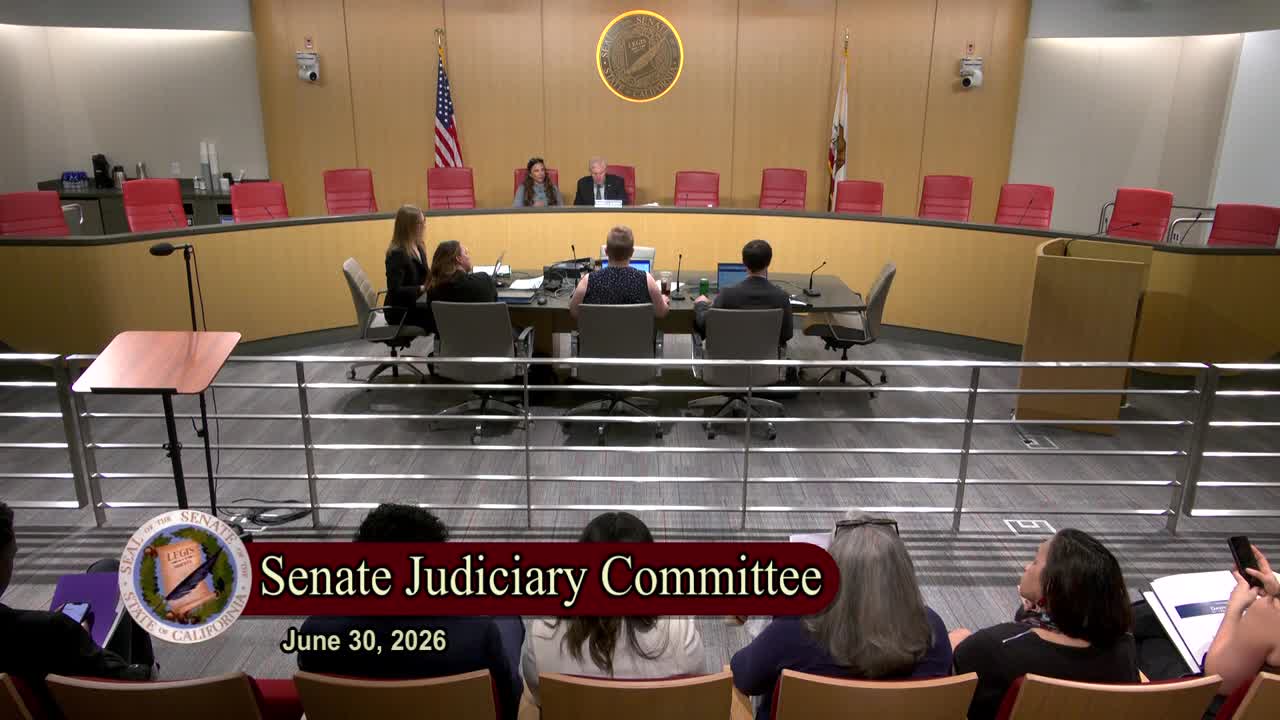
| Jul 1, 2026 | From committee: Do pass and re-refer to Com. on APPR. (Ayes 10. Noes 2.) (June 30). Re-referred to Com. on APPR. |
| Jun 10, 2026 | Referred to Com. on JUD. |
| May 28, 2026 | In Senate. Read first time. To Com. on RLS. for assignment. |
| May 27, 2026 | Read third time. Passed. Ordered to the Senate. (Ayes 61. Noes 17. Page 5426.) |
| May 27, 2026 | Read third time. Passed. Ordered to the Senate. (Ayes 61. Noes 17.) |
| May 27, 2026 | Read third time. Passed. Ordered to the Senate. |
| Apr 23, 2026 | Read second time. Ordered to third reading. |
| Apr 22, 2026 | From committee: Do pass. (Ayes 9. Noes 3.) (April 22). |
| Apr 8, 2026 | From committee: Do pass and re-refer to Com. on APPR. (Ayes 10. Noes 2.) (April 7). Re-referred to Com. on APPR. |
| Mar 17, 2026 | Re-referred to Com. on JUD. |
| Mar 16, 2026 | From committee chair, with author's amendments: Amend, and re-refer to Com. on JUD. Read second time and amended. |
| Mar 16, 2026 | Referred to Com. on JUD. |
| Feb 21, 2026 | From printer. May be heard in committee March 23. |
| Feb 20, 2026 | Read first time. To print. |
|
Date
|
Description
|
Location
|
Votes
|
|
|---|---|---|---|---|
| Aug 25, 2026 | Assembly 3rd Reading AB2393 Addis By Caballero | Senate Floor |
Passed |
|
| Aug 13, 2026 | Do pass | Senate Standing Committee on Appropriations |
Passed |
|
| Aug 3, 2026 | Placed on suspense file | Senate Standing Committee on Appropriations |
Passed |
|
| Jun 30, 2026 | Do pass, but first be re-referred to the Committee on [Appropriations] | Senate Standing Committee on Judiciary |
Passed |
|
| May 27, 2026 | AB 2393 Addis Assembly Third Reading | Assembly Floor |
Passed |
|
| Apr 22, 2026 | Do pass. | Assembly Standing Committee on Appropriations |
Passed |
|
| Apr 7, 2026 | Do pass and be re-referred to the Committee on [Appropriations] | Assembly Standing Committee on Judiciary |
Passed |
This list shows positions taken on this bill by organizations on the date displayed, which is linked to the original source.
Positions by individuals are not included.
|
Organization
|
Position
|
Date
|
|---|---|---|
| California Immigrant Policy Center | ** Support | |
| California Rural Legal Assistance Foundation | ** Support | |
| Consumer Attorneys Of California | ** Support | |
| County of Monterey | ** Support | |
| Norcal Resist | ** Support |
SENATE RULES COMMITTEE Office of Senate Floor Analyses (916) 651-4171 | AB 2393 |
THIRD READING
Bill No: AB 2393
Author: Addis (D)
Amended: 3/16/26 in Assembly
Vote: 21
SENATE JUDICIARY COMMITTEE: 10-2, 6/30/26
AYES: Umberg, Allen, Ashby, Caballero, Laird, Reyes, Stern, Wahab, Weber Pierson, Wiener
NOES: Niello, Valladares
NO VOTE RECORDED: Durazo
SENATE APPROPRIATIONS COMMITTEE: 5-2, 8/13/26
AYES: Cervantes, Cabaldon, Grayson, Richardson, Wahab
NOES: Seyarto, Dahle
ASSEMBLY FLOOR: 61-17, 5/27/26 - See last page for vote
SUBJECT: False imprisonment: false arrest: remedies
SOURCE: Author
DIGEST:
This bill establishes an enhanced statutory damages remedy available in a civil action for false arrest or false imprisonment when the defendant engaged in specified conduct in the commission of the tort.
ANALYSIS:
Existing federal law:
- Establishes the Federal Tort Claims Act (FTCA), which permits private parties to sue the United States government in federal court for most torts committed by persons acting on its behalf. (28 United States Code (U.S.C.), tit. 28, pt. VI, ch. 171, §§ 2671 et seq.)
- Provides that a plaintiff does not need to use the FTCA process for a claim arising out of assault, battery, false imprisonment, false arrest, malicious prosecution, abuse of process, libel, slander, misrepresentation, deceit, or interference with contract rights. (28 U.S.C. § 2680.)
- Provides that the FTCA exception in 2) does not apply with respect to acts or omissions of investigative or law enforcement officers of the United States Government with respect to claims arising out of assault, battery, false imprisonment, false arrest, abuse of process, or malicious prosecution; “investigative or law enforcement officer” means any officer of the United States who is empowered by law to execute searches, to seize evidence, or to make arrests for violations of Federal law. (28 U.S.C. § 2680.)
Existing state law:
- Prohibits false imprisonment, which is defined as the unlawful violation of the personal liberty of another. (Penal (Pen.) Code, § 236.)
- Establishes the Tom Bane Act, which provides a cause of action against a person or persons, whether or not acting under color of law, who interferes by threat, intimidation, or coercion, or attempts to do so, with the exercise or enjoyment by any individual or individuals of rights secured by the Constitution or laws of the United States, or the Constitution or laws of this state. (Civil (Civ.) Code, § 52.1.)
- Specifies that for the breach of an obligation not arising from contract, the measure of damages is the amount which will compensate for all the detriment proximately caused thereby, whether it could have been anticipated or not, except where otherwise expressly provided by the Civil Code. (Civ. Code, § 3333.)
This bill:
- States that the Legislature finds and declares all of the following:
- Californians are currently faced with serious concerns regarding the commission of false arrests and false imprisonments, including by private individuals pretending to be law enforcement or emulating their methods. These concerns apply to false arrests committed by public and private actors alike.
- The public has an interest in ensuring that meritorious false arrest and false imprisonment claims are litigated to ensure both that victims are compensated and that offenders bear the costs, particularly when aggravating factors are likely to impose emotional distress, including the use of masks to conceal the offender’s identity, the use of handcuffs or other restraints to bind the victim, the forcible transportation of the victim in a vehicle, or the brandishing of a firearm or other weapon during the false arrest or false imprisonment.
- In cases involving false arrest or false imprisonment, damages due to emotional distress can be difficult to quantify. Setting statutory damages for the conduct likely to exacerbate this emotional distress can help address all of these concerns by appropriately estimating compensation for damages that are difficult to quantify, streamlining litigation, and helping encourage plaintiffs to seek and obtain compensation for meritorious claims.
- Provides that a prevailing plaintiff in an action based on that false imprisonment or false arrest may elect to be awarded statutory damages of $10,000 in lieu of actual damages if the defendant committed any of the following acts in perpetration of the false imprisonment or false arrest:
- The defendant wore a face covering or other attire for the purpose of concealing their identity.
- The defendant used handcuffs, ties, or other restraints to bind the hands or legs of the person.
- The defendant forcibly transported the person in a vehicle from one location to another or falsely imprisoned the person for purposes of transporting the person from one location to another.
- The defendant brandished a firearm or other weapon capable of causing death or serious bodily injury.
- Provides that all defendants liable to a person for amounts awarded pursuant to 2) for a single incident of false imprisonment or false arrest shall be jointly and severally liable, and that the aggregate award to a person under 2) shall not exceed $250,000 for each incident of false imprisonment or false arrest.
- Provides that nothing in this measure shall be construed to limit the availability of punitive or exemplary damages in an action for false imprisonment or false arrest.
- Provides that 1) does not apply to a cause of action brought against any peace officer or custodial officer, as defined, or directly against a public entity that employs a peace officer or custodial officer.
- Includes a severability clause.
Comments
When law enforcement act like thugs, it’s easy for thugs to pose as law enforcement. As federal immigration officials increasingly hide their faces, refuse to identify themselves, and grab people off the streets, some private individuals have taken it upon themselves to impersonate law enforcement officers for the purpose of harassing and intimidating other civilians, particularly those in immigrant communities. As part of this trend, some of these impersonators are unlawfully detaining individuals, or otherwise restricting their freedom of movement. In essence, these impersonators are committing false imprisonments or false arrests. While California law already deems false imprisonment and false arrest a crime, and provides that parties can file civil actions to receive monetary damages for the emotional distress caused by false imprisonment or false arrest, quantifying the harm caused by either is an imprecise and difficult task.
To help address the harms caused by bad actors, this bill establishes an optional statutory damages award for victims of false imprisonment or false arrest, when the defendant engaged in specified conduct in connection with the false imprisonment or false arrest. Under this bill, the plaintiff may recover $10,000 for each specified act, including where the same defendant engaged in the multiple acts, for a maximum of up to $250,000 when multiple defendants were involved in the tort.
The author has indicated that this bill is intended to apply in false imprisonment actions against federal law enforcement agents, including ICE. Any such case would have to be brought in federal court under the FTCA,[1] which provides that the United States shall be liable “in the same manner and to the same extent as a private individual under like circumstances” under applicable state law.[2] “Although the federal government ‘could never be exactly like a private actor, a court’s job in applying the standard is to find the most reasonable analogy.’”[3] The author believes that the applicable comparison here would be a private citizen engaging in the tort of false imprisonment, raising no further questions about whether ICE can be held liable under this bill. Given the state’s recent experience in court with mask mandates, however, there are significant questions about whether this bill’s carve-out for state law enforcement will run afoul of the doctrine of intergovernmental immunity, which holds that “[a] state law or regulation impermissibly discriminates against the federal government if it treats a state entity more favorably than it treats a comparable federal entity.”[4] The author argues that the FTCA’s general waiver of immunity extends to the doctrine of intergovernmental immunity, such that it is irrelevant whether state or local law enforcement cannot also be liable for the statutory damages established by this bill. The author also points to the availability of other remedies for false imprisonment committed by a peace officer, such as the Tom Bane Civil Rights Act. Nevertheless, there is no case law clearly establishing that the FTCA supersedes intergovernmental immunity principles, and the penalties available under the Tom Bane Civil Rights Act are far less generous than the ones available under this bill.[5]
FISCAL EFFECT: Appropriation: No Fiscal Com.: Yes Local: No
According to the Senate Appropriations Committee, the fiscal impact is as follows:
Unknown, potentially significant costs to the courts to adjudicate new penalties depending on many unknowns, including the number of cases filed, the amount of court time needed to resolve each case and the motivation to settle.
Adding statutory damages likely makes these actions more attractive, potentially increasing court workload costs. While there may be more actions, it is equally likely the actions may lead to being settled more quickly by eliminating the need to prove emotional distress damages and electing the statutory option.
An eight-hour court day costs approximately $10,500 based on the hourly rate of court personnel including at minimum the judge, clerk, bailiff, court reporter, jury administrator, administrative staff, and jury per-diems. While the courts are not funded on a workload basis, an increase in workload could result in delayed court services and would put pressure on the General Fund to fund additional staff and resources. The FY 2026–27 Budget appropriated $70 million General Fund for this purpose (Trial Court Trust Fund, General Fund).
SUPPORT: (Verified 8/13/26)
California Immigrant Policy Center
California Rural Legal Assistance Foundation
County of Monterey
NorCal Resist
OPPOSITION: (Verified 8/13/26)
None received
ARGUMENTS IN SUPPORT: According to the County of Monterey:
The County of Monterey agrees that there is a rising concern that people are being wrongfully detained, including by both federal agents acting outside of the law and individuals impersonating law enforcement. Instances are becoming too common where federal agents wear face coverings to obscure their identity, use restraints to bind their victims, forcibly transport them to another location, and display firearms and other weapons.
These incidents of false arrest and imprisonment are incredibly traumatic for victims. People who are wrongfully and violently detained suffer emotional distress. Given the severe psychological trauma experienced by survivors of false imprisonment, it’s important that they are properly compensated and that perpetrators are held accountable for their actions. However, emotional distress can be difficult to quantify with a dollar amount. Setting statutory damages for specific egregious conduct that contributes to a victim’s distress would help courts streamline litigation and empower plaintiffs to seek compensation for valid claims, both of which are in the public interest.
AB 2393 would allow the prevailing plaintiff in a lawsuit for false arrest or imprisonment to choose a set payment instead of proving actual damages when certain aggravating actions occurred. The plaintiff may receive $10,000 for each aggravating action by the perpetrator. These actions include wearing a face covering to hide their identity, using restraints to bind the plaintiff, forcibly transporting the plaintiff in a vehicle, and brandishing a firearm.
ASSEMBLY FLOOR: 61-17, 5/27/26
AYES: Addis, Aguiar-Curry, Ahrens, Alanis, Alvarez, Arambula, Ávila Farías, Bains, Bauer-Kahan, Bennett, Berman, Boerner, Bonta, Bryan, Calderon, Caloza, Carrillo, Connolly, Elhawary, Fong, Gabriel, Garcia, Gipson, Mark González, Haney, Harabedian, Hart, Irwin, Jackson, Kalra, Krell, Lee, Lowenthal, McKinnor, Muratsuchi, Nguyen, Ortega, Pacheco, Papan, Patel, Pellerin, Petrie-Norris, Quirk-Silva, Ramos, Ransom, Michelle Rodriguez, Rogers, Blanca Rubio, Schiavo, Schultz, Sharp-Collins, Solache, Soria, Stefani, Valencia, Wallis, Ward, Wicks, Wilson, Zbur, Rivas
NOES: Castillo, Chen, Davies, DeMaio, Dixon, Ellis, Flora, Gallagher, Jeff Gonzalez, Hadwick, Hoover, Johnson, Lackey, Macedo, Patterson, Sanchez, Tangipa
NO VOTE RECORDED: Celeste Rodriguez, Ta
Prepared by: Allison Whitt Meredith / JUD. / (916) 651-4113
8/14/26 13:57:33
**** END ****
SENATE COMMITTEE ON
Senator Sabrina Cervantes, Chair
2025 - 2026 Regular Session
AB 2393 (Addis) - False imprisonment: false arrest: remedies
Version: | Policy Vote: |
Urgency: | Mandate: |
Hearing Date: | Consultant: |
Bill Summary:
AB 2393 would authorize a prevailing plaintiff in an action based on false imprisonment or false arrest to elect to receive, in lieu of actual damages, $10,000 for each of specified acts committed by the defendant in the perpetration of the false imprisonment or false arrest, as specified. The bill would make defendants liable for the amounts described above for an incident of false imprisonment or false arrest jointly and severally liable and would cap the aggregate award to a person to $250,000 per incident of false imprisonment or false arrest.
Fiscal Impact:
Unknown, potentially significant costs to the courts to adjudicate new penalties depending on many unknowns, including the number of cases filed, the amount of court time needed to resolve each case and the motivation to settle.
Adding statutory damages likely makes these actions more attractive, potentially increasing court workload costs. While there may be more actions, it is equally likely the actions may lead to being settled more quickly by eliminating the need to prove emotional distress damages and electing the statutory option.
An eight-hour court day costs approximately $10,500 based on the hourly rate of court personnel including at minimum the judge, clerk, bailiff, court reporter, jury administrator, administrative staff, and jury per-diems. While the courts are not funded on a workload basis, an increase in workload could result in delayed court services and would put pressure on the General Fund to fund additional staff and resources. The FY 2026-27 Budget appropriated $70 million General Fund for this purpose (Trial Court Trust Fund, General Fund).
Background:
The state is experiencing increasing incidents where private individuals have chosen to impersonate law enforcement officers for the purpose of harassing and intimidating other civilians, particularly those in immigrant communities. As part of this trend, some of these impersonators are unlawfully detaining individuals, or otherwise restricting their freedom of movement. In essence, these impersonators are committing false imprisonments or false arrests. While California law already deems false imprisonment and false arrest a crime and provides that parties can file civil actions to receive monetary damages for the emotional distress caused by false imprisonment or false arrest, quantifying the harm caused by either is an imprecise and difficult task.
Proposed Law:
If a defendant performed any of the acts described in paragraphs (1) to (4), inclusive, in the perpetration of the false imprisonment or false arrest of another, a prevailing plaintiff in an action based on that false imprisonment or false arrest may elect to be awarded, in lieu of actual damages, ten thousand dollars ($10,000) for each of the following that are true:
(1) The defendant wore a face covering or other attire for the purpose of concealing their identity.
(2) The defendant used handcuffs, ties, or other restraints to bind the hands or legs of the person.
(3) The defendant forcibly transported the person in a vehicle from one location to another or falsely imprisoned the person for the purpose of transporting the person from one location to another.
(4) The defendant brandished a firearm or other weapon capable of causing death or serious bodily injury.
Senator Thomas Umberg, Chair
2025-2026 Regular Session
Bill No: AB 2393 (Author:Addis)
Version: March 16, 2026
Hearing Date: June 30, 2026
Fiscal: Yes
Urgency: No
Consultant: AWM
SUBJECT
False imprisonment: false arrest: remedies
DIGEST
This bill establishes an enhanced statutory damages remedy available in a civil action for false arrest or false imprisonment when the defendant engaged in specified conduct in the commission of the tort.
EXECUTIVE SUMMARY
When law enforcement act like thugs, it’s easy for thugs to pose as law enforcement. As federal immigration officials increasingly hide their faces, refuse to identify themselves, and grab people off the streets, some private individuals have taken it upon themselves to impersonate law enforcement officers for the purpose of harassing and intimidating other civilians, particularly those in immigrant communities. As part of this trend, some of these impersonators are unlawfully detaining individuals, or otherwise restricting their freedom of movement. In essence, these impersonators are committing false imprisonments or false arrests. While California law already deems false imprisonment and false arrest a crime, and provides that parties can file civil actions to receive monetary damages for the emotional distress caused by false imprisonment or false arrest, quantifying the harm caused by either is an imprecise and difficult task.
To help address the harms caused by bad actors, this bill establishes an optional statutory damages award for victims of false imprisonment or false arrest, when the defendant engaged in specified conduct in connection with the false imprisonment or false arrest. Under the bill, the plaintiff may recover $10,000 for each specified act, including where the same defendant engaged in the multiple acts, for a maximum of up to $250,000 when multiple defendants were involved in the tort.
This bill is sponsored by the author and is supported by the County of Monterey and NorCal Resist. The Committee has not received timely opposition to this bill.
PROPOSED CHANGES TO THE LAW
Existing federal law:
- Establishes the Federal Tort Claims Act (FTCA), which permits private parties to sue the United States government in federal court for most torts committed by persons acting on its behalf. (28 U.S.C., tit. 28, pt. VI, ch. 171, §§ 2671 et seq.)
- Provides that a plaintiff does not need to use the FTCA process for a claim arising out of assault, battery, false imprisonment, false arrest, malicious prosecution, abuse of process, libel, slander, misrepresentation, deceit, or interference with contract rights. (28 U.S.C. § 2680.)
- Provides that the FTCA exception in 2) does not apply with respect to acts or omissions of investigative or law enforcement officers of the United States Government with respect to claims arising out of assault, battery, false imprisonment, false arrest, abuse of process, or malicious prosecution; “investigative or law enforcement officer” means any officer of the United States who is empowered by law to execute searches, to seize evidence, or to make arrests for violations of Federal law. (28 U.S.C. § 2680.)
Existing state law:
- Prohibits false imprisonment, which is defined as the unlawful violation of the personal liberty of another. (Pen. Code, § 236.)
- Establishes the Tom Bane Act, which provides a cause of action against a person or persons, whether or not acting under color of law, who interferes by threat, intimidation, or coercion, or attempts to do so, with the exercise or enjoyment by any individual or individuals of rights secured by the Constitution or laws of the United States, or the Constitution or laws of this state. (Civ. Code, § 52.1.)
- Specifies that for the breach of an obligation not arising from contract, the measure of damages is the amount which will compensate for all the detriment proximately caused thereby, whether it could have been anticipated or not, except where otherwise expressly provided by the Civil Code. (Civ. Code, § 3333.)
This bill:
- States that the Legislature finds and declares all of the following:
- Californians are currently faced with serious concerns regarding the commission of false arrests and false imprisonments, including by private individuals pretending to be law enforcement or emulating their methods. These concerns apply to false arrests committed by public and private actors alike.
- The public has an interest in ensuring that meritorious false arrest and false imprisonment claims are litigated to ensure both that victims are compensated and that offenders bear the costs, particularly when aggravating factors are likely to impose emotional distress, including the use of masks to conceal the offender’s identity, the use of handcuffs or other restraints to bind the victim, the forcible transportation of the victim in a vehicle, or the brandishing of a firearm or other weapon during the false arrest or false imprisonment.
- In cases involving false arrest or false imprisonment, damages due to emotional distress can be difficult to quantify. Setting statutory damages for the conduct likely to exacerbate this emotional distress can help address all of these concerns by appropriately estimating compensation for damages that are difficult to quantify, streamlining litigation, and helping encourage plaintiffs to seek and obtain compensation for meritorious claims.
- Provides that a prevailing plaintiff in an action based on that false imprisonment or false arrest may elect to be awarded statutory damages of $10,000 in lieu of actual damages if the defendant committed any of the following acts in perpetration of the false imprisonment or false arrest:
- The defendant wore a face covering or other attire for the purpose of concealing their identity.
- The defendant used handcuffs, ties, or other restraints to bind the hands or legs of the person.
- The defendant forcibly transported the person in a vehicle from one location to another or falsely imprisoned the person for purposes of transporting the person from one location to another.
- The defendant brandished a firearm or other weapon capable of causing death or serious bodily injury.
- Provides that all defendants liable to a person for amounts awarded pursuant to 2) for a single incident of false imprisonment or false arrest shall be jointly and severally liable, and that the aggregate award to a person under 2) shall not exceed $250,000 for each incident of false imprisonment or false arrest.
- Provides that nothing in this measure shall be construed to limit the availability of punitive or exemplary damages in an action for false imprisonment or false arrest.
- Provides that 1) does not apply to a cause of action brought against any peace officer or custodial officer, as defined, or directly against a public entity that employs a peace officer or custodial officer.
- Includes a severability clause.
COMMENTS
- Author’s comment
According to the author:
AB 2393 provides a clear path for victims of false arrest or imprisonment to obtain compensation for the harm they suffered by establishing fixed statutory damages for specific harmful actions. The bill does not apply to California police officers or the public agencies that employ them. Instead, it targets those who are impersonating these officers and federal agents violating Californians’ constitutional rights. AB 2393 will hold perpetrators accountable for their actions, discourage illegal behavior, and ensure that victims are provided with the compensation they deserve without putting them through the unnecessary pain of having to quantify their emotional distress.
2. This bill creates an optional statutory damages award which may be recovered in a tort action for false imprisonment or false arrest, when the defendant engaged in specified acts
As the author notes, the spate of terroristic behavior by Immigrations and Customs Enforcement (ICE) and Customs and Border Patrol (CBP) have led to copycat crimes.[1] ICE and CBP’s tactics—which include wearing face-shielding masks, refusing to identify themselves, and violently throwing people into vehicles—make it virtually impossible for regular people to tell if the aggressive person screaming at them is a federal officer or a common criminal.[2]
To help address the harms caused by bad actors, this bill establishes an optional statutory damages award for victims of false imprisonment or false arrest.[3] Under this bill, a victim who prevailed at trial could elect, in lieu of their actual damages, a statutory award of $10,000 for each of the following that are true:
- The defendant wore a face covering or other attire for the purpose of concealing their identity.
- The defendant used handcuffs, ties, or other restraints to bind the hands and legs of the person.
- The defendant forcibly transported the person in a vehicle from one location to another or falsely impersonated the person for the purpose of transporting the person from one location to another.
- The defendant brandished a firearm or other weapon capable of causing death or serious bodily injury.
Any defendants liable for the statutory damages available under the bill shall be jointly and severally liable; the maximum damages award available under the bill is $250,000. A plaintiff who receives damages under this section is also entitled to seek punitive or exemplary damages.
Peace officers, custodial officers, and the entities that employ those officers are expressly exempted from liability for the statutory damages available under this bill.
3. Concerns about the scope of the bill
The author has indicated that the bill is intended to apply in false imprisonment actions against federal law enforcement agents, including ICE. Any such case would have to be brought in federal court under the FTCA.[4] The FTCA provides that the United States shall be liable “in the same manner and to the same extent as a private individual under like circumstances” under applicable state law.[5] “Although the federal government ‘could never be exactly like a private actor, a court’s job in applying the standard is to find the most reasonable analogy.’ ”[6] The author believes that the applicable comparison here would be a private citizen engaging in the tort of false imprisonment, raising no further questions about whether ICE can be held liable under this bill.
Given the state’s recent experience in court with mask mandates, however, there are significant questions about whether this bill’s carve-out for state law enforcement will doom the bill vis-à-vis federal officer liability. The doctrine of intergovernmental immunity, which arises out of the Supremacy Clause of the United States Constitution,[7] holds that “[a] state law or regulation impermissibly discriminates against the federal government if it treats a state entity more favorably than it treats a comparable federal entity.”[8] The United States District Court for the Central District of California recently enjoined the portion of SB 627 (Wiener, Ch. 627, Stats. 2025) that imposed facial covering limitations on federal and local law enforcement, but exempted state law enforcement, on intergovernmental immunity grounds.[9] On the other hand, the court allowed SB 805, which imposed penalties for non-uniformed law enforcement without visual identification evenly across all law enforcement agencies because it did not grant state actors preferential treatment.[10]
The author argues that the FTCA’s general waiver of immunity extends to the doctrine of intergovernmental immunity, such that it is irrelevant whether state or local law enforcement cannot also be liable for the statutory damages established by this bill. The author also points to the availability of other remedies for false imprisonment committed by a peace officer, such as the Tom Bane Civil Rights Act. Nevertheless, there is no case law clearly establishing that the FTCA supersedes intergovernmental immunity principles, and the penalties available under the Tom Bane Civil Rights Act are far less generous than the ones available under this bill.[11]
4. Arguments in support
According to the County of Monterey:
The County of Monterey agrees that there is a rising concern that people are being wrongfully detained, including by both federal agents acting outside of the law and individuals impersonating law enforcement. Instances are becoming too common where federal agents wear face coverings to obscure their identity, use restraints to bind their victims, forcibly transport them to another location, and display firearms and other weapons.
These incidents of false arrest and imprisonment are incredibly traumatic for victims. People who are wrongfully and violently detained suffer emotional distress. Given the severe psychological trauma experienced by survivors of false imprisonment, it’s important that they are properly compensated and that perpetrators are held accountable for their actions. However, emotional distress can be difficult to quantify with a dollar amount. Setting statutory damages for specific egregious conduct that contributes to a victim’s distress would help courts streamline litigation and empower plaintiffs to seek compensation for valid claims, both of which are in the public interest.
AB 2393 would allow the prevailing plaintiff in a lawsuit for false arrest or imprisonment to choose a set payment instead of proving actual damages when certain aggravating actions occurred. The plaintiff may receive $10,000 for each aggravating action by the perpetrator. These actions include wearing a face covering to hide their identity, using restraints to bind the plaintiff, forcibly transporting the plaintiff in a vehicle, and brandishing a firearm.
SUPPORT
County of Monterey
NorCal Resist
OPPOSITION
None received
RELATED LEGISLATION
Pending legislation: SB 747 (Wiener, 2026) provides that every natural person, as defined, who, under color of any law, statute, ordinance, regulation, custom, or usage, as defined, subjects or causes to be subjected any citizen of this state or any person within the jurisdiction thereof to the deprivation of any rights, privileges, or immunities secured by the United States Constitution, shall be liable to the party injured in an action at law, suit in equity, or other proper proceeding for redress, except as specified. SB 747 is pending before the Assembly Appropriations Committee.
Prior legislation:
SB 805 (Pérez, Ch. 126, Stats. 2025) required law enforcement agencies to adopt policies on visible display of identification; required specified law enforcement officers operating in California who are not uniformed to visibly display identification that includes either a name or badge number to the public when performing their duties; and expanded the crime of false personation of a peace officer.
SB 627 (Wiener, Ch. 627, Stats. 2025) among other things, made it a crime for a law enforcement officer to wear a facial covering in the performance of their duties, except that the criminal penalties did not apply to a law enforcement officer acting pursuant to a mask policy adopted by their agency, as specified. The prohibition on wearing masks was enjoined in United States v. California (C.D. Cal. 2026) 819 F.Supp.3d 1109.
PRIOR VOTES
Assembly Floor (Ayes 61, Noes 17)
Assembly Appropriations Committee (Ayes 9, Noes 3)
Assembly Judiciary Committee (Ayes 10, Noes 2)
**************
E.g., Beitsch, FBI urges ICE to ID themselves as criminals impersonate offices (Nov. 5, 2025) The Hill, https://thehill.com/policy/national-security/5590694-fbi-ice-masks-dhs/ (link current as of June 26, 2026). ↑
Ibid. ↑
Technically, “false arrest and false imprisonment are not separate torts. False arrest is but one way of committing a false imprisonment.” (Asgari v. City of Los Angeles (1997) 15 Cal.4th 744, 752, fn. 3 (cleaned up).) ↑
28 U.S.C. §§ 2674-2680. ↑
Id., § 2674. ↑
Dugard v. United States (9th Cir. 2017) 835 F.3d 915, 919. ↑
U.S. Const., art. VI, cl. 2. ↑
Geo Group v. Inslee (9th Cir. 2025) 151 F.4th 1107, 1118. ↑
United States v. California (C.D. Cal. 2026) 819 F.Supp.3d 1109, 1131. ↑
Id. at p. 1137. ↑
See Civ. Code, § 52.1. ↑
ASSEMBLY THIRD READING
ATR Bill Id:AB 2393
Author:(Addis)
As Amended Ver:March 16, 2026
Majority vote
SUMMARY
Authorizes prevailing plaintiffs in cases involving false imprisonment or false arrest to seek statutory damages in lieu of actual damages when certain aggravating factors have occurred.
Major Provisions
- Makes various findings and declarations about the rising concerns among Californians about the risk of false imprisonment and false arrest and the difficulty of quantifying damages for the emotional distress caused by either.
- Authorizes prevailing plaintiffs in cases involving false imprisonment or false arrest to seek statutory damages in lieu of actual damages in the amount of ten thousand dollars ($10,000) for each of the following that are true:
- The defendant wore a face covering or other attire for the purpose of concealing their identity.
- The defendant used handcuffs, ties, or other restraints to bind the hands or legs of the person.
- The defendant forcibly transported the person in a vehicle from one location to another or falsely imprisoned the person for the purpose of transporting the person from one location to another.
- The defendant brandished a firearm or other weapon capable of causing death or serious bodily injury.
- Provides that all defendants liable to a person for amounts awarded pursuant to 2), above, for a single incident of false imprisonment or false arrest shall be jointly and severally liable.
- Limits the aggregate award a plaintiff can receive pursuant to 2) to two hundred fifty thousand dollars ($250,000) for each incident of false imprisonment or false arrest.
- Exempts lawsuits brought against any peace officer or custodial officer, or directly against a public entity that employs a peace officer or custodial officer from the application of 2), above.
COMMENTS
Amid increased immigration enforcement activity across the United States, some bad actors have been taking advantage of the increased news coverage regarding immigration enforcement and widespread fear of Immigration, Customs, and Enforcement (ICE) agents by impersonating these agents and imitating their tactics.
Last year, Attorney General Rob Bonta issued a warning to Californians about civilians impersonating immigration officers and other immigration scams. (California Department of Justice, Attorney General Rob Bonta Issues Warning Amid Increased Reports of Fake ICE Officers and Other Immigration Scams, available at: https://oag.ca.gov/news/press-releases/attorney-general-bonta-issues-warning-amid-increased-reports-fake-ice-officers.) Similarly, the Federal Bureau of Investigation (FBI) has urged immigration officers to properly identify themselves, given reports of ICE impersonators committing violent crimes. (Rebecca Beitsch, FBI urges ICE to ID themselves as criminals impersonate officers, The Hill (Nov. 5, 2025) available at: https://thehill.com/policy/national-security/5590694-fbi-ice-masks-dhs/.)
In some of these cases, these impersonators are detaining individuals and threatening to deport individuals if they fail to comply with any orders. For example, a man in South Carolina was accused of impersonating an ICE agent and detaining a group of men. (Artemis Moshtaghian, Gloria Pazmino, and Nick Valencia, Multiple ICE impersonation arrest made during nationwide immigration crackdown, CNN (Feb. 4, 2025) available at: https://www.cnn.com/2025/02/04/us/ice-impersonators-on-the-rise-arrests-made-as-authorities-issue-national-warning.) Similarly, in North Carolina, a man was accused of impersonating an ICE agent and threatening to deport a woman if she did not commit sexual acts with him. (Aaron Thomas, Police arrest Raleigh man accused of impersonating ICE officer and sexually assaulting woman, WRAL NEWS (Jan 27. 2025) available at: https://www.wral.com/news/local/raleigh-police-arrest-man-impersonating-officer-sexual-assault-jan-2025/.)
Under California law, these kinds of detentions amount to false imprisonment or false arrest. Both of which are severely traumatic and psychologically harmful to victims. While the law already provides victims of these crimes with the ability to recover monetary damages for any resulting emotional harm, quantifying emotional harm is an imprecise and difficult task. As a result, victims may be undercompensated for their pain and suffering. This bill would, in part, address those concerns by providing victims with the ability to receive a set amount of payment when certain egregious conduct occurs as part of the false imprisonment or false arrest by a private individual.
False imprisonment or false arrest. Generally, false imprisonment occurs when an individual intentionally confines, detains, or otherwise restrains another person for any amount of time without their consent and without any lawful justification for doing so. (Scofield v. Critical Air Medicine, Inc. (1996) 45 Cal.App.4th 990, 1001.) “Restraint” can be achieved by using physical force, a threat of force or arrest, fraud, or by using physical barriers to confine an individual, among other things. (Scofield v. Critical Air Medicine, Inc., supra, 45 Cal.App.4th at p. 1009-10.) Further, false imprisonment can occur even when an individual is unlawfully detained for as little as fifteen minutes. (Scofield, at p. 1001.) False arrests are a part of the broader category of false imprisonment, with the key distinction being that an individual restrains another’s movement by causing another to be wrongfully arrested. (Gillian v. City of San Marino (2007) 147 Cal.App.4th 1033, 1048 fn. 6.) Both false imprisonment and false arrest are prohibited under California’s criminal and civil laws.
In cases of false imprisonment, plaintiffs can recover damages for emotional and psychological harm in addition to any damages for other harms stemming from the false imprisonment, such as physical injury or lost wages. (Scofield, at p. 1009.) However, emotional distress is often the primary harm that occurs in cases of false imprisonment or false arrest. (Scofield, at p. 1008.) Unlike other injuries, damages for emotional harm may be difficult for juries to quantify because of the subjective nature of harm. Indeed, courts have noted that "[o]ne of the most difficult tasks imposed on a fact finder is to determine the amount of money the plaintiff is to be awarded as compensation for pain and suffering." (Pearl v. City of Los Angeles (2019) 36 Cal.App.5th 475, 491.) As a result, some plaintiffs will inevitably be undercompensated for their emotional distress.
This bill would provide prevailing plaintiffs in cases of false imprisonment or false arrest by private individuals with the ability to seek statutory damages when certain aggravating factors are present. Specifically, this bill provides that prevailing plaintiffs may elect to receive (ten thousand dollars) $10,000 for each of following that are found to be true, instead of proving actual damages:
- The defendant wore a face covering or other attire for the purpose of concealing their identity
- The defendant used handcuffs, ties, or other restraints to bind the hands or legs of the person.
- The defendant forcibly transported the person in a vehicle from one location to another or falsely imprisoned the person for the purpose of transporting the person from one location to another.
- The defendant brandished a firearm or other weapon capable of causing death or serious bodily injury.
Under the bill, plaintiffs would be limited to receiving an aggregate award of two hundred fifty thousand dollars ($250,000) for each incident of false imprisonment or false arrest. For a single incident of false imprisonment or false arrest, all defendants would be jointly and severally liable for statutory damages awarded under this bill. Additionally, plaintiffs would also still be able to seek punitive or exemplary damages. Finally, the bill does not apply to peace officers or custodial officers, as defined by the Penal Code, or the agencies that employ these officers when they are accused of committing false imprisonment or false arrest.
To the extent that plaintiffs may not be adequately compensated for the trauma caused by false imprisonment or false, this bill provides plaintiffs with the opportunity to receive a minimum-level of payment when defendants have committed egregious acts that may have contributed to that trauma. To be clear, this bill solely addresses the damages that are available when an individual is found liable for false imprisonment or false arrest and it does not establish a new cause of action. While the most likely defendants to this cause of action would be persons impersonating ICE agents, should ICE agents exceed their authority as a peace officer, and be found liable for false imprisonment, then the added penalties imposed by this bill could apply.
According to the Author
AB 2393 will hold perpetrators accountable for their actions, discourage illegal behavior, and ensure that victims are provided with the compensation they deserve without putting them through the unnecessary pain of having to quantify their emotional distress.
Arguments in Support
In support of the bill, the Consumer Attorneys of California states:
This bill promotes accountability and ensures that survivors of unlawful detention can obtain meaningful relief when their constitutional and civil rights are violated.
Incidents of false arrest and imprisonment cause significant physical and psychological harm, particularly when individuals are forcibly restrained, transported, or subjected to intimidation by individuals purporting to act under government authority. Across the country, troubling reports have documented situations in which individuals have been wrongfully detained by federal agents acting outside the law or by civilians impersonating law enforcement officers. Victims have experienced trauma after being forcibly restrained, transported in vehicles, and subjected to the threat or display of weapons. These experiences can cause lasting emotional distress, yet damages for these harms are often difficult to quantify, creating barriers to justice for victims.
AB 2393 addresses this problem by establishing statutory damages of $10,000 per aggravating act—such as wearing face coverings to conceal identity, using restraints, forcibly transporting a victim, or brandishing a weapon—up to a cap of $250,000, while preserving the availability of punitive damages where appropriate. By providing clarity and predictability in the recovery of damages, the bill promotes efficient litigation and ensures that victims are not forced to relive traumatic experiences simply to prove emotional harm.
Arguments in Opposition
None on file
FISCAL COMMENTS
According to the Assembly Appropriations Committee, no significant state costs. The bill does not create a new cause of action — it adds an alternative damages measure to existing civil claims for false imprisonment and false arrest. The bill explicitly exempts peace officers, custodial officers, and public entities from its provisions, so there is no state or local government liability exposure. To the extent the statutory damages provision encourages additional civil filings, there would be minor and likely absorbable court workload costs (Trial Court Trust Fund). However, the statutory damages framework may actually reduce litigation costs by eliminating the need to prove emotional distress damages in cases where plaintiffs elect the statutory option.
VOTES
ASM JUDICIARY: 10-2-0
YES: Kalra, Lee, Bryan, Connolly, Harabedian, Pacheco, Papan, Sanchez, Stefani, Zbur
NO: Macedo, Dixon
ASM APPROPRIATIONS: 9-3-3
YES: Wicks, Arambula, Caloza, Fong, Mark González, Krell, Pacheco, Pellerin, Solache
NO: Hoover, Dixon, Tangipa
ABS, ABST OR NV: Calderon, Muratsuchi, Ta
UPDATED
VERSION: March 16, 2026
CONSULTANT: Kristian Wright / JUD. / (916) 319-2334 FN: 0002404
Date of Hearing: April 22, 2026
ASSEMBLY COMMITTEE ON APPROPRIATIONS
Buffy Wicks, Chair
ABPCA Bill Id:AB 2393
Author:(Addis) – As Amended Ver:March 16, 2026
Policy Committee: | Judiciary | Vote: | 10 - 2 |
|
| ||
|
|
Urgency: No State Mandated Local Program: No Reimbursable: No
SUMMARY:
This bill authorizes prevailing plaintiffs in civil actions for false imprisonment or false arrest by private individuals to elect statutory damages of $10,000 per aggravating factor — including concealing identity with a face covering, using restraints, forcibly transporting the victim, or brandishing a weapon — in lieu of proving actual damages. The aggregate award is capped at $250,000 per incident. The bill does not apply to peace officers, custodial officers, or their employing public entities.
FISCAL EFFECT:
No significant state costs. The bill does not create a new cause of action — it adds an alternative damages measure to existing civil claims for false imprisonment and false arrest. The bill explicitly exempts peace officers, custodial officers, and public entities from its provisions, so there is no state or local government liability exposure. To the extent the statutory damages provision encourages additional civil filings, there would be minor and likely absorbable court workload costs (Trial Court Trust Fund). However, the statutory damages framework may actually reduce litigation costs by eliminating the need to prove emotional distress damages in cases where plaintiffs elect the statutory option.
COMMENTS:
- Purpose. According to the author, in the wake of increased immigration enforcement activity, some private individuals have been impersonating law enforcement officers to harass and intimidate civilians, particularly in immigrant communities. While false imprisonment and false arrest are already actionable under California law, quantifying emotional distress damages is difficult and may result in undercompensation. This bill provides a predictable damages floor when aggravating factors are present, promoting accountability and streamlining litigation.
- Background. False imprisonment occurs when an individual intentionally confines or restrains another without consent and without lawful justification. False arrest is a subset of false imprisonment involving wrongful arrest. Both are prohibited under California criminal and civil law. Existing law allows victims to recover damages for emotional and psychological harm, but courts have recognized that quantifying emotional distress is one of the most difficult tasks for a fact finder. The California Attorney General and the FBI have both issued warnings about the rise of individuals impersonating immigration officers, in some cases detaining people and threatening deportation. This bill targets those situations by providing statutory damages when particularly egregious conduct accompanies a false imprisonment or false arrest by a private actor.
Analysis Prepared by: Shiran Zohar / APPR. / (916) 319-2081
Date of Hearing: April 7, 2026
ASSEMBLY COMMITTEE ON JUDICIARY
Ash Kalra, Chair
ABPCA Bill Id:AB 2393
Author:(Addis) – As Amended Ver:March 16, 2026
SUBJECT: False imprisonment: false arrest: remedies
KEY ISSUE: in cases of false imprisonment or false arrest, should prevailing plaintiffs have a right to seek statutory damages?
SYNOPSIS
In the wake of increased immigration enforcement activity at the federal level, some private individuals have taken it upon themselves to impersonate law enforcement officers for the purpose of harassing and intimidating other civilians, particularly those in immigrant communities. As part of this trend, some of these impersonators are unlawfully detaining individuals, or otherwise restricting their freedom of movement. In essence, these impersonators are committing false imprisonments or false arrests. Incidents of false arrest or false imprisonment can be incredibly traumatic for victims, causing immense emotional and psychological harm. While California law already deems false imprisonment and false arrest a crime, and provides that parties can file civil actions to receive monetary damages for the emotional distress caused by false imprisonment or false arrest, quantifying the harm caused by either is an imprecise and difficult task.
Recognizing the difficulty in proving actual damages from false imprisonment or arrest, this bill would provide plaintiffs with the option of receiving a set amount of statutory damages when certain aggravating factors have occurred in cases of false imprisonment or false arrest by private individuals. These aggravating factors are particularly focused on the conduct by those who impersonate immigration officials including wearing face masks, using handcuffs or zip ties, and brandishing a firearm.
This bill is author-sponsored and is supported by the Consumer Attorneys of California. Proponents of AB 2393 contend that the bill will deter unlawful behavior, while ensuring that victims of false imprisonment or false arrest can obtain meaningful compensation when their rights are violated. This bill has no formal opposition on file.
SUMMARY: Authorizes prevailing plaintiffs in cases involving false imprisonment or false arrest to seek statutory damages in lieu of actual damages when certain aggravating factors have occurred. Specifically, this bill:
- Makes various findings and declarations about the rising concerns among Californians about the risk of false imprisonment and false arrest and the difficulty of quantifying damages for the emotional distress caused by either.
- Authorizes prevailing plaintiffs in cases involving false imprisonment or false arrest to seek statutory damages in lieu of actual damages in the amount of ten thousand dollars ($10,000) for each of the following that are true:
- The defendant wore a face covering or other attire for the purpose of concealing their identity.
- The defendant used handcuffs, ties, or other restraints to bind the hands or legs of the person.
- The defendant forcibly transported the person in a vehicle from one location to another or falsely imprisoned the person for the purpose of transporting the person from one location to another.
- The defendant brandished a firearm or other weapon capable of causing death or serious bodily injury.
- Provides that all defendants liable to a person for amounts awarded pursuant to 2) for a single incident of false imprisonment or false arrest shall be jointly and severally liable.
- Limits the aggregate award a plaintiff can receive pursuant to 2) to two hundred fifty thousand dollars ($250,000) for each incident of false imprisonment or false arrest.
- Exempts lawsuits brought against any peace officer or custodial officer, or directly against a public entity that employs a peace officer or custodial officer from the application of 2) above.
EXISTING LAW:
- Prohibits false imprisonment, which is defined as the unlawful violation of the personal liberty of another. (Penal Code Section 236.)
- Provides that false imprisonment is punishable by a fine not exceeding one thousand dollars or by imprisonment in a county jail for not more than one year, or by both. (Penal Code Section 237.)
- Specifies that for the breach of an obligation not arising from contract, the measure of damages is the amount which will compensate for all the detriment proximately caused thereby, whether it could have been anticipated or not, except where otherwise expressly provided by the Civil Code. (Civil Code Section 3333.)
FISCAL EFFECT: As currently in print this bill is keyed fiscal.
COMMENTS: Amid increased immigration enforcement activity across the United States, some bad actors have been taking advantage of the increased news coverage regarding immigration enforcement and widespread fear of Immigration, Customs, and Enforcement (ICE) agents by impersonating these agents and imitating their tactics.
Last year, Attorney General Rob Bonta issued a warning to Californians about civilians impersonating immigration officers and other immigration scams. (California Department of Justice, Attorney General Rob Bonta Issues Warning Amid Increased Reports of Fake ICE Officers and Other Immigration Scams, available at: https://oag.ca.gov/news/press-releases/attorney-general-bonta-issues-warning-amid-increased-reports-fake-ice-officers.) Similarly, the Federal Bureau of Investigation (FBI) has urged immigration officers to properly identify themselves, given reports of ICE impersonators committing violent crimes. (Rebecca Beitsch, FBI urges ICE to ID themselves as criminals impersonate officers, The Hill (Nov. 5, 2025) available at: https://thehill.com/policy/national-security/5590694-fbi-ice-masks-dhs/.)
In some of these cases, these impersonators are detaining individuals and threatening to deport individuals if they fail to comply with any orders. For example, a man in South Carolina was accused of impersonating an ICE agent and detaining a group of men. (Artemis Moshtaghian, Gloria Pazmino, and Nick Valencia, Multiple ICE impersonation arrest made during nationwide immigration crackdown, CNN (Feb. 4, 2025) available at: https://www.cnn.com/2025/02/04/us/ice-impersonators-on-the-rise-arrests-made-as-authorities-issue-national-warning.) Similarly, in North Carolina, a man was accused of impersonating an ICE agent and threatening to deport a woman if she did not commit sexual acts with him. (Aaron Thomas, Police arrest Raleigh man accused of impersonating ICE officer and sexually assaulting woman, WRAL NEWS (Jan 27. 2025) available at: https://www.wral.com/news/local/raleigh-police-arrest-man-impersonating-officer-sexual-assault-jan-2025/.)
Under California law, these kinds of detentions amount to false imprisonment or false arrest. Both of which are severely traumatic and psychologically harmful to victims. While the law already provides victims of these crimes with the ability to recover monetary damages for any resulting emotional harm, quantifying emotional harm is an imprecise and difficult task. As a result, victims may be undercompensated for their pain and suffering. This bill would, in part, address those concerns by providing victims with the ability to receive a set amount of payment when certain egregious conduct occurs as part of the false imprisonment or false arrest by a private individual.
In support of the bill, the author writes:
AB 2393 will hold perpetrators accountable for their actions, discourage illegal behavior, and ensure that victims are provided with the compensation they deserve without putting them through the unnecessary pain of having to quantify their emotional distress.
False imprisonment or false arrest. Generally, false imprisonment occurs when an individual intentionally confines, detains, or otherwise restrains another person for any amount of time without their consent and without any lawful justification for doing so. (Scofield v. Critical Air Medicine, Inc. (1996) 45 Cal.App.4th 990, 1001.) “Restraint” can be achieved by using physical force, a threat of force or arrest, fraud, or by using physical barriers to confine an individual, among other things. (Scofield v. Critical Air Medicine, Inc., supra, 45 Cal.App.4th at p. 1009-10.) Further, false imprisonment can occur even when an individual is unlawfully detained for as little as fifteen minutes. (Scofield, at p. 1001.) False arrests are a part of the broader category of false imprisonment, with the key distinction being that an individual restrains another’s movement by causing another to be wrongfully arrested. (Gillian v. City of San Marino (2007) 147 Cal.App.4th 1033, 1048 fn. 6.) Both false imprisonment and false arrest are prohibited under California’s criminal and civil laws.
In cases of false imprisonment, plaintiffs can recover damages for emotional and psychological harm in addition to any damages for other harms stemming from the false imprisonment, such as physical injury or lost wages. (Scofield, at p. 1009.) However, emotional distress is often the primary harm that occurs in cases of false imprisonment or false arrest. (Scofield, at p. 1008.) Unlike other injuries, damages for emotional harm may be difficult for juries to quantify because of the subjective nature of harm. Indeed, courts have noted that “[o]ne of the most difficult tasks imposed on a fact finder is to determine the amount of money the plaintiff is to be awarded as compensation for pain and suffering.” (Pearl v. City of Los Angeles (2019) 36 Cal.App.5th 475, 491.) As a result, some plaintiffs will inevitably be undercompensated for their emotional distress.
This bill would provide prevailing plaintiffs in cases of false imprisonment or false arrest by private individuals with the ability to seek statutory damages when certain aggravating factors are present. Specifically, this bill provides that prevailing plaintiffs may elect to receive (ten thousand dollars) $10,000 for each of following that are found to be true, instead of the proving actual damages:
- The defendant wore a face covering or other attire for the purpose of concealing their identity
- The defendant used handcuffs, ties, or other restraints to bind the hands or legs of the person.
- The defendant forcibly transported the person in a vehicle from one location to another or falsely imprisoned the person for the purpose of transporting the person from one location to another.
- The defendant brandished a firearm or other weapon capable of causing death or serious bodily injury.
Under the bill, plaintiffs would be limited to receiving an aggregate award of two hundred fifty thousand dollars ($250,000) for each incident of false imprisonment or false arrest. For a single incident of false imprisonment or false arrest, all defendants would be jointly and severally liable for statutory damages awarded under this bill. Additionally, plaintiffs would also still be able to seek punitive or exemplary damages. Finally, the bill does not apply to peace officers or custodial officers, as defined by the Penal Code, or the agencies that employ these officers when they are accused of committing false imprisonment or false arrest.
To the extent that plaintiffs may not be adequately compensated for the trauma caused by false imprisonment or false, this bill provides plaintiffs with the opportunity to receive a minimum-level of payment when defendants have committed egregious acts that may have contributed to that trauma. To be clear, this bill solely addresses the damages that are available when an individual is found liable for false imprisonment or false arrest and it does not establish a new cause of action. While the most likely defendants to this cause of action would be persons impersonating ICE agents, should ICE agents exceed their authority as a peace officer, and be found liable for false imprisonment, then the added penalties imposed by this bill could apply.
ARGUMENTS IN SUPPORT: In support of the bill, the Consumer Attorneys of California states:
This bill promotes accountability and ensures that survivors of unlawful detention can obtain meaningful relief when their constitutional and civil rights are violated.
Incidents of false arrest and imprisonment cause significant physical and psychological harm, particularly when individuals are forcibly restrained, transported, or subjected to intimidation by individuals purporting to act under government authority. Across the country, troubling reports have documented situations in which individuals have been wrongfully detained by federal agents acting outside the law or by civilians impersonating law enforcement officers. Victims have experienced trauma after being forcibly restrained, transported in vehicles, and subjected to the threat or display of weapons. These experiences can cause lasting emotional distress, yet damages for these harms are often difficult to quantify, creating barriers to justice for victims.
AB 2393 addresses this problem by establishing statutory damages of $10,000 per aggravating act—such as wearing face coverings to conceal identity, using restraints, forcibly transporting a victim, or brandishing a weapon—up to a cap of $250,000, while preserving the availability of punitive damages where appropriate. By providing clarity and predictability in the recovery of damages, the bill promotes efficient litigation and ensures that victims are not forced to relive traumatic experiences simply to prove emotional harm.
REGISTERED SUPPORT / OPPOSITION:
Support
Consumer Attorneys of California
Opposition
None on file
Analysis Prepared by: Kristian Wright / JUD. / (916) 319-2334
Discussed in Hearing
 4MIN
Senate Floor
 4MIN
Senate Standing Committee on Judiciary
 3MIN
Assembly Floor
 32MIN
Assembly Standing Committee on Appropriations
Bill Author

Bill Co-Author(s):