AB 2398: Graduate medical education capacity: report.
- Session Year: 2025-2026
- House: Assembly
- Latest Version Date: 2026-04-22
Current Status:
In Progress
(2026-05-14: Joint Rule 62(a), file notice suspended. (Page 5030.))
Introduced
In Committee
Awaiting First Chamber Vote
Passed First Chamber
In Committee
Awaiting Second Chamber Vote
Passed Second Chamber
Enacted
Existing law establishes the Department of Health Care Access and Information in the Health and Welfare Agency and requires the department to perform specified functions relating to, among other things, health policy and planning, health professions development, and health facility data.
This bill would require the department to convene a workgroup to discuss graduate medical education capacity in California, with a focus on access to residency positions. The bill would require the workgroup to be composed of interested stakeholders, as specified. The bill would require the department, in consultation with the Medical Board of California, to prepare and submit a report to the appropriate committees of the Legislature on or before July 1, 2028, that includes, among other information, recommendations for increasing residency capacity in California, improving geographic and specialty distribution, and reducing barriers to entry, including for international medical graduates. The bill would repeal its provisions on January 1, 2030.
Existing law, the Medical Practice Act, establishes the Medical Board of California to license and regulate the practice of medicine and specifies educational, examination, and other qualifications for licensure as a physician and surgeon.This bill would establish the Physician Graduate License Act, under which the board would be required to issue a physician graduate license to an applicant who has graduated from medical school but has not completed a residency program and who satisfies specified requirements. The bill would require a physician graduate to practice under a supervising practice agreement with a sponsoring physician and surgeon who meets specified requirements, including maintaining an active practice in California.This bill would make a physician graduate license valid for 3 years and renewable for an unspecified number of 3-year periods, subject to certain conditions. The bill would require the board to set application, licensure, and renewal fees for the physician graduate license, as specified. The bill would provide that, for the purposes of medical practice, a physician graduate is considered a full-scope physician.Existing law, the Medical Practice Act, establishes the Medical Board of California to license and regulate the practice of medicine and specifies educational, examination, and other qualifications for licensure as a physician and surgeon.
This bill would establish the Physician Graduate License Act, under which the board would be required to issue a physician graduate license to an applicant who has graduated from medical school but has not completed a residency program and who satisfies specified requirements. The bill would require a physician graduate to practice under a supervising practice agreement with a sponsoring physician and surgeon who meets specified requirements, including maintaining an active practice in California. The
This bill would make a physician graduate license valid for 3 years and renewable for an unspecified number of 3-year periods, subject to certain conditions. The bill would require the board to set application, licensure, and renewal fees for the physician graduate license, as specified. The bill would provide that, for the purposes of medical practice, a physician graduate is considered a full-scope physician.
Existing law, the Medical Practice Act, establishes the Medical Board of California to license and regulate the practice of medicine and specifies educational, examination, and other qualifications for licensure as a physician and surgeon.
This bill would establish the Physician Graduate License Act, under which the board would be required to issue a physician graduate license to an applicant who has graduated from medical school but has not completed a residency program and who satisfies specified requirements. The bill would require a physician graduate to practice under a supervising practice agreement with a sponsoring physician and surgeon who meets specified requirements, including maintaining an active practice in California. The bill would make a physician graduate license valid for 3 years and renewable for an unspecified number of 3-year periods, subject to certain conditions. The bill would require the board to set application, licensure, and renewal fees for the physician graduate license, as specified.
(a)On or before January 1, 2028, the Department of Health Care Access and Information (HCAI) shall convene a workgroup to discuss graduate medical education capacity in California, with a focus on access to residency positions.
(b)The workgroup established pursuant to subdivision (a) shall be composed of interested stakeholders, which may include, but need not be limited to, representatives of the following:
(1)The Medical Board of California.
(2)The Osteopathic Medical Board of California.
(3)Accredited medical schools located in California.
(4)Teaching hospitals and health systems operating residency programs in California.
(5)Professional organizations representing physicians and surgeons in California.
(6)Organizations representing medical students, interns, and residents.
(7)Organizations representing international medical graduates.
(8)Consumer and patient advocacy organizations.
(c)Following the completion of the workgroup discussions held pursuant to subdivision (a), HCAI shall, in consultation with the Medical Board of California, prepare and submit a report to the appropriate committees of the Legislature that includes, but is not limited to, the following information:
(1)An assessment of the current number, geographic distribution, and specialty distribution of residency positions in California.
(2)An analysis of the gap between the number of medical school graduates seeking residency positions and the number of available residency slots, including both in-state graduates and applicants from outside the state.
(3)Identification of the primary barriers to expanding residency positions, including, but not limited to, all of the following:
(A)Federal funding limitations.
(B)State and institutional financing constraints.
(C)Regulatory or accreditation requirements.
(D)Infrastructure and faculty capacity limitations.
(4)An evaluation of how residency placement patterns influence physician practice location, particularly in underserved and rural areas.
(5)An analysis of barriers specific to international medical graduates.
(6)An assessment of the extent to which California loses medical graduates to other states for residency training and the likelihood of those individuals returning to practice in California.
(7)Identification of best practices and policy approaches from other states or countries that have successfully expanded residency capacity or improved access for international medical graduates.
(8)Recommendations for increasing residency capacity in California, improving geographic and specialty distribution, and reducing barriers to entry, including for international medical graduates.
(9)Consideration of a proposal to allow medical graduates who have not completed a residency program to practice medicine under supervision and the feasibility and advisability of enacting such a proposal as an alternative to postgraduate training requirements for full licensure.
(d)HCAI shall submit the report required by subdivision (c) in accordance with Section 9795 of the Government Code no later than July 1, 2028.
2128.This article shall remain in effect only until January 1, 2030, and as of that date is repealed.
SECTION 1.The Legislature finds and declares all of the following:(a)California faces a severe and growing shortage of physicians, particularly in primary care specialties and in federally designated health professional shortage areas and medically underserved areas.(b)California has untapped resources of medical talent, including recent medical school graduates who have been unable to secure residency positions and experienced internationally trained physicians who seek to practice in areas of need.(c)It is in the public interest to create additional supervised pathways to practice medicine that maintain rigorous standards for patient safety while expanding access to care in communities with the greatest need.SEC. 2.Article 6.1 (commencing with Section 2127) is added to Chapter 5 of Division 2 of the Business and Professions Code, to read:6.1.Physician Graduate License Act2127.This article shall be known, and may be cited, as the Physician Graduate License Act.2127.1.(a)Physician graduate means an individual who has graduated from an accredited medical school but has not completed a residency program and who is issued a license under this article.(b)Sponsoring physician means a physician who holds a full and unrestricted license to practice medicine in California and who enters into a supervising practice agreement with a physician graduate.(c)Supervising practice agreement means a written agreement between a sponsoring physician and a physician graduate that outlines the terms of supervision and the scope of practice.2127.2.The board shall issue a physician graduate license to an applicant who meets all of the following requirements:(a)Has graduated within the preceding four years from a medical school that is either of the following:(1)Accredited by the Liaison Committee on Medical Education or the Commission on Osteopathic College Accreditation.(2)(A)Located outside the United States and recognized by the board as providing an equivalent medical education.(B)The board shall establish, by regulation, clear and transparent criteria for the recognition of international medical schools, which shall include, but not be limited to, accreditation standards, curriculum requirements, clinical training components, and verification through recognized international accrediting bodies.(b)Has passed Steps 1 and 2 of the United States Medical Licensing Examination, Levels 1 and 2 of the Comprehensive Osteopathic Medical Licensing Examination of the United States, or an equivalent examination as determined by the board.(c)Has not completed a residency program accredited by the Accreditation Council for Graduate Medical Education or the American Osteopathic Association.(d)Has not previously held a physician graduate license that was revoked or suspended.(e)Has proficiency in the English language.(f)Has a valid offer of employment under a supervising practice agreement with a sponsoring physician whose practice is located in California.(g)If the applicant is a graduate of a medical school located outside of the United States, the applicant shall possess a valid certificate from the Educational Commission for Foreign Medical Graduates or demonstrate equivalent qualifications as determined by the board.2127.3.(a)A physician graduate shall at all times practice under a supervising practice agreement with a sponsoring physician. The sponsoring physician shall do all of the following:(1)Hold a full and unrestricted California physicians and surgeons license.(2)Be board-certified in the specialty in which the physician graduate will practice.(3)Maintain an active practice in California.(4)Not be the subject of any pending disciplinary action.(b)The supervising practice agreement shall be submitted to and approved by the board and shall include all of the following:(1)The specific scope of practice authorized for the physician graduate.(2)The supervision plan, including the frequency of direct supervision, chart review protocols, and availability of the sponsoring physician for consultation.(3)The name, license number, and specialty of the sponsoring physician.(4)The locations where the physician graduate will practice.(c)The board shall establish by regulation the standards for supervision, including all of the following:(1)Direct supervision requirements during the initial six months of practice.(2)The maximum number of physician graduates a sponsoring physician may supervise.(3)Protocols for emergency situations and after-hours care.(4)Minimum ratios for supervising physicians to physician graduates.(5)Requirements for on-site supervision.(6)Documentation and reporting requirements to ensure compliance with supervision standards.(d)The board shall define, by regulation, permissible and prohibited clinical activities for physician graduates, including any limitations based on training, experience, and practice setting.2127.4.A physician graduate license shall be valid for three years and may be renewed for additional three-year periods if all of the following requirements are met:(a)The licensee continues to practice under an approved supervising practice agreement.(b)The licensee completes at least 50 hours of continuing medical education per renewal period.(c)The sponsoring physician submits a satisfactory evaluation of the physician graduates performance.(d)The licensee has received positive evaluations from all sponsoring physicians.(e)The licensee has no history of disciplinary action.2127.5.(a)A physician graduate shall disclose to each patient, in writing and verbally if requested, that they are a physician graduate practicing under supervision.(b)This disclosure shall occur before providing treatment and shall include the name and contact information of the sponsoring physician.2127.6.The board shall set application, initial licensure, and renewal fees for the physician graduate license at an amount sufficient to cover the costs of administering this article, but not to exceed the fees charged for a physicians and surgeons license.2127.7.For purposes of medical practice, a physician graduate licensed under this article shall be considered a full-scope physician, provided that the physician graduate practices in accordance with this article.The Legislature finds and declares all of the following:
(a)California faces a severe and growing shortage of physicians, particularly in primary care specialties and in federally designated health professional shortage areas and medically underserved areas.
(b)California has untapped resources of medical talent, including recent medical school graduates who have been unable to secure residency positions and experienced internationally trained physicians who seek to practice in areas of need.
(c)It is in the public interest to create additional supervised pathways to practice medicine that maintain rigorous standards for patient safety while expanding access to care in communities with the greatest need.
SEC. 2.Article 6.1 (commencing with Section 2127) is added to Chapter 5 of Division 2 of the Business and Professions Code, to read:6.1.Physician Graduate License Act2127.This article shall be known, and may be cited, as the Physician Graduate License Act.
2127.1.(a)Physician graduate means an individual who has graduated from an accredited medical school but has not completed a residency program and who is issued a license under this article.
(b)Sponsoring physician means a physician who holds a full and unrestricted license to practice medicine in California and who enters into a supervising practice agreement with a physician graduate.
(c)Supervising practice agreement means a written agreement between a sponsoring physician and a physician graduate that outlines the terms of supervision and the scope of practice.
2127.2.The board shall issue a physician graduate license to an applicant who meets all of the following requirements:
(a)Has graduated within the preceding four years from a medical school that is either of the following:
(1)Accredited by the Liaison Committee on Medical Education or the Commission on Osteopathic College Accreditation.
(2)(A)Located outside the United States and recognized by the board as providing an equivalent medical education.
(B)The board shall establish, by regulation, clear and transparent criteria for the recognition of international medical schools, which shall include, but not be limited to, accreditation standards, curriculum requirements, clinical training components, and verification through recognized international accrediting bodies.
(b)Has passed Steps 1 and 2 of the United States Medical Licensing Examination Examination, Levels 1 and 2 of the Comprehensive Osteopathic Medical Licensing Examination of the United States, or an equivalent examination as determined by the board.
(c)Has not completed a residency program accredited by the Accreditation Council for Graduate Medical Education or the American Osteopathic Association.
(d)Has not previously held a physician graduate license that was revoked or suspended.
(e)Has proficiency in the English language.
(f)Has a valid offer of employment under a supervising practice agreement with a sponsoring physician whose practice is located in California.
(g)If the applicant is a graduate of a medical school located outside of the United States, the applicant shall possess a valid certificate from the Educational Commission for Foreign Medical Graduates or demonstrate equivalent qualifications as determined by the board.
2127.3.(a)A physician graduate shall at all times practice under a supervising practice agreement with a sponsoring physician. The sponsoring physician shall do all of the following:
(1)Hold a full and unrestricted California physicians and surgeons license.
(2)Be board-certified in the specialty in which the physician graduate will practice.
(3)Maintain an active practice in California.
(4)Not be the subject of any pending disciplinary action.
(b)The supervising practice agreement shall be submitted to and approved by the board and shall include all of the following:
(1)The specific scope of practice authorized for the physician graduate.
(2)The supervision plan, including the frequency of direct supervision, chart review protocols, and availability of the sponsoring physician for consultation.
(3)The name, license number, and specialty of the sponsoring physician.
(4)The locations where the physician graduate will practice.
(c)The board shall establish by regulation the standards for supervision, including all of the following:
(1)Direct supervision requirements during the initial six months of practice.
(2)The maximum number of physician graduates a sponsoring physician may supervise.
(3)Protocols for emergency situations and after-hours care.
(4)Minimum ratios for supervising physicians to physician graduates.
(5)Requirements for on-site supervision.
(6)Documentation and reporting requirements to ensure compliance with supervision standards.
(d)The board shall define, by regulation, permissible and prohibited clinical activities for physician graduates, including any limitations based on training, experience, and practice setting.
2127.4.(a)A physician graduate license shall be valid for three years and may be renewed for additional three-year periods if all of the following requirements are met:
(1)(a)The licensee continues to practice under an approved supervising practice agreement.
(2)(b)The licensee completes at least 50 hours of continuing medical education per renewal period.
(3)(c)The sponsoring physician submits a satisfactory evaluation of the physician graduates performance.
(b)A physician graduate may apply for a full and unrestricted physicians and surgeons license after completing five years of practice under this article if the physician graduate meets all of the following requirements:(1)Has passed Step 3 of the United States Medical Licensing Examination.(2)Has(d)The licensee has received positive evaluations from all sponsoring physicians.
(3)Has(e)The licensee has no history of disciplinary action.
(4)Meets all other requirements for licensure under this chapter.2127.5.(a)A physician graduate shall disclose to each patient, in writing and verbally if requested, that they are a physician graduate practicing under supervision.
(b)This disclosure shall occur before providing treatment and shall include the name and contact information of the sponsoring physician.
2127.6.The board shall set application, initial licensure, and renewal fees for the physician graduate license at an amount sufficient to cover the costs of administering this article, but not to exceed the fees charged for a physicians and surgeons license.
2127.7.For purposes of medical practice, a physician graduate licensed under this article shall be considered a full-scope physician, provided that the physician graduate practices in accordance with this article.
The Legislature finds and declares all of the following:
(a)California faces a severe and growing shortage of physicians, particularly in primary care specialties and in federally designated health professional shortage areas and medically underserved areas.
(b)California has untapped resources of medical talent, including recent medical school graduates who have been unable to secure residency positions and experienced internationally trained physicians who seek to practice in areas of need.
(c)It is in the public interest to create additional supervised pathways to practice medicine that maintain rigorous standards for patient safety while expanding access to care in communities with the greatest need.
SEC. 2.Article 6.1 (commencing with Section 2127) is added to Chapter 5 of Division 2 of the Business and Professions Code, to read:6.1.Physician Graduate License Act2127.This article shall be known, and may be cited, as the Physician Graduate License Act.
2127.1.(a)Physician graduate means an individual who has graduated from an accredited medical school but has not completed a residency program and who is issued a license under this article.
(b)Sponsoring physician means a physician who holds a full and unrestricted license to practice medicine in California and who enters into a supervising practice agreement with a physician graduate.
(c)Supervising practice agreement means a written agreement between a sponsoring physician and a physician graduate that outlines the terms of supervision and the scope of practice.
2127.2.The board shall issue a physician graduate license to an applicant who meets all of the following requirements:
(a)Has graduated within the preceding four years from a medical school that is either of the following:
(1)Accredited by the Liaison Committee on Medical Education or the Commission on Osteopathic College Accreditation.
(2)Located outside the United States and recognized by the board as providing an equivalent medical education.
(b)Has passed Steps 1 and 2 of the United States Medical Licensing Examination or an equivalent examination as determined by the board.
(c)Has not completed a residency program accredited by the Accreditation Council for Graduate Medical Education or the American Osteopathic Association.
(d)Has not previously held a physician graduate license that was revoked or suspended.
(e)Has proficiency in the English language.
(f)Has a valid offer of employment under a supervising practice agreement with a sponsoring physician whose practice is located in California.
2127.3.(a)A physician graduate shall at all times practice under a supervising practice agreement with a sponsoring physician. The sponsoring physician shall do all of the following:
(1)Hold a full and unrestricted California physicians and surgeons license.
(2)Be board-certified in the specialty in which the physician graduate will practice.
(3)Maintain an active practice in California.
(4)Not be the subject of any pending disciplinary action.
(b)The supervising practice agreement shall be submitted to and approved by the board and shall include all of the following:
(1)The specific scope of practice authorized for the physician graduate.
(2)The supervision plan, including the frequency of direct supervision, chart review protocols, and availability of the sponsoring physician for consultation.
(3)The name, license number, and specialty of the sponsoring physician.
(4)The locations where the physician graduate will practice.
(c)The board shall establish by regulation the standards for supervision, including all of the following:
(1)Direct supervision requirements during the initial six months of practice.
(2)The maximum number of physician graduates a sponsoring physician may supervise.
(3)Protocols for emergency situations and after-hours care.
2127.4.(a)A physician graduate license shall be valid for three years and may be renewed for additional three-year periods if all of the following requirements are met:
(1)The licensee continues to practice under an approved supervising practice agreement.
(2)The licensee completes at least 50 hours of continuing medical education per renewal period.
(3)The sponsoring physician submits a satisfactory evaluation of the physician graduates performance.
(b)A physician graduate may apply for a full and unrestricted physicians and surgeons license after completing five years of practice under this article if the physician graduate meets all of the following requirements:
(1)Has passed Step 3 of the United States Medical Licensing Examination.
(2)Has received positive evaluations from all sponsoring physicians.
(3)Has no history of disciplinary action.
(4)Meets all other requirements for licensure under this chapter.
2127.5.(a)A physician graduate shall disclose to each patient, in writing and verbally if requested, that they are a physician graduate practicing under supervision.
(b)This disclosure shall occur before providing treatment and shall include the name and contact information of the sponsoring physician.
2127.6.The board shall set application, initial licensure, and renewal fees for the physician graduate license at an amount sufficient to cover the costs of administering this article, but not to exceed the fees charged for a physicians and surgeons license.
|
Date
|
Status
|
|---|---|
| May 14, 2026 | Joint Rule 62(a), file notice suspended. (Page 5030.) |
| May 14, 2026 | In committee: Held under submission. |
| May 14, 2026 | Joint Rule 62(a), file notice suspended. |
| May 13, 2026 | In committee: Set, first hearing. Referred to APPR. suspense file. |
| May 6, 2026 | In committee: Hearing postponed by committee. |
| Apr 23, 2026 | Re-referred to Com. on APPR. |
| Apr 22, 2026 | Read second time and amended. |
| Apr 21, 2026 | From committee: Amend, and do pass as amended and re-refer to Com. on APPR. (Ayes 17. Noes 0.) (April 21). |
| Apr 14, 2026 | Re-referred to Com. on B. & P. |
| Apr 13, 2026 | From committee chair, with author's amendments: Amend, and re-refer to Com. on B. & P. Read second time and amended. |
| Mar 9, 2026 | Referred to Com. on B. & P. |
| Feb 21, 2026 | From printer. May be heard in committee March 23. |
| Feb 20, 2026 | Read first time. To print. |
|
Date
|
Description
|
Location
|
Votes
|
|
|---|---|---|---|---|
| Apr 21, 2026 | Do pass as amended and be re-referred to the Committee on [Appropriations] | Assembly Standing Committee on Business and Professions |
Passed |
This list shows positions taken on this bill by organizations on the date displayed, which is linked to the original source.
Positions by individuals are not included.
|
Organization
|
Position
|
Date
|
|---|---|---|
| California Academy Of Family Physicians | ** Against | |
| California Medical Association | ** Against | |
| California Orthopaedic Association | ** Against | |
| California Society of Dermatology and Dermatologic Surgery | ** Against | |
| Cedars-Sinai | ** Against | |
| Divine Longevity and Wellness | ** Support | |
| International Medical Graduate Academy | ** Support | |
| International Medical Graduates Academy | ** Support | |
| Keck Medicine Of University Of Southern California | ** Against | |
| Loma Linda University Health | ** Against | |
| Lucile Packard Children's Hospital | ** Against | |
| Lucile Packard Children’s Hospital | ** Against | |
| National Association of Assistant/Associate Physicians | ** Support | |
| National Hispanic Health Foundation | ** Support | |
| Project IMG | ** Support | |
| Scripps Health | ** Against | |
| Stanford Health Care | ** Against | |
| SupportedSuccess, LLC | ** Support | |
| The International Medical Graduates Academy | ** Support |
Date of Hearing: May 13, 2026
ASSEMBLY COMMITTEE ON APPROPRIATIONS
Buffy Wicks, Chair
ABPCA Bill Id:AB 2398
Author:(Alvarez) – As Amended Ver:April 22, 2026
Policy Committee: | Business and Professions | Vote: | 17 - 0 |
|
| ||
|
|
Urgency: No State Mandated Local Program: No Reimbursable: No
SUMMARY:
This bill requires the Department of Health Access and Information (HCAI) to convene a workgroup to discuss graduate medical education capacity in California, with a focus on access to residency positions. The bill requires HCAI, in consultation with the Medical Board of California, to prepare and submit to the Legislature a report that includes, among other information, recommendations for increasing residency capacity in California, improving geographic and specialty distribution, and reducing barriers to entry, including for international medical graduates. The bill is repealed on January 1, 2030.
FISCAL EFFECT:
HCAI estimates the costs to implement this bill will be approximately $2 million in fiscal year (FY) 2026-27 to contract with a consultant to convene a workgroup, perform stakeholder engagement, conduct analysis, develop findings, and produce a report with workforce policy recommendations. HCAI states it would also need approximately $199,000 per year in FYs 2026-27 and 2027-28 for one staff position to coordinate and oversee consultant work (General Fund).
The Medical Board of California estimates minor and absorbable costs to participate in the workgroup, provide consultation, and make two meeting presentations.
The Legislative Analyst’s Office recently warned of General Fund structural deficits of around $35 billion per year in FY 2027-28 and ongoing.
COMMENTS:
- Purpose. This bill is co-sponsored by the International Medical Graduate Academy and Project IMG. According to the author:
Each year, hundreds of qualified medical graduates are unable to secure residency placements, leaving a significant number of underutilized medical talent in California. This shortage is further exacerbated by the fact that the number of residency slots and clinical training sites has not kept pace with increasing medical school enrollment. The number of available training opportunities in California remains insufficient to meet the growing demand of physicians. In a 2024 report conducted by the California Health Care Foundation, California ranked 26th among all U.S. states regarding the ratio of medical residents and fellows per 100,000 population. Thus, with the creation of this study bill, there will be an opportunity for stakeholders to convene, discuss, and analyze graduate medical capacity in California, which will provide an important foundation of research for the state of California.
- Background. Lack of access to postgraduate training programs has exacerbated the shortage of health care providers in California. Although California trains a large number of medical students, the number of available residency positions has not kept pace, in part due to longstanding caps on federally funded residency slots through Medicare. The Balanced Budget Act of 1997 established a cap on the number of residency positions eligible for Medicare support. Because Medicare remains the largest single source of residency program funding, this cap restricts the ability of hospitals to expand training programs, thereby reducing the number of physicians who can complete the required postgraduate training needed for licensure.
The lack of residency slots is particularly consequential in California because postgraduate training strongly influences where physicians will ultimately practice. Research cited by the California Healthcare Foundation shows that a majority of physicians are likely to remain in the same community where they complete their residency training. When residency slots are limited or unevenly distributed, especially in underserved or rural areas, fewer physicians are trained in those regions, perpetuating geographic disparities in access to care. Studies have indicated that increasing subsidized residency positions in high-need areas may lead to measurable gains in the availability of primary care physicians.
Analysis Prepared by: Allegra Kim / APPR. / (916) 319-2081
Date of Hearing:
ASSEMBLY COMMITTEE ON BUSINESS AND PROFESSIONS
Marc Berman, Chair
ABPCA Bill Id:AB 2398
Author:(Alvarez) – As Amended Ver:April 13, 2026
SUBJECT: Practice of medicine: Physician Graduate License Act.
SUMMARY: Authorizes medical school graduates who have not completed a residency program to practice medicine indefinitely under supervision.
EXISTING LAW:
- Establishes the Medical Practice Act, which provides for the licensure and regulation of physicians and surgeons. (Business and Professions Code (BPC) §§ 2000 et seq.)
- Establishes the MBC within the Department of Consumer Affairs (DCA) to administer the Medical Practice Act. (BPC § 2001)
- Provides that protection of the public shall be the highest priority for the MBC in exercising its licensing, regulatory, and disciplinary functions. (BPC § 2001.1)
- Requires medical school graduates to obtain a postgraduate training license (PTL) within 180 days after beginning an approved postgraduate training program. (BPC § 2064.5)
- Authorizes the MBC to deny a PTL to an applicant guilty of unprofessional conduct or of any cause that would subject a licensee to revocation or suspension of their license, or to issue a probationary PTL subject to terms and conditions. (BPC § 2064.7)
- Authorizes the MBC to issue a PTL to an applicant who has committed minor violations that the MBC deems, in its discretion, do not merit the denial or require probationary status, and authorizes the MBC to concurrently issue a public letter of reprimand. (BPC § 2064.8)
- Prohibits a postgraduate training licensee, intern, resident, postdoctoral fellow, or instructor from engaging in the practice of medicine unless they hold a valid physician’s and surgeon’s certificate issued by the MBC, but allows a graduate of an approved medical school to engage in the practice of medicine whenever and wherever required as a part of a postgraduate training program under specified conditions. (BPC § 2065)
- Establishes the University of California at Los Angeles David Geffen School of Medicine’s International Medical Graduate Program, which authorizes international medical graduates (IMGs) to receive hands-on clinical instruction through a preresidency training program. (BPC § 2066.5)
- Requires applicants for a physician’s and surgeon’s certificate from the MBC to demonstrate that they meet certain requirements, including that the applicant obtained a diploma from an approved medical school and received credit for at least 36 months of approved postgraduate training. (BPC § 2082)
- Provides that the MBC shall determine a foreign medical school to be a recognized medical school if the foreign medical school meets any one of several requirements. (BPC § 2084)
- Requires an applicant for an initial physician’s and surgeon’s license to demonstrate that the applicant has received credit for at least 12 months of approved postgraduate training for graduates of medical schools in the United States and Canada or 24 months of approved postgraduate training for graduates of approved foreign medical schools, pursuant to the attestation of the program director, designated institutional official, or delegated authority for the approved postgraduate training program where the applicant participated. (BPC § 2096)
- Requires a licensed physician and surgeon seeking to renew their license for the first time to demonstrate that the licensee has received credit for at least 36 months of approved postgraduate training, pursuant to the attestation of the program director, designated institutional official, or delegated authority for the approved postgraduate training program where the applicant participated. (BPC § 2097)
- Allows for a physician’s and surgeon’s license to be renewed for the first time if the MBC receives satisfactory evidence that the licensee is enrolled in a California board-approved postgraduate training program at the time the license expires. (BPC § 2097.5)
- Provides that physicians who are not citizens but who meet certain requirements and who seek postgraduate study in an approved medical school or academic medical center may, after receipt of an appointment from the dean of the California medical school, or dean or chief medical officer of an academic medical center, and application to and approval by the MBC, be permitted to participate in the professional activities of the department or division in the medical school or academic medical center to which they are appointed under supervision as a “visiting fellow.” (BPC § 2111)
- Allows physicians who are not citizens and who seek postgraduate study to participate in a fellowship program in a specialty or subspecialty field, providing the fellowship program is given in a hospital in California which is approved by the Joint Commission and providing the service is satisfactory to the MBC; requires such physicians to at all times be under the direction and supervision of a licensed, board-certified physician and surgeon who is recognized as a clearly outstanding specialist in the field in which the foreign fellow is to be trained. (BPC § 2112)
- Establishes the Licensed Physicians from Mexico Program, which requires the MBC to issue a nonrenewable three-year license to physicians from Mexico who meets specified criteria and who will be employed in a federally qualified health center (FQHC). (BPC § 2125)
- Requires licensed physicians and surgeons to report to the MBC, immediately upon issuance of an initial license and at the time of each license renewal, their practice status and any specialty board certification they hold, along with information relating to their cultural background and foreign language proficiency unless the licensee declines to provide that information. (BPC § 2425.3)
- Authorizes the MBC to issue a special faculty permit allowing the holder to practice medicine as part of a medical school’s or academic medical center’s educational program. (BPC § 2168)
- Establishes the Department of Health Care Access and Information (HCAI) with responsibilities related to health planning and research development. (Health and Safety Code §§ 127000 et seq.)
THIS BILL:
- Defines “physician graduate” as an individual who has graduated from an accredited medical school but has not completed a residency program.
- Defines “sponsoring physician” as a physician who holds a full and unrestricted license to practice medicine in California and who enters into a supervising practice agreement with a physician graduate.
- Defines “supervising practice agreement” as a written agreement between a sponsoring physician and a physician graduate that outlines the terms of supervision and the scope of practice.
- Requires the MBC to issue a physician graduate license to an applicant who meets all of the following requirements:
- Has graduated within the preceding four years from a medical school that is either accredited by the Liaison Committee on Medical Education (LCME) or the Commission on Osteopathic College Accreditation or located outside the United States and recognized by the MBC as providing an equivalent medical education.
- Has passed Steps 1 and 2 of the United States Medical Licensing Examination, Levels 1 and 2 of the Comprehensive Osteopathic Medical Licensing Examination of the United States, or an equivalent examination as determined by the MBC.
- Has not completed a residency program accredited by the Accreditation Council for Graduate Medical Education (ACGME) or the American Osteopathic Association.
- Has not previously held a physician graduate license that was revoked or suspended.
- Has proficiency in the English language.
- Has a valid offer of employment under a supervising practice agreement with a sponsoring physician whose practice is located in California.
- If the applicant is a graduate of a medical school located outside of the United States, the applicant shall possess a valid certificate from the Educational Commission for Foreign Medical Graduates or demonstrate equivalent qualifications as determined by the MBC.
- Requires the MBC to establish, by regulation, clear and transparent criteria for the recognition of international medical schools, which shall include, but not be limited to, accreditation standards, curriculum requirements, clinical training components, and verification through recognized international accrediting bodies.
- Requires a physician graduate to at all times practice under a supervising practice agreement with a sponsoring physician.
- Requires a sponsoring physician to hold a full and unrestricted license from the MBC, be board-certified in the specialty in which the physician graduate will practice, maintain an active practice in California, and not be the subject of any pending disciplinary action.
- Requires a supervising practice agreement to be submitted to and approved by the MBC and to include all of the following:
- The specific scope of practice authorized for the physician graduate.
- The supervision plan, including the frequency of direct supervision, chart review protocols, and availability of the sponsoring physician for consultation.
- The name, license number, and specialty of the sponsoring physician.
- The locations where the physician graduate will practice.
- Requires the MBC to establish by regulation the standards for supervision, including all of the following:
- Direct supervision requirements during the initial six months of practice.
- The maximum number of physician graduates a sponsoring physician may supervise.
- Protocols for emergency situations and after-hours care.
- Minimum ratios for supervising physicians to physician graduates.
- Requirements for on-site supervision.
- Documentation and reporting requirements to ensure compliance with supervision standards.
- Requires the MBC to define, by regulation, permissible and prohibited clinical activities for physician graduates, including any limitations based on training, experience, and practice setting.
- Provides that a physician graduate license shall be valid for three years and may be renewed for additional three-year periods if all of the following requirements are met:
- The licensee continues to practice under an approved supervising practice agreement.
- The licensee completes at least 50 hours of continuing medical education per renewal.
- The sponsoring physician submits a satisfactory evaluation of the physician graduate’s performance.
- The licensee has received positive evaluations from all sponsoring physicians.
- The licensee has no history of disciplinary action.
- Requires physician graduates to disclose to each patient, in writing and verbally if requested, that they are a physician graduate practicing under supervision before providing treatment.
- Authorizes the MBC to set fees for the physician graduate license at an amount sufficient to cover the costs of administering the program.
FISCAL EFFECT: Unknown; this bill is keyed fiscal by the Legislative Counsel.
COMMENTS:
Purpose. This bill is co-sponsored by the International Medical Graduate Academy and Project IMG. According to the author:
The Physician Graduate License Act will create a complementary pathway for physician graduates of accredited medical schools both in the United States and internationally, to pursue their medical training in California. California continues to experience a physician shortage driven by limited residency positions, uneven geographic distribution of clinicians, and underutilization of qualified medical graduates. By creating a complementary pathway for medical students to pursue their medical training, AB 2398 will assist in addressing the residency shortage and increase the number of physicians in California. This measure will maintain rigorous standards for patient safety while expanding access to care in communities throughout the State of California.
Background.
Medical Board of California. The MBC is primarily responsible for licensing and regulating physicians and surgeons, whose certificates authorize the plenary practice of all recognized fields of medicine. The MBC also has jurisdiction over special program registrants and organizations and special faculty permits, which allow those who are not MBC licensees but who meet certain licensure exemption criteria to perform duties in specified settings. The MBC also has authority over licensed midwives, medical assistants, and registered polysomnographic professionals. The MBC additionally approves accreditation agencies that accredit outpatient surgery settings and issues fictitious name permits to physicians practicing under a name other than their own.
Postgraduate Training Requirements. The Medical Practice Act outlines the requirements for an applicant to obtain a license as a physician and surgeon. Applicants must demonstrate that they graduated from an approved medical school, successfully passed a written examination, and have not committed acts subject to denial of a license. Additionally, all applicants for licensure must complete postgraduate training in an approved residency program.
Prior to 2020, the Medical Practice Act treated graduates of international medical schools and those located in the United States differently in terms of the clinical training required for a license from the MBC. Applicants for licensure who graduated from an LCME-approved domestic medical school were required to complete one year of ACGME-accredited postgraduate training. Meanwhile, applicants for licensure who graduated from an approved international medical school were required to complete two years of ACGME-accredited postgraduate training.
During the MBC’s sunset review in 2017, the Committees discussed a proposal to reconcile the postgraduate training requirements for domestic and international medical school graduates. The MBC proposed requiring all applicants, regardless of school of graduation, to satisfactorily complete a minimum of three years of ACGME-accredited postgraduate training prior to the issuance of a full unrestricted license to practice. The MBC further proposed issuing training permits and identifying the scopes of practice for each training year, in conjunction with the postgraduate training programs. Three years of training was the industry-recognized standard for board certification in various medical specialties.
Following discussion of the proposal in the MBC’s sunset oversight hearing, the Committees amended the MBC’s sunset bill to require all medical graduates who matched into an accredited postgraduate training program in California to obtain a PTL in order to practice medicine as part of their training program. If the medical school graduate failed to obtain the PTL within 180 days after enrollment in an MBC-approved training program, or if the MBC denied the PTL application, all privileges and exemptions would automatically cease. The PTL was valid for up to 39 months and could not be renewed; however, the MBC had limited authority to grant an extension under certain conditions. Beginning January 1, 2020, all physician license applicants, regardless of whether they graduated school in the United States or a foreign country, were required to satisfactorily complete a minimum of 36 months of accredited postgraduate training.
The initial PTL posed challenges for the MBC and physicians alike. The MBC experienced unexpectedly high numbers of PTL applications and the COVID-19 pandemic led to increased issues with the effective issuance with these licenses. Additionally, while the PTL was also expressly intended to be an unrestricted license, concerns were raised that the PTL may not be deemed equivalent to an unrestricted medical license for various purposes. For example, some residents reported challenges with enrolling as a Medi-Cal fee-for-service or managed care provider in order to work outside of a residency program, a practice known as moonlighting. Residents also reported being unable to obtain various federal waivers and raised concerns that they may in some cases be unable to sign birth and death certificates or disability forms.
In response to those issues, further legislation was enacted to clarify that an applicant can obtain a physician’s and surgeon’s certificate after receiving credit for 12 months of postgraduate training. Applicants must then receive credit for a total of 36 months of postgraduate training in order for the certificate to be renewed at the time of initial renewal. Subsequent sunset legislation for the MBC further clarified requirements for postgraduate training and provided the MBC with greater discretion to issue or renew a license for applicants under certain conditions.
Health Care Provider Access Gaps and Inequities. California has long faced significant gaps and inequities in its health care workforce. There has historically been a persistent shortage of accessible health professionals overall, which disproportionately impacts communities with concentrated populations of immigrant families and people of color. A recent study found that between 2010 and 2019, the number of primary care physicians in proportion to population remained largely unchanged nationally. Meanwhile, counties with a higher proportion of minorities saw a decline during that period.[1]
Compounding these issues of access is a significant lack of diversity among health care practitioners, with several minority groups remaining persistently underrepresented within the healing arts fields. A recent study of data from the American Community Survey and the Integrated Postsecondary Education Data System found that Black, Hispanic, and Native American people are nationally represented across 10 different health care professions.[2] As a result, minorities seeking to enter these professions face significant systemic obstacles, and patients who are representative of minority groups or immigrant communities often do not have access to practitioners who possess the cultural or linguistic competence to provide them with appropriate care.
Research cited by the California Health Care Foundation (CHCF) in its 2021 report “Health Workforce Strategies for California: A Review of the Evidence” found that while 39 percent of Californians identified as Latino/x in 2019, only 14 percent of medical school matriculants and 6 percent of active patient care physicians in California were Latino/x.[3] A 2018 study published by the Latino Policy & Politics Initiative at the University of California, Los Angeles found that while nearly 44 percent of the California population speaks a language other than English at home, many of the most commonly spoken languages are underrepresented by the physician workforce.[4] While the physician community has worked with the MBC to improve linguistic competency among providers, these efforts have yet to resolve systemic challenges with addressing language barriers in California.
The California Health Workforce Research and Data Center, previously established in 2007 as the Healthcare Workforce Clearinghouse under the prior Office of Statewide Health Planning and Development, serves as California’s central source for collection, analysis, and reporting of information on the healthcare workforce employment and educational data trends for the state. As part of its statutory duties, HCAI is mandated to prepare an annual report to the Legislature that accomplishes the following three goals: (1) identifying education and employment trends in the health care professions (2) reporting on the current supply and demand for health care workers in California and gaps in the educational pipeline producing workers in specific occupations and geographic areas; and (3) recommending state policy needed to address issues of workforce shortage and distribution.
In February 2024, the Assembly Committee on Health held an informational hearing focused on Diversity in California’s Health Care Workforce. This hearing included perspectives from various stakeholders and public health researchers, along with policymakers who provided updates on the state’s efforts to increase diversity. The background paper for the hearing[5] cited research published in December 2022 by the Fitzhugh Mullan Institute for Health Workforce Equity at George Washington University in a report titled “The Race and Ethnicity of the California Health Care Workforce,” which demonstrated that “a health workforce that reflects the racial and ethnic diversity of the population can improve access to, quality of, and outcomes of care.”[6] As explained in the Health Committee’s background paper, underrepresentation in the health care workforce both “contributes to health disparities” and “limits access to high-paying, meaningful professions for underrepresented minorities.”
Insufficient Availability of Residency Programs. A lack of access to postgraduate training programs has played a significant role in exacerbating the shortage of health care providers in California. Although California trains a large number of medical students, the number of available residency positions has not kept pace, in part due to longstanding caps on federally funded residency slots through Medicare. The Balanced Budget Act of 1997 established a cap on the number of residency positions eligible for Medicare support. Because Medicare remains the largest single source of residency program funding, this cap restricts the ability of hospitals to expand training programs, thereby reducing the number of physicians who can complete the required postgraduate training needed for licensure.
The paucity of residency slots is particularly consequential in California because postgraduate training strongly influences where physicians will ultimately practice. Research cited by CHCF shows that a majority of physicians are likely to remain in the same community where they complete their residency training.[7] When residency slots are limited or unevenly distributed, especially in underserved or rural areas, fewer physicians are trained in those regions, perpetuating geographic disparities in access to care. Correspondingly, studies have indicated that increasing subsidized residency positions in high-need areas may lead to measurable gains in the availability of primary care physicians.[8]
Physician Graduate Licensing. This bill seeks to create a framework through which medical school graduates who have not matched with a residency program may practice medicine without completing postgraduate training requirements. The bill would require the MBC to issue a physician graduate license to an individual who recently graduated from a medical school but who has not completed an accredited residency program and who meets specified requirements. A physician graduate licensee would then be authorized to practice medicine under a supervising practice agreement with a sponsoring physician. While recent amendments to the bill no longer include a pathway to obtain a full and unrestricted license following practice as a physician graduate, the bill would allow a physician graduate license to be extended indefinitely in three-year intervals as long as certain conditions are met.
Current Related Legislation. AB 2386 (Alvarez) would allow for a physician who successfully participated in the existing three-year Licensed Physicians from Mexico Program to obtain a full and unrestricted license from the MBC and require the MBC to issue a provisional license to an applicant who has been licensed to practice medicine in another country for at least three years and who meet additional requirements, including completion of a residency or postgraduate training program in the other country.
Prior Related Legislation. SB 806 (Roth, Chapter 649, Statutes of 2021) extended the sunset date for the MBC until January 1, 2023 and made numerous reforms to the Medical Practice Act, including changes to PTL requirements.
SB 798 (Hill, Chapter 775, Statutes of 2017) extended the sunset date for the MBC and enacted various other changes and reforms in response to sunset review, including changes to postgraduate training requirements for license applicants.
ARGUMENTS IN SUPPORT:
The International Medical Graduates Academy (TIMGA) is a co-sponsor of this bill. TIMGA writes: “Historically, California has relied heavily on in-migration of physicians trained in other states and nations due to the fact that the state has a lower ratio of medical residents per capita than the rest of the country. This persistent gap means that many qualified physician graduates are unable to access graduate medical education, earn licensure and provide care to patients in need, and this compounds yearly. Thus, AB 2398 will ensure that California will be able to cultivate talent and retain medical graduates within the state to bridge the physician gap.”
Project IMG, another co-sponsor of this bill, writes: “The current U.S. graduate medical education system was not designed to accommodate the growing number of medical graduates. Unlike systems in other countries where clinical internships are integrated into medical training, the U.S. model creates a bottleneck at the residency stage, excluding thousands of capable candidates each year. This issue is especially critical in California, where physician shortages persist due to limited residency positions, uneven provider distribution, and the underutilization of qualified graduates. AB 2398 offers a practical solution by establishing a supervised provisional pathway that can expand the physician workforce, enhance applicants’ chances of matching into residency, and ensure that valuable medical talent is not lost.”
ARGUMENTS IN OPPOSITION:
The California Academy of Family Physicians opposes this bill, writing: “Residency training is a critical component of physician education, providing hands-on, supervised clinical experience across a broad range of patient populations and conditions. Allowing medical school graduates who have not completed this level of training to practice, even under supervision, risks undermining established standards of care and may lead to inconsistent clinical competency. The complexity of modern primary care requires not only foundational medical knowledge, but also the depth of experience and clinical decision-making skills that residency training is designed to provide.”
The California Orthopaedic Association (COA) also opposes this bill, writing: “AB 2398 would permit medical school graduates who have not completed residency training to provide patient care while being deemed ‘full-scope physicians.’ COA is concerned this proposal erodes the gold standard of physician training: the residency. Residencies are essential for developing surgical judgment, technical skill, and perioperative competency. In orthopaedics, where clinical decisions often carry significant functional and life-altering consequences, this training is indispensable to ensure safe and effective care.”
POLICY ISSUE(S) FOR CONSIDERATION:
Need for Further Policy Development. While a lack of access to residency programs is widely recognized as a major factor in California’s health care workforce shortage crisis, postgraduate training has long served as an institutional safeguard to ensure that medical school graduates are competent to practice medicine prior to seeing patients as physicians and surgeons. This bill would create a framework for individuals who have graduated from a medical school, including medical schools that are not LCME-accredited, to practice medicine without completing a residency program. In doing so, this bill would establish a significant precedent and seismically shift the expectations for applicants to demonstrate competence prior to practicing.
However, much of the language proposed in this bill remains unspecific or problematic. A number of key details of how the bill would be implemented are deferred to rulemaking by the MBC. For example, the bill would rely on regulations to determine supervision standards for physician graduates; what clinical activities would be allowed for physician graduates based on training, experience, and practice setting; and how unaccredited medical schools located outside the United States would be recognized. Physician graduates would not be limited to practicing in specified settings and would be considered “full-scope physicians,” potentially extending their practice well beyond the practice of primary care, which appears to be the author’s primary access concern.
Prior to a proposal like the one contained in this bill moving forward, further discussions between stakeholders should take place to address opposition concerns and resolve areas in need of more specificity and additional safeguards. There should also be more state-sponsored study into the need for legislation of this type to ensure that the actions of the Legislature on this topic are fully informed by evidence. The author should pause prior to pursuing the bill as currently proposed and instead consider requiring the collection and analysis of additional data to support the type policy being sought.
AMENDMENTS:
To allow for further research and discussion of the challenges regarding residency program access and the viability of alternatives to postgraduate training, strike the current contents of the bill and insert the following as a new Section 2127:
(a) On or before January 1, 2028, the Department of Health Care Access and Information (HCAI) shall convene a workgroup to discuss graduate medical education capacity in California, with a focus on access to residency positions.
(b) The workgroup established pursuant to subdivision (a) shall be composed of interested stakeholders which may include, but need not be limited to, representatives of the following:
(1) The Medical Board of California.
(2) The Osteopathic Medical Board of California.
(3) Accredited medical schools located in California.
(4) Teaching hospitals and health systems operating residency programs in California.
(5) Professional organizations representing physicians and surgeons in California.
(6) Organizations representing medical students, interns, and residents.
(7) Organizations representing international medical graduates.
(8) Consumer and patient advocacy organizations.
(c) Following the completion of the workgroup discussions held pursuant to subdivision (a), HCAI shall, in consultation with the Medical Board of California, prepare and submit a report to the appropriate committees of the Legislature including, but not limited to, the following information:
(1) An assessment of the current number, geographic distribution, and specialty distribution of residency positions in California.
(2) An analysis of the gap between the number of medical school graduates seeking residency positions and the number of available residency slots, including both in-state graduates and applicants from outside the state.
(3) Identification of the primary barriers to expanding residency positions, including but not limited to:
(A) Federal funding limitations.
(B) State and institutional financing constraints.
(C) Regulatory or accreditation requirements.
(D) Infrastructure and faculty capacity limitations.
(4) An evaluation of how residency placement patterns influence physician practice location, particularly in underserved and rural areas.
(5) An analysis of barriers specific to international medical graduates.
(6) An assessment of the extent to which California loses medical graduates to other states for residency training and the likelihood of those individuals returning to practice in California.
(7) Identification of best practices and policy approaches from other states or countries that have successfully expanded residency capacity or improved access for international medical graduates.
(8) Recommendations for increasing residency capacity in California, improving geographic and specialty distribution, and reducing barriers to entry, including for international medical graduates.
(9) Consideration of a proposal to allow medical graduates who have not completed a residency program to practice medicine under supervision and the feasibility and advisability of enacting such a proposal as an alternative to postgraduate training requirements for full licensure.
(d) HCAI shall submit the report required by subdivision (c) in accordance with Section 9795 of the Government Code no later than July 1, 2028.
(e) This section shall remain in effect only until January 1, 2030, and as of that date is repealed.
REGISTERED SUPPORT:
The International Medical Graduates Academy (Sponsor)
Project IMG (Sponsor)
Divine Longevity and Wellness
National Association of Assistant/Associate Physicians
National Hispanic Health Foundation
SupportedSuccess, LLC
12 individuals
REGISTERED OPPOSITION:
California Academy of Family Physicians
California Medical Association
California Orthopaedic Association
California Society of Dermatology and Dermatologic Surgery
Cedars-Sinai
Keck Medicine of University of Southern California
Loma Linda University Health
Lucile Packard Children’s Hospital
Scripps Health
Stanford Health Care
Analysis Prepared by: Robert Sumner / B. & P. / (916) 319-3301
Liu M, Wadhera RK. Primary Care Physician Supply by County-Level Characteristics, 2010-2019. ↑
Salsberg, Edward et al. “Estimation and Comparison of Current and Future Racial/Ethnic Representation in the US Health Care Workforce.” JAMA network open vol. 4,3 e213789. 1 March 2021. ↑
https://www.chcf.org/publication/health-workforce-strategies-california ↑
https://latino.ucla.edu/wp-content/uploads/2019/08/The_Patient_Perspective-UCLA-LPPI-Final.pdf ↑
https://ahea.assembly.ca.gov/media/1665 ↑
Bogucki C, Brantley E, Salsberg E. “The Race and Ethnicity of the California Health Workforce.” Fitzhugh Mullan Institute for Health Workforce Equity. Washington, DC: George Washington University, 2022. ↑
Ament, Alexandra, and Rittenhouse, Diane. Understanding Graduate Medical Education in California. California Health Care Foundation, October 2024. ↑
McNamara, Cici, and Pineda-Torres, Mayra. “Medical Residency Subsidies and Physician Shortages.” Journal of Public Economics, vol. 251, November 2025. ↑
Date of Hearing:
ASSEMBLY COMMITTEE ON BUSINESS AND PROFESSIONS
Marc Berman, Chair
ABPCA Bill Id:AB 2398
Author:(Alvarez) – As Amended Ver:April 13, 2026
SUBJECT: Practice of medicine: Physician Graduate License Act.
SUMMARY: Authorizes medical school graduates who have not completed a residency program to practice medicine indefinitely under supervision.
EXISTING LAW:
- Establishes the Medical Practice Act, which provides for the licensure and regulation of physicians and surgeons. (Business and Professions Code (BPC) §§ 2000 et seq.)
- Establishes the MBC within the Department of Consumer Affairs (DCA) to administer the Medical Practice Act. (BPC § 2001)
- Provides that protection of the public shall be the highest priority for the MBC in exercising its licensing, regulatory, and disciplinary functions. (BPC § 2001.1)
- Requires medical school graduates to obtain a postgraduate training license (PTL) within 180 days after beginning an approved postgraduate training program. (BPC § 2064.5)
- Authorizes the MBC to deny a PTL to an applicant guilty of unprofessional conduct or of any cause that would subject a licensee to revocation or suspension of their license, or to issue a probationary PTL subject to terms and conditions. (BPC § 2064.7)
- Authorizes the MBC to issue a PTL to an applicant who has committed minor violations that the MBC deems, in its discretion, do not merit the denial or require probationary status, and authorizes the MBC to concurrently issue a public letter of reprimand. (BPC § 2064.8)
- Prohibits a postgraduate training licensee, intern, resident, postdoctoral fellow, or instructor from engaging in the practice of medicine unless they hold a valid physician’s and surgeon’s certificate issued by the MBC, but allows a graduate of an approved medical school to engage in the practice of medicine whenever and wherever required as a part of a postgraduate training program under specified conditions. (BPC § 2065)
- Establishes the University of California at Los Angeles David Geffen School of Medicine’s International Medical Graduate Program, which authorizes international medical graduates (IMGs) to receive hands-on clinical instruction through a preresidency training program. (BPC § 2066.5)
- Requires applicants for a physician’s and surgeon’s certificate from the MBC to demonstrate that they meet certain requirements, including that the applicant obtained a diploma from an approved medical school and received credit for at least 36 months of approved postgraduate training. (BPC § 2082)
- Provides that the MBC shall determine a foreign medical school to be a recognized medical school if the foreign medical school meets any one of several requirements. (BPC § 2084)
- Requires an applicant for an initial physician’s and surgeon’s license to demonstrate that the applicant has received credit for at least 12 months of approved postgraduate training for graduates of medical schools in the United States and Canada or 24 months of approved postgraduate training for graduates of approved foreign medical schools, pursuant to the attestation of the program director, designated institutional official, or delegated authority for the approved postgraduate training program where the applicant participated. (BPC § 2096)
- Requires a licensed physician and surgeon seeking to renew their license for the first time to demonstrate that the licensee has received credit for at least 36 months of approved postgraduate training, pursuant to the attestation of the program director, designated institutional official, or delegated authority for the approved postgraduate training program where the applicant participated. (BPC § 2097)
- Allows for a physician’s and surgeon’s license to be renewed for the first time if the MBC receives satisfactory evidence that the licensee is enrolled in a California board-approved postgraduate training program at the time the license expires. (BPC § 2097.5)
- Provides that physicians who are not citizens but who meet certain requirements and who seek postgraduate study in an approved medical school or academic medical center may, after receipt of an appointment from the dean of the California medical school, or dean or chief medical officer of an academic medical center, and application to and approval by the MBC, be permitted to participate in the professional activities of the department or division in the medical school or academic medical center to which they are appointed under supervision as a “visiting fellow.” (BPC § 2111)
- Allows physicians who are not citizens and who seek postgraduate study to participate in a fellowship program in a specialty or subspecialty field, providing the fellowship program is given in a hospital in California which is approved by the Joint Commission and providing the service is satisfactory to the MBC; requires such physicians to at all times be under the direction and supervision of a licensed, board-certified physician and surgeon who is recognized as a clearly outstanding specialist in the field in which the foreign fellow is to be trained. (BPC § 2112)
- Establishes the Licensed Physicians from Mexico Program, which requires the MBC to issue a nonrenewable three-year license to physicians from Mexico who meets specified criteria and who will be employed in a federally qualified health center (FQHC). (BPC § 2125)
- Requires licensed physicians and surgeons to report to the MBC, immediately upon issuance of an initial license and at the time of each license renewal, their practice status and any specialty board certification they hold, along with information relating to their cultural background and foreign language proficiency unless the licensee declines to provide that information. (BPC § 2425.3)
- Authorizes the MBC to issue a special faculty permit allowing the holder to practice medicine as part of a medical school’s or academic medical center’s educational program. (BPC § 2168)
- Establishes the Department of Health Care Access and Information (HCAI) with responsibilities related to health planning and research development. (Health and Safety Code §§ 127000 et seq.)
THIS BILL:
- Defines “physician graduate” as an individual who has graduated from an accredited medical school but has not completed a residency program.
- Defines “sponsoring physician” as a physician who holds a full and unrestricted license to practice medicine in California and who enters into a supervising practice agreement with a physician graduate.
- Defines “supervising practice agreement” as a written agreement between a sponsoring physician and a physician graduate that outlines the terms of supervision and the scope of practice.
- Requires the MBC to issue a physician graduate license to an applicant who meets all of the following requirements:
- Has graduated within the preceding four years from a medical school that is either accredited by the Liaison Committee on Medical Education (LCME) or the Commission on Osteopathic College Accreditation or located outside the United States and recognized by the MBC as providing an equivalent medical education.
- Has passed Steps 1 and 2 of the United States Medical Licensing Examination, Levels 1 and 2 of the Comprehensive Osteopathic Medical Licensing Examination of the United States, or an equivalent examination as determined by the MBC.
- Has not completed a residency program accredited by the Accreditation Council for Graduate Medical Education (ACGME) or the American Osteopathic Association.
- Has not previously held a physician graduate license that was revoked or suspended.
- Has proficiency in the English language.
- Has a valid offer of employment under a supervising practice agreement with a sponsoring physician whose practice is located in California.
- If the applicant is a graduate of a medical school located outside of the United States, the applicant shall possess a valid certificate from the Educational Commission for Foreign Medical Graduates or demonstrate equivalent qualifications as determined by the MBC.
- Requires the MBC to establish, by regulation, clear and transparent criteria for the recognition of international medical schools, which shall include, but not be limited to, accreditation standards, curriculum requirements, clinical training components, and verification through recognized international accrediting bodies.
- Requires a physician graduate to at all times practice under a supervising practice agreement with a sponsoring physician.
- Requires a sponsoring physician to hold a full and unrestricted license from the MBC, be board-certified in the specialty in which the physician graduate will practice, maintain an active practice in California, and not be the subject of any pending disciplinary action.
- Requires a supervising practice agreement to be submitted to and approved by the MBC and to include all of the following:
- The specific scope of practice authorized for the physician graduate.
- The supervision plan, including the frequency of direct supervision, chart review protocols, and availability of the sponsoring physician for consultation.
- The name, license number, and specialty of the sponsoring physician.
- The locations where the physician graduate will practice.
- Requires the MBC to establish by regulation the standards for supervision, including all of the following:
- Direct supervision requirements during the initial six months of practice.
- The maximum number of physician graduates a sponsoring physician may supervise.
- Protocols for emergency situations and after-hours care.
- Minimum ratios for supervising physicians to physician graduates.
- Requirements for on-site supervision.
- Documentation and reporting requirements to ensure compliance with supervision standards.
- Requires the MBC to define, by regulation, permissible and prohibited clinical activities for physician graduates, including any limitations based on training, experience, and practice setting.
- Provides that a physician graduate license shall be valid for three years and may be renewed for additional three-year periods if all of the following requirements are met:
- The licensee continues to practice under an approved supervising practice agreement.
- The licensee completes at least 50 hours of continuing medical education per renewal.
- The sponsoring physician submits a satisfactory evaluation of the physician graduate’s performance.
- The licensee has received positive evaluations from all sponsoring physicians.
- The licensee has no history of disciplinary action.
- Requires physician graduates to disclose to each patient, in writing and verbally if requested, that they are a physician graduate practicing under supervision before providing treatment.
- Authorizes the MBC to set fees for the physician graduate license at an amount sufficient to cover the costs of administering the program.
FISCAL EFFECT: Unknown; this bill is keyed fiscal by the Legislative Counsel.
COMMENTS:
Purpose. This bill is co-sponsored by the International Medical Graduate Academy and Project IMG. According to the author:
The Physician Graduate License Act will create a complementary pathway for physician graduates of accredited medical schools both in the United States and internationally, to pursue their medical training in California. California continues to experience a physician shortage driven by limited residency positions, uneven geographic distribution of clinicians, and underutilization of qualified medical graduates. By creating a complementary pathway for medical students to pursue their medical training, AB 2398 will assist in addressing the residency shortage and increase the number of physicians in California. This measure will maintain rigorous standards for patient safety while expanding access to care in communities throughout the State of California.
Background.
Medical Board of California. The MBC is primarily responsible for licensing and regulating physicians and surgeons, whose certificates authorize the plenary practice of all recognized fields of medicine. The MBC also has jurisdiction over special program registrants and organizations and special faculty permits, which allow those who are not MBC licensees but who meet certain licensure exemption criteria to perform duties in specified settings. The MBC also has authority over licensed midwives, medical assistants, and registered polysomnographic professionals. The MBC additionally approves accreditation agencies that accredit outpatient surgery settings and issues fictitious name permits to physicians practicing under a name other than their own.
Postgraduate Training Requirements. The Medical Practice Act outlines the requirements for an applicant to obtain a license as a physician and surgeon. Applicants must demonstrate that they graduated from an approved medical school, successfully passed a written examination, and have not committed acts subject to denial of a license. Additionally, all applicants for licensure must complete postgraduate training in an approved residency program.
Prior to 2020, the Medical Practice Act treated graduates of international medical schools and those located in the United States differently in terms of the clinical training required for a license from the MBC. Applicants for licensure who graduated from an LCME-approved domestic medical school were required to complete one year of ACGME-accredited postgraduate training. Meanwhile, applicants for licensure who graduated from an approved international medical school were required to complete two years of ACGME-accredited postgraduate training.
During the MBC’s sunset review in 2017, the Committees discussed a proposal to reconcile the postgraduate training requirements for domestic and international medical school graduates. The MBC proposed requiring all applicants, regardless of school of graduation, to satisfactorily complete a minimum of three years of ACGME-accredited postgraduate training prior to the issuance of a full unrestricted license to practice. The MBC further proposed issuing training permits and identifying the scopes of practice for each training year, in conjunction with the postgraduate training programs. Three years of training was the industry-recognized standard for board certification in various medical specialties.
Following discussion of the proposal in the MBC’s sunset oversight hearing, the Committees amended the MBC’s sunset bill to require all medical graduates who matched into an accredited postgraduate training program in California to obtain a PTL in order to practice medicine as part of their training program. If the medical school graduate failed to obtain the PTL within 180 days after enrollment in an MBC-approved training program, or if the MBC denied the PTL application, all privileges and exemptions would automatically cease. The PTL was valid for up to 39 months and could not be renewed; however, the MBC had limited authority to grant an extension under certain conditions. Beginning January 1, 2020, all physician license applicants, regardless of whether they graduated school in the United States or a foreign country, were required to satisfactorily complete a minimum of 36 months of accredited postgraduate training.
The initial PTL posed challenges for the MBC and physicians alike. The MBC experienced unexpectedly high numbers of PTL applications and the COVID-19 pandemic led to increased issues with the effective issuance with these licenses. Additionally, while the PTL was also expressly intended to be an unrestricted license, concerns were raised that the PTL may not be deemed equivalent to an unrestricted medical license for various purposes. For example, some residents reported challenges with enrolling as a Medi-Cal fee-for-service or managed care provider in order to work outside of a residency program, a practice known as moonlighting. Residents also reported being unable to obtain various federal waivers and raised concerns that they may in some cases be unable to sign birth and death certificates or disability forms.
In response to those issues, further legislation was enacted to clarify that an applicant can obtain a physician’s and surgeon’s certificate after receiving credit for 12 months of postgraduate training. Applicants must then receive credit for a total of 36 months of postgraduate training in order for the certificate to be renewed at the time of initial renewal. Subsequent sunset legislation for the MBC further clarified requirements for postgraduate training and provided the MBC with greater discretion to issue or renew a license for applicants under certain conditions.
Health Care Provider Access Gaps and Inequities. California has long faced significant gaps and inequities in its health care workforce. There has historically been a persistent shortage of accessible health professionals overall, which disproportionately impacts communities with concentrated populations of immigrant families and people of color. A recent study found that between 2010 and 2019, the number of primary care physicians in proportion to population remained largely unchanged nationally. Meanwhile, counties with a higher proportion of minorities saw a decline during that period.[1]
Compounding these issues of access is a significant lack of diversity among health care practitioners, with several minority groups remaining persistently underrepresented within the healing arts fields. A recent study of data from the American Community Survey and the Integrated Postsecondary Education Data System found that Black, Hispanic, and Native American people are nationally represented across 10 different health care professions.[2] As a result, minorities seeking to enter these professions face significant systemic obstacles, and patients who are representative of minority groups or immigrant communities often do not have access to practitioners who possess the cultural or linguistic competence to provide them with appropriate care.
Research cited by the California Health Care Foundation (CHCF) in its 2021 report “Health Workforce Strategies for California: A Review of the Evidence” found that while 39 percent of Californians identified as Latino/x in 2019, only 14 percent of medical school matriculants and 6 percent of active patient care physicians in California were Latino/x.[3] A 2018 study published by the Latino Policy & Politics Initiative at the University of California, Los Angeles found that while nearly 44 percent of the California population speaks a language other than English at home, many of the most commonly spoken languages are underrepresented by the physician workforce.[4] While the physician community has worked with the MBC to improve linguistic competency among providers, these efforts have yet to resolve systemic challenges with addressing language barriers in California.
The California Health Workforce Research and Data Center, previously established in 2007 as the Healthcare Workforce Clearinghouse under the prior Office of Statewide Health Planning and Development, serves as California’s central source for collection, analysis, and reporting of information on the healthcare workforce employment and educational data trends for the state. As part of its statutory duties, HCAI is mandated to prepare an annual report to the Legislature that accomplishes the following three goals: (1) identifying education and employment trends in the health care professions (2) reporting on the current supply and demand for health care workers in California and gaps in the educational pipeline producing workers in specific occupations and geographic areas; and (3) recommending state policy needed to address issues of workforce shortage and distribution.
In February 2024, the Assembly Committee on Health held an informational hearing focused on Diversity in California’s Health Care Workforce. This hearing included perspectives from various stakeholders and public health researchers, along with policymakers who provided updates on the state’s efforts to increase diversity. The background paper for the hearing[5] cited research published in December 2022 by the Fitzhugh Mullan Institute for Health Workforce Equity at George Washington University in a report titled “The Race and Ethnicity of the California Health Care Workforce,” which demonstrated that “a health workforce that reflects the racial and ethnic diversity of the population can improve access to, quality of, and outcomes of care.”[6] As explained in the Health Committee’s background paper, underrepresentation in the health care workforce both “contributes to health disparities” and “limits access to high-paying, meaningful professions for underrepresented minorities.”
Insufficient Availability of Residency Programs. A lack of access to postgraduate training programs has played a significant role in exacerbating the shortage of health care providers in California. Although California trains a large number of medical students, the number of available residency positions has not kept pace, in part due to longstanding caps on federally funded residency slots through Medicare. The Balanced Budget Act of 1997 established a cap on the number of residency positions eligible for Medicare support. Because Medicare remains the largest single source of residency program funding, this cap restricts the ability of hospitals to expand training programs, thereby reducing the number of physicians who can complete the required postgraduate training needed for licensure.
The paucity of residency slots is particularly consequential in California because postgraduate training strongly influences where physicians will ultimately practice. Research cited by CHCF shows that a majority of physicians are likely to remain in the same community where they complete their residency training.[7] When residency slots are limited or unevenly distributed, especially in underserved or rural areas, fewer physicians are trained in those regions, perpetuating geographic disparities in access to care. Correspondingly, studies have indicated that increasing subsidized residency positions in high-need areas may lead to measurable gains in the availability of primary care physicians.[8]
Physician Graduate Licensing. This bill seeks to create a framework through which medical school graduates who have not matched with a residency program may practice medicine without completing postgraduate training requirements. The bill would require the MBC to issue a physician graduate license to an individual who recently graduated from a medical school but who has not completed an accredited residency program and who meets specified requirements. A physician graduate licensee would then be authorized to practice medicine under a supervising practice agreement with a sponsoring physician. While recent amendments to the bill no longer include a pathway to obtain a full and unrestricted license following practice as a physician graduate, the bill would allow a physician graduate license to be extended indefinitely in three-year intervals as long as certain conditions are met.
Current Related Legislation. AB 2386 (Alvarez) would allow for a physician who successfully participated in the existing three-year Licensed Physicians from Mexico Program to obtain a full and unrestricted license from the MBC and require the MBC to issue a provisional license to an applicant who has been licensed to practice medicine in another country for at least three years and who meet additional requirements, including completion of a residency or postgraduate training program in the other country.
Prior Related Legislation. SB 806 (Roth, Chapter 649, Statutes of 2021) extended the sunset date for the MBC until January 1, 2023 and made numerous reforms to the Medical Practice Act, including changes to PTL requirements.
SB 798 (Hill, Chapter 775, Statutes of 2017) extended the sunset date for the MBC and enacted various other changes and reforms in response to sunset review, including changes to postgraduate training requirements for license applicants.
ARGUMENTS IN SUPPORT:
The International Medical Graduates Academy (TIMGA) is a co-sponsor of this bill. TIMGA writes: “Historically, California has relied heavily on in-migration of physicians trained in other states and nations due to the fact that the state has a lower ratio of medical residents per capita than the rest of the country. This persistent gap means that many qualified physician graduates are unable to access graduate medical education, earn licensure and provide care to patients in need, and this compounds yearly. Thus, AB 2398 will ensure that California will be able to cultivate talent and retain medical graduates within the state to bridge the physician gap.”
Project IMG, another co-sponsor of this bill, writes: “The current U.S. graduate medical education system was not designed to accommodate the growing number of medical graduates. Unlike systems in other countries where clinical internships are integrated into medical training, the U.S. model creates a bottleneck at the residency stage, excluding thousands of capable candidates each year. This issue is especially critical in California, where physician shortages persist due to limited residency positions, uneven provider distribution, and the underutilization of qualified graduates. AB 2398 offers a practical solution by establishing a supervised provisional pathway that can expand the physician workforce, enhance applicants’ chances of matching into residency, and ensure that valuable medical talent is not lost.”
ARGUMENTS IN OPPOSITION:
The California Academy of Family Physicians opposes this bill, writing: “Residency training is a critical component of physician education, providing hands-on, supervised clinical experience across a broad range of patient populations and conditions. Allowing medical school graduates who have not completed this level of training to practice, even under supervision, risks undermining established standards of care and may lead to inconsistent clinical competency. The complexity of modern primary care requires not only foundational medical knowledge, but also the depth of experience and clinical decision-making skills that residency training is designed to provide.”
The California Orthopaedic Association (COA) also opposes this bill, writing: “AB 2398 would permit medical school graduates who have not completed residency training to provide patient care while being deemed ‘full-scope physicians.’ COA is concerned this proposal erodes the gold standard of physician training: the residency. Residencies are essential for developing surgical judgment, technical skill, and perioperative competency. In orthopaedics, where clinical decisions often carry significant functional and life-altering consequences, this training is indispensable to ensure safe and effective care.”
POLICY ISSUE(S) FOR CONSIDERATION:
Need for Further Policy Development. While a lack of access to residency programs is widely recognized as a major factor in California’s health care workforce shortage crisis, postgraduate training has long served as an institutional safeguard to ensure that medical school graduates are competent to practice medicine prior to seeing patients as physicians and surgeons. This bill would create a framework for individuals who have graduated from a medical school, including medical schools that are not LCME-accredited, to practice medicine without completing a residency program. In doing so, this bill would establish a significant precedent and seismically shift the expectations for applicants to demonstrate competence prior to practicing.
However, much of the language proposed in this bill remains unspecific or problematic. A number of key details of how the bill would be implemented are deferred to rulemaking by the MBC. For example, the bill would rely on regulations to determine supervision standards for physician graduates; what clinical activities would be allowed for physician graduates based on training, experience, and practice setting; and how unaccredited medical schools located outside the United States would be recognized. Physician graduates would not be limited to practicing in specified settings and would be considered “full-scope physicians,” potentially extending their practice well beyond the practice of primary care, which appears to be the author’s primary access concern.
Prior to a proposal like the one contained in this bill moving forward, further discussions between stakeholders should take place to address opposition concerns and resolve areas in need of more specificity and additional safeguards. There should also be more state-sponsored study into the need for legislation of this type to ensure that the actions of the Legislature on this topic are fully informed by evidence. The author should pause prior to pursuing the bill as currently proposed and instead consider requiring the collection and analysis of additional data to support the type policy being sought.
AMENDMENTS:
To allow for further research and discussion of the challenges regarding residency program access and the viability of alternatives to postgraduate training, strike the current contents of the bill and insert the following as a new Section 2127:
(a) On or before January 1, 2028, the Department of Health Care Access and Information (HCAI) shall convene a workgroup to discuss graduate medical education capacity in California, with a focus on access to residency positions.
(b) The workgroup established pursuant to subdivision (a) shall be composed of interested stakeholders which may include, but need not be limited to, representatives of the following:
(1) The Medical Board of California.
(2) The Osteopathic Medical Board of California.
(3) Accredited medical schools located in California.
(4) Teaching hospitals and health systems operating residency programs in California.
(5) Professional organizations representing physicians and surgeons in California.
(6) Organizations representing medical students, interns, and residents.
(7) Organizations representing international medical graduates.
(8) Consumer and patient advocacy organizations.
(c) Following the completion of the workgroup discussions held pursuant to subdivision (a), HCAI shall, in consultation with the Medical Board of California, prepare and submit a report to the appropriate committees of the Legislature including, but not limited to, the following information:
(1) An assessment of the current number, geographic distribution, and specialty distribution of residency positions in California.
(2) An analysis of the gap between the number of medical school graduates seeking residency positions and the number of available residency slots, including both in-state graduates and applicants from outside the state.
(3) Identification of the primary barriers to expanding residency positions, including but not limited to:
(A) Federal funding limitations.
(B) State and institutional financing constraints.
(C) Regulatory or accreditation requirements.
(D) Infrastructure and faculty capacity limitations.
(4) An evaluation of how residency placement patterns influence physician practice location, particularly in underserved and rural areas.
(5) An analysis of barriers specific to international medical graduates.
(6) An assessment of the extent to which California loses medical graduates to other states for residency training and the likelihood of those individuals returning to practice in California.
(7) Identification of best practices and policy approaches from other states or countries that have successfully expanded residency capacity or improved access for international medical graduates.
(8) Recommendations for increasing residency capacity in California, improving geographic and specialty distribution, and reducing barriers to entry, including for international medical graduates.
(9) Consideration of a proposal to allow medical graduates who have not completed a residency program to practice medicine under supervision and the feasibility and advisability of enacting such a proposal as an alternative to postgraduate training requirements for full licensure.
(d) HCAI shall submit the report required by subdivision (c) in accordance with Section 9795 of the Government Code no later than July 1, 2028.
(e) This section shall remain in effect only until January 1, 2030, and as of that date is repealed.
REGISTERED SUPPORT:
The International Medical Graduates Academy (Sponsor)
Project IMG (Sponsor)
Divine Longevity and Wellness
National Association of Assistant/Associate Physicians
National Hispanic Health Foundation
SupportedSuccess, LLC
12 individuals
REGISTERED OPPOSITION:
California Academy of Family Physicians
California Orthopaedic Association
California Society of Dermatology and Dermatologic Surgery
Cedars-Sinai
Keck Medicine of University of Southern California
Loma Linda University Health
Lucile Packard Children’s Hospital
Scripps Health
Stanford Health Care
Analysis Prepared by: Robert Sumner / B. & P. / (916) 319-3301
Liu M, Wadhera RK. Primary Care Physician Supply by County-Level Characteristics, 2010-2019. ↑
Salsberg, Edward et al. “Estimation and Comparison of Current and Future Racial/Ethnic Representation in the US Health Care Workforce.” JAMA network open vol. 4,3 e213789. 1 March 2021. ↑
https://www.chcf.org/publication/health-workforce-strategies-california ↑
https://latino.ucla.edu/wp-content/uploads/2019/08/The_Patient_Perspective-UCLA-LPPI-Final.pdf ↑
https://ahea.assembly.ca.gov/media/1665 ↑
Bogucki C, Brantley E, Salsberg E. “The Race and Ethnicity of the California Health Workforce.” Fitzhugh Mullan Institute for Health Workforce Equity. Washington, DC: George Washington University, 2022. ↑
Ament, Alexandra, and Rittenhouse, Diane. Understanding Graduate Medical Education in California. California Health Care Foundation, October 2024. ↑
McNamara, Cici, and Pineda-Torres, Mayra. “Medical Residency Subsidies and Physician Shortages.” Journal of Public Economics, vol. 251, November 2025. ↑
Discussed in Hearing
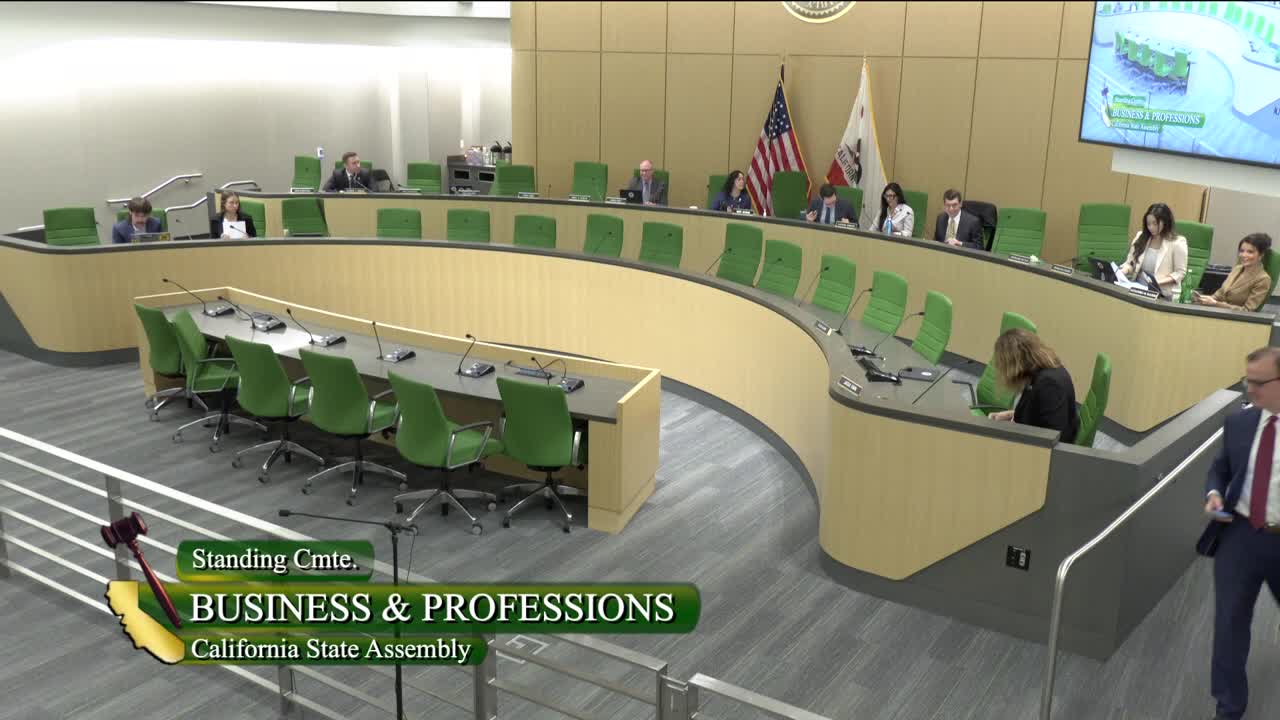 5MIN
Assembly Standing Committee on Business and Professions
Bill Author
Bill Co-Author(s):