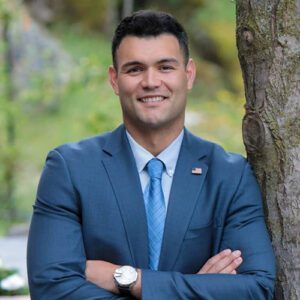
AB 240: Community colleges: study: Counties of Amador, Alpine, Mariposa, Modoc, and Sierra.
- Session Year: 2025-2026
- House: Assembly
- Latest Version Date: 2025-03-10
Current Status:
Failed
(2026-02-02: From committee: Filed with the Chief Clerk pursuant to Joint Rule 56.)
Introduced
In Committee
Awaiting First Chamber Vote
Passed First Chamber
In Committee
Awaiting Second Chamber Vote
Passed Second Chamber
Enacted
Existing law establishes the California State Library, which includes the California Research Bureau, under the control of an executive known as the State Librarian. Existing law authorizes the California State Library to serve as the central reference and research library for the departments of state government and to, among other things, maintain adequate legislative reference and research library services for the Legislature.
Existing law declares as legislative policy that all of the territory of the state shall be included within a community college district, except that territory located within a county where the county residents accounted for fewer than 350 units of average daily attendance in the states community colleges during the preceding fiscal year, and that territory located within such a county may be included within a community college district pursuant to prescribed procedures.
This bill instead would declare as legislative policy that all of the territory of the state shall be included within a community college district or otherwise provided with equivalent opportunities for residents to participate in both in-person and online postsecondary education community college programs and courses.
This bill would require the Little Hoover Commission California Research Bureau to conduct a study and prepare a report evaluating the provision of postsecondary education community college services and opportunities to residents of the underserved Counties of Amador, Alpine, Mariposa, Modoc, and Sierra that are not fully included within the territory of a community college district, and would require the report to include policy recommendations regarding how the state can ensure that residents of those 5 counties have opportunities to participate in both in-person and online postsecondary education community college programs and courses equivalent to those of similarly sized communities that are fully included within the territory of a community college district, as provided. To assist with and inform the development of the report and recommendations, the bill would require the Little Hoover Commission California Research bureau to convene and consult a working group that includes specified voluntary representatives, and would authorize the Little Hoover Commission bureau to request and receive information from specified entities. The bill would require the Little Hoover Commission California Research bureau to submit the report and recommendations to the appropriate fiscal and policy committees of the Legislature and to Assembly Committee on Higher Education, the Senate Committee on Education, and the Governor on or before December 31, 2026. 2027. The bill would repeal these provisions as of January 1, 2031. 2032.
This bill would make legislative findings and declarations as to the necessity of a special statute for the Counties of Amador, Alpine, Mariposa, Modoc, and Sierra.
Existing law establishes the Milton Marks Little Hoover Commission on California State Government Organization and Economy (Little Hoover Commission) for purposes of securing assistance for the Governor and the Legislature in promoting economy, efficiency, and improved service in the transaction of the public business in the various departments, agencies, and instrumentalities of the executive branch of the state government, and in making the operation of all state departments, agencies, and instrumentalities, and all expenditures of public funds, more directly responsive to the wishes of the people as expressed by their elected representatives, as provided.
Existing law declares as legislative policy that all of the territory of the state shall be included within a community college district, except that territory located within a county where the county residents accounted for fewer than 350 units of average daily attendance in the states community colleges during the preceding fiscal year, and that territory located within such a county may be included within a community college district pursuant to prescribed procedures.
This bill instead would declare as legislative policy that all of the territory of the state shall be included within a community college district or otherwise provided with equivalent opportunities for residents to participate in both in-person and online postsecondary education programs and courses.
This bill would require the Little Hoover Commission to conduct a study and prepare a report evaluating the provision of postsecondary education services and opportunities to residents of the underserved Counties of Amador, Alpine, Mariposa, Modoc, and Sierra that are not fully included within the territory of a community college district, and would require the report to include policy recommendations regarding how the state can ensure that residents of those 5 counties have opportunities to participate in both in-person and online postsecondary education programs and courses equivalent to those of similarly sized communities that are fully included within the territory of a community college district, as provided. To assist with and inform the development of the report and recommendations, the bill would require the Little Hoover Commission to convene and consult a working group that includes specified voluntary representatives, and would authorize the Little Hoover Commission to request and receive information from specified entities. The bill would require the Little Hoover Commission to submit the report and recommendations to the appropriate fiscal and policy committees of the Legislature and to the Governor on or before December 31, 2026. The bill would repeal these provisions as of January 1, 2031.
This bill would make legislative findings and declarations as to the necessity of a special statute for the Counties of Amador, Alpine, Mariposa, Modoc, and Sierra.
The Legislature hereby declares as its policy that all of the territory of the state shall be included within a community college district or otherwise provided with equivalent opportunities for residents to participate in both in-person and online postsecondary education community college programs and courses.
SEC. 2.Section 74000.5 is added to the Education Code, to read:74000.5.(a)The Milton Marks Little Hoover Commission on California State Government Organization and Economy California Research Bureau shall conduct a study and prepare a report evaluating the provision of postsecondary education community college services and opportunities to residents of the underserved Counties of Amador, Alpine, Mariposa, Modoc, and Sierra that are not fully included within the territory of a community college district. The report shall include policy recommendations regarding how the state can ensure that residents of these five counties have opportunities to participate in both in-person and online postsecondary education community college programs and courses equivalent to those of similarly sized communities that are fully included within the territory of a community college district.
(b)The report and recommendations required by subdivision (a) shall include consideration of include, but are not limited to, all of the following:
(1)An analysis of the educational and economic impacts of the existing deficit of community college services and opportunities in the five underserved counties identified in subdivision (a), and the potential benefits of providing equivalent opportunities to these communities. (a).
(2)(A)An analysis of the potential benefits of providing equivalent community college services and opportunities in the five underserved counties identified in subdivision (a).
(B)For purposes of subparagraph (A), equivalent community colleges services and opportunities means community college services and opportunities offered in communities of a similar size to the five underserved counties identified in subdivision (a) that are fully included within the territory of a community college district.
(2)(3)An analysis of the current availability of, and opportunities to strengthen, dual enrollment opportunities with community colleges and transfer pathways. pathways to public postsecondary educational institutions.
(3)Identification of outreach and recruitment services in the five underserved counties identified in subdivision (a) by public and private postsecondary educational institutions, and collaborations that are operating or in process to expand access to postsecondary education programs and services in other parts of the state.(4)Identification of existing community colleges, four-year public postsecondary educational institutions, and independent institutions of higher education that are conducting outreach, recruitment, and providing in-person or online postsecondary education programs and services within the five underserved counties identified in subdivision (a).
(4)(5)Identification of potential providers of both in-person and online postsecondary education programs and services within the five underserved counties identified in subdivision (a), and options for implementing those programs and services.
(5)(6)Identification of opportunities and resources needed to provide in-person postsecondary education community college programs and courses in locations reasonably accessible to a majority of residents of the five underserved counties identified in subdivision (a).
(6)(7)Identification of opportunities for partnership with local educational agencies, public and private postsecondary educational institutions, local governments, and nonprofit organizations to facilitate expanded community college opportunities to serve the residents of the five underserved counties identified in subdivision (a).
(7)(8)An analysis of resource needs and potential funding sources for expanding postsecondary education community college services and opportunities to the residents of the five underserved counties identified in subdivision (a).
(8)(9)Identification of potential legislative and administrative actions that may be taken to ensure that residents of the five underserved counties identified in subdivision (a) have opportunities to participate in both in-person and online postsecondary education community college programs and courses equivalent to those of similarly sized communities that are fully included within the territory of a community college district.
(c)For purposes of this section, the commission bureau may request and receive, but not require, information from the Board of Governors of the California Community Colleges and the Chancellor of the California Community Colleges, the State Department of Education, any community college district, any local educational agency, the office of the Chancellor of the California State University, the office of the President of the University of California, or any organization representing independent institutions of higher education in the state. education.
(d)(1)To assist with and inform the development of the report and recommendations required by this section, the commission bureau shall convene and consult a working group that includes voluntary representatives from all of the following:
(1)(A)One representative from each of the five underserved counties identified in subdivision (a).
(2)(B)One representative of an organization representing rural counties.
(3)(C)Representatives from one or more of the community college districts adjacent to each of the five underserved counties identified in subdivision (a).
(4)(D)One representative of the office of the Chancellor of the California Community Colleges.
(5)(E)One representative of the office of the Chancellor of the California State University.
(6)(F)One representative of the office of the President of the University of California.
(7)(G)One representative of an organization of independent, nonprofit colleges and universities in California.
(8)(H)One representative of the State Department of Education.
(9)(I)Representatives from one or more local educational agencies located within each of the five underserved counties identified in subdivision (a).
(2)The working group established pursuant to paragraph (1) shall be subject to the Bagley-Keene Open Meeting Act (Article 9 (commencing with Section 11120) of Chapter 1 of Part 1 of Division 3 of Title 2 of the Government Code).
(e)(1)On or before December 31, 2026, the commission 2027, the bureau shall submit the report and recommendations required by this section to the appropriate fiscal and policy committees of the Legislature Assembly Committee on Higher Education, the Senate Committee on Education, and the Governor.
(2)The report and recommendations to be submitted pursuant to paragraph (1) shall be submitted in compliance with Section 9795 of the Government Code.
(f)For purposes of this section the following definitions apply:
(1)Commission means the Milton Marks Little Hoover Commission on California State Government Organization and Economy.(1)Bureau means the California Research Bureau.
(2)Independent institutions of higher education has the same meaning as specified in Section 66010.
(2)(3)Local educational agency means a school district, county office of education, or charter school.
(g)Pursuant to Section 10231.5 of the Government Code, this section is repealed on January 1, 2031.
SEC. 3.The Legislature finds and declares that a special statute is necessary and that a general statute cannot be made applicable within the meaning of Section 16 of Article IV of the California Constitution because the Counties of Amador, Alpine, Mariposa, Modoc, and Sierra are not within a community college district.
The Legislature hereby declares as its policy that all of the territory of the state shall be included within a community college district, except that territory located within a county where the county residents accounted for fewer than 350 units of average daily attendance in the states community colleges during the preceding fiscal year. The territory located within such a county may be included within a community college district pursuant district or otherwise provided with equivalent opportunities for residents to the procedures prescribed by Article 2 (commencing with Section 74130) of Chapter 2. participate in both in-person and online postsecondary education programs and courses.
SEC. 2.Section 74000.5 is added to the Education Code, to read:74000.5.(a)The Milton Marks Little Hoover Commission on California State Government Organization and Economy shall conduct a study and prepare a report evaluating the provision of postsecondary education services and opportunities to residents of the underserved Counties of Amador, Alpine, Mariposa, Modoc, and Sierra that are not fully included within the territory of a community college district. The report shall include policy recommendations regarding how the state can ensure that residents of these five counties have opportunities to participate in both in-person and online postsecondary education programs and courses equivalent to those of similarly sized communities that are fully included within the territory of a community college district.
(b)The report and recommendations required by subdivision (a) shall include consideration of all of the following:
(1)An analysis of the educational and economic impacts of the existing deficit of community college services and opportunities in the five underserved counties identified in subdivision (a), and the potential benefits of providing equivalent opportunities to these communities.
(2)An analysis of the current availability of, and opportunities to strengthen, dual enrollment and transfer pathways.
(3)Identification of outreach and recruitment services in the five underserved counties identified in subdivision (a) by public and private postsecondary educational institutions, and collaborations that are operating or in process to expand access to postsecondary education programs and services in other parts of the state.
(4)Identification of potential providers of both in-person and online postsecondary education programs and services within the five underserved counties identified in subdivision (a), and options for implementing those programs and services.
(5)Identification of opportunities and resources needed to provide in-person postsecondary education programs and courses in locations reasonably accessible to a majority of residents of the five underserved counties identified in subdivision (a).
(6)Identification of opportunities for partnership with local educational agencies, public and private postsecondary educational institutions, local governments, and nonprofit organizations to facilitate expanded community college opportunities to serve the residents of the five underserved counties identified in subdivision (a).
(7)An analysis of resource needs and potential funding sources for expanding postsecondary education services and opportunities to the residents of the five underserved counties identified in subdivision (a).
(8)Identification of potential legislative and administrative actions that may be taken to ensure that residents of the five underserved counties identified in subdivision (a) have opportunities to participate in both in-person and online postsecondary education programs and courses equivalent to those of similarly sized communities that are fully included within the territory of a community college district.
(c)For purposes of this section, the commission may request and receive, but not require, information from the Board of Governors of the California Community Colleges and the Chancellor of the California Community Colleges, the State Department of Education, any community college district, any local educational agency, the office of the Chancellor of the California State University, the office of the President of the University of California, or any organization representing independent institutions of higher education in the state.
(d)To assist with and inform the development of the report and recommendations required by this section, the commission shall convene and consult a working group that includes voluntary representatives from all of the following:
(1)One representative from each of the five underserved counties identified in subdivision (a).
(2)One representative of an organization representing rural counties.
(3)Representatives from one or more of the community college districts adjacent to each of the five underserved counties identified in subdivision (a).
(4)One representative of the office of the Chancellor of the California Community Colleges.
(5)One representative of the office of the Chancellor of the California State University.
(6)One representative of the office of the President of the University of California.
(7)One representative of an organization of independent, nonprofit colleges and universities in California.
(8)One representative of the State Department of Education.
(9)Representatives from one or more local educational agencies located within each of the five underserved counties identified in subdivision (a).
(e)(1)On or before December 31, 2026, the commission shall submit the report and recommendations required by this section to the appropriate fiscal and policy committees of the Legislature and the Governor.
(2)The report and recommendations to be submitted pursuant to paragraph (1) shall be submitted in compliance with Section 9795 of the Government Code.
(f)For purposes of this section the following definitions apply:
(1)Commission means the Milton Marks Little Hoover Commission on California State Government Organization and Economy.
(2)Local educational agency means a school district, county office of education, or charter school.
(g)Pursuant to Section 10231.5 of the Government Code, this section is repealed on January 1, 2031.
SEC. 3.The Legislature finds and declares that a special statute is necessary and that a general statute cannot be made applicable within the meaning of Section 16 of Article IV of the California Constitution because the Counties of Amador, Alpine, Mariposa, Modoc, and Sierra are not within a community college district.
|
Date
|
Status
|
|---|---|
| Feb 2, 2026 | From committee: Filed with the Chief Clerk pursuant to Joint Rule 56. |
| Jan 31, 2026 | Died pursuant to Art. IV, Sec. 10(c) of the Constitution. |
| May 23, 2025 | In committee: Held under submission. |
| Apr 9, 2025 | In committee: Set, first hearing. Referred to APPR. suspense file. |
| Mar 19, 2025 | From committee: Do pass and re-refer to Com. on APPR. with recommendation: To Consent Calendar. (Ayes 9. Noes 0.) (March 18). Re-referred to Com. on APPR. |
| Mar 11, 2025 | Re-referred to Com. on HIGHER ED. |
| Mar 10, 2025 | From committee chair, with author's amendments: Amend, and re-refer to Com. on HIGHER ED. Read second time and amended. |
| Feb 10, 2025 | Referred to Com. on HIGHER ED. |
| Jan 15, 2025 | From printer. May be heard in committee February 14. |
| Jan 14, 2025 | Read first time. To print. |
|
Date
|
Description
|
Location
|
Votes
|
|
|---|---|---|---|---|
| Mar 18, 2025 | Do pass and be re-referred to the Committee on [Appropriations] with recommendation: To Consent Calendar | Assembly Standing Committee on Higher Education |
Passed |
This list shows positions taken on this bill by organizations on the date displayed, which is linked to the original source.
Positions by individuals are not included.
|
Organization
|
Position
|
Date
|
|---|---|---|
| Alpine County, CA | ** Support | |
| Amador County Board of Supervisors | ** Support | |
| Colusa County Office of Education | ** Support | |
| Faculty Association Of California Community Colleges | ** Support | |
| Modoc County | ** Support | |
| Rural County Representatives of California | ** Support | |
| Sierra Business Council | ** Support |
Date of Hearing: April 9, 2025
ASSEMBLY COMMITTEE ON APPROPRIATIONS
Buffy Wicks, Chair
ABPCA Bill Id:AB 240
Author:(Alanis) – As Amended Ver:March 10, 2025
Policy Committee: | Higher Education | Vote: | 9 - 0 |
|
| ||
|
|
Urgency: No State Mandated Local Program: No Reimbursable: No
SUMMARY:
This bill declares a legislative policy requiring every territory of the state be included within a community college district (CCD) or otherwise provided equivalent opportunities for in-person and online community college programs and courses, and requires the California Research Bureau (CRB) to conduct and prepare a report aligned with this declaration.
Specifically, this bill requires the CRB to conduct a study and prepare a report to evaluate and make policy recommendations regarding the provision of community college services and opportunities, both in-person and online, to residents of Amador, Alpine, Mariposa, Modoc, and Sierra counties, which are not fully included within the territory of a CCD.
This bill also requires the CRB to convene a working group to assist with and inform development of the report. The working group includes voluntary representatives from each of the five counties identified in the bill, the organization representing rural counties, the CCDs adjacent to each of the five counties, each of the higher education segment’s offices, the California Department of Education, and the K-12 local educational agencies within each of the five counties. Lastly, this bill requires the working group to be subject to the Bagley-Keen Open Meeting Act and requires the CRB submit the report to the Legislature on or before December 31, 2027.
FISCAL EFFECT:
- One-time General Fund costs to the CRB of $270,000 to $500,000 to hire staff and support the travel required to prepare the report, or acquire a contract for an outside entity to conduct the report as CRB indicates positions of this type are difficult to hire for on a limited-term basis and the work is outside their typical scope.
- One-time General Fund workload costs in the low tens of thousands of dollars for each of the K-12 agencies and higher education institutions listed in the bill to participate in the workgroup. However, participation in the workgroup is voluntary, and the exact cost would depend on the frequency of the meetings and required level of participation and engagement.
COMMENTS:
- Background.
Challenges for Rural Areas. According to the Public Policy Institute of California, rural Californians are less likely than urban residents to be in the labor force (53% vs. 64%) and more likely to be unemployed (7.0% vs. 6.4%). Wages and incomes also tend to be lower. Median income is $83,100 for rural households compared to $92,400 for urban households. Three counties have lost more than 10% of their population relative to their population peak (Lassen, Modoc, and Sierra), largely attributable to domestic migration of young adults to larger urban areas for educational opportunities. Lassen has lost the most, declining 21% since its population peak in 2007. Finally, Rural Californians are less likely to have graduated from college: 27% have at least a bachelor’s degree, compared to 36% of urban residents.
Mission of the CRB. The CRB serves as an institutional memory for staff in the Legislature and Governor’s Office, focusing on helping staff navigate state legislative, regulatory, and court histories as well as identifying and gathering relevant federal, state, and local government reports and academic research to help address their policy questions or goals. Generally, CRB’s work focuses on finding, organizing, and sometimes summarizing, synthesizing, or analyzing existing data and research. CRB staff indicates they typically do not take on original research projects such as the report required by this bill, nor do they have sufficient resources to do so.
- Prior Legislation. SB 1222 (Alvarado-Gil), of the 2023-24 legislative session, was substantially similar to this bill and was held on the suspense in the Senate Committee on Appropriations. The bill would have required the Legislative Analyst’s Office to prepare the report and convene a working group with specific policy recommendations to the legislature evaluating postsecondary education services and opportunities for residents of the same five counties.
Analysis Prepared by: Aaron Heredia / APPR. / (916) 319-2081
Date of Hearing: March 18, 2025
ASSEMBLY COMMITTEE ON HIGHER EDUCATION
Mike Fong, Chair
ABPCA Bill Id:AB 240 (
Author:Alanis) – As Amended Ver:March 10, 2025
SUBJECT: Community colleges: study: Counties of Amador, Alpine, Mariposa, Modoc, and Sierra
SUMMARY: Requires that the California Research Bureau (CRB) conduct and prepare a report that would align with the state’s declaration that all of the territory of the state shall be included within a community college district (CCD). The report would provide specific policy recommendations evaluating California Community Colleges (CCC) services and opportunities for the residents of Amador, Alpine, Mariposa, Modoc, and Sierra counties that are not fully included in a CCD. CRB will also convene and consult a working group to help implement the recommendations. Specifically, this bill:
- Declares as a legislative policy that all of the territory of the state shall be included within a community college district or otherwise provided with equivalent opportunities for residents to participate in both in-person and online community college programs and courses.
- Requires that CRB conduct a study and prepare a report evaluating the provision of community colleges services and opportunities to residents of the underserved Counties of Amador, Alpine, Mariposa, Modoc, and Sierra that are not fully within the territory of a CCD. The report shall include policy recommendations regarding how the state can ensure that residents of these five countries have opportunities to participate in both in-person and online community college programs and courses equivalent to those of similarly sized communities that are fully included within the territory of a CCD. The report and recommendations shall include, but is not limited to, all of the following:
- An analysis of the educational and economic impacts of the existing deficit of community college services and opportunities in the five underserved counties listed above, in (2);
- An analysis of the potential benefits of providing equivalent community college services and opportunities in the five underserved counties listed above. When defining “equivalent services,” the report shall look for services and opportunities offered in similarly sized communities;
- An analysis of the current availability of, and opportunities to strengthen, dual enrollment opportunities with community colleges and transfer pathways to public postsecondary education institutions;
- Identification of existing community colleges, public four-year postsecondary education, and independent postsecondary education public and independent institutions of higher education that are conducting outreach, recruitment, and providing in-person or online postsecondary education programs and services within the five underserved counties listed above, in (2);
- Identification of potential providers of both in-person and online postsecondary education programs and services within the five underserved counties listed above, and options for implementing those programs and services;
- Identification of opportunities and resources needed to provide in-person community college programs and courses in locations reasonably accessible to a majority of residents of the five underserved counties listed above, in (2);
- Identification of opportunities for partnership with local educational agencies, public postsecondary educational institutions, local governments, and nonprofit organizations to facilitate expanded community college opportunities to serve the residents of the five underserved counties listed above, in (2);
- An analysis of resource needs and potential funding sources for expanding community college services and opportunities to the residents of the five underserved counties listed above, in (2);
- Identification of potential legislative and administrative actions that may be taken to ensure that residents of the five underserved counties listed above have opportunities to participate in both in-person and online community college programs and courses equivalent to those of similarly sized communities that are fully included within the territory of a CCD;
- For purposes of this section, the bureau may request and receive, but not require, information from the Board of Governors of the California Community Colleges and the Chancellor of the California Community Colleges, the State Department of Education, any community college district, any local educational agency, the office of the Chancellor of the California State University, the office of the President of the University of California, or any organization representing independent institutions of higher education, as defined in Section 66010; and,
- To assist with and inform the development of the report and recommendations required by this section, CRB shall convene and consult a working group that includes voluntary representatives from all of the following:
- One representative from each of the five underserved counties identified above, in (2);
- One representative of an organization representing rural counties;
- Representatives from one or more of the CCD’s adjacent to each of the five underserved counties identified above, in (2);
- One representative of the office of the Chancellor of the CCC;
- One representative of the office of the Chancellor of the California State University;
- One representative of the office of the President of the University of California;
- One representative of an organization of independent, nonprofit colleges and universities in California;
- One representative of the State Department of Education; and,
- Representatives from one or more local educational agencies located within each of the five underserved counties identified above, in (2).
- Requires the working group to be subject to the Bagley-Keene Open Meeting Act (Article 9 (commencing with Section 11120) of Chapter 1 of Part 1 of Division 9 of Title 2 of the Government Code.)
- Requires the CRB, on or before December 31, 2027, to submit the report and the recommendations to the California Assembly Committee on Higher Education and the California Senate Committee on Education of the Legislature and the Governor.
- For purposes of this section the following definitions apply:
- “Bureau” means the California Research Bureau;
- “Independent institutions of higher education” has the same meaning as specified in Section 66010; and,
- “Local educational agency” means a school district, county office of education, or charter school.
- Repeals this section on January 1, 2031.
- For purposes of this section the following definitions apply:
- Requires the CRB, on or before December 31, 2027, to submit the report and the recommendations to the California Assembly Committee on Higher Education and the California Senate Committee on Education of the Legislature and the Governor.
EXISTING LAW:
- Establishes the California Community Colleges (CCC) as a part of public higher education consisting of community college districts under the control of a local board of trustees. (Education Code (EDC) section 70900 and 70902)
- Declares as legislative policy that all of the territory of the state shall be included within a community college district, except that territory located within a county where the county residents accounted for fewer than 350 units of average daily attendance in the state’s community colleges during the preceding fiscal year, and that territory located within such a county may be included within a community college district pursuant to prescribed procedures. (EDC section 74000)
- Authorizes the county committee on school district organization to, if certain conditions are met approve or disapprove petitions to transfer territory and the formation of a district that meets specified conditions. (EDC section 35710)
- Authorizes the county committee on school organizations to establish trustee areas, rearrange the boundaries of trustee areas, abolish trustee areas, adopt one of the alternative methods of electing governing board members, and increase to seven or decrease to five the number of members of the governing board in any school district or community college district. (EDC section 5019)
FISCAL EFFECT: Unknown
COMMENTS: Purpose. According to the author, “California has one of the strongest higher education systems in the nation, and yet students in rural areas struggle to attend college and graduate due to geographic and financial barriers, as well as limited educational opportunities. AB 240 is a good-faith effort to strengthen our workforce and ensure all Californians have the same access to education.”
Current issues facing residents in California rural areas. A factsheet provided by the Public Policy Institute of California (PPIC) in March of 2024 listed the numerous ways in which access to CCC’s in rural areas differ from those in more urban area. The factsheet made the following observations:
- Rural Californians are less likely than urban residents to be in the labor force (53% vs. 64%) and more likely to be unemployed (7.0% vs. 6.4%). Some of these differences likely reflect the older age profile of rural residents. Wages and incomes also tend to be lower. Median income is $83,100 for rural households compared to $92,400 for urban households.
- Three counties have lost more than 10% of their population relative to their population peak (Lassen, Modoc, and Sierra). Lassen has lost the most, declining 21% since its population peak in 2007.
- A source of population loss is domestic migration. Rural counties tend to lose young adults to larger urban areas, most likely for educational opportunities.
- Rural Californians are less likely to have graduated from college: 27% have at least a bachelor’s degree, compared to 36% of urban residents.[1]
Goal of community colleges within the Higher Education system. The CCC’s have a distinct mission within the higher education system. According to EDC Section 66010.4, the California Community Colleges shall, as a primary mission, offer academic and vocational instruction at the lower division level for both younger and older students, including those persons returning to school. A primary mission of the California Community Colleges is to advance California’s economic growth and global competiveness through education, training, and services that contribute to continuous workforce improvement.
How to include community colleges into rural areas. EDC Section 35710 states that a county committee on school district organization determines the service areas for both community colleges and school districts. It also authorizes the county committee on school district organization to, if certain conditions are met, approve or disapprove petitions to transfer or establish the formation of a district that meets specified conditions. Community college districts cannot expand their service boundaries without involvement from their local government partners.
CRB Report and Workgroup. The CRB is tasked with performing specific legislative research in providing a detailed report of requested information. The mission of the CRB is to provide nonpartisan and confidential public policy research for the Governor’s Office and the State Legislature. The workgroup proposed in this bill includes a myriad of representatives ranging from local representatives from the rural areas mentioned in the bill to representatives from each of the higher education institutions.
Arguments in support. The Rural County Representatives of California (RCRC) wrote in support of AB 240 by stating that, “Currently, the Counties of Amador, Alpine, Mariposa, Modoc, and Sierra are wholly or partially outside an existing CCC district, leaving those residents without access to much-needed affordable post-secondary educational opportunities. Rural residents face significantly unique challenges to higher education, workforce development, and vocational training due to factors such as remote geographical location and low population density. Community colleges, especially those that offer online options, can provide an accessible entry point to advanced learning, career training, and the ability for high school students to earn college credit to be more competitive in applying to a four-year university. Even without a physical facility in the county, the benefits of being part of a community college district can be seen through CCC partnerships and outreach to the community, driving educational opportunities to the residents. AB 240 will analyze how we can bring those same benefits to the underserved five rural counties through a coordinated effort of representatives from the public higher education system and the affected counties and will present suggested pathways that will ensure all Californians have an equitable opportunity to higher education.”
Prior legislation. SB 1222 (Alvarado-Gil) of the 2023-24 Session, which was held on the Suspense File in the Senate Committee on Appropriations; would have required the Legislative Analyst’s Office to conduct research, convene a workgroup and prepare a report with specific policy recommendations to the legislature evaluating postsecondary education services and opportunities for residents of Amador, Alpine, Mariposa, Modoc, and Sierra Counties that are not fully included in a community college district.
REGISTERED SUPPORT / OPPOSITION:
Support
Rural County Representatives of California (RCRC) (Sponsor)
Alpine County, CA
Amador County Board of Supervisors
Colusa County Office of Education
Faculty Association of California Community Colleges
Modoc County
Sierra Business Council
Opposition
None on file.
Analysis Prepared by: Kiersten Wall / HIGHER ED. / (916) 319-3960
https://www.ppic.org/publication/rural-california ↑