AB 2411: California Olympic and Paralympic Public Safety Command: agreements with state and local agencies.
- Session Year: 2025-2026
- House: Assembly
- Latest Version Date: 2026-09-20
Current Status:
Passed
(2026-09-20: Chaptered by Secretary of State - Chapter 352, Statutes of 2026.)
Introduced
In Committee
Awaiting First Chamber Vote
Passed First Chamber
In Committee
Awaiting Second Chamber Vote
Passed Second Chamber
Enacted
Existing law requires the Office of Emergency Services to establish the California Olympic and Paralympic Public Safety Command to facilitate the planning, resourcing, management, and delivery of safety and security at the 2028 Olympic and Paralympic Games in the City of Los Angeles. Existing law repeals provisions relating to the 2028 Olympic and Paralympic Games on January 1, 2029. Existing law requires the Commission on Peace Officer Standards and Training to adopt rules establishing minimum standards relating to physical, mental, and moral fitness that govern the recruitment of certain peace officers. Existing law requires the commission to establish a certification program for certain peace officers, as provided.
This bill would require the Office of Emergency Services to negotiate and enter into agreements to facilitate training, mutual cooperation, and sharing of information and resources related to the temporary deployment, as defined, of law enforcement personnel and other resources necessary to safeguard life, property, and critical infrastructure with other state and local agencies within and outside of the State of California for the purposes of ensuring public safety for the 2028 Olympic and Paralympic Games. The bill would prohibit out-of-state law enforcement personnel, as defined, from being deployed pursuant to these provisions unless specified conditions are met, including issuance of a temporary authorization by the commission, for the duration of the temporary deployment, as provided, and the Office of Emergency Services and the designated California law enforcement agency supervising out-of-state law enforcement personnel entering into a written memorandum of understanding governing conditions the office deems necessary to ensure compliance with these provisions. The bill would require out-of-state law enforcement personnel deployed pursuant to these provisions to, among other things, be limited to general 2028 Olympic and Paralympic Games law enforcement duties, as defined. The bill would authorize the Director of the Office of Emergency Services, or their designee, to administer oaths, conduct swearing ins, and deputize law enforcement personnel deployed pursuant to these provisions for the limited purposes of performing general 2028 Olympic and Paralympic Games law enforcement duties, as provided. The bill would require the commission, in coordination with the Office of Emergency Services and appropriate agencies, to submit a report to the Assembly and Senate Public Safety Committees on the deployment out-of-state personnel, as provided.
This bill would require the commission to establish a streamlined training program for out-of-state law enforcement personnel that, among other things, includes training as determined by the commission to be necessary for the unique conditions of the use of out-of-state law enforcement personnel to assist local law enforcement agencies with law enforcement operations during the 2028 Olympic and Paralympic Games. The bill would repeal the requirement to establish a streamlined training program on January 1, 2029.
This bill would, until January 1, 2029, make a full-time law enforcement officer of another state a peace officer in this state for the purposes of assisting local law enforcement for the 2028 Olympic and Paralympic Games if that officer meets specified conditions, including, among other things, that the officer has a minimum of two years of continuous full-time experience performing general law enforcement duties with law enforcement of another state and is currently in good standing with their employing agency, and has completed the streamlined training program established by the commission.
Existing law requires the Office of Emergency Services to establish the California Olympic and Paralympic Public Safety Command to facilitate the planning, resourcing, management, and delivery of safety and security at the 2028 Olympic and Paralympic Games in the City of Los Angeles. Existing law repeals provisions relating to the 2028 Olympic and Paralympic Games on January 1, 2029. Existing law requires the Commission on Peace Officer Standards and Training to adopt rules establishing minimum standards relating to physical, mental, and moral fitness that govern the recruitment of certain peace officers. Existing law requires the commission to establish a certification program for certain peace officers, as provided.
This bill would require the Office of Emergency Services to negotiate and enter into agreements to facilitate training, mutual cooperation, and sharing of information and resources related to the temporary deployment, as defined, of law enforcement personnel and other resources necessary to safeguard life, property, and critical infrastructure with other state and local agencies within and outside of the State of California for the purposes of ensuring public safety for the 2028 Olympic and Paralympic Games. The bill would prohibit out-of-state law enforcement personnel, as defined, to be from being deployed pursuant to these provisions unless specified conditions are met, including issuance of a temporary authorization by the commission, for the duration of the temporary deployment, as provided, and a written memorandum of understanding between the command the Office of Emergency Services and the employing designated California law enforcement agency supervising out-of-state law enforcement personnel entering into a written memorandum of understanding governing conditions the command office deems necessary to ensure compliance with these provisions. The bill would require out-of-state law enforcement personnel deployed pursuant to these provisions to, among other things, be limited to general 2028 Olympic and Paralympic Games law enforcement duties, as defined, unless the person has obtained any additional authorization by the commission for the performance of investigative functions. defined. The bill would authorize the Director of the Office of Emergency Services, or their designee, to administer oaths, conduct swearing ins, and deputize law enforcement personnel deployed pursuant to these provisions for the limited purposes of performing general 2028 Olympic and Paralympic Games law enforcement duties, as provided. The bill would require the command, commission, in coordination with the Office of Emergency Services and appropriate agencies, to submit a report to the Assembly and Senate Public Safety Committees on the deployment out-of-state personnel, as provided.
This bill would require the commission to establish a streamlined training program for out-of-state law enforcement personnel that, among other things, includes training as determined by the commission to be necessary for the unique conditions of the use of out-of-state law enforcement personnel to assist local law enforcement agencies with law enforcement operations during the 2028 Olympic and Paralympic Games. The bill would repeal the requirement to establish a streamlined training program on January 1, 2029.
This bill would, until January 1, 2029, make a regularly employed full-time law enforcement officer from outside the state of California of another state a peace officer in this state for the purposes of assisting local law enforcement for the 2028 Olympic and Paralympic Games if that officer meets specified conditions, including, among other things, that the officer has a minimum of two years of continuous full-time, out-of-state full-time experience performing general law enforcement duties, duties with law enforcement of another state and is currently in good standing with their employing agency, and has completed the streamlined training program established by the commission.
Existing law requires the Office of Emergency Services to establish the California Olympic and Paralympic Public Safety Command (COPPSC) to facilitate the planning, resourcing, management, and delivery of safety and security at the 2028 Olympic and Paralympic Games in Los Angeles. Existing law repeals provisions relating to COPPSC the 2028 Olympic and Paralympic Games on January 1, 2029. Existing law requires the Commission on Peace Officer Standards and Training (POST) to adopt rules establishing minimum standards relating to physical, mental, and moral fitness that govern the recruitment of certain peace officers. Existing law requires POST the commission to establish a certification program for certain peace officers, as provided.
This bill would require COPPSC the Office of Emergency Services to negotiate and enter into agreements to facilitate training, mutual cooperation, and sharing of information and resources related to the use temporary deployment, as defined, of law enforcement personnel with other state and local agencies within and outside of the State of California for the purposes of ensuring public safety for the 2028 Olympic and Paralympic Games. The bill would require the agreement to, among other things, require law enforcement personnel contracted from out of state to obtain a certificate of training from the commission. The prohibit out-of-state law enforcement personnel, as defined, to be deployed pursuant to these provisions unless specified conditions are met, including issuance of a temporary authorization by the commission, for the duration of the deployment, as provided, and a written memorandum of understanding between the command and the employing California law enforcement agency governing conditions the command deems necessary to ensure compliance with these provisions. The bill would require out-of-state personnel deployed pursuant to these provisions to, among other things, be limited to general law enforcement duties, as defined, unless the person has obtained any additional authorization by the commission for the performance of investigative functions. The bill would require the command, in coordination with appropriate agencies, to submit a report to the Assembly and Senate Public Safety Committees on the deployment out-of-state personnel, as provided.
This bill would require the commission to establish a streamlined training program for out-of-state law enforcement personnel that, among other things, satisfies the key requirements for qualifications under the POST program that are includes training as determined by the commission to be necessary for the unique conditions of the use of out-of-state law enforcement personnel to assist local law enforcement agencies with law enforcement operations during the 2028 Olympic and Paralympic Games. The bill would repeal the requirement to establish a streamlined training program on January 1, 2029.
This bill would, until January 1, 2029, make a regularly employed law enforcement officer from outside the state of California a peace officer in this state for the purposes of assisting local law enforcement for the 2028 Olympic and Paralympic Games if that officer meets specified conditions, including, among other things, that the officer has a minimum of two years of continuous full-time, out-of-state experience performing general law enforcement duties, is currently in good standing with their employing agency, and has completed the streamlined training program established by the commission.
Existing law requires the Office of Emergency Services to establish the California Olympic and Paralympic Public Safety Command (COPPSC) to facilitate the planning, resourcing, management, and delivery of safety and security at the 2028 Olympic and Paralympic Games in Los Angeles. Existing law repeals provisions relating to COPPSC on January 1, 2029. Existing law requires the Commission on Peace Officer Standards and Training (POST) to adopt rules establishing minimum standards relating to physical, mental, and moral fitness that govern the recruitment of certain peace officers. Existing law requires POST to establish a certification program for certain peace officers, as provided.
This bill would require COPPSC to negotiate and enter into agreements to facilitate training, mutual cooperation, and sharing of information and resources, and resources related to the use of law enforcement personnel with other state and local agencies within and outside of the State of California for the purposes of ensuring public safety for the 2028 Olympic and Paralympic Games. The bill would require the agreement to, among other things, require law enforcement personnel contracted from out of state to obtain a certificate of training from the commission. The bill would require the commission to establish a streamlined training program for out-of-state law enforcement personnel that, among other things, satisfies the key requirements for qualifications under the POST program that are necessary for the unique conditions of the 2028 Olympic and Paralympic Games. The bill would repeal the requirement to establish a streamlined training program on January 1, 2029.
Existing law requires the Office of Emergency Services to establish the California Olympic and Paralympic Public Safety Command (COPPSC) to facilitate the planning, resourcing, management, and delivery of safety and security at the 2028 Olympic and Paralympic Games in Los Angeles. Existing law repeals provisions relating to COPPSC on January 1, 2029. Existing law requires the Commission on Peace Officer Standards and Training (POST) to adopt rules establishing minimum standards relating to physical, mental, and moral fitness that govern the recruitment of certain peace officers. Existing law requires POST to establish a certification program for certain peace officers, as provided.
This bill would require COPPSC to negotiate and enter into agreements to facilitate training, mutual cooperation, sharing of information and resources, and the use of public safety law enforcement personnel with other state and local agencies within and outside of the state State of California for the purposes of ensuring public safety during for the 2028 Olympic and Paralympic Games. The bill would require the agreement to, among other things, require public safety law enforcement personnel contracted from out of state to obtain a certificate of training from the commission. The bill would require the commission to establish a streamlined training program for out-of-state public safety law enforcement personnel that, among other things, satisfies the key requirements for qualifications under the POST program that are necessary for the unique conditions of the 2028 Olympic and Paralympic Games. The bill would repeal the requirement to establish a streamlined training program on January 1, 2029.
Existing law requires the Office of Emergency Services to establish the California Olympic and Paralympic Public Safety Command (COPPSC) to facilitate the planning, resourcing, management, and delivery of safety and security at the 2028 Olympic and Paralympic Games in Los Angeles. Existing law repeals provisions relating to COPPSC on January 1, 2029. Existing law requires the Commission on Peace Officer Standards and Training (POST) to adopt rules establishing minimum standards relating to physical, mental, and moral fitness that govern the recruitment of certain peace officers. Existing law requires POST to establish a certification program for certain peace officers, as provided.
This bill would require COPPSC to negotiate and enter into agreements to facilitate training, mutual cooperation, sharing of information and resources, and the use of public safety personnel with other state and local agencies within and outside of the state of California for the purposes of ensuring public safety during the 2028 Olympic and Paralympic Games. The bill would require the agreement to, among other things, require public safety personnel contracted from out of state to obtain a certificate of training from the commission. The bill would require the commission to establish a streamlined training program for out-of-state public safety enforcement personnel that, among other things, satisfies the key requirements for qualifications under the POST program that are necessary for the unique conditions of the 2028 Olympic and Paralympic Games. The bill would repeal the requirement to establish a streamlined training program on January 1, 2029.
Existing law requires the Office of Emergency Services to establish and oversee the development, approval, and adoption of the California Olympic and Paralympic Public Safety Command to facilitate the planning, resourcing, management, and delivery of safety and security at the 2028 Olympic and Paralympic Games in Los Angeles.This bill would make a nonsubstantive change to those provisions.Existing law requires the Office of Emergency Services to establish and oversee the development, approval, and adoption of the California Olympic and Paralympic Public Safety Command to facilitate the planning, resourcing, management, and delivery of safety and security at the 2028 Olympic and Paralympic Games in Los Angeles.
This bill would make a nonsubstantive change to those provisions.
The Legislature find and declares all of the following:
(a)The purpose of this act is to safeguard public safety within a reasonable timeframe before, during, and after the 2028 Olympic and Paralympic Games in accordance with state and local law.
(b)The City of Los Angeles is the host city for the 2028 Olympic and Paralympic Games and the city and other local, state, and federal agencies are responsible for ensuring the safety of all participants and visitors who may travel to southern California in connection with games-related activities, in addition to their existing responsibilities to ensure the safety of residents and the safeguarding of public and private property.
(c)It is critical that local jurisdictions have the means and ability to identify and utilize additional law enforcement personnel in order to ensure a secure and peaceful 2028 Olympic and Paralympic Games, including the ability to receive assistance from other law enforcement agencies, including those outside of the State of California.
(d)Existing law limits the extension of mutual aid by California local agencies to circumstances of local emergency due to conditions of disaster or of extreme peril.
(e)It is therefore the intent of the Legislature to ensure that the Office of Emergency Services may enter into agreements to utilize the services and support of other agencies, including those outside of the State of California, in connection with the 2028 Olympic and Paralympic Games, to secure additional law enforcement personnel, under the following conditions:
(1)That all law enforcement personnel augmenting a local agency public safety force do so on a temporary basis and within a reasonable timeframe before, during, and after the 2028 Olympic and Paralympic Games.
(2)That all out-of-state law enforcement personnel obtain a certificate of training from the Commission on Peace Officer Standards and Training via the implementation of a streamlined training program that is designed to facilitate adequate, tailored training of out-of-state law enforcement personnel for the 2028 Olympic and Paralympic Games.
(3)That all law enforcement personnel perform their duties in compliance with all state and local laws and ordinances.
(f)It is the intent of the Legislature that California peace officers shall be the primary and preferred source of law enforcement personnel for the 2028 Olympic and Paralympic Games. The services of out-of-state law enforcement personnel shall be utilized only to augment available California resources.
SEC. 2.Section 8591.6.5 is added to the Government Code, to read:8591.6.5.(a)For the purposes of this section, the following definitions apply:
(1)Commission means the Commission on Peace Officer Standards and Training.
(2)General 2028 Olympic and Paralympic Games law enforcement duties includes the maintenance of public order, the protection of life and property, the preliminary investigation of crime, response to requests for police services, and enforcement of laws for the purposes of the 2028 Olympic and Paralympic Games.
(3)Out-of-state law enforcement personnel means a peace officer or other sworn law enforcement officer employed by and acting on behalf of a law enforcement agency or public safety agency outside this state and assigned to perform general law enforcement duties in this state pursuant to this section.
(4)Temporary deployment means a limited-duration assignment, with the start and end date determined by the Office of Emergency Services, in consultation with local officials, but not exceeding 120 calendar days, of out-of-state law enforcement personnel to assist with public safety functions in connection with the 2028 Olympic and Paralympic Games.
(b)The Office of Emergency Services shall negotiate and enter into agreements to facilitate training, mutual cooperation, and sharing of information and resources related to the temporary deployment of law enforcement personnel and other resources necessary to safeguard life, property, and critical infrastructure with other state and local agencies within and outside of the State of California for the purposes of ensuring public safety for the 2028 Olympic and Paralympic Games in the City of Los Angeles.
(c)Out-of-state law enforcement personnel shall not be deployed pursuant to this section unless all of the following conditions are met:
(1)The Office of Emergency Services receives written certification from the employing agency of the out-of-state law enforcement personnel that each individual proposed for deployment meets all applicable selection standards of the officers employing agency, including, but not limited to, the absence of any disqualifying conduct or conviction, satisfaction of moral character requirements, and completion of all hiring standards required for their peace officers.
(2)The commission issues a temporary proof of eligibility or other authorization, in a form and manner determined by the commission, for the duration of the temporary deployment.
(3)During the temporary deployment, the out-of-state law enforcement personnel shall comply with applicable California laws and regulations governing peace officers. Upon receipt of a complaint, charge, or allegation of serious misconduct against out-of-state law enforcement personnel, the designated California law enforcement agency supervising the out-of-state law enforcement personnel shall notify the commission, and the commission shall, as soon as practicable, report the complaint, charge, or allegation to the Office of Emergency Services and the out-of-state law enforcement agency where the personnel is currently employed and shall also report the same facts to the respective peace officer standards and training or certifying agency of that state.
(4)The executive director of the commission may suspend or rescind the temporary proof of eligibility or other authorization for any out-of-state law enforcement personnel upon receipt of a complaint, charge, or allegation of serious misconduct. The Director of Emergency Services may report a complaint, charge, or allegation of serious misconduct to the executive director of the commission. Out-of-state law enforcement personnel may be subject to disciplinary action from their state of origin, including, but not limited to, decertification. The executive director of the commission shall, as soon as practicable, report a suspension or rescission of the temporary proof of eligibility or other authorization for any out-of-state law enforcement personnel to the Director of Emergency Services.
(5)The Office of Emergency Services and the designated California law enforcement agency supervising out-of-state law enforcement personnel enter into a written memorandum of understanding governing command authority, operational control, supervision, liability allocation, training, reporting, and any other conditions the Office of Emergency Services deems necessary to ensure compliance with this section.
(d)Out-of-state law enforcement personnel deployed pursuant to this section shall:
(1)Operate exclusively under the command and control of the designated California law enforcement agency supervisor identified in the applicable memorandum of understanding.
(2)Comply with all applicable use-of-force policies, incident reporting requirements, and other operational policies applicable to California peace officers assigned to comparable duties by the designated California law enforcement agency supervising the out-of-state law enforcement personnel.
(3)Be limited to general 2028 Olympic and Paralympic Games law enforcement duties.
(e)The Director of Emergency Services, or their designee, is authorized to administer oaths, conduct swearing ins, and deputize out-of-state law enforcement personnel deployed pursuant to this section for the limited purpose of performing general 2028 Olympic and Paralympic Games law enforcement duties. Deputization under this subdivision shall not exceed the duration of the temporary deployment and shall be contingent upon completion of all applicable training, certification, and eligibility requirements under this section and Section 13519.16 of the Penal Code.
(f)(1)The commission, in coordination with the Office of Emergency Services and appropriate agencies, shall, on or before January 1, 2029, submit a report to the Assembly and Senate Public Safety Committees that includes all of the following:
(A)The number of out-of-state law enforcement personnel deployed pursuant to this section.
(B)The number and type of any use-of-force incidents involving out-of-state law enforcement personnel.
(C)The number and disposition of complaints, charges, or allegations of serious misconduct, or other disciplinary actions involving out-of-state law enforcement personnel.
(D)Any identified training deficiencies, policy compliance issues, or operational concerns relating to out-of-state personnel.
(E)Any recommendations for legislative action based on the deployment of out-of-state personnel.
(2)(A)The requirement for submitting a report imposed under paragraph (1) is inoperative on January 1, 2033, pursuant to Section 10231.5.
(B)A report to be submitted pursuant to paragraph (1) shall be submitted in compliance with Section 9795.
(g)This section shall apply only to the deployment of out-of-state law enforcement personnel in connection with the 2028 Olympic and Paralympic Games and shall not be construed to establish any precedent for future permanent changes to peace officer selection, training, certification, or decertification standards outside those events.
SEC. 3.Section 830.45 is added to the Penal Code, to read:830.45.(a)Any full-time law enforcement officer of another state is a peace officer in this state for the purposes of assisting local law enforcement agencies with the prevention and detection of crime and the general enforcement of the criminal laws of this state for the 2028 Olympic and Paralympic Games and only if all of the following conditions are met:
(1)The officer is providing support and assistance to local law enforcement agencies with the prevention and detection of crime and the general enforcement of the criminal laws of this state during the 2028 Olympic and Paralympic Games.
(2)The officer has successfully completed, at a minimum, a basic general law enforcement training course in their home state as is required to perform general law enforcement functions and duties.
(3)The officer has a minimum of two years of continuous full-time experience performing general law enforcement duties with a law enforcement agency of another state and is currently in good standing with their employing law enforcement agency.
(4)The officer has received a certificate of training issued by the California Commission on Peace Officer Standards and Training pursuant to Section 13519.16.
(5)The officer has not been found to have committed any acts that would constitute serious misconduct had they been committed in California and has obtained authorization from the officers employing agency to serve as a peace officer during the 2028 Olympic and Paralympic Games in accordance with this section.
(6)The Office of Emergency Services has entered into an agreement with the law enforcement agency employing the out-of-state law enforcement personnel pursuant to subdivision (b) of Section 8591.6.5 of the Government Code.
(b)Notwithstanding any other provision of law, any person who is acting as a peace officer in this state in the manner described in this section shall be deemed to have met the requirements of Sections 1030 and 1031 of the Government Code and the selection and training standards of the Commission on Peace Officer Standards and Training as long as the officer has completed the basic training required for peace officers in their home state.
(c)This section shall remain in effect only until January 1, 2029, and as of that date is repealed.
SEC. 4.Section 13519.16 is added to the Penal Code, to read:13519.16.(a)The commission shall establish a streamlined training program for out-of-state law enforcement personnel that are utilized for purposes of assisting local law enforcement agencies with the prevention and detection of crime and the general enforcement of the criminal laws of this state for a period of time not exceeding 120 calendar days pursuant to Section 8591.6.5 of the Government Code. The streamlined training program shall comply with all of the following:
(1)The streamlined training program shall include training as determined by the commission to be necessary for the unique conditions of the use of out-of-state law enforcement personnel to assist local law enforcement agencies with law enforcement operations during the 2028 Olympic and Paralympic Games.
(2)The streamlined training program shall be used only for out-of-state law enforcement personnel who are intended to be utilized for the 2028 Olympic and Paralympic Games, and who meet the specific requirements of Section 830.45.
(3)The commission shall issue out-of-state law enforcement personnel that complete the training program a certificate of training. The certificate of training shall only be valid during the officers period of service in connection with the 2028 Olympic and Paralympic Games but in no case beyond a period of 120 calendar days.
(b)This section shall remain in effect only until January 1, 2029, and as of that date is repealed.
The Legislature find and declares all of the following:
(a)The purpose of this act is to safeguard public safety within a reasonable timeframe before, during, and after the 2028 Olympic and Paralympic Games in accordance with state and local law.
(b)The City of Los Angeles is the host city for the 2028 Olympic and Paralympic Games and the city and other local, state, and federal agencies are responsible for ensuring the safety of all participants and visitors who may travel to southern California in connection with games-related activities, in addition to their existing responsibilities to ensure the safety of residents and the safeguarding of public and private property.
(c)It is critical that local jurisdictions have the means and ability to identify and utilize additional law enforcement personnel in order to ensure a secure and peaceful 2028 Olympic and Paralympic Games, including the ability to receive assistance from other law enforcement agencies, including those outside of the State of California.
(d)Existing law limits the extension of mutual aid by California local agencies to circumstances of local emergency due to conditions of disaster or of extreme peril.
(e)It is therefore the intent of the Legislature to ensure that the Office of Emergency Services may enter into agreements to utilize the services and support of other agencies, including those outside of the State of California, in connection with the 2028 Olympic and Paralympic Games, to secure additional law enforcement personnel, under the following conditions:
(1)That all law enforcement personnel augmenting a local agency public safety force do so on a temporary basis and within a reasonable timeframe before, during, and after the 2028 Olympic and Paralympic Games.
(2)That all out-of-state law enforcement personnel obtain a certificate of training from the Commission on Peace Officer Standards and Training via the implementation of a streamlined training program that is designed to facilitate adequate, tailored training of out-of-state law enforcement personnel for the 2028 Olympic and Paralympic Games.
(3)That all law enforcement personnel perform their duties in compliance with all state and local laws and ordinances.
(f)It is the intent of the Legislature that California peace officers shall be the primary and preferred source of law enforcement personnel for the 2028 Olympic and Paralympic Games. The services of out-of-state law enforcement personnel shall be utilized only to augment available California resources.
SEC. 2.Section 8591.6.5 is added to the Government Code, to read:8591.6.5.(a)For the purposes of this section, the following definitions apply:
(1)California Olympic and Paralympic Public Safety Command or command means the California Olympic and Paralympic Public Safety Command established pursuant to Section 8591.5.(2)(1)Commission means the Commission on Peace Officer Standards and Training.
(3)(2)General 2028 Olympic and Paralympic Games law enforcement duties are duties that include includes the maintenance of public order, the protection of life and property, the preliminary investigation of crime, patrol of a geographic area, responding to the full range of response to requests for police services, and performing any enforcement action on the full range of law violations. enforcement of laws for the purposes of the 2028 Olympic and Paralympic Games.
(4)(3)Out-of-state law enforcement personnel means a peace officer or other sworn law enforcement officer employed by and acting on behalf of a law enforcement agency or public safety agency outside this state and assigned to provide perform general law enforcement services duties in this state pursuant to this section.
(5)(4)Temporary deployment means a limited-duration assignment, with the start and end date determined by the Office of Emergency Services, in consultation with local officials, but not exceeding 120 calendar days, of out-of-state law enforcement personnel to assist with public safety functions in connection with the 2028 Olympic and Paralympic Games.
(b)The Office of Emergency Services shall negotiate and enter into agreements to facilitate training, mutual cooperation, and sharing of information and resources related to the temporary deployment of law enforcement personnel and other resources necessary to safeguard life, property, and critical infrastructure with other state and local agencies within and outside of the State of California for the purposes of ensuring public safety for the 2028 Olympic and Paralympic Games in the City of Los Angeles.
(c)Out-of-state law enforcement personnel shall not be deployed pursuant to this section unless all of the following conditions are met:
(1)The command Office of Emergency Services receives written certification from the employing agency of the out-of-state law enforcement personnel that each individual proposed for deployment meets all applicable selection standards of the officers employing agency, including, but not limited to, the absence of any disqualifying conduct or conviction, satisfaction of moral character requirements, and completion of all hiring standards required for their peace officers.
(2)The commission issues a temporary proof of eligibility or other authorization, in a form and manner determined by the commission, for the duration of the temporary deployment.
(3)During the term of temporary deployment, the out-of-state law enforcement personnel shall comply with applicable California laws and regulations governing peace officers. Upon receipt of a complaint, charge, or allegation of serious misconduct against out-of-state law enforcement personnel, the designated California law enforcement agency supervising the out-of-state law enforcement personnel shall notify the commission, and the commission shall immediately shall, as soon as practicable, report the complaint, charge, or allegation to the Office of Emergency Services and the out-of-state law enforcement agency where the personnel is currently employed and shall also report the same facts to the respective peace officer standards and training or certifying agency of that state.
(4)The executive director of the commission may suspend or rescind the temporary proof of eligibility or other authorization for any out-of-state law enforcement personnel upon receipt of a complaint, charge, or allegation of serious misconduct. The Director of Emergency Services may report a complaint, charge, or allegation of serious misconduct to the executive director of the commission. Out-of-state law enforcement personnel may be subject to disciplinary action from their state of origin, including, but not limited to, decertification. The executive director of the commission shall, as soon as practicable, report a suspension or rescission of the temporary proof of eligibility or other authorization for any out-of-state law enforcement personnel to the Director of Emergency Services.
(5)The command Office of Emergency Services and the employing designated California law enforcement agency supervising out-of-state law enforcement personnel enter into a written memorandum of understanding governing command authority, operational control, supervision, liability allocation, training, reporting, and any other conditions the command Office of Emergency Services deems necessary to ensure compliance with this section.
(d)Out-of-state law enforcement personnel deployed pursuant to this section shall:
(1)Operate exclusively under the command and control of the command or a designated California law enforcement agency supervisor identified in the applicable memorandum of understanding.
(2)Comply with all of Californias local law enforcement agencys applicable use-of-force policies, incident reporting requirements, and other operational policies applicable to California peace officers assigned to comparable duties. duties by the designated California law enforcement agency supervising the out-of-state law enforcement personnel.
(3)Be limited to general 2028 Olympic and Paralympic Games law enforcement duties, unless the person has obtained any additional certification or authorization required by the commission for the performance of investigative functions. duties.
(e)The Director of Emergency Services, or their designee, is authorized to administer oaths, conduct swearing ins, and deputize out-of-state law enforcement personnel deployed pursuant to this section for the limited purpose of performing general 2028 Olympic and Paralympic Games law enforcement duties. Deputization under this subdivision shall not exceed the duration of the temporary deployment and shall be contingent upon completion of all applicable training, certification, and eligibility requirements under this section and Section 13519.16 of the Penal Code.
(e)(f)(1)The command, commission, in coordination with the Office of Emergency Services and appropriate agencies, shall, on or before January 1, 2029, submit a report to the Assembly and Senate Public Safety Committees that includes all of the following:
(A)The number of out-of-state law enforcement personnel deployed pursuant to this section.
(B)The number and type of any use-of-force incidents involving out-of-state law enforcement personnel.
(C)The number and disposition of complaints, charges, or allegations of serious misconduct, or other disciplinary actions involving out-of-state law enforcement personnel.
(D)Any identified training deficiencies, policy compliance issues, or operational concerns relating to out-of-state personnel.
(E)Any recommendations for legislative action based on the deployment of out-of-state personnel.
(2)(A)The requirement for submitting a report imposed under paragraph (1) is inoperative on January 1, 2033, pursuant to Section 10231.5.
(B)A report to be submitted pursuant to paragraph (1) shall be submitted in compliance with Section 9795.
(f)(g)This section shall apply only to the deployment of out-of-state law enforcement personnel in connection with the 2028 Olympic and Paralympic Games and shall not be construed to establish any precedent for future permanent changes to peace officer selection, training, certification, or decertification standards outside those games. events.
SEC. 3.Section 830.45 is added to the Penal Code, to read:830.45.(a)Any regularly employed full-time law enforcement officer outside of the state of California of another state is a peace officer in this state for the purposes of assisting local law enforcement agencies with the prevention and detection of crime and the general enforcement of the criminal laws of this state for the 2028 Olympic and Paralympic Games and only if all of the following conditions are met:
(1)The officer is providing support and assistance to local law enforcement agencies with the prevention and detection of crime and the general enforcement of the criminal laws of this state during the 2028 Olympic and Paralympic Games.
(2)The officer has successfully completed, at a minimum, a basic general law enforcement training course of training in their home state as is required to perform general law enforcement functions and duties.
(3)The officer has at least a minimum of two years of continuous full-time, out-of-state full-time experience performing general law enforcement duties with a law enforcement agency of another state and is currently in good standing with their employing law enforcement agency.
(4)The officer has received a certificate of training issued by the California Commission on Peace Officer Standards and Training pursuant to Section 13519.16.
(5)The officer has not been found to have committed any acts that would constitute serious misconduct had they been committed in California, California and has obtained authorization from the officers employing agency to serve as a peace officer during the 2028 Olympic and Paralympic Games in accordance with this section.
(6)The Office of Emergency Services has entered into an agreement with the law enforcement agency employing the out-of-state law enforcement personnel pursuant to subdivision (b) of Section 8591.6.5 of the Government Code.
(b)Notwithstanding any other provision of law, any person who is acting as a peace officer in this state in the manner described in this section shall be deemed to have met the requirements of Section Sections 1030 and 1031 of the Government Code and the selection and training standards of the Commission on Peace Officer Standards and Training as long as the officer has completed the basic training required for peace officers in their home state.
(c)This section shall remain in effect only until January 1, 2029, and as of that date is repealed.
SEC. 4.Section 13519.16 is added to the Penal Code, to read:13519.16.(a)The commission shall establish a streamlined training program for out-of-state law enforcement personnel that are utilized for purposes of assisting local law enforcement agencies with the prevention and detection of crime and the general enforcement of the criminal laws of this state for a period of time not exceeding 120 calendar days pursuant to Section 8591.6.5 of the Government Code. The streamlined training program shall comply with all of the following:
(1)The streamlined training program shall include training as determined by the commission to be necessary for the unique conditions of the use of out-of-state law enforcement personnel to assist local law enforcement agencies with law enforcement operations during the 2028 Olympic and Paralympic Games.
(2)The streamlined training program shall be used only for out-of-state law enforcement personnel who are intended to be utilized for the 2028 Olympic and Paralympic Games, and who meet the specific requirements of Section 830.45.
(3)The commission shall issue out-of-state law enforcement personnel that complete the training program a certificate of training. The certificate of training shall only be valid during the officers period of service in connection with the 2028 Olympic and Paralympic Games but in no case beyond a period of 120 calendar days.
(b)This section shall remain in effect only until January 1, 2029, and as of that date is repealed.
The Legislature find and declares all of the following:
(a)The purpose of this act is to safeguard public safety within a reasonable timeframe before, during, and after the 2028 Olympic and Paralympic Games in accordance with state and local law.
(b)The City of Los Angeles is the host city for the 2028 Olympic and Paralympic Games and the city and other local, state, and federal agencies are responsible for ensuring the safety of all participants and visitors who may travel to southern California in connection with games-related activities, in addition to their existing responsibilities to ensure the safety of residents and the safeguarding of public and private property.
(c)It is critical that local jurisdictions have the means and ability to identify and utilize additional law enforcement personnel in order to ensure a secure and peaceful 2028 Olympic and Paralympic Games, including the ability to receive assistance from other law enforcement agencies, including those outside of the State of California.
(d)Existing law limits the extension of mutual aid by California local agencies to circumstances of local emergency due to conditions of disaster or of extreme peril.
(e)It is therefore the intent of the Legislature to ensure that the Office of Emergency Services may enter into agreements to utilize the services and support of other agencies, including those outside of the State of California, in connection with the 2028 Olympic and Paralympic Games, to secure additional law enforcement personnel, under the following conditions:
(1)That all law enforcement personnel augmenting a local agency public safety force do so on a temporary basis and within a reasonable timeframe before, during, and after the 2028 Olympic and Paralympic Games.
(2)That all out-of-state law enforcement personnel obtain a certificate of training from the Commission on Peace Officer Standards and Training via the implementation of a streamlined training program that is designed to facilitate adequate, tailored training of out-of-state law enforcement personnel for the 2028 Olympic and Paralympic Games.
(3)That all law enforcement personnel perform their duties in compliance with all state and local laws and ordinances.
(f)It is the intent of the Legislature that California peace officers shall be the primary and preferred source of law enforcement personnel for the 2028 Olympic and Paralympic Games. The services of out-of-state law enforcement personnel shall be utilized only to augment available California resources.
SEC. 2.Section 8591.6.5 is added to the Government Code, to read:8591.6.5.COPPSC (a)For the purposes of this section, the following definitions apply:
(1)California Olympic and Paralympic Public Safety Command or command means the California Olympic and Paralympic Public Safety Command established pursuant to Section 8591.5.
(2)Commission means the Commission on Peace Officer Standards and Training.
(3)General law enforcement duties are duties that include the investigation of crime, patrol of a geographic area, responding to the full range of requests for police services, and performing any enforcement action on the full range of law violations.
(4)Out-of-state law enforcement personnel means a peace officer or other sworn law enforcement officer employed by and acting on behalf of a law enforcement agency or public safety agency outside this state and assigned to provide general law enforcement services in this state pursuant to this section.
(5)Temporary deployment means a limited-duration assignment, not exceeding 120 calendar days, of out-of-state law enforcement personnel to assist with public safety functions in connection with the 2028 Olympic and Paralympic Games.
(b)The Office of Emergency Services shall negotiate and enter into agreements to facilitate training, mutual cooperation, and sharing of information and resources related to the use temporary deployment of law enforcement personnel with other state and local agencies within and outside of the State of California for the purposes of ensuring public safety for the 2028 Olympic and Paralympic Games in Los Angeles. The agreement shall comply with all of the following:
(a)Law enforcement personnel contracted to support public safety in connection with the 2028 Olympic and Paralympic Games shall do so for a limited period of time that falls within a reasonable timeframe before, during, and after the 2028 Olympic and Paralympic Games.(b)Law enforcement personnel contracted from an out-of-state agency to augment security functions in connection with the 2028 Olympic and Paralympic Games shall obtain a certificate of training pursuant to Section 13519.16 of the Penal Code.(c)Law enforcement personnel contracted from an out-of-state agency to augment security functions in connection with the 2028 Olympic and Paralympic Games shall abide by state and local law.(c)Out-of-state law enforcement personnel shall not be deployed pursuant to this section unless all of the following conditions are met:
(1)The command receives written certification from the employing agency of the out-of-state law enforcement personnel that each individual proposed for deployment meets all applicable selection standards of the officers employing agency, including, but not limited to, the absence of any disqualifying conduct or conviction, satisfaction of moral character requirements, and completion of all hiring standards required for their peace officers.
(2)The commission issues a temporary proof of eligibility or other authorization, in a form and manner determined by the commission, for the duration of the deployment.
(3)During the term of deployment, the out-of-state law enforcement personnel shall comply with applicable California laws and regulations governing peace officers. Upon receipt of a complaint, charge, or allegation of serious misconduct against out-of-state law enforcement personnel, the California law enforcement agency supervising the out-of-state personnel shall notify the commission, and the commission shall immediately report the complaint, charge, or allegation to the out-of-state law enforcement agency where the personnel is currently employed and shall also report the same facts to the respective peace officer standards and training or certifying agency of that state.
(4)The executive director of the commission may suspend or rescind the temporary proof of eligibility or other authorization for any out-of-state law enforcement personnel upon receipt of a complaint, charge, or allegation of serious misconduct. Out-of-state personnel may be subject to disciplinary action from their state of origin, including, but not limited to, decertification.
(5)The command and the employing California law enforcement agency enter into a written memorandum of understanding governing command authority, operational control, supervision, liability allocation, training, reporting, and any other conditions the command deems necessary to ensure compliance with this section.
(d)Out-of-state law enforcement personnel deployed pursuant to this section shall:
(1)Operate exclusively under the command and control of the command or a designated California law enforcement agency supervisor identified in the applicable memorandum of understanding.
(2)Comply with all of Californias local law enforcement agencys use-of-force policies, incident reporting requirements, and other operational policies applicable to California peace officers assigned to comparable duties.
(3)Be limited to general law enforcement duties, unless the person has obtained any additional certification or authorization required by the commission for the performance of investigative functions.
(e)(1)The command, in coordination with appropriate agencies, shall, on or before January 1, 2029, submit a report to the Assembly and Senate Public Safety Committees that includes all of the following:
(A)The number of out-of-state personnel deployed pursuant to this section.
(B)The number and type of any use-of-force incidents involving out-of-state personnel.
(C)The number and disposition of complaints, charges, or allegations of serious misconduct, or other disciplinary actions involving out-of-state personnel.
(D)Any identified training deficiencies, policy compliance issues, or operational concerns relating to out-of-state personnel.
(E)Any recommendations for legislative action based on the deployment of out-of-state personnel.
(2)(A)The requirement for submitting a report imposed under paragraph (1) is inoperative on January 1, 2033, pursuant to Section 10231.5.
(B)A report to be submitted pursuant to paragraph (1) shall be submitted in compliance with Section 9795.
(f)This section shall apply only to the deployment of out-of-state personnel in connection with the 2028 Olympic and Paralympic Games and shall not be construed to establish any precedent for future permanent changes to peace officer selection, training, certification, or decertification standards outside those games.
SEC. 3.Section 830.45 is added to the Penal Code, to read:830.45.(a)Any regularly employed law enforcement officer outside of the state of California is a peace officer in this state for the purposes of assisting local law enforcement agencies with the prevention and detection of crime and the general enforcement of the criminal laws of this state for the 2028 Olympic and Paralympic Games and only if all of the following conditions are met:
(1)The officer is providing support and assistance to local law enforcement agencies with the prevention and detection of crime and the general enforcement of the criminal laws of this state during the 2028 Olympic and Paralympic Games.
(2)The officer has successfully completed, at a minimum, a basic general law enforcement training course of training in their home state as is required to perform general law enforcement functions and duties.
(3)The officer has at least a minimum of two years of continuous full-time, out-of-state experience performing general law enforcement duties and is currently in good standing with their employing law enforcement agency.
(4)The officer has received a certificate of training issued by the California Commission on Peace Officer Standards and Training pursuant to Section 13519.16.
(5)The officer has not been found to have committed any acts that would constitute serious misconduct had they been committed in California, and has obtained authorization from the officers employing agency to serve as a peace officer during the Games in accordance with this section.
(b)Notwithstanding any other provision of law, any person who is acting as a peace officer in this state in the manner described in this section shall be deemed to have met the requirements of Section 1031 of the Government Code and the selection and training standards of the Commission on Peace Officer Standards and Training as long as the officer has completed the basic training required for peace officers in their home state.
(c)This section shall remain in effect only until January 1, 2029, and as of that date is repealed.
SEC. 3.SEC. 4.Section 13519.16 is added to the Penal Code, to read:13519.16.(a)The commission shall establish a streamlined training program for out-of-state law enforcement personnel that are utilized for purposes of public safety support within a reasonable timeframe before, during, and after the 2028 Olympic and Paralympic Games assisting local law enforcement agencies with the prevention and detection of crime and the general enforcement of the criminal laws of this state for a period of time not exceeding 120 calendar days pursuant to Section 8591.6.5 of the Government Code. The streamlined training program shall comply with all of the following:
(1)The streamlined training program shall satisfy key requirements for qualifications under the Peace Officer Standards and Training (POST) program, as described in Section 13510.1, that are include training as determined by the commission to be necessary for the unique conditions of the use of out-of-state law enforcement personnel to assist local law enforcement agencies with law enforcement operations during the 2028 Olympic and Paralympic Games.
(2)The streamlined training program shall be used only for out-of-state law enforcement personnel who are intended to be utilized for the 2028 Olympic and Paralympic Games. Games, and who meet the specific requirements of Section 830.45.
(3)The commission shall award issue out-of-state law enforcement personnel that complete the training program a certificate of training. The certificate of training shall only be valid within a reasonable timeframe before, during, and after during the officers period of service in connection with the 2028 Olympic and Paralympic Games. Games but in no case beyond a period of 120 calendar days.
(b)This section shall remain in effect only until January 1, 2029, and as of that date is repealed.
The Legislature find and declares all of the following:
(a)The purpose of this act is to safeguard public safety within a reasonable timeframe before, during, and after the 2028 Olympic and Paralympic Games in accordance with state and local law.
(b)The City of Los Angeles is the host city for the 2028 Olympic and Paralympic Games and the city and other local, state, and federal agencies are responsible for ensuring the safety of all participants and visitors who may travel to southern California in connection with games-related activities, in addition to their existing responsibilities to ensure the safety of residents and the safeguarding of public and private property.
(c)It is critical that local jurisdictions have the means and ability to identify and utilize additional law enforcement personnel in order to ensure a secure and peaceful 2028 Olympic and Paralympic Games, including the ability to receive assistance from other law enforcement agencies, including those outside of the State of California.
(d)Existing law limits the extension of mutual aid by California local agencies to circumstances of local emergency due to conditions of disaster or of extreme peril.
(e)It is therefore the intent of the Legislature to ensure that the Office of Emergency Services may enter into agreements to utilize the services and support of other agencies, including those outside of the State of California, in connection with the 2028 Olympic and Paralympic Games, to secure additional law enforcement personnel, under the following conditions:
(1)That all law enforcement personnel augmenting a local agency public safety force do so on a temporary basis and within a reasonable timeframe before, during, and after the 2028 Olympic and Paralympic Games.
(2)That all out-of-state law enforcement personnel obtain a certificate of training from the Commission on Peace Officer Standards and Training via the implementation of a streamlined training program that is designed to facilitate adequate, tailored training of out-of-state law enforcement personnel for the 2028 Olympic and Paralympic Games.
(3)That all law enforcement personnel perform their duties in compliance with all state and local laws and ordinances.
(f)It is the intent of the Legislature that California peace officers shall be the primary and preferred source of law enforcement personnel for the 2028 Olympic and Paralympic Games. The services of out-of-state law enforcement personnel shall be utilized only to augment available California resources.
SEC. 2.Section 8591.6.5 is added to the Government Code, to read:8591.6.5.COPPSC shall negotiate and enter into agreements to facilitate training, mutual cooperation, and sharing of information and resources, and resources related to the use of law enforcement personnel with other state and local agencies within and outside of the State of California for the purposes of ensuring public safety for the 2028 Olympic and Paralympic Games in Los Angeles. The agreement shall comply with all of the following:
(a)Law enforcement personnel contracted to support public safety in connection with the 2028 Olympic and Paralympic Games shall do so for a limited period of time that falls within a reasonable timeframe before, during, and after the 2028 Olympic and Paralympic Games.
(b)Law enforcement personnel contracted from an out-of-state agency to augment security functions in connection with the 2028 Olympic and Paralympic Games shall obtain a certificate of training pursuant to Section 13519.16 of the Penal Code.
(c)Law enforcement personnel contracted from an out-of-state agency to augment security functions in connection with the 2028 Olympic and Paralympic Games shall abide by state and local law.
SEC. 3.Section 13519.16 is added to the Penal Code, to read:13519.16.(a)The commission shall establish a streamlined training program for out-of-state law enforcement personnel that are utilized for purposes of public safety support within a reasonable timeframe before, during, and after the 2028 Olympic and Paralympic Games pursuant to Section 8591.6.5 of the Government Code. The streamlined training program shall comply with all of the following:
(1)The streamlined training program shall satisfy key requirements for qualifications under the Peace Officer Standards and Training (POST) program, as described in Section 13510.1, that are necessary for the unique conditions of the 2028 Olympic and Paralympic Games.
(2)The streamlined training program shall be used only for law enforcement personnel who are intended to be utilized for the 2028 Olympic and Paralympic Games.
(3)The commission shall award out-of-state law enforcement personnel that complete the training program a certificate of training. The certificate of training shall only be valid within a reasonable timeframe before, during, and after the 2028 Olympic and Paralympic Games.
(b)This section shall remain in effect only until January 1, 2029, and as of that date is repealed.
The Legislature find and declares all of the following:
(a)The purpose of this act is to safeguard public safety before and during within a reasonable timeframe before, during, and after the 2028 Olympic and Paralympic Games in accordance with state and local law.
(b)The City of Los Angeles is the host city for the 2028 Olympic and Paralympic Games and the city and other local, state, and federal agencies are responsible for ensuring the safety of all participants and visitors who may travel to southern California in connection with games-related activities, in addition to their existing responsibilities to ensure the safety of residents and the safeguarding of public and private property.
(c)It is critical that local jurisdictions have the means and ability to identify and utilize additional public safety law enforcement personnel in order to ensure a secure and peaceful 2028 Olympic and Paralympic Games, including the ability to exercise mutual aid powers with receive assistance from other law enforcement agencies, including those outside of the state State of California.
(d)Existing law limits the extension of mutual aid by California local agencies to circumstances of local emergency due to conditions of disaster or of extreme peril.
(e)It is therefore the intent of the Legislature to ensure that local jurisdictions the Office of Emergency Services may enter into agreements to utilize the services and support of other agencies, including those outside of the state State of California, in connection with the 2028 Olympic and Paralympic Games, to secure additional public safety law enforcement personnel, under the following conditions:
(1)That all public safety law enforcement personnel augmenting a local agency public safety force do so on a temporary basis and within a reasonable timeframe before and during before, during, and after the 2028 Olympic and Paralympic Games.
(2)That all out-of-state public safety law enforcement personnel obtain a certificate of training from the Commission on Peace Officer Standards and Training, and permit Training via the implementation of a streamlined training program that is designed to facilitate adequate, tailored training of out of state out-of-state law enforcement personnel for the 2028 Olympic and Paralympic Games.
(3)That all public safety law enforcement personnel perform their duties in compliance with all state and local laws and ordinances.
SEC. 2.Section 8591.6.5 is added to the Government Code, to read:8591.6.5.COPPSC shall negotiate and enter into agreements to facilitate training, mutual cooperation, sharing of information and resources, and the use of public safety law enforcement personnel with other state and local agencies within and outside of the state State of California for the purposes of ensuring public safety during for the 2028 Olympic and Paralympic Games in Los Angeles. The agreement shall comply with all of the following:
(a)Public safety Law enforcement personnel contracted to support public safety in connection with the 2028 Olympic and Paralympic Games shall do so for a limited period of time that falls within a reasonable timeframe before and during before, during, and after the 2028 Olympic and Paralympic Games.
(b)Public safety Law enforcement personnel contracted from an out of state out-of-state agency to augment security functions during in connection with the 2028 Olympic and Paralympic Games shall obtain a certificate of training pursuant to Section 13519.16 of the Penal Code.
(c)Public safety Law enforcement personnel contracted from an out of state out-of-state agency to augment security functions during in connection with the 2028 Olympic and Paralympic Games shall abide by Section 7282.5. state and local law.
SEC. 3.Section 13519.16 is added to the Penal Code, to read:13519.16.(a)The commission shall establish a streamlined training program for out-of-state public safety law enforcement personnel that are utilized for purposes of public safety support before and during within a reasonable timeframe before, during, and after the 2028 Olympic and Paralympic Games pursuant to Section 8591.6.5 of the Government Code. The streamlined training program shall comply with all of the following:
(1)The streamlined training program shall satisfy key requirements for qualifications under the Peace Officer Standards and Training (POST) program, as described in Section 13510.1, that are necessary for the unique conditions of the 2028 Olympic and Paralympic Games.
(2)The streamlined training program shall be used only for public safety law enforcement personnel who are intended to be utilized for the 2028 Olympic and Paralympic Games.
(3)The commission shall award out-of-state public safety law enforcement personnel that complete the training program a certificate of training. The certificate of training shall only be valid for the period before and during within a reasonable timeframe before, during, and after the 2028 Olympic and Paralympic Games.
(b)This section shall remain in effect only until January 1, 2029, and as of that date is repealed.
The Legislature find and declares all of the following:
(a)The purpose of this act is to safeguard public safety before and during the 2028 Olympic and Paralympic Games in accordance with state and local law.
(b)The City of Los Angeles is the host city for 2028 Olympic and Paralympic Games and the city and other local, state, and federal agencies are responsible for ensuring the safety of all participants and visitors who may travel to southern California in connection with games-related activities, in addition to their existing responsibilities to ensure the safety of residents and the safeguarding of public and private property.
(c)It is critical that local jurisdictions have the means and ability to identify and utilize additional public safety personnel in order to ensure a secure and peaceful 2028 Olympic and Paralympic Games, including the ability to exercise mutual aid powers with other agencies, including those outside of the state of California.
(d)Existing law limits the extension of mutual aid by California local agencies to circumstances of local emergency due to conditions of disaster or of extreme peril.
(e)It is therefore the intent of the Legislature to ensure that local jurisdictions may enter into agreements to utilize the services and support of other agencies, including those outside of the state of California, in connection with the 2028 Olympic and Paralympic Games, to secure additional public safety personnel, under the following conditions:
(1)That all public safety personnel augmenting a local agency public safety force do so on a temporary basis and within a reasonable timeframe before and during the 2028 Olympic and Paralympic Games.
(2)That all out-of-state public safety personnel obtain a certificate of training from the Commission on Peace Officer Standards and Training, and permit the implementation of a streamlined training program that is designed to facilitate adequate, tailored training of out of state law enforcement personnel for the 2028 Olympic and Paralympic Games.
(3)That all public safety personnel perform their duties in compliance with all state and local laws and ordinances.
SEC. 2.Section 8591.6.5 is added to the Government Code, to read:8591.6.5.COPPSC shall negotiate and enter into agreements to facilitate training, mutual cooperation, sharing of information and resources, and the use of public safety personnel with other state and local agencies within and outside of the state of California for the purposes of ensuring public safety during the 2028 Olympic and Paralympic Games in Los Angeles. The agreement shall comply with all of the following:
(a)Public safety personnel contracted to support public safety in connection with the 2028 Olympic and Paralympic Games shall do so for a limited period of time that falls within a reasonable timeframe before and during the 2028 Olympic and Paralympic Games.
(b)Public safety personnel contracted from an out of state agency to augment security functions during the 2028 Olympic and Paralympic Games shall obtain a certificate of training pursuant to Section 13519.16 of the Penal Code.
(c)Public safety personnel contracted from an out of state agency to augment security functions during the 2028 Olympic and Paralympic Games shall abide by Section 7282.5.
SEC. 3.Section 13519.16 is added to the Penal Code, to read:13519.16.(a)The commission shall establish a streamlined training program for out-of-state public safety enforcement personnel that are utilized for purposes of public safety support before and during the 2028 Olympic and Paralympic Games pursuant to Section 8591.6.5 of the Government Code. The streamlined training program shall comply with all of the following:
(1)The streamlined training program shall satisfy key requirements for qualifications under the Peace Officer Standards and Training (POST) program, as described in Section 13510.1, that are necessary for the unique conditions of the 2028 Olympic and Paralympic Games.
(2)The streamlined training program shall be used only for public safety personnel who are intended to be utilized for the 2028 Olympic and Paralympic Games.
(3)The commission shall award out-of-state public safety personnel that complete the training program a certificate of training. The certificate of training shall only be valid for the period before and during the 2028 Olympic and Paralympic Games.
(b)This section shall remain in effect only until January 1, 2029, and as of that date is repealed.
SECTION 1.Section 8591.5 of the Government Code is amended to read:8591.5.(a)The Office of Emergency Services shall establish, and oversee the development, approval, and adoption of, the California Olympic and Paralympic Public Safety Command (COPPSC) to facilitate the planning, resourcing, management, and delivery of safety and security at the 2028 Olympic and Paralympic Games in Los Angeles.(b)In furtherance of subdivision (a), COPPSC shall consider the work of the offices Large Stadium Initiative and the offices experience implementing the federal National Special Security Events planning and preparedness activities.(a)The Office of Emergency Services shall establish, and oversee the development, approval, and adoption of, the California Olympic and Paralympic Public Safety Command (COPPSC) to facilitate the planning, resourcing, management, and delivery of safety and security at the 2028 Olympic and Paralympic Games in Los Angeles.
(b)COPPSC shall, in furtherance of subdivision (a), In furtherance of subdivision (a), COPPSC shall consider the work of the offices Large Stadium Initiative and the offices experience implementing the federal National Special Security Events planning and preparedness activities.
|
Date
|
Status
|
|---|---|
| Sep 20, 2026 | Chaptered by Secretary of State - Chapter 352, Statutes of 2026. |
| Sep 20, 2026 | Approved by the Governor. |
| Sep 4, 2026 | Enrolled and presented to the Governor at 4 p.m. |
| Aug 27, 2026 | Senate amendments concurred in. To Engrossing and Enrolling. (Ayes 74. Noes 0. Page 6717.). |
| Aug 27, 2026 | Senate amendments concurred in. To Engrossing and Enrolling. (Ayes 74. Noes 0.). |
| Aug 27, 2026 | In Assembly. Concurrence in Senate amendments pending. |
| Aug 26, 2026 | Read third time. Passed. Ordered to the Assembly. (Ayes 40. Noes 0. Page 5896.). |
| Aug 26, 2026 | Read third time. Passed. Ordered to the Assembly. (Ayes 39. Noes 0.). |
| Aug 24, 2026 | Read second time. Ordered to third reading. |
| Aug 21, 2026 | Read third time and amended. Ordered to second reading. |
| Aug 13, 2026 | Read second time. Ordered to third reading. |
| Aug 13, 2026 | From committee: Do pass. (Ayes 7. Noes 0.) (August 13). |
| Aug 3, 2026 | In committee: Referred to APPR. suspense file. |
| Jul 2, 2026 | Read second time and amended. Re-referred to Com. on APPR. |
| Jul 1, 2026 | From committee: Amend, and do pass as amended and re-refer to Com. on APPR. (Ayes 6. Noes 0.) (June 30). |
| Jun 23, 2026 | Read second time and amended. Re-referred to Com. on PUB. S. |
| Jun 22, 2026 | From committee: Amend, and do pass as amended and re-refer to Com. on PUB. S. (Ayes 9. Noes 0.) (June 16). |
| Jun 3, 2026 | Referred to Coms. on E.M. and PUB. S. |
| May 27, 2026 | In Senate. Read first time. To Com. on RLS. for assignment. |
| May 26, 2026 | Read third time. Passed. Ordered to the Senate. (Ayes 75. Noes 0. Page 5321.) |
| May 26, 2026 | Read third time. Passed. Ordered to the Senate. (Ayes 75. Noes 0.) |
| May 26, 2026 | Read third time. Passed. Ordered to the Senate. |
| May 18, 2026 | Read second time. Ordered to third reading. |
| May 14, 2026 | From committee: Do pass. (Ayes 15. Noes 0.) (May 14). |
| May 6, 2026 | In committee: Set, first hearing. Referred to APPR. suspense file. |
| Apr 22, 2026 | From committee: Do pass and re-refer to Com. on APPR. (Ayes 9. Noes 0.) (April 21). Re-referred to Com. on APPR. |
| Apr 14, 2026 | From committee: Do pass and re-refer to Com. on PUB. S. (Ayes 6. Noes 0.) (April 13). Re-referred to Com. on PUB. S. |
| Apr 7, 2026 | Re-referred to Com. on E.M. |
| Apr 6, 2026 | From committee chair, with author's amendments: Amend, and re-refer to Com. on E.M. Read second time and amended. |
| Mar 17, 2026 | Re-referred to Com. on E.M. |
| Mar 16, 2026 | From committee chair, with author's amendments: Amend, and re-refer to Com. on E.M. Read second time and amended. |
| Mar 16, 2026 | Referred to Coms. on E.M and PUB. S. |
| Feb 21, 2026 | From printer. May be heard in committee March 23. |
| Feb 20, 2026 | Read first time. To print. |
|
Date
|
Description
|
Location
|
Votes
|
|
|---|---|---|---|---|
| Aug 27, 2026 | AB 2411 McKINNOR Concurrence in Senate Amendments By ELHAWARY | Assembly Floor |
Passed |
|
| Aug 26, 2026 | Assembly 3rd Reading AB2411 McKinnor By Richardson | Senate Floor |
Passed |
|
| Aug 13, 2026 | Do pass | Senate Standing Committee on Appropriations |
Passed |
|
| Aug 3, 2026 | Placed on suspense file | Senate Standing Committee on Appropriations |
Passed |
|
| Jun 30, 2026 | Do pass as amended, but first amend, and re-refer to the Committee on [Appropriations] | Senate Standing Committee on Public Safety |
Passed |
|
| Jun 16, 2026 | Do pass as amended, but first amend, and re-refer to the Committee on [Public Safety] | Senate Standing Committee on Emergency Management |
Passed |
|
| May 26, 2026 | AB 2411 McKinnor Assembly Third Reading | Assembly Floor |
Passed |
|
| May 14, 2026 | Do pass. | Assembly Standing Committee on Appropriations |
Passed |
|
| Apr 21, 2026 | Do pass and be re-referred to the Committee on [Appropriations] | Assembly Standing Committee on Public Safety |
Passed |
|
| Apr 13, 2026 | Do pass and be re-referred to the Committee on [Public Safety] | Assembly Standing Committee on Emergency Management |
Passed |
This list shows positions taken on this bill by organizations on the date displayed, which is linked to the original source.
Positions by individuals are not included.
|
Organization
|
Position
|
Date
|
|---|---|---|
| Association For Los Angeles Deputy Sheriffs | ** Against | |
| Association for Los Angeles Deputy Sheriffs (unless amended) | ** Against | |
| California Hotel & Lodging Association | ** Support | |
| California Orthotic & Prosthetic Association | ** Support | |
| California Travel Association | ** Support | |
| City of Los Angeles, Office of Mayor Karen Bass | ** Support | |
| Erotic Service Providers Legal, Education and Research Project | ** Against | |
| Los Angeles County District Attorney'S Office | ** Support | |
| Los Angeles Police Protective League | ** Support | |
| Nolympics LA | ** Against | |
| Office of Los Angeles Mayor | ** Support | |
| Office of Los Angeles Mayor Karen Bass | ** Support | |
| Office of Mayor Karen Bass, City of Los Angeles | ** Support | |
| Peace Officers’ Research Association of California | ** Against | |
| Peace Officers Research Association of California (unless amended) | ** Against |
CONCURRENCE IN SENATE AMENDMENTS
CSA1 Bill Id:AB 2411
Author:(McKinnor)
As Amended Ver:August 21, 2026
Majority vote
SUMMARY
This bill would require the Office of Emergency Services (Cal OES), to negotiate and enter into specified agreements related to the use of temporary deployment of in-state and out-of-state law enforcement personnel for the 2028 Olympic and Paralympic Games (Games); and directs the Commission on Peace Officers Standards and Training (POST) to establish a streamlined training program for the use of out-of-state law enforcement personnel to assist local law enforcement agencies with operations during the Games, as specified.
Senate Amendments
- Declares the intent of the legislature that California peace officers shall be the primary and preferred source of law enforcement personnel for the Games and the services of out-of-state law enforcement personnel shall be utilized only to augment available California resources.
- Defines the following:
- "Commission" to mean the Commission on Peace Officer Standards and Training.
- "General 2028 Olympic and Paralympic Games law enforcement duties" to include the maintenance of public order, the protection of life and property, the preliminary investigation of crime, response to requests for police services, and enforcement of laws for the purposes of the 2028 Olympic and Paralympic Games.
- "Out-of-state law enforcement personnel" to mean a peace officer or other sworn law enforcement officer employed by and acting on behalf of a law enforcement agency or public safety agency outside this state and assigned to perform general law enforcement duties in this state pursuant to this section.
- "Temporary deployment" to mean a limited-duration assignment, with the start and end date determined by the Office of Emergency Services, in consultation with local officials, but not exceeding 120 calendar days, of out-of-state law enforcement personnel to assist with public safety functions in connection with the 2028 Olympic and Paralympic Games.
- Requires Cal OES, instead of the COPPSC, to negotiate and enter agreements to facilitate training, mutual cooperation as well as sharing of information and resources related to the temporary deployment of law enforcement personnel and other resources necessary to safeguard life, property, and critical infrastructure with other state and local agencies within and outside of the State of California for the purposes of ensuring public safety for the Games in the City of Los Angeles.
- Requires out-of-state law enforcement personnel to not to be deployed unless specified conditions are met.
- Requires out-of-state law enforcement personnel deployed to operate exclusively and comply with all applicable policies and requirements of the designated California law enforcement agency identified in an applicable MOU as well as be limited to general Games law enforcement duties, instead of limiting the period of time allowed.
- Authorizes the Director of Cal OES, or their designee, to administer oaths, conduct swearing ins, and deputize law enforcement personnel deployed pursuant to these provisions for the limited purposes of performing general 2028 Olympic and Paralympic Games law enforcement duties, as provided, for the duration of the temporary deployment.
- Requires COPPSC, in coordination with Cal OES and appropriate agencies, on or before January 1, 2029, submit a report to the Assembly and Senate Public Safety Committees, as specified, and sunsets the requirement for the report on January 1, 2033.
- Clarifies that this bill only applies to the deployment of out-of-state law enforcement personnel in connection with the Games and shall not be construed to establish any precedent for future permanent changes to peace officer selection, training, certification, or decertification standards outside those events.
- Specifies any full-time law enforcement officer of another state is a peace officer in this state for the purpose of assisting local law enforcement agencies with the prevention and detection of crime and the general enforcement of the criminal laws of this state for the Games and only if the officer meets requirements, as specifies, and sunsets this specification after January 1, 2029.
- Clarifies the streamlined training program for out-of-state law enforcement for the purposes of assisting local assisting local law enforcement agencies with prevention detection, and enforcement of crime and criminal laws to not exceed 120 days.
- Clarifies requirements of the streamlined training program to include training as determined by COPPSC to be necessary for the unique conditions during the Games, and must only be used for out-of-state personnel who meet requirements, as specified.
- Clarifies the certificate of training is only valid during the officer's period of service in connection with the Games and no longer than 120 days.
- Makes other nonsubstantive and conforming changes.
COMMENTS
National Special Security Events (NSSEs): National Special Security Events (NSSEs) are nationally or internationally significant events that typically involve either a large number of attendees or a large number of the public and are attended by U.S. officials and foreign dignitaries. The 2028 Olympic and Paralympic Games in Los Angeles were designated as NSSEs in 2024 by former President Biden, with U.S. Secret Service assuming the lead agency role for the design and implementation of the operational security plan. [1]
California Olympic and Paralympic Public Safety Command (COPPSC): COPPSC was established in 2019 by AB 1754 (Jones-Sawyer, Chapter 693, Statutes of 2019) to facilitate the planning, resourcing, management, and delivery of safety and security at the 2028 Olympic and Paralympic Games in Los Angeles through Cal OES. The bill also stipulated that Cal OES shall enter into a memorandum of understanding (MOU) with the Los Angeles Organizing Committee for the Olympic and Paralympics Games 2028 (LA28), and with other necessary parties, to implement safety and security activities under COPPSC.
Peace Officer Standards and Training (POST): The California Commission on Peace Officer Standards and Training (POST), established by the Legislature in 1959, sets minimum selection and training standards for California law enforcement. The Commission, through the POST Professional Certificates Unit, awards the Proof of Eligibility and Basic Certificate to all peace officers required to be certified. Out-of-state law enforcement officers can work in California by completing the Basic Course Waiver (BCW) process through POST. The BCW is a four-step process that evaluates prior law enforcement training and tests knowledge and skill level.[2]
According to the Author
AB 2411 will require the California Olympic and Paralympic Public Safety Command (COPPSC), established by the California Office of Emergency Services (Cal OES) in 2019, to create a temporary process allowing in-state and out-of-state law enforcement agencies, in coordination with federal security efforts, to supplement local security operations during the 2028 Olympic and Paralympic Games. The bill will require a streamlined Peace Officer Standards and Training (POST) certification process for out-of-state law enforcement agencies operating in California which will only apply during the 2028 Games and clarifies that such agencies must adhere to California state law.
Arguments in Support
The sponsor of this bill, the City of Los Angeles’ Office of Mayor Karen Bass writes in support, "security in the core security zones including the footprint and immediate vicinity of competition venues will be overseen by the U.S. Secret Service (USSS). However, local law enforcement officers are anticipated to serve as the personnel base for operations in these perimeters surrounding venues… These provisions will ensure that California standards and laws are upheld and that public safety personnel are fully staffed during the largest international sporting event in history."
Arguments in Opposition
This bill is opposed by NOlympics LA, arguing that AB 2411 is "a bill that would unnecessarily inundate the Los Angeles region with thousands of additional police officers, endangering our racialized, queer, immigrant, unhoused, poor, sex worker, and street vendor community members." The bill is also opposed by the Erotic Service Providers Legal, Education and Research Project.
FISCAL COMMENTS
According to the Senate Committee on Appropriations:
- OES estimates costs of $2.02 million in Fiscal Year (FY) 2027-28 and $3.14 million in FY 2028-29 (General Fund) to cover 10 limited-term positions and associated contract costs. This estimate assumes contracting costs for in-state and out-of-state law enforcement support for the Games will be funded by federal grants from the Federal Emergency Management Agency (FEMA). However, OES notes that if this federal funding fails to materialize, contracting costs could exceed $1 billion.
- POST estimates:
- A one-time cost of $3 million to $5 million (General Fund) to create and administer the out-of-state officer training program, which includes developing an online training platform.
- An annual cost of $1.1 million (General Fund) through January 1, 2029, to fund four limited-term positions to support the temporary certification program.
Staff notes that actual costs to implement this certification process will depend on the specific terms of interstate mutual aid agreements, overall officer interest and participation, and the extent of federal funding support. Additionally, if an online training component is required to meet the mandates of this bill, there may be further costs to expedite the procurement, creation, and implementation of the necessary IT platform on a timeline that would allow out-of-state officers to complete the required training and be vetted to serve for the Games.
VOTES:
ASM EMERGENCY MANAGEMENT: 6-0-1
YES: Ransom, Hadwick, Arambula, Bains, Bennett, Calderon
ABS, ABST OR NV: DeMaio
ASM PUBLIC SAFETY: 9-0-0
YES: Schultz, Alanis, Mark González, Haney, Harabedian, Lackey, Nguyen, Ramos, Sharp-Collins
ASM APPROPRIATIONS: 15-0-0
YES: Wicks, Hoover, Aguiar-Curry, Calderon, Caloza, Dixon, Fong, Mark González, Krell, Pacheco, Pellerin, Sharp-Collins, Solache, Ta, Tangipa
ASSEMBLY FLOOR: 75-0-5
YES: Addis, Aguiar-Curry, Ahrens, Alvarez, Arambula, Ávila Farías, Bains, Bauer-Kahan, Bennett, Berman, Boerner, Bonta, Bryan, Calderon, Caloza, Carrillo, Castillo, Chen, Connolly, Davies, DeMaio, Dixon, Elhawary, Ellis, Flora, Fong, Gabriel, Gallagher, Garcia, Gipson, Jeff Gonzalez, Mark González, Hadwick, Haney, Harabedian, Hart, Hoover, Irwin, Jackson, Johnson, Kalra, Krell, Lackey, Lee, Lowenthal, Macedo, McKinnor, Nguyen, Ortega, Pacheco, Papan, Patel, Patterson, Pellerin, Petrie-Norris, Quirk-Silva, Ransom, Michelle Rodriguez, Rogers, Blanca Rubio, Sanchez, Schiavo, Schultz, Sharp-Collins, Solache, Soria, Stefani, Ta, Tangipa, Valencia, Wallis, Ward, Wicks, Wilson, Rivas
ABS, ABST OR NV: Alanis, Muratsuchi, Ramos, Celeste Rodriguez, Zbur
SENATE FLOOR: 40-0-0
YES: Allen, Alvarado-Gil, Archuleta, Arreguín, Ashby, Becker, Blakespear, Cabaldon, Caballero, Cervantes, Choi, Cortese, Dahle, Durazo, Gonzalez, Grayson, Grove, Hurtado, Jones, Laird, Limón, McGuire, McNerney, Menjivar, Niello, Ochoa Bogh, Padilla, Pérez, Reyes, Richardson, Rubio, Seyarto, Smallwood-Cuevas, Stern, Strickland, Umberg, Valladares, Wahab, Weber Pierson, Wiener
UPDATED
VERSION: August 21, 2026
CONSULTANT: Ugbad Farah / E.M. / (916) 319-3802 FN: 0004341
SENATE RULES COMMITTEE Office of Senate Floor Analyses (916) 651-4171 | AB 2411 |
THIRD READING
Bill No: AB 2411
Author: McKinnor (D)
Amended: 8/21/26 in Senate
Vote: 21
SENATE EMERGENCY MGT. COMMITTEE: 9-0, 6/16/26
AYES: Stern, Seyarto, Allen, Blakespear, Grayson, Grove, McNerney, Pérez, Rubio
SENATE PUBLIC SAFETY COMMITTEE: 6-0, 6/30/26
AYES: Arreguín, Seyarto, Caballero, Cortese, Pérez, Wiener
SENATE APPROPRIATIONS COMMITTEE: 7-0, 8/13/26
AYES: Cervantes, Seyarto, Cabaldon, Dahle, Grayson, Richardson, Wahab
ASSEMBLY FLOOR: 75-0, 5/26/26 - See last page for vote
SUBJECT: California Olympic and Paralympic Public Safety Command: agreements with state and local agencies
SOURCE: Office of Los Angeles Mayor Karen Bass
DIGEST:
This bill 1) requires the California Office of Emergency Services (Cal OES), to negotiate and enter into specified agreements related to the use of temporary deployment of in-state and out-of-state law enforcement personnel for the 2028 Olympic and Paralympic Games (2028 Games); and 2) directs the Commission on Peace Officers Standards and Training (POST) to establish a streamlined training program for the use of out-of-state law enforcement personnel to assist local law enforcement agencies with operations during the 2028 Games, as specified.
Senate floor amendments of 8/21/26 allow the Director of Cal OES, or their designee, to administer oaths, conduct swearing ins, and deputize deployed out-of-state law enforcement personnel, subject to specified conditions; further clarify requirements related to temporary deployment; revise the reporting requirement to the Legislature; and make other clarifying, conforming and technical changes.
ANALYSIS:
Existing law:
- Establishes the California Emergency Services Act (CESA) and designates Cal OES as the lead agency responsible for the state’s emergency and disaster response services for natural, technological, or man-made disasters and emergencies, including activities necessary to prevent, respond to, recover from, and mitigate the effects of emergencies and disasters to people and property.
- Provides for the Master Mutal Aid Agreement (MMAA) under the CESA, which stipulates that the combined forces of mutual aid are available in cases of local peril or emergency and in all cases where a state of extreme emergency has been proclaimed.
- Provides that Cal OES shall be considered a law enforcement organization as required for receipt of criminal intelligence information, as specified.
- Establishes, pursuant to AB 1754 (Jones-Sawyer, Chapter 693, Statutes of 2019), the California Olympic and Paralympic Public Safety Command (COPPSC) to facilitate the planning, resourcing, management, and delivery of safety and security at the 2028 Games through Cal OES.
- Requires the COPPSC to consider the work of Cal OES’ Large Stadium Initiative and experience implementing federal National Special Security Events (NSSE) planning and preparedness activities.
- Directs Cal OES to enter into a memorandum of understanding (MOU) with the Los Angeles Organizing Committee for the 2028 Games, known as LA28, and with other necessary parties, to implement safety and security activities under the COPPSC.
- Sunsets the COPPSC on January 1, 2029.
- Creates POST to adopt rules establishing minimum standards relating to physical, mental, and moral fitness that shall govern the recruitment of any peace officer in the State, including training and certification of peace officers.
This bill:
- Makes various findings and declarations for purposes of this bill, including the following:
- The purpose of this act is to safeguard public safety within a reasonable timeframe before, during, and after the 2028 Games in accordance with state and local law.
- The City of Los Angeles is the host city for the 2028 Games and the city and other local, state, and federal agencies are responsible for ensuring the safety of all participants and visitors, in addition to their existing public safety responsibilities.
- It is critical that local jurisdictions have the means and ability to identify and utilize additional law enforcement personnel in order to ensure a secure and peaceful 2028 Games, including those outside of the State of California.
- It is therefore the intent of the Legislature to ensure that Cal OES may enter into agreements to utilize the services and support of other agencies, including those outside of the State of California, in connection with the 2028 Games, to secure additional law enforcement personnel, under specified conditions.
- It is the intent of the Legislature that California peace officers shall be the primary and preferred source of law enforcement personnel for the 2028 Olympic and Paralympic Games. The services of out-of-state law enforcement personnel shall be utilized only to augment available California resources.
- Requires Cal OES to negotiate and enter into agreements to facilitate training, mutual cooperation, and sharing of information and resources related to the temporary deployment of in-state and out-of-state law enforcement personnel and other necessary resources, as specified, for the 2028 Games.
- Prohibits the deployment of out-of-state law enforcement personnel unless specified conditions are met.
- Makes deployed out-of-state law enforcement personnel subject to specified requirements.
- Authorizes the Director of Cal OES, or their designee, to administer oaths, conduct swearing ins, and deputize deployed out-of-state law enforcement personnel, subject to specified conditions.
- Requires POST, in coordination with Cal OES and appropriate agencies, to submit a report to the relevant policy committees of the Legislature before January 1, 2029, that includes specified information relating to deployed out-of-state law enforcement personnel, and sunsets the reporting requirement on January 1, 2033.
- Provides that this bill only applies exclusively to out-of-state law enforcement personnel deployed for the 2028 Games, as specified.
- Grants temporary peace officer status to full-time law enforcement officers of another state to assist local law enforcement agencies with the prevention and detection of crime and the general enforcement of criminal laws for the 2028 Games and only if specified conditions are met.
- Deems out-of-state peace officers to have met specified POST requirements and training standards if they have completed the basic training required by their home state.
- Requires POST to establish a streamlined training program, not to exceed 120 calendar days, for out-of-state law enforcement personnel assisting with the 2028 Games and provides that the program must comply with specified requirements.
- Repeals the provisions of this bill on January 1, 2029.
- Defines various terms for purposes of this bill, including “general 2028 Games law enforcement duties,” “out-of-state law enforcement personnel,” and “temporary deployment.”
Background
The COPPSC. The COPPSC was established by Cal OES as the single entity responsible for the direction and oversight of the planning, resourcing, management, and delivery of safety and security at the 2028 Games. Pursuant to the required MOU between Cal OES, LA28, and the City of Los Angeles, the COPPSC remained operative only until the 28 Games received federal designation as an NSSE, at which point, the responsibility and authority for the planning, management and delivery of public safety and security transitioned to a federal NSSE.
NSSEs. When the 2028 Games were designated as NSSEs in 2024 by former President Biden, the U.S. Secret Service assumed the lead responsibility for developing and implementing security operations. Typically, NSSEs are nationally or internationally significant events that involve a large number of attendees and the public and are attended by U.S. officials and foreign dignitaries. The Presidential Threat Protection Act of 2000, among other provisions, authorizes the U.S. Secret Service (USSS) to plan, coordinate, and implement security operations at special events of national significance when directed by the President or the President's representative. Previous NSSEs include Super Bowls, Olympic Games, and other large international sporting events.
Large Stadium Initiative. Cal OES oversees the California Large Stadium Initiative, which provides an all-hazards approach to protecting mass gathering events by coordinating multi-agency security planning and training. The initiative supports the four disciplines with respect to law enforcement, fire, security, and emergency management, for emergency planning during mass gathering events. Activities implemented through the initiative include security planning to evaluate emergency policies and procedures, planning for multi-casualty incidents, establishing command post and unified command systems, and providing venue and security assessments. All units within Cal OES work collectively to help local agencies prepare for large events and stand ready to respond immediately if a disaster or emergency occurs both inside and outside the primary event.
In addition, April 2019 guidance issued by the federal Cybersecurity and Infrastructure Security Agency for mitigating risks at mass gatherings recommends that event organizers partner with certified local law enforcement to mitigate risks such as criminal activity, crowd surges, and targeted violence. The guidance notes that coordinated planning between law enforcement, event managers, and medical providers significantly improves safety outcomes and reduces response times during emergencies.
Cal OES’ Law Enforcement Branch. The Law Enforcement Branch (LEB) of Cal OES provides critical services to the people of California, ranging from catastrophic disaster response to critical infrastructure security throughout the state. The LEB coordinates with local, state, and federal law enforcement stakeholders in response to incidents and needs throughout the state of California and beyond, to protect lives and property, build capabilities, and support communities. Working directly with all 58 California sheriffs, the LEB provides guidance, personnel, and critical resources for agencies to successfully and efficiently manage events occurring throughout the state.
The LEB serves as the primary point of contact for coordinating out‑of‑state law enforcement resources. Cal OES reports that local jurisdictions were surveyed in March of this year and have until July 31 to report their anticipated staffing needs to the state. Those assessments will determine the level of out‑of‑state support required to adequately increase law enforcement presence during the 2028 Games.
- California’s mutual aid system. Mutual aid is the voluntary sharing of personnel and resources when a jurisdiction cannot deploy its own resources sufficiently to respond to a disaster or emergency, such as flooding, fire, earthquake, disease, or war. Resources are then requested by the affected jurisdiction through a recognized system established by the MMAA. This cooperative system may be executed on a local, countywide, regional, statewide, and interstate basis. The state has been divided into seven mutual aid regions to more effectively apply, administer and coordinate mutual aid. Out-of-state mutual aid is usually coordinated through Cal OES and Cal OES may assign mission numbers to mutual aid events in order to track and coordinate resources. Generally, planned and scheduled events do not meet the criteria for mutual aid.
- This bill enables Cal OES to execute agreements related to the temporary deployment of out-of-state law enforcement personnel and other necessary resources, while granting POST the authority to determine which legal requirements are essential to the effectiveness of out-of-state officers, and which may be less critical to temporary officers focused mainly on crowd control, the detection of crime and general enforcement of criminal law for a period of time specific to the 2028 Games.
FISCAL EFFECT: Appropriation: No Fiscal Com.: Yes Local: No
According to the Senate Appropriations Committee:
- Cal OES estimates costs of $2.02 million in Fiscal Year (FY) 2027-28 and $3.14 million in FY 2028-29 (General Fund) to cover 10 limited-term positions and associated contract costs. This estimate assumes contracting costs for in-state and out-of-state law enforcement support for the 2028 Games will be funded by federal grants from the Federal Emergency Management Agency. However, Cal OES notes that if this federal funding fails to materialize, contracting costs could exceed $1 billion.
- POST estimates:
- A one-time cost of $3 million to $5 million (General Fund) to create and administer the out-of-state officer training program, which includes developing an online training platform.
- An annual cost of $1.1 million (General Fund) through January 1, 2029, to fund four limited-term positions to support the temporary certification program.
Staff notes that actual costs to implement this certification process will depend on the specific terms of interstate mutual aid agreements, overall officer interest and participation, and the extent of federal funding support. Additionally, if an online training component is required to meet the mandates of this bill, there may be further costs to expedite the procurement, creation, and implementation of the necessary IT platform on a timeline that would allow out-of-state officers to complete the required training and be vetted to serve for the 2028 Games.
SUPPORT: (Verified 8/21/26)
Office of Los Angeles Mayor Karen Bass (source)
California Hotel & Lodging Association
California Orthotic & Prosthetic Association
California Travel Association
Los Angeles County District Attorney's Office
Los Angeles Police Protective League
OPPOSITION: (Verified 8/21/26)
Peace Officers Research Association of California (unless amended)
Association for Los Angeles Deputy Sheriffs (unless amended)
Erotic Service Providers Legal, Education, and Research Project
NOLYMPICS LA
ARGUMENTS IN SUPPORT: In support of this bill, the sponsor, the Office of Los Angeles Mayor Karen Bass, writes that AB 2411, “would create a temporary process to allow in-state and out-of-state law enforcement agencies to augment local security operations during the 2028 Olympic and Paralympic Games, in coordination with federal partners. Security in the core security zones, including the footprint and immediate vicinity of competition venues, will be overseen by the USSS. However, local law enforcement officers are anticipated to serve as the personnel base for operations in these perimeters surrounding venues. Meanwhile, the City of Los Angeles will remain responsible for the safety and security of the general public citywide, including the millions of tourists and spectators expected to travel to the region during the Games. This also includes supporting the safe operation of public transportation systems and transit routes across the region and securing fan zones and celebration sites. To be prepared for the 2028 Games, the City of Los Angeles, as the host city, needs additional law enforcement resources beyond current capacity….[AB 2411] will ensure that California standards and laws are upheld and that public safety personnel are fully staffed during the largest international sporting event in history. As Los Angeles prepares to welcome the world, the City must be fully equipped to meet increased public safety demands. For these reasons, I am proud to sponsor AB 2411 (McKinnor).”
ARGUMENTS IN OPPOSITION: In opposition to this bill, the Peace Officers Research Association of California writes that it is opposed unless the bill is amended to address concerns that “the bill as drafted creates a two-tiered system that allows out-of-state personnel to serve with only ‘streamlined’ training. After more than a decade of the Legislature strengthening POST standards, SB 2 decertification, use-of-force reforms, and accountability measures for California peace officers, we cannot accept an exception that lowers those same standards for this event.”
ASSEMBLY FLOOR: 75-0, 5/26/26
AYES: Addis, Aguiar-Curry, Ahrens, Alvarez, Arambula, Ávila Farías, Bains, Bauer-Kahan, Bennett, Berman, Boerner, Bonta, Bryan, Calderon, Caloza, Carrillo, Castillo, Chen, Connolly, Davies, DeMaio, Dixon, Elhawary, Ellis, Flora, Fong, Gabriel, Gallagher, Garcia, Gipson, Jeff Gonzalez, Mark González, Hadwick, Haney, Harabedian, Hart, Hoover, Irwin, Jackson, Johnson, Kalra, Krell, Lackey, Lee, Lowenthal, Macedo, McKinnor, Nguyen, Ortega, Pacheco, Papan, Patel, Patterson, Pellerin, Petrie-Norris, Quirk-Silva, Ransom, Michelle Rodriguez, Rogers, Blanca Rubio, Sanchez, Schiavo, Schultz, Sharp-Collins, Solache, Soria, Stefani, Ta, Tangipa, Valencia, Wallis, Ward, Wicks, Wilson, Rivas
NO VOTE RECORDED: Alanis, Muratsuchi, Ramos, Celeste Rodriguez, Zbur
Prepared by: Cassie Royce / E.M. /
8/24/26 13:33:39
**** END ****
SENATE RULES COMMITTEE Office of Senate Floor Analyses (916) 651-4171 | AB 2411 |
THIRD READING
Bill No: AB 2411
Author: McKinnor (D)
Amended: 7/2/26 in Senate
Vote: 21
SENATE EMERGENCY MGT. COMMITTEE: 9-0, 6/16/26
AYES: Stern, Seyarto, Allen, Blakespear, Grayson, Grove, McNerney, Pérez, Rubio
SENATE PUBLIC SAFETY COMMITTEE: 6-0, 6/30/26
AYES: Arreguín, Seyarto, Caballero, Cortese, Pérez, Wiener
SENATE APPROPRIATIONS COMMITTEE: 7-0, 8/13/26
AYES: Cervantes, Seyarto, Cabaldon, Dahle, Grayson, Richardson, Wahab
ASSEMBLY FLOOR: 75-0, 5/26/26 - See last page for vote
SUBJECT: California Olympic and Paralympic Public Safety Command: agreements with state and local agencies
SOURCE: Office of Los Angeles Mayor Karen Bass
DIGEST:
This bill 1) requires the California Office of Emergency Services (Cal OES), to negotiate and enter into specified agreements related to the use of temporary deployment of in-state and out-of-state law enforcement personnel for the 2028 Olympic and Paralympic Games (2028 Games); and 2) directs the Commission on Peace Officers Standards and Training (POST) to establish a streamlined training program for the use of out-of-state law enforcement personnel to assist local law enforcement agencies with operations during the 2028 Games, as specified.
ANALYSIS:
Existing law:
- Establishes the California Emergency Services Act (CESA) and designates Cal OES as the lead agency responsible for the state’s emergency and disaster response services for natural, technological, or man-made disasters and emergencies, including activities necessary to prevent, respond to, recover from, and mitigate the effects of emergencies and disasters to people and property.
- Provides for the Master Mutal Aid Agreement (MMAA) under the CESA, which stipulates that the combined forces of mutual aid are available in cases of local peril or emergency and in all cases where a state of extreme emergency has been proclaimed.
- Provides that Cal OES shall be considered a law enforcement organization as required for receipt of criminal intelligence information, as specified.
- Establishes, pursuant to AB 1754 (Jones-Sawyer, Chapter 693, Statutes of 2019), the California Olympic and Paralympic Public Safety Command (COPPSC) to facilitate the planning, resourcing, management, and delivery of safety and security at the 2028 Games through Cal OES.
- Requires the COPPSC to consider the work of Cal OES’ Large Stadium Initiative and experience implementing federal National Special Security Events (NSSE) planning and preparedness activities.
- Directs Cal OES to enter into a memorandum of understanding (MOU) with the Los Angeles Organizing Committee for the 2028 Games, known as LA28, and with other necessary parties, to implement safety and security activities under the COPPSC.
- Sunsets the COPPSC on January 1, 2029.
- Creates POST to adopt rules establishing minimum standards relating to physical, mental, and moral fitness that shall govern the recruitment of any peace officer in the State, including training and certification of peace officers.
This bill:
- Makes various findings and declarations for purposes of this bill, including the following:
- The purpose of this act is to safeguard public safety within a reasonable timeframe before, during, and after the 2028 Games in accordance with state and local law.
- The City of Los Angeles is the host city for the 2028 Games and the city and other local, state, and federal agencies are responsible for ensuring the safety of all participants and visitors, in addition to their existing public safety responsibilities.
- It is critical that local jurisdictions have the means and ability to identify and utilize additional law enforcement personnel in order to ensure a secure and peaceful 2028 Games, including those outside of the State of California.
- It is therefore the intent of the Legislature to ensure that Cal OES may enter into agreements to utilize the services and support of other agencies, including those outside of the State of California, in connection with the 2028 Games, to secure additional law enforcement personnel, under specified conditions.
- It is the intent of the Legislature that California peace officers shall be the primary and preferred source of law enforcement personnel for the 2028 Olympic and Paralympic Games. The services of out-of-state law enforcement personnel shall be utilized only to augment available California resources.
- Requires Cal OES to negotiate and enter into agreements to facilitate training, mutual cooperation, and sharing of information and resources related to the temporary deployment of in-state and out-of-state law enforcement personnel for the 2028 Games.
- Prohibits the deployment of out-of-state law enforcement personnel unless specified conditions are met.
- Makes deployed out-of-state law enforcement personnel subject to specified requirements.
- Requires the COPPSC, in coordination with appropriate agencies, to submit a report to the relevant policy committees of the Legislature before January 1, 2029, that includes specified information relating to deployed out-of-state law enforcement personnel, and sunsets the reporting requirement on January 1, 2033.
- Provides that this bill only applies exclusively to out-of-state personnel deployed for the Games, as specified.
- Grants temporary peace officer status to regularly employed out-of-state law enforcement officers to assist local law enforcement agencies with the prevention and detection of crime and the general enforcement of criminal laws for the 2028 Games and only if specified conditions are met.
- Deems out-of-state officers to have met POST training standards if they have completed the basic training required by their home state.
- Requires POST to establish a streamlined training program, not to exceed 120 calendar days, for out-of-state law enforcement personnel assisting with the 2028 Games and provides that the program must comply with specified requirements
- Repeals the provisions of this bill on January 1, 2029.
- Defines various terms for purposes of this bill, including “general law enforcement duties,” out-of-state law enforcement personnel,” and “temporary deployment.”
Background
The COPPSC. The COPPSC was established by Cal OES as the single entity responsible for the direction and oversight of the planning, resourcing, management, and delivery of safety and security at the 2028 Games. Pursuant to the required MOU between Cal OES, LA28, and the City of Los Angeles, the COPPSC remained operative only until the 28 Games received federal designation as an NSSE, at which point, the responsibility and authority for the planning, management and delivery of public safety and security transitioned to a federal NSSE.
NSSEs. When the 2028 Games were designated as NSSEs in 2024 by former President Biden, the U.S. Secret Service assumed the lead responsibility for developing and implementing security operations. Typically, NSSEs are nationally or internationally significant events that involve a large number of attendees and the public and are attended by U.S. officials and foreign dignitaries. The Presidential Threat Protection Act of 2000, among other provisions, authorizes the U.S. Secret Service (USSS) to plan, coordinate, and implement security operations at special events of national significance when directed by the President or the President's representative. Previous NSSEs include Super Bowls, Olympic Games, and other large international sporting events.
Large Stadium Initiative. Cal OES oversees the California Large Stadium Initiative, which provides an all-hazards approach to protecting mass gathering events by coordinating multi-agency security planning and training. The initiative supports the four disciplines with respect to law enforcement, fire, security, and emergency management, for emergency planning during mass gathering events. Activities implemented through the initiative include security planning to evaluate emergency policies and procedures, planning for multi-casualty incidents, establishing command post and unified command systems, and providing venue and security assessments. All units within Cal OES work collectively to help local agencies prepare for large events and stand ready to respond immediately if a disaster or emergency occurs both inside and outside the primary event.
In addition, April 2019 guidance issued by the federal Cybersecurity and Infrastructure Security Agency for mitigating risks at mass gatherings recommends that event organizers partner with certified local law enforcement to mitigate risks such as criminal activity, crowd surges, and targeted violence. The guidance notes that coordinated planning between law enforcement, event managers, and medical providers significantly improves safety outcomes and reduces response times during emergencies.
Cal OES’ Law Enforcement Branch. The Law Enforcement Branch (LEB) of Cal OES provides critical services to the people of California, ranging from catastrophic disaster response to critical infrastructure security throughout the state. The LEB coordinates with local, state, and federal law enforcement stakeholders in response to incidents and needs throughout the state of California and beyond, to protect lives and property, build capabilities, and support communities. Working directly with all 58 California sheriffs, the LEB provides guidance, personnel, and critical resources for agencies to successfully and efficiently manage events occurring throughout the state.
The LEB serves as the primary point of contact for coordinating out‑of‑state law enforcement resources. Cal OES reports that local jurisdictions were surveyed in March of this year and have until July 31 to report their anticipated staffing needs to the state. Those assessments will determine the level of out‑of‑state support required to adequately increase law enforcement presence during the 2028 Games.
- California’s mutual aid system. Mutual aid is the voluntary sharing of personnel and resources when a jurisdiction cannot deploy its own resources sufficiently to respond to a disaster or emergency, such as flooding, fire, earthquake, disease, or war. Resources are then requested by the affected jurisdiction through a recognized system established by the MMAA. This cooperative system may be executed on a local, countywide, regional, statewide, and interstate basis. The state has been divided into seven mutual aid regions to more effectively apply, administer and coordinate mutual aid. Out-of-state mutual aid is usually coordinated through Cal OES and Cal OES may assign mission numbers to mutual aid events in order to track and coordinate resources. Generally, planned and scheduled events do not meet the criteria for mutual aid.
- This bill would enable the COPPSC to execute out-of-state law enforcement agreements, while granting POST the authority to determine which legal requirements are essential to the effectiveness of out-of-state officers, and which may be less critical to temporary officers focused mainly on crowd control, the detection of crime and general enforcement of criminal law for a time period specific to the 2028 Games.
FISCAL EFFECT: Appropriation: No Fiscal Com.: Yes Local: No
According to the Senate Appropriations Committee:
- Cal OES estimates costs of $2.02 million in Fiscal Year (FY) 2027-28 and $3.14 million in FY 2028-29 (General Fund) to cover 10 limited-term positions and associated contract costs. This estimate assumes contracting costs for in-state and out-of-state law enforcement support for the 2028 Games will be funded by federal grants from the Federal Emergency Management Agency. However, Cal OES notes that if this federal funding fails to materialize, contracting costs could exceed $1 billion.
- POST estimates:
- A one-time cost of $3 million to $5 million (General Fund) to create and administer the out-of-state officer training program, which includes developing an online training platform.
- An annual cost of $1.1 million (General Fund) through January 1, 2029, to fund four limited-term positions to support the temporary certification program.
Staff notes that actual costs to implement this certification process will depend on the specific terms of interstate mutual aid agreements, overall officer interest and participation, and the extent of federal funding support. Additionally, if an online training component is required to meet the mandates of this bill, there may be further costs to expedite the procurement, creation, and implementation of the necessary IT platform on a timeline that would allow out-of-state officers to complete the required training and be vetted to serve for the 2028 Games.
SUPPORT: (Verified 8/14/26)
Office of Los Angeles Mayor Karen Bass (Source)
California Hotel & Lodging Association
California Orthotic & Prosthetic Association
California Travel Association
Los Angeles County District Attorney's Office
Los Angeles Police Protective League
OPPOSITION: (Verified 8/14/26)
Erotic Service Providers Legal, Education, and Research Project
NOLYMPICS LA
ARGUMENTS IN SUPPORT: In support of this bill, the sponsor, the Office of Los Angeles Mayor Karen Bass, writes that AB 2411, “would create a temporary process to allow in-state and out-of-state law enforcement agencies to augment local security operations during the 2028 Olympic and Paralympic Games, in coordination with federal partners. Security in the core security zones, including the footprint and immediate vicinity of competition venues, will be overseen by the USSS. However, local law enforcement officers are anticipated to serve as the personnel base for operations in these perimeters surrounding venues. Meanwhile, the City of Los Angeles will remain responsible for the safety and security of the general public citywide, including the millions of tourists and spectators expected to travel to the region during the Games. This also includes supporting the safe operation of public transportation systems and transit routes across the region and securing fan zones and celebration sites. To be prepared for the 2028 Games, the City of Los Angeles, as the host city, needs additional law enforcement resources beyond current capacity….[AB 2411] will ensure that California standards and laws are upheld and that public safety personnel are fully staffed during the largest international sporting event in history. As Los Angeles prepares to welcome the world, the City must be fully equipped to meet increased public safety demands. For these reasons, I am proud to sponsor AB 2411 (McKinnor).”
ARGUMENTS IN OPPOSITION: In opposition to this bill, the Peace Officers Research Association of California writes that it is opposed unless the bill is amended to address concerns that “the bill as drafted creates a two-tiered system that allows out-of-state personnel to serve with only ‘streamlined’ training. After more than a decade of the Legislature strengthening POST standards, SB 2 decertification, use-of-force reforms, and accountability measures for California peace officers, we cannot accept an exception that lowers those same standards for this event.”
ASSEMBLY FLOOR: 75-0, 5/26/26
AYES: Addis, Aguiar-Curry, Ahrens, Alvarez, Arambula, Ávila Farías, Bains, Bauer-Kahan, Bennett, Berman, Boerner, Bonta, Bryan, Calderon, Caloza, Carrillo, Castillo, Chen, Connolly, Davies, DeMaio, Dixon, Elhawary, Ellis, Flora, Fong, Gabriel, Gallagher, Garcia, Gipson, Jeff Gonzalez, Mark González, Hadwick, Haney, Harabedian, Hart, Hoover, Irwin, Jackson, Johnson, Kalra, Krell, Lackey, Lee, Lowenthal, Macedo, McKinnor, Nguyen, Ortega, Pacheco, Papan, Patel, Patterson, Pellerin, Petrie-Norris, Quirk-Silva, Ransom, Michelle Rodriguez, Rogers, Blanca Rubio, Sanchez, Schiavo, Schultz, Sharp-Collins, Solache, Soria, Stefani, Ta, Tangipa, Valencia, Wallis, Ward, Wicks, Wilson, Rivas
NO VOTE RECORDED: Alanis, Muratsuchi, Ramos, Celeste Rodriguez, Zbur
Prepared by: Cassie Royce / E.M. /916-651-1547
8/15/26 12:09:53
**** END ****
SENATE COMMITTEE ON
Senator Sabrina Cervantes, Chair
2025 - 2026 Regular Session
AB 2411 (McKinnor) - California Olympic and Paralympic Public Safety Command: agreements with state and local agencies
Version: | Policy Vote: |
Urgency: | Mandate: |
Hearing Date: | Consultant: |
Bill Summary:
AB 2411 requires the Office of Emergency Services (OES) to negotiate and enter into agreements to facilitate training, mutual cooperation, and the sharing of information and resources regarding the temporary deployment of in-state and out-of-state law enforcement personnel to ensure public safety for the 2028 Olympic and Paralympic Games in Los Angeles (Games), as specified. AB 2411 also requires the Commission on Peace Officer Standards and Training (POST) to establish a streamlined training program for out-of-state law enforcement personnel assisting with the Games.
Fiscal Impact:
- OES estimates costs of $2.02 million in Fiscal Year (FY) 2027-28 and $3.14 million in FY 2028-29 (General Fund) to cover 10 limited-term positions and associated contract costs. This estimate assumes contracting costs for in-state and out-of-state law enforcement support for the Games will be funded by federal grants from the Federal Emergency Management Agency (FEMA). However, OES notes that if this federal funding fails to materialize, contracting costs could exceed $1 billion.
- POST estimates:
- A one-time cost of $3 million to $5 million (General Fund) to create and administer the out-of-state officer training program, which includes developing an online training platform.
- An annual cost of $1.1 million (General Fund) through January 1, 2029, to fund four limited-term positions to support the temporary certification program.
Staff notes that actual costs to implement this certification process will depend on the specific terms of interstate mutual aid agreements, overall officer interest and participation, and the extent of federal funding support. Additionally, if an online training component is required to meet the mandates of this bill, there may be further costs to expedite the procurement, creation, and implementation of the necessary IT platform on a timeline that would allow out-of-state officers to complete the required training and be vetted to serve for the Games.
Background:
OES oversees the California Large Stadium Initiative, which utilizes an all-hazards approach to protect mass gathering events through coordinated, multi-agency security planning and training. The initiative supports emergency planning across four key disciplines: law enforcement, fire, security, and emergency management. Activities implemented through this program include evaluating emergency policies and procedures, planning for multi-casualty incidents, establishing command posts and unified command systems, and providing venue and security assessments. All units within OES work collectively to help local agencies prepare for large events, standing ready to respond immediately if a disaster or emergency occurs inside or outside the primary venue.
California’s mutual aid system. California’s mutual aid system facilitates the voluntary sharing of personnel and resources when a jurisdiction cannot sufficiently deploy its own resources to respond to an emergency or disaster, such as flooding, fire, earthquakes, disease, or war. Affected jurisdictions request these resources through a recognized system established by the Master Mutual Aid Agreement (MMAA). This cooperative system is scalable and can be executed on a local, countywide, regional, statewide, or interstate basis. To apply, administer, and coordinate these resources effectively, the state is divided into seven mutual aid regions. Out-of-state mutual aid is typically coordinated through OES, which may assign mission numbers to specific events for tracking purposes. While planned and scheduled events generally do not meet the standard criteria for mutual aid, this bill enables OES to execute out-of-state law enforcement MMAAs specifically for the 2028 Games.
Proposed Law:
- Requires OES to negotiate and enter into agreements to facilitate training, mutual cooperation, and the sharing of information and resources regarding the temporary deployment of in-state and out-of-state law enforcement personnel to ensure public safety for the Games.
- Prohibits the deployment of out-of-state law enforcement personnel unless all of the following conditions are met:
- The command receives written certification from the employing agency that each proposed individual meets all applicable selection standards, including a clean disciplinary record, passing moral character requirements, and completing all required hiring standards.
- POST issues a temporary proof of eligibility or other authorization for the duration of the deployment.
- Deployed out-of-state personnel comply with California laws and regulations governing peace officers. Upon receiving a complaint or allegation of serious misconduct, the supervising California law enforcement agency must notify POST, which will immediately report the matter to the officer's home agency and state POST/certifying entity.
- The executive director of POST may suspend or rescind temporary eligibility upon receiving a complaint or allegation of serious misconduct. Out-of-state personnel may also face disciplinary action, including decertification, from their home state.
- The command and the employing California law enforcement agency enter into a written memorandum of understanding (MOU) governing command authority, operational control, supervision, liability allocation, training, reporting, and any other necessary compliance conditions.
- Requires deployed out-of-state law enforcement to:
- Operate exclusively under the command and control of the command or a designated California law enforcement supervisor identified in the MOU.
- Comply with the host California agency's use-of-force policies, incident reporting requirements, and other operational policies applicable to California peace officers assigned to comparable duties.
- Be limited to general law enforcement duties, unless they obtain additional POST certification or authorization for investigative functions.
- Requires the command, in coordination with appropriate agencies, to submit a report to the Assembly and Senate Public Safety Committees before January 1, 2029, detailing:
- The number of out-of-state personnel deployed for the Games.
- The number and type of use-of-force incidents involving out-of-state personnel.
- The number and disposition of misconduct complaints, allegations, or other disciplinary actions.
- Any identified training deficiencies, policy compliance issues, or operational concerns.
- Recommendations for legislative action based on the deployment.
- Provides that this bill only applies exclusively to out-of-state personnel deployed for the Games and does not establish a precedent for future, permanent changes to California's peace officer selection, training, certification, or decertification standards.
- Grants temporary peace officer status to regularly employed out-of-state law enforcement officers to assist California agencies with general criminal law enforcement for the Games, provided the officer:
- Is actively providing support and assistance during the 2028 Games.
- Has completed a basic general law enforcement training course in their home state.
- Has at least two years of continuous, full-time, out-of-state general law enforcement experience and is currently in good standing.
- Has received a POST training certificate.
- Has no history of conduct that would constitute serious misconduct in California, and has obtained authorization from their employing agency to serve during the Games.
- Deems out-of-state officers to have met POST training standards if they have completed the basic training required by their home state.
- Requires POST to establish a streamlined training program (not to exceed 120 calendar days) for out-of-state personnel assisting with the Games. The program must comply with the following:
- The curriculum will cover unique conditions necessary for out-of-state personnel assisting with operations during the Games.
- The program is strictly limited to personnel deployed for the 2028 Games who meet Section 830.45 requirements.
- POST will issue a certificate of training to graduates, which remains valid only during their service for the Games and for no more than 120 calendar days.
- Repeals the provisions of the bill on January 1, 2029.
- States legislative findings and declarations.
-- END --
SENATE COMMITTEE ON PUBLIC SAFETY
Senator Jesse Arreguín, Chair
2025 - 2026 Regular
Bill No: AB 2411 Hearing Date: June 30, 2026
Author: | McKinnor | ||
Version: | June 23, 2026 | ||
Urgency: | No | Fiscal: | Yes |
Consultant: | AB | ||
Subject: California Olympic and Paralympic Public Safety Command: agreements with state and local agencies
HISTORY
Source: Los Angeles Mayor Karen Bass
Prior Legislation: AB 1754 (Jones-Sawyer), Ch. 693, Stats. of 2019
AB 132 (Jones-Sawyer), Ch. 836, Stats. of 2017
Support: California Hotel and Lodging Association; California Orthotic & Prosthetic Association; California Travel Association; Los Angeles County District Attorney’s Office
Opposition: Association for Los Angeles Deputy Sheriffs; Peace Officers’ Research Association of California
Assembly Floor Vote: 75 - 0
PURPOSE
The purpose of this bill is to require the California Olympic and Paralympic Public Safety Command (COPPSC) to negotiate and enter into agreements to facilitate training, mutual cooperation, and sharing of information and resources related to the use of law enforcement personnel with other state and local agencies within and outside the state of California for the purposes of ensuring public safety for the 2028 Olympic and Paralympic Games; and to require the Commission on Peace Officer Standards and Training (POST) to establish a streamlined training program for out-of-state law enforcement personnel, as specified.
Existing state law establishes the California Governor’s Office of Emergency Services (Cal OES) within the office of the Governor for the purpose of mitigating the effects of natural, manmade, or war-caused emergencies. (Gov. Code, §§ 8550, 8585, subd. (a).)
Existing law provides that Cal OES shall be considered a law enforcement organization as required for receipt of criminal intelligence information, as specified. (Gov. Code, § 8585, subd. (c).)
Existing law provides that Cal OES shall be responsible for the state’s emergency and disaster response services for natural, technological, or man-made disasters and emergencies, including responsibility for activities necessary to prevent, respond to, recover from, and mitigate the effects of emergencies and disasters to people and property. (Gov. Code, § 8585, subd. (e).)
Existing law requires Cal OES to coordinate the emergency activities of all state agencies in connection with an emergency, and requires every state agency and officer to cooperate with Cal OES in rendering all possible assistance in carrying out its duties, as specified. (Gov. Code, § 8587, subd. (a).)
Existing law provides that the Cal OES shall establish, and oversee the development, approval, and adoption of the COPPSC to facilitate the planning, resourcing, management, and delivery of safety and security at the 2028 Olympic and Paralympic Games in Los Angeles. (Gov. Code, § 8591.5, subd. (a).)
Existing law requires COPPSC to consider the work of the office’s Large Stadium Initiative and the office’s experience implementing the federal National Special Security Events planning and preparedness activities. (Gov. Code, § 8591.5, subd. (b).)
Existing law provides that no later than January 31, 2021, Cal OES shall enter into a memorandum of understanding with the Los Angeles Organizing Committee for the 2028 Olympic and Paralympic Games, and with other necessary parties, to implement COPPSC’s safety and security activities. (Gov. Code, § 8591.6, subd. (a).)
Existing law repeals these COPPSC-related provisions effective January 1, 2029. (Gov. Code, § 8591.7.)
Existing law provides that during any state of war emergency or state of emergency when the need arises for outside aid in any county, city and county, or city, such aid shall be rendered in accordance with approved emergency plans, and In periods other than a state of war emergency, a state of emergency, or a local emergency, state agencies and political subdivisions have authority to exercise mutual aid powers in accordance with the Master Mutual Aid Agreement and local ordinances, resolutions, agreements, or plans therefor. (Gov. Code, §§ 8616, 8617.)
Existing law establishes the POST to set minimum standards for the recruitment and training of peace officers, develop training courses and curriculum, and establish a professional certificate program that awards different levels of certification based on training, education, experience, and other relevant prerequisites. (Pen. Code, §§ 830-832.10; 13500 et seq.)
Existing law provides that POST has, among others, the power to develop and implement programs to increase the effectiveness of law enforcement and, when those programs involve training and education courses, to cooperate with and secure the cooperation of state-level peace officers, agencies, and bodies having jurisdiction over systems of public higher education in continuing the development of college-level training and education programs. (Pen. Code, § 13500.3, subd. (e).)
Existing law requires every peace officer in California to satisfactorily complete an introductory training course prescribed by POST, as specified. (Pen. Code, § 832, subd. (a).)
Existing law requires POST to establish a certification program for peace officers, as defined, and provides that basic, intermediate, advanced, supervisory, management, and executive certificates shall be established for the purpose of fostering professionalization, education, and experience necessary to adequately accomplish the general police service duties performed by peace officers. (Pen. Code § 13510.1, subds. (a)-(b).)
Existing law requires POST to revoke the certification of a certified peace officer if the person is or has become ineligible to hold office as a peace officer, as specified. (Pen. Code, § 13510.8, subd. (a)(1).)
Existing law authorizes POST to suspend or revoke the certification of a peace officer if the person has been terminated for cause from employment as a peace officer for, or has, while employed as a peace officer, otherwise engaged in, any serious misconduct, as described. (Pen. Code, § 13510.8, subd. (a)(2).)
Existing law requires POST to adopt by regulation a definition of “serious misconduct” that shall serve as the criteria for consideration for ineligibility for, or revocation of, certification of a peace officer. The definition shall include all of the following:
- Dishonesty relating to the reporting, investigation, or prosecution of a crime, or relating to the reporting of, or investigation of misconduct by, a peace officer or custodial officer, including, but not limited to, false statements, intentionally filing false reports, tampering with, falsifying, destroying, or concealing evidence, perjury, and tampering with data recorded by a body-worn camera or other recording device for purposes of concealing misconduct.
- Abuse of power, including, but not limited to, intimidating witnesses, knowingly obtaining a false confession, and knowingly making a false arrest.
- Physical abuse, including, but not limited to, the excessive or unreasonable use of force.
- Sexual assault.
- Demonstrating bias on the basis of race, national origin, religion, gender identity or expression, housing status, sexual orientation, mental or physical disability, or other protected status in violation of law or department policy or inconsistent with a peace officer’s obligation to carry out their duties in a fair and unbiased manner. This paragraph does not limit an employee’s rights under the First Amendment to the United States Constitution.
- Acts that violate the law and are sufficiently egregious or repeated as to be inconsistent with a peace officer’s obligation to uphold the law or respect the rights of members of the public, as determined by POST.
- Participation in a law enforcement gang.
- Failure to cooperate with an investigation into potential police misconduct.
- Failure to intercede when present and observing another officer using force that is clearly beyond what is necessary, as determined by an objectively reasonable officer under the circumstances, taking into account the possibility that other officers may have additional information regarding the threat posed by a subject. (Pen. Code, § 13510.8, subd. (b).)
Existing law provides that each class of public officers or employees declared by law to be peace officers shall meet specified minimum standards, including that:
- They be legally authorized to work in the United States under federal law.
- Be 18 years of age or older.
- Be fingerprinted for purposes of search of local, state, and national fingerprint files to disclose a criminal record.
- Be of good moral character, as determined by a thorough background investigation.
- Be a high school graduate, pass the General Education Development Test or other high school equivalency test, or have attained a two-year, four-year, or advanced degree from an accredited college or university, as specified.
- Be found to be free of any physical, emotional, or mental condition including bias against race or ethnicity, gender, nationality, religion, disability, or sexual orientation, that might adversely affect the exercise of the powers of a peace officer. (Gov. Code, § 1031.)
This bill requires COPPSC to negotiate and enter into agreements to facilitate training, mutual cooperation, and sharing of information and resources related to the use of law enforcement personnel with other state and local agencies within and outside of the State of California for the purposes of ensuring public safety for the 2028 Olympic and Paralympic Games in Los Angeles, and any agreement shall comply with the following:
- Law enforcement personnel contracted to support public safety in connection with the 2028 Olympic and Paralympic Games shall do so for a limited period of time that falls within a reasonable timeframe before, during, and after the 2028 Olympic and Paralympic Games.
- Law enforcement personnel contracted from an out-of-state agency to augment security functions in connection with the 2028 Olympic and Paralympic Games shall obtain a certificate of training pursuant to the certification process created by this bill.
- Law enforcement personnel contracted from an out-of-state agency to augment security functions in connection with the 2028 Olympic and Paralympic Games shall abide by state and local law.
This bill requires POST to establish a streamlined training program for out-of-state law enforcement personnel that are utilized for purposes of public safety support within a reasonable timeframe before, during, and after the 2028 Olympic and Paralympic Games, which shall comply with all of the following:
- The streamlined training program shall satisfy key requirements for qualifications under the POST program, as specified, that are necessary for the unique conditions of the 2028 Olympic and Paralympic Games.
- The streamlined training program shall be used only for law enforcement personnel who are intended to be utilized for the 2028 Olympic and Paralympic Games.
- POST shall award out-of-state law enforcement personnel that complete the training program a certificate of training, which shall only be valid within a reasonable timeframe before, during, and after the 2028 Olympic and Paralympic Games.
This bill includes a statement of the Legislature’s intent that California peace officers shall be the primary and preferred source of law enforcement personnel for the 2028 Olympic and Paralympic Games, and that out-of-state law enforcement personnel shall be utilized only to augment available California resources.
This bill sunsets on January 1, 2029.
COMMENTS
- Need for This Bill
According to the author:
AB 2411 will require the California Olympic and Paralympic Public Safety Command (COPPSC), established by the California Office of Emergency Services (CalOES) in 2019, to create a temporary process allowing in-state and out-of-state law enforcement agencies, in coordination with federal security efforts, to supplement local security operations during the 2028 Olympic and Paralympic Games. The bill will require a streamlined Peace Officer Standards and Training (POST) certification process for out-of-state law enforcement agencies operating in California which will only apply during the 2028 Games and clarifies that such agencies must adhere to California state law.
Establishing a process to certify outside law enforcement officers to provide additional security support would enable the City to augment staffing levels and meet expanded public safety demands across the region. This approach would also support regional law enforcement partners facing operational strain beyond venue perimeters and facilitate the coordination needed to keep residents and visitors safe.
- 2028 Summer Olympic Games in Los Angeles
In September 2017, the International Olympic Committee awarded Los Angeles the 2028 Summer Olympics (LA28), which will mark the third time Los Angeles has hosted the games, having previously hosted in 1984 and 1932. These games will involve more than 15,000 athletes from roughly 200 countries, with over 800 total competition sessions totaling 3,000 hours of live sporting events – a programming density that far exceeds any prior Summer Olympic Games.[1] The games will take place across 49 competition venues spread across the Los Angeles region – a fiscal impact analysis conducted for Santa Monica, which is expected to host beach volleyball, found that events related to that sport were projected to draw over 450,000 attendees to that single city across the two-week games.[2] Moreover, Metro LA – the city’s public transit agency – projected an additional 1 million boardings per day on the transit system during the games.[3] Although the LA28 organizing committee has not published an official visitor projection number, conservative estimates suggest a minimum of 1-1.5 million domestic and international visitors to LA during the two-week period, with higher-end estimates projecting up to 15 million visitors.[4]
From a security standpoint, LA28 has been designated a National Special Security Event (NSSE) by the federal Department of Homeland Security (DHS), which is an event of national or international significant deemed by DHS to be a potential target for terrorism or other criminal activity.[5] Due to this designation, security for LA28 will lead security operations and be at the head of a single chain of command.[6] Although federal and state personnel will be involved in security planning and operations, much of LA28’s security needs will fall to the Los Angeles Police Department (LAPD), which had previously estimated that the agency would incur $1.15 billion in personnel costs during the games.[7] This includes $732.2 million for Games operations, $290.4 million for citywide critical core policing, and $128.7 million for other LAPD critical support operations.[8] Notably, overtime accounts for about $457.5 million, or roughly 40% of the total LAPD cost, which includes $156.2 million in direct LAPD overtime and $301.3 million in outside law enforcement labor priced at the same overtime shift rate.[9] Critically, LA28 will receive $1 billion in federal funding for meeting its security needs.[10]
From a personnel perspective, according to information provided by the LAPD, “on peak days, the Department is expected to require 6,703 personnel, but can deploy a maximum of 2,245 personnel, resulting in a daily staffing gap of approximately 4,458 personnel that must be addressed through outside law enforcement support.” Moreover, because LA28 will extend beyond the city itself, regional needs will exceed this number and require multi-agency coordination across multiple jurisdictions. According to LAPD, “peak daily demand is estimated at 24,000 to 30,000 personnel regionwide, with approximately 13,100 to 16,400 personnel deployed at any given time.” On April 30th of this year, the LAPD Chief of Police warned city leaders that both funding and current staffing levels were insufficient and requested additional city funding and echoed a request from Mayor Karen Bass to lift a hiring freeze.[11] Accordingly, Mayor Bass has sponsored this bill, which creates, for the purposes of LA28 security, statutory guidelines for the augmentation of California peace officers by out of state officers.
- Existing Peace Officer Standards and Effect of This Bill
Becoming a peace officer in California is a relatively rigorous process, requiring candidates to meet a range of minimum standards. Under existing law, prospective peace officers must be legally authorized to work in the United States under federal law, be 18 years of age or older, pass a background check, and be of good moral character, as determined by a thorough background investigation.[12] Additionally, prospective peace officers must found to be free from any physical, emotional, or mental condition, including bias against race or ethnicity, gender, nationality, religion, disability, or sexual orientation, that might adversely affect the exercise of the powers of a peace officer, as evaluated by a licensed physician for the physical fitness aspect and a specified psychiatric specialist or psychologist for the mental and emotional aspects.[13] Regarding educational requirements, while existing law requires peace officer candidates to have at least a high school diploma, recent legislation (AB 992 (Irwin), Chapter 175, Statutes of 2025) requires most classes of peace officers, commencing January 1, 2031, to obtain either an associate’s degree, a bachelor’s degree, a newly-created “modern policing degree,” or a “professional policing certificate” within 36 months of receiving their basic certificate from POST.[14]
California peace officers are required to complete an extensive course of basic training prescribed by POST and demonstrate completion of the course by passing an examination. POST’s Regular Basic Course Training includes 43 separate topics, ranging from juvenile law and procedure to search and seizure, taught over the course of a minimum of 664 hours of training.[15] Over the course of the training, individuals are trained not only in policing skills such as crowd control, evidence collection and patrol techniques, they are also given instruction in criminal law, requiring specific knowledge of various Penal Code and constitutional provisions. In addition to POST’s basic course of training, peace officers must complete at least 24 hours of Continuing Professional Training (CPT) every two years.[16]
A newer feature of California’s process for vetting prospective and current peace officers is POST’s mandatory certification process, created by SB 2 (Bradford, Ch. 409, Stats. of 2021.) Under SB 2, POST administers an extensive certification program for peace officers, who must receive a proof of eligibility and a basic certificate in order to serve in that capacity.[17] Additionally, SB 2 provides a mechanism by which POST may investigate and review allegations of “serious misconduct” against an officer, where “serious misconduct” is defined to include a host of behaviors unbecoming a peace officer, such as dishonesty, abuse of power, criminal behaviors, demonstration of bias, participation in a law enforcement gang, and others.[18] After a lengthy review and investigation process, POST has the discretion to issue a certificate to a prospective officer, or to suspend or revoke an existing officer’s certification. Additionally, law enforcement agencies are required to report a range of personnel actions to POST for their review, including the hiring of any officer.[19]
This bill requires POST to establish a streamlined training program for out-of-state law enforcement personnel that are utilized for the purpose of public safety support during the LA 28 games. The bill requires the streamlined training program to “satisfy key requirements for qualifications” under the POST certificate program that are necessary for the unique conditions of the 2028 games. Additionally, the bill requires POST to award out-of-state law enforcement personnel that complete the training program a “certificate of training,” which is only valid for a limited duration. Finally, the bill requires all law enforcement personnel contracted from out-of-state to receive this certificate of training prior to service, and provides that such personnel must “abide by state and local law.”
These provisions raise several questions that the author and Committee may wish to consider. First, the bill specifies that the training certificate is only valid “within a reasonable timeframe before, during and after” the games, which is presumably intended to be determined by POST during the development of the certificate and provide some flexibility based on unexpected security needs. Nevertheless, it may be beneficial to impose a strict end date on the validity of the training certificate to ensure a clean cut-off date for any certified out-of-state officers. The bill also requires that the training program satisfy “key requirements for qualifications” under POST’s certification program, a vague term that provides little, if any, guidance to POST on what requirements and qualifications to prioritize, especially in light of the fact that the training will likely be a truncated version of what California peace officers receive. At the very least, the author and Committee may wish to consider amendments specifying the key law enforcement functions these out-of-state officers are intended to serve. In addition, the bill requires these out-of-state personnel to abide by state and local law, a standard that would likely be near impossible to meet, given the myriad of procedural, reporting and record-keeping requirements California imposes on its peace officers, not to mention the countless differences in local law between the dozens of city and county jurisdictions in the Los Angeles area. The author and Committee may wish to consider granting POST the authority to determine which of such legal frameworks and requirements are essential to the effectiveness of out-of-state officers, and which may be less critical to temporary officers focused mainly on crowd control, the detection of crime and general enforcement of criminal law.
- COPPSC Provisions and Double Referral
In 2019, the Legislature passed AB 1754 (Jones-Sawyer) Chapter 693, Statutes of 2019, which required CalOES to establish and oversee the California Olympic and Paralympic Public Safety Command (COPPSC) in order to facilitate the planning, resourcing, management, and delivery of safety and security at the 2028 Olympic and Paralympic Games in Los Angeles.[20] This bill requires COPPSC to negotiate and enter into agreements with other state and local agencies within and outside California to facilitate training, mutual cooperation, sharing of information, and use of outside personnel in connection with LA28. For a discussion of these provisions and other issues not raised in this analysis, see the analysis prepared by the Senate Emergency Management Committee, which passed the bill by a vote of 9-0 on June 16.
- Committee Amendments
After conversations with POST on the administration of the certification for out-of-state officers, the author has agreed to take several amendments in this Committee to clarify the scope of service of these officers and specify certain prerequisites they must meet. At this time this analysis was finalized, many of the details of these amendments have not been, but generally, the amendments:
- Cap validity period of the certificate of training for out-of-state law enforcement personnel at 120 days.
- Require out-of-state agencies to provide COPPSC with written certification that personnel meet certain selection standards, such as the absence of disqualifying conduct or criminal convictions, satisfaction of moral character requirements, and completion of hiring standards.
- Require POST to report misconduct by out-of-state officers to their employing agencies.
- Authorize POST to suspend or rescind certification from any out-of-state personnel upon receipt of a complaint, charge, or allegation of serious misconduct.
- Require out-of-state personnel to comply with all applicable use-of-force policies, incident reporting requirements, and other operation policies applicable to California peace officers assigned to comparable duties.
- Require COPPSC to report to the Legislature on the number of out-of-state personnel, and various data involving such personnel, including: the number and type of use-of-force incidents, disciplinary actions, identified training deficiencies or policy compliance issues, and recommendations.
- Specify a clear end date for the use and certification of out-of-state personnel.
- Specify various minimum standards that out-of-state personnel must meet in order to serve during LA28, including: completion of basic training, minimum of two years of continuous law enforcement employment performing general law enforcement duties, good-standing status with current agency, and has not been found to have committed any acts that would constitute serious misconduct if they had been committed in California.
- Argument in Support
According to the bill’s sponsor, LA Mayor Karen Bass:
Security in the core security zones, including the footprint and immediate vicinity of competition venues, will be overseen by the U.S. Secret Service (USSS). However, local law enforcement officers are anticipated to serve as the personnel base for operations in these perimeters surrounding venues. Meanwhile, the City of Los Angeles will remain responsible for the safety and security of the general public citywide, including the millions of tourists and spectators expected to travel to the region during the Games. This also includes supporting the safe operation of public transportation systems and transit routes across the region and securing fan zones and celebration sites. To be prepared for the 2028 Games, the City of Los Angeles, as the host city, needs additional law enforcement resources beyond current capacity.
AB 2411 directs the California Olympic and Paralympic Public Safety Command (COPPSC) to create a program to bring in local law enforcement agencies from in- and out-of-state to supplement public safety personnel needs in the region during the 2028 Games. AB 2411 also outlines a streamlined Peace Officer Standards and Training (POST) certification process for out-of-state law enforcement agencies operating in California during the 2028 Games and clarifies that any out-of-state law enforcement providing security services during the 2028 Games must adhere to California state law. These provisions will ensure that California standards and laws are upheld and that public safety personnel are fully staffed during the largest international sporting event in history. As Los Angeles prepares to welcome the world, the City must be fully equipped to meet increased public safety demands.
- Argument in Opposition
According to the Peace Officers Research Association of California:
While we recognize the operational challenges of providing public safety for the 2028 Olympic and Paralympic Games, the bill as drafted creates a two-tiered system that allows out-of-state personnel to serve with only “streamlined” training. After more than a decade of the Legislature strengthening POST standards, SB 2 decertification, use-of-force reforms, and accountability measures for California peace officers, we cannot accept an exception that lowers those same standards for this event. To address these concerns and make the bill workable for the agencies that will ultimately bear command, liability, and operational responsibility, we recommend the following amendments be incorporated before the bill moves through the committee process.
- Temporary POST Certification and SB 2 Oversight - Require that all out-of-state personnel receive a temporary POST certification and be subject to the same revocation, decertification, and oversight rules as California peace officers for the duration of their deployment, including full applicability of SB 2.
- Operational Guardrails - All out-of-state personnel must operate exclusively under the command and control of COPPSC or designated California agency supervisors pursuant to a written MOU. They must use California-compliant use-of-force policies, body-worn cameras, and incident reporting protocols.
- Narrow Scope and Post-Event Reporting - Limit deployment of out-of-state personnel to non-investigative roles unless additional POST certification is obtained. Require POST to submit a post-Games report to the Legislature detailing any use-of-force incidents, complaints, or training deficiencies involving out-of-state personnel.
- Prior to requesting or deploying out-of-state law enforcement personnel under this section, COPPSC shall provide California law enforcement agencies the opportunity to meet staffing needs through available resources, including voluntary overtime, reserve officers, and mutual aid among California agencies. Out-of-state personnel may be utilized only when such California-based resources are insufficient to meet operational needs related to the 2028 Olympic and Paralympic Games.
- No-Precedent Clause - Add explicit language stating that this bill does not establish precedent for any permanent change to peace officer selection or training standards outside the 2028 Olympic and Paralympic Games.
-- END --
“How Many People Will Actually Attend the LA 2028 Olympics — and What That Means for Brands.” Elev8. 15 March 2026. https://elev8.la/blog/how-many-people-will-attend-la-2028-olympics ↑
Ibid. ↑
Ibid. ↑
Ibid. “Planes, Trains and Air Lanes: The LA28 Transportation Blueprint.” USC Virterbi School of Engineering. 23 March 2026. https://viterbischool.usc.edu/news/2026/03/planes-trains-and-air-lanes-the-la28-transportation-blueprint/#:~:text=Then%20add%20approximately%2015%20million,things%20might%20play%20out%20differently. ↑
“2028 Olympic and Paralympic Games in Los Angeles Designated a National Special Security Event.” United States Secret Service. 13 June 2024. https://www.secretservice.gov/newsroom/releases/2024/06/2028-olympic-and-paralympic-games-los-angeles-designated-national-special ↑
“Special Event Security and National Special Security Events: A Summary and Issues for Congressional Consideration.” Congressional Research Service. 16 July 2024. https://www.congress.gov/crs_external_products/R/PDF/R47439/R47439.3.pdf ↑
“Councilwoman Rodriguez Pushes LA28 Audit as Olympic Security Cost Deal Runs Late.” Westside Current. 21 May 2026. https://www.westsidecurrent.com/la28/councilwoman-rodriguez-pushes-la28-audit-as-olympic-security-cost-deal-runs-late/article_9baab9d3-11c1-4413-993f-f3757fbb2810.html ↑
Ibid. ↑
Ibid. ↑
“There’s $1 billion in Trump’s tax bill for the LA Olympics in 2028. So how will that money be used?” Deseret News. 7 July 2025. https://www.deseret.com/utah/2025/07/07/how-billion-dollars-for-la-2028-olympics-in-big-beautiful-bill-could-be-spent/ ↑
“LAPD chief warns Olympic security funding and staffing are falling short.” KTLA. 30 April 2026. https://ktla.com/news/local-news/los-angeles-2028-olympics-lapd-security-funding-crisis/ ↑
Gov. Code, §§ 1030, 1031, subds. (a)-(d). ↑
Gov. Code, § 1031, subd. (f). ↑
Gov. Code, § 1031.5; These new educational standards require prospective peace officers to complete at least 16 semester units or 24 quarter units of education beyond the current requirement of a high school diploma. ↑
“Required Basic Course Training Specifications.” POST Official Website. http://post.ca.gov/regular-basic-course-training-specifications.aspx ↑
“Learning Portal Training that Meets Mandates” POST, https://post.ca.gov/Learning-Portal-Training-that-Meets-Mandates ↑
Pen. Code § 13510.1; for more information on certification, see https://post.ca.gov/Certification ↑
The full list is codified at Pen. Code, § 13510.8, subd. (b)(1)-(9). ↑
Pen. Code, §§ 13510.1, 13510.7, 13510.8, 13510.85, 13510.9. ↑
Gov. Code, § 8591.5. ↑
SENATE COMMITTEE ON EMERGENCY MANAGEMENT
Senator Henry Stern
Chair
2025 - 2026 Regular
Bill No: Hearing Date: 6/16/2026
Author: | |||
Version: | Amended | ||
Urgency: | Fiscal: | ||
Consultant: | |||
SUBJECT:
SUMMARY: Requires the California Olympic and Paralympic Public Safety Command (COPPSC), established by the California Office of Emergency Services (Cal OES), to negotiate and enter into specified agreements related to the use of in-state and out-of-state law enforcement personnel for the 2028 Olympic and Paralympic Games (2028 Games). Directs the Commission on Peace Officers Standards and Training (POST) to establish a streamlined training program for out-of-state law enforcement personnel for purposes of this bill.
ANALYSIS:
Existing law:
- Establishes the California Emergency Services Act (CESA) and designates Cal OES as the lead agency responsible for the state’s emergency and disaster response services for natural, technological, or man-made disasters and emergencies, including activities necessary to prevent, respond to, recover from, and mitigate the effects of emergencies and disasters to people and property.
- Provides for the Master Mutal Aid Agreement (MMAA) under the CESA, which stipulates that the combined forces of mutual aid are available in cases of local peril or emergency and in all cases where a state of extreme emergency has been proclaimed.
- Establishes, pursuant to AB 1754 (Jones-Sawyer), Chapter 693, Statutes of 2019, the COPPSC to facilitate the planning, resourcing, management, and delivery of safety and security at the 2028 Games through Cal OES.
- Requires the COPPSC to consider the work of Cal OES’ Large Stadium Initiative and experience implementing federal National Special Security Events (NSSE) planning and preparedness activities.
- Directs Cal OES to enter into a memorandum of understanding (MOU) with the Los Angeles Organizing Committee for the 2028 Games, known as LA28, and with other necessary parties, to implement safety and security activities under the COPPSC.
- Sunsets the COPPSC on January 1, 2029.
- Creates POST to adopt rules establishing minimum standards relating to physical, mental, and moral fitness that shall govern the recruitment of any peace officer in the State, including training and certification of peace officers.
This bill:
- Makes various findings and declarations for purposes of this bill, including the following:
- The purpose of this act is to safeguard public safety within a reasonable timeframe before, during, and after the 2028 Games in accordance with state and local law.
- The City of Los Angeles is the host city for the 2028 Games and the city and other local, state, and federal agencies are responsible for ensuring the safety of all participants and visitors, in addition to their existing public safety responsibilities.
- It is critical that local jurisdictions have the means and ability to identify and utilize additional law enforcement personnel in order to ensure a secure and peaceful 2028 Games, including those outside of the State of California.
- Existing law limits the extension of mutual aid by California local agencies to circumstances of local emergency due to conditions of disaster or extreme peril.
- It is therefore the intent of the Legislature to ensure that Cal OES may enter into agreements to utilize the services and support of other agencies, including those outside of the State of California, in connection with the 2028 Games, to secure additional law enforcement personnel, under specified conditions.
- Provides that the COPPSC shall negotiate and enter into agreements to facilitate training, mutual cooperation, sharing of information and resources, and the use of in-state and out-of-state law enforcement personnel for the purposes of ensuring public safety for the 2028 Games.
- Requires the agreements entered into pursuant to 2) above to comply with all of the following requirements:
- Law enforcement personnel contracted to support public safety in connection with the 2028 Games shall do so for a limited period of time that falls within a reasonable timeframe before, during, and after the 2028 Games.
- Law enforcement personnel contracted from an out-of-state agency to augment security functions in connection with the 2028 Games shall obtain a certificate of training, as established by this bill, from POST.
- Law enforcement personnel contracted from an out-of-state agency to augment security functions in connection with the 2028 Games shall abide by state and local law.
- Directs POST to establish a streamlined training program that complies with specified requirements for out-of-state law enforcement personnel that are utilized for purposes of public safety support within a reasonable timeframe before, during, and after the 2028 Games.
Background
Author’s statement. “AB 2411 will require the COPPSC, established by the Cal OES in 2019, to create a temporary process allowing in-state and out-of-state law enforcement agencies, in coordination with federal security efforts, to supplement local security operations during the 2028 Olympic and Paralympic Games. The bill will require a streamlined POST certification process for out-of-state law enforcement agencies operating in California which will only apply during the 2028 Games and clarifies that such agencies must adhere to California state law.
Establishing a process to certify outside law enforcement officers to provide additional security support would enable the City to augment staffing levels and meet expanded public safety demands across the region. This approach would also support regional law enforcement partners facing operational strain beyond venue perimeters and facilitate the coordination needed to keep residents and visitors safe.”
The COPPSC. The COPPSC was established by Cal OES as the single entity responsible for the direction and oversight of the planning, resourcing, management, and delivery of safety and security at the 2028 Games. Pursuant to the required MOU between Cal OES, LA28, and the City of Los Angeles, the COPPSC remained operative only until the 28 Games received federal designation as an NSSE, at which point, the responsibility and authority for the planning, management and delivery of public safety and security transitioned to a federal NSSE.
NSSEs. When the 2028 Games were designated as NSSEs in 2024 by former President Biden, the U.S. Secret Service assumed the lead responsibility for developing and implementing security operations. Typically, NSSEs are nationally or internationally significant events that involve a large number of attendees and the public and are attended by U.S. officials and foreign dignitaries. The Presidential Threat Protection Act of 2000, among other provisions, authorizes the U.S. Secret Service (USSS) to plan, coordinate, and implement security operations at special events of national significance when directed by the President or the President's representative. Previous NSSEs include Super Bowls, Olympic Games, and other large international sporting events.
Large Stadium Initiative. Cal OES oversees the California Large Stadium Initiative, which provides an all-hazards approach to protecting mass gathering events by coordinating multi-agency security planning and training. The initiative supports the four disciplines with respect to law enforcement, fire, security, and emergency management, for emergency planning during mass gathering events. Activities implemented through the initiative include security planning to evaluate emergency policies and procedures, planning for multi-casualty incidents, establishing command post and unified command systems, and providing venue and security assessments. All units within Cal OES work collectively to help local agencies prepare for large events and stand ready to respond immediately if a disaster or emergency occurs both inside and outside the primary event.
In addition, April 2019 guidance issued by the federal Cybersecurity and Infrastructure Security Agency for mitigating risks at mass gatherings recommends that event organizers partner with certified local law enforcement to mitigate risks such as criminal activity, crowd surges, and targeted violence. The guidance notes that coordinated planning between law enforcement, event managers, and medical providers significantly improves safety outcomes and reduces response times during emergencies.
Cal OES’ Law Enforcement Branch. The Law Enforcement Branch (LEB) of Cal OES provides critical services to the people of California, ranging from catastrophic disaster response to critical infrastructure security throughout the state. The LEB coordinates with local, state, and federal law enforcement stakeholders in response to incidents and needs throughout the state of California and beyond, to protect lives and property, build capabilities, and support communities. Working directly with all 58 California sheriffs, the LEB provides guidance, personnel, and critical resources for agencies to successfully and efficiently manage events occurring throughout the state.
The LEB serves as the primary point of contact for coordinating out‑of‑state law enforcement resources. Cal OES reports that local jurisdictions were surveyed in March of this year and have until July 31 to report their anticipated staffing needs to the state. Those assessments will determine the level of out‑of‑state support required to adequately increase law enforcement presence during the 2028 Games.
- California’s mutual aid system. Mutual aid is the voluntary sharing of personnel and resources when a jurisdiction cannot deploy its own resources sufficiently to respond to a disaster or emergency, such as flooding, fire, earthquake, disease, or war. Resources are then requested by the affected jurisdiction through a recognized system established by the MMAA. This cooperative system may be executed on a local, countywide, regional, statewide, and interstate basis. The state has been divided into seven mutual aid regions to more effectively apply, administer and coordinate mutual aid. Out-of-state mutual aid is usually coordinated through Cal OES and Cal OES may assign mission numbers to mutual aid events in order to track and coordinate resources. Generally, planned and scheduled events do not meet the criteria for mutual aid. This bill would enable the COPPSC to execute out-of-state law enforcement mutual aid agreements during a reasonable time that is specific to before, during, and after the 2028 Games.
Recommended amendments. To clarify the intent that California peace officers shall be the primary and preferred source of law enforcement personnel for the 28 Games and specify that the agreements the COPPSC enters into are intended to support the use of law enforcement, the Committee may wish to amend this bill as described below:
Amendment #1:
Add to Section 1: It is the intent of the Legislature that California peace officers shall be the primary and preferred source of law enforcement personnel for the 2028 Olympic and Paralympic Games. The services of out-of-state law enforcement personnel shall be utilized only to augment available California resources.
Amendment #2:
Amend Section 2 as follows: COPPSC shall negotiate and enter into agreements to facilitate training, mutual cooperation, and sharing of information and resources, and related to the use of law enforcement personnel with other state and local agencies within and outside of the State of California for the purposes of ensuring public safety for the 2028 Olympic and Paralympic Games in Los Angeles.
Prior/Related Legislation
AB 2492 (Gabriel), of this session, would have required Cal OES to collaborate with host counties, COPPSC, and any relevant partners to plan and promote for safety and security at and around mega sporting events and any official watch parties. (Held in Assembly Appropriations Committee)
AB 1450 (Gabriel) of 2021 would have required Cal OES to collaborate and enter into MOUs on an ongoing basis with cities hosting large-scale sporting events to prepare for safety and security and would have required a specific MOU regarding the 2026 World Cup. (Held in Assembly Appropriations Committee)
AB 132 (Jones-Sawyer), Chapter 836, Statutes of 2017. This bill established the 2028 Olympic Games and Paralympic Games Act, which authorized the Governor to execute games support contracts to provide state security.
FISCAL EFFECT: Appropriation: Fiscal Com.: Local:
SUPPORT:
Office of Los Angeles Mayor Karen Bass (sponsor)
California Hotel & Lodging Association
California Orthotic & Prosthetic Association
California Travel Association
OPPOSITION:
Peace Officers Research Association of California
ARGUMENTS IN SUPPORT: In support of the bill, the Office of Los Angeles Mayor Karen Bass, the sponsor, writes that AB 2411, “would create a temporary process to allow in-state and out-of-state law enforcement agencies to augment local security operations during the 2028 Olympic and Paralympic Games, in coordination with federal partners. Security in the core security zones, including the footprint and immediate vicinity of competition venues, will be overseen by the USSS. However, local law enforcement officers are anticipated to serve as the personnel base for operations in these perimeters surrounding venues. Meanwhile, the City of Los Angeles will remain responsible for the safety and security of the general public citywide, including the millions of tourists and spectators expected to travel to the region during the Games. This also includes supporting the safe operation of public transportation systems and transit routes across the region and securing fan zones and celebration sites. To be prepared for the 2028 Games, the City of Los Angeles, as the host city, needs additional law enforcement resources beyond current capacity….[AB 2411] will ensure that California standards and laws are upheld and that public safety personnel are fully staffed during the largest international sporting event in history. As Los Angeles prepares to welcome the world, the City must be fully equipped to meet increased public safety demands. For these reasons, I am proud to sponsor AB 2411 (McKinnor).”
ARGUMENTS IN OPPOSITION: In opposition to the bill, the Peace Officers Research Association of California write that it is opposed unless the bill is amended to address concerns that “the bill as drafted creates a two-tiered system that allows out-of-state personnel to serve with only “streamlined” training. After more than a decade of the Legislature strengthening POST standards, SB 2 decertification, use-of-force reforms, and accountability measures for California peace officers, we cannot accept an exception that lowers those same standards for this event.”
DUAL REFERRAL: Senate Emergency Management Committee & Senate Public Safety Committee
ASSEMBLY THIRD READING
ATR Bill Id:AB 2411
Author:(McKinnor)
As Amended Ver:April 6, 2026
Majority vote
SUMMARY
This bill would require the California Olympic and Paralympic Public Safety Command (COPPSC), established by the Office of Emergency Services (Cal OES), to create a temporary process allowing in-state and out-of-state law enforcement agencies, in coordination with federal security efforts, to supplement local security operations during the 2028 Olympic and Paralympic Games. This bill would require a streamlined POST certification process for out-of-state law enforcement agencies operating in California, applicable only for the 2028 Olympic and Paralympic Games.
Major Provisions
- Requires COPPSC to negotiate and enter into agreements to facilitate training, mutual cooperation, sharing of information and resources, and the use of law enforcement personnel with other state and local agencies within and outside of the state of California for the purposes of ensuring public safety during the 2028 Olympic and Paralympic Games in Los Angeles.
- Requires COPPSC to establish a streamlined training program for out-of-state law enforcement personnel that are utilized for purposes of public safety support before, during, and after the 2028 Olympic and Paralympic Games.
- Requires that the streamlined training program established by COPPSC to satisfy key requirements for qualifications under the Peace Officer Standards and Training (POST) program, as described, that are necessary for the unique conditions of the 2028 Olympic and Paralympic Games.
- Requires the streamlined training program be used only for law enforcement personnel who are intended to be utilized for the 2028 Olympic and Paralympic Games.
- Requires COPPSC to award out-of-state law enforcement personnel that complete the training program a certificate of training. The certificate of training shall only be valid for the period before, during, and after the 2028 Olympic and Paralympic Games.
- Specifies this section shall remain in effect only until January 1, 2029, and as of that date is repealed.
COMMENTS
National Special Security Events (NSSEs): National Special Security Events (NSSEs) are nationally or internationally significant events that typically involve either a large number of attendees or a large number of the public and are attended by U.S. officials and foreign dignitaries. In late 2000, former President Clinton signed the Presidential Threat Protection Act of 2000, which, among other provisions, authorized the U.S. Secret Service (USSS), when directed by the President or the President′s representative, to plan, coordinate, and implement security operations at special events of national significance.
The 2028 Olympic and Paralympic Games in Los Angeles were designated as NSSEs in 2024 by former President Biden, with U.S. Secret Service assuming the lead agency role for the design and implementation of the operational security plan. [1]
Mass Gathering Events: Upon request, Cal OES′ Law Enforcement Branch provides local law enforcement agencies consulting services. Cal OES helps develop emergency plans for operations for special events when mutual aid or emergency management contingencies must be included. The Large Stadium Initiative considers the four disciplines – law enforcement, fire, State Threat Assessment Center (STAC), and emergency management – for emergency planning during mass gathering events. Through STAC, Cal OES provides consultation on protecting critical infrastructure, including cyber security. The Fire & Rescue Branch provides similar assistance to local fire departments, including Urban Search & Rescue (USAR) and hazardous material (HAZMAT) Teams. Cal OES′ Emergency Managers aid and support the local Emergency Operations Centers (EOC) during these events. All branches and disciplines work collectively to help local agencies prepare for large events and stand ready to respond immediately if a disaster or emergency occurs both inside and outside the primary event.
Certified law enforcement is ordered to serve critical roles in securing mass gathering events as they are trained to manage crowd dynamics, prevent violence, and coordinate emergency response in accordance with established public-safety protocols. FEMA′s Mass Gatherings Security Awareness guidance emphasizes that event organizers must partner with certified local law enforcement to mitigate risks such as criminal activity, crowd surges, and targeted violence. [2] Research on U.S. mass gatherings similarly finds that coordinated planning between law enforcement, event managers, and medical providers significantly improves safety outcomes and reduces response times during emergencies. [3] Ensuring that only certified, authorized law enforcement personnel operate at mass gatherings helps maintain accountability, adherence to constitutional standards, and public trust.
California Olympic and Paralympic Public Safety Command (COPPSC): COPPSC was established in 2019 by AB 1754 (Jones-Sawyer, Chapter 693, Statutes of 2019) to facilitate the planning, resourcing, management, and delivery of safety and security at the 2028 Olympic and Paralympic Games in Los Angeles through Cal OES. The bill also stipulated that Cal OES shall enter into a memorandum of understanding (MOU) with the Los Angeles Organizing Committee for the Olympic and Paralympics Games 2028 (LA28), and with other necessary parties, to implement safety and security activities under COPPSC.
Peace Officer Standards and Training (POST): The California Commission on Peace Officer Standards and Training (POST), established by the Legislature in 1959, sets minimum selection and training standards for California law enforcement. The Commission, through the POST Professional Certificates Unit, awards the Proof of Eligibility and Basic Certificate to all peace officers required to be certified. Out-of-state law enforcement officers can work in California by completing the Basic Course Waiver (BCW) process through POST. The BCW is a four-step process that evaluates prior law enforcement training and tests knowledge and skill level.[4]
According to the Author
AB 2411 will require the California Olympic and Paralympic Public Safety Command (COPPSC), established by the California Office of Emergency Services (Cal OES) in 2019, to create a temporary process allowing in-state and out-of-state law enforcement agencies, in coordination with federal security efforts, to supplement local security operations during the 2028 Olympic and Paralympic Games. The bill will require a streamlined Peace Officer Standards and Training (POST) certification process for out-of-state law enforcement agencies operating in California which will only apply during the 2028 Games and clarifies that such agencies must adhere to California state law. Establishing a process to certify outside law enforcement officers to provide additional security support would enable the City to augment staffing levels and meet expanded public safety demands across the region. This approach would also support regional law enforcement partners facing operational strain beyond venue perimeters and facilitate the coordination needed to keep residents and visitors safe.
Arguments in Support
The sponsor of this bill, the City of Los Angeles′ Office of Mayor Karen Bass writes in support, ″security in the core security zones including the footprint and immediate vicinity of competition venues will be overseen by the U.S. Secret Service (USSS). However, local law enforcement officers are anticipated to serve as the personnel base for operations in these perimeters surrounding venues. AB 2411 directs the California Olympic and Paralympic Public Safety Command (COPPSC) to create a program to bring in local law enforcement agencies from in- and out-of-state to supplement public safety personnel needs in the region during the 2028 Games. AB 2411 also outlines a streamlined Peace Officer Standards and Training (POST) certification process for out-of-state law enforcement agencies operating in California during the 2028 Games and clarifies that any out-of-state law enforcement providing security services during the 2028 Games must adhere to California state law. These provisions will ensure that California standards and laws are upheld and that public safety personnel are fully staffed during the largest international sporting event in history.″
Arguments in Opposition
This bill is opposed by the Erotic Service Providers Legal, Education and Research Project. This bill is also opposed by the Peace Officers Research Association of California unless amended to remedy creation of a two-tiered system that allows out-of-state personnel to serve with only ′streamlined′ training. After more than a decade of the Legislature strengthening POST standards, SB 2 decertification, use-of-force reforms, and accountability measures for California peace officers, we cannot accept an exception that lowers those same standards for this event.
FISCAL COMMENTS
- Costs of approximately $1.1 million each year through January 1, 2029, to the Office of Emergency Services (OES) for four limited-term positions to support execution of law enforcement personnel agreements (General Fund (GF)).
- One-time costs of approximately $3 million to $5 million to POST to create and administer the training program for out-of-state officers (GF). POST notes that the program would necessitate development of an online training platform.
VOTES
ASM EMERGENCY MANAGEMENT: 6-0-1
YES: Ransom, Hadwick, Arambula, Bains, Bennett, Calderon
ABS, ABST OR NV: DeMaio
ASM PUBLIC SAFETY: 9-0-0
YES: Schultz, Alanis, Mark González, Haney, Harabedian, Lackey, Nguyen, Ramos, Sharp-Collins
ASM APPROPRIATIONS: 15-0-0
YES: Wicks, Hoover, Aguiar-Curry, Calderon, Caloza, Dixon, Fong, Mark González, Krell, Pacheco, Pellerin, Sharp-Collins, Solache, Ta, Tangipa
UPDATED
VERSION: April 6, 2026
CONSULTANT: Ugbad Farah / E.M. / (916) 319-3802 FN: 0002905
2028 Olympic and Paralympic Games in Los Angeles Designated a National Special Security Event, https://www.secretservice.gov/newsroom/releases/2024/06/2028-olympic-and-paralympic-games-los-angeles-designated-national-special ↑
Mass Gatherings, Security Awareness for Soft Targets and Crowded Places https://www.fema.gov/sites/default/files/2020-03/fema_faith-communities_mass-gatherings-security-awareness.pdf ↑
Exploring safety at mass gathering events through the lens of three different stakeholders, https://www.frontiersin.org/journals/public-health/articles/10.3389/fpubh.2024.1451891/full ↑
Basic Course Waiver, https://post.ca.gov/basic-course-waiver-process ↑
Date of Hearing: May 6, 2026
ASSEMBLY COMMITTEE ON APPROPRIATIONS
Buffy Wicks, Chair
ABPCA Bill Id:AB 2411
Author:(McKinnor) – As Amended Ver:April 6, 2026
Policy Committee: | Emergency Management | Vote: | 6 - 0 |
Public Safety | 9 - 0 | ||
|
|
Urgency: No State Mandated Local Program: No Reimbursable: No
SUMMARY:
This bill requires the California Olympic and Paralympic Public Safety Command (COPPSC) to negotiate and enter into agreements with law enforcement personnel outside the state to ensure public safety during the 2028 Olympic and Paralympic Games (2028 Games).
Specifically, this bill:
- Requires COPPSC to negotiate and enter into agreements to facilitate training, mutual cooperation, information and resource sharing, and the use of law enforcement personnel with agencies within and outside California to ensure public safety during the 2028 Games.
- Requires the agreement to specify that law enforcement personnel contracted from out of state must obtain a certificate of training from the Commission on Peace Officer Standards and Training (POST), which is valid for a reasonable timeframe before, during, and after the 2028 Games, and must abide by state and local law.
- Requires POST to establish a streamlined training program for out-of-state law enforcement providing public safety support for the 2028 Games and requires the program satisfy key POST qualifications necessary for the unique conditions of the 2028 Games.
FISCAL EFFECT:
- Costs of approximately $1.1 million each year through January 1, 2029, to the Office of Emergency Services (OES) for four limited-term positions to support execution of law enforcement personnel agreements (General Fund (GF)).
- One-time costs of approximately $3 million to $5 million to POST to create and administer the training program for out-of-state officers (GF). POST notes that the program would necessitate development of an online training platform.
The Legislative Analyst’s Office recently warned of GF structural deficits of around $35 billion per year in the 2027-28 fiscal year and ongoing.
COMMENTS:
- Purpose. According to the author:
Establishing a process to certify outside law enforcement officers to provide additional security support would enable the City to augment staffing levels and meet expanded public safety demands across the region. This approach would also support regional law enforcement partners facing operational strain beyond venue perimeters and facilitate the coordination needed to keep residents and visitors safe.
- Background. 2028 Olympic Games. AB 1754 (Jones-Sawyer), Chapter 693, Statutes of 2019, established the COPPSC to facilitate the planning, resourcing, management, and delivery of safety and security at the 2028 Games and required OES to enter into a memorandum of understanding with the Los Angeles Organizing Committee for the Olympic and Paralympic Games 2028 and other necessary parties to implement safety and security activities. This bill requires COPPSC to negotiate and enter into agreements to facilitate mutual cooperation and the use of law enforcement personnel with agencies within and outside California to ensure public safety during the 2028 Games.
POST Training. POST sets minimum selection and training standards for California law enforcement and awards the Proof of Eligibility and Basic Certificate to peace officers who require certification. Out-of-state law enforcement officers may work in California by completing the Basic Course Waiver through POST, a four-step process that evaluates prior law enforcement training and tests knowledge and skill level. This bill requires POST to establish a streamlined training program for out-of-state law enforcement providing public safety support during the 2028 Games and requires certification of those contracted officers.
- Support and Opposition. This bill is sponsored by Los Angeles Mayor Karen Bass, who argues this bill ensures “California standards and laws are upheld and that public safety personnel are fully staffed during the largest international sporting event in history. As Los Angeles prepares to welcome the world, the City must be fully equipped to meet increased public safety demands.” This bill is also supported by the Los Angeles Police Protective League and travel industry associations.
This bill is opposed by a group against hosting the Olympics in Los Angeles and an erotic service providers association. This bill is also opposed by the Peace Officers Research Association of California unless amended to remedy creation of:
a two-tiered system that allows out-of-state personnel to serve with only ‘streamlined’ training. After more than a decade of the Legislature strengthening POST standards, SB 2 decertification, use-of-force reforms, and accountability measures for California peace officers, we cannot accept an exception that lowers those same standards for this event.
- Related Legislation. AB 2492 (Gabriel) requires OES to prepare for safety and security at and around Super Bowl LXI 2027 and the 2028 Games and related official watch parties. AB 2492 is pending hearing by this committee.
Analysis Prepared by: Irene Ho / APPR. / (916) 319-2081
Date of Hearing:
Counsel: Mary Kennedy
ASSEMBLY COMMITTEE ON PUBLIC SAFETY
Nick Schultz, Chair
ABPCA Bill Id:AB 2411
Author:(McKinnor) – As Amended Ver:April 6, 2026
SUMMARY: Requires the California Olympic and Paralympic Public Safety Command (COPPSC) to negotiate and enter into agreements to facilitate training, mutual cooperation, sharing of information and resources, and the use of law enforcement personnel with other state and local agencies within and outside the state of California for the purposes of ensuring public safety for the 2028 Olympic and Paralympic Games. Specifically, this bill:
- Provides that COPPSC shall negotiate and enter into agreements to facilitate training, mutual cooperation, sharing of information and resources, and the use of law enforcement personnel with other state and local agencies within and outside of the State of California for the purposes of ensuring public safety for the 2028 Olympic and Paralympic Games in Los Angeles.
- Provides that the agreement that COPPSC enters into shall comply with all of the following:
- Law enforcement personnel contracted to support public safety in connection with the 2028 Olympic and Paralympic Games shall do so for a limited period of time that falls within a reasonable timeframe before, during, and after the 2028 Olympic and Paralympic Games.
- Law enforcement personnel contracted from an out-of-state agency to augment security function in connection with the 2028 Olympic and Paralympic Games shall obtain a certificate of training from the Commission on Peace Officers Standards and Training (POST), as created by this bill.
- That all law enforcement personnel perform their duties in compliance with all state and local laws and ordinances.
- Provides that POST shall establish a streamlined training program for out-of-state law enforcement personnel that are utilized for purposes of public safety support within a reasonable timeframe before, during, and after the 2028 Olympic and Paralympic Games.
- Provides that the streamlined training program shall comply with the following:
- It shall satisfy the key requirement for qualifications under POST that are necessary for the unique conditions of the 2028 Olympic and Paralympic Games.
- It shall be used only for law enforcement personnel who are intended to be utilized of the 2028 Olympic and Paralympic Games.
- The streamlined training program shall remain in effect only until January 1, 2029.
- Makes legislative findings and declarations.
EXISTING LAW:
- Creates POST to adopt rules establishing minimum standards relating to physical, mental, and moral fitness that shall govern the recruitment of any peace officer in the State, including training and certification of peace officers. (Pen. Code, § 13500 et seq.)
- Provides that a peace officer shall, prior to exercising the powers of a peace officer, satisfactorily complete the introductory course offered by POST. (Pen. Code, § 832)
- Sets forth the standards for when a peace officer may use force including that deadly force shall be used only when necessary in the defense of human life. (Pen. Code, § 835a)
- Allows for mutual aid agreements between public agencies during a time of state, local, or war emergencies. (Gov. Code, § 8615 et seq.)
FISCAL EFFECT: Unknown
COMMENTS:
- Author’s statement: According to the author: “AB 2411 is attempting to provide for the public security needs of the Los Angeles 2028 Olympic and Paralympic Games. Concerning equity impacts of this legislation, any out of state law enforcement officers that are contracted to work the games will be required to operate under California law requirements. California has some of the strictest laws in the country regarding officer conduct accountability standards and outside public safety agents will be held to the strictest standards possible.”
- 2028 Olympic games: On September 13, 2017, the International Olympic Committee officially awarded Los Angeles the 2028 Summer Olympics. It will be the third time Los Angeles has hosted the games, having previously hosted in 1932 and 1984.
- Mutual aid agreements with outside agencies: Under existing law, if an emergency occurs in one area of the state, the local public safety agencies can seek a mutual aid agreement with other agencies in the state to help out during the emergency.
During the time of the L.A. 2028 Olympics, and a reasonable time before or after, this bill would allow a mutual aid agreement between Los Angeles and other law enforcement agencies in California or outside of California.
- POST to develop a streamlined training program: This bill would require POST to establish a streamlined training program which should focus on the key requirement of POST qualifications that are necessary for the unique situation of the Olympics. This streamlined training shall only be used for law enforcement personnel intended to help with the Olympics.
- Out of state officers to take training: Because California has unique laws and procedures, this bill requires any out of state law enforcement officer who is enlisted Los Angeles law enforcement with the Olympics to take the streamlined course created by POST and to receive a certification of completion of the course.
- Argument in Support: According to the Office of Los Angeles Mayor Karen Bass, the bill’s sponsor:” Security in the core security zones including the footprint and immediate vicinity of competition venues will be overseen by the U.S. Secret Service (USSS). However, local law enforcement officers are anticipated to serve as the personnel base for operations in these perimeters surrounding venues. Meanwhile, the City of Los Angeles will remain responsible for the safety and security of the general public citywide, including the millions of tourists and spectators expected to travel to the region during the Games. This also includes supporting the safe operation of public transportation systems and transit routes across the region and securing fan zones and celebration sites. To be prepared for the 2028 Games, the City of Los Angeles, as the host city, needs additional law enforcement resources beyond current capacity.
“AB 2411 directs the California Olympic and Paralympic Public Safety Command (COPPSC) to create a program to bring in local law enforcement agencies from in- and out-of-state to supplement public safety personnel needs in the region during the 2028 Games. AB 2411 also outlines a streamlined Peace Officer Standards and Training (POST) certification process for out-of-state law enforcement agencies operating in California during the 2028 Games and clarifies that any out-of-state law enforcement providing security services during the 2028 Games must adhere to California state law. These provisions will ensure that California standards and laws are upheld and that public safety personnel are fully staffed during the largest international sporting event in history. As Los Angeles prepares to welcome the world, the City must be fully equipped to meet increased public safety demands. For these reasons, I am proud to SPONSOR AB 2411 (McKinnor).”
- Argument in Opposition: According to Nolympic LA, “Bringing more cops to the LA area would not make the average Angeleno or Californian safer. In fact, it would put many of our community members at heightened risk.
“LA already has one of the deadliest police forces in the country, which leaves us with no faith in the standard training programs and certainly no faith in the “streamlined” version proposed in this bill. While our local police are deadly, out-of-state police pose additional threats to our communities, as they lack familiarity with local people and contexts. For example, at the 2024 Republican National Convention in Milwaukee, Wisconsin, police from Ohio killed an unhoused man. The neighborhood’s alderman and other local witnesses connected the police officers’ lack of familiarity with the area to their fatal actions.1
“The cost of hiring thousands of out-of-state police would be extravagant and wasteful, at a time when California has so many more urgent financial needs. Additionally, LA and Californians could be on the hook financially for any misconduct lawsuits brought against out-of-state police officers. Although the federal government may contribute to Olympic security funds, the current administration will likely expect and demand something in return for Olympic funding. California should not create another situation in which it is beholden to the current presidential administration. A four-week party is not worth it.
“Bringing thousands of out-of-state police officers to the LA area will put Angelenos and residents of neighboring cities at increased risk of violence, deportation, and repression. We strongly urge you to side with what is in the best interest of Californians, especially communities already vulnerable to police violence, and reject AB 2411.”
- Prior Legislation:
- AB 132 (Jones-Sawyer, Ch. 836, Statutes of 2017) established the 2028 Olympic Games and Paralympic Games Act, which authorizes the Governor to execute games support contracts to provide state security.
- AB 1754 (Jones-Sawyer, Ch. 693, Statutes of 2019) required CalOES to establish the COPPSC to facilitate the planning, resourcing, management, and delivery of safety and security at the 2028 Olympic and Paralympic Games in Los Angeles.
REGISTERED SUPPORT / OPPOSITION:
Support
Office of Los Angeles Mayor - (Sponsor)
California Hotel & Lodging Association
California Travel Association (CALTRAVEL)
Opposition
Erotic Service Providers Legal, Education, and Research Project
Nolympics LA
Analysis Prepared by:
Mary Kennedy / PUB. S. / (916) 319-3744
Date of Hearing: April 13, 2026
ASSEMBLY COMMITTEE ON EMERGENCY MANAGEMENT
Rhodesia Ransom, Chair
ABPCA Bill Id:AB 2411 (
Author:McKinnor) – As Amended Ver:April 6, 2026
SUBJECT: California Olympic and Paralympic Public Safety Command: agreements with state and local agencies
SUMMARY: This bill would require the California Olympic and Paralympic Public Safety Command (COPPSC), established by the Office of Emergency Services (Cal OES), to create a temporary process allowing in-state and out-of-state law enforcement agencies, in coordination with federal security efforts, to supplement local security operations during the 2028 Olympic and Paralympic Games. This bill would require a streamlined POST certification process for out-of-state law enforcement agencies operating in California, applicable only for the 2028 Olympic and Paralympic Games.
Specifically, this bill:
- States that the Legislature find and declares all of the following:
- The purpose of this act is to safeguard public safety before, during, and after the 2028 Olympic and Paralympic Games in accordance with state and local law.
- The City of Los Angeles is the host city for 2028 Olympic and Paralympic Games and the city and other local, state, and federal agencies are responsible for ensuring the safety of all participants and visitors who may travel to southern California in connection with games-related activities, in addition to their existing responsibilities to ensure the safety of residents and the safeguarding of public and private property.
- It is critical that local jurisdictions have the means and ability to identify and utilize additional law enforcement personnel in order to ensure a secure and peaceful 2028 Olympic and Paralympic Games, including the ability to receive assistance from other law enforcement agencies, including those outside of the state of California.
- Existing law limits the extension of mutual aid by California local agencies to circumstances of local emergency due to conditions of disaster or of extreme peril.
- It is therefore the intent of the Legislature to ensure that local jurisdictions may enter into agreements to utilize the services and support of other agencies, including those outside of the state of California, in connection with the 2028 Olympic and Paralympic Games, to secure additional law enforcement personnel, under the following conditions:
- That all law enforcement personnel augmenting a local agency public safety force do so on a temporary basis and within a reasonable timeframe before, during, and after the 2028 Olympic and Paralympic Games.
- That all out-of-state law enforcement personnel obtain a certificate of training from the Commission on Peace Officer Standards and Training and permit the implementation of a streamlined training program that is designed to facilitate adequate, tailored training of out of state law enforcement personnel for the 2028 Olympic and Paralympic Games.
- That all law enforcement personnel perform their duties in compliance with all state and local laws and ordinances.
- Requires COPPSC to negotiate and enter into agreements to facilitate training, mutual cooperation, sharing of information and resources, and the use of law enforcement personnel with other state and local agencies within and outside of the state of California for the purposes of ensuring public safety during the 2028 Olympic and Paralympic Games in Los Angeles. The agreement must:
- Require public safety personnel contracted to support public safety in connection with the 2028 Olympic and Paralympic Games shall do so for a limited period of time that falls within a reasonable timeframe before, during, and after the 2028 Olympic and Paralympic Games.
- Require law enforcement personnel contracted from an out of state agency to augment security functions during the 2028 Olympic and Paralympic Games shall obtain a certificate of training pursuant to Section 13519.16 of the Penal Code.
- Require public safety personnel contracted from an out of state agency to augment security functions during the 2028 Olympic and Paralympic Games shall abide by Government Code Section 7282.5.
- Requires COPPSC to establish a streamlined training program for out-of-state law enforcement personnel that are utilized for purposes of public safety support before, during, and after the 2028 Olympic and Paralympic Games.
- Requires that the streamlined training program established by COPPSC to satisfy key requirements for qualifications under the Peace Officer Standards and Training (POST) program, as described, that are necessary for the unique conditions of the 2028 Olympic and Paralympic Games.
- Requries the streamlined training program be used only for law enforcement personnel who are intended to be utilized for the 2028 Olympic and Paralympic Games.
- Requires COPPSC to award out-of-state law enforcement personnel that complete the training program a certificate of training. The certificate of training shall only be valid for the period before, during, and after the 2028 Olympic and Paralympic Games.
- Specifies this section shall remain in effect only until January 1, 2029, and as of that date is repealed.
EXISTING LAW:
- Authorizes Office of Emergency Services (Cal OES) to establish, and oversee the development, approval, and adoption of, the California Olympic and Paralympic Public Safety Command (COPPSC) to facilitate the planning, resourcing, management, and delivery of safety and security at the 2028 Olympic and Paralympic Games in Los Angeles. (Government Code Section 8591.5).
- Requires the COPPSC to consider the work of Cal OES’ Large Stadium Initiative and the Office’s experience implementing the federal National Special Security Events planning and preparedness activities. (Government Code Section 8591.5).
- Establishes Cal OES to enter into a memorandum of understanding with the Los Angeles Organizing Committee for the 2028 Olympic and Paralympic Games, and with other necessary parties, to implement COPPSC’s safety and security activities. (Government Code Section 8591.6).
- Specifies this article shall remain in effect only until January 1, 2029, and as of that date is repealed. (Government Code Section 8591.7).
- Requires the Commission on Peace Officers Standards and Training (POST) to establish a certification program for peace officers. (Penal Code Section 13510.1.)
FISCAL EFFECT: Unknown. A fiscal committee has not analyzed this bill.
COMMENTS:
Author statement: “AB 2411 will require the California Olympic and Paralympic Public Safety Command (COPPSC), established by the California Office of Emergency Services (Cal OES) in 2019, to create a temporary process allowing in-state and out-of-state law enforcement agencies, in coordination with federal security efforts, to supplement local security operations during the 2028 Olympic and Paralympic Games. The bill will require a streamlined Peace Officer Standards and Training (POST) certification process for out-of-state law enforcement agencies operating in California which will only apply during the 2028 Games and clarifies that such agencies must adhere to California state law. Establishing a process to certify outside law enforcement officers to provide additional security support would enable the City to augment staffing levels and meet expanded public safety demands across the region. This approach would also support regional law enforcement partners facing operational strain beyond venue perimeters and facilitate the coordination needed to keep residents and visitors safe.”
Equity Statement: “AB 2411 is attempting to provide for the public security needs of the Los Angeles 2028 Olympic and Paralympic Games. Concerning equity impacts of this legislation, any out of state law enforcement officers that are contracted to work the games will be required to operate under California law requirements. California has some of the strictest laws in the country regarding officer conduct accountability standards and outside public safety agents will be held to the strictest standards possible.”
National Special Security Events (NSSEs): National Special Security Events (NSSEs) are nationally or internationally significant events that typically involve either a large number of attendees or a large number of the public and are attended by U.S. officials and foreign dignitaries. In late 2000, former President Clinton signed the Presidential Threat Protection Act of 2000, which, among other provisions, authorized the U.S. Secret Service (USSS), when directed by the President or the President's representative, to plan, coordinate, and implement security operations at special events of national significance.
The 2028 Olympic and Paralympic Games in Los Angeles were designated as NSSEs in 2024 by former President Biden, with U.S. Secret Service assuming the lead agency role for the design and implementation of the operational security plan. [1]
Mass Gathering Events: Upon request, Cal OES’ Law Enforcement Branch provides local law enforcement agencies consulting services. Cal OES helps develop emergency plans for operations for special events when mutual aid or emergency management contingencies must be included. The Large Stadium Initiative considers the four disciplines – law enforcement, fire, State Threat Assessment Center (STAC), and emergency management – for emergency planning during mass gathering events. Through STAC, Cal OES provides consultation on protecting critical infrastructure, including cyber security. The Fire & Rescue Branch provides similar assistance to local fire departments, including Urban Search & Rescue (USAR) and hazardous material (HAZMAT) Teams. Cal OES’ Emergency Managers aid and support the local Emergency Operations Centers (EOC) during these events. All branches and disciplines work collectively to help local agencies prepare for large events and stand ready to respond immediately if a disaster or emergency occurs both inside and outside the primary event.
Certified law enforcement is ordered to serve critical roles in securing mass gathering events as they are trained to manage crowd dynamics, prevent violence, and coordinate emergency response in accordance with established public-safety protocols. FEMA’s Mass Gatherings Security Awareness guidance emphasizes that event organizers must partner with certified local law enforcement to mitigate risks such as criminal activity, crowd surges, and targeted violence. [2] Research on U.S. mass gatherings similarly finds that coordinated planning between law enforcement, event managers, and medical providers significantly improves safety outcomes and reduces response times during emergencies. [3] Ensuring that only certified, authorized law enforcement personnel operate at mass gatherings helps maintain accountability, adherence to constitutional standards, and public trust.
California Olympic and Paralympic Public Safety Command (COPPSC): COPPSC was established in 2019 by AB 1754 (Jones-Sawyer, Chapter 693, Statutes of 2019) to facilitate the planning, resourcing, management, and delivery of safety and security at the 2028 Olympic and Paralympic Games in Los Angeles through Cal OES. The bill also stipulated that Cal OES shall enter into a memorandum of understanding (MOU) with the Los Angeles Organizing Committee for the Olympic and Paralympics Games 2028 (LA28), and with other necessary parties, to implement safety and security activities under COPPSC.
Peace Officer Standards and Training (POST): The California Commission on Peace Officer Standards and Training (POST), established by the Legislature in 1959, sets minimum selection and training standards for California law enforcement. The Commission, through the POST Professional Certificates Unit, awards the Proof of Eligibility and Basic Certificate to all peace officers required to be certified. Out-of-state law enforcement officers can work in California by completing the Basic Course Waiver (BCW) process through POST. The BCW is a four-step process that evaluates prior law enforcement training and tests knowledge and skill level.[4]
National Incident Management System: The National Incident Management System (NIMS) is the model for organizing incident responses. When multiple agencies are involved (e.g. law enforcement, fire, and medical services, in addition to venue security), the NIMS specifies the Unified Command doctrine. Unified Command unites the incident commanders of entities involved in incident response so that commanders of responding organizations make response decisions together according to NIMS guidelines. Once these broad decisions have been made, the incident commanders retain control over the first responders reporting to them and the responsibilities assigned to their units. One principle of Unified Command is to have a common command center staffed by members of supporting and stakeholder agencies to promote efficient communications among the agencies.
Master Mutual Aid Agreement: The Master Mutual Aid Agreement is an agreement made and entered into by and between the State of California, its various departments and agencies, and the various political subdivisions, municipal corporations, and other public agencies of the State of California to facilitate implementation of the California Emergency Services Act (CESA). CESA streamlines disaster response, enabling the deployment of state resources, suspension of regulations, and implementation of emergency orders for natural or man-made disasters. Due to the frequency of disasters in California and the abundance of large special events and mass gatherings, the State’s public safety and emergency management officials are well positioned to prepare for a unified and coordinated public safety command for the Games.
Arguments in Support: The sponsor of this bill, the City of Los Angeles’ Office of Mayor Karen Bass writes in support, “security in the core security zones including the footprint and immediate vicinity of competition venues will be overseen by the U.S. Secret Service (USSS). However, local law enforcement officers are anticipated to serve as the personnel base for operations in these perimeters surrounding venues. Meanwhile, the City of Los Angeles will remain responsible for the safety and security of the general public citywide, including the millions of tourists and spectators expected to travel to the region during the Games. This also includes supporting the safe operation of public transportation systems and transit routes across the region and securing fan zones and celebration sites. To be prepared for the 2028 Games, the City of Los Angeles, as the host city, needs additional law enforcement resources beyond current capacity.
AB 2411 directs the California Olympic and Paralympic Public Safety Command (COPPSC) to create a program to bring in local law enforcement agencies from in- and out-of-state to supplement public safety personnel needs in the region during the 2028 Games. AB 2411 also outlines a streamlined Peace Officer Standards and Training (POST) certification process for out-of-state law enforcement agencies operating in California during the 2028 Games and clarifies that any out-of-state law enforcement providing security services during the 2028 Games must adhere to California state law. These provisions will ensure that California standards and laws are upheld and that public safety personnel are fully staffed during the largest international sporting event in history. As Los Angeles prepares to welcome the world, the City must be fully equipped to meet increased public safety demands. For these reasons, I am proud to SPONSOR AB 2411 (McKinnor).”
Arguments in Opposition: The Erotic Service Providers Legal, Education and Research Projectwrites in opposition, “our position is that Peace Officer Standards and Training (POST) certification is not currently sufficient to train prospective officers for the upcoming sporting events being held in Los Angeles in 2028 in that current state law does not prohibit sexual contact and/or sexual penetration by officers when investigating prostitution, sex and human trafficking. Since this specific behavior by law enforcement officers isn’t codefiled into state penal code and classified as felonies when conducting prostitution stings under the guise of rescuing sex trafficking victims, a.k.a ‘human trafficking operations’ we urge you to oppose this bill.”
Double Referral: Should this bill be approved, it will be referred to the Assembly Committee on Public Safety.
Related Legislation:
AB 2492 (Gabriel), of this Session. This bill would require Cal OES to collaborate with host counties, COPPSC, and any relevant partners to plan and promote for safety and security at and around mega sporting events and any official watch parties.
AB 144 (Committee on Budget), Chapter 105, Statutes of 2025. This bill made technical and clarifying statutory revisions affecting health programs; implementing exemptions and other provisions regarding licensing of health professionals and facilities during the 2028 Los Angeles Olympic and Paralympic Games necessary to implement the Budget Act of 2025.
AB 1754 (Jones-Sawyer), Chapter 693, Statutes of 2019. This bill established the California Olympic and Paralympic Public Safety Command (COPPSC) to facilitate the planning, resourcing, management, and delivery of safety and security at the 2028 Olympic and Paralympic Games in Los Angeles through the Office of Emergency Services (Cal OES).
AB 132 (Jones-Sawyer), Chapter 836, Statutes of 2017. This bill established the 2028 Olympic Games and Paralympic Games Act, which authorized the Governor to execute games support contracts to provide state security.
REGISTERED SUPPORT / OPPOSITION:
Support
Office of Los Angeles Mayor Karen Bass
Opposition
Erotic Service Providers Legal, Education, and Research Project
Analysis Prepared by: Ugbad Farah / E.M. / (916) 319-3802
2028 Olympic and Paralympic Games in Los Angeles Designated a National Special Security Event, https://www.secretservice.gov/newsroom/releases/2024/06/2028-olympic-and-paralympic-games-los-angeles-designated-national-special ↑
Mass Gatherings, Security Awareness for Soft Targets and Crowded Places https://www.fema.gov/sites/default/files/2020-03/fema_faith-communities_mass-gatherings-security-awareness.pdf ↑
Exploring safety at mass gathering events through the lens of three different stakeholders, https://www.frontiersin.org/journals/public-health/articles/10.3389/fpubh.2024.1451891/full ↑
Basic Course Waiver, https://post.ca.gov/basic-course-waiver-process ↑
Discussed in Hearing
 1MIN
Assembly Floor
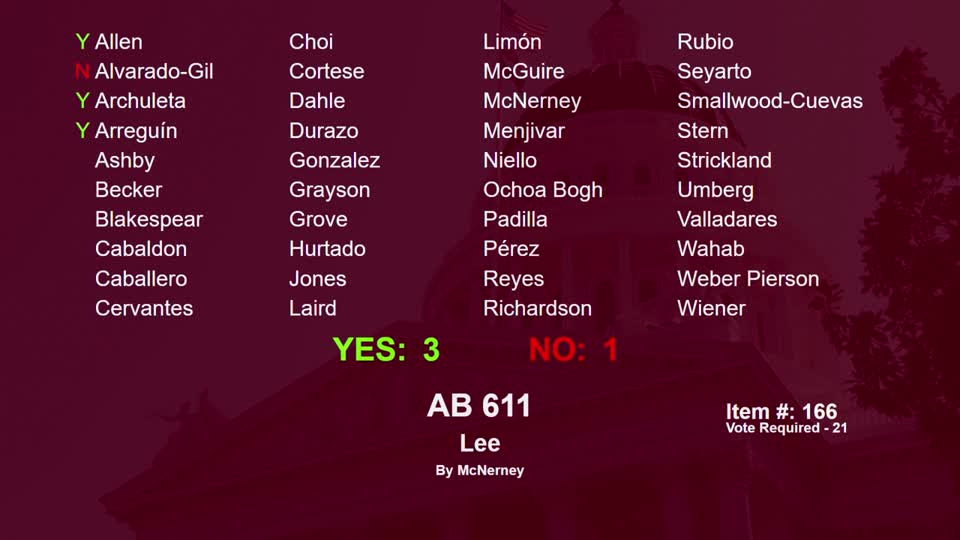 1MIN
Senate Floor
 17MIN
Senate Standing Committee on Public Safety
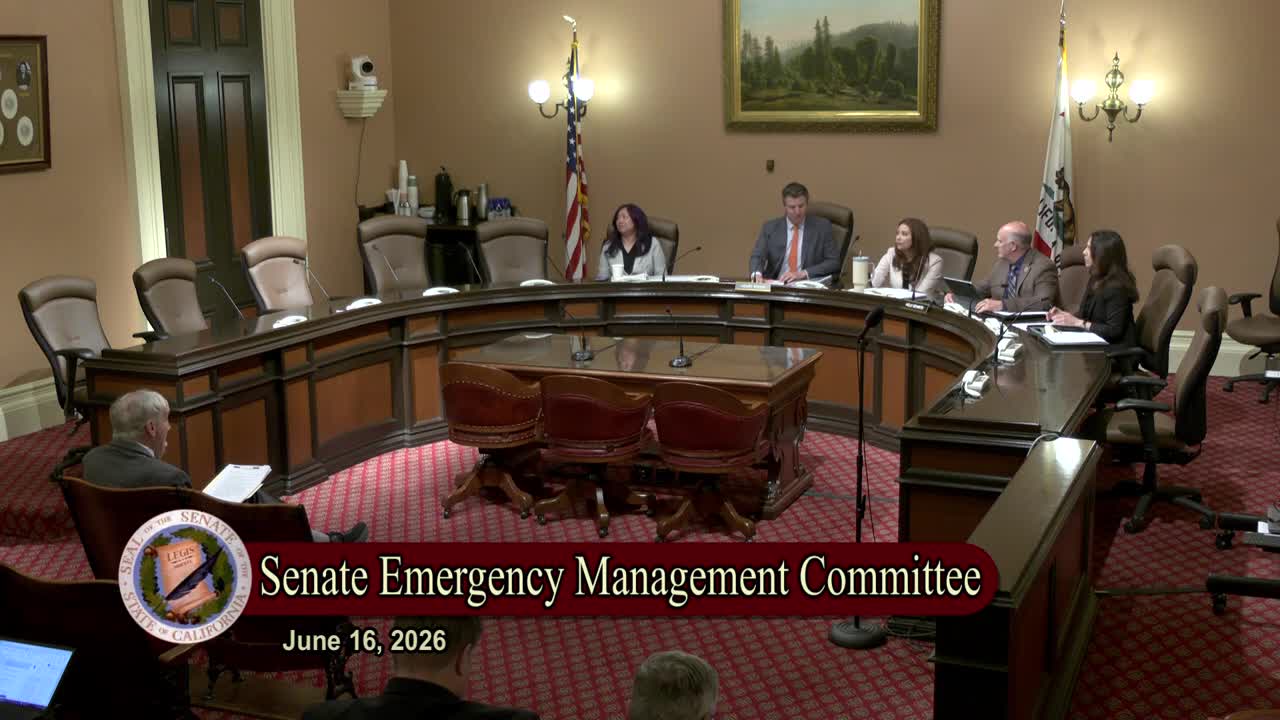 24MIN
Senate Standing Committee on Emergency Management
 4MIN
Assembly Floor
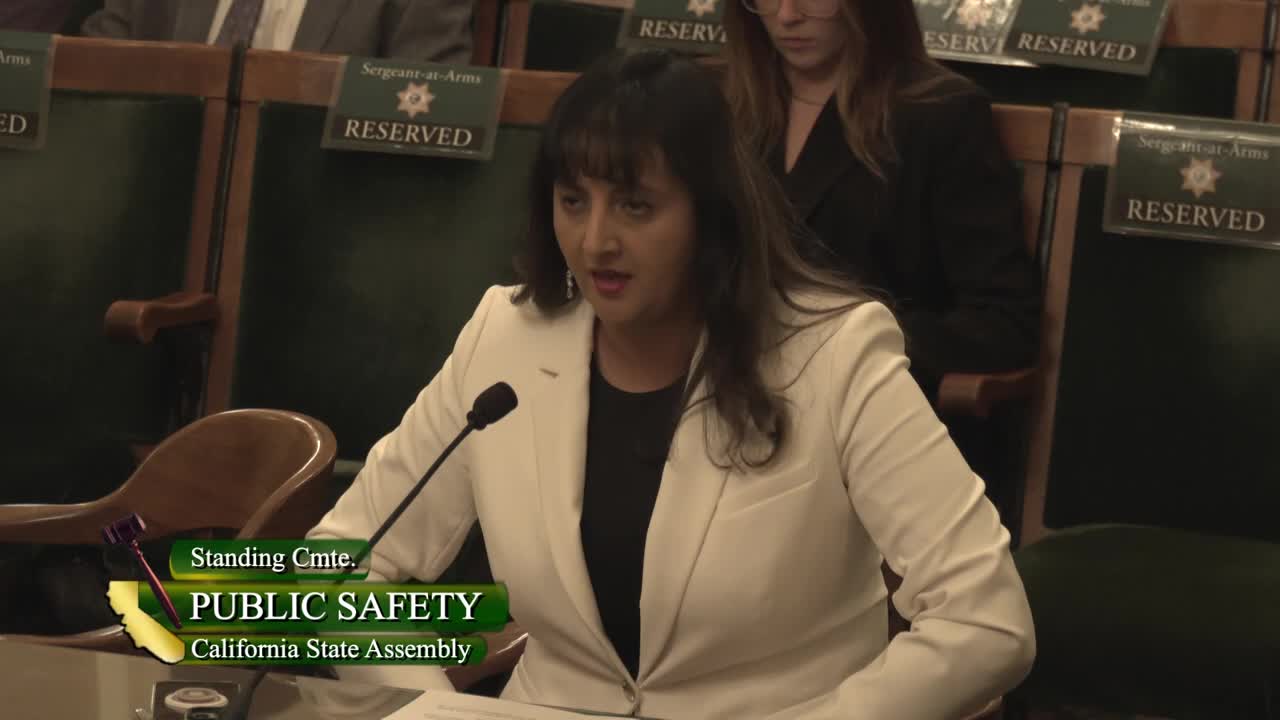 4MIN
Assembly Standing Committee on Public Safety
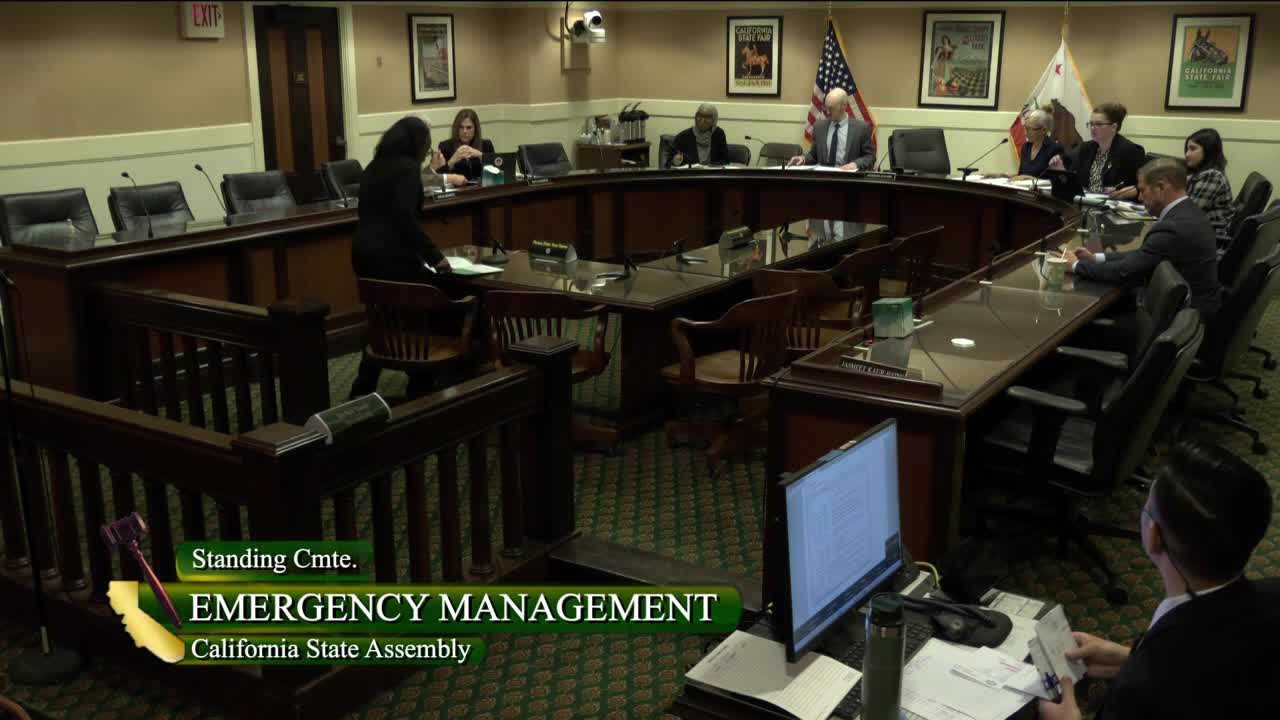 10MIN
Assembly Standing Committee on Emergency Management
Bill Author

Bill Co-Author(s):