AB 2433: Housing development: density bonus.
- Session Year: 2025-2026
- House: Assembly
- Latest Version Date: 2026-09-29
Current Status:
Passed
(2026-09-29: Chaptered by Secretary of State - Chapter 800, Statutes of 2026.)
Introduced
In Committee
Awaiting First Chamber Vote
Passed First Chamber
In Committee
Awaiting Second Chamber Vote
Passed Second Chamber
Enacted
(1)Existing law, commonly referred to as the Density Bonus Law, requires a city or county to grant a density bonus, other incentives or concessions, and waivers or reductions of development standards, as specified, to an applicant for a housing development when the applicant seeks a density bonus for the housing development, as specified, if the applicant agrees to construct, among other things, a specified percentage of units for very low income, lower income, or senior citizen housing, and meets other requirements.
This bill would, instead, require a city or county to grant a density bonus, other incentives or concessions, and waivers or reductions of development standards, as specified, to an applicant for a housing development when the applicant submits an application for a housing development that a city, county, or city and county determines meets specified criteria, including, among others, the housing development includes specified percentage of units for very low income, lower income, or senior citizen housing.
(2)Existing law defines density bonus for the purposes of the Density Bonus Law to mean a density increase over the otherwise base density, as specified. Existing law specifies the base density calculation standards and requires base density to be determined using dwelling units per acre, except as otherwise provided. For the purpose of calculating a density bonus, existing law requires the residential units to be on contiguous sites that are the subject of one development application, as specified. Existing law also requires the density bonus to be permitted in geographic areas of the housing development other than the areas where the units for the lower income households are located.
This bill would allow an applicant who provides a base density study, as defined, to elect to receive a density bonus in the form of a percentage increase in maximum floor area ratio, as specified. The bill would create an additional exception to the requirement that base density be determined using dwelling units per acre for applicants who elect to provide a base density study.
This bill would revise and recast the provisions related to permitting of a density bonus relative to the geographic area to instead require a density bonus, incentive, or concession, or waiver or reduction, on sites that are the subject of the same housing development, as specified.
(3)Existing law requires a city or county to adopt procedures and timelines for processing a density bonus application and to notify the applicant for a density bonus whether the application is complete in a manner consistent with specified timelines.
If the local government notifies the applicant that the application is deemed complete, this bill would require the city or county to provide the applicant with a determination that the project is eligible for a density bonus.
(4)Existing law authorizes an applicant for a density bonus to submit to a city or county a proposal for the specific incentives or concessions that the applicant requests and requires the city or county to grant the concession or incentive requested by the applicant unless the city or county makes a certain written finding, based upon substantial evidence. Existing law specifies the number of incentives or concessions an applicant is eligible to receive based on certain criteria.
This bill would make revisions to certain of those calculations related to incentives or concessions.
(5)The California Environmental Quality Act (CEQA) requires a lead agency, as defined, to prepare, or cause to be prepared, and certify the completion of an environmental impact report on a project that it proposes to carry out or approve that may have a significant effect on the environment or to adopt a negative declaration if it finds that the project will not have that effect. CEQA also requires a lead agency to prepare a mitigated negative declaration for a project that may have a significant effect on the environment if revisions in the project would avoid or mitigate that effect and there is no substantial evidence that the project, as revised, would have a significant effect on the environment.
Existing law specifies that the granting of a density bonus or incentive or concessions shall not require or be interpreted to require a general plan amendment, local coastal plan amendment, zoning change, or other discretionary approval. Existing law also specifies that the granting of an incentive or concessions shall not require or be interpreted to require a study.
This bill would specify that the granting of a waiver or reduction of development standards shall not require or be interpreted to require a general plan amendment, local coastal plan amendment, zoning change, study, or other discretionary approval. The bill would also specify that the granting of a density bonus, incentive or concession, or waiver or reduction of development standards shall not be discretionary. The bill would specify that the granting of a density bonus, incentive or concession, or waiver or reduction of development standards shall not require or be interpreted to require environmental review under CEQA.
(6)The bill would include findings that changes proposed by this bill address a matter of statewide concern rather than a municipal affair and, therefore, apply to all cities, including charter cities.
(7)This bill would incorporate additional changes to Section 65915 of the Government Code proposed by AB 2480, SB 1383, or both, to be operative only if this bill and AB 2480, SB 1383, or both, are enacted and this bill is enacted last.
(8)By imposing new requirements on local governments, the bill would impose a state-mandated local program.
The California Constitution requires the state to reimburse local agencies and school districts for certain costs mandated by the state. Statutory provisions establish procedures for making that reimbursement.
This bill would provide that no reimbursement is required by this act for a specified reason.
(1)Existing law, commonly referred to as the Density Bonus Law, requires a city or county to grant a density bonus, other incentives or concessions, and waivers or reductions of development standards, as specified, to an applicant for a housing development when the applicant seeks a density bonus for the housing development, as specified, if the applicant agrees to construct, among other things, a specified percentage of units for very low income, lower income, or senior citizen housing, and meets other requirements.
This bill would, instead, require a city or county to grant a density bonus, other incentives or concessions, and waivers or reductions of development standards, as specified, to an applicant for a housing development when the applicant submits an application for a housing development that a city, county, or city and county determines meets specified criteria, including, among others, the housing development includes specified percentage of units for very low income, lower income, or senior citizen housing.
(2)Existing law defines density bonus for the purposes of the Density Bonus Law to mean a density increase over the otherwise base density, as specified. Existing law specifies the base density calculation standards and requires base density to be determined using dwelling units per acre, except as otherwise provided. For the purpose of calculating a density bonus, existing law requires the residential units to be on contiguous sites that are the subject of one development application, as specified. Existing law also requires the density bonus to be permitted in geographic areas of the housing development other than the areas where the units for the lower income households are located.
This bill would allow an applicant who provides a base density study, as defined, to elect to receive a density bonus in the form of a percentage increase in maximum floor area ratio, as specified. The bill would create an additional exception to the requirement that base density be determined using dwelling units per acre for applicants who elect to provide a base density study.
This bill would revise and recast the provisions related to permitting of a density bonus relative to the geographic area to instead require a density bonus, incentive, or concession, or waiver or reduction, on sites that are the subject of the same housing development, as specified.
(3)Existing law requires a city or county to adopt procedures and timelines for processing a density bonus application and to notify the applicant for a density bonus whether the application is complete in a manner consistent with specified timelines.
If the local government notifies the applicant that the application is deemed complete, this bill would require the city or county to provide the applicant with a determination that the project is eligible for a density bonus.
(4)Existing law authorizes an applicant for a density bonus to submit to a city or county a proposal for the specific incentives or concessions that the applicant requests and requires the city or county to grant the concession or incentive requested by the applicant unless the city or county makes a certain written finding, based upon substantial evidence. Existing law specifies the number of incentives or concessions an applicant is eligible to receive based on certain criteria.
This bill would make revisions to certain of those calculations related to incentives or concessions.
(5)The California Environmental Quality Act (CEQA) requires a lead agency, as defined, to prepare, or cause to be prepared, and certify the completion of an environmental impact report on a project that it proposes to carry out or approve that may have a significant effect on the environment or to adopt a negative declaration if it finds that the project will not have that effect. CEQA also requires a lead agency to prepare a mitigated negative declaration for a project that may have a significant effect on the environment if revisions in the project would avoid or mitigate that effect and there is no substantial evidence that the project, as revised, would have a significant effect on the environment.
Existing law specifies that the granting of a density bonus or incentive or concessions shall not require or be interpreted to require a general plan amendment, local coastal plan amendment, zoning change, or other discretionary approval. Existing law also specifies that the granting of an incentive or concessions shall not require or be interpreted to require a study.
This bill would specify that the granting of a waiver or reduction of development standards shall not require or be interpreted to require a general plan amendment, local coastal plan amendment, zoning change, study, or other discretionary approval. The bill would also specify that the granting of a density bonus, incentive or concession, or waiver or reduction of development standards shall not be discretionary. The bill would specify that the granting of a density bonus, incentive or concession, or waiver or reduction of development standards shall not require or be interpreted to require environmental review under CEQA.
(6)The bill would include findings that changes proposed by this bill address a matter of statewide concern rather than a municipal affair and, therefore, apply to all cities, including charter cities.
(7)This bill would incorporate additional changes to Section 65915 of the Government Code proposed by AB 2480, SB 1383, or both, to be operative only if this bill and AB 2480, SB 1383, or both, are enacted and this bill is enacted last.
(7)
(8)By imposing new requirements on local governments, the bill would impose a state-mandated local program.
The California Constitution requires the state to reimburse local agencies and school districts for certain costs mandated by the state. Statutory provisions establish procedures for making that reimbursement.
This bill would provide that no reimbursement is required by this act for a specified reason.
(1)Existing law, commonly referred to as the Density Bonus Law, requires a city or county to grant a density bonus, other incentives or concessions, and waivers or reductions of development standards, as specified, to an applicant for a housing development when the applicant seeks a density bonus for the housing development, as specified, if the applicant agrees to construct, among other things, a specified percentage of units for very low income, lower income, or senior citizen housing, and meets other requirements.
This bill would, instead, require a city or county to grant a density bonus, other incentives or concessions, and waivers or reductions of development standards, as specified, to an applicant for a housing development when the applicant submits an application for a housing development that a city, county, or city and county determines meets specified criteria, including, among others, the housing development includes specified percentage of units for very low income, lower income, or senior citizen housing.
(2)Existing law defines various terms for the purposes of the Density Bonus Law, including, among others, moderate-income households, lower income households, and very low income households.This bill would provide that the definition of moderate-income household includes lower income households, very low income households, and extremely low income households, as defined.(3)(2)Existing law defines density bonus for the purposes of the Density Bonus Law to mean a density increase over the otherwise base density, as specified. Existing law specifies the base density calculation standards and requires base density to be determined using dwelling units per acre, except as otherwise provided. For the purpose of calculating a density bonus, existing law requires the residential units to be on contiguous sites that are the subject of one development application, as specified. Existing law also requires the density bonus to be permitted in geographic areas of the housing development other than the areas where the units for the lower income households are located.
This bill would allow an applicant who provides a base density study, as defined, to elect to receive a density bonus in the form of a percentage increase in maximum floor area ratio, as specified. The bill would create an additional exception to the requirement that base density be determined using dwelling units per acre for applicants who elect to provide a base density study.
This bill would revise and recast the provisions related to permitting of a density bonus relative to the geographic area to instead require a density bonus, incentive, or concession, or waiver or reduction, on sites that are the subject of the same housing development, as specified.
(4)(3)Existing law requires a city or county to adopt procedures and timelines for processing a density bonus application and to notify the applicant for a density bonus whether the application is complete in a manner consistent with specified timelines.
If the local government notifies the applicant that the application is deemed complete, this bill would require the city or county to provide the applicant with a determination that the project is eligible for a density bonus.
(5)(4)Existing law authorizes an applicant for a density bonus to submit to a city or county a proposal for the specific incentives or concessions that the applicant requests and requires the city or county to grant the concession or incentive requested by the applicant unless the city or county makes a certain written finding, based upon substantial evidence. Existing law specifies the number of incentives or concessions an applicant is eligible to receive based on certain criteria.
This bill would make revisions to certain of those calculations related to incentives or concessions.
(6)(5)The California Environmental Quality Act (CEQA) requires a lead agency, as defined, to prepare, or cause to be prepared, and certify the completion of an environmental impact report on a project that it proposes to carry out or approve that may have a significant effect on the environment or to adopt a negative declaration if it finds that the project will not have that effect. CEQA also requires a lead agency to prepare a mitigated negative declaration for a project that may have a significant effect on the environment if revisions in the project would avoid or mitigate that effect and there is no substantial evidence that the project, as revised, would have a significant effect on the environment.
Existing law specifies that the granting of a density bonus or incentive or concessions shall not require or be interpreted to require a general plan amendment, local coastal plan amendment, zoning change, or other discretionary approval. Existing law also specifies that the granting of an incentive or concessions shall not require or be interpreted to require a study.
This bill would specify that the granting of a waiver or reduction of development standards shall not require or be interpreted to require a general plan amendment, local coastal plan amendment, zoning change, study, or other discretionary approval. The bill would also specify that the granting of a density bonus, incentive or concession, or waiver or reduction of development standards shall not be discretionary. The bill would specify that the granting of a density bonus, incentive or concession, or waiver or reduction of development standards shall not require or be interpreted to require environmental review under CEQA.
(7)(6)The bill would include findings that changes proposed by this bill address a matter of statewide concern rather than a municipal affair and, therefore, apply to all cities, including charter cities.
(8)(7)By imposing new requirements on local governments, the bill would impose a state-mandated local program.
The California Constitution requires the state to reimburse local agencies and school districts for certain costs mandated by the state. Statutory provisions establish procedures for making that reimbursement.
This bill would provide that no reimbursement is required by this act for a specified reason.
(1)Existing law, commonly referred to as the Density Bonus Law, requires a city or county to grant a density bonus, other incentives or concessions, and waivers or reductions of development standards, as specified, to an applicant for a housing development when the applicant seeks a density bonus for the housing development, as specified, if the applicant agrees to construct, among other things, a specified percentage of units for very low income, lower income, or senior citizen housing, and meets other requirements.
This bill would, instead, require a city or county to grant a density bonus, other incentives or concessions, and waivers or reductions of development standards, as specified, to an applicant for a housing development when the applicant submits an application for a housing development that a city, county, or city and county determines meets specified criteria, including, among others, the housing development includes specified percentage of units for very low income, lower income, or senior citizen housing.
(2)Existing law defines various terms for the purposes of the Density Bonus Law, including, among others, moderate-income households, lower income households, and very low income households.
This bill would provide that the definition of moderate-income household includes lower income households, very low income households, and extremely low income households, as defined.
(3)Existing law defines density bonus for the purposes of the Density Bonus Law to mean a density increase over the otherwise base density, as specified. Existing law specifies the base density calculation standards and requires base density to be determined using dwelling units per acre, except as otherwise provided. For the purpose of calculating a density bonus, existing law requires the residential units to be on contiguous sites that are the subject of one development application, as specified. Existing law also requires the density bonus to be permitted in geographic areas of the housing development other than the areas where the units for the lower income households are located.
This bill would revise and recast the provisions related to permitting of a density bonus relative to the geographic area to instead require a density bonus, incentive, or concession, or waiver or reduction, on sites that are the subject of the same housing development, as specified.
(4)Existing law requires a city or county to adopt procedures and timelines for processing a density bonus application and to notify the applicant for a density bonus whether the application is complete in a manner consistent with specified timelines.
If the local government notifies the applicant that the application is deemed complete, this bill would require the city or county to provide the applicant with a determination that the project is eligible for a density bonus.
(5)Existing law authorizes an applicant for a density bonus to submit to a city or county a proposal for the specific incentives or concessions that the applicant requests and requires the city or county to grant the concession or incentive requested by the applicant unless the city or county makes a certain written finding, based upon substantial evidence. Existing law specifies the number of incentives or concessions an applicant is eligible to receive based on certain criteria.
This bill would make revisions to certain of those calculations related to incentives or concessions.
(6)The California Environmental Quality Act (CEQA) requires a lead agency, as defined, to prepare, or cause to be prepared, and certify the completion of an environmental impact report on a project that it proposes to carry out or approve that may have a significant effect on the environment or to adopt a negative declaration if it finds that the project will not have that effect. CEQA also requires a lead agency to prepare a mitigated negative declaration for a project that may have a significant effect on the environment if revisions in the project would avoid or mitigate that effect and there is no substantial evidence that the project, as revised, would have a significant effect on the environment. Existing law exempts from CEQA any aspect of a housing development project, as defined, including any permits, approvals, or public improvements required for the housing development project if the housing development project meets specified conditions, including, among other things, the project is consistent with the applicable general plan and zoning ordinance, as well as any applicable local coastal program.
This bill would require a housing development project that satisfies the requirements related to the above-described CEQA exemption and is eligible for a density bonus, incentives or concessions, and waivers or reductions of development standards for purposes of the Density Bonus Law and meets other affordability requirements to be a use by right and subject to ministerial review.(7)ExistingExisting law specifies that the granting of a density bonus or incentive or concessions shall not require or be interpreted to require a general plan amendment, local coastal plan amendment, zoning change, or other discretionary approval. Existing law also specifies that the granting of an incentive or concessions shall not require or be interpreted to require a study.
This bill would specify that the granting of a waiver or reduction of development standards shall not require or be interpreted to require a general plan amendment, local coastal plan amendment, zoning change, study, or other discretionary approval. The bill would also specify that the granting of a density bonus, incentive or concession, or waiver or reduction of development standards shall not be discretionary. The bill would specify that the granting of a density bonus, incentive or concession, or waiver or reduction of development standards shall not require or be interpreted to require environmental review under CEQA.
(8)(7)The bill would include findings that changes proposed by this bill address a matter of statewide concern rather than a municipal affair and, therefore, apply to all cities, including charter cities.
(9)(8)By imposing new requirements on local governments, the bill would impose a state-mandated local program.
The California Constitution requires the state to reimburse local agencies and school districts for certain costs mandated by the state. Statutory provisions establish procedures for making that reimbursement.
This bill would provide that no reimbursement is required by this act for a specified reason.
(1)Existing law, commonly referred to as the Density Bonus Law, requires a city or county to grant a density bonus, other incentives or concessions, and waivers or reductions of development standards, as specified, to an applicant for a housing development when the applicant seeks a density bonus for the housing development, as specified, if the applicant agrees to construct, among other things, a specified percentage of units for very low income, lower income, or senior citizen housing, and meets other requirements.
This bill would, instead, require a city or county to grant a density bonus, other incentives or concessions, and waivers or reductions of development standards, as specified, to an applicant for a housing development when the applicant submits an application for a housing development that a city, county, or city and county determines meets specified criteria, including, among others, the housing development includes specified percentage of units for very low income, lower income, or senior citizen housing.
(2)Existing law defines various terms for the purposes of the Density Bonus Law, including, among others, moderate-income households, lower income households, and very low income households.
This bill would provide that the definition of moderate-income household includes lower income households, very low income households, and extremely low income households, as defined.
(3)Existing law defines density bonus for the purposes of the Density Bonus Law to mean a density increase over the otherwise base density, as specified. Existing law specifies the base density calculation standards and requires base density to be determined using dwelling units per acre, except as otherwise provided. For the purpose of calculating a density bonus, existing law requires the residential units to be on contiguous sites that are the subject of one development application, as specified. Existing law also requires the density bonus to be permitted in geographic areas of the housing development other than the areas where the units for the lower income households are located.
This bill would revise and recast the provisions related to permitting of a density bonus relative to the geographic area to instead require a density bonus, incentive, or concession, or waiver or reduction, on sites that are the subject of the same housing development, as specified.
(4)Existing law requires a city or county to adopt procedures and timelines for processing a density bonus application and to notify the applicant for a density bonus whether the application is complete in a manner consistent with specified timelines.
If the local government notifies the applicant that the application is deemed complete, this bill would require the city or county to provide the applicant with a determination that the project is eligible for a density bonus.
(5)Existing law authorizes an applicant for a density bonus to submit to a city or county a proposal for the specific incentives or concessions that the applicant requests and requires the city or county to grant the concession or incentive requested by the applicant unless the city or county makes a certain written finding, based upon substantial evidence. Existing law specifies the number of incentives or concessions an applicant is eligible to receive based on certain criteria.
This bill would make revisions to certain of those calculations related to incentives or concessions.
(6)The California Environmental Quality Act (CEQA) requires a lead agency, as defined, to prepare, or cause to be prepared, and certify the completion of an environmental impact report on a project that it proposes to carry out or approve that may have a significant effect on the environment or to adopt a negative declaration if it finds that the project will not have that effect. CEQA also requires a lead agency to prepare a mitigated negative declaration for a project that may have a significant effect on the environment if revisions in the project would avoid or mitigate that effect and there is no substantial evidence that the project, as revised, would have a significant effect on the environment. Existing law exempts from CEQA any aspect of a housing development project, as defined, including any permits, approvals, or public improvements required for the housing development project if the housing development project meets specified conditions, including, among other things, the project is consistent with the applicable general plan and zoning ordinance, as well as any applicable local coastal program.
This bill would require a housing development project that satisfies the requirements related to the above-described CEQA exemption and is eligible for a density bonus, incentives or concessions, and waivers or reductions of development standards for purposes of the Density Bonus Law and meets other affordability requirements to be a use by right and subject to ministerial review.
(7)Existing law specifies that the granting of a density bonus or incentive or concessions shall not require or be interpreted to require a general plan amendment, local coastal plan amendment, zoning change, or other discretionary approval. Existing law also specifies that the granting of an incentive or concessions shall not require or be interpreted to require a study.
This bill would specify that the granting of a waiver or reduction of development standards shall not require or be interpreted to require a general plan amendment, local coastal plan amendment, zoning change, study, or other discretionary approval. The bill would also specify that the granting of a density bonus, incentive or concession, or waiver or reduction of development standards shall not be discretionary. The bill would specify that the granting of a density bonus, incentive or concession, or waiver or reduction of development standards shall not require or be interpreted to require environmental review under CEQA.
(8)The bill would include findings that changes proposed by this bill address a matter of statewide concern rather than a municipal affair and, therefore, apply to all cities, including charter cities.
(9)By imposing new requirements on local governments, the bill would impose a state-mandated local program.
The California Constitution requires the state to reimburse local agencies and school districts for certain costs mandated by the state. Statutory provisions establish procedures for making that reimbursement.
This bill would provide that no reimbursement is required by this act for a specified reason.
(1)Existing law, commonly referred to as the Density Bonus Law, requires a city or county to grant a density bonus, other incentives or concessions, and waivers or reductions of development standards, as specified, to an applicant for a housing development when the applicant seeks a density bonus for the housing development, as specified, if the applicant agrees to construct, among other things, a specified percentage of units for very low income, lower income, or senior citizen housing, and meets other requirements.
This bill would, instead, require a city or county to grant a density bonus, other incentives or concessions, and waivers or reductions of development standards, as specified, to an applicant for a housing development when the applicant submits an application for a housing development that a city, county, or city and county determines meets specified criteria, including, among others, the housing development includes specified percentage of units for very low income, lower income, or senior citizen housing.
(2)Existing law defines various terms for the purposes of the Density Bonus Law, including, among others, moderate-income households, lower income households, and very low income households.
This bill would provide that the definition of moderate-income household includes lower income households, very low income households, and extremely low income households, as defined.
(3)Existing law defines density bonus for the purposes of the Density Bonus Law to mean a density increase over the otherwise base density, as specified. Existing law specifies the base density calculation standards and requires base density to be determined using dwelling units per acre, except as otherwise provided. For the purpose of calculating a density bonus, existing law requires the residential units to be on contiguous sites that are the subject of one development application, as specified. Existing law also requires the density bonus to be permitted in geographic areas of the housing development other than the areas where the units for the lower income households are located.
This bill would revise and recast the provisions related to permitting of a density bonus relative to the geographic area to instead require a density bonus, incentive, or concession, or waiver or reduction, on sites that are the subject of one housing development application, the same housing development, as specified.
(4)Existing law requires a city or county to adopt procedures and timelines for processing a density bonus application and to notify the applicant for a density bonus whether the application is complete in a manner consistent with specified timelines.
If the local government notifies the applicant that the application is deemed complete, this bill would require the city or county to provide the applicant with a determination that the project is eligible for a density bonus.
(5)Existing law authorizes an applicant for a density bonus to submit to a city or county a proposal for the specific incentives or concessions that the applicant requests and requires the city or county to grant the concession or incentive requested by the applicant unless the city or county makes a certain written finding, based upon substantial evidence. Existing law specifies the number of incentives or concessions an applicant is eligible to receive based on certain criteria.
This bill would make revisions to certain of those calculations related to incentives or concessions.
(6)The California Environmental Quality Act (CEQA) requires a lead agency, as defined, to prepare, or cause to be prepared, and certify the completion of an environmental impact report on a project that it proposes to carry out or approve that may have a significant effect on the environment or to adopt a negative declaration if it finds that the project will not have that effect. CEQA also requires a lead agency to prepare a mitigated negative declaration for a project that may have a significant effect on the environment if revisions in the project would avoid or mitigate that effect and there is no substantial evidence that the project, as revised, would have a significant effect on the environment. Existing law exempts from CEQA any aspect of a housing development project, as defined, including any permits, approvals, or public improvements required for the housing development project if the housing development project meets specified conditions, including, among other things, the project is consistent with the applicable general plan and zoning ordinance, as well as any applicable local coastal program.
This bill would require a housing development project that satisfies the requirements related to the above-described CEQA exemption and is eligible for a density bonus, incentives or concessions, and waivers or reductions of development standards for purposes of the Density Bonus Law and meets other affordability requirements to be a use by right and subject to ministerial review.
(7)Existing law specifies that the granting of a density bonus or incentive or concessions shall not require or be interpreted to require a general plan amendment, local coastal plan amendment, zoning change, or other discretionary approval. Existing law also specifies that the granting of an incentive or concessions shall not require or be interpreted to require a study.
This bill would specify that the granting of a waiver or reduction of development standards shall not require or be interpreted to require a general plan amendment, local coastal plan amendment, zoning change, study, or other discretionary approval. The bill would also specify that the granting of a density bonus, incentive or concession, or waiver or reduction of development standards shall not be discretionary. The bill would specify that the granting of a density bonus, incentive or concession, or waiver or reduction of development standards shall not require or be interpreted to require environmental review under CEQA.
(8)The bill would include findings that changes proposed by this bill address a matter of statewide concern rather than a municipal affair and, therefore, apply to all cities, including charter cities.
(9)By imposing new requirements on local governments, the bill would impose a state-mandated local program.
The California Constitution requires the state to reimburse local agencies and school districts for certain costs mandated by the state. Statutory provisions establish procedures for making that reimbursement.
This bill would provide that no reimbursement is required by this act for a specified reason.
(1)Existing law, commonly referred to as the Density Bonus Law, requires a city or county to grant a density bonus, other incentives or concessions, and waivers or reductions of development standards, as specified, to an applicant for a housing development when the applicant seeks a density bonus for the housing development, as specified, if the applicant agrees to construct, among other things, a specified percentage of units for very low income, lower income, or senior citizen housing, and meets other requirements.
This bill would, instead, require a city or county to grant an affordable homes a density bonus, other incentives or concessions, and waivers or reductions of development standards, as specified, to an applicant for a housing development when the applicant submits an application for a housing development that a city, county, or city and county determines meets specified criteria, including, among others, the housing development includes specified percentage of units for very low income, lower income, or senior citizen housing. The bill would name the provisions commonly referred to as the Density Bonus Law as the Affordable Homes Bonus Program and make conforming changes related to the name change.
(2)Existing law defines various terms for the purposes of the Density Bonus Law, including, among others, moderate-income households, lower income households, and very low income households.
This bill would provide that the definition of moderate-income household includes lower income households, very low income households, and extremely low income households, as defined. The bill would provide that the definition of lower income households also includes very low income households and extremely low income households. The bill would provide that the definition of very low income households also includes extremely low income households.
(3)Existing law defines density bonus for the purposes of the Density Bonus Law to mean a density increase over the otherwise base density, as specified. Existing law specifies the base density calculation standards and requires base density to be determined using dwelling units per acre, except as otherwise provided. For the purpose of calculating a density bonus, existing law requires the residential units to be on contiguous sites that are the subject of one development application, as specified. Existing law also requires the density bonus to be permitted in geographic areas of the housing development other than the areas where the units for the lower income households are located.
This bill would revise the base density calculation standards to allow an applicant to use a sites entire floor area ratio for residential use, as specified, to calculate the base density on the realistic development capacity of the sites entire floor area ratio, if the applicable zoning ordinance, specific plan, or land use element of the general plan establish a floor area ratio standard where at least a portion of the floor area ratio may be used for residential purposes. The bill would include in the definition of density bonus, if the applicant elects to use the floor area ratio of the site for residential use for purposes of calculating the base density, the increase in the floor area ratio of the site.This bill would remove the provisions requiring the residential units to be on contiguous sites that are the subject of one development application and requiring the density bonus to be permitted in geographic areas of the housing development other than the areas where the units for the lower income households are located. The bill would instead require a density bonus, incentive or concession, or waiver or reduction of development standards to be permitted within or outside the geographic areas of the housing development where the affordable or market-rate units are located. revise and recast the provisions related to permitting of a density bonus relative to the geographic area to instead require a density bonus, incentive, or concession, or waiver or reduction, on sites that are the subject of one housing development application, as specified.
(4)Existing law requires a city or county to adopt procedures and timelines for processing a density bonus application and to notify the applicant for a density bonus whether the application is complete in a manner consistent with specified timelines.
This bill would require a city or county to adopt procedures and timelines for notifying an applicant of a housing development that the housing development is eligible for an affordable homes bonus, incentive or concession, or waiver or reduction of development standards pursuant to these provisions.If the local government notifies the applicant that the application is deemed complete, this bill would require the city or county to provide the applicant with a determination that the project is eligible for a density bonus.
(5)Existing law authorizes an applicant for a density bonus to submit to a city or county a proposal for the specific incentives or concessions that the applicant requests and requires the city or county to grant the concession or incentive requested by the applicant unless the city or county makes a certain written finding, based upon substantial evidence. Existing law specifies the number of incentives or concessions an applicant is eligible to receive based on certain criteria.
This bill would increase the number of incentives or concessions an applicant is eligible to receive. make revisions to certain of those calculations related to incentives or concessions.
(6)The California Environmental Quality Act (CEQA) requires a lead agency, as defined, to prepare, or cause to be prepared, and certify the completion of an environmental impact report on a project that it proposes to carry out or approve that may have a significant effect on the environment or to adopt a negative declaration if it finds that the project will not have that effect. CEQA also requires a lead agency to prepare a mitigated negative declaration for a project that may have a significant effect on the environment if revisions in the project would avoid or mitigate that effect and there is no substantial evidence that the project, as revised, would have a significant effect on the environment. Existing law exempts from CEQA any aspect of a housing development project, as defined, including any permits, approvals, or public improvements required for the housing development project if the housing development project meets specified conditions, including, among other things, the project is consistent with the applicable general plan and zoning ordinance, as well as any applicable local coastal program.
This bill would require a housing development project that satisfies the requirements related to the above-described CEQA exemption and is eligible for a density bonus, incentives or concessions, and waivers or reductions of development standards for purposes of the Affordable Homes Bonus Program Density Bonus Law and meets other affordability requirements to be a use by right and subject to ministerial review.
(7)Existing law specifies that the granting of a density bonus or incentive or concessions shall not require or be interpreted to require a general plan amendment, local coastal plan amendment, zoning change, or other discretionary approval. Existing law also specifies that the granting of an incentive or concessions shall not require or be interpreted to require a study.
This bill would specify that the granting of a waiver or reduction of development standards shall not require or be interpreted to require a general plan amendment, local coastal plan amendment, zoning change, study, or other discretionary approval. The bill would also specify that the granting of a density bonus, incentive or concession, or waiver or reduction of development standards shall not be discretionary. The bill would specify that the granting of a density bonus, incentive or concession, or waiver or reduction of development standards shall not require or be interpreted to require environmental review under CEQA.
(8)Existing law, the Bagley-Keene Open Meeting Act, requires, with specified exceptions, that all meetings of a state body be open and public and all persons be permitted to attend any meeting of a state body. Existing law requires the notice of a meeting of a body that is a state body to include a specific agenda for the meeting, containing a brief description of the items of business to be transacted or discussed in either open or closed session. Existing law, the Ralph M. Brown Act, requires the meetings of the legislative body of a local agency to be conducted openly and publicly, with specified exceptions. Existing law requires that the legislative body of a local agency post an agenda, as specified, at least 72 hours before a regular meeting of that body. Existing law requires the agenda to contain a brief general description of each item of business to be transacted or discussed at the meeting, including items to be discussed in closed session.This bill would require, for the purpose of meetings held pursuant to the Bagley-Keene Open Meeting Act or the Ralph M. Brown Act, an agenda item discussing or considering the approval of any element of a project that is eligible for an affordable homes bonus, incentive or concession, or waiver or reduction of development standards pursuant to these provisions to clearly list in the agenda title the words affordable homes density project or density bonus project.(9)(8)The bill would include findings that changes proposed by this bill address a matter of statewide concern rather than a municipal affair and, therefore, apply to all cities, including charter cities.
(10)(9)By imposing new requirements on local governments, the bill would impose a state-mandated local program.
The California Constitution requires the state to reimburse local agencies and school districts for certain costs mandated by the state. Statutory provisions establish procedures for making that reimbursement.
This bill would provide that no reimbursement is required by this act for a specified reason.
(1)Existing law, commonly referred to as the Density Bonus Law, requires a city or county to grant a density bonus, other incentives or concessions, and waivers or reductions of development standards, as specified, to an applicant for a housing development when the applicant seeks a density bonus for the housing development, as specified, if the applicant agrees to construct, among other things, a specified percentage of units for very low income, lower income, or senior citizen housing, and meets other requirements.
This bill would, instead, require a city or county to grant an affordable homes bonus, other incentives or concessions, and waivers or reductions of development standards, as specified, to an applicant for a housing development when the applicant submits an application for a housing development that a city, county, or city and county determines meets specified criteria, including, among others, the housing development includes specified percentage of units for very low income, lower income, or senior citizen housing. The bill would name the provisions commonly referred to as the Density Bonus Law as the Affordable Homes Bonus Program and make conforming changes related to the name change.
(2)Existing law defines various terms for the purposes of the Density Bonus Law, including, among others, moderate-income households, lower income households, and very low income households.
This bill would provide that the definition of moderate-income household includes lower income households, very low income households, and extremely low income households, as defined. The bill would provide that the definition of lower income households also includes very low income households and extremely low income households. The bill would provide that the definition of very low income households also includes extremely low income households.
(3)Existing law defines density bonus for the purposes of the Density Bonus Law to mean a density increase over the otherwise base density, as specified. Existing law specifies the base density calculation standards and requires base density to be determined using dwelling units per acre, except as otherwise provided. For the purpose of calculating a density bonus, existing law requires the residential units to be on contiguous sites that are the subject of one development application, as specified. Existing law also requires the density bonus to be permitted in geographic areas of the housing development other than the areas where the units for the lower income households are located.
This bill would revise the base density calculation standards to allow an applicant to use a sites entire floor area ratio for residential use, as specified, to calculate the base density on the realistic development capacity of the sites entire floor area ratio, if the applicable zoning ordinance, specific plan, or land use element of the general plan establish a floor area ratio standard where at least a portion of the floor area ratio may be used for residential purposes. The bill would include in the definition of density bonus, if the applicant elects to use the floor area ratio of the site for residential use for purposes of calculating the base density, the increase in the floor area ratio of the site.
This bill would remove the provisions requiring the residential units to be on contiguous sites that are the subject of one development application and requiring the density bonus to be permitted in geographic areas of the housing development other than the areas where the units for the lower income households are located. The bill would instead require a density bonus, incentive or concession, or waiver or reduction of development standards to be permitted within or outside the geographic areas of the housing development where the affordable or market-rate units are located.
(4)Existing law requires a city or county to adopt procedures and timelines for processing a density bonus application and to notify the applicant for a density bonus whether the application is complete in a manner consistent with specified timelines.
This bill would require a city or county to adopt procedures and timelines for notifying an applicant of a housing development that the housing development is eligible for an affordable homes bonus, incentive or concession, or waiver or reduction of development standards pursuant to these provisions.
(5)Existing law authorizes an applicant for a density bonus to submit to a city or county a proposal for the specific incentives or concessions that the applicant requests and requires the city or county to grant the concession or incentive requested by the applicant unless the city or county makes a certain written finding, based upon substantial evidence. Existing law specifies the number of incentives or concessions an applicant is eligible to receive based on certain criteria.
This bill would increase the number of incentives or concessions an applicant is eligible to receive.
(6)The California Environmental Quality Act (CEQA) requires a lead agency, as defined, to prepare, or cause to be prepared, and certify the completion of an environmental impact report on a project that it proposes to carry out or approve that may have a significant effect on the environment or to adopt a negative declaration if it finds that the project will not have that effect. CEQA also requires a lead agency to prepare a mitigated negative declaration for a project that may have a significant effect on the environment if revisions in the project would avoid or mitigate that effect and there is no substantial evidence that the project, as revised, would have a significant effect on the environment. Existing law exempts from CEQA any aspect of a housing development project, as defined, including any permits, approvals, or public improvements required for the housing development project if the housing development project meets specified conditions, including, among other things, the project is consistent with the applicable general plan and zoning ordinance, as well as any applicable local coastal program.
This bill would require a housing development project that satisfies the requirements related to the above-described CEQA exemption and is eligible for a density bonus, incentives or concessions, and waivers or reductions of development standards for purposes of the Affordable Homes Bonus Program to be a use by right and subject to ministerial review.
(7)Existing law specifies that the granting of a density bonus or incentive or concessions shall not require or be interpreted to require a general plan amendment, local coastal plan amendment, zoning change, or other discretionary approval.
This bill would specify that the granting of a waiver or reduction of development standards shall not require or be interpreted to require a general plan amendment, local coastal plan amendment, zoning change, or other discretionary approval. The bill would also specify that the granting of a density bonus, incentive or concession, or waiver or reduction of development standards shall be discretionary. The bill would specify that the granting of a density bonus, incentive or concession, or waiver or reduction of development standards shall not require or be interpreted to require environmental review under CEQA.
(8)Existing law, the Bagley-Keene Open Meeting Act, requires, with specified exceptions, that all meetings of a state body be open and public and all persons be permitted to attend any meeting of a state body. Existing law requires the notice of a meeting of a body that is a state body to include a specific agenda for the meeting, containing a brief description of the items of business to be transacted or discussed in either open or closed session. Existing law, the Ralph M. Brown Act, requires the meetings of the legislative body of a local agency to be conducted openly and publicly, with specified exceptions. Existing law requires that the legislative body of a local agency post an agenda, as specified, at least 72 hours before a regular meeting of that body. Existing law requires the agenda to contain a brief general description of each item of business to be transacted or discussed at the meeting, including items to be discussed in closed session.
This bill would require, for the purpose of meetings held pursuant to the Bagley-Keene Open Meeting Act or the Ralph M. Brown Act, an agenda item discussing or considering the approval of any element of a project that is eligible for an affordable homes bonus, incentive or concession, or waiver or reduction of development standards pursuant to these provisions to clearly list in the agenda title the words affordable homes density project or density bonus project.
(9)The bill would include findings that changes proposed by this bill address a matter of statewide concern rather than a municipal affair and, therefore, apply to all cities, including charter cities.
(10)By imposing new requirements on local governments, the bill would impose a state-mandated local program.
The California Constitution requires the state to reimburse local agencies and school districts for certain costs mandated by the state. Statutory provisions establish procedures for making that reimbursement.
This bill would provide that no reimbursement is required by this act for a specified reason.
(a)(1)(A)When an applicant submits an application for a housing development that a city, county, or city and county determines meets at least one of the criteria described in paragraph (1) of subdivision (b) within, or includes the donation of land for housing within, the jurisdiction of a city, county, or city and county, that local government shall comply with this section.
(B)A city, county, or city and county shall adopt an ordinance that specifies how compliance with this section will be implemented. Except as otherwise provided in subdivision (s), failure to adopt an ordinance shall not relieve a city, county, or city and county from complying with this section.
(2)A local government shall not condition the submission, review, or approval of an application pursuant to this chapter on the preparation of an additional report or study that is not otherwise required by state law, including this section. This subdivision does not prohibit a local government from requiring an applicant to provide reasonable documentation to establish eligibility for a requested density bonus, as described in subdivision (b), and parking ratios, as described in subdivision (p).
(3)In order to provide for the expeditious processing of a density bonus application, the local government shall do all of the following:
(A)Adopt procedures and timelines for processing a density bonus application.
(B)Provide a list of all documents and information required to be submitted with the density bonus application in order for the density bonus application to be deemed complete. This list shall be consistent with this chapter.
(C)Notify the applicant for a density bonus whether the application is complete in a manner consistent with the timelines specified in Section 65943.
(D)(i)If the local government notifies the applicant that the application is deemed complete pursuant to subparagraph (C), provide the applicant with a determination as to the following matters:
(I)That the project is eligible for a density bonus and the amount of density bonus, calculated pursuant to subdivision (f), for which the applicant is eligible.
(II)If the applicant requests a parking ratio pursuant to subdivision (p), the parking ratio for which the applicant is eligible.
(III)If the applicant requests incentives or concessions pursuant to subdivision (d) or waivers or reductions of development standards pursuant to subdivision (e), whether the applicant has provided adequate information for the local government to make a determination as to those incentives, concessions, waivers, or reductions of development standards.
(ii)Any determination required by this subparagraph shall be based on the development project at the time the application is deemed complete. The local government shall adjust the amount of density bonus and parking ratios awarded pursuant to this section based on any changes to the project during the course of development.
(b)(1)A city, county, or city and county shall grant one density bonus, the amount of which shall be as specified in subdivision (f), and, if requested by the applicant and consistent with the applicable requirements of this section, incentives or concessions, as described in subdivision (d), waivers or reductions of development standards, as described in subdivision (e), and parking ratios, as described in subdivision (p), if an applicant for a housing development seeks and agrees to construct a housing development, excluding any units permitted by the density bonus awarded pursuant to this section, that will contain at least any one of the following:
(A)Ten percent of the total units of a housing development, including a shared housing building development, for rental or sale to lower income households.
(B)Five percent of the total units of a housing development, including a shared housing building development, for rental or sale to very low income households, as defined in Section 50105 of the Health and Safety Code.
(C)A senior citizen housing development, as defined in Sections 51.3 and 51.12 of the Civil Code, or a mobilehome park that limits residency based on age requirements for housing for older persons pursuant to Section 798.76 or 799.5 of the Civil Code. For purposes of this subparagraph, development includes a shared housing building development and a residential care facility for the elderly, as defined in Section 1569.2 of the Health and Safety Code.
(D)Ten percent of the total dwelling units of a housing development are sold to persons and families of moderate income, as defined in Section 50093 of the Health and Safety Code, provided that all units in the development are offered to the public for purchase.
(E)Ten percent of the total units of a housing development for transitional foster youth, as defined in Section 66025.9 of the Education Code, disabled veterans, as defined in Section 18541, or homeless persons, as defined in the federal McKinney-Vento Homeless Assistance Act (42 U.S.C. Sec. 11301 et seq.). The units described in this subparagraph are subject to a recorded affordability restriction of 55 years and shall be provided at the same affordability level as very low income units.
(F)(i)Twenty percent of the total units for lower income students in a student housing development that meets the following requirements:
(I)All units in the student housing development shall be used exclusively for undergraduate, graduate, or professional students enrolled currently or in the past six months in at least six units at an institution of higher education accredited by the Western Association of Schools and Colleges or the Accrediting Commission for Community and Junior Colleges. In order to be eligible under this subclause, the developer shall, as a condition of receiving a certificate of occupancy, provide evidence to the city, county, or city and county that the developer has done any one of the following:
(ia)Entered into an operating agreement or master lease with one or more institutions of higher education for the institution or institutions to occupy all units of the student housing development with students from that institution or institutions. An operating agreement or master lease entered into pursuant to this subclause is not violated or breached if, in any subsequent year, there are insufficient students enrolled in an institution of higher education to fill all units in the student housing development.
(ib)Established a system for confirming its renters status as students to ensure that all units of the student housing development are occupied with students from an institution of higher education.
(II)The applicable units in the student housing development for lower income students shall be used for and occupied by lower income students.
(III)The rent provided in the applicable units of the development for lower income students shall be calculated at 30 percent of 65 percent of the area median income for a single-room occupancy unit type.
(IV)The development shall provide priority for the applicable affordable units for lower income students experiencing homelessness. A homeless service provider, as defined in paragraph (3) of subdivision (e) of Section 103577 of the Health and Safety Code, or institution of higher education that has knowledge of a persons homeless status may verify a persons status as homeless for purposes of this subclause.
(V)The student housing development is not located on a site that pursuant to paragraph (3) of subdivision (c) would require replacement units for projects with greater than a 35-percent density bonus.
(ii)For purposes of calculating a density bonus granted pursuant to this subparagraph, the term unit as used in this section means one rental bed and its pro rata share of associated common area facilities. The units described in this subparagraph are subject to a recorded affordability restriction of 55 years, which shall not tie any rental bed reserved for lower income students to a specific bedroom. Notwithstanding any other law, an affordability restriction provision, state or county law or policy, or property management policy shall not prevent a lower income student from sharing a room or unit with a non-lower income student. Any attempted waiver of the requirements of this clause is void as against public policy.
(G)One hundred percent of all units in the development, including total units and density bonus units, but exclusive of a managers unit or units, are for lower income households, except that up to 20 percent of the units in the development, including total units and density bonus units, may be for moderate-income households. For purposes of this subparagraph, development includes a shared housing building development.
(2)For purposes of calculating the amount of the density bonus pursuant to subdivision (f), an applicant who requests a density bonus pursuant to this subdivision shall elect whether the bonus shall be awarded on the basis of subparagraph (A), (B), (C), (D), (E), (F), or (G) of paragraph (1).
(c)(1)(A)An applicant shall agree to, and the city, county, or city and county shall ensure, the continued affordability of all very low and low-income rental units that qualified the applicant for the award of the density bonus for 55 years or a longer period of time if required by the construction or mortgage financing assistance program, mortgage insurance program, or rental subsidy program.
(B)(i)Except as otherwise provided in clause (ii), rents for the lower income density bonus units shall be set at an affordable rent, as defined in Section 50053 of the Health and Safety Code.
(ii)For housing developments meeting the criteria of subparagraph (G) of paragraph (1) of subdivision (b), rents for all units in the development, including both base density and density bonus units, shall be as follows:
(I)The rent for at least 20 percent of the units in the development shall be set at an affordable rent, as defined in Section 50053 of the Health and Safety Code.
(II)The rent for the remaining units in the development shall be set at an amount consistent with the maximum rent levels for lower income households, as those rents and incomes are determined by the California Tax Credit Allocation Committee.
(2)(A)An applicant shall agree to ensure, and the city, county, or city and county shall ensure, that a for-sale unit that qualified the applicant for the award of the density bonus meets one of the following conditions:
(i)The unit is initially sold to and occupied by a person or family of very low, low, or moderate income, as required, and it is offered at an affordable housing cost, as that cost is defined in Section 50052.5 of the Health and Safety Code and is subject to an equity sharing agreement.
(ii)If the unit is not purchased by an income-qualified person or family within 180 days after the issuance of the certificate of occupancy, the unit is purchased by a qualified nonprofit housing corporation that meets all of the following requirements pursuant to a recorded contract that satisfies all of the requirements specified in paragraph (10) of subdivision (a) of Section 402.1 of the Revenue and Taxation Code:
(I)The nonprofit corporation has a determination letter from the Internal Revenue Service affirming its tax-exempt status pursuant to Section 501(c)(3) of the Internal Revenue Code and is not a private foundation as that term is defined in Section 509 of the Internal Revenue Code.
(II)The nonprofit corporation is based in California.
(III)All of the board members of the nonprofit corporation have their primary residence in California.
(IV)The primary activity of the nonprofit corporation is the development and preservation of affordable home ownership housing in California that incorporates within their contracts for initial purchase a repurchase option that requires a subsequent purchaser of the property that desires to resell or convey the property to offer the qualified nonprofit corporation the right to repurchase the property prior to selling or conveying that property to any other purchaser pursuant to an equity sharing agreement or affordability restrictions on the sale and conveyance of the property that ensure that the property will be preserved for lower income housing for at least 45 years for owner-occupied housing units and will be sold or resold only to persons or families of very low, low, or moderate income, as defined in Section 50052.5 of the Health and Safety Code.
(B)For purposes of this paragraph, a qualified nonprofit housing corporation is a nonprofit housing corporation organized pursuant to Section 501(c)(3) of the Internal Revenue Code that has received a welfare exemption under Section 214.15 of the Revenue and Taxation Code for properties intended to be sold to low-income families who participate in a special no-interest loan program.
(C)The local government shall enforce an equity sharing agreement required pursuant to clause (i) or (ii) of subparagraph (A), unless it is in conflict with the requirements of another public funding source or law or may defer to the recapture provisions of the public funding source. The following apply to the equity sharing agreement:
(i)Upon resale, the seller of the unit shall retain the value of any improvements, the downpayment, and the sellers proportionate share of appreciation.
(ii)Except as provided in clause (v), the local government shall recapture any initial subsidy, as defined in clause (iii), and its proportionate share of appreciation, as defined in clause (iv), which amount shall be used within five years for any of the purposes described in subdivision (e) of Section 33334.2 of the Health and Safety Code that promote home ownership.
(iii)For purposes of this subdivision, the local governments initial subsidy shall be equal to the fair market value of the home at the time of initial sale minus the initial sale price to the moderate-income household, plus the amount of any downpayment assistance or mortgage assistance. If upon resale the market value is lower than the initial market value, then the value at the time of the resale shall be used as the initial market value.
(iv)For purposes of this subdivision, the local governments proportionate share of appreciation shall be equal to the ratio of the local governments initial subsidy to the fair market value of the home at the time of initial sale.
(v)If the unit is purchased or developed by a qualified nonprofit housing corporation pursuant to clause (ii) of subparagraph (A) the local government may enter into a contract with the qualified nonprofit housing corporation under which the qualified nonprofit housing corporation would recapture any initial subsidy and its proportionate share of appreciation if the qualified nonprofit housing corporation is required to use 100 percent of the proceeds to promote home ownership for lower income households within the jurisdiction of the local government.
(3)(A)Except as provided in subclause (V) of clause (i) of subparagraph (F) of paragraph (1) of subdivision (b), an applicant shall be ineligible for a density bonus or any other incentives or concessions under this section if the housing development is proposed on any property that includes a parcel or parcels on which rental dwelling units are located or, if the dwelling units have been vacated or demolished in the five-year period preceding the application, have been subject to a recorded covenant, ordinance, or law that restricts rents to levels affordable to persons and families of lower or very low income; subject to any other form of rent or price control through a public entitys valid exercise of its police power; or occupied by lower or very low income households, unless the proposed housing development replaces those units, and either of the following applies:
(i)The proposed housing development, inclusive of the units replaced pursuant to this paragraph, contains affordable units at the percentages set forth in subdivision (b).
(ii)Each unit in the development, exclusive of a managers unit or units, is affordable to, and occupied by, either a lower or very low income household.
(B)For the purposes of this paragraph, replace shall mean either of the following:
(i)If any dwelling units described in subparagraph (A) are occupied on the date of application, the proposed housing development shall provide at least the same number of units of equivalent size to be made available at affordable rent or affordable housing cost to, and occupied by, persons and families in the same or lower income category as those households in occupancy. If the income category of the household in occupancy is not known, it shall be rebuttably presumed that lower income renter households occupied these units in the same proportion of lower income renter households to all renter households within the jurisdiction, as determined by the most recently available data from the United States Department of Housing and Urban Developments Comprehensive Housing Affordability Strategy database. For unoccupied dwelling units described in subparagraph (A) in a development with occupied units, the proposed housing development shall provide units of equivalent size to be made available at affordable rent or affordable housing cost to, and occupied by, persons and families in the same or lower income category as the last household in occupancy. If the income category of the last household in occupancy is not known, it shall be rebuttably presumed that lower income renter households occupied these units in the same proportion of lower income renter households to all renter households within the jurisdiction, as determined by the most recently available data from the United States Department of Housing and Urban Developments Comprehensive Housing Affordability Strategy database. All replacement calculations resulting in fractional units shall be rounded up to the next whole number. If the replacement units will be rental dwelling units, these units shall be subject to a recorded affordability restriction for at least 55 years. If the proposed development is for-sale units, the units replaced shall be subject to paragraph (2).
(ii)If all dwelling units described in subparagraph (A) have been vacated or demolished within the five-year period preceding the application, the proposed housing development shall provide at least the same number of units of equivalent size as existed at the highpoint of those units in the five-year period preceding the application to be made available at affordable rent or affordable housing cost to, and occupied by, persons and families in the same or lower income category as those persons and families in occupancy at that time, if known. If the incomes of the persons and families in occupancy at the highpoint is not known, it shall be rebuttably presumed that low-income and very low income renter households occupied these units in the same proportion of low-income and very low income renter households to all renter households within the jurisdiction, as determined by the most recently available data from the United States Department of Housing and Urban Developments Comprehensive Housing Affordability Strategy database. All replacement calculations resulting in fractional units shall be rounded up to the next whole number. If the replacement units will be rental dwelling units, these units shall be subject to a recorded affordability restriction for at least 55 years. If the proposed development is for-sale units, the units replaced shall be subject to paragraph (2).
(C)Notwithstanding subparagraph (B), for any dwelling unit described in subparagraph (A) that is or was, within the five-year period preceding the application, subject to a form of rent or price control through a local governments valid exercise of its police power and that is or was occupied by persons or families above lower income, the city, county, or city and county may do either of the following:
(i)Require that the replacement units be made available at affordable rent or affordable housing cost to, and occupied by, low-income persons or families. If the replacement units will be rental dwelling units, these units shall be subject to a recorded affordability restriction for at least 55 years. If the proposed development is for-sale units, the units replaced shall be subject to paragraph (2).
(ii)Require that the units be replaced in compliance with the jurisdictions rent or price control ordinance, provided that each unit described in subparagraph (A) is replaced. Unless otherwise required by the jurisdictions rent or price control ordinance, these units shall not be subject to a recorded affordability restriction.
(D)For purposes of this paragraph, equivalent size means that the replacement units contain at least the same total number of bedrooms as the units being replaced.
(E)Subparagraph (A) does not apply to an applicant seeking a density bonus for a proposed housing development if the applicants application was submitted to, or processed by, a city, county, or city and county before January 1, 2015.
(d)(1)An applicant for a density bonus pursuant to subdivision (b) may submit to a city, county, or city and county a proposal for the specific incentives or concessions that the applicant requests pursuant to this section, and may request a meeting with the city, county, or city and county. The city, county, or city and county shall grant the concession or incentive requested by the applicant unless the city, county, or city and county makes a written finding, based upon substantial evidence, of any of the following:
(A)The concession or incentive does not result in identifiable and actual cost reductions, consistent with subdivision (k), to provide for affordable housing costs, as defined in Section 50052.5 of the Health and Safety Code, or for rents for the targeted units to be set as specified in subdivision (c).
(B)The concession or incentive would have a specific, adverse impact, as defined in paragraph (2) of subdivision (d) of Section 65589.5, upon public health and safety or on any real property that is listed in the California Register of Historical Resources and for which there is no feasible method to satisfactorily mitigate or avoid the specific, adverse impact without rendering the development unaffordable to low-income and moderate-income households.
(C)The concession or incentive would be contrary to state or federal law.
(2)The applicant shall receive the following number of incentives or concessions:
(A)One incentive or concession for projects that include at least 10 percent of the total units for lower income households, at least 5 percent for very low income households, or at least 10 percent for persons and families of moderate income in a development in which the units are for sale.
(B)Two incentives or concessions for projects that include at least 17 percent of the total units for lower income households, at least 10 percent for very low income households, or at least 20 percent for persons and families of moderate income in a development in which the units are for sale.
(C)Three incentives or concessions for projects that include at least 24 percent of the total units for lower income households, at least 15 percent for very low income households, or at least 30 percent for persons and families of moderate income in a development in which the units are for sale.
(D)Five incentives or concessions for a project meeting the criteria of subparagraph (G) of paragraph (1) of subdivision (b). If the project is located within one-half mile of a major transit stop or is located in a very low vehicle travel area in a designated county, the applicant shall also receive a height increase of up to three additional stories, or 33 feet.
(E)One incentive or concession for projects that include at least 20 percent of the total units for lower income students in a student housing development. If a project includes at least 23 percent of the total units for lower income students in a student housing project, the applicant shall instead receive two incentives or concessions.
(F)Four incentives or concessions for projects that include at least 16 percent of the units for very low income households or at least 45 percent for persons and families of moderate income in a development in which the units are for sale.
(3)A project that is eligible for incentives and concessions pursuant to subparagraph (A), (B), (C), (D), or (F) of paragraph (2) that includes units for sale for the respective income requirement in the appropriate subparagraph shall receive two additional incentives.
(4)The applicant may initiate judicial proceedings if the city, county, or city and county refuses to grant a requested density bonus, incentive, or concession. If a court finds that the refusal to grant a requested density bonus, incentive, or concession is in violation of this section, the court shall award the plaintiff reasonable attorneys fees and costs of suit. This subdivision shall not be interpreted to require a local government to grant an incentive or concession that has a specific, adverse impact, as defined in paragraph (2) of subdivision (d) of Section 65589.5, upon health or safety, and for which there is no feasible method to satisfactorily mitigate or avoid the specific, adverse impact. This subdivision shall not be interpreted to require a local government to grant an incentive or concession that would have an adverse impact on any real property that is listed in the California Register of Historical Resources. The city, county, or city and county shall establish procedures for carrying out this section that shall include legislative body approval of the means of compliance with this section.
(5)The city, county, or city and county shall bear the burden of proof for the denial of a requested concession or incentive.
(e)(1)In no case may a city, county, or city and county apply any development standard that will have the effect of physically precluding the construction of a development meeting the criteria of subdivision (b) at the densities or with the concessions or incentives permitted by this section. Subject to paragraph (3), an applicant may submit to a city, county, or city and county a proposal for the waiver or reduction of development standards that will have the effect of physically precluding the construction of a development meeting the criteria of subdivision (b) at the densities or with the concessions or incentives permitted under this section, and may request a meeting with the city, county, or city and county. If a court finds that the refusal to grant a waiver or reduction of development standards is in violation of this section, the court shall award the plaintiff reasonable attorneys fees and costs of suit. This subdivision shall not be interpreted to require a local government to waive or reduce development standards if the waiver or reduction would have a specific, adverse impact, as defined in paragraph (2) of subdivision (d) of Section 65589.5, upon health or safety, and for which there is no feasible method to satisfactorily mitigate or avoid the specific, adverse impact. This subdivision shall not be interpreted to require a local government to waive or reduce development standards that would have an adverse impact on any real property that is listed in the California Register of Historical Resources, or to grant any waiver or reduction that would be contrary to state or federal law.
(2)A proposal for the waiver or reduction of development standards pursuant to this subdivision shall neither reduce nor increase the number of incentives or concessions to which the applicant is entitled pursuant to subdivision (d).
(3)A housing development that receives a waiver from any maximum controls on density pursuant to clause (ii) of subparagraph (D) of paragraph (3) of subdivision (f) shall only be eligible for a waiver or reduction of development standards as provided in subparagraph (D) of paragraph (2) of subdivision (d) and clause (ii) of subparagraph (D) of paragraph (3) of subdivision (f), unless the city, county, or city and county agrees to additional waivers or reductions of development standards.
(4)The granting of a waiver or reduction of development standards shall not be discretionary and shall not require or be interpreted to require a general plan amendment, local coastal plan amendment pursuant to the California Coastal Act (Division 20 (commencing with Section 30000) of the Public Resources Code), zoning change, study, or other discretionary approval or environmental review under the California Environmental Quality Act (Division 13 (commencing with Section 21000) of the Public Resources Code).
(f)For the purposes of this chapter, density bonus means a density increase over the otherwise maximum allowable gross residential density, as of the date of application by the applicant to the city, county, or city and county, or, if elected by the applicant, a lesser percentage of density increase, including, but not limited to, no increase in density. When an applicant provides a base density study pursuant to paragraph (7) of subdivision (o), the applicant may elect to receive a density bonus in the form of a percentage increase in maximum floor area ratio. The amount of density increase or floor area ratio increase to which the applicant is entitled shall vary according to the amount by which the percentage of affordable housing units exceeds the percentage established in subdivision (b).
(1)For housing developments meeting the criteria of subparagraph (A) of paragraph (1) of subdivision (b), the density bonus shall be calculated as follows:
| Percentage Low-Income Units | Percentage Density Bonus |
| 10 | 20 |
| 11 | 21.5 |
| 12 | 23 |
| 13 | 24.5 |
| 14 | 26 |
| 15 | 27.5 |
| 16 | 29 |
| 17 | 30.5 |
| 18 | 32 |
| 19 | 33.5 |
| 20 | 35 |
| 21 | 38.75 |
| 22 | 42.5 |
| 23 | 46.25 |
| 24 | 50 |
(2)For housing developments meeting the criteria of subparagraph (B) of paragraph (1) of subdivision (b), the density bonus shall be calculated as follows:
| Percentage Very Low Income Units | Percentage Density Bonus |
| 5 | 20 |
| 6 | 22.5 |
| 7 | 25 |
| 8 | 27.5 |
| 9 | 30 |
| 10 | 32.5 |
| 11 | 35 |
| 12 | 38.75 |
| 13 | 42.5 |
| 14 | 46.25 |
| 15 | 50 |
(3)(A)For housing developments meeting the criteria of subparagraph (C) of paragraph (1) of subdivision (b), the density bonus shall be 20 percent of the number of senior housing units.
(B)For housing developments meeting the criteria of subparagraph (E) of paragraph (1) of subdivision (b), the density bonus shall be 20 percent of the number of the type of units giving rise to a density bonus under that subparagraph.
(C)For housing developments meeting the criteria of subparagraph (F) of paragraph (1) of subdivision (b), the density bonus shall be calculated as follows:
| Percentage Very Low Income Units | Percentage Density Bonus |
| 20 | 35 |
| 21 | 38.75 |
| 22 | 42.5 |
| 23 | 46.25 |
| 24 | 50 |
(D)For housing developments meeting the criteria of subparagraph (G) of paragraph (1) of subdivision (b), the following shall apply:
(i)Except as otherwise provided in clauses (ii) and (iii), the density bonus shall be 80 percent of the number of units for lower income households.
(ii)If the housing development is located within one-half mile of a major transit stop, the city, county, or city and county shall not impose any maximum controls on density.
(iii)If the housing development is located in a very low vehicle travel area within a designated county, the city, county, or city and county shall not impose any maximum controls on density.
(4)For housing developments meeting the criteria of subparagraph (D) of paragraph (1) of subdivision (b), the density bonus shall be calculated as follows:
| Percentage Moderate-Income Units | Percentage Density Bonus |
| 10 | 5 |
| 11 | 6 |
| 12 | 7 |
| 13 | 8 |
| 14 | 9 |
| 15 | 10 |
| 16 | 11 |
| 17 | 12 |
| 18 | 13 |
| 19 | 14 |
| 20 | 15 |
| 21 | 16 |
| 22 | 17 |
| 23 | 18 |
| 24 | 19 |
| 25 | 20 |
| 26 | 21 |
| 27 | 22 |
| 28 | 23 |
| 29 | 24 |
| 30 | 25 |
| 31 | 26 |
| 32 | 27 |
| 33 | 28 |
| 34 | 29 |
| 35 | 30 |
| 36 | 31 |
| 37 | 32 |
| 38 | 33 |
| 39 | 34 |
| 40 | 35 |
| 41 | 38.75 |
| 42 | 42.5 |
| 43 | 46.25 |
| 44 | 50 |
(5)All density bonus calculations resulting in fractional units shall be rounded up to the next whole number.
(6)The granting of a density bonus shall not be discretionary and shall not require or be interpreted to require a general plan amendment, local coastal plan amendment, zoning change, or other discretionary approval or environmental review under the California Environmental Quality Act (Division 13 (commencing with Section 21000) of the Public Resources Code).
(g)(1)When an applicant for a tentative subdivision map, parcel map, or other residential development approval donates land to a city, county, or city and county in accordance with this subdivision, the applicant shall be entitled to a 15-percent increase above the otherwise maximum allowable residential density for the entire development, as follows:
| Percentage Very Low Income | Percentage Density Bonus |
| 10 | 15 |
| 11 | 16 |
| 12 | 17 |
| 13 | 18 |
| 14 | 19 |
| 15 | 20 |
| 16 | 21 |
| 17 | 22 |
| 18 | 23 |
| 19 | 24 |
| 20 | 25 |
| 21 | 26 |
| 22 | 27 |
| 23 | 28 |
| 24 | 29 |
| 25 | 30 |
| 26 | 31 |
| 27 | 32 |
| 28 | 33 |
| 29 | 34 |
| 30 | 35 |
(2)This increase shall be in addition to any increase in density mandated by subdivision (b), up to a maximum combined mandated density increase of 35 percent if an applicant seeks an increase pursuant to both this subdivision and subdivision (b). All density calculations resulting in fractional units shall be rounded up to the next whole number. Nothing in this subdivision shall be construed to enlarge or diminish the authority of a city, county, or city and county to require a developer to donate land as a condition of development. An applicant shall be eligible for the increased density bonus described in this subdivision if all of the following conditions are met:
(A)The applicant donates and transfers the land no later than the date of approval of the final subdivision map, parcel map, or residential development application.
(B)The developable acreage and zoning classification of the land being transferred are sufficient to permit construction of units affordable to very low income households in an amount not less than 10 percent of the number of residential units of the proposed development.
(C)The transferred land is at least one acre in size or of sufficient size to permit development of at least 40 units, has the appropriate general plan designation, is appropriately zoned with appropriate development standards for development at the density described in paragraph (3) of subdivision (c) of Section 65583.2, and is or will be served by adequate public facilities and infrastructure.
(D)The transferred land shall have all of the permits and approvals, other than building permits, necessary for the development of the very low income housing units on the transferred land, not later than the date of approval of the final subdivision map, parcel map, or residential development application, except that the local government may subject the proposed development to subsequent design review to the extent authorized by subdivision (i) of Section 65583.2 if the design is not reviewed by the local government before the time of transfer.
(E)The transferred land and the affordable units shall be subject to a deed restriction ensuring continued affordability of the units consistent with paragraphs (1) and (2) of subdivision (c), which shall be recorded on the property at the time of the transfer.
(F)The land is transferred to the local agency or to a housing developer approved by the local agency. The local agency may require the applicant to identify and transfer the land to the developer.
(G)The transferred land shall be within the boundary of the proposed development or, if the local agency agrees, within one-quarter mile of the boundary of the proposed development.
(H)A proposed source of funding for the very low income units shall be identified not later than the date of approval of the final subdivision map, parcel map, or residential development application.
(h)(1)When an applicant proposes to construct a housing development that conforms to the requirements of subdivision (b) and includes a childcare facility that will be located on the premises of, as part of, or adjacent to, the project, the city, county, or city and county shall grant either of the following:
(A)An additional density bonus that is an amount of square feet of residential space that is equal to or greater than the amount of square feet in the childcare facility.
(B)An additional concession or incentive that contributes significantly to the economic feasibility of the construction of the childcare facility.
(2)The city, county, or city and county shall require, as a condition of approving the housing development, that the following occur:
(A)The childcare facility shall remain in operation for a period of time that is as long as or longer than the period of time during which the density bonus units are required to remain affordable pursuant to subdivision (c).
(B)Of the children who attend the childcare facility, the children of very low income households, lower income households, or families of moderate income shall equal a percentage that is equal to or greater than the percentage of dwelling units that are required for very low income households, lower income households, or families of moderate income pursuant to subdivision (b).
(3)Notwithstanding any requirement of this subdivision, a city, county, or city and county shall not be required to provide a density bonus or concession for a childcare facility if it finds, based upon substantial evidence, that the community has adequate childcare facilities.
(4)Childcare facility, as used in this section, means a child daycare facility other than a family daycare home, including, but not limited to, infant centers, preschools, extended daycare facilities, and schoolage childcare centers.
(i)(1)Housing development, as used in this section, means a development project for five or more residential units, including mixed-use developments. For the purposes of this section, housing development also includes a subdivision or common interest development, as defined in Section 4100 of the Civil Code, approved by a city, county, or city and county and consists of residential units or unimproved residential lots and either a project to substantially rehabilitate and convert an existing commercial building to residential use or the substantial rehabilitation of an existing multifamily dwelling, as defined in subdivision (d) of Section 65863.4, where the result of the rehabilitation would be a net increase in available residential units.
(2)The density bonus, incentives or concessions, and waivers or reductions of development standards shall be on sites that are the subject of the same housing development.
(A)The density bonus shall be permitted anywhere in the geographic areas of the same housing development, including areas outside of the areas where the units for the lower income households are located.
(B)The incentives or concessions, and waivers or reductions of development standards, shall be permitted anywhere in the geographic areas of the same housing development, including areas outside of the areas where the housing units are located.
(C)This paragraph applies to both of the following:
(i)Either of the following:
(I)Housing development projects contained on one site and developed by the same applicant.
(II)For a multi-phase housing development project, the applicant has provided reasonable documentation to establish the fiscal interconnectedness of the project components.
(ii)Housing development projects where the applicant has entered into an enforceable legal commitment to develop the affordable units prior to the completion of all phases of the development.
(j)(1)(A)The granting of a concession or incentive shall not be discretionary and shall not require or be interpreted to require a general plan amendment, local coastal plan amendment, zoning change, study, or other discretionary approval or environmental review under the California Environmental Quality Act (Division 13 (commencing with Section 21000) of the Public Resources Code).
(B)For purposes of this subdivision, study does not include reasonable documentation to establish eligibility for the concession or incentive or to demonstrate that the incentive or concession meets the definition set forth in subdivision (k). This provision is declaratory of existing law.
(2)Except as provided in subdivisions (d) and (e), the granting of a density bonus shall not require or be interpreted to require the waiver of a local ordinance or provisions of a local ordinance unrelated to development standards.
(k)For the purposes of this chapter, concession or incentive means any of the following:
(1)A reduction in site development standards or a modification of zoning code requirements or architectural design requirements that exceed the minimum building standards approved by the California Building Standards Commission as provided in Part 2.5 (commencing with Section 18901) of Division 13 of the Health and Safety Code, including, but not limited to, a reduction in setback and square footage requirements and in the ratio of vehicular parking spaces that would otherwise be required that results in identifiable and actual cost reductions, to provide for affordable housing costs, as defined in Section 50052.5 of the Health and Safety Code, or for rents for the targeted units to be set as specified in subdivision (c).
(2)Approval of mixed-use zoning in conjunction with the housing project if commercial, office, industrial, or other land uses will reduce the cost of the housing development and if the commercial, office, industrial, or other land uses are compatible with the housing project and the existing or planned development in the area where the proposed housing project will be located.
(3)Other regulatory incentives or concessions proposed by the developer or the city, county, or city and county that result in identifiable and actual cost reductions to provide for affordable housing costs, as defined in Section 50052.5 of the Health and Safety Code, or for rents for the targeted units to be set as specified in subdivision (c).
(l)(1)(A)A concession or incentive shall not result in a proposed project with a commercial floor area ratio that is greater than two and one-half times the premises current allowed base zone commercial floor area ratio.
(B)This paragraph shall not apply to proposed projects that have submitted a preliminary application or an entitlement application prior to January 1, 2026.
(2)Subdivisions (e) and (k) do not require a city, county, or city and county to approve, to grant a concession or incentive requiring approval of, or to waive or reduce development standards otherwise applicable to, a hotel, motel, bed and breakfast inn, or other transient lodging, other than a residential hotel, as defined in Section 50519 of the Health and Safety Code, as part of a housing development subject to this section. For purposes of this paragraph, other transient lodging does not include a residents use or marketing of their unit as short-term lodging, as defined in Section 17568.8 of the Business and Professions Code, subsequent to the issuance of a certificate of occupancy in a manner otherwise consistent with local law.
(3)Subdivision (k) does not limit or require the provision of direct financial incentives for the housing development, including the provision of publicly owned land, by the city, county, or city and county, or the waiver of fees or dedication requirements.
(m)This section does not supersede or in any way alter or lessen the effect or application of the California Coastal Act of 1976 (Division 20 (commencing with Section 30000) of the Public Resources Code). Any density bonus, concessions, incentives, waivers or reductions of development standards, and parking ratios to which the applicant is entitled under this section shall be permitted in a manner that is consistent with this section and Division 20 (commencing with Section 30000) of the Public Resources Code.
(n)If permitted by local ordinance, nothing in this section shall be construed to prohibit a city, county, or city and county from granting a density bonus greater than what is described in this section for a development that meets the requirements of this section or from granting a proportionately lower density bonus than what is required by this section for developments that do not meet the requirements of this section.
(o)For purposes of this section, the following definitions shall apply:
(1)Designated county includes the Counties of Alameda, Contra Costa, Los Angeles, Marin, Napa, Orange, Riverside, Sacramento, San Bernardino, San Diego, San Mateo, Santa Barbara, Santa Clara, Solano, Sonoma, and Ventura, and the City and County of San Francisco.
(2)(A)Development standard includes a site or construction condition, including, but not limited to, a height limitation, a setback requirement, a floor area ratio, an onsite open-space requirement, a minimum lot area per unit requirement, or a parking ratio that applies to a residential development pursuant to any ordinance, general plan element, specific plan, charter, or other local condition, law, policy, resolution, or regulation that is adopted by the local government or that is enacted by the local governments electorate exercising its local initiative or referendum power, whether that power is derived from the California Constitution, statute, or the charter or ordinances of the local government.
(B)Notwithstanding subparagraph (A), when a density bonus is received in the form of increased maximum floor area ratio, floor area ratio shall not be considered a development standard.
(3)Located within one-half mile of a major transit stop means that any point on a proposed development, for which an applicant seeks a density bonus, other incentives or concessions, waivers or reductions of development standards, or a vehicular parking ratio pursuant to this section, is within one-half mile of any point on the property on which a major transit stop is located, including any parking lot owned by the transit authority or other local agency operating the major transit stop.
(4)Lower income household has the same meaning as the term is defined in Section 50079.5 of the Health and Safety Code.
(5)Lower income student means a student who has a household income and asset level that does not exceed the level for Cal Grant A or Cal Grant B award recipients as set forth in subdivision (k) of Section 69432.7 of the Education Code. The eligibility of a student to occupy a unit for lower income students under this section shall be verified by an affidavit, award letter, or letter of eligibility provided by the institution of higher education in which the student is enrolled or by the Student Aid Commission that the student receives or is eligible for financial aid, including an institutional grant or fee waiver from the college or university, the Student Aid Commission, or the federal government.
(6)Major transit stop has the same meaning as defined in subdivision (b) of Section 21155 of the Public Resources Code.
(7)Maximum allowable residential density or base density means the greatest number of units allowed under the zoning ordinance, specific plan, or land use element of the general plan, or, if a range of density is permitted, means the greatest number of units allowed by the specific zoning range, specific plan, or land use element of the general plan applicable to the project. Density shall be determined using dwelling units per acre. However, if the applicable zoning ordinance, specific plan, or land use element of the general plan does not provide a dwelling-units-per-acre standard for density, or an applicant elects to provide a base density study, then the local agency shall calculate the number of units by:
(A)Estimating the realistic development capacity of the site based on the objective development standards applicable to the project, including, but not limited to, floor area ratio, site coverage, maximum building height and number of stories, building setbacks and stepbacks, public and private open-space requirements, minimum percentage or square footage of any nonresidential component, and parking requirements, unless not required for the base project. Parking requirements shall include considerations regarding number of spaces, location, design, type, and circulation. A developer may provide a base density study and the local agency shall accept it, provided that it includes all applicable objective development standards.
(B)Maintaining the same average unit size and other project details relevant to the base density study, excepting those that may be modified by waiver or concession to accommodate the bonus units, in the proposed project as in the study.
(8)Moderate-income household has the same meaning as the term is defined in Section 50053 of the Health and Safety Code.
(9)(A)(i)Shared housing building means a residential or mixed-use structure, with five or more shared housing units and one or more common kitchens and dining areas designed for permanent residence of more than 30 days by its tenants. The kitchens and dining areas within the shared housing building shall be able to adequately accommodate all residents. If a local ordinance further restricts the attributes of a shared housing building beyond the requirements established in this section, the local definition shall apply to the extent that it does not conflict with the requirements of this section.
(ii)A shared housing building may include other dwelling units that are not shared housing units, provided that those dwelling units do not occupy more than 25 percent of the floor area of the shared housing building. A shared housing building may include 100 percent shared housing units.
(B)(i)Shared housing unit means one or more habitable rooms, not within another dwelling unit, that includes a bathroom, sink, refrigerator, and microwave, is used for permanent residence, that meets the minimum room area specified in Section R304 of the California Residential Code (Part 2.5 of Title 24 of the California Code of Regulations), and complies with the definition of guestroom in Section R202 of the California Residential Code. If a local ordinance further restricts the attributes of a shared housing building beyond the requirements established in this section, the local definition shall apply to the extent that it does not conflict with the requirements of this section.
(ii)Shared housing unit for purposes of a residential care facility for the elderly, as defined in Section 1569.2 of the Health and Safety Code, includes a unit without an individual kitchen where a unit may be shared by unrelated persons, and a unit where a room that may be shared by unrelated persons meets the minimum room area requirements of clause (i).
(10)Student housing development means a development that contains bedrooms containing two or more bedspaces that have a shared or private bathroom, access to a shared or private living room and laundry facilities, and access to a shared or private kitchen.
(11)(A)Total units or total dwelling units means a calculation of the number of units that:
(i)Excludes a unit added by a density bonus awarded pursuant to this section or any local law granting a greater density bonus.
(ii)Includes a unit designated to satisfy an inclusionary zoning requirement of a city, county, or city and county.
(B)For purposes of calculating a density bonus granted pursuant to this section for a shared housing building, unit means one shared housing unit and its pro rata share of associated common area facilities.
(12)Very low income household has the same meaning as the term is defined in Section 50105 of the Health and Safety Code.
(13)Very low vehicle travel area means an urbanized area, as designated by the United States Census Bureau, where the existing residential development generates vehicle miles traveled per capita that is below 85 percent of either regional vehicle miles traveled per capita or city vehicle miles traveled per capita. For purposes of this paragraph, area may include a travel analysis zone, hexagon, or grid. For the purposes of determining regional vehicle miles traveled per capita pursuant to this paragraph, a region is the entirety of incorporated and unincorporated areas governed by a multicounty or single-county metropolitan planning organization, or the entirety of the incorporated and unincorporated areas of an individual county that is not part of a metropolitan planning organization.
(p)(1)Except as provided in paragraphs (2), (3), and (4), upon the request of the developer, a city, county, or city and county shall not require a vehicular parking ratio, inclusive of parking for persons with a disability and guests, of a development meeting the criteria of subdivisions (b) and (c), that exceeds the following ratios:
(A)Zero to one bedroom: one onsite parking space.
(B)Two to three bedrooms: one and one-half onsite parking spaces.
(C)Four and more bedrooms: two and one-half parking spaces.
(D)One bedspace in a student housing development: zero parking spaces.
(2)(A)Notwithstanding paragraph (1), if a development includes at least 20 percent low-income units for housing developments meeting the criteria of subparagraph (A) of paragraph (1) of subdivision (b) or at least 11 percent very low income units for housing developments meeting the criteria of subparagraph (B) of paragraph (1) of subdivision (b), is located within one-half mile of a major transit stop, and there is unobstructed access to the major transit stop from the development, then, upon the request of the developer, a city, county, or city and county shall not impose a vehicular parking ratio, inclusive of parking for persons with a disability and guests, that exceeds 0.5 spaces per unit. Notwithstanding paragraph (1), if a development includes at least 40 percent moderate-income units for housing developments meeting the criteria of subparagraph (D) of paragraph (1) of subdivision (b), is located within one-half mile of a major transit stop, as defined in subdivision (b) of Section 21155 of the Public Resources Code, and the residents of the development have unobstructed access to the major transit stop from the development then, upon the request of the developer, a city, county, or city and county shall not impose a vehicular parking ratio, inclusive of parking for persons with a disability and guests, that exceeds 0.5 spaces per bedroom.
(B)For purposes of this subdivision, unobstructed access to the major transit stop means a resident is able to access the major transit stop without encountering natural or constructed impediments. For purposes of this subparagraph, natural or constructed impediments includes, but is not limited to, freeways, rivers, mountains, and bodies of water, but does not include residential structures, shopping centers, parking lots, or rails used for transit.
(3)Notwithstanding paragraph (1), if a development meets the criteria of subparagraph (G) of paragraph (1) of subdivision (b), then, upon the request of the developer, a city, county, or city and county shall not impose vehicular parking standards if the development meets any of the following criteria:
(A)The development is located within one-half mile of a major transit stop and there is unobstructed access to the major transit stop from the development.
(B)The development is a for-rent housing development for individuals who are 55 years of age or older that complies with Sections 51.2 and 51.3 of the Civil Code and the development has either paratransit service or unobstructed access, within one-half mile, to fixed bus route service that operates at least eight times per day.
(C)The development is either a special needs housing development, as defined in Section 51312 of the Health and Safety Code, or a supportive housing development, as defined in Section 50675.14 of the Health and Safety Code. A development that is a special needs housing development shall have either paratransit service or unobstructed access, within one-half mile, to fixed bus route service that operates at least eight times per day.
(4)If the total number of parking spaces required for a development is other than a whole number, the number shall be rounded up to the next whole number. For purposes of this subdivision, a development may provide onsite parking through tandem parking or uncovered parking, but not through onstreet parking.
(5)This subdivision shall apply to a development that meets the requirements of subdivisions (b) and (c), but only at the request of the applicant. An applicant may request parking incentives or concessions beyond those provided in this subdivision pursuant to subdivision (d).
(6)This subdivision does not preclude a city, county, or city and county from reducing or eliminating a parking requirement for development projects of any type in any location.
(7)Notwithstanding paragraphs (2) and (3), if a city, county, city and county, or an independent consultant has conducted an areawide or jurisdictionwide parking study in the last seven years, then the city, county, or city and county may impose a higher vehicular parking ratio not to exceed the ratio described in paragraph (1), based upon substantial evidence found in the parking study, that includes, but is not limited to, an analysis of parking availability, differing levels of transit access, walkability access to transit services, the potential for shared parking, the effect of parking requirements on the cost of market-rate and subsidized developments, and the lower rates of car ownership for low-income and very low income individuals, including seniors and special needs individuals. The city, county, or city and county shall pay the costs of any new study. The city, county, or city and county shall make findings, based on a parking study completed in conformity with this paragraph, supporting the need for the higher parking ratio.
(8)A request pursuant to this subdivision shall neither reduce nor increase the number of incentives or concessions to which the applicant is entitled pursuant to subdivision (d).
(q)Each component of any density calculation, including base density and bonus density, resulting in fractional units shall be separately rounded up to the next whole number. The Legislature finds and declares that this provision is declaratory of existing law.
(r)This chapter shall be interpreted liberally in favor of producing the maximum number of total housing units.
(s)Notwithstanding any other law, if a city, including a charter city, county, or city and county has adopted an ordinance or a housing program, or both an ordinance and a housing program, that incentivizes the development of affordable housing that allows for density bonuses that exceed the density bonuses required by the version of this section effective through December 31, 2020, that city, county, or city and county is not required to amend or otherwise update its ordinance or corresponding affordable housing incentive program to comply with the amendments made to this section by the act adding this subdivision, and is exempt from complying with the incentive and concession calculation amendments made to this section by the act adding this subdivision as set forth in subdivision (d), particularly subparagraphs (B) and (C) of paragraph (2) of that subdivision, and the amendments made to the density tables under subdivision (f).
(t)When an applicant proposes to construct a housing development that conforms to the requirements of subparagraph (A) or (B) of paragraph (1) of subdivision (b) that is a shared housing building, the city, county, or city and county shall not require any minimum unit size requirements or minimum bedroom requirements that are in conflict with paragraph (9) of subdivision (o).
(u)(1)The Legislature finds and declares that the intent behind the Density Bonus Law is to allow public entities to reduce or even eliminate subsidies for a particular project by allowing a developer to include more total units in a project than would otherwise be allowed by the local zoning ordinance in exchange for affordable units. It further reaffirms that the intent is to cover at least some of the financing gap of affordable housing with regulatory incentives, rather than additional public subsidy.
(2)It is therefore the intent of the Legislature to make modifications to the Density Bonus Law by the act adding this subdivision to further incentivize the construction of very low, low-, and moderate-income housing units. It is further the intent of the Legislature in making these modifications to the Density Bonus Law to ensure that any additional benefits conferred upon a developer are balanced with the receipt of a public benefit in the form of adequate levels of affordable housing. The Legislature further intends that these modifications will ensure that the Density Bonus Law creates incentives for the construction of more housing across all areas of the state.
(v)(1)A city, county, or city and county shall grant an additional density bonus calculated pursuant to paragraph (2) when an applicant proposes to construct a housing development that conforms to the requirements of paragraph (1) of subdivision (b), agrees to include additional rental or for-sale units affordable to very low income households or moderate-income households, and meets any of the following requirements:
(A)The housing development conforms to the requirements of subparagraph (A) of paragraph (1) of subdivision (b) and provides 24 percent of the total units to lower income households.
(B)The housing development conforms to the requirements of subparagraph (B) of paragraph (1) of subdivision (b) and provides 15 percent of the total units to very low income households.
(C)The housing development conforms to the requirements of subparagraph (D) of paragraph (1) of subdivision (b) and provides 44 percent of the total units to moderate-income households.
(2)A city, county, or city and county shall grant an additional density bonus for a housing development that meets the requirements of paragraph (1), calculated as follows:
| Percentage Very Low Income Units | Percentage Density Bonus |
| 5 | 20 |
| 6 | 23.75 |
| 7 | 27.5 |
| 8 | 31.25 |
| 9 | 35 |
| 10 | 38.75 |
| Percentage Moderate-Income Units | Percentage Density Bonus |
| 5 | 20 |
| 6 | 22.5 |
| 7 | 25 |
| 8 | 27.5 |
| 9 | 30 |
| 10 | 32.5 |
| 11 | 35 |
| 12 | 38.75 |
| 13 | 42.5 |
| 14 | 46.25 |
| 15 | 50 |
(3)The increase required by paragraphs (1) and (2) shall be in addition to any increase in density granted by subdivision (b).
(4)The additional density bonus required under this subdivision shall be calculated using the number of units excluding any density bonus awarded by this section.
(5)More deeply affordable units may be substituted for less deeply affordable units to satisfy the moderate-income unit percentage calculated pursuant to paragraph (2) if all other conditions of this subdivision are met.
SEC. 1.1.Section 65915 of the Government Code is amended to read:65915.(a)(1)(A)When an applicant submits an application for a housing development that a city, county, or city and county determines meets at least one of the criteria described in paragraph (1) of subdivision (b) within, or includes the donation of land for housing within, the jurisdiction of a city, county, or city and county, that local government shall comply with this section.
(B)A city, county, or city and county shall adopt an ordinance that specifies how compliance with this section will be implemented. Except as otherwise provided in subdivision (s), failure to adopt an ordinance shall not relieve a city, county, or city and county from complying with this section.
(2)A local government shall not condition the submission, review, or approval of an application pursuant to this chapter on the preparation of an additional report or study that is not otherwise required by state law, including this section. This subdivision does not prohibit a local government from requiring an applicant to provide reasonable documentation to establish eligibility for a requested density bonus, as described in subdivision (b), and parking ratios, as described in subdivision (p).
(3)In order to provide for the expeditious processing of a density bonus application, the local government shall do all of the following:
(A)Adopt procedures and timelines for processing a density bonus application.
(B)Provide a list of all documents and information required to be submitted with the density bonus application in order for the density bonus application to be deemed complete. This list shall be consistent with this chapter.
(C)Notify the applicant for a density bonus whether the application is complete in a manner consistent with the timelines specified in Section 65943.
(D)(i)If the local government notifies the applicant that the application is deemed complete pursuant to subparagraph (C), provide the applicant with a determination as to the following matters:
(I)That the project is eligible for a density bonus and the amount of density bonus, calculated pursuant to subdivision (f), for which the applicant is eligible.
(II)If the applicant requests a parking ratio pursuant to subdivision (p), the parking ratio for which the applicant is eligible.
(III)If the applicant requests incentives or concessions pursuant to subdivision (d) or waivers or reductions of development standards pursuant to subdivision (e), whether the applicant has provided adequate information for the local government to make a determination as to those incentives, concessions, waivers, or reductions of development standards.
(ii)Any determination required by this subparagraph shall be based on the development project at the time the application is deemed complete. The local government shall adjust the amount of density bonus and parking ratios awarded pursuant to this section based on any changes to the project during the course of development.
(b)(1)A city, county, or city and county shall grant one density bonus, the amount of which shall be as specified in subdivision (f), and, if requested by the applicant and consistent with the applicable requirements of this section, incentives or concessions, as described in subdivision (d), waivers or reductions of development standards, as described in subdivision (e), and parking ratios, as described in subdivision (p), if an applicant for a housing development seeks and agrees to construct a housing development, excluding any units permitted by the density bonus awarded pursuant to this section, that will contain at least any one of the following:
(A)Ten percent of the total units of a housing development, including a shared housing building development, for rental or sale to lower income households.
(B)Five percent of the total units of a housing development, including a shared housing building development, for rental or sale to very low income households, as defined in Section 50105 of the Health and Safety Code.
(C)A senior citizen housing development, as defined in Sections 51.3 and 51.12 of the Civil Code, or a mobilehome park that limits residency based on age requirements for housing for older persons pursuant to Section 798.76 or 799.5 of the Civil Code. For purposes of this subparagraph, development includes a shared housing building development and a residential care facility for the elderly, as defined in Section 1569.2 of the Health and Safety Code.
(D)Ten percent of the total dwelling units of a housing development are sold to persons and families of moderate income, as defined in Section 50093 of the Health and Safety Code, provided that all units in the development are offered to the public for purchase.
(E)Ten percent of the total units of a housing development for transitional foster youth, as defined in Section 66025.9 of the Education Code, disabled veterans, as defined in Section 18541, or homeless persons, as defined in the federal McKinney-Vento Homeless Assistance Act (42 U.S.C. Sec. 11301 et seq.). The units described in this subparagraph are subject to a recorded affordability restriction of 55 years and shall be provided at the same affordability level as very low income units.
(F)(i)Twenty percent of the total units for lower income students in a student housing development that meets the following requirements:
(I)All units in the student housing development shall be used exclusively for undergraduate, graduate, or professional students enrolled currently or in the past six months in at least six units at an institution of higher education accredited by the Western Association of Schools and Colleges or the Accrediting Commission for Community and Junior Colleges. In order to be eligible under this subclause, the developer shall, as a condition of receiving a certificate of occupancy, provide evidence to the city, county, or city and county that the developer has done any one of the following:
(ia)Entered into an operating agreement or master lease with one or more institutions of higher education for the institution or institutions to occupy all units of the student housing development with students from that institution or institutions. An operating agreement or master lease entered into pursuant to this subclause is not violated or breached if, in any subsequent year, there are insufficient students enrolled in an institution of higher education to fill all units in the student housing development.
(ib)Established a system for confirming its renters status as students to ensure that all units of the student housing development are occupied with students from an institution of higher education.
(II)The applicable units in the student housing development for lower income students shall be used for and occupied by lower income students.
(III)(ia)The rent provided in the applicable units of the development for unshared bedrooms for lower income students shall not exceed the 65 percent of area median income rent limit for an efficiency unit, as established by the California Tax Credit Allocation Committee.
(ib)The rent provided in applicable units of the development for lower income units in a shared bedroom shall not exceed 65 percent of the area median income rent limit for an efficiency unit, as established by the California Tax Credit Allocation Committee, divided by the number of beds in the shared bedroom.
(ic)For the purpose of this subclause, the applicable percent of the area median income for any percentage that is not published by the California Tax Credit Allocation Committee shall be determined by applying that percentage as a multiplication factor to the area median income published by the California Tax Credit Allocation Committee for the area in which the student housing development is located.
(IV)The development shall provide priority for the applicable affordable units for lower income students experiencing homelessness. A homeless service provider, as defined in paragraph (3) of subdivision (e) of Section 103577 of the Health and Safety Code, or institution of higher education that has knowledge of a persons homeless status may verify a persons status as homeless for purposes of this subclause.
(V)The student housing development is not located on a site that pursuant to paragraph (3) of subdivision (c) would require replacement units for projects with greater than a 35-percent density bonus.
(ii)For purposes of calculating a density bonus granted pursuant to this subparagraph, the term unit as used in this section means one rental bed and its pro rata share of associated common area facilities. The units described in this subparagraph are subject to a recorded affordability restriction of 55 years, which shall not tie any rental bed reserved for lower income students to a specific bedroom. Notwithstanding any other law, an affordability restriction provision, state or county law or policy, or property management policy shall not prevent a lower income student from sharing a room or unit with a non-lower income student. Any attempted waiver of the requirements of this clause is void as against public policy.
(G)One hundred percent of all units in the development, including total units and density bonus units, but exclusive of a managers unit or units, are for lower income households, except that up to 20 percent of the units in the development, including total units and density bonus units, may be for moderate-income households. For purposes of this subparagraph, development includes a shared housing building development.
(2)For purposes of calculating the amount of the density bonus pursuant to subdivision (f), an applicant who requests a density bonus pursuant to this subdivision shall elect whether the bonus shall be awarded on the basis of subparagraph (A), (B), (C), (D), (E), (F), or (G) of paragraph (1).
(c)(1)(A)An applicant shall agree to, and the city, county, or city and county shall ensure, the continued affordability of all very low and low-income rental units that qualified the applicant for the award of the density bonus for 55 years or a longer period of time if required by the construction or mortgage financing assistance program, mortgage insurance program, or rental subsidy program.
(B)(i)Except as otherwise provided in clause (ii), rents for the lower income density bonus units shall be set at an affordable rent, as defined in Section 50053 of the Health and Safety Code.
(ii)For housing developments meeting the criteria of subparagraph (G) of paragraph (1) of subdivision (b), rents for all units in the development, including both base density and density bonus units, shall be as follows:
(I)The rent for at least 20 percent of the units in the development shall be set at an affordable rent, as defined in Section 50053 of the Health and Safety Code.
(II)The rent for the remaining units in the development shall be set at an amount consistent with the maximum rent levels for lower income households, as those rents and incomes are determined by the California Tax Credit Allocation Committee.
(2)(A)An applicant shall agree to ensure, and the city, county, or city and county shall ensure, that a for-sale unit that qualified the applicant for the award of the density bonus meets one of the following conditions:
(i)The unit is initially sold to and occupied by a person or family of very low, low, or moderate income, as required, and it is offered at an affordable housing cost, as that cost is defined in Section 50052.5 of the Health and Safety Code and is subject to an equity sharing agreement.
(ii)If the unit is not purchased by an income-qualified person or family within 180 days after the issuance of the certificate of occupancy, the unit is purchased by a qualified nonprofit housing corporation that meets all of the following requirements pursuant to a recorded contract that satisfies all of the requirements specified in paragraph (10) of subdivision (a) of Section 402.1 of the Revenue and Taxation Code:
(I)The nonprofit corporation has a determination letter from the Internal Revenue Service affirming its tax-exempt status pursuant to Section 501(c)(3) of the Internal Revenue Code and is not a private foundation as that term is defined in Section 509 of the Internal Revenue Code.
(II)The nonprofit corporation is based in California.
(III)All of the board members of the nonprofit corporation have their primary residence in California.
(IV)The primary activity of the nonprofit corporation is the development and preservation of affordable home ownership housing in California that incorporates within their contracts for initial purchase a repurchase option that requires a subsequent purchaser of the property that desires to resell or convey the property to offer the qualified nonprofit corporation the right to repurchase the property prior to selling or conveying that property to any other purchaser pursuant to an equity sharing agreement or affordability restrictions on the sale and conveyance of the property that ensure that the property will be preserved for lower income housing for at least 45 years for owner-occupied housing units and will be sold or resold only to persons or families of very low, low, or moderate income, as defined in Section 50052.5 of the Health and Safety Code.
(B)For purposes of this paragraph, a qualified nonprofit housing corporation is a nonprofit housing corporation organized pursuant to Section 501(c)(3) of the Internal Revenue Code that has received a welfare exemption under Section 214.15 of the Revenue and Taxation Code for properties intended to be sold to low-income families who participate in a special no-interest loan program.
(C)The local government shall enforce an equity sharing agreement required pursuant to clause (i) or (ii) of subparagraph (A), unless it is in conflict with the requirements of another public funding source or law or may defer to the recapture provisions of the public funding source. The following apply to the equity sharing agreement:
(i)Upon resale, the seller of the unit shall retain the value of any improvements, the downpayment, and the sellers proportionate share of appreciation.
(ii)Except as provided in clause (v), the local government shall recapture any initial subsidy, as defined in clause (iii), and its proportionate share of appreciation, as defined in clause (iv), which amount shall be used within five years for any of the purposes described in subdivision (e) of Section 33334.2 of the Health and Safety Code that promote home ownership.
(iii)For purposes of this subdivision, the local governments initial subsidy shall be equal to the fair market value of the home at the time of initial sale minus the initial sale price to the moderate-income household, plus the amount of any downpayment assistance or mortgage assistance. If upon resale the market value is lower than the initial market value, then the value at the time of the resale shall be used as the initial market value.
(iv)For purposes of this subdivision, the local governments proportionate share of appreciation shall be equal to the ratio of the local governments initial subsidy to the fair market value of the home at the time of initial sale.
(v)If the unit is purchased or developed by a qualified nonprofit housing corporation pursuant to clause (ii) of subparagraph (A) the local government may enter into a contract with the qualified nonprofit housing corporation under which the qualified nonprofit housing corporation would recapture any initial subsidy and its proportionate share of appreciation if the qualified nonprofit housing corporation is required to use 100 percent of the proceeds to promote home ownership for lower income households within the jurisdiction of the local government.
(3)(A)Except as provided in subclause (V) of clause (i) of subparagraph (F) of paragraph (1) of subdivision (b), an applicant shall be ineligible for a density bonus or any other incentives or concessions under this section if the housing development is proposed on any property that includes a parcel or parcels on which rental dwelling units are located or, if the dwelling units have been vacated or demolished in the five-year period preceding the application, have been subject to a recorded covenant, ordinance, or law that restricts rents to levels affordable to persons and families of lower or very low income; subject to any other form of rent or price control through a public entitys valid exercise of its police power; or occupied by lower or very low income households, unless the proposed housing development replaces those units, and either of the following applies:
(i)The proposed housing development, inclusive of the units replaced pursuant to this paragraph, contains affordable units at the percentages set forth in subdivision (b).
(ii)Each unit in the development, exclusive of a managers unit or units, is affordable to, and occupied by, either a lower or very low income household.
(B)For the purposes of this paragraph, replace shall mean either of the following:
(i)If any dwelling units described in subparagraph (A) are occupied on the date of application, the proposed housing development shall provide at least the same number of units of equivalent size to be made available at affordable rent or affordable housing cost to, and occupied by, persons and families in the same or lower income category as those households in occupancy. If the income category of the household in occupancy is not known, it shall be rebuttably presumed that lower income renter households occupied these units in the same proportion of lower income renter households to all renter households within the jurisdiction, as determined by the most recently available data from the United States Department of Housing and Urban Developments Comprehensive Housing Affordability Strategy database. For unoccupied dwelling units described in subparagraph (A) in a development with occupied units, the proposed housing development shall provide units of equivalent size to be made available at affordable rent or affordable housing cost to, and occupied by, persons and families in the same or lower income category as the last household in occupancy. If the income category of the last household in occupancy is not known, it shall be rebuttably presumed that lower income renter households occupied these units in the same proportion of lower income renter households to all renter households within the jurisdiction, as determined by the most recently available data from the United States Department of Housing and Urban Developments Comprehensive Housing Affordability Strategy database. All replacement calculations resulting in fractional units shall be rounded up to the next whole number. If the replacement units will be rental dwelling units, these units shall be subject to a recorded affordability restriction for at least 55 years. If the proposed development is for-sale units, the units replaced shall be subject to paragraph (2).
(ii)If all dwelling units described in subparagraph (A) have been vacated or demolished within the five-year period preceding the application, the proposed housing development shall provide at least the same number of units of equivalent size as existed at the highpoint of those units in the five-year period preceding the application to be made available at affordable rent or affordable housing cost to, and occupied by, persons and families in the same or lower income category as those persons and families in occupancy at that time, if known. If the incomes of the persons and families in occupancy at the highpoint is not known, it shall be rebuttably presumed that low-income and very low income renter households occupied these units in the same proportion of low-income and very low income renter households to all renter households within the jurisdiction, as determined by the most recently available data from the United States Department of Housing and Urban Developments Comprehensive Housing Affordability Strategy database. All replacement calculations resulting in fractional units shall be rounded up to the next whole number. If the replacement units will be rental dwelling units, these units shall be subject to a recorded affordability restriction for at least 55 years. If the proposed development is for-sale units, the units replaced shall be subject to paragraph (2).
(C)Notwithstanding subparagraph (B), for any dwelling unit described in subparagraph (A) that is or was, within the five-year period preceding the application, subject to a form of rent or price control through a local governments valid exercise of its police power and that is or was occupied by persons or families above lower income, the city, county, or city and county may do either of the following:
(i)Require that the replacement units be made available at affordable rent or affordable housing cost to, and occupied by, low-income persons or families. If the replacement units will be rental dwelling units, these units shall be subject to a recorded affordability restriction for at least 55 years. If the proposed development is for-sale units, the units replaced shall be subject to paragraph (2).
(ii)Require that the units be replaced in compliance with the jurisdictions rent or price control ordinance, provided that each unit described in subparagraph (A) is replaced. Unless otherwise required by the jurisdictions rent or price control ordinance, these units shall not be subject to a recorded affordability restriction.
(D)For purposes of this paragraph, equivalent size means that the replacement units contain at least the same total number of bedrooms as the units being replaced.
(E)Subparagraph (A) does not apply to an applicant seeking a density bonus for a proposed housing development if the applicants application was submitted to, or processed by, a city, county, or city and county before January 1, 2015.
(d)(1)An applicant for a density bonus pursuant to subdivision (b) may submit to a city, county, or city and county a proposal for the specific incentives or concessions that the applicant requests pursuant to this section, and may request a meeting with the city, county, or city and county. The city, county, or city and county shall grant the concession or incentive requested by the applicant unless the city, county, or city and county makes a written finding, based upon substantial evidence, of any of the following:
(A)The concession or incentive does not result in identifiable and actual cost reductions, consistent with subdivision (k), to provide for affordable housing costs, as defined in Section 50052.5 of the Health and Safety Code, or for rents for the targeted units to be set as specified in subdivision (c).
(B)The concession or incentive would have a specific, adverse impact, as defined in paragraph (2) of subdivision (d) of Section 65589.5, upon public health and safety or on any real property that is listed in the California Register of Historical Resources and for which there is no feasible method to satisfactorily mitigate or avoid the specific, adverse impact without rendering the development unaffordable to low-income and moderate-income households.
(C)The concession or incentive would be contrary to state or federal law.
(2)The applicant shall receive the following number of incentives or concessions:
(A)One incentive or concession for projects that include at least 10 percent of the total units for lower income households, at least 5 percent for very low income households, or at least 10 percent for persons and families of moderate income in a development in which the units are for sale.
(B)Two incentives or concessions for projects that include at least 17 percent of the total units for lower income households, at least 10 percent for very low income households, or at least 20 percent for persons and families of moderate income in a development in which the units are for sale.
(C)Three incentives or concessions for projects that include at least 24 percent of the total units for lower income households, at least 15 percent for very low income households, or at least 30 percent for persons and families of moderate income in a development in which the units are for sale.
(D)Five incentives or concessions for a project meeting the criteria of subparagraph (G) of paragraph (1) of subdivision (b). If the project is located within one-half mile of a major transit stop or is located in a very low vehicle travel area in a designated county, the applicant shall also receive a height increase of up to three additional stories, or 33 feet.
(E)One incentive or concession for projects that include at least 20 percent of the total units for lower income students in a student housing development. If a project includes at least 23 percent of the total units for lower income students in a student housing project, the applicant shall instead receive two incentives or concessions.
(F)Four incentives or concessions for projects that include at least 16 percent of the units for very low income households or at least 45 percent for persons and families of moderate income in a development in which the units are for sale.
(3)A project that is eligible for incentives and concessions pursuant to subparagraph (A), (B), (C), (D), or (F) of paragraph (2) that includes units for sale for the respective income requirement in the appropriate subparagraph shall receive two additional incentives.
(4)The applicant may initiate judicial proceedings if the city, county, or city and county refuses to grant a requested density bonus, incentive, or concession. If a court finds that the refusal to grant a requested density bonus, incentive, or concession is in violation of this section, the court shall award the plaintiff reasonable attorneys fees and costs of suit. This subdivision shall not be interpreted to require a local government to grant an incentive or concession that has a specific, adverse impact, as defined in paragraph (2) of subdivision (d) of Section 65589.5, upon health or safety, and for which there is no feasible method to satisfactorily mitigate or avoid the specific, adverse impact. This subdivision shall not be interpreted to require a local government to grant an incentive or concession that would have an adverse impact on any real property that is listed in the California Register of Historical Resources. The city, county, or city and county shall establish procedures for carrying out this section that shall include legislative body approval of the means of compliance with this section.
(5)The city, county, or city and county shall bear the burden of proof for the denial of a requested concession or incentive.
(e)(1)In no case may a city, county, or city and county apply any development standard that will have the effect of physically precluding the construction of a development meeting the criteria of subdivision (b) at the densities or with the concessions or incentives permitted by this section. Subject to paragraph (3), an applicant may submit to a city, county, or city and county a proposal for the waiver or reduction of development standards that will have the effect of physically precluding the construction of a development meeting the criteria of subdivision (b) at the densities or with the concessions or incentives permitted under this section, and may request a meeting with the city, county, or city and county. If a court finds that the refusal to grant a waiver or reduction of development standards is in violation of this section, the court shall award the plaintiff reasonable attorneys fees and costs of suit. This subdivision shall not be interpreted to require a local government to waive or reduce development standards if the waiver or reduction would have a specific, adverse impact, as defined in paragraph (2) of subdivision (d) of Section 65589.5, upon health or safety, and for which there is no feasible method to satisfactorily mitigate or avoid the specific, adverse impact. This subdivision shall not be interpreted to require a local government to waive or reduce development standards that would have an adverse impact on any real property that is listed in the California Register of Historical Resources, or to grant any waiver or reduction that would be contrary to state or federal law.
(2)A proposal for the waiver or reduction of development standards pursuant to this subdivision shall neither reduce nor increase the number of incentives or concessions to which the applicant is entitled pursuant to subdivision (d).
(3)A housing development that receives a waiver from any maximum controls on density pursuant to clause (ii) of subparagraph (D) of paragraph (3) of subdivision (f) shall only be eligible for a waiver or reduction of development standards as provided in subparagraph (D) of paragraph (2) of subdivision (d) and clause (ii) of subparagraph (D) of paragraph (3) of subdivision (f), unless the city, county, or city and county agrees to additional waivers or reductions of development standards.
(4)The granting of a waiver or reduction of development standards shall not be discretionary and shall not require or be interpreted to require a general plan amendment, local coastal plan amendment pursuant to the California Coastal Act (Division 20 (commencing with Section 30000) of the Public Resources Code), zoning change, study, or other discretionary approval or environmental review under the California Environmental Quality Act (Division 13 (commencing with Section 21000) of the Public Resources Code).
(f)For the purposes of this chapter, density bonus means a density increase over the otherwise maximum allowable gross residential density, as of the date of application by the applicant to the city, county, or city and county, or, if elected by the applicant, a lesser percentage of density increase, including, but not limited to, no increase in density. When an applicant provides a base density study pursuant to paragraph (7) of subdivision (o), the applicant may elect to receive a density bonus in the form of a percentage increase in maximum floor area ratio. The amount of density increase or floor area ratio increase to which the applicant is entitled shall vary according to the amount by which the percentage of affordable housing units exceeds the percentage established in subdivision (b).
(1)For housing developments meeting the criteria of subparagraph (A) of paragraph (1) of subdivision (b), the density bonus shall be calculated as follows:
| Percentage Low-Income Units | Percentage Density Bonus |
| 10 | 20 |
| 11 | 21.5 |
| 12 | 23 |
| 13 | 24.5 |
| 14 | 26 |
| 15 | 27.5 |
| 16 | 29 |
| 17 | 30.5 |
| 18 | 32 |
| 19 | 33.5 |
| 20 | 35 |
| 21 | 38.75 |
| 22 | 42.5 |
| 23 | 46.25 |
| 24 | 50 |
(2)For housing developments meeting the criteria of subparagraph (B) of paragraph (1) of subdivision (b), the density bonus shall be calculated as follows:
| Percentage Very Low Income Units | Percentage Density Bonus |
| 5 | 20 |
| 6 | 22.5 |
| 7 | 25 |
| 8 | 27.5 |
| 9 | 30 |
| 10 | 32.5 |
| 11 | 35 |
| 12 | 38.75 |
| 13 | 42.5 |
| 14 | 46.25 |
| 15 | 50 |
(3)(A)For housing developments meeting the criteria of subparagraph (C) of paragraph (1) of subdivision (b), the density bonus shall be 20 percent of the number of senior housing units.
(B)For housing developments meeting the criteria of subparagraph (E) of paragraph (1) of subdivision (b), the density bonus shall be 20 percent of the number of the type of units giving rise to a density bonus under that subparagraph.
(C)For housing developments meeting the criteria of subparagraph (F) of paragraph (1) of subdivision (b), the density bonus shall be calculated as follows:
| Percentage Very Low Income Units | Percentage Density Bonus |
| 20 | 35 |
| 21 | 38.75 |
| 22 | 42.5 |
| 23 | 46.25 |
| 24 | 50 |
(D)For housing developments meeting the criteria of subparagraph (G) of paragraph (1) of subdivision (b), the following shall apply:
(i)Except as otherwise provided in clauses (ii) and (iii), the density bonus shall be 80 percent of the number of units for lower income households.
(ii)If the housing development is located within one-half mile of a major transit stop, the city, county, or city and county shall not impose any maximum controls on density.
(iii)If the housing development is located in a very low vehicle travel area within a designated county, the city, county, or city and county shall not impose any maximum controls on density.
(4)For housing developments meeting the criteria of subparagraph (D) of paragraph (1) of subdivision (b), the density bonus shall be calculated as follows:
| Percentage Moderate-Income Units | Percentage Density Bonus |
| 10 | 5 |
| 11 | 6 |
| 12 | 7 |
| 13 | 8 |
| 14 | 9 |
| 15 | 10 |
| 16 | 11 |
| 17 | 12 |
| 18 | 13 |
| 19 | 14 |
| 20 | 15 |
| 21 | 16 |
| 22 | 17 |
| 23 | 18 |
| 24 | 19 |
| 25 | 20 |
| 26 | 21 |
| 27 | 22 |
| 28 | 23 |
| 29 | 24 |
| 30 | 25 |
| 31 | 26 |
| 32 | 27 |
| 33 | 28 |
| 34 | 29 |
| 35 | 30 |
| 36 | 31 |
| 37 | 32 |
| 38 | 33 |
| 39 | 34 |
| 40 | 35 |
| 41 | 38.75 |
| 42 | 42.5 |
| 43 | 46.25 |
| 44 | 50 |
(5)All density bonus calculations resulting in fractional units shall be rounded up to the next whole number.
(6)The granting of a density bonus shall not be discretionary and shall not require or be interpreted to require a general plan amendment, local coastal plan amendment, zoning change, or other discretionary approval or environmental review under the California Environmental Quality Act (Division 13 (commencing with Section 21000) of the Public Resources Code).
(g)(1)When an applicant for a tentative subdivision map, parcel map, or other residential development approval donates land to a city, county, or city and county in accordance with this subdivision, the applicant shall be entitled to a 15-percent increase above the otherwise maximum allowable residential density for the entire development, as follows:
| Percentage Very Low Income | Percentage Density Bonus |
| 10 | 15 |
| 11 | 16 |
| 12 | 17 |
| 13 | 18 |
| 14 | 19 |
| 15 | 20 |
| 16 | 21 |
| 17 | 22 |
| 18 | 23 |
| 19 | 24 |
| 20 | 25 |
| 21 | 26 |
| 22 | 27 |
| 23 | 28 |
| 24 | 29 |
| 25 | 30 |
| 26 | 31 |
| 27 | 32 |
| 28 | 33 |
| 29 | 34 |
| 30 | 35 |
(2)This increase shall be in addition to any increase in density mandated by subdivision (b), up to a maximum combined mandated density increase of 35 percent if an applicant seeks an increase pursuant to both this subdivision and subdivision (b). All density calculations resulting in fractional units shall be rounded up to the next whole number. Nothing in this subdivision shall be construed to enlarge or diminish the authority of a city, county, or city and county to require a developer to donate land as a condition of development. An applicant shall be eligible for the increased density bonus described in this subdivision if all of the following conditions are met:
(A)The applicant donates and transfers the land no later than the date of approval of the final subdivision map, parcel map, or residential development application.
(B)The developable acreage and zoning classification of the land being transferred are sufficient to permit construction of units affordable to very low income households in an amount not less than 10 percent of the number of residential units of the proposed development.
(C)The transferred land is at least one acre in size or of sufficient size to permit development of at least 40 units, has the appropriate general plan designation, is appropriately zoned with appropriate development standards for development at the density described in paragraph (3) of subdivision (c) of Section 65583.2, and is or will be served by adequate public facilities and infrastructure.
(D)The transferred land shall have all of the permits and approvals, other than building permits, necessary for the development of the very low income housing units on the transferred land, not later than the date of approval of the final subdivision map, parcel map, or residential development application, except that the local government may subject the proposed development to subsequent design review to the extent authorized by subdivision (i) of Section 65583.2 if the design is not reviewed by the local government before the time of transfer.
(E)The transferred land and the affordable units shall be subject to a deed restriction ensuring continued affordability of the units consistent with paragraphs (1) and (2) of subdivision (c), which shall be recorded on the property at the time of the transfer.
(F)The land is transferred to the local agency or to a housing developer approved by the local agency. The local agency may require the applicant to identify and transfer the land to the developer.
(G)The transferred land shall be within the boundary of the proposed development or, if the local agency agrees, within one-quarter mile of the boundary of the proposed development.
(H)A proposed source of funding for the very low income units shall be identified not later than the date of approval of the final subdivision map, parcel map, or residential development application.
(h)(1)When an applicant proposes to construct a housing development that conforms to the requirements of subdivision (b) and includes a childcare facility that will be located on the premises of, as part of, or adjacent to, the project, the city, county, or city and county shall grant either of the following:
(A)An additional density bonus that is an amount of square feet of residential space that is equal to or greater than the amount of square feet in the childcare facility.
(B)An additional concession or incentive that contributes significantly to the economic feasibility of the construction of the childcare facility.
(2)The city, county, or city and county shall require, as a condition of approving the housing development, that the following occur:
(A)The childcare facility shall remain in operation for a period of time that is as long as or longer than the period of time during which the density bonus units are required to remain affordable pursuant to subdivision (c).
(B)Of the children who attend the childcare facility, the children of very low income households, lower income households, or families of moderate income shall equal a percentage that is equal to or greater than the percentage of dwelling units that are required for very low income households, lower income households, or families of moderate income pursuant to subdivision (b).
(3)Notwithstanding any requirement of this subdivision, a city, county, or city and county shall not be required to provide a density bonus or concession for a childcare facility if it finds, based upon substantial evidence, that the community has adequate childcare facilities.
(4)Childcare facility, as used in this section, means a child daycare facility other than a family daycare home, including, but not limited to, infant centers, preschools, extended daycare facilities, and schoolage childcare centers.
(i)(1)Housing development, as used in this section, means a development project for five or more residential units, including mixed-use developments. For the purposes of this section, housing development also includes a subdivision or common interest development, as defined in Section 4100 of the Civil Code, approved by a city, county, or city and county and consists of residential units or unimproved residential lots and either a project to substantially rehabilitate and convert an existing commercial building to residential use or the substantial rehabilitation of an existing multifamily dwelling, as defined in subdivision (d) of Section 65863.4, where the result of the rehabilitation would be a net increase in available residential units.
(2)The density bonus, incentives or concessions, and waivers or reductions of development standards shall be on sites that are the subject of the same housing development.
(A)The density bonus shall be permitted anywhere in the geographic areas of the same housing development, including areas outside of the areas where the units for the lower income households are located.
(B)The incentives or concessions, and waivers or reductions of development standards, shall be permitted anywhere in the geographic areas of the same housing development, including areas outside of the areas where the housing units are located.
(C)This paragraph applies to both of the following:
(i)Either of the following:
(I)Housing development projects contained on one site and developed by the same applicant.
(II)For a multi-phase housing development project, the applicant has provided reasonable documentation to establish the fiscal interconnectedness of the project components.
(ii)Housing development projects where the applicant has entered into an enforceable legal commitment to develop the affordable units prior to the completion of all phases of the development.
(j)(1)(A)The granting of a concession or incentive shall not be discretionary and shall not require or be interpreted to require a general plan amendment, local coastal plan amendment, zoning change, study, or other discretionary approval or environmental review under the California Environmental Quality Act (Division 13 (commencing with Section 21000) of the Public Resources Code).
(B)For purposes of this subdivision, study does not include reasonable documentation to establish eligibility for the concession or incentive or to demonstrate that the incentive or concession meets the definition set forth in subdivision (k). This provision is declaratory of existing law.
(2)Except as provided in subdivisions (d) and (e), the granting of a density bonus shall not require or be interpreted to require the waiver of a local ordinance or provisions of a local ordinance unrelated to development standards.
(k)For the purposes of this chapter, concession or incentive means any of the following:
(1)A reduction in site development standards or a modification of zoning code requirements or architectural design requirements that exceed the minimum building standards approved by the California Building Standards Commission as provided in Part 2.5 (commencing with Section 18901) of Division 13 of the Health and Safety Code, including, but not limited to, a reduction in setback and square footage requirements and in the ratio of vehicular parking spaces that would otherwise be required that results in identifiable and actual cost reductions, to provide for affordable housing costs, as defined in Section 50052.5 of the Health and Safety Code, or for rents for the targeted units to be set as specified in subdivision (c).
(2)Approval of mixed-use zoning in conjunction with the housing project if commercial, office, industrial, or other land uses will reduce the cost of the housing development and if the commercial, office, industrial, or other land uses are compatible with the housing project and the existing or planned development in the area where the proposed housing project will be located.
(3)Other regulatory incentives or concessions proposed by the developer or the city, county, or city and county that result in identifiable and actual cost reductions to provide for affordable housing costs, as defined in Section 50052.5 of the Health and Safety Code, or for rents for the targeted units to be set as specified in subdivision (c).
(l)(1)(A)A concession or incentive shall not result in a proposed project with a commercial floor area ratio that is greater than two and one-half times the premises current allowed base zone commercial floor area ratio.
(B)This paragraph shall not apply to proposed projects that have submitted a preliminary application or an entitlement application prior to January 1, 2026.
(2)Subdivisions (e) and (k) do not require a city, county, or city and county to approve, to grant a concession or incentive requiring approval of, or to waive or reduce development standards otherwise applicable to, a hotel, motel, bed and breakfast inn, or other transient lodging, other than a residential hotel, as defined in Section 50519 of the Health and Safety Code, as part of a housing development subject to this section. For purposes of this paragraph, other transient lodging does not include a residents use or marketing of their unit as short-term lodging, as defined in Section 17568.8 of the Business and Professions Code, subsequent to the issuance of a certificate of occupancy in a manner otherwise consistent with local law.
(3)Subdivision (k) does not limit or require the provision of direct financial incentives for the housing development, including the provision of publicly owned land, by the city, county, or city and county, or the waiver of fees or dedication requirements.
(m)This section does not supersede or in any way alter or lessen the effect or application of the California Coastal Act of 1976 (Division 20 (commencing with Section 30000) of the Public Resources Code). Any density bonus, concessions, incentives, waivers or reductions of development standards, and parking ratios to which the applicant is entitled under this section shall be permitted in a manner that is consistent with this section and Division 20 (commencing with Section 30000) of the Public Resources Code.
(n)If permitted by local ordinance, nothing in this section shall be construed to prohibit a city, county, or city and county from granting a density bonus greater than what is described in this section for a development that meets the requirements of this section or from granting a proportionately lower density bonus than what is required by this section for developments that do not meet the requirements of this section.
(o)For purposes of this section, the following definitions shall apply:
(1)Designated county includes the Counties of Alameda, Contra Costa, Los Angeles, Marin, Napa, Orange, Riverside, Sacramento, San Bernardino, San Diego, San Mateo, Santa Barbara, Santa Clara, Solano, Sonoma, and Ventura, and the City and County of San Francisco.
(2)(A)Development standard includes a site or construction condition, including, but not limited to, a height limitation, a setback requirement, a floor area ratio, an onsite open-space requirement, a minimum lot area per unit requirement, or a parking ratio that applies to a residential development pursuant to any ordinance, general plan element, specific plan, charter, or other local condition, law, policy, resolution, or regulation that is adopted by the local government or that is enacted by the local governments electorate exercising its local initiative or referendum power, whether that power is derived from the California Constitution, statute, or the charter or ordinances of the local government.
(B)Notwithstanding subparagraph (A), when a density bonus is received in the form of increased maximum floor area ratio, floor area ratio shall not be considered a development standard.
(3)Located within one-half mile of a major transit stop means that any point on a proposed development, for which an applicant seeks a density bonus, other incentives or concessions, waivers or reductions of development standards, or a vehicular parking ratio pursuant to this section, is within one-half mile of any point on the property on which a major transit stop is located, including any parking lot owned by the transit authority or other local agency operating the major transit stop.
(4)Lower income household has the same meaning as the term is defined in Section 50079.5 of the Health and Safety Code.
(5)Lower income student means a student who has a household income and asset level that does not exceed the level for Cal Grant A or Cal Grant B award recipients as set forth in subdivision (k) of Section 69432.7 of the Education Code. The eligibility of a student to occupy a unit for lower income students under this section shall be verified by an affidavit, award letter, or letter of eligibility provided by the institution of higher education in which the student is enrolled or by the Student Aid Commission that the student receives or is eligible for financial aid, including an institutional grant or fee waiver from the college or university, the Student Aid Commission, or the federal government.
(6)Major transit stop has the same meaning as defined in subdivision (b) of Section 21155 of the Public Resources Code.
(7)Maximum allowable residential density or base density means the greatest number of units allowed under the zoning ordinance, specific plan, or land use element of the general plan, or, if a range of density is permitted, means the greatest number of units allowed by the specific zoning range, specific plan, or land use element of the general plan applicable to the project. Density shall be determined using dwelling units per acre. However, if the applicable zoning ordinance, specific plan, or land use element of the general plan does not provide a dwelling-units-per-acre standard for density, or an applicant elects to provide a base density study, then the local agency shall calculate the number of units by:
(A)Estimating the realistic development capacity of the site based on the objective development standards applicable to the project, including, but not limited to, floor area ratio, site coverage, maximum building height and number of stories, building setbacks and stepbacks, public and private open-space requirements, minimum percentage or square footage of any nonresidential component, and parking requirements, unless not required for the base project. Parking requirements shall include considerations regarding number of spaces, location, design, type, and circulation. A developer may provide a base density study and the local agency shall accept it, provided that it includes all applicable objective development standards.
(B)Maintaining the same average unit size and other project details relevant to the base density study, excepting those that may be modified by waiver or concession to accommodate the bonus units, in the proposed project as in the study.
(8)Moderate-income household has the same meaning as the term is defined in Section 50053 of the Health and Safety Code.
(9)(i)Moderate-income student means a student who is not claimed as a dependent on a parents or guardians federal or state income tax return and the students income does not exceed 120 percent of the area median income for the students household size.
(ii)For the purposes of this paragraph, 120 percent of the area median income shall be calculated by applying a multiplication factor of 1.2 to the area median income published by the California Tax Credit Allocation Committee, for the area in which the student housing development is located.
(10)(A)(i)Shared housing building means a residential or mixed-use structure, with five or more shared housing units and one or more common kitchens and dining areas designed for permanent residence of more than 30 days by its tenants. The kitchens and dining areas within the shared housing building shall be able to adequately accommodate all residents. If a local ordinance further restricts the attributes of a shared housing building beyond the requirements established in this section, the local definition shall apply to the extent that it does not conflict with the requirements of this section.
(ii)A shared housing building may include other dwelling units that are not shared housing units, provided that those dwelling units do not occupy more than 25 percent of the floor area of the shared housing building. A shared housing building may include 100 percent shared housing units.
(B)(i)Shared housing unit means one or more habitable rooms, not within another dwelling unit, that includes a bathroom, sink, refrigerator, and microwave, is used for permanent residence, that meets the minimum room area specified in Section R304 of the California Residential Code (Part 2.5 of Title 24 of the California Code of Regulations), and complies with the definition of guestroom in Section R202 of the California Residential Code. If a local ordinance further restricts the attributes of a shared housing building beyond the requirements established in this section, the local definition shall apply to the extent that it does not conflict with the requirements of this section.
(ii)Shared housing unit for purposes of a residential care facility for the elderly, as defined in Section 1569.2 of the Health and Safety Code, includes a unit without an individual kitchen where a unit may be shared by unrelated persons, and a unit where a room that may be shared by unrelated persons meets the minimum room area requirements of clause (i).
(11)Student housing development means a development that contains bedrooms containing two or more bedspaces that have a shared or private bathroom, access to a shared or private living room and laundry facilities, and access to a shared or private kitchen.
(12)(A)Total units or total dwelling units means a calculation of the number of units that:
(i)Excludes a unit added by a density bonus awarded pursuant to this section or any local law granting a greater density bonus.
(ii)Includes a unit designated to satisfy an inclusionary zoning requirement of a city, county, or city and county.
(B)For purposes of calculating a density bonus granted pursuant to this section for a shared housing building, unit means one shared housing unit and its pro rata share of associated common area facilities.
(13)Very low income household has the same meaning as the term is defined in Section 50105 of the Health and Safety Code.
(14)Very low vehicle travel area means an urbanized area, as designated by the United States Census Bureau, where the existing residential development generates vehicle miles traveled per capita that is below 85 percent of either regional vehicle miles traveled per capita or city vehicle miles traveled per capita. For purposes of this paragraph, area may include a travel analysis zone, hexagon, or grid. For the purposes of determining regional vehicle miles traveled per capita pursuant to this paragraph, a region is the entirety of incorporated and unincorporated areas governed by a multicounty or single-county metropolitan planning organization, or the entirety of the incorporated and unincorporated areas of an individual county that is not part of a metropolitan planning organization.
(p)(1)Except as provided in paragraphs (2), (3), and (4), upon the request of the developer, a city, county, or city and county shall not require a vehicular parking ratio, inclusive of parking for persons with a disability and guests, of a development meeting the criteria of subdivisions (b) and (c), that exceeds the following ratios:
(A)Zero to one bedroom: one onsite parking space.
(B)Two to three bedrooms: one and one-half onsite parking spaces.
(C)Four and more bedrooms: two and one-half parking spaces.
(D)One bedspace in a student housing development: zero parking spaces.
(2)(A)Notwithstanding paragraph (1), if a development includes at least 20 percent low-income units for housing developments meeting the criteria of subparagraph (A) of paragraph (1) of subdivision (b) or at least 11 percent very low income units for housing developments meeting the criteria of subparagraph (B) of paragraph (1) of subdivision (b), is located within one-half mile of a major transit stop, and there is unobstructed access to the major transit stop from the development, then, upon the request of the developer, a city, county, or city and county shall not impose a vehicular parking ratio, inclusive of parking for persons with a disability and guests, that exceeds 0.5 spaces per unit. Notwithstanding paragraph (1), if a development includes at least 40 percent moderate-income units for housing developments meeting the criteria of subparagraph (D) of paragraph (1) of subdivision (b), is located within one-half mile of a major transit stop, as defined in subdivision (b) of Section 21155 of the Public Resources Code, and the residents of the development have unobstructed access to the major transit stop from the development, then, upon the request of the developer, a city, county, or city and county shall not impose a vehicular parking ratio, inclusive of parking for persons with a disability and guests, that exceeds 0.5 spaces per bedroom.
(B)For purposes of this subdivision, unobstructed access to the major transit stop means a resident is able to access the major transit stop without encountering natural or constructed impediments. For purposes of this subparagraph, natural or constructed impediments includes, but is not limited to, freeways, rivers, mountains, and bodies of water, but does not include residential structures, shopping centers, parking lots, or rails used for transit.
(3)Notwithstanding paragraph (1), if a development meets the criteria of subparagraph (G) of paragraph (1) of subdivision (b), then, upon the request of the developer, a city, county, or city and county shall not impose vehicular parking standards if the development meets any of the following criteria:
(A)The development is located within one-half mile of a major transit stop and there is unobstructed access to the major transit stop from the development.
(B)The development is a for-rent housing development for individuals who are 55 years of age or older that complies with Sections 51.2 and 51.3 of the Civil Code and the development has either paratransit service or unobstructed access, within one-half mile, to fixed bus route service that operates at least eight times per day.
(C)The development is either a special needs housing development, as defined in Section 51312 of the Health and Safety Code, or a supportive housing development, as defined in Section 50675.14 of the Health and Safety Code. A development that is a special needs housing development shall have either paratransit service or unobstructed access, within one-half mile, to fixed bus route service that operates at least eight times per day.
(4)If the total number of parking spaces required for a development is other than a whole number, the number shall be rounded up to the next whole number. For purposes of this subdivision, a development may provide onsite parking through tandem parking or uncovered parking, but not through onstreet parking.
(5)This subdivision shall apply to a development that meets the requirements of subdivisions (b) and (c), but only at the request of the applicant. An applicant may request parking incentives or concessions beyond those provided in this subdivision pursuant to subdivision (d).
(6)This subdivision does not preclude a city, county, or city and county from reducing or eliminating a parking requirement for development projects of any type in any location.
(7)Notwithstanding paragraphs (2) and (3), if a city, county, city and county, or an independent consultant has conducted an areawide or jurisdictionwide parking study in the last seven years, then the city, county, or city and county may impose a higher vehicular parking ratio not to exceed the ratio described in paragraph (1), based upon substantial evidence found in the parking study, that includes, but is not limited to, an analysis of parking availability, differing levels of transit access, walkability access to transit services, the potential for shared parking, the effect of parking requirements on the cost of market-rate and subsidized developments, and the lower rates of car ownership for low-income and very low income individuals, including seniors and special needs individuals. The city, county, or city and county shall pay the costs of any new study. The city, county, or city and county shall make findings, based on a parking study completed in conformity with this paragraph, supporting the need for the higher parking ratio.
(8)A request pursuant to this subdivision shall neither reduce nor increase the number of incentives or concessions to which the applicant is entitled pursuant to subdivision (d).
(q)Each component of any density calculation, including base density and bonus density, resulting in fractional units shall be separately rounded up to the next whole number. The Legislature finds and declares that this provision is declaratory of existing law.
(r)This chapter shall be interpreted liberally in favor of producing the maximum number of total housing units.
(s)Notwithstanding any other law, if a city, including a charter city, county, or city and county has adopted an ordinance or a housing program, or both an ordinance and a housing program, that incentivizes the development of affordable housing that allows for density bonuses that exceed the density bonuses required by the version of this section effective through December 31, 2020, that city, county, or city and county is not required to amend or otherwise update its ordinance or corresponding affordable housing incentive program to comply with the amendments made to this section by the act adding this subdivision, and is exempt from complying with the incentive and concession calculation amendments made to this section by the act adding this subdivision as set forth in subdivision (d), particularly subparagraphs (B) and (C) of paragraph (2) of that subdivision, and the amendments made to the density tables under subdivision (f).
(t)When an applicant proposes to construct a housing development that conforms to the requirements of subparagraph (A) or (B) of paragraph (1) of subdivision (b) that is a shared housing building, the city, county, or city and county shall not require any minimum unit size requirements or minimum bedroom requirements that are in conflict with paragraph (9) of subdivision (o).
(u)(1)The Legislature finds and declares that the intent behind the Density Bonus Law is to allow public entities to reduce or even eliminate subsidies for a particular project by allowing a developer to include more total units in a project than would otherwise be allowed by the local zoning ordinance in exchange for affordable units. It further reaffirms that the intent is to cover at least some of the financing gap of affordable housing with regulatory incentives, rather than additional public subsidy.
(2)It is therefore the intent of the Legislature to make modifications to the Density Bonus Law by the act adding this subdivision to further incentivize the construction of very low, low-, and moderate-income housing units. It is further the intent of the Legislature in making these modifications to the Density Bonus Law to ensure that any additional benefits conferred upon a developer are balanced with the receipt of a public benefit in the form of adequate levels of affordable housing. The Legislature further intends that these modifications will ensure that the Density Bonus Law creates incentives for the construction of more housing across all areas of the state.
(v)(1)(A)A city, county, or city and county shall grant an additional density bonus calculated pursuant to paragraph (2) when an applicant proposes to construct a housing development that conforms to the requirements of paragraph (1) of subdivision (b), agrees to include additional rental or for-sale units affordable to very low income households or moderate-income households, and meets any of the following requirements:
(i)The housing development conforms to the requirements of subparagraph (A) of paragraph (1) of subdivision (b) and provides 24 percent of the total units to lower income households.
(ii)The housing development conforms to the requirements of subparagraph (B) of paragraph (1) of subdivision (b) and provides 15 percent of the total units to very low income households.
(iii)The housing development conforms to the requirements of subparagraph (D) of paragraph (1) of subdivision (b) and provides 44 percent of the total units to moderate-income households.
(B)Provided that the resulting student housing development would not restrict more than 50 percent of the total units to moderate-income or lower income students, a city, county, or city and county shall grant an additional density bonus calculated pursuant to paragraph (2) when an applicant proposes to construct a student housing development that meets all of the following criteria:
(i)The student housing development conforms to the requirements of subparagraph (F) of paragraph (1) of subdivision (b).
(ii)The student housing development provides 24 percent of the total units to lower income students.
(iii)The applicant agrees to include additional rental units affordable to moderate-income students.
(iv)(I) The rent provided in the applicable units of the development for unshared bedrooms for moderate-income students shall not exceed the 100 percent of area median income rent limit for an efficiency unit, as established by the California Tax Credit Allocation Committee.
(II)The rent provided in the applicable units of the development for moderate-income students in a shared bedroom shall not exceed 100 percent of the area median income rent limit for an efficiency unit, as established by the California Tax Credit Allocation Committee, divided by the number of beds in the shared bedroom.
(v)The student housing development is located within a campus development zone, as defined by Section 65912.101.
(vi)The student housing development is not located on a site identified in the citys or countys housing element as suitable for the development of units for lower income households.
(vii)For purposes of calculating a density bonus granted pursuant to this subparagraph, the term unit means one rental bed and its pro rata share of associated common area facilities. The units described in this subparagraph shall be subject to a recorded affordability restriction of 55 years, which shall not tie any rental bed reserved for lower income students to a specific bedroom. Notwithstanding any other law, an affordability restriction provision, state or county law or policy, or property management policy shall not prevent a lower income student from sharing a room or unit with a nonlower income student. Any attempted waiver of the requirements of this clause is void as against public policy.
(2)A city, county, or city and county shall grant an additional density bonus for a housing development or a student housing development that meets the requirements of paragraph (1), calculated as follows:
| Percentage Very Low Income Units | Percentage Density Bonus |
| 5 | 20 |
| 6 | 23.75 |
| 7 | 27.5 |
| 8 | 31.25 |
| 9 | 35 |
| 10 | 38.75 |
| Percentage Moderate-Income Units | Percentage Density Bonus |
| 5 | 20 |
| 6 | 22.5 |
| 7 | 25 |
| 8 | 27.5 |
| 9 | 30 |
| 10 | 32.5 |
| 11 | 35 |
| 12 | 38.75 |
| 13 | 42.5 |
| 14 | 46.25 |
| 15 | 50 |
(3)The increase required by paragraphs (1) and (2) shall be in addition to any increase in density granted by subdivision (b).
(4)The additional density bonus required under this subdivision shall be calculated using the number of units excluding any density bonus awarded by this section.
(5)More deeply affordable units may be substituted for less deeply affordable units to satisfy the moderate-income unit percentage calculated pursuant to paragraph (2) if all other conditions of this subdivision are met.
SEC. 1.2.Section 65915 of the Government Code is amended to read:65915.(a)(1)(A)When an applicant submits an application for a housing development that a city, county, or city and county determines meets at least one of the criteria described in paragraph (1) of subdivision (b) within, or includes the donation of land for housing within, the jurisdiction of a city, county, or city and county, that local government shall comply with this section.
(B)A city, county, or city and county shall adopt an ordinance that specifies how compliance with this section will be implemented. Except as otherwise provided in subdivision (s), failure to adopt an ordinance shall not relieve a city, county, or city and county from complying with this section.
(2)A local government shall not condition the submission, review, or approval of an application pursuant to this chapter on the preparation of an additional report or study that is not otherwise required by state law, including this section. This subdivision does not prohibit a local government from requiring an applicant to provide reasonable documentation to establish eligibility for a requested density bonus, as described in subdivision (b), and parking ratios, as described in subdivision (p).
(3)In order to provide for the expeditious processing of a density bonus application, the local government shall do all of the following:
(A)Adopt procedures and timelines for processing a density bonus application.
(B)Provide a list of all documents and information required to be submitted with the density bonus application in order for the density bonus application to be deemed complete. This list shall be consistent with this chapter.
(C)Notify the applicant for a density bonus whether the application is complete in a manner consistent with the timelines specified in Section 65943.
(D)(i)If the local government notifies the applicant that the application is deemed complete pursuant to subparagraph (C), provide the applicant with a determination as to the following matters:
(I)That the project is eligible for a density bonus and the amount of density bonus, calculated pursuant to subdivision (f), for which the applicant is eligible.
(II)If the applicant requests a parking ratio pursuant to subdivision (p), the parking ratio for which the applicant is eligible.
(III)If the applicant requests incentives or concessions pursuant to subdivision (d) or waivers or reductions of development standards pursuant to subdivision (e), whether the applicant has provided adequate information for the local government to make a determination as to those incentives, concessions, waivers, or reductions of development standards.
(ii)Any determination required by this subparagraph shall be based on the development project at the time the application is deemed complete. The local government shall adjust the amount of density bonus and parking ratios awarded pursuant to this section based on any changes to the project during the course of development.
(b)(1)A city, county, or city and county shall grant one density bonus, the amount of which shall be as specified in subdivision (f), and, if requested by the applicant and consistent with the applicable requirements of this section, incentives or concessions, as described in subdivision (d), waivers or reductions of development standards, as described in subdivision (e), and parking ratios, as described in subdivision (p), if an applicant for a housing development seeks and agrees to construct a housing development, excluding any units permitted by the density bonus awarded pursuant to this section, that will contain at least any one of the following:
(A)Ten percent of the total units of a housing development, including a shared housing building development, for rental or sale to lower income households.
(B)Five percent of the total units of a housing development, including a shared housing building development, for rental or sale to very low income households, as defined in Section 50105 of the Health and Safety Code.
(C)A senior citizen housing development, as defined in Sections 51.3 and 51.12 of the Civil Code, or a mobilehome park that limits residency based on age requirements for housing for older persons pursuant to Section 798.76 or 799.5 of the Civil Code. For purposes of this subparagraph, development includes a shared housing building development and a residential care facility for the elderly, as defined in Section 1569.2 of the Health and Safety Code.
(D)Ten percent of the total dwelling units of a housing development are sold to persons and families of moderate income, as defined in Section 50093 of the Health and Safety Code, provided that all units in the development are offered to the public for purchase.
(E)Ten percent of the total units of a housing development for transitional foster youth, as defined in Section 66025.9 of the Education Code, disabled veterans, as defined in Section 18541, or homeless persons, as defined in the federal McKinney-Vento Homeless Assistance Act (42 U.S.C. Sec. 11301 et seq.). The units described in this subparagraph are subject to a recorded affordability restriction of 55 years and shall be provided at the same affordability level as very low income units.
(F)(i)Twenty percent of the total units for lower income students in a student housing development that meets the following requirements:
(I)All units in the student housing development shall be used exclusively for undergraduate, graduate, or professional students enrolled currently or in the past six months in at least six units at an institution of higher education accredited by the Western Association of Schools and Colleges or the Accrediting Commission for Community and Junior Colleges. In order to be eligible under this subclause, the developer shall, as a condition of receiving a certificate of occupancy, provide evidence to the city, county, or city and county that the developer has done any one of the following:
(ia)Entered into an operating agreement or master lease with one or more institutions of higher education for the institution or institutions to occupy all units of the student housing development with students from that institution or institutions. An operating agreement or master lease entered into pursuant to this subclause is not violated or breached if, in any subsequent year, there are insufficient students enrolled in an institution of higher education to fill all units in the student housing development.
(ib)Established a system for confirming its renters status as students to ensure that all units of the student housing development are occupied with students from an institution of higher education.
(II)The applicable units in the student housing development for lower income students shall be used for and occupied by lower income students.
(III)The rent provided in the applicable units of the development for lower income students shall be calculated at 30 percent of 65 percent of the area median income for a single-room occupancy unit type.
(IV)The development shall provide priority for the applicable affordable units for lower income students experiencing homelessness. A homeless service provider, as defined in paragraph (3) of subdivision (e) of Section 103577 of the Health and Safety Code, or institution of higher education that has knowledge of a persons homeless status may verify a persons status as homeless for purposes of this subclause.
(V)The student housing development is not located on a site that pursuant to paragraph (3) of subdivision (c) would require replacement units for projects with greater than a 35-percent density bonus.
(ii)For purposes of calculating a density bonus granted pursuant to this subparagraph, the term unit as used in this section means one rental bed and its pro rata share of associated common area facilities. The units described in this subparagraph are subject to a recorded affordability restriction of 55 years, which shall not tie any rental bed reserved for lower income students to a specific bedroom. Notwithstanding any other law, an affordability restriction provision, state or county law or policy, or property management policy shall not prevent a lower income student from sharing a room or unit with a non-lower income student. Any attempted waiver of the requirements of this clause is void as against public policy.
(G)One hundred percent of all units in the development, including total units and density bonus units, but exclusive of a managers unit or units, are for lower income households, except that up to 20 percent of the units in the development, including total units and density bonus units, may be for moderate-income households. For purposes of this subparagraph, development includes a shared housing building development.
(2)For purposes of calculating the amount of the density bonus pursuant to subdivision (f), an applicant who requests a density bonus pursuant to this subdivision shall elect whether the bonus shall be awarded on the basis of subparagraph (A), (B), (C), (D), (E), (F), or (G) of paragraph (1).
(c)(1)(A)An applicant shall agree to, and the city, county, or city and county shall ensure, the continued affordability of all very low and low-income rental units that qualified the applicant for the award of the density bonus for 55 years or a longer period of time if required by the construction or mortgage financing assistance program, mortgage insurance program, or rental subsidy program.
(B)(i)Except as otherwise provided in clause (ii), rents for the lower income density bonus units shall be set at an affordable rent, as defined in Section 50053 of the Health and Safety Code.
(ii)For housing developments meeting the criteria of subparagraph (G) of paragraph (1) of subdivision (b), rents for all units in the development, including both base density and density bonus units, shall be as follows:
(I)The rent for at least 20 percent of the units in the development shall be set at an affordable rent, as defined in Section 50053 of the Health and Safety Code.
(II)The rent for the remaining units in the development shall be set at an amount consistent with the maximum rent levels for lower income households, as those rents and incomes are determined by the California Tax Credit Allocation Committee.
(2)(A)An applicant shall agree to ensure, and the city, county, or city and county shall ensure, that a for-sale unit that qualified the applicant for the award of the density bonus meets one of the following conditions:
(i)The unit is initially sold to and occupied by a person or family of very low, low, or moderate income, as required, and it is offered at an affordable housing cost, as that cost is defined in Section 50052.5 of the Health and Safety Code and is subject to an equity sharing agreement.
(ii)If the unit is not purchased by an income-qualified person or family within 180 days after the issuance of the certificate of occupancy, the unit is purchased by a qualified nonprofit housing corporation that meets all of the following requirements pursuant to a recorded contract that satisfies all of the requirements specified in paragraph (10) of subdivision (a) of Section 402.1 of the Revenue and Taxation Code:
(I)The nonprofit corporation has a determination letter from the Internal Revenue Service affirming its tax-exempt status pursuant to Section 501(c)(3) of the Internal Revenue Code and is not a private foundation as that term is defined in Section 509 of the Internal Revenue Code.
(II)The nonprofit corporation is based in California.
(III)All of the board members of the nonprofit corporation have their primary residence in California.
(IV)The primary activity of the nonprofit corporation is the development and preservation of affordable home ownership housing in California that incorporates within their contracts for initial purchase a repurchase option that requires a subsequent purchaser of the property that desires to resell or convey the property to offer the qualified nonprofit corporation the right to repurchase the property prior to selling or conveying that property to any other purchaser pursuant to an equity sharing agreement or affordability restrictions on the sale and conveyance of the property that ensure that the property will be preserved for lower income housing for at least 45 years for owner-occupied housing units and will be sold or resold only to persons or families of very low, low, or moderate income, as defined in Section 50052.5 of the Health and Safety Code.
(B)For purposes of this paragraph, a qualified nonprofit housing corporation is a nonprofit housing corporation organized pursuant to Section 501(c)(3) of the Internal Revenue Code that has received a welfare exemption under Section 214.15 of the Revenue and Taxation Code for properties intended to be sold to low-income families who participate in a special no-interest loan program.
(C)The local government shall enforce an equity sharing agreement required pursuant to clause (i) or (ii) of subparagraph (A), unless it is in conflict with the requirements of another public funding source or law or may defer to the recapture provisions of the public funding source. The following apply to the equity sharing agreement:
(i)Upon resale, the seller of the unit shall retain the value of any improvements, the downpayment, and the sellers proportionate share of appreciation.
(ii)Except as provided in clause (v), the local government shall recapture any initial subsidy, as defined in clause (iii), and its proportionate share of appreciation, as defined in clause (iv), which amount shall be used within five years for any of the purposes described in subdivision (e) of Section 33334.2 of the Health and Safety Code that promote home ownership.
(iii)For purposes of this subdivision, the local governments initial subsidy shall be equal to the fair market value of the home at the time of initial sale minus the initial sale price to the moderate-income household, plus the amount of any downpayment assistance or mortgage assistance. If upon resale the market value is lower than the initial market value, then the value at the time of the resale shall be used as the initial market value.
(iv)For purposes of this subdivision, the local governments proportionate share of appreciation shall be equal to the ratio of the local governments initial subsidy to the fair market value of the home at the time of initial sale.
(v)If the unit is purchased or developed by a qualified nonprofit housing corporation pursuant to clause (ii) of subparagraph (A) the local government may enter into a contract with the qualified nonprofit housing corporation under which the qualified nonprofit housing corporation would recapture any initial subsidy and its proportionate share of appreciation if the qualified nonprofit housing corporation is required to use 100 percent of the proceeds to promote home ownership for lower income households within the jurisdiction of the local government.
(3)(A)Except as provided in subclause (V) of clause (i) of subparagraph (F) of paragraph (1) of subdivision (b), an applicant shall be ineligible for a density bonus or any other incentives or concessions under this section if the housing development is proposed on any property that includes a parcel or parcels on which rental dwelling units are located or, if the dwelling units have been vacated or demolished in the five-year period preceding the application, have been subject to a recorded covenant, ordinance, or law that restricts rents to levels affordable to persons and families of lower or very low income; subject to any other form of rent or price control through a public entitys valid exercise of its police power; or occupied by lower or very low income households, unless the proposed housing development replaces those units, and either of the following applies:
(i)The proposed housing development, inclusive of the units replaced pursuant to this paragraph, contains affordable units at the percentages set forth in subdivision (b).
(ii)Each unit in the development, exclusive of a managers unit or units, is affordable to, and occupied by, either a lower or very low income household.
(B)For the purposes of this paragraph, replace shall mean either of the following:
(i)If any dwelling units described in subparagraph (A) are occupied on the date of application, the proposed housing development shall provide at least the same number of units of equivalent size to be made available at affordable rent or affordable housing cost to, and occupied by, persons and families in the same or lower income category as those households in occupancy. If the income category of the household in occupancy is not known, it shall be rebuttably presumed that lower income renter households occupied these units in the same proportion of lower income renter households to all renter households within the jurisdiction, as determined by the most recently available data from the United States Department of Housing and Urban Developments Comprehensive Housing Affordability Strategy database. For unoccupied dwelling units described in subparagraph (A) in a development with occupied units, the proposed housing development shall provide units of equivalent size to be made available at affordable rent or affordable housing cost to, and occupied by, persons and families in the same or lower income category as the last household in occupancy. If the income category of the last household in occupancy is not known, it shall be rebuttably presumed that lower income renter households occupied these units in the same proportion of lower income renter households to all renter households within the jurisdiction, as determined by the most recently available data from the United States Department of Housing and Urban Developments Comprehensive Housing Affordability Strategy database. All replacement calculations resulting in fractional units shall be rounded up to the next whole number. If the replacement units will be rental dwelling units, these units shall be subject to a recorded affordability restriction for at least 55 years. If the proposed development is for-sale units, the units replaced shall be subject to paragraph (2).
(ii)If all dwelling units described in subparagraph (A) have been vacated or demolished within the five-year period preceding the application, the proposed housing development shall provide at least the same number of units of equivalent size as existed at the highpoint of those units in the five-year period preceding the application to be made available at affordable rent or affordable housing cost to, and occupied by, persons and families in the same or lower income category as those persons and families in occupancy at that time, if known. If the incomes of the persons and families in occupancy at the highpoint is not known, it shall be rebuttably presumed that low-income and very low income renter households occupied these units in the same proportion of low-income and very low income renter households to all renter households within the jurisdiction, as determined by the most recently available data from the United States Department of Housing and Urban Developments Comprehensive Housing Affordability Strategy database. All replacement calculations resulting in fractional units shall be rounded up to the next whole number. If the replacement units will be rental dwelling units, these units shall be subject to a recorded affordability restriction for at least 55 years. If the proposed development is for-sale units, the units replaced shall be subject to paragraph (2).
(C)Notwithstanding subparagraph (B), for any dwelling unit described in subparagraph (A) that is or was, within the five-year period preceding the application, subject to a form of rent or price control through a local governments valid exercise of its police power and that is or was occupied by persons or families above lower income, the city, county, or city and county may do either of the following:
(i)Require that the replacement units be made available at affordable rent or affordable housing cost to, and occupied by, low-income persons or families. If the replacement units will be rental dwelling units, these units shall be subject to a recorded affordability restriction for at least 55 years. If the proposed development is for-sale units, the units replaced shall be subject to paragraph (2).
(ii)Require that the units be replaced in compliance with the jurisdictions rent or price control ordinance, provided that each unit described in subparagraph (A) is replaced. Unless otherwise required by the jurisdictions rent or price control ordinance, these units shall not be subject to a recorded affordability restriction.
(D)For purposes of this paragraph, equivalent size means that the replacement units contain at least the same total number of bedrooms as the units being replaced.
(E)Subparagraph (A) does not apply to an applicant seeking a density bonus for a proposed housing development if the applicants application was submitted to, or processed by, a city, county, or city and county before January 1, 2015.
(d)(1)An applicant for a density bonus pursuant to subdivision (b) may submit to a city, county, or city and county a proposal for the specific incentives or concessions that the applicant requests pursuant to this section, and may request a meeting with the city, county, or city and county. The city, county, or city and county shall grant the concession or incentive requested by the applicant unless the city, county, or city and county makes a written finding, based upon substantial evidence, of any of the following:
(A)The concession or incentive does not result in identifiable and actual cost reductions, consistent with subdivision (k), to provide for affordable housing costs, as defined in Section 50052.5 of the Health and Safety Code, or for rents for the targeted units to be set as specified in subdivision (c).
(B)The concession or incentive would have a specific, adverse impact, as defined in paragraph (2) of subdivision (d) of Section 65589.5, upon public health and safety or on any real property that is listed in the California Register of Historical Resources and for which there is no feasible method to satisfactorily mitigate or avoid the specific, adverse impact without rendering the development unaffordable to low-income and moderate-income households.
(C)The concession or incentive would be contrary to state or federal law.
(2)The applicant shall receive the following number of incentives or concessions:
(A)One incentive or concession for projects that include at least 10 percent of the total units for lower income households, at least 5 percent for very low income households, or at least 10 percent for persons and families of moderate income in a development in which the units are for sale.
(B)Two incentives or concessions for projects that include at least 17 percent of the total units for lower income households, at least 10 percent for very low income households, or at least 20 percent for persons and families of moderate income in a development in which the units are for sale.
(C)Three incentives or concessions for projects that include at least 24 percent of the total units for lower income households, at least 15 percent for very low income households, or at least 30 percent for persons and families of moderate income in a development in which the units are for sale.
(D)Five incentives or concessions for a project meeting the criteria of subparagraph (G) of paragraph (1) of subdivision (b). If the project is located within one-half mile of a major transit stop or is located in a very low vehicle travel area in a designated county, the applicant shall also receive a height increase of up to three additional stories, or 33 feet.
(E)One incentive or concession for projects that include at least 20 percent of the total units for lower income students in a student housing development. If a project includes at least 23 percent of the total units for lower income students in a student housing project, the applicant shall instead receive two incentives or concessions.
(F)Four incentives or concessions for projects that include at least 16 percent of the units for very low income households or at least 45 percent for persons and families of moderate income in a development in which the units are for sale.
(3)A project that is eligible for incentives and concessions pursuant to subparagraph (A), (B), (C), (D), or (F) of paragraph (2) that includes units for sale for the respective income requirement in the appropriate subparagraph shall receive two additional incentives.
(4)The applicant may initiate judicial proceedings if the city, county, or city and county refuses to grant a requested density bonus, incentive, or concession. If a court finds that the refusal to grant a requested density bonus, incentive, or concession is in violation of this section, the court shall award the plaintiff reasonable attorneys fees and costs of suit. This subdivision shall not be interpreted to require a local government to grant an incentive or concession that has a specific, adverse impact, as defined in paragraph (2) of subdivision (d) of Section 65589.5, upon health or safety, and for which there is no feasible method to satisfactorily mitigate or avoid the specific, adverse impact. This subdivision shall not be interpreted to require a local government to grant an incentive or concession that would have an adverse impact on any real property that is listed in the California Register of Historical Resources. The city, county, or city and county shall establish procedures for carrying out this section that shall include legislative body approval of the means of compliance with this section.
(5)The city, county, or city and county shall bear the burden of proof for the denial of a requested concession or incentive.
(e)(1)In no case may a city, county, or city and county apply any development standard that will have the effect of physically precluding the construction of a development meeting the criteria of subdivision (b) at the densities or with the concessions or incentives permitted by this section. Subject to paragraph (3), an applicant may submit to a city, county, or city and county a proposal for the waiver or reduction of development standards that will have the effect of physically precluding the construction of a development meeting the criteria of subdivision (b) at the densities or with the concessions or incentives permitted under this section, and may request a meeting with the city, county, or city and county. If a court finds that the refusal to grant a waiver or reduction of development standards is in violation of this section, the court shall award the plaintiff reasonable attorneys fees and costs of suit. This subdivision shall not be interpreted to require a local government to waive or reduce development standards if the waiver or reduction would have a specific, adverse impact, as defined in paragraph (2) of subdivision (d) of Section 65589.5, upon health or safety, and for which there is no feasible method to satisfactorily mitigate or avoid the specific, adverse impact. This subdivision shall not be interpreted to require a local government to waive or reduce development standards that would have an adverse impact on any real property that is listed in the California Register of Historical Resources, or to grant any waiver or reduction that would be contrary to state or federal law.
(2)A proposal for the waiver or reduction of development standards pursuant to this subdivision shall neither reduce nor increase the number of incentives or concessions to which the applicant is entitled pursuant to subdivision (d).
(3)A housing development that receives a waiver from any maximum controls on density pursuant to clause (ii) of subparagraph (D) of paragraph (3) of subdivision (f) shall only be eligible for a waiver or reduction of development standards as provided in subparagraph (D) of paragraph (2) of subdivision (d) and clause (ii) of subparagraph (D) of paragraph (3) of subdivision (f), unless the city, county, or city and county agrees to additional waivers or reductions of development standards.
(4)The granting of a waiver or reduction of development standards shall not be discretionary and shall not require or be interpreted to require a general plan amendment, local coastal plan amendment pursuant to the California Coastal Act (Division 20 (commencing with Section 30000) of the Public Resources Code), zoning change, study, or other discretionary approval or environmental review under the California Environmental Quality Act (Division 13 (commencing with Section 21000) of the Public Resources Code).
(f)For the purposes of this chapter, density bonus means a density increase over the otherwise maximum allowable gross residential density, as of the date of application by the applicant to the city, county, or city and county, or, if elected by the applicant, a lesser percentage of density increase, including, but not limited to, no increase in density. When an applicant provides a base density study pursuant to paragraph (7) of subdivision (o), the applicant may elect to receive a density bonus in the form of a percentage increase in maximum floor area ratio. The amount of density increase or floor area ratio increase to which the applicant is entitled shall vary according to the amount by which the percentage of affordable housing units exceeds the percentage established in subdivision (b).
(1)For housing developments meeting the criteria of subparagraph (A) of paragraph (1) of subdivision (b), the density bonus shall be calculated as follows:
| Percentage Low-Income Units | Percentage Density Bonus |
| 10 | 20 |
| 11 | 21.5 |
| 12 | 23 |
| 13 | 24.5 |
| 14 | 26 |
| 15 | 27.5 |
| 16 | 29 |
| 17 | 30.5 |
| 18 | 32 |
| 19 | 33.5 |
| 20 | 35 |
| 21 | 38.75 |
| 22 | 42.5 |
| 23 | 46.25 |
| 24 | 50 |
(2)For housing developments meeting the criteria of subparagraph (B) of paragraph (1) of subdivision (b), the density bonus shall be calculated as follows:
| Percentage Very Low Income Units | Percentage Density Bonus |
| 5 | 20 |
| 6 | 22.5 |
| 7 | 25 |
| 8 | 27.5 |
| 9 | 30 |
| 10 | 32.5 |
| 11 | 35 |
| 12 | 38.75 |
| 13 | 42.5 |
| 14 | 46.25 |
| 15 | 50 |
(3)(A)For housing developments meeting the criteria of subparagraph (C) of paragraph (1) of subdivision (b), the density bonus shall be 20 percent of the number of senior housing units.
(B)For housing developments meeting the criteria of subparagraph (E) of paragraph (1) of subdivision (b), the density bonus shall be 20 percent of the number of the type of units giving rise to a density bonus under that subparagraph.
(C)For housing developments meeting the criteria of subparagraph (F) of paragraph (1) of subdivision (b), the density bonus shall be calculated as follows:
| Percentage Very Low Income Units | Percentage Density Bonus |
| 20 | 35 |
| 21 | 38.75 |
| 22 | 42.5 |
| 23 | 46.25 |
| 24 | 50 |
(D)For housing developments meeting the criteria of subparagraph (G) of paragraph (1) of subdivision (b), the following shall apply:
(i)Except as otherwise provided in clauses (ii) and (iii), the density bonus shall be 80 percent of the number of units for lower income households.
(ii)If the housing development is located within one-half mile of a major transit stop, the city, county, or city and county shall not impose any maximum controls on density.
(iii)If the housing development is located in a very low vehicle travel area within a designated county, the city, county, or city and county shall not impose any maximum controls on density.
(4)For housing developments meeting the criteria of subparagraph (D) of paragraph (1) of subdivision (b), the density bonus shall be calculated as follows:
| Percentage Moderate-Income Units | Percentage Density Bonus |
| 10 | 5 |
| 11 | 6 |
| 12 | 7 |
| 13 | 8 |
| 14 | 9 |
| 15 | 10 |
| 16 | 11 |
| 17 | 12 |
| 18 | 13 |
| 19 | 14 |
| 20 | 15 |
| 21 | 16 |
| 22 | 17 |
| 23 | 18 |
| 24 | 19 |
| 25 | 20 |
| 26 | 21 |
| 27 | 22 |
| 28 | 23 |
| 29 | 24 |
| 30 | 25 |
| 31 | 26 |
| 32 | 27 |
| 33 | 28 |
| 34 | 29 |
| 35 | 30 |
| 36 | 31 |
| 37 | 32 |
| 38 | 33 |
| 39 | 34 |
| 40 | 35 |
| 41 | 38.75 |
| 42 | 42.5 |
| 43 | 46.25 |
| 44 | 50 |
(5)All density bonus calculations resulting in fractional units shall be rounded up to the next whole number.
(6)The granting of a density bonus shall not be discretionary and shall not require or be interpreted to require a general plan amendment, local coastal plan amendment, zoning change, or other discretionary approval or environmental review under the California Environmental Quality Act (Division 13 (commencing with Section 21000) of the Public Resources Code).
(g)(1)When an applicant for a tentative subdivision map, parcel map, or other residential development approval donates land to a city, county, or city and county in accordance with this subdivision, the applicant shall be entitled to a 15-percent increase above the otherwise maximum allowable residential density for the entire development, as follows:
| Percentage Very Low Income | Percentage Density Bonus |
| 10 | 15 |
| 11 | 16 |
| 12 | 17 |
| 13 | 18 |
| 14 | 19 |
| 15 | 20 |
| 16 | 21 |
| 17 | 22 |
| 18 | 23 |
| 19 | 24 |
| 20 | 25 |
| 21 | 26 |
| 22 | 27 |
| 23 | 28 |
| 24 | 29 |
| 25 | 30 |
| 26 | 31 |
| 27 | 32 |
| 28 | 33 |
| 29 | 34 |
| 30 | 35 |
(2)This increase shall be in addition to any increase in density mandated by subdivision (b), up to a maximum combined mandated density increase of 35 percent if an applicant seeks an increase pursuant to both this subdivision and subdivision (b). All density calculations resulting in fractional units shall be rounded up to the next whole number. Nothing in this subdivision shall be construed to enlarge or diminish the authority of a city, county, or city and county to require a developer to donate land as a condition of development. An applicant shall be eligible for the increased density bonus described in this subdivision if all of the following conditions are met:
(A)The applicant donates and transfers the land no later than the date of approval of the final subdivision map, parcel map, or residential development application.
(B)The developable acreage and zoning classification of the land being transferred are sufficient to permit construction of units affordable to very low income households in an amount not less than 10 percent of the number of residential units of the proposed development.
(C)The transferred land is at least one acre in size or of sufficient size to permit development of at least 40 units, has the appropriate general plan designation, is appropriately zoned with appropriate development standards for development at the density described in paragraph (3) of subdivision (c) of Section 65583.2, and is or will be served by adequate public facilities and infrastructure.
(D)The transferred land shall have all of the permits and approvals, other than building permits, necessary for the development of the very low income housing units on the transferred land, not later than the date of approval of the final subdivision map, parcel map, or residential development application, except that the local government may subject the proposed development to subsequent design review to the extent authorized by subdivision (i) of Section 65583.2 if the design is not reviewed by the local government before the time of transfer.
(E)The transferred land and the affordable units shall be subject to a deed restriction ensuring continued affordability of the units consistent with paragraphs (1) and (2) of subdivision (c), which shall be recorded on the property at the time of the transfer.
(F)The land is transferred to the local agency or to a housing developer approved by the local agency. The local agency may require the applicant to identify and transfer the land to the developer.
(G)The transferred land shall be within the boundary of the proposed development or, if the local agency agrees, within one-quarter mile of the boundary of the proposed development.
(H)A proposed source of funding for the very low income units shall be identified not later than the date of approval of the final subdivision map, parcel map, or residential development application.
(h)(1)When an applicant proposes to construct a housing development that conforms to the requirements of subdivision (b) and includes a childcare facility that will be located on the premises of, as part of, or adjacent to, the project, the city, county, or city and county shall grant either of the following:
(A)An additional density bonus that is an amount of square feet of residential space that is equal to or greater than the amount of square feet in the childcare facility.
(B)An additional concession or incentive that contributes significantly to the economic feasibility of the construction of the childcare facility.
(2)The city, county, or city and county shall require, as a condition of approving the housing development, that the following occur:
(A)The childcare facility shall remain in operation for a period of time that is as long as or longer than the period of time during which the density bonus units are required to remain affordable pursuant to subdivision (c).
(B)Of the children who attend the childcare facility, the children of very low income households, lower income households, or families of moderate income shall equal a percentage that is equal to or greater than the percentage of dwelling units that are required for very low income households, lower income households, or families of moderate income pursuant to subdivision (b).
(3)Notwithstanding any requirement of this subdivision, a city, county, or city and county shall not be required to provide a density bonus or concession for a childcare facility if it finds, based upon substantial evidence, that the community has adequate childcare facilities.
(4)Childcare facility, as used in this section, means a child daycare facility other than a family daycare home, including, but not limited to, infant centers, preschools, extended daycare facilities, and schoolage childcare centers.
(i)(1)Housing development, as used in this section, means a development project for five or more residential units, including mixed-use developments. For the purposes of this section, housing development also includes a subdivision or common interest development, as defined in Section 4100 of the Civil Code, approved by a city, county, or city and county and consists of residential units or unimproved residential lots and either a project to substantially rehabilitate and convert an existing commercial building to residential use or the substantial rehabilitation of an existing multifamily dwelling, as defined in subdivision (d) of Section 65863.4, where the result of the rehabilitation would be a net increase in available residential units.
(2)The density bonus, incentives or concessions, and waivers or reductions of development standards shall be on sites that are the subject of the same housing development.
(A)The density bonus shall be permitted anywhere in the geographic areas of the same housing development, including areas outside of the areas where the units for the lower income households are located.
(B)The incentives or concessions, and waivers or reductions of development standards, shall be permitted anywhere in the geographic areas of the same housing development, including areas outside of the areas where the housing units are located.
(C)This paragraph applies to both of the following:
(i)Either of the following:
(I)Housing development projects contained on one site and developed by the same applicant.
(II)For a multi-phase housing development project, the applicant has provided reasonable documentation to establish the fiscal interconnectedness of the project components.
(ii)Housing development projects where the applicant has entered into an enforceable legal commitment to develop the affordable units prior to the completion of all phases of the development.
(j)(1)(A)The granting of a concession or incentive shall not be discretionary and shall not require or be interpreted to require a general plan amendment, local coastal plan amendment, zoning change, study, or other discretionary approval or environmental review under the California Environmental Quality Act (Division 13 (commencing with Section 21000) of the Public Resources Code).
(B)For purposes of this subdivision, study does not include reasonable documentation to establish eligibility for the concession or incentive or to demonstrate that the incentive or concession meets the definition set forth in subdivision (k). This provision is declaratory of existing law.
(2)Except as provided in subdivisions (d) and (e), the granting of a density bonus shall not require or be interpreted to require the waiver of a local ordinance or provisions of a local ordinance unrelated to development standards.
(k)For the purposes of this chapter, concession or incentive means any of the following:
(1)(A)A reduction in site development standards or a modification of zoning code requirements or architectural design requirements that exceed the minimum building standards approved by the California Building Standards Commission as provided in Part 2.5 (commencing with Section 18901) of Division 13 of the Health and Safety Code, including, but not limited to, a reduction in setback and square footage requirements and in the ratio of vehicular parking spaces that would otherwise be required that results in identifiable and actual cost reductions, to provide for affordable housing costs, as defined in Section 50052.5 of the Health and Safety Code, or for rents for the targeted units to be set as specified in subdivision (c).
(B)The reduction or modification in subparagraph (A) shall not, for any building over 85 feet in height above grade, include or relate to a labor standard, as that term is defined in Section 1205 of the Labor Code, that has been adopted by the local government entity. For purposes of this subparagraph, the applicable labor standards are those that do not exceed the requirements of paragraph (8) of subdivision (a) of Section 65913.4, as those requirements existed on December 31, 2025.
(2)Approval of mixed-use zoning in conjunction with the housing project if commercial, office, industrial, or other land uses will reduce the cost of the housing development and if the commercial, office, industrial, or other land uses are compatible with the housing project and the existing or planned development in the area where the proposed housing project will be located.
(3)(A)Other regulatory incentives or concessions proposed by the developer or the city, county, or city and county that result in identifiable and actual cost reductions to provide for affordable housing costs, as defined in Section 50052.5 of the Health and Safety Code, or for rents for the targeted units to be set as specified in subdivision (c).
(B)The regulatory incentive or concession in subparagraph (A) shall not, for any building over 85 feet in height above grade, include or relate to a labor standard, as that term is defined in Section 1205 of the Labor Code, that has been adopted by the local government entity. For purposes of this subparagraph, the applicable labor standards are those that do not exceed the requirements of paragraph (8) of subdivision (a) of Section 65913.4, as those requirements existed on December 31, 2025.
(l)(1)(A)A concession or incentive shall not result in a proposed project with a commercial floor area ratio that is greater than two and one-half times the premises current allowed base zone commercial floor area ratio.
(B)This paragraph shall not apply to proposed projects that have submitted a preliminary application or an entitlement application prior to January 1, 2026.
(2)Subdivisions (e) and (k) do not require a city, county, or city and county to approve, to grant a concession or incentive requiring approval of, or to waive or reduce development standards otherwise applicable to, a hotel, motel, bed and breakfast inn, or other transient lodging, other than a residential hotel, as defined in Section 50519 of the Health and Safety Code, as part of a housing development subject to this section. For purposes of this paragraph, other transient lodging does not include a residents use or marketing of their unit as short-term lodging, as defined in Section 17568.8 of the Business and Professions Code, subsequent to the issuance of a certificate of occupancy in a manner otherwise consistent with local law.
(3)Subdivision (k) does not limit or require the provision of direct financial incentives for the housing development, including the provision of publicly owned land, by the city, county, or city and county, or the waiver of fees or dedication requirements.
(m)This section does not supersede or in any way alter or lessen the effect or application of the California Coastal Act of 1976 (Division 20 (commencing with Section 30000) of the Public Resources Code). Any density bonus, concessions, incentives, waivers or reductions of development standards, and parking ratios to which the applicant is entitled under this section shall be permitted in a manner that is consistent with this section and Division 20 (commencing with Section 30000) of the Public Resources Code.
(n)If permitted by local ordinance, nothing in this section shall be construed to prohibit a city, county, or city and county from granting a density bonus greater than what is described in this section for a development that meets the requirements of this section or from granting a proportionately lower density bonus than what is required by this section for developments that do not meet the requirements of this section.
(o)For purposes of this section, the following definitions shall apply:
(1)Designated county includes the Counties of Alameda, Contra Costa, Los Angeles, Marin, Napa, Orange, Riverside, Sacramento, San Bernardino, San Diego, San Mateo, Santa Barbara, Santa Clara, Solano, Sonoma, and Ventura, and the City and County of San Francisco.
(2)(A)Development standard includes a site or construction condition, including, but not limited to, a height limitation, a setback requirement, a floor area ratio, an onsite open-space requirement, a minimum lot area per unit requirement, or a parking ratio that applies to a residential development pursuant to any ordinance, general plan element, specific plan, charter, or other local condition, law, policy, resolution, or regulation that is adopted by the local government or that is enacted by the local governments electorate exercising its local initiative or referendum power, whether that power is derived from the California Constitution, statute, or the charter or ordinances of the local government.
(B)Notwithstanding subparagraph (A), when a density bonus is received in the form of increased maximum floor area ratio, floor area ratio shall not be considered a development standard.
(3)Located within one-half mile of a major transit stop means that any point on a proposed development, for which an applicant seeks a density bonus, other incentives or concessions, waivers or reductions of development standards, or a vehicular parking ratio pursuant to this section, is within one-half mile of any point on the property on which a major transit stop is located, including any parking lot owned by the transit authority or other local agency operating the major transit stop.
(4)Lower income household has the same meaning as the term is defined in Section 50079.5 of the Health and Safety Code.
(5)Lower income student means a student who has a household income and asset level that does not exceed the level for Cal Grant A or Cal Grant B award recipients as set forth in subdivision (k) of Section 69432.7 of the Education Code. The eligibility of a student to occupy a unit for lower income students under this section shall be verified by an affidavit, award letter, or letter of eligibility provided by the institution of higher education in which the student is enrolled or by the Student Aid Commission that the student receives or is eligible for financial aid, including an institutional grant or fee waiver from the college or university, the Student Aid Commission, or the federal government.
(6)Major transit stop has the same meaning as defined in subdivision (b) of Section 21155 of the Public Resources Code.
(7)Maximum allowable residential density or base density means the greatest number of units allowed under the zoning ordinance, specific plan, or land use element of the general plan, or, if a range of density is permitted, means the greatest number of units allowed by the specific zoning range, specific plan, or land use element of the general plan applicable to the project. Density shall be determined using dwelling units per acre. However, if the applicable zoning ordinance, specific plan, or land use element of the general plan does not provide a dwelling-units-per-acre standard for density, or an applicant elects to provide a base density study, then the local agency shall calculate the number of units by:
(A)Estimating the realistic development capacity of the site based on the objective development standards applicable to the project, including, but not limited to, floor area ratio, site coverage, maximum building height and number of stories, building setbacks and stepbacks, public and private open-space requirements, minimum percentage or square footage of any nonresidential component, and parking requirements, unless not required for the base project. Parking requirements shall include considerations regarding number of spaces, location, design, type, and circulation. A developer may provide a base density study and the local agency shall accept it, provided that it includes all applicable objective development standards.
(B)Maintaining the same average unit size and other project details relevant to the base density study, excepting those that may be modified by waiver or concession to accommodate the bonus units, in the proposed project as in the study.
(8)Moderate-income household has the same meaning as the term is defined in Section 50053 of the Health and Safety Code.
(9)(A)(i)Shared housing building means a residential or mixed-use structure, with five or more shared housing units and one or more common kitchens and dining areas designed for permanent residence of more than 30 days by its tenants. The kitchens and dining areas within the shared housing building shall be able to adequately accommodate all residents. If a local ordinance further restricts the attributes of a shared housing building beyond the requirements established in this section, the local definition shall apply to the extent that it does not conflict with the requirements of this section.
(ii)A shared housing building may include other dwelling units that are not shared housing units, provided that those dwelling units do not occupy more than 25 percent of the floor area of the shared housing building. A shared housing building may include 100 percent shared housing units.
(B)(i)Shared housing unit means one or more habitable rooms, not within another dwelling unit, that includes a bathroom, sink, refrigerator, and microwave, is used for permanent residence, that meets the minimum room area specified in Section R304 of the California Residential Code (Part 2.5 of Title 24 of the California Code of Regulations), and complies with the definition of guestroom in Section R202 of the California Residential Code. If a local ordinance further restricts the attributes of a shared housing building beyond the requirements established in this section, the local definition shall apply to the extent that it does not conflict with the requirements of this section.
(ii)Shared housing unit for purposes of a residential care facility for the elderly, as defined in Section 1569.2 of the Health and Safety Code, includes a unit without an individual kitchen where a unit may be shared by unrelated persons, and a unit where a room that may be shared by unrelated persons meets the minimum room area requirements of clause (i).
(10)Student housing development means a development that contains bedrooms containing two or more bedspaces that have a shared or private bathroom, access to a shared or private living room and laundry facilities, and access to a shared or private kitchen.
(11)(A)Total units or total dwelling units means a calculation of the number of units that:
(i)Excludes a unit added by a density bonus awarded pursuant to this section or any local law granting a greater density bonus.
(ii)Includes a unit designated to satisfy an inclusionary zoning requirement of a city, county, or city and county.
(B)For purposes of calculating a density bonus granted pursuant to this section for a shared housing building, unit means one shared housing unit and its pro rata share of associated common area facilities.
(12)Very low income household has the same meaning as the term is defined in Section 50105 of the Health and Safety Code.
(13)Very low vehicle travel area means an urbanized area, as designated by the United States Census Bureau, where the existing residential development generates vehicle miles traveled per capita that is below 85 percent of either regional vehicle miles traveled per capita or city vehicle miles traveled per capita. For purposes of this paragraph, area may include a travel analysis zone, hexagon, or grid. For the purposes of determining regional vehicle miles traveled per capita pursuant to this paragraph, a region is the entirety of incorporated and unincorporated areas governed by a multicounty or single-county metropolitan planning organization, or the entirety of the incorporated and unincorporated areas of an individual county that is not part of a metropolitan planning organization.
(p)(1)Except as provided in paragraphs (2), (3), and (4), upon the request of the developer, a city, county, or city and county shall not require a vehicular parking ratio, inclusive of parking for persons with a disability and guests, of a development meeting the criteria of subdivisions (b) and (c), that exceeds the following ratios:
(A)Zero to one bedroom: one onsite parking space.
(B)Two to three bedrooms: one and one-half onsite parking spaces.
(C)Four and more bedrooms: two and one-half parking spaces.
(D)One bedspace in a student housing development: zero parking spaces.
(2)(A)Notwithstanding paragraph (1), if a development includes at least 20 percent low-income units for housing developments meeting the criteria of subparagraph (A) of paragraph (1) of subdivision (b) or at least 11 percent very low income units for housing developments meeting the criteria of subparagraph (B) of paragraph (1) of subdivision (b), is located within one-half mile of a major transit stop, and there is unobstructed access to the major transit stop from the development, then, upon the request of the developer, a city, county, or city and county shall not impose a vehicular parking ratio, inclusive of parking for persons with a disability and guests, that exceeds 0.5 spaces per unit. Notwithstanding paragraph (1), if a development includes at least 40 percent moderate-income units for housing developments meeting the criteria of subparagraph (D) of paragraph (1) of subdivision (b), is located within one-half mile of a major transit stop, as defined in subdivision (b) of Section 21155 of the Public Resources Code, and the residents of the development have unobstructed access to the major transit stop from the development then, upon the request of the developer, a city, county, or city and county shall not impose a vehicular parking ratio, inclusive of parking for persons with a disability and guests, that exceeds 0.5 spaces per bedroom.
(B)For purposes of this subdivision, unobstructed access to the major transit stop means a resident is able to access the major transit stop without encountering natural or constructed impediments. For purposes of this subparagraph, natural or constructed impediments includes, but is not limited to, freeways, rivers, mountains, and bodies of water, but does not include residential structures, shopping centers, parking lots, or rails used for transit.
(3)Notwithstanding paragraph (1), if a development meets the criteria of subparagraph (G) of paragraph (1) of subdivision (b), then, upon the request of the developer, a city, county, or city and county shall not impose vehicular parking standards if the development meets any of the following criteria:
(A)The development is located within one-half mile of a major transit stop and there is unobstructed access to the major transit stop from the development.
(B)The development is a for-rent housing development for individuals who are 55 years of age or older that complies with Sections 51.2 and 51.3 of the Civil Code and the development has either paratransit service or unobstructed access, within one-half mile, to fixed bus route service that operates at least eight times per day.
(C)The development is either a special needs housing development, as defined in Section 51312 of the Health and Safety Code, or a supportive housing development, as defined in Section 50675.14 of the Health and Safety Code. A development that is a special needs housing development shall have either paratransit service or unobstructed access, within one-half mile, to fixed bus route service that operates at least eight times per day.
(4)If the total number of parking spaces required for a development is other than a whole number, the number shall be rounded up to the next whole number. For purposes of this subdivision, a development may provide onsite parking through tandem parking or uncovered parking, but not through onstreet parking.
(5)This subdivision shall apply to a development that meets the requirements of subdivisions (b) and (c), but only at the request of the applicant. An applicant may request parking incentives or concessions beyond those provided in this subdivision pursuant to subdivision (d).
(6)This subdivision does not preclude a city, county, or city and county from reducing or eliminating a parking requirement for development projects of any type in any location.
(7)Notwithstanding paragraphs (2) and (3), if a city, county, city and county, or an independent consultant has conducted an areawide or jurisdictionwide parking study in the last seven years, then the city, county, or city and county may impose a higher vehicular parking ratio not to exceed the ratio described in paragraph (1), based upon substantial evidence found in the parking study, that includes, but is not limited to, an analysis of parking availability, differing levels of transit access, walkability access to transit services, the potential for shared parking, the effect of parking requirements on the cost of market-rate and subsidized developments, and the lower rates of car ownership for low-income and very low income individuals, including seniors and special needs individuals. The city, county, or city and county shall pay the costs of any new study. The city, county, or city and county shall make findings, based on a parking study completed in conformity with this paragraph, supporting the need for the higher parking ratio.
(8)A request pursuant to this subdivision shall neither reduce nor increase the number of incentives or concessions to which the applicant is entitled pursuant to subdivision (d).
(q)Each component of any density calculation, including base density and bonus density, resulting in fractional units shall be separately rounded up to the next whole number. The Legislature finds and declares that this provision is declaratory of existing law.
(r)This chapter shall be interpreted liberally in favor of producing the maximum number of total housing units.
(s)Notwithstanding any other law, if a city, including a charter city, county, or city and county has adopted an ordinance or a housing program, or both an ordinance and a housing program, that incentivizes the development of affordable housing that allows for density bonuses that exceed the density bonuses required by the version of this section effective through December 31, 2020, that city, county, or city and county is not required to amend or otherwise update its ordinance or corresponding affordable housing incentive program to comply with the amendments made to this section by the act adding this subdivision, and is exempt from complying with the incentive and concession calculation amendments made to this section by the act adding this subdivision as set forth in subdivision (d), particularly subparagraphs (B) and (C) of paragraph (2) of that subdivision, and the amendments made to the density tables under subdivision (f).
(t)When an applicant proposes to construct a housing development that conforms to the requirements of subparagraph (A) or (B) of paragraph (1) of subdivision (b) that is a shared housing building, the city, county, or city and county shall not require any minimum unit size requirements or minimum bedroom requirements that are in conflict with paragraph (9) of subdivision (o).
(u)(1)The Legislature finds and declares that the intent behind the Density Bonus Law is to allow public entities to reduce or even eliminate subsidies for a particular project by allowing a developer to include more total units in a project than would otherwise be allowed by the local zoning ordinance in exchange for affordable units. It further reaffirms that the intent is to cover at least some of the financing gap of affordable housing with regulatory incentives, rather than additional public subsidy.
(2)It is therefore the intent of the Legislature to make modifications to the Density Bonus Law by the act adding this subdivision to further incentivize the construction of very low, low-, and moderate-income housing units. It is further the intent of the Legislature in making these modifications to the Density Bonus Law to ensure that any additional benefits conferred upon a developer are balanced with the receipt of a public benefit in the form of adequate levels of affordable housing. The Legislature further intends that these modifications will ensure that the Density Bonus Law creates incentives for the construction of more housing across all areas of the state.
(v)(1)A city, county, or city and county shall grant an additional density bonus calculated pursuant to paragraph (2) when an applicant proposes to construct a housing development that conforms to the requirements of paragraph (1) of subdivision (b), agrees to include additional rental or for-sale units affordable to very low income households or moderate-income households, and meets any of the following requirements:
(A)The housing development conforms to the requirements of subparagraph (A) of paragraph (1) of subdivision (b) and provides 24 percent of the total units to lower income households.
(B)The housing development conforms to the requirements of subparagraph (B) of paragraph (1) of subdivision (b) and provides 15 percent of the total units to very low income households.
(C)The housing development conforms to the requirements of subparagraph (D) of paragraph (1) of subdivision (b) and provides 44 percent of the total units to moderate-income households.
(2)A city, county, or city and county shall grant an additional density bonus for a housing development that meets the requirements of paragraph (1), calculated as follows:
| Percentage Very Low Income Units | Percentage Density Bonus |
| 5 | 20 |
| 6 | 23.75 |
| 7 | 27.5 |
| 8 | 31.25 |
| 9 | 35 |
| 10 | 38.75 |
| Percentage Moderate-Income Units | Percentage Density Bonus |
| 5 | 20 |
| 6 | 22.5 |
| 7 | 25 |
| 8 | 27.5 |
| 9 | 30 |
| 10 | 32.5 |
| 11 | 35 |
| 12 | 38.75 |
| 13 | 42.5 |
| 14 | 46.25 |
| 15 | 50 |
(3)The increase required by paragraphs (1) and (2) shall be in addition to any increase in density granted by subdivision (b).
(4)The additional density bonus required under this subdivision shall be calculated using the number of units excluding any density bonus awarded by this section.
(5)More deeply affordable units may be substituted for less deeply affordable units to satisfy the moderate-income unit percentage calculated pursuant to paragraph (2) if all other conditions of this subdivision are met.
SEC. 1.3.Section 65915 of the Government Code is amended to read:65915.(a)(1)(A)When an applicant submits an application for a housing development that a city, county, or city and county determines meets at least one of the criteria described in paragraph (1) of subdivision (b) within, or includes the donation of land for housing within, the jurisdiction of a city, county, or city and county, that local government shall comply with this section.
(B)A city, county, or city and county shall adopt an ordinance that specifies how compliance with this section will be implemented. Except as otherwise provided in subdivision (s), failure to adopt an ordinance shall not relieve a city, county, or city and county from complying with this section.
(2)A local government shall not condition the submission, review, or approval of an application pursuant to this chapter on the preparation of an additional report or study that is not otherwise required by state law, including this section. This subdivision does not prohibit a local government from requiring an applicant to provide reasonable documentation to establish eligibility for a requested density bonus, as described in subdivision (b), and parking ratios, as described in subdivision (p).
(3)In order to provide for the expeditious processing of a density bonus application, the local government shall do all of the following:
(A)Adopt procedures and timelines for processing a density bonus application.
(B)Provide a list of all documents and information required to be submitted with the density bonus application in order for the density bonus application to be deemed complete. This list shall be consistent with this chapter.
(C)Notify the applicant for a density bonus whether the application is complete in a manner consistent with the timelines specified in Section 65943.
(D)(i)If the local government notifies the applicant that the application is deemed complete pursuant to subparagraph (C), provide the applicant with a determination as to the following matters:
(I)That the project is eligible for a density bonus and the amount of density bonus, calculated pursuant to subdivision (f), for which the applicant is eligible.
(II)If the applicant requests a parking ratio pursuant to subdivision (p), the parking ratio for which the applicant is eligible.
(III)If the applicant requests incentives or concessions pursuant to subdivision (d) or waivers or reductions of development standards pursuant to subdivision (e), whether the applicant has provided adequate information for the local government to make a determination as to those incentives, concessions, waivers, or reductions of development standards.
(ii)Any determination required by this subparagraph shall be based on the development project at the time the application is deemed complete. The local government shall adjust the amount of density bonus and parking ratios awarded pursuant to this section based on any changes to the project during the course of development.
(b)(1)A city, county, or city and county shall grant one density bonus, the amount of which shall be as specified in subdivision (f), and, if requested by the applicant and consistent with the applicable requirements of this section, incentives or concessions, as described in subdivision (d), waivers or reductions of development standards, as described in subdivision (e), and parking ratios, as described in subdivision (p), if an applicant for a housing development seeks and agrees to construct a housing development, excluding any units permitted by the density bonus awarded pursuant to this section, that will contain at least any one of the following:
(A)Ten percent of the total units of a housing development, including a shared housing building development, for rental or sale to lower income households.
(B)Five percent of the total units of a housing development, including a shared housing building development, for rental or sale to very low income households, as defined in Section 50105 of the Health and Safety Code.
(C)A senior citizen housing development, as defined in Sections 51.3 and 51.12 of the Civil Code, or a mobilehome park that limits residency based on age requirements for housing for older persons pursuant to Section 798.76 or 799.5 of the Civil Code. For purposes of this subparagraph, development includes a shared housing building development and a residential care facility for the elderly, as defined in Section 1569.2 of the Health and Safety Code.
(D)Ten percent of the total dwelling units of a housing development are sold to persons and families of moderate income, as defined in Section 50093 of the Health and Safety Code, provided that all units in the development are offered to the public for purchase.
(E)Ten percent of the total units of a housing development for transitional foster youth, as defined in Section 66025.9 of the Education Code, disabled veterans, as defined in Section 18541, or homeless persons, as defined in the federal McKinney-Vento Homeless Assistance Act (42 U.S.C. Sec. 11301 et seq.). The units described in this subparagraph are subject to a recorded affordability restriction of 55 years and shall be provided at the same affordability level as very low income units.
(F)(i)Twenty percent of the total units for lower income students in a student housing development that meets the following requirements:
(I)All units in the student housing development shall be used exclusively for undergraduate, graduate, or professional students enrolled currently or in the past six months in at least six units at an institution of higher education accredited by the Western Association of Schools and Colleges or the Accrediting Commission for Community and Junior Colleges. In order to be eligible under this subclause, the developer shall, as a condition of receiving a certificate of occupancy, provide evidence to the city, county, or city and county that the developer has done any one of the following:
(ia)Entered into an operating agreement or master lease with one or more institutions of higher education for the institution or institutions to occupy all units of the student housing development with students from that institution or institutions. An operating agreement or master lease entered into pursuant to this subclause is not violated or breached if, in any subsequent year, there are insufficient students enrolled in an institution of higher education to fill all units in the student housing development.
(ib)Established a system for confirming its renters status as students to ensure that all units of the student housing development are occupied with students from an institution of higher education.
(II)The applicable units in the student housing development for lower income students shall be used for and occupied by lower income students.
(III)(ia)The rent provided in the applicable units of the development for unshared bedrooms for lower income students shall not exceed the 65 percent of area median income rent limit for an efficiency unit, as established by the California Tax Credit Allocation Committee.
(ib)The rent provided in applicable units of the development for lower income units in a shared bedroom shall not exceed 65 percent of the area median income rent limit for an efficiency unit, as established by the California Tax Credit Allocation Committee, divided by the number of beds in the shared bedroom.
(ic)For the purpose of this subclause, the applicable percent of the area median income for any percentage that is not published by the California Tax Credit Allocation Committee shall be determined by applying that percentage as a multiplication factor to the area median income published by the California Tax Credit Allocation Committee for the area in which the student housing development is located.
(IV)The development shall provide priority for the applicable affordable units for lower income students experiencing homelessness. A homeless service provider, as defined in paragraph (3) of subdivision (e) of Section 103577 of the Health and Safety Code, or institution of higher education that has knowledge of a persons homeless status may verify a persons status as homeless for purposes of this subclause.
(V)The student housing development is not located on a site that pursuant to paragraph (3) of subdivision (c) would require replacement units for projects with greater than a 35-percent density bonus.
(ii)For purposes of calculating a density bonus granted pursuant to this subparagraph, the term unit as used in this section means one rental bed and its pro rata share of associated common area facilities. The units described in this subparagraph are subject to a recorded affordability restriction of 55 years, which shall not tie any rental bed reserved for lower income students to a specific bedroom. Notwithstanding any other law, an affordability restriction provision, state or county law or policy, or property management policy shall not prevent a lower income student from sharing a room or unit with a non-lower income student. Any attempted waiver of the requirements of this clause is void as against public policy.
(G)One hundred percent of all units in the development, including total units and density bonus units, but exclusive of a managers unit or units, are for lower income households, except that up to 20 percent of the units in the development, including total units and density bonus units, may be for moderate-income households. For purposes of this subparagraph, development includes a shared housing building development.
(2)For purposes of calculating the amount of the density bonus pursuant to subdivision (f), an applicant who requests a density bonus pursuant to this subdivision shall elect whether the bonus shall be awarded on the basis of subparagraph (A), (B), (C), (D), (E), (F), or (G) of paragraph (1).
(c)(1)(A)An applicant shall agree to, and the city, county, or city and county shall ensure, the continued affordability of all very low and low-income rental units that qualified the applicant for the award of the density bonus for 55 years or a longer period of time if required by the construction or mortgage financing assistance program, mortgage insurance program, or rental subsidy program.
(B)(i)Except as otherwise provided in clause (ii), rents for the lower income density bonus units shall be set at an affordable rent, as defined in Section 50053 of the Health and Safety Code.
(ii)For housing developments meeting the criteria of subparagraph (G) of paragraph (1) of subdivision (b), rents for all units in the development, including both base density and density bonus units, shall be as follows:
(I)The rent for at least 20 percent of the units in the development shall be set at an affordable rent, as defined in Section 50053 of the Health and Safety Code.
(II)The rent for the remaining units in the development shall be set at an amount consistent with the maximum rent levels for lower income households, as those rents and incomes are determined by the California Tax Credit Allocation Committee.
(2)(A)An applicant shall agree to ensure, and the city, county, or city and county shall ensure, that a for-sale unit that qualified the applicant for the award of the density bonus meets one of the following conditions:
(i)The unit is initially sold to and occupied by a person or family of very low, low, or moderate income, as required, and it is offered at an affordable housing cost, as that cost is defined in Section 50052.5 of the Health and Safety Code and is subject to an equity sharing agreement.
(ii)If the unit is not purchased by an income-qualified person or family within 180 days after the issuance of the certificate of occupancy, the unit is purchased by a qualified nonprofit housing corporation that meets all of the following requirements pursuant to a recorded contract that satisfies all of the requirements specified in paragraph (10) of subdivision (a) of Section 402.1 of the Revenue and Taxation Code:
(I)The nonprofit corporation has a determination letter from the Internal Revenue Service affirming its tax-exempt status pursuant to Section 501(c)(3) of the Internal Revenue Code and is not a private foundation as that term is defined in Section 509 of the Internal Revenue Code.
(II)The nonprofit corporation is based in California.
(III)All of the board members of the nonprofit corporation have their primary residence in California.
(IV)The primary activity of the nonprofit corporation is the development and preservation of affordable home ownership housing in California that incorporates within their contracts for initial purchase a repurchase option that requires a subsequent purchaser of the property that desires to resell or convey the property to offer the qualified nonprofit corporation the right to repurchase the property prior to selling or conveying that property to any other purchaser pursuant to an equity sharing agreement or affordability restrictions on the sale and conveyance of the property that ensure that the property will be preserved for lower income housing for at least 45 years for owner-occupied housing units and will be sold or resold only to persons or families of very low, low, or moderate income, as defined in Section 50052.5 of the Health and Safety Code.
(B)For purposes of this paragraph, a qualified nonprofit housing corporation is a nonprofit housing corporation organized pursuant to Section 501(c)(3) of the Internal Revenue Code that has received a welfare exemption under Section 214.15 of the Revenue and Taxation Code for properties intended to be sold to low-income families who participate in a special no-interest loan program.
(C)The local government shall enforce an equity sharing agreement required pursuant to clause (i) or (ii) of subparagraph (A), unless it is in conflict with the requirements of another public funding source or law or may defer to the recapture provisions of the public funding source. The following apply to the equity sharing agreement:
(i)Upon resale, the seller of the unit shall retain the value of any improvements, the downpayment, and the sellers proportionate share of appreciation.
(ii)Except as provided in clause (v), the local government shall recapture any initial subsidy, as defined in clause (iii), and its proportionate share of appreciation, as defined in clause (iv), which amount shall be used within five years for any of the purposes described in subdivision (e) of Section 33334.2 of the Health and Safety Code that promote home ownership.
(iii)For purposes of this subdivision, the local governments initial subsidy shall be equal to the fair market value of the home at the time of initial sale minus the initial sale price to the moderate-income household, plus the amount of any downpayment assistance or mortgage assistance. If upon resale the market value is lower than the initial market value, then the value at the time of the resale shall be used as the initial market value.
(iv)For purposes of this subdivision, the local governments proportionate share of appreciation shall be equal to the ratio of the local governments initial subsidy to the fair market value of the home at the time of initial sale.
(v)If the unit is purchased or developed by a qualified nonprofit housing corporation pursuant to clause (ii) of subparagraph (A) the local government may enter into a contract with the qualified nonprofit housing corporation under which the qualified nonprofit housing corporation would recapture any initial subsidy and its proportionate share of appreciation if the qualified nonprofit housing corporation is required to use 100 percent of the proceeds to promote home ownership for lower income households within the jurisdiction of the local government.
(3)(A)Except as provided in subclause (V) of clause (i) of subparagraph (F) of paragraph (1) of subdivision (b), an applicant shall be ineligible for a density bonus or any other incentives or concessions under this section if the housing development is proposed on any property that includes a parcel or parcels on which rental dwelling units are located or, if the dwelling units have been vacated or demolished in the five-year period preceding the application, have been subject to a recorded covenant, ordinance, or law that restricts rents to levels affordable to persons and families of lower or very low income; subject to any other form of rent or price control through a public entitys valid exercise of its police power; or occupied by lower or very low income households, unless the proposed housing development replaces those units, and either of the following applies:
(i)The proposed housing development, inclusive of the units replaced pursuant to this paragraph, contains affordable units at the percentages set forth in subdivision (b).
(ii)Each unit in the development, exclusive of a managers unit or units, is affordable to, and occupied by, either a lower or very low income household.
(B)For the purposes of this paragraph, replace shall mean either of the following:
(i)If any dwelling units described in subparagraph (A) are occupied on the date of application, the proposed housing development shall provide at least the same number of units of equivalent size to be made available at affordable rent or affordable housing cost to, and occupied by, persons and families in the same or lower income category as those households in occupancy. If the income category of the household in occupancy is not known, it shall be rebuttably presumed that lower income renter households occupied these units in the same proportion of lower income renter households to all renter households within the jurisdiction, as determined by the most recently available data from the United States Department of Housing and Urban Developments Comprehensive Housing Affordability Strategy database. For unoccupied dwelling units described in subparagraph (A) in a development with occupied units, the proposed housing development shall provide units of equivalent size to be made available at affordable rent or affordable housing cost to, and occupied by, persons and families in the same or lower income category as the last household in occupancy. If the income category of the last household in occupancy is not known, it shall be rebuttably presumed that lower income renter households occupied these units in the same proportion of lower income renter households to all renter households within the jurisdiction, as determined by the most recently available data from the United States Department of Housing and Urban Developments Comprehensive Housing Affordability Strategy database. All replacement calculations resulting in fractional units shall be rounded up to the next whole number. If the replacement units will be rental dwelling units, these units shall be subject to a recorded affordability restriction for at least 55 years. If the proposed development is for-sale units, the units replaced shall be subject to paragraph (2).
(ii)If all dwelling units described in subparagraph (A) have been vacated or demolished within the five-year period preceding the application, the proposed housing development shall provide at least the same number of units of equivalent size as existed at the highpoint of those units in the five-year period preceding the application to be made available at affordable rent or affordable housing cost to, and occupied by, persons and families in the same or lower income category as those persons and families in occupancy at that time, if known. If the incomes of the persons and families in occupancy at the highpoint is not known, it shall be rebuttably presumed that low-income and very low income renter households occupied these units in the same proportion of low-income and very low income renter households to all renter households within the jurisdiction, as determined by the most recently available data from the United States Department of Housing and Urban Developments Comprehensive Housing Affordability Strategy database. All replacement calculations resulting in fractional units shall be rounded up to the next whole number. If the replacement units will be rental dwelling units, these units shall be subject to a recorded affordability restriction for at least 55 years. If the proposed development is for-sale units, the units replaced shall be subject to paragraph (2).
(C)Notwithstanding subparagraph (B), for any dwelling unit described in subparagraph (A) that is or was, within the five-year period preceding the application, subject to a form of rent or price control through a local governments valid exercise of its police power and that is or was occupied by persons or families above lower income, the city, county, or city and county may do either of the following:
(i)Require that the replacement units be made available at affordable rent or affordable housing cost to, and occupied by, low-income persons or families. If the replacement units will be rental dwelling units, these units shall be subject to a recorded affordability restriction for at least 55 years. If the proposed development is for-sale units, the units replaced shall be subject to paragraph (2).
(ii)Require that the units be replaced in compliance with the jurisdictions rent or price control ordinance, provided that each unit described in subparagraph (A) is replaced. Unless otherwise required by the jurisdictions rent or price control ordinance, these units shall not be subject to a recorded affordability restriction.
(D)For purposes of this paragraph, equivalent size means that the replacement units contain at least the same total number of bedrooms as the units being replaced.
(E)Subparagraph (A) does not apply to an applicant seeking a density bonus for a proposed housing development if the applicants application was submitted to, or processed by, a city, county, or city and county before January 1, 2015.
(d)(1)An applicant for a density bonus pursuant to subdivision (b) may submit to a city, county, or city and county a proposal for the specific incentives or concessions that the applicant requests pursuant to this section, and may request a meeting with the city, county, or city and county. The city, county, or city and county shall grant the concession or incentive requested by the applicant unless the city, county, or city and county makes a written finding, based upon substantial evidence, of any of the following:
(A)The concession or incentive does not result in identifiable and actual cost reductions, consistent with subdivision (k), to provide for affordable housing costs, as defined in Section 50052.5 of the Health and Safety Code, or for rents for the targeted units to be set as specified in subdivision (c).
(B)The concession or incentive would have a specific, adverse impact, as defined in paragraph (2) of subdivision (d) of Section 65589.5, upon public health and safety or on any real property that is listed in the California Register of Historical Resources and for which there is no feasible method to satisfactorily mitigate or avoid the specific, adverse impact without rendering the development unaffordable to low-income and moderate-income households.
(C)The concession or incentive would be contrary to state or federal law.
(2)The applicant shall receive the following number of incentives or concessions:
(A)One incentive or concession for projects that include at least 10 percent of the total units for lower income households, at least 5 percent for very low income households, or at least 10 percent for persons and families of moderate income in a development in which the units are for sale.
(B)Two incentives or concessions for projects that include at least 17 percent of the total units for lower income households, at least 10 percent for very low income households, or at least 20 percent for persons and families of moderate income in a development in which the units are for sale.
(C)Three incentives or concessions for projects that include at least 24 percent of the total units for lower income households, at least 15 percent for very low income households, or at least 30 percent for persons and families of moderate income in a development in which the units are for sale.
(D)Five incentives or concessions for a project meeting the criteria of subparagraph (G) of paragraph (1) of subdivision (b). If the project is located within one-half mile of a major transit stop or is located in a very low vehicle travel area in a designated county, the applicant shall also receive a height increase of up to three additional stories, or 33 feet.
(E)One incentive or concession for projects that include at least 20 percent of the total units for lower income students in a student housing development. If a project includes at least 23 percent of the total units for lower income students in a student housing project, the applicant shall instead receive two incentives or concessions.
(F)Four incentives or concessions for projects that include at least 16 percent of the units for very low income households or at least 45 percent for persons and families of moderate income in a development in which the units are for sale.
(3)A project that is eligible for incentives and concessions pursuant to subparagraph (A), (B), (C), (D), or (F) of paragraph (2) that includes units for sale for the respective income requirement in the appropriate subparagraph shall receive two additional incentives.
(4)The applicant may initiate judicial proceedings if the city, county, or city and county refuses to grant a requested density bonus, incentive, or concession. If a court finds that the refusal to grant a requested density bonus, incentive, or concession is in violation of this section, the court shall award the plaintiff reasonable attorneys fees and costs of suit. This subdivision shall not be interpreted to require a local government to grant an incentive or concession that has a specific, adverse impact, as defined in paragraph (2) of subdivision (d) of Section 65589.5, upon health or safety, and for which there is no feasible method to satisfactorily mitigate or avoid the specific, adverse impact. This subdivision shall not be interpreted to require a local government to grant an incentive or concession that would have an adverse impact on any real property that is listed in the California Register of Historical Resources. The city, county, or city and county shall establish procedures for carrying out this section that shall include legislative body approval of the means of compliance with this section.
(5)The city, county, or city and county shall bear the burden of proof for the denial of a requested concession or incentive.
(e)(1)In no case may a city, county, or city and county apply any development standard that will have the effect of physically precluding the construction of a development meeting the criteria of subdivision (b) at the densities or with the concessions or incentives permitted by this section. Subject to paragraph (3), an applicant may submit to a city, county, or city and county a proposal for the waiver or reduction of development standards that will have the effect of physically precluding the construction of a development meeting the criteria of subdivision (b) at the densities or with the concessions or incentives permitted under this section, and may request a meeting with the city, county, or city and county. If a court finds that the refusal to grant a waiver or reduction of development standards is in violation of this section, the court shall award the plaintiff reasonable attorneys fees and costs of suit. This subdivision shall not be interpreted to require a local government to waive or reduce development standards if the waiver or reduction would have a specific, adverse impact, as defined in paragraph (2) of subdivision (d) of Section 65589.5, upon health or safety, and for which there is no feasible method to satisfactorily mitigate or avoid the specific, adverse impact. This subdivision shall not be interpreted to require a local government to waive or reduce development standards that would have an adverse impact on any real property that is listed in the California Register of Historical Resources, or to grant any waiver or reduction that would be contrary to state or federal law.
(2)A proposal for the waiver or reduction of development standards pursuant to this subdivision shall neither reduce nor increase the number of incentives or concessions to which the applicant is entitled pursuant to subdivision (d).
(3)A housing development that receives a waiver from any maximum controls on density pursuant to clause (ii) of subparagraph (D) of paragraph (3) of subdivision (f) shall only be eligible for a waiver or reduction of development standards as provided in subparagraph (D) of paragraph (2) of subdivision (d) and clause (ii) of subparagraph (D) of paragraph (3) of subdivision (f), unless the city, county, or city and county agrees to additional waivers or reductions of development standards.
(4)The granting of a waiver or reduction of development standards shall not be discretionary and shall not require or be interpreted to require a general plan amendment, local coastal plan amendment pursuant to the California Coastal Act (Division 20 (commencing with Section 30000) of the Public Resources Code), zoning change, study, or other discretionary approval or environmental review under the California Environmental Quality Act (Division 13 (commencing with Section 21000) of the Public Resources Code).
(f)For the purposes of this chapter, density bonus means a density increase over the otherwise maximum allowable gross residential density, as of the date of application by the applicant to the city, county, or city and county, or, if elected by the applicant, a lesser percentage of density increase, including, but not limited to, no increase in density. When an applicant provides a base density study pursuant to paragraph (7) of subdivision (o), the applicant may elect to receive a density bonus in the form of a percentage increase in maximum floor area ratio. The amount of density increase or floor area ratio increase to which the applicant is entitled shall vary according to the amount by which the percentage of affordable housing units exceeds the percentage established in subdivision (b).
(1)For housing developments meeting the criteria of subparagraph (A) of paragraph (1) of subdivision (b), the density bonus shall be calculated as follows:
| Percentage Low-Income Units | Percentage Density Bonus |
| 10 | 20 |
| 11 | 21.5 |
| 12 | 23 |
| 13 | 24.5 |
| 14 | 26 |
| 15 | 27.5 |
| 16 | 29 |
| 17 | 30.5 |
| 18 | 32 |
| 19 | 33.5 |
| 20 | 35 |
| 21 | 38.75 |
| 22 | 42.5 |
| 23 | 46.25 |
| 24 | 50 |
(2)For housing developments meeting the criteria of subparagraph (B) of paragraph (1) of subdivision (b), the density bonus shall be calculated as follows:
| Percentage Very Low Income Units | Percentage Density Bonus |
| 5 | 20 |
| 6 | 22.5 |
| 7 | 25 |
| 8 | 27.5 |
| 9 | 30 |
| 10 | 32.5 |
| 11 | 35 |
| 12 | 38.75 |
| 13 | 42.5 |
| 14 | 46.25 |
| 15 | 50 |
(3)(A)For housing developments meeting the criteria of subparagraph (C) of paragraph (1) of subdivision (b), the density bonus shall be 20 percent of the number of senior housing units.
(B)For housing developments meeting the criteria of subparagraph (E) of paragraph (1) of subdivision (b), the density bonus shall be 20 percent of the number of the type of units giving rise to a density bonus under that subparagraph.
(C)For housing developments meeting the criteria of subparagraph (F) of paragraph (1) of subdivision (b), the density bonus shall be calculated as follows:
| Percentage Very Low Income Units | Percentage Density Bonus |
| 20 | 35 |
| 21 | 38.75 |
| 22 | 42.5 |
| 23 | 46.25 |
| 24 | 50 |
(D)For housing developments meeting the criteria of subparagraph (G) of paragraph (1) of subdivision (b), the following shall apply:
(i)Except as otherwise provided in clauses (ii) and (iii), the density bonus shall be 80 percent of the number of units for lower income households.
(ii)If the housing development is located within one-half mile of a major transit stop, the city, county, or city and county shall not impose any maximum controls on density.
(iii)If the housing development is located in a very low vehicle travel area within a designated county, the city, county, or city and county shall not impose any maximum controls on density.
(4)For housing developments meeting the criteria of subparagraph (D) of paragraph (1) of subdivision (b), the density bonus shall be calculated as follows:
| Percentage Moderate-Income Units | Percentage Density Bonus |
| 10 | 5 |
| 11 | 6 |
| 12 | 7 |
| 13 | 8 |
| 14 | 9 |
| 15 | 10 |
| 16 | 11 |
| 17 | 12 |
| 18 | 13 |
| 19 | 14 |
| 20 | 15 |
| 21 | 16 |
| 22 | 17 |
| 23 | 18 |
| 24 | 19 |
| 25 | 20 |
| 26 | 21 |
| 27 | 22 |
| 28 | 23 |
| 29 | 24 |
| 30 | 25 |
| 31 | 26 |
| 32 | 27 |
| 33 | 28 |
| 34 | 29 |
| 35 | 30 |
| 36 | 31 |
| 37 | 32 |
| 38 | 33 |
| 39 | 34 |
| 40 | 35 |
| 41 | 38.75 |
| 42 | 42.5 |
| 43 | 46.25 |
| 44 | 50 |
(5)All density bonus calculations resulting in fractional units shall be rounded up to the next whole number.
(6)The granting of a density bonus shall not be discretionary and shall not require or be interpreted to require a general plan amendment, local coastal plan amendment, zoning change, or other discretionary approval or environmental review under the California Environmental Quality Act (Division 13 (commencing with Section 21000) of the Public Resources Code).
(g)(1)When an applicant for a tentative subdivision map, parcel map, or other residential development approval donates land to a city, county, or city and county in accordance with this subdivision, the applicant shall be entitled to a 15-percent increase above the otherwise maximum allowable residential density for the entire development, as follows:
| Percentage Very Low Income | Percentage Density Bonus |
| 10 | 15 |
| 11 | 16 |
| 12 | 17 |
| 13 | 18 |
| 14 | 19 |
| 15 | 20 |
| 16 | 21 |
| 17 | 22 |
| 18 | 23 |
| 19 | 24 |
| 20 | 25 |
| 21 | 26 |
| 22 | 27 |
| 23 | 28 |
| 24 | 29 |
| 25 | 30 |
| 26 | 31 |
| 27 | 32 |
| 28 | 33 |
| 29 | 34 |
| 30 | 35 |
(2)This increase shall be in addition to any increase in density mandated by subdivision (b), up to a maximum combined mandated density increase of 35 percent if an applicant seeks an increase pursuant to both this subdivision and subdivision (b). All density calculations resulting in fractional units shall be rounded up to the next whole number. Nothing in this subdivision shall be construed to enlarge or diminish the authority of a city, county, or city and county to require a developer to donate land as a condition of development. An applicant shall be eligible for the increased density bonus described in this subdivision if all of the following conditions are met:
(A)The applicant donates and transfers the land no later than the date of approval of the final subdivision map, parcel map, or residential development application.
(B)The developable acreage and zoning classification of the land being transferred are sufficient to permit construction of units affordable to very low income households in an amount not less than 10 percent of the number of residential units of the proposed development.
(C)The transferred land is at least one acre in size or of sufficient size to permit development of at least 40 units, has the appropriate general plan designation, is appropriately zoned with appropriate development standards for development at the density described in paragraph (3) of subdivision (c) of Section 65583.2, and is or will be served by adequate public facilities and infrastructure.
(D)The transferred land shall have all of the permits and approvals, other than building permits, necessary for the development of the very low income housing units on the transferred land, not later than the date of approval of the final subdivision map, parcel map, or residential development application, except that the local government may subject the proposed development to subsequent design review to the extent authorized by subdivision (i) of Section 65583.2 if the design is not reviewed by the local government before the time of transfer.
(E)The transferred land and the affordable units shall be subject to a deed restriction ensuring continued affordability of the units consistent with paragraphs (1) and (2) of subdivision (c), which shall be recorded on the property at the time of the transfer.
(F)The land is transferred to the local agency or to a housing developer approved by the local agency. The local agency may require the applicant to identify and transfer the land to the developer.
(G)The transferred land shall be within the boundary of the proposed development or, if the local agency agrees, within one-quarter mile of the boundary of the proposed development.
(H)A proposed source of funding for the very low income units shall be identified not later than the date of approval of the final subdivision map, parcel map, or residential development application.
(h)(1)When an applicant proposes to construct a housing development that conforms to the requirements of subdivision (b) and includes a childcare facility that will be located on the premises of, as part of, or adjacent to, the project, the city, county, or city and county shall grant either of the following:
(A)An additional density bonus that is an amount of square feet of residential space that is equal to or greater than the amount of square feet in the childcare facility.
(B)An additional concession or incentive that contributes significantly to the economic feasibility of the construction of the childcare facility.
(2)The city, county, or city and county shall require, as a condition of approving the housing development, that the following occur:
(A)The childcare facility shall remain in operation for a period of time that is as long as or longer than the period of time during which the density bonus units are required to remain affordable pursuant to subdivision (c).
(B)Of the children who attend the childcare facility, the children of very low income households, lower income households, or families of moderate income shall equal a percentage that is equal to or greater than the percentage of dwelling units that are required for very low income households, lower income households, or families of moderate income pursuant to subdivision (b).
(3)Notwithstanding any requirement of this subdivision, a city, county, or city and county shall not be required to provide a density bonus or concession for a childcare facility if it finds, based upon substantial evidence, that the community has adequate childcare facilities.
(4)Childcare facility, as used in this section, means a child daycare facility other than a family daycare home, including, but not limited to, infant centers, preschools, extended daycare facilities, and schoolage childcare centers.
(i)(1)Housing development, as used in this section, means a development project for five or more residential units, including mixed-use developments. For the purposes of this section, housing development also includes a subdivision or common interest development, as defined in Section 4100 of the Civil Code, approved by a city, county, or city and county and consists of residential units or unimproved residential lots and either a project to substantially rehabilitate and convert an existing commercial building to residential use or the substantial rehabilitation of an existing multifamily dwelling, as defined in subdivision (d) of Section 65863.4, where the result of the rehabilitation would be a net increase in available residential units.
(2)The density bonus, incentives or concessions, and waivers or reductions of development standards shall be on sites that are the subject of the same housing development.
(A)The density bonus shall be permitted anywhere in the geographic areas of the same housing development, including areas outside of the areas where the units for the lower income households are located.
(B)The incentives or concessions, and waivers or reductions of development standards, shall be permitted anywhere in the geographic areas of the same housing development, including areas outside of the areas where the housing units are located.
(C)This paragraph applies to both of the following:
(i)Either of the following:
(I)Housing development projects contained on one site and developed by the same applicant.
(II)For a multi-phase housing development project, the applicant has provided reasonable documentation to establish the fiscal interconnectedness of the project components.
(ii)Housing development projects where the applicant has entered into an enforceable legal commitment to develop the affordable units prior to the completion of all phases of the development.
(j)(1)(A)The granting of a concession or incentive shall not be discretionary and shall not require or be interpreted to require a general plan amendment, local coastal plan amendment, zoning change, study, or other discretionary approval or environmental review under the California Environmental Quality Act (Division 13 (commencing with Section 21000) of the Public Resources Code).
(B)For purposes of this subdivision, study does not include reasonable documentation to establish eligibility for the concession or incentive or to demonstrate that the incentive or concession meets the definition set forth in subdivision (k). This provision is declaratory of existing law.
(2)Except as provided in subdivisions (d) and (e), the granting of a density bonus shall not require or be interpreted to require the waiver of a local ordinance or provisions of a local ordinance unrelated to development standards.
(k)For the purposes of this chapter, concession or incentive means any of the following:
(1)(A)A reduction in site development standards or a modification of zoning code requirements or architectural design requirements that exceed the minimum building standards approved by the California Building Standards Commission as provided in Part 2.5 (commencing with Section 18901) of Division 13 of the Health and Safety Code, including, but not limited to, a reduction in setback and square footage requirements and in the ratio of vehicular parking spaces that would otherwise be required that results in identifiable and actual cost reductions, to provide for affordable housing costs, as defined in Section 50052.5 of the Health and Safety Code, or for rents for the targeted units to be set as specified in subdivision (c).
(B)The reduction or modification in subparagraph (A) shall not, for any building over 85 feet in height above grade, include or relate to a labor standard, as that term is defined in Section 1205 of the Labor Code, that has been adopted by the local government entity. For purposes of this subparagraph, the applicable labor standards are those that do not exceed the requirements of paragraph (8) of subdivision (a) of Section 65913.4, as those requirements existed on December 31, 2025.
(2)Approval of mixed-use zoning in conjunction with the housing project if commercial, office, industrial, or other land uses will reduce the cost of the housing development and if the commercial, office, industrial, or other land uses are compatible with the housing project and the existing or planned development in the area where the proposed housing project will be located.
(3)(A)Other regulatory incentives or concessions proposed by the developer or the city, county, or city and county that result in identifiable and actual cost reductions to provide for affordable housing costs, as defined in Section 50052.5 of the Health and Safety Code, or for rents for the targeted units to be set as specified in subdivision (c).
(B)The regulatory incentive or concession in subparagraph (A) shall not, for any building over 85 feet in height above grade, include or relate to a labor standard, as that term is defined in Section 1205 of the Labor Code, that has been adopted by the local government entity. For purposes of this subparagraph, the applicable labor standards are those that do not exceed the requirements of paragraph (8) of subdivision (a) of Section 65913.4, as those requirements existed on December 31, 2025.
(l)(1)(A)A concession or incentive shall not result in a proposed project with a commercial floor area ratio that is greater than two and one-half times the premises current allowed base zone commercial floor area ratio.
(B)This paragraph shall not apply to proposed projects that have submitted a preliminary application or an entitlement application prior to January 1, 2026.
(2)Subdivisions (e) and (k) do not require a city, county, or city and county to approve, to grant a concession or incentive requiring approval of, or to waive or reduce development standards otherwise applicable to, a hotel, motel, bed and breakfast inn, or other transient lodging, other than a residential hotel, as defined in Section 50519 of the Health and Safety Code, as part of a housing development subject to this section. For purposes of this paragraph, other transient lodging does not include a residents use or marketing of their unit as short-term lodging, as defined in Section 17568.8 of the Business and Professions Code, subsequent to the issuance of a certificate of occupancy in a manner otherwise consistent with local law.
(3)Subdivision (k) does not limit or require the provision of direct financial incentives for the housing development, including the provision of publicly owned land, by the city, county, or city and county, or the waiver of fees or dedication requirements.
(m)This section does not supersede or in any way alter or lessen the effect or application of the California Coastal Act of 1976 (Division 20 (commencing with Section 30000) of the Public Resources Code). Any density bonus, concessions, incentives, waivers or reductions of development standards, and parking ratios to which the applicant is entitled under this section shall be permitted in a manner that is consistent with this section and Division 20 (commencing with Section 30000) of the Public Resources Code.
(n)If permitted by local ordinance, nothing in this section shall be construed to prohibit a city, county, or city and county from granting a density bonus greater than what is described in this section for a development that meets the requirements of this section or from granting a proportionately lower density bonus than what is required by this section for developments that do not meet the requirements of this section.
(o)For purposes of this section, the following definitions shall apply:
(1)Designated county includes the Counties of Alameda, Contra Costa, Los Angeles, Marin, Napa, Orange, Riverside, Sacramento, San Bernardino, San Diego, San Mateo, Santa Barbara, Santa Clara, Solano, Sonoma, and Ventura, and the City and County of San Francisco.
(2)(A)Development standard includes a site or construction condition, including, but not limited to, a height limitation, a setback requirement, a floor area ratio, an onsite open-space requirement, a minimum lot area per unit requirement, or a parking ratio that applies to a residential development pursuant to any ordinance, general plan element, specific plan, charter, or other local condition, law, policy, resolution, or regulation that is adopted by the local government or that is enacted by the local governments electorate exercising its local initiative or referendum power, whether that power is derived from the California Constitution, statute, or the charter or ordinances of the local government.
(B)Notwithstanding subparagraph (A), when a density bonus is received in the form of increased maximum floor area ratio, floor area ratio shall not be considered a development standard.
(3)Located within one-half mile of a major transit stop means that any point on a proposed development, for which an applicant seeks a density bonus, other incentives or concessions, waivers or reductions of development standards, or a vehicular parking ratio pursuant to this section, is within one-half mile of any point on the property on which a major transit stop is located, including any parking lot owned by the transit authority or other local agency operating the major transit stop.
(4)Lower income household has the same meaning as the term is defined in Section 50079.5 of the Health and Safety Code.
(5)Lower income student means a student who has a household income and asset level that does not exceed the level for Cal Grant A or Cal Grant B award recipients as set forth in subdivision (k) of Section 69432.7 of the Education Code. The eligibility of a student to occupy a unit for lower income students under this section shall be verified by an affidavit, award letter, or letter of eligibility provided by the institution of higher education in which the student is enrolled or by the Student Aid Commission that the student receives or is eligible for financial aid, including an institutional grant or fee waiver from the college or university, the Student Aid Commission, or the federal government.
(6)Major transit stop has the same meaning as defined in subdivision (b) of Section 21155 of the Public Resources Code.
(7)Maximum allowable residential density or base density means the greatest number of units allowed under the zoning ordinance, specific plan, or land use element of the general plan, or, if a range of density is permitted, means the greatest number of units allowed by the specific zoning range, specific plan, or land use element of the general plan applicable to the project. Density shall be determined using dwelling units per acre. However, if the applicable zoning ordinance, specific plan, or land use element of the general plan does not provide a dwelling-units-per-acre standard for density, or an applicant elects to provide a base density study, then the local agency shall calculate the number of units by:
(A)Estimating the realistic development capacity of the site based on the objective development standards applicable to the project, including, but not limited to, floor area ratio, site coverage, maximum building height and number of stories, building setbacks and stepbacks, public and private open-space requirements, minimum percentage or square footage of any nonresidential component, and parking requirements, unless not required for the base project. Parking requirements shall include considerations regarding number of spaces, location, design, type, and circulation. A developer may provide a base density study and the local agency shall accept it, provided that it includes all applicable objective development standards.
(B)Maintaining the same average unit size and other project details relevant to the base density study, excepting those that may be modified by waiver or concession to accommodate the bonus units, in the proposed project as in the study.
(8)Moderate-income household has the same meaning as the term is defined in Section 50053 of the Health and Safety Code.
(9)(i)Moderate-income student means a student who is not claimed as a dependent on a parents or guardians federal or state income tax return and the students income does not exceed 120 percent of the area median income for the students household size.
(ii)For the purposes of this paragraph, 120 percent of the area median income shall be calculated by applying a multiplication factor of 1.2 to the area median income published by the California Tax Credit Allocation Committee, for the area in which the student housing development is located.
(10)(A)(i)Shared housing building means a residential or mixed-use structure, with five or more shared housing units and one or more common kitchens and dining areas designed for permanent residence of more than 30 days by its tenants. The kitchens and dining areas within the shared housing building shall be able to adequately accommodate all residents. If a local ordinance further restricts the attributes of a shared housing building beyond the requirements established in this section, the local definition shall apply to the extent that it does not conflict with the requirements of this section.
(ii)A shared housing building may include other dwelling units that are not shared housing units, provided that those dwelling units do not occupy more than 25 percent of the floor area of the shared housing building. A shared housing building may include 100 percent shared housing units.
(B)(i)Shared housing unit means one or more habitable rooms, not within another dwelling unit, that includes a bathroom, sink, refrigerator, and microwave, is used for permanent residence, that meets the minimum room area specified in Section R304 of the California Residential Code (Part 2.5 of Title 24 of the California Code of Regulations), and complies with the definition of guestroom in Section R202 of the California Residential Code. If a local ordinance further restricts the attributes of a shared housing building beyond the requirements established in this section, the local definition shall apply to the extent that it does not conflict with the requirements of this section.
(ii)Shared housing unit for purposes of a residential care facility for the elderly, as defined in Section 1569.2 of the Health and Safety Code, includes a unit without an individual kitchen where a unit may be shared by unrelated persons, and a unit where a room that may be shared by unrelated persons meets the minimum room area requirements of clause (i).
(11)Student housing development means a development that contains bedrooms containing two or more bedspaces that have a shared or private bathroom, access to a shared or private living room and laundry facilities, and access to a shared or private kitchen.
(12)(A)Total units or total dwelling units means a calculation of the number of units that:
(i)Excludes a unit added by a density bonus awarded pursuant to this section or any local law granting a greater density bonus.
(ii)Includes a unit designated to satisfy an inclusionary zoning requirement of a city, county, or city and county.
(B)For purposes of calculating a density bonus granted pursuant to this section for a shared housing building, unit means one shared housing unit and its pro rata share of associated common area facilities.
(13)Very low income household has the same meaning as the term is defined in Section 50105 of the Health and Safety Code.
(14)Very low vehicle travel area means an urbanized area, as designated by the United States Census Bureau, where the existing residential development generates vehicle miles traveled per capita that is below 85 percent of either regional vehicle miles traveled per capita or city vehicle miles traveled per capita. For purposes of this paragraph, area may include a travel analysis zone, hexagon, or grid. For the purposes of determining regional vehicle miles traveled per capita pursuant to this paragraph, a region is the entirety of incorporated and unincorporated areas governed by a multicounty or single-county metropolitan planning organization, or the entirety of the incorporated and unincorporated areas of an individual county that is not part of a metropolitan planning organization.
(p)(1)Except as provided in paragraphs (2), (3), and (4), upon the request of the developer, a city, county, or city and county shall not require a vehicular parking ratio, inclusive of parking for persons with a disability and guests, of a development meeting the criteria of subdivisions (b) and (c), that exceeds the following ratios:
(A)Zero to one bedroom: one onsite parking space.
(B)Two to three bedrooms: one and one-half onsite parking spaces.
(C)Four and more bedrooms: two and one-half parking spaces.
(D)One bedspace in a student housing development: zero parking spaces.
(2)(A)Notwithstanding paragraph (1), if a development includes at least 20 percent low-income units for housing developments meeting the criteria of subparagraph (A) of paragraph (1) of subdivision (b) or at least 11 percent very low income units for housing developments meeting the criteria of subparagraph (B) of paragraph (1) of subdivision (b), is located within one-half mile of a major transit stop, and there is unobstructed access to the major transit stop from the development, then, upon the request of the developer, a city, county, or city and county shall not impose a vehicular parking ratio, inclusive of parking for persons with a disability and guests, that exceeds 0.5 spaces per unit. Notwithstanding paragraph (1), if a development includes at least 40 percent moderate-income units for housing developments meeting the criteria of subparagraph (D) of paragraph (1) of subdivision (b), is located within one-half mile of a major transit stop, as defined in subdivision (b) of Section 21155 of the Public Resources Code, and the residents of the development have unobstructed access to the major transit stop from the development, then, upon the request of the developer, a city, county, or city and county shall not impose a vehicular parking ratio, inclusive of parking for persons with a disability and guests, that exceeds 0.5 spaces per bedroom.
(B)For purposes of this subdivision, unobstructed access to the major transit stop means a resident is able to access the major transit stop without encountering natural or constructed impediments. For purposes of this subparagraph, natural or constructed impediments includes, but is not limited to, freeways, rivers, mountains, and bodies of water, but does not include residential structures, shopping centers, parking lots, or rails used for transit.
(3)Notwithstanding paragraph (1), if a development meets the criteria of subparagraph (G) of paragraph (1) of subdivision (b), then, upon the request of the developer, a city, county, or city and county shall not impose vehicular parking standards if the development meets any of the following criteria:
(A)The development is located within one-half mile of a major transit stop and there is unobstructed access to the major transit stop from the development.
(B)The development is a for-rent housing development for individuals who are 55 years of age or older that complies with Sections 51.2 and 51.3 of the Civil Code and the development has either paratransit service or unobstructed access, within one-half mile, to fixed bus route service that operates at least eight times per day.
(C)The development is either a special needs housing development, as defined in Section 51312 of the Health and Safety Code, or a supportive housing development, as defined in Section 50675.14 of the Health and Safety Code. A development that is a special needs housing development shall have either paratransit service or unobstructed access, within one-half mile, to fixed bus route service that operates at least eight times per day.
(4)If the total number of parking spaces required for a development is other than a whole number, the number shall be rounded up to the next whole number. For purposes of this subdivision, a development may provide onsite parking through tandem parking or uncovered parking, but not through onstreet parking.
(5)This subdivision shall apply to a development that meets the requirements of subdivisions (b) and (c), but only at the request of the applicant. An applicant may request parking incentives or concessions beyond those provided in this subdivision pursuant to subdivision (d).
(6)This subdivision does not preclude a city, county, or city and county from reducing or eliminating a parking requirement for development projects of any type in any location.
(7)Notwithstanding paragraphs (2) and (3), if a city, county, city and county, or an independent consultant has conducted an areawide or jurisdictionwide parking study in the last seven years, then the city, county, or city and county may impose a higher vehicular parking ratio not to exceed the ratio described in paragraph (1), based upon substantial evidence found in the parking study, that includes, but is not limited to, an analysis of parking availability, differing levels of transit access, walkability access to transit services, the potential for shared parking, the effect of parking requirements on the cost of market-rate and subsidized developments, and the lower rates of car ownership for low-income and very low income individuals, including seniors and special needs individuals. The city, county, or city and county shall pay the costs of any new study. The city, county, or city and county shall make findings, based on a parking study completed in conformity with this paragraph, supporting the need for the higher parking ratio.
(8)A request pursuant to this subdivision shall neither reduce nor increase the number of incentives or concessions to which the applicant is entitled pursuant to subdivision (d).
(q)Each component of any density calculation, including base density and bonus density, resulting in fractional units shall be separately rounded up to the next whole number. The Legislature finds and declares that this provision is declaratory of existing law.
(r)This chapter shall be interpreted liberally in favor of producing the maximum number of total housing units.
(s)Notwithstanding any other law, if a city, including a charter city, county, or city and county has adopted an ordinance or a housing program, or both an ordinance and a housing program, that incentivizes the development of affordable housing that allows for density bonuses that exceed the density bonuses required by the version of this section effective through December 31, 2020, that city, county, or city and county is not required to amend or otherwise update its ordinance or corresponding affordable housing incentive program to comply with the amendments made to this section by the act adding this subdivision, and is exempt from complying with the incentive and concession calculation amendments made to this section by the act adding this subdivision as set forth in subdivision (d), particularly subparagraphs (B) and (C) of paragraph (2) of that subdivision, and the amendments made to the density tables under subdivision (f).
(t)When an applicant proposes to construct a housing development that conforms to the requirements of subparagraph (A) or (B) of paragraph (1) of subdivision (b) that is a shared housing building, the city, county, or city and county shall not require any minimum unit size requirements or minimum bedroom requirements that are in conflict with paragraph (9) of subdivision (o).
(u)(1)The Legislature finds and declares that the intent behind the Density Bonus Law is to allow public entities to reduce or even eliminate subsidies for a particular project by allowing a developer to include more total units in a project than would otherwise be allowed by the local zoning ordinance in exchange for affordable units. It further reaffirms that the intent is to cover at least some of the financing gap of affordable housing with regulatory incentives, rather than additional public subsidy.
(2)It is therefore the intent of the Legislature to make modifications to the Density Bonus Law by the act adding this subdivision to further incentivize the construction of very low, low-, and moderate-income housing units. It is further the intent of the Legislature in making these modifications to the Density Bonus Law to ensure that any additional benefits conferred upon a developer are balanced with the receipt of a public benefit in the form of adequate levels of affordable housing. The Legislature further intends that these modifications will ensure that the Density Bonus Law creates incentives for the construction of more housing across all areas of the state.
(v)(1)(A)A city, county, or city and county shall grant an additional density bonus calculated pursuant to paragraph (2) when an applicant proposes to construct a housing development that conforms to the requirements of paragraph (1) of subdivision (b), agrees to include additional rental or for-sale units affordable to very low income households or moderate-income households, and meets any of the following requirements:
(i)The housing development conforms to the requirements of subparagraph (A) of paragraph (1) of subdivision (b) and provides 24 percent of the total units to lower income households.
(ii)The housing development conforms to the requirements of subparagraph (B) of paragraph (1) of subdivision (b) and provides 15 percent of the total units to very low income households.
(iii)The housing development conforms to the requirements of subparagraph (D) of paragraph (1) of subdivision (b) and provides 44 percent of the total units to moderate-income households.
(B)Provided that the resulting student housing development would not restrict more than 50 percent of the total units to moderate-income or lower income students, a city, county, or city and county shall grant an additional density bonus calculated pursuant to paragraph (2) when an applicant proposes to construct a student housing development that meets all of the following criteria:
(i)The student housing development conforms to the requirements of subparagraph (F) of paragraph (1) of subdivision (b).
(ii)The student housing development provides 24 percent of the total units to lower income students.
(iii)The applicant agrees to include additional rental units affordable to moderate-income students.
(iv)(I)The rent provided in the applicable units of the development for unshared bedrooms for moderate-income students shall not exceed the 100 percent of area median income rent limit for an efficiency unit, as established by the California Tax Credit Allocation Committee.
(II)The rent provided in the applicable units of the development for moderate-income students in a shared bedroom shall not exceed 100 percent of the area median income rent limit for an efficiency unit, as established by the California Tax Credit Allocation Committee, divided by the number of beds in the shared bedroom.
(v)The student housing development is located within a campus development zone, as defined by Section 65912.101.
(vi)The student housing development is not located on a site identified in the citys or countys housing element as suitable for the development of units for lower income households.
(vii)For purposes of calculating a density bonus granted pursuant to this subparagraph, the term unit means one rental bed and its pro rata share of associated common area facilities. The units described in this subparagraph shall be subject to a recorded affordability restriction of 55 years, which shall not tie any rental bed reserved for lower income students to a specific bedroom. Notwithstanding any other law, an affordability restriction provision, state or county law or policy, or property management policy shall not prevent a lower income student from sharing a room or unit with a nonlower income student. Any attempted waiver of the requirements of this clause is void as against public policy.
(2)A city, county, or city and county shall grant an additional density bonus for a housing development or a student housing development that meets the requirements of paragraph (1), calculated as follows:
| Percentage Very Low Income Units | Percentage Density Bonus |
| 5 | 20 |
| 6 | 23.75 |
| 7 | 27.5 |
| 8 | 31.25 |
| 9 | 35 |
| 10 | 38.75 |
| Percentage Moderate-Income Units | Percentage Density Bonus |
| 5 | 20 |
| 6 | 22.5 |
| 7 | 25 |
| 8 | 27.5 |
| 9 | 30 |
| 10 | 32.5 |
| 11 | 35 |
| 12 | 38.75 |
| 13 | 42.5 |
| 14 | 46.25 |
| 15 | 50 |
(3)The increase required by paragraphs (1) and (2) shall be in addition to any increase in density granted by subdivision (b).
(4)The additional density bonus required under this subdivision shall be calculated using the number of units excluding any density bonus awarded by this section.
(5)More deeply affordable units may be substituted for less deeply affordable units to satisfy the moderate-income unit percentage calculated pursuant to paragraph (2) if all other conditions of this subdivision are met.
SEC. 2.The Legislature finds and declares that Section 1 of this act amending Section 65915 of the Government Code addresses a matter of statewide concern rather than a municipal affair as that term is used in Section 5 of Article XI of the California Constitution. Therefore, Section 1 of this act applies to all cities, including charter cities.
SEC. 3.(a)Section 1.1 of this bill incorporates amendments to Section 65915 of the Government Code proposed by both this bill and Assembly Bill 2480. That section of this bill shall only become operative if (1) both bills are enacted and become effective on or before January 1, 2027, (2) each bill amends Section 65915 of the Government Code, (3) Assembly Bill 2480 is not enacted or as enacted does not amend that section, and (4) this bill is enacted after Assembly Bill 2480, in which case Sections 1, 1.2, and 1.3 of this bill shall not become operative.
(b)Section 1.2 of this bill incorporates amendments to Section 65915 of the Government Code proposed by both this bill and Senate Bill 1383. That section of this bill shall only become operative if (1) both bills are enacted and become effective on or before January 1, 2027, (2) each bill amends Section 65915 of the Government Code, (3) Senate Bill 1383 is not enacted or as enacted does not amend that section, and (4) this bill is enacted after Senate Bill 1383 in which case Sections 1, 1.1, and 1.3 of this bill shall not become operative.
(c)Section 1.3 of this bill incorporates amendments to Section 65915 of the Government Code proposed by this bill, Assembly Bill 2480, and Senate Bill 1383. That section of this bill shall only become operative if (1) all three bills are enacted and become effective on or before January 1, 2027, (2) all three bills amend Section 65915 of the Government Code, and (3) this bill is enacted after Assembly Bill 2480 and Senate Bill 1383, in which case Sections 1, 1.1, and 1.2 of this bill shall not become operative.
SEC. 4.No reimbursement is required by this act pursuant to Section 6 of Article XIIIB of the California Constitution because a local agency or school district has the authority to levy service charges, fees, or assessments sufficient to pay for the program or level of service mandated by this act, within the meaning of Section 17556 of the Government Code.
(a)(1)(A)When an applicant submits an application for a housing development that a city, county, or city and county determines meets at least one of the criteria described in paragraph (1) of subdivision (b) within, or includes the donation of land for housing within, the jurisdiction of a city, county, or city and county, that local government shall comply with this section.
(B)A city, county, or city and county shall adopt an ordinance that specifies how compliance with this section will be implemented. Except as otherwise provided in subdivision (s), failure to adopt an ordinance shall not relieve a city, county, or city and county from complying with this section.
(2)A local government shall not condition the submission, review, or approval of an application pursuant to this chapter on the preparation of an additional report or study that is not otherwise required by state law, including this section. This subdivision does not prohibit a local government from requiring an applicant to provide reasonable documentation to establish eligibility for a requested density bonus, as described in subdivision (b), and parking ratios, as described in subdivision (p).
(3)In order to provide for the expeditious processing of a density bonus application, the local government shall do all of the following:
(A)Adopt procedures and timelines for processing a density bonus application.
(B)Provide a list of all documents and information required to be submitted with the density bonus application in order for the density bonus application to be deemed complete. This list shall be consistent with this chapter.
(C)Notify the applicant for a density bonus whether the application is complete in a manner consistent with the timelines specified in Section 65943.
(D)(i)If the local government notifies the applicant that the application is deemed complete pursuant to subparagraph (C), provide the applicant with a determination as to the following matters:
(I)That the project is eligible for a density bonus and the amount of density bonus, calculated pursuant to subdivision (f), for which the applicant is eligible.
(II)If the applicant requests a parking ratio pursuant to subdivision (p), the parking ratio for which the applicant is eligible.
(III)If the applicant requests incentives or concessions pursuant to subdivision (d) or waivers or reductions of development standards pursuant to subdivision (e), whether the applicant has provided adequate information for the local government to make a determination as to those incentives, concessions, waivers, or reductions of development standards.
(ii)Any determination required by this subparagraph shall be based on the development project at the time the application is deemed complete. The local government shall adjust the amount of density bonus and parking ratios awarded pursuant to this section based on any changes to the project during the course of development.
(b)(1)A city, county, or city and county shall grant one density bonus, the amount of which shall be as specified in subdivision (f), and, if requested by the applicant and consistent with the applicable requirements of this section, incentives or concessions, as described in subdivision (d), waivers or reductions of development standards, as described in subdivision (e), and parking ratios, as described in subdivision (p), if an applicant for a housing development seeks and agrees to construct a housing development, excluding any units permitted by the density bonus awarded pursuant to this section, that will contain at least any one of the following:
(A)Ten percent of the total units of a housing development, including a shared housing building development, for rental or sale to lower income households.
(B)Five percent of the total units of a housing development, including a shared housing building development, for rental or sale to very low income households, as defined in Section 50105 of the Health and Safety Code.
(C)A senior citizen housing development, as defined in Sections 51.3 and 51.12 of the Civil Code, or a mobilehome park that limits residency based on age requirements for housing for older persons pursuant to Section 798.76 or 799.5 of the Civil Code. For purposes of this subparagraph, development includes a shared housing building development and a residential care facility for the elderly, as defined in Section 1569.2 of the Health and Safety Code.
(D)Ten percent of the total dwelling units of a housing development are sold to persons and families of moderate income, as defined in Section 50093 of the Health and Safety Code, provided that all units in the development are offered to the public for purchase.
(E)Ten percent of the total units of a housing development for transitional foster youth, as defined in Section 66025.9 of the Education Code, disabled veterans, as defined in Section 18541, or homeless persons, as defined in the federal McKinney-Vento Homeless Assistance Act (42 U.S.C. Sec. 11301 et seq.). The units described in this subparagraph are subject to a recorded affordability restriction of 55 years and shall be provided at the same affordability level as very low income units.
(F)(i)Twenty percent of the total units for lower income students in a student housing development that meets the following requirements:
(I)All units in the student housing development shall be used exclusively for undergraduate, graduate, or professional students enrolled currently or in the past six months in at least six units at an institution of higher education accredited by the Western Association of Schools and Colleges or the Accrediting Commission for Community and Junior Colleges. In order to be eligible under this subclause, the developer shall, as a condition of receiving a certificate of occupancy, provide evidence to the city, county, or city and county that the developer has done any one of the following:
(ia)Entered into an operating agreement or master lease with one or more institutions of higher education for the institution or institutions to occupy all units of the student housing development with students from that institution or institutions. An operating agreement or master lease entered into pursuant to this subclause is not violated or breached if, in any subsequent year, there are insufficient students enrolled in an institution of higher education to fill all units in the student housing development.
(ib)Established a system for confirming its renters status as students to ensure that all units of the student housing development are occupied with students from an institution of higher education.
(II)The applicable units in the student housing development for lower income students shall be used for and occupied by lower income students.
(III)The rent provided in the applicable units of the development for lower income students shall be calculated at 30 percent of 65 percent of the area median income for a single-room occupancy unit type.
(IV)The development shall provide priority for the applicable affordable units for lower income students experiencing homelessness. A homeless service provider, as defined in paragraph (3) of subdivision (e) of Section 103577 of the Health and Safety Code, or institution of higher education that has knowledge of a persons homeless status may verify a persons status as homeless for purposes of this subclause.
(V)The student housing development is not located on a site that pursuant to paragraph (3) of subdivision (c) would require replacement units for projects with greater than a 35-percent density bonus.
(ii)For purposes of calculating a density bonus granted pursuant to this subparagraph, the term unit as used in this section means one rental bed and its pro rata share of associated common area facilities. The units described in this subparagraph are subject to a recorded affordability restriction of 55 years, which shall not tie any rental bed reserved for lower income students to a specific bedroom. Notwithstanding any other law, an affordability restriction provision, state or county law or policy, or property management policy shall not prevent a lower income student from sharing a room or unit with a non-lower income student. Any attempted waiver of the requirements of this clause is void as against public policy.
(G)One hundred percent of all units in the development, including total units and density bonus units, but exclusive of a managers unit or units, are for lower income households, except that up to 20 percent of the units in the development, including total units and density bonus units, may be for moderate-income households. For purposes of this subparagraph, development includes a shared housing building development.
(2)For purposes of calculating the amount of the density bonus pursuant to subdivision (f), an applicant who requests a density bonus pursuant to this subdivision shall elect whether the bonus shall be awarded on the basis of subparagraph (A), (B), (C), (D), (E), (F), or (G) of paragraph (1).
(c)(1)(A)An applicant shall agree to, and the city, county, or city and county shall ensure, the continued affordability of all very low and low-income rental units that qualified the applicant for the award of the density bonus for 55 years or a longer period of time if required by the construction or mortgage financing assistance program, mortgage insurance program, or rental subsidy program.
(B)(i)Except as otherwise provided in clause (ii), rents for the lower income density bonus units shall be set at an affordable rent, as defined in Section 50053 of the Health and Safety Code.
(ii)For housing developments meeting the criteria of subparagraph (G) of paragraph (1) of subdivision (b), rents for all units in the development, including both base density and density bonus units, shall be as follows:
(I)The rent for at least 20 percent of the units in the development shall be set at an affordable rent, as defined in Section 50053 of the Health and Safety Code.
(II)The rent for the remaining units in the development shall be set at an amount consistent with the maximum rent levels for lower income households, as those rents and incomes are determined by the California Tax Credit Allocation Committee.
(2)(A)An applicant shall agree to ensure, and the city, county, or city and county shall ensure, that a for-sale unit that qualified the applicant for the award of the density bonus meets one of the following conditions:
(i)The unit is initially sold to and occupied by a person or family of very low, low, or moderate income, as required, and it is offered at an affordable housing cost, as that cost is defined in Section 50052.5 of the Health and Safety Code and is subject to an equity sharing agreement.
(ii)If the unit is not purchased by an income-qualified person or family within 180 days after the issuance of the certificate of occupancy, the unit is purchased by a qualified nonprofit housing corporation that meets all of the following requirements pursuant to a recorded contract that satisfies all of the requirements specified in paragraph (10) of subdivision (a) of Section 402.1 of the Revenue and Taxation Code:
(I)The nonprofit corporation has a determination letter from the Internal Revenue Service affirming its tax-exempt status pursuant to Section 501(c)(3) of the Internal Revenue Code and is not a private foundation as that term is defined in Section 509 of the Internal Revenue Code.
(II)The nonprofit corporation is based in California.
(III)All of the board members of the nonprofit corporation have their primary residence in California.
(IV)The primary activity of the nonprofit corporation is the development and preservation of affordable home ownership housing in California that incorporates within their contracts for initial purchase a repurchase option that requires a subsequent purchaser of the property that desires to resell or convey the property to offer the qualified nonprofit corporation the right to repurchase the property prior to selling or conveying that property to any other purchaser pursuant to an equity sharing agreement or affordability restrictions on the sale and conveyance of the property that ensure that the property will be preserved for lower income housing for at least 45 years for owner-occupied housing units and will be sold or resold only to persons or families of very low, low, or moderate income, as defined in Section 50052.5 of the Health and Safety Code.
(B)For purposes of this paragraph, a qualified nonprofit housing corporation is a nonprofit housing corporation organized pursuant to Section 501(c)(3) of the Internal Revenue Code that has received a welfare exemption under Section 214.15 of the Revenue and Taxation Code for properties intended to be sold to low-income families who participate in a special no-interest loan program.
(C)The local government shall enforce an equity sharing agreement required pursuant to clause (i) or (ii) of subparagraph (A), unless it is in conflict with the requirements of another public funding source or law or may defer to the recapture provisions of the public funding source. The following apply to the equity sharing agreement:
(i)Upon resale, the seller of the unit shall retain the value of any improvements, the downpayment, and the sellers proportionate share of appreciation.
(ii)Except as provided in clause (v), the local government shall recapture any initial subsidy, as defined in clause (iii), and its proportionate share of appreciation, as defined in clause (iv), which amount shall be used within five years for any of the purposes described in subdivision (e) of Section 33334.2 of the Health and Safety Code that promote home ownership.
(iii)For purposes of this subdivision, the local governments initial subsidy shall be equal to the fair market value of the home at the time of initial sale minus the initial sale price to the moderate-income household, plus the amount of any downpayment assistance or mortgage assistance. If upon resale the market value is lower than the initial market value, then the value at the time of the resale shall be used as the initial market value.
(iv)For purposes of this subdivision, the local governments proportionate share of appreciation shall be equal to the ratio of the local governments initial subsidy to the fair market value of the home at the time of initial sale.
(v)If the unit is purchased or developed by a qualified nonprofit housing corporation pursuant to clause (ii) of subparagraph (A) the local government may enter into a contract with the qualified nonprofit housing corporation under which the qualified nonprofit housing corporation would recapture any initial subsidy and its proportionate share of appreciation if the qualified nonprofit housing corporation is required to use 100 percent of the proceeds to promote home ownership for lower income households within the jurisdiction of the local government.
(3)(A)Except as provided in subclause (V) of clause (i) of subparagraph (F) of paragraph (1) of subdivision (b), an applicant shall be ineligible for a density bonus or any other incentives or concessions under this section if the housing development is proposed on any property that includes a parcel or parcels on which rental dwelling units are located or, if the dwelling units have been vacated or demolished in the five-year period preceding the application, have been subject to a recorded covenant, ordinance, or law that restricts rents to levels affordable to persons and families of lower or very low income; subject to any other form of rent or price control through a public entitys valid exercise of its police power; or occupied by lower or very low income households, unless the proposed housing development replaces those units, and either of the following applies:
(i)The proposed housing development, inclusive of the units replaced pursuant to this paragraph, contains affordable units at the percentages set forth in subdivision (b).
(ii)Each unit in the development, exclusive of a managers unit or units, is affordable to, and occupied by, either a lower or very low income household.
(B)For the purposes of this paragraph, replace shall mean either of the following:
(i)If any dwelling units described in subparagraph (A) are occupied on the date of application, the proposed housing development shall provide at least the same number of units of equivalent size to be made available at affordable rent or affordable housing cost to, and occupied by, persons and families in the same or lower income category as those households in occupancy. If the income category of the household in occupancy is not known, it shall be rebuttably presumed that lower income renter households occupied these units in the same proportion of lower income renter households to all renter households within the jurisdiction, as determined by the most recently available data from the United States Department of Housing and Urban Developments Comprehensive Housing Affordability Strategy database. For unoccupied dwelling units described in subparagraph (A) in a development with occupied units, the proposed housing development shall provide units of equivalent size to be made available at affordable rent or affordable housing cost to, and occupied by, persons and families in the same or lower income category as the last household in occupancy. If the income category of the last household in occupancy is not known, it shall be rebuttably presumed that lower income renter households occupied these units in the same proportion of lower income renter households to all renter households within the jurisdiction, as determined by the most recently available data from the United States Department of Housing and Urban Developments Comprehensive Housing Affordability Strategy database. All replacement calculations resulting in fractional units shall be rounded up to the next whole number. If the replacement units will be rental dwelling units, these units shall be subject to a recorded affordability restriction for at least 55 years. If the proposed development is for-sale units, the units replaced shall be subject to paragraph (2).
(ii)If all dwelling units described in subparagraph (A) have been vacated or demolished within the five-year period preceding the application, the proposed housing development shall provide at least the same number of units of equivalent size as existed at the highpoint of those units in the five-year period preceding the application to be made available at affordable rent or affordable housing cost to, and occupied by, persons and families in the same or lower income category as those persons and families in occupancy at that time, if known. If the incomes of the persons and families in occupancy at the highpoint is not known, it shall be rebuttably presumed that low-income and very low income renter households occupied these units in the same proportion of low-income and very low income renter households to all renter households within the jurisdiction, as determined by the most recently available data from the United States Department of Housing and Urban Developments Comprehensive Housing Affordability Strategy database. All replacement calculations resulting in fractional units shall be rounded up to the next whole number. If the replacement units will be rental dwelling units, these units shall be subject to a recorded affordability restriction for at least 55 years. If the proposed development is for-sale units, the units replaced shall be subject to paragraph (2).
(C)Notwithstanding subparagraph (B), for any dwelling unit described in subparagraph (A) that is or was, within the five-year period preceding the application, subject to a form of rent or price control through a local governments valid exercise of its police power and that is or was occupied by persons or families above lower income, the city, county, or city and county may do either of the following:
(i)Require that the replacement units be made available at affordable rent or affordable housing cost to, and occupied by, low-income persons or families. If the replacement units will be rental dwelling units, these units shall be subject to a recorded affordability restriction for at least 55 years. If the proposed development is for-sale units, the units replaced shall be subject to paragraph (2).
(ii)Require that the units be replaced in compliance with the jurisdictions rent or price control ordinance, provided that each unit described in subparagraph (A) is replaced. Unless otherwise required by the jurisdictions rent or price control ordinance, these units shall not be subject to a recorded affordability restriction.
(D)For purposes of this paragraph, equivalent size means that the replacement units contain at least the same total number of bedrooms as the units being replaced.
(E)Subparagraph (A) does not apply to an applicant seeking a density bonus for a proposed housing development if the applicants application was submitted to, or processed by, a city, county, or city and county before January 1, 2015.
(d)(1)An applicant for a density bonus pursuant to subdivision (b) may submit to a city, county, or city and county a proposal for the specific incentives or concessions that the applicant requests pursuant to this section, and may request a meeting with the city, county, or city and county. The city, county, or city and county shall grant the concession or incentive requested by the applicant unless the city, county, or city and county makes a written finding, based upon substantial evidence, of any of the following:
(A)The concession or incentive does not result in identifiable and actual cost reductions, consistent with subdivision (k), to provide for affordable housing costs, as defined in Section 50052.5 of the Health and Safety Code, or for rents for the targeted units to be set as specified in subdivision (c).
(B)The concession or incentive would have a specific, adverse impact, as defined in paragraph (2) of subdivision (d) of Section 65589.5, upon public health and safety or on any real property that is listed in the California Register of Historical Resources and for which there is no feasible method to satisfactorily mitigate or avoid the specific, adverse impact without rendering the development unaffordable to low-income and moderate-income households.
(C)The concession or incentive would be contrary to state or federal law.
(2)The applicant shall receive the following number of incentives or concessions:
(A)One incentive or concession for projects that include at least 10 percent of the total units for lower income households, at least 5 percent for very low income households, or at least 10 percent for persons and families of moderate income in a development in which the units are for sale.
(B)Two incentives or concessions for projects that include at least 17 percent of the total units for lower income households, at least 10 percent for very low income households, or at least 20 percent for persons and families of moderate income in a development in which the units are for sale.
(C)Three incentives or concessions for projects that include at least 24 percent of the total units for lower income households, at least 15 percent for very low income households, or at least 30 percent for persons and families of moderate income in a development in which the units are for sale.
(D)Five incentives or concessions for a project meeting the criteria of subparagraph (G) of paragraph (1) of subdivision (b). If the project is located within one-half mile of a major transit stop or is located in a very low vehicle travel area in a designated county, the applicant shall also receive a height increase of up to three additional stories, or 33 feet.
(E)One incentive or concession for projects that include at least 20 percent of the total units for lower income students in a student housing development. If a project includes at least 23 percent of the total units for lower income students in a student housing project, the applicant shall instead receive two incentives or concessions.
(F)Four incentives or concessions for projects that include at least 16 percent of the units for very low income households or at least 45 percent for persons and families of moderate income in a development in which the units are for sale.
(3)A project that is eligible for incentives and concessions pursuant to subparagraph (A), (B), (C), (D), or (F) of paragraph (2) that includes units for sale for the respective income requirement in the appropriate subparagraph shall receive two additional incentives.
(4)The applicant may initiate judicial proceedings if the city, county, or city and county refuses to grant a requested density bonus, incentive, or concession. If a court finds that the refusal to grant a requested density bonus, incentive, or concession is in violation of this section, the court shall award the plaintiff reasonable attorneys fees and costs of suit. This subdivision shall not be interpreted to require a local government to grant an incentive or concession that has a specific, adverse impact, as defined in paragraph (2) of subdivision (d) of Section 65589.5, upon health or safety, and for which there is no feasible method to satisfactorily mitigate or avoid the specific, adverse impact. This subdivision shall not be interpreted to require a local government to grant an incentive or concession that would have an adverse impact on any real property that is listed in the California Register of Historical Resources. The city, county, or city and county shall establish procedures for carrying out this section that shall include legislative body approval of the means of compliance with this section.
(5)The city, county, or city and county shall bear the burden of proof for the denial of a requested concession or incentive.
(e)(1)In no case may a city, county, or city and county apply any development standard that will have the effect of physically precluding the construction of a development meeting the criteria of subdivision (b) at the densities or with the concessions or incentives permitted by this section. Subject to paragraph (3), an applicant may submit to a city, county, or city and county a proposal for the waiver or reduction of development standards that will have the effect of physically precluding the construction of a development meeting the criteria of subdivision (b) at the densities or with the concessions or incentives permitted under this section, and may request a meeting with the city, county, or city and county. If a court finds that the refusal to grant a waiver or reduction of development standards is in violation of this section, the court shall award the plaintiff reasonable attorneys fees and costs of suit. This subdivision shall not be interpreted to require a local government to waive or reduce development standards if the waiver or reduction would have a specific, adverse impact, as defined in paragraph (2) of subdivision (d) of Section 65589.5, upon health or safety, and for which there is no feasible method to satisfactorily mitigate or avoid the specific, adverse impact. This subdivision shall not be interpreted to require a local government to waive or reduce development standards that would have an adverse impact on any real property that is listed in the California Register of Historical Resources, or to grant any waiver or reduction that would be contrary to state or federal law.
(2)A proposal for the waiver or reduction of development standards pursuant to this subdivision shall neither reduce nor increase the number of incentives or concessions to which the applicant is entitled pursuant to subdivision (d).
(3)A housing development that receives a waiver from any maximum controls on density pursuant to clause (ii) of subparagraph (D) of paragraph (3) of subdivision (f) shall only be eligible for a waiver or reduction of development standards as provided in subparagraph (D) of paragraph (2) of subdivision (d) and clause (ii) of subparagraph (D) of paragraph (3) of subdivision (f), unless the city, county, or city and county agrees to additional waivers or reductions of development standards.
(4)The granting of a waiver or reduction of development standards shall not be discretionary and shall not require or be interpreted to require a general plan amendment, local coastal plan amendment pursuant to the California Coastal Act (Division 20 (commencing with Section 30000) of the Public Resources Code), zoning change, study, or other discretionary approval or environmental review under the California Environmental Quality Act (Division 13 (commencing with Section 21000) of the Public Resources Code).
(f)For the purposes of this chapter, density bonus means a density increase over the otherwise maximum allowable gross residential density, as of the date of application by the applicant to the city, county, or city and county, or, if elected by the applicant, a lesser percentage of density increase, including, but not limited to, no increase in density. When an applicant provides a base density study pursuant to paragraph (7) of subdivision (o), the applicant may elect to receive a density bonus in the form of a percentage increase in maximum floor area ratio. The amount of density increase or floor area ratio increase to which the applicant is entitled shall vary according to the amount by which the percentage of affordable housing units exceeds the percentage established in subdivision (b).
(1)For housing developments meeting the criteria of subparagraph (A) of paragraph (1) of subdivision (b), the density bonus shall be calculated as follows:
| Percentage Low-Income Units | Percentage Density Bonus |
| 10 | 20 |
| 11 | 21.5 |
| 12 | 23 |
| 13 | 24.5 |
| 14 | 26 |
| 15 | 27.5 |
| 16 | 29 |
| 17 | 30.5 |
| 18 | 32 |
| 19 | 33.5 |
| 20 | 35 |
| 21 | 38.75 |
| 22 | 42.5 |
| 23 | 46.25 |
| 24 | 50 |
(2)For housing developments meeting the criteria of subparagraph (B) of paragraph (1) of subdivision (b), the density bonus shall be calculated as follows:
| Percentage Very Low Income Units | Percentage Density Bonus |
| 5 | 20 |
| 6 | 22.5 |
| 7 | 25 |
| 8 | 27.5 |
| 9 | 30 |
| 10 | 32.5 |
| 11 | 35 |
| 12 | 38.75 |
| 13 | 42.5 |
| 14 | 46.25 |
| 15 | 50 |
(3)(A)For housing developments meeting the criteria of subparagraph (C) of paragraph (1) of subdivision (b), the density bonus shall be 20 percent of the number of senior housing units.
(B)For housing developments meeting the criteria of subparagraph (E) of paragraph (1) of subdivision (b), the density bonus shall be 20 percent of the number of the type of units giving rise to a density bonus under that subparagraph.
(C)For housing developments meeting the criteria of subparagraph (F) of paragraph (1) of subdivision (b), the density bonus shall be calculated as follows:
| Percentage Very Low Income Units | Percentage Density Bonus |
| 20 | 35 |
| 21 | 38.75 |
| 22 | 42.5 |
| 23 | 46.25 |
| 24 | 50 |
(D)For housing developments meeting the criteria of subparagraph (G) of paragraph (1) of subdivision (b), the following shall apply:
(i)Except as otherwise provided in clauses (ii) and (iii), the density bonus shall be 80 percent of the number of units for lower income households.
(ii)If the housing development is located within one-half mile of a major transit stop, the city, county, or city and county shall not impose any maximum controls on density.
(iii)If the housing development is located in a very low vehicle travel area within a designated county, the city, county, or city and county shall not impose any maximum controls on density.
(4)For housing developments meeting the criteria of subparagraph (D) of paragraph (1) of subdivision (b), the density bonus shall be calculated as follows:
| Percentage Moderate-Income Units | Percentage Density Bonus |
| 10 | 5 |
| 11 | 6 |
| 12 | 7 |
| 13 | 8 |
| 14 | 9 |
| 15 | 10 |
| 16 | 11 |
| 17 | 12 |
| 18 | 13 |
| 19 | 14 |
| 20 | 15 |
| 21 | 16 |
| 22 | 17 |
| 23 | 18 |
| 24 | 19 |
| 25 | 20 |
| 26 | 21 |
| 27 | 22 |
| 28 | 23 |
| 29 | 24 |
| 30 | 25 |
| 31 | 26 |
| 32 | 27 |
| 33 | 28 |
| 34 | 29 |
| 35 | 30 |
| 36 | 31 |
| 37 | 32 |
| 38 | 33 |
| 39 | 34 |
| 40 | 35 |
| 41 | 38.75 |
| 42 | 42.5 |
| 43 | 46.25 |
| 44 | 50 |
(5)All density bonus calculations resulting in fractional units shall be rounded up to the next whole number.
(6)The granting of a density bonus shall not be discretionary and shall not require or be interpreted to require a general plan amendment, local coastal plan amendment, zoning change, or other discretionary approval or environmental review under the California Environmental Quality Act (Division 13 (commencing with Section 21000) of the Public Resources Code).
(g)(1)When an applicant for a tentative subdivision map, parcel map, or other residential development approval donates land to a city, county, or city and county in accordance with this subdivision, the applicant shall be entitled to a 15-percent increase above the otherwise maximum allowable residential density for the entire development, as follows:
| Percentage Very Low Income | Percentage Density Bonus |
| 10 | 15 |
| 11 | 16 |
| 12 | 17 |
| 13 | 18 |
| 14 | 19 |
| 15 | 20 |
| 16 | 21 |
| 17 | 22 |
| 18 | 23 |
| 19 | 24 |
| 20 | 25 |
| 21 | 26 |
| 22 | 27 |
| 23 | 28 |
| 24 | 29 |
| 25 | 30 |
| 26 | 31 |
| 27 | 32 |
| 28 | 33 |
| 29 | 34 |
| 30 | 35 |
(2)This increase shall be in addition to any increase in density mandated by subdivision (b), up to a maximum combined mandated density increase of 35 percent if an applicant seeks an increase pursuant to both this subdivision and subdivision (b). All density calculations resulting in fractional units shall be rounded up to the next whole number. Nothing in this subdivision shall be construed to enlarge or diminish the authority of a city, county, or city and county to require a developer to donate land as a condition of development. An applicant shall be eligible for the increased density bonus described in this subdivision if all of the following conditions are met:
(A)The applicant donates and transfers the land no later than the date of approval of the final subdivision map, parcel map, or residential development application.
(B)The developable acreage and zoning classification of the land being transferred are sufficient to permit construction of units affordable to very low income households in an amount not less than 10 percent of the number of residential units of the proposed development.
(C)The transferred land is at least one acre in size or of sufficient size to permit development of at least 40 units, has the appropriate general plan designation, is appropriately zoned with appropriate development standards for development at the density described in paragraph (3) of subdivision (c) of Section 65583.2, and is or will be served by adequate public facilities and infrastructure.
(D)The transferred land shall have all of the permits and approvals, other than building permits, necessary for the development of the very low income housing units on the transferred land, not later than the date of approval of the final subdivision map, parcel map, or residential development application, except that the local government may subject the proposed development to subsequent design review to the extent authorized by subdivision (i) of Section 65583.2 if the design is not reviewed by the local government before the time of transfer.
(E)The transferred land and the affordable units shall be subject to a deed restriction ensuring continued affordability of the units consistent with paragraphs (1) and (2) of subdivision (c), which shall be recorded on the property at the time of the transfer.
(F)The land is transferred to the local agency or to a housing developer approved by the local agency. The local agency may require the applicant to identify and transfer the land to the developer.
(G)The transferred land shall be within the boundary of the proposed development or, if the local agency agrees, within one-quarter mile of the boundary of the proposed development.
(H)A proposed source of funding for the very low income units shall be identified not later than the date of approval of the final subdivision map, parcel map, or residential development application.
(h)(1)When an applicant proposes to construct a housing development that conforms to the requirements of subdivision (b) and includes a childcare facility that will be located on the premises of, as part of, or adjacent to, the project, the city, county, or city and county shall grant either of the following:
(A)An additional density bonus that is an amount of square feet of residential space that is equal to or greater than the amount of square feet in the childcare facility.
(B)An additional concession or incentive that contributes significantly to the economic feasibility of the construction of the childcare facility.
(2)The city, county, or city and county shall require, as a condition of approving the housing development, that the following occur:
(A)The childcare facility shall remain in operation for a period of time that is as long as or longer than the period of time during which the density bonus units are required to remain affordable pursuant to subdivision (c).
(B)Of the children who attend the childcare facility, the children of very low income households, lower income households, or families of moderate income shall equal a percentage that is equal to or greater than the percentage of dwelling units that are required for very low income households, lower income households, or families of moderate income pursuant to subdivision (b).
(3)Notwithstanding any requirement of this subdivision, a city, county, or city and county shall not be required to provide a density bonus or concession for a childcare facility if it finds, based upon substantial evidence, that the community has adequate childcare facilities.
(4)Childcare facility, as used in this section, means a child daycare facility other than a family daycare home, including, but not limited to, infant centers, preschools, extended daycare facilities, and schoolage childcare centers.
(i)(1)Housing development, as used in this section, means a development project for five or more residential units, including mixed-use developments. For the purposes of this section, housing development also includes a subdivision or common interest development, as defined in Section 4100 of the Civil Code, approved by a city, county, or city and county and consists of residential units or unimproved residential lots and either a project to substantially rehabilitate and convert an existing commercial building to residential use or the substantial rehabilitation of an existing multifamily dwelling, as defined in subdivision (d) of Section 65863.4, where the result of the rehabilitation would be a net increase in available residential units.
(2)The density bonus, incentives or concessions, and waivers or reductions of development standards shall be on sites that are the subject of the same housing development.
(A)The density bonus shall be permitted anywhere in the geographic areas of the same housing development, including areas outside of the areas where the units for the lower income households are located.
(B)The incentives or concessions, and waivers or reductions of development standards, shall be permitted anywhere in the geographic areas of the same housing development, including areas outside of the areas where the housing units are located.
(C)This paragraph applies to both of the following:
(i)Either of the following:
(I)Housing development projects contained on one site and developed by the same applicant.
(II)For a multi-phase housing development project, the applicant has provided reasonable documentation to establish the fiscal interconnectedness of the project components.
(ii)Housing development projects where the applicant has entered into an enforceable legal commitment to develop the affordable units prior to the completion of all phases of the development.
(j)(1)(A)The granting of a concession or incentive shall not be discretionary and shall not require or be interpreted to require a general plan amendment, local coastal plan amendment, zoning change, study, or other discretionary approval or environmental review under the California Environmental Quality Act (Division 13 (commencing with Section 21000) of the Public Resources Code).
(B)For purposes of this subdivision, study does not include reasonable documentation to establish eligibility for the concession or incentive or to demonstrate that the incentive or concession meets the definition set forth in subdivision (k). This provision is declaratory of existing law.
(2)Except as provided in subdivisions (d) and (e), the granting of a density bonus shall not require or be interpreted to require the waiver of a local ordinance or provisions of a local ordinance unrelated to development standards.
(k)For the purposes of this chapter, concession or incentive means any of the following:
(1)A reduction in site development standards or a modification of zoning code requirements or architectural design requirements that exceed the minimum building standards approved by the California Building Standards Commission as provided in Part 2.5 (commencing with Section 18901) of Division 13 of the Health and Safety Code, including, but not limited to, a reduction in setback and square footage requirements and in the ratio of vehicular parking spaces that would otherwise be required that results in identifiable and actual cost reductions, to provide for affordable housing costs, as defined in Section 50052.5 of the Health and Safety Code, or for rents for the targeted units to be set as specified in subdivision (c).
(2)Approval of mixed-use zoning in conjunction with the housing project if commercial, office, industrial, or other land uses will reduce the cost of the housing development and if the commercial, office, industrial, or other land uses are compatible with the housing project and the existing or planned development in the area where the proposed housing project will be located.
(3)Other regulatory incentives or concessions proposed by the developer or the city, county, or city and county that result in identifiable and actual cost reductions to provide for affordable housing costs, as defined in Section 50052.5 of the Health and Safety Code, or for rents for the targeted units to be set as specified in subdivision (c).
(l)(1)(A)A concession or incentive shall not result in a proposed project with a commercial floor area ratio that is greater than two and one-half times the premises current allowed base zone commercial floor area ratio.
(B)This paragraph shall not apply to proposed projects that have submitted a preliminary application or an entitlement application prior to January 1, 2026.
(2)Subdivisions (e) and (k) do not require a city, county, or city and county to approve, to grant a concession or incentive requiring approval of, or to waive or reduce development standards otherwise applicable to, a hotel, motel, bed and breakfast inn, or other transient lodging, other than a residential hotel, as defined in Section 50519 of the Health and Safety Code, as part of a housing development subject to this section. For purposes of this paragraph, other transient lodging does not include a residents use or marketing of their unit as short-term lodging, as defined in Section 17568.8 of the Business and Professions Code, subsequent to the issuance of a certificate of occupancy in a manner otherwise consistent with local law.
(3)Subdivision (k) does not limit or require the provision of direct financial incentives for the housing development, including the provision of publicly owned land, by the city, county, or city and county, or the waiver of fees or dedication requirements.
(m)This section does not supersede or in any way alter or lessen the effect or application of the California Coastal Act of 1976 (Division 20 (commencing with Section 30000) of the Public Resources Code). Any density bonus, concessions, incentives, waivers or reductions of development standards, and parking ratios to which the applicant is entitled under this section shall be permitted in a manner that is consistent with this section and Division 20 (commencing with Section 30000) of the Public Resources Code.
(n)If permitted by local ordinance, nothing in this section shall be construed to prohibit a city, county, or city and county from granting a density bonus greater than what is described in this section for a development that meets the requirements of this section or from granting a proportionately lower density bonus than what is required by this section for developments that do not meet the requirements of this section.
(o)For purposes of this section, the following definitions shall apply:
(1)Designated county includes the Counties of Alameda, Contra Costa, Los Angeles, Marin, Napa, Orange, Riverside, Sacramento, San Bernardino, San Diego, San Mateo, Santa Barbara, Santa Clara, Solano, Sonoma, and Ventura, and the City and County of San Francisco.
(2)(A)Development standard includes a site or construction condition, including, but not limited to, a height limitation, a setback requirement, a floor area ratio, an onsite open-space requirement, a minimum lot area per unit requirement, or a parking ratio that applies to a residential development pursuant to any ordinance, general plan element, specific plan, charter, or other local condition, law, policy, resolution, or regulation that is adopted by the local government or that is enacted by the local governments electorate exercising its local initiative or referendum power, whether that power is derived from the California Constitution, statute, or the charter or ordinances of the local government.
(B)Notwithstanding subparagraph (A), when a density bonus is received in the form of increased maximum floor area ratio, floor area ratio shall not be considered a development standard.
(3)Located within one-half mile of a major transit stop means that any point on a proposed development, for which an applicant seeks a density bonus, other incentives or concessions, waivers or reductions of development standards, or a vehicular parking ratio pursuant to this section, is within one-half mile of any point on the property on which a major transit stop is located, including any parking lot owned by the transit authority or other local agency operating the major transit stop.
(4)Lower income household has the same meaning as the term is defined in Section 50079.5 of the Health and Safety Code.
(5)Lower income student means a student who has a household income and asset level that does not exceed the level for Cal Grant A or Cal Grant B award recipients as set forth in subdivision (k) of Section 69432.7 of the Education Code. The eligibility of a student to occupy a unit for lower income students under this section shall be verified by an affidavit, award letter, or letter of eligibility provided by the institution of higher education in which the student is enrolled or by the Student Aid Commission that the student receives or is eligible for financial aid, including an institutional grant or fee waiver from the college or university, the Student Aid Commission, or the federal government.
(6)Major transit stop has the same meaning as defined in subdivision (b) of Section 21155 of the Public Resources Code.
(7)Maximum allowable residential density or base density means the greatest number of units allowed under the zoning ordinance, specific plan, or land use element of the general plan, or, if a range of density is permitted, means the greatest number of units allowed by the specific zoning range, specific plan, or land use element of the general plan applicable to the project. Density shall be determined using dwelling units per acre. However, if the applicable zoning ordinance, specific plan, or land use element of the general plan does not provide a dwelling-units-per-acre standard for density, or an applicant elects to provide a base density study, then the local agency shall calculate the number of units by:
(A)Estimating the realistic development capacity of the site based on the objective development standards applicable to the project, including, but not limited to, floor area ratio, site coverage, maximum building height and number of stories, building setbacks and stepbacks, public and private open-space requirements, minimum percentage or square footage of any nonresidential component, and parking requirements, unless not required for the base project. Parking requirements shall include considerations regarding number of spaces, location, design, type, and circulation. A developer may provide a base density study and the local agency shall accept it, provided that it includes all applicable objective development standards.
(B)Maintaining the same average unit size and other project details relevant to the base density study, excepting those that may be modified by waiver or concession to accommodate the bonus units, in the proposed project as in the study.
(8)Moderate-income household has the same meaning as the term is defined in Section 50053 of the Health and Safety Code.
(9)(A)(i)Shared housing building means a residential or mixed-use structure, with five or more shared housing units and one or more common kitchens and dining areas designed for permanent residence of more than 30 days by its tenants. The kitchens and dining areas within the shared housing building shall be able to adequately accommodate all residents. If a local ordinance further restricts the attributes of a shared housing building beyond the requirements established in this section, the local definition shall apply to the extent that it does not conflict with the requirements of this section.
(ii)A shared housing building may include other dwelling units that are not shared housing units, provided that those dwelling units do not occupy more than 25 percent of the floor area of the shared housing building. A shared housing building may include 100 percent shared housing units.
(B)(i)Shared housing unit means one or more habitable rooms, not within another dwelling unit, that includes a bathroom, sink, refrigerator, and microwave, is used for permanent residence, that meets the minimum room area specified in Section R304 of the California Residential Code (Part 2.5 of Title 24 of the California Code of Regulations), and complies with the definition of guestroom in Section R202 of the California Residential Code. If a local ordinance further restricts the attributes of a shared housing building beyond the requirements established in this section, the local definition shall apply to the extent that it does not conflict with the requirements of this section.
(ii)Shared housing unit for purposes of a residential care facility for the elderly, as defined in Section 1569.2 of the Health and Safety Code, includes a unit without an individual kitchen where a unit may be shared by unrelated persons, and a unit where a room that may be shared by unrelated persons meets the minimum room area requirements of clause (i).
(10)Student housing development means a development that contains bedrooms containing two or more bedspaces that have a shared or private bathroom, access to a shared or private living room and laundry facilities, and access to a shared or private kitchen.
(11)(A)Total units or total dwelling units means a calculation of the number of units that:
(i)Excludes a unit added by a density bonus awarded pursuant to this section or any local law granting a greater density bonus.
(ii)Includes a unit designated to satisfy an inclusionary zoning requirement of a city, county, or city and county.
(B)For purposes of calculating a density bonus granted pursuant to this section for a shared housing building, unit means one shared housing unit and its pro rata share of associated common area facilities.
(12)Very low income household has the same meaning as the term is defined in Section 50105 of the Health and Safety Code.
(13)Very low vehicle travel area means an urbanized area, as designated by the United States Census Bureau, where the existing residential development generates vehicle miles traveled per capita that is below 85 percent of either regional vehicle miles traveled per capita or city vehicle miles traveled per capita. For purposes of this paragraph, area may include a travel analysis zone, hexagon, or grid. For the purposes of determining regional vehicle miles traveled per capita pursuant to this paragraph, a region is the entirety of incorporated and unincorporated areas governed by a multicounty or single-county metropolitan planning organization, or the entirety of the incorporated and unincorporated areas of an individual county that is not part of a metropolitan planning organization.
(p)(1)Except as provided in paragraphs (2), (3), and (4), upon the request of the developer, a city, county, or city and county shall not require a vehicular parking ratio, inclusive of parking for persons with a disability and guests, of a development meeting the criteria of subdivisions (b) and (c), that exceeds the following ratios:
(A)Zero to one bedroom: one onsite parking space.
(B)Two to three bedrooms: one and one-half onsite parking spaces.
(C)Four and more bedrooms: two and one-half parking spaces.
(D)One bedspace in a student housing development: zero parking spaces.
(2)(A)Notwithstanding paragraph (1), if a development includes at least 20 percent low-income units for housing developments meeting the criteria of subparagraph (A) of paragraph (1) of subdivision (b) or at least 11 percent very low income units for housing developments meeting the criteria of subparagraph (B) of paragraph (1) of subdivision (b), is located within one-half mile of a major transit stop, and there is unobstructed access to the major transit stop from the development, then, upon the request of the developer, a city, county, or city and county shall not impose a vehicular parking ratio, inclusive of parking for persons with a disability and guests, that exceeds 0.5 spaces per unit. Notwithstanding paragraph (1), if a development includes at least 40 percent moderate-income units for housing developments meeting the criteria of subparagraph (D) of paragraph (1) of subdivision (b), is located within one-half mile of a major transit stop, as defined in subdivision (b) of Section 21155 of the Public Resources Code, and the residents of the development have unobstructed access to the major transit stop from the development then, upon the request of the developer, a city, county, or city and county shall not impose a vehicular parking ratio, inclusive of parking for persons with a disability and guests, that exceeds 0.5 spaces per bedroom.
(B)For purposes of this subdivision, unobstructed access to the major transit stop means a resident is able to access the major transit stop without encountering natural or constructed impediments. For purposes of this subparagraph, natural or constructed impediments includes, but is not limited to, freeways, rivers, mountains, and bodies of water, but does not include residential structures, shopping centers, parking lots, or rails used for transit.
(3)Notwithstanding paragraph (1), if a development meets the criteria of subparagraph (G) of paragraph (1) of subdivision (b), then, upon the request of the developer, a city, county, or city and county shall not impose vehicular parking standards if the development meets any of the following criteria:
(A)The development is located within one-half mile of a major transit stop and there is unobstructed access to the major transit stop from the development.
(B)The development is a for-rent housing development for individuals who are 55 years of age or older that complies with Sections 51.2 and 51.3 of the Civil Code and the development has either paratransit service or unobstructed access, within one-half mile, to fixed bus route service that operates at least eight times per day.
(C)The development is either a special needs housing development, as defined in Section 51312 of the Health and Safety Code, or a supportive housing development, as defined in Section 50675.14 of the Health and Safety Code. A development that is a special needs housing development shall have either paratransit service or unobstructed access, within one-half mile, to fixed bus route service that operates at least eight times per day.
(4)If the total number of parking spaces required for a development is other than a whole number, the number shall be rounded up to the next whole number. For purposes of this subdivision, a development may provide onsite parking through tandem parking or uncovered parking, but not through onstreet parking.
(5)This subdivision shall apply to a development that meets the requirements of subdivisions (b) and (c), but only at the request of the applicant. An applicant may request parking incentives or concessions beyond those provided in this subdivision pursuant to subdivision (d).
(6)This subdivision does not preclude a city, county, or city and county from reducing or eliminating a parking requirement for development projects of any type in any location.
(7)Notwithstanding paragraphs (2) and (3), if a city, county, city and county, or an independent consultant has conducted an areawide or jurisdictionwide parking study in the last seven years, then the city, county, or city and county may impose a higher vehicular parking ratio not to exceed the ratio described in paragraph (1), based upon substantial evidence found in the parking study, that includes, but is not limited to, an analysis of parking availability, differing levels of transit access, walkability access to transit services, the potential for shared parking, the effect of parking requirements on the cost of market-rate and subsidized developments, and the lower rates of car ownership for low-income and very low income individuals, including seniors and special needs individuals. The city, county, or city and county shall pay the costs of any new study. The city, county, or city and county shall make findings, based on a parking study completed in conformity with this paragraph, supporting the need for the higher parking ratio.
(8)A request pursuant to this subdivision shall neither reduce nor increase the number of incentives or concessions to which the applicant is entitled pursuant to subdivision (d).
(q)Each component of any density calculation, including base density and bonus density, resulting in fractional units shall be separately rounded up to the next whole number. The Legislature finds and declares that this provision is declaratory of existing law.
(r)This chapter shall be interpreted liberally in favor of producing the maximum number of total housing units.
(s)Notwithstanding any other law, if a city, including a charter city, county, or city and county has adopted an ordinance or a housing program, or both an ordinance and a housing program, that incentivizes the development of affordable housing that allows for density bonuses that exceed the density bonuses required by the version of this section effective through December 31, 2020, that city, county, or city and county is not required to amend or otherwise update its ordinance or corresponding affordable housing incentive program to comply with the amendments made to this section by the act adding this subdivision, and is exempt from complying with the incentive and concession calculation amendments made to this section by the act adding this subdivision as set forth in subdivision (d), particularly subparagraphs (B) and (C) of paragraph (2) of that subdivision, and the amendments made to the density tables under subdivision (f).
(t)When an applicant proposes to construct a housing development that conforms to the requirements of subparagraph (A) or (B) of paragraph (1) of subdivision (b) that is a shared housing building, the city, county, or city and county shall not require any minimum unit size requirements or minimum bedroom requirements that are in conflict with paragraph (9) of subdivision (o).
(u)(1)The Legislature finds and declares that the intent behind the Density Bonus Law is to allow public entities to reduce or even eliminate subsidies for a particular project by allowing a developer to include more total units in a project than would otherwise be allowed by the local zoning ordinance in exchange for affordable units. It further reaffirms that the intent is to cover at least some of the financing gap of affordable housing with regulatory incentives, rather than additional public subsidy.
(2)It is therefore the intent of the Legislature to make modifications to the Density Bonus Law by the act adding this subdivision to further incentivize the construction of very low, low-, and moderate-income housing units. It is further the intent of the Legislature in making these modifications to the Density Bonus Law to ensure that any additional benefits conferred upon a developer are balanced with the receipt of a public benefit in the form of adequate levels of affordable housing. The Legislature further intends that these modifications will ensure that the Density Bonus Law creates incentives for the construction of more housing across all areas of the state.
(v)(1)A city, county, or city and county shall grant an additional density bonus calculated pursuant to paragraph (2) when an applicant proposes to construct a housing development that conforms to the requirements of paragraph (1) of subdivision (b), agrees to include additional rental or for-sale units affordable to very low income households or moderate-income households, and meets any of the following requirements:
(A)The housing development conforms to the requirements of subparagraph (A) of paragraph (1) of subdivision (b) and provides 24 percent of the total units to lower income households.
(B)The housing development conforms to the requirements of subparagraph (B) of paragraph (1) of subdivision (b) and provides 15 percent of the total units to very low income households.
(C)The housing development conforms to the requirements of subparagraph (D) of paragraph (1) of subdivision (b) and provides 44 percent of the total units to moderate-income households.
(2)A city, county, or city and county shall grant an additional density bonus for a housing development that meets the requirements of paragraph (1), calculated as follows:
| Percentage Very Low Income Units | Percentage Density Bonus |
| 5 | 20 |
| 6 | 23.75 |
| 7 | 27.5 |
| 8 | 31.25 |
| 9 | 35 |
| 10 | 38.75 |
| Percentage Moderate-Income Units | Percentage Density Bonus |
| 5 | 20 |
| 6 | 22.5 |
| 7 | 25 |
| 8 | 27.5 |
| 9 | 30 |
| 10 | 32.5 |
| 11 | 35 |
| 12 | 38.75 |
| 13 | 42.5 |
| 14 | 46.25 |
| 15 | 50 |
(3)The increase required by paragraphs (1) and (2) shall be in addition to any increase in density granted by subdivision (b).
(4)The additional density bonus required under this subdivision shall be calculated using the number of units excluding any density bonus awarded by this section.
(5)More deeply affordable units may be substituted for less deeply affordable units to satisfy the moderate-income unit percentage calculated pursuant to paragraph (2) if all other conditions of this subdivision are met.
SEC. 1.1.Section 65915 of the Government Code is amended to read:65915.(a)(1)When an applicant seeks a density bonus for a housing development within, or for the donation of land for housing within, the jurisdiction of a city, county, or city and county, that local government shall comply with this section. A65915.(a)(1)(A)When an applicant submits an application for a housing development that a city, county, or city and county determines meets at least one of the criteria described in paragraph (1) of subdivision (b) within, or includes the donation of land for housing within, the jurisdiction of a city, county, or city and county, that local government shall comply with this section.
(B)A city, county, or city and county shall adopt an ordinance that specifies how compliance with this section will be implemented. Except as otherwise provided in subdivision (s), failure to adopt an ordinance shall not relieve a city, county, or city and county from complying with this section.
(2)A local government shall not condition the submission, review, or approval of an application pursuant to this chapter on the preparation of an additional report or study that is not otherwise required by state law, including this section. This subdivision does not prohibit a local government from requiring an applicant to provide reasonable documentation to establish eligibility for a requested density bonus, as described in subdivision (b), and parking ratios, as described in subdivision (p).
(3)In order to provide for the expeditious processing of a density bonus application, the local government shall do all of the following:
(A)Adopt procedures and timelines for processing a density bonus application.
(B)Provide a list of all documents and information required to be submitted with the density bonus application in order for the density bonus application to be deemed complete. This list shall be consistent with this chapter.
(C)Notify the applicant for a density bonus whether the application is complete in a manner consistent with the timelines specified in Section 65943.
(D)(i)If the local government notifies the applicant that the application is deemed complete pursuant to subparagraph (C), provide the applicant with a determination as to the following matters:
(I)The That the project is eligible for a density bonus and the amount of density bonus, calculated pursuant to subdivision (f), for which the applicant is eligible.
(II)If the applicant requests a parking ratio pursuant to subdivision (p), the parking ratio for which the applicant is eligible.
(III)If the applicant requests incentives or concessions pursuant to subdivision (d) or waivers or reductions of development standards pursuant to subdivision (e), whether the applicant has provided adequate information for the local government to make a determination as to those incentives, concessions, waivers, or reductions of development standards.
(ii)Any determination required by this subparagraph shall be based on the development project at the time the application is deemed complete. The local government shall adjust the amount of density bonus and parking ratios awarded pursuant to this section based on any changes to the project during the course of development.
(b)(1)A city, county, or city and county shall grant one density bonus, the amount of which shall be as specified in subdivision (f), and, if requested by the applicant and consistent with the applicable requirements of this section, incentives or concessions, as described in subdivision (d), waivers or reductions of development standards, as described in subdivision (e), and parking ratios, as described in subdivision (p), if an applicant for a housing development seeks and agrees to construct a housing development, excluding any units permitted by the density bonus awarded pursuant to this section, that will contain at least any one of the following:
(A)Ten percent of the total units of a housing development, including a shared housing building development, for rental or sale to lower income households, as defined in Section 50079.5 of the Health and Safety Code. households.
(B)Five percent of the total units of a housing development, including a shared housing building development, for rental or sale to very low income households, as defined in Section 50105 of the Health and Safety Code.
(C)A senior citizen housing development, as defined in Sections 51.3 and 51.12 of the Civil Code, or a mobilehome park that limits residency based on age requirements for housing for older persons pursuant to Section 798.76 or 799.5 of the Civil Code. For purposes of this subparagraph, development includes a shared housing building development and a residential care facility for the elderly, as defined in Section 1569.2 of the Health and Safety Code.
(D)Ten percent of the total dwelling units of a housing development are sold to persons and families of moderate income, as defined in Section 50093 of the Health and Safety Code, provided that all units in the development are offered to the public for purchase.
(E)Ten percent of the total units of a housing development for transitional foster youth, as defined in Section 66025.9 of the Education Code, disabled veterans, as defined in Section 18541, or homeless persons, as defined in the federal McKinney-Vento Homeless Assistance Act (42 U.S.C. Sec. 11301 et seq.). The units described in this subparagraph are subject to a recorded affordability restriction of 55 years and shall be provided at the same affordability level as very low income units.
(F)(i)Twenty percent of the total units for lower income students in a student housing development that meets the following requirements:
(I)All units in the student housing development shall be used exclusively for undergraduate, graduate, or professional students enrolled currently or in the past six months in at least six units at an institution of higher education accredited by the Western Association of Schools and Colleges or the Accrediting Commission for Community and Junior Colleges. In order to be eligible under this subclause, the developer shall, as a condition of receiving a certificate of occupancy, provide evidence to the city, county, or city and county that the developer has done any one of the following:
(ia)Entered into an operating agreement or master lease with one or more institutions of higher education for the institution or institutions to occupy all units of the student housing development with students from that institution or institutions. An operating agreement or master lease entered into pursuant to this subclause is not violated or breached if, in any subsequent year, there are insufficient students enrolled in an institution of higher education to fill all units in the student housing development.
(ib)Established a system for confirming its renters status as students to ensure that all units of the student housing development are occupied with students from an institution of higher education.
(II)The applicable units in the student housing development for lower income students shall be used for and occupied by lower income students.
(III)(ia)The rent provided in the applicable units of the development for unshared bedrooms for lower income students shall be calculated at 30 percent of not exceed the 65 percent of the area median income for a single-room occupancy unit type. rent limit for an efficiency unit, as established by the California Tax Credit Allocation Committee.
(ib)The rent provided in applicable units of the development for lower income units in a shared bedroom shall not exceed 65 percent of the area median income rent limit for an efficiency unit, as established by the California Tax Credit Allocation Committee, divided by the number of beds in the shared bedroom.
(ic)For the purpose of this subclause, the applicable percent of the area median income for any percentage that is not published by the California Tax Credit Allocation Committee shall be determined by applying that percentage as a multiplication factor to the area median income published by the California Tax Credit Allocation Committee for the area in which the student housing development is located.
(IV)The development shall provide priority for the applicable affordable units for lower income students experiencing homelessness. A homeless service provider, as defined in paragraph (3) of subdivision (e) of Section 103577 of the Health and Safety Code, or institution of higher education that has knowledge of a persons homeless status may verify a persons status as homeless for purposes of this subclause.
(V)The student housing development is not located on a site that pursuant to paragraph (3) of subdivision (c) would require replacement units for projects with greater than a 35-percent density bonus.
(ii)For purposes of calculating a density bonus granted pursuant to this subparagraph, the term unit as used in this section means one rental bed and its pro rata share of associated common area facilities. The units described in this subparagraph are subject to a recorded affordability restriction of 55 years, which shall not tie any rental bed reserved for lower income students to a specific bedroom. Notwithstanding any other law, an affordability restriction provision, state or county law or policy, or property management policy shall not prevent a lower income student from sharing a room or unit with a nonlower non-lower income student. Any attempted waiver of the requirements of this clause is void as against public policy.
(G)One hundred percent of all units in the development, including total units and density bonus units, but exclusive of a managers unit or units, are for lower income households, as defined by Section 50079.5 of the Health and Safety Code, except that up to 20 percent of the units in the development, including total units and density bonus units, may be for moderate-income households, as defined in Section 50053 of the Health and Safety Code. households. For purposes of this subparagraph, development includes a shared housing building development.
(2)For purposes of calculating the amount of the density bonus pursuant to subdivision (f), an applicant who requests a density bonus pursuant to this subdivision shall elect whether the bonus shall be awarded on the basis of subparagraph (A), (B), (C), (D), (E), (F), or (G) of paragraph (1).
(c)(1)(A)An applicant shall agree to, and the city, county, or city and county shall ensure, the continued affordability of all very low and low-income rental units that qualified the applicant for the award of the density bonus for 55 years or a longer period of time if required by the construction or mortgage financing assistance program, mortgage insurance program, or rental subsidy program.
(B)(i)Except as otherwise provided in clause (ii), rents for the lower income density bonus units shall be set at an affordable rent, as defined in Section 50053 of the Health and Safety Code.
(ii)For housing developments meeting the criteria of subparagraph (G) of paragraph (1) of subdivision (b), rents for all units in the development, including both base density and density bonus units, shall be as follows:
(I)The rent for at least 20 percent of the units in the development shall be set at an affordable rent, as defined in Section 50053 of the Health and Safety Code.
(II)The rent for the remaining units in the development shall be set at an amount consistent with the maximum rent levels for lower income households, as those rents and incomes are determined by the California Tax Credit Allocation Committee.
(2)(A)An applicant shall agree to ensure, and the city, county, or city and county shall ensure, that a for-sale unit that qualified the applicant for the award of the density bonus meets one of the following conditions:
(i)The unit is initially sold to and occupied by a person or family of very low, low, or moderate income, as required, and it is offered at an affordable housing cost, as that cost is defined in Section 50052.5 of the Health and Safety Code and is subject to an equity sharing agreement.
(ii)If the unit is not purchased by an income-qualified person or family within 180 days after the issuance of the certificate of occupancy, the unit is purchased by a qualified nonprofit housing corporation that meets all of the following requirements pursuant to a recorded contract that satisfies all of the requirements specified in paragraph (10) of subdivision (a) of Section 402.1 of the Revenue and Taxation Code:
(I)The nonprofit corporation has a determination letter from the Internal Revenue Service affirming its tax-exempt status pursuant to Section 501(c)(3) of the Internal Revenue Code and is not a private foundation as that term is defined in Section 509 of the Internal Revenue Code.
(II)The nonprofit corporation is based in California.
(III)All of the board members of the nonprofit corporation have their primary residence in California.
(IV)The primary activity of the nonprofit corporation is the development and preservation of affordable home ownership housing in California that incorporates within their contracts for initial purchase a repurchase option that requires a subsequent purchaser of the property that desires to resell or convey the property to offer the qualified nonprofit corporation the right to repurchase the property prior to selling or conveying that property to any other purchaser pursuant to an equity sharing agreement or affordability restrictions on the sale and conveyance of the property that ensure that the property will be preserved for lower income housing for at least 45 years for owner-occupied housing units and will be sold or resold only to persons or families of very low, low, or moderate income, as defined in Section 50052.5 of the Health and Safety Code.
(B)For purposes of this paragraph, a qualified nonprofit housing corporation is a nonprofit housing corporation organized pursuant to Section 501(c)(3) of the Internal Revenue Code that has received a welfare exemption under Section 214.15 of the Revenue and Taxation Code for properties intended to be sold to low-income families who participate in a special no-interest loan program.
(C)The local government shall enforce an equity sharing agreement required pursuant to clause (i) or (ii) of subparagraph (A), unless it is in conflict with the requirements of another public funding source or law or may defer to the recapture provisions of the public funding source. The following apply to the equity sharing agreement:
(i)Upon resale, the seller of the unit shall retain the value of any improvements, the downpayment, and the sellers proportionate share of appreciation.
(ii)Except as provided in clause (v), the local government shall recapture any initial subsidy, as defined in clause (iii), and its proportionate share of appreciation, as defined in clause (iv), which amount shall be used within five years for any of the purposes described in subdivision (e) of Section 33334.2 of the Health and Safety Code that promote home ownership.
(iii)For purposes of this subdivision, the local governments initial subsidy shall be equal to the fair market value of the home at the time of initial sale minus the initial sale price to the moderate-income household, plus the amount of any downpayment assistance or mortgage assistance. If upon resale the market value is lower than the initial market value, then the value at the time of the resale shall be used as the initial market value.
(iv)For purposes of this subdivision, the local governments proportionate share of appreciation shall be equal to the ratio of the local governments initial subsidy to the fair market value of the home at the time of initial sale.
(v)If the unit is purchased or developed by a qualified nonprofit housing corporation pursuant to clause (ii) of subparagraph (A) the local government may enter into a contract with the qualified nonprofit housing corporation under which the qualified nonprofit housing corporation would recapture any initial subsidy and its proportionate share of appreciation if the qualified nonprofit housing corporation is required to use 100 percent of the proceeds to promote home ownership for lower income households as defined by Section 50079.5 of the Health and Safety Code within the jurisdiction of the local government.
(3)(A)Except as provided in subclause (V) of clause (i) of subparagraph (F) of paragraph (1) of subdivision (b), an applicant shall be ineligible for a density bonus or any other incentives or concessions under this section if the housing development is proposed on any property that includes a parcel or parcels on which rental dwelling units are located or, if the dwelling units have been vacated or demolished in the five-year period preceding the application, have been subject to a recorded covenant, ordinance, or law that restricts rents to levels affordable to persons and families of lower or very low income; subject to any other form of rent or price control through a public entitys valid exercise of its police power; or occupied by lower or very low income households, unless the proposed housing development replaces those units, and either of the following applies:
(i)The proposed housing development, inclusive of the units replaced pursuant to this paragraph, contains affordable units at the percentages set forth in subdivision (b).
(ii)Each unit in the development, exclusive of a managers unit or units, is affordable to, and occupied by, either a lower or very low income household.
(B)For the purposes of this paragraph, replace shall mean either of the following:
(i)If any dwelling units described in subparagraph (A) are occupied on the date of application, the proposed housing development shall provide at least the same number of units of equivalent size to be made available at affordable rent or affordable housing cost to, and occupied by, persons and families in the same or lower income category as those households in occupancy. If the income category of the household in occupancy is not known, it shall be rebuttably presumed that lower income renter households occupied these units in the same proportion of lower income renter households to all renter households within the jurisdiction, as determined by the most recently available data from the United States Department of Housing and Urban Developments Comprehensive Housing Affordability Strategy database. For unoccupied dwelling units described in subparagraph (A) in a development with occupied units, the proposed housing development shall provide units of equivalent size to be made available at affordable rent or affordable housing cost to, and occupied by, persons and families in the same or lower income category as the last household in occupancy. If the income category of the last household in occupancy is not known, it shall be rebuttably presumed that lower income renter households occupied these units in the same proportion of lower income renter households to all renter households within the jurisdiction, as determined by the most recently available data from the United States Department of Housing and Urban Developments Comprehensive Housing Affordability Strategy database. All replacement calculations resulting in fractional units shall be rounded up to the next whole number. If the replacement units will be rental dwelling units, these units shall be subject to a recorded affordability restriction for at least 55 years. If the proposed development is for-sale units, the units replaced shall be subject to paragraph (2).
(ii)If all dwelling units described in subparagraph (A) have been vacated or demolished within the five-year period preceding the application, the proposed housing development shall provide at least the same number of units of equivalent size as existed at the highpoint of those units in the five-year period preceding the application to be made available at affordable rent or affordable housing cost to, and occupied by, persons and families in the same or lower income category as those persons and families in occupancy at that time, if known. If the incomes of the persons and families in occupancy at the highpoint is not known, it shall be rebuttably presumed that low-income and very low income renter households occupied these units in the same proportion of low-income and very low income renter households to all renter households within the jurisdiction, as determined by the most recently available data from the United States Department of Housing and Urban Developments Comprehensive Housing Affordability Strategy database. All replacement calculations resulting in fractional units shall be rounded up to the next whole number. If the replacement units will be rental dwelling units, these units shall be subject to a recorded affordability restriction for at least 55 years. If the proposed development is for-sale units, the units replaced shall be subject to paragraph (2).
(C)Notwithstanding subparagraph (B), for any dwelling unit described in subparagraph (A) that is or was, within the five-year period preceding the application, subject to a form of rent or price control through a local governments valid exercise of its police power and that is or was occupied by persons or families above lower income, the city, county, or city and county may do either of the following:
(i)Require that the replacement units be made available at affordable rent or affordable housing cost to, and occupied by, low-income persons or families. If the replacement units will be rental dwelling units, these units shall be subject to a recorded affordability restriction for at least 55 years. If the proposed development is for-sale units, the units replaced shall be subject to paragraph (2).
(ii)Require that the units be replaced in compliance with the jurisdictions rent or price control ordinance, provided that each unit described in subparagraph (A) is replaced. Unless otherwise required by the jurisdictions rent or price control ordinance, these units shall not be subject to a recorded affordability restriction.
(D)For purposes of this paragraph, equivalent size means that the replacement units contain at least the same total number of bedrooms as the units being replaced.
(E)Subparagraph (A) does not apply to an applicant seeking a density bonus for a proposed housing development if the applicants application was submitted to, or processed by, a city, county, or city and county before January 1, 2015.
(d)(1)An applicant for a density bonus pursuant to subdivision (b) may submit to a city, county, or city and county a proposal for the specific incentives or concessions that the applicant requests pursuant to this section, and may request a meeting with the city, county, or city and county. The city, county, or city and county shall grant the concession or incentive requested by the applicant unless the city, county, or city and county makes a written finding, based upon substantial evidence, of any of the following:
(A)The concession or incentive does not result in identifiable and actual cost reductions, consistent with subdivision (k), to provide for affordable housing costs, as defined in Section 50052.5 of the Health and Safety Code, or for rents for the targeted units to be set as specified in subdivision (c).
(B)The concession or incentive would have a specific, adverse impact, as defined in paragraph (2) of subdivision (d) of Section 65589.5, upon public health and safety or on any real property that is listed in the California Register of Historical Resources and for which there is no feasible method to satisfactorily mitigate or avoid the specific, adverse impact without rendering the development unaffordable to low-income and moderate-income households.
(C)The concession or incentive would be contrary to state or federal law.
(2)The applicant shall receive the following number of incentives or concessions:
(A)One incentive or concession for projects that include at least 10 percent of the total units for lower income households, at least 5 percent for very low income households, or at least 10 percent for persons and families of moderate income in a development in which the units are for sale.
(B)Two incentives or concessions for projects that include at least 17 percent of the total units for lower income households, at least 10 percent for very low income households, or at least 20 percent for persons and families of moderate income in a development in which the units are for sale.
(C)Three incentives or concessions for projects that include at least 24 percent of the total units for lower income households, at least 15 percent for very low income households, or at least 30 percent for persons and families of moderate income in a development in which the units are for sale.
(D)Five incentives or concessions for a project meeting the criteria of subparagraph (G) of paragraph (1) of subdivision (b). If the project is located within one-half mile of a major transit stop or is located in a very low vehicle travel area in a designated county, the applicant shall also receive a height increase of up to three additional stories, or 33 feet.
(E)One incentive or concession for projects that include at least 20 percent of the total units for lower income students in a student housing development. If a project includes at least 23 percent of the total units for lower income students in a student housing project, the applicant shall instead receive two incentives or concessions.
(F)Four incentives or concessions for projects that include at least 16 percent of the units for very low income households or at least 45 percent for persons and families of moderate income in a development in which the units are for sale.
(3)A project that is eligible for incentives and concessions pursuant to subparagraph (A), (B), (C), (D), or (F) of paragraph (2) that includes units for sale for the respective income requirement in the appropriate subparagraph shall receive two additional incentives.
(3)(4)The applicant may initiate judicial proceedings if the city, county, or city and county refuses to grant a requested density bonus, incentive, or concession. If a court finds that the refusal to grant a requested density bonus, incentive, or concession is in violation of this section, the court shall award the plaintiff reasonable attorneys fees and costs of suit. This subdivision shall not be interpreted to require a local government to grant an incentive or concession that has a specific, adverse impact, as defined in paragraph (2) of subdivision (d) of Section 65589.5, upon health or safety, and for which there is no feasible method to satisfactorily mitigate or avoid the specific, adverse impact. This subdivision shall not be interpreted to require a local government to grant an incentive or concession that would have an adverse impact on any real property that is listed in the California Register of Historical Resources. The city, county, or city and county shall establish procedures for carrying out this section that shall include legislative body approval of the means of compliance with this section.
(4)(5)The city, county, or city and county shall bear the burden of proof for the denial of a requested concession or incentive.
(e)(1)In no case may a city, county, or city and county apply any development standard that will have the effect of physically precluding the construction of a development meeting the criteria of subdivision (b) at the densities or with the concessions or incentives permitted by this section. Subject to paragraph (3), an applicant may submit to a city, county, or city and county a proposal for the waiver or reduction of development standards that will have the effect of physically precluding the construction of a development meeting the criteria of subdivision (b) at the densities or with the concessions or incentives permitted under this section, and may request a meeting with the city, county, or city and county. If a court finds that the refusal to grant a waiver or reduction of development standards is in violation of this section, the court shall award the plaintiff reasonable attorneys fees and costs of suit. This subdivision shall not be interpreted to require a local government to waive or reduce development standards if the waiver or reduction would have a specific, adverse impact, as defined in paragraph (2) of subdivision (d) of Section 65589.5, upon health or safety, and for which there is no feasible method to satisfactorily mitigate or avoid the specific, adverse impact. This subdivision shall not be interpreted to require a local government to waive or reduce development standards that would have an adverse impact on any real property that is listed in the California Register of Historical Resources, or to grant any waiver or reduction that would be contrary to state or federal law.
(2)A proposal for the waiver or reduction of development standards pursuant to this subdivision shall neither reduce nor increase the number of incentives or concessions to which the applicant is entitled pursuant to subdivision (d).
(3)A housing development that receives a waiver from any maximum controls on density pursuant to clause (ii) of subparagraph (D) of paragraph (3) of subdivision (f) shall only be eligible for a waiver or reduction of development standards as provided in subparagraph (D) of paragraph (2) of subdivision (d) and clause (ii) of subparagraph (D) of paragraph (3) of subdivision (f), unless the city, county, or city and county agrees to additional waivers or reductions of development standards.
(4)The granting of a waiver or reduction of development standards shall not be discretionary and shall not require or be interpreted to require a general plan amendment, local coastal plan amendment pursuant to the California Coastal Act (Division 20 (commencing with Section 30000) of the Public Resources Code), zoning change, study, or other discretionary approval or environmental review under the California Environmental Quality Act (Division 13 (commencing with Section 21000) of the Public Resources Code).
(f)For the purposes of this chapter, density bonus means a density increase over the otherwise maximum allowable gross residential density, as of the date of application by the applicant to the city, county, or city and county, or, if elected by the applicant, a lesser percentage of density increase, including, but not limited to, no increase in density. When an applicant provides a base density study pursuant to paragraph (7) of subdivision (o), the applicant may elect to receive a density bonus in the form of a percentage increase in maximum floor area ratio. The amount of density increase or floor area ratio increase to which the applicant is entitled shall vary according to the amount by which the percentage of affordable housing units exceeds the percentage established in subdivision (b).
(1)For housing developments meeting the criteria of subparagraph (A) of paragraph (1) of subdivision (b), the density bonus shall be calculated as follows:
| Percentage Low-Income Units | Percentage Density Bonus |
| 10 | 20 |
| 11 | 21.5 |
| 12 | 23 |
| 13 | 24.5 |
| 14 | 26 |
| 15 | 27.5 |
| 16 | 29 |
| 17 | 30.5 |
| 18 | 32 |
| 19 | 33.5 |
| 20 | 35 |
| 21 | 38.75 |
| 22 | 42.5 |
| 23 | 46.25 |
| 24 | 50 |
(2)For housing developments meeting the criteria of subparagraph (B) of paragraph (1) of subdivision (b), the density bonus shall be calculated as follows:
| Percentage Very Low Income Units | Percentage Density Bonus |
| 5 | 20 |
| 6 | 22.5 |
| 7 | 25 |
| 8 | 27.5 |
| 9 | 30 |
| 10 | 32.5 |
| 11 | 35 |
| 12 | 38.75 |
| 13 | 42.5 |
| 14 | 46.25 |
| 15 | 50 |
(3)(A)For housing developments meeting the criteria of subparagraph (C) of paragraph (1) of subdivision (b), the density bonus shall be 20 percent of the number of senior housing units.
(B)For housing developments meeting the criteria of subparagraph (E) of paragraph (1) of subdivision (b), the density bonus shall be 20 percent of the number of the type of units giving rise to a density bonus under that subparagraph.
(C)For housing developments meeting the criteria of subparagraph (F) of paragraph (1) of subdivision (b), the density bonus shall be calculated as follows:
| Percentage Very Low Income Units | Percentage Density Bonus |
| 20 | 35 |
| 21 | 38.75 |
| 22 | 42.5 |
| 23 | 46.25 |
| 24 | 50 |
(D)For housing developments meeting the criteria of subparagraph (G) of paragraph (1) of subdivision (b), the following shall apply:
(i)Except as otherwise provided in clauses (ii) and (iii), the density bonus shall be 80 percent of the number of units for lower income households.
(ii)If the housing development is located within one-half mile of a major transit stop, the city, county, or city and county shall not impose any maximum controls on density.
(iii)If the housing development is located in a very low vehicle travel area within a designated county, the city, county, or city and county shall not impose any maximum controls on density.
(4)For housing developments meeting the criteria of subparagraph (D) of paragraph (1) of subdivision (b), the density bonus shall be calculated as follows:
| Percentage Moderate-Income Units | Percentage Density Bonus |
| 10 | 5 |
| 11 | 6 |
| 12 | 7 |
| 13 | 8 |
| 14 | 9 |
| 15 | 10 |
| 16 | 11 |
| 17 | 12 |
| 18 | 13 |
| 19 | 14 |
| 20 | 15 |
| 21 | 16 |
| 22 | 17 |
| 23 | 18 |
| 24 | 19 |
| 25 | 20 |
| 26 | 21 |
| 27 | 22 |
| 28 | 23 |
| 29 | 24 |
| 30 | 25 |
| 31 | 26 |
| 32 | 27 |
| 33 | 28 |
| 34 | 29 |
| 35 | 30 |
| 36 | 31 |
| 37 | 32 |
| 38 | 33 |
| 39 | 34 |
| 40 | 35 |
| 41 | 38.75 |
| 42 | 42.5 |
| 43 | 46.25 |
| 44 | 50 |
(5)All density bonus calculations resulting in fractional units shall be rounded up to the next whole number.
(6)The granting of a density bonus shall not require, or be interpreted, in and of itself, be discretionary and shall not require or be interpreted to require a general plan amendment, local coastal plan amendment, zoning change, or other discretionary approval. approval or environmental review under the California Environmental Quality Act (Division 13 (commencing with Section 21000) of the Public Resources Code).
(g)(1)When an applicant for a tentative subdivision map, parcel map, or other residential development approval donates land to a city, county, or city and county in accordance with this subdivision, the applicant shall be entitled to a 15-percent increase above the otherwise maximum allowable residential density for the entire development, as follows:
| Percentage Very Low Income | Percentage Density Bonus |
| 10 | 15 |
| 11 | 16 |
| 12 | 17 |
| 13 | 18 |
| 14 | 19 |
| 15 | 20 |
| 16 | 21 |
| 17 | 22 |
| 18 | 23 |
| 19 | 24 |
| 20 | 25 |
| 21 | 26 |
| 22 | 27 |
| 23 | 28 |
| 24 | 29 |
| 25 | 30 |
| 26 | 31 |
| 27 | 32 |
| 28 | 33 |
| 29 | 34 |
| 30 | 35 |
(2)This increase shall be in addition to any increase in density mandated by subdivision (b), up to a maximum combined mandated density increase of 35 percent if an applicant seeks an increase pursuant to both this subdivision and subdivision (b). All density calculations resulting in fractional units shall be rounded up to the next whole number. Nothing in this subdivision shall be construed to enlarge or diminish the authority of a city, county, or city and county to require a developer to donate land as a condition of development. An applicant shall be eligible for the increased density bonus described in this subdivision if all of the following conditions are met:
(A)The applicant donates and transfers the land no later than the date of approval of the final subdivision map, parcel map, or residential development application.
(B)The developable acreage and zoning classification of the land being transferred are sufficient to permit construction of units affordable to very low income households in an amount not less than 10 percent of the number of residential units of the proposed development.
(C)The transferred land is at least one acre in size or of sufficient size to permit development of at least 40 units, has the appropriate general plan designation, is appropriately zoned with appropriate development standards for development at the density described in paragraph (3) of subdivision (c) of Section 65583.2, and is or will be served by adequate public facilities and infrastructure.
(D)The transferred land shall have all of the permits and approvals, other than building permits, necessary for the development of the very low income housing units on the transferred land, not later than the date of approval of the final subdivision map, parcel map, or residential development application, except that the local government may subject the proposed development to subsequent design review to the extent authorized by subdivision (i) of Section 65583.2 if the design is not reviewed by the local government before the time of transfer.
(E)The transferred land and the affordable units shall be subject to a deed restriction ensuring continued affordability of the units consistent with paragraphs (1) and (2) of subdivision (c), which shall be recorded on the property at the time of the transfer.
(F)The land is transferred to the local agency or to a housing developer approved by the local agency. The local agency may require the applicant to identify and transfer the land to the developer.
(G)The transferred land shall be within the boundary of the proposed development or, if the local agency agrees, within one-quarter mile of the boundary of the proposed development.
(H)A proposed source of funding for the very low income units shall be identified not later than the date of approval of the final subdivision map, parcel map, or residential development application.
(h)(1)When an applicant proposes to construct a housing development that conforms to the requirements of subdivision (b) and includes a childcare facility that will be located on the premises of, as part of, or adjacent to, the project, the city, county, or city and county shall grant either of the following:
(A)An additional density bonus that is an amount of square feet of residential space that is equal to or greater than the amount of square feet in the childcare facility.
(B)An additional concession or incentive that contributes significantly to the economic feasibility of the construction of the childcare facility.
(2)The city, county, or city and county shall require, as a condition of approving the housing development, that the following occur:
(A)The childcare facility shall remain in operation for a period of time that is as long as or longer than the period of time during which the density bonus units are required to remain affordable pursuant to subdivision (c).
(B)Of the children who attend the childcare facility, the children of very low income households, lower income households, or families of moderate income shall equal a percentage that is equal to or greater than the percentage of dwelling units that are required for very low income households, lower income households, or families of moderate income pursuant to subdivision (b).
(3)Notwithstanding any requirement of this subdivision, a city, county, or city and county shall not be required to provide a density bonus or concession for a childcare facility if it finds, based upon substantial evidence, that the community has adequate childcare facilities.
(4)Childcare facility, as used in this section, means a child daycare facility other than a family daycare home, including, but not limited to, infant centers, preschools, extended daycare facilities, and schoolage childcare centers.
(i)(1)Housing development, as used in this section, means a development project for five or more residential units, including mixed-use developments. For the purposes of this section, housing development also includes a subdivision or common interest development, as defined in Section 4100 of the Civil Code, approved by a city, county, or city and county and consists of residential units or unimproved residential lots and either a project to substantially rehabilitate and convert an existing commercial building to residential use or the substantial rehabilitation of an existing multifamily dwelling, as defined in subdivision (d) of Section 65863.4, where the result of the rehabilitation would be a net increase in available residential units. For the purpose of calculating a density bonus, the residential units shall be on contiguous sites that are the subject of one development application, but do not have to be based upon individual subdivision maps or parcels. The density bonus shall be permitted in geographic areas of the housing development other than the areas where the units for the lower income households are located.
(2)The density bonus, incentives or concessions, and waivers or reductions of development standards shall be on sites that are the subject of the same housing development.
(A)The density bonus shall be permitted anywhere in the geographic areas of the same housing development, including areas outside of the areas where the units for the lower income households are located.
(B)The incentives or concessions, and waivers or reductions of development standards, shall be permitted anywhere in the geographic areas of the same housing development, including areas outside of the areas where the housing units are located.
(C)This paragraph applies to both of the following:
(i)Either of the following:
(I)Housing development projects contained on one site and developed by the same applicant.
(II)For a multi-phase housing development project, the applicant has provided reasonable documentation to establish the fiscal interconnectedness of the project components.
(ii)Housing development projects where the applicant has entered into an enforceable legal commitment to develop the affordable units prior to the completion of all phases of the development.
(j)(1)(A)The granting of a concession or incentive shall not be discretionary and shall not require or be interpreted to require a general plan amendment, local coastal plan amendment, zoning change, study, or other discretionary approval or environmental review under the California Environmental Quality Act (Division 13 (commencing with Section 21000) of the Public Resources Code).
(j)(1)The granting of a concession or incentive shall not require or be interpreted, in and of itself, to require a general plan amendment, local coastal plan amendment, zoning change, study, or other discretionary approval. For(B)For purposes of this subdivision, study does not include reasonable documentation to establish eligibility for the concession or incentive or to demonstrate that the incentive or concession meets the definition set forth in subdivision (k). This provision is declaratory of existing law.
(2)Except as provided in subdivisions (d) and (e), the granting of a density bonus shall not require or be interpreted to require the waiver of a local ordinance or provisions of a local ordinance unrelated to development standards.
(k)For the purposes of this chapter, concession or incentive means any of the following:
(1)A reduction in site development standards or a modification of zoning code requirements or architectural design requirements that exceed the minimum building standards approved by the California Building Standards Commission as provided in Part 2.5 (commencing with Section 18901) of Division 13 of the Health and Safety Code, including, but not limited to, a reduction in setback and square footage requirements and in the ratio of vehicular parking spaces that would otherwise be required that results in identifiable and actual cost reductions, to provide for affordable housing costs, as defined in Section 50052.5 of the Health and Safety Code, or for rents for the targeted units to be set as specified in subdivision (c).
(2)Approval of mixed-use zoning in conjunction with the housing project if commercial, office, industrial, or other land uses will reduce the cost of the housing development and if the commercial, office, industrial, or other land uses are compatible with the housing project and the existing or planned development in the area where the proposed housing project will be located.
(3)Other regulatory incentives or concessions proposed by the developer or the city, county, or city and county that result in identifiable and actual cost reductions to provide for affordable housing costs, as defined in Section 50052.5 of the Health and Safety Code, or for rents for the targeted units to be set as specified in subdivision (c).
(l)(1)(A)A concession or incentive shall not result in a proposed project with a commercial floor area ratio that is greater than two and a half one-half times the premises current allowed base zone commercial floor area ratio.
(B)This paragraph shall not apply to proposed projects that have submitted a preliminary application or an entitlement application prior to January 1, 2026.
(2)Subdivisions (e) and (k) do not require a city, county, or city and county to approve, to grant a concession or incentive requiring approval of, or to waive or reduce development standards otherwise applicable to, a hotel, motel, bed and breakfast inn, or other transient lodging, other than a residential hotel, as defined in Section 50519 of the Health and Safety Code, as part of a housing development subject to this section. For purposes of this paragraph, other transient lodging does not include a residents use or marketing of their unit as short-term lodging, as defined in Section 17568.8 of the Business and Professions Code, subsequent to the issuance of a certificate of occupancy in a manner otherwise consistent with local law.
(3)Subdivision (k) does not limit or require the provision of direct financial incentives for the housing development, including the provision of publicly owned land, by the city, county, or city and county, or the waiver of fees or dedication requirements.
(m)This section does not supersede or in any way alter or lessen the effect or application of the California Coastal Act of 1976 (Division 20 (commencing with Section 30000) of the Public Resources Code). Any density bonus, concessions, incentives, waivers or reductions of development standards, and parking ratios to which the applicant is entitled under this section shall be permitted in a manner that is consistent with this section and Division 20 (commencing with Section 30000) of the Public Resources Code.
(n)If permitted by local ordinance, nothing in this section shall be construed to prohibit a city, county, or city and county from granting a density bonus greater than what is described in this section for a development that meets the requirements of this section or from granting a proportionately lower density bonus than what is required by this section for developments that do not meet the requirements of this section.
(o)For purposes of this section, the following definitions shall apply:
(1)Designated county includes the Counties of Alameda, Contra Costa, Los Angeles, Marin, Napa, Orange, Riverside, Sacramento, San Bernardino, San Diego, San Mateo, Santa Barbara, Santa Clara, Solano, Sonoma, and Ventura, and the City and County of San Francisco.
(2)(A)Development standard includes a site or construction condition, including, but not limited to, a height limitation, a setback requirement, a floor area ratio, an onsite open-space requirement, a minimum lot area per unit requirement, or a parking ratio that applies to a residential development pursuant to any ordinance, general plan element, specific plan, charter, or other local condition, law, policy, resolution, or regulation that is adopted by the local government or that is enacted by the local governments electorate exercising its local initiative or referendum power, whether that power is derived from the California Constitution, statute, or the charter or ordinances of the local government.
(B)Notwithstanding subparagraph (A), when a density bonus is received in the form of increased maximum floor area ratio, floor area ratio shall not be considered a development standard.
(3)Located within one-half mile of a major transit stop means that any point on a proposed development, for which an applicant seeks a density bonus, other incentives or concessions, waivers or reductions of development standards, or a vehicular parking ratio pursuant to this section, is within one-half mile of any point on the property on which a major transit stop is located, including any parking lot owned by the transit authority or other local agency operating the major transit stop.
(4)Lower income household has the same meaning as the term is defined in Section 50079.5 of the Health and Safety Code.
(4)(5)Lower income student means a student who has a household income and asset level that does not exceed the level for Cal Grant A or Cal Grant B award recipients as set forth in subdivision (k) of Section 69432.7 of the Education Code. The eligibility of a student to occupy a unit for lower income students under this section shall be verified by an affidavit, award letter, or letter of eligibility provided by the institution of higher education in which the student is enrolled or by the Student Aid Commission that the student receives or is eligible for financial aid, including an institutional grant or fee waiver from the college or university, the Student Aid Commission, or the federal government.
(5)(6)Major transit stop has the same meaning as defined in subdivision (b) of Section 21155 of the Public Resources Code.
(6)(7)Maximum allowable residential density or base density means the greatest number of units allowed under the zoning ordinance, specific plan, or land use element of the general plan, or, if a range of density is permitted, means the greatest number of units allowed by the specific zoning range, specific plan, or land use element of the general plan applicable to the project. Density shall be determined using dwelling units per acre. However, if the applicable zoning ordinance, specific plan, or land use element of the general plan does not provide a dwelling-units-per-acre standard for density, or an applicant elects to provide a base density study, then the local agency shall calculate the number of units by:
(A)Estimating the realistic development capacity of the site based on the objective development standards applicable to the project, including, but not limited to, floor area ratio, site coverage, maximum building height and number of stories, building setbacks and stepbacks, public and private open-space requirements, minimum percentage or square footage of any nonresidential component, and parking requirements, unless not required for the base project. Parking requirements shall include considerations regarding number of spaces, location, design, type, and circulation. A developer may provide a base density study and the local agency shall accept it, provided that it includes all applicable objective development standards.
(B)Maintaining the same average unit size and other project details relevant to the base density study, excepting those that may be modified by waiver or concession to accommodate the bonus units, in the proposed project as in the study.
(8)Moderate-income household has the same meaning as the term is defined in Section 50053 of the Health and Safety Code.
(9)(i)Moderate-income student means a student who is not claimed as a dependent on a parents or guardians federal or state income tax return and the students income does not exceed 120 percent of the area median income for the students household size.
(ii)For the purposes of this paragraph, 120 percent of the area median income shall be calculated by applying a multiplication factor of 1.2 to the area median income published by the California Tax Credit Allocation Committee, for the area in which the student housing development is located.
(7)(10)(A)(i)Shared housing building means a residential or mixed-use structure, with five or more shared housing units and one or more common kitchens and dining areas designed for permanent residence of more than 30 days by its tenants. The kitchens and dining areas within the shared housing building shall be able to adequately accommodate all residents. If a local ordinance further restricts the attributes of a shared housing building beyond the requirements established in this section, the local definition shall apply to the extent that it does not conflict with the requirements of this section.
(ii)A shared housing building may include other dwelling units that are not shared housing units, provided that those dwelling units do not occupy more than 25 percent of the floor area of the shared housing building. A shared housing building may include 100 percent shared housing units.
(B)(i)Shared housing unit means one or more habitable rooms, not within another dwelling unit, that includes a bathroom, sink, refrigerator, and microwave, is used for permanent residence, that meets the minimum room area specified in Section R304 of the California Residential Code (Part 2.5 of Title 24 of the California Code of Regulations), and complies with the definition of guestroom in Section R202 of the California Residential Code. If a local ordinance further restricts the attributes of a shared housing building beyond the requirements established in this section, the local definition shall apply to the extent that it does not conflict with the requirements of this section.
(ii)Shared housing unit for purposes of a residential care facility for the elderly, as defined in Section 1569.2 of the Health and Safety Code, includes a unit without an individual kitchen where a unit may be shared by unrelated persons, and a unit where a room that may be shared by unrelated persons meets the minimum room area requirements of clause (i).
(8)(11)Student housing development means a development that contains bedrooms containing two or more bedspaces that have a shared or private bathroom, access to a shared or private living room and laundry facilities, and access to a shared or private kitchen.
(9)(12)(A)Total units or total dwelling units means a calculation of the number of units that:
(i)Excludes a unit added by a density bonus awarded pursuant to this section or any local law granting a greater density bonus.
(ii)Includes a unit designated to satisfy an inclusionary zoning requirement of a city, county, or city and county.
(B)For purposes of calculating a density bonus granted pursuant to this section for a shared housing building, unit means one shared housing unit and its pro rata share of associated common area facilities.
(13)Very low income household has the same meaning as the term is defined in Section 50105 of the Health and Safety Code.
(10)(14)Very low vehicle travel area means an urbanized area, as designated by the United States Census Bureau, where the existing residential development generates vehicle miles traveled per capita that is below 85 percent of either regional vehicle miles traveled per capita or city vehicle miles traveled per capita. For purposes of this paragraph, area may include a travel analysis zone, hexagon, or grid. For the purposes of determining regional vehicle miles traveled per capita pursuant to this paragraph, a region is the entirety of incorporated and unincorporated areas governed by a multicounty or single-county metropolitan planning organization, or the entirety of the incorporated and unincorporated areas of an individual county that is not part of a metropolitan planning organization.
(p)(1)Except as provided in paragraphs (2), (3), and (4), upon the request of the developer, a city, county, or city and county shall not require a vehicular parking ratio, inclusive of parking for persons with a disability and guests, of a development meeting the criteria of subdivisions (b) and (c), that exceeds the following ratios:
(A)Zero to one bedroom: one onsite parking space.
(B)Two to three bedrooms: one and one-half onsite parking spaces.
(C)Four and more bedrooms: two and one-half parking spaces.
(D)One bedspace in a student housing development: zero parking spaces.
(2)(A)Notwithstanding paragraph (1), if a development includes at least 20 percent low-income units for housing developments meeting the criteria of subparagraph (A) of paragraph (1) of subdivision (b) or at least 11 percent very low income units for housing developments meeting the criteria of subparagraph (B) of paragraph (1) of subdivision (b), is located within one-half mile of a major transit stop, and there is unobstructed access to the major transit stop from the development, then, upon the request of the developer, a city, county, or city and county shall not impose a vehicular parking ratio, inclusive of parking for persons with a disability and guests, that exceeds 0.5 spaces per unit. Notwithstanding paragraph (1), if a development includes at least 40 percent moderate-income units for housing developments meeting the criteria of subparagraph (D) of paragraph (1) of subdivision (b), is located within one-half mile of a major transit stop, as defined in subdivision (b) of Section 21155 of the Public Resources Code, and the residents of the development have unobstructed access to the major transit stop from the development development, then, upon the request of the developer, a city, county, or city and county shall not impose a vehicular parking ratio, inclusive of parking for persons with a disability and guests, that exceeds 0.5 spaces per bedroom.
(B)For purposes of this subdivision, unobstructed access to the major transit stop means a resident is able to access the major transit stop without encountering natural or constructed impediments. For purposes of this subparagraph, natural or constructed impediments includes, but is not limited to, freeways, rivers, mountains, and bodies of water, but does not include residential structures, shopping centers, parking lots, or rails used for transit.
(3)Notwithstanding paragraph (1), if a development meets the criteria of subparagraph (G) of paragraph (1) of subdivision (b), then, upon the request of the developer, a city, county, or city and county shall not impose vehicular parking standards if the development meets any of the following criteria:
(A)The development is located within one-half mile of a major transit stop and there is unobstructed access to the major transit stop from the development.
(B)The development is a for-rent housing development for individuals who are 55 years of age or older that complies with Sections 51.2 and 51.3 of the Civil Code and the development has either paratransit service or unobstructed access, within one-half mile, to fixed bus route service that operates at least eight times per day.
(C)The development is either a special needs housing development, as defined in Section 51312 of the Health and Safety Code, or a supportive housing development, as defined in Section 50675.14 of the Health and Safety Code. A development that is a special needs housing development shall have either paratransit service or unobstructed access, within one-half mile, to fixed bus route service that operates at least eight times per day.
(4)If the total number of parking spaces required for a development is other than a whole number, the number shall be rounded up to the next whole number. For purposes of this subdivision, a development may provide onsite parking through tandem parking or uncovered parking, but not through onstreet parking.
(5)This subdivision shall apply to a development that meets the requirements of subdivisions (b) and (c), but only at the request of the applicant. An applicant may request parking incentives or concessions beyond those provided in this subdivision pursuant to subdivision (d).
(6)This subdivision does not preclude a city, county, or city and county from reducing or eliminating a parking requirement for development projects of any type in any location.
(7)Notwithstanding paragraphs (2) and (3), if a city, county, city and county, or an independent consultant has conducted an areawide or jurisdictionwide parking study in the last seven years, then the city, county, or city and county may impose a higher vehicular parking ratio not to exceed the ratio described in paragraph (1), based upon substantial evidence found in the parking study, that includes, but is not limited to, an analysis of parking availability, differing levels of transit access, walkability access to transit services, the potential for shared parking, the effect of parking requirements on the cost of market-rate and subsidized developments, and the lower rates of car ownership for low-income and very low income individuals, including seniors and special needs individuals. The city, county, or city and county shall pay the costs of any new study. The city, county, or city and county shall make findings, based on a parking study completed in conformity with this paragraph, supporting the need for the higher parking ratio.
(8)A request pursuant to this subdivision shall neither reduce nor increase the number of incentives or concessions to which the applicant is entitled pursuant to subdivision (d).
(q)Each component of any density calculation, including base density and bonus density, resulting in fractional units shall be separately rounded up to the next whole number. The Legislature finds and declares that this provision is declaratory of existing law.
(r)This chapter shall be interpreted liberally in favor of producing the maximum number of total housing units.
(s)Notwithstanding any other law, if a city, including a charter city, county, or city and county has adopted an ordinance or a housing program, or both an ordinance and a housing program, that incentivizes the development of affordable housing that allows for density bonuses that exceed the density bonuses required by the version of this section effective through December 31, 2020, that city, county, or city and county is not required to amend or otherwise update its ordinance or corresponding affordable housing incentive program to comply with the amendments made to this section by the act adding this subdivision, and is exempt from complying with the incentive and concession calculation amendments made to this section by the act adding this subdivision as set forth in subdivision (d), particularly subparagraphs (B) and (C) of paragraph (2) of that subdivision, and the amendments made to the density tables under subdivision (f).
(t)When an applicant proposes to construct a housing development that conforms to the requirements of subparagraph (A) or (B) of paragraph (1) of subdivision (b) that is a shared housing building, the city, county, or city and county shall not require any minimum unit size requirements or minimum bedroom requirements that are in conflict with paragraph (7) (9) of subdivision (o).
(u)(1)The Legislature finds and declares that the intent behind the Density Bonus Law is to allow public entities to reduce or even eliminate subsidies for a particular project by allowing a developer to include more total units in a project than would otherwise be allowed by the local zoning ordinance in exchange for affordable units. It further reaffirms that the intent is to cover at least some of the financing gap of affordable housing with regulatory incentives, rather than additional public subsidy.
(2)It is therefore the intent of the Legislature to make modifications to the Density Bonus Law by the act adding this subdivision to further incentivize the construction of very low, low-, and moderate-income housing units. It is further the intent of the Legislature in making these modifications to the Density Bonus Law to ensure that any additional benefits conferred upon a developer are balanced with the receipt of a public benefit in the form of adequate levels of affordable housing. The Legislature further intends that these modifications will ensure that the Density Bonus Law creates incentives for the construction of more housing across all areas of the state.
(v)(1)Provided that the resulting housing development would not restrict more than 50 percent of the total units to moderate-income, lower income, or very low income households, a (A)A city, county, or city and county shall grant an additional density bonus calculated pursuant to paragraph (2) when an applicant proposes to construct a housing development that conforms to the requirements of paragraph (1) of subdivision (b), agrees to include additional rental or for-sale units affordable to very low income households or moderate-income households, and meets any of the following requirements:
(A)(i)The housing development conforms to the requirements of subparagraph (A) of paragraph (1) of subdivision (b) and provides 24 percent of the total units to lower income households.
(B)(ii)The housing development conforms to the requirements of subparagraph (B) of paragraph (1) of subdivision (b) and provides 15 percent of the total units to very low income households.
(C)(iii)The housing development conforms to the requirements of subparagraph (D) of paragraph (1) of subdivision (b) and provides 44 percent of the total units to moderate-income households.
(B)Provided that the resulting student housing development would not restrict more than 50 percent of the total units to moderate-income or lower income students, a city, county, or city and county shall grant an additional density bonus calculated pursuant to paragraph (2) when an applicant proposes to construct a student housing development that meets all of the following criteria:
(i)The student housing development conforms to the requirements of subparagraph (F) of paragraph (1) of subdivision (b).
(ii)The student housing development provides 24 percent of the total units to lower income students.
(iii)The applicant agrees to include additional rental units affordable to moderate-income students.
(iv)(I) The rent provided in the applicable units of the development for unshared bedrooms for moderate-income students shall not exceed the 100 percent of area median income rent limit for an efficiency unit, as established by the California Tax Credit Allocation Committee.
(II)The rent provided in the applicable units of the development for moderate-income students in a shared bedroom shall not exceed 100 percent of the area median income rent limit for an efficiency unit, as established by the California Tax Credit Allocation Committee, divided by the number of beds in the shared bedroom.
(v)The student housing development is located within a campus development zone, as defined by Section 65912.101.
(vi)The student housing development is not located on a site identified in the citys or countys housing element as suitable for the development of units for lower income households.
(vii)For purposes of calculating a density bonus granted pursuant to this subparagraph, the term unit means one rental bed and its pro rata share of associated common area facilities. The units described in this subparagraph shall be subject to a recorded affordability restriction of 55 years, which shall not tie any rental bed reserved for lower income students to a specific bedroom. Notwithstanding any other law, an affordability restriction provision, state or county law or policy, or property management policy shall not prevent a lower income student from sharing a room or unit with a nonlower income student. Any attempted waiver of the requirements of this clause is void as against public policy.
(2)A city, county, or city and county shall grant an additional density bonus for a housing development or a student housing development that meets the requirements of paragraph (1), calculated as follows:
| Percentage Very Low Income Units | Percentage Density Bonus |
| 5 | 20 |
| 6 | 23.75 |
| 7 | 27.5 |
| 8 | 31.25 |
| 9 | 35 |
| 10 | 38.75 |
| Percentage Moderate-Income Units | Percentage Density Bonus |
| 5 | 20 |
| 6 | 22.5 |
| 7 | 25 |
| 8 | 27.5 |
| 9 | 30 |
| 10 | 32.5 |
| 11 | 35 |
| 12 | 38.75 |
| 13 | 42.5 |
| 14 | 46.25 |
| 15 | 50 |
(3)The increase required by paragraphs (1) and (2) shall be in addition to any increase in density granted by subdivision (b).
(4)The additional density bonus required under this subdivision shall be calculated using the number of units excluding any density bonus awarded by this section.
(5)More deeply affordable units may be substituted for less deeply affordable units to satisfy the moderate-income unit percentage calculated pursuant to paragraph (2) if all other conditions of this subdivision are met.
SEC. 1.2.Section 65915 of the Government Code is amended to read:65915.(a)(1)When an applicant seeks a density bonus for a housing development within, or for the donation of land for housing within, the jurisdiction of a city, county, or city and county, that local government shall comply with this section. A65915.(a)(1)(A)When an applicant submits an application for a housing development that a city, county, or city and county determines meets at least one of the criteria described in paragraph (1) of subdivision (b) within, or includes the donation of land for housing within, the jurisdiction of a city, county, or city and county, that local government shall comply with this section.
(B)A city, county, or city and county shall adopt an ordinance that specifies how compliance with this section will be implemented. Except as otherwise provided in subdivision (s), failure to adopt an ordinance shall not relieve a city, county, or city and county from complying with this section.
(2)A local government shall not condition the submission, review, or approval of an application pursuant to this chapter on the preparation of an additional report or study that is not otherwise required by state law, including this section. This subdivision does not prohibit a local government from requiring an applicant to provide reasonable documentation to establish eligibility for a requested density bonus, as described in subdivision (b), and parking ratios, as described in subdivision (p).
(3)In order to provide for the expeditious processing of a density bonus application, the local government shall do all of the following:
(A)Adopt procedures and timelines for processing a density bonus application.
(B)Provide a list of all documents and information required to be submitted with the density bonus application in order for the density bonus application to be deemed complete. This list shall be consistent with this chapter.
(C)Notify the applicant for a density bonus whether the application is complete in a manner consistent with the timelines specified in Section 65943.
(D)(i)If the local government notifies the applicant that the application is deemed complete pursuant to subparagraph (C), provide the applicant with a determination as to the following matters:
(I)The That the project is eligible for a density bonus and the amount of density bonus, calculated pursuant to subdivision (f), for which the applicant is eligible.
(II)If the applicant requests a parking ratio pursuant to subdivision (p), the parking ratio for which the applicant is eligible.
(III)If the applicant requests incentives or concessions pursuant to subdivision (d) or waivers or reductions of development standards pursuant to subdivision (e), whether the applicant has provided adequate information for the local government to make a determination as to those incentives, concessions, waivers, or reductions of development standards.
(ii)Any determination required by this subparagraph shall be based on the development project at the time the application is deemed complete. The local government shall adjust the amount of density bonus and parking ratios awarded pursuant to this section based on any changes to the project during the course of development.
(b)(1)A city, county, or city and county shall grant one density bonus, the amount of which shall be as specified in subdivision (f), and, if requested by the applicant and consistent with the applicable requirements of this section, incentives or concessions, as described in subdivision (d), waivers or reductions of development standards, as described in subdivision (e), and parking ratios, as described in subdivision (p), if an applicant for a housing development seeks and agrees to construct a housing development, excluding any units permitted by the density bonus awarded pursuant to this section, that will contain at least any one of the following:
(A)Ten percent of the total units of a housing development, including a shared housing building development, for rental or sale to lower income households, as defined in Section 50079.5 of the Health and Safety Code. households.
(B)Five percent of the total units of a housing development, including a shared housing building development, for rental or sale to very low income households, as defined in Section 50105 of the Health and Safety Code.
(C)A senior citizen housing development, as defined in Sections 51.3 and 51.12 of the Civil Code, or a mobilehome park that limits residency based on age requirements for housing for older persons pursuant to Section 798.76 or 799.5 of the Civil Code. For purposes of this subparagraph, development includes a shared housing building development and a residential care facility for the elderly, as defined in Section 1569.2 of the Health and Safety Code.
(D)Ten percent of the total dwelling units of a housing development are sold to persons and families of moderate income, as defined in Section 50093 of the Health and Safety Code, provided that all units in the development are offered to the public for purchase.
(E)Ten percent of the total units of a housing development for transitional foster youth, as defined in Section 66025.9 of the Education Code, disabled veterans, as defined in Section 18541, or homeless persons, as defined in the federal McKinney-Vento Homeless Assistance Act (42 U.S.C. Sec. 11301 et seq.). The units described in this subparagraph are subject to a recorded affordability restriction of 55 years and shall be provided at the same affordability level as very low income units.
(F)(i)Twenty percent of the total units for lower income students in a student housing development that meets the following requirements:
(I)All units in the student housing development shall be used exclusively for undergraduate, graduate, or professional students enrolled currently or in the past six months in at least six units at an institution of higher education accredited by the Western Association of Schools and Colleges or the Accrediting Commission for Community and Junior Colleges. In order to be eligible under this subclause, the developer shall, as a condition of receiving a certificate of occupancy, provide evidence to the city, county, or city and county that the developer has done any one of the following:
(ia)Entered into an operating agreement or master lease with one or more institutions of higher education for the institution or institutions to occupy all units of the student housing development with students from that institution or institutions. An operating agreement or master lease entered into pursuant to this subclause is not violated or breached if, in any subsequent year, there are insufficient students enrolled in an institution of higher education to fill all units in the student housing development.
(ib)Established a system for confirming its renters status as students to ensure that all units of the student housing development are occupied with students from an institution of higher education.
(II)The applicable units in the student housing development for lower income students shall be used for and occupied by lower income students.
(III)The rent provided in the applicable units of the development for lower income students shall be calculated at 30 percent of 65 percent of the area median income for a single-room occupancy unit type.
(IV)The development shall provide priority for the applicable affordable units for lower income students experiencing homelessness. A homeless service provider, as defined in paragraph (3) of subdivision (e) of Section 103577 of the Health and Safety Code, or institution of higher education that has knowledge of a persons homeless status may verify a persons status as homeless for purposes of this subclause.
(V)The student housing development is not located on a site that pursuant to paragraph (3) of subdivision (c) would require replacement units for projects with greater than a 35-percent density bonus.
(ii)For purposes of calculating a density bonus granted pursuant to this subparagraph, the term unit as used in this section means one rental bed and its pro rata share of associated common area facilities. The units described in this subparagraph are subject to a recorded affordability restriction of 55 years, which shall not tie any rental bed reserved for lower income students to a specific bedroom. Notwithstanding any other law, an affordability restriction provision, state or county law or policy, or property management policy shall not prevent a lower income student from sharing a room or unit with a nonlower non-lower income student. Any attempted waiver of the requirements of this clause is void as against public policy.
(G)One hundred percent of all units in the development, including total units and density bonus units, but exclusive of a managers unit or units, are for lower income households, as defined by Section 50079.5 of the Health and Safety Code, except that up to 20 percent of the units in the development, including total units and density bonus units, may be for moderate-income households, as defined in Section 50053 of the Health and Safety Code. households. For purposes of this subparagraph, development includes a shared housing building development.
(2)For purposes of calculating the amount of the density bonus pursuant to subdivision (f), an applicant who requests a density bonus pursuant to this subdivision shall elect whether the bonus shall be awarded on the basis of subparagraph (A), (B), (C), (D), (E), (F), or (G) of paragraph (1).
(c)(1)(A)An applicant shall agree to, and the city, county, or city and county shall ensure, the continued affordability of all very low and low-income rental units that qualified the applicant for the award of the density bonus for 55 years or a longer period of time if required by the construction or mortgage financing assistance program, mortgage insurance program, or rental subsidy program.
(B)(i)Except as otherwise provided in clause (ii), rents for the lower income density bonus units shall be set at an affordable rent, as defined in Section 50053 of the Health and Safety Code.
(ii)For housing developments meeting the criteria of subparagraph (G) of paragraph (1) of subdivision (b), rents for all units in the development, including both base density and density bonus units, shall be as follows:
(I)The rent for at least 20 percent of the units in the development shall be set at an affordable rent, as defined in Section 50053 of the Health and Safety Code.
(II)The rent for the remaining units in the development shall be set at an amount consistent with the maximum rent levels for lower income households, as those rents and incomes are determined by the California Tax Credit Allocation Committee.
(2)(A)An applicant shall agree to ensure, and the city, county, or city and county shall ensure, that a for-sale unit that qualified the applicant for the award of the density bonus meets one of the following conditions:
(i)The unit is initially sold to and occupied by a person or family of very low, low, or moderate income, as required, and it is offered at an affordable housing cost, as that cost is defined in Section 50052.5 of the Health and Safety Code and is subject to an equity sharing agreement.
(ii)If the unit is not purchased by an income-qualified person or family within 180 days after the issuance of the certificate of occupancy, the unit is purchased by a qualified nonprofit housing corporation that meets all of the following requirements pursuant to a recorded contract that satisfies all of the requirements specified in paragraph (10) of subdivision (a) of Section 402.1 of the Revenue and Taxation Code:
(I)The nonprofit corporation has a determination letter from the Internal Revenue Service affirming its tax-exempt status pursuant to Section 501(c)(3) of the Internal Revenue Code and is not a private foundation as that term is defined in Section 509 of the Internal Revenue Code.
(II)The nonprofit corporation is based in California.
(III)All of the board members of the nonprofit corporation have their primary residence in California.
(IV)The primary activity of the nonprofit corporation is the development and preservation of affordable home ownership housing in California that incorporates within their contracts for initial purchase a repurchase option that requires a subsequent purchaser of the property that desires to resell or convey the property to offer the qualified nonprofit corporation the right to repurchase the property prior to selling or conveying that property to any other purchaser pursuant to an equity sharing agreement or affordability restrictions on the sale and conveyance of the property that ensure that the property will be preserved for lower income housing for at least 45 years for owner-occupied housing units and will be sold or resold only to persons or families of very low, low, or moderate income, as defined in Section 50052.5 of the Health and Safety Code.
(B)For purposes of this paragraph, a qualified nonprofit housing corporation is a nonprofit housing corporation organized pursuant to Section 501(c)(3) of the Internal Revenue Code that has received a welfare exemption under Section 214.15 of the Revenue and Taxation Code for properties intended to be sold to low-income families who participate in a special no-interest loan program.
(C)The local government shall enforce an equity sharing agreement required pursuant to clause (i) or (ii) of subparagraph (A), unless it is in conflict with the requirements of another public funding source or law or may defer to the recapture provisions of the public funding source. The following apply to the equity sharing agreement:
(i)Upon resale, the seller of the unit shall retain the value of any improvements, the downpayment, and the sellers proportionate share of appreciation.
(ii)Except as provided in clause (v), the local government shall recapture any initial subsidy, as defined in clause (iii), and its proportionate share of appreciation, as defined in clause (iv), which amount shall be used within five years for any of the purposes described in subdivision (e) of Section 33334.2 of the Health and Safety Code that promote home ownership.
(iii)For purposes of this subdivision, the local governments initial subsidy shall be equal to the fair market value of the home at the time of initial sale minus the initial sale price to the moderate-income household, plus the amount of any downpayment assistance or mortgage assistance. If upon resale the market value is lower than the initial market value, then the value at the time of the resale shall be used as the initial market value.
(iv)For purposes of this subdivision, the local governments proportionate share of appreciation shall be equal to the ratio of the local governments initial subsidy to the fair market value of the home at the time of initial sale.
(v)If the unit is purchased or developed by a qualified nonprofit housing corporation pursuant to clause (ii) of subparagraph (A) the local government may enter into a contract with the qualified nonprofit housing corporation under which the qualified nonprofit housing corporation would recapture any initial subsidy and its proportionate share of appreciation if the qualified nonprofit housing corporation is required to use 100 percent of the proceeds to promote home ownership for lower income households as defined by Section 50079.5 of the Health and Safety Code within the jurisdiction of the local government.
(3)(A)Except as provided in subclause (V) of clause (i) of subparagraph (F) of paragraph (1) of subdivision (b), an applicant shall be ineligible for a density bonus or any other incentives or concessions under this section if the housing development is proposed on any property that includes a parcel or parcels on which rental dwelling units are located or, if the dwelling units have been vacated or demolished in the five-year period preceding the application, have been subject to a recorded covenant, ordinance, or law that restricts rents to levels affordable to persons and families of lower or very low income; subject to any other form of rent or price control through a public entitys valid exercise of its police power; or occupied by lower or very low income households, unless the proposed housing development replaces those units, and either of the following applies:
(i)The proposed housing development, inclusive of the units replaced pursuant to this paragraph, contains affordable units at the percentages set forth in subdivision (b).
(ii)Each unit in the development, exclusive of a managers unit or units, is affordable to, and occupied by, either a lower or very low income household.
(B)For the purposes of this paragraph, replace shall mean either of the following:
(i)If any dwelling units described in subparagraph (A) are occupied on the date of application, the proposed housing development shall provide at least the same number of units of equivalent size to be made available at affordable rent or affordable housing cost to, and occupied by, persons and families in the same or lower income category as those households in occupancy. If the income category of the household in occupancy is not known, it shall be rebuttably presumed that lower income renter households occupied these units in the same proportion of lower income renter households to all renter households within the jurisdiction, as determined by the most recently available data from the United States Department of Housing and Urban Developments Comprehensive Housing Affordability Strategy database. For unoccupied dwelling units described in subparagraph (A) in a development with occupied units, the proposed housing development shall provide units of equivalent size to be made available at affordable rent or affordable housing cost to, and occupied by, persons and families in the same or lower income category as the last household in occupancy. If the income category of the last household in occupancy is not known, it shall be rebuttably presumed that lower income renter households occupied these units in the same proportion of lower income renter households to all renter households within the jurisdiction, as determined by the most recently available data from the United States Department of Housing and Urban Developments Comprehensive Housing Affordability Strategy database. All replacement calculations resulting in fractional units shall be rounded up to the next whole number. If the replacement units will be rental dwelling units, these units shall be subject to a recorded affordability restriction for at least 55 years. If the proposed development is for-sale units, the units replaced shall be subject to paragraph (2).
(ii)If all dwelling units described in subparagraph (A) have been vacated or demolished within the five-year period preceding the application, the proposed housing development shall provide at least the same number of units of equivalent size as existed at the highpoint of those units in the five-year period preceding the application to be made available at affordable rent or affordable housing cost to, and occupied by, persons and families in the same or lower income category as those persons and families in occupancy at that time, if known. If the incomes of the persons and families in occupancy at the highpoint is not known, it shall be rebuttably presumed that low-income and very low income renter households occupied these units in the same proportion of low-income and very low income renter households to all renter households within the jurisdiction, as determined by the most recently available data from the United States Department of Housing and Urban Developments Comprehensive Housing Affordability Strategy database. All replacement calculations resulting in fractional units shall be rounded up to the next whole number. If the replacement units will be rental dwelling units, these units shall be subject to a recorded affordability restriction for at least 55 years. If the proposed development is for-sale units, the units replaced shall be subject to paragraph (2).
(C)Notwithstanding subparagraph (B), for any dwelling unit described in subparagraph (A) that is or was, within the five-year period preceding the application, subject to a form of rent or price control through a local governments valid exercise of its police power and that is or was occupied by persons or families above lower income, the city, county, or city and county may do either of the following:
(i)Require that the replacement units be made available at affordable rent or affordable housing cost to, and occupied by, low-income persons or families. If the replacement units will be rental dwelling units, these units shall be subject to a recorded affordability restriction for at least 55 years. If the proposed development is for-sale units, the units replaced shall be subject to paragraph (2).
(ii)Require that the units be replaced in compliance with the jurisdictions rent or price control ordinance, provided that each unit described in subparagraph (A) is replaced. Unless otherwise required by the jurisdictions rent or price control ordinance, these units shall not be subject to a recorded affordability restriction.
(D)For purposes of this paragraph, equivalent size means that the replacement units contain at least the same total number of bedrooms as the units being replaced.
(E)Subparagraph (A) does not apply to an applicant seeking a density bonus for a proposed housing development if the applicants application was submitted to, or processed by, a city, county, or city and county before January 1, 2015.
(d)(1)An applicant for a density bonus pursuant to subdivision (b) may submit to a city, county, or city and county a proposal for the specific incentives or concessions that the applicant requests pursuant to this section, and may request a meeting with the city, county, or city and county. The city, county, or city and county shall grant the concession or incentive requested by the applicant unless the city, county, or city and county makes a written finding, based upon substantial evidence, of any of the following:
(A)The concession or incentive does not result in identifiable and actual cost reductions, consistent with subdivision (k), to provide for affordable housing costs, as defined in Section 50052.5 of the Health and Safety Code, or for rents for the targeted units to be set as specified in subdivision (c).
(B)The concession or incentive would have a specific, adverse impact, as defined in paragraph (2) of subdivision (d) of Section 65589.5, upon public health and safety or on any real property that is listed in the California Register of Historical Resources and for which there is no feasible method to satisfactorily mitigate or avoid the specific, adverse impact without rendering the development unaffordable to low-income and moderate-income households.
(C)The concession or incentive would be contrary to state or federal law.
(2)The applicant shall receive the following number of incentives or concessions:
(A)One incentive or concession for projects that include at least 10 percent of the total units for lower income households, at least 5 percent for very low income households, or at least 10 percent for persons and families of moderate income in a development in which the units are for sale.
(B)Two incentives or concessions for projects that include at least 17 percent of the total units for lower income households, at least 10 percent for very low income households, or at least 20 percent for persons and families of moderate income in a development in which the units are for sale.
(C)Three incentives or concessions for projects that include at least 24 percent of the total units for lower income households, at least 15 percent for very low income households, or at least 30 percent for persons and families of moderate income in a development in which the units are for sale.
(D)Five incentives or concessions for a project meeting the criteria of subparagraph (G) of paragraph (1) of subdivision (b). If the project is located within one-half mile of a major transit stop or is located in a very low vehicle travel area in a designated county, the applicant shall also receive a height increase of up to three additional stories, or 33 feet.
(E)One incentive or concession for projects that include at least 20 percent of the total units for lower income students in a student housing development. If a project includes at least 23 percent of the total units for lower income students in a student housing project, the applicant shall instead receive two incentives or concessions.
(F)Four incentives or concessions for projects that include at least 16 percent of the units for very low income households or at least 45 percent for persons and families of moderate income in a development in which the units are for sale.
(3)A project that is eligible for incentives and concessions pursuant to subparagraph (A), (B), (C), (D), or (F) of paragraph (2) that includes units for sale for the respective income requirement in the appropriate subparagraph shall receive two additional incentives.
(3)(4)The applicant may initiate judicial proceedings if the city, county, or city and county refuses to grant a requested density bonus, incentive, or concession. If a court finds that the refusal to grant a requested density bonus, incentive, or concession is in violation of this section, the court shall award the plaintiff reasonable attorneys fees and costs of suit. This subdivision shall not be interpreted to require a local government to grant an incentive or concession that has a specific, adverse impact, as defined in paragraph (2) of subdivision (d) of Section 65589.5, upon health or safety, and for which there is no feasible method to satisfactorily mitigate or avoid the specific, adverse impact. This subdivision shall not be interpreted to require a local government to grant an incentive or concession that would have an adverse impact on any real property that is listed in the California Register of Historical Resources. The city, county, or city and county shall establish procedures for carrying out this section that shall include legislative body approval of the means of compliance with this section.
(4)(5)The city, county, or city and county shall bear the burden of proof for the denial of a requested concession or incentive.
(e)(1)In no case may a city, county, or city and county apply any development standard that will have the effect of physically precluding the construction of a development meeting the criteria of subdivision (b) at the densities or with the concessions or incentives permitted by this section. Subject to paragraph (3), an applicant may submit to a city, county, or city and county a proposal for the waiver or reduction of development standards that will have the effect of physically precluding the construction of a development meeting the criteria of subdivision (b) at the densities or with the concessions or incentives permitted under this section, and may request a meeting with the city, county, or city and county. If a court finds that the refusal to grant a waiver or reduction of development standards is in violation of this section, the court shall award the plaintiff reasonable attorneys fees and costs of suit. This subdivision shall not be interpreted to require a local government to waive or reduce development standards if the waiver or reduction would have a specific, adverse impact, as defined in paragraph (2) of subdivision (d) of Section 65589.5, upon health or safety, and for which there is no feasible method to satisfactorily mitigate or avoid the specific, adverse impact. This subdivision shall not be interpreted to require a local government to waive or reduce development standards that would have an adverse impact on any real property that is listed in the California Register of Historical Resources, or to grant any waiver or reduction that would be contrary to state or federal law.
(2)A proposal for the waiver or reduction of development standards pursuant to this subdivision shall neither reduce nor increase the number of incentives or concessions to which the applicant is entitled pursuant to subdivision (d).
(3)A housing development that receives a waiver from any maximum controls on density pursuant to clause (ii) of subparagraph (D) of paragraph (3) of subdivision (f) shall only be eligible for a waiver or reduction of development standards as provided in subparagraph (D) of paragraph (2) of subdivision (d) and clause (ii) of subparagraph (D) of paragraph (3) of subdivision (f), unless the city, county, or city and county agrees to additional waivers or reductions of development standards.
(4)The granting of a waiver or reduction of development standards shall not be discretionary and shall not require or be interpreted to require a general plan amendment, local coastal plan amendment pursuant to the California Coastal Act (Division 20 (commencing with Section 30000) of the Public Resources Code), zoning change, study, or other discretionary approval or environmental review under the California Environmental Quality Act (Division 13 (commencing with Section 21000) of the Public Resources Code).
(f)For the purposes of this chapter, density bonus means a density increase over the otherwise maximum allowable gross residential density, as of the date of application by the applicant to the city, county, or city and county, or, if elected by the applicant, a lesser percentage of density increase, including, but not limited to, no increase in density. When an applicant provides a base density study pursuant to paragraph (7) of subdivision (o), the applicant may elect to receive a density bonus in the form of a percentage increase in maximum floor area ratio. The amount of density increase or floor area ratio increase to which the applicant is entitled shall vary according to the amount by which the percentage of affordable housing units exceeds the percentage established in subdivision (b).
(1)For housing developments meeting the criteria of subparagraph (A) of paragraph (1) of subdivision (b), the density bonus shall be calculated as follows:
| Percentage Low-Income Units | Percentage Density Bonus |
| 10 | 20 |
| 11 | 21.5 |
| 12 | 23 |
| 13 | 24.5 |
| 14 | 26 |
| 15 | 27.5 |
| 16 | 29 |
| 17 | 30.5 |
| 18 | 32 |
| 19 | 33.5 |
| 20 | 35 |
| 21 | 38.75 |
| 22 | 42.5 |
| 23 | 46.25 |
| 24 | 50 |
(2)For housing developments meeting the criteria of subparagraph (B) of paragraph (1) of subdivision (b), the density bonus shall be calculated as follows:
| Percentage Very Low Income Units | Percentage Density Bonus |
| 5 | 20 |
| 6 | 22.5 |
| 7 | 25 |
| 8 | 27.5 |
| 9 | 30 |
| 10 | 32.5 |
| 11 | 35 |
| 12 | 38.75 |
| 13 | 42.5 |
| 14 | 46.25 |
| 15 | 50 |
(3)(A)For housing developments meeting the criteria of subparagraph (C) of paragraph (1) of subdivision (b), the density bonus shall be 20 percent of the number of senior housing units.
(B)For housing developments meeting the criteria of subparagraph (E) of paragraph (1) of subdivision (b), the density bonus shall be 20 percent of the number of the type of units giving rise to a density bonus under that subparagraph.
(C)For housing developments meeting the criteria of subparagraph (F) of paragraph (1) of subdivision (b), the density bonus shall be calculated as follows:
| Percentage Very Low Income Units | Percentage Density Bonus |
| 20 | 35 |
| 21 | 38.75 |
| 22 | 42.5 |
| 23 | 46.25 |
| 24 | 50 |
(D)For housing developments meeting the criteria of subparagraph (G) of paragraph (1) of subdivision (b), the following shall apply:
(i)Except as otherwise provided in clauses (ii) and (iii), the density bonus shall be 80 percent of the number of units for lower income households.
(ii)If the housing development is located within one-half mile of a major transit stop, the city, county, or city and county shall not impose any maximum controls on density.
(iii)If the housing development is located in a very low vehicle travel area within a designated county, the city, county, or city and county shall not impose any maximum controls on density.
(4)For housing developments meeting the criteria of subparagraph (D) of paragraph (1) of subdivision (b), the density bonus shall be calculated as follows:
| Percentage Moderate-Income Units | Percentage Density Bonus |
| 10 | 5 |
| 11 | 6 |
| 12 | 7 |
| 13 | 8 |
| 14 | 9 |
| 15 | 10 |
| 16 | 11 |
| 17 | 12 |
| 18 | 13 |
| 19 | 14 |
| 20 | 15 |
| 21 | 16 |
| 22 | 17 |
| 23 | 18 |
| 24 | 19 |
| 25 | 20 |
| 26 | 21 |
| 27 | 22 |
| 28 | 23 |
| 29 | 24 |
| 30 | 25 |
| 31 | 26 |
| 32 | 27 |
| 33 | 28 |
| 34 | 29 |
| 35 | 30 |
| 36 | 31 |
| 37 | 32 |
| 38 | 33 |
| 39 | 34 |
| 40 | 35 |
| 41 | 38.75 |
| 42 | 42.5 |
| 43 | 46.25 |
| 44 | 50 |
(5)All density bonus calculations resulting in fractional units shall be rounded up to the next whole number.
(6)The granting of a density bonus shall not require, or be interpreted, in and of itself, be discretionary and shall not require or be interpreted to require a general plan amendment, local coastal plan amendment, zoning change, or other discretionary approval. approval or environmental review under the California Environmental Quality Act (Division 13 (commencing with Section 21000) of the Public Resources Code).
(g)(1)When an applicant for a tentative subdivision map, parcel map, or other residential development approval donates land to a city, county, or city and county in accordance with this subdivision, the applicant shall be entitled to a 15-percent increase above the otherwise maximum allowable residential density for the entire development, as follows:
| Percentage Very Low Income | Percentage Density Bonus |
| 10 | 15 |
| 11 | 16 |
| 12 | 17 |
| 13 | 18 |
| 14 | 19 |
| 15 | 20 |
| 16 | 21 |
| 17 | 22 |
| 18 | 23 |
| 19 | 24 |
| 20 | 25 |
| 21 | 26 |
| 22 | 27 |
| 23 | 28 |
| 24 | 29 |
| 25 | 30 |
| 26 | 31 |
| 27 | 32 |
| 28 | 33 |
| 29 | 34 |
| 30 | 35 |
(2)This increase shall be in addition to any increase in density mandated by subdivision (b), up to a maximum combined mandated density increase of 35 percent if an applicant seeks an increase pursuant to both this subdivision and subdivision (b). All density calculations resulting in fractional units shall be rounded up to the next whole number. Nothing in this subdivision shall be construed to enlarge or diminish the authority of a city, county, or city and county to require a developer to donate land as a condition of development. An applicant shall be eligible for the increased density bonus described in this subdivision if all of the following conditions are met:
(A)The applicant donates and transfers the land no later than the date of approval of the final subdivision map, parcel map, or residential development application.
(B)The developable acreage and zoning classification of the land being transferred are sufficient to permit construction of units affordable to very low income households in an amount not less than 10 percent of the number of residential units of the proposed development.
(C)The transferred land is at least one acre in size or of sufficient size to permit development of at least 40 units, has the appropriate general plan designation, is appropriately zoned with appropriate development standards for development at the density described in paragraph (3) of subdivision (c) of Section 65583.2, and is or will be served by adequate public facilities and infrastructure.
(D)The transferred land shall have all of the permits and approvals, other than building permits, necessary for the development of the very low income housing units on the transferred land, not later than the date of approval of the final subdivision map, parcel map, or residential development application, except that the local government may subject the proposed development to subsequent design review to the extent authorized by subdivision (i) of Section 65583.2 if the design is not reviewed by the local government before the time of transfer.
(E)The transferred land and the affordable units shall be subject to a deed restriction ensuring continued affordability of the units consistent with paragraphs (1) and (2) of subdivision (c), which shall be recorded on the property at the time of the transfer.
(F)The land is transferred to the local agency or to a housing developer approved by the local agency. The local agency may require the applicant to identify and transfer the land to the developer.
(G)The transferred land shall be within the boundary of the proposed development or, if the local agency agrees, within one-quarter mile of the boundary of the proposed development.
(H)A proposed source of funding for the very low income units shall be identified not later than the date of approval of the final subdivision map, parcel map, or residential development application.
(h)(1)When an applicant proposes to construct a housing development that conforms to the requirements of subdivision (b) and includes a childcare facility that will be located on the premises of, as part of, or adjacent to, the project, the city, county, or city and county shall grant either of the following:
(A)An additional density bonus that is an amount of square feet of residential space that is equal to or greater than the amount of square feet in the childcare facility.
(B)An additional concession or incentive that contributes significantly to the economic feasibility of the construction of the childcare facility.
(2)The city, county, or city and county shall require, as a condition of approving the housing development, that the following occur:
(A)The childcare facility shall remain in operation for a period of time that is as long as or longer than the period of time during which the density bonus units are required to remain affordable pursuant to subdivision (c).
(B)Of the children who attend the childcare facility, the children of very low income households, lower income households, or families of moderate income shall equal a percentage that is equal to or greater than the percentage of dwelling units that are required for very low income households, lower income households, or families of moderate income pursuant to subdivision (b).
(3)Notwithstanding any requirement of this subdivision, a city, county, or city and county shall not be required to provide a density bonus or concession for a childcare facility if it finds, based upon substantial evidence, that the community has adequate childcare facilities.
(4)Childcare facility, as used in this section, means a child daycare facility other than a family daycare home, including, but not limited to, infant centers, preschools, extended daycare facilities, and schoolage childcare centers.
(i)(1)Housing development, as used in this section, means a development project for five or more residential units, including mixed-use developments. For the purposes of this section, housing development also includes a subdivision or common interest development, as defined in Section 4100 of the Civil Code, approved by a city, county, or city and county and consists of residential units or unimproved residential lots and either a project to substantially rehabilitate and convert an existing commercial building to residential use or the substantial rehabilitation of an existing multifamily dwelling, as defined in subdivision (d) of Section 65863.4, where the result of the rehabilitation would be a net increase in available residential units. For the purpose of calculating a density bonus, the residential units shall be on contiguous sites that are the subject of one development application, but do not have to be based upon individual subdivision maps or parcels. The density bonus shall be permitted in geographic areas of the housing development other than the areas where the units for the lower income households are located.
(2)The density bonus, incentives or concessions, and waivers or reductions of development standards shall be on sites that are the subject of the same housing development.
(A)The density bonus shall be permitted anywhere in the geographic areas of the same housing development, including areas outside of the areas where the units for the lower income households are located.
(B)The incentives or concessions, and waivers or reductions of development standards, shall be permitted anywhere in the geographic areas of the same housing development, including areas outside of the areas where the housing units are located.
(C)This paragraph applies to both of the following:
(i)Either of the following:
(I)Housing development projects contained on one site and developed by the same applicant.
(II)For a multi-phase housing development project, the applicant has provided reasonable documentation to establish the fiscal interconnectedness of the project components.
(ii)Housing development projects where the applicant has entered into an enforceable legal commitment to develop the affordable units prior to the completion of all phases of the development.
(j)(1)(A)The granting of a concession or incentive shall not be discretionary and shall not require or be interpreted to require a general plan amendment, local coastal plan amendment, zoning change, study, or other discretionary approval or environmental review under the California Environmental Quality Act (Division 13 (commencing with Section 21000) of the Public Resources Code).
(j)(1)The granting of a concession or incentive shall not require or be interpreted, in and of itself, to require a general plan amendment, local coastal plan amendment, zoning change, study, or other discretionary approval. For(B)For purposes of this subdivision, study does not include reasonable documentation to establish eligibility for the concession or incentive or to demonstrate that the incentive or concession meets the definition set forth in subdivision (k). This provision is declaratory of existing law.
(2)Except as provided in subdivisions (d) and (e), the granting of a density bonus shall not require or be interpreted to require the waiver of a local ordinance or provisions of a local ordinance unrelated to development standards.
(k)For the purposes of this chapter, concession or incentive means any of the following:
(1)(A)A reduction in site development standards or a modification of zoning code requirements or architectural design requirements that exceed the minimum building standards approved by the California Building Standards Commission as provided in Part 2.5 (commencing with Section 18901) of Division 13 of the Health and Safety Code, including, but not limited to, a reduction in setback and square footage requirements and in the ratio of vehicular parking spaces that would otherwise be required that results in identifiable and actual cost reductions, to provide for affordable housing costs, as defined in Section 50052.5 of the Health and Safety Code, or for rents for the targeted units to be set as specified in subdivision (c).
(B)The reduction or modification in subparagraph (A) shall not, for any building over 85 feet in height above grade, include or relate to a labor standard, as that term is defined in Section 1205 of the Labor Code, that has been adopted by the local government entity. For purposes of this subparagraph, the applicable labor standards are those that do not exceed the requirements of paragraph (8) of subdivision (a) of Section 65913.4, as those requirements existed on December 31, 2025.
(2)Approval of mixed-use zoning in conjunction with the housing project if commercial, office, industrial, or other land uses will reduce the cost of the housing development and if the commercial, office, industrial, or other land uses are compatible with the housing project and the existing or planned development in the area where the proposed housing project will be located.
(3)(A)Other regulatory incentives or concessions proposed by the developer or the city, county, or city and county that result in identifiable and actual cost reductions to provide for affordable housing costs, as defined in Section 50052.5 of the Health and Safety Code, or for rents for the targeted units to be set as specified in subdivision (c).
(B)The regulatory incentive or concession in subparagraph (A) shall not, for any building over 85 feet in height above grade, include or relate to a labor standard, as that term is defined in Section 1205 of the Labor Code, that has been adopted by the local government entity. For purposes of this subparagraph, the applicable labor standards are those that do not exceed the requirements of paragraph (8) of subdivision (a) of Section 65913.4, as those requirements existed on December 31, 2025.
(l)(1)(A)A concession or incentive shall not result in a proposed project with a commercial floor area ratio that is greater than two and a half one-half times the premises current allowed base zone commercial floor area ratio.
(B)This paragraph shall not apply to proposed projects that have submitted a preliminary application or an entitlement application prior to January 1, 2026.
(2)Subdivisions (e) and (k) do not require a city, county, or city and county to approve, to grant a concession or incentive requiring approval of, or to waive or reduce development standards otherwise applicable to, a hotel, motel, bed and breakfast inn, or other transient lodging, other than a residential hotel, as defined in Section 50519 of the Health and Safety Code, as part of a housing development subject to this section. For purposes of this paragraph, other transient lodging does not include a residents use or marketing of their unit as short-term lodging, as defined in Section 17568.8 of the Business and Professions Code, subsequent to the issuance of a certificate of occupancy in a manner otherwise consistent with local law.
(3)Subdivision (k) does not limit or require the provision of direct financial incentives for the housing development, including the provision of publicly owned land, by the city, county, or city and county, or the waiver of fees or dedication requirements.
(m)This section does not supersede or in any way alter or lessen the effect or application of the California Coastal Act of 1976 (Division 20 (commencing with Section 30000) of the Public Resources Code). Any density bonus, concessions, incentives, waivers or reductions of development standards, and parking ratios to which the applicant is entitled under this section shall be permitted in a manner that is consistent with this section and Division 20 (commencing with Section 30000) of the Public Resources Code.
(n)If permitted by local ordinance, nothing in this section shall be construed to prohibit a city, county, or city and county from granting a density bonus greater than what is described in this section for a development that meets the requirements of this section or from granting a proportionately lower density bonus than what is required by this section for developments that do not meet the requirements of this section.
(o)For purposes of this section, the following definitions shall apply:
(1)Designated county includes the Counties of Alameda, Contra Costa, Los Angeles, Marin, Napa, Orange, Riverside, Sacramento, San Bernardino, San Diego, San Mateo, Santa Barbara, Santa Clara, Solano, Sonoma, and Ventura, and the City and County of San Francisco.
(2)(A)Development standard includes a site or construction condition, including, but not limited to, a height limitation, a setback requirement, a floor area ratio, an onsite open-space requirement, a minimum lot area per unit requirement, or a parking ratio that applies to a residential development pursuant to any ordinance, general plan element, specific plan, charter, or other local condition, law, policy, resolution, or regulation that is adopted by the local government or that is enacted by the local governments electorate exercising its local initiative or referendum power, whether that power is derived from the California Constitution, statute, or the charter or ordinances of the local government.
(B)Notwithstanding subparagraph (A), when a density bonus is received in the form of increased maximum floor area ratio, floor area ratio shall not be considered a development standard.
(3)Located within one-half mile of a major transit stop means that any point on a proposed development, for which an applicant seeks a density bonus, other incentives or concessions, waivers or reductions of development standards, or a vehicular parking ratio pursuant to this section, is within one-half mile of any point on the property on which a major transit stop is located, including any parking lot owned by the transit authority or other local agency operating the major transit stop.
(4)Lower income household has the same meaning as the term is defined in Section 50079.5 of the Health and Safety Code.
(4)(5)Lower income student means a student who has a household income and asset level that does not exceed the level for Cal Grant A or Cal Grant B award recipients as set forth in subdivision (k) of Section 69432.7 of the Education Code. The eligibility of a student to occupy a unit for lower income students under this section shall be verified by an affidavit, award letter, or letter of eligibility provided by the institution of higher education in which the student is enrolled or by the Student Aid Commission that the student receives or is eligible for financial aid, including an institutional grant or fee waiver from the college or university, the Student Aid Commission, or the federal government.
(5)(6)Major transit stop has the same meaning as defined in subdivision (b) of Section 21155 of the Public Resources Code.
(6)(7)Maximum allowable residential density or base density means the greatest number of units allowed under the zoning ordinance, specific plan, or land use element of the general plan, or, if a range of density is permitted, means the greatest number of units allowed by the specific zoning range, specific plan, or land use element of the general plan applicable to the project. Density shall be determined using dwelling units per acre. However, if the applicable zoning ordinance, specific plan, or land use element of the general plan does not provide a dwelling-units-per-acre standard for density, or an applicant elects to provide a base density study, then the local agency shall calculate the number of units by:
(A)Estimating the realistic development capacity of the site based on the objective development standards applicable to the project, including, but not limited to, floor area ratio, site coverage, maximum building height and number of stories, building setbacks and stepbacks, public and private open-space requirements, minimum percentage or square footage of any nonresidential component, and parking requirements, unless not required for the base project. Parking requirements shall include considerations regarding number of spaces, location, design, type, and circulation. A developer may provide a base density study and the local agency shall accept it, provided that it includes all applicable objective development standards.
(B)Maintaining the same average unit size and other project details relevant to the base density study, excepting those that may be modified by waiver or concession to accommodate the bonus units, in the proposed project as in the study.
(8)Moderate-income household has the same meaning as the term is defined in Section 50053 of the Health and Safety Code.
(7)(9)(A)(i)Shared housing building means a residential or mixed-use structure, with five or more shared housing units and one or more common kitchens and dining areas designed for permanent residence of more than 30 days by its tenants. The kitchens and dining areas within the shared housing building shall be able to adequately accommodate all residents. If a local ordinance further restricts the attributes of a shared housing building beyond the requirements established in this section, the local definition shall apply to the extent that it does not conflict with the requirements of this section.
(ii)A shared housing building may include other dwelling units that are not shared housing units, provided that those dwelling units do not occupy more than 25 percent of the floor area of the shared housing building. A shared housing building may include 100 percent shared housing units.
(B)(i)Shared housing unit means one or more habitable rooms, not within another dwelling unit, that includes a bathroom, sink, refrigerator, and microwave, is used for permanent residence, that meets the minimum room area specified in Section R304 of the California Residential Code (Part 2.5 of Title 24 of the California Code of Regulations), and complies with the definition of guestroom in Section R202 of the California Residential Code. If a local ordinance further restricts the attributes of a shared housing building beyond the requirements established in this section, the local definition shall apply to the extent that it does not conflict with the requirements of this section.
(ii)Shared housing unit for purposes of a residential care facility for the elderly, as defined in Section 1569.2 of the Health and Safety Code, includes a unit without an individual kitchen where a unit may be shared by unrelated persons, and a unit where a room that may be shared by unrelated persons meets the minimum room area requirements of clause (i).
(8)(10)Student housing development means a development that contains bedrooms containing two or more bedspaces that have a shared or private bathroom, access to a shared or private living room and laundry facilities, and access to a shared or private kitchen.
(9)(11)(A)Total units or total dwelling units means a calculation of the number of units that:
(i)Excludes a unit added by a density bonus awarded pursuant to this section or any local law granting a greater density bonus.
(ii)Includes a unit designated to satisfy an inclusionary zoning requirement of a city, county, or city and county.
(B)For purposes of calculating a density bonus granted pursuant to this section for a shared housing building, unit means one shared housing unit and its pro rata share of associated common area facilities.
(12)Very low income household has the same meaning as the term is defined in Section 50105 of the Health and Safety Code.
(10)(13)Very low vehicle travel area means an urbanized area, as designated by the United States Census Bureau, where the existing residential development generates vehicle miles traveled per capita that is below 85 percent of either regional vehicle miles traveled per capita or city vehicle miles traveled per capita. For purposes of this paragraph, area may include a travel analysis zone, hexagon, or grid. For the purposes of determining regional vehicle miles traveled per capita pursuant to this paragraph, a region is the entirety of incorporated and unincorporated areas governed by a multicounty or single-county metropolitan planning organization, or the entirety of the incorporated and unincorporated areas of an individual county that is not part of a metropolitan planning organization.
(p)(1)Except as provided in paragraphs (2), (3), and (4), upon the request of the developer, a city, county, or city and county shall not require a vehicular parking ratio, inclusive of parking for persons with a disability and guests, of a development meeting the criteria of subdivisions (b) and (c), that exceeds the following ratios:
(A)Zero to one bedroom: one onsite parking space.
(B)Two to three bedrooms: one and one-half onsite parking spaces.
(C)Four and more bedrooms: two and one-half parking spaces.
(D)One bedspace in a student housing development: zero parking spaces.
(2)(A)Notwithstanding paragraph (1), if a development includes at least 20 percent low-income units for housing developments meeting the criteria of subparagraph (A) of paragraph (1) of subdivision (b) or at least 11 percent very low income units for housing developments meeting the criteria of subparagraph (B) of paragraph (1) of subdivision (b), is located within one-half mile of a major transit stop, and there is unobstructed access to the major transit stop from the development, then, upon the request of the developer, a city, county, or city and county shall not impose a vehicular parking ratio, inclusive of parking for persons with a disability and guests, that exceeds 0.5 spaces per unit. Notwithstanding paragraph (1), if a development includes at least 40 percent moderate-income units for housing developments meeting the criteria of subparagraph (D) of paragraph (1) of subdivision (b), is located within one-half mile of a major transit stop, as defined in subdivision (b) of Section 21155 of the Public Resources Code, and the residents of the development have unobstructed access to the major transit stop from the development then, upon the request of the developer, a city, county, or city and county shall not impose a vehicular parking ratio, inclusive of parking for persons with a disability and guests, that exceeds 0.5 spaces per bedroom.
(B)For purposes of this subdivision, unobstructed access to the major transit stop means a resident is able to access the major transit stop without encountering natural or constructed impediments. For purposes of this subparagraph, natural or constructed impediments includes, but is not limited to, freeways, rivers, mountains, and bodies of water, but does not include residential structures, shopping centers, parking lots, or rails used for transit.
(3)Notwithstanding paragraph (1), if a development meets the criteria of subparagraph (G) of paragraph (1) of subdivision (b), then, upon the request of the developer, a city, county, or city and county shall not impose vehicular parking standards if the development meets any of the following criteria:
(A)The development is located within one-half mile of a major transit stop and there is unobstructed access to the major transit stop from the development.
(B)The development is a for-rent housing development for individuals who are 55 years of age or older that complies with Sections 51.2 and 51.3 of the Civil Code and the development has either paratransit service or unobstructed access, within one-half mile, to fixed bus route service that operates at least eight times per day.
(C)The development is either a special needs housing development, as defined in Section 51312 of the Health and Safety Code, or a supportive housing development, as defined in Section 50675.14 of the Health and Safety Code. A development that is a special needs housing development shall have either paratransit service or unobstructed access, within one-half mile, to fixed bus route service that operates at least eight times per day.
(4)If the total number of parking spaces required for a development is other than a whole number, the number shall be rounded up to the next whole number. For purposes of this subdivision, a development may provide onsite parking through tandem parking or uncovered parking, but not through onstreet parking.
(5)This subdivision shall apply to a development that meets the requirements of subdivisions (b) and (c), but only at the request of the applicant. An applicant may request parking incentives or concessions beyond those provided in this subdivision pursuant to subdivision (d).
(6)This subdivision does not preclude a city, county, or city and county from reducing or eliminating a parking requirement for development projects of any type in any location.
(7)Notwithstanding paragraphs (2) and (3), if a city, county, city and county, or an independent consultant has conducted an areawide or jurisdictionwide parking study in the last seven years, then the city, county, or city and county may impose a higher vehicular parking ratio not to exceed the ratio described in paragraph (1), based upon substantial evidence found in the parking study, that includes, but is not limited to, an analysis of parking availability, differing levels of transit access, walkability access to transit services, the potential for shared parking, the effect of parking requirements on the cost of market-rate and subsidized developments, and the lower rates of car ownership for low-income and very low income individuals, including seniors and special needs individuals. The city, county, or city and county shall pay the costs of any new study. The city, county, or city and county shall make findings, based on a parking study completed in conformity with this paragraph, supporting the need for the higher parking ratio.
(8)A request pursuant to this subdivision shall neither reduce nor increase the number of incentives or concessions to which the applicant is entitled pursuant to subdivision (d).
(q)Each component of any density calculation, including base density and bonus density, resulting in fractional units shall be separately rounded up to the next whole number. The Legislature finds and declares that this provision is declaratory of existing law.
(r)This chapter shall be interpreted liberally in favor of producing the maximum number of total housing units.
(s)Notwithstanding any other law, if a city, including a charter city, county, or city and county has adopted an ordinance or a housing program, or both an ordinance and a housing program, that incentivizes the development of affordable housing that allows for density bonuses that exceed the density bonuses required by the version of this section effective through December 31, 2020, that city, county, or city and county is not required to amend or otherwise update its ordinance or corresponding affordable housing incentive program to comply with the amendments made to this section by the act adding this subdivision, and is exempt from complying with the incentive and concession calculation amendments made to this section by the act adding this subdivision as set forth in subdivision (d), particularly subparagraphs (B) and (C) of paragraph (2) of that subdivision, and the amendments made to the density tables under subdivision (f).
(t)When an applicant proposes to construct a housing development that conforms to the requirements of subparagraph (A) or (B) of paragraph (1) of subdivision (b) that is a shared housing building, the city, county, or city and county shall not require any minimum unit size requirements or minimum bedroom requirements that are in conflict with paragraph (7) (9) of subdivision (o).
(u)(1)The Legislature finds and declares that the intent behind the Density Bonus Law is to allow public entities to reduce or even eliminate subsidies for a particular project by allowing a developer to include more total units in a project than would otherwise be allowed by the local zoning ordinance in exchange for affordable units. It further reaffirms that the intent is to cover at least some of the financing gap of affordable housing with regulatory incentives, rather than additional public subsidy.
(2)It is therefore the intent of the Legislature to make modifications to the Density Bonus Law by the act adding this subdivision to further incentivize the construction of very low, low-, and moderate-income housing units. It is further the intent of the Legislature in making these modifications to the Density Bonus Law to ensure that any additional benefits conferred upon a developer are balanced with the receipt of a public benefit in the form of adequate levels of affordable housing. The Legislature further intends that these modifications will ensure that the Density Bonus Law creates incentives for the construction of more housing across all areas of the state.
(v)(1)Provided that the resulting housing development would not restrict more than 50 percent of the total units to moderate-income, lower income, or very low income households, a A city, county, or city and county shall grant an additional density bonus calculated pursuant to paragraph (2) when an applicant proposes to construct a housing development that conforms to the requirements of paragraph (1) of subdivision (b), agrees to include additional rental or for-sale units affordable to very low income households or moderate-income households, and meets any of the following requirements:
(A)The housing development conforms to the requirements of subparagraph (A) of paragraph (1) of subdivision (b) and provides 24 percent of the total units to lower income households.
(B)The housing development conforms to the requirements of subparagraph (B) of paragraph (1) of subdivision (b) and provides 15 percent of the total units to very low income households.
(C)The housing development conforms to the requirements of subparagraph (D) of paragraph (1) of subdivision (b) and provides 44 percent of the total units to moderate-income households.
(2)A city, county, or city and county shall grant an additional density bonus for a housing development that meets the requirements of paragraph (1), calculated as follows:
| Percentage Very Low Income Units | Percentage Density Bonus |
| 5 | 20 |
| 6 | 23.75 |
| 7 | 27.5 |
| 8 | 31.25 |
| 9 | 35 |
| 10 | 38.75 |
| Percentage Moderate-Income Units | Percentage Density Bonus |
| 5 | 20 |
| 6 | 22.5 |
| 7 | 25 |
| 8 | 27.5 |
| 9 | 30 |
| 10 | 32.5 |
| 11 | 35 |
| 12 | 38.75 |
| 13 | 42.5 |
| 14 | 46.25 |
| 15 | 50 |
(3)The increase required by paragraphs (1) and (2) shall be in addition to any increase in density granted by subdivision (b).
(4)The additional density bonus required under this subdivision shall be calculated using the number of units excluding any density bonus awarded by this section.
(5)More deeply affordable units may be substituted for less deeply affordable units to satisfy the moderate-income unit percentage calculated pursuant to paragraph (2) if all other conditions of this subdivision are met.
SEC. 1.3.Section 65915 of the Government Code is amended to read:65915.(a)(1)When an applicant seeks a density bonus for a housing development within, or for the donation of land for housing within, the jurisdiction of a city, county, or city and county, that local government shall comply with this section. A65915.(a)(1)(A)When an applicant submits an application for a housing development that a city, county, or city and county determines meets at least one of the criteria described in paragraph (1) of subdivision (b) within, or includes the donation of land for housing within, the jurisdiction of a city, county, or city and county, that local government shall comply with this section.
(B)A city, county, or city and county shall adopt an ordinance that specifies how compliance with this section will be implemented. Except as otherwise provided in subdivision (s), failure to adopt an ordinance shall not relieve a city, county, or city and county from complying with this section.
(2)A local government shall not condition the submission, review, or approval of an application pursuant to this chapter on the preparation of an additional report or study that is not otherwise required by state law, including this section. This subdivision does not prohibit a local government from requiring an applicant to provide reasonable documentation to establish eligibility for a requested density bonus, as described in subdivision (b), and parking ratios, as described in subdivision (p).
(3)In order to provide for the expeditious processing of a density bonus application, the local government shall do all of the following:
(A)Adopt procedures and timelines for processing a density bonus application.
(B)Provide a list of all documents and information required to be submitted with the density bonus application in order for the density bonus application to be deemed complete. This list shall be consistent with this chapter.
(C)Notify the applicant for a density bonus whether the application is complete in a manner consistent with the timelines specified in Section 65943.
(D)(i)If the local government notifies the applicant that the application is deemed complete pursuant to subparagraph (C), provide the applicant with a determination as to the following matters:
(I)The That the project is eligible for a density bonus and the amount of density bonus, calculated pursuant to subdivision (f), for which the applicant is eligible.
(II)If the applicant requests a parking ratio pursuant to subdivision (p), the parking ratio for which the applicant is eligible.
(III)If the applicant requests incentives or concessions pursuant to subdivision (d) or waivers or reductions of development standards pursuant to subdivision (e), whether the applicant has provided adequate information for the local government to make a determination as to those incentives, concessions, waivers, or reductions of development standards.
(ii)Any determination required by this subparagraph shall be based on the development project at the time the application is deemed complete. The local government shall adjust the amount of density bonus and parking ratios awarded pursuant to this section based on any changes to the project during the course of development.
(b)(1)A city, county, or city and county shall grant one density bonus, the amount of which shall be as specified in subdivision (f), and, if requested by the applicant and consistent with the applicable requirements of this section, incentives or concessions, as described in subdivision (d), waivers or reductions of development standards, as described in subdivision (e), and parking ratios, as described in subdivision (p), if an applicant for a housing development seeks and agrees to construct a housing development, excluding any units permitted by the density bonus awarded pursuant to this section, that will contain at least any one of the following:
(A)Ten percent of the total units of a housing development, including a shared housing building development, for rental or sale to lower income households, as defined in Section 50079.5 of the Health and Safety Code. households.
(B)Five percent of the total units of a housing development, including a shared housing building development, for rental or sale to very low income households, as defined in Section 50105 of the Health and Safety Code.
(C)A senior citizen housing development, as defined in Sections 51.3 and 51.12 of the Civil Code, or a mobilehome park that limits residency based on age requirements for housing for older persons pursuant to Section 798.76 or 799.5 of the Civil Code. For purposes of this subparagraph, development includes a shared housing building development and a residential care facility for the elderly, as defined in Section 1569.2 of the Health and Safety Code.
(D)Ten percent of the total dwelling units of a housing development are sold to persons and families of moderate income, as defined in Section 50093 of the Health and Safety Code, provided that all units in the development are offered to the public for purchase.
(E)Ten percent of the total units of a housing development for transitional foster youth, as defined in Section 66025.9 of the Education Code, disabled veterans, as defined in Section 18541, or homeless persons, as defined in the federal McKinney-Vento Homeless Assistance Act (42 U.S.C. Sec. 11301 et seq.). The units described in this subparagraph are subject to a recorded affordability restriction of 55 years and shall be provided at the same affordability level as very low income units.
(F)(i)Twenty percent of the total units for lower income students in a student housing development that meets the following requirements:
(I)All units in the student housing development shall be used exclusively for undergraduate, graduate, or professional students enrolled currently or in the past six months in at least six units at an institution of higher education accredited by the Western Association of Schools and Colleges or the Accrediting Commission for Community and Junior Colleges. In order to be eligible under this subclause, the developer shall, as a condition of receiving a certificate of occupancy, provide evidence to the city, county, or city and county that the developer has done any one of the following:
(ia)Entered into an operating agreement or master lease with one or more institutions of higher education for the institution or institutions to occupy all units of the student housing development with students from that institution or institutions. An operating agreement or master lease entered into pursuant to this subclause is not violated or breached if, in any subsequent year, there are insufficient students enrolled in an institution of higher education to fill all units in the student housing development.
(ib)Established a system for confirming its renters status as students to ensure that all units of the student housing development are occupied with students from an institution of higher education.
(II)The applicable units in the student housing development for lower income students shall be used for and occupied by lower income students.
(III)(ia)The rent provided in the applicable units of the development for unshared bedrooms for lower income students shall be calculated at 30 percent of not exceed the 65 percent of the area median income for a single-room occupancy unit type. rent limit for an efficiency unit, as established by the California Tax Credit Allocation Committee.
(ib)The rent provided in applicable units of the development for lower income units in a shared bedroom shall not exceed 65 percent of the area median income rent limit for an efficiency unit, as established by the California Tax Credit Allocation Committee, divided by the number of beds in the shared bedroom.
(ic)For the purpose of this subclause, the applicable percent of the area median income for any percentage that is not published by the California Tax Credit Allocation Committee shall be determined by applying that percentage as a multiplication factor to the area median income published by the California Tax Credit Allocation Committee for the area in which the student housing development is located.
(IV)The development shall provide priority for the applicable affordable units for lower income students experiencing homelessness. A homeless service provider, as defined in paragraph (3) of subdivision (e) of Section 103577 of the Health and Safety Code, or institution of higher education that has knowledge of a persons homeless status may verify a persons status as homeless for purposes of this subclause.
(V)The student housing development is not located on a site that pursuant to paragraph (3) of subdivision (c) would require replacement units for projects with greater than a 35-percent density bonus.
(ii)For purposes of calculating a density bonus granted pursuant to this subparagraph, the term unit as used in this section means one rental bed and its pro rata share of associated common area facilities. The units described in this subparagraph are subject to a recorded affordability restriction of 55 years, which shall not tie any rental bed reserved for lower income students to a specific bedroom. Notwithstanding any other law, an affordability restriction provision, state or county law or policy, or property management policy shall not prevent a lower income student from sharing a room or unit with a nonlower non-lower income student. Any attempted waiver of the requirements of this clause is void as against public policy.
(G)One hundred percent of all units in the development, including total units and density bonus units, but exclusive of a managers unit or units, are for lower income households, as defined by Section 50079.5 of the Health and Safety Code, except that up to 20 percent of the units in the development, including total units and density bonus units, may be for moderate-income households, as defined in Section 50053 of the Health and Safety Code. households. For purposes of this subparagraph, development includes a shared housing building development.
(2)For purposes of calculating the amount of the density bonus pursuant to subdivision (f), an applicant who requests a density bonus pursuant to this subdivision shall elect whether the bonus shall be awarded on the basis of subparagraph (A), (B), (C), (D), (E), (F), or (G) of paragraph (1).
(c)(1)(A)An applicant shall agree to, and the city, county, or city and county shall ensure, the continued affordability of all very low and low-income rental units that qualified the applicant for the award of the density bonus for 55 years or a longer period of time if required by the construction or mortgage financing assistance program, mortgage insurance program, or rental subsidy program.
(B)(i)Except as otherwise provided in clause (ii), rents for the lower income density bonus units shall be set at an affordable rent, as defined in Section 50053 of the Health and Safety Code.
(ii)For housing developments meeting the criteria of subparagraph (G) of paragraph (1) of subdivision (b), rents for all units in the development, including both base density and density bonus units, shall be as follows:
(I)The rent for at least 20 percent of the units in the development shall be set at an affordable rent, as defined in Section 50053 of the Health and Safety Code.
(II)The rent for the remaining units in the development shall be set at an amount consistent with the maximum rent levels for lower income households, as those rents and incomes are determined by the California Tax Credit Allocation Committee.
(2)(A)An applicant shall agree to ensure, and the city, county, or city and county shall ensure, that a for-sale unit that qualified the applicant for the award of the density bonus meets one of the following conditions:
(i)The unit is initially sold to and occupied by a person or family of very low, low, or moderate income, as required, and it is offered at an affordable housing cost, as that cost is defined in Section 50052.5 of the Health and Safety Code and is subject to an equity sharing agreement.
(ii)If the unit is not purchased by an income-qualified person or family within 180 days after the issuance of the certificate of occupancy, the unit is purchased by a qualified nonprofit housing corporation that meets all of the following requirements pursuant to a recorded contract that satisfies all of the requirements specified in paragraph (10) of subdivision (a) of Section 402.1 of the Revenue and Taxation Code:
(I)The nonprofit corporation has a determination letter from the Internal Revenue Service affirming its tax-exempt status pursuant to Section 501(c)(3) of the Internal Revenue Code and is not a private foundation as that term is defined in Section 509 of the Internal Revenue Code.
(II)The nonprofit corporation is based in California.
(III)All of the board members of the nonprofit corporation have their primary residence in California.
(IV)The primary activity of the nonprofit corporation is the development and preservation of affordable home ownership housing in California that incorporates within their contracts for initial purchase a repurchase option that requires a subsequent purchaser of the property that desires to resell or convey the property to offer the qualified nonprofit corporation the right to repurchase the property prior to selling or conveying that property to any other purchaser pursuant to an equity sharing agreement or affordability restrictions on the sale and conveyance of the property that ensure that the property will be preserved for lower income housing for at least 45 years for owner-occupied housing units and will be sold or resold only to persons or families of very low, low, or moderate income, as defined in Section 50052.5 of the Health and Safety Code.
(B)For purposes of this paragraph, a qualified nonprofit housing corporation is a nonprofit housing corporation organized pursuant to Section 501(c)(3) of the Internal Revenue Code that has received a welfare exemption under Section 214.15 of the Revenue and Taxation Code for properties intended to be sold to low-income families who participate in a special no-interest loan program.
(C)The local government shall enforce an equity sharing agreement required pursuant to clause (i) or (ii) of subparagraph (A), unless it is in conflict with the requirements of another public funding source or law or may defer to the recapture provisions of the public funding source. The following apply to the equity sharing agreement:
(i)Upon resale, the seller of the unit shall retain the value of any improvements, the downpayment, and the sellers proportionate share of appreciation.
(ii)Except as provided in clause (v), the local government shall recapture any initial subsidy, as defined in clause (iii), and its proportionate share of appreciation, as defined in clause (iv), which amount shall be used within five years for any of the purposes described in subdivision (e) of Section 33334.2 of the Health and Safety Code that promote home ownership.
(iii)For purposes of this subdivision, the local governments initial subsidy shall be equal to the fair market value of the home at the time of initial sale minus the initial sale price to the moderate-income household, plus the amount of any downpayment assistance or mortgage assistance. If upon resale the market value is lower than the initial market value, then the value at the time of the resale shall be used as the initial market value.
(iv)For purposes of this subdivision, the local governments proportionate share of appreciation shall be equal to the ratio of the local governments initial subsidy to the fair market value of the home at the time of initial sale.
(v)If the unit is purchased or developed by a qualified nonprofit housing corporation pursuant to clause (ii) of subparagraph (A) the local government may enter into a contract with the qualified nonprofit housing corporation under which the qualified nonprofit housing corporation would recapture any initial subsidy and its proportionate share of appreciation if the qualified nonprofit housing corporation is required to use 100 percent of the proceeds to promote home ownership for lower income households as defined by Section 50079.5 of the Health and Safety Code within the jurisdiction of the local government.
(3)(A)Except as provided in subclause (V) of clause (i) of subparagraph (F) of paragraph (1) of subdivision (b), an applicant shall be ineligible for a density bonus or any other incentives or concessions under this section if the housing development is proposed on any property that includes a parcel or parcels on which rental dwelling units are located or, if the dwelling units have been vacated or demolished in the five-year period preceding the application, have been subject to a recorded covenant, ordinance, or law that restricts rents to levels affordable to persons and families of lower or very low income; subject to any other form of rent or price control through a public entitys valid exercise of its police power; or occupied by lower or very low income households, unless the proposed housing development replaces those units, and either of the following applies:
(i)The proposed housing development, inclusive of the units replaced pursuant to this paragraph, contains affordable units at the percentages set forth in subdivision (b).
(ii)Each unit in the development, exclusive of a managers unit or units, is affordable to, and occupied by, either a lower or very low income household.
(B)For the purposes of this paragraph, replace shall mean either of the following:
(i)If any dwelling units described in subparagraph (A) are occupied on the date of application, the proposed housing development shall provide at least the same number of units of equivalent size to be made available at affordable rent or affordable housing cost to, and occupied by, persons and families in the same or lower income category as those households in occupancy. If the income category of the household in occupancy is not known, it shall be rebuttably presumed that lower income renter households occupied these units in the same proportion of lower income renter households to all renter households within the jurisdiction, as determined by the most recently available data from the United States Department of Housing and Urban Developments Comprehensive Housing Affordability Strategy database. For unoccupied dwelling units described in subparagraph (A) in a development with occupied units, the proposed housing development shall provide units of equivalent size to be made available at affordable rent or affordable housing cost to, and occupied by, persons and families in the same or lower income category as the last household in occupancy. If the income category of the last household in occupancy is not known, it shall be rebuttably presumed that lower income renter households occupied these units in the same proportion of lower income renter households to all renter households within the jurisdiction, as determined by the most recently available data from the United States Department of Housing and Urban Developments Comprehensive Housing Affordability Strategy database. All replacement calculations resulting in fractional units shall be rounded up to the next whole number. If the replacement units will be rental dwelling units, these units shall be subject to a recorded affordability restriction for at least 55 years. If the proposed development is for-sale units, the units replaced shall be subject to paragraph (2).
(ii)If all dwelling units described in subparagraph (A) have been vacated or demolished within the five-year period preceding the application, the proposed housing development shall provide at least the same number of units of equivalent size as existed at the highpoint of those units in the five-year period preceding the application to be made available at affordable rent or affordable housing cost to, and occupied by, persons and families in the same or lower income category as those persons and families in occupancy at that time, if known. If the incomes of the persons and families in occupancy at the highpoint is not known, it shall be rebuttably presumed that low-income and very low income renter households occupied these units in the same proportion of low-income and very low income renter households to all renter households within the jurisdiction, as determined by the most recently available data from the United States Department of Housing and Urban Developments Comprehensive Housing Affordability Strategy database. All replacement calculations resulting in fractional units shall be rounded up to the next whole number. If the replacement units will be rental dwelling units, these units shall be subject to a recorded affordability restriction for at least 55 years. If the proposed development is for-sale units, the units replaced shall be subject to paragraph (2).
(C)Notwithstanding subparagraph (B), for any dwelling unit described in subparagraph (A) that is or was, within the five-year period preceding the application, subject to a form of rent or price control through a local governments valid exercise of its police power and that is or was occupied by persons or families above lower income, the city, county, or city and county may do either of the following:
(i)Require that the replacement units be made available at affordable rent or affordable housing cost to, and occupied by, low-income persons or families. If the replacement units will be rental dwelling units, these units shall be subject to a recorded affordability restriction for at least 55 years. If the proposed development is for-sale units, the units replaced shall be subject to paragraph (2).
(ii)Require that the units be replaced in compliance with the jurisdictions rent or price control ordinance, provided that each unit described in subparagraph (A) is replaced. Unless otherwise required by the jurisdictions rent or price control ordinance, these units shall not be subject to a recorded affordability restriction.
(D)For purposes of this paragraph, equivalent size means that the replacement units contain at least the same total number of bedrooms as the units being replaced.
(E)Subparagraph (A) does not apply to an applicant seeking a density bonus for a proposed housing development if the applicants application was submitted to, or processed by, a city, county, or city and county before January 1, 2015.
(d)(1)An applicant for a density bonus pursuant to subdivision (b) may submit to a city, county, or city and county a proposal for the specific incentives or concessions that the applicant requests pursuant to this section, and may request a meeting with the city, county, or city and county. The city, county, or city and county shall grant the concession or incentive requested by the applicant unless the city, county, or city and county makes a written finding, based upon substantial evidence, of any of the following:
(A)The concession or incentive does not result in identifiable and actual cost reductions, consistent with subdivision (k), to provide for affordable housing costs, as defined in Section 50052.5 of the Health and Safety Code, or for rents for the targeted units to be set as specified in subdivision (c).
(B)The concession or incentive would have a specific, adverse impact, as defined in paragraph (2) of subdivision (d) of Section 65589.5, upon public health and safety or on any real property that is listed in the California Register of Historical Resources and for which there is no feasible method to satisfactorily mitigate or avoid the specific, adverse impact without rendering the development unaffordable to low-income and moderate-income households.
(C)The concession or incentive would be contrary to state or federal law.
(2)The applicant shall receive the following number of incentives or concessions:
(A)One incentive or concession for projects that include at least 10 percent of the total units for lower income households, at least 5 percent for very low income households, or at least 10 percent for persons and families of moderate income in a development in which the units are for sale.
(B)Two incentives or concessions for projects that include at least 17 percent of the total units for lower income households, at least 10 percent for very low income households, or at least 20 percent for persons and families of moderate income in a development in which the units are for sale.
(C)Three incentives or concessions for projects that include at least 24 percent of the total units for lower income households, at least 15 percent for very low income households, or at least 30 percent for persons and families of moderate income in a development in which the units are for sale.
(D)Five incentives or concessions for a project meeting the criteria of subparagraph (G) of paragraph (1) of subdivision (b). If the project is located within one-half mile of a major transit stop or is located in a very low vehicle travel area in a designated county, the applicant shall also receive a height increase of up to three additional stories, or 33 feet.
(E)One incentive or concession for projects that include at least 20 percent of the total units for lower income students in a student housing development. If a project includes at least 23 percent of the total units for lower income students in a student housing project, the applicant shall instead receive two incentives or concessions.
(F)Four incentives or concessions for projects that include at least 16 percent of the units for very low income households or at least 45 percent for persons and families of moderate income in a development in which the units are for sale.
(3)A project that is eligible for incentives and concessions pursuant to subparagraph (A), (B), (C), (D), or (F) of paragraph (2) that includes units for sale for the respective income requirement in the appropriate subparagraph shall receive two additional incentives.
(3)(4)The applicant may initiate judicial proceedings if the city, county, or city and county refuses to grant a requested density bonus, incentive, or concession. If a court finds that the refusal to grant a requested density bonus, incentive, or concession is in violation of this section, the court shall award the plaintiff reasonable attorneys fees and costs of suit. This subdivision shall not be interpreted to require a local government to grant an incentive or concession that has a specific, adverse impact, as defined in paragraph (2) of subdivision (d) of Section 65589.5, upon health or safety, and for which there is no feasible method to satisfactorily mitigate or avoid the specific, adverse impact. This subdivision shall not be interpreted to require a local government to grant an incentive or concession that would have an adverse impact on any real property that is listed in the California Register of Historical Resources. The city, county, or city and county shall establish procedures for carrying out this section that shall include legislative body approval of the means of compliance with this section.
(4)(5)The city, county, or city and county shall bear the burden of proof for the denial of a requested concession or incentive.
(e)(1)In no case may a city, county, or city and county apply any development standard that will have the effect of physically precluding the construction of a development meeting the criteria of subdivision (b) at the densities or with the concessions or incentives permitted by this section. Subject to paragraph (3), an applicant may submit to a city, county, or city and county a proposal for the waiver or reduction of development standards that will have the effect of physically precluding the construction of a development meeting the criteria of subdivision (b) at the densities or with the concessions or incentives permitted under this section, and may request a meeting with the city, county, or city and county. If a court finds that the refusal to grant a waiver or reduction of development standards is in violation of this section, the court shall award the plaintiff reasonable attorneys fees and costs of suit. This subdivision shall not be interpreted to require a local government to waive or reduce development standards if the waiver or reduction would have a specific, adverse impact, as defined in paragraph (2) of subdivision (d) of Section 65589.5, upon health or safety, and for which there is no feasible method to satisfactorily mitigate or avoid the specific, adverse impact. This subdivision shall not be interpreted to require a local government to waive or reduce development standards that would have an adverse impact on any real property that is listed in the California Register of Historical Resources, or to grant any waiver or reduction that would be contrary to state or federal law.
(2)A proposal for the waiver or reduction of development standards pursuant to this subdivision shall neither reduce nor increase the number of incentives or concessions to which the applicant is entitled pursuant to subdivision (d).
(3)A housing development that receives a waiver from any maximum controls on density pursuant to clause (ii) of subparagraph (D) of paragraph (3) of subdivision (f) shall only be eligible for a waiver or reduction of development standards as provided in subparagraph (D) of paragraph (2) of subdivision (d) and clause (ii) of subparagraph (D) of paragraph (3) of subdivision (f), unless the city, county, or city and county agrees to additional waivers or reductions of development standards.
(4)The granting of a waiver or reduction of development standards shall not be discretionary and shall not require or be interpreted to require a general plan amendment, local coastal plan amendment pursuant to the California Coastal Act (Division 20 (commencing with Section 30000) of the Public Resources Code), zoning change, study, or other discretionary approval or environmental review under the California Environmental Quality Act (Division 13 (commencing with Section 21000) of the Public Resources Code).
(f)For the purposes of this chapter, density bonus means a density increase over the otherwise maximum allowable gross residential density, as of the date of application by the applicant to the city, county, or city and county, or, if elected by the applicant, a lesser percentage of density increase, including, but not limited to, no increase in density. When an applicant provides a base density study pursuant to paragraph (7) of subdivision (o), the applicant may elect to receive a density bonus in the form of a percentage increase in maximum floor area ratio. The amount of density increase or floor area ratio increase to which the applicant is entitled shall vary according to the amount by which the percentage of affordable housing units exceeds the percentage established in subdivision (b).
(1)For housing developments meeting the criteria of subparagraph (A) of paragraph (1) of subdivision (b), the density bonus shall be calculated as follows:
| Percentage Low-Income Units | Percentage Density Bonus |
| 10 | 20 |
| 11 | 21.5 |
| 12 | 23 |
| 13 | 24.5 |
| 14 | 26 |
| 15 | 27.5 |
| 16 | 29 |
| 17 | 30.5 |
| 18 | 32 |
| 19 | 33.5 |
| 20 | 35 |
| 21 | 38.75 |
| 22 | 42.5 |
| 23 | 46.25 |
| 24 | 50 |
(2)For housing developments meeting the criteria of subparagraph (B) of paragraph (1) of subdivision (b), the density bonus shall be calculated as follows:
| Percentage Very Low Income Units | Percentage Density Bonus |
| 5 | 20 |
| 6 | 22.5 |
| 7 | 25 |
| 8 | 27.5 |
| 9 | 30 |
| 10 | 32.5 |
| 11 | 35 |
| 12 | 38.75 |
| 13 | 42.5 |
| 14 | 46.25 |
| 15 | 50 |
(3)(A)For housing developments meeting the criteria of subparagraph (C) of paragraph (1) of subdivision (b), the density bonus shall be 20 percent of the number of senior housing units.
(B)For housing developments meeting the criteria of subparagraph (E) of paragraph (1) of subdivision (b), the density bonus shall be 20 percent of the number of the type of units giving rise to a density bonus under that subparagraph.
(C)For housing developments meeting the criteria of subparagraph (F) of paragraph (1) of subdivision (b), the density bonus shall be calculated as follows:
| Percentage Very Low Income Units | Percentage Density Bonus |
| 20 | 35 |
| 21 | 38.75 |
| 22 | 42.5 |
| 23 | 46.25 |
| 24 | 50 |
(D)For housing developments meeting the criteria of subparagraph (G) of paragraph (1) of subdivision (b), the following shall apply:
(i)Except as otherwise provided in clauses (ii) and (iii), the density bonus shall be 80 percent of the number of units for lower income households.
(ii)If the housing development is located within one-half mile of a major transit stop, the city, county, or city and county shall not impose any maximum controls on density.
(iii)If the housing development is located in a very low vehicle travel area within a designated county, the city, county, or city and county shall not impose any maximum controls on density.
(4)For housing developments meeting the criteria of subparagraph (D) of paragraph (1) of subdivision (b), the density bonus shall be calculated as follows:
| Percentage Moderate-Income Units | Percentage Density Bonus |
| 10 | 5 |
| 11 | 6 |
| 12 | 7 |
| 13 | 8 |
| 14 | 9 |
| 15 | 10 |
| 16 | 11 |
| 17 | 12 |
| 18 | 13 |
| 19 | 14 |
| 20 | 15 |
| 21 | 16 |
| 22 | 17 |
| 23 | 18 |
| 24 | 19 |
| 25 | 20 |
| 26 | 21 |
| 27 | 22 |
| 28 | 23 |
| 29 | 24 |
| 30 | 25 |
| 31 | 26 |
| 32 | 27 |
| 33 | 28 |
| 34 | 29 |
| 35 | 30 |
| 36 | 31 |
| 37 | 32 |
| 38 | 33 |
| 39 | 34 |
| 40 | 35 |
| 41 | 38.75 |
| 42 | 42.5 |
| 43 | 46.25 |
| 44 | 50 |
(5)All density bonus calculations resulting in fractional units shall be rounded up to the next whole number.
(6)The granting of a density bonus shall not require, or be interpreted, in and of itself, be discretionary and shall not require or be interpreted to require a general plan amendment, local coastal plan amendment, zoning change, or other discretionary approval. approval or environmental review under the California Environmental Quality Act (Division 13 (commencing with Section 21000) of the Public Resources Code).
(g)(1)When an applicant for a tentative subdivision map, parcel map, or other residential development approval donates land to a city, county, or city and county in accordance with this subdivision, the applicant shall be entitled to a 15-percent increase above the otherwise maximum allowable residential density for the entire development, as follows:
| Percentage Very Low Income | Percentage Density Bonus |
| 10 | 15 |
| 11 | 16 |
| 12 | 17 |
| 13 | 18 |
| 14 | 19 |
| 15 | 20 |
| 16 | 21 |
| 17 | 22 |
| 18 | 23 |
| 19 | 24 |
| 20 | 25 |
| 21 | 26 |
| 22 | 27 |
| 23 | 28 |
| 24 | 29 |
| 25 | 30 |
| 26 | 31 |
| 27 | 32 |
| 28 | 33 |
| 29 | 34 |
| 30 | 35 |
(2)This increase shall be in addition to any increase in density mandated by subdivision (b), up to a maximum combined mandated density increase of 35 percent if an applicant seeks an increase pursuant to both this subdivision and subdivision (b). All density calculations resulting in fractional units shall be rounded up to the next whole number. Nothing in this subdivision shall be construed to enlarge or diminish the authority of a city, county, or city and county to require a developer to donate land as a condition of development. An applicant shall be eligible for the increased density bonus described in this subdivision if all of the following conditions are met:
(A)The applicant donates and transfers the land no later than the date of approval of the final subdivision map, parcel map, or residential development application.
(B)The developable acreage and zoning classification of the land being transferred are sufficient to permit construction of units affordable to very low income households in an amount not less than 10 percent of the number of residential units of the proposed development.
(C)The transferred land is at least one acre in size or of sufficient size to permit development of at least 40 units, has the appropriate general plan designation, is appropriately zoned with appropriate development standards for development at the density described in paragraph (3) of subdivision (c) of Section 65583.2, and is or will be served by adequate public facilities and infrastructure.
(D)The transferred land shall have all of the permits and approvals, other than building permits, necessary for the development of the very low income housing units on the transferred land, not later than the date of approval of the final subdivision map, parcel map, or residential development application, except that the local government may subject the proposed development to subsequent design review to the extent authorized by subdivision (i) of Section 65583.2 if the design is not reviewed by the local government before the time of transfer.
(E)The transferred land and the affordable units shall be subject to a deed restriction ensuring continued affordability of the units consistent with paragraphs (1) and (2) of subdivision (c), which shall be recorded on the property at the time of the transfer.
(F)The land is transferred to the local agency or to a housing developer approved by the local agency. The local agency may require the applicant to identify and transfer the land to the developer.
(G)The transferred land shall be within the boundary of the proposed development or, if the local agency agrees, within one-quarter mile of the boundary of the proposed development.
(H)A proposed source of funding for the very low income units shall be identified not later than the date of approval of the final subdivision map, parcel map, or residential development application.
(h)(1)When an applicant proposes to construct a housing development that conforms to the requirements of subdivision (b) and includes a childcare facility that will be located on the premises of, as part of, or adjacent to, the project, the city, county, or city and county shall grant either of the following:
(A)An additional density bonus that is an amount of square feet of residential space that is equal to or greater than the amount of square feet in the childcare facility.
(B)An additional concession or incentive that contributes significantly to the economic feasibility of the construction of the childcare facility.
(2)The city, county, or city and county shall require, as a condition of approving the housing development, that the following occur:
(A)The childcare facility shall remain in operation for a period of time that is as long as or longer than the period of time during which the density bonus units are required to remain affordable pursuant to subdivision (c).
(B)Of the children who attend the childcare facility, the children of very low income households, lower income households, or families of moderate income shall equal a percentage that is equal to or greater than the percentage of dwelling units that are required for very low income households, lower income households, or families of moderate income pursuant to subdivision (b).
(3)Notwithstanding any requirement of this subdivision, a city, county, or city and county shall not be required to provide a density bonus or concession for a childcare facility if it finds, based upon substantial evidence, that the community has adequate childcare facilities.
(4)Childcare facility, as used in this section, means a child daycare facility other than a family daycare home, including, but not limited to, infant centers, preschools, extended daycare facilities, and schoolage childcare centers.
(i)(1)Housing development, as used in this section, means a development project for five or more residential units, including mixed-use developments. For the purposes of this section, housing development also includes a subdivision or common interest development, as defined in Section 4100 of the Civil Code, approved by a city, county, or city and county and consists of residential units or unimproved residential lots and either a project to substantially rehabilitate and convert an existing commercial building to residential use or the substantial rehabilitation of an existing multifamily dwelling, as defined in subdivision (d) of Section 65863.4, where the result of the rehabilitation would be a net increase in available residential units. For the purpose of calculating a density bonus, the residential units shall be on contiguous sites that are the subject of one development application, but do not have to be based upon individual subdivision maps or parcels. The density bonus shall be permitted in geographic areas of the housing development other than the areas where the units for the lower income households are located.
(2)The density bonus, incentives or concessions, and waivers or reductions of development standards shall be on sites that are the subject of the same housing development.
(A)The density bonus shall be permitted anywhere in the geographic areas of the same housing development, including areas outside of the areas where the units for the lower income households are located.
(B)The incentives or concessions, and waivers or reductions of development standards, shall be permitted anywhere in the geographic areas of the same housing development, including areas outside of the areas where the housing units are located.
(C)This paragraph applies to both of the following:
(i)Either of the following:
(I)Housing development projects contained on one site and developed by the same applicant.
(II)For a multi-phase housing development project, the applicant has provided reasonable documentation to establish the fiscal interconnectedness of the project components.
(ii)Housing development projects where the applicant has entered into an enforceable legal commitment to develop the affordable units prior to the completion of all phases of the development.
(j)(1)(A)The granting of a concession or incentive shall not be discretionary and shall not require or be interpreted to require a general plan amendment, local coastal plan amendment, zoning change, study, or other discretionary approval or environmental review under the California Environmental Quality Act (Division 13 (commencing with Section 21000) of the Public Resources Code).
(j)(1)The granting of a concession or incentive shall not require or be interpreted, in and of itself, to require a general plan amendment, local coastal plan amendment, zoning change, study, or other discretionary approval. For(B)For purposes of this subdivision, study does not include reasonable documentation to establish eligibility for the concession or incentive or to demonstrate that the incentive or concession meets the definition set forth in subdivision (k). This provision is declaratory of existing law.
(2)Except as provided in subdivisions (d) and (e), the granting of a density bonus shall not require or be interpreted to require the waiver of a local ordinance or provisions of a local ordinance unrelated to development standards.
(k)For the purposes of this chapter, concession or incentive means any of the following:
(1)(A)A reduction in site development standards or a modification of zoning code requirements or architectural design requirements that exceed the minimum building standards approved by the California Building Standards Commission as provided in Part 2.5 (commencing with Section 18901) of Division 13 of the Health and Safety Code, including, but not limited to, a reduction in setback and square footage requirements and in the ratio of vehicular parking spaces that would otherwise be required that results in identifiable and actual cost reductions, to provide for affordable housing costs, as defined in Section 50052.5 of the Health and Safety Code, or for rents for the targeted units to be set as specified in subdivision (c).
(B)The reduction or modification in subparagraph (A) shall not, for any building over 85 feet in height above grade, include or relate to a labor standard, as that term is defined in Section 1205 of the Labor Code, that has been adopted by the local government entity. For purposes of this subparagraph, the applicable labor standards are those that do not exceed the requirements of paragraph (8) of subdivision (a) of Section 65913.4, as those requirements existed on December 31, 2025.
(2)Approval of mixed-use zoning in conjunction with the housing project if commercial, office, industrial, or other land uses will reduce the cost of the housing development and if the commercial, office, industrial, or other land uses are compatible with the housing project and the existing or planned development in the area where the proposed housing project will be located.
(3)(A)Other regulatory incentives or concessions proposed by the developer or the city, county, or city and county that result in identifiable and actual cost reductions to provide for affordable housing costs, as defined in Section 50052.5 of the Health and Safety Code, or for rents for the targeted units to be set as specified in subdivision (c).
(B)The regulatory incentive or concession in subparagraph (A) shall not, for any building over 85 feet in height above grade, include or relate to a labor standard, as that term is defined in Section 1205 of the Labor Code, that has been adopted by the local government entity. For purposes of this subparagraph, the applicable labor standards are those that do not exceed the requirements of paragraph (8) of subdivision (a) of Section 65913.4, as those requirements existed on December 31, 2025.
(l)(1)(A)A concession or incentive shall not result in a proposed project with a commercial floor area ratio that is greater than two and a half one-half times the premises current allowed base zone commercial floor area ratio.
(B)This paragraph shall not apply to proposed projects that have submitted a preliminary application or an entitlement application prior to January 1, 2026.
(2)Subdivisions (e) and (k) do not require a city, county, or city and county to approve, to grant a concession or incentive requiring approval of, or to waive or reduce development standards otherwise applicable to, a hotel, motel, bed and breakfast inn, or other transient lodging, other than a residential hotel, as defined in Section 50519 of the Health and Safety Code, as part of a housing development subject to this section. For purposes of this paragraph, other transient lodging does not include a residents use or marketing of their unit as short-term lodging, as defined in Section 17568.8 of the Business and Professions Code, subsequent to the issuance of a certificate of occupancy in a manner otherwise consistent with local law.
(3)Subdivision (k) does not limit or require the provision of direct financial incentives for the housing development, including the provision of publicly owned land, by the city, county, or city and county, or the waiver of fees or dedication requirements.
(m)This section does not supersede or in any way alter or lessen the effect or application of the California Coastal Act of 1976 (Division 20 (commencing with Section 30000) of the Public Resources Code). Any density bonus, concessions, incentives, waivers or reductions of development standards, and parking ratios to which the applicant is entitled under this section shall be permitted in a manner that is consistent with this section and Division 20 (commencing with Section 30000) of the Public Resources Code.
(n)If permitted by local ordinance, nothing in this section shall be construed to prohibit a city, county, or city and county from granting a density bonus greater than what is described in this section for a development that meets the requirements of this section or from granting a proportionately lower density bonus than what is required by this section for developments that do not meet the requirements of this section.
(o)For purposes of this section, the following definitions shall apply:
(1)Designated county includes the Counties of Alameda, Contra Costa, Los Angeles, Marin, Napa, Orange, Riverside, Sacramento, San Bernardino, San Diego, San Mateo, Santa Barbara, Santa Clara, Solano, Sonoma, and Ventura, and the City and County of San Francisco.
(2)(A)Development standard includes a site or construction condition, including, but not limited to, a height limitation, a setback requirement, a floor area ratio, an onsite open-space requirement, a minimum lot area per unit requirement, or a parking ratio that applies to a residential development pursuant to any ordinance, general plan element, specific plan, charter, or other local condition, law, policy, resolution, or regulation that is adopted by the local government or that is enacted by the local governments electorate exercising its local initiative or referendum power, whether that power is derived from the California Constitution, statute, or the charter or ordinances of the local government.
(B)Notwithstanding subparagraph (A), when a density bonus is received in the form of increased maximum floor area ratio, floor area ratio shall not be considered a development standard.
(3)Located within one-half mile of a major transit stop means that any point on a proposed development, for which an applicant seeks a density bonus, other incentives or concessions, waivers or reductions of development standards, or a vehicular parking ratio pursuant to this section, is within one-half mile of any point on the property on which a major transit stop is located, including any parking lot owned by the transit authority or other local agency operating the major transit stop.
(4)Lower income household has the same meaning as the term is defined in Section 50079.5 of the Health and Safety Code.
(4)(5)Lower income student means a student who has a household income and asset level that does not exceed the level for Cal Grant A or Cal Grant B award recipients as set forth in subdivision (k) of Section 69432.7 of the Education Code. The eligibility of a student to occupy a unit for lower income students under this section shall be verified by an affidavit, award letter, or letter of eligibility provided by the institution of higher education in which the student is enrolled or by the Student Aid Commission that the student receives or is eligible for financial aid, including an institutional grant or fee waiver from the college or university, the Student Aid Commission, or the federal government.
(5)(6)Major transit stop has the same meaning as defined in subdivision (b) of Section 21155 of the Public Resources Code.
(6)(7)Maximum allowable residential density or base density means the greatest number of units allowed under the zoning ordinance, specific plan, or land use element of the general plan, or, if a range of density is permitted, means the greatest number of units allowed by the specific zoning range, specific plan, or land use element of the general plan applicable to the project. Density shall be determined using dwelling units per acre. However, if the applicable zoning ordinance, specific plan, or land use element of the general plan does not provide a dwelling-units-per-acre standard for density, or an applicant elects to provide a base density study, then the local agency shall calculate the number of units by:
(A)Estimating the realistic development capacity of the site based on the objective development standards applicable to the project, including, but not limited to, floor area ratio, site coverage, maximum building height and number of stories, building setbacks and stepbacks, public and private open-space requirements, minimum percentage or square footage of any nonresidential component, and parking requirements, unless not required for the base project. Parking requirements shall include considerations regarding number of spaces, location, design, type, and circulation. A developer may provide a base density study and the local agency shall accept it, provided that it includes all applicable objective development standards.
(B)Maintaining the same average unit size and other project details relevant to the base density study, excepting those that may be modified by waiver or concession to accommodate the bonus units, in the proposed project as in the study.
(8)Moderate-income household has the same meaning as the term is defined in Section 50053 of the Health and Safety Code.
(9)(i)Moderate-income student means a student who is not claimed as a dependent on a parents or guardians federal or state income tax return and the students income does not exceed 120 percent of the area median income for the students household size.
(ii)For the purposes of this paragraph, 120 percent of the area median income shall be calculated by applying a multiplication factor of 1.2 to the area median income published by the California Tax Credit Allocation Committee, for the area in which the student housing development is located.
(7)(10)(A)(i)Shared housing building means a residential or mixed-use structure, with five or more shared housing units and one or more common kitchens and dining areas designed for permanent residence of more than 30 days by its tenants. The kitchens and dining areas within the shared housing building shall be able to adequately accommodate all residents. If a local ordinance further restricts the attributes of a shared housing building beyond the requirements established in this section, the local definition shall apply to the extent that it does not conflict with the requirements of this section.
(ii)A shared housing building may include other dwelling units that are not shared housing units, provided that those dwelling units do not occupy more than 25 percent of the floor area of the shared housing building. A shared housing building may include 100 percent shared housing units.
(B)(i)Shared housing unit means one or more habitable rooms, not within another dwelling unit, that includes a bathroom, sink, refrigerator, and microwave, is used for permanent residence, that meets the minimum room area specified in Section R304 of the California Residential Code (Part 2.5 of Title 24 of the California Code of Regulations), and complies with the definition of guestroom in Section R202 of the California Residential Code. If a local ordinance further restricts the attributes of a shared housing building beyond the requirements established in this section, the local definition shall apply to the extent that it does not conflict with the requirements of this section.
(ii)Shared housing unit for purposes of a residential care facility for the elderly, as defined in Section 1569.2 of the Health and Safety Code, includes a unit without an individual kitchen where a unit may be shared by unrelated persons, and a unit where a room that may be shared by unrelated persons meets the minimum room area requirements of clause (i).
(8)(11)Student housing development means a development that contains bedrooms containing two or more bedspaces that have a shared or private bathroom, access to a shared or private living room and laundry facilities, and access to a shared or private kitchen.
(9)(12)(A)Total units or total dwelling units means a calculation of the number of units that:
(i)Excludes a unit added by a density bonus awarded pursuant to this section or any local law granting a greater density bonus.
(ii)Includes a unit designated to satisfy an inclusionary zoning requirement of a city, county, or city and county.
(B)For purposes of calculating a density bonus granted pursuant to this section for a shared housing building, unit means one shared housing unit and its pro rata share of associated common area facilities.
(13)Very low income household has the same meaning as the term is defined in Section 50105 of the Health and Safety Code.
(10)(14)Very low vehicle travel area means an urbanized area, as designated by the United States Census Bureau, where the existing residential development generates vehicle miles traveled per capita that is below 85 percent of either regional vehicle miles traveled per capita or city vehicle miles traveled per capita. For purposes of this paragraph, area may include a travel analysis zone, hexagon, or grid. For the purposes of determining regional vehicle miles traveled per capita pursuant to this paragraph, a region is the entirety of incorporated and unincorporated areas governed by a multicounty or single-county metropolitan planning organization, or the entirety of the incorporated and unincorporated areas of an individual county that is not part of a metropolitan planning organization.
(p)(1)Except as provided in paragraphs (2), (3), and (4), upon the request of the developer, a city, county, or city and county shall not require a vehicular parking ratio, inclusive of parking for persons with a disability and guests, of a development meeting the criteria of subdivisions (b) and (c), that exceeds the following ratios:
(A)Zero to one bedroom: one onsite parking space.
(B)Two to three bedrooms: one and one-half onsite parking spaces.
(C)Four and more bedrooms: two and one-half parking spaces.
(D)One bedspace in a student housing development: zero parking spaces.
(2)(A)Notwithstanding paragraph (1), if a development includes at least 20 percent low-income units for housing developments meeting the criteria of subparagraph (A) of paragraph (1) of subdivision (b) or at least 11 percent very low income units for housing developments meeting the criteria of subparagraph (B) of paragraph (1) of subdivision (b), is located within one-half mile of a major transit stop, and there is unobstructed access to the major transit stop from the development, then, upon the request of the developer, a city, county, or city and county shall not impose a vehicular parking ratio, inclusive of parking for persons with a disability and guests, that exceeds 0.5 spaces per unit. Notwithstanding paragraph (1), if a development includes at least 40 percent moderate-income units for housing developments meeting the criteria of subparagraph (D) of paragraph (1) of subdivision (b), is located within one-half mile of a major transit stop, as defined in subdivision (b) of Section 21155 of the Public Resources Code, and the residents of the development have unobstructed access to the major transit stop from the development development, then, upon the request of the developer, a city, county, or city and county shall not impose a vehicular parking ratio, inclusive of parking for persons with a disability and guests, that exceeds 0.5 spaces per bedroom.
(B)For purposes of this subdivision, unobstructed access to the major transit stop means a resident is able to access the major transit stop without encountering natural or constructed impediments. For purposes of this subparagraph, natural or constructed impediments includes, but is not limited to, freeways, rivers, mountains, and bodies of water, but does not include residential structures, shopping centers, parking lots, or rails used for transit.
(3)Notwithstanding paragraph (1), if a development meets the criteria of subparagraph (G) of paragraph (1) of subdivision (b), then, upon the request of the developer, a city, county, or city and county shall not impose vehicular parking standards if the development meets any of the following criteria:
(A)The development is located within one-half mile of a major transit stop and there is unobstructed access to the major transit stop from the development.
(B)The development is a for-rent housing development for individuals who are 55 years of age or older that complies with Sections 51.2 and 51.3 of the Civil Code and the development has either paratransit service or unobstructed access, within one-half mile, to fixed bus route service that operates at least eight times per day.
(C)The development is either a special needs housing development, as defined in Section 51312 of the Health and Safety Code, or a supportive housing development, as defined in Section 50675.14 of the Health and Safety Code. A development that is a special needs housing development shall have either paratransit service or unobstructed access, within one-half mile, to fixed bus route service that operates at least eight times per day.
(4)If the total number of parking spaces required for a development is other than a whole number, the number shall be rounded up to the next whole number. For purposes of this subdivision, a development may provide onsite parking through tandem parking or uncovered parking, but not through onstreet parking.
(5)This subdivision shall apply to a development that meets the requirements of subdivisions (b) and (c), but only at the request of the applicant. An applicant may request parking incentives or concessions beyond those provided in this subdivision pursuant to subdivision (d).
(6)This subdivision does not preclude a city, county, or city and county from reducing or eliminating a parking requirement for development projects of any type in any location.
(7)Notwithstanding paragraphs (2) and (3), if a city, county, city and county, or an independent consultant has conducted an areawide or jurisdictionwide parking study in the last seven years, then the city, county, or city and county may impose a higher vehicular parking ratio not to exceed the ratio described in paragraph (1), based upon substantial evidence found in the parking study, that includes, but is not limited to, an analysis of parking availability, differing levels of transit access, walkability access to transit services, the potential for shared parking, the effect of parking requirements on the cost of market-rate and subsidized developments, and the lower rates of car ownership for low-income and very low income individuals, including seniors and special needs individuals. The city, county, or city and county shall pay the costs of any new study. The city, county, or city and county shall make findings, based on a parking study completed in conformity with this paragraph, supporting the need for the higher parking ratio.
(8)A request pursuant to this subdivision shall neither reduce nor increase the number of incentives or concessions to which the applicant is entitled pursuant to subdivision (d).
(q)Each component of any density calculation, including base density and bonus density, resulting in fractional units shall be separately rounded up to the next whole number. The Legislature finds and declares that this provision is declaratory of existing law.
(r)This chapter shall be interpreted liberally in favor of producing the maximum number of total housing units.
(s)Notwithstanding any other law, if a city, including a charter city, county, or city and county has adopted an ordinance or a housing program, or both an ordinance and a housing program, that incentivizes the development of affordable housing that allows for density bonuses that exceed the density bonuses required by the version of this section effective through December 31, 2020, that city, county, or city and county is not required to amend or otherwise update its ordinance or corresponding affordable housing incentive program to comply with the amendments made to this section by the act adding this subdivision, and is exempt from complying with the incentive and concession calculation amendments made to this section by the act adding this subdivision as set forth in subdivision (d), particularly subparagraphs (B) and (C) of paragraph (2) of that subdivision, and the amendments made to the density tables under subdivision (f).
(t)When an applicant proposes to construct a housing development that conforms to the requirements of subparagraph (A) or (B) of paragraph (1) of subdivision (b) that is a shared housing building, the city, county, or city and county shall not require any minimum unit size requirements or minimum bedroom requirements that are in conflict with paragraph (7) (9) of subdivision (o).
(u)(1)The Legislature finds and declares that the intent behind the Density Bonus Law is to allow public entities to reduce or even eliminate subsidies for a particular project by allowing a developer to include more total units in a project than would otherwise be allowed by the local zoning ordinance in exchange for affordable units. It further reaffirms that the intent is to cover at least some of the financing gap of affordable housing with regulatory incentives, rather than additional public subsidy.
(2)It is therefore the intent of the Legislature to make modifications to the Density Bonus Law by the act adding this subdivision to further incentivize the construction of very low, low-, and moderate-income housing units. It is further the intent of the Legislature in making these modifications to the Density Bonus Law to ensure that any additional benefits conferred upon a developer are balanced with the receipt of a public benefit in the form of adequate levels of affordable housing. The Legislature further intends that these modifications will ensure that the Density Bonus Law creates incentives for the construction of more housing across all areas of the state.
(v)(1)Provided that the resulting housing development would not restrict more than 50 percent of the total units to moderate-income, lower income, or very low income households, a (A)A city, county, or city and county shall grant an additional density bonus calculated pursuant to paragraph (2) when an applicant proposes to construct a housing development that conforms to the requirements of paragraph (1) of subdivision (b), agrees to include additional rental or for-sale units affordable to very low income households or moderate-income households, and meets any of the following requirements:
(A)(i)The housing development conforms to the requirements of subparagraph (A) of paragraph (1) of subdivision (b) and provides 24 percent of the total units to lower income households.
(B)(ii)The housing development conforms to the requirements of subparagraph (B) of paragraph (1) of subdivision (b) and provides 15 percent of the total units to very low income households.
(C)(iii)The housing development conforms to the requirements of subparagraph (D) of paragraph (1) of subdivision (b) and provides 44 percent of the total units to moderate-income households.
(B)Provided that the resulting student housing development would not restrict more than 50 percent of the total units to moderate-income or lower income students, a city, county, or city and county shall grant an additional density bonus calculated pursuant to paragraph (2) when an applicant proposes to construct a student housing development that meets all of the following criteria:
(i)The student housing development conforms to the requirements of subparagraph (F) of paragraph (1) of subdivision (b).
(ii)The student housing development provides 24 percent of the total units to lower income students.
(iii)The applicant agrees to include additional rental units affordable to moderate-income students.
(iv)(I)The rent provided in the applicable units of the development for unshared bedrooms for moderate-income students shall not exceed the 100 percent of area median income rent limit for an efficiency unit, as established by the California Tax Credit Allocation Committee.
(II)The rent provided in the applicable units of the development for moderate-income students in a shared bedroom shall not exceed 100 percent of the area median income rent limit for an efficiency unit, as established by the California Tax Credit Allocation Committee, divided by the number of beds in the shared bedroom.
(v)The student housing development is located within a campus development zone, as defined by Section 65912.101.
(vi)The student housing development is not located on a site identified in the citys or countys housing element as suitable for the development of units for lower income households.
(vii)For purposes of calculating a density bonus granted pursuant to this subparagraph, the term unit means one rental bed and its pro rata share of associated common area facilities. The units described in this subparagraph shall be subject to a recorded affordability restriction of 55 years, which shall not tie any rental bed reserved for lower income students to a specific bedroom. Notwithstanding any other law, an affordability restriction provision, state or county law or policy, or property management policy shall not prevent a lower income student from sharing a room or unit with a nonlower income student. Any attempted waiver of the requirements of this clause is void as against public policy.
(2)A city, county, or city and county shall grant an additional density bonus for a housing development or a student housing development that meets the requirements of paragraph (1), calculated as follows:
| Percentage Very Low Income Units | Percentage Density Bonus |
| 5 | 20 |
| 6 | 23.75 |
| 7 | 27.5 |
| 8 | 31.25 |
| 9 | 35 |
| 10 | 38.75 |
| Percentage Moderate-Income Units | Percentage Density Bonus |
| 5 | 20 |
| 6 | 22.5 |
| 7 | 25 |
| 8 | 27.5 |
| 9 | 30 |
| 10 | 32.5 |
| 11 | 35 |
| 12 | 38.75 |
| 13 | 42.5 |
| 14 | 46.25 |
| 15 | 50 |
(3)The increase required by paragraphs (1) and (2) shall be in addition to any increase in density granted by subdivision (b).
(4)The additional density bonus required under this subdivision shall be calculated using the number of units excluding any density bonus awarded by this section.
(5)More deeply affordable units may be substituted for less deeply affordable units to satisfy the moderate-income unit percentage calculated pursuant to paragraph (2) if all other conditions of this subdivision are met.
SEC. 2.The Legislature finds and declares that Section 1 of this act amending Section 65915 of the Government Code addresses a matter of statewide concern rather than a municipal affair as that term is used in Section 5 of Article XI of the California Constitution. Therefore, Section 1 of this act applies to all cities, including charter cities.
SEC. 3.(a)Section 1.1 of this bill incorporates amendments to Section 65915 of the Government Code proposed by both this bill and Assembly Bill 2480. That section of this bill shall only become operative if (1) both bills are enacted and become effective on or before January 1, 2027, (2) each bill amends Section 65915 of the Government Code, (3) Assembly Bill 2480 is not enacted or as enacted does not amend that section, and (4) this bill is enacted after Assembly Bill 2480, in which case Sections 1, 1.2, and 1.3 of this bill shall not become operative.
(b)Section 1.2 of this bill incorporates amendments to Section 65915 of the Government Code proposed by both this bill and Senate Bill 1383. That section of this bill shall only become operative if (1) both bills are enacted and become effective on or before January 1, 2027, (2) each bill amends Section 65915 of the Government Code, (3) Senate Bill 1383 is not enacted or as enacted does not amend that section, and (4) this bill is enacted after Senate Bill 1383 in which case Sections 1, 1.1, and 1.3 of this bill shall not become operative.
(c)Section 1.3 of this bill incorporates amendments to Section 65915 of the Government Code proposed by this bill, Assembly Bill 2480, and Senate Bill 1383. That section of this bill shall only become operative if (1) all three bills are enacted and become effective on or before January 1, 2027, (2) all three bills amend Section 65915 of the Government Code, and (3) this bill is enacted after Assembly Bill 2480 and Senate Bill 1383, in which case Sections 1, 1.1, and 1.2 of this bill shall not become operative.
SEC. 3.SEC. 4.No reimbursement is required by this act pursuant to Section 6 of Article XIIIB of the California Constitution because a local agency or school district has the authority to levy service charges, fees, or assessments sufficient to pay for the program or level of service mandated by this act, within the meaning of Section 17556 of the Government Code.
(a)(1)(A)When an applicant submits an application for a housing development that a city, county, or city and county determines meets at least one of the criteria described in paragraph (1) of subdivision (b) within, or includes the donation of land for housing within, the jurisdiction of a city, county, or city and county, that local government shall comply with this section.
(B)A city, county, or city and county shall adopt an ordinance that specifies how compliance with this section will be implemented. Except as otherwise provided in subdivision (s), failure to adopt an ordinance shall not relieve a city, county, or city and county from complying with this section.
(2)A local government shall not condition the submission, review, or approval of an application pursuant to this chapter on the preparation of an additional report or study that is not otherwise required by state law, including this section. This subdivision does not prohibit a local government from requiring an applicant to provide reasonable documentation to establish eligibility for a requested density bonus, as described in subdivision (b), and parking ratios, as described in subdivision (p).
(3)In order to provide for the expeditious processing of a density bonus application, the local government shall do all of the following:
(A)Adopt procedures and timelines for processing a density bonus application.
(B)Provide a list of all documents and information required to be submitted with the density bonus application in order for the density bonus application to be deemed complete. This list shall be consistent with this chapter.
(C)Notify the applicant for a density bonus whether the application is complete in a manner consistent with the timelines specified in Section 65943.
(D)(i)If the local government notifies the applicant that the application is deemed complete pursuant to subparagraph (C), provide the applicant with a determination as to the following matters:
(I)That the project is eligible for a density bonus and the amount of density bonus, calculated pursuant to subdivision (f), for which the applicant is eligible.
(II)If the applicant requests a parking ratio pursuant to subdivision (p), the parking ratio for which the applicant is eligible.
(III)If the applicant requests incentives or concessions pursuant to subdivision (d) or waivers or reductions of development standards pursuant to subdivision (e), whether the applicant has provided adequate information for the local government to make a determination as to those incentives, concessions, waivers, or reductions of development standards.
(ii)Any determination required by this subparagraph shall be based on the development project at the time the application is deemed complete. The local government shall adjust the amount of density bonus and parking ratios awarded pursuant to this section based on any changes to the project during the course of development.
(b)(1)A city, county, or city and county shall grant one density bonus, the amount of which shall be as specified in subdivision (f), and, if requested by the applicant and consistent with the applicable requirements of this section, incentives or concessions, as described in subdivision (d), waivers or reductions of development standards, as described in subdivision (e), and parking ratios, as described in subdivision (p), if an applicant for a housing development seeks and agrees to construct a housing development, excluding any units permitted by the density bonus awarded pursuant to this section, that will contain at least any one of the following:
(A)Ten percent of the total units of a housing development, including a shared housing building development, for rental or sale to lower income households.
(B)Five percent of the total units of a housing development, including a shared housing building development, for rental or sale to very low income households, as defined in Section 50105 of the Health and Safety Code.
(C)A senior citizen housing development, as defined in Sections 51.3 and 51.12 of the Civil Code, or a mobilehome park that limits residency based on age requirements for housing for older persons pursuant to Section 798.76 or 799.5 of the Civil Code. For purposes of this subparagraph, development includes a shared housing building development and a residential care facility for the elderly, as defined in Section 1569.2 of the Health and Safety Code.
(D)Ten percent of the total dwelling units of a housing development are sold to persons and families of moderate income, as defined in Section 50093 of the Health and Safety Code, provided that all units in the development are offered to the public for purchase.
(E)Ten percent of the total units of a housing development for transitional foster youth, as defined in Section 66025.9 of the Education Code, disabled veterans, as defined in Section 18541, or homeless persons, as defined in the federal McKinney-Vento Homeless Assistance Act (42 U.S.C. Sec. 11301 et seq.). The units described in this subparagraph are subject to a recorded affordability restriction of 55 years and shall be provided at the same affordability level as very low income units.
(F)(i)Twenty percent of the total units for lower income students in a student housing development that meets the following requirements:
(I)All units in the student housing development shall be used exclusively for undergraduate, graduate, or professional students enrolled currently or in the past six months in at least six units at an institution of higher education accredited by the Western Association of Schools and Colleges or the Accrediting Commission for Community and Junior Colleges. In order to be eligible under this subclause, the developer shall, as a condition of receiving a certificate of occupancy, provide evidence to the city, county, or city and county that the developer has done any one of the following:
(ia)Entered into an operating agreement or master lease with one or more institutions of higher education for the institution or institutions to occupy all units of the student housing development with students from that institution or institutions. An operating agreement or master lease entered into pursuant to this subclause is not violated or breached if, in any subsequent year, there are insufficient students enrolled in an institution of higher education to fill all units in the student housing development.
(ib)Established a system for confirming its renters status as students to ensure that all units of the student housing development are occupied with students from an institution of higher education.
(II)The applicable units in the student housing development for lower income students shall be used for and occupied by lower income students.
(III)The rent provided in the applicable units of the development for lower income students shall be calculated at 30 percent of 65 percent of the area median income for a single-room occupancy unit type.
(IV)The development shall provide priority for the applicable affordable units for lower income students experiencing homelessness. A homeless service provider, as defined in paragraph (3) of subdivision (e) of Section 103577 of the Health and Safety Code, or institution of higher education that has knowledge of a persons homeless status may verify a persons status as homeless for purposes of this subclause.
(V)The student housing development is not located on a site that pursuant to paragraph (3) of subdivision (c) would require replacement units for projects with greater than a 35-percent density bonus.
(ii)For purposes of calculating a density bonus granted pursuant to this subparagraph, the term unit as used in this section means one rental bed and its pro rata share of associated common area facilities. The units described in this subparagraph are subject to a recorded affordability restriction of 55 years, which shall not tie any rental bed reserved for lower income students to a specific bedroom. Notwithstanding any other law, an affordability restriction provision, state or county law or policy, or property management policy shall not prevent a lower income student from sharing a room or unit with a non-lower income student. Any attempted waiver of the requirements of this clause is void as against public policy.
(G)One hundred percent of all units in the development, including total units and density bonus units, but exclusive of a managers unit or units, are for lower income households, except that up to 20 percent of the units in the development, including total units and density bonus units, may be for moderate-income households. For purposes of this subparagraph, development includes a shared housing building development.
(2)For purposes of calculating the amount of the density bonus pursuant to subdivision (f), an applicant who requests a density bonus pursuant to this subdivision shall elect whether the bonus shall be awarded on the basis of subparagraph (A), (B), (C), (D), (E), (F), or (G) of paragraph (1).
(c)(1)(A)An applicant shall agree to, and the city, county, or city and county shall ensure, the continued affordability of all very low and low-income rental units that qualified the applicant for the award of the density bonus for 55 years or a longer period of time if required by the construction or mortgage financing assistance program, mortgage insurance program, or rental subsidy program.
(B)(i)Except as otherwise provided in clause (ii), rents for the lower income density bonus units shall be set at an affordable rent, as defined in Section 50053 of the Health and Safety Code.
(ii)For housing developments meeting the criteria of subparagraph (G) of paragraph (1) of subdivision (b), rents for all units in the development, including both base density and density bonus units, shall be as follows:
(I)The rent for at least 20 percent of the units in the development shall be set at an affordable rent, as defined in Section 50053 of the Health and Safety Code.
(II)The rent for the remaining units in the development shall be set at an amount consistent with the maximum rent levels for lower income households, as those rents and incomes are determined by the California Tax Credit Allocation Committee.
(2)(A)An applicant shall agree to ensure, and the city, county, or city and county shall ensure, that a for-sale unit that qualified the applicant for the award of the density bonus meets one of the following conditions:
(i)The unit is initially sold to and occupied by a person or family of very low, low, or moderate income, as required, and it is offered at an affordable housing cost, as that cost is defined in Section 50052.5 of the Health and Safety Code and is subject to an equity sharing agreement.
(ii)If the unit is not purchased by an income-qualified person or family within 180 days after the issuance of the certificate of occupancy, the unit is purchased by a qualified nonprofit housing corporation that meets all of the following requirements pursuant to a recorded contract that satisfies all of the requirements specified in paragraph (10) of subdivision (a) of Section 402.1 of the Revenue and Taxation Code:
(I)The nonprofit corporation has a determination letter from the Internal Revenue Service affirming its tax-exempt status pursuant to Section 501(c)(3) of the Internal Revenue Code and is not a private foundation as that term is defined in Section 509 of the Internal Revenue Code.
(II)The nonprofit corporation is based in California.
(III)All of the board members of the nonprofit corporation have their primary residence in California.
(IV)The primary activity of the nonprofit corporation is the development and preservation of affordable home ownership housing in California that incorporates within their contracts for initial purchase a repurchase option that requires a subsequent purchaser of the property that desires to resell or convey the property to offer the qualified nonprofit corporation the right to repurchase the property prior to selling or conveying that property to any other purchaser pursuant to an equity sharing agreement or affordability restrictions on the sale and conveyance of the property that ensure that the property will be preserved for lower income housing for at least 45 years for owner-occupied housing units and will be sold or resold only to persons or families of very low, low, or moderate income, as defined in Section 50052.5 of the Health and Safety Code.
(B)For purposes of this paragraph, a qualified nonprofit housing corporation is a nonprofit housing corporation organized pursuant to Section 501(c)(3) of the Internal Revenue Code that has received a welfare exemption under Section 214.15 of the Revenue and Taxation Code for properties intended to be sold to low-income families who participate in a special no-interest loan program.
(C)The local government shall enforce an equity sharing agreement required pursuant to clause (i) or (ii) of subparagraph (A), unless it is in conflict with the requirements of another public funding source or law or may defer to the recapture provisions of the public funding source. The following apply to the equity sharing agreement:
(i)Upon resale, the seller of the unit shall retain the value of any improvements, the downpayment, and the sellers proportionate share of appreciation.
(ii)Except as provided in clause (v), the local government shall recapture any initial subsidy, as defined in clause (iii), and its proportionate share of appreciation, as defined in clause (iv), which amount shall be used within five years for any of the purposes described in subdivision (e) of Section 33334.2 of the Health and Safety Code that promote home ownership.
(iii)For purposes of this subdivision, the local governments initial subsidy shall be equal to the fair market value of the home at the time of initial sale minus the initial sale price to the moderate-income household, plus the amount of any downpayment assistance or mortgage assistance. If upon resale the market value is lower than the initial market value, then the value at the time of the resale shall be used as the initial market value.
(iv)For purposes of this subdivision, the local governments proportionate share of appreciation shall be equal to the ratio of the local governments initial subsidy to the fair market value of the home at the time of initial sale.
(v)If the unit is purchased or developed by a qualified nonprofit housing corporation pursuant to clause (ii) of subparagraph (A) the local government may enter into a contract with the qualified nonprofit housing corporation under which the qualified nonprofit housing corporation would recapture any initial subsidy and its proportionate share of appreciation if the qualified nonprofit housing corporation is required to use 100 percent of the proceeds to promote home ownership for lower income households within the jurisdiction of the local government.
(3)(A)Except as provided in subclause (V) of clause (i) of subparagraph (F) of paragraph (1) of subdivision (b), an applicant shall be ineligible for a density bonus or any other incentives or concessions under this section if the housing development is proposed on any property that includes a parcel or parcels on which rental dwelling units are located or, if the dwelling units have been vacated or demolished in the five-year period preceding the application, have been subject to a recorded covenant, ordinance, or law that restricts rents to levels affordable to persons and families of lower or very low income; subject to any other form of rent or price control through a public entitys valid exercise of its police power; or occupied by lower or very low income households, unless the proposed housing development replaces those units, and either of the following applies:
(i)The proposed housing development, inclusive of the units replaced pursuant to this paragraph, contains affordable units at the percentages set forth in subdivision (b).
(ii)Each unit in the development, exclusive of a managers unit or units, is affordable to, and occupied by, either a lower or very low income household.
(B)For the purposes of this paragraph, replace shall mean either of the following:
(i)If any dwelling units described in subparagraph (A) are occupied on the date of application, the proposed housing development shall provide at least the same number of units of equivalent size to be made available at affordable rent or affordable housing cost to, and occupied by, persons and families in the same or lower income category as those households in occupancy. If the income category of the household in occupancy is not known, it shall be rebuttably presumed that lower income renter households occupied these units in the same proportion of lower income renter households to all renter households within the jurisdiction, as determined by the most recently available data from the United States Department of Housing and Urban Developments Comprehensive Housing Affordability Strategy database. For unoccupied dwelling units described in subparagraph (A) in a development with occupied units, the proposed housing development shall provide units of equivalent size to be made available at affordable rent or affordable housing cost to, and occupied by, persons and families in the same or lower income category as the last household in occupancy. If the income category of the last household in occupancy is not known, it shall be rebuttably presumed that lower income renter households occupied these units in the same proportion of lower income renter households to all renter households within the jurisdiction, as determined by the most recently available data from the United States Department of Housing and Urban Developments Comprehensive Housing Affordability Strategy database. All replacement calculations resulting in fractional units shall be rounded up to the next whole number. If the replacement units will be rental dwelling units, these units shall be subject to a recorded affordability restriction for at least 55 years. If the proposed development is for-sale units, the units replaced shall be subject to paragraph (2).
(ii)If all dwelling units described in subparagraph (A) have been vacated or demolished within the five-year period preceding the application, the proposed housing development shall provide at least the same number of units of equivalent size as existed at the highpoint of those units in the five-year period preceding the application to be made available at affordable rent or affordable housing cost to, and occupied by, persons and families in the same or lower income category as those persons and families in occupancy at that time, if known. If the incomes of the persons and families in occupancy at the highpoint is not known, it shall be rebuttably presumed that low-income and very low income renter households occupied these units in the same proportion of low-income and very low income renter households to all renter households within the jurisdiction, as determined by the most recently available data from the United States Department of Housing and Urban Developments Comprehensive Housing Affordability Strategy database. All replacement calculations resulting in fractional units shall be rounded up to the next whole number. If the replacement units will be rental dwelling units, these units shall be subject to a recorded affordability restriction for at least 55 years. If the proposed development is for-sale units, the units replaced shall be subject to paragraph (2).
(C)Notwithstanding subparagraph (B), for any dwelling unit described in subparagraph (A) that is or was, within the five-year period preceding the application, subject to a form of rent or price control through a local governments valid exercise of its police power and that is or was occupied by persons or families above lower income, the city, county, or city and county may do either of the following:
(i)Require that the replacement units be made available at affordable rent or affordable housing cost to, and occupied by, low-income persons or families. If the replacement units will be rental dwelling units, these units shall be subject to a recorded affordability restriction for at least 55 years. If the proposed development is for-sale units, the units replaced shall be subject to paragraph (2).
(ii)Require that the units be replaced in compliance with the jurisdictions rent or price control ordinance, provided that each unit described in subparagraph (A) is replaced. Unless otherwise required by the jurisdictions rent or price control ordinance, these units shall not be subject to a recorded affordability restriction.
(D)For purposes of this paragraph, equivalent size means that the replacement units contain at least the same total number of bedrooms as the units being replaced.
(E)Subparagraph (A) does not apply to an applicant seeking a density bonus for a proposed housing development if the applicants application was submitted to, or processed by, a city, county, or city and county before January 1, 2015.
(d)(1)An applicant for a density bonus pursuant to subdivision (b) may submit to a city, county, or city and county a proposal for the specific incentives or concessions that the applicant requests pursuant to this section, and may request a meeting with the city, county, or city and county. The city, county, or city and county shall grant the concession or incentive requested by the applicant unless the city, county, or city and county makes a written finding, based upon substantial evidence, of any of the following:
(A)The concession or incentive does not result in identifiable and actual cost reductions, consistent with subdivision (k), to provide for affordable housing costs, as defined in Section 50052.5 of the Health and Safety Code, or for rents for the targeted units to be set as specified in subdivision (c).
(B)The concession or incentive would have a specific, adverse impact, as defined in paragraph (2) of subdivision (d) of Section 65589.5, upon public health and safety or on any real property that is listed in the California Register of Historical Resources and for which there is no feasible method to satisfactorily mitigate or avoid the specific, adverse impact without rendering the development unaffordable to low-income and moderate-income households.
(C)The concession or incentive would be contrary to state or federal law.
(2)The applicant shall receive the following number of incentives or concessions:
(A)One incentive or concession for projects that include at least 10 percent of the total units for lower income households, at least 5 percent for very low income households, or at least 10 percent for persons and families of moderate income in a development in which the units are for sale.
(B)Two incentives or concessions for projects that include at least 17 percent of the total units for lower income households, at least 10 percent for very low income households, or at least 20 percent for persons and families of moderate income in a development in which the units are for sale.
(C)Three incentives or concessions for projects that include at least 24 percent of the total units for lower income households, at least 15 percent for very low income households, or at least 30 percent for persons and families of moderate income in a development in which the units are for sale.
(D)Five incentives or concessions for a project meeting the criteria of subparagraph (G) of paragraph (1) of subdivision (b). If the project is located within one-half mile of a major transit stop or is located in a very low vehicle travel area in a designated county, the applicant shall also receive a height increase of up to three additional stories, or 33 feet.
(E)One incentive or concession for projects that include at least 20 percent of the total units for lower income students in a student housing development. If a project includes at least 23 percent of the total units for lower income students in a student housing project, the applicant shall instead receive two incentives or concessions.
(F)Four incentives or concessions for projects that include at least 16 percent of the units for very low income households or at least 45 percent for persons and families of moderate income in a development in which the units are for sale.
(3)A project that is eligible for incentives and concessions pursuant to subparagraph (A), (B), (C), (D), or (F) of paragraph (2) that includes units for sale for the respective income requirement in the appropriate subparagraph shall receive two additional incentives.
(4)The applicant may initiate judicial proceedings if the city, county, or city and county refuses to grant a requested density bonus, incentive, or concession. If a court finds that the refusal to grant a requested density bonus, incentive, or concession is in violation of this section, the court shall award the plaintiff reasonable attorneys fees and costs of suit. This subdivision shall not be interpreted to require a local government to grant an incentive or concession that has a specific, adverse impact, as defined in paragraph (2) of subdivision (d) of Section 65589.5, upon health or safety, and for which there is no feasible method to satisfactorily mitigate or avoid the specific, adverse impact. This subdivision shall not be interpreted to require a local government to grant an incentive or concession that would have an adverse impact on any real property that is listed in the California Register of Historical Resources. The city, county, or city and county shall establish procedures for carrying out this section that shall include legislative body approval of the means of compliance with this section.
(5)The city, county, or city and county shall bear the burden of proof for the denial of a requested concession or incentive.
(e)(1)In no case may a city, county, or city and county apply any development standard that will have the effect of physically precluding the construction of a development meeting the criteria of subdivision (b) at the densities or with the concessions or incentives permitted by this section. Subject to paragraph (3), an applicant may submit to a city, county, or city and county a proposal for the waiver or reduction of development standards that will have the effect of physically precluding the construction of a development meeting the criteria of subdivision (b) at the densities or with the concessions or incentives permitted under this section, and may request a meeting with the city, county, or city and county. If a court finds that the refusal to grant a waiver or reduction of development standards is in violation of this section, the court shall award the plaintiff reasonable attorneys fees and costs of suit. This subdivision shall not be interpreted to require a local government to waive or reduce development standards if the waiver or reduction would have a specific, adverse impact, as defined in paragraph (2) of subdivision (d) of Section 65589.5, upon health or safety, and for which there is no feasible method to satisfactorily mitigate or avoid the specific, adverse impact. This subdivision shall not be interpreted to require a local government to waive or reduce development standards that would have an adverse impact on any real property that is listed in the California Register of Historical Resources, or to grant any waiver or reduction that would be contrary to state or federal law.
(2)A proposal for the waiver or reduction of development standards pursuant to this subdivision shall neither reduce nor increase the number of incentives or concessions to which the applicant is entitled pursuant to subdivision (d).
(3)A housing development that receives a waiver from any maximum controls on density pursuant to clause (ii) of subparagraph (D) of paragraph (3) of subdivision (f) shall only be eligible for a waiver or reduction of development standards as provided in subparagraph (D) of paragraph (2) of subdivision (d) and clause (ii) of subparagraph (D) of paragraph (3) of subdivision (f), unless the city, county, or city and county agrees to additional waivers or reductions of development standards.
(4)The granting of a waiver or reduction of development standards shall not be discretionary and shall not require or be interpreted to require a general plan amendment, local coastal plan amendment pursuant to the California Coastal Act (Division 20 (commencing with Section 30000) of the Public Resources Code), zoning change, study, or other discretionary approval or environmental review under the California Environmental Quality Act (Division 13 (commencing with Section 21000) of the Public Resources Code).
(f)For the purposes of this chapter, density bonus means a density increase over the otherwise maximum allowable gross residential density, as of the date of application by the applicant to the city, county, or city and county, or, if elected by the applicant, a lesser percentage of density increase, including, but not limited to, no increase in density. If the applicant elects to use the maximum floor area ratio of the site for residential use for purposes of calculating the maximum allowable gross residential density, then density bonus shall also mean an increase in the floor area ratio of the site. When an applicant provides a base density study pursuant to paragraph (7) of subdivision (o), the applicant may elect to receive a density bonus in the form of a percentage increase in maximum floor area ratio. The amount of density increase or floor area ratio increase to which the applicant is entitled shall vary according to the amount by which the percentage of affordable housing units exceeds the percentage established in subdivision (b).
(1)For housing developments meeting the criteria of subparagraph (A) of paragraph (1) of subdivision (b), the density bonus shall be calculated as follows:
| Percentage Low-Income Units | Percentage Density Bonus |
| 10 | 20 |
| 11 | 21.5 |
| 12 | 23 |
| 13 | 24.5 |
| 14 | 26 |
| 15 | 27.5 |
| 16 | 29 |
| 17 | 30.5 |
| 18 | 32 |
| 19 | 33.5 |
| 20 | 35 |
| 21 | 38.75 |
| 22 | 42.5 |
| 23 | 46.25 |
| 24 | 50 |
(2)For housing developments meeting the criteria of subparagraph (B) of paragraph (1) of subdivision (b), the density bonus shall be calculated as follows:
| Percentage Very Low Income Units | Percentage Density Bonus |
| 5 | 20 |
| 6 | 22.5 |
| 7 | 25 |
| 8 | 27.5 |
| 9 | 30 |
| 10 | 32.5 |
| 11 | 35 |
| 12 | 38.75 |
| 13 | 42.5 |
| 14 | 46.25 |
| 15 | 50 |
(3)(A)For housing developments meeting the criteria of subparagraph (C) of paragraph (1) of subdivision (b), the density bonus shall be 20 percent of the number of senior housing units.
(B)For housing developments meeting the criteria of subparagraph (E) of paragraph (1) of subdivision (b), the density bonus shall be 20 percent of the number of the type of units giving rise to a density bonus under that subparagraph.
(C)For housing developments meeting the criteria of subparagraph (F) of paragraph (1) of subdivision (b), the density bonus shall be calculated as follows:
| Percentage Very Low Income Units | Percentage Density Bonus |
| 20 | 35 |
| 21 | 38.75 |
| 22 | 42.5 |
| 23 | 46.25 |
| 24 | 50 |
(D)For housing developments meeting the criteria of subparagraph (G) of paragraph (1) of subdivision (b), the following shall apply:
(i)Except as otherwise provided in clauses (ii) and (iii), the density bonus shall be 80 percent of the number of units for lower income households.
(ii)If the housing development is located within one-half mile of a major transit stop, the city, county, or city and county shall not impose any maximum controls on density.
(iii)If the housing development is located in a very low vehicle travel area within a designated county, the city, county, or city and county shall not impose any maximum controls on density.
(4)For housing developments meeting the criteria of subparagraph (D) of paragraph (1) of subdivision (b), the density bonus shall be calculated as follows:
| Percentage Moderate-Income Units | Percentage Density Bonus |
| 10 | 5 |
| 11 | 6 |
| 12 | 7 |
| 13 | 8 |
| 14 | 9 |
| 15 | 10 |
| 16 | 11 |
| 17 | 12 |
| 18 | 13 |
| 19 | 14 |
| 20 | 15 |
| 21 | 16 |
| 22 | 17 |
| 23 | 18 |
| 24 | 19 |
| 25 | 20 |
| 26 | 21 |
| 27 | 22 |
| 28 | 23 |
| 29 | 24 |
| 30 | 25 |
| 31 | 26 |
| 32 | 27 |
| 33 | 28 |
| 34 | 29 |
| 35 | 30 |
| 36 | 31 |
| 37 | 32 |
| 38 | 33 |
| 39 | 34 |
| 40 | 35 |
| 41 | 38.75 |
| 42 | 42.5 |
| 43 | 46.25 |
| 44 | 50 |
(5)All density bonus calculations resulting in fractional units shall be rounded up to the next whole number.
(6)The granting of a density bonus shall not be discretionary and shall not require or be interpreted to require a general plan amendment, local coastal plan amendment, zoning change, or other discretionary approval or environmental review under the California Environmental Quality Act (Division 13 (commencing with Section 21000) of the Public Resources Code).
(g)(1)When an applicant for a tentative subdivision map, parcel map, or other residential development approval donates land to a city, county, or city and county in accordance with this subdivision, the applicant shall be entitled to a 15-percent increase above the otherwise maximum allowable residential density for the entire development, as follows:
| Percentage Very Low Income | Percentage Density Bonus |
| 10 | 15 |
| 11 | 16 |
| 12 | 17 |
| 13 | 18 |
| 14 | 19 |
| 15 | 20 |
| 16 | 21 |
| 17 | 22 |
| 18 | 23 |
| 19 | 24 |
| 20 | 25 |
| 21 | 26 |
| 22 | 27 |
| 23 | 28 |
| 24 | 29 |
| 25 | 30 |
| 26 | 31 |
| 27 | 32 |
| 28 | 33 |
| 29 | 34 |
| 30 | 35 |
(2)This increase shall be in addition to any increase in density mandated by subdivision (b), up to a maximum combined mandated density increase of 35 percent if an applicant seeks an increase pursuant to both this subdivision and subdivision (b). All density calculations resulting in fractional units shall be rounded up to the next whole number. Nothing in this subdivision shall be construed to enlarge or diminish the authority of a city, county, or city and county to require a developer to donate land as a condition of development. An applicant shall be eligible for the increased density bonus described in this subdivision if all of the following conditions are met:
(A)The applicant donates and transfers the land no later than the date of approval of the final subdivision map, parcel map, or residential development application.
(B)The developable acreage and zoning classification of the land being transferred are sufficient to permit construction of units affordable to very low income households in an amount not less than 10 percent of the number of residential units of the proposed development.
(C)The transferred land is at least one acre in size or of sufficient size to permit development of at least 40 units, has the appropriate general plan designation, is appropriately zoned with appropriate development standards for development at the density described in paragraph (3) of subdivision (c) of Section 65583.2, and is or will be served by adequate public facilities and infrastructure.
(D)The transferred land shall have all of the permits and approvals, other than building permits, necessary for the development of the very low income housing units on the transferred land, not later than the date of approval of the final subdivision map, parcel map, or residential development application, except that the local government may subject the proposed development to subsequent design review to the extent authorized by subdivision (i) of Section 65583.2 if the design is not reviewed by the local government before the time of transfer.
(E)The transferred land and the affordable units shall be subject to a deed restriction ensuring continued affordability of the units consistent with paragraphs (1) and (2) of subdivision (c), which shall be recorded on the property at the time of the transfer.
(F)The land is transferred to the local agency or to a housing developer approved by the local agency. The local agency may require the applicant to identify and transfer the land to the developer.
(G)The transferred land shall be within the boundary of the proposed development or, if the local agency agrees, within one-quarter mile of the boundary of the proposed development.
(H)A proposed source of funding for the very low income units shall be identified not later than the date of approval of the final subdivision map, parcel map, or residential development application.
(h)(1)When an applicant proposes to construct a housing development that conforms to the requirements of subdivision (b) and includes a childcare facility that will be located on the premises of, as part of, or adjacent to, the project, the city, county, or city and county shall grant either of the following:
(A)An additional density bonus that is an amount of square feet of residential space that is equal to or greater than the amount of square feet in the childcare facility.
(B)An additional concession or incentive that contributes significantly to the economic feasibility of the construction of the childcare facility.
(2)The city, county, or city and county shall require, as a condition of approving the housing development, that the following occur:
(A)The childcare facility shall remain in operation for a period of time that is as long as or longer than the period of time during which the density bonus units are required to remain affordable pursuant to subdivision (c).
(B)Of the children who attend the childcare facility, the children of very low income households, lower income households, or families of moderate income shall equal a percentage that is equal to or greater than the percentage of dwelling units that are required for very low income households, lower income households, or families of moderate income pursuant to subdivision (b).
(3)Notwithstanding any requirement of this subdivision, a city, county, or city and county shall not be required to provide a density bonus or concession for a childcare facility if it finds, based upon substantial evidence, that the community has adequate childcare facilities.
(4)Childcare facility, as used in this section, means a child daycare facility other than a family daycare home, including, but not limited to, infant centers, preschools, extended daycare facilities, and schoolage childcare centers.
(i)(1)Housing development, as used in this section, means a development project for five or more residential units, including mixed-use developments. For the purposes of this section, housing development also includes a subdivision or common interest development, as defined in Section 4100 of the Civil Code, approved by a city, county, or city and county and consists of residential units or unimproved residential lots and either a project to substantially rehabilitate and convert an existing commercial building to residential use or the substantial rehabilitation of an existing multifamily dwelling, as defined in subdivision (d) of Section 65863.4, where the result of the rehabilitation would be a net increase in available residential units.
(2)The density bonus, incentives or concessions, and waivers or reductions of development standards shall be on sites that are the subject of the same housing development.
(A)The density bonus shall be permitted anywhere in the geographic areas of the same housing development, including areas outside of the areas where the units for the lower income households are located.
(B)The incentives or concessions, and waivers or reductions of development standards, shall be permitted anywhere in the geographic areas of the same housing development, including areas outside of the areas where the housing units are located.
(C)This paragraph applies to both of the following:
(i)Either of the following:
(I)Housing development projects contained on one site and developed by the same applicant.
(II)For a multi-phase housing development project, the applicant has provided reasonable documentation to establish the fiscal interconnectedness of the project components.
(ii)Housing development projects where the applicant has entered into an enforceable legal commitment to develop the affordable units prior to the completion of all phases of the development.
(j)(1)(A)The granting of a concession or incentive shall not be discretionary and shall not require or be interpreted to require a general plan amendment, local coastal plan amendment, zoning change, study, or other discretionary approval or environmental review under the California Environmental Quality Act (Division 13 (commencing with Section 21000) of the Public Resources Code).
(B)For purposes of this subdivision, study does not include reasonable documentation to establish eligibility for the concession or incentive or to demonstrate that the incentive or concession meets the definition set forth in subdivision (k). This provision is declaratory of existing law.
(2)Except as provided in subdivisions (d) and (e), the granting of a density bonus shall not require or be interpreted to require the waiver of a local ordinance or provisions of a local ordinance unrelated to development standards.
(k)For the purposes of this chapter, concession or incentive means any of the following:
(1)A reduction in site development standards or a modification of zoning code requirements or architectural design requirements that exceed the minimum building standards approved by the California Building Standards Commission as provided in Part 2.5 (commencing with Section 18901) of Division 13 of the Health and Safety Code, including, but not limited to, a reduction in setback and square footage requirements and in the ratio of vehicular parking spaces that would otherwise be required that results in identifiable and actual cost reductions, to provide for affordable housing costs, as defined in Section 50052.5 of the Health and Safety Code, or for rents for the targeted units to be set as specified in subdivision (c).
(2)Approval of mixed-use zoning in conjunction with the housing project if commercial, office, industrial, or other land uses will reduce the cost of the housing development and if the commercial, office, industrial, or other land uses are compatible with the housing project and the existing or planned development in the area where the proposed housing project will be located.
(3)Other regulatory incentives or concessions proposed by the developer or the city, county, or city and county that result in identifiable and actual cost reductions to provide for affordable housing costs, as defined in Section 50052.5 of the Health and Safety Code, or for rents for the targeted units to be set as specified in subdivision (c).
(l)(1)(A)A concession or incentive shall not result in a proposed project with a commercial floor area ratio that is greater than two and one-half times the premises current allowed base zone commercial floor area ratio.
(B)This paragraph shall not apply to proposed projects that have submitted a preliminary application or an entitlement application prior to January 1, 2026.
(2)Subdivisions (e) and (k) do not require a city, county, or city and county to approve, to grant a concession or incentive requiring approval of, or to waive or reduce development standards otherwise applicable to, a hotel, motel, bed and breakfast inn, or other transient lodging, other than a residential hotel, as defined in Section 50519 of the Health and Safety Code, as part of a housing development subject to this section. For purposes of this paragraph, other transient lodging does not include a residents use or marketing of their unit as short-term lodging, as defined in Section 17568.8 of the Business and Professions Code, subsequent to the issuance of a certificate of occupancy in a manner otherwise consistent with local law.
(3)Subdivision (k) does not limit or require the provision of direct financial incentives for the housing development, including the provision of publicly owned land, by the city, county, or city and county, or the waiver of fees or dedication requirements.
(m)This section does not supersede or in any way alter or lessen the effect or application of the California Coastal Act of 1976 (Division 20 (commencing with Section 30000) of the Public Resources Code). Any density bonus, concessions, incentives, waivers or reductions of development standards, and parking ratios to which the applicant is entitled under this section shall be permitted in a manner that is consistent with this section and Division 20 (commencing with Section 30000) of the Public Resources Code.
(n)If permitted by local ordinance, nothing in this section shall be construed to prohibit a city, county, or city and county from granting a density bonus greater than what is described in this section for a development that meets the requirements of this section or from granting a proportionately lower density bonus than what is required by this section for developments that do not meet the requirements of this section.
(o)For purposes of this section, the following definitions shall apply:
(1)Designated county includes the Counties of Alameda, Contra Costa, Los Angeles, Marin, Napa, Orange, Riverside, Sacramento, San Bernardino, San Diego, San Mateo, Santa Barbara, Santa Clara, Solano, Sonoma, and Ventura, and the City and County of San Francisco.
(2)(A)Development standard includes a site or construction condition, including, but not limited to, a height limitation, a setback requirement, a floor area ratio, an onsite open-space requirement, a minimum lot area per unit requirement, or a parking ratio that applies to a residential development pursuant to any ordinance, general plan element, specific plan, charter, or other local condition, law, policy, resolution, or regulation that is adopted by the local government or that is enacted by the local governments electorate exercising its local initiative or referendum power, whether that power is derived from the California Constitution, statute, or the charter or ordinances of the local government.
(B)Notwithstanding subparagraph (A), when a density bonus is received in the form of increased maximum floor area ratio, floor area ratio shall not be considered a development standard.
(3)Located within one-half mile of a major transit stop means that any point on a proposed development, for which an applicant seeks a density bonus, other incentives or concessions, waivers or reductions of development standards, or a vehicular parking ratio pursuant to this section, is within one-half mile of any point on the property on which a major transit stop is located, including any parking lot owned by the transit authority or other local agency operating the major transit stop.
(4)Lower income household has the same meaning as the term is defined in Section 50079.5 of the Health and Safety Code.
(5)Lower income student means a student who has a household income and asset level that does not exceed the level for Cal Grant A or Cal Grant B award recipients as set forth in subdivision (k) of Section 69432.7 of the Education Code. The eligibility of a student to occupy a unit for lower income students under this section shall be verified by an affidavit, award letter, or letter of eligibility provided by the institution of higher education in which the student is enrolled or by the Student Aid Commission that the student receives or is eligible for financial aid, including an institutional grant or fee waiver from the college or university, the Student Aid Commission, or the federal government.
(6)Major transit stop has the same meaning as defined in subdivision (b) of Section 21155 of the Public Resources Code.
(7)Maximum allowable residential density or base density means the greatest number of units allowed under the zoning ordinance, specific plan, or land use element of the general plan, or, if a range of density is permitted, means the greatest number of units allowed by the specific zoning range, specific plan, or land use element of the general plan applicable to the project. Density shall be determined using dwelling units per acre. However, if the applicable zoning ordinance, specific plan, or land use element of the general plan does not provide a dwelling-units-per-acre standard for density, or an applicant elects to provide a base density study, then the local agency shall calculate the number of units by:
(A)Estimating the realistic development capacity of the site based on the objective development standards applicable to the project, including, but not limited to, floor area ratio, site coverage, maximum building height and number of stories, building setbacks and stepbacks, public and private open-space requirements, minimum percentage or square footage of any nonresidential component, and parking requirements, unless not required for the base project. Parking requirements shall include considerations regarding number of spaces, location, design, type, and circulation. A developer may provide a base density study and the local agency shall accept it, provided that it includes all applicable objective development standards.
(B)Maintaining the same average unit size and other project details relevant to the base density study, excepting those that may be modified by waiver or concession to accommodate the bonus units, in the proposed project as in the study.
(8)Moderate-income household has the same meaning as the term is defined in Section 50053 of the Health and Safety Code, and includes lower income households, very low income households, and extremely low income households, as defined in Section 50106 of the Health and Safety Code. Code.
(9)(A)(i)Shared housing building means a residential or mixed-use structure, with five or more shared housing units and one or more common kitchens and dining areas designed for permanent residence of more than 30 days by its tenants. The kitchens and dining areas within the shared housing building shall be able to adequately accommodate all residents. If a local ordinance further restricts the attributes of a shared housing building beyond the requirements established in this section, the local definition shall apply to the extent that it does not conflict with the requirements of this section.
(ii)A shared housing building may include other dwelling units that are not shared housing units, provided that those dwelling units do not occupy more than 25 percent of the floor area of the shared housing building. A shared housing building may include 100 percent shared housing units.
(B)(i)Shared housing unit means one or more habitable rooms, not within another dwelling unit, that includes a bathroom, sink, refrigerator, and microwave, is used for permanent residence, that meets the minimum room area specified in Section R304 of the California Residential Code (Part 2.5 of Title 24 of the California Code of Regulations), and complies with the definition of guestroom in Section R202 of the California Residential Code. If a local ordinance further restricts the attributes of a shared housing building beyond the requirements established in this section, the local definition shall apply to the extent that it does not conflict with the requirements of this section.
(ii)Shared housing unit for purposes of a residential care facility for the elderly, as defined in Section 1569.2 of the Health and Safety Code, includes a unit without an individual kitchen where a unit may be shared by unrelated persons, and a unit where a room that may be shared by unrelated persons meets the minimum room area requirements of clause (i).
(10)Student housing development means a development that contains bedrooms containing two or more bedspaces that have a shared or private bathroom, access to a shared or private living room and laundry facilities, and access to a shared or private kitchen.
(11)(A)Total units or total dwelling units means a calculation of the number of units that:
(i)Excludes a unit added by a density bonus awarded pursuant to this section or any local law granting a greater density bonus.
(ii)Includes a unit designated to satisfy an inclusionary zoning requirement of a city, county, or city and county.
(B)For purposes of calculating a density bonus granted pursuant to this section for a shared housing building, unit means one shared housing unit and its pro rata share of associated common area facilities.
(12)Very low income household has the same meaning as the term is defined in Section 50105 of the Health and Safety Code.
(13)Very low vehicle travel area means an urbanized area, as designated by the United States Census Bureau, where the existing residential development generates vehicle miles traveled per capita that is below 85 percent of either regional vehicle miles traveled per capita or city vehicle miles traveled per capita. For purposes of this paragraph, area may include a travel analysis zone, hexagon, or grid. For the purposes of determining regional vehicle miles traveled per capita pursuant to this paragraph, a region is the entirety of incorporated and unincorporated areas governed by a multicounty or single-county metropolitan planning organization, or the entirety of the incorporated and unincorporated areas of an individual county that is not part of a metropolitan planning organization.
(p)(1)Except as provided in paragraphs (2), (3), and (4), upon the request of the developer, a city, county, or city and county shall not require a vehicular parking ratio, inclusive of parking for persons with a disability and guests, of a development meeting the criteria of subdivisions (b) and (c), that exceeds the following ratios:
(A)Zero to one bedroom: one onsite parking space.
(B)Two to three bedrooms: one and one-half onsite parking spaces.
(C)Four and more bedrooms: two and one-half parking spaces.
(D)One bedspace in a student housing development: zero parking spaces.
(2)(A)Notwithstanding paragraph (1), if a development includes at least 20 percent low-income units for housing developments meeting the criteria of subparagraph (A) of paragraph (1) of subdivision (b) or at least 11 percent very low income units for housing developments meeting the criteria of subparagraph (B) of paragraph (1) of subdivision (b), is located within one-half mile of a major transit stop, and there is unobstructed access to the major transit stop from the development, then, upon the request of the developer, a city, county, or city and county shall not impose a vehicular parking ratio, inclusive of parking for persons with a disability and guests, that exceeds 0.5 spaces per unit. Notwithstanding paragraph (1), if a development includes at least 40 percent moderate-income units for housing developments meeting the criteria of subparagraph (D) of paragraph (1) of subdivision (b), is located within one-half mile of a major transit stop, as defined in subdivision (b) of Section 21155 of the Public Resources Code, and the residents of the development have unobstructed access to the major transit stop from the development then, upon the request of the developer, a city, county, or city and county shall not impose a vehicular parking ratio, inclusive of parking for persons with a disability and guests, that exceeds 0.5 spaces per bedroom.
(B)For purposes of this subdivision, unobstructed access to the major transit stop means a resident is able to access the major transit stop without encountering natural or constructed impediments. For purposes of this subparagraph, natural or constructed impediments includes, but is not limited to, freeways, rivers, mountains, and bodies of water, but does not include residential structures, shopping centers, parking lots, or rails used for transit.
(3)Notwithstanding paragraph (1), if a development meets the criteria of subparagraph (G) of paragraph (1) of subdivision (b), then, upon the request of the developer, a city, county, or city and county shall not impose vehicular parking standards if the development meets any of the following criteria:
(A)The development is located within one-half mile of a major transit stop and there is unobstructed access to the major transit stop from the development.
(B)The development is a for-rent housing development for individuals who are 55 years of age or older that complies with Sections 51.2 and 51.3 of the Civil Code and the development has either paratransit service or unobstructed access, within one-half mile, to fixed bus route service that operates at least eight times per day.
(C)The development is either a special needs housing development, as defined in Section 51312 of the Health and Safety Code, or a supportive housing development, as defined in Section 50675.14 of the Health and Safety Code. A development that is a special needs housing development shall have either paratransit service or unobstructed access, within one-half mile, to fixed bus route service that operates at least eight times per day.
(4)If the total number of parking spaces required for a development is other than a whole number, the number shall be rounded up to the next whole number. For purposes of this subdivision, a development may provide onsite parking through tandem parking or uncovered parking, but not through onstreet parking.
(5)This subdivision shall apply to a development that meets the requirements of subdivisions (b) and (c), but only at the request of the applicant. An applicant may request parking incentives or concessions beyond those provided in this subdivision pursuant to subdivision (d).
(6)This subdivision does not preclude a city, county, or city and county from reducing or eliminating a parking requirement for development projects of any type in any location.
(7)Notwithstanding paragraphs (2) and (3), if a city, county, city and county, or an independent consultant has conducted an areawide or jurisdictionwide parking study in the last seven years, then the city, county, or city and county may impose a higher vehicular parking ratio not to exceed the ratio described in paragraph (1), based upon substantial evidence found in the parking study, that includes, but is not limited to, an analysis of parking availability, differing levels of transit access, walkability access to transit services, the potential for shared parking, the effect of parking requirements on the cost of market-rate and subsidized developments, and the lower rates of car ownership for low-income and very low income individuals, including seniors and special needs individuals. The city, county, or city and county shall pay the costs of any new study. The city, county, or city and county shall make findings, based on a parking study completed in conformity with this paragraph, supporting the need for the higher parking ratio.
(8)A request pursuant to this subdivision shall neither reduce nor increase the number of incentives or concessions to which the applicant is entitled pursuant to subdivision (d).
(q)Each component of any density calculation, including base density and bonus density, resulting in fractional units shall be separately rounded up to the next whole number. The Legislature finds and declares that this provision is declaratory of existing law.
(r)This chapter shall be interpreted liberally in favor of producing the maximum number of total housing units.
(s)Notwithstanding any other law, if a city, including a charter city, county, or city and county has adopted an ordinance or a housing program, or both an ordinance and a housing program, that incentivizes the development of affordable housing that allows for density bonuses that exceed the density bonuses required by the version of this section effective through December 31, 2020, that city, county, or city and county is not required to amend or otherwise update its ordinance or corresponding affordable housing incentive program to comply with the amendments made to this section by the act adding this subdivision, and is exempt from complying with the incentive and concession calculation amendments made to this section by the act adding this subdivision as set forth in subdivision (d), particularly subparagraphs (B) and (C) of paragraph (2) of that subdivision, and the amendments made to the density tables under subdivision (f).
(t)When an applicant proposes to construct a housing development that conforms to the requirements of subparagraph (A) or (B) of paragraph (1) of subdivision (b) that is a shared housing building, the city, county, or city and county shall not require any minimum unit size requirements or minimum bedroom requirements that are in conflict with paragraph (9) of subdivision (o).
(u)(1)The Legislature finds and declares that the intent behind the Density Bonus Law is to allow public entities to reduce or even eliminate subsidies for a particular project by allowing a developer to include more total units in a project than would otherwise be allowed by the local zoning ordinance in exchange for affordable units. It further reaffirms that the intent is to cover at least some of the financing gap of affordable housing with regulatory incentives, rather than additional public subsidy.
(2)It is therefore the intent of the Legislature to make modifications to the Density Bonus Law by the act adding this subdivision to further incentivize the construction of very low, low-, and moderate-income housing units. It is further the intent of the Legislature in making these modifications to the Density Bonus Law to ensure that any additional benefits conferred upon a developer are balanced with the receipt of a public benefit in the form of adequate levels of affordable housing. The Legislature further intends that these modifications will ensure that the Density Bonus Law creates incentives for the construction of more housing across all areas of the state.
(v)(1)Provided that the resulting housing development would not restrict more than 50 percent of the total units to moderate-income, lower income, or very low income households, a A city, county, or city and county shall grant an additional density bonus calculated pursuant to paragraph (2) when an applicant proposes to construct a housing development that conforms to the requirements of paragraph (1) of subdivision (b), agrees to include additional rental or for-sale units affordable to very low income households or moderate-income households, and meets any of the following requirements:
(A)The housing development conforms to the requirements of subparagraph (A) of paragraph (1) of subdivision (b) and provides 24 percent of the total units to lower income households.
(B)The housing development conforms to the requirements of subparagraph (B) of paragraph (1) of subdivision (b) and provides 15 percent of the total units to very low income households.
(C)The housing development conforms to the requirements of subparagraph (D) of paragraph (1) of subdivision (b) and provides 44 percent of the total units to moderate-income households.
(2)A city, county, or city and county shall grant an additional density bonus for a housing development that meets the requirements of paragraph (1), calculated as follows:
| Percentage Very Low Income Units | Percentage Density Bonus |
| 5 | 20 |
| 6 | 23.75 |
| 7 | 27.5 |
| 8 | 31.25 |
| 9 | 35 |
| 10 | 38.75 |
| Percentage Moderate-Income Units | Percentage Density Bonus |
| 5 | 20 |
| 6 | 22.5 |
| 7 | 25 |
| 8 | 27.5 |
| 9 | 30 |
| 10 | 32.5 |
| 11 | 35 |
| 12 | 38.75 |
| 13 | 42.5 |
| 14 | 46.25 |
| 15 | 50 |
(3)The increase required by paragraphs (1) and (2) shall be in addition to any increase in density granted by subdivision (b).
(4)The additional density bonus required under this subdivision shall be calculated using the number of units excluding any density bonus awarded by this section.
(5)More deeply affordable units may be substituted for less deeply affordable units to satisfy the moderate-income unit percentage calculated pursuant to paragraph (2) if all other conditions of this subdivision are met.
SEC. 2.The Legislature finds and declares that Section 1 of this act amending Section 65915 of the Government Code addresses a matter of statewide concern rather than a municipal affair as that term is used in Section 5 of Article XI of the California Constitution. Therefore, Section 1 of this act applies to all cities, including charter cities.
SEC. 3.No reimbursement is required by this act pursuant to Section 6 of Article XIIIB of the California Constitution because a local agency or school district has the authority to levy service charges, fees, or assessments sufficient to pay for the program or level of service mandated by this act, within the meaning of Section 17556 of the Government Code.
(a)(1)(A)When an applicant submits an application for a housing development that a city, county, or city and county determines meets at least one of the criteria described in paragraph (1) of subdivision (b) within, or includes the donation of land for housing within, the jurisdiction of a city, county, or city and county, that local government shall comply with this section.
(B)A city, county, or city and county shall adopt an ordinance that specifies how compliance with this section will be implemented. Except as otherwise provided in subdivision (s), failure to adopt an ordinance shall not relieve a city, county, or city and county from complying with this section.
(2)A local government shall not condition the submission, review, or approval of an application pursuant to this chapter on the preparation of an additional report or study that is not otherwise required by state law, including this section. This subdivision does not prohibit a local government from requiring an applicant to provide reasonable documentation to establish eligibility for a requested density bonus, as described in subdivision (b), and parking ratios, as described in subdivision (p).
(3)In order to provide for the expeditious processing of a density bonus application, the local government shall do all of the following:
(A)Adopt procedures and timelines for processing a density bonus application.
(B)Provide a list of all documents and information required to be submitted with the density bonus application in order for the density bonus application to be deemed complete. This list shall be consistent with this chapter.
(C)Notify the applicant for a density bonus whether the application is complete in a manner consistent with the timelines specified in Section 65943.
(D)(i)If the local government notifies the applicant that the application is deemed complete pursuant to subparagraph (C), provide the applicant with a determination as to the following matters:
(I)That the project is eligible for a density bonus and the amount of density bonus, calculated pursuant to subdivision (f), for which the applicant is eligible.
(II)If the applicant requests a parking ratio pursuant to subdivision (p), the parking ratio for which the applicant is eligible.
(III)If the applicant requests incentives or concessions pursuant to subdivision (d) or waivers or reductions of development standards pursuant to subdivision (e), whether the applicant has provided adequate information for the local government to make a determination as to those incentives, concessions, waivers, or reductions of development standards.
(ii)Any determination required by this subparagraph shall be based on the development project at the time the application is deemed complete. The local government shall adjust the amount of density bonus and parking ratios awarded pursuant to this section based on any changes to the project during the course of development.
(b)(1)A city, county, or city and county shall grant one density bonus, the amount of which shall be as specified in subdivision (f), and, if requested by the applicant and consistent with the applicable requirements of this section, incentives or concessions, as described in subdivision (d), waivers or reductions of development standards, as described in subdivision (e), and parking ratios, as described in subdivision (p), if an applicant for a housing development seeks and agrees to construct a housing development, excluding any units permitted by the density bonus awarded pursuant to this section, that will contain at least any one of the following:
(A)Ten percent of the total units of a housing development, including a shared housing building development, for rental or sale to lower income households.
(B)Five percent of the total units of a housing development, including a shared housing building development, for rental or sale to very low income households, as defined in Section 50105 of the Health and Safety Code.
(C)A senior citizen housing development, as defined in Sections 51.3 and 51.12 of the Civil Code, or a mobilehome park that limits residency based on age requirements for housing for older persons pursuant to Section 798.76 or 799.5 of the Civil Code. For purposes of this subparagraph, development includes a shared housing building development and a residential care facility for the elderly, as defined in Section 1569.2 of the Health and Safety Code.
(D)Ten percent of the total dwelling units of a housing development are sold to persons and families of moderate income, as defined in Section 50093 of the Health and Safety Code, provided that all units in the development are offered to the public for purchase.
(E)Ten percent of the total units of a housing development for transitional foster youth, as defined in Section 66025.9 of the Education Code, disabled veterans, as defined in Section 18541, or homeless persons, as defined in the federal McKinney-Vento Homeless Assistance Act (42 U.S.C. Sec. 11301 et seq.). The units described in this subparagraph are subject to a recorded affordability restriction of 55 years and shall be provided at the same affordability level as very low income units.
(F)(i)Twenty percent of the total units for lower income students in a student housing development that meets the following requirements:
(I)All units in the student housing development shall be used exclusively for undergraduate, graduate, or professional students enrolled currently or in the past six months in at least six units at an institution of higher education accredited by the Western Association of Schools and Colleges or the Accrediting Commission for Community and Junior Colleges. In order to be eligible under this subclause, the developer shall, as a condition of receiving a certificate of occupancy, provide evidence to the city, county, or city and county that the developer has done any one of the following:
(ia)Entered into an operating agreement or master lease with one or more institutions of higher education for the institution or institutions to occupy all units of the student housing development with students from that institution or institutions. An operating agreement or master lease entered into pursuant to this subclause is not violated or breached if, in any subsequent year, there are insufficient students enrolled in an institution of higher education to fill all units in the student housing development.
(ib)Established a system for confirming its renters status as students to ensure that all units of the student housing development are occupied with students from an institution of higher education.
(II)The applicable units in the student housing development for lower income students shall be used for and occupied by lower income students.
(III)The rent provided in the applicable units of the development for lower income students shall be calculated at 30 percent of 65 percent of the area median income for a single-room occupancy unit type.
(IV)The development shall provide priority for the applicable affordable units for lower income students experiencing homelessness. A homeless service provider, as defined in paragraph (3) of subdivision (e) of Section 103577 of the Health and Safety Code, or institution of higher education that has knowledge of a persons homeless status may verify a persons status as homeless for purposes of this subclause.
(V)The student housing development is not located on a site that pursuant to paragraph (3) of subdivision (c) would require replacement units for projects with greater than a 35-percent density bonus.
(ii)For purposes of calculating a density bonus granted pursuant to this subparagraph, the term unit as used in this section means one rental bed and its pro rata share of associated common area facilities. The units described in this subparagraph are subject to a recorded affordability restriction of 55 years, which shall not tie any rental bed reserved for lower income students to a specific bedroom. Notwithstanding any other law, an affordability restriction provision, state or county law or policy, or property management policy shall not prevent a lower income student from sharing a room or unit with a non-lower income student. Any attempted waiver of the requirements of this clause is void as against public policy.
(G)One hundred percent of all units in the development, including total units and density bonus units, but exclusive of a managers unit or units, are for lower income households, except that up to 20 percent of the units in the development, including total units and density bonus units, may be for moderate-income households. For purposes of this subparagraph, development includes a shared housing building development.
(2)For purposes of calculating the amount of the density bonus pursuant to subdivision (f), an applicant who requests a density bonus pursuant to this subdivision shall elect whether the bonus shall be awarded on the basis of subparagraph (A), (B), (C), (D), (E), (F), or (G) of paragraph (1).
(c)(1)(A)An applicant shall agree to, and the city, county, or city and county shall ensure, the continued affordability of all very low and low-income rental units that qualified the applicant for the award of the density bonus for 55 years or a longer period of time if required by the construction or mortgage financing assistance program, mortgage insurance program, or rental subsidy program.
(B)(i)Except as otherwise provided in clause (ii), rents for the lower income density bonus units shall be set at an affordable rent, as defined in Section 50053 of the Health and Safety Code.
(ii)For housing developments meeting the criteria of subparagraph (G) of paragraph (1) of subdivision (b), rents for all units in the development, including both base density and density bonus units, shall be as follows:
(I)The rent for at least 20 percent of the units in the development shall be set at an affordable rent, as defined in Section 50053 of the Health and Safety Code.
(II)The rent for the remaining units in the development shall be set at an amount consistent with the maximum rent levels for lower income households, as those rents and incomes are determined by the California Tax Credit Allocation Committee.
(2)(A)An applicant shall agree to ensure, and the city, county, or city and county shall ensure, that a for-sale unit that qualified the applicant for the award of the density bonus meets one of the following conditions:
(i)The unit is initially sold to and occupied by a person or family of very low, low, or moderate income, as required, and it is offered at an affordable housing cost, as that cost is defined in Section 50052.5 of the Health and Safety Code and is subject to an equity sharing agreement.
(ii)If the unit is not purchased by an income-qualified person or family within 180 days after the issuance of the certificate of occupancy, the unit is purchased by a qualified nonprofit housing corporation that meets all of the following requirements pursuant to a recorded contract that satisfies all of the requirements specified in paragraph (10) of subdivision (a) of Section 402.1 of the Revenue and Taxation Code:
(I)The nonprofit corporation has a determination letter from the Internal Revenue Service affirming its tax-exempt status pursuant to Section 501(c)(3) of the Internal Revenue Code and is not a private foundation as that term is defined in Section 509 of the Internal Revenue Code.
(II)The nonprofit corporation is based in California.
(III)All of the board members of the nonprofit corporation have their primary residence in California.
(IV)The primary activity of the nonprofit corporation is the development and preservation of affordable home ownership housing in California that incorporates within their contracts for initial purchase a repurchase option that requires a subsequent purchaser of the property that desires to resell or convey the property to offer the qualified nonprofit corporation the right to repurchase the property prior to selling or conveying that property to any other purchaser pursuant to an equity sharing agreement or affordability restrictions on the sale and conveyance of the property that ensure that the property will be preserved for lower income housing for at least 45 years for owner-occupied housing units and will be sold or resold only to persons or families of very low, low, or moderate income, as defined in Section 50052.5 of the Health and Safety Code.
(B)For purposes of this paragraph, a qualified nonprofit housing corporation is a nonprofit housing corporation organized pursuant to Section 501(c)(3) of the Internal Revenue Code that has received a welfare exemption under Section 214.15 of the Revenue and Taxation Code for properties intended to be sold to low-income families who participate in a special no-interest loan program.
(C)The local government shall enforce an equity sharing agreement required pursuant to clause (i) or (ii) of subparagraph (A), unless it is in conflict with the requirements of another public funding source or law or may defer to the recapture provisions of the public funding source. The following apply to the equity sharing agreement:
(i)Upon resale, the seller of the unit shall retain the value of any improvements, the downpayment, and the sellers proportionate share of appreciation.
(ii)Except as provided in clause (v), the local government shall recapture any initial subsidy, as defined in clause (iii), and its proportionate share of appreciation, as defined in clause (iv), which amount shall be used within five years for any of the purposes described in subdivision (e) of Section 33334.2 of the Health and Safety Code that promote home ownership.
(iii)For purposes of this subdivision, the local governments initial subsidy shall be equal to the fair market value of the home at the time of initial sale minus the initial sale price to the moderate-income household, plus the amount of any downpayment assistance or mortgage assistance. If upon resale the market value is lower than the initial market value, then the value at the time of the resale shall be used as the initial market value.
(iv)For purposes of this subdivision, the local governments proportionate share of appreciation shall be equal to the ratio of the local governments initial subsidy to the fair market value of the home at the time of initial sale.
(v)If the unit is purchased or developed by a qualified nonprofit housing corporation pursuant to clause (ii) of subparagraph (A) the local government may enter into a contract with the qualified nonprofit housing corporation under which the qualified nonprofit housing corporation would recapture any initial subsidy and its proportionate share of appreciation if the qualified nonprofit housing corporation is required to use 100 percent of the proceeds to promote home ownership for lower income households within the jurisdiction of the local government.
(3)(A)Except as provided in subclause (V) of clause (i) of subparagraph (F) of paragraph (1) of subdivision (b), an applicant shall be ineligible for a density bonus or any other incentives or concessions under this section if the housing development is proposed on any property that includes a parcel or parcels on which rental dwelling units are located or, if the dwelling units have been vacated or demolished in the five-year period preceding the application, have been subject to a recorded covenant, ordinance, or law that restricts rents to levels affordable to persons and families of lower or very low income; subject to any other form of rent or price control through a public entitys valid exercise of its police power; or occupied by lower or very low income households, unless the proposed housing development replaces those units, and either of the following applies:
(i)The proposed housing development, inclusive of the units replaced pursuant to this paragraph, contains affordable units at the percentages set forth in subdivision (b).
(ii)Each unit in the development, exclusive of a managers unit or units, is affordable to, and occupied by, either a lower or very low income household.
(B)For the purposes of this paragraph, replace shall mean either of the following:
(i)If any dwelling units described in subparagraph (A) are occupied on the date of application, the proposed housing development shall provide at least the same number of units of equivalent size to be made available at affordable rent or affordable housing cost to, and occupied by, persons and families in the same or lower income category as those households in occupancy. If the income category of the household in occupancy is not known, it shall be rebuttably presumed that lower income renter households occupied these units in the same proportion of lower income renter households to all renter households within the jurisdiction, as determined by the most recently available data from the United States Department of Housing and Urban Developments Comprehensive Housing Affordability Strategy database. For unoccupied dwelling units described in subparagraph (A) in a development with occupied units, the proposed housing development shall provide units of equivalent size to be made available at affordable rent or affordable housing cost to, and occupied by, persons and families in the same or lower income category as the last household in occupancy. If the income category of the last household in occupancy is not known, it shall be rebuttably presumed that lower income renter households occupied these units in the same proportion of lower income renter households to all renter households within the jurisdiction, as determined by the most recently available data from the United States Department of Housing and Urban Developments Comprehensive Housing Affordability Strategy database. All replacement calculations resulting in fractional units shall be rounded up to the next whole number. If the replacement units will be rental dwelling units, these units shall be subject to a recorded affordability restriction for at least 55 years. If the proposed development is for-sale units, the units replaced shall be subject to paragraph (2).
(ii)If all dwelling units described in subparagraph (A) have been vacated or demolished within the five-year period preceding the application, the proposed housing development shall provide at least the same number of units of equivalent size as existed at the highpoint of those units in the five-year period preceding the application to be made available at affordable rent or affordable housing cost to, and occupied by, persons and families in the same or lower income category as those persons and families in occupancy at that time, if known. If the incomes of the persons and families in occupancy at the highpoint is not known, it shall be rebuttably presumed that low-income and very low income renter households occupied these units in the same proportion of low-income and very low income renter households to all renter households within the jurisdiction, as determined by the most recently available data from the United States Department of Housing and Urban Developments Comprehensive Housing Affordability Strategy database. All replacement calculations resulting in fractional units shall be rounded up to the next whole number. If the replacement units will be rental dwelling units, these units shall be subject to a recorded affordability restriction for at least 55 years. If the proposed development is for-sale units, the units replaced shall be subject to paragraph (2).
(C)Notwithstanding subparagraph (B), for any dwelling unit described in subparagraph (A) that is or was, within the five-year period preceding the application, subject to a form of rent or price control through a local governments valid exercise of its police power and that is or was occupied by persons or families above lower income, the city, county, or city and county may do either of the following:
(i)Require that the replacement units be made available at affordable rent or affordable housing cost to, and occupied by, low-income persons or families. If the replacement units will be rental dwelling units, these units shall be subject to a recorded affordability restriction for at least 55 years. If the proposed development is for-sale units, the units replaced shall be subject to paragraph (2).
(ii)Require that the units be replaced in compliance with the jurisdictions rent or price control ordinance, provided that each unit described in subparagraph (A) is replaced. Unless otherwise required by the jurisdictions rent or price control ordinance, these units shall not be subject to a recorded affordability restriction.
(D)For purposes of this paragraph, equivalent size means that the replacement units contain at least the same total number of bedrooms as the units being replaced.
(E)Subparagraph (A) does not apply to an applicant seeking a density bonus for a proposed housing development if the applicants application was submitted to, or processed by, a city, county, or city and county before January 1, 2015.
(d)(1)An applicant for a density bonus pursuant to subdivision (b) may submit to a city, county, or city and county a proposal for the specific incentives or concessions that the applicant requests pursuant to this section, and may request a meeting with the city, county, or city and county. The city, county, or city and county shall grant the concession or incentive requested by the applicant unless the city, county, or city and county makes a written finding, based upon substantial evidence, of any of the following:
(A)The concession or incentive does not result in identifiable and actual cost reductions, consistent with subdivision (k), to provide for affordable housing costs, as defined in Section 50052.5 of the Health and Safety Code, or for rents for the targeted units to be set as specified in subdivision (c).
(B)The concession or incentive would have a specific, adverse impact, as defined in paragraph (2) of subdivision (d) of Section 65589.5, upon public health and safety or on any real property that is listed in the California Register of Historical Resources and for which there is no feasible method to satisfactorily mitigate or avoid the specific, adverse impact without rendering the development unaffordable to low-income and moderate-income households.
(C)The concession or incentive would be contrary to state or federal law.
(2)The applicant shall receive the following number of incentives or concessions:
(A)One incentive or concession for projects that include at least 10 percent of the total units for lower income households, at least 5 percent for very low income households, or at least 10 percent for persons and families of moderate income in a development in which the units are for sale.
(B)Two incentives or concessions for projects that include at least 17 percent of the total units for lower income households, at least 10 percent for very low income households, or at least 20 percent for persons and families of moderate income in a development in which the units are for sale.
(C)Three incentives or concessions for projects that include at least 24 percent of the total units for lower income households, at least 15 percent for very low income households, or at least 30 percent for persons and families of moderate income in a development in which the units are for sale.
(D)Five incentives or concessions for a project meeting the criteria of subparagraph (G) of paragraph (1) of subdivision (b). If the project is located within one-half mile of a major transit stop or is located in a very low vehicle travel area in a designated county, the applicant shall also receive a height increase of up to three additional stories, or 33 feet.
(E)One incentive or concession for projects that include at least 20 percent of the total units for lower income students in a student housing development. If a project includes at least 23 percent of the total units for lower income students in a student housing project, the applicant shall instead receive two incentives or concessions.
(F)Four incentives or concessions for projects that include at least 16 percent of the units for very low income households or at least 45 percent for persons and families of moderate income in a development in which the units are for sale.
(3)A project that is eligible for incentives and concessions pursuant to subparagraph (A), (B), (C), (D), or (F) of paragraph (2) that includes units for sale for the respective income requirement in the appropriate subparagraph shall receive two additional incentives.
(4)The applicant may initiate judicial proceedings if the city, county, or city and county refuses to grant a requested density bonus, incentive, or concession. If a court finds that the refusal to grant a requested density bonus, incentive, or concession is in violation of this section, the court shall award the plaintiff reasonable attorneys fees and costs of suit. This subdivision shall not be interpreted to require a local government to grant an incentive or concession that has a specific, adverse impact, as defined in paragraph (2) of subdivision (d) of Section 65589.5, upon health or safety, and for which there is no feasible method to satisfactorily mitigate or avoid the specific, adverse impact. This subdivision shall not be interpreted to require a local government to grant an incentive or concession that would have an adverse impact on any real property that is listed in the California Register of Historical Resources. The city, county, or city and county shall establish procedures for carrying out this section that shall include legislative body approval of the means of compliance with this section.
(5)The city, county, or city and county shall bear the burden of proof for the denial of a requested concession or incentive.
(e)(1)In no case may a city, county, or city and county apply any development standard that will have the effect of physically precluding the construction of a development meeting the criteria of subdivision (b) at the densities or with the concessions or incentives permitted by this section. Subject to paragraph (3), an applicant may submit to a city, county, or city and county a proposal for the waiver or reduction of development standards that will have the effect of physically precluding the construction of a development meeting the criteria of subdivision (b) at the densities or with the concessions or incentives permitted under this section, and may request a meeting with the city, county, or city and county. If a court finds that the refusal to grant a waiver or reduction of development standards is in violation of this section, the court shall award the plaintiff reasonable attorneys fees and costs of suit. This subdivision shall not be interpreted to require a local government to waive or reduce development standards if the waiver or reduction would have a specific, adverse impact, as defined in paragraph (2) of subdivision (d) of Section 65589.5, upon health or safety, and for which there is no feasible method to satisfactorily mitigate or avoid the specific, adverse impact. This subdivision shall not be interpreted to require a local government to waive or reduce development standards that would have an adverse impact on any real property that is listed in the California Register of Historical Resources, or to grant any waiver or reduction that would be contrary to state or federal law.
(2)A proposal for the waiver or reduction of development standards pursuant to this subdivision shall neither reduce nor increase the number of incentives or concessions to which the applicant is entitled pursuant to subdivision (d).
(3)A housing development that receives a waiver from any maximum controls on density pursuant to clause (ii) of subparagraph (D) of paragraph (3) of subdivision (f) shall only be eligible for a waiver or reduction of development standards as provided in subparagraph (D) of paragraph (2) of subdivision (d) and clause (ii) of subparagraph (D) of paragraph (3) of subdivision (f), unless the city, county, or city and county agrees to additional waivers or reductions of development standards.
(4)Notwithstanding any other law, the The granting of a waiver or reduction of development standards shall not be discretionary and shall not require or be interpreted to require a general plan amendment, local coastal plan amendment pursuant to the California Coastal Act (Division 20 (commencing with Section 30000) of the Public Resources Code), zoning change, study, or other discretionary approval or environmental review under the California Environmental Quality Act (Division 13 (commencing with Section 21000) of the Public Resources Code).
(f)For the purposes of this chapter, density bonus means a density increase over the otherwise maximum allowable gross residential density, as of the date of application by the applicant to the city, county, or city and county, or, if elected by the applicant, a lesser percentage of density increase, including, but not limited to, no increase in density. If the applicant elects to use the maximum floor area ratio of the site for residential use for purposes of calculating the maximum allowable gross residential density, then density bonus shall also mean an increase in the floor area ratio of the site. The amount of density increase or floor area ratio increase to which the applicant is entitled shall vary according to the amount by which the percentage of affordable housing units exceeds the percentage established in subdivision (b).
(1)For housing developments meeting the criteria of subparagraph (A) of paragraph (1) of subdivision (b), the density bonus shall be calculated as follows:
| Percentage Low-Income Units | Percentage Density Bonus |
| 10 | 20 |
| 11 | 21.5 |
| 12 | 23 |
| 13 | 24.5 |
| 14 | 26 |
| 15 | 27.5 |
| 16 | 29 |
| 17 | 30.5 |
| 18 | 32 |
| 19 | 33.5 |
| 20 | 35 |
| 21 | 38.75 |
| 22 | 42.5 |
| 23 | 46.25 |
| 24 | 50 |
(2)For housing developments meeting the criteria of subparagraph (B) of paragraph (1) of subdivision (b), the density bonus shall be calculated as follows:
| Percentage Very Low Income Units | Percentage Density Bonus |
| 5 | 20 |
| 6 | 22.5 |
| 7 | 25 |
| 8 | 27.5 |
| 9 | 30 |
| 10 | 32.5 |
| 11 | 35 |
| 12 | 38.75 |
| 13 | 42.5 |
| 14 | 46.25 |
| 15 | 50 |
(3)(A)For housing developments meeting the criteria of subparagraph (C) of paragraph (1) of subdivision (b), the density bonus shall be 20 percent of the number of senior housing units.
(B)For housing developments meeting the criteria of subparagraph (E) of paragraph (1) of subdivision (b), the density bonus shall be 20 percent of the number of the type of units giving rise to a density bonus under that subparagraph.
(C)For housing developments meeting the criteria of subparagraph (F) of paragraph (1) of subdivision (b), the density bonus shall be calculated as follows:
| Percentage Very Low Income Units | Percentage Density Bonus |
| 20 | 35 |
| 21 | 38.75 |
| 22 | 42.5 |
| 23 | 46.25 |
| 24 | 50 |
(D)For housing developments meeting the criteria of subparagraph (G) of paragraph (1) of subdivision (b), the following shall apply:
(i)Except as otherwise provided in clauses (ii) and (iii), the density bonus shall be 80 percent of the number of units for lower income households.
(ii)If the housing development is located within one-half mile of a major transit stop, the city, county, or city and county shall not impose any maximum controls on density.
(iii)If the housing development is located in a very low vehicle travel area within a designated county, the city, county, or city and county shall not impose any maximum controls on density.
(4)For housing developments meeting the criteria of subparagraph (D) of paragraph (1) of subdivision (b), the density bonus shall be calculated as follows:
| Percentage Moderate-Income Units | Percentage Density Bonus |
| 10 | 5 |
| 11 | 6 |
| 12 | 7 |
| 13 | 8 |
| 14 | 9 |
| 15 | 10 |
| 16 | 11 |
| 17 | 12 |
| 18 | 13 |
| 19 | 14 |
| 20 | 15 |
| 21 | 16 |
| 22 | 17 |
| 23 | 18 |
| 24 | 19 |
| 25 | 20 |
| 26 | 21 |
| 27 | 22 |
| 28 | 23 |
| 29 | 24 |
| 30 | 25 |
| 31 | 26 |
| 32 | 27 |
| 33 | 28 |
| 34 | 29 |
| 35 | 30 |
| 36 | 31 |
| 37 | 32 |
| 38 | 33 |
| 39 | 34 |
| 40 | 35 |
| 41 | 38.75 |
| 42 | 42.5 |
| 43 | 46.25 |
| 44 | 50 |
(5)All density bonus calculations resulting in fractional units shall be rounded up to the next whole number.
(6)Notwithstanding any other law, the The granting of a density bonus shall not be discretionary and shall not require or be interpreted to require a general plan amendment, local coastal plan amendment, zoning change, or other discretionary approval or environmental review under the California Environmental Quality Act (Division 13 (commencing with Section 21000) of the Public Resources Code).
(g)(1)When an applicant for a tentative subdivision map, parcel map, or other residential development approval donates land to a city, county, or city and county in accordance with this subdivision, the applicant shall be entitled to a 15-percent increase above the otherwise maximum allowable residential density for the entire development, as follows:
| Percentage Very Low Income | Percentage Density Bonus |
| 10 | 15 |
| 11 | 16 |
| 12 | 17 |
| 13 | 18 |
| 14 | 19 |
| 15 | 20 |
| 16 | 21 |
| 17 | 22 |
| 18 | 23 |
| 19 | 24 |
| 20 | 25 |
| 21 | 26 |
| 22 | 27 |
| 23 | 28 |
| 24 | 29 |
| 25 | 30 |
| 26 | 31 |
| 27 | 32 |
| 28 | 33 |
| 29 | 34 |
| 30 | 35 |
(2)This increase shall be in addition to any increase in density mandated by subdivision (b), up to a maximum combined mandated density increase of 35 percent if an applicant seeks an increase pursuant to both this subdivision and subdivision (b). All density calculations resulting in fractional units shall be rounded up to the next whole number. Nothing in this subdivision shall be construed to enlarge or diminish the authority of a city, county, or city and county to require a developer to donate land as a condition of development. An applicant shall be eligible for the increased density bonus described in this subdivision if all of the following conditions are met:
(A)The applicant donates and transfers the land no later than the date of approval of the final subdivision map, parcel map, or residential development application.
(B)The developable acreage and zoning classification of the land being transferred are sufficient to permit construction of units affordable to very low income households in an amount not less than 10 percent of the number of residential units of the proposed development.
(C)The transferred land is at least one acre in size or of sufficient size to permit development of at least 40 units, has the appropriate general plan designation, is appropriately zoned with appropriate development standards for development at the density described in paragraph (3) of subdivision (c) of Section 65583.2, and is or will be served by adequate public facilities and infrastructure.
(D)The transferred land shall have all of the permits and approvals, other than building permits, necessary for the development of the very low income housing units on the transferred land, not later than the date of approval of the final subdivision map, parcel map, or residential development application, except that the local government may subject the proposed development to subsequent design review to the extent authorized by subdivision (i) of Section 65583.2 if the design is not reviewed by the local government before the time of transfer.
(E)The transferred land and the affordable units shall be subject to a deed restriction ensuring continued affordability of the units consistent with paragraphs (1) and (2) of subdivision (c), which shall be recorded on the property at the time of the transfer.
(F)The land is transferred to the local agency or to a housing developer approved by the local agency. The local agency may require the applicant to identify and transfer the land to the developer.
(G)The transferred land shall be within the boundary of the proposed development or, if the local agency agrees, within one-quarter mile of the boundary of the proposed development.
(H)A proposed source of funding for the very low income units shall be identified not later than the date of approval of the final subdivision map, parcel map, or residential development application.
(h)(1)When an applicant proposes to construct a housing development that conforms to the requirements of subdivision (b) and includes a childcare facility that will be located on the premises of, as part of, or adjacent to, the project, the city, county, or city and county shall grant either of the following:
(A)An additional density bonus that is an amount of square feet of residential space that is equal to or greater than the amount of square feet in the childcare facility.
(B)An additional concession or incentive that contributes significantly to the economic feasibility of the construction of the childcare facility.
(2)The city, county, or city and county shall require, as a condition of approving the housing development, that the following occur:
(A)The childcare facility shall remain in operation for a period of time that is as long as or longer than the period of time during which the density bonus units are required to remain affordable pursuant to subdivision (c).
(B)Of the children who attend the childcare facility, the children of very low income households, lower income households, or families of moderate income shall equal a percentage that is equal to or greater than the percentage of dwelling units that are required for very low income households, lower income households, or families of moderate income pursuant to subdivision (b).
(3)Notwithstanding any requirement of this subdivision, a city, county, or city and county shall not be required to provide a density bonus or concession for a childcare facility if it finds, based upon substantial evidence, that the community has adequate childcare facilities.
(4)Childcare facility, as used in this section, means a child daycare facility other than a family daycare home, including, but not limited to, infant centers, preschools, extended daycare facilities, and schoolage childcare centers.
(i)(1)Housing development, as used in this section, means a development project for five or more residential units, including mixed-use developments. For the purposes of this section, housing development also includes a subdivision or common interest development, as defined in Section 4100 of the Civil Code, approved by a city, county, or city and county and consists of residential units or unimproved residential lots and either a project to substantially rehabilitate and convert an existing commercial building to residential use or the substantial rehabilitation of an existing multifamily dwelling, as defined in subdivision (d) of Section 65863.4, where the result of the rehabilitation would be a net increase in available residential units.
(2)The density bonus, incentives or concessions, and waivers or reductions of development standards shall be on sites that are the subject of the same housing development.
(A)The density bonus shall be permitted anywhere in the geographic areas of the same housing development, including areas outside of the areas where the units for the lower income households are located.
(B)The incentives or concessions, and waivers or reductions of development standards, shall be permitted anywhere in the geographic areas of the same housing development, including areas outside of the areas where the housing units are located.
(C)This paragraph applies to both of the following:
(i)Either of the following:
(I)Housing development projects contained on one site and developed by the same applicant.
(II)For a multi-phase housing development project, the applicant has provided reasonable documentation to establish the fiscal interconnectedness of the project components.
(ii)Housing development projects where the applicant has entered into an enforceable legal commitment to develop the affordable units prior to the completion of all phases of the development.
(j)(1)(A)Notwithstanding any other law, the The granting of a concession or incentive shall not be discretionary and shall not require or be interpreted to require a general plan amendment, local coastal plan amendment, zoning change, study, or other discretionary approval or environmental review under the California Environmental Quality Act (Division 13 (commencing with Section 21000) of the Public Resources Code).
(B)For purposes of this subdivision, study does not include reasonable documentation to establish eligibility for the concession or incentive or to demonstrate that the incentive or concession meets the definition set forth in subdivision (k). This provision is declaratory of existing law.
(2)Except as provided in subdivisions (d) and (e), the granting of a density bonus shall not require or be interpreted to require the waiver of a local ordinance or provisions of a local ordinance unrelated to development standards.
(k)For the purposes of this chapter, concession or incentive means any of the following:
(1)A reduction in site development standards or a modification of zoning code requirements or architectural design requirements that exceed the minimum building standards approved by the California Building Standards Commission as provided in Part 2.5 (commencing with Section 18901) of Division 13 of the Health and Safety Code, including, but not limited to, a reduction in setback and square footage requirements and in the ratio of vehicular parking spaces that would otherwise be required that results in identifiable and actual cost reductions, to provide for affordable housing costs, as defined in Section 50052.5 of the Health and Safety Code, or for rents for the targeted units to be set as specified in subdivision (c).
(2)Approval of mixed-use zoning in conjunction with the housing project if commercial, office, industrial, or other land uses will reduce the cost of the housing development and if the commercial, office, industrial, or other land uses are compatible with the housing project and the existing or planned development in the area where the proposed housing project will be located.
(3)Other regulatory incentives or concessions proposed by the developer or the city, county, or city and county that result in identifiable and actual cost reductions to provide for affordable housing costs, as defined in Section 50052.5 of the Health and Safety Code, or for rents for the targeted units to be set as specified in subdivision (c).
(l)(1)(A)A concession or incentive shall not result in a proposed project with a commercial floor area ratio that is greater than two and one-half times the premises current allowed base zone commercial floor area ratio.
(B)This paragraph shall not apply to proposed projects that have submitted a preliminary application or an entitlement application prior to January 1, 2026.
(2)Subdivisions (e) and (k) do not require a city, county, or city and county to approve, to grant a concession or incentive requiring approval of, or to waive or reduce development standards otherwise applicable to, a hotel, motel, bed and breakfast inn, or other transient lodging, other than a residential hotel, as defined in Section 50519 of the Health and Safety Code, as part of a housing development subject to this section. For purposes of this paragraph, other transient lodging does not include a residents use or marketing of their unit as short-term lodging, as defined in Section 17568.8 of the Business and Professions Code, subsequent to the issuance of a certificate of occupancy in a manner otherwise consistent with local law.
(3)Subdivision (k) does not limit or require the provision of direct financial incentives for the housing development, including the provision of publicly owned land, by the city, county, or city and county, or the waiver of fees or dedication requirements.
(m)This section does not supersede or in any way alter or lessen the effect or application of the California Coastal Act of 1976 (Division 20 (commencing with Section 30000) of the Public Resources Code). Any density bonus, concessions, incentives, waivers or reductions of development standards, and parking ratios to which the applicant is entitled under this section shall be permitted in a manner that is consistent with this section and Division 20 (commencing with Section 30000) of the Public Resources Code.
(n)If permitted by local ordinance, nothing in this section shall be construed to prohibit a city, county, or city and county from granting a density bonus greater than what is described in this section for a development that meets the requirements of this section or from granting a proportionately lower density bonus than what is required by this section for developments that do not meet the requirements of this section.
(o)For purposes of this section, the following definitions shall apply:
(1)Designated county includes the Counties of Alameda, Contra Costa, Los Angeles, Marin, Napa, Orange, Riverside, Sacramento, San Bernardino, San Diego, San Mateo, Santa Barbara, Santa Clara, Solano, Sonoma, and Ventura, and the City and County of San Francisco.
(2)Development standard includes a site or construction condition, including, but not limited to, a height limitation, a setback requirement, a floor area ratio, an onsite open-space requirement, a minimum lot area per unit requirement, or a parking ratio that applies to a residential development pursuant to any ordinance, general plan element, specific plan, charter, or other local condition, law, policy, resolution, or regulation that is adopted by the local government or that is enacted by the local governments electorate exercising its local initiative or referendum power, whether that power is derived from the California Constitution, statute, or the charter or ordinances of the local government.
(3)Located within one-half mile of a major transit stop means that any point on a proposed development, for which an applicant seeks a density bonus, other incentives or concessions, waivers or reductions of development standards, or a vehicular parking ratio pursuant to this section, is within one-half mile of any point on the property on which a major transit stop is located, including any parking lot owned by the transit authority or other local agency operating the major transit stop.
(4)Lower income household has the same meaning as the term is defined in Section 50079.5 of the Health and Safety Code.
(5)Lower income student means a student who has a household income and asset level that does not exceed the level for Cal Grant A or Cal Grant B award recipients as set forth in subdivision (k) of Section 69432.7 of the Education Code. The eligibility of a student to occupy a unit for lower income students under this section shall be verified by an affidavit, award letter, or letter of eligibility provided by the institution of higher education in which the student is enrolled or by the Student Aid Commission that the student receives or is eligible for financial aid, including an institutional grant or fee waiver from the college or university, the Student Aid Commission, or the federal government.
(6)Major transit stop has the same meaning as defined in subdivision (b) of Section 21155 of the Public Resources Code.
(7)Maximum allowable residential density or base density means the greatest number of units allowed under the zoning ordinance, specific plan, or land use element of the general plan, or, if a range of density is permitted, means the greatest number of units allowed by the specific zoning range, specific plan, or land use element of the general plan applicable to the project. Density shall be determined using dwelling units per acre. However, if the applicable zoning ordinance, specific plan, or land use element of the general plan does not provide a dwelling-units-per-acre standard for density, then the local agency shall calculate the number of units by:
(A)Estimating the realistic development capacity of the site based on the objective development standards applicable to the project, including, but not limited to, floor area ratio, site coverage, maximum building height and number of stories, building setbacks and stepbacks, public and private open-space requirements, minimum percentage or square footage of any nonresidential component, and parking requirements, unless not required for the base project. Parking requirements shall include considerations regarding number of spaces, location, design, type, and circulation. A developer may provide a base density study and the local agency shall accept it, provided that it includes all applicable objective development standards.
(B)Maintaining the same average unit size and other project details relevant to the base density study, excepting those that may be modified by waiver or concession to accommodate the bonus units, in the proposed project as in the study.
(8)Moderate-income household has the same meaning as the term is defined in Section 50053 of the Health and Safety Code, and includes lower income households, very low income households, and extremely low income households, as defined in Section 50106 of the Health and Safety Code.
(9)(A)(i)Shared housing building means a residential or mixed-use structure, with five or more shared housing units and one or more common kitchens and dining areas designed for permanent residence of more than 30 days by its tenants. The kitchens and dining areas within the shared housing building shall be able to adequately accommodate all residents. If a local ordinance further restricts the attributes of a shared housing building beyond the requirements established in this section, the local definition shall apply to the extent that it does not conflict with the requirements of this section.
(ii)A shared housing building may include other dwelling units that are not shared housing units, provided that those dwelling units do not occupy more than 25 percent of the floor area of the shared housing building. A shared housing building may include 100 percent shared housing units.
(B)(i)Shared housing unit means one or more habitable rooms, not within another dwelling unit, that includes a bathroom, sink, refrigerator, and microwave, is used for permanent residence, that meets the minimum room area specified in Section R304 of the California Residential Code (Part 2.5 of Title 24 of the California Code of Regulations), and complies with the definition of guestroom in Section R202 of the California Residential Code. If a local ordinance further restricts the attributes of a shared housing building beyond the requirements established in this section, the local definition shall apply to the extent that it does not conflict with the requirements of this section.
(ii)Shared housing unit for purposes of a residential care facility for the elderly, as defined in Section 1569.2 of the Health and Safety Code, includes a unit without an individual kitchen where a unit may be shared by unrelated persons, and a unit where a room that may be shared by unrelated persons meets the minimum room area requirements of clause (i).
(10)Student housing development means a development that contains bedrooms containing two or more bedspaces that have a shared or private bathroom, access to a shared or private living room and laundry facilities, and access to a shared or private kitchen.
(11)(A)Total units or total dwelling units means a calculation of the number of units that:
(i)Excludes a unit added by a density bonus awarded pursuant to this section or any local law granting a greater density bonus.
(ii)Includes a unit designated to satisfy an inclusionary zoning requirement of a city, county, or city and county.
(B)For purposes of calculating a density bonus granted pursuant to this section for a shared housing building, unit means one shared housing unit and its pro rata share of associated common area facilities.
(12)Very low income household has the same meaning as the term is defined in Section 50105 of the Health and Safety Code.
(13)Very low vehicle travel area means an urbanized area, as designated by the United States Census Bureau, where the existing residential development generates vehicle miles traveled per capita that is below 85 percent of either regional vehicle miles traveled per capita or city vehicle miles traveled per capita. For purposes of this paragraph, area may include a travel analysis zone, hexagon, or grid. For the purposes of determining regional vehicle miles traveled per capita pursuant to this paragraph, a region is the entirety of incorporated and unincorporated areas governed by a multicounty or single-county metropolitan planning organization, or the entirety of the incorporated and unincorporated areas of an individual county that is not part of a metropolitan planning organization.
(p)(1)Except as provided in paragraphs (2), (3), and (4), upon the request of the developer, a city, county, or city and county shall not require a vehicular parking ratio, inclusive of parking for persons with a disability and guests, of a development meeting the criteria of subdivisions (b) and (c), that exceeds the following ratios:
(A)Zero to one bedroom: one onsite parking space.
(B)Two to three bedrooms: one and one-half onsite parking spaces.
(C)Four and more bedrooms: two and one-half parking spaces.
(D)One bedspace in a student housing development: zero parking spaces.
(2)(A)Notwithstanding paragraph (1), if a development includes at least 20 percent low-income units for housing developments meeting the criteria of subparagraph (A) of paragraph (1) of subdivision (b) or at least 11 percent very low income units for housing developments meeting the criteria of subparagraph (B) of paragraph (1) of subdivision (b), is located within one-half mile of a major transit stop, and there is unobstructed access to the major transit stop from the development, then, upon the request of the developer, a city, county, or city and county shall not impose a vehicular parking ratio, inclusive of parking for persons with a disability and guests, that exceeds 0.5 spaces per unit. Notwithstanding paragraph (1), if a development includes at least 40 percent moderate-income units for housing developments meeting the criteria of subparagraph (D) of paragraph (1) of subdivision (b), is located within one-half mile of a major transit stop, as defined in subdivision (b) of Section 21155 of the Public Resources Code, and the residents of the development have unobstructed access to the major transit stop from the development then, upon the request of the developer, a city, county, or city and county shall not impose a vehicular parking ratio, inclusive of parking for persons with a disability and guests, that exceeds 0.5 spaces per bedroom.
(B)For purposes of this subdivision, unobstructed access to the major transit stop means a resident is able to access the major transit stop without encountering natural or constructed impediments. For purposes of this subparagraph, natural or constructed impediments includes, but is not limited to, freeways, rivers, mountains, and bodies of water, but does not include residential structures, shopping centers, parking lots, or rails used for transit.
(3)Notwithstanding paragraph (1), if a development meets the criteria of subparagraph (G) of paragraph (1) of subdivision (b), then, upon the request of the developer, a city, county, or city and county shall not impose vehicular parking standards if the development meets any of the following criteria:
(A)The development is located within one-half mile of a major transit stop and there is unobstructed access to the major transit stop from the development.
(B)The development is a for-rent housing development for individuals who are 55 years of age or older that complies with Sections 51.2 and 51.3 of the Civil Code and the development has either paratransit service or unobstructed access, within one-half mile, to fixed bus route service that operates at least eight times per day.
(C)The development is either a special needs housing development, as defined in Section 51312 of the Health and Safety Code, or a supportive housing development, as defined in Section 50675.14 of the Health and Safety Code. A development that is a special needs housing development shall have either paratransit service or unobstructed access, within one-half mile, to fixed bus route service that operates at least eight times per day.
(4)If the total number of parking spaces required for a development is other than a whole number, the number shall be rounded up to the next whole number. For purposes of this subdivision, a development may provide onsite parking through tandem parking or uncovered parking, but not through onstreet parking.
(5)This subdivision shall apply to a development that meets the requirements of subdivisions (b) and (c), but only at the request of the applicant. An applicant may request parking incentives or concessions beyond those provided in this subdivision pursuant to subdivision (d).
(6)This subdivision does not preclude a city, county, or city and county from reducing or eliminating a parking requirement for development projects of any type in any location.
(7)Notwithstanding paragraphs (2) and (3), if a city, county, city and county, or an independent consultant has conducted an areawide or jurisdictionwide parking study in the last seven years, then the city, county, or city and county may impose a higher vehicular parking ratio not to exceed the ratio described in paragraph (1), based upon substantial evidence found in the parking study, that includes, but is not limited to, an analysis of parking availability, differing levels of transit access, walkability access to transit services, the potential for shared parking, the effect of parking requirements on the cost of market-rate and subsidized developments, and the lower rates of car ownership for low-income and very low income individuals, including seniors and special needs individuals. The city, county, or city and county shall pay the costs of any new study. The city, county, or city and county shall make findings, based on a parking study completed in conformity with this paragraph, supporting the need for the higher parking ratio.
(8)A request pursuant to this subdivision shall neither reduce nor increase the number of incentives or concessions to which the applicant is entitled pursuant to subdivision (d).
(q)Each component of any density calculation, including base density and bonus density, resulting in fractional units shall be separately rounded up to the next whole number. The Legislature finds and declares that this provision is declaratory of existing law.
(r)This chapter shall be interpreted liberally in favor of producing the maximum number of total housing units.
(s)Notwithstanding any other law, if a city, including a charter city, county, or city and county has adopted an ordinance or a housing program, or both an ordinance and a housing program, that incentivizes the development of affordable housing that allows for density bonuses that exceed the density bonuses required by the version of this section effective through December 31, 2020, that city, county, or city and county is not required to amend or otherwise update its ordinance or corresponding affordable housing incentive program to comply with the amendments made to this section by the act adding this subdivision, and is exempt from complying with the incentive and concession calculation amendments made to this section by the act adding this subdivision as set forth in subdivision (d), particularly subparagraphs (B) and (C) of paragraph (2) of that subdivision, and the amendments made to the density tables under subdivision (f).
(t)When an applicant proposes to construct a housing development that conforms to the requirements of subparagraph (A) or (B) of paragraph (1) of subdivision (b) that is a shared housing building, the city, county, or city and county shall not require any minimum unit size requirements or minimum bedroom requirements that are in conflict with paragraph (9) of subdivision (o).
(u)(1)The Legislature finds and declares that the intent behind the Density Bonus Law is to allow public entities to reduce or even eliminate subsidies for a particular project by allowing a developer to include more total units in a project than would otherwise be allowed by the local zoning ordinance in exchange for affordable units. It further reaffirms that the intent is to cover at least some of the financing gap of affordable housing with regulatory incentives, rather than additional public subsidy.
(2)It is therefore the intent of the Legislature to make modifications to the Density Bonus Law by the act adding this subdivision to further incentivize the construction of very low, low-, and moderate-income housing units. It is further the intent of the Legislature in making these modifications to the Density Bonus Law to ensure that any additional benefits conferred upon a developer are balanced with the receipt of a public benefit in the form of adequate levels of affordable housing. The Legislature further intends that these modifications will ensure that the Density Bonus Law creates incentives for the construction of more housing across all areas of the state.
(v)(1)Provided that the resulting housing development would not restrict more than 50 percent of the total units to moderate-income, lower income, or very low income households, a city, county, or city and county shall grant an additional density bonus calculated pursuant to paragraph (2) when an applicant proposes to construct a housing development that conforms to the requirements of paragraph (1) of subdivision (b), agrees to include additional rental or for-sale units affordable to very low income households or moderate-income households, and meets any of the following requirements:
(A)The housing development conforms to the requirements of subparagraph (A) of paragraph (1) of subdivision (b) and provides 24 percent of the total units to lower income households.
(B)The housing development conforms to the requirements of subparagraph (B) of paragraph (1) of subdivision (b) and provides 15 percent of the total units to very low income households.
(C)The housing development conforms to the requirements of subparagraph (D) of paragraph (1) of subdivision (b) and provides 44 percent of the total units to moderate-income households.
(2)A city, county, or city and county shall grant an additional density bonus for a housing development that meets the requirements of paragraph (1), calculated as follows:
| Percentage Very Low Income Units | Percentage Density Bonus |
| 5 | 20 |
| 6 | 23.75 |
| 7 | 27.5 |
| 8 | 31.25 |
| 9 | 35 |
| 10 | 38.75 |
| Percentage Moderate-Income Units | Percentage Density Bonus |
| 5 | 20 |
| 6 | 22.5 |
| 7 | 25 |
| 8 | 27.5 |
| 9 | 30 |
| 10 | 32.5 |
| 11 | 35 |
| 12 | 38.75 |
| 13 | 42.5 |
| 14 | 46.25 |
| 15 | 50 |
(3)The increase required by paragraphs (1) and (2) shall be in addition to any increase in density granted by subdivision (b).
(4)The additional density bonus required under this subdivision shall be calculated using the number of units excluding any density bonus awarded by this section.
(w)Except as provided in subdivision (m), if a housing development project complies with all of the following, the housing development project shall be a use by right and subject to ministerial review:(1)The requirements of Section 21080.66 of the Public Resources Code.(2)At least one of the criteria described in paragraph (1) of subdivision (b).(3)The requirements of subdivision (c).SEC. 2.The Legislature finds and declares that Section 1 of this act amending Section 65915 of the Government Code addresses a matter of statewide concern rather than a municipal affair as that term is used in Section 5 of Article XI of the California Constitution. Therefore, Section 1 of this act applies to all cities, including charter cities.
SEC. 3.No reimbursement is required by this act pursuant to Section 6 of Article XIIIB of the California Constitution because a local agency or school district has the authority to levy service charges, fees, or assessments sufficient to pay for the program or level of service mandated by this act, within the meaning of Section 17556 of the Government Code.
(a)(1)(A)When an applicant submits an application for a housing development that a city, county, or city and county determines meets at least one of the criteria described in paragraph (1) of subdivision (b) within, or includes the donation of land for housing within, the jurisdiction of a city, county, or city and county, that local government shall comply with this section.
(B)A city, county, or city and county shall adopt an ordinance that specifies how compliance with this section will be implemented. Except as otherwise provided in subdivision (s), failure to adopt an ordinance shall not relieve a city, county, or city and county from complying with this section.
(2)A local government shall not condition the submission, review, or approval of an application pursuant to this chapter on the preparation of an additional report or study that is not otherwise required by state law, including this section. This subdivision does not prohibit a local government from requiring an applicant to provide reasonable documentation to establish eligibility for a requested density bonus, as described in subdivision (b), and parking ratios, as described in subdivision (p).
(3)In order to provide for the expeditious processing of a density bonus application, the local government shall do all of the following:
(A)Adopt procedures and timelines for processing a density bonus application.
(B)Provide a list of all documents and information required to be submitted with the density bonus application in order for the density bonus application to be deemed complete. This list shall be consistent with this chapter.
(C)Notify the applicant for a density bonus whether the application is complete in a manner consistent with the timelines specified in Section 65943.
(D)(i)If the local government notifies the applicant that the application is deemed complete pursuant to subparagraph (C), provide the applicant with a determination as to the following matters:
(I)That the project is eligible for a density bonus and the amount of density bonus, calculated pursuant to subdivision (f), for which the applicant is eligible.
(II)If the applicant requests a parking ratio pursuant to subdivision (p), the parking ratio for which the applicant is eligible.
(III)If the applicant requests incentives or concessions pursuant to subdivision (d) or waivers or reductions of development standards pursuant to subdivision (e), whether the applicant has provided adequate information for the local government to make a determination as to those incentives, concessions, waivers, or reductions of development standards.
(ii)Any determination required by this subparagraph shall be based on the development project at the time the application is deemed complete. The local government shall adjust the amount of density bonus and parking ratios awarded pursuant to this section based on any changes to the project during the course of development.
(b)(1)A city, county, or city and county shall grant one density bonus, the amount of which shall be as specified in subdivision (f), and, if requested by the applicant and consistent with the applicable requirements of this section, incentives or concessions, as described in subdivision (d), waivers or reductions of development standards, as described in subdivision (e), and parking ratios, as described in subdivision (p), if an applicant for a housing development seeks and agrees to construct a housing development, excluding any units permitted by the density bonus awarded pursuant to this section, that will contain at least any one of the following:
(A)Ten percent of the total units of a housing development, including a shared housing building development, for rental or sale to lower income households.
(B)Five percent of the total units of a housing development, including a shared housing building development, for rental or sale to very low income households, as defined in Section 50105 of the Health and Safety Code.
(C)A senior citizen housing development, as defined in Sections 51.3 and 51.12 of the Civil Code, or a mobilehome park that limits residency based on age requirements for housing for older persons pursuant to Section 798.76 or 799.5 of the Civil Code. For purposes of this subparagraph, development includes a shared housing building development and a residential care facility for the elderly, as defined in Section 1569.2 of the Health and Safety Code.
(D)Ten percent of the total dwelling units of a housing development are sold to persons and families of moderate income, as defined in Section 50093 of the Health and Safety Code, provided that all units in the development are offered to the public for purchase.
(E)Ten percent of the total units of a housing development for transitional foster youth, as defined in Section 66025.9 of the Education Code, disabled veterans, as defined in Section 18541, or homeless persons, as defined in the federal McKinney-Vento Homeless Assistance Act (42 U.S.C. Sec. 11301 et seq.). The units described in this subparagraph are subject to a recorded affordability restriction of 55 years and shall be provided at the same affordability level as very low income units.
(F)(i)Twenty percent of the total units for lower income students in a student housing development that meets the following requirements:
(I)All units in the student housing development shall be used exclusively for undergraduate, graduate, or professional students enrolled currently or in the past six months in at least six units at an institution of higher education accredited by the Western Association of Schools and Colleges or the Accrediting Commission for Community and Junior Colleges. In order to be eligible under this subclause, the developer shall, as a condition of receiving a certificate of occupancy, provide evidence to the city, county, or city and county that the developer has done any one of the following:
(ia)Entered into an operating agreement or master lease with one or more institutions of higher education for the institution or institutions to occupy all units of the student housing development with students from that institution or institutions. An operating agreement or master lease entered into pursuant to this subclause is not violated or breached if, in any subsequent year, there are insufficient students enrolled in an institution of higher education to fill all units in the student housing development.
(ib)Established a system for confirming its renters status as students to ensure that all units of the student housing development are occupied with students from an institution of higher education.
(II)The applicable units in the student housing development for lower income students shall be used for and occupied by lower income students.
(III)The rent provided in the applicable units of the development for lower income students shall be calculated at 30 percent of 65 percent of the area median income for a single-room occupancy unit type.
(IV)The development shall provide priority for the applicable affordable units for lower income students experiencing homelessness. A homeless service provider, as defined in paragraph (3) of subdivision (e) of Section 103577 of the Health and Safety Code, or institution of higher education that has knowledge of a persons homeless status may verify a persons status as homeless for purposes of this subclause.
(V)The student housing development is not located on a site that pursuant to paragraph (3) of subdivision (c) would require replacement units for projects with greater than a 35-percent density bonus.
(ii)For purposes of calculating a density bonus granted pursuant to this subparagraph, the term unit as used in this section means one rental bed and its pro rata share of associated common area facilities. The units described in this subparagraph are subject to a recorded affordability restriction of 55 years, which shall not tie any rental bed reserved for lower income students to a specific bedroom. Notwithstanding any other law, an affordability restriction provision, state or county law or policy, or property management policy shall not prevent a lower income student from sharing a room or unit with a non-lower income student. Any attempted waiver of the requirements of this clause is void as against public policy.
(G)One hundred percent of all units in the development, including total units and density bonus units, but exclusive of a managers unit or units, are for lower income households, except that up to 20 percent of the units in the development, including total units and density bonus units, may be for moderate-income households. For purposes of this subparagraph, development includes a shared housing building development.
(2)For purposes of calculating the amount of the density bonus pursuant to subdivision (f), an applicant who requests a density bonus pursuant to this subdivision shall elect whether the bonus shall be awarded on the basis of subparagraph (A), (B), (C), (D), (E), (F), or (G) of paragraph (1).
(c)(1)(A)An applicant shall agree to, and the city, county, or city and county shall ensure, the continued affordability of all very low and low-income rental units that qualified the applicant for the award of the density bonus for 55 years or a longer period of time if required by the construction or mortgage financing assistance program, mortgage insurance program, or rental subsidy program.
(B)(i)Except as otherwise provided in clause (ii), rents for the lower income density bonus units shall be set at an affordable rent, as defined in Section 50053 of the Health and Safety Code.
(ii)For housing developments meeting the criteria of subparagraph (G) of paragraph (1) of subdivision (b), rents for all units in the development, including both base density and density bonus units, shall be as follows:
(I)The rent for at least 20 percent of the units in the development shall be set at an affordable rent, as defined in Section 50053 of the Health and Safety Code.
(II)The rent for the remaining units in the development shall be set at an amount consistent with the maximum rent levels for lower income households, as those rents and incomes are determined by the California Tax Credit Allocation Committee.
(2)(A)An applicant shall agree to ensure, and the city, county, or city and county shall ensure, that a for-sale unit that qualified the applicant for the award of the density bonus meets one of the following conditions:
(i)The unit is initially sold to and occupied by a person or family of very low, low, or moderate income, as required, and it is offered at an affordable housing cost, as that cost is defined in Section 50052.5 of the Health and Safety Code and is subject to an equity sharing agreement.
(ii)If the unit is not purchased by an income-qualified person or family within 180 days after the issuance of the certificate of occupancy, the unit is purchased by a qualified nonprofit housing corporation that meets all of the following requirements pursuant to a recorded contract that satisfies all of the requirements specified in paragraph (10) of subdivision (a) of Section 402.1 of the Revenue and Taxation Code:
(I)The nonprofit corporation has a determination letter from the Internal Revenue Service affirming its tax-exempt status pursuant to Section 501(c)(3) of the Internal Revenue Code and is not a private foundation as that term is defined in Section 509 of the Internal Revenue Code.
(II)The nonprofit corporation is based in California.
(III)All of the board members of the nonprofit corporation have their primary residence in California.
(IV)The primary activity of the nonprofit corporation is the development and preservation of affordable home ownership housing in California that incorporates within their contracts for initial purchase a repurchase option that requires a subsequent purchaser of the property that desires to resell or convey the property to offer the qualified nonprofit corporation the right to repurchase the property prior to selling or conveying that property to any other purchaser pursuant to an equity sharing agreement or affordability restrictions on the sale and conveyance of the property that ensure that the property will be preserved for lower income housing for at least 45 years for owner-occupied housing units and will be sold or resold only to persons or families of very low, low, or moderate income, as defined in Section 50052.5 of the Health and Safety Code.
(B)For purposes of this paragraph, a qualified nonprofit housing corporation is a nonprofit housing corporation organized pursuant to Section 501(c)(3) of the Internal Revenue Code that has received a welfare exemption under Section 214.15 of the Revenue and Taxation Code for properties intended to be sold to low-income families who participate in a special no-interest loan program.
(C)The local government shall enforce an equity sharing agreement required pursuant to clause (i) or (ii) of subparagraph (A), unless it is in conflict with the requirements of another public funding source or law or may defer to the recapture provisions of the public funding source. The following apply to the equity sharing agreement:
(i)Upon resale, the seller of the unit shall retain the value of any improvements, the downpayment, and the sellers proportionate share of appreciation.
(ii)Except as provided in clause (v), the local government shall recapture any initial subsidy, as defined in clause (iii), and its proportionate share of appreciation, as defined in clause (iv), which amount shall be used within five years for any of the purposes described in subdivision (e) of Section 33334.2 of the Health and Safety Code that promote home ownership.
(iii)For purposes of this subdivision, the local governments initial subsidy shall be equal to the fair market value of the home at the time of initial sale minus the initial sale price to the moderate-income household, plus the amount of any downpayment assistance or mortgage assistance. If upon resale the market value is lower than the initial market value, then the value at the time of the resale shall be used as the initial market value.
(iv)For purposes of this subdivision, the local governments proportionate share of appreciation shall be equal to the ratio of the local governments initial subsidy to the fair market value of the home at the time of initial sale.
(v)If the unit is purchased or developed by a qualified nonprofit housing corporation pursuant to clause (ii) of subparagraph (A) the local government may enter into a contract with the qualified nonprofit housing corporation under which the qualified nonprofit housing corporation would recapture any initial subsidy and its proportionate share of appreciation if the qualified nonprofit housing corporation is required to use 100 percent of the proceeds to promote home ownership for lower income households within the jurisdiction of the local government.
(3)(A)Except as provided in subclause (V) of clause (i) of subparagraph (F) of paragraph (1) of subdivision (b), an applicant shall be ineligible for a density bonus or any other incentives or concessions under this section if the housing development is proposed on any property that includes a parcel or parcels on which rental dwelling units are located or, if the dwelling units have been vacated or demolished in the five-year period preceding the application, have been subject to a recorded covenant, ordinance, or law that restricts rents to levels affordable to persons and families of lower or very low income; subject to any other form of rent or price control through a public entitys valid exercise of its police power; or occupied by lower or very low income households, unless the proposed housing development replaces those units, and either of the following applies:
(i)The proposed housing development, inclusive of the units replaced pursuant to this paragraph, contains affordable units at the percentages set forth in subdivision (b).
(ii)Each unit in the development, exclusive of a managers unit or units, is affordable to, and occupied by, either a lower or very low income household.
(B)For the purposes of this paragraph, replace shall mean either of the following:
(i)If any dwelling units described in subparagraph (A) are occupied on the date of application, the proposed housing development shall provide at least the same number of units of equivalent size to be made available at affordable rent or affordable housing cost to, and occupied by, persons and families in the same or lower income category as those households in occupancy. If the income category of the household in occupancy is not known, it shall be rebuttably presumed that lower income renter households occupied these units in the same proportion of lower income renter households to all renter households within the jurisdiction, as determined by the most recently available data from the United States Department of Housing and Urban Developments Comprehensive Housing Affordability Strategy database. For unoccupied dwelling units described in subparagraph (A) in a development with occupied units, the proposed housing development shall provide units of equivalent size to be made available at affordable rent or affordable housing cost to, and occupied by, persons and families in the same or lower income category as the last household in occupancy. If the income category of the last household in occupancy is not known, it shall be rebuttably presumed that lower income renter households occupied these units in the same proportion of lower income renter households to all renter households within the jurisdiction, as determined by the most recently available data from the United States Department of Housing and Urban Developments Comprehensive Housing Affordability Strategy database. All replacement calculations resulting in fractional units shall be rounded up to the next whole number. If the replacement units will be rental dwelling units, these units shall be subject to a recorded affordability restriction for at least 55 years. If the proposed development is for-sale units, the units replaced shall be subject to paragraph (2).
(ii)If all dwelling units described in subparagraph (A) have been vacated or demolished within the five-year period preceding the application, the proposed housing development shall provide at least the same number of units of equivalent size as existed at the highpoint of those units in the five-year period preceding the application to be made available at affordable rent or affordable housing cost to, and occupied by, persons and families in the same or lower income category as those persons and families in occupancy at that time, if known. If the incomes of the persons and families in occupancy at the highpoint is not known, it shall be rebuttably presumed that low-income and very low income renter households occupied these units in the same proportion of low-income and very low income renter households to all renter households within the jurisdiction, as determined by the most recently available data from the United States Department of Housing and Urban Developments Comprehensive Housing Affordability Strategy database. All replacement calculations resulting in fractional units shall be rounded up to the next whole number. If the replacement units will be rental dwelling units, these units shall be subject to a recorded affordability restriction for at least 55 years. If the proposed development is for-sale units, the units replaced shall be subject to paragraph (2).
(C)Notwithstanding subparagraph (B), for any dwelling unit described in subparagraph (A) that is or was, within the five-year period preceding the application, subject to a form of rent or price control through a local governments valid exercise of its police power and that is or was occupied by persons or families above lower income, the city, county, or city and county may do either of the following:
(i)Require that the replacement units be made available at affordable rent or affordable housing cost to, and occupied by, low-income persons or families. If the replacement units will be rental dwelling units, these units shall be subject to a recorded affordability restriction for at least 55 years. If the proposed development is for-sale units, the units replaced shall be subject to paragraph (2).
(ii)Require that the units be replaced in compliance with the jurisdictions rent or price control ordinance, provided that each unit described in subparagraph (A) is replaced. Unless otherwise required by the jurisdictions rent or price control ordinance, these units shall not be subject to a recorded affordability restriction.
(D)For purposes of this paragraph, equivalent size means that the replacement units contain at least the same total number of bedrooms as the units being replaced.
(E)Subparagraph (A) does not apply to an applicant seeking a density bonus for a proposed housing development if the applicants application was submitted to, or processed by, a city, county, or city and county before January 1, 2015.
(d)(1)An applicant for a density bonus pursuant to subdivision (b) may submit to a city, county, or city and county a proposal for the specific incentives or concessions that the applicant requests pursuant to this section, and may request a meeting with the city, county, or city and county. The city, county, or city and county shall grant the concession or incentive requested by the applicant unless the city, county, or city and county makes a written finding, based upon substantial evidence, of any of the following:
(A)The concession or incentive does not result in identifiable and actual cost reductions, consistent with subdivision (k), to provide for affordable housing costs, as defined in Section 50052.5 of the Health and Safety Code, or for rents for the targeted units to be set as specified in subdivision (c).
(B)The concession or incentive would have a specific, adverse impact, as defined in paragraph (2) of subdivision (d) of Section 65589.5, upon public health and safety or on any real property that is listed in the California Register of Historical Resources and for which there is no feasible method to satisfactorily mitigate or avoid the specific, adverse impact without rendering the development unaffordable to low-income and moderate-income households.
(C)The concession or incentive would be contrary to state or federal law.
(2)The applicant shall receive the following number of incentives or concessions:
(A)One incentive or concession for projects that include at least 10 percent of the total units for lower income households, at least 5 percent for very low income households, or at least 10 percent for persons and families of moderate income in a development in which the units are for sale.
(B)Two incentives or concessions for projects that include at least 17 percent of the total units for lower income households, at least 10 percent for very low income households, or at least 20 percent for persons and families of moderate income in a development in which the units are for sale.
(C)Three incentives or concessions for projects that include at least 24 percent of the total units for lower income households, at least 15 percent for very low income households, or at least 30 percent for persons and families of moderate income in a development in which the units are for sale.
(D)Five incentives or concessions for a project meeting the criteria of subparagraph (G) of paragraph (1) of subdivision (b). If the project is located within one-half mile of a major transit stop or is located in a very low vehicle travel area in a designated county, the applicant shall also receive a height increase of up to three additional stories, or 33 feet.
(E)One incentive or concession for projects that include at least 20 percent of the total units for lower income students in a student housing development. If a project includes at least 23 percent of the total units for lower income students in a student housing project, the applicant shall instead receive two incentives or concessions.
(F)Four incentives or concessions for projects that include at least 16 percent of the units for very low income households or at least 45 percent for persons and families of moderate income in a development in which the units are for sale.
(3)A project that is eligible for incentives and concessions pursuant to subparagraph (A), (B), (C), (D), or (F) of paragraph (2) that includes units for sale for the respective income requirement in the appropriate subparagraph shall receive two additional incentives.
(4)The applicant may initiate judicial proceedings if the city, county, or city and county refuses to grant a requested density bonus, incentive, or concession. If a court finds that the refusal to grant a requested density bonus, incentive, or concession is in violation of this section, the court shall award the plaintiff reasonable attorneys fees and costs of suit. This subdivision shall not be interpreted to require a local government to grant an incentive or concession that has a specific, adverse impact, as defined in paragraph (2) of subdivision (d) of Section 65589.5, upon health or safety, and for which there is no feasible method to satisfactorily mitigate or avoid the specific, adverse impact. This subdivision shall not be interpreted to require a local government to grant an incentive or concession that would have an adverse impact on any real property that is listed in the California Register of Historical Resources. The city, county, or city and county shall establish procedures for carrying out this section that shall include legislative body approval of the means of compliance with this section.
(5)The city, county, or city and county shall bear the burden of proof for the denial of a requested concession or incentive.
(e)(1)In no case may a city, county, or city and county apply any development standard that will have the effect of physically precluding the construction of a development meeting the criteria of subdivision (b) at the densities or with the concessions or incentives permitted by this section. Subject to paragraph (3), an applicant may submit to a city, county, or city and county a proposal for the waiver or reduction of development standards that will have the effect of physically precluding the construction of a development meeting the criteria of subdivision (b) at the densities or with the concessions or incentives permitted under this section, and may request a meeting with the city, county, or city and county. If a court finds that the refusal to grant a waiver or reduction of development standards is in violation of this section, the court shall award the plaintiff reasonable attorneys fees and costs of suit. This subdivision shall not be interpreted to require a local government to waive or reduce development standards if the waiver or reduction would have a specific, adverse impact, as defined in paragraph (2) of subdivision (d) of Section 65589.5, upon health or safety, and for which there is no feasible method to satisfactorily mitigate or avoid the specific, adverse impact. This subdivision shall not be interpreted to require a local government to waive or reduce development standards that would have an adverse impact on any real property that is listed in the California Register of Historical Resources, or to grant any waiver or reduction that would be contrary to state or federal law.
(2)A proposal for the waiver or reduction of development standards pursuant to this subdivision shall neither reduce nor increase the number of incentives or concessions to which the applicant is entitled pursuant to subdivision (d).
(3)A housing development that receives a waiver from any maximum controls on density pursuant to clause (ii) of subparagraph (D) of paragraph (3) of subdivision (f) shall only be eligible for a waiver or reduction of development standards as provided in subparagraph (D) of paragraph (2) of subdivision (d) and clause (ii) of subparagraph (D) of paragraph (3) of subdivision (f), unless the city, county, or city and county agrees to additional waivers or reductions of development standards.
(4)Notwithstanding any other law, the granting of a waiver or reduction of development standards shall not be discretionary and shall not require or be interpreted to require a general plan amendment, local coastal plan amendment pursuant to the California Coastal Act (Division 20 (commencing with Section 30000) of the Public Resources Code), zoning change, study, or other discretionary approval or environmental review under the California Environmental Quality Act (Division 13 (commencing with Section 21000) of the Public Resources Code).
(f)For the purposes of this chapter, density bonus means a density increase over the otherwise maximum allowable gross residential density, as of the date of application by the applicant to the city, county, or city and county, or, if elected by the applicant, a lesser percentage of density increase, including, but not limited to, no increase in density. If the applicant elects to use the maximum floor area ratio of the site for residential use for purposes of calculating the maximum allowable gross residential density, then density bonus shall also mean an increase in the floor area ratio of the site. The amount of density increase or floor area ratio increase to which the applicant is entitled shall vary according to the amount by which the percentage of affordable housing units exceeds the percentage established in subdivision (b).
(1)For housing developments meeting the criteria of subparagraph (A) of paragraph (1) of subdivision (b), the density bonus shall be calculated as follows:
| Percentage Low-Income Units | Percentage Density Bonus |
| 10 | 20 |
| 11 | 21.5 |
| 12 | 23 |
| 13 | 24.5 |
| 14 | 26 |
| 15 | 27.5 |
| 16 | 29 |
| 17 | 30.5 |
| 18 | 32 |
| 19 | 33.5 |
| 20 | 35 |
| 21 | 38.75 |
| 22 | 42.5 |
| 23 | 46.25 |
| 24 | 50 |
(2)For housing developments meeting the criteria of subparagraph (B) of paragraph (1) of subdivision (b), the density bonus shall be calculated as follows:
| Percentage Very Low Income Units | Percentage Density Bonus |
| 5 | 20 |
| 6 | 22.5 |
| 7 | 25 |
| 8 | 27.5 |
| 9 | 30 |
| 10 | 32.5 |
| 11 | 35 |
| 12 | 38.75 |
| 13 | 42.5 |
| 14 | 46.25 |
| 15 | 50 |
(3)(A)For housing developments meeting the criteria of subparagraph (C) of paragraph (1) of subdivision (b), the density bonus shall be 20 percent of the number of senior housing units.
(B)For housing developments meeting the criteria of subparagraph (E) of paragraph (1) of subdivision (b), the density bonus shall be 20 percent of the number of the type of units giving rise to a density bonus under that subparagraph.
(C)For housing developments meeting the criteria of subparagraph (F) of paragraph (1) of subdivision (b), the density bonus shall be calculated as follows:
| Percentage Very Low Income Units | Percentage Density Bonus |
| 20 | 35 |
| 21 | 38.75 |
| 22 | 42.5 |
| 23 | 46.25 |
| 24 | 50 |
(D)For housing developments meeting the criteria of subparagraph (G) of paragraph (1) of subdivision (b), the following shall apply:
(i)Except as otherwise provided in clauses (ii) and (iii), the density bonus shall be 80 percent of the number of units for lower income households.
(ii)If the housing development is located within one-half mile of a major transit stop, the city, county, or city and county shall not impose any maximum controls on density.
(iii)If the housing development is located in a very low vehicle travel area within a designated county, the city, county, or city and county shall not impose any maximum controls on density.
(4)For housing developments meeting the criteria of subparagraph (D) of paragraph (1) of subdivision (b), the density bonus shall be calculated as follows:
| Percentage Moderate-Income Units | Percentage Density Bonus |
| 10 | 5 |
| 11 | 6 |
| 12 | 7 |
| 13 | 8 |
| 14 | 9 |
| 15 | 10 |
| 16 | 11 |
| 17 | 12 |
| 18 | 13 |
| 19 | 14 |
| 20 | 15 |
| 21 | 16 |
| 22 | 17 |
| 23 | 18 |
| 24 | 19 |
| 25 | 20 |
| 26 | 21 |
| 27 | 22 |
| 28 | 23 |
| 29 | 24 |
| 30 | 25 |
| 31 | 26 |
| 32 | 27 |
| 33 | 28 |
| 34 | 29 |
| 35 | 30 |
| 36 | 31 |
| 37 | 32 |
| 38 | 33 |
| 39 | 34 |
| 40 | 35 |
| 41 | 38.75 |
| 42 | 42.5 |
| 43 | 46.25 |
| 44 | 50 |
(5)All density bonus calculations resulting in fractional units shall be rounded up to the next whole number.
(6)Notwithstanding any other law, the granting of a density bonus shall not be discretionary and shall not require or be interpreted to require a general plan amendment, local coastal plan amendment, zoning change, or other discretionary approval or environmental review under the California Environmental Quality Act (Division 13 (commencing with Section 21000) of the Public Resources Code).
(g)(1)When an applicant for a tentative subdivision map, parcel map, or other residential development approval donates land to a city, county, or city and county in accordance with this subdivision, the applicant shall be entitled to a 15-percent increase above the otherwise maximum allowable residential density for the entire development, as follows:
| Percentage Very Low Income | Percentage Density Bonus |
| 10 | 15 |
| 11 | 16 |
| 12 | 17 |
| 13 | 18 |
| 14 | 19 |
| 15 | 20 |
| 16 | 21 |
| 17 | 22 |
| 18 | 23 |
| 19 | 24 |
| 20 | 25 |
| 21 | 26 |
| 22 | 27 |
| 23 | 28 |
| 24 | 29 |
| 25 | 30 |
| 26 | 31 |
| 27 | 32 |
| 28 | 33 |
| 29 | 34 |
| 30 | 35 |
(2)This increase shall be in addition to any increase in density mandated by subdivision (b), up to a maximum combined mandated density increase of 35 percent if an applicant seeks an increase pursuant to both this subdivision and subdivision (b). All density calculations resulting in fractional units shall be rounded up to the next whole number. Nothing in this subdivision shall be construed to enlarge or diminish the authority of a city, county, or city and county to require a developer to donate land as a condition of development. An applicant shall be eligible for the increased density bonus described in this subdivision if all of the following conditions are met:
(A)The applicant donates and transfers the land no later than the date of approval of the final subdivision map, parcel map, or residential development application.
(B)The developable acreage and zoning classification of the land being transferred are sufficient to permit construction of units affordable to very low income households in an amount not less than 10 percent of the number of residential units of the proposed development.
(C)The transferred land is at least one acre in size or of sufficient size to permit development of at least 40 units, has the appropriate general plan designation, is appropriately zoned with appropriate development standards for development at the density described in paragraph (3) of subdivision (c) of Section 65583.2, and is or will be served by adequate public facilities and infrastructure.
(D)The transferred land shall have all of the permits and approvals, other than building permits, necessary for the development of the very low income housing units on the transferred land, not later than the date of approval of the final subdivision map, parcel map, or residential development application, except that the local government may subject the proposed development to subsequent design review to the extent authorized by subdivision (i) of Section 65583.2 if the design is not reviewed by the local government before the time of transfer.
(E)The transferred land and the affordable units shall be subject to a deed restriction ensuring continued affordability of the units consistent with paragraphs (1) and (2) of subdivision (c), which shall be recorded on the property at the time of the transfer.
(F)The land is transferred to the local agency or to a housing developer approved by the local agency. The local agency may require the applicant to identify and transfer the land to the developer.
(G)The transferred land shall be within the boundary of the proposed development or, if the local agency agrees, within one-quarter mile of the boundary of the proposed development.
(H)A proposed source of funding for the very low income units shall be identified not later than the date of approval of the final subdivision map, parcel map, or residential development application.
(h)(1)When an applicant proposes to construct a housing development that conforms to the requirements of subdivision (b) and includes a childcare facility that will be located on the premises of, as part of, or adjacent to, the project, the city, county, or city and county shall grant either of the following:
(A)An additional density bonus that is an amount of square feet of residential space that is equal to or greater than the amount of square feet in the childcare facility.
(B)An additional concession or incentive that contributes significantly to the economic feasibility of the construction of the childcare facility.
(2)The city, county, or city and county shall require, as a condition of approving the housing development, that the following occur:
(A)The childcare facility shall remain in operation for a period of time that is as long as or longer than the period of time during which the density bonus units are required to remain affordable pursuant to subdivision (c).
(B)Of the children who attend the childcare facility, the children of very low income households, lower income households, or families of moderate income shall equal a percentage that is equal to or greater than the percentage of dwelling units that are required for very low income households, lower income households, or families of moderate income pursuant to subdivision (b).
(3)Notwithstanding any requirement of this subdivision, a city, county, or city and county shall not be required to provide a density bonus or concession for a childcare facility if it finds, based upon substantial evidence, that the community has adequate childcare facilities.
(4)Childcare facility, as used in this section, means a child daycare facility other than a family daycare home, including, but not limited to, infant centers, preschools, extended daycare facilities, and schoolage childcare centers.
(i)(1)Housing development, as used in this section, means a development project for five or more residential units, including mixed-use developments. For the purposes of this section, housing development also includes a subdivision or common interest development, as defined in Section 4100 of the Civil Code, approved by a city, county, or city and county and consists of residential units or unimproved residential lots and either a project to substantially rehabilitate and convert an existing commercial building to residential use or the substantial rehabilitation of an existing multifamily dwelling, as defined in subdivision (d) of Section 65863.4, where the result of the rehabilitation would be a net increase in available residential units.
(2)The density bonus, incentives or concessions, and waivers or reductions of development standards shall be on sites that are the subject of the same housing development.
(A)The density bonus shall be permitted anywhere in the geographic areas of the same housing development, including areas outside of the areas where the units for the lower income households are located.
(B)The incentives or concessions, and waivers or reductions of development standards, shall be permitted anywhere in the geographic areas of the same housing development, including areas outside of the areas where the housing units are located.
(j)(1)(A)Notwithstanding any other law, the granting of a concession or incentive shall not be discretionary and shall not require or be interpreted to require a general plan amendment, local coastal plan amendment, zoning change, study, or other discretionary approval or environmental review under the California Environmental Quality Act (Division 13 (commencing with Section 21000) of the Public Resources Code).
(B)For purposes of this subdivision, study does not include reasonable documentation to establish eligibility for the concession or incentive or to demonstrate that the incentive or concession meets the definition set forth in subdivision (k). This provision is declaratory of existing law.
(2)Except as provided in subdivisions (d) and (e), the granting of a density bonus shall not require or be interpreted to require the waiver of a local ordinance or provisions of a local ordinance unrelated to development standards.
(k)For the purposes of this chapter, concession or incentive means any of the following:
(1)A reduction in site development standards or a modification of zoning code requirements or architectural design requirements that exceed the minimum building standards approved by the California Building Standards Commission as provided in Part 2.5 (commencing with Section 18901) of Division 13 of the Health and Safety Code, including, but not limited to, a reduction in setback and square footage requirements and in the ratio of vehicular parking spaces that would otherwise be required that results in identifiable and actual cost reductions, to provide for affordable housing costs, as defined in Section 50052.5 of the Health and Safety Code, or for rents for the targeted units to be set as specified in subdivision (c).
(2)Approval of mixed-use zoning in conjunction with the housing project if commercial, office, industrial, or other land uses will reduce the cost of the housing development and if the commercial, office, industrial, or other land uses are compatible with the housing project and the existing or planned development in the area where the proposed housing project will be located.
(3)Other regulatory incentives or concessions proposed by the developer or the city, county, or city and county that result in identifiable and actual cost reductions to provide for affordable housing costs, as defined in Section 50052.5 of the Health and Safety Code, or for rents for the targeted units to be set as specified in subdivision (c).
(l)(1)(A)A concession or incentive shall not result in a proposed project with a commercial floor area ratio that is greater than two and one-half times the premises current allowed base zone commercial floor area ratio.
(B)This paragraph shall not apply to proposed projects that have submitted a preliminary application or an entitlement application prior to January 1, 2026.
(2)Subdivisions (e) and (k) do not require a city, county, or city and county to approve, to grant a concession or incentive requiring approval of, or to waive or reduce development standards otherwise applicable to, a hotel, motel, bed and breakfast inn, or other transient lodging, other than a residential hotel, as defined in Section 50519 of the Health and Safety Code, as part of a housing development subject to this section. For purposes of this paragraph, other transient lodging does not include a residents use or marketing of their unit as short-term lodging, as defined in Section 17568.8 of the Business and Professions Code, subsequent to the issuance of a certificate of occupancy in a manner otherwise consistent with local law.
(3)Subdivision (k) does not limit or require the provision of direct financial incentives for the housing development, including the provision of publicly owned land, by the city, county, or city and county, or the waiver of fees or dedication requirements.
(m)This section does not supersede or in any way alter or lessen the effect or application of the California Coastal Act of 1976 (Division 20 (commencing with Section 30000) of the Public Resources Code). Any density bonus, concessions, incentives, waivers or reductions of development standards, and parking ratios to which the applicant is entitled under this section shall be permitted in a manner that is consistent with this section and Division 20 (commencing with Section 30000) of the Public Resources Code.
(n)If permitted by local ordinance, nothing in this section shall be construed to prohibit a city, county, or city and county from granting a density bonus greater than what is described in this section for a development that meets the requirements of this section or from granting a proportionately lower density bonus than what is required by this section for developments that do not meet the requirements of this section.
(o)For purposes of this section, the following definitions shall apply:
(1)Designated county includes the Counties of Alameda, Contra Costa, Los Angeles, Marin, Napa, Orange, Riverside, Sacramento, San Bernardino, San Diego, San Mateo, Santa Barbara, Santa Clara, Solano, Sonoma, and Ventura, and the City and County of San Francisco.
(2)Development standard includes a site or construction condition, including, but not limited to, a height limitation, a setback requirement, a floor area ratio, an onsite open-space requirement, a minimum lot area per unit requirement, or a parking ratio that applies to a residential development pursuant to any ordinance, general plan element, specific plan, charter, or other local condition, law, policy, resolution, or regulation that is adopted by the local government or that is enacted by the local governments electorate exercising its local initiative or referendum power, whether that power is derived from the California Constitution, statute, or the charter or ordinances of the local government.
(3)Located within one-half mile of a major transit stop means that any point on a proposed development, for which an applicant seeks a density bonus, other incentives or concessions, waivers or reductions of development standards, or a vehicular parking ratio pursuant to this section, is within one-half mile of any point on the property on which a major transit stop is located, including any parking lot owned by the transit authority or other local agency operating the major transit stop.
(4)Lower income household has the same meaning as the term is defined in Section 50079.5 of the Health and Safety Code.
(5)Lower income student means a student who has a household income and asset level that does not exceed the level for Cal Grant A or Cal Grant B award recipients as set forth in subdivision (k) of Section 69432.7 of the Education Code. The eligibility of a student to occupy a unit for lower income students under this section shall be verified by an affidavit, award letter, or letter of eligibility provided by the institution of higher education in which the student is enrolled or by the Student Aid Commission that the student receives or is eligible for financial aid, including an institutional grant or fee waiver from the college or university, the Student Aid Commission, or the federal government.
(6)Major transit stop has the same meaning as defined in subdivision (b) of Section 21155 of the Public Resources Code.
(7)Maximum allowable residential density or base density means the greatest number of units allowed under the zoning ordinance, specific plan, or land use element of the general plan, or, if a range of density is permitted, means the greatest number of units allowed by the specific zoning range, specific plan, or land use element of the general plan applicable to the project. Density shall be determined using dwelling units per acre. However, if the applicable zoning ordinance, specific plan, or land use element of the general plan does not provide a dwelling-units-per-acre standard for density, then the local agency shall calculate the number of units by:
(A)Estimating the realistic development capacity of the site based on the objective development standards applicable to the project, including, but not limited to, floor area ratio, site coverage, maximum building height and number of stories, building setbacks and stepbacks, public and private open-space requirements, minimum percentage or square footage of any nonresidential component, and parking requirements, unless not required for the base project. Parking requirements shall include considerations regarding number of spaces, location, design, type, and circulation. A developer may provide a base density study and the local agency shall accept it, provided that it includes all applicable objective development standards.
(B)Maintaining the same average unit size and other project details relevant to the base density study, excepting those that may be modified by waiver or concession to accommodate the bonus units, in the proposed project as in the study.
(8)Moderate-income household has the same meaning as the term is defined in Section 50053 of the Health and Safety Code, and includes lower income households, very low income households, and extremely low income households, as defined in Section 50106 of the Health and Safety Code.
(9)(A)(i)Shared housing building means a residential or mixed-use structure, with five or more shared housing units and one or more common kitchens and dining areas designed for permanent residence of more than 30 days by its tenants. The kitchens and dining areas within the shared housing building shall be able to adequately accommodate all residents. If a local ordinance further restricts the attributes of a shared housing building beyond the requirements established in this section, the local definition shall apply to the extent that it does not conflict with the requirements of this section.
(ii)A shared housing building may include other dwelling units that are not shared housing units, provided that those dwelling units do not occupy more than 25 percent of the floor area of the shared housing building. A shared housing building may include 100 percent shared housing units.
(B)(i)Shared housing unit means one or more habitable rooms, not within another dwelling unit, that includes a bathroom, sink, refrigerator, and microwave, is used for permanent residence, that meets the minimum room area specified in Section R304 of the California Residential Code (Part 2.5 of Title 24 of the California Code of Regulations), and complies with the definition of guestroom in Section R202 of the California Residential Code. If a local ordinance further restricts the attributes of a shared housing building beyond the requirements established in this section, the local definition shall apply to the extent that it does not conflict with the requirements of this section.
(ii)Shared housing unit for purposes of a residential care facility for the elderly, as defined in Section 1569.2 of the Health and Safety Code, includes a unit without an individual kitchen where a unit may be shared by unrelated persons, and a unit where a room that may be shared by unrelated persons meets the minimum room area requirements of clause (i).
(10)Student housing development means a development that contains bedrooms containing two or more bedspaces that have a shared or private bathroom, access to a shared or private living room and laundry facilities, and access to a shared or private kitchen.
(11)(A)Total units or total dwelling units means a calculation of the number of units that:
(i)Excludes a unit added by a density bonus awarded pursuant to this section or any local law granting a greater density bonus.
(ii)Includes a unit designated to satisfy an inclusionary zoning requirement of a city, county, or city and county.
(B)For purposes of calculating a density bonus granted pursuant to this section for a shared housing building, unit means one shared housing unit and its pro rata share of associated common area facilities.
(12)Very low income household has the same meaning as the term is defined in Section 50105 of the Health and Safety Code.
(13)Very low vehicle travel area means an urbanized area, as designated by the United States Census Bureau, where the existing residential development generates vehicle miles traveled per capita that is below 85 percent of either regional vehicle miles traveled per capita or city vehicle miles traveled per capita. For purposes of this paragraph, area may include a travel analysis zone, hexagon, or grid. For the purposes of determining regional vehicle miles traveled per capita pursuant to this paragraph, a region is the entirety of incorporated and unincorporated areas governed by a multicounty or single-county metropolitan planning organization, or the entirety of the incorporated and unincorporated areas of an individual county that is not part of a metropolitan planning organization.
(p)(1)Except as provided in paragraphs (2), (3), and (4), upon the request of the developer, a city, county, or city and county shall not require a vehicular parking ratio, inclusive of parking for persons with a disability and guests, of a development meeting the criteria of subdivisions (b) and (c), that exceeds the following ratios:
(A)Zero to one bedroom: one onsite parking space.
(B)Two to three bedrooms: one and one-half onsite parking spaces.
(C)Four and more bedrooms: two and one-half parking spaces.
(D)One bedspace in a student housing development: zero parking spaces.
(2)(A)Notwithstanding paragraph (1), if a development includes at least 20 percent low-income units for housing developments meeting the criteria of subparagraph (A) of paragraph (1) of subdivision (b) or at least 11 percent very low income units for housing developments meeting the criteria of subparagraph (B) of paragraph (1) of subdivision (b), is located within one-half mile of a major transit stop, and there is unobstructed access to the major transit stop from the development, then, upon the request of the developer, a city, county, or city and county shall not impose a vehicular parking ratio, inclusive of parking for persons with a disability and guests, that exceeds 0.5 spaces per unit. Notwithstanding paragraph (1), if a development includes at least 40 percent moderate-income units for housing developments meeting the criteria of subparagraph (D) of paragraph (1) of subdivision (b), is located within one-half mile of a major transit stop, as defined in subdivision (b) of Section 21155 of the Public Resources Code, and the residents of the development have unobstructed access to the major transit stop from the development then, upon the request of the developer, a city, county, or city and county shall not impose a vehicular parking ratio, inclusive of parking for persons with a disability and guests, that exceeds 0.5 spaces per bedroom.
(B)For purposes of this subdivision, unobstructed access to the major transit stop means a resident is able to access the major transit stop without encountering natural or constructed impediments. For purposes of this subparagraph, natural or constructed impediments includes, but is not limited to, freeways, rivers, mountains, and bodies of water, but does not include residential structures, shopping centers, parking lots, or rails used for transit.
(3)Notwithstanding paragraph (1), if a development meets the criteria of subparagraph (G) of paragraph (1) of subdivision (b), then, upon the request of the developer, a city, county, or city and county shall not impose vehicular parking standards if the development meets any of the following criteria:
(A)The development is located within one-half mile of a major transit stop and there is unobstructed access to the major transit stop from the development.
(B)The development is a for-rent housing development for individuals who are 55 years of age or older that complies with Sections 51.2 and 51.3 of the Civil Code and the development has either paratransit service or unobstructed access, within one-half mile, to fixed bus route service that operates at least eight times per day.
(C)The development is either a special needs housing development, as defined in Section 51312 of the Health and Safety Code, or a supportive housing development, as defined in Section 50675.14 of the Health and Safety Code. A development that is a special needs housing development shall have either paratransit service or unobstructed access, within one-half mile, to fixed bus route service that operates at least eight times per day.
(4)If the total number of parking spaces required for a development is other than a whole number, the number shall be rounded up to the next whole number. For purposes of this subdivision, a development may provide onsite parking through tandem parking or uncovered parking, but not through onstreet parking.
(5)This subdivision shall apply to a development that meets the requirements of subdivisions (b) and (c), but only at the request of the applicant. An applicant may request parking incentives or concessions beyond those provided in this subdivision pursuant to subdivision (d).
(6)This subdivision does not preclude a city, county, or city and county from reducing or eliminating a parking requirement for development projects of any type in any location.
(7)Notwithstanding paragraphs (2) and (3), if a city, county, city and county, or an independent consultant has conducted an areawide or jurisdictionwide parking study in the last seven years, then the city, county, or city and county may impose a higher vehicular parking ratio not to exceed the ratio described in paragraph (1), based upon substantial evidence found in the parking study, that includes, but is not limited to, an analysis of parking availability, differing levels of transit access, walkability access to transit services, the potential for shared parking, the effect of parking requirements on the cost of market-rate and subsidized developments, and the lower rates of car ownership for low-income and very low income individuals, including seniors and special needs individuals. The city, county, or city and county shall pay the costs of any new study. The city, county, or city and county shall make findings, based on a parking study completed in conformity with this paragraph, supporting the need for the higher parking ratio.
(8)A request pursuant to this subdivision shall neither reduce nor increase the number of incentives or concessions to which the applicant is entitled pursuant to subdivision (d).
(q)Each component of any density calculation, including base density and bonus density, resulting in fractional units shall be separately rounded up to the next whole number. The Legislature finds and declares that this provision is declaratory of existing law.
(r)This chapter shall be interpreted liberally in favor of producing the maximum number of total housing units.
(s)Notwithstanding any other law, if a city, including a charter city, county, or city and county has adopted an ordinance or a housing program, or both an ordinance and a housing program, that incentivizes the development of affordable housing that allows for density bonuses that exceed the density bonuses required by the version of this section effective through December 31, 2020, that city, county, or city and county is not required to amend or otherwise update its ordinance or corresponding affordable housing incentive program to comply with the amendments made to this section by the act adding this subdivision, and is exempt from complying with the incentive and concession calculation amendments made to this section by the act adding this subdivision as set forth in subdivision (d), particularly subparagraphs (B) and (C) of paragraph (2) of that subdivision, and the amendments made to the density tables under subdivision (f).
(t)When an applicant proposes to construct a housing development that conforms to the requirements of subparagraph (A) or (B) of paragraph (1) of subdivision (b) that is a shared housing building, the city, county, or city and county shall not require any minimum unit size requirements or minimum bedroom requirements that are in conflict with paragraph (9) of subdivision (o).
(u)(1)The Legislature finds and declares that the intent behind the Density Bonus Law is to allow public entities to reduce or even eliminate subsidies for a particular project by allowing a developer to include more total units in a project than would otherwise be allowed by the local zoning ordinance in exchange for affordable units. It further reaffirms that the intent is to cover at least some of the financing gap of affordable housing with regulatory incentives, rather than additional public subsidy.
(2)It is therefore the intent of the Legislature to make modifications to the Density Bonus Law by the act adding this subdivision to further incentivize the construction of very low, low-, and moderate-income housing units. It is further the intent of the Legislature in making these modifications to the Density Bonus Law to ensure that any additional benefits conferred upon a developer are balanced with the receipt of a public benefit in the form of adequate levels of affordable housing. The Legislature further intends that these modifications will ensure that the Density Bonus Law creates incentives for the construction of more housing across all areas of the state.
(v)(1)Provided that the resulting housing development would not restrict more than 50 percent of the total units to moderate-income, lower income, or very low income households, a city, county, or city and county shall grant an additional density bonus calculated pursuant to paragraph (2) when an applicant proposes to construct a housing development that conforms to the requirements of paragraph (1) of subdivision (b), agrees to include additional rental or for-sale units affordable to very low income households or moderate-income households, and meets any of the following requirements:
(A)The housing development conforms to the requirements of subparagraph (A) of paragraph (1) of subdivision (b) and provides 24 percent of the total units to lower income households.
(B)The housing development conforms to the requirements of subparagraph (B) of paragraph (1) of subdivision (b) and provides 15 percent of the total units to very low income households.
(C)The housing development conforms to the requirements of subparagraph (D) of paragraph (1) of subdivision (b) and provides 44 percent of the total units to moderate-income households.
(2)A city, county, or city and county shall grant an additional density bonus for a housing development that meets the requirements of paragraph (1), calculated as follows:
| Percentage Very Low Income Units | Percentage Density Bonus |
| 5 | 20 |
| 6 | 23.75 |
| 7 | 27.5 |
| 8 | 31.25 |
| 9 | 35 |
| 10 | 38.75 |
| Percentage Moderate-Income Units | Percentage Density Bonus |
| 5 | 20 |
| 6 | 22.5 |
| 7 | 25 |
| 8 | 27.5 |
| 9 | 30 |
| 10 | 32.5 |
| 11 | 35 |
| 12 | 38.75 |
| 13 | 42.5 |
| 14 | 46.25 |
| 15 | 50 |
(3)The increase required by paragraphs (1) and (2) shall be in addition to any increase in density granted by subdivision (b).
(4)The additional density bonus required under this subdivision shall be calculated using the number of units excluding any density bonus awarded by this section.
(w)Notwithstanding any other law, Except as provided in subdivision (m), if a housing development project complies with all of the following, the housing development project shall be a use by right and subject to ministerial review:
(1)The requirements of Section 21080.66 of the Public Resources Code.
(2)At least one of the criteria described in paragraph (1) of subdivision (b).
(3)The requirements of subdivision (c).
SEC. 2.The Legislature finds and declares that Section 1 of this act amending Section 65915 of the Government Code addresses a matter of statewide concern rather than a municipal affair as that term is used in Section 5 of Article XI of the California Constitution. Therefore, Section 1 of this act applies to all cities, including charter cities.
SEC. 3.No reimbursement is required by this act pursuant to Section 6 of Article XIIIB of the California Constitution because a local agency or school district has the authority to levy service charges, fees, or assessments sufficient to pay for the program or level of service mandated by this act, within the meaning of Section 17556 of the Government Code.
(a)(1)(A)When an applicant submits an application for a housing development that a city, county, or city and county determines meets at least one of the criteria described in paragraph (1) of subdivision (b) within, or includes the donation of land for housing within, the jurisdiction of a city, county, or city and county, that local government shall comply with this section.
(B)A city, county, or city and county shall adopt an ordinance that specifies how compliance with this section will be implemented. Except as otherwise provided in subdivision (s), failure to adopt an ordinance shall not relieve a city, county, or city and county from complying with this section.
(2)A local government shall not condition the submission, review, or approval of an application pursuant to this chapter on the preparation of an additional report or study that is not otherwise required by state law, including this section. This subdivision does not prohibit a local government from requiring an applicant to provide reasonable documentation to establish eligibility for a requested density bonus, as described in subdivision (b), and parking ratios, as described in subdivision (p).
(3)In order to provide for the expeditious processing of a density bonus application, the local government shall do all of the following:
(A)Adopt procedures and timelines for processing a density bonus application.
(B)Provide a list of all documents and information required to be submitted with the density bonus application in order for the density bonus application to be deemed complete. This list shall be consistent with this chapter.
(C)Notify the applicant for a density bonus whether the application is complete in a manner consistent with the timelines specified in Section 65943.
(D)(i)If the local government notifies the applicant that the application is deemed complete pursuant to subparagraph (C), provide the applicant with a determination as to the following matters:
(I)That the project is eligible for a density bonus and the amount of density bonus, calculated pursuant to subdivision (f), for which the applicant is eligible.
(II)If the applicant requests a parking ratio pursuant to subdivision (p), the parking ratio for which the applicant is eligible.
(III)If the applicant requests incentives or concessions pursuant to subdivision (d) or waivers or reductions of development standards pursuant to subdivision (e), whether the applicant has provided adequate information for the local government to make a determination as to those incentives, concessions, waivers, or reductions of development standards.
(ii)Any determination required by this subparagraph shall be based on the development project at the time the application is deemed complete. The local government shall adjust the amount of density bonus and parking ratios awarded pursuant to this section based on any changes to the project during the course of development.
(b)(1)A city, county, or city and county shall grant one density bonus, the amount of which shall be as specified in subdivision (f), and, if requested by the applicant and consistent with the applicable requirements of this section, incentives or concessions, as described in subdivision (d), waivers or reductions of development standards, as described in subdivision (e), and parking ratios, as described in subdivision (p), if an applicant for a housing development seeks and agrees to construct a housing development, excluding any units permitted by the density bonus awarded pursuant to this section, that will contain at least any one of the following:
(A)Ten percent of the total units of a housing development, including a shared housing building development, for rental or sale to lower income households.
(B)Five percent of the total units of a housing development, including a shared housing building development, for rental or sale to very low income households, as defined in Section 50105 of the Health and Safety Code.
(C)A senior citizen housing development, as defined in Sections 51.3 and 51.12 of the Civil Code, or a mobilehome park that limits residency based on age requirements for housing for older persons pursuant to Section 798.76 or 799.5 of the Civil Code. For purposes of this subparagraph, development includes a shared housing building development and a residential care facility for the elderly, as defined in Section 1569.2 of the Health and Safety Code.
(D)Ten percent of the total dwelling units of a housing development are sold to persons and families of moderate income, as defined in Section 50093 of the Health and Safety Code, provided that all units in the development are offered to the public for purchase.
(E)Ten percent of the total units of a housing development for transitional foster youth, as defined in Section 66025.9 of the Education Code, disabled veterans, as defined in Section 18541, or homeless persons, as defined in the federal McKinney-Vento Homeless Assistance Act (42 U.S.C. Sec. 11301 et seq.). The units described in this subparagraph are subject to a recorded affordability restriction of 55 years and shall be provided at the same affordability level as very low income units.
(F)(i)Twenty percent of the total units for lower income students in a student housing development that meets the following requirements:
(I)All units in the student housing development shall be used exclusively for undergraduate, graduate, or professional students enrolled currently or in the past six months in at least six units at an institution of higher education accredited by the Western Association of Schools and Colleges or the Accrediting Commission for Community and Junior Colleges. In order to be eligible under this subclause, the developer shall, as a condition of receiving a certificate of occupancy, provide evidence to the city, county, or city and county that the developer has done any one of the following:
(ia)Entered into an operating agreement or master lease with one or more institutions of higher education for the institution or institutions to occupy all units of the student housing development with students from that institution or institutions. An operating agreement or master lease entered into pursuant to this subclause is not violated or breached if, in any subsequent year, there are insufficient students enrolled in an institution of higher education to fill all units in the student housing development.
(ib)Established a system for confirming its renters status as students to ensure that all units of the student housing development are occupied with students from an institution of higher education.
(II)The applicable units in the student housing development for lower income students shall be used for and occupied by lower income students.
(III)The rent provided in the applicable units of the development for lower income students shall be calculated at 30 percent of 65 percent of the area median income for a single-room occupancy unit type.
(IV)The development shall provide priority for the applicable affordable units for lower income students experiencing homelessness. A homeless service provider, as defined in paragraph (3) of subdivision (e) of Section 103577 of the Health and Safety Code, or institution of higher education that has knowledge of a persons homeless status may verify a persons status as homeless for purposes of this subclause.
(V)The student housing development is not located on a site that pursuant to paragraph (3) of subdivision (c) would require replacement units for projects with greater than a 35-percent density bonus.
(ii)For purposes of calculating a density bonus granted pursuant to this subparagraph, the term unit as used in this section means one rental bed and its pro rata share of associated common area facilities. The units described in this subparagraph are subject to a recorded affordability restriction of 55 years, which shall not tie any rental bed reserved for lower income students to a specific bedroom. Notwithstanding any other law, an affordability restriction provision, state or county law or policy, or property management policy shall not prevent a lower income student from sharing a room or unit with a non-lower income student. Any attempted waiver of the requirements of this clause is void as against public policy.
(G)One hundred percent of all units in the development, including total units and density bonus units, but exclusive of a managers unit or units, are for lower income households, except that up to 20 percent of the units in the development, including total units and density bonus units, may be for moderate-income households. For purposes of this subparagraph, development includes a shared housing building development.
(2)For purposes of calculating the amount of the density bonus pursuant to subdivision (f), an applicant who requests a density bonus pursuant to this subdivision shall elect whether the bonus shall be awarded on the basis of subparagraph (A), (B), (C), (D), (E), (F), or (G) of paragraph (1).
(c)(1)(A)An applicant shall agree to, and the city, county, or city and county shall ensure, the continued affordability of all very low and low-income rental units that qualified the applicant for the award of the density bonus for 55 years or a longer period of time if required by the construction or mortgage financing assistance program, mortgage insurance program, or rental subsidy program.
(B)(i)Except as otherwise provided in clause (ii), rents for the lower income density bonus units shall be set at an affordable rent, as defined in Section 50053 of the Health and Safety Code.
(ii)For housing developments meeting the criteria of subparagraph (G) of paragraph (1) of subdivision (b), rents for all units in the development, including both base density and density bonus units, shall be as follows:
(I)The rent for at least 20 percent of the units in the development shall be set at an affordable rent, as defined in Section 50053 of the Health and Safety Code.
(II)The rent for the remaining units in the development shall be set at an amount consistent with the maximum rent levels for lower income households, as those rents and incomes are determined by the California Tax Credit Allocation Committee.
(2)(A)An applicant shall agree to ensure, and the city, county, or city and county shall ensure, that a for-sale unit that qualified the applicant for the award of the density bonus meets one of the following conditions:
(i)The unit is initially sold to and occupied by a person or family of very low, low, or moderate income, as required, and it is offered at an affordable housing cost, as that cost is defined in Section 50052.5 of the Health and Safety Code and is subject to an equity sharing agreement.
(ii)If the unit is not purchased by an income-qualified person or family within 180 days after the issuance of the certificate of occupancy, the unit is purchased by a qualified nonprofit housing corporation that meets all of the following requirements pursuant to a recorded contract that satisfies all of the requirements specified in paragraph (10) of subdivision (a) of Section 402.1 of the Revenue and Taxation Code:
(I)The nonprofit corporation has a determination letter from the Internal Revenue Service affirming its tax-exempt status pursuant to Section 501(c)(3) of the Internal Revenue Code and is not a private foundation as that term is defined in Section 509 of the Internal Revenue Code.
(II)The nonprofit corporation is based in California.
(III)All of the board members of the nonprofit corporation have their primary residence in California.
(IV)The primary activity of the nonprofit corporation is the development and preservation of affordable home ownership housing in California that incorporates within their contracts for initial purchase a repurchase option that requires a subsequent purchaser of the property that desires to resell or convey the property to offer the qualified nonprofit corporation the right to repurchase the property prior to selling or conveying that property to any other purchaser pursuant to an equity sharing agreement or affordability restrictions on the sale and conveyance of the property that ensure that the property will be preserved for lower income housing for at least 45 years for owner-occupied housing units and will be sold or resold only to persons or families of very low, low, or moderate income, as defined in Section 50052.5 of the Health and Safety Code.
(B)For purposes of this paragraph, a qualified nonprofit housing corporation is a nonprofit housing corporation organized pursuant to Section 501(c)(3) of the Internal Revenue Code that has received a welfare exemption under Section 214.15 of the Revenue and Taxation Code for properties intended to be sold to low-income families who participate in a special no-interest loan program.
(C)The local government shall enforce an equity sharing agreement required pursuant to clause (i) or (ii) of subparagraph (A), unless it is in conflict with the requirements of another public funding source or law or may defer to the recapture provisions of the public funding source. The following apply to the equity sharing agreement:
(i)Upon resale, the seller of the unit shall retain the value of any improvements, the downpayment, and the sellers proportionate share of appreciation.
(ii)Except as provided in clause (v), the local government shall recapture any initial subsidy, as defined in clause (iii), and its proportionate share of appreciation, as defined in clause (iv), which amount shall be used within five years for any of the purposes described in subdivision (e) of Section 33334.2 of the Health and Safety Code that promote home ownership.
(iii)For purposes of this subdivision, the local governments initial subsidy shall be equal to the fair market value of the home at the time of initial sale minus the initial sale price to the moderate-income household, plus the amount of any downpayment assistance or mortgage assistance. If upon resale the market value is lower than the initial market value, then the value at the time of the resale shall be used as the initial market value.
(iv)For purposes of this subdivision, the local governments proportionate share of appreciation shall be equal to the ratio of the local governments initial subsidy to the fair market value of the home at the time of initial sale.
(v)If the unit is purchased or developed by a qualified nonprofit housing corporation pursuant to clause (ii) of subparagraph (A) the local government may enter into a contract with the qualified nonprofit housing corporation under which the qualified nonprofit housing corporation would recapture any initial subsidy and its proportionate share of appreciation if the qualified nonprofit housing corporation is required to use 100 percent of the proceeds to promote home ownership for lower income households within the jurisdiction of the local government.
(3)(A)Except as provided in subclause (V) of clause (i) of subparagraph (F) of paragraph (1) of subdivision (b), an applicant shall be ineligible for a density bonus or any other incentives or concessions under this section if the housing development is proposed on any property that includes a parcel or parcels on which rental dwelling units are located or, if the dwelling units have been vacated or demolished in the five-year period preceding the application, have been subject to a recorded covenant, ordinance, or law that restricts rents to levels affordable to persons and families of lower or very low income; subject to any other form of rent or price control through a public entitys valid exercise of its police power; or occupied by lower or very low income households, unless the proposed housing development replaces those units, and either of the following applies:
(i)The proposed housing development, inclusive of the units replaced pursuant to this paragraph, contains affordable units at the percentages set forth in subdivision (b).
(ii)Each unit in the development, exclusive of a managers unit or units, is affordable to, and occupied by, either a lower or very low income household.
(B)For the purposes of this paragraph, replace shall mean either of the following:
(i)If any dwelling units described in subparagraph (A) are occupied on the date of application, the proposed housing development shall provide at least the same number of units of equivalent size to be made available at affordable rent or affordable housing cost to, and occupied by, persons and families in the same or lower income category as those households in occupancy. If the income category of the household in occupancy is not known, it shall be rebuttably presumed that lower income renter households occupied these units in the same proportion of lower income renter households to all renter households within the jurisdiction, as determined by the most recently available data from the United States Department of Housing and Urban Developments Comprehensive Housing Affordability Strategy database. For unoccupied dwelling units described in subparagraph (A) in a development with occupied units, the proposed housing development shall provide units of equivalent size to be made available at affordable rent or affordable housing cost to, and occupied by, persons and families in the same or lower income category as the last household in occupancy. If the income category of the last household in occupancy is not known, it shall be rebuttably presumed that lower income renter households occupied these units in the same proportion of lower income renter households to all renter households within the jurisdiction, as determined by the most recently available data from the United States Department of Housing and Urban Developments Comprehensive Housing Affordability Strategy database. All replacement calculations resulting in fractional units shall be rounded up to the next whole number. If the replacement units will be rental dwelling units, these units shall be subject to a recorded affordability restriction for at least 55 years. If the proposed development is for-sale units, the units replaced shall be subject to paragraph (2).
(ii)If all dwelling units described in subparagraph (A) have been vacated or demolished within the five-year period preceding the application, the proposed housing development shall provide at least the same number of units of equivalent size as existed at the highpoint of those units in the five-year period preceding the application to be made available at affordable rent or affordable housing cost to, and occupied by, persons and families in the same or lower income category as those persons and families in occupancy at that time, if known. If the incomes of the persons and families in occupancy at the highpoint is not known, it shall be rebuttably presumed that low-income and very low income renter households occupied these units in the same proportion of low-income and very low income renter households to all renter households within the jurisdiction, as determined by the most recently available data from the United States Department of Housing and Urban Developments Comprehensive Housing Affordability Strategy database. All replacement calculations resulting in fractional units shall be rounded up to the next whole number. If the replacement units will be rental dwelling units, these units shall be subject to a recorded affordability restriction for at least 55 years. If the proposed development is for-sale units, the units replaced shall be subject to paragraph (2).
(C)Notwithstanding subparagraph (B), for any dwelling unit described in subparagraph (A) that is or was, within the five-year period preceding the application, subject to a form of rent or price control through a local governments valid exercise of its police power and that is or was occupied by persons or families above lower income, the city, county, or city and county may do either of the following:
(i)Require that the replacement units be made available at affordable rent or affordable housing cost to, and occupied by, low-income persons or families. If the replacement units will be rental dwelling units, these units shall be subject to a recorded affordability restriction for at least 55 years. If the proposed development is for-sale units, the units replaced shall be subject to paragraph (2).
(ii)Require that the units be replaced in compliance with the jurisdictions rent or price control ordinance, provided that each unit described in subparagraph (A) is replaced. Unless otherwise required by the jurisdictions rent or price control ordinance, these units shall not be subject to a recorded affordability restriction.
(D)For purposes of this paragraph, equivalent size means that the replacement units contain at least the same total number of bedrooms as the units being replaced.
(E)Subparagraph (A) does not apply to an applicant seeking a density bonus for a proposed housing development if the applicants application was submitted to, or processed by, a city, county, or city and county before January 1, 2015.
(d)(1)An applicant for a density bonus pursuant to subdivision (b) may submit to a city, county, or city and county a proposal for the specific incentives or concessions that the applicant requests pursuant to this section, and may request a meeting with the city, county, or city and county. The city, county, or city and county shall grant the concession or incentive requested by the applicant unless the city, county, or city and county makes a written finding, based upon substantial evidence, of any of the following:
(A)The concession or incentive does not result in identifiable and actual cost reductions, consistent with subdivision (k), to provide for affordable housing costs, as defined in Section 50052.5 of the Health and Safety Code, or for rents for the targeted units to be set as specified in subdivision (c).
(B)The concession or incentive would have a specific, adverse impact, as defined in paragraph (2) of subdivision (d) of Section 65589.5, upon public health and safety or on any real property that is listed in the California Register of Historical Resources and for which there is no feasible method to satisfactorily mitigate or avoid the specific, adverse impact without rendering the development unaffordable to low-income and moderate-income households.
(C)The concession or incentive would be contrary to state or federal law.
(2)The applicant shall receive the following number of incentives or concessions:
(A)One incentive or concession for projects that include at least 10 percent of the total units for lower income households, at least 5 percent for very low income households, or at least 10 percent for persons and families of moderate income in a development in which the units are for sale.
(B)Two incentives or concessions for projects that include at least 17 percent of the total units for lower income households, at least 10 percent for very low income households, or at least 20 percent for persons and families of moderate income in a development in which the units are for sale.
(C)Three incentives or concessions for projects that include at least 24 percent of the total units for lower income households, at least 15 percent for very low income households, or at least 30 percent for persons and families of moderate income in a development in which the units are for sale.
(D)Five incentives or concessions for a project meeting the criteria of subparagraph (G) of paragraph (1) of subdivision (b). If the project is located within one-half mile of a major transit stop or is located in a very low vehicle travel area in a designated county, the applicant shall also receive a height increase of up to three additional stories, or 33 feet.
(E)One incentive or concession for projects that include at least 20 percent of the total units for lower income students in a student housing development. If a project includes at least 23 percent of the total units for lower income students in a student housing project, the applicant shall instead receive two incentives or concessions.
(F)Four incentives or concessions for projects that include at least 16 percent of the units for very low income households or at least 45 percent for persons and families of moderate income in a development in which the units are for sale.
(3)A project that is eligible for incentives and concessions pursuant to subparagraph (A), (B), (C), (D), or (F) of paragraph (2) that includes units for sale for the respective income requirement in the appropriate subparagraph may shall receive two additional incentives.
(4)The applicant may initiate judicial proceedings if the city, county, or city and county refuses to grant a requested density bonus, incentive, or concession. If a court finds that the refusal to grant a requested density bonus, incentive, or concession is in violation of this section, the court shall award the plaintiff reasonable attorneys fees and costs of suit. This subdivision shall not be interpreted to require a local government to grant an incentive or concession that has a specific, adverse impact, as defined in paragraph (2) of subdivision (d) of Section 65589.5, upon health or safety, and for which there is no feasible method to satisfactorily mitigate or avoid the specific, adverse impact. This subdivision shall not be interpreted to require a local government to grant an incentive or concession that would have an adverse impact on any real property that is listed in the California Register of Historical Resources. The city, county, or city and county shall establish procedures for carrying out this section that shall include legislative body approval of the means of compliance with this section.
(5)The city, county, or city and county shall bear the burden of proof for the denial of a requested concession or incentive.
(e)(1)In no case may a city, county, or city and county apply any development standard that will have the effect of physically precluding the construction of a development meeting the criteria of subdivision (b) at the densities or with the concessions or incentives permitted by this section. Subject to paragraph (3), an applicant may submit to a city, county, or city and county a proposal for the waiver or reduction of development standards that will have the effect of physically precluding the construction of a development meeting the criteria of subdivision (b) at the densities or with the concessions or incentives permitted under this section, and may request a meeting with the city, county, or city and county. If a court finds that the refusal to grant a waiver or reduction of development standards is in violation of this section, the court shall award the plaintiff reasonable attorneys fees and costs of suit. This subdivision shall not be interpreted to require a local government to waive or reduce development standards if the waiver or reduction would have a specific, adverse impact, as defined in paragraph (2) of subdivision (d) of Section 65589.5, upon health or safety, and for which there is no feasible method to satisfactorily mitigate or avoid the specific, adverse impact. This subdivision shall not be interpreted to require a local government to waive or reduce development standards that would have an adverse impact on any real property that is listed in the California Register of Historical Resources, or to grant any waiver or reduction that would be contrary to state or federal law.
(2)A proposal for the waiver or reduction of development standards pursuant to this subdivision shall neither reduce nor increase the number of incentives or concessions to which the applicant is entitled pursuant to subdivision (d).
(3)A housing development that receives a waiver from any maximum controls on density pursuant to clause (ii) of subparagraph (D) of paragraph (3) of subdivision (f) shall only be eligible for a waiver or reduction of development standards as provided in subparagraph (D) of paragraph (2) of subdivision (d) and clause (ii) of subparagraph (D) of paragraph (3) of subdivision (f), unless the city, county, or city and county agrees to additional waivers or reductions of development standards.
(4)Notwithstanding any other law, the granting of a waiver or reduction of development standards shall not be discretionary and shall not require or be interpreted to require a general plan amendment, local coastal plan amendment pursuant to the California Coastal Act (Division 20 (commencing with Section 30000) of the Public Resources Code), zoning change, study, or other discretionary approval or environmental review under the California Environmental Quality Act (Division 13 (commencing with Section 21000) of the Public Resources Code).
(f)For the purposes of this chapter, density bonus means a density increase over the otherwise maximum allowable gross residential density, as of the date of application by the applicant to the city, county, or city and county, or, if elected by the applicant, a lesser percentage of density increase, including, but not limited to, no increase in density. If the applicant elects to use the maximum floor area ratio of the site for residential use for purposes of calculating the maximum allowable gross residential density, then density bonus shall also mean an increase in the floor area ratio of the site. The amount of density increase or floor area ratio increase to which the applicant is entitled shall vary according to the amount by which the percentage of affordable housing units exceeds the percentage established in subdivision (b).
(1)For housing developments meeting the criteria of subparagraph (A) of paragraph (1) of subdivision (b), the density bonus shall be calculated as follows:
| Percentage Low-Income Units | Percentage Density Bonus |
| 10 | 20 |
| 11 | 21.5 |
| 12 | 23 |
| 13 | 24.5 |
| 14 | 26 |
| 15 | 27.5 |
| 16 | 29 |
| 17 | 30.5 |
| 18 | 32 |
| 19 | 33.5 |
| 20 | 35 |
| 21 | 38.75 |
| 22 | 42.5 |
| 23 | 46.25 |
| 24 | 50 |
(2)For housing developments meeting the criteria of subparagraph (B) of paragraph (1) of subdivision (b), the density bonus shall be calculated as follows:
| Percentage Very Low Income Units | Percentage Density Bonus |
| 5 | 20 |
| 6 | 22.5 |
| 7 | 25 |
| 8 | 27.5 |
| 9 | 30 |
| 10 | 32.5 |
| 11 | 35 |
| 12 | 38.75 |
| 13 | 42.5 |
| 14 | 46.25 |
| 15 | 50 |
(3)(A)For housing developments meeting the criteria of subparagraph (C) of paragraph (1) of subdivision (b), the density bonus shall be 20 percent of the number of senior housing units.
(B)For housing developments meeting the criteria of subparagraph (E) of paragraph (1) of subdivision (b), the density bonus shall be 20 percent of the number of the type of units giving rise to a density bonus under that subparagraph.
(C)For housing developments meeting the criteria of subparagraph (F) of paragraph (1) of subdivision (b), the density bonus shall be calculated as follows:
| Percentage Very Low Income Units | Percentage Density Bonus |
| 20 | 35 |
| 21 | 38.75 |
| 22 | 42.5 |
| 23 | 46.25 |
| 24 | 50 |
(D)For housing developments meeting the criteria of subparagraph (G) of paragraph (1) of subdivision (b), the following shall apply:
(i)Except as otherwise provided in clauses (ii) and (iii), the density bonus shall be 80 percent of the number of units for lower income households.
(ii)If the housing development is located within one-half mile of a major transit stop, the city, county, or city and county shall not impose any maximum controls on density.
(iii)If the housing development is located in a very low vehicle travel area within a designated county, the city, county, or city and county shall not impose any maximum controls on density.
(4)For housing developments meeting the criteria of subparagraph (D) of paragraph (1) of subdivision (b), the density bonus shall be calculated as follows:
| Percentage Moderate-Income Units | Percentage Density Bonus |
| 10 | 5 |
| 11 | 6 |
| 12 | 7 |
| 13 | 8 |
| 14 | 9 |
| 15 | 10 |
| 16 | 11 |
| 17 | 12 |
| 18 | 13 |
| 19 | 14 |
| 20 | 15 |
| 21 | 16 |
| 22 | 17 |
| 23 | 18 |
| 24 | 19 |
| 25 | 20 |
| 26 | 21 |
| 27 | 22 |
| 28 | 23 |
| 29 | 24 |
| 30 | 25 |
| 31 | 26 |
| 32 | 27 |
| 33 | 28 |
| 34 | 29 |
| 35 | 30 |
| 36 | 31 |
| 37 | 32 |
| 38 | 33 |
| 39 | 34 |
| 40 | 35 |
| 41 | 38.75 |
| 42 | 42.5 |
| 43 | 46.25 |
| 44 | 50 |
(5)All density bonus calculations resulting in fractional units shall be rounded up to the next whole number.
(6)Notwithstanding any other law, the granting of a density bonus shall not be discretionary and shall not require or be interpreted to require a general plan amendment, local coastal plan amendment, zoning change, or other discretionary approval or environmental review under the California Environmental Quality Act (Division 13 (commencing with Section 21000) of the Public Resources Code).
(g)(1)When an applicant for a tentative subdivision map, parcel map, or other residential development approval donates land to a city, county, or city and county in accordance with this subdivision, the applicant shall be entitled to a 15-percent increase above the otherwise maximum allowable residential density for the entire development, as follows:
| Percentage Very Low Income | Percentage Density Bonus |
| 10 | 15 |
| 11 | 16 |
| 12 | 17 |
| 13 | 18 |
| 14 | 19 |
| 15 | 20 |
| 16 | 21 |
| 17 | 22 |
| 18 | 23 |
| 19 | 24 |
| 20 | 25 |
| 21 | 26 |
| 22 | 27 |
| 23 | 28 |
| 24 | 29 |
| 25 | 30 |
| 26 | 31 |
| 27 | 32 |
| 28 | 33 |
| 29 | 34 |
| 30 | 35 |
(2)This increase shall be in addition to any increase in density mandated by subdivision (b), up to a maximum combined mandated density increase of 35 percent if an applicant seeks an increase pursuant to both this subdivision and subdivision (b). All density calculations resulting in fractional units shall be rounded up to the next whole number. Nothing in this subdivision shall be construed to enlarge or diminish the authority of a city, county, or city and county to require a developer to donate land as a condition of development. An applicant shall be eligible for the increased density bonus described in this subdivision if all of the following conditions are met:
(A)The applicant donates and transfers the land no later than the date of approval of the final subdivision map, parcel map, or residential development application.
(B)The developable acreage and zoning classification of the land being transferred are sufficient to permit construction of units affordable to very low income households in an amount not less than 10 percent of the number of residential units of the proposed development.
(C)The transferred land is at least one acre in size or of sufficient size to permit development of at least 40 units, has the appropriate general plan designation, is appropriately zoned with appropriate development standards for development at the density described in paragraph (3) of subdivision (c) of Section 65583.2, and is or will be served by adequate public facilities and infrastructure.
(D)The transferred land shall have all of the permits and approvals, other than building permits, necessary for the development of the very low income housing units on the transferred land, not later than the date of approval of the final subdivision map, parcel map, or residential development application, except that the local government may subject the proposed development to subsequent design review to the extent authorized by subdivision (i) of Section 65583.2 if the design is not reviewed by the local government before the time of transfer.
(E)The transferred land and the affordable units shall be subject to a deed restriction ensuring continued affordability of the units consistent with paragraphs (1) and (2) of subdivision (c), which shall be recorded on the property at the time of the transfer.
(F)The land is transferred to the local agency or to a housing developer approved by the local agency. The local agency may require the applicant to identify and transfer the land to the developer.
(G)The transferred land shall be within the boundary of the proposed development or, if the local agency agrees, within one-quarter mile of the boundary of the proposed development.
(H)A proposed source of funding for the very low income units shall be identified not later than the date of approval of the final subdivision map, parcel map, or residential development application.
(h)(1)When an applicant proposes to construct a housing development that conforms to the requirements of subdivision (b) and includes a childcare facility that will be located on the premises of, as part of, or adjacent to, the project, the city, county, or city and county shall grant either of the following:
(A)An additional density bonus that is an amount of square feet of residential space that is equal to or greater than the amount of square feet in the childcare facility.
(B)An additional concession or incentive that contributes significantly to the economic feasibility of the construction of the childcare facility.
(2)The city, county, or city and county shall require, as a condition of approving the housing development, that the following occur:
(A)The childcare facility shall remain in operation for a period of time that is as long as or longer than the period of time during which the density bonus units are required to remain affordable pursuant to subdivision (c).
(B)Of the children who attend the childcare facility, the children of very low income households, lower income households, or families of moderate income shall equal a percentage that is equal to or greater than the percentage of dwelling units that are required for very low income households, lower income households, or families of moderate income pursuant to subdivision (b).
(3)Notwithstanding any requirement of this subdivision, a city, county, or city and county shall not be required to provide a density bonus or concession for a childcare facility if it finds, based upon substantial evidence, that the community has adequate childcare facilities.
(4)Childcare facility, as used in this section, means a child daycare facility other than a family daycare home, including, but not limited to, infant centers, preschools, extended daycare facilities, and schoolage childcare centers.
(i)(1)Housing development, as used in this section, means a development project for five or more residential units, including mixed-use developments. For the purposes of this section, housing development also includes a subdivision or common interest development, as defined in Section 4100 of the Civil Code, approved by a city, county, or city and county and consists of residential units or unimproved residential lots and either a project to substantially rehabilitate and convert an existing commercial building to residential use or the substantial rehabilitation of an existing multifamily dwelling, as defined in subdivision (d) of Section 65863.4, where the result of the rehabilitation would be a net increase in available residential units.
(2)The density bonus, incentives or concessions, and waivers or reductions of development standards shall be on sites that are the subject of one housing development application. the same housing development.
(A)The density bonus shall be permitted anywhere in the geographic areas of the same housing development, including areas outside of the areas where the units for the lower income households are located.
(B)The incentives or concessions, and waivers or reductions of development standards, shall be permitted anywhere in the geographic areas of the same housing development, including areas outside of the areas where the housing units are located.
(j)(1)(A)Notwithstanding any other law, the granting of a concession or incentive shall not be discretionary and shall not require or be interpreted to require a general plan amendment, local coastal plan amendment, zoning change, study, or other discretionary approval or environmental review under the California Environmental Quality Act (Division 13 (commencing with Section 21000) of the Public Resources Code).
(B)For purposes of this subdivision, study does not include reasonable documentation to establish eligibility for the concession or incentive or to demonstrate that the incentive or concession meets the definition set forth in subdivision (k). This provision is declaratory of existing law.
(2)Except as provided in subdivisions (d) and (e), the granting of a density bonus shall not require or be interpreted to require the waiver of a local ordinance or provisions of a local ordinance unrelated to development standards.
(k)For the purposes of this chapter, concession or incentive means any of the following:
(1)A reduction in site development standards or a modification of zoning code requirements or architectural design requirements that exceed the minimum building standards approved by the California Building Standards Commission as provided in Part 2.5 (commencing with Section 18901) of Division 13 of the Health and Safety Code, including, but not limited to, a reduction in setback and square footage requirements and in the ratio of vehicular parking spaces that would otherwise be required that results in identifiable and actual cost reductions, to provide for affordable housing costs, as defined in Section 50052.5 of the Health and Safety Code, or for rents for the targeted units to be set as specified in subdivision (c).
(2)Approval of mixed-use zoning in conjunction with the housing project if commercial, office, industrial, or other land uses will reduce the cost of the housing development and if the commercial, office, industrial, or other land uses are compatible with the housing project and the existing or planned development in the area where the proposed housing project will be located.
(3)Other regulatory incentives or concessions proposed by the developer or the city, county, or city and county that result in identifiable and actual cost reductions to provide for affordable housing costs, as defined in Section 50052.5 of the Health and Safety Code, or for rents for the targeted units to be set as specified in subdivision (c).
(l)(1)(A)A concession or incentive shall not result in a proposed project with a commercial floor area ratio that is greater than two and one-half times the premises current allowed base zone commercial floor area ratio.
(B)This paragraph shall not apply to proposed projects that have submitted a preliminary application or an entitlement application prior to January 1, 2026.
(2)Subdivisions (e) and (k) do not require a city, county, or city and county to approve, to grant a concession or incentive requiring approval of, or to waive or reduce development standards otherwise applicable to, a hotel, motel, bed and breakfast inn, or other transient lodging, other than a residential hotel, as defined in Section 50519 of the Health and Safety Code, as part of a housing development subject to this section. For purposes of this paragraph, other transient lodging does not include a residents use or marketing of their unit as short-term lodging, as defined in Section 17568.8 of the Business and Professions Code, subsequent to the issuance of a certificate of occupancy in a manner otherwise consistent with local law.
(3)Subdivision (k) does not limit or require the provision of direct financial incentives for the housing development, including the provision of publicly owned land, by the city, county, or city and county, or the waiver of fees or dedication requirements.
(m)This section does not supersede or in any way alter or lessen the effect or application of the California Coastal Act of 1976 (Division 20 (commencing with Section 30000) of the Public Resources Code). Any density bonus, concessions, incentives, waivers or reductions of development standards, and parking ratios to which the applicant is entitled under this section shall be permitted in a manner that is consistent with this section and Division 20 (commencing with Section 30000) of the Public Resources Code.
(n)If permitted by local ordinance, nothing in this section shall be construed to prohibit a city, county, or city and county from granting a density bonus greater than what is described in this section for a development that meets the requirements of this section or from granting a proportionately lower density bonus than what is required by this section for developments that do not meet the requirements of this section.
(o)For purposes of this section, the following definitions shall apply:
(1)Designated county includes the Counties of Alameda, Contra Costa, Los Angeles, Marin, Napa, Orange, Riverside, Sacramento, San Bernardino, San Diego, San Mateo, Santa Barbara, Santa Clara, Solano, Sonoma, and Ventura, and the City and County of San Francisco.
(2)Development standard includes a site or construction condition, including, but not limited to, a height limitation, a setback requirement, a floor area ratio, an onsite open-space requirement, a minimum lot area per unit requirement, or a parking ratio that applies to a residential development pursuant to any ordinance, general plan element, specific plan, charter, or other local condition, law, policy, resolution, or regulation that is adopted by the local government or that is enacted by the local governments electorate exercising its local initiative or referendum power, whether that power is derived from the California Constitution, statute, or the charter or ordinances of the local government.
(3)Located within one-half mile of a major transit stop means that any point on a proposed development, for which an applicant seeks a density bonus, other incentives or concessions, waivers or reductions of development standards, or a vehicular parking ratio pursuant to this section, is within one-half mile of any point on the property on which a major transit stop is located, including any parking lot owned by the transit authority or other local agency operating the major transit stop.
(4)Lower income household has the same meaning as the term is defined in Section 50079.5 of the Health and Safety Code.
(5)Lower income student means a student who has a household income and asset level that does not exceed the level for Cal Grant A or Cal Grant B award recipients as set forth in subdivision (k) of Section 69432.7 of the Education Code. The eligibility of a student to occupy a unit for lower income students under this section shall be verified by an affidavit, award letter, or letter of eligibility provided by the institution of higher education in which the student is enrolled or by the Student Aid Commission that the student receives or is eligible for financial aid, including an institutional grant or fee waiver from the college or university, the Student Aid Commission, or the federal government.
(6)Major transit stop has the same meaning as defined in subdivision (b) of Section 21155 of the Public Resources Code.
(7)Maximum allowable residential density or base density means the greatest number of units allowed under the zoning ordinance, specific plan, or land use element of the general plan, or, if a range of density is permitted, means the greatest number of units allowed by the specific zoning range, specific plan, or land use element of the general plan applicable to the project. Density shall be determined using dwelling units per acre. However, if the applicable zoning ordinance, specific plan, or land use element of the general plan does not provide a dwelling-units-per-acre standard for density, then the local agency shall calculate the number of units by:
(A)Estimating the realistic development capacity of the site based on the objective development standards applicable to the project, including, but not limited to, floor area ratio, site coverage, maximum building height and number of stories, building setbacks and stepbacks, public and private open-space requirements, minimum percentage or square footage of any nonresidential component, and parking requirements, unless not required for the base project. Parking requirements shall include considerations regarding number of spaces, location, design, type, and circulation. A developer may provide a base density study and the local agency shall accept it, provided that it includes all applicable objective development standards.
(B)Maintaining the same average unit size and other project details relevant to the base density study, excepting those that may be modified by waiver or concession to accommodate the bonus units, in the proposed project as in the study.
(8)Moderate-income household has the same meaning as the term is defined in Section 50053 of the Health and Safety Code, and includes lower income households, very low income households, and extremely low income households, as defined in Section 50106 of the Health and Safety Code.
(9)(A)(i)Shared housing building means a residential or mixed-use structure, with five or more shared housing units and one or more common kitchens and dining areas designed for permanent residence of more than 30 days by its tenants. The kitchens and dining areas within the shared housing building shall be able to adequately accommodate all residents. If a local ordinance further restricts the attributes of a shared housing building beyond the requirements established in this section, the local definition shall apply to the extent that it does not conflict with the requirements of this section.
(ii)A shared housing building may include other dwelling units that are not shared housing units, provided that those dwelling units do not occupy more than 25 percent of the floor area of the shared housing building. A shared housing building may include 100 percent shared housing units.
(B)(i)Shared housing unit means one or more habitable rooms, not within another dwelling unit, that includes a bathroom, sink, refrigerator, and microwave, is used for permanent residence, that meets the minimum room area specified in Section R304 of the California Residential Code (Part 2.5 of Title 24 of the California Code of Regulations), and complies with the definition of guestroom in Section R202 of the California Residential Code. If a local ordinance further restricts the attributes of a shared housing building beyond the requirements established in this section, the local definition shall apply to the extent that it does not conflict with the requirements of this section.
(ii)Shared housing unit for purposes of a residential care facility for the elderly, as defined in Section 1569.2 of the Health and Safety Code, includes a unit without an individual kitchen where a unit may be shared by unrelated persons, and a unit where a room that may be shared by unrelated persons meets the minimum room area requirements of clause (i).
(10)Student housing development means a development that contains bedrooms containing two or more bedspaces that have a shared or private bathroom, access to a shared or private living room and laundry facilities, and access to a shared or private kitchen.
(11)(A)Total units or total dwelling units means a calculation of the number of units that:
(i)Excludes a unit added by a density bonus awarded pursuant to this section or any local law granting a greater density bonus.
(ii)Includes a unit designated to satisfy an inclusionary zoning requirement of a city, county, or city and county.
(B)For purposes of calculating a density bonus granted pursuant to this section for a shared housing building, unit means one shared housing unit and its pro rata share of associated common area facilities.
(12)Very low income household has the same meaning as the term is defined in Section 50105 of the Health and Safety Code.
(13)Very low vehicle travel area means an urbanized area, as designated by the United States Census Bureau, where the existing residential development generates vehicle miles traveled per capita that is below 85 percent of either regional vehicle miles traveled per capita or city vehicle miles traveled per capita. For purposes of this paragraph, area may include a travel analysis zone, hexagon, or grid. For the purposes of determining regional vehicle miles traveled per capita pursuant to this paragraph, a region is the entirety of incorporated and unincorporated areas governed by a multicounty or single-county metropolitan planning organization, or the entirety of the incorporated and unincorporated areas of an individual county that is not part of a metropolitan planning organization.
(p)(1)Except as provided in paragraphs (2), (3), and (4), upon the request of the developer, a city, county, or city and county shall not require a vehicular parking ratio, inclusive of parking for persons with a disability and guests, of a development meeting the criteria of subdivisions (b) and (c), that exceeds the following ratios:
(A)Zero to one bedroom: one onsite parking space.
(B)Two to three bedrooms: one and one-half onsite parking spaces.
(C)Four and more bedrooms: two and one-half parking spaces.
(D)One bedspace in a student housing development: zero parking spaces.
(2)(A)Notwithstanding paragraph (1), if a development includes at least 20 percent low-income units for housing developments meeting the criteria of subparagraph (A) of paragraph (1) of subdivision (b) or at least 11 percent very low income units for housing developments meeting the criteria of subparagraph (B) of paragraph (1) of subdivision (b), is located within one-half mile of a major transit stop, and there is unobstructed access to the major transit stop from the development, then, upon the request of the developer, a city, county, or city and county shall not impose a vehicular parking ratio, inclusive of parking for persons with a disability and guests, that exceeds 0.5 spaces per unit. Notwithstanding paragraph (1), if a development includes at least 40 percent moderate-income units for housing developments meeting the criteria of subparagraph (D) of paragraph (1) of subdivision (b), is located within one-half mile of a major transit stop, as defined in subdivision (b) of Section 21155 of the Public Resources Code, and the residents of the development have unobstructed access to the major transit stop from the development then, upon the request of the developer, a city, county, or city and county shall not impose a vehicular parking ratio, inclusive of parking for persons with a disability and guests, that exceeds 0.5 spaces per bedroom.
(B)For purposes of this subdivision, unobstructed access to the major transit stop means a resident is able to access the major transit stop without encountering natural or constructed impediments. For purposes of this subparagraph, natural or constructed impediments includes, but is not limited to, freeways, rivers, mountains, and bodies of water, but does not include residential structures, shopping centers, parking lots, or rails used for transit.
(3)Notwithstanding paragraph (1), if a development meets the criteria of subparagraph (G) of paragraph (1) of subdivision (b), then, upon the request of the developer, a city, county, or city and county shall not impose vehicular parking standards if the development meets any of the following criteria:
(A)The development is located within one-half mile of a major transit stop and there is unobstructed access to the major transit stop from the development.
(B)The development is a for-rent housing development for individuals who are 55 years of age or older that complies with Sections 51.2 and 51.3 of the Civil Code and the development has either paratransit service or unobstructed access, within one-half mile, to fixed bus route service that operates at least eight times per day.
(C)The development is either a special needs housing development, as defined in Section 51312 of the Health and Safety Code, or a supportive housing development, as defined in Section 50675.14 of the Health and Safety Code. A development that is a special needs housing development shall have either paratransit service or unobstructed access, within one-half mile, to fixed bus route service that operates at least eight times per day.
(4)If the total number of parking spaces required for a development is other than a whole number, the number shall be rounded up to the next whole number. For purposes of this subdivision, a development may provide onsite parking through tandem parking or uncovered parking, but not through onstreet parking.
(5)This subdivision shall apply to a development that meets the requirements of subdivisions (b) and (c), but only at the request of the applicant. An applicant may request parking incentives or concessions beyond those provided in this subdivision pursuant to subdivision (d).
(6)This subdivision does not preclude a city, county, or city and county from reducing or eliminating a parking requirement for development projects of any type in any location.
(7)Notwithstanding paragraphs (2) and (3), if a city, county, city and county, or an independent consultant has conducted an areawide or jurisdictionwide parking study in the last seven years, then the city, county, or city and county may impose a higher vehicular parking ratio not to exceed the ratio described in paragraph (1), based upon substantial evidence found in the parking study, that includes, but is not limited to, an analysis of parking availability, differing levels of transit access, walkability access to transit services, the potential for shared parking, the effect of parking requirements on the cost of market-rate and subsidized developments, and the lower rates of car ownership for low-income and very low income individuals, including seniors and special needs individuals. The city, county, or city and county shall pay the costs of any new study. The city, county, or city and county shall make findings, based on a parking study completed in conformity with this paragraph, supporting the need for the higher parking ratio.
(8)A request pursuant to this subdivision shall neither reduce nor increase the number of incentives or concessions to which the applicant is entitled pursuant to subdivision (d).
(q)Each component of any density calculation, including base density and bonus density, resulting in fractional units shall be separately rounded up to the next whole number. The Legislature finds and declares that this provision is declaratory of existing law.
(r)This chapter shall be interpreted liberally in favor of producing the maximum number of total housing units.
(s)Notwithstanding any other law, if a city, including a charter city, county, or city and county has adopted an ordinance or a housing program, or both an ordinance and a housing program, that incentivizes the development of affordable housing that allows for density bonuses that exceed the density bonuses required by the version of this section effective through December 31, 2020, that city, county, or city and county is not required to amend or otherwise update its ordinance or corresponding affordable housing incentive program to comply with the amendments made to this section by the act adding this subdivision, and is exempt from complying with the incentive and concession calculation amendments made to this section by the act adding this subdivision as set forth in subdivision (d), particularly subparagraphs (B) and (C) of paragraph (2) of that subdivision, and the amendments made to the density tables under subdivision (f).
(t)When an applicant proposes to construct a housing development that conforms to the requirements of subparagraph (A) or (B) of paragraph (1) of subdivision (b) that is a shared housing building, the city, county, or city and county shall not require any minimum unit size requirements or minimum bedroom requirements that are in conflict with paragraph (9) of subdivision (o).
(u)(1)The Legislature finds and declares that the intent behind the Density Bonus Law is to allow public entities to reduce or even eliminate subsidies for a particular project by allowing a developer to include more total units in a project than would otherwise be allowed by the local zoning ordinance in exchange for affordable units. It further reaffirms that the intent is to cover at least some of the financing gap of affordable housing with regulatory incentives, rather than additional public subsidy.
(2)It is therefore the intent of the Legislature to make modifications to the Density Bonus Law by the act adding this subdivision to further incentivize the construction of very low, low-, and moderate-income housing units. It is further the intent of the Legislature in making these modifications to the Density Bonus Law to ensure that any additional benefits conferred upon a developer are balanced with the receipt of a public benefit in the form of adequate levels of affordable housing. The Legislature further intends that these modifications will ensure that the Density Bonus Law creates incentives for the construction of more housing across all areas of the state.
(v)(1)Provided that the resulting housing development would not restrict more than 50 percent of the total units to moderate-income, lower income, or very low income households, a city, county, or city and county shall grant an additional density bonus calculated pursuant to paragraph (2) when an applicant proposes to construct a housing development that conforms to the requirements of paragraph (1) of subdivision (b), agrees to include additional rental or for-sale units affordable to very low income households or moderate-income households, and meets any of the following requirements:
(A)The housing development conforms to the requirements of subparagraph (A) of paragraph (1) of subdivision (b) and provides 24 percent of the total units to lower income households.
(B)The housing development conforms to the requirements of subparagraph (B) of paragraph (1) of subdivision (b) and provides 15 percent of the total units to very low income households.
(C)The housing development conforms to the requirements of subparagraph (D) of paragraph (1) of subdivision (b) and provides 44 percent of the total units to moderate-income households.
(2)A city, county, or city and county shall grant an additional density bonus for a housing development that meets the requirements of paragraph (1), calculated as follows:
| Percentage Very Low Income Units | Percentage Density Bonus |
| 5 | 20 |
| 6 | 23.75 |
| 7 | 27.5 |
| 8 | 31.25 |
| 9 | 35 |
| 10 | 38.75 |
| Percentage Moderate-Income Units | Percentage Density Bonus |
| 5 | 20 |
| 6 | 22.5 |
| 7 | 25 |
| 8 | 27.5 |
| 9 | 30 |
| 10 | 32.5 |
| 11 | 35 |
| 12 | 38.75 |
| 13 | 42.5 |
| 14 | 46.25 |
| 15 | 50 |
(3)The increase required by paragraphs (1) and (2) shall be in addition to any increase in density granted by subdivision (b).
(4)The additional density bonus required under this subdivision shall be calculated using the number of units excluding any density bonus awarded by this section.
(w)Notwithstanding any other law, if a housing development project complies with all of the following, the housing development project shall be a use by right and subject to ministerial review:
(1)The requirements of Section 21080.66 of the Public Resources Code.
(2)At least one of the criteria described in paragraph (1) of subdivision (b).
(3)The requirements of subdivision (c).
SEC. 2.The Legislature finds and declares that Section 1 of this act amending Section 65915 of the Government Code addresses a matter of statewide concern rather than a municipal affair as that term is used in Section 5 of Article XI of the California Constitution. Therefore, Section 1 of this act applies to all cities, including charter cities.
SEC. 3.No reimbursement is required by this act pursuant to Section 6 of Article XIIIB of the California Constitution because a local agency or school district has the authority to levy service charges, fees, or assessments sufficient to pay for the program or level of service mandated by this act, within the meaning of Section 17556 of the Government Code.
(a)(1)(A)When an applicant submits an application for a housing development that a city, county, or city and county determines meets at least one of the criteria described in paragraph (1) of subdivision (b) within, or includes the donation of land for housing within, the jurisdiction of a city, county, or city and county, that local government shall comply with this section.
(B)A city, county, or city and county shall adopt an ordinance that specifies how compliance with this section will be implemented. Except as otherwise provided in subdivision (s), failure to adopt an ordinance shall not relieve a city, county, or city and county from complying with this section.
(2)A local government shall not condition the submission, review, or approval of an application pursuant to this chapter on the preparation of an additional report or study that is not otherwise required by state law, including this section. This subdivision does not prohibit a local government from requiring an applicant to provide reasonable documentation to establish eligibility for a requested density bonus, as described in subdivision (b), and parking ratios, as described in subdivision (p).
(3)In order to provide for the expeditious processing of a density bonus application, the local government shall do all of the following:
(A)Adopt procedures and timelines for both of the following: processing a density bonus application.
(i)Notifying an applicant for a housing development that the housing development is eligible for a density bonus, incentive or concession, or waiver or reduction of development standards pursuant to this section.(ii)Processing a density bonus application.(B)Provide a list of all documents and information required to be submitted with the density bonus application in order for the density bonus application to be deemed complete. This list shall be consistent with this chapter.
(C)Notify the applicant for a density bonus whether the application is complete in a manner consistent with the timelines specified in Section 65943.
(D)(i)If the local government notifies the applicant that the application is deemed complete pursuant to subparagraph (C), provide the applicant with a determination as to the following matters:
(I)The That the project is eligible for a density bonus and the amount of density bonus, calculated pursuant to subdivision (f), for which the applicant is eligible.
(II)If the applicant requests a parking ratio pursuant to subdivision (p), the parking ratio for which the applicant is eligible.
(III)If the applicant requests incentives or concessions pursuant to subdivision (d) or waivers or reductions of development standards pursuant to subdivision (e), whether the applicant has provided adequate information for the local government to make a determination as to those incentives, concessions, waivers, or reductions of development standards.
(ii)Any determination required by this subparagraph shall be based on the development project at the time the application is deemed complete. The local government shall adjust the amount of density bonus and parking ratios awarded pursuant to this section based on any changes to the project during the course of development.
(4)For the purpose of meetings held pursuant to the Bagley-Keene Open Meeting Act (Article 9 (commencing with Section 11120) of Chapter 1 of Part 1 of Division 3 of Title 2) or the Ralph M. Brown Act (Chapter 9 (commencing with Section 54950) of Part 1 of Division 2 of Title 5), an agenda item discussing or considering the approval of any element of a housing development that is eligible for a density bonus, incentive or concession, or waiver or reduction of development standards pursuant to this section shall clearly list in the agenda title the words affordable homes bonus project or density bonus project.(b)(1)A city, county, or city and county shall grant one density bonus, the amount of which shall be as specified in subdivision (f), and, if requested by the applicant and consistent with the applicable requirements of this section, incentives or concessions, as described in subdivision (d), waivers or reductions of development standards, as described in subdivision (e), and parking ratios, as described in subdivision (p), if an applicant for a housing development seeks and agrees to construct a housing development, excluding any units permitted by the density bonus awarded pursuant to this section, that will contain at least any one of the following:
(A)Ten percent of the total units of a housing development, including a shared housing building development, for rental or sale to lower income households.
(B)Five percent of the total units of a housing development, including a shared housing building development, for rental or sale to very low income households, as defined in Section 50105 of the Health and Safety Code.
(C)A senior citizen housing development, as defined in Sections 51.3 and 51.12 of the Civil Code, or a mobilehome park that limits residency based on age requirements for housing for older persons pursuant to Section 798.76 or 799.5 of the Civil Code. For purposes of this subparagraph, development includes a shared housing building development and a residential care facility for the elderly, as defined in Section 1569.2 of the Health and Safety Code.
(D)Ten percent of the total dwelling units of a housing development are sold to persons and families of moderate income, as defined in Section 50093 of the Health and Safety Code, provided that all units in the development are offered to the public for purchase.
(E)Ten percent of the total units of a housing development for transitional foster youth, as defined in Section 66025.9 of the Education Code, disabled veterans, as defined in Section 18541, or homeless persons, as defined in the federal McKinney-Vento Homeless Assistance Act (42 U.S.C. Sec. 11301 et seq.). The units described in this subparagraph are subject to a recorded affordability restriction of 55 years and shall be provided at the same affordability level as very low income units.
(F)(i)Twenty percent of the total units for lower income students in a student housing development that meets the following requirements:
(I)All units in the student housing development shall be used exclusively for undergraduate, graduate, or professional students enrolled currently or in the past six months in at least six units at an institution of higher education accredited by the Western Association of Schools and Colleges or the Accrediting Commission for Community and Junior Colleges. In order to be eligible under this subclause, the developer shall, as a condition of receiving a certificate of occupancy, provide evidence to the city, county, or city and county that the developer has done any one of the following:
(ia)Entered into an operating agreement or master lease with one or more institutions of higher education for the institution or institutions to occupy all units of the student housing development with students from that institution or institutions. An operating agreement or master lease entered into pursuant to this subclause is not violated or breached if, in any subsequent year, there are insufficient students enrolled in an institution of higher education to fill all units in the student housing development.
(ib)Established a system for confirming its renters status as students to ensure that all units of the student housing development are occupied with students from an institution of higher education.
(II)The applicable units in the student housing development for lower income students shall be used for and occupied by lower income students.
(III)The rent provided in the applicable units of the development for lower income students shall be calculated at 30 percent of 65 percent of the area median income for a single-room occupancy unit type.
(IV)The development shall provide priority for the applicable affordable units for lower income students experiencing homelessness. A homeless service provider, as defined in paragraph (3) of subdivision (e) of Section 103577 of the Health and Safety Code, or institution of higher education that has knowledge of a persons homeless status may verify a persons status as homeless for purposes of this subclause.
(V)The student housing development is not located on a site that pursuant to paragraph (3) of subdivision (c) would require replacement units for projects with greater than a 35-percent density bonus.
(ii)For purposes of calculating a density bonus granted pursuant to this subparagraph, the term unit as used in this section means one rental bed and its pro rata share of associated common area facilities. The units described in this subparagraph are subject to a recorded affordability restriction of 55 years, which shall not tie any rental bed reserved for lower income students to a specific bedroom. Notwithstanding any other law, an affordability restriction provision, state or county law or policy, or property management policy shall not prevent a lower income student from sharing a room or unit with a non-lower income student. Any attempted waiver of the requirements of this clause is void as against public policy.
(G)One hundred percent of all units in the development, including total units and density bonus units, but exclusive of a managers unit or units, are for lower income households, except that up to 20 percent of the units in the development, including total units and density bonus units, may be for moderate-income households. For purposes of this subparagraph, development includes a shared housing building development.
(2)For purposes of calculating the amount of the density bonus pursuant to subdivision (f), an applicant who requests a density bonus pursuant to this subdivision shall elect whether the bonus shall be awarded on the basis of subparagraph (A), (B), (C), (D), (E), (F), or (G) of paragraph (1).
(c)(1)(A)An applicant shall agree to, and the city, county, or city and county shall ensure, the continued affordability of all very low and low-income rental units that qualified the applicant for the award of the density bonus for 55 years or a longer period of time if required by the construction or mortgage financing assistance program, mortgage insurance program, or rental subsidy program.
(B)(i)Except as otherwise provided in clause (ii), rents for the lower income density bonus units shall be set at an affordable rent, as defined in Section 50053 of the Health and Safety Code.
(ii)For housing developments meeting the criteria of subparagraph (G) of paragraph (1) of subdivision (b), rents for all units in the development, including both base density and density bonus units, shall be as follows:
(I)The rent for at least 20 percent of the units in the development shall be set at an affordable rent, as defined in Section 50053 of the Health and Safety Code.
(II)The rent for the remaining units in the development shall be set at an amount consistent with the maximum rent levels for lower income households, as those rents and incomes are determined by the California Tax Credit Allocation Committee.
(2)(A)An applicant shall agree to ensure, and the city, county, or city and county shall ensure, that a for-sale unit that qualified the applicant for the award of the density bonus meets one of the following conditions:
(i)The unit is initially sold to and occupied by a person or family of very low, low, or moderate income, as required, and it is offered at an affordable housing cost, as that cost is defined in Section 50052.5 of the Health and Safety Code and is subject to an equity sharing agreement.
(ii)If the unit is not purchased by an income-qualified person or family within 180 days after the issuance of the certificate of occupancy, the unit is purchased by a qualified nonprofit housing corporation that meets all of the following requirements pursuant to a recorded contract that satisfies all of the requirements specified in paragraph (10) of subdivision (a) of Section 402.1 of the Revenue and Taxation Code:
(I)The nonprofit corporation has a determination letter from the Internal Revenue Service affirming its tax-exempt status pursuant to Section 501(c)(3) of the Internal Revenue Code and is not a private foundation as that term is defined in Section 509 of the Internal Revenue Code.
(II)The nonprofit corporation is based in California.
(III)All of the board members of the nonprofit corporation have their primary residence in California.
(IV)The primary activity of the nonprofit corporation is the development and preservation of affordable home ownership housing in California that incorporates within their contracts for initial purchase a repurchase option that requires a subsequent purchaser of the property that desires to resell or convey the property to offer the qualified nonprofit corporation the right to repurchase the property prior to selling or conveying that property to any other purchaser pursuant to an equity sharing agreement or affordability restrictions on the sale and conveyance of the property that ensure that the property will be preserved for lower income housing for at least 45 years for owner-occupied housing units and will be sold or resold only to persons or families of very low, low, or moderate income, as defined in Section 50052.5 of the Health and Safety Code.
(B)For purposes of this paragraph, a qualified nonprofit housing corporation is a nonprofit housing corporation organized pursuant to Section 501(c)(3) of the Internal Revenue Code that has received a welfare exemption under Section 214.15 of the Revenue and Taxation Code for properties intended to be sold to low-income families who participate in a special no-interest loan program.
(C)The local government shall enforce an equity sharing agreement required pursuant to clause (i) or (ii) of subparagraph (A), unless it is in conflict with the requirements of another public funding source or law or may defer to the recapture provisions of the public funding source. The following apply to the equity sharing agreement:
(i)Upon resale, the seller of the unit shall retain the value of any improvements, the downpayment, and the sellers proportionate share of appreciation.
(ii)Except as provided in clause (v), the local government shall recapture any initial subsidy, as defined in clause (iii), and its proportionate share of appreciation, as defined in clause (iv), which amount shall be used within five years for any of the purposes described in subdivision (e) of Section 33334.2 of the Health and Safety Code that promote home ownership.
(iii)For purposes of this subdivision, the local governments initial subsidy shall be equal to the fair market value of the home at the time of initial sale minus the initial sale price to the moderate-income household, plus the amount of any downpayment assistance or mortgage assistance. If upon resale the market value is lower than the initial market value, then the value at the time of the resale shall be used as the initial market value.
(iv)For purposes of this subdivision, the local governments proportionate share of appreciation shall be equal to the ratio of the local governments initial subsidy to the fair market value of the home at the time of initial sale.
(v)If the unit is purchased or developed by a qualified nonprofit housing corporation pursuant to clause (ii) of subparagraph (A) the local government may enter into a contract with the qualified nonprofit housing corporation under which the qualified nonprofit housing corporation would recapture any initial subsidy and its proportionate share of appreciation if the qualified nonprofit housing corporation is required to use 100 percent of the proceeds to promote home ownership for lower income households within the jurisdiction of the local government.
(3)(A)Except as provided in subclause (V) of clause (i) of subparagraph (F) of paragraph (1) of subdivision (b), an applicant shall be ineligible for a density bonus or any other incentives or concessions under this section if the housing development is proposed on any property that includes a parcel or parcels on which rental dwelling units are located or, if the dwelling units have been vacated or demolished in the five-year period preceding the application, have been subject to a recorded covenant, ordinance, or law that restricts rents to levels affordable to persons and families of lower or very low income; subject to any other form of rent or price control through a public entitys valid exercise of its police power; or occupied by lower or very low income households, unless the proposed housing development replaces those units, and either of the following applies:
(i)The proposed housing development, inclusive of the units replaced pursuant to this paragraph, contains affordable units at the percentages set forth in subdivision (b).
(ii)Each unit in the development, exclusive of a managers unit or units, is affordable to, and occupied by, either a lower or very low income household.
(B)For the purposes of this paragraph, replace shall mean either of the following:
(i)If any dwelling units described in subparagraph (A) are occupied on the date of application, the proposed housing development shall provide at least the same number of units of equivalent size to be made available at affordable rent or affordable housing cost to, and occupied by, persons and families in the same or lower income category as those households in occupancy. If the income category of the household in occupancy is not known, it shall be rebuttably presumed that lower income renter households occupied these units in the same proportion of lower income renter households to all renter households within the jurisdiction, as determined by the most recently available data from the United States Department of Housing and Urban Developments Comprehensive Housing Affordability Strategy database. For unoccupied dwelling units described in subparagraph (A) in a development with occupied units, the proposed housing development shall provide units of equivalent size to be made available at affordable rent or affordable housing cost to, and occupied by, persons and families in the same or lower income category as the last household in occupancy. If the income category of the last household in occupancy is not known, it shall be rebuttably presumed that lower income renter households occupied these units in the same proportion of lower income renter households to all renter households within the jurisdiction, as determined by the most recently available data from the United States Department of Housing and Urban Developments Comprehensive Housing Affordability Strategy database. All replacement calculations resulting in fractional units shall be rounded up to the next whole number. If the replacement units will be rental dwelling units, these units shall be subject to a recorded affordability restriction for at least 55 years. If the proposed development is for-sale units, the units replaced shall be subject to paragraph (2).
(ii)If all dwelling units described in subparagraph (A) have been vacated or demolished within the five-year period preceding the application, the proposed housing development shall provide at least the same number of units of equivalent size as existed at the highpoint of those units in the five-year period preceding the application to be made available at affordable rent or affordable housing cost to, and occupied by, persons and families in the same or lower income category as those persons and families in occupancy at that time, if known. If the incomes of the persons and families in occupancy at the highpoint is not known, it shall be rebuttably presumed that low-income and very low income renter households occupied these units in the same proportion of low-income and very low income renter households to all renter households within the jurisdiction, as determined by the most recently available data from the United States Department of Housing and Urban Developments Comprehensive Housing Affordability Strategy database. All replacement calculations resulting in fractional units shall be rounded up to the next whole number. If the replacement units will be rental dwelling units, these units shall be subject to a recorded affordability restriction for at least 55 years. If the proposed development is for-sale units, the units replaced shall be subject to paragraph (2).
(C)Notwithstanding subparagraph (B), for any dwelling unit described in subparagraph (A) that is or was, within the five-year period preceding the application, subject to a form of rent or price control through a local governments valid exercise of its police power and that is or was occupied by persons or families above lower income, the city, county, or city and county may do either of the following:
(i)Require that the replacement units be made available at affordable rent or affordable housing cost to, and occupied by, low-income persons or families. If the replacement units will be rental dwelling units, these units shall be subject to a recorded affordability restriction for at least 55 years. If the proposed development is for-sale units, the units replaced shall be subject to paragraph (2).
(ii)Require that the units be replaced in compliance with the jurisdictions rent or price control ordinance, provided that each unit described in subparagraph (A) is replaced. Unless otherwise required by the jurisdictions rent or price control ordinance, these units shall not be subject to a recorded affordability restriction.
(D)For purposes of this paragraph, equivalent size means that the replacement units contain at least the same total number of bedrooms as the units being replaced.
(E)Subparagraph (A) does not apply to an applicant seeking a density bonus for a proposed housing development if the applicants application was submitted to, or processed by, a city, county, or city and county before January 1, 2015.
(d)(1)An applicant for a density bonus pursuant to subdivision (b) may submit to a city, county, or city and county a proposal for the specific incentives or concessions that the applicant requests pursuant to this section, and may request a meeting with the city, county, or city and county. The city, county, or city and county shall grant the concession or incentive requested by the applicant unless the city, county, or city and county makes a written finding, based upon substantial evidence, of any of the following:
(A)The concession or incentive does not result in identifiable and actual cost reductions, consistent with subdivision (k), to provide for affordable housing costs, as defined in Section 50052.5 of the Health and Safety Code, or for rents for the targeted units to be set as specified in subdivision (c).
(B)The concession or incentive would have a specific, adverse impact, as defined in paragraph (2) of subdivision (d) of Section 65589.5, upon public health and safety or on any real property that is listed in the California Register of Historical Resources and for which there is no feasible method to satisfactorily mitigate or avoid the specific, adverse impact without rendering the development unaffordable to low-income and moderate-income households.
(C)The concession or incentive would be contrary to state or federal law.
(2)The applicant shall receive the following number of incentives or concessions:
(A)Three One incentive or concession for projects that include at least 10 percent of the total units for lower income households, at least 5 percent for very low income households, or at least 10 percent for persons and families of moderate income in a development in which the units are for sale.
(B)Four Two incentives or concessions for projects that include at least 17 percent of the total units for lower income households, at least 10 percent for very low income households, or at least 20 percent for persons and families of moderate income in a development in which the units are for sale.
(C)Five Three incentives or concessions for projects that include at least 24 percent of the total units for lower income households, at least 15 percent for very low income households, or at least 30 percent for persons and families of moderate income in a development in which the units are for sale.
(D)Seven Five incentives or concessions for a project meeting the criteria of subparagraph (G) of paragraph (1) of subdivision (b). If the project is located within one-half mile of a major transit stop or is located in a very low vehicle travel area in a designated county, the applicant shall also receive a height increase of up to three additional stories, or 33 feet.
(E)Three One incentive or concession for projects that include at least 20 percent of the total units for lower income students in a student housing development. If a project includes at least 23 percent of the total units for lower income students in a student housing project, the applicant shall instead receive four two incentives or concessions.
(F)Six Four incentives or concessions for projects that include at least 16 percent of the units for very low income households or at least 45 percent for persons and families of moderate income in a development in which the units are for sale.
(3)A project that is eligible for incentives and concessions pursuant to subparagraphs (A) to (F), inclusive, subparagraph (A), (B), (C), (D), or (F) of paragraph (2) that includes units for sale for the respective income requirement in the appropriate subparagraph may receive two additional incentives.
(4)The applicant may initiate judicial proceedings if the city, county, or city and county refuses to grant a requested density bonus, incentive, or concession. If a court finds that the refusal to grant a requested density bonus, incentive, or concession is in violation of this section, the court shall award the plaintiff reasonable attorneys fees and costs of suit. This subdivision shall not be interpreted to require a local government to grant an incentive or concession that has a specific, adverse impact, as defined in paragraph (2) of subdivision (d) of Section 65589.5, upon health or safety, and for which there is no feasible method to satisfactorily mitigate or avoid the specific, adverse impact. This subdivision shall not be interpreted to require a local government to grant an incentive or concession that would have an adverse impact on any real property that is listed in the California Register of Historical Resources. The city, county, or city and county shall establish procedures for carrying out this section that shall include legislative body approval of the means of compliance with this section.
(5)The city, county, or city and county shall bear the burden of proof for the denial of a requested concession or incentive.
(e)(1)In no case may a city, county, or city and county apply any development standard that will have the effect of physically precluding the construction of a development meeting the criteria of subdivision (b) at the densities or with the concessions or incentives permitted by this section. Subject to paragraph (3), an applicant may submit to a city, county, or city and county a proposal for the waiver or reduction of development standards that will have the effect of physically precluding the construction of a development meeting the criteria of subdivision (b) at the densities or with the concessions or incentives permitted under this section, and may request a meeting with the city, county, or city and county. If a court finds that the refusal to grant a waiver or reduction of development standards is in violation of this section, the court shall award the plaintiff reasonable attorneys fees and costs of suit. This subdivision shall not be interpreted to require a local government to waive or reduce development standards if the waiver or reduction would have a specific, adverse impact, as defined in paragraph (2) of subdivision (d) of Section 65589.5, upon health or safety, and for which there is no feasible method to satisfactorily mitigate or avoid the specific, adverse impact. This subdivision shall not be interpreted to require a local government to waive or reduce development standards that would have an adverse impact on any real property that is listed in the California Register of Historical Resources, or to grant any waiver or reduction that would be contrary to state or federal law.
(2)A proposal for the waiver or reduction of development standards pursuant to this subdivision shall neither reduce nor increase the number of incentives or concessions to which the applicant is entitled pursuant to subdivision (d).
(3)A housing development that receives a waiver from any maximum controls on density pursuant to clause (ii) of subparagraph (D) of paragraph (3) of subdivision (f) shall only be eligible for a waiver or reduction of development standards as provided in subparagraph (D) of paragraph (2) of subdivision (d) and clause (ii) of subparagraph (D) of paragraph (3) of subdivision (f), unless the city, county, or city and county agrees to additional waivers or reductions of development standards.
(4)Notwithstanding any other law, the granting of a waiver or reduction of development standards shall not be discretionary and shall not require or be interpreted to require a general plan amendment, local coastal plan amendment pursuant to the California Coastal Act (Division 20 (commencing with Section 30000) of the Public Resources Code), zoning change, study, or other discretionary approval or environmental review under the California Environmental Quality Act (Division 13 (commencing with Section 21000) of the Public Resources Code).
(f)For the purposes of this chapter, density bonus means a density increase over the otherwise maximum allowable gross residential density, as of the date of application by the applicant to the city, county, or city and county, or, if elected by the applicant, a lesser percentage of density increase, including, but not limited to, no increase in density. If the applicant elects to use the maximum floor area ratio of the site for residential use for purposes of calculating the maximum allowable gross residential density, then density bonus shall also mean an increase in the floor area ratio of the site. The amount of density increase or floor area ratio increase to which the applicant is entitled shall vary according to the amount by which the percentage of affordable housing units exceeds the percentage established in subdivision (b).
(1)For housing developments meeting the criteria of subparagraph (A) of paragraph (1) of subdivision (b), the density bonus shall be calculated as follows:
| Percentage Low-Income Units | Percentage Density Bonus |
| 10 | 20 |
| 11 | 21.5 |
| 12 | 23 |
| 13 | 24.5 |
| 14 | 26 |
| 15 | 27.5 |
| 16 | 29 |
| 17 | 30.5 |
| 18 | 32 |
| 19 | 33.5 |
| 20 | 35 |
| 21 | 38.75 |
| 22 | 42.5 |
| 23 | 46.25 |
| 24 | 50 |
(2)For housing developments meeting the criteria of subparagraph (B) of paragraph (1) of subdivision (b), the density bonus shall be calculated as follows:
| Percentage Very Low Income Units | Percentage Density Bonus |
| 5 | 20 |
| 6 | 22.5 |
| 7 | 25 |
| 8 | 27.5 |
| 9 | 30 |
| 10 | 32.5 |
| 11 | 35 |
| 12 | 38.75 |
| 13 | 42.5 |
| 14 | 46.25 |
| 15 | 50 |
(3)(A)For housing developments meeting the criteria of subparagraph (C) of paragraph (1) of subdivision (b), the density bonus shall be 20 percent of the number of senior housing units.
(B)For housing developments meeting the criteria of subparagraph (E) of paragraph (1) of subdivision (b), the density bonus shall be 20 percent of the number of the type of units giving rise to a density bonus under that subparagraph.
(C)For housing developments meeting the criteria of subparagraph (F) of paragraph (1) of subdivision (b), the density bonus shall be calculated as follows:
| Percentage Very Low Income Units | Percentage Density Bonus |
| 20 | 35 |
| 21 | 38.75 |
| 22 | 42.5 |
| 23 | 46.25 |
| 24 | 50 |
(D)For housing developments meeting the criteria of subparagraph (G) of paragraph (1) of subdivision (b), the following shall apply:
(i)Except as otherwise provided in clauses (ii) and (iii), the density bonus shall be 80 percent of the number of units for lower income households.
(ii)If the housing development is located within one-half mile of a major transit stop, the city, county, or city and county shall not impose any maximum controls on density.
(iii)If the housing development is located in a very low vehicle travel area within a designated county, the city, county, or city and county shall not impose any maximum controls on density.
(4)For housing developments meeting the criteria of subparagraph (D) of paragraph (1) of subdivision (b), the density bonus shall be calculated as follows:
| Percentage Moderate-Income Units | Percentage Density Bonus |
| 10 | 5 |
| 11 | 6 |
| 12 | 7 |
| 13 | 8 |
| 14 | 9 |
| 15 | 10 |
| 16 | 11 |
| 17 | 12 |
| 18 | 13 |
| 19 | 14 |
| 20 | 15 |
| 21 | 16 |
| 22 | 17 |
| 23 | 18 |
| 24 | 19 |
| 25 | 20 |
| 26 | 21 |
| 27 | 22 |
| 28 | 23 |
| 29 | 24 |
| 30 | 25 |
| 31 | 26 |
| 32 | 27 |
| 33 | 28 |
| 34 | 29 |
| 35 | 30 |
| 36 | 31 |
| 37 | 32 |
| 38 | 33 |
| 39 | 34 |
| 40 | 35 |
| 41 | 38.75 |
| 42 | 42.5 |
| 43 | 46.25 |
| 44 | 50 |
(5)All density bonus calculations resulting in fractional units shall be rounded up to the next whole number.
(6)Notwithstanding any other law, the granting of a density bonus shall not be discretionary and shall not require or be interpreted to require a general plan amendment, local coastal plan amendment, zoning change, or other discretionary approval or environmental review under the California Environmental Quality Act (Division 13 (commencing with Section 21000) of the Public Resources Code).
(g)(1)When an applicant for a tentative subdivision map, parcel map, or other residential development approval donates land to a city, county, or city and county in accordance with this subdivision, the applicant shall be entitled to a 15-percent increase above the otherwise maximum allowable residential density for the entire development, as follows:
| Percentage Very Low Income | Percentage Density Bonus |
| 10 | 15 |
| 11 | 16 |
| 12 | 17 |
| 13 | 18 |
| 14 | 19 |
| 15 | 20 |
| 16 | 21 |
| 17 | 22 |
| 18 | 23 |
| 19 | 24 |
| 20 | 25 |
| 21 | 26 |
| 22 | 27 |
| 23 | 28 |
| 24 | 29 |
| 25 | 30 |
| 26 | 31 |
| 27 | 32 |
| 28 | 33 |
| 29 | 34 |
| 30 | 35 |
(2)This increase shall be in addition to any increase in density mandated by subdivision (b), up to a maximum combined mandated density increase of 35 percent if an applicant seeks an increase pursuant to both this subdivision and subdivision (b). All density calculations resulting in fractional units shall be rounded up to the next whole number. Nothing in this subdivision shall be construed to enlarge or diminish the authority of a city, county, or city and county to require a developer to donate land as a condition of development. An applicant shall be eligible for the increased density bonus described in this subdivision if all of the following conditions are met:
(A)The applicant donates and transfers the land no later than the date of approval of the final subdivision map, parcel map, or residential development application.
(B)The developable acreage and zoning classification of the land being transferred are sufficient to permit construction of units affordable to very low income households in an amount not less than 10 percent of the number of residential units of the proposed development.
(C)The transferred land is at least one acre in size or of sufficient size to permit development of at least 40 units, has the appropriate general plan designation, is appropriately zoned with appropriate development standards for development at the density described in paragraph (3) of subdivision (c) of Section 65583.2, and is or will be served by adequate public facilities and infrastructure.
(D)The transferred land shall have all of the permits and approvals, other than building permits, necessary for the development of the very low income housing units on the transferred land, not later than the date of approval of the final subdivision map, parcel map, or residential development application, except that the local government may subject the proposed development to subsequent design review to the extent authorized by subdivision (i) of Section 65583.2 if the design is not reviewed by the local government before the time of transfer.
(E)The transferred land and the affordable units shall be subject to a deed restriction ensuring continued affordability of the units consistent with paragraphs (1) and (2) of subdivision (c), which shall be recorded on the property at the time of the transfer.
(F)The land is transferred to the local agency or to a housing developer approved by the local agency. The local agency may require the applicant to identify and transfer the land to the developer.
(G)The transferred land shall be within the boundary of the proposed development or, if the local agency agrees, within one-quarter mile of the boundary of the proposed development.
(H)A proposed source of funding for the very low income units shall be identified not later than the date of approval of the final subdivision map, parcel map, or residential development application.
(h)(1)When an applicant proposes to construct a housing development that conforms to the requirements of subdivision (b) and includes a childcare facility that will be located on the premises of, as part of, or adjacent to, the project, the city, county, or city and county shall grant either of the following:
(A)An additional density bonus that is an amount of square feet of residential space that is equal to or greater than the amount of square feet in the childcare facility.
(B)An additional concession or incentive that contributes significantly to the economic feasibility of the construction of the childcare facility.
(2)The city, county, or city and county shall require, as a condition of approving the housing development, that the following occur:
(A)The childcare facility shall remain in operation for a period of time that is as long as or longer than the period of time during which the density bonus units are required to remain affordable pursuant to subdivision (c).
(B)Of the children who attend the childcare facility, the children of very low income households, lower income households, or families of moderate income shall equal a percentage that is equal to or greater than the percentage of dwelling units that are required for very low income households, lower income households, or families of moderate income pursuant to subdivision (b).
(3)Notwithstanding any requirement of this subdivision, a city, county, or city and county shall not be required to provide a density bonus or concession for a childcare facility if it finds, based upon substantial evidence, that the community has adequate childcare facilities.
(4)Childcare facility, as used in this section, means a child daycare facility other than a family daycare home, including, but not limited to, infant centers, preschools, extended daycare facilities, and schoolage childcare centers.
(i)(1)Housing development, as used in this section, means a development project for five or more residential units, including mixed-use developments. For the purposes of this section, housing development also includes a subdivision or common interest development, as defined in Section 4100 of the Civil Code, approved by a city, county, or city and county and consists of residential units or unimproved residential lots and either a project to substantially rehabilitate and convert an existing commercial building to residential use or the substantial rehabilitation of an existing multifamily dwelling, as defined in subdivision (d) of Section 65863.4, where the result of the rehabilitation would be a net increase in available residential units. The density bonus, incentives or concession, and waiver or reductions of development standards shall be permitted within or outside of the geographic areas of the housing development where the affordable or market-rate units are located.
(2)The density bonus, incentives or concessions, and waivers or reductions of development standards shall be on sites that are the subject of one housing development application.
(A)The density bonus shall be permitted anywhere in the geographic areas of the same housing development, including areas outside of the areas where the units for the lower income households are located.
(B)The incentives or concessions, and waivers or reductions of development standards, shall be permitted anywhere in the geographic areas of the same housing development, including areas outside of the areas where the housing units are located.
(j)(1)(A)Notwithstanding any other law, the granting of a concession or incentive shall not be discretionary and shall not require or be interpreted to require a general plan amendment, local coastal plan amendment, zoning change, study, or other discretionary approval or environmental review under the California Environmental Quality Act (Division 13 (commencing with Section 21000) of the Public Resources Code).
(B)For purposes of this subdivision, study does not include reasonable documentation to establish eligibility for the concession or incentive or to demonstrate that the incentive or concession meets the definition set forth in subdivision (k). This provision is declaratory of existing law.
(2)Except as provided in subdivisions (d) and (e), the granting of a density bonus shall not require or be interpreted to require the waiver of a local ordinance or provisions of a local ordinance unrelated to development standards.
(k)For the purposes of this chapter, concession or incentive means any of the following:
(1)A reduction in site development standards or a modification of zoning code requirements or architectural design requirements that exceed the minimum building standards approved by the California Building Standards Commission as provided in Part 2.5 (commencing with Section 18901) of Division 13 of the Health and Safety Code, including, but not limited to, a reduction in setback and square footage requirements and in the ratio of vehicular parking spaces that would otherwise be required that results in identifiable and actual cost reductions, to provide for affordable housing costs, as defined in Section 50052.5 of the Health and Safety Code, or for rents for the targeted units to be set as specified in subdivision (c).
(2)Approval of mixed-use zoning in conjunction with the housing project if commercial, office, industrial, or other land uses will reduce the cost of the housing development and if the commercial, office, industrial, or other land uses are compatible with the housing project and the existing or planned development in the area where the proposed housing project will be located.
(3)Other regulatory incentives or concessions proposed by the developer or the city, county, or city and county that result in identifiable and actual cost reductions to provide for affordable housing costs, as defined in Section 50052.5 of the Health and Safety Code, or for rents for the targeted units to be set as specified in subdivision (c).
(l)(1)(A)A concession or incentive shall not result in a proposed project with a commercial floor area ratio that is greater than two and a half one-half times the premises current allowed base zone commercial floor area ratio.
(B)This paragraph shall not apply to proposed projects that have submitted a preliminary application or an entitlement application prior to January 1, 2026.
(2)Subdivisions (e) and (k) do not require a city, county, or city and county to approve, to grant a concession or incentive requiring approval of, or to waive or reduce development standards otherwise applicable to, a hotel, motel, bed and breakfast inn, or other transient lodging, other than a residential hotel, as defined in Section 50519 of the Health and Safety Code, as part of a housing development subject to this section. For purposes of this paragraph, other transient lodging does not include a residents use or marketing of their unit as short-term lodging, as defined in Section 17568.8 of the Business and Professions Code, subsequent to the issuance of a certificate of occupancy in a manner otherwise consistent with local law.
(3)Subdivision (k) does not limit or require the provision of direct financial incentives for the housing development, including the provision of publicly owned land, by the city, county, or city and county, or the waiver of fees or dedication requirements.
(m)This section does not supersede or in any way alter or lessen the effect or application of the California Coastal Act of 1976 (Division 20 (commencing with Section 30000) of the Public Resources Code). Any density bonus, concessions, incentives, waivers or reductions of development standards, and parking ratios to which the applicant is entitled under this section shall be permitted in a manner that is consistent with this section and Division 20 (commencing with Section 30000) of the Public Resources Code.
(n)If permitted by local ordinance, nothing in this section shall be construed to prohibit a city, county, or city and county from granting a density bonus greater than what is described in this section for a development that meets the requirements of this section or from granting a proportionately lower density bonus than what is required by this section for developments that do not meet the requirements of this section.
(o)For purposes of this section, the following definitions shall apply:
(1)Designated county includes the Counties of Alameda, Contra Costa, Los Angeles, Marin, Napa, Orange, Riverside, Sacramento, San Bernardino, San Diego, San Mateo, Santa Barbara, Santa Clara, Solano, Sonoma, and Ventura, and the City and County of San Francisco.
(2)Development standard includes a site or construction condition, including, but not limited to, a height limitation, a setback requirement, a floor area ratio, an onsite open-space requirement, a minimum lot area per unit requirement, or a parking ratio that applies to a residential development pursuant to any ordinance, general plan element, specific plan, charter, or other local condition, law, policy, resolution, or regulation that is adopted by the local government or that is enacted by the local governments electorate exercising its local initiative or referendum power, whether that power is derived from the California Constitution, statute, or the charter or ordinances of the local government.
(3)Located within one-half mile of a major transit stop means that any point on a proposed development, for which an applicant seeks a density bonus, other incentives or concessions, waivers or reductions of development standards, or a vehicular parking ratio pursuant to this section, is within one-half mile of any point on the property on which a major transit stop is located, including any parking lot owned by the transit authority or other local agency operating the major transit stop.
(4)Lower income household has the same meaning as the term is defined in Section 50079.5 of the Health and Safety Code, and includes very low income households and extremely low income households, as defined in Section 50106 of the Health and Safety Code.
(5)Lower income student means a student who has a household income and asset level that does not exceed the level for Cal Grant A or Cal Grant B award recipients as set forth in subdivision (k) of Section 69432.7 of the Education Code. The eligibility of a student to occupy a unit for lower income students under this section shall be verified by an affidavit, award letter, or letter of eligibility provided by the institution of higher education in which the student is enrolled or by the Student Aid Commission that the student receives or is eligible for financial aid, including an institutional grant or fee waiver from the college or university, the Student Aid Commission, or the federal government.
(6)Major transit stop has the same meaning as defined in subdivision (b) of Section 21155 of the Public Resources Code.
(7)Maximum allowable residential density or base density means the greatest number of units allowed under the zoning ordinance, specific plan, or land use element of the general plan, or, if a range of density is permitted, means the greatest number of units allowed by the specific zoning range, specific plan, or land use element of the general plan applicable to the project. Density shall be determined using dwelling units per acre. However, if the applicable zoning ordinance, specific plan, or land use element of the general plan does not provide a dwelling-units-per-acre standard for density, then the local agency shall calculate the number of units by:
(A)Except as otherwise provided in subparagraph (B) or (C), density shall be determined using dwelling units per acre.(B)If the applicable zoning ordinance, specific plan, or land use element of the general plan establishes a floor area ratio standard where at least a portion of the floor area ratio may be used for residential purposes, and the applicant elects to use the sites entire floor area ratio for residential use with the use of an incentive or concession pursuant to subdivision (d) or a waiver or reduction of development standards pursuant to subdivision (e), the base density shall be calculated on the realistic development capacity of the sites entire floor area ratio.(C)If the applicable zoning ordinance, specific plan, or land use element of the general plan does not provide a dwelling-units-per-acre standard for density, as described in subparagraph (A), or floor area ratio standard applicable to residential use, as described in subparagraph (B), then the local agency shall calculate the number of units by:(i)(A)Estimating the realistic development capacity of the site based on the objective development standards applicable to the project, including, but not limited to, floor area ratio, site coverage, maximum building height and number of stories, building setbacks and stepbacks, public and private open-space requirements, minimum percentage or square footage of any nonresidential component, and parking requirements, unless not required for the base project. Parking requirements shall include considerations regarding number of spaces, location, design, type, and circulation. A developer may provide a base density study and the local agency shall accept it, provided that it includes all applicable objective development standards.
(ii)(B)Maintaining the same average unit size and other project details relevant to the base density study, excepting those that may be modified by waiver or concession to accommodate the bonus units, in the proposed project as in the study.
(8)Moderate-income household has the same meaning as the term is defined in Section 50053 of the Health and Safety Code, and includes lower income households, very low income households, and extremely low income households, as defined in Section 50106 of the Health and Safety Code.
(9)(A)(i)Shared housing building means a residential or mixed-use structure, with five or more shared housing units and one or more common kitchens and dining areas designed for permanent residence of more than 30 days by its tenants. The kitchens and dining areas within the shared housing building shall be able to adequately accommodate all residents. If a local ordinance further restricts the attributes of a shared housing building beyond the requirements established in this section, the local definition shall apply to the extent that it does not conflict with the requirements of this section.
(ii)A shared housing building may include other dwelling units that are not shared housing units, provided that those dwelling units do not occupy more than 25 percent of the floor area of the shared housing building. A shared housing building may include 100 percent shared housing units.
(B)(i)Shared housing unit means one or more habitable rooms, not within another dwelling unit, that includes a bathroom, sink, refrigerator, and microwave, is used for permanent residence, that meets the minimum room area specified in Section R304 of the California Residential Code (Part 2.5 of Title 24 of the California Code of Regulations), and complies with the definition of guestroom in Section R202 of the California Residential Code. If a local ordinance further restricts the attributes of a shared housing building beyond the requirements established in this section, the local definition shall apply to the extent that it does not conflict with the requirements of this section.
(ii)Shared housing unit for purposes of a residential care facility for the elderly, as defined in Section 1569.2 of the Health and Safety Code, includes a unit without an individual kitchen where a unit may be shared by unrelated persons, and a unit where a room that may be shared by unrelated persons meets the minimum room area requirements of clause (i).
(10)Student housing development means a development that contains bedrooms containing two or more bedspaces that have a shared or private bathroom, access to a shared or private living room and laundry facilities, and access to a shared or private kitchen.
(11)(A)Total units or total dwelling units means a calculation of the number of units that:
(i)Excludes a unit added by a density bonus awarded pursuant to this section or any local law granting a greater density bonus.
(ii)Includes a unit designated to satisfy an inclusionary zoning requirement of a city, county, or city and county.
(B)For purposes of calculating a density bonus granted pursuant to this section for a shared housing building, unit means one shared housing unit and its pro rata share of associated common area facilities.
(12)Very low income household has the same meaning as the term is defined in Section 50105 of the Health and Safety Code, and includes extremely low income households, as defined in Section 50106 of the Health and Safety Code.
(13)Very low vehicle travel area means an urbanized area, as designated by the United States Census Bureau, where the existing residential development generates vehicle miles traveled per capita that is below 85 percent of either regional vehicle miles traveled per capita or city vehicle miles traveled per capita. For purposes of this paragraph, area may include a travel analysis zone, hexagon, or grid. For the purposes of determining regional vehicle miles traveled per capita pursuant to this paragraph, a region is the entirety of incorporated and unincorporated areas governed by a multicounty or single-county metropolitan planning organization, or the entirety of the incorporated and unincorporated areas of an individual county that is not part of a metropolitan planning organization.
(p)(1)Except as provided in paragraphs (2), (3), and (4), upon the request of the developer, a city, county, or city and county shall not require a vehicular parking ratio, inclusive of parking for persons with a disability and guests, of a development meeting the criteria of subdivisions (b) and (c), that exceeds the following ratios:
(A)Zero to one bedroom: one onsite parking space.
(B)Two to three bedrooms: one and one-half onsite parking spaces.
(C)Four and more bedrooms: two and one-half parking spaces.
(D)One bedspace in a student housing development: zero parking spaces.
(2)(A)Notwithstanding paragraph (1), if a development includes at least 20 percent low-income units for housing developments meeting the criteria of subparagraph (A) of paragraph (1) of subdivision (b) or at least 11 percent very low income units for housing developments meeting the criteria of subparagraph (B) of paragraph (1) of subdivision (b), is located within one-half mile of a major transit stop, and there is unobstructed access to the major transit stop from the development, then, upon the request of the developer, a city, county, or city and county shall not impose a vehicular parking ratio, inclusive of parking for persons with a disability and guests, that exceeds 0.5 spaces per unit. Notwithstanding paragraph (1), if a development includes at least 40 percent moderate-income units for housing developments meeting the criteria of subparagraph (D) of paragraph (1) of subdivision (b), is located within one-half mile of a major transit stop, as defined in subdivision (b) of Section 21155 of the Public Resources Code, and the residents of the development have unobstructed access to the major transit stop from the development then, upon the request of the developer, a city, county, or city and county shall not impose a vehicular parking ratio, inclusive of parking for persons with a disability and guests, that exceeds 0.5 spaces per bedroom.
(B)For purposes of this subdivision, unobstructed access to the major transit stop means a resident is able to access the major transit stop without encountering natural or constructed impediments. For purposes of this subparagraph, natural or constructed impediments includes, but is not limited to, freeways, rivers, mountains, and bodies of water, but does not include residential structures, shopping centers, parking lots, or rails used for transit.
(3)Notwithstanding paragraph (1), if a development meets the criteria of subparagraph (G) of paragraph (1) of subdivision (b), then, upon the request of the developer, a city, county, or city and county shall not impose vehicular parking standards if the development meets any of the following criteria:
(A)The development is located within one-half mile of a major transit stop and there is unobstructed access to the major transit stop from the development.
(B)The development is a for-rent housing development for individuals who are 55 years of age or older that complies with Sections 51.2 and 51.3 of the Civil Code and the development has either paratransit service or unobstructed access, within one-half mile, to fixed bus route service that operates at least eight times per day.
(C)The development is either a special needs housing development, as defined in Section 51312 of the Health and Safety Code, or a supportive housing development, as defined in Section 50675.14 of the Health and Safety Code. A development that is a special needs housing development shall have either paratransit service or unobstructed access, within one-half mile, to fixed bus route service that operates at least eight times per day.
(4)If the total number of parking spaces required for a development is other than a whole number, the number shall be rounded up to the next whole number. For purposes of this subdivision, a development may provide onsite parking through tandem parking or uncovered parking, but not through onstreet parking.
(5)This subdivision shall apply to a development that meets the requirements of subdivisions (b) and (c), but only at the request of the applicant. An applicant may request parking incentives or concessions beyond those provided in this subdivision pursuant to subdivision (d).
(6)This subdivision does not preclude a city, county, or city and county from reducing or eliminating a parking requirement for development projects of any type in any location.
(7)Notwithstanding paragraphs (2) and (3), if a city, county, city and county, or an independent consultant has conducted an areawide or jurisdictionwide parking study in the last seven years, then the city, county, or city and county may impose a higher vehicular parking ratio not to exceed the ratio described in paragraph (1), based upon substantial evidence found in the parking study, that includes, but is not limited to, an analysis of parking availability, differing levels of transit access, walkability access to transit services, the potential for shared parking, the effect of parking requirements on the cost of market-rate and subsidized developments, and the lower rates of car ownership for low-income and very low income individuals, including seniors and special needs individuals. The city, county, or city and county shall pay the costs of any new study. The city, county, or city and county shall make findings, based on a parking study completed in conformity with this paragraph, supporting the need for the higher parking ratio.
(8)A request pursuant to this subdivision shall neither reduce nor increase the number of incentives or concessions to which the applicant is entitled pursuant to subdivision (d).
(q)Each component of any density calculation, including base density and bonus density, resulting in fractional units shall be separately rounded up to the next whole number. The Legislature finds and declares that this provision is declaratory of existing law.
(r)This chapter shall be interpreted liberally in favor of producing the maximum number of total housing units.
(s)Notwithstanding any other law, if a city, including a charter city, county, or city and county has adopted an ordinance or a housing program, or both an ordinance and a housing program, that incentivizes the development of affordable housing that allows for density bonuses that exceed the density bonuses required by the version of this section effective through December 31, 2020, that city, county, or city and county is not required to amend or otherwise update its ordinance or corresponding affordable housing incentive program to comply with the amendments made to this section by the act adding this subdivision, and is exempt from complying with the incentive and concession calculation amendments made to this section by the act adding this subdivision as set forth in subdivision (d), particularly subparagraphs (B) and (C) of paragraph (2) of that subdivision, and the amendments made to the density tables under subdivision (f).
(t)When an applicant proposes to construct a housing development that conforms to the requirements of subparagraph (A) or (B) of paragraph (1) of subdivision (b) that is a shared housing building, the city, county, or city and county shall not require any minimum unit size requirements or minimum bedroom requirements that are in conflict with paragraph (9) of subdivision (o).
(u)(1)The Legislature finds and declares that the intent behind the Density Bonus Law is to allow public entities to reduce or even eliminate subsidies for a particular project by allowing a developer to include more total units in a project than would otherwise be allowed by the local zoning ordinance in exchange for affordable units. It further reaffirms that the intent is to cover at least some of the financing gap of affordable housing with regulatory incentives, rather than additional public subsidy.
(2)It is therefore the intent of the Legislature to make modifications to the Density Bonus Law by the act adding this subdivision to further incentivize the construction of very low, low-, and moderate-income housing units. It is further the intent of the Legislature in making these modifications to the Density Bonus Law to ensure that any additional benefits conferred upon a developer are balanced with the receipt of a public benefit in the form of adequate levels of affordable housing. The Legislature further intends that these modifications will ensure that the Density Bonus Law creates incentives for the construction of more housing across all areas of the state.
(v)(1)Provided that the resulting housing development would not restrict more than 50 percent of the total units to moderate-income, lower income, or very low income households, a city, county, or city and county shall grant an additional density bonus calculated pursuant to paragraph (2) when an applicant proposes to construct a housing development that conforms to the requirements of paragraph (1) of subdivision (b), agrees to include additional rental or for-sale units affordable to very low income households or moderate-income households, and meets any of the following requirements:
(A)The housing development conforms to the requirements of subparagraph (A) of paragraph (1) of subdivision (b) and provides 24 percent of the total units to lower income households.
(B)The housing development conforms to the requirements of subparagraph (B) of paragraph (1) of subdivision (b) and provides 15 percent of the total units to very low income households.
(C)The housing development conforms to the requirements of subparagraph (D) of paragraph (1) of subdivision (b) and provides 44 percent of the total units to moderate-income households.
(2)A city, county, or city and county shall grant an additional density bonus for a housing development that meets the requirements of paragraph (1), calculated as follows:
| Percentage Very Low Income Units | Percentage Density Bonus |
| 5 | 20 |
| 6 | 23.75 |
| 7 | 27.5 |
| 8 | 31.25 |
| 9 | 35 |
| 10 | 38.75 |
| Percentage Moderate-Income Units | Percentage Density Bonus |
| 5 | 20 |
| 6 | 22.5 |
| 7 | 25 |
| 8 | 27.5 |
| 9 | 30 |
| 10 | 32.5 |
| 11 | 35 |
| 12 | 38.75 |
| 13 | 42.5 |
| 14 | 46.25 |
| 15 | 50 |
(3)The increase required by paragraphs (1) and (2) shall be in addition to any increase in density granted by subdivision (b).
(4)The additional density bonus required under this subdivision shall be calculated using the number of units excluding any density bonus awarded by this section.
(w)Notwithstanding any other law, if a housing development project satisfies the requirements of Section 21080.66 of the Public Resources Code and is eligible for a density bonus, incentives or concessions, and waivers or reductions of development standards pursuant to this section, complies with all of the following, the housing development project shall be a use by right and subject to ministerial review. review:
(x)This section shall be known, and may be cited, as the Affordable Homes Bonus Program.(1)Any reference in any law or regulation to the Density Bonus Law shall be deemed to refer to the Affordable Homes Bonus Program.(2)Any reference in any law or regulation to a density bonus shall be deemed to refer to an affordable homes bonus pursuant to this section.(1)The requirements of Section 21080.66 of the Public Resources Code.
(2)At least one of the criteria described in paragraph (1) of subdivision (b).
(3)The requirements of subdivision (c).
SEC. 2.The Legislature finds and declares that Section 1 of this act amending Section 65915 of the Government Code addresses a matter of statewide concern rather than a municipal affair as that term is used in Section 5 of Article XI of the California Constitution. Therefore, Section 1 of this act applies to all cities, including charter cities.
SEC. 3.No reimbursement is required by this act pursuant to Section 6 of Article XIIIB of the California Constitution because a local agency or school district has the authority to levy service charges, fees, or assessments sufficient to pay for the program or level of service mandated by this act, within the meaning of Section 17556 of the Government Code.
(a)(1)(A)When an applicant seeks a density bonus for a housing development submits an application for a housing development that a city, county, or city and county determines meets at least one of the criteria described in paragraph (1) of subdivision (b) within, or for includes the donation of land for housing within, the jurisdiction of a city, county, or city and county, that local government shall comply with this section. A
(B)A city, county, or city and county shall adopt an ordinance that specifies how compliance with this section will be implemented. Except as otherwise provided in subdivision (s), failure to adopt an ordinance shall not relieve a city, county, or city and county from complying with this section.
(2)A local government shall not condition the submission, review, or approval of an application pursuant to this chapter on the preparation of an additional report or study that is not otherwise required by state law, including this section. This subdivision does not prohibit a local government from requiring an applicant to provide reasonable documentation to establish eligibility for a requested density bonus, as described in subdivision (b), and parking ratios, as described in subdivision (p).
(3)In order to provide for the expeditious processing of a density bonus application, the local government shall do all of the following:
(A)Adopt procedures and timelines for processing both of the following:
(i)Notifying an applicant for a housing development that the housing development is eligible for a density bonus, incentive or concession, or waiver or reduction of development standards pursuant to this section.
(ii)Processing a density bonus application.
(B)Provide a list of all documents and information required to be submitted with the density bonus application in order for the density bonus application to be deemed complete. This list shall be consistent with this chapter.
(C)Notify the applicant for a density bonus whether the application is complete in a manner consistent with the timelines specified in Section 65943.
(D)(i)If the local government notifies the applicant that the application is deemed complete pursuant to subparagraph (C), provide the applicant with a determination as to the following matters:
(I)The amount of density bonus, calculated pursuant to subdivision (f), for which the applicant is eligible.
(II)If the applicant requests a parking ratio pursuant to subdivision (p), the parking ratio for which the applicant is eligible.
(III)If the applicant requests incentives or concessions pursuant to subdivision (d) or waivers or reductions of development standards pursuant to subdivision (e), whether the applicant has provided adequate information for the local government to make a determination as to those incentives, concessions, waivers, or reductions of development standards.
(ii)Any determination required by this subparagraph shall be based on the development project at the time the application is deemed complete. The local government shall adjust the amount of density bonus and parking ratios awarded pursuant to this section based on any changes to the project during the course of development.
(4)For the purpose of meetings held pursuant to the Bagley-Keene Open Meeting Act (Article 9 (commencing with Section 11120) of Chapter 1 of Part 1 of Division 3 of Title 2) or the Ralph M. Brown Act (Chapter 9 (commencing with Section 54950) of Part 1 of Division 2 of Title 5), an agenda item discussing or considering the approval of any element of a housing development that is eligible for a density bonus, incentive or concession, or waiver or reduction of development standards pursuant to this section shall clearly list in the agenda title the words affordable homes bonus project or density bonus project.
(b)(1)A city, county, or city and county shall grant one density bonus, the amount of which shall be as specified in subdivision (f), and, if requested by the applicant and consistent with the applicable requirements of this section, incentives or concessions, as described in subdivision (d), waivers or reductions of development standards, as described in subdivision (e), and parking ratios, as described in subdivision (p), if an applicant for a housing development seeks and agrees to construct a housing development, excluding any units permitted by the density bonus awarded pursuant to this section, that will contain at least any one of the following:
(A)Ten percent of the total units of a housing development, including a shared housing building development, for rental or sale to lower income households, as defined in Section 50079.5 of the Health and Safety Code. households.
(B)Five percent of the total units of a housing development, including a shared housing building development, for rental or sale to very low income households, as defined in Section 50105 of the Health and Safety Code.
(C)A senior citizen housing development, as defined in Sections 51.3 and 51.12 of the Civil Code, or a mobilehome park that limits residency based on age requirements for housing for older persons pursuant to Section 798.76 or 799.5 of the Civil Code. For purposes of this subparagraph, development includes a shared housing building development and a residential care facility for the elderly, as defined in Section 1569.2 of the Health and Safety Code.
(D)Ten percent of the total dwelling units of a housing development are sold to persons and families of moderate income, as defined in Section 50093 of the Health and Safety Code, provided that all units in the development are offered to the public for purchase.
(E)Ten percent of the total units of a housing development for transitional foster youth, as defined in Section 66025.9 of the Education Code, disabled veterans, as defined in Section 18541, or homeless persons, as defined in the federal McKinney-Vento Homeless Assistance Act (42 U.S.C. Sec. 11301 et seq.). The units described in this subparagraph are subject to a recorded affordability restriction of 55 years and shall be provided at the same affordability level as very low income units.
(F)(i)Twenty percent of the total units for lower income students in a student housing development that meets the following requirements:
(I)All units in the student housing development shall be used exclusively for undergraduate, graduate, or professional students enrolled currently or in the past six months in at least six units at an institution of higher education accredited by the Western Association of Schools and Colleges or the Accrediting Commission for Community and Junior Colleges. In order to be eligible under this subclause, the developer shall, as a condition of receiving a certificate of occupancy, provide evidence to the city, county, or city and county that the developer has done any one of the following:
(ia)Entered into an operating agreement or master lease with one or more institutions of higher education for the institution or institutions to occupy all units of the student housing development with students from that institution or institutions. An operating agreement or master lease entered into pursuant to this subclause is not violated or breached if, in any subsequent year, there are insufficient students enrolled in an institution of higher education to fill all units in the student housing development.
(ib)Established a system for confirming its renters status as students to ensure that all units of the student housing development are occupied with students from an institution of higher education.
(II)The applicable units in the student housing development for lower income students shall be used for and occupied by lower income students.
(III)The rent provided in the applicable units of the development for lower income students shall be calculated at 30 percent of 65 percent of the area median income for a single-room occupancy unit type.
(IV)The development shall provide priority for the applicable affordable units for lower income students experiencing homelessness. A homeless service provider, as defined in paragraph (3) of subdivision (e) of Section 103577 of the Health and Safety Code, or institution of higher education that has knowledge of a persons homeless status may verify a persons status as homeless for purposes of this subclause.
(V)The student housing development is not located on a site that pursuant to paragraph (3) of subdivision (c) would require replacement units for projects with greater than a 35-percent density bonus.
(ii)For purposes of calculating a density bonus granted pursuant to this subparagraph, the term unit as used in this section means one rental bed and its pro rata share of associated common area facilities. The units described in this subparagraph are subject to a recorded affordability restriction of 55 years, which shall not tie any rental bed reserved for lower income students to a specific bedroom. Notwithstanding any other law, an affordability restriction provision, state or county law or policy, or property management policy shall not prevent a lower income student from sharing a room or unit with a nonlower non-lower income student. Any attempted waiver of the requirements of this clause is void as against public policy.
(G)One hundred percent of all units in the development, including total units and density bonus units, but exclusive of a managers unit or units, are for lower income households, as defined by Section 50079.5 of the Health and Safety Code, except that up to 20 percent of the units in the development, including total units and density bonus units, may be for moderate-income households, as defined in Section 50053 of the Health and Safety Code. households. For purposes of this subparagraph, development includes a shared housing building development.
(2)For purposes of calculating the amount of the density bonus pursuant to subdivision (f), an applicant who requests a density bonus pursuant to this subdivision shall elect whether the bonus shall be awarded on the basis of subparagraph (A), (B), (C), (D), (E), (F), or (G) of paragraph (1).
(c)(1)(A)An applicant shall agree to, and the city, county, or city and county shall ensure, the continued affordability of all very low and low-income rental units that qualified the applicant for the award of the density bonus for 55 years or a longer period of time if required by the construction or mortgage financing assistance program, mortgage insurance program, or rental subsidy program.
(B)(i)Except as otherwise provided in clause (ii), rents for the lower income density bonus units shall be set at an affordable rent, as defined in Section 50053 of the Health and Safety Code.
(ii)For housing developments meeting the criteria of subparagraph (G) of paragraph (1) of subdivision (b), rents for all units in the development, including both base density and density bonus units, shall be as follows:
(I)The rent for at least 20 percent of the units in the development shall be set at an affordable rent, as defined in Section 50053 of the Health and Safety Code.
(II)The rent for the remaining units in the development shall be set at an amount consistent with the maximum rent levels for lower income households, as those rents and incomes are determined by the California Tax Credit Allocation Committee.
(2)(A)An applicant shall agree to ensure, and the city, county, or city and county shall ensure, that a for-sale unit that qualified the applicant for the award of the density bonus meets one of the following conditions:
(i)The unit is initially sold to and occupied by a person or family of very low, low, or moderate income, as required, and it is offered at an affordable housing cost, as that cost is defined in Section 50052.5 of the Health and Safety Code and is subject to an equity sharing agreement.
(ii)If the unit is not purchased by an income-qualified person or family within 180 days after the issuance of the certificate of occupancy, the unit is purchased by a qualified nonprofit housing corporation that meets all of the following requirements pursuant to a recorded contract that satisfies all of the requirements specified in paragraph (10) of subdivision (a) of Section 402.1 of the Revenue and Taxation Code:
(I)The nonprofit corporation has a determination letter from the Internal Revenue Service affirming its tax-exempt status pursuant to Section 501(c)(3) of the Internal Revenue Code and is not a private foundation as that term is defined in Section 509 of the Internal Revenue Code.
(II)The nonprofit corporation is based in California.
(III)All of the board members of the nonprofit corporation have their primary residence in California.
(IV)The primary activity of the nonprofit corporation is the development and preservation of affordable home ownership housing in California that incorporates within their contracts for initial purchase a repurchase option that requires a subsequent purchaser of the property that desires to resell or convey the property to offer the qualified nonprofit corporation the right to repurchase the property prior to selling or conveying that property to any other purchaser pursuant to an equity sharing agreement or affordability restrictions on the sale and conveyance of the property that ensure that the property will be preserved for lower income housing for at least 45 years for owner-occupied housing units and will be sold or resold only to persons or families of very low, low, or moderate income, as defined in Section 50052.5 of the Health and Safety Code.
(B)For purposes of this paragraph, a qualified nonprofit housing corporation is a nonprofit housing corporation organized pursuant to Section 501(c)(3) of the Internal Revenue Code that has received a welfare exemption under Section 214.15 of the Revenue and Taxation Code for properties intended to be sold to low-income families who participate in a special no-interest loan program.
(C)The local government shall enforce an equity sharing agreement required pursuant to clause (i) or (ii) of subparagraph (A), unless it is in conflict with the requirements of another public funding source or law or may defer to the recapture provisions of the public funding source. The following apply to the equity sharing agreement:
(i)Upon resale, the seller of the unit shall retain the value of any improvements, the downpayment, and the sellers proportionate share of appreciation.
(ii)Except as provided in clause (v), the local government shall recapture any initial subsidy, as defined in clause (iii), and its proportionate share of appreciation, as defined in clause (iv), which amount shall be used within five years for any of the purposes described in subdivision (e) of Section 33334.2 of the Health and Safety Code that promote home ownership.
(iii)For purposes of this subdivision, the local governments initial subsidy shall be equal to the fair market value of the home at the time of initial sale minus the initial sale price to the moderate-income household, plus the amount of any downpayment assistance or mortgage assistance. If upon resale the market value is lower than the initial market value, then the value at the time of the resale shall be used as the initial market value.
(iv)For purposes of this subdivision, the local governments proportionate share of appreciation shall be equal to the ratio of the local governments initial subsidy to the fair market value of the home at the time of initial sale.
(v)If the unit is purchased or developed by a qualified nonprofit housing corporation pursuant to clause (ii) of subparagraph (A) the local government may enter into a contract with the qualified nonprofit housing corporation under which the qualified nonprofit housing corporation would recapture any initial subsidy and its proportionate share of appreciation if the qualified nonprofit housing corporation is required to use 100 percent of the proceeds to promote home ownership for lower income households as defined by Section 50079.5 of the Health and Safety Code within the jurisdiction of the local government.
(3)(A)Except as provided in subclause (V) of clause (i) of subparagraph (F) of paragraph (1) of subdivision (b), an applicant shall be ineligible for a density bonus or any other incentives or concessions under this section if the housing development is proposed on any property that includes a parcel or parcels on which rental dwelling units are located or, if the dwelling units have been vacated or demolished in the five-year period preceding the application, have been subject to a recorded covenant, ordinance, or law that restricts rents to levels affordable to persons and families of lower or very low income; subject to any other form of rent or price control through a public entitys valid exercise of its police power; or occupied by lower or very low income households, unless the proposed housing development replaces those units, and either of the following applies:
(i)The proposed housing development, inclusive of the units replaced pursuant to this paragraph, contains affordable units at the percentages set forth in subdivision (b).
(ii)Each unit in the development, exclusive of a managers unit or units, is affordable to, and occupied by, either a lower or very low income household.
(B)For the purposes of this paragraph, replace shall mean either of the following:
(i)If any dwelling units described in subparagraph (A) are occupied on the date of application, the proposed housing development shall provide at least the same number of units of equivalent size to be made available at affordable rent or affordable housing cost to, and occupied by, persons and families in the same or lower income category as those households in occupancy. If the income category of the household in occupancy is not known, it shall be rebuttably presumed that lower income renter households occupied these units in the same proportion of lower income renter households to all renter households within the jurisdiction, as determined by the most recently available data from the United States Department of Housing and Urban Developments Comprehensive Housing Affordability Strategy database. For unoccupied dwelling units described in subparagraph (A) in a development with occupied units, the proposed housing development shall provide units of equivalent size to be made available at affordable rent or affordable housing cost to, and occupied by, persons and families in the same or lower income category as the last household in occupancy. If the income category of the last household in occupancy is not known, it shall be rebuttably presumed that lower income renter households occupied these units in the same proportion of lower income renter households to all renter households within the jurisdiction, as determined by the most recently available data from the United States Department of Housing and Urban Developments Comprehensive Housing Affordability Strategy database. All replacement calculations resulting in fractional units shall be rounded up to the next whole number. If the replacement units will be rental dwelling units, these units shall be subject to a recorded affordability restriction for at least 55 years. If the proposed development is for-sale units, the units replaced shall be subject to paragraph (2).
(ii)If all dwelling units described in subparagraph (A) have been vacated or demolished within the five-year period preceding the application, the proposed housing development shall provide at least the same number of units of equivalent size as existed at the highpoint of those units in the five-year period preceding the application to be made available at affordable rent or affordable housing cost to, and occupied by, persons and families in the same or lower income category as those persons and families in occupancy at that time, if known. If the incomes of the persons and families in occupancy at the highpoint is not known, it shall be rebuttably presumed that low-income and very low income renter households occupied these units in the same proportion of low-income and very low income renter households to all renter households within the jurisdiction, as determined by the most recently available data from the United States Department of Housing and Urban Developments Comprehensive Housing Affordability Strategy database. All replacement calculations resulting in fractional units shall be rounded up to the next whole number. If the replacement units will be rental dwelling units, these units shall be subject to a recorded affordability restriction for at least 55 years. If the proposed development is for-sale units, the units replaced shall be subject to paragraph (2).
(C)Notwithstanding subparagraph (B), for any dwelling unit described in subparagraph (A) that is or was, within the five-year period preceding the application, subject to a form of rent or price control through a local governments valid exercise of its police power and that is or was occupied by persons or families above lower income, the city, county, or city and county may do either of the following:
(i)Require that the replacement units be made available at affordable rent or affordable housing cost to, and occupied by, low-income persons or families. If the replacement units will be rental dwelling units, these units shall be subject to a recorded affordability restriction for at least 55 years. If the proposed development is for-sale units, the units replaced shall be subject to paragraph (2).
(ii)Require that the units be replaced in compliance with the jurisdictions rent or price control ordinance, provided that each unit described in subparagraph (A) is replaced. Unless otherwise required by the jurisdictions rent or price control ordinance, these units shall not be subject to a recorded affordability restriction.
(D)For purposes of this paragraph, equivalent size means that the replacement units contain at least the same total number of bedrooms as the units being replaced.
(E)Subparagraph (A) does not apply to an applicant seeking a density bonus for a proposed housing development if the applicants application was submitted to, or processed by, a city, county, or city and county before January 1, 2015.
(d)(1)An applicant for a density bonus pursuant to subdivision (b) may submit to a city, county, or city and county a proposal for the specific incentives or concessions that the applicant requests pursuant to this section, and may request a meeting with the city, county, or city and county. The city, county, or city and county shall grant the concession or incentive requested by the applicant unless the city, county, or city and county makes a written finding, based upon substantial evidence, of any of the following:
(A)The concession or incentive does not result in identifiable and actual cost reductions, consistent with subdivision (k), to provide for affordable housing costs, as defined in Section 50052.5 of the Health and Safety Code, or for rents for the targeted units to be set as specified in subdivision (c).
(B)The concession or incentive would have a specific, adverse impact, as defined in paragraph (2) of subdivision (d) of Section 65589.5, upon public health and safety or on any real property that is listed in the California Register of Historical Resources and for which there is no feasible method to satisfactorily mitigate or avoid the specific, adverse impact without rendering the development unaffordable to low-income and moderate-income households.
(C)The concession or incentive would be contrary to state or federal law.
(2)The applicant shall receive the following number of incentives or concessions:
(A)One Three incentive or concession for projects that include at least 10 percent of the total units for lower income households, at least 5 percent for very low income households, or at least 10 percent for persons and families of moderate income in a development in which the units are for sale.
(B)Two Four incentives or concessions for projects that include at least 17 percent of the total units for lower income households, at least 10 percent for very low income households, or at least 20 percent for persons and families of moderate income in a development in which the units are for sale.
(C)Three Five incentives or concessions for projects that include at least 24 percent of the total units for lower income households, at least 15 percent for very low income households, or at least 30 percent for persons and families of moderate income in a development in which the units are for sale.
(D)Five Seven incentives or concessions for a project meeting the criteria of subparagraph (G) of paragraph (1) of subdivision (b). If the project is located within one-half mile of a major transit stop or is located in a very low vehicle travel area in a designated county, the applicant shall also receive a height increase of up to three additional stories, or 33 feet.
(E)One Three incentive or concession for projects that include at least 20 percent of the total units for lower income students in a student housing development. If a project includes at least 23 percent of the total units for lower income students in a student housing project, the applicant shall instead receive two four incentives or concessions.
(F)Four Six incentives or concessions for projects that include at least 16 percent of the units for very low income households or at least 45 percent for persons and families of moderate income in a development in which the units are for sale.
(3)A project that is eligible for incentives and concessions pursuant to subparagraphs (A) to (F), inclusive, of paragraph (2) that includes units for sale for the respective income requirement in the appropriate subparagraph may receive two additional incentives.
(3)(4)The applicant may initiate judicial proceedings if the city, county, or city and county refuses to grant a requested density bonus, incentive, or concession. If a court finds that the refusal to grant a requested density bonus, incentive, or concession is in violation of this section, the court shall award the plaintiff reasonable attorneys fees and costs of suit. This subdivision shall not be interpreted to require a local government to grant an incentive or concession that has a specific, adverse impact, as defined in paragraph (2) of subdivision (d) of Section 65589.5, upon health or safety, and for which there is no feasible method to satisfactorily mitigate or avoid the specific, adverse impact. This subdivision shall not be interpreted to require a local government to grant an incentive or concession that would have an adverse impact on any real property that is listed in the California Register of Historical Resources. The city, county, or city and county shall establish procedures for carrying out this section that shall include legislative body approval of the means of compliance with this section.
(4)(5)The city, county, or city and county shall bear the burden of proof for the denial of a requested concession or incentive.
(e)(1)In no case may a city, county, or city and county apply any development standard that will have the effect of physically precluding the construction of a development meeting the criteria of subdivision (b) at the densities or with the concessions or incentives permitted by this section. Subject to paragraph (3), an applicant may submit to a city, county, or city and county a proposal for the waiver or reduction of development standards that will have the effect of physically precluding the construction of a development meeting the criteria of subdivision (b) at the densities or with the concessions or incentives permitted under this section, and may request a meeting with the city, county, or city and county. If a court finds that the refusal to grant a waiver or reduction of development standards is in violation of this section, the court shall award the plaintiff reasonable attorneys fees and costs of suit. This subdivision shall not be interpreted to require a local government to waive or reduce development standards if the waiver or reduction would have a specific, adverse impact, as defined in paragraph (2) of subdivision (d) of Section 65589.5, upon health or safety, and for which there is no feasible method to satisfactorily mitigate or avoid the specific, adverse impact. This subdivision shall not be interpreted to require a local government to waive or reduce development standards that would have an adverse impact on any real property that is listed in the California Register of Historical Resources, or to grant any waiver or reduction that would be contrary to state or federal law.
(2)A proposal for the waiver or reduction of development standards pursuant to this subdivision shall neither reduce nor increase the number of incentives or concessions to which the applicant is entitled pursuant to subdivision (d).
(3)A housing development that receives a waiver from any maximum controls on density pursuant to clause (ii) of subparagraph (D) of paragraph (3) of subdivision (f) shall only be eligible for a waiver or reduction of development standards as provided in subparagraph (D) of paragraph (2) of subdivision (d) and clause (ii) of subparagraph (D) of paragraph (3) of subdivision (f), unless the city, county, or city and county agrees to additional waivers or reductions of development standards.
(4)Notwithstanding any other law, the granting of a waiver or reduction of development standards shall not be discretionary and shall not require or be interpreted to require a general plan amendment, local coastal plan amendment pursuant to the California Coastal Act (Division 20 (commencing with Section 30000) of the Public Resources Code), zoning change, study, or other discretionary approval or environmental review under the California Environmental Quality Act (Division 13 (commencing with Section 21000) of the Public Resources Code).
(f)For the purposes of this chapter, density bonus means a density increase over the otherwise maximum allowable gross residential density, as of the date of application by the applicant to the city, county, or city and county, or, if elected by the applicant, a lesser percentage of density increase, including, but not limited to, no increase in density. If the applicant elects to use the maximum floor area ratio of the site for residential use for purposes of calculating the maximum allowable gross residential density, then density bonus shall also mean an increase in the floor area ratio of the site. The amount of density increase or floor area ratio increase to which the applicant is entitled shall vary according to the amount by which the percentage of affordable housing units exceeds the percentage established in subdivision (b).
(1)For housing developments meeting the criteria of subparagraph (A) of paragraph (1) of subdivision (b), the density bonus shall be calculated as follows:
| Percentage Low-Income Units | Percentage Density Bonus |
| 10 | 20 |
| 11 | 21.5 |
| 12 | 23 |
| 13 | 24.5 |
| 14 | 26 |
| 15 | 27.5 |
| 16 | 29 |
| 17 | 30.5 |
| 18 | 32 |
| 19 | 33.5 |
| 20 | 35 |
| 21 | 38.75 |
| 22 | 42.5 |
| 23 | 46.25 |
| 24 | 50 |
(2)For housing developments meeting the criteria of subparagraph (B) of paragraph (1) of subdivision (b), the density bonus shall be calculated as follows:
| Percentage Very Low Income Units | Percentage Density Bonus |
| 5 | 20 |
| 6 | 22.5 |
| 7 | 25 |
| 8 | 27.5 |
| 9 | 30 |
| 10 | 32.5 |
| 11 | 35 |
| 12 | 38.75 |
| 13 | 42.5 |
| 14 | 46.25 |
| 15 | 50 |
(3)(A)For housing developments meeting the criteria of subparagraph (C) of paragraph (1) of subdivision (b), the density bonus shall be 20 percent of the number of senior housing units.
(B)For housing developments meeting the criteria of subparagraph (E) of paragraph (1) of subdivision (b), the density bonus shall be 20 percent of the number of the type of units giving rise to a density bonus under that subparagraph.
(C)For housing developments meeting the criteria of subparagraph (F) of paragraph (1) of subdivision (b), the density bonus shall be calculated as follows:
| Percentage Very Low Income Units | Percentage Density Bonus |
| 20 | 35 |
| 21 | 38.75 |
| 22 | 42.5 |
| 23 | 46.25 |
| 24 | 50 |
(D)For housing developments meeting the criteria of subparagraph (G) of paragraph (1) of subdivision (b), the following shall apply:
(i)Except as otherwise provided in clauses (ii) and (iii), the density bonus shall be 80 percent of the number of units for lower income households.
(ii)If the housing development is located within one-half mile of a major transit stop, the city, county, or city and county shall not impose any maximum controls on density.
(iii)If the housing development is located in a very low vehicle travel area within a designated county, the city, county, or city and county shall not impose any maximum controls on density.
(4)For housing developments meeting the criteria of subparagraph (D) of paragraph (1) of subdivision (b), the density bonus shall be calculated as follows:
| Percentage Moderate-Income Units | Percentage Density Bonus |
| 10 | 5 |
| 11 | 6 |
| 12 | 7 |
| 13 | 8 |
| 14 | 9 |
| 15 | 10 |
| 16 | 11 |
| 17 | 12 |
| 18 | 13 |
| 19 | 14 |
| 20 | 15 |
| 21 | 16 |
| 22 | 17 |
| 23 | 18 |
| 24 | 19 |
| 25 | 20 |
| 26 | 21 |
| 27 | 22 |
| 28 | 23 |
| 29 | 24 |
| 30 | 25 |
| 31 | 26 |
| 32 | 27 |
| 33 | 28 |
| 34 | 29 |
| 35 | 30 |
| 36 | 31 |
| 37 | 32 |
| 38 | 33 |
| 39 | 34 |
| 40 | 35 |
| 41 | 38.75 |
| 42 | 42.5 |
| 43 | 46.25 |
| 44 | 50 |
(5)All density calculations resulting in fractional units shall be rounded up to the next whole number. The
(6)Notwithstanding any other law, the granting of a density bonus shall not be discretionary and shall not require, require or be interpreted, in and of itself, interpreted to require a general plan amendment, local coastal plan amendment, zoning change, or other discretionary approval. approval or environmental review under the California Environmental Quality Act (Division 13 (commencing with Section 21000) of the Public Resources Code).
(g)(1)When an applicant for a tentative subdivision map, parcel map, or other residential development approval donates land to a city, county, or city and county in accordance with this subdivision, the applicant shall be entitled to a 15-percent increase above the otherwise maximum allowable residential density for the entire development, as follows:
| Percentage Very Low Income | Percentage Density Bonus |
| 10 | 15 |
| 11 | 16 |
| 12 | 17 |
| 13 | 18 |
| 14 | 19 |
| 15 | 20 |
| 16 | 21 |
| 17 | 22 |
| 18 | 23 |
| 19 | 24 |
| 20 | 25 |
| 21 | 26 |
| 22 | 27 |
| 23 | 28 |
| 24 | 29 |
| 25 | 30 |
| 26 | 31 |
| 27 | 32 |
| 28 | 33 |
| 29 | 34 |
| 30 | 35 |
(2)This increase shall be in addition to any increase in density mandated by subdivision (b), up to a maximum combined mandated density increase of 35 percent if an applicant seeks an increase pursuant to both this subdivision and subdivision (b). All density calculations resulting in fractional units shall be rounded up to the next whole number. Nothing in this subdivision shall be construed to enlarge or diminish the authority of a city, county, or city and county to require a developer to donate land as a condition of development. An applicant shall be eligible for the increased density bonus described in this subdivision if all of the following conditions are met:
(A)The applicant donates and transfers the land no later than the date of approval of the final subdivision map, parcel map, or residential development application.
(B)The developable acreage and zoning classification of the land being transferred are sufficient to permit construction of units affordable to very low income households in an amount not less than 10 percent of the number of residential units of the proposed development.
(C)The transferred land is at least one acre in size or of sufficient size to permit development of at least 40 units, has the appropriate general plan designation, is appropriately zoned with appropriate development standards for development at the density described in paragraph (3) of subdivision (c) of Section 65583.2, and is or will be served by adequate public facilities and infrastructure.
(D)The transferred land shall have all of the permits and approvals, other than building permits, necessary for the development of the very low income housing units on the transferred land, not later than the date of approval of the final subdivision map, parcel map, or residential development application, except that the local government may subject the proposed development to subsequent design review to the extent authorized by subdivision (i) of Section 65583.2 if the design is not reviewed by the local government before the time of transfer.
(E)The transferred land and the affordable units shall be subject to a deed restriction ensuring continued affordability of the units consistent with paragraphs (1) and (2) of subdivision (c), which shall be recorded on the property at the time of the transfer.
(F)The land is transferred to the local agency or to a housing developer approved by the local agency. The local agency may require the applicant to identify and transfer the land to the developer.
(G)The transferred land shall be within the boundary of the proposed development or, if the local agency agrees, within one-quarter mile of the boundary of the proposed development.
(H)A proposed source of funding for the very low income units shall be identified not later than the date of approval of the final subdivision map, parcel map, or residential development application.
(h)(1)When an applicant proposes to construct a housing development that conforms to the requirements of subdivision (b) and includes a childcare facility that will be located on the premises of, as part of, or adjacent to, the project, the city, county, or city and county shall grant either of the following:
(A)An additional density bonus that is an amount of square feet of residential space that is equal to or greater than the amount of square feet in the childcare facility.
(B)An additional concession or incentive that contributes significantly to the economic feasibility of the construction of the childcare facility.
(2)The city, county, or city and county shall require, as a condition of approving the housing development, that the following occur:
(A)The childcare facility shall remain in operation for a period of time that is as long as or longer than the period of time during which the density bonus units are required to remain affordable pursuant to subdivision (c).
(B)Of the children who attend the childcare facility, the children of very low income households, lower income households, or families of moderate income shall equal a percentage that is equal to or greater than the percentage of dwelling units that are required for very low income households, lower income households, or families of moderate income pursuant to subdivision (b).
(3)Notwithstanding any requirement of this subdivision, a city, county, or city and county shall not be required to provide a density bonus or concession for a childcare facility if it finds, based upon substantial evidence, that the community has adequate childcare facilities.
(4)Childcare facility, as used in this section, means a child daycare facility other than a family daycare home, including, but not limited to, infant centers, preschools, extended daycare facilities, and schoolage childcare centers.
(i)Housing development, as used in this section, means a development project for five or more residential units, including mixed-use developments. For the purposes of this section, housing development also includes a subdivision or common interest development, as defined in Section 4100 of the Civil Code, approved by a city, county, or city and county and consists of residential units or unimproved residential lots and either a project to substantially rehabilitate and convert an existing commercial building to residential use or the substantial rehabilitation of an existing multifamily dwelling, as defined in subdivision (d) of Section 65863.4, where the result of the rehabilitation would be a net increase in available residential units. For the purpose of calculating a density bonus, the residential units shall be on contiguous sites that are the subject of one development application, but do not have to be based upon individual subdivision maps or parcels. The density bonus shall be permitted in geographic areas of the housing development other than the areas where the units for the lower income households are located. The density bonus, incentives or concession, and waiver or reductions of development standards shall be permitted within or outside of the geographic areas of the housing development where the affordable or market-rate units are located.
(j)(1)The (A)Notwithstanding any other law, the granting of a concession or incentive shall not be discretionary and shall not require or be interpreted, in and of itself, interpreted to require a general plan amendment, local coastal plan amendment, zoning change, study, or other discretionary approval. For approval or environmental review under the California Environmental Quality Act (Division 13 (commencing with Section 21000) of the Public Resources Code).
(B)For purposes of this subdivision, study does not include reasonable documentation to establish eligibility for the concession or incentive or to demonstrate that the incentive or concession meets the definition set forth in subdivision (k). This provision is declaratory of existing law.
(2)Except as provided in subdivisions (d) and (e), the granting of a density bonus shall not require or be interpreted to require the waiver of a local ordinance or provisions of a local ordinance unrelated to development standards.
(k)For the purposes of this chapter, concession or incentive means any of the following:
(1)A reduction in site development standards or a modification of zoning code requirements or architectural design requirements that exceed the minimum building standards approved by the California Building Standards Commission as provided in Part 2.5 (commencing with Section 18901) of Division 13 of the Health and Safety Code, including, but not limited to, a reduction in setback and square footage requirements and in the ratio of vehicular parking spaces that would otherwise be required that results in identifiable and actual cost reductions, to provide for affordable housing costs, as defined in Section 50052.5 of the Health and Safety Code, or for rents for the targeted units to be set as specified in subdivision (c).
(2)Approval of mixed-use zoning in conjunction with the housing project if commercial, office, industrial, or other land uses will reduce the cost of the housing development and if the commercial, office, industrial, or other land uses are compatible with the housing project and the existing or planned development in the area where the proposed housing project will be located.
(3)Other regulatory incentives or concessions proposed by the developer or the city, county, or city and county that result in identifiable and actual cost reductions to provide for affordable housing costs, as defined in Section 50052.5 of the Health and Safety Code, or for rents for the targeted units to be set as specified in subdivision (c).
(l)(1)(A)A concession or incentive shall not result in a proposed project with a commercial floor area ratio that is greater than two and a half times the premises current allowed base zone commercial floor area ratio.
(B)This paragraph shall not apply to proposed projects that have submitted a preliminary application or an entitlement application prior to January 1, 2026.
(2)Subdivisions (e) and (k) do not require a city, county, or city and county to approve, to grant a concession or incentive requiring approval of, or to waive or reduce development standards otherwise applicable to, a hotel, motel, bed and breakfast inn, or other transient lodging, other than a residential hotel, as defined in Section 50519 of the Health and Safety Code, as part of a housing development subject to this section. For purposes of this paragraph, other transient lodging does not include a residents use or marketing of their unit as short-term lodging, as defined in Section 17568.8 of the Business and Professions Code, subsequent to the issuance of a certificate of occupancy in a manner otherwise consistent with local law.
(3)Subdivision (k) does not limit or require the provision of direct financial incentives for the housing development, including the provision of publicly owned land, by the city, county, or city and county, or the waiver of fees or dedication requirements.
(m)This section does not supersede or in any way alter or lessen the effect or application of the California Coastal Act of 1976 (Division 20 (commencing with Section 30000) of the Public Resources Code). Any density bonus, concessions, incentives, waivers or reductions of development standards, and parking ratios to which the applicant is entitled under this section shall be permitted in a manner that is consistent with this section and Division 20 (commencing with Section 30000) of the Public Resources Code.
(n)If permitted by local ordinance, nothing in this section shall be construed to prohibit a city, county, or city and county from granting a density bonus greater than what is described in this section for a development that meets the requirements of this section or from granting a proportionately lower density bonus than what is required by this section for developments that do not meet the requirements of this section.
(o)For purposes of this section, the following definitions shall apply:
(1)Designated county includes the Counties of Alameda, Contra Costa, Los Angeles, Marin, Napa, Orange, Riverside, Sacramento, San Bernardino, San Diego, San Mateo, Santa Barbara, Santa Clara, Solano, Sonoma, and Ventura, and the City and County of San Francisco.
(2)Development standard includes a site or construction condition, including, but not limited to, a height limitation, a setback requirement, a floor area ratio, an onsite open-space requirement, a minimum lot area per unit requirement, or a parking ratio that applies to a residential development pursuant to any ordinance, general plan element, specific plan, charter, or other local condition, law, policy, resolution, or regulation that is adopted by the local government or that is enacted by the local governments electorate exercising its local initiative or referendum power, whether that power is derived from the California Constitution, statute, or the charter or ordinances of the local government.
(3)Located within one-half mile of a major transit stop means that any point on a proposed development, for which an applicant seeks a density bonus, other incentives or concessions, waivers or reductions of development standards, or a vehicular parking ratio pursuant to this section, is within one-half mile of any point on the property on which a major transit stop is located, including any parking lot owned by the transit authority or other local agency operating the major transit stop.
(4)Lower income household has the same meaning as the term is defined in Section 50079.5 of the Health and Safety Code, and includes very low income households and extremely low income households, as defined in Section 50106 of the Health and Safety Code.
(4)(5)Lower income student means a student who has a household income and asset level that does not exceed the level for Cal Grant A or Cal Grant B award recipients as set forth in subdivision (k) of Section 69432.7 of the Education Code. The eligibility of a student to occupy a unit for lower income students under this section shall be verified by an affidavit, award letter, or letter of eligibility provided by the institution of higher education in which the student is enrolled or by the Student Aid Commission that the student receives or is eligible for financial aid, including an institutional grant or fee waiver from the college or university, the Student Aid Commission, or the federal government.
(5)(6)Major transit stop has the same meaning as defined in subdivision (b) of Section 21155 of the Public Resources Code.
(6)(7)Maximum allowable residential density or base density means the greatest number of units allowed under the zoning ordinance, specific plan, or land use element of the general plan, or, if a range of density is permitted, means the greatest number of units allowed by the specific zoning range, specific plan, or land use element of the general plan applicable to the project. Density
(A)Except as otherwise provided in subparagraph (B) or (C), density shall be determined using dwelling units per acre. However, if
(B)If the applicable zoning ordinance, specific plan, or land use element of the general plan establishes a floor area ratio standard where at least a portion of the floor area ratio may be used for residential purposes, and the applicant elects to use the sites entire floor area ratio for residential use with the use of an incentive or concession pursuant to subdivision (d) or a waiver or reduction of development standards pursuant to subdivision (e), the base density shall be calculated on the realistic development capacity of the sites entire floor area ratio.
(C)If the applicable zoning ordinance, specific plan, or land use element of the general plan does not provide a dwelling-units-per-acre standard for density, density, as described in subparagraph (A), or floor area ratio standard applicable to residential use, as described in subparagraph (B), then the local agency shall calculate the number of units by:
(A)(i)Estimating the realistic development capacity of the site based on the objective development standards applicable to the project, including, but not limited to, floor area ratio, site coverage, maximum building height and number of stories, building setbacks and stepbacks, public and private open-space requirements, minimum percentage or square footage of any nonresidential component, and parking requirements, unless not required for the base project. Parking requirements shall include considerations regarding number of spaces, location, design, type, and circulation. A developer may provide a base density study and the local agency shall accept it, provided that it includes all applicable objective development standards.
(B)(ii)Maintaining the same average unit size and other project details relevant to the base density study, excepting those that may be modified by waiver or concession to accommodate the bonus units, in the proposed project as in the study.
(8)Moderate-income household has the same meaning as the term is defined in Section 50053 of the Health and Safety Code, and includes lower income households, very low income households, and extremely low income households, as defined in Section 50106 of the Health and Safety Code.
(7)(9)(A)(i)Shared housing building means a residential or mixed-use structure, with five or more shared housing units and one or more common kitchens and dining areas designed for permanent residence of more than 30 days by its tenants. The kitchens and dining areas within the shared housing building shall be able to adequately accommodate all residents. If a local ordinance further restricts the attributes of a shared housing building beyond the requirements established in this section, the local definition shall apply to the extent that it does not conflict with the requirements of this section.
(ii)A shared housing building may include other dwelling units that are not shared housing units, provided that those dwelling units do not occupy more than 25 percent of the floor area of the shared housing building. A shared housing building may include 100 percent shared housing units.
(B)(i)Shared housing unit means one or more habitable rooms, not within another dwelling unit, that includes a bathroom, sink, refrigerator, and microwave, is used for permanent residence, that meets the minimum room area specified in Section R304 of the California Residential Code (Part 2.5 of Title 24 of the California Code of Regulations), and complies with the definition of guestroom in Section R202 of the California Residential Code. If a local ordinance further restricts the attributes of a shared housing building beyond the requirements established in this section, the local definition shall apply to the extent that it does not conflict with the requirements of this section.
(ii)Shared housing unit for purposes of a residential care facility for the elderly, as defined in Section 1569.2 of the Health and Safety Code, includes a unit without an individual kitchen where a unit may be shared by unrelated persons, and a unit where a room that may be shared by unrelated persons meets the minimum room area requirements of clause (i).
(8)(10)Student housing development means a development that contains bedrooms containing two or more bedspaces that have a shared or private bathroom, access to a shared or private living room and laundry facilities, and access to a shared or private kitchen.
(9)(11)(A)Total units or total dwelling units means a calculation of the number of units that:
(i)Excludes a unit added by a density bonus awarded pursuant to this section or any local law granting a greater density bonus.
(ii)Includes a unit designated to satisfy an inclusionary zoning requirement of a city, county, or city and county.
(B)For purposes of calculating a density bonus granted pursuant to this section for a shared housing building, unit means one shared housing unit and its pro rata share of associated common area facilities.
(12)Very low income household has the same meaning as the term is defined in Section 50105 of the Health and Safety Code, and includes extremely low income households, as defined in Section 50106 of the Health and Safety Code.
(10)(13)Very low vehicle travel area means an urbanized area, as designated by the United States Census Bureau, where the existing residential development generates vehicle miles traveled per capita that is below 85 percent of either regional vehicle miles traveled per capita or city vehicle miles traveled per capita. For purposes of this paragraph, area may include a travel analysis zone, hexagon, or grid. For the purposes of determining regional vehicle miles traveled per capita pursuant to this paragraph, a region is the entirety of incorporated and unincorporated areas governed by a multicounty or single-county metropolitan planning organization, or the entirety of the incorporated and unincorporated areas of an individual county that is not part of a metropolitan planning organization.
(p)(1)Except as provided in paragraphs (2), (3), and (4), upon the request of the developer, a city, county, or city and county shall not require a vehicular parking ratio, inclusive of parking for persons with a disability and guests, of a development meeting the criteria of subdivisions (b) and (c), that exceeds the following ratios:
(A)Zero to one bedroom: one onsite parking space.
(B)Two to three bedrooms: one and one-half onsite parking spaces.
(C)Four and more bedrooms: two and one-half parking spaces.
(D)One bedspace in a student housing development: zero parking spaces.
(2)(A)Notwithstanding paragraph (1), if a development includes at least 20 percent low-income units for housing developments meeting the criteria of subparagraph (A) of paragraph (1) of subdivision (b) or at least 11 percent very low income units for housing developments meeting the criteria of subparagraph (B) of paragraph (1) of subdivision (b), is located within one-half mile of a major transit stop, and there is unobstructed access to the major transit stop from the development, then, upon the request of the developer, a city, county, or city and county shall not impose a vehicular parking ratio, inclusive of parking for persons with a disability and guests, that exceeds 0.5 spaces per unit. Notwithstanding paragraph (1), if a development includes at least 40 percent moderate-income units for housing developments meeting the criteria of subparagraph (D) of paragraph (1) of subdivision (b), is located within one-half mile of a major transit stop, as defined in subdivision (b) of Section 21155 of the Public Resources Code, and the residents of the development have unobstructed access to the major transit stop from the development then, upon the request of the developer, a city, county, or city and county shall not impose a vehicular parking ratio, inclusive of parking for persons with a disability and guests, that exceeds 0.5 spaces per bedroom.
(B)For purposes of this subdivision, unobstructed access to the major transit stop means a resident is able to access the major transit stop without encountering natural or constructed impediments. For purposes of this subparagraph, natural or constructed impediments includes, but is not limited to, freeways, rivers, mountains, and bodies of water, but does not include residential structures, shopping centers, parking lots, or rails used for transit.
(3)Notwithstanding paragraph (1), if a development meets the criteria of subparagraph (G) of paragraph (1) of subdivision (b), then, upon the request of the developer, a city, county, or city and county shall not impose vehicular parking standards if the development meets any of the following criteria:
(A)The development is located within one-half mile of a major transit stop and there is unobstructed access to the major transit stop from the development.
(B)The development is a for-rent housing development for individuals who are 55 years of age or older that complies with Sections 51.2 and 51.3 of the Civil Code and the development has either paratransit service or unobstructed access, within one-half mile, to fixed bus route service that operates at least eight times per day.
(C)The development is either a special needs housing development, as defined in Section 51312 of the Health and Safety Code, or a supportive housing development, as defined in Section 50675.14 of the Health and Safety Code. A development that is a special needs housing development shall have either paratransit service or unobstructed access, within one-half mile, to fixed bus route service that operates at least eight times per day.
(4)If the total number of parking spaces required for a development is other than a whole number, the number shall be rounded up to the next whole number. For purposes of this subdivision, a development may provide onsite parking through tandem parking or uncovered parking, but not through onstreet parking.
(5)This subdivision shall apply to a development that meets the requirements of subdivisions (b) and (c), but only at the request of the applicant. An applicant may request parking incentives or concessions beyond those provided in this subdivision pursuant to subdivision (d).
(6)This subdivision does not preclude a city, county, or city and county from reducing or eliminating a parking requirement for development projects of any type in any location.
(7)Notwithstanding paragraphs (2) and (3), if a city, county, city and county, or an independent consultant has conducted an areawide or jurisdictionwide parking study in the last seven years, then the city, county, or city and county may impose a higher vehicular parking ratio not to exceed the ratio described in paragraph (1), based upon substantial evidence found in the parking study, that includes, but is not limited to, an analysis of parking availability, differing levels of transit access, walkability access to transit services, the potential for shared parking, the effect of parking requirements on the cost of market-rate and subsidized developments, and the lower rates of car ownership for low-income and very low income individuals, including seniors and special needs individuals. The city, county, or city and county shall pay the costs of any new study. The city, county, or city and county shall make findings, based on a parking study completed in conformity with this paragraph, supporting the need for the higher parking ratio.
(8)A request pursuant to this subdivision shall neither reduce nor increase the number of incentives or concessions to which the applicant is entitled pursuant to subdivision (d).
(q)Each component of any density calculation, including base density and bonus density, resulting in fractional units shall be separately rounded up to the next whole number. The Legislature finds and declares that this provision is declaratory of existing law.
(r)This chapter shall be interpreted liberally in favor of producing the maximum number of total housing units.
(s)Notwithstanding any other law, if a city, including a charter city, county, or city and county has adopted an ordinance or a housing program, or both an ordinance and a housing program, that incentivizes the development of affordable housing that allows for density bonuses that exceed the density bonuses required by the version of this section effective through December 31, 2020, that city, county, or city and county is not required to amend or otherwise update its ordinance or corresponding affordable housing incentive program to comply with the amendments made to this section by the act adding this subdivision, and is exempt from complying with the incentive and concession calculation amendments made to this section by the act adding this subdivision as set forth in subdivision (d), particularly subparagraphs (B) and (C) of paragraph (2) of that subdivision, and the amendments made to the density tables under subdivision (f).
(t)When an applicant proposes to construct a housing development that conforms to the requirements of subparagraph (A) or (B) of paragraph (1) of subdivision (b) that is a shared housing building, the city, county, or city and county shall not require any minimum unit size requirements or minimum bedroom requirements that are in conflict with paragraph (7) (9) of subdivision (o).
(u)(1)The Legislature finds and declares that the intent behind the Density Bonus Law is to allow public entities to reduce or even eliminate subsidies for a particular project by allowing a developer to include more total units in a project than would otherwise be allowed by the local zoning ordinance in exchange for affordable units. It further reaffirms that the intent is to cover at least some of the financing gap of affordable housing with regulatory incentives, rather than additional public subsidy.
(2)It is therefore the intent of the Legislature to make modifications to the Density Bonus Law by the act adding this subdivision to further incentivize the construction of very low, low-, and moderate-income housing units. It is further the intent of the Legislature in making these modifications to the Density Bonus Law to ensure that any additional benefits conferred upon a developer are balanced with the receipt of a public benefit in the form of adequate levels of affordable housing. The Legislature further intends that these modifications will ensure that the Density Bonus Law creates incentives for the construction of more housing across all areas of the state.
(v)(1)Provided that the resulting housing development would not restrict more than 50 percent of the total units to moderate-income, lower income, or very low income households, a city, county, or city and county shall grant an additional density bonus calculated pursuant to paragraph (2) when an applicant proposes to construct a housing development that conforms to the requirements of paragraph (1) of subdivision (b), agrees to include additional rental or for-sale units affordable to very low income households or moderate-income households, and meets any of the following requirements:
(A)The housing development conforms to the requirements of subparagraph (A) of paragraph (1) of subdivision (b) and provides 24 percent of the total units to lower income households.
(B)The housing development conforms to the requirements of subparagraph (B) of paragraph (1) of subdivision (b) and provides 15 percent of the total units to very low income households.
(C)The housing development conforms to the requirements of subparagraph (D) of paragraph (1) of subdivision (b) and provides 44 percent of the total units to moderate-income households.
(2)A city, county, or city and county shall grant an additional density bonus for a housing development that meets the requirements of paragraph (1), calculated as follows:
| Percentage Very Low Income Units | Percentage Density Bonus |
| 5 | 20 |
| 6 | 23.75 |
| 7 | 27.5 |
| 8 | 31.25 |
| 9 | 35 |
| 10 | 38.75 |
| Percentage Moderate-Income Units | Percentage Density Bonus |
| 5 | 20 |
| 6 | 22.5 |
| 7 | 25 |
| 8 | 27.5 |
| 9 | 30 |
| 10 | 32.5 |
| 11 | 35 |
| 12 | 38.75 |
| 13 | 42.5 |
| 14 | 46.25 |
| 15 | 50 |
(3)The increase required by paragraphs (1) and (2) shall be in addition to any increase in density granted by subdivision (b).
(4)The additional density bonus required under this subdivision shall be calculated using the number of units excluding any density bonus awarded by this section.
(w)Notwithstanding any other law, if a housing development project satisfies the requirements of Section 21080.66 of the Public Resources Code and is eligible for a density bonus, incentives or concessions, and waivers or reductions of development standards pursuant to this section, the housing development project shall be a use by right and subject to ministerial review.
(x)This section shall be known, and may be cited, as the Affordable Homes Bonus Program.
(1)Any reference in any law or regulation to the Density Bonus Law shall be deemed to refer to the Affordable Homes Bonus Program.
(2)Any reference in any law or regulation to a density bonus shall be deemed to refer to an affordable homes bonus pursuant to this section.
SEC. 2.The Legislature finds and declares that Section 1 of this act amending Section 65915 of the Government Code addresses a matter of statewide concern rather than a municipal affair as that term is used in Section 5 of Article XI of the California Constitution. Therefore, Section 1 of this act applies to all cities, including charter cities.
SEC. 3.No reimbursement is required by this act pursuant to Section 6 of Article XIIIB of the California Constitution because a local agency or school district has the authority to levy service charges, fees, or assessments sufficient to pay for the program or level of service mandated by this act, within the meaning of Section 17556 of the Government Code.
|
Date
|
Status
|
|---|---|
| Sep 29, 2026 | Chaptered by Secretary of State - Chapter 800, Statutes of 2026. |
| Sep 29, 2026 | Approved by the Governor. |
| Sep 10, 2026 | Enrolled and presented to the Governor at 3 p.m. |
| Aug 30, 2026 | Senate amendments concurred in. To Engrossing and Enrolling. (Ayes 70. Noes 0. Page 6877.). |
| Aug 30, 2026 | Senate amendments concurred in. To Engrossing and Enrolling. (Ayes 70. Noes 0.). |
| Aug 30, 2026 | Senate amendments concurred in. To Engrossing and Enrolling. |
| Aug 28, 2026 | In Assembly. Concurrence in Senate amendments pending. |
| Aug 27, 2026 | Read third time. Passed. Ordered to the Assembly. (Ayes 40. Noes 0. Page 6004.). |
| Aug 27, 2026 | Read third time. Passed. Ordered to the Assembly. (Ayes 40. Noes 0.). |
| Aug 24, 2026 | Read second time. Ordered to third reading. |
| Aug 20, 2026 | Read third time and amended. Ordered to second reading. |
| Aug 11, 2026 | Read second time. Ordered to third reading. |
| Aug 10, 2026 | Read third time and amended. Ordered to second reading. |
| Aug 4, 2026 | Read second time. Ordered to third reading. |
| Aug 3, 2026 | From committee: Be ordered to second reading pursuant to Senate Rule 28.8. |
| Jun 30, 2026 | Re-referred to Com. on APPR. |
| Jun 30, 2026 | Withdrawn from committee. |
| Jun 29, 2026 | Read second time and amended. Re-referred to Com. on E.Q. |
| Jun 25, 2026 | From committee: Amend, and do pass as amended and re-refer to Com. on E.Q. (Ayes 10. Noes 0.) (June 24). |
| Jun 23, 2026 | From committee: Do pass and re-refer to Com. on HOUSING. (Ayes 7. Noes 0.) (June 23). Re-referred to Com. on HOUSING. |
| Jun 10, 2026 | Referred to Coms. on L. GOV., HOUSING and E.Q. |
| May 28, 2026 | In Senate. Read first time. To Com. on RLS. for assignment. |
| May 27, 2026 | Read third time. Passed. Ordered to the Senate. (Ayes 67. Noes 0. Page 5441.) |
| May 27, 2026 | Read third time. Passed. Ordered to the Senate. (Ayes 67. Noes 0.) |
| May 27, 2026 | Read third time. Passed. Ordered to the Senate. |
| May 14, 2026 | Read second time. Ordered to third reading. |
| May 13, 2026 | From committee: Do pass. (Ayes 13. Noes 0.) (May 13). |
| May 6, 2026 | In committee: Set, first hearing. Hearing canceled at the request of author. |
| Apr 23, 2026 | Re-referred to Com. on APPR. |
| Apr 22, 2026 | Read second time and amended. |
| Apr 21, 2026 | From committee: Amend, and do pass as amended and re-refer to Com. on APPR. (Ayes 11. Noes 1.) (April 20). |
| Apr 16, 2026 | From committee: Do pass and re-refer to Com. on NAT. RES. (Ayes 10. Noes 0.) (April 15). Re-referred to Com. on NAT. RES. |
| Apr 13, 2026 | Assembly Rule 56 suspended. (Page 4581.) |
| Apr 13, 2026 | (Pending re-refer to Com. on NAT. RES.) |
| Apr 13, 2026 | Assembly Rule 56 suspended. |
| Apr 8, 2026 | Re-referred to Com. on L. GOV. |
| Apr 7, 2026 | From committee chair, with author's amendments: Amend, and re-refer to Com. on L. GOV. Read second time and amended. |
| Apr 6, 2026 | Re-referred to Com. on L. GOV. |
| Mar 26, 2026 | Read second time and amended. |
| Mar 25, 2026 | From committee: Amend, and do pass as amended and re-refer to Com. on L. GOV. (Ayes 12. Noes 0.) (March 25). |
| Mar 9, 2026 | Referred to Coms. on H. & C.D., L. GOV. and NAT. RES. |
| Feb 21, 2026 | From printer. May be heard in committee March 23. |
| Feb 20, 2026 | Read first time. To print. |
|
Date
|
Description
|
Location
|
Votes
|
|
|---|---|---|---|---|
| Aug 30, 2026 | AB 2433 Alvarez Concurrence in Senate Amendments | Assembly Floor |
Passed |
|
| Aug 27, 2026 | Assembly 3rd Reading AB2433 Alvarez et al. By Arreguín | Senate Floor |
Passed |
|
| Jun 24, 2026 | Do pass as amended, but first amend, and re-refer to the Committee on [Environmental Quality] | Senate Standing Committee on Housing |
Passed |
|
| Jun 23, 2026 | Do pass, but first be re-referred to the Committee on [Housing] | Senate Standing Committee on Local Government |
Passed |
|
| May 27, 2026 | AB 2433 Alvarez Assembly Third Reading | Assembly Floor |
Passed |
|
| May 13, 2026 | Do pass. | Assembly Standing Committee on Appropriations |
Passed |
|
| Apr 20, 2026 | Do pass as amended and be re-referred to the Committee on [Appropriations] | Assembly Standing Committee on Natural Resources |
Passed |
|
| Apr 15, 2026 | Do pass and be re-referred to the Committee on [Natural Resources] | Assembly Standing Committee on Local Government |
Passed |
|
| Mar 25, 2026 | Do pass as amended and be re-referred to the Committee on [Local Government] | Assembly Standing Committee on Housing and Community Development |
Passed |
This list shows positions taken on this bill by organizations on the date displayed, which is linked to the original source.
Positions by individuals are not included.
|
Organization
|
Position
|
Date
|
|---|---|---|
| Abundant Housing Los Angeles | ** Support | |
| Azul | ** Against | |
| Bay Area Council | ** Support | |
| Cal Chamber | ** Support | |
| California Building Industry Association | ** Support | |
| California Cities for Local Control | ** Against | |
| California Cities for Local Control (Previous Version) | ** Against | |
| California Coastal Protection Network | ** Against | |
| California Hispanic Chambers Of Commerce | ** Support | |
| California Home Building Alliance | ** Support | |
| California Housing Defense Fund | ** Support | |
| California YIMBY | ** Support | |
| Center For Public Environmental Oversight | ** Against | |
| Circulate Planning & Policy | ** Support | |
| Circulate Planning & Policy (Co-Sponsor) | ** Support | |
| City of Belmont | ** Against | |
| City Of Beverly Hills | ** Against | |
| city of carlsbad | ** Against | |
| City of Milpitas | ** Against | |
| City of Thousand Oaks | ** Against | |
| Climate Action Campaign | ** Support | |
| Climate Action Campaign (Previous Version) | ** Support | |
| Coalition For Responsible Transportation Priorities | ** Support | |
| Community HousingWorks | ** Support | |
| Community Housingworks (Previous Version) | ** Support | |
| Council of Infill Builders | ** Support | |
| Council of Infill Builders (Previous Version) | ** Support | |
| Endangered Habitats League | ** Against | |
| Environmental Action Committee of West Marin | ** Against | |
| Environmental Protection Information Center | ** Support | |
| Equitable Land Use Alliance | ** Against | |
| Equitable Land Use Alliance (ELUA) (Previous Version) | ** Against | |
| Families and Homes San Jose | ** Against | |
| Families and Homes San Jose (Previous Version) | ** Against | |
| Fieldstead And Company, Inc. | ** Support | |
| Greenbelt Alliance | ** Support | |
| Green Foothills | ** Against | |
| Habitat For Humanity California | ** Support | |
| Housing Action Coalition | ** Support | |
| Inner City Law Center | ** Support | |
| LeadingAge California | ** Support | |
| League Of California Cities | ** Against | |
| Marin County Council of Mayors and Councilmembers | ** Against | |
| Mission Street Neighbors | ** Against | |
| Neighbors for a Better California | ** Against | |
| Neighbors for a Better San Diego | ** Against | |
| New California Coalition | ** Support | |
| Planning And Conservation League | ** Against | |
| Prosperity Action | ** Support | |
| Rides | ** Support | |
| RideSD | ** Support | |
| RideSD (Previous Version) | ** Support | |
| San Diego Housing Commission | ** Support | |
| San Diego Housing Federation | ** Support | |
| San Diego Regional Chamber Of Commerce | ** Support | |
| Santa Clara Valley Bird Alliance | ** Against | |
| Save Lafayette | ** Against | |
| Serving Seniors | ** Support | |
| Serving Seniors (Previous Version) | ** Support | |
| Sierra Business Council | ** Support | |
| South Pasadena Residents for Responsible Growth | ** Support | |
| South Pasadena Residents for Responsible Growth (Previous Version) | ** Support | |
| SPUR | ** Support | |
| State Building & Construction Trades Council Of California | ** Against | |
| Student Homes Coalition | ** Support | |
| The California Home Building Alliance | ** Support | |
| The Two Hundred for Homeownership | ** Support | |
| Town of Truckee | ** Against | |
| Wake Up California | ** Against | |
| Wake Up California (Unless Amended) (Previous Version) | ** Against |
CONCURRENCE IN SENATE AMENDMENTS
CSA1 Bill Id:AB 2433
Author:(Alvarez)
As Amended Ver:August 20, 2026
Majority vote
SUMMARY
Makes various changes to Density Bonus Law (DBL).
Senate Amendments
- Remove the streamlined, ministerial review process for DBL projects that qualify for the infill housing California Environmental Quality Act (CEQA) exemption.
- Make clarifying changes.
- Incorporates chaptering amendments.
COMMENTS
Density Bonus Law: California's DBL, originally enacted in 1979, is a state policy tool aimed at addressing the financial challenges of building affordable housing. Given the state's elevated land and construction costs, the private market struggles to deliver housing that is affordable to low- and moderate-income households without public subsidy. DBL seeks to close some of the financial gaps associated with building affordable housing by allowing developers to build more units than local zoning laws typically permit, known as a "density bonus," in exchange for reserving a certain percentage of the housing units as affordable. This increased density enables the fixed costs of development to be spread across more units, thereby helping to offset the lower returns from the affordable units and reducing the need for direct public subsidy. Under current law, any housing development proposing five or more units, including mixed-income developments, can take advantage of the provisions of DBL.
Under DBL, when a mixed-income housing development includes a minimum percentage of affordable units, such as 5% very low-income or 10% lower-income, it becomes eligible for a density bonus for additional market-rate units starting at 20%, with the potential to increase up to 50%, depending on the proportion of affordable units provided. Fully affordable projects can qualify for up to an 80% density bonus, or unlimited density if located within ½ mile of a major transit stop, or in a very low vehicle travel area. Furthermore, DBL provides an additional density bonus on top of the typical density bonus for proposed developments that provides very-low or moderate-income units, if certain affordability thresholds are met.
In addition to the density bonus, eligible projects are entitled to receive between one and five regulatory incentives or concessions, depending on the share of affordable housing units provided. These may include modifications to development standards such as reduced setbacks, increased building height, higher floor area ratios (FAR), or reduced parking requirements, when those changes result in actual and identifiable cost savings that help support the affordable units. Because DBL applies to mixed-use developments, a project may also receive incentives or concessions for increased intensity or expanded nonresidential uses if doing so would reduce the overall cost of development. Projects can also request other zoning or regulatory modifications that reduce development costs, and local governments must grant those incentives, unless they can make specific findings to deny them as narrowly defined in state law. Developers maintain that these incentives and concessions are critical for making affordable housing projects financially feasible.
In practice, DBL plays a critical role in the state's housing strategy, both by reducing development costs and by increasing the overall supply of housing at all income levels, particularly in communities that might otherwise see little affordable housing development. By leveraging regulatory flexibility instead of direct public funding, DBL offers a cost-effective mechanism to stimulate the production of both mixed-income and 100% affordable housing projects throughout California. According to Annual Progress Report (APR) data, published by the California Department of Housing and Community Development (HCD) and analyzed by Circulate Planning & Policy, since 2021, DBL has been used to approve over 140,000 homes, including more than 69,000 deed-restricted affordable homes.[1]
This Bill: This bill proposes numerous amendments to DBL. Specifically, this bill makes the following changes:
- Proactive local notice. Requires local governments to proactively apply DBL to housing developments that meet the affordability levels required to qualify for DBL. In doing so, this bill seeks to ensure that all housing development projects that meet the affordability thresholds in DBL are automatically eligible for the provisions of the bill without having to ask the local government for those benefits.
- Affordability category changes. Revises the income-category definitions so that deeper affordability levels count toward higher-income affordability thresholds.
- Non-discretionary approvals for DBL perks. Specifies that the granting of a density bonus, incentive or concession, and waiver or reduction of development standards is not discretionary, and does not require, or by itself trigger, a general plan amendment, zoning change, other discretionary approval, or CEQA review, thereby limiting local agency discretion and clarifying the approval framework under existing law. In doing so, this bill seeks to provide greater certainty to housing development projects and reduce potential project delays when granting benefits conferred to the proposed development under DBL.
- FAR-based density bonus. Provides for an increase in FAR within the definition of density bonus when the applicant elects to use the FAR method to calculate the base project. This change may ensure that DBL is still available in the growing number of jurisdictions moving away from unit-based density limits toward FAR and form-based codes, and to ensure the DBL can be effectively applied in those regulatory frameworks.
- Additional incentives and concessions for homeownership units. Allows two additional incentives for qualifying for-sale housing development projects that meet the applicable affordability criteria. These two extra incentives for homeownership projects may make building for-sale units more desirable to developers.
- Geographic application of benefits. Authorizes a density bonus, incentive or concession, or waiver or reduction of development standards to be applied throughout the housing development project, not necessarily just to the residential uses. According to the bill sponsors, this amendment seeks to codify part of a court decision in Friends of Lagoon Valley,[2] which provided that the benefits under DBL can apply to the parts of a development that did not trigger the bonus eligibility in the first place.
According to the Author
"Over the past five years, Bonus Law has entitled more than 140,000 homes across the state, making it the most utilized and successful housing streamlining program in California law according to an April 2026 report by Circulate Planning & Policy. In 2024, nearly half of new California townhouses or apartments were in projects that relied on the density bonus. AB 2433, the Affordable Homeownership Bonus Law, builds on that success by making homeownership more attainable for the people who make our communities work. Specifically, the bill modernizes incentives for builders who commit to affordable housing that's for-sale, holds cities accountable to clear timelines, and removes unnecessary barriers that have slowed or blocked good projects for years. When a homebuilder is willing to do the right thing and build homes working families can afford, state law should not stand in the way. The bill re-affirms existing environmental safeguards that the Legislature adopted in AB 130 [(Committee on Budget) Chapter 22, Statutes of] (2025) and does not interfere with the Coastal Act. Please join me in making the California dream a reality for more working families. Support the Affordable Homeownership Bonus Law."
Arguments in Support
The California Home Building Alliance writes in support: "Recent efforts to enhance Bonus Law have shown results. AB 2345 (Gonzalez) [Chapter 197, Statutes of] 2020) and AB 1287 (Alvarez) [Chapter 755, Statutes of] 2023) both made large changes to increase its use. In the past five years, Bonus Law has been used to entitle over 140,000 homes across California at no additional cost to the taxpayer. Still, Bonus Law projects can still face barriers when seeking approvals. Targeted reforms in this legislation address these issues by requiring local governments to affirmatively offer benefits to qualifying projects, affirm that incentives awarded under Bonus Law are not discretionary.
This bill would clarify that 100% affordable homebuilders can provide deeper levels of affordability and still qualify for a stacked bonus. The bill also increases incentives for affordable homes for-sale, creating more opportunities for homeownership."
Arguments in Opposition
Neighbors for a Better San Diego write in opposition: "With regard to for-sale units (condominiums), it is widely understood that the deterrent to building condominiums is construction defect litigation, not land use regulations. As such, density bonuses are the wrong solution to this problem. Rather than take action on this bill, the Legislature should proceed with the adoption of AB-1903 and reject AB-2433 at this time.
Further, density bonuses are a gift of virtual land to property owners. Rather than increase the generosity of these gifts, the state should undertake an economic study to determine whether the social benefit, typically a percentage of units deed-restricted to lower-income households, is commensurate with the value of the virtual land that has been given to property owners."
FISCAL COMMENTS
According to the Assembly Committee on Appropriations: "No state costs. Local costs of an unknown amount to local agencies to meet the new density bonus requirements in this bill. These costs are not reimbursable by the state because local agencies have general authority to charge and adjust planning and permitting fees to cover these activities."
VOTES:
ASM HOUSING AND COMMUNITY DEVELOPMENT: 12-0-0
YES: Haney, Patterson, Ávila Farías, Caloza, Garcia, Kalra, Lee, Quirk-Silva, Ta, Tangipa, Wicks, Wilson
ASM LOCAL GOVERNMENT: 10-0-0
YES: Carrillo, Ta, Johnson, Pacheco, Ramos, Ransom, Blanca Rubio, Stefani, Ward, Wilson
ASM NATURAL RESOURCES: 11-1-2
YES: Bryan, Ellis, Alanis, Garcia, Haney, Hoover, Kalra, Macedo, Schultz, Wicks, Zbur
NO: Muratsuchi
ABS, ABST OR NV: Connolly, Pellerin
ASM APPROPRIATIONS: 13-0-2
YES: Wicks, Hoover, Bauer-Kahan, Calderon, Caloza, Ellis, Fong, Mark González, Krell, Pacheco, Sharp-Collins, Solache, Ta
ABS, ABST OR NV: Pellerin, Tangipa
ASSEMBLY FLOOR: 67-0-13
YES: Ahrens, Alanis, Alvarez, Arambula, Ávila Farías, Bains, Bauer-Kahan, Bennett, Berman, Bonta, Bryan, Calderon, Caloza, Carrillo, Castillo, Chen, Davies, DeMaio, Dixon, Elhawary, Ellis, Flora, Fong, Gabriel, Gallagher, Garcia, Gipson, Jeff Gonzalez, Mark González, Hadwick, Haney, Harabedian, Hart, Hoover, Jackson, Johnson, Kalra, Krell, Lackey, Lee, Lowenthal, Macedo, McKinnor, Nguyen, Pacheco, Papan, Patterson, Quirk-Silva, Ramos, Ransom, Michelle Rodriguez, Blanca Rubio, Sanchez, Schiavo, Schultz, Sharp-Collins, Solache, Soria, Stefani, Ta, Valencia, Wallis, Ward, Wicks, Wilson, Zbur, Rivas
ABS, ABST OR NV: Addis, Aguiar-Curry, Boerner, Connolly, Irwin, Muratsuchi, Ortega, Patel, Pellerin, Petrie-Norris, Celeste Rodriguez, Rogers, Tangipa
UPDATED
VERSION: August 20, 2026
CONSULTANT: Dori Ganetsos / H. & C.D. / (916) 319-2085 FN: 0004164
SENATE RULES COMMITTEE Office of Senate Floor Analyses (916) 651-4171 | AB 2433 |
THIRD READING
Bill No: AB 2433
Author: Alvarez (D), et al.
Amended: 8/20/26 in Senate
Vote: 21
SENATE LOCAL GOVERNMENT COMMITTEE: 7-0, 6/23/26
AYES: Durazo, Choi, Arreguín, Ashby, Cervantes, Laird, Seyarto
SENATE HOUSING COMMITTEE: 10-0, 6/24/26
AYES: Arreguín, Seyarto, Cabaldon, Caballero, Cortese, Durazo, Gonzalez, Grayson, Ochoa Bogh, Padilla
SENATE APPROPRIATIONS COMMITTEE: Senate Rule 28.8
ASSEMBLY FLOOR: 67-0, 5/27/26 - See last page for vote
SUBJECT: Housing development: density bonus
SOURCE: Author
DIGEST:
This bill makes various changes to density bonus law (DBL).
Senate Floor Amendments of 8/20/26 address chaptering conflicts with AB 2480 (Ávila Farías) and SB 1383 (Arreguín).
ANALYSIS:
Existing law:
- Requires cities and counties to grant a density bonus when an applicant for a housing development — defined as “five or more units” including mixed-use developments — seeks and agrees to construct a project that will contain at least one of the following:
- 10% of the total units of a housing development for lower-income households;
- 5% of the total units of a housing development for very low-income households;
- A senior citizen housing development or mobile home park;
- 10% of the units in a common interest development (CID) for moderate-income households;
- 10% of the total units for transitional foster youth, veterans, or persons experiencing homelessness;
- 20% of the total units for lower-income students in a student housing development; or
- 100% of the units of a housing development for lower-income households, except that 20% of units may be for moderate-income households.
- Requires a city or county to allow an increase in density on a sliding scale from 20% to 80%, depending on the percentage of units affordable to low- and very low-income households, over the otherwise maximum allowable residential density under the applicable zoning ordinance and land use element of the general plan. Requires the increase in density, on a sliding scale, for moderate-income for-sale developments from 5% to 50% over the otherwise allowable residential density.
- Requires a local government to grant an additional density bonus on top of the bonus in 2) if the applicant agrees to include additional rental or for-sale units affordable to very low-income households or moderate-income households.
- Provides that, upon the developer’s request, the local government may not require parking standards greater than the parking ratios specified in DBL.
- Requires applicants to receive concessions and incentives depending on the percentage of affordable housing included in the proposed development. “Concessions and incentives” means the following:
- A reduction in site development standards, or a modification of zoning code requirements, or architectural design requirements, that exceed the minimum building standards, including, but not limited to, a reduction in setback and square footage requirements and in the ratio of vehicular parking spaces that would otherwise be required, resulting in identifiable and actual cost reductions, to provide for affordable housing costs, as specified;
- Approval of mixed-use zoning in conjunction with the housing project if commercial, office, industrial, or other land uses will reduce the cost of the housing development and if the commercial, office, industrial, or other land uses are compatible with the housing project and the existing or planned development in the area where the proposed housing project will be located; and,
- Other regulatory incentives or concessions proposed by the developer or the city, county, or city and county that result in identifiable and actual cost reductions to provide for affordable housing costs, as specified.
- Provides that the granting of a density bonus, incentive, or concession shall not be interpreted in and of itself, to require a general plan amendment, local coastal plan amendment, zoning change, or other discretionary approval.
- Establishes procedures for calculating the maximum allowable residential density, or base density, of the project, for which the bonus is to be calculated based on.
- Provides that, in no case, may a local government apply any development standard that will have the effect of physically precluding the construction of a development at the densities or with the concessions or incentives permitted by DBL.
This bill:
- Requires a city or county to comply with DBL if the jurisdiction determines an applicant meets at least one of the affordability criteria that would make a housing development project (project) eligible for a density bonus under DBL as opposed to requiring compliance if the applicant seeks a density bonus.
- Requires a local government, after it is required to notify an applicant for a density bonus whether their application is deemed complete, to provide the applicant with a determination as to whether the project is eligible for a density bonus.
- Grants two additional concessions and incentives to projects that include for-sale units.
- Prohibits the granting of a waiver or reduction of development standards, concession, or incentives to be discretionary actions, or from requiring a general plan amendment, local coastal plan amendment, zoning change, study, or other discretionary approval or environmental review for purposes of the California Environmental Quality Act (CEQA).
- Prohibits the granting of a density bonus to be discretionary or to require environmental review for purposes of CEQA, in addition to existing prohibitions to require a general plan amendment, local coastal plan amendment, zoning change, or other discretionary approval.
- Provides that if an applicant provides a base density study, the applicant may elect to receive a density bonus in the form of a percentage increase in maximum floor area ratio (FAR). If an applicant elects to use density bonus to increase FAR, the applicant may not use a waiver, concession, or incentive to further modify FAR.
- Permits the density bonus, incentives or concessions, and waivers or reductions of development standards, to be on sites that are the subject of the same housing development. The density bonus shall be permitted anywhere in the geographic are of the same housing development, including areas outside of the areas where the units for the lower-income households are located.
- Provides that more deeply affordable units may be substituted for less deeply affordable units to satisfy the moderate-income unit percentage requirements for additional benefits provided in DBL.
- Makes other technical and conforming changes.
Background
According to an April 2026 report by Circulate Planning & Policy, a San Diego-based transportation and land-use policy nonprofit, DBL is one of California’s most successful housing streamlining laws in recent years.[1] Circulate Planning & Policy’s report notes:
“Since the adoption of Assembly Bill 2345, [Density] Bonus Law has become the most widely used streamlining law tracked by the California Department of Housing and Community Development. It was not understood at the time of its adoption to be a transformative law. Nevertheless, after its adoption [Density] Bonus Law has been used to approve:
- More than 140,000 homes overall;
- More than 69,000 deed-restricted affordable homes;
- In 2024, 47 percent of all homes approved in multifamily projects;
- In 2024, 78 percent of all homes in 100 percent affordable projects; and
- In 2024, ten times more homes than every other tracked streamlining law.”
The report notes that in 2024, 30% of multifamily homes approved by cities and counties were eligible for density bonus law but did not use it. The report identifies several recommendations for legislation to further enhance density bonus law, including, among others, that:
- Projects that are eligible for density bonus law should automatically be granted the law’s benefits, rather than requiring an opt in;
- The law should more concretely apply to the California Coastal Commission, which regulates development in the Coastal Zone; and
- The law should be renamed to reduce the emphasis on “density.”
The author wants to further boost utilization of DBL.
Comments
Purpose of the bill. According to the author, “Over the past five years, Bonus Law has entitled more than 140,000 homes across the state, making it the most utilized and successful housing streamlining program in California law according to an April 2026 report by Circulate Planning & Policy. In 2024, nearly half of new California townhouses or apartments were in projects that relied on the density bonus. AB 2433, the Affordable Homeownership Bonus Law, builds on that success by making homeownership more attainable for the people who make our communities work. Specifically, the bill modernizes incentives for builders who commit to affordable housing that’s for-sale, holds cities accountable to clear timelines, and removes unnecessary barriers that have slowed or blocked good projects for years. When a homebuilder is willing to do the right thing and build homes working families can afford, state law should not stand in the way. The bill re-affirms existing environmental safeguards that the Legislature adopted in AB 130 (2025) and does not interfere with the Coastal Act. Please join me in making the California dream a reality for more working families. Support the Affordable Homeownership Bonus Law.”
Uncle. Legislators have amended density bonus law 23 times in the past decade and authored scores more bills on local land use planning and permitting during that time. Each change requires cities and counties statewide to review and modify their procedures to ensure they are compliant with the law, directing their efforts away from acting on housing project applications. AB 2433 layers on significant new changes to the procedures for DBL that will require local governments to modify procedures for reviewing any development applications. AB 2433 requires this change to increase uptake of density bonus law by developers. But by requiring permitting staff to adjust to new procedures, AB 2433 may, at least in the short term, slow down permitting of density bonus projects. Furthermore, it is unclear whether the application process is a significant obstacle to the use of DBL. For example, Circulate San Diego’s report states, “It is notable that there is a declining share of eligible projects that are forgoing the benefits available to them under [Density] Bonus Law. This may indicate that the use of the program is growing not just because of changes to policy, but from growing familiarity with how it can be used. More homebuilders are choosing to use the policy, just as more jurisdictions may be understanding and accepting their obligations under it.” Accordingly, the share of projects using DBL may continue to increase absent this measure. AB 2433’s changes, while well intended, may impose costs or other friction in the development process that work counter to this bill’s goals.
Other duties as assigned. DBL currently requires a developer to apply for the density bonus and request waivers, concessions, and incentives. AB 2433 flips this requirement to require the city or county, upon receipt of an application that meets the requirements of DBL, to tell the developer the density bonus they are eligible for. AB 2433 puts local planning officials in the position of telling developers the extent to which they may undermine the standards adopted by their city council or board of supervisors. Is this an appropriate role for local government employees?
FISCAL EFFECT: Appropriation: No Fiscal Com.: Yes Local: Yes
SUPPORT: (Verified 8/20/26)
Abundant Housing Los Angeles
Bay Area Council
Cal Chamber
California Building Industry Association
California Hispanic Chambers of Commerce
California Yimby
Circulate Planning & Policy
Coalition for Responsible Transportation Priorities
Environmental Protection Information Center
Fieldstead and Company, INC.
Greenbelt Alliance
Habitat for Humanity California
Housing Action Coalition
Inner City Law Center
Leadingage California
New California Coalition
Prosperity Action
San Diego Housing Commission
San Diego Housing Federation
San Diego Regional Chamber of Commerce
Sierra Business Council
Spur
Student Homes Coalition
The Two Hundred for Homeownership
OPPOSITION: (Verified 8/20/26)
California Cities for Local Control
City of Belmont
City of Beverly Hills
City of Carlsbad
City of Milpitas
City of Thousand Oaks
Families and Homes San Jose
Marin County Council of Mayors and Councilmembers
Mission Street Neighbors
Neighbors for a Better San Diego
Save Lafayette
Town of Truckee
ASSEMBLY FLOOR: 67-0, 5/27/26
AYES: Ahrens, Alanis, Alvarez, Arambula, Ávila Farías, Bains, Bauer-Kahan, Bennett, Berman, Bonta, Bryan, Calderon, Caloza, Carrillo, Castillo, Chen, Davies, DeMaio, Dixon, Elhawary, Ellis, Flora, Fong, Gabriel, Gallagher, Garcia, Gipson, Jeff Gonzalez, Mark González, Hadwick, Haney, Harabedian, Hart, Hoover, Jackson, Johnson, Kalra, Krell, Lackey, Lee, Lowenthal, Macedo, McKinnor, Nguyen, Pacheco, Papan, Patterson, Quirk-Silva, Ramos, Ransom, Michelle Rodriguez, Blanca Rubio, Sanchez, Schiavo, Schultz, Sharp-Collins, Solache, Soria, Stefani, Ta, Valencia, Wallis, Ward, Wicks, Wilson, Zbur, Rivas
NO VOTE RECORDED: Addis, Aguiar-Curry, Boerner, Connolly, Irwin, Muratsuchi, Ortega, Patel, Pellerin, Petrie-Norris, Celeste Rodriguez, Rogers, Tangipa
Prepared by: Anton Favorini-Csorba / L. GOV. / (916) 651-4119
8/24/26 13:56:02
**** END ****
Circulate Planning & Policy, “Win-Win Bonus: How California’s Bonus Law quietly transformed housing approvals ↑
SENATE RULES COMMITTEE Office of Senate Floor Analyses (916) 651-4171 | AB 2433 |
THIRD READING
Bill No: AB 2433
Author: Alvarez (D), et al.
Amended: 8/10/26 in Senate
Vote: 21
SENATE LOCAL GOVERNMENT COMMITTEE: 7-0, 6/23/26
AYES: Durazo, Choi, Arreguín, Ashby, Cervantes, Laird, Seyarto
SENATE HOUSING COMMITTEE: 10-0, 6/24/26
AYES: Arreguín, Seyarto, Cabaldon, Caballero, Cortese, Durazo, Gonzalez, Grayson, Ochoa Bogh, Padilla
SENATE APPROPRIATIONS COMMITTEE: Senate Rule 28.8
ASSEMBLY FLOOR: 67-0, 5/27/26 - See last page for vote
SUBJECT: Housing development: density bonus
SOURCE: Author
DIGEST:
This bill makes various changes to density bonus law (DBL).
Senate Floor Amendments of 8/10/26 make clarifying changes.
ANALYSIS:
Existing law:
- Requires cities and counties to grant a density bonus when an applicant for a housing development — defined as “five or more units” including mixed-use developments — seeks and agrees to construct a project that will contain at least one of the following:
- 10% of the total units of a housing development for lower-income households;
- 5% of the total units of a housing development for very low-income households;
- A senior citizen housing development or mobile home park;
- 10% of the units in a common interest development (CID) for moderate-income households;
- 10% of the total units for transitional foster youth, veterans, or persons experiencing homelessness;
- 20% of the total units for lower-income students in a student housing development; or
- 100% of the units of a housing development for lower-income households, except that 20% of units may be for moderate-income households.
- Requires a city or county to allow an increase in density on a sliding scale from 20% to 80%, depending on the percentage of units affordable to low- and very low-income households, over the otherwise maximum allowable residential density under the applicable zoning ordinance and land use element of the general plan. Requires the increase in density, on a sliding scale, for moderate-income for-sale developments from 5% to 50% over the otherwise allowable residential density.
- Requires a local government to grant an additional density bonus on top of the bonus in 2) if the applicant agrees to include additional rental or for-sale units affordable to very low-income households or moderate-income households.
- Provides that, upon the developer’s request, the local government may not require parking standards greater than the parking ratios specified in DBL.
- Requires applicants to receive concessions and incentives depending on the percentage of affordable housing included in the proposed development. “Concessions and incentives” means the following:
- A reduction in site development standards, or a modification of zoning code requirements, or architectural design requirements, that exceed the minimum building standards, including, but not limited to, a reduction in setback and square footage requirements and in the ratio of vehicular parking spaces that would otherwise be required, resulting in identifiable and actual cost reductions, to provide for affordable housing costs, as specified;
- Approval of mixed-use zoning in conjunction with the housing project if commercial, office, industrial, or other land uses will reduce the cost of the housing development and if the commercial, office, industrial, or other land uses are compatible with the housing project and the existing or planned development in the area where the proposed housing project will be located; and,
- Other regulatory incentives or concessions proposed by the developer or the city, county, or city and county that result in identifiable and actual cost reductions to provide for affordable housing costs, as specified.
- Provides that the granting of a density bonus, incentive, or concession shall not be interpreted in and of itself, to require a general plan amendment, local coastal plan amendment, zoning change, or other discretionary approval.
- Establishes procedures for calculating the maximum allowable residential density, or base density, of the project, for which the bonus is to be calculated based on.
- Provides that, in no case, may a local government apply any development standard that will have the effect of physically precluding the construction of a development at the densities or with the concessions or incentives permitted by DBL.
- Provides that, without limiting any other statutory or categorical exemption, California Environmental Quality Act (CEQA) does not apply to any aspect of a housing development project, as defined, including any permits, approvals, or public improvements required for the housing development project, if the housing development project meets all of the specified conditions.
This bill:
- Requires a city or county to comply with DBL if the jurisdiction determines an applicant meets at least one of the affordability criteria that would make a housing development project (project) eligible for a density bonus under DBL as opposed to requiring compliance if the applicant seeks a density bonus.
- Requires a local government, after it is required to notify an applicant for a density bonus whether their application is deemed complete, to provide the applicant with a determination as to whether the project is eligible for a density bonus.
- Grants two additional concessions and incentives to projects that include for-sale units.
- Prohibits the granting of a waiver or reduction of development standards, concession, or incentives to be discretionary actions, or from requiring a general plan amendment, local coastal plan amendment, zoning change, study, or other discretionary approval or environmental review for purposes of CEQA.
- Prohibits the granting of a density bonus to be discretionary or to require environmental review for purposes of CEQA, in addition to existing prohibitions to require a general plan amendment, local coastal plan amendment, zoning change, or other discretionary approval.
- Provides that if an applicant provides a base density study, the applicant may elect to receive a density bonus in the form of a percentage increase in maximum floor area ratio (FAR). If an applicant elects to use density bonus to increase FAR, the applicant may not use a waiver, concession, or incentive to further modify FAR.
- Permits the density bonus, incentives or concessions, and waivers or reductions of development standards, to be on sites that are the subject of the same housing development. The density bonus shall be permitted anywhere in the geographic are of the same housing development, including areas outside of the areas where the units for the lower-income households are located.
- Provides that more deeply affordable units may be substituted for less deeply affordable units to satisfy the moderate-income unit percentage requirements for additional benefits provided in density bonus law.
- Makes other technical and conforming changes.
Background
According to an April 2026 report by Circulate Planning & Policy, a San Diego-based transportation and land-use policy nonprofit, DBL is one of California’s most successful housing streamlining laws in recent years.[1] Circulate Planning & Policy’s report notes:
“Since the adoption of Assembly Bill 2345, [Density] Bonus Law has become the most widely used streamlining law tracked by the California Department of Housing and Community Development. It was not understood at the time of its adoption to be a transformative law. Nevertheless, after its adoption [Density] Bonus Law has been used to approve:
- More than 140,000 homes overall;
- More than 69,000 deed-restricted affordable homes;
- In 2024, 47 percent of all homes approved in multifamily projects;
- In 2024, 78 percent of all homes in 100 percent affordable projects; and
- In 2024, ten times more homes than every other tracked streamlining law.”
The report notes that in 2024, 30% of multifamily homes approved by cities and counties were eligible for density bonus law but did not use it. The report identifies several recommendations for legislation to further enhance density bonus law, including, among others, that:
- Projects that are eligible for density bonus law should automatically be granted the law’s benefits, rather than requiring an opt in;
- The law should more concretely apply to the California Coastal Commission, which regulates development in the Coastal Zone; and
- The law should be renamed to reduce the emphasis on “density.”
The author wants to further boost utilization of DBL.
Comments
Purpose of the bill. According to the author, “Over the past five years, Bonus Law has entitled more than 140,000 homes across the state, making it the most utilized and successful housing streamlining program in California law according to an April 2026 report by Circulate Planning & Policy. In 2024, nearly half of new California townhouses or apartments were in projects that relied on the density bonus. AB 2433, the Affordable Homeownership Bonus Law, builds on that success by making homeownership more attainable for the people who make our communities work. Specifically, the bill modernizes incentives for builders who commit to affordable housing that’s for-sale, holds cities accountable to clear timelines, and removes unnecessary barriers that have slowed or blocked good projects for years. When a homebuilder is willing to do the right thing and build homes working families can afford, state law should not stand in the way. The bill re-affirms existing environmental safeguards that the Legislature adopted in AB 130 (2025) and does not interfere with the Coastal Act. Please join me in making the California dream a reality for more working families. Support the Affordable Homeownership Bonus Law.”
Uncle. Legislators have amended density bonus law 23 times in the past decade and authored scores more bills on local land use planning and permitting during that time. Each change requires cities and counties statewide to review and modify their procedures to ensure they are compliant with the law, directing their efforts away from acting on housing project applications. AB 2433 layers on significant new changes to the procedures for DBL that will require local governments to modify procedures for reviewing any development applications. AB 2433 requires this change to increase uptake of density bonus law by developers. But by requiring permitting staff to adjust to new procedures, AB 2433 may, at least in the short term, slow down permitting of density bonus projects. Furthermore, it is unclear whether the application process is a significant obstacle to the use of DBL. For example, Circulate San Diego’s report states, “It is notable that there is a declining share of eligible projects that are forgoing the benefits available to them under [Density] Bonus Law. This may indicate that the use of the program is growing not just because of changes to policy, but from growing familiarity with how it can be used. More homebuilders are choosing to use the policy, just as more jurisdictions may be understanding and accepting their obligations under it.” Accordingly, the share of projects using DBL may continue to increase absent this measure. AB 2433’s changes, while well intended, may impose costs or other friction in the development process that work counter to this bill’s goals.
Other duties as assigned. DBL currently requires a developer to apply for the density bonus and request waivers, concessions, and incentives. AB 2433 flips this requirement to require the city or county, upon receipt of an application that meets the requirements of DBL, to tell the developer the density bonus they are eligible for. AB 2433 puts local planning officials in the position of telling developers the extent to which they may undermine the standards adopted by their city council or board of supervisors. Is this an appropriate role for local government employees?
FISCAL EFFECT: Appropriation: No Fiscal Com.: Yes Local: Yes
SUPPORT: (Verified 8/12/26)
Abundant Housing Los Angeles
Bay Area Council
Cal Chamber
California Building Industry Association
California Hispanic Chambers of Commerce
California Yimby
Circulate Planning & Policy
Coalition for Responsible Transportation Priorities
Environmental Protection Information Center
Fieldstead and Company, INC.
Greenbelt Alliance
Habitat for Humanity California
Housing Action Coalition
Inner City Law Center
Leadingage California
New California Coalition
Prosperity Action
San Diego Housing Commission
San Diego Regional Chamber of Commerce
Sierra Business Council
Spur
Student Homes Coalition
The Two Hundred for Homeownership
OPPOSITION: (Verified 8/12/26)
California Cities for Local Control
City of Belmont
City of Beverly Hills
City of Carlsbad
City of Milpitas
Families and Homes San Jose
Marin County Council of Mayors and Councilmembers
Mission Street Neighbors
Neighbors for a Better San Diego
Save Lafayette
Town of Truckee
ASSEMBLY FLOOR: 67-0, 5/27/26
AYES: Ahrens, Alanis, Alvarez, Arambula, Ávila Farías, Bains, Bauer-Kahan, Bennett, Berman, Bonta, Bryan, Calderon, Caloza, Carrillo, Castillo, Chen, Davies, DeMaio, Dixon, Elhawary, Ellis, Flora, Fong, Gabriel, Gallagher, Garcia, Gipson, Jeff Gonzalez, Mark González, Hadwick, Haney, Harabedian, Hart, Hoover, Jackson, Johnson, Kalra, Krell, Lackey, Lee, Lowenthal, Macedo, McKinnor, Nguyen, Pacheco, Papan, Patterson, Quirk-Silva, Ramos, Ransom, Michelle Rodriguez, Blanca Rubio, Sanchez, Schiavo, Schultz, Sharp-Collins, Solache, Soria, Stefani, Ta, Valencia, Wallis, Ward, Wicks, Wilson, Zbur, Rivas
NO VOTE RECORDED: Addis, Aguiar-Curry, Boerner, Connolly, Irwin, Muratsuchi, Ortega, Patel, Pellerin, Petrie-Norris, Celeste Rodriguez, Rogers, Tangipa
Prepared by: Anton Favorini-Csorba / L. GOV. / (916) 651-4119
8/12/26 16:19:03
**** END ****
Circulate Planning & Policy, “Win-Win Bonus: How California’s Bonus Law quietly transformed housing approvals ↑
SENATE RULES COMMITTEE Office of Senate Floor Analyses (916) 651-4171 | AB 2433 |
THIRD READING
Bill No: AB 2433
Author: Alvarez (D), et al.
Amended: 6/29/26 in Senate
Vote: 21
SENATE LOCAL GOVERNMENT COMMITTEE: 7-0, 6/23/26
AYES: Durazo, Choi, Arreguín, Ashby, Cervantes, Laird, Seyarto
SENATE HOUSING COMMITTEE: 10-0, 6/24/26
AYES: Arreguín, Seyarto, Cabaldon, Caballero, Cortese, Durazo, Gonzalez, Grayson, Ochoa Bogh, Padilla
SENATE APPROPRIATIONS COMMITTEE: Senate Rule 28.8
ASSEMBLY FLOOR: 67-0, 5/27/26 - See last page for vote
SUBJECT: Housing development: density bonus
SOURCE: Author
DIGEST:
This bill makes various changes to density bonus law (DBL).
ANALYSIS:
Existing law:
- Requires cities and counties to grant a density bonus when an applicant for a housing development — defined as “five or more units” including mixed-use developments — seeks and agrees to construct a project that will contain at least one of the following:
- 10% of the total units of a housing development for lower-income households;
- 5% of the total units of a housing development for very low-income households;
- A senior citizen housing development or mobile home park;
- 10% of the units in a common interest development (CID) for moderate-income households;
- 10% of the total units for transitional foster youth, veterans, or persons experiencing homelessness;
- 20% of the total units for lower-income students in a student housing development; or
- 100% of the units of a housing development for lower-income households, except that 20% of units may be for moderate-income households.
- Requires a city or county to allow an increase in density on a sliding scale from 20% to 80%, depending on the percentage of units affordable to low- and very low-income households, over the otherwise maximum allowable residential density under the applicable zoning ordinance and land use element of the general plan. Requires the increase in density, on a sliding scale, for moderate-income for-sale developments from 5% to 50% over the otherwise allowable residential density.
- Requires a local government to grant an additional density bonus on top of the bonus in 2) if the applicant agrees to include additional rental or for-sale units affordable to very low-income households or moderate-income households.
- Provides that, upon the developer’s request, the local government may not require parking standards greater than the parking ratios specified in DBL.
- Requires applicants to receive concessions and incentives depending on the percentage of affordable housing included in the proposed development. “Concessions and incentives” means the following:
- A reduction in site development standards, or a modification of zoning code requirements, or architectural design requirements, that exceed the minimum building standards, including, but not limited to, a reduction in setback and square footage requirements and in the ratio of vehicular parking spaces that would otherwise be required, resulting in identifiable and actual cost reductions, to provide for affordable housing costs, as specified;
- Approval of mixed-use zoning in conjunction with the housing project if commercial, office, industrial, or other land uses will reduce the cost of the housing development and if the commercial, office, industrial, or other land uses are compatible with the housing project and the existing or planned development in the area where the proposed housing project will be located; and,
- Other regulatory incentives or concessions proposed by the developer or the city, county, or city and county that result in identifiable and actual cost reductions to provide for affordable housing costs, as specified.
- Provides that the granting of a density bonus, incentive, or concession shall not be interpreted in and of itself, to require a general plan amendment, local coastal plan amendment, zoning change, or other discretionary approval.
- Establishes procedures for calculating the maximum allowable residential density, or base density, of the project, for which the bonus is to be calculated based on.
- Provides that, in no case, may a local government apply any development standard that will have the effect of physically precluding the construction of a development at the densities or with the concessions or incentives permitted by DBL.
- Provides that, without limiting any other statutory or categorical exemption, California Environmental Quality Act (CEQA) does not apply to any aspect of a housing development project, as defined, including any permits, approvals, or public improvements required for the housing development project, if the housing development project meets all of the specified conditions.
This bill:
- Requires a city or county to comply with DBL if the jurisdiction determines an applicant meets at least one of the affordability criteria that would make a housing development project (project) eligible for a density bonus under DBL as opposed to requiring compliance if the applicant seeks a density bonus.
- Requires a local government, after it is required to notify an applicant for a density bonus whether their application is deemed complete, to provide the applicant with a determination as to whether the project is eligible for a density bonus.
- Grants two additional concessions and incentives to projects that include for-sale units.
- Prohibits the granting of a waiver or reduction of development standards, concession, or incentives to be discretionary actions, or from requiring a general plan amendment, local coastal plan amendment, zoning change, study, or other discretionary approval or environmental review for purposes of CEQA.
- Prohibits the granting of a density bonus to be discretionary or to require environmental review for purposes of CEQA, in addition to existing prohibitions to require a general plan amendment, local coastal plan amendment, zoning change, or other discretionary approval.
- Provides that if an applicant elects to use the maximum floor area ratio (FAR) of the site for residential use for purposes of calculating the maximum allowable gross residential density, “density bonus” also means an increase in the FAR.
- Permits the density bonus, incentives or concessions, and waivers or reductions of development standards, to be on sites that are the subject of the same housing development. The density bonus shall be permitted anywhere in the geographic are of the same housing development, including areas outside of the areas where the units for the lower-income households are located.
- Makes other technical and conforming changes.
Background
According to an April 2026 report by Circulate Planning & Policy, a San Diego-based transportation and land-use policy nonprofit, density bonus law is one of California’s most successful housing streamlining laws in recent years.[1] Circulate Planning & Policy’s report notes:
“Since the adoption of Assembly Bill 2345, [Density] Bonus Law has become the most widely used streamlining law tracked by the California Department of Housing and Community Development. It was not understood at the time of its adoption to be a transformative law. Nevertheless, after its adoption [Density] Bonus Law has been used to approve:
- More than 140,000 homes overall;
- More than 69,000 deed-restricted affordable homes;
- In 2024, 47 percent of all homes approved in multifamily projects;
- In 2024, 78 percent of all homes in 100 percent affordable projects; and
- In 2024, ten times more homes than every other tracked streamlining law.”
The report notes that in 2024, 30% of multifamily homes approved by cities and counties were eligible for density bonus law but did not use it. The report identifies several recommendations for legislation to further enhance density bonus law, including, among others, that:
- Projects that are eligible for density bonus law should automatically be granted the law’s benefits, rather than requiring an opt in;
- The law should more concretely apply to the California Coastal Commission, which regulates development in the Coastal Zone; and
- The law should be renamed to reduce the emphasis on “density.”
The author wants to further boost utilization of density bonus law.
Comments
Purpose of the bill. According to the author, “Over the past five years, Bonus Law has entitled more than 140,000 homes across the state, making it the most utilized and successful housing streamlining program in California law according to an April 2026 report by Circulate Planning & Policy. In 2024, nearly half of new California townhouses or apartments were in projects that relied on the density bonus. AB 2433, the Affordable Homeownership Bonus Law, builds on that success by making homeownership more attainable for the people who make our communities work. Specifically, the bill modernizes incentives for builders who commit to affordable housing that’s for-sale, holds cities accountable to clear timelines, and removes unnecessary barriers that have slowed or blocked good projects for years. When a homebuilder is willing to do the right thing and build homes working families can afford, state law should not stand in the way. The bill re-affirms existing environmental safeguards that the Legislature adopted in AB 130 (2025) and does not interfere with the Coastal Act. Please join me in making the California dream a reality for more working families. Support the Affordable Homeownership Bonus Law.”
Uncle. Legislators have amended density bonus law 23 times in the past decade and authored scores more bills on local land use planning and permitting during that time. Each change requires cities and counties statewide to review and modify their procedures to ensure they are compliant with the law, directing their efforts away from acting on housing project applications. AB 2433 layers on significant new changes to the procedures for density bonus law that will require local governments to modify procedures for reviewing any development applications. AB 2433 requires this change to increase uptake of density bonus law by developers. But by requiring permitting staff to adjust to new procedures, AB 2433 may, at least in the short term, slow down permitting of density bonus projects. Furthermore, it is unclear whether the application process is a significant obstacle to the use of density bonus law. For example, Circulate San Diego’s report states, “It is notable that there is a declining share of eligible projects that are forgoing the benefits available to them under [Density] Bonus Law. This may indicate that the use of the program is growing not just because of changes to policy, but from growing familiarity with how it can be used. More homebuilders are choosing to use the policy, just as more jurisdictions may be understanding and accepting their obligations under it.” Accordingly, the share of projects using density bonus law may continue to increase absent this measure. AB 2433’s changes, while well intended, may impose costs or other friction in the development process that works counter to the bill’s goals.
Other duties as assigned. Density bonus law currently requires a developer to apply for the density bonus and request waivers, concessions, and incentives. AB 2433 flips this requirement to require the city or county, upon receipt of an application that meets the requirements of density bonus law, to tell the developer the density bonus they are eligible for. AB 2433 puts local planning officials in the position of telling developers the extent to which they may undermine the standards adopted by their city council or board of supervisors. Is this an appropriate role for local government employees?
FISCAL EFFECT: Appropriation: No Fiscal Com.: Yes Local: Yes
SUPPORT: (Verified 8/5/26)
Abundant Housing Los Angeles
Bay Area Council
Cal Chamber
California Building Industry Association (CBIA)
California Hispanic Chambers of Commerce
California Yimby
Circulate Planning & Policy
Coalition for Responsible Transportation Priorities
Environmental Protection Information Center (EPIC)
Fieldstead and Company, INC.
Greenbelt Alliance
Habitat for Humanity California
Housing Action Coalition
Inner City Law Center
Leadingage California
New California Coalition
Prosperity Action
San Diego Housing Commission
San Diego Regional Chamber of Commerce
Sierra Business Council
Spur
Student Homes Coalition
The Two Hundred for Homeownership
OPPOSITION: (Verified 8/5/26)
California Cities for Local Control
City of Belmont
City of Beverly Hills
City of Carlsbad
City of Milpitas
Families and Homes San Jose
Marin County Council of Mayors and Councilmembers
Mission Street Neighbors
Neighbors for a Better San Diego
Save Lafayette
Town of Truckee
ASSEMBLY FLOOR: 67-0, 5/27/26
AYES: Ahrens, Alanis, Alvarez, Arambula, Ávila Farías, Bains, Bauer-Kahan, Bennett, Berman, Bonta, Bryan, Calderon, Caloza, Carrillo, Castillo, Chen, Davies, DeMaio, Dixon, Elhawary, Ellis, Flora, Fong, Gabriel, Gallagher, Garcia, Gipson, Jeff Gonzalez, Mark González, Hadwick, Haney, Harabedian, Hart, Hoover, Jackson, Johnson, Kalra, Krell, Lackey, Lee, Lowenthal, Macedo, McKinnor, Nguyen, Pacheco, Papan, Patterson, Quirk-Silva, Ramos, Ransom, Michelle Rodriguez, Blanca Rubio, Sanchez, Schiavo, Schultz, Sharp-Collins, Solache, Soria, Stefani, Ta, Valencia, Wallis, Ward, Wicks, Wilson, Zbur, Rivas
NO VOTE RECORDED: Addis, Aguiar-Curry, Boerner, Connolly, Irwin, Muratsuchi, Ortega, Patel, Pellerin, Petrie-Norris, Celeste Rodriguez, Rogers, Tangipa
Prepared by: Anton Favorini-Csorba / L. GOV. / (916) 651-4119
8/11/26 14:48:42
**** END ****
Circulate Planning & Policy, “Win-Win Bonus: How California’s Bonus Law quietly transformed housing approvals ↑
SENATE RULES COMMITTEE Office of Senate Floor Analyses (916) 651-4171 | AB 2433 |
THIRD READING
Bill No: AB 2433
Author: Alvarez (D), et al.
Amended: 6/29/26 in Senate
Vote: 21
SENATE LOCAL GOVERNMENT COMMITTEE: 7-0, 6/23/26
AYES: Durazo, Choi, Arreguín, Ashby, Cervantes, Laird, Seyarto
SENATE HOUSING COMMITTEE: 10-0, 6/24/26
AYES: Arreguín, Seyarto, Cabaldon, Caballero, Cortese, Durazo, Gonzalez, Grayson, Ochoa Bogh, Padilla
SENATE APPROPRIATIONS COMMITTEE: Senate Rule 28.8
ASSEMBLY FLOOR: 67-0, 5/27/26 - See last page for vote
SUBJECT: Housing development: density bonus
SOURCE: Author
DIGEST:
This bill makes various changes to density bonus law (DBL).
ANALYSIS:
Existing law:
- Requires cities and counties to grant a density bonus when an applicant for a housing development — defined as “five or more units” including mixed-use developments — seeks and agrees to construct a project that will contain at least one of the following:
- 10% of the total units of a housing development for lower-income households;
- 5% of the total units of a housing development for very low-income households;
- A senior citizen housing development or mobile home park;
- 10% of the units in a common interest development (CID) for moderate-income households;
- 10% of the total units for transitional foster youth, veterans, or persons experiencing homelessness;
- 20% of the total units for lower-income students in a student housing development; or
- 100% of the units of a housing development for lower-income households, except that 20% of units may be for moderate-income households.
- Requires a city or county to allow an increase in density on a sliding scale from 20% to 80%, depending on the percentage of units affordable to low- and very low-income households, over the otherwise maximum allowable residential density under the applicable zoning ordinance and land use element of the general plan. Requires the increase in density, on a sliding scale, for moderate-income for-sale developments from 5% to 50% over the otherwise allowable residential density.
- Requires a local government to grant an additional density bonus on top of the bonus in 2) if the applicant agrees to include additional rental or for-sale units affordable to very low-income households or moderate-income households.
- Provides that, upon the developer’s request, the local government may not require parking standards greater than the parking ratios specified in DBL.
- Requires applicants to receive concessions and incentives depending on the percentage of affordable housing included in the proposed development. “Concessions and incentives” means the following:
- A reduction in site development standards, or a modification of zoning code requirements, or architectural design requirements, that exceed the minimum building standards, including, but not limited to, a reduction in setback and square footage requirements and in the ratio of vehicular parking spaces that would otherwise be required, resulting in identifiable and actual cost reductions, to provide for affordable housing costs, as specified;
- Approval of mixed-use zoning in conjunction with the housing project if commercial, office, industrial, or other land uses will reduce the cost of the housing development and if the commercial, office, industrial, or other land uses are compatible with the housing project and the existing or planned development in the area where the proposed housing project will be located; and,
- Other regulatory incentives or concessions proposed by the developer or the city, county, or city and county that result in identifiable and actual cost reductions to provide for affordable housing costs, as specified.
- Provides that the granting of a density bonus, incentive, or concession shall not be interpreted in and of itself, to require a general plan amendment, local coastal plan amendment, zoning change, or other discretionary approval.
- Establishes procedures for calculating the maximum allowable residential density, or base density, of the project, for which the bonus is to be calculated based on.
- Provides that, in no case, may a local government apply any development standard that will have the effect of physically precluding the construction of a development at the densities or with the concessions or incentives permitted by DBL.
- Provides that, without limiting any other statutory or categorical exemption, California Environmental Quality Act (CEQA) does not apply to any aspect of a housing development project, as defined, including any permits, approvals, or public improvements required for the housing development project, if the housing development project meets all of the specified conditions.
This bill:
- Requires a city or county to comply with DBL if the jurisdiction determines an applicant meets at least one of the affordability criteria that would make a housing development project (project) eligible for a density bonus under DBL as opposed to requiring compliance if the applicant seeks a density bonus.
- Requires a local government, after it is required to notify an applicant for a density bonus whether their application is deemed complete, to provide the applicant with a determination as to whether the project is eligible for a density bonus.
- Grants two additional concessions and incentives to projects that include for-sale units.
- Prohibits the granting of a waiver or reduction of development standards, concession, or incentives to be discretionary actions, or from requiring a general plan amendment, local coastal plan amendment, zoning change, study, or other discretionary approval or environmental review for purposes of CEQA.
- Prohibits the granting of a density bonus to be discretionary or to require environmental review for purposes of CEQA, in addition to existing prohibitions to require a general plan amendment, local coastal plan amendment, zoning change, or other discretionary approval.
- Provides that if an applicant elects to use the maximum floor area ratio (FAR) of the site for residential use for purposes of calculating the maximum allowable gross residential density, “density bonus” also means an increase in the FAR.
- Permits the density bonus, incentives or concessions, and waivers or reductions of development standards, to be on sites that are the subject of the same housing development. The density bonus shall be permitted anywhere in the geographic are of the same housing development, including areas outside of the areas where the units for the lower-income households are located.
- Makes other technical and conforming changes.
Background
According to an April 2026 report by Circulate Planning & Policy, a San Diego-based transportation and land-use policy nonprofit, density bonus law is one of California’s most successful housing streamlining laws in recent years.[1] Circulate Planning & Policy’s report notes:
“Since the adoption of Assembly Bill 2345, [Density] Bonus Law has become the most widely used streamlining law tracked by the California Department of Housing and Community Development. It was not understood at the time of its adoption to be a transformative law. Nevertheless, after its adoption [Density] Bonus Law has been used to approve:
- More than 140,000 homes overall;
- More than 69,000 deed-restricted affordable homes;
- In 2024, 47 percent of all homes approved in multifamily projects;
- In 2024, 78 percent of all homes in 100 percent affordable projects; and
- In 2024, ten times more homes than every other tracked streamlining law.”
The report notes that in 2024, 30% of multifamily homes approved by cities and counties were eligible for density bonus law but did not use it. The report identifies several recommendations for legislation to further enhance density bonus law, including, among others, that:
- Projects that are eligible for density bonus law should automatically be granted the law’s benefits, rather than requiring an opt in;
- The law should more concretely apply to the California Coastal Commission, which regulates development in the Coastal Zone; and
- The law should be renamed to reduce the emphasis on “density.”
The author wants to further boost utilization of density bonus law.
Comments
Purpose of the bill. According to the author, “Over the past five years, Bonus Law has entitled more than 140,000 homes across the state, making it the most utilized and successful housing streamlining program in California law according to an April 2026 report by Circulate Planning & Policy. In 2024, nearly half of new California townhouses or apartments were in projects that relied on the density bonus. AB 2433, the Affordable Homeownership Bonus Law, builds on that success by making homeownership more attainable for the people who make our communities work. Specifically, the bill modernizes incentives for builders who commit to affordable housing that’s for-sale, holds cities accountable to clear timelines, and removes unnecessary barriers that have slowed or blocked good projects for years. When a homebuilder is willing to do the right thing and build homes working families can afford, state law should not stand in the way. The bill re-affirms existing environmental safeguards that the Legislature adopted in AB 130 (2025) and does not interfere with the Coastal Act. Please join me in making the California dream a reality for more working families. Support the Affordable Homeownership Bonus Law.”
Uncle. Legislators have amended density bonus law 23 times in the past decade and authored scores more bills on local land use planning and permitting during that time. Each change requires cities and counties statewide to review and modify their procedures to ensure they are compliant with the law, directing their efforts away from acting on housing project applications. AB 2433 layers on significant new changes to the procedures for density bonus law that will require local governments to modify procedures for reviewing any development applications. AB 2433 requires this change to increase uptake of density bonus law by developers. But by requiring permitting staff to adjust to new procedures, AB 2433 may, at least in the short term, slow down permitting of density bonus projects. Furthermore, it is unclear whether the application process is a significant obstacle to the use of density bonus law. For example, Circulate San Diego’s report states, “It is notable that there is a declining share of eligible projects that are forgoing the benefits available to them under [Density] Bonus Law. This may indicate that the use of the program is growing not just because of changes to policy, but from growing familiarity with how it can be used. More homebuilders are choosing to use the policy, just as more jurisdictions may be understanding and accepting their obligations under it.” Accordingly, the share of projects using density bonus law may continue to increase absent this measure. AB 2433’s changes, while well intended, may impose costs or other friction in the development process that works counter to the bill’s goals.
Other duties as assigned. Density bonus law currently requires a developer to apply for the density bonus and request waivers, concessions, and incentives. AB 2433 flips this requirement to require the city or county, upon receipt of an application that meets the requirements of density bonus law, to tell the developer the density bonus they are eligible for. AB 2433 puts local planning officials in the position of telling developers the extent to which they may undermine the standards adopted by their city council or board of supervisors. Is this an appropriate role for local government employees?
FISCAL EFFECT: Appropriation: No Fiscal Com.: Yes Local: Yes
SUPPORT: (Verified 8/5/26)
Abundant Housing Los Angeles
Bay Area Council
Cal Chamber
California Building Industry Association (CBIA)
California Hispanic Chambers of Commerce
California Yimby
Circulate Planning & Policy
Coalition for Responsible Transportation Priorities
Environmental Protection Information Center (EPIC)
Fieldstead and Company, INC.
Greenbelt Alliance
Habitat for Humanity California
Housing Action Coalition
Inner City Law Center
Leadingage California
New California Coalition
Prosperity Action
San Diego Housing Commission
San Diego Regional Chamber of Commerce
Sierra Business Council
Spur
Student Homes Coalition
The Two Hundred for Homeownership
OPPOSITION: (Verified 8/5/26)
California Cities for Local Control
City of Belmont
City of Beverly Hills
City of Carlsbad
City of Milpitas
Families and Homes San Jose
League of California Cities
Marin County Council of Mayors and Councilmembers
Mission Street Neighbors
Neighbors for a Better San Diego
Save Lafayette
Town of Truckee
ASSEMBLY FLOOR: 67-0, 5/27/26
AYES: Ahrens, Alanis, Alvarez, Arambula, Ávila Farías, Bains, Bauer-Kahan, Bennett, Berman, Bonta, Bryan, Calderon, Caloza, Carrillo, Castillo, Chen, Davies, DeMaio, Dixon, Elhawary, Ellis, Flora, Fong, Gabriel, Gallagher, Garcia, Gipson, Jeff Gonzalez, Mark González, Hadwick, Haney, Harabedian, Hart, Hoover, Jackson, Johnson, Kalra, Krell, Lackey, Lee, Lowenthal, Macedo, McKinnor, Nguyen, Pacheco, Papan, Patterson, Quirk-Silva, Ramos, Ransom, Michelle Rodriguez, Blanca Rubio, Sanchez, Schiavo, Schultz, Sharp-Collins, Solache, Soria, Stefani, Ta, Valencia, Wallis, Ward, Wicks, Wilson, Zbur, Rivas
NO VOTE RECORDED: Addis, Aguiar-Curry, Boerner, Connolly, Irwin, Muratsuchi, Ortega, Patel, Pellerin, Petrie-Norris, Celeste Rodriguez, Rogers, Tangipa
Prepared by: Anton Favorini-Csorba / L. GOV. / (916) 651-4119
8/5/26 15:04:47
**** END ****
Circulate Planning & Policy, “Win-Win Bonus: How California’s Bonus Law quietly transformed housing approvals ↑
SENATE COMMITTEE ON HOUSING
Senator Jesse Arreguín, Chair
2025 - 2026 Regular
Bill No: AB 2433 Hearing Date: 6/24/2026
Author: | Alvarez | ||
Version: | 4/22/2026 Amended | ||
Urgency: | No | Fiscal: | Yes |
Consultant: | Alison Hughes | ||
SUBJECT: Housing development: density bonus
DIGEST: This bill makes numerous changes to Density Bonus Law (DBL), including establishing a by-right ministerial review process for specified density bonus projects.
ANALYSIS:
Existing law:
- Requires each city and county to adopt an ordinance that specifies how it will implement state DBL. Requires cities and counties to grant a density bonus when an applicant for a housing development — defined as “five or more units” including mixed-use developments — seeks and agrees to construct a project that will contain at least one of the following:
- 10% of the total units of a housing development for lower-income households;
- 5% of the total units of a housing development for very low-income households;
- A senior citizen housing development or mobile home park;
- 10% of the units in a common interest development (CID) for moderate-income households;
- 10% of the total units for transitional foster youth, veterans, or persons experiencing homelessness;
- 20% of the total units for lower-income students in a student housing development; or
- 100% of the units of a housing development for lower-income households, except that 20% of units may be for moderate-income households.
- Requires a city or county to allow an increase in density on a sliding scale from 20% to 80%, depending on the percentage of units affordable to low- and very low-income households, over the otherwise maximum allowable residential density under the applicable zoning ordinance and land use element of the general plan. Requires the increase in density on a sliding scale for moderate-income for-sale developments from 5% to 50% over the otherwise allowable residential density.
- Requires a local government to grant an additional density bonus on top of the bonus in 2) if the applicant agrees to include additional rental or for-sale units affordable to very low-income households or moderate-income households.
- Provides that, upon the developer’s request, the local government may not require parking standards greater than the parking ratios specified in DBL.
- Requires applicants to receive concessions and incentives depending on the percentage of affordable housing included in the proposed development. “Concessions and incentives” means the following:
- A reduction in site development standards, or a modification of zoning code requirements, or architectural design requirements, that exceed the minimum building standards, including, but not limited to, a reduction in setback and square footage requirements and in the ratio of vehicular parking spaces that would otherwise be required, resulting in identifiable and actual cost reductions, to provide for affordable housing costs, as specified;
- Approval of mixed-use zoning in conjunction with the housing project if commercial, office, industrial, or other land uses will reduce the cost of the housing development and if the commercial, office, industrial, or other land uses are compatible with the housing project and the existing or planned development in the area where the proposed housing project will be located; and,
- Other regulatory incentives or concessions proposed by the developer or the city, county, or city and county that result in identifiable and actual cost reductions to provide for affordable housing costs, as specified.
- Provides that the granting of a density bonus, incentive, or concession shall not be interpreted in and of itself, to require a general plan amendment, local coastal plan amendment, zoning change, or other discretionary approval.
- Establishes procedures for calculating the maximum allowable residential density, or base density, of the project, for which the bonus is to be calculated based on.
- Provides that, in no case, may a local government apply any development standard that will have the effect of physically precluding the construction of a development at the densities or with the concessions or incentives permitted by DBL.
- Provides that, without limiting any other statutory or categorical exemption, California Environmental Quality Act (CEQA) does not apply to any aspect of a housing development project, as defined, including any permits, approvals, or public improvements required for the housing development project, if the housing development project meets all of the specified conditions.
This bill:
- Clarifies that a city or county shall comply with DBL if the jurisdiction determines an applicant meets at least one of the affordability criteria that would make a housing development project (project) eligible for a density bonus under DBL as opposed to requiring compliance if the applicant seeks a density bonus.
- Requires a local government, after it is required to notify an applicant for a density bonus whether their application is deemed complete, to provide the applicant with a determination as to whether the project is eligible for a density bonus.
- Requires two additional concessions and incentives for projects that include for-sale units.
- Prohibits, notwithstanding any other law, the granting of a waiver or reduction of development standards, concession, or incentives to be discretionary actions, or from requiring a general plan amendment, local coastal plan amendment, zoning change, study, or other discretionary approval or environmental review for purposes of CEQA.
- Prohibits, notwithstanding any other law, the granting of a density bonus to be discretionary or to require environmental review for purposes of CEQA, in addition to existing prohibitions to require a general plan amendment, local coastal plan amendment, zoning change, or other discretionary approval.
- Provides that if an applicant elects to use the maximum floor area ratio (FAR) of the site for residential use for purposes of calculating the maximum allowable gross residential density, “density bonus” also means an increase in the FAR.
- Permits the density bonus, incentives or concessions, and waivers or reductions of development standards, to be on sites that are the subject of the same housing development. The density bonus shall be permitted anywhere in the geographic are of the same housing development, including areas outside of the areas where the units for the lower-income households are located.
- Requires that a project be a use by-right and be ministerially approved if all the following apply:
- The project satisfies standards for the infill housing CEQA exemption under AB 130 (Committee on Budget, Chapter 22, Statutes of 2025).
- The project is eligible for a density bonus, as specified.
- The applicant agrees to, and the city or county ensures, the continued affordability of all very low and low-income rental units and very low, low, or moderate income for-sale units, as specified.
Background
Density bonus law. Given California’s high land and construction costs for housing, it is extremely difficult for the private market to provide housing units that are affordable to low- and even moderate-income households. Public subsidy is often required to fill the financial gap on affordable units. DBL allows public entities to reduce or even eliminate subsidies for a particular project by allowing a developer to include more total units in a project than would otherwise be allowed by the local zoning ordinance, in exchange for affordable units. Allowing more total units permits the developer to spread the cost of the affordable units more broadly over the market-rate units. The idea of DBL is to cover at least some of the financing gap of affordable housing with regulatory incentives, rather than additional subsidy.
Under existing law, if a developer proposes to construct a housing development with a specified percentage of affordable units, the city or county must provide all of the following benefits: a density bonus; incentives or concessions (hereafter referred to as incentives); waiver of any development standards that prevent the developer from utilizing the density bonus or incentives; and reduced parking standards. To qualify for benefits under DBL, a proposed housing development must contain a minimum percentage of affordable housing. If one of these options is met, a developer is entitled to a base increase in density for the project as a whole (referred to as a density bonus) and one regulatory incentive. Under DBL, a developer is entitled to a sliding scale of density bonuses, up to a maximum of 50% of the maximum zoning density and up to four incentives, as specified, depending on the percentage of affordable housing included in the project. At the low end, a developer receives 20% additional density for 5% very low-income units or 20% density for 10% low-income units. The maximum additional density permitted is 50%, in exchange for 15% very low-income units or 24% low-income units. Additionally, specified 100% affordable housing projects may receive up to an 80% density bonus. The developer also negotiates additional incentives, reduced parking, and design standard waivers, with the local government. This helps developers reduce costs while enabling a local government to determine what changes make the most sense for that site and community.
Comments
- Author’s statement. “Over the past five years, Bonus Law has entitled more than 140,000 homes across the state, making it the most utilized and successful housing streamlining program in California law according to an April 2026 report by Circulate Planning & Policy. In 2024, nearly half of new California townhouses or apartments were in projects that relied on the density bonus. AB 2433, the Affordable Homeownership Bonus Law, builds on that success by making homeownership more attainable for the people who make our communities work. Specifically, the bill modernizes incentives for builders who commit to affordable housing that’s for-sale, holds cities accountable to clear timelines, and removes unnecessary barriers that have slowed or blocked good projects for years. When a homebuilder is willing to do the right thing and build homes working families can afford, state law should not stand in the way. The bill re-affirms existing environmental safeguards that the Legislature adopted in AB 130 (2025) and does not interfere with the Coastal Act. Please join me in making the California dream a reality for more working families. Support the Affordable Homeownership Bonus Law.”
- Housing streamlining and housing CEQA exemptions. Cities and counties enact zoning ordinances to implement the housing elements of their general plans. Zoning determines the type of housing that can be built throughout a jurisdiction, and where it can go. In addition, before building new housing, housing developers must obtain approval, in the form of one or more building permits, from local planning and building departments. Housing developments often must also obtain approval from local planning commissions, city councils, and/or boards of supervisors.
Most housing projects that require discretionary review and approval are subject to review under CEQA, while projects permitted ministerially generally are not. Development opponents can appeal many individual decisions related to the CEQA review to the planning commission and to the city council or board of supervisors. Litigation, or the threat of litigation, over CEQA approvals is also common. Environmental reviews and other permitting hurdles may pose a hindrance to housing development. The building industry, housing advocates, and even HCD argue that the high cost of building and delays in the local approval process reduce builders’ incentives to develop housing.
CEQA includes various statutory exemptions, as well as categorical exemptions in the CEQA Guidelines, for a wide range of residential projects. Since 1978, CEQA has included statutory exemptions for housing. There are now nearly 20 distinct CEQA exemptions for housing projects. Some housing projects can be permitted by city or county planning staff ministerially or without further approval from elected officials. Projects reviewed ministerially (i.e., “by-right” or “streamlined approval”) require only an administrative review designed to ensure they are consistent with existing general plan and zoning rules, as well as meet standards for building quality, health, and safety. Most large housing projects are not allowed ministerial review under local planning codes. Instead, these projects are vetted through both public hearings and administrative review. In addition to bypassing the CEQA process and the potential for litigation, housing streamlining established by the state provides more certainty as to what is required for permitting approval, and generally also requires approval within specified timelines. Additionally, ministerial applications do not require public notice or a public hearing. This certainty and shortened approval timelines are particularly beneficial to affordable housing developers seeking funding from multiple federal, state, and local public funding sources. Some local governments have intentionally made entitlement and permitting onerous to such a degree that developers – and in particular, affordable housing developers – have avoided working in those jurisdictions altogether. Longer, uncertain permitting situations are risky for developers, and can kill projects all together. Ministerial approvals unlocks more land opportunities, particularly in higher-resource cities that may be unfriendly to new housing.
Ministerial approval does not change the underlying zoning established by the local government through their general plan or their housing element. Rather, ministerial approvals impact the timelines and the process by which the developer applies for, and the local government must provide, a development permit.
- Specific streamlining and housing CEQA exemptions. In recent years, the legislature has enacted and strengthened means for housing approvals to be more streamlined. Notably, SB 35 (Wiener, Chapter 366, Statutes of 2017) / SB 423 (Wiener, Chapter 778, Statutes of 2023) established a ministerial approval process for certain multifamily affordable housing projects that are proposed in local jurisdictions that have not met regional housing needs if the projects meet specific affordability and labor criteria. Other housing types are also subject to streamlining, including, but not limited to, ADUs, duplexes and fourplexes, missing middle housing projects up to 10 units, farmworker housing projects, projects located on land owned by religious institutions, and certain infill projects in commercial zones.
Last year, the Legislature passed and the Governor enacted AB 130 (Committee on Budget), which established a broad new statutory CEQA exemption for housing, centered on qualifying urban infill development projects. The law exempts from CEQA most housing developments— including single-family, multifamily, mixed-use (with at least two-thirds residential), supportive, and transitional housing—located on infill sites in urban areas that are generally consistent with local planning and zoning and not situated on environmentally sensitive, hazardous, or protected lands.
- Streamlining DBL projects. This bill would allow density bonus projects that meet the requirements of AB 130 and include the base affordability requirements in DBL to be subject to streamlined, ministerial approval.
DBL can apply to developments that include a specified amount of affordable units, starting at 5% VLI or 10% LI units. Streamlining bills such as SB 35 (Wiener, Chapter 364, Statutes of 2017) and AB 2011 (Wicks, Chapter 647, Statutes of 2022) that apply to multifamily housing projects over 10 units have required minimum affordability requirements. The affordability standards in those bills are greater than what is authorized in DBL. Additionally, AB 130 requires different labor standards than what is typically required by housing streamlining bills, among other more stringent standards. In order to create greater parity with existing streamlining bills and the benefits conferred on a developer, the author is proposing to amend the bill to apply streamlining to projects that meet the maximum affordability level in existing DBL (24% LI, 15% VLI, or 44% moderate-income units).
- Discretionary review of DBL benefits. Density bonus law already provides that the granting of a density bonus shall not, in and of itself, be a discretionary action. This bill would make clear that concessions and incentives and waivers and reductions are also ministerial actions (i.e., not discretionary). The sponsors and stakeholders have shared that some cities have continued to make certain DBL decisions discretionarily, instead ministerially.
The legislature has taken steps in recent years to facilitate the expeditious review of housing approvals, including changes last year applying timelines in the Permit Streamlining Act to both discretionary and ministerial permits; and establishing pre- and post-entitlement permitting processes. This bill would seek to clarify that all benefits under DBL are ministerial actions. However, the language in the bill takes a step further and notwithstands all other laws, which is a blunt, legal tool to override all other law. Typically, if the Legislature notwithstands something, they point to the specific code section that should be overridden. This prevents unintentially overriding statutes that were not intended to be overridden.
The author has agreed to strike references to “notwithstanding any other.” In this case, without the “notwithstanding any other law” language, the bill would still make clear that all DBL benefits are ministerial actions.
- Benefits for everything! According to the sponsors, local governments have not applied the broad set of DBL benefits to any part of a mixed-use housing development project. This can be important for housing developments that have multiple buildings, only some of which actually have residential units, or larger, multi-phased developments. The sponsors pointed to two recent TA letters from HCD that state that DBL benefits apply to other parts of a multiphase project, not just the housing component. One project was a 47-acre project with several components including a stadium, thousands of housing units, parks, and a multimodal circulation network. Both HCD letters concluded that DBL benefits applied to the non-housing components; however, the letters also pointed out that the basis for this conclusion was that the projects were entitled as part of a single project application, proposed by a single project developer, and would encompass the whole site. Additionally, HCD noted assurances were in place for both projects to ensure that the applicants would develop the affordable units. One project was subject to the Surplus Lands Act (SLA); as such, there were clearly defined affordable housing commitments between the developer and the City and the affordability provisions were memorialized in various agreements with phasing plans and specific timelines for constructing the affordable housing. The other project developer received conditional approval from the local government, and was required to develop a percentage of affordable units first before moving forward with other parts of the development.
The author has agreed to amendments that would clarify that the benefits apply to housing development projects (i.e., mixed-use projects) put forward by either a housing development project on one site and developed by a single developer or for a multi-phased project, the applicant has provided reasonable documentation to establish the fiscal interconnectedness of the project components. Additionally, the project shall enter into an enforceable legal commitment to develop affordable units prior to the completion of all phases of the development.
- More benefits for for-sale projects. This bill would grant an additional two concessions or incentives to projects that offer units for sale. According to the sponsors, the purpose of adding more incentives for for-sale projects is not specifically because they are unique or that they tend to require more incentives. The purpose of adding more incentives for for-sale project is to create new “general incentives” for projects to choose to make their units available for-sale. The sponsors do not have specific reasons why for sale projects are more expensive or difficult to construct than rentals. Instead, they point to some DBL projects that requested additional concessions and incentives but were not granted them.
Typically, when the Legislature grants additional concessions and incentives in DBL, it has been in concert with broader reform discussions that contemplate changes to the levels of affordability and the overall benefits available to a developer. This bill does not increase the affordability levels required by DBL projects in exchange for these additional concessions or incentives.
- Opposition. According to the State Building and Construction Trades Council, they are opposed to this bill because it would “increase exemptions from development standards and eliminate environmental and public health safeguards for qualifying projects, without requiring any additional affordable housing than existing law. Unlike other housing streamlining laws, AB 2433 includes no labor standards and no protections for existing local labor standards.” They are also opposed to the because it “mandates additional incentives to developers of housing projects which meet existing Density Bonus Law home-sale affordability levels without increasing affordability; allows incentives, concessions and waivers to be used in non-residential portions of a project site and away from the low-income housing; and prohibits local agencies from amending their general plans, local coastal plans, or zoning codes to accommodate resulting inconsistencies in development standards or zoning.”
- Triple referral. This bill will first be heard in Local Government Committee on June 23rd. Should this bill pass out of this committee it will next be heard by the Environmental Quality Committee.
FISCAL EFFECT: Appropriation: Fiscal Com.: Local:
POSITIONS: (Communicated to the committee before noon on Wednesday,
June, 17th, 2026 .)
SUPPORT:
Abundant Housing Los Angeles
Bay Area Council
California Hispanic Chambers of Commerce
California Yimby
Cbia
Circulate Planning & Policy
Fieldstead and Company, INC.
Habitat for Humanity California
Housing Action Coalition
Inner City Law Center
New California Coalition
San Diego Housing Commission
Spur
Student Homes Coalition
The Two Hundred for Homeownership
OPPOSITION:
City of Carlsbad
Marin County Council of Mayors and Councilmembers
Save Lafayette
State Building & Construction Trades Council of California
Town of Truckee
-- END --
SENATE COMMITTEE ON LOCAL GOVERNMENT
Senator María Elena Durazo, Chair
2025 - 2026 Regular
Bill No: | AB 2433 | Hearing Date: | 6/23/26 |
Author: | Alvarez | Fiscal: | Yes |
Version: | 4/22/26 | Consultant: | Favorini-Csorba |
Housing development: density bonus
Requires density bonus law projects that meet specified standards to be approved ministerially, and makes other changes to density bonus law.
Background
The California Constitution allows cities and counties to “make and enforce within its limits, all local, police, sanitary and other ordinances and regulations not in conflict with general laws.” It is from this fundamental power (commonly called the police power) that cities and counties derive their authority to regulate behavior to preserve the health, safety, and welfare of the public—including land use authority.
Cities and counties use their police power to enact zoning ordinances that shape development, such as setting maximum heights and densities for housing units, minimum numbers of required parking spaces, setbacks to preserve privacy, lot coverage ratios to increase open space, and others. These ordinances can also include conditions on development to address aesthetics, community impacts, or other particular site-specific considerations. Zoning ordinances and other development decisions must be consistent with the city or county’s general plan.
Housing streamlining laws. Local governments have broad authority to define the specific approval processes needed to satisfy these considerations. Some housing projects can be permitted by city or county planning staff “ministerially” or without further approval from elected officials, but most large housing projects require “discretionary” approvals from local governments, such as a conditional use permit or a change in zoning laws. This process requires hearings by the local planning commission and public notice and may require additional approvals.
In 2017, the Legislature enacted a substantial package of legislation aimed at addressing the state’s housing crisis. Among others, the Legislature enacted SB 35 (Wiener) to provide for a streamlined, ministerial process for approving housing developments that are in compliance with the applicable objective local planning standards—including the general plan, zoning ordinances, and objective design review standards. SB 35 was intended to enable developments that face local opposition, but are consistent with local objective development standards, to be constructed. To be eligible for streamlining under SB 35, a specified percentage of the total housing units in the development must be affordable to lower-income households and many projects required the use of a skilled and trained workforce.
SB 423 (Wiener, 2023) extended the sunset for SB 35 until January 1, 2036, and made many changes to SB 35’s provisions. Some of the most significant changes included to:
- Allow SB 35 to apply within the coastal zone, beginning January 1, 2025, consistent with the applicable local coastal plan or land use plan, except in areas that are environmentally sensitive or hazardous;
- Require that, in jurisdictions not meeting their housing targets for above moderate-households, projects eligible for SB 35 streamlining must contain at least 10% of the units affordable to very low-income households (i.e., 50% of the area median income or below); and
- Revise the labor standards to narrow the types of projects that must use a skilled and trained workforce.
Density bonus law. The state’s density bonus law grants certain benefits to developers who build affordable units in order to encourage greater affordable housing production. Density bonus law requires cities and counties to grant a density bonus when an applicant for a housing development of five or more units seeks and agrees to construct a project that will contain at least one of the following:
- 10% of the total housing units reserved for lower income households;
- 5% of the total units for very low-income households;
- A senior citizen housing development or mobile home park;
- 10% of the total units in a common interest development for moderate-income households;
- 10% of the total units for transitional foster youth, disabled veterans, or homeless persons; or
- 20% of the total units for lower income students in a student housing development.
If a project meets one of these conditions, the city or county must allow an increase in density on a sliding scale from 20% to 50% over the otherwise maximum allowable residential density under the applicable zoning ordinance and land use element of the general plan, depending on the percentage of affordable units.
Incentives, concessions, waivers, and other benefits. Density bonus law also grants “incentives or concessions” that can be used to modify development policies that add costs or reduce the number of units that a developer can build on a site. Incentives and concessions can vary widely based on the individual projects, but examples can include waivers of zoning codes, reduced parking requirements, approval for mixed-use zoning, or other reductions of other regulatory requirements on development. The number of incentives or concessions a project may be eligible for is based on the percentage of affordable units contained in the project and other project characteristics, up to a maximum of five.
Density bonus law also allows “waivers” of any development standards that physically prevent the developer from constructing a project at the density allowed to the project, along with the incentives or concessions, under density bonus law. Finally, density bonus law reduces or eliminates the parking that can be required in connection with a project.
Cities and counties must grant the requested incentives, concessions, or waivers except under very limited circumstances:
- If the waiver, incentive, or concession will have a specific, adverse impact upon public health and safety or on any property that is listed in the California Register of Historical Resources that cannot be mitigated;
- If the waiver, incentive, or concession would violate state or federal law; or
- If the city or county finds the concession or incentive does not result in identifiable and actual cost reductions to provide for affordable rents or housing costs.
Recent court cases have expanded density bonus law on the basis that, “if the project were not built, it goes without saying that housing units for lower income households would not be built and the purpose of the density bonus law to encourage such development would not be achieved.”[1] This interpretation means that “a city [or county] may not apply any development standard that would physically preclude construction of that project as designed,”[2] if the project includes the required number of affordable units. Another court case established a presumption that the requested concessions or incentives will result in a cost reduction that enables construction of affordable units.[3] This means that a city or county that wants to deny a concession or incentive must bear the burden of proof that it doesn’t.
Recent legislation on the California Environmental Quality Act. Enacted in 1970, the California Environmental Quality Act (CEQA) requires California’s state and local agencies to evaluate, disclose, and where feasible, mitigate the potential environmental effects of their actions before they approve projects. Statute establishes CEQA’s fundamental purposes to include informing government decision-makers and the public about potential environmental effects, identifying ways to avoid or significantly reduce environmental damage, preventing significant avoidable impacts by adopting feasible mitigation measures or alternatives, and publicly disclosing the rationale for approving projects with unavoidable significant impacts.
To reduce barriers to housing development, last year the Legislature allowed certain housing projects to proceed without CEQA review. Specifically, AB 130 (Committee on Budget, 2025) established a broad new statutory CEQA exemption for housing, centered on qualifying urban infill development projects. The law exempts from CEQA qualifying housing developments located on infill sites in urban areas that are generally consistent with local planning and zoning and not situated on environmentally sensitive, hazardous, or protected lands. The exemption applies to sites up to approximately 20 acres (with smaller limits for certain “builder’s remedy” projects). Unlike previous streamlining efforts, AB 130’s CEQA exemption does not require that the project include any affordable housing nor does it impose wage standards on projects that qualify, with the exception of projects over 85 feet tall or 100% affordable projects.
Usage of Density Bonus Law. According to an April 2026 report by Circulate Planning & Policy, a San Diego-based transportation and land-use policy nonprofit, density bonus law is one of California’s most successful housing streamlining laws in recent years.[4] Circulate Planning & Policy’s report notes:
“Since the adoption of Assembly Bill 2345, [Density] Bonus Law has become the most widely used streamlining law tracked by the California Department of Housing and Community Development. It was not understood at the time of its adoption to be a transformative law. Nevertheless, after its adoption [Density] Bonus Law has been used to approve:
- More than 140,000 homes overall;
- More than 69,000 deed-restricted affordable homes;
- In 2024, 47 percent of all homes approved in multifamily projects;
- In 2024, 78 percent of all homes in 100 percent affordable projects; and
- In 2024, ten times more homes than every other tracked streamlining law.”
The report notes that in 2024, 30% of multifamily homes approved by cities and counties were eligible for density bonus law but did not use it. The report identifies several recommendations for legislation to further enhance density bonus law, including, among others, that:
- Projects that are eligible for density bonus law should automatically be granted the law’s benefits, rather than requiring an opt in;
- The law should more concretely apply to the California Coastal Commission, which regulates development in the Coastal Zone; and
- The law should be renamed to reduce the emphasis on “density.”
The author wants to further boost utilization of density bonus law.
Proposed Law
Assembly Bill 2433 makes a housing development project a use by right subject to ministerial review if the project meets:
- The requirements of the CEQA exemption enacted in AB 130; and
- The minimum affordability standards to qualify for density bonus law.
The bill provides that the Coastal Act still applies to projects permitted ministerially.
AB 2433 also expands, notwithstanding any other law, existing provisions of density bonus law that state that granting of a density bonus does not require a general plan amendment, local coastal plan amendment, zoning change, or other discretionary approval or environmental review under CEQA. It also applies these provisions to the granting of waivers, concessions, and incentives.
The bill also revises the following provisions of density bonus law:
- Local processes for approvals of density bonus. AB 2433 requires a city or county, upon receiving an application for a development project that the city or county determines meets the minimum affordability requirements of density bonus law, the city or county must inform the applicant that the project is eligible for density bonus law and identify the amount density bonus that applies.
- Where on the project site density bonus may be applied. AB 2433 allows density bonuses, concessions, and incentives to be used anywhere on the site of the development, including areas outside of the areas where the housing units are located.
The bill grants two additional incentives or concessions to a project eligible for density bonus (excluding a student housing development) that proposes for-sale units.
AB 2433 makes additional technical and conforming changes.
Comments
1. Purpose of the bill. According to the author, “Over the past five years, Bonus Law has entitled more than 140,000 homes across the state, making it the most utilized and successful housing streamlining program in California law according to an April 2026 report by Circulate Planning & Policy. In 2024, nearly half of new California townhouses or apartments were in projects that relied on the density bonus. AB 2433, the Affordable Homeownership Bonus Law, builds on that success by making homeownership more attainable for the people who make our communities work. Specifically, the bill modernizes incentives for builders who commit to affordable housing that’s for-sale, holds cities accountable to clear timelines, and removes unnecessary barriers that have slowed or blocked good projects for years. When a homebuilder is willing to do the right thing and build homes working families can afford, state law should not stand in the way. The bill re-affirms existing environmental safeguards that the Legislature adopted in AB 130 (2025) and does not interfere with the Coastal Act. Please join me in making the California dream a reality for more working families. Support the Affordable Homeownership Bonus Law.”
2. Streamlining redux. Current law already provides a streamlined, ministerial approval pathway for density bonus projects through the use of SB 35. Specifically, to qualify for SB 35, a project must be consistent with locally-established objective standards, but may use density bonus law to waive, reduce, or alter those standards. A developer must generally also pay prevailing wages, offer healthcare to construction workers on projects over 50 units, use a skilled and trained workforce for any project over 85 feet tall, and make at least 10% of the units affordable to very-low income households. The Legislature enacted these requirements to balance the benefits to developers with the overall public interest in ensuring the availability of deed-restricted affordable housing and well-paying jobs. AB 2433 grants ministerial approval to density bonus projects, even if they do not meet SB 35’s affordability and wage standards. Instead, a project could qualify for ministerial approval with as little as 10% moderate income housing units if they are offered for sale, and without being required to pay prevailing wages or offer healthcare to workers. The bill also does not require the projects to comply with all local objective standards. As a result, developers may be more likely to use this pathway than others that provide greater public benefits. Supporters of the measure note that SB 35 has been used less frequently than density bonus law, and so providing an alternative pathway for ministerial approval may make more projects with an affordable housing component financially viable for developers. On the other hand, without added requirements for public benefits, the benefits of the bill may principally accrue to developers, rather than getting passed down to homebuyers or otherwise providing public benefits. The Legislature carefully crafted SB 35 to adequately balance these considerations. To the extent that this balance must be revisited to meet the state’s goals for making housing more affordable, changes to streamlining should occur within the already established SB 35 framework. The Committee may wish to consider amending AB 2433 to remove the ministerial provisions of the bill.
3. Other duties as assigned. Density bonus law currently requires a developer to apply for the density bonus and request waivers, concessions, and incentives. AB 2433 flips this requirement to require the city or county, upon receipt of an application that meets the requirements of density bonus law, to tell the developer the density bonus they are eligible for. AB 2433 puts local planning officials in the position of telling developers the extent to which they may undermine the standards adopted by their city council or board of supervisors. The Committee may wish to consider whether this is an appropriate role for local government employees.
4. Uncle. Legislators have amended density bonus law 23 times in the past decade and authored scores more bills on local land use planning and permitting during that time. Each change requires cities and counties statewide to review and modify their procedures to ensure they are compliant with the law, directing their efforts away from acting on housing project applications. The result has not been faster housing permitting: according to data from HCD’s Annual Progress Report dashboard, permitting times have consistently increased from 2018 to 2024 when comparing projects entitled in each of those years, as shown in the chart below.
AB 2433 layers on significant new changes to the procedures for density bonus law that will require local governments to modify procedures for reviewing any development applications. AB 2433 requires this change to increase uptake of density bonus law by developers. But by requiring permitting staff to adjust to new procedures, AB 2433 may, at least in the short term, slow down permitting of density bonus projects. Furthermore, it is unclear whether the application process is a significant obstacle to the use of density bonus law. For example, Circulate San Diego’s report states, “It is notable that there is a declining share of eligible projects that are forgoing the benefits available to them under [Density] Bonus Law. This may indicate that the use of the program is growing not just because of changes to policy, but from growing familiarity with how it can be used. More homebuilders are choosing to use the policy, just as more jurisdictions may be understanding and accepting their obligations under it.” Accordingly, the share of projects using density bonus law may continue to increase absent this measure. Another reason that projects that are eligible for density bonus law are not using it may be that the projects do not need it to be built as designed. This could be the case if local zoning already permits the project as is. AB 2433’s changes, while well intended, may impose costs or other friction in the development process that works counter to the bill’s goals. The Committee may wish to consider amending AB 2433 to remove the bill’s procedural changes to density bonus law.
5. Mandate. The California Constitution requires the state to reimburse local governments for the costs of new or expanded state mandated local programs. Because AB 2433 imposes new duties on local officials, Legislative Counsel says that it imposes a new state mandate. AB 2433 disclaims the state’s responsibility for providing reimbursement by citing local governments’ authority to charge for the costs of implementing the bill’s provisions.
6. Charter city. The California Constitution allows cities that adopt charters to control their own “municipal affairs.” In all other matters, charter cities must follow the general, statewide laws. Because the Constitution doesn’t define “municipal affairs,” the courts determine whether a topic is a municipal affair or whether it’s an issue of statewide concern. AB 2433 says that it applies to all cities, including charter cities. To support this assertion, the bill includes a legislative finding and declaration that that retailers’ role in the state’s economy and tourism industry is a matter of statewide concern.
7. Triple referral. The Senate Rules Committee has ordered a triple referral of AB 2433: first to the Committee on Local Government to hear issues related to local approval processes, second to the Committee on Housing, and finally to the Committee on Environmental Quality.
8. Related legislation. SB 1383 (Arreguin), which the Committee approved at its April 29th hearing on a vote of 5-1, prohibits a density bonus concession or incentive from being used to modify labor standards. SB 1383 is currently pending in the Assembly Committee on Housing and Community Development.
Assembly Actions
Assembly Housing and Community Development Committee: 12-0
Assembly Local Government Committee: 10-0
Assembly Natural Resources Committee: 11-1
Assembly Appropriations Committee: 13-0
Assembly Floor: 67-0
Support and Opposition
(6/19/2026)
Support: Abundant Housing Los Angeles
Bay Area Council
California Building Industry Association (CBIA)
California Hispanic Chambers of Commerce
California Yimby
Circulate Planning & Policy
Fieldstead and Company, INC.
Habitat for Humanity California
Housing Action Coalition
Inner City Law Center
Leadingage California
New California Coalition
San Diego Housing Commission
San Diego Regional Chamber of Commerce
Spur
Student Homes Coalition
The Two Hundred for Homeownership
Opposition: California Cities for Local Control
City of Belmont
City of Beverly Hills
City of Carlsbad
Families and Homes San Jose
League of California Cities
Marin County Council of Mayors and Councilmembers
Mission Street Neighbors
Neighbors for a Better San Diego
Save Lafayette
State Building & Construction Trades Council of California
Town of Truckee
-- END --
Wollmer v. City of Berkeley (2011) 193 Cal. App. 4th 1329. ↑
Bankers Hill 150 v. City of San Diego (2022) 74 Cal. App. 5th 755. ↑
Schreiber v. City of Los Angeles (2021), 69 Cal. App. 5th 549 ↑
Circulate Planning & Policy, “Win-Win Bonus: How California’s Bonus Law quietly transformed housing approvals ↑
SENATE COMMITTEE ON HOUSING
Senator Jesse Arreguín, Chair
2025 - 2026 Regular
Bill No: AB 2433 Hearing Date: 6/24/2026
Author: | Alvarez | ||
Version: | 4/22/2026 Amended | ||
Urgency: | No | Fiscal: | Yes |
Consultant: | Alison Hughes | ||
SUBJECT: Housing development: density bonus
DIGEST: This bill makes numerous changes to Density Bonus Law (DBL), including establishing a by-right ministerial review process for specified density bonus projects.
ANALYSIS:
Existing law:
- Requires each city and county to adopt an ordinance that specifies how it will implement state DBL. Requires cities and counties to grant a density bonus when an applicant for a housing development — defined as “five or more units” including mixed-use developments — seeks and agrees to construct a project that will contain at least one of the following:
- 10% of the total units of a housing development for lower-income households;
- 5% of the total units of a housing development for very low-income households;
- A senior citizen housing development or mobile home park;
- 10% of the units in a common interest development (CID) for moderate-income households;
- 10% of the total units for transitional foster youth, veterans, or persons experiencing homelessness;
- 20% of the total units for lower-income students in a student housing development; or
- 100% of the units of a housing development for lower-income households, except that 20% of units may be for moderate-income households.
- Requires a city or county to allow an increase in density on a sliding scale from 20% to 80%, depending on the percentage of units affordable to low- and very low-income households, over the otherwise maximum allowable residential density under the applicable zoning ordinance and land use element of the general plan. Requires the increase in density on a sliding scale for moderate-income for-sale developments from 5% to 50% over the otherwise allowable residential density.
- Requires a local government to grant an additional density bonus on top of the bonus in 2) if the applicant agrees to include additional rental or for-sale units affordable to very low-income households or moderate-income households.
- Provides that, upon the developer’s request, the local government may not require parking standards greater than the parking ratios specified in DBL.
- Requires applicants to receive concessions and incentives depending on the percentage of affordable housing included in the proposed development. “Concessions and incentives” means the following:
- A reduction in site development standards, or a modification of zoning code requirements, or architectural design requirements, that exceed the minimum building standards, including, but not limited to, a reduction in setback and square footage requirements and in the ratio of vehicular parking spaces that would otherwise be required, resulting in identifiable and actual cost reductions, to provide for affordable housing costs, as specified;
- Approval of mixed-use zoning in conjunction with the housing project if commercial, office, industrial, or other land uses will reduce the cost of the housing development and if the commercial, office, industrial, or other land uses are compatible with the housing project and the existing or planned development in the area where the proposed housing project will be located; and,
- Other regulatory incentives or concessions proposed by the developer or the city, county, or city and county that result in identifiable and actual cost reductions to provide for affordable housing costs, as specified.
- Provides that the granting of a density bonus, incentive, or concession shall not be interpreted in and of itself, to require a general plan amendment, local coastal plan amendment, zoning change, or other discretionary approval.
- Establishes procedures for calculating the maximum allowable residential density, or base density, of the project, for which the bonus is to be calculated based on.
- Provides that, in no case, may a local government apply any development standard that will have the effect of physically precluding the construction of a development at the densities or with the concessions or incentives permitted by DBL.
- Provides that, without limiting any other statutory or categorical exemption, California Environmental Quality Act (CEQA) does not apply to any aspect of a housing development project, as defined, including any permits, approvals, or public improvements required for the housing development project, if the housing development project meets all of the specified conditions.
This bill:
- Clarifies that a city or county shall comply with DBL if the jurisdiction determines an applicant meets at least one of the affordability criteria that would make a housing development project (project) eligible for a density bonus under DBL as opposed to requiring compliance if the applicant seeks a density bonus.
- Requires a local government, after it is required to notify an applicant for a density bonus whether their application is deemed complete, to provide the applicant with a determination as to whether the project is eligible for a density bonus.
- Requires two additional concessions and incentives for projects that include for-sale units.
- Prohibits, notwithstanding any other law, the granting of a waiver or reduction of development standards, concession, or incentives to be discretionary actions, or from requiring a general plan amendment, local coastal plan amendment, zoning change, study, or other discretionary approval or environmental review for purposes of CEQA.
- Prohibits, notwithstanding any other law, the granting of a density bonus to be discretionary or to require environmental review for purposes of CEQA, in addition to existing prohibitions to require a general plan amendment, local coastal plan amendment, zoning change, or other discretionary approval.
- Provides that if an applicant elects to use the maximum floor area ratio (FAR) of the site for residential use for purposes of calculating the maximum allowable gross residential density, “density bonus” also means an increase in the FAR.
- Permits the density bonus, incentives or concessions, and waivers or reductions of development standards, to be on sites that are the subject of the same housing development. The density bonus shall be permitted anywhere in the geographic are of the same housing development, including areas outside of the areas where the units for the lower-income households are located.
- Requires that a project be a use by-right and be ministerially approved if all the following apply:
- The project satisfies standards for the infill housing CEQA exemption under AB 130 (Committee on Budget, Chapter 22, Statutes of 2025).
- The project is eligible for a density bonus, as specified.
- The applicant agrees to, and the city or county ensures, the continued affordability of all very low and low-income rental units and very low, low, or moderate income for-sale units, as specified.
Background
Density bonus law. Given California’s high land and construction costs for housing, it is extremely difficult for the private market to provide housing units that are affordable to low- and even moderate-income households. Public subsidy is often required to fill the financial gap on affordable units. DBL allows public entities to reduce or even eliminate subsidies for a particular project by allowing a developer to include more total units in a project than would otherwise be allowed by the local zoning ordinance, in exchange for affordable units. Allowing more total units permits the developer to spread the cost of the affordable units more broadly over the market-rate units. The idea of DBL is to cover at least some of the financing gap of affordable housing with regulatory incentives, rather than additional subsidy.
Under existing law, if a developer proposes to construct a housing development with a specified percentage of affordable units, the city or county must provide all of the following benefits: a density bonus; incentives or concessions (hereafter referred to as incentives); waiver of any development standards that prevent the developer from utilizing the density bonus or incentives; and reduced parking standards. To qualify for benefits under DBL, a proposed housing development must contain a minimum percentage of affordable housing. If one of these options is met, a developer is entitled to a base increase in density for the project as a whole (referred to as a density bonus) and one regulatory incentive. Under DBL, a developer is entitled to a sliding scale of density bonuses, up to a maximum of 50% of the maximum zoning density and up to four incentives, as specified, depending on the percentage of affordable housing included in the project. At the low end, a developer receives 20% additional density for 5% very low-income units or 20% density for 10% low-income units. The maximum additional density permitted is 50%, in exchange for 15% very low-income units or 24% low-income units. Additionally, specified 100% affordable housing projects may receive up to an 80% density bonus. The developer also negotiates additional incentives, reduced parking, and design standard waivers, with the local government. This helps developers reduce costs while enabling a local government to determine what changes make the most sense for that site and community.
Comments
- Author’s statement. “Over the past five years, Bonus Law has entitled more than 140,000 homes across the state, making it the most utilized and successful housing streamlining program in California law according to an April 2026 report by Circulate Planning & Policy. In 2024, nearly half of new California townhouses or apartments were in projects that relied on the density bonus. AB 2433, the Affordable Homeownership Bonus Law, builds on that success by making homeownership more attainable for the people who make our communities work. Specifically, the bill modernizes incentives for builders who commit to affordable housing that’s for-sale, holds cities accountable to clear timelines, and removes unnecessary barriers that have slowed or blocked good projects for years. When a homebuilder is willing to do the right thing and build homes working families can afford, state law should not stand in the way. The bill re-affirms existing environmental safeguards that the Legislature adopted in AB 130 (2025) and does not interfere with the Coastal Act. Please join me in making the California dream a reality for more working families. Support the Affordable Homeownership Bonus Law.”
- Housing streamlining and housing CEQA exemptions. Cities and counties enact zoning ordinances to implement the housing elements of their general plans. Zoning determines the type of housing that can be built throughout a jurisdiction, and where it can go. In addition, before building new housing, housing developers must obtain approval, in the form of one or more building permits, from local planning and building departments. Housing developments often must also obtain approval from local planning commissions, city councils, and/or boards of supervisors.
Most housing projects that require discretionary review and approval are subject to review under CEQA, while projects permitted ministerially generally are not. Development opponents can appeal many individual decisions related to the CEQA review to the planning commission and to the city council or board of supervisors. Litigation, or the threat of litigation, over CEQA approvals is also common. Environmental reviews and other permitting hurdles may pose a hindrance to housing development. The building industry, housing advocates, and even HCD argue that the high cost of building and delays in the local approval process reduce builders’ incentives to develop housing.
CEQA includes various statutory exemptions, as well as categorical exemptions in the CEQA Guidelines, for a wide range of residential projects. Since 1978, CEQA has included statutory exemptions for housing. There are now nearly 20 distinct CEQA exemptions for housing projects. Some housing projects can be permitted by city or county planning staff ministerially or without further approval from elected officials. Projects reviewed ministerially (i.e., “by-right” or “streamlined approval”) require only an administrative review designed to ensure they are consistent with existing general plan and zoning rules, as well as meet standards for building quality, health, and safety. Most large housing projects are not allowed ministerial review under local planning codes. Instead, these projects are vetted through both public hearings and administrative review. In addition to bypassing the CEQA process and the potential for litigation, housing streamlining established by the state provides more certainty as to what is required for permitting approval, and generally also requires approval within specified timelines. Additionally, ministerial applications do not require public notice or a public hearing. This certainty and shortened approval timelines are particularly beneficial to affordable housing developers seeking funding from multiple federal, state, and local public funding sources. Some local governments have intentionally made entitlement and permitting onerous to such a degree that developers – and in particular, affordable housing developers – have avoided working in those jurisdictions altogether. Longer, uncertain permitting situations are risky for developers, and can kill projects all together. Ministerial approvals unlocks more land opportunities, particularly in higher-resource cities that may be unfriendly to new housing.
Ministerial approval does not change the underlying zoning established by the local government through their general plan or their housing element. Rather, ministerial approvals impact the timelines and the process by which the developer applies for, and the local government must provide, a development permit.
- Specific streamlining and housing CEQA exemptions. In recent years, the legislature has enacted and strengthened means for housing approvals to be more streamlined. Notably, SB 35 (Wiener, Chapter 366, Statutes of 2017) / SB 423 (Wiener, Chapter 778, Statutes of 2023) established a ministerial approval process for certain multifamily affordable housing projects that are proposed in local jurisdictions that have not met regional housing needs if the projects meet specific affordability and labor criteria. Other housing types are also subject to streamlining, including, but not limited to, ADUs, duplexes and fourplexes, missing middle housing projects up to 10 units, farmworker housing projects, projects located on land owned by religious institutions, and certain infill projects in commercial zones.
Last year, the Legislature passed and the Governor enacted AB 130 (Committee on Budget), which established a broad new statutory CEQA exemption for housing, centered on qualifying urban infill development projects. The law exempts from CEQA most housing developments— including single-family, multifamily, mixed-use (with at least two-thirds residential), supportive, and transitional housing—located on infill sites in urban areas that are generally consistent with local planning and zoning and not situated on environmentally sensitive, hazardous, or protected lands.
- Streamlining DBL projects. This bill would allow density bonus projects that meet the requirements of AB 130 and include the base affordability requirements in DBL to be subject to streamlined, ministerial approval.
DBL can apply to developments that include a specified amount of affordable units, starting at 5% VLI or 10% LI units. Streamlining bills such as SB 35 (Wiener, Chapter 364, Statutes of 2017) and AB 2011 (Wicks, Chapter 647, Statutes of 2022) that apply to multifamily housing projects over 10 units have required minimum affordability requirements. The affordability standards in those bills are greater than what is authorized in DBL. Additionally, AB 130 requires different labor standards than what is typically required by housing streamlining bills, among other more stringent standards. In order to create greater parity with existing streamlining bills and the benefits conferred on a developer, the author is proposing to amend the bill to apply streamlining to projects that meet the maximum affordability level in existing DBL (24% LI, 15% VLI, or 44% moderate-income units).
- Discretionary review of DBL benefits. Density bonus law already provides that the granting of a density bonus shall not, in and of itself, be a discretionary action. This bill would make clear that concessions and incentives and waivers and reductions are also discretionary actions. The sponsors and stakeholders have shared that some cities have continued to make certain DBL decisions discretionary.
The legislature has taken steps in recent years to facilitate the expeditious review of housing approvals, including changes last year applying timelines in the Permit Streamlining Act to both discretionary and ministerial permits; and establishing pre- and post-entitlement permitting processes. This bill would seek to clarify that all benefits under DBL are discretionary actions. However, the language in the bill takes a step further and notwithstands all other laws, which is a blunt, legal tool to override all other law. Typically, if the Legislature notwithstands something, they point to the specific code section that should be overridden. This prevents unintentially overriding statutes that were not intended to be overridden.
The author has agreed to strike references to “notwithstanding any other.” In this case, without the “notwithstanding any other law” language, the bill would still make clear that all DBL benefits are discretionary actions.
- Benefits for everything! According to the sponsors, local governments have not applied the broad set of DBL benefits to any part of a mixed-use housing development project. This can be important for housing developments that have multiple buildings, only some of which actually have residential units, or larger, multi-phased developments. The sponsors pointed to two recent TA letters from HCD that state that DBL benefits apply to other parts of a multiphase project, not just the housing component. One project was a 47-acre project with several components including a stadium, thousands of housing units, parks, and a multimodal circulation network. Both HCD letters concluded that DBL benefits applied to the non-housing components; however, the letters also pointed out that the basis for this conclusion was that the projects were entitled as part of a single project application, proposed by a single project developer, and would encompass the whole site. Additionally, HCD noted assurances were in place for both projects to ensure that the applicants would develop the affordable units. One project was subject to the Surplus Lands Act (SLA); as such, there were clearly defined affordable housing commitments between the developer and the City and the affordability provisions were memorialized in various agreements with phasing plans and specific timelines for constructing the affordable housing. The other project developer received conditional approval from the local government, and was required to develop a percentage of affordable units first before moving forward with other parts of the development.
The author has agreed to amendments that would clarify that the benefits apply to housing development projects (i.e., mixed-use projects) put forward by either a housing development project on one site and developed by a single developer or for a multi-phased project, the applicant has provided reasonable documentation to establish the fiscal interconnectedness of the project components. Additionally, the project shall enter into an enforceable legal commitment to develop affordable units prior to the completion of all phases of the development.
- More benefits for for-sale projects. This bill would grant an additional two concessions or incentives to projects that offer units for sale. According to the sponsors, the purpose of adding more incentives for for-sale projects is not specifically because they are unique or that they tend to require more incentives. The purpose of adding more incentives for for-sale project is to create new “general incentives” for projects to choose to make their units available for-sale. The sponsors do not have specific reasons why for sale projects are more expensive or difficult to construct than rentals. Instead, they point to some DBL projects that requested additional concessions and incentives but were not granted them.
Typically, when the Legislature grants additional concessions and incentives in DBL, it has been in concert with broader reform discussions that contemplate changes to the levels of affordability and the overall benefits available to a developer. This bill does not increase the affordability levels required by DBL projects in exchange for these additional concessions or incentives.
- Opposition. According to the State Building and Construction Trades Council, they are opposed to this bill because it would “increase exemptions from development standards and eliminate environmental and public health safeguards for qualifying projects, without requiring any additional affordable housing than existing law. Unlike other housing streamlining laws, AB 2433 includes no labor standards and no protections for existing local labor standards.” They are also opposed to the because it “mandates additional incentives to developers of housing projects which meet existing Density Bonus Law home-sale affordability levels without increasing affordability; allows incentives, concessions and waivers to be used in non-residential portions of a project site and away from the low-income housing; and prohibits local agencies from amending their general plans, local coastal plans, or zoning codes to accommodate resulting inconsistencies in development standards or zoning.”
- Triple referral. This bill will first be heard in Local Government Committee on June 23rd. Should this bill pass out of this committee it will next be heard by the Environmental Quality Committee.
FISCAL EFFECT: Appropriation: Fiscal Com.: Local:
POSITIONS: (Communicated to the committee before noon on Wednesday,
June, 17th, 2026 .)
SUPPORT:
Abundant Housing Los Angeles
Bay Area Council
California Hispanic Chambers of Commerce
California Yimby
Cbia
Circulate Planning & Policy
Fieldstead and Company, INC.
Habitat for Humanity California
Housing Action Coalition
Inner City Law Center
New California Coalition
San Diego Housing Commission
Spur
Student Homes Coalition
The Two Hundred for Homeownership
OPPOSITION:
City of Carlsbad
Marin County Council of Mayors and Councilmembers
Save Lafayette
State Building & Construction Trades Council of California
Town of Truckee
-- END --
ASSEMBLY THIRD READING
ATR Bill Id:AB 2433
Author:(Alvarez)
As Amended Ver:April 22, 2026
Majority vote
SUMMARY
Makes numerous changes to Density Bonus Law (DBL), including establishing a by-right ministerial review process for an infill housing development project, providing additional incentives for homeownership projects, and amending floor area ratio (FAR) provisions.
Major Provisions
- Provides that a city or county shall comply with DBL if the jurisdiction determines an applicant meets at least one of the affordability criteria that would make a housing development project (project) eligible for a density bonus under DBL.
- Requires a project that is eligible for specified incentives and concessions under DBL and that also includes units for sale to receive two additional incentives.
- Provides, notwithstanding any other law, that a granting of a waiver or reduction of development standards is not discretionary and does not require a general plan amendment, local coastal plan amendment, zoning change, study, or other discretionary approval or environmental review, as specified.
- Requires "density bonus" to also mean an increase in the FAR of the site if an applicant for a density bonus elects to use the maximum FAR of the site for residential use for purposes of calculating the maximum allowable gross residential density.
- Provides that the granting of a density bonus shall not be discretionary and shall not require or be interpreted to require environmental review, as specified.
- Deletes the requirement that residential units be on contiguous sites subject to one development application, as specified, for the purposes of calculating a density bonus. Also, deletes the requirement that the density bonus be permitted in geographic areas of the housing development other than the areas where the units of the lower income households are located.
- Requires the density bonus, incentive or concession, and waiver or reduction of development standards to be on sites that are the subject of the same housing development.
- Provides that the density bonus, incentive or concession, and waiver or reduction of development standards are permitted anywhere in the geographic areas of the same housing development, including areas outside of the areas where the housing units are located.
- Provides that the granting of a concession or incentive shall not be discretionary and shall not require or be interpreted to require environmental review, as specified.
- Requires that a project be a use by right and be ministerially approved if all the following apply:
- The project satisfies standards for the infill housing California Environmental Quality Act (CEQA) exemption under AB 130 (Committee on Budget), Chapter 22, Statutes of 2025;
- The project is eligible for a density bonus, as specified; and
- The applicant agrees to, and the city or county ensures, the continued affordability of all very low and low-income rental units and very low, low, or moderate income for-sale units, as specified.
- Defines moderate-income to include lower income households, very low-income households, and extremely low income households.
- Makes findings and declarations.
- Makes other technical and conforming changes.
COMMENTS
Density Bonus Law: California's DBL, originally enacted in 1979, is a state policy tool aimed at addressing the financial challenges of building affordable housing. Given the state's elevated land and construction costs, the private market struggles to deliver housing that is affordable to low- and moderate-income households without public subsidy. DBL seeks to close some of the financial gaps associated with building affordable housing by allowing developers to build more units than local zoning laws typically permit, known as a "density bonus," in exchange for reserving a certain percentage of the housing units as affordable. This increased density enables the fixed costs of development to be spread across more units, thereby helping to offset the lower returns from the affordable units and reducing the need for direct public subsidy. Under current law, any housing development proposing five or more units, including mixed-income developments, can take advantage of the provisions of DBL.
Under DBL, when a mixed-income housing development includes a minimum percentage of affordable units, such as 5% very low-income or 10% lower-income, it becomes eligible for a density bonus for additional market-rate units starting at 20%, with the potential to increase up to 50%, depending on the proportion of affordable units provided. Fully affordable projects can qualify for up to an 80% density bonus, or unlimited density if located within ½ mile of a major transit stop, or in a very low vehicle travel area. Furthermore, DBL provides an additional density bonus on top of the typical density bonus for proposed developments that provides very-low or moderate-income units, if certain affordability thresholds are met.
In addition to the density bonus, eligible projects are entitled to receive between one and five regulatory incentives or concessions, depending on the share of affordable housing units provided. These may include modifications to development standards such as reduced setbacks, increased building height, higher floor area ratios (FAR), or reduced parking requirements, when those changes result in actual and identifiable cost savings that help support the affordable units. Because DBL applies to mixed-use developments, a project may also receive incentives or concessions for increased intensity or expanded nonresidential uses if doing so would reduce the overall cost of development. Projects can also request other zoning or regulatory modifications that reduce development costs, and local governments must grant those incentives, unless they can make specific findings to deny them as narrowly defined in state law. Developers maintain that these incentives and concessions are critical for making affordable housing projects financially feasible.
In practice, DBL plays a critical role in the state's housing strategy, both by reducing development costs and by increasing the overall supply of housing at all income levels, particularly in communities that might otherwise see little affordable housing development. By leveraging regulatory flexibility instead of direct public funding, DBL offers a cost-effective mechanism to stimulate the production of both mixed-income and 100% affordable housing projects throughout California. According to Annual Progress Report (APR) data, published by HCD and analyzed by Circulate Planning & Policy, since 2021, DBL has been used to approve over 140,000 homes, including more than 69,000 deed-restricted affordable homes.[1]
This Bill: This bill proposes numerous amendments to DBL. Specifically, this bill makes the following changes:
- Proactive local notice. Requires local governments to proactively apply DBL to housing developments that meet the affordability levels required to qualify for DBL. In doing so, this bill seeks to ensure that all housing development projects that meet the affordability thresholds in DBL are automatically eligible for the provisions of the bill without having to ask the local government for those benefits.
- Affordability category changes. Revises the income-category definitions so that deeper affordability levels count toward higher-income affordability thresholds; specifically, so that the moderate-income affordability category also includes lower, very low, and extremely low income households. This change would amend existing law, as clarified through guidance from HCD stating that projects could not use lower affordability units to access the moderate-income density bonus.
- Non-discretionary approvals for DBL perks. Specifies that the granting of a density bonus, incentive or concession, and waiver or reduction of development standards is not discretionary, and does not require, or by itself trigger, a general plan amendment, zoning change, other discretionary approval, or CEQA review, thereby limiting local agency discretion and clarifying the approval framework under existing law. In doing so, this bill seeks to provide greater certainty to housing development projects and reduce potential project delays when granting benefits conferred to the proposed development under DBL.
- FAR-based density bonus. Provides for an increase in FAR within the definition of density bonus when the applicant elects to use the FAR method to calculate the base project. This change may ensure that DBL is still available in the growing number of jurisdictions moving away from unit-based density limits toward FAR and form-based codes, and to ensure the DBL can be effectively applied in those regulatory frameworks.
- Additional incentives and concessions for homeownership units. Allows two additional incentives for qualifying for-sale housing development projects that meet the applicable affordability criteria. These two extra incentives for homeownership projects may make building for-sale units more desirable to developers.
- Geographic application of benefits. Authorizes a density bonus, incentive or concession, or waiver or reduction of development standards to be applied throughout the housing development project, not necessarily just to the residential uses. According to the bill sponsors, this amendment seeks to codify part of a court decision in Friends of Lagoon Valley,[2] which provided that the benefits under DBL can apply to the parts of a development that did not trigger the bonus eligibility in the first place.
- Ministerial pathway for infill housing developments. Provides that a housing development that meets the provisions necessary to qualify for the infill housing CEQA exemption established by AB 130 (Committee on Budget), Chapter 22, Statutes of 2025, that is otherwise eligible for DBL and meets the required affordability threshold, shall be a use by-right and subject to a ministerial review process. This provision of the bill would streamline approvals for qualifying infill housing projects that are already exempt from CEQA and subject to the Housing Accountability Act, which limits local discretion over compliant development projects.
According to the Author
"Over the past five years, Bonus Law has entitled more than 140,000 homes across the state, making it the most utilized and successful housing program currently in law. However, data from HCD's Housing Element APR Data suggests that over a quarter of projects that would be eligible for Bonus Law do not use it.
"AB 2433, the Affordable Homes Bonus Law, builds on the successes while also making it more readily accessible for builders. It strengthens the promise of homeownership by incentivizing construction of homes that can be purchased by middle and low-income California families, holds cities accountable to clear timelines, and removes unnecessary barriers that prevent good projects from using Bonus Law. When a homebuilder is willing to do the right thing and build homes working families can afford, state law should support and streamline those projects. That is what the Affordable Homes Bonus Law would do."
Arguments in Support
The California Home Building Alliance, including the co-sponsors Circulate Planning & Policy and SPUR, write in support: "Targeted reforms in this legislation address these issues by requiring local governments to affirmatively offer benefits to qualifying projects, affirm that incentives awarded under Bonus Law are not discretionary, and require projects to be approved by right.
This bill would clarify that 100 percent affordable homebuilders can provide deeper levels of affordability and still qualify for a stacked bonus. The bill also increases incentives for affordable homes for-sale, creating more opportunities for homeownership."
Arguments in Opposition
The Equitable Land Use Alliance writes in opposition: "Local jurisdictions understand appropriate residential densities and development standards for specific areas to ensure safety, health, sufficient infrastructure, and quality of life. AB 2433 claims to improve housing affordability, but it further erodes local control and public review through additional forced concessions, density, and by-right approvals, without actually increasing affordability requirements."
FISCAL COMMENTS
According to the assembly Committee on Appropriations, no state costs. Local costs of an unknown amount to local agencies to meet the new density bonus requirements in this bill. These costs are not reimbursable by the state because local agencies have general authority to charge and adjust planning and permitting fees to cover these activities.
VOTES
ASM HOUSING AND COMMUNITY DEVELOPMENT: 12-0-0
YES: Haney, Patterson, Ávila Farías, Caloza, Garcia, Kalra, Lee, Quirk-Silva, Ta, Tangipa, Wicks, Wilson
ASM LOCAL GOVERNMENT: 10-0-0
YES: Carrillo, Ta, Johnson, Pacheco, Ramos, Ransom, Blanca Rubio, Stefani, Ward, Wilson
ASM NATURAL RESOURCES: 11-1-2
YES: Bryan, Ellis, Alanis, Garcia, Haney, Hoover, Kalra, Macedo, Schultz, Wicks, Zbur
NO: Muratsuchi
ABS, ABST OR NV: Connolly, Pellerin
ASM APPROPRIATIONS: 13-0-2
YES: Wicks, Hoover, Bauer-Kahan, Calderon, Caloza, Ellis, Fong, Mark González, Krell, Pacheco, Sharp-Collins, Solache, Ta
ABS, ABST OR NV: Pellerin, Tangipa
UPDATED
VERSION: April 22, 2026
CONSULTANT: Dori Ganetsos / H. & C.D. / (916) 319-2085 FN: 0002555
Date of Hearing: May 13, 2026
ASSEMBLY COMMITTEE ON APPROPRIATIONS
Buffy Wicks, Chair
ABPCA Bill Id:AB 2433
Author:(Alvarez) – As Amended Ver:April 22, 2026
Policy Committee: | Housing and Community Development | Vote: | 12 - 0 |
Local Government | 10 - 0 | ||
Natural Resources | 11 - 1 |
Urgency: No State Mandated Local Program: Yes Reimbursable: No
SUMMARY:
This bill makes numerous changes to Density Bonus Law (DBL), including, establishing a by-right ministerial review process for an infill DBL housing development project and amending floor area ratio (FAR) provisions.
Specifically, this bill:
- Requires a city or county to comply with DBL if the jurisdiction determines an applicant meets at least one of the affordability criteria that would make a housing development project eligible for a density bonus.
- Requires a project that is eligible for specified incentives and concessions and that also includes units for sale to receive two additional incentives.
- Provides, notwithstanding any other law, that granting a waiver or reduction of development standards is not discretionary and does not require a general plan amendment, local coastal plan amendment, zoning change, study, or other discretionary approval or environmental review, as specified.
- Requires “density bonus” to mean an increase in the floor area ratio of the site if an applicant for a density bonus elects to use the maximum floor area ratio of the site for residential use for purposes of calculating the maximum allowable gross residential density.
- Provides that granting a density bonus is not discretionary and may not require or be interpreted to require environmental review, as specified.
- Deletes the requirement that residential units be on contiguous sites subject to one development application, as specified, for the purpose of calculating a density bonus.
- Requires the density bonus, incentive, or concession, and waiver or reduction of development standards to be on sites that are the subject of the same housing development.
- Requires a density bonus, incentive or concession, and waiver or reduction of development standards be permitted anywhere in the geographic areas of the same housing development, including areas outside of the areas where the housing units are located.
- Provides that the granting of a concession or incentive is not discretionary and may not require or be interpreted to require environmental review, as specified.
- Requires a project be a use by right and be ministerially approved if all the following apply:
- The project satisfies standards for the infill housing CEQA exemption under AB 130 (Committee on Budget), Chapter 22, Statutes of 2025.
- The project is eligible for a density bonus, as specified.
- The applicant agrees to, and the city or county ensures, the continued affordability of all very low and low-income rental units and very low, low, or moderate income for-sale units, as specified.
FISCAL EFFECT:
No state costs. Local costs of an unknown amount to local agencies to meet the new density bonus requirements in this bill. These costs are not reimbursable by the state because local agencies have general authority to charge and adjust planning and permitting fees to cover these activities.
COMMENTS:
- Purpose. According to the author:
Over the past five years, Bonus Law has entitled more than 140,000 homes across the state, making it the most utilized and successful housing program currently in law. However, data from HCD’s Housing Element APR Data suggests that over a quarter of projects that would be eligible for Bonus Law do not use it. This bill strengthens the incentives for builders who commit to affordable housing, holds cities accountable to clear timelines, and removes unnecessary barriers that have slowed or blocked good projects for years. When a developer is willing to do the right thing and build homes working families can afford, state law should make that easier.
- Background. California’s DBL acts as an incentive to encourage housing developers to produce affordable units that can be offered at below market rates. In return for including a certain percentage of affordable units, housing developers may add additional units to their project above the jurisdiction’s allowable zoned density for the site (“density bonus”). Any housing development proposing five or more units, including a mixed-income development, may use the provisions of DBL, provided the project meets the affordability and other specified requirements.
DBL also grants “incentives or concessions” that can be used to modify development policies that add costs or reduce the number of units that a developer can build on a site. Incentives and concessions can vary widely based on individual projects, but may include reduced fees, waivers of zoning codes, or reduced parking requirements. The number of incentives or concessions a project is eligible for is based on the percentage of affordable units contained in the project, up to a maximum of four incentives or concessions. DBL also allows “waivers” of any development standards that physically prevent the developer from constructing a project at the density allowed for the project, along with the incentives or concessions. Finally, DBL reduces or eliminates the parking that may be required in connection with a project. Local governments must grant requested incentives, concessions, or waivers except under very limited circumstances.
- Related Legislation. AB 939 (Schultz), of this legislative session, revises DBL to allow qualifying nonprofit corporations to purchase for-sale units developed under DBL without waiting 180 days. AB 939 is pending in the Senate Housing Committee.
Analysis Prepared by: Jennifer Swenson / APPR. / (916) 319-2081
Date of Hearing: April 20, 2026
ASSEMBLY COMMITTEE ON NATURAL RESOURCES
Isaac G. Bryan, Chair
ABPCA Bill Id:AB 2433 (
Author:Alvarez) – As Amended Ver:April 7, 2026
SUBJECT: Housing development: density bonus
SUMMARY: Amends the Density Bonus Law (DBL) to, among other things, require a housing development project that satisfies the requirements related to a California Environmental Quality Act (CEQA) exemption and is eligible for a density bonus, incentives or concessions, and waivers or reductions of development standards for purposes of the DBL and meets other affordability requirements to be a use by right and subject to ministerial review.
EXISTING LAW:
- Pursuant to the DBL:
- Requires a city or county to provide a developer that proposes a housing development within the city or county with a density bonus and other incentives or concessions, as specified, if the developer agrees to construct specified percentages of units for lower income households or very low-income households, and meets other requirements. (Government Code (GC) 65915 (b)(1))
- Provides that the DBL does not supersede or in any way alter or lessen the effect or application of the California Coastal Act of 1976 (Coastal Act), and requires that any density bonus, concessions, incentives, waivers or reductions of development standards, and parking ratios to which an applicant is entitled under the DBL be permitted in a manner consistent with the Coastal Act. (GC 65915 (m))
- Requires the review of a housing element for jurisdictions located within a coastal zone to provide an additional analysis of units constructed, demolished, and replaced within three miles of a coastal zone to ensure the affordable housing stock with the coastal zone is being protected and provided. (GC 65588 (d))
- Specifies that the granting of a density bonus or incentive or concessions shall not require or be interpreted to require a general plan amendment, local coastal plan (LCP) amendment, zoning change, or other discretionary approval. (GC 65915 (f)(6))
- Pursuant to the Coastal Act:
- Regulates development in the coastal zone and requires a new development to comply with specified requirements. (Public Resources Code (PRC) 30000)
- Requires any person wishing to perform or undertake any development in the coastal zone, in addition to obtaining any other permit required by law from any local government or from any state, regional, or local agency, to obtain a coastal development permit (CDP). (PRC 30600)
- Requires all new development to minimize risks to life and property in areas of high geologic, flood, and fire hazard; assure stability and structural integrity, and neither create nor contribute significantly to erosion, geologic instability, or destruction of the site or surrounding area or in any way require the construction of protective devices that would substantially alter natural landforms along bluffs and cliffs; be consistent with requirements imposed by an air pollution control district or the State Air Resources Board as to each particular development; minimize energy consumption and vehicle miles traveled; and, where appropriate, protect special communities and neighborhoods that, because of their unique characteristics, are popular visitor destination points for recreational uses. (PRC 30253 (f))
- Provides that the Legislature finds and declares that it is important for the California Coastal Commission (Commission) to encourage the protection of existing and the provision of new affordable housing opportunities for persons of low- and moderate-income in the coastal zone. (PRC 30604 (g))
- Pursuant to CEQA (PRC 21000 et seq.):
- Requires lead agencies with the principal responsibility for carrying out or approving a proposed project to prepare a negative declaration, mitigated negative declaration, or environmental impact report (EIR) for a project, unless the project is exempt from CEQA. (CEQA includes various statutory exemptions, as well as categorical exemptions in the CEQA Guidelines.)
- Requires a lead agency to prepare a mitigated negative declaration for a project that may have a significant effect on the environment if revisions in the project would avoid or mitigate that effect and there is no substantial evidence that the project, as revised, would have a significant effect on the environment.
- Exempts from CEQA any aspect of a housing development project, as defined, including any permits, approvals, or public improvements required for the housing development project if the housing development project meets specified conditions, including, among other things, the project is consistent with the applicable general plan and zoning ordinance, as well as any applicable LCP.
- Provides that, without limiting any other statutory or categorical exemption, CEQA does not apply to any aspect of a housing development project, as defined, including any permits, approvals, or public improvements required for the housing development project, if the housing development project meets all of the specified conditions.
- Pursuant to AB 130 (Committee on Budget), Chapter 22, Statutes of 2025, requires the project to satisfy the requirements specified in GC 65913.4 (a)(6).
THIS BILL:
- Provides that a city or county shall comply with DBL if the jurisdiction determines an applicant meets at least one of the affordability criteria that would make a housing development project eligible for a density bonus.
- Requires a project that is eligible for specified incentives and concessions and that also includes units for sale to receive two additional incentives.
- Provides, notwithstanding any other law, that a granting of a waiver or reduction of development standards is not discretionary and does not require a general plan amendment, LCP amendment, zoning change, study, or other discretionary approval or environmental review, as specified.
- Requires “density bonus” to mean an increase in the floor area ratio of the site if an applicant for a density bonus elects to use the maximum floor area ratio of the site for residential use for purposes of calculating the maximum allowable gross residential density.
- Provides that the granting of a density bonus shall not be discretionary and shall not require or be interpreted to require environmental review, as specified.
- Deletes the requirement that residential units be on contiguous sites subject to one development application, as specified, for the purposes of calculating a density bonus.
- Requires the density bonus, incentive, or concession, and waiver or reduction of development standards to be on sites that are the subject of the same housing development.
- Provides that the density bonus, incentive or concession, and waiver or reduction of developments standards to be permitted anywhere in the geographic areas of the same housing development, including areas outside of the areas where the housing units are located.
- Provides that the granting of a concession or incentive shall not be discretionary and shall not require or be interpreted to require environmental review, as specified.
- Requires that a project be a use by right and be ministerially approved if all the following apply:
- The project satisfies standards for the infill housing CEQA exemption under AB 130.
- The project is eligible for a density bonus, as specified.
- The applicant agrees to, and the city or county ensures, the continued affordability of all very low and low-income rental units and very low, low, or moderate income for-sale units, as specified.
- Defines moderate-income to include lower income households, very low-income households, and extremely low-income households.
- Provides that no reimbursement is required by this bill because a local agency or school district has the authority to levy service charges, fees, or assessments sufficient to pay for the program or level of service by this bill.
FISCAL EFFECT: Unknown
COMMENTS:
- Density Bonus Law. California’s DBL was enacted in 1979 to provide housing developers tools to encourage the development of much needed affordable and senior housing. The DBL achieves this by allowing developers to exceed the normal density restrictions when they meet certain criteria. Cities and counties are required to grant a “density bonus,” which is an exceedance of the otherwise allowable project density, if a housing project would include affordable units for one or more of these demographics. The amount of the density bonus is codified as a sliding scale based on the percentage of affordable units provided and the demographics targeted. The law also allows for a 100% density bonus for residential developments that are 100% affordable. In addition to proving a density bonus, the law requires a city or county to provide up to four incentives or concessions to any project that qualifies for a density bonus, depending on the percentage of affordable units provided.
- Coastal Act. The Commission administers the Coastal Act and regulates proposed development along the coast and in nearby areas in the coastal zone. Generally, any development activity in the coastal zone requires a coastal development permit from the Commission or local government with a certified LCP. The DBL contains language to avoid conflicts with the Coastal Act by specifically stating that the DBL does not supersede or in any way alter or lessen the effect or application of the Coastal Act and any density bonus, concessions, incentives, waivers or reductions of development standards, and parking ratios to which the applicant is entitled in a manner that is consistent with the Coastal Act.
This bill provides that the granting of a density bonus, the granting of a waiver or reduction of development standards, and the granting of a concession or incentive shall not require or be interpreted to require an LCP amendment, which is declaratory of existing law; LCP amendments are not required under the Coastal Act for density bonuses.
- CEQA. Under CEQA, housing development projects may qualify for either statutory exemptions or categorical exemptions established in the CEQA Guidelines.
The CEQA guidelines (Title 14, Division 6, Chapter 3 of the California Code of Regulations), provide categorical exemptions for classes of projects deemed not to have significant environmental impacts, including small-scale new residential construction (Class 3); infill development (Class 32); and, rehabilitation, conversion, or minor additions to existing housing (Class 1). Categorical exemptions are much broader, and open to interpretation, than statutory exemptions.
AB 130 established a broad new statutory CEQA exemption for housing, centered on qualifying urban infill development projects. The law exempts from CEQA most housing developments— including single-family, multifamily, mixed-use (with at least two-thirds residential), supportive, and transitional housing—located on infill sites in urban areas that are generally consistent with local planning and zoning and not situated on environmentally sensitive, hazardous, or protected lands. The exemption applies to sites up to approximately 20 acres (with smaller limits for certain “builder’s remedy” projects). The intent with AB 130 was to expand and streamline CEQA exemptions for housing by creating a “clean” infill exemption that replaces narrower prior tools and to accelerate housing production in urban areas.
- Ministerial review. The critical importance of the DBL is that it restricts a local government’s discretion when it comes to providing density bonuses for qualifying residential projects. Specifically, if a developer meets the requirements of GC 65915 by including a certain percentage of affordable units within the project, the city or county must award a density bonus.
AB 130 excludes developments located in sensitive habitats, vulnerable to sea level rise, near wetlands, on prime agricultural land, and other specified limitations (GC 65913.4 (a)(6)) from the CEQA exemptions afforded by the bill. The author’s intent with this bill is to limit its scope of the covered projects to those that satisfy the requirements in AB 130, as is specified in subdivision (w).
- Author’s statement:
California's housing crisis has been decades in the making, but Bonus Law is proof that the right policies work. Over the past five years, Bonus Law has entitled more than 140,000 homes across the state, making it the most utilized and successful housing program currently in law. Still, there’s room for improvement as California’s APR data shows approx. 25% of housing projects that are eligible for bonus law currently do not use it.
AB 2433, the Affordable Homes Bonus Law, builds on the successes to make the promise of homeownership more obtainable for the people who make our communities work. This bill strengthens the incentives for builders who commit to affordable housing, holds cities accountable to clear timelines, and removes unnecessary barriers that have slowed or blocked good projects for years. When a developer is willing to do the right thing and build homes working families can afford, state law should make that easier.
- Triple referral. This bill was approved by the Assembly Housing and Community Development Committee 12-0 on March 25, and approved by the Assembly Local Government Committee 10-0 on April 15.
- Committee amendments. The committee may wish to consider amending PRC 65915 (w) to strike “notwithstanding any other law” and replace with “except as provided under (m)” to maintain the harmonization with the Coastal Act.
- Related legislation:
AB 2560 (Alvarez, 2024) provided that any density bonus, concessions, or incentives that a development project applicant is entitled to under the DBL are permitted, to the extent that they do not result in significant adverse impacts to coastal resources and public coastal access and required all local governments in the coastal zone to amend their respective LCPs to harmonize DBL and the Coastal Act. This bill was held in the Senate Appropriations Committee.
AB 1287 (Alvarez), Chapter 755, Statutes of 2023, requires a city, county, or city and county to grant additional density and concessions and incentives if an applicant agrees to include additional low or moderate income units on top of the maximum amount of units for lower, very low, or moderate income units. As introduced, this bill exempted the DBL from the Coastal Act.
REGISTERED SUPPORT / OPPOSITION:
Support
Abundant Housing LA
Abundant Housing Los Angeles
Bay Area Council
California Building Industry Association (CBIA)
California Housing Defense Fund
California Yimby
Circulate Planning & Policy
Climate Action Campaign
Community Housingworks
Council of Infill Builders
Fieldstead and Company, INC.
Habitat for Humanity California
Housing Action Coalition
Inner City Law Center
New California Coalition
Rides
San Diego Housing Commission
San Diego Regional Chamber of Commerce
San Francisco Bay Area Planning and Urban Research Association
Serving Seniors
South Pasadena Residents for Responsible Growth
Spur
Student Homes Coalition
The Two Hundred for Homeownership
Yimby Democrats of San Diego County
Opposition
Azul
California Cities for Local Control
California Coastal Protection Network
Center for Public Environmental Oversight
Endangered Habitats League
Environmental Action Committee of West Marin
Families and Homes San Jose
Green Foothills
Mission Street Neighbors
Neighbors for a Better California
Neighbors for a Better San Diego
Planning and Conservation League
Santa Clara Valley Bird Alliance
Save Lafayette
State Building & Construction Trades Council of California
Analysis Prepared by: Paige Brokaw / NAT. RES. /
Date of Hearing: April 15, 2026
ASSEMBLY COMMITTEE ON LOCAL GOVERNMENT
Juan Carrillo, Chair
ABPCA Bill Id:AB 2433 (
Author:Alvarez) – As Amended Ver:April 7, 2026
SUBJECT: Housing development: density bonus
SUMMARY: Makes numerous changes to Density Bonus Law (DBL), including establishing a by-right ministerial review process for an infill housing development project and amending floor area ratio (FAR) provisions. Specifically, this bill:
- Provides that a city or county shall comply with DBL if the jurisdiction determines an applicant meets at least one of the affordability criteria that would make a housing development project (project) eligible for a density bonus.
- Requires a project that is eligible for specified incentives and concessions and that also includes units for sale to receive two additional incentives.
- Provides, notwithstanding any other law, that a granting of a waiver or reduction of development standards is not discretionary and does not require a general plan amendment, local coastal plan amendment, zoning change, study, or other discretionary approval or environmental review, as specified.
- Requires “density bonus” to also mean an increase in the FAR of the site if an applicant for a density bonus elects to use the maximum FAR of the site for residential use for purposes of calculating the maximum allowable gross residential density.
- Provides that the granting of a density bonus shall not be discretionary and shall not require or be interpreted to require environmental review, as specified.
- Deletes the requirement that residential units be on contiguous sites subject to one development application, as specified, for the purposes of calculating a density bonus. Also, deletes the requirement that the density bonus be permitted in geographic areas of the housing development other than the areas where the units of the lower income households are located.
- Requires the density bonus, incentive or concession, and waiver or reduction of development standards to be on sites that are the subject of the same housing development.
- Provides that the density bonus, incentive or concession, and waiver or reduction of developments standards to be permitted anywhere in the geographic areas of the same housing development, including areas outside of the areas where the housing units are located.
- Provides that the granting of a concession or incentive shall not be discretionary and shall not require or be interpreted to require environmental review, as specified.
- Requires that a project be a use by right and be ministerially approved if all the following apply:
- The project satisfies standards for the infill housing CEQA exemption under AB 130 (Committee on Budget), Chapter 22, Statutes of 2025.
- The project is eligible for a density bonus, as specified.
- The applicant agrees to, and the city or county ensures, the continued affordability of all very low and low-income rental units and very low, low, or moderate income for-sale units, as specified.
- Defines moderate-income to include lower income households, very low-income households, and extremely low income households.
- Makes findings and declarations that the bill addresses a matter of statewide concern rather than a municipal affair and, therefore, applies to all cities, including charter cities.
- Provides that no reimbursement is required by this bill because a local agency or school district has the authority to levy service charges, fees, or assessments sufficient to pay for the program or level of service by this bill.
- Makes other technical and conforming changes.
EXISTING LAW:
- Establishes DBL, which requires a local government to do all the following:
- Adopt procedures and timelines for processing a DBL application.
- Provide a list of all documents and information required to submit with the DBL application for it to be deemed complete.
- Provide an applicant with information related to the amount of density bonus for which the applicant is eligible, and whether the applicant has provided adequate information for the local government to make a determination as to the granting of any requested incentives, concessions, waivers, or reductions in development standards, at the time of application completeness. [Government Code (GOV) § 65915]
- Requires local governments to grant a density bonus when an applicant for a housing development, defined as a development containing “five or more residential units, including mixed-use developments,” seeks and agrees to construct a project that will contain at least one of the following:
- 10% of the total units of a housing development for lower income households.
- 5% of the total units of a housing development for very low-income households.
- A senior citizen housing development or mobile home park.
- 10% of the units in a common interest development (CID) for moderate-income households.
- 10% of the total units for transitional foster youth, veterans, or persons experiencing homelessness.
- 20% of the total units for lower-income students in a student housing development.
- 100% of the units of a housing development for lower-income households, except that 20% of units may be for moderate-income households. (GOV § 65915)
- Requires local governments to grant a density bonus ranging from 20% to 50% for rental developments that include a minimum percentage of units affordable to very low-, low-, or moderate-income households, with the bonus increasing on a sliding scale based on the level of affordability provided. For 100% affordable rental developments, the law provides a bonus of up to 80%, along with additional incentives such as increased height limits, reduced parking requirements, and modified development standards if the project is located within ½ mile of a major transit stop or in a low vehicle miles traveled (VMT) area. In certain cases, 100% affordable projects in qualifying areas may be allowed unlimited density. (GOV § 65915)
- Requires a local government to grant an additional density bonus on top of the bonus in 2) if the applicant agrees to include additional rental or for-sale units affordable to very low income households or moderate-income households. (GOV § 65915)
- Provides that, upon the developer’s request, the local government may not require parking standards greater than the parking ratios specified in DBL. (GOV § 65915)
- Requires applicants to receive concessions and incentives depending on the percentage of affordable housing included in the proposed development. “Concessions and incentives” means the following:
- A reduction in site development standards, or a modification of zoning code requirements, or architectural design requirements, that exceed the minimum building standards, including, but not limited to, a reduction in setback and square footage requirements and in the ratio of vehicular parking spaces that would otherwise be required, resulting in identifiable and actual cost reductions, to provide for affordable housing costs, as specified;
- Approval of mixed-use zoning in conjunction with the housing project if commercial, office, industrial, or other land uses will reduce the cost of the housing development and if the commercial, office, industrial, or other land uses are compatible with the housing project and the existing or planned development in the area where the proposed housing project will be located; and
- Other regulatory incentives or concessions proposed by the developer or the city, county, or city and county that result in identifiable and actual cost reductions to provide for affordable housing costs, as specified. (GOV § 65915)
- Provides that the granting of a density bonus, incentive, or concession shall not be interpreted in and of itself, to require a general plan amendment, local coastal plan amendment, zoning change, or other discretionary approval. (GOV § 65915)
- Establishes procedures for calculating the maximum allowable residential density, or base density, of the project, for which the bonus is to be calculated based on. (GOV § 65915)
- Provides that, in no case, may a local government apply any development standard that will have the effect of physically precluding the construction of a development at the densities or with the concessions or incentives permitted by DBL. (GOV § 65915)
FISCAL EFFECT: This bill is keyed fiscal and contains a state mandated local program.
COMMENTS:
- Bill Summary. This bill requires that a density bonus project be a use by right and be ministerially approved if the project is eligible for the infill housing CEQA exemption under AB 130 and the project ensures the continued affordability of lower income rental units and moderate and lower-income for-sale units. The bill requires "density bonus" to also mean an increase in the FAR of a site if an applicant elects to use the maximum FAR for residential use for calculating the maximum allowable gross residential density. Additionally, this bill requires a density bonus project to receive two additional incentives or concessions if the project contains units for sale.
This bill also specifies that granting a waiver of development standards is not discretionary and does not require a general plan amendment, local coastal plan amendment, zoning change, study, or discretionary approval or environmental review. It additionally specifies that granting of a density bonus is not discretionary and shall not require environmental review.
This bill is sponsored by Circulate Planning & Policy, SPUR, the Inner City Law Center, and the San Diego Regional Chamber of Commerce. - Author’s Statement. According to the author, “Over the past five years, Bonus Law has entitled more than 140,000 homes across the state, making it the most utilized and successful housing program currently in law. However, data from HCD’s Housing Element APR Data suggests that over a quarter of projects that would be eligible for Bonus Law do not use it.
“AB 2433, the Affordable Homes Bonus Law, builds on the successes while also making it more readily accessible for builders. It strengthens the promise of homeownership by incentivizing construction of homes that can be purchased by middle and low-income California families, holds cities accountable to clear timelines, and removes unnecessary barriers that prevent good projects from using Bonus Law. When a homebuilder is willing to do the right thing and build homes working families can afford, state law should support and streamline those projects. That is what the Affordable Homes Bonus Law would do.” - State Density Bonus Law. The state’s density bonus law grants certain benefits to developers who build affordable units in order to encourage greater affordable housing production. Density bonus law requires cities and counties to grant a density bonus when an applicant for a housing development of five or more units seeks and agrees to construct a project that will contain at least one of the following:
- 10% of the total units of a housing development for lower income households.
- 5% of the total units of a housing development for very low-income households.
- A senior citizen housing development or mobile home park.
- 10% of the units in a common interest development for moderate-income households.
- 10% of the total units for transitional foster youth, disabled veterans, or homeless persons.
- 20% of the total units for lower income students in a student housing development.
If a project meets one of these conditions, the city or county must allow an increase in density on a sliding scale from 20% to 50% over the otherwise maximum allowable residential density under the applicable zoning ordinance and land use element of the general plan, depending on the percentage of affordable units.
- Incentives, concessions, waivers, and other benefits. Density bonus law also grants “incentives or concessions” that can be used to modify development policies that add costs or reduce the number of units that a developer can build on a site. Incentives and concessions can vary widely based on individual projects, but examples can include reduced fees, waivers of zoning codes, or reduced parking requirements. The number of incentives or concessions a project may be eligible for is based on the percentage of affordable units contained in the project, up to a maximum of four incentives or concessions. Density bonus law also allows “waivers” of any development standards that physically prevent the developer from constructing a project at the density allowed for the project, along with the incentives or concessions. Finally, density bonus law reduces or eliminates the parking that can be required in connection with a project.
Local governments must grant the requested incentives, concessions, or waivers except under very limited circumstances:
- If the waiver, incentive, or concession will have a specific, adverse impact upon public health and safety or on any property that is listed in the California Register of Historical Resources and for which there is no feasible method to satisfactorily mitigate or avoid the specific, adverse impact without rendering the development unaffordable to low-income and moderate-income households; or
- If it finds that the concession or incentive does not result in identifiable and actual cost reductions to provide for affordable rents or housing costs.
Recent court cases have expanded density bonus law on the basis that “if the project were not built, it goes without saying that housing units for lower income households would not be built and the purpose of the density bonus law to encourage such development would not be achieved” (Wollmer v. City of Berkeley (2011) 193 Cal. App. 4th 1329). This interpretation means that “a city [or county] may not apply any development standard that would physically preclude construction of that project as designed” (Bankers Hill 150 v. City of San Diego (2022) 74 Cal. App. 5th 755.), if the project includes the required number of affordable units.
- Related Legislation. AB 939 (Schultz) revises DBL to allow qualifying nonprofit corporations to purchase for-sale units developed under DBL without waiting 180 days. AB 939 is in the Senate Rules Committee.
SB 1383 (Arreguin) excludes a reduction in site development standards, a modification of zoning code or architectural design requirements, and other regulatory incentives or concessions that include or relate to a labor standard, as defined, from the definition of “incentives or concessions.” SB 1383 is in the Senate Housing Committee. - Previous Legislation. AB 87 (Boerner), Chapter 486, Statutes of 2025, provided that a local government is not required to grant a concession or incentive under DBL to a hotel or motel as part of a housing development project, as specified.
SB 92 (Blakespear), Chapter 484, Statutes of 2025, specified that a concession and incentive under DBL shall not result in a proposed project with a commercial FAR that is more than 2.5 times the premises’ current allowed base zone commercial FAR. Additionally, provided that DBL does not require a local government to approve, grant a concession or incentive requiring approval of, or waive or reduce development standard for transient lodging, other than a residential lodging.
- Arguments in Support. Circulate Planning & Policy, SPUR, and Inner City Law Center, three of four sponsors of the bill, write in support, “Recent efforts to enhance Bonus Law have shown results. AB 2345 (Gonzalez, 2020) and AB 1287 (Alvarez, 2023) both made large changes to increase its use. In the past five years, Bonus Law has been used to entitle over 140,000 homes across California at no additional cost to the taxpayer. Still, Bonus Law projects can still face barriers when seeking approvals. Targeted reforms in this legislation address these issues by requiring local governments to affirmatively offer benefits to qualifying projects, affirm that incentives awarded under Bonus Law are not discretionary, and require projects to be approved by right.”
- Arguments in Opposition. The State Building and Construction Trades Council writes in opposition, “While AB 2433 would create a by right, ministerial approval process for AB 130 projects which qualify under the Density Bonus Law, including the location, design, environmental and labor standards specified in AB 130, AB 2433 contains no labor standards and no language protecting existing labor standards from concessions, waivers, or incentives afforded under the bill for other by right, ministerial projects. AB 2433 must be amended to include labor standards for qualifying projects, and to specify that any concessions, waivers, incentives or reductions in development standards shall not include or relate to a labor standard, as that term defined in Section 1205 of the Labor Code.”
- Triple-Referral. This bill is referred to the Housing and Community Development Committee, where it passed on a 12-0 vote on March 25, 2026, and the Natural Resources Committee.
REGISTERED SUPPORT / OPPOSITION:
Support
Circulate Planning & Policy- SPONSOR
Inner City Law Center- SPONSOR
San Francisco Bay Area Planning and Urban Research Association (SPUR)- SPONSOR
San Diego Regional Chamber of Commerce- SPONSOR
Abundant Housing Los Angeles
Bay Area Council
California Housing Defense Fund
California Yimby
CBIA
Climate Action Campaign (Previous Version)
Community Housingworks (Previous Version)
Council of Infill Builders (Previous Version)
Fieldstead and Company, INC.
Habitat for Humanity California
Housing Action Coalition
RideSD (Previous Version)
San Diego Housing Commission
Serving Seniors (Previous Version)
South Pasadena Residents for Responsible Growth (Previous Version)
Student Homes Coalition
The Two Hundred for Homeownership
Yimby Democrats of San Diego County (Previous Version)
Opposition
California Cities for Local Control (Previous Version)
Equitable Land Use Alliance (ELUA) (Previous Version)
Families and Homes San Jose (Previous Version)
Mission Street Neighbors
Neighbors for a Better California
Neighbors for a Better San Diego
Save Lafayette
State Building & Construction Trades Council of California
Wake Up California (Unless Amended) (Previous Version)
Analysis Prepared by: Linda Rios / L. GOV. / (916) 319-3958
Date of Hearing: March 25, 2026
ASSEMBLY COMMITTEE ON HOUSING AND COMMUNITY DEVELOPMENT
Matt Haney, Chair
ABPCA Bill Id:AB 2433 (
Author:Alvarez) – As Introduced Ver:February 20, 2026
SUBJECT: Housing development: affordable homes bonus
SUMMARY: Makes numerous changes to Density Bonus Law (DBL), including increasing the available incentives and concessions for for-sale housing development projects, establishing a by-right ministerial review process for infill DBL housing developments, amending floor area ratio (FAR) provisions, and renaming DBL as the “Affordable Homes Bonus Program.” Specifically, this bill:
- Provides that a city or county shall comply with DBL if the jurisdiction determines an applicant meets at least one of the affordability criteria that would make a housing development project eligible for a density bonus.
- Requires a local government to proactively notify an applicant for a housing development that the housing development is eligible for a density bonus, incentive or concession, waiver or reduction of development standard under DBL.
- Requires a local government to list a DBL project as an “affordable homes bonus project” or a “density bonus project” on any public-facing agenda discussing or considering the approval of any element of a housing development under DBL.
- Provides an applicant for a DBL housing development with two extra concessions or incentives across the board, and with an additional two incentives or concessions added if the proposed DBL project includes for-sale units.
- Provides that notwithstanding any other law, the granting of a density bonus, concession or incentive, waiver or reduction of development standards under DBL shall not be discretionary and shall not require, or be interpreted to require, any general plan amendment, local coastal plan amendment, zoning change, amendments, study, or other discretionary approval or environmental review under the California Environmental Quality Act (CEQA).
- Allows an applicant to elect to use the maximum residential FAR of the site to calculate the maximum allowable gross density of the housing development, and then use the density bonus provided through DBL to increase the FAR of the site.
- Deletes the requirement that for the purposes of of calculating a density bonus, the residential units shall be on contiguous sites that are the subject of one development application, but do not have to be based upon individual subdivision maps or parcels, and that the density bonus shall be permitted in geographic areas of the housing development other than the areas where the lower income units are located.
- Replaces the provision in 7) with language providing that the density bonus, incentives or concession, and waiver or reductions of development standards shall be permitted within or outside of the geographic areas of the housing development where the affordable or market rate units are located.
- Provides, for the purpose of calculating a proposed DBL housing development’s “maximum allowable residential density” or “base density,” that if the proposed development’s underlying land use controls establish a FAR standard where at least a portion of the FAR may be used for residential purposes, and the applicant may elect to use the site’s entire FAR for residential use with the use of an incentive or concession, or a waiver or reduction of development standards, the base density shall be calculated on the realistic development capacity of the site’s entire floor area ratio after the increase.
- Defines “moderate-income household” as including lower income, very low income, and extremely low income households.
- Provides that notwithstanding any other law, if a housing development project satisfies the requirement of the infill housing CEQA exemption in AB 130 (Committee on Budget), Chapter 22, Statutes of 2025, and is eligible for a density bonus, incentives or concessions, and waivers or reductions of development standards under DBL, the housing development project shall be a use by right and subject to ministerial review.
- Renames “DBL” as the “Affordable Homes Bonus Program.”
- Makes other technical, clarifying, and conforming changes.
EXISTING LAW:
- Establishes DBL, which requires a local government to do all of the following:
- Adopt procedures and timelines for processing a DBL application;
- Provide a list of all documents and information required to submit with the DBL application for it to be deemed complete; and
- Provide an applicant with information related to the amount of density bonus for which the applicant is eligible, and whether the applicant has provided adequate information for the local government to make a determination as to the granting of any requested incentives, concessions, waivers, or reductions in development standards, at the time of application completeness.(Government Code (GOV) 65915)
- Requires local governments to grant a density bonus when an applicant for a housing development, defined as a development containing “five or more residential units, including mixed-use developments,” seeks and agrees to construct a project that will contain at least one of the following:
- 10% of the total units of a housing development for lower-income households;
- 5% of the total units of a housing development for very low-income households;
- A senior citizen housing development or mobile home park;
- 10% of the units in a common interest development (CID) for moderate-income households;
- 10% of the total units for transitional foster youth, veterans, or persons experiencing homelessness;
- 20% of the total units for lower-income students in a student housing development; or
- 100% of the units of a housing development for lower-income households, except that 20% of units may be for moderate-income households. (GOV 65915)
- Requires local governments to grant a density bonus ranging from 20% to 50% for rental developments that include a minimum percentage of units affordable to very low-, low-, or moderate-income households, with the bonus increasing on a sliding scale based on the level of affordability provided. For 100% affordable rental developments, the law provides a bonus of up to 80%, along with additional incentives such as increased height limits, reduced parking requirements, and modified development standards if the project is located within ½ mile of a major transit stop or in a low vehicle miles traveled (VMT) area. In certain cases, 100% affordable projects in qualifying areas may be allowed unlimited density. (GOV 65915)
- Requires a local government to grant an additional density bonus on top of the bonus in 2) if the applicant agrees to include additional rental or for-sale units affordable to very low income households or moderate income households. (GOV 65915)
- Provides that, upon the developer’s request, the local government may not require parking standards greater than the parking ratios specified in DBL. (GOV 65915)
- Requires applicants to receive concessions and incentives depending on the percentage of affordable housing included in the proposed development. “Concessions and incentives” means the following:
- A reduction in site development standards, or a modification of zoning code requirements, or architectural design requirements, that exceed the minimum building standards, including, but not limited to, a reduction in setback and square footage requirements and in the ratio of vehicular parking spaces that would otherwise be required, resulting in identifiable and actual cost reductions, to provide for affordable housing costs, as specified;
- Approval of mixed-use zoning in conjunction with the housing project if commercial, office, industrial, or other land uses will reduce the cost of the housing development and if the commercial, office, industrial, or other land uses are compatible with the housing project and the existing or planned development in the area where the proposed housing project will be located; and
- Other regulatory incentives or concessions proposed by the developer or the city, county, or city and county that result in identifiable and actual cost reductions to provide for affordable housing costs, as specified. (GOV 65915)
- Provides that the granting of a density bonus, incentive, or concession shall not be interpreted in and of itself, to require a general plan amendment, local coastal plan amendment, zoning change, or other discretionary approval. (GOV 65915)
- Establishes procedures for calculating the maximum allowable residential density, or base density, of the project, for which the bonus is to be calculated based on. (GOV 65915)
- Provides that, in no case, may a local government apply any development standard that will have the effect of physically precluding the construction of a development at the densities or with the concessions or incentives permitted by DBL. (GOV 65915)
FISCAL EFFECT: Unknown.
COMMENTS:
Author’s Statement: According to the author, “California's housing crisis has been decades in the making, but Bonus Law is proof that the right policies work. Over the past five years, Bonus Law has entitled more than 140,000 homes across the state, making it the most utilized and successful housing program currently in law.
AB 2433, the Affordable Homes Bonus Law, builds on that success to make the promise of homeownership more obtainable for the people who make our communities work. This bill strengthens the incentives for builders who commit to affordable housing, holds cities accountable to clear timelines, and removes unnecessary barriers that have slowed or blocked good projects for years. When a developer is willing to do the right thing and build homes working families can afford, state law should make that easier.”
California’s Housing Crisis: California’s housing crisis is a half-century in the making.[1] After decades of underproduction, supply is far behind need, and housing and rental costs are soaring. As a result, millions of Californians must make hard decisions about paying for housing at the expense of food, health care, child care, and transportation, directly impacting the quality of life in the state. [2] One in three households in the state doesn’t earn enough money to meet their basic needs. [3] In 2024, over 187,000 Californians experienced homelessness on a given night.[4]
To meet this housing need, HCD determined that California must plan for more than 2.5 million new homes, and no less than one million of those homes must be affordable to lower-income households, in the 6th Regional Housing Needs Allocation (RHNA) cycle. By contrast, housing production in the past decade has been under 100,000 units per year – including less than 10,000 units of affordable housing per year.[5]
The state’s housing crisis is not equally experienced by all Californians. Testimony by the UC Berkeley Terner Center to this Committee showed that the impacts of the housing crisis are significantly more severe for lower-income individuals, single-earner households, Black and Latino Californians, younger and older populations, and those who reside in, or aspire to live and work in, the state’s highest-cost regions.[6]
Density Bonus Law: California’s DBL, originally enacted in 1979, is a key state policy tool aimed at addressing the financial challenges of building affordable housing, particularly in high-cost markets. Given the state’s elevated land and construction costs, the private market struggles to deliver housing that is affordable to low- and moderate-income households without public subsidy. An analysis by the California Housing Partnership compares the cost of market rate developments with the median cost of developing affordable rental homes. In the four regions analyzed, the study found that the cost of developing one unit of affordable housing ranged from approximately $480,000 to $713,000, while the cost of developing one unit of market rate housing in the state ranged from approximately $508,000 to $637,000.[7] The increased cost for the deed-restricted affordable units can be attributed, in part, to the difficulty associated with assembling a capital stack for affordable housing development, the complex regulations that these affordable units must comply with, and the added cost of labor requirements tied to certain public funding sources used by affordable housing developers.
DBL seeks to close some of the financial gaps associated with building affordable housing by allowing developers to build more units than local zoning laws typically permit, known as a “density bonus,” in exchange for reserving a certain percentage of the housing units as affordable. This increased density enables the fixed costs of development to be spread across more units, thereby helping to offset the lower returns from the affordable units and reducing the need for direct public subsidy. Under current law, any housing development proposing five or more units, including mixed-income developments, can take advantage of the provisions of DBL.
To qualify for a density bonus, a project must include one of several affordability options, including providing units for lower-income, very low-income, or moderate-income households, or targeting specific populations such as seniors, transition-age foster youth, disabled veterans, or lower-income college students. All affordable rental units built under DBL must be deed-restricted for at least 55 years to ensure long-term affordability. Local governments are required to adopt a local ordinance implementing DBL. However, even if a local government has not formally adopted a density bonus ordinance, it is still legally obligated to comply with state law and grant the bonuses and concessions to qualifying projects as requested by developers.
Under DBL, when a mixed-income housing development includes a minimum percentage of affordable units, such as 5% very low-income or 10% lower-income, it becomes eligible for a density bonus for additional market-rate units starting at 20%, with the potential to increase up to 50%, depending on the proportion of affordable units provided. Fully affordable projects can qualify for up to an 80% density bonus, or unlimited density if located within ½ mile of a major transit stop, or in a very low vehicle travel area.
In addition to the density bonus, eligible projects are entitled to receive between one and five regulatory incentives or concessions, depending on the share of affordable housing units provided. These may include modifications to development standards such as reduced setbacks, increased building height, higher floor area ratios (FAR), or reduced parking requirements, when those changes result in actual and identifiable cost savings that help support the affordable units. Because DBL applies to mixed-use developments, a project may also receive incentives or concessions for increased intensity or expanded nonresidential uses if doing so would reduce the overall cost of development. Projects can also request other zoning or regulatory modifications that reduce development costs, and local governments must grant those incentives, unless they can make specific findings to deny them as narrowly defined in state law. Developers maintain that these incentives and concessions are critical for making affordable housing projects financially feasible.
In practice, DBL plays a critical role in the state’s housing strategy, both by reducing development costs and by increasing the overall supply of housing at all income levels, particularly in communities that might otherwise see little affordable housing development. By leveraging regulatory flexibility instead of direct public funding, DBL offers a cost-effective mechanism to stimulate the production of both mixed-income and 100% affordable housing projects throughout California.
All jurisdictions are required to report projects approved pursuant to DBL in their Annual Progress Reports (APRs) submitted to the Department of Housing and Community Development (HCD). While APR data provides the most comprehensive statewide data available, it is well-documented that these reports contain data quality limitations, including inconsistent reporting practices and project classification errors. Analysis of APR data conducted by the bill sponsor and shared with this Committee points to the efficacy of DBL. In the past five years, DBL has been used to entitle over 140,000 mixed-income units, providing, should these entitled units advance to construction, thousands of deed-restricted affordable homes at no cost to the state.
This Bill: This bill proposes numerous amendments to DBL. Specifically, this bill makes the following changes:
- “Affordable Homes Bonus Program.” Renames DBL as the “Affordable Homes Bonus Program” and makes conforming changes throughout the statute. This bill also requires agenda items for qualifying DBL projects to clearly identify the project either as an “affordable homes bonus project” or a “density bonus project.” The stated intent of this change is to modernize DBL, and to rebrand it from “density,” to “affordable homes” in an attempt to increase local support, or reduce local opposition, for DBL projects.
- Proactive local notice. Requires local governments to adopt procedures and timelines for notifying applicants when a housing development is eligible for a density bonus, incentive or concession, or waiver or reduction of development standards. In doing so, this bill seeks to ensure that all housing development projects that meet the affordability thresholds in DBL are automatically eligible for the provisions of the bill without having to proactively ask the local government for those benefits.
- Affordability category changes. Revises the income-category definitions so that deeper affordability levels count toward higher-income affordability thresholds; specifically, so that the moderate-income affordability category also includes lower, very low, and extremely low income households. This change would amend existing law, as clarified through guidance from HCD stating that projects could not use lower affordability units to access the moderate-income density bonus.
- Non-discretionary approvals for DBL perks. Specifies that the granting of a density bonus, incentive or concession, and waiver or reduction of development standards is not discretionary, and does not require, or by itself trigger, a general plan amendment, zoning change, other discretionary approval, or CEQA review, thereby limiting local agency discretion and clarifying the approval framework under existing law. In doing so, this bill seeks to provide greater certainty to housing development projects and reduce potential project delays when granting benefits conferred to the proposed development under DBL.
- FAR-based base density. Authorizes use of the site’s residential FAR to calculate base density where the applicable zoning, specific plan, or general plan uses FAR instead of a strict unit-count density threshold, and includes an increase in FAR within the definition of density bonus when the applicant elects to use the FAR method to calculate the base project. This change may ensure that DBL is still available in the growing number of jurisdictions moving away from unit-based density limits toward FAR and form-based codes, and to ensure the DBL can be effectively applied in those regulatory frameworks.
- Ministerial pathway for infill housing developments. Provides that a housing development that meets the provisions necessary to qualify for the infill housing CEQA exemption established by AB 130 (Committee on Budget), Chapter 22, Statutes of 2025, that is otherwise eligible for DBL, shall be a use by-right and subject to a ministerial review process. This provision of the bill would streamline approvals for qualifying infill housing projects that are already exempt from CEQA and subject to the Housing Accountability Act, which limits local discretion over compliant development projects.
- Additional incentives and concessions. Increases the number of incentives and concessions available under multiple affordability tiers, including for lower-income, very low income, moderate-income for-sale, student housing, and 100%-lower-income projects, by two; and allows two additional incentives for qualifying for-sale housing development projects that meet the applicable affordability criteria. Increasing incentives and concessions is a policy tool that has historically been used to improve project feasibility by providing additional regulatory relief to offset the costs of including affordable units, thereby helping projects financially pencil out. The extra two incentives for homeownership projects may make building for-sale units more desirable to developers.
- Geographic application of benefits. Deletes the existing contiguous-site requirement for DBL bonuses, and authorizes a density bonus, incentive or concession, or waiver or reduction of development standards to be applied either within or outside the project site, thereby allowing benefits to be used off-site. According to the bill sponsors, this amendment seeks to codify part of a court decision in Friends of Lagoon Valley,[8] which provided that the benefits under DBL can apply to the parts of a development that did not trigger the bonus eligibility in the first place.
- FAR base/bonus interaction. Allows an applicant to use an incentive/concession or waiver or reduction of development standards to devote the site’s entire FAR to residential use, and then calculate base density on the realistic development capacity of that entire residential FAR, which changes how the “base” for bonus calculations may be established in FAR-regulated jurisdictions. The goal of this provision of the bill is to maximize the residential space in a proposed development, and increase the area to which a bonus can be applied.
Taken as a whole, this bill substantially expands and restructures DBL by broadening how affordability categories are counted, increasing the number of incentives and concessions available across multiple affordability tiers, and renaming the law entirely. This bill also modifies how base density is calculated, particularly in jurisdictions that regulate development density primarily through FAR. Furthermore, this bill also authorizes the use of density bonus benefits outside the geographic area of the project site, requires local governments to proactively identify eligible projects, and establishes a ministerial approval pathway for certain qualifying infill housing developments. Collectively, these changes substantially increase the flexibility and scale DBL projects while further limiting local discretion over qualifying developments.
Policy Considerations: The Committee may wish to consider the following policy considerations raised by this bill:
- “Affordable Homes Bonus Program.” This bill proposes to rename the entirety of DBL as the Affordable Homes Bonus Program, and would require local governments to publicly notice any DBL projects as either a “density bonus” or an “affordable homes bonus” project. The Committee may wish to consider whether a statutory name change is necessary or beneficial, given that DBL has been in place since 1979 and is widely understood and utilized by local governments, developers, and practitioners. Further, DBL has been interpreted and refined through court cases and HCD guidance.
Local governments currently have the ability to adopt alternative program names in their DBL implementing ordinances to better adapt the law to their local communities. For example, Sacramento County currently calls DBL the Affordable Housing Incentives Program in its local municipal code.[9]
The Committee may wish to consider whether the proposed renaming would create administrative burdens for state agencies, local governments, and stakeholders required to update existing materials and references, and whether those impacts are justified relative to the intended benefit, particularly in light of other provisions in the bill that expand by-right approvals and reduce local discretion (and potential veto points) over qualifying projects. - Proactive local notice. This bill requires local governments to adopt procedures and timelines to notify applicants when a project is eligible for a density bonus, incentive or concession, or waiver or reduction of development standards. Under existing law, local governments are already required to adopt procedures and timelines for processing density bonus applications, including complying with existing statutory entitlement processing timeframes. Furthermore, upon deeming an application complete, the local government must provide a determination of the density bonus, incentives or concessions, and waivers or reductions for which a project is eligible, or any information that the local government may need to make this determination. The Committee may wish to consider whether the intent of the bill could be achieved by integrating this notification requirement into the existing completeness determination framework, rather than creating a potentially duplicative or parallel process.
- Ministerial pathway for infill housing development. This bill establishes a use by-right provision and ministerial review pathway for certain infill housing developments that are eligible for DBL. The Committee may wish add clarifying language to ensure that developments that are “eligible for” DBL must meet the law’s existing affordability provisions.
- Additional incentives and concessions. This bill increases the number of incentives and concessions available to DBL projects across affordability tiers, providing additional incentives for certain projects without requiring deeper or additional affordability. Historically, DBL has tied the number of incentives and concessions to the level of affordability provided, with greater benefits granted in exchange for deeper income targeting or a higher percentage of affordable units. The Committee may wish to consider whether providing additional incentives and concessions without a commensurate increase in affordability is consistent with the underlying framework of the law, and what implications this shift may have for the relationship between public benefit and development incentives.
- Geographic application of benefits. This bill deletes the existing contiguous-site requirement and authorizes DBL benefits, including incentives, concessions, and waivers or reductions of development standards, to be applied outside the geographic boundaries of the housing development project.
The Committee may wish to consider whether allowing off-site application of these benefits is consistent with the underlying structure of DBL, which has historically linked development incentives to the specific project providing the affordable units. Decoupling the location of benefits from the housing development could create implementation and enforcement challenges for local governments, including tracking compliance, ensuring the delivery and long-term affordability of units, and understanding the full scope of project impacts.
The Committee may wish to consider whether these concerns could be addressed by maintaining a single development application requirement and limiting the use of benefits to sites within the housing development, while still allowing flexibility in how those benefits are distributed across the project. This may bring the statute into alignment with Friends of Lagoon Valley,[10] which suggests that while current law explicitly addresses the geographic application of the density bonus itself, other benefits may be applied across the housing development, but not beyond it. - FAR base/bonus interaction. This bill allows an applicant to use an incentive, concession, or waiver to devote a site’s entire FAR to residential use, and then calculate base density based on the realistic development capacity of that full residential FAR.
The Committee may wish to consider whether this approach is consistent with the existing framework of the DBL, which has historically distinguished between the “base” project and the additional density or development capacity granted through a bonus. This provision appears to depart from prior guidance by HCD regarding what constitutes the base project, and may blur the distinction between base development capacity and bonus capacity. The Committee may wish to consider whether this conflation could create implementation challenges or establish a precedent for further expanding the base upon which density bonuses are calculated in future legislation.
Arguments in Support: The California Home Building Alliance (HBA), which includes Circulate Planning & Policy, the bill sponsor, writes in support: “Recent efforts to enhance Bonus Law have shown results. AB 2345 (Gonzalez, 2020) and AB 1287 (Alvarez, 2023) both made large changes to increase its use. In the past five years, Bonus Law has been used to entitle over 140,000 homes across California at no additional cost to the taxpayer. Still, Bonus Law projects can still face barriers when seeking approvals. Targeted reforms in this legislation address these issues by requiring local governments to affirmatively offer benefits to qualifying projects, affirm that incentives awarded under Bonus Law are not discretionary, and require projects to be approved by right.”
Arguments in Opposition: The Equitable Land Use Alliance writes in opposition: “Local jurisdictions understand appropriate residential densities and development standards for specific areas to ensure safety, health, sufficient infrastructure, and quality of life. AB 2433 claims to improve housing affordability, but it further erodes local control and public review through additional forced concessions, density, and by-right approvals, without actually increasing affordability requirements.”
Committee Amendments: The Committee may wish to consider the following amendments:
- Integrating the requirement that a local government notifies an applicant that their development is eligible for a density bonus into the existing framework of DBL application processing.
- Deleting the provisions of the bill that would rename DBL to the “Affordable Homes Bonus Program” in state law.
- Deleting the provision that would provide all DBL projects with two additional incentives or concessions, while maintaining the provision that would provide two extra incentives or concessions for developments that create homeownership opportunities.
- Revising the definition of “housing development” to delete this language from the bill:
The density bonus, incentives or concession, and waiver or reductions of development standards shall be permitted within or outside of the geographic areas of the housing development where the affordable or market-rate units are located. And replace it with the following language:
(2) The density bonus, incentives or concessions, and waivers or reductions of development standards shall be on sites that are the subject of one housing development application.
(A) The density bonus shall be permitted anywhere in the geographic areas of the same housing development, including areas outside of the areas where the units for the lower income households are located.
(B) The incentives or concessions, and waivers or reductions of development standards shall be permitted anywhere in the geographic areas of the same housing development, including areas outside of the areas where the housing units are located.
- Deleting the provisions of the bill that would allow an applicant to request an increase in residential FAR through an incentive or concession, and then count that entire residential area as the base project for purposes of calculating the density bonus.
- Clarifying that an infill DBL housing development project is only eligible for the use by-right and ministerial review pathway proposed in the bill if it meets the minimum affordability levels and associated requirements already established in DBL.
- Making other non-substantive technical and clarifying amendments.
Related Legislation:
AB 1287 (Alvarez), Chapter 755, Statutes of 2023. Expanded DBL by increasing maximum bonus levels, adding additional incentives/concessions, and broadening eligibility, particularly for moderate-income and mixed-income projects.
AB 2345 (Gonzalez), Chapter 197, Statutes of 2020. Increased the maximum density bonus and expanded access to incentives and concessions under DBL, lowering affordability thresholds to increase financial feasibility.
Triple-Referred: This bill was also referred to the Committees on Local Government and Natural Resources, where it shall be heard should it pass out of this Committee.
REGISTERED SUPPORT / OPPOSITION:
Support
Circulate Planning & Policy (Co-Sponsor)
San Francisco Bay Area Planning and Urban Research Association (SPUR) (Co-Sponsor)
Bay Area Council
CBIA
Fieldstead and Company, INC.
Habitat for Humanity California
Housing Action Coalition
Inner City Law Center
RideSD
San Diego Housing Commission
San Diego Regional Chamber of Commerce
South Pasadena Residents for Responsible Growth
Student Homes Coalition
The Two Hundred for Homeownership
YIMBY Democrats of San Diego County
Opposition
Equitable Land Use Alliance
Oppose Unless Amended
Neighbors for a Better California
Wake Up California
Analysis Prepared by: Dori Ganetsos / H. & C.D. / (916) 319-2085
California Department of Housing and Community Development, A Home for Every Californian: 2022 Statewide Housing Plan. March 2022, https://storymaps.arcgis.com/stories/94729ab1648d43b1811c1698a748c136 ↑
IBID. ↑
IBID. ↑
U.S. Department of Housing and Urban Development, Point in Time Counts. https://www.huduser.gov/portal/datasets/ahar/2023-ahar-part-1-pit-estimates-of-homelessness-in-the-us.html ↑
https://www.hcd.ca.gov/policy-research/housing-challenges.shtml ↑
UC Berkeley Terner Center Testimony by Ben Metcalf, Managing Director, at the State Housing Production Legislation: Actions, Outcomes, and Opportunities Informational Hearing, February 12, 2025 ↑
Mark Stivers, Affordable Housing Compares Favorably to Market-Rate Housing From a Cost Perspective, California Housing Partnership, January 2024: https://chpc.net/affordable-housing-compares-favorably-to-market-rate-housing-from-a-cost-perspective/#:~:text=It%20turns%20out%20that%20costs,market%2Drate%20developments%20do%20not. ↑
https://law.justia.com/cases/california/court-of-appeal/2007/a113236.html ↑
Sacramento County Zoning Code Section 6.5.4. Affordable Homes Incentive Program (https://landuse.saccounty.gov/szc/ch6/) ↑
https://law.justia.com/cases/california/court-of-appeal/2007/a113236.html ↑
Discussed in Hearing
 38SEC
Assembly Floor
 2MIN
Senate Floor
 12MIN
Senate Standing Committee on Housing
 13MIN
Senate Standing Committee on Local Government
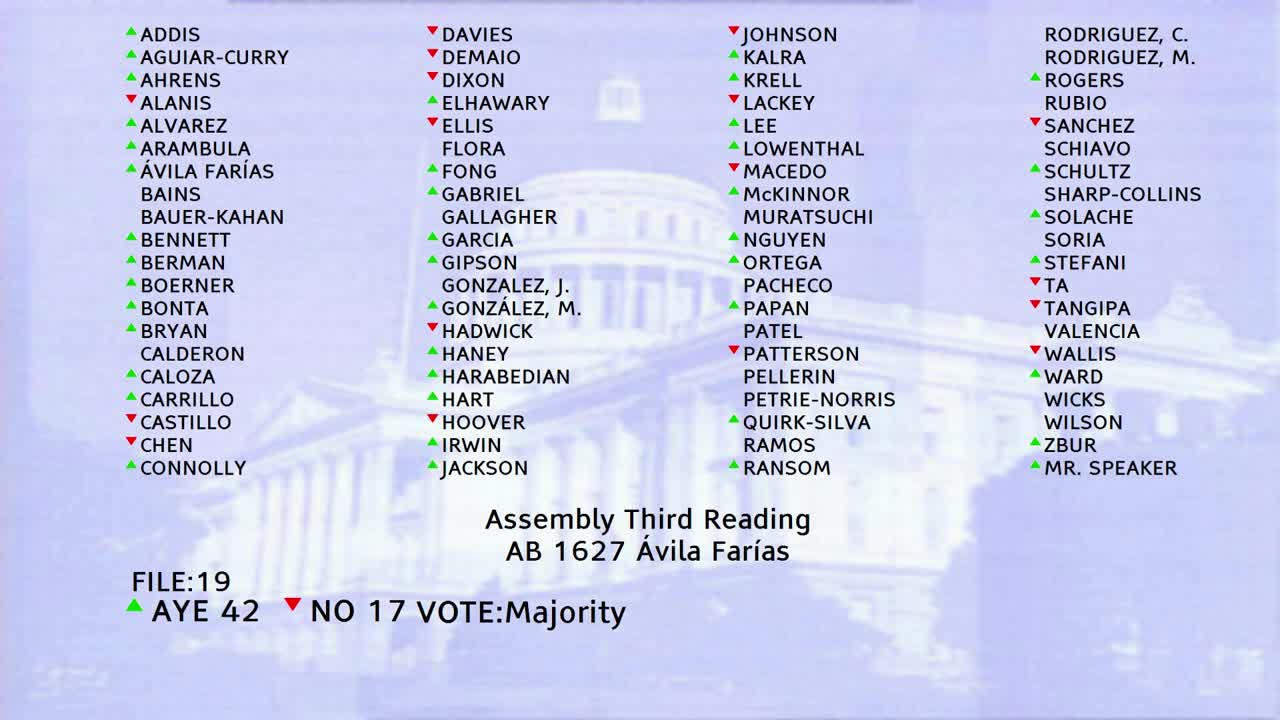 1MIN
Assembly Floor
 3MIN
Assembly Standing Committee on Appropriations
 16MIN
Assembly Standing Committee on Natural Resources
 14MIN
Assembly Standing Committee on Local Government
Bill Author