AB 2441: Community Supporting Innovation Pilot Program.
- Session Year: 2025-2026
- House: Assembly
- Latest Version Date: 2026-02-20
Current Status:
In Progress
(2026-05-14: In committee: Held under submission.)
Introduced
In Committee
Awaiting First Chamber Vote
Passed First Chamber
In Committee
Awaiting Second Chamber Vote
Passed Second Chamber
Enacted
Existing law establishes the Office of Child Abuse Prevention in the State Department of Social Services. Existing law requires the office to use certain funds to undertake specified activities, including, among other things, supporting coordination and sharing of best practices implemented by family resource centers with other agencies, when the best practices reflect strategies and outcomes that were achieved and supported by evidence-informed programs and data.
This bill would require the Office of Child Abuse Prevention to establish the Community Supporting Innovation Pilot Program to assess and demonstrate the effectiveness of community-based organizations, including family resource centers, serving as resource and referral avenues and alternative support pathways for families with complex needs or multiple stressors, or who are navigating significant barriers, but whose children are not at substantial risk of suffering serious physical harm or illness. The bill would require organizations wishing to participate in the pilot program to submit an application that demonstrates that the organization meets certain criteria, including, among others things, that the organization has the commitment of at least one partnering school district, hospital, clinic, or law enforcement agency that will refer potentially eligible families to the organization. The bill would require the office to select 25 organizations to receive grants to operate community pathway teams and provide related training. The bill would require a community pathway pilot site to receive referrals of the families described above and provide assistance to referred families navigating services related to basic needs, childcare access, behavioral health coordination, financial stability, benefits continuity, and other supports that stabilize families and reduce unnecessary involvement in the child welfare system. The bill would require the an evaluation of the pilot program and require the office, based on that evaluation, to submit a report to the Legislature no later than July 1, 2030, that provides recommendations for statewide implementation.
This bill would also require the office to establish an internal unit of least 3 staff positions to oversee the pilot and would authorize the office to contract with a nonprofit organization to undertake certain tasks related to the pilot program, such as developing and implementing outreach materials.
(a)The Office of Child Abuse Prevention shall establish the Community Supporting Innovation Pilot Program to assess and demonstrate the effectiveness of community-based organizations, including, but not limited to, family resource centers, serving as resource and referral avenues and alternative support pathways for families with complex needs or multiple stressors, or who are navigating significant barriers, but whose children are not at substantial risk of suffering serious physical harm or illness.
(b)The pilot program established pursuant to subdivision (a) shall, at a minimum, include all of the following components:
(1)An application from community-based organizations wishing to participate. In order to participate, a community-based organization shall be required to satisfy all of the following and demonstrate that satisfaction in the application:
(A)At the time of application, provide the services described in subdivision (g) of Section 18951.
(B)Have the commitment of at least one partnering school district, hospital, clinic, or law enforcement agency that will refer potentially eligible families to the community-based organization.
(C)Have received a statement of support for the community-based organizations participation in the pilot program from the county child welfare agency in each county in which the organization operates.
(D)Comply with all additional requirements for community-based organizations that will be participating in the pilot program that are imposed by the Office of Child Abuse Prevention, relating to all of the following:
(i)Eligibility and needs assessment.
(ii)Family support planning.
(iii)Community and cultural responsiveness.
(iv)Safety monitoring.
(v)Participating in Californias closed-loop, enhanced referral database.
(vi)County partnership.
(vii)Staff training and capacity building.
(viii)Pilot program evaluation.
(2)The selection of 25 community-based organizations by the Office of Child Abuse Prevention, or its designee, to receive grants to operate community pathway teams and provide related training.
(A)When selecting community-based organizations to participate in the pilot program, the Office of Child Abuse Prevention shall ensure the selection is geographically and demographically diverse and located throughout California.
(B)A community pathway pilot site shall be required to comply with all of the following:
(i)Receive referrals from schools, hospitals, clinics, and law enforcement agencies of families with children for whom a mandated reporter would not be required to make a report pursuant to Section 11166 of the Penal Code, but that have complex needs or multiple stressors, or who are navigating significant barriers, including, but not limited to, families suffering from poverty and families impacted by mental health, substance use issues, significant illness, or death of one of its members.
(ii)Provide assistance to referred families navigating services related to basic needs, childcare access, behavioral health coordination, financial stability, benefits continuity, and other supports that stabilize families and reduce unnecessary involvement in the child welfare system.
(iii)Participate in a closed-loop referral system to track referrals and document family progress after being connected to services without referral to the child welfare system.
(C)The training provided by the community-based organization shall include training, support, and incentives for mandated reporters, as defined in Section 11165.7 of the Penal Code, from the entity or entities described in subparagraph (B) of paragraph (1).
(3)(A)An evaluation of the pilot program to assess the effectiveness of community-based alternatives to involvement in the child welfare system.
(B)Utilization of a standardized, evidence-informed protective factors assessment tool, or similar assessment tool, and shall collect data elements and outcomes. When collecting data, a participating community-based organization shall not use the child welfare data system.
(C)The Office of Child Abuse Prevention shall identify uniform data elements to be collected by participating community-based organizations and shall not require a participating community-based organization to provide any personally identifying information relating to families served by a community pathway unit. The Office of Child Abuse Prevention shall also evaluate all of the following:
(i)Work plans developed for alternative referrals with partnering agencies.
(ii)Engagement of participating families in supportive services.
(iii)Changes in results of the evidence-informed protective factors assessment tool, or similar assessment tool, used by participating community-based organizations.
(iv)Rates of referral of participating families to a child welfare agency.
(c)The Office of Child Abuse Prevention shall establish an internal unit of at least three staff positions to oversee implementation and consistency of the pilot program and alignment with other initiatives of the State Department of Social Services, including, but not limited to, family first prevention services and systems of care.
(d)The Office of Child Abuse Prevention may contract with a nonprofit organization to do some or all of the following:
(1)Develop and implement outreach materials, notice of funding opportunity, and communications to solicit community-based organizations to participate in the pilot program.
(2)Contracting and accounting for the participating community-based organizations.
(3)Compliance monitoring and assistance.
(4)Data collection, review, and reporting.
(5)Training, certification, and implementation support for data reporting, program standards, and other identified tools for quality service provision at community pathway teams.
(6)Peer learning and office hours opportunities for participating community-based organizations.
(7)Developing and implementing processes and structures for consistent data collection.
(8)Independent evaluation of the pilot program.
(9)Dissemination of project information and learning.
18974.1.(a)Based on the results of the evaluation conducted pursuant to paragraph (3) of subdivision (b) of Section 18974, the Office of Child Abuse Prevention shall prepare a report to the Legislature and provide recommendations for statewide implementation of a community-supporting framework no later than July 1, 2030.
(b)(1)A report to be submitted pursuant to subdivision (a) shall be submitted in compliance with Section 9795 of the Government Code.
(2)Pursuant to Section 10231.5 of the Government Code, this section is repealed on January 1, 2031.
|
Date
|
Status
|
|---|---|
| May 14, 2026 | In committee: Held under submission. |
| Apr 22, 2026 | In committee: Set, first hearing. Referred to APPR. suspense file. |
| Mar 25, 2026 | From committee: Do pass and re-refer to Com. on APPR. (Ayes 7. Noes 0.) (March 24). Re-referred to Com. on APPR. |
| Mar 9, 2026 | Referred to Com. on HUM. S. |
| Feb 21, 2026 | From printer. May be heard in committee March 23. |
| Feb 20, 2026 | Read first time. To print. |
|
Date
|
Description
|
Location
|
Votes
|
|
|---|---|---|---|---|
| Mar 24, 2026 | Do pass and be re-referred to the Committee on [Appropriations] | Assembly Standing Committee on Human Services |
Passed |
This list shows positions taken on this bill by organizations on the date displayed, which is linked to the original source.
Positions by individuals are not included.
|
Organization
|
Position
|
Date
|
|---|---|---|
| African American Family & Cultural Center | ** Support | |
| All for Kids | ** Support | |
| Bay Area Community Resources/First 5 Center | ** Support | |
| California Alliance of Caregivers | ** Support | |
| California Alliance Of Child And Family Services | ** Support | |
| California Family Resource Association | ** Support | |
| California family Resource Association (SFRA) | ** Support | |
| Carpinteria Children's Project | ** Support | |
| Center for Human Services | ** Support | |
| Centro La Familia Advocacy Services | ** Support | |
| Child Abuse Prevention Center | ** Support | |
| Child Abuse Prevention Center and its Affiliates Safe Kids California, Prevent Child Abuse California and the California Family Resource Association (Sponsor) | ** Support | |
| Child Abuse Prevention Coordinating Council of Humboldt County | ** Support | |
| Child Abuse Prevention Council of Contra Costa County | ** Support | |
| Child Care Resource Center | ** Support | |
| Child Parent Institute | ** Support | |
| Children Now | ** Support | |
| Community Bridges Family Resource Collective | ** Support | |
| Community Child Care Council (4CS) of Alameda County | ** Support | |
| Comprehensive Youth Services of Fresno, INC | ** Support | |
| County Welfare Directors Association of California | ** Support | |
| East Bay Agency for Children | ** Support | |
| El Dorado Child Abuse Prevention Council | ** Support | |
| El Nido Family Services | ** Support | |
| El Sol Neighborhood Educational Center | ** Support | |
| Exhilaration Station Family Resource Center | ** Support | |
| Family Resource Center Network of Solano County | ** Support | |
| First 5 Mendocino | ** Support | |
| First 5 Sacramento | ** Support | |
| Folsom Cordova Community Partnership | ** Support | |
| Fresno Council On Child Abuse Prevention | ** Support | |
| Glide Foundation | ** Support | |
| Good Samaritan Family Resource Center | ** Support | |
| Helpline Youth Counseling, INC. | ** Support | |
| Homeless Prenatal Program | ** Support | |
| Honorable Alma Hernández, Mayor, City of Suisun | ** Support | |
| Human Response Network | ** Support | |
| Humboldt Network of Family Resource Centers | ** Support | |
| La Familia Counseling Center | ** Support | |
| Lincoln Families | ** Support | |
| Mariposa Family Resource Center | ** Support | |
| Mattole Valley Resource Center | ** Support | |
| Merced County Office of Education Family Resource Center | ** Support | |
| Mutual Assistance Network | ** Support | |
| Network of Family Resource Centers Santa Barbara County | ** Support | |
| North Coast Opportunities | ** Support | |
| On The Move | ** Support | |
| Parenting Network INC. | ** Support | |
| Plumas Crisis Intervention & Resource Center | ** Support | |
| River Oak Center for Children | ** Support | |
| Sacramento Children's Home | ** Support | |
| Safe & Sound | ** Support | |
| San Luis Obispo County Child Abuse Prevention Council Dba: Center for Family Strenghtening | ** Support | |
| Santa Ynez Valley People Helping People | ** Support | |
| SHIELDS for Families | ** Support | |
| Sierra Vista Child and Family Services | ** Support | |
| Solano Family & Children's Services | ** Support | |
| SPIRITT Family Services | ** Support | |
| Tahoe Truckee Child Abuse Prevention Council | ** Support | |
| Tulare County Family Resource Center Network | ** Support | |
| United Parents | ** Support | |
| United Way of Stanislaus County | ** Support | |
| Up Valley Family Centers of Napa County | ** Support | |
| western center on law & poverty | ** Support | |
| Yolo County Children's Alliance | ** Support |
Date of Hearing: April 22, 2026
ASSEMBLY COMMITTEE ON APPROPRIATIONS
Buffy Wicks, Chair
ABPCA Bill Id:AB 2441
Author:(Celeste Rodriguez) – As Introduced Ver:February 20, 2026
Policy Committee: | Human Services | Vote: | 7 - 0 |
|
| ||
|
|
Urgency: No State Mandated Local Program: No Reimbursable: No
SUMMARY:
This bill requires the Office of Child Abuse Prevention (OCAP) to establish a pilot grant program to provide alternative support pathways for families in need, but whose children are not at risk of harm, to reduce unnecessary involvement in the child welfare system.
Specifically, this bill:
- Requires the OCAP to establish the Community Supporting Innovation Pilot program to assess and demonstrate the effectiveness of community-based organizations serving as resource and referral avenues and alternative support pathways for families with complex needs or multiple stressors, or who are navigating significant barriers, but whose children are not at substantial risk of suffering serious physical harm or illness.
- Requires the pilot program to include, among other components, an application from a community-based organization wishing to participate that satisfies specified criteria, the selection of 25 community-based organizations by OCAP to receive grants to operate community pathway teams and provide related training, and an evaluation to assess the effectiveness of the pilot program.
- Requires OCAP to establish an internal unit of at least three staff positions to oversee implementation and consistency of the pilot program and alignment with other initiatives of the California Department of Social Services (CDSS).
- Authorizes OCAP to contract with a nonprofit organization for assistance with implementation, compliance monitoring, data collection and reporting, and an independent evaluation of the pilot.
- Requires OCAP, based on the evaluation, to provide recommendations to the Legislature for statewide implementation of a community-supporting framework by July 1, 2030.
- Sunsets these provisions on January 1, 2031.
FISCAL EFFECT:
- Estimated General Fund costs of an unknown amount, but likely in the tens of millions of dollars over the three-year life of the pilot program to fund grants to support 25 family resources centers (FRCs) and community-based organizations across the state.
- CDSS estimates GF implementation and administrative costs to OCAP and CDSS of $7 million in the first year and $2.45 million thereafter, including three positions at OCAP to implement the program, seven research data and IT positions and one attorney at CDSS, contract costs, and data collection and reporting tool costs. The bill requires OCAP to establish an internal unit of at least three staff positions.
The author is requesting $40 million in one-time funding over three years in the 2026-27 state budget to support this bill.
The Legislative Analyst’s Office recently warned of General Fund structural deficits of around $35 billion per year in the 2027-28 fiscal year and ongoing.
COMMENTS:
- Purpose. According to the author:
Every year in California, thousands of families come into contact with our child welfare system—not because they are abusive or neglectful, but because they are struggling. They are navigating poverty, housing instability, lack of childcare, or unmet mental health needs. California must do better in providing the support families need to stay safely together. Family Resource Centers provide critical, preventative services that strengthen families before a crisis escalates, and are embedded in communities as trusted, culturally competent hubs of support. [This bill] will establish an evidence-based pilot program to ensure that families who have needs and are not found to be at risk of abuse or neglect are not simply turned away.
- Background. California’s mandated reporting system was designed to protect children from harm. But a substantial amount of data raises the question of whether the system, as currently structured, has cast a net so wide that it sweeps in families who need help rather than having their child placed in foster care, and then leaves them with no support when reports are not substantiated. In California, nearly half of all reports to child welfare hotlines involve suspected neglect, and approximately 90% of those reports are ultimately unsubstantiated.
Data shows significant overlap between poverty and child welfare system involvement: 85% of families investigated for neglect have incomes below 200% of the federal poverty line, and neglect referrals are disproportionately concentrated among families who are not employed, receive public assistance, and live in impoverished neighborhoods.
In 2023, the California Child Welfare Council established the Mandated Reporting to Community Supporting Task Force, to review and reform California’s mandated reporting system and address the disproportionate impact of mandated reporting on marginalized communities. The Task Force’s 2024 recommendations included developing alternatives for families to access services prior to a call being made to the child abuse hotline, naming FRCs specifically as a key provider of those resources.
This bill implements that recommendation by establishing resource referral avenues as alternative pathways to assist families who are in need, outside of the child welfare services system. According to the Child Abuse Prevention center and the California family Resource Association (SFRA), sponsors of the bill:
[This bill] allows the state to test, evaluate, and refine a prevention-focused model before considering any future scale. The proposal leverages existing infrastructure within OCAP and trusted community-based networks, minimizing administrative overhead and maximizing direct investment into families. This investment is modest when compared to downstream system costs. A single child welfare investigation can cost thousands of dollars, while foster care placements can exceed $30,000 annually per child, and congregate care placements significantly more. By strengthening early community-based support, this pilot has the potential to reduce avoidable system involvement and generate long-term cost savings for the state.
Analysis Prepared by: Jennifer Swenson / APPR. / (916) 319-2081
Date of Hearing: March 24, 2026
ASSEMBLY COMMITTEE ON HUMAN SERVICES
Alex Lee, Chair
ABPCA Bill Id:AB 2441 (
Author:Celeste Rodriguez) – As Introduced Ver:February 20, 2026
SUBJECT: Community Supporting Innovation Pilot Program
SUMMARY: Establishes the Community Supporting Innovation Pilot program to provide alternative support pathways for families in need, but whose children are not at risk of harm, to reduce unnecessary involvement in the child welfare system. Specifically, this bill:
- Requires the Office of Child Abuse Prevention (OCAP) to establish the Community Supporting Innovation Pilot Program to assess and demonstrate the effectiveness of community-based organizations, including, but not limited to, family resource centers, serving as resource and referral avenues and alternative support pathways for families with complex needs or multiple stressors, or who are navigating significant barriers, but whose children are not at substantial risk of suffering serious physical harm or illness.
- Requires the pilot program to, at a minimum, include all of the following components:
- An application from community-based organizations wishing to participate that satisfies all of the following and demonstrate that satisfaction in the application:
- At the time of application, provide family-centered and family-strengthening services that are embedded in communities, culturally sensitive, and include cross-system collaboration to assist in transforming families and communities through reciprocity and asset development based on impact-driven and evidence-informed approaches with the goal of preventing child abuse and neglect and strengthening children and families;
- Have the commitment of at least one partnering school district, hospital, clinic, or law enforcement agency that will refer potentially eligible families to the community-based organization;
- Have received a statement of support for the community-based organization’s participation in the pilot program from the county child welfare agency in each county in which the organization operates; and,
- Comply with all additional requirements for community-based organizations that will be participating in the pilot program that are imposed by OCAP, relating to all of the following: eligibility and needs assessment; family support planning; community and cultural responsiveness; safety monitoring; participating in California’s closed-loop, enhanced referral database; county partnership; staff training and capacity building; and, pilot program evaluation.
- The selection of 25 community-based organizations by OCAP, or its designee, to receive grants to operate community pathway teams and provide related training. Requires OCAP to ensure the selection is geographically and demographically diverse and located throughout California.
- A community pathway pilot site to comply with all of the following:
- Receive referrals from schools, hospitals, clinics, and law enforcement agencies of families with children for whom a mandated reporter would not be required to make a report, but that have complex needs or multiple stressors, or who are navigating significant barriers, including, but not limited to, families suffering from poverty and families impacted by mental health, substance use disorders, significant illness, or death of one of its members;
- Provide assistance to referred families navigating services related to basic needs, childcare access, behavioral health coordination, financial stability, benefits continuity, and other supports that stabilize families and reduce unnecessary involvement in the child welfare system; and,
- Participate in a closed-loop referral system to track referrals and document family progress after being connected to services without referral to the child welfare system;
- Training provided by the community-based organization to include training, support, and incentives for mandated reporters from a partnering school district, hospital, clinic, or law enforcement agency;
- An evaluation of the pilot program to assess the effectiveness of community-based alternatives to involvement in the child welfare system;
- Utilization of a standardized, evidence-informed protective factors assessment tool, or similar assessment tool, and to collect data elements and outcomes. Prohibits, when collecting data, a participating community-based organization from using the child welfare data system;
- OCAP to identify uniform data elements to be collected by participating community-based organizations and prohibits a participating community-based organization from providing any personally identifying information relating to families served by a community pathway unit; and,
- OCAP to also evaluate all of the following:
- Work plans developed for alternative referrals with partnering agencies;
- Engagement of participating families in supportive services;
- Changes in results of the evidence-informed protective factors assessment tool, or similar assessment tool, used by participating community-based organizations; and,
- Rates of referral of participating families to a child welfare agency.
- Requires OCAP to establish an internal unit of at least three staff positions to oversee implementation and consistency of the pilot program and alignment with other initiatives of the California Department of Social Services (CDSS), including, but not limited to, family first prevention services and systems of care.
- Authorizes OCAP to contract with a nonprofit organization to do some or all of the following:
- Develop and implement outreach materials, notice of funding opportunity, and communications to solicit community-based organizations to participate in the pilot program;
- Contracting and accounting for the participating community-based organizations;
- Compliance monitoring and assistance;
- Data collection, review, and reporting;
- Training, certification, and implementation support for data reporting, program standards, and other identified tools for quality service provision at community pathway teams;
- Peer learning and office hours opportunities for participating community-based organizations;
- Developing and implementing processes and structures for consistent data collection;
- Independent evaluation of the pilot program; and,
- Dissemination of project information and learning.
- Requires OCAP, based on the results of the evaluation, to prepare a report to the Legislature and provide recommendations for statewide implementation of a community-supporting framework no later than July 1, 2030.
- Sunsets these provisions on January 1, 2031.
EXISTING LAW:
State law:
- Establishes OCAP within CDSS to develop plans to fulfill the requirements of any federal act providing for the establishment and maintenance of pilot projects for the prevention, identification, and treatment of child abuse to facilitate the receipt and allocation of federal funds for planning, research, demonstration and special project grants. Requires OCAP to provide technical assistance, either directly or through grant or contract, to public and private agencies and organizations to assist them in planning, improving, developing, and carrying out programs and activities relating to the prevention, identification, and treatment of child abuse and neglect. (Welfare and Institutions Code [WIC] §§ 18952-18958)
- Establishes the Family First Prevention Services (FFPS) Program to exercise the option afforded to states under federal law to receive federal financial participation for specified prevention services that are provided for a candidate for foster care or a pregnant or parenting foster youth, and their parents or kin caregivers, and the allowable costs for the proper and efficient administration of the program. (WIC §§ 16585-16589)
- Defines, for purposes of the Child Abuse and Neglect Reporting Act (CANRA), “general neglect” to mean the negligent failure of a person having the care or custody of a child to provide adequate food, clothing, shelter, medical care, or supervision where no physical injury to the child has occurred but the child is at substantial risk of suffering serious physical harm or illness. “General neglect” does not include a parent’s economic disadvantage. Clarifies that a child receiving treatment by spiritual means as provided, or not receiving specified medical treatment for religious reasons, shall not for that reason alone be considered a neglected child. An informed and appropriate medical decision made by parent or guardian after consultation with a physician or physicians who have examined the minor does not constitute neglect. (Penal Code § 11165.2(b))
- Defines a family resource center (FRC) to mean an entity providing family-centered and family-strengthening services that are embedded in communities, culturally sensitive, and include cross-system collaboration to assist in transforming families and communities through reciprocity and asset development based on impact-driven and evidence-informed approaches with the goal of preventing child abuse and neglect and strengthening children and families. An FRC may be located in, or administered by, different entities, including, but not limited to, a local educational agency, a community resource center, or a neighborhood resource center. (WIC § 18951(g))
Federal law:
- Establishes the Family First Prevention Act (FFPSA) which authorized Title IV-E reimbursement for prevention services and restricted federal reimbursement for congregate care. (Public Law 115-123, 42 United States Code [U.S.C.] § 674(a)(6) and 42 U.S.C. § 671(e))
- Establishes the Federal Child Abuse Prevention and Treatment Act which provides grants to states and community-based organizations for child abuse and neglect prevention and treatment programs. Requires states to meet specific requirements related to mandatory reporting laws and a system for receiving and investigating reports of child abuse and neglect. (42 U.S.C. § 5106a(b)(2)(B)(v))
FISCAL EFFECT: Unknown, this bill has not been analyzed by a fiscal committee.
COMMENTS:
Background: The Mandated Reporting to Community Supporting Task Force. In 2023, the California Child Welfare Council, a state-level advisory body co-chaired by the Secretary of the California Health and Human Services Agency and the designee of the Chief Justice of the California Supreme Court, established the Task Force to reform a critical component of the state’s child welfare system by examining the mandated reporting apparatus. Advocates, stakeholders, and those with lived experience often characterize the current structure as a fear-based reporting system rather than one that supports families. As part of its efforts to reshape the child abuse reporting system, the Task Force was organized into five subcommittees: Narrowing the Legal Definition of Neglect; Mandated Reporter Curriculum and Training; Potential Legal/Liability Issues for Mandated Reporters; Policy and Practice Reforms; and, Research and Data.
One of the key data points that formed the Task Force’s organizing principles focuses on general neglect being the single largest driver of child welfare referrals in California, accounting for 45% of all maltreatment allegations (approximately 195,000 of 433,571 children with maltreatment allegations in the analyzed period of 2013-23).[1] The Task Force characterized general neglect as a “catch-all” allegation often rooted in poverty, lack of resources, and systemic bias rather than genuine child safety threats.
Undergirding the Task Force’s purpose was racial disparity data in the child welfare system at all access points. Specifically, data show that while approximately 25% of white children experienced a child welfare investigation, the rate for Black and Native American children was approximately 50%. Black, Native American, and Latino families were also found to be significantly more likely to have substantiated reports and children removed.
The Task Force’s five strategic priorities and 14 recommendations, which were affirmatively voted on by the California Child Welfare Council in September 2024, addressed the disparities in the child welfare system at multiple levels. Some of the recommendations included directives to do the following:
- Remove “general neglect” as a mandated reporting requirement under
CANRA;
- Revise and clarify the definition of “severe neglect” to align with the California Structured Decision Making Tool;
- Pilot a two-year program providing mandated reporters immunity from liability for failing to report;
- Require standardized mandated reporter training statewide, developed with lived-
expertise participation;
- Ensure the Counties Comprehensive Prevention Plans incorporate information on
community pathway access for mandated reporters; and,
- Create a statewide narrative change initiative acknowledging harm committed by
mandated reporting, particularly to Black and Native families.
This bill is seeking legislative implementation of the Task Force’s community pathway concept which is the idea that families with complex needs, but no immediate child safety threat should have access to voluntary community-based support outside the child welfare system.
Reforms in the Child Welfare Services System. The Task Force builds upon the Continuum of Care Reform (CCR), enacted through AB 403 (Stone), Chapter 773, Statutes of 2015, and subsequent related legislation, which represented a fundamental restructuring of how the state serves children who cannot safely remain in their homes. Before CCR, California relied heavily on group homes and other congregate care placements. These institutional settings have been linked to worse outcomes for youth compared to family-based alternatives.
CCR’s core premise was that children belong in families, not institutions and strengthened the statutory preference for family-based settings with relatives and nonrelated extended family members over congregate settings by phasing out group homes and replacing them with short-term residential therapeutic programs (STRTPs), which are limited to children with clinical needs requiring 24-hour therapeutic interventions. STRTPs are intended as time-limited placements with a maximum 12-month stay, not long-term placements.
CCR mandated the use of structured decision-making tools, including the Child and Adolescent Needs and Strengths (CANS) assessment, to match children to appropriate placement levels based on clinical need rather than placement availability by using a “level of care” protocol. The new Tiered Rate Structure (TRS), scheduled to begin payments on July 1, 2027, will shift foster care payments from being based on age and placement type (e.g. STRTP or home-based setting) to the individual needs and strengths of the child. The TRS moves away from an age- and placement-based system and toward a system that is driven primarily through CANS assessment to determine the appropriate rate of payment.
The practical effect of CCR was that it made congregate care harder to access and required a higher clinical need, which meant that if foster youth could not appropriately be placed in congregate settings, they needed to be served, or diverted from removal in the first place, through community-based alternatives, which requires the development of a prevention infrastructure as a necessary complement to CCR.
In 2018, the federal FFPSA was signed into law and provided the financing architecture to administer prevention services to families in need. FFPSA authorizes federal reimbursement for children who are candidates for foster care and their parents or kin caregivers. States are required to demonstrate that without services, the child would likely enter foster care. Additionally, these prevention services must meet a tiered evidence-based practices (EBPs) standard (promising, supported, or well-supported practices) as determined by the Title IV-E Prevention Services Clearinghouse.
FFPSA fundamentally altered the Title IV-E funding structure, which had historically only reimbursed states for out-of-home care costs once a child was placed in foster care. For the first time, FFPSA authorized federal Title IV-E reimbursement for evidence-based prevention services including mental health, substance use disorder treatment, and in-home parent skill-based programs provided to children and families who would otherwise be candidates for foster care placement.
California’s FFPSA five-year prevention plan was approved in 2023, with CDSS stating their vision is “to develop an integrated state-wide system that supports families to provide safe, stable, nurturing relationships and environments for their children.” As of 2024, implementation of the state’s FFPS Program, which is the operational framework for claiming federal prevention dollars, was targeted for October 2026. Delays in this implementation have can be attributed to a number of factors, including having a limited number (10) of well-supported EBPs as well as significant delays in the CWS-CARES system that that would allow for federal funding to reimburse for these activities.
However, this bill addresses a different population: families who have not come into contact with the child welfare system and are instead referred to community-based supports from trusted community partners such as schools, hospitals, clinics, and law enforcement agencies of families with children for whom a mandated reporter would not be required to make a report, but that have complex needs or multiple stressors, or who are navigating significant barriers such as poverty and families impacted by mental health, substance use disorders, significant illness, or death of one of its members.
Mandated Reporters and Unsubstantiated Reports. California’s mandated reporting system was designed to protect children from harm. But a substantial amount of data raises the question of whether the system, as currently structured, has cast a net so wide that it sweeps in families who need help rather than having their child placed in foster care, and then leaves them with no support when reports are not substantiated. Data show there is significant overlap between poverty and child welfare system involvement: 85% of families investigated for neglect have incomes below 200% of the federal poverty line, and neglect referrals are disproportionately concentrated among families who are not employed, receive public assistance, and live in impoverished neighborhoods.[2] In California, nearly half of all maltreatment allegations concern general neglect, and more than 80% of foster care placements over the past decade have been due to neglect rather than physical or sexual abuse.[3]
The current statutory definition of general neglect, which encompasses failures to provide adequate food, clothing, shelter, or supervision, creates significant ambiguity for mandated reporters trying to distinguish a family in crisis from a family engaged in maltreatment. A mandated reporter may make a report to the child welfare hotline based on observing a child who appears malnourished, which may or may not ultimately meet the statutory definition of reportable neglect. The Legislature acknowledged this problem through the enactment of AB 2085 (Holden), Chapter 770, Statutes of 2022, and SB 1085 (Kamlager), Chapter 832, Statutes of 2022, which amended the Penal Code to clarify that a parent’s economic disadvantage does not in itself constitute general neglect. CDSS issued updated guidance to county welfare directors implementing these statutory amendments in December 2023.[4]
Determining reasonable suspicion of general neglect requires the reporter to exercise their judgment on whether to report based on facts that would lead a reasonable person to suspect neglect. This standard encourages reporting without requiring certainty, which as noted by stakeholders, can lead to overreporting. One factor that contributes to overreporting is the requirement for a mandated reporter who fails to report known or suspected neglect can face criminal charges, typically classified as a misdemeanor, and can include up to six months in confinement in a county jail and/or a fine of up to $1,000. As noted by advocates, this contributes to a fear-based reaction from the mandated reporter, who will often err on the side of reporting even if they are unsure of the veracity of their claims, or may be unconsciously reacting to the results of existing structural racism and conflating poverty with neglect.
There are approximately 4 million reports to child protective services (CPS) in the United States each year, and more than 2.5 million, well over two-thirds, are unsubstantiated.[5] California’s numbers are consistent with the national picture: each year, over 400,000 children are reported to CPS in California, yet only slightly more than 1 in 10 of those reports are substantiated. This means that nearly 90% of all reports of abuse and neglect allegations are unsubstantiated. Substantiation rates vary by type of mandated reporter, ranging from 4 to 23%.[6] This means that for some categories of reporters, the system investigates roughly 24 families for every one in which maltreatment is confirmed. These are families who have been investigated, who have had their homes examined and their children interviewed, and who have been found not to have maltreated their children.
This bill would establish the Community Supporting Innovation Pilot Program to assess and demonstrate the effectiveness of community-based organizations, such as FRCs that provide preventive services that strengthen families before a crisis escalates and are embedded in communities to provide support.
Author’s Statement: According to the Author, “Every year in California, thousands of families come into contact with our child welfare system—not because they are abusive or neglectful, but because they are struggling. They are navigating poverty, housing instability, lack of childcare, or unmet mental health needs. California must do better in providing the support families need to stay safely together. Family Resource Centers provide critical, preventative services that strengthen families before a crisis escalates, and are embedded in communities as trusted, culturally competent hubs of support. [This bill] will establish the Community Supporting Innovation pilot program, an evidence-based pilot program to ensure that families who have needs and are not found to be at risk of abuse or neglect—are not simply turned away. Instead, they are connected by trusted mandated reporters to Family Resource Centers that can provide voluntary, community-based support including parenting education and family strengthening programs, housing and homelessness assistance, food access, and domestic violence resources.”
Equity Implications: The provisions of this bill establish a pilot program that would take the latest legislative step in a decade-long effort to shift California’s child welfare system away from a surveillance-and-removal paradigm toward a prevention-and-support model by creating alternative pathways to assist families who are in need, outside of the child welfare services system. Because many families who need assistance are merely experiencing a lack of resources rather than a threat to the safety of their children, the creation of alternative pathways can address the disproportionate surveillance that exists in low-income communities who are more likely to be reported which may help preserve family unity.
Policy Considerations: The provisions of this bill require the proposed pilot program to operate outside of the child welfare services system and for services and supports to be directed to families who may have complex needs and are navigating significant barriers, but whose children are not at substantial risk of suffering serious physical harm or illness.
This structure presents a consideration regarding whether asking mandated reporters to make a determination of a child’s safety without the benefit of a trained social worker first conducting an investigation is sufficient. This structure requires a judgment call from the organizations that will be making referrals in lieu of a CPS investigation. While data show that 90% of reports are unsubstantiated and those families have had to endure the intrusion and trauma of an investigation only to be told the concerns were unfounded, there are 10% of families who have kept a child safe through that reporting and who can potentially benefit from the child welfare services system. Additionally, there are likely a significant number of these families whose reports were found to be unsubstantiated for neglect or abuse, but could benefit from a “warm handoff” from CPS to a community pathway organization for assistance for whatever brought them to the attention of the reporter in the first place. For example, if a family was reported because the child repeatedly comes to school hungry, but it is determined after an investigation that this does not rise to the level of neglect, that family would benefit from being connected to CalFresh or other nutrition or anti-poverty programs that could be provided by an FRC.
Should this bill be signed into law, and if this pilot is successful, the Author may wish to consider future legislation to establish pathways to have unsubstantiated reports due to neglect additionally referred to this pilot program to ensure the families targeted by this legislation can be appropriately connected with resources to stabilize, while still keeping families out of the child welfare system.
ARGUMENTS IN SUPPORT: According to a coalition of supporters, “[This bill] provides a missing piece for California’s efforts to increase child and family well-being and reduce family disruption by the child welfare system by establishing resource referral avenues as alternatives to child welfare system involvement where the child is not at substantial risk of suffering serious physical harm or illness. In doing so, the Pilot would assess and demonstrate the effectiveness of community-based organizations such as FRCs in delivering concrete, on-the-ground supports for families in crisis. [This bill] represents a critical opportunity to strengthen child safety while reducing unnecessary system involvement by creating a clear, prevention-focused pathway for families facing challenges related to poverty, stress, and access to resources.”
ARGUMENTS IN OPPOSITION: None on file.
RELATED AND PRIOR LEGISLATION:
AB 153 (Committee on Budget), Chapter 86, Statutes of 2021, implemented various FFPSA requirements in California law; authorized FFPS program development and established county opt-in framework.
AB 2085 (Holden), Chapter, Statutes of 2022, see comments above.
AB 403 (Stone), Chapter 773, Statutes of 2015, see comments above.
REGISTERED SUPPORT / OPPOSITION:
Support
Child Abuse Prevention Center and its Affiliates Safe Kids California, Prevent Child Abuse California and the California Family Resource Association (Sponsor)
African American Family & Cultural Center
All for Kids
Bay Area Community Resources/First 5 Center
California Alliance of Caregivers
California Alliance of Child and Family Services
California Family Resource Association
Carpinteria Children's Project
Center for Human Services
Centro LA Familia Advocacy Services
Child Abuse Prevention Coordinating Council of Humboldt County
Child Abuse Prevention Council of Contra Costa County
Child Care Resource Center
Child Parent Institute
Children Now
Community Bridges Family Resource Collective
Community Child Care Council (4CS) of Alameda County
Comprehensive Youth Services of Fresno, INC
County Welfare Directors Association of California
East Bay Agency for Children
El Dorado Child Abuse Prevention Council
El Nido Family Services
El Sol Neighborhood Educational Center
Exhilaration Station Family Resource Center
Family Resource Center Network of Solano County
First 5 Mendocino
First 5 Sacramento
Folsom Cordova Community Partnership
Fresno Council on Child Abuse Prevention
Glide Foundation
Good Samaritan Family Resource Center
Helpline Youth Counseling, INC.
Homeless Prenatal Program
Honorable Alma Hernández, Mayor, City of Suisun
Human Response Network
Humboldt Network of Family Resource Centers
LA Familia Counseling Center
Lincoln Families
Mariposa Family Resource Center
Mattole Valley Resource Center
Merced County Office of Education Family Resource Center
Mutual Assistance Network
Network of Family Resource Centers Santa Barbara County
North Coast Opportunities
On the Move
Parenting Network INC.
Plumas Crisis Intervention & Resource Center
River Oak Center for Children
Sacramento Children's Home
Safe & Sound
San Luis Obispo County Child Abuse Prevention Council Dba: Center for Family Strenghtening
Santa Ynez Valley People Helping People
SHIELDS for Families
Sierra Vista Child and Family Services
Solano Family & Children's Services
SPIRITT Family Services
Tahoe Truckee Child Abuse Prevention Council
Tulare County Family Resource Center Network
United Parents
United Way of Stanislaus County
Up Valley Family Centers of Napa County
Western Center on Law & Poverty
Yolo County Children's Alliance
Opposition
None on file.
Analysis Prepared by: Jessica Langtry / HUM. S. / (916) 319-2089
Child Welfare Council Meeting Presentation December 3, 2025 https://www.chhs.ca.gov/wp-content/uploads/2026/01/Child-Welfare-Council-slides-12032025.pdf ↑
https://www.govinfo.gov/content/pkg/GOVPUB-HE23_1200-PURL-gpo195170/pdf/GOVPUB-HE23_1200-P
URL-gpo195170.pdf; https://www.ncjfcj.org/wp-content/uploads/2021/11/Distinguishing-Poverty.pdf ↑
https://kidsdata.org/topic/4/childabuse-reports-type/table ↑
CDSS All County Letter No. 23-110 ↑
Child Welfare League of America, Child Maltreatment Report Released, available at https://www.cwla.org/child-maltreatment-report-released-includes-increased-numbers/ ↑
Child Welfare League of America, Child Maltreatment Report Released, available at https://www.cwla.org/child-maltreatment-report-released-includes-increased-numbers/ ↑
Discussed in Hearing
 32MIN
Assembly Standing Committee on Appropriations
 14MIN
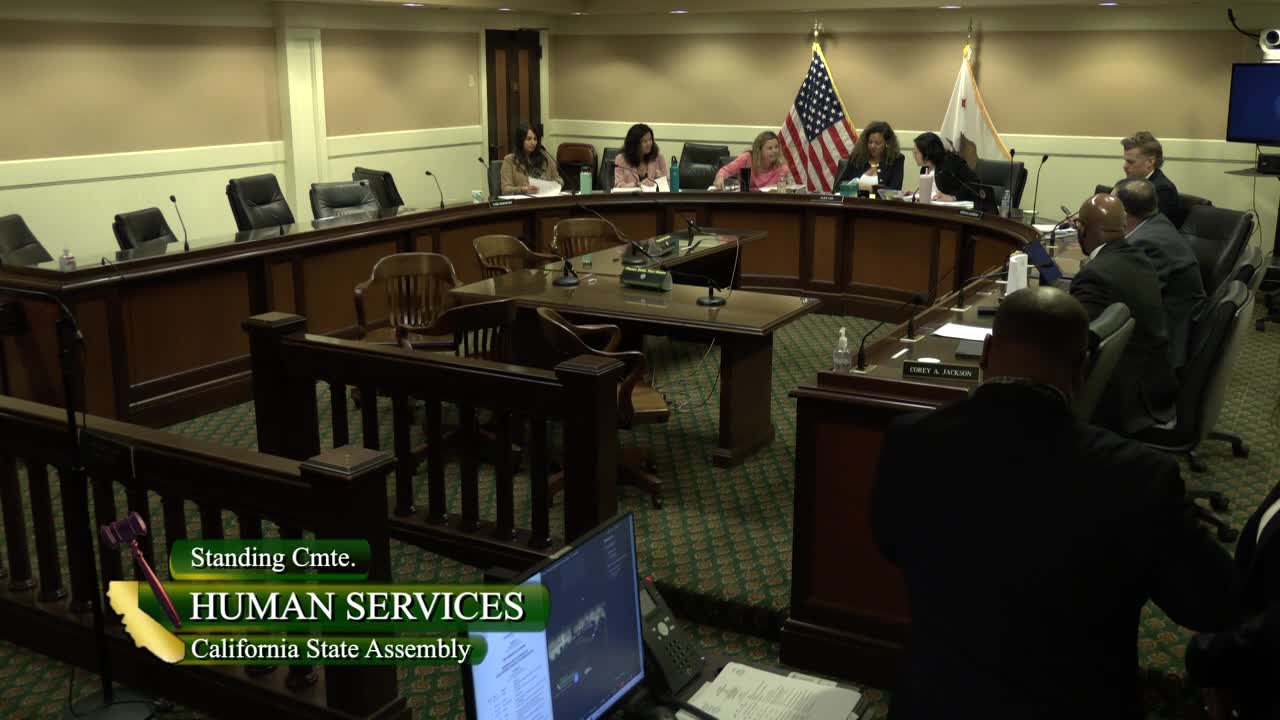
Assembly Standing Committee on Human Services
Bill Author

Bill Co-Author(s):