AB 2448: Medical information: confidentiality.
- Session Year: 2025-2026
- House: Assembly
- Latest Version Date: 2026-09-27
Current Status:
Passed
(2026-09-27: Chaptered by Secretary of State - Chapter 607, Statutes of 2026.)
Introduced
In Committee
Awaiting First Chamber Vote
Passed First Chamber
In Committee
Awaiting Second Chamber Vote
Passed Second Chamber
Enacted
Existing law, the Confidentiality of Medical Information Act (CMIA), generally prohibits a provider of health care, a health care service plan, or a contractor from disclosing medical information regarding a patient, enrollee, or subscriber without first obtaining an authorization, unless a specified exception applies. Existing law makes a violation of the CMIA that results in economic loss or personal injury to a patient punishable as a misdemeanor. Existing law requires specified businesses that electronically store or maintain medical information on the provision of sensitive services on behalf of a provider of health care, health care service plan, pharmaceutical company, contractor, or employer to develop capabilities, policies, and procedures, on or before July 1, 2024, to enable certain security features, including limiting user access privileges and segregating medical information related to gender affirming care, abortion and abortion-related services, and contraception, as specified.
This bill would also require those specified businesses to enable the above-specified capabilities, policies, and procedures for those security features, as specified. Because the bill would expand the scope of an existing crime, it would impose a state-mandated local program.
The California Constitution requires the state to reimburse local agencies and school districts for certain costs mandated by the state. Statutory provisions establish procedures for making that reimbursement.
This bill would provide that no reimbursement is required by this act for a specified reason.
Existing law, the Confidentiality of Medical Information Act (CMIA), generally prohibits a provider of health care, a health care service plan, or a contractor from disclosing medical information regarding a patient, enrollee, or subscriber without first obtaining an authorization, unless a specified exception applies. Existing law makes a violation of the CMIA that results in economic loss or personal injury to a patient punishable as a misdemeanor. Existing law requires specified businesses that electronically store or maintain medical information on the provision of sensitive services on behalf of a provider of health care, health care service plan, pharmaceutical company, contractor, or employer to develop capabilities, policies, and procedures, on or before July 1, 2024, to enable certain security features, including limiting user access privileges and segregating medical information related to gender affirming care, abortion and abortion-related services, and contraception, as specified.
This bill would also require those specified businesses to enable the above-specified capabilities, policies, and procedures for those security features, as specified. Because the bill would expand the scope of an existing crime, it would impose a state-mandated local program.
The California Constitution requires the state to reimburse local agencies and school districts for certain costs mandated by the state. Statutory provisions establish procedures for making that reimbursement.
This bill would provide that no reimbursement is required by this act for a specified reason.
Existing law, the Confidentiality of Medical Information Act (CMIA), generally prohibits a provider of health care, a health care service plan, or a contractor from disclosing medical information regarding a patient, enrollee, or subscriber without first obtaining an authorization, unless a specified exception applies. Existing law makes a violation of the CMIA that results in economic loss or personal injury to a patient punishable as a misdemeanor. Existing law requires specified businesses that electronically store or maintain medical information on the provision of sensitive services on behalf of a provider of health care, health care service plan, pharmaceutical company, contractor, or employer to develop capabilities, policies, and procedures, on or before July 1, 2024, to enable certain security features, including limiting user access privileges and segregating medical information related to gender affirming care, abortion and abortion-related services, and contraception, as specified.
This bill would also require those specified businesses to enable the above-specified capabilities, policies, and procedures for those security features, as specified. Because the bill would expand the scope of an existing crime, it would impose a state-mandated local program.
The California Constitution requires the state to reimburse local agencies and school districts for certain costs mandated by the state. Statutory provisions establish procedures for making that reimbursement.
This bill would provide that no reimbursement is required by this act for a specified reason.
(a)Every provider of health care, health care service plan, pharmaceutical company, or contractor who creates, maintains, preserves, stores, abandons, destroys, or disposes of medical information shall do so in a manner that preserves the confidentiality of the information contained therein. Any provider of health care, health care service plan, pharmaceutical company, or contractor who negligently creates, maintains, preserves, stores, abandons, destroys, or disposes of medical information shall be subject to the remedies and penalties provided under subdivisions (b) and (c) of Section 56.36.
(b)(1)An electronic health record system or electronic medical record system shall do all of the following:
(A)Protect and preserve the integrity of electronic medical information.
(B)Automatically record and preserve any change or deletion of any electronically stored medical information. The record of any change or deletion shall include the identity of the person who accessed and changed the medical information, the date and time the medical information was accessed, and the change that was made to the medical information.
(2)A patients right to access or receive a copy of the patients electronic medical records upon request shall be consistent with applicable state and federal laws governing patient access to, and the use and disclosures of, medical information.
(c)(1)A business, as described in Section 56.06, that electronically stores or maintains medical information on the provision of sensitive services, including, but not limited to, on an electronic health record system or electronic medical record system, on behalf of a provider of health care, health care service plan, pharmaceutical company, contractor, or employer, shall develop capabilities, policies, and procedures to enable and shall enable, on or before July 1, 2024, all of the following:
(A)Limit user access privileges to information systems that contain medical information related to gender affirming care, abortion and abortion-related services, and contraception only to those persons who are authorized to access specified medical information.
(B)Prevent the disclosure, access, transfer, transmission, or processing of medical information related to gender affirming care, abortion and abortion-related services, and contraception to persons and entities outside of this state in accordance to this part.
(C)Segregate medical information related to gender affirming care, abortion and abortion-related services, and contraception from the rest of the patients record.
(D)Provide the ability to automatically disable access to segregated medical information related to gender affirming care, abortion and abortion-related services, and contraception by individuals and entities in another state.
(2)Any fees charged to providers of health care, health care service plans, pharmaceutical company, contractors, employers, or patients to comply with this subdivision shall be consistent with Section 171.302 of Title 45 of the Code of Federal Regulations.
(3)For the purposes of this subdivision, gender affirming care means gender affirming health care and gender affirming mental health care as defined in subdivision (b) of Section 16010.2 of the Welfare and Institutions Code.
(4)This subdivision does not apply to a contractor, health care service plan, or provider of health care as those terms are defined in Section 56.05.
(d)This section shall apply to an electronic medical record or electronic health record that meets the definition of electronic health record, as that term is defined in Section 17921(5) of Title 42 of the United States Code.
SEC. 2.No reimbursement is required by this act pursuant to Section 6 of Article XIIIB of the California Constitution because the only costs that may be incurred by a local agency or school district will be incurred because this act creates a new crime or infraction, eliminates a crime or infraction, or changes the penalty for a crime or infraction, within the meaning of Section 17556 of the Government Code, or changes the definition of a crime within the meaning of Section 6 of Article XIIIB of the California Constitution.
(a)Every provider of health care, health care service plan, pharmaceutical company, or contractor who creates, maintains, preserves, stores, abandons, destroys, or disposes of medical information shall do so in a manner that preserves the confidentiality of the information contained therein. Any provider of health care, health care service plan, pharmaceutical company, or contractor who negligently creates, maintains, preserves, stores, abandons, destroys, or disposes of medical information shall be subject to the remedies and penalties provided under subdivisions (b) and (c) of Section 56.36.
(b)(1)An electronic health record system or electronic medical record system shall do all of the following:
(A)Protect and preserve the integrity of electronic medical information.
(B)Automatically record and preserve any change or deletion of any electronically stored medical information. The record of any change or deletion shall include the identity of the person who accessed and changed the medical information, the date and time the medical information was accessed, and the change that was made to the medical information.
(2)A patients right to access or receive a copy of the patients electronic medical records upon request shall be consistent with applicable state and federal laws governing patient access to, and the use and disclosures of, medical information.
(c)(1)A business, as described in Section 56.06, that electronically stores or maintains medical information on the provision of sensitive services, including, but not limited to, on an electronic health record system or electronic medical record system, on behalf of a provider of health care, health care service plan, pharmaceutical company, contractor, or employer, shall develop capabilities, policies, and procedures to enable and shall enable, on or before July 1, 2024, all of the following:
(A)Limit user access privileges to information systems that contain medical information related to gender affirming care, abortion and abortion-related services, and contraception only to those persons who are authorized to access specified medical information.
(B)Prevent the disclosure, access, transfer, transmission, or processing of medical information related to gender affirming care, abortion and abortion-related services, and contraception to persons and entities outside of this state in accordance to this part.
(C)Segregate medical information related to gender affirming care, abortion and abortion-related services, and contraception from the rest of the patients record.
(D)Provide the ability to automatically disable access to segregated medical information related to gender affirming care, abortion and abortion-related services, and contraception by individuals and entities in another state.
(2)Any fees charged to providers of health care, health care service plans, pharmaceutical company, contractors, employers, or patients to comply with this subdivision shall be consistent with Section 171.302 of Title 45 of the Code of Federal Regulations.
(3)For the purposes of this subdivision, gender affirming care means gender affirming health care and gender affirming mental health care as defined in subdivision (b) of Section 16010.2 of the Welfare and Institutions Code.
(4)This subdivision does not apply to a contractor, health care service plan, or provider of health care as those terms are defined in Section 56.05.
(d)This section shall apply to an electronic medical record or electronic health record that meets the definition of electronic health record, as that term is defined in Section 17921(5) of Title 42 of the United States Code.
SEC. 2.No reimbursement is required by this act pursuant to Section 6 of Article XIIIB of the California Constitution because the only costs that may be incurred by a local agency or school district will be incurred because this act creates a new crime or infraction, eliminates a crime or infraction, or changes the penalty for a crime or infraction, within the meaning of Section 17556 of the Government Code, or changes the definition of a crime within the meaning of Section 6 of Article XIIIB of the California Constitution.
(a)Every provider of health care, health care service plan, pharmaceutical company, or contractor who creates, maintains, preserves, stores, abandons, destroys, or disposes of medical information shall do so in a manner that preserves the confidentiality of the information contained therein. Any provider of health care, health care service plan, pharmaceutical company, or contractor who negligently creates, maintains, preserves, stores, abandons, destroys, or disposes of medical information shall be subject to the remedies and penalties provided under subdivisions (b) and (c) of Section 56.36.
(b)(1)An electronic health record system or electronic medical record system shall do all of the following:
(A)Protect and preserve the integrity of electronic medical information.
(B)Automatically record and preserve any change or deletion of any electronically stored medical information. The record of any change or deletion shall include the identity of the person who accessed and changed the medical information, the date and time the medical information was accessed, and the change that was made to the medical information.
(2)A patients right to access or receive a copy of the patients electronic medical records upon request shall be consistent with applicable state and federal laws governing patient access to, and the use and disclosures of, medical information.
(c)(1)A business, as described in Section 56.06, that electronically stores or maintains medical information on the provision of sensitive services, including, but not limited to, on an electronic health record system or electronic medical record system, on behalf of a provider of health care, health care service plan, pharmaceutical company, contractor, or employer, shall develop capabilities, policies, and procedures, procedures to enable and shall enable, on or before July 1, 2024, to enable all of the following:
(A)Limit user access privileges to information systems that contain medical information related to gender affirming care, abortion and abortion-related services, and contraception only to those persons who are authorized to access specified medical information.
(B)Prevent the disclosure, access, transfer, transmission, or processing of medical information related to gender affirming care, abortion and abortion-related services, and contraception to persons and entities outside of this state in accordance to this part.
(C)Segregate medical information related to gender affirming care, abortion and abortion-related services, and contraception from the rest of the patients record.
(D)Provide the ability to automatically disable access to segregated medical information related to gender affirming care, abortion and abortion-related services, and contraception by individuals and entities in another state.
(2)Any fees charged to providers of health care, health care service plans, pharmaceutical company, contractors, employers, or patients to comply with this subdivision shall be consistent with Section 171.302 of Title 45 of the Code of Federal Regulations.
(3)For the purposes of this subdivision, gender affirming care means gender affirming health care and gender affirming mental health care as defined in subdivision (b) of Section 16010.2 of the Welfare and Institutions Code.
(4)This subdivision does not apply to a contractor, health care service plan, or provider of health care as those terms are defined in Section 56.05.
(d)This section shall apply to an electronic medical record or electronic health record that meets the definition of electronic health record, as that term is defined in Section 17921(5) of Title 42 of the United States Code.
SEC. 2.No reimbursement is required by this act pursuant to Section 6 of Article XIIIB of the California Constitution because the only costs that may be incurred by a local agency or school district will be incurred because this act creates a new crime or infraction, eliminates a crime or infraction, or changes the penalty for a crime or infraction, within the meaning of Section 17556 of the Government Code, or changes the definition of a crime within the meaning of Section 6 of Article XIIIB of the California Constitution.
REVISIONS: HeadingLine 2.|
Date
|
Status
|
|---|---|
| Sep 27, 2026 | Chaptered by Secretary of State - Chapter 607, Statutes of 2026. |
| Sep 27, 2026 | Approved by the Governor. |
| Sep 3, 2026 | Enrolled and presented to the Governor at 4 p.m. |
| Aug 27, 2026 | In Assembly. Ordered to Engrossing and Enrolling. |
| Aug 26, 2026 | Read third time. Passed. Ordered to the Assembly. (Ayes 30. Noes 9. Page 5910.). |
| Aug 26, 2026 | Read third time. Passed. Ordered to the Assembly. (Ayes 29. Noes 9.). |
| Aug 4, 2026 | Read second time. Ordered to third reading. |
| Aug 3, 2026 | From committee: Be ordered to second reading pursuant to Senate Rule 28.8. |
| Jul 2, 2026 | From committee: Do pass and re-refer to Com. on APPR. (Ayes 8. Noes 1.) (July 1). Re-referred to Com. on APPR. |
| Jun 9, 2026 | From committee: Do pass and re-refer to Com. on HEALTH. (Ayes 7. Noes 1.) (June 8). Re-referred to Com. on HEALTH. |
| May 20, 2026 | Referred to Coms. on P., D.T., & C.P. and HEALTH. |
| May 12, 2026 | In Senate. Read first time. To Com. on RLS. for assignment. |
| May 11, 2026 | Read third time. Passed. Ordered to the Senate. (Ayes 55. Noes 16. Page 4992.) |
| May 11, 2026 | Read third time. Passed. Ordered to the Senate. (Ayes 55. Noes 16.) |
| May 11, 2026 | Read third time. Passed. Ordered to the Senate. |
| Apr 30, 2026 | Read second time. Ordered to third reading. |
| Apr 29, 2026 | From committee: Do pass. (Ayes 10. Noes 2.) (April 29). |
| Apr 20, 2026 | From committee: Do pass and re-refer to Com. on APPR. (Ayes 11. Noes 3.) (April 16). Re-referred to Com. on APPR. |
| Apr 20, 2026 | Coauthors revised. |
| Apr 8, 2026 | From committee: Do pass and re-refer to Com. on P. & C.P. (Ayes 12. Noes 3.) (April 7). Re-referred to Com. on P. & C.P. |
| Mar 9, 2026 | Referred to Coms. on HEALTH and P. & C.P. |
| Feb 21, 2026 | From printer. May be heard in committee March 23. |
| Feb 20, 2026 | Read first time. To print. |
|
Date
|
Description
|
Location
|
Votes
|
|
|---|---|---|---|---|
| Aug 26, 2026 | Assembly 3rd Reading AB2448 Berman et al. By Menjivar | Senate Floor |
Passed |
|
| Jul 1, 2026 | Do pass, but first be re-referred to the Committee on [Appropriations] | Senate Standing Committee on Health |
Passed |
|
| Jun 8, 2026 | Do pass, but first be re-referred to the Committee on [Health] | Senate Standing Committee on Privacy, Digital Technologies, and Consumer Protection |
Passed |
|
| May 11, 2026 | AB 2448 Berman Assembly Third Reading | Assembly Floor |
Passed |
|
| Apr 29, 2026 | Do pass. | Assembly Standing Committee on Appropriations |
Passed |
|
| Apr 16, 2026 | Do pass and be re-referred to the Committee on [Appropriations] | Assembly Standing Committee on Privacy and Consumer Protection |
Passed |
|
| Apr 7, 2026 | Do pass and be re-referred to the Committee on [Privacy and Consumer Protection] | Assembly Standing Committee on Health |
Passed |
This list shows positions taken on this bill by organizations on the date displayed, which is linked to the original source.
Positions by individuals are not included.
|
Organization
|
Position
|
Date
|
|---|---|---|
| Abortion Coalition for Telemedicine Access | ** Support | |
| Abortion Coalition for Telemedicine Access (ACT) | ** Support | |
| Access Reproductive Health | ** Support | |
| Access Reproductive Justice | ** Support | |
| Aclu California Action | ** Support | |
| American Academy Of Pediatrics, California | ** Support | |
| American College of Obstetricians and Gynecologists – District IX | ** Support | |
| AMERICAN COLLEGE OF OBSTETRICIANS & GYNECOLOGISTS - DISTRICT IX | ** Support | |
| Attorney General Rob Bonta | ** Support | |
| California Academy Of Family Physicians | ** Support | |
| California Women's Law Center | ** Support | |
| Electronic Frontier Foundation | ** Support | |
| Equality California | ** Support | |
| Essential Access Health | ** Support | |
| Lieutenant Governor Eleni Kounalakis | ** Support | |
| Los Angeles County | ** Support | |
| Los Angeles LGBT Center | ** Support | |
| National Center for Youth Law | ** Support | |
| Planned Parenthood Affiliates Of California | ** Support | |
| Reproductive Freedom for All California | ** Support | |
| SEIU California | ** Support |
SENATE RULES COMMITTEE Office of Senate Floor Analyses (916) 651-4171 | AB 2448 |
THIRD READING
Bill No: AB 2448
Author: Berman (D) and Bauer-Kahan (D), et al.
Introduced: 2/20/26
Vote: 21
SENATE PRIV., DIGITAL TECH. & CONS. PROT. COMMITTEE: 7-1, 6/8/26
AYES: Cabaldon, Gonzalez, McNerney, Padilla, Reyes, Umberg, Wiener
NOES: Jones
NO VOTE RECORDED: Ochoa Bogh
SENATE HEALTH COMMITTEE: 8-1, 7/1/26
AYES: Weber Pierson, Caballero, Durazo, Gonzalez, Menjivar, Padilla, Pérez, Smallwood-Cuevas
NOES: Grove
NO VOTE RECORDED: Valladares, Rubio
ASSEMBLY FLOOR: 55-16, 5/11/26 - See last page for vote
SUBJECT: Medical information: confidentiality
SOURCE: Attorney General Rob Bonta
Planned Parenthood Affiliates of California
DIGEST:
This bill clarifies that a business that electronically stores or maintains medical information of sensitive services shall enable the capabilities, policies, and procedures they are required to develop under existing law.
ANALYSIS:
Existing law:
- Establishes the Reproductive Privacy Act, which prohibits the state from denying or interfering with a woman’s right to choose or obtain an abortion prior to viability of the fetus, or when the abortion is necessary to protect the life or health of the woman. (Health & Safety (Saf.) Code § 123460, et seq.)
- Establishes the Confidentiality of Medical Information Act (CMIA) to protect an individual’s medical information from unauthorized disclosure by providers of health care. Provides an individual right of action for a patient whose information was disclosed in violation of CMIA’s provisions. (Civil (Civ.) Code § 56 et seq.)
- Defines “medical information,” for the purposes of the CMIA, as any individually identifiable information, in electronic or physical form, that is in possession of or derived from a provider of health care, health care service plan, pharmaceutical company, or contractor regarding a patient’s medical history, mental health application information, reproductive or sexual health application information, mental or physical condition, or treatment. Specifies that “individually identifiable” information means medical information that includes any element of personal identifying information sufficient to allow the individual to be identified. (Civ. Code § 56.05.)
- Defines “sensitive services” to mean all health care services related to mental health, behavioral health, sexual and reproductive health, sexually transmitted infections, substance use disorder, gender affirming care, and intimate partner violence. (Civ. Code § 56.05.)
- Requires a business that electronically stores or maintains medical information on the provision of sensitive services, including, but not limited to, on an electronic health record system or electronic medical record system, on behalf of a provider of health care, health care service plan, pharmaceutical company, contractor, or employer, to develop capabilities, policies, and procedures, July 1, 2024, to enable all of the following:
- Limit user access privileges to information systems that contain medical information related to gender affirming care, abortion and abortion-related services, and contraception only to those persons who are authorized to access specified medical information.
- Prevent the disclosure, access, transfer, transmission, or processing of medical information related to gender affirming care, abortion and abortion-related services, and contraception to people and entities outside of this state.
- Segregate medical information related to gender affirming care, abortion and abortion-related services, and contraception from the rest of the patient’s record.
- Provide the ability to automatically disable access to segregated medical information related to gender affirming care, abortion and abortion-related services, and contraception by individuals and entities in another state. (Civ. Code § 56.101.)
- Prohibits providers of health care, health care service plans, or contractors from disclosing medical information regarding a patient of the provider of health care or an enrollee or subscriber without first obtaining authorization, except as provided. Specifies that a provider of health care, health care service plan, or a contractor must disclose medical information if the disclosure is compelled by:
- A court order.
- A board, commission, or administrative agency for purposes of adjudication.
- A party to a proceeding before a court or administrative agency pursuant to a subpoena, subpoena duces tecum, notice to appear, or any provision authorizing discovery in a proceeding before a court or administrative agency.
- A board, commission, or administrative agency pursuant to an investigative subpoena.
- An arbitrator or arbitration panel, when arbitration is lawfully requested by either party.
- A search warrant lawfully issued to a governmental law enforcement agency.
- A patient or patient’s representative.
- A medical examiner, forensic pathologist, or coroner when requested in the course of an investigation, as specified.
- When otherwise specifically required by law. (Civ. Code § 56.10.)
- Requires the California Health and Human Services Agency (CalHHS), on or before July 1, 2022, to establish the California Health and Human Services Data Exchange Framework (DxF) that is to include a single data-sharing agreement and common set of policies and procedures that will leverage and advance national standards for information exchange and data content, and that will govern and require health information exchange (HIE) among health care entities and government agencies in California. (Health & Saf. Code § 130290.)
- Requires, by July 1, 2026, the following entities to execute the data-sharing agreement:
- A medical foundation exempt from licensure.
- Emergency medical services. (Health & Saf. Code § 130290.)
- Requires, commencing July 1, 2026, compliance with DxF to be required as a condition of continuing, amending, or entering into a new or existing contract for the coverage of or provision of health care services with the Department of Health Care Services, the Public Employees’ Retirement System, and the California Health Benefit Exchange. Exempts the exchange of health information related to abortion, abortion-related services, gender-affirming care, immigration or citizenship status, or place of birth from DxF requirements. (Health & Saf. Code § 130290.)
This bill clarifies that a business that electronically stores or maintains medical information on the provision of sensitive services, including, but not limited to, on an electronic health record system or electronic medical record system, on behalf of a provider of health care, health care service plan, pharmaceutical company, contractor, or employer, was required to enable its developed capabilities, policies, and procedures to safeguard patient information of sensitive services.
Background
Following the Dobbs v. Jackson Women’s Health Organization decision, California enacted several laws to strengthen, protect, and affirm reproductive rights. One of these was AB 352 (Bauer-Kahan, Chapter 255, Statutes of 2023), which sought to prevent information on abortion care, gender affirming care, and other sensitive services in health information exchanges (HIEs) from being sent without a patient’s permission. The bill required businesses involved in the electronic storage of medical information of sensitive services to develop capabilities, policies, and procedures by July 1, 2024, to achieve this objective. This included the capability of segregating information of sensitive services from the rest of a patient's record. However, AB 352’s language leaves some ambiguity about whether these businesses were required to actually enable these capabilities, policies, and procedures by the July 1, 2024, deadline. This is particularly important in the context of the continued attacks on reproductive rights and recent updates to California’s Data Exchange Framework (DxF), which requires secure, real-time data exchange across various healthcare entities.
This bill eliminates this ambiguity. It clarifies that businesses were supposed to enable the capabilities, policies, and procedures required by AB 352. This bill is co-sponsored by Attorney General Rob Bonta and Planned Parenthood Affiliates of California. It enjoys support from various groups such as the California Women’s Law Center, SEIU California, and the Electronic Frontier Foundation. No timely opposition has been received. For a more thorough analysis, please see the Senate Privacy, Digital Technologies, and Consumer Protection Committee analysis of the bill.
Comment
According to the author, “No patient should ever worry that their medical records will be used to criminalize or punish them – or their provider – for health care that is lawful in California. This is why the Legislature passed, and the Governor signed AB 352 requiring businesses that electronically store or maintain medical information to enable technological capabilities to protect the privacy and security of medical records related to abortion, contraception, and gender affirming care. In the three years since AB 352’s enactment, attacks on reproductive and gender affirming care have only intensified. As a result, it is critical that medical providers have access to technology to protect sensitive medical information. To date, businesses are at different points in the process of enabling the technology necessary for providers to comply with existing law. AB 2448 reinforces state law to fully protect the privacy and security of patients’ sensitive medical records
FISCAL EFFECT: Appropriation: No Fiscal Com.: Yes Local: Yes
Senate Rule 28.8
SUPPORT: (Verified 8/4/26)
Attorney General Rob Bonta (Source)
Planned Parenthood Affiliates of California (Source)
Abortion Coalition for Telemedicine Access
Access Reproductive Health
ACLU California Action
American Academy of Pediatrics, California
American College of Obstetricians and Gynecologists – District IX
California Academy of Family Physicians
California Women's Law Center
Electronic Frontier Foundation
Equality California
Essential Access Health
Lieutenant Governor Eleni Kounalakis
Los Angeles County
National Center for Youth Law
Reproductive Freedom for All California
SEIU California
OPPOSITION: (Verified 8/4/26)
1 Individual
ARGUMENTS IN SUPPORT: Planned Parenthood Affiliates of California write as co-sponsors of the bill, “For Planned Parenthood health centers in California, confidentiality is at the core of being a trusted health care provider, especially given that Planned Parenthood health centers are collectively one of the largest providers of sexual and reproductive health care in the state. PPAC believes that patients should be able to access reproductive and gender affirming care services safely, comfortably, and without fear of their private information being disclosed and used to harm them. However, without technological capabilities that are responsive to the needs of providers and the patients they serve, providers cannot fully protect the privacy and security of their patients’ sensitive medical information. If an individual is uncertain about whether their medical information will be shared, they may feel forced to choose between accessing needed medical care and their privacy and safety.
AB 2448 reinforces existing state law to protect sensitive medical records by clarifying that AB 352 required businesses that electronically store medical information related to sensitive services must both develop and enable the technology needed to protect the privacy and security of sensitive medical records.”
ASSEMBLY FLOOR: 55-16, 5/11/26
AYES: Addis, Aguiar-Curry, Ahrens, Alanis, Alvarez, Ávila Farías, Bains, Bauer-Kahan, Bennett, Berman, Boerner, Bonta, Bryan, Calderon, Caloza, Carrillo, Connolly, Elhawary, Fong, Gabriel, Garcia, Gipson, Mark González, Haney, Harabedian, Hart, Irwin, Jackson, Kalra, Krell, Lee, McKinnor, Muratsuchi, Nguyen, Ortega, Pacheco, Papan, Patel, Pellerin, Petrie-Norris, Ramos, Ransom, Rogers, Blanca Rubio, Schiavo, Schultz, Sharp-Collins, Stefani, Valencia, Wallis, Ward, Wicks, Wilson, Zbur, Rivas
NOES: Castillo, Chen, DeMaio, Dixon, Ellis, Flora, Gallagher, Jeff Gonzalez, Hadwick, Johnson, Lackey, Macedo, Patterson, Sanchez, Ta, Tangipa
NO VOTE RECORDED: Arambula, Davies, Hoover, Lowenthal, Quirk-Silva, Celeste Rodriguez, Michelle Rodriguez, Solache, Soria
Prepared by: Benjamin Diaz / P., D.T., & C.P. / (916) 651-1548
8/5/26 15:04:48
SENATE COMMITTEE ON HEALTH
Senator Akilah Weber Pierson, Chair
BILL NO: AB 2448
AUTHOR: | Berman and Bauer-Kahan | ||
VERSION: | February 20, 2026 | ||
HEARING DATE: | July 1, 2026 | ||
CONSULTANT: | Teri Boughton | ||
SUBJECT: Medical information: confidentiality
SUMMARY:
Requires a business that stores or maintains medical information in an electronic medical record system or electronic health record system on the provision of sensitive services to not only develop, but also enable capabilities, policies and procedures, as specified, to protect information related to gender affirming care, abortion and abortion-related services, and contraception.
Existing law:
- Requires every provider of health care, health plan, pharmaceutical company, or contractor who creates, maintains, preserves, stores, abandons, destroys, or disposes of medical information to do so in a manner that preserves the confidentiality of the information contained therein. Subjects an entity who negligently creates, maintains, preserves, stores, abandons, destroys, or disposes of medical information to remedies and penalties. [CIV §56.101]
- Requires business that maintain medical information, offer software or hardware, specified digital health services, and others, that electronically store or maintain medical information on the provision of sensitive services, including, but not limited to, an electronic health record system or electronic medical record system, on behalf of a provider of health care, health plan, pharmaceutical company contractor, or employer to develop capabilities, policies, and procedures by July 1, 2024 to enable all of the following:
- Limit user access privileges to information systems that contain medical information related to gender affirming care, abortion and abortion-related services, and contraception only to those persons who are authorized to access specified medical information;
- Prevent the disclosure, access, transfer, transmission, or processing of medical information related to gender affirming care, abortion and abortion-related services, and contraception to persons and entities outside of this state in accordance with the law;
- Segregate medical information related to gender affirming care, abortion and abortion-related services, and contraception from the rest of the patient’s record; and,
- Provide the ability to automatically disable access to segregated medical information related to gender affirming care, abortion and abortion-related services, and contraception by individuals and entities in another state. [CIV §56.101]
- Requires specified fees for accessing, exchanging, or using electronic health information to be reasonable and based on costs, as specified, consistent with specified federal regulations. [CIV §56.101]
- Defines “sensitive services” to mean all health care services related to mental or behavioral health, sexual and reproductive health, sexually transmitted infections, substance use disorder, gender-affirming care, and intimate partner violence. [CIV §56.05]
- Establishes the California Health and Human Services Data Exchange Framework (data exchange framework) which includes a single data sharing agreement and common set of policies and procedures that will leverage national standards for information exchange and data content, and that will govern and require the exchange of health information among health care entities and government agencies. [HSC §130290-§130291]
- Requires, by January 31, 2024, health care organizations such as hospitals, physician organizations, skilled nursing organizations, health plans and health insurers to exchange health information or provide access to health information to and from other required health care organizations in real time as specified by the Department of Health Care Access and Information (HCAI) pursuant to the data exchange framework data sharing agreement for treatment, payment, or health care operations, with some exceptions for health care organizations, such as specified clinics, which are required to exchange or provide access to health information by July 1, 2026. [HSC §130290]
- Excludes from the requirement in 6) above the exchange of health information related to abortion, abortion-related services, gender-affirming care, immigration or citizenship status, or place of birth. [HSC §130290]
This bill: Requires a business that electronically stores or maintains medical information in an electronic medical record system or electronic health record system on the provision of sensitive services to also enable, by July 1, 2024, the capabilities, policies and procedures described in existing law 2) above.
FISCAL EFFECT:
According to the Assembly Appropriations Committee, there are no state costs.
PRIOR VOTES:
Senate Privacy, Digital Technologies, and Consumer Protection Committee: | 7 - 1 |
Assembly Floor: | 55 - 16 |
Assembly Appropriations Committee: | 10 - 2 |
Assembly Privacy and Consumer Protection Committee: | 11 - 3 |
Assembly Health Committee: | 12 - 3 |
COMMENTS:
- Author’s statement. According to the author, no patient should ever worry that their medical records will be used to criminalize or punish them – or their provider – for health care that is lawful in California. This is why the Legislature passed, and the Governor signed AB 352 (Bauer-Kahan, Chapter 255, Statutes of 2023) requiring businesses that electronically store or maintain medical information to enable technological capabilities to protect the privacy and security of medical records related to abortion, contraception, and gender affirming care. In the three years since AB 352’s enactment, attacks on reproductive and gender affirming care have only intensified. As a result, it is critical that medical providers have access to technology to protect sensitive medical information. To date, businesses are at different points in the process of enabling the technology necessary for providers to comply with existing law. This bill reinforces state law to fully protect the privacy and security of patients’ sensitive medical records.
- 21st Century Cures Act and federal rules. This federal law was signed in 2016 and covers a wide range of topics from biomedical research to prevention and public health. According to a report by the Congressional Research Service, Title IV promotes the adoption and use of electronic health record technology. Final rules seek to improve interoperability by requiring certified health information technology products to adopt new and updated vocabulary and content standards, including common clinical data composed of standardized data elements and improving health information systems to transmit, receive, and use standardized clinical documents. The Office of the National Coordinator (ONC) has developed an interoperability road map which discusses the payment and regulatory drivers for promoting interoperability, and policy and technical components of a fully interoperable nationwide health information infrastructure. Challenges identified were legal and governance barriers to trusted information exchange. According to the federal ONC, there is a Trusted Exchange Framework and Common Agreement which outlines a common set of principles, terms, and conditions to support the development of a common agreement that helps enable the nationwide exchange of electronic health information across disparate health information networks. It is designed to scale electronic health information exchange nationwide and help ensure the health information networks, health care providers, health plans, individuals, and many more stakeholders have secure access to their electronic health information. A 2020 Final Rule issued by CMS indicates more than 95% of hospitals and 75% of office-based clinicians are utilizing certified health information technology, but challenges remain in creating a comprehensive, longitudinal view of a patient's health history.
- Data Exchange Framework. The data exchange framework requires acute and psychiatric hospitals, physician organizations and medical groups, skilled nursing facilities, health plans, clinical labs, and other health and social service organizations (participants) who voluntarily choose to participate to sign the data exchange agreement and exchange health and social services information in real time starting January 31, 2024. Many of the data exchange framework roadmap pillars include recommendations that implicate individual privacy. The sharing of sensitive behavioral health, social service, and public health information as described in each pillar will require additional guidance, policies and potentially legislative changes that both safeguard and empower Californians’ rights and abilities to determine and control when, what, why and how their sensitive information may be shared.
- Double referral. This bill was heard in the Senate Privacy, Digital Technologies, and Consumer Protection Committee on June 8, 2026, and passed on a vote of 7-1.
- Prior legislation. AB 660 (Menjivar, Chapter 325, Statutes of 2025) transfers the responsibility of the data exchange framework and data sharing agreement and its policies and procedures to HCAI. AB 660 also excludes from the requirement to exchange health information, gender affirming care, immigration or citizenship status, or place of birth. Abortion and abortion-related services are already excluded with the passage of AB 352.
AB 352 (Bauer-Kahan, Chapter 255, Statutes of 2023) requires specified businesses that electronically store or maintain medical information on the provision of sensitive services, by July 1, 2024, to enable certain security features, including limiting user access privileges and segregating medical information related to gender affirming care, abortion and abortion-related services, and contraception, as specified. AB 352 prohibits a health care provider, health plan, contractor, or employer from cooperating with any inquiry or investigation by, or from providing medical information to, an individual, agency, or department from another state or, to the extent permitted by federal law, to a federal law enforcement agency that would identify an individual or that is related to an individual seeking or obtaining an abortion or abortion-related services that are lawful under the laws of this state, unless authorized. AB 352 exempts a health care provider from legal liability for damages or from civil or enforcement actions, as specified. AB 352 excludes the exchange of abortion and abortion-related services health information from automatically being shared on the California Health and Human Services Data Exchange Framework.
- Support. Attorney General (AG) Rob Bonta, a cosponsor, writes that increasing restrictions on reproductive health care have been accompanied by heightened concerns about the potential misuse of patient data, and while existing law requires certain entities to maintain policies and procedures to protect medical information, the next step is to ensure entities are implementing these protections. AG Bonta indicates this bill ensures these protections are implemented so that providers can segregate and protect reproductive health data when using electronic systems to input patient information, and this bill also addresses the threat of hostile anti-abortion actors seeking this type of information with ill intent. Planned Parenthood Affiliates of California (PPAC), another cosponsor, writes that this bill clarifies existing law to make clear that vendors must enable capacity for their customers so that patient records are protected against unauthorized disclosures. PPAC indicates this bill builds on the work of AB 352 to ensure that health record vendors both develop and enable the necessary technical capabilities to keep sensitive health care information properly protected.
SUPPORT AND OPPOSITION:
Support: Attorney General Rob Bonta (co-sponsor)
Planned Parenthood Affiliates of California (co-sponsor)
Abortion Coalition for Telemedicine Access
Access Reproductive Justice
American Academy of Pediatrics, California
American Civil Liberties Union California Action
American College of Obstetricians & Gynecologists - District IX
California Academy of Family Physicians
California State Council Service Employees International Union
California Women's Law Center
County of Los Angeles
Electronic Frontier Foundation
Equality California
Essential Access Health
Lieutenant Governor Eleni Kounalakis
Los Angeles LGBT Center
National Center for Youth Law
Reproductive Freedom for All California
Oppose: None received
-- END --
SENATE PRIVACY, DIGITAL TECHNOLOGIES, AND CONSUMER PROTECTION COMMITTEE
Senator Christopher Cabaldon, Chair
2025-2026 Regular Session
Bill No: AB 2448 (Author:Berman)
Version: February 20, 2026
Hearing Date: June 8, 2026
Fiscal: Yes
Urgency: No
Consultant: BD
SUBJECT
Medical information: confidentiality
DIGEST
This bill clarifies that a business that electronically stores or maintains medical information of sensitive services shall enable the capabilities, policies, and procedures they are required to develop under existing law.
EXECUTIVE SUMMARY
Following the Dobbs v. Jackson Women’s Health Organization decision, California enacted several laws to strengthen, protect, and affirm reproductive rights. One of these was AB 352 (Bauer-Kahan, Ch. 255, Stats. 2023), which sought to prevent information on abortion care, gender affirming care, and other sensitive services in health information exchanges (HIEs) from being sent without a patient’s permission. The bill required businesses involved in the electronic storage of medical information of sensitive services to develop capabilities, policies, and procedures by July 1, 2024, to achieve this objective. This included the capability of segregating information of sensitive services from the rest of a patient's record. However, AB 352’s language leaves some ambiguity about whether these businesses were required to actually enable these capabilities, policies, and procedures by the July 1, 2024, deadline. This is particularly important in the context of the continued attacks on reproductive rights and recent updates to California’s Data Exchange Framework (DxF), which requires secure, real-time data exchange across various healthcare entities.
This bill eliminates this ambiguity. It clarifies that businesses were supposed to enable the capabilities, policies, and procedures required by AB 352. This bill is co-sponsored by Attorney General Rob Bonta and Planned Parenthood Affiliates of California. It enjoys support from various groups such as the California Women’s Law Center and the Electronic Frontier Foundation. No timely opposition has been received. Should the bill pass out of this Committee, it will next be heard by the Senate Health Committee.
PROPOSED CHANGES TO THE LAW
Existing law:
- Establishes the Reproductive Privacy Act, which prohibits the state from denying or interfering with a woman’s right to choose or obtain an abortion prior to viability of the fetus, or when the abortion is necessary to protect the life or health of the woman. (Health & Saf. Code § 123460, et seq.)
- Establishes the Confidentiality of Medical Information Act (CMIA) to protect an individual’s medical information from unauthorized disclosure by providers of health care. Provides an individual right of action for a patient whose information was disclosed in violation of CMIA’s provisions. (Civ. Code § 56 et seq.)
- Defines “medical information,” for the purposes of the CMIA, as any individually identifiable information, in electronic or physical form, that is in possession of or derived from a provider of health care, health care service plan, pharmaceutical company, or contractor regarding a patient’s medical history, mental health application information, reproductive or sexual health application information, mental or physical condition, or treatment. Specifies that “individually identifiable” information means medical information that includes any element of personal identifying information sufficient to allow the individual to be identified. (Civ. Code § 56.05.)
- Defines “sensitive services” to mean all health care services related to mental health, behavioral health, sexual and reproductive health, sexually transmitted infections, substance use disorder, gender affirming care, and intimate partner violence. (Civ. Code § 56.05.)
- Requires a business that electronically stores or maintains medical information on the provision of sensitive services, including, but not limited to, on an electronic health record system or electronic medical record system, on behalf of a provider of health care, health care service plan, pharmaceutical company, contractor, or employer, to develop capabilities, policies, and procedures, July 1, 2024, to enable all of the following:
- Limit user access privileges to information systems that contain medical information related to gender affirming care, abortion and abortion-related services, and contraception only to those persons who are authorized to access specified medical information.
- Prevent the disclosure, access, transfer, transmission, or processing of medical information related to gender affirming care, abortion and abortion-related services, and contraception to people and entities outside of this state.
- Segregate medical information related to gender affirming care, abortion and abortion-related services, and contraception from the rest of the patient’s record.
- Provide the ability to automatically disable access to segregated medical information related to gender affirming care, abortion and abortion-related services, and contraception by individuals and entities in another state. (Civ. Code § 56.101.)
- Prohibits providers of health care, health care service plans, or contractors from disclosing medical information regarding a patient of the provider of health care or an enrollee or subscriber without first obtaining authorization, except as provided. Specifies that a provider of health care, health care service plan, or a contractor must disclose medical information if the disclosure is compelled by:
- A court order.
- A board, commission, or administrative agency for purposes of adjudication.
- A party to a proceeding before a court or administrative agency pursuant to a subpoena, subpoena duces tecum, notice to appear, or any provision authorizing discovery in a proceeding before a court or administrative agency.
- A board, commission, or administrative agency pursuant to an investigative subpoena.
- An arbitrator or arbitration panel, when arbitration is lawfully requested by either party.
- A search warrant lawfully issued to a governmental law enforcement agency.
- A patient or patient’s representative.
- A medical examiner, forensic pathologist, or coroner when requested in the course of an investigation, as specified.
- When otherwise specifically required by law. (Civ. Code § 56.10.)
- Requires the California Health and Human Services Agency (CalHHS), on or before July 1, 2022, to establish the California Health and Human Services Data Exchange Framework (DxF) that is to include a single data-sharing agreement and common set of policies and procedures that will leverage and advance national standards for information exchange and data content, and that will govern and require health information exchange (HIE) among health care entities and government agencies in California. (Health & Saf. Code § 130290.)
- Requires, on or before January 31, 2024, the following health care organizations to execute the data-sharing agreement to participate in data exchange in real time for treatment, payment, or health care operations, as specified:
- General acute care hospitals and acute psychiatric hospitals.
- Physician organizations and medical groups, as defined.
- Skilled nursing facilities that currently maintain electronic records.
- Licensed health care service plans and health insurers, as well as Medi-Cal managed care plans, including those that are not state-licensed.
- Clinical laboratories. (Health & Saf. Code § 130290.)
- Requires, by July 1, 2026, the following entities to execute the data-sharing agreement:
- A medical foundation exempt from licensure.
- Emergency medical services. (Health & Saf. Code § 130290.)
- Requires, commencing July 1, 2026, compliance with DxF to be required as a condition of continuing, amending, or entering into a new or existing contract for the coverage of or provision of health care services with the Department of Health Care Services, the Public Employees’ Retirement System, and the California Health Benefit Exchange. (Health & Saf. Code § 130290.)
- Exempts the exchange of health information related to abortion, abortion-related services, gender-affirming care, immigration or citizenship status, or place of birth from DxF requirements. (Health & Saf. Code § 130290.)
This bill clarifies that a business that electronically stores or maintains medical information on the provision of sensitive services, including, but not limited to, on an electronic health record system or electronic medical record system, on behalf of a provider of health care, health care service plan, pharmaceutical company, contractor, or employer, was required to enable its developed capabilities, policies, and procedures to safeguard patient information of sensitive services.
COMMENTS
- The Continued Attacks on Reproductive Rights
In May 2022, a leaked draft of the majority opinion for Dobbs v. Jackson Women’s Health Organization stunned the nation. The draft, obtained by Politico, described the opinion as “a full-throated, unflinching repudiation of the 1973 decision which guaranteed federal constitutional protections of abortion rights and a subsequent 1992 decision – Planned Parenthood v. Casey – that largely maintained the right”.[1] This draft was later confirmed to be authentic, and, in June of the same year, the Supreme Court issued its majority opinion overturning both Roe v. Wade and Planned Parenthood v. Casey. This shattered decades of Supreme Court precedent, which consistently upheld that access to abortion was a constitutional right. The court then provided that states should be the decision-makers on regulating abortion.[2]
In the direct aftermath of this decision, the attacks on reproductive rights across the nation were relentless. Several states passed total bans on abortion, with several more restricting access.[3] Furthermore, these states also made efforts to criminalize abortion or attempted to issue administrative penalties on reproductive service providers. As of 2026, according to a map provided by the Center for Reproductive Rights, 13 states have completely banned abortion, enforced by criminal penalties; 12 states are “hostile” towards reproductive rights; and 5 states lack protection for abortion.[4]
With many states having restrictions on reproductive care, interstate travel has emerged as a crucial pathway for access. In 2023, in the direct aftermath of Dobbs and several state actions, over 170,000 patients traveled out of state to receive care.[5] While there was a decline of 9% in this activity in 2024, it is clear that the care provided by reproductive freedom states, such as California, remains essential.[6]
2. Legislative History: AB 352
In response to the ongoing threats to reproductive care in the wake of the Dobbs decision, the legislature passed several bills to reaffirm its status as a reproductive freedom state and issue protections for those seeking care. One of the concerns raised was surrounding health information exchanges (HIEs). Generally, HIEs are the electronic transfer of clinical and administrative information across diverse and competing health care organizations.[7] This is typically facilitated through electronic health records (EHRs), which contain a number of key clinical data points about a patient in an electronic format. This can include past medical history, laboratory data, radiology reports, progress notes, and medication.[8] EHRs, in an HIE, are shared across networks with multiple providers. HIEs and the use of EHRs are built on the idea that all health data should be available to patients and providers to help streamline care.[9] This coordinated care provides both patients and providers with numerous benefits, including fewer duplicate procedures, improved safety, and lower patient costs.[10]
Taken in a post-Roe context, however, physicians in states that are hostile to abortion could see if a patient received reproductive or gender-affirming care through HIEs. This could cause legitimate concern that a physician could report a patient for receiving said care, who would then face civil or criminal penalties.
To address these concerns, the legislature passed AB 352 (Bauer-Kahan, Ch. 255, Stats. 2023). This bill sought to protect the information of those seeking reproductive care by requiring businesses that electronically store or maintain medical data of sensitive services to develop various safeguards regarding access to that information. Part of these safeguards required businesses to develop capabilities, policies, and procedures to enable the following:
- Limit user access privileges to information systems that contain medical information about sensitive services to only those who are authorized to access it.
- Prevent the disclosure, access, transfer, transmission, or processing of medical information about sensitive services to people or entities outside of California.
- Segregate medical information about sensitive services from the rest of the patient's record.
- Provide the ability to automatically disable access to segregated medical information about sensitive services by people or entities outside of California.
However, AB 352’s language does not resoundingly make clear whether these businesses were required to enable these protections instead of simply developing them. Planned Parenthood Affiliates of California explain the ramifications of this challenge:
California has led the way in creating protections for medical records related to abortion, gender affirming care, and contraception, and California providers have done extensive work with EHR vendors and other entities that exchange health information to work towards businesses meeting their obligations under existing law. To date, these efforts have made progress for California providers and businesses to comply with AB 352 in a way that fulfills the goals of the legislation – to protect patient data. However, the work is ongoing, and providers cannot effectively protect the privacy and security of their patients’ records without the technological tools being enabled in EHR and other data sharing systems…
3. The Pressure of the Data Exchange Framework
In 2021, prior to the Dobbs decision, California passed AB 133 (Committee on Budget, Ch. 143, Stats. 2021), which created the California Health and Human Services Data Exchange Framework (DxF). As explained by the Department of Health Care Access and Information (HCAI):
Assembly Bill 133 (Committee on Budget, Chapter 143, Statutes of 2021) put California on the path to building a statewide Health and Human Services Data Exchange Framework: building on years of health electronic records adoption and the efforts of local communities by creating the first state mandate to integrate health and social services information exchange to better serve all Californians. Today, over 4,400 organizations across California are participating in the Data Exchange Framework, sharing health and social services information securely and in real-time with other participating organizations across the state.[11]
California’s DxF was recently overhauled by SB 660 (Menjivar, Ch. 325, Stats. 2025). This bill, among other provisions, expanded the universe of participating entities and made executing the Data Sharing Agreement a prerequisite for contracting for health care services with the Department of Health Care Services, the Public Employees’ Retirement System, and the California Health Benefit Exchange.[12] This provision is set to commence on July 1, 2026. While the requirements of entering the Data Sharing Agreement do not apply to the exchange of health information related to abortion, abortion-related services, gender affirming care, immigration or citizenship status, or place of birth, without the ability to segment this information, providers cannot meet this July 1, 2026, deadline. This places providers with the ultimatum of risking the loss of state funding or failing to protect patient privacy.
4. What This Bill Does
This bill simply clarifies that the requirements of AB 352 were to be enabled by July 2024, in addition to their development. Given the fact that some states continue to consider and pass restrictions on reproductive care, many of which are hostile towards patients, providers, and even third parties alike, it is important to clarify the safeguards that protect patient information so that individuals seeking reproductive care, gender affirming care, and other sensitive services can do so without fear of legal and social consequences. Additionally, by clarifying that the requirements of AB 352 were supposed to have been enabled, providers may feel some relief from the upcoming DxF deadline.
According to the author:
No patient should ever worry that their medical records will be used to criminalize or punish them – or their provider – for health care that is lawful in California. This is why the Legislature passed, and the Governor signed AB 352 requiring businesses that electronically store or maintain medical information to enable technological capabilities to protect the privacy and security of medical records related to abortion, contraception, and gender affirming care. In the three years since AB 352’s enactment, attacks on reproductive and gender affirming care have only intensified. As a result, it is critical that medical providers have access to technology to protect sensitive medical information. To date, businesses are at different points in the process of enabling the technology necessary for providers to comply with existing law. AB 2448 reinforces state law to fully protect the privacy and security of patients’ sensitive medical records.
5. Stakeholder Positions
Planned Parenthood Affiliates of California, co-sponsors of this measure, emphasize the importance of this clarification:
For Planned Parenthood health centers in California, confidentiality is at the core of being a trusted health care provider, especially given that Planned Parenthood health centers are collectively one of the largest providers of sexual and reproductive health care in the state. PPAC believes that patients should be able to access reproductive and gender affirming care services safely, comfortably, and without fear of their private information being disclosed and used to harm them. However, without technological capabilities that are responsive to the needs of providers and the patients they serve, providers cannot fully protect the privacy and security of their patients’ sensitive medical information. If an individual is uncertain about whether their medical information will be shared, they may feel forced to choose between accessing needed medical care and their privacy and safety.
AB 2448 reinforces existing state law to protect sensitive medical records by clarifying that AB 352 required businesses that electronically store medical information related to sensitive services must both develop and enable the technology needed to protect the privacy and security of sensitive medical records.
Attorney General Rob Bonta, who is also a co-sponsor of the bill, writes:
Across the country, increasing restrictions on reproductive health care have been accompanied by heightened concerns about the potential misuse of patient data. While existing law requires certain entities to maintain policies and procedures to protect medical information, the next step is to ensure entities are implementing these protections.
AB 2448 ensures these protections are implemented so that providers can segregate and protect reproductive health data when using electronic systems to input patient information. In an era where information sharing through electronic systems keeps expanding, it’s imperative to ensure sensitive information isn’t unduly exposed. Reproductive data is highly sensitive and personal and should be kept between a patient and provider if the patient so chooses. This fosters trust between the patient and provider which leads to improved communication and patient care. AB 2448 also addresses the threat of hostile anti-abortion actors seeking this type of information with ill intent.
SUPPORT
Attorney General Rob Bonta (co-sponsor)
Planned Parenthood Affiliates of California (co-sponsor)
Abortion Coalition for Telemedicine Access (ACT)
California Women's Law Center
Electronic Frontier Foundation
Los Angeles County
OPPOSITION
None received
RELATED LEGISLATION
SB 660 (Menjivar, Ch. 325, Stats. 2025) See Comment 3.
AB 352 (Bauer-Kahan, Ch. 255, Stats. 2023) See Comment 2.
AB 2091 (Bonta, Ch. 628, Stats. 2022), among other provisions, prohibited the sharing of specified information in response to subpoenas about out-of-state anti-abortion laws or penal civil actions.
AB 133 (Committee on Budget, Ch. 143, Stats. 2021) See Comment 3.
PRIOR VOTES:
Assembly Floor (Ayes 55, Noes 16)
Assembly Appropriations Committee (Ayes 10, Noes 2)
Assembly Privacy and Consumer Protection Committee (Ayes 11, Noes 3)
Assembly Health Committee (Ayes 12, Noes 3)
**************
Josh Gerstein & Alexander Ward, Supreme Court has voted to overturn abortion rights, draft opinion shows (May 2, 2022) Politico, https://www.politico.com/news/2022/05/02/supreme-court-abortion-draft-opinion-00029473. All internet citations are current as of May 31, 2026. ↑
Dobbs v. Jackson Women’s Health (2022) 597 U.S. 215, https://www.supremecourt.gov/opinions/21pdf/19-1392_6j37.pdf. ↑
Amanda Zablocki & Mikela T. Sutrina, The Impact of State Laws Criminalizing Abortion (September 28, 2022) LexisNexis, https://www.lexisnexis.com/community/insights/legal/practical-guidance-journal/b/pa/posts/the-impact-of-state-laws-criminalizing-abortion. ↑
After Roe Fell: U.S. Abortion Laws by State (2026) Center for Reproductive Rights, https://reproductiverights.org/maps/abortion-laws-by-state/. ↑
Guttmacher Institute Releases Data on State of Residence of US Abortion Patients Traveling for Care in 2024 (June 24, 2025) Guttmacher, https://www.guttmacher.org/news-release/2025/guttmacher-institute-releases-data-state-residence-us-abortion-patients-traveling. ↑
Ibid. ↑
Brian Dixon, Introduction to Health Information Exchange (January 1, 2023) Academic Press, https://www.rama.mahidol.ac.th/ceb/sites/default/files/public/pdf/ACADEMIC/2020/Epi/RACE624/Chapter-1-What-is-Health-Information-Exchange-_2016_Health-Information-Exchange.pdf. ↑
Electronic Health Records (September 10, 2024) Centers for Medicare & Medicaid Services, https://www.cms.gov/priorities/key-initiatives/e-health/records. ↑
Brian Dixon, Introduction to Health Information Exchange (January 1, 2023) Academic Press, https://www.rama.mahidol.ac.th/ceb/sites/default/files/public/pdf/ACADEMIC/2020/Epi/RACE624/Chapter-1-What-is-Health-Information-Exchange-_2016_Health-Information-Exchange.pdf. ↑
Nir Menachemi et al. The Benefits of Health Information Exchange: An Updated Systematic Review (April 28, 2018) Journal of the American Medical Informatics Association 25(9), https://academic.oup.com/jamia/article-abstract/25/9/1259/4990601?redirectedFrom=PDF. ↑
California Data Exchange Framework SB 660 Fact Sheet (October 27, 2025) Department of Health Care Access and Information, https://dxf.chhs.ca.gov/wp-content/uploads/2025/10/California-Data-Exchange-Framework-SB-660-Fact-Sheet.pdf. ↑
Health & Saf. Code § 130290. ↑
ASSEMBLY THIRD READING
ATR Bill Id:AB 2448
Author:(Berman and Bauer-Kahan)
As Introduced Ver:February 20, 2026
Majority vote
SUMMARY
Clarifies that a business that electronically stores or maintains medical information for the provision of sensitive services, including but not limited to an electronic health record (EHR) system, must enable security features, including limiting user access privileges and segregating medical information related to gender affirming care, abortion and abortion-related services, and contraception.
Major Provisions
COMMENTS
The federal Health Insurance Portability and Accountability Act (HIPAA) Privacy Rule provides consumers with important privacy rights and protections with respect to their health information, including important controls over how their health information is used and disclosed by health plans and health care providers. Ensuring strong privacy protections is critical to maintaining individuals′ trust in their health care providers and willingness to obtain needed health care services, and these protections are especially important where very sensitive information is concerned, such as reproductive health information.
Federal law. According to the U.S. Department of Health and Human Services Agency (HHSA), the HIPAA Privacy Rule protects the privacy and security of medical and other health information when it is transmitted or maintained by covered entities (health plans, most health care providers, health care clearinghouses) and business associates (people and companies that provide certain services for covered entities). This information is referred to as protected health information (PHI), and it includes individually identifying information, such as name, address, age, social security number, and location, as well as information about health history, any diagnoses or conditions, current health status, and more. The HIPAA Privacy Rule supports access to care by giving individuals confidence that their PHI, including information relating to abortion and other sexual and reproductive health care, will be kept private.
Existing EHR capability requirements. AB 352 (Bauer-Kahan), Chapter 255, Statues of 2023, requires businesses to enable technological capabilities to protect the privacy and security of medical information related to abortion, contraception, and gender affirming care. The goal was to prevent information on sensitive services in health information exchanges from being automatically shared, especially outside of California, and to allow providers, plans, pharmaceutical companies, contractors, and employers to comply with laws prohibiting the sharing of medical information related to abortion and abortion related services from out-of-state requests absent patient authorization or applicable exceptions. However, according to the author and sponsors of this bill, covered entities that provide EHR services are at different points in the process of enabling the technology required under AB 352.
Data Exchange Framework (DxF) pressures. AB 133 (Committee on Budget), Chapter 143, Statutes of 2021, established the statewide DxF and required by July 1, 2022, in consultation with members of the Stakeholder Advisory Group, California Health and Human Services (CalHHS) to finalize a Data Sharing Agreement defining the parties that will be subject to these new data exchange rules and setting forth a common set of terms, conditions, and obligations to support secure, real-time access to and exchange of health and social services information, in compliance with applicable federal, state, and local laws, regulations, and policies.
SB 660 (Menjivar), Chapter 325, Statutes of 2025 shifted responsibility of the DxF to the California Department of Health Care Access and Information (HCAI), expanded the universe of entities required to participate in the exchange, and required compliance with DxF as a condition for contracting with or providing services through state health care programs commencing July 1, 2026. SB 660 additionally exempted abortion, abortion related services, gender affirming care, immigration or citizenship statues, and place of birth from being exchanged in the framework. However, without the technological capability to segment out sensitive services from their EHRs, providers won′t be able to participate in the DxF, as required under state law, while protecting the privacy and security of their patients′ sensitive medical information.
According to the Author
No patient should ever worry that their medical records will be used to criminalize or punish them – or their provider – for health care that is lawful in California. The author states this is why the Legislature passed, and the Governor signed AB 352, requiring businesses that electronically store or maintain medical information to enable technological capabilities to protect the privacy and security of medical records related to abortion, contraception, and gender affirming care. The author argues that in the three years since AB 352′s enactment, attacks on reproductive and gender affirming care have only intensified. The author continues that to date, businesses are at different points in the process of enabling the technology necessary for providers to comply with existing law. The author concludes that this bill reinforces state law to fully protect the privacy and security of patients′ sensitive medical information.
Arguments in Support
Planned Parenthood Affiliates of California (PPAC) is a sponsor of this bill, arguing that it clarifies existing law requiring EHR vendors to develop the technical capability to protect medical information related to abortion, contraception, and gender affirming care. PPAC continues that for their health centers in California, confidentiality is at the core of being a trusted health care provider, especially given that they are collectively one of the largest providers of sexual and reproductive health care in the state. PPAC believes that patients should be able to access reproductive and gender affirming care services safely, comfortably, and without fear of their private information being disclosed and used to harm them. However, without technological capabilities that are responsive to the needs of providers and the patients they serve, PPAC argues that providers cannot fully protect the privacy and security of their patients′ sensitive medical information. PPAC continues that if an individual is uncertain about whether their medical information will be shared, they may feel forced to choose between accessing needed medical care and their privacy and safety. PPAC concludes that this bill reinforces existing state law to protect sensitive medical records by clarifying that AB 352 required businesses that electronically store medical information related to sensitive services must both develop and enable the technology needed to protect the privacy and security of sensitive medical records.
Attorney General Rob Bonta (AG Bonta), also a sponsor of this bill, states that across the country, increasing restrictions on reproductive health care have been accompanied by heightened concerns about the potential misuse of patient data. AG Bonta continues that existing law requires certain entities to maintain policies and procedures to protect medical information, the next step is to ensure entities are implementing these protections. AG Bonta states that that this bill ensures these protections are implemented so that providers can segregate and protect reproductive health data when using electronic systems to input patient information. AG Bonta argues that in an era where information sharing through electronic systems keeps expanding, it′s imperative to ensure sensitive information isn′t unduly exposed.
Arguments in Opposition
None on file.
FISCAL COMMENTS
According to the Assembly Committee on Appropriations, there are no state costs.
VOTES
ASM HEALTH: 12-3-1
YES: Bonta, Addis, Aguiar-Curry, Ahrens, Caloza, Carrillo, Mark González, Patel, Rogers, Schiavo, Sharp-Collins, Stefani
NO: Johnson, Patterson, Sanchez
ABS, ABST OR NV: Chen
ASM PRIVACY AND CONSUMER PROTECTION: 11-3-1
YES: Bauer-Kahan, Aguiar-Curry, Bryan, Irwin, Lowenthal, McKinnor, Ortega, Petrie-Norris, Ward, Wicks, Wilson
NO: Macedo, DeMaio, Patterson
ABS, ABST OR NV: Hoover
ASM APPROPRIATIONS: 10-2-3
YES: Wicks, Arambula, Calderon, Caloza, Fong, Mark González, Krell, Pacheco, Pellerin, Solache
NO: Ta, Tangipa
ABS, ABST OR NV: Hoover, Dixon, Muratsuchi
UPDATED
VERSION: February 20, 2026
CONSULTANT: Riana King / HEALTH / (916) 319-2097 FN: 0002442
Date of Hearing: April 29, 2026
ASSEMBLY COMMITTEE ON APPROPRIATIONS
Buffy Wicks, Chair
ABPCA Bill Id:AB 2448
Author:(Berman) – As Introduced Ver:February 20, 2026
Policy Committee: | Health | Vote: | 12 - 3 |
Privacy and Consumer Protection | 11 - 3 | ||
|
|
Urgency: No State Mandated Local Program: Yes Reimbursable: No
SUMMARY:
This bill requires a business that electronically stores or maintains medical information on the provision of sensitive services, including on an electronic health record (EHR) system, to enable features that are required in existing law to protect information about sensitive services, such as gender affirming care and abortion-related services.
FISCAL EFFECT:
No state costs.
COMMENTS:
- Purpose. This bill is co-sponsored by Attorney General Rob Bonta and Planned Parenthood Affiliates of California. According to the author:
No patient should ever worry that their medical records will be used to criminalize or punish them – or their provider – for health care that is lawful in California. This is why the Legislature passed, and the Governor signed AB 352 [(Bauer-Kahan), Chapter 255, Statutes of 2023,] requiring businesses that electronically store or maintain medical information to enable technological capabilities to protect the privacy and security of medical records related to abortion, contraception, and gender affirming care. In the three years since AB 352’s enactment, attacks on reproductive and gender affirming care have only intensified. [This bill] reinforces state law to fully protect the privacy and security of their patients’ sensitive medical information.
- Background. AB 352 required, by July 1, 2024, businesses like EHR system providers to “develop capabilities, policies, and procedures” that would protect patients’ sensitive healthcare information by preventing its sharing in a health information exchange. However, the language did not explicitly require providers to enable the capabilities by the deadline. This bill clarifies that the businesses were required to enable certain features to protect sensitive services information.
Analysis Prepared by: Allegra Kim / APPR. / (916) 319-2081
Date of Hearing: April 16, 2026
Fiscal:
ASSEMBLY COMMITTEE ON PRIVACY AND CONSUMER PROTECTION
Rebecca Bauer-Kahan, Chair
ABPCA Bill Id:AB 2448 (
Author:Berman & Bauer-Kahan) – As Introduced Ver:February 20, 2026
SUBJECT: Medical information: confidentiality
SYNOPSIS
This bill, co-sponsored by Attorney General Rob Bonta and Planned Parenthood Affiliates of California, is intended to clarify existing law. Civil Code Section 56.101 requires electronic health record system providers to “develop capabilities, policies, and procedures” by July 1, 2024, that would protect the sensitive healthcare information of patients by preventing its sharing in a health information exchange. However, there is some ambiguity in the language as to whether providers were required to enable the capability by the deadline. This bill clarifies that not only were vendors supposed to develop the capability by July 1, 2024, but they were also supposed to actually enable it.
This bill is co-sponsored by Attorney General, Rob Bonta and Planned Parenthood Affiliates of California and enjoys the support of the American College of Obstetricians and Gynecologists, the California Academy of Family Physicians, and the California Women’s Law Center, among others. There is no registered opposition.
This bill was previously heard by the Health Committee, where it passed on a 12-3 vote.
EXISTING LAW:
- Establishes the Reproductive Privacy Act, which prohibits the state from denying or interfering with a woman’s right to choose or obtain an abortion prior to viability of the fetus, or when the abortion is necessary to protect the life or health of the woman. (Health & Saf. Code § 123460, et seq.)
- Establishes the Confidentiality of Medical Information Act (CMIA) to protect an individual’s medical information from unauthorized disclosure by providers of health care. Provides an individual right of action for a patient whose information was disclosed in violation of CMIA’s provisions. (Civ. Code § 56 et seq.)
- Defines “medical information,” for the purposes of the CMIA, as any individually identifiable information, in electronic or physical form, that is in possession of or derived from a provider of health care, health care service plan, pharmaceutical company, or contractor regarding a patient’s medical history, mental health application information, reproductive or sexual health application information, mental or physical condition, or treatment. Specifies that “individually identifiable” information means medical information that includes any element of personal identifying information sufficient to allow the individual to be identified. (Civ. Code § 56.05(j).)
- Defines “sensitive services” to mean all health care services related to mental health, behavioral health, sexual and reproductive health, sexually transmitted infections, substance use disorder, gender affirming care, and intimate partner violence. (Civ. Code §56.05(s).)
- Requires a business that electronically stores or maintains medical information on the provision of sensitive services, including, but not limited to, on an electronic health record system or electronic medical record system, on behalf of a provider of health care, health care service plan, pharmaceutical company, contractor, or employer, to develop capabilities, policies, and procedures, July 1, 2024, to enable all of the following:
- Limit user access privileges to information systems that contain medical information related to gender affirming care, abortion and abortion-related services, and contraception only to those persons who are authorized to access specified medical information.
- Prevent the disclosure, access, transfer, transmission, or processing of medical information related to gender affirming care, abortion and abortion-related services, and contraception to people and entities outside of this state.
- Segregate medical information related to gender affirming care, abortion and abortion-related services, and contraception from the rest of the patient’s record.
- Provide the ability to automatically disable access to segregated medical information related to gender affirming care, abortion and abortion-related services, and contraception by individuals and entities in another state. (Civ. Code § 56.101 (c)(1).)
- Prohibits providers of health care, health care service plans, or contractors from disclosing medical information regarding a patient of the provider of health care or an enrollee or subscriber without first obtaining authorization, except as provided. Specifies that a provider of health care, health care service plan, or a contractor must disclose medical information if the disclosure is compelled by:
- A court order.
- A board, commission, or administrative agency for purposes of adjudication.
- A party to a proceeding before a court or administrative agency pursuant to a subpoena, subpoena duces tecum, notice to appear, or any provision authorizing discovery in a proceeding before a court or administrative agency.
- A board, commission, or administrative agency pursuant to an investigative subpoena.
- An arbitrator or arbitration panel, when arbitration is lawfully requested by either party.
- A search warrant lawfully issued to a governmental law enforcement agency.
- A patient or patient’s representative.
- A medical examiner, forensic pathologist, or coroner when requested in the course of an investigation, as specified.
- When otherwise specifically required by law. (Civ. Code § 56.10(b).)
- Requires the California Health and Human Services Agency (CalHHS), on or before July 1, 2022, to establish the California Health and Human Services Data Exchange Framework (DxF) that is to include a single data-sharing agreement and common set of policies and procedures that will leverage and advance national standards for information exchange and data content, and that will govern and require health information exchange (HIE) among health care entities and government agencies in California. (Health & Saf. Code § 130290.)
- Requires, on or before January 31, 2024, the following health care organizations to execute the data-sharing agreement to participate in data exchange in real time for treatment, payment, or health care operations, as specified:
- General acute care hospitals and acute psychiatric hospitals.
- Physician organizations and medical groups, as defined.
- Skilled nursing facilities that currently maintain electronic records.
- Licensed health care service plans and health insurers, as well as Medi-Cal managed care plans, including those that are not state-licensed.
- Clinical laboratories. (Health & Saf. Code § 130290.)
- Requires, by July 1, 2026, the following entities to execute the data-sharing agreement:
- A medical foundation exempt from licensure.
- Emergency medical services. (Health & Saf. Code § 130290.)
- Requires, commencing July 1, 2026, compliance with DxF to be required as a condition of continuing, amending, or entering into a new or existing contract for the coverage of or provision of health care services with the Department of Health Care Services, the Public Employees’ Retirement System, and the California Health Benefit Exchange. (Health & Saf. Code § 130290.)
- Exempts the exchange of health information related to abortion, abortion-related services, gender-affirming care, immigration or citizenship status, or place of birth from DxF requirements. (Health & Saf. Code § 130290.)
THIS BILL: Clarifies that a business that electronically stores or maintains medical information on the provision of sensitive services, including, but not limited to, on an electronic health record system or electronic medical record system, on behalf of a provider of health care, health care service plan, pharmaceutical company, contractor, or employer was required to enable certain features to protect sensitive services information in an electronic health record by July 1, 2024.
COMMENTS:
1) Author’s statement. According to the author:
No patient should ever worry that their medical records will be used to criminalize or punish them – or their provider – for health care that is lawful in California. This is why the Legislature passed, and the Governor signed AB 352 requiring businesses that electronically store or maintain medical information to enable technological capabilities to protect the privacy and security of medical information related to abortion, contraception, and gender affirming care. In the three years since AB 352’s enactment, attacks on reproductive and gender affirming care have only intensified. To date, businesses are at different points in the process of enabling the technology necessary for providers to comply with existing law. AB 2448 reinforces state law to fully protect the privacy and security of their patients’ sensitive medical information.
2) Background. In 2023, in response to the overturning of Roe v. Wade (1973) 410 U.S. 113, the landmark U.S. Supreme Court decision that held the implied constitutional right to privacy extended to a person’s decision whether to terminate a pregnancy, AB 352 (Bauer-Kahan; Ch. 255, Stats.2023) was introduced to prevent information on abortion care, gender affirming care, and other sensitive services in health information exchanges from being shared without a patient’s permission, especially outside of California. In addition, it required that parties be appropriately authorized to view medical information related to sensitive services, prior to gaining access to the information.
A significant part of the concern was related to providers’ use of health information exchanges (HIEs), which are digital services that operate across health organizations to share health care information. HIEs store and exchange information about health conditions, medications, and allergies. It can also include procedures, notes, and lab results. Once an organization is part of an exchange, or a member of a health information network, they have access to the information in the exchange. Because of federal regulations, information that is not exchanged includes substance abuse treatment, which requires written authorization from a patient. In the context of reproductive health care, physicians in abortion ban states could easily see all details of abortion care through HIEs – even if it is unrelated to the patient’s care. This created the risk that out-of-state providers will report patients to authorities and endanger patients and providers.
Under the requirements of AB 352, businesses that store and maintain medical information in an electronic health record system were required to “develop capabilities, policies, and procedures” by July 1, 2024, that would allow for the protection of the sensitive healthcare information of patients by preventing its sharing in an HIE. Unfortunately, according to the co-sponsor, Planned Parenthood Affiliates of California:
California providers have done extensive work with EHR vendors and other entities that exchange health information to work towards businesses meeting their obligations under existing law. To date, these efforts have made progress for California providers and businesses to comply with AB 352 in a way that fulfills the goals of the legislation – to protect patient data. However, the work is ongoing, and providers cannot effectively protect the privacy and security of their patients’ records without the technological tools being enabled in EHR and other data sharing systems.
Prior to the Supreme Court’s overturning of Roe v. Wade in 2022, AB 133 (Committee on Budget; Ch. 143, Stat. of 2021), established the statewide data exchange framework (DxF) and required by July 1, 2022, in consultation with members of a Stakeholder Advisory Group, that the Health and Human Services Agency finalize a data sharing agreement defining parties that will be subject to new data exchange rules and setting forth a common set of terms, conditions, and obligations needed to support secure, real-time access to and exchange of health and social services information, in compliance with applicable federal, state, and local laws, regulations, and policies.
Subsequently, SB 660 (Menjivar; Ch. 325, Stats. 2025) expanded the universe of entities required to participate in the exchange and comply with the rules of the DxF as a condition for contracting with or providing services through state health care programs commencing July 1, 2026. SB 660 additionally exempted abortion, abortion-related services, gender affirming care, immigration or citizenship status, and place of birth from being exchanged in the framework. However, without the technological capability to segment out sensitive services from their EHRs, providers are faced with an impossible choice, risking the safety of their patients by joining the exchange by July 1 or risk losing their funding.
2) The need for this bill. While this bill does not address the core problem of the upcoming July 1, 2026, deadline for signing data sharing agreements, the author and sponsors hope that this clarification to Civil Code Section 56.101 will cause EHR vendors to turn on the capability for providers to protect sensitive medical information by keeping it inaccessible to members of the data exchange. Specifically, this bill clarifies that not only were vendors supposed to develop the capability by July 1, 2024, but they were also supposed to actually enable it.
ARGUMENTS IN SUPPORT: The California Attorney General, co-sponsor of the bill, writes in support:
Across the country, increasing restrictions on reproductive health care have been accompanied by heightened concerns about the potential misuse of patient data. While existing law requires certain entities to maintain policies and procedures to protect medical information, the next step is to ensure entities are implementing these protections.
AB 2448 ensures these protections are implemented so that providers can segregate and protect reproductive health data when using electronic systems to input patient information. In an era where information sharing through electronic systems keeps expanding, it’s imperative to ensure sensitive information isn’t unduly exposed. Reproductive data is highly sensitive and personal and should be kept between a patient and provider if the patient so chooses. This fosters trust between the patient and provider which leads to improved communication and patient care. AB 2448 also addresses the threat of hostile anti-abortion actors seeking this type of information with ill intent.
AB 2448 builds on California’s ongoing commitment to advance and protect reproductive health care for those who seek and administer it. Reproductive health care is essential to people’s autonomy and is foundational to a more equitable society.
Planned Parenthood Affiliates of California further notes:
This bill clarifies existing law, which says that electronic health record (EHR) vendors must develop the technical capability to protect medical information related to abortion, contraception, and gender affirming care, to make clear that these vendors must enable this capability for their customers so that patient records are protected against unauthorized disclosures. PPAC supports efforts to enable and encourage health information technology to better coordinate patient care, and at the same time protect patient confidentiality – particularly when it comes to sensitive health care services. As health care is becoming increasingly politicized, protecting patient privacy is essential to the care provided by Planned Parenthood health centers. Patients deserve access to health care without fear of legal or criminal consequences from data sharing.
For Planned Parenthood health centers in California, confidentiality is at the core of being a trusted health care provider, especially given that Planned Parenthood health centers are collectively one of the largest providers of sexual and reproductive health care in the state. PPAC believes that patients
should be able to access reproductive and gender affirming care services safely, comfortably, and without fear of their private information being disclosed and used to harm them. However, without technological capabilities that are responsive to the needs of providers and the patients they serve, providers cannot fully protect the privacy and security of their patients’ sensitive medical information. If an individual is uncertain about whether their medical information will be shared, they may feel forced to choose between accessing needed medical care and their privacy and safety.
AB 2448 reinforces existing state law to protect sensitive medical records by clarifying that AB 352 required businesses that electronically store medical information related to sensitive services must both develop and enable the technology needed to protect the privacy and security of sensitive medical records.
REGISTERED SUPPORT / OPPOSITION:
Support
Attorney General Rob Bonta (Co-Sponsor)
Planned Parenthood Affiliates of California (Co-Sponsor)
Access Reproductive Justice
American College of Obstetricians & Gynecologists - District Ix
California Academy of Family Physicians
California Women's Law Center
Equality California
Reproductive Freedom for All California
Opposition
None on file.
Analysis Prepared by: Julie Salley / P. & C.P. / (916) 319-2200
Date of Hearing: April 7, 2026
ASSEMBLY COMMITTEE ON HEALTH
Mia Bonta, Chair
ABPCA Bill Id:AB 2448
Author:(Berman) – As Introduced Ver:February 20, 2026
SUBJECT: Medical information: confidentiality.
SUMMARY: Clarifies that a business that electronically stores or maintains medical information for the provision of sensitive services, including but not limited to an electronic health record (EHR) system, must enable security features, including limiting user access privileges and segregating medical information related to gender affirming care, abortion and abortion-related services, and contraception.
EXISTING LAW:
- Establishes the Reproductive Privacy Act, which prohibits the state from denying or interfering with a woman’s right to choose or obtain an abortion prior to viability of the fetus, or when the abortion is necessary to protect the life or health of the woman. [Health and Safety Code (HSC) § 123460, et seq.]
- Defines, for purposes of the Confidentiality of Medical Information Act (CMIA), “medical information” to mean any individually identifiable information, in electronic or physical form, in possession of or derived from a provider of health care, health care service plan, pharmaceutical company, or contractor regarding a patient’s medical history, mental or physical condition, or treatment. Defines “individually identifiable information” to mean that the medical information includes or contains any element of personal identifying information sufficient to allow identification of the individual, such as the patient’s name, address, electronic mail address, telephone number, social security number, or other information that, alone or in combination with other publicly available information, reveals the individual’s identity. [Civil Code (CIV) § 56, et seq.]
- Requires every health care provider, health care service plan, pharmaceutical company, or contractor who creates, maintains, preserves, stores, abandons, destroys, or disposes of medical information to do so in a manner that preserves the confidentiality of the information. Requires any provider of health care, health care service plan, pharmaceutical company, or contractor who negligently creates, maintains, preserves, stores, abandons, destroys, or disposes of medical information to be subject to the remedies and penalties, as specified. Requires an EHR system or electronic medical record system to do the following:
- Protect and preserve the integrity of electronic medical information; and,
- Automatically record and preserve any change or deletion of any electronically stored medical information. [CIV § 56.101]
- Requires a business that electronically stores or maintains medical information on the provision of sensitive services, including, but not limited to, on an EHR system or electronic medical record system, on behalf of a provider of health care, health care service plan, pharmaceutical company, contractor, or employer, to develop capabilities, policies, and procedures, on or before July 1, 2024, to enable all of the following:
- Limit user access privileges to information systems that contain medical information related to gender affirming care, abortion and abortion-related services, and contraception only to those persons who are authorized to access specified medical information;
- Prevent the disclosure, access, transfer, transmission, or processing of medical information related to gender affirming care, abortion and abortion-related services, and contraception to persons and entities outside of this state;
- Segregate medical information related to gender affirming care, abortion and abortion-related services, and contraception from the rest of the patient’s record; and,
- Provide the ability to automatically disable access to segregated medical information related to gender affirming care, abortion and abortion-related services, and contraception by individuals and entities in another state. [CIV § 56.101]
- Prohibits a health care provider, health care service plan, contractor, or employer from releasing medical information related to an individual seeking or obtaining an abortion in response to a subpoena or request if that subpoena or request is based on either another state’s laws that interfere with a person’s rights under the Reproductive Privacy Act or a foreign penal civil action, as defined. Prohibits a health care provider, health care service plan, contractor, or employer from releasing medical information that would identify an individual or that is related to an individual seeking or obtaining an abortion to law enforcement for either of the following purposes, unless that release is pursuant to a subpoena not otherwise prohibited: enforcement of another state’s law that would interfere with a person’s rights under the Reproductive Privacy Act or enforcement of a foreign penal civil action. [CIV § 56.108]
- Prohibits a provider of health care, health care service plan, contractor, or employer from cooperating with any inquiry or investigation by, or providing medical information to, any individual, agency, or department from another state or, to the extent permitted by federal law, to a federal law enforcement agency that would identify an individual and that is related to an individual seeking or obtaining an abortion or abortion-related services that are lawful under the laws of this state, unless the request for medical information is authorized under state law. [CIV § 56.108]
- Defines sensitive services to mean all health care services related to mental or behavioral health, sexual and reproductive health, sexually transmitted infections, substance use disorder, gender affirming care, and intimate partner violence, and includes services as described, and obtained by a patient at or above the minimum age specified for consenting to the service, as specified. [CIV § 56.05]
- Requires the California Health and Human Services Agency (CalHHS), on or before July 1, 2022, to establish the California Health and Human Services Data Exchange Framework (DxF) that is to include a single data-sharing agreement and common set of policies and procedures that will leverage and advance national standards for information exchange and data content, and that will govern and require health information exchange (HIE) among health care entities and government agencies in California. [HSC § 130290]
- Requires, on or before January 1, 2026, the Department of Health Care Access and Information (HCAI) to take over the establishment, implementation, and all functions related to the DxF, including data sharing agreement and policies and procedures. [HSC § 130290]
- Requires, on or before January 31, 2024, the following health care organizations to execute the data-sharing agreement to participate in data exchange in real time for treatment, payment, or health care operations, as specified:
- General acute care hospitals and acute psychiatric hospitals;
- Physician organizations and medical groups, as defined;
- Skilled nursing facilities that currently maintain electronic records;
- Licensed health care service plans and health insurers, as well as Medi-Cal managed care plans, including those that are not state-licensed; and,
- Clinical laboratories. [HSC § 130290]
- Requires, by July 1, 2026, the following entities to execute the data-sharing agreement:
- A medical foundation exempt from licensure, and
- Emergency medical services. [HSC § 130290]
- Requires, commencing July 1, 2026, compliance with DxF to be required as a condition of continuing, amending, or entering into a new or existing contract for the coverage of or provision of health care services with the Department of Health Care Services, the Public Employees’ Retirement System, and the California Health Benefit Exchange. [HSC § 130290]
- Exempts the exchange of health information related to abortion, abortion-related services, gender-affirming care, immigration or citizenship status, or place of birth from DxF requirements. [HSC § 130290]
FISCAL EFFECT: Unknown. This bill has not been analyzed by a fiscal committee.
COMMENTS:
- PURPOSE OF THIS BILL. According to the author, no patient should ever worry that their medical records will be used to criminalize or punish them – or their provider – for health care that is lawful in California. The author states this is why the Legislature passed, and the Governor signed AB 352 (Bauer-Kahan), Chapter 255, Statues of 2023, requiring businesses that electronically store or maintain medical information to enable technological capabilities to protect the privacy and security of medical records related to abortion, contraception, and gender affirming care. The author argues that in the three years since AB 352’s enactment, attacks on reproductive and gender affirming care have only intensified. The author continues that to date, businesses are at different points in the process of enabling the technology necessary for providers to comply with existing law. The author concludes that this bill reinforces state law to fully protect the privacy and security of patients’ sensitive medical information.
- BACKGROUND. The federal Health Insurance Portability and Accountability Act (HIPAA) Privacy Rule provides consumers with important privacy rights and protections with respect to their health information, including important controls over how their health information is used and disclosed by health plans and health care providers. Ensuring strong privacy protections is critical to maintaining individuals’ trust in their health care providers and willingness to obtain needed health care services, and these protections are especially important where very sensitive information is concerned, such as reproductive health information.
- Federal law. According to the U.S. Department of Health and Human Services Agency (HHSA), the HIPAA Privacy Rule protects the privacy and security of medical and other health information when it is transmitted or maintained by covered entities (health plans, most health care providers, health care clearinghouses) and business associates (people and companies that provide certain services for covered entities). This information is referred to as protected health information (PHI), and it includes individually identifying information, such as name, address, age, social security number, and location, as well as information about health history, any diagnoses or conditions, current health status, and more. The HIPAA Privacy Rule supports access to care by giving individuals confidence that their PHI, including information relating to abortion and other sexual and reproductive health care, will be kept private.
- Existing EHR capability requirements. AB 352 requires businesses to enable technological capabilities to protect the privacy and security of medical information related to abortion, contraception, and gender affirming care. The goal was to prevent information on sensitive services in health information exchanges from being automatically shared, especially outside of California, and to allow providers, plans, pharmaceutical companies, contractors, and employers to comply with laws prohibiting the sharing of medical information related to abortion and abortion related services from out-of-state requests absent patient authorization or applicable exceptions. However, according to the author and sponsors of this bill, covered entities that provide EHR services are at different points in the process of enabling the technology required under AB 352.
- DxF pressures. AB 133 (Committee on Budget), Chapter 143, Statutes of 2021, established the statewide DxF and required by July 1, 2022, in consultation with members of the Stakeholder Advisory Group, CalHHS to finalize a Data Sharing Agreement defining the parties that will be subject to these new data exchange rules and setting forth a common set of terms, conditions, and obligations to support secure, real-time access to and exchange of health and social services information, in compliance with applicable federal, state, and local laws, regulations, and policies.
SB 660 (Menjivar), Chapter 325, Statutes of 2025 shifted responsibility of the DxF to HCAI, expanded the universe of entities required to participate in the exchange, and required compliance with DxF as a condition for contracting with or providing services through state health care programs commencing July 1, 2026. SB 660 additionally exempted abortion, abortion related services, gender affirming care, immigration or citizenship statues, and place of birth from being exchanged in the framework. However, without the technological capability to segment out sensitive services from their EHRs, providers won’t be able to participate in the DxF, as required under state law, while protecting the privacy and security of their patients’ sensitive medical information.
- SUPPORT. Planned Parenthood Affiliates of California (PPAC) is a sponsor of this bill, arguing that it clarifies existing law requiring EHR vendors to develop the technical capability to protect medical information related to abortion, contraception, and gender affirming care. PPAC continues that for their health centers in California, confidentiality is at the core of being a trusted health care provider, especially given that they are collectively one of the largest providers of sexual and reproductive health care in the state. PPAC believes that patients should be able to access reproductive and gender affirming care services safely, comfortably, and without fear of their private information being disclosed and used to harm them. However, without technological capabilities that are responsive to the needs of providers and the patients they serve, PPAC argues that providers cannot fully protect the privacy and security of their patients’ sensitive medical information. PPAC continues that if an individual is uncertain about whether their medical information will be shared, they may feel forced to choose between accessing needed medical care and their privacy and safety. PPAC concludes that this bill reinforces existing state law to protect sensitive medical records by clarifying that AB 352 required businesses that electronically store medical information related to sensitive services must both develop and enable the technology needed to protect the privacy and security of sensitive medical records.
Attorney General Rob Bonta (AG Bonta), also a sponsor of this bill, states that across the country, increasing restrictions on reproductive health care have been accompanied by heightened concerns about the potential misuse of patient data. AG Bonta continues that existing law requires certain entities to maintain policies and procedures to protect medical information, the next step is to ensure entities are implementing these protections. AG Bonta states that that this bill ensures these protections are implemented so that providers can segregate and protect reproductive health data when using electronic systems to input patient information. AG Bonta argues that in an era where information sharing through electronic systems keeps expanding, it’s imperative to ensure sensitive information isn’t unduly exposed.
- PREVIOUS LEGISLATION.
- SB 660 (Menjivar) shifts responsibility for the DxF from CalHHS to HCAI. Makes changes to, and requires HCAI to oversee, an existing stakeholder advisory group, and specifies the group's duties. Prohibits the stakeholder advisory group from exceeding 17 members and requires the group to maintain a balance of perspectives with no more than 50% of voting members who are signatories to the data-sharing agreement. Requires the stakeholder advisory group, on or before January 1, 2027, to develop recommendations about demographic and health related social needs data. Modifies a number of provisions related to data exchange requirements, adds emergency medical services as a required entity to execute the data sharing agreement, and clarifies which physician organizations and medical groups are subject to the data-sharing agreement, as specified. Requires health care providers and plans to comply with DxF as a condition for contracting with or providing services through state health care programs. Exempts specified information from data-sharing requirements. Authorizes HCAI to update the framework and establishes public notice requirements for such updates. Authorizes HCAI to adopt enforcement actions and enforce compliance with DxF. Requires HCAI to publish an annual report on compliance with DxF and other specified assessments and evaluations, including an evaluation of the need for an independent governing board to oversee DxF. Requires HCAI to establish a process to designate qualified health information organizations as data sharing intermediaries that have demonstrated their ability to meet the requirements of the DxF.
- AB 352 (Bauer-Kahan) requires specified businesses that electronically store or maintain medical information on the provision of sensitive services, as specified, on or before July 1, 2024, to enable certain security features, including limiting user access privileges and segregating medical information related to gender affirming care, abortion and abortion-related services, and contraception, as specified. Prohibits a health care provider, health care service plan, contractor, or employer from cooperating with any inquiry or investigation by, or from providing medical information to, an individual, agency, or department from another state or, to the extent permitted by federal law, to a federal law enforcement agency that would identify an individual or that is related to an individual seeking or obtaining an abortion or abortion-related services that are lawful under the laws of this state, unless authorized. Exempts a health care provider from legal liability for damages or from civil or enforcement actions, as specified. Excludes the exchange of abortion and abortion-related services health information from automatically being shared on the California Health and Human Services Data Exchange Framework.
- AB 2091 (Bonta), Chapter 628, Statutes of 2022, prohibits compelling a person to identify or provide information that would identify or that is related to an individual who has sought or obtained an abortion in a state, county, city, or other local criminal, administrative, legislative, or other proceeding if the information is being requested based on another state’s laws that interfere with a person’s right to choose or obtain an abortion or a foreign penal civil action, as defined. Prohibits a health care provider, a health care service plan, a contractor, or an employer from releasing medical information that would identify an individual or related to an individual seeking or obtaining an abortion in response to a subpoena or a request or to law enforcement if that subpoena, request, or the purpose of law enforcement for the medical information is based on, or for the purpose of enforcement of, either another state’s laws that interfere with a person’s rights to choose or obtain an abortion or a foreign penal civil action. Prohibits issuance of a subpoena if the submitted foreign subpoena relates to a foreign penal civil action and the submitted foreign subpoena would require disclosure of information related to sensitive services, as defined.
- SB 245 (Lena Gonzalez), Chapter 11, Statutes of 2022, prohibits a health plan or an individual or group policy or certificate of health insurance or student blanket disability insurance that is issued, amended, renewed, or delivered on or after January 1, 2023, from imposing a deductible, coinsurance, copayment, or any other cost-sharing requirement on coverage for all abortion and abortion-related services, as specified.
- AB 133 (Committee on Budget) requires CaHHS, and in consultation with stakeholders and local partners through an established Stakeholder Advisory Group, to establish a DxF by July 1, 2022. Requires Covered California, upon appropriation by the Legislature and beginning on or after January 1, 2022, to make payments to qualified health plan issuers that equal the cost of providing abortion services for which federal funding is prohibited to individuals enrolled in a qualified health plan through the Exchange in the individual market. Prohibits the payments from being less than $1 per enrollee per month.
- SB 1301 (Sheila Kuehl), Chapter 385, Statutes of 2002, enacts the Reproductive Privacy Act which provides that every individual possesses a fundamental right of privacy with respect to reproductive decisions, including the fundamental right to choose or refuse birth control, and the fundamental right to choose to bear a child or obtain an abortion.
- DOUBLE REFERRAL. This bill has been double referred; upon passage of this Committee, it will be referred to the Assembly Privacy and Consumer Protection Committee.
REGISTERED SUPPORT / OPPOSITION:
Support
Attorney General Rob Bonta (sponsor)
Planned Parenthood Affiliates of California (sponsor)
Access Reproductive Justice
American College of Obstetricians & Gynecologists - District IX
California Academy of Family Physicians
Equality California
Reproductive Freedom for All California
Opposition
None on file
Analysis Prepared by: Riana King / HEALTH / (916) 319-2097
Discussed in Hearing
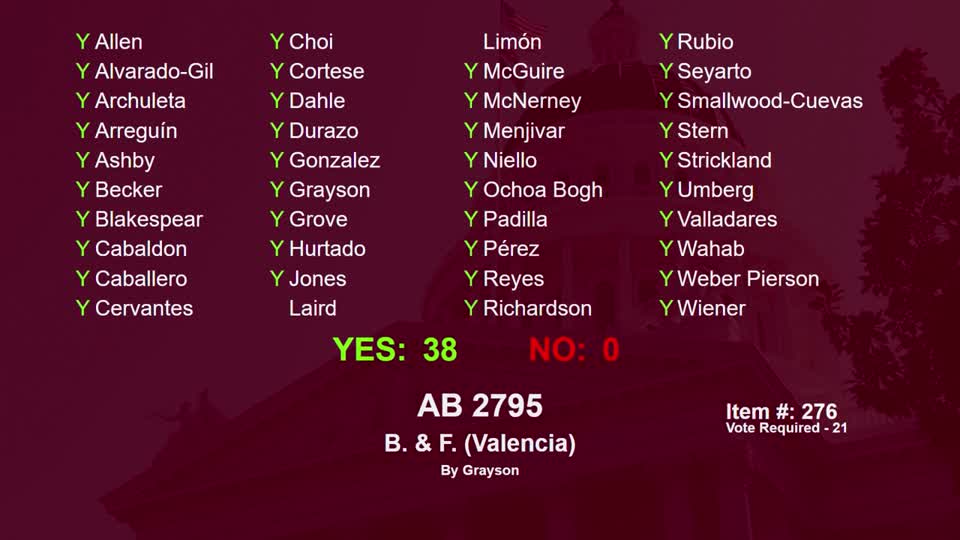 2MIN
Senate Floor
 2MIN
Senate Standing Committee on Health
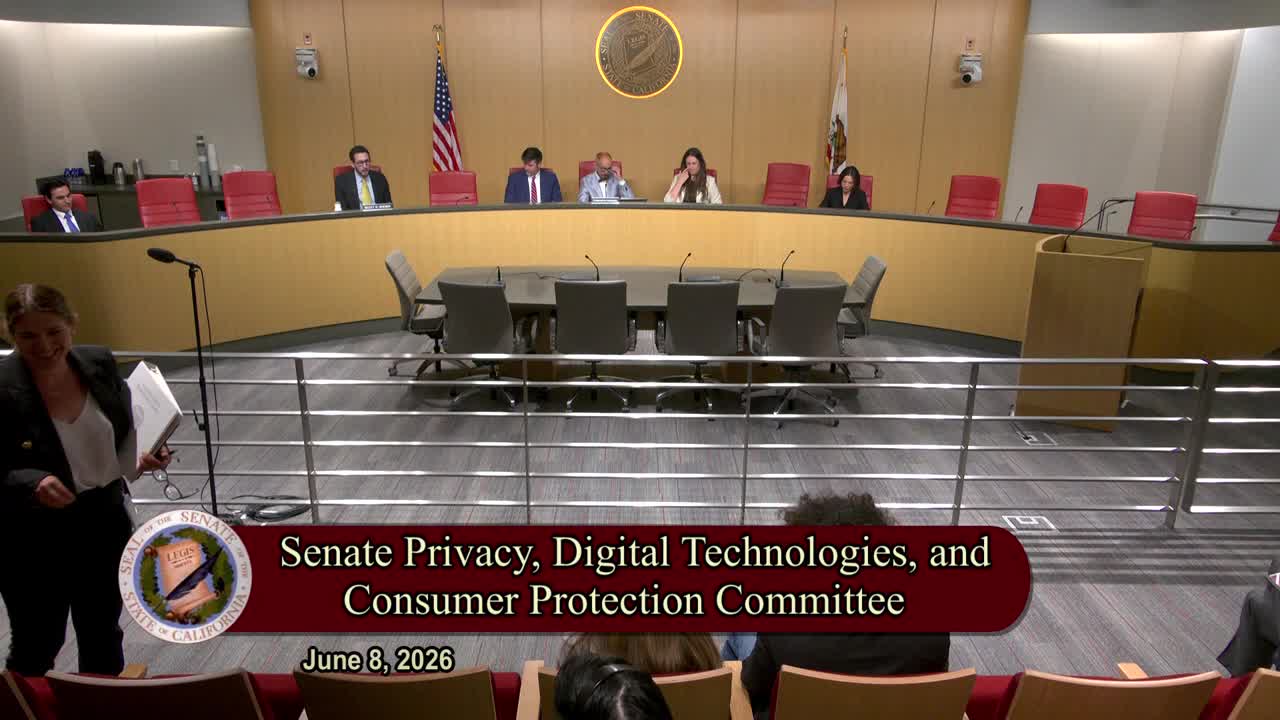 5MIN
Senate Standing Committee on Privacy, Digital Technologies, and Consumer Protection
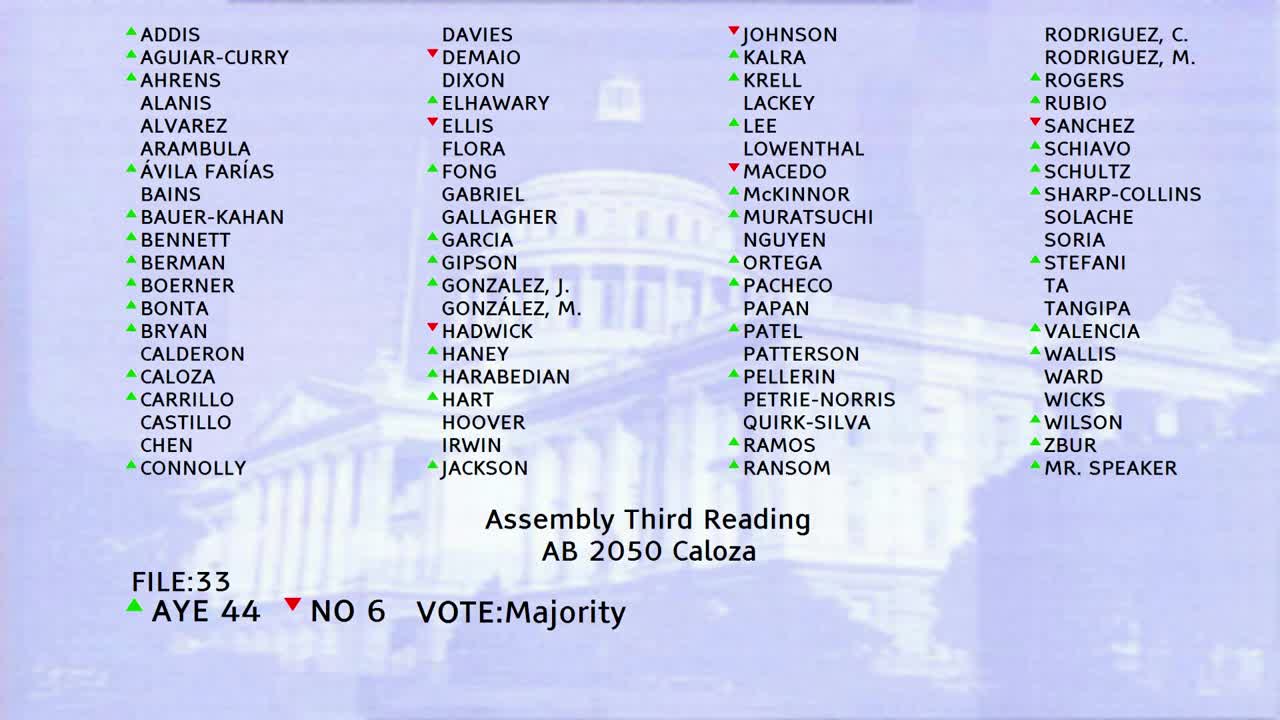 1MIN
Assembly Floor
 4MIN
Assembly Standing Committee on Privacy and Consumer Protection
 11MIN
Assembly Standing Committee on Health


Bill Co-Author(s):
