AB 2466: Strong Workforce Program: work-based learning opportunities: regional consortia.
- Session Year: 2025-2026
- House: Assembly
- Latest Version Date: 2026-09-20
Current Status:
Passed
(2026-09-20: Chaptered by Secretary of State - Chapter 402, Statutes of 2026.)
Introduced
In Committee
Awaiting First Chamber Vote
Passed First Chamber
In Committee
Awaiting Second Chamber Vote
Passed Second Chamber
Enacted
Existing law establishes the California Community Colleges, under the administration of the Board of Governors of the California Community Colleges, as one of the segments of public postsecondary education in this state. Existing law establishes the Strong Workforce Program to provide funding to career technical education regional consortia made up of community college districts and local educational agencies, as specified. Existing law authorizes a community college district to use the funds apportioned directly to the community college district to provide direct support to students, employers, or both, for paid work-based learning to increase employability and employment, as provided. Existing law requires the chancellors office to revise, no later than June 30, 2026, policies, regulations, and guidance necessary to provide students, employers, or both, with paid work-based learning opportunities, as provided.
This bill would extend the deadline for the chancellors office to revise the policies, regulations, and guidance described above by one year. The bill would additionally authorize funds apportioned directly to regional consortia to be used to provide direct support to students, employers, or both, for paid work-based learning to increase employability and employment, as specified, and would make conforming changes.
Existing law establishes the California Community Colleges, under the administration of the Board of Governors of the California Community Colleges, as one of the segments of public postsecondary education in this state. Existing law establishes the Strong Workforce Program to provide funding to career technical education regional consortia made up of community college districts and local educational agencies, as specified. Existing law authorizes a community college district to use the funds apportioned directly to the community college district to provide direct support to students, employers, or both, for paid work-based learning to increase employability and employment, as provided. Existing law requires the chancellors office to revise, no later than June 30, 2026, policies, regulations, and guidance necessary to provide students, employers, or both, with paid work-based learning opportunities, as provided.
This bill would additionally authorize funds apportioned directly to regional consortia to be used to provide direct support to students, employers, or both, for paid work-based learning to increase employability and employment, as specified, and would make conforming changes.
(a)The Legislature finds and declares all of the following:
(1)Californias economic competitiveness is fueled, in part, by the strength of its regional economies and its skilled workforce.
(2)Upward social and economic mobility helps keep the states economy diversified and vibrant.
(3)The attainment of industry-valued middle skill credentials serves as a gateway for a large and diverse number of careers in the states economy.
(4)Californias local educational agencies, community college districts, interested public four-year universities, local workforce development boards, economic development and industry leaders, and local civic representatives should collaboratively work together to inform the offerings of courses, programs, pathways, and workforce development opportunities that enable students to access the current and future job market and further social and economic mobility.
(b)The Strong Workforce Program is hereby established as a K14 state education, economic, and workforce development initiative for the purpose of expanding the availability of high-quality, industry-valued career technical education and workforce development courses, programs, pathways, credentials, certificates, and degrees.
(c)To facilitate program coordination and alignment with other workforce training, education, and employment services in the state, the Strong Workforce Program shall operate in a manner that complies with the California Strategic Workforce Development Plan, required pursuant to the federal Workforce Innovation and Opportunity Act (Public Law 113-128), and expand upon existing consortia infrastructure.
(d)To avoid duplication of effort, activities funded under the Strong Workforce Program shall be informed by, aligned with, and expand upon the activities of existing workforce and education regional partnerships, including those partnership activities that pertain to regional planning efforts established pursuant to the federal Workforce Innovation and Opportunity Act (Public Law 113-128), adult education block grant consortia, and other career technical education programs.
(e)All of the following guiding principles apply to each consortium participating in the Strong Workforce Program:
(1)Any community college district or local educational agency participating in the consortium shall ensure that its career technical education and workforce development courses, credentials, certificates, degrees, programs, and pathway offerings, as applicable, are responsive to the needs of employers, workers, civic leaders, and students.
(2)The consortium shall collaborate with other public institutions, including, but not limited to, adult education consortia, local workforce development boards, and interested California State University and University of California institutions.
(3)The consortium shall collaborate with civic representatives, representatives from the labor community, and economic development and industry sector leaders within the region.
(4)The consortium shall include collaborating entities and persons identified in this subdivision in planning meetings, provide them with adequate notice of the consortiums proposed decisions, and solicit, consider, and respond to comments from them regarding the consortiums proposed decisions.
(5)Collaborative efforts shall focus upon evidence-based decisionmaking and student success with workforce outcomes aligned with the performance accountability measures of the federal Workforce Innovation and Opportunity Act (Public Law 113-128), and closing labor market and employment gaps. Each consortium shall strive to align programmatic offerings in the most effective and efficient manner to avoid duplication of effort and streamline access to services, and education and training opportunities.
(6)Community college districts, local educational agencies, and other entities participating in a consortium are encouraged to develop long-term partnerships with private sector employers and labor partners to provide coordinated courses, programs, and pathways with employer involvement in the assessment, planning, and development of career technical education courses, programs, and pathways. To the extent practicable, employer partnerships should build upon regional partnerships formed pursuant to the federal Workforce Innovation and Opportunity Act (Public Law 113-128) and other state or federal programs.
(7)Community college districts, local educational agencies, and other entities participating in a consortium are encouraged to develop and work closely with public and private organizations that offer workforce development programs and pathways to individuals with autism and other developmental disabilities to provide a comprehensive approach to address workforce readiness and employment.
(f)The chancellors office shall, in consultation with the California Workforce Development Board, the Academic Senate for California Community Colleges, and its partners formed pursuant to the federal Workforce Innovation and Opportunity Act (Public Law 113-128), as applicable, develop and implement policies and guidance necessary to implement the Community College component of the Strong Workforce Program, including policies and guidance necessary for consortia, including community college districts and their regional partners, to increase the number of aligned middle skill and career technical education courses, programs, pathways, credentials, certificates, and degrees. No later than June 30, 2017, the chancellors office shall develop and implement policies and guidance pursuant to this subdivision and bring before the Board of Governors of the California Community Colleges any policies, regulations, and guidance necessary to accomplish all of the following:
(1)Facilitate the development, implementation, and sharing of career technical education effective practices, curriculum models and courses, and community college credentials, certificates, degrees, and programs across regions and among community college districts.
(2)Enable community college districts to develop career technical education and workforce outcomes, and applicable associate degrees and certificates as appropriate.
(3)Provide accessible performance and labor market data that can be used flexibly by participating community college districts and their regional partners to support the implementation of the Strong Workforce Program and related efforts to align regional workforce and education programming with regional labor market needs.
(4)Encourage local efficiency through coordinated and collaborative regional workforce efforts in which community college districts are partners.
(5)Support curriculum processes to ensure that students are able to efficiently transfer college-level career technical education credits across community college districts and to the California State University and the University of California.
(6)Improve sector-based engagement with employers within a region.
(7)Provide, in partnership with employers, work-based learning opportunities for students that increase their employability and earning potential.
(8)Enable community college districts to facilitate and optimize their resources to support the Strong Workforce Program and other related regional workforce development efforts.
(9)Ensure that community college district Strong Workforce Program expenditures are focused on improving student success with workforce outcomes for all students enrolled in community college career technical education courses, programs, and pathways.
(10)(A)For the Community College component only, notwithstanding the June 30, 2017, implementation date specified in this subdivision, develop and implement a plan to streamline the course and curriculum approval process, both at the state and local levels. The plan shall reflect an expedited state approval process for career technical education courses, programs, and certificates, and may include the elimination of an existing state course and program approval process. The plan shall reflect one of the following two options:
(i)A process of course and curriculum approval that enables community college districts to develop a course or program within one academic year and to offer that course or program the subsequent academic year.
(ii)A process of course and curriculum approval that enables community college districts to develop a course or program within one academic semester and to offer that course or program the subsequent academic semester.
(B)The plan described in subparagraph (A) shall also reflect the creation of a process that enables career technical education courses and programs to be portable among community college districts. This process shall enable a community college district to adapt, adopt, or adapt and adopt another community college districts approved career technical education courses, programs, and curriculum within one academic semester and to offer that course or program, or use that curriculum, the subsequent academic semester.
(C)The chancellors office shall consult with the Legislature and the Governor before implementing the plan. The plan shall be developed no later than July 1, 2017, and implemented no later than January 1, 2018.
(11)Eliminate barriers to hiring qualified instructors for career technical education courses, including reevaluating the required minimum qualifications for career technical education instructors.
(g)Community college districts are encouraged to expedite the development of targeted credit or noncredit short-term workforce training programs, in accordance with all of the following:
(1)Short-term workforce training programs that focus on economic recovery and result in job placement.
(2)Short-term workforce training programs that focus on the reskilling and upskilling of individuals.
(3)(A)Short-term workforce training programs that have at least one proven employer partner, demonstrate job vacancies, and submit verification to the chancellors office.
(B)For purposes of subparagraph (A), verification includes the projected number of individuals served, completion rates, and job placement rates.
(4)It is the intent of the Legislature that, where possible, short-term noncredit workforce training programs should be used to be responsive to the workforce training needs of employers, with the ability to transition to credit or noncredit courses and programs upon successful completion of a program established pursuant to this subdivision. Colleges are encouraged to develop workforce training that uses competency-based approaches, and applies credit for prior learning where possible.
(h)After June 30, 2017, and only as necessary, the chancellors office may develop and implement revised polices and guidance for the Community College component only, and bring regulations before the Board of Governors of the California Community Colleges as necessary for a community college district and its regional partners to accomplish both of the following:
(1)Implement and expand the amount of aligned middle skill and career technical education credentials, certificates, degrees, courses, programs, and pathways in accordance with paragraphs (1) to (11), inclusive, of subdivision (f).
(2)Implement the recommendations of the Strong Workforce Task Force.
(i)No later than June 30, 2027, the chancellors office shall revise any policies, regulations, and guidance necessary to provide students, employers, or both, with paid work-based learning opportunities that may be directly supported with funds apportioned directly to regional consortia pursuant to subparagraph (B) of paragraph (1) of subdivision (c) of Section 88825, or to a community college district pursuant to clause (iv) of subparagraph (B) of paragraph (2) of subdivision (c) of Section 88825.
(j)(1)For purposes of this section, the chancellors office shall consider input provided by relevant stakeholders, including the Academic Senate of the California Community Colleges, the Workforce Pathways Joint Advisory Committee, and the California Workforce Development Board, before implementing revised guidance, policies, or regulatory changes for the Community College component.
(2)For purposes of the Community College component and in compliance with the consultation requirements in Sections 70901 and 70902, the Academic Senate of the California Community Colleges shall establish a career technical education subcommittee to provide recommendations on career technical education issues. No less than 70 percent of the subcommittee shall consist of career technical education faculty. The subcommittees charter shall require it to provide assistance to community college districts to ensure that career technical education and its instruction is responsive and aligned to current and emergent industry trends, and ensure that similar courses, programs, and degrees are portable among community college districts.
SEC. 2.Section 88825 of the Education Code is amended to read:88825.(a)This section applies to the Community College component only, and applies commencing with the 201718 fiscal year.
(b)To promote the success of community college students and the career technical education programs that serve them, up to 5 percent of the funds appropriated for the Community College component may be allocated by the Board of Governors of the California Community Colleges to a community college district for statewide activities to improve and administer the program, including the facilitation of system, program, and data alignment at the state and regional levels and the implementation of the 25 recommendations presented to the board of governors on January 19 and 20, 2016, by the Strong Workforce Task Force. The chancellors office shall consult with the California Workforce Development Board and other appropriate state agencies on the development of all statewide activities that would be implemented by the selected district to facilitate broader workforce and education system alignment. Statewide coordination activities funded out of this allocation may include, but are not limited to, the following activities:
(1)State-level coordination for the development of labor market analyses pertaining to economic and industry trends and jobs projections for the purpose of supporting common regional planning efforts and the alignment of career technical education program offerings with regional labor market dynamics.
(2)Research, evaluation, and technical assistance on the use of effective local and regional policies, best practices, and model partnerships.
(3)Development and prototyping of innovative policies, practices, and coordinated services with local workforce and education partners.
(4)Participation of community college districts in existing regional coalitions and planning efforts.
(5)Cross-training local program staff.
(6)Development and maintenance of a state-level cross-system data reporting mechanism with partners formed pursuant to the federal Workforce Innovation and Opportunity Act (Public Law 113-128) for the purpose of monitoring workforce program outcomes and performance accountability.
(7)Leveraging allocated funds with state and local partners through interagency agreements, memorandums of understanding, or other appropriate mechanisms.
(c)(1)(A)Forty percent of the funds apportioned for the Community College component of the program shall be apportioned directly to the fiscal agents of the consortia for the purpose of funding regionally prioritized projects and programs that meet the needs of local and regional economies, including development of short-term workforce training programs focused on Californias economic recovery from COVID-19 beginning in 2020, as identified in regional plans and federal Workforce Innovation and Opportunity Act (Public Law 113-128) regional plans.
(B)Funds apportioned directly to consortia pursuant to subparagraph (A) may also be used to provide direct support to students, employers, or both, for paid work-based learning, including, but not limited to, apprenticeships, internships, externships, and student-run enterprises to increase employability and employment.
(2)(A)Sixty percent of the funds apportioned for the Community College component of the program shall be apportioned directly to community college districts in the consortia. Funds apportioned directly to a community college district shall be expended for the purpose of funding regionally prioritized projects and programs within the community college district that meet the needs of local and regional economies, including development of short-term workforce training programs focused on Californias economic recovery from COVID-19 beginning in 2020, as identified in regional plans and federal Workforce Innovation and Opportunity Act (Public Law 113-128) regional plans. As a condition of receiving direct funding, each community college district shall actively participate in its consortium.
(B)Funds apportioned directly to a community college district pursuant to subparagraph (A) may also be used for all of the following:
(i)Providing funds for student grants to cover fees for third-party certification and licensing.
(ii)Enhancing student services to support retention, work experience, and job placement.
(iii)Providing students with an integrated educational program that connects academic curricula to applied and experiential learning in the workplace, including, but not limited to, work-based learning programs and models.
(iv)Providing direct support to students, employers, or both, for paid work-based learning, including, but not limited to, apprenticeships, internships, externships, and student-run enterprises to increase employability and employment.
(d)The allocation of funds to a consortium shall be based on a schedule determined by the chancellors office and is effective for the four years of each plan cycle. Within the four-year plan cycle, this schedule may be altered to reflect changes in the statewide allocation for the program as appropriated in the annual Budget Act.
(e)The chancellors office shall provide to the Department of Finance and the Legislative Analysts Office its recommendations for the allocation of funds available for each consortium no later than August 30 of each year. The department shall approve the allocation plan before the release of funding.
(f)(1)For each four-year plan cycle, the chancellors office shall determine the amount of funds to be allocated to each consortium based on the following weighted factors in each region:
(A)The unemployment rate. This factor shall comprise 33 percent of the allocation formula.
(B)The proportion of career technical education full-time equivalent students. This factor shall comprise 33 percent of the allocation formula.
(C)The proportion of projected job openings. This factor shall comprise 17 percent of the allocation formula.
(D)The proportion of successful workforce outcomes as evidenced by the performance accountability measures of the federal Workforce Innovation and Opportunity Act (Public Law 113-128). This factor shall comprise 17 percent of the allocation formula.
(2)For each four-year plan cycle, the chancellors office shall determine the amount of funds to be allocated directly to each community college district within a consortium based on the weighted factors, specified in subparagraphs (A) to (D), inclusive, of paragraph (1), in each district within the region.
(g)A consortium shall allocate funds in accordance with its plan and only to community college districts. Decisions governing, or relating to, the distribution of the consortiums fiscal resources shall be determined exclusively by the community college districts participating in the consortium.
(h)As a condition of receipt of funds under this section, a participating community college district shall comply with all of the following:
(1)Be a member of a consortium.
(2)Participate in regional planning efforts formed pursuant to the federal Workforce Innovation and Opportunity Act (Public Law 113-128) and other efforts that align workforce, employment, and education services.
(3)Work with other consortium members to create and submit a plan to the chancellors office by January 31 of every fourth year of a four-year plan cycle.
(4)Provide accessible performance and labor market data that can be used by community college districts and their regional partners to support the implementation of the program and any related efforts to align regional workforce and education programming with regional labor market needs, including, but not limited to, regional planning efforts established pursuant to the federal Workforce Innovation and Opportunity Act (Public Law 113-128).
(5)Include interested public universities and local educational agencies in regional planning.
(6)Certify that the use of funds will meet the intent of the program to accomplish all of the following:
(A)Increase the number of students in quality career technical education courses, programs, and pathways that will achieve successful workforce outcomes.
(B)Increase the number of quality career technical education courses, programs, and pathways that lead to successful workforce outcomes, or invest in new or emerging career technical education courses, programs, and pathways that may become operative in subsequent years and are likely to lead to successful workforce outcomes.
(C)Address recommendations from the Strong Workforce Task Force, including the recommended provision of student services related to career exploration, job readiness and job placement, and work-based learning.
(i)Funds appropriated to community college districts for the program shall supplement, not supplant, existing funding of community college career technical education programs. This subdivision does not prohibit a participating community college district from eliminating or altering existing programs, but the percentage of that community college districts total full-time equivalent students enrolled in career technical education courses relative to the total full-time equivalent students enrolled in the district shall not be reduced from the percentage computed for the 201516 fiscal year.
(j)Programs, courses, or instructional materials developed using funding from the program may be made available to all community college districts, as appropriate, through the online clearinghouse of information created as part of the Institutional Effectiveness Partnership Initiative.
(a)The Legislature finds and declares all of the following:
(1)Californias economic competitiveness is fueled, in part, by the strength of its regional economies and its skilled workforce.
(2)Upward social and economic mobility helps keep the states economy diversified and vibrant.
(3)The attainment of industry-valued middle skill credentials serves as a gateway for a large and diverse number of careers in the states economy.
(4)Californias local educational agencies, community college districts, interested public four-year universities, local workforce development boards, economic development and industry leaders, and local civic representatives should collaboratively work together to inform the offerings of courses, programs, pathways, and workforce development opportunities that enable students to access the current and future job market and further social and economic mobility.
(b)The Strong Workforce Program is hereby established as a K14 state education, economic, and workforce development initiative for the purpose of expanding the availability of high-quality, industry-valued career technical education and workforce development courses, programs, pathways, credentials, certificates, and degrees.
(c)To facilitate program coordination and alignment with other workforce training, education, and employment services in the state, the Strong Workforce Program shall operate in a manner that complies with the California Strategic Workforce Development Plan, required pursuant to the federal Workforce Innovation and Opportunity Act (Public Law 113-128), and expand upon existing consortia infrastructure.
(d)To avoid duplication of effort, activities funded under the Strong Workforce Program shall be informed by, aligned with, and expand upon the activities of existing workforce and education regional partnerships, including those partnership activities that pertain to regional planning efforts established pursuant to the federal Workforce Innovation and Opportunity Act (Public Law 113-128), adult education block grant consortia, and other career technical education programs.
(e)All of the following guiding principles apply to each consortium participating in the Strong Workforce Program:
(1)Any community college district or local educational agency participating in the consortium shall ensure that its career technical education and workforce development courses, credentials, certificates, degrees, programs, and pathway offerings, as applicable, are responsive to the needs of employers, workers, civic leaders, and students.
(2)The consortium shall collaborate with other public institutions, including, but not limited to, adult education consortia, local workforce development boards, and interested California State University and University of California institutions.
(3)The consortium shall collaborate with civic representatives, representatives from the labor community, and economic development and industry sector leaders within the region.
(4)The consortium shall include collaborating entities and persons identified in this subdivision in planning meetings, provide them with adequate notice of the consortiums proposed decisions, and solicit, consider, and respond to comments from them regarding the consortiums proposed decisions.
(5)Collaborative efforts shall focus upon evidence-based decisionmaking and student success with workforce outcomes aligned with the performance accountability measures of the federal Workforce Innovation and Opportunity Act (Public Law 113-128), and closing labor market and employment gaps. Each consortium shall strive to align programmatic offerings in the most effective and efficient manner to avoid duplication of effort and streamline access to services, and education and training opportunities.
(6)Community college districts, local educational agencies, and other entities participating in a consortium are encouraged to develop long-term partnerships with private sector employers and labor partners to provide coordinated courses, programs, and pathways with employer involvement in the assessment, planning, and development of career technical education courses, programs, and pathways. To the extent practicable, employer partnerships should build upon regional partnerships formed pursuant to the federal Workforce Innovation and Opportunity Act (Public Law 113-128) and other state or federal programs.
(7)Community college districts, local educational agencies, and other entities participating in a consortium are encouraged to develop and work closely with public and private organizations that offer workforce development programs and pathways to individuals with autism and other developmental disabilities to provide a comprehensive approach to address workforce readiness and employment.
(f)The chancellors office shall, in consultation with the California Workforce Development Board, the Academic Senate for California Community Colleges, and its partners formed pursuant to the federal Workforce Innovation and Opportunity Act (Public Law 113-128), as applicable, develop and implement policies and guidance necessary to implement the Community College component of the Strong Workforce Program, including policies and guidance necessary for consortia, including community college districts and their regional partners, to increase the number of aligned middle skill and career technical education courses, programs, pathways, credentials, certificates, and degrees. No later than June 30, 2017, the chancellors office shall develop and implement policies and guidance pursuant to this subdivision and bring before the Board of Governors of the California Community Colleges any policies, regulations, and guidance necessary to accomplish all of the following:
(1)Facilitate the development, implementation, and sharing of career technical education effective practices, curriculum models and courses, and community college credentials, certificates, degrees, and programs across regions and among community college districts.
(2)Enable community college districts to develop career technical education and workforce outcomes, and applicable associate degrees and certificates as appropriate.
(3)Provide accessible performance and labor market data that can be used flexibly by participating community college districts and their regional partners to support the implementation of the Strong Workforce Program and related efforts to align regional workforce and education programming with regional labor market needs.
(4)Encourage local efficiency through coordinated and collaborative regional workforce efforts in which community college districts are partners.
(5)Support curriculum processes to ensure that students are able to efficiently transfer college-level career technical education credits across community college districts and to the California State University and the University of California.
(6)Improve sector-based engagement with employers within a region.
(7)Provide, in partnership with employers, work-based learning opportunities for students that increase their employability and earning potential.
(8)Enable community college districts to facilitate and optimize their resources to support the Strong Workforce Program and other related regional workforce development efforts.
(9)Ensure that community college district Strong Workforce Program expenditures are focused on improving student success with workforce outcomes for all students enrolled in community college career technical education courses, programs, and pathways.
(10)(A)For the Community College component only, notwithstanding the June 30, 2017, implementation date specified in this subdivision, develop and implement a plan to streamline the course and curriculum approval process, both at the state and local levels. The plan shall reflect an expedited state approval process for career technical education courses, programs, and certificates, and may include the elimination of an existing state course and program approval process. The plan shall reflect one of the following two options:
(i)A process of course and curriculum approval that enables community college districts to develop a course or program within one academic year and to offer that course or program the subsequent academic year.
(ii)A process of course and curriculum approval that enables community college districts to develop a course or program within one academic semester and to offer that course or program the subsequent academic semester.
(B)The plan described in subparagraph (A) shall also reflect the creation of a process that enables career technical education courses and programs to be portable among community college districts. This process shall enable a community college district to adapt, adopt, or adapt and adopt another community college districts approved career technical education courses, programs, and curriculum within one academic semester and to offer that course or program, or use that curriculum, the subsequent academic semester.
(C)The chancellors office shall consult with the Legislature and the Governor before implementing the plan. The plan shall be developed no later than July 1, 2017, and implemented no later than January 1, 2018.
(11)Eliminate barriers to hiring qualified instructors for career technical education courses, including reevaluating the required minimum qualifications for career technical education instructors.
(g)Community college districts are encouraged to expedite the development of targeted credit or noncredit short-term workforce training programs, in accordance with all of the following:
(1)Short-term workforce training programs that focus on economic recovery and result in job placement.
(2)Short-term workforce training programs that focus on the reskilling and upskilling of individuals.
(3)(A)Short-term workforce training programs that have at least one proven employer partner, demonstrate job vacancies, and submit verification to the chancellors office.
(B)For purposes of subparagraph (A), verification includes the projected number of individuals served, completion rates, and job placement rates.
(4)It is the intent of the Legislature that, where possible, short-term noncredit workforce training programs should be used to be responsive to the workforce training needs of employers, with the ability to transition to credit or noncredit courses and programs upon successful completion of a program established pursuant to this subdivision. Colleges are encouraged to develop workforce training that uses competency-based approaches, and applies credit for prior learning where possible.
(h)After June 30, 2017, and only as necessary, the chancellors office may develop and implement revised polices and guidance for the Community College component only, and bring regulations before the Board of Governors of the California Community Colleges as necessary for a community college district and its regional partners to accomplish both of the following:
(1)Implement and expand the amount of aligned middle skill and career technical education credentials, certificates, degrees, courses, programs, and pathways in accordance with paragraphs (1) to (11), inclusive, of subdivision (f).
(2)Implement the recommendations of the Strong Workforce Task Force.
(i)No later than June 30, 2026, 2027, the chancellors office shall revise any policies, regulations, and guidance necessary to provide students, employers, or both, with paid work-based learning opportunities that may be directly supported with funds apportioned directly to regional consortia pursuant to subparagraph (B) of paragraph (1) of subdivision (c) of Section 88825, or to a community college district pursuant to clause (iv) of subparagraph (B) of paragraph (2) of subdivision (c) of Section 88825.
(j)(1)For purposes of this section, the chancellors office shall consider input provided by relevant stakeholders, including the Academic Senate of the California Community Colleges, the Workforce Pathways Joint Advisory Committee, and the California Workforce Development Board, before implementing revised guidance, policies, or regulatory changes for the Community College component.
(2)For purposes of the Community College component and in compliance with the consultation requirements in Sections 70901 and 70902, the Academic Senate of the California Community Colleges shall establish a career technical education subcommittee to provide recommendations on career technical education issues. No less than 70 percent of the subcommittee shall consist of career technical education faculty. The subcommittees charter shall require it to provide assistance to community college districts to ensure that career technical education and its instruction is responsive and aligned to current and emergent industry trends, and ensure that similar courses, programs, and degrees are portable among community college districts.
SEC. 2.Section 88825 of the Education Code is amended to read:88825.(a)This section applies to the Community College component only, and applies commencing with the 201718 fiscal year.
(b)To promote the success of community college students and the career technical education programs that serve them, up to 5 percent of the funds appropriated for the Community College component may be allocated by the Board of Governors of the California Community Colleges to a community college district for statewide activities to improve and administer the program, including the facilitation of system, program, and data alignment at the state and regional levels and the implementation of the 25 recommendations presented to the board of governors on January 19 and 20, 2016, by the Strong Workforce Task Force. The chancellors office shall consult with the California Workforce Development Board and other appropriate state agencies on the development of all statewide activities that would be implemented by the selected district to facilitate broader workforce and education system alignment. Statewide coordination activities funded out of this allocation may include, but are not limited to, the following activities:
(1)State-level coordination for the development of labor market analyses pertaining to economic and industry trends and jobs projections for the purpose of supporting common regional planning efforts and the alignment of career technical education program offerings with regional labor market dynamics.
(2)Research, evaluation, and technical assistance on the use of effective local and regional policies, best practices, and model partnerships.
(3)Development and prototyping of innovative policies, practices, and coordinated services with local workforce and education partners.
(4)Participation of community college districts in existing regional coalitions and planning efforts.
(5)Cross-training local program staff.
(6)Development and maintenance of a state-level cross-system data reporting mechanism with partners formed pursuant to the federal Workforce Innovation and Opportunity Act (Public Law 113-128) for the purpose of monitoring workforce program outcomes and performance accountability.
(7)Leveraging allocated funds with state and local partners through interagency agreements, memorandums of understanding, or other appropriate mechanisms.
(c)(1)(A)Forty percent of the funds apportioned for the Community College component of the program shall be apportioned directly to the fiscal agents of the consortia for the purpose of funding regionally prioritized projects and programs that meet the needs of local and regional economies, including development of short-term workforce training programs focused on Californias economic recovery from COVID-19 beginning in 2020, as identified in regional plans and federal Workforce Innovation and Opportunity Act (Public Law 113-128) regional plans.
(B)Funds apportioned directly to consortia pursuant to subparagraph (A) may also be used to provide direct support to students, employers, or both, for paid work-based learning, including, but not limited to, apprenticeships, internships, externships, and student-run enterprises to increase employability and employment.
(2)(A)Sixty percent of the funds apportioned for the Community College component of the program shall be apportioned directly to community college districts in the consortia. Funds apportioned directly to a community college district shall be expended for the purpose of funding regionally prioritized projects and programs within the community college district that meet the needs of local and regional economies, including development of short-term workforce training programs focused on Californias economic recovery from COVID-19 beginning in 2020, as identified in regional plans and federal Workforce Innovation and Opportunity Act (Public Law 113-128) regional plans. As a condition of receiving direct funding, each community college district shall actively participate in its consortium.
(B)Funds apportioned directly to a community college district pursuant to subparagraph (A) may also be used for all of the following:
(i)Providing funds for student grants to cover fees for third-party certification and licensing.
(ii)Enhancing student services to support retention, work experience, and job placement.
(iii)Providing students with an integrated educational program that connects academic curricula to applied and experiential learning in the workplace, including, but not limited to, work-based learning programs and models.
(iv)Providing direct support to students, employers, or both, for paid work-based learning, including, but not limited to, apprenticeships, internships, externships, and student-run enterprises to increase employability and employment.
(d)The allocation of funds to a consortium shall be based on a schedule determined by the chancellors office and is effective for the four years of each plan cycle. Within the four-year plan cycle, this schedule may be altered to reflect changes in the statewide allocation for the program as appropriated in the annual Budget Act.
(e)The chancellors office shall provide to the Department of Finance and the Legislative Analysts Office its recommendations for the allocation of funds available for each consortium no later than August 30 of each year. The department shall approve the allocation plan before the release of funding.
(f)(1)For each four-year plan cycle, the chancellors office shall determine the amount of funds to be allocated to each consortium based on the following weighted factors in each region:
(A)The unemployment rate. This factor shall comprise 33 percent of the allocation formula.
(B)The proportion of career technical education full-time equivalent students. This factor shall comprise 33 percent of the allocation formula.
(C)The proportion of projected job openings. This factor shall comprise 17 percent of the allocation formula.
(D)The proportion of successful workforce outcomes as evidenced by the performance accountability measures of the federal Workforce Innovation and Opportunity Act (Public Law 113-128). This factor shall comprise 17 percent of the allocation formula.
(2)For each four-year plan cycle, the chancellors office shall determine the amount of funds to be allocated directly to each community college district within a consortium based on the weighted factors, specified in subparagraphs (A) to (D), inclusive, of paragraph (1), in each district within the region.
(g)A consortium shall allocate funds in accordance with its plan and only to community college districts. Decisions governing, or relating to, the distribution of the consortiums fiscal resources shall be determined exclusively by the community college districts participating in the consortium.
(h)As a condition of receipt of funds under this section, a participating community college district shall comply with all of the following:
(1)Be a member of a consortium.
(2)Participate in regional planning efforts formed pursuant to the federal Workforce Innovation and Opportunity Act (Public Law 113-128) and other efforts that align workforce, employment, and education services.
(3)Work with other consortium members to create and submit a plan to the chancellors office by January 31 of every fourth year of a four-year plan cycle.
(4)Provide accessible performance and labor market data that can be used by community college districts and their regional partners to support the implementation of the program and any related efforts to align regional workforce and education programming with regional labor market needs, including, but not limited to, regional planning efforts established pursuant to the federal Workforce Innovation and Opportunity Act (Public Law 113-128).
(5)Include interested public universities and local educational agencies in regional planning.
(6)Certify that the use of funds will meet the intent of the program to accomplish all of the following:
(A)Increase the number of students in quality career technical education courses, programs, and pathways that will achieve successful workforce outcomes.
(B)Increase the number of quality career technical education courses, programs, and pathways that lead to successful workforce outcomes, or invest in new or emerging career technical education courses, programs, and pathways that may become operative in subsequent years and are likely to lead to successful workforce outcomes.
(C)Address recommendations from the Strong Workforce Task Force, including the recommended provision of student services related to career exploration, job readiness and job placement, and work-based learning.
(i)Funds appropriated to community college districts for the program shall supplement, not supplant, existing funding of community college career technical education programs. This subdivision does not prohibit a participating community college district from eliminating or altering existing programs, but the percentage of that community college districts total full-time equivalent students enrolled in career technical education courses relative to the total full-time equivalent students enrolled in the district shall not be reduced from the percentage computed for the 201516 fiscal year.
(j)Programs, courses, or instructional materials developed using funding from the program may be made available to all community college districts, as appropriate, through the online clearinghouse of information created as part of the Institutional Effectiveness Partnership Initiative.
(a)The Legislature finds and declares all of the following:
(1)Californias economic competitiveness is fueled, in part, by the strength of its regional economies and its skilled workforce.
(2)Upward social and economic mobility helps keep the states economy diversified and vibrant.
(3)The attainment of industry-valued middle skill credentials serves as a gateway for a large and diverse number of careers in the states economy.
(4)Californias local educational agencies, community college districts, interested public four-year universities, local workforce development boards, economic development and industry leaders, and local civic representatives should collaboratively work together to inform the offerings of courses, programs, pathways, and workforce development opportunities that enable students to access the current and future job market and further social and economic mobility.
(b)The Strong Workforce Program is hereby established as a K14 state education, economic, and workforce development initiative for the purpose of expanding the availability of high-quality, industry-valued career technical education and workforce development courses, programs, pathways, credentials, certificates, and degrees.
(c)To facilitate program coordination and alignment with other workforce training, education, and employment services in the state, the Strong Workforce Program shall operate in a manner that complies with the California Strategic Workforce Development Plan, required pursuant to the federal Workforce Innovation and Opportunity Act (Public Law 113-128), and expand upon existing consortia infrastructure.
(d)To avoid duplication of effort, activities funded under the Strong Workforce Program shall be informed by, aligned with, and expand upon the activities of existing workforce and education regional partnerships, including those partnership activities that pertain to regional planning efforts established pursuant to the federal Workforce Innovation and Opportunity Act (Public Law 113-128), adult education block grant consortia, and other career technical education programs.
(e)All of the following guiding principles apply to each consortium participating in the Strong Workforce Program:
(1)Any community college district or local educational agency participating in the consortium shall ensure that its career technical education and workforce development courses, credentials, certificates, degrees, programs, and pathway offerings, as applicable, are responsive to the needs of employers, workers, civic leaders, and students.
(2)The consortium shall collaborate with other public institutions, including, but not limited to, adult education consortia, local workforce development boards, and interested California State University and University of California institutions.
(3)The consortium shall collaborate with civic representatives, representatives from the labor community, and economic development and industry sector leaders within the region.
(4)The consortium shall include collaborating entities and persons identified in this subdivision in planning meetings, provide them with adequate notice of the consortiums proposed decisions, and solicit, consider, and respond to comments from them regarding the consortiums proposed decisions.
(5)Collaborative efforts shall focus upon evidence-based decisionmaking and student success with workforce outcomes aligned with the performance accountability measures of the federal Workforce Innovation and Opportunity Act (Public Law 113-128), and closing labor market and employment gaps. Each consortium shall strive to align programmatic offerings in the most effective and efficient manner to avoid duplication of effort and streamline access to services, and education and training opportunities.
(6)Community college districts, local educational agencies, and other entities participating in a consortium are encouraged to develop long-term partnerships with private sector employers and labor partners to provide coordinated courses, programs, and pathways with employer involvement in the assessment, planning, and development of career technical education courses, programs, and pathways. To the extent practicable, employer partnerships should build upon regional partnerships formed pursuant to the federal Workforce Innovation and Opportunity Act (Public Law 113-128) and other state or federal programs.
(7)Community college districts, local educational agencies, and other entities participating in a consortium are encouraged to develop and work closely with public and private organizations that offer workforce development programs and pathways to individuals with autism and other developmental disabilities to provide a comprehensive approach to address workforce readiness and employment.
(f)The chancellors office shall, in consultation with the California Workforce Development Board, the Academic Senate for California Community Colleges, and its partners formed pursuant to the federal Workforce Innovation and Opportunity Act (Public Law 113-128), as applicable, develop and implement policies and guidance necessary to implement the Community College component of the Strong Workforce Program, including policies and guidance necessary for consortia, including community college districts and their regional partners, to increase the number of aligned middle skill and career technical education courses, programs, pathways, credentials, certificates, and degrees. No later than June 30, 2017, the chancellors office shall develop and implement policies and guidance pursuant to this subdivision and bring before the Board of Governors of the California Community Colleges any policies, regulations, and guidance necessary to accomplish all of the following:
(1)Facilitate the development, implementation, and sharing of career technical education effective practices, curriculum models and courses, and community college credentials, certificates, degrees, and programs across regions and among community college districts.
(2)Enable community college districts to develop career technical education and workforce outcomes, and applicable associate degrees and certificates as appropriate.
(3)Provide accessible performance and labor market data that can be used flexibly by participating community college districts and their regional partners to support the implementation of the Strong Workforce Program and related efforts to align regional workforce and education programming with regional labor market needs.
(4)Encourage local efficiency through coordinated and collaborative regional workforce efforts in which community college districts are partners.
(5)Support curriculum processes to ensure that students are able to efficiently transfer college-level career technical education credits across community college districts and to the California State University and the University of California.
(6)Improve sector-based engagement with employers within a region.
(7)Provide, in partnership with employers, work-based learning opportunities for students that increase their employability and earning potential.
(8)Enable community college districts to facilitate and optimize their resources to support the Strong Workforce Program and other related regional workforce development efforts.
(9)Ensure that community college district Strong Workforce Program expenditures are focused on improving student success with workforce outcomes for all students enrolled in community college career technical education courses, programs, and pathways.
(10)(A)For the Community College component only, notwithstanding the June 30, 2017, implementation date specified in this subdivision, develop and implement a plan to streamline the course and curriculum approval process, both at the state and local levels. The plan shall reflect an expedited state approval process for career technical education courses, programs, and certificates, and may include the elimination of an existing state course and program approval process. The plan shall reflect one of the following two options:
(i)A process of course and curriculum approval that enables community college districts to develop a course or program within one academic year and to offer that course or program the subsequent academic year.
(ii)A process of course and curriculum approval that enables community college districts to develop a course or program within one academic semester and to offer that course or program the subsequent academic semester.
(B)The plan described in subparagraph (A) shall also reflect the creation of a process that enables career technical education courses and programs to be portable among community college districts. This process shall enable a community college district to adapt, adopt, or adapt and adopt another community college districts approved career technical education courses, programs, and curriculum within one academic semester and to offer that course or program, or use that curriculum, the subsequent academic semester.
(C)The chancellors office shall consult with the Legislature and the Governor before implementing the plan. The plan shall be developed no later than July 1, 2017, and implemented no later than January 1, 2018.
(11)Eliminate barriers to hiring qualified instructors for career technical education courses, including reevaluating the required minimum qualifications for career technical education instructors.
(g)Community college districts are encouraged to expedite the development of targeted credit or noncredit short-term workforce training programs, in accordance with all of the following:
(1)Short-term workforce training programs that focus on economic recovery and result in job placement.
(2)Short-term workforce training programs that focus on the reskilling and upskilling of individuals.
(3)(A)Short-term workforce training programs that have at least one proven employer partner, demonstrate job vacancies, and submit verification to the chancellors office.
(B)For purposes of subparagraph (A), verification includes the projected number of individuals served, completion rates, and job placement rates.
(4)It is the intent of the Legislature that, where possible, short-term noncredit workforce training programs should be used to be responsive to the workforce training needs of employers, with the ability to transition to credit or noncredit courses and programs upon successful completion of a program established pursuant to this subdivision. Colleges are encouraged to develop workforce training that uses competency-based approaches, and applies credit for prior learning where possible.
(h)After June 30, 2017, and only as necessary, the chancellors office may develop and implement revised polices and guidance for the Community College component only, and bring regulations before the Board of Governors of the California Community Colleges as necessary for a community college district and its regional partners to accomplish both of the following:
(1)Implement and expand the amount of aligned middle skill and career technical education credentials, certificates, degrees, courses, programs, and pathways in accordance with paragraphs (1) to (11), inclusive, of subdivision (f).
(2)Implement the recommendations of the Strong Workforce Task Force.
(i)No later than June 30, 2026, the chancellors office shall revise any policies, regulations, and guidance necessary to provide students, employers, or both, with paid work-based learning opportunities that may be directly supported with funds apportioned directly to regional consortia pursuant to subparagraph (B) of paragraph (1) of subdivision (c) of Section 88825, or to a community college district pursuant to clause (iv) of subparagraph (B) of paragraph (2) of subdivision (c) of Section 88825.
(j)(1)For purposes of this section, the chancellors office shall consider input provided by relevant stakeholders, including the Academic Senate of the California Community Colleges, the Workforce Pathways Joint Advisory Committee, and the California Workforce Development Board, before implementing revised guidance, policies, or regulatory changes for the Community College component.
(2)For purposes of the Community College component and in compliance with the consultation requirements in Sections 70901 and 70902, the Academic Senate of the California Community Colleges shall establish a career technical education subcommittee to provide recommendations on career technical education issues. No less than 70 percent of the subcommittee shall consist of career technical education faculty. The subcommittees charter shall require it to provide assistance to community college districts to ensure that career technical education and its instruction is responsive and aligned to current and emergent industry trends, and ensure that similar courses, programs, and degrees are portable among community college districts.
SEC. 2.Section 88825 of the Education Code is amended to read:88825.(a)This section applies to the Community College component only, and applies commencing with the 201718 fiscal year.
(b)To promote the success of community college students and the career technical education programs that serve them, up to 5 percent of the funds appropriated for the Community College component may be allocated by the Board of Governors of the California Community Colleges to a community college district for statewide activities to improve and administer the program, including the facilitation of system, program, and data alignment at the state and regional levels and the implementation of the 25 recommendations presented to the board of governors on January 19 and 20, 2016, by the Strong Workforce Task Force. The chancellors office shall consult with the California Workforce Development Board and other appropriate state agencies on the development of all statewide activities that would be implemented by the selected district to facilitate broader workforce and education system alignment. Statewide coordination activities funded out of this allocation may include, but are not limited to, the following activities:
(1)State-level coordination for the development of labor market analyses pertaining to economic and industry trends and jobs projections for the purpose of supporting common regional planning efforts and the alignment of career technical education program offerings with regional labor market dynamics.
(2)Research, evaluation, and technical assistance on the use of effective local and regional policies, best practices, and model partnerships.
(3)Development and prototyping of innovative policies, practices, and coordinated services with local workforce and education partners.
(4)Participation of community college districts in existing regional coalitions and planning efforts.
(5)Cross-training local program staff.
(6)Development and maintenance of a state-level cross-system data reporting mechanism with partners formed pursuant to the federal Workforce Innovation and Opportunity Act (Public Law 113-128) for the purpose of monitoring workforce program outcomes and performance accountability.
(7)Leveraging allocated funds with state and local partners through interagency agreements, memorandums of understanding, or other appropriate mechanisms.
(c)(1)(A)Forty percent of the funds apportioned for the Community College component of the program shall be apportioned directly to the fiscal agents of the consortia for the purpose of funding regionally prioritized projects and programs that meet the needs of local and regional economies, including development of short-term workforce training programs focused on Californias economic recovery from COVID-19 beginning in 2020, as identified in regional plans and federal Workforce Innovation and Opportunity Act (Public Law 113-128) regional plans.
(B)Funds apportioned directly to consortia pursuant to subparagraph (A) may also be used to provide direct support to students, employers, or both, for paid work-based learning, including, but not limited to, apprenticeships, internships, externships, and student-run enterprises to increase employability and employment.
(2)(A)Sixty percent of the funds apportioned for the Community College component of the program shall be apportioned directly to community college districts in the consortia. Funds apportioned directly to a community college district shall be expended for the purpose of funding regionally prioritized projects and programs within the community college district that meet the needs of local and regional economies, including development of short-term workforce training programs focused on Californias economic recovery from COVID-19 beginning in 2020, as identified in regional plans and federal Workforce Innovation and Opportunity Act (Public Law 113-128) regional plans. As a condition of receiving direct funding, each community college district shall actively participate in its consortium.
(B)Funds apportioned directly to a community college district pursuant to subparagraph (A) may also be used for all of the following:
(i)Providing funds for student grants to cover fees for third-party certification and licensing.
(ii)Enhancing student services to support retention, work experience, and job placement.
(iii)Providing students with an integrated educational program that connects academic curricula to applied and experiential learning in the workplace, including, but not limited to, work-based learning programs and models.
(iv)Providing direct support to students, employers, or both, for paid work-based learning, including, but not limited to, apprenticeships, internships, externships, and student-run enterprises to increase employability and employment.
(d)The allocation of funds to a consortium shall be based on a schedule determined by the chancellors office and is effective for the four years of each plan cycle. Within the four-year plan cycle, this schedule may be altered to reflect changes in the statewide allocation for the program as appropriated in the annual Budget Act.
(e)The chancellors office shall provide to the Department of Finance and the Legislative Analysts Office its recommendations for the allocation of funds available for each consortium no later than August 30 of each year. The department shall approve the allocation plan before the release of funding.
(f)(1)For each four-year plan cycle, the chancellors office shall determine the amount of funds to be allocated to each consortium based on the following weighted factors in each region:
(A)The unemployment rate. This factor shall comprise 33 percent of the allocation formula.
(B)The proportion of career technical education full-time equivalent students. This factor shall comprise 33 percent of the allocation formula.
(C)The proportion of projected job openings. This factor shall comprise 17 percent of the allocation formula.
(D)The proportion of successful workforce outcomes as evidenced by the performance accountability measures of the federal Workforce Innovation and Opportunity Act (Public Law 113-128). This factor shall comprise 17 percent of the allocation formula.
(2)For each four-year plan cycle, the chancellors office shall determine the amount of funds to be allocated directly to each community college district within a consortium based on the weighted factors, specified in subparagraphs (A) to (D), inclusive, of paragraph (1), in each district within the region.
(g)A consortium shall allocate funds in accordance with its plan and only to community college districts. Decisions governing, or relating to, the distribution of the consortiums fiscal resources shall be determined exclusively by the community college districts participating in the consortium.
(h)As a condition of receipt of funds under this section, a participating community college district shall comply with all of the following:
(1)Be a member of a consortium.
(2)Participate in regional planning efforts formed pursuant to the federal Workforce Innovation and Opportunity Act (Public Law 113-128) and other efforts that align workforce, employment, and education services.
(3)Work with other consortium members to create and submit a plan to the chancellors office by January 31 of every fourth year of a four-year plan cycle.
(4)Provide accessible performance and labor market data that can be used by community college districts and their regional partners to support the implementation of the program and any related efforts to align regional workforce and education programming with regional labor market needs, including, but not limited to, regional planning efforts established pursuant to the federal Workforce Innovation and Opportunity Act (Public Law 113-128).
(5)Include interested public universities and local educational agencies in regional planning.
(6)Certify that the use of funds will meet the intent of the program to accomplish all of the following:
(A)Increase the number of students in quality career technical education courses, programs, and pathways that will achieve successful workforce outcomes.
(B)Increase the number of quality career technical education courses, programs, and pathways that lead to successful workforce outcomes, or invest in new or emerging career technical education courses, programs, and pathways that may become operative in subsequent years and are likely to lead to successful workforce outcomes.
(C)Address recommendations from the Strong Workforce Task Force, including the recommended provision of student services related to career exploration, job readiness and job placement, and work-based learning.
(i)Funds appropriated to community college districts for the program shall supplement, not supplant, existing funding of community college career technical education programs. This subdivision does not prohibit a participating community college district from eliminating or altering existing programs, but the percentage of that community college districts total full-time equivalent students enrolled in career technical education courses relative to the total full-time equivalent students enrolled in the district shall not be reduced from the percentage computed for the 201516 fiscal year.
(j)Programs, courses, or instructional materials developed using funding from the program may be made available to all community college districts, as appropriate, through the online clearinghouse of information created as part of the Institutional Effectiveness Partnership Initiative.
|
Date
|
Status
|
|---|---|
| Sep 20, 2026 | Chaptered by Secretary of State - Chapter 402, Statutes of 2026. |
| Sep 20, 2026 | Approved by the Governor. |
| Aug 27, 2026 | Enrolled and presented to the Governor at 4 p.m. |
| Aug 20, 2026 | In Assembly. Ordered to Engrossing and Enrolling. |
| Aug 20, 2026 | Read third time. Passed. Ordered to the Assembly. (Ayes 39. Noes 0. Page 5592.). |
| Aug 20, 2026 | Read third time. Passed. Ordered to the Assembly. (Ayes 39. Noes 0.). |
| Aug 18, 2026 | Ordered to special consent calendar. |
| Aug 13, 2026 | Read second time. Ordered to third reading. |
| Aug 13, 2026 | From committee: Do pass. (Ayes 7. Noes 0.) (August 13). |
| Jun 22, 2026 | In committee: Referred to APPR. suspense file. |
| Jun 10, 2026 | From committee: Do pass and re-refer to Com. on APPR. with recommendation: To Consent Calendar. (Ayes 7. Noes 0.) (June 10). Re-referred to Com. on APPR. |
| May 27, 2026 | Referred to Com. on ED. |
| May 14, 2026 | In Senate. Read first time. To Com. on RLS. for assignment. |
| May 14, 2026 | Read third time. Passed. Ordered to the Senate. (Ayes 77. Noes 0. Page 5056.) |
| May 14, 2026 | Read third time. Passed. Ordered to the Senate. (Ayes 77. Noes 0.) |
| May 7, 2026 | Read second time. Ordered to Consent Calendar. |
| May 6, 2026 | From committee: Do pass. To Consent Calendar. (Ayes 14. Noes 0.) (May 6). |
| Apr 27, 2026 | Re-referred to Com. on APPR. |
| Apr 23, 2026 | Read second time and amended. |
| Apr 22, 2026 | From committee: Amend, and do pass as amended and re-refer to Com. on APPR. with recommendation: To Consent Calendar. (Ayes 10. Noes 0.) (April 21). |
| Mar 9, 2026 | Referred to Com. on HIGHER ED. |
| Feb 21, 2026 | From printer. May be heard in committee March 23. |
| Feb 20, 2026 | Read first time. To print. |
|
Date
|
Description
|
Location
|
Votes
|
|
|---|---|---|---|---|
| Aug 20, 2026 | Special Consent AB2466 Fong | Senate Floor |
Passed |
|
| Aug 13, 2026 | Do pass | Senate Standing Committee on Appropriations |
Passed |
|
| Jun 22, 2026 | Placed on suspense file | Senate Standing Committee on Appropriations |
Passed |
|
| Jun 10, 2026 | Do pass, but first be re-referred to the Committee on [Appropriations] with the recommendation: To Consent Calendar | Senate Standing Committee on Education |
Passed |
|
| May 14, 2026 | AB 2466 Fong Consent Calendar Second Day Regular Session | Assembly Floor |
Passed |
|
| May 6, 2026 | Do pass. To Consent Calendar. | Assembly Standing Committee on Appropriations |
Passed |
|
| Apr 21, 2026 | Do pass as amended, and be re-referred to the Committee on [Appropriations] with recommendation: To Consent Calendar | Assembly Standing Committee on Higher Education |
Passed |
This list shows positions taken on this bill by organizations on the date displayed, which is linked to the original source.
Positions by individuals are not included.
|
Organization
|
Position
|
Date
|
|---|---|---|
| Association of California Goodwills | ** Support | |
| Association Of Regional Center Agencies | ** Support | |
| California Chamber Of Commerce | ** Support | |
| California EDGE Coalition | ** Support | |
| Cerritos College | ** Support | |
| Cerritos Community College District | ** Support | |
| City Of Los Angeles | ** Support | |
| Long Beach Community College District | ** Support | |
| Los Angeles Community College District | ** Support | |
| Los Angeles County | ** Support | |
| Rancho Santiago Community College District | ** Support | |
| Redefine Alliance | ** Support | |
| San Jose-Evergreen Community College District | ** Support | |
| Southwestern Community College District | ** Support | |
| Student Senate for California Community Colleges | ** Support |
SENATE RULES COMMITTEE Office of Senate Floor Analyses (916) 651-4171 | AB 2466 |
THIRD READING
Bill No: AB 2466
Author: Fong (D)
Amended: 4/23/26 in Assembly
Vote: 21
SENATE EDUCATION COMMITTEE: 7-0, 6/10/26
AYES: Pérez, Ochoa Bogh, Cabaldon, Choi, Cortese, Menjivar, Reyes
SENATE APPROPRIATIONS COMMITTEE: 7-0, 8/13/26
AYES: Cervantes, Seyarto, Cabaldon, Dahle, Grayson, Richardson, Wahab
ASSEMBLY FLOOR: 77-0, 5/14/26 (Consent) - See last page for vote
SUBJECT: Strong Workforce Program: work-based learning opportunities: regional consortia
SOURCE: Cerritos Community College District
Los Angeles Community College District
DIGEST:
This bill expands the authorized uses of Strong Workforce Program (SWP) funds apportioned directly to regional consortia by allowing those funds to be used to provide direct support to students, employers, or both, for paid work-based learning opportunities intended to increase employability and employment. The bill also extends by one year the deadline for the California Community Colleges Chancellor’s Office (CCCCO) to revise policies, regulations, and guidance related to paid work-based learning opportunities under the SWP.
ANALYSIS:
Existing law:
- Establishes the California Community Colleges (CCC), under the administration of the Board of Governors of the CCC, as one of the segments of public postsecondary education in California. (Education Code (EC) § 70900)
- Establishes community college districts (CCD) and authorizes district governing boards to establish, maintain, operate, and govern community colleges and programs consistent with state law. (EC § 70902)
- Establishes the SWP as a statewide career technical education (CTE) and workforce development initiative intended to expand the availability of high-quality, industry-valued CTE and workforce training programs. (EC § 88820 et seq.)
- Requires SWP funding for community colleges to be apportioned partly to CCDs and partly to regional consortia to support regional workforce priorities and coordination. (EC § 88824)
- Authorizes CCDs to use SWP funds apportioned directly to districts to provide direct support to students, employers, or both, for paid work-based learning opportunities intended to increase employability and employment, including apprenticeships, internships, externships, and student-run enterprises. (EC § 88827)
- Requires the CCCCO, no later than June 30, 2026, to revise policies, regulations, and guidance necessary to provide students, employers, or both, with paid work-based learning opportunities under the SWP. (EC § 88827)
This bill:
- Extends from June 30, 2026, to June 30, 2027, the deadline by which the CCCCO must revise policies, regulations, and guidance necessary to provide students, employers, or both, with paid work-based learning opportunities under the SWP.
- Authorizes SWP funds apportioned directly to regional consortia, in addition to funds apportioned directly to CCDs, to be used to provide direct support to students, employers, or both, for paid work-based learning opportunities intended to increase employability and employment.
- Specifies that allowable paid work-based learning opportunities include, but are not limited to, apprenticeships, internships, externships, and student-run enterprises.
- Makes conforming changes to align regional consortia authority with existing authority already granted to CCDs regarding paid work-based learning expenditures.
Comments
Need for the bill. According to the author, “Access to higher paying jobs is increasingly tied to practical experience and technical skills. Integrating paid work experience alongside academic coursework allows students to cultivate their skill set and work experience early on while also earning income to offset their education costs. AB 2466 gives the Strong Workforce Program greater flexibility to increase the number of paid work-based learning experiences available to students, increasing their job opportunities and employment earnings following their education.”
Expands regional flexibility within an existing workforce development structure. This bill builds upon legislation enacted last year that authorized CCDs to use SWP funds for direct paid work-based learning supports. This bill extends similar authority to the regional consortia that administer approximately 40% of community college SWP funding, thereby aligning the permissible uses of regional funds with those already available to individual districts.
The SWP was intentionally designed as a regional workforce development model, recognizing that labor markets and industry needs often extend beyond the boundaries of individual CCDs. Regional consortia are responsible for coordinating workforce priorities across multiple districts, employers, K-12 partners, workforce boards, and industry sectors. Allowing consortia to directly support paid work-based learning opportunities may provide regions with greater flexibility to respond to employer demand and coordinate internships, apprenticeships, and other experiential learning opportunities at a larger scale.
Paid work-based learning may improve equity and student participation in CTE pathways. A longstanding challenge in work-based learning programs is that unpaid internships and similar opportunities can be financially inaccessible for many low-income students, particularly students balancing coursework with employment or family responsibilities. Paid work-based learning opportunities may help reduce those barriers while also strengthening connections between students and employers in high-demand sectors.
This issue may be particularly relevant within the community college system, where many students are older, financially independent, or working while attending school. In those circumstances, the availability of paid internships, apprenticeships, and other compensated work-based learning opportunities may meaningfully affect whether students are able to participate in career preparation experiences that are increasingly valued by employers.
Continued evolution of the SWP from program development toward direct student workforce participation. When initially established in 2016, the SWP largely focused on expanding regional CTE capacity, improving alignment with labor market needs, strengthening employer engagement, and supporting program development. Over time, the Legislature has increasingly authorized the use of SWP funds for more direct student supports, including certification fees, career readiness activities, and paid work-based learning opportunities.
This bill continues that broader policy trend by allowing regional consortia to directly fund student-facing workforce experiences, rather than limiting those expenditures to individual districts. The measure therefore raises broader questions regarding the future role of the SWP, including the extent to which the program should function primarily as a regional planning and coordination mechanism versus a direct workforce participation and student support program.
One-year extension appears intended to accommodate expanded implementation responsibilities. This bill extends by one year the deadline for the CCCCO to revise policies, regulations, and guidance related to paid work-based learning opportunities. Given that the prior legislation authorizing district-level expenditures for paid work-based learning was only enacted last year, and this bill further expands allowable uses to regional consortia, the additional implementation time appears intended to allow CCCCO to update statewide guidance consistent with the broader authority contemplated by this bill.
FISCAL EFFECT: Appropriation: No Fiscal Com.: Yes Local: No
According to the Senate Appropriations Committee:
- By expanding the use of SWP funds to include paid work-based learning opportunities, this bill could result in additional, unknown Proposition 98 General Fund cost pressures to the extent that the regional consortia increase these opportunities. While the bill does not require them to provide apprenticeships, internships, or externships, offering these paid work-based learning opportunities may increase student and employer demand.
- The Chancellor’s Office estimates one-time General Fund costs ranging from $13,000 to $58,000 to update its policies regarding allowable expenditures under the SWP and provide updated guidance and technical assistance.
SUPPORT: (Verified 8/13/26)
Cerritos Community College District (co-source)
Los Angeles Community College District (co-source)
Association of California Goodwills
Association of Regional Center Agencies
California Chamber of Commerce
California EDGE Coalition
City of Los Angeles
Long Beach Community College District
Los Angeles County
Redefine Alliance
San Jose-Evergreen Community College District
Southwestern Community College District
Student Senate for California Community Colleges
OPPOSITION: (Verified 8/13/26)
None received
ASSEMBLY FLOOR: 77-0, 5/14/26
AYES: Addis, Aguiar-Curry, Ahrens, Alanis, Alvarez, Ávila Farías, Bains, Bauer-Kahan, Bennett, Berman, Boerner, Bonta, Bryan, Calderon, Caloza, Carrillo, Castillo, Chen, Connolly, Davies, DeMaio, Dixon, Elhawary, Ellis, Fong, Gabriel, Gallagher, Garcia, Gipson, Jeff Gonzalez, Mark González, Hadwick, Haney, Harabedian, Hart, Hoover, Irwin, Jackson, Johnson, Kalra, Krell, Lackey, Lee, Lowenthal, Macedo, McKinnor, Muratsuchi, Nguyen, Ortega, Pacheco, Papan, Patel, Patterson, Pellerin, Petrie-Norris, Quirk-Silva, Ramos, Ransom, Michelle Rodriguez, Rogers, Blanca Rubio, Sanchez, Schiavo, Schultz, Sharp-Collins, Solache, Soria, Stefani, Ta, Tangipa, Valencia, Wallis, Ward, Wicks, Wilson, Zbur, Rivas
NO VOTE RECORDED: Arambula, Flora, Celeste Rodriguez
Prepared by: Ian Johnson / ED. / (916) 651-4105
8/14/26 10:52:11
**** END ****
SENATE COMMITTEE ON
Senator Sabrina Cervantes, Chair
2025 - 2026 Regular Session
AB 2466 (Fong) - Strong Workforce Program: work-based learning opportunities: regional consortia
Version: | Policy Vote: |
Urgency: | Mandate: |
Hearing Date: | Consultant: |
Bill Summary:
This bill expands the uses of Strong Workforce Program (SWP) funds apportioned directly to regional consortia by allowing them to be used to provide direct support to students and employers for paid work-based learning opportunities intended to increase employability and employment.
Fiscal Impact:
- By expanding the use of SWP funds to include paid work-based learning opportunities, this bill could result in additional, unknown Proposition 98 General Fund cost pressures to the extent that the regional consortia increase these opportunities. While the bill does not require them to provide apprenticeships, internships, or externships, offering these paid work-based learning opportunities may increase student and employer demand.
- The Chancellor’s Office estimates one-time General Fund costs ranging from $13,000 to $58,000 to update its policies regarding allowable expenditures under the SWP and provide updated guidance and technical assistance.
Background:
Existing law establishes the SWP to expand high-quality career technical education (CTE) and workforce development across K–14, funded through regional consortia and directly to community college districts (CCDs). The law requires community college SWP funds to be used to increase CTE course availability, improve workforce outcomes, and support regional coordination.
Existing law encourages community colleges to develop work-based learning and employer partnerships, but current guidance from the Chancellor’s Office limits the use of SWP funds for paid student placements.
Proposed Law:
This bill authorizes SWP funds apportioned directly to regional consortia, in addition to funds apportioned directly to CCDs, to be used to provide direct support to students, employers, or both, for paid work-based learning opportunities intended to increase employability and employment. The bill specifies that allowable paid work-based learning opportunities include, but are not limited to, apprenticeships, internships, externships, and student-run enterprises.
This bill extends from June 30, 2026, to June 30, 2027, the deadline by which the Chancellor’s Office must revise policies, regulations, and guidance necessary to provide students, employers, or both, with paid work-based learning opportunities under the SWP.
Related Legislation:
AB 323 (Fong, Chapter 255, Statutes of 2025) allows SWP funds provided directly to CCDs to be used for direct supports for paid work-based learning opportunities and requires the Chancellor’s Office to revise policies, regulations, and guidance by June 30, 2026.
Staff Comments:
The SWP was established as part of 2016 Budget Act and later expanded to include K-12 LEAs in 2018. The program provides funding for community college career technical education programs with 60 percent allocated to community college districts and the remaining 40 percent allocated to regional consortia to focus on the workforce needs of the state’s eight regions. Paid work-based learning helps students bridge the gap between classroom training and real-world employment, particularly for students in high-demand middle-skill occupations. This bill builds upon AB 323 (Fong, Chapter 255, Statutes of 2025) which authorized CCDs to use SWP funds for direct paid work-based learning supports. This bill extends that authority to the regional consortia that administers approximately 40 percent of community college SWP funding.
According to the author, “Access to higher paying jobs is increasingly tied to practical experience and technical skills. Integrating paid work experience alongside academic coursework allows students to cultivate their skill set and work experience early on while also earning income to offset their education costs. AB 2466 gives the Strong Workforce Program greater flexibility to increase the number of paid work-based learning experiences available to students, increasing their job opportunities and employment earnings following their education.”
-- END --
SENATE COMMITTEE ON EDUCATION
Senator Sasha Renée Pérez, Chair
2025 - 2026 Regular
Bill No: Hearing Date: June 10, 2026
Author: | |||
Version: |
| ||
Urgency: | Fiscal: | ||
Consultant: | |||
Subject:
SUMMARY
This bill expands the authorized uses of Strong Workforce Program (SWP) funds apportioned directly to regional consortia by allowing those funds to be used to provide direct support to students, employers, or both, for paid work-based learning opportunities intended to increase employability and employment. The bill also extends by one year the deadline for the California Community Colleges Chancellor’s Office (CCCCO) to revise policies, regulations, and guidance related to paid work-based learning opportunities under the SWP.
BACKGROUND
Existing law:
- Establishes the California Community Colleges (CCC), under the administration of the Board of Governors of the CCC, as one of the segments of public postsecondary education in California. (Education Code (EC) § 70900)
- Establishes community college districts (CCD) and authorizes district governing boards to establish, maintain, operate, and govern community colleges and programs consistent with state law. (EC § 70902)
- Establishes the SWP as a statewide career technical education (CTE) and workforce development initiative intended to expand the availability of high-quality, industry-valued CTE and workforce training programs. (EC § 88820 et seq.)
- Requires SWP funding for community colleges to be apportioned partly to CCDs and partly to regional consortia to support regional workforce priorities and coordination. (EC § 88824)
- Authorizes CCDs to use SWP funds apportioned directly to districts to provide direct support to students, employers, or both, for paid work-based learning opportunities intended to increase employability and employment, including apprenticeships, internships, externships, and student-run enterprises. (EC § 88827)
- Requires the CCCCO, no later than June 30, 2026, to revise policies, regulations, and guidance necessary to provide students, employers, or both, with paid work-based learning opportunities under the SWP. (EC § 88827)
ANALYSIS
This bill:
- Extends from June 30, 2026, to June 30, 2027, the deadline by which the CCCCO must revise policies, regulations, and guidance necessary to provide students, employers, or both, with paid work-based learning opportunities under the SWP.
- Authorizes SWP funds apportioned directly to regional consortia, in addition to funds apportioned directly to CCDs, to be used to provide direct support to students, employers, or both, for paid work-based learning opportunities intended to increase employability and employment.
- Specifies that allowable paid work-based learning opportunities include, but are not limited to, apprenticeships, internships, externships, and student-run enterprises.
- Makes conforming changes to align regional consortia authority with existing authority already granted to CCDs regarding paid work-based learning expenditures.
STAFF COMMENTS
- Need for the bill. According to the author, “Access to higher paying jobs is increasingly tied to practical experience and technical skills. Integrating paid work experience alongside academic coursework allows students to cultivate their skill set and work experience early on while also earning income to offset their education costs. AB 2466 gives the Strong Workforce Program greater flexibility to increase the number of paid work-based learning experiences available to students, increasing their job opportunities and employment earnings following their education.”
- Expands regional flexibility within an existing workforce development structure. This bill builds upon legislation enacted last year that authorized CCDs to use SWP funds for direct paid work-based learning supports. This bill extends similar authority to the regional consortia that administer approximately 40% of community college SWP funding, thereby aligning the permissible uses of regional funds with those already available to individual districts.
The SWP was intentionally designed as a regional workforce development model, recognizing that labor markets and industry needs often extend beyond the boundaries of individual CCDs. Regional consortia are responsible for coordinating workforce priorities across multiple districts, employers, K-12 partners, workforce boards, and industry sectors. Allowing consortia to directly support paid work-based learning opportunities may provide regions with greater flexibility to respond to employer demand and coordinate internships, apprenticeships, and other experiential learning opportunities at a larger scale.
- Paid work-based learning may improve equity and student participation in CTE pathways. A longstanding challenge in work-based learning programs is that unpaid internships and similar opportunities can be financially inaccessible for many low-income students, particularly students balancing coursework with employment or family responsibilities. Paid work-based learning opportunities may help reduce those barriers while also strengthening connections between students and employers in high-demand sectors.
This issue may be particularly relevant within the community college system, where many students are older, financially independent, or working while attending school. In those circumstances, the availability of paid internships, apprenticeships, and other compensated work-based learning opportunities may meaningfully affect whether students are able to participate in career preparation experiences that are increasingly valued by employers.
- Continued evolution of the SWP from program development toward direct student workforce participation. When initially established in 2016, the SWP largely focused on expanding regional CTE capacity, improving alignment with labor market needs, strengthening employer engagement, and supporting program development. Over time, the Legislature has increasingly authorized the use of SWP funds for more direct student supports, including certification fees, career readiness activities, and paid work-based learning opportunities.
This bill continues that broader policy trend by allowing regional consortia to directly fund student-facing workforce experiences, rather than limiting those expenditures to individual districts. The measure therefore raises broader questions regarding the future role of the SWP, including the extent to which the program should function primarily as a regional planning and coordination mechanism versus a direct workforce participation and student support program.
- One-year extension appears intended to accommodate expanded implementation responsibilities. The bill extends by one year the deadline for the CCCCO to revise policies, regulations, and guidance related to paid work-based learning opportunities. Given that the prior legislation authorizing district-level expenditures for paid work-based learning was only enacted last year, and this bill further expands allowable uses to regional consortia, the additional implementation time appears intended to allow the CCCCO to update statewide guidance consistent with the broader authority contemplated by this bill.
SUPPORT
Cerritos College (co-sponsor)
Los Angeles Community College District (co-sponsor)
Association of California Goodwills
Association of Regional Center Agencies
California Chamber of Commerce
California EDGE Coalition
Southwestern Community College District
Student Senate for California Community Colleges
OPPOSITION
None received
-- END --
Date of Hearing: May 6, 2026
ASSEMBLY COMMITTEE ON APPROPRIATIONS
Buffy Wicks, Chair
ABPCA Bill Id:AB 2466
Author:(Fong) – As Amended Ver:April 23, 2026
Policy Committee: | Higher Education | Vote: | 10 - 0 |
|
| ||
|
|
Urgency: No State Mandated Local Program: No Reimbursable: No
SUMMARY:
This bill expands the use of the Strong Workforce Program (SWP) funds allocated directly to consortia to include direct support to students, employers, or both, for work-based learning. The bill also extends by one year the date by which the California Community Colleges Chancellor’s Office (CCCCO) must revise paid work-based learning policies, regulations, and guidance to accommodate the expanded eligibility.
The bill defines work-based learning to include, but not be limited to, apprenticeships, internships, externships, and student-run enterprises to increase employability and employment.
FISCAL EFFECT:
Minor and absorbable costs to the CCCCO to update guidance.
No costs to participating colleges. The bill expands the use of funds within an existing Proposition 98 General Fund ongoing appropriation but does not increase eligible recipients or alter the existing allocation formula.
COMMENTS:
- Purpose. According to the author:
Access to higher paying jobs is increasingly tied to practical experience and technical skills. Integrating paid work experience alongside academic coursework allows students to cultivate their skill set and work experience early on while also earning income to offset their education costs. AB 2466 gives the Strong Workforce Program greater flexibility to increase the number of paid work-based learning experiences available to students, increasing their job opportunities and employment earnings following their education.
- Background. Established in the Budget Act of 2016 and later expanded to include K-12 LEAs in 2018, the SWP provides funding for community college career technical education programs (CTE) with 60% allocated to each community college district (CCD) for projects and students within the region of their district, including direct supports to students, and 40% allocated to regional consortia for distribution for projects focused on the workforce needs of each of the state’s eight regions: Far North, Bay Area, Central/Motherlode, South Central Coast, Los Angeles, Orange County, Inland Empire/Desert, and San Diego/Imperial. CCCs are the only California public higher education institutions tasked with offering vocational education in the Education Code as well as the 1960 Master Plan for Higher Education. CCCs offer CTE programs to prepare students for professional-level employment opportunities in an array of fields including courses in fire technology, mechatronics, fashion, and welding. According to the CCCCO Management Information Systems Data Mart, in the 2023-24 academic year, the CCCCO awarded 140,314 vocational certificates.
- Related Legislation. AB 323 (Fong), Chapter 255, Statutes of 2025, allows SWP funds provided directly to CCDs to be used for direct supports for paid work-based learning opportunities and requires the CCCCO to revise policies, regulations, and guidance accordingly by June 30, 2026.
Analysis Prepared by: Aaron Heredia / APPR. / (916) 319-2081
Date of Hearing: April 21, 2026
ASSEMBLY COMMITTEE ON HIGHER EDUCATION
Mike Fong, Chair
ABPCA Bill Id:AB 2466 (
Author:Fong) – As Introduced Ver:February 20, 2026
SUBJECT: Strong Workforce Program: work-based learning opportunities: regional consortia
SUMMARY: Expands how the California Community Colleges (CCC) can use funding under the Strong Workforce Program, by authorizing funds apportioned directly to regional consortia to be used to provide direct support to students, employers, or both for paid work-based learning to increase employability and employment, and make conforming changes. Specifically, this bill:
- Requires that, no later than June 30, 2026, the CCC Chancellor’s Office (CCCCO) must revise any policies, regulations, and guidance necessary to provide students, employers, or both, with paid work-based learning opportunities that may be directly supported with funds apportioned directly to a regional consortia, as specified, of the Strong Workforce Program.
- Specifies that funds apportioned directly to regional consortia, as specified, may also be used to provide direct support to students, employers, or both, for paid work-based learning, including, but not limited to, apprenticeships, internships, externships, and student-run enterprises to increase employability and employment.
EXISTING LAW:
- Establishes the CCC under the administration of the Board of Governors of the CCC, as one of the segments of public postsecondary education in this state. The CCC is comprised of community college districts (CCD). (Education Code (EDC) Section 70900).
- Creates for each CCD a board of trustees, known as the governing board, and authorizes the governing board to establish, maintain, operate, and govern each CCC within their district in accordance with state and federal law, as specified. The governing board may initiate and carry on any program, activity, or may otherwise act in any manner that is not in conflict or inconsistent with any law and that is not in conflict with the purpose of a CCD, as specified. (EDC Section 70902).
- Establishes the Strong Workforce Program as a K-14 state education, economic, and workforce development initiative for the purpose of expanding the availability of high-quality, industry-valued career technical education and workforce development courses. Establishes the Strong Workforce Program Consortia comprised of Local Educational Agencies (LEA), CCDs, and other entities who collaborate with local and regional governments, and industry partners to meet the career technical educational workforce needs of a given region. Funds are allocated to consortia members with a specified amount to CCDs and a specified amount to K-12 partners. Requires the CCC Chancelor’s Office (CCCCO) to, no later than June 30, 2017, bring before the CCC Board of Governors any policies, regulations, and guidance necessary to accomplish, among other things, providing work-based learning opportunities for students that increase their employability and earning potential, as provided.
Additionally, requires the CCCCO to revise, no later than June 30, 2026, any policies, regulations, and guidance necessary to provide students, employers, or both, with paid work-based learning opportunities. Additionally requires a percentage of the funds apportioned for community colleges under the program to be apportioned directly to CCDs in the consortia to fund, among other things, student grants to cover fees for third-party certification and licensing, and to provide direct support to students, employers, or both, for paid work-based learning to increase employability and employment, including, but not limited to, apprenticeships, internships, externships, and student-run enterprises. Funding must be used as specified for career technical education programs. (EDC Section 88820 et seq.)
FISCAL EFFECT: Unknown.
COMMENTS: Purpose. According to the author, “Access to higher paying jobs is increasingly tied to practical experience and technical skills. Integrating paid work experience alongside academic coursework allows students to cultivate their skill set and work experience early on while also earning income to offset their education costs. AB 2466 gives the Strong Workforce Program greater flexibility to increase the number of paid work-based learning experiences available to students, increasing their job opportunities and employment earnings following their education.”
Career technical education (CTE). According to California's 2026-2027 Unified Strategic Workforce Development Plan Modification published by the California Workforce Development Board, the top 25 middle-skilled occupations — those that require more than a high school education but less than a four-year degree — are expected to generate 1,822,530 total job openings during the 2023-2033 period. These openings include approximately 711,420 due to those exiting the labor force, 989,010 transferring to a different occupation, and 122,100 due to job growth. Middle-skilled occupations include teaching assistants, medical assistants, firefighters, emergency medical technicians, paralegal and legal assistant, heavy and tractor-trailer truck drivers, and HVAC technicians, among others. A 2025 publication by the Public Policy Institute of California (PPIC), Early Insights from the Golden State Pathways Program, estimates suggest that 72 percent of jobs will require postsecondary education or training by 2031, with 42 percent of all jobs requiring at least a bachelor’s degree, emphasizing the importance of preparing students with the necessary academic and job skills.
CCCs are the only California public higher education institution tasked with offering vocational education in the Education Code as well as the 1960 Master Plan for Higher Education. The
CCC offers CTE programs to prepare students for professional-level employment opportunities in an array of fields including courses in fire technology, mechatronics, fashion, and welding. While four-year diplomas are often heralded as the ticket out of poverty, many CTE credentials lead to wage gains and benefits. Recognizing the value of short-term certificates and CTE, the state and federal governments have provided funding for increased CTE programs at both the K-12 and higher education levels.
Strong Workforce Program. The Strong Workforce Program was established in the annual Budget Act in 2016. The program was originally a recommendation from the CCC Board of Governors and was adopted by the Legislature and the Governor in order to create one million more middle-skill or CTE workers to meet workforce demands. The original allocation for the Strong Workforce Program was $248 million and was reserved for student success, career pathways, workforce data outcomes, CTE faculty, and regional coordination. Funding for community colleges is dispersed with 60% being given to each community college district, and 40% to regional consortia for distribution in order to focus on the workforce needs of the state’s eight regions: Far North, Bay Area, Central/Motherlode, South Central Coast, Los Angeles, Orange County, Inland Empire/Desert, and San Diego/Imperial. In 2018, the annual Budget Act expanded the Strong Workforce Program to include K-12 LEAs.
According to the CCCCO’s 2023-2024 Strong Workforce report, “Since its inception, the Strong Workforce Program has invested over $1 billion to strengthen CTE across California community colleges. These funds are strategically allocated based on regional workforce priorities and performance metrics, enabling each region to target resources toward industry sectors that drive local economic growth and address labor market demands. In Fiscal Year 2023-2024, the Strong Workforce Program distributed a total of over $275 million in funding The distribution approach ensures every region, regardless of size or economic status, has access to baseline funding.”
Reinforcing the workforce outcomes mission of the Strong Workforce Program. Paid work-based learning helps students bridge the gap between classroom training and real-world employment, particularly for students in high-demand middle-skill occupations. This bill aligns with the foundational goals of the SWP by strengthening student-employer connections and improving job placement outcomes especially for underserved students who cannot afford to work for free. These experiences are particularly valuable in CTE fields like healthcare, manufacturing, and technology.
Arguments in support. The Los Angeles Community College District (LACCD) wrote in support, stating that “In 2016, the California Legislature created the Strong Workforce Program to expand workforce opportunities and help underemployed individuals move into living-wage jobs. This was done at the recommendation of the California Community College Board of Governors; the programs allocated $290 million annually to spur career technical education into the nation’s largest workforce development system. Under the program, local consortia create funding and programmatic plans for the annual allocation of dollars. Last year, the signing of AB 323 authorized colleges and districts to utilize the funding to partner with industries to provide internships in areas that increase employment opportunities for the students. However, the current state statute does not explicitly permit the use of funding apportioned directly to the eight regional consortia for these work-based learning opportunities.”
LACCD additionally noted that, “In the community college system, paid internships and work-based learning, more broadly, serve as an important bridge between academic programs and the world of work. They are critical tools that enable colleges to serve students from special populations who often experience equity gaps in completion and employment. This is consistent with a focus on living wages and employment. Additionally, the Center for Research on College-Workforce Transitions (CCWT) has conducted studies indicating that unpaid internships disproportionately affect underrepresented students, particularly Black and Latino individuals who often cannot afford to work without compensation. AB 2466 would build upon the efforts of AB 323 to alleviate the financial burden faced by low-income students. This financial barrier limits student access to valuable work-based learning experiences, exacerbating existing equity gaps in education and employment. AB 2466 is not a mandate and simply provides consortia with an option to use their funds for this purpose, subject to their plans.”
Committee amendments. Committee staff recommends, and the author has accepted, amendments that will update the June 30, 2026, deadline that the CCCCO must revise any policies, regulations, and guidance to June 30, 2027.
Prior legislation. AB 323 (Fong), Chapter 255, Statutes of 2025, required the California Community College (CCC) Chancellor’s Office (CCCCO) to revise, no later than June 30, 2026, any Strong Workforce Program policies, regulations, and guidance necessary to provide students, employers, or both, with paid work-based learning opportunities. Authorize a community college district (CCD) to also use Strong Workforce Program funds apportioned directly to CCDs to provide direct support to students, employers, or both, for paid work-based learning to increase employability and employment.
REGISTERED SUPPORT / OPPOSITION:
Support
Association of California Goodwills
Association of Regional Center Agencies
Cerritos College
Los Angeles Community College District
Rancho Santiago Community College District
San Jose-Evergreen Community College District
Opposition
None on file.
Analysis Prepared by: Kevin J. Powers / HIGHER ED. / (916) 319-3960
Discussed in Hearing
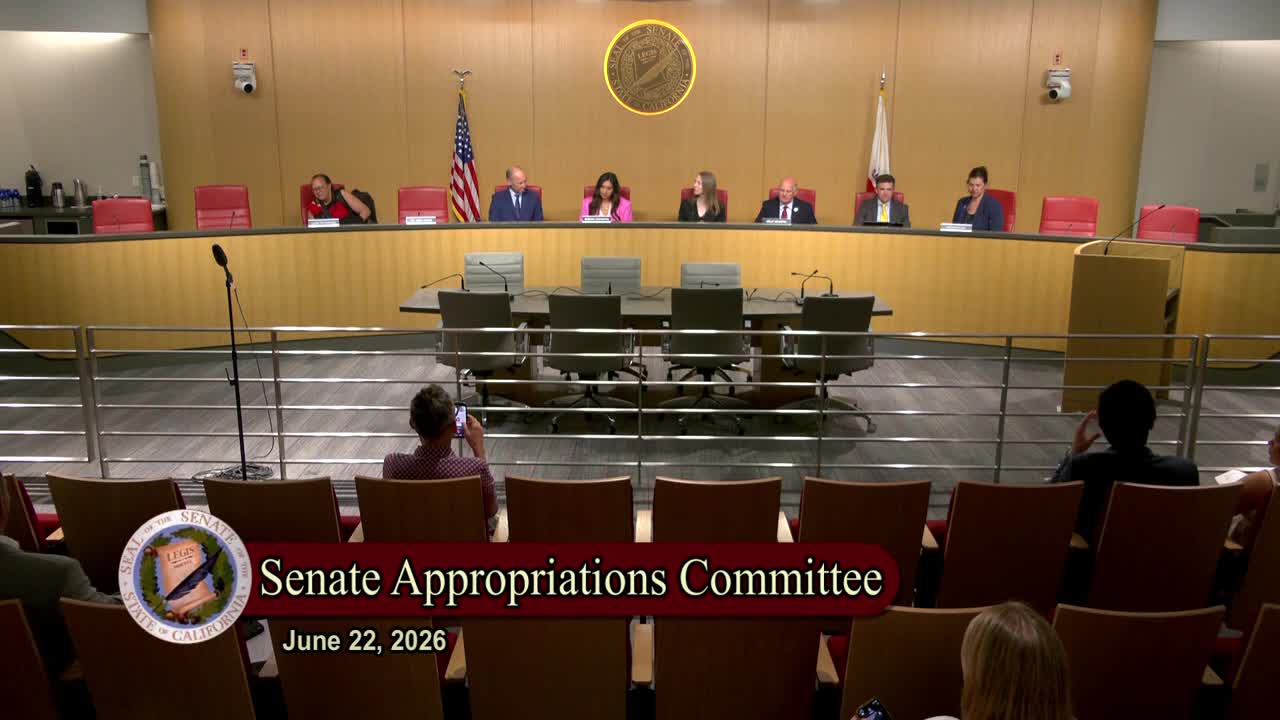 40SEC
Senate Standing Committee on Appropriations
Bill Author

Bill Co-Author(s):