AB 2475: Standardized emergency management system.
- Session Year: 2025-2026
- House: Assembly
- Latest Version Date: 2026-09-27
Current Status:
Passed
(2026-09-27: Chaptered by Secretary of State - Chapter 610, Statutes of 2026.)
Introduced
In Committee
Awaiting First Chamber Vote
Passed First Chamber
In Committee
Awaiting Second Chamber Vote
Passed Second Chamber
Enacted
Existing law, the California Emergency Services Act, requires the Office of Emergency Services, in coordination with all interested state agencies with designated response roles in the state emergency plan and interested local emergency management agencies, to jointly establish by regulation a standardized emergency management system for use by all emergency response agencies. The act requires the Office of Emergency Services to complete an after-action report within 180 days of a declared disaster, as provided.
This bill would instead require the Office of Emergency Services to complete 2 after-action reports, the first within the first 180 days of a declaration of a state of emergency and the second no later than 180 days after a declared state of emergency ends, as provided. The bill would also require the office to annually draft a written update related to the recovery activities of all open states of emergency, as provided. The bill would require the office to send both reports and any annual recovery updates to the Assembly and Senate Committees on Emergency Management, as provided.
This bill would additionally require, no later than 120 days after a declaration of a state of emergency by the Governor ends, that each affected city, county, or city and county provide the Office of Emergency Services with information regarding local recovery efforts. The bill would specify that this information shall include, but not be limited to, any conclusions and recommendations based on a review of the public safety response and disaster recovery efforts. By imposing a new reporting requirement upon local agencies, this bill would impose a state-mandated local program.
The bill would include findings that changes proposed by this bill address a matter of statewide concern rather than a municipal affair and, therefore, apply to all cities, including charter cities.
The California Constitution requires the state to reimburse local agencies and school districts for certain costs mandated by the state. Statutory provisions establish procedures for making that reimbursement.
This bill would provide that, if the Commission on State Mandates determines that the bill contains costs mandated by the state, reimbursement for those costs shall be made pursuant to the statutory provisions noted above.
Existing law, the California Emergency Services Act, requires the Office of Emergency Services, in coordination with all interested state agencies with designated response roles in the state emergency plan and interested local emergency management agencies, to jointly establish by regulation a standardized emergency management system for use by all emergency response agencies. The act requires the Office of Emergency Services to complete an after-action report within 180 days of a declared disaster, as provided.
This bill would instead require the Office of Emergency Services to complete 2 after-action reports, the first within the first 180 days of a declaration of a state of emergency and the second no later than 180 days after a declared state of emergency ends, as provided. The bill would also require the office to annually draft annual written updates a written update related to the recovery activities, activities of all open states of emergency, as provided. The bill would require the office to send both reports and any annual recovery updates to the Assembly and Senate Committees on Emergency Management, as provided.
This bill would additionally require, no later than 120 days after a declaration of a state of emergency by the Governor ends, that each affected city, county, or city and county provide the Office of Emergency Services with information regarding local recovery efforts. The bill would specify that this information shall include, but not be limited to, any conclusions and recommendations based on a review of the public safety response and disaster recovery efforts. By imposing a new reporting requirement upon local agencies, this bill would impose a state-mandated local program.
The bill would include findings that changes proposed by this bill address a matter of statewide concern rather than a municipal affair and, therefore, apply to all cities, including charter cities.
The California Constitution requires the state to reimburse local agencies and school districts for certain costs mandated by the state. Statutory provisions establish procedures for making that reimbursement.
This bill would provide that, if the Commission on State Mandates determines that the bill contains costs mandated by the state, reimbursement for those costs shall be made pursuant to the statutory provisions noted above.
Existing law, the California Emergency Services Act, requires the Office of Emergency Services, in coordination with all interested state agencies with designated response roles in the state emergency plan and interested local emergency management agencies, to jointly establish by regulation a standardized emergency management system for use by all emergency response agencies. The act requires the Office of Emergency Services to complete an after-action report within 180 days of a declared disaster, as provided.
This bill would instead require the Office of Emergency Services to complete 2 after-action reports, the first within the first 180 days of a declaration of a state of emergency and the second no later than 180 days after a declared state of emergency ends, as provided. The bill would also require the office to draft annual written updates related to recovery activities, as provided. The bill would require the office to send both reports and any annual recovery updates to the Assembly and Senate Committees on Emergency Management, as provided.
This bill would additionally require a city, county, or city and county to complete an after-action report no later than 120 days after a declaration of a local emergency for which the Governor has also proclaimed a state of emergency and to make the report available to the Office of Emergency Services, among others, as provided. The bill would specify that the after-action report constitutes the after-action report required by a certain regulation. The bill would require the after-action report to include, among other things, information about the application of the standardized emergency management system. By imposing a new reporting requirement upon local agencies, this bill would impose a state-mandated local program.The bill would include findings that changes proposed by this bill address a matter of statewide concern rather than a municipal affair and, therefore, apply to all cities, including charter cities.The California Constitution requires the state to reimburse local agencies and school districts for certain costs mandated by the state. Statutory provisions establish procedures for making that reimbursement.This bill would provide that, if the Commission on State Mandates determines that the bill contains costs mandated by the state, reimbursement for those costs shall be made pursuant to the statutory provisions noted above.Existing law, the California Emergency Services Act, requires the Office of Emergency Services, in coordination with all interested state agencies with designated response roles in the state emergency plan and interested local emergency management agencies, to jointly establish by regulation a standardized emergency management system for use by all emergency response agencies. The act requires the Office of Emergency Services to complete an after-action report within 180 days of a declared disaster, as provided.
This bill would instead require the Office of Emergency Services to complete 2 after-action reports, the first within the first 180 days of a declaration of a state of emergency and the second no later than 180 days after a declared state of emergency ends, as provided. The bill would also require the office to draft annual written updates related to recovery activities, as provided. The bill would require the office to send both reports and any annual recovery updates to the Assembly and Senate Committees on Emergency Management, as provided.
This bill would additionally require a city, county, or city and county to complete an after-action report no later than 120 days after a declaration of a local emergency for which the Governor has also proclaimed a state of emergency and to make the report available to the Office of Emergency Services, among others, as provided. The bill would specify that the after-action report constitutes the after-action report required by a certain regulation. The bill would require the after-action report to include, among other things, information about the application of the standardized emergency management system. By imposing a new reporting requirement upon local agencies, this bill would impose a state-mandated local program.
The bill would include findings that changes proposed by this bill address a matter of statewide concern rather than a municipal affair and, therefore, apply to all cities, including charter cities.
The California Constitution requires the state to reimburse local agencies and school districts for certain costs mandated by the state. Statutory provisions establish procedures for making that reimbursement.
This bill would provide that, if the Commission on State Mandates determines that the bill contains costs mandated by the state, reimbursement for those costs shall be made pursuant to the statutory provisions noted above.
Existing law, the California Emergency Services Act, requires the Office of Emergency Services, in coordination with all interested state agencies with designated response roles in the state emergency plan and interested local emergency management agencies, to jointly establish by regulation a standardized emergency management system for use by all emergency response agencies. The act requires the Office of Emergency Services to complete an after-action report within 180 days of a declared disaster, as provided.
This bill would instead require the Office of Emergency Services to complete 2 after-action reports, the first within the first 180 days of a declared disaster declaration of a state of emergency and an updated report the second no later than 180 days after a declared disaster state of emergency ends, as provided. The bill would also require the office to draft annual written updates related to recovery activities, as provided. The bill would require the office to send both reports and any annual recovery updates to the Assembly and Senate Committees on Emergency Management, as provided.
This bill would additionally require a city, county, or city and county to complete an after-action report no later than 120 days after a declaration of a local emergency and to make the report available to the Office of Emergency Services, among others, as provided. The bill would require the after-action report to include, among other things, information about the application of the standardized emergency management system. By imposing a new reporting requirement upon local agencies, this bill would impose a state-mandated local program.
The bill would include findings that changes proposed by this bill address a matter of statewide concern rather than a municipal affair and, therefore, apply to all cities, including charter cities.
The California Constitution requires the state to reimburse local agencies and school districts for certain costs mandated by the state. Statutory provisions establish procedures for making that reimbursement.
This bill would provide that, if the Commission on State Mandates determines that the bill contains costs mandated by the state, reimbursement for those costs shall be made pursuant to the statutory provisions noted above.
Existing law, the California Emergency Services Act, requires the Office of Emergency Services, in coordination with all interested state agencies with designated response roles in the state emergency plan and interested local emergency management agencies, to jointly establish by regulation a standardized emergency management system for use by all emergency response agencies. The act requires the Office of Emergency Services to complete an after-action report within 180 days of a declared disaster, as provided.
This bill would instead require the Office of Emergency Services to complete 2 after-action reports, the first within the first 180 days of a declared disaster and an updated report no later than 180 days after a declared disaster ends, as provided. The bill would require the office to send both reports to the Assembly and Senate Committees on Emergency Management, as provided.
(a)The Office of Emergency Services, in coordination with all interested state agencies with designated response roles in the state emergency plan and interested local emergency management agencies, shall jointly establish by regulation a standardized emergency management system for use by all emergency response agencies. The public water systems identified in Section 8607.2 may review and comment on these regulations before adoption. This system shall be applicable, but not limited to, those emergencies or disasters referenced in the state emergency plan. The standardized emergency management system shall include all of the following systems as a framework for responding to and managing emergencies and disasters involving multiple jurisdictions or multiple agency responses:
(1)The Incident Command Systems adapted from the systems originally developed by the FIRESCOPE Program, including those currently in use by state agencies.
(2)The multiagency coordination system as developed by the FIRESCOPE Program.
(3)The mutual aid agreement, as defined in Section 8561, and related mutual aid systems such as those used in law enforcement, fire service, and coroners operations.
(4)The operational area concept, as defined in Section 8559.
(b)Individual agencies roles and responsibilities agreed upon and contained in existing laws or the state emergency plan are not superseded by this article.
(c)The Office of Emergency Services, in coordination with the State Fire Marshals office, the Department of the California Highway Patrol, the Commission on Peace Officer Standards and Training, the Emergency Medical Services Authority, and all other interested state agencies with designated response roles in the state emergency plan, shall jointly develop an approved course of instruction for use in training all emergency response personnel, consisting of the concepts and procedures associated with the standardized emergency management system described in subdivision (a).
(d)All state agencies shall use the standardized emergency management system as adopted pursuant to subdivision (a) to coordinate multiple jurisdiction or multiple agency emergency and disaster operations.
(e)(1)Each local agency, in order to be eligible for any funding of response-related costs under disaster assistance programs, shall use the standardized emergency management system as adopted pursuant to subdivision (a) to coordinate multiple jurisdiction or multiple agency operations.
(2)Notwithstanding paragraph (1), local agencies shall be eligible for repair, renovation, or any other nonpersonnel costs resulting from an emergency.
(f)(1)Within the first 180 days of a declaration of a state of emergency, the Office of Emergency Services shall, in cooperation with involved state and local agencies, complete an after-action report that includes a review of the public safety response and conclusions and recommendations based on findings. The office shall make the report available to all interested public safety and emergency management organizations.
(2)(A)No later than 180 days after a declaration of a state of emergency ends, the Office of Emergency Services shall, in cooperation with involved state and local agencies, complete an after-action report that includes a review of disaster recovery activities and conclusions and recommendations based on findings. The office shall make the report available to all interested public safety and emergency management organizations.
(B)Beginning when the state of emergency is declared and until the report required by this paragraph is completed, the Office of Emergency Services shall annually draft a written update related to the recovery activities of all open states of emergency and make the update available to all interested public safety and emergency management organizations.
(3)The Office of Emergency Services shall publish a public version of the after-action reports required by this subdivision and may publish quantitative data and reportable statistics from available reports, or other information or data, that may be used to assess mitigation, preparedness, training, and other response and recovery needs throughout the state.
(4)(A)The Office of Emergency Services shall send both the after-action reports required by this subdivision and any annual recovery updates required by this subdivision to the Assembly and Senate Committees on Emergency Management.
(B)The reports shall be submitted pursuant to Section 9795.
(g)No later than 120 days after a declaration of a state of emergency by the Governor ends, each affected city, county, or city and county shall provide the Office of Emergency Services with information regarding local recovery efforts, including, but not limited to, any conclusions and recommendations based on a review of the public safety response and disaster recovery efforts.
SEC. 2.The Legislature finds and declares that Section 1 of this act amending Section 8607 of the Government Code address a matter of statewide concern rather than a municipal affair as that term is used in Section 5 of Article XI of the California Constitution. Therefore, Section 1 of this act applies to all cities, including charter cities.
SEC. 3.If the Commission on State Mandates determines that this act contains costs mandated by the state, reimbursement to local agencies and school districts for those costs shall be made pursuant to Part 7 (commencing with Section 17500) of Division 4 of Title 2 of the Government Code.
(a)The Office of Emergency Services, in coordination with all interested state agencies with designated response roles in the state emergency plan and interested local emergency management agencies, shall jointly establish by regulation a standardized emergency management system for use by all emergency response agencies. The public water systems identified in Section 8607.2 may review and comment on these regulations before adoption. This system shall be applicable, but not limited to, those emergencies or disasters referenced in the state emergency plan. The standardized emergency management system shall include all of the following systems as a framework for responding to and managing emergencies and disasters involving multiple jurisdictions or multiple agency responses:
(1)The Incident Command Systems adapted from the systems originally developed by the FIRESCOPE Program, including those currently in use by state agencies.
(2)The multiagency coordination system as developed by the FIRESCOPE Program.
(3)The mutual aid agreement, as defined in Section 8561, and related mutual aid systems such as those used in law enforcement, fire service, and coroners operations.
(4)The operational area concept, as defined in Section 8559.
(b)Individual agencies roles and responsibilities agreed upon and contained in existing laws or the state emergency plan are not superseded by this article.
(c)The Office of Emergency Services, in coordination with the State Fire Marshals office, the Department of the California Highway Patrol, the Commission on Peace Officer Standards and Training, the Emergency Medical Services Authority, and all other interested state agencies with designated response roles in the state emergency plan, shall jointly develop an approved course of instruction for use in training all emergency response personnel, consisting of the concepts and procedures associated with the standardized emergency management system described in subdivision (a).
(d)All state agencies shall use the standardized emergency management system as adopted pursuant to subdivision (a) to coordinate multiple jurisdiction or multiple agency emergency and disaster operations.
(e)(1)Each local agency, in order to be eligible for any funding of response-related costs under disaster assistance programs, shall use the standardized emergency management system as adopted pursuant to subdivision (a) to coordinate multiple jurisdiction or multiple agency operations.
(2)Notwithstanding paragraph (1), local agencies shall be eligible for repair, renovation, or any other nonpersonnel costs resulting from an emergency.
(f)(1)Within the first 180 days of a declaration of a state of emergency, the Office of Emergency Services shall, in cooperation with involved state and local agencies, complete an after-action report that includes a review of the public safety response and conclusions and recommendations based on findings. The office shall make the report available to all interested public safety and emergency management organizations.
(2)(A)No later than 180 days after a declaration of a state of emergency ends, the Office of Emergency Services shall, in cooperation with involved state and local agencies, complete an after-action report that includes a review of disaster recovery activities and conclusions and recommendations based on findings. The office shall make the report available to all interested public safety and emergency management organizations.
(B)Beginning when the state of emergency is declared and until the updated report required by this paragraph is completed, the Office of Emergency Services shall annually draft a written updates update related to the recovery activities of all open states of emergency and make the update available to all interested public safety and emergency management organizations.
(3)The Office of Emergency Services shall publish a public version of the after-action reports required by this subdivision and shall may publish quantitative data and reportable statistics from the reports available reports, or other information or data, that may be used to assess mitigation, preparedness, training, and other response and recovery needs throughout the state.
(4)(A)The Office of Emergency Services shall send both the after-action reports required by this subdivision and any annual recovery updates required by this subdivision to the Assembly and Senate Committees on Emergency Management.
(B)The reports shall be submitted pursuant to Section 9795.
(g)No later than 120 days after a declaration of a state of emergency by the Governor ends, each affected city, county, or city and county shall provide the Office of Emergency Services with information regarding local recovery efforts, including, but not limited to, any conclusions and recommendations based on a review of the public safety response and disaster recovery efforts.
SEC. 2.The Legislature finds and declares that Section 1 of this act amending Section 8607 of the Government Code address a matter of statewide concern rather than a municipal affair as that term is used in Section 5 of Article XI of the California Constitution. Therefore, Section 1 of this act applies to all cities, including charter cities.
SEC. 3.If the Commission on State Mandates determines that this act contains costs mandated by the state, reimbursement to local agencies and school districts for those costs shall be made pursuant to Part 7 (commencing with Section 17500) of Division 4 of Title 2 of the Government Code.
(a)The Office of Emergency Services, in coordination with all interested state agencies with designated response roles in the state emergency plan and interested local emergency management agencies, shall jointly establish by regulation a standardized emergency management system for use by all emergency response agencies. The public water systems identified in Section 8607.2 may review and comment on these regulations before adoption. This system shall be applicable, but not limited to, those emergencies or disasters referenced in the state emergency plan. The standardized emergency management system shall include all of the following systems as a framework for responding to and managing emergencies and disasters involving multiple jurisdictions or multiple agency responses:
(1)The Incident Command Systems adapted from the systems originally developed by the FIRESCOPE Program, including those currently in use by state agencies.
(2)The multiagency coordination system as developed by the FIRESCOPE Program.
(3)The mutual aid agreement, as defined in Section 8561, and related mutual aid systems such as those used in law enforcement, fire service, and coroners operations.
(4)The operational area concept, as defined in Section 8559.
(b)Individual agencies roles and responsibilities agreed upon and contained in existing laws or the state emergency plan are not superseded by this article.
(c)The Office of Emergency Services, in coordination with the State Fire Marshals office, the Department of the California Highway Patrol, the Commission on Peace Officer Standards and Training, the Emergency Medical Services Authority, and all other interested state agencies with designated response roles in the state emergency plan, shall jointly develop an approved course of instruction for use in training all emergency response personnel, consisting of the concepts and procedures associated with the standardized emergency management system described in subdivision (a).
(d)All state agencies shall use the standardized emergency management system as adopted pursuant to subdivision (a) to coordinate multiple jurisdiction or multiple agency emergency and disaster operations.
(e)(1)Each local agency, in order to be eligible for any funding of response-related costs under disaster assistance programs, shall use the standardized emergency management system as adopted pursuant to subdivision (a) to coordinate multiple jurisdiction or multiple agency operations.
(2)Notwithstanding paragraph (1), local agencies shall be eligible for repair, renovation, or any other nonpersonnel costs resulting from an emergency.
(f)(1)Within the first 180 days of a declaration of a state of emergency, the Office of Emergency Services shall, in cooperation with involved state and local agencies, complete an after-action report that includes a review of the public safety response and conclusions and recommendations based on findings. The office shall make the report available to all interested public safety and emergency management organizations.
(2)(A)No later than 180 days after a declaration of a state of emergency ends, the Office of Emergency Services shall, in cooperation with involved state and local agencies, complete an after-action report that includes a review of disaster recovery activities and conclusions and recommendations based on findings. The office shall make the report available to all interested public safety and emergency management organizations.
(B)Beginning when the state of emergency is declared and until the updated report required by this paragraph is completed, the Office of Emergency Services shall annually draft written updates related to the recovery activities available to all interested public safety and emergency management organizations.
(3)The Office of Emergency Services shall publish a public version of the after-action reports required by this subdivision and shall publish quantitative data and reportable statistics from the reports that may be used to assess mitigation, preparedness, training, and other response and recovery needs throughout the state.
(4)(A)The Office of Emergency Services shall send both the after-action reports required by this subdivision, subdivision and any annual recovery updates required by this subdivision, subdivision to the Assembly and Senate Committees on Emergency Management.
(B)The reports shall be submitted pursuant to Section 9795.
(g)(1)No later than 120 days after a city, county, or city and county declares a local emergency for which the Governor proclaims a state of emergency, the city, county, or city and county shall, in cooperation with involved local and state agencies, complete an after-action report and shall make the report available to the Office of Emergency Services and to all other interested public safety and emergency management organizations. The after-action report required by this subdivision shall constitute the after-action report required by Section 2450 of Title 19 of the California Code of Regulations.(2)The after-action report shall include, at a minimum, all of the following information:(A)A review of the public safety response and disaster recovery activities.(B)Any conclusions and recommendations based on the review in subparagraph (A).(C)The jurisdictions application of the standardized emergency management system and any suggested modifications to the standardized emergency management system.(D)Any necessary modifications to plans and procedures.(E)Any identified training needs.(F)A plan to implement any improvements needed.SEC. 2.The Legislature finds and declares that Section 1 of this act amending Section 8607 of the Government Code addresses a matter of statewide concern rather than a municipal affair as that term is used in Section 5 of Article XI of the California Constitution. Therefore, Section 1 of this act applies to all cities, including charter cities.SEC. 3.If the Commission on State Mandates determines that this act contains costs mandated by the state, reimbursement to local agencies and school districts for those costs shall be made pursuant to Part 7 (commencing with Section 17500) of Division 4 of Title 2 of the Government Code.(a)The Office of Emergency Services, in coordination with all interested state agencies with designated response roles in the state emergency plan and interested local emergency management agencies, shall jointly establish by regulation a standardized emergency management system for use by all emergency response agencies. The public water systems identified in Section 8607.2 may review and comment on these regulations before adoption. This system shall be applicable, but not limited to, those emergencies or disasters referenced in the state emergency plan. The standardized emergency management system shall include all of the following systems as a framework for responding to and managing emergencies and disasters involving multiple jurisdictions or multiple agency responses:
(1)The Incident Command Systems adapted from the systems originally developed by the FIRESCOPE Program, including those currently in use by state agencies.
(2)The multiagency coordination system as developed by the FIRESCOPE Program.
(3)The mutual aid agreement, as defined in Section 8561, and related mutual aid systems such as those used in law enforcement, fire service, and coroners operations.
(4)The operational area concept, as defined in Section 8559.
(b)Individual agencies roles and responsibilities agreed upon and contained in existing laws or the state emergency plan are not superseded by this article.
(c)The Office of Emergency Services, in coordination with the State Fire Marshals office, the Department of the California Highway Patrol, the Commission on Peace Officer Standards and Training, the Emergency Medical Services Authority, and all other interested state agencies with designated response roles in the state emergency plan, shall jointly develop an approved course of instruction for use in training all emergency response personnel, consisting of the concepts and procedures associated with the standardized emergency management system described in subdivision (a).
(d)All state agencies shall use the standardized emergency management system as adopted pursuant to subdivision (a) to coordinate multiple jurisdiction or multiple agency emergency and disaster operations.
(e)(1)Each local agency, in order to be eligible for any funding of response-related costs under disaster assistance programs, shall use the standardized emergency management system as adopted pursuant to subdivision (a) to coordinate multiple jurisdiction or multiple agency operations.
(2)Notwithstanding paragraph (1), local agencies shall be eligible for repair, renovation, or any other nonpersonnel costs resulting from an emergency.
(f)(1)Within the first 180 days of a declaration of a state of emergency, the Office of Emergency Services shall, in cooperation with involved state and local agencies, complete an after-action report that includes a review of the public safety response and conclusions and recommendations based on findings. The office shall make the report available to all interested public safety and emergency management organizations.
(2)(A)No later than 180 days after a declaration of a state of emergency ends, the Office of Emergency Services shall, in cooperation with involved state and local agencies, complete an after-action report that includes a review of disaster recovery activities and conclusions and recommendations based on findings. The office shall make the report available to all interested public safety and emergency management organizations.
(B)Beginning when the state of emergency is declared and until the updated report required by this paragraph is completed, the Office of Emergency Services shall annually draft written updates related to the recovery activities available to all interested public safety and emergency management organizations.
(3)The Office of Emergency Services shall publish a public version of the after-action reports required by this subdivision and shall publish quantitative data and reportable statistics from the reports that may be used to assess mitigation, preparedness, training, and other response and recovery needs throughout the state.
(4)(A)The Office of Emergency Services shall send both the after-action reports required by this subdivision, and any annual recovery updates required by this subdivision, to the Assembly and Senate Committees on Emergency Management.
(B)The reports shall be submitted pursuant to Section 9795.
(g)(1)No later than 120 days after a city, county, or city and county declares a local emergency, emergency for which the Governor proclaims a state of emergency, the city, county, or city and county shall, in cooperation with involved local and state agencies, complete an after-action report and shall make the report available to the Office of Emergency Services and to all other interested public safety and emergency management organizations. The after-action report required by this subdivision shall constitute the after-action report required by Section 2450 of Title 19 of the California Code of Regulations.
(2)The after-action report shall include, at a minimum, all of the following information:
(A)A review of the public safety response and disaster recovery activities.
(B)Any conclusions and recommendations based on the review in subparagraph (A).
(C)The jurisdictions application of the standardized emergency management system and any suggested modifications to the standardized emergency management system.
(D)Any necessary modifications to plans and procedures.
(E)Any identified training needs.
(F)A plan to implement any improvements needed.
(3)The investigation, collection of data, and drafting of an after-action report by a city, county, or city and county as required under this subdivision shall be considered an eligible cost for purposes of the California Disaster Assistance Act (Chapter 7.5 (commencing with Section 8680)).SEC. 2.The Legislature finds and declares that Section 1 of this act amending Section 8607 of the Government Code addresses a matter of statewide concern rather than a municipal affair as that term is used in Section 5 of Article XI of the California Constitution. Therefore, Section 1 of this act applies to all cities, including charter cities.
SEC. 3.If the Commission on State Mandates determines that this act contains costs mandated by the state, reimbursement to local agencies and school districts for those costs shall be made pursuant to Part 7 (commencing with Section 17500) of Division 4 of Title 2 of the Government Code.
(a)The Office of Emergency Services, in coordination with all interested state agencies with designated response roles in the state emergency plan and interested local emergency management agencies, shall jointly establish by regulation a standardized emergency management system for use by all emergency response agencies. The public water systems identified in Section 8607.2 may review and comment on these regulations before adoption. This system shall be applicable, but not limited to, those emergencies or disasters referenced in the state emergency plan. The standardized emergency management system shall include all of the following systems as a framework for responding to and managing emergencies and disasters involving multiple jurisdictions or multiple agency responses:
(1)The Incident Command Systems adapted from the systems originally developed by the FIRESCOPE Program, including those currently in use by state agencies.
(2)The multiagency coordination system as developed by the FIRESCOPE Program.
(3)The mutual aid agreement, as defined in Section 8561, and related mutual aid systems such as those used in law enforcement, fire service, and coroners operations.
(4)The operational area concept, as defined in Section 8559.
(b)Individual agencies roles and responsibilities agreed upon and contained in existing laws or the state emergency plan are not superseded by this article.
(c)The Office of Emergency Services, in coordination with the State Fire Marshals office, the Department of the California Highway Patrol, the Commission on Peace Officer Standards and Training, the Emergency Medical Services Authority, and all other interested state agencies with designated response roles in the state emergency plan, shall jointly develop an approved course of instruction for use in training all emergency response personnel, consisting of the concepts and procedures associated with the standardized emergency management system described in subdivision (a).
(d)All state agencies shall use the standardized emergency management system as adopted pursuant to subdivision (a) to coordinate multiple jurisdiction or multiple agency emergency and disaster operations.
(e)(1)Each local agency, in order to be eligible for any funding of response-related costs under disaster assistance programs, shall use the standardized emergency management system as adopted pursuant to subdivision (a) to coordinate multiple jurisdiction or multiple agency operations.
(2)Notwithstanding paragraph (1), local agencies shall be eligible for repair, renovation, or any other nonpersonnel costs resulting from an emergency.
(f)(1)Within the first 180 days of a disaster declaration, declaration of a state of emergency, the Office of Emergency Services shall, in cooperation with involved state and local agencies, complete an after-action report that includes a review of the public safety response and conclusions and recommendations based on findings. The office shall make the report available to all interested public safety and emergency management organizations.
(2)(A)No later than 180 days after a disaster declaration of a state of emergency ends, the Office of Emergency Services shall, in cooperation with involved state and local agencies, provide an update to the previously released complete an after-action report to include that includes a review of disaster recovery activities and conclusions and recommendations based on findings. The update may include changes to other sections of the after-action report if the office identifies the changes in the report. The office shall make the updated report available to all interested public safety and emergency management organizations.
(B)Beginning when the state of emergency is declared and until the updated report required by this paragraph is completed, the Office of Emergency Services shall annually draft written updates related to the recovery activities available to all interested public safety and emergency management organizations.
(3)The Office of Emergency Services shall publish a public version of the after-action reports required by this subdivision and shall publish quantitative data and reportable statistics from the reports that may be used to assess mitigation, preparedness, training, and other response and recovery needs throughout the state.
(3)(4)(A)The office Office of Emergency Services shall send both the after-action report andthe updated after-action report reports required by this subdivision, and any annual recovery updates required by this subdivision, to the Assembly and Senate Committees on Emergency Management.
(B)The reports shall be submitted pursuant to Section 9795.
(g)(1)No later than 120 days after a city, county, or city and county declares a local emergency, the city, county, or city and county shall, in cooperation with involved local and state agencies, complete an after-action report and shall make the report available to the Office of Emergency Services and to all other interested public safety and emergency management organizations.
(2)The after-action report shall include, at a minimum, all of the following information:
(A)A review of the public safety response and disaster recovery activities.
(B)Any conclusions and recommendations based on the review in subparagraph (A).
(C)The jurisdictions application of the standardized emergency management system and any suggested modifications to the standardized emergency management system.
(D)Any necessary modifications to plans and procedures.
(E)Any identified training needs.
(F)A plan to implement any improvements needed.
(3)The investigation, collection of data, and drafting of an after-action report by a city, county, or city and county as required under this subdivision shall be considered an eligible cost for purposes of the California Disaster Assistance Act (Chapter 7.5 (commencing with Section 8680)).
SEC. 2.The Legislature finds and declares that Section 1 of this act amending Section 8607 of the Government Code addresses a matter of statewide concern rather than a municipal affair as that term is used in Section 5 of Article XI of the California Constitution. Therefore, Section 1 of this act applies to all cities, including charter cities.
SEC. 3.If the Commission on State Mandates determines that this act contains costs mandated by the state, reimbursement to local agencies and school districts for those costs shall be made pursuant to Part 7 (commencing with Section 17500) of Division 4 of Title 2 of the Government Code.
(a)The Office of Emergency Services, in coordination with all interested state agencies with designated response roles in the state emergency plan and interested local emergency management agencies, shall jointly establish by regulation a standardized emergency management system for use by all emergency response agencies. The public water systems identified in Section 8607.2 may review and comment on these regulations before adoption. This system shall be applicable, but not limited to, those emergencies or disasters referenced in the state emergency plan. The standardized emergency management system shall include all of the following systems as a framework for responding to and managing emergencies and disasters involving multiple jurisdictions or multiple agency responses:
(1)The Incident Command Systems adapted from the systems originally developed by the FIRESCOPE Program, including those currently in use by state agencies.
(2)The multiagency coordination system as developed by the FIRESCOPE Program.
(3)The mutual aid agreement, as defined in Section 8561, and related mutual aid systems such as those used in law enforcement, fire service, and coroners operations.
(4)The operational area concept, as defined in Section 8559.
(b)Individual agencies roles and responsibilities agreed upon and contained in existing laws or the state emergency plan are not superseded by this article.
(c)The Office of Emergency Services, in coordination with the State Fire Marshals office, the Department of the California Highway Patrol, the Commission on Peace Officer Standards and Training, the Emergency Medical Services Authority, and all other interested state agencies with designated response roles in the state emergency plan, shall jointly develop an approved course of instruction for use in training all emergency response personnel, consisting of the concepts and procedures associated with the standardized emergency management system described in subdivision (a).
(d)All state agencies shall use the standardized emergency management system as adopted pursuant to subdivision (a) to coordinate multiple jurisdiction or multiple agency emergency and disaster operations.
(e)(1)Each local agency, in order to be eligible for any funding of response-related costs under disaster assistance programs, shall use the standardized emergency management system as adopted pursuant to subdivision (a) to coordinate multiple jurisdiction or multiple agency operations.
(2)Notwithstanding paragraph (1), local agencies shall be eligible for repair, renovation, or any other nonpersonnel costs resulting from an emergency.
(f)(1)Within the first 180 days after each declared disaster, of a disaster declaration, the Office of Emergency Services shall, in cooperation with involved state and local agencies, complete an after-action report that includes a review of the public safety response and disaster recovery activities and conclusions and recommendations based on findings. The office shall make the report available to all interested public safety and emergency management organizations.
(2)No later than 180 days after a disaster declaration ends, the Office of Emergency Services shall, in cooperation with involved state and local agencies, provide an update to the previously released after-action report to include a review of disaster recovery activities and conclusions and recommendations based on findings. The update may include changes to other sections of the after-action report if the office identifies the changes in the report. The office shall make the updated report available to all interested public safety and emergency management organizations.
(3)(A)The office shall send both the after-action report and the updated after-action report to the Assembly and Senate Committees on Emergency Management.
(B)The reports shall be submitted pursuant to Section 9795.
|
Date
|
Status
|
|---|---|
| Sep 27, 2026 | Chaptered by Secretary of State - Chapter 610, Statutes of 2026. |
| Sep 27, 2026 | Approved by the Governor. |
| Sep 3, 2026 | Enrolled and presented to the Governor at 4 p.m. |
| Aug 26, 2026 | Senate amendments concurred in. To Engrossing and Enrolling. (Ayes 76. Noes 1. Page 6584.). |
| Aug 26, 2026 | Senate amendments concurred in. To Engrossing and Enrolling. (Ayes 76. Noes 1.). |
| Aug 25, 2026 | In Assembly. Concurrence in Senate amendments pending. |
| Aug 25, 2026 | Read third time. Passed. Ordered to the Assembly. (Ayes 40. Noes 0. Page 5791.). |
| Aug 25, 2026 | Read third time. Passed. Ordered to the Assembly. (Ayes 39. Noes 0.). |
| Aug 24, 2026 | Read second time. Ordered to third reading. |
| Aug 20, 2026 | Read third time and amended. Ordered to second reading. |
| Aug 17, 2026 | Read second time. Ordered to third reading. |
| Aug 13, 2026 | Read second time and amended. Ordered returned to second reading. |
| Aug 13, 2026 | From committee: Amend, and do pass as amended. (Ayes 7. Noes 0.) (August 13). |
| Aug 3, 2026 | In committee: Referred to APPR. suspense file. |
| Jul 1, 2026 | From committee: Do pass and re-refer to Com. on APPR. with recommendation: To Consent Calendar. (Ayes 8. Noes 0.) (June 30). Re-referred to Com. on APPR. |
| Jun 10, 2026 | Referred to Com. on E.M. |
| May 28, 2026 | In Senate. Read first time. To Com. on RLS. for assignment. |
| May 27, 2026 | Read third time. Passed. Ordered to the Senate. (Ayes 65. Noes 6. Page 5484.) |
| May 27, 2026 | Read third time. Passed. Ordered to the Senate. (Ayes 65. Noes 6.) |
| May 27, 2026 | Read third time. Passed. Ordered to the Senate. |
| May 19, 2026 | Read second time. Ordered to third reading. |
| May 18, 2026 | Read second time and amended. Ordered returned to second reading. |
| May 14, 2026 | From committee: Amend, and do pass as amended. (Ayes 12. Noes 1.) (May 14). |
| Apr 29, 2026 | In committee: Set, first hearing. Referred to APPR. suspense file. |
| Apr 14, 2026 | From committee: Do pass and re-refer to Com. on APPR. (Ayes 5. Noes 1.) (April 13). Re-referred to Com. on APPR. |
| Apr 8, 2026 | Re-referred to Com. on E.M. |
| Apr 7, 2026 | From committee chair, with author's amendments: Amend, and re-refer to Com. on E.M. Read second time and amended. |
| Mar 9, 2026 | Referred to Com. on E.M. |
| Feb 21, 2026 | From printer. May be heard in committee March 23. |
| Feb 20, 2026 | Read first time. To print. |
|
Date
|
Description
|
Location
|
Votes
|
|
|---|---|---|---|---|
| Aug 26, 2026 | AB 2475 Emergency Management Concurrence in Senate Amendments By RANSOM | Assembly Floor |
Passed |
|
| Aug 25, 2026 | Assembly 3rd Reading AB2475 E.M. (Ransom) By Stern | Senate Floor |
Passed |
|
| Aug 13, 2026 | Do pass as amended | Senate Standing Committee on Appropriations |
Passed |
|
| Aug 3, 2026 | Placed on suspense file | Senate Standing Committee on Appropriations |
Passed |
|
| Jun 30, 2026 | Do pass, but first be re-referred to the Committee on [Appropriations] with the recommendation: To Consent Calendar | Senate Standing Committee on Emergency Management |
Passed |
|
| May 27, 2026 | AB 2475 Emergency Management Assembly Third Reading By RANSOM | Assembly Floor |
Passed |
|
| May 14, 2026 | Do pass as amended. | Assembly Standing Committee on Appropriations |
Passed |
|
| Apr 13, 2026 | Do pass and be re-referred to the Committee on [Appropriations] | Assembly Standing Committee on Emergency Management |
Passed |
This list shows positions taken on this bill by organizations on the date displayed, which is linked to the original source.
Positions by individuals are not included.
|
Organization
|
Position
|
Date
|
|---|---|---|
| Department Of Finance | ** Against |
CONCURRENCE IN SENATE AMENDMENTS
CSA1 Bill Id:AB 2475
Author:(Committee on Emergency Management)
As Amended Ver:August 20, 2026
Majority vote
SUMMARY
This bill separates existing after-action reporting into two reports: a public safety response report due within the first 180 days of a state of emergency declaration, and a disaster recovery report due no later than 180 days after the declaration ends. It also requires California Governor's Office of Emergency Services (Cal OES) to provide annual recovery updates until the second report is completed.
Senate Amendments
- Specifies that the annual recovery updates will be provided in a single written update for all open states of emergency.
- Authorizes, instead of requires, Cal OES to publish quantitative data and reportable statistics from available reports, as specified, in their public versions of the after-action reports.
- Removes all the prior local requirements and now requires locals to provide Cal OES with information regarding local recovery efforts, as specified.
- Other non-substantive amendments.
COMMENTS
Background: The reporting deadline for Cal OES after-action reports is open to interpretation in current law. Current law states after-action reports are due "within 180 days after each declared disaster." Cal OES interprets this due date to mean within 180 days after a disaster declaration ends. However, some disaster declarations, or state of emergencies, can last over a decade. For example, on March 24, 2026, Governor Newsom signed a proclamation ending 18 open states of emergencies that were originally proclaimed in the years of 2015, 2017, 2018, 2020, 2021, and 2022. While some of these emergencies already have an associated, published after-action report, several do not (but should within 180 days). Furthermore, there are currently 60 open state of emergency declarations, going back as far as December of 2022. It is important to note that many of these emergency declarations have valid reasons for being left open for many years. including lengthy recovery periods, state and federal funding eligibility, and more. Yet when state of emergency declarations can last years, the state – including local emergency managers on the front lines of disaster response – is left waiting for answers that would likely be useful for mitigating, preparing for, responding to, and recovering from future disasters.
This bill is attempting to solve this issue by splitting the current after-action report into two separate reports: a response focused report and a recovery focused report. These are the two topics required in statewide after-action reports by law, including associated conclusions and recommendations. This bill will functionally leave the report due date for recovery information unchanged, clarifying this report is due 180 days after a disaster declaration ends. However, the response report would now be due within the first 180 days of the disaster declaration. Furthermore, this bill requires annual recovery updates from Cal OES until the recovery after-action report is completed. It also codifies requirements for local level after-action reports.
After Action Reports: An after-action report is a retrospective document evaluating a declared emergency. An after-action report provides a source for documenting response and early recovery activities, identifies successes and areas needing improvement during emergency operations, analyzes the effectiveness of the different components of the Standardized Emergency Management System (SEMS), and describes and defines a plan of corrective action for implementing recommended improvements to existing emergency response efforts.
Per existing law, after-action reports are required for any emergency declared by the Governor. These reports must provide a review of public safety response and disaster recovery activities, including conclusions and recommendations based on the report's findings. These reports must be shared with all interested public safety and emergency management organizations.
Local after-action reports are currently required through California Code of Regulations, Title 19 Section 2450. These regulations require any city, city and county, or county declaring a local emergency for which the governor proclaims a state of emergency, and any state agency responding to that emergency shall complete and transmit an after-action report to Cal OES within 90 days of the close of the incident period. These local level after-action reports are required to include, at a minimum, a review of response actions taken, application of SEMS, suggested modifications to SEMS, necessary modifications to plans and procedures, identified training needs, and recovery activities to date.
Open Cal OES After-Action Reports: According to Cal OES, 23 Cal OES after-action reports are still in progress, dating as far back as 2017.
According to the Author
"California relies on after-action reports to capture critical lessons learned from disasters and improve future emergency response and recovery efforts. However, ambiguity in current law regarding the timeline for these reports has led to inconsistent implementation and significant delays. As the California Office of Emergency Services interprets current law as directing the completion of after-action reports no later than 180 days after an emergency declaration ends, reports are often postponed for years while emergency declarations remain open for valid recovery and funding purposes. As a result, the state and local emergency managers are left without timely access to information that could strengthen preparedness and response in the face of increasingly frequent and severe disasters.
This bill brings clarity, accountability, and timeliness to the after-action reporting process by separating response and recovery components into two distinct reports with clear deadlines. It ensures that response-focused findings and recommendations are available within the first 180 days of a disaster, when they are most actionable, while maintaining the existing timeline for recovery reporting. Additionally, the bill requires annual recovery updates. By improving the structure and timeliness of after-action reports, this bill strengthens California's ability to learn from past emergencies and better protect communities in future disasters."
Arguments in Support
None on file.
Arguments in Opposition
None on file.
FISCAL COMMENTS
The Office of Emergency Services (OES) estimates ongoing costs of $2.2 million and 8.0 positions (General Fund) to handle the workload related to the expanded AAR requirements. Actual costs will depend on the number of jurisdictions involved, as well as the complexity and duration of disasters, as these factors dictate the volume of data collected and the time required to complete an AAR. Currently, there are 23 AARs in progress on the OES website.
VOTES:
ASM EMERGENCY MANAGEMENT: 5-1-1
YES: Ransom, Arambula, Bains, Bennett, Calderon
NO: Hadwick
ABS, ABST OR NV: DeMaio
ASM APPROPRIATIONS: 12-1-2
YES: Wicks, Hoover, Aguiar-Curry, Calderon, Caloza, Fong, Mark González, Krell, Pacheco, Pellerin, Sharp-Collins, Solache
NO: Tangipa
ABS, ABST OR NV: Dixon, Ta
ASSEMBLY FLOOR: 65-6-9
YES: Addis, Aguiar-Curry, Ahrens, Alanis, Alvarez, Arambula, Ávila Farías, Bains, Bauer-Kahan, Bennett, Berman, Boerner, Bonta, Bryan, Calderon, Caloza, Carrillo, Castillo, Chen, Connolly, Davies, Elhawary, Fong, Gabriel, Garcia, Gipson, Jeff Gonzalez, Mark González, Haney, Harabedian, Hart, Hoover, Irwin, Jackson, Kalra, Krell, Lee, Lowenthal, McKinnor, Muratsuchi, Nguyen, Ortega, Pacheco, Papan, Patel, Pellerin, Petrie-Norris, Quirk-Silva, Ramos, Ransom, Michelle Rodriguez, Rogers, Blanca Rubio, Schiavo, Schultz, Sharp-Collins, Solache, Soria, Stefani, Valencia, Ward, Wicks, Wilson, Zbur, Rivas
NO: DeMaio, Gallagher, Hadwick, Macedo, Sanchez, Tangipa
ABS, ABST OR NV: Dixon, Ellis, Flora, Johnson, Lackey, Patterson, Celeste Rodriguez, Ta, Wallis
UPDATED
VERSION: August 20, 2026
CONSULTANT: Ryan Fleming / E.M. / (916) 319-3802 FN: 0004214
SENATE RULES COMMITTEE Office of Senate Floor Analyses (916) 651-4171 | AB 2475 |
THIRD READING
Bill No: AB 2475
Author: Committee on Emergency Management
Amended: 8/20/26 in Senate
Vote: 21
SENATE EMERGENCY MGT. COMMITTEE: 8-0, 6/30/26
AYES: Stern, Seyarto, Allen, Ashby, Blakespear, Dahle, Grayson, Pérez
NO VOTE RECORDED: Rubio
SENATE APPROPRIATIONS COMMITTEE: 7-0, 8/13/26
AYES: Cervantes, Seyarto, Cabaldon, Dahle, Grayson, Richardson, Wahab
ASSEMBLY FLOOR: 65-6, 5/27/26 - See last page for vote
SUBJECT: Standardized emergency management system
SOURCE: Author
DIGEST:
This bill specifies reporting requirements that the California Office of Emergency Services (Cal OES) and local agencies must complete following a declared emergency.
Senate Floor Amendments of 8/20/26 direct Cal OES to draft an annual written update related to the recovery activities of all open states of emergency, as specified, require local agencies to provide information regarding local recovery efforts to Cal OES, and make other minor clarifying changes.
ANALYSIS:
Existing law:
- Designates Cal OES under the California Emergency Services Act as the lead state agency responsible for state emergency response to natural, technological, or man-made disasters, as specified.
- Authorizes the Governor to declare a state of emergency (SOE) when specified conditions of disaster or extreme peril to the safety of persons and property exist, and allows the Governor to exercise certain powers in response to that emergency.
- Establishes the Standardized Emergency Management System (SEMS) for managing multi-agency and multi-jurisdictional responses to emergencies in California and requires state agencies to use SEMS and local government to use SEMS to be eligible for any reimbursement of response-related costs, as specified.
- Requires Cal OES to, within 180 days after each declared disaster, complete an after-action report (AAR) in cooperation with involved state and local agencies, that includes a review of the public safety response and disaster recovery activities and conclusions and recommendations based on findings.
- Provides that Cal OES shall make the report available to all interested public safety and emergency management organizations.
This bill:
- Directs Cal OES to complete an AAR, in cooperation with involved local and state agencies, that reviews the public safety response of a declared emergency, as specified, within the first 180 days of the declaration of the SOE, instead of within 180 days after each declared disaster.
- Requires Cal OES to complete a second AAR, in cooperation with involved local and state agencies, that reviews disaster recovery activities, as specified, no later than 180 days after a declaration of a SOE ends, instead of as part of the single AAR in 1) above.
- Requires Cal OES to annually draft a written update related to the recovery activities of all open states of emergency and make the update available, as specified, until the second recovery-focused AAR is completed, as specified.
- Directs Cal OES to publish a public version of the AARs required by this bill, as specified.
- Provides that Cal OES shall send both the AARs and any related recovery updates to the Legislature, as specified.
- Requires a local government, as specified, to provide Cal OES with specified information regarding local recovery efforts no later than 120 days after a declaration of a SOE by the Governor ends.
Background
AARs. The completion of AARs are a required part of SEMS, the state framework used to standardize emergency response involving multiple jurisdictions or agencies. Following a declared disaster, Cal OES gathers information and data from the various stakeholders involved. The information is then used to complete a state-level AAR that documents response activities, lessons learned, best practices, areas needing improvement, and an analysis of the effectiveness of SEMS in the incident. Information received from state and local agencies is used to determine additional resource needs or training opportunities to address risks early and maintain disaster response at the lowest level possible. The AAR provides a vehicle for documenting system improvements and a work plan for implementing these improvements.
According to Cal OES, the number of jurisdictions, complexity, and duration of disasters influence the magnitude of data collected and the length of time it takes to complete an AAR. Cal OES lists 23 AARs currently in progress on its website.
FISCAL EFFECT: Appropriation: No Fiscal Com.: Yes Local: Yes
According to the Senate Appropriations Committee, Cal OES estimates ongoing costs of $2.2 million and 8.0 positions (General Fund) to handle the workload related to the expanded AAR requirements. Actual costs will depend on the number of jurisdictions involved, as well as the complexity and duration of disasters, as these factors dictate the volume of data collected and the time required to complete an AAR.
SUPPORT: (Verified 8/20/26)
None received
OPPOSITION: (Verified 8/20/26)
Department of Finance
ARGUMENTS IN OPPOSITION: In opposition to this bill, the Department of Finance writes that, “ [the Department] is opposed to this bill because it results in significant General Fund costs not included in the 2026 Budget Act…..without additional appropriations or position authority, the bill would substantially increase Cal OES's workload by effectively doubling AAR requirements and divert staff away from core emergency management responsibilities and essential statewide coordination efforts. The bill's provisions would also…create confusion across disaster stakeholders, and impose costly administrative burdens that Cal OES cannot absorb while managing multiple concurrent disasters and complex, multi-year recovery operations.”
ASSEMBLY FLOOR: 65-6, 5/27/26
AYES: Addis, Aguiar-Curry, Ahrens, Alanis, Alvarez, Arambula, Ávila Farías, Bains, Bauer-Kahan, Bennett, Berman, Boerner, Bonta, Bryan, Calderon, Caloza, Carrillo, Castillo, Chen, Connolly, Davies, Elhawary, Fong, Gabriel, Garcia, Gipson, Jeff Gonzalez, Mark González, Haney, Harabedian, Hart, Hoover, Irwin, Jackson, Kalra, Krell, Lee, Lowenthal, McKinnor, Muratsuchi, Nguyen, Ortega, Pacheco, Papan, Patel, Pellerin, Petrie-Norris, Quirk-Silva, Ramos, Ransom, Michelle Rodriguez, Rogers, Blanca Rubio, Schiavo, Schultz, Sharp-Collins, Solache, Soria, Stefani, Valencia, Ward, Wicks, Wilson, Zbur, Rivas
NOES: DeMaio, Gallagher, Hadwick, Macedo, Sanchez, Tangipa
NO VOTE RECORDED: Dixon, Ellis, Flora, Johnson, Lackey, Patterson, Celeste Rodriguez, Ta, Wallis
Prepared by: Cassie Royce / E.M. /
8/24/26 13:52:23
**** END ****
SENATE RULES COMMITTEE Office of Senate Floor Analyses (916) 651-4171 | AB 2475 |
THIRD READING
Bill No: AB 2475
Author: Committee on Emergency Management
Amended: 8/13/26 in Senate
Vote: 21
SENATE EMERGENCY MGT. COMMITTEE: 8-0, 6/30/26
AYES: Stern, Seyarto, Allen, Ashby, Blakespear, Dahle, Grayson, Pérez
NO VOTE RECORDED: Rubio
SENATE APPROPRIATIONS COMMITTEE: 7-0, 8/13/26
AYES: Cervantes, Seyarto, Cabaldon, Dahle, Grayson, Richardson, Wahab
ASSEMBLY FLOOR: 65-6, 5/27/26 - See last page for vote
SUBJECT: Standardized emergency management system
SOURCE: Author
DIGEST:
This bill revises the reporting requirements that the California Office of Emergency Services (Cal OES) must complete following a declared emergency.
ANALYSIS:
Existing law:
- Designates Cal OES under the California Emergency Services Act as the lead state agency responsible for state emergency response to natural, technological, or man-made disasters, as specified.
- Authorizes the Governor to declare a state of emergency (SOE) when specified conditions of disaster or extreme peril to the safety of persons and property exist, and allows the Governor to exercise certain powers in response to that emergency.
- Establishes the Standardized Emergency Management System (SEMS) for managing multi-agency and multi-jurisdictional responses to emergencies in California and requires state agencies to use SEMS and local government to use SEMS to be eligible for any reimbursement of response-related costs, as specified.
- Requires Cal OES to, within 180 days after each declared disaster, complete an after-action report (AAR) in cooperation with involved state and local agencies, that includes a review of the public safety response and disaster recovery activities and conclusions and recommendations based on findings.
- Provides that Cal OES shall make the report available to all interested public safety and emergency management organizations.
This bill:
- Directs Cal OES to complete an AAR, in cooperation with involved local and state agencies, that reviews the public safety response of a declared emergency, as specified, within the first 180 days of the declaration of the SOE, instead of within 180 days after each declared disaster.
- Requires Cal OES to complete a second AAR, in cooperation with involved local and state agencies, that reviews disaster recovery activities, as specified, no later than 180 days after a declaration of a SOE ends, instead of as part of the single AAR in 1) above.
- Requires Cal OES to annually draft written updates related to the recovery activities until the second recovery-focused AAR is completed, as specified, and to publish a public version of the AARs required by this bill, as specified.
- Provides that Cal OES shall send both the AARs and any related recovery updates to the Legislature, as specified.
Background
AARs. The completion of AARs are a required part of SEMS, the state framework used to standardize emergency response involving multiple jurisdictions or agencies. Following a declared disaster, Cal OES gathers information and data from the various stakeholders involved. The information is then used to complete a state-level AAR that documents response activities, lessons learned, best practices, areas needing improvement, and an analysis of the effectiveness of SEMS in the incident. Information received from state and local agencies is used to determine additional resource needs or training opportunities to address risks early and maintain disaster response at the lowest level possible. The AAR provides a vehicle for documenting system improvements and a work plan for implementing these improvements.
According to Cal OES, the number of jurisdictions, complexity, and duration of disasters influence the magnitude of data collected and the length of time it takes to complete an AAR. Cal OES lists 23 AARs currently in progress on its website.
FISCAL EFFECT: Appropriation: No Fiscal Com.: Yes Local: Yes
According to the Senate Appropriations Committee, Cal OES estimates ongoing costs of $2.2 million and 8.0 positions (General Fund) to handle the workload related to the expanded AAR requirements. Actual costs will depend on the number of jurisdictions involved, as well as the complexity and duration of disasters, as these factors dictate the volume of data collected and the time required to complete an AAR.
SUPPORT: (Verified 8/14/26)
None received
OPPOSITION: (Verified 8/14/26)
Department of Finance
ARGUMENTS IN OPPOSITION: In opposition to this bill, the Department of Finance writes that, “ [the Department] is opposed to this bill because it results in significant General Fund costs not included in the 2026 Budget Act…..without additional appropriations or position authority, the bill would substantially increase Cal OES's workload by effectively doubling AAR requirements and divert staff away from core emergency management responsibilities and essential statewide coordination efforts. The bill's provisions would also require Cal OES to produce state-level reports without complete local data, create confusion across disaster stakeholders, and impose costly administrative burdens that Cal OES cannot absorb while managing multiple concurrent disasters and complex, multi-year recovery operations.”
ASSEMBLY FLOOR: 65-6, 5/27/26
AYES: Addis, Aguiar-Curry, Ahrens, Alanis, Alvarez, Arambula, Ávila Farías, Bains, Bauer-Kahan, Bennett, Berman, Boerner, Bonta, Bryan, Calderon, Caloza, Carrillo, Castillo, Chen, Connolly, Davies, Elhawary, Fong, Gabriel, Garcia, Gipson, Jeff Gonzalez, Mark González, Haney, Harabedian, Hart, Hoover, Irwin, Jackson, Kalra, Krell, Lee, Lowenthal, McKinnor, Muratsuchi, Nguyen, Ortega, Pacheco, Papan, Patel, Pellerin, Petrie-Norris, Quirk-Silva, Ramos, Ransom, Michelle Rodriguez, Rogers, Blanca Rubio, Schiavo, Schultz, Sharp-Collins, Solache, Soria, Stefani, Valencia, Ward, Wicks, Wilson, Zbur, Rivas
NOES: DeMaio, Gallagher, Hadwick, Macedo, Sanchez, Tangipa
NO VOTE RECORDED: Dixon, Ellis, Flora, Johnson, Lackey, Patterson, Celeste Rodriguez, Ta, Wallis
Prepared by: Cassie Royce / E.M. /
8/17/26 10:03:07
**** END ****
SENATE COMMITTEE ON
Senator Sabrina Cervantes, Chair
2025 - 2026 Regular Session
AB 2475 (Committee on Emergency Management) - Standardized emergency management system
Version: | Policy Vote: |
Urgency: | Mandate: |
Hearing Date: | Consultant: |
Bill Summary:
AB 2475 revises state and local agency after-action report (AAR) requirements following a declared emergency.
*********** ANALYSIS ADDENDUM – SUSPENSE FILE ***********
The following information is revised to reflect amendments
adopted by the committee on August 13, 2026
Fiscal Impact:
The Office of Emergency Services (OES) estimates ongoing costs of $2.2 million and 8.0 positions (General Fund) to handle the workload related to the expanded AAR requirements. Actual costs will depend on the number of jurisdictions involved, as well as the complexity and duration of disasters, as these factors dictate the volume of data collected and the time required to complete an AAR. Currently, there are 23 AARs in progress on the OES website.
Committee Amendments:
- Delete local agency AAR requirements.
-- END --
SENATE COMMITTEE ON
Senator Sabrina Cervantes, Chair
2025 - 2026 Regular Session
AB 2475 (Committee on Emergency Management) - Standardized emergency management system
Version: | Policy Vote: |
Urgency: | Mandate: |
Hearing Date: | Consultant: |
Bill Summary:
AB 2475 revises state and local agency after-action report (AAR) requirements following a declared emergency.
Fiscal Impact:
- The Office of Emergency Services (OES) estimates ongoing costs of $2.2 million and 8.0 positions (General Fund) to handle the workload related to the expanded AAR requirements. Actual costs will depend on the number of jurisdictions involved, as well as the complexity and duration of disasters, as these factors dictate the volume of data collected and the time required to complete an AAR. Currently, there are 23 AARs in progress on the OES website.
- By requiring local governments to submit AARs on a prescribed timeline, this bill creates a state-mandated local program. If the Commission on State Mandates determines that this bill creates a new program or imposes a higher level of service, local agencies could claim reimbursement for these costs (General Fund). Local costs may range from absorbable to significant, depending on the complexity and duration of the declared state of emergency (SOE).
Background:
The completion of AARs are a required part of Standardized Emergency Management System (SEMS), the state framework used to standardize emergency response involving multiple jurisdictions or agencies. Following a declared disaster, OES gathers information and data from the various stakeholders involved. The information is then used to complete a state-level AAR that documents response activities, lessons learned, best practices, areas needing improvement, and an analysis of the effectiveness of SEMS in the incident. Information received from state and local agencies is used to determine additional resource needs or training opportunities to address risks early and maintain disaster response at the lowest level possible. The AAR provides a vehicle for documenting system improvements and a work plan for implementing these improvements.
Proposed Law:
- Directs OES to complete an initial AAR, in cooperation with involved local and state agencies, reviewing the public safety response to a declared emergency, as specified. This must be completed within the first 180 days of the SOE declaration, rather than within 180 days after each declared disaster.
- Requires OES to complete a second AAR, in cooperation with involved local and state agencies, reviewing disaster recovery activities, as specified. This report must be completed no later than 180 days after an SOE ends, rather than being combined with the initial AAR described above.
- Mandates annual written updates from OES regarding recovery activities until the second, recovery-focused AAR is completed. OES must also publish a public version of the AARs required by this bill, as specified.
- Directs OES to submit both the AARs and any related recovery updates to the Legislature, as specified.
- Requires local governments, as specified, to complete an AAR containing required information, in cooperation with involved local and state agencies. This must be completed no later than 120 days after a local emergency is declared for which the Governor has also declared an SOE. The local government must share this report with OES and all other interested public safety and emergency management organizations.
- Clarifies that the local AAR required by this bill fulfills the existing state regulatory requirement, which otherwise dictates that local AARs must be completed and transmitted to OES within 90 days of the close of an incident period.
-- END --
SENATE COMMITTEE ON EMERGENCY MANAGEMENT
Senator Henry Stern
Chair
2025 - 2026 Regular
Bill No: Hearing Date: 6/30/2026
Author: | |||
Version: | Amended | ||
Urgency: | Fiscal: | ||
Consultant: | |||
SUBJECT:
SUMMARY: Revises state and local agency after-action reporting requirements following a declared emergency.
ANALYSIS:
Existing law:
- Designates the California Office of Emergency Services (Cal OES) under the California Emergency Services Act as the lead state agency responsible for state emergency response to natural, technological, or man-made disasters, as specified.
- Authorizes the Governor to declare a state of emergency (SOE) and local officials and local governments to declare a local emergency when specified conditions of disaster or extreme peril to the safety of persons and property exist, and allows the Governor or the appropriate local government to exercise certain powers in response to that emergency.
- Establishes the Standardized Emergency Management System (SEMS) for managing multi-agency and multi-jurisdictional responses to emergencies in California and requires state agencies to use SEMS and local government to use SEMS to be eligible for any reimbursement of response-related costs, as specified.
- Requires Cal OES to, within 180 days after each declared disaster, complete an after-action report (AAR) in cooperation with involved state and local agencies, that includes a review of the public safety response and disaster recovery activities and conclusions and recommendations based on findings.
- Provides that Cal OES shall make the report available to all interested public safety and emergency management organizations.
This bill:
- Directs Cal OES to complete an AAR, in cooperation with involved local and state agencies, that reviews the public safety response of a declared emergency, as specified, within the first 180 days of the declaration of the SOE, instead of within 180 days after each declared disaster.
- Requires Cal OES to complete a second AAR, in cooperation with involved local and state agencies, that reviews disaster recovery activities, as specified, no later than 180 days after a declaration of a SOE ends, instead of as part of the single AAR in 1) above.
- Requires Cal OES to annually draft written updates related to the recovery activities until the second recovery-focused AAR is completed, as specified, and to publish a public version of the AARs required by this bill, as specified.
- Provides that Cal OES shall send both the AARs and any related recovery updates to the Legislature, as specified.
- Requires a local government, as specified, to complete an AAR that contains specified information, in cooperation with involved local and state agencies, no later than 120 days after a local emergency is declared for which the Governor has also declared a SOE, and to share the report with Cal OES and all other interested public safety and emergency management organizations.
- Specifies the local AAR required by this bill constitutes the AAR required by related state regulations requiring local AARs to be completed and transmitted to Cal OES within 90 days of the close of the incident period.
Background
Author’s statement. According to the author, “The reporting deadline for Cal OES after-action reports is open to interpretation in current law. Current law states after-action reports are due "within 180 days after each declared disaster." Cal OES interprets this due date to mean within 180 days after a disaster declaration ends. However, some disaster declarations, or state of emergencies, can last over a decade. For example, on March 24, 2026, Governor Newsom signed a proclamation ending 18 open state of emergencies that were originally proclaimed in the years of 2015, 2017, 2018, 2020, 2021, and 2022. While some of these emergencies already have an associated, published after-action report, several do not (but should within 180 days). Furthermore, there are currently 52 open state of emergency declarations, going back as far as December of 2022. It is important to note that many of these emergency declarations have valid reasons for being left open for many years. including lengthy recovery periods, state and federal funding eligibility, and more. Yet when state of emergency declarations can last years, the state – including local emergency managers on the front lines of disaster response – is left waiting for answers that would likely be useful for mitigating, preparing for, responding to, and recovering from future disasters.
This bill is attempting to solve this issue by splitting the current after-action report into two separate reports: a response focused report and a recovery focused report. These are the two topics required in statewide after-action reports by law, including associated conclusions and recommendations. This bill will functionally leave the report due date for recovery information unchanged, clarifying this report is due 180 days after a disaster declaration ends. However, the response report would now be due within the first 180 days of the disaster declaration. Furthermore, this bill requires annual recovery updates from Cal OES until the recovery after-action report is completed. It also codifies requirements for local level after-action reports.”
AARs. The completion of AARs are a required part of SEMS, the state framework used to standardize emergency response involving multiple jurisdictions or agencies. Following a declared disaster, Cal OES gathers information and data from the various stakeholders involved. The information is then used to complete a state-level AAR that documents response activities, lessons learned, best practices, areas needing improvement, and an analysis of the effectiveness of SEMS in the incident. Information received from state and local agencies is used to determine additional resource needs or training opportunities to address risks early and maintain disaster response at the lowest level possible. The AAR provides a vehicle for documenting system improvements and a work plan for implementing these improvements.
According to Cal OES, the number of jurisdictions, complexity, and duration of disasters influence the magnitude of data collected and the length of time it takes to complete an AAR. Cal OES lists 24 AARs currently in progress on its website.
Prior/Related Legislation
AB 3267 (Smith), Chapter 260, Statutes of 2020, extends the number of days that OES must complete an AAR from 120 days to 180 days after each declared disaster.
FISCAL EFFECT: Appropriation: Fiscal Com.: Local:
SUPPORT:
None on file
OPPOSITION:
None on file
ASSEMBLY THIRD READING
ATR Bill Id:AB 2475
Author:(Committee on Emergency Management)
As Amended Ver:May 18, 2026
Majority vote
SUMMARY
This bill separates existing after-action reporting into two reports: a public safety response report due within the first 180 days of a state of emergency declaration, and a disaster recovery report due no later than 180 days after the declaration ends. It also requires Cal OES to provide annual recovery updates until the second report is completed, and mandates that local after-action reports be completed, no later than 120 days after a local emergency declaration for which the Governor has also declared a state of emergency.
Major Provisions
- Requires Cal OES, in cooperation with involved local and state agencies, to complete an after-action report that reviews the public safety response, with conclusions and recommendations, within the first 180 days of a declaration of a state of emergency, instead of within the first 180 days of a disaster declaration.
- Requires Cal OES, in cooperation with involved local and state agencies, to complete a second after-action report that reviews disaster recovery activities, with conclusions and recommendations, no later than 180 days after a declaration of a state of emergency ends, instead of as part of the single after-action report referenced above.
- Requires Cal OES to annually draft written updates related to the recovery activities until the second, recovery focused after-action report is completed, as specified.
- Requires a city and/or county, as applicable, in cooperation with involved local and state agencies, to complete an after-action report, as specified, no later than 120 days after declaring a local emergency for which the Governor also declared a state of emergency, and to share the report with Cal OES and all other interested public safety and emergency management organizations.
- Specifies the above required local after-action report constitutes as the after-action report required by regulation, as specified.
COMMENTS
Background: The reporting deadline for Cal OES after-action reports is open to interpretation in current law. Current law states after-action reports are due "within 180 days after each declared disaster." Cal OES interprets this due date to mean within 180 days after a disaster declaration ends. However, some disaster declarations, or state of emergencies, can last over a decade. For example, on March 24, 2026, Governor Newsom signed a proclamation ending 18 open state of emergencies that were originally proclaimed in the years of 2015, 2017, 2018, 2020, 2021, and 2022. While some of these emergencies already have an associated, published after-action report, several do not (but should within 180 days). Furthermore, there are currently 52 open state of emergency declarations, going back as far as December of 2022. It is important to note that many of these emergency declarations have valid reasons for being left open for many years. including lengthy recovery periods, state and federal funding eligibility, and more. Yet when state of emergency declarations can last years, the state – including local emergency managers on the front lines of disaster response – is left waiting for answers that would likely be useful for mitigating, preparing for, responding to, and recovering from future disasters.
This bill is attempting to solve this issue by splitting the current after-action report into two separate reports: a response focused report and a recovery focused report. These are the two topics required in statewide after-action reports by law, including associated conclusions and recommendations. This bill will functionally leave the report due date for recovery information unchanged, clarifying this report is due 180 days after a disaster declaration ends. However, the response report would now be due within the first 180 days of the disaster declaration. Furthermore, this bill requires annual recovery updates from Cal OES until the recovery after-action report is completed. It also codifies requirements for local level after-action reports.
After Action Reports: An after-action report is a retrospective document evaluating a declared emergency. An after-action report provides a source for documenting response and early recovery activities, identifies successes and areas needing improvement during emergency operations, analyzes the effectiveness of the different components of the Standardized Emergency Management System (SEMS), and describes and defines a plan of corrective action for implementing recommended improvements to existing emergency response efforts.
Per existing law, after-action reports are required for any emergency declared by the Governor. These reports must provide a review of public safety response and disaster recovery activities, including conclusions and recommendations based on the report’s findings. These reports must be shared with all interested public safety and emergency management organizations.
Local after-action reports are currently required through California Code of Regulations, Title 19 Section 2450. These regulations require any city, city and county, or county declaring a local emergency for which the governor proclaims a state of emergency, and any state agency responding to that emergency shall complete and transmit an after-action report to Cal OES within 90 days of the close of the incident period. These local level after-action reports are required to include, at a minimum, a review of response actions taken, application of SEMS, suggested modifications to SEMS, necessary modifications to plans and procedures, identified training needs, and recovery activities to date.
Open Cal OES After-Action Reports: According to Cal OES, 23 Cal OES after-action reports are still in progress, dating as far back as 2017.
According to the Author
"California relies on after-action reports to capture critical lessons learned from disasters and improve future emergency response and recovery efforts. However, ambiguity in current law regarding the timeline for these reports has led to inconsistent implementation and significant delays. As the California Office of Emergency Services interprets current law as directing the completion of after-action reports no later than 180 days after an emergency declaration ends, reports are often postponed for years while emergency declarations remain open for valid recovery and funding purposes. As a result, the state and local emergency managers are left without timely access to information that could strengthen preparedness and response in the face of increasingly frequent and severe disasters.
This bill brings clarity, accountability, and timeliness to the after-action reporting process by separating response and recovery components into two distinct reports with clear deadlines. It ensures that response-focused findings and recommendations are available within the first 180 days of a disaster, when they are most actionable, while maintaining the existing timeline for recovery reporting. Additionally, the bill requires annual recovery updates and provides greater clarity for local reporting requirements. By improving the structure and timeliness of after-action reports, this bill strengthens California's ability to learn from past emergencies and better protect communities in future disasters."
Arguments in Support
None on file.
Arguments in Opposition
None on file.
FISCAL COMMENTS
According to the Assembly Committee on Appropriations,
- Annual costs of approximately $2.2 million to OES for eight additional staff positions to manage expanded data collection, analysis, coordination, reporting, and metrics tracking across multiple concurrent disasters (General Fund (GF)).
- By requiring a local agency to complete an after-action report in a manner different than the existing regulatory requirement to complete such a report, this bill may create a state-mandated local program. If the Commission on State Mandates determines the provisions of this bill create a new program or impose a higher level of service for which the state must reimburse local costs, the local agency could seek reimbursement from the state (GF). The magnitude of costs depends on the number of local emergencies for which a report is required and the staff workload needed to prepare each report, which will vary based on the complexity of each report's data analysis and recommendations.
VOTES
ASM EMERGENCY MANAGEMENT: 5-1-1
YES: Ransom, Arambula, Bains, Bennett, Calderon
NO: Hadwick
ABS, ABST OR NV: DeMaio
ASM APPROPRIATIONS: 12-1-2
YES: Wicks, Hoover, Aguiar-Curry, Calderon, Caloza, Fong, Mark González, Krell, Pacheco, Pellerin, Sharp-Collins, Solache
NO: Tangipa
ABS, ABST OR NV: Dixon, Ta
UPDATED
VERSION: May 18, 2026
CONSULTANT: Ryan Fleming / E.M. / (916) 319-3802 FN: 0002939
Date of Hearing: April 29, 2026
ASSEMBLY COMMITTEE ON APPROPRIATIONS
Buffy Wicks, Chair
ABPCA Bill Id:AB 2475
Author:(Committee on Emergency Management) – As Amended Ver:April 7, 2026
Policy Committee: | Emergency Management | Vote: | 5 - 1 |
|
| ||
|
|
Urgency: No State Mandated Local Program: Yes Reimbursable: Yes
SUMMARY:
This bill requires the Office of Emergency Services (OES) to complete an additional after-action report and makes one report due within the first 180 days of a declaration of a state of emergency and the other report due no later than 180 days after a declared state of emergency ends.
Specifically, this bill:
- Provides that the existing after-action report OES must complete within 180 days of a declared disaster is instead due within the first 180 days of a declaration of a state of emergency and does not need to include a review of disaster recovery activities (just a review of the public safety response), and requires OES to complete an additional after-action report no later than 180 days after a declared state of emergency ends that includes a review of disaster recovery activities.
- Requires OES to draft annual written updates related to disaster recovery activities beginning when the state of emergency is declared, until the final after-action report is completed.
- Requires OES to publish certain quantitative data and statistics from the after-action reports and send after-action reports and annual updates to the Legislature.
- Requires a city, county, or city and county to complete an after-action report with certain information no later than 120 days after a declaration of a local emergency and make the report available to OES.
- Requires the investigation, collection of data, and drafting of the local after-action report be considered an eligible cost for purposes of the California Disaster Assistance Act (CDAA).
FISCAL EFFECT:
- Annual costs of approximately $2.2 million to OES for eight additional staff positions to manage expanded data collection, analysis, coordination, reporting, and metrics tracking across multiple concurrent disasters (General Fund (GF)).
- By requiring a local agency to complete an after-action report in a manner different than the existing regulatory requirement to complete such a report, this bill may create a state-mandated local program. If the Commission on State Mandates determines the provisions of this bill create a new program or impose a higher level of service for which the state must reimburse local costs, the local agency could seek reimbursement from the state (GF). The magnitude of costs depends on the number of local emergencies for which a report is required and the staff workload needed to prepare each report, which will vary based on the complexity of each report’s data analysis and recommendations.
- By allowing staff workload and related expenses to draft a local after-action report to count as an eligible cost for purposes of the CDAA, this bill may result in cost pressures to increase state disaster assistance funding (GF).
The Legislative Analyst’s Office recently warned of GF structural deficits of around $35 billion per year in the 2027-28 fiscal year and ongoing.
COMMENTS:
- Purpose. According to the author:
California relies on after-action reports to capture critical lessons learned from disasters and improve future emergency response and recovery efforts. However, ambiguity in current law regarding the timeline for these reports has led to inconsistent implementation and significant delays. As [OES] interprets current law as directing the completion of after-action reports no later than 180 days after an emergency declaration ends, reports are often postponed for years while emergency declarations remain open for valid recovery and funding purposes. As a result, the state and local emergency managers are left without timely access to information that could strengthen preparedness and response in the face of increasingly frequent and severe disasters.
- Background. After-action Reports. An after-action report is a retrospective document evaluating a declared emergency. The report provides a source for documenting response and early recovery activities, identifies successes and areas needing improvement during emergency operations, analyzes the effectiveness of the different components of the Standardized Emergency Management System, and describes a plan of corrective action for implementing recommended improvements to existing response efforts.
Existing law requires OES to complete an after-action report within 180 days after each declared disaster. According to the Assembly Emergency Management Committee’s analysis of this bill:
Cal OES interprets this due date to mean within 180 days after a disaster declaration ends. However, some disaster declarations, or state of emergencies, can last over a decade. For example, on March 24, 2026, Governor Newsom signed a proclamation ending 18 open state of emergencies that were originally proclaimed in the years of 2015, 2017, 2018, 2020, 2021, and 2022…The Committee is attempting to solve this issue by splitting the current after-action report into two separate reports: a response focused report and a recovery focused report.
This bill requires completion of the response-focused report within the first 180 days of a declaration of a state of emergency and the recovery-focused report no later than 180 days after a declaration of a state of emergency ends, with annual recovery updates in between.
Existing regulations require a city, county, or city and county declaring a local emergency for which the governor proclaims a state of emergency, as well as a state agency responding to that local emergency, to complete and transmit an after-action report to OES within 90 days of the close of the incident period. This bill requires a local agency, but not a responding state agency, to complete an after-action report for OES no later than 120 days after the local agency declares any local emergency, not just a local emergency for which the Governor also proclaims a state of emergency. However, the author intends to limit this bill to a local emergency with a state proclamation, so this bill “codifies requirements for local level after-action reports, while adding greater specificity and clarity that many local emergency managers have expressed would be useful.”
CDAA Eligible Costs. The CDAA authorizes the OES director to administer a state public assistance program for costs incurred by a local government after a disaster event, including funding for the repair of damaged public real property and reimbursement of local government costs associated with certain emergency activities undertaken in response to a state of emergency proclaimed by the Governor. Pursuant to CDAA regulations, funds generally reimburse up to 75% of local costs associated with: (a) overtime and associated wage additive costs for emergency response personnel, (b) actual travel and per diem, (c) supplies, materials, and equipment, (d) repair, permanent restoration, and replacement costs for public facilities, (e) basic engineering services necessary for construction projects, (f) administrative or indirect costs, limited to 10% of the total approved state share, (g) work performed under interagency assistance agreements, and (h) the local cost share required under federal PA programs. This bill makes the investigation, collection of data, and drafting of an after-action report a reimbursable CDAA eligible cost.
Analysis Prepared by: Irene Ho / APPR. / (916) 319-2081
Date of Hearing: April 13, 2026
ASSEMBLY COMMITTEE ON EMERGENCY MANAGEMENT
Rhodesia Ransom, Chair
ABPCA Bill Id:AB 2475 (
Author:Committee on Emergency Management) – As Amended Ver:April 7, 2026
SUBJECT: Standardized emergency management system
SUMMARY: This bill separates existing after-action reporting into two reports: a public safety response report due within the first 180 days of a state of emergency declaration, and a disaster recovery report due no later than 180 days after the declaration ends. It also requires Cal OES to provide annual recovery updates until the second report is completed, and mandates that local after-action reports be completed, no later than 120 days after a local emergency declaration. Specifically, this bill:
- Requires Cal OES, in cooperation with involved local and state agencies, to complete an after-action report that reviews the public safety response, with conclusions and recommendations, within the first 180 days of a declaration of a state of emergency, instead of within the first 180 days of a disaster declaration.
- Requires Cal OES, in cooperation with involved local and state agencies, to complete a second after-action report that reviews disaster recovery activities, with conclusions and recommendations, no later than 180 days after a declaration of a state of emergency ends, instead of as part of the single after-action report referenced above.
- Requires Cal OES to annually draft written updates related to the recovery activities until the second, recovery focused after-action report is completed, as specified,
- Requires each of the reports and recovery updates be available to all interested public safety and emergency management organizations and sent to the Assembly and Senate Committees on Emergency Management.
- Requires Cal OES publish a public version of the after-action reports and data and statistics from the reports that may be used to assess statewide emergency related needs, as specified.
- Requires a city and/or county, as applicable, in cooperation with involved local and state agencies, to complete an after-action report no later than 120 days after their declared local emergency and to share the report with Cal OES and all other interested public safety and emergency management organizations.
- Requires the local after-action report to include, at a minimum, the following:
- A review of the public safety response and disaster recovery activities.
- Conclusions and recommendations, as specified.
- The jurisdiction’s application of the standardized emergency management system and any suggested modifications to the standardized emergency management system.
- Any necessary modifications to plans and procedures.
- Any identified training needs.
- A plan to implement any improvements needed.
- Authorizes the investigation, collection of data, and drafting of a local level after-action report to be considered an eligible cost under the California Disaster Assistance Act.
- Finds and declares this act is a matter of statewide concern, rather than a municipal affair, therefore this act applies to all cities, including charter cities.
EXISTING LAW:
- Establishes the California Office of Emergency Services (Cal OES) within the office of the Governor and makes Cal OES responsible for the state’s emergency and disaster response services for natural, technological, or manmade disasters and emergencies. (Gov. Code Section 8550)
- Authorizes the Governor to proclaim a state of emergency and local officials and local governments to proclaim a local emergency, when specified conditions of disaster or extreme peril to the safety of persons and property exist, and authorizes the Governor or the appropriate local government to exercise certain powers in response to that emergency. (Gov. Code Section 8558)
- Defines “state of emergency” and “local emergency” to mean a duly proclaimed existence of conditions of disaster or of extreme peril to the safety of persons and property within the state or territorial limits of a local government caused by, among other things, a sudden and severe energy shortage. (Gov. Code Section 8558)
- Requires the Standardized Emergency Management System (SEMS) for managing multiagency and multijurisdictional responses to emergencies in California. State agencies are required to use SEMS and local government entities must use SEMS in order to be eligible for any reimbursement of response-related costs under the state’s disaster assistance programs. (Gov. Code Section 8607)
- Requires Cal OES to, within 180 days after each declared disaster, complete an after-action report, in cooperation with involved state and local agencies, that includes a review of the public safety response and disaster recovery activities and conclusions and recommendations based on findings. (Gov. Code Section 8607)
- Requires Cal OES to make the make the report available to all interested public safety and emergency management organizations. (Gov. Code Section 8607)
FISCAL EFFECT: Unknown. A fiscal committee has not analyzed this bill.
COMMENTS:
Author Statement: “California relies on after-action reports to capture critical lessons learned from disasters and improve future emergency response and recovery efforts. However, ambiguity in current law regarding the timeline for these reports has led to inconsistent implementation and significant delays. As the California Office of Emergency Services interprets current law as directing the completion of after-action reports no later than 180 days after an emergency declaration ends, reports are often postponed for years while emergency declarations remain open for valid recovery and funding purposes. As a result, the state and local emergency managers are left without timely access to information that could strengthen preparedness and response in the face of increasingly frequent and severe disasters.
This bill brings clarity, accountability, and timeliness to the after-action reporting process by separating response and recovery components into two distinct reports with clear deadlines. It ensures that response-focused findings and recommendations are available within the first 180 days of a disaster, when they are most actionable, while maintaining the existing timeline for recovery reporting. Additionally, the bill requires annual recovery updates and provides greater clarity for local reporting requirements. By improving the structure and timeliness of after-action reports, this bill strengthens California’s ability to learn from past emergencies and better protect communities in future disasters.”
Equity Statement: “Timely and transparent after-action reporting is essential to ensuring that all communities—particularly those that are historically underserved, high-risk, or disproportionately impacted by disasters—benefit from continuous improvements in emergency management. Delays in capturing and disseminating lessons learned can perpetuate gaps in response effectiveness, resource allocation, and recovery outcomes, which often fall most heavily on vulnerable populations.”
Background: The reporting deadline for Cal OES after-action reports is open to interpretation in current law. Current law states after-action reports are due “within 180 days after each declared disaster.” Cal OES interprets this due date to mean within 180 days after a disaster declaration ends. However, some disaster declarations, or state of emergencies, can last over a decade. For example, on March 24, 2026, Governor Newsom signed a proclamation ending 18 open state of emergencies that were originally proclaimed in the years of 2015, 2017, 2018, 2020, 2021, and 2022. While some of these emergencies already have an associated, published after-action report, several do not (but should within 180 days). Furthermore, there are currently 52 open state of emergency declarations, going back as far as December of 2022. It is important to note that many of these emergency declarations have valid reasons for being left open for many years. including lengthy recovery periods, state and federal funding eligibility, and more. Yet when state of emergency declarations can last years, the state – including local emergency managers on the front lines of disaster response – is left waiting for answers that would likely be useful for mitigating, preparing for, responding to, and recovering from future disasters.
The Committee is attempting to solve this issue by splitting the current after-action report into two separate reports: a response focused report and a recovery focused report. These are the two topics required in statewide after-action reports by law, including associated conclusions and recommendations. This bill will functionally leave the report due date for recovery information unchanged, clarifying this report is due 180 days after a disaster declaration ends. However, the response report would now be due within the first 180 days of the disaster declaration. Furthermore, this bill requires annual recovery updates from Cal OES until the recovery after-action report is completed. It also codifies requirements for local level after-action reports, while adding greater specificity and clarity that many local emergency managers have expressed would be useful.
After Action Reports: An after-action report is a retrospective document evaluating a declared emergency. An after-action report provides a source for documenting response and early recovery activities, identifies successes and areas needing improvement during emergency operations, analyzes the effectiveness of the different components of the Standardized Emergency Management System (SEMS), and describes and defines a plan of corrective action for implementing recommended improvements to existing emergency response efforts.
Per existing law, after-action reports are required for any emergency declared by the Governor. These reports must provide a review of public safety response and disaster recovery activities, including conclusions and recommendations based on the report’s findings. These reports must be shared with all interested public safety and emergency management organizations.
Local after-action reports are currently required through California Code of Regulations, Title 19 § 2450. These regulations require any city, city and county, or county declaring a local emergency for which the governor proclaims a state of emergency, and any state agency responding to that emergency shall complete and transmit an after action report to Cal OES within 90 days of the close of the incident period. These local level after-action reports are required to include, at a minimum, a review of response actions taken, application of SEMS, suggested modifications to SEMS, necessary modifications to plans and procedures, identified training needs, and recovery activities to date.
Open Cal OES After-Action Reports: The following Cal OES after-action reports are still in progress:
2025 Active Reports
2025 January Wildfires and Wind Event AAR
2025 Fire Season AAR
2025 Winter Storms
2024 Active Reports
2024 Fire Season AAR
2024-2025 Winter Storms AAR
2024 Victoria Island Levee AAR
2024 Avian Influenza A (H5N1) AAR
2024 December Earthquake AAR
2024 Rancho Palos Verdes Landslide AAR
2024 Fire Season AAR
2024 Winter Storms AAR
2023 Active Reports
2023 Tropical Storm Hilary and Summer Fires
2022 Active Reports
2022-2023 Winter Storms AAR
2022 Ferndale Earthquake AAR
2022 September Extreme Heat, Fires, and Tropical Storms AAR
2021 Active Reports
2021 Late December Winter Storms AAR
2021 Fire Season AAR
2020 Active Reports
2020 COVID-19 AAR
2020 Fires Season AAR
2019 Active Reports
2019 Fire Season and PSPS AAR
2019 Winter Storms AAR
2018 Active Reports
2018 Fire Season AAR
2017 Active Reports
2017 Fire Season AAR
2017 Winter Storms AAR
Related Legislation:
AB 3267 (Smith) Chapter 260, Statutes of 2020. Requires the California Office of Emergency Services (OES) to coordinate with representatives from the access and functional needs population when updating the State Emergency Plan (SEP); and, provides OES with additional time to complete an after-action report following each declared disaster, as specified.
REGISTERED SUPPORT / OPPOSITION:
Support
None on file.
Opposition
None on file.
Analysis Prepared by: Ryan Fleming / E.M. / (916) 319-3802
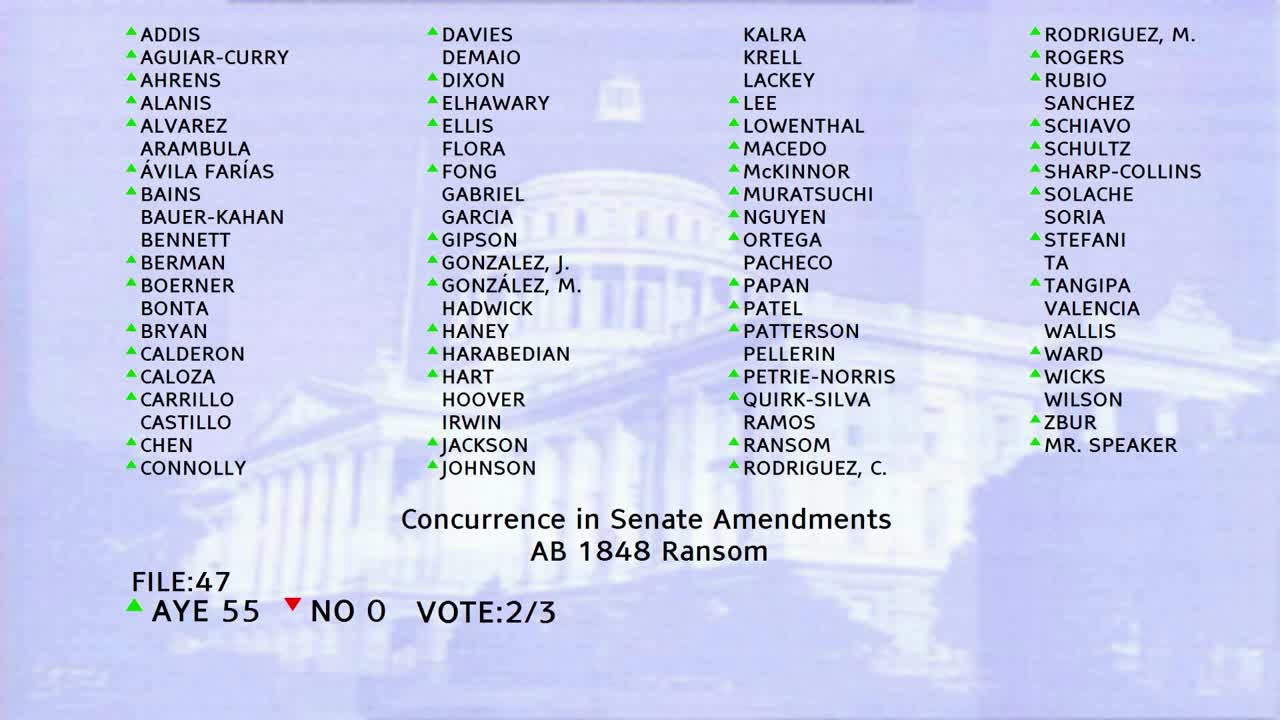

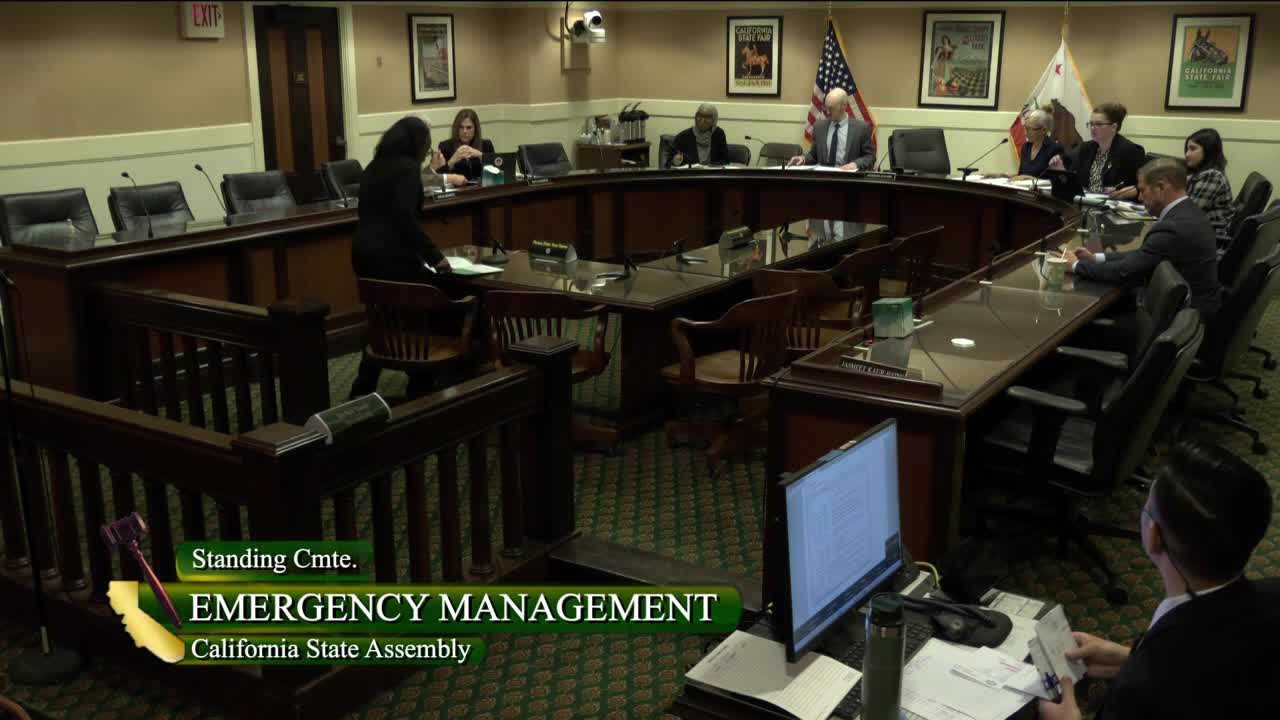
Bill Author
Bill Co-Author(s):