AB 2486: Medi-Cal: Whole Child Model program.
- Session Year: 2025-2026
- House: Assembly
- Latest Version Date: 2026-09-18
Current Status:
Passed
(2026-09-18: Chaptered by Secretary of State - Chapter 304, Statutes of 2026.)
Introduced
In Committee
Awaiting First Chamber Vote
Passed First Chamber
In Committee
Awaiting Second Chamber Vote
Passed Second Chamber
Enacted
Existing law establishes the California Childrens Services (CCS) program, which is administered by the State Department of Health Care Services and counties, to provide medically necessary services, based on financial eligibility, for persons under 21 years of age who have certain medical conditions, including, among others, cystic fibrosis or hemophilia.
Existing law provides for the Medi-Cal program, which is administered by the department, under which qualified low-income individuals receive health care services. The Medi-Cal program is, in part, governed and funded by federal Medicaid Program provisions.
Existing law authorizes the department to establish a Whole Child Model program, under which managed care plans served by a county organized health system or Regional Health Authority in designated counties provide CCS treatment services to Medi-Cal eligible CCS children and youth. In implementing the program, existing law requires the department to, among other things, establish a statewide Whole Child Model program stakeholder advisory group and to consult with that advisory group on the implementation of the Whole Child Model program, as specified. Existing law terminates the advisory group on December 31, 2026.
This bill would rename the statewide Whole Child Model program stakeholder advisory group to the California Childrens Services (CCS) advisory group. The bill would require the advisory group to have specified membership, including no more than 6 representatives of CCS clients not enrolled in a managed care plan or enrolled in a managed care plan, but not on a family advisory committee, former CCS clients, and caregivers of former CCS clients, among others. The bill would also require the department to consult with the advisory group on the implementation of the CCS Classic program and to consider the recommendations of the advisory group in developing monitoring processes and outcome measures for the CCS program. The bill would require the department to publish two summary reports on its internet website by specified dates that describe the departments progress and actions on specified matters relating to the CCS program. The bill would delete the December 31, 2026, sunset date, and would instead make the provisions relating to the stakeholder advisory group and the related reporting requirement inoperative on January 1, 2037.
This bill would make conforming changes to reflect the renaming of the advisory group.
Existing law establishes the California Childrens Services (CCS) program, which is administered by the State Department of Health Care Services and counties, to provide medically necessary services, based on financial eligibility, for persons under 21 years of age who have certain medical conditions, including, among others, cystic fibrosis or hemophilia.
Existing law provides for the Medi-Cal program, which is administered by the department, under which qualified low-income individuals receive health care services. The Medi-Cal program is, in part, governed and funded by federal Medicaid Program provisions.
Existing law authorizes the department to establish a Whole Child Model program, under which managed care plans served by a county organized health system or Regional Health Authority in designated counties provide CCS treatment services to Medi-Cal eligible CCS children and youth. In implementing the program, existing law requires the department to, among other things, establish a statewide Whole Child Model program stakeholder advisory group and to consult with that advisory group on the implementation of the Whole Child Model program, as specified. Existing law terminates the advisory group on December 31, 2026.
This bill would rename the statewide Whole Child Model program stakeholder advisory group to the California Childrens Services (CCS) advisory group. The bill would require the advisory group to have specified membership, including no more than 6 representatives of CCS clients not enrolled in a managed care plan or enrolled in a managed care plan, but not on a family advisory committee, former CCS clients, and caregivers of former CCS clients, among others. The bill would also require the department to consult with the advisory group on the implementation of the CCS Classic program and to consider the recommendations of the advisory group in developing monitoring processes and outcome measures for the CCS program. The bill would require the department to publish two summary reports on its internet website by specified dates that describe the departments progress and actions on specified matters relating to the CCS program. The bill would delete the December 31, 2026, sunset date, and would instead make the provisions relating to the stakeholder advisory group and the related reporting requirement inoperative on January 1, 2037.
This bill would make conforming changes to reflect the renaming of the advisory group.
Existing law establishes the California Childrens Services (CCS) program, which is administered by the State Department of Health Care Services and counties, to provide medically necessary services, based on financial eligibility, for persons under 21 years of age who have certain medical conditions, including, among others, cystic fibrosis or hemophilia.
Existing law provides for the Medi-Cal program, which is administered by the department, under which qualified low-income individuals receive health care services. The Medi-Cal program is, in part, governed and funded by federal Medicaid Program provisions.
Existing law authorizes the department to establish a Whole Child Model program, under which managed care plans served by a county organized health system or Regional Health Authority in designated counties provide CCS treatment services to Medi-Cal eligible CCS children and youth. In implementing the program, existing law requires the department to, among other things, establish a statewide Whole Child Model program stakeholder advisory group and to consult with that advisory group on the implementation of the Whole Child Model program, as specified. Existing law terminates the advisory group on December 31, 2026.
This bill would rename the statewide Whole Child Model program stakeholder advisory group to the California Childrens Services (CCS) advisory group. The bill would require the advisory group to additionally be composed of have specified membership, including no more than 6 representatives of CCS clients not enrolled in a managed care plan, plan or enrolled in a managed care plan, but not on a family advisory committee, former CCS clients, and caregivers of former CCS clients, among others. The bill would also require the department to consult with the advisory group on the implementation of the CCS Classic program and to consider the recommendations of the advisory group in developing monitoring processes and outcome measures for the CCS program. Beginning no later than December 31, 2027, the The bill would require the department to biennially deliver a summary report to the Legislature that briefly describes publish two summary reports on its internet website by specified dates that describe the departments progress and actions on specified matters relating to the CCS program. The bill would delete the December 31, 2026, sunset date, and would instead make the provisions relating to the stakeholder advisory group and the related reporting requirement inoperative on January 1, 2037.
This bill would make conforming changes to reflect the renaming of the advisory group.
Existing law establishes the California Childrens Services (CCS) program, which is administered by the State Department of Health Care Services and counties, to provide medically necessary services, based on financial eligibility, for persons under 21 years of age who have certain medical conditions, including, among others, cystic fibrosis or hemophilia.
Existing law provides for the Medi-Cal program, which is administered by the department, under which qualified low-income individuals receive health care services. The Medi-Cal program is, in part, governed and funded by federal Medicaid Program provisions.
Existing law authorizes the department to establish a Whole Child Model program, under which managed care plans served by a county organized health system or Regional Health Authority in designated counties provide CCS treatment services to Medi-Cal eligible CCS children and youth. In implementing the program, existing law requires the department to, among other things, establish a statewide Whole Child Model program stakeholder advisory group and to consult with that advisory group on the implementation of the Whole Child Model program, as specified. Existing law terminates the advisory group on December 31, 2026.
This bill would rename the statewide Whole Child Model program stakeholder advisory group to the California Childrens Services (CCS) advisory group. The bill would require the advisory group to additionally be composed of representatives of CCS clients not enrolled in a managed care plan, former CCS clients, and caregivers of former CCS clients, among others. The bill would also require the department to consult with the advisory group on the implementation of the CCS Classic program and to consider the recommendations of the advisory group in developing monitoring processes and outcome measures for the CCS program. Beginning no later than December 31, 2027, the bill would require the department to biennially deliver a summary report to the Legislature that briefly describes the departments progress and actions on specified matters relating to the CCS program. The bill would delete the December 31, 2026, sunset date, thereby extending the operation of the advisory group indefinitely. and would instead make the provisions relating to the stakeholder advisory group and the related reporting requirement inoperative on January 1, 2037.
This bill would make conforming changes to reflect the renaming of the advisory group.
Existing law establishes the California Childrens Services (CCS) Program, program, which is administered by the State Department of Health Care Services and counties, to provide medically necessary services, based on financial eligibility, for persons under 21 years of age who have certain medical conditions, including, among others, cystic fibrosis or hemophilia.
Existing law provides for the Medi-Cal program, which is administered by the department, under which qualified low-income individuals receive health care services. The Medi-Cal program is, in part, governed and funded by federal Medicaid Program provisions.
Existing law authorizes the department to establish a Whole Child Model program, under which managed care plans served by a county organized health system or Regional Health Authority in designated counties provide CCS treatment services to Medi-Cal eligible CCS children and youth. In implementing the program, existing law requires the department to, among other things, establish a statewide Whole Child Model program stakeholder advisory group and to consult with that advisory group on the implementation of the Whole Child Model program, as specified. Existing law terminates the advisory group on December 31, 2026.
This bill would rename the statewide Whole Child Model program stakeholder advisory group to the California Childrens Services (CCS) advisory group. The bill would require the advisory group to additionally be composed of representatives of CCS clients not enrolled in a managed care plan, former CCS clients, and caregivers of former CCS clients. clients, among others. The bill would also require the department to consult with the advisory group on the implementation of the CCS Classic program and to consider the recommendations of the advisory group in developing monitoring processes and outcome measures for the CCS program. Beginning no later than December 31, 2027, the bill would require the department to biennially deliver a summary report to the Legislature, with feedback from the advisory group, Legislature that briefly describes the departments progress and actions on specified matters relating to the CCS program. The bill would delete the December 31, 2026, sunset date, thereby extending the operation of the advisory group indefinitely.
This bill would make conforming changes to reflect the renaming of the advisory group.
Existing law establishes the California Childrens Services (CCS) Program, which is administered by the State Department of Health Care Services and counties, to provide medically necessary services, based on financial eligibility, for persons under 21 years of age who have certain medical conditions, including, among others, cystic fibrosis or hemophilia.
Existing law provides for the Medi-Cal program, which is administered by the department, under which qualified low-income individuals receive health care services. The Medi-Cal program is, in part, governed and funded by federal Medicaid Program provisions.
Existing law authorizes the department to establish a Whole Child Model program, under which managed care plans served by a county organized health system or Regional Health Authority in designated counties provide CCS treatment services to Medi-Cal eligible CCS children and youth. In implementing the program, existing law requires the department to, among other things, establish a statewide Whole Child Model program stakeholder advisory group and to consult with that advisory group on prescribed matters. the implementation of the Whole Child Model program, as specified. Existing law terminates the advisory group on December 31, 2026.
This bill would extend the operation of the advisory group until December 31, 2029. rename the statewide Whole Child Model program stakeholder advisory group to the California Childrens Services (CCS) advisory group. The bill would require the advisory group to additionally be composed of representatives of CCS clients not enrolled in a managed care plan, former CCS clients, and caregivers of former CCS clients. The bill would also require the department to consult with the advisory group on the implementation of the CCS Classic program and to consider the recommendations of the advisory group in developing monitoring processes and outcome measures for the CCS program. Beginning no later than December 31, 2027, the bill would require the department to biennially deliver a summary report to the Legislature, with feedback from the advisory group, that briefly describes the departments progress and actions on specified matters relating to the CCS program. The bill would delete the December 31, 2026, sunset date, thereby extending the operation of the advisory group indefinitely.
This bill would make conforming changes to reflect the renaming of the advisory group.
Existing law establishes the California Childrens Services (CCS) Program, which is administered by the State Department of Health Care Services and counties, to provide medically necessary services, based on financial eligibility, for persons under 21 years of age who have certain medical conditions, including, among others, cystic fibrosis or hemophilia.
Existing law provides for the Medi-Cal program, which is administered by the department, under which qualified low-income individuals receive health care services. The Medi-Cal program is, in part, governed and funded by federal Medicaid Program provisions.
Existing law authorizes the department to establish a Whole Child Model program, under which managed care plans served by a county organized health system or Regional Health Authority in designated counties provide CCS treatment services to Medi-Cal eligible CCS children and youth. In implementing the program, existing law requires the department to, among other things, establish a statewide Whole Child Model program stakeholder advisory group and to consult with that advisory group on prescribed matters. Existing law terminates the advisory group on December 31, 2026.
This bill would extend the operation of the advisory group until December 31, 2029.
Existing law, in order to gather data that is relevant to ensuring the safety and well-being of persons with developmental disabilities, requires the State Department of Developmental Services to ensure that the client master file entry of any person with developmental disabilities who is placed by a regional center is updated within 30 days after the change of residence.This bill would make a nonsubstantive, technical change to that provision.Existing law, in order to gather data that is relevant to ensuring the safety and well-being of persons with developmental disabilities, requires the State Department of Developmental Services to ensure that the client master file entry of any person with developmental disabilities who is placed by a regional center is updated within 30 days after the change of residence.
This bill would make a nonsubstantive, technical change to that provision.
(a)No sooner than July 1, 2017, the department may implement the Whole Child Model program established under this section, pursuant to the criteria described in this article. The director shall provide notice to the Legislature, the federal Centers for Medicare and Medicaid Services, counties, CCS providers, and CCS families when each managed care plan, including a transition plan with the county CCS program, has been reviewed and certified as ready to enroll children based on the criteria described in this article.
(b)The department shall do all of the following:
(1)Develop specific CCS program monitoring and oversight standards for managed care plans that are subject to this article, including access monitoring, quality measures, and ongoing public data reporting. No later than January 1, 2025, the department shall, at minimum, do all of the following:
(A)Annually provide an analysis on its internet website regarding trends on CCS enrollment for Whole Child Model counties and non-Whole Child Model counties, in a way that enables a comparison of trends between the two categories of CCS counties.
(B)Develop utilization and quality measures, to be reported on an annual basis in a form and manner specified by the department, that relate specifically to CCS specialty care and report such measures for both Whole Child Model counties and non-Whole Child Model counties. When developing measures, the department shall consider both of the following:
(i)Recommendations of the CCS Redesign Performance Measure Quality Subcommittee established by the department as part of the CCS advisory group pursuant to subdivision (c) of Section 14094.17.
(ii)Available data regarding the percentage of children with CCS eligible conditions who receive an annual special care center visit.
(C)Require, as part of its monitoring and oversight responsibilities, any Whole Child Model plan, as applicable, that is subject to one or more findings in its most recent annual medical audit pertaining to access or quality of care in the CCS program to implement quality improvement strategies that are specifically targeted to the CCS population, as determined by the department.
(2)Establish a stakeholder process pursuant to Section 14094.17.
(3)Consult with the CCS advisory group established pursuant to Section 14094.17 to develop and implement robust monitoring processes to ensure that managed care plans are in compliance with all of the provisions of this section. The department shall monitor managed care plan compliance with the provisions of this section on at least an annual basis and post CCS-specific monitoring dashboards on its internet website on at least an annual basis.
(c)(1)In order to aid the transition of CCS services into Medi-Cal managed care plans participating in the Whole Child Model program, commencing January 1, 2017, and continuing through the completion of the transition of CCS enrollees into the Whole Child Model program, the department shall begin requesting and collecting from Medi-Cal managed care plans information about each health plans provider network, including, but not limited to, the contracting primary care, specialty care providers, and hospital facilities contracting with the Medi-Cal managed care plan.
(2)The department shall analyze the existing Medi-Cal managed care delivery system network and the CCS fee-for-service provider networks to determine the overlap of the provider networks in each county and shall furnish this information to the Medi-Cal managed care plan.
(d)A managed care plan shall not be approved to participate in the Whole Child Model program unless all of the following conditions have been satisfied:
(1)The managed care plan has obtained written approval from the director.
(2)The department has obtained any necessary federal approvals.
(3)The Medi-Cal managed care plan has established a local stakeholder process with the meaningful engagement of a diverse group of families that represent a range of conditions, disabilities, and demographics, and local providers, including, but not limited to, the parent centers, such as family resource centers, family empowerment centers, and parent training and information centers, that support families in the affected county.
(4)The director has verified the readiness of the managed care plan to address the unique needs of CCS-eligible beneficiaries, including, but not limited to, the requirements set forth in subdivision (b) of Section 14087.48, subdivisions (b) to (f), inclusive, of Section 14093.05, and all of the following:
(A)That the managed care contractor has demonstrated the availability of an appropriate provider network to serve the needs of children and youth with CCS conditions, including primary care physicians, pediatric specialists and subspecialists, professional, allied, and medical supportive personnel, licensed acute care hospitals, and special care centers.
(B)That the Medi-Cal managed care plan has established and maintains an updated and accessible listing of providers and their specialties and subspecialties and makes it available to CCS-eligible children and youth and their parents or guardians, at a minimum by telephone, written material, and internet website.
(C)That the Medi-Cal managed care plan has entered into an agreement with the county CCS program or the state, or both, for the transition of CCS care coordination and service authorization and how the plan will work with the CCS program to ensure continuity and consistency of CCS program expertise for that role, in accordance with this section.
(e)A Medi-Cal managed care plan, prior to implementation of the Whole Child Model program, shall review historical CCS fee-for-service utilization data for CCS-eligible children and youth upon transition of CCS services to managed care plans so that the managed care plans are better able to assist CCS-eligible children and youth and prioritize assessment and care planning.
SEC. 2.Section 14094.17 of the Welfare and Institutions Code is amended to read:14094.17.(a)A Medi-Cal managed care plan participating in the Whole Child Model program shall create and maintain a clinical advisory committee, composed of the managed care contractors chief medical officer or the equivalent, the county CCS medical director, and at least four CCS-paneled providers, to advise on clinical issues relating to CCS conditions, including treatment authorization guidelines, and serve as clinical advisers on other clinical issues relating to CCS conditions.
(b)(1)A Medi-Cal managed care plan participating in the Whole Child Model program shall establish a family advisory group for CCS families.
(2)Family representatives who serve on this advisory group may receive a reasonable per diem payment to enable in-person participation in the advisory group. A plan may conduct family advisory group meetings by teleconference or through other similar electronic means to facilitate family participation in this advisory group.
(3)A representative of this local group shall be invited to serve on the departments CCS advisory group established pursuant to subdivision (c).
(c)(1)The department shall establish a statewide Whole Child Model program stakeholder advisory group composed of, but not limited to, representatives of all of the following:
(A)CCS providers.
(B)County CCS program administrators and medical directors.
(C)Health plans.
(D)Family resource centers.
(E)Regional centers.
(F)Recognized exclusive representatives of CCS county providers.
(G)CCS case managers.
(H)CCS medical therapy units.
(I)Members of family advisory groups established pursuant to subdivision (b).
(J)CCS clients not enrolled in a managed care plan or enrolled in a managed care plan, but not on a family advisory committee, including current and former foster youth, or their caregivers.
(K)Former CCS clients.
(L)Caregivers of former CCS clients.
(M)Patient advocates.
(2)Representatives described in subparagraphs (J), (K), and (L) of paragraph (1) shall not exceed six members, with at least one current CCS client or family representative.
(3)The statewide Whole Child Model program stakeholder advisory group, as established pursuant to paragraph (1), is hereby renamed the California Childrens Services (CCS) advisory group.
(4)Members shall be appointed to the CCS advisory group by the department through a statement of interest application.
(5)Participation in the CCS advisory group established pursuant to this subdivision shall be voluntary.
(6)The department shall consult with the CCS advisory group established pursuant to this subdivision on the implementation of the Whole Child Model program and the CCS Classic program and shall consider the recommendations of the CCS advisory group in developing monitoring processes and outcome measures for the CCS program.
(7)The department shall publish two summary reports and post them on its internet website, with due dates of December 31, 2028, and December 31, 2030. The reports shall describe the departments progress towards the measures listed under subdivision (b) of Section 14094.18 and on the departments actions towards the top CCS program priorities that have been identified in consultation with, and informed by feedback from, the CCS advisory group members.
(8)This subdivision shall become inoperative on January 1, 2037.
SEC. 3.Section 14094.18 of the Welfare and Institutions Code is amended to read:14094.18.(a)(1)The department shall contract with an independent entity that has experience in performing robust program evaluations to conduct an evaluation to assess Medi-Cal managed care plan performance and the outcomes and the experience of CCS-eligible children and youth participating in the Whole Child Model program, including access to primary and specialty care, and youth transitions from Whole Child Model program to adult Medi-Cal coverage.
(2)The department shall provide a report on the results of this evaluation required pursuant to this section to the Legislature by January 1, 2021, or three years from the date when all counties described in Section 14094.5 are fully operational under the Whole Child Model program pursuant to this article, whichever is later. A report submitted to the Legislature pursuant to this subdivision shall be submitted in compliance with Section 9795 of the Government Code.
(b)The evaluation required by this section, at a minimum, shall evaluate the performance of the plans participating in the Whole Child Model program as compared to the performance of the CCS program prior to the implementation of the Whole Child Model program in those same counties. The evaluation shall evaluate whether the inclusion of CCS services in a managed care delivery system improves access to care, quality of care, and the patient experience by analyzing all of the following, and when possible, disaggregating the results, based on the childs or youths race, ethnicity, and primary language spoken at home:
(1)Access to specialty and primary care, and in particular, utilization of CCS-paneled providers.
(2)The type and location of CCS services and the extent to which CCS services are provided in-network compared to out of network.
(3)Utilization rates of inpatient admissions, outpatient services, durable medical equipment, behavioral health services, home health, pharmacy, and other ancillary services.
(4)Patient and family satisfaction.
(5)Appeals and grievances, including the number of petitions to the plan to extend the continuity of care period for durable medical equipment and CCS providers, the results of those appeals, whether any subsequent appeals were made to the department, and the results of those appeals to the department.
(6)Authorization of CCS-eligible services.
(7)Network and provider participation, including participation of pediatricians, pediatric specialists, and pediatric subspecialists, by specialty and subspecialty.
(8)The ability of a child or youth who ages out of CCS and remains in the same Medi-Cal managed care plan to retain the childs or youths existing providers, to the extent possible or known.
(c)The evaluation required by this section shall also evaluate managed care plans participating in the Whole Child Model program as compared to the CCS program in counties where CCS services are not incorporated into managed care, and collect appropriate data to evaluate all of the following:
(1)The rate of new CCS enrollment in each county.
(2)The percentage of CCS-eligible children and youth with a diagnosis requiring a referral to a CCS special care center who have been seen by a CCS special care center.
(3)The percentage of CCS children and youth discharged from a hospital who had at least one followup contact or visit within 28 days after discharge.
(4)Appeals and grievances.
(d)The department shall consult with stakeholders, including, but not limited to, the CCS advisory group, regarding the scope and structure of the review.
(a)No sooner than July 1, 2017, the department may implement the Whole Child Model program established under this section, pursuant to the criteria described in this article. The director shall provide notice to the Legislature, the federal Centers for Medicare and Medicaid Services, counties, CCS providers, and CCS families when each managed care plan, including a transition plan with the county CCS program, has been reviewed and certified as ready to enroll children based on the criteria described in this article.
(b)The department shall do all of the following:
(1)Develop specific CCS program monitoring and oversight standards for managed care plans that are subject to this article, including access monitoring, quality measures, and ongoing public data reporting. No later than January 1, 2025, the department shall, at minimum, do all of the following:
(A)Annually provide an analysis on its internet website regarding trends on CCS enrollment for Whole Child Model counties and non-Whole Child Model counties, in a way that enables a comparison of trends between the two categories of CCS counties.
(B)Develop utilization and quality measures, to be reported on an annual basis in a form and manner specified by the department, that relate specifically to CCS specialty care and report such measures for both Whole Child Model counties and non-Whole Child Model counties. When developing measures, the department shall consider both of the following:
(i)Recommendations of the CCS Redesign Performance Measure Quality Subcommittee established by the department as part of the CCS advisory group pursuant to subdivision (c) of Section 14094.17.
(ii)Available data regarding the percentage of children with CCS eligible conditions who receive an annual special care center visit.
(C)Require, as part of its monitoring and oversight responsibilities, any Whole Child Model plan, as applicable, that is subject to one or more findings in its most recent annual medical audit pertaining to access or quality of care in the CCS program to implement quality improvement strategies that are specifically targeted to the CCS population, as determined by the department.
(2)Establish a stakeholder process pursuant to Section 14094.17.
(3)Consult with the CCS advisory group established pursuant to Section 14094.17 to develop and implement robust monitoring processes to ensure that managed care plans are in compliance with all of the provisions of this section. The department shall monitor managed care plan compliance with the provisions of this section on at least an annual basis and post CCS-specific monitoring dashboards on its internet website on at least an annual basis.
(c)(1)In order to aid the transition of CCS services into Medi-Cal managed care plans participating in the Whole Child Model program, commencing January 1, 2017, and continuing through the completion of the transition of CCS enrollees into the Whole Child Model program, the department shall begin requesting and collecting from Medi-Cal managed care plans information about each health plans provider network, including, but not limited to, the contracting primary care, specialty care providers, and hospital facilities contracting with the Medi-Cal managed care plan.
(2)The department shall analyze the existing Medi-Cal managed care delivery system network and the CCS fee-for-service provider networks to determine the overlap of the provider networks in each county and shall furnish this information to the Medi-Cal managed care plan.
(d)A managed care plan shall not be approved to participate in the Whole Child Model program unless all of the following conditions have been satisfied:
(1)The managed care plan has obtained written approval from the director.
(2)The department has obtained any necessary federal approvals.
(3)The Medi-Cal managed care plan has established a local stakeholder process with the meaningful engagement of a diverse group of families that represent a range of conditions, disabilities, and demographics, and local providers, including, but not limited to, the parent centers, such as family resource centers, family empowerment centers, and parent training and information centers, that support families in the affected county.
(4)The director has verified the readiness of the managed care plan to address the unique needs of CCS-eligible beneficiaries, including, but not limited to, the requirements set forth in subdivision (b) of Section 14087.48, subdivisions (b) to (f), inclusive, of Section 14093.05, and all of the following:
(A)That the managed care contractor has demonstrated the availability of an appropriate provider network to serve the needs of children and youth with CCS conditions, including primary care physicians, pediatric specialists and subspecialists, professional, allied, and medical supportive personnel, licensed acute care hospitals, and special care centers.
(B)That the Medi-Cal managed care plan has established and maintains an updated and accessible listing of providers and their specialties and subspecialties and makes it available to CCS-eligible children and youth and their parents or guardians, at a minimum by telephone, written material, and internet website.
(C)That the Medi-Cal managed care plan has entered into an agreement with the county CCS program or the state, or both, for the transition of CCS care coordination and service authorization and how the plan will work with the CCS program to ensure continuity and consistency of CCS program expertise for that role, in accordance with this section.
(e)A Medi-Cal managed care plan, prior to implementation of the Whole Child Model program, shall review historical CCS fee-for-service utilization data for CCS-eligible children and youth upon transition of CCS services to managed care plans so that the managed care plans are better able to assist CCS-eligible children and youth and prioritize assessment and care planning.
SEC. 2.Section 14094.17 of the Welfare and Institutions Code is amended to read:14094.17.(a)A Medi-Cal managed care plan participating in the Whole Child Model program shall create and maintain a clinical advisory committee, composed of the managed care contractors chief medical officer or the equivalent, the county CCS medical director, and at least four CCS-paneled providers, to advise on clinical issues relating to CCS conditions, including treatment authorization guidelines, and serve as clinical advisers on other clinical issues relating to CCS conditions.
(b)(1)A Medi-Cal managed care plan participating in the Whole Child Model program shall establish a family advisory group for CCS families.
(2)Family representatives who serve on this advisory group may receive a reasonable per diem payment to enable in-person participation in the advisory group. A plan may conduct family advisory group meetings by teleconference or through other similar electronic means to facilitate family participation in this advisory group.
(3)A representative of this local group shall be invited to serve on the departments CCS advisory group established pursuant to subdivision (c).
(c)(1)The department shall establish a statewide Whole Child Model program stakeholder advisory group composed of, but not limited to, representatives of all of the following:
(A)CCS providers.
(B)County CCS program administrators and medical directors.
(C)Health plans.
(D)Family resource centers.
(E)Regional centers.
(F)Recognized exclusive representatives of CCS county providers.
(G)CCS case managers.
(H)CCS medical therapy units.
(I)Members of family advisory groups established pursuant to subdivision (b).
(J)CCS clients not enrolled in a managed care plan or enrolled in a managed care plan, but not on a family advisory committee, including current and former foster youth, or their caregivers.
(K)Former CCS clients.
(L)Caregivers of former CCS clients.
(M)Patient advocates.
(2)Representatives described in subparagraphs (J), (K), and (L) of paragraph (1) shall not exceed six members, with at least one current CCS client or family representative.
(3)The statewide Whole Child Model program stakeholder advisory group, as established pursuant to paragraph (1), is hereby renamed the California Childrens Services (CCS) advisory group.
(4)Members shall be appointed to the CCS advisory group by the department through a statement of interest application.
(5)Participation in the CCS advisory group established pursuant to this subdivision shall be voluntary.
(6)The department shall consult with the CCS advisory group established pursuant to this subdivision on the implementation of the Whole Child Model program and the CCS Classic program and shall consider the recommendations of the CCS advisory group in developing monitoring processes and outcome measures for the CCS program.
(7)The department shall publish two summary reports and post them on its internet website, with due dates of December 31, 2028, and December 31, 2030. The reports shall describe the departments progress towards the measures listed under subdivision (b) of Section 14094.18 and on the departments actions towards the top CCS program priorities that have been identified in consultation with, and informed by feedback from, the CCS advisory group members.
(8)This subdivision shall become inoperative on January 1, 2037.
SEC. 3.Section 14094.18 of the Welfare and Institutions Code is amended to read:14094.18.(a)(1)The department shall contract with an independent entity that has experience in performing robust program evaluations to conduct an evaluation to assess Medi-Cal managed care plan performance and the outcomes and the experience of CCS-eligible children and youth participating in the Whole Child Model program, including access to primary and specialty care, and youth transitions from Whole Child Model program to adult Medi-Cal coverage.
(2)The department shall provide a report on the results of this evaluation required pursuant to this section to the Legislature by January 1, 2021, or three years from the date when all counties described in Section 14094.5 are fully operational under the Whole Child Model program pursuant to this article, whichever is later. A report submitted to the Legislature pursuant to this subdivision shall be submitted in compliance with Section 9795 of the Government Code.
(b)The evaluation required by this section, at a minimum, shall evaluate the performance of the plans participating in the Whole Child Model program as compared to the performance of the CCS program prior to the implementation of the Whole Child Model program in those same counties. The evaluation shall evaluate whether the inclusion of CCS services in a managed care delivery system improves access to care, quality of care, and the patient experience by analyzing all of the following, and when possible, disaggregating the results, based on the childs or youths race, ethnicity, and primary language spoken at home:
(1)Access to specialty and primary care, and in particular, utilization of CCS-paneled providers.
(2)The type and location of CCS services and the extent to which CCS services are provided in-network compared to out of network.
(3)Utilization rates of inpatient admissions, outpatient services, durable medical equipment, behavioral health services, home health, pharmacy, and other ancillary services.
(4)Patient and family satisfaction.
(5)Appeals and grievances, including the number of petitions to the plan to extend the continuity of care period for durable medical equipment and CCS providers, the results of those appeals, whether any subsequent appeals were made to the department, and the results of those appeals to the department.
(6)Authorization of CCS-eligible services.
(7)Network and provider participation, including participation of pediatricians, pediatric specialists, and pediatric subspecialists, by specialty and subspecialty.
(8)The ability of a child or youth who ages out of CCS and remains in the same Medi-Cal managed care plan to retain the childs or youths existing providers, to the extent possible or known.
(c)The evaluation required by this section shall also evaluate managed care plans participating in the Whole Child Model program as compared to the CCS program in counties where CCS services are not incorporated into managed care, and collect appropriate data to evaluate all of the following:
(1)The rate of new CCS enrollment in each county.
(2)The percentage of CCS-eligible children and youth with a diagnosis requiring a referral to a CCS special care center who have been seen by a CCS special care center.
(3)The percentage of CCS children and youth discharged from a hospital who had at least one followup contact or visit within 28 days after discharge.
(4)Appeals and grievances.
(d)The department shall consult with stakeholders, including, but not limited to, the CCS advisory group, regarding the scope and structure of the review.
(a)No sooner than July 1, 2017, the department may implement the Whole Child Model program established under this section, pursuant to the criteria described in this article. The director shall provide notice to the Legislature, the federal Centers for Medicare and Medicaid Services, counties, CCS providers, and CCS families when each managed care plan, including a transition plan with the county CCS program, has been reviewed and certified as ready to enroll children based on the criteria described in this article.
(b)The department shall do all of the following:
(1)Develop specific CCS program monitoring and oversight standards for managed care plans that are subject to this article, including access monitoring, quality measures, and ongoing public data reporting. No later than January 1, 2025, the department shall, at minimum, do all of the following:
(A)Annually provide an analysis on its internet website regarding trends on CCS enrollment for Whole Child Model counties and non-Whole Child Model counties, in a way that enables a comparison of trends between the two categories of CCS counties.
(B)Develop utilization and quality measures, to be reported on an annual basis in a form and manner specified by the department, that relate specifically to CCS specialty care and report such measures for both Whole Child Model counties and non-Whole Child Model counties. When developing measures, the department shall consider both of the following:
(i)Recommendations of the CCS Redesign Performance Measure Quality Subcommittee established by the department as part of the CCS advisory group pursuant to subdivision (c) of Section 14097.17. 14094.17.
(ii)Available data regarding the percentage of children with CCS eligible conditions who receive an annual special care center visit.
(C)Require, as part of its monitoring and oversight responsibilities, any Whole Child Model plan, as applicable, that is subject to one or more findings in its most recent annual medical audit pertaining to access or quality of care in the CCS program to implement quality improvement strategies that are specifically targeted to the CCS population, as determined by the department.
(2)Establish a stakeholder process pursuant to Section 14094.17.
(3)Consult with the CCS advisory group established pursuant to Section 14094.17 to develop and implement robust monitoring processes to ensure that managed care plans are in compliance with all of the provisions of this section. The department shall monitor managed care plan compliance with the provisions of this section on at least an annual basis and post CCS-specific monitoring dashboards on its internet website on at least an annual basis.
(c)(1)In order to aid the transition of CCS services into Medi-Cal managed care plans participating in the Whole Child Model program, commencing January 1, 2017, and continuing through the completion of the transition of CCS enrollees into the Whole Child Model program, the department shall begin requesting and collecting from Medi-Cal managed care plans information about each health plans provider network, including, but not limited to, the contracting primary care, specialty care providers, and hospital facilities contracting with the Medi-Cal managed care plan.
(2)The department shall analyze the existing Medi-Cal managed care delivery system network and the CCS fee-for-service provider networks to determine the overlap of the provider networks in each county and shall furnish this information to the Medi-Cal managed care plan.
(d)A managed care plan shall not be approved to participate in the Whole Child Model program unless all of the following conditions have been satisfied:
(1)The managed care plan has obtained written approval from the director.
(2)The department has obtained any necessary federal approvals.
(3)The Medi-Cal managed care plan has established a local stakeholder process with the meaningful engagement of a diverse group of families that represent a range of conditions, disabilities, and demographics, and local providers, including, but not limited to, the parent centers, such as family resource centers, family empowerment centers, and parent training and information centers, that support families in the affected county.
(4)The director has verified the readiness of the managed care plan to address the unique needs of CCS-eligible beneficiaries, including, but not limited to, the requirements set forth in subdivision (b) of Section 14087.48, subdivisions (b) to (f), inclusive, of Section 14093.05, and all of the following:
(A)That the managed care contractor has demonstrated the availability of an appropriate provider network to serve the needs of children and youth with CCS conditions, including primary care physicians, pediatric specialists and subspecialists, professional, allied, and medical supportive personnel, licensed acute care hospitals, and special care centers.
(B)That the Medi-Cal managed care plan has established and maintains an updated and accessible listing of providers and their specialties and subspecialties and makes it available to CCS-eligible children and youth and their parents or guardians, at a minimum by telephone, written material, and internet website.
(C)That the Medi-Cal managed care plan has entered into an agreement with the county CCS program or the state, or both, for the transition of CCS care coordination and service authorization and how the plan will work with the CCS program to ensure continuity and consistency of CCS program expertise for that role, in accordance with this section.
(e)A Medi-Cal managed care plan, prior to implementation of the Whole Child Model program, shall review historical CCS fee-for-service utilization data for CCS-eligible children and youth upon transition of CCS services to managed care plans so that the managed care plans are better able to assist CCS-eligible children and youth and prioritize assessment and care planning.
SEC. 2.Section 14094.17 of the Welfare and Institutions Code is amended to read:14094.17.(a)A Medi-Cal managed care plan participating in the Whole Child Model program shall create and maintain a clinical advisory committee, composed of the managed care contractors chief medical officer or the equivalent, the county CCS medical director, and at least four CCS-paneled providers, to advise on clinical issues relating to CCS conditions, including treatment authorization guidelines, and serve as clinical advisers on other clinical issues relating to CCS conditions.
(b)(1)A Medi-Cal managed care plan participating in the Whole Child Model program shall establish a family advisory group for CCS families.
(2)Family representatives who serve on this advisory group may receive a reasonable per diem payment to enable in-person participation in the advisory group. A plan may conduct family advisory group meetings by teleconference or through other similar electronic means to facilitate family participation in this advisory group.
(3)A representative of this local group shall be invited to serve on the departments CCS advisory group established pursuant to subdivision (c).
(c)(1)The department shall establish a statewide Whole Child Model program stakeholder advisory group, or modify an existing Whole Child Model program stakeholder advisory group, group composed of, but not limited to, representatives of all of the following:
(A)CCS providers.
(B)County CCS program administrators and medical directors.
(C)Health plans.
(D)Family resource centers.
(E)Regional centers.
(F)Recognized exclusive representatives of CCS county providers.
(G)CCS case managers.
(H)CCS medical therapy units.
(I)Members of family advisory groups established pursuant to subdivision (b).
(J)CCS clients not enrolled in a managed care plan, plan or enrolled in a managed care plan, but not on a family advisory committee, including current and former foster youth, or their caregivers.
(K)Former CCS clients.
(L)Caregivers of former CCS clients.
(M)Patient advocates.
(2)Representatives described in subparagraphs (J), (K), and (L) of paragraph (1) shall not exceed six members, with at least one current CCS client or family representative.
(2)(3)The statewide Whole Child Model program stakeholder advisory group, as established pursuant to paragraph (1), is hereby renamed the California Childrens Services (CCS) advisory group.
(3)(4)Members shall be appointed to the CCS advisory group by the department through a simple application process available on the departments internet website. statement of interest application.
(4)(5)Participation in the CCS advisory group established pursuant to this subdivision shall be voluntary.
(5)(6)The department shall consult with the CCS advisory group established pursuant to this subdivision on the implementation of the Whole Child Model program and the CCS Classic program and shall consider the recommendations of the CCS advisory group in developing monitoring processes and outcome measures for the CCS program.
(6)(7)The department shall biennially deliver a summary report to the appropriate budget and policy committees of the Legislature beginning no later than December 31, 2027. The report shall briefly publish two summary reports and post them on its internet website, with due dates of December 31, 2028, and December 31, 2030. The reports shall describe the departments progress towards the measures listed under subdivision (b) of Section 14094.18 and on the departments actions towards the top CCS program priorities that have been identified in consultation with, and informed by feedback from, the CCS advisory group members.
(7)A report to be submitted pursuant to this subdivision shall be submitted in compliance with Section 9795 of the Government Code.(8)This subdivision shall become inoperative on January 1, 2037.
SEC. 3.Section 14094.18 of the Welfare and Institutions Code is amended to read:14094.18.(a)(1)The department shall contract with an independent entity that has experience in performing robust program evaluations to conduct an evaluation to assess Medi-Cal managed care plan performance and the outcomes and the experience of CCS-eligible children and youth participating in the Whole Child Model program, including access to primary and specialty care, and youth transitions from Whole Child Model program to adult Medi-Cal coverage.
(2)The department shall provide a report on the results of this evaluation required pursuant to this section to the Legislature by January 1, 2021, or three years from the date when all counties described in Section 14094.5 are fully operational under the Whole Child Model program pursuant to this article, whichever is later. A report submitted to the Legislature pursuant to this subdivision shall be submitted in compliance with Section 9795 of the Government Code.
(b)The evaluation required by this section, at a minimum, shall evaluate the performance of the plans participating in the Whole Child Model program as compared to the performance of the CCS program prior to the implementation of the Whole Child Model program in those same counties. The evaluation shall evaluate whether the inclusion of CCS services in a managed care delivery system improves access to care, quality of care, and the patient experience by analyzing all of the following, and when possible, disaggregating the results, based on the childs or youths race, ethnicity, and primary language spoken at home:
(1)Access to specialty and primary care, and in particular, utilization of CCS-paneled providers.
(2)The type and location of CCS services and the extent to which CCS services are provided in-network compared to out of network.
(3)Utilization rates of inpatient admissions, outpatient services, durable medical equipment, behavioral health services, home health, pharmacy, and other ancillary services.
(4)Patient and family satisfaction.
(5)Appeals and grievances, including the number of petitions to the plan to extend the continuity of care period for durable medical equipment and CCS providers, the results of those appeals, whether any subsequent appeals were made to the department, and the results of those appeals to the department.
(6)Authorization of CCS-eligible services.
(7)Network and provider participation, including participation of pediatricians, pediatric specialists, and pediatric subspecialists, by specialty and subspecialty.
(8)The ability of a child or youth who ages out of CCS and remains in the same Medi-Cal managed care plan to retain the childs or youths existing providers, to the extent possible or known.
(c)The evaluation required by this section shall also evaluate managed care plans participating in the Whole Child Model program as compared to the CCS program in counties where CCS services are not incorporated into managed care, and collect appropriate data to evaluate all of the following:
(1)The rate of new CCS enrollment in each county.
(2)The percentage of CCS-eligible children and youth with a diagnosis requiring a referral to a CCS special care center who have been seen by a CCS special care center.
(3)The percentage of CCS children and youth discharged from a hospital who had at least one followup contact or visit within 28 days after discharge.
(4)Appeals and grievances.
(d)The department shall consult with stakeholders, including, but not limited to, the CCS advisory group, regarding the scope and structure of the review.
(a)No sooner than July 1, 2017, the department may implement the Whole Child Model program established under this section, pursuant to the criteria described in this article. The director shall provide notice to the Legislature, the federal Centers for Medicare and Medicaid Services, counties, CCS providers, and CCS families when each managed care plan, including a transition plan with the county CCS program, has been reviewed and certified as ready to enroll children based on the criteria described in this article.
(b)The department shall do all of the following:
(1)Develop specific CCS program monitoring and oversight standards for managed care plans that are subject to this article, including access monitoring, quality measures, and ongoing public data reporting. No later than January 1, 2025, the department shall, at minimum, do all of the following:
(A)Annually provide an analysis on its internet website regarding trends on CCS enrollment for Whole Child Model counties and non-Whole Child Model counties, in a way that enables a comparison of trends between the two categories of CCS counties.
(B)Develop utilization and quality measures, to be reported on an annual basis in a form and manner specified by the department, that relate specifically to CCS specialty care and report such measures for both Whole Child Model counties and non-Whole Child Model counties. When developing measures, the department shall consider both of the following:
(i)Recommendations of the CCS Redesign Performance Measure Quality Subcommittee established by the department as part of the CCS advisory group pursuant to subdivision (c) of Section 14097.17.
(ii)Available data regarding the percentage of children with CCS eligible conditions who receive an annual special care center visit.
(C)Require, as part of its monitoring and oversight responsibilities, any Whole Child Model plan, as applicable, that is subject to one or more findings in its most recent annual medical audit pertaining to access or quality of care in the CCS program to implement quality improvement strategies that are specifically targeted to the CCS population, as determined by the department.
(2)Establish a stakeholder process pursuant to Section 14094.17.
(3)Consult with the CCS advisory group established pursuant to Section 14094.17 to develop and implement robust monitoring processes to ensure that managed care plans are in compliance with all of the provisions of this section. The department shall monitor managed care plan compliance with the provisions of this section on at least an annual basis and post CCS-specific monitoring dashboards on its internet website on at least an annual basis.
(c)(1)In order to aid the transition of CCS services into Medi-Cal managed care plans participating in the Whole Child Model program, commencing January 1, 2017, and continuing through the completion of the transition of CCS enrollees into the Whole Child Model program, the department shall begin requesting and collecting from Medi-Cal managed care plans information about each health plans provider network, including, but not limited to, the contracting primary care, specialty care providers, and hospital facilities contracting with the Medi-Cal managed care plan.
(2)The department shall analyze the existing Medi-Cal managed care delivery system network and the CCS fee-for-service provider networks to determine the overlap of the provider networks in each county and shall furnish this information to the Medi-Cal managed care plan.
(d)A managed care plan shall not be approved to participate in the Whole Child Model program unless all of the following conditions have been satisfied:
(1)The managed care plan has obtained written approval from the director.
(2)The department has obtained any necessary federal approvals.
(3)The Medi-Cal managed care plan has established a local stakeholder process with the meaningful engagement of a diverse group of families that represent a range of conditions, disabilities, and demographics, and local providers, including, but not limited to, the parent centers, such as family resource centers, family empowerment centers, and parent training and information centers, that support families in the affected county.
(4)The director has verified the readiness of the managed care plan to address the unique needs of CCS-eligible beneficiaries, including, but not limited to, the requirements set forth in subdivision (b) of Section 14087.48, subdivisions (b) to (f), inclusive, of Section 14093.05, and all of the following:
(A)That the managed care contractor has demonstrated the availability of an appropriate provider network to serve the needs of children and youth with CCS conditions, including primary care physicians, pediatric specialists and subspecialists, professional, allied, and medical supportive personnel, licensed acute care hospitals, and special care centers.
(B)That the Medi-Cal managed care plan has established and maintains an updated and accessible listing of providers and their specialties and subspecialties and makes it available to CCS-eligible children and youth and their parents or guardians, at a minimum by telephone, written material, and internet website.
(C)That the Medi-Cal managed care plan has entered into an agreement with the county CCS program or the state, or both, for the transition of CCS care coordination and service authorization and how the plan will work with the CCS program to ensure continuity and consistency of CCS program expertise for that role, in accordance with this section.
(e)A Medi-Cal managed care plan, prior to implementation of the Whole Child Model program, shall review historical CCS fee-for-service utilization data for CCS-eligible children and youth upon transition of CCS services to managed care plans so that the managed care plans are better able to assist CCS-eligible children and youth and prioritize assessment and care planning.
SEC. 2.Section 14094.17 of the Welfare and Institutions Code is amended to read:14094.17.(a)A Medi-Cal managed care plan participating in the Whole Child Model program shall create and maintain a clinical advisory committee, composed of the managed care contractors chief medical officer or the equivalent, the county CCS medical director, and at least four CCS-paneled providers, to advise on clinical issues relating to CCS conditions, including treatment authorization guidelines, and serve as clinical advisers on other clinical issues relating to CCS conditions.
(b)(1)A Medi-Cal managed care plan participating in the Whole Child Model program shall establish a family advisory group for CCS families.
(2)Family representatives who serve on this advisory group may receive a reasonable per diem payment to enable in-person participation in the advisory group. A plan may conduct family advisory group meetings by teleconference or through other similar electronic means to facilitate family participation in this advisory group.
(3)A representative of this local group shall be invited to serve on the departments CCS advisory group established pursuant to subdivision (c).
(c)(1)The department shall establish a statewide Whole Child Model program stakeholder advisory group, or modify an existing Whole Child Model program stakeholder advisory group, composed of, but not limited to, representatives of all of the following:
(A)CCS providers.
(B)County CCS program administrators and medical directors.
(C)Health plans.
(D)Family resource centers.
(E)Regional centers.
(F)Recognized exclusive representatives of CCS county providers.
(G)CCS case managers.
(H)CCS medical therapy units.
(I)Members of family advisory groups established pursuant to subdivision (b).
(J)CCS clients not enrolled in a managed care plan, including current and former foster youth, or their caregivers.
(K)Former CCS clients.
(L)Caregivers of former CCS clients.
(M)Patient advocates.
(2)The statewide Whole Child Model program stakeholder advisory group, as established pursuant to paragraph (1), is hereby renamed the California Childrens Services (CCS) advisory group.
(3)Members shall be appointed to the CCS advisory group by the department through a simple application process available on the departments internet website.
(4)Participation in the CCS advisory group established pursuant to this subdivision shall be voluntary.
(5)The department shall consult with the CCS advisory group established pursuant to this subdivision on the implementation of the Whole Child Model program and the CCS Classic program and shall consider the recommendations of the CCS advisory group in developing monitoring processes and outcome measures for the CCS program.
(6)The department shall biennially deliver a summary report to the appropriate budget and policy committees of the Legislature beginning no later than December 31, 2027. The report shall briefly describe the departments progress towards the measures listed under subdivision (b) of Section 14094.18 and on the departments actions towards the top CCS program priorities that have been identified in consultation with, and informed by feedback from, the CCS advisory group members.
(d)(7)A report to be submitted pursuant to subdivision (c) this subdivision shall be submitted in compliance with Section 9795 of the Government Code.
(8)This subdivision shall become inoperative on January 1, 2037.
SEC. 3.Section 14094.18 of the Welfare and Institutions Code is amended to read:14094.18.(a)(1)The department shall contract with an independent entity that has experience in performing robust program evaluations to conduct an evaluation to assess Medi-Cal managed care plan performance and the outcomes and the experience of CCS-eligible children and youth participating in the Whole Child Model program, including access to primary and specialty care, and youth transitions from Whole Child Model program to adult Medi-Cal coverage.
(2)The department shall provide a report on the results of this evaluation required pursuant to this section to the Legislature by January 1, 2021, or three years from the date when all counties described in Section 14094.5 are fully operational under the Whole Child Model program pursuant to this article, whichever is later. A report submitted to the Legislature pursuant to this subdivision shall be submitted in compliance with Section 9795 of the Government Code.
(b)The evaluation required by this section, at a minimum, shall evaluate the performance of the plans participating in the Whole Child Model program as compared to the performance of the CCS program prior to the implementation of the Whole Child Model program in those same counties. The evaluation shall evaluate whether the inclusion of CCS services in a managed care delivery system improves access to care, quality of care, and the patient experience by analyzing all of the following, and when possible, disaggregating the results, based on the childs or youths race, ethnicity, and primary language spoken at home:
(1)Access to specialty and primary care, and in particular, utilization of CCS-paneled providers.
(2)The type and location of CCS services and the extent to which CCS services are provided in-network compared to out of network.
(3)Utilization rates of inpatient admissions, outpatient services, durable medical equipment, behavioral health services, home health, pharmacy, and other ancillary services.
(4)Patient and family satisfaction.
(5)Appeals and grievances, including the number of petitions to the plan to extend the continuity of care period for durable medical equipment and CCS providers, the results of those appeals, whether any subsequent appeals were made to the department, and the results of those appeals to the department.
(6)Authorization of CCS-eligible services.
(7)Network and provider participation, including participation of pediatricians, pediatric specialists, and pediatric subspecialists, by specialty and subspecialty.
(8)The ability of a child or youth who ages out of CCS and remains in the same Medi-Cal managed care plan to retain the childs or youths existing providers, to the extent possible or known.
(c)The evaluation required by this section shall also evaluate managed care plans participating in the Whole Child Model program as compared to the CCS program in counties where CCS services are not incorporated into managed care, and collect appropriate data to evaluate all of the following:
(1)The rate of new CCS enrollment in each county.
(2)The percentage of CCS-eligible children and youth with a diagnosis requiring a referral to a CCS special care center who have been seen by a CCS special care center.
(3)The percentage of CCS children and youth discharged from a hospital who had at least one followup contact or visit within 28 days after discharge.
(4)Appeals and grievances.
(d)The department shall consult with stakeholders, including, but not limited to, the CCS advisory group, regarding the scope and structure of the review.
(a)No sooner than July 1, 2017, the department may implement the Whole Child Model program established under this section, pursuant to the criteria described in this article. The director shall provide notice to the Legislature, the federal Centers for Medicare and Medicaid Services, counties, CCS providers, and CCS families when each managed care plan, including a transition plan with the county CCS program, has been reviewed and certified as ready to enroll children based on the criteria described in this article.
(b)The department shall do all of the following:
(1)Develop specific CCS program monitoring and oversight standards for managed care plans that are subject to this article, including access monitoring, quality measures, and ongoing public data reporting. No later than January 1, 2025, the department shall, at minimum, do all of the following:
(A)Annually provide an analysis on its internet website regarding trends on CCS enrollment for Whole Child Model counties and non-Whole Child Model counties, in a way that enables a comparison of trends between the two categories of CCS counties.
(B)Develop utilization and quality measures, to be reported on an annual basis in a form and manner specified by the department, that relate specifically to CCS specialty care and report such measures for both Whole Child Model counties and non-Whole Child Model counties. When developing measures, the department shall consider both of the following:
(i)Recommendations of the CCS Redesign Performance Measure Quality Subcommittee established by the department as part of the CCS advisory group pursuant to subdivision (c) of Section 14097.17.
(ii)Available data regarding the percentage of children with CCS eligible conditions who receive an annual special care center visit.
(C)Require, as part of its monitoring and oversight responsibilities, any Whole Child Model plan, as applicable, that is subject to one or more findings in its most recent annual medical audit pertaining to access or quality of care in the CCS program to implement quality improvement strategies that are specifically targeted to the CCS population, as determined by the department.
(2)Establish a stakeholder process pursuant to Section 14094.17.
(3)Consult with the CCS advisory group established pursuant to Section 14094.17 to develop and implement robust monitoring processes to ensure that managed care plans are in compliance with all of the provisions of this section. The department shall monitor managed care plan compliance with the provisions of this section on at least an annual basis and post CCS-specific monitoring dashboards on its internet website on at least an annual basis.
(c)(1)In order to aid the transition of CCS services into Medi-Cal managed care plans participating in the Whole Child Model program, commencing January 1, 2017, and continuing through the completion of the transition of CCS enrollees into the Whole Child Model program, the department shall begin requesting and collecting from Medi-Cal managed care plans information about each health plans provider network, including, but not limited to, the contracting primary care, specialty care providers, and hospital facilities contracting with the Medi-Cal managed care plan.
(2)The department shall analyze the existing Medi-Cal managed care delivery system network and the CCS fee-for-service provider networks to determine the overlap of the provider networks in each county and shall furnish this information to the Medi-Cal managed care plan.
(d)A managed care plan shall not be approved to participate in the Whole Child Model program unless all of the following conditions have been satisfied:
(1)The managed care plan has obtained written approval from the director.
(2)The department has obtained any necessary federal approvals.
(3)The Medi-Cal managed care plan has established a local stakeholder process with the meaningful engagement of a diverse group of families that represent a range of conditions, disabilities, and demographics, and local providers, including, but not limited to, the parent centers, such as family resource centers, family empowerment centers, and parent training and information centers, that support families in the affected county.
(4)The director has verified the readiness of the managed care plan to address the unique needs of CCS-eligible beneficiaries, including, but not limited to, the requirements set forth in subdivision (b) of Section 14087.48, subdivisions (b) to (f), inclusive, of Section 14093.05, and all of the following:
(A)That the managed care contractor has demonstrated the availability of an appropriate provider network to serve the needs of children and youth with CCS conditions, including primary care physicians, pediatric specialists and subspecialists, professional, allied, and medical supportive personnel, licensed acute care hospitals, and special care centers.
(B)That the Medi-Cal managed care plan has established and maintains an updated and accessible listing of providers and their specialties and subspecialties and makes it available to CCS-eligible children and youth and their parents or guardians, at a minimum by telephone, written material, and internet website.
(C)That the Medi-Cal managed care plan has entered into an agreement with the county CCS program or the state, or both, for the transition of CCS care coordination and service authorization and how the plan will work with the CCS program to ensure continuity and consistency of CCS program expertise for that role, in accordance with this section.
(e)A Medi-Cal managed care plan, prior to implementation of the Whole Child Model program, shall review historical CCS fee-for-service utilization data for CCS-eligible children and youth upon transition of CCS services to managed care plans so that the managed care plans are better able to assist CCS-eligible children and youth and prioritize assessment and care planning.
SEC. 2.Section 14094.17 of the Welfare and Institutions Code is amended to read:14094.17.(a)A Medi-Cal managed care plan participating in the Whole Child Model program shall create and maintain a clinical advisory committee, composed of the managed care contractors chief medical officer or the equivalent, the county CCS medical director, and at least four CCS-paneled providers, to advise on clinical issues relating to CCS conditions, including treatment authorization guidelines, and serve as clinical advisers on other clinical issues relating to CCS conditions.
(b)(1)A Medi-Cal managed care plan participating in the Whole Child Model program shall establish a family advisory group for CCS families.
(2)Family representatives who serve on this advisory group may receive a reasonable per diem payment to enable in-person participation in the advisory group. A plan may conduct family advisory group meetings by teleconference or through other similar electronic means to facilitate family participation in this advisory group.
(3)A representative of this local group shall be invited to serve on the departments CCS advisory group established pursuant to subdivision (c).
(c)(1)The department shall establish a statewide Whole Child Model program stakeholder advisory group, or modify an existing Whole Child Model program stakeholder advisory group, composed of of, but not limited to, representatives of all of the following:
(A)CCS providers.
(B)County CCS program administrators. administrators and medical directors.
(C)Health plans.
(D)Family resource centers.
(E)Regional centers.
(F)Recognized exclusive representatives of CCS county providers.
(G)CCS case managers.
(H)CCS medical therapy units.
(I)Members of family advisory groups established pursuant to subdivision (b).
(J)CCS clients not enrolled in a managed care plan, including current and former foster youth, or their caregivers.
(K)Former CCS clients.
(L)Caregivers of former CCS clients.
(M)Patient advocates.
(2)The statewide Whole Child Model program stakeholder advisory group, as established pursuant to paragraph (1), is hereby renamed the California Childrens Services (CCS) advisory group.
(3)Members shall be appointed to the CCS advisory group by the department through a simple application process available on the departments internet website.
(4)Participation in the CCS advisory group shall be voluntary.
(5)The department shall consult with the CCS advisory group on the implementation of the Whole Child Model program and the CCS Classic program and shall consider the recommendations of the CCS advisory group in developing monitoring processes and outcome measures for the CCS program.
(6)The department shall biennially deliver a summary report to the appropriate budget and policy committees of the Legislature with feedback from the CCS advisory group, beginning no later than December 31, 2027. The report shall briefly describe the departments progress towards the measures listed under subdivision (b) of Section 14094.18 and on the departments actions towards the top CCS program priorities that have been identified in consultation with, and informed by feedback from from, the CCS advisory group members.
(d)A report to be submitted pursuant to subdivision (c) shall be submitted in compliance with Section 9795 of the Government Code.
SEC. 3.Section 14094.18 of the Welfare and Institutions Code is amended to read:14094.18.(a)(1)The department shall contract with an independent entity that has experience in performing robust program evaluations to conduct an evaluation to assess Medi-Cal managed care plan performance and the outcomes and the experience of CCS-eligible children and youth participating in the Whole Child Model program, including access to primary and specialty care, and youth transitions from Whole Child Model program to adult Medi-Cal coverage.
(2)The department shall provide a report on the results of this evaluation required pursuant to this section to the Legislature by January 1, 2021, or three years from the date when all counties described in Section 14094.5 are fully operational under the Whole Child Model program pursuant to this article, whichever is later. A report submitted to the Legislature pursuant to this subdivision shall be submitted in compliance with Section 9795 of the Government Code.
(b)The evaluation required by this section, at a minimum, shall evaluate the performance of the plans participating in the Whole Child Model program as compared to the performance of the CCS program prior to the implementation of the Whole Child Model program in those same counties. The evaluation shall evaluate whether the inclusion of CCS services in a managed care delivery system improves access to care, quality of care, and the patient experience by analyzing all of the following, and when possible, disaggregating the results, based on the childs or youths race, ethnicity, and primary language spoken at home:
(1)Access to specialty and primary care, and in particular, utilization of CCS-paneled providers.
(2)The type and location of CCS services and the extent to which CCS services are provided in-network compared to out of network.
(3)Utilization rates of inpatient admissions, outpatient services, durable medical equipment, behavioral health services, home health, pharmacy, and other ancillary services.
(4)Patient and family satisfaction.
(5)Appeals and grievances, including the number of petitions to the plan to extend the continuity of care period for durable medical equipment and CCS providers, the results of those appeals, whether any subsequent appeals were made to the department, and the results of those appeals to the department.
(6)Authorization of CCS-eligible services.
(7)Network and provider participation, including participation of pediatricians, pediatric specialists, and pediatric subspecialists, by specialty and subspecialty.
(8)The ability of a child or youth who ages out of CCS and remains in the same Medi-Cal managed care plan to retain his or her the childs or youths existing providers, to the extent possible or known.
(c)The evaluation required by this section shall also evaluate managed care plans participating in the Whole Child Model program as compared to the CCS program in counties where CCS services are not incorporated into managed care, and collect appropriate data to evaluate all of the following:
(1)The rate of new CCS enrollment in each county.
(2)The percentage of CCS-eligible children and youth with a diagnosis requiring a referral to a CCS special care center who have been seen by a CCS special care center.
(3)The percentage of CCS children and youth discharged from a hospital who had at least one followup contact or visit within 28 days after discharge.
(4)Appeals and grievances.
(d)The department shall consult with stakeholders, including, but not limited to, the CCS advisory group, regarding the scope and structure of the review.
(a)No sooner than July 1, 2017, the department may implement the Whole Child Model program established under this section, pursuant to the criteria described in this article. The director shall provide notice to the Legislature, the federal Centers for Medicare and Medicaid Services, counties, CCS providers, and CCS families when each managed care plan, including a transition plan with the county CCS program, has been reviewed and certified as ready to enroll children based on the criteria described in this article.
(b)The department shall do all of the following:
(1)Develop specific CCS program monitoring and oversight standards for managed care plans that are subject to this article, including access monitoring, quality measures, and ongoing public data reporting. No later than January 1, 2025, the department shall, at minimum, do all of the following:
(A)Annually provide an analysis on its internet website regarding trends on CCS enrollment for Whole Child Model counties and non-Whole Child Model counties, in a way that enables a comparison of trends between the two categories of CCS counties.
(B)Develop utilization and quality measures, to be reported on an annual basis in a form and manner specified by the department, that relate specifically to CCS specialty care and report such measures for both Whole Child Model counties and non-Whole Child Model counties. When developing measures, the department shall consider both of the following:
(i)Recommendations of the CCS Redesign Performance Measure Quality Subcommittee established by the department as part of the CCS Advisory Group advisory group pursuant to subdivision (c) of Section 14097.17.
(ii)Available data regarding the percentage of children with CCS eligible conditions who receive an annual special care center visit.
(C)Require, as part of its monitoring and oversight responsibilities, any Whole Child Model plan, as applicable, that is subject to one or more findings in its most recent annual medical audit pertaining to access or quality of care in the CCS program to implement quality improvement strategies that are specifically targeted to the CCS population, as determined by the department.
(2)Establish a stakeholder process pursuant to Section 14094.17.
(3)Consult with the statewide stakeholder CCS advisory group established pursuant to Section 14094.17 to develop and implement robust monitoring processes to ensure that managed care plans are in compliance with all of the provisions of this section. The department shall monitor managed care plan compliance with the provisions of this section on at least an annual basis and post CCS-specific monitoring dashboards on its internet website on at least an annual basis.
(c)(1)In order to aid the transition of CCS services into Medi-Cal managed care plans participating in the Whole Child Model program, commencing January 1, 2017, and continuing through the completion of the transition of CCS enrollees into the Whole Child Model program, the department shall begin requesting and collecting from Medi-Cal managed care plans information about each health plans provider network, including, but not limited to, the contracting primary care, specialty care providers, and hospital facilities contracting with the Medi-Cal managed care plan.
(2)The department shall analyze the existing Medi-Cal managed care delivery system network and the CCS fee-for-service provider networks to determine the overlap of the provider networks in each county and shall furnish this information to the Medi-Cal managed care plan.
(d)A managed care plan shall not be approved to participate in the Whole Child Model program unless all of the following conditions have been satisfied:
(1)The managed care plan has obtained written approval from the director.
(2)The department has obtained any necessary federal approvals.
(3)The Medi-Cal managed care plan has established a local stakeholder process with the meaningful engagement of a diverse group of families that represent a range of conditions, disabilities, and demographics, and local providers, including, but not limited to, the parent centers, such as family resource centers, family empowerment centers, and parent training and information centers, that support families in the affected county.
(4)The director has verified the readiness of the managed care plan to address the unique needs of CCS-eligible beneficiaries, including, but not limited to, the requirements set forth in subdivision (b) of Section 14087.48, subdivisions (b) to (f), inclusive, of Section 14093.05, and all of the following:
(A)That the managed care contractor has demonstrated the availability of an appropriate provider network to serve the needs of children and youth with CCS conditions, including primary care physicians, pediatric specialists and subspecialists, professional, allied, and medical supportive personnel, licensed acute care hospitals, and special care centers.
(B)That the Medi-Cal managed care plan has established and maintains an updated and accessible listing of providers and their specialties and subspecialties and makes it available to CCS-eligible children and youth and their parents or guardians, at a minimum by telephone, written material, and internet website.
(C)That the Medi-Cal managed care plan has entered into an agreement with the county CCS program or the state, or both, for the transition of CCS care coordination and service authorization and how the plan will work with the CCS program to ensure continuity and consistency of CCS program expertise for that role, in accordance with this section.
(e)A Medi-Cal managed care plan, prior to implementation of the Whole Child Model program, shall review historical CCS fee-for-service utilization data for CCS-eligible children and youth upon transition of CCS services to managed care plans so that the managed care plans are better able to assist CCS-eligible children and youth and prioritize assessment and care planning.
SECTION 1.SEC. 2.Section 14094.17 of the Welfare and Institutions Code is amended to read:14094.17.(a)A Medi-Cal managed care plan participating in the Whole Child Model program shall create and maintain a clinical advisory committee, composed of the managed care contractors chief medical officer or the equivalent, the county CCS medical director, and at least four CCS-paneled providers, to advise on clinical issues relating to CCS conditions, including treatment authorization guidelines, and serve as clinical advisers on other clinical issues relating to CCS conditions.
(b)(1)A Medi-Cal managed care plan participating in the Whole Child Model program shall establish a family advisory group for CCS families.
(2)Family representatives who serve on this advisory group may receive a reasonable per diem payment to enable in-person participation in the advisory group. A plan may conduct family advisory group meetings by teleconference or through other similar electronic means to facilitate family participation in this advisory group.
(3)A representative of this local group shall be invited to serve on the departments statewide stakeholder CCS advisory group established pursuant to subdivision (c).
(c)(1)The department shall establish a statewide Whole Child Model program stakeholder advisory group, or modify an existing Whole Child Model program stakeholder advisory group, composed of representatives of CCS providers, county CCS program administrators, health plans, family resource centers, regional centers, recognized exclusive representatives of CCS county providers, CCS case managers, CCS medical therapy units, and representatives from family advisory groups established pursuant to subdivision (b). Participation on the statewide stakeholder advisory group shall be voluntary, and members shall be ineligible for travel or other per diem payments. all of the following:
(A)CCS providers.
(B)County CCS program administrators.
(C)Health plans.
(D)Family resource centers.
(E)Regional centers.
(F)Recognized exclusive representatives of CCS county providers.
(G)CCS case managers.
(H)CCS medical therapy units.
(I)Members of family advisory groups established pursuant to subdivision (b).
(J)CCS clients not enrolled in a managed care plan, including current and former foster youth, or their caregivers.
(K)Former CCS clients.
(L)Caregivers of former CCS clients.
(2)The statewide Whole Child Model program stakeholder advisory group, as established pursuant to paragraph (1), is hereby renamed the California Childrens Services (CCS) advisory group.
(3)Members shall be appointed to the CCS advisory group by the department through a simple application process available on the departments internet website.
(4)Participation in the CCS advisory group shall be voluntary.
(2)(5)The department shall consult with the stakeholder CCS advisory group on the implementation of the Whole Child Model program and the CCS Classic program and shall consider the recommendations of the stakeholder CCS advisory group in developing the monitoring processes and outcome measures by which the plans participating in the Whole Child Model program shall be monitored and evaluated. for the CCS program.
(3)The statewide Whole Child Model program stakeholder advisory group, as established under this section, shall terminate on December 31, 2029.(6)The department shall biennially deliver a summary report to the appropriate budget and policy committees of the Legislature with feedback from the CCS advisory group, beginning no later than December 31, 2027. The report shall briefly describe the departments progress towards the measures listed under subdivision (b) of Section 14094.18 and on the departments actions towards the top CCS program priorities that have been informed by feedback from the CCS advisory group members.
(d)A report to be submitted pursuant to subdivision (c) shall be submitted in compliance with Section 9795 of the Government Code.
SEC. 3.Section 14094.18 of the Welfare and Institutions Code is amended to read:14094.18.(a)(1)The department shall contract with an independent entity that has experience in performing robust program evaluations to conduct an evaluation to assess Medi-Cal managed care plan performance and the outcomes and the experience of CCS-eligible children and youth participating in the Whole Child Model program, including access to primary and specialty care, and youth transitions from Whole Child Model program to adult Medi-Cal coverage.
(2)The department shall provide a report on the results of this evaluation required pursuant to this section to the Legislature by January 1, 2021, or three years from the date when all counties described in Section 14094.5 are fully operational under the Whole Child Model program pursuant to this article, whichever is later. A report submitted to the Legislature pursuant to this subdivision shall be submitted in compliance with Section 9795 of the Government Code.
(b)The evaluation required by this section, at a minimum, shall evaluate the performance of the plans participating in the Whole Child Model program as compared to the performance of the CCS program prior to the implementation of the Whole Child Model program in those same counties. The evaluation shall evaluate whether the inclusion of CCS services in a managed care delivery system improves access to care, quality of care, and the patient experience by analyzing all of the following, and when possible, disaggregating the results, based on the childs or youths race, ethnicity, and primary language spoken at home:
(1)Access to specialty and primary care, and in particular, utilization of CCS-paneled providers.
(2)The type and location of CCS services and the extent to which CCS services are provided in-network compared to out of network.
(3)Utilization rates of inpatient admissions, outpatient services, durable medical equipment, behavioral health services, home health, pharmacy, and other ancillary services.
(4)Patient and family satisfaction.
(5)Appeals and grievances, including the number of petitions to the plan to extend the continuity of care period for durable medical equipment and CCS providers, the results of those appeals, whether any subsequent appeals were made to the department, and the results of those appeals to the department.
(6)Authorization of CCS-eligible services.
(7)Network and provider participation, including participation of pediatricians, pediatric specialists, and pediatric subspecialists, by specialty and subspecialty.
(8)The ability of a child or youth who ages out of CCS and remains in the same Medi-Cal managed care plan to retain his or her existing providers, to the extent possible or known.
(c)The evaluation required by this section shall also evaluate managed care plans participating in the Whole Child Model program as compared to the CCS program in counties where CCS services are not incorporated into managed care, and collect appropriate data to evaluate all of the following:
(1)The rate of new CCS enrollment in each county.
(2)The percentage of CCS-eligible children and youth with a diagnosis requiring a referral to a CCS special care center who have been seen by a CCS special care center.
(3)The percentage of CCS children and youth discharged from a hospital who had at least one followup contact or visit within 28 days after discharge.
(4)Appeals and grievances.
(d)The department shall consult with stakeholders, including, but not limited to, the Whole Child Model program stakeholder CCS advisory group, regarding the scope and structure of the review.
(a)A Medi-Cal managed care plan participating in the Whole Child Model program shall create and maintain a clinical advisory committee, composed of the managed care contractors chief medical officer or the equivalent, the county CCS medical director, and at least four CCS-paneled providers, to advise on clinical issues relating to CCS conditions, including treatment authorization guidelines, and serve as clinical advisers on other clinical issues relating to CCS conditions.
(b)(1)A Medi-Cal managed care plan participating in the Whole Child Model program shall establish a family advisory group for CCS families.
(2)Family representatives who serve on this advisory group may receive a reasonable per diem payment to enable in-person participation in the advisory group. A plan may conduct family advisory group meetings by teleconference or through other similar electronic means to facilitate family participation in this advisory group.
(3)A representative of this local group shall be invited to serve on the departments statewide stakeholder advisory group established pursuant to subdivision (c).
(c)(1)The department shall establish a statewide Whole Child Model program stakeholder advisory group, or modify an existing Whole Child Model program stakeholder advisory group, composed of representatives of CCS providers, county CCS program administrators, health plans, family resource centers, regional centers, recognized exclusive representatives of CCS county providers, CCS case managers, CCS medical therapy units, and representatives from family advisory groups established pursuant to subdivision (b). Participation on the statewide stakeholder advisory group shall be voluntary, and members shall be ineligible for travel or other per diem payments.
(2)The department shall consult with the stakeholder advisory group on the implementation of the Whole Child Model program and shall consider the recommendations of the stakeholder advisory group in developing the monitoring processes and outcome measures by which the plans participating in the Whole Child Model program shall be monitored and evaluated.
(3)The statewide Whole Child Model program stakeholder advisory group, as established under this section, shall terminate on December 31, 2026. 2029.
SECTION 1.Section 4750.5 of the Welfare and Institutions Code is amended to read:4750.5.In order to gather data that is relevant to ensuring the safety and well-being of persons with developmental disabilities, the department shall ensure that the client master file entry for any person with developmental disabilities who is placed by a regional center will be updated within 30 days after the change of residence.In order to gather data that is relevant to ensuring the safety and well-being of persons with developmental disabilities, the department shall ensure that the client master file entry for any person with developmental disabilities who is placed by a regional center will be updated within 30 days after the change of residence.
|
Date
|
Status
|
|---|---|
| Sep 18, 2026 | Chaptered by Secretary of State - Chapter 304, Statutes of 2026. |
| Sep 18, 2026 | Approved by the Governor. |
| Sep 3, 2026 | Enrolled and presented to the Governor at 4 p.m. |
| Aug 26, 2026 | Senate amendments concurred in. To Engrossing and Enrolling. (Ayes 79. Noes 0. Page 6585.). |
| Aug 26, 2026 | Senate amendments concurred in. To Engrossing and Enrolling. (Ayes 79. Noes 0.). |
| Aug 25, 2026 | In Assembly. Concurrence in Senate amendments pending. |
| Aug 25, 2026 | Read third time. Passed. Ordered to the Assembly. (Ayes 40. Noes 0. Page 5774.). |
| Aug 25, 2026 | Read third time. Passed. Ordered to the Assembly. (Ayes 39. Noes 0.). |
| Aug 19, 2026 | Read second time. Ordered to third reading. |
| Aug 18, 2026 | Read third time and amended. Ordered to second reading. |
| Aug 13, 2026 | Read second time. Ordered to third reading. |
| Aug 13, 2026 | From committee: Do pass. (Ayes 7. Noes 0.) (August 13). |
| Aug 3, 2026 | In committee: Referred to APPR. suspense file. |
| Jun 29, 2026 | Read second time and amended. Re-referred to Com. on APPR. |
| Jun 25, 2026 | From committee: Amend, and do pass as amended and re-refer to Com. on APPR. with recommendation: To Consent Calendar. (Ayes 11. Noes 0.) (June 24). |
| Jun 10, 2026 | Referred to Com. on HEALTH. |
| May 27, 2026 | In Senate. Read first time. To Com. on RLS. for assignment. |
| May 26, 2026 | Read third time. Passed. Ordered to the Senate. (Ayes 77. Noes 0. Page 5392.) |
| May 26, 2026 | Read third time. Passed. Ordered to the Senate. (Ayes 77. Noes 0.) |
| May 26, 2026 | Read third time. Passed. Ordered to the Senate. |
| May 19, 2026 | Read third time and amended. Ordered to third reading. (Page 5153.) |
| May 19, 2026 | Read third time and amended. Ordered to third reading. |
| May 14, 2026 | Ordered to third reading. |
| May 14, 2026 | From Consent Calendar. |
| May 7, 2026 | Read second time. Ordered to Consent Calendar. |
| May 6, 2026 | From committee: Do pass. To Consent Calendar. (Ayes 14. Noes 0.) (May 6). |
| Apr 15, 2026 | From committee: Do pass and re-refer to Com. on APPR. with recommendation: To Consent Calendar. (Ayes 16. Noes 0.) (April 14). Re-referred to Com. on APPR. |
| Apr 7, 2026 | Re-referred to Com. on HEALTH. |
| Apr 6, 2026 | From committee chair, with author's amendments: Amend, and re-refer to Com. on HEALTH. Read second time and amended. |
| Mar 17, 2026 | Re-referred to Com. on HEALTH. |
| Mar 16, 2026 | From committee chair, with author's amendments: Amend, and re-refer to Com. on HEALTH. Read second time and amended. |
| Mar 16, 2026 | Referred to Com. on HEALTH. |
| Feb 21, 2026 | From printer. May be heard in committee March 23. |
| Feb 20, 2026 | Read first time. To print. |
|
Date
|
Description
|
Location
|
Votes
|
|
|---|---|---|---|---|
| Aug 26, 2026 | AB 2486 Addis Concurrence in Senate Amendments | Assembly Floor |
Passed |
|
| Aug 25, 2026 | Assembly 3rd Reading AB2486 Addis By Blakespear | Senate Floor |
Passed |
|
| Aug 13, 2026 | Do pass | Senate Standing Committee on Appropriations |
Passed |
|
| Aug 3, 2026 | Placed on suspense file | Senate Standing Committee on Appropriations |
Passed |
|
| Jun 24, 2026 | Do pass as amended, but first amend, and re-refer to the Committee on [Appropriations] with the recommendation: To Consent Calendar | Senate Standing Committee on Health |
Passed |
|
| May 26, 2026 | AB 2486 Addis Assembly Third Reading | Assembly Floor |
Passed |
|
| May 6, 2026 | Do pass. To Consent Calendar. | Assembly Standing Committee on Appropriations |
Passed |
|
| Apr 14, 2026 | Do pass and be re-referred to the Committee on [Appropriations] with recommendation: To Consent Calendar | Assembly Standing Committee on Health |
Passed |
This list shows positions taken on this bill by organizations on the date displayed, which is linked to the original source.
Positions by individuals are not included.
|
Organization
|
Position
|
Date
|
|---|---|---|
| Bleeding Disorders Council of California | ** Support | |
| California Children'S Hospital Association | ** Support | |
| California Chronic Care Coalition | ** Support | |
| Children Now | ** Support | |
| Children'S Specialty Care Coalition | ** Support | |
| City and County of San Francisco | ** Support | |
| County Health Executives Association Of California | ** Support | |
| Disability Rights California | ** Support | |
| Family Voices of California | ** Support | |
| Health Officers Association Of California | ** Support | |
| Western Center on Law & Poverty, INC. | ** Support |
CONCURRENCE IN SENATE AMENDMENTS
CSA1 Bill Id:AB 2486
Author:(Addis)
As Amended Ver:August 18, 2026
Majority vote
SUMMARY
Extends the sunset on a current advisory group for the California Children's Services (CCS) program, broadens its mandate, adds specified stakeholders, requires a biennial report and makes conforming changes.
Senate Amendments
Make minor changes to the specified representation, clarifies publication of summary reports, and sunsets the advisory group on January 1, 2037.
COMMENTS
CCS. The CCS program provides diagnostic and treatment services, medical case management, and physical and occupational therapy health care services to children under 21 years of age with CCS-eligible conditions (e.g., severe genetic diseases, chronic medical conditions, serious infectious diseases, and traumatic injuries) in families unable to afford catastrophic health care costs. A child eligible for CCS must be a resident of California, have a CCS-eligible condition, and must generally be income-eligible. CCS is administered by the Department of Health Care Services (DHCS).
CCS "carve out" and Whole Child Model (WCM). Approximately 181,000 children are in CCS, roughly 95% of whom are also enrolled in Medi-Cal. Generally, most children with CCS-eligible conditions enrolled in Medi-Cal receive services for their CCS-eligible condition through the CCS program on a fee-for-service basis, and other health care services through Medi-Cal managed care plans. This is known as the CCS "carve out," which been extended a number of times since it was first established in 1994. The fee-for-service CCS program that is operated separately from managed care plans is referred to as "Classic CCS."
Although the CCS program staff and providers have expertise in delivery of children’s specialty care for a variety of complex conditions, issues have been raised related to coordination of care between CSS and managed care plans. When the CCS program reached the end of one of its “carve out” authorization periods in 2015, the Brown Administration indicated that it would support an extension of the "carve out" only if it is accompanied by a plan for a more organized delivery system. SB 586 (Hernandez), Chapter 625, Statutes of 2015, authorized DHCS to establish the WCM in 21 counties, in which both Medi-Cal and most CCS services would be covered and paid for by the Medi-Cal managed care plan. Currently, about 29,000 children of the 181,000 are served through WCM, while the rest are served through "Classic CCS."
Advisory Group. SB 586 also required DHCS to create a statewide WCM stakeholder advisory group to inform implementation of WCM, as well as the development of related monitoring and evaluation processes. According to the charter of the current CCS Advisory Group (called the WCM Advisory Group in statute), the purpose of the group is to advise the DHCS on the improvement of the CCS Program to ensure that children and youth who are in the program receive appropriate and timely access to quality care. Although the charge of the group includes advising on WCM implementation, the group's scope, in practice, is already broader than the WCM. For instance, DHCS indicates the group's scope includes recommendations and feedback regarding the delivery of CCS statewide and ensuring consistency across models of CCS delivery. This means this bill's broadening of the charge of the Advisory Group appears consistent with current practice. DHCS has stated intent to continue the current Advisory Group.
According to the Author
This bill ensures that families, providers, and stakeholders can continue to shape the CCS program by extending the CCS Advisory Group. The author notes feedback strengthens care coordination and improves outcomes for some of California's most medically vulnerable children.
Arguments in Support
This bill is sponsored by Children Now and supported by child, family, and consumer advocates as well as physician and hospital providers of specialty care to CCS-eligible children. According to Children Now, families and caregivers who live the reality of caring for a medically complex child hold irreplaceable knowledge about what the program gets right, where it falls short, and what must change. Supporters note the extension and reforms to the Advisory Group, such as a biennial report to promote transparency and accountability, mean the CCS Advisory Group will be well-poised to improve the CCS program for years to come.
Arguments in Opposition
None on file.
FISCAL COMMENTS
According to the Senate Appropriations Committee, DHCS estimates costs of $156,000 ($78,000 General Fund and $78,000 federal funds) in 2027-28 and $147,000 ($73,500 General Fund and $73,500 federal funds) in 2028-29 and annually thereafter until January 1, 2037, for state administration.
VOTES:
ASM HEALTH: 16-0-0
YES: Bonta, Chen, Addis, Aguiar-Curry, Ahrens, Caloza, Carrillo, Mark González, Johnson, Patel, Patterson, Rogers, Sanchez, Schiavo, Sharp-Collins, Stefani
ASM APPROPRIATIONS: 14-0-1
YES: Wicks, Hoover, Aguiar-Curry, Caloza, Dixon, Fong, Mark González, Krell, Pacheco, Pellerin, Sharp-Collins, Solache, Ta, Tangipa
ABS, ABST OR NV: Arambula
ASSEMBLY FLOOR: 77-0-3
YES: Addis, Aguiar-Curry, Ahrens, Alanis, Alvarez, Arambula, Ávila Farías, Bains, Bauer-Kahan, Bennett, Berman, Boerner, Bonta, Bryan, Calderon, Caloza, Carrillo, Castillo, Chen, Connolly, Davies, DeMaio, Dixon, Elhawary, Ellis, Flora, Fong, Gabriel, Gallagher, Garcia, Gipson, Jeff Gonzalez, Mark González, Hadwick, Haney, Harabedian, Hart, Hoover, Irwin, Jackson, Johnson, Kalra, Krell, Lackey, Lee, Lowenthal, Macedo, McKinnor, Nguyen, Ortega, Pacheco, Papan, Patel, Patterson, Pellerin, Petrie-Norris, Quirk-Silva, Ramos, Ransom, Michelle Rodriguez, Rogers, Blanca Rubio, Schiavo, Schultz, Sharp-Collins, Solache, Soria, Stefani, Ta, Tangipa, Valencia, Wallis, Ward, Wicks, Wilson, Zbur, Rivas
ABS, ABST OR NV: Muratsuchi, Celeste Rodriguez, Sanchez
UPDATED
VERSION: August 18, 2026
CONSULTANT: Lisa Murawski / HEALTH / (916) 319-2097 FN: 0004145
SENATE RULES COMMITTEE Office of Senate Floor Analyses (916) 651-4171 | AB 2486 |
THIRD READING
Bill No: AB 2486
Author: Addis (D)
Amended: 8/18/26 in Senate
Vote: 21
SENATE HEALTH COMMITTEE: 11-0, 6/24/26
AYES: Weber Pierson, Valladares, Caballero, Durazo, Gonzalez, Grove, Menjivar, Padilla, Pérez, Rubio, Smallwood-Cuevas
SENATE APPROPRIATIONS COMMITTEE: 7-0, 8/13/26
AYES: Cervantes, Seyarto, Cabaldon, Dahle, Grayson, Richardson, Wahab
ASSEMBLY FLOOR: 77-0, 5/26/26 - See last page for vote
SUBJECT: Medi-Cal: Whole Child Model program
SOURCE: Children Now
DIGEST:
This bill recasts the existing Whole Child Model advisory group as a broader California Children’s Services (CCS) advisory group; and, requires the Department of Health Care Services (DHCS) to produce a summary report every two years on the progress towards specified CCS measures and program priorities.
Senate Floor Amendments of 8/18/26:
- Limit the total number of workgroup members who are CCS clients, former clients, or their caregivers to six members. Permit CCS clients enrolled in managed care who are not on a managed care plan’s family advisory committee to be included as members.
- Replace the requirement for DHCS to produce biennial reports to the legislature with a requirement to publish two summary reports by December 31, 2028 and December 31, 2030 on its website.
- Correct a reference to a non-existent code section in existing law.
ANALYSIS:
Existing law:
- Establishes the Medi-Cal program, administered by DHCS, under which low-income individuals, including children, are eligible for medical coverage. [Welfare and Institutions Code (WIC) §14000, et seq.]
- Establishes the CCS program, administered by DHCS, under which individuals under the age of 21 who have eligible medical conditions established in regulation and meet financial requirements, are eligible to receive medically necessary services and treatments. [Health & Safety Code (HSC) §123800, et seq.]
- Authorizes the DHCS director to contract, on a bid or nonbid basis, with any qualified individual, organization, or entity to provide services to, arrange for, or case manage the care of Medi-Cal beneficiaries and establishes Medi-Cal managed care models (Medi-Cal plans) that DHCS contracts within each county. [WIC §14087.3, §14089, §14087.98, §14087.967, and §14087.5]
- Authorizes DHCS to establish a “Whole Child Model” program to enroll Medi-Cal eligible CCS children in a Medi-Cal plan in specified counties. [WIC §14094.5]
- Requires, in the implementation of the Whole Child Model program, DHCS to consult with a stakeholder advisory group to develop and implement a robust monitoring system to ensure that Medi-Cal plans are in compliance with program requirements. [WIC §14094.7]
- Specifies the makeup of the advisory group to include representatives of CCS providers, county CCS program administrators, health plans, family resource centers, regional centers, recognized exclusive representatives of CCS county providers, CCS case managers, CCS medical therapy units, and representatives from the Medi-Cal plan’s CCS family advisory groups. [WIC §14094.17]
- Sunsets the Whole Child Model advisory group on December 31, 2026. [WIC §14094.17]
This bill:
- Recasts the existing Whole Child Model advisory group as a CCS advisory group on the implementation of the Whole Child Model and the CCS program and to develop monitoring and outcome measures for the CCS program.
- Adds the following representatives to the workgroup: county CCS medical directors, patient advocates, and no more than six CCS clients (including current and former foster youth) or their caregivers or former CCS clients or their caregivers.
- Deletes the provisions making members ineligible for travel or other per diem payments.
- Requires DHCS to publish a summary report with a due date of December 31,2028 and another with a due date of December 31, 2030 describing DHCS’s progress towards the measures in an existing evaluation and DHCS’s actions in regards to top CCS program priorities identified by the CCS advisory group.
- Delays the workgroup sunset until January 1, 2037.
Background
According to the author of this bill:
This bill ensures that families, providers, and stakeholders can continue to shape the CCS program by extending the CCS Advisory Group. This feedback strengthens care coordination and improves outcomes for some of California’s most medically vulnerable children.
CCS. The CCS program provides diagnostic and treatment services, medical case management, and physical and occupational therapy health care services to children under 21 years of age with CCS-eligible conditions (e.g., severe genetic diseases, chronic medical conditions, infectious diseases producing major sequelae, and traumatic injuries) from families unable to afford catastrophic health care costs. A child eligible for CCS must be a resident of California, have a CCS-eligible condition, and must generally be income eligible. Approximately 178,000 children are in CCS; of those, roughly 94% are also in Medi-Cal and 6% are in the CCS-only program.
CCS “carve out” and Whole Child Model. Children who are eligible for both Medi-Cal and the CCS program are enrolled in a Medi-Cal plan and receive CCS-covered services through the CCS program on a fee-for-service basis. This is known as the CCS “carve out,” which has been extended a number of times since it was first established by SB 1371 (Bergeson, Chapter 917, Statutes of 1994). SB 586 (Hernandez, Chapter 625, Statutes of 2015) authorized DHCS to establish the Whole Child Model in 21 counties, in which both Medi-Cal and most CCS services would be covered and paid for by the Medi-Cal plan. Subsequent legislation authorized the expansion of the Whole Child Model through Kaiser’s direct contract with DHCS in 2024 and expanded the Model to 12 additional counties starting in 2025.
SB 586 also required DHCS to create a Whole Child Model stakeholder advisory group to inform implementation, as well as the development of the monitoring and evaluation process. In practice, the advisory group is already named the CCS Advisory Group and the most recent charter document from October 2021 states the purpose of the group is to advise DHCS on the improvement of the CCS program in serving the most vulnerable children and youth to ensure that children and youth who are in the program receive appropriate and timely access to quality care.
Reporting on CCS and the Whole Child Model. DHCS released the statutorily required evaluation of the Whole Child Model in 2023 of data received up through June 2021. The evaluation was over 600 pages, with over 1,000 pages of appendices. While the topline summary noted in the evaluation was that Whole Child Model and classic CCS fared similarly in access to CCS services, patient and family satisfaction and the quality of care received, there were some notable differences within subgroups and specific questions asked. Some results indicate that those with more medically complex conditions had more difficulty accessing services or obtaining transportation in Whole Child Model versus classic CCS. Care coordination and case management also seemed to suffer in some cases. Conversely, the durable medical equipment authorization process seemed to improve in Whole Child Model, as did access to behavioral health services. The scope of the report required by this bill would be on the same measures as in the 2023 report, along with other priority issues identified by the advisory group.
FISCAL EFFECT: Appropriation: No Fiscal Com.: Yes Local: No
According to the Senate Appropriations Committee, DHCS estimates costs of $156,000 ($78,000 General Fund and $78,000 federal funds) in 2027-28 and $147,000 ($73,500 General Fund and $73,500 federal funds) in 2028-29 and annually thereafter until January 1, 2037, for state administration.
SUPPORT: (Verified 8/18/26)
Children Now (source)
Bleeding Disorders Council of California
California Children's Hospital Association
California Chronic Care Coalition
Children's Specialty Care Coalition
City and County of San Francisco
County Health Executives Association of California
Disability Rights California
Family Voices of California
Health Officers Association of California
Western Center on Law & Poverty, Inc.
OPPOSITION: (Verified 8/18/26)
None received
ARGUMENTS IN SUPPORT: The source of this bill, Children Now, and other supporters write that letting the advisory group sunset this year would be a step backward at a moment when the CCS program is evolving due to the expansion of the Whole Child Model and DHCS’s own program priorities. They also state that the current advisory group is missing key caregiver voices including families from diverse language and ethnic communities, people with disabilities, immigrant families, caregivers of fee-for-service CCS kids, bereaved caregivers who have lost a child who used CCS, and families navigating the precarious post-CCS transition period from ages 21 to 26, and that the prohibition on per diem or travel payments is a barrier to the inclusion of family representatives. Finally, they state that the required reporting by DHCS will bring accountability to the workgroup.
ASSEMBLY FLOOR: 77-0, 5/26/26
AYES: Addis, Aguiar-Curry, Ahrens, Alanis, Alvarez, Arambula, Ávila Farías, Bains, Bauer-Kahan, Bennett, Berman, Boerner, Bonta, Bryan, Calderon, Caloza, Carrillo, Castillo, Chen, Connolly, Davies, DeMaio, Dixon, Elhawary, Ellis, Flora, Fong, Gabriel, Gallagher, Garcia, Gipson, Jeff Gonzalez, Mark González, Hadwick, Haney, Harabedian, Hart, Hoover, Irwin, Jackson, Johnson, Kalra, Krell, Lackey, Lee, Lowenthal, Macedo, McKinnor, Nguyen, Ortega, Pacheco, Papan, Patel, Patterson, Pellerin, Petrie-Norris, Quirk-Silva, Ramos, Ransom, Michelle Rodriguez, Rogers, Blanca Rubio, Schiavo, Schultz, Sharp-Collins, Solache, Soria, Stefani, Ta, Tangipa, Valencia, Wallis, Ward, Wicks, Wilson, Zbur, Rivas
NO VOTE RECORDED: Muratsuchi, Celeste Rodriguez, Sanchez
Prepared by: Jen Flory / HEALTH / (916) 651-4111
8/19/26 10:50:48
**** END ****
SENATE RULES COMMITTEE Office of Senate Floor Analyses (916) 651-4171 | AB 2486 |
THIRD READING
Bill No: AB 2486
Author: Addis (D)
Amended: 6/29/26 in Senate
Vote: 21
SENATE HEALTH COMMITTEE: 11-0, 6/24/26
AYES: Weber Pierson, Valladares, Caballero, Durazo, Gonzalez, Grove, Menjivar, Padilla, Pérez, Rubio, Smallwood-Cuevas
SENATE APPROPRIATIONS COMMITTEE: 7-0, 8/13/26
AYES: Cervantes, Seyarto, Cabaldon, Dahle, Grayson, Richardson, Wahab
ASSEMBLY FLOOR: 77-0, 5/26/26 - See last page for vote
SUBJECT: Medi-Cal: Whole Child Model program
SOURCE: Children Now
DIGEST:
This bill recasts the existing Whole Child Model advisory group as a broader California Children’s Services (CCS) advisory group; and requires the Department of Health Care Services to produce a summary report every two years on the progress towards specified CCS measures and program priorities.
ANALYSIS:
Existing law:
- Establishes the Medi-Cal program, administered by the Department of Health Care Services (DHCS), under which low-income individuals, including children, are eligible for medical coverage. [Welfare and Institutions Code (WIC) §14000, et seq.]
- Establishes the California Children’s Services (CCS) program, administered by DHCS, under which individuals under the age of 21 who have eligible medical conditions established in regulation and meet financial requirements, are eligible to receive medically necessary services and treatments. [HSC §123800, et seq.]
- Authorizes the DHCS director to contract, on a bid or nonbid basis, with any qualified individual, organization, or entity to provide services to, arrange for, or case manage the care of Medi-Cal beneficiaries and establishes Medi-Cal managed care models (Medi-Cal plans) that DHCS contracts within each county. [WIC §14087.3, §14089, §14087.98, §14087.967, and §14087.5]
- Authorizes DHCS to establish a “Whole Child Model” program to enroll Medi-Cal eligible CCS children in a Medi-Cal plan in specified counties. [WIC §14094.5]
- Requires, in the implementation of the Whole Child Model program, DHCS to consult with a stakeholder advisory group to develop and implement a robust monitoring system to ensure that Medi-Cal plans are in compliance with program requirements. [WIC §14094.7]
- Specifies the makeup of the advisory group to include representatives of CCS providers, county CCS program administrators, health plans, family resource centers, regional centers, recognized exclusive representatives of CCS county providers, CCS case managers, CCS medical therapy units, and representatives from the Medi-Cal plan’s CCS family advisory groups. [WIC §14094.17]
- Sunsets the Whole Child Model advisory group on December 31, 2026. [WIC §14094.17]
This bill:
- Recasts the existing Whole Child Model advisory group as a CCS advisory group on the implementation of the Whole Child Model and the CCS program and to develop monitoring and outcome measures for the CCS program.
- Adds the following representatives to the workgroup: county CCS medical directors, CCS clients not enrolled in managed care (including current and former foster youth) or their caregivers, former CCS clients, caregivers of former CCS clients, and patient advocates.
- Deletes the provisions making members ineligible for travel or other per diem payments.
- Requires DHCS to produce a summary report every two years to the appropriate budget and policy committees of the Legislature beginning no later than December 31, 2027, describing DHCS’s progress towards the measures in an existing evaluation and DHCS’s actions in regards to top CCS program priorities identified by the CCS advisory group.
- Delays the workgroup sunset until January 1, 2037, and also applies the same sunset to the new reporting requirements.
Background
According to the author of this bill:
This bill ensures that families, providers, and stakeholders can continue to shape the CCS program by extending the CCS Advisory Group. This feedback strengthens care coordination and improves outcomes for some of California’s most medically vulnerable children.
CCS. The CCS program provides diagnostic and treatment services, medical case management, and physical and occupational therapy health care services to children under 21 years of age with CCS-eligible conditions (e.g., severe genetic diseases, chronic medical conditions, infectious diseases producing major sequelae, and traumatic injuries) from families unable to afford catastrophic health care costs. A child eligible for CCS must be a resident of California, have a CCS-eligible condition, and must generally be income eligible. Approximately 178,000 children are in CCS; of those, roughly 94% are also in Medi-Cal and 6% are in the CCS-only program.
CCS “carve out” and Whole Child Model. Children who are eligible for both Medi-Cal and the CCS program are enrolled in a Medi-Cal plan and receive CCS-covered services through the CCS program on a fee-for-service basis. This is known as the CCS “carve out,” which has been extended a number of times since it was first established by SB 1371 (Bergeson, Chapter 917, Statutes of 1994). SB 586 (Hernandez, Chapter 625, Statutes of 2015) authorized DHCS to establish the Whole Child Model in 21 counties, in which both Medi-Cal and most CCS services would be covered and paid for by the Medi-Cal plan. Subsequent legislation authorized the expansion of the Whole Child Model through Kaiser’s direct contract with DHCS in 2024 and expanded the Model to 12 additional counties starting in 2025.
SB 586 also required DHCS to create a Whole Child Model stakeholder advisory group to inform implementation, as well as the development of the monitoring and evaluation process. In practice, the advisory group is already named the CCS Advisory Group and the most recent charter document from October 2021 states the purpose of the group is to advise DHCS on the improvement of the CCS program in serving the most vulnerable children and youth to ensure that children and youth who are in the program receive appropriate and timely access to quality care.
Reporting on CCS and the Whole Child Model. DHCS released the statutorily required evaluation of the Whole Child Model in 2023 of data received up through June 2021. The evaluation was over 600 pages, with over 1,000 pages of appendices. While the topline summary noted in the evaluation was that Whole Child Model and classic CCS fared similarly in access to CCS services, patient and family satisfaction and the quality of care received, there were some notable differences within subgroups and specific questions asked. Some results indicate that those with more medically complex conditions had more difficulty accessing services or obtaining transportation in Whole Child Model versus classic CCS. Care coordination and case management also seemed to suffer in some cases. Conversely, the durable medical equipment authorization process seemed to improve in Whole Child Model, as did access to behavioral health services. The scope of the report required by this bill would be on the same measures as in the 2023 report, along with other priority issues identified by the advisory group
FISCAL EFFECT: Appropriation: No Fiscal Com.: Yes Local: No
According to the Senate Appropriations Committee, DHCS estimates costs of $156,000 ($78,000 General Fund and $78,000 federal funds) in 2027-28 and $147,000 ($73,500 General Fund and $73,500 federal funds) in 2028-29 and annually thereafter until January 1, 2037, for state administration.
SUPPORT: (Verified 8/13/26)
Children Now (source)
Bleeding Disorders Council of California
California Children's Hospital Association
California Chronic Care Coalition
Children's Specialty Care Coalition
City and County of San Francisco
County Health Executives Association of California
Disability Rights California
Family Voices of California
Health Officers Association of California
Western Center on Law & Poverty, Inc.
OPPOSITION: (Verified 8/13/26)
None received
ARGUMENTS IN SUPPORT: The source of this bill, Children Now, and other supporters write that letting the advisory group sunset this year would be a step backward at a moment when the CCS program is evolving due to the expansion of the Whole Child Model and DHCS’s own program priorities. They also state that the current advisory group is missing key caregiver voices including families from diverse language and ethnic communities, people with disabilities, immigrant families, caregivers of fee-for-service CCS kids, bereaved caregivers who have lost a child who used CCS, and families navigating the precarious post-CCS transition period from ages 21 to 26, and that the prohibition on per diem or travel payments is a barrier to the inclusion of family representatives. Finally, they state that the required reporting by DHCS will bring accountability to the workgroup.
ASSEMBLY FLOOR: 77-0, 5/26/26
AYES: Addis, Aguiar-Curry, Ahrens, Alanis, Alvarez, Arambula, Ávila Farías, Bains, Bauer-Kahan, Bennett, Berman, Boerner, Bonta, Bryan, Calderon, Caloza, Carrillo, Castillo, Chen, Connolly, Davies, DeMaio, Dixon, Elhawary, Ellis, Flora, Fong, Gabriel, Gallagher, Garcia, Gipson, Jeff Gonzalez, Mark González, Hadwick, Haney, Harabedian, Hart, Hoover, Irwin, Jackson, Johnson, Kalra, Krell, Lackey, Lee, Lowenthal, Macedo, McKinnor, Nguyen, Ortega, Pacheco, Papan, Patel, Patterson, Pellerin, Petrie-Norris, Quirk-Silva, Ramos, Ransom, Michelle Rodriguez, Rogers, Blanca Rubio, Schiavo, Schultz, Sharp-Collins, Solache, Soria, Stefani, Ta, Tangipa, Valencia, Wallis, Ward, Wicks, Wilson, Zbur, Rivas
NO VOTE RECORDED: Muratsuchi, Celeste Rodriguez, Sanchez
Prepared by: Jen Flory / HEALTH / (916) 651-4111
8/14/26 10:41:16
**** END ****
SENATE COMMITTEE ON
Senator Sabrina Cervantes, Chair
2025 - 2026 Regular Session
AB 2486 (Addis) - Medi-Cal: Whole Child Model program
Version: | Policy Vote: |
Urgency: | Mandate: |
Hearing Date: | Consultant: |
Bill Summary:
AB 2486 would make changes to the Whole Child Model stakeholder advisory group and require the Department of Health Care Services (DHCS) to provide reports, as specified.
Fiscal Impact:
The DHCS estimates costs of $156,000 ($78,000 General Fund and $78,000 federal funds) in 2027-28 and $147,000 ($73,500 General Fund and $73,500 federal funds) in 2028-29 and annually thereafter until January 1, 2037, for state administration.
Background:
The California Children’s Services (CCS) program provides diagnostic and treatment services, medical case management, and physical and occupational therapy health care services to children under 21 years of age with CCS-eligible conditions (e.g., severe genetic diseases, chronic medical conditions, infectious diseases producing major sequelae, and traumatic injuries) from families unable to afford catastrophic health care costs. A child eligible for CCS must be a resident of California, have a CCS-eligible condition, and must generally be income-eligible.
Children who are eligible for both Medi-Cal and the CCS program are enrolled in a Medi-Cal managed care plan and receive CCS-covered services through the CCS program on a fee-for-service basis (known as the CCS “carve out”). Current law establishes the Whole Child Model, in which both Medi-Cal and most CCS services are covered and paid for by the Medi-Cal managed care plan. Current law requires DHCS to create a Whole Child Model stakeholder advisory group to inform implementation, as well as the development of the monitoring and evaluation process. The Whole Child Model advisory group sunsets on December 31, 2026.
Proposed Law:
Specific provisions of the bill would:
- Add to the list of representatives on the Whole Child Model stakeholder advisory group and rename the group as the CCS advisory group.
- Require DHCS to biennially deliver a summary report to the appropriate budget and policy committees of the Legislature beginning no later than December 31, 2027, to briefly describe the department’s progress towards specified measures in the Whole Child Model program and on the department’s actions towards the top CCS program priorities, as specified.
- Sunset the advisory group and DHCS reporting requirements on January 1, 2037.
-- END --
SENATE COMMITTEE ON HEALTH
Senator Akilah Weber Pierson, Chair
BILL NO: AB 2486
AUTHOR: | Addis | ||
VERSION: | May 19, 2026 | ||
HEARING DATE: | June 24, 2026 | ||
CONSULTANT: | Jen Flory | ||
SUBJECT: Medi-Cal: Whole Child Model program
SUMMARY:
Deletes the sunset for the existing Whole Child Model advisory group and recasts the group as a broader California Children’s Services (CCS) advisory group. Requires the Department of Health Care Services to produce a summary report every two years on the progress towards specified CCS measures and program priorities.
Existing law:
- Establishes the Medi-Cal program, administered by the Department of Health Care Services (DHCS), under which low-income individuals, including children, are eligible for medical coverage. [WIC §14000, et seq.]
- Establishes the California Children’s Services (CCS) program, administered by DHCS, under which individuals under the age of 21 who have eligible medical conditions established in regulation and meet financial requirements, are eligible to receive medically necessary services and treatments. [HSC §123800, et seq.]
- Authorizes the DHCS director to contract, on a bid or nonbid basis, with any qualified individual, organization, or entity to provide services to, arrange for, or case manage the care of Medi-Cal beneficiaries and establishes Medi-Cal managed care models (Medi-Cal plans) that DHCS contracts within each county. [WIC §14087.3, §14089, §14087.98, §14087.967, and §14087.5]
- Authorizes DHCS to establish a “Whole Child Model” program to enroll Medi-Cal eligible CCS children in a Medi-Cal plan in specified counties. [WIC §14094.5]
- Requires, in the implementation of the Whole Child Model program, DHCS to consult with a stakeholder advisory group to develop and implement a robust monitoring system to ensure that Medi-Cal plans are in compliance with program requirements. [WIC §14094.7]
- Specifies the makeup of the advisory group to include representatives of CCS providers, county CCS program administrators, health plans, family resource centers, regional centers, recognized exclusive representatives of CCS county providers, CCS case managers, CCS medical therapy units, and representatives from the Medi-Cal plan’s CCS family advisory groups. [WIC §14094.17]
- Sunsets the Whole Child Model advisory group on December 31, 2026. [WIC §14094.17]
This bill:
- Recasts the existing Whole Child Model advisory group as a CCS advisory group on the implementation of the Whole Child Model and the CCS program and to develop monitoring and outcome measures for the CCS program.
- Adds the following representatives to the workgroup: county CCS medical directors, CCS clients not enrolled in managed care (including current and former foster youth) or their caregivers, former CCS clients, caregivers of former CCS clients, and patient advocates.
- Deletes the sunset for the workgroup and provisions making members ineligible for travel or other per diem payments.
- Requires DHCS to produce a summary report every two years to the appropriate budget and policy committees of the Legislature beginning no later than December 31, 2027, describing DHCS’s progress towards the measures in an existing evaluation and DHCS’s actions in regards to top CCS program priorities identified by the CCS advisory group.
FISCAL EFFECT:
According to the Assembly Appropriations Committee, cost pressures of an unknown amount, likely less than $150,00 per year, for DHCS to maintain the advisory group and produce a report every two years (General Fund, federal funds).
PRIOR VOTES:
Assembly Floor: | 77 - 0 |
Assembly Appropriations Committee: | 14 - 0 |
Assembly Health Committee: | 16 - 0 |
COMMENTS:
- Author’s statement. According to the author, this bill ensures that families, providers, and stakeholders can continue to shape the CCS program by extending the CCS Advisory Group. This feedback strengthens care coordination and improves outcomes for some of California’s most medically vulnerable children.
- CCS. The CCS program provides diagnostic and treatment services, medical case management, and physical and occupational therapy health care services to children under 21 years of age with CCS-eligible conditions (e.g., severe genetic diseases, chronic medical conditions, infectious diseases producing major sequelae, and traumatic injuries) from families unable to afford catastrophic health care costs. A child eligible for CCS must be a resident of California, have a CCS-eligible condition, and must generally be income eligible. Approximately 178,000 children are in CCS; of those, roughly 94% are also in Medi-Cal and 6% are in the CCS-only program.
- CCS “carve out” and Whole Child Model. Children who are eligible for both Medi-Cal and the CCS program are enrolled in a Medi-Cal plan and receive CCS-covered services through the CCS program on a fee-for-service basis. This is known as the CCS “carve out,” which has been extended a number of times since it was first established by SB 1371 (Bergeson, Chapter 917, Statutes of 1994). SB 586 (Hernandez, Chapter 625, Statutes of 2015) authorized DHCS to establish the Whole Child Model in 21 counties, in which both Medi-Cal and most CCS services would be covered and paid for by the Medi-Cal plan. Subsequent legislation authorized the expansion of the Whole Child Model through Kaiser’s direct contract with DHCS in 2024 and expanded the Model to 12 additional counties starting in 2025.
SB 586 also required DHCS to create a Whole Child Model stakeholder advisory group to inform implementation, as well as the development of the monitoring and evaluation process. In practice, the advisory group is already named the CCS Advisory Group and the most recent charter document from October 2021 states the purpose of the group is to advise DHCS on the improvement of the CCS program in serving the most vulnerable children and youth to ensure that children and youth who are in the program receive appropriate and timely access to quality care.
- Reporting on CCS and the Whole Child Model. DHCS released the statutorily required evaluation of the Whole Child Model in 2023 of data received up through June 2021. The evaluation was over 600 pages, with over 1,000 pages of appendices. While the topline summary noted in the evaluation was that Whole Child Model and classic CCS fared similarly in access to CCS services, patient and family satisfaction and the quality of care received, there were some notable differences within subgroups and specific questions asked. Some results indicate that those with more medically complex conditions had more difficulty accessing services or obtaining transportation in Whole Child Model versus classic CCS. Care coordination and case management also seemed to suffer in some cases. Conversely, the durable medical equipment authorization process seemed to improve in Whole Child Model, as did access to behavioral health services. The scope of the report required by this bill would be on the same measures as in the 2023 report, along with other priority issues identified by the advisory group.
- Prior legislation. SB 424 (Durazo of 2023) would have extended the Whole Child Model workgroup and further limited the incorporation of CCS-covered services into a Medi-Cal plan contract. SB 424 was amended to deal with another purpose.
AB 133 (Committee on Budget, Chapter 42, Statutes of 2023) authorizes DHCS to extend the Whole Child Model program to additional counties, extend the advisory workgroup until December 31, 2026, and make other changes related to the delivery of CCS services by a Medi-Cal plan.
AB 2724 (Arambula, Chapter 73, Statutes of 2022) authorizes an alternate health care service plan (Kaiser) contracted directly with DHCS to provide CCS services through the Whole Child Model.
AB 382 (Kamlager, Chapter 51, Statutes of 2021), extended the sunset date of the statewide CCS Whole Child Model program stakeholder advisory group by an additional two years, from December 31, 2021 to December 31, 2023.
AB 1688 (Committee on Health, Chapter 511, Statues of 2017), required DHCS to provide a report on the CCS Whole Child Model by the later of January 1, 2021, or three years from the date when all counties in which DHCS is authorized to establish the Whole Child Model program are fully operational, instead of by January 1, 2021, under prior law.
SB 586 (Hernandez, Chapter 625, Statutes of 2015) authorizes the Whole Child Model for children enrolled in both CCS and Medi-Cal in 21 counties where both Medi-Cal and most CCS services would be covered by Medi-Cal plans.
SB 208 (Steinberg, Chapter 714, Statutes of 2010), implements an 1115 Waiver and requires DHCS to establish a pilot project and seek proposals to test four models exploring potential options to redesign the CCS program. It also authorizes DHCS to require mandatory enrollment of CCS-eligible children in such a pilot project.
- Support. Sponsors Children Now and other supporters write that letting the advisory group sunset would be a step backward at a moment when the CCS program is evolving due to the expansion of the Whole Child Model and DHCS’s own program priorities. They also state that the current advisory group is missing key caregiver voices including families from diverse language and ethnic communities, people with disabilities, immigrant families, caregivers of fee-for-service CCS kids, bereaved caregivers who have lost a child who used CCS, and families navigating the precarious post-CCS transition period from ages 21 to 26, and that the prohibition on per diem or travel payments is a barrier to the inclusion of family representatives. Finally, they state that the required reporting by DHCS will bring accountability to the workgroup.
- Amendments. The author and committee have agreed to sunset the workgroup and reporting requirements in 10 years so the obligation on DHCS is not indefinite.
Section 2, 14094.17 (e) This section shall remain in effect only until January 1, 2037, and is as of that date repealed.
SUPPORT AND OPPOSITION:
Support: Children Now (sponsor)
Bleeding Disorders Council of California
California Children's Hospital Association
California Chronic Care Coalition
Children's Specialty Care Coalition
County Health Executives Association of California
Disability Rights California
Family Voices of California
Health Officers Association of California
Western Center on Law & Poverty, Inc.
Oppose: None received.
-- END --
ASSEMBLY THIRD READING
ATR Bill Id:AB 2486
Author:(Addis)
As Amended Ver:May 19, 2026
Majority vote
SUMMARY
Removes the sunset on a current advisory group for the California Children's Services (CCS) program, broadens its mandate, adds specified stakeholders, requires a biennial report and makes conforming changes.
Major Provisions
COMMENTS
CCS. The CCS program provides diagnostic and treatment services, medical case management, and physical and occupational therapy health care services to children under 21 years of age with CCS-eligible conditions (e.g., severe genetic diseases, chronic medical conditions, serious infectious diseases, and traumatic injuries) in families unable to afford catastrophic health care costs. A child eligible for CCS must be a resident of California, have a CCS-eligible condition, and must generally be income-eligible. CCS is administered by the Department of Health Care Services (DHCS).
CCS "carve out" and Whole Child Model (WCM). Approximately 181,000 children are in CCS, roughly 95% of whom are also enrolled in Medi-Cal. Generally, most children with CCS-eligible conditions enrolled in Medi-Cal receive services for their CCS-eligible condition through the CCS program on a fee-for-service basis, and other health care services through Medi-Cal managed care plans. This is known as the CCS "carve out," which been extended a number of times since it was first established in 1994. The fee-for-service CCS program that is operated separately from managed care plans is referred to as "Classic CCS."
Although the CCS program staff and providers have expertise in delivery of children’s specialty care for a variety of complex conditions, issues have been raised related to coordination of care between CSS and managed care plans. When the CCS program reached the end of one of its “carve out” authorization periods in 2015, the Brown Administration indicated that it would support an extension of the "carve out" only if it is accompanied by a plan for a more organized delivery system. SB 586 (Hernandez), Chapter 625, Statutes of 2015, authorized DHCS to establish the WCM in 21 counties, in which both Medi-Cal and most CCS services would be covered and paid for by the Medi-Cal managed care plan. Currently, about 29,000 children of the 181,000 are served through WCM, while the rest are served through "Classic CCS."
Advisory Group. SB 586 also required DHCS to create a statewide WCM stakeholder advisory group to inform implementation of WCM, as well as the development of related monitoring and evaluation processes. According to the charter of the current CCS Advisory Group (called the WCM Advisory Group in statute), the purpose of the group is to advise the DHCS on the improvement of the CCS Program to ensure that children and youth who are in the program receive appropriate and timely access to quality care. Although the charge of the group includes advising on WCM implementation, the group's scope, in practice, is already broader than the WCM. For instance, DHCS indicates the group's scope includes recommendations and feedback regarding the delivery of CCS statewide and ensuring consistency across models of CCS delivery. This means this bill's broadening of the charge of the Advisory Group appears consistent with current practice. DHCS has stated intent to continue the current Advisory Group.
According to the Author
This bill ensures that families, providers, and stakeholders can continue to shape the CCS program by extending the CCS Advisory Group. The author notes feedback strengthens care coordination and improves outcomes for some of California's most medically vulnerable children.
Arguments in Support
This bill is sponsored by Children Now and supported by child, family, and consumer advocates as well as physician and hospital providers of specialty care to CCS-eligible children. According to Children Now, families and caregivers who live the reality of caring for a medically complex child hold irreplaceable knowledge about what the program gets right, where it falls short, and what must change. Supporters note the extension and reforms to the Advisory Group, such as a biennial report to promote transparency and accountability, mean the CCS Advisory Group will be well-poised to improve the CCS program for years to come.
Arguments in Opposition
None on file.
FISCAL COMMENTS
According to the Assembly Committee on Appropriations, cost pressures of an unknown amount, likely less than $150,00 per year, for DHCS to maintain the advisory group and produce a report every two years (General Fund, federal funds).
VOTES
ASM HEALTH: 16-0-0
YES: Bonta, Chen, Addis, Aguiar-Curry, Ahrens, Caloza, Carrillo, Mark González, Johnson, Patel, Patterson, Rogers, Sanchez, Schiavo, Sharp-Collins, Stefani
ASM APPROPRIATIONS: 14-0-1
YES: Wicks, Hoover, Aguiar-Curry, Caloza, Dixon, Fong, Mark González, Krell, Pacheco, Pellerin, Sharp-Collins, Solache, Ta, Tangipa
ABS, ABST OR NV: Arambula
UPDATED
VERSION: May 19, 2026
CONSULTANT: Lisa Murawski / HEALTH / (916) 319-2097 FN: 0003080
ASSEMBLY THIRD READING
ATR Bill Id:AB 2486
Author:(Addis)
As Amended Ver:April 6, 2026
Majority vote
SUMMARY
Removes the sunset on a current advisory group for the California Children's Services (CCS) program, broadens its mandate, adds specified stakeholders, requires a biennial report and makes conforming changes.
Major Provisions
COMMENTS
CCS. The CCS program provides diagnostic and treatment services, medical case management, and physical and occupational therapy health care services to children under 21 years of age with CCS-eligible conditions (e.g., severe genetic diseases, chronic medical conditions, serious infectious diseases, and traumatic injuries) in families unable to afford catastrophic health care costs. A child eligible for CCS must be a resident of California, have a CCS-eligible condition, and must generally be income-eligible. CCS is administered by the Department of Health Care Services (DHCS).
CCS "carve out" and Whole Child Model (WCM). Approximately 181,000 children are in CCS, roughly 95% of whom are also enrolled in Medi-Cal. Generally, most children with CCS-eligible conditions enrolled in Medi-Cal receive services for their CCS-eligible condition through the CCS program on a fee-for-service basis, and other health care services through Medi-Cal managed care plans. This is known as the CCS "carve out," which been extended a number of times since it was first established in 1994. The fee-for-service CCS program that is operated separately from managed care plans is referred to as "Classic CCS."
Although the CCS program staff and providers have expertise in delivery of children's specialty care for a variety of complex conditions, issues have been raised related to coordination of care between CSS and managed care plans. When the CCS program reached the end of one of its "carve out" authorization periods in 2015, the Brown Administration indicated that it would support an extension of the "carve out" only if it is accompanied by a plan for a more organized delivery system. SB 586 (Hernandez), Chapter 625, Statutes of 2015, authorized DHCS to establish the WCM in 21 counties, in which both Medi-Cal and most CCS services would be covered and paid for by the Medi-Cal managed care plan. Currently, about 29,000 children of the 181,000 are served through WCM, while the rest are served through "Classic CCS."
Advisory Group. SB 586 also required DHCS to create a statewide WCM stakeholder advisory group to inform implementation of WCM, as well as the development of related monitoring and evaluation processes. According to the charter of the current CCS Advisory Group (called the WCM Advisory Group in statute), the purpose of the group is to advise the DHCS on the improvement of the CCS Program to ensure that children and youth who are in the program receive appropriate and timely access to quality care. Although the charge of the group includes advising on WCM implementation, the group's scope, in practice, is already broader than the WCM. For instance, DHCS indicates the group's scope includes recommendations and feedback regarding the delivery of CCS statewide and ensuring consistency across models of CCS delivery. This means this bill's broadening of the charge of the Advisory Group appears consistent with current practice. DHCS has stated intent to continue the current Advisory Group.
According to the Author
"This bill ensures that families, providers, and stakeholders can continue to shape the CCS program by extending the CCS Advisory Group. The author notes feedback strengthens care coordination and improves outcomes for some of California's most medically vulnerable children."
Arguments in Support
This bill is sponsored by Children Now and supported by child, family, and consumer advocates as well as physician and hospital providers of specialty care to CCS-eligible children. According to Children Now, families and caregivers who live the reality of caring for a medically complex child hold irreplaceable knowledge about what the program gets right, where it falls short, and what must change. Supporters note the extension and reforms to the Advisory Group, such as a biennial report to promote transparency and accountability, mean the CCS Advisory Group will be well-poised to improve the CCS program for years to come.
Arguments in Opposition
None on file.
FISCAL COMMENTS
According to the Assembly Committee on Appropriations, cost pressures of an unknown amount, likely less than $150,00 per year, for DHCS to maintain the advisory group and produce a report every two years (General Fund, federal funds).
VOTES
ASM HEALTH: 16-0-0
YES: Bonta, Chen, Addis, Aguiar-Curry, Ahrens, Caloza, Carrillo, Mark González, Johnson, Patel, Patterson, Rogers, Sanchez, Schiavo, Sharp-Collins, Stefani
ASM APPROPRIATIONS: 14-0-1
YES: Wicks, Hoover, Aguiar-Curry, Caloza, Dixon, Fong, Mark González, Krell, Pacheco, Pellerin, Sharp-Collins, Solache, Ta, Tangipa
ABS, ABST OR NV: Arambula
UPDATED
VERSION: April 6, 2026
CONSULTANT: Lisa Murawski / HEALTH / (916) 319-2097 FN: 0002578
Date of Hearing: May 6, 2026
ASSEMBLY COMMITTEE ON APPROPRIATIONS
Buffy Wicks, Chair
ABPCA Bill Id:AB 2486
Author:(Addis) – As Amended Ver:April 6, 2026
Policy Committee: | Health | Vote: | 16 - 0 |
|
| ||
|
|
Urgency: No State Mandated Local Program: No Reimbursable: No
SUMMARY:
This bill removes the sunset on a current advisory group for the California Children’s Services (CCS) program, broadens its mandate, adds specified stakeholders, requires a report every two years, and makes conforming changes.
Specifically, this bill:
- Renames the statewide Whole Child Model (WCM) program stakeholder advisory group to the CCS advisory group.
- Adds to the list of stakeholder participants in the group former CCS clients, representatives of CCS clients not enrolled in a managed care plan, and caregivers of former CCS clients.
- Requires the Department of Health Care Services (DHCS) to consult with the advisory group on the implementation of the “Classic CCS” program and to consider the recommendations of the advisory group in developing monitoring processes and outcome measures for the CCS program.
- Requires DHCS, beginning no later than December 31, 2027, and every two years, deliver a summary report to the Legislature, with feedback from the advisory group, that briefly describes the department’s progress towards and actions on the department’s actions towards the top CCS program priorities that have been informed by feedback from the CCS advisory group members.
- Deletes the sunset date of December 31, 2026, for the advisory group.
- Makes conforming changes in other sections of code.
FISCAL EFFECT:
Cost pressures of an unknown amount, likely less than $150,00 per year, for DHCS to maintain the advisory group and produce a report every two years (General Fund, federal funds).
COMMENTS:
- Purpose. This bill is sponsored by Children Now. According to the author:
[This bill] ensures that families, providers, and stakeholders can continue to shape the California Children’s Services program by extending the California Children’s Services Advisory Group. This feedback strengthens care coordination and improves outcomes for some of California’s most medically vulnerable children.
- Background. The CCS program provides diagnostic and treatment services, medical case management, and physical and occupational therapy services to children under 21 years of age with CCS-eligible conditions, such as severe genetic diseases, chronic medical conditions, serious infectious diseases, and traumatic injuries, in families that are unable to afford catastrophic health care costs. A child eligible for CCS must be a resident of California, have a CCS-eligible condition, and must generally be income-eligible.
Approximately 181,000 children are in CCS, roughly 95% of whom are also enrolled in Medi-Cal. Generally, most children with CCS-eligible conditions enrolled in Medi-Cal receive services for their CCS-eligible condition through the CCS program on a fee-for-service basis, and other health care services through Medi-Cal managed care plans. This is known as the CCS “carve out” and has been extended since it was first established in 1994. The fee-for-service CCS program that is operated separately from managed care plans is referred to as “Classic CCS.”
Due to concerns related to coordination of care between CSS and managed care plans, when the CCS program reached the end of one of its “carve out” authorization periods in 2015, the Brown Administration indicated that it would support an extension of the “carve out” only if accompanied by a plan for a more organized delivery system. SB 586 (Hernandez), Chapter 625, Statutes of 2015, authorized DHCS to establish the WCM in 21 counties, in which both Medi-Cal and most CCS services would be covered and paid for by the Medi-Cal managed care plan. Currently, about 29,000 children of the 181,000 are served through WCM, while the rest are served through “Classic CCS.”
SB 586 also required DHCS to create a statewide WCM stakeholder advisory group to inform implementation of WCM, as well as the development of related monitoring and evaluation processes. The purpose of the WCM advisory group is to advise DHCS on the improvement of the CCS Program to ensure that children and youth who are in the program receive appropriate and timely access to quality care. The group’s scope is broader than the WCM. For instance, the group’s scope includes recommendations and feedback regarding the delivery of CCS statewide and ensuring consistency across models of CCS delivery. Thus, this bill’s renaming and broadening of the charge of the WCM advisory group appears consistent with current practice. DHCS intends to continue the current Advisory Group.
Analysis Prepared by: Allegra Kim / APPR. / (916) 319-2081
Date of Hearing: April 14, 2026
ASSEMBLY COMMITTEE ON HEALTH
Mia Bonta, Chair
ABPCA Bill Id:AB 2486
Author:(Addis) – As Amended Ver:April 6, 2026
SUBJECT: Medi-Cal: Whole Child Model program.
SUMMARY: Removes the sunset on a current advisory group for the California Children’s Services (CCS) program, broadens its mandate, adds specified stakeholders, requires a biennial report and makes conforming changes. Specifically, this bill:
- Renames the statewide Whole Child Model (WCM) program stakeholder advisory group to the CCS advisory group.
- Adds to the list of stakeholder participants in the group former CCS clients, representatives of CCS clients not enrolled in a managed care plan, and caregivers of former CCS clients.
- Requires the Department of Health Care Services (DHCS) to, additionally, consult with the advisory group on the implementation of the “Classic CCS” program and to consider the recommendations of the advisory group in developing monitoring processes and outcome measures for the CCS program.
- Requires, beginning no later than December 31, 2027, DHCS to biennially deliver a summary report to the Legislature, with feedback from the advisory group, that briefly describes the department’s progress and actions on the department’s actions towards the top CCS program priorities that have been informed by feedback from the CCS advisory group members.
- Deletes the sunset date of December 31, 2026, for the advisory group.
- Makes conforming changes in other sections of code.
EXISTING LAW:
- Establishes the CCS Program, which is administered by DHCS and counties, to provide medically necessary services, based on financial eligibility, for persons under 21 years of age who have certain medical conditions, including, among others, cystic fibrosis or hemophilia. [Health and Safety Code (HSC) § 123800, et seq.]
- Authorizes the DHCS director to establish which conditions are eligible medical conditions, except as the Legislature may otherwise include. Specifies phenylketonuria, hyaline membrane disease, cystic fibrosis, and hemophilia as included conditions. Includes, through regulation. many conditions under the categories of infectious diseases; neoplasms; endocrine, nutritional and metabolic diseases, and immune disorders; diseases of blood and blood-forming organs; diseases of the nervous system; diseases of the eye; diseases of the ear and mastoid process; diseases of the circulatory system; diseases of the respiratory system; diseases of the digestive system; diseases of the genitourinary system; diseases of the skin and subcutaneous tissues; diseases of the musculoskeletal system and connective tissue; congenital anomalies; accidents, poisonings, violence, and immunization reactions; as well as another list of conditions specifically eligible for a medical therapy program provided within CCS. [HSC § 123830; Title 22, California Code of Regulations §§ 41515.1 – 41518.9]
- Establishes financial eligibility for the CCS program to include children eligible for full-scope Medi-Cal, children in families with adjusted gross incomes below $40,000 as calculated for California state income tax purposes, and children in families with higher incomes if the estimated cost of care to the family is expected to exceed 20% of the family’s adjusted gross income. [HSC § 123870]
- Establishes the Medi-Cal program, which is administered by DHCS, and under which qualified low-income individuals receive health care services. [Welfare and Institutions Code (WIC) § 14000, et seq.]
- Prohibits CCS-covered services from being incorporated into any Medi-Cal managed care contract (known as the CCS “carve out”) entered into after August 1, 1994, except for contracts entered into pursuant to the WCM program described in 6) below, and for county organized health systems or Regional Health Authority in the Counties of San Mateo, Santa Barbara, Solano, Yolo, Marin, and Napa. [WIC § 14094.3]
- Authorizes DHCS to establish a WCM program for Medi-Cal enrolled children who are also enrolled in CCS, under which managed care plans served by a county organized health system or Regional Health Authority in designated counties provide services for CCS-eligible conditions to Medi-Cal enrolled children and youth. Establishes readiness, monitoring, reporting, and evaluation requirements, as well as numerous requirements on plans related to delivery of CCS services. [WIC § 14094.4, et seq.]
- Requires DHCS to establish a statewide WCM program stakeholder advisory group and to consult with that advisory group on prescribed matters on the implementation of the WCM program, as specified. Terminates the advisory group on December 31, 2026. [WIC § 14094.17]
FISCAL EFFECT: Unknown. This bill has not been analyzed by a fiscal committee.
COMMENTS:
- PURPOSE OF THIS BILL. According to the author, this bill ensures that families, providers, and stakeholders can continue to shape the CCS program by extending the CCS Advisory Group. The author notes feedback strengthens care coordination and improves outcomes for some of California’s most medically vulnerable children.
- BACKGROUND.
- CCS. The CCS program provides diagnostic and treatment services, medical case management, and physical and occupational therapy health care services to children under 21 years of age with CCS-eligible conditions (e.g., severe genetic diseases, chronic medical conditions, serious infectious diseases, and traumatic injuries) in families unable to afford catastrophic health care costs. A child eligible for CCS must be a resident of California, have a CCS-eligible condition, and must generally be income-eligible.
- CCS “carve out” and Whole Child Model. Approximately 181,000 children are in CCS, roughly 95% of whom are also enrolled in Medi-Cal. Generally, most children with CCS-eligible conditions enrolled in Medi-Cal receive services for their CCS-eligible condition through the CCS program on a fee-for-service basis, and other health care services through Medi-Cal managed care plans. This is known as the CCS “carve out,” which been extended a number of times since it was first established in 1994. The fee-for-service CCS program that is operated separately from managed care plans is referred to as “Classic CCS.”
Although the CCS program staff and providers have expertise in delivery of children’s specialty care for a variety of complex conditions, issues have been raised related to coordination of care between CSS and managed care plans. When the CCS program reached the end of one of its “carve out” authorization periods in 2015, the Brown Administration indicated that it would support an extension of the “carve out” only if it is accompanied by a plan for a more organized delivery system. SB 586 (Hernandez), Chapter 625, Statutes of 2015, authorized DHCS to establish the WCM in 21 counties, in which both Medi-Cal and most CCS services would be covered and paid for by the Medi-Cal managed care plan. Currently, about 29,000 children of the 181,000 are served through WCM, while the rest are served through “Classic CCS.”
- Advisory Group. SB 586 also required DHCS to create a statewide WCM stakeholder advisory group to inform implementation of WCM, as well as the development of related monitoring and evaluation processes. According to the charter of the current CCS Advisory Group (called the WCM Advisory Group in statute), the purpose of the group is to advise the DHCS on the improvement of the CCS Program to ensure that children and youth who are in the program receive appropriate and timely access to quality care. Although the charge of the group currently includes advising on WCM implementation, the group’s scope is already broader than the WCM. For instance, the group’s scope includes recommendations and feedback regarding the delivery of CCS statewide and ensuring consistency across models of CCS delivery. This means this bill’s broadening of the charge of the Advisory Group appears consistent with current practice. DHCS has stated intent to continue the current Advisory Group.
- SUPPORT. This bill is sponsored by Children Now and supported by child, family and consumer advocates as well as physician and hospital providers of specialty care to CCS-eligible children. According to Children Now, families and caregivers who live the reality of caring for a medically complex child hold irreplaceable knowledge about what the program gets right, where it falls short, and what must change. Supporters note the extension and reforms to the Advisory Group, such as a biennial report to promote transparency and accountability, mean the CCS Advisory Group will be well poised to improve the CCS program for years to come.
- PREVIOUS LEGISLATION.
- SB 424 (Durazo) of 2024, among many other changes, would have prohibited the expansion of the WCM for Medi-Cal eligible CCS children and youth enrolled in specified counties. SB 424 was later amended to a different subject matter.
- AB 118 (Committee on Budget), Chapter 42, Statutes of 2023, extends the operation of the Whole Child Model advisory group until December 31, 2026, and makes other changes related to program oversight and improvement.
- AB 2458 (Weber) of 2022 would have required, subject to an appropriation, that the reimbursement rates for physician services provided under CCS be increased if physicians met certain conditions. AB 2548 was held on the Assembly Appropriations suspense file.
- AB 382 (Kamlager), Chapter 51, Statutes of 2021, extended the sunset date of the WCM Advisory Group by two years, from December 31, 2021 to December 31, 2023.
- AB 1688 (Committee on Health), Chapter 511, Statues of 2017, required DHCS to provide a report on the CCS WCM by the later of January 1, 2021, or three years from the date when all counties in which DHCS is authorized to establish the WCM program are fully operational, instead of by January 1, 2021, under prior law.
- SB 586 (Hernandez) authorized the WCM in 21 counties.
- SB 208 (Steinberg), Chapter 714, Statutes of 2010, implemented the 2010 Medi-Cal Section 1115 Waiver, and required DHCS to establish a pilot project and seek proposals to test four models exploring potential options to redesign the CCS program. It also authorized DHCS to require mandatory enrollment of CCS eligible children in such a pilot project.
REGISTERED SUPPORT / OPPOSITION:
Support
Children Now (sponsor)
California Children's Hospital Association
Children's Specialty Care Coalition
Family Voices of California
Western Center on Law & Poverty
Opposition
None on file
Analysis Prepared by: Lisa Murawski / HEALTH / (916) 319-2097
Discussed in Hearing
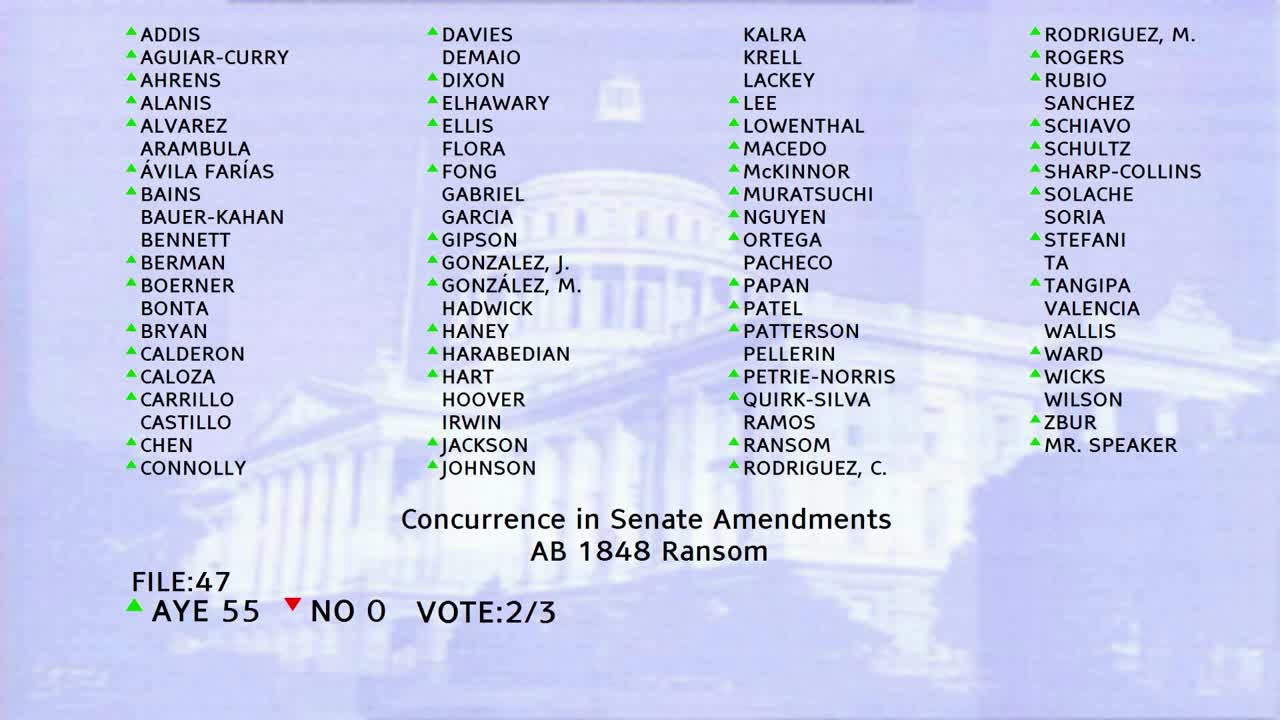 41SEC
Assembly Floor
 1MIN
Senate Floor
 59SEC
Senate Standing Committee on Appropriations
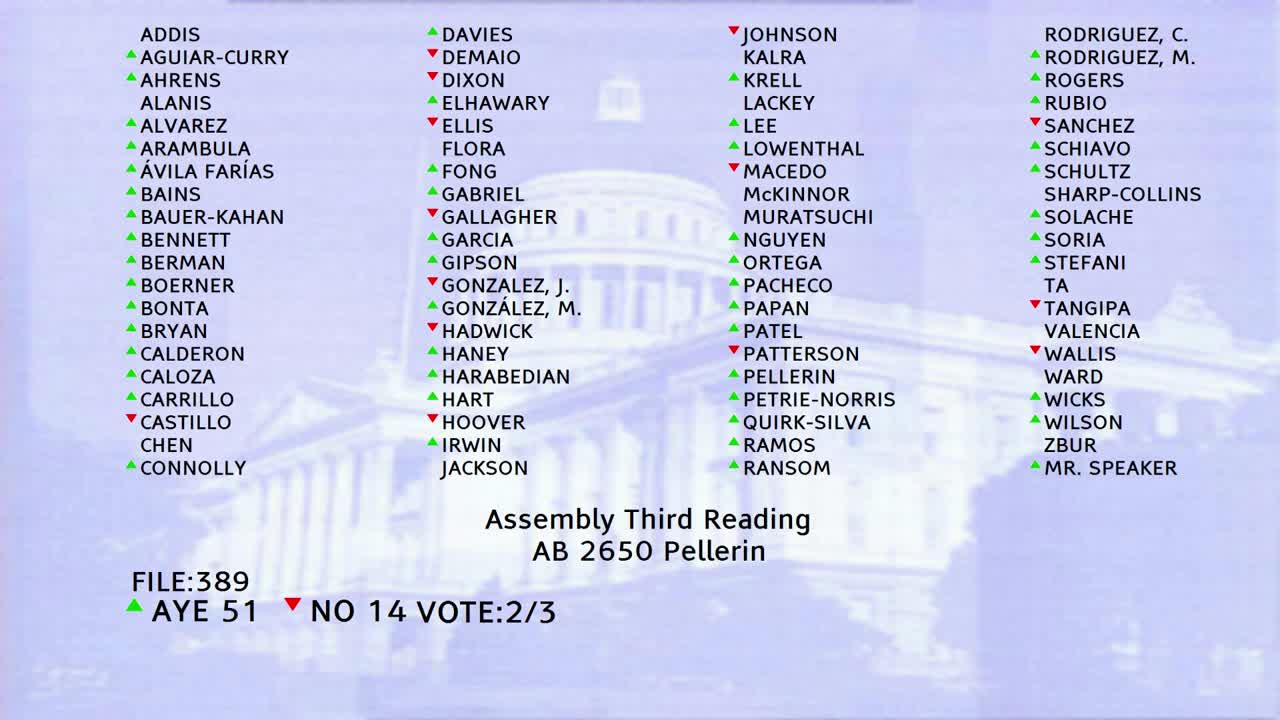 45SEC
Assembly Floor
Bill Author
Bill Co-Author(s):