AB 2494: State forests: forest management.
- Session Year: 2025-2026
- House: Assembly
- Latest Version Date: 2026-09-01
Current Status:
Failed
(2026-09-18: Vetoed by Governor.)
Introduced
In Committee
Awaiting First Chamber Vote
Passed First Chamber
In Committee
Awaiting Second Chamber Vote
Passed Second Chamber
Enacted
(1) Existing law authorizes the Department of Forestry and Fire Protection to engage in management of state forests and defines management for purposes of the state forests as a means of handling forest crop and forest soil to achieve maximum sustained production of high-quality forest products while giving consideration to values relating to, among other values, recreation, watershed, and wildlife, as provided.
This bill would redefine management for purposes of state forests as the handling of forest vegetation, water, and soils within the demonstration state forest system for public benefits, as described to include, among other things, watershed health and wildfire resilience.
(2)Existing law declares it is in the interest of the welfare of the people of the state and their industries and other activities involving the use of wood, lumber, poles, piling, wood pulp, and other forest products that desirable cutover forest lands be made fully productive and that the holding and reforestation of such lands is a necessary measure predicated on waning supplies of original old growth timber, as provided. Existing law further declares it is in the interest of the welfare of the people of the state that the state retain the existing land base of state forests in timber production for research and demonstration. Existing law requires the Secretary of the Natural Resources Agency, in consultation with the Secretary for Environmental Protection, to, on or before January 10 of each year, submit to the Joint Legislative Budget Committee a report on the activities of all state departments, agencies, and boards relating to forest and timberland regulation. Existing law requires this report to include, among other things, the number of timber harvest plans reviewed in the most recent fiscal year, as specified, and the average time for plan review.
This bill would repeal these provisions and instead declare, among other things, that the purpose of the demonstration state forest system is to acquire lands, the reforestation or restoration of which is not assured under private ownership, to achieve the public benefits as described in paragraph (1) through means that include, but are not limited to, multibenefit forest management. The bill would authorize the Secretary of the Natural Resources Agency to enter into, and would require the secretary to make good faith efforts to collaboratively develop, comanagement agreements with California Native American tribes, as defined, to incorporate local traditional ecological knowledge and local indigenous knowledge into the management direction of a forest in the demonstration state forest system, as provided. The bill would require the annual report submitted to the Joint Legislative Budget Committee to also include the number of timber harvest plans approved in the most recent fiscal year and the median time for plan review and would make other nonsubstantive changes relating to the report.
The bill would require research to be allowed on land in the demonstration state forest system that informs forest management strategies, science-based decisionmaking, biodiversity, durable onsite carbon storage or sequestration, habitat, water and soil quality, watershed health, tribal stewardship, or other goals that further healthy and resilient ecosystems. The bill would authorize timber harvesting within the demonstration state forest system if in furtherance of specified objectives.
(3)Existing law requires the management of state forests and the cutting and sale of timber and other forest products from state forests to conform with regulations prepared by the Director of Forestry and Fire Protection and approved by the State Board of Forestry and Fire Protection. Existing law requires the regulations to conform with forest management practices designed to achieve maximum sustained production of high-quality forest products while giving consideration to values relating to, among other values, recreation, watershed, and wildlife, as specified. Existing law authorizes state forest lands to be used for grazing and mining purposes pursuant to regulations established by the board. Under existing law, a person who violates the rules and regulations pertaining to the state forests established by the board is guilty of a misdemeanor.
The bill would instead require the management of demonstration state forests and the cutting and sale of timber and other forest products from demonstration state forests to conform with regulations prepared by the Director of Forestry and Fire Protection and approved by the board. The bill would repeal the authorization for state forest lands to be used for mining purposes, except as provided. The bill would require the regulations permitting prescribed herbivory, recreation concession, and surface mining for forest-related work and restoration purposes, including, but not limited to, the construction of watercourse crossings, on state forest lands to be updated to reflect the redefinition of management. Because a violation of these regulations would be a crime, the bill would impose a state-mandated local program.
Existing law requires the department to prepare a map and data relating to the forest conditions, as provided. Existing law requires the department, in preparing the map and data, to be guided by a specified report.
This bill would require the department to be guided by consultation with the board instead of by the specified report.
Existing law declares that it is the policy of the state to establish and preserve an intensively managed, multifaceted research forest, known as the Soquel Demonstration State Forest, which is representative of forest activities as a living forest in the County of Santa Cruz, as provided. Existing law establishes the Legislatures intent relating to the demonstration state forest. Existing law requires that income from the demonstration state forest property sustain all costs of operation and provide income for research and educational purposes. Existing law requires the department to adopt a general plan for the demonstration state forest, as provided.
This bill would instead declare that it is the policy of the state to establish and conserve the Soquel Demonstration State Forest and would revise the Legislatures intent relating to the demonstration state forest, as provided. The bill would require that income from the demonstration state forest property to additionally provide income for recreation. The bill would require the board, instead of the department, to adopt a forest management plan for the demonstration state forest, as specified.
(4)Existing law authorizes the department to collect recreational user fees for overnight camping and reserved group activities in a demonstration state forest. Existing law prohibits the department from charging a fee that exceeds the amount necessary to reimburse the departments costs for maintenance and improvement of campground facilities, associated recreational facilities, natural environment, and access thereto. Existing law requires all user fees collected by the department to be deposited into the Forest Resources Improvement Fund and requires the fees to be used, upon appropriation by the Legislature, to reimburse the departments cost of maintaining and improving the campground facilities, associated recreational facilities, natural environment, and access thereto. Under existing law, the Forest Resources Improvement Fund is the depository for all revenue derived from the receipts from the sale of forest products, as defined, from state forests to support specified operations. Existing law authorizes money in the Forest Resource Improvement Fund to only be expended, upon appropriation by the Legislature, for the cost of operations associated with management of lands held in trust by the state and operated as demonstration state forests, as specified.
This bill would repeal the prohibition on the department regarding charging a fee that exceeds the amount necessary to reimburse the departments costs for maintenance and improvement, as provided. The bill would require any other funds generated by a demonstration state forest to be deposited into the Forest Resources Improvement Fund.
(5)This bill would incorporate additional changes to Sections 4629.6 and 4629.8 of the Public Resources Code proposed by AB 706 to be operative only if this bill and AB 706 are enacted and this bill is enacted last.
(6)The California Constitution requires the state to reimburse local agencies and school districts for certain costs mandated by the state. Statutory provisions establish procedures for making that reimbursement.
This bill would provide that no reimbursement is required by this act for a specified reason.
(1) Existing law authorizes the Department of Forestry and Fire Protection to engage in management of state forests and defines management for purposes of the state forests as a means of handling forest crop and forest soil to achieve maximum sustained production of high-quality forest products while giving consideration to values relating to, among other values, recreation, watershed, and wildlife, as provided.
This bill would redefine management for purposes of state forests as the handling of forest vegetation, water, and soils within the demonstration state forest system for public benefits, as described. described to include, among other things, watershed health and wildfire resilience.
(2)Existing law declares it is in the interest of the welfare of the people of the state and their industries and other activities involving the use of wood, lumber, poles, piling, wood pulp, and other forest products that desirable cutover forest lands be made fully productive and that the holding and reforestation of such lands is a necessary measure predicated on waning supplies of original old growth timber, as provided. Existing law further declares it is in the interest of the welfare of the people of the state that the state retain the existing land base of state forests in timber production for research and demonstration. Existing law requires the Secretary of the Natural Resources Agency, in consultation with the Secretary for Environmental Protection, to, on or before January 10 of each year, submit to the Joint Legislative Budget Committee a report on the activities of all state departments, agencies, and boards relating to forest and timberland regulation. Existing law requires this report to include, among other things, the number of timber harvest plans reviewed in the most recent fiscal year, as specified, and the average time for plan review.
This bill would repeal these provisions and instead declare, among other things, that the purpose of the demonstration state forest system is to acquire lands, the reforestation or restoration of which is not assured under private ownership, to manage the land for public benefit, as specified. achieve the public benefits as described in paragraph (1) through means that include, but are not limited to, multibenefit forest management. The bill would authorize the Secretary of the Natural Resources Agency to enter into, and would require the secretary to make good faith efforts to collaboratively develop, comanagement agreements with California Native American tribes, as defined, to incorporate local traditional ecological knowledge and local indigenous knowledge into the management direction of a forest in the demonstration state forest system, as provided. The bill would require the annual report submitted to the Joint Legislative Budget Committee to also include the number of timber harvest plans approved in the most recent fiscal year and the median time for plan review and would make other nonsubstantive changes relating to the report.
The bill would require research to be allowed on land in the demonstration state forest system that informs forest management strategies, science-based decisionmaking, biodiversity, durable onsite carbon storage or sequestration, habitat, water and soil quality, watershed health, tribal stewardship, or other goals that further healthy and resilient ecosystems. The bill would authorize timber harvesting within the demonstration state forest system if in furtherance of specified objectives.
(3)Existing law requires the management of state forests and the cutting and sale of timber and other forest products from state forests to conform with regulations prepared by the Director of Forestry and Fire Protection and approved by the State Board of Forestry and Fire Protection. Existing law requires the regulations to conform with forest management practices designed to achieve maximum sustained production of high-quality forest products while giving consideration to values relating to, among other values, recreation, watershed, and wildlife, as specified. Existing law authorizes state forest lands to be used for grazing and mining purposes pursuant to regulations established by the board. Under existing law, a person who violates the rules and regulations pertaining to the state forests established by the board is guilty of a misdemeanor.
The bill would instead require the management of demonstration state forests and the cutting and sale of timber and other forest products from demonstration state forests to conform with regulations prepared by the Director of Forestry and Fire Protection and approved by the board. The bill would repeal the authorization for state forest lands to be used for mining purposes, except as provided. The bill would require the regulations permitting prescribed herbivory, recreation concession, and surface mining for forest-related work and restoration purposes, including, but not limited to, the construction of watercourse crossings, on state forest lands to be updated to reflect the redefinition of management. Because a violation of these regulations would be a crime, the bill would impose a state-mandated local program.
Existing law requires the department to prepare a map and data relating to the forest conditions, as provided. Existing law requires the department, in preparing the map and data, to be guided by a specified report.
This bill would require the department to be guided by consultation with the board instead of by the specified report.
Existing law declares that it is the policy of the state to establish and preserve an intensively managed, multifaceted research forest, known as the Soquel Demonstration State Forest, which is representative of forest activities as a living forest in the County of Santa Cruz, as provided. Existing law establishes the Legislatures intent relating to the demonstration state forest. Existing law requires that income from the demonstration state forest property sustain all costs of operation and provide income for research and educational purposes. Existing law requires the department to adopt a general plan for the demonstration state forest, as provided.
This bill would instead declare that it is the policy of the state to establish and conserve the Soquel Demonstration State Forest and would revise the Legislatures intent relating to the demonstration state forest, as provided. The bill would require that income from the demonstration state forest property to additionally provide income for recreation. The bill would require the board, instead of the department, to adopt a forest management plan for the demonstration state forest, as specified.
(4)Existing law requires the Secretary of the Natural Resources Agency, in consultation with the Secretary for Environmental Protection, to submit a report to the Joint Legislative Budget Committee on the activities of all state departments, agencies, and boards relating to forest and timberland regulation, as specified.This bill would, among other changes to the report, require the report include additional information, including, among other things, any identified staffing needs, by department, and costs per position, to support a more efficient review of timber harvest plans.(5)(4)Existing law authorizes the department to collect recreational user fees for overnight camping and reserved group activities in a demonstration state forest. Existing law prohibits the department from charging a fee that exceeds the amount necessary to reimburse the departments costs for maintenance and improvement of campground facilities, associated recreational facilities, natural environment, and access thereto. Existing law requires all user fees collected by the department to be deposited into the Forest Resources Improvement Fund and requires the fees to be used, upon appropriation by the Legislature, to reimburse the departments cost of maintaining and improving the campground facilities, associated recreational facilities, natural environment, and access thereto. Under existing law, the Forest Resources Improvement Fund is the depository for all revenue derived from the receipts from the sale of forest products, as defined, from state forests to support specified operations. Existing law authorizes money in the Forest Resource Improvement Fund to only be expended, upon appropriation by the Legislature, for the cost of operations associated with management of lands held in trust by the state and operated as demonstration state forests, as specified.
This bill would repeal the prohibition on the department regarding charging a fee that exceeds the amount necessary to reimburse the departments costs for maintenance and improvement, as provided. The bill would require any other funds generated by a demonstration state forest to be deposited into the Forest Resources Improvement Fund.
(5)This bill would incorporate additional changes to Sections 4629.6 and 4629.8 of the Public Resources Code proposed by AB 706 to be operative only if this bill and AB 706 are enacted and this bill is enacted last.
(6)The California Constitution requires the state to reimburse local agencies and school districts for certain costs mandated by the state. Statutory provisions establish procedures for making that reimbursement.
This bill would provide that no reimbursement is required by this act for a specified reason.
(1) Existing law authorizes the Department of Forestry and Fire Protection to engage in management of state forests and defines management for purposes of the state forests as a means of handling forest crop and forest soil to achieve maximum sustained production of high-quality forest products while giving consideration to values relating to, among other values, recreation, watershed, and wildlife, as provided.
This bill would redefine management for purposes of state forests as the handling of forest vegetation, water, and soils within the demonstration state forest system for public benefits, as described.
(2)Existing law declares it is in the interest of the welfare of the people of the state and their industries and other activities involving the use of wood, lumber, poles, piling, wood pulp, and other forest products that desirable cutover forest lands be made fully productive and that the holding and reforestation of such lands is a necessary measure predicated on waning supplies of original old growth timber, as provided. Existing law further declares it is in the interest of the welfare of the people of the state that the state retain the existing land base of state forests in timber production for research and demonstration.
This bill would repeal these provisions and instead declare, among other things, that the purpose of the demonstration state forest system is to acquire lands, the reforestation or restoration of which is not assured under private ownership, to manage the land for public benefit, including biodiversity conservation, recreation, ecosystem health, watershed health, and as a living laboratory for healthy forest structures. as specified. The bill would authorize the Secretary of the Natural Resources Agency to enter into into, and would require the secretary to make good faith efforts to collaboratively develop, comanagement agreements with California Native American tribes, as defined, to incorporate local traditional ecological knowledge and local indigenous knowledge into the management direction of a forest in the demonstration state forest system, as provided.
The bill would require research to be allowed on land in the demonstration state forest system that informs forest management strategies, science-based decisionmaking, biodiversity, durable onsite carbon storage or sequestration, habitat, water and soil quality, watershed health, tribal stewardship, or other goals that further healthy and resilient ecosystems. The bill would authorize timber harvesting within the demonstration state forest system if in furtherance of specified objectives.
(3)Existing law requires the management of state forests and the cutting and sale of timber and other forest products from state forests to conform with regulations prepared by the Director of Forestry and Fire Protection and approved by the State Board of Forestry and Fire Protection. Existing law requires the regulations to conform with forest management practices designed to achieve maximum sustained production of high-quality forest products while giving consideration to values relating to, among other values, recreation, watershed, and wildlife, as specified. Existing law authorizes state forest lands to be used for grazing and mining purposes pursuant to regulations established by the board. Under existing law, a person who violates the rules and regulations pertaining to the state forests established by the board is guilty of a misdemeanor.
The bill would instead require the management of demonstration state forests and the cutting and sale of timber and other forest products from demonstration state forests to conform with regulations prepared by the Director of Forestry and Fire Protection and approved by the State Board of Forestry and Fire Protection. board. The bill would repeal the authorization for state forest lands to be used for mining purposes, except as provided. The bill would require the regulations permitting prescribed herbivory, recreation concession, and surface mining for forest-related work, work and restoration purposes, including, but not limited to, the construction of watercourse crossings, on state forest lands to be updated to reflect the redefinition of management. Because a violation of these regulations would be a crime, the bill would impose a state-mandated local program.
Existing law requires the department to prepare a map and data relating to the forest conditions, as provided. Existing law requires the department, in preparing the map and data, to be guided by a specified report.
This bill would require the department to be guided by consultation with the board instead of by the specified report.
Existing law declares that it is the policy of the state to establish and preserve an intensively managed, multifaceted research forest, known as the Soquel Demonstration State Forest, which is representative of forest activities as a living forest in the County of Santa Cruz, as provided. Existing law establishes the Legislatures intent relating to the demonstration state forest. Existing law requires that income from the demonstration state forest property sustain all costs of operation and provide income for research and educational purposes. Existing law requires the department to adopt a general plan for the demonstration state forest, as provided.
This bill would instead declare that it is the policy of the state to establish and conserve the Soquel Demonstration State Forest and would revise the Legislatures intent relating to the demonstration state forest, as provided. The bill would require that income from the demonstration state forest property to additionally provide income for recreation. The bill would require the board, instead of the department, to adopt a forest management plan for the demonstration state forest, as specified.
(4)Existing law requires the Secretary of the Natural Resources Agency, in consultation with the Secretary for Environmental Protection, to submit a report to the Joint Legislative Budget Committee on the activities of all state departments, agencies, and boards relating to forest and timberland regulation, as specified.
This bill would, among other changes to the report, require the report include additional information, including, among other things, any identified staffing needs, by department, and costs per position, to support a more efficient review of timber harvest plans.
(5)Existing law authorizes the department to collect recreational user fees for overnight camping and reserved group activities in a demonstration state forest. Existing law prohibits the department from charging a fee that exceeds the amount necessary to reimburse the departments costs for maintenance and improvement of campground facilities, associated recreational facilities, natural environment, and access thereto. Existing law requires all user fees collected by the department to be deposited into the Forest Resources Improvement Fund and requires the fees to be used, upon appropriation by the Legislature, to reimburse the departments cost of maintaining and improving the campground facilities, associated recreational facilities, natural environment, and access thereto. Under existing law, the Forest Resources Improvement Fund is the depository for all revenue derived from the receipts from the sale of forest products, as defined, from state forests to support specified operations. Existing law authorizes money in the Forest Resource Improvement Fund to only be expended, upon appropriation by the Legislature, for the cost of operations associated with management of lands held in trust by the state and operated as demonstration state forests, as specified.
This bill would repeal the prohibition on the department regarding charging a fee that exceeds the amount necessary to reimburse the departments costs for maintenance and improvement, as provided. The bill would require any other funds generated by a demonstration state forest to be deposited into the Forest Resources Improvement Fund.
(6)The California Constitution requires the state to reimburse local agencies and school districts for certain costs mandated by the state. Statutory provisions establish procedures for making that reimbursement.
This bill would provide that no reimbursement is required by this act for a specified reason.
(1) Existing law authorizes the Department of Forestry and Fire Protection to engage in management of state forests and defines management for purposes of the state forests as a means of handling forest crop and forest soil to achieve maximum sustained production of high-quality forest products while giving consideration to values relating to, among other values, recreation, watershed, and wildlife, as provided.
This bill would redefine management for purposes of state forests as the handling of forest vegetation, water, and soils within state forests to maximize biodiversity conservation and wildfire resilience, while supporting durable onsite carbon storage and sequestration, watershed conservation, water quality enhancement, climate mitigation and resiliency goals, equitable forest access, wildlife and fish habitat, recreation opportunities, education, and compatible research efforts. The bill would require that all forest management practices recognized under specified forest practice regulations, to the extent consistent with this definition of management, be considered valid tools for achieving the above-described objectives. the demonstration state forest system for public benefits, as described.
(2)Existing law declares it is in the interest of the welfare of the people of the state and their industries and other activities involving the use of wood, lumber, poles, piling, wood pulp, and other forest products that desirable cutover forest lands be made fully productive and that the holding and reforestation of such lands is a necessary measure predicated on waning supplies of original old growth timber, as provided. Existing law further declares it is in the interest of the welfare of the people of the state that the state retain the existing land base of state forests in timber production for research and demonstration.
This bill would repeal these provisions and instead declare, among other things, that state forest the purpose of the demonstration state forest system is to acquire lands, as provided, should be restored to fulfill habitat and ecological functions, conditions, and processes, as provided. The bill would further declare it to be the policy of the state to respect California Native American tribal sovereignty and to seek opportunities for comanagement and integration of indigenous traditional ecological knowledge in forest management. The bill would further declare it to be the policy of the state, among other things, to accept or acquire lands, the reforestation or restoration of which is not assured under private ownership, to restore those lands with locally appropriate species and manage those lands for public benefit, and that the state should, among other things, retain the existing land base of demonstration state forests for research and demonstration purposes and allow the sale of timber and other forest products. manage the land for public benefit, including biodiversity conservation, recreation, ecosystem health, watershed health, and as a living laboratory for healthy forest structures. The bill would authorize the Secretary of the Natural Resources Agency to enter into comanagement agreements with California Native American tribes, as defined, to incorporate traditional ecological knowledge and indigenous knowledge into the management direction of a forest in the demonstration state forest system, as provided.
The bill would require research to be allowed on land in the demonstration state forest system that informs forest management strategies, science-based decisionmaking, biodiversity, durable onsite carbon storage or sequestration, habitat, water and soil quality, watershed health, tribal stewardship, or other goals that further healthy and resilient ecosystems. The bill would authorize timber harvesting within the demonstration state forest system if in furtherance of specified objectives.
(3)Existing law requires the management of state forests and the cutting and sale of timber and other forest products from state forests to conform with regulations prepared by the Director of Forestry and Fire Protection and approved by the State Board of Forestry and Fire Protection. Existing law requires the regulations to conform with forest management practices designed to achieve maximum sustained production of high-quality forest products while giving consideration to values relating to, among other values, recreation, watershed, and wildlife, as specified. Existing law authorizes state forest lands to be used for grazing and mining purposes pursuant to regulations established by the board. Under existing law, a person who violates the rules and regulations pertaining to the state forests established by the board is guilty of a misdemeanor.
The bill would instead require the management of demonstration state forests and the cutting and sale of timber and other forest products from demonstration state forests to conform with regulations prepared by the Director of Forestry and Fire Protection and approved by the State Board of Forestry and Fire Protection. The bill would require the sale of timber and other forest products from state forests to occur in a manner consistent with the definition of management, as provided. The bill would require the state board, among other things, to establish measurable goals and include performance metrics in the forest management plan for each state forest to cumulatively track progress toward restoration and management targets. The bill would repeal the authorization for state forest lands to be used for mining purposes, except as provided. The bill would require the regulations permitting prescribed herbivory, recreation concession, and surface mining of onsite existing rock pits for forest-related road work work, including, but not limited to, the construction of watercourse crossings, on state forest lands to be updated to reflect the redefinition of management. Because a violation of these regulations would be a crime, the bill would impose a state-mandated local program.
(4)Existing law requires the Secretary of the Natural Resources Agency, in consultation with the Secretary for Environmental Protection, to submit a report to the Joint Legislative Budget Committee on the activities of all state departments, agencies, and boards relating to forest and timberland regulation, as specified.
This bill would, among other changes to the report, require the report include additional information information, including, among other things, any identified staffing needs, by department, and costs per position, to support a more efficient review of timber harvest plans.
(5)Existing law authorizes the department to collect recreational user fees for overnight camping and reserved group activities in a demonstration state forest. Existing law prohibits the department from charging a fee that exceeds the amount necessary to reimburse the departments costs for maintenance and improvement of campground facilities, associated recreational facilities, natural environment, and access thereto. Existing law requires all user fees collected by the department to be deposited into the Forest Resources Improvement Fund and requires the fees to be used, upon appropriation by the Legislature, to reimburse the departments cost of maintaining and improving the campground facilities, associated recreational facilities, natural environment, and access thereto. Under existing law, the Forest Resources Improvement Fund is the depository for all revenue derived from the receipts from the sale of forest products, as defined, from state forests to support specified operations. Existing law authorizes money in the Forest Resource Improvement Fund to only be expended, upon appropriation by the Legislature, for the cost of operations associated with management of lands held in trust by the state and operated as demonstration state forests, as specified.
This bill would repeal the prohibition on the department regarding charging a fee that exceeds the amount necessary to reimburse the departments costs for maintenance and improvement, as provided. The bill would require any other funds generated by a demonstration state forest to be deposited into the Forest Resources Improvement Fund.
(6)The California Constitution requires the state to reimburse local agencies and school districts for certain costs mandated by the state. Statutory provisions establish procedures for making that reimbursement.
This bill would provide that no reimbursement is required by this act for a specified reason.
(1) Existing law authorizes the Department of Forestry and Fire Protection to engage in management of state forests and defines management for purposes of the state forests as a means of handling forest crop and forest soil to achieve maximum sustained production of high-quality forest products while giving consideration to values relating to, among other values, recreation, watershed, and wildlife, as provided.
This bill would redefine management for purposes of state forests as the handling of forest vegetation vegetation, water, and soils within state forests for to maximize biodiversity conservation and wildfire resilience, while supporting durable onsite carbon storage and sequestration, watershed conservation, water quality enhancement, climate mitigation and resiliency goals, equitable forest access, wildlife and fish habitat, recreation opportunities, education, and compatible research efforts. The bill would specify require that timber harvesting all forest management practices recognized under specified forest practice regulations, to the extent consistent with this definition is permissible. definition of management, be considered valid tools for achieving the above-described objectives.
(2)Existing law declares it is in the interest of the welfare of the people of the state and their industries and other activities involving the use of wood, lumber, poles, piling, wood pulp, and other forest products that desirable cutover forest lands be made fully productive and that the holding and reforestation of such lands is a necessary measure predicated on waning supplies of original old growth timber, as provided. Existing law further declares it is in the interest of the welfare of the people of the state that the state retain the existing land base of state forests in timber production for research and demonstration.
This bill would instead declare, among other things, that state forest lands, as provided, should be restored to fulfill habitat and ecological functions and processes, and managed consistent with the definition of management, and functions, conditions, and processes, as provided. The bill would further declare it to be the policy of the state to respect California Native American tribal sovereignty and to seek opportunities for comanagement and integration of indigenous traditional ecological knowledge in forest management. The bill would instead further declare it to be the policy of the state, among other things, to accept or acquire lands, the reforestation or restoration of which is not assured under private ownership, to restore those lands with locally appropriate species and manage those lands for public benefit, and that the state should should, among other things, retain the existing land base of demonstration state forests primarily for research and demonstration purposes and allow the sale of timber and other forest products.
(3)Existing law requires the management of state forests and the cutting and sale of timber and other forest products from state forests to conform with regulations prepared by the Director of Forestry and Fire Protection and approved by the State Board of Forestry and Fire Protection. Existing law requires the regulations to conform with forest management practices designed to achieve maximum sustained production of high-quality forest products while giving consideration to values relating to, among other values, recreation, watershed, and wildlife, as specified. Existing law authorizes state forest lands to be used for grazing and mining purposes pursuant to regulations established by the board. Under existing law, a person who violates the rules and regulations pertaining to the state forests established by the board is guilty of a misdemeanor.
The bill would instead require the management of demonstration state forests and the cutting and sale of timber and other forest products from demonstration state forests to conform with regulations prepared by the Director of Forestry and Fire Protection and approved by the State Board of Forestry and Fire Protection. The bill would require the sale of timber and other forest products from state forests to occur in a manner consistent with the definition of management, as provided. The bill would require the state board, among other things, to establish measurable goals and include performance metrics in the forest management plan for each state forest to cumulatively track progress toward restoration and management targets. The bill would repeal the authorization for state forest lands to be used for mining purposes. purposes, except as provided. The bill would require the regulations permitting grazing prescribed herbivory, recreation concession, and surface mining of onsite existing rock pits for forest-related road work on state forest lands to be updated to reflect the redefinition of management. Because a violation of these regulations would be a crime, the bill would impose a state-mandated local program.
(4)Existing law requires the Secretary of the Natural Resources Agency, in consultation with the Secretary for Environmental Protection, to submit a report to the Joint Legislative Budget Committee on the activities of all state departments, agencies, and boards relating to forest and timberland regulation, as specified.
This bill would, among other changes to the report, require the report include additional information including, among other things, any identified staffing needs, by department, and costs per position, to support a more efficient review of timber harvest plans.
(5)Existing law authorizes the department to collect recreational user fees for overnight camping and reserved group activities in a demonstration state forest. Existing law prohibits the department from charging a fee that exceeds the amount necessary to reimburse the departments costs for maintenance and improvement of campground facilities, associated recreational facilities, natural environment, and access thereto. Existing law requires all user fees collected by the department to be deposited into the Forest Resources Improvement Fund and requires the fees to be used, upon appropriation by the Legislature, to reimburse the departments cost of maintaining and improving the campground facilities, associated recreational facilities, natural environment, and access thereto. Under existing law, the Forest Resources Improvement Fund is the depository for all revenue derived from the receipts from the sale of forest products, as defined, from state forests to support specified operations. Existing law authorizes money in the Forest Resource Improvement Fund to only be expended, upon appropriation by the Legislature, for the cost of operations associated with management of lands held in trust by the state and operated as demonstration state forests, as specified.
Existing law creates the Timber Regulation and Forest Restoration Fund in the State Treasury and requires that specified revenues received from a lumber or engineered wood products assessment, less amounts deducted for refunds and reimbursements, be deposited in the Timber Regulation and Forest Restoration Fund and, upon appropriation by the Legislature, be used for specified purposes, including for forest resources improvement grants and projects administered by the department.This bill would instead require that all recreational user fees received by the department be deposited into the Timber Regulation and Forest Restoration Fund, as provided. The bill would instead also require that all revenue derived from the receipts from the sales of forest products, and any other funds generated by a demonstration state forest, be deposited in the Timber Regulation and Forest Restoration Fund, except as provided. The bill would require moneys deposited in the Timber Regulation and Forest Restoration Fund to, upon appropriation by the Legislature, be expended to support demonstration state forests, as provided. The bill would repeal the prohibition on the department regarding charging a fee that exceeds the amount necessary to reimburse the departments costs for maintenance and improvement, as provided. The bill would require any other funds generated by a demonstration state forest to be deposited into the Forest Resources Improvement Fund.
(6)The California Constitution requires the state to reimburse local agencies and school districts for certain costs mandated by the state. Statutory provisions establish procedures for making that reimbursement.
This bill would provide that no reimbursement is required by this act for a specified reason.
(1) Existing law authorizes the Department of Forestry and Fire Protection to engage in management of state forests and defines management for purposes of the state forests as a means of handling forest crop and forest soil to achieve maximum sustained production of high-quality forest products while giving consideration to values relating to, among other values, recreation, watershed, and wildlife, as provided.
This bill would redefine management for purposes of state forests as the handling of forest vegetation and soils within state forests for biodiversity conservation and fire wildfire resilience, while maximizing the promotion of supporting durable onsite carbon storage and sequestration, climate mitigation and resiliency goals, equitable forest access, wildlife and fish habitat, recreation opportunities, and compatible research efforts. The bill would specify that timber harvesting consistent with this definition is permissible.
(2)Existing law declares it is in the interest of the welfare of the people of the state and their industries and other activities involving the use of wood, lumber, poles, piling, wood pulp, and other forest products that desirable cutover forest lands be made fully productive and that the holding and reforestation of such lands is a necessary measure predicated on waning supplies of original old growth timber, as provided. Existing law further declares it is in the interest of the welfare of the people of the state that the state retain the existing land base of state forests in timber production for research and demonstration.
This bill would instead declare declare, among other things, that desirable state forest lands lands, as provided, should be restored to fulfill ecological conditions functions and processes, and managed consistent with the definition of management, and would further declare it to be the policy of the state to be to respect California Native American tribal sovereignty and to seek opportunities for comanagement and integration of indigenous traditional ecological knowledge in forest management. The bill would instead declare it to be the policy of the state, among other things, to accept or acquire lands, the reforestation or restoration of which is not assured under private ownership, to restore those lands with locally appropriate species and manage those lands for public benefit, and that the state should retain the existing land base of state forests primarily for research and demonstration purposes and allow the sale of timber and other forest products only when harvest occurs for ecological restoration or research purposes. products.
(3)Existing law requires the management of state forests and the cutting and sale of timber and other forest products from state forests to conform with regulations prepared by the Director of Forestry and Fire Protection and approved by the State Board of Forestry and Fire Protection. Existing law requires the regulations to conform with forest management practices designed to achieve maximum sustained production of high-quality forest products while giving consideration to values relating to, among other values, recreation, watershed, and wildlife, as specified. Existing law authorizes state forest lands to be used for grazing and mining purposes pursuant to regulations established by the board. Under existing law, a person who violates the rules and regulations pertaining to the state forests established by the board is guilty of a misdemeanor.
The bill would prohibit require the sale of timber and other forest products from state forests unless harvest occurs for ecological restoration or research purposes to occur in a manner consistent with the definition of management, as provided. The bill would repeal the authorization for state forest lands to be used for mining purposes. The bill would require the regulations concerning the management of state forests and the cutting and sale of timber and other forest products to prioritize management practices, as specified. The bill would require the regulations permitting grazing on state forest lands to be updated to reflect the redefinition of management. Because a violation of these regulations would be a crime, the bill would impose a state-mandated local program.
(4)Existing law requires the Secretary of the Natural Resources Agency, in consultation with the Secretary for Environmental Protection, to submit a report to the Joint Legislative Budget Committee on the activities of all state departments, agencies, and boards relating to forest and timberland regulation, as specified.
This bill would, among other changes to the report, require the report include additional information including, among other things, any identified staffing needs, by department, and costs per position, to support a more efficient review of timber harvest plans.
(5)Existing law authorizes the department to collect recreational user fees for overnight camping and reserved group activities in a demonstration state forest. Existing law prohibits the department from charging a fee that exceeds the amount necessary to reimburse the departments costs for maintenance and improvement of campground facilities, associated recreational facilities, natural environment, and access thereto. Existing law requires all user fees collected by the department to be deposited into the Forest Resources Improvement Fund and requires the fees to be used, upon appropriation by the Legislature, to reimburse the departments cost of maintaining and improving the campground facilities, associated recreational facilities, natural environment, and access thereto. Under existing law, the Forest Resources Improvement Fund is the depository for all revenue derived from the receipts from the sale of forest products, as defined, from state forests to support specified operations. Existing law authorizes money in the Forest Resource Improvement Fund to only be expended, upon appropriation by the Legislature, for the cost of operations associated with management of lands held in trust by the state and operated as demonstration state forests, as specified.
Existing law creates the Timber Regulation and Forest Restoration Fund in the State Treasury and requires that specified revenues received from a lumber or engineered wood products assessment, less amounts deducted for refunds and reimbursements, be deposited in the Timber Regulation and Forest Restoration Fund and, upon appropriation by the Legislature, be used for specified purposes, including for forest resources improvement grants and projects administered by the department.
This bill would instead require that all recreational user fees received by the department be deposited into the Timber Regulation and Forest Restoration Fund, as provided. The bill would instead also require that all revenue derived from the receipts from the sales of forest products, and any other funds generated by a demonstration state forest, be deposited in the Timber Regulation and Forest Restoration Fund, except as provided. The bill would require moneys deposited in the Timber Regulation and Forest Restoration Fund to, upon appropriation by the Legislature, be expended to support demonstration state forests, as provided. The bill would repeal the prohibition on the department regarding charging a fee that exceeds the amount necessary to reimburse the departments costs for maintenance and improvement, as provided.
(6)The California Constitution requires the state to reimburse local agencies and school districts for certain costs mandated by the state. Statutory provisions establish procedures for making that reimbursement.
This bill would provide that no reimbursement is required by this act for a specified reason.
(1) Existing law authorizes the Department of Forestry and Fire Protection to engage in management of state forests and defines management for purposes of the state forests as a means of handling forest crop and forest soil to achieve maximum sustained production of high-quality forest products while giving consideration to values relating to, among other values, recreation, watershed, and wildlife, as provided.
This bill would redefine management for purposes of state forests as the handling of forest vegetation and soils within state forests for biodiversity conservation and fire resilience, while maximizing the promotion of durable onsite carbon storage and sequestration, climate resiliency goals, equitable forest access, wildlife and recreation opportunities, and compatible research efforts.
(2)Existing law declares it is in the interest of the welfare of the people of the state and their industries and other activities involving the use of wood, lumber, poles, piling, wood pulp, and other forest products that desirable cutover forest lands be made fully productive and that the holding and reforestation of such lands is a necessary measure predicated on waning supplies of original old growth timber, as provided. Existing law further declares it is in the interest of the welfare of the people of the state that the state retain the existing land base of state forests in timber production for research and demonstration.
This bill would instead declare that desirable forest lands should be restored to fulfill ecological conditions and processes, and managed consistent with the definition of management, and would further declare policy of the state to be to respect California Native American tribal sovereignty and to seek opportunities for comanagement and integration of indigenous traditional ecological knowledge in forest management. The bill would instead declare that the state should retain the existing land base of state forests primarily for research and demonstration purposes and allow the sale of timber and other forest products only when harvest occurs for ecological restoration or research purposes.
(3)Existing law requires the management of state forests and the cutting and sale of timber and other forest products from state forests to conform with regulations prepared by the Director of Forestry and Fire Protection and approved by the State Board of Forestry and Fire Protection. Existing law requires the regulations to conform with forest management practices designed to achieve maximum sustained production of high-quality forest products while giving consideration to values relating to, among other values, recreation, watershed, and wildlife, as specified. Existing law authorizes state forest lands to be used for grazing and mining purposes pursuant to regulations established by the board. Under existing law, a person who violates the rules and regulations pertaining to the state forests established by the board is guilty of a misdemeanor.
The bill would prohibit the sale of timber and other forest products from state forests unless harvest occurs for ecological restoration or research purposes in a manner consistent with the definition of management, as provided. The bill would repeal the authorization for state forest lands to be used for mining purposes. The bill would require the regulations concerning the management of state forests and the cutting and sale of timber and other forest products to prioritize management practices, as specified. The bill would require the regulations permitting grazing on state forest lands to be updated to reflect the redefinition of management. Because a violation of these regulations would be a crime, the bill would impose a state-mandated local program.
(4)Existing law requires the Secretary of the Natural Resources Agency, in consultation with the Secretary for Environmental Protection, to submit a report to the Joint Legislative Budget Committee on the activities of all state departments, agencies, and boards relating to forest and timberland regulation, as specified.
This bill would, among other changes to the report, require the report include additional information including, among other things, any identified staffing needs, by department, and costs per position, to support a more efficient review of timber harvest plans.
(5)Existing law authorizes the department to collect recreational user fees for overnight camping and reserved group activities in a demonstration state forest. Existing law requires all user fees collected by the department to be deposited into the Forest Resources Improvement Fund and requires the fees to be used, upon appropriation by the Legislature, to reimburse the departments cost of maintaining and improving the campground facilities, associated recreational facilities, natural environment, and access thereto. Under existing law, the Forest Resources Improvement Fund is the depository for all revenue derived from the receipts from the sale of forest products, as defined, from state forests to support specified operations. Existing law authorizes money in the Forest Resource Improvement Fund to only be expended, upon appropriation by the Legislature, for the cost of operations associated with management of lands held in trust by the state and operated as demonstration state forests, as specified.
Existing law creates the Timber Regulation and Forest Restoration Fund in the State Treasury and requires that specified revenues received from a lumber or engineered wood products assessment, less amounts deducted for refunds and reimbursements, be deposited in the Timber Regulation and Forest Restoration Fund and, upon appropriation by the Legislature, be used for specified purposes, including for forest resources improvement grants and projects administered by the department.
This bill would instead require that all recreational user fees received by the department be deposited into the Timber Regulation and Forest Restoration Fund, as provided. The bill would instead also require that all revenue derived from the receipts from the sales of forest products, and any other funds generated by a demonstration state forest, be deposited in the Timber Regulation and Forest Restoration Fund, except as provided. The bill would require moneys deposited in the Timber Regulation and Forest Restoration Fund to, upon appropriation by the Legislature, be expended to support demonstration state forests, as provided.
(6)The California Constitution requires the state to reimburse local agencies and school districts for certain costs mandated by the state. Statutory provisions establish procedures for making that reimbursement.
This bill would provide that no reimbursement is required by this act for a specified reason.
The Legislature finds and declares all of the following:
(a)California faces significant challenges related to biodiversity, climate change, wildfire-resilient forests, postfire recovery of forests, and public access to nature, and has set statewide strategies for addressing those challenges, including the nature-based climate solution climate targets, the California Forest Carbon Plan, the Natural and Working Lands Climate Smart Strategy, the State Air Resources Boards Natural and Working Lands Carbon Inventory and Scoping Plan, Pathways to 30x30 biodiversity conservation targets, the Wildfire and Landscape Resilience Action Plan, and the Outdoors for All Initiative. Lands that are owned and managed by the state should make a greater contribution toward reaching these goals than privately owned lands.
(b)California seeks to develop management strategies to promote science-based decisionmaking that addresses diverse goals and objectives for landowners and forest managers, while promoting healthy forests that are resilient to disturbance.
(c)Demonstrating land management tools for small public, private, tribal, and nongovernmental landowners improves the ability of landowners to manage forested lands for ecosystem health.
(d)The Demonstration State Forest system provides for a living laboratory to exhibit tools available to manage forests in a variety of stand conditions and to test research hypotheses that may advise management techniques or supply information on forest health.
(e)It is in the interest of the state to restore ecosystem conditions and functions in demonstration state forest lands and to develop or maintain stand conditions that reduce vulnerability to disturbance.
(f)Demonstration state forests are public lands and important recreation assets, and should be managed to support recreational opportunities.
(g)It is the policy of the state to respect California Native American tribal sovereignty and to seek opportunities for comanagement and integration of local indigenous traditional ecological knowledge in forest management.
(h)The state recognizes the value of partnerships among tribes, local communities, nonprofit stewardship organizations, educational institutions, recreation interests, and public agencies in advancing forest stewardship, ecological restoration, public access, tribal cultural resource protection, and long-term forest resilience.
(i)It is the policy of the state to accept or acquire lands, the reforestation or restoration of which is not assured under private ownership, to restore those lands for resiliency to disturbance and improved ecosystem function.
(j)It is the policy of the state to encourage the prudent and responsible management of Californias forest resources to meet the publics need for forest products.
(k)It is the policy of the state to protect old growth trees.
(l)The creation of stand conditions that are resilient to disturbance provides for multiple cobenefits relating to carbon capture, water and soil health, species diversity, recreational opportunities, and research.
SEC. 2.Section 4629.6 of the Public Resources Code is amended to read:4629.6.Moneys deposited in the fund shall, upon appropriation by the Legislature, only be expended for the following purposes:
(a)To reimburse the State Board of Equalization for its administrative costs associated with the administration, collection, audit, and issuance of refunds related to the lumber products and engineered wood assessment established pursuant to Section 4629.5.
(b)To pay refunds issued pursuant to Part 30 (commencing with Section 55001) of Division 2 of the Revenue and Taxation Code.
(c)To support the activities and costs of the department, the Department of Conservation, the Department of Fish and Wildlife, the State Water Resources Control Board, and regional water quality control boards associated with the review of projects or permits necessary to conduct timber operations. On or after July 1, 2013, except for fees applicable for fire prevention or protection within state responsibility area classified lands or timber yield assessments, no currently authorized or required fees shall be charged by the agencies listed in this subdivision for activities or costs associated with the review of a project, inspection and oversight of projects, and permits necessary to conduct timber operations of those departments and boards.
(d)For transfer to the departments Forest Improvement Program for forest resources improvement grants and projects administered by the department pursuant to Chapter 1 (commencing with Section 4790) and Chapter 2 (commencing with Section 4799.06) of Part 2.5.
(e)To fund existing restoration grant programs, with priority given to the Fisheries Restoration Grant Program administered by the Department of Fish and Wildlife and grant programs administered by state conservancies.
(f)(1)As a loan to the Department of Fish and Wildlife for activities to address environmental damage occurring on forest lands resulting from marijuana cultivation. Not more than five hundred thousand dollars ($500,000) may be loaned from the fund in a fiscal year pursuant to this paragraph. This paragraph shall become inoperative on July 1, 2017.
(2)Any funds deposited into the fund pursuant to subdivision (d) or (f) of Section 12025 or subdivision (b), (c), (e), or (f) of Section 12025.1 of the Fish and Game Code shall be credited toward loan repayment.
(3)Moneys from the General Fund shall not be used to repay a loan authorized pursuant to this subdivision.
(g)To support demonstration state forests, as a supplemental source, if necessary, to the moneys provided by the Forest Resources Improvement Fund, as established pursuant to Section 4799.13, as needed.
(h)To the department for fuel treatment grants and projects pursuant to authorities under the Wildland Fire Protection and Resources Management Act of 1978 (Article 1 (commencing with Section 4461) of Chapter 7).
(i)To the department to provide grants to local agencies responsible for fire protection, qualified nonprofits, recognized tribes, local and state governments, and resources conservation districts, undertaken on a state responsibility area (SRA) or on wildlands not in an SRA that pose a threat to the SRA, to reduce the costs of wildland fire suppression, reduce greenhouse gas emissions, promote adaptation of forested landscapes to changing climate, improve forest health, and protect homes and communities.
(j)To the Natural Resources Agency to provide a reasonable per diem for attendance at a meeting of the advisory body for the states forest practice program by a member of the body who is not an employee of a government agency.
SEC. 2.5.Section 4629.6 of the Public Resources Code is amended to read:4629.6.Moneys deposited in the fund shall, upon appropriation by the Legislature, only be expended for the following purposes:
(a)To reimburse the State Board of Equalization for its administrative costs associated with the administration, collection, audit, and issuance of refunds related to the lumber products and engineered wood assessment established pursuant to Section 4629.5.
(b)To pay refunds issued pursuant to Part 30 (commencing with Section 55001) of Division 2 of the Revenue and Taxation Code.
(c)To support the activities and costs of the department, the Department of Conservation, the Department of Fish and Wildlife, the State Water Resources Control Board, and regional water quality control boards associated with the review of projects or permits necessary to conduct timber operations. On or after July 1, 2013, except for fees applicable for fire prevention or protection within state responsibility area classified lands or timber yield assessments, no currently authorized or required fees shall be charged by the agencies listed in this subdivision for activities or costs associated with the review of a project, inspection and oversight of projects, and permits necessary to conduct timber operations of those departments and boards.
(d)For transfer to the departments Forest Improvement Program for forest resources improvement grants and projects administered by the department pursuant to Chapter 1 (commencing with Section 4790) and Chapter 2 (commencing with Section 4799.06) of Part 2.5.
(e)To fund existing restoration grant programs, with priority given to the Fisheries Restoration Grant Program administered by the Department of Fish and Wildlife and grant programs administered by state conservancies.
(f)To fund costs directly associated with only the administration, staffing, and creation of the FOREST Fund and FOREST Program as defined in Section 4773.1, not to exceed the fee revenue allocated for these purposes.
(g)To support demonstration state forests, as a supplemental source, if necessary, to the moneys provided by the Forest Resources Improvement Fund, as established pursuant to Section 4799.13, as needed.
(h)To the department for fuel treatment grants and projects pursuant to authorities under the Wildland Fire Protection and Resources Management Act of 1978 (Article 1 (commencing with Section 4461) of Chapter 7).
(i)To the department to provide grants to local agencies responsible for fire protection, qualified nonprofits, recognized tribes, local and state governments, and resources conservation districts, undertaken on a state responsibility area (SRA) or on wildlands not in an SRA that pose a threat to the SRA, to reduce the costs of wildland fire suppression, reduce greenhouse gas emissions, promote adaptation of forested landscapes to changing climate, improve forest health, and protect homes and communities.
(j)To the Natural Resources Agency to provide a reasonable per diem for attendance at a meeting of the advisory body for the states forest practice program by a member of the body who is not an employee of a government agency.
SEC. 3.Section 4629.8 of the Public Resources Code is amended to read:4629.8.(a)Funds deposited in the fund shall be appropriated in accordance with the following priorities:
(1)First priority shall be for funding associated with the administration and delivery of responsibilities identified in subdivisions (a) to (c), inclusive, of Section 4629.6.
(2)Only after paragraph (1) is funded, the second priority shall be, if deposits are sufficient in future years to maintain the fund, by 2016, at a minimum reserve of four million dollars ($4,000,000), for use and appropriation by the Legislature in years during which revenues to the account are projected to fall short of the ongoing budget allocations for support of the activities identified in paragraph (1).
(3)Only after paragraphs (1) and (2) are funded, the third priority shall be in support of activities designated in subdivisions (d) to (f), inclusive, of Section 4629.6.
(4)Only after paragraphs (1) to (3), inclusive, are funded, the fourth priority shall be to support the activities designated in subdivisions (g) to (j), inclusive, of Section 4629.6.
(b)Funds shall not be used to pay for or reimburse any requirements, including mitigation of a project proponent or applicant, as a condition of any permit.
SEC. 3.5.Section 4629.8 of the Public Resources Code is amended to read:4629.8.(a)Funds deposited in the fund shall be appropriated in accordance with the following priorities:
(1)First priority shall be for funding associated with the administration and delivery of responsibilities identified in subdivisions (a) to (c), inclusive, of Section 4629.6.
(2)Only after paragraph (1) is funded, the second priority shall be, if deposits are sufficient in future years to maintain the fund, by 2016, at a minimum reserve of four million dollars ($4,000,000), for use and appropriation by the Legislature in years during which revenues to the account are projected to fall short of the ongoing budget allocations for support of the activities identified in paragraph (1).
(3)Only after paragraphs (1) and (2) are funded, the third priority shall be in support of activities designated in subdivisions (d) to (f), inclusive, of Section 4629.6.
(4)Only after paragraphs (1) to (3), inclusive, are funded, the fourth priority shall be to support the activities designated in subdivisions (g) to (j), inclusive, of Section 4629.6.
(b)A purpose identified in a lower priority paragraph of subdivision (a) shall not receive an appropriation, allocation, transfer, encumbrance, or expenditure from the fund in a fiscal year unless each purpose identified in the higher priority paragraphs of subdivision (a) has first been funded for that fiscal year.
(c)Funds shall not be used to pay for or reimburse any requirements, including mitigation of a project proponent or applicant, as a condition of any permit.
SEC. 4.Section 4629.9 of the Public Resources Code is amended to read:4629.9.(a)On January 10, and annually thereafter on January 10, in conjunction with the Governors Budget, the Secretary of the Natural Resources Agency, in consultation with the Secretary for Environmental Protection, shall submit to the Joint Legislative Budget Committee a report on the activities of all state departments, agencies, and boards relating to forest and timberland regulation. This report shall include, at a minimum, all of the following:
(1)A listing, by organization, of the proposed total costs associated with the review, approval, and inspection of timber harvest plans and associated permits.
(2)The number of timber harvest plans, and acreage covered by the plans, reviewed and approved in the most recent fiscal year.
(3)To the extent feasible, a listing of activities, personnel, and funding, by department, for the forest practice program for the most recent fiscal year, and the preceding 10 fiscal years.
(4)The number of staff in each organization dedicated fully or partially to (A) review of timber harvest plans, and (B) other forestry-related activities, by geographical location in the state.
(5)The costs of other forestry-related activities undertaken.
(6)A summary of any process improvements identified by the administration as part of ongoing review of the timber harvest process, including data and technology improvement needs.
(7)Workload analysis for the forest practice program in each organization.
(8)In order to assess efficiencies in the program and the effectiveness of spending, a set of measures for, and a plan for collection of data on, the program, including, but not limited to:
(A)The number of timber harvest plans reviewed.
(B)Average and median time for plan review.
(C)Number of field inspections per inspector.
(D)Number of acres under active plans.
(E)Number of violations.
(F)Evaluating ecological performance.
(b)A report required to be submitted pursuant to subdivision (a) shall be submitted in compliance with Section 9795 of the Government Code.
SEC. 5.Section 4631 of the Public Resources Code is repealed.SEC. 6.Section 4631 is added to the Public Resources Code, to read:4631.(a)The purpose of the demonstration state forest system is to acquire lands, the reforestation or restoration of which is not assured under private ownership, to achieve the public benefit as described in Section 4639 through means that include, but are not limited to, multibenefit forest management.
(b)Research on the demonstration state forest system shall inform management strategies that promote science-based decisionmaking addressing diverse goals and objectives, while promoting healthy forests that are resilient to disturbance.
(c)The demonstration state forests are to be managed for habitat and ecosystem conditions that provide a foundation for robust research programs, including, but not limited to, those that develop or maintain mature forest conditions. For purposes of this subdivision, managed shall have the same meaning as management in Section 4639.
(d)The state recognizes the importance of long-term management research and, in addition to providing demonstration state forests as living laboratories, the state shall endeavor to provide an appropriate level of staffing to support project development, implementation, monitoring, and maintenance.
SEC. 7.Section 4631.5 of the Public Resources Code is repealed.SEC. 8.Section 4631.5 is added to the Public Resources Code, to read:4631.5.(a)The secretary may enter into, and shall make good faith efforts to collaboratively develop, comanagement agreements with California Native American tribes to incorporate local traditional ecological knowledge and local indigenous knowledge into the management direction of a forest in the demonstration state forest system. All such California Native American tribes are recognized as sovereign entities under the inherent right of self-governance affirmed by Section 65352.4 of the Government Code, Executive Order No. B-10-11, and Executive Order No. N-15-19, regardless of federal recognition status. Comanagement agreements shall further the tribal engagement and leadership objectives described in subdivision (d) of Section 71451.
(b)Research shall be allowed on land in the demonstration state forest system that informs forest management strategies, science-based decisionmaking, biodiversity, durable onsite carbon storage or sequestration, habitat, water and soil quality, watershed health, tribal stewardship, or other goals that further healthy and resilient ecosystems.
(c)Timber harvesting within the demonstration state forest system may occur if in furtherance of any of the following objectives:
(1)Research in pursuit of the goals identified in subdivision (b).
(2)The demonstration of management strategies, in pursuit of the goals identified in Section 4631, available to nonindustrial landowners, including, but not limited to, public, private, tribal, or nongovernmental organization-owned lands.
(3)The application of proven techniques, as well as testing novel or emerging management approaches, to address vulnerable stand conditions and restore them to resilient ecosystems.
(d)Demonstration state forests shall reasonably provide for recreation opportunities, including camping, bicycling, equestrian access, hiking, foraging, and other activities as deemed appropriate by the board.
(e)This section does not limit the use of forest management practices authorized under the Zberg-Nejedly Forest Practice Act of 1973 (Chapter 8 (commencing with Section 4511)) and the California Forest Practice Rules (Chapter 4 (commencing with Section 895) of Division 1.5 of Title 14 of the California Code of Regulations) to achieving the objectives of this section or Section 4631.
(f)(1)All projects, including research and timber harvest plans, shall be designed to balance the public benefits listed in subdivision (b) of Section 4639. The department shall provide for a variety of project designs that balance these public benefits across each demonstration state forest.
(2)Projects shall be designed to provide multiple public benefits, but a project need not accomplish all public benefits. After giving due consideration to the public benefits as coequal objectives during project design, a given public benefit or benefits may be prioritized over others to achieve the objectives of Section 4631.
(g)(1)The department shall annually report to the board, at one of its regularly scheduled meetings, progress towards meeting the goals identified in the board-approved forest management plans and any other information the board may request.
(2)Metrics or targets used to track progress may include, but are not limited to, all of the following:
(A)Invasive species control.
(B)Durable onsite carbon storage and sequestration.
(C)Acres treated with prescribed fire.
(D)Wildlife and vegetation monitoring, habitat connectivity, climate data, water quality, or other climate and biodiversity indicators monitored by the state.
(h)The state shall cooperate with local governments in mitigating the impacts on school enrollment of geothermal development that occurs in proximity to state-owned forest lands.
SEC. 9.Section 4635.1 is added to the Public Resources Code, to read:4635.1.California Native American tribe has the same meaning as in Section 21073.
SEC. 10.Section 4635.2 is added to the Public Resources Code, to read:4635.2.Comanagement means a collaborative effort established through an agreement in which two or more sovereigns mutually negotiate, define, and allocate amongst themselves the sharing of management functions and responsibilities for ancestral lands and waters in a given territory or area.
SEC. 11.Section 4639 of the Public Resources Code is amended to read:4639.(a)Management means the handling of forest vegetation, water, and soils within the demonstration state forest system for public benefits.
(b)For purposes of this section, public benefits includes, but are not limited to, biodiversity conservation and habitat, durable onsite carbon storage and sequestration, climate resiliency and adaptation, ecosystem function, recreation, watershed health, wildfire resilience, and a living laboratory for ecological research.
(c)This section does not preclude the use of beneficial or cultural fire practices.
SEC. 12.Section 4647 of the Public Resources Code is amended to read:4647.The department shall prepare a map setting forth the boundaries of purchase areas, and shall prepare data relating to the forest conditions within these areas. In the preparation of the map and data the department shall be guided by, but not be limited to, consultation with the board. The department shall make the necessary surveys, examinations, appraisals, inventories, and title searches and obtain other pertinent data and information bearing on tracts of forest land offered for sale for state forest purposes.
SEC. 13.Section 4651 of the Public Resources Code is amended to read:4651.(a)The management of state demonstration forests and the cutting and sale of timber and other forest products from demonstration state forests shall conform to regulations prepared by the director and approved by the board.
(b)The regulations may establish a preference for small or local sawmills.
SEC. 14.Section 4652 of the Public Resources Code is amended to read:4652.(a)The department may collect recreational user fees for overnight camping and reserved group activities in a demonstration state forest.
(b)All recreational user fees received by the department during each fiscal year shall be deposited into the Forest Resources Improvement Fund and shall be used, upon appropriation by the Legislature, to reimburse the departments cost of maintaining and improving the campground facilities, associated recreational facilities, natural environment, and access thereto.
(c)Receipts from the sales of forest products and recreational user fees shall be deposited monthly with the State Treasurer in the Forest Resources Improvement Fund. The Controller shall keep a record of accounts of such receipts separately.
(d)Any other funds generated by a demonstration state forest shall be deposited into the Forest Resources Improvement Fund.
SEC. 15.Section 4656 of the Public Resources Code is amended to read:4656.(a)This chapter does not interfere with the reasonable use of state forests for hunting, fishing, foraging, recreation, and camping, except as otherwise provided by law.
(b)The use of state forest lands for prescribed herbivory, recreation concession, and surface mining for forest-related work and restoration purposes, including, but not limited to, the construction of watercourse crossings, shall be permitted pursuant to regulations established by the board in accordance with Chapter 3.5 (commencing with Section 11340) of Part 1 of Division 3 of Title 2 of the Government Code, and reflect the definition of management in Section 4639. The use and development of water facilities for irrigation and power shall be permitted as provided by law.
SEC. 16.Section 4660 of the Public Resources Code is amended to read:4660.(a)Notwithstanding Section 4631, it is hereby declared to be the policy of the state to establish and conserve a managed, multifaceted research forest, which is representative of forest activities as a living forest in the County of Santa Cruz within northern Californias coastal redwood belt. The coast redwoods, as the dominant tree species in this area, are a valuable natural resource and are unique in North America for their beauty, abundance, diversity, and public accessibility, and their extreme beauty and economic value requires special measures for their protection and conservation for the use, enjoyment, and education of the public.
(b)It is the intent of the Legislature, in establishing the Soquel Demonstration State Forest, to provide an environment that will do all of the following:
(1)Provide watershed protection for local communities and base-line monitoring and studies of the hazards, risks, and benefits of forest operations and watersheds to urban areas.
(2)Provide public education and examples illustrating compatible rural land uses, including sustained yield timber production, as well as the historic and current innovations of timber operations and other forest management techniques, within the context of local community protection and nearby pressures.
(3)Provide a resource for the public, environmental groups, elected officials, environmental planners, the educational community, and the media as an open environment for the inspection and study of environmental education, forestry practices, and effects thereof.
(4)Protect old growth redwood trees.
SEC. 17.Section 4661 of the Public Resources Code is amended to read:4661.The department may permit a limited amount of commercial timber operations on the property within the Soquel Demonstration State Forest in order to provide funds for the maintenance and operation of the demonstration state forest and to allow fulfillment of the objectives of Section 4660. Income from the demonstration state forest property shall sustain costs of operation and provide income for research, recreation, and educational purposes.
SEC. 18.Section 4663 of the Public Resources Code is amended to read:4663.The board, in coordination with the advisory committee, shall adopt a forest management plan for the demonstration state forest that reflects the long-range development and forest management activities to provide for the optimum use and enjoyment of the living forest, as provided in Section 4660, as well as the protection of its quality and watersheds within the Santa Cruz area. The advisory committee shall approve the forest management plan before adoption by the board.
SEC. 19.No reimbursement is required by this act pursuant to Section 6 of Article XIIIB of the California Constitution because the only costs that may be incurred by a local agency or school district will be incurred because this act creates a new crime or infraction, eliminates a crime or infraction, or changes the penalty for a crime or infraction, within the meaning of Section 17556 of the Government Code, or changes the definition of a crime within the meaning of Section 6 of Article XIIIB of the California Constitution.
SEC. 20.(a)Section 2.5 of this bill incorporates amendments to Section 4629.6 of the Public Resources Code proposed by both this bill and Assembly Bill 706. That section of this bill shall only become operative if (1) both bills are enacted and become effective on or before January 1, 2027, (2) each bill amends Sections 4629.6 of the Public Resources Code, and (3) this bill is enacted after Assembly Bill 706, in which case Section 2 of this bill shall not become operative.
(b)Section 3.5 of this bill incorporates amendments to Section 4629.8 of the Public Resources Code proposed by both this bill and Assembly Bill 706. That section of this bill shall only become operative if (1) both bills are enacted and become effective on or before January 1, 2027, (2) each bill amends Section 4629.8 of the Public Resources Code, and (3) this bill is enacted after Assembly Bill 706, in which case Section 3 of this bill shall not become operative.
The Legislature finds and declares all of the following:
(a)California faces significant challenges related to biodiversity, climate change, wildfire-resilient forests, postfire recovery of forests, and public access to nature, and has set statewide strategies for addressing those challenges, including the nature-based climate solution climate targets, the California Forest Carbon Plan, the Natural and Working Lands Climate Smart Strategy, the State Air Resources Boards Natural and Working Lands Carbon Inventory and Scoping Plan, Pathways to 30x30 biodiversity conservation targets, the Wildfire and Landscape Resilience Action Plan, and the Outdoors for All Initiative. Lands that are owned and managed by the state should make a greater contribution toward reaching these goals than privately owned lands.
(b)California seeks to develop management strategies to promote science-based decisionmaking that addresses diverse goals and objectives for landowners and forest managers, while promoting healthy forests that are resilient to disturbance.
(c)Demonstrating land management tools for small public, private, tribal, and nongovernmental landowners improves the ability of landowners to manage forested lands for ecosystem health.
(d)The Demonstration State Forest system provides for a living laboratory to exhibit tools available to manage forests in a variety of stand conditions and to test research hypotheses that may advise management techniques or supply information on forest health.
(e)It is in the interest of the state to restore ecosystem conditions and functions in demonstration state forest lands and to develop or maintain stand conditions that reduce vulnerability to disturbance.
(f)Demonstration state forests are public lands and important recreation assets, and should be managed to support recreational opportunities.
(g)It is the policy of the state to respect California Native American tribal sovereignty and to seek opportunities for comanagement and integration of local indigenous traditional ecological knowledge in forest management.
(h)The state recognizes the value of partnerships among tribes, local communities, nonprofit stewardship organizations, educational institutions, recreation interests, and public agencies in advancing forest stewardship, ecological restoration, public access, tribal cultural resource protection, and long-term forest resilience.
(i)It is the policy of the state to accept or acquire lands, the reforestation or restoration of which is not assured under private ownership, to restore those lands for resiliency to disturbance and improved ecosystem function.
(j)It is the policy of the state to encourage the prudent and responsible management of Californias forest resources to meet the publics need for forest products.
(k)It is the policy of the state to protect old growth trees.
(l)The creation of stand conditions that are resilient to disturbance provides for multiple cobenefits relating to carbon capture, water and soil health, species diversity, recreational opportunities, and research.
SEC. 2.Section 4629.6 of the Public Resources Code is amended to read:4629.6.Moneys deposited in the fund shall, upon appropriation by the Legislature, only be expended for the following purposes:
(a)To reimburse the State Board of Equalization for its administrative costs associated with the administration, collection, audit, and issuance of refunds related to the lumber products and engineered wood assessment established pursuant to Section 4629.5.
(b)To pay refunds issued pursuant to Part 30 (commencing with Section 55001) of Division 2 of the Revenue and Taxation Code.
(c)To support the activities and costs of the department, the Department of Conservation, the Department of Fish and Wildlife, the State Water Resources Control Board, and regional water quality control boards associated with the review of projects or permits necessary to conduct timber operations. On or after July 1, 2013, except for fees applicable for fire prevention or protection within state responsibility area classified lands or timber yield assessments, no currently authorized or required fees shall be charged by the agencies listed in this subdivision for activities or costs associated with the review of a project, inspection and oversight of projects, and permits necessary to conduct timber operations of those departments and boards.
(d)For transfer to the departments Forest Improvement Program for forest resources improvement grants and projects administered by the department pursuant to Chapter 1 (commencing with Section 4790) and Chapter 2 (commencing with Section 4799.06) of Part 2.5.
(e)To fund existing restoration grant programs, with priority given to the Fisheries Restoration Grant Program administered by the Department of Fish and Wildlife and grant programs administered by state conservancies.
(f)(1)As a loan to the Department of Fish and Wildlife for activities to address environmental damage occurring on forest lands resulting from marijuana cultivation. Not more than five hundred thousand dollars ($500,000) may be loaned from the fund in a fiscal year pursuant to this paragraph. This paragraph shall become inoperative on July 1, 2017.
(2)Any funds deposited into the fund pursuant to subdivision (d) or (f) of Section 12025 or subdivision (b), (c), (e), or (f) of Section 12025.1 of the Fish and Game Code shall be credited toward loan repayment.
(3)Moneys from the General Fund shall not be used to repay a loan authorized pursuant to this subdivision.
(g)To support demonstration state forests, as a supplemental source, if necessary, to the moneys provided by the Forest Resources Improvement Fund, as established pursuant to Section 4799.13, as needed.
(h)To the department for fuel treatment grants and projects pursuant to authorities under the Wildland Fire Protection and Resources Management Act of 1978 (Article 1 (commencing with Section 4461) of Chapter 7).
(i)To the department to provide grants to local agencies responsible for fire protection, qualified nonprofits, recognized tribes, local and state governments, and resources conservation districts, undertaken on a state responsibility area (SRA) or on wildlands not in an SRA that pose a threat to the SRA, to reduce the costs of wildland fire suppression, reduce greenhouse gas emissions, promote adaptation of forested landscapes to changing climate, improve forest health, and protect homes and communities.
(j)To the Natural Resources Agency to provide a reasonable per diem for attendance at a meeting of the advisory body for the states forest practice program by a member of the body who is not an employee of a government agency.
SEC. 2.5.Section 4629.6 of the Public Resources Code is amended to read:4629.6.Moneys deposited in the fund shall, upon appropriation by the Legislature, only be expended for the following purposes:
(a)To reimburse the State Board of Equalization for its administrative costs associated with the administration, collection, audit, and issuance of refunds related to the lumber products and engineered wood assessment established pursuant to Section 4629.5.
(b)To pay refunds issued pursuant to Part 30 (commencing with Section 55001) of Division 2 of the Revenue and Taxation Code.
(c)To support the activities and costs of the department, the Department of Conservation, the Department of Fish and Wildlife, the State Water Resources Control Board, and regional water quality control boards associated with the review of projects or permits necessary to conduct timber operations. On or after July 1, 2013, except for fees applicable for fire prevention or protection within state responsibility area classified lands or timber yield assessments, no currently authorized or required fees shall be charged by the agencies listed in this subdivision for activities or costs associated with the review of a project, inspection and oversight of projects, and permits necessary to conduct timber operations of those departments and boards.
(d)For transfer to the departments Forest Improvement Program for forest resources improvement grants and projects administered by the department pursuant to Chapter 1 (commencing with Section 4790) and Chapter 2 (commencing with Section 4799.06) of Part 2.5.
(e)To fund existing restoration grant programs, with priority given to the Fisheries Restoration Grant Program administered by the Department of Fish and Wildlife and grant programs administered by state conservancies.
(f)(1)As a loan to the Department of Fish and Wildlife for activities to address environmental damage occurring on forest lands resulting from marijuana cultivation. Not more than five hundred thousand dollars ($500,000) may be loaned from the fund in a fiscal year pursuant to this paragraph. This paragraph shall become inoperative on July 1, 2017.(2)Any funds deposited into the fund pursuant to subdivision (d) or (f) of Section 12025 or subdivision (b), (c), (e), or (f) of Section 12025.1 of the Fish and Game Code shall be credited toward loan repayment.(3)Moneys from the General Fund shall not be used to repay a loan authorized pursuant to this subdivision.(f)To fund costs directly associated with only the administration, staffing, and creation of the FOREST Fund and FOREST Program as defined in Section 4773.1, not to exceed the fee revenue allocated for these purposes.
(g)To support demonstration state forests, as a supplemental source, if necessary, to the moneys provided by the Forest Resources Improvement Fund, as established pursuant to Section 4799.13, as needed.
(g)(h)To the department for fuel treatment grants and projects pursuant to authorities under the Wildland Fire Protection and Resources Management Act of 1978 (Article 1 (commencing with Section 4461) of Chapter 7).
(h)(i)To the department to provide grants to local agencies responsible for fire protection, qualified nonprofits, recognized tribes, local and state governments, and resources conservation districts, undertaken on a state responsibility area (SRA) or on wildlands not in an SRA that pose a threat to the SRA, to reduce the costs of wildland fire suppression, reduce greenhouse gas emissions, promote adaptation of forested landscapes to changing climate, improve forest health, and protect homes and communities.
(i)(j)To the Natural Resources Agency to provide a reasonable per diem for attendance at a meeting of the advisory body for the states forest practice program by a member of the body who is not an employee of a government agency.
SEC. 3.Section 4629.8 of the Public Resources Code is amended to read:4629.8.(a)Funds deposited in the fund shall be appropriated in accordance with the following priorities:
(1)First priority shall be for funding associated with the administration and delivery of responsibilities identified in subdivisions (a) to (c), inclusive, of Section 4629.6.
(2)Only after paragraph (1) is funded, the second priority shall be, if deposits are sufficient in future years to maintain the fund, by 2016, at a minimum reserve of four million dollars ($4,000,000), for use and appropriation by the Legislature in years during which revenues to the account are projected to fall short of the ongoing budget allocations for support of the activities identified in paragraph (1).
(3)Only after paragraphs (1) and (2) are funded, the third priority shall be in support of activities designated in subdivisions (d) to (f), inclusive, of Section 4629.6.
(4)Only after paragraphs (1) to (3), inclusive, are funded, the fourth priority shall be to support the activities designated in subdivisions (g) to (j), inclusive, of Section 4629.6.
(b)Funds shall not be used to pay for or reimburse any requirements, including mitigation of a project proponent or applicant, as a condition of any permit.
SEC. 3.5.Section 4629.8 of the Public Resources Code is amended to read:4629.8.(a)Funds deposited in the fund shall be appropriated in accordance with the following priorities:
(1)First priority shall be for funding associated with the administration and delivery of responsibilities identified in subdivisions (a) to (c), inclusive, of Section 4629.6.
(2)Only after paragraph (1) is funded, the second priority shall be, if deposits are sufficient in future years to maintain the fund, by 2016, at a minimum reserve of four million dollars ($4,000,000), for use and appropriation by the Legislature in years during which revenues to the account are projected to fall short of the ongoing budget allocations for support of the activities identified in paragraph (1).
(3)Only after paragraphs (1) and (2) are funded, the third priority shall be in support of activities designated in subdivisions (d) to (f), inclusive, of Section 4629.6.
(4)Only after paragraphs (1) to (3), inclusive, are funded, the fourth priority shall be to support the activities designated in subdivisions (g) to (i), (j), inclusive, of Section 4629.6.
(b)A purpose identified in a lower priority paragraph of subdivision (a) shall not receive an appropriation, allocation, transfer, encumbrance, or expenditure from the fund in a fiscal year unless each purpose identified in the higher priority paragraphs of subdivision (a) has first been funded for that fiscal year.
(b)(c)Funds shall not be used to pay for or reimburse any requirements, including mitigation of a project proponent or applicant, as a condition of any permit.
SEC. 4.Section 4629.9 of the Public Resources Code is amended to read:4629.9.(a)On January 10, and annually thereafter on January 10, in conjunction with the Governors Budget, the Secretary of the Natural Resources Agency, in consultation with the Secretary for Environmental Protection, shall submit to the Joint Legislative Budget Committee a report on the activities of all state departments, agencies, and boards relating to forest and timberland regulation. This report shall include, at a minimum, all of the following:
(1)A listing, by organization, of the proposed total costs associated with the review, approval, and inspection of timber harvest plans and associated permits and agreements. permits.
(2)The number of timber harvest plans, and acreage covered by the plans, reviewed and approved in the most recent fiscal year.
(3)To the extent feasible, a listing of activities, personnel, and funding, by department, for the forest practice program for the most recent fiscal year, and the preceding 10 fiscal years, including, but not limited to, any other expenditures or transfers from the fund. years.
(4)The number of staff in each organization dedicated fully or partially to the review of permits and notices filed pursuant to this chapter or the rules adopted by the state board, and the costs associated with those actions, (A) review of timber harvest plans, and (B) other forestry-related activities, by geographical location in the state.
(5)The number of staff in each organization dedicated fully or partially to other activities, whether costs of other forestry-related or otherwise, funded pursuant to this article, and the costs associated with those actions. activities undertaken.
(6)A summary of any process improvements identified by the administration as part of ongoing review of the timber harvest process, including data and technology improvement needs.
(7)Workload analysis for the forest practice program in each department, including, but not limited to, an assessment of whether there is adequate staff to efficiently and effectively review plans. organization.
(8)Any identified staffing needs, by department, and costs per position, to support more efficient and transparent review of timber harvest plans.(9)(8)In order to assess efficiencies in the program and the effectiveness of spending, a set of measures for, and a plan for collection of data on, the program, including, but not limited to:
(A)The number of timber harvest plans submitted, returned for incompleteness, accepted, reviewed, and approved. reviewed.
(B)Average and median time for plan review and time of review for any subsequent agreements or permits to support the conduct of timber operations under an approved timber harvest plan. review.
(C)Number and percentage of preharvest field inspections attended by each review team agency. per inspector.
(D)Number of acres under active plans.
(E)Number of violations.
(F)Evaluating ecological performance.
(b)A report required to be submitted pursuant to subdivision (a) shall be submitted in compliance with Section 9795 of the Government Code.
SEC. 5.Section 4631 of the Public Resources Code is repealed.SEC. 6.Section 4631 is added to the Public Resources Code, to read:4631.(a)The purpose of the demonstration state forest system is to acquire lands, the reforestation or restoration of which is not assured under private ownership, to manage the land for achieve the public benefit as described in Section 4639. 4639 through means that include, but are not limited to, multibenefit forest management.
(b)Research on the demonstration state forest system shall inform management strategies that promote science-based decisionmaking addressing diverse goals and objectives, while promoting healthy forests that are resilient to disturbance.
(c)The demonstration state forests are to be managed for habitat and ecosystem conditions that provide a foundation for robust research programs, including, but not limited to, those that develop or maintain mature forest conditions. For purposes of this subdivision, managed shall have the same meaning as management in Section 4639.
(d)The state recognizes the importance of long-term management research and, in addition to providing demonstration state forests as living laboratories, the state shall endeavor to provide an appropriate level of staffing to support project development, implementation, monitoring, and maintenance.
SEC. 7.Section 4631.5 of the Public Resources Code is repealed.SEC. 8.Section 4631.5 is added to the Public Resources Code, to read:4631.5.(a)The secretary may enter into, and shall make good faith efforts to collaboratively develop, comanagement agreements with California Native American tribes to incorporate local traditional ecological knowledge and local indigenous knowledge into the management direction of a forest in the demonstration state forest system. All such California Native American tribes are recognized as sovereign entities under the inherent right of self-governance affirmed by Section 65352.4 of the Government Code, Executive Order No. B-10-11, and Executive Order No. N-15-19, regardless of federal recognition status. Comanagement agreements shall further the tribal engagement and leadership objectives described in subdivision (d) of Section 71451.
(b)Research shall be allowed on land in the demonstration state forest system that informs forest management strategies, science-based decisionmaking, biodiversity, durable onsite carbon storage or sequestration, habitat, water and soil quality, watershed health, tribal stewardship, or other goals that further healthy and resilient ecosystems.
(c)Timber harvesting within the demonstration state forest system may occur if in furtherance of any of the following objectives:
(1)Research in pursuit of the goals identified in subdivision (b).
(2)The demonstration of management strategies, in pursuit of the goals identified in Section 4631, available to nonindustrial landowners, including, but not limited to, public, private, tribal, or nongovernmental organization-owned lands.
(3)The application of proven techniques, as well as testing novel or emerging management approaches, to address vulnerable stand conditions and restore them to resilient ecosystems.
(d)Demonstration state forests shall reasonably provide for recreation opportunities, including camping, bicycling, equestrian access, hiking, foraging, and other activities as deemed appropriate by the board.
(e)This section does not limit the use of forest management practices authorized under the Zberg-Nejedly Forest Practice Act of 1973 (Chapter 8 (commencing with Section 4511)) and the California Forest Practice Rules (Chapter 4 (commencing with Section 895) of Division 1.5 of Title 14 of the California Code of Regulations) to achieving the objectives of this section or Section 4631.
(f)(1)All projects, including research and timber harvest plans, shall be designed to balance the public benefits listed in subdivision (b) of Section 4639. The department shall provide for a variety of project designs that balance these public benefits across each demonstration state forest.
(2)Projects shall be designed to provide multiple public benefits, but a project need not accomplish all public benefits. After giving due consideration to the public benefits as coequal objectives during project design, a given public benefit or benefits may be prioritized over others to achieve the objectives of Section 4631.
(f)(g)(1)The department shall annually report to the board, at one of its regularly scheduled meetings, progress towards meeting the goals identified in the board-approved forest management plans and any other information the board may request.
(2)Metrics or targets used to track progress may include, but are not limited to, all of the following:
(A)Invasive species control.
(B)Durable onsite carbon storage and sequestration.
(C)Acres treated with prescribed fire.
(D)Wildlife and vegetation monitoring, habitat connectivity, climate data, water quality, or other climate and biodiversity indicators monitored by the state.
(g)(h)The state shall cooperate with local governments in mitigating the impacts on school enrollment of geothermal development that occurs in proximity to state-owned forest lands.
SEC. 9.Section 4635.1 is added to the Public Resources Code, to read:4635.1.California Native American tribe has the same meaning as in Section 21073.
SEC. 10.Section 4635.2 is added to the Public Resources Code, to read:4635.2.Comanagement means a collaborative effort established through an agreement in which two or more sovereigns mutually negotiate, define, and allocate amongst themselves the sharing of management functions and responsibilities for ancestral lands and waters in a given territory or area.
SEC. 11.Section 4639 of the Public Resources Code is amended to read:4639.(a)Management means the handling of forest vegetation, water, and soils within the demonstration state forest system for public benefits.
(b)For purposes of this section, public benefits includes, but are not limited to, biodiversity conservation and habitat, durable onsite carbon storage and sequestration, climate resiliency and adaptation, ecosystem function, recreation, watershed health, wildfire resilience, and a living laboratory for ecological research.
(c)This section does not preclude the use of beneficial or cultural fire practices.
SEC. 12.Section 4647 of the Public Resources Code is amended to read:4647.The department shall prepare a map setting forth the boundaries of purchase areas, and shall prepare data relating to the forest conditions within these areas. In the preparation of the map and data the department shall be guided by, but not be limited to, consultation with the board. The department shall make the necessary surveys, examinations, appraisals, inventories, and title searches and obtain other pertinent data and information bearing on tracts of forest land offered for sale for state forest purposes.
SEC. 13.Section 4651 of the Public Resources Code is amended to read:4651.(a)The management of state demonstration forests and the cutting and sale of timber and other forest products from demonstration state forests shall conform to regulations prepared by the director and approved by the board.
(b)The regulations may establish a preference for small or local sawmills.
SEC. 14.Section 4652 of the Public Resources Code is amended to read:4652.(a)The department may collect recreational user fees for overnight camping and reserved group activities in a demonstration state forest.
(b)All recreational user fees received by the department during each fiscal year shall be deposited into the Forest Resources Improvement Fund and shall be used, upon appropriation by the Legislature, to reimburse the departments cost of maintaining and improving the campground facilities, associated recreational facilities, natural environment, and access thereto.
(c)Receipts from the sales of forest products and recreational user fees shall be deposited monthly with the State Treasurer in the Forest Resources Improvement Fund. The Controller shall keep a record of accounts of such receipts separately.
(d)Any other funds generated by a demonstration state forest shall be deposited into the Forest Resources Improvement Fund.
SEC. 15.Section 4656 of the Public Resources Code is amended to read:4656.(a)This chapter does not interfere with the reasonable use of state forests for hunting, fishing, foraging, recreation, and camping, except as otherwise provided by law.
(b)The use of state forest lands for prescribed herbivory, recreation concession, and surface mining for forest-related work and restoration purposes, including, but not limited to, the construction of watercourse crossings, shall be permitted pursuant to regulations established by the board in accordance with Chapter 3.5 (commencing with Section 11340) of Part 1 of Division 3 of Title 2 of the Government Code, and reflect the definition of management in Section 4639. The use and development of water facilities for irrigation and power shall be permitted as provided by law.
SEC. 16.Section 4660 of the Public Resources Code is amended to read:4660.(a)It Notwithstanding Section 4631, it is hereby declared to be the policy of the state to establish and conserve a managed, multifaceted research forest, which is representative of forest activities as a living forest in the County of Santa Cruz within northern Californias coastal redwood belt. The coast redwoods, as the dominant tree species in this area, are a valuable natural resource and are unique in North America for their beauty, abundance, diversity, and public accessibility, and their extreme beauty and economic value requires special measures for their protection and conservation for the use, enjoyment, and education of the public.
(b)It is the intent of the Legislature, in establishing the Soquel Demonstration State Forest, to provide an environment that will do all of the following:
(1)Provide watershed protection for local communities and base-line monitoring and studies of the hazards, risks, and benefits of forest operations and watersheds to urban areas.
(2)Provide public education and examples illustrating compatible rural land uses, including sustained yield timber production, as well as the historic and current innovations of timber operations and other forest management techniques, within the context of local community protection and nearby pressures.
(3)Provide a resource for the public, environmental groups, elected officials, environmental planners, the educational community, and the media as an open environment for the inspection and study of environmental education, forestry practices, and effects thereof.
(4)Protect old growth redwood trees.
SEC. 17.Section 4661 of the Public Resources Code is amended to read:4661.The department may permit a limited amount of commercial timber operations on the property within the Soquel Demonstration State Forest in order to provide funds for the maintenance and operation of the demonstration state forest and to allow fulfillment of the objectives of Section 4660. Income from the demonstration state forest property shall sustain costs of operation and provide income for research, recreation, and educational purposes.
SEC. 18.Section 4663 of the Public Resources Code is amended to read:4663.The board, in coordination with the advisory committee, shall adopt a forest management plan for the demonstration state forest that reflects the long-range development and forest management activities to provide for the optimum use and enjoyment of the living forest, as provided in Section 4660, as well as the protection of its quality and watersheds within the Santa Cruz area. The advisory committee shall approve the forest management plan before adoption by the board.
SEC. 19.No reimbursement is required by this act pursuant to Section 6 of Article XIIIB of the California Constitution because the only costs that may be incurred by a local agency or school district will be incurred because this act creates a new crime or infraction, eliminates a crime or infraction, or changes the penalty for a crime or infraction, within the meaning of Section 17556 of the Government Code, or changes the definition of a crime within the meaning of Section 6 of Article XIIIB of the California Constitution.
SEC. 20.(a)Section 2.5 of this bill incorporates amendments to Section 4629.6 of the Public Resources Code proposed by both this bill and Assembly Bill 706. That section of this bill shall only become operative if (1) both bills are enacted and become effective on or before January 1, 2027, (2) each bill amends Sections 4629.6 of the Public Resources Code, and (3) this bill is enacted after Assembly Bill 706, in which case Section 2 of this bill shall not become operative.
(b)Section 3.5 of this bill incorporates amendments to Section 4629.8 of the Public Resources Code proposed by both this bill and Assembly Bill 706. That section of this bill shall only become operative if (1) both bills are enacted and become effective on or before January 1, 2027, (2) each bill amends Section 4629.8 of the Public Resources Code, and (3) this bill is enacted after Assembly Bill 706, in which case Section 3 of this bill shall not become operative.
The Legislature finds and declares all of the following:
(a)California faces significant challenges related to biodiversity, climate change, wildfire-resilient forests, postfire recovery of forests, and public access to nature, and has set statewide strategies for addressing those challenges, including the nature-based climate solution climate targets, the California Forest Carbon Plan, the Natural and Working Lands Climate Smart Strategy, the State Air Resources Boards Natural and Working Lands Carbon Inventory and Scoping Plan, Pathways to 30x30 biodiversity conservation targets, the Wildfire and Landscape Resilience Action Plan, and the Outdoors for All Initiative. Lands that are owned and managed by the state should make a greater contribution toward reaching these goals than privately owned lands.
(b)California seeks to develop management strategies to promote science-based decisionmaking that addresses diverse goals and objectives for landowners and forest managers, while promoting healthy forests that are resilient to disturbance.
(c)Demonstrating land management tools for small public, private, tribal, and nongovernmental landowners improves the ability of landowners to manage forested lands for ecosystem health.
(d)The Demonstration State Forest system provides for a living laboratory to exhibit tools available to manage forests in a variety of stand conditions and to test research hypotheses that may advise management techniques or supply information on forest health.
(e)It is in the interest of the state to restore ecosystem conditions and functions in demonstration state forest lands and to develop or maintain stand conditions that reduce vulnerability to disturbance.
(f)Demonstration state forests are public lands and important recreation assets, and should be managed to support recreational opportunities.
(g)It is the policy of the state to respect California Native American tribal sovereignty and to seek opportunities for comanagement and integration of local indigenous traditional ecological knowledge in forest management.
(h)The state recognizes the value of partnerships among tribes, local communities, nonprofit stewardship organizations, educational institutions, recreation interests, and public agencies in advancing forest stewardship, ecological restoration, public access, tribal cultural resource protection, and long-term forest resilience.
(i)It is the policy of the state to accept or acquire lands, the reforestation or restoration of which is not assured under private ownership, to restore those lands for resiliency to disturbance and improved ecosystem function.
(j)It is the policy of the state to encourage the prudent and responsible management of Californias forest resources to meet the publics need for forest products.
(k)It is the policy of the state to protect old growth trees.
(l)The creation of stand conditions that are resilient to disturbance provides for multiple cobenefits relating to carbon capture, water and soil health, species diversity, recreational opportunities, and research.
SEC. 2.Section 4629.6 of the Public Resources Code is amended to read:4629.6.Moneys deposited in the fund shall, upon appropriation by the Legislature, only be expended for the following purposes:
(a)To reimburse the State Board of Equalization for its administrative costs associated with the administration, collection, audit, and issuance of refunds related to the lumber products and engineered wood assessment established pursuant to Section 4629.5.
(b)To pay refunds issued pursuant to Part 30 (commencing with Section 55001) of Division 2 of the Revenue and Taxation Code.
(c)To support the activities and costs of the department, the Department of Conservation, the Department of Fish and Wildlife, the State Water Resources Control Board, and regional water quality control boards associated with the review of projects or permits necessary to conduct timber operations. On or after July 1, 2013, except for fees applicable for fire prevention or protection within state responsibility area classified lands or timber yield assessments, no currently authorized or required fees shall be charged by the agencies listed in this subdivision for activities or costs associated with the review of a project, inspection and oversight of projects, and permits necessary to conduct timber operations of those departments and boards.
(d)For transfer to the departments Forest Improvement Program for forest resources improvement grants and projects administered by the department pursuant to Chapter 1 (commencing with Section 4790) and Chapter 2 (commencing with Section 4799.06) of Part 2.5.
(e)To fund existing restoration grant programs, with priority given to the Fisheries Restoration Grant Program administered by the Department of Fish and Wildlife and grant programs administered by state conservancies.
(f)(1)As a loan to the Department of Fish and Wildlife for activities to address environmental damage occurring on forest lands resulting from marijuana cultivation. Not more than five hundred thousand dollars ($500,000) may be loaned from the fund in a fiscal year pursuant to this paragraph. This paragraph shall become inoperative on July 1, 2017.
(2)Any funds deposited into the fund pursuant to subdivision (d) or (f) of Section 12025 or subdivision (b), (c), (e), or (f) of Section 12025.1 of the Fish and Game Code shall be credited toward loan repayment.
(3)Moneys from the General Fund shall not be used to repay a loan authorized pursuant to this subdivision.
(g)To support demonstration state forests, as a supplemental source, if necessary, to the moneys provided by the Forest Resources Improvement Fund, as established pursuant to Section 4799.13, as needed.
(h)To the department for fuel treatment grants and projects pursuant to authorities under the Wildland Fire Protection and Resources Management Act of 1978 (Article 1 (commencing with Section 4461) of Chapter 7).
(i)To the department to provide grants to local agencies responsible for fire protection, qualified nonprofits, recognized tribes, local and state governments, and resources conservation districts, undertaken on a state responsibility area (SRA) or on wildlands not in an SRA that pose a threat to the SRA, to reduce the costs of wildland fire suppression, reduce greenhouse gas emissions, promote adaptation of forested landscapes to changing climate, improve forest health, and protect homes and communities.
(j)To the Natural Resources Agency to provide a reasonable per diem for attendance at a meeting of the advisory body for the states forest practice program by a member of the body who is not an employee of a government agency.
SEC. 3.Section 4629.8 of the Public Resources Code is amended to read:4629.8.(a)Funds deposited in the fund shall be appropriated in accordance with the following priorities:
(1)First priority shall be for funding associated with the administration and delivery of responsibilities identified in subdivisions (a) to (c), inclusive, of Section 4629.6.
(2)Only after paragraph (1) is funded, the second priority shall be, if deposits are sufficient in future years to maintain the fund, by 2016, at a minimum reserve of four million dollars ($4,000,000), for use and appropriation by the Legislature in years during which revenues to the account are projected to fall short of the ongoing budget allocations for support of the activities identified in paragraph (1).
(3)Only after paragraphs (1) and (2) are funded, the third priority shall be in support of activities designated in subdivisions (d) to (f), inclusive, of Section 4629.6.
(4)Only after paragraphs (1) to (3), inclusive, are funded, the fourth priority shall be to support the activities designated in subdivisions (g) to (j), inclusive, of Section 4629.6.
(b)Funds shall not be used to pay for or reimburse any requirements, including mitigation of a project proponent or applicant, as a condition of any permit.
SEC. 4.Section 4629.9 of the Public Resources Code is amended to read:4629.9.(a)On January 10, and annually thereafter on January 10, in conjunction with the Governors Budget, the Secretary of the Natural Resources Agency, in consultation with the Secretary for Environmental Protection, shall submit to the Joint Legislative Budget Committee a report on the activities of all state departments, agencies, and boards relating to forest and timberland regulation. This report shall include, at a minimum, all of the following:
(1)A listing, by organization, of the proposed total costs associated with the review, approval, and inspection of timber harvest plans and associated permits and agreements.
(2)The number of timber harvest plans, and acreage covered by the plans, reviewed and approved in the most recent fiscal year.
(3)To the extent feasible, a listing of activities, personnel, and funding, by department, for the forest practice program for the most recent fiscal year, and the preceding 10 fiscal years, including, but not limited to, any other expenditures or transfers from the fund.
(4)The number of staff in each organization dedicated fully or partially to the review of permits and notices filed pursuant to this chapter or the rules adopted by the state board, and the costs associated with those actions, by geographical location in the state.
(5)The number of staff in each organization dedicated fully or partially to other activities, whether forestry-related or otherwise, funded pursuant to this article, and the costs associated with those actions.
(6)A summary of any process improvements identified by the administration as part of ongoing review of the timber harvest process, including data and technology improvement needs.
(7)Workload analysis for the forest practice program in each department, including, but not limited to, an assessment of whether there is adequate staff to efficiently and effectively review plans.
(8)Any identified staffing needs, by department, and costs per position, to support more efficient and transparent review of timber harvest plans.
(9)In order to assess efficiencies in the program and the effectiveness of spending, a set of measures for, and a plan for collection of data on, the program, including, but not limited to:
(A)The number of timber harvest plans submitted, returned for incompleteness, accepted, reviewed, and approved.
(B)Average and median time for plan review and time of review for any subsequent agreements or permits to support the conduct of timber operations under an approved timber harvest plan.
(C)Number and percentage of preharvest inspections attended by each review team agency.
(D)Number of acres under active plans.
(E)Number of violations.
(F)Evaluating ecological performance.
(b)A report required to be submitted pursuant to subdivision (a) shall be submitted in compliance with Section 9795 of the Government Code.
SEC. 5.Section 4631 of the Public Resources Code is repealed.SEC. 6.Section 4631 is added to the Public Resources Code, to read:4631.(a)The purpose of the demonstration state forest system is to acquire lands, the reforestation or restoration of which is not assured under private ownership, to manage the land for public benefit, including biodiversity conservation, recreation, ecosystem health, watershed health, and as a living laboratory for healthy forest structures. benefit as described in Section 4639.
(b)Research on the demonstration state forest system shall inform management strategies that promote science-based decisionmaking addressing diverse goals and objectives, while promoting healthy forests that are resilient to disturbance.
(c)The demonstration state forests are to be managed for habitat and ecosystem conditions that provide a foundation for robust research programs, including, but not limited to, those that develop or maintain mature forest conditions. For purposes of this subdivision, managed shall have the same meaning as management in Section 4639.
(d)The state recognizes the importance of long-term management research and, in addition to providing demonstration state forests as living laboratories, the state shall endeavor to provide an appropriate level of staffing to support project development, implementation, monitoring, and maintenance.
SEC. 7.Section 4631.5 of the Public Resources Code is repealed.SEC. 8.Section 4631.5 is added to the Public Resources Code, to read:4631.5.(a)The secretary may enter into into, and shall make good faith efforts to collaboratively develop, comanagement agreements with California Native American tribes to incorporate local traditional ecological knowledge and local indigenous knowledge into the management direction of a forest in the demonstration state forest system. All such California Native American tribes are recognized as sovereign entities under the inherent right of self-governance affirmed by Section 65352.4 of the Government Code, Executive Order No. B-10-11, and Executive Order No. N-15-19, regardless of federal recognition status. Comanagement agreements shall further the tribal engagement and leadership objectives described in subdivision (d) of Section 71451.
(b)Research shall be allowed on land in the demonstration state forest system that informs forest management strategies, science-based decisionmaking, biodiversity, durable onsite carbon storage or sequestration, habitat, water and soil quality, watershed health, tribal stewardship, or other goals that further healthy and resilient ecosystems.
(c)Timber harvesting within the demonstration state forest system may occur if in furtherance of any of the following objectives:
(1)Research in pursuit of the goals identified in subdivision (b).
(2)The demonstration of management strategies, in pursuit of the goals identified in Section 4631, available to nonindustrial landowners, including, but not limited to, public, private, tribal, or nongovernmental organization-owned lands.
(3)The application of proven techniques, as well as testing novel or emerging management approaches, to address vulnerable stand conditions and restore them to resilient ecosystems.
(d)Demonstration state forests shall reasonably provide for recreation opportunities, including camping, biking, bicycling, equestrian access, hiking, foraging, and other activities as deemed appropriate by the board.
(e)This section does not limit the use of forest management practices authorized under the Zberg-Nejedly Forest Practice Act of 1973 (Chapter 8 (commencing with Section 4511)) and the California Forest Practice Rules (Chapter 4 (commencing with Section 895) of Division 1.5 of Title 14 of the California Code of Regulations) to achieving the objectives of this section or Section 4631.
(f)(1)The department shall annually report to the board, at one of its regularly scheduled meetings, progress towards meeting restoration and conservation targets identified in the goals identified in the board-approved forest management plans. plans and any other information the board may request.
(2)Metrics or targets used to track progress may include, but are not limited to, all of the following:
(A)Invasive species control.
(B)Durable onsite carbon storage and sequestration.
(C)Acres treated with prescribed fire.
(D)Improved Wildlife and vegetation monitoring, habitat connectivity, climate data, water quality, or other ecosystem conditions. climate and biodiversity indicators monitored by the state.
(g)The state shall cooperate with local governments in mitigating the impacts on school enrollment of geothermal development that occurs in proximity to state-owned forest lands.
SEC. 9.Section 4635.1 is added to the Public Resources Code, to read:4635.1.California Native American tribe has the same meaning as in Section 21073.
SEC. 10.Section 4635.2 is added to the Public Resources Code, to read:4635.2.Comanagement means a collaborative effort established through an agreement in which two or more sovereigns mutually negotiate, define, and allocate amongst themselves the sharing of management functions and responsibilities for ancestral lands and waters in a given territory or area.
SEC. 11.Section 4639 of the Public Resources Code is amended to read:4639.(a)Management means the handling of forest vegetation, water, and soils within the demonstration state forest system for public benefits.
(b)For purposes of this section, public benefits includes, but are not limited to, biodiversity conservation and habitat, durable onsite carbon storage and sequestration, climate resiliency and adaptation, ecosystem function, recreation, watershed health, wildfire resilience, and a living laboratory for ecological research.
SEC. 12.Section 4647 of the Public Resources Code is amended to read:4647.The department shall prepare a map setting forth the boundaries of purchase areas, and it shall prepare data relating to the forest conditions within these areas. In the preparation of the map and data the department shall be guided by, but not be limited to, a report prepared and submitted to the Legislature by the California Forestry Study Committee provided for in Chapter 1086, Statutes of 1943. consultation with the board. The department shall make the necessary surveys, examinations, appraisals, inventories, and title searches and obtain other pertinent data and information bearing on tracts of forest land offered for sale for state forest purposes.
SEC. 12.SEC. 13.Section 4651 of the Public Resources Code is amended to read:4651.(a)The management of state demonstration forests and the cutting and sale of timber and other forest products from demonstration state forests shall conform to regulations prepared by the director and approved by the board.
(b)The regulations may establish a preference for small or local sawmills.
SEC. 13.SEC. 14.Section 4652 of the Public Resources Code is amended to read:4652.(a)The department may collect recreational user fees for overnight camping and reserved group activities in a demonstration state forest.
(b)All recreational user fees received by the department during each fiscal year shall be deposited into the Forest Resources Improvement Fund and shall be used, upon appropriation by the Legislature, to reimburse the departments cost of maintaining and improving the campground facilities, associated recreational facilities, natural environment, and access thereto.
(c)Receipts from the sales of forest products and recreational user fees shall be deposited monthly with the State Treasurer in the Forest Resources Improvement Fund. The Controller shall keep a record of accounts of such receipts separately.
(d)Any other funds generated by a demonstration state forest shall be deposited into the Forest Resources Improvement Fund.
SEC. 14.SEC. 15.Section 4656 of the Public Resources Code is amended to read:4656.(a)This chapter does not interfere with the reasonable use of state forests for hunting, fishing, foraging, recreation, and camping, except as otherwise provided by law.
(b)The use of state forest lands for prescribed herbivory, recreation concession, and surface mining for forest-related work, work and restoration purposes, including, but not limited to, the construction of watercourse crossings, shall be permitted pursuant to regulations established by the board in accordance with Chapter 3.5 (commencing with Section 11340) of Part 1 of Division 3 of Title 2 of the Government Code, and reflect the definition of management in Section 4639. The use and development of water facilities for irrigation and power shall be permitted as provided by law.
SEC. 16.Section 4660 of the Public Resources Code is amended to read:4660.(a)It is hereby declared to be the policy of the state to establish and preserve an intensively conserve a managed, multifaceted research forest which forest, which is representative of forest activities as a living forest in Santa Cruz County the County of Santa Cruz within northern Californias coastal redwood belt. The coast redwoods, as the dominant tree species in this area, are a valuable natural resource and are unique in North America for their beauty, abundance, diversity, and public accessibility, and their extreme beauty and economic value requires special measures for their protection and conservation for the use, enjoyment, and education of the public.
It(b)It is the intent of the Legislature, in establishing the Soquel Demonstration State Forest, to provide an environment that will do all of the following:
(a)(1)Provide watershed protection for local communities and base-line monitoring and studies of the hazards, risks, and benefits of forest operations and watersheds to urban areas.
(b)(2)Provide public education and examples illustrating compatible rural land uses, including sustained yield timber production, as well as the historic development of timbering and forestry machinery, and current innovations of timber operations and other forest management techniques, within the context of local community protection and nearby pressures.
(c)(3)Provide a resource for the public, environmental groups, elected officials, environmental planners, the educational community, and the media as an open environment for the inspection and study of environmental education, forestry practices, and effects thereof.
(d)(4)Protect old growth redwood trees.
SEC. 17.Section 4661 of the Public Resources Code is amended to read:4661.The department may permit a limited amount of commercial timber operations on the property within the Soquel Demonstration State Forest in order to provide funds for the maintenance and operation of the demonstration state forest and to allow fulfillment of the objectives of Section 4660. Income from the demonstration state forest property shall sustain all costs of operation and provide income for research research, recreation, and educational purposes.
SEC. 18.Section 4663 of the Public Resources Code is amended to read:4663.The department, board, in coordination with the advisory committee, shall adopt a general forest management plan for the demonstration state forest which that reflects the long-range development and forest management plans activities to provide for the optimum use and enjoyment of the living forest, as provided in Section 4660, as well as the protection of its quality and the watershed watersheds within the Santa Cruz area. The advisory committee shall approve the general forest management plan prior to before adoption by the department. board.
SEC. 15.SEC. 19.No reimbursement is required by this act pursuant to Section 6 of Article XIIIB of the California Constitution because the only costs that may be incurred by a local agency or school district will be incurred because this act creates a new crime or infraction, eliminates a crime or infraction, or changes the penalty for a crime or infraction, within the meaning of Section 17556 of the Government Code, or changes the definition of a crime within the meaning of Section 6 of Article XIIIB of the California Constitution.
The Legislature finds and declares all of the following:
(a)California faces significant challenges related to biodiversity, climate change, wildfire-resilient forests, postfire recovery of forests, and public access to nature, and has set statewide strategies for addressing those challenges, including the nature-based climate solution climate targets, the California Forest Carbon Plan, the Natural and Working Lands Climate Smart Strategy, the State Air Resources Boards Natural and Working Lands Carbon Inventory and Scoping Plan, Pathways to 30x30 biodiversity conservation targets, and the Outdoors for All Initiative. Lands that are owned and managed by the state should make a greater contribution toward reaching these goals than privately owned lands.
(b)California seeks to develop management strategies to promote science-based decisionmaking that addresses diverse goals and objectives for landowners and forest managers, while promoting healthy forests that are resilient to disturbance.
(c)Demonstrating land management tools for small public, private, tribal, and nongovernmental landowners improves the ability of landowners to manage forested lands for ecosystem health.
(d)The Demonstration State Forest system provides for a living laboratory to exhibit tools available to manage forests in a variety of stand conditions and to test research hypotheses that may advise management techniques or supply information on forest health.
(e)It is in the interest of the state to restore ecosystem conditions and functions in demonstration state forest lands and to develop or maintain stand conditions that reduce vulnerability to disturbance.
(f)Demonstration state forests are public lands and important recreation assets, and should be managed to support recreational opportunities.
(g)It is the policy of the state to respect California Native American tribal sovereignty and to seek opportunities for comanagement and integration of local indigenous traditional ecological knowledge in forest management.
(h)The state recognizes the value of partnerships among tribes, local communities, nonprofit stewardship organizations, educational institutions, recreation interests, and public agencies in advancing forest stewardship, ecological restoration, public access, tribal cultural resource protection, and long-term forest resilience.
(i)It is the policy of the state to accept or acquire lands, the reforestation or restoration of which is not assured under private ownership, to restore those lands for resiliency to disturbance and improved ecosystem function.
(j)It is the policy of the state to encourage the prudent and responsible management of Californias forest resources to meet the publics need for forest products.
(k)It is the policy of the state to protect old growth trees.
(l)The creation of stand conditions that are resilient to disturbance provides for multiple cobenefits relating to carbon capture, water and soil health, species diversity, recreational opportunities, and research.
SECTION 1.SEC. 2.Section 4629.6 of the Public Resources Code is amended to read:4629.6.Moneys deposited in the fund shall, upon appropriation by the Legislature, only be expended for the following purposes:
(a)To reimburse the State Board of Equalization for its administrative costs associated with the administration, collection, audit, and issuance of refunds related to the lumber products and engineered wood assessment established pursuant to Section 4629.5.
(b)To pay refunds issued pursuant to Part 30 (commencing with Section 55001) of Division 2 of the Revenue and Taxation Code.
(c)To support the activities and costs of the department, the Department of Conservation, the Department of Fish and Wildlife, the State Water Resources Control Board, and regional water quality control boards associated with the review of projects or permits necessary to conduct timber operations. On or after July 1, 2013, except for fees applicable for fire prevention or protection within state responsibility area classified lands or timber yield assessments, no currently authorized or required fees shall be charged by the agencies listed in this subdivision for activities or costs associated with the review of a project, inspection and oversight of projects, and permits necessary to conduct timber operations of those departments and boards.
(d)For transfer to the departments Forest Improvement Program for forest resources improvement grants and projects administered by the department pursuant to Chapter 1 (commencing with Section 4790) and Chapter 2 (commencing with Section 4799.06) of Part 2.5.
(e)To fund existing restoration grant programs, with priority given to the Fisheries Restoration Grant Program administered by the Department of Fish and Wildlife and grant programs administered by state conservancies.
(f)(1)As a loan to the Department of Fish and Wildlife for activities to address environmental damage occurring on forest lands resulting from marijuana cultivation. Not more than five hundred thousand dollars ($500,000) may be loaned from the fund in a fiscal year pursuant to this paragraph. This paragraph shall become inoperative on July 1, 2017.
(2)Any funds deposited into the fund pursuant to subdivision (d) or (f) of Section 12025 or subdivision (b), (c), (e), or (f) of Section 12025.1 of the Fish and Game Code shall be credited toward loan repayment.
(3)Moneys from the General Fund shall not be used to repay a loan authorized pursuant to this subdivision.
(g)To support demonstration state forests, as a supplement supplemental source, if necessary, to the moneys provided by the Forest Resources Improvement Fund, as established pursuant to Section 4799.13, as needed.
(h)To the department for fuel treatment grants and projects pursuant to authorities under the Wildland Fire Protection and Resources Management Act of 1978 (Article 1 (commencing with Section 4461) of Chapter 7).
(i)To the department to provide grants to local agencies responsible for fire protection, qualified nonprofits, recognized tribes, local and state governments, and resources conservation districts, undertaken on a state responsibility area (SRA) or on wildlands not in an SRA that pose a threat to the SRA, to reduce the costs of wildland fire suppression, reduce greenhouse gas emissions, promote adaptation of forested landscapes to changing climate, improve forest health, and protect homes and communities.
(j)To the Natural Resources Agency to provide a reasonable per diem for attendance at a meeting of the advisory body for the states forest practice program by a member of the body who is not an employee of a government agency.
SEC. 2.SEC. 3.Section 4629.8 of the Public Resources Code is amended to read:4629.8.(a)Funds deposited in the fund shall be appropriated in accordance with the following priorities:
(1)First priority shall be for funding associated with the administration and delivery of responsibilities identified in subdivisions (a) to (c), inclusive, of Section 4629.6.
(2)Only after paragraph (1) is funded, the second priority shall be, if deposits are sufficient in future years to maintain the fund, by 2016, at a minimum reserve of four million dollars ($4,000,000), for use and appropriation by the Legislature in years during which revenues to the account are projected to fall short of the ongoing budget allocations for support of the activities identified in paragraph (1).
(3)Only after paragraphs (1) and (2) are funded, the third priority shall be in support of activities designated in subdivisions (d) to (f), inclusive, of Section 4629.6.
(4)Only after paragraphs (1) to (3), inclusive, are funded, the fourth priority shall be to support the activities designated in subdivisions (g) to (j), inclusive, of Section 4629.6.
(b)Funds shall not be used to pay for or reimburse any requirements, including mitigation of a project proponent or applicant, as a condition of any permit.
SEC. 3.SEC. 4.Section 4629.9 of the Public Resources Code is amended to read:4629.9.(a)On January 10, and annually thereafter on January 10, in conjunction with the Governors Budget, the Secretary of the Natural Resources Agency, in consultation with the Secretary for Environmental Protection, shall submit to the Joint Legislative Budget Committee a report on the activities of all state departments, agencies, and boards relating to forest and timberland regulation. This report shall include, at a minimum, all of the following:
(1)A listing, by organization, of the proposed total costs associated with the review, approval, and inspection of timber harvest plans and associated permits and agreements.
(2)The number of timber harvest plans, and acreage covered by the plans, reviewed and approved in the most recent fiscal year.
(3)To the extent feasible, a listing of activities, personnel, and funding, by department, for the forest practice program for the most recent fiscal year, and the preceding 10 fiscal years, including, but not limited to, any other expenditures or transfers from the fund.
(4)The number of staff in each organization dedicated fully or partially to (A) review of timber harvest plans, and (B) other forestry-related activities, the review of permits and notices filed pursuant to this chapter or the rules adopted by the state board, and the costs associated with those actions, by geographical location in the state.
(5)The costs of other forestry-related activities undertaken. number of staff in each organization dedicated fully or partially to other activities, whether forestry-related or otherwise, funded pursuant to this article, and the costs associated with those actions.
(6)A summary of any process improvements identified by the administration as part of ongoing review of the timber harvest process, including data and technology improvement needs.
(7)Workload analysis for the forest practice program in each department, including, but not limited to, an assessment of whether there is adequate staff to efficiently and effectively review plans.
(8)Any identified staffing needs, by department, and costs per position, to support more efficient and transparent review of timber harvest plans.
(9)In order to assess efficiencies in the program and the effectiveness of spending, a set of measures for, and a plan for collection of data on, the program, including, but not limited to:
(A)The number of timber harvest plans submitted, returned for incompleteness, accepted, reviewed, and approved.
(B)Average and median time for plan review and time of review for any subsequent agreements or permits to support the conduct of timber operations under an approved timber harvest plan.
(C)Number and percentage of preharvest inspections attended by each review team agency.
(D)Number of acres under active plans.
(E)Number of violations.
(F)Evaluating ecological performance.
(b)A report required to be submitted pursuant to subdivision (a) shall be submitted in compliance with Section 9795 of the Government Code.
SEC. 4.Section 4631 of the Public Resources Code is amended to read:4631.The Legislature finds and declares all of the following:(a)California faces significant challenges related to biodiversity, climate change, wildfire-resilient forests, post-fire recovery of forests, and public access to nature, and has set important goals regarding these challenges.(b)California seeks to develop adaptive management strategies to promote science-based decisionmaking that addresses diverse goals and objectives for landowners and forest managers, while promoting healthy forests that are resilient to disturbance.(c)Lands that are owned and managed by the state should make a greater contribution toward reaching these goals than privately owned lands.(d)It is in the interest of the state to restore state forest lands, including those having young, mature, or old growth forests to fulfill habitat and ecological functions, conditions, and processes, and to manage state forests consistent with the definition of management in Section 4639.(e)All old growth trees should be protected.(f)State forests should provide ample ground for robust research programs that adhere to the states environmental review process.(g)The state recognizes the importance of long-term adaptive management research and, in addition to providing demonstration state forests as living laboratories, an appropriate level of staffing should be provided to support project development, implementation, monitoring, and maintenance.(h)That appropriately planned timber harvests and long-term sustainable forestry can accelerate the development of complex, mature forest structure and conditions.(i)That tribal comanagement of forest lands, integrated with local indigenous traditional ecological knowledge, can accelerate the development of complex, mature forest structure and conditions.(j)It is the policy of the state to respect California Native American tribal sovereignty and to seek opportunities for comanagement and integration of local indigenous traditional ecological knowledge in forest management.(k)It is the policy of the state to accept or acquire lands, the reforestation or restoration of which is not assured under private ownership, to restore those lands with locally appropriate species and manage those lands for public benefit. (l)It is the policy of the state to encourage the prudent and responsible management of Californias forest resources to meet the publics need for forest products.SEC. 5.Section 4631.5 of the Public Resources Code is amended to read:4631.5.The Legislature further declares that the state should do all of the following:(a)Manage demonstration state forests consistent with the definition of management in Section 4639.(b)Retain the existing land base of demonstration state forests for research and demonstration purposes and allow the sale of timber and other forest products.(c)Maintain long-term research efforts to support the diverse objectives of private timberland owners to balance sustainable forestry with improving ecosystem functions, conditions, and processes.(d)Cooperate with local governments in mitigating the impacts on school enrollment of geothermal development that occurs in proximity to state-owned forest lands.SEC. 5.Section 4631 of the Public Resources Code is repealed.4631.It is hereby declared to be in the interest of the welfare of the people of this state and their industries and other activities involving the use of wood, lumber, poles, piling, and other forest products, that desirable cutover forest lands, including those having young and old timber growth, be made fully productive and that the holding and reforestation of such lands is a necessary measure predicated on waning supplies of original old growth timber. It is further declared to be the policy of the state to acquire by purchase, exchange, lease, or grant all of the following:(a)Such cutover lands, the reforestation of which is not assured under private ownership, to reforest such lands during periods of unemployment and at other times.(b)Liquidating forest lands primarily suitable for timber production which may be acquired under precutting agreements.(c)Demonstration forests of 2,000 acres or less adapted to furnish local needs of investigation, demonstration, and education in those timber counties where the ownership pattern is such that management of small areas is an important problem.(d)One area, not to exceed approximately 40,000 acres, in each of the following forest districts, Coast Range Pine and Fir District, North Sierra Pine District and the South Sierra Pine District, for the purpose of demonstration of economical forest management. These areas shall not include virgin timber except that which is incidental to areas previously harvested.SEC. 6.Section 4631 is added to the Public Resources Code, to read:4631.(a)The purpose of the demonstration state forest system is to acquire lands, the reforestation or restoration of which is not assured under private ownership, to manage the land for public benefit, including biodiversity conservation, recreation, ecosystem health, watershed health, and as a living laboratory for healthy forest structures.
(b)Research on the demonstration state forest system shall inform management strategies that promote science-based decisionmaking addressing diverse goals and objectives, while promoting healthy forests that are resilient to disturbance.
(c)The demonstration state forests are to be managed for habitat and ecosystem conditions that provide a foundation for robust research programs, including, but not limited to, those that develop or maintain mature forest conditions. For purposes of this subdivision, managed shall have the same meaning as management in Section 4639.
(d)The state recognizes the importance of long-term management research and, in addition to providing demonstration state forests as living laboratories, the state shall endeavor to provide an appropriate level of staffing to support project development, implementation, monitoring, and maintenance.
SEC. 7.Section 4631.5 of the Public Resources Code is repealed.4631.5.It is further declared to be in the interest of the welfare of the people of this state that the state do all of the following:(a)Retain the existing land base of state forests in timber production for research and demonstration purposes.(b)Cooperate with local governments in mitigating the impacts on school enrollment of geothermal development which occurs in proximity to state-owned forest lands.SEC. 8.Section 4631.5 is added to the Public Resources Code, to read:4631.5.(a)The secretary may enter into comanagement agreements with California Native American tribes to incorporate traditional ecological knowledge and indigenous knowledge into the management direction of a forest in the demonstration state forest system. All such California Native American tribes are recognized as sovereign entities under the inherent right of self-governance affirmed by Section 65352.4 of the Government Code, Executive Order No. B-10-11, and Executive Order No. N-15-19, regardless of federal recognition status. Comanagement agreements shall further the tribal engagement and leadership objectives described in subdivision (d) of Section 71451.
(b)Research shall be allowed on land in the demonstration state forest system that informs forest management strategies, science-based decisionmaking, biodiversity, durable onsite carbon storage or sequestration, habitat, water and soil quality, watershed health, tribal stewardship, or other goals that further healthy and resilient ecosystems.
(c)Timber harvesting within the demonstration state forest system may occur if in furtherance of any of the following objectives:
(1)Research in pursuit of the goals identified in subdivision (b).
(2)The demonstration of management strategies, in pursuit of the goals identified in Section 4631, available to nonindustrial landowners, including, but not limited to, public, private, tribal, or nongovernmental organization-owned lands.
(3)The application of proven techniques, as well as testing novel or emerging management approaches, to address vulnerable stand conditions and restore them to resilient ecosystems.
(d)Demonstration state forests shall reasonably provide for recreation opportunities, including camping, biking, equestrian access, hiking, foraging, and other activities as deemed appropriate by the board.
(e)This section does not limit the use of forest management practices authorized under the Zberg-Nejedly Forest Practice Act of 1973 (Chapter 8 (commencing with Section 4511)) and the California Forest Practice Rules (Chapter 4 (commencing with Section 895) of Division 1.5 of Title 14 of the California Code of Regulations) to achieving the objectives of this section or Section 4631.
(f)(1)The department shall annually report to the board, at one of its regularly scheduled meetings, progress towards meeting restoration and conservation targets identified in forest management plans.
(2)Metrics or targets used to track progress may include, but are not limited to, all of the following:
(A)Invasive species control.
(B)Durable onsite carbon storage and sequestration.
(C)Acres treated with prescribed fire.
(D)Improved habitat connectivity, water quality, or other ecosystem conditions.
(g)The state shall cooperate with local governments in mitigating the impacts on school enrollment of geothermal development that occurs in proximity to state-owned forest lands.
SEC. 9.Section 4635.1 is added to the Public Resources Code, to read:4635.1.California Native American tribe has the same meaning as in Section 21073.
SEC. 10.Section 4635.2 is added to the Public Resources Code, to read:4635.2.Comanagement means a collaborative effort established through an agreement in which two or more sovereigns mutually negotiate, define, and allocate amongst themselves the sharing of management functions and responsibilities for ancestral lands and waters in a given territory or area.
SEC. 6.SEC. 11.Section 4639 of the Public Resources Code is amended to read:4639.(a)Management means the handling of forest vegetation, water, and soils within state forests, including, but not limited to, demonstration state forests, to maximize biodiversity conservation and wildfire resilience while supporting durable onsite carbon storage and sequestration, watershed conservation, water quality enhancement, climate mitigation and resiliency goals, equitable forest access, wildlife and fish habitat, recreation opportunities, education, and compatible research efforts. the demonstration state forest system for public benefits.
(b)To the extent consistent with the definition in subdivision (a), all forest management practices recognized under the California Forest Practice Rules (Chapter 4 (commencing with Section 895) of Division 1.5 of Title 14 of the California Code of Regulations) shall be considered valid tools for achieving the objectives listed in subdivision (a).(b)For purposes of this section, public benefits includes, but are not limited to, biodiversity conservation and habitat, durable onsite carbon storage and sequestration, climate resiliency and adaptation, ecosystem function, recreation, watershed health, wildfire resilience, and a living laboratory for ecological research.
SEC. 7.Section 4649.5 is added to the Public Resources Code, to read:4649.5.The sale of timber and other forest products shall occur in a manner consistent with the definition of management in Section 4639.SEC. 8.SEC. 12.Section 4651 of the Public Resources Code is amended to read:4651.(a)The management of state demonstration forests and the cutting and sale of timber and other forest products from demonstration state forests shall conform to regulations prepared by the director and approved by the board.
(b)The board shall establish a preference for local sawmills. regulations may establish a preference for small or local sawmills.
(c)The board shall establish measurable goals and include performance metrics in the forest management plan for each state forest to cumulatively track progress toward restoration and management targets.SEC. 9.SEC. 13.Section 4652 of the Public Resources Code is amended to read:4652.(a)The department may collect recreational user fees for overnight camping and reserved group activities in a demonstration state forest.
(b)All recreational user fees received by the department during each fiscal year shall be deposited into the Forest Resources Improvement Fund and shall be used, upon appropriation by the Legislature, to reimburse the departments cost of maintaining and improving the campground facilities, associated recreational facilities, natural environment, and access thereto.
(c)Receipts from the sales of forest products and recreational user fees shall be deposited monthly with the State Treasurer in the Forest Resources Improvement Fund. The Controller shall keep a record of accounts of such receipts separately.
(d)Any other funds generated by a demonstration state forest shall be deposited into the Forest Resources Improvement Fund.
SEC. 10.SEC. 14.Section 4656 of the Public Resources Code is amended to read:4656.(a)This chapter does not interfere with the reasonable use of state forests for hunting, fishing, foraging, recreation, and camping, except as otherwise provided by law.
(b)The use of state forest lands for prescribed herbivory, recreation concession, and surface mining of onsite existing rock pits for forest-related road work work, including, but not limited to, the construction of watercourse crossings, shall be permitted pursuant to regulations established by the board in accordance with Chapter 3.5 (commencing with Section 11340) of Part 1 of Division 3 of Title 2 of the Government Code, and reflect the definition of management in Section 4639. The use and development of water facilities for irrigation and power shall be permitted as provided by law.
SEC. 11.SEC. 15.No reimbursement is required by this act pursuant to Section 6 of Article XIIIB of the California Constitution because the only costs that may be incurred by a local agency or school district will be incurred because this act creates a new crime or infraction, eliminates a crime or infraction, or changes the penalty for a crime or infraction, within the meaning of Section 17556 of the Government Code, or changes the definition of a crime within the meaning of Section 6 of Article XIIIB of the California Constitution.
Moneys deposited in the fund shall, upon appropriation by the Legislature, only be expended for the following purposes:
(a)To reimburse the State Board of Equalization for its administrative costs associated with the administration, collection, audit, and issuance of refunds related to the lumber products and engineered wood assessment established pursuant to Section 4629.5.
(b)To pay refunds issued pursuant to Part 30 (commencing with Section 55001) of Division 2 of the Revenue and Taxation Code.
(c)To support the activities and costs of the department, the Department of Conservation, the Department of Fish and Wildlife, the State Water Resources Control Board, and regional water quality control boards associated with the review of projects or permits necessary to conduct timber operations. On or after July 1, 2013, except for fees applicable for fire prevention or protection within state responsibility area classified lands or timber yield assessments, no currently authorized or required fees shall be charged by the agencies listed in this subdivision for activities or costs associated with the review of a project, inspection and oversight of projects, and permits necessary to conduct timber operations of those departments and boards.
(d)For transfer to the departments Forest Improvement Program for forest resources improvement grants and projects administered by the department pursuant to Chapter 1 (commencing with Section 4790) and Chapter 2 (commencing with Section 4799.06) of Part 2.5.
(e)To fund existing restoration grant programs, with priority given to the Fisheries Restoration Grant Program administered by the Department of Fish and Wildlife and grant programs administered by state conservancies.
(f)(1)As a loan to the Department of Fish and Wildlife for activities to address environmental damage occurring on forest lands resulting from marijuana cultivation. Not more than five hundred thousand dollars ($500,000) may be loaned from the fund in a fiscal year pursuant to this paragraph. This paragraph shall become inoperative on July 1, 2017.
(2)Any funds deposited into the fund pursuant to subdivision (d) or (f) of Section 12025 or subdivision (b), (c), (e), or (f) of Section 12025.1 of the Fish and Game Code shall be credited toward loan repayment.
(3)Moneys from the General Fund shall not be used to repay a loan authorized pursuant to this subdivision.
(g)To support demonstration state forests. forests, as a supplement to the moneys provided by the Forest Resources Improvement Fund, as established pursuant to Section 4799.13, as needed.
(h)To the department for fuel treatment grants and projects pursuant to authorities under the Wildland Fire Protection and Resources Management Act of 1978 (Article 1 (commencing with Section 4461) of Chapter 7).
(i)To the department to provide grants to local agencies responsible for fire protection, qualified nonprofits, recognized tribes, local and state governments, and resources conservation districts, undertaken on a state responsibility area (SRA) or on wildlands not in an SRA that pose a threat to the SRA, to reduce the costs of wildland fire suppression, reduce greenhouse gas emissions, promote adaptation of forested landscapes to changing climate, improve forest health, and protect homes and communities.
(j)To the Natural Resources Agency to provide a reasonable per diem for attendance at a meeting of the advisory body for the states forest practice program by a member of the body who is not an employee of a government agency.
SEC. 2.Section 4629.8 of the Public Resources Code is amended to read:4629.8.(a)Funds deposited in the fund shall be appropriated in accordance with the following priorities:
(1)First priority shall be for funding associated with the administration and delivery of responsibilities identified in subdivisions (a) to (c), inclusive, of Section 4629.6.
(2)Only after paragraph (1) is funded, the second priority shall be, if deposits are sufficient in future years to maintain the fund, by 2016, at a minimum reserve of four million dollars ($4,000,000), for use and appropriation by the Legislature in years during which revenues to the account are projected to fall short of the ongoing budget allocations for support of the activities identified in paragraph (1).
(3)Only after paragraphs (1) and (2) are funded, the third priority shall be in support of activities designated in subdivisions (d) to (f), inclusive, of Section 4629.6.
(4)Only after paragraphs (1) to (3), inclusive, are funded, the fourth priority shall be to support the activities designated in subdivisions (g) to (j), inclusive, of Section 4629.6.
(b)Funds shall not be used to pay for or reimburse any requirements, including mitigation of a project proponent or applicant, as a condition of any permit.
SEC. 3.Section 4629.9 of the Public Resources Code is amended to read:4629.9.(a)On January 10, and annually thereafter on January 10, in conjunction with the Governors Budget, the Secretary of the Natural Resources Agency, in consultation with the Secretary for Environmental Protection, shall submit to the Joint Legislative Budget Committee a report on the activities of all state departments, agencies, and boards relating to forest and timberland regulation. This report shall include, at a minimum, all of the following:
(1)A listing, by organization, of the proposed total costs associated with the review, approval, and inspection of timber harvest plans and associated permits and agreements.
(2)The number of timber harvest plans, and acreage covered by the plans, reviewed and approved in the most recent fiscal year.
(3)To the extent feasible, a listing of activities, personnel, and funding, by department, for the forest practice program for the most recent fiscal year, and the preceding 10 fiscal years, including, but not limited to, any other expenditures or transfers from the fund.
(4)The number of staff in each organization dedicated fully or partially to (A) review of timber harvest plans, and (B) other forestry-related activities, by geographical location in the state.
(5)The costs of other forestry-related activities undertaken.
(6)A summary of any process improvements identified by the administration as part of ongoing review of the timber harvest process, including data and technology improvement needs.
(7)Workload analysis for the forest practice program in each department, including, but not limited to, an assessment of whether there is adequate staff to efficiently and effectively review plans.
(8)Any identified staffing needs, by department, and costs per position, to support more efficient and transparent review of timber harvest plans.
(9)In order to assess efficiencies in the program and the effectiveness of spending, a set of measures for, and a plan for collection of data on, the program, including, but not limited to:
(A)The number of timber harvest plans submitted, returned for incompleteness, accepted, reviewed, and approved.
(B)Average and median time for plan review and time of review for any subsequent agreements or permits to support the conduct of timber operations under an approved timber harvest plan.
(C)Number and percentage of preharvest inspections attended by each review team agency.
(D)Number of acres under active plans.
(E)Number of violations.
(F)Evaluating ecological performance.
(b)A report required to be submitted pursuant to subdivision (a) shall be submitted in compliance with Section 9795 of the Government Code.
SEC. 4.Section 4631 of the Public Resources Code is amended to read:4631.The Legislature finds and declares all of the following:
(a)California faces significant challenges related to biodiversity, climate change, wildfire-resilient forests, post-fire recovery of forests, and public access to nature, and has set important goals regarding these challenges.
(b)California seeks to develop adaptive management strategies to promote science-based decisionmaking that addresses diverse goals and objectives for landowners and forest managers, while promoting healthy forests that are resilient to disturbance.
(b)(c)Lands that are owned and managed by the state should make a greater contribution toward reaching these goals than privately owned lands.
(c)State(d)It is in the interest of the state to restore state forest lands, including those having young, mature, or old timber growth, should be restored growth forests to fulfill habitat and ecological functions and processes, and managed functions, conditions, and processes, and to manage state forests consistent with the definition of management in Section 4639.
(e)All old growth trees should be protected.
(f)State forests should provide ample ground for robust research programs that adhere to the states environmental review process.
(g)The state recognizes the importance of long-term adaptive management research and, in addition to providing demonstration state forests as living laboratories, an appropriate level of staffing should be provided to support project development, implementation, monitoring, and maintenance.
(h)That appropriately planned timber harvests and long-term sustainable forestry can accelerate the development of complex, mature forest structure and conditions.
(i)That tribal comanagement of forest lands, integrated with local indigenous traditional ecological knowledge, can accelerate the development of complex, mature forest structure and conditions.
(d)(j)It is the policy of the state to respect California Native American tribal sovereignty and to seek opportunities for comanagement and integration of local indigenous traditional ecological knowledge in forest management.
(e)(k)It is the policy of the state to accept or acquire lands, the reforestation or restoration of which is not assured under private ownership, to restore those lands with locally appropriate species and manage those lands for public benefit.
(l)It is the policy of the state to encourage the prudent and responsible management of Californias forest resources to meet the publics need for forest products.
SEC. 5.Section 4631.5 of the Public Resources Code is amended to read:4631.5.The Legislature further declares that the state should do all of the following:
(a)Manage demonstration state forests consistent with the definition of management in Section 4639.
(b)Retain the existing land base of demonstration state forests for research and demonstration purposes and allow the sale of timber and other forest products.
(c)Maintain long-term research efforts to support the diverse objectives of private timberland owners to balance sustainable forestry with improving ecosystem functions, conditions, and processes.
(c)(d)Cooperate with local governments in mitigating the impacts on school enrollment of geothermal development that occurs in proximity to state-owned forest lands.
SEC. 6.Section 4639 of the Public Resources Code is amended to read:4639.(a)Management means the handling of forest vegetation vegetation, water, and soils within state forests, including, but not limited to, demonstration state forests, for to maximize biodiversity conservation and wildfire resilience, resilience while supporting durable onsite carbon storage and sequestration, watershed conservation, water quality enhancement, climate mitigation and resiliency goals, equitable forest access, wildlife and fish habitat, recreation opportunities, education, and compatible research efforts.
(b)Timber harvesting consistent with the definition in To the extent consistent with the definition in subdivision (a) is permissible. (a), all forest management practices recognized under the California Forest Practice Rules (Chapter 4 (commencing with Section 895) of Division 1.5 of Title 14 of the California Code of Regulations) shall be considered valid tools for achieving the objectives listed in subdivision (a).
SEC. 7.Section 4649.5 is added to the Public Resources Code, to read:4649.5.The sale of timber and other forest products shall occur in a manner consistent with the definition of management in Section 4639.
SEC. 8.Section 4651 of the Public Resources Code is amended to read:4651.(a)The management of state demonstration forests and the cutting and sale of timber and other forest products from demonstration state forests shall conform to regulations prepared by the director and approved by the board.
(b)The board shall establish a preference for local sawmills.
(c)The board shall establish measurable goals and include performance metrics in the forest management plan for each state forest to cumulatively track progress toward restoration and management targets.
SEC. 9.Section 4652 of the Public Resources Code is amended to read:4652.(a)The department may collect recreational user fees for overnight camping and reserved group activities in a demonstration state forest.
(b)All recreational user fees received by the department during each fiscal year shall be deposited into the Timber Regulation and Forest Restoration Forest Resources Improvement Fund established pursuant to Section 4629.3 and shall be used, upon appropriation by the Legislature, to reimburse the departments cost of maintaining and improving the campground facilities, associated recreational facilities, natural environment, and access thereto.
(c)Notwithstanding Section 4799.13, receipts Receipts from the sales of forest products and recreational user fees shall be deposited monthly with the State Treasurer in the Timber Regulation and Forest Restoration Forest Resources Improvement Fund. The Controller shall keep a record of accounts of such receipts separately.
(d)Any other funds generated by a demonstration state forest, including, but not limited to, any funds that are forest shall be deposited into the Forest Resources Improvement Fund, shall be transferred to the Timber Regulation and Forest Restoration Fund.
SEC. 10.Section 4656 of the Public Resources Code is amended to read:4656.(a)This chapter does not interfere with the reasonable use of state forests for hunting, fishing, foraging, recreation, and camping, except as otherwise provided by law.
(b)The use of state forest lands for grazing purposes prescribed herbivory, recreation concession, and surface mining of onsite existing rock pits for forest-related road work shall be permitted pursuant to regulations established by the board in accordance with Chapter 3.5 (commencing with Section 11340) of Part 1 of Division 3 of Title 2 of the Government Code, and reflect the definition of management in Section 4639. The use and development of water facilities for irrigation and power shall be permitted as provided by law.
SEC. 11.No reimbursement is required by this act pursuant to Section 6 of Article XIIIB of the California Constitution because the only costs that may be incurred by a local agency or school district will be incurred because this act creates a new crime or infraction, eliminates a crime or infraction, or changes the penalty for a crime or infraction, within the meaning of Section 17556 of the Government Code, or changes the definition of a crime within the meaning of Section 6 of Article XIIIB of the California Constitution.
Moneys deposited in the fund shall, upon appropriation by the Legislature, only be expended for the following purposes:
(a)To reimburse the State Board of Equalization for its administrative costs associated with the administration, collection, audit, and issuance of refunds related to the lumber products and engineered wood assessment established pursuant to Section 4629.5.
(b)To pay refunds issued pursuant to Part 30 (commencing with Section 55001) of Division 2 of the Revenue and Taxation Code.
(c)To support the activities and costs of the department, the Department of Conservation, the Department of Fish and Wildlife, the State Water Resources Control Board, and regional water quality control boards associated with the review of projects or permits necessary to conduct timber operations. On or after July 1, 2013, except for fees applicable for fire prevention or protection within state responsibility area classified lands or timber yield assessments, no currently authorized or required fees shall be charged by the agencies listed in this subdivision for activities or costs associated with the review of a project, inspection and oversight of projects, and permits necessary to conduct timber operations of those departments and boards.
(d)For transfer to the departments Forest Improvement Program for forest resources improvement grants and projects administered by the department pursuant to Chapter 1 (commencing with Section 4790) and Chapter 2 (commencing with Section 4799.06) of Part 2.5.
(e)To fund existing restoration grant programs, with priority given to the Fisheries Restoration Grant Program administered by the Department of Fish and Wildlife and grant programs administered by state conservancies.
(f)(1)As a loan to the Department of Fish and Wildlife for activities to address environmental damage occurring on forest lands resulting from marijuana cultivation. Not more than five hundred thousand dollars ($500,000) may be loaned from the fund in a fiscal year pursuant to this paragraph. This paragraph shall become inoperative on July 1, 2017.
(2)Any funds deposited into the fund pursuant to subdivision (d) or (f) of Section 12025 or subdivision (b), (c), (e), or (f) of Section 12025.1 of the Fish and Game Code shall be credited toward loan repayment.
(3)Moneys from the General Fund shall not be used to repay a loan authorized pursuant to this subdivision.
(g)To support demonstration state forests.
(h)To the department for fuel treatment grants and projects pursuant to authorities under the Wildland Fire Protection and Resources Management Act of 1978 (Article 1 (commencing with Section 4461) of Chapter 7).
(i)To the department to provide grants to local agencies responsible for fire protection, qualified nonprofits, recognized tribes, local and state governments, and resources conservation districts, undertaken on a state responsibility area (SRA) or on wildlands not in an SRA that pose a threat to the SRA, to reduce the costs of wildland fire suppression, reduce greenhouse gas emissions, promote adaptation of forested landscapes to changing climate, improve forest health, and protect homes and communities.
(j)To the Natural Resources Agency to provide a reasonable per diem for attendance at a meeting of the advisory body for the states forest practice program by a member of the body who is not an employee of a government agency.
SEC. 2.Section 4629.8 of the Public Resources Code is amended to read:4629.8.(a)Funds deposited in the fund shall be appropriated in accordance with the following priorities:
(1)First priority shall be for funding associated with the administration and delivery of responsibilities identified in subdivisions (a) to (c), inclusive, of Section 4629.6.
(2)Only after paragraph (1) is funded, the second priority shall be, if deposits are sufficient in future years to maintain the fund, by 2016, at a minimum reserve of four million dollars ($4,000,000), for use and appropriation by the Legislature in years during which revenues to the account are projected to fall short of the ongoing budget allocations for support of the activities identified in paragraph (1).
(3)Only after paragraphs (1) and (2) are funded, the third priority shall be in support of activities designated in subdivisions (d) to (f), inclusive, of Section 4629.6.
(4)Only after paragraphs (1) to (3), inclusive, are funded, the fourth priority shall be to support the activities designated in subdivisions (g) to (j), inclusive, of Section 4629.6.
(b)Funds shall not be used to pay for or reimburse any requirements, including mitigation of a project proponent or applicant, as a condition of any permit.
SEC. 3.Section 4629.9 of the Public Resources Code is amended to read:4629.9.(a)On January 10, and annually thereafter on January 10, in conjunction with the Governors Budget, the Secretary of the Natural Resources Agency, in consultation with the Secretary for Environmental Protection, shall submit to the Joint Legislative Budget Committee a report on the activities of all state departments, agencies, and boards relating to forest and timberland regulation. This report shall include, at a minimum, all of the following:
(1)A listing, by organization, of the proposed total costs associated with the review, approval, and inspection of timber harvest plans and associated permits and agreements.
(2)The number of timber harvest plans, and acreage covered by the plans, reviewed and approved in the most recent fiscal year.
(3)To the extent feasible, a listing of activities, personnel, and funding, by department, for the forest practice program for the most recent fiscal year, and the preceding 10 fiscal years, including, but not limited to, any other expenditures or transfers from the fund.
(4)The number of staff in each organization dedicated fully or partially to (A) review of timber harvest plans, and (B) other forestry-related activities, by geographical location in the state.
(5)The costs of other forestry-related activities undertaken.
(6)A summary of any process improvements identified by the administration as part of ongoing review of the timber harvest process, including data and technology improvement needs.
(7)Workload analysis for the forest practice program in each department, including, but not limited to, an assessment of whether there is adequate staff to efficiently and effectively review plans.
(8)Any identified staffing needs, by department, and costs per position, to support a more efficient and transparent review of timber harvest plans.
(9)In order to assess efficiencies in the program and the effectiveness of spending, a set of measures for, and a plan for collection of data on, the program, including, but not limited to:
(A)The number of timber harvest plans submitted, returned for incompleteness, accepted, reviewed, and approved.
(B)Average and median time for plan review and time of review for any subsequent agreements or permits to support the conduct of timber operations under an approved timber harvest plan.
(C)Number and percentage of preharvest inspections attended by each review team agency.
(D)Number of acres under active plans.
(E)Number of violations.
(F)Evaluating ecological performance.
(b)A report required to be submitted pursuant to subdivision (a) shall be submitted in compliance with Section 9795 of the Government Code.
SEC. 4.Section 4631 of the Public Resources Code is amended to read:4631.The Legislature finds and declares that desirable forest lands, including those having young and old timber growth, should be restored to fulfill ecological conditions and processes, and managed consistent with the definition of management in Section 4639. It is further declared to be the policy of the state to respect California Native American tribal sovereignty and to seek opportunities for comanagement and integration of indigenous traditional ecological knowledge in forest management. It is further declared to be the policy of the state to acquire by purchase, exchange, lease, or grant all of the following:
(a)Such lands, the reforestation or restoration of which is not assured under private ownership, to reforest or restore such lands with locally appropriate species.(b)Disposal of forest lands primarily suitable for timber production, which may be acquired under precutting agreements.(c)Demonstration forests to furnish local needs of investigation, demonstration, and education throughout the state.(a)California faces significant challenges related to biodiversity, climate change, wildfire-resilient forests, and public access to nature, and has set important goals regarding these challenges.
(b)Lands that are owned and managed by the state should make a greater contribution toward reaching these goals than privately owned lands.
(c)State forest lands, including those having young, mature, or old timber growth, should be restored to fulfill ecological functions and processes, and managed consistent with the definition of management in Section 4639.
(d)It is the policy of the state to respect California Native American tribal sovereignty and to seek opportunities for comanagement and integration of local indigenous traditional ecological knowledge in forest management.
(e)It is the policy of the state to accept or acquire lands, the reforestation or restoration of which is not assured under private ownership, to restore those lands with locally appropriate species and manage those lands for public benefit.
SEC. 5.Section 4631.5 of the Public Resources Code is amended to read:4631.5.The Legislature further declares that the state should do both all of the following:
(a)Manage state forests consistent with the definition of management in Section 4639.
(a)(b)Retain the existing land base of state forests primarily for research and demonstration purposes and allow the sale of timber and other forest products only when harvest occurs for ecological restoration or research purposes. products.
(b)(c)Cooperate with local governments in mitigating the impacts on school enrollment of geothermal development that occurs in proximity to state-owned forest lands.
SEC. 6.Section 4639 of the Public Resources Code is amended to read:4639.(a)Management means the handling of forest vegetation and soils within state forests, including, but not limited to, demonstration state forests, for biodiversity conservation and fire wildfire resilience, while maximizing the promotion of supporting durable onsite carbon storage and sequestration, climate mitigation and resiliency goals, equitable forest access, wildlife and fish habitat, recreation opportunities, and compatible research efforts.
(b)Timber harvesting consistent with the definition in subdivision (a) is permissible.
SEC. 7.Section 4649.5 is added to the Public Resources Code, to read:4649.5.The sale of timber and other forest products shall be prohibited unless harvest occurs for ecological restoration or research purposes occur in a manner consistent with the definition of management in Section 4639.
SEC. 8.Section 4651 of the Public Resources Code is amended to read:4651.The management of state forests and the cutting and sale of timber and other forest products from state forests shall conform to regulations prepared by the director and approved by the board. These regulations shall prioritize management practices consistent with the definition of management in Section 4639.
SEC. 9.Section 4652 of the Public Resources Code is amended to read:4652.(a)The department may collect recreational user fees for overnight camping and reserved group activities in a demonstration state forest. The department shall not charge a fee that exceeds the amount necessary to reimburse the departments costs for maintenance and improvement of campground facilities, associated recreational facilities, natural environment, and access thereto.
(b)All recreational user fees received by the department during each fiscal year shall be deposited into the Timber Regulation and Forest Restoration Fund established pursuant to Section 4629.3 and shall be used, upon appropriation by the Legislature, to reimburse the departments cost of maintaining and improving the campground facilities, associated recreational facilities, natural environment, and access thereto.
(c)Notwithstanding Section 4799.13, receipts from the sales of forest products and recreational user fees shall be deposited monthly with the State Treasurer in the Timber Regulation and Forest Restoration Fund. The Controller shall keep a record of accounts of such receipts separately.
(d)Any other funds generated by a demonstration state forest, including, but not limited to, any funds that are deposited into the Forest Resources Improvement Fund, shall be transferred to the Timber Regulation and Forest Restoration Fund.
SEC. 10.Section 4656 of the Public Resources Code is amended to read:4656.(a)This chapter does not interfere with the reasonable use of state forests for hunting, fishing, foraging, recreation, and camping, except as otherwise provided by law.
(b)The use of state forest lands for grazing purposes shall be permitted pursuant to regulations established by the board in accordance with Chapter 3.5 (commencing with Section 11340) of Part 1 of Division 3 of Title 2 of the Government Code, and reflect the definition of management in Section 4639. The use and development of water facilities for irrigation and power shall be permitted as provided by law.
SEC. 11.No reimbursement is required by this act pursuant to Section 6 of Article XIIIB of the California Constitution because the only costs that may be incurred by a local agency or school district will be incurred because this act creates a new crime or infraction, eliminates a crime or infraction, or changes the penalty for a crime or infraction, within the meaning of Section 17556 of the Government Code, or changes the definition of a crime within the meaning of Section 6 of Article XIIIB of the California Constitution.
Moneys deposited in the fund shall, upon appropriation by the Legislature, only be expended for the following purposes:
(a)To reimburse the State Board of Equalization for its administrative costs associated with the administration, collection, audit, and issuance of refunds related to the lumber products and engineered wood assessment established pursuant to Section 4629.5.
(b)To pay refunds issued pursuant to Part 30 (commencing with Section 55001) of Division 2 of the Revenue and Taxation Code.
(c)To support the activities and costs of the department, the Department of Conservation, the Department of Fish and Wildlife, the State Water Resources Control Board, and regional water quality control boards associated with the review of projects or permits necessary to conduct timber operations. On or after July 1, 2013, except for fees applicable for fire prevention or protection within state responsibility area classified lands or timber yield assessments, no currently authorized or required fees shall be charged by the agencies listed in this subdivision for activities or costs associated with the review of a project, inspection and oversight of projects, and permits necessary to conduct timber operations of those departments and boards.
(d)For transfer to the departments Forest Improvement Program for forest resources improvement grants and projects administered by the department pursuant to Chapter 1 (commencing with Section 4790) and Chapter 2 (commencing with Section 4799.06) of Part 2.5.
(e)To fund existing restoration grant programs, with priority given to the Fisheries Restoration Grant Program administered by the Department of Fish and Wildlife and grant programs administered by state conservancies.
(f)(1)As a loan to the Department of Fish and Wildlife for activities to address environmental damage occurring on forest lands resulting from marijuana cultivation. Not more than five hundred thousand dollars ($500,000) may be loaned from the fund in a fiscal year pursuant to this paragraph. This paragraph shall become inoperative on July 1, 2017.
(2)Any funds deposited into the fund pursuant to subdivision (d) or (f) of Section 12025 or subdivision (b), (c), (e), or (f) of Section 12025.1 of the Fish and Game Code shall be credited toward loan repayment.
(3)Moneys from the General Fund shall not be used to repay a loan authorized pursuant to this subdivision.
(g)To support demonstration state forests.
(g)(h)To the department for fuel treatment grants and projects pursuant to authorities under the Wildland Fire Protection and Resources Management Act of 1978 (Article 1 (commencing with Section 4461) of Chapter 7).
(h)(i)To the department to provide grants to local agencies responsible for fire protection, qualified nonprofits, recognized tribes, local and state governments, and resources conservation districts, undertaken on a state responsibility area (SRA) or on wildlands not in an SRA that pose a threat to the SRA, to reduce the costs of wildland fire suppression, reduce greenhouse gas emissions, promote adaptation of forested landscapes to changing climate, improve forest health, and protect homes and communities.
(i)(j)To the Natural Resources Agency to provide a reasonable per diem for attendance at a meeting of the advisory body for the states forest practice program by a member of the body who is not an employee of a government agency.
SEC. 2.Section 4629.8 of the Public Resources Code is amended to read:4629.8.(a)Funds deposited in the fund shall be appropriated in accordance with the following priorities:
(1)First priority shall be for funding associated with the administration and delivery of responsibilities identified in subdivisions (a) to (c), inclusive, of Section 4629.6.
(2)Only after paragraph (1) is funded, the second priority shall be, if deposits are sufficient in future years to maintain the fund, by 2016, at a minimum reserve of four million dollars ($4,000,000), for use and appropriation by the Legislature in years during which revenues to the account are projected to fall short of the ongoing budget allocations for support of the activities identified in paragraph (1).
(3)Only after paragraphs (1) and (2) are funded, the third priority shall be in support of activities designated in subdivisions (d) to (f), inclusive, of Section 4629.6.
(4)Only after paragraphs (1) to (3), inclusive, are funded, the fourth priority shall be to support the activities designated in subdivisions (g) to (i), (j), inclusive, of Section 4629.6.
(b)Funds shall not be used to pay for or reimburse any requirements, including mitigation of a project proponent or applicant, as a condition of any permit.
SEC. 3.Section 4629.9 of the Public Resources Code is amended to read:4629.9.(a)On or before January 10, 2013, and on each January 10 thereafter 10, and annually thereafter on January 10, in conjunction with the 201415 Governors Budget and each Governors Budget thereafter, Budget, the Secretary of the Natural Resources Agency, in consultation with the Secretary for Environmental Protection, shall submit to the Joint Legislative Budget Committee a report on the activities of all state departments, agencies, and boards relating to forest and timberland regulation. This report shall include, at a minimum, all of the following:
(1)A listing, by organization, of the proposed total costs associated with the review, approval, and inspection of timber harvest plans and associated permits. permits and agreements.
(2)The number of timber harvest plans, and acreage covered by the plans, reviewed in the 201112 fiscal year, or and approved in the most recent fiscal year.
(3)To the extent feasible, a listing of activities, personnel, and funding, by department, for the forest practice program for 201213, or the most recent fiscal year, and the preceding 10 fiscal years. years, including, but not limited to, any other expenditures or transfers from the fund.
(4)The number of staff in each organization dedicated fully or partially to (A) review of timber harvest plans, and (B) other forestry-related activities, by geographical location in the state.
(5)The costs of other forestry-related activities undertaken.
(6)A summary of any process improvements identified by the administration as part of ongoing review of the timber harvest process, including data and technology improvement needs.
(7)Workload analysis for the forest practice program in each organization. department, including, but not limited to, an assessment of whether there is adequate staff to efficiently and effectively review plans.
(8)Any identified staffing needs, by department, and costs per position, to support a more efficient review of timber harvest plans.
(8)(9)In order to assess efficiencies in the program and the effectiveness of spending, a set of measures for, and a plan for collection of data on, the program, including, but not limited to:
(A)The number of timber harvest plans reviewed. submitted, returned for incompleteness, accepted, reviewed, and approved.
(B)Average and median time for plan review. review and time of review for any subsequent agreements or permits to support the conduct of timber operations under an approved timber harvest plan.
(C)Number of field inspections per inspector. and percentage of preharvest inspections attended by each review team agency.
(D)Number of acres under active plans.
(E)Number of violations.
(F)Evaluating ecological performance.
(b)A report required to be submitted pursuant to subdivision (a) shall be submitted in compliance with Section 9795 of the Government Code.
SEC. 4.Section 4631 of the Public Resources Code is amended to read:4631.It is hereby declared to be in the interest of the welfare of the people of this state and their industries and other activities involving the use of wood, lumber, poles, piling, and other forest products, The Legislature finds and declares that desirable cutover forest lands, including those having young and old timber growth, should be made fully productive and that the holding and reforestation of such lands is a necessary measure predicated on waning supplies of original old growth timber. restored to fulfill ecological conditions and processes, and managed consistent with the definition of management in Section 4639. It is further declared to be the policy of the state to respect California Native American tribal sovereignty and to seek opportunities for comanagement and integration of indigenous traditional ecological knowledge in forest management. It is further declared to be the policy of the state to acquire by purchase, exchange, lease, or grant all of the following:
(a)Such cutover lands, the reforestation or restoration of which is not assured under private ownership, to reforest or restore such lands during periods of unemployment and at other times. with locally appropriate species.
(b)Liquidating Disposal of forest lands primarily suitable for timber production production, which may be acquired under precutting agreements.
(c)Demonstration forests of 2,000 acres or less adapted to furnish local needs of investigation, demonstration, and education in those timber counties where the ownership pattern is such that management of small areas is an important problem. throughout the state.
(d)One area, not to exceed approximately 40,000 acres, in each of the following forest districts, Coast Range Pine and Fir District, North Sierra Pine District and the South Sierra Pine District, for the purpose of demonstration of economical forest management. These areas shall not include virgin timber except that which is incidental to areas previously harvested.SEC. 5.Section 4631.5 of the Public Resources Code is amended to read:4631.5.It is further declared to be in the interest of the welfare of the people of this state that the state do all The Legislature further declares that the state should do both of the following:
(a)Retain the existing land base of state forests in timber production for research and demonstration purposes. primarily for research and demonstration purposes and allow the sale of timber and other forest products only when harvest occurs for ecological restoration or research purposes.
(b)Cooperate with local governments in mitigating the impacts on school enrollment of geothermal development which that occurs in proximity to state-owned forest lands.
SEC. 6.Section 4639 of the Public Resources Code is amended to read:4639.Management means the handling of forest crop and forest soil so as to achieve maximum sustained production of high quality forest products while giving consideration to values relating to recreation, watershed, wildlife, range and forage, fisheries, and aesthetic enjoyment. vegetation and soils within state forests, including, but not limited to, demonstration state forests, for biodiversity conservation and fire resilience, while maximizing the promotion of durable onsite carbon storage and sequestration, climate resiliency goals, equitable forest access, wildlife and recreation opportunities, and compatible research efforts.
SEC. 7.Section 4649.5 is added to the Public Resources Code, to read:4649.5.The sale of timber and other forest products shall be prohibited unless harvest occurs for ecological restoration or research purposes in a manner consistent with the definition of management in Section 4639.
SEC. 8.Section 4651 of the Public Resources Code is amended to read:4651.The management of state forests and the cutting and sale of timber and other forest products from state forests shall conform to regulations prepared by the director and approved by the board. These regulations shall be in conformity with forest management practices designed to achieve maximum sustained production of high-quality forest products while giving consideration to values relating to recreation, watershed, wildlife, range and forage, fisheries, and aesthetic enjoyment. The sale of timber and other forest products is limited to raw materials only. prioritize management practices consistent with the definition of management in Section 4639.
SEC. 9.Section 4652 of the Public Resources Code is amended to read:4652.(a)The department may collect recreational user fees for overnight camping and reserved group activities in a demonstration state forest. The department shall not charge a fee that exceeds the amount necessary to reimburse the departments costs for maintenance and improvement of campground facilities, associated recreational facilities, natural environment, and access thereto.
(b)All recreational user fees received by the department during each fiscal year shall be deposited into the Forest Resources Improvement Fund Timber Regulation and Forest Restoration Fund established pursuant to Section 4629.3 and shall be used, upon appropriation by the Legislature, to reimburse the departments cost of maintaining and improving the campground facilities, associated recreational facilities, natural environment, and access thereto.
(c)Receipts Notwithstanding Section 4799.13, receipts from the sales of forest products and recreational user fees shall be deposited monthly with the State Treasurer in the Forest Resources Improvement Fund. Timber Regulation and Forest Restoration Fund. The Controller shall keep a record of accounts of such receipts separately.
(d)Any other funds generated by a demonstration state forest, including, but not limited to, any funds that are deposited into the Forest Resources Improvement Fund, shall be transferred to the Timber Regulation and Forest Restoration Fund.
SEC. 10.Section 4656 of the Public Resources Code is amended to read:4656.(a)This chapter does not interfere with the reasonable use of state forests for hunting, fishing, recreation foraging, recreation, and camping, except as otherwise provided by law.
The(b)The use of state forest lands for grazing and mining purposes shall be permitted pursuant to regulations established by the board in accordance with Chapter 3. 5 3.5 (commencing with Section 11340) of Part 1 of Division 3 of Title 2 of the Government Code. Code, and reflect the definition of management in Section 4639. The use and development of water facilities for irrigation and power shall be permitted as provided by law.
SEC. 11.No reimbursement is required by this act pursuant to Section 6 of Article XIIIB of the California Constitution because the only costs that may be incurred by a local agency or school district will be incurred because this act creates a new crime or infraction, eliminates a crime or infraction, or changes the penalty for a crime or infraction, within the meaning of Section 17556 of the Government Code, or changes the definition of a crime within the meaning of Section 6 of Article XIIIB of the California Constitution.
|
Date
|
Status
|
|---|---|
| Sep 18, 2026 | Vetoed by Governor. |
| Sep 4, 2026 | Enrolled and presented to the Governor at 4 p.m. |
| Aug 27, 2026 | Senate amendments concurred in. To Engrossing and Enrolling. (Ayes 58. Noes 19. Page 6691.). |
| Aug 27, 2026 | Senate amendments concurred in. To Engrossing and Enrolling. (Ayes 58. Noes 19.). |
| Aug 27, 2026 | In Assembly. Concurrence in Senate amendments pending. |
| Aug 26, 2026 | Read third time. Passed. Ordered to the Assembly. (Ayes 29. Noes 10. Page 5901.). |
| Aug 26, 2026 | Read third time. Passed. Ordered to the Assembly. (Ayes 28. Noes 10.). |
| Aug 24, 2026 | Read second time. Ordered to third reading. |
| Aug 20, 2026 | Read third time and amended. Ordered to second reading. |
| Aug 17, 2026 | Read second time. Ordered to third reading. |
| Aug 13, 2026 | Read second time and amended. Ordered returned to second reading. |
| Aug 13, 2026 | From committee: Amend, and do pass as amended. (Ayes 5. Noes 2.) (August 13). |
| Aug 3, 2026 | In committee: Referred to APPR. suspense file. |
| Jul 1, 2026 | From committee: Do pass and re-refer to Com. on APPR. (Ayes 5. Noes 2.) (July 1). Re-referred to Com. on APPR. |
| Jun 24, 2026 | From committee chair, with author's amendments: Amend, and re-refer to committee. Read second time, amended, and re-referred to Com. on N.R. & W. |
| Jun 10, 2026 | Referred to Com. on N.R. & W. |
| May 27, 2026 | In Senate. Read first time. To Com. on RLS. for assignment. |
| May 26, 2026 | Read third time. Passed. Ordered to the Senate. (Ayes 58. Noes 20. Page 5384.) |
| May 26, 2026 | Read third time. Passed. Ordered to the Senate. (Ayes 58. Noes 20.) |
| May 26, 2026 | Read third time. Passed. Ordered to the Senate. |
| May 19, 2026 | Read second time. Ordered to third reading. |
| May 18, 2026 | Read second time and amended. Ordered returned to second reading. |
| May 14, 2026 | From committee: Amend, and do pass as amended. (Ayes 11. Noes 4.) (May 14). |
| Apr 15, 2026 | In committee: Set, first hearing. Referred to APPR. suspense file. |
| Mar 26, 2026 | Re-referred to Com. on APPR. |
| Mar 25, 2026 | Read second time and amended. |
| Mar 24, 2026 | From committee: Amend, and do pass as amended and re-refer to Com. on APPR. (Ayes 10. Noes 4.) (March 23). |
| Mar 9, 2026 | Referred to Com. on NAT. RES. |
| Feb 21, 2026 | From printer. May be heard in committee March 23. |
| Feb 20, 2026 | Read first time. To print. |
|
Date
|
Description
|
Location
|
Votes
|
|
|---|---|---|---|---|
| Aug 27, 2026 | AB 2494 Rogers Concurrence in Senate Amendments | Assembly Floor |
Passed |
|
| Aug 26, 2026 | Assembly 3rd Reading AB2494 Rogers et al. By McGuire | Senate Floor |
Passed |
|
| Aug 13, 2026 | Do pass as amended | Senate Standing Committee on Appropriations |
Passed |
|
| Aug 3, 2026 | Placed on suspense file | Senate Standing Committee on Appropriations |
Passed |
|
| Jul 1, 2026 | Do pass, but first be re-referred to the Committee on [Appropriations] | Senate Standing Committee on Natural Resources and Water |
Passed |
|
| May 26, 2026 | AB 2494 Rogers Assembly Third Reading | Assembly Floor |
Passed |
|
| May 14, 2026 | Do pass as amended. | Assembly Standing Committee on Appropriations |
Passed |
|
| Mar 23, 2026 | Do pass as amended and be re-referred to the Committee on [Appropriations] | Assembly Standing Committee on Natural Resources |
Passed |
This list shows positions taken on this bill by organizations on the date displayed, which is linked to the original source.
Positions by individuals are not included.
|
Organization
|
Position
|
Date
|
|---|---|---|
| 350 Bay Area Action | ** Support | |
| 350 Humboldt | ** Support | |
| AB Forestry | ** Against | |
| Amador County Farm Bureau | ** Against | |
| amah mutsun tribal band | ** Support | |
| Associated California Loggers | ** Against | |
| Association of Consulting Foresters | ** Against | |
| Auten Resource Consulting | ** Against | |
| Barefoot Naturalist Press | ** Support | |
| Bay Area Coalition for Headwaters | ** Support | |
| Big Creek Lumber Company | ** Against | |
| Biofuelwatch | ** Support | |
| Biofuel Watch | ** Support | |
| Bolsa Chica Land Trust | ** Support | |
| BUTTE COUNTY FARM BUREAU | ** Against | |
| CALAVERAS COUNTY FARM BUREAU | ** Against | |
| Cal Fire Local 2881 | ** Against | |
| California Democratic Party Rural Caucus | ** Support | |
| California Department of Finance | ** Against | |
| California Environmental Voters | ** Support | |
| California Farm Bureau | ** Against | |
| California Forestry Association | ** Against | |
| California Institute for Biodiversity | ** Support | |
| California Licensed Foresters Association | ** Against | |
| California Native Plant Society | ** Support | |
| California Native Plant Society Dorothy King Young Chapter | ** Support | |
| California Native Plant Society Sequoia Chapter | ** Support | |
| California Outdoor Recreation Partnership | ** Support | |
| California Trout | ** Support | |
| California Wilderness Coalition | ** Support | |
| California Wilderness Coalition (CALWILD) | ** Support | |
| California Women in Timber | ** Against | |
| Calwild | ** Support | |
| Catholic Charities, Diocese of Stockton | ** Support | |
| CDP Rural Caucus | ** Support | |
| Center For Biological Diversity | ** Support | |
| Center For Environmental Health | ** Support | |
| Central Valley Partnership | ** Support | |
| cleanearth4kids.org | ** Support | |
| Clean Water Action | ** Support | |
| Coalition to Save Jackson State Forest | ** Support | |
| COFEM | ** Support | |
| Council of Mexican Federations | ** Support | |
| Council of Mexican Federations (COFEM) | ** Support | |
| Council of Mexican Federations in North America Cofem | ** Support | |
| County of Humboldt | ** Support | |
| County Of Madera | ** Against | |
| County of Mendocino | ** Support | |
| County of Santa Cruz Board of Supervisors | ** Against | |
| County of Tulare | ** Against | |
| Coyote Valley Band Of Pomo Indians | ** Support | |
| Del Norte County Farm Bureau | ** Against | |
| Dkm Forestry | ** Against | |
| Earthlings Unite | ** Support | |
| El Dorado County Farm Bureau | ** Against | |
| Endangered Habitats League | ** Support | |
| Energy Associates | ** Support | |
| Environmental Action Committee of West Marin | ** Support | |
| Environmental Center of San Diego | ** Support | |
| Environmental Information Protection Center | ** Support | |
| Environmental Information Protection Center (EPIC) (sponsor) | ** Support | |
| EPIC | ** Support | |
| Fog Eater Cafe | ** Support | |
| Folklore | ** Support | |
| Forest Landowners Of California | ** Against | |
| Forests Forever | ** Support | |
| Fortunate Farm | ** Support | |
| Friends Committee On Legislation Of California | ** Support | |
| Friends of Harbors, Beaches and Parks | ** Support | |
| Friends of South Fork Gualala | ** Support | |
| Friends of the Eel River | ** Support | |
| Friends of the Lost Coast | ** Support | |
| Friends of the River | ** Support | |
| Grassroots Institute (GRI) of Mendocino County Forest Working Group | ** Support | |
| Green Latinos | ** Support | |
| Gualala Redwood Timber LLC | ** Against | |
| Hamey Woods | ** Against | |
| Hearst Forests | ** Against | |
| Hispanic Access Foundation | ** Support | |
| Humboldt County Farm Bureau | ** Against | |
| Intertribal Sinkyone Wilderness Council | ** Support | |
| Jefferson Resource Company | ** Against | |
| Jefferson Resource Company, INC. | ** Against | |
| Ken Pimlott, Director, CAL FIRE | ** Against | |
| Klamath Forest Alliance | ** Support | |
| Lake County Farm Bureau | ** Against | |
| LASSEN COUNTY FARM BUREAU | ** Against | |
| Latino Outdoors | ** Support | |
| Lynne Paschal Massage Therapy | ** Support | |
| Madera County Farm Bureau | ** Against | |
| Manu Koenig, Santa Cruz County Supervisor | ** Against | |
| Mariposa County Farm Bureau | ** Against | |
| Mendocino and Humboldt Redwood Companies | ** Against | |
| Mendocino County Farm Bureau Federation | ** Against | |
| Mendocino Farm Bureau | ** Against | |
| Mendocino Fire Protection District | ** Support | |
| Mendocino Producers Guild | ** Support | |
| Mendocino Stone Ranch | ** Support | |
| Mendocino Trail Stewards | ** Support | |
| Modoc County Farm Bureau | ** Against | |
| Mount Shasta Bioregional Ecology Center | ** Support | |
| Moving Parts Press | ** Support | |
| Napa County Farm Bureau | ** Against | |
| Natural Resources Defense Council | ** Support | |
| Nevada County Farm Bureau | ** Against | |
| Northern California Land Trust | ** Support | |
| Northern California Regional Land Trust | ** Support | |
| NRDC | ** Support | |
| Planning And Conservation League | ** Support | |
| Plumas-Sierra County Farm Bureau | ** Against | |
| Prodemocracy Workgroup, Grassroots Institute | ** Support | |
| Redwood Empire | ** Against | |
| Redwood Region Logging Conference | ** Against | |
| Redwood Timber Co. | ** Against | |
| Redwood Valley Little River Band of Pomo Indians | ** Support | |
| Resource Conservation District of Tehama County | ** Against | |
| Resource Renewal Institute | ** Support | |
| Rise and Be Well | ** Support | |
| Rural County Representatives of California | ** Against | |
| Sacramento County Farm Bureau | ** Against | |
| SAN BENITO COUNTY FARM BUREAU | ** Against | |
| San Joaquin County Farm Bureau | ** Against | |
| San Mateo County Farm Bureau | ** Against | |
| Santa Clara Farm Bureau | ** Against | |
| Santa Cruz County Farm Bureau | ** Against | |
| Service Employees International Union, Local 1000 | ** Support | |
| Shasta County Farm Bureau | ** Against | |
| Sherwood Valley Band of Pomo Indians | ** Support | |
| Sierra Club California | ** Support | |
| Sierra Club, Redwood Chapter | ** Support | |
| Sierra Nevada Alliance | ** Support | |
| Siskiyou County Farm Bureau | ** Against | |
| Siskiyou Crest Coalition | ** Support | |
| Siskiyou Land Conservancy | ** Support | |
| Stanford Inn by the Sea - Historic Farm & Eco Resort | ** Support | |
| Stanislaus County Farm Bureau | ** Against | |
| Symbiotic Restoration | ** Support | |
| The Alliance for Social, Environmental and Indigenous Justice | ** Support | |
| The Bell | ** Support | |
| The Buckeye Conservancy | ** Against | |
| The Climate Center | ** Support | |
| The Grassroots Institute | ** Support | |
| The Study Club | ** Support | |
| The Wildlands Conservancy | ** Support | |
| Three Springs Institute | ** Support | |
| Trinity County Farm Bureau | ** Against | |
| Trout Unlimited | ** Support | |
| Tulare County Farm Bureau | ** Against | |
| Tuolumne County Farm Bureau | ** Against | |
| Valerie | ** Support | |
| Western Wood Preservers Institute | ** Against | |
| Wildlands Network | ** Support | |
| Willits Redwood Company | ** Against | |
| Yuba-Sutter Farm Bureau | ** Against |
GOVERNOR'S VETO
GV Bill Id:AB 2494
Author:(Rogers)
As Enrolled Ver:September 1, 2026
2/3 vote
SUMMARY
Revises the state's management policies for Demonstration State Forests (DSFs) and further establishes the goals, appropriate forestry techniques, research efforts, and other activities allowable on the demonstration forests pursuant to the definition of "management."
Senate Amendments
- Revise and reformat findings and declarations.
- Revise the annual reporting requirements for the Secretary of the Natural Resources Agency (NRA).
- Revise the definition of "management."
- Define "public benefits" as including, but being limited to, biodiversity conservation and habitat, durable onsite carbon storage and sequestration, climate resiliency and adaptation, ecosystem function, recreation, watershed health, wildfire resilience, and a living laboratory for ecological research.
- Require all projects, including research and timber harvest plans, to be designed to balance the public benefits. Require the Department of Forestry and Fire Protection (CAL FIRE) to provide for a variety of project designs that balance these public benefits across each DSF. Require projects to be designed to provide multiple public benefits, but does not require a project to accomplish all public benefits.
- Authorize the Board of Forestry's (Board) regulations to establish a preference for small or local sawmills.
- Require CAL FIRE to be guided by consultation with the Board instead of by a specified report when preparing a map and data relating to forest conditions.
- Declare that it is the policy of the state to establish and conserve the Soquel DSF and would revise the Legislature's intent relating to that DSF, as provided. Require that income from that DSF to additionally provide income for recreation.
- Authorize the Secretary of NRA to enter into comanagement agreements with California Native American tribes to incorporate traditional ecological knowledge and indigenous knowledge into the management direction of a forest in the demonstration state forest system.
- Provide that timber harvesting within DSFs many occur in furtherance of specified objectives.
- Require DSFs to reasonably provide for recreation opportunities.
- State that the use of forest management practices authorized under the Z'berg-Nejedly Forest Practice Act in specified context is not limited.
- Require CAL FIRE to report to the Board progress toward meeting restoration and conservation targets identified in forest management plans.
- Require the state to cooperate with local governments in mitigating the impacts on school enrollment of geothermal development that occurs in proximity to state-owned forest lands.
- Under the Timber Regulation and Forest Restoration Fund (TRFR):
- Delete obsolete language.
- Authorize use of funds to fund costs directly associated with only the administration, staffing, and creation of the "FOREST Fund" and "FOREST Program," not to exceed the fee revenue allocated for these purposes. This double-joints the bill with AB 706 (Aguiar Curry) to avoid chaptering out amendments to Public Resources Code 4629.6.
- Clarify funding support for DSFs.
- Make technical and clarifying amendments.
Governor's Veto Message
This bill would significantly revise the state's management policies for the [DSFs] and establish new goals, forestry techniques, research efforts, and other activities allowable on the DSFs.
For 80 years, [CAL FIRE's] DSFs have served s living laboratories for research, recreation, and the demonstration of sustainable forest management.
My administration, in partnership with the Legislature, has made historic investments to accelerate the pace and scale of science-based forest management to improve forest health, enhance wildfire resilience, and mitigate climate change. Though small in size, DSFs produce cutting-edge strategies that inform forest management on public and private lands across California – work that is critical to achieving our goals.
By narrowing the management of these forests to a limited set of pubic benefits, this bill risks the State's ability to fully demonstrate the best science-based practices. At a time when California is racing to keep pace with a rapidly changing climate, we cannot afford to lose the flexibility needed to safeguard our forests for future generations.
COMMENTS
California has 14 DSFs totaling 85,000 acres (less than 1% of the state's 31 million acres of forested land). The DSFs represent the most common forest types in the state and serve as a living laboratory for how to care for California's timberlands. The forests provide research and demonstration opportunities for natural resource management, while providing public recreation opportunities, fish and wildlife habitat, and watershed protection.
Common activities on DSFs include experimental timber harvesting techniques, watershed restoration, mushroom collecting, hunting, firewood gathering, cone collecting for seed, a variety of university research projects, horseback riding, camping, mountain biking, and hiking.
Timber harvesting has long been a primary activity in DSFs; current law stipulates managing DSFS to achieve maximum sustained production. Timber harvesting is also a component of research and development.
The state's policy on DSFs states that it is in the interest of the welfare of the people of this state and their industries and other activities involving the use of wood, lumber, poles, piling, and other forest products, that desirable forest lands, including those having young and old timber growth, be made fully productive and that the holding and reforestation of such lands is a necessary measure predicated on waning supplies of original old growth timber.
This bill is recasting the state's management policy to say that desirable forest lands should be restored to fulfill ecological conditions and processes, and managed consistent with this bill's definition of management, and that it is further declared to be the policy of the state to respect California Native American tribal sovereignty and to seek opportunities for co-management and integration of indigenous traditional ecological knowledge in forest management.
The DSFs need to continue to be used for ongoing research and demonstration, and science-based research can take years to draw information from.
According to the Author
Our Demonstration State Forest system contains precious old growth redwoods, madrones and oaks, and allows for innovative research around wildfire resiliency and watershed restoration. Under current state law, [CAL FIRE] is responsible for the Demonstration State Forest system, and their first priority is to achieve maximum sustained production of high-quality timber products. These management principles are outdated and do not reflect the state's current climate resiliency goals.
This bill prioritizes the environment, recreation, scientific research and addressing climate change as the main focuses for these public lands. The updated management principles in this bill align with Governor Newsom's 30x30 initiative by encouraging climate change adaptation within Demonstration State Forests. Furthermore, this bill declares that it is the intention of the State of California to pursue co-management of Demonstration State Forests with California's Native American tribes and integrate Indigenous traditional ecological knowledge to achieve restoration.
Arguments in Support
A group of environmental organizations, including Endangered Habitats League and Clean Water Action, write that the bill establishes a forward-looking framework that centers biodiversity conservation, fire resilience, outdoor access, and environmental restoration. In particular, this bill would require commercial timber harvesting to occur only where it aligns with ecological restoration or research. This change would ensure that these forests function as living laboratories for sustainable land management.
Arguments in Opposition
County of Tulare writes that AB 2494 raises significant concerns regarding its potential to restrict responsible timber harvesting and active forest management activities that are widely recognized as essential tools for reducing hazardous fuel loads and improving forest resilience. Limiting these practice may inadvertently increase fire risk and undermine ongoing efforts to protect communities, infrastructure, and natural resources.
FISCAL COMMENTS
According to the Senate Appropriations Committee:
- CAL FIRE estimates costs of $8.9 million in the first year, $5.4 million in the second, and about $5.3 million annually thereafter (General Fund) to support restoration targets set in DSF management plans; fund permitting, implementation, and monitoring of research within the forests; upgrade and maintain roads, bridges, recreation facilities, and fuel breaks; install entry kiosks and restroom facilities to accommodate increased recreational use; among other things.
- The State Water Board estimates one-time costs of $13 million to $15 million and ongoing costs of $2 million to $3 million annually (TRFRF or General Fund) to contract for the development of an information technology system supporting the tracking, collation, and reporting of timber harvest data, and to operate and maintain that system across the Regional Water Boards, the State Water Board, and the CalTREES system.
- To the extent that this bill reduces timber harvest on the DSFs, forgone revenue of an unknown amount to the Forest Resources Improvement Fund, which derives its revenue primarily from the sale of forest products.
VOTES
ASM NATURAL RESOURCES: 10-4-0
YES: Bryan, Connolly, Garcia, Haney, Kalra, Muratsuchi, Pellerin, Schultz, Wicks, Zbur
NO: Ellis, Alanis, Hoover, Macedo
ASM APPROPRIATIONS: 11-4-0
YES: Wicks, Aguiar-Curry, Calderon, Caloza, Fong, Mark González, Krell, Pacheco, Pellerin, Sharp-Collins, Solache
NO: Hoover, Dixon, Ta, Tangipa
ASSEMBLY FLOOR: 58-20-2
YES: Addis, Aguiar-Curry, Ahrens, Alvarez, Arambula, Ávila Farías, Bains, Bauer-Kahan, Bennett, Berman, Boerner, Bonta, Bryan, Calderon, Caloza, Carrillo, Connolly, Elhawary, Fong, Gabriel, Garcia, Gipson, Mark González, Haney, Harabedian, Hart, Irwin, Jackson, Kalra, Krell, Lee, Lowenthal, McKinnor, Nguyen, Ortega, Pacheco, Papan, Patel, Pellerin, Petrie-Norris, Quirk-Silva, Ramos, Ransom, Michelle Rodriguez, Rogers, Blanca Rubio, Schiavo, Schultz, Sharp-Collins, Solache, Soria, Stefani, Valencia, Ward, Wicks, Wilson, Zbur, Rivas
NO: Alanis, Castillo, Chen, Davies, DeMaio, Dixon, Ellis, Flora, Gallagher, Jeff Gonzalez, Hadwick, Hoover, Johnson, Lackey, Macedo, Patterson, Sanchez, Ta, Tangipa, Wallis
ABS, ABST OR NV: Muratsuchi, Celeste Rodriguez
SENATE FLOOR: 29-10-1
YES: Allen, Archuleta, Arreguín, Ashby, Becker, Blakespear, Cabaldon, Caballero, Cervantes, Cortese, Durazo, Gonzalez, Grayson, Laird, Limón, McGuire, McNerney, Menjivar, Padilla, Pérez, Reyes, Richardson, Rubio, Smallwood-Cuevas, Stern, Umberg, Wahab, Weber Pierson, Wiener
NO: Alvarado-Gil, Choi, Dahle, Grove, Jones, Niello, Ochoa Bogh, Seyarto, Strickland, Valladares
ABS, ABST OR NV: Hurtado
ASSEMBLY FLOOR: 58-19-2
YES: Addis, Ahrens, Alvarez, Arambula, Ávila Farías, Bains, Bauer-Kahan, Bennett, Berman, Boerner, Bonta, Bryan, Calderon, Caloza, Carrillo, Connolly, Elhawary, Fong, Gabriel, Garcia, Gipson, Mark González, Haney, Harabedian, Hart, Irwin, Jackson, Kalra, Krell, Lee, Lowenthal, Muratsuchi, Nguyen, Ortega, Pacheco, Papan, Patel, Pellerin, Petrie-Norris, Quirk-Silva, Ramos, Ransom, Celeste Rodriguez, Michelle Rodriguez, Rogers, Blanca Rubio, Schiavo, Schultz, Sharp-Collins, Solache, Soria, Stefani, Valencia, Ward, Wicks, Wilson, Zbur, Rivas
NO: Alanis, Castillo, Chen, Davies, DeMaio, Dixon, Ellis, Flora, Jeff Gonzalez, Hadwick, Hoover, Johnson, Lackey, Macedo, Patterson, Sanchez, Ta, Tangipa, Wallis
ABS, ABST OR NV: Aguiar-Curry, McKinnor
UPDATED
VERSION: September 1, 2026
CONSULTANT: Paige Brokaw / NAT. RES. / (916) 319-2092 FN: 0004584
CONCURRENCE IN SENATE AMENDMENTS
CSA1 Bill Id:AB 2494
Author:(Rogers)
As Amended Ver:August 20, 2026
Majority vote
SUMMARY
Revises the state's management policies for Demonstration State Forests (DSFs) and further establishes the goals, appropriate forestry techniques, research efforts, and other activities allowable on the demonstration forests pursuant to the definition of "management."
Senate Amendments
- Revise and reformat findings and declarations.
- Revise the annual reporting requirements for the Secretary of the Natural Resources Agency (NRA).
- Revise the definition of "management."
- Define “public benefits” as including, but being limited to, biodiversity conservation and habitat, durable onsite carbon storage and sequestration, climate resiliency and adaptation, ecosystem function, recreation, watershed health, wildfire resilience, and a living laboratory for ecological research.
- Require all projects, including research and timber harvest plans, to be designed to balance the public benefits. Require the Department of Forestry and Fire Protection (CAL FIRE) to provide for a variety of project designs that balance these public benefits across each DSF. Require projects to be designed to provide multiple public benefits, but does not require a project to accomplish all public benefits.
- Authorize the Board of Forestry's (Board) regulations to establish a preference for small or local sawmills.
- Require CAL FIRE to be guided by consultation with the Board instead of by a specified report when preparing a map and data relating to forest conditions.
- Declare that it is the policy of the state to establish and conserve the Soquel DSF and would revise the Legislature's intent relating to that DSF, as provided. Require that income from that DSF to additionally provide income for recreation.
- Authorize the Secretary of NRA to enter into comanagement agreements with California Native American tribes to incorporate traditional ecological knowledge and indigenous knowledge into the management direction of a forest in the demonstration state forest system.
- Provide that timber harvesting within DSFs many occur in furtherance of specified objectives.
- Require DSFs to reasonably provide for recreation opportunities.
- State that the use of forest management practices authorized under the Z‘berg-Nejedly Forest Practice Act in specified context is not limited.
- Require CAL FIRE to report to the Board progress toward meeting restoration and conservation targets identified in forest management plans.
- Require the state to cooperate with local governments in mitigating the impacts on school enrollment of geothermal development that occurs in proximity to state-owned forest lands.
- Under the Timber Regulation and Forest Restoration Fund (TRFR):
- Delete obsolete language.
- Authorize use of funds to fund costs directly associated with only the administration, staffing, and creation of the "FOREST Fund" and "FOREST Program," not to exceed the fee revenue allocated for these purposes. This double-joints the bill with AB 706 (Aguiar Curry) to avoid chaptering out amendments to Public Resources Code 4629.6.
- Clarify funding support for DSFs.
- Make technical and clarifying amendments.
COMMENTS
California has 14 DSFs totaling 85,000 acres (less than 1% of the state's 31 million acres of forested land). The DSFs represent the most common forest types in the state and serve as a living laboratory for how to care for California's timberlands. The forests provide research and demonstration opportunities for natural resource management, while providing public recreation opportunities, fish and wildlife habitat, and watershed protection.
Common activities on DSFs include experimental timber harvesting techniques, watershed restoration, mushroom collecting, hunting, firewood gathering, cone collecting for seed, a variety of university research projects, horseback riding, camping, mountain biking, and hiking.
Timber harvesting has long been a primary activity in DSFs; current law stipulates managing DSFS to achieve maximum sustained production. Timber harvesting is also a component of research and development.
The state's policy on DSFs states that it is in the interest of the welfare of the people of this state and their industries and other activities involving the use of wood, lumber, poles, piling, and other forest products, that desirable forest lands, including those having young and old timber growth, be made fully productive and that the holding and reforestation of such lands is a necessary measure predicated on waning supplies of original old growth timber.
This bill is recasting the state's management policy to say that desirable forest lands should be restored to fulfill ecological conditions and processes, and managed consistent with this bill’s definition of management, and that it is further declared to be the policy of the state to respect California Native American tribal sovereignty and to seek opportunities for co-management and integration of indigenous traditional ecological knowledge in forest management.
The DSFs need to continue to be used for ongoing research and demonstration, and science-based research can take years to draw information from.
According to the Author
Our Demonstration State Forest system contains precious old growth redwoods, madrones and oaks, and allows for innovative research around wildfire resiliency and watershed restoration. Under current state law, [CAL FIRE] is responsible for the Demonstration State Forest system, and their first priority is to achieve maximum sustained production of high-quality timber products. These management principles are outdated and do not reflect the state’s current climate resiliency goals.
This bill prioritizes the environment, recreation, scientific research and addressing climate change as the main focuses for these public lands. The updated management principles in this bill align with Governor Newsom's 30x30 initiative by encouraging climate change adaptation within Demonstration State Forests. Furthermore, this bill declares that it is the intention of the State of California to pursue co-management of Demonstration State Forests with California's Native American tribes and integrate Indigenous traditional ecological knowledge to achieve restoration.
Arguments in Support
A group of environmental organizations, including Endangered Habitats League and Clean Water Action, write that the bill establishes a forward-looking framework that centers biodiversity conservation, fire resilience, outdoor access, and environmental restoration. In particular, this bill would require commercial timber harvesting to occur only where it aligns with ecological restoration or research. This change would ensure that these forests function as living laboratories for sustainable land management.
Arguments in Opposition
County of Tulare writes that AB 2494 raises significant concerns regarding its potential to restrict responsible timber harvesting and active forest management activities that are widely recognized as essential tools for reducing hazardous fuel loads and improving forest resilience. Limiting these practice may inadvertently increase fire risk and undermine ongoing efforts to protect communities, infrastructure, and natural resources.
FISCAL COMMENTS
According to the Senate Appropriations Committee:
- CAL FIRE estimates costs of $8.9 million in the first year, $5.4 million in the second, and about $5.3 million annually thereafter (General Fund) to support restoration targets set in DSF management plans; fund permitting, implementation, and monitoring of research within the forests; upgrade and maintain roads, bridges, recreation facilities, and fuel breaks; install entry kiosks and restroom facilities to accommodate increased recreational use; among other things.
- The State Water Board estimates one-time costs of $13 million to $15 million and ongoing costs of $2 million to $3 million annually (TRFRF or General Fund) to contract for the development of an information technology system supporting the tracking, collation, and reporting of timber harvest data, and to operate and maintain that system across the Regional Water Boards, the State Water Board, and the CalTREES system.
- To the extent that this bill reduces timber harvest on the DSFs, forgone revenue of an unknown amount to the Forest Resources Improvement Fund, which derives its revenue primarily from the sale of forest products.
VOTES:
ASM NATURAL RESOURCES: 10-4-0
YES: Bryan, Connolly, Garcia, Haney, Kalra, Muratsuchi, Pellerin, Schultz, Wicks, Zbur
NO: Ellis, Alanis, Hoover, Macedo
ASM APPROPRIATIONS: 11-4-0
YES: Wicks, Aguiar-Curry, Calderon, Caloza, Fong, Mark González, Krell, Pacheco, Pellerin, Sharp-Collins, Solache
NO: Hoover, Dixon, Ta, Tangipa
ASSEMBLY FLOOR: 58-20-2
YES: Addis, Aguiar-Curry, Ahrens, Alvarez, Arambula, Ávila Farías, Bains, Bauer-Kahan, Bennett, Berman, Boerner, Bonta, Bryan, Calderon, Caloza, Carrillo, Connolly, Elhawary, Fong, Gabriel, Garcia, Gipson, Mark González, Haney, Harabedian, Hart, Irwin, Jackson, Kalra, Krell, Lee, Lowenthal, McKinnor, Nguyen, Ortega, Pacheco, Papan, Patel, Pellerin, Petrie-Norris, Quirk-Silva, Ramos, Ransom, Michelle Rodriguez, Rogers, Blanca Rubio, Schiavo, Schultz, Sharp-Collins, Solache, Soria, Stefani, Valencia, Ward, Wicks, Wilson, Zbur, Rivas
NO: Alanis, Castillo, Chen, Davies, DeMaio, Dixon, Ellis, Flora, Gallagher, Jeff Gonzalez, Hadwick, Hoover, Johnson, Lackey, Macedo, Patterson, Sanchez, Ta, Tangipa, Wallis
ABS, ABST OR NV: Muratsuchi, Celeste Rodriguez
UPDATED
VERSION: August 20, 2026
CONSULTANT: Paige Brokaw / NAT. RES. / (916) 319-2092 FN: 0004316
SENATE RULES COMMITTEE Office of Senate Floor Analyses (916) 651-4171 | AB 2494 |
THIRD READING
Bill No: AB 2494
Author: Rogers (D), et al.
Amended: 8/20/26 in Senate
Vote: 21
SENATE NATURAL RES. & WATER COMMITTEE: 5-2, 7/1/26
AYES: Becker, Allen, Cabaldon, Laird, Stern
NOES: Seyarto, Grove
SENATE APPROPRIATIONS COMMITTEE: 5-2, 8/13/26
AYES: Cervantes, Cabaldon, Grayson, Richardson, Wahab
NOES: Seyarto, Dahle
ASSEMBLY FLOOR: 58-20, 5/26/26 - See last page for vote
SUBJECT: State forests: forest management
SOURCE: Author
DIGEST:
This bill redefines “management” for the purposes of managing the Demonstration State Forest (DSF) system and further establishes the goals, appropriate forestry techniques, research efforts, and other activities allowable on the demonstration forests pursuant to the definition of “management.”
Senate floor amendments of 8/20/26 include chaptering out language between this bill and AB 706 (Aguiar-Curry); modify the reporting requirements for agencies funded by the Timber Regulation and Forest Restoration Fund; and provide clarity regarding the implementation of the “public benefits” described in this bill.
ANALYSIS:
Existing law:
- Prohibits, pursuant to the Z'berg-Nejedly Forest Practices Act, a person from conducting timber operations unless a timber harvest plan (THP) prepared by a registered professional forester has been submitted for such operations to the Department. (Public Resources Code (PRC) §§ 4511-4630)
- Imposes an assessment on a person who purchases a lumber product or an engineered wood product, as determined by the Board, for storage, use, or other consumption in this state, at the rate of 1% of the sales price. Requires moneys deposited in the Timber Regulation and Forest Restoration Fund (TRFRF) to be used, upon appropriation by the Legislature, for specified purposes and identifies specified proprieties for appropriations from the TRFRF Fund. (PRC §§ 4629 - 4629.13)
- Pursuant to the State Forest Law (PRC §§ 4631-4664):
- Declares it to be in the interest of the welfare of the people of this state and their industries and other activities involving the use of wood, lumber, poles, piling, and other forest products, that desirable cutover forest lands, including those having young and old timber growth, be made fully productive and that the holding and reforestation of such lands is a necessary measure predicated on waning supplies of original old growth timber. (PRC § 4631)
- Declares it to be in the interest of the welfare of the people of this state that the state retain the existing land base of DSFs in timber production for research and demonstration purposes, and cooperate with local governments in mitigating the impacts on school enrollment of geothermal development which occurs in proximity to state-owned forest lands. (PRC § 4631.5)
- Defines “management” as the handling of forest crop and forest soil so as to achieve maximum sustained production of high-quality forest products while giving consideration to values relating to recreation, watershed, wildlife, range and forage, fisheries, and aesthetic enjoyment. (PRC § 4639)
- Requires the management of DSFs and the cutting and sale of timber and other forest products from DSFs to conform to regulations prepared in conformity with forest management practices designed to achieve maximum sustained production of high-quality forest products while giving consideration to values relating to recreation, watershed, wildlife, range and forage, fisheries, and aesthetic enjoyment. (PRC § 4651)
- Authorizes the Department to permit a limited amount of commercial timber operations on the property within the Soquel DSF in order to provide funds for the maintenance and operation of the state forest and to allow fulfillment of the objectives for the Soquel DSF. Income from the state forest property shall sustain all costs of operation and provide income for research and educational purposes. (PRC § 4661)
This bill:
- Authorizes the TRFRF to fund the DSF system, if necessary.
- Requires the annual TRFRF report include more details regarding the costs to review THPs and the number of THPs reviewed by TRFRF-funded positions.
- Establishes the purpose of the DSFs to acquire lands in need of reforestation or restoration to manage those lands for public benefit.
- Authorizes research on the DSFs that inform management strategies that promote science-based decision making.
- Authorizes the secretary of CNRA to enter into comanagement agreements with California Native American tribes for the management of the DSFs and require the secretary to make good faith efforts to collaboratively develop comanagement agreements.
- Authorizes research on the DSFs that inform:
- Forest management strategies.
- Science-based decision making.
- Biodiversity.
- Durable onsite carbon storage or sequestration.
- Habitat.
- Water or soil quality.
- Watershed health.
- Tribal stewardship.
- Other goals that further a healthy and resilience ecosystem.
- Authorizes timber harvest on the DSFs in furtherance of:
- Research.
- Demonstration of management strategies available to nonindustrial landowners.
- Applying proven techniques or testing novel or emerging management approaches to address vulnerable stand conditions to restore them to resilient ecosystems.
- Requires that the DSFs reasonably provide for recreation opportunities.
- Specifies that nothing in these sections shall be construed as to limit the use of all forest management practices authorized under the Forest Practice Act and Rules.
- Requires that all projects, including research and timber harvest plans, shall be designed to balance public benefits.
- Requires the Department to balance these public benefits across each DSF.
- Establishes that projects shall be designed to provide multiple public benefits, but need not accomplish all public benefits.
- All public benefits must be considered as co-equal objectives during project design, but one or more public benefits may be prioritized over others depending on the project’s objectives.
- Requires the Department to annually report to the Board its progress toward meeting restoration and conservation targets identified in forest management plans.
- Authorizes metrics or targets to track progress that may include, but are not limited to, invasive species control, durable onsite carbon storage or sequestration, acres treated with prescribed fire, or improved habitat connectivity, water quality, or other ecosystem conditions.
- Defines “California Native American Tribe,” “comanagement,” and “management.”
- Requires funds generated by a DSF to be deposited into the Forest Resources Improvement Fund.
- Authorizes prescribed herbivory, recreation concession, and surface mining on DSFs pursuant to regulations established by the Board, and for those activities to reflect the definition of “management.”
- Establishes the intent of the Soquel DSF to provide an environment that, among other things, provides examples of innovations of timber operations and other forest management techniques, notwithstanding management mandates in other sections of code.
- Authorizes that funding from commercial timber operations on Soquel DSF may fund recreation purposes.
- Requires the Board, rather than the Department, adopt a forest management plan for Soquel DSF.
- Includes chaptering out amendments with AB 706 (Aguiar-Curry).
Background
A modern mandate to address modern problems. The statutes authorizing the DSF system were adopted in 1946 and haven’t seen major updates since then. In the intervening 80 years, social and environmental forces have radically changed the public’s perception of timber harvesting, especially in the redwoods; illuminated the importance of forested lands towards combating climate change; and established policies to rectify past harms towards Native Americans.
This bill reframes the mandate of the DSF system from one preoccupied with timber production and maintaining the state’s wood product industry to a mandate that encourages forestry management that, through the use of timber harvesting management techniques, improves habitat function, forest resiliency, and carbon storage.
FISCAL EFFECT: Appropriation: No Fiscal Com.: Yes Local: Yes
This fiscal analysis reflects a previous version of the bill.
- The Department estimates costs of $8.9 million in the first year, $5.4 million in the second, and about $5.3 million annually thereafter (General Fund) to support restoration targets set in Demonstration State Forest management plans; fund permitting, implementation, and monitoring of research within the forests; upgrade and maintain roads, bridges, recreation facilities, and fuel breaks; install entry kiosks and restroom facilities to accommodate increased recreational use; among other things.
- To the extent that this bill reduces timber harvest on the DSFs, forgone revenue of an unknown amount to the Forest Resources Improvement Fund (FRIF), which derives its revenue primarily from the sale of forest products.
SUPPORT: (Verified 8/20/26)
Environmental Information Protection Center (EPIC) (sponsor)
350 Bay Area Action
350 Humboldt
Amah Mutsun Tribal Band
Barefoot Naturalist Press
Bay Area Coalition for Headwaters
Biofuelwatch
Bolsa Chica Land Trust
California Environmental Voters
California Institute for Biodiversity
California Native Plant Society
California Native Plant Society Sequoia Chapter
California Wilderness Coalition (CALWILD)
Catholic Charities, Diocese of Stockton
CDP Rural Caucus
Center for Biological Diversity
Center for Environmental Health
Central Valley Partnership
Clean Water Action
Cleanearth4kids.org
Coalition to Save Jackson State Forest
Council of Mexican Federations (COFEM)
County of Humboldt
County of Mendocino
Endangered Habitats League
Energy Associates
Environmental Action Committee of West Marin
Environmental Center of San Diego
Fog Eater Cafe
Folklore
Fortunate Farm
Friends Committee on Legislation of California
Friends of Harbors, Beaches and Parks
Friends of the Lost Coast
Friends of the River
Grassroots Institute (GRI) of Mendocino County Forest Working Group
Green Latinos
Hispanic Access Foundation
Intertribal Sinkyone Wilderness Council
Klamath Forest Alliance
Latino Outdoors
Lynne Paschal Massage Therapy
Mendocino Fire Protection District
Mendocino Producers Guild
Mendocino Stone Ranch
Mendocino Trail Stewards
Mount Shasta Bioregional Ecology Center
Moving Parts Press
Natural Resources Defense Council (NRDC)
Northern California Land Trust
Planning and Conservation League
Prodemocracy Workgroup, Grassroots Institute
Redwood Valley Little River Band of Pomo Indians
Resource Renewal Institute
Rise and Be Well
Service Employees International Union, Local 1000
Sherwood Valley Band of Pomo Indians
Sierra Club California
Sierra Club, Redwood Chapter
Sierra Nevada Alliance
Siskiyou Crest Coalition
Siskiyou Land Conservancy
Stanford Inn by the Sea - Historic Farm & Eco Resort
Symbiotic Restoration
The Bell
The Climate Center
The Study Club
The Wildlands Conservancy
Three Springs Institute
Trout Unlimited
Valerie
Wildlands Network
1,760 individuals (1,757 by online petition)
OPPOSITION: (Verified 8/20/26)
OPPOSITION
County of Tulare
Manu Koenig
Oppose Unless Amended
AB Forestry
Amador County Farm Bureau
Associated California Loggers
Association of Consulting Foresters
Auten Resource Consulting
Big Creek Lumber Company
Butte County Farm Bureau
Cal Fire Local 2881
Calaveras County Farm Bureau
California Department of Finance
California Farm Bureau
California Forestry Association
California Licensed Foresters Association
California Women in Timber
County of Madera
County of Santa Cruz Board of Supervisors
Dkm Forestry
Forest Landowners of California
Hamey Woods
Hearst Forests
Humboldt County Farm Bureau
Jefferson Resource Company, INC.
Madera County Farm Bureau
Mariposa County Farm Bureau
Mendocino and Humboldt Redwood Companies
Mendocino County Farm Bureau Federation
Nevada County Farm Bureau
Plumas-sierra County Farm Bureau
Redwood Region Logging Conference
Resource Conservation District of Tehama County
Rural County Representatives of California
Sacramento County Farm Bureau
San Benito County Farm Bureau
San Joaquin County Farm Bureau
Santa Cruz County Farm Bureau
Shasta County Farm Bureau
Siskiyou County Farm Bureau
The Buckeye Conservancy
Tulare County Farm Bureau
Tuolumne County Farm Bureau
Western Wood Preservers Institute
Willits Redwood Company
Four individuals
ARGUMENTS IN SUPPORT: According to the author, “This bill will update the management principles to prioritize biodiversity conservation, carbon sequestration, wildfire resiliency, recreation, and research in the Demonstration State Forest System.”
“This bill does not ban commercial timber harvesting. There’s no denying that some timber harvesting is necessary in order to restore our forests to ecological health. However, commercial timber harvesting should not be the top priority of our public lands.”
“Lastly, AB 2494 seeks to elevate our state’s 30x30 framework, enhance ecotourism, and increase Tribal co-management in Demonstration State forests.”
ARGUMENTS IN OPPOSITION: A coalition letter from Farm Bureaus, forestry professionals, forested landowners, Resource Conservation Districts, Rural County Representatives, Local 2881, former directors of the Department, and individual scientists write in an “oppose unless amended” position.
“To ensure that the Demonstration State Forest program continues to deliver world-class research and restoration projects that inform the regulations and best practices governing California’s timberland owners, agencies, and other stakeholders under what is arguably the most environmentally sustainable regulatory framework in the world, AB 2494 should be amended to clarify that long-term sustained yield of all forest products is an equal co-benefit alongside the other goals articulated in the definition of management. Additionally, terms such as “maximize” and “climate mitigation and resiliency goals” should be reconsidered or more clearly defined.”
“In addition to the policy concerns listed above, we remain concerned about AB 2494’s impact on funding for the Demonstration State Forest program. Since its inception, the program has been self-sustaining, with funding derived from timber operations approved by the Department in accordance with management plans and approved Timber Harvest Plans (THPs).”
ASSEMBLY FLOOR: 58-20, 5/26/26
AYES: Addis, Aguiar-Curry, Ahrens, Alvarez, Arambula, Ávila Farías, Bains, Bauer-Kahan, Bennett, Berman, Boerner, Bonta, Bryan, Calderon, Caloza, Carrillo, Connolly, Elhawary, Fong, Gabriel, Garcia, Gipson, Mark González, Haney, Harabedian, Hart, Irwin, Jackson, Kalra, Krell, Lee, Lowenthal, McKinnor, Nguyen, Ortega, Pacheco, Papan, Patel, Pellerin, Petrie-Norris, Quirk-Silva, Ramos, Ransom, Michelle Rodriguez, Rogers, Blanca Rubio, Schiavo, Schultz, Sharp-Collins, Solache, Soria, Stefani, Valencia, Ward, Wicks, Wilson, Zbur, Rivas
NOES: Alanis, Castillo, Chen, Davies, DeMaio, Dixon, Ellis, Flora, Gallagher, Jeff Gonzalez, Hadwick, Hoover, Johnson, Lackey, Macedo, Patterson, Sanchez, Ta, Tangipa, Wallis
NO VOTE RECORDED: Muratsuchi, Celeste Rodriguez
Prepared by: Edith Hannigan / N.R. & W. / (916) 651-4116
8/24/26 13:39:44
**** END ****
SENATE RULES COMMITTEE Office of Senate Floor Analyses (916) 651-4171 | AB 2494 |
THIRD READING
Bill No: AB 2494
Author: Rogers (D), et al.
Amended: 8/13/26 in Senate
Vote: 21
SENATE NATURAL RES. & WATER COMMITTEE: 5-2, 7/1/26
AYES: Becker, Allen, Cabaldon, Laird, Stern
NOES: Seyarto, Grove
SENATE APPROPRIATIONS COMMITTEE: 5-2, 8/13/26
AYES: Cervantes, Cabaldon, Grayson, Richardson, Wahab
NOES: Seyarto, Dahle
ASSEMBLY FLOOR: 58-20, 5/26/26 - See last page for vote
SUBJECT: State forests: forest management
SOURCE: Author
DIGEST:
This bill redefines “management” for the purposes of managing the Demonstration State Forest system and further establish the goals, appropriate forestry techniques, research efforts, and other activities allowable on the demonstration forests pursuant to the definition of “management.”
ANALYSIS:
Existing law:
- Prohibits, pursuant to the Z'berg-Nejedly Forest Practices Act, a person from conducting timber operations unless a timber harvest plan (THP) prepared by a registered professional forester has been submitted for such operations to the Department. ( Public Resources Code [PRC] §§ 4511-4630)
- Does the following, pursuant to the Timber Regulation and Forest Restoration Fund (TRFR Fund) (PRC §§ 4629 - 4629.13):
- Establishes the intent of the Legislature to identify and implement efficiencies in the regulation of timber harvesting between state agencies.
- Imposes an assessment on a person who purchases a lumber product or an engineered wood product, as determined by the Board, for storage, use, or other consumption in this state, at the rate of 1% of the sales price.
- Requires moneys deposited in the TRFR Fund to be used, upon appropriation by the Legislature, for specified purposes and identifies specified proprieties for appropriations from the TRFR Fund.
- Does the following, pursuant to the State Forest Law (PRC §§ 4631-4664):
- Declares it to be in the interest of the welfare of the people of this state and their industries and other activities involving the use of wood, lumber, poles, piling, and other forest products, that desirable cutover forest lands, including those having young and old timber growth, be made fully productive and that the holding and reforestation of such lands is a necessary measure predicated on waning supplies of original old growth timber. (PRC § 4631)
- Declares it to be in the interest of the welfare of the people of this state that the state retain the existing land base of DSFs in timber production for research and demonstration purposes, and cooperate with local governments in mitigating the impacts on school enrollment of geothermal development which occurs in proximity to state-owned forest lands. (PRC § 4631.5)
- Defines “management” as the handling of forest crop and forest soil so as to achieve maximum sustained production of high-quality forest products while giving consideration to values relating to recreation, watershed, wildlife, range and forage, fisheries, and aesthetic enjoyment. (PRC § 4639)
- Requires the management of DSFs and the cutting and sale of timber and other forest products from DSFs to conform to regulations prepared in conformity with forest management practices designed to achieve maximum sustained production of high-quality forest products while giving consideration to values relating to recreation, watershed, wildlife, range and forage, fisheries, and aesthetic enjoyment. (PRC § 4651)
- Authorizes the Department to permit a limited amount of commercial timber operations on the property within the Soquel DSF in order to provide funds for the maintenance and operation of the state forest and to allow fulfillment of the objectives for the Soquel DSF. Income from the state forest property shall sustain all costs of operation and provide income for research and educational purposes. (PRC § 4661)
- Creates the Forest Resources Improvement Fund (FRIF) from which moneys may only be expended, upon appropriation by the Legislature, for the cost of operations associated with management of lands held in trust by the state and operated as demonstration state forests by the Department, including restoration activities, and to reimburse the Department’s cost of maintaining and improving the campground facilities, associated recreational facilities, natural environment, and access thereto. (PRC § 4799.3)
- Establishes the California Timberland Productivity Act of 1982, to (1) maintain the optimum amount of the limited supply of timberland to ensure its current and continued availability for the growing and harvesting of timber and compatible uses; (2) discourage premature or unnecessary conversion of timberland to urban and other uses; (3) discourage expansion of urban services into timberland; and, (4) encourage investment in timberlands based on reasonable expectation of harvest. (Government Code §§ 51100 et seq.)
This bill:
- Authorizes the TRFRF to fund the DSF system, if necessary.
- Requires the annual TRFRF report include more details regarding the costs to review THPs and the number of THPs reviewed by TRFRF-funded positions.
- Establishes the purpose of the DSFs to acquire lands in need of reforestation or restoration to manage those lands for public benefit.
- Authorizes research on the DSFs that inform management strategies that promote science-based decision making.
- Requires that the DSFs be managed to habitat and ecosystem conditions that provide a foundation for robust research programs.
- Recognizes the importance of providing a level of staffing that supports research project development, implementation, monitoring, and maintenance.
- Authorizes the secretary of CNRA to enter into comanagement agreements with California Native American tribes for the management of the DSFs and require the secretary to make good faith efforts to collaboratively develop comanagement agreements.
- Authorizes research on the DSFs that inform:
- Forest management strategies.
- Science-based decision making.
- Biodiversity.
- Durable onsite carbon storage or sequestration.
- Habitat.
- Water or soil quality.
- Watershed health.
- Tribal stewardship.
- Other goals that further a healthy and resilience ecosystem.
- Authorizes timber harvest on the DSFs in furtherance of:
- Research.
- Demonstration of management strategies available to nonindustrial landowners.
- Applying proven techniques or testing novel or emerging management approaches to address vulnerable stand conditions to restore them to resilient ecosystems.
- Requires that the DSFs reasonably provide for recreation opportunities.
- Specifies that nothing in these sections shall be construed as to limit the use of all forest management practices authorized under the Forest Practice Act and Rules.
- Requires the Department to annually report to the Board its progress toward meeting restoration and conservation targets identified in forest management plans.
- Authorizes metrics or targets to track progress that may include, but are not limited to, invasive species control, durable onsite carbon storage or sequestration, acres treated with prescribed fire, or improved habitat connectivity, water quality, or other ecosystem conditions.
- Defines “California Native American Tribe,” “comanagement,” and “management.”
- Requires maps setting forth the boundaries of purchase areas to be guided by, but not limited to, consultation with the Board.
- Authorizes the board to adopt regulations that establish a preference for small or local sawmills.
- Requires funds generated by a DSF to be deposited into the Forest Resources Improvement Fund.
- Authorizes prescribed herbivory, recreation concession, and surface mining on DSFs pursuant to regulations established by the Board, and for those activities to reflect the definition of “management.”
- Establishes that it is the policy of the state to conserve a research forest in Santa Cruz County
- Establishes the intent of the Soquel DSF to provide an environment that, among other things, provides examples of innovations of timber operations and other forest management techniques.
- Authorizes that funding from commercial timber operations on Soquel DSF may fund recreation purposes.
- Requires the Board, rather than the Department, adopt a forest management plan for Soquel DSF.
Background
A modern mandate to address modern problems. The statutes authorizing the DSF system were adopted in 1946 and haven’t seen major updates since then. In the intervening 80 years, social and environmental forces have radically changed the public’s perception of timber harvesting, especially in the redwoods; illuminated the importance of forested lands towards combating climate change; and established policies to rectify past harms towards Native Americans.
This bill reframes the mandate of the DSF system from one preoccupied with timber production and maintaining the state’s wood product industry to a mandate that encourages forestry management that, through the use of timber harvesting management techniques, improves habitat function, forest resiliency, and carbon storage.
FISCAL EFFECT: Appropriation: No Fiscal Com.: Yes Local: Yes
- The Department estimates costs of $8.9 million in the first year, $5.4 million in the second, and about $5.3 million annually thereafter (General Fund) to support restoration targets set in Demonstration State Forest management plans; fund permitting, implementation, and monitoring of research within the forests; upgrade and maintain roads, bridges, recreation facilities, and fuel breaks; install entry kiosks and restroom facilities to accommodate increased recreational use; among other things.
- The State Water Board estimates one-time costs of $13 million to $15 million and ongoing costs of $2 million to $3 million annually (Timber Regulation and Forest Restoration Fund [TRFRF] or General Fund) to contract for the development of an information technology system supporting the tracking, collation, and reporting of timber harvest data, and to operate and maintain that system across the Regional Water Boards, the State Water Board, and the CalTREES system.
- To the extent that this bill reduces timber harvest on the DSFs, forgone revenue of an unknown amount to the Forest Resources Improvement Fund (FRIF), which derives its revenue primarily from the sale of forest products.
SUPPORT: (Verified 8/14/26)
Environmental Information Protection Center (EPIC) (sponsor)
350 Bay Area Action
350 Humboldt
Amah Mutsun Tribal Band
Barefoot Naturalist Press
Bay Area Coalition for Headwaters
Biofuelwatch
Bolsa Chica Land Trust
California Environmental Voters
California Institute for Biodiversity
California Native Plant Society
California Native Plant Society Sequoia Chapter
California Wilderness Coalition (CALWILD)
Catholic Charities, Diocese of Stockton
CDP Rural Caucus
Center for Biological Diversity
Center for Environmental Health
Central Valley Partnership
Clean Water Action
Cleanearth4kids.org
Coalition to Save Jackson State Forest
Council of Mexican Federations (COFEM)
County of Humboldt
County of Mendocino
Endangered Habitats League
Energy Associates
Environmental Action Committee of West Marin
Environmental Center of San Diego
Fog Eater Cafe
Folklore
Fortunate Farm
Friends Committee on Legislation of California
Friends of Harbors, Beaches and Parks
Friends of the Lost Coast
Friends of the River
Grassroots Institute (GRI) of Mendocino County Forest Working Group
Green Latinos
Hispanic Access Foundation
Intertribal Sinkyone Wilderness Council
Klamath Forest Alliance
Latino Outdoors
Lynne Paschal Massage Therapy
Mendocino Fire Protection District
Mendocino Producers Guild
Mendocino Stone Ranch
Mendocino Trail Stewards
Mount Shasta Bioregional Ecology Center
Moving Parts Press
Natural Resources Defense Council (NRDC)
Northern California Land Trust
Planning and Conservation League
Prodemocracy Workgroup, Grassroots Institute
Redwood Valley Little River Band of Pomo Indians
Resource Renewal Institute
Rise and Be Well
Service Employees International Union, Local 1000
Sherwood Valley Band of Pomo Indians
Sierra Club California
Sierra Club, Redwood Chapter
Sierra Nevada Alliance
Siskiyou Crest Coalition
Siskiyou Land Conservancy
Stanford Inn by the Sea - Historic Farm & Eco Resort
Symbiotic Restoration
The Bell
The Climate Center
The Study Club
The Wildlands Conservancy
Three Springs Institute
Trout Unlimited
Valerie
Wildlands Network
1,760 individuals (1,757 by online petition)
OPPOSITION: (Verified 8/14/26)
County of Tulare
Manu Koenig
Oppose Unless Amended
AB Forestry
Amador County Farm Bureau
Associated California Loggers
Association of Consulting Foresters
Auten Resource Consulting
Big Creek Lumber Company
Butte County Farm Bureau
Cal Fire Local 2881
Calaveras County Farm Bureau
California Department of Finance
California Farm Bureau
California Forestry Association
California Licensed Foresters Association
California Women in Timber
County of Madera
County of Santa Cruz Board of Supervisors
Dkm Forestry
Forest Landowners of California
Hamey Woods
Hearst Forests
Humboldt County Farm Bureau
Jefferson Resource Company, INC.
Madera County Farm Bureau
Mariposa County Farm Bureau
Mendocino and Humboldt Redwood Companies
Mendocino County Farm Bureau Federation
Nevada County Farm Bureau
Plumas-sierra County Farm Bureau
Redwood Region Logging Conference
Resource Conservation District of Tehama County
Rural County Representatives of California
Sacramento County Farm Bureau
San Benito County Farm Bureau
San Joaquin County Farm Bureau
Santa Cruz County Farm Bureau
Shasta County Farm Bureau
Siskiyou County Farm Bureau
The Buckeye Conservancy
Tulare County Farm Bureau
Tuolumne County Farm Bureau
Western Wood Preservers Institute
Willits Redwood Company
Four individuals
ARGUMENTS IN SUPPORT: According to the author, “California is home to 14 Demonstration State Forests, which span 85,000 acres. The largest being Jackson Demonstration State Forest in my district in Mendocino County, which accounts for more than half of the total acreage. Under current statute, Demonstration State Forests must be managed by the Department to achieve maximum sustained production of timber products as the top priority.”
“These management principles haven’t been updated in over 50 years. They’re completely outdated and do not reflect the state’s current climate resiliency goals.”
“This bill will update the management principles to prioritize biodiversity conservation, carbon sequestration, wildfire resiliency, recreation, and research in the Demonstration State Forest System.”
“This bill does not ban commercial timber harvesting. There’s no denying that some timber harvesting is necessary in order to restore our forests to ecological health. However, commercial timber harvesting should not be the top priority of our public lands.”
“Lastly, AB 2494 seeks to elevate our state’s 30x30 framework, enhance ecotourism, and increase Tribal co-management in Demonstration State forests.”
ARGUMENTS IN OPPOSITION: A coalition letter from Farm Bureaus, forestry professionals, forested landowners, Resource Conservation Districts, Rural County Representatives, Local 2881, former directors of the Department, and individual scientists write in an “oppose unless amended” position. They raise several issues with the bill:
“To ensure that the Demonstration State Forest program continues to deliver world-class research and restoration projects that inform the regulations and best practices governing California’s timberland owners, agencies, and other stakeholders under what is arguably the most environmentally sustainable regulatory framework in the world, AB 2494 should be amended to clarify that long-term sustained yield of all forest products is an equal co-benefit alongside the other goals articulated in the definition of management. Additionally, terms such as “maximize” and “climate mitigation and resiliency goals” should be reconsidered or more clearly defined.”
“In addition to the policy concerns listed above, we remain concerned about AB 2494’s impact on funding for the Demonstration State Forest program. Since its inception, the program has been self-sustaining, with funding derived from timber operations approved by the Department in accordance with management plans and approved Timber Harvest Plans (THPs).”
[…]
“While we must oppose the bill as currently drafted, we appreciate the conversations we have had with Assemblymember Rogers regarding our shared goal of ensuring healthy, fire-resilient, biologically diverse, fiscally sound, and publicly accessible Demonstration State Forests. To that end, we look forward to working with him and the Committee on amendments to ensure that active forest management—including the long-term sustained yield of forest products, robust and ongoing longitudinal research, protection of rural communities and economies, wildfire prevention, and fiscal certainty—remains central to the Demonstration State Forest system.”
ASSEMBLY FLOOR: 58-20, 5/26/26
AYES: Addis, Aguiar-Curry, Ahrens, Alvarez, Arambula, Ávila Farías, Bains, Bauer-Kahan, Bennett, Berman, Boerner, Bonta, Bryan, Calderon, Caloza, Carrillo, Connolly, Elhawary, Fong, Gabriel, Garcia, Gipson, Mark González, Haney, Harabedian, Hart, Irwin, Jackson, Kalra, Krell, Lee, Lowenthal, McKinnor, Nguyen, Ortega, Pacheco, Papan, Patel, Pellerin, Petrie-Norris, Quirk-Silva, Ramos, Ransom, Michelle Rodriguez, Rogers, Blanca Rubio, Schiavo, Schultz, Sharp-Collins, Solache, Soria, Stefani, Valencia, Ward, Wicks, Wilson, Zbur, Rivas
NOES: Alanis, Castillo, Chen, Davies, DeMaio, Dixon, Ellis, Flora, Gallagher, Jeff Gonzalez, Hadwick, Hoover, Johnson, Lackey, Macedo, Patterson, Sanchez, Ta, Tangipa, Wallis
NO VOTE RECORDED: Muratsuchi, Celeste Rodriguez
Prepared by: Edith Hannigan / N.R. & W. / (916) 651-4116
8/17/26 9:58:45
**** END ****
SENATE COMMITTEE ON
Senator Sabrina Cervantes, Chair
2025 - 2026 Regular Session
AB 2494 (Rogers) - State forests: forest management
Version: | Policy Vote: |
Urgency: | Mandate: |
Hearing Date: | Consultant: |
Bill Summary:
This bill would redefine “management” for the purposes of managing the Demonstration State Forest (DSF) system and further establish the goals, appropriate forestry techniques, research efforts, and other activities allowable on the demonstration forests pursuant to the definition of “management.”
*********** ANALYSIS ADDENDUM – SUSPENSE FILE ***********
The following information is revised to reflect amendments
adopted by the committee on August 13, 2026
Fiscal Impact:
- Ongoing costs likely in the high millions of dollars annually (General Fund) for the Department of Forestry and Fire Protection (CalFire) to support restoration targets set in Demonstration State Forest management plans; fund permitting, implementation, and monitoring of research within the forests; upgrade and maintain roads, bridges, recreation facilities, and fuel breaks; install entry kiosks and restroom facilities to accommodate increased recreational use; among other things.
- One-time costs of $13 to $15 million and ongoing costs of $2 to $3 million annually (Timber Regulation and Forest Restoration Fund [TRFRF] or General Fund) for the State Water Board develop of an information technology system supporting the tracking, collation, and reporting of timber harvest data, and to operate and maintain that system across the Regional Water Boards, the State Water Board, and the CalTREES system.
- To the extent that this bill reduces timber harvest on the DSFs, forgone revenue of an unknown amount to the Forest Resources Improvement Fund (FRIF), which derives its revenue primarily from the sale of forest products.
Author Amendments:
Author amendments would update the statutes governing the Soquel Demonstration State Forest, including requiring the Board of Forestry and Fire Protection, rather than the department, to adopt the forest management plan, and allowing demonstration state forest income to additionally support recreation. Author amendments would also require CalFire to consult with the board in preparing state forest purchase-area maps, and to strengthen the tribal comanagement provision by requiring the Secretary of CNRA to make good faith efforts to collaboratively develop comanagement agreements, among other changes.
-- END --
SENATE COMMITTEE ON
Senator Sabrina Cervantes, Chair
2025 - 2026 Regular Session
AB 2494 (Rogers) - State forests: forest management
Version: | Policy Vote: |
Urgency: | Mandate: |
Hearing Date: | Consultant: |
Bill Summary:
This bill would redefine “management” for the purposes of managing the Demonstration State Forest (DSF) system and further establish the goals, appropriate forestry techniques, research efforts, and other activities allowable on the demonstration forests pursuant to the definition of “management.”
Fiscal Impact:
- CalFire estimates costs of $8.9 million in the first year, $5.4 million in the second, and about $5.3 million annually thereafter (General Fund) to support restoration targets set in Demonstration State Forest management plans; fund permitting, implementation, and monitoring of research within the forests; upgrade and maintain roads, bridges, recreation facilities, and fuel breaks; install entry kiosks and restroom facilities to accommodate increased recreational use; among other things.
- The State Water Board estimates one-time costs of $13 million to $15 million and ongoing costs of $2 million to $3 million annually (Timber Regulation and Forest Restoration Fund [TRFRF] or General Fund) to contract for the development of an information technology system supporting the tracking, collation, and reporting of timber harvest data, and to operate and maintain that system across the Regional Water Boards, the State Water Board, and the CalTREES system.
- To the extent that this bill reduces timber harvest on the DSFs, forgone revenue of an unknown amount to the Forest Resources Improvement Fund (FRIF), which derives its revenue primarily from the sale of forest products.
Background:
Demonstration State Forests. CalFire owns and manages 14 Demonstration State Forests (DSFs) totaling 85,000 acres, less than 1% of the state's forested land. Established beginning in the 1940s, they serve as a living laboratory for forest management techniques, currently supporting about 500 research projects while also providing recreation, watershed protection, and habitat. Timber harvest occurs on the DSFs both to demonstrate forest practices and to fund the system: the forests grow approximately 75 million board feet annually and harvest an average of 20 million. Statutes governing the system were adopted in 1946 and have not been substantially updated since, and this bill would redefine the management mandate.
Forest Resources Improvement Fund. FRIF supports operation and management of the DSFs, with revenue coming primarily from timber operations and less than 1% from recreational activities such as camping, foraging permits, firewood permits, and special use events. CalFire expended $2.1 million from FRIF in FY 2025-26 against an appropriation of $10.7 million, with the balance recorded as estimated savings, and the Budget Act of 2026 provides $11.4 million in FY 2026-27. Jackson, Boggs Mountain, Soquel, LaTour, and Mountain Home have the greatest personnel and operational expenses; the remaining DSFs have no assigned staff and are overseen by personnel from the closest local CalFire administrative unit.
Timber revenues do not fully cover costs. From timber sales between 2017 and 2024, Jackson generated $42 million, Soquel $2.7 million, LaTour $2.5 million, and Mountain Home $812,000. Revenues do not always cover DSF operating, personnel, or research costs — Jackson timber sales generated $1.1 million in 2023 against annual operating expenses of $4.5 million.
Timber Regulation and Forest Restoration Fund. TRFRF is supported by a 1% assessment on lumber and engineered wood products sold at retail, and pays for agency staffing, permits, oversight, and environmental protection across multiple departments. In FY 2024-25 it held $237.5 million in available resources, including approximately $46 million from annual assessment revenues supporting nearly 206 agency staff, and closed the year with a $77.8 million ending balance. Statute establishes a four-tier priority order for TRFRF appropriations, with support for demonstration state forests in the fourth and lowest tier. Given the fund balance, the Budget Act of 2024 appropriated $120 million in TRFRF funds to CalFire for Forest Health and Wildfire Prevention Grants, offsetting a $120 million reduction in Greenhouse Gas Reduction Fund monies.
Assessment revenue is declining. Since its peak in FY 2021-22, annual revenue into TRFRF decreased by more than 14% year over year in both FY 2022-23 and FY 2023-24. Opponents note that with challenges in the housing market and decreases in lumber prices, assessment receipts may continue to decline.
Proposed Law:
This bill would:
- Authorize the TRFRF to fund the DSF system, if necessary.
- Require the annual TRFRF report include the number of staff and costs dedicated fully or partially to reviewing permits and notices filed pursuant to the Z'berg-Nejedly Forest Practice Act and Forest Practice Rules.
- Require the annual TRFRF report include the number and costs of staff dedicated fully or partially to other activities that are funded by TRFRF.
- Establish the purpose of the DSFs to acquire lands in need of reforestation or restoration to manage those lands for public benefit.
- Establish that public benefit includes biodiversity conservation, recreation, ecosystem health, watershed health, and as a living laboratory for healthy forest structures.
- Require that the DSFs be managed to habitat and ecosystem conditions that provide a foundation for robust research programs.
- Recognize the importance of providing a level of staffing that supports research project development, implementation, monitoring, and maintenance.
- Authorize the secretary of CNRA to enter into comanagement agreements with California Native American tribes for the management of the DSFs.
- Authorize research on the DSFs that inform:
a. Forest management strategies.
b. Science-based decision making.
c. Biodiversity.
d. Durable onsite carbon storage or sequestration.
e. Habitat.
f. Water or soil quality.
g. Watershed health.
h. Tribal stewardship.
i. Other goals that further a healthy and resilient ecosystem.
- Authorize timber harvest on the DSFs in furtherance of:
a. Research.
b. Demonstration of management strategies available to nonindustrial landowners.
c. Applying proven techniques or testing novel or emerging management approaches to address vulnerable stand conditions to restore them to resilient ecosystems.
- Require that the DSFs reasonably provide for recreation opportunities.
- Specify that nothing in these sections shall be construed as to limit the use of all forest management practices authorized under the Forest Practice Act and Rules.
- Require the Department to annually report to the Board its progress toward meeting restoration and conservation targets identified in forest management plans.
- Authorize metrics or targets to track progress that may include, but are not limited to, invasive species control, durable onsite carbon storage or sequestration, acres treated with prescribed fire, or improved habitat connectivity, water quality, or other ecosystem conditions.
- Define "California Native American tribe," "comanagement," and "management."
- Authorize the board to adopt regulations that establish a preference for small or local sawmills.
- Require funds generated by a DSF to be deposited into the Forest Resources Improvement Fund.
- Authorize prescribed herbivory, recreation concession, and surface mining on DSFs pursuant to regulations established by the Board, and for those activities to reflect the definition of "management."
Related Legislation:
AB 1284 (Ramos, 2024) established the Tribal Cogovernance and Comanagement of Ancestral Lands and Waters Act to encourage the state to enter into cogovernance and comanagement agreements with federally recognized tribes.
AB 923 (Ramos, 2022) encourages the state and its agencies to consult on a government-to-government basis with federally recognized and, as specified, with nonfederally recognized tribes, in order to allow tribal officials the opportunity to provide meaningful input in the development of policies, processes, programs, and projects that have tribal implications.
AB 1492 (Committee on Budget, 2012) established the Timber Regulation and Forest Restoration Fund in the State Treasury and imposed a 1% assessment on lumber and engineered wood products sold at retail to pay for state agency staffing, permitting, oversight, and environmental protection. The bill also sought transparency and efficiency improvements to the state's timber harvest regulation programs, provided for development of ecological performance measures, established a forest restoration grant program, and required annual program reporting to the Legislature.
Z'berg-Nejedly Forest Practice Act of 1973 established the framework governing timber operations in the state, requiring a timber harvest plan prepared by a registered professional forester, and reorganized the Board of Forestry, expanding its powers and changing its role in relation to forest practice rules from ratification to adoption.
Staff Comments:
The DSF system is supported by FRIF, with revenue derived primarily from timber operations. To the extent that this bill reduces timber harvest on the DSFs, it could result in potential forgone revenues of an unknown amount. To be clear, the likelihood and magnitude of such a shift is substantially uncertain. CalFire anticipates that available funding in FRIF "would continue to diminish should this bill pass due to the limitations that would be placed on timber harvesting projects in DSFs." Proponents contend the bill would not restrict sustainable timber harvest and could increase restoration forestry activity by resolving conflicts that have historically delayed or halted operations. This bill could result in some revenue increases related to recreation and other activities, but recreational user fees currently account for less than 1% of FRIF revenue, and this bill would not expand CalFire's existing authority to collect those fees, which is limited to overnight camping and reserved group activities.
Reduced timber harvest could also affect local revenues. The five largest DSFs are located in counties with Timberland Production Zones, and the DSFs generate about $175,000 annually in timber yield tax across all forests combined, which CDTFA returns to the counties where the timber was harvested. Any reduction in harvest would reduce those payments to the affected counties. The author's office and local supporters contend that increased visitation and the resulting tourism would help buffer any reduction in yield tax revenue.
CalFire costs. CalFire estimates costs of $7.5 million in the first year and $3.5 million annually thereafter in contract funding to maintain existing work supporting the DSFs. That ongoing amount comprises $1 million for achieving restoration targets set in the forests' management plans, $1 million for permitting, implementing, and monitoring research within the forests, and $1.5 million for upgrading and maintaining roads, bridges, recreation facilities, and fuel breaks. Two one-time investments account for the higher first-year figure. CalFire expects that the bill's recreation provisions would increase visitation, and the department identifies $2 million to purchase entry kiosks for each forest to manage visitor use and provide information to the public, and $2 million to install new restroom facilities at trailheads and day-use areas and upgrade existing facilities for ADA compliance and increased use. The department expects to hire eight positions to address the additional workload.
State Water Board costs. According to the State Water Board, the bill would require development of an information technology system to support the tracking, collation, and reporting of timber harvest data. The Board expects that expanding the reporting requirements to include staffing needs and timber harvest reviews would necessitate a centralized solution ensuring accurate and consistent data management across the Regional Water Boards, the State Water Board, and the CalTREES system. Based on similar IT projects, the Board estimates one-time costs of $13 million to $15 million to contract for development of the system, with ongoing annual costs of $2 million to $3 million for operation and maintenance, including $250,000 to $500,000 for staff to support the system.
Jackson Demonstration State Forest. Jackson accounts for 48,652 of the DSF system's 85,000 acres and the large majority of its timber revenue — $42 million from timber sales between 2017 and 2024, compared to $2.7 million at Soquel, $2.5 million at LaTour, and $812,000 at Mountain Home. FRIF's fund condition therefore turns substantially on Jackson's operations. FRIF revenues were $1.4 million in FY 2024-25 and $3 million in FY 2025-26, reflecting a period in which operations at Jackson were disrupted, and the Budget Act of 2026 projects $8.75 million in FY 2026-27, an assumption that appears to rest on operations resuming following approval of the forest's updated management plan, expected later this year. CalFire is currently completing that update, and the Assembly Committee on Appropriations noted that changing the governing statute midstream would interrupt the administrative process, which could create both delays and costs.
Budget context. The Budget Act of 2026 includes $11.4 million from FRIF for CalFire operations in FY 2026-27, against projected revenues of $8.75 million from the sale of natural resources, drawing the fund balance from $3 million at the start of the year to a projected $110,000 at its close. FRIF revenues were $1.4 million in FY 2024-25 and $3 million in FY 2025-26. TRFRF, supported by a 1% assessment on lumber and engineered wood products sold at retail, provides $29.7 million to CalFire in FY 2026-27, down from $35.8 million in FY 2025-26 and $137.1 million in FY 2024-25, with the decline driven by local assistance falling from $113.8 million to zero. CalFire operations funding from TRFRF has held roughly steady at $23.3 million, $29.6 million, and $29.7 million across the three years, the majority of it supporting forest practice regulation.
-- END --
SENATE COMMITTEE ON NATURAL RESOURCES AND WATER
Senator Josh Becker, Chair
2025 - 2026 Regular
Bill No: AB Hearing Date: July 1, 2026
Author: | |||
Version: | Amended | ||
Urgency: | Fiscal: | ||
Consultant: | |||
Subject: State forests: forest management
SUMMARY
This bill would redefine “management” for the purposes of managing the Demonstration State Forest system and further establish the goals, appropriate forestry techniques, research efforts, and other activities allowable on the demonstration forests pursuant to the definition of “management.”
BACKGROUND AND EXISTING LAW
State Board of Forestry and Fire Protection (Board). In 1885, the Governor of California approved an act that authorized the appointment of a three-man State Board of Forestry, the first such body in the nation. That original Board of Forestry was abolished in 1893. In 1905, an “Act of March 18, 1905”, became law, creating a new Board of Forestry and the first State Forester. In 1927, the Division of Forestry was organized.
In 1947, the original Forest Practice Act was passed by the State Legislature. Throughout the period of the 1950s and 1960s, the Board of Forestry functioned under the mandate of the 1947 Act by formulating forest policy for the state.
At the time of passage of the Z'berg-Nejedly Forestry Practice Act of 1973, the Legislature reorganized the Board and concomitantly expanded its powers and responsibilities (Public Resources Code (PRC) §§ 730 et seq.). For example, the 1973 statute changed the Board's function in relation to forest practice rules from a ratification role to an adoptive role. In addition, the present membership ratio of five general public members, three forest products industry members, and one range-livestock industry member was enacted to increase the public input into Board matters.
Department of Forestry and Fire Protection (Department). The Department, in accordance with a plan approved by the Board, is responsible for the prevention and suppression of forest fires (PRC §§4113, 4114).
Demonstration State Forest System. The Department owns and manages 14 forests, totaling 85,000 acres across the state, known as the Demonstration State Forests (DSFs). According to the Department’s website:
These forests represent the most common forest types in California and serve as a living laboratory for how to care for California’s timberlands. The forests produce multiple benefits: wood products and timber production, recreation, watershed protection and habitat restoration.
Demonstration State Forests offer a special opportunity to conduct research on different forest management practices - providing key knowledge that can be used by the forestry industry. Not only do these forests matter for government-owned areas, but their findings are essential in informing private owners of California's 40% privately owned forest land across the state.
DSFs are managed pursuant to a plan developed by the Department and approved by the Board.
Jackson is by far the largest DSF – it was established in 1949 and covers 48,652 acres of redwood forest in Mendocino County. There is a long history of logging on the property, beginning in 1862, but today more forest growth occurs than is harvested. While the most common species is coast redwood, there is also Douglas fir, grand fir, hemlock, bishop pine, tanoak, alder, madrone, and wax myrtle.
LaTour is in Shasta County and is the oldest DSF – the state acquired the property in 1930 by exchanging a scattered 10,957 acres of land with the U.S. Forest Service for one 9,033-acre tract. In 1946, the California State Lands Commission deeded it to the Department (then the “Division” of Forestry) for $100,000. Current average harvest on LaTour is between 2 and 4 million board feet per year. The forest supports ten different coniferous tree species of commercial value. They include sugar pine, ponderosa pine, Jeffrey pine, western white pine, lodgepole pine, Douglas fir, white fir, red fir, incense-cedar, and mountain hemlock.
Mountain Home was established in 1946. The forest covers just over 5,000 acres in the Southern Sierra Nevada about 20 miles east of Porterville. The land was purchased from a logging company to protect some of the largest and oldest giant sequoia trees in the world. More than 4,500 old-growth giant sequoias are preserved through the active management of the mixed conifer forest that surrounds them. Archaeological sites have evidence of occupation dating back 9,000 years. John Muir called the redwoods in this tract “the finest in the Sierra.”
Boggs Mountain was established in 1949 in Lake County. In 2015, the Valley Fire burned 99% of the forest, killing about 80% of the mature trees and 95% of the understory vegetation. Reforestation has included salvage logging and planting over 700,000 tree seedlings of Ponderosa Pine and Douglas fir. At lower elevations, manzanita is a prominent species, but the forest transitions to a mixed conifer forest at upper elevations.
Soquel is a more recent acquisition. On the central coast in Santa Cruz County, the state took ownership of 2,700 acres from logging companies in 1988. Being so close to the San Francisco and Monterey Bay Areas, Soquel is an excellent place for the public to view a working forest, recreate in the area, and experience hands-on forestry education. Soquel is quite seismically active – the San Andreas and Zayante Faults pass through the property, and the epicenter of the 1988 Lone Prieta earthquake was just two miles south.
There are 9 other DSFs throughout the state, managed for timber harvest, restoration, research, and recreation.

What happens on the DSFs? The DSFs provide a land base, where the long-term ownership is assured, for research, the demonstration of forestry management techniques, and the restoration of “cutover” land, or land where the original timber has been already harvested.
The DSFs are currently supporting about 500 research projects, such as:
- “Forest Management to Promote Resilient Coast Redwood Forests,” at Jackson.
- “Effects of dead tree removal on the resilience and successional trajectory of high-mortality forests,” at Mountain Home.
- “Sierra Nevada-wide provenance trials to support climate-based seed zones and reforestation efforts,” at LaTour.
- “Mitigating Potential Sediment Delivery from Post-Fire Salvage Logging,” at Boggs Mountain.
- “Impacts of Timber Harvest on Communities of Small Mammals, Ticks and Tick-Borne Pathogens in a High-Risk Landscape of Northern California,” at Soquel.
Timber harvest occurs on the DSFs to support a sustainable wood products industry in the state. Timber harvesting on the DSFs demonstrates the productive and economic possibilities of good forest practices toward maintaining forest crop land in a productive condition. The DSFs grow approximately 75 million board feet of timber annually and harvest an average of 20 million board feet each year, enough to build 12,500 single-family homes.
Forested lands in California. According to the University of California Agricultural and Natural Resources (UC ANR): [1]
California’s forests, which cover approximately one third of the state’s land area, provide a wide range of economic, environmental, and recreation services. Today, forests are under increasing pressure from urban expansion and related land use conversion, along with increased risk of devastating forest fires, extreme droughts, and insect and disease epidemics (Cohen et al. 2016; Radeloff et al. 2018). Active forest management can help control these risks by reducing tree mortality and increasing forest health. Reducing tree density through timber harvesting allows more space for healthy trees to grow and thus reduces tree competition for water, which also reduces the risk of catastrophic fire and outbreaks of insects and disease. Such proactive forest management not only helps sustain forests but also provides a renewable natural resource that is also beneficial to the state’s economy.

The forestry and forest-products industries contribute approximately $39 billion and 177,000 jobs to the California economy. This economic impact includes $22 billion and 82,800 jobs in direct contribution and $17 billion and 95,100 jobs in indirect or induced contribution. The forestry and logging industries directly contribute $437 million and 5,700 jobs to the state economy and $500 million and 3,600 jobs in indirect or induced economic impacts.

Formal apology and tribal stewardship. With Executive Order (EO) N-15-19, Governor Newsom recognized over a century of state-sanctioned “depredations and prejudicial policies” against California Native Americans, and apologized on behalf of the citizens of the state to California Native Americans for the violence, maltreatment, and neglect inflicted on the tribes.
Earlier this year, the California Natural Resources Agency (CNRA) published a Tribal Stewardship Policy. The policy sets a goal of expanding tribal stewardship of at least 7.5 million acres of California land and coastal waters, and establishes standard practices to advance meaningful and durable tribal stewardship through three pathways: ancestral land return, collaboration, and access.
Tribal collaboration. In the Tribal Stewardship Policy, “collaboration” is described as “the act of building a relationship between one or more California Native American tribe(s) and one or more non-tribal entities for the stewardship of a defined areas, infrastructure, project, species, or natural resource.”
The parties to a collaborative relationship need to discuss whether the decision-making in the relationship is a shared process, a process where one party defers to the other, or if a party is transferring or delegating the decision making to the other.
Existing law:
- Pursuant to the Z'berg-Nejedly Forest Practices Act, prohibits a person from conducting timber operations unless a timber harvest plan (THP) prepared by a registered professional forester has been submitted for such operations to the Department. ( PRC §§ 4511-4630)
- Pursuant to the Timber Regulation and Forest Restoration Fund (TRFR Fund) (PRC §§ 4629 - 4629.13):
- Establishes the intent of the Legislature to identify and implement efficiencies in the regulation of timber harvesting between state agencies.
- Imposes an assessment on a person who purchases a lumber product or an engineered wood product, as determined by the Board, for storage, use, or other consumption in this state, at the rate of 1% of the sales price.
- Requires moneys deposited in the TRFR Fund to be used, upon appropriation by the Legislature, for specified purposes and identifies specified proprieties for appropriations from the TRFR Fund.
- Pursuant to the State Forest Law (PRC §§ 4631-4664):
- Declares it to be in the interest of the welfare of the people of this state and their industries and other activities involving the use of wood, lumber, poles, piling, and other forest products, that desirable cutover forest lands, including those having young and old timber growth, be made fully productive and that the holding and reforestation of such lands is a necessary measure predicated on waning supplies of original old growth timber. (PRC § 4631)
- Declares it to be in the interest of the welfare of the people of this state that the state retain the existing land base of DSFs in timber production for research and demonstration purposes, and cooperate with local governments in mitigating the impacts on school enrollment of geothermal development which occurs in proximity to state-owned forest lands. (PRC § 4631.5)
- Defines “management” as the handling of forest crop and forest soil so as to achieve maximum sustained production of high-quality forest products while giving consideration to values relating to recreation, watershed, wildlife, range and forage, fisheries, and aesthetic enjoyment. (PRC § 4639)
- Requires the management of DSFs and the cutting and sale of timber and other forest products from DSFs to conform to regulations prepared in conformity with forest management practices designed to achieve maximum sustained production of high-quality forest products while giving consideration to values relating to recreation, watershed, wildlife, range and forage, fisheries, and aesthetic enjoyment. (PRC § 4651)
- Authorizes the Department to permit a limited amount of commercial timber operations on the property within the Soquel DSF in order to provide funds for the maintenance and operation of the state forest and to allow fulfillment of the objectives for the Soquel DSF. Income from the state forest property shall sustain all costs of operation and provide income for research and educational purposes. (PRC § 4661)
- Creates the Forest Resources Improvement Fund (FRIF) from which moneys may only be expended, upon appropriation by the Legislature, for the cost of operations associated with management of lands held in trust by the state and operated as demonstration state forests by the Department, including restoration activities, and to reimburse the Department’s cost of maintaining and improving the campground facilities, associated recreational facilities, natural environment, and access thereto. (PRC § 4799.3)
- Establishes the California Timberland Productivity Act of 1982, to (1) maintain the optimum amount of the limited supply of timberland to ensure its current and continued availability for the growing and harvesting of timber and compatible uses; (2) discourage premature or unnecessary conversion of timberland to urban and other uses; (3) discourage expansion of urban services into timberland; and, (4) encourage investment in timberlands based on reasonable expectation of harvest. (Government Code §§ 51100 et seq.)
PROPOSED LAW
This bill would:
- Authorize the TRFRF to fund the DSF system, if necessary.
- Require the annual TRFRF report include the number of staff and costs dedicated fully or partially to reviewing permits and notices filed pursuant to the Z’berg-Nejedly Forest Practice Act and Forest Practice Rules.
- Require the annual TRFRF report include the number and costs of staff dedicated fully or partially to other activities that are funded by TRFRF.
- Establish the purpose of the DSFs to acquire lands in need of reforestation or restoration to manage those lands for public benefit.
- Establish that public benefit includes biodiversity conservation, recreation, ecosystem health, watershed health, and as a living laboratory for healthy forest structures.
- Authorize research on the DSFs that inform management strategies that promote science-based decision making.
- Require that the DSFs be managed to habitat and ecosystem conditions that provide a foundation for robust research programs.
- Recognize the importance of providing a level of staffing that supports research project development, implementation, monitoring, and maintenance.
- Authorize the secretary of CNRA to enter into comanagement agreements with California Native American tribes for the management of the DSFs.
- Authorize research on the DSFs that inform:
- Forest management strategies.
- Science-based decision making.
- Biodiversity.
- Durable onsite carbon storage or sequestration.
- Habitat.
- Water or soil quality.
- Watershed health.
- Tribal stewardship.
- Other goals that further a healthy and resilience ecosystem.
- Authorize timber harvest on the DSFs in furtherance of:
- Research.
- Demonstration of management strategies available to nonindustrial landowners.
- Applying proven techniques or testing novel or emerging management approaches to address vulnerable stand conditions to restore them to resilient ecosystems.
- Require that the DSFs reasonably provide for recreation opportunities.
- Specify that nothing in these sections shall be construed as to limit the use of all forest management practices authorized under the Forest Practice Act and Rules.
- Require the Department to annually report to the Board its progress toward meeting restoration and conservation targets identified in forest management plans.
- Authorize metrics or targets to track progress that may include, but are not limited to, invasive species control, durable onsite carbon storage or sequestration, acres treated with prescribed fire, or improved habitat connectivity, water quality, or other ecosystem conditions.
- Define “California Native American Tribe.”
- Define “comanagement.”
- Define “management.”
- Authorize the board to adopt regulations that establish a preference for small or local sawmills.
- Require funds generated by a DSF to be deposited into the Forest Resources Improvement Fund.
- Authorize prescribed herbivory, recreation concession, and surface mining on DSFs pursuant to regulations established by the Board, and for those activities to reflect the definition of “management.”
ARGUMENTS IN SUPPORT
According to the author, “California is home to 14 Demonstration State Forests, which span 85,000 acres. The largest being Jackson Demonstration State Forest in my district in Mendocino County, which accounts for more than half of the total acreage. Under current statute, Demonstration State Forests must be managed by the Department to achieve maximum sustained production of timber products as the top priority.”
“These management principles haven’t been updated in over 50 years. They’re completely outdated and do not reflect the state’s current climate resiliency goals.”
“This bill will update the management principles to prioritize biodiversity conservation, carbon sequestration, wildfire resiliency, recreation, and research in the Demonstration State Forest System.”
“This bill does not ban commercial timber harvesting. There’s no denying that some timber harvesting is necessary in order to restore our forests to ecological health. However, commercial timber harvesting should not be the top priority of our public lands.”
“Lastly, AB 2494 seeks to elevate our state’s 30x30 framework, enhance ecotourism, and increase Tribal co-management in Demonstration State forests.”
The sponsors of the bill, the Environmental Protection Information Center (EPIC), writes, “After decades of an extraction-oriented approach to forest management, this bill aims to finally codify the public trust values and multi-use purposes of demonstration forest lands and the critical nature of demonstrating forest management that adapts to and mitigates climate change. While this bill does seek to codify existing efforts by CAL FIRE to do these things, it puts forth several new directives to guide forest management towards ongoing restoration and conservation and to create accountability for CAL FIRE in achieving these goals. This bill shapes forest management in a new way that allows demonstration forest lands to aid in the state’s ambitious goals to conserve 30% of its lands and coastal waters by 2030 as well as to tribally steward 7.5 million acres of lands.
“Given these goals that align with existing public trust values that have already been codified by the legislature, we have received broad support for the bill from tribal nations, rural counties, environmental organizations, recreation organizations, and small businesses. However, there are still misunderstandings on the types of management activities that are not just allowed but expressly encouraged under the bill.”
“[…] Nothing in the bill prevents [the Department] from using specific forest management tools. Importantly, the bill directs [the Department] to manage and demonstrate wildfire resilience techniques, and encourages experimentation with emerging techniques and methods. By giving [the Department] this specific direction, this bill supports wildfire resilience efforts across the state and aligns with the recently released Draft Wildfire and Landscape Resilience Action Plan.”
[…]
“The bill does not restrict sustainable timber harvest; to the contrary, the framework it establishes is expected to increase restoration forestry activity by resolving the conflicts that have historically delayed or halted operations. Recent timber harvest plans at Jackson Demonstration State Forest illustrate the kinds of projects that could continue and expand under the bill. “AMEX” Timber Harvest Plan (THP), (1-25-00044-MEN) allowed for the harvest of 484 acres to facilitate research focused on understanding how different forestry approaches can adapt to and mitigate climate change impacts. The proposed “Camp 8 South” THP would allow for timber harvest across 461 acres while incorporating conservation measures — including protections for "Potentially Exceptional Trees" — designed to develop late seral forest conditions and test methods for creating wildlife habitat characteristics. Both plans generate revenue while advancing ecological goals, and both are consistent with the vision AB 2494 establishes.”
ARGUMENTS IN OPPOSITION
Writing in opposition, the County of Tulare states “AB 2494 raises significant concerns regarding its potential to restrict responsible timber harvesting and active forest management activities that are widely recognized as essential tools for reducing hazardous fuel loads and improving forest resilience. Limiting these practices may inadvertently increase wildfire risk and undermine ongoing efforts to protect communities, infrastructure, and natural resources.”
A coalition letter from Farm Bureaus, forestry professionals, forested landowners, Resource Conservation Districts, Rural County Representatives, Local 2881, former directors of the Department, and individual scientists write in an “oppose unless amended” position. They raise several issues with the bill:
“[The] bill removes the foundational purpose of the Demonstration State Forest system and conflicts with the land-use designations that govern much of the Demonstration State Forest land base. While we appreciate that amendments have addressed some of these concerns, and we remain engaged with the author and sponsors to identify a workable path forward, we continue to oppose the bill unless it is amended to ensure that the Demonstration State Forest system’s foundational priority—
sustainable forestry—is preserved, and other concerns related to funding and definitional clarity are addressed.”
[…]
“To ensure that the Demonstration State Forest program continues to deliver world-class research and restoration projects that inform the regulations and best practices governing California’s timberland owners, agencies, and other stakeholders under what is arguably the most environmentally sustainable regulatory framework in the world, AB 2494 should be amended to clarify that long-term sustained yield of all forest products is an equal co-benefit alongside the other goals articulated in the definition of management. Additionally, terms such as “maximize” and “climate mitigation and resiliency goals” should be reconsidered or more clearly defined.”
“In addition to the policy concerns listed above, we remain concerned about AB 2494’s impact on funding for the Demonstration State Forest program. Since its inception, the program has been self-sustaining, with funding derived from timber operations approved by the Department in accordance with management plans and approved Timber Harvest Plans (THPs).”
[…]
“Unfortunately, recent disruptions to approved forest management operations at JDSF have halted operations, temporarily eliminating revenue that would otherwise have sustained the Demonstration State Forest program. The updated management plan is expected to be approved later this year by the State Board of Forestry and Fire Protection, which should allow JDSF operations to resume and help address these temporary funding challenges. The coalition appreciates the amendments adopted in the Assembly Appropriations Committee that maintain FIRF as the primary source of funding for the Demonstration State Forest system; however, the continued reference to the Timber Regulation and Forest Restoration Fund (TRFRF) as an alternative funding source remains problematic.”
[…]
“While we must oppose the bill as currently drafted, we appreciate the conversations we have had with Assemblymember Rogers regarding our shared goal of ensuring healthy, fire-resilient, biologically diverse, fiscally sound, and publicly accessible Demonstration State Forests. To that end, we look forward to working with him and the Committee on amendments to ensure that active forest management—including the long-term sustained yield of forest products, robust and ongoing longitudinal research, protection of rural communities and economies, wildfire prevention, and fiscal certainty—remains central to the Demonstration State Forest system.”
COMMENTS
A modern mandate to address modern problems. The statutes authorizing the DSF system were adopted in 1946 and haven’t seen major updates since then. In the intervening 80 years, social and environmental forces have radically changed the public’s perception of timber harvesting, especially in the redwoods; illuminated the importance of forested lands towards combating climate change; and established policies to rectify past harms towards Native Americans.
This bill reframes the mandate of the DSF system from one preoccupied with timber production and maintaining the state’s wood product industry to a mandate that encourages forestry management that, through the use of timber harvesting management techniques, improves habitat function, forest resiliency, and carbon storage.
What are we “demonstrating?” The midcentury Legislature declared it the policy of the state to acquire cutover lands – those lands where the original timber on the property had been harvested – to restore them to productive forests; provide for investigation, demonstration, and education in timber counties with many small landowners; and to demonstrate economical forest management. The Department was prohibited from acquiring virgin timber for these purposes. (PRC § 4631)
As the 21st century Legislature contemplates revising this policy, it is worth noting that, according to Forest Landowners of California, there are over 30,000 non-industrial family-owned forests, some as small as five acres. Small landowners hold nearly a quarter of California’s forested lands. Promoting sound forest management for these landowners improves wildfire resiliency, habitat conservation, and carbon storage and sequestration, and the proceeds of the resultant timber harvest can help pay to complete that work.
There are several organizations committed to sharing knowledge and expertise in forest management for these small landowners, but few areas in the state where land is dedicated to physically demonstrating those ideas on the ground. The DSF system is where theory can be put into practice for small landowners.
The University of California Cooperative Extension (UCCE) and UC ANR host workshops and other activities for small landowners. In a report to the Wildfire and Forest Resilience Task Force in 2022, UC ANR staff outlined some of the goals of small landowners who are motivated to manage their forests and the barriers they face in doing so. The survey respondents were participants in the Forest Stewardship Education Initiative, a landowner educational effort launched in 2019 by UC ANR and funded by the Department.
Forest landowners primarily owned their land for the aesthetics, recreation, and habitat it provides. 93% of respondents want to keep their wooded land wooded, and commercial logging was a low priority.
However, respondents also indicated concerns about wildfire and climate change impacts on their forests, and the management actions they prioritized reflect those concerns. From the report:
The management activities interviewees described having implemented directly reflected their attitudes about forest management and their desire to improve forest health. Participants frequently mentioned ‘cleaning-up’ the forest, hand thinning, pile-burning and activities focused on water quality or quantity as management activities they have undertaken to work towards their forest health goals.
Additionally, chipping, commercial or non-commercial thinning, defensible space, road building or maintenance and invasive or non-invasive species removal were often mentioned as management activities.
However, forest landowners report feeling overwhelmed by long-term management planning and the cost and time needed to implement projects. Many projects were non-commercial in nature, yielding no profit, but potential revenue from commercial projects is often moot once Registered Professional Foresters, contracted labor, and permitting fees are paid.
The report made several recommendations that align with the mandate of the DSF system:
- Help landowners with concerns about wildfire to broaden their understanding of forest stewardship practices and plan for fire resilience actions.
- Help landowners who have merchantable timber on their property to understand that this value can be used to reach other goals.
- Help landowners to develop forest management plans to enable them to plan out their stewardship activities and potentially apply for cost-share funds.
- Help landowners learn skills to conduct forest management activities themselves.
- Create opportunities for landowners to learn about implementing stewardship activities from each other.
- Work with landowners to realize income from their properties to further their stewardship goals.
- Help landowners understand the permitting requirements and help landowners find professionals to help with the permitting process.
- Increase outreach to forest landowners about issues, strategies, and resources for forest stewardship.
- Support landowners in networking with each other about forest stewardship.
- Help raise awareness about forest stewardship in forested communities and across the state.
Given the ongoing need for small landowner education and outreach, the DSF system continues to be a relevant source of knowledge, demonstration, and networking for small landowners in the state.
Cirque de la Foresterie: looking for balance. In establishing the Z’berg-Nejedly Forest Practice Act of 1973 (FPA), the Legislature enumerated a number of key findings regarding the role of California’s forests:
From PRC § 4512:
(a) The Legislature hereby finds and declares that the forest resources and timberlands of the state are among the most valuable of the natural resources of the state and that there is great concern throughout the state relating to their utilization, restoration, and protection.
PRC § 4512.5
The Legislature finds and declares all of the following:
(a) State forests play a critical and unique role in the state’s carbon balance by sequestering carbon dioxide from the atmosphere and storing it long term as carbon.
[…]
(e) The board, the department, and the State Air Resources Board should strive to go beyond the status quo sequestration rate and ensure that their policies and regulations reflect the unique role forests play in combating climate change.
PRC § 4513
It is the intent of the Legislature to create and maintain an effective and comprehensive system of regulation and use of all timberlands so as to ensure both of the following:
(a) Where feasible, the productivity of timberlands is restored, enhanced, and maintained.
(b) The goal of maximum sustained production of high-quality timber products is achieved while giving consideration to values relating to sequestration of carbon dioxide, recreation, watershed, wildlife, range and forage, fisheries, regional economic vitality, employment, and aesthetic enjoyment.
These statutes have been amended over time to address emerging issues such as carbon storage and sequestration, climate change, and wildfire resiliency, but the DSF system mandate has not followed suit.
This bill updates the DSF mandate to reflect the new balance expected of California’s forested landscapes, where timber harvest is utilized on non-industrial lands to support carbon storage, climate and wildfire resilience, rural economies, and to provide a landscape for research projects to inform the same, rather than for the exclusive purpose of commercial wood products.
Not quite a Philippe Petit high-wire act. While this bill provides for an overdue examination of the purpose of the DSFs, opponents of the bill argue that it swings too far in the other direction. Primarily, opponents and stakeholders are concerned that the bill’s emphasis on “durable, onsite carbon storage and sequestration” and “mature forest conditions” will lead to monocultures of late seral stage forests rather a variety of stand conditions that provide fertile research grounds.
Forests impact carbon storage in two ways – young, fast-growing trees sequester a significant amount of carbon as they mature, and older, slower growing trees store carbon. Young and old trees are necessary to provide climate benefits by removing and storing carbon from the atmosphere. However, stakeholders fear that the proposal in bill will ultimately limit the DSFs’ ability to sequester carbon through young trees by overemphasizing the importance of onsite carbon storage in older trees.
Few disagree that the Department should take carbon storage and sequestration into consideration during management decisions on the DSFs. However, stakeholders are concerned that “durable onsite carbon storage” in the proposed definition of “management” refers to carbon that is expected to remain stored on the landscape in older, larger trees that are not harvested, as opposed to carbon that may be sequestered by growing young trees.
Relatedly, language in the bill regarding “mature forest conditions” also concerns forestry and forest research organizations. These organizations argue this language would push the DSF system into “mature,” “late seral,” or “late successional” conditions as a determinative outcome. Opposition organizations state that maintaining a diversity of seral stages, including late successional conditions, across forested landscapes provides important ecological and climate-related benefits.
A mosaic of different seral types promotes biodiversity by providing a wide range of habitat conditions that support species with varying life-history requirements. Many wildlife and plant species depend on open, recently disturbed habitats, whereas others require the structural complexity and canopy cover associated with mature forests. A balanced distribution of seral conditions creates a variety of microclimates, food resources, and shelter opportunities. As a result, forests containing multiple seral stages are often more resilient to disturbance and better able to simultaneously support biodiversity conservation, habitat diversity, and long-term carbon management objectives.
Research opportunities that are only able to test or investigate mature forest conditions can limit scientific understanding of the full range of ecological processes that occur across forested landscapes. Many important questions related to biodiversity, wildlife habitat use, carbon sequestration rates, forest resilience, disturbance recovery, and ecosystem function can only be adequately studied when multiple seral stages are represented or available. A narrow focus on mature forests reduces opportunities to evaluate how species respond to different habitat conditions, how edge effects influence ecological communities, or how carbon dynamics vary through forest development. Maintaining access to a diversity of seral conditions supports more comprehensive research, improves the ability to test management strategies across varying forest structures, and generates findings that are applicable to a broader range of real-world forest landscapes.
Given the needs of small landowners, who are interested in sustaining the ecological health of their forests and for whom commercial timber production is a low priority, deprioritizing timber harvest for timber harvest’s sake aligns with the modern desires of the nonprofessional forestry community. However, as the DSF system provides a broad land base for research, education, and economic development, the Legislature should be wary of enacting statute that limits opportunities to demonstrate forest management techniques in the full spectrum of ecotypes found in California’s forested landscapes.
The Committee recommends the author continue engaging with opposition stakeholders and Committee staff to avoid pre-determinative outcomes that would prevent the DSFs from being managed for a variety of forest conditions, while maintaining the emphasis on developing healthy and resilient forest conditions.
SUGGESTED AMENDMENTS: None
SUPPORT
Environmental Protection Information Center (EPIC) (sponsor)
350 Bay Area Action
350 Humboldt
Amah Mutsun Tribal Band
Barefoot Naturalist Press
Bay Area Coalition for Headwaters
Biofuelwatch
Bolsa Chica Land Trust
California Environmental Voters
California Institute for Biodiversity
California Native Plant Society
California Native Plant Society Sequoia Chapter
California Wilderness Coalition (CALWILD)
Catholic Charities, Diocese of Stockton
California Democratic Party Rural Caucus
Center for Biological Diversity
Center for Environmental Health
Central Valley Partnership
Clean Water Action
Cleanearth4kids.org
Coalition to Save Jackson State Forest
Council of Mexican Federations (COFEM)
County of Humboldt
County of Mendocino
Endangered Habitats League
Energy Associates
Environmental Action Committee of West Marin
Environmental Center of San Diego
Fog Eater Cafe
Folklore
Fortunate Farm
Friends Committee on Legislation of California
Friends of Harbors, Beaches and Parks
Friends of the Lost Coast
Friends of the River
Grassroots Institute (GRI) of Mendocino County Forest Working Group
Green Latinos
Hispanic Access Foundation
Intertribal Sinkyone Wilderness Council
Klamath Forest Alliance
Latino Outdoors
Lynne Paschal Massage Therapy
Mendocino Fire Protection District
Mendocino Producers Guild
Mendocino Stone Ranch
Mendocino Trail Stewards
Mount Shasta Bioregional Ecology Center
Moving Parts Press
Natural Resources Defense Council (NRDC)
Northern California Land Trust
Planning and Conservation League
Prodemocracy Workgroup, Grassroots Institute
Redwood Valley Little River Band of Pomo Indians
Resource Renewal Institute
Rise and Be Well
Service Employees International Union, Local 1000
Sherwood Valley Band of Pomo Indians
Sierra Club California
Sierra Club, Redwood Chapter
Sierra Nevada Alliance
Siskiyou Crest Coalition
Siskiyou Land Conservancy
Stanford Inn by the Sea - Historic Farm & Eco Resort
Symbiotic Restoration
The Bell
The Climate Center
The Study Club
The Wildlands Conservancy
Three Springs Institute
Trout Unlimited
Valerie
Wildlands Network
1,760 individuals (1,757 via online petition)
OPPOSITION
County of Tulare
Manu Koenig, Santa Cruz County Supervisor
Oppose Unless Amended
AB Forestry
Amador County Farm Bureau
Associated California Loggers
Association of Consulting Foresters
Auten Resource Consulting
Big Creek Lumber Company
Butte County Farm Bureau
Cal Fire Local 2881
Calaveras County Farm Bureau
California Farm Bureau
California Forestry Association
California Licensed Foresters Association
California Women in Timber
County of Madera
Dkm Forestry
Forest Landowners of California
Hamey Woods
Hearst Forests
Humboldt County Farm Bureau
Jefferson Resource Company, INC.
Madera County Farm Bureau
Mariposa County Farm Bureau
Mendocino and Humboldt Redwood Companies
Mendocino County Farm Bureau Federation
Nevada County Farm Bureau
Plumas-Sierra County Farm Bureau
Redwood Region Logging Conference
Resource Conservation District of Tehama County
Rural County Representatives of California
Sacramento County Farm Bureau
San Benito County Farm Bureau
San Joaquin County Farm Bureau
Santa Cruz County Farm Bureau
Shasta County Farm Bureau
Siskiyou County Farm Bureau
The Buckeye Conservancy
Tulare County Farm Bureau
Tuolumne County Farm Bureau
Western Wood Preservers Institute
Willits Redwood Company
Four individuals
-- END --
UC ANR Publication 8670 “Economic Contribution of California’s Forestry and Forest Products Sector.” March 2020 ↑
ASSEMBLY THIRD READING
ATR Bill Id:AB 2494
Author:(Rogers)
As Amended Ver:May 18, 2026
Majority vote
SUMMARY
Revises the state’s management policies for Demonstration State Forests (DSFs).
Major Provisions
- Expands eligible uses of the Timber Regulation and Forest Restoration Fund (TRFRF) to include support for DSFs, as needed to supplement to the moneys provided by the Forest Resources Improvement Fund (FRIF), and includes support for DSFs in the prioritization framework for expenditures from the TRFRF.
- Expands the scope of an existing annual report required to be submitted by the secretary of the California Natural Resources Agency (NRA) to the Joint Legislative Budget Committee on the activities of state departments, agencies, and boards relating to forest and timberland regulations, and requires this report to include, among other things, any identified staffing needs, by department, and costs per position, to support more efficient and transparent review of timber harvest plans (THPs).
- Finds and declares that all old growth trees should be protected; that appropriately planned timber harvests and long-term sustainable forestry can accelerate the development of complex, mature forest structure and conditions; and, that tribal comanagement of forest lands, integrated with local indigenous traditional ecological knowledge, can accelerate the development, among other findings.
- Redefines "management" as the handling of forest vegetation, water, and soils within state forests, including, but not limited to, demonstration state forests, to maximize biodiversity conservation and wildfire resilience while supporting durable onsite carbon storage and sequestration, watershed conservation, water quality enhancement, climate mitigation and resiliency goals, equitable forest access, wildlife and fish habitat, recreation opportunities, education, and compatible research efforts.
- Provides that, to the extent consistent with the definition of "management," all forest management practices recognized under the California Forest Practice Rules shall be considered valid tools for achieving the specified DSF objectives.
- Adds foraging as a reasonable use of DSFs, strikes the use of mining in DSFs, and declares, among other things, the policy of the state to respect California Native American tribal sovereignty and to seek opportunities for comanagement and integration of local indigenous traditional ecological knowledge in forest management. Makes a number of other conforming changes and modifications to codified findings and declarations to reflect the revised management framework for DSFs.
COMMENTS
California has 14 DSFs totaling 85,000 acres (less than 1% of the state's 31 million acres of forested land). The DSFs represent the most common forest types in the state and serve as a living laboratory for how to care for California's timberlands. The forests provide research and demonstration opportunities for natural resource management, while providing public recreation opportunities, fish and wildlife habitat, and watershed protection.
Common activities on DSFs include experimental timber harvesting techniques, watershed restoration, mushroom collecting, hunting, firewood gathering, cone collecting for seed, a variety of university research projects, horseback riding, camping, mountain biking, and hiking.
Timber harvesting has long been a primary activity in DSFs; current law stipulates managing DSFS to achieve maximum sustained production. Timber harvesting is also a component of research and development.
The state's policy on DSFs states that it is in the interest of the welfare of the people of this state and their industries and other activities involving the use of wood, lumber, poles, piling, and other forest products, that desirable forest lands, including those having young and old timber growth, be made fully productive and that the holding and reforestation of such lands is a necessary measure predicated on waning supplies of original old growth timber.
This bill is recasting the state's management policy to say that desirable forest lands should be restored to fulfill ecological conditions and processes, and managed consistent with this bill's definition of management, and that it is further declared to be the policy of the state to respect California Native American tribal sovereignty and to seek opportunities for co-management and integration of indigenous traditional ecological knowledge in forest management.
The DSFs need to continue to be used for ongoing research and demonstration, and science-based research can take years to draw information from.
According to the Author
"Our Demonstration State Forest system contains precious old growth redwoods, madrones and oaks, and allows for innovative research around wildfire resiliency and watershed restoration. Under current state law, [CAL FIRE] is responsible for the Demonstration State Forest system, and their first priority is to achieve maximum sustained production of high-quality timber products. These management principles are outdated and do not reflect the state's current climate resiliency goals.
"This bill prioritizes the environment, recreation, scientific research and addressing climate change as the main focuses for these public lands. The updated management principles in this bill align with Governor Newsom's 30x30 initiative by encouraging climate change adaptation within Demonstration State Forests. Furthermore, this bill declares that it is the intention of the State of California to pursue co-management of Demonstration State Forests with California's Native American tribes and integrate Indigenous traditional ecological knowledge to achieve restoration."
Arguments in Support
A group of environmental organizations, including Endangered Habitats League and Clean Water Action, write that the bill establishes a forward-looking framework that centers biodiversity conservation, fire resilience, outdoor access, and environmental restoration. In particular, this bill would require commercial timber harvesting to occur only where it aligns with ecological restoration or research. This change would ensure that these forests function as living laboratories for sustainable land management.
Arguments in Opposition
According to the California Forestry Association, California's DSFs were established to serve as working forests that demonstrate sustainable forest management practices. Existing law defines management as the handling of forest crops and soils to achieve maximum sustained production of high-quality forest products while balancing recreation, watershed, wildlife, and other values. AB 2494 would fundamentally redefine this mission by shifting the statutory definition of forest management away from sustained production and toward a framework centered primarily on biodiversity conservation, carbon storage, and climate resilience. While these values are important—and are already incorporated into modern forest management—this proposed change effectively transforms DSFs from working laboratories of sustainable forestry into primarily ecological reserves. Such a shift strikes at the heart of the demonstration forest concept.
FISCAL COMMENTS
According to the Assembly Appropriations Committee, this bill will result in costs of an unknown amount for CAL FIRE to implement this bill and, among other things, develop a process to establish a preference for local sawmills and establish measurable goals and include performance metrics in the forest management plan for each state forest to cumulatively track progress toward restoration and management targets.
VOTES
ASM NATURAL RESOURCES: 10-4-0
YES: Bryan, Connolly, Garcia, Haney, Kalra, Muratsuchi, Pellerin, Schultz, Wicks, Zbur
NO: Ellis, Alanis, Hoover, Macedo
ASM APPROPRIATIONS: 11-4-0
YES: Wicks, Aguiar-Curry, Calderon, Caloza, Fong, Mark González, Krell, Pacheco, Pellerin, Sharp-Collins, Solache
NO: Hoover, Dixon, Ta, Tangipa
UPDATED
VERSION: May 18, 2026
CONSULTANT: Paige Brokaw / NAT. RES. / (916) 319-2092 FN: 0003021
Date of Hearing: April 15, 2026
ASSEMBLY COMMITTEE ON APPROPRIATIONS
Buffy Wicks, Chair
ABPCA Bill Id:AB 2494
Author:(Rogers) – As Amended Ver:March 25, 2026
Policy Committee: | Natural Resources | Vote: | 10 - 4 |
|
| ||
|
|
Urgency: No State Mandated Local Program: Yes Reimbursable: No
SUMMARY:
This bill revises the state’s statutory framework, management policies, and funding for demonstration state forests (DSFs).
Specifically, this bill, among other things:
- Expands eligible uses of the Timber Regulation and Forest Restoration Fund (TRFRF) to include support for DSFs and includes support for DSFs in the prioritization framework for expenditures from the TRFRF (specifically in the list of activities listed under the “fourth priority.”)
- Expands the scope of an existing annual report required to be submitted by the secretary of the California Natural Resources Agency (CNRA) to the Joint Legislative Budget Committee on the activities of state departments, agencies, and boards relating to forest and timberland regulations, and requires this report to include, among other things, any identified staffing needs, by department, and costs per position, to support more efficient and transparent review of timber harvest plans (THPs).
- Redefines “management” from meaning “maximum sustained yield of high quality forests products” to instead mean the handling of forest vegetation and soils within state forests, including DSFs, for biodiversity conservation and wildfire resilience, while supporting durable onsite carbon storage and sequestration, climate mitigation and resiliency goals, equitable forest access, wildlife and fish habitat, recreation opportunities, and compatible research efforts and provides that timber harvesting consistent with the revised definition of management is permissible, and that the sale of timber and other forest products must occur in a manner consistent with the revised definition of management.
- Strikes an existing provision in law prohibiting the Department of Forestry and Fire Protection (CAL FIRE) from charging a recreational user fee (for overnight camping and reserved group activities in a DSF) that exceeds the amount necessary to reimburse CAL FIRE’s costs for maintenance and improvement of facilities, the natural environment, and access thereto.
- Redirects all recreational user fees received by CAL FIRE during each fiscal year (FY), as well as receipts from the sales of forest products, from the Forest Resources Improvement Fund (FRIF) to the TRFRF, and requires any other funds generated by a DSF, including any funds deposited into the FRIF, to be transferred to the TRFRF.
- Adds foraging as a reasonable use of DSFs, strikes the use of mining in DSFs, and declares, among other things, the policy of the state to respect California Native American tribal sovereignty and to seek opportunities for comanagement and integration of local indigenous traditional ecological knowledge in forest management. Makes a number of other conforming changes and modifications to codified findings and declarations to reflect the revised management framework for DSFs.
FISCAL EFFECT:
Ongoing state costs and cost pressures of an unknown but potentially significant amount, possibly in the low millions of dollars annually, as a result of the proposed funding shift in the bill (TRFRF, other special fund, General Fund). The Legislative Analyst’s Office recently warned of General Fund structural deficits of around $35 billion per year in the 2027-28 FY and ongoing.
As discussed in more detail in the background below, with some recent exceptions, DSFs have been largely self-sustaining with funding from timber operations on DSFs (deposited in the FRIF). On the other hand, TRFRF funds multiple state agencies primarily for forest practice regulation, as well as conservation-oriented and forest improvement grant programs. By limiting the scope of timber harvesting on DSFs (in accordance with the revised definition of “management”) – thereby potentially generating less revenue – and by shifting the funding source for DSF operation and management from FRIF to TRFRF (where support for DSFs would be in a lower tier of the statutorily required prioritization schedule), this bill creates a fair amount of uncertainty about whether TRFRF will be able to sustain the DSF program in the future, whether the state will need to backfill funding for DSFs with a different fund source (like the General Fund), and whether CAL FIRE will need to limit the scope and breadth of the DSF program.
CAL FIRE also anticipates costs associated with importing road rock for road maintenance from offsite quarry locations due to the bill’s elimination of mining from DSFs. While Jackson Demonstration State Forest (JDSF) is relatively close to a quarry, other DSFs, like Mountain Home DSF, are farther away from the nearest quarry and would incur considerable material and transportation costs to support routine road maintenance.
COMMENTS:
1) Purpose. According to the author:
Our [DSF] system contains precious old growth redwoods, madrones and oaks, and allows for innovative research around wildfire resiliency and watershed restoration. Under current state law, the [CAL FIRE] is responsible for the [DSF] system, and their first priority is to achieve maximum sustained production of high-quality timber products. These management principles are outdated and do not reflect the state’s current climate resiliency goals.
This bill prioritizes the environment, recreation, scientific research and addressing climate change as the main focuses for these public lands…This bill also moves the state away from relying on commercial timber harvesting by providing an alternative funding method for the Demonstration State Forest system, while also moving communities away from harmful extractive economies.
2) Background. Management Principles for DSFs. California has 14 DSFs totaling 85,000 acres – less than 1% of the state’s 31 million acres of forested land. The forests provide research and demonstration opportunities for natural resource management, while providing public recreation opportunities, fish and wildlife habitat, and watershed protection.
Timber harvesting has long been a primary activity in DSFs. Collectively, DSFs grow approximately 75 million board feet (MBF) of timber annually and harvest an average of 20 MBF each year, enough to build 12,500 single-family homes. JDSF in Mendocino County is the largest of CAL FIRE's DSFs. Bill supporters, including the Mendocino County Board of Supervisors, contends the management principles for DSFs have not been modified in decades: “This bill ensures that the protection of ecological conditions within [DSF] lands are prioritized by declaration that these lands be used primarily for research, recreation, and demonstration purposes.” The county argues this bill is critical to support rural economies in “transitioning away from dwindling extractive economies and instead enhancing ecotourism in these communities.”
The state is required to develop forest management plans (FMPs) for DSFs and update them every 10 years. CAL FIRE is currently working on updating the JDSF management plan. CAL FIRE expects to respond to public comments and approve a plan this year. A change to the statute governing DSF management will interrupt CAL FIRE’s current administrative process to update the JDSF FMP, likely creating both delays and costs to CAL FIRE. The author may wish to consider working with CAL FIRE to align the timing of this bill to the greatest extent possible with the ongoing effort to update JDSF’s FMP.
FRIF. The FRIF is a special fund to support operation and management of DSFs. Revenue comes primarily from timber operations with a minor amount, less than 1%, coming from recreational activities such as camping, mushroom foraging permits, firewood permits, and special use events like mountain bike races. Money in the fund in excess of the amount needed to support DSF operations must be deposited in the General Fund.
According to CAL FIRE, the department appropriated $10.7 million from the FRIF in FY 2025-26 and proposes to allocate $11.4 million in FY 2026-27. Jackson, Boggs Mountain, Soquel, LaTour, and Mountain House DSFs have the greatest personnel and operational expenses. The remaining DSFs do not have assigned staff and are overseen by resource management personnel from the closest local CAL FIRE administrative unit.
According to CAL FIRE, from timber sales between calendar years 2017 and 2024, JSDF (Mendocino County) generated $42 million, LaTour (Shasta County) generated $2.5 million, Mountain Home (Tulare Conty) generated $812,000, and Sequel (Santa Cruz County) generated $2.7 million. Timber revenues do not always cover the entirety of DSFs’ operating, personnel, or research costs. For example, JSDF timber sales generated $1.1 million in 2023, but its annual operating expenses were three times that amount ($4.5 million).
Timber Tax and TRFRF. State law requires a 1% tax on lumber and engineered wood products sold at the retail level (deposited into the TRFRF) to pay for agency staffing, permits, oversight, and environmental protection of California’s forested ecosystems. In FY 2024-25, the TRFRF had $237.5 million in available resources, of which approximately $46.0 million came from annual forest product sales assessment revenues. This revenue supports nearly 206 agency staff at numerous state agencies. At the end of FY 2024-25, the TRFRF showed an ending balance of $77.8 million.
Given the fund balance in the TRFRF, the Budget Act of 2024 appropriated $120 million in TRFRF funds to CAL FIRE for local assistance in the form of Forest Health and Wildfire Prevention Grants. The funding offset a reduction of $120 million in Greenhouse Gas Reduction Fund monies for CAL FIRE as part of the FY 2024-25 budget.
To supplant the downshift in timber harvest revenues supporting DSFs, this bill shifts DSF budgeting from the FRIF to the TRFRF. Because DSFs have greater operating and personnel expenses than timber revenues they generate, even without reduced timber production, shifting to the TRFRF will create a drawdown on that fund to operate the DSFs, and how the DSFs are prioritized under the current statutory funding framework will impact the available resources to manage them.
Stakeholders in opposition to this bill cite concerns with shifting the DSFs’ budget to the TRFRF noting that because the TRFRF prioritizes regulatory and programmatic functions first, support for DSFs would be pushed to a lower priority tier. They state, “This change creates significant uncertainty about whether the forests will have the reliable funding needed to maintain infrastructure, support research programs, and carry out forest health projects.”
Writing in opposition to the bill, the California Forestry Association (Calforests) notes that revenue generated by the lumber assessment is inconsistent and heavily impacted by the volatility in lumber markets and the broader economy. Since its peak in FY 2021-22, annual revenue into TRFR has decreased by more than 14% year over year in both FY 22-23 and FY 23-24. Calforests writes that with the challenges facing the housing market and decreases in lumber prices, it is reasonable to assume that lumber assessment receipts will continue to decline: “As such, adding the additional $8.5-9 million necessary to fund the [DSF] program threatens the ability to meet the existing priorities funded through FRFR, but also the fiscal solvency of the DSF program.”
Timber Yield Taxes. The timber yield tax is a property tax paid by timber owners when they harvest trees, or timber. The tax is paid on a quarterly basis to the California Department of Tax and Fee Administration, which returns it to the counties where the timber was harvested.
A county board of supervisors or a city council can zone parcels capable of economic timber production for that restricted use. The zoning designation is known as a Timberland Production Zone (TPZ). TPZ land is valued according to its ability to grow trees. As a result, its assessed value may be lower than that of land zoned for other uses.
The five largest DSFs are in counties with TPZs. Annually, the DSFs contribute about $175,000 in timber yield tax across all forests combined. If timber production is reduced in DSFs, those revenues will be lost to the counties that receive them for local public services. The author’s office and local supporters counter that the forests will encourage greater visitation and the benefits from that tourism will help buffer any yield tax revenue reduction.
Analysis Prepared by: Nikita Koraddi / APPR. / (916) 319-2081
Date of Hearing: March 23, 2026
ASSEMBLY COMMITTEE ON NATURAL RESOURCES
Isaac G. Bryan, Chair
ABPCA Bill Id:AB 2494 (
Author:Rogers) – As Introduced Ver:February 20, 2026
SUBJECT: State forests: forest management
SUMMARY: Revises the state’s management policies for Demonstration State Forests (DSFs).
EXISTING LAW:
- Pursuant to the Z'berg-Nejedly Forest Practices Act, prohibits a person from conducting timber operations unless a timber harvest plan (THP) prepared by a registered professional forester has been submitted for such operations to the Department of Forestry and Fire Prevention (CAL FIRE). (Public Resources Code (PRC) 4511-4630)
- Pursuant to the Timber Regulation and Forest Restoration Fund (TRFR Fund) (PRC) 4629 - 4629.13
- Establishes the intent of the Legislature to identify and implement efficiencies in the regulation of timber harvesting between state agencies.
- Imposes an assessment on a person who purchases a lumber product or an engineered wood product, as determined by the Board of Forestry, for storage, use, or other consumption in this state, at the rate of 1% of the sales price.
- Requires moneys deposited in the TRFR Fund to be used, upon appropriation by the Legislature, for specified purposes and identifies specified proprieties for appropriations from the TRFR Fund.
- Pursuant to the State Forest Law (PRC 4631-4664):
- Declares it to be in the interest of the welfare of the people of this state and their industries and other activities involving the use of wood, lumber, poles, piling, and other forest products, that desirable cutover forest lands, including those having young and old timber growth, be made fully productive and that the holding and reforestation of such lands is a necessary measure predicated on waning supplies of original old growth timber. (PRC 4631)
- Declares it to be in the interest of the welfare of the people of this state that the state retain the existing land base of DSFs in timber production for research and demonstration purposes, and cooperate with local governments in mitigating the impacts on school enrollment of geothermal development which occurs in proximity to state-owned forest lands. (PRC 4631.5)
- Defines “management” as the handling of forest crop and forest soil so as to achieve maximum sustained production of high-quality forest products while giving consideration to values relating to recreation, watershed, wildlife, range and forage, fisheries, and aesthetic enjoyment. (PRC 4639)
- Requires the management of DSFs and the cutting and sale of timber and other forest products from DSFs to conform to regulations prepared in conformity with forest management practices designed to achieve maximum sustained production of high-quality forest products while giving consideration to values relating to recreation, watershed, wildlife, range and forage, fisheries, and aesthetic enjoyment. (PRC 4651)
- Authorizes CAL FIRE to permit a limited amount of commercial timber operations on the property within the Soquel DSF in order to provide funds for the maintenance and operation of the state forest and to allow fulfillment of the objectives for the Soquel DSF. Income from the state forest property shall sustain all costs of operation and provide income for research and educational purposes. (PRC 4661)
- Creates the Forest Resources Improvement Fund (FRIF) from which moneys may only be expended, upon appropriation by the Legislature, for the cost of operations associated with management of lands held in trust by the state and operated as demonstration state forests by CAL FIRE, including restoration activities, and to reimburse CAL FIRE’s cost of maintaining and improving the campground facilities, associated recreational facilities, natural environment, and access thereto. (PRC 4799.3)
- Establishes the California Timberland Productivity Act of 1982, to (1) maintain the optimum amount of the limited supply of timberland to ensure its current and continued availability for the growing and harvesting of timber and compatible uses; (2) discourage premature or unnecessary conversion of timberland to urban and other uses; (3) discourage expansion of urban services into timberland; and, (4) encourage investment in timberlands based on reasonable expectation of harvest. (Government Code 51100 et seq.)
THIS BILL:
- Expands eligible uses of the TRFR Fund to include support for DSFs.
- Includes DSFs as a priority for appropriations from the TRFR Fund.
- Requires the secretary of Natural Resources Agency’s (NRA) report to the Joint Legislative Budget Committees to include a listing of the costs associated with THP permits and agreements, the number of THPs approved in the past fiscal year, any expenditures or transfers from the TRFR Fund, an assessment of whether there is adequate staff to efficiently and effectively review plans under the forest practice program, any identified staffing needs by CAL FIRE and costs per position to support a more efficient review of THPs, the number of THPs submitted, returned for incompleteness, accepted, reviewed, and approved, the average time for THP review and time of review for any subsequent agreements or permits to support the conduct of timber operations under an approved THP, and percentage of preharvest inspections attended by each review team agency.
- Revises the legislative intent for DSFs to declare that desirable forest lands, including those having young and old timber growth should be restored to fulfill ecological conditions and processes, and managed consistent with the definition of “management.” Further declares it to be the policy of the state to respect California Native American tribal sovereignty and to seek opportunities for co-management and integration of indigenous traditional ecological knowledge in forest management.
- Further revises the policy of the state to acquire by purchase, exchange, lease, or grant all of the following:
- The reforestation or restoration of which is not assured under private ownership, to reforest or restore such lands with locally appropriate species.
- Disposal of forest lands primarily suitable for timber production, which may be acquired under precutting agreements.
- Demonstration forests to furnish local needs of investigation, demonstration, and education throughout the state.
- Strikes the 40,000 acreage cap for DSFs in specified districts.
- Further declares that the state should do both of the following:
- Retain the existing land base of DSFs primarily for research and demonstration purposes and allow the sale of timber and other forest products only when harvest occurs for ecological restoration or research purposes; and,
- Cooperate with local governments in mitigating the impacts on school enrollment of geothermal development that occurs in proximity to state-owned forest lands.
- Redefines “management” as the handling of forest vegetation and soils within DSFs, including, but not limited to, demonstration state forests, for biodiversity conservation and fire resilience, while maximizing the promotion of durable onsite carbon storage and sequestration, climate resiliency goals, equitable forest access, wildlife and recreation opportunities, and compatible research efforts.
- Prohibits the sale of timber and other forest products unless harvest occurs for ecological restoration or research purposes in a manner consistent with the definition of management.
- Requires the regulations for the management of DSFs and the cutting and sale of timber and other forest products from state forests to prioritize management practices consistent with the definition of management.
- Redirects all recreational user fees received by CAL FIRE during each fiscal year from the FRIF to the TRFR Fund.
- Redirects receipts from the sales of forest products and recreational user fees from the FRIF to the TRFR Fund.
- Requires any other funds generated by a DSF, including, but not limited to, any funds that are deposited into the FRIF, to be transferred to the TRFR Fund.
- Add foraging as a reasonable use of DSFs.
- Strikes the use of mining in DSFs.
- Provides that no reimbursement is required by this act pursuant to the California Constitution.
FISCAL EFFECT: Unknown
COMMENTS:
- Demonstration State Forests. California has 14 DSFs totaling 85,000 acres – less than 1% of the state’s 31 million acres of forested land. The DSFs represent the most common forest types in the state and serve as a living laboratory for how to care for California’s timberlands. The forests provide research and demonstration opportunities for natural resource management, while providing public recreation opportunities, fish and wildlife habitat, and watershed protection. Not only do these forests matter for government-owned areas, but their findings inform private owners of California's 40% privately owned forest land across the state.
Common activities on DSFs include experimental timber harvesting techniques, watershed restoration, mushroom collecting, hunting, firewood gathering, cone collecting for seed, a variety of university research projects, horseback riding, camping, mountain biking, and hiking.
Timber harvesting has long been a primary activity in DSFs; current law stipulates managing DSFS to achieve maximum sustained production. Timber harvesting is also a component of research and development. Collectively, DSFs grow approximately 75 million board feet (MBF) of timber annually and harvest an average of 20 MBF each year, enough to build 12,500 single-family homes. Jackson Demonstration State Forest (JDSF) in Mendocino County is the largest of CAL FIRE's DSFs. On average, JDSF harvests 14.3 MBF of conifer timber each year.
- Funding DSFs. The FRIF is a special revenue fund established to support management of the DSFs. Revenue comes primarily from timber sales with a minor amount, less than 1%, coming from recreational activities such as camping, mushroom foraging permits, firewood permits, and special use events like mountain bike races. The Legislature appropriates monies annually in the State budget, which sets a spending cap from this account.
According to CAL FIRE’s most recent fund condition statement[1], $10.728 million was appropriated from the FRIF in FY 2025/26 and $11.386 million is proposed for FY 2026/27. Jackson, Boggs Mountain, Soquel, LaTour, and Mountain House DSFs have the greatest personnel and operational expenses. The remaining DSFs do not have assigned staff and are overseen by Resource Management personnel from the closest local CAL FIRE Administrative Unit.
In addition to FRIF, CAL FIRE’s Fire and Resource Assessment Program (FRAP) conducts and supports scientific research and monitoring related to a variety of wildfire and forest health issues at DSFs and administers grants for high-level scientific research. As of November 2024, $2.8 million from California Climate Investments have been implemented in DSFs.
Further, revenue generated from timber harvesting on DSFs is required by law to be spent on the DSFs. It cannot be spent on other things such as firefighting.
According to CAL FIRE, from timber sales between calendar year 2017-2024, JSDF (Mendocino County) generated $42 million, LaTour (Shasta County) generated $2.5 million, Mountain Home (Tulare Conty) generated $812,000, and Sequel (Santa Cruz County) generated $2.7 million. Importantly, timber revenues do not historically cover the DSFs operating, personnel, or research costs. For example, JSDF timber sales generated $1.13 million in 2023, but its annual operating expenses were three times that amount ($4.5 million).
- Shifting the state policy on management. DSFs were established as testing ground for forest management and have historically included timber harvesting to show that ecological management and economically driven endeavors can coexist.
The state’s policy on DSFs states that it is in the interest of the welfare of the people of this state and their industries and other activities involving the use of wood, lumber, poles, piling, and other forest products, that desirable forest lands, including those having young and old timber growth, be made fully productive and that the holding and reforestation of such lands is a necessary measure predicated on waning supplies of original old growth timber.
This bill is recasting the state’s management policy to instead say that desirable forest lands, including those having young and old timber growth, should be restored to fulfill ecological conditions and processes, and managed consistent with this bill’s definition of management, and that it is further declared to be the policy of the state to respect California Native American tribal sovereignty and to seek opportunities for co-management and integration of indigenous traditional ecological knowledge in forest management. Mendocino County Supervisor, Mo Mulheren, writes in support that, “From a local perspective, this is also about economic transition. Rural counties like ours need pathways that support restoration work, recreation, and stewardship jobs alongside responsible timber practices. AB 2494 helps create that balance.”
The DSFs need to continue to be used for ongoing research and demonstration, and science-based research can take years to draw information from. This bill proposes to update the management policies away from timber harvesting and more toward restoration and biodiversity protections consistent with state environmental restoration goals. Logging is a vital tool for healthy forest management and fire risk reduction and needs to continue in DSFs.
- AB 1492 timber tax. AB 1492 (Committee on Budget), Chapter 289, Statutes of 2012, requires a 1% tax on lumber and engineered wood products sold at the retail level to pay for agency staffing, permits, oversight, and environmental protection of California’s forested ecosystems. The law also includes provisions to reduce regulatory costs to make California wood products more competitive with imports.
The intent of AB 1492 is to improve the state’s ability to monitor the economic and environmental consequences of timber regulation, provide for a more efficient regulatory process that potentially takes a broader view than individual THPs, and fund critical restoration activities.
According to the Report to the Joint Legislative Budget Committee on the Timber Regulation and Forest Restoration Program Assembly Bill 1492 Fiscal Years 2021-22 & 2022-23[2], the AB 1492 TRFR Program’s annual operating budget ranges from $69 million - $111 million.
In fiscal year (FY) 2021-22, the TRFR Fund had $90.2 million in available resources, of which approximately $59.2 million came from annual forest product sales assessment revenues. Of the $90.2 million available, $40.5 million was expended to support Program operations statewide. By the end of fiscal year 2021-22, the Fund had a balance of $49.7 million.
In FY 2022-23, the TRFR Fund had $111.4 million in available resources, of which approximately $61.8 million came from annual forest product sales assessment revenues. Of the $111.4 million available, $52.1 million was expended to support Program operations statewide. At the end of fiscal year 2022-23, the Fund showed an ending balance of $59.3 million.
To supplant the downshift in timber harvest revenues supporting DSFs, this bill would move the DSF budgeting to TRFR Fund to tap into those revenues by including DSFs as a funding priority.
Because DSFs have greater operating and personnel expenses than timber revenues they generate, even without reduced timber production, shifting to the TRFR Fund will create a drawdown on that fund to operate the DSFs, and how the DSFs are prioritized under the current statutory funding framework will impact the available resources to manage them.
Stakeholders in opposition to this bill cite concerns with shifting the DSFs budget to the TRFR noting that because the TRFR Fund prioritizes regulatory and programmatic functions first, support for DSFs would be pushed to a lower priority tier. They state, “This change creates significant uncertainty about whether the forests will have the reliable funding needed to maintain infrastructure, support research programs, and carry out forest health projects.”
The author may wish to work with CAL FIRE and the Assembly Appropriations Committee to determine the best state account to maintain reliable funding for DSFs.
- CAL FIRE Management Plans. The state is required to develop forest management plans (FMP) for the DSFs and update them every 10 years. CAL FIRE is currently working on updating the JDSF management plan, which provides overarching goals and general parameters for the management of JDSF for the next 10 years, or until a subsequent plan or major revision is approved.
The final draft FMP with public comments is expected to be released March 2026, and plan approval and public comment response is expected in May. A change to the statute governing DSF management will interrupt CAL FIRE’s current administrative process to update the Jackson FMP, likely creating both delays and costs to CAL FIRE.
The author may wish to consider working with CAL FIRE to align the timing of this bill to the greatest extent possible with that ongoing administrative effort to update Jackson’s FMP.
- Timber yield taxes. In California, Timberland Production Zones (TPZs) are designated areas created by local governments and are restricted to the production of timber for an initial 10-year term. The land within a TPZ is assessed based on its ability to grow trees, which may result in a lower assessed value compared to land zoned for other uses. Special restrictions apply to rezoning TPZ lands, and if the land is removed from timberland production classification, a tax recoupment fee is payable based on a statutory factor multiplied by the last pre-timberland production classification assessed value of the property and on the number of years remaining in the 10-year term.
The five largest working-forest DSFs representing ~68,000 acres (80% of all DSF land) are located in counties with TPZs, including Jackson, Boggs Mountain, Soquel, LaTour, and Mountain Home. Taxes on the timber produced get remitted to the state, and then the state returns yield tax revenues to the county of harvest. The yield taxes are designed to replace the property taxes that used to be paid on standing timber. The state timber yield tax rate (rate varies by tree species) is applied to the harvest value and then paid to a county. Annually, the DSFs contribute about $175,000 in timber yield tax across all forests combined.
If timber production is reduced in DSFs, those revenues will be lost to the counties that receive them for local public services. The author’s office and local supporters counter that the forests will encourage greater visitation and the benefits from that tourism will help buffer any yield tax revenue reduction.
- 30x30. The state has a goal of conserving 30% of California’s lands and coastal waters by 2030 – known as 30x30. The 30x30 goal was codified by SB 337 (Min), Chapter 392, Statutes of 2023.
As of November 2025, the California Natural Resources Agency reported 26.1% of state land (26.5 million acres) and 21.9% coastal waters (737.6l acres) have been protected under 30x30. California must protect an additional 4.8 million acres of land and 500,000 acres of coastal waters by 2030 to reach its goal. To be eligible for 30x30 protections, lands must be durably conserved and managed for biodiversity. If the DSF governing policy pursuant to this bill is adopted, the DSFs could help advance the state meeting its 30x30 goals. But, the state will need to consider the trade-offs for that benefit under this bill.
- Author’s statement:
Our Demonstration State Forest system contains precious old growth redwoods, madrones and oaks, and allows for innovative research around wildfire resiliency and watershed restoration. Under current state law, the Department of Forestry and Fire Protection is responsible for the Demonstration State Forest system, and their first priority is to achieve maximum sustained production of high-quality timber products. These management principles are outdated and do not reflect the state’s current climate resiliency goals.
This bill prioritizes the environment, recreation, scientific research and addressing climate change as the main focuses for these public lands. The updated management principles in this bill align with Governor Newsom’s 30x30 initiative by encouraging climate change adaptation within Demonstration State Forests. Furthermore, this bill declares that it is the intention of the State of California to pursue co-management of Demonstration State Forests with California’s Native American tribes and integrate Indigenous traditional ecological knowledge to achieve restoration.
This bill also moves the state away from relying on commercial timber harvesting by providing an alternative funding method for the Demonstration State Forest system, while also moving communities away from harmful extractive economies.
- Committee amendments. The Committee may wish to consider the following amendments to clarify that timber harvesting is maintained as an acceptable DSF management activity.
REGISTERED SUPPORT / OPPOSITION:
Support
350 Humboldt
Alta Peak Chapter, California Native Plant Society
Bay Area Coalition for Headwaters
Biofuel Watch
Bolsa Chica Land Trust
California Environmental Voters
California Institute for Biodiversity
California Native Plant Society
California Native Plant Society Dorothy King Young Chapter
California Native Plant Society Sequoia Chapter
California Outdoor Recreation Partnership
California Trout
Calwild
Catholic Charities of the Diocese of Stockton
Center for Biological Diversity
Center for Environmental Health
Central Valley Partnership
Clean Earth 4 Kids
Clean Water Action
Coalition to Save Jackson State Forest
Council of Mexican Federations in North America Cofem
Coyote Valley Band of Pomo Indians
Earthlings Unite
Endangered Habitats League
Environmental Action Committee of West Marin
Epic
Fog Eater Cafe
Forests Forever
Fortunate Farm
Friends Committee on Legislation of California
Friends of Harbors, Beaches and Parks
Friends of South Fork Gualala
Friends of the Eel River
Friends of the Lost Coast
Intertribal Sinkyone Wilderness Council
Klamath Forest Alliance
Latino Outdoors
Mendocino Producers Guild
Mendocino Trail Stewards
Mount Shasta Bioregional Ecology Center
Natural Resources Defense Council
Northern California Regional Land Trust
Prodemocracy Workgroup, Grassroots Institute
Resource Renewal Institute
Sierra Club, Redwood Chapter
Sierra Nevada Alliance
Siskiyou Crest Coalition
Siskiyou Land Conservancy
Symbiotic Restoration
The Alliance for Social, Environmental and Indigenous Justice
The Climate Center
The Grassroots Institute
The Study Club
The Wildlands Conservancy
Three Springs Institute
Trout Unlimited
Valerie
Wildlands Network
Opposition
Amador County Farm Bureau
Associated California Loggers
Association of Consulting Foresters
Butte County Farm Bureau
Calaveras County Farm Bureau
California Farm Bureau Federation
California Forestry Association
California Licensed Foresters Association
California Women in Timber
Del Norte County Farm Bureau
El Dorado County Farm Bureau
Forest Landowners of California
Gualala Redwood Timber LLC
Hearst Forests
Humboldt County Farm Bureau
Jefferson Resource Company
Ken Pimlott, Director, CAL FIRE* (*retired - as an individual)
Lake County Farm Bureau
Lassen County Farm Bureau
Mariposa County Farm Bureau
Mendocino Farm Bureau
Modoc County Farm Bureau
Napa County Farm Bureau
Nevada County Farm Bureau
Plumas-Sierra County Farm Bureau
Redwood Empire
Redwood Timber Co.
Rural County Representatives of California (RCRC)
Sacramento County Farm Bureau
San Mateo County Farm Bureau
Santa Clara Farm Bureau
Santa Cruz County Farm Bureau
Shasta County Farm Bureau
Siskiyou County Farm Bureau
Stanislaus County Farm Bureau
The Buckeye Conservancy
Trinity County Farm Bureau
Tuolumne County Farm Bureau
Yuba-Sutter Farm Bureau
Analysis Prepared by: Paige Brokaw / NAT. RES. /
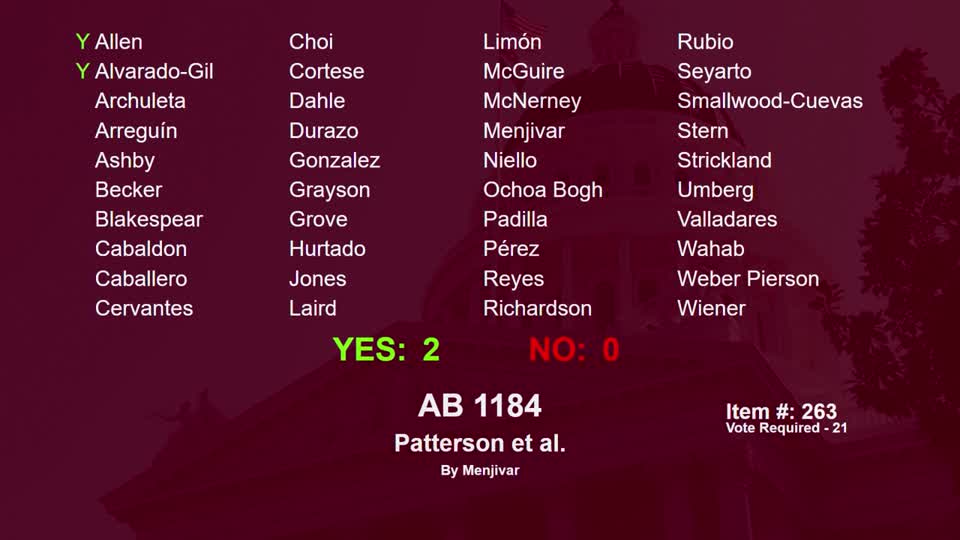
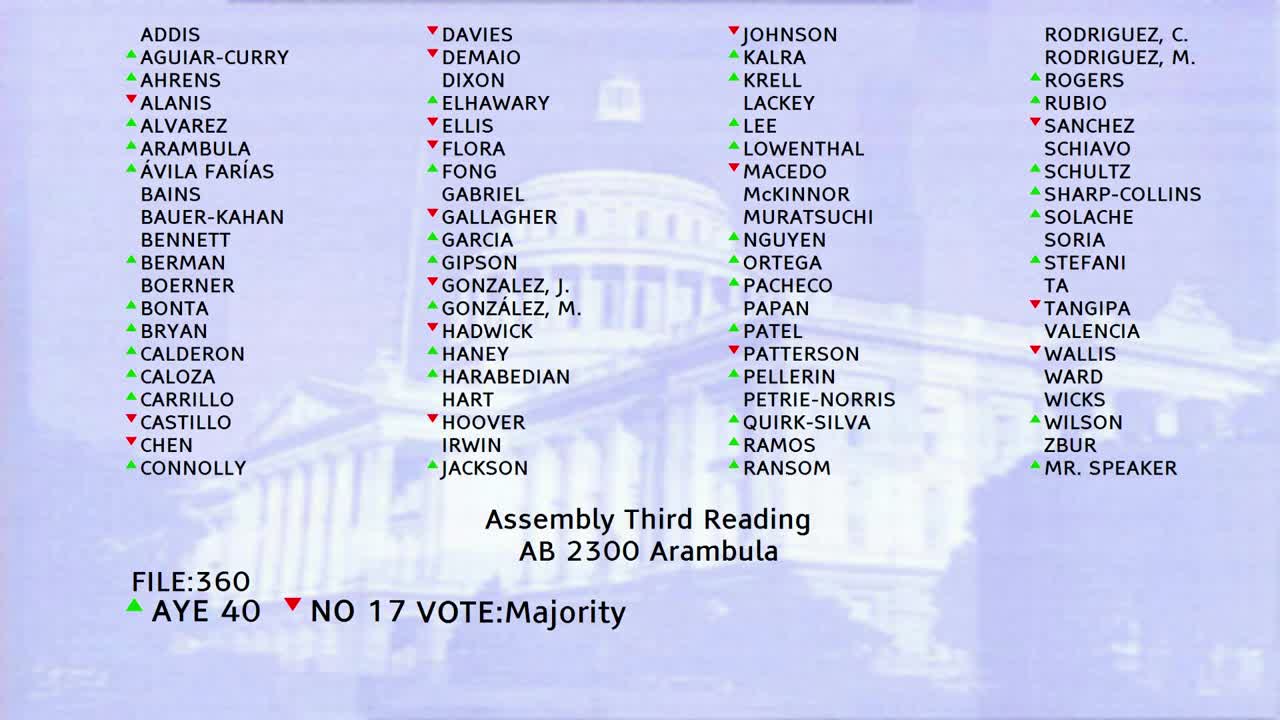

Bill Author