AB 250: Sexual assault: statute of limitations.
- Session Year: 2025-2026
- House: Assembly
- Latest Version Date: 2025-10-13
Current Status:
Passed
(2025-10-13: Chaptered by Secretary of State - Chapter 682, Statutes of 2025.)
Introduced
In Committee
Awaiting First Chamber Vote
Passed First Chamber
In Committee
Awaiting Second Chamber Vote
Passed Second Chamber
Enacted
Existing law revives certain claims seeking to recover damages suffered as a result of a sexual assault that occurred on or after the plaintiffs 18th birthday when one or more entities are legally responsible for damages and the entity or their agents engaged in a cover up, as defined, that would otherwise be barred prior to January 1, 2023, solely because the applicable statute of limitations has or had expired. Existing law authorizes a cause of action for any such claim to proceed if already pending in court on January 1, 2023, or, if not filed by that date, to be commenced between January 1, 2023, and December 31, 2023. Existing law revives such claims brought by a plaintiff who alleges all of the following: (1) the plaintiff was sexually assaulted, (2) one or more entities are legally responsible for damages arising out of the assault, and (3) the entity or entities engaged in a cover up or attempted cover up, as defined, of a previous instance or allegations of sexual assault.
This bill would extend the eligibility period for revival of claims of the type described above to include claims that would otherwise be barred prior to January 1, 2026, because the applicable statute of limitations has or had expired. The bill would instead require a revived claim against an entity, as defined, to allege that the plaintiff was sexually assaulted and that (1) one or more entities or persons are legally responsible for damages arising out of sexual assault by an alleged perpetrator against the plaintiff, and (2) an entity or entities, including their specified representatives, engaged in a cover up or attempted a cover up of a previous instance or allegations of sexual assault by an alleged perpetrator. The bill would additionally revive a claim against the person who committed the sexual assault brought by a plaintiff who alleges, among other things, that one or more entities or persons are legally responsible for damages arising out of the sexual assault. The bill would specify that failure to allege a cover up as to one entity does not affect revival of a claim or claims against any other entity or person, including the perpetrator. The bill would permit a cause of action for any such claim to proceed if already pending in court on the effective date of the bill or, if not filed by that date, to be commenced between January 1, 2026, and December 31, 2027. The bill would exempt public entities from these provisions and would provide that public entities are not required to indemnify perpetrators of sexual assault, as specified. The bill would make conforming changes.
Existing law revives certain claims seeking to recover damages suffered as a result of a sexual assault that occurred on or after the plaintiffs 18th birthday when one or more entities are legally responsible for damages and the entity or their agents engaged in a cover up, as defined, that would otherwise be barred prior to January 1, 2023, solely because the applicable statute of limitations has or had expired. Existing law authorizes a cause of action for any such claim to proceed if already pending in court on January 1, 2023, or, if not filed by that date, to be commenced between January 1, 2023, and December 31, 2023. Existing law revives such claims brought by a plaintiff who alleges all of the following: (1) the plaintiff was sexually assaulted, (2) one or more entities are legally responsible for damages arising out of the assault, and (3) the entity or entities engaged in a cover up or attempted cover up, as defined, of a previous instance or allegations of sexual assault.
This bill would extend the eligibility period for revival of claims of the type described above to include claims that would otherwise be barred prior to January 1, 2026, because the applicable statute of limitations has or had expired. The bill would instead require a revived claim against an entity, as defined, to allege that the plaintiff was sexually assaulted and that (1) one or more entities or persons are legally responsible for damages arising out of sexual assault by an alleged perpetrator against the plaintiff, and (2) an entity or entities, including their specified representatives, engaged in a cover up or attempted a cover up of a previous instance or allegations of sexual assault by an alleged perpetrator. The bill would additionally revive a claim against the person who committed the sexual assault brought by a plaintiff who alleges, among other things, that one or more entities or persons are legally responsible for damages arising out of the sexual assault. The bill would specify that failure to allege a cover up as to one entity does not affect revival of a claim or claims against any other entity or person, including the perpetrator. The bill would permit a cause of action for any such claim to proceed if already pending in court on the effective date of the bill or, if not filed by that date, to be commenced between January 1, 2026, and December 31, 2027. The bill would exempt public entities from these provisions. provisions and would provide that public entities are not required to indemnify perpetrators of sexual assault, as specified. The bill would make conforming changes.
Existing law revives certain claims seeking to recover damages suffered as a result of a sexual assault that occurred on or after the plaintiffs 18th birthday when one or more entities are legally responsible for damages and the entity or their agents engaged in a cover up, as defined, that would otherwise be barred prior to January 1, 2023, solely because the applicable statute of limitations has or had expired. Existing law authorizes a cause of action for any such claim to proceed if already pending in court on January 1, 2023, or, if not filed by that date, to be commenced between January 1, 2023, and December 31, 2023. Existing law revives such claims brought by a plaintiff who alleges all of the following: (1) the plaintiff was sexually assaulted, (2) one or more entities are legally responsible for damages arising out of the assault, and (3) the entity or entities engaged in a cover up or attempted cover up, as defined, of a previous instance or allegations of sexual assault.
This bill would extend the eligibility period for revival of claims of the type described above to include claims that would otherwise be barred prior to January 1, 2026, because the applicable statute of limitations has or had expired. The bill would instead require a revived claim against an entity, as defined, to allege that the plaintiff was sexually assaulted and that (1) one or more entities or persons are legally responsible for damages arising out of sexual assault by an alleged perpetrator against the plaintiff, and (2) an entity or entities, including their specified representatives, engaged in a cover up or attempted a cover up of a previous instance or allegations of sexual assault by an alleged perpetrator. The bill would additionally revive a claim against the person who committed the sexual assault brought by a plaintiff who alleges, among other things, that one or more entities or persons are legally responsible for damages arising out of the sexual assault. The bill would specify that failure to allege a cover up as to one entity does not affect revival of a claim or claims against any other entity or person, including the perpetrator. The bill would permit a cause of action for any such claim to proceed if already pending in court on the effective date of the bill or, if not filed by that date, to be commenced between January 1, 2026, and December 31, 2027. The bill would exempt public entities from these provisions. The bill would make conforming changes.
(a)In any civil action for recovery of damages suffered as a result of sexual assault, where the assault occurred on or after the plaintiffs 18th birthday, the time for commencement of the action shall be the later of the following:
(1)Within 10 years from the date of the last act, attempted act, or assault with the intent to commit an act, of sexual assault against the plaintiff.
(2)Within three years from the date the plaintiff discovers or reasonably should have discovered that an injury or illness resulted from an act, attempted act, or assault with the intent to commit an act, of sexual assault against the plaintiff.
(b)(1)As used in this section, sexual assault means any of the crimes described in Section 243.4, 261, 264.1, 286, 287, or 289, or former Sections 262 and 288a, of the Penal Code, assault with the intent to commit any of those crimes, or an attempt to commit any of those crimes.
(2)For the purpose of this section, it is not necessary that a criminal prosecution or other proceeding have been brought as a result of the sexual assault or, if a criminal prosecution or other proceeding was brought, that the prosecution or proceeding resulted in a conviction or adjudication. This subdivision does not limit the availability of causes of action permitted under subdivision (a), including causes of action against persons or entities other than the alleged person who committed the crime.
(3)This section applies to any action described in subdivision (a) that is based upon conduct that occurred on or after January 1, 2009, and is commenced on or after January 1, 2019, that would have been barred solely because the applicable statute of limitations has or had expired. Such claims are hereby revived and may be commenced until December 31, 2026. This subdivision does not revive any of the following claims:
(A)A claim that has been litigated to finality in a court of competent jurisdiction before January 1, 2023.
(B)A claim that has been compromised by a written settlement agreement between the parties entered into before January 1, 2023.
(c)(1)Notwithstanding any other law, any claim seeking to recover more than two hundred fifty thousand dollars ($250,000) in damages arising out of a sexual assault or other inappropriate contact, communication, or activity of a sexual nature by a physician occurring at a student health center between January 1, 1988, and January 1, 2017, that would otherwise be barred before January 1, 2020, solely because the applicable statute of limitations has or had expired, is hereby revived and, a cause of action may proceed if already pending in court on October 2, 2019, or, if not filed by that date, may be commenced between January 1, 2020, and December 31, 2020.
(2)This subdivision does not revive any of the following claims:
(A)A claim that has been litigated to finality in a court of competent jurisdiction before January 1, 2020.
(B)A claim that has been compromised by a written settlement agreement between the parties entered into before January 1, 2020.
(C)A claim brought against a public entity.
(3)An attorney representing a claimant seeking to recover under this subdivision shall file a declaration with the court under penalty of perjury stating that the attorney has reviewed the facts of the case and consulted with a mental health practitioner, and that the attorney has concluded on the basis of this review and consultation that it is the attorneys good faith belief that the claim value is more than two hundred fifty thousand dollars ($250,000). The declaration shall be filed upon filing the complaint, or for those claims already pending, by December 1, 2019.
(d)(1)Notwithstanding any other law, any claim seeking to recover damages arising out of a sexual assault or other inappropriate contact, communication, or activity of a sexual nature by a physician while employed by a medical clinic owned and operated by the University of California, Los Angeles, or a physician who held active privileges at a hospital owned and operated by the University of California, Los Angeles, at the time that the sexual assault or other inappropriate contact, communication, or activity of a sexual nature occurred, between January 1, 1983, and January 1, 2019, that would otherwise be barred before January 1, 2021, solely because the applicable statute of limitations has or had expired, is hereby revived, and a cause of action may proceed if already pending in court on January 1, 2021, or, if not filed by that date, may be commenced between January 1, 2021, and December 31, 2021.
(2)This subdivision does not revive either of the following claims:
(A)A claim that has been litigated to finality in a court of competent jurisdiction before January 1, 2021.
(B)A claim that has been compromised by a written settlement agreement between the parties entered into before January 1, 2021.
(e)(1)Notwithstanding any other law, any claim seeking to recover damages suffered as a result of a sexual assault that occurred on or after the plaintiffs 18th birthday that would otherwise be barred before January 1, 2026, solely because the applicable statute of limitations has or had expired, is hereby revived, and a cause of action may proceed if already pending in court on January 1, 2026, or, if not filed by that date, may be commenced between January 1, 2026, and December 31, 2027.
(2)This subdivision revives claims against an entity brought by a plaintiff who alleges that the plaintiff was sexually assaulted and both of the following:
(A)One or more entities or persons, including, but not limited to, the perpetrator of the sexual assault, are legally responsible for damages arising out of sexual assault by an alleged perpetrator against the plaintiff.
(B)An entity or entities, including, but not limited to, their officers, directors, representatives, employees, or agents, engaged in a cover up or attempted a cover up of a previous instance or allegations of sexual assault by an alleged perpetrator of such abuse.
(3)This subdivision revives claims against the perpetrator of the sexual assault brought by a plaintiff who alleges that the plaintiff was sexually assaulted and that one or more entities or persons, including, but not limited to, the perpetrator of the sexual assault, are legally responsible for damages arising out of the sexual assault against the plaintiff.
(4)Failure to allege a cover up as required by subparagraph (B) of paragraph (2) as to one entity does not affect revival of the plaintiffs claim or claims against any other entity or person, including the perpetrator of the sexual assault.
(5)For purposes of this subdivision:
(A)Cover up means a concerted effort to hide evidence relating to a sexual assault that incentivizes individuals to remain silent or prevents information relating to a sexual assault from becoming public or being disclosed to the plaintiff, including, but not limited to, the use of nondisclosure agreements or confidentiality agreements.
(B)Entity means a sole proprietorship, partnership, limited liability company, corporation, association, or other legal entity, other than a public entity.
(C)Legally responsible means that the person, entity, or entities are liable under any theory of liability established by statute or common law, including, but not limited to, negligence, intentional torts, and vicarious liability.
(6)This subdivision revives any related claims, including, but not limited to, wrongful termination and sexual harassment, arising out of the sexual assault that is the basis for a claim pursuant to this subdivision.
(7)This subdivision does not revive any of the following claims:
(A)A claim that has been litigated to finality in a court of competent jurisdiction before January 1, 2026.
(B)A claim that has been compromised by a written settlement agreement between the parties entered into before January 1, 2026.
(C)A claim, including a direct claim, derivative claim, and a vicarious liability claim, brought against a public entity. For any claim against the perpetrator or other persons, a public entity shall not have a duty to indemnify the perpetrator or other persons under Section 825 of the Government Code or any other law.
(8)This subdivision shall not be construed to alter the otherwise applicable burden of proof, as defined in Section 115 of the Evidence Code, that a plaintiff has in a civil action subject to this section.
(9)Nothing in this subdivision precludes a plaintiff from bringing an action for sexual assault pursuant to subdivisions (a) and (b).
(a)In any civil action for recovery of damages suffered as a result of sexual assault, where the assault occurred on or after the plaintiffs 18th birthday, the time for commencement of the action shall be the later of the following:
(1)Within 10 years from the date of the last act, attempted act, or assault with the intent to commit an act, of sexual assault against the plaintiff.
(2)Within three years from the date the plaintiff discovers or reasonably should have discovered that an injury or illness resulted from an act, attempted act, or assault with the intent to commit an act, of sexual assault against the plaintiff.
(b)(1)As used in this section, sexual assault means any of the crimes described in Section 243.4, 261, 264.1, 286, 287, or 289, or former Sections 262 and 288a, of the Penal Code, assault with the intent to commit any of those crimes, or an attempt to commit any of those crimes.
(2)For the purpose of this section, it is not necessary that a criminal prosecution or other proceeding have been brought as a result of the sexual assault or, if a criminal prosecution or other proceeding was brought, that the prosecution or proceeding resulted in a conviction or adjudication. This subdivision does not limit the availability of causes of action permitted under subdivision (a), including causes of action against persons or entities other than the alleged person who committed the crime.
(3)This section applies to any action described in subdivision (a) that is based upon conduct that occurred on or after January 1, 2009, and is commenced on or after January 1, 2019, that would have been barred solely because the applicable statute of limitations has or had expired. Such claims are hereby revived and may be commenced until December 31, 2026. This subdivision does not revive any of the following claims:
(A)A claim that has been litigated to finality in a court of competent jurisdiction before January 1, 2023.
(B)A claim that has been compromised by a written settlement agreement between the parties entered into before January 1, 2023.
(c)(1)Notwithstanding any other law, any claim seeking to recover more than two hundred fifty thousand dollars ($250,000) in damages arising out of a sexual assault or other inappropriate contact, communication, or activity of a sexual nature by a physician occurring at a student health center between January 1, 1988, and January 1, 2017, that would otherwise be barred before January 1, 2020, solely because the applicable statute of limitations has or had expired, is hereby revived and, a cause of action may proceed if already pending in court on October 2, 2019, or, if not filed by that date, may be commenced between January 1, 2020, and December 31, 2020.
(2)This subdivision does not revive any of the following claims:
(A)A claim that has been litigated to finality in a court of competent jurisdiction before January 1, 2020.
(B)A claim that has been compromised by a written settlement agreement between the parties entered into before January 1, 2020.
(C)A claim brought against a public entity.
(3)An attorney representing a claimant seeking to recover under this subdivision shall file a declaration with the court under penalty of perjury stating that the attorney has reviewed the facts of the case and consulted with a mental health practitioner, and that the attorney has concluded on the basis of this review and consultation that it is the attorneys good faith belief that the claim value is more than two hundred fifty thousand dollars ($250,000). The declaration shall be filed upon filing the complaint, or for those claims already pending, by December 1, 2019.
(d)(1)Notwithstanding any other law, any claim seeking to recover damages arising out of a sexual assault or other inappropriate contact, communication, or activity of a sexual nature by a physician while employed by a medical clinic owned and operated by the University of California, Los Angeles, or a physician who held active privileges at a hospital owned and operated by the University of California, Los Angeles, at the time that the sexual assault or other inappropriate contact, communication, or activity of a sexual nature occurred, between January 1, 1983, and January 1, 2019, that would otherwise be barred before January 1, 2021, solely because the applicable statute of limitations has or had expired, is hereby revived, and a cause of action may proceed if already pending in court on January 1, 2021, or, if not filed by that date, may be commenced between January 1, 2021, and December 31, 2021.
(2)This subdivision does not revive either of the following claims:
(A)A claim that has been litigated to finality in a court of competent jurisdiction before January 1, 2021.
(B)A claim that has been compromised by a written settlement agreement between the parties entered into before January 1, 2021.
(e)(1)Notwithstanding any other law, any claim seeking to recover damages suffered as a result of a sexual assault that occurred on or after the plaintiffs 18th birthday that would otherwise be barred before January 1, 2026, solely because the applicable statute of limitations has or had expired, is hereby revived, and a cause of action may proceed if already pending in court on January 1, 2026, or, if not filed by that date, may be commenced between January 1, 2026, and December 31, 2027.
(2)This subdivision revives claims against an entity brought by a plaintiff who alleges that the plaintiff was sexually assaulted and both of the following:
(A)One or more entities or persons, including, but not limited to, the perpetrator of the sexual assault, are legally responsible for damages arising out of sexual assault by an alleged perpetrator against the plaintiff.
(B)An entity or entities, including, but not limited to, their officers, directors, representatives, employees, or agents, engaged in a cover up or attempted a cover up of a previous instance or allegations of sexual assault by an alleged perpetrator of such abuse.
(3)This subdivision revives claims against the perpetrator of the sexual assault brought by a plaintiff who alleges that the plaintiff was sexually assaulted and that one or more entities or persons, including, but not limited to, the perpetrator of the sexual assault, are legally responsible for damages arising out of the sexual assault against the plaintiff.
(4)Failure to allege a cover up as required by subparagraph (B) of paragraph (2) as to one entity does not affect revival of the plaintiffs claim or claims against any other entity or person, including the perpetrator of the sexual assault.
(5)For purposes of this subdivision:
(A)Cover up means a concerted effort to hide evidence relating to a sexual assault that incentivizes individuals to remain silent or prevents information relating to a sexual assault from becoming public or being disclosed to the plaintiff, including, but not limited to, the use of nondisclosure agreements or confidentiality agreements.
(B)Entity means a sole proprietorship, partnership, limited liability company, corporation, association, or other legal entity. entity, other than a public entity.
(C)Legally responsible means that the person, entity, or entities are liable under any theory of liability established by statute or common law, including, but not limited to, negligence, intentional torts, and vicarious liability.
(6)This subdivision revives any related claims, including, but not limited to, wrongful termination and sexual harassment, arising out of the sexual assault that is the basis for a claim pursuant to this subdivision.
(7)This subdivision does not revive any of the following claims:
(A)A claim that has been litigated to finality in a court of competent jurisdiction before January 1, 2026.
(B)A claim that has been compromised by a written settlement agreement between the parties entered into before January 1, 2026.
(C)A claim, including a direct claim, derivative claim, and a vicarious liability claim, brought against a public entity. For any claim against the perpetrator or other persons, a public entity shall not have a duty to indemnify the perpetrator or other persons under Section 825 of the Government Code or any other law.
(8)This subdivision shall not be construed to alter the otherwise applicable burden of proof, as defined in Section 115 of the Evidence Code, that a plaintiff has in a civil action subject to this section.
(9)Nothing in this subdivision precludes a plaintiff from bringing an action for sexual assault pursuant to subdivisions (a) and (b).
(a)In any civil action for recovery of damages suffered as a result of sexual assault, where the assault occurred on or after the plaintiffs 18th birthday, the time for commencement of the action shall be the later of the following:
(1)Within 10 years from the date of the last act, attempted act, or assault with the intent to commit an act, of sexual assault against the plaintiff.
(2)Within three years from the date the plaintiff discovers or reasonably should have discovered that an injury or illness resulted from an act, attempted act, or assault with the intent to commit an act, of sexual assault against the plaintiff.
(b)(1)As used in this section, sexual assault means any of the crimes described in Section 243.4, 261, 264.1, 286, 287, or 289, or former Sections 262 and 288a, of the Penal Code, assault with the intent to commit any of those crimes, or an attempt to commit any of those crimes.
(2)For the purpose of this section, it is not necessary that a criminal prosecution or other proceeding have been brought as a result of the sexual assault or, if a criminal prosecution or other proceeding was brought, that the prosecution or proceeding resulted in a conviction or adjudication. This subdivision does not limit the availability of causes of action permitted under subdivision (a), including causes of action against persons or entities other than the alleged person who committed the crime.
(3)This section applies to any action described in subdivision (a) that is based upon conduct that occurred on or after January 1, 2009, and is commenced on or after January 1, 2019, that would have been barred solely because the applicable statute of limitations has or had expired. Such claims are hereby revived and may be commenced until December 31, 2026. This subdivision does not revive any of the following claims:
(A)A claim that has been litigated to finality in a court of competent jurisdiction before January 1, 2023.
(B)A claim that has been compromised by a written settlement agreement between the parties entered into before January 1, 2023.
(c)(1)Notwithstanding any other law, any claim seeking to recover more than two hundred fifty thousand dollars ($250,000) in damages arising out of a sexual assault or other inappropriate contact, communication, or activity of a sexual nature by a physician occurring at a student health center between January 1, 1988, and January 1, 2017, that would otherwise be barred before January 1, 2020, solely because the applicable statute of limitations has or had expired, is hereby revived and, a cause of action may proceed if already pending in court on October 2, 2019, or, if not filed by that date, may be commenced between January 1, 2020, and December 31, 2020.
(2)This subdivision does not revive any of the following claims:
(A)A claim that has been litigated to finality in a court of competent jurisdiction before January 1, 2020.
(B)A claim that has been compromised by a written settlement agreement between the parties entered into before January 1, 2020.
(C)A claim brought against a public entity.
(3)An attorney representing a claimant seeking to recover under this subdivision shall file a declaration with the court under penalty of perjury stating that the attorney has reviewed the facts of the case and consulted with a mental health practitioner, and that the attorney has concluded on the basis of this review and consultation that it is the attorneys good faith belief that the claim value is more than two hundred fifty thousand dollars ($250,000). The declaration shall be filed upon filing the complaint, or for those claims already pending, by December 1, 2019.
(d)(1)Notwithstanding any other law, any claim seeking to recover damages arising out of a sexual assault or other inappropriate contact, communication, or activity of a sexual nature by a physician while employed by a medical clinic owned and operated by the University of California, Los Angeles, or a physician who held active privileges at a hospital owned and operated by the University of California, Los Angeles, at the time that the sexual assault or other inappropriate contact, communication, or activity of a sexual nature occurred, between January 1, 1983, and January 1, 2019, that would otherwise be barred before January 1, 2021, solely because the applicable statute of limitations has or had expired, is hereby revived, and a cause of action may proceed if already pending in court on January 1, 2021, or, if not filed by that date, may be commenced between January 1, 2021, and December 31, 2021.
(2)This subdivision does not revive either of the following claims:
(A)A claim that has been litigated to finality in a court of competent jurisdiction before January 1, 2021.
(B)A claim that has been compromised by a written settlement agreement between the parties entered into before January 1, 2021.
(e)(1)Notwithstanding any other law, any claim seeking to recover damages suffered as a result of a sexual assault that occurred on or after the plaintiffs 18th birthday that would otherwise be barred before January 1, 2026, solely because the applicable statute of limitations has or had expired, is hereby revived, and a cause of action may proceed if already pending in court on January 1, 2026, or, if not filed by that date, may be commenced between January 1, 2026, and December 31, 2027.
(2)This subdivision revives claims against an entity brought by a plaintiff who alleges that the plaintiff was sexually assaulted and both of the following:
(A)One or more entities or persons, including, but not limited to, the perpetrator of the sexual assault, are legally responsible for damages arising out of sexual assault by an alleged perpetrator against the plaintiff.
(B)An entity or entities, including, but not limited to, their officers, directors, representatives, employees, or agents, engaged in a cover up or attempted a cover up of a previous instance or allegations of sexual assault by an alleged perpetrator of such abuse.
(3)This subdivision revives claims against the perpetrator of the sexual assault brought by a plaintiff who alleges that the plaintiff was sexually assaulted and that one or more entities or persons, including, but not limited to, the perpetrator of the sexual assault, are legally responsible for damages arising out of the sexual assault against the plaintiff.
(4)Failure to allege a cover up as required by subparagraph (B) of paragraph (2) as to one entity does not affect revival of the plaintiffs claim or claims against any other entity or person, including the perpetrator of the sexual assault.
(5)For purposes of this subdivision:
(A)Cover up means a concerted effort to hide evidence relating to a sexual assault that incentivizes individuals to remain silent or prevents information relating to a sexual assault from becoming public or being disclosed to the plaintiff, including, but not limited to, the use of nondisclosure agreements or confidentiality agreements.
(B)Entity means a sole proprietorship, partnership, limited liability company, corporation, association, or other legal entity.
(C)Legally responsible means that the person, entity, or entities are liable under any theory of liability established by statute or common law, including, but not limited to, negligence, intentional torts, and vicarious liability.
(6)This subdivision revives any related claims, including, but not limited to, wrongful termination and sexual harassment, arising out of the sexual assault that is the basis for a claim pursuant to this subdivision.
(7)This subdivision does not revive any of the following claims:
(A)A claim that has been litigated to finality in a court of competent jurisdiction before January 1, 2026.
(B)A claim that has been compromised by a written settlement agreement between the parties entered into before January 1, 2026.
(C)A claim brought against a public entity. A claim, including a direct claim, derivative claim, and a vicarious liability claim, brought against a public entity.
(8)This subdivision shall not be construed to alter the otherwise applicable burden of proof, as defined in Section 115 of the Evidence Code, that a plaintiff has in a civil action subject to this section.
(9)Nothing in this subdivision precludes a plaintiff from bringing an action for sexual assault pursuant to subdivisions (a) and (b).
(a)In any civil action for recovery of damages suffered as a result of sexual assault, where the assault occurred on or after the plaintiffs 18th birthday, the time for commencement of the action shall be the later of the following:
(1)Within 10 years from the date of the last act, attempted act, or assault with the intent to commit an act, of sexual assault against the plaintiff.
(2)Within three years from the date the plaintiff discovers or reasonably should have discovered that an injury or illness resulted from an act, attempted act, or assault with the intent to commit an act, of sexual assault against the plaintiff.
(b)(1)As used in this section, sexual assault means any of the crimes described in Section 243.4, 261, 264.1, 286, 287, or 289, or former Sections 262 and 288a, of the Penal Code, assault with the intent to commit any of those crimes, or an attempt to commit any of those crimes.
(2)For the purpose of this section, it is not necessary that a criminal prosecution or other proceeding have been brought as a result of the sexual assault or, if a criminal prosecution or other proceeding was brought, that the prosecution or proceeding resulted in a conviction or adjudication. This subdivision does not limit the availability of causes of action permitted under subdivision (a), including causes of action against persons or entities other than the alleged person who committed the crime.
(3)This section applies to any action described in subdivision (a) that is based upon conduct that occurred on or after January 1, 2009, and is commenced on or after January 1, 2019, that would have been barred solely because the applicable statute of limitations has or had expired. Such claims are hereby revived and may be commenced until December 31, 2026. This subdivision does not revive any of the following claims:
(A)A claim that has been litigated to finality in a court of competent jurisdiction before January 1, 2023.
(B)A claim that has been compromised by a written settlement agreement between the parties entered into before January 1, 2023.
(c)(1)Notwithstanding any other law, any claim seeking to recover more than two hundred fifty thousand dollars ($250,000) in damages arising out of a sexual assault or other inappropriate contact, communication, or activity of a sexual nature by a physician occurring at a student health center between January 1, 1988, and January 1, 2017, that would otherwise be barred before January 1, 2020, solely because the applicable statute of limitations has or had expired, is hereby revived and, a cause of action may proceed if already pending in court on October 2, 2019, or, if not filed by that date, may be commenced between January 1, 2020, and December 31, 2020.
(2)This subdivision does not revive any of the following claims:
(A)A claim that has been litigated to finality in a court of competent jurisdiction before January 1, 2020.
(B)A claim that has been compromised by a written settlement agreement between the parties entered into before January 1, 2020.
(C)A claim brought against a public entity.
(3)An attorney representing a claimant seeking to recover under this subdivision shall file a declaration with the court under penalty of perjury stating that the attorney has reviewed the facts of the case and consulted with a mental health practitioner, and that the attorney has concluded on the basis of this review and consultation that it is the attorneys good faith belief that the claim value is more than two hundred fifty thousand dollars ($250,000). The declaration shall be filed upon filing the complaint, or for those claims already pending, by December 1, 2019.
(d)(1)Notwithstanding any other law, any claim seeking to recover damages arising out of a sexual assault or other inappropriate contact, communication, or activity of a sexual nature by a physician while employed by a medical clinic owned and operated by the University of California, Los Angeles, or a physician who held active privileges at a hospital owned and operated by the University of California, Los Angeles, at the time that the sexual assault or other inappropriate contact, communication, or activity of a sexual nature occurred, between January 1, 1983, and January 1, 2019, that would otherwise be barred before January 1, 2021, solely because the applicable statute of limitations has or had expired, is hereby revived, and a cause of action may proceed if already pending in court on January 1, 2021, or, if not filed by that date, may be commenced between January 1, 2021, and December 31, 2021.
(2)This subdivision does not revive either of the following claims:
(A)A claim that has been litigated to finality in a court of competent jurisdiction before January 1, 2021.
(B)A claim that has been compromised by a written settlement agreement between the parties entered into before January 1, 2021.
(e)(1)Notwithstanding any other law, any claim seeking to recover damages suffered as a result of a sexual assault that occurred on or after the plaintiffs 18th birthday that would otherwise be barred before January 1, 2023, 2026, solely because the applicable statute of limitations has or had expired, is hereby revived, and a cause of action may proceed if already pending in court on January 1, 2023, 2026, or, if not filed by that date, may be commenced between January 1, 2023, 2026, and December 31, 2023. 2027.
(2)This subdivision revives claims against an entity brought by a plaintiff who alleges all that the plaintiff was sexually assaulted and both of the following:
(A)The plaintiff was sexually assaulted. (B)(A)One or more entities or persons, including, but not limited to, the perpetrator of the sexual assault, are legally responsible for damages arising out of the sexual assault. assault by an alleged perpetrator against the plaintiff.
(C)(B)The An entity or entities, including, but not limited to, their officers, directors, representatives, employees, or agents, engaged in a cover up or attempted a cover up of a previous instance or allegations of sexual assault by an alleged perpetrator of such abuse.
(3)This subdivision revives claims against the perpetrator of the sexual assault brought by a plaintiff who alleges that the plaintiff was sexually assaulted and that one or more entities or persons, including, but not limited to, the perpetrator of the sexual assault, are legally responsible for damages arising out of the sexual assault against the plaintiff.
(4)Failure to allege a cover up as required by subparagraph (C) (B) of paragraph (2) as to one entity does not affect revival of the plaintiffs claim or claims against any other entity. entity or person, including the perpetrator of the sexual assault.
(4)(5)For purposes of this subdivision:
(A)Cover up means a concerted effort to hide evidence relating to a sexual assault that incentivizes individuals to remain silent or prevents information relating to a sexual assault from becoming public or being disclosed to the plaintiff, including, but not limited to, the use of nondisclosure agreements or confidentiality agreements.
(B)Entity means a sole proprietorship, partnership, limited liability company, corporation, association, or other legal entity.
(C)Legally responsible means that the entity person, entity, or entities are liable under any theory of liability established by statute or common law, including, but not limited to, negligence, intentional torts, and vicarious liability.
(5)(6)This subdivision revives any related claims, including, but not limited to, wrongful termination and sexual harassment, arising out of the sexual assault that is the basis for a claim pursuant to this subdivision.
(6)(7)This subdivision does not revive either any of the following claims:
(A)A claim that has been litigated to finality in a court of competent jurisdiction before January 1, 2023. 2026.
(B)A claim that has been compromised by a written settlement agreement between the parties entered into before January 1, 2023. 2026.
(7)(C)A claim brought against a public entity.
(8)This subdivision shall not be construed to alter the otherwise applicable burden of proof, as defined in Section 115 of the Evidence Code, that a plaintiff has in a civil action subject to this section.
(8)(9)Nothing in this subdivision precludes a plaintiff from bringing an action for sexual assault pursuant to subdivisions (a) and (b).
|
Date
|
Status
|
|---|---|
| Oct 13, 2025 | Chaptered by Secretary of State - Chapter 682, Statutes of 2025. |
| Oct 13, 2025 | Approved by the Governor. |
| Sep 22, 2025 | Enrolled and presented to the Governor at 3 p.m. |
| Sep 10, 2025 | Senate amendments concurred in. To Engrossing and Enrolling. (Ayes 62. Noes 5. Page 3213.). |
| Sep 9, 2025 | In Assembly. Concurrence in Senate amendments pending. |
| Sep 9, 2025 | Read third time. Passed. Ordered to the Assembly. (Ayes 30. Noes 6. Page 2676.). |
| Sep 8, 2025 | Read second time. Ordered to third reading. |
| Sep 5, 2025 | Read third time and amended. Ordered to second reading. |
| Sep 2, 2025 | Read second time. Ordered to third reading. |
| Aug 29, 2025 | Read second time and amended. Ordered returned to second reading. |
| Aug 29, 2025 | From committee: Amend, and do pass as amended. (Ayes 5. Noes 2.) (August 29). |
| Jul 14, 2025 | In committee: Referred to APPR. suspense file. |
| Jul 2, 2025 | From committee: Do pass and re-refer to Com. on APPR. (Ayes 10. Noes 0.) (July 1). Re-referred to Com. on APPR. |
| Jun 11, 2025 | Referred to Coms. on JUD. and APPR. |
| May 29, 2025 | In Senate. Read first time. To Com. on RLS. for assignment. |
| May 29, 2025 | Read third time. Passed. Ordered to the Senate. (Ayes 56. Noes 2. Page 1782.) |
| May 27, 2025 | Read second time. Ordered to third reading. |
| May 23, 2025 | From committee: Do pass. (Ayes 11. Noes 1.) (May 23). |
| Apr 9, 2025 | In committee: Set, first hearing. Referred to APPR. suspense file. |
| Mar 11, 2025 | From committee: Do pass and re-refer to Com. on APPR. (Ayes 9. Noes 2.) (March 11). Re-referred to Com. on APPR. |
| Feb 10, 2025 | Referred to Com. on JUD. |
| Jan 16, 2025 | From printer. May be heard in committee February 15. |
| Jan 15, 2025 | Read first time. To print. |
|
Date
|
Description
|
Location
|
Votes
|
|
|---|---|---|---|---|
| Sep 10, 2025 | AB 250 Aguiar-Curry Concurrence in Senate Amendments | Assembly Floor |
Passed |
|
| Sep 9, 2025 | Assembly 3rd Reading AB250 Aguiar-Curry By Laird | Senate Floor |
Passed |
|
| Aug 29, 2025 | Do pass as amended | Senate Standing Committee on Appropriations |
Passed |
|
| Jul 14, 2025 | Placed on suspense file | Senate Standing Committee on Appropriations |
Passed |
|
| Jul 1, 2025 | Do pass, but first be re-referred to the Committee on [Appropriations] | Senate Standing Committee on Judiciary |
Passed |
|
| May 29, 2025 | AB 250 Aguiar-Curry Assembly Third Reading | Assembly Floor |
Passed |
|
| May 23, 2025 | Do pass. | Assembly Standing Committee on Appropriations |
Passed |
|
| Mar 11, 2025 | Do pass and be re-referred to the Committee on [Appropriations] | Assembly Standing Committee on Judiciary |
Passed |
This list shows positions taken on this bill by organizations on the date displayed, which is linked to the original source.
Positions by individuals are not included.
|
Organization
|
Position
|
Date
|
|---|---|---|
| Alliance for Childrens Rights | ** Support | |
| American Association of University Women | ** Support | |
| California Employment Lawyers Association | ** Support | |
| California Latinas for Reproductive Justice | ** Support | |
| California Women's Law Center | ** Support | |
| Civil Justice Association Of California | ** Against | |
| Consumer Attorneys Of California | ** Support | |
| CRLA Foundation | ** Support | |
| Equal Rights Advocates | ** Support | |
| Fund Her | ** Support | |
| Legal Aid At Work | ** Support | |
| NATIONAL WOMENS POLITICAL CAUCUS OF CALIFORNIA | ** Support | |
| Valor US | ** Support |
CONCURRENCE IN SENATE AMENDMENTS
CSA1 Bill Id:AB 250
Author:(Aguiar-Curry)
As Amended Ver:September 5, 2025
Majority vote
SUMMARY
Revives certain claims seeking damages for sexual assault, where the plaintiff also alleges that an entity engaged in a cover up of the assault, so that such actions may proceed if already pending on January 1, 2026, or, if not filed by that date, commenced between January 1, 2026 and December 31, 2027. Also clarifies that the expanded window for bringing claims applies to actions against both the perpetrator and the entity that engaged in the cover-up.
Major Provisions
- Revives and extends the time for commencing claims seeking damages for sexual assault, where the plaintiff also alleges that one or more entities engaged in a cover up of the assault, so that such actions may proceed if already pending on January 1, 2026, or, if not filed by that date, are commenced between January 1, 2026 and December 31, 2027.
- Specifies that the above revival period also revives claims against the person who committed the sexual assault if the plaintiff also alleges, among other things, that one or more entities or persons are legally responsible for damages arising out of the sexual assault, and that the entity or entities engaged in a cover up or attempted cover up of the sexual assault by the alleged perpetrator.
- Provides that public entities are not required to indemnify perpetrators of sexual assault, as specified.
Senate Amendments
- Make minor clarifying changes.
- Provide that public entities are not required to indemnify perpetrators of sexual assault, as specified.
COMMENTS
In the past several years, the Legislature has passed several bills that have modified the statute of limitations (SOL) for bringing actions for damages caused by sexual assault – both childhood sexual assault and adult sexual assault. Modifications of the SOL for childhood sexual assault go back more than two decades, especially those in response to the shocking revelations of sexual assault and related cover-ups in the Catholic Church. The Legislature has extended or otherwise modified the SOL for childhood sexual assault a number of times or revived certain types of claims otherwise barred by the SOL. Most notably, AB 218 (Gonzalez) Chapter 861, Statutes of 2019, extended the SOL for childhood sexual assault actions until 22 years after the age of majority (typically 40 years of age) and revived most expired claims for a period of three years. These extensions reflected increasing awareness, and substantial evidence, that children only reluctantly report assaults or, in some cases, only recover memories of sexual assault several years later. These piecemeal and often complicated extensions of the SOL for childhood sexual assault were finally abandoned when AB 452 (Addis) Chapter 655, Statutes of 2023, eliminated the SOL for childhood sexual assault entirely.
The SOL for adult sexual assault – the topic of this bill – has also seen periodic extensions and modifications. Prior to the enactment of AB 1619 (Berman) Chapter 939, Statutes of 2018, the statute of limitations for bringing a cause of action alleging sexual assault of an adult was two years, the same as the statute of limitations for any other tort action. The enactment of AB 1619 reflected a widespread consensus among professionals and women′s advocates that survivors of sexual assault often need more than two years to process and engage with the legal system to seek a legal remedy. As such, AB 1619 created Code of Civil Procedure (CCP) Section 340.16, which expanded the time for bringing an action seeking damages for sexual assault of an adult to ten years after the date of the assault, or three years after the plaintiff discovered that an injury or illness was the result of the assault, whichever date is later. While the concept of ″discovery″ is an important equitable principle in SOLs, it is especially important in sexual assault cases, where memories might be repressed, or the connection between an assault and later psychological or physical manifestations may not be understood for some time.
More recently, CCP Section 340.16 – the section amended by the bill now under consideration – was amended by AB 2777 (Wicks) Chapter 442, Statutes of 2022, a complex measure that effectively revived two types of claims that otherwise would have been time-barred: (1) any claim seeking recovery of damages suffered as a result of a sexual assault alleged to have occurred on or after January 1, 2009 and commenced on or after January 1, 2019, as long as such actions are commenced no later than December 31, 2026; and (2) any claim alleging that an entity engaged in a cover-up of the sexual assault, as long as such claims were commenced between January 1, 2023, and December 31, 2023. AB 2777 did not, however, revive any claims that had been litigated to finality or reached a settlement by January 1, 2023.
This bill both clarifies and extends the revival window created by AB 2777. First, it clarifies AB 2777 in response to pleadings (and at least one court decision) in the superior courts, suggesting that the revival window created by AB 2777 only applied to actions brought against the entity or entities that engaged in the cover-up, but that the revival window did not apply to the perpetrator of the sexual assault. Second, the bill effectively expands the window for bringing claims against an entity that engaged in a cover-up from December 31, 2023, to December 31, 2027. As with AB 2777, this bill does not revive any claim that was litigated to finality or settled by January 1, 2026. Finally, the bill provides that public entities are not required to indemnify perpetrators of sexual assault, as specified
Court interpretations on the application of AB 2777. This bill was prompted at least in part by a handful of superior court rulings that raised questions, at least in their pleadings, about whether the revival window created by AB 2777 only revived actions against an entity that covered up the sexual assault, or if it also revived actions against the perpetrator of the sexual assault. Although AB 2777 only applied to cases where the plaintiff alleged that an entity had engaged in a cover up of the perpetrator′s assault, it does not follow that AB 2777 did not intend to also revive the window for actions against the perpetrator whose actions the entity was covering up. Indeed, under modern pleading practice many plaintiffs would likely bring a single case naming both the perpetrator and the entity as defendants. Moreover, the rationale for extending the SOL in cases where there was a cover up is premised on the idea that the cover up was at least partly responsible for the delay; and the cover up could delay the action against the perpetrator just as much as it could delay the action against the entity. Whatever the intent of AB 2777, it is well within the purview of the Legislature to further clarify its intent that the revival window was meant to apply to an action against the perpetrator, as well as an action against the entity, so long as there is an allegation that an entity is alleged to have engaged in a cover up. This bill expressly states that it revives claims against the perpetrator, as well as the entity. (See page 5, lines 11-16, of the bill in print.) Finally, as the Judiciary Committee′s analysis of last year′s AB 2587 detailed at length, the Legislature has the power to create, extend, and change statutes of limitation as it deems appropriate. (See e.g. Duty v Abex Corp. (1989) 214 Cal. App. 3d 742, 749 [noting that ″the need for repose is not so overarching that the Legislature cannot by express legislative provision allow certain actions to be brought at any time, and it has occasionally done so.″].)
According to the Author
AB 250 acknowledges that sexual assault survivors may take years to come forward and provides a limited window for them to seek justice. The bill holds perpetrators and any entities that covered up or attempted to cover up the abuse accountable for the harm inflicted on survivors. AB 250 also revives any related claims, such as wrongful termination and sexual harassment, stemming from the sexual assault. The impact of sexual assault and harassment in the workplace can force survivors out of their jobs and result in career interruption and derailment, and financial stress, as survivors seek safer environments to escape a sexualized and toxic workplace culture. AB 250 will protect survivors and send a strong message that abuse and covering up abuse is unacceptable and will not be tolerated.
Arguments in Support
The co-sponsors – California Employment Lawyers Association (CELA) and Equal Rights Advocates (ERA) – support this bill because it ″protects survivors of sexual assault by holding both the perpetrator of the sexual assault and the entity who engaged in the cover up of the sexual assault accountable for the harm inflicted on survivors.″ To account for the fact that it takes years for sexual assault victims to come forward with allegations, especially when there has been a deliberate cover up, ″AB 250 will provide a two-year window for filing any sexual assault claim, regardless of when the assault occurred, for damages suffered as a result of the attack.″ CELA and ERA write that ″many survivors feel pressured into silence when there is an attempt to cover up the assault. AB 250 takes this reality into account by ensuring that any perpetrator and/or entity that engages in a cover up or attempts to cover up a sexual assault is held accountable.″
The American Association of University Women (AAUW) and Valor US, a coalition committed to advancing equity for victims of sexual abuse, support this bill for the same reasons articulated by CELA and ERA.
Arguments in Opposition
The Civil Justice Association of California (CJAC) writes in opposition that:
[AB 250] flies in the face of long-established principles underlying statutes of limitations. As a matter of policy, statutes of limitations recognize that when claims reach too far back in time, the legal system is no longer able to find employees, other witnesses, or records from the period of the claim to evaluate what did or did not occur. This leaves juries with comparatively little evidence and leaves defendants with no basis for an appropriate response or ability to provide a meaningful defense. Moreover, the current statutes of limitations for sexual assault survivors are among the lengthiest and most flexible in the country – currently 10 years from the occurrence, or three years from the date the plaintiff discovered that he or she was injured. The three-year discovery period permits survivors who have repressed memories to file claims three years from when those memories are revived (potentially decades later) by therapy or other triggering event. . . There will always be sympathetic plaintiffs, popular causes, and unpopular industries, but we should not disregard a key element of the civil justice system that protects the accuracy and reliability of decisions about liability and safeguards due process. In sum, CJAC concludes that current law, by providing a ten-year statute of limitations and a three-year discovery rule, ″provides generous timelines for survivors to bring claims″ that are consistent with important principles of ″fundamental fairness.″
FISCAL COMMENTS
According to the Senate Appropriations Committee:
Unknown, potentially significant costs to the state funded trial court system (Trial Court Trust Fund, General Fund) to adjudicate civil actions. Reviving otherwise expired claims will lead to additional case filings that otherwise would not have been commenced, with attendant workload and resource costs to the court. The fiscal impact of this bill to the courts will depend on many unknowns, including the number of cases filed and the factors unique to each case. An eight-hour court day costs approximately $10,500 in staff in workload. If court days exceed 10, costs to the trial courts could reach hundreds of thousands of dollars. While the courts are not funded on a workload basis, an increase in workload could result in delayed court services and would put pressure on the General Fund to fund additional staff and resources and to increase the amount appropriated to backfill for trial court operations.
VOTES:
ASM JUDICIARY: 9-2-1
YES: Kalra, Bauer-Kahan, Bryan, Connolly, Harabedian, Pacheco, Papan, Stefani, Zbur
NO: Dixon, Essayli
ABS, ABST OR NV: Sanchez
ASM APPROPRIATIONS: 11-1-3
YES: Wicks, Arambula, Calderon, Caloza, Elhawary, Fong, Mark González, Hart, Pacheco, Pellerin, Solache
NO: Dixon
ABS, ABST OR NV: Sanchez, Ta, Tangipa
ASSEMBLY FLOOR: 56-2-21
YES: Addis, Aguiar-Curry, Ahrens, Alanis, Arambula, Ávila Farías, Bains, Bauer-Kahan, Bennett, Berman, Boerner, Bonta, Calderon, Caloza, Carrillo, Connolly, Dixon, Elhawary, Fong, Gabriel, Garcia, Gipson, Mark González, Haney, Harabedian, Hart, Irwin, Jackson, Kalra, Krell, Lee, Lowenthal, McKinnor, Muratsuchi, Ortega, Pacheco, Papan, Patel, Pellerin, Petrie-Norris, Quirk-Silva, Ramos, Ransom, Celeste Rodriguez, Michelle Rodriguez, Rogers, Blanca Rubio, Schiavo, Schultz, Stefani, Valencia, Wallis, Wicks, Wilson, Zbur, Rivas
NO: DeMaio, Ellis
ABS, ABST OR NV: Alvarez, Bryan, Castillo, Chen, Davies, Flora, Gallagher, Jeff Gonzalez, Hadwick, Hoover, Lackey, Macedo, Nguyen, Patterson, Sanchez, Sharp-Collins, Solache, Soria, Ta, Tangipa, Ward
UPDATED
VERSION: January 15, 2025
CONSULTANT: Tom Clark / JUD. / (916) 319-2334 FN: 0001847
SENATE RULES COMMITTEE Office of Senate Floor Analyses (916) 651-1520 Fax: (916) 327-4478 | AB 250 |
THIRD READING
Bill No: AB 250
Author: Aguiar-Curry (D)
Amended: 9/5/25 in Senate
Vote: 21
SENATE JUDICIARY COMMITTEE: 10-0, 7/1/25
AYES: Umberg, Allen, Arreguín, Ashby, Durazo, Laird, Stern, Wahab, Weber Pierson, Wiener
NO VOTE RECORDED: Niello, Caballero, Valladares
SENATE APPROPRIATIONS COMMITTEE: 5-2, 8/29/25
AYES: Caballero, Cabaldon, Grayson, Richardson, Wahab
NOES: Seyarto, Dahle
ASSEMBLY FLOOR: 56-2, 5/29/25 - See last page for vote
SUBJECT: Sexual assault: statute of limitations
SOURCE: California Employment Lawyers Association
Equal Rights Advocates
DIGEST:
This bill revives otherwise time-barred claims for damages arising from sexual assault of a plaintiff on or after their 18th birthday, and related claims arising out of the sexual assault, against the perpetrator and any non-public entities responsible, as specified.
Senate Floor amendments of 9/5/25 clarify the scope of claims revived.
ANALYSIS:
Existing law:
- Requires all civil actions be commenced within applicable statutes of limitations. (Code of Civil Procedure (Code Civ. Proc.) § 312.)
- Provides that in any civil action commenced on or after January 1, 2019, for recovery of damages suffered as a result of sexual assault, as defined, where the assault occurred on or after the plaintiff’s 18th birthday, the time for commencement of the action shall be the later of the following:
- Within 10 years from the date of the last act, attempted act, or assault with the intent to commit an act, of sexual assault against the plaintiff; or
- Within three years from the date the plaintiff discovers or reasonably should have discovered that an injury or illness resulted from an act, attempted act, or assault with the intent to commit an act, of sexual assault against the plaintiff. (Code Civ. Proc. § 340.16.)
- Defines “sexual assault,” for the purposes of the above provision, to mean any of the crimes described in Section 243.4, 261, former 262, 264.1, 286, 287, former 288a, or 289 of the Penal Code, assault with the intent to commit any of those crimes, or an attempt to commit any of those crimes. (Code Civ. Proc. § 340.16(b)(1).)
- Clarifies that it is not necessary that a criminal prosecution or other proceeding have been brought as a result of the sexual assault or, if a criminal prosecution or other proceeding was brought, that the prosecution or proceeding resulted in a conviction or adjudication. It further makes clear that Section 340.16(b) does not limit the availability of causes of action permitted under Section 340.16(a), including causes of action against persons or entities other than the alleged person who committed the crime. (Code Civ. Proc. § 340.16(b)(2).)
- Provides revival periods for various claims arising from sexual assault or other sexual misconduct, including where entities engaged in a “cover up,” and where the assaults were perpetrated by physicians in two unique circumstances. (Code Civ. Proc. § 340.16(c)-(e).)
This bill:
- Provides that any claim, as specified, seeking to recover damages suffered as a result of a sexual assault on or after the plaintiff’s 18th birthday, and any related claims arising out of the sexual assault, that would otherwise be barred before January 1, 2026, solely because the applicable statute of limitations has or had expired, is revived for a two-year period.
- Provides that it revives such claims against an entity if the plaintiff alleges that they were sexually assaulted and alleges both of the following:
- One or more entities or persons, including the perpetrator of the sexual assault, are legally responsible for damages arising out of sexual assault by an alleged perpetrator against the plaintiff.
- An entity or entities, including their officers, directors, representatives, employees, or agents, engaged in a cover up or attempted a cover up of a previous instance or allegations of sexual assault by an alleged perpetrator of such abuse.
- Defines “cover up” as a concerted effort to hide evidence relating to a sexual assault that incentivizes individuals to remain silent or prevents information relating to a sexual assault from becoming public or being disclosed to the plaintiff, including, but not limited to, the use of nondisclosure agreements or confidentiality agreements.
- Revives claims against the perpetrator where the plaintiff alleges they were sexually assaulted and that one or more entities or persons, including the perpetrator of the sexual assault, are legally responsible for damages arising out of the sexual assault.
- Clarifies that it does not alter the otherwise applicable burden of proof, as defined in Section 115 of the Evidence Code, that a plaintiff has in a civil action subject to this statute. It further clarifies that the above revival does not preclude a plaintiff from bringing an action for sexual assault pursuant to the statute.
- Provides that these revival provisions do not apply to claims that have been litigated to finality in a court of competent jurisdiction or compromised by a written settlement agreement between the parties entered into before January 1, 2026; or claims brought against a public entity, as provided.
- Provides that a public entity does not have the duty to indemnify the perpetrator or other persons, as provided, in connection with claims revived by this bill.
Background
The statute of limitations for damages arising from a sexual assault that occurred when the victim was an adult is the later of either 10 years from the date of the last actionable conduct or three years from the discovery of the injury resulting, as specified. When that limitations timeline was extended in 2009 from two years to 10 years it only provided that benefit to victims whose claims had not yet expired when the bill was signed.
This bill revives claims against perpetrators and responsible entities seeking to recover damages suffered as a result of a sexual assault of an adult plaintiff that would otherwise be time-barred if the plaintiff alleges certain facts. These revivals do not apply to claims litigated to finality or compromised by a written settlement or claims against a public entity, as provided. However, the bill revives any related claims arising out of the sexual assault, including wrongful termination and sexual harassment.
This bill is sponsored by the California Employment Lawyers Association and Equal Rights Advocates. It is supported by a variety of organizations, including the Alliance for Children’s Rights and Legal Aid at Work. It is opposed by the Civil Justice Association of California. For a more thorough discussion, please see the Senate Judiciary Committee analysis of this bill.
Comments
According to the author:
AB 250 acknowledges that sexual assault survivors may take years to come forward and gives survivors a limited window to seek justice. The bill holds perpetrators and any entities that covered up or tried to cover up the abuse accountable for the harm inflicted on survivors.
AB 250 also revives related claims, such as wrongful termination and sexual harassment, stemming from the sexual assault. The impact of sexual assault and harassment in the workplace can force survivors out of their jobs and result in career interruption and derailment, and financial stress, as survivors seek safer environments to escape a sexualized and toxic workplace culture. AB 250 will protect survivors and send a strong message that abuse and covering up abuse is unacceptable and will not be tolerated.
FISCAL EFFECT: Appropriation: No Fiscal Com.: No Local: No
According to the Senate Appropriations Committee:
- Unknown, potentially significant costs to the state funded trial court system (Trial Court Trust Fund, General Fund) to adjudicate civil actions. Reviving otherwise expired claims will lead to additional case filings that otherwise would not have been commenced, with attendant workload and resource costs to the court. The fiscal impact of this bill to the courts will depend on many unknowns, including the number of cases filed and the factors unique to each case. An eight-hour court day costs approximately $10,500 in staff in workload. If court days exceed 10, costs to the trial courts could reach hundreds of thousands of dollars. While the courts are not funded on a workload basis, an increase in workload could result in delayed court services and would put pressure on the General Fund to fund additional staff and resources and to increase the amount appropriated to backfill for trial court operations.
SUPPORT: (Verified 9/5/25)
California Employment Lawyers Association (Co-source)
Equal Rights Advocates (Co-source)
Alliance for Children’s Rights
AAUW California
California Latinas for Reproductive Justice
California Women's Law Center
Consumer Attorneys of California
CRLA Foundation
Fund Her
Legal Aid at Work
National Women’s Political Caucus of California
Valor US
OPPOSITION: (Verified 9/5/25)
Civil Justice Association of California
ARGUMENTS IN SUPPORT: The California Employment Lawyers Association and Equal Rights Advocates, the sponsors of this bill, state:
Sexual violence is, unfortunately, common and survivors of sexual assault often need time to process and confront their trauma. As a result, it may take years before they are able to come forward with civil allegations against their attackers and other legally responsible entities.
In addition, many survivors feel pressured into silence when there is an attempt to cover up the assault. AB 250 takes this reality into account by ensuring that any perpetrator and/or entity that engages in a cover up or attempts to cover up a sexual assault is held accountable. “Cover up” means a concerted effort to hide evidence relating to a sexual assault that incentivizes individuals to remain silent or prevents information relating to a sexual assault from becoming public or being disclosed to the plaintiff, including, but not limited to, the use of nondisclosure agreements or confidentiality agreements.
For example, one of our attorneys is representing a woman who was repeatedly sexually assaulted while she was a writer/producer under contract for Revolt Media & TV LLC. Her abuser and Sean “Diddy” Combs, who was the Chairman of Revolt at that time, covered up and perpetuated a sexually abusive work environment that protected this type of predatory behavior at the helm, including through the use of oppressive nondisclosure agreements. The abuse took place in 2016, but she did not come forward until years later when many other women courageously spoke out about sexual abuse involving Mr. Combs. Now, without an amendment to extend the statute of limitations of a “cover-up” claim, she will have very little legal recourse for the abuse she suffered.
ARGUMENTS IN OPPOSITION: The Civil Justice Association of California writes in opposition:
[T]he current statutes of limitations for sexual assault survivors are among the lengthiest and most flexible in the country – currently 10 years from the occurrence, or three years from the date the plaintiff discovered that he or she was injured. The three-year discovery period permits survivors who have repressed memories to file claims three years from when those memories are revived (potentially decades later) by therapy or other triggering event. (Cal. Code Civ. Pro. §340.16.)
There will always be sympathetic plaintiffs, popular causes, and unpopular industries, but we should not disregard a key element of the civil justice system that protects the accuracy and reliability of decisions about liability and safeguards due process.
ASSEMBLY FLOOR: 56-2, 5/29/25
AYES: Addis, Aguiar-Curry, Ahrens, Alanis, Arambula, Ávila Farías, Bains, Bauer-Kahan, Bennett, Berman, Boerner, Bonta, Calderon, Caloza, Carrillo, Connolly, Dixon, Elhawary, Fong, Gabriel, Garcia, Gipson, Mark González, Haney, Harabedian, Hart, Irwin, Jackson, Kalra, Krell, Lee, Lowenthal, McKinnor, Muratsuchi, Ortega, Pacheco, Papan, Patel, Pellerin, Petrie-Norris, Quirk-Silva, Ramos, Ransom, Celeste Rodriguez, Michelle Rodriguez, Rogers, Blanca Rubio, Schiavo, Schultz, Stefani, Valencia, Wallis, Wicks, Wilson, Zbur, Rivas
NOES: DeMaio, Ellis
NO VOTE RECORDED: Alvarez, Bryan, Castillo, Chen, Davies, Flora, Gallagher, Jeff Gonzalez, Hadwick, Hoover, Lackey, Macedo, Nguyen, Patterson, Sanchez, Sharp-Collins, Solache, Soria, Ta, Tangipa, Ward
Prepared by: Christian Kurpiewski / JUD. / (916) 651-4113
9/8/25 21:08:08
**** END ****
SENATE RULES COMMITTEE Office of Senate Floor Analyses (916) 651-1520 Fax: (916) 327-4478 | AB 250 |
THIRD READING
Bill No: AB 250
Author: Aguiar-Curry (D)
Amended: 8/29/25 in Senate
Vote: 21
SENATE JUDICIARY COMMITTEE: 10-0, 7/1/25
AYES: Umberg, Allen, Arreguín, Ashby, Durazo, Laird, Stern, Wahab, Weber Pierson, Wiener
NO VOTE RECORDED: Niello, Caballero, Valladares
SENATE APPROPRIATIONS COMMITTEE: 5-2, 8/29/25
AYES: Caballero, Cabaldon, Grayson, Richardson, Wahab
NOES: Seyarto, Dahle
ASSEMBLY FLOOR: 56-2, 5/29/25 - See last page for vote
SUBJECT: Sexual assault: statute of limitations
SOURCE: California Employment Lawyers Association
Equal Rights Advocates
DIGEST:
This bill revives otherwise time-barred claims for damages arising from sexual assault of a plaintiff on or after their 18th birthday, and related claims arising out of the sexual assault, against the perpetrator and any non-public entities responsible, as specified.
ANALYSIS:
Existing law:
- Requires all civil actions be commenced within applicable statutes of limitations. (Code of Civil Procedure (Code Civ. Proc.) § 312.)
- Provides that in any civil action commenced on or after January 1, 2019, for recovery of damages suffered as a result of sexual assault, as defined, where the assault occurred on or after the plaintiff’s 18th birthday, the time for commencement of the action shall be the later of the following:
- Within 10 years from the date of the last act, attempted act, or assault with the intent to commit an act, of sexual assault against the plaintiff; or
- Within three years from the date the plaintiff discovers or reasonably should have discovered that an injury or illness resulted from an act, attempted act, or assault with the intent to commit an act, of sexual assault against the plaintiff. (Code Civ. Proc. § 340.16.)
- Defines “sexual assault,” for the purposes of the above provision, to mean any of the crimes described in Section 243.4, 261, former 262, 264.1, 286, 287, former 288a, or 289 of the Penal Code, assault with the intent to commit any of those crimes, or an attempt to commit any of those crimes. (Code Civ. Proc. § 340.16(b)(1).)
- Clarifies that it is not necessary that a criminal prosecution or other proceeding have been brought as a result of the sexual assault or, if a criminal prosecution or other proceeding was brought, that the prosecution or proceeding resulted in a conviction or adjudication. It further makes clear that Section 340.16(b) does not limit the availability of causes of action permitted under Section 340.16(a), including causes of action against persons or entities other than the alleged person who committed the crime. (Code Civ. Proc. § 340.16(b)(2).)
- Provides revival periods for various claims arising from sexual assault or other sexual misconduct, including where entities engaged in a “cover up,” and where the assaults were perpetrated by physicians in two unique circumstances. (Code Civ. Proc. § 340.16(c)-(e).)
This bill:
- Provides that any claim, as specified, seeking to recover damages suffered as a result of a sexual assault on or after the plaintiff’s 18th birthday, and any related claims arising out of the sexual assault, that would otherwise be barred before January 1, 2026, solely because the applicable statute of limitations has or had expired, is revived for a two-year period.
- Provides that it revives such claims against an entity if the plaintiff alleges that they were sexually assaulted and alleges both of the following:
- One or more entities or persons, including the perpetrator of the sexual assault, are legally responsible for damages arising out of sexual assault by an alleged perpetrator against the plaintiff.
- An entity or entities, including their officers, directors, representatives, employees, or agents, engaged in a cover up or attempted a cover up of a previous instance or allegations of sexual assault by an alleged perpetrator of such abuse.
- Defines “cover up” as a concerted effort to hide evidence relating to a sexual assault that incentivizes individuals to remain silent or prevents information relating to a sexual assault from becoming public or being disclosed to the plaintiff, including, but not limited to, the use of nondisclosure agreements or confidentiality agreements.
- Revives claims against the perpetrator where the plaintiff alleges they were sexually assaulted and that one or more entities or persons, including the perpetrator of the sexual assault, are legally responsible for damages arising out of the sexual assault.
- Clarifies that it does not alter the otherwise applicable burden of proof, as defined in Section 115 of the Evidence Code, that a plaintiff has in a civil action subject to this statute. It further clarifies that the above revival does not preclude a plaintiff from bringing an action for sexual assault pursuant to the statute.
- Provides that these revival provisions do not apply to claims that have been litigated to finality in a court of competent jurisdiction or compromised by a written settlement agreement between the parties entered into before January 1, 2026; or claims brought against a public entity, as provided.
Background
The statute of limitations for damages arising from a sexual assault that occurred when the victim was an adult is the later of either 10 years from the date of the last actionable conduct or three years from the discovery of the injury resulting, as specified. When that limitations timeline was extended in 2009 from two years to 10 years it only provided that benefit to victims whose claims had not yet expired when the bill was signed.
This bill revives claims against perpetrators and responsible entities seeking to recover damages suffered as a result of a sexual assault of an adult plaintiff that would otherwise be time-barred if the plaintiff alleges certain facts. These revivals do not apply to claims litigated to finality or compromised by a written settlement or claims against a public entity, as provided. However, the bill revives any related claims arising out of the sexual assault, including wrongful termination and sexual harassment.
This bill is sponsored by the California Employment Lawyers Association and Equal Rights Advocates. It is supported by a variety of organizations, including the Alliance for Children’s Rights and Legal Aid at Work. It is opposed by the Civil Justice Association of California. For a more thorough discussion, please see the Senate Judiciary Committee analysis of this bill.
Comments
According to the author:
AB 250 acknowledges that sexual assault survivors may take years to come forward and gives survivors a limited window to seek justice. The bill holds perpetrators and any entities that covered up or tried to cover up the abuse accountable for the harm inflicted on survivors.
AB 250 also revives related claims, such as wrongful termination and sexual harassment, stemming from the sexual assault. The impact of sexual assault and harassment in the workplace can force survivors out of their jobs and result in career interruption and derailment, and financial stress, as survivors seek safer environments to escape a sexualized and toxic workplace culture. AB 250 will protect survivors and send a strong message that abuse and covering up abuse is unacceptable and will not be tolerated.
FISCAL EFFECT: Appropriation: No Fiscal Com.: No Local: No
According to the Senate Appropriations Committee:
- Unknown, potentially significant costs to the state funded trial court system (Trial Court Trust Fund, General Fund) to adjudicate civil actions. Reviving otherwise expired claims will lead to additional case filings that otherwise would not have been commenced, with attendant workload and resource costs to the court. The fiscal impact of this bill to the courts will depend on many unknowns, including the number of cases filed and the factors unique to each case. An eight-hour court day costs approximately $10,500 in staff in workload. If court days exceed 10, costs to the trial courts could reach hundreds of thousands of dollars. While the courts are not funded on a workload basis, an increase in workload could result in delayed court services and would put pressure on the General Fund to fund additional staff and resources and to increase the amount appropriated to backfill for trial court operations.
SUPPORT: (Verified 8/29/25)
California Employment Lawyers Association (Co-source)
Equal Rights Advocates (Co-source)
Alliance for Children’s Rights
AAUW California
California Latinas for Reproductive Justice
California Women's Law Center
Consumer Attorneys of California
CRLA Foundation
Fund Her
Legal Aid at Work
National Women’s Political Caucus of California
Valor US
OPPOSITION: (Verified 8/29/25)
Civil Justice Association of California
ARGUMENTS IN SUPPORT: The California Employment Lawyers Association and Equal Rights Advocates, the sponsors of this bill, state:
Sexual violence is, unfortunately, common and survivors of sexual assault often need time to process and confront their trauma. As a result, it may take years before they are able to come forward with civil allegations against their attackers and other legally responsible entities.
In addition, many survivors feel pressured into silence when there is an attempt to cover up the assault. AB 250 takes this reality into account by ensuring that any perpetrator and/or entity that engages in a cover up or attempts to cover up a sexual assault is held accountable. “Cover up” means a concerted effort to hide evidence relating to a sexual assault that incentivizes individuals to remain silent or prevents information relating to a sexual assault from becoming public or being disclosed to the plaintiff, including, but not limited to, the use of nondisclosure agreements or confidentiality agreements.
For example, one of our attorneys is representing a woman who was repeatedly sexually assaulted while she was a writer/producer under contract for Revolt Media & TV LLC. Her abuser and Sean “Diddy” Combs, who was the Chairman of Revolt at that time, covered up and perpetuated a sexually abusive work environment that protected this type of predatory behavior at the helm, including through the use of oppressive nondisclosure agreements. The abuse took place in 2016, but she did not come forward until years later when many other women courageously spoke out about sexual abuse involving Mr. Combs. Now, without an amendment to extend the statute of limitations of a “cover-up” claim, she will have very little legal recourse for the abuse she suffered.
ARGUMENTS IN OPPOSITION: The Civil Justice Association of California writes in opposition:
[T]he current statutes of limitations for sexual assault survivors are among the lengthiest and most flexible in the country – currently 10 years from the occurrence, or three years from the date the plaintiff discovered that he or she was injured. The three-year discovery period permits survivors who have repressed memories to file claims three years from when those memories are revived (potentially decades later) by therapy or other triggering event. (Cal. Code Civ. Pro. §340.16.)
There will always be sympathetic plaintiffs, popular causes, and unpopular industries, but we should not disregard a key element of the civil justice system that protects the accuracy and reliability of decisions about liability and safeguards due process.
ASSEMBLY FLOOR: 56-2, 5/29/25
AYES: Addis, Aguiar-Curry, Ahrens, Alanis, Arambula, Ávila Farías, Bains, Bauer-Kahan, Bennett, Berman, Boerner, Bonta, Calderon, Caloza, Carrillo, Connolly, Dixon, Elhawary, Fong, Gabriel, Garcia, Gipson, Mark González, Haney, Harabedian, Hart, Irwin, Jackson, Kalra, Krell, Lee, Lowenthal, McKinnor, Muratsuchi, Ortega, Pacheco, Papan, Patel, Pellerin, Petrie-Norris, Quirk-Silva, Ramos, Ransom, Celeste Rodriguez, Michelle Rodriguez, Rogers, Blanca Rubio, Schiavo, Schultz, Stefani, Valencia, Wallis, Wicks, Wilson, Zbur, Rivas
NOES: DeMaio, Ellis
NO VOTE RECORDED: Alvarez, Bryan, Castillo, Chen, Davies, Flora, Gallagher, Jeff Gonzalez, Hadwick, Hoover, Lackey, Macedo, Nguyen, Patterson, Sanchez, Sharp-Collins, Solache, Soria, Ta, Tangipa, Ward
Prepared by: Christian Kurpiewski / JUD. / (916) 651-4113
9/2/25 17:53:04
**** END ****
SENATE COMMITTEE ON
Senator Anna Caballero, Chair
2025 - 2026 Regular Session
AB 250 (Aguiar-Curry) - Sexual assault: statute of limitations
Version: | Policy Vote: |
Urgency: | Mandate: |
Hearing Date: | Consultant: |
Bill Summary:
Revives civil sex assault cases and related claims, otherwise barred by the statute of limitations, for an additional two years.
*********** ANALYSIS ADDENDUM – SUSPENSE FILE ***********
The following information is revised to reflect amendments
adopted by the committee on August 29, 2025
Fiscal Impact:
Unknown, potentially significant costs to the state funded trial court system (Trial Court Trust Fund, General Fund) to adjudicate civil actions. Reviving otherwise expired claims will lead to additional case filings that otherwise would not have been commenced, with attendant workload and resource costs to the court. The fiscal impact of this bill to the courts will depend on many unknowns, including the number of cases filed and the factors unique to each case. An eight-hour court day costs approximately $10,500 in staff in workload. If court days exceed 10, costs to the trial courts could reach hundreds of thousands of dollars. While the courts are not funded on a workload basis, an increase in workload could result in delayed court services and would put pressure on the General Fund to fund additional staff and resources and to increase the amount appropriated to backfill for trial court operations.
Author Amendments:
Exempt claims, including a direct claim, derivative claim, and a vicarious liability claim, brought against a public entity.
-- END --
SENATE COMMITTEE ON APPROPRIATIONS
Senator Anna Caballero, Chair
2025 - 2026 Regular Session
AB 250 (Aguiar-Curry) - Sexual assault: statute of limitations
Version: January 15, 2025 | Policy Vote: JUD. 10 - 0 |
Urgency: No | Mandate: No |
Hearing Date: July 14, 2025 | Consultant: Liah Burnley |
Bill Summary:
Revives civil sex assault cases and related claims, otherwise barred by the statute of limitations, for an additional two years, as specified.
Fiscal Impact:
- Unknown, potentially significant costs to the state funded trial court system (Trial Court Trust Fund, General Fund) to adjudicate civil actions. Reviving otherwise expired claims will lead to additional case filings that otherwise would not have been commenced, with attendant workload and resource costs to the court. The fiscal impact of this bill to the courts will depend on many unknowns, including the number of cases filed and the factors unique to each case. An eight-hour court day costs approximately $10,500 in staff in workload. If court days exceed 10, costs to the trial courts could reach hundreds of thousands of dollars. While the courts are not funded on a workload basis, an increase in workload could result in delayed court services and would put pressure on the General Fund to fund additional staff and resources and to increase the amount appropriated to backfill for trial court operations.
- Unknown, potentially significant costs to state agencies and local agencies (General Fund, local fund) to litigate revived sex assault cases, depending on the number of revived cases. If state and local agencies are required to litigate otherwise time-barred claims as a result of this bill, they will spend time and resources to gather and preserve decades-old records, respond to subpoenas and discovery requests, and may incur substantial legal defense costs, including possible settlement or judgment liabilities. (See staff comments)
Background:
Statutes of limitations dictate the time within which a legal proceeding must begin. A case will typically be dismissed if it is not brought before the statute of limitation expires. Statutes of limitations play a critical role in ensuring that justice is timely served. They encourage plaintiffs to gather their evidence early and to bring their cases to court promptly, thereby preventing any delays and inaccuracies that arise due to the destruction of evidence, fading memories, and the passing away of witnesses. Statutes of limitations also prevent the unexpected enforcement of stale claims “concerning which persons interested have been thrown off their guard by want of prosecution.”[1]
When statutes of limitations are too long or are uncertain (for example, when an expired limitations period is revived by the Legislature), commercial and other activities become encumbered by the looming threat of litigation. The limitations period serves important policy goals that help to preserve both the integrity of our legal system and the due process rights of individuals. “These statutes are declared to be 'among the most beneficial to be found in our books. They rest upon sound policy, and tend to the peace and welfare of society.”[2]
Unless there is a statute providing otherwise, the time for bringing a civil action is two years after the injury occurs or, depending upon the type of injury, two years after the plaintiff discovered, or reasonably should have discovered, the injury.
The Legislature has recently extended the statute of limitations for civil cases involving sexual assault, and has authorized revival periods that allow a plaintiff to bring a case that would otherwise be barred by the statute of limitations. As a result, these bills opened floodgates to litigation. Victims have come forward to seek justice resulting in a number of settlements against public entities. For example, nearly 7,000 other plaintiffs allege that they were sexually abused as children in Los Angeles County’s juvenile detention and foster care systems, in cases dating to the late 1950s. In a settlement the county publicly apologized and agreed to pay a record $4 billion. Officials had warned before that Los Angeles County could be bankrupted by these cases.
Proposed Law:
- Revives any claim seeking to recover damages suffered as a result of a sexual assault that occurred on or after the plaintiff’s 18th birthday that would otherwise be barred because the applicable statute of limitations expired, and allows such an action be commenced until December 31, 2027.
- Revives claims against an entity brought by a plaintiff who alleges that they were sexually assaulted and:
- One or more entities or persons, including, but not limited to, the perpetrator of the sexual assault, are legally responsible for damages arising out of sexual assault against the plaintiff; and,
- An entity or entities, including, but not limited to, their officers, directors, representatives, employees, or agents, engaged in a cover up or attempted a cover up of a previous instance or allegations of sexual assault by an alleged perpetrator of such abuse.
- Failure to allege a cover up as to one entity does not affect revival of the plaintiff’s claim or claims against any other entity or person, including the perpetrator of the sexual assault.
- One or more entities or persons, including, but not limited to, the perpetrator of the sexual assault, are legally responsible for damages arising out of sexual assault against the plaintiff; and,
- Revives claims against the perpetrator of the sexual assault brought by a plaintiff who alleges that they were sexually assaulted and that one or more entities or persons, including, but not limited to, the perpetrator of the sexual assault, are legally responsible for damages arising out of the sexual assault against the plaintiff.
- Revives any related claims, including, but not limited to, wrongful termination and sexual harassment, arising out of the sexual assault.
- “Entity” means a sole proprietorship, partnership, limited liability company, corporation, association, or other legal entity.
- “Legally responsible” means that the entity person, entity, or entities are liable under any theory of liability established by statute or common law, including, but not limited to, negligence, intentional torts, and vicarious liability.
- Does not revive:
- A claim that has been compromised by a written settlement agreement between the parties entered into before January 1, 2026; or,
- A claim brought against a public entity.
- A claim that has been compromised by a written settlement agreement between the parties entered into before January 1, 2026; or,
Related Legislation:
- SB 577 (Laird) would implement a number of provisions to curb childhood sexual assault claims against public entities in response to growing alarm among public entities regarding the fiscal effects of revived sexual assault claims against public entities. SB 577 is pending in the Assembly Judiciary Committee.
- AB 2587 (Aguiar-Curry), of the 2023-24 Legislative Session, would have authorized a two-year revival period for otherwise time-barred civil claims of sexual assault brought against an entity. AB 2587 was held on this Committee’s suspense file.
- AB 2693 (Wicks), of the 2023-24 Legislative Session, would have authorized a one-year revival period for otherwise time-barred civil claims of childhood sexual assault brought against county juvenile detention facilities. Governor Newsom vetoed AB 2693, writing:
I am concerned that again reviving the statute of limitations for these individuals, even for one year, will invite future legislation seeking to revive claims for other affected groups, both in the immediate future and in the years beyond. Statutes of limitations recognize that, as time passes, physical and documentary evidence may be lost and witnesses may die, no longer remember key facts, or otherwise no longer be available to testify, potentially prejudicing the ability of a party to present its case in court.
Staff Comments:
While this bill expressly shields direct claims against public entities from revival, it does not expressly bar derivative liability or third-party claims involving public entities. As a result, public entities may still be drawn into litigation through third-party claims for contractual indemnification or contribution, potentially resulting in significant costs to the state, local governments, and the courts.[3]
A defendant’s indemnity or contribution action is legally separate and distinct from the plaintiff’s original action. Under California law, such indemnity claims do not accrue at the time of the underlying incident, but rather when the right to indemnity arises—typically at the point of settlement or judgment in the underlying action.[4]
To illustrate, consider a hypothetical scenario in which a private company contracts with a public entity, such as a school district, and the contract contains a clause requiring the public entity to indemnify, defend, and hold harmless the company and its employees for claims arising out of the performance of the contract. An individual alleges they were sexually assaulted by a company employee in 1995, and further claims that the company, a public employee, and the public entity engaged in a cover-up. Under this bill, the plaintiff would be permitted to file a revived lawsuit by December 31, 2027 against the company and the private and public employees for sexual assault and related claims—even if those claims were previously time-barred. While this bill would prohibit the plaintiff from suing the public entity directly, a named defendant (e.g., the private company or employee) may still file a third-party indemnification claim against the public entity, arguing that the public entity is contractually obligated to defend or indemnify them.
Under California law, the defendant’s right to seek indemnity is independent of the whether plaintiff’s claims against the public entity are time-barred; rather, the defendant’s action accrues at the time they are entitled to indemnification. The defendant is entitled to pursue an indemnity action so long as the statute of limitations on that action has not expired.
This procedural route may require public agencies to participate in litigation, incurring costs to defend, settle, or litigate indemnity disputes, and may require courts to adjudicate decades-old indemnity clauses and complex factual disputes related to alleged institutional knowledge or cover-ups. Even if indemnity or contribution claims ultimately fail, public entities and courts will bear the burden of increased legal defense costs to resolve third party matters.
-- END --
Pashley v. Pacific Elec. Co. (1944) 25 Cal. 2d 226, 228-29. ↑
Ibid. ↑
Under California’s Government Claims Act, generally public entities are not liable for common law or equitable indemnity or contribution theories, absent a specific statutory authorization or an express contract of indemnity. (Gov. Code, § 814.) ↑
See People ex rel. Dept. of Transportation v. Superior Court (1980) 26 Cal.3d 744, 751. ↑
Senator Thomas Umberg, Chair
2025-2026 Regular Session
Bill No: AB 250 (Author:Aguiar-Curry)
Version: January 15, 2025
Hearing Date: July 1, 2025
Fiscal: No
Urgency: No
Consultant: CK
SUBJECT
Sexual assault: statute of limitations
DIGEST
This bill revives otherwise time-barred claims for damages arising from sexual assault of a plaintiff on or after their 18th birthday, and related claims arising out of the sexual assault, against the perpetrator and any non-public entities responsible, as specified.
EXECUTIVE SUMMARY
The statute of limitations for damages arising from a sexual assault that occurred when the victim was an adult is the later of either 10 years from the date of the last actionable conduct or three years from the discovery of the injury resulting, as specified. When that limitations timeline was extended in 2009 from two years to 10 years it only provided that benefit to victims whose claims had not yet expired when the bill was signed.
This bill revives claims against perpetrators and responsible entities seeking to recover damages suffered as a result of a sexual assault of an adult plaintiff that would otherwise be time-barred if the plaintiff alleges certain facts. These revivals do not apply to claims litigated to finality or compromised by a written settlement or claims against a public entity. However, the bill revives any related claims arising out of the sexual assault, including wrongful termination and sexual harassment.
This bill is sponsored by the California Employment Lawyers Association (CELA) and Equal Rights Advocates (ERA). It is supported by a variety of organizations, including the Alliance for Children’s Rights and Legal Aid at Work. It is opposed by the Civil Justice Association of California (CJAC).
PROPOSED CHANGES TO THE LAW
Existing law:
- Requires all civil actions be commenced within applicable statutes of limitations. (Code Civ. Proc. § 312.)
- Provides that in any civil action commenced on or after January 1, 2019, for recovery of damages suffered as a result of sexual assault, as defined, where the assault occurred on or after the plaintiff’s 18th birthday, the time for commencement of the action shall be the later of the following:
- within 10 years from the date of the last act, attempted act, or assault with the intent to commit an act, of sexual assault against the plaintiff; or
- within three years from the date the plaintiff discovers or reasonably should have discovered that an injury or illness resulted from an act, attempted act, or assault with the intent to commit an act, of sexual assault against the plaintiff. (Code Civ. Proc. § 340.16.)
- Defines “sexual assault,” for the purposes of the above provision, to mean any of the crimes described in Section 243.4, 261, former 262, 264.1, 286, 287, former 288a, or 289 of the Penal Code, assault with the intent to commit any of those crimes, or an attempt to commit any of those crimes. (§ 340.16(b)(1).)
- Clarifies that it is not necessary that a criminal prosecution or other proceeding have been brought as a result of the sexual assault or, if a criminal prosecution or other proceeding was brought, that the prosecution or proceeding resulted in a conviction or adjudication. It further makes clear that Section 340.16(b) does not limit the availability of causes of action permitted under Section 340.16(a), including causes of action against persons or entities other than the alleged person who committed the crime. (§ 340.16(b)(2).)
- Provides revival periods for various claims arising from sexual assault or other sexual misconduct, including where entities engaged in a “cover up,” and where the assaults were perpetrated by physicians in two unique circumstances. (§ 340.16(c)-(e).)
This bill:
- Provides that any claim, as specified, seeking to recover damages suffered as a result of a sexual assault on or after the plaintiff’s 18th birthday, and any related claims arising out of the sexual assault, that would otherwise be barred before January 1, 2026, solely because the applicable statute of limitations has or had expired, is revived for a two-year period.
- Provides that it revives such claims against an entity if the plaintiff alleges that they were sexually assaulted and alleges both of the following:
- One or more entities or persons, including the perpetrator of the sexual assault, are legally responsible for damages arising out of sexual assault by an alleged perpetrator against the plaintiff.
- An entity or entities, including their officers, directors, representatives, employees, or agents, engaged in a cover up or attempted a cover up of a previous instance or allegations of sexual assault by an alleged perpetrator of such abuse.
- Defines “cover up” as a concerted effort to hide evidence relating to a sexual assault that incentivizes individuals to remain silent or prevents information relating to a sexual assault from becoming public or being disclosed to the plaintiff, including, but not limited to, the use of nondisclosure agreements or confidentiality agreements.
- Revives claims against the perpetrator where the plaintiff alleges they were sexually assaulted and that one or more entities or persons, including the perpetrator of the sexual assault, are legally responsible for damages arising out of the sexual assault.
- Clarifies that it does not alter the otherwise applicable burden of proof, as defined in Section 115 of the Evidence Code, that a plaintiff has in a civil action subject to this statute. It further clarifies that the above revival does not preclude a plaintiff from bringing an action for sexual assault pursuant to the statute.
- Provides that these revival provisions do not apply to claims that have been litigated to finality in a court of competent jurisdiction or compromised by a written settlement agreement between the parties entered into before January 1, 2026; or claims brought against a public entity.
COMMENTS
- Statutes of limitations
A statute of limitations is a requirement to commence legal proceedings (either civil or criminal) within a specific period of time. Statutes of limitations are tailored to the cause of action at issue – for example, cases involving injury must be brought within two years from the date of injury, cases relating to written contracts must be brought four years from the date the contract was broken, and, as commonly referenced in the media, there is no statute of limitations for murder. Although it may appear unfair to bar actions after the statute of limitations has elapsed, that limitations period serves important policy goals that help to preserve both the integrity of our legal system and the due process rights of individuals.
For example, one significant reason that a limitations period is necessary in many cases is that evidence may disappear over time – paperwork gets lost, witnesses forget details or pass away, and physical locations that may be critical to a case change over time. Limitations periods also promote finality by encouraging an individual who has been wronged to bring an action sooner rather than later – timely actions arguably ensure that the greatest amount of evidence is available to all parties.
In general, California law requires all civil actions be commenced within applicable statutes of limitations. (Code Civ. Proc. § 312.) Under existing law, the general statute of limitations in California to bring an action for assault, battery, or injury to, or for the death of, an individual caused by the wrongful act or neglect of another is two years. (Code Civ. Proc. § 335.1.)
In 2018, AB 1619 (Berman, Ch. 939, Stats. 2018) added Section 340.16 to the Code of Civil Procedure expanding the statute of limitations for recovery of damages suffered by an adult as a result of sexual assault. The default statute of limitations applicable to such claims was two years. Section 340.16 now provides that a case seeking damages suffered as a result of sexual assault, as defined, where the assault occurred when the plaintiff was 18 years of age or older, must be brought by the later of the following:
(a) within 10 years from the date of the last act, attempted act, or assault with the intent to commit an act, of sexual assault against the plaintiff; or
(b) within three years from the date the plaintiff discovers or reasonably should have discovered that an injury or illness resulted from an act, attempted act, or assault with the intent to commit an act, of sexual assault against the plaintiff.
- Revival of claims
When AB 1619 went into effect on January 1, 2019, it extended the clock for all relevant claims that had not already expired, those dating back less than two years from that date. Therefore, even though the new limitations period was ten years, those claims that accrued more than two years before the effective date of the new law did not reap the benefit of the extension.
AB 2777 (Wicks, Ch. 442, Stats. 2022) revived claims based upon conduct that occurred on or after January 1, 2009, and that are commenced on or after January 1, 2019, that would have been barred solely because the applicable statute of limitations has or had expired. This functions to revive actions that could have been brought if AB 1619 had applied its 10-year statute of limitations retroactively. The revival period lasts until December 31, 2026.
Relevant here, AB 2777 also revived any claims seeking to recover damages suffered as a result of a sexual assault of an adult victim, regardless of the date the conduct occurred, where the plaintiff alleges the following facts:
- The plaintiff was sexually assaulted.
- One or more entities are legally responsible for damages arising out of the sexual assault.
- The entity or entities, including, but not limited to, their officers, directors, representatives, employees, or agents, engaged in a cover up or attempted a cover up of a previous instance or allegations of sexual assault by an alleged perpetrator of such abuse.
AB 2777 also revived any related claims, including wrongful termination and sexual harassment, arising out of the sexual assault. That one-year revival period lasted until December 31, 2023.
Concerns have arisen that this latter revival only applied to entities and not the actual perpetrators of these covered up sexual assault claims. In response, this bill again revives any claim seeking to recover damages suffered as a result of a sexual assault, and any related claims arising out of that assault, that would otherwise be time barred. However, for claims against an entity, the plaintiff needs to allege they were sexually assaulted and allege both of the following:
- One or more entities or persons, including the perpetrator of the sexual assault, are legally responsible for damages arising out of sexual assault by an alleged perpetrator against the plaintiff.
- An entity or entities, including, but not limited to, their officers, directors, representatives, employees, or agents, engaged in a cover up or attempted a cover up of a previous instance or allegations of sexual assault by an alleged perpetrator of such abuse.
“Legally responsible” means that the person, entity, or entities are liable under any theory of liability established by statute or common law, including, but not limited to, negligence, intentional torts, and vicarious liability.
For avoidance of doubt, the bill also explicitly revives claims against the perpetrator of the sexual assault.
Similar to AB 2777, this bill also revives any related claims arising out of the sexual assault, including wrongful termination and sexual harassment.
The bill continues to specify that it does not apply to claims litigated to finality or settled before January 1, 2026. To assuage some relevant concerns, the bill makes clear that it does not revive claims against public entities.
- Revival of time-barred claims
This bill explicitly revives claims seeking to recover damages arising out of a sexual assault that would otherwise be barred because the applicable statute of limitations has expired.
As can be imagined, there are exceptionally egregious instances of a statute of limitations running out and leaving a victim of such heinous acts without a remedy. In addition to AB 2777, the Legislature has revived time-barred claims for sexual assaults in several contexts.
AB 218 (Gonzalez, Ch. 861, Stats. 2019) provided that the claims provided for in Section 340.1 involving childhood sexual assault that would otherwise be barred as of January 1, 2020, because an applicable statute of limitations, claim presentation deadline, or any other time limit had expired, are explicitly revived by the bill. AB 218 created a three-year window in which such claims can be brought, or, if later, within the statute of limitations period newly established by the bill.
AB 1510 (Reyes, Ch. 462, Stats. 2019) amended Section 340.16 by reviving claims that arose out of either sexual assault, or other inappropriate contact, communication, or activity of a sexual nature by a physician where the conduct occurs at a student health center between January 1, 1988 and January 1, 2017. The revival applied to claims that would have otherwise been time-barred prior to January 1, 2020, solely because the applicable statute of limitations had expired. AB 1510 provided that a cause of action could proceed if already pending in court or, if not filed, could be commenced within a one-year revival period starting January 1, 2020.
The revival period created by AB 1510 was tailored to a now infamous scandal at the University of Southern California student health clinic, where one full-time gynecologist, Dr. George Tyndall, was repeatedly accused of sexually assaulting, and engaging in other sexual misconduct with, numerous patients, and the school was accused of failing to act to stop his crimes and protect students.
AB 3092 (Wicks, Ch. 246, Stats. 2020) dealt with a similar situation with similar legislative action. It closely tracked the provisions included by AB 1510, but revived claims seeking to recover damages arising out of a sexual assault or other inappropriate contact, communication, or activity of a sexual nature by a physician while employed by a medical clinic owned and operated by UCLA, or a physician who held active privileges at a hospital owned and operated by UCLA, at the time that the sexual assault or other inappropriate contact, communication, or activity of a sexual nature occurred, between January 1, 1983, and January 1, 2019.
The perpetrator at the center of this scandal was Dr. James Heaps. UCLA was found to have failed to adequately respond to allegations, potentially allowing preventable tragedies, namely the sexual assault of additional students.
More recently, AB 1455 (Wicks, Ch. 595, Stats. 2021) amended the statute of limitations for seeking damages arising out of a sexual assault that occurred while a plaintiff was an adult and that was committed by a law enforcement officer. It also eliminated the claim presentation requirements for such claims. AB 1455 also revived such claims that would otherwise be barred by the existing statute of limitations, any government claim presentation deadline, or any other applicable time limit, and applied an extended statute of limitations as to those revived claims.
As stated, several of these revival bills also exempted the claims from the claims presentation requirements that apply to actions against public entities. This bill expressly states that it does not apply to claims against public entities.
- Policy implications of revival
The California Supreme Court has squarely addressed the modification of statutes of limitations and the revival of stale claims:
The Legislature has authority to establish—and to enlarge—limitations periods. . . . [H]owever, legislative enlargement of a limitations period does not revive lapsed claims in the absence of express language of revival. This rule of construction grows out of an understanding of the difference between prospective and retroactive application of statutes. . . . As long as the former limitations period has not expired, an enlarged limitations period ordinarily applies and is said to apply prospectively to govern cases that are pending when, or instituted after, the enactment took effect. This is true even though the underlying conduct that is the subject of the litigation occurred prior to the new enactment. . . . However, when it comes to applying amendments that enlarge the limitations period to claims as to which the limitations period has expired before the amendment became law—that is, claims that have lapsed—the analysis is different. Once a claim has lapsed (under the formerly applicable statute of limitations), revival of the claim is seen as a retroactive application of the law under an enlarged statute of limitations. Lapsed claims will not be considered revived without express language of revival.
(Quarry v. Doe I (Quarry) (2012) 53 Cal.4th 945, 955-957, internal citations omitted.) The court continues, specifically addressing the policy reasons against revival:
“The reason for this rule is a judicial perception of unfairness in reviving a cause after the prospective defendant has assumed its expiration and has conducted his affairs accordingly.” As one court commented, “a statute of limitations grants prospective defendants relief from the burdens of indefinite exposure to stale claims. By reviving lapsed claims, the Legislature may appear to renege on this promise. As Judge [Learned] Hand wrote, there may be something ‘unfair and dishonest’ in after-the-fact withdrawal of this legislative assurance of safety.” Individuals, as well as businesses and other enterprises ordinarily rely upon the running of the limitations period: “The keeping of records, the maintenance of reserves, and the commitment of funds may all be affected by such reliance . . . . To defeat such reliance . . . deprives [enterprises] of the ability to plan intelligently with respect to stale and apparently abandoned claims.”
(Quarry, at 958, internal citations omitted.)
The California Supreme Court thus makes the case against reviving claims that have expired, highlighting the principle that such revival, while within the Legislature’s power, should not be provided lightly. (See also Chase Sec. Corp. v. Donaldson (1945) 325 U.S. 304, 314 [finding statutes of limitations are “good only by legislative grace and to be subject to a relatively large degree of legislative control”]; Liebig v. Superior Court (1989) 209 Cal. App. 3d 828, 831-834; Lent v. Doe (1995) 40 Cal.App.4th 1177, 1181 [finding the Legislature has the power to revive causes of action].) The courts have made clear that important state interests must be at stake to justify such a disruption of the law.
In analyzing the expansion of the limitations period in AB 1619, this Committee stated:
The nature of sexual assault arguably supports the need for a longer statute of limitations for survivors to be able to raise their claims. While recovering from sexual assault, many survivors do not have the capacity to also pursue civil remedies. As stated by the author [of AB 1619], the “current two-year statute of limitations simply does not provide sexual assault survivors adequate time to heal from the physical and emotional trauma of a sexual assault and prepare for a civil case.” Researchers are learning more about the aftermath of sexual assault. As more information about the potential for post-traumatic stress syndrome (PTSD), depression, and other mental health complications in sexual assault survivors is unveiled, it is clear that two years does not provide victims with the time needed to heal from the trauma of sexual assault.[1] By providing victims the later of 10 years or within 3 years from when the plaintiff discovers or reasonably should have discovered an injury or illness that resulted from the sexual assault, this bill would provide victims with a timeframe that is more respectful of the violence they have endured and the trauma that has resulted.
- Stakeholder positions
According to the author:
AB 250 acknowledges that sexual assault survivors may take years to come forward and gives survivors a limited window to seek justice. The bill holds perpetrators and any entities that covered up or tried to cover up the abuse accountable for the harm inflicted on survivors.
AB 250 also revives related claims, such as wrongful termination and sexual harassment, stemming from the sexual assault. The impact of sexual assault and harassment in the workplace can force survivors out of their jobs and result in career interruption and derailment, and financial stress, as survivors seek safer environments to escape a sexualized and toxic workplace culture. AB 250 will protect survivors and send a strong message that abuse and covering up abuse is unacceptable and will not be tolerated.
CELA and ERA, the sponsors of the bill, state:
Sexual violence is, unfortunately, common and survivors of sexual assault often need time to process and confront their trauma. As a result, it may take years before they are able to come forward with civil allegations against their attackers and other legally responsible entities.
In addition, many survivors feel pressured into silence when there is an attempt to cover up the assault. AB 250 takes this reality into account by ensuring that any perpetrator and/or entity that engages in a cover up or attempts to cover up a sexual assault is held accountable. “Cover up” means a concerted effort to hide evidence relating to a sexual assault that incentivizes individuals to remain silent or prevents information relating to a sexual assault from becoming public or being disclosed to the plaintiff, including, but not limited to, the use of nondisclosure agreements or confidentiality agreements.
For example, one of our attorneys is representing a woman who was repeatedly sexually assaulted while she was a writer/producer under contract for Revolt Media & TV LLC. Her abuser and Sean “Diddy” Combs, who was the Chairman of Revolt at that time, covered up and perpetuated a sexually abusive work environment that protected this type of predatory behavior at the helm, including through the use of oppressive nondisclosure agreements. The abuse took place in 2016, but she did not come forward until years later when many other women courageously spoke out about sexual abuse involving Mr. Combs. Now, without an amendment to extend the statute of limitations of a “cover-up” claim, she will have very little legal recourse for the abuse she suffered.
CJAC writes in opposition:
[T]he current statutes of limitations for sexual assault survivors are among the lengthiest and most flexible in the country – currently 10 years from the occurrence, or three years from the date the plaintiff discovered that he or she was injured. The three-year discovery period permits survivors who have repressed memories to file claims three years from when those memories are revived (potentially decades later) by therapy or other triggering event. (Cal. Code Civ. Pro. §340.16.)
There will always be sympathetic plaintiffs, popular causes, and unpopular industries, but we should not disregard a key element of the civil justice system that protects the accuracy and reliability of decisions about liability and safeguards due process.
SUPPORT
California Employment Lawyers Association (sponsor)
Equal Rights Advocates (sponsor)
Alliance for Children’s Rights
AAUW California
California Latinas for Reproductive Justice
California Women's Law Center
Consumer Attorneys of California
CRLA Foundation
Fund Her
Legal Aid at Work
National Women’s Political Caucus of California
Valor US
OPPOSITION
Civil Justice Association of California
RELATED LEGISLATION
Pending Legislation: SB 577 (Laird, 2025) makes a series of changes to relevant law to mitigate the fiscal impact of childhood sexual assault claims against public entities, including limitations on refiling actions and shortening relevant statutes of limitations, reforms to the remittitur process, recovery of defense costs, and flexibility in paying judgments and issuing financing bonds. SB 577 is currently in the Assembly Judiciary Committee.
Prior Legislation:
AB 2587 (Aguiar-Curry, 2024) was nearly identical to this bill, but did not explicitly state it did not apply to public entities. AB 2587 died in the Senate Appropriations Committee.
AB 2693 (Wicks, 2024) would have revived otherwise expired claims for damages suffered as a result of childhood sexual assault by an employee of a juvenile probation camp or detention facility owned and operated by a county. AB 2693 was vetoed by Governor Newsom, who explained in his veto message:
I am concerned that again reviving the statute of limitations for these individuals, even for one year, will invite future legislation seeking to revive claims for other affected groups, both in the immediate future and in the years beyond. Statutes of limitations recognize that, as time passes, physical and documentary evidence may be lost and witnesses may die, no longer remember key facts, or otherwise no longer be available to testify, potentially prejudicing the ability of a party to present its case in court. Institutional employers are now on notice that childhood sexual assault claims are not subject to statutes of limitations going forward. But, having recently provided a three-year window for all victims of past abuse to bring claims, I am concerned that immediately reopening the claims period establishes a precedent for perpetually reopening claims periods for claims well in the past, for which key evidence may have been lost or no longer available.
AB 2777 (Wicks, Ch. 442, Stats. 2022) See Comment 2.
AB 1455 (Wicks, Ch. 595, Stats. 2021) See Comment 3.
AB 3092 (Wicks, Ch. 246, Stats. 2020) See Comment 3.
AB 218 (Gonzalez, Ch. 861, Stats. 2019) See Comment 3.
AB 1510 (Reyes, Ch. 462, Stats. 2019) See Comment 3.
AB 1619 (Berman, Ch. 939, Stats. 2018) See Comment 1.
PRIOR VOTES:
Assembly Floor (Ayes 56, Noes 2)
Assembly Appropriations Committee (Ayes 11, Noes 1)
Assembly Judiciary Committee (Ayes 9, Noes 2)
**************
Statistics about Sexual Violence (2015) National Sexual Violence Resource Center, http://www.nsvrc.org/sites/default/files/publications_nsvrc_factsheet_media-packet_statistics-about-sexual-violence_0.pdf [as of June 16, 2025]. ↑
ASSEMBLY THIRD READING
ATR Bill Id:AB 250
Author:(Aguiar-Curry)
As Introduced Ver:January 15, 2025
Majority vote
SUMMARY
Revives certain claims seeking damages for sexual assault, where the plaintiff also alleges that an entity engaged in a cover up of the assault, so that such actions may proceed if already pending on January 1, 2026, or, if not filed by that date, commenced between January 1, 2026 and December 31, 2027. Also clarifies that the expanded window for bringing claims applies to actions against both the perpetrator and the entity that engaged in the cover-up.
Major Provisions
- Revives and extends the time for commencing claims seeking damages for sexual assault, where the plaintiff also alleges that one or more entities engaged in a cover up of the assault, so that such actions may proceed if already pending on January 1, 2026, or, if not filed by that date, are commenced between January 1, 2026 and December 31, 2027.
- Specifies that the above revival period also revives claims against the person who committed the sexual assault if the plaintiff also alleges, among other things, that one or more entities or persons are legally responsible for damages arising out of the sexual assault, and that the entity or entities engaged in a cover up or attempted cover up of the sexual assault by the alleged perpetrator.
COMMENTS
In the past several years, the Legislature has passed several bills that have modified the statute of limitations (SOL) for bringing actions for damages caused by sexual assault – both childhood sexual assault and adult sexual assault. Modifications of the SOL for childhood sexual assault go back more than two decades, especially those in response to the shocking revelations of sexual assault and related cover-ups in the Catholic Church. The Legislature has extended or otherwise modified the SOL for childhood sexual assault a number of times or revived certain types of claims otherwise barred by the SOL. Most notably, AB 218 (Gonzalez) Chapter 861, Statutes of 2019, extended the SOL for childhood sexual assault actions until 22 years after the age of majority (typically 40 years of age) and revived most expired claims for a period of three years. These extensions reflected increasing awareness, and substantial evidence, that children only reluctantly report assaults or, in some cases, only recover memories of sexual assault several years later. These piecemeal and often complicated extensions of the SOL for childhood sexual assault were finally abandoned when AB 452 (Addis) Chapter 655, Statutes of 2023, eliminated the SOL for childhood sexual assault entirely.
The SOL for adult sexual assault – the topic of this bill – has also seen periodic extensions and modifications. Prior to the enactment of AB 1619 (Berman) Chapter 939, Statutes of 2018, the statute of limitations for bringing a cause of action alleging sexual assault of an adult was two years, the same as the statute of limitations for any other tort action. The enactment of AB 1619 reflected a widespread consensus among professionals and women's advocates that survivors of sexual assault often need more than two years to process and engage with the legal system to seek a legal remedy. As such, AB 1619 created Code of Civil Procedure (CCP) Section 340.16, which expanded the time for bringing an action seeking damages for sexual assault of an adult to ten years after the date of the assault, or three years after the plaintiff discovered that an injury or illness was the result of the assault, whichever date is later. While the concept of "discovery" is an important equitable principle in SOLs, it is especially important in sexual assault cases, where memories might be repressed, or the connection between an assault and later psychological or physical manifestations may not be understood for some time.
More recently, CCP Section 340.16 – the section amended by the bill now under consideration – was amended by AB 2777 (Wicks) Chapter 442, Statutes of 2022, a complex measure that effectively revived two types of claims that otherwise would have been time-barred: (1) any claim seeking recovery of damages suffered as a result of a sexual assault alleged to have occurred on or after January 1, 2009 and commenced on or after January 1, 2019, as long as such actions are commenced no later than December 31, 2026; and (2) any claim alleging that an entity engaged in a cover-up of the sexual assault, as long as such claims were commenced between January 1, 2023, and December 31, 2023. AB 2777 did not, however, revive any claims that had been litigated to finality or reached a settlement by January 1, 2023.
This bill both clarifies and extends the revival window created by AB 2777. First, it clarifies AB 2777 in response to pleadings (and at least one court decision) in the superior courts, suggesting that the revival window created by AB 2777 only applied to actions brought against the entity or entities that engaged in the cover-up, but that the revival window did not apply to the perpetrator of the sexual assault. Second, the bill effectively expands the window for bringing claims against an entity that engaged in a cover-up from December 31, 2023, to December 31, 2027. As with AB 2777, this bill does not revive any claim that was litigated to finality or settled by January 1, 2026.
Court interpretations on the application of AB 2777. This bill was prompted at least in part by a handful of superior court rulings that raised questions, at least in their pleadings, about whether the revival window created by AB 2777 only revived actions against an entity that covered up the sexual assault, or if it also revived actions against the perpetrator of the sexual assault. Although AB 2777 only applied to cases where the plaintiff alleged that an entity had engaged in a cover up of the perpetrator's assault, it does not follow that AB 2777 did not intend to also revive the window for actions against the perpetrator whose actions the entity was covering up. Indeed, under modern pleading practice many plaintiffs would likely bring a single case naming both the perpetrator and the entity as defendants. Moreover, the rationale for extending the SOL in cases where there was a cover up is premised on the idea that the cover up was at least partly responsible for the delay; and the cover up could delay the action against the perpetrator just as much as it could delay the action against the entity. Whatever the intent of AB 2777, it is well within the purview of the Legislature to further clarify its intent that the revival window was meant to apply to an action against the perpetrator, as well as an action against the entity, so long as there is an allegation that an entity is alleged to have engaged in a cover up. This bill expressly states that it revives claims against the perpetrator, as well as the entity. (See page 5, lines 11-16, of the bill in print.) Finally, as the Judiciary Committee's analysis of last year's AB 2587 detailed at length, the Legislature has the power to create, extend, and change statutes of limitation as it deems appropriate. (See e.g. Duty v Abex Corp. (1989) 214 Cal. App. 3d 742, 749 [noting that "the need for repose is not so overarching that the Legislature cannot by express legislative provision allow certain actions to be brought at any time, and it has occasionally done so."].)
Should the statute of limitation for sexual assault be eliminated altogether? As noted above, the Legislature made several amendments to modify and extend the SOL for child sexual assault before finally eliminating it with AB 452 in 2023. Of course, that legislation only eliminated the SOL for claims going forward, with all other claims alleging childhood sexual assault governed by prior statutes and amendments, depending upon when they occurred and the age of victim, among other things. However, in light of the history of the SOL for childhood sexual assault, one must ask if the Legislature is moving – or should move – in that same direction when it comes to civil actions for the sexual assault of an adult, at least when there is also an allegation of an entity cover up. On the one hand, sexual assault of an adult raises different issues insofar as a child has the additional burden of lacking the legal personality to bring civil actions on their own, so that they must rely on adults to act on their behalf. On the other hand, if the Legislature had already made the determination that sexual assault of an adult is a unique offense that creates barriers to the timely commencement of a civil action, especially where an entity has engaged in a cover up, then periodic extensions seem somewhat arbitrary. For example, is it possible that in 2026 a bill will be introduced to amend this same provision of the law amended by this bill by extending the time for commencing the action until 2028 or 2029? Efficiency, if nothing else, may demand that at some point in the future, the SOL is eliminated for any sexual assault that includes an allegation of a cover up.
According to the Author
AB 250 acknowledges that sexual assault survivors may take years to come forward and provides a limited window for them to seek justice. The bill holds perpetrators and any entities that covered up or attempted to cover up the abuse accountable for the harm inflicted on survivors. AB 250 also revives any related claims, such as wrongful termination and sexual harassment, stemming from the sexual assault. The impact of sexual assault and harassment in the workplace can force survivors out of their jobs and result in career interruption and derailment, and financial stress, as survivors seek safer environments to escape a sexualized and toxic workplace culture. AB 250 will protect survivors and send a strong message that abuse and covering up abuse is unacceptable and will not be tolerated.
Arguments in Support
The co-sponsors – California Employment Lawyers Association (CELA) and Equal Rights Advocates (ERA) – support this bill because it "protects survivors of sexual assault by holding both the perpetrator of the sexual assault and the entity who engaged in the cover up of the sexual assault accountable for the harm inflicted on survivors." To account for the fact that it takes years for sexual assault victims to come forward with allegations, especially when there has been a deliberate cover up, "AB 250 will provide a two-year window for filing any sexual assault claim, regardless of when the assault occurred, for damages suffered as a result of the attack." CELA and ERA write that "many survivors feel pressured into silence when there is an attempt to cover up the assault. AB 250 takes this reality into account by ensuring that any perpetrator and/or entity that engages in a cover up or attempts to cover up a sexual assault is held accountable."
The American Association of University Women (AAUW) and Valor US, a coalition committed to advancing equity for victims of sexual abuse, support this bill for the same reasons articulated by CELA and ERA.
Arguments in Opposition
The Civil Justice Association of California (CJAC) writes in opposition that:
[AB 250] flies in the face of . . . long-established principles underlying statutes of limitations. As a matter of policy, statutes of limitations recognize that when claims reach too far back in time, the legal system is no longer able to find employees, other witnesses, or records from the period of the claim to evaluate what did or did not occur. This leaves juries with comparatively little evidence and leaves defendants with no basis for an appropriate response or ability to provide a meaningful defense. Moreover, the current statutes of limitations for sexual assault survivors are among the lengthiest and most flexible in the country – currently 10 years from the occurrence, or three years from the date the plaintiff discovered that he or she was injured. The three-year discovery period permits survivors who have repressed memories to file claims three years from when those memories are revived (potentially decades later) by therapy or other triggering event. . . There will always be sympathetic plaintiffs, popular causes, and unpopular industries, but we should not disregard a key element of the civil justice system that protects the accuracy and reliability of decisions about liability and safeguards due process.
In addition to these due process concerns, CJAC questions why this bill excludes public entities. In doing so, CJAC argues, the bill "creates a questionable disparity between private versus public entities, underscoring why it should not be applied to either. . . If the intent of the measure is to protect survivors and provide them with recourse, there is no reason to treat survivors who visit or work for private versus public sectors differently. Doing so would be extremely unfair to these survivors."
In sum, CJAC concludes that current law, by providing a ten-year statute of limitations and a three-year discovery rule, "provides generous timelines for survivors to bring claims" that are consistent with important principles of "fundamental fairness."
FISCAL COMMENTS
According to the Assembly Appropriations Committee, cost pressures (Trial Court Trust Fund, General Fund) of an unknown but potentially significant amount to the courts to adjudicate cases that are time-barred by the current statute of limitation, but may be brought during the two-year revival period. Although this bill revives only one type of sexual assault claim, the limited revival period may result in a large number of cases being filed in a short period of time, significantly increasing workload to the courts. Courts are not funded on the basis of workload, but increased pressure on the Trial Court Trust Fund may create a demand for increased funding for courts from the General Fund. The fiscal year 2024-25 state budget provides $37.3 million ongoing General Fund to backfill declining revenue to the Trial Court Trust Fund.
VOTES
ASM JUDICIARY: 9-2-1
YES: Kalra, Bauer-Kahan, Bryan, Connolly, Harabedian, Pacheco, Papan, Stefani, Zbur
NO: Dixon, Essayli
ABS, ABST OR NV: Sanchez
ASM APPROPRIATIONS: 11-1-3
YES: Wicks, Arambula, Calderon, Caloza, Elhawary, Fong, Mark González, Hart, Pacheco, Pellerin, Solache
NO: Dixon
ABS, ABST OR NV: Sanchez, Ta, Tangipa
UPDATED
VERSION: January 15, 2025
CONSULTANT: Tom Clark / JUD. / (916) 319-2334 FN: 0000488
Date of Hearing: April 9, 2025
ASSEMBLY COMMITTEE ON APPROPRIATIONS
Buffy Wicks, Chair
ABPCA Bill Id:AB 250
Author:(Aguiar-Curry) – As Introduced Ver:January 15, 2025
Policy Committee: | Judiciary | Vote: | 9 - 2 |
|
| ||
|
|
Urgency: No State Mandated Local Program: No Reimbursable: No
SUMMARY:
This bill suspends, for two years, the statute of limitations for certain civil claims of sexual assault in which the plaintiff alleges a private entity engaged in a cover up of the assault.
FISCAL EFFECT:
Cost pressures (Trial Court Trust Fund, General Fund) of an unknown but potentially significant amount to the courts to adjudicate cases that are time-barred by the current statute of limitation, but may be brought during the two-year revival period. Although this bill revives only one type of sexual assault claim, the limited revival period may result in a large number of cases being filed in a short period of time, significantly increasing workload to the courts. Courts are not funded on the basis of workload, but increased pressure on the Trial Court Trust Fund may create a demand for increased funding for courts from the General Fund. The fiscal year 2024-25 state budget provides $37.3 million ongoing General Fund to backfill declining revenue to the Trial Court Trust Fund.
COMMENTS:
- Purpose. According to the author:
AB 250 acknowledges that sexual assault survivors may take years to come forward and provides a limited window for them to seek justice. The bill holds perpetrators and any entities that covered up or attempted to cover up the abuse accountable for the harm inflicted on survivors… AB 250 will protect survivors and send a strong message that abuse and covering up abuse is unacceptable and will not be tolerated.
- Background. A statute of limitations is a requirement to commence legal proceedings (either civil or criminal) within a specific period of time after the conduct that prompted the case. Statutes of limitations are tailored to the cause of action at issue – for example, cases involving injury must be brought within two years from the date of injury, cases relating to written contracts must be brought four years from the date the contract was broken, and there is no statute of limitations for murder. Statutes of limitation help preserve the integrity of the legal system and the due process rights of individuals by ensuring that cases are brought close in time to the harms that prompted them, when physical and testimonial evidence is most reliable.
The Legislature has previously extended the statute of limitations for civil cases involving sexual assault and childhood sexual assault, and has authorized revival periods that allow qualifying plaintiffs to bring cases that would otherwise be barred by the statute of limitations. Most recently, the Legislature passed AB 2777 (Wicks), Chapter 442, Statutes of 2022, which authorized a one-year revival period that allowed plaintiffs to file specified claims of sexual assault that would otherwise be barred by the existing statute of limitations.
This bill authorizes another two-year revival for these claims, and clarifies the revival period applies to claims against a perpetrator of sexual assault where the plaintiff also alleges that a private entity is legally responsible for damages. The bill applies only to claims filed against private entities; it does not revive otherwise qualifying claims against public entities.
- Prior Legislation. AB 2587 (Aguiar-Curry), of the 2023-24 Legislative Session, would have authorized a two-year revival period for otherwise time-barred civil claims of sexual assault brought against an entity. AB 2587 was held on the Senate Appropriations Committee’s suspense file.
AB 2693 (Wicks), of the 2023-24 Legislative Session, would have authorized a one-year revival period for otherwise time-barred civil claims of childhood sexual assault brought against county juvenile detention facilities. Governor Newsom vetoed AB 2693, writing:
I am concerned that again reviving the statute of limitations for these individuals, even for one year, will invite future legislation seeking to revive claims for other affected groups, both in the immediate future and in the years beyond. Statutes of limitations recognize that, as time passes, physical and documentary evidence may be lost and witnesses may die, no longer remember key facts, or otherwise no longer be available to testify, potentially prejudicing the ability of a party to present its case in court.
Analysis Prepared by: Annika Carlson / APPR. / (916) 319-2081
Date of Hearing: March 11, 2025
ASSEMBLY COMMITTEE ON JUDICIARY
Ash Kalra, Chair
ABPCA Bill Id:AB 250
Author:(Aguiar-Curry) – As Introduced Ver:January 15, 2025
SUBJECT: Sexual assault: statute of limitations
KEY ISSUES:
- should the statute of limitations for a civil action, alleging sexual assault of an adult, where the plaintiff also alleges that a non-PUBLIC entity engaged in a cover up of the assault, be extended to permit actions pending on the effective date of this bill, and if not filed by that date, then commenced between January 1, 2026, and December 31, 2027?
- Should the revival period described above apply to a claim against the perpetrator of the sexual assault, as well as to the non-public entity that covered up the assault?
SYNOPSIS
Existing law generally requires a civil action to recover damages caused by the sexual assault of an adult to be commenced within ten years of the commission of the assault or within three years from the date the plaintiff discovered, or reasonably should have discovered, that the injury was caused by the sexual assault. This general rule was modified in 2022 by AB 2777 (Chap. 442, Stats. 2022), a complex measure that effectively revived two types of claims that would otherwise have been time-barred: (1) any claim seeking recovery of damages suffered as a result of a sexual assault alleged to have occurred on or after January 1, 2009, and commenced on or after January 1, 2019, as long as such actions are commenced no later than December 31, 2026; and (2) any claim alleging that an entity engaged in a cover-up of the sexual assault, as long as such claims were commenced between January 1, 2023, and December 31, 2023. AB 2777 did not, however, revive any claims that had been litigated to finality or settled by January 1, 2023.
This bill both clarifies and extends the revival window created by AB 2777. First, it clarifies AB 2777 insofar as some courts and defendants have questioned whether the revival window created by AB 2777 only applied to actions brought against the entity that engaged in the cover-up, but not to the perpetrator of the sexual assault. Second, the bill effectively expands the window for bringing claims against an entity that engaged in a cover-up from December 31, 2023, to December 31, 2027. Similar to AB 2777, this bill does not revive any claim that was litigated to finality or settled by January 1, 2026. Unlike AB 2777, however, the revival window created by this bill expressly states that it does not apply to a claim brought against a public entity.
The bill is co-sponsored the California Employment Lawyers Association (CELA) and Equal Rights Advocates (ERA), and is supported by the American Association of University Women and Valor US. It is opposed by the Civil Justice Association of California (CJAC) for reasons discussed in the analysis.
SUMMARY: Revives certain claims seeking damages for sexual assault, where the plaintiff also alleges that an entity engaged in a cover up of the assault, so that such actions may proceed if already pending on January 1, 2026, or, if not filed by that date, commenced between January 1, 2026 and December 31, 2027. Also clarifies that the expanded window for bringing claims applies to actions against both the perpetrator and the entity that engaged in the cover-up. Specifically, this bill:
- Revives and extends the time for commencing claims seeking damages for sexual assault, where the plaintiff also alleges that one or more entities engaged in a cover up of the assault, so that such actions may proceed if already pending on January 1, 2026, or, if not filed by that date, are commenced between January 1, 2026 and December 31, 2027.
- Specifies that the above revival period also revives claims against the person who committed the sexual assault if the plaintiff also alleges, among other things, that one or more entities or persons are legally responsible for damages arising out of the sexual assault, and that the entity or entities engaged in a cover up or attempted cover up of the sexual assault by the alleged perpetrator.
EXISTING LAW:
- Requires a civil action for recovery of damages suffered as a result of a sexual assault of an adult, as defined, to be commenced by the later of the following:
- Within ten years from the date of the last act, attempted act, or assault with the intent to commit an act of sexual assault against the plaintiff.
- Within three years from the date the plaintiff discovers or reasonably should have discovered that an injury or illness resulted from the act, attempted act, or assault with the intent to commit an act of sexual assault against the plaintiff. (Code of Civil Procedure Section 340.16 (a)-(b). All subsequent citations refer to the Code of Civil Procedure.)
- Revives claims for any action described in 1) above if the claim is based upon conduct that occurred after January 1, 2009, and is commenced on or after January 1, 2019, that would have been barred solely because the applicable statute of limitations had expired. Specifies that these revived claims may be commenced until December 31, 2026. However, this provision does not revive either of the following claims:
- A claim that has been litigated to finality in a court of competent jurisdiction before January 1, 2023.
- A claim that has been compromised by a written settlement agreement between the parties entered into before January 1, 2023. (Section 340.16 (b)(2)-(3).)
- Revives any claim seeking damages suffered as a result of a sexual assault of an adult that would otherwise be time-barred before January 1, 2023, solely because of a statute of limitations had expired, and specifies that an action may proceed if already pending in court on January 1, 2023, or if not filed by the date, may be commenced between January 1, 2023, and December 31, 2023. However, this provision only revives claims brought by a plaintiff who alleges all of the following:
- The plaintiff was sexually assaulted.
- One or more entities are legally responsible for damages arising out of the sexual assault.
- The entity or entities, including, but not limited to, their officers, directors, representatives, employees, or agents, engaged in a cover up or attempted a cover up of a previous instance or allegations of sexual assault by an alleged perpetrator of such abuse. (Section 340.16 (e).)
- Defines “cover up” for purposes of the above to mean a concerted effort to hide evidence relating to sexual assault that incentivizes individuals to remain silent or prevents information relating to a sexual assault from becoming public or being disclosed to the plaintiff, including, but not limited to, the use of non-disclosure and confidentiality agreements. (Section 340.16 (e)(4)(A).)
- Defines “entity” for purposes of the above to mean a sole proprietorship, partnership, limited liability company, corporation, association, or other legal entity. (Section 340.16 (e)(4)(B).)
FISCAL EFFECT: As currently in print this bill is keyed non-fiscal.
COMMENTS: According to the author:
AB 250 acknowledges that sexual assault survivors may take years to come forward and provides a limited window for them to seek justice. The bill holds perpetrators and any entities that covered up or attempted to cover up the abuse accountable for the harm inflicted on survivors. AB 250 also revives any related claims, such as wrongful termination and sexual harassment, stemming from the sexual assault. The impact of sexual assault and harassment in the workplace can force survivors out of their jobs and result in career interruption and derailment, and financial stress, as survivors seek safer environments to escape a sexualized and toxic workplace culture. AB 250 will protect survivors and send a strong message that abuse and covering up abuse is unacceptable and will not be tolerated.
Legislative history of statutes of limitation and sexual assault. In the past several years, this Committee has heard several bills that have modified the statute of limitations (SOL) for bringing actions for damages caused by sexual assault – both childhood sexual assault and adult sexual assault. Modifications of the SOL for childhood sexual assault go back more than two decades, especially those in response to the shocking revelations of sexual assault and related cover-ups in the Catholic Church. The Legislature has extended or otherwise modified the SOL for childhood sexual assault a number of times or revived certain types of claims otherwise barred by the SOL. Most notably, AB 218 (Chap. 861, Stats. 2019) extended the SOL for childhood sexual assault actions until 22 years after the age of majority (typically 40 years of age) and revived most expired claims for a period of three years. These extensions reflected increasing awareness, and substantial evidence, that children only reluctantly report assaults or, in some cases, only recover memories of sexual assault several years later. These piecemeal and often complicated extensions of the SOL for childhood sexual assault were finally abandoned when AB 452 (Chap. 655, Stats. 2023) eliminated the SOL for childhood sexual assault entirely.
The SOL for adult sexual assault – the topic of this bill – has also seen periodic extensions and modifications. Prior to the enactment of AB 1619 (Ch. 939, Stats. 2018), the statute of limitations for bringing a cause of action alleging sexual assault of an adult was two years, the same as the statute of limitations for any other tort action. The enactment of AB 1619 reflected a widespread consensus among professionals and women’s advocates that survivors of sexual assault often need more than two years to process and engage with the legal system to seek a legal remedy. As such, AB 1619 created Code of Civil Procedure Section 340.16, which expanded the time for bringing an action seeking damages for sexual assault of an adult to ten years after the date of the assault, or three years after the plaintiff discovered that an injury or illness was the result of the assault, whichever date is later. While the concept of “discovery” is an important equitable principle in SOLs, it is especially important in sexual assault cases, where memories might be repressed, or the connection between an assault and later psychological or physical manifestations may not be understood for some time.
More recently, Section 340.16 – the section amended by the bill now under consideration – was amended by AB 2777 (Chap. 442, Stats. 2022), a complex measure that effectively revived two types of claims that otherwise would have been time-barred: (1) any claim seeking recovery of damages suffered as a result of a sexual assault alleged to have occurred on or after January 1, 2009 and commenced on or after January 1, 2019, as long as such actions are commenced no later than December 31, 2026; and (2) any claim alleging that an entity engaged in a cover-up of the sexual assault, as long as such claims were commenced between January 1, 2023, and December 31, 2023. AB 2777 did not, however, revive any claims that had been litigated to finality or reached a settlement by January 1, 2023.
This bill both clarifies and extends the revival window created by AB 2777. First, it clarifies AB 2777 in response to pleadings (and at least one court decision) in the superior courts, suggesting that the revival window created by AB 2777 only applied to actions brought against the entity or entities that engaged in the cover-up, but that the revival window did not apply to the perpetrator of the sexual assault. Second, the bill effectively expands the window for bringing claims against an entity that engaged in a cover-up from December 31, 2023, to December 31, 2027. As with AB 2777, this bill does not revive any claim that was litigated to finality or settled by January 1, 2026.
Public entity exception. Unlike AB 2777, this bill expressly states that the new revival window created by the bill does not apply to a claim brought against a public entity. As the Civil Justice Association of California (CJAC) reasonably asks in its letter of opposition, it is unclear why a victim of sexual assault who is harmed by a cover-up by a public entity is less worthy of the protections afforded by this bill than a victim of a cover-up by a private entity. CJAC claims that the refusal to extend this bill to public entities implicitly exposes the procedural unfairness of SOL extensions and, from CJAC’s point of view, why the SOL should not be extended for either public or private entities. One could just as easily argue that fairness requires applying the extension to both. Interestingly, although the Senate Appropriations Committee concluded that AB 2777 would apply to actions against a public entity that engaged in a cover up, the language of the statute was considerably less clear. AB 2777 defined “entity” to mean “a sole proprietorship, partnership, limited liability company, corporation, association, or other legal entity.” (Section 340.16 (e)(4)(B).) The list of examples in that bill appears to only call out only private entities, unless the phrase “other legal entity” could be interpreted to mean a public entity. However, under the canon of statutory interpretation known as ejusdem generis, where an enumeration of items ends with general words (in this case “other legal entity”), those general words are presumed to apply only to things of the same general nature as the things specifically enumerated. In this case, none of the enumerated items appear to be public entities. Nonetheless, the Senate Appropriations Committee must have assumed otherwise, since it included the cost of suits against state and local agencies in its analysis of the fiscal effect of that bill. In any case, whatever the intent of AB 2777, this bill unequivocally exempts public entities from its application.
SOLs and due process concerns. Behind CJAC’s observation of the public entity exception lies a more fundamental question about the purpose of SOLs in general. Like the common law doctrine of laches, SOLs discourage plaintiffs from “sitting on their rights” and encourages speedier resolution of disputes. SOLs bring to the potential defendant a needed sense of repose and brings to all parties a sense of finality so they can proceed with their lives. Moreover, SOLs reflect the reality that, over time, evidence is lost or destroyed and witnesses’ memories fade. However, recent modifications of the SOL for actions alleging sexual assault and sexual abuse reflect another reality: the fact that victims often delay coming forward for a variety of very good reasons, including threats, shame, lack of trust, fear, social stigma, or – in the case of AB 2777 and the bill under review – the deliberate efforts of employers and social institutions to cover up the incident of sexual assault or abuse. It may be the case that extending an SOL denies important procedural protections to potential civil defendants, but the dismissal of a civil action solely because of the expiration of an SOL may deny justice to a victim of sexual assault. In short, this measure, like past measures, requires a careful balancing of the very important and long-standing policy in favor of SOLs with the equally important interest in ensuring that sexual assault victims, who for complex reasons may delay coming forward, get their day in court. It is perhaps an indication of the importance of this measure that the balancing act is necessarily difficult.
Court interpretations on the application of AB 2777. As the background information the author has provided to the Committee makes clear, this bill was prompted at least in part by a handful of superior court rulings that raised questions, at least in their pleadings, about whether the revival window created by AB 2777 only revived actions against an entity that covered up the sexual assault, or if it also revived actions against the perpetrator of the sexual assault. Although AB 2777 only applied to cases where the plaintiff alleged that an entity had engaged in a cover up of the perpetrator’s assault, it does not follow that AB 2777 did not intend to also revive the window for actions against the perpetrator whose actions the entity was covering up. Indeed, under modern pleading practice many plaintiffs would likely bring a single case naming both the perpetrator and the entity as defendants. Moreover, the rationale for extending the SOL in cases where there was a cover up is premised on the idea that the cover up was at least partly responsible for the delay; and the cover up could delay the action against the perpetrator just as much as it could delay the action against the entity. Whatever the intent of AB 2777, it is well within the purview of the Legislature to further clarify its intent that the revival window was meant to apply to an action against the perpetrator, as well as an action against the entity, so long as there is an allegation that an entity is alleged to have engaged in a cover up. This bill expressly states that it revives claims against the perpetrator, as well as the entity. (See page 5, lines 11-16, of the bill in print.) Finally, as this Committee’s analysis of last year’s AB 2587 detailed at length, the Legislature has the power to create, extend, and change statutes of limitation as it deems appropriate. (See e.g. Duty v Abex Corp. (1989) 214 Cal. App. 3d 742, 749 [noting that “the need for repose is not so overarching that the Legislature cannot by express legislative provision allow certain actions to be brought at any time, and it has occasionally done so.”].)
Should the statute of limitation for sexual assault be eliminated altogether? As noted above, the Legislature made several amendments to modify and extend the SOL for child sexual assault before finally eliminating it with AB 452 in 2023. Of course, that legislation only eliminated the SOL for claims going forward, with all other claims alleging childhood sexual assault governed by prior statutes and amendments, depending upon when they occurred and the age of victim, among other things. However, in light of the history of the SOL for childhood sexual assault, one must ask if the Legislature is moving – or should move – in that same direction when it comes to civil actions for the sexual assault of an adult, at least when there is also an allegation of an entity cover up. On the one hand, sexual assault of an adult raises different issues insofar as a child has the additional burden of lacking the legal personality to bring civil actions on their own, so that they must rely on adults to act on their behalf. On the other hand, if the Legislature had already made the determination that sexual assault of an adult is a unique offense that creates barriers to the timely commencement of a civil action, especially where an entity has engaged in a cover up, then periodic extensions seem somewhat arbitrary. For example, is it possible that in 2026 a bill will be introduced to amend this same provision of the law amended by this bill by extending the time for commencing the action until 2028 or 2029? Efficiency, if nothing else, may demand that at some point in the future, the SOL is eliminated for any sexual assault that includes an allegation of a cover up.
ARGUMENTS IN SUPPORT: The co-sponsors – California Employment Lawyers Association (CELA) and Equal Rights Advocates (ERA) – support this bill because it “protects survivors of sexual assault by holding both the perpetrator of the sexual assault and the entity who engaged in the cover up of the sexual assault accountable for the harm inflicted on survivors.” To account for the fact that it takes years for sexual assault victims to come forward with allegations, especially when there has been a deliberate cover up, “AB 250 will provide a two-year window for filing any sexual assault claim, regardless of when the assault occurred, for damages suffered as a result of the attack.” CELA and ERA write that “many survivors feel pressured into silence when there is an attempt to cover up the assault. AB 250 takes this reality into account by ensuring that any perpetrator and/or entity that engages in a cover up or attempts to cover up a sexual assault is held accountable.”
The American Association of University Women (AAUW) and Valor US, a coalition committed to advancing equity for victims of sexual abuse, support this bill for the same reasons articulated by CELA and ERA.
ARGUMENTS IN OPPOSITION: The Civil Justice Association of California (CJAC) writes in opposition that:
[AB 250] flies in the face of . . . long-established principles underlying statutes of limitations. As a matter of policy, statutes of limitations recognize that when claims reach too far back in time, the legal system is no longer able to find employees, other witnesses, or records from the period of the claim to evaluate what did or did not occur. This leaves juries with comparatively little evidence and leaves defendants with no basis for an appropriate response or ability to provide a meaningful defense. Moreover, the current statutes of limitations for sexual assault survivors are among the lengthiest and most flexible in the country – currently 10 years from the occurrence, or three years from the date the plaintiff discovered that he or she was injured. The three-year discovery period permits survivors who have repressed memories to file claims three years from when those memories are revived (potentially decades later) by therapy or other triggering event. . . There will always be sympathetic plaintiffs, popular causes, and unpopular industries, but we should not disregard a key element of the civil justice system that protects the accuracy and reliability of decisions about liability and safeguards due process.
In addition to these due process concerns, CJAC questions why this bill excludes public entities. In doing so, CJAC argues, the bill “creates a questionable disparity between private versus public entities, underscoring why it should not be applied to either. . . If the intent of the measure is to protect survivors and provide them with recourse, there is no reason to treat survivors who visit or work for private versus public sectors differently. Doing so would be extremely unfair to these survivors.”
In sum, CJAC concludes that current law, by providing a ten-year statute of limitations and a three-year discovery rule, “provides generous timelines for survivors to bring claims” that are consistent with important principles of “fundamental fairness.”
REGISTERED SUPPORT / OPPOSITION:
Support
California Employment Lawyers Association (co-sponsor)
Equal Rights Advocates (co-sponsor)
American Association of University Women
Valor US
Opposition
Civil Justice Association of California
Analysis Prepared by: Tom Clark / JUD. / (916) 319-2334
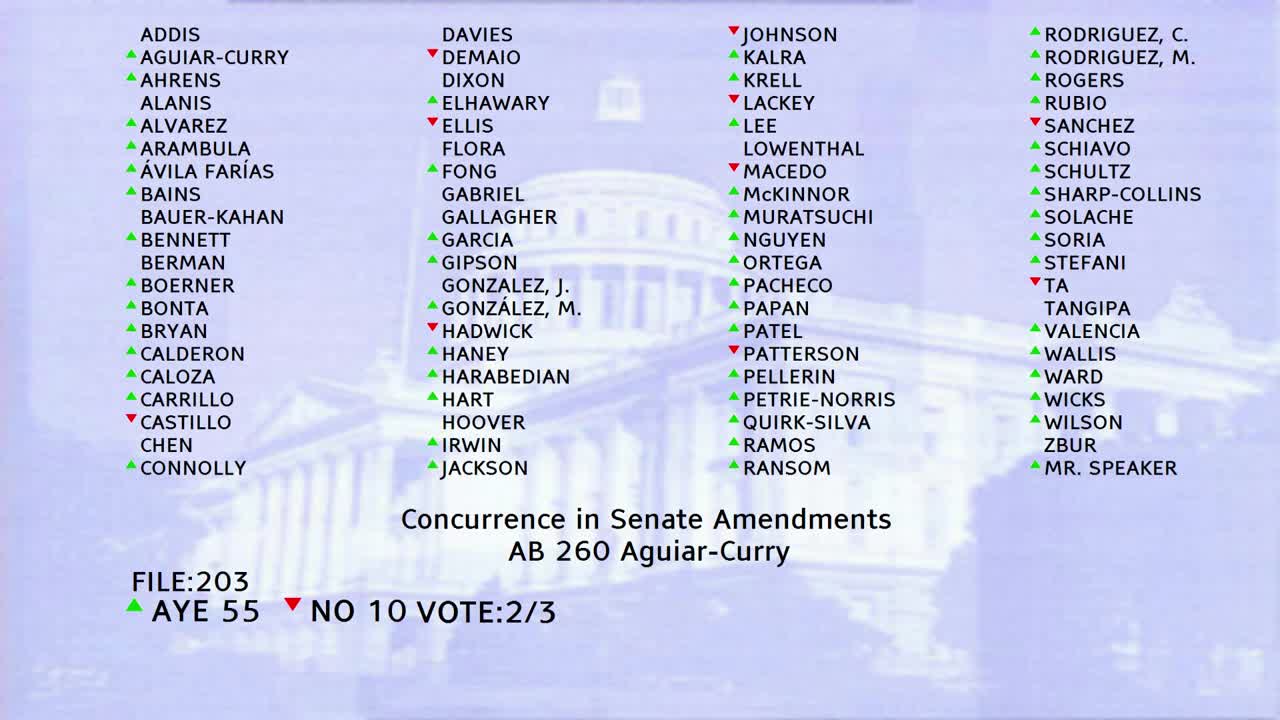
Bill Author

Bill Co-Author(s):