AB 251: Elders and dependent adults: abuse or neglect.
- Session Year: 2025-2026
- House: Assembly
- Latest Version Date: 2025-10-07
Current Status:
Passed
(2025-10-07: Chaptered by Secretary of State - Chapter 433, Statutes of 2025.)
Introduced
In Committee
Awaiting First Chamber Vote
Passed First Chamber
In Committee
Awaiting Second Chamber Vote
Passed Second Chamber
Enacted
Existing law, the Elder Abuse and Dependent Adult Civil Protection Act, provides for the award of attorneys fees and costs to, and the recovery of damages by, a plaintiff when it is proven by clear and convincing evidence that the defendant is liable for physical abuse or neglect, and the defendant has also been found guilty of recklessness, oppression, fraud, or malice in the commission of that abuse.
This bill would authorize a court to apply a preponderance of the evidence standard to any claim brought against a residential care facility for the elderly, an adult community care facility, or a skilled nursing facility, except as specified, for remedies sought pursuant to the above provisions, upon circumstances in which spoliation of evidence, as defined, has been committed by the defendant, as specified. The bill would make this provision inoperative if there is a final judicial determination in any action by any party, or a final determination by the Centers for Medicare and Medicaid Services, that the state is required by state or federal law or regulation to provide reimbursement under the Medi-Cal program to those facilities for costs associated with this bill and the Legislature does not appropriate sufficient funds to pay for those costs. The bill would make conforming changes to a related provision.
Existing law, the Elder Abuse and Dependent Adult Civil Protection Act, provides for the award of attorneys fees and costs to, and the recovery of damages by, a plaintiff when it is proven by clear and convincing evidence that the defendant is liable for physical abuse or neglect, and the defendant has also been found guilty of recklessness, oppression, fraud, or malice in the commission of that abuse.
This bill would authorize a court to apply a preponderance of the evidence standard to any claim brought against a residential care facility for the elderly elderly, an adult community care facility, or a skilled nursing facility, except as specified, for remedies sought pursuant to the above provisions, upon circumstances in which spoliation of evidence, as defined, has been committed by the defendant, as specified. The bill would make this provision inoperative if there is a final judicial determination in any action by any party, or a final determination by the Centers for Medicare and Medicaid Services, that the state is required by state or federal law or regulation to provide reimbursement under the Medi-Cal program to those facilities for costs associated with this bill and the Legislature does not appropriate sufficient funds to pay for those costs. The bill would make conforming changes to a related provision.
Existing law, the Elder Abuse and Dependent Adult Civil Protection Act, provides for the award of attorneys fees and costs to, and the recovery of damages by, a plaintiff when it is proven by clear and convincing evidence that the defendant is liable for physical abuse or neglect, and the defendant has also been found guilty of recklessness, oppression, fraud, or malice in the commission of that abuse.
This bill would authorize a court to apply a preponderance of the evidence standard to any claim brought against a residential care facility for the elderly or a skilled nursing facility, except as specified, for remedies sought pursuant to the above provisions, upon circumstances in which spoliation of evidence, as defined, has been committed by the defendant, as specified. The bill would make this provision inoperative if there is a final judicial determination in any action by any party, or a final determination by the Centers for Medicare and Medicaid Services, that the state is required by state or federal law or regulation to provide reimbursement under the Medi-Cal program to those facilities for costs associated with this bill and the Legislature does not appropriate sufficient funds to pay for those costs. The bill would make conforming changes to a related provision.
If it is proven by clear and convincing evidence, or by a preponderance of the evidence pursuant to Section 15657.02, that a defendant is liable for physical abuse as defined in Section 15610.63, neglect as defined in Section 15610.57, or abandonment as defined in Section 15610.05, and that the defendant has been guilty of recklessness, oppression, fraud, or malice in the commission of this abuse, the following shall apply, in addition to all other remedies otherwise provided by law:
(a)The court shall award to the plaintiff reasonable attorneys fees and costs. The term costs includes, but is not limited to, reasonable fees for the services of a conservator, if any, devoted to the litigation of a claim brought under this article.
(b)The limitations imposed by Section 377.34 of the Code of Civil Procedure on the damages recoverable shall not apply. However, the damages recovered shall not exceed the damages permitted to be recovered pursuant to subdivision (b) of Section 3333.2 of the Civil Code.
(c)The standards set forth in subdivision (b) of Section 3294 of the Civil Code regarding the imposition of punitive damages on an employer based upon the acts of an employee shall be satisfied before any damages or attorneys fees permitted under this section may be imposed against an employer.
SEC. 2.Section 15657.02 is added to the Welfare and Institutions Code, to read:15657.02.(a)(1)Notwithstanding any other law, the court may determine the standard of evidence in any claim for remedies sought under Section 15657 to be a preponderance of the evidence under either of the following circumstances:
(A)The plaintiff prevails on a discovery motion pursuant to subdivision (b) of Section 2023.030 of the Code of Civil Procedure due to spoliation of evidence by the defendant.
(B)A judge or arbitrator determines at any point during litigation or arbitration that spoliation of evidence has been committed by the defendant.
(2)The court shall issue its findings under this subdivision in writing.
(b)(1)This section applies only to claims brought against a residential care facility licensed pursuant to the California Residential Care Facilities for the Elderly Act (Chapter 3.2 (commencing with Section 1569) of Division 2 of the Health and Safety Code), an adult community care facility licensed pursuant to the California Community Care Facilities Act (Chapter 3 (commencing with Section 1500) of Division 2 of the Health and Safety Code), or a skilled nursing facility as defined in subdivision (c) of Section 1250 of the Health and Safety Code, except as otherwise provided in paragraph (2).
(2)This section does not apply to either of the following:
(A)A facility owned or operated by a general acute care hospital, as defined in subdivision (a) of, an acute psychiatric hospital, as defined in subdivision (b) of, or a special hospital, as defined in subdivision (f) of, Section 1250 of, and licensed pursuant to Chapter 2 (commencing with Section 1250) of Division 2 of, the Health and Safety Code.
(B)A facility that holds a valid license issued pursuant to subdivision (b) or (c) of Section 1254 of the Health and Safety Code.
(c)(1)For purposes of this section, spoliation of evidence means the intentional improper alteration of evidence or the intentional concealment or destruction of records, documents, or other evidence that is done by a party, with the intent of preventing the evidence from being produced, and that has materially prejudiced the other party.
(2)In determining whether spoliation of evidence has occurred, a judge shall consider whether records, documents, or other evidence is intentionally destroyed in any of the following manners:
(A)Prior to the expiration of a legally required time period for holding the records, documents, or other evidence.
(B)In contravention of the partys written records retention policy.
(C)After receipt of a written directive to preserve relevant records, documents, or other evidence.
(d)For purposes of this section, the records, documents, or other evidence that is the subject of the spoliation shall be material to the claim brought under this article and specifically required to be maintained or preserved by the defendant.
(e)This section does not modify the standard of evidence for cases brought under Section 15657.03.
(f)The remedy provided in this section is cumulative with any other remedy available by law.
(g)The Legislature hereby finds and declares that facilities described in subdivision (b) have an existing duty to refrain from committing spoliation of evidence in actions brought pursuant to Section 15657 and, therefore, this section does not impose a new requirement on those facilities that is reimbursable pursuant to Article 3.8 (commencing with Section 14126), any other law or regulation governing Medi-Cal ratesetting, or the California Medicaid State Plan.
(h)If there is a final judicial determination in any action by any party, or a final determination by the Centers for Medicare and Medicaid Services, that the state is required by state or federal law or regulation to provide reimbursement under the Medi-Cal program to the health care facilities described in subdivision (b) for costs associated with this section, and the Legislature does not appropriate sufficient funds to pay for those costs, this section shall become inoperative.
If it is proven by clear and convincing evidence, or by a preponderance of the evidence pursuant to Section 15657.02, that a defendant is liable for physical abuse as defined in Section 15610.63, neglect as defined in Section 15610.57, or abandonment as defined in Section 15610.05, and that the defendant has been guilty of recklessness, oppression, fraud, or malice in the commission of this abuse, the following shall apply, in addition to all other remedies otherwise provided by law:
(a)The court shall award to the plaintiff reasonable attorneys fees and costs. The term costs includes, but is not limited to, reasonable fees for the services of a conservator, if any, devoted to the litigation of a claim brought under this article.
(b)The limitations imposed by Section 377.34 of the Code of Civil Procedure on the damages recoverable shall not apply. However, the damages recovered shall not exceed the damages permitted to be recovered pursuant to subdivision (b) of Section 3333.2 of the Civil Code.
(c)The standards set forth in subdivision (b) of Section 3294 of the Civil Code regarding the imposition of punitive damages on an employer based upon the acts of an employee shall be satisfied before any damages or attorneys fees permitted under this section may be imposed against an employer.
SEC. 2.Section 15657.02 is added to the Welfare and Institutions Code, to read:15657.02.(a)(1)Notwithstanding any other law, the court may determine the standard of evidence in any claim for remedies sought under Section 15657 to be a preponderance of the evidence under either of the following circumstances:
(A)The plaintiff prevails on a discovery motion pursuant to subdivision (b) of Section 2023.030 of the Code of Civil Procedure due to spoliation of evidence by the defendant.
(B)A judge or arbitrator determines at any point during litigation or arbitration that spoliation of evidence has been committed by the defendant.
(2)The court shall issue its findings under this subdivision in writing.
(b)(1)This section applies only to claims brought against a residential care facility licensed pursuant to the California Residential Care Facilities for the Elderly Act (Chapter 3.2 (commencing with Section 1569) of Division 2 of the Health and Safety Code), or a skilled nursing facility as defined in subdivision (c) of Section 1250 of the Health and Safety Code, except as otherwise provided in paragraph (2).
(2)This section does not apply to either of the following:
(A)A facility owned or operated by a general acute care hospital, as defined in subdivision (a) of, an acute psychiatric hospital, as defined in subdivision (b) of, or a special hospital, as defined in subdivision (f) of, Section 1250 of, and licensed pursuant to Chapter 2 (commencing with Section 1250) of Division 2 of, the Health and Safety Code.
(B)A facility that holds a valid license issued pursuant to subdivision (b) or (c) of Section 1254 of the Health and Safety Code.
(c)(1)For purposes of this section, spoliation of evidence means the intentional improper alteration of evidence or the intentional concealment or destruction of records, documents, or other evidence that is done by a party, with the intent of preventing the evidence from being produced, and that has materially prejudiced the other party.
(2)In determining whether spoliation of evidence has occurred, a judge shall consider whether records, documents, or other evidence is intentionally destroyed in any of the following manners:
(A)Prior to the expiration of a legally required time period for holding the records, documents, or other evidence.
(B)In contravention of the partys written records retention policy.
(C)After receipt of a written directive to preserve relevant records, documents, or other evidence.
(d)For purposes of this section, the records, documents, or other evidence that is the subject of the spoliation shall be material to the claim brought under this article and specifically required to be maintained or preserved by the defendant under applicable law or regulation. defendant.
(e)This section does not modify the standard of evidence for cases brought under Section 15657.03.
(f)The remedy provided in this section is cumulative with any other remedy available by law.
(g)The Legislature hereby finds and declares that facilities described in subdivision (b) have an existing duty to refrain from committing spoliation of evidence in actions brought pursuant to Section 15657 and, therefore, this section does not impose a new requirement on those facilities that is reimbursable pursuant to Article 3.8 (commencing with Section 14126), any other law or regulation governing Medi-Cal ratesetting, or the California Medicaid State Plan.
(h)If there is a final judicial determination in any action by any party, or a final determination by the Centers for Medicare and Medicaid Services, that the state is required by state or federal law or regulation to provide reimbursement under the Medi-Cal program to the health care facilities described in subdivision (b) for costs associated with this section, and the Legislature does not appropriate sufficient funds to pay for those costs, this section shall become inoperative.
Where If it is proven by clear and convincing evidence, or by a preponderance of the evidence pursuant to Section 15657.02, that a defendant is liable for physical abuse as defined in Section 15610.63, neglect as defined in Section 15610.57, or abandonment as defined in Section 15610.05, and that the defendant has been guilty of recklessness, oppression, fraud, or malice in the commission of this abuse, the following shall apply, in addition to all other remedies otherwise provided by law:
(a)The court shall award to the plaintiff reasonable attorneys fees and costs. The term costs includes, but is not limited to, reasonable fees for the services of a conservator, if any, devoted to the litigation of a claim brought under this article.
(b)The limitations imposed by Section 377.34 of the Code of Civil Procedure on the damages recoverable shall not apply. However, the damages recovered shall not exceed the damages permitted to be recovered pursuant to subdivision (b) of Section 3333.2 of the Civil Code.
(c)The standards set forth in subdivision (b) of Section 3294 of the Civil Code regarding the imposition of punitive damages on an employer based upon the acts of an employee shall be satisfied before any damages or attorneys fees permitted under this section may be imposed against an employer.
SEC. 2.Section 15657.02 is added to the Welfare and Institutions Code, to read:15657.02.(a)(1)Notwithstanding any other law, the court may determine the standard of evidence in any claim for remedies sought under Section 15657 to be a preponderance of the evidence under either of the following circumstances:
(A)The plaintiff prevails on a discovery motion pursuant to subdivision (b) of Section 2023.030 of the Code of Civil Procedure due to spoliation of evidence by the defendant.
(B)A judge or arbitrator determines at any point during litigation or arbitration that spoliation of evidence has been committed by the defendant.
(2)The court shall issue its findings under this subdivision in writing.
(b)(1)This section applies only to claims brought against a residential care facility licensed pursuant to the California Residential Care Facilities for the Elderly Act (Chapter 3.2 (commencing with Section 1569) of Division 2 of the Health and Safety Code), or a skilled nursing facility as defined in subdivision (c) of Section 1250 of the Health and Safety Code, except as otherwise provided in paragraph (2).
(2)This section does not apply to either of the following:
(A)A facility owned or operated by a general acute care hospital, as defined in subdivision (a) of, an acute psychiatric hospital, as defined in subdivision (b) of, or a special hospital, as defined in subdivision (f) of, Section 1250 of, and licensed pursuant to Chapter 2 (commencing with Section 1250) of Division 2 of, the Health and Safety Code.
(B)A facility that holds a valid license issued pursuant to subdivision (b) or (c) of Section 1254 of the Health and Safety Code.
(c)For purposes of this section, spoliation of evidence means the intentional concealment or destruction of evidence that is done by a party, with the intent of preventing the evidence from being produced, and that has materially prejudiced the other party.
(d)For purposes of this section, the evidence that is the subject of the spoliation shall be material to the claim brought under this article and specifically required to be maintained or preserved by the defendant under applicable law or regulation.
(e)This section does not modify the standard of evidence for cases brought under Section 15657.03.
(f)The remedy provided in this section is cumulative with any other remedy available by law.
(g)The Legislature hereby finds and declares that facilities described in subdivision (b) have an existing duty to refrain from committing spoliation of evidence in actions brought pursuant to Section 15657 and, therefore, this section does not impose a new requirement on those facilities that is reimbursable pursuant to Article 3.8 (commencing with Section 14126), any other law or regulation governing Medi-Cal ratesetting, or the California Medicaid State Plan.
(h)If there is a final judicial determination in any action by any party, or a final determination by the Centers for Medicare and Medicaid Services, that the state is required by state or federal law or regulation to provide reimbursement under the Medi-Cal program to the health care facilities described in subdivision (b) for costs associated with this section, and the Legislature does not appropriate sufficient funds to pay for those costs, this section shall become inoperative.
|
Date
|
Status
|
|---|---|
| Oct 7, 2025 | Chaptered by Secretary of State - Chapter 433, Statutes of 2025. |
| Oct 7, 2025 | Approved by the Governor. |
| Sep 15, 2025 | Enrolled and presented to the Governor at 4:30 p.m. |
| Sep 8, 2025 | Senate amendments concurred in. To Engrossing and Enrolling. (Ayes 60. Noes 10. Page 3023.). |
| Sep 4, 2025 | In Assembly. Concurrence in Senate amendments pending. |
| Sep 4, 2025 | Read third time. Passed. Ordered to the Assembly. (Ayes 29. Noes 7. Page 2515.). |
| Aug 29, 2025 | Read second time. Ordered to third reading. |
| Aug 29, 2025 | From committee: Do pass. (Ayes 5. Noes 2.) (August 29). |
| Jun 30, 2025 | In committee: Referred to APPR. suspense file. |
| Jun 23, 2025 | From committee chair, with author's amendments: Amend, and re-refer to committee. Read second time, amended, and re-referred to Com. on APPR. |
| Jun 17, 2025 | From committee: Do pass and re-refer to Com. on APPR. (Ayes 10. Noes 0.) (June 17). Re-referred to Com. on APPR. |
| May 7, 2025 | Referred to Coms. on JUD. and APPR. |
| Apr 2, 2025 | In Senate. Read first time. To Com. on RLS. for assignment. |
| Apr 1, 2025 | Read third time. Passed. Ordered to the Senate. (Ayes 57. Noes 8. Page 959.) |
| Apr 1, 2025 | Read third time. Passed. Ordered to the Senate. (Ayes 57. Noes 8.) |
| Mar 27, 2025 | Read second time. Ordered to third reading. |
| Mar 26, 2025 | From committee: Do pass. (Ayes 8. Noes 2.) (March 25). |
| Mar 20, 2025 | Re-referred to Com. on JUD. |
| Mar 19, 2025 | From committee chair, with author's amendments: Amend, and re-refer to Com. on JUD. Read second time and amended. |
| Feb 10, 2025 | Referred to Com. on JUD. |
| Jan 16, 2025 | From printer. May be heard in committee February 15. |
| Jan 15, 2025 | Read first time. To print. |
|
Date
|
Description
|
Location
|
Votes
|
|
|---|---|---|---|---|
| Sep 8, 2025 | AB 251 Kalra Concurrence in Senate Amendments | Assembly Floor |
Passed |
|
| Sep 4, 2025 | Assembly 3rd Reading AB251 Kalra By Wahab | Senate Floor |
Passed |
|
| Aug 29, 2025 | Do pass | Senate Standing Committee on Appropriations |
Passed |
|
| Jun 30, 2025 | Placed on suspense file | Senate Standing Committee on Appropriations |
Passed |
|
| Jun 17, 2025 | Do pass, but first be re-referred to the Committee on [Appropriations] | Senate Standing Committee on Judiciary |
Passed |
|
| Apr 1, 2025 | AB 251 Kalra Assembly Third Reading | Assembly Floor |
Passed |
|
| Mar 25, 2025 | Do pass. | Assembly Standing Committee on Judiciary |
Passed |
This list shows positions taken on this bill by organizations on the date displayed, which is linked to the original source.
Positions by individuals are not included.
|
Organization
|
Position
|
Date
|
|---|---|---|
| AARP California | ** Support | |
| Association Of Regional Center Agencies | ** Support | |
| California Advocates for Nursing Home Reform (co-source) | ** Support | |
| California Assisted Living Association | ** Against | |
| California Collaborative for Long-Term Services and Supports | ** Support | |
| California Commission on Aging | ** Support | |
| California Continuing Care Residents Association | ** Support | |
| California Elder Justice Coalition | ** Support | |
| California Geriatric Circle | ** Support | |
| California Long-Term Care Ombudsman Association | ** Support | |
| California Retired Teachers Association | ** Support | |
| Canhr | ** Support | |
| Civil Justice Association Of California | ** Against | |
| Consumer Attorneys Of California | ** Support | |
| Elder Law & Advocacy | ** Support | |
| Justice in Aging | ** Support | |
| Retired Public Employees Association | ** Support | |
| The Geriatric Circle | ** Support |
CONCURRENCE IN SENATE AMENDMENTS
CSA1 Bill Id:AB 251
Author:(Kalra)
As Amended Ver:June 23, 2025
Majority vote
SUMMARY
Authorizes a court to reduce the standard of proof required to prove abuse, abandonment, or neglect of an elder or dependent adult in a civil action from clear and convincing evidence, to preponderance of the evidence, under specified circumstances in cases where the defendant has engaged in spoliation of the evidence substantiating the abuse.
Authorizes a court to reduce the standard of proof required to prove abuse, abandonment, or neglect of an elder or dependent adult in a civil action from clear and convincing evidence, to preponderance of the evidence, under specified circumstances in cases where the defendant has engaged in spoliation of the evidence substantiating the abuse.
Major Provisions
- Provides that notwithstanding any other law, the court may determine the standard of evidence required to prove elder or dependent adult physical abuse, abandonment, or neglect in cases brought against residential care facilities for the elderly (RCFEs) and skilled nursing facilities (SNFs) in any claim under the Elder Abuse and Dependent Adult Civil Protection Act (EADACPA) to be a preponderance of the evidence in either of the following circumstances:
- The plaintiff prevails on a discovery motion pursuant to subdivision (b) of Section 2023.030 of the Code of Civil Procedure due to spoliation of evidence by the defendant.
- A judge or arbitrator determines at any point during litigation or arbitration that spoliation of evidence has been committed by the defendant.
- Requires the court to issue its findings under 1) in writing.
- Clarifies that 1) applies only to claims brought against a residential care facility licensed pursuant to the California Residential Care Facilities for the Elderly Act (Chapter 3.2 (commencing with Section 1569) of Division 2 of the Health and Safety Code), an adult community care facility licensed pursuant to the California Community Care Facilities Act (Chapter 3 (commencing with Section 1500) of Division 2 of the Health and Safety Code), or a skilled nursing facility as defined in subdivision (c) of Section 1250 of the Health and Safety Code, except as otherwise provided in paragraph (2).
- Clarifies that 1), above, does not apply to either of the following:
- A facility owned or operated by a general acute care hospital, an acute psychiatric hospital, or a special hospital.
- A facility that holds a valid license allowing for its beds to be separately housed from an acute psychiatric hospital, or a special hospital.
- Defines, for purposes of the bill, "spoliation of evidence" to mean "the intentional improper alteration of evidence or the intentional concealment or destruction of records, documents, or other evidence that is done by a party, with the intent of preventing the evidence from being produced, and that has materially prejudiced the other party."
- Requires a judge, in determining whether spoliation of evidence has occurred, to consider whether records, documents, or other evidence is intentionally destroyed in any of the following manners:
- Prior to the expiration of a legally required time period for holding the records, documents, or other evidence.
- In contravention of the party's written records retention policy.
- After receipt of a written directive to preserve relevant records, documents, or other evidence.
- Clarifies that, for purposes of the bill, the records, documents, or other evidence that is the subject of the spoliation shall be material to the claim brought under this article and specifically required to be maintained or preserved by the defendant.
- Clarifies that the bill does not modify the standard of evidence for cases seeking a protective order to protect an elder or dependent adult from abuse.
- States that the remedy provided in this bill is cumulative with any other remedy available by law.
- States that the Legislature hereby finds and declares that the facilities that are subject to the bill have an existing duty to refrain from committing spoliation of evidence in actions brought under the EADACPA and, therefore, the bill does not impose a new requirement on those facilities that is reimbursable pursuant to any law or regulation governing Medi-Cal ratesetting, or the California Medicaid State Plan.
- Provides that if there is a final judicial determination in any action by any party, or a final determination by the Centers for Medicare and Medicaid Services, that the state is required by state or federal law or regulation to provide reimbursement under the Medi-Cal program to the health care facilities subject to the bill for costs associated with the bill, and the Legislature does not appropriate sufficient funds to pay for those costs, this bill shall become inoperative.
Senate Amendments
Add adult community care facilities licensed pursuant to the California Community Care Facilities Act (Chapter 3 (commencing with Section 1500) of Division 2 of the Health and Safety Code) to the application of the bill.
COMMENTS
This bill, co-sponsored by Consumer Attorneys of California and California Advocates for Nursing Home Reform, seeks to deter the abuse, abandonment, and neglect of elders, as well as the destruction of evidence of such heinous acts, by reducing the unusually high standard of proof that generally is applicable to elder abuse cases when an unusual act occurs. The bill gives a court discretion to reduce the standard of proof to the default standard in civil cases of preponderance of the evidence when the court finds that the defendant has engaged in spoliation of evidence. Given that the standard of proof is only reduced from clear and convincing evidence (which is unusually high for civil cases) to preponderance of the evidence in these exceptional circumstances, and only when the abuse, abandonment, and neglect is perpetrated by custodians of the elder who provide care in a residential care facility for the elderly (RCFE) or a skilled nursing facility (SNF), the bill has a quite narrow and limited application.
This bill and how it differs from prior similar legislation. Like numerous prior attempts to address the dual problems of a high standard of proof for elder abuse cases and spoliation of evidence (see list of prior similar legislation, below), this bill seeks to better protect elder and dependent adults—and to deter both abuse and destruction of evidence of abuse--by making a relatively modest change to the evidentiary standard necessary to prove physical abuse, abandonment, or neglect. According to the author and co-sponsors, some nursing home defendants often hold all or most of the evidence necessary to prove the claim of elder abuse, but purposefully destroy evidence and thereby make the victim's case—hard enough to begin with because of the clear and convincing evidentiary requirement—even more difficult to prove.
Like prior legislation, this bill does not alter the elements of an EADACPA case that must be proved in order to establish physical abuse, abandonment, or neglect of an elder or dependent adult. Like prior legislation, the bill only seeks to lower the standard of proof for those elements, from clear and convincing evidence to preponderance of the evidence, in cases where spoliation has occurred.
While past legislative efforts required a lower standard of proof when a court found that spoliation of evidence had occurred, this bill does not make the reduction mandatory. Instead, as suggested by the Governor in his veto message regarding AB 2773 (2023-24), the bill gives discretion to a court to reduce the standard of proof, from clear and convincing to preponderance of the evidence, when it finds that the defendant engaged in spoliation. The bill clarifies both of the following in regard to spoliation: (1) what "spoliation of evidence" means; and (2) what evidence a court must consider in order to determine whether spoliation has occurred.
Further limiting the reach of this legislation, the bill, like AB 2773, applies only to claims brought against a residential care home for the elderly (RCFE) or a skilled nursing facility (SNF). It does not apply, by its own terms, to hospitals or facilities owned by hospitals. Like AB 2773, the bill includes language to make it inoperative if costs imposed to nursing homes by the bill are not reimbursed under the Medi-Cal program:
If there is a final judicial determination in any action by any party, or a final determination by the Centers for Medicare and Medicaid Services, that the state is required by state or federal law or regulation to provide reimbursement under the Medi-Cal program to the health care facilities subject to the bill for costs associated with the bill, and the Legislature does not appropriate sufficient funds to pay for those costs, this bill shall become inoperative.
According to the Author
AB 251 gives abused elderly victims and their families a chance at justice after a skilled nursing facility or RCFE unscrupulously destroys evidence by giving the judge discretion to apply the preponderance of the evidence standard as the burden of proof. The bill is narrowly focused and only applies when a judge determines spoliation of evidence where the nursing facility defendant intentionally and willfully destroys or conceals evidence that is material to the claim.
The civil justice system is often the only avenue to hold nursing facility operators directly accountable for elder abuse and to ensure these facilities are safer for all. California law, however, is weak in its treatment of spoliation, and a party may not be sued under a separate cause of action for the intentional destruction of evidence. The only remedy the court typically uses is a discretionary sanction or an instruction by the judge to the jury that it may consider whether one party intentionally concealed or destroyed evidence. AB 251 is needed to address this limited deterrence against spoliation of evidence and is fair to the victims of elder abuse.
Arguments in Support
Co-sponsor California Advocates for Nursing Home Reform (CANHR) writes that the legislation is necessary, given the increasing incidence of records substantiating abuse being destroyed:
Over the last decade or so, electronic health records and communication have become prolific and given long term care providers new opportunities to destroy, conceal, or fraudulently alter records. Spoliation of electronic health care records is extremely difficult to detect, requiring time consuming and expensive audit trail reviews to examine every key punch in a resident's record. Neither DPH nor DSS have staff who can undertake audit trail reviews and thus falsification of records is increasingly undetected. The prevalence of spoliation is very likely increasing due to the diminished efficacy of regulator oversight.
Co-sponsor Consumer Attorneys of California describes why the bill will address these problems in a way that is fair and just:
The bill is narrowly focused and only applies when a judge determines spoliation of evidence where the nursing facility defendant intentionally and willfully destroy or conceals evidence that is material to the claim. This bill promotes justice, deters misconduct, and strengthens protections for seniors in care facilities.
Arguments in Opposition
The Civil Justice Association of California writes that it opposes the bill because, in its opinion, the bill is both unnecessary (because other court remedies are available to a court in order to sanction spoliation of evidence) and excessive:
AB 251 proposes to make the lower evidentiary standard available if there has been a finding that a defendant has destroyed or altered evidence. Such a finding is very serious, yet what AB 251 proposes is excessive because, under current law, there are ample remedies. These include monetary penalties and sanctions under Code of Civil Procedure Section 2023.030 and permitting juries to consider conduct in their decision-making under CACI jury instruction 204.
Additionally, judges already have appropriate discretion for dealing with motions for spoliation that range from warnings, monetary fines, issue preclusion, terminating sanctions, and directed verdict. Moreover, consumers have robust protections under current elder abuse law, which provides for private, civil enforcement of claims and strong remedies including awards of reasonable attorney's fees in addition to compensatory damages, as well as awards to surviving beneficiaries.
FISCAL COMMENTS
According to the Senate Appropriations Committee, the fiscal impact is as follows:
- Medi-Cal: Unknown, potentially significant costs (General Fund, federal funds). The Medi-Cal program individually reimburses certain health care facilities on a cost-basis for the care they provide to Medi-Cal beneficiaries. Lowering the standard of proof in elder abuse cases, as proposed by this bill, makes it more likely that plaintiffs will prevail, defendant-facilities will incur related legal costs, increased liability, and their professional liability insurance may increase. These costs would be captured in the individual cost reports the Department of Health Care Services uses to calculate facility-specific Medi-Cal reimbursement rates. Professional liability insurance costs for providers are reported as a separate line item, and feed directly into the rate. Some of these increased costs may be borne by the state through Medi-Cal.
According to the Assembly Committee on Appropriations and Department of Finance analyses of a substantially similar bill, this bill is likely to result in a one to one-and-a-half percent increase in reimbursed personal liability insurance on a base of approximately $65 million for skilled nursing facilities. This range translates to increased annual costs of $650,000 to $975,000, split evenly between General Fund and Federal Trust Fund.
- Trial Courts: Unknown, potentially significant cost to the state funded trial court system (Trial Court Trust Fund, General Fund). Lowering the standard of proof will increase the likelihood for success for elder abuse plaintiffs to prove their cases, which may lead to additional case filings that otherwise may not have been commenced. Additionally, requiring the courts to issue their findings in writing, as required by this bill, could lead to lengthier and more complex court proceedings with attendant workload and resource costs to the court. Even in cases where spoliation cannot be proved, if spoliation is alleged, it could result in increased legal defense costs to defend against such motions.
- The fiscal impact of this bill to the courts will depend on many unknowns, including the number of cases and the factors unique to each case. An eight-hour court day costs approximately $10,500 in staff in workload. This is a conservative estimate, based on the hourly rate of court personnel including at minimum the judge, clerk, bailiff, court reporter, jury administrator, administrative staff, and jury per-diems. If court days exceed 10, costs to the trial courts could reach hundreds of thousands of dollars. While the courts are not funded on a workload basis, an increase in workload could result in delayed court services and would put pressure on the General Fund to fund additional staff and resources and to increase the amount appropriated to backfill for trial court operations. The Governor's 2025-26 budget proposes a $40 million ongoing increase in discretionary funding from the General Fund to help pay for increased trial court operation costs beginning in 2025-26. The May Revision includes total funding of $5.2 billion ($3.2 billion General Fund) in 2025-26 for the Judicial Branch, of which $2.9 billion is provided to support trial court operations. The Budget Act of 2025 provides $82 million General Fund to account for trial court operations.
VOTES:
ASM JUDICIARY: 8-2-2
YES: Kalra, Bauer-Kahan, Bryan, Connolly, Harabedian, Papan, Stefani, Zbur
NO: Dixon, Essayli
ABS, ABST OR NV: Pacheco, Sanchez
ASSEMBLY FLOOR: 57-8-15
YES: Addis, Aguiar-Curry, Ahrens, Alanis, Arambula, Ávila Farías, Bains, Bauer-Kahan, Bennett, Berman, Boerner, Bonta, Bryan, Calderon, Caloza, Carrillo, Connolly, Elhawary, Fong, Gabriel, Garcia, Gipson, Mark González, Haney, Harabedian, Hart, Irwin, Jackson, Kalra, Krell, Lee, Lowenthal, McKinnor, Muratsuchi, Nguyen, Ortega, Pacheco, Papan, Patel, Pellerin, Petrie-Norris, Quirk-Silva, Ramos, Ransom, Celeste Rodriguez, Rogers, Blanca Rubio, Schiavo, Schultz, Solache, Soria, Stefani, Valencia, Ward, Wilson, Zbur, Rivas
NO: Chen, DeMaio, Ellis, Essayli, Gallagher, Hadwick, Tangipa, Wallis
ABS, ABST OR NV: Alvarez, Castillo, Davies, Dixon, Flora, Jeff Gonzalez, Hoover, Lackey, Macedo, Patterson, Michelle Rodriguez, Sanchez, Sharp-Collins, Ta, Wicks
SENATE FLOOR: 29-7-4
YES: Allen, Archuleta, Arreguín, Ashby, Becker, Blakespear, Cabaldon, Caballero, Cervantes, Cortese, Durazo, Gonzalez, Grayson, Hurtado, Laird, Limón, McGuire, McNerney, Menjivar, Padilla, Pérez, Richardson, Rubio, Smallwood-Cuevas, Stern, Umberg, Wahab, Weber Pierson, Wiener
NO: Alvarado-Gil, Choi, Dahle, Grove, Jones, Seyarto, Strickland
ABS, ABST OR NV: Niello, Ochoa Bogh, Reyes, Valladares
UPDATED
VERSION: June 23, 2025
CONSULTANT: Alison Merrilees / JUD. / (916) 319-2334 FN: 0001685
SENATE RULES COMMITTEE Office of Senate Floor Analyses (916) 651-1520 Fax: (916) 327-4478 | AB 251 |
THIRD READING
Bill No: AB 251
Author: Kalra (D)
Amended: 6/23/25 in Senate
Vote: 21
SENATE JUDICIARY COMMITTEE: 10-0, 6/17/25
AYES: Umberg, Allen, Arreguín, Caballero, Durazo, Laird, Stern, Wahab, Weber Pierson, Wiener
NO VOTE RECORDED: Niello, Ashby, Valladares
SENATE APPROPRIATIONS COMMITTEE: 5-2, 8/29/25
AYES: Caballero, Cabaldon, Grayson, Richardson, Wahab
NOES: Seyarto, Dahle
ASSEMBLY FLOOR: 57-8, 4/1/25 - See last page for vote
SUBJECT: Elders and dependent adults: abuse or neglect
SOURCE: California Advocates for Nursing Home Reform;
Consumer Attorneys of California
DIGEST:
This bill permits a judge to reduce the burden of proof, from clear and convincing evidence to preponderance of the evidence, in a civil action filed against specified facilities under the Elder Abuse and Dependent Adult Civil Protection Act (EADACPA), when the court has found that the defendant committed spoliation of evidence and other specified conditions are met.
ANALYSIS:
Existing law:
- Establishes the EADACPA, which is intended, among other things, to enable interested persons to engage attorneys to take up the cause of abused elderly persons and dependent adults. (Welfare and Institutions Code (Welf. & Inst. Code), div. 9, pt. 3, ch. 11, §§ 15600 et seq.)
- Defines the following relevant terms:
- “Abandonment” means the desertion or willful forsaking of an elder or a dependent adult by anyone having care or custody of that person under circumstances in which a reasonable person would continue to provide care and custody. (Welf. & Inst. Code, § 15610.5.)
- “Elder” means any person residing in this state who is 65 years of age or older. (Welf. & Inst. Code, § 15610.27.)
- “Neglect” means either the negligent failure of any person having the care or custody of an elder or dependent adult to exercise that degree of care that a reasonable person in a like position would exercise, or the negligent failure of an elder or dependent adult to exercise that degree of self-care that a reasonable person in a like position would exercise, and includes specified acts. (Welf. & Inst. Code, § 15610.57.)
- “Physical abuse” includes assault, battery, unreasonable physical constraint or prolonged continual deprivation of food or water, sexual assault, and unwarranted or unauthorized use of physical restraints, chemical restraints, or psychotropic medication. (Welf. & Inst. Code, § 15610.63.)
- Provides that, where it is proven by clear and convincing evidence that a defendant is liable for physical abuse, neglect, or abandonment, and that the defendant has been guilty of recklessness, oppression, fraud, or malice in the commission of this abuse, the following shall apply, in addition to all other remedies otherwise provided by law:
- The court shall award to the plaintiff reasonable attorney fees and costs; “costs” includes, but is not limited to, reasonable fees for the services of a conservator, if any, devoted to the litigation of a claim, as specified.
- The limitations imposed on recovering damages for a decedent under Code of Civil Procedure section 337.34 do not apply in the action; however, the damages recovered shall not exceed the damages permitted to be recovered under the Medical Injury Compensation Reform Act of 1975 (MICRA) (Civ. Code, § 3333.2).
- The standards set forth in Civil Code section 3294(b) regarding the imposition of punitive damages on an employer based on the acts of an employee shall be satisfied before any damages or attorney fees permitted under 3)(a) shall be imposed against an employer. (Welf. & Inst. Code, § 15657.)
- Provides that, notwithstanding 3), any cause of action for injury or damage against a health care provider, as defined, based on the health care provider’s alleged professional negligence shall be governed by those laws which specifically apply to those professional negligence causes of action. (Welf. & Inst. Code, § 15657.2.)
- Provides that a plaintiff may recover punitive damages, in an action for the breach of an obligation not arising under a contract, when it is proven by clear and convincing evidence that the defendant has been guilty of oppression, fraud, or malice. (Civ. Code, § 3294.)
- Establishes the Civil Discovery Act, which sets forth the procedures for, and sanctions for the misuse of, discovery in civil cases. (Code Civ. Proc., pt. 4, tit. 4, §§ 2016 et seq.)
- Provides that misuses of the civil discovery process include:
- Failing to respond or to submit to an authorized method of discovery.
- Making, without substantial justification, an unmeritorious objection to discovery.
- Making an evasive response to discovery.
- Disobeying a court order to provide discovery. (Code Civ. Proc., § 2023.010.)
- Permits a court, after notice and an opportunity for hearing, to impose specified sanctions against anyone engaging in conduct that is a misuse of the discovery process, including monetary sanctions, evidentiary sanctions, and terminating sanctions. (Welf. & Inst. Code, § 2023.030.)
- Permits a finder of fact to draw a negative inference against a party’s willful suppression of evidence. (Evid. Code, § 413.)
This bill:
- Permits the court to determine the standard of evidence, in any claim for remedies sought in an EADACPA civil action, to be a preponderance of the evidence, under either of the following circumstances:
- The plaintiff prevails on a motion under the Civil Discovery Act arguing that the defendant misused the discovery process, as specified, due to spoliation of evidence by the defendant.
- A judge or arbitrator determines at any point during litigation or arbitration that spoliation of evidence has been committed by the defendant.
- Requires a court that determines that the standard of evidence shall be a preponderance of the evidence under 1) to issue its findings in writing.
- Provides that the standard of evidence may be lowered under 1) only in claims brought against a residential care facility, an adult community care facility, or a skilled nursing facility, as defined, except for a facility owned or operated by a licensed general acute care hospital, acute psychiatric hospital, or special hospital, as defined, or a freestanding facility operated by a licensed acute care hospital providing basic services, as defined.
- Provides that, for purposes of 1), “spoliation of evidence” means the intentional improper alteration of evidence or the intentional concealment or destruction of records, documents, or other evidence that is done by a party, with the intent of preventing the evidence from being produced, and that has materially prejudiced the other party.
- Provides that a judge, in determining whether spoliation has occurred under 1), shall consider whether records, documents, or other evidence is intentionally destroyed in any of the following manners:
- Prior to the expiration of a legally required time period for holding the records, documents, or other evidence.
- In contravention of the party’s written records retention policy.
- After receipt of a written directive to preserve relevant records, documents, or other evidence.
- Provides, that, for purposes of 1), the records, documents, or other evidence that is the subject of the spoliation must be material to the EADACPA claim and specifically required to be maintained or preserved by the defendant.
- Provides that 1)-9) do not modify the standards for obtaining an EADACPA protective order, as specified, and that the remedy provided is cumulative with any other remedy available by law.
- States that the Legislature finds and declares that facilities described in 3) have an existing duty to refrain from committing spoliation of evidence in EADACPA civil actions and, therefore, 1)-9) do not impose a new requirement on those facilities that is reimbursable under specified Medi-Cal or California Medicaid State Plan laws or regulations.
- Provides that, if there is a final judicial determination in any action by any party, or a final determination by the Centers for Medicare and Medicaid Services, that the state is required by state or federal law or regulation to provide reimbursement under the Medi-Cal program to the health care facilities described in 3) for costs associated with 1)-8), and the Legislature does not appropriate sufficient funds to pay for those costs, 1)-8) shall become inoperative.
Comments
The EADACPA establishes a number of standards and protections for elder and dependent adults who, as a result of their reliance on third parties, are left uniquely vulnerable to abuse. One such provision permits a party who brings a claim of abuse of an elder or dependent adult on behalf of the victim to recover attorney’s fees and costs, as well as compensatory damages for the elder or dependent adult’s pain and suffering (subject to statutory limits), and punitive damages, if the party can show, by clear and convincing evidence, that the defendant was guilty of recklessness, oppression, fraud, or malice in committing the abuse. The clear and convincing evidence standard of proof established in this case is a higher burden than the “preponderance of the evidence” standard in most civil actions.
According to the author and sponsors of this bill, claims under the EADACPA private right of action frequently face another hurdle: deliberate spoliation of evidence by the defendant. Spoliation—the deliberate destruction, alteration, or concealment of evidence—effectively prevents a party from having their fair day in court by depriving them of the evidence they need to make their case. According to the author and sponsors, spoliation is especially harmful in EADACPA cases because the facilities’ records are often necessary to establish that the abuse occurred, particularly in cases where the elder or dependent adult has passed away.
This bill gives the court the discretion to lower the burden of proof for an EADACPA claim against a skilled nursing facility or residential care facility when the court finds that the facility has deliberately spoliated material evidence that it was required to maintain, with the intent of preventing the other party from obtaining the evidence, and that the spoliation materially prejudiced the other party. This bill does not prevent the court from imposing any existing sanctions for the misuse of the discovery process in lieu of lowering the burden of proof.
This bill is similar to AB 2773 (Kalra, 2024), except that AB 2773 required, rather than permitted, a judge to lower the burden of proof upon a finding that the defendant spoliated evidence. Governor Newsom vetoed AB 2773, stating in his veto message that “we should not completely remove a judge's discretion to craft appropriate remedies in response to spoliation. A more nuanced approach would be to specify that a judge may reduce the standard of proof under these circumstances.”[1] Because this bill grants the court such discretion, it appears responsive to the Governor’s concerns.
FISCAL EFFECT: Appropriation: No Fiscal Com.: No Local: No
According to the Senate Appropriations Committee, the fiscal impact is as follows:
- Medi-Cal: Unknown, potentially significant costs (General Fund, federal funds). The Medi-Cal program individually reimburses certain health care facilities on a cost-basis for the care they provide to Medi-Cal beneficiaries. Lowering the standard of proof in elder abuse cases, as proposed by this bill, makes it more likely that plaintiffs will prevail, defendant-facilities will incur related legal costs, increased liability, and their professional liability insurance may increase. These costs would be captured in the individual cost reports the Department of Health Care Services uses to calculate facility-specific Medi-Cal reimbursement rates. Professional liability insurance costs for providers are reported as a separate line item, and feed directly into the rate. Some of these increased costs may be borne by the state through Medi-Cal.
According to the Assembly Committee on Appropriations and Department of Finance analyses of a substantially similar bill[2], this bill is likely to result in a one to one-and-a-half percent increase in reimbursed personal liability insurance on a base of approximately $65 million for skilled nursing facilities. This range translates to increased annual costs of $650,000 to $975,000, split evenly between General Fund and Federal Trust Fund. - Trial Courts: Unknown, potentially significant cost to the state funded trial court system (Trial Court Trust Fund, General Fund). Lowering the standard of proof will increase the likelihood for success for elder abuse plaintiffs to prove their cases, which may lead to additional case filings that otherwise may not have been commenced. Additionally, requiring the courts to issue their findings in writing, as required by this bill, could lead to lengthier and more complex court proceedings with attendant workload and resource costs to the court. Even in cases where spoliation cannot be proved, if spoliation is alleged, it could result in increased legal defense costs to defend against such motions.
- The fiscal impact of this bill to the courts will depend on many unknowns, including the number of cases and the factors unique to each case. An eight-hour court day costs approximately $10,500 in staff in workload. This is a conservative estimate, based on the hourly rate of court personnel including at minimum the judge, clerk, bailiff, court reporter, jury administrator, administrative staff, and jury per-diems. If court days exceed 10, costs to the trial courts could reach hundreds of thousands of dollars. While the courts are not funded on a workload basis, an increase in workload could result in delayed court services and would put pressure on the General Fund to fund additional staff and resources and to increase the amount appropriated to backfill for trial court operations. The Governor’s 2025-26 budget proposes a $40 million ongoing increase in discretionary funding from the General Fund to help pay for increased trial court operation costs beginning in 2025-26. The May Revision includes total funding of $5.2 billion ($3.2 billion General Fund) in 2025-26 for the Judicial Branch, of which $2.9 billion is provided to support trial court operations. The Budget Act of 2025 provides $82 million General Fund to account for trial court operations.
SUPPORT: (Verified 8/29/25)
California Advocates for Nursing Home Reform (co-source)
Consumer Attorneys of California (co-source)
AARP California
Association of Regional Center Agencies
California Collaborative for Long-Term Services and Supports
California Commission on Aging
California Continuing Care Residents Association
California Elder Justice Coalition
California Long-Term Care Ombudsman Association
California Geriatric Circle
California Retired Teachers Association
Elder Law & Advocacy
Justice in Aging
Retired Public Employees Association
OPPOSITION: (Verified 8/29/25)
California Assisted Living Association
Civil Justice Association of California
ARGUMENTS IN SUPPORT: According to CANHR:
Since the Elder and Dependent Adult Civil Protection Act was passed in 1991, CANHR has found that the plaintiffs’ extraordinarily high burden of proof gives defendants an unfair advantage since victims may be dead or have a cognitive impairment, turning control of a case’s narrative to the defendants’ records, charts, and employees. The integrity of evidence is particularly crucial in cases against long term care facilities, where the only witnesses to the wrongdoing are often facility staff who are concerned about their job security and unwilling to testify.
Over the last decade or so, electronic health records and communication have become prolific and given long term care providers new opportunities to destroy, conceal, or fraudulently alter records. Spoliation of electronic health care records is extremely difficult to detect, requiring time consuming and expensive audit trail reviews to examine every key punch in a resident's record. Neither DPH nor DSS have staff who can undertake audit trail reviews and thus falsification of records is increasingly undetected. The prevalence of spoliation is very likely increasing due to the diminished efficacy of regulator oversight.
AB 251 allows a judge to lower the burden of proof in an elder abuse case from “clear and convincing” to “preponderance of the evidence” if they find that the defendant intentionally engaged in spoliation of evidence. This will discourage nursing homes and assisted living facilities from intentionally destroying or concealing crucial evidence in civil elder abuse cases. Lowering the burden of proof in these special cases will help ensure defendants don’t tip the scales of justice by falsifying evidence.
ARGUMENTS IN OPPOSITION: According to the Civil Justice Association of California:
While we agree the elderly should be protected, we believe lowering the standard of proof is unwarranted because it could result in a significant upturn in the litigation burden for businesses and courts and lead to higher operating costs for healthcare providers and more expensive and fewer available services for the elderly, at a time when the elderly population is growing in this state and increasingly in need of costly services.
AB 251 proposes to make the lower evidentiary standard available if there has been a finding that a defendant has destroyed or altered evidence. Such a finding is very serious, yet what AB 251 proposes is unwarranted because, under current law, there are ample remedies available to plaintiffs. These include monetary penalties and sanctions under Code of Civil Procedure Section 2023.030 and permitting juries to consider conduct in their decision-making under CACI jury instruction 204.
Additionally, judges already have appropriate discretion for dealing with motions for spoliation that range from warnings, monetary fines, issue preclusion, terminating sanctions, and directed verdicts.
ASSEMBLY FLOOR: 57-8, 4/1/25
AYES: Addis, Aguiar-Curry, Ahrens, Alanis, Arambula, Ávila Farías, Bains, Bauer-Kahan, Bennett, Berman, Boerner, Bonta, Bryan, Calderon, Caloza, Carrillo, Connolly, Elhawary, Fong, Gabriel, Garcia, Gipson, Mark González, Haney, Harabedian, Hart, Irwin, Jackson, Kalra, Krell, Lee, Lowenthal, McKinnor, Muratsuchi, Nguyen, Ortega, Pacheco, Papan, Patel, Pellerin, Petrie-Norris, Quirk-Silva, Ramos, Ransom, Celeste Rodriguez, Rogers, Blanca Rubio, Schiavo, Schultz, Solache, Soria, Stefani, Valencia, Ward, Wilson, Zbur, Rivas
NOES: Chen, DeMaio, Ellis, Essayli, Gallagher, Hadwick, Tangipa, Wallis
NO VOTE RECORDED: Alvarez, Castillo, Davies, Dixon, Flora, Jeff Gonzalez, Hoover, Lackey, Macedo, Patterson, Michelle Rodriguez, Sanchez, Sharp-Collins, Ta, Wicks
Prepared by: Allison Whitt Meredith / JUD. / (916) 651-4113
8/29/25 20:27:49
**** END ****
SENATE COMMITTEE ON APPROPRIATIONS
Senator Anna Caballero, Chair
2025 - 2026 Regular Session
AB 251 (Kalra) - Elders and dependent adults: abuse or neglect
Version: June 23, 2025 | Policy Vote: JUD. 10 - 0 |
Urgency: No | Mandate: No |
Hearing Date: June 30, 2025 | Consultant: Liah Burnley |
Bill Summary:
AB 251 lowers the standard of proof in elder abuse cases if a skilled nursing facility, adult community care facility, or residential care facility destroys or hides evidence (i.e., “spoliation of evidence”).
Fiscal Impact:
- Medi-Cal: Unknown, potentially significant costs (General Fund, federal funds). The Medi-Cal program individually reimburses certain health care facilities on a cost-basis for the care they provide to Medi-Cal beneficiaries. Lowering the standard of proof in elder abuse cases, as proposed by this bill, makes it more likely that plaintiffs will prevail, defendant-facilities will incur related legal costs, increased liability, and their professional liability insurance may increase. These costs would be captured in the individual cost reports the Department of Health Care Services uses to calculate facility-specific Medi-Cal reimbursement rates. Professional liability insurance costs for providers are reported as a separate line item, and feed directly into the rate. Some of these increased costs may be borne by the state through Medi-Cal.
According to the Assembly Committee on Appropriations and Department of Finance analyses of a substantially similar bill[1], this bill is likely to result in a one to one-and-a-half percent increase in reimbursed personal liability insurance on a base of approximately $65 million for skilled nursing facilities. This range translates to increased annual costs of $650,000 to $975,000, split evenly between General Fund and Federal Trust Fund. - Trial Courts: Unknown, potentially significant cost to the state funded trial court system (Trial Court Trust Fund, General Fund). Lowering the standard of proof will increase the likelihood for success for elder abuse plaintiffs to prove their cases, which may lead to additional case filings that otherwise may not have been commenced. Additionally, requiring the courts to issue their findings in writing, as required by this bill, could lead to lengthier and more complex court proceedings with attendant workload and resource costs to the court. Even in cases where spoliation cannot be proved, if spoliation is alleged, it could result in increased legal defense costs to defend against such motions.
The fiscal impact of this bill to the courts will depend on many unknowns, including the number of cases and the factors unique to each case. An eight-hour court day costs approximately $10,500 in staff in workload. This is a conservative estimate, based on the hourly rate of court personnel including at minimum the judge, clerk, bailiff, court reporter, jury administrator, administrative staff, and jury per-diems. If court days exceed 10, costs to the trial courts could reach hundreds of thousands of dollars. While the courts are not funded on a workload basis, an increase in workload could result in delayed court services and would put pressure on the General Fund to fund additional staff and resources and to increase the amount appropriated to backfill for trial court operations. The Governor’s 2025-26 budget proposes a $40 million ongoing increase in discretionary funding from the General Fund to help pay for increased trial court operation costs beginning in 2025-26. The May Revision includes total funding of $5.2 billion ($3.2 billion General Fund) in 2025-26 for the Judicial Branch, of which $2.9 billion is provided to support trial court operations. The Budget Act of 2025 provides $82 million General Fund to account for trial court operations.
Background:
There are three evidentiary standards of proof. The highest, beyond a reasonable doubt, is the standard used in criminal cases. The clear and convincing standard requires a party to prove that the fact is highly probable to be true. The lowest standard— preponderance of the evidence is used in most civil cases. To satisfy the preponderance standard, a party must provide evidence showing that the existence of a fact at issue is more likely true than not. Hence, it is easier for the plaintiff to prove their claim when the standard is a preponderance of the evidence rather than clear and convincing evidence.
Under the Elder Abuse and Dependent Adult Civil Protection Act, a victim of elder or dependent adult abuse or neglect must prove by clear and convincing evidence that the defendant’s conduct caused harm to the victim.
Related Legislation:
- AB 859 (Eggman), of the 2017-18 Legislative Session, was substantially similar to this bill. AB 859 was vetoed. The Governor’s veto message stated that he believed existing judicial sanctions for spoliation were adequate.
- AB 2773 (Kalra), of the 2023-24 Legislative Session, was substantially similar to this bill. AB 2773 was vetoed by the Governor. The Governor’s veto message states:
While I share the author's goals of deterring defendants from concealing, damaging, or destroying evidence and preventing elder and dependent abuse, we should not completely remove a judge's discretion to craft appropriate remedies in response to spoliation. A more nuanced approach would be to specify that a judge may reduce the standard of proof under these circumstances.
Proposed Law:
- Provides that the standard of evidence in specified elder abuse cases shall be a preponderance of the evidence under either of the following circumstances:
- The plaintiff prevails on a discovery motion due to spoliation of evidence by the defendant;
- A judge or arbitrator determines at any point during litigation or arbitration that spoliation of evidence has been committed by the defendant.
- The plaintiff prevails on a discovery motion due to spoliation of evidence by the defendant;
- Requires the court to issue its findings in writing.
- Provides that these provisions only apply to claims brought against either of the following:
- A residential care facility, as specified;
- An adult community care facility, as defined;
- A skilled nursing facility, as defined.
- A residential care facility, as specified;
- Provides that these provisions do not apply to the following:
- A facility owned or operated by a general acute care hospital, as defined;
- An acute psychiatric hospital, as defined;
- A special hospital, as defined;
- An acute care hospital, as specified.
- A facility owned or operated by a general acute care hospital, as defined;
- Defines “spoliation of evidence” as the intentional concealment or destruction of evidence that is done by a party, with the intent of preventing the evidence from being produced, and that has materially prejudiced the other party.
- States that the evidence that is the subject of the spoliation shall be material to the claim and specifically required to be maintained or preserved by the defendant under applicable law or regulation.
- Finds and declares that “facilities have an existing duty to refrain from committing spoliation of evidence” and, therefore, this bill “does not impose a new requirement on those facilities that is reimbursable pursuant to Article 3.8 (commencing with Section 14126) [requiring the Department of Health Care Services (DHCS) to develop Medi-Cal cost-based, facility-specific reimbursement] any other law or regulation governing Medi-Cal ratesetting, or the California Medicaid State Plan.”
- Provides that, if there is a final judicial determination in any action by any party, or a final determination by the Centers for Medicare and Medicaid Services (CMS), that the state is required by state or federal law or regulation to provide reimbursement under the Medi-Cal program to the health care facilities for costs associated with this section, and the Legislature does not appropriate sufficient funds to pay for those costs, this section shall become inoperative.
Staff Comments:
This bill provides that, if there is a final judicial determination in any action, or by CMS, that the state is required to provide reimbursement under the Medi-Cal program for costs associated with this bill, and the Legislature does not appropriate sufficient funds to pay for those costs, this bill shall become inoperative. Otherwise stated, if it turns out that the state is legally required to pay, and the Legislature does not appropriate the funds, then the provisions in this bill will become inoperative. This could create a legal and practical paradox, i.e., the state is ordered to pay, but the bill is inoperative. If the bill becomes “inoperative” due to lack of funding by the Legislature, even when reimbursement is legally required, it might conflict with federal Medicaid laws that mandate reimbursement. This could open the door to lawsuits, federal penalties, and could leave healthcare providers without reimbursement.
-- END --
AB 859 (Eggman) of the 2017-18 Legislative Session. ↑
Senator Thomas Umberg, Chair
2025-2026 Regular Session
Bill No: AB 251 (Author:Kalra)
Version: March 19, 2025
Hearing Date: June 17, 2025
Fiscal: No
Urgency: No
Consultant: AWM
SUBJECT
Elders and dependent adults: abuse or neglect
DIGEST
This bill permits a judge to reduce the burden of proof in a civil action under the Elder Abuse and Dependent Adult Civil Protection Act (EADACPA), from clear and convincing evidence to preponderance of the evidence, when the court has found that the defendant committed spoliation of evidence and other specified conditions are met.
EXECUTIVE SUMMARY
The EADACPA establishes a number of standards and protections for elder and dependent adults who, as a result of their reliance on third parties, are left uniquely vulnerable to abuse. One such provision permits a party who brings a claim of abuse of an elder or dependent adult on behalf of the victim to recover attorney’s fees and costs, as well as compensatory damages for the elder or dependent adult’s pain and suffering (subject to statutory limits), and punitive damages, if the party can show, by clear and convincing evidence, that the defendant was guilty of recklessness, oppression, fraud, or malice in committing the abuse. The clear and convincing evidence standard of proof established in this case is a higher burden than the “preponderance of the evidence” standard in most civil actions.
According to the author and sponsors of this bill, claims under the EADACPA private right of action frequently face another hurdle: deliberate spoliation of evidence by the defendant. Spoliation—the deliberate destruction, alteration, or concealment of evidence—effectively prevents a party from having their fair day in court by depriving them of the evidence they need to make their case. According to the author and sponsors, spoliation is especially harmful in EADACPA cases because the facilities’ records are often necessary to establish that the abuse occurred, particularly in cases where the elder or dependent adult has passed away.
This bill gives the court the discretion to lower the burden of proof for an EADACPA claim against a skilled nursing facility or residential care facility when the court finds that the facility has deliberately spoliated material evidence that it was required to maintain, with the intent of preventing the other party from obtaining the evidence, and that the spoliation materially prejudiced the other party. This bill does not prevent the court from imposing any existing sanctions for the misuse of the discovery process in lieu of lowering the burden of proof.
This bill is sponsored by California Advocates for Nursing Home Reform (CANHR) and the Consumer Attorneys of California (CAOC) and is supported by AARP California, the Association of Regional Center Agencies, the California Commission on Aging, the California Continuing Care Residents Association, the California Elder Justice Coalition, the California Long-Term Care Ombudsman Association, California Geriatric Circle, the California Retired Teachers Association, and Elder Law & Advocacy. This bill is opposed by the Civil Justice Association of California.
PROPOSED CHANGES TO THE LAW
Existing law:
- Establishes the Elder Abuse and Dependent Adult Civil Protection Act, which is intended, among other things, to enable interested persons to engage attorneys to take up the cause of abused elderly persons and dependent adults. (Welf. & Inst. Code, div. 9, pt. 3, ch. 11, §§ 15600 et seq.)
- Defines the following relevant terms:
- “Abandonment” means the desertion or willful forsaking of an elder or a dependent adult by anyone having care or custody of that person under circumstances in which a reasonable person would continue to provide care and custody. (Welf. & Inst. Code, § 15610.5.)
- “Elder” means any person residing in this state who is 65 years of age or older. (Welf. & Inst. Code, § 15610.27.)
- “Neglect” means either the negligent failure of any person having the care or custody of an elder or dependent adult to exercise that degree of care that a reasonable person in a like position would exercise, or the negligent failure of an elder or dependent adult to exercise that degree of self-care that a reasonable person in a like position would exercise, and includes specified acts. (Welf. & Inst. Code, § 15610.57.)
- “Physical abuse” means any of the following:
- Assault, as defined in Penal Code section 240.
- Battery, as defined in Penal Code section 242.
- Assault with a deadly weapon or force likely to produce great bodily injury, as defined in Penal Code section 245.
- Unreasonable physical constraint or prolonged or continual deprivation of food or water.
- Sexual assault, which includes specified crimes defined in the Penal Code.
- Use of a physical or chemical restraint or psychotropic medication for punishment, for a period beyond that for which the medication was ordered by a licensed professional, as specified, or for any purpose not authorized by the licensed professional. (Welf. & Inst. Code, § 15610.63.)
- Provides that, where it is proven by clear and convincing evidence that a defendant is liable for physical abuse, neglect, or abandonment, and that the defendant has been guilty of recklessness, oppression, fraud, or malice in the commission of this abuse, the following shall apply, in addition to all other remedies otherwise provided by law:
- The court shall award to the plaintiff reasonable attorney fees and costs; “costs” includes, but is not limited to, reasonable fees for the services of a conservator, if any, devoted to the litigation of a claim, as specified.
- The limitations imposed on recovering damages for a decedent under Code of Civil Procedure section 337.34 do not apply in the action; however, the damages recovered shall not exceed the damages permitted to be recovered under 4).
- The standards set forth in Civil Code section 3294(b) regarding the imposition of punitive damages on an employer based on the acts of an employee shall be satisfied before any damages or attorney fees permitted under 3)(a) shall be imposed against an employer. (Welf. & Inst. Code, § 15657.)
- Provides that an award of attorney fees under 3) shall be based on all factors relevant to the value of the services rendered, including:
- The factors set forth in Rule 4-200 of the Rules of Professional Conduct of the State Bar of California.
- The value of the abuse-related litigation in terms of the quality of life of the elder or dependent adult, and the results obtained.
- Whether the defendant took reasonable and timely steps to determine the likelihood and extent of liability.
- The reasonableness and timeliness of any written offer in compromise made by a party to the action. (Welf. & Inst. Code, § 15657.1)
- Provides that, notwithstanding 3), any cause of action for injury or damage against a health care provider, as defined, based on the health care provider’s alleged professional negligence shall be governed by those laws which specifically apply to those professional negligence causes of action. (Welf. & Inst. Code, § 15657.2.)
- Provides that a plaintiff may recover punitive damages, in an action for the breach of an obligation not arising under a contract, when it is proven by clear and convincing evidence that the defendant has been guilty of oppression, fraud, or malice. (Civ. Code, § 3294.)
- Provides that the damages limits in an action under 3) are subject to the following damages caps set forth in the Medical Injury Compensation Reform Act of 1975 (MICRA):
- Civil liability for damages for noneconomic losses against one or more health care providers, collectively, shall not exceed $390,000, regardless of the number of health care providers.
- Civil liability for damages for noneconomic losses against one or more health care institutions, collectively, shall not exceed $390,000, regardless of the number of health care institutions.
- Civil liability for damages for noneconomic losses against one or more health care providers or health care institutions that are unaffiliated with an entity in (a) or (b) based on separate acts of professional negligence and that occurred at, or in relation to medical transport to, an unaffiliated health care institution, collectively, shall not exceed $390,000, regardless of the number of defendants who satisfy these criteria. (Civ. Code, § 3333.2(b), (g).)
- Provides that the dollar amounts in 7) shall increase by $40,000 each January 1st for 10 years up to $750,000, and shall be adjusted for inflation on January 1 of each year by 2 percent beginning on January 1, 2034. (Civ. Code, § 3333.2(g), (h).)
- Establishes the Civil Discovery Act, which sets forth the procedures for, and sanctions for the misuse of, discovery in civil cases. (Code Civ. Proc., pt. 4, tit. 4, §§ 2016 et seq.)
- Provides that misuses of the civil discovery process include:
- Failing to respond or to submit to an authorized method of discovery.
- Making, without substantial justification, an unmeritorious objection to discovery.
- Making an evasive response to discovery.
- Disobeying a court order to provide discovery. (Code Civ. Proc., § 2023.010.)
- Permits a court, after notice and an opportunity for hearing, to impose sanctions against anyone engaging in conduct that is a misuse of the discovery process:
- The court may impose a monetary sanction against the party misusing the discovery process or unsuccessfully alleging that a party misused the discovery process, or an attorney advising that conduct, to pay the reasonable expenses, including attorney fees, incurred by the conduct.
- The court may impose an issue sanction ordering that designated facts shall be taken as established in accordance with the claim of the party adversely affected by the misuse of the discovery process, or by prohibiting any party engaging in the misuse of the discovery process from supporting or opposing designated claims or defenses.
- The court may impose an evidence sanction prohibiting any party misusing the discovery process from introducing designated matters in evidence.
- The court may impose a terminating sanction by striking out parts of the pleadings of the party misusing the discovery process; staying further proceedings by that party until a discovery order is obeyed; dismissing the action, or part of the action, of that party; or rendering a judgment by default against that party.
- The court may impose a contempt sanction by treating the misuse of the discovery process as a contempt of court.
- Absent exceptional circumstances, the court shall not impose sanctions on a party or attorney for failure to provide electronically stored information that has been lost, damaged, altered, or overwritten as a result of the routine, good faith operation of an electronic information system. (Welf. & Inst. Code, § 2023.030.)
- Permits a finder of fact to draw a negative inference against a party’s willful suppression of evidence. (Evid. Code, § 413.)
This bill:
- Permits the court to determine the standard of evidence, in any claim for remedies sought in an EADACPA civil action, to be a preponderance of the evidence, under either of the following circumstances:
- The plaintiff prevails on a motion under the Civil Discovery Act arguing that the defendant misused the discovery process, as specified, due to spoliation of evidence by the defendant.
- A judge or arbitrator determines at any point during litigation or arbitration that spoliation of evidence has been committed by the defendant.
- Requires a court that determines that the standard of evidence shall be a preponderance of the evidence under 1) to issue its findings in writing.
- Provides that the standard of evidence may be lowered under 1) only in claims brought against a residential care facility or a skilled nursing facility, as defined, except for a facility owned or operated by a licensed general acute care hospital, acute psychiatric hospital, or special hospital, as defined, or a freestanding facility operated by a licensed acute care hospital providing basic services, as defined.
- Provides that, for purposes of 1), “spoliation of evidence” means the intentional improper alteration of evidence or the intentional concealment or destruction of records, documents, or other evidence that is done by a party, with the intent of preventing the evidence from being produced, and that has materially prejudiced the other party.
- Provides that a judge, in determining whether spoliation has occurred under 1), shall consider whether records, documents, or other evidence is intentionally destroyed in any of the following manners:
- Prior to the expiration of a legally required time period for holding the records, documents, or other evidence.
- In contravention of the party’s written records retention policy.
- After receipt of a written directive to preserve relevant records, documents, or other evidence.
- Provides, that, for purposes of 1), the records, documents, or other evidence that is the subject of the spoliation must be material to the EADACPA claim and specifically required to be maintained or preserved by the defendant.
- Provides that 1)-9) do not modify the standards for obtaining an EADACPA protective order, as specified, and that the remedy provided is cumulative with any other remedy available by law.
- States that the Legislature finds and declares that facilities described in 3) have an existing duty to refrain from committing spoliation of evidence in EADACPA civil actions and, therefore, 1)-9) do not impose a new requirement on those facilities that is reimbursable under specified Medi-Cal or California Medicaid State Plan laws or regulations.
- Provides that, if there is a final judicial determination in any action by any party, or a final determination by the Centers for Medicare and Medicaid Services, that the state is required by state or federal law or regulation to provide reimbursement under the Medi-Cal program to the health care facilities described in 3) for costs associated with 1)-8), and the Legislature does not appropriate sufficient funds to pay for those costs, 1)-8) shall become inoperative.
COMMENTS
- Author’s comment
According to the author:
Unfortunately, some nursing homes intentionally destroy legal evidence after the abused person files a civil suit under the Elder Abuse & Dependent Adult Civil Protection Act. Even after such an illicit act by the facility, the elder or their family is still forced to prove abuse at the higher standard, but often cannot as the needed evidence was intentionally destroyed by the defendant facility. AB 251 gives abused elderly victims and their families a chance at justice after a skilled nursing facility or RCFE unscrupulously destroys evidence by giving the judge discretion to apply the preponderance of the evidence standard as the burden of proof. The bill is narrowly focused and only applies when a judge determines spoliation of evidence where the nursing facility defendant intentionally and willfully destroys or conceals evidence that is material to the claim.
The civil justice system is often the only avenue to hold nursing facility operators directly accountable for elder abuse and to ensure these facilities are safer for all. California law, however, is weak in its treatment of spoliation, and a party may not be sued under a separate cause of action for the intentional destruction of evidence. The only remedy the court typically uses is a discretionary sanction or an instruction by the judge to the jury that it may consider whether one party intentionally concealed or destroyed evidence. AB 251 is needed to address this limited deterrence against spoliation of evidence and is fair to the victims of elder abuse.
- California’s aging population and the EADACPA
California has a significant population of elder and dependent adults: the Office of the Attorney General estimates that about 110,000 Californians live in licensed nursing homes, 150,000 live in licensed residential care facilities for the elderly, and another 150,000 or more Californians live in unlicensed assisted living facilities that may or may not be able to provide adequate care.[1] California’s population is also rapidly aging: the Department of Finance estimated that the number of Californians aged 65 and older would double between 2010 and 2030.[2] The number of adults who will rely on nursing homes or other long-term care will almost certainly increase as well.
According to the California Department of Aging, “more than 200,000 older and dependent adult abuse cases are reported in California each year, and it’s believed that abuse of older adults is significantly under[-]reported.”[3]
The EADACPA has been in place since 1982, in recognition of the fact that “ ‘dependent adults may be subjected to abuse, neglect, or abandonment and that this state has a responsibility to protect such persons.’ ”[4] The EADACPA has been amended many times in response to the ongoing prevalence of elder and dependent adult abuse,[5] including adding an enhanced private right of action for damages against a person who physically abuses, neglects, or abandons an elder or dependent adult.[6] The private right of action has a few elements that are uncommon in other civil actions, including allowing a decedent’s personal representative or successor to recover damages for the pain and suffering suffered by an elder or dependent adult before they passed away,[7] limiting the pain and suffering damages that can be recovered to the damages awardable under MICRA, and requiring the court to award a prevailing plaintiff attorney’s fees and costs.[8]
Additionally, the EADACPA civil action has two heightened evidentiary hurdles: the plaintiff must establish that the defendant acted with recklessness, oppression, fraud, or malice in the commission of the physical abuse, neglect, or abandonment of the elder dependent adult, and the plaintiff must prove their case by clear and convincing evidence.[9] The clear and convincing burden of proof requires a plaintiff to prove that it is “highly probable” that the facts of the case are true.[10] This is a higher burden of proof than the burden in most civil cases—the preponderance of the evidence standard—which requires the plaintiff show that the facts are “more likely to be true than not true.”[11]
3. The problem of, and existing sanctions for, spoliation of evidence
“One serious form of discovery abuse is the spoliation of evidence, which is defined as the destruction or alteration of relevant evidence or the failure to preserve evidence for another party’s use in pending or future litigation.”[12] Spoliation of evidence “can destroy fairness and justice, for it increases the risk of an erroneous decision on the merits of the underlying cause of action.”[13] Spoliation “can also increase the costs of litigation as parties attempt to reconstruct the destroyed evidence or to develop other evidence, which may be less accessible, less persuasive, or both.”[14]
The Civil Discovery Act[15] authorizes a range of penalties for a party’s refusal to obey a discovery order, including monetary sanctions, evidentiary sanctions, issue sanctions, and terminating sanctions.[16] Spoliation of evidence is a misuse of evidence under the Civil Discovery Act that may result in sanctions against the offending party.[17] At the low end, discovery sanctions can be purely monetary.[18] Middle-range sanctions include preventing the offending party from introducing certain pieces of evidence, or declaring facts in the case that were affected by the misconduct established.[19] For the most extreme discovery violations, the judge may impose terminating sanctions on the offending party, by either dismissing the case or declaring a default judgment for the defendant.[20]
“The discovery statutes evince an incremental approach to discovery sanctions, starting with monetary sanctions and ending with the ultimate sanction of termination.”[21] “Although in extreme cases a court has the authority to order a terminating sanction as a first measure, a terminating sanction should generally not be imposed until the court has attempted less severe alternatives and found them to be unsuccessful and/or the record clearly shows lesser sanctions would be ineffective.”[22]
In addition to discovery sanctions, the Evidence Code establishes potential consequences for spoliation of evidence. Specifically, Evidence Code section 413 permits the trier of fact to consider a party’s “willful suppression of evidence” in determining what inferences to draw from the facts of the case at trial.[23]
4. AB 2773 and the Governor’s veto
In 2024, the Legislature passed AB 2773 (Kalra, 2024), which would have automatically lowered the burden of proof in a civil action under the EADACPA, from clear and convincing evidence to preponderance of the evidence, when the defendant was found to have committed spoliation of evidence. AB 2773 would have applied in EADACPA civil actions against a residential care facility or skilled nursing facility, as defined.
Governor Gavin Newsom vetoed the bill, stating in his veto message:
This bill would require the applicable standard of proof in cases brought under the Elder Abuse and Dependent Adult Civil Protection Act to be reduced if the defendant is found to have spoliated evidence.
While I share the author's goals of deterring defendants from concealing, damaging, or destroying evidence and preventing elder and dependent abuse, we should not completely remove a judge's discretion to craft appropriate remedies in response to spoliation. A more nuanced approach would be to specify that a judge may reduce the standard of proof under these circumstances.[24]
5. This bill gives the court the discretion to lower the standard of evidence in an EADACPA civil action when the defendant has been found to have committed spoliation of evidence
This bill is substantially similar to AB 2773 except that, consistent with the Governor’s veto message, the bill gives the judge the discretion, rather than requires the judge, to lower the burden of proof upon a finding that a residential care facility or a skilled nursing facility committed spoliation of evidence in an EADACPA civil action. The bill requires the court to consider factors in determining whether spoliation has occurred and to make its findings in writing.
Like AB 2773, the remedy established by this bill is fairly narrow. The bill’s definition of “spoliation of evidence” requires the defendant to have intentionally destroyed or concealed evidence with the intent of preventing the evidence from being produced to the plaintiff—a mere accidental deletion of records could not result in a lowered burden of proof. Moreover, the evidence in question must be material to the plaintiff’s EADACPA claim and be evidence that is specifically required to be maintained or preserved by the other party. Finally, the plaintiff must have actually been materially prejudiced by the spoliation of evidence. These guardrails appear sufficient to ensure that only facilities that engaged in significant and intentional destruction of evidence will be subject to the possibility of a lowered burden of proof.
Even when a facility has been found to have deliberately spoliated evidence, it can still prevail on the EADACPA claim. First, as noted above, the bill grants the judge the discretion to lower the burden of proof; the facility would thus be able to argue that its acts do not warrant the remedy and the judge, considering all of the facts, would have the discretion to maintain the clear and convincing evidentiary standard. Second, even if the judge decides to lower the burden of proof under this bill, the plaintiff still has the burden of proving their case—they just have to do it under the preponderance of the evidence standard rather than the clear and convincing evidence standard. The bill also makes clear that the court retains all existing remedies for misuse of the discovery process, which can be both less severe (e.g., monetary sanctions) and more severe (e.g., terminating sanctions) based on the nature of the party’s misconduct, so when spoliation has been established, both parties could argue that alternative sanctions are warranted.
Opponents of the bill argue that existing sanctions under the Civil Discovery Act are sufficient to punish bad actor-facilities that engage in spoliation of evidence. The Civil Discovery Act does not, however, specifically permit a court to lower the burden of proof in a civil action as a sanction for spoliation of evidence,[25] likely because most civil actions are already subject to the preponderance of the evidence standard. And while opponents are correct that the EADACPA civil action was deliberately crafted with a higher standard of proof to discourage frivolous lawsuits, it is far from clear that this bill will open the floodgates. As discussed above, this bill’s remedy applies only where (1) the defendant intentionally destroyed or concealed (3) material evidence (2) that it was required to maintain and produce, (4) with the intent of preventing the evidence from being produced, and (5) that spoliation did, in fact, materially prejudice the other party. When all of these conditions are met, the result is that the facility has deliberately prevented the plaintiff from obtaining evidence they need for their case; permitting the court to lower the burden to preponderance of the evidence appears to be a reasonable response to such a flagrant misuse of the discovery process. Indeed, if courts find it necessary to utilize this bill on a regular basis, it may suggest that an even more stringent remedy is needed to prevent facilities from destroying evidence.
6. Arguments in support
According to CANHR, one of the bill’s sponsors:
Since the Elder and Dependent Adult Civil Protection Act was passed in 1991, CANHR has found that the plaintiffs’ extraordinarily high burden of proof gives defendants an unfair advantage since victims may be dead or have a cognitive impairment, turning control of a case’s narrative to the defendants’ records, charts, and employees. The integrity of evidence is particularly crucial in cases against long term care facilities, where the only witnesses to the wrongdoing are often facility staff who are concerned about their job security and unwilling to testify.
Over the last decade or so, electronic health records and communication have become prolific and given long term care providers new opportunities to destroy, conceal, or fraudulently alter records. Spoliation of electronic health care records is extremely difficult to detect, requiring time consuming and expensive audit trail reviews to examine every key punch in a resident's record. Neither DPH nor DSS have staff who can undertake audit trail reviews and thus falsification of records is increasingly undetected. The prevalence of spoliation is very likely increasing due to the diminished efficacy of regulator oversight.
AB 251 allows a judge to lower the burden of proof in an elder abuse case from “clear and convincing” to “preponderance of the evidence” if they find that the defendant intentionally engaged in spoliation of evidence. This will discourage nursing homes and assisted living facilities from intentionally destroying or concealing crucial evidence in civil elder abuse cases. Lowering the burden of proof in these special cases will help ensure defendants don’t tip the scales of justice by falsifying evidence.
7. Arguments in opposition
According to the Civil Justice Association of California:
While we agree the elderly should be protected, we believe lowering the standard of proof is unwarranted because it could result in a significant upturn in the litigation burden for businesses and courts and lead to higher operating costs for healthcare providers and more expensive and fewer available services for the elderly, at a time when the elderly population is growing in this state and increasingly in need of costly services.
AB 251 proposes to make the lower evidentiary standard available if there has been a finding that a defendant has destroyed or altered evidence. Such a finding is very serious, yet what AB 251 proposes is unwarranted because, under current law, there are ample remedies available to plaintiffs. These include monetary penalties and sanctions under Code of Civil Procedure Section 2023.030 and permitting juries to consider conduct in their decision-making under CACI jury instruction 204.
Additionally, judges already have appropriate discretion for dealing with motions for spoliation that range from warnings, monetary fines, issue preclusion, terminating sanctions, and directed verdicts.
SUPPORT
CANHR (co-sponsor)
Consumer Attorneys of California (co-sponsor)
AARP California
Association of Regional Center Agencies
California Commission on Aging
California Continuing Care Residents Association
California Elder Justice Coalition
California Long-Term Care Ombudsman Association
California Geriatric Circle
California Retired Teachers Association
Elder Law & Advocacy
OPPOSITION
Civil Justice Association of California
RELATED LEGISLATION
Pending legislation: None known.
Prior legislation:
AB 2800 (Kalra, 2024) would have expanded the definitions of “neglect” and “physical abuse” under the EADACPA and lowered the burden of proof for an award of attorney fees, costs, and damages under the Act to when it is proved that the defendant has been guilty of recklessness, oppression, fraud, or malice by a preponderance of the evidence. AB 2800 died in the Assembly Aging and Long-Term Care Committee.
AB 2773 (Kalra, 2024) was similar to this bill, except the burden of proof was automatically lowered upon a finding of spoliation. AB 2773, and the Governor’s veto of it, are discussed further in Comment 4 of this analysis.
SB 314 (Dodd, Ch. 21, Stats. 2019) extended the remedies of attorney fees, costs, and damages to a plaintiff under the EADACPA when it is proven by clear and convincing evidence that the defendant was liable for abandonment and has also been guilty of recklessness, oppression, fraud, or malice.
AB 859 (Eggman, 2017) was virtually identical to AB 2773 (Kalra, 2024) except that the lowered burden of proof would not have applied in a case alleging abandonment (which was not added to the statute until the passage of SB 314). AB 859 was vetoed by Governor Edmund G. Brown, Jr., who stated in his veto message that “[c]urrently when judges find spoliation, they have numerous sanctions at their disposal which they can impose against an offending party. In appropriate circumstances, this will facilitate establishing a claim of abuse. Accordingly, I don't believe changing the standard of proof is warranted.”
PRIOR VOTES:
Assembly Floor (Ayes 57, Noes 8)
Assembly Judiciary Committee (Ayes 8, Noes 2)
**************
Office of the Attorney General, Elder Abuse, https://oag.ca.gov/dmfea/elder. All links in this analysis are current as of June 12, 2025. ↑
Ibid. ↑
California Department of Aging, Elder Abuse and Neglect, https://aging.ca.gov/Aging_Resources/Elder_Abuse_How_to_Spot_and_Help/. ↑
ARA Living Centers – Pacific, Inc. v. Superior Court (1993) 18 Cal.App.4th 1556, 1559. ↑
Ibid. ↑
See Welf. & Inst. Code, § 15657. ↑
SB 29 (Laird, 2025) would eliminate the rule prohibiting a successor-in-interest from recovering damages for the pain and suffering that the decedent suffered before death. SB 29 is pending in the Assembly. ↑
Welf. & Inst. Code, § 15657. ↑
Ibid. ↑
In re Angelia P. (1981) 28 Cal.3d 908, 919; see also CACI No. 201 (Obligation to Prove—Clear and Convincing Proof). ↑
CACI No. 200 (Obligation to Prove—More Likely True Than Not); see Angelia, supra, at p. 908. ↑
Victor Valley Union High School Dist. v. Superior Court (2023) 91 Cal.App.5th 1121, 1139. ↑
Cedars-Sinai Medical Center v. Superior Court (1998) 18 Cal.4th 1, 8. ↑
Id. at pp. 1559-1560. ↑
Code Civ. Proc., div. 4, §§ 2016.010 et seq. ↑
Lopez v. Watchtower Bible & Tract Society of New York, Inc. (2016) 246 Cal.App.566, 604. ↑
See Cod Civ. Proc., §§ 2030.010, 2030.030; Cedars-Sinai Medical Center, supra¸ at p. 12. ↑
Code Civ. Proc., § 2023.030(a). ↑
Id., § 2023.030(b), (c). ↑
Id., § 2023.030(d). ↑
Doppes v. Bentley Motors, Inc. (2009) 174 Cal.App.4th 967, 993. ↑
Lopez, supra, at p. 604 (cleaned up). ↑
Evid. Code, § 413; see also CACI No. 204 (Willful Suppression of Evidence). ↑
Governor’s veto message to Assem. on Assem. Bill No. 2773 (Sept. 29, 2024) Recess. J. No. 28 (2023-2024 Reg. Sess.) p. 7291. ↑
See Code Civ. Proc., § 2023.030. ↑
ASSEMBLY THIRD READING
ATR Bill Id:AB 251
Author:(Kalra)
As Amended Ver:March 19, 2025
Majority vote
SUMMARY
Authorizes a court to reduce the standard of proof required to prove abuse, abandonment, or neglect of an elder or dependent adult in a civil action from clear and convincing evidence, to preponderance of the evidence, under specified circumstances in cases where the defendant has engaged in spoliation of the evidence substantiating the abuse.
Major Provisions
- Provides that notwithstanding any other law, the court may determine the standard of evidence required to prove elder or dependent adult physical abuse, abandonment, or neglect in cases brought against residential care facilities for the elderly (RCFEs) and skilled nursing facilities (SNFs) in any claim under the Elder Abuse and Dependent Adult Civil Protection Act (EADACPA) to be a preponderance of the evidence in either of the following circumstances:
- The plaintiff prevails on a discovery motion pursuant to subdivision (b) of Section 2023.030 of the Code of Civil Procedure due to spoliation of evidence by the defendant.
- A judge or arbitrator determines at any point during litigation or arbitration that spoliation of evidence has been committed by the defendant.
- Requires the court to issue its findings under 1) in writing.
- Clarifies that 1) applies only to claims brought against a residential care facility licensed pursuant to the California Residential Care Facilities for the Elderly Act (Chapter 3.2 (commencing with Section 1569) of Division 2 of the Health and Safety Code), or a skilled nursing facility as defined in subdivision (c) of Section 1250 of the Health and Safety Code, except as otherwise provided in paragraph (2).
- Clarifies that 1), above, does not apply to either of the following:
- A facility owned or operated by a general acute care hospital, an acute psychiatric hospital, or a special hospital.
- A facility that holds a valid license allowing for its beds to be separately housed from an acute psychiatric hospital, or a special hospital.
- Defines, for purposes of the bill, "spoliation of evidence" to mean "the intentional improper alteration of evidence or the intentional concealment or destruction of records, documents, or other evidence that is done by a party, with the intent of preventing the evidence from being produced, and that has materially prejudiced the other party."
- Requires a judge, in determining whether spoliation of evidence has occurred, to consider whether records, documents, or other evidence is intentionally destroyed in any of the following manners:
- Prior to the expiration of a legally required time period for holding the records, documents, or other evidence.
- In contravention of the party’s written records retention policy.
- After receipt of a written directive to preserve relevant records, documents, or other evidence.
- Clarifies that, for purposes of the bill, the records, documents, or other evidence that is the subject of the spoliation shall be material to the claim brought under this article and specifically required to be maintained or preserved by the defendant.
- Clarifies that the bill does not modify the standard of evidence for cases seeking a protective order to protect an elder or dependent adult from abuse.
- States that the remedy provided in this bill is cumulative with any other remedy available by law.
- States that the Legislature hereby finds and declares that the facilities that are subject to the bill have an existing duty to refrain from committing spoliation of evidence in actions brought under the EADACPA and, therefore, the bill does not impose a new requirement on those facilities that is reimbursable pursuant to any law or regulation governing Medi-Cal ratesetting, or the California Medicaid State Plan.
- Provides that if there is a final judicial determination in any action by any party, or a final determination by the Centers for Medicare and Medicaid Services, that the state is required by state or federal law or regulation to provide reimbursement under the Medi-Cal program to the health care facilities subject to the bill for costs associated with the bill, and the Legislature does not appropriate sufficient funds to pay for those costs, this bill shall become inoperative.
COMMENTS
This bill, co-sponsored by Consumer Attorneys of California and California Advocates for Nursing Home Reform, seeks to deter the abuse, abandonment, and neglect of elders, as well as the destruction of evidence of such heinous acts, by reducing the unusually high standard of proof that generally is applicable to elder abuse cases when an unusual act occurs. The bill gives a court discretion to reduce the standard of proof to the default standard in civil cases of preponderance of the evidence when the court finds that the defendant has engaged in spoliation of evidence. Given that the standard of proof is only reduced from clear and convincing evidence (which is unusually high for civil cases) to preponderance of the evidence in these exceptional circumstances, and only when the abuse, abandonment, and neglect is perpetrated by custodians of the elder who provide care in a residential care facility for the elderly (RCFE) or a skilled nursing facility (SNF), the bill has a quite narrow and limited application.
This bill and how it differs from prior similar legislation. Like numerous prior attempts to address the dual problems of a high standard of proof for elder abuse cases and spoliation of evidence (see list of prior similar legislation, below), this bill seeks to better protect elder and dependent adults—and to deter both abuse and destruction of evidence of abuse--by making a relatively modest change to the evidentiary standard necessary to prove physical abuse, abandonment, or neglect. According to the author and co-sponsors, some nursing home defendants often hold all or most of the evidence necessary to prove the claim of elder abuse, but purposefully destroy evidence and thereby make the victim's case—hard enough to begin with because of the clear and convincing evidentiary requirement—even more difficult to prove.
Like prior legislation, this bill does not alter the elements of an EADACPA case that must be proved in order to establish physical abuse, abandonment, or neglect of an elder or dependent adult. Like prior legislation, the bill only seeks to lower the standard of proof for those elements, from clear and convincing evidence to preponderance of the evidence, in cases where spoliation has occurred.
While past legislative efforts required a lower standard of proof when a court found that spoliation of evidence had occurred, this bill does not make the reduction mandatory. Instead, as suggested by the Governor in his veto message regarding AB 2773 (2023-24), the bill gives discretion to a court to reduce the standard of proof, from clear and convincing to preponderance of the evidence, when it finds that the defendant engaged in spoliation.
Recent amendments clarify (1) what "spoliation of evidence" means; and (2) what evidence a court must consider in order to determine whether spoliation has occurred.
Presumably, because of these recent amendments, as well as the fact that the bill has a discretionary mechanism to lower the standard of proof, the California Association for Health Facilities does not oppose this bill (while it opposed AB 2773 and similar legislative efforts).
Further limiting the reach of this legislation, the bill, like AB 2773, applies only to claims brought against a residential care home for the elderly (RCFE) or a skilled nursing facility (SNF). It does not apply, by its own terms, to hospitals or facilities owned by hospitals. Like AB 2773, the bill includes language to make it inoperative if costs imposed to nursing homes by the bill are not reimbursed under the Medi-Cal program:
If there is a final judicial determination in any action by any party, or a final determination by the Centers for Medicare and Medicaid Services, that the state is required by state or federal law or regulation to provide reimbursement under the Medi-Cal program to the health care facilities subject to the bill for costs associated with the bill, and the Legislature does not appropriate sufficient funds to pay for those costs, this bill shall become inoperative.
According to the Author
AB 251 gives abused elderly victims and their families a chance at justice after a skilled nursing facility or RCFE unscrupulously destroys evidence by giving the judge discretion to apply the preponderance of the evidence standard as the burden of proof. The bill is narrowly focused and only applies when a judge determines spoliation of evidence where the nursing facility defendant intentionally and willfully destroys or conceals evidence that is material to the claim.
The civil justice system is often the only avenue to hold nursing facility operators directly accountable for elder abuse and to ensure these facilities are safer for all. California law, however, is weak in its treatment of spoliation, and a party may not be sued under a separate cause of action for the intentional destruction of evidence. The only remedy the court typically uses is a discretionary sanction or an instruction by the judge to the jury that it may consider whether one party intentionally concealed or destroyed evidence. AB 251 is needed to address this limited deterrence against spoliation of evidence and is fair to the victims of elder abuse.
Arguments in Support
Co-sponsor California Advocates for Nursing Home Reform (CANHR) writes that the legislation is necessary, given the increasing incidence of records substantiating abuse being destroyed:
Over the last decade or so, electronic health records and communication have become prolific and given long term care providers new opportunities to destroy, conceal, or fraudulently alter records. Spoliation of electronic health care records is extremely difficult to detect, requiring time consuming and expensive audit trail reviews to examine every key punch in a resident's record. Neither DPH nor DSS have staff who can undertake audit trail reviews and thus falsification of records is increasingly undetected. The prevalence of spoliation is very likely increasing due to the diminished efficacy of regulator oversight.
Co-sponsor Consumer Attorneys of California describes why the bill will address these problems in a way that is fair and just:
The bill is narrowly focused and only applies when a judge determines spoliation of evidence where the nursing facility defendant intentionally and willfully destroy or conceals evidence that is material to the claim. This bill promotes justice, deters misconduct, and strengthens protections for seniors in care facilities.
Arguments in Opposition
The Civil Justice Association of California writes that it opposes the bill because, in its opinion, the bill is both unnecessary (because other court remedies are available to a court in order to sanction spoliation of evidence) and excessive:
AB 251 proposes to make the lower evidentiary standard available if there has been a finding that a defendant has destroyed or altered evidence. Such a finding is very serious, yet what AB 251 proposes is excessive because, under current law, there are ample remedies. These include monetary penalties and sanctions under Code of Civil Procedure Section 2023.030 and permitting juries to consider conduct in their decision-making under CACI jury instruction 204.
Additionally, judges already have appropriate discretion for dealing with motions for spoliation that range from warnings, monetary fines, issue preclusion, terminating sanctions, and directed verdict. Moreover, consumers have robust protections under current elder abuse law, which provides for private, civil enforcement of claims and strong remedies including awards of reasonable attorney's fees in addition to compensatory damages, as well as awards to surviving beneficiaries.
FISCAL COMMENTS
None
VOTES
ASM JUDICIARY: 8-2-2
YES: Kalra, Bauer-Kahan, Bryan, Connolly, Harabedian, Papan, Stefani, Zbur
NO: Dixon, Essayli
ABS, ABST OR NV: Pacheco, Sanchez
UPDATED
VERSION: March 19, 2025
CONSULTANT: Alison Merrilees / JUD. / (916) 319-2334 FN: 0000183
Date of Hearing: March 25, 2025
ASSEMBLY COMMITTEE ON JUDICIARY
Ash Kalra, Chair
ABPCA Bill Id:AB 251
Author:(Kalra) – As Amended Ver:March 19, 2025
SUBJECT: Elders and dependent adults: abuse or neglect
KEY ISSUE: SHOULD A COURT BE AUTHORIZED TO reduce the standard of proof required TO PROVE abuse, abandonment, or neglect of an elder or dependent adult IN A CIVIL ACTION, from clear and convincing to preponderance of the evidence, under specified circumstances where the defendant has engaged in spoliation of evidence substantiating the abuse?
SYNOPSIS
Abuse of nursing home residents is nothing new. In 2002, the U.S. General Accounting Office (GAO) prepared a report on nursing home resident abuse, finding that 30 percent of the 17,000 nursing homes in the United States were cited for deficiencies involving actual harm to the nursing home residents, or for placing the residents at risk of death or serious injury. In 1982, the Legislature enacted the Elder Abuse and Dependent Adult Civil Protection Act (EADACPA) to recognize that “elders and dependent adults may be subjected to abuse, neglect, or abandonment, and that this state has a responsibility to protect these persons.” However, EADACPA has an unusually high standard of proof for physical abuse. It requires that a victim of elder or dependent adult abuse, abandonment, or neglect must prove the case by clear and convincing evidence, or in other words, that it is highly probable that the defendant’s conduct caused harm to the victim. This standard of proof can be particularly difficult to prove in elder and dependent adult abuse cases because these elderly, ill, or disabled victims may be unable to testify about the specific facts of the abuse or neglect they suffered. And in some cases, they may be deceased by the time a case is filed on their behalf, or by the time the case gets to trial. Unfortunately, some defendants in the cases have intentionally destroyed evidence of the victim’s abuse (also known as “spoliation” of evidence).
There have been many prior legislative efforts to address the dual problems of a high standard of proof for elder abuse cases and spoliation of evidence, but all of those past bills have been vetoed or held in fiscal committees. Like prior legislation, this bill does not alter the elements that must be proved in an EADACPA case in order to establish physical abuse, abandonment, or neglect of an elder or dependent adult. Like prior legislation, it seeks to lower the standard of proof from clear and convincing to preponderance of the evidence in cases where spoliation has occurred. But whereas past bills required a lower standard of proof when a court found that spoliation of evidence had occurred, this bill does not have such a requirement. Instead, as suggested by the Governor’s veto message of last year’s AB 2773 by this bill’s author, the bill gives discretion to a court to reduce the standard of proof from clear and convincing to preponderance of the evidence when the court finds that spoliation has occurred. Recent amendments clarify a number of important issues, including (1) what “spoliation of evidence” means; and (2) what evidence a court must consider in order to determine whether spoliation has occurred.
Co-sponsored by Consumer Attorneys of California and California Advocates for Nursing Home Reform, the bill is also supported by numerous organizations that advocate for the safety and welfare of seniors. It is opposed by the Civil Justice Association of California.
SUMMARY: Authorizes a court to reduce the standard of proof required to prove abuse, abandonment, or neglect of an elder or dependent adult in a civil action from clear and convincing evidence, to preponderance of the evidence, under specified circumstances in cases where the defendant has engaged in spoliation of the evidence substantiating the abuse. Specifically, this bill:
- Provides that notwithstanding any other law, the court may determine the standard of evidence required to prove elder or dependent adult physical abuse, abandonment, or neglect in cases brought against residential care facilities for the elderly (RCFEs) and skilled nursing facilities (SNFs) in any claim under the Elder Abuse and Dependent Adult Civil Protection Act (EADACPA) to be a preponderance of the evidence in either of the following circumstances:
- The plaintiff prevails on a discovery motion pursuant to subdivision (b) of Section 2023.030 of the Code of Civil Procedure due to spoliation of evidence by the defendant.
- A judge or arbitrator determines at any point during litigation or arbitration that spoliation of evidence has been committed by the defendant.
- Requires the court to issue its findings under 1) in writing.
- Clarifies that 1) applies only to claims brought against a residential care facility licensed pursuant to the California Residential Care Facilities for the Elderly Act (Chapter 3.2 (commencing with Section 1569) of Division 2 of the Health and Safety Code), or a skilled nursing facility as defined in subdivision (c) of Section 1250 of the Health and Safety Code, except as otherwise provided in paragraph (2).
- Clarifies that 1) does not apply to either of the following:
- A facility owned or operated by a general acute care hospital, an acute psychiatric hospital, or a special hospital.
- A facility that holds a valid license allowing for its beds to be separately housed from an acute psychiatric hospital, or a special hospital.
- Defines, for purposes of the bill, “spoliation of evidence” to mean “the intentional improper alteration of evidence or the intentional concealment or destruction of records, documents, or other evidence that is done by a party, with the intent of preventing the evidence from being produced, and that has materially prejudiced the other party.”
- Requires a judge, in determining whether spoliation of evidence has occurred, to consider whether records, documents, or other evidence is intentionally destroyed in any of the following manners:
- Prior to the expiration of a legally required time period for holding the records, documents, or other evidence.
- In contravention of the party’s written records retention policy.
- After receipt of a written directive to preserve relevant records, documents, or other evidence.
- Clarifies that, for purposes of the bill, the records, documents, or other evidence that is the subject of the spoliation shall be material to the claim brought under this article and specifically required to be maintained or preserved by the defendant.
- Clarifies that the bill does not modify the standard of evidence for cases seeking a protective order to protect an elder or dependent adult from abuse.
- States that the remedy provided in this bill is cumulative with any other remedy available by law.
- States that the Legislature hereby finds and declares that the facilities that are subject to the bill have an existing duty to refrain from committing spoliation of evidence in actions brought under the EADACPA and, therefore, the bill does not impose a new requirement on those facilities that is reimbursable pursuant to any law or regulation governing Medi-Cal ratesetting, or the California Medicaid State Plan.
- Provides that if there is a final judicial determination in any action by any party, or a final determination by the Centers for Medicare and Medicaid Services, that the state is required by state or federal law or regulation to provide reimbursement under the Medi-Cal program to the health care facilities subject to the bill for costs associated with the bill, and the Legislature does not appropriate sufficient funds to pay for those costs, this bill shall become inoperative.
EXISTING LAW:
- Provides, under the EADACPA, civil protections and remedies for victims of elder and dependent adult abuse and neglect. (Welfare & Institutions Code Section 15600 et seq. Unless stated otherwise, all further statutory references are to that code.)
- Provides that where physical abuse, abandonment, or neglect of an elder or dependent adult is proven by clear and convincing evidence and the defendant has been found guilty of recklessness, oppression, fraud or malice, that the court shall award reasonable attorney’s fees and costs, as specified, and damages for pre-death pain and suffering up to $250,000 in addition to all other remedies otherwise provided by law. Requires, in order to receive any damages or attorney’s fees against an employer, the standards set forth in 3), below, must be satisfied. (Section 15657.)
- Requires a plaintiff, in order to receive punitive damages against an employer for the acts of an employee, to make a showing by clear and convincing evidence that the employer had advance knowledge of the unfitness of the employee and employed him or her with a conscious disregard of the rights or safety of others or authorized or ratified the wrongful conduct for which the damages are awarded or was personally guilty of oppression, fraud, or malice. (Civil Code Section 3294.)
- Provides that where financial abuse of an elder or dependent adult is proven by a preponderance of the evidence, in addition to compensatory damages and all other remedies otherwise provided by law, the court shall order reasonable attorney’s fees and costs, as specified. (Section 15657.5.)
- Defines “abuse of an elder or a dependent adult” to mean any of the following:
- Physical abuse, neglect, abandonment, isolation, abduction, or other treatment with resulting physical harm or pain or mental suffering.
- The deprivation by a care custodian of goods or services that are necessary to avoid physical harm or mental suffering.
- Financial abuse, as defined in Section 15610.30. (Section 15610.07.)
- Allows the court, after notice to any affected party, person, or attorney, and after opportunity for hearing, may impose the following sanctions against anyone engaging in conduct that is a misuse of the discovery process, including by imposing any of the following:
- A monetary sanction ordering that one engaging in the misuse of the discovery process, or any attorney advising that conduct, or both pay the reasonable expenses, including attorney’s fees, incurred by anyone as a result of that conduct.
- An order that designated facts shall be taken as established in the action in accordance with the claim of the party adversely affected by the misuse of the discovery process. The court may also impose an issue sanction by an order prohibiting any party engaging in the misuse of the discovery process from supporting or opposing designated claims or defenses.
- An evidence sanction by an order prohibiting any party engaging in the misuse of the discovery process from introducing designated matters in evidence.
- A terminating sanction by one of the following orders:
- An order striking out the pleadings or parts of the pleadings of any party engaging in the misuse of the discovery process.
- An order staying further proceedings by that party until an order for discovery is obeyed.
- An order dismissing the action, or any part of the action, of that party.
- An order rendering a judgment by default against that party. (Code of Civil Procedure Section 2023.030 (a)-(d).)
- Allows a court to impose a contempt sanction by an order treating the misuse of the discovery process described in 6) as a contempt of court. (Id., at (e).)
- Provides that in determining what inferences to draw from the evidence or facts in the case against a party, the trier of fact may consider, among other things, the party’s failure to explain or to deny by his testimony such evidence or facts in the case against him, or his willful suppression of evidence relating thereto, if such be the case. (Evidence Code Section 413.)
- Holds, pursuant to case law, “A defendant is not under a duty to produce testimony adverse to himself, but if he fails to produce evidence that would naturally have been produced he must take the risk that the trier of fact will infer, and properly so, that the evidence, had it been produced, would have been adverse.” (Williamson v. Superior Court of Los Angeles County (1978) 21 Cal.3d 49 829, 836, fn. 2.)
- Holds, pursuant to case law, that spoliation is considered a misuse of discovery and that a party may seek a variety of sanctions including monetary, contempt, issue, evidentiary and terminating against a party who has intentionally destroyed evidence. (Cedar-Sinai v. Superior Court of Los Angeles 18 Cal.4th 1, 12.)
FISCAL EFFECT: As currently in print this bill is keyed non-fiscal.
COMMENTS: Abuse of nursing home residents is nothing new. In 2002, the U.S. General Accounting Office (GAO) prepared a report on nursing home resident abuse. The GAO found that 30 percent of the 17,000 nursing homes in the United States were cited for deficiencies involving actual harm to the nursing home residents, or for placing the residents at risk of death or serious injury. (GAO, Nursing Homes: More Can Be Done to Protect Residents from Abuse, GAO-02-312 (March 1, 2002).) The GAO report stated that, “relatively few prosecutions result from allegations of physical and sexual abuse of nursing home residents because allegations of abuse were not always referred to local law enforcement or MFCUs [Medicaid Fraud Control Units]. When referrals were made, the referral often occurred days or weeks after the incident, compromising the integrity of any limited evidence might have still been available. Second, a lack of witnesses to instances of abuse made prosecutions difficult and convictions unlikely.” (Ibid. at p. 17.)
This bill, co-sponsored by Consumer Attorneys of California and California Advocates for Nursing Home Reform, seeks to deter the abuse, abandonment, and neglect of elders, as well as the destruction of evidence of such heinous acts, by reducing the unusually high standard of proof that generally is applicable to elder abuse cases when an unusual act occurs. The bill gives a court discretion to reduce the standard of proof to the default standard in civil cases of preponderance of the evidence when the court finds that the defendant has engaged in spoliation of evidence. Given that the standard of proof is only reduced from clear and convincing evidence (which is unusually high for civil cases) to preponderance of the evidence in these exceptional circumstances, and only when the abuse, abandonment, and neglect is perpetrated by custodians of the elder who provide care in a residential care facility for the elderly (RCFE) or a skilled nursing facility (SNF), the bill has a quite narrow and limited application. According to the author:
AB 251 gives abused elderly victims and their families a chance at justice after a skilled nursing facility or RCFE unscrupulously destroys evidence by giving the judge discretion to apply the preponderance of the evidence standard as the burden of proof. The bill is narrowly focused and only applies when a judge determines spoliation of evidence where the nursing facility defendant intentionally and willfully destroys or conceals evidence that is material to the claim.
The civil justice system is often the only avenue to hold nursing facility operators directly accountable for elder abuse and to ensure these facilities are safer for all. California law, however, is weak in its treatment of spoliation, and a party may not be sued under a separate cause of action for the intentional destruction of evidence. The only remedy the court typically uses is a discretionary sanction or an instruction by the judge to the jury that it may consider whether one party intentionally concealed or destroyed evidence. AB 251 is needed to address this limited deterrence against spoliation of evidence and is fair to the victims of elder abuse.
Background: The Elder Abuse and Dependent Adult Civil Protection Act. In 1982, the Legislature enacted the Elder Abuse and Dependent Adult Civil Protection Act (EADACPA) found at Welfare and Institutions Code Section 15600 et seq. By passing EADACPA, the Legislature recognized that “elders and dependent adults may be subjected to abuse, neglect, or abandonment, and that this state has a responsibility to protect these persons.” (Section 15600.) EADACPA defines “abuse of an elder or a dependent adult” to include physical abuse, neglect, abandonment, isolation, abduction, or other treatment with resulting physical harm or pain or mental suffering; the deprivation by a care custodian of goods or services that are necessary to avoid physical harm or mental suffering; and financial abuse. (Section 15610.07.)
In 1991, SB 679 (Mello, Chap. 744, Stats. 1991) created enhanced remedies under EADACPA when it is proven, by clear and convincing evidence, that a defendant is liable for physical abuse or neglect of an elder or dependent adult and that the defendant had been guilty of recklessness, oppression, fraud or malice in the commission of the abuse. The enhanced remedies include access to attorney fees and certain damages that would have been otherwise prohibited, such as damages for pre-death pain and suffering up to $250,000, even where the decedent dies before a judgment is handed down.
In 2005, the Legislature enacted AB 2611 (Simitian), Chap. 886, Stats. 2004, which separated out the provisions for elder and dependent adult financial abuse from other forms of abuse and reduced the standard of proof necessary to establish financial elder abuse to the more typical (in civil cases) preponderance of the evidence standard. The evidentiary standard for proving physical abuse or neglect remained at the higher standard of clear and convincing evidence. In 2011, SB 558 (Simitian) sought to reduce the standard of proof for physical abuse and neglect civil cases of elder and dependent abuse from the clear and convincing standard to preponderance of the evidence (without affecting the standard of proof required to obtain punitive damages). That bill passed the Senate and this Committee, but was held on suspense in the Assembly Appropriations Committee. In 2017, the far more narrow AB 859 (Eggman), which was virtually identical to this bill, passed both houses of the Legislature, but was vetoed by Governor Brown.
High Evidentiary Standard Required for Proof for Elder and Dependent Adult Physical Abuse and Neglect Cases: A standard of proof is a threshold level of amount and the reliability of evidence that must be met in order for a fact to be considered proven. There are three general evidentiary standards of proof – the highest beyond a reasonable doubt standard that is used in criminal cases; the preponderance of the evidence standard; and the clear and convincing standard. The preponderance of the evidence standard of proof is used in most civil cases. To satisfy the preponderance standard, a party must provide evidence showing that the existence of a fact at issue is more likely true than not. The clear and convincing standard of proof requires a party to prove that the fact is highly probable to be true.
Current law, under EADACPA, requires an elderly or disabled victim of financial abuse to prove their case by a preponderance of the evidence. A victim of elder or dependent adult abuse, abandonment, or neglect, on the other hand, must prove their case by clear and convincing evidence; in other words, they must show that it is highly probable that the defendant’s conduct caused harm to the victim. This standard of proof can be particularly difficult to prove in elder and dependent adult abuse cases because these elderly, ill, or disabled victims may be unable to testify about the specific facts of the abuse or neglect they suffered. In some cases, they may be deceased by the time a case is filed on their behalf, or before the case gets to trial.
It is important to note that although this bill authorizes a court to lower the evidentiary standard of proof in a case where a defendant engaged in spoliation of relevant evidence, EADACPA would still require the plaintiff to prove, in order to be successful in court, that the physical abuse, abandonment, or neglect of the elder or dependent adult was the result of the defendant’s recklessness, oppression, fraud, or malice. Apart from the standard of proof, these elements of the EADACPA create a significant evidentiary hurdle for plaintiffs and make it impossible for them to prevail in cases based merely on a defendant’s negligent care of an elder or dependent adult.
Current law has limited consequences for spoliation of evidence. As specifically defined by this bill, spoliation is “the intentional improper alteration of evidence or the intentional concealment or destruction of records, documents, or other evidence that is done by a party, with the intent of preventing the evidence from being produced, and that has materially prejudiced the other party.” The California Supreme Court, in declining to create a separate tort for spoliation, did nonetheless find that it causes significant harm:
No one doubts that the intentional destruction of evidence should be condemned. Destroying evidence can destroy fairness and justice, for it increases the risk of an erroneous decision on the merits of the underlying cause of action. Destroying evidence can also increase the costs of litigation as parties attempt to reconstruct the destroyed evidence or to develop other evidence, which may be less accessible, less persuasive, or both. (Cedars-Sinai Medical Center v. Superior Court (1998) 18 Cal.4th 1, 10.)
Under California law today, a defendant who intentionally destroys evidence needed to prove a plaintiff's case may not necessarily face significant consequences. A judge can, should the judge so choose, issue discovery sanctions and sanction a party who "misuses the discovery process," which includes making an evasive response to discovery, or failing to respond to a discovery request, and order the party to pay reasonable expenses, including attorney's fees, or holding the party in contempt of court (Code of Civil Procedure Section 2023.010.). In fact, a court could—in theory—even issue an order rendering a judgment by default against the party that destroyed the evidence. (Id., at (d).) However, these remedies are discretionary and the existing burden of proof still requires the plaintiff to prove the case with the higher evidentiary threshold of clear and convincing evidence. So while a court could direct a jury to draw adverse evidentiary inferences from the fact that a defendant destroyed evidence, but that would potentially have minimal impact if the standard of proof were still clear and convincing evidence; and again that possible remedy is discretionary.
Similarly, while Penal Code Section 135 makes it a misdemeanor to conceal or destroy evidence, it is unlikely that a district attorney would bring such a case against a nursing home, except perhaps in the most egregious case. Even then, criminal prosecution would not provide an injured elder or dependent adult with any recompense for their injuries. Unfortunately, as the Consumer Attorneys of California, one of the bill's co-sponsors, notes in its letter of sponsorship, "[A] party is rarely sanctioned under this section, and our members report that even in clear cases of spoliation, a court may not order sanctions. . . . California law is weak in its treatment of spoliation, and a party may not be sued under a separate cause of action for the intentional destruction of evidence. The only remedy is a discretionary sanction or an instruction by the judge to the jury that it “may consider whether one party intentionally concealed or destroyed evidence,” remedies that are rarely employed.”
The Governor’s veto message regarding AB 2773 encouraged giving judges the discretion to reduce the evidentiary standard of proof in EADACPA cases, as provided under the bill. Governor Newsom wrote the following veto message about AB 2773:
This bill would require the applicable standard of proof in cases brought under the Elder Abuse and Dependent Adult Civil Protection Act to be reduced if the defendant is found to have spoliated evidence.
While I share the author's goals of deterring defendants from concealing, damaging, or destroying evidence and preventing elder and dependent abuse, we should not completely remove a judge's discretion to craft appropriate remedies in response to spoliation. A more nuanced approach would be to specify that a judge may reduce the standard of proof under these circumstances.
This bill and how it differs from prior similar legislation. Like numerous prior attempts to address the dual problems of a high standard of proof for elder abuse cases and spoliation of evidence (see list of prior similar legislation, below), this bill seeks to better protect elder and dependent adults—and to deter both abuse and destruction of evidence of abuse--by making a relatively modest change to the evidentiary standard necessary to prove physical abuse, abandonment, or neglect. According to the author and co-sponsors, some nursing home defendants often hold all or most of the evidence necessary to prove the claim of elder abuse, but purposefully destroy evidence and thereby make the victim's case—hard enough to begin with because of the clear and convincing evidentiary requirement—even more difficult to prove.
Like prior legislation, this bill does not alter the elements of an EADACPA case that must be proved in order to establish physical abuse, abandonment, or neglect of an elder or dependent adult. Like prior legislation, the bill only seeks to lower the standard of proof for those elements, from clear and convincing evidence to preponderance of the evidence, in cases where spoliation has occurred.
While past legislative efforts required a lower standard of proof when a court found that spoliation of evidence had occurred, this bill does not make the reduction mandatory. Instead, as suggested by the Governor in his veto message regarding AB 2773, the bill gives discretion to a court to reduce the standard of proof, from clear and convincing to preponderance of the evidence, when it finds that the defendant engaged in spoliation.
Recent amendments clarify a number of important issues, including (1) what “spoliation of evidence” means; and (2) what evidence a court must consider in order to determine whether spoliation has occurred. First, as recently amended, the bill defines “spoliation of evidence” to mean “the intentional improper alteration of evidence or the intentional concealment or destruction of records, documents, or other evidence that is done by a party, with the intent of preventing the evidence from being produced, and that has materially prejudiced the other party.”
Second, the bill requires a judge, in determining whether spoliation of evidence has occurred, to consider whether records, documents, or other evidence is intentionally destroyed in any of the following manners:
- Prior to the expiration of a legally required time period for holding the records, documents, or other evidence.
- In contravention of the party’s written records retention policy.
- After receipt of a written directive to preserve relevant records, documents, or other evidence.
The recent amendments also clarify that, for purposes of the bill, the records, documents, or other evidence must be material and specifically required to be maintained or preserved by the defendant in order for a court to consider whether they were improperly destroyed and whether their destruction justifies lowering the standard of proof.
Presumably, because of these recent amendments, as well as the fact that the bill has a discretionary mechanism to lower the standard of proof, the California Association for Health Facilities does not oppose this bill (while it opposed AB 2773 and similar legislative efforts).
Further limiting the reach of this legislation, the bill, like AB 2773, applies only to claims brought against a residential care home for the elderly (RCFE) or a skilled nursing facility (SNF). It does not apply, by its own terms, to hospitals or facilities owned by hospitals. Like AB 2773, the bill includes language to make it inoperative if costs imposed to nursing homes by the bill are not reimbursed under the Medi-Cal program:
If there is a final judicial determination in any action by any party, or a final determination by the Centers for Medicare and Medicaid Services, that the state is required by state or federal law or regulation to provide reimbursement under the Medi-Cal program to the health care facilities subject to the bill for costs associated with the bill, and the Legislature does not appropriate sufficient funds to pay for those costs, this bill shall become inoperative.
ARGUMENTS IN SUPPORT: Co-sponsor California Advocates for Nursing Home Reform (CANHR) writes that the legislation is necessary, given the increasing incidence of records substantiating abuse being destroyed:
Over the last decade or so, electronic health records and communication have become prolific and given long term care providers new opportunities to destroy, conceal, or fraudulently alter records. Spoliation of electronic health care records is extremely difficult to detect, requiring time consuming and expensive audit trail reviews to examine every key punch in a resident's record. Neither DPH nor DSS have staff who can undertake audit trail reviews and thus falsification of records is increasingly undetected. The prevalence of spoliation is very likely increasing due to the diminished efficacy of regulator oversight.
Co-sponsor Consumer Attorneys of California describes why the bill will address these problems in a way that is fair and just:
In most elder and dependent adult abuse and neglect cases, the victims are unable to testify to the abuse and neglect suffered at the hands of the defendants, and documents and other witnesses may be difficult to obtain in the event the defendant is a skilled nursing facility in control of the documents and employees with knowledge of the plaintiff's care. Consequently, the clear and convincing standard has made it increasingly difficult for these victims or their representatives to obtain legal assistance. This problem is made worse when the defendant intentionally destroys evidence.
. . .
The bill is narrowly focused and only applies when a judge determines spoliation of evidence where the nursing facility defendant intentionally and willfully destroy or conceals evidence that is material to the claim. This bill promotes justice, deters misconduct, and strengthens protections for seniors in care facilities.
The California Long-Term Care Ombudsman Association (CLTCOA), which represents all 35 local Long-Term Care Ombudsman Programs across California, writes the following to illustrate the personal experience of ombudspersons about the importance and relevance of the bill:
Those programs’ state-certified Ombudsmen not only serve as advocates for residents with complaints against skilled nursing and assisted living facilities but also receive and investigate reports of elder and dependent adult abuse and neglect in long-term care facilities under state law (APS does not have jurisdiction in long-term care). With the residents’ consent, LTC Ombudsmen often work with law enforcement, licensing agencies, prosecutors, and private attorneys to ensure that abuse and neglect in long-term care facilities is addressed. In 2023 alone, Ombudsmen received 12,172 reports of elder and dependent adult abuse, neglect, and exploitation from such facilities, a 15% increase over last year.
CLTCOA leadership often hear from local Ombudsmen about the difficulties they face when trying to substantiate abuse and neglect allegations made by residents, family members, and facility staff. In many cases, Ombudsmen uncover that the facilities have blatantly falsified medical records, made after-the-fact amendments to care plans, or have serious inconsistencies in their incident reports. Ombudsmen regularly meet with residents and families who share stories of great hardship emphasizing the tremendous physical and emotional stress they’ve endured in the process of pursuing an abuse or neglect case against a facility in court only to be met with falsified records.
ARGUMENTS IN OPPOSITION: The Civil Justice Association of California writes that it opposes the bill because, in its opinion, the bill is both unnecessary (because other court remedies are available to a court in order to sanction spoliation of evidence) and excessive:
AB 251 proposes to make the lower evidentiary standard available if there has been a finding that a defendant has destroyed or altered evidence. Such a finding is very serious, yet what AB 251 proposes is excessive because, under current law, there are ample remedies. These include monetary penalties and sanctions under Code of Civil Procedure Section 2023.030 and permitting juries to consider conduct in their decision-making under CACI jury instruction 204.
Additionally, judges already have appropriate discretion for dealing with motions for spoliation that range from warnings, monetary fines, issue preclusion, terminating sanctions, and directed verdict. Moreover, consumers have robust protections under current elder abuse law, which provides for private, civil enforcement of claims and strong remedies including awards of reasonable attorney's fees in addition to compensatory damages, as well as awards to surviving beneficiaries.
PRIOR SIMILAR LEGISLATION. AB 2773 (Kalra, 2023 - 24) Elders and dependent adults: abuse and neglect. This bill would have changed the standard of proof required for an action for abuse, abandonment, or neglect of an elder or dependent adult, from clear and convincing to preponderance of the evidence, only in cases where the plaintiff can establish that a defendant has intentionally concealed or destroyed relevant evidence of the abuse. Status: Vetoed.
AB 859 (Eggman, 2017 - 18) Elder and dependent adult physical abuse: standard of abuse when defendant destroys or conceals evidence. This bill would have applied a preponderance of the evidence standard to any claim brought against a residential care facility for the elderly or a skilled nursing facility, except as specified, for remedies sought pursuant to the Elder Abuse and Dependent Adult Civil Protection Act, upon circumstances in which spoliation of evidence has been committed by the defendant, as specified. Status: Vetoed.
SB 558 (Simitian, 2011 - 12) Elder and dependent abuse: abuse or neglect. This bill would have lowered the burden of proof from "clear and convincing" to a "preponderance of evidence" in cases involving an instance of abuse or neglect of an elder or dependent adult. This bill also would have provided that punitive damages may not be imposed against an employer unless the requirements for exemplary damages against employers are satisfied, except that these higher requirements would not apply to the recovery of compensatory damages or attorney's fees and costs against employers. Status: Dead, Assembly Appropriations.
AB 859 (Eggman, 2017) Elder and dependent abuse: abuse or neglect. This bill would have changed the standard of proof in cases of elder or dependent adult physical abuse or neglect when the plaintiff could prove “spoliation of evidence.” Status: Vetoed.
REGISTERED SUPPORT / OPPOSITION:
Support
AARP
California Advocates for Nursing Home Reform (co-sponsor)
California Elder Justice Coalition (CEJC)
California Commission on Aging
California Long Term Care Ombudsman Association (CLTCOA)
Consumer Attorneys of California (co-sponsor)
Elder Law & Advocacy
Justice in Aging
The Geriatric Circle
Opposition
Civil Justice Association of California
Analysis Prepared by: Alison Merrilees / JUD. / (916) 319-2334
Discussed in Hearing
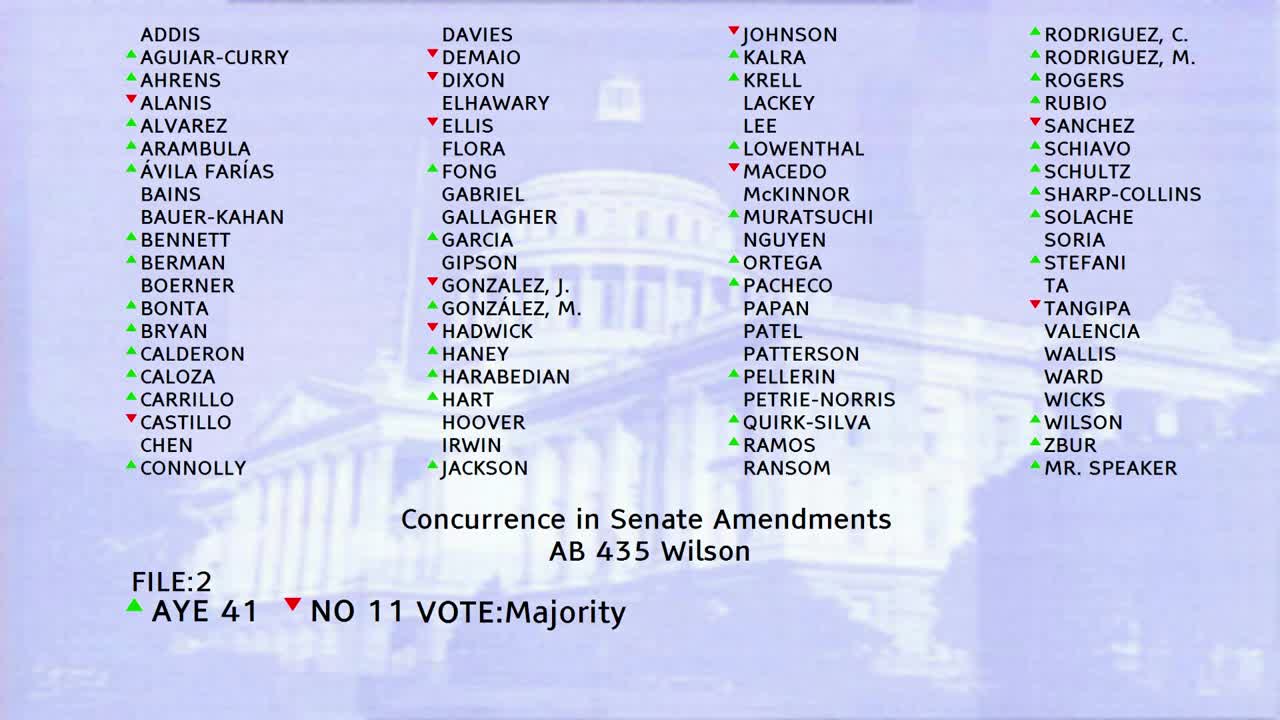 38SEC
Assembly Floor
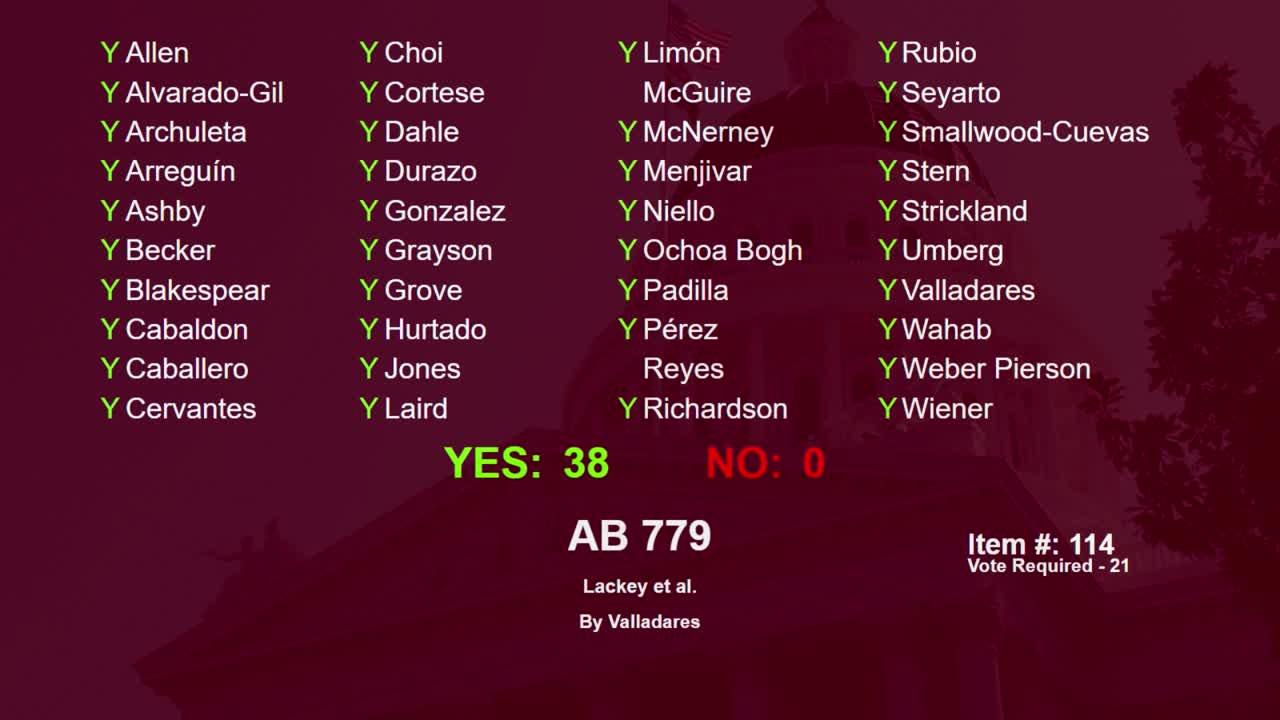 2MIN
Senate Floor
 37SEC
Senate Standing Committee on Appropriations
 8MIN
Senate Standing Committee on Judiciary
 1MIN
Assembly Floor
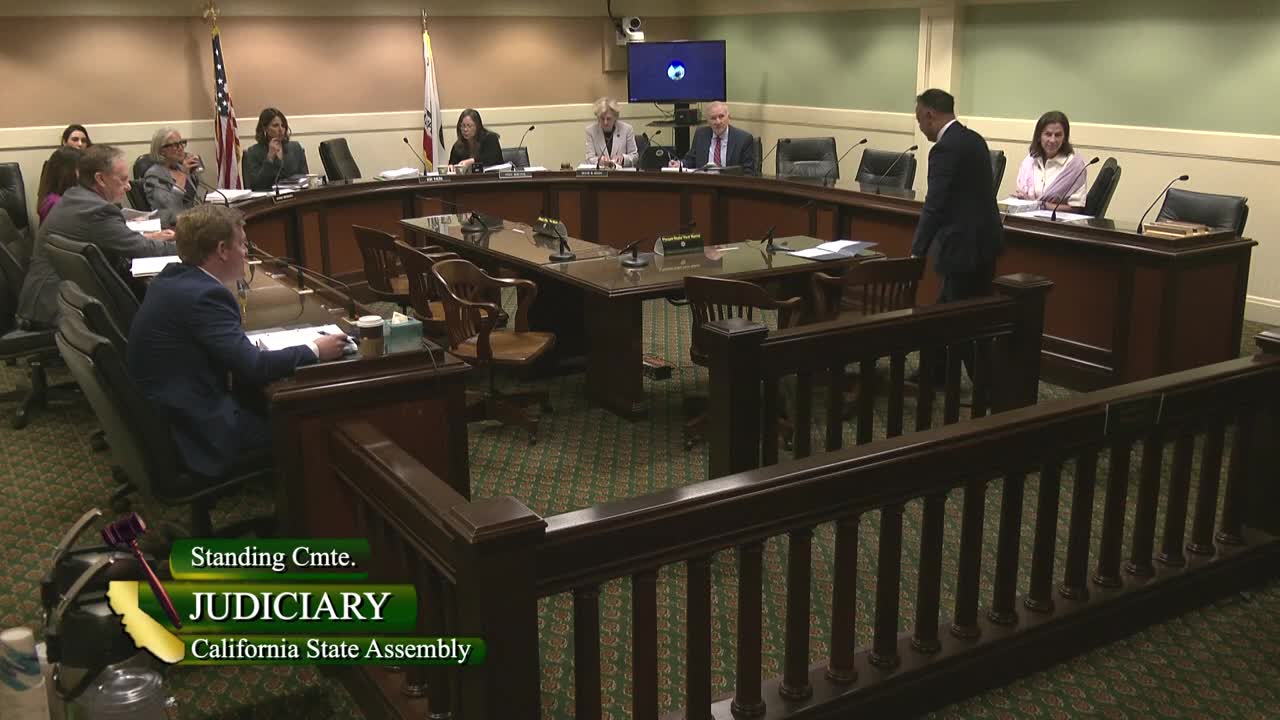 11MIN
Assembly Standing Committee on Judiciary
Bill Author

Bill Co-Author(s):