AB 2528: Community colleges: governing board member compensation.
- Session Year: 2025-2026
- House: Assembly
- Latest Version Date: 2026-06-22
Current Status:
In Progress
(2026-07-01: In committee: Set, second hearing. Failed passage. Reconsideration granted.)
Introduced
In Committee
Awaiting First Chamber Vote
Passed First Chamber
In Committee
Awaiting Second Chamber Vote
Passed Second Chamber
Enacted
Existing law establishes the California Community Colleges, administered by the Board of Governors of the California Community Colleges, as one of the segments of public postsecondary education in the state. Existing law establishes community college districts throughout the state under the administration of community college district governing boards. Existing law requires the governing board of each community college district to establish, maintain, operate, and govern one or more community colleges, as provided. Existing law authorizes the compensation of governing board members that actually attend all meetings held by the governing board, not to exceed a specified amount from $120 to $1,500, inclusive, based on the number of full-time equivalent students in the community college district, as provided.
This bill would increase the authorized compensation for community college district governing board members that actually attend all meetings held by the governing board, not to exceed a specified amount from $600 to $4,500, inclusive, based on the number of full-time equivalent students in the community college district, as provided. The bill would require the governing board to provide public notice at least 30 days before a public meeting at which the governing board proposes to increase the compensation of the governing board members, as provided.
Existing law establishes the California Community Colleges, administered by the Board of Governors of the California Community Colleges, as one of the segments of public postsecondary education in the state. Existing law establishes community college districts throughout the state under the administration of community college district governing boards. Existing law requires the governing board of each community college district to establish, maintain, operate, and govern one or more community colleges, as provided. Existing law authorizes the compensation of board members that actually attend all meetings held by the governing board, not to exceed a specified amount from $120 to $1,500, inclusive, based on the number of full-time equivalent students in the community college district, as provided.
This bill would increase the authorized compensation for community college governing board members that actually attend all meetings held by the governing board, not to exceed a specified amount from $600 to $4,500, inclusive, based on the number of full-time equivalent students in the community college district, as provided.
(a)(1)In any a community college district that is not located in a city and county, and in which the full-time equivalent students (FTES) for the prior college year exceeded 60,000, the governing board may prescribe, as compensation for the services of each member of the governing board of a community college district who actually attends all meetings held by the governing board, a sum not to exceed four thousand five hundred dollars ($4,500) in any month.
(2)In any a community college district in which the FTES for the prior college year was 60,000 or less, but more than 25,000, each member of the governing board of the community college district who actually attends all meetings held by the governing board may receive as compensation for the members service a sum not to exceed three thousand dollars ($3,000) in any month.
(3)In any a community college district in which the FTES for the prior college year was 25,000 or less, but more than 10,000, each member of the governing board of the community college district who actually attends all meetings held by the governing board may receive as compensation for the members service a sum not to exceed two thousand dollars ($2,000) in any month.
(4)In any a community college district in which the FTES for the prior college year was 10,000 or less, but more than 1,000, each member of the governing board of the community college district who actually attends all meetings held by the governing board may receive as compensation for the members service a sum not to exceed one thousand two hundred dollars ($1,200) in any month.
(5)In any a community college district in which the FTES for the prior college year was 1,000 or less, but more than 150, each member of the governing board of the community college district who actually attends all meetings held by the governing board may receive as compensation for the members service a sum not to exceed six hundred dollars ($600) in any month.
(b)Any A member of a governing board of a community college district who does not attend all meetings held by the governing board in any month may receive, as compensation for the members service, an amount not greater than a pro rata share of the number of meetings actually attended based upon the maximum compensation authorized by this section.
(c)The compensation of members of the governing board of a community college district newly organized or reorganized shall be governed by subdivision (a). For this purpose, the total FTES in all of the community colleges of the community college district in the college year that the organization or reorganization became effective shall be deemed to be the FTES in the community college district for the prior college year.
(d)A member of the governing board of a community college district may be paid for any meeting when absent if the governing board, by resolution duly adopted and included in its minutes, finds that, at the time of the meeting, the member is performing services outside the meeting for the community college district, the member was ill or on jury duty, or the members absence was due to a hardship deemed acceptable by the governing board. The compensation shall be a charge against the funds of the community college district.
(e)On an annual basis, the governing board of a community college district may increase the compensation of individual governing board members beyond the limits delineated in this section, in an amount not to exceed 5 percent based on the present monthly rate of compensation. Any An increase made pursuant to this section shall be effective upon approval by the governing board. board of the community college district. The action may be rejected by a majority of the voters in that community college district voting in a referendum established for that purpose, as prescribed by Chapter 2 (commencing with Section 9100) of Division 9 of the Elections Code.
(f)(1)A governing board of a community college district shall provide public notice at least 30 days before a public meeting at which the governing board proposes to increase the compensation for the services of each member of the governing board pursuant to subdivisions (a) and (e).
(2)The public notice shall be posted on the home page of the internet website of the community college district and shall be accessible through a prominent direct link.
(3)The public notice shall include all of the following information:
(A)The current dollar amount of compensation for members of the governing board who attend all meetings held by the governing board.
(B)The proposed new dollar amount of compensation for members of the governing board who attend all meetings held by the governing board.
(C)The date, time, and location of the public meeting at which the proposed increase in governing board member compensation will be considered.
(4)The public notice shall be provided directly to the exclusive representative or representatives of all bargaining units of the community college district.
(g)(1)It is the intent of the Legislature to encourage a governing board of a community college district to consider, at the time that the governing board considers increasing governing board member compensation, providing compensation to student members of the governing board in an amount to be determined by the governing board, not to exceed the compensation received by other governing board members.
(2)It is the further intent of the Legislature that compensation provided to a student member of the governing board while fulfilling their duties not count towards meeting the maximum household income and asset levels, as described in subdivision (k) of Section 69432.7, for purposes of determining the student members eligibility for student financial aid.
(a)(1)In any community college district that is not located in a city and county, and in which the full-time equivalent students (FTES) for the prior college year exceeded 60,000, the governing board may prescribe, as compensation for the services of each member of the board who actually attends all meetings held by the board, a sum not to exceed one thousand five hundred dollars ($1,500) four thousand five hundred dollars ($4,500) in any month.
(2)In any community college district in which the FTES for the prior college year was 60,000 or less, but more than 25,000, each member of the governing board of the district who actually attends all meetings held by the board may receive as compensation for his or her services the members service a sum not to exceed seven hundred fifty dollars ($750) three thousand dollars ($3,000) in any month.
(3)In any community college district in which the FTES for the prior college year was 25,000 or less, but more than 10,000, each member of the governing board of the district who actually attends all meetings held may receive as compensation for his or her services the members service a sum not to exceed four hundred dollars ($400) two thousand dollars ($2,000) in any month.
(4)In any community college district in which the FTES for the prior college year was 10,000 or less, but more than 1,000, each member of the governing board of the district who actually attends all meetings held by the board may receive as compensation for his or her services the members service a sum not to exceed two hundred forty dollars ($240) one thousand two hundred dollars ($1,200) in any month.
(5)In any community college district in which the FTES for the prior college year was 1,000 or less, but more than 150, each member of the governing board of the district who actually attends all meetings held by the board may receive as compensation for his or her services the members service a sum not to exceed one hundred twenty dollars ($120) six hundred dollars ($600) in any month.
(b)Any member of a governing board who does not attend all meetings held by the board in any month may receive, as compensation for his or her services, the members service, an amount not greater than a pro rata share of the number of meetings actually attended based upon the maximum compensation authorized by this subdivision. section.
(c)The compensation of members of the governing board of a community college district newly organized or reorganized shall be governed by subdivision (a). For this purpose, the total FTES in all of the community colleges of the district in the college year in which that the organization or reorganization became effective shall be deemed to be the FTES in the district for the prior college year.
(d)A member may be paid for any meeting when absent if the board, by resolution duly adopted and included in its minutes, finds that, at the time of the meeting, he or she the member is performing services outside the meeting for the community college district, he or she the member was ill or on jury duty, or the members absence was due to a hardship deemed acceptable by the board. The compensation shall be a charge against the funds of the district.
(e)On an annual basis, the governing board may increase the compensation of individual board members beyond the limits delineated in this section, in an amount not to exceed 5 percent based on the present monthly rate of compensation. Any increase made pursuant to this section shall be effective upon approval by the governing board. The action may be rejected by a majority of the voters in that district voting in a referendum established for that purpose, as prescribed by Chapter 2 (commencing with Section 9100) of Division 9 of the Elections Code.
|
Date
|
Status
|
|---|---|
| Jul 1, 2026 | In committee: Set, second hearing. Failed passage. Reconsideration granted. |
| Jun 22, 2026 | From committee chair, with author's amendments: Amend, and re-refer to committee. Read second time, amended, and re-referred to Com. on ED. |
| Jun 8, 2026 | In committee: Set, first hearing. Hearing canceled at the request of author. |
| Jun 3, 2026 | Referred to Coms. on ED. and APPR. |
| May 21, 2026 | In Senate. Read first time. To Com. on RLS. for assignment. |
| May 21, 2026 | Read third time. Passed. Ordered to the Senate. (Ayes 57. Noes 12. Page 5176.) |
| May 21, 2026 | Read third time. Passed. Ordered to the Senate. (Ayes 57. Noes 12.) |
| Apr 23, 2026 | Read second time. Ordered to third reading. |
| Apr 22, 2026 | From committee: Do pass. (Ayes 7. Noes 3.) (April 21). |
| Mar 9, 2026 | Referred to Com. on HIGHER ED. |
| Feb 21, 2026 | From printer. May be heard in committee March 23. |
| Feb 20, 2026 | Read first time. To print. |
|
Date
|
Description
|
Location
|
Votes
|
|
|---|---|---|---|---|
| Jul 1, 2026 | [Second] hearing set for [07-02-2026]: Failed passage in Committee. Reconsideration granted | Senate Standing Committee on Education |
Passed |
|
| Jul 1, 2026 | Do pass as amended, but first amend, and re-refer to the Committee on [Appropriations] | Senate Standing Committee on Education |
Failed |
|
| May 21, 2026 | AB 2528 Solache Assembly Third Reading | Assembly Floor |
Passed |
|
| Apr 21, 2026 | Do pass. | Assembly Standing Committee on Higher Education |
Passed |
This list shows positions taken on this bill by organizations on the date displayed, which is linked to the original source.
Positions by individuals are not included.
|
Organization
|
Position
|
Date
|
|---|---|---|
| California Community College Trustees Board | ** Support | |
| Cerritos College | ** Support | |
| Long Beach Community College District | ** Support | |
| Los Angeles Community College District | ** Support | |
| Pasadena City College | ** Support |
SENATE COMMITTEE ON EDUCATION
Senator Sasha Renée Pérez, Chair
2025 - 2026 Regular
Bill No: Hearing Date: July 1, 2026
Author: | |||
Version: |
| ||
Urgency: | Fiscal: | ||
Consultant: | |||
Subject:
NOTE: This bill has been referred to the Committees on Education and Appropriations. A “do pass” motion should include referral to the Committee on Appropriations.
SUMMARY
This bill allows a governing board of a community college district (CCD) to increase the maximum monthly compensation, by three to five times the current maximum, for the services of each member of a board who attends all meetings held by the board, as specified. This bill also requires a governing board of a CCD to provide public notice at least 30 days before a public meeting at which the governing board proposes to increase the compensation for the services of each member of the governing board.
BACKGROUND
Existing law:
- Establishes the California Community Colleges (CCCs), a postsecondary education system in this state, under the administration of the Board of Governors (BOG), and specifies that the CCC system consists of CCDs. (Education Code (EC) § 70900)
- Requires that a CCD be under the control of a governing board; requires the governing board of a CCD to establish, maintain, operate, and govern one or more CCCs; and requires CCDs to establish policies for and approve courses of instruction and educational programs. (EC § 70902)
- Requires the governing board of each CCD to include in their membership one or more nonvoting students, and for the term of a student member to be one year. Allows a student member selected to serve on the governing board of a CCD to receive compensation, at the discretion of the governing board, up to a specified amount. (EC § 72023.5)
- Authorizes the governing board of a CCD to provide up to a maximum monthly compensation for the members of the governing board who attend all meetings held by the board, and determines the maximum monthly compensation for governing board members based on the full-time equivalent students (FTES) for the prior year, as follows:
- An amount of $1,500 for a CCD not located in a city and county, in which the FTES was more than 60,000.
- An amount of $750 for a CCD, in which the FTES was more than 25,000, but equal to or less than 60,000.
- An amount of $400 for a CCD, in which the FTES was more than 10,000, but equal to or less than 25,000.
- An amount of $240 for a CCD, in which the FTES was more than 1,000, but equal to or less than 10,000.
- An amount of $120 for a CCD, in which the FTES was more than 150, but equal to or less than 1,000. (EC § 72024)
- Allows a governing board member who does not attend all meetings of the governing board to receive pro-rated monthly compensation based on the number of meetings the member attended. (EC § 72024)
- Allows a governing board member to be paid for any meeting when absent if the board, by resolution duly adopted and included in its minutes, finds that, at the time of the meeting, they are performing services outside the meeting for the community college district, they were ill or on jury duty, or the absence was due to a hardship deemed acceptable by the board. (EC § 72024)
- Permits a governing board, on an annual basis, to increase the compensation for the members of a local governing board beyond the statutory maximum monthly limit, in an amount not to exceed 5% based on the present monthly rate of compensation, and authorizes that a majority of voters in the district to reject this action by voting in a referendum established for this purpose. (EC § 72024)
ANALYSIS
This bill:
- Allows a governing board of a CCD to increase the maximum monthly compensation for the services of each member of a board who attends all meetings held by the board, and determines the maximum monthly compensation for governing board members based on the FTES for the prior year, as follows:
- An amount of $4,500, instead of $1,500, for a CCD not located in a city and county, and in which the FTES was more than 60,000.
- An amount of $3,000, instead of $750, for a CCD in which the FTES was more than 25,000, but equal to or less than 60,000.
- An amount of $2,000, instead of $400, for a CCD in which the FTES was more than 10,000, but equal to or less than 25,000.
- An amount of $1,200, instead of $240, for a CCD in which the FTES was more than 1,000, but equal to or less than 10,000.
- An amount of $600, instead of $120, for a CCD in which the FTES was more than 150, but equal to or less than 1,000.
- Requires a governing board of a CCD to provide public notice at least 30 days before a public meeting at which the governing board proposes to increase the compensation for the services of each member of the governing board.
- States that it is the intent of the Legislature to encourage a governing board of a CCD to consider, at the time that the governing board considers increasing governing board member compensation, providing compensation to student members of the governing board in an amount to be determined by the governing board, not to exceed the compensation received by other governing board members.
- States that it is the intent of the Legislature that compensation provided to a student member of the governing board while fulfilling their duties not count towards meeting the maximum household income and asset levels, for purposes of determining the student member’s eligibility for student financial aid.
STAFF COMMENTS
- Need for the bill. According to the author, “Serving as a trustee is a demanding role that requires a great deal of time, research, training, public engagement, and commitment. AB 2528 will enable community college districts the ability to update trustee compensation thresholds to help retain experienced board members and encourage more community members to consider running for vacant positions on local boards.”
The author continues, “The current compensation not been adjusted in over 40 years. In many districts, outdated compensation levels make it harder for individuals who are supporting themselves and their families to consider serving. AB 2528 will help boards with the required financial capacity to modestly and responsibly increase their compensation to keep pace with inflation, while preserving public process. Importantly, helping to ensure students and their families are represented in key decisions affecting community college districts and that opportunities to serve remain accessible to those of diverse socio-economic backgrounds. When governing boards better reflect the lived experiences and diversity of the communities they serve, they are more likely to adopt policies that address barriers to educational access and success. Strengthening representation at the governance level ultimately supports more inclusive decision-making and policies that advance equity across the higher education system.”
- Compensation for local governing boards of CCDs. Existing law allows a governing board of a CCD to provide monthly compensation for members of their board, provided the compensation is within the limits set by statute, and the monthly limits are based on various thresholds of district size. The following table shows the existing and proposed maximum monthly compensation, by district size:
CCD Size Based on FTES | Number of CCDs in 2024-25 | Current Maximum Monthly / Annual Compensation | Proposed Maximum Monthly / Annual Compensation |
> 60,000 (not located in a city and county) | 0 | $1,500 / $18,000 | $4,500 / $54,000 (300% higher) |
25,001 - 60,000 | 14 | $750 / $9,000 | $3,000 / $36,000 (400% higher) |
10,001 - 25,000 | 31 | $400 / $4,800 | $2,000 / $24,000 (500% higher) |
1,001 - 10,000 | 28 | $240 / $2,880 | $1,200 / $14,400 (500% higher) |
150 - 1,000 | 0 | $120 / $1,440 | $600 / $7,200 (500% higher) |
- Seeking parity with K-12 governing board compensation increases. AB 1390 (Solache, Chapter 639, Statutes of 2025) increases the maximum monthly compensation, by three to five times, that may be provided to the members of governing board of school districts and county boards of education. Given that recent legislation, the author seeks parity for compensation limits between CCC governing boards and K-12 governing boards, by similarly increasing maximum monthly compensation for CCC governing boards. Though this bill raises these monthly limits, a governing board of a CCD is still required to take a vote to approve and increase their own compensation.
The author indicates that these limits have not been adjusted in over 40 years, and that increasing compensation makes becoming a trustee for a CCC governing board more attractive for prospective candidates. The author also indicates that the current compensation may make membership for governing boards less representative of the communities they serve because individuals may find it difficult to serve unless they have flexible schedules, independent wealth, or employer support to participate, while working professionals, small business owners, and younger community leaders may find it financially impractical. Committee staff notes that though higher compensation could make it easier to bring in more diverse board membership, it should also be considered how raising pay may change incentives of those seeking to sit on a governing board.
- How have K-12 governing boards responded to AB 1390? At a time of declining enrollment and shrinking school budgets in K-12 schools, some governing boards have increased their pay while also authorizing layoffs. A March 2026 article by KQED indicated that though the South Bay Union School District is preparing to close schools amid declining enrollment and planned to send layoff notices to more than 50 teachers and other staff later that month, the governing board of the district also unanimously approved a pay increase for board members to align with the maximum compensation for its size.
Though there is no statewide data on how many K-12 governing boards have elected to increase their pay as a result of AB 1390, a March 2026 article by a San Diego-area outlet reports that 7 out of 43 public school boards in San Diego County have increased their pay in the first three months of the bill’s implementation. indicates that Other K-12 governing boards across the state face similar decisions on how to address declining enrollment and layoffs, amid considering increasing their board compensation.
- This bill requires providing a 30-day public notice on increasing board pay. Recent author’s amendments on this bill include a requirement for a governing board of a CCD to provide public notice at least 30 days before a public meeting at which the governing board proposes to increase the compensation for the services of each member of the governing board, including the current and proposed dollar amounts of compensation for board members. A January 2026 article by the Chino Valley Champion, a community newspaper covering the Chino Valley area in Southern California, stated that the Chino Valley School Board provided a raise to its board members to align with the maximum compensation for its size, and the article indicated the audience did not know the compensation amounts because no figures were provided on the staff report. The recent author’s amendments aim to provide transparency on when, and how much, a governing board of a CCD decides to vote on specified board compensation increases.
- Recent legislation requires governance and ethics training for K-12 school boards. AB 640 (Muratsuchi, Chapter 618, Statutes of 2025) requires each local educational agency (LEA) governing board member to receive training in K-12 school finance laws, including laws related to the creation and approval of an LEA budget and laws related to fiscal penalties for noncompliance. Additionally, AB 2158 (Mike Fong, Chapter 279, Statutes of 2022) requires each LEA governing board member to receive ethics training. Though no similar statutory training requirements exist for CCC governing board members, many governing board members voluntarily elect to take onboarding and effective trustee trainings.
- Committee amendments. This bill seeks parity for compensation limits between CCC governing boards and K-12 governing boards, by increasing maximum monthly compensation for CCC governing boards, but the K-12 system also requires governance trainings for their board members, including ethics trainings. Committee staff recommends, and the author accepts, the following amendments:
- Requires the members of a governing board to receive an ethics training if the governing board of a CCD elects to increase its board compensation pursuant to the provisions of this bill.
- Requires that the ethics training would include 2 hours of training in general ethics principles and ethics laws relevant to the member’s public service within 6 months of increasing the board’s compensation, and every two years thereafter.
- Encourages an entity developing curricula to satisfy the requirements of this section to consult with the Fair Political Practices Commission and the Attorney General regarding the sufficiency and accuracy of the proposed course content.
- Permits that a local CCD or an association of CCDs may offer one or more training courses, or sets of self-study materials with tests, and that the courses may be taken at home, in-person, or online.
- Requires that a CCD keep a record of trustees who have completed ethics training.
- Defines ethics laws, as laws relating to personal financial gain by public servants; laws relating to claiming perquisites of office; government transparency laws; and laws relating to fair processes.
- Related and Prior Legislation.
AB 1831 (Ahrens, 2026) revises the California State University’s (CSU’s) executive compensation framework by requiring the CSU Board of Trustees to adopt a new policy governing presidential compensation, prohibiting compensation increases for certain executive positions during years in which tuition increases are approved, and prohibiting executive and management compensation increases when represented employees do not receive salary increases. AB 1831 is currently pending in the Senate Appropriations Committee.
AB 1390 (Solache, Chapter 639, Statutes of 2025) increases the maximum monthly compensation, by three to five times, that may be provided to the members of governing board of school districts and county boards of education.
SB 827 (Gonzalez, Chapter 661, Statutes of 2025) modifies existing ethics training requirements and adds a new ethical, fiscal, and financial training requirement for local officials.
AB 640 (Muratsuchi, Chapter 618, Statutes of 2025) (1) requires each LEA governing board member to receive training in specified K-12 school finance laws by April 1, 2028, and at least once during their tenure; (2) requires the County Office Fiscal Crisis and Management Assistance Team (FCMAT) to develop the training curriculum; and, (3) requires the FCMAT curriculum to be used for the training of LEA board members.
AB 2158 (Mike Fong, Chapter 279, Statutes of 2022) requires each member of a governing board of a school district, a county board of education, or the governing body of a charter school, in service as of January 1, 2025, to receive ethics training before January 1, 2026, and at least once every two years thereafter.
AB 1969 (Negrete McLeod, Chapter 264, Statutes of 2004) requires the CSU Trustees, and urges the University of California Regents, to offer semiannual orientation courses on the ethics statutes and regulations that govern official employee conduct to specified employees.
SUPPORT
Long Beach Community College District (co-sponsor)
Los Angeles Community College District (co-sponsor)
California Community College Trustees Board
Pasadena City College
OPPOSITION
None received
-- END --
ASSEMBLY THIRD READING
ATR Bill Id:AB 2528
Author:(Solache)
As Introduced Ver:February 20, 2026
Majority vote
SUMMARY
Increases the maximum monthly compensation a community college district may provide members of the district's local governing board.
Major Provisions
- Permits a community college district, that is not located in San Francisco and has a full – time student population of more than 60,000, to increase the annual compensation for each trustee of the district's local governing board from a maximum amount of $1,500 to $4,500. Requires a trustee to attend every meeting of the board in order to receive full compensation; however the trustee may receive a pro-rated compensation based on the number of meetings attended by the trustee.
- Permits a community college district, with a full – time student population between 60,000 and 25,000, to increase the annual compensation for each trustee of the district's local governing board from a maximum amount of $750 to $3,000. Requires a trustee to attend every meeting of the board in order to receive full compensation; however permits the trustee may receive a pro-rated compensation based on the number of meetings attended by the trustee.
- Permits a community college district, with a full – time student population between 25,000 and 10,000, to increase the annual compensation for each trustee of the district's local governing board from a maximum amount of $240 to $1,200. Requires a trustee to attend every meeting of the board in order to receive full compensation; however permits the trustee may receive a pro-rated compensation based on the number of meetings attended by the trustee.
- Permits a community college district, with a full – time student population between 1,000 and 150, to increase the annual compensation for each trustee of the district's local governing board from a maximum amount of $120 to $600. Requires a trustee to receive to attend every meeting of the board in order to receive full compensation; however the trustee may receive a pro-rated compensation based on the number of meetings attended by the trustee.
- Stipulates in determining the "full-time student" population, the community college district will use the student population from the prior academic year to determine the maximum compensation.
COMMENTS
Governance structure of the California Community Colleges (CCC). The CCC system includes 116 community colleges and is the largest system of higher education in the United States serving 2.2 million students in the 2024-2025 academic year. The CCC was established as part of the state’s tripartite structure to provide postsecondary education for the people of California. In the 1960 Master Plan for Higher Education (Master Plan), the vision for the CCC was established as an open access institution, accepting 100% of applicants and providing vocational, associate degrees, and general education for the purpose of transferring to a four-year university. The governing structure of the CCC was also established within the Master Plan and was mirrored after the governing structure for the K-12 system. The CCC is governed by both a statewide Board of Governors and a locally elected governing board (local governing board) who govern geographical areas known as CCC districts. CCC districts are comprised of at least one community college but can have more than one community college within the geographical boundary of the district. The role of the local governing board is to establish, maintain, operate, and govern each community college within its district boundary. The number of colleges represented in a single district varies throughout the state; some districts represent a single district whereas the largest, Los Angeles Community College District, represents nine colleges.
Compensation for local governing boards. Each community college district is authorized by the Education Code to provide monthly compensation for their trustees. The decision to ascribe monthly compensation lies with the governing board; however, the maximum amount a governing board can initially decide to pay itself is limited by the Education Code. As described in existing law, the maximum monthly amount is determined by the number of full-time equivalent students enrolled in the community college district. The Education Code in addition to the maximum compensation allows a community college district to annually increase the total amount by 5% ending approval by the governing board. Therefore, the maximum amount could be higher than what is limited in the Education Code, if the governing board votes in the affirmative and the voting population of the community college district does not seek to reverse the decision. The compensation as listed in the Education Code does not include the per diem each trustee is provided for travel to and from the board meetings nor does it include the health care benefits some community college districts provide their trustees.
Since local governing boards have been permitted to increase compensation by 5% since 1990, the limits in the Education Code do not accurately depict the actual compensation each trustee is receiving. Each year community college district reports the compensation of elected officials to the California State Controller. In data pulled for the 2024 fiscal year, the total wages provided to trustees was $1.9 million with an additional $3.8 million in retirement and health care contributions. The range of actual annual compensation was vast, with some earning no wages and only health care contributions and others earning up to $37,922. According to data from the California State Controller, 11 community colleges are providing wages above the limits, as described in the Education Code.
According to the Author
As explained by the author, "serving as a trustee is a demanding role that requires a great deal of time, research, training, public engagement, and commitment. AB 2528 will enable community college districts the ability to update trustee compensation thresholds to help retain experienced board members and encourage more community members to consider running for vacant positions on local boards."
The author further contends the need for the increase in the compensation as, "the current compensation not been adjusted in over 40 years. In many districts, outdated compensation levels make it harder for individuals who are supporting themselves and their families to consider serving. AB 2528 will help boards with the required financial capacity to modestly and responsibly increase their compensation to keep pace with inflation, while preserving public process. Importantly, helping to ensure students and their families are represented in key decisions affecting community college districts and that opportunities to serve remain accessible to those of diverse socio-economic backgrounds. When governing boards better reflect the lived experiences and diversity of the communities they serve, they are more likely to adopt policies that address barriers to educational access and success. Strengthening representation at the governance level ultimately supports more inclusive decision-making and policies that advance equity across the higher education system."
Arguments in Support
As explained by the Los Angeles Community College District (LACCD), "AB 2528 modernizes existing law to better reflect the responsibilities of board service while preserving the principle of local control. The bill authorizes community college governing boards to increase trustee compensation for members who fulfill their duties and attend required meetings. Compensation limits would be adjusted based on district size, increasing the current cap from $120 to up to $1,500. Importantly, the bill does not mandate increases; it provides local boards with flexibility to determine appropriate compensation within established limits.
As further explained by LACCD, "The seven elected trustees of LACCD oversee nine colleges and two educational service centers, dedicating significant time each month to district governance. Their responsibilities include budget and facilities oversight, policy development, community engagement, and complex legal and personnel decisions. Statewide, community college trustees oversee institutions that serve more than 2 million students. As governance responsibilities have grown in complexity, so too have the demands placed on these locally elected officials. Updating compensation provisions helps ensure that board service remains accessible to individuals from diverse professional and socioeconomic backgrounds and supports strong, representative leadership. At a time when California is focused on expanding college access, strengthening workforce development, and improving student outcomes, effective local governance is essential. AB 2528 provides a thoughtful and balanced update that supports these goals while maintaining local discretion."
Arguments in Opposition
None on file.
FISCAL COMMENTS
This bill is keyed nonfiscal by Legislative Counsel.
VOTES
ASM HIGHER EDUCATION: 7-3-0
YES: Fong, Boerner, Jackson, Muratsuchi, Patel, Ramos, Sharp-Collins
NO: DeMaio, Macedo, Tangipa
UPDATED
VERSION: February 20, 2026
CONSULTANT: Ellen Cesaretti-Monroy / HIGHER ED. / (916) 319-3960 FN: 0002406
Date of Hearing: April 21, 2026
ASSEMBLY COMMITTEE ON HIGHER EDUCATION
Mike Fong, Chair
ABPCA Bill Id:AB 2528 (
Author:Solache) – As Introduced Ver:February 20, 2026
SUBJECT: Community colleges: governing board member compensation
SUMMARY: Increases the maximum monthly compensation a community college district may provide members of the district’s local governing board. Specifically, this bill:
- Permits a community college district, that is not located in a city and a county and has a full – time student population of more than 60,000, to provide an annually compensation of up to $4,500 for each of the members of the district’s local governing board. To receive the monthly compensation in full, the board member must attend every meeting of the board. A board member may receive a pro-rated compensation based on the number of meetings attended by the board member.
- Permits a community college district with a full – time student population between 60,000 and 25,000, to provide a monthly compensation of up to $3,000 for each of the members of the district’s local governing board. To receive the monthly compensation in full, the board member must attend every meeting of the board. A board member may receive a pro-rated compensation based on the number of meetings attended by the board member.
- Permits a community college district with a full – time student population between 25,000 and 10,000 to provide a monthly compensation of up to $2,000 for each of the members of the district’s local governing board. To receive the monthly compensation in full, the board member must attend every meeting of the board. A board member may receive a pro-rated compensation based on the number of meetings attended by the board member.
- Permits a community college district with a full – time student population between 10,000 and 1,000 to provide a monthly compensation of up to $1,200 for each of the members of the district’s local governing board. To receive the monthly compensation in full, the board member must attend every meeting of the board. A board member may receive a pro-rated compensation based on the number of meetings attended by the board member.
- Permits a community college district with a full – time student population of less than 1,000, but more than 150 to provide a monthly compensation of up to $400 for each of the members of the district’s local governing board. To receive the monthly compensation in full, the board member must attend every meeting of the board. A board member may receive a pro-rated compensation based on the number of meetings attended by the board member.
- Stipulates in determining the “full-time student” population, the community college district will use the student population from the prior academic year to determine the maximum compensation.
- Makes clarifying and technical changes to existing laws governing the compensations of local governing boards for community college districts.
EXISTING LAW:
- Establishes the California Community Colleges (CCC) under the administration of the Board of Governors of the CCC, as one of the segments of public postsecondary education in California. The CCC shall be comprised of community college districts (Education Code (EDC) Section 70900).
- Establishes that CCC districts are under the control of a board of trustees, known as the governing board, who has the authority to establish, maintain, operate, and govern one or more community colleges, within its district as specified. Permits districts to establish policies for and the approval of courses of instruction and educational programs (EDC Section 70902).
- Requires the governing board of each community district to include in their membership one or more nonvoting students. Each student member has the right to attend and participate in meetings of the governing board, except for executive sessions, and must attend a CCC within the governing board’s district. Students selected to serve on the governing board are chosen and subject to recall by the CCC district’s student population. If a student member seat becomes vacant, the governing board may authorize the officers of the student body association at each college in the district to appoint a student to serve the remainder of the term according to procedures established by the governing board. Each nonvoting student member will be allowed to cast an advisory vote and will be provided the same mileage allowance as other sitting board members of the governing board. Each governing board may determine and adopt conforming regulations each year as to whether any student member of the board may make or second motions, attend closed sessions as specified, serve a term of one year, and receive compensation up to the amount received by other members of the board. (EDC Section 72023.5).
- Enforces the following rules upon the compensation for members of a community college district local governing boards:
- Authorizes community colleges to provide up to a maximum monthly compensation for the membership of its local governing board based on the full-time population of the previous college year. To receive the maximum compensation the board member must attend all meetings of the board. Determines the maximum monthly compensation to be as follows:
- For districts, that do not reside in a city and county, and have a full-time equivalent student population of more than 60,000, the maximum monthly compensation is $1,500;
- For districts with a student population of with a full-time equivalent student population between 60,000 and 25,000, the maximum monthly compensation is $750;
- For districts with a student population of with a full-time equivalent student population between 25,000 and 10,000, the maximum monthly compensation is $400;
- For districts with a student population of with a full-time equivalent student population between 10,000 and 1,000, the maximum monthly compensation is $240; and,
- For districts with a student population of with a full-time equivalent student population less than 1,000, but more than 150, the maximum monthly compensation is $600;
- Allows a local governing board member who attends some but not all of the local governing board meetings to receive a pro-rated monthly compensation based on the number of meetings the member attended and allows the local governing board to allow for leave of absences that will not impact the compensation of a board member for specific circumstance such as: district-related work, illness, jury duty, or hardship. The compensation provided will be charged against the funds of the community college district; and,
- Permits a community college district to on an annual basis increase the compensation for the members of a local governing board. The increase may not exceed 5% based on the present monthly rate provided to the members of the board, and the increase may be rejected by the voters of the district through a referendum (EDC Section 72024).
- Authorizes community colleges to provide up to a maximum monthly compensation for the membership of its local governing board based on the full-time population of the previous college year. To receive the maximum compensation the board member must attend all meetings of the board. Determines the maximum monthly compensation to be as follows:
FISCAL EFFECT: This bill is keyed nonfiscal by Legislative Counsel.
COMMENTS: Author’s intent. As explained by the author, “serving as a trustee is a demanding role that requires a great deal of time, research, training, public engagement, and commitment. AB 2528 will enable community college districts the ability to update trustee compensation thresholds to help retain experienced board members and encourage more community members to consider running for vacant positions on local boards.”
The author further contends the need for the increase in the compensation as, “the current compensation not been adjusted in over 40 years. In many districts, outdated compensation levels make it harder for individuals who are supporting themselves and their families to consider serving. AB 2528 will help boards with the required financial capacity to modestly and responsibly increase their compensation to keep pace with inflation, while preserving public process. Importantly, helping to ensure students and their families are represented in key decisions affecting community college districts and that opportunities to serve remain accessible to those of diverse socio-economic backgrounds. When governing boards better reflect the lived experiences and diversity of the communities they serve, they are more likely to adopt policies that address barriers to educational access and success. Strengthening representation at the governance level ultimately supports more inclusive decision-making and policies that advance equity across the higher education system.”
Governance structure of the California Community Colleges. The CCC system includes 116 community colleges and is the largest system of higher education in the United States serving 2.2 million students in the 2024-2025 academic year.[1] The CCC was established as part of the state’s tripartite structure to provide postsecondary education for the people of California. In the 1960 Master Plan for Higher Education (Master Plan), the vision for the CCC was established as an open access institution, accepting 100% of applicants and providing vocational, associate degrees, and general education for the purpose of transferring to a four-year university.[2] The governing structure of the CCC was also established within the Master Plan and was mirrored after the governing structure for the K-12 system. The CCC is governed by both a statewide Board of Governors and a locally elected governing board (governing board) who govern geographical areas known as a districts. CCC districts are comprised of at least one community college but can have more than one community college within the geographical boundary of the district. The Board of Governors consists of 18 voting members including members of the public, tenured faculty, classified staff, and two student representatives. With the exception of the Lieutenant Governor, each member of the Board of Governors is appointed by the Governor. The Board of Governors sets policy and provides guidance to the 73 districts and the 116 colleges within the system.[3]
The Board of Governors appoints the Chancellor of the CCC who serves as the Chief Executive Officer of the Board of Governors and oversees the system’s executive office. The role of the Chancellor’s Office of the CCC is to provide technical and fiscal assistance to the districts in fulfilling the mission of providing postsecondary education to the people of California.
With the exception of Calbright, whose governing board is also the Board of Governors, the other 115 colleges are governed by locally elected governing boards. Each governing board has either five or seven voting members, known as trustees, who are elected in a state-run election either by 1) a smaller region within the district defined as a trustee area; or 2) the populous of the community college within the border of the district. In addition to the trustees, each governing board is required in accordance with state law to have at least one nonvoting student member who is elected by the student population of the district. The role of the local governing board is to establish, maintain, operate, and govern each community college within its district boundary. The number of colleges represented in a single district varies throughout the state; some districts represent a single district whereas the largest, Los Angeles Community College District, represents nine colleges.
Compensation for local governing boards. Each community college district is authorized by the Education Code to provide monthly compensation for their trustees. The decision to ascribe monthly compensation lies with the governing board; however, the maximum amount a governing board can initially decide to pay itself is limited by the Education Code. As described in existing law, the maximum monthly amount is determined by the number of full-time equivalent students enrolled in the community college district. The diagram below demonstrates how many community colleges fall within the varying categories of compensation for the governing boards:
Full Time Equivalent Student Population | Community Colleges District with this Student Population | Maximum Monthly/Annual Compensation | New Maximum Monthly/Compensation pursuant to AB 2528 |
Exceeds 60,000 (not located in a county and city) | 0 | $1,500 monthly and $18,000 annually | $4,500 monthly and $54,000 annually |
60,000 – 25,000 | 14 | $750 monthly and $9,000 annually | $3,000 monthly and $36,000 annually |
25,000 – 10,000 | 31 | $240 monthly and $2,880 annually | $2,000 monthly and $24,000 annually |
10,000 - 1,000 | 28 | $240 monthly and $2,880 annually | $1,200 monthly and $14,400 annually |
Less than 1,000 but more than 150[4] | 0 | $120 monthly and $1,440 annually | $600 monthly and $7,200 annually |
The Education Code in addition to the compensation listed above allows a community college district to annually increase the total amount by 5% if the governing board permits. Therefore, the maximum amount could be higher if the governing board votes in the affirmative and the voting population of the community college district does not seek to reverse the decision. The compensation as listed in the Education Code does not include the per diem each trustee is provided for travel to and from the board meetings nor does it include the health care benefits some community college districts provide their trustees.
The above chart demonstrates the codified limit in compensation a community college district is permitted to provide a trustee; however, since local governing boards have been permitted to increase compensation by 5% since 1990, the chart does not depict the actual amount each trustee is currently compensated. Each year community college district reports the compensation of elected officials to the California State Controller. In data pulled for the 2024 fiscal year, the total wages provided to trustees was $1.9 million with an additional $3.8 million in retirement and health care contributions.[5] The range of actual annual compensation was vast, with some earning no wages and only health care contributions and others earning up to $37,922. According to data from the California State Controller, 11 community colleges are providing wages above the limits as described in the Education Code.[6]
Since local governing boards are permitted to increase the maximum compensation by 5% annually, the Committee may wish to question why the proposed increase in compensation is necessary.
Arguments in support. As explained by the Los Angeles Community College District (LACCD), “AB 2528 modernizes existing law to better reflect the responsibilities of board service while preserving the principle of local control. The bill authorizes community college governing boards to increase trustee compensation for members who fulfill their duties and attend required meetings. Compensation limits would be adjusted based on district size, increasing the current cap from $120 to up to $1,500. Importantly, the bill does not mandate increases; it provides local boards with flexibility to determine appropriate compensation within established limits.
As further explained by LACCD, “The seven elected trustees of LACCD oversee nine colleges and two educational service centers, dedicating significant time each month to district governance. Their responsibilities include budget and facilities oversight, policy development, community engagement, and complex legal and personnel decisions. Statewide, community college trustees oversee institutions that serve more than 2 million students. As governance responsibilities have grown in complexity, so too have the demands placed on these locally elected officials. Updating compensation provisions helps ensure that board service remains accessible to individuals from diverse professional and socioeconomic backgrounds and supports strong, representative leadership. At a time when California is focused on expanding college access, strengthening workforce development, and improving student outcomes, effective local governance is essential. AB 2528 provides a thoughtful and balanced update that supports these goals while maintaining local discretion.”
Committee comments. The statutory compensation limit for CCC trustees has not been increased since 1990. The author’s office contends that the need for increases the compensation for trustees is due to the lack of qualifying candidates seeking to participate in the local governance of the community colleges. As stated by the author:
“Low compensation effectively limits who can realistically serve. Individuals with flexible schedules, independent wealth, or employer support may be able to participate, while working professionals, caregivers, small business owners, and younger community leaders may find it financially impractical. As a result, governing boards risk becoming less representative of the communities they serve. Providing fair and reasonable compensation is therefore not simply a matter of remuneration—it is a matter of strengthening democratic participation and governance. Competitive stipends can reduce financial barriers to service, encourage a broader and more diverse candidate pool, and promote contested elections that engage voters and improve accountability. When more qualified candidates participate, boards benefit from a wider range of professional expertise, life experiences, and community perspectives. Ultimately, strengthening compensation structures for CCC governing board members helps ensure that the leadership of California’s community colleges reflects the diversity.”
The governing board of community college districts approve policies and procedures for how the district is to operate in compliance with state and federal laws. However, in recent years this Committee has become aware of the breakdown in the governance structure leading to inadequate implementations of key laws governing student success and equitable access at community colleges. Increasing the compensation for the trustees would permit the governing boards to conduct business in a more timely and operative fashion, increasing the ability for proper governance and compliance with state and federal laws.
By increasing the compensation for the elected trustees, the Committee would also be providing a pathway for student trustees to receive an increase in their compensation. Existing law ties the amount a student trustee may receive in compensation to the amount permitted for the trustees as outlined above. However, not every student receives compensation as the receipt is conditional upon the approval of the local governing board. The Student Senate of the Community Colleges has tried for several years to increase the compensation for student trustees as they believe the hours required for proper governance equates to a part-time job for many of their students.[7]
In the future, the Committee may wish to consider whether the Education Code should be updated to provide a minimum stipend amount for community college student trustees.
Costs continue to arise in all aspects of life in California. As a state funded institution, community colleges are reliant upon the State to provide adequate funding for operations. In a time, where fiscal resource are scarce and there are demands for community colleges to provide more resources for student services, faculty compensation, health care benefits, and student housing, a question must posed as to whether this is an appropriate time for this measure. However, this Legislature did authorize the increase for K-12 governing board members.[8] Furthermore, this measure is permissive and would still require the local governing board to vote to increase their salaries. All of this would be subject to public meetings and debate by the local governing boards. To this end, this measure seeks to provide a semblance of parity between the community college districts and their K-12 counterparts.
REGISTERED SUPPORT / OPPOSITION:
Support
Cerritos College
Long Beach Community College District
Los Angeles Community College District
Opposition
None on file.
Analysis Prepared by: Ellen Cesaretti-Monroy / HIGHER ED. / (916) 319-3960
Community Colleges Chancellor’s Office Management Information Systems Data Mart – Students – Head Count- Annual Search – Term 2024-2025 ↑
Education Code Section 66010.4 ↑
https://www.cccco.edu/about-us/key-facts ↑
Community Colleges Chancellor’s Office Management Information Systems Data Mart – Students – Full – time Equivalent Student- Annual Search – Term 2024-2025. ↑
https://gcc.sco.ca.gov/Reports/HigherEducations/CommunityCollegeDistricts.aspx?year=2024&rpt=5 ↑
https://gcc.sco.ca.gov/Reports/GetReport.aspx?reportName=ExpElectedOfficials&fileType=excelopenxml¶meterList=Year:2024;EntityTypeID:6; ↑
https://www.ssccc.org/what-we-do/resolutions/s240322-fair-student-trustee-pay ↑
AB 1390 (Solache), Chapter 639, Statutes of 2025. ↑
Discussed in Hearing
 10MIN
Senate Standing Committee on Education
 1MIN
Assembly Floor
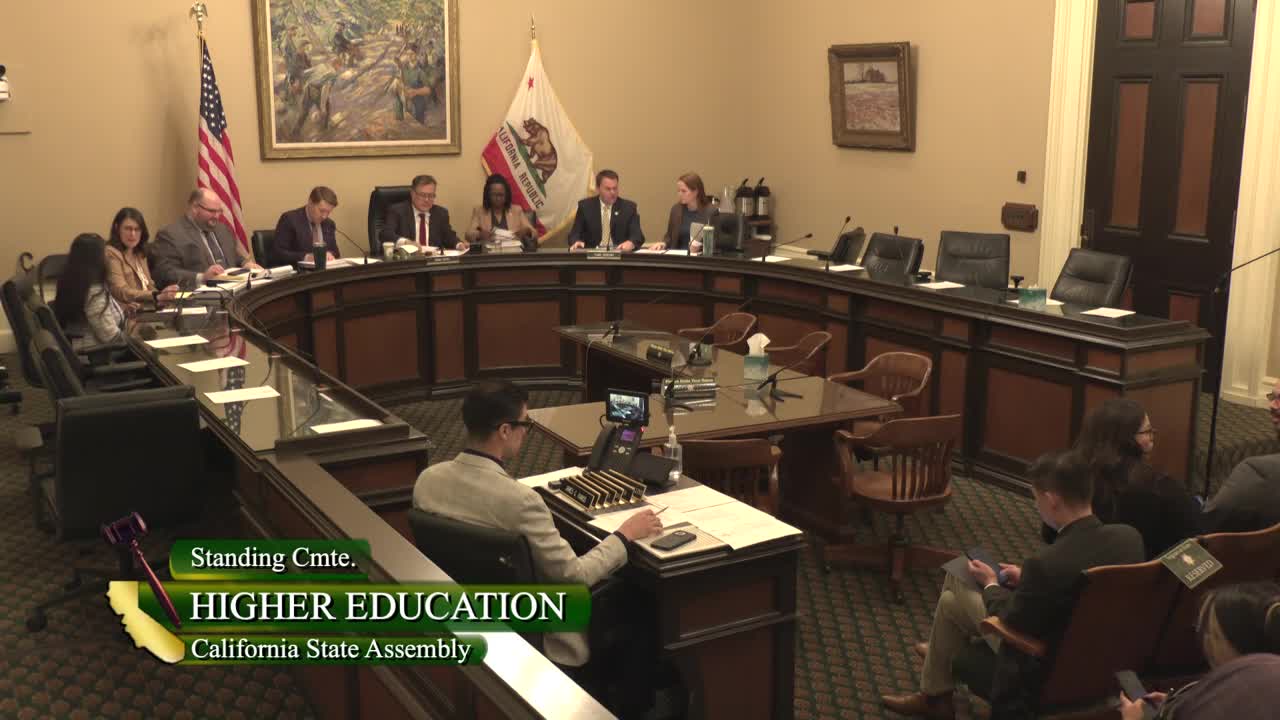 24MIN
Assembly Standing Committee on Higher Education
Bill Author

Bill Co-Author(s):