AB 2530: Employment: Cal/WARN Act: plant closings and mass layoffs.
- Session Year: 2025-2026
- House: Assembly
- Latest Version Date: 2026-04-13
Current Status:
In Progress
(2026-05-14: In committee: Held under submission.)
Introduced
In Committee
Awaiting First Chamber Vote
Passed First Chamber
In Committee
Awaiting Second Chamber Vote
Passed Second Chamber
Enacted
Existing law, the California Worker Adjustment and Retraining Act (Cal/WARN Act), among other things, prohibits an employer from ordering a mass layoff, relocation, or termination at a covered establishment unless, 60 days before the order takes effect, the employer gives written notice of the order to the employees affected by the order and to the Employment Development Department and certain local officials. Existing law requires the notice to contain specified information and makes an employer who fails to give the required notice liable to each employee entitled to notice who lost their employment for back pay and the value of the cost of any benefits to which the employee would have been entitled had their employment not been lost, as provided. Existing law also makes an employer subject to civil penalties, as provided, for each day of the employers violation. Existing law defines employer for these purposes to mean any person, as defined, who directly or indirectly owns and operates a covered establishment and defines covered establishment to mean any industrial or commercial facility or part thereof that employs, or has employed within the preceding 12 months, 75 or more persons.
This bill would add public agency to the definitions of employer and covered establishment, thereby making the Cal/WARN Act applicable to public agencies. The bill would, in the case of a sale of part or all of an employers business, make the seller responsible for providing the notice for any mass layoff, relocation, or termination up to and including the effective date of the sale, and make the purchaser responsible for providing the notice following the effective date of the sale.
The bill would make other technical and conforming changes.
Existing law, the California Worker Adjustment and Retraining Act (Cal/WARN Act), prohibits a call center employer from ordering a relocation of its call center, or one or more of its facilities or operating units within a call center, unless notice of the relocation is provided, as described.This bill would additionally prohibit, under the Cal/WARN Act, an employer, as defined, from ordering a plant closing or mass layoff, as defined, until the end of a 60-day period after the employer serves written notice of such an order to specified persons, including affected employees, as described and except as provided. The bill would require a noncompliant employer to provide each aggrieved employee, as described, specified backpay for each day of the violation and benefits under an employee benefit plan, including medical expense costs, as described. The bill also impose, if an employer fails to provide notice to a unit of local government, as defined, a civil penalty of not more than $500 each day, except as provided. The would provide methods for reducing a noncompliant employers liability and for enforcing the employers liability in court.This bill would require the department, upon appropriation by the Legislature, to adopt rules and regulations necessary to implement the bills provisions, as described, and to submit to the labor committees of the Assembly and Senate a report containing a detailed and objective analysis of the effect of this article on employers, the economy, and employees, as described. The bill would encourage employers that are not required to comply to provide notice pursuant to the bills provisions. The bill would make related technical changes.Existing law, the California Worker Adjustment and Retraining Act (Cal/WARN Act), prohibits a call center employer from ordering a relocation of its call center, or one or more of its facilities or operating units within a call center, unless notice of the relocation is provided, as described.
This bill would additionally prohibit, under the Cal/WARN Act, an employer, as defined, from ordering a plant closing or mass layoff, as defined, until the end of a 60-day period after the employer serves written notice of such an order to specified persons, including affected employees, as described and except as provided. The bill would require a noncompliant employer to provide each aggrieved employee, as described, specified backpay for each day of the violation and benefits under an employee benefit plan, including medical expense costs, as described. The bill also impose, if an employer fails to provide notice to a unit of local government, as defined, a civil penalty of not more than $500 each day, except as provided. The would provide methods for reducing a noncompliant employers liability and for enforcing the employers liability in court.
This bill would require the department, upon appropriation by the Legislature, to adopt rules and regulations necessary to implement the bills provisions, as described, and to submit to the labor committees of the Assembly and Senate a report containing a detailed and objective analysis of the effect of this article on employers, the economy, and employees, as described. The bill would encourage employers that are not required to comply to provide notice pursuant to the bills provisions. The bill would make related technical changes.
Existing law authorizes an information to be laid before a magistrate, as specified, that a person has threatened to commit an offense against the person or property of another.This bill would make technical, nonsubstantive changes to that provision.Existing law authorizes an information to be laid before a magistrate, as specified, that a person has threatened to commit an offense against the person or property of another.
This bill would make technical, nonsubstantive changes to that provision.
(a)The definitions set forth in this section shall govern the construction and meaning of the terms used in this chapter:
(a)(1)Covered establishment means any public agency or industrial or commercial facility facility, or part thereof thereof, that employs, or has employed within the preceding 12 months, 75 or more persons.
(2)Employee means a person employed by an employer for at least 6 months of the 12 months preceding the date on which notice is required.
(b)(3)Employer means any public agency or person, as defined by Section 18, who directly or indirectly owns and operates a covered establishment. A parent corporation is an employer as to any covered establishment directly owned and operated by its corporate subsidiary.
(c)(4)Layoff means a separation from a position for lack of funds or lack of work.
(d)(5)Mass layoff means a layoff during any 30-day period of 50 or more employees at a covered establishment.
(6)Public agency means any state agency, department, board, or commission, any county, city and county, city, regional agency, district, or other political subdivision.
(e)(7)Relocation means the removal of all or substantially all of the industrial or commercial operations in a covered establishment to a different location 100 miles or more away.
(f)(8)Termination means the cessation or substantial cessation of industrial or commercial operations in a covered establishment.
(g)(b)(1)This chapter does not apply where the closing or layoff is the result of the completion of a particular project or undertaking of an employer subject to Wage Order 11, regulating the Broadcasting Industry, Wage Order 12, regulating the Motion Picture Industry, or Wage Order 16, regulating Certain On-Site Occupations in the Construction, Drilling, Logging and Mining Industries, of the Industrial Welfare Commission, and the employees were hired with the understanding that their employment was limited to the duration of that project or undertaking.
(2)This chapter does not apply to employees who are employed in seasonal employment where the employees were hired with the understanding that their employment was seasonal and temporary.
(h)Employee means a person employed by an employer for at least 6 months of the 12 months preceding the date on which notice is required.SEC. 2.Section 1401 of the Labor Code is amended to read:1401.(a)An employer may not order a mass layoff, relocation, or termination at a covered establishment unless, 60 days before the order takes effect, the employer gives written notice of the order to the following:
(1)The employees of the covered establishment affected by the order.
(2)The Employment Development Department, the local workforce development board, and the chief elected official of each city and county government within which the termination, relocation, or mass layoff occurs.
(b)An employer required to give notice of any mass layoff, relocation, or termination under this chapter shall include in its notice the elements required by the federal Worker Adjustment and Retraining Notification Act (29 U.S.C. Sec. 2101 et seq.).
(c)An employer required to give notice of any mass layoff, relocation, or termination under this chapter shall include in the notice whether the employer plans to coordinate services, such as a rapid response orientation, through the local workforce development board, the employer plans to coordinate services through a different entity, or the employer does not plan to coordinate services with any entity.
(1)Regardless of whether the employer chooses to coordinate services with the local workforce development board or another entity, the employer shall include in the notice a functioning email and telephone number of the board and the following description of the rapid response activities offered by the local workforce development board in accordance with Chapter 32 (commencing with Section 3102) of Title 29 of the United States Code:
Local Workforce Development Boards and their partners help laid off workers find new jobs. Visit an Americas Job Center of California location near you. You can get help with your resume, practice interviewing, search for jobs, and more. You can also learn about training programs to help start a new career.
(2)If the employer chooses to coordinate services with the local workforce development board or another entity, the employer shall arrange services within 30 days from the date of the notice.
(d)An employer required to give notice of any mass layoff, relocation, or termination under this chapter shall include in the notice a description of the statewide food assistance program known as CalFresh (Chapter 10 (commencing with Section 18900) of Part 6 of Division 9 of the Welfare and Institutions Code), the CalFresh benefits helpline, and a link to the CalFresh internet website.
(e)An employer required to give notice of any mass layoff, relocation, or termination under this chapter shall include in the notice a functioning email and telephone number of the employer for contact.
(f)Notwithstanding the requirements of subdivision (a), an employer is not required to provide notice if a mass layoff, relocation, or termination is necessitated by a physical calamity or act of war.
(g)In the case of a sale of part or all of an employers business, the seller shall be responsible for providing notice for any mass layoff, relocation, or termination under this chapter in accordance with this section up to and including the effective date of the sale. Following the effective date of the sale, the purchaser shall be responsible for providing the notice.
SECTION 1.Section 1400.5 of the Labor Code is amended and renumbered to read:1409.(a)This article shall apply to an employers relocation of a call center, as defined in this article.(b)The following definitions shall apply to this article:(1)Call center means a facility or other operation where employees, as their primary function, receive telephone calls or other electronic communication for the purpose of providing customer service or other related functions.(2)Call center employer means an employer of a covered establishment, as those terms are defined, who operates a call center.(3)Covered establishment means any industrial or commercial facility or part thereof that employs, or has employed within the preceding 12 months, 75 or more persons.(4)Employee means a person employed by an employer for at least 6 months of the 12 months preceding the date on which notice is required.(5)Employer means any person, as defined by Section 18, who directly or indirectly owns and operates a covered establishment. A parent corporation is an employer as to any covered establishment directly owned and operated by its corporate subsidiary.(6)Layoff means a separation from a position for lack of funds or lack of work.(7)Mass layoff means a layoff during any 30-day period of 50 or more employees at a covered establishment.(8)Relocation of a call center includes when the employer intends to move its call center, or one or more facilities or operating units within a call center comprising at least 30 percent of the call centers or operating units total volume when measured against the average call volume for the previous 12 months, or substantially similar operations to a foreign country.(9)Termination means the cessation or substantial cessation of industrial or commercial operations in a covered establishment.(c)(1)This article does not apply where the closing or layoff is the result of the completion of a particular project or undertaking of an employer subject to Wage Order 11, regulating the Broadcasting Industry, Wage Order 12, regulating the Motion Picture Industry, or Wage Order 16, regulating Certain On-Site Occupations in the Construction, Drilling, Logging and Mining Industries, of the Industrial Welfare Commission, and the employees were hired with the understanding that their employment was limited to the duration of that project or undertaking.(2)This article does not apply to employees who are employed in seasonal employment where the employees were hired with the understanding that their employment was seasonal and temporary.SEC. 2.Section 1409 of the Labor Code is repealed.SEC. 3.Article 4 (commencing with Section 1415) is added to Chapter 4 of Part 4 of Division 2 of the Labor Code, to read:4.Plant Closings and Mass Layoffs1415.The following definitions shall apply to this article:(a)Affected employee means an employee who may reasonably be expected to experience an employment loss as a consequence of a proposed plant closing or mass layoff by their employer.(b)Aggrieved employee means an employee who has worked for the employer ordering the plant closing or mass layoff and who, as a result of the failure by the employer to comply with the notice requirement of this article, did not receive timely notice either directly or through their representative.(c)Department means the Employment Development Department.(d)Subject to Section 1415.1, employment loss means any of the following:(1)An employment termination, other than a discharge for cause, voluntary departure, or retirement.(2)A layoff exceeding six months.(3)A reduction in hours of work of more than 50 percent during each month of any six-month period.(e)(1)Employer means any public agency, person, as defined in Section 18, or any other entity that satisfies either of the following:(A)Employs 100 or more employees, excluding part-time employees.(B)Employs 100 or more employees who, in the aggregate, work at least 4,000 hours per week, excluding hours of overtime.(2)A parent corporation shall be an employer as to any facility, operating unit, or site of employment directly owned and operated by its corporate subsidiary.(f)Mass layoff means a reduction in force that is not the result of a plant closing and that results in an employment loss at the single site of employment during any 30-day period satisfying either of the following criteria:(1)At least 33 percent of employees, totaling at least 50 employees, experience employment loss. This number shall exclude part-time employees.(2)At least 500 employees, excluding part-time employees, experience employment loss.(g)Part-time employee means an employee who is employed for an average of fewer than 20 hours per week or who has been employed for fewer than 6 of the 12 months preceding the date on which notice is required by this article.(h)Plant closing means the permanent or temporary shutdown of a single site of employment, or one or more facilities or operating units within a single site of employment, if the shutdown results in an employment loss at the single site of employment during any 30-day period for 50 or more employees, excluding any part-time employees.(i)Public agency means the state and any political subdivision of the state, including any city, county, city and county, or special district.(j)Representative means an exclusive representative of employees.(k)Unit of local government means a local public agency.1415.1.(a)(1)In the case of a sale of part or all of an employers business, the seller shall be responsible for providing notice for any plant closing or mass layoff in accordance with Section 1415.2 up to and including the effective date of the sale. Following the effective date of the sale, the purchaser shall be responsible for providing notice for any plant closing or mass layoff.(2)Notwithstanding any other provision of this article, any natural person who is an employee of the seller, other than a part-time employee, as of the effective date of the sale shall be considered an employee of the purchaser immediately after the effective date of the sale.(b)Notwithstanding the definition of employment loss in Section 1415, an employee shall not be considered to have experienced an employment loss if the plant closing or mass layoff is the result of a relocation or consolidation of part or all of the employers business and, prior to the closing or layoff, the employer does either of the following:(1)The employer offers to transfer the employee to a different site of employment within a reasonable commuting distance with no more than a six-month break in employment.(2)The employer offers to transfer the employee to any other site of employment regardless of distance with no more than a six-month break in employment, and the employee accepts within 30 days of the offer or of the plant closing or mass layoff, whichever is later.1415.2.(a)An employer shall not order a plant closing or mass layoff until the end of a 60-day period after the employer serves written notice of such an order to all of the following:(1)To each representative of the affected employees as of the time of the notice or, if there is no such representative at that time, to each affected employee.(2)To the department.(3)To the chief elected official of the unit of local government within which the plant closing or mass layoff is to occur. If there is more than one applicable unit of local government, the employer shall notify the chief elected official of the unit of local government to which the employer pays the highest taxes for the taxable year preceding the taxable year for which the determination is made.(b)(1)Notwithstanding subdivision (a), an employer may order the shutdown of a single site of employment before the conclusion of the 60-day period if, as of the time such notice would have been required, the employer was actively seeking capital or business which, if obtained, would have enabled the employer to avoid or postpone the shutdown and the employer reasonably and in good faith believed that giving the notice required would have precluded the employer from obtaining the needed capital or business.(2)(A)Notwithstanding subdivision (a), an employer may order a plant closing or a mass layoff before the conclusion of the 60-day period if the closing or mass layoff is caused by business circumstances that were not reasonably foreseeable as of the time that notice would have been required.(B)Notwithstanding subdivision (a), notice under this article shall not be required if the plant closing or mass layoff is due to any form of natural disaster, including, but not limited to, a flood, earthquake, or drought.(3)An employer relying on this subdivision shall provide as much notice as is practicable and at that time shall give a brief statement of the basis for reducing the notification period.(c)A mass layoff of more than six months that was announced, at its outset, to be a layoff of six months or less, shall be treated as an employment loss under this article unless both of the following are satisfied:(1)The extension beyond six months is caused by business circumstances, including, but not limited to, unforeseeable changes in prices or cost, not reasonably foreseeable at the time of the initial layoff.(2)Notice is given at the time it becomes reasonably foreseeable that the extension beyond six months will be required.(d)For purposes of this section, in determining whether a plant closing or mass layoff has occurred or will occur, employment losses for two or more groups at a single site of employment, each of which is less than the minimum number of employees but which in the aggregate exceed that minimum number, and which occur within any 90-day period shall be considered to be a plant closing or mass layoff, unless the employer demonstrates that the employment losses are the result of separate and distinct actions and causes and are not an attempt by the employer to evade the requirements of this article.1415.3.Notwithstanding any other provision of this article, this article shall not apply to a plant closing or mass layoff if any of the following apply:(a)The plant closing is of a temporary facility and the affected employees were hired with the understanding that their employment was limited to the duration of the facility.(b)The plant closing or mass layoff is the result of the completion of a particular project or undertaking and the affected employees were hired with the understanding that their employment was limited to the duration of the project or undertaking.(c)(1)The plant closing or layoff constitutes a strike or constitutes a lockout not intended to evade the requirements of this article.(2)This article shall not be construed to require an employer to serve written notice pursuant to Section 1415.2 when permanently replacing a person who is deemed to be an economic striker under the National Labor Relations Act (29 U.S.C. Sec. 151 et seq.). This article also shall not be construed to validate or invalidate any judicial or administrative ruling relating to the hiring of permanent replacements for economic strikers under the National Labor Relations Act.1415.4.(a)(1)Subject to the other provisions of this subdivision, an employer who orders a plant closing or mass layoff in violation of this article shall be liable to each aggrieved employee who suffers an employment loss as a result of the plant closing or mass layoff for both of the following:(A)Backpay for each day of violation at a rate of compensation of the higher of the following:(i)The average regular rate received by the employee during the last three years of the employees employment.(ii)The final regular rate received by the employee.(B)Benefits under an employee benefit plan, including the cost of medical expenses incurred during the employment loss that would have been covered under an employee benefit plan if the employment loss had not occurred.(2)(A)Liability under paragraph (1) shall be calculated for the period of the violation up to a maximum of 60 days, but not for more than one-half the number of days the employee was employed by the employer.(B)The amount for which an employer is liable under paragraph (1) shall be reduced by all of the following:(i)Any wages paid by the employer to the employee for the period of the violation.(ii)Any voluntary and unconditional payment by the employer to the employee that is not required by any legal obligation.(iii)Any payment by the employer to a third party or trustee, such as premiums for health benefits or payments to a defined contribution pension plan, on behalf of and attributable to the employee for the period of the violation.(C)Any liability incurred under paragraph (1) with respect to a defined benefit pension plan may be reduced by crediting the employee with service for all purposes under such a plan for the period of the violation.(3)Any employer who violates the notice provision of this article with respect to a unit of local government shall be subject to a civil penalty of not more than five hundred dollars ($500) for each day of the violation. However, this penalty shall not apply if the employer pays to each aggrieved employee the amount for which the employer is liable to that employee within three weeks from the date the employer orders the plant closing or mass layoff.(4)If an employer that has violated this article proves to the satisfaction of the court that the act or omission that violated this article was acting in good faith and that the employer had reasonable grounds for believing the act or omission was not a violation of this article, the court may, in its discretion, reduce the amount of the liability or penalty provided for in this section.(5)A person seeking to enforce the employers liability under this subdivision, including, but not limited to, a representative of employees or a unit of local government that did not receive notice, may sue on behalf of themselves, on behalf of other persons similarly situated, or both, in superior court in the jurisdiction in which the violation is alleged to have occurred, or in which the employer transacts business. In any such suit, the court, in its discretion, may grant to the prevailing party reasonable attorneys fees as part of the costs.(b)A court shall not have the authority to enjoin a plant closing or mass layoff under this article.(c)(1)The remedies provided for in this section shall be the exclusive remedy for any violation of this article.(2)The rights and remedies provided to employees by this article are in addition to, and not in lieu of, any other contractual or statutory rights and remedies of the employees, and are not intended to alter or affect such rights and remedies. However, the period of notification required by this article shall run concurrently with any period of notification required by contract or any other law.(d)Provision of notice under this article with good faith compliance shall not constitute a violation of the National Labor Relations Act (29 U.S.C. Sec. 151 et seq.) or the Railway Labor Act (45 U.S.C. Sec. 151 et seq.)1415.5.An employer that is not required to comply with the notice requirements of this article is encouraged to provide, to the extent possible, notice to its employees about a proposal to close a plant or permanently reduce its workforce.1415.6.(a)The department shall adopt rules and regulations necessary to implement this article.(b)The rules and regulations shall include, among other things, descriptions of the methods by which employers may provide for appropriate service of notice under this article. Those methods shall include, but are not limited to, mailing of notice to an employees last known address or inclusion of notice in the employees paycheck.1415.7.The department shall submit to the labor committees of the Assembly and Senate a report containing a detailed and objective analysis of the effects of this article on employers, with an emphasis on small- and medium-sized businesses, the economy with respect to international competitiveness, and employees in terms of levels and conditions of employment. The department shall assess both costs and benefits, including the effect on productivity, competitiveness, unemployment rates and compensation, and worker retraining and readjustment.1415.8.The departments duties under this article shall be effective upon appropriation of the Legislature for purposes of administering this article.(a)This article shall apply to an employers relocation of a call center, as defined in this article.
(b)The following definitions shall apply to this article:
(1)Call center means a facility or other operation where employees, as their primary function, receive telephone calls or other electronic communication for the purpose of providing customer service or other related functions.
(2)Call center employer means an employer of a covered establishment, as those terms are defined, who operates a call center.
(a)(3)Covered establishment means any industrial or commercial facility or part thereof that employs, or has employed within the preceding 12 months, 75 or more persons.
(4)Employee means a person employed by an employer for at least 6 months of the 12 months preceding the date on which notice is required.
(b)(5)Employer means any person, as defined by Section 18, who directly or indirectly owns and operates a covered establishment. A parent corporation is an employer as to any covered establishment directly owned and operated by its corporate subsidiary.
(c)(6)Layoff means a separation from a position for lack of funds or lack of work.
(d)(7)Mass layoff means a layoff during any 30-day period of 50 or more employees at a covered establishment.
(e)Relocation means the removal of all or substantially all of the industrial or commercial operations in a covered establishment to a different location 100 miles or more away.(8)Relocation of a call center includes when the employer intends to move its call center, or one or more facilities or operating units within a call center comprising at least 30 percent of the call centers or operating units total volume when measured against the average call volume for the previous 12 months, or substantially similar operations to a foreign country.
(f)(9)Termination means the cessation or substantial cessation of industrial or commercial operations in a covered establishment.
(g)(c)(1)This chapter article does not apply where the closing or layoff is the result of the completion of a particular project or undertaking of an employer subject to Wage Order 11, regulating the Broadcasting Industry, Wage Order 12, regulating the Motion Picture Industry, or Wage Order 16, regulating Certain On-Site Occupations in the Construction, Drilling, Logging and Mining Industries, of the Industrial Welfare Commission, and the employees were hired with the understanding that their employment was limited to the duration of that project or undertaking.
(2)This chapter article does not apply to employees who are employed in seasonal employment where the employees were hired with the understanding that their employment was seasonal and temporary.
(h)Employee means a person employed by an employer for at least 6 months of the 12 months preceding the date on which notice is required.SEC. 2.Section 1409 of the Labor Code is repealed.1409.(a)This article shall apply to an employers relocation of a call center, as defined in this article.(b)The definitions set forth in this subdivision shall apply to the construction and meaning of terms used in this article. The definitions set forth in Section 1400.5 also apply to this article, except for the definition of relocation contained in subdivision (e) of Section 1400.5.(1)Call center means a facility or other operation where employees, as their primary function, receive telephone calls or other electronic communication for the purpose of providing customer service or other related functions.(2)Call center employer means an employer of a covered establishment, as those terms are defined in Section 1400.5, who operates a call center.(3)Relocation of a call center includes when the employer intends to move its call center, or one or more facilities or operating units within a call center comprising at least 30 percent of the call centers or operating units total volume when measured against the average call volume for the previous 12 months, or substantially similar operations to a foreign country.SEC. 3.Article 4 (commencing with Section 1415) is added to Chapter 4 of Part 4 of Division 2 of the Labor Code, to read:4.Plant Closings and Mass Layoffs1415.The following definitions shall apply to this article:
(a)Affected employee means an employee who may reasonably be expected to experience an employment loss as a consequence of a proposed plant closing or mass layoff by their employer.
(b)Aggrieved employee means an employee who has worked for the employer ordering the plant closing or mass layoff and who, as a result of the failure by the employer to comply with the notice requirement of this article, did not receive timely notice either directly or through their representative.
(c)Department means the Employment Development Department.
(d)Subject to Section 1415.1, employment loss means any of the following:
(1)An employment termination, other than a discharge for cause, voluntary departure, or retirement.
(2)A layoff exceeding six months.
(3)A reduction in hours of work of more than 50 percent during each month of any six-month period.
(e)(1)Employer means any public agency, person, as defined in Section 18, or any other entity that satisfies either of the following:
(A)Employs 100 or more employees, excluding part-time employees.
(B)Employs 100 or more employees who, in the aggregate, work at least 4,000 hours per week, excluding hours of overtime.
(2)A parent corporation shall be an employer as to any facility, operating unit, or site of employment directly owned and operated by its corporate subsidiary.
(f)Mass layoff means a reduction in force that is not the result of a plant closing and that results in an employment loss at the single site of employment during any 30-day period satisfying either of the following criteria:
(1)At least 33 percent of employees, totaling at least 50 employees, experience employment loss. This number shall exclude part-time employees.
(2)At least 500 employees, excluding part-time employees, experience employment loss.
(g)Part-time employee means an employee who is employed for an average of fewer than 20 hours per week or who has been employed for fewer than 6 of the 12 months preceding the date on which notice is required by this article.
(h)Plant closing means the permanent or temporary shutdown of a single site of employment, or one or more facilities or operating units within a single site of employment, if the shutdown results in an employment loss at the single site of employment during any 30-day period for 50 or more employees, excluding any part-time employees.
(i)Public agency means the state and any political subdivision of the state, including any city, county, city and county, or special district.
(j)Representative means an exclusive representative of employees.
(k)Unit of local government means a local public agency.
1415.1.(a)(1)In the case of a sale of part or all of an employers business, the seller shall be responsible for providing notice for any plant closing or mass layoff in accordance with Section 1415.2 up to and including the effective date of the sale. Following the effective date of the sale, the purchaser shall be responsible for providing notice for any plant closing or mass layoff.
(2)Notwithstanding any other provision of this article, any natural person who is an employee of the seller, other than a part-time employee, as of the effective date of the sale shall be considered an employee of the purchaser immediately after the effective date of the sale.
(b)Notwithstanding the definition of employment loss in Section 1415, an employee shall not be considered to have experienced an employment loss if the plant closing or mass layoff is the result of a relocation or consolidation of part or all of the employers business and, prior to the closing or layoff, the employer does either of the following:
(1)The employer offers to transfer the employee to a different site of employment within a reasonable commuting distance with no more than a six-month break in employment.
(2)The employer offers to transfer the employee to any other site of employment regardless of distance with no more than a six-month break in employment, and the employee accepts within 30 days of the offer or of the plant closing or mass layoff, whichever is later.
1415.2.(a)An employer shall not order a plant closing or mass layoff until the end of a 60-day period after the employer serves written notice of such an order to all of the following:
(1)To each representative of the affected employees as of the time of the notice or, if there is no such representative at that time, to each affected employee.
(2)To the department.
(3)To the chief elected official of the unit of local government within which the plant closing or mass layoff is to occur. If there is more than one applicable unit of local government, the employer shall notify the chief elected official of the unit of local government to which the employer pays the highest taxes for the taxable year preceding the taxable year for which the determination is made.
(b)(1)Notwithstanding subdivision (a), an employer may order the shutdown of a single site of employment before the conclusion of the 60-day period if, as of the time such notice would have been required, the employer was actively seeking capital or business which, if obtained, would have enabled the employer to avoid or postpone the shutdown and the employer reasonably and in good faith believed that giving the notice required would have precluded the employer from obtaining the needed capital or business.
(2)(A)Notwithstanding subdivision (a), an employer may order a plant closing or a mass layoff before the conclusion of the 60-day period if the closing or mass layoff is caused by business circumstances that were not reasonably foreseeable as of the time that notice would have been required.
(B)Notwithstanding subdivision (a), notice under this article shall not be required if the plant closing or mass layoff is due to any form of natural disaster, including, but not limited to, a flood, earthquake, or drought.
(3)An employer relying on this subdivision shall provide as much notice as is practicable and at that time shall give a brief statement of the basis for reducing the notification period.
(c)A mass layoff of more than six months that was announced, at its outset, to be a layoff of six months or less, shall be treated as an employment loss under this article unless both of the following are satisfied:
(1)The extension beyond six months is caused by business circumstances, including, but not limited to, unforeseeable changes in prices or cost, not reasonably foreseeable at the time of the initial layoff.
(2)Notice is given at the time it becomes reasonably foreseeable that the extension beyond six months will be required.
(d)For purposes of this section, in determining whether a plant closing or mass layoff has occurred or will occur, employment losses for two or more groups at a single site of employment, each of which is less than the minimum number of employees but which in the aggregate exceed that minimum number, and which occur within any 90-day period shall be considered to be a plant closing or mass layoff, unless the employer demonstrates that the employment losses are the result of separate and distinct actions and causes and are not an attempt by the employer to evade the requirements of this article.
1415.3.Notwithstanding any other provision of this article, this article shall not apply to a plant closing or mass layoff if any of the following apply:
(a)The plant closing is of a temporary facility and the affected employees were hired with the understanding that their employment was limited to the duration of the facility.
(b)The plant closing or mass layoff is the result of the completion of a particular project or undertaking and the affected employees were hired with the understanding that their employment was limited to the duration of the project or undertaking.
(c)(1)The plant closing or layoff constitutes a strike or constitutes a lockout not intended to evade the requirements of this article.
(2)This article shall not be construed to require an employer to serve written notice pursuant to Section 1415.2 when permanently replacing a person who is deemed to be an economic striker under the National Labor Relations Act (29 U.S.C. Sec. 151 et seq.). This article also shall not be construed to validate or invalidate any judicial or administrative ruling relating to the hiring of permanent replacements for economic strikers under the National Labor Relations Act.
1415.4.(a)(1)Subject to the other provisions of this subdivision, an employer who orders a plant closing or mass layoff in violation of this article shall be liable to each aggrieved employee who suffers an employment loss as a result of the plant closing or mass layoff for both of the following:
(A)Backpay for each day of violation at a rate of compensation of the higher of the following:
(i)The average regular rate received by the employee during the last three years of the employees employment.
(ii)The final regular rate received by the employee.
(B)Benefits under an employee benefit plan, including the cost of medical expenses incurred during the employment loss that would have been covered under an employee benefit plan if the employment loss had not occurred.
(2)(A)Liability under paragraph (1) shall be calculated for the period of the violation up to a maximum of 60 days, but not for more than one-half the number of days the employee was employed by the employer.
(B)The amount for which an employer is liable under paragraph (1) shall be reduced by all of the following:
(i)Any wages paid by the employer to the employee for the period of the violation.
(ii)Any voluntary and unconditional payment by the employer to the employee that is not required by any legal obligation.
(iii)Any payment by the employer to a third party or trustee, such as premiums for health benefits or payments to a defined contribution pension plan, on behalf of and attributable to the employee for the period of the violation.
(C)Any liability incurred under paragraph (1) with respect to a defined benefit pension plan may be reduced by crediting the employee with service for all purposes under such a plan for the period of the violation.
(3)Any employer who violates the notice provision of this article with respect to a unit of local government shall be subject to a civil penalty of not more than five hundred dollars ($500) for each day of the violation. However, this penalty shall not apply if the employer pays to each aggrieved employee the amount for which the employer is liable to that employee within three weeks from the date the employer orders the plant closing or mass layoff.
(4)If an employer that has violated this article proves to the satisfaction of the court that the act or omission that violated this article was acting in good faith and that the employer had reasonable grounds for believing the act or omission was not a violation of this article, the court may, in its discretion, reduce the amount of the liability or penalty provided for in this section.
(5)A person seeking to enforce the employers liability under this subdivision, including, but not limited to, a representative of employees or a unit of local government that did not receive notice, may sue on behalf of themselves, on behalf of other persons similarly situated, or both, in superior court in the jurisdiction in which the violation is alleged to have occurred, or in which the employer transacts business. In any such suit, the court, in its discretion, may grant to the prevailing party reasonable attorneys fees as part of the costs.
(b)A court shall not have the authority to enjoin a plant closing or mass layoff under this article.
(c)(1)The remedies provided for in this section shall be the exclusive remedy for any violation of this article.
(2)The rights and remedies provided to employees by this article are in addition to, and not in lieu of, any other contractual or statutory rights and remedies of the employees, and are not intended to alter or affect such rights and remedies. However, the period of notification required by this article shall run concurrently with any period of notification required by contract or any other law.
(d)Provision of notice under this article with good faith compliance shall not constitute a violation of the National Labor Relations Act (29 U.S.C. Sec. 151 et seq.) or the Railway Labor Act (45 U.S.C. Sec. 151 et seq.)
1415.5.An employer that is not required to comply with the notice requirements of this article is encouraged to provide, to the extent possible, notice to its employees about a proposal to close a plant or permanently reduce its workforce.
1415.6.(a)The department shall adopt rules and regulations necessary to implement this article.
(b)The rules and regulations shall include, among other things, descriptions of the methods by which employers may provide for appropriate service of notice under this article. Those methods shall include, but are not limited to, mailing of notice to an employees last known address or inclusion of notice in the employees paycheck.
1415.7.The department shall submit to the labor committees of the Assembly and Senate a report containing a detailed and objective analysis of the effects of this article on employers, with an emphasis on small- and medium-sized businesses, the economy with respect to international competitiveness, and employees in terms of levels and conditions of employment. The department shall assess both costs and benefits, including the effect on productivity, competitiveness, unemployment rates and compensation, and worker retraining and readjustment.
1415.8.The departments duties under this article shall be effective upon appropriation of the Legislature for purposes of administering this article.
SECTION 1.Section 701 of the Penal Code is amended to read:701.Information that a person has threatened to commit an offense against the person or property of another may be brought before any of the magistrates mentioned in Section 808.An information Information that a person has threatened to commit an offense against the person or property of another may be laid brought before any of the magistrates mentioned in Section 808, that a person has threatened to commit an offense against the person or property of another. 808.
|
Date
|
Status
|
|---|---|
| May 14, 2026 | In committee: Held under submission. |
| May 6, 2026 | In committee: Set, first hearing. Referred to APPR. suspense file. |
| Apr 22, 2026 | From committee: Do pass and re-refer to Com. on APPR. (Ayes 9. Noes 3.) (April 21). Re-referred to Com. on APPR. |
| Apr 14, 2026 | Re-referred to Com. on JUD. |
| Apr 13, 2026 | Read second time and amended. |
| Apr 9, 2026 | From committee: Amend, and do pass as amended and re-refer to Com. on JUD. (Ayes 5. Noes 0.) (April 8). |
| Mar 23, 2026 | Re-referred to Com. on L. & E. |
| Mar 19, 2026 | Referred to Coms. on L. & E. and JUD. |
| Mar 19, 2026 | From committee chair, with author's amendments: Amend, and re-refer to Com. on L. & E. Read second time and amended. |
| Feb 21, 2026 | From printer. May be heard in committee March 23. |
| Feb 20, 2026 | Read first time. To print. |
|
Date
|
Description
|
Location
|
Votes
|
|
|---|---|---|---|---|
| Apr 21, 2026 | Do pass and be re-referred to the Committee on [Appropriations] | Assembly Standing Committee on Judiciary |
Passed |
|
| Apr 8, 2026 | Do pass as amended and be re-referred to the Committee on [Judiciary] | Assembly Standing Committee on Labor and Employment |
Passed |
This list shows positions taken on this bill by organizations on the date displayed, which is linked to the original source.
Positions by individuals are not included.
|
Organization
|
Position
|
Date
|
|---|---|---|
| California Special Districts Association | ** Against | |
| California State Association Of Counties | ** Against | |
| Rural County Representatives of California | ** Against | |
| SEIU California | ** Support | |
| Urban Counties of California | ** Against |
Date of Hearing: May 6, 2026
ASSEMBLY COMMITTEE ON APPROPRIATIONS
Buffy Wicks, Chair
ABPCA Bill Id:AB 2530
Author:(Caloza) – As Amended Ver:April 13, 2026
Policy Committee: | Labor and Employment | Vote: | 5 - 0 |
Judiciary | 9 - 3 | ||
|
|
Urgency: No State Mandated Local Program: No Reimbursable: No
SUMMARY:
This bill expands the California Worker Adjustment and Retraining Act (Cal/WARN Act) to apply to a “public agency.”
Specifically, this bill:
- Adds “public agency” to the definitions of an “employer” and “covered establishment” under the Cal/WARN Act and defines “public agency” to mean any state agency, department, board, or commission and any county, city and county, city, regional agency, district, or other political subdivision.
- Determines, in the case of a sale of part or all of an employer’s business, the responsibilities of the seller and purchaser for providing a Cal/WARN notice.
FISCAL EFFECT:
- Costs of an unknown amount to the state as a public employer to provide a 60-day Cal/WARN Act notice to employees when applicable (General Fund (GF) or special fund). Although most state bargaining agreements already require 60 days’ notice prior to a layoff, a Cal/WARN Act notice must also be distributed to certain entities and contain certain informational resources, with penalties for failing to provide appropriate notice. Additionally, potential cost pressures to the state to the extent this bill would put a requirement in statute that would ordinarily be negotiated through the collective bargaining process in exchange for other benefits (GF or special fund).
Similarly, costs and cost pressures of an unknown amount to local government employers, which the state would not need to reimburse because this bill’s new requirements for local agencies equally apply under existing law to the private sector.
- Likely absorbable costs to the Department of Industrial Relations (DIR) by expanding the base of employers potentially subject to enforcement for violating the Cal/WARN Act. However, DIR notes that if public employers violate the law at a level comparable to private employers, DIR would incur ongoing costs in the high hundreds of thousands of dollars (Labor Enforcement and Compliance Fund).
- Minor and absorbable costs to the Employment Development Department (EDD) to receive additional Cal/WARN Act notices.
- Ongoing cost pressures of an unknown amount to the courts in additional workload by increasing the number of employers under the Cal/WARN Act, as an employee or employee representative may bring a civil action to establish liability against an employer that fails to give the required notice (GF or Trial Court Trust Fund (TCTF)). It is unclear how many civil actions may be filed statewide and how much court time may be needed to resolve each case, but it generally costs approximately $1,000 to operate a courtroom for one hour. Although courts are not funded on the basis of workload, increased pressure on staff and the TCTF may create a demand for increased court funding from the GF. The state budget provides annual GF backfills to the TCTF to offset revenue reductions, totaling approximately $117.3 million in fiscal year 2025-26.
The Legislative Analyst’s Office recently warned of GF structural deficits of around $35 billion per year in the 2027-28 fiscal year and ongoing.
COMMENTS:
- Purpose. According to the author:
At a time of economic uncertainty, AB 2530 strengthens worker protections, supports everyday working families, and creates a more responsive system that helps Californians get back on their feet faster. This is about fairness, stability, and making sure no worker is left behind when they need support the most.
- Background. Cal/WARN Act. The Cal/WARN Act requires an employer with 75 or more employees at a single establishment that is an industrial or commercial facility to give 60 days’ notice when 50 or more workers during a single 30-day period may be impacted by a mass layoff, relocation, or termination. Notice must also be provided to specified government entities, including EDD and chief elected officials of the impacted city and county. Thus, the Cal/WARN Act allows impacted employees to prepare for the potential loss of income and alerts impacted communities of the need to provide resources. Failure to provide appropriate notice exposes the employer to liability for backpay and the value of the cost of benefits to which an employee would have been entitled. Furthermore, an employer that does not compensate employees accordingly is subject to a civil penalty of $500 per day the employer is in violation.
Public Agencies. This bill expands the Cal/WARN Act to cover a public agency, regardless of whether the public agency operates as a commercial or industrial facility, thus requiring a public agency to provide the requisite timely notice prior to a mass layoff. Although existing law requires some public employees, such as teachers, classified staff, and faculty, receive a minimum of 60 days’ layoff notice, similar to the notice period under the Cal/WARN Act, other public employees receive varying amounts of notice depending on what is negotiated in collective bargaining agreements. For example, state civil service employees must be given at least a 30-day notice prior to the effective date of layoff, but most bargaining agreements require at least a 60-day notice.
- Support and Opposition. This bill is supported by SEIU California, which argues, “Public sector layoffs will also continue as the impacts of HR 1 are fully realized, particularly in healthcare and social services. Collective bargaining agreements that provide 10, 14, or 30 days cannot protect workers from late fees and penalties when bills are due every month.”
This bill is opposed by a coalition of local government associations, led by the Urban Counties of California, which argues, “Given the considerable existing obligations required of public agencies by law for implementing layoffs, we disagree that the inclusion of public agencies in the Cal/WARN Act is warranted.”
Analysis Prepared by: Irene Ho / APPR. / (916) 319-2081
Date of Hearing: April 21, 2026
ASSEMBLY COMMITTEE ON JUDICIARY
Ash Kalra, Chair
ABPCA Bill Id:AB 2530
Author:Caloza – As Amended Ver:April 13, 2026
SUBJECT: Employment: Cal/WARN Act: plant closings and mass layoffs
KEY ISSUE: should the Cal/WARN act, which prohibits employers from ordering a mass layoff, relocation, or termination at a “covered establishment,” as defined, also apply to a public agency employer?
SYNOPSIS
The California Worker Adjustment and Retraining Act (Cal/WARN Act) prohibits an employer from ordering a mass layoff, relocation, or termination at a “covered establishment” unless, 60 days before the order takes effect, the employer gives written notice of the order to the employees affected by the order and to the Employment Development Department (EDD) and certain local officials. In this way, it is hoped that employees will have more time to prepare the loss of a job, and EDD and local officials will have more time to adjust to the broader impact on the local labor market. If an employer fails to make the notice as required, the employee may be entitled the value of wages and benefits to which the employee would have been entitled had their employment not been lost. The bill defines “employer” and “covered establishment” for these purposes to mean any person who owns and operates an industrial or commercial facility that employees 75 or more persons. Aimed primarily at commercial and industrial facilities, the law does not presently apply to public agencies. The Act parallels the federal WARN Act that similarly requires such advance notices.
This bill would add “public agency” to the definitions of “employer” and “covered establishment,” thereby making the Cal/WARN Act applicable to public agencies, regardless of whether the public agency operates a commercial or industrial facility. Additionally, in the case of a sale of part or all of an employer’s business, the bill would make the seller responsible for providing the notice for any mass layoff, relocation, or termination up to the point of the sale, and make the purchaser responsible for providing the notice following the effective date of the sale. As introduced, this bill would have made additional and substantial changes to the Cal/WARN Act. However, the author amended the bill in the Assembly Labor& Employment Committee to remove all provisions and instead apply Cal/WARN to public agency employers. With those amendments, the bill passed out of the Assembly Labor Committee on a 5-0 vote with two members not voting.
There is no registered support for the bill. A coalition representing special districts and counties oppose extending the Cal/WARN Act to public agencies because, they argue, existing law already imposes limits on public agencies, including obligations to meet and confer with recognized employee organizations regarding changes to employees’ wages, hours, or terms and conditions of employment, including layoffs.
SUMMARY: Applies the Cal/WARN Act to public agencies and clarifies who is responsible for providing notice in the event of a sale of a covered establishment. Specifically, this bill:
- Adds “public agencies” to the definitions of “employer” and “covered establishment” under the Cal/WARN Act.
- Defines “public agency” to mean any state agency, department, board, or commission, any county, city and county, city, regional agency, district, or other political subdivision.
- Requires, in the case of a sale of part or all of an employer’s business, the seller to be responsible for providing notice for any mass layoff, relocation, or termination under this chapter in accordance with this section up to and including the effective date of the sale. Following the effective date of the sale, the purchaser shall be responsible for providing the notice.
EXISTING LAW:
- Establishes the federal WARN Act, prohibiting certain employers from ordering a plant closing or mass layoff until the end of a 60-day period after the employer serves written notice of such an order, and requires certain information to be contained in the notice. (29 U.S.C. Sec 2101 et seq.; 20 CFR Part 639.)
- Establishes the Cal/WARN Act under state law to generally prohibit employers from ordering a mass layoff, relocation, or termination at a covered establishment, as defined, without giving prescribed written notice to employees, the Employment Development Department, and other local agencies at least 60 days before the order takes effect. Requires the notice to include all of the elements required in the federal WARN Act. (Labor Code Section 1401 (a)-(b).)
- Defines the following terms for purposes of 2) above:
- “Covered establishment” means any industrial or commercial facility or part thereof that employs, or has employed within the preceding 12 months, 75 or more persons. (Labor Code Section 1400.5 (a).)
- “Employer” means any person who directly or indirectly owns and operates a covered establishment and provides that a parent corporation is an employer as to any covered establishment directly owned and operated by its corporate subsidiary. (Labor Code Section 1400.5 (b).)
- “Mass layoffs” means a layoff during any 30-day period of 50 or more employees at a covered establishment. (Labor Code Section 1400.5 (d).)
- “Relocation” means the removal of all or substantially all of the industrial or commercial operations in a covered establishment to a different location 100 miles or more away. (Labor Code Section 1400.5 (e).)
- “Termination” means the cessation or substantial cessation of industrial or commercial operations in a covered establishment. (Labor Code Section 1400.5 (f).)
- Makes an employer that fails to give the required notice liable to each employee entitled to notice, for specified compensation and benefits, calculated for the period of the employer’s violation, up to a maximum of 60 days, or half the number of days that the employee was employed by the employer, whichever period is shorter. (Labor Code Section 1402.)
- Imposes a civil penalty of not more than $500 for each day of the employer’s violation. Provides, however, that the employer is not subject to this civil penalty if the employer pays to all applicable employees the amounts for which the employer is liable under 4) above, as specified.
FISCAL EFFECT: As currently in print this bill is keyed fiscal.
COMMENTS: According to the author:
Most Californians understand how devastating it is to be suddenly let go from a job. One moment, you have stability and the next, you’re left worrying about how you’ll cover rent, afford groceries, or keep up with medical bills. That kind of uncertainty isn’t just stressful – its deeply personal, especially while trying to secure your next opportunity.
AB 2530 centers workers when they need it most. Too often, workers are given little to no warning before a layoff—this bill changes that. When 50 or more employees face a mass layoff, AB 2530 requires a 60-day notice, giving workers critical time to prepare, plan, and take their next steps with dignity. This notice period is critical and will allow state agencies like the Employment Development Department to step in early—connecting workers to new job opportunities, workforce training, and retraining programs that help them transition into stable, well-paying jobs. It ensures working people aren’t left navigating job loss alone.
At a time of economic uncertainty, AB 2530 strengthens worker protections, supports everyday working families, and creates a more responsive system that helps Californians get back on their feet faster. This is about fairness, stability, and making sure no worker is left behind when they need support the most.
Background. The federal WARN Act prohibits certain employers from ordering mass layoffs or a plant closing unless they have first provided employees with notice at least 60 days prior to the layoffs or closing. In California, the Cal/WARN Act supplements federal law by prohibiting an employer from ordering a mass layoff, relocation, or termination at a “covered establishment,” unless 60 days before the order takes effect, the employer gives written notice of the order to the employees affected by the order. The Cal/WARN Act also requires the employer to provide advance notice to the Employment Development Department and certain local officials so, like the employees, they can plan for the consequences accordingly. If an employer fails to make the notice as required, the employee may be entitled to the value of wages and benefits to which the employee would have been entitled had their employment not been lost. An employer who fails to provide this compensation to employees within a prescribed time is subject to a civil penalty of $500 per day per violation.
The Cal/WARN Act defines “employer” and “covered establishment” for these purposes to mean any person who owns and operates an “industrial or commercial facility” that employs 75 or more persons over the course of a 12-month period. Aimed primarily at private employers who operate commercial and industrial facilities, existing law does not expressly apply to, or exclude, public agencies. However, given that public agencies do not typically operate industrial or commercial facilities, the legislation apparently intended to exclude public agencies.
This bill now adds “public agency” to the definitions of both “employer” and “covered establishment,” thereby making the Cal/WARN Act applicable to public agencies, regardless of whether the public agency operates a commercial or industrial facility. Additionally, in the case of a sale of part or all of an employer’s business, the bill makes the seller responsible for providing the notice for any mass layoff, relocation, or termination up to the point of the sale, and makes the purchaser responsible for providing the notice following the effective date of the sale.
Is the Cal/WARN Act appropriately applied to public agencies? Both the text and the history of the Cal/WARN Act indicate that it was primarily aimed at private employers who owned or operated commercial or industrial establishments. While public agencies conceivably operate some “commercial-like” enterprises through special districts or public utilities, it does not appear that the Legislature then enacted the Cal/WARN Act had public agencies in mind. Because this bill adds “public agencies” to the definition of both “employer” and “covered establishment,” it would seemingly apply to all public agencies, regardless of what kind of activity the agency engaged in.
Not surprisingly, extending the Cal/WARN Act has generated opposition from local governments, namely the counties and special districts. Not only were public agencies not the target of the original legislation – since they were not typically the ones terminating large operations or engaging in mass layoffs without notice – the county and special district opponents note that public agencies must already comply with civil service and other laws that protect public employees. In addition, they point out that the Meyers-Milias-Brown Act (MMBA) already requires public agencies to confer with recognized employee organizations regarding any changes in hours, wages, and terms of employment, which includes mass layoffs or ceasing operations.
ARGUMENTS IN OPPOSITION: The California Special Districts, California State Association of Counties, Rural County Representatives of California, and Uban Counties of California, write in their joint letter of opposition:
Given the considerable existing obligations required of public agencies by law for implementing layoffs, we disagree that the inclusion of public agencies in the Cal/WARN Act is warranted.
The California Worker Adjustment and Retraining Notification (WARN) Act requires employers with 75 or more employees to provide 60 days' advance notice of mass layoffs, relocations, or plant closures. These notification requirements are intended to protect employees from an abrupt loss of employment or obligation to relocate. However, local agencies are already subject to the statutory provisions of the Meyers-Milias-Brown Act (MMBA), which require local agencies to meet and confer with recognized employee organizations regarding changes to employees’ wages, hours, or terms and conditions of employment, including layoffs. One might argue that given these existing requirements, public agencies should know well in advance of mass layoffs, terminations, or relocations. Nonetheless, the opponents contend that bill will simply create duplicative notice requirements that do not offer any additional benefit to the employee.
CONCERNS. The California Chamber of Commerce (Cal Chamber) expressed concerns with the introduced version of AB 2530, mostly related to unintentional “gaps or inconsistencies between federal WARN, Cal/WARN, and the Employment Development Department. However, Cal Chamber’s position on the bill as recently amended is unclear.
REGISTERED SUPPORT / OPPOSITION:
Support
None
Opposition
California Special Districts Association
California State Association of Counties
Rural County Representatives of California
Urban Counties of California
Analysis Prepared by: Tom Clark / JUD. / (916) 319-2334
Date of Hearing: April 8, 2026
ASSEMBLY COMMITTEE ON LABOR AND EMPLOYMENT
Liz Ortega, Chair
ABPCA Bill Id:AB 2530 (
Author:Caloza) – As Amended Ver:March 19, 2026
AS PROPOSED TO BE AMENDED
SUBJECT: Employment: Cal/WARN Act: plant closings and mass layoffs
SUMMARY: Adds public agencies to coverage under the California Worker Adjustment and Retraining Notification (Cal/WARN) Act for the purpose of an employer giving notice regarding a mass layoff, relocation, or termination. Specifically, this bill:
- Adds to the definition of “employer” under the Cal/WARN Act, public agencies.
- Defines “public agency” to mean any state agency, department, board, or commission, any county, city and county, city, regional agency, district, or other political subdivision.
- Makes technical and conforming amendments.
- Requires, in the case of a sale of part or all of an employer’s business, the seller to be responsible for providing notice for any mass layoff, relocation, or termination under this chapter in accordance with this section up to and including the effective date of the sale. Following the effective date of the sale, the purchaser shall be responsible for providing the notice.
EXISTING LAW:
EXISTING FEDERAL LAW
- Establishes the WARN Act, prohibiting certain employers from ordering a plant closing or mass layoff until the end of a 60-day period after the employer serves written notice of such an order, and requires certain information to be contained in the notice. 29 U.S.C. Sec 2101 et seq.; 20 CFR Part 639.
- Enacts the Workforce Innovation and Opportunity Act (WIOA) of 2014 in order to help job seekers access employment, education, training, and support services to succeed in the labor market and to match employers with skilled workers. The WIOA coordinates employment and training services for adults, dislocated workers, and youth through grants that are implemented at the state and local level. 29 U.S.C. § 3101.
- Defines “rapid response activity” to mean an activity provided by a State, or by an entity designated by a State, in the case of a permanent closure or mass layoff at a plant, facility, or enterprise, or a natural or other disaster, that results in mass job dislocation, in order to assist dislocated workers in obtaining reemployment as soon as possible, with services including:
- The establishment of onsite contact with employers and employee representatives, as specified.
- The provision of information on and access to available employment and training activities;
- Assistance in establishing a labor-management committee, as specified.
- The provision of emergency assistance adapted to the particular closure, layoff, or disaster; and
- The provision of assistance to the local community in developing a coordinated response and in obtaining access to State economic development assistance. 29 U.S.C. § 3102(51).
- Requires states to use funds reserved for rapid response activities to carry out statewide rapid response activities, including the provision of additional assistance to local areas that experience disasters, mass layoffs, or plant closings. 29 U.S.C. § 3174(c)(2).
EXISTING STATE LAW
- Establishes the Cal/WARN Act, governing mass layoffs, relocations and terminations. Labor Code § 1400 et seq.
- Prohibits an employer, with certain exceptions, from ordering a mass layoff, relocation, or termination at a covered establishment, as defined, without giving prescribed written notice to employees, the Employment Development Department, and other local agencies at least 60 days before the order takes effect. Labor Code § 1401(a).
- Defines “mass layoffs” to mean a layoff during any 30-day period of 50 or more employees at a covered establishment. Labor Code § 1400.5(d).
- Defines “relocation” to mean the removal of all or substantially all of the industrial or commercial operations in a covered establishment to a different location 100 miles or more away. Labor Code § 1400.5(e).
- Defines “termination” to mean the cessation or substantial cessation of industrial or commercial operations in a covered establishment. Labor Code § 1400.5(f).
- Defines “employer” to mean any person who directly or indirectly owns and operates a covered establishment and provides that a parent corporation is an employer as to any covered establishment directly owned and operated by its corporate subsidiary. Labor Code § 1400.5(b).
- Defines “covered establishment” to mean any industrial or commercial facility or part thereof that employs, or has employed within the preceding 12 months, 75 or more persons. Labor Code § 1400.5(a).
- Requires the notice referenced in 2) above to include the elements required by the federal WARN Act. Labor Code § 1401(b).
- Provides that an employer that fails to give the required notice, as required by Cal/WARN, before ordering a mass layoff, relocation, or termination, is liable to each employee entitled to notice, for specified compensation and benefits, calculated for the period of the employer’s violation, up to a maximum of 60 days, or half the number of days that the employee was employed by the employer, whichever period is shorter. Labor Code § 1402.
- Subjects an employer who fails to give proper notice under Cal/WARN to a civil penalty of not more than $500 for each day of the employer’s violation, but provides that the employer is not subject to this civil penalty if the employer pays to all applicable employees the amounts for which the employer is liable under 9) above within three weeks from the date the employer orders the mass layoff, relocation, or termination. Labor Code § 1403.
FISCAL EFFECT: Unknown.
COMMENTS: This bill, as amended, simply expands the Cal/WARN Act to apply to public employers. It also outlines a process for giving notice when part or all of a business is being sold.
According to the author, “Most Californians understand how devastating it is to be suddenly let go from a job. One moment, you have stability and the next, you’re left worrying about how you’ll cover rent, afford groceries, or keep up with medical bills. That kind of uncertainty isn’t just stressful—it’s deeply personal, especially while trying to secure your next opportunity…
At a time of economic uncertainty, AB 2530 strengthens worker protections, supports everyday working families, and creates a more responsive system that helps Californians get back on their feet faster. This is about fairness, stability, and making sure no worker is left behind when they need support the most.”
Arguments in Support
None on file.
Arguments in Opposition
None on file.
Prior Legislation
SB 617 (Arreguin) Statutes of 2025, Chapter 229 requires employers to include in the Cal/WARN notice whether the employer plans to coordinate services through the local workforce development board or another entity, as specified, and information regarding the statewide food assistance program known as CalFresh.
REGISTERED SUPPORT / OPPOSITION:
Support
None on file.
Opposition
None on file.
Analysis Prepared by: Megan Lane / L. & E. /
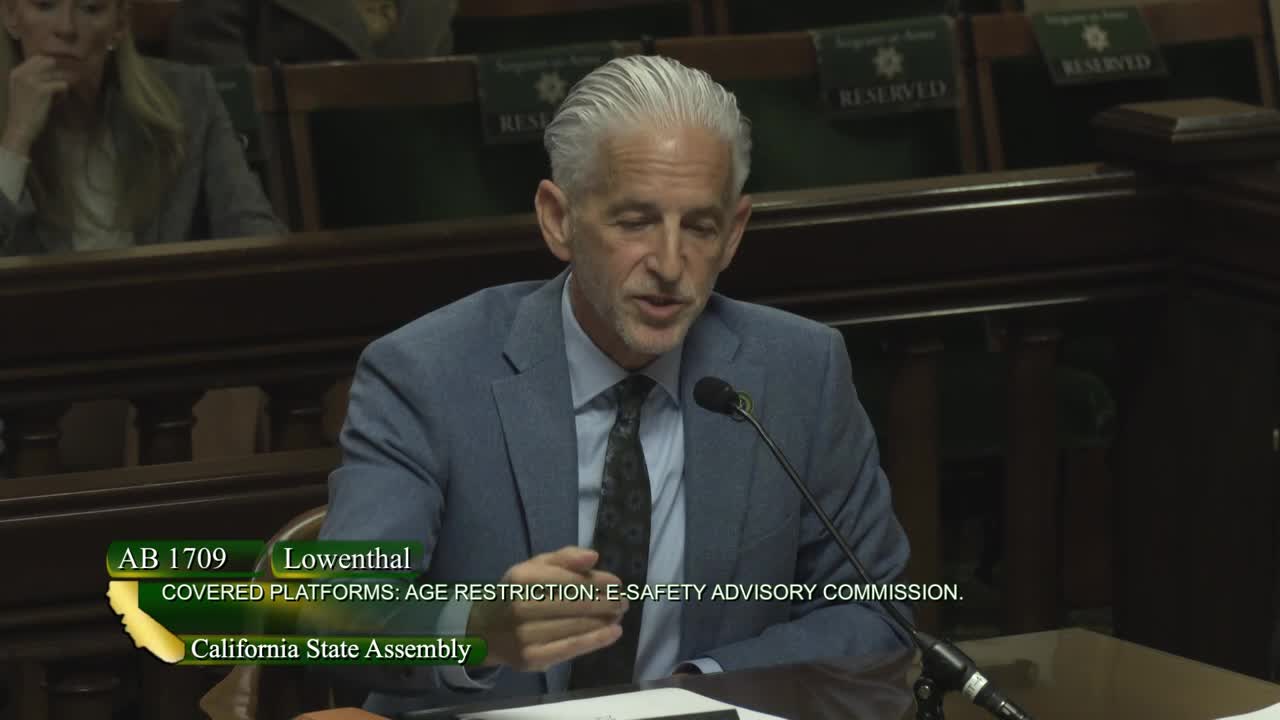
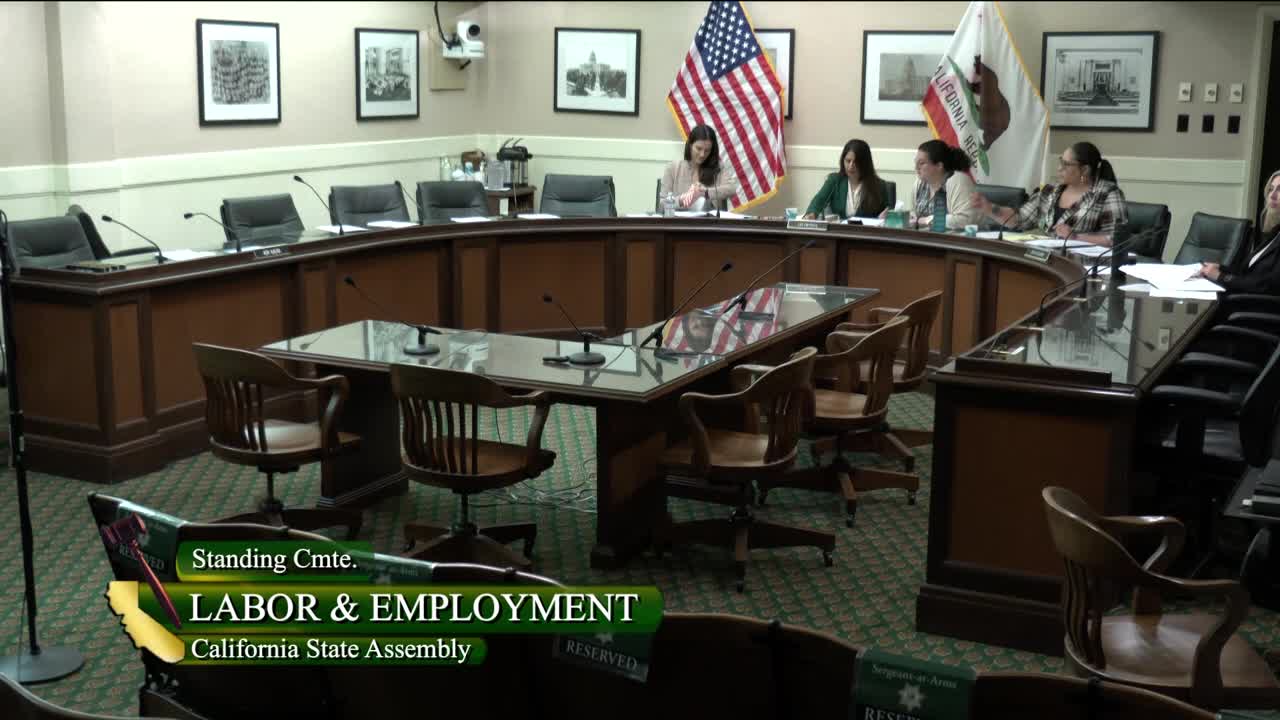
Discussed in Hearing
 7MIN
Assembly Standing Committee on Judiciary
 11MIN
Assembly Standing Committee on Labor and Employment
Bill Author

Bill Co-Author(s):