AB 2532: Cannabis: labels, packaging, and advertising.
- Session Year: 2025-2026
- House: Assembly
- Latest Version Date: 2026-09-30
Current Status:
Passed
(2026-09-30: Chaptered by Secretary of State - Chapter 949, Statutes of 2026.)
Introduced
In Committee
Awaiting First Chamber Vote
Passed First Chamber
In Committee
Awaiting Second Chamber Vote
Passed Second Chamber
Enacted
The Control, Regulate and Tax Adult Use of Marijuana Act (AUMA), an initiative measure approved as Proposition 64 at the November 8, 2016, statewide general election, authorizes a person who obtains a state license under AUMA to engage in commercial adult-use cannabis activity pursuant to that license and applicable local ordinances. The Medicinal and Adult-Use Cannabis Regulation and Safety Act (MAUCRSA), among other things, consolidates the licensure and regulation of commercial medicinal and adult-use cannabis activities under the jurisdiction of the Department of Cannabis Control, including retail commercial cannabis activity.
MAUCRSA places specified requirements on the packing and labeling of cannabis and cannabis products, including requiring all cannabis and cannabis product labels and inserts to include certain information prominently displayed in a clear and legible fashion, as specified, including a warning if nuts or other known allergens are used.
This bill would require all cannabis and cannabis product labels and inserts for an edible cannabis product or a cannabis beverage to also include the toll-free number for the national Poison Help line. Commencing July 1, 2027, the bill would require the label for a cannabis beverage containing more than one serving to clearly and conspicuously, in print, provide notice to the consumer, as specified.
MAUCRSA requires edible cannabis products to be produced and sold with a standardized concentration of cannabinoids not to exceed 10 milligrams tetrahydrocannabinol (THC) per serving. MAUCRSA requires edible cannabis to be delineated or scored into standardized serving sizes if the cannabis product contains more than one serving and is an edible cannabis product in solid form.
Commencing July 1, 2027, this bill would require, if the cannabis product is a cannabis beverage containing more than one serving and the container is transparent, the container to feature unobstructed and conspicuous lines delineating individual serving or portion sizes, except as specified. If the cannabis product is a cannabis beverage containing more than one serving, the bill would require the retailer to offer a consumer at the time of purchase and at no additional charge, a measuring instrument or measuring device, as specified.
MAUCRSA prohibits a person engaged in commercial cannabis activity, whether licensed or unlicensed, from, among other things, advertising or marketing cannabis or cannabis products in a manner intended to encourage persons under 21 years of age to consume cannabis or cannabis products.
This bill, commencing July 1, 2027, would additionally prohibit a person engaged in commercial cannabis activity, whether licensed or unlicensed, from advertising or marketing cannabis beverages containing multiple servings as single-serve products or otherwise encouraging consumption of multiple servings within a cannabis beverage at one time.
AUMA authorizes the Legislature to amend its provisions with a 2/3 vote of both houses to further its purposes and intent, except as specified.
This bill would declare that its provisions further the purposes and intent of AUMA.
The Control, Regulate and Tax Adult Use of Marijuana Act (AUMA), an initiative measure approved as Proposition 64 at the November 8, 2016, statewide general election, authorizes a person who obtains a state license under AUMA to engage in commercial adult-use cannabis activity pursuant to that license and applicable local ordinances. The Medicinal and Adult-Use Cannabis Regulation and Safety Act (MAUCRSA), among other things, consolidates the licensure and regulation of commercial medicinal and adult-use cannabis activities under the jurisdiction of the Department of Cannabis Control, including retail commercial cannabis activity.
MAUCRSA places specified requirements on the packing and labeling of cannabis and cannabis products, including requiring all cannabis and cannabis product labels and inserts to include certain information prominently displayed in a clear and legible fashion, as specified, including a warning if nuts or other known allergens are used.
This bill would require all cannabis and cannabis product labels and inserts for an edible cannabis product or a cannabis beverage to also include the toll-free number for the national Poison Help line, and line. Commencing July 1, 2027, the bill would require the label for a cannabis beverage containing more than one serving to clearly and conspicuously, in print, provide a notice to the consumer that the product contains multiple servings, notice to the consumer, as specified.
MAUCRSA requires edible cannabis products to be produced and sold with a standardized concentration of cannabinoids not to exceed 10 milligrams tetrahydrocannabinol (THC) per serving. MAUCRSA requires edible cannabis to be delineated or scored into standardized serving sizes if the cannabis product contains more than one serving and is an edible cannabis product in solid form.
This
Commencing July 1, 2027, this bill would require, if the cannabis product is a cannabis beverage containing more than one serving, serving and the container is transparent, the container to feature unobstructed and conspicuous lines delineating individual serving or portion sizes. sizes, except as specified. If the cannabis product is a cannabis beverage containing more than one serving, the bill would require a consumer to be offered, the retailer to offer a consumer at the time of purchase and at no additional charge, a measuring instrument or measuring device that allows the consumer to measure a single serving for consumption. device, as specified.
MAUCRSA prohibits a person engaged in commercial cannabis activity, whether licensed or unlicensed, from, among other things, advertising or marketing cannabis or cannabis products in a manner intended to encourage persons under 21 years of age to consume cannabis or cannabis products.
This bill bill, commencing July 1, 2027, would additionally prohibit a person engaged in commercial cannabis activity, whether licensed or unlicensed, from advertising or marketing cannabis beverages containing multiple servings as single-serve products or otherwise encouraging consumption of multiple servings within a cannabis beverage at one time.
AUMA authorizes the Legislature to amend its provisions with a 2/3 vote of both houses to further its purposes and intent, except as specified.
This bill would declare that its provisions further the purposes and intent of AUMA.
The Control, Regulate and Tax Adult Use of Marijuana Act (AUMA), an initiative measure approved as Proposition 64 at the November 8, 2016, statewide general election, authorizes a person who obtains a state license under AUMA to engage in commercial adult-use cannabis activity pursuant to that license and applicable local ordinances. The Medicinal and Adult-Use Cannabis Regulation and Safety Act (MAUCRSA), among other things, consolidates the licensure and regulation of commercial medicinal and adult-use cannabis activities under the jurisdiction of the Department of Cannabis Control, including retail commercial cannabis activity.
MAUCRSA places specified requirements on the packing and labeling of cannabis and cannabis products, including requiring all cannabis and cannabis product labels and inserts to include certain information prominently displayed in a clear and legible fashion, as specified, including a warning if nuts or other known allergens are used.
This bill would require all cannabis and cannabis product labels and inserts for an edible cannabis product or a cannabis beverage to also include the toll-free number for the national Poison Help line, and would require the label for a cannabis beverage containing more than one serving to clearly and conspicuously, in print, provide a notice to the consumer that the product contains multiple servings, as specified.
MAUCRSA requires edible cannabis products to be produced and sold with a standardized concentration of cannabinoids not to exceed 10 milligrams tetrahydrocannabinol (THC) per serving. MAUCRSA requires edible cannabis to be delineated or scored into standardized serving sizes if the cannabis product contains more than one serving and is an edible cannabis product in solid form.
This bill would require, if the cannabis product is a cannabis beverage containing more than one serving, at least part of the product container to be clear or semitransparent to visibly display the amount of liquid remaining within the container. The bill would require the container to feature unobstructed and conspicuous lines delineating individual serving or portion sizes based on the level of liquid remaining within the container. sizes. If the cannabis product is a cannabis beverage containing more than one serving, the bill would require a consumer to be offered, at the time of purchase and at no additional charge, a measuring instrument or measuring device that allows the consumer to measure a single serving for consumption.
MAUCRSA prohibits a person engaged in commercial cannabis activity, whether licensed or unlicensed, from, among other things, advertising or marketing cannabis or cannabis products in a manner intended to encourage persons under 21 years of age to consume cannabis or cannabis products.
This bill would additionally prohibit a person engaged in commercial cannabis activity, whether licensed or unlicensed, from advertising or marketing cannabis beverages containing multiple servings as single-serve products or otherwise encouraging consumption of multiple servings within a cannabis beverage at on one time.
AUMA authorizes the Legislature to amend its provisions with a 2/3 vote of both houses to further its purposes and intent, except as specified.
This bill would declare that its provisions further the purposes and intent of AUMA.
The Control, Regulate and Tax Adult Use of Marijuana Act (AUMA), an initiative measure approved as Proposition 64 at the November 8, 2016, statewide general election, authorizes a person who obtains a state license under AUMA to engage in commercial adult-use cannabis activity pursuant to that license and applicable local ordinances. The Medicinal and Adult-Use Cannabis Regulation and Safety Act (MAUCRSA), among other things, consolidates the licensure and regulation of commercial medicinal and adult-use cannabis activities under the jurisdiction of the Department of Cannabis Control, including retail commercial cannabis activity.
MAUCRSA places specified requirements on the packing and labeling of cannabis and cannabis products, including requiring all cannabis and cannabis product labels and inserts to include certain information prominently displayed in a clear and legible fashion, as specified, including a warning if nuts or other known allergens are used.
This bill would require all cannabis and cannabis product labels and inserts for an edible cannabis product or a cannabis beverage to also include the toll-free number for the national Poison Help line. line, and would require the label for a cannabis beverage containing more than one serving to clearly and conspicuously, in print, provide a notice to the consumer that the product contains multiple servings, as specified.
MAUCRSA requires edible cannabis products to be produced and sold with a standardized concentration of cannabinoids not to exceed 10 milligrams tetrahydrocannabinol (THC) per serving. MAUCRSA requires edible cannabis to be delineated or scored into standardized serving sizes if the cannabis product contains more than one serving and is an edible cannabis product in solid form.
This bill would prohibit a cannabis beverage container from containing more than 10 milligrams of THC, except as specified.This bill would require, if the cannabis product is a cannabis beverage containing more than one serving, at least part of the product container to be clear or semitransparent to visibly display the amount of liquid remaining within the container. The bill would require the container to feature unobstructed and conspicuous lines delineating individual serving or portion sizes based on the level of liquid remaining within the container.
MAUCRSA prohibits a person engaged in commercial cannabis activity, whether licensed or unlicensed, from, among other things, advertising or marketing cannabis or cannabis products in a manner intended to encourage persons under 21 years of age to consume cannabis or cannabis products.
This bill would additionally prohibit a person engaged in commercial cannabis activity, whether licensed or unlicensed, from advertising or marketing cannabis beverages containing multiple servings as single-serve products or otherwise encouraging consumption of multiple servings within a cannabis beverage at on time.
AUMA authorizes the Legislature to amend its provisions with a 2/3 vote of both houses to further its purposes and intent, except as specified.
This bill would declare that its provisions further the purposes and intent of AUMA.
The Control, Regulate and Tax Adult Use of Marijuana Act (AUMA), an initiative measure approved as Proposition 64 at the November 8, 2016, statewide general election, authorizes a person who obtains a state license under AUMA to engage in commercial adult-use cannabis activity pursuant to that license and applicable local ordinances. The Medicinal and Adult-Use Cannabis Regulation and Safety Act (MAUCRSA), among other things, consolidates the licensure and regulation of commercial medicinal and adult-use cannabis activities under the jurisdiction of the Department of Cannabis Control, including retail commercial cannabis activity.
MAUCRSA places specified requirements on the packing and labeling of cannabis and cannabis products, including requiring all cannabis and cannabis product labels and inserts to include certain information prominently displayed in a clear and legible fashion, as specified, including a warning if nuts or other known allergens are used.
This bill would require all cannabis and cannabis product labels and inserts for an edible cannabis product or a cannabis beverage to also include the toll-free number for the national Poison Help line.
MAUCRSA requires edible cannabis products to be produced and sold with a standardized concentration of cannabinoids not to exceed 10 milligrams tetrahydrocannabinol (THC) per serving.
This bill would prohibit a cannabis beverage container from containing more than 10 milligrams of THC. THC, except as specified.
AUMA authorizes the Legislature to amend its provisions with a 2/3 vote of both houses to further its purposes and intent, except as specified.
This bill would declare that its provisions further the purposes and intent of AUMA.
The Control, Regulate and Tax Adult Use of Marijuana Act (AUMA), an initiative measure approved as Proposition 64 at the November 8, 2016, statewide general election, authorizes a person who obtains a state license under AUMA to engage in commercial adult-use cannabis activity pursuant to that license and applicable local ordinances. The Medicinal and Adult-Use Cannabis Regulation and Safety Act (MAUCRSA), among other things, consolidates the licensure and regulation of commercial medicinal and adult-use cannabis activities under the jurisdiction of the Department of Cannabis Control, including retail commercial cannabis activity.
MAUCRSA places specified requirements on the packing and labeling of cannabis and cannabis products, including requiring all cannabis and cannabis product labels and inserts to include certain information prominently displayed in a clear and legible fashion, as specified, including a warning if nuts or other known allergens are used.
This bill would require all cannabis and cannabis product labels and inserts for an edible cannabis product or a cannabis beverage to also include the toll-free number for the national Poison Help line.
MAUCRSA requires edible cannabis products to be produced and sold with a standardized concentration of cannabinoids not to exceed 10 milligrams tetrahydrocannabinol (THC) per serving.
This bill would prohibit a cannabis beverage container from containing more than 10 milligrams of THC.
AUMA authorizes the Legislature to amend its provisions with a 2/3 vote of both houses to further its purposes and intent, except as specified.
This bill would declare that its provisions further the purposes and intent of AUMA.
Existing law, the Control, Regulate and Tax Adult Use of Marijuana Act (AUMA), an initiative measure approved as Proposition 64 at the November 8, 2016, statewide general election, authorizes a person who obtains a state license under AUMA to engage in commercial adult-use cannabis activity pursuant to that license and applicable local ordinances. The Medicinal and Adult-Use Cannabis Regulation and Safety Act (MAUCRSA), among other things, consolidates the licensure and regulation of commercial medicinal and adult-use cannabis activities, including retail commercial cannabis activity. Existing law places specified requirements on the packaging and labeling of cannabis and cannabis products.This bill would make a technical, nonsubstantive change to these provisions.Existing law, the Control, Regulate and Tax Adult Use of Marijuana Act (AUMA), an initiative measure approved as Proposition 64 at the November 8, 2016, statewide general election, authorizes a person who obtains a state license under AUMA to engage in commercial adult-use cannabis activity pursuant to that license and applicable local ordinances. The Medicinal and Adult-Use Cannabis Regulation and Safety Act (MAUCRSA), among other things, consolidates the licensure and regulation of commercial medicinal and adult-use cannabis activities, including retail commercial cannabis activity. Existing law places specified requirements on the packaging and labeling of cannabis and cannabis products.
This bill would make a technical, nonsubstantive change to these provisions.
(a)Prior to delivery or sale at a retailer, cannabis and cannabis products shall be labeled and placed in a tamper-evident, child-resistant package and shall include a unique identifier for the purposes of identifying and tracking cannabis and cannabis products. If the cannabis or cannabis product contains multiple servings, the package shall also be resealable.
(b)Packages and labels shall not be made to be attractive to children.
(c)All cannabis and cannabis product labels and inserts shall include the following information prominently displayed in a clear and legible fashion in accordance with the requirements, including font size, prescribed by the department:
(1)The following statements, in bold print:
(A)For cannabis: GOVERNMENT WARNING: THIS PACKAGE CONTAINS CANNABIS, A SCHEDULE I CONTROLLED SUBSTANCE. KEEP OUT OF REACH OF CHILDREN AND ANIMALS. CANNABIS MAY ONLY BE POSSESSED OR CONSUMED BY PERSONS 21 YEARS OF AGE OR OLDER UNLESS THE PERSON IS A QUALIFIED PATIENT. CANNABIS USE WHILE PREGNANT OR BREASTFEEDING MAY BE HARMFUL. CONSUMPTION OF CANNABIS IMPAIRS YOUR ABILITY TO DRIVE AND OPERATE MACHINERY. PLEASE USE EXTREME CAUTION.
(B)For cannabis products: GOVERNMENT WARNING: THIS PRODUCT CONTAINS CANNABIS, A SCHEDULE I CONTROLLED SUBSTANCE. KEEP OUT OF REACH OF CHILDREN AND ANIMALS. CANNABIS PRODUCTS MAY ONLY BE POSSESSED OR CONSUMED BY PERSONS 21 YEARS OF AGE OR OLDER UNLESS THE PERSON IS A QUALIFIED PATIENT. THE INTOXICATING EFFECTS OF CANNABIS PRODUCTS MAY BE DELAYED UP TO TWO HOURS. CANNABIS USE WHILE PREGNANT OR BREASTFEEDING MAY BE HARMFUL. CONSUMPTION OF CANNABIS PRODUCTS IMPAIRS YOUR ABILITY TO DRIVE AND OPERATE MACHINERY. PLEASE USE EXTREME CAUTION.
(2)For packages containing only dried flower, the net weight of cannabis in the package.
(3)Identification of the type of cannabis or cannabis product and the date of packaging.
(4)The appellation of origin, if any.
(5)List of pharmacologically active ingredients, including, but not limited to, tetrahydrocannabinol (THC), cannabidiol (CBD), and other cannabinoid content, the THC and other cannabinoid amount in milligrams per serving, servings per package, and the THC and other cannabinoid amount in milligrams for the package total.
(6)A warning if nuts or other known allergens are used.
(7)Information associated with the unique identifier issued by the department.
(8)For a medicinal cannabis product sold at a retailer, the statement FOR MEDICAL USE ONLY.
(9)For an edible cannabis product or a cannabis beverage, the toll-free telephone number for the national Poison Help line.
(10)Commencing July 1, 2027, for a cannabis beverage containing more than one serving, the label shall clearly and conspicuously, in print, provide a notice to the consumer that the product contains multiple servings, the size of a single serving measured in fluid ounces to the nearest tenth of a fluid ounce, and information regarding how to accurately measure a single serving for consumption.
(11)Any other requirement set by the department.
(d)Only generic food names may be used to describe the ingredients in edible cannabis products.
(e)Cannabis beverages may be packaged in containers that are clear or any color.
(f)The package and label of a cannabis cartridge and an integrated cannabis vaporizer shall not indicate that the cannabis cartridge or integrated cannabis vaporizer is disposable nor imply that it may be thrown in the trash or recycling streams.
(g)In the event the Attorney General determines that cannabis is no longer a Schedule I controlled substance under federal law, the label prescribed in subdivision (c) shall no longer require a statement that cannabis is a Schedule I controlled substance.
(h)This section shall become operative on July 1, 2024.
SEC. 2.Section 26130 of the Business and Professions Code is amended to read:26130.(a)The department shall promulgate regulations governing the licensing of cannabis manufacturers and standards for the manufacturing, packaging, and labeling of all manufactured cannabis products. Licenses to be issued are as follows:
(1)Manufacturing Level 1, for sites that manufacture cannabis products using nonvolatile solvents, or no solvents.
(2)Manufacturing Level 2, for sites that manufacture cannabis products using volatile solvents.
(b)For purposes of this section, volatile solvents shall have the same meaning as in paragraph (3) of subdivision (b) of Section 11362.3 of the Health and Safety Code, unless otherwise provided by law or regulation.
(c)Edible cannabis products shall be:
(1)Not designed to be appealing to children or easily confused with commercially sold candy or foods that do not contain cannabis.
(2)Produced and sold with a standardized concentration of cannabinoids not to exceed 10 milligrams tetrahydrocannabinol (THC) per serving.
(3)(A)Delineated or scored into standardized serving sizes if the cannabis product contains more than one serving and is an edible cannabis product in solid form.
(B)(i)Commencing July 1, 2027, if the cannabis product is a cannabis beverage containing more than one serving and the container is transparent or otherwise visibly displays the amount of liquid remaining within the container, the container shall feature unobstructed and conspicuous lines delineating individual serving or portion sizes. This requirement does not apply to a container that is shaped in a manner that makes it impossible to feature accurate lines delineating individual serving or portion sizes.
(ii)Commencing July 1, 2027, if the cannabis product is a cannabis beverage containing more than one serving, a the retailer shall offer the consumer, at the time of purchase and at no additional charge, a measuring instrument or measuring device, provided by the manufacturer on an as-needed basis, that is able to contain at least one fluid ounce and measures to the nearest tenth of a fluid ounce.
(4)Homogenized to ensure uniform disbursement of cannabinoids throughout the product.
(5)Manufactured and sold under sanitation standards established by the department that are similar to the standards for preparation, storage, handling, and sale of food products.
(6)Provided to customers with sufficient information to enable the informed consumption of the product, including the potential effects of the cannabis product and directions as to how to consume the cannabis product, as necessary.
(7)Marked with a universal symbol, as determined by the department through regulation.
(d)Cannabis, including concentrated cannabis, included in a cannabis product manufactured in compliance with law is not considered an adulterant under state law.
(e)(1)If the cannabis product is intended for therapeutic effect or health supplementation use on, or for consumption by, an animal, the cannabis product shall also conform with any additional relevant standards, including, but not limited to, an alternative standardized concentration, established by the department through regulations.
(2)The department shall promulgate regulations for animal product standards no later than July 1, 2025. Cannabis products shall not be marketed or sold for use on, or consumption by, animals before these regulations for animal standards take effect.
SEC. 3.Section 26152 of the Business and Professions Code is amended to read:26152.A person engaged in commercial cannabis activity, whether licensed or unlicensed, shall not do any of the following:
(a)Advertise or market in a manner that is false or untrue in any material particular, or that, irrespective of falsity, directly, or by ambiguity, omission, or inference, or by the addition of irrelevant, scientific, or technical matter, tends to create a misleading impression.
(b)Publish or disseminate advertising or marketing containing any statement concerning a brand or product that is inconsistent with any statement on the labeling thereof.
(c)Publish or disseminate advertising or marketing containing any statement, design, device, or representation which tends to create the impression that the cannabis or industrial hemp originated in a particular place or region, unless the label of the advertised product bears an appellation of origin, and such appellation of origin appears in the advertisement.
(d)Advertise or market on a billboard or similar advertising device located on an interstate highway or on a state highway which crosses the California border.
(e)Advertise or market cannabis or cannabis products in a manner intended to encourage persons under 21 years of age to consume cannabis or cannabis products.
(f)Publish or disseminate advertising or marketing that is attractive to children.
(g)Advertise or market cannabis or cannabis products on an advertising sign within 1,000 feet of a daycare center, school providing instruction in kindergarten or any of grades 1 to 12, inclusive, playground, or youth center.
(h)Publish or disseminate advertising or marketing for unlicensed commercial cannabis activity or for licensed commercial cannabis activity while the licensees license is suspended.
(i)Commencing July 1, 2027, advertise or market cannabis beverages containing multiple servings as single-serve products or otherwise encourage consumption of multiple servings within a cannabis beverage at one time.
SEC. 4.The Legislature finds and declares that this act furthers the purposes and intent of the Control, Regulate and Tax Adult Use of Marijuana Act.
(a)Prior to delivery or sale at a retailer, cannabis and cannabis products shall be labeled and placed in a tamper-evident, child-resistant package and shall include a unique identifier for the purposes of identifying and tracking cannabis and cannabis products. If the cannabis or cannabis product contains multiple servings, the package shall also be resealable.
(b)Packages and labels shall not be made to be attractive to children.
(c)All cannabis and cannabis product labels and inserts shall include the following information prominently displayed in a clear and legible fashion in accordance with the requirements, including font size, prescribed by the department:
(1)The following statements, in bold print:
(A)For cannabis: GOVERNMENT WARNING: THIS PACKAGE CONTAINS CANNABIS, A SCHEDULE I CONTROLLED SUBSTANCE. KEEP OUT OF REACH OF CHILDREN AND ANIMALS. CANNABIS MAY ONLY BE POSSESSED OR CONSUMED BY PERSONS 21 YEARS OF AGE OR OLDER UNLESS THE PERSON IS A QUALIFIED PATIENT. CANNABIS USE WHILE PREGNANT OR BREASTFEEDING MAY BE HARMFUL. CONSUMPTION OF CANNABIS IMPAIRS YOUR ABILITY TO DRIVE AND OPERATE MACHINERY. PLEASE USE EXTREME CAUTION.
(B)For cannabis products: GOVERNMENT WARNING: THIS PRODUCT CONTAINS CANNABIS, A SCHEDULE I CONTROLLED SUBSTANCE. KEEP OUT OF REACH OF CHILDREN AND ANIMALS. CANNABIS PRODUCTS MAY ONLY BE POSSESSED OR CONSUMED BY PERSONS 21 YEARS OF AGE OR OLDER UNLESS THE PERSON IS A QUALIFIED PATIENT. THE INTOXICATING EFFECTS OF CANNABIS PRODUCTS MAY BE DELAYED UP TO TWO HOURS. CANNABIS USE WHILE PREGNANT OR BREASTFEEDING MAY BE HARMFUL. CONSUMPTION OF CANNABIS PRODUCTS IMPAIRS YOUR ABILITY TO DRIVE AND OPERATE MACHINERY. PLEASE USE EXTREME CAUTION.
(2)For packages containing only dried flower, the net weight of cannabis in the package.
(3)Identification of the type of cannabis or cannabis product and the date of packaging.
(4)The appellation of origin, if any.
(5)List of pharmacologically active ingredients, including, but not limited to, tetrahydrocannabinol (THC), cannabidiol (CBD), and other cannabinoid content, the THC and other cannabinoid amount in milligrams per serving, servings per package, and the THC and other cannabinoid amount in milligrams for the package total.
(6)A warning if nuts or other known allergens are used.
(7)Information associated with the unique identifier issued by the department.
(8)For a medicinal cannabis product sold at a retailer, the statement FOR MEDICAL USE ONLY.
(9)For an edible cannabis product or a cannabis beverage, the toll-free telephone number for the national Poison Help line.
(10)For Commencing July 1, 2027, for a cannabis beverage containing more than one serving, the label shall clearly and conspicuously, in print, provide a notice to the consumer that the product contains multiple servings servings, the size of a single serving measured in fluid ounces to the nearest tenth of a fluid ounce, and information regarding how to accurately measure a single serving for consumption.
(11)Any other requirement set by the department.
(d)Only generic food names may be used to describe the ingredients in edible cannabis products.
(e)Cannabis beverages may be packaged in containers that are clear or any color.
(f)The package and label of a cannabis cartridge and an integrated cannabis vaporizer shall not indicate that the cannabis cartridge or integrated cannabis vaporizer is disposable nor imply that it may be thrown in the trash or recycling streams.
(g)In the event the Attorney General determines that cannabis is no longer a Schedule I controlled substance under federal law, the label prescribed in subdivision (c) shall no longer require a statement that cannabis is a Schedule I controlled substance.
(h)This section shall become operative on July 1, 2024.
SEC. 2.Section 26130 of the Business and Professions Code is amended to read:26130.(a)The department shall promulgate regulations governing the licensing of cannabis manufacturers and standards for the manufacturing, packaging, and labeling of all manufactured cannabis products. Licenses to be issued are as follows:
(1)Manufacturing Level 1, for sites that manufacture cannabis products using nonvolatile solvents, or no solvents.
(2)Manufacturing Level 2, for sites that manufacture cannabis products using volatile solvents.
(b)For purposes of this section, volatile solvents shall have the same meaning as in paragraph (3) of subdivision (b) of Section 11362.3 of the Health and Safety Code, unless otherwise provided by law or regulation.
(c)Edible cannabis products shall be:
(1)Not designed to be appealing to children or easily confused with commercially sold candy or foods that do not contain cannabis.
(2)Produced and sold with a standardized concentration of cannabinoids not to exceed 10 milligrams tetrahydrocannabinol (THC) per serving.
(3)(A)Delineated or scored into standardized serving sizes if the cannabis product contains more than one serving and is an edible cannabis product in solid form.
(B)(i)If Commencing July 1, 2027, if the cannabis product is a cannabis beverage containing more than one serving, serving and the container is transparent or otherwise visibly displays the amount of liquid remaining within the container, the container shall feature unobstructed and conspicuous lines delineating individual serving or portion sizes. This requirement does not apply to a container that is shaped in a manner that makes it impossible to feature accurate lines delineating individual serving or portion sizes.
(ii)If Commencing July 1, 2027, if the cannabis product is a cannabis beverage containing more than one serving, a consumer shall be offered, the retailer shall offer the consumer, at the time of purchase and at no additional charge, a measuring instrument or measuring device that allows the consumer to measure a single serving for consumption. device, provided by the manufacturer on an as-needed basis, that is able to contain at least one fluid ounce and measures to the nearest tenth of a fluid ounce.
(4)Homogenized to ensure uniform disbursement of cannabinoids throughout the product.
(5)Manufactured and sold under sanitation standards established by the department that are similar to the standards for preparation, storage, handling, and sale of food products.
(6)Provided to customers with sufficient information to enable the informed consumption of the product, including the potential effects of the cannabis product and directions as to how to consume the cannabis product, as necessary.
(7)Marked with a universal symbol, as determined by the department through regulation.
(d)Cannabis, including concentrated cannabis, included in a cannabis product manufactured in compliance with law is not considered an adulterant under state law.
(e)(1)If the cannabis product is intended for therapeutic effect or health supplementation use on, or for consumption by, an animal, the cannabis product shall also conform with any additional relevant standards, including, but not limited to, an alternative standardized concentration, established by the department through regulations.
(2)The department shall promulgate regulations for animal product standards no later than July 1, 2025. Cannabis products shall not be marketed or sold for use on, or consumption by, animals before these regulations for animal standards take effect.
SEC. 3.Section 26152 of the Business and Professions Code is amended to read:26152.A person engaged in commercial cannabis activity, whether licensed or unlicensed, shall not do any of the following:
(a)Advertise or market in a manner that is false or untrue in any material particular, or that, irrespective of falsity, directly, or by ambiguity, omission, or inference, or by the addition of irrelevant, scientific, or technical matter, tends to create a misleading impression.
(b)Publish or disseminate advertising or marketing containing any statement concerning a brand or product that is inconsistent with any statement on the labeling thereof.
(c)Publish or disseminate advertising or marketing containing any statement, design, device, or representation which tends to create the impression that the cannabis or industrial hemp originated in a particular place or region, unless the label of the advertised product bears an appellation of origin, and such appellation of origin appears in the advertisement.
(d)Advertise or market on a billboard or similar advertising device located on an interstate highway or on a state highway which crosses the California border.
(e)Advertise or market cannabis or cannabis products in a manner intended to encourage persons under 21 years of age to consume cannabis or cannabis products.
(f)Publish or disseminate advertising or marketing that is attractive to children.
(g)Advertise or market cannabis or cannabis products on an advertising sign within 1,000 feet of a daycare center, school providing instruction in kindergarten or any of grades 1 to 12, inclusive, playground, or youth center.
(h)Publish or disseminate advertising or marketing for unlicensed commercial cannabis activity or for licensed commercial cannabis activity while the licensees license is suspended.
(i)Advertise Commencing July 1, 2027, advertise or market cannabis beverages containing multiple servings as single-serve products or otherwise encourage consumption of multiple servings within a cannabis beverage at one time.
SEC. 4.The Legislature finds and declares that this act furthers the purposes and intent of the Control, Regulate and Tax Adult Use of Marijuana Act.
(a)Prior to delivery or sale at a retailer, cannabis and cannabis products shall be labeled and placed in a tamper-evident, child-resistant package and shall include a unique identifier for the purposes of identifying and tracking cannabis and cannabis products. If the cannabis or cannabis product contains multiple servings, the package shall also be resealable.
(b)Packages and labels shall not be made to be attractive to children.
(c)All cannabis and cannabis product labels and inserts shall include the following information prominently displayed in a clear and legible fashion in accordance with the requirements, including font size, prescribed by the department:
(1)The following statements, in bold print:
(A)For cannabis: GOVERNMENT WARNING: THIS PACKAGE CONTAINS CANNABIS, A SCHEDULE I CONTROLLED SUBSTANCE. KEEP OUT OF REACH OF CHILDREN AND ANIMALS. CANNABIS MAY ONLY BE POSSESSED OR CONSUMED BY PERSONS 21 YEARS OF AGE OR OLDER UNLESS THE PERSON IS A QUALIFIED PATIENT. CANNABIS USE WHILE PREGNANT OR BREASTFEEDING MAY BE HARMFUL. CONSUMPTION OF CANNABIS IMPAIRS YOUR ABILITY TO DRIVE AND OPERATE MACHINERY. PLEASE USE EXTREME CAUTION.
(B)For cannabis products: GOVERNMENT WARNING: THIS PRODUCT CONTAINS CANNABIS, A SCHEDULE I CONTROLLED SUBSTANCE. KEEP OUT OF REACH OF CHILDREN AND ANIMALS. CANNABIS PRODUCTS MAY ONLY BE POSSESSED OR CONSUMED BY PERSONS 21 YEARS OF AGE OR OLDER UNLESS THE PERSON IS A QUALIFIED PATIENT. THE INTOXICATING EFFECTS OF CANNABIS PRODUCTS MAY BE DELAYED UP TO TWO HOURS. CANNABIS USE WHILE PREGNANT OR BREASTFEEDING MAY BE HARMFUL. CONSUMPTION OF CANNABIS PRODUCTS IMPAIRS YOUR ABILITY TO DRIVE AND OPERATE MACHINERY. PLEASE USE EXTREME CAUTION.
(2)For packages containing only dried flower, the net weight of cannabis in the package.
(3)Identification of the type of cannabis or cannabis product and the date of packaging.
(4)The appellation of origin, if any.
(5)List of pharmacologically active ingredients, including, but not limited to, tetrahydrocannabinol (THC), cannabidiol (CBD), and other cannabinoid content, the THC and other cannabinoid amount in milligrams per serving, servings per package, and the THC and other cannabinoid amount in milligrams for the package total.
(6)A warning if nuts or other known allergens are used.
(7)Information associated with the unique identifier issued by the department.
(8)For a medicinal cannabis product sold at a retailer, the statement FOR MEDICAL USE ONLY.
(9)For an edible cannabis product or a cannabis beverage, the toll-free telephone number for the national Poison Help line.
(10)For a cannabis beverage containing more than one serving, the label shall clearly and conspicuously, in print, provide a notice to the consumer that the product contains multiple servings and information regarding how to accurately measure a single serving for consumption.
(11)Any other requirement set by the department.
(d)Only generic food names may be used to describe the ingredients in edible cannabis products.
(e)Cannabis beverages may be packaged in containers that are clear or any color.
(f)The package and label of a cannabis cartridge and an integrated cannabis vaporizer shall not indicate that the cannabis cartridge or integrated cannabis vaporizer is disposable nor imply that it may be thrown in the trash or recycling streams.
(g)In the event the Attorney General determines that cannabis is no longer a Schedule I controlled substance under federal law, the label prescribed in subdivision (c) shall no longer require a statement that cannabis is a Schedule I controlled substance.
(h)This section shall become operative on July 1, 2024.
SEC. 2.Section 26130 of the Business and Professions Code is amended to read:26130.(a)The department shall promulgate regulations governing the licensing of cannabis manufacturers and standards for the manufacturing, packaging, and labeling of all manufactured cannabis products. Licenses to be issued are as follows:
(1)Manufacturing Level 1, for sites that manufacture cannabis products using nonvolatile solvents, or no solvents.
(2)Manufacturing Level 2, for sites that manufacture cannabis products using volatile solvents.
(b)For purposes of this section, volatile solvents shall have the same meaning as in paragraph (3) of subdivision (b) of Section 11362.3 of the Health and Safety Code, unless otherwise provided by law or regulation.
(c)Edible cannabis products shall be:
(1)Not designed to be appealing to children or easily confused with commercially sold candy or foods that do not contain cannabis.
(2)Produced and sold with a standardized concentration of cannabinoids not to exceed 10 milligrams tetrahydrocannabinol (THC) per serving.
(3)(A)Delineated or scored into standardized serving sizes if the cannabis product contains more than one serving and is an edible cannabis product in solid form.
(B)(i)If the cannabis product is a cannabis beverage containing more than one serving, at least part of the product container shall be clear or semitransparent to visibly display the amount of liquid remaining within the container, and the container shall feature unobstructed and conspicuous lines delineating individual serving or portion sizes based on the level of liquid remaining within the container. sizes.
(ii)If the cannabis product is a cannabis beverage containing more than one serving, a consumer shall be offered, at the time of purchase and at no additional charge, a measuring instrument or measuring device that allows the consumer to measure a single serving for consumption.
(4)Homogenized to ensure uniform disbursement of cannabinoids throughout the product.
(5)Manufactured and sold under sanitation standards established by the department that are similar to the standards for preparation, storage, handling, and sale of food products.
(6)Provided to customers with sufficient information to enable the informed consumption of the product, including the potential effects of the cannabis product and directions as to how to consume the cannabis product, as necessary.
(7)Marked with a universal symbol, as determined by the department through regulation.
(d)Cannabis, including concentrated cannabis, included in a cannabis product manufactured in compliance with law is not considered an adulterant under state law.
(e)(1)If the cannabis product is intended for therapeutic effect or health supplementation use on, or for consumption by, an animal, the cannabis product shall also conform with any additional relevant standards, including, but not limited to, an alternative standardized concentration, established by the department through regulations.
(2)The department shall promulgate regulations for animal product standards no later than July 1, 2025. Cannabis products shall not be marketed or sold for use on, or consumption by, animals before these regulations for animal standards take effect.
SEC. 3.Section 26152 of the Business and Professions Code is amended to read:26152.A person engaged in commercial cannabis activity, whether licensed or unlicensed, shall not do any of the following:
(a)Advertise or market in a manner that is false or untrue in any material particular, or that, irrespective of falsity, directly, or by ambiguity, omission, or inference, or by the addition of irrelevant, scientific, or technical matter, tends to create a misleading impression.
(b)Publish or disseminate advertising or marketing containing any statement concerning a brand or product that is inconsistent with any statement on the labeling thereof.
(c)Publish or disseminate advertising or marketing containing any statement, design, device, or representation which tends to create the impression that the cannabis or industrial hemp originated in a particular place or region, unless the label of the advertised product bears an appellation of origin, and such appellation of origin appears in the advertisement.
(d)Advertise or market on a billboard or similar advertising device located on an interstate highway or on a state highway which crosses the California border.
(e)Advertise or market cannabis or cannabis products in a manner intended to encourage persons under 21 years of age to consume cannabis or cannabis products.
(f)Publish or disseminate advertising or marketing that is attractive to children.
(g)Advertise or market cannabis or cannabis products on an advertising sign within 1,000 feet of a daycare center, school providing instruction in kindergarten or any of grades 1 to 12, inclusive, playground, or youth center.
(h)Publish or disseminate advertising or marketing for unlicensed commercial cannabis activity or for licensed commercial cannabis activity while the licensees license is suspended.
(i)Advertise or market cannabis beverages containing multiple servings as single-serve products or otherwise encourage consumption of multiple servings within a cannabis beverage at on one time.
SEC. 4.The Legislature finds and declares that this act furthers the purposes and intent of the Control, Regulate and Tax Adult Use of Marijuana Act.
(a)Prior to delivery or sale at a retailer, cannabis and cannabis products shall be labeled and placed in a tamper-evident, child-resistant package and shall include a unique identifier for the purposes of identifying and tracking cannabis and cannabis products. If the cannabis or cannabis product contains multiple servings, the package shall also be resealable.
(b)Packages and labels shall not be made to be attractive to children.
(c)All cannabis and cannabis product labels and inserts shall include the following information prominently displayed in a clear and legible fashion in accordance with the requirements, including font size, prescribed by the department:
(1)The following statements, in bold print:
(A)For cannabis: GOVERNMENT WARNING: THIS PACKAGE CONTAINS CANNABIS, A SCHEDULE I CONTROLLED SUBSTANCE. KEEP OUT OF REACH OF CHILDREN AND ANIMALS. CANNABIS MAY ONLY BE POSSESSED OR CONSUMED BY PERSONS 21 YEARS OF AGE OR OLDER UNLESS THE PERSON IS A QUALIFIED PATIENT. CANNABIS USE WHILE PREGNANT OR BREASTFEEDING MAY BE HARMFUL. CONSUMPTION OF CANNABIS IMPAIRS YOUR ABILITY TO DRIVE AND OPERATE MACHINERY. PLEASE USE EXTREME CAUTION.
(B)For cannabis products: GOVERNMENT WARNING: THIS PRODUCT CONTAINS CANNABIS, A SCHEDULE I CONTROLLED SUBSTANCE. KEEP OUT OF REACH OF CHILDREN AND ANIMALS. CANNABIS PRODUCTS MAY ONLY BE POSSESSED OR CONSUMED BY PERSONS 21 YEARS OF AGE OR OLDER UNLESS THE PERSON IS A QUALIFIED PATIENT. THE INTOXICATING EFFECTS OF CANNABIS PRODUCTS MAY BE DELAYED UP TO TWO HOURS. CANNABIS USE WHILE PREGNANT OR BREASTFEEDING MAY BE HARMFUL. CONSUMPTION OF CANNABIS PRODUCTS IMPAIRS YOUR ABILITY TO DRIVE AND OPERATE MACHINERY. PLEASE USE EXTREME CAUTION.
(2)For packages containing only dried flower, the net weight of cannabis in the package.
(3)Identification of the type of cannabis or cannabis product and the date of packaging.
(4)The appellation of origin, if any.
(5)List of pharmacologically active ingredients, including, but not limited to, tetrahydrocannabinol (THC), cannabidiol (CBD), and other cannabinoid content, the THC and other cannabinoid amount in milligrams per serving, servings per package, and the THC and other cannabinoid amount in milligrams for the package total.
(6)A warning if nuts or other known allergens are used.
(7)Information associated with the unique identifier issued by the department.
(8)For a medicinal cannabis product sold at a retailer, the statement FOR MEDICAL USE ONLY.
(9)For an edible cannabis product or a cannabis beverage, the toll-free telephone number for the national Poison Help line.
(10)For a cannabis beverage containing more than one serving, the label shall clearly and conspicuously, in print, provide a notice to the consumer that the product contains multiple servings and information regarding how to accurately measure a single serving for consumption.
(10)(11)Any other requirement set by the department.
(d)Only generic food names may be used to describe the ingredients in edible cannabis products.
(e)Cannabis beverages may be packaged in containers that are clear or any color.
(f)The package and label of a cannabis cartridge and an integrated cannabis vaporizer shall not indicate that the cannabis cartridge or integrated cannabis vaporizer is disposable nor imply that it may be thrown in the trash or recycling streams.
(g)In the event the Attorney General determines that cannabis is no longer a Schedule I controlled substance under federal law, the label prescribed in subdivision (c) shall no longer require a statement that cannabis is a Schedule I controlled substance.
(h)This section shall become operative on July 1, 2024.
SEC. 2.Section 26130 of the Business and Professions Code is amended to read:26130.(a)The department shall promulgate regulations governing the licensing of cannabis manufacturers and standards for the manufacturing, packaging, and labeling of all manufactured cannabis products. Licenses to be issued are as follows:
(1)Manufacturing Level 1, for sites that manufacture cannabis products using nonvolatile solvents, or no solvents.
(2)Manufacturing Level 2, for sites that manufacture cannabis products using volatile solvents.
(b)For purposes of this section, volatile solvents shall have the same meaning as in paragraph (3) of subdivision (b) of Section 11362.3 of the Health and Safety Code, unless otherwise provided by law or regulation.
(c)Edible cannabis products shall be:
(1)Not designed to be appealing to children or easily confused with commercially sold candy or foods that do not contain cannabis.
(2)(A)Produced and sold with a standardized concentration of cannabinoids not to exceed 10 milligrams tetrahydrocannabinol (THC) per serving, or in the case of a cannabis beverage, not to exceed 10 milligrams tetrahydrocannabinol (THC) per cannabis beverage container. serving.
(B)For purposes of subparagraph (A), cannabis beverage does not include a tincture, as defined in Section 15000 of Title 4 of the California Code of Regulations, that is a medicinal cannabis product.(3)(A)Delineated or scored into standardized serving sizes if the cannabis product contains more than one serving and is an edible cannabis product in solid form.
(B)If the cannabis product is a cannabis beverage containing more than one serving, at least part of the product container shall be clear or semitransparent to visibly display the amount of liquid remaining within the container, and the container shall feature unobstructed and conspicuous lines delineating individual serving or portion sizes based on the level of liquid remaining within the container.
(4)Homogenized to ensure uniform disbursement of cannabinoids throughout the product.
(5)Manufactured and sold under sanitation standards established by the department that are similar to the standards for preparation, storage, handling, and sale of food products.
(6)Provided to customers with sufficient information to enable the informed consumption of the product, including the potential effects of the cannabis product and directions as to how to consume the cannabis product, as necessary.
(7)Marked with a universal symbol, as determined by the department through regulation.
(d)Cannabis, including concentrated cannabis, included in a cannabis product manufactured in compliance with law is not considered an adulterant under state law.
(e)(1)If the cannabis product is intended for therapeutic effect or health supplementation use on, or for consumption by, an animal, the cannabis product shall also conform with any additional relevant standards, including, but not limited to, an alternative standardized concentration, established by the department through regulations.
(2)The department shall promulgate regulations for animal product standards no later than July 1, 2025. Cannabis products shall not be marketed or sold for use on, or consumption by, animals before these regulations for animal standards take effect.
SEC. 3.Section 26152 of the Business and Professions Code is amended to read:26152.A person engaged in commercial cannabis activity, whether licensed or unlicensed, shall not do any of the following:
(a)Advertise or market in a manner that is false or untrue in any material particular, or that, irrespective of falsity, directly, or by ambiguity, omission, or inference, or by the addition of irrelevant, scientific, or technical matter, tends to create a misleading impression.
(b)Publish or disseminate advertising or marketing containing any statement concerning a brand or product that is inconsistent with any statement on the labeling thereof.
(c)Publish or disseminate advertising or marketing containing any statement, design, device, or representation which tends to create the impression that the cannabis or industrial hemp originated in a particular place or region, unless the label of the advertised product bears an appellation of origin, and such appellation of origin appears in the advertisement.
(d)Advertise or market on a billboard or similar advertising device located on an interstate highway or on a state highway which crosses the California border.
(e)Advertise or market cannabis or cannabis products in a manner intended to encourage persons under 21 years of age to consume cannabis or cannabis products.
(f)Publish or disseminate advertising or marketing that is attractive to children.
(g)Advertise or market cannabis or cannabis products on an advertising sign within 1,000 feet of a daycare center, school providing instruction in kindergarten or any of grades 1 to 12, inclusive, playground, or youth center.
(h)Publish or disseminate advertising or marketing for unlicensed commercial cannabis activity or for licensed commercial cannabis activity while the licensees license is suspended.
(i)Advertise or market cannabis beverages containing multiple servings as single-serve products or otherwise encourage consumption of multiple servings within a cannabis beverage at on time.
SEC. 3.SEC. 4.The Legislature finds and declares that this act furthers the purposes and intent of the Control, Regulate and Tax Adult Use of Marijuana Act.
(a)Prior to delivery or sale at a retailer, cannabis and cannabis products shall be labeled and placed in a tamper-evident, child-resistant package and shall include a unique identifier for the purposes of identifying and tracking cannabis and cannabis products. If the cannabis or cannabis product contains multiple servings, the package shall also be resealable.
(b)Packages and labels shall not be made to be attractive to children.
(c)All cannabis and cannabis product labels and inserts shall include the following information prominently displayed in a clear and legible fashion in accordance with the requirements, including font size, prescribed by the department:
(1)The following statements, in bold print:
(A)For cannabis: GOVERNMENT WARNING: THIS PACKAGE CONTAINS CANNABIS, A SCHEDULE I CONTROLLED SUBSTANCE. KEEP OUT OF REACH OF CHILDREN AND ANIMALS. CANNABIS MAY ONLY BE POSSESSED OR CONSUMED BY PERSONS 21 YEARS OF AGE OR OLDER UNLESS THE PERSON IS A QUALIFIED PATIENT. CANNABIS USE WHILE PREGNANT OR BREASTFEEDING MAY BE HARMFUL. CONSUMPTION OF CANNABIS IMPAIRS YOUR ABILITY TO DRIVE AND OPERATE MACHINERY. PLEASE USE EXTREME CAUTION.
(B)For cannabis products: GOVERNMENT WARNING: THIS PRODUCT CONTAINS CANNABIS, A SCHEDULE I CONTROLLED SUBSTANCE. KEEP OUT OF REACH OF CHILDREN AND ANIMALS. CANNABIS PRODUCTS MAY ONLY BE POSSESSED OR CONSUMED BY PERSONS 21 YEARS OF AGE OR OLDER UNLESS THE PERSON IS A QUALIFIED PATIENT. THE INTOXICATING EFFECTS OF CANNABIS PRODUCTS MAY BE DELAYED UP TO TWO HOURS. CANNABIS USE WHILE PREGNANT OR BREASTFEEDING MAY BE HARMFUL. CONSUMPTION OF CANNABIS PRODUCTS IMPAIRS YOUR ABILITY TO DRIVE AND OPERATE MACHINERY. PLEASE USE EXTREME CAUTION.
(2)For packages containing only dried flower, the net weight of cannabis in the package.
(3)Identification of the type of cannabis or cannabis product and the date of packaging.
(4)The appellation of origin, if any.
(5)List of pharmacologically active ingredients, including, but not limited to, tetrahydrocannabinol (THC), cannabidiol (CBD), and other cannabinoid content, the THC and other cannabinoid amount in milligrams per serving, servings per package, and the THC and other cannabinoid amount in milligrams for the package total.
(6)A warning if nuts or other known allergens are used.
(7)Information associated with the unique identifier issued by the department.
(8)For a medicinal cannabis product sold at a retailer, the statement FOR MEDICAL USE ONLY.
(9)For an edible cannabis product or a cannabis beverage, the toll-free telephone number for the national Poison Help line.
(10)Any other requirement set by the department.
(d)Only generic food names may be used to describe the ingredients in edible cannabis products.
(e)Cannabis beverages may be packaged in containers that are clear or any color.
(f)The package and label of a cannabis cartridge and an integrated cannabis vaporizer shall not indicate that the cannabis cartridge or integrated cannabis vaporizer is disposable nor imply that it may be thrown in the trash or recycling streams.
(g)In the event the Attorney General determines that cannabis is no longer a Schedule I controlled substance under federal law, the label prescribed in subdivision (c) shall no longer require a statement that cannabis is a Schedule I controlled substance.
(h)This section shall become operative on July 1, 2024.
SEC. 2.Section 26130 of the Business and Professions Code is amended to read:26130.(a)The department shall promulgate regulations governing the licensing of cannabis manufacturers and standards for the manufacturing, packaging, and labeling of all manufactured cannabis products. Licenses to be issued are as follows:
(1)Manufacturing Level 1, for sites that manufacture cannabis products using nonvolatile solvents, or no solvents.
(2)Manufacturing Level 2, for sites that manufacture cannabis products using volatile solvents.
(b)For purposes of this section, volatile solvents shall have the same meaning as in paragraph (3) of subdivision (b) of Section 11362.3 of the Health and Safety Code, unless otherwise provided by law or regulation.
(c)Edible cannabis products shall be:
(1)Not designed to be appealing to children or easily confused with commercially sold candy or foods that do not contain cannabis.
(2)(A)Produced and sold with a standardized concentration of cannabinoids not to exceed 10 milligrams tetrahydrocannabinol (THC) per serving, or in the case of a cannabis beverage, not to exceed 10 milligrams tetrahydrocannabinol (THC) per cannabis beverage container.
(B)For purposes of subparagraph (A), cannabis beverage does not include a tincture, as defined in Section 15000 of Title 4 of the California Code of Regulations, that is a medicinal cannabis product.
(3)Delineated or scored into standardized serving sizes if the cannabis product contains more than one serving and is an edible cannabis product in solid form.
(4)Homogenized to ensure uniform disbursement of cannabinoids throughout the product.
(5)Manufactured and sold under sanitation standards established by the department that are similar to the standards for preparation, storage, handling, and sale of food products.
(6)Provided to customers with sufficient information to enable the informed consumption of the product, including the potential effects of the cannabis product and directions as to how to consume the cannabis product, as necessary.
(7)Marked with a universal symbol, as determined by the department through regulation.
(d)Cannabis, including concentrated cannabis, included in a cannabis product manufactured in compliance with law is not considered an adulterant under state law.
(e)(1)If the cannabis product is intended for therapeutic effect or health supplementation use on, or for consumption by, an animal, the cannabis product shall also conform with any additional relevant standards, including, but not limited to, an alternative standardized concentration, established by the department through regulations.
(2)The department shall promulgate regulations for animal product standards no later than July 1, 2025. Cannabis products shall not be marketed or sold for use on, or consumption by, animals before these regulations for animal standards take effect.
SEC. 3.The Legislature finds and declares that this act furthers the purposes and intent of the Control, Regulate and Tax Adult Use of Marijuana Act.
(a)Prior to delivery or sale at a retailer, cannabis and cannabis products shall be labeled and placed in a tamper-evident, child-resistant package and shall include a unique identifier for the purposes of identifying and tracking cannabis and cannabis products. If the cannabis or cannabis product contains multiple servings, the package shall also be resealable.
(b)Packages and labels shall not be made to be attractive to children.
(c)All cannabis and cannabis product labels and inserts shall include the following information prominently displayed in a clear and legible fashion in accordance with the requirements, including font size, prescribed by the department:
(1)The following statements, in bold print:
(A)For cannabis: GOVERNMENT WARNING: THIS PACKAGE CONTAINS CANNABIS, A SCHEDULE I CONTROLLED SUBSTANCE. KEEP OUT OF REACH OF CHILDREN AND ANIMALS. CANNABIS MAY ONLY BE POSSESSED OR CONSUMED BY PERSONS 21 YEARS OF AGE OR OLDER UNLESS THE PERSON IS A QUALIFIED PATIENT. CANNABIS USE WHILE PREGNANT OR BREASTFEEDING MAY BE HARMFUL. CONSUMPTION OF CANNABIS IMPAIRS YOUR ABILITY TO DRIVE AND OPERATE MACHINERY. PLEASE USE EXTREME CAUTION.
(B)For cannabis products: GOVERNMENT WARNING: THIS PRODUCT CONTAINS CANNABIS, A SCHEDULE I CONTROLLED SUBSTANCE. KEEP OUT OF REACH OF CHILDREN AND ANIMALS. CANNABIS PRODUCTS MAY ONLY BE POSSESSED OR CONSUMED BY PERSONS 21 YEARS OF AGE OR OLDER UNLESS THE PERSON IS A QUALIFIED PATIENT. THE INTOXICATING EFFECTS OF CANNABIS PRODUCTS MAY BE DELAYED UP TO TWO HOURS. CANNABIS USE WHILE PREGNANT OR BREASTFEEDING MAY BE HARMFUL. CONSUMPTION OF CANNABIS PRODUCTS IMPAIRS YOUR ABILITY TO DRIVE AND OPERATE MACHINERY. PLEASE USE EXTREME CAUTION.
(2)For packages containing only dried flower, the net weight of cannabis in the package.
(3)Identification of the type of cannabis or cannabis product and the date of packaging.
(4)The appellation of origin, if any.
(5)List of pharmacologically active ingredients, including, but not limited to, tetrahydrocannabinol (THC), cannabidiol (CBD), and other cannabinoid content, the THC and other cannabinoid amount in milligrams per serving, servings per package, and the THC and other cannabinoid amount in milligrams for the package total.
(6)A warning if nuts or other known allergens are used.
(7)Information associated with the unique identifier issued by the department.
(8)For a medicinal cannabis product sold at a retailer, the statement FOR MEDICAL USE ONLY.
(9)For an edible cannabis product or a cannabis beverage, the toll-free telephone number for the national Poison Help line.
(9)(10)Any other requirement set by the department.
(d)Only generic food names may be used to describe the ingredients in edible cannabis products.
(e)Cannabis beverages may be packaged in containers that are clear or any color.
(f)The package and label of a cannabis cartridge and an integrated cannabis vaporizer shall not indicate that the cannabis cartridge or integrated cannabis vaporizer is disposable nor imply that it may be thrown in the trash or recycling streams.
(g)In the event the Attorney General determines that cannabis is no longer a Schedule I controlled substance under federal law, the label prescribed in subdivision (c) shall no longer require a statement that cannabis is a Schedule I controlled substance.
(h)This section shall become operative on July 1, 2024.
SEC. 2.Section 26130 of the Business and Professions Code is amended to read:26130.(a)The department shall promulgate regulations governing the licensing of cannabis manufacturers and standards for the manufacturing, packaging, and labeling of all manufactured cannabis products. Licenses to be issued are as follows:
(1)Manufacturing Level 1, for sites that manufacture cannabis products using nonvolatile solvents, or no solvents.
(2)Manufacturing Level 2, for sites that manufacture cannabis products using volatile solvents.
(b)For purposes of this section, volatile solvents shall have the same meaning as in paragraph (3) of subdivision (b) of Section 11362.3 of the Health and Safety Code, unless otherwise provided by law or regulation.
(c)Edible cannabis products shall be:
(1)Not designed to be appealing to children or easily confused with commercially sold candy or foods that do not contain cannabis.
(2)Produced and sold with a standardized concentration of cannabinoids not to exceed 10 milligrams tetrahydrocannabinol (THC) per serving. serving, or in the case of a cannabis beverage, not to exceed 10 milligrams tetrahydrocannabinol (THC) per cannabis beverage container.
(3)Delineated or scored into standardized serving sizes if the cannabis product contains more than one serving and is an edible cannabis product in solid form.
(4)Homogenized to ensure uniform disbursement of cannabinoids throughout the product.
(5)Manufactured and sold under sanitation standards established by the department that are similar to the standards for preparation, storage, handling, and sale of food products.
(6)Provided to customers with sufficient information to enable the informed consumption of the product, including the potential effects of the cannabis product and directions as to how to consume the cannabis product, as necessary.
(7)Marked with a universal symbol, as determined by the department through regulation.
(d)Cannabis, including concentrated cannabis, included in a cannabis product manufactured in compliance with law is not considered an adulterant under state law.
(e)(1)If the cannabis product is intended for therapeutic effect or health supplementation use on, or for consumption by, an animal, the cannabis product shall also conform with any additional relevant standards, including, but not limited to, an alternative standardized concentration, established by the department through regulations.
(2)The department shall promulgate regulations for animal product standards no later than July 1, 2025. Cannabis products shall not be marketed or sold for use on, or consumption by, animals before these regulations for animal standards take effect.
SEC. 3.The Legislature finds and declares that this act furthers the purposes and intent of the Control, Regulate and Tax Adult Use of Marijuana Act.
SECTION 1.Section 26120 of the Business and Professions Code is amended to read:26120.(a)Prior to delivery or sale at a retailer, cannabis and cannabis products shall be labeled and placed in a tamper-evident, child-resistant package and shall include a unique identifier for the purposes of identifying and tracking cannabis and cannabis products. If the cannabis or cannabis product contains multiple servings, the package shall also be resealable.(b)Packages and labels shall not be made to be attractive to children.(c)All cannabis and cannabis product labels and inserts shall include the following information prominently displayed in a clear and legible fashion in accordance with the requirements, including font size, prescribed by the department:(1)The following statements, in bold print:(A)For cannabis: GOVERNMENT WARNING: THIS PACKAGE CONTAINS CANNABIS, A SCHEDULE I CONTROLLED SUBSTANCE. KEEP OUT OF REACH OF CHILDREN AND ANIMALS. CANNABIS MAY ONLY BE POSSESSED OR CONSUMED BY PERSONS 21 YEARS OF AGE OR OLDER UNLESS THE PERSON IS A QUALIFIED PATIENT. CANNABIS USE WHILE PREGNANT OR BREASTFEEDING MAY BE HARMFUL. CONSUMPTION OF CANNABIS IMPAIRS YOUR ABILITY TO DRIVE AND OPERATE MACHINERY. PLEASE USE EXTREME CAUTION.(B)For cannabis products: GOVERNMENT WARNING: THIS PRODUCT CONTAINS CANNABIS, A SCHEDULE I CONTROLLED SUBSTANCE. KEEP OUT OF REACH OF CHILDREN AND ANIMALS. CANNABIS PRODUCTS MAY ONLY BE POSSESSED OR CONSUMED BY PERSONS 21 YEARS OF AGE OR OLDER UNLESS THE PERSON IS A QUALIFIED PATIENT. THE INTOXICATING EFFECTS OF CANNABIS PRODUCTS MAY BE DELAYED UP TO TWO HOURS. CANNABIS USE WHILE PREGNANT OR BREASTFEEDING MAY BE HARMFUL. CONSUMPTION OF CANNABIS PRODUCTS IMPAIRS YOUR ABILITY TO DRIVE AND OPERATE MACHINERY. PLEASE USE EXTREME CAUTION.(2)For packages containing only dried flower, the net weight of cannabis in the package.(3)Identification of the type of cannabis or cannabis product and the date of packaging.(4)The appellation of origin, if any.(5)List of pharmacologically active ingredients, including, but not limited to, tetrahydrocannabinol (THC), cannabidiol (CBD), and other cannabinoid content, the THC and other cannabinoid amount in milligrams per serving, servings per package, and the THC and other cannabinoid amount in milligrams for the package total.(6)A warning if nuts or other known allergens are used.(7)Information associated with the unique identifier issued by the department.(8)For a medicinal cannabis product sold at a retailer, the statement FOR MEDICAL USE ONLY.(9)Any other requirement set by the department.(d)Only generic food names may be used to describe the ingredients in edible cannabis products.(e)Cannabis beverages may be packaged in containers that are clear or any color.(f)The package and label of a cannabis cartridge and an integrated cannabis vaporizer shall not indicate that the cannabis cartridge or integrated cannabis vaporizer is disposable nor imply that it may be thrown in the trash or recycling streams.(g)If the Attorney General determines that cannabis is no longer a Schedule I controlled substance under federal law, the label prescribed in subdivision (c) shall no longer require a statement that cannabis is a Schedule I controlled substance.(h)This section shall become operative on July 1, 2024.(a)Prior to delivery or sale at a retailer, cannabis and cannabis products shall be labeled and placed in a tamper-evident, child-resistant package and shall include a unique identifier for the purposes of identifying and tracking cannabis and cannabis products. If the cannabis or cannabis product contains multiple servings, the package shall also be resealable.
(b)Packages and labels shall not be made to be attractive to children.
(c)All cannabis and cannabis product labels and inserts shall include the following information prominently displayed in a clear and legible fashion in accordance with the requirements, including font size, prescribed by the department:
(1)The following statements, in bold print:
(A)For cannabis: GOVERNMENT WARNING: THIS PACKAGE CONTAINS CANNABIS, A SCHEDULE I CONTROLLED SUBSTANCE. KEEP OUT OF REACH OF CHILDREN AND ANIMALS. CANNABIS MAY ONLY BE POSSESSED OR CONSUMED BY PERSONS 21 YEARS OF AGE OR OLDER UNLESS THE PERSON IS A QUALIFIED PATIENT. CANNABIS USE WHILE PREGNANT OR BREASTFEEDING MAY BE HARMFUL. CONSUMPTION OF CANNABIS IMPAIRS YOUR ABILITY TO DRIVE AND OPERATE MACHINERY. PLEASE USE EXTREME CAUTION.
(B)For cannabis products: GOVERNMENT WARNING: THIS PRODUCT CONTAINS CANNABIS, A SCHEDULE I CONTROLLED SUBSTANCE. KEEP OUT OF REACH OF CHILDREN AND ANIMALS. CANNABIS PRODUCTS MAY ONLY BE POSSESSED OR CONSUMED BY PERSONS 21 YEARS OF AGE OR OLDER UNLESS THE PERSON IS A QUALIFIED PATIENT. THE INTOXICATING EFFECTS OF CANNABIS PRODUCTS MAY BE DELAYED UP TO TWO HOURS. CANNABIS USE WHILE PREGNANT OR BREASTFEEDING MAY BE HARMFUL. CONSUMPTION OF CANNABIS PRODUCTS IMPAIRS YOUR ABILITY TO DRIVE AND OPERATE MACHINERY. PLEASE USE EXTREME CAUTION.
(2)For packages containing only dried flower, the net weight of cannabis in the package.
(3)Identification of the type of cannabis or cannabis product and the date of packaging.
(4)The appellation of origin, if any.
(5)List of pharmacologically active ingredients, including, but not limited to, tetrahydrocannabinol (THC), cannabidiol (CBD), and other cannabinoid content, the THC and other cannabinoid amount in milligrams per serving, servings per package, and the THC and other cannabinoid amount in milligrams for the package total.
(6)A warning if nuts or other known allergens are used.
(7)Information associated with the unique identifier issued by the department.
(8)For a medicinal cannabis product sold at a retailer, the statement FOR MEDICAL USE ONLY.
(9)Any other requirement set by the department.
(d)Only generic food names may be used to describe the ingredients in edible cannabis products.
(e)Cannabis beverages may be packaged in containers that are clear or any color.
(f)The package and label of a cannabis cartridge and an integrated cannabis vaporizer shall not indicate that the cannabis cartridge or integrated cannabis vaporizer is disposable nor imply that it may be thrown in the trash or recycling streams.
(g)In the event If the Attorney General determines that cannabis is no longer a Schedule I controlled substance under federal law, the label prescribed in subdivision (c) shall no longer require a statement that cannabis is a Schedule I controlled substance.
(h)This section shall become operative on July 1, 2024.
|
Date
|
Status
|
|---|---|
| Sep 30, 2026 | Chaptered by Secretary of State - Chapter 949, Statutes of 2026. |
| Sep 30, 2026 | Approved by the Governor. |
| Sep 4, 2026 | Enrolled and presented to the Governor at 4 p.m. |
| Aug 27, 2026 | Senate amendments concurred in. To Engrossing and Enrolling. (Ayes 74. Noes 0. Page 6751.). |
| Aug 27, 2026 | Senate amendments concurred in. To Engrossing and Enrolling. (Ayes 74. Noes 0.). |
| Aug 27, 2026 | In Assembly. Concurrence in Senate amendments pending. |
| Aug 27, 2026 | Read third time. Passed. Ordered to the Assembly. (Ayes 40. Noes 0. Page 5957.). |
| Aug 27, 2026 | Read third time. Passed. Ordered to the Assembly. (Ayes 40. Noes 0.). |
| Aug 24, 2026 | Read second time. Ordered to third reading. |
| Aug 21, 2026 | Read third time and amended. Ordered to second reading. |
| Jun 23, 2026 | Read second time. Ordered to third reading. |
| Jun 22, 2026 | From committee: Be ordered to second reading pursuant to Senate Rule 28.8. |
| Jun 8, 2026 | From committee: Do pass and re-refer to Com. on APPR. (Ayes 10. Noes 0.) (June 8). Re-referred to Com. on APPR. |
| May 20, 2026 | Referred to Com. on B. P. & E.D. |
| May 12, 2026 | In Senate. Read first time. To Com. on RLS. for assignment. |
| May 11, 2026 | Read third time. Passed. Ordered to the Senate. (Ayes 71. Noes 0. Page 5006.) |
| May 11, 2026 | Read third time. Passed. Ordered to the Senate. (Ayes 71. Noes 0.) |
| May 11, 2026 | Read third time. Passed. Ordered to the Senate. |
| May 7, 2026 | Read third time and amended. Ordered to third reading. (Page 4974.) |
| May 7, 2026 | Read third time and amended. Ordered to third reading. |
| May 7, 2026 | Read second time. Ordered to third reading. |
| May 6, 2026 | From committee: Do pass. (Ayes 14. Noes 0.) (May 6). |
| Apr 16, 2026 | Re-referred to Com. on APPR. |
| Apr 15, 2026 | Read second time and amended. |
| Apr 14, 2026 | From committee: Amend, and do pass as amended and re-refer to Com. on APPR. (Ayes 17. Noes 0.) (April 14). |
| Apr 7, 2026 | Re-referred to Com. on B. & P. |
| Apr 6, 2026 | From committee chair, with author's amendments: Amend, and re-refer to Com. on B. & P. Read second time and amended. |
| Mar 17, 2026 | Re-referred to Com. on B. & P. |
| Mar 16, 2026 | From committee chair, with author's amendments: Amend, and re-refer to Com. on B. & P. Read second time and amended. |
| Mar 16, 2026 | Referred to Com. on B. & P. |
| Feb 21, 2026 | From printer. May be heard in committee March 23. |
| Feb 20, 2026 | Read first time. To print. |
|
Date
|
Description
|
Location
|
Votes
|
|
|---|---|---|---|---|
| Aug 27, 2026 | AB 2532 Irwin Concurrence in Senate Amendments | Assembly Floor |
Passed |
|
| Aug 27, 2026 | Assembly 3rd Reading AB2532 Irwin By Ashby | Senate Floor |
Passed |
|
| Jun 8, 2026 | Do pass, but first be re-referred to the Committee on [Appropriations] | Senate Standing Committee on Business, Professions and Economic Development |
Passed |
|
| May 11, 2026 | AB 2532 Irwin Assembly Third Reading | Assembly Floor |
Passed |
|
| May 6, 2026 | Do pass. | Assembly Standing Committee on Appropriations |
Passed |
|
| Apr 14, 2026 | Do pass as amended and be re-referred to the Committee on [Appropriations] | Assembly Standing Committee on Business and Professions |
Passed |
This list shows positions taken on this bill by organizations on the date displayed, which is linked to the original source.
Positions by individuals are not included.
|
Organization
|
Position
|
Date
|
|---|---|---|
| California Academy of Child and Adolescent Psychiatry | ** Support | |
| California Cannabis Industry Association | ** Against | |
| California Cannabis Operators Association | ** Against | |
| California NORML | ** Against | |
| California Statewide Law Enforcement Association | ** Against | |
| Cannabis Distribution Association | ** Against | |
| Catalyst | ** Against | |
| Embarc | ** Against | |
| Highlands Dispensary | ** Against | |
| Kiva Brands | ** Against | |
| Nabis | ** Against | |
| Pabst Labs | ** Against | |
| Public Health Institute | ** Support | |
| SoRSE Technology | ** Against | |
| Spacestation Beverage | ** Against | |
| Stiiizy | ** Against | |
| Uncle Arnie’s | ** Against | |
| Youth Forward | ** Support |
CONCURRENCE IN SENATE AMENDMENTS
CSA1 Bill Id:AB 2532
Author:(Irwin)
As Amended Ver:August 21, 2026
2/3 vote
SUMMARY
Requires edible cannabis products and cannabis beverages to include the toll-free telephone number for the national Poison Help line on their labels and inserts, requires the containers for cannabis beverages containing more than one serving to visibly display the amount of liquid remaining within the container and feature unobstructed and conspicuous lines delineating individual serving or portion sizes and to be sold with the offer of a free measuring instrument or measuring device that allows the consumer to measure a single serving for consumption.
Senate Amendments
- Delay the labeling and measuring device requirements and advertising prohibitions for cannabis beverages containing more than one serving until July 1, 2027.
- Add an additional requirement for the label of a multi-serving cannabis beverage to include the size of a single serving measured in fluid ounces to the nearest tenth of a fluid ounce.
- Provide that a multi-serving cannabis beverage container is only required to feature unobstructed and conspicuous lines delineating individual serving or portion size if the container is transparent or otherwise visibly displays the amount of liquid remaining within the container, and exempts containers that are shaped in a manner that makes it impossible to feature accurate lines.
- Specify that the cannabis retailer is responsible for offering the consumer a measuring device or instrument at the time of purchase, provided by the manufacturer on an as-needed basis, that is able to contain at least one fluid ounce and measures to the nearest tenth of a fluid ounce.
COMMENTS
Labeling Requirements for Cannabis Packaging. Language enacted as part of the original MCRSA legislation in 2015 set strict standards for cannabis packaging and labeling, including the inclusion of specific cautionary statements. Proposition 64 then recodified nearly identical language for its own mandated label content, with a handful of minor variations reconciled when SB 94 merged MCRSA and the AUMA into MAUCRSA. Under current law, all cannabis product labels must display the following statement in a clear and legible fashion, in bold print:
GOVERNMENT WARNING: THIS PRODUCT CONTAINS CANNABIS, A SCHEDULE I CONTROLLED SUBSTANCE. KEEP OUT OF REACH OF CHILDREN AND ANIMALS. CANNABIS PRODUCTS MAY ONLY BE POSSESSED OR CONSUMED BY PERSONS 21 YEARS OF AGE OR OLDER UNLESS THE PERSON IS A QUALIFIED PATIENT. THE INTOXICATING EFFECTS OF CANNABIS PRODUCTS MAY BE DELAYED UP TO TWO HOURS. CANNABIS USE WHILE PREGNANT OR BREASTFEEDING MAY BE HARMFUL. CONSUMPTION OF CANNABIS PRODUCTS IMPAIRS YOUR ABILITY TO DRIVE AND OPERATE MACHINERY. PLEASE USE EXTREME CAUTION.
In addition to the above statement, MAUCRSA requires certain factual information about the product’s ingredients and contents to be listed, as well as information associated with a unique identifier for purposes of identifying and tracking the cannabis goods. MAUCRSA also requires the DCC to set its own additional requirements for cannabis packaging and labeling. Regulations promulgated by the DCC have set additional labeling standards. For example, all required labels must be “unobstructed and conspicuous” in at least 6 point type size, and must be written in English. Additional language is required for specific product types; for example, the primary panel of an edible cannabis product must include the phrase “cannabis infused” in bold type and a text size larger than the text size used for the identity of the product.
MAUCRSA explicitly prohibits cannabis and cannabis product packaging and labeling from being made to be attractive to children. The DCC’s regulations specifically prohibit cannabis goods labeling from containing content that is, or designed to be, attractive to individuals under the age of 21 using the same criteria as provided for advertising restrictions. This includes a ban on labeling that uses depictions of minors, cartoons, candy packaging, or other images popularly used to advertise to children.
In August 2025, the California State Auditor (CSA) released an audit of the DCC’s enforcement of laws prohibiting cannabis products from being advertised, marketed, or labeled in a manner that is attractive to children. The CSA report determined that “state law and DCC’s regulations about design elements that are attractive to children are unspecific, leading to subjective and sometimes inconsistent determinations of whether cannabis product packaging is compliant.” On February 17, 2026, the Joint Legislative Audit Committee and the Assembly Committee on Business and Professions held a joint hearing on the CSA report and received a presentation from the State Auditor’s office, which included the discussion of recommendations made by the CSA in its report.
In addition to prohibitions against cannabis product packaging and labeling from being attractive to children, the DCC’s regulations also prohibit the labeling on cannabis goods from containing statements that are potentially deceptive or false. Specifically, current regulations prohibit “any health-related statement that is untrue or misleading” and require the following:
Any health-related statement must be supported by the totality of publicly available scientific evidence (including evidence from well-designed studies conducted in a manner which is consistent with generally recognized scientific procedures and principles), and for which there is significant scientific agreement among experts qualified by scientific training and experience to evaluate such claims.
In 2023, the California Cannabis Industry Association sponsored SB 540 (Laird), which required the DCC to regularly reevaluate its existing regulations to determine whether to establish new labeling requirements on packaging for cannabis goods. In addition to all the information currently required for cannabis labels, including the warning statement mandated under MAUCRSA, SB 540 required the DCC to consider adding additional warnings that are necessary to reflect evolving science regarding the risks that cannabis use may cause consumers. The first reevaluation were required to take place on or before July 1, 2025, and additional reevaluations are required every five years beginning January 1, 2030.
SB 540 additionally required the DCC to create an educational brochure, in consultation with the California Department of Public Health, aimed at further educating consumers about the health effects and risks of cannabis use. The brochure includes information about the pharmacological effects of cannabis use, as well as information about the implications and risks associated with high potency cannabis products and the potential for THC to exacerbate certain mental health conditions. SB 540 specified that the review of the brochure be done in conjunction with the DCC’s review of its labeling regulations. As of March 1, 2025, every cannabis retailer must prominently display the brochure at the point of sale or final delivery in person, and online at time of online purchase.
This bill would add to the information that must be included on labels and inserts by additionally requiring the toll-free telephone number for the national Poison Help line to be included for edible cannabis products and cannabis beverages. The CSA audit reported that since 2016, there has been a 469 percent increase in the total number of calls to the California Poison Control System related to cannabis ingestion among children age five and younger, from 148 calls in 2016 to 842 calls in 2023. The author believes that displaying the national Poison Help line on cannabis products will help ensure that this resource is readily available in the event of a potentially life-threatening cannabis poisoning.
Cannabis Beverages. Manufactured cannabis products are essentially finished goods containing cannabis that include ingredients or materials beyond the cannabis plant itself. This includes edible cannabis products. MAUCRSA specifically requires that edible cannabis products be all of the following:
- Not designed to be appealing to children or easily confused with commercially sold candy or foods that do not contain cannabis.
- Produced and sold with a standardized concentration of cannabinoids not to exceed 10 milligrams THC per serving.
- Delineated or scored into standardized serving sizes if the cannabis product contains more than one serving and is an edible cannabis product in solid form.
- Homogenized to ensure uniform disbursement of cannabinoids throughout the product.
- Manufactured and sold under sanitation standards established by the DCC that are similar to the standards for preparation, storage, handling, and sale of food products.
- Provided to customers with sufficient information to enable the informed consumption of the product, including the potential effects of the cannabis product and directions as to how to consume the cannabis product, as necessary.
- Marked with a universal symbol, as determined by the DCC through regulation.
MAUCRSA defines “edible cannabis product” as a cannabis product that is intended to be used, in whole or in part, for human or animal consumption, including chewing gum. This definition was originally intended to capture both solid edibles (such as cookies or gummies) as well as liquid edibles (cannabis beverages). However, representatives of the cannabis beverage industry pointed out that many of the requirements and proposals for cannabis edibles generally do not necessarily make sense for liquid beverages, and suggested that cannabis beverages should be distinctly regulated from other edible manufactured products.
In 2022, the California Beverage Association sponsored AB 2155 (Villapudua), which distinctly defined “cannabis beverage” as a form of edible cannabis product that is intended to be consumed in its final state as a beverage. The bill did not exempt cannabis beverages from any existing requirements for manufactured cannabis products or edibles, nor did it create any new requirements for cannabis beverage manufacturers. However, by adding a specific definition for cannabis beverages, the intent was to provide an additional framework for future proposals to be enacted with more specificity toward the beverage industry.
The CSA report included a number of findings specific to cannabis beverages. While all edible cannabis products are prohibited from exceeding 10 milligrams THC per serving, the CSA report noted that cannabis beverages often contained a significant amount of THC per container:
Cannabis beverages contain multiple 10 mg servings of THC. For example, a four‑ounce cannabis beverage packaged like an energy shot could have 100 mg THC even though the maximum single‑serving dose is 10 mg THC. We observed cannabis beverage containers packaged in a way that provided no reasonable way to measure each serving. This packaging could be particularly dangerous for children because they may not stop consuming the beverage after drinking one‑tenth of, for example, a 12‑ounce can of cannabis‑infused soda.
The CSA report pointed out that the high amount of total THC per cannabis beverage was especially problematic when ingested by children. The CSA noted that other jurisdictions have specific limits related to cannabis beverages. Five of the six beverages reviewed by the CSA were determined to contain a total of 100 milligrams THC—10 servings of 10 milligrams THC each—and the CSA reported that it “could not identify guidance on the packaging that would allow a consumer to easily measure a single serving size. For example, one product included marks on the exterior of the can noting 10 equal servings; however, the can was opaque, making it difficult to know how much the consumer had actually drunk.”
The CSA report recommended that the Legislature consider requiring easy understanding and measurement of serving sizes, such as through an included measuring device, in a manner similar to other states like Washington. The CSA further recommended that the Legislature consider establishing a cap on the amount of THC in one cannabis beverage container to 10 milligrams. This bill would effectuate the first recommendation, requiring the container of cannabis beverages containing more than one serving to feature unobstructed and conspicuous lines delineating individual serving or portion sizes. The bill would further require that consumers be offered, at the point of sale and at no charge, a measuring instrument or measuring device that allows the consumer to measure a single serving for consumption. This bill would additionally prohibit cannabis beverages containing more than one serving from being marketed or advertised as single-serve products.
According to the Author
“The recent audit completed by the State Auditor confirmed what many have long recognized: California’s cannabis industry continues to package and market products in ways which are overtly attractive to children. Since the passage of Proposition 64, child cannabis poisonings have increased dramatically. These exposures are often driven by cannabis product packaging that uses features which are explicitly attractive to children, leading children to consume the products unintentionally. Young children who accidentally consume cannabis require poison control treatment consistently, and in many cases they can also expose their fellow elementary and middle school peers to cannabis. AB 2532 follows up on a key issue the auditor raised by enacting new labeling requirements on cannabis beverages, including new warning labels and requirements that help consumers measure out one dose of THC. The bill also requires cannabis packages to include the phone number for the national poison control center, ensuring that this critical resource is readily available in the event of a potentially life-threatening cannabis poisoning.”
Arguments in Support
The California Academy of Child and Adolescent Psychiatry (CALACAP) supports this bill, writing: “Despite existing statutory protections intended to prevent cannabis products from appealing to children, cannabis poisonings among minors continue to rise at alarming rates. Since 2016, calls to the California Poison Control System related to cannabis ingestion among children five and younger have increased dramatically. Existing cannabis beverage regulations allow up to 100 mg of THC per package, but unlike other edible products, beverages are not separated into clearly identifiable servings, creating confusion and increasing the risk of accidental overconsumption. AB 2532 addresses these concerns by implementing stronger labeling standards that help consumers accurately identify one serving and by ensuring poison control resources are easily accessible in emergencies.”
Arguments in Opposition
There are no arguments in opposition of the most recently amended version of the bill.
FISCAL COMMENTS
Pursuant to Senate Rule 28.8, negligible state costs.
VOTES:
ASM BUSINESS AND PROFESSIONS: 17-0-2
YES: Berman, Addis, Ahrens, Alanis, Bains, Bauer-Kahan, Caloza, Chen, Elhawary, Hadwick, Haney, Hart, Irwin, Jackson, Lowenthal, Nguyen, Pellerin
ABS, ABST OR NV: Johnson, Macedo
ASM APPROPRIATIONS: 14-0-1
YES: Wicks, Hoover, Aguiar-Curry, Caloza, Dixon, Fong, Mark González, Krell, Pacheco, Pellerin, Sharp-Collins, Solache, Ta, Tangipa
ABS, ABST OR NV: Arambula
ASSEMBLY FLOOR: 71-0-9
YES: Addis, Aguiar-Curry, Ahrens, Alanis, Alvarez, Ávila Farías, Bains, Bauer-Kahan, Bennett, Berman, Boerner, Bonta, Bryan, Calderon, Caloza, Carrillo, Castillo, Chen, Connolly, Davies, DeMaio, Dixon, Elhawary, Ellis, Flora, Fong, Gabriel, Garcia, Gipson, Jeff Gonzalez, Mark González, Hadwick, Haney, Harabedian, Hart, Hoover, Irwin, Jackson, Johnson, Kalra, Krell, Lackey, Lee, Macedo, McKinnor, Muratsuchi, Nguyen, Ortega, Pacheco, Papan, Patel, Patterson, Pellerin, Petrie-Norris, Ramos, Ransom, Rogers, Blanca Rubio, Sanchez, Schiavo, Schultz, Sharp-Collins, Stefani, Ta, Tangipa, Valencia, Wallis, Ward, Wicks, Zbur, Rivas
ABS, ABST OR NV: Arambula, Gallagher, Lowenthal, Quirk-Silva, Celeste Rodriguez, Michelle Rodriguez, Solache, Soria, Wilson
UPDATED
VERSION: August 21, 2026
CONSULTANT: Robert Sumner / B. & P. / (916) 319-3301 FN: 0004391
SENATE RULES COMMITTEE Office of Senate Floor Analyses (916) 651-4171 | AB 2532 |
THIRD READING
Bill No: AB 2532
Author: Irwin (D)
Amended: 8/21/26 in Assembly
Vote: 27
SENATE BUS., PROF. & ECON. DEV. COMMITTEE: 10-0, 6/8/26
AYES: Wahab, Choi, Archuleta, Arreguín, Caballero, Grayson, Menjivar, Niello, Smallwood-Cuevas, Strickland
NO VOTE RECORDED: Umberg
SENATE APPROPRIATIONS COMMITTEE: Senate Rule 28.8
ASSEMBLY FLOOR: 71-0, 5/11/26 - See last page for vote
SUBJECT: Cannabis: labels, packaging, and manufacturing
SOURCE: Author
DIGEST:
This bill requires edible cannabis products and cannabis beverages to include the toll-free telephone number for the national Poison Help line on labels and inserts and requires cannabis beverage products with multiple servings to contain specified information and markers related to the serving sizes, as specified.
Senate Floor Amendments of 8/21/26 delay implementation by six months to July 1, 2027, for certain labeling provisions, clarify serving size information required on a cannabis beverage product, specify that a cannabis beverage product manufacturer is required to provide a measuring device thar meets specified requirements, and makes other technical updates.
ANALYSIS:
Existing law:
- Establishes the Medicinal and Adult-Use Cannabis Regulation and Safety Act (MAUCRSA) to regulate the cultivation, distribution, transport, storage, manufacturing, processing, and sale of both medicinal cannabis and adult-use cannabis. (Business and Professions Code (BPC) § 26000)
- Establishes the Department of Cannabis Control (DCC), under the jurisdiction, of the Business, Consumer Services, and Housing Agency, to administer and regulate provisions of MAUCRSA. (BPC § 26010)
- Requires all cannabis or cannabis products purchased by a customer to be placed in an opaque package prior to leaving a licensed retail premises. (BPC § 26070.1)
- Requires cannabis and cannabis products to be labeled and placed in a tamper-evident, child-resistant package and include a unique identifier for the purposes of identifying and tracking prior to delivery or sale at a retailer. Requires package must be re-sealable if the product contains more than one serving. (BPC § 26120(a))
- Prohibits cannabis product packaging and labels from being attractive to children. (BPC § 26120(b))
- Requires all cannabis and cannabis products labels and inserts to include the following information displayed in clear and legible fashion in accordance with requirements, including font size, prescribed by the DCC.
This bill:
- Requires additional labeling information on an edible cannabis product or cannabis beverage product to include the toll-free telephone number for the national poison Help line.
- Requires the label on a cannabis beverage containing more than one serving to clearly and conspicuously provide a print notice to consumers that the product contains multiple servings, the size of a single serving measured in fluid ounces to nearest tenth of a fluid ounce along with information how to accurately measure a single serving for consumption.
- Requires for cannabis beverage product containers comprising of more than one serving where the container is transparent or otherwise visibly displays the amount of liquid remaining within the container, to feature unobstructed and conspicuous lines delineating individual or portion sizes unless the container is shaped in a manner that makes it impossible to feature accurate lines delineating individual serving or portion sizes.
- Requires at the time of purchase, a consumer be offered a measuring instrument or device provided by the manufacturer on an as-needed basis, that is able to contain at least one fluid ounce and measures to the nearest tenth of a fluid ounce. The measuring instrument is to be free of charge to the consumer.
- Prohibits a licensed or unlicensed individual engaged in commercial cannabis activity from advertising or marketing cannabis beverage products containing multiple servings as single-serve products or otherwise encourage consumption of multiple servings within a cannabis beverage at one time.
- Delays implementation for 2-7) above until July 1, 2027.
Background
Department of Cannabis Control (DCC). Today, the DCC is the lead agency responsible for oversight of the regulated cannabis market. DCC has both licensing and enforcement authority related to all commercial cannabis in California, including authority to act against unlicensed cannabis activities and take enforcement actions against any licensee who violates the provisions of MAUCRSA, including for violations of marketing or advertising restrictions. The DCC is vested with authority to make reasonable rules and regulations necessary to implement, enforce, and administer its duties as specified in MAUCRSA. The DCC licenses over 20 license types including laboratories, cultivators, manufacturers, retailers, cannabis event organizers, processors, and distributors. Cannabis in California is regulated from seed to sale including the growing, distribution, and testing of cannabis products.
Labeling and Packaging Requirements for Cannabis. There are strict labeling and packaging requirements for cannabis and cannabis products. Language enacted as part of the original Medical Cannabis Regulation and Safety Act (MCRSA) established standards for cannabis packaging and labeling, including specific cautionary statements. Proposition 64 (Adult Use of Marijuana Act (AUMA)) then codified nearly identical language for its own mandated label content, with a handful of minor variations reconciled when SB 94 merged MCRSA and AUMA into MAUCRSA. Under current law, all cannabis labels must display the following statement in bold print:
GOVERNMENT WARNING: THIS PRODUCT CONTAINS CANNABIS, A SCHEDULE I CONTROLLED SUBSTANCE. KEEP OUT OF REACH OF CHILDREN AND ANIMALS. CANNABIS PRODUCTS MAY ONLY BE POSSESSED OR CONSUMED BY PERSONS 21 YEARS OF AGE OR OLDER UNLESS THE PERSON IS A QUALIFIED PATIENT. THE INTOXICATING EFFECTS OF CANNABIS PRODUCTS MAY BE DELAYED UP TO TWO HOURS. CANNABIS USE WHILE PREGNANT OR BREASTFEEDING MAY BE HARMFUL. CONSUMPTION OF CANNABIS PRODUCTS IMPAIRS YOUR ABILITY TO DRIVE AND OPERATE MACHINERY. PLEASE USE EXTREME CAUTION.
For cannabis products, the label must display:
GOVERNMENT WARNING: THIS PRODUCT CONTAINS CANNABIS, A SCHEDULE I CONTROLLED SUBSTANCE. KEEP OUT OF REACH OF CHILDREN AND ANIMALS. CANNABIS PRODUCTS MAY ONLY BE POSSESSED OR CONSUMED BY PERSONS 21 YEARS OF AGE OR OLDER UNLESS THE PERSON IS A QUALIFIED PATIENT. THE INTOXICATING EFFECTS OF CANNABIS PRODUCTS MAY BE DELAYED UP TO TWO HOURS. CANNABIS USE WHILE PREGNANT OR BREASTFEEDING MAY BE HARMFUL. CONSUMPTION OF CANNABIS PRODUCTS IMPAIRS YOUR ABILITY TO DRIVE AND OPERATE MACHINERY. PLEASE USE EXTREME CAUTION.
In addition to the above statements, MAUCRSA requires certain information about the product’s ingredients and contents to be listed, as well as information associated with a unique identifier number for purposes of tracking the cannabis goods. If the product utilizes a vaporizer, it must include the recycle symbol and all cannabis products are required to display the universal symbol developed by the DCC through regulations. MAUCRSA also authorizes the DCC to set its own additional requirements for cannabis packaging and labeling. Regulations promulgated by the DCC and its predecessors have incorporated additional labeling standards. For example, all labels must be “unobstructed and conspicuous” in at least 6-point type size and must be written in English. If the cannabis product is edible, the regulations require specific information about potential allergens in the product, the names of any artificial colorings, and any sugar, carbohydrates, and total fat per serving.
This bill proposes to mandate that all cannabis and cannabis product labels include the toll-free number for the national Poison Help line. According to information from the California Department of Public Health Cannabis Poison Control System Calls Dashboard, between 2016-2024, the total number of calls to the California Poison Control System increased by 162% where the largest increases in those calls was seen in cannabis exposure among children aged five and under. Four other states require a similar poison control hotline number be marked on a label including New Mexico, Washington, Vermont and New Jersey. Michigan requires the poison control hotline information to be contained in a pamphlet provided at the time of sale.
Under MAUCRSA, cannabis beverages are defined as a “form of edible cannabis product that is intended to be consumed in its final state as a beverage.” All cannabis beverages are required to abide by the same labeling requirements as all other cannabis and cannabis products but are authorized to be packaged in containers that are clear or any color. Because cannabis beverage products often contain more than one serving in a container this bill proposes, beginning July 1, 2027, to implement recommendations from the California State Auditor’s report by requiring a cannabis beverage container that includes more than one serving to feature unobstructed and conspicuous line(s) delineating the individual and serving size. Additionally, this bill will require manufactures of cannabis beverage products containing more than one serving, to offer the consumer at the time of purchase a free measuring instrument or device that will allow the consumer to measure a single serving. Lastly, this bill would prohibit a licensed or unlicensed individual from advertising or marketing a cannabis beverage product as a “single serving” product if the beverage contains more than one serving.
FISCAL EFFECT: Appropriation: No Fiscal Com.: Yes Local: No
SUPPORT: (Verified 8/20/26)
California Academy of Child & Adolescent Psychiatry
Public Health Institute
Youth Forward
OPPOSITION: (Verified 8/20/2026)
None received
ARGUMENTS IN SUPPORT: Supporters note generally that this bill will help address challenges of cannabis beverage products and unintentional excessive THC exposure to children.
ASSEMBLY FLOOR: 71-0, 5/11/26
AYES: Addis, Aguiar-Curry, Ahrens, Alanis, Alvarez, Ávila Farías, Bains, Bauer-Kahan, Bennett, Berman, Boerner, Bonta, Bryan, Calderon, Caloza, Carrillo, Castillo, Chen, Connolly, Davies, DeMaio, Dixon, Elhawary, Ellis, Flora, Fong, Gabriel, Garcia, Gipson, Jeff Gonzalez, Mark González, Hadwick, Haney, Harabedian, Hart, Hoover, Irwin, Jackson, Johnson, Kalra, Krell, Lackey, Lee, Macedo, McKinnor, Muratsuchi, Nguyen, Ortega, Pacheco, Papan, Patel, Patterson, Pellerin, Petrie-Norris, Ramos, Ransom, Rogers, Blanca Rubio, Sanchez, Schiavo, Schultz, Sharp-Collins, Stefani, Ta, Tangipa, Valencia, Wallis, Ward, Wicks, Zbur, Rivas
NO VOTE RECORDED: Arambula, Gallagher, Lowenthal, Quirk-Silva, Celeste Rodriguez, Michelle Rodriguez, Solache, Soria, Wilson
Prepared by: Elissa Silva / B., P. & E.D. / 916-651-4104
8/24/26 13:31:26
**** END ****
SENATE RULES COMMITTEE Office of Senate Floor Analyses (916) 651-4171 | AB 2532 |
THIRD READING
Bill No: AB 2532
Author: Irwin (D)
Amended: 5/7/26 in Assembly
Vote: 27
SENATE BUS., PROF. & ECON. DEV. COMMITTEE: 10-0, 6/8/26
AYES: Wahab, Choi, Archuleta, Arreguín, Caballero, Grayson, Menjivar, Niello, Smallwood-Cuevas, Strickland
NO VOTE RECORDED: Umberg
SENATE APPROPRIATIONS COMMITTEE: Senate Rule 28.8
ASSEMBLY FLOOR: 71-0, 5/11/26 - See last page for vote
SUBJECT: Cannabis: labels, packaging, and manufacturing
SOURCE: Author
DIGEST:
This bill requires edible cannabis products and cannabis beverages to include the toll-free telephone number for the national Poison Help line on labels and inserts and requires cannabis beverage products with multiple servings to contain specified information and markers related to the serving sizes, as specified.
ANALYSIS:
Existing law:
- Establishes the Medicinal and Adult-Use Cannabis Regulation and Safety Act (MAUCRSA) to regulate the cultivation, distribution, transport, storage, manufacturing, processing, and sale of both medicinal cannabis and adult-use cannabis. (Business and Professions Code (BPC) § 26000)
- Establishes the Department of Cannabis Control (DCC), under the jurisdiction, of the Business, Consumer Services, and Housing Agency, to administer and regulate provisions of MAUCRSA. (BPC § 26010)
- Requires all cannabis or cannabis products purchased by a customer to be placed in an opaque package prior to leaving a licensed retail premises. (BPC § 26070.1)
- Requires cannabis and cannabis products to be labeled and placed in a tamper-evident, child-resistant package and include a unique identifier for the purposes of identifying and tracking prior to delivery or sale at a retailer. Requires package must be re-sealable if the product contains more than one serving. (BPC § 26120(a))
- Prohibits cannabis product packaging and labels from being attractive to children. (BPC § 26120(b))
- Requires all cannabis and cannabis products labels and inserts to include the following information displayed in clear and legible fashion in accordance with requirements, including font size, prescribed by the DCC.
This bill:
- Requires additional labeling information on an edible cannabis product or cannabis beverage product to include the toll-free telephone number for the national poison Help line.
- Requires the label on a cannabis beverage containing more than one serving to clearly and conspicuously provide a print notice to consumers that the product contains multiple servings along with information how to accurately measure a single serving for consumption.
- Requires for licensed manufacturers of cannabis products that cannabis beverage product containers, comprising of more than one serving, feature unobstructed and conspicuous lines delineating individual or portion sizes.
- Requires a consumer to be offered at the time of purchase, a measuring instrument or device that allows a consumer to measure a single serving for consumption of a cannabis beverage with more than one serving. The measuring instrument is to be free of charge to the consumer.
- Prohibits a licensed or unlicensed individual engaged in commercial cannabis activity from advertising or marketing cannabis beverage products containing multiple servings as single-serve products or otherwise encourage consumption of multiple servings within a cannabis beverage at one time.
Comments
Department of Cannabis Control (DCC). Today, the DCC is the lead agency responsible for oversight of the regulated cannabis market. DCC has both licensing and enforcement authority related to all commercial cannabis in California, including authority to act against unlicensed cannabis activities and take enforcement actions against any licensee who violates the provisions of MAUCRSA, including for violations of marketing or advertising restrictions. The DCC is vested with authority to make reasonable rules and regulations necessary to implement, enforce, and administer its duties as specified in MAUCRSA. The DCC licenses over 20 license types including laboratories, cultivators, manufacturers, retailers, cannabis event organizers, processors, and distributors. Cannabis in California is regulated from seed to sale including the growing, distribution, and testing of cannabis products.
Labeling and Packaging Requirements for Cannabis. There are strict labeling and packaging requirements for cannabis and cannabis products. Language enacted as part of the original Medical Cannabis Regulation and Safety Act (MCRSA) established standards for cannabis packaging and labeling, including specific cautionary statements. Proposition 64 (Adult Use of Marijuana Act (AUMA)) then codified nearly identical language for its own mandated label content, with a handful of minor variations reconciled when SB 94 merged MCRSA and AUMA into MAUCRSA. Under current law, all cannabis labels must display the following statement in bold print:
GOVERNMENT WARNING: THIS PRODUCT CONTAINS CANNABIS, A SCHEDULE I CONTROLLED SUBSTANCE. KEEP OUT OF REACH OF CHILDREN AND ANIMALS. CANNABIS PRODUCTS MAY ONLY BE POSSESSED OR CONSUMED BY PERSONS 21 YEARS OF AGE OR OLDER UNLESS THE PERSON IS A QUALIFIED PATIENT. THE INTOXICATING EFFECTS OF CANNABIS PRODUCTS MAY BE DELAYED UP TO TWO HOURS. CANNABIS USE WHILE PREGNANT OR BREASTFEEDING MAY BE HARMFUL. CONSUMPTION OF CANNABIS PRODUCTS IMPAIRS YOUR ABILITY TO DRIVE AND OPERATE MACHINERY. PLEASE USE EXTREME CAUTION.
For cannabis products, the label must display:
GOVERNMENT WARNING: THIS PRODUCT CONTAINS CANNABIS, A SCHEDULE I CONTROLLED SUBSTANCE. KEEP OUT OF REACH OF CHILDREN AND ANIMALS. CANNABIS PRODUCTS MAY ONLY BE POSSESSED OR CONSUMED BY PERSONS 21 YEARS OF AGE OR OLDER UNLESS THE PERSON IS A QUALIFIED PATIENT. THE INTOXICATING EFFECTS OF CANNABIS PRODUCTS MAY BE DELAYED UP TO TWO HOURS. CANNABIS USE WHILE PREGNANT OR BREASTFEEDING MAY BE HARMFUL. CONSUMPTION OF CANNABIS PRODUCTS IMPAIRS YOUR ABILITY TO DRIVE AND OPERATE MACHINERY. PLEASE USE EXTREME CAUTION.
In addition to the above statements, MAUCRSA requires certain information about the product’s ingredients and contents to be listed, as well as information associated with a unique identifier number for purposes of tracking the cannabis goods. If the product utilizes a vaporizer, it must include the recycle symbol and all cannabis products are required to display the universal symbol developed by the DCC through regulations. MAUCRSA also authorizes the DCC to set its own additional requirements for cannabis packaging and labeling. Regulations promulgated by the DCC and its predecessors have incorporated additional labeling standards. For example, all labels must be “unobstructed and conspicuous” in at least 6-point type size and must be written in English. If the cannabis product is edible, the regulations require specific information about potential allergens in the product, the names of any artificial colorings, and any sugar, carbohydrates, and total fat per serving.
This bill proposes to mandate that all cannabis and cannabis product labels include the toll-free number for the national Poison Help line. According to information from the California Department of Public Health Cannabis Poison Control System Calls Dashboard, between 2016-2024, the total number of calls to the California Poison Control System increased by 162% where the largest increases in those calls was seen in cannabis exposure among children aged five and under. Four other states require a similar poison control hotline number be marked on a label including New Mexico, Washington, Vermont and New Jersey. Michigan requires the poison control hotline information to be contained in a pamphlet provided at the time of sale.
Under MAUCRSA, cannabis beverages are defined as a “form of edible cannabis product that is intended to be consumed in its final state as a beverage.” All cannabis beverages are required to abide by the same labeling requirements as all other cannabis and cannabis products but are authorized to be packaged in containers that are clear or any color. Because Cannabis beverage products often contain more than one serving in a container, this bill proposes to implement recommendations from the California State Auditor’s report by requiring a cannabis beverage container that includes more than one serving to feature unobstructed and conspicuous line(s) delineating the individual and serving size. Additionally, this bill will require manufactures of cannabis beverage products containing more than one serving, to offer the consumer at the time of purchase a free measuring instrument or device that will allow the consumer to measure a single serving. Lastly, this bill would prohibit a licensed or unlicensed individual from advertising or marketing a cannabis beverage product as a “single serving” product if the beverage contains more than one serving.
FISCAL EFFECT: Appropriation: No Fiscal Com.: Yes Local: No
SUPPORT: (Verified 6/23/26)
California Academy of Child & Adolescent Psychiatry
Public Health Institute
Youth Forward
OPPOSITION: (Verified 6/23/26)
None received
ARGUMENTS IN SUPPORT: Supporters note generally that this bill will help address challenges of cannabis beverage products and unintentional excessive THC exposure to children.
ASSEMBLY FLOOR: 71-0, 5/11/26
AYES: Addis, Aguiar-Curry, Ahrens, Alanis, Alvarez, Ávila Farías, Bains, Bauer-Kahan, Bennett, Berman, Boerner, Bonta, Bryan, Calderon, Caloza, Carrillo, Castillo, Chen, Connolly, Davies, DeMaio, Dixon, Elhawary, Ellis, Flora, Fong, Gabriel, Garcia, Gipson, Jeff Gonzalez, Mark González, Hadwick, Haney, Harabedian, Hart, Hoover, Irwin, Jackson, Johnson, Kalra, Krell, Lackey, Lee, Macedo, McKinnor, Muratsuchi, Nguyen, Ortega, Pacheco, Papan, Patel, Patterson, Pellerin, Petrie-Norris, Ramos, Ransom, Rogers, Blanca Rubio, Sanchez, Schiavo, Schultz, Sharp-Collins, Stefani, Ta, Tangipa, Valencia, Wallis, Ward, Wicks, Zbur, Rivas
NO VOTE RECORDED: Arambula, Gallagher, Lowenthal, Quirk-Silva, Celeste Rodriguez, Michelle Rodriguez, Solache, Soria, Wilson
Prepared by: Elissa Silva / B., P. & E.D. / 916-651-4104
6/24/26 16:35:08
**** END ****
SENATE COMMITTEE ON
BUSINESS, PROFESSIONS AND ECONOMIC DEVELOPMENT
Senator Dr. Aisha Wahab, Chair
2025 - 2026 Regular
Bill No: Hearing Date: June 8, 2026
Author: | |||
Version: |
| ||
Urgency: | Fiscal: | ||
Consultant: | |||
Subject:
SUMMARY:
Requires edible cannabis products and cannabis beverages to include the toll-free telephone number for the national Poison Help line on their labels and inserts and requires cannabis beverage products with multiple servings to contain specified information and markers related to the serving sizes, as specified.
Existing law:
- Establishes the Medicinal and Adult-Use Cannabis Regulation and Safety Act (MAUCRSA) to regulate the cultivation, distribution, transport, storage, manufacturing, processing, and sale of both medicinal cannabis and adult-use cannabis. (Business and Professions Code (BPC) § 26000)
- Establishes the Department of Cannabis Control (DCC), under the jurisdiction, of the Business, Consumer Services, and Housing Agency, to administer and regulate provisions of MAUCRSA. (BPC § 26010)
- Requires the DCC to make and prescribe reasonable rules and regulations as necessary to implement, administer, and enforce its duties, which must be consistent with the purpose and intent of the Control, Regulate and Tax Adult Use of Marijuana Act. (BPC § 26013)
- Requires all cannabis or cannabis products purchased by a customer to be placed in an opaque package prior to leaving a licensed retail premises. (BPC § 26070.1)
- Requires cannabis and cannabis products to be labeled and placed in a tamper-evident, child-resistant package and include a unique identifier for the purposes of identifying and tracking prior to delivery or sale at a retailer. Requires package must be re-sealable if the product contains more than one serving. (BPC § 26120(a))
- Prohibits packages and labels from being attractive to children. (BPC § 26120(b))
- Requires all cannabis and cannabis products labels and inserts to include the following information displayed in clear and legible fashion in accordance with requirements, including font size, prescribed by the DCC.
- Requires the following statements in bold print for cannabis:
“GOVERNMENT WARNING: THIS PACKAGE CONTAINS CANNABIS, A SCHEDULE I CONTROLLED SUBSTANCE. KEEP OUT OF REACH OF CHILDREN AND ANIMALS. CANNABIS MAY ONLY BE POSSESSED OR CONSUMED BY PERSONS 21 YEARS OF AGE OR OLDER UNLESS THE PERSON IS A QUALIFIED PATIENT. CANNABIS USE WHILE PREGNANT OR BREASTFEEDING MAY BE HARMFUL. CONSUMPTION OF CANNABIS IMPAIRS YOUR ABILITY TO DRIVE AND OPERATE MACHINERY. PLEASE USE EXTREME CAUTION.” (BPC § 26120 (c)(1)(A))
- Requires the following statement in bold print for cannabis products:
“GOVERNMENT WARNING: THIS PRODUCT CONTAINS CANNABIS, A SCHEDULE I CONTROLLED SUBSTANCE. KEEP OUT OF REACH OF CHILDREN AND ANIMALS. CANNABIS PRODUCTS MAY ONLY BE POSSESSED OR CONSUMED BY PERSONS 21 YEARS OF AGE OR OLDER UNLESS THE PERSON IS A QUALIFIED PATIENT. THE INTOXICATING EFFECTS OF CANNABIS PRODUCTS MAY BE DELAYED UP TO TWO HOURS. CANNABIS USE WHILE PREGNANT OR BREASTFEEDING MAY BE HARMFUL. CONSUMPTION OF CANNABIS PRODUCTS IMPAIRS YOUR ABILITY TO DRIVE AND OPERATE MACHINERY. PLEASE USE EXTREME CAUTION.” (BPC § 26120(c)(1)B))
- Requires the DCC before July 1, 2025, to reevaluate the regulations related to labeling and packaging requirements to determine whether any additional warnings are necessary to reflect evolving science and adopt regulations for cannabis and cannabis product labels or inserts reflecting the evolving science regarding the risks that cannabis use may cause consumers. (BPC § 26121(a))
- Requires the DCC on or before January 1, 2030, and every five years thereafter to reevaluate regulations and whether any additional warnings are necessary to reflect evolving science. (BP § 26121(b))
- Requires any cannabis cartridge or integrated cannabis vaporizer that contains cannabis or a cannabis product to bear a universal symbol determined by the DCC through regulation. (BPC § 26122(a))
- Requires the DCC to promulgate regulations governing the licensing of cannabis manufactures and standards for the manufacturing, packaging, and labeling of all manufactured cannabis products, as specified. (BPC § 26130(a))
- Requires the following for edible cannabis products:
- Not designed to be appealing to children or easily confused with commercially sold candy or foods that do not contain cannabis;
- Produced and sold with a standardized concentration of cannabinoids not to exceed 10 milligrams tetrahydrocannabinol (THC) per serving;
- Delineated or scored into standardized serving sizes if the cannabis product contains more than one serving and is an edible cannabis product in solid form;
- Homogenized to ensure uniform disbursement of cannabinoids throughout the product;
- Manufactured and sold under sanitation standards established by the DCC that are similar to the standards for preparation, storage, handling and sale of food products;
- Provided to customers with sufficient information to enable the informed consumption of the product, including the potential effects of the cannabis products and directions as to how to consume the cannabis product as necessary; and,
- Marked with a universal symbol, as determined by the DCC through regulation. (BPC § 26130(c))
- Defines, “advertising” for purposes of MAUCRSA to mean the publication or dissemination of an advertisement, and advertisement includes written or verbal statement, illustration, or depiction which is calculated to induce sales of cannabis or cannabis products, including any written, printed, graphic, or other material, billboard, sign, or other outdoor display, public transit card, other periodical literature, publication, or in a radio or television broadcast, or in any other media; except that advertisement does not include:
- Any label affixed to any cannabis or cannabis products, or any individual covering, carton, or other wrapper of that container that constitutes a part of the label; or
- Any editorial or other reading material, such as a news release, in any periodical or publication or newspaper for the publication of which no money or valuable consideration is paid or promised, directly or indirectly, by any licensee, and which is not written by or at the direction of the licensee. (BPC § 26150(a))
- Defines “market” and “marketing” to mean any act or process of promoting or selling cannabis or cannabis products including, but not limited to, sponsorship of sporting events, point of sale, advertising, and development of products specifically designed to appeal to certain demographics. (BPC § 26150(e))
- Requires all advertisements and marketing to accurately reflect and legibly identify the licensee responsible for its content by adding, at a minimum, the licensee’s number. (BPC § 26151(a)(1))
- Prohibits a licensee from advertising or marketing cannabis or cannabis products in a manner intended to encourage persons under 21 years of age to consume cannabis or cannabis products; publish or disseminate advertising or marketing that is attractive to children; or, advertise or market cannabis or cannabis products within 1,000 feet of a day care center, school providing instruction in kindergarten or any grades 1 to 12, playground, or youth center. (BPC § 26152(e)(f)(g))
- Prohibits a licensee from labeling any cannabis or cannabis product, publish, or disseminate advertising or marketing containing any health-related statement this is untrue in any particular manner or tends to create a misleading impression as to the effects on health of cannabis consumption. (BPC § 26154)
This bill:
- Requires additional labeling information on an edible cannabis product or cannabis beverage product to include the toll-free telephone number for the national poison Help line.
- Requires the label on a cannabis beverage containing more than one serving to clearly and conspicuously provide a print notice to consumers that the product contains multiple servings along with information how to accurately measure a single serving for consumption.
- Requires for licensed manufacturers of cannabis products that cannabis beverage product containers, comprising of more than one serving, feature unobstructed and conspicuous lines delineating individual or portion sizes.
- Requires a consumer to be offered at the time of purchase, a measuring instrument or device that allows a consumer to measure a single serving for consumption of a cannabis beverage with more than one serving. The measuring instrument is to be free of charge to the consumer.
- Prohibits a licensed or unlicensed individual engaged in commercial cannabis activity from advertising or marketing cannabis beverage products containing multiple servings as single-serve products or otherwise encourage consumption of multiple servings within a cannabis beverage at one time.
FISCAL EFFECT:
According to the Assembly Committee on Appropriations, the bill will result in minor and absorbable costs to DCC.
COMMENTS:
- Purpose. The Author is the sponsor of this bill. According to the Author, “The recent audit completed by the State Auditor confirmed what many have long recognized: California’s cannabis industry continues to package and market products in ways which are overtly attractive to children. Since the passage of Proposition 64, child cannabis poisonings have increased dramatically. These exposures are often driven by cannabis product packaging that uses features which are explicitly attractive to children, leading children to consume the products unintentionally. Young children who accidentally consume cannabis require poison control treatment consistently, and in many cases, they can also expose their fellow elementary and middle school peers to cannabis. AB 2532 follows up on a key issue the auditor raised by enacting new labeling requirements on cannabis beverages, including new warning labels and requirements that help consumers measure out one dose of THC. The bill also requires cannabis packages to include the phone number for the national poison control center, ensuring that this critical resource is readily available in the event of a potentially life-threatening cannabis poisoning.”
- Background.
Cannabis Regulatory Background and the Department of Cannabis Control (DCC). In 2015, Governor Brown signed three bills into law that created a comprehensive state licensing and regulatory framework governing the commercial cultivation, manufacture, retail sale, transport, distribution, delivery, and testing of medical cannabis in California. AB 243 (Wood, Chapter 688, Statutes of 2015), AB 266 (Bonta, Chapter 689, Statutes of 2015), and SB 643 (McGuire, Chapter 719, Statutes of 2015) collectively established the Medical Marijuana Regulation and Safety Act (later renamed to the Medical Cannabis Regulation and Safety Act (MCRSA)), to be administered by a number of state agencies: a Bureau of Cannabis Control within the Department of Consumer Affairs, the California Department of Public Health; and the California Department of Food and Agriculture.
Shortly following the passage of MCRSA, in November 2016, California voters passed Proposition 64, the “Control, Regulate and Tax Adult Use of Marijuana Act” (Prop 64), which decriminalized and legalized adult-use cannabis. Less than a year later in June 2017, the California State Legislature passed a budget trailer bill, SB 94 (Committee on Budget and Fiscal Review, Chapter 27, Statutes of 2017), that integrated MCRSA with Prop 64 to create the Medical and Adult-Use Cannabis Regulation and Safety Act (MAUCRSA), the current regulatory structure for both medicinal and adult-use cannabis. In 2020, Governor Newsom proposed consolidation of the three original licensing and regulatory programs within separate state agencies to form a single department with a goal of streamlining and simplifying access to licensing and regulatory oversight of cannabis. In 2021, DCC was established with licensing, regulatory and enforcement authority.
Today, the DCC is the lead agency responsible for oversight of the regulated cannabis market. DCC has both licensing and enforcement authority related to all commercial cannabis in California, including authority to act against unlicensed cannabis activities and take enforcement actions against any licensee who violates the provisions of MAUCRSA, including for violations of marketing or advertising restrictions. The DCC is vested with authority to make reasonable rules and regulations necessary to implement, enforce, and administer its duties as specified in MAUCRSA. The DCC licenses over 20 license types including laboratories, cultivators, manufacturers, retailers, cannabis event organizers, processors, and distributors. Cannabis in California is regulated from seed to sale including the growing, distribution, and testing of cannabis products.
Labeling and Packaging Requirements for Cannabis. In addition to the robust licensing, transporting, testing, cultivating and enforcement provisions of MAUCRSA, there are stringent labeling and packaging requirements for cannabis and cannabis products. Language enacted as part of the original MCRSA legislation in 2015 established standards for cannabis packaging and labeling, including specific cautionary statements. Proposition 64 then codified nearly identical language for its own mandated label content, with a handful of minor variations reconciled when SB 94 merged MCRSA and the AUMA into MAUCRSA. Under current law, all cannabis labels must display the following statement in bold print:
GOVERNMENT WARNING: THIS PRODUCT CONTAINS CANNABIS, A SCHEDULE I CONTROLLED SUBSTANCE. KEEP OUT OF REACH OF CHILDREN AND ANIMALS. CANNABIS PRODUCTS MAY ONLY BE POSSESSED OR CONSUMED BY PERSONS 21 YEARS OF AGE OR OLDER UNLESS THE PERSON IS A QUALIFIED PATIENT. THE INTOXICATING EFFECTS OF CANNABIS PRODUCTS MAY BE DELAYED UP TO TWO HOURS. CANNABIS USE WHILE PREGNANT OR BREASTFEEDING MAY BE HARMFUL. CONSUMPTION OF CANNABIS PRODUCTS IMPAIRS YOUR ABILITY TO DRIVE AND OPERATE MACHINERY. PLEASE USE EXTREME CAUTION.
For cannabis products, the label must display:
GOVERNMENT WARNING: THIS PRODUCT CONTAINS CANNABIS, A SCHEDULE I CONTROLLED SUBSTANCE. KEEP OUT OF REACH OF CHILDREN AND ANIMALS. CANNABIS PRODUCTS MAY ONLY BE POSSESSED OR CONSUMED BY PERSONS 21 YEARS OF AGE OR OLDER UNLESS THE PERSON IS A QUALIFIED PATIENT. THE INTOXICATING EFFECTS OF CANNABIS PRODUCTS MAY BE DELAYED UP TO TWO HOURS. CANNABIS USE WHILE PREGNANT OR BREASTFEEDING MAY BE HARMFUL. CONSUMPTION OF CANNABIS PRODUCTS IMPAIRS YOUR ABILITY TO DRIVE AND OPERATE MACHINERY. PLEASE USE EXTREME CAUTION.
In addition to the above statements, MAUCRSA requires certain information about the product’s ingredients and contents to be listed, as well as information associated with a unique identifier number for purposes of tracking the cannabis goods. If the product utilizes a vaporizer, it must include the recycle symbol and all cannabis products are required to display the universal symbol developed by the DCC through regulations. MAUCRSA also authorizes the DCC to set its own additional requirements for cannabis packaging and labeling. Regulations promulgated by the DCC and its predecessors have incorporated additional labeling standards. For example, all labels must be “unobstructed and conspicuous” in at least 6-point type size and must be written in English. If the cannabis product is edible, the regulations require specific information about potential allergens in the product, the names of any artificial colorings, and any sugar, carbohydrates, and total fat per serving. MAUCRSA specifically requires that edible cannabis products be all of the following:
- Not designed to be appealing to children or easily confused with commercially sold candy or foods that do not contain cannabis.
- Produced and sold with a standardized concentration of cannabinoids not to exceed 10 milligrams THC per serving.
- Delineated or scored into standardized serving sizes if the cannabis product contains more than one serving and is an edible cannabis product in solid form.
- Homogenized to ensure uniform disbursement of cannabinoids throughout the product.
- Manufactured and sold under sanitation standards established by the DCC that are similar to the standards for preparation, storage, handling, and sale of food products.
- Provided to customers with sufficient information to enable the informed consumption of the product, including the potential effects of the cannabis product and directions as to how to consume the cannabis product, as necessary.
- Marked with a universal symbol, as determined by the DCC through regulation.
This bill proposes to mandate that all cannabis and cannabis product labels include the toll-free number for the national Poison Help line. According to information from the California Department of Public Health Cannabis Poison Control System Calls Dashboard, between 2016-2024, the total number of calls to the California Poison Control System increased by 162% where the largest increases in those calls was seen in cannabis exposure among children aged five and under. Four other states require a similar poison control hotline number be marked on a label including New Mexico, Washington, Vermont and New Jersey. Michigan requires the poison control hotline information to be contained in a pamphlet provided at the time of sale.
Audit of the DCC’s Youth Marketing and Advertising Enforcement/Cannabis Labeling for Beverages. In February 2024, the Joint Legislative Audit Committee (JLAC) approved an audit of the on the DCC’s youth advertising and marketing enforcement. At the time, the audit request raised notable concerns that the DCC’s enforcement and regulation of marketing restrictions for products to not be attractive to children was not being appropriately enforced although Prop 64 specifically prohibited marketing of cannabis products that are attractive to children. Ultimately, the JLAC approved the audit request and in 2025, the California State Auditor released its report which focused on DCC’s enforcement process for violations relating to the prohibition against cannabis and cannabis products’ being attractive to children.
The audit raised several concerns with respect to DCC’s oversight of and regulation of marketing practices. The audit noted numerous instances where marketing practices could be construed to allow marketing and packaging material that could be considered attractive to children and made several recommendations to revise current law to ensure that there is less confusion of what products might be considered attractive to children. As part of the audit findings, the auditor noted that cannabis beverages had a combination of issues that could potentially lead to consumer confusion, especially for youth, in addition to concerns related to marketing and advertising of the product. While all edible cannabis products are prohibited from exceeding 10 milligrams THC per serving, the audit report noted that cannabis beverages often contained a significant amount of THC per container. Although the container may have included multiple servings in one beverage, the containers lacked identifying markers of serving sizes, had lines delineating servings but the cannisters were solid and the beverage not viewable from the exterior which obstructs the view of the serving line. In addition, the beverages did not provide a measuring device to identify serving sizes.
As noted in the audit report, “Although DCC has already established regulations that detail package and serving size requirements, DCC told us that it does not have the regulatory authority to further specify package requirements for cannabis beverages. Without more specific guidance for cannabis beverages in California, both children and adult residents could inadvertently drink far more than they intend or is healthy.”
Under MAUCRSA, cannabis beverages are defined as a “form of edible cannabis product that is intended to be consumed in its final state as a beverage.” All cannabis beverages are required to abide by the same labeling requirements as all other cannabis and cannabis products but are authorized to be packaged in containers that are clear or any color. As noted earlier, since cannabis beverage products often contain more than one serving in a container, this bill proposes to implement recommendations from the California State Auditor report by requiring a cannabis beverage container that includes more than one serving to feature unobstructed and conspicuous line(s) delineating the individual and serving size. Additionally, this bill will require for manufactures, that a cannabis beverage containing more than one serving, offer to the consumer at the time of purchase a free measuring instrument or device that will allow the consumer to measure a single serving. Lastly, this bill would prohibit a licensed or unlicensed individual from advertising or marketing a cannabis beverage product as “single serving” product if the beverage contains more than one serving.
In addition to this bill, which focuses on cannabis beverage products and serving sizes and updates the labeling requirements to include the national Poison Help line, AB 2249 (Irwin of 2026) will also be considered by this Committee which attempts to address other recommendations made in the audit report to address deficiencies in the DCC’s oversight of cannabis product marketing and advertising restrictions of products which may be attractive to children.
- Arguments in Support. The California Academy of Child & Adolescent Psychiatry writes in support and notes, “For California’s children and adolescents, AB 2532 is an important public health and safety measure. Young children are particularly vulnerable to accidental cannabis ingestion, which can result in severe physical and psychological distress, hospitalization, and long-term health consequences. By strengthening warning labels, improving serving clarity, and providing direct access to poison control information, this bill helps reduce accidental poisonings and supports safer environments for children and adolescents.”
The Public Health Institute writes in support and notes, “This important legislation will provide protections for children, parents, families, and California consumers in general to reduce adverse effects of excessive THC intake, and reduce preventable hospitalizations, accidents and other adverse outcomes. It will further the intent of Proposition 64 to protect children and youth. We urge the committee to reject arguments raised by the cannabis industry that would allow these unsafe and misleading products to continue to be marketed.”
Youth Forward writes in support and notes, “Soda is a beverage of great appeal to children and young people. The number of children who have experienced accidental poisoning due to consuming cannabis products has skyrocketed and will likely continue to escalate. It would be very unlikely for a young consumer, or an adult consumer for that matter, to consume only part of an opened soda.
The recent report by the State Auditor on cannabis marketing to children and youth simply restated a massive problem we have been bringing to your attention since 2019.”
- Policy Issues for Consideration.
Which licensee is responsible for providing a measuring device? This bill will require a consumer be offered a measuring device at the time of sale of a beverage product that contains more than one serving. However, as currently drafted, the mandate is on the manufacturer, who may not be directly engaged in the sale of the actual product. It is unclear if the licensed manufacturer would be responsible for providing a measuring device with every multi-serving product or if the onus would be on the retailer to offer and supply the measuring device at the time of sale. The author should continue to work with stakeholders to clarify whether the intent is for the manufacturer or retailer to be responsible for providing the measuring device as required by this bill.
Enforcement and implementation. As currently drafted, this bill will take effect on January 1, 2027. This is a short timeframe for manufacturers to comply with the new label content requirements and obtain the appropriate measuring devices for beverage products, or for retailers to do so if the bill specifies their responsibility in this space. Delaying implementation of the measure is necessary to allow for effective compliance and enforcement of the requirements in the bill. The author should continue to work with stakeholders and DCC to delay implementation.
SUPPORT AND OPPOSITION:
Support:
California Academy of Child & Adolescent Psychiatry
Public Health Institute
Youth Forward
Opposition:
None received
-- END --
ASSEMBLY THIRD READING
ATR Bill Id:AB 2532
Author:(Irwin)
As Amended Ver:May 7, 2026
2/3 vote
SUMMARY
Requires edible cannabis products and cannabis beverages to include the toll-free telephone number for the national Poison Help line on their labels and inserts, requires the containers for cannabis beverages containing more than one serving to visibly display the amount of liquid remaining within the container and feature unobstructed and conspicuous lines delineating individual serving or portion sizes and to be sold with the offer of a free measuring instrument or measuring device that allows the consumer to measure a single serving for consumption.
Major Provisions
- Require the labels and inserts for edible cannabis products and cannabis beverages to include the toll-free telephone number for the national Poison Help line.
- Provide that if a cannabis beverage contains more than one serving, the container must feature unobstructed and conspicuous lines delineating individual serving or portion sizes.
- Requires that a consumer be offered, at the time of purchase of a cannabis beverage containing more than one serving and at no additional charge, a measuring instrument or measuring device that allows the consumer to measure a single serving for consumption.
- Prohibit a person engaged in commercial cannabis activity from advertising or marketing cannabis beverages containing multiple servings as single-serve products or otherwise encouraging consumption of multiple servings within a cannabis beverage at on time.
COMMENTS
Labeling Requirements for Cannabis Packaging. Language enacted as part of the original Medical Cannabis Regulation and Safety Act (MCRSA) legislation in 2015 set strict standards for cannabis packaging and labeling, including the inclusion of specific cautionary statements. Proposition 64 then recodified nearly identical language for its own mandated label content, with a handful of minor variations reconciled when SB 94 merged MCRSA and the Adult Use of Marijuana Act (AUMA) into Medicinal and Adult Use Cannabis Regulation and Safety Act (MAUCRSA). Under current law, all cannabis product labels must display the following statement in a clear and legible fashion, in bold print:
GOVERNMENT WARNING: THIS PRODUCT CONTAINS CANNABIS, A SCHEDULE I CONTROLLED SUBSTANCE. KEEP OUT OF REACH OF CHILDREN AND ANIMALS. CANNABIS PRODUCTS MAY ONLY BE POSSESSED OR CONSUMED BY PERSONS 21 YEARS OF AGE OR OLDER UNLESS THE PERSON IS A QUALIFIED PATIENT. THE INTOXICATING EFFECTS OF CANNABIS PRODUCTS MAY BE DELAYED UP TO TWO HOURS. CANNABIS USE WHILE PREGNANT OR BREASTFEEDING MAY BE HARMFUL. CONSUMPTION OF CANNABIS PRODUCTS IMPAIRS YOUR ABILITY TO DRIVE AND OPERATE MACHINERY. PLEASE USE EXTREME CAUTION.
In addition to the above statement, MAUCRSA requires certain factual information about the product's ingredients and contents to be listed, as well as information associated with a unique identifier for purposes of identifying and tracking the cannabis goods. MAUCRSA also requires the Department of Cannabis Control (DCC) to set its own additional requirements for cannabis packaging and labeling. Regulations promulgated by the DCC have set additional labeling standards. For example, all required labels must be "unobstructed and conspicuous" in at least 6-point type size, and must be written in English. Additional language is required for specific product types; for example, the primary panel of an edible cannabis product must include the phrase "cannabis infused" in bold type and a text size larger than the text size used for the identity of the product.
MAUCRSA explicitly prohibits cannabis and cannabis product packaging and labeling from being made to be attractive to children. The DCC's regulations specifically prohibit cannabis goods labeling from containing content that is, or designed to be, attractive to individuals under the age of 21 using the same criteria as provided for advertising restrictions. This includes a ban on labeling that uses depictions of minors, cartoons, candy packaging, or other images popularly used to advertise to children.
In August 2025, the California State Auditor (CSA) released an audit of the DCC's enforcement of laws prohibiting cannabis products from being advertised, marketed, or labeled in a manner that is attractive to children. The CSA report determined that "state law and DCC's regulations about design elements that are attractive to children are unspecific, leading to subjective and sometimes inconsistent determinations of whether cannabis product packaging is compliant." On February 17, 2026, the Joint Legislative Audit Committee and the Assembly Committee on Business and Professions held a joint hearing on the CSA report and received a presentation from the State Auditor's office, which included the discussion of recommendations made by the CSA in its report.
In addition to prohibitions against cannabis product packaging and labeling from being attractive to children, the DCC's regulations also prohibit the labeling on cannabis goods from containing statements that are potentially deceptive or false. Specifically, current regulations prohibit "any health-related statement that is untrue or misleading" and require the following:
Any health-related statement must be supported by the totality of publicly available scientific evidence (including evidence from well-designed studies conducted in a manner which is consistent with generally recognized scientific procedures and principles), and for which there is significant scientific agreement among experts qualified by scientific training and experience to evaluate such claims.
In 2023, the California Cannabis Industry Association sponsored SB 540 (Laird), which required the DCC to regularly reevaluate its existing regulations to determine whether to establish new labeling requirements on packaging for cannabis goods. In addition to all the information currently required for cannabis labels, including the warning statement mandated under MAUCRSA, SB 540 required the DCC to consider adding additional warnings that are necessary to reflect evolving science regarding the risks that cannabis use may cause consumers. The first reevaluation were required to take place on or before July 1, 2025, and additional reevaluations are required every five years beginning January 1, 2030.
SB 540 additionally required the DCC to create an educational brochure, in consultation with the California Department of Public Health, aimed at further educating consumers about the health effects and risks of cannabis use. The brochure includes information about the pharmacological effects of cannabis use, as well as information about the implications and risks associated with high potency cannabis products and the potential for THC to exacerbate certain mental health conditions. SB 540 specified that the review of the brochure be done in conjunction with the DCC's review of its labeling regulations. As of March 1, 2025, every cannabis retailer must prominently display the brochure at the point of sale or final delivery in person, and online at time of online purchase.
This bill would add to the information that must be included on labels and inserts by additionally requiring the toll-free telephone number for the national Poison Help line to be included for edible cannabis products and cannabis beverages. The CSA audit reported that since 2016, there has been a 469% increase in the total number of calls to the California Poison Control System related to cannabis ingestion among children age five and younger, from 148 calls in 2016 to 842 calls in 2023. The author believes that displaying the national Poison Help line on cannabis products will help ensure that this resource is readily available in the event of a potentially life-threatening cannabis poisoning.
Cannabis Beverages. Manufactured cannabis products are essentially finished goods containing cannabis that include ingredients or materials beyond the cannabis plant itself. This includes edible cannabis products. MAUCRSA specifically requires that edible cannabis products be all of the following:
- Not designed to be appealing to children or easily confused with commercially sold candy or foods that do not contain cannabis.
- Produced and sold with a standardized concentration of cannabinoids not to exceed 10 milligrams THC per serving.
- Delineated or scored into standardized serving sizes if the cannabis product contains more than one serving and is an edible cannabis product in solid form.
- Homogenized to ensure uniform disbursement of cannabinoids throughout the product.
- Manufactured and sold under sanitation standards established by the DCC that are similar to the standards for preparation, storage, handling, and sale of food products.
- Provided to customers with sufficient information to enable the informed consumption of the product, including the potential effects of the cannabis product and directions as to how to consume the cannabis product, as necessary.
- Marked with a universal symbol, as determined by the DCC through regulation.
MAUCRSA defines "edible cannabis product" as a cannabis product that is intended to be used, in whole or in part, for human or animal consumption, including chewing gum. This definition was originally intended to capture both solid edibles (such as cookies or gummies) as well as liquid edibles (cannabis beverages). However, representatives of the cannabis beverage industry pointed out that many of the requirements and proposals for cannabis edibles generally do not necessarily make sense for liquid beverages, and suggested that cannabis beverages should be distinctly regulated from other edible manufactured products.
In 2022, the California Beverage Association sponsored AB 2155 (Villapudua), which distinctly defined "cannabis beverage" as a form of edible cannabis product that is intended to be consumed in its final state as a beverage. The bill did not exempt cannabis beverages from any existing requirements for manufactured cannabis products or edibles, nor did it create any new requirements for cannabis beverage manufacturers. However, by adding a specific definition for cannabis beverages, the intent was to provide an additional framework for future proposals to be enacted with more specificity toward the beverage industry.
The CSA report included a number of findings specific to cannabis beverages. While all edible cannabis products are prohibited from exceeding 10 milligrams THC per serving, the CSA report noted that cannabis beverages often contained a significant amount of THC per container:
Cannabis beverages contain multiple 10 mg servings of THC. For example, a four‑ounce cannabis beverage packaged like an energy shot could have 100 mg THC even though the maximum single‑serving dose is 10 mg THC. We observed cannabis beverage containers packaged in a way that provided no reasonable way to measure each serving. This packaging could be particularly dangerous for children because they may not stop consuming the beverage after drinking one‑tenth of, for example, a 12‑ounce can of cannabis‑infused soda.
The CSA report pointed out that the high amount of total THC per cannabis beverage was especially problematic when ingested by children. The CSA noted that other jurisdictions have specific limits related to cannabis beverages. Five of the six beverages reviewed by the CSA were determined to contain a total of 100 milligrams THC—10 servings of 10 milligrams THC each—and the CSA reported that it "could not identify guidance on the packaging that would allow a consumer to easily measure a single serving size. For example, one product included marks on the exterior of the can noting 10 equal servings; however, the can was opaque, making it difficult to know how much the consumer had actually drunk."
The CSA report recommended that the Legislature consider requiring easy understanding and measurement of serving sizes, such as through an included measuring device, in a manner similar to other states like Washington. The CSA further recommended that the Legislature consider establishing a cap on the amount of THC in one cannabis beverage container to 10 milligrams. This bill would effectuate the first recommendation, requiring the container of cannabis beverages containing more than one serving to feature unobstructed and conspicuous lines delineating individual serving or portion sizes. The bill would further require that consumers be offered, at the point of sale and at no charge, a measuring instrument or measuring device that allows the consumer to measure a single serving for consumption. This bill would additionally prohibit cannabis beverages containing more than one serving from being marketed or advertised as single-serve products.
According to the Author
"The recent audit completed by the State Auditor confirmed what many have long recognized: California's cannabis industry continues to package and market products in ways which are overtly attractive to children. Since the passage of Proposition 64, child cannabis poisonings have increased dramatically. These exposures are often driven by cannabis product packaging that uses features which are explicitly attractive to children, leading children to consume the products unintentionally. Young children who accidentally consume cannabis require poison control treatment consistently, and in many cases they can also expose their fellow elementary and middle school peers to cannabis. AB 2532 follows up on a key issue the auditor raised by enacting new labeling requirements on cannabis beverages, including new warning labels and requirements that help consumers measure out one dose of THC. The bill also requires cannabis packages to include the phone number for the national poison control center, ensuring that this critical resource is readily available in the event of a potentially life-threatening cannabis poisoning."
Arguments in Support
There are no arguments in support of the most recently amended version of the bill.
Arguments in Opposition
There are no arguments in opposition of the most recently amended version of the bill.
FISCAL COMMENTS
According to the Assembly Committee on Appropriations, minor and absorbable costs to the DCC.
VOTES
ASM BUSINESS AND PROFESSIONS: 17-0-2
YES: Berman, Addis, Ahrens, Alanis, Bains, Bauer-Kahan, Caloza, Chen, Elhawary, Hadwick, Haney, Hart, Irwin, Jackson, Lowenthal, Nguyen, Pellerin
ABS, ABST OR NV: Johnson, Macedo
ASM APPROPRIATIONS: 14-0-1
YES: Wicks, Hoover, Aguiar-Curry, Caloza, Dixon, Fong, Mark González, Krell, Pacheco, Pellerin, Sharp-Collins, Solache, Ta, Tangipa
ABS, ABST OR NV: Arambula
UPDATED
VERSION: May 7, 2026
CONSULTANT: Robert Sumner / B. & P. / (916) 319-3301 FN: 0002525
Date of Hearing: May 6, 2026
ASSEMBLY COMMITTEE ON APPROPRIATIONS
Buffy Wicks, Chair
ABPCA Bill Id:AB 2532
Author:(Irwin) – As Amended Ver:April 15, 2026
Policy Committee: | Business and Professions | Vote: | 17 - 0 |
|
| ||
|
|
Urgency: No State Mandated Local Program: No Reimbursable: No
SUMMARY:
This bill requires the labels of edible cannabis products and cannabis beverages to include the toll-free telephone number for the national Poison Help line. The bill also requires, for a cannabis beverage containing more than one serving: (1) the label provide a clear and conspicuous notice to the consumer that the product contains multiple servings and information on how to accurately measure a single serving, (2) part of the container be clear or semitransparent to show the amount of liquid remaining in the container, and (3) the container have lines indicating individual serving size.
FISCAL EFFECT:
Minor and absorbable costs to the Department of Cannabis Control (DCC).
COMMENTS:
- Purpose. According to the author:
The recent audit completed by the State Auditor confirmed what many have long recognized: California’s cannabis industry continues to package and market products in ways which are overtly attractive to children. Since the passage of Proposition 64, child cannabis poisonings have increased dramatically. These exposures are often driven by cannabis product packaging that uses features which are explicitly attractive to children, leading children to consume the products unintentionally. Young children who accidentally consumer cannabis require poison control treatment consistently, and in many cases they can also expose their fellow elementary and middle school peers to cannabis. AB 2532 codifies a recommendation from the auditor to limit the amount of [tetrahydrocannabinol (THC)] in one cannabis beverage to 10 mg, which is one serving of THC. The bill also requires cannabis packages to include the phone number for the national poison control center, ensuring that this critical resource is readily available in the event of a potentially life-threatening cannabis poisoning.
- Background. The California State Auditor (CSA) report mentioned above included a number of findings specific to cannabis beverages. While all edible cannabis products are prohibited from exceeding 10 milligrams (mg) of THC per serving, the CSA report stated:
Cannabis beverages contain multiple 10 mg servings of THC. For example, a four‑ounce cannabis beverage packaged like an energy shot could have 100 mg THC even though the maximum single‑serving dose is 10 mg THC. We observed cannabis beverage containers packaged in a way that provided no reasonable way to measure each serving. This packaging could be particularly dangerous for children because they may not stop consuming the beverage after drinking one‑tenth of, for example, a 12‑ounce can of cannabis‑infused soda.
The CSA report pointed out that the high amount of total THC per cannabis beverage was especially problematic when ingested by children. The CSA noted that other jurisdictions have specific limits related to cannabis beverages. Five of the six beverages reviewed by the CSA were determined to contain a total of 100 mg of THC—10 servings of 10 mg of THC each—and the CSA reported that it “could not identify guidance on the packaging that would allow a consumer to easily measure a single serving size. For example, one product included marks on the exterior of the can noting 10 equal servings; however, the can was opaque, making it difficult to know how much the consumer had actually drunk.”
The CSA report recommended that the Legislature consider requiring easy understanding and measurement of serving sizes, such as through an included measuring device, in a manner similar to other states like Washington. The CSA further recommended that the Legislature consider establishing a cap on the amount of THC in one cannabis beverage container to 10 milligrams.
- Related Legislation. AB 2249 (Irwin) of the current legislative session establishes a definition of “attractive to children” for purposes of prohibited advertising, marketing, packaging, and labeling of cannabis and cannabis products and requires DCC to produce a standardized rubric for determining whether cannabis products are attractive to children. AB 2249 is pending in this committee.
AB 2667 (Hadwick) of the current legislative session requires the Department of Toxic Substances Control to evaluate opportunities for the safe management of vape pens confiscated from students at a school, authorizes household hazardous waste facilities to mechanically disassemble vapes, and bans disguised vapes and vapes with videogame capabilities. AB 2667 is pending on this committee’s suspense file.
Analysis Prepared by: Allegra Kim / APPR. / (916) 319-2081
Date of Hearing:
ASSEMBLY COMMITTEE ON BUSINESS AND PROFESSIONS
Marc Berman, Chair
ABPCA Bill Id:AB 2532
Author:(Irwin) – As Amended Ver:April 6, 2026
SUBJECT: Cannabis: labels, packaging, and manufacturing.
SUMMARY: Requires edible cannabis products and cannabis beverages to include the toll-free telephone number for the national Poison Help line on their labels and inserts and prohibits cannabis beverages from exceeding 10 milligrams tetrahydrocannabinol (THC) per container.
EXISTING LAW:
- Enacts the Medicinal and Adult-Use Cannabis Regulation and Safety Act (MAUCRSA) to provide for a comprehensive regulatory framework for the cultivation, distribution, transport, storage, manufacturing, processing, and sale of medicinal and adult-use cannabis. (Business and Professions Code (BPC) §§ 26000 et seq.)
- Establishes the Department of Cannabis Control (DCC) within the Business, Consumer Services, and Housing Agency for purposes of administering MAUCRSA. (BPC § 26010)
- Establishes grounds for disciplinary action against cannabis licensees, including failures to comply with state requirements as well as local laws and ordinances. (BPC § 26030)
- Requires cannabis or cannabis products purchased by a customer to be placed in an opaque package prior to leaving a licensed retail premises. (BPC § 26070.1)
- Requires cannabis and cannabis products to be labeled and placed in a tamper-evident, child-resistant package prior to delivery or sale. (BPC § 26120(a))
- Prohibits cannabis and cannabis product packages and labels from being made to be attractive to children. (BPC § 26120(b))
- Requires all cannabis and cannabis product labels and inserts to include, among other specified information, the following statement prominently displayed in a clear and legible fashion, with the statement relating to intoxication delay limited to cannabis products:
GOVERNMENT WARNING: THIS PRODUCT CONTAINS CANNABIS, A SCHEDULE I CONTROLLED SUBSTANCE. KEEP OUT OF REACH OF CHILDREN AND ANIMALS. CANNABIS PRODUCTS MAY ONLY BE POSSESSED OR CONSUMED BY PERSONS 21 YEARS OF AGE OR OLDER UNLESS THE PERSON IS A QUALIFIED PATIENT. THE INTOXICATING EFFECTS OF CANNABIS PRODUCTS MAY BE DELAYED UP TO TWO HOURS. CANNABIS USE WHILE PREGNANT OR BREASTFEEDING MAY BE HARMFUL. CONSUMPTION OF CANNABIS PRODUCTS IMPAIRS YOUR ABILITY TO DRIVE AND OPERATE MACHINERY. PLEASE USE EXTREME CAUTION.
(BPC § 26120(c))
- Provides that only generic food names may be used to describe the ingredients in edible cannabis products. (BPC § 26120(d))
- Allows for cannabis beverages to be packaged in containers that are clear or any color. (BPC § 26120(e))
- Requires the DCC to regularly reevaluate its labeling regulations to determine whether additional warnings are necessary to reflect evolving science regarding the risks that cannabis use may cause consumers. (BPC § 26121)
- Requires the DCC to establish standards for the manufacturing, packaging, and labeling of all manufactured cannabis products. (BPC § 26130(a))
- Requires edible cannabis products to be all of the following:
- Not designed to be appealing to children or easily confused with commercially sold candy or foods that do not contain cannabis.
- Produced and sold with a standardized concentration of cannabinoids not to exceed 10 milligrams THC per serving.
- Delineated or scored into standardized serving sizes if the cannabis product contains more than one serving and is an edible cannabis product in solid form.
- Homogenized to ensure uniform disbursement of cannabinoids throughout the product.
- Manufactured and sold under sanitation standards established by the DCC that are similar to the standards for preparation, storage, handling, and sale of food products.
- Provided to customers with sufficient information to enable the informed consumption of the product, including the potential effects of the cannabis product and directions as to how to consume the cannabis product, as necessary.
- Marked with a universal symbol, as determined by the DCC through regulation.
- Prohibits edible cannabis products from being designed to be appealing to children or easily confused with commercially sold candy or foods that do not contain cannabis.
(BPC § 26130(C))
- Provides that standards for the production, packaging, and labeling of all cannabis products developed by the DCC apply to all licensed manufacturers, microbusinesses, and nonprofits, unless otherwise specified by the DCC. (BPC § 26131)
- Prohibits a cannabis licensee from including on the label of any cannabis or cannabis product or publishing or disseminating advertising or marketing containing any health-related statement that is untrue in any particular manner or tends to create a misleading impression as to the effects on health of cannabis consumption. (BPC § 26154)
THIS BILL:
- Requires the labels and inserts for edible cannabis products and cannabis beverages to include the toll-free telephone number for the national Poison Help line.
- Prohibits cannabis beverages from exceeding a total of 10 milligrams THC per container.
- Exempts medicinal tinctures from the 10 milligram THC maximum.
FISCAL EFFECT: Unknown; this bill is keyed fiscal by the Legislative Counsel.
COMMENTS:
Purpose. This bill is sponsored by the author. According to the author:
The recent audit completed by the State Auditor confirmed what many have long recognized: California’s cannabis industry continues to package and market products in ways which are overtly attractive to children. Since the passage of Proposition 64, child cannabis poisonings have increased dramatically. These exposures are often driven by cannabis product packaging that uses features which are explicitly attractive to children, leading children to consume the products unintentionally. Young children who accidentally consumer cannabis require poison control treatment consistently, and in many cases they can also expose their fellow elementary and middle school peers to cannabis. AB 2532 codifies a recommendation from the auditor to limit the amount of THC in one cannabis beverage to 10 mg, which is one serving of THC. The bill also requires cannabis packages to include the phone number for the national poison control center, ensuring that this critical resource is readily available in the event of a potentially life-threatening cannabis poisoning.
Background.
Brief History of Cannabis Regulation in California. Consumption of cannabis was first made lawful in California in 1996 when voters approved Proposition 215, the Compassionate Use Act. Proposition 215 protected qualified patients and caregivers from prosecution relating to the possession and cultivation of cannabis for medicinal purposes, if recommended by a physician. This regulatory scheme was further refined by SB 420 (Vasconcellos) in 2003, which established the state’s Medical Marijuana Program. After several years of lawful cannabis cultivation and consumption under state law, a lack of a uniform regulatory framework led to persistent problems. Cannabis’s continued illegality under the federal Controlled Substances Act, which classifies cannabis as a Schedule I drug ineligible for prescription, generated periodic enforcement activities by the United States Department of Justice. Threat of action by the federal government created persistent apprehension within California’s cannabis community.
After several prior attempts to improve the state’s regulation of cannabis, the Legislature passed the Medical Marijuana Regulation and Safety Act—subsequently retitled the Medical Cannabis Regulation and Safety Act (MCRSA)—in 2015. MCRSA established a comprehensive statewide licensing and regulatory framework for the cultivation, manufacture, transportation, testing, distribution, and sale of medicinal cannabis. While entrusting state agencies to promulgate regulations governing the implementation of the state’s cannabis laws, MCRSA preserved local control. Under MCRSA, local governments may establish their own ordinances to regulate cannabis activity, or choose to ban cannabis establishments altogether.
Not long after the Legislature enacted MCRSA, California voters passed Proposition 64, the Adult Use of Marijuana Act (AUMA). The passage of the AUMA legalized cannabis for non-medicinal adult use in a private home or licensed business; allowed adults 21 and over to possess and give away up to approximately one ounce of cannabis and up to eight grams of concentrate; and permitted the personal cultivation of up to six plants. The proponents of the AUMA sought to make use of much of the regulatory framework and authorities set out by MCRSA while making a few notable changes to the structure still being implemented.
In the spring of 2017, SB 94 (Committee on Budget and Fiscal Review) was passed to reconcile the distinct systems for the regulation, licensing, and enforcement of legal cannabis that had been established under the respective authorities of MCRSA and the AUMA. The single consolidated system established by the bill—known as MAUCRSA—created a unified series of cannabis laws. On January 16, 2019, the state’s three cannabis licensing authorities—the Bureau of Cannabis Control, the California Department of Food and Agriculture, and the California Department of Public Health—officially announced that the Office of Administrative Law had approved final cannabis regulations promulgated by the three agencies respectively.
In 2021, the Department of Finance released trailer bill language to create a new department with centralized authority for cannabis licensing and enforcement activities. This new department was created through a consolidation of the three prior licensing authorities’ cannabis programs. As of July 1, 2021, the DCC has been the single entity responsible for administering and enforcing the majority of MAUCRSA. New regulations went into effect on January 1, 2023 to effectuate the organizational consolidation and make other changes to cannabis regulation.
Labeling Requirements for Cannabis Packaging. Language enacted as part of the original MCRSA legislation in 2015 set strict standards for cannabis packaging and labeling, including the inclusion of specific cautionary statements. Proposition 64 then recodified nearly identical language for its own mandated label content, with a handful of minor variations reconciled when SB 94 merged MCRSA and the AUMA into MAUCRSA. Under current law, all cannabis product labels must display the following statement in a clear and legible fashion, in bold print:
GOVERNMENT WARNING: THIS PRODUCT CONTAINS CANNABIS, A SCHEDULE I CONTROLLED SUBSTANCE. KEEP OUT OF REACH OF CHILDREN AND ANIMALS. CANNABIS PRODUCTS MAY ONLY BE POSSESSED OR CONSUMED BY PERSONS 21 YEARS OF AGE OR OLDER UNLESS THE PERSON IS A QUALIFIED PATIENT. THE INTOXICATING EFFECTS OF CANNABIS PRODUCTS MAY BE DELAYED UP TO TWO HOURS. CANNABIS USE WHILE PREGNANT OR BREASTFEEDING MAY BE HARMFUL. CONSUMPTION OF CANNABIS PRODUCTS IMPAIRS YOUR ABILITY TO DRIVE AND OPERATE MACHINERY. PLEASE USE EXTREME CAUTION.
In addition to the above statement, MAUCRSA requires certain factual information about the product’s ingredients and contents to be listed, as well as information associated with a unique identifier for purposes of identifying and tracking the cannabis goods. MAUCRSA also requires the DCC to set its own additional requirements for cannabis packaging and labeling. Regulations promulgated by the DCC have set additional labeling standards. For example, all required labels must be “unobstructed and conspicuous” in at least 6 point type size, and must be written in English. Additional language is required for specific product types; for example, the primary panel of an edible cannabis product must include the phrase “cannabis infused” in bold type and a text size larger than the text size used for the identity of the product.
MAUCRSA explicitly prohibits cannabis and cannabis product packaging and labeling from being made to be attractive to children. The DCC’s regulations specifically prohibit cannabis goods labeling from containing content that is, or designed to be, attractive to individuals under the age of 21 using the same criteria as provided for advertising restrictions. This includes a ban on labeling that uses depictions of minors, cartoons, candy packaging, or other images popularly used to advertise to children.
In August 2025, the California State Auditor (CSA) released an audit of the DCC’s enforcement of laws prohibiting cannabis products from being advertised, marketed, or labeled in a manner that is attractive to children. The CSA report determined that “state law and DCC’s regulations about design elements that are attractive to children are unspecific, leading to subjective and sometimes inconsistent determinations of whether cannabis product packaging is compliant.”[1] On February 17, 2026, the Joint Legislative Audit Committee and the Assembly Committee on Business and Professions held a joint hearing on the CSA report and received a presentation from the State Auditor’s office, which included the discussion of recommendations made by the CSA in its report.
In addition to prohibitions against cannabis product packaging and labeling from being attractive to children, the DCC’s regulations also prohibit the labeling on cannabis goods from containing statements that are potentially deceptive or false. Specifically, current regulations prohibit “any health-related statement that is untrue or misleading” and require the following:
Any health-related statement must be supported by the totality of publicly available scientific evidence (including evidence from well-designed studies conducted in a manner which is consistent with generally recognized scientific procedures and principles), and for which there is significant scientific agreement among experts qualified by scientific training and experience to evaluate such claims.
In 2023, the California Cannabis Industry Association sponsored SB 540 (Laird), which required the DCC to regularly reevaluate its existing regulations to determine whether to establish new labeling requirements on packaging for cannabis goods. In addition to all the information currently required for cannabis labels, including the warning statement mandated under MAUCRSA, SB 540 required the DCC to consider adding additional warnings that are necessary to reflect evolving science regarding the risks that cannabis use may cause consumers. The first reevaluation were required to take place on or before July 1, 2025, and additional reevaluations are required every five years beginning January 1, 2030.
SB 540 additionally required the DCC to create an educational brochure, in consultation with the California Department of Public Health, aimed at further educating consumers about the health effects and risks of cannabis use. The brochure includes information about the pharmacological effects of cannabis use, as well as information about the implications and risks associated with high potency cannabis products and the potential for THC to exacerbate certain mental health conditions. SB 540 specified that the review of the brochure be done in conjunction with the DCC’s review of its labeling regulations. As of March 1, 2025, every cannabis retailer must prominently display the brochure at the point of sale or final delivery in person, and online at time of online purchase.
This bill would add to the information that must be included on labels and inserts by additionally requiring the toll-free telephone number for the national Poison Help line to be included for edible cannabis products and cannabis beverages. The CSA audit reported that since 2016, there has been a 469 percent increase in the total number of calls to the California Poison Control System related to cannabis ingestion among children age five and younger, from 148 calls in 2016 to 842 calls in 2023. The author believes that displaying the national Poison Help line on cannabis products will help ensure that this resource is readily available in the event of a potentially life-threatening cannabis poisoning.
Cannabis Beverages. Manufactured cannabis products are essentially finished goods containing cannabis that include ingredients or materials beyond the cannabis plant itself. This includes edible cannabis products. MAUCRSA specifically requires that edible cannabis products be all of the following:
- Not designed to be appealing to children or easily confused with commercially sold candy or foods that do not contain cannabis.
- Produced and sold with a standardized concentration of cannabinoids not to exceed 10 milligrams THC per serving.
- Delineated or scored into standardized serving sizes if the cannabis product contains more than one serving and is an edible cannabis product in solid form.
- Homogenized to ensure uniform disbursement of cannabinoids throughout the product.
- Manufactured and sold under sanitation standards established by the DCC that are similar to the standards for preparation, storage, handling, and sale of food products.
- Provided to customers with sufficient information to enable the informed consumption of the product, including the potential effects of the cannabis product and directions as to how to consume the cannabis product, as necessary.
- Marked with a universal symbol, as determined by the DCC through regulation.
MAUCRSA defines “edible cannabis product” as a cannabis product that is intended to be used, in whole or in part, for human or animal consumption, including chewing gum. This definition was originally intended to capture both solid edibles (such as cookies or gummies) as well as liquid edibles (cannabis beverages). However, representatives of the cannabis beverage industry pointed out that many of the requirements and proposals for cannabis edibles generally do not necessarily make sense for liquid beverages, and suggested that cannabis beverages should be distinctly regulated from other edible manufactured products.
In 2022, the California Beverage Association sponsored AB 2155 (Villapudua), which distinctly defined “cannabis beverage” as a form of edible cannabis product that is intended to be consumed in its final state as a beverage. The bill did not exempt cannabis beverages from any existing requirements for manufactured cannabis products or edibles, nor did it create any new requirements for cannabis beverage manufacturers. However, by adding a specific definition for cannabis beverages, the intent was to provide an additional framework for future proposals to be enacted with more specificity toward the beverage industry.
The CSA report included a number of findings specific to cannabis beverages. While all edible cannabis products are prohibited from exceeding 10 milligrams THC per serving, the CSA report noted that cannabis beverages often contained a significant amount of THC per container. The CSA report stated:
Cannabis beverages contain multiple 10 mg servings of THC. For example, a four‑ounce cannabis beverage packaged like an energy shot could have 100 mg THC even though the maximum single‑serving dose is 10 mg THC. We observed cannabis beverage containers packaged in a way that provided no reasonable way to measure each serving. This packaging could be particularly dangerous for children because they may not stop consuming the beverage after drinking one‑tenth of, for example, a 12‑ounce can of cannabis‑infused soda.
The CSA report pointed out that the high amount of total THC per cannabis beverage was especially problematic when ingested by children. The CSA noted that other jurisdictions have specific limits related to cannabis beverages. Five of the six beverages reviewed by the CSA were determined to contain a total of 100 milligrams THC—10 servings of 10 milligrams THC each—and the CSA reported that it “could not identify guidance on the packaging that would allow a consumer to easily measure a single serving size. For example, one product included marks on the exterior of the can noting 10 equal servings; however, the can was opaque, making it difficult to know how much the consumer had actually drunk.”
The CSA report recommended that the Legislature consider requiring easy understanding and measurement of serving sizes, such as through an included measuring device, in a manner similar to other states like Washington. The CSA further recommended that the Legislature consider establishing a cap on the amount of THC in one cannabis beverage container to 10 milligrams. This bill would effectuate the latter recommendation, while making an exception for medicinal tinctures.
Current Related Legislation. AB 2249 (Irwin) would establish a definition of “attractive to children” for purposes of prohibited advertising, marketing, packaging, and labeling of cannabis and cannabis products; require the DCC to produce a standardized rubric for determining whether cannabis products are attractive to children; and require the DCC to establish a process for licensees to request a written determination of whether a proposed packaging or labeling of a cannabis product is attractive to children. This bill is pending in this committee.
Prior Related Legislation. SB 540 (Laird) Chapter 491, Statutes of 2023 required the DCC to regularly reevaluate its regulations and determine whether additional warning labels are necessary to reflect evolving science regarding the risks of cannabis use and to create a brochure that includes steps for safer use of cannabis.
AB 1207 (Irwin) of 2023 would have placed additional restrictions on the advertising, marketing, packaging, and labeling of cannabis and cannabis products. This bill was vetoed by the Governor.
AB 2155 (Villapudua), Chapter 33, Statutes of 2022 defined “cannabis beverage” for purposes of MAUCRSA.
SB 94 (Committee on Budget and Fiscal Review), Chapter 27, Statutes of 2017 combined AUMA and MCRSA into a unified system for the regulation of cannabis, MAUCRSA.
ARGUMENTS IN SUPPORT:
Public Health Institute (PHI) supports this bill, writing: “100 mg is a dangerous dose. NIH defines a cannabis reference dose as 5 mg of tetrahydrocannabinol (THC), the psychoactive ingredient. The State of California defines an edible serving as not to exceed 10 mg, and no more than 100 mg per package, but requires doses to be clearly delineated. Canada allows no more than 10 mg THC total per package. Yet our legal market is rife with widely sold 100mg THC beverages often sold in fruit-flavored 2 ounce shots with bright colors and cartoons.” PHI further writes that the bill is “a simple, common sense provision to protect consumers and reduce preventable emergency room visits, car crashes, psychotic and panic episodes and other harms.”
ARGUMENTS IN OPPOSITION:
A coalition letter signed by Pabst Labs and other representatives of the cannabis industry oppose this bill, writing: “While we share the Legislature's commitment to protecting public health and preventing youth access, this bill’s proposed 10mg THC per-package cap on cannabis beverages would have severe and immediate unintended consequences that far outweigh any purported public health benefit.” The coalition letter further states: “California has built one of the most highly regulated cannabis markets in the world. Just months after directing intoxicating cannabinoid products into the regulated cannabis market, the state is now proposing to eliminate the very category best positioned to absorb them. Policies that eliminate legal products, reduce tax revenue, and push consumers into the illicit market do not improve safety. They undermine the entire system.”
POLICY ISSUE(S) FOR CONSIDERATION:
Restrictions on Cannabis Beverages. While edible cannabis products are generally subject to a 10 milligram THC cap per serving, Proposition 64 did not establish a maximum number of servings per package or container. MAUCRSA requires that edible cannabis products in solid form be delineated or scored into standardized serving sizes if the cannabis product contains more than one serving. However, there is no similar requirement for cannabis beverages, despite the fact that some form of clearer delineation of servings within a container could conceivably be implemented. The author may wish to consider this alternative approach to addressing safe consumption of cannabis beverages prior to prohibiting products containing multiple servings per container.
AMENDMENTS:
- To allow for cannabis beverages to contain multiple servings of up to 10 milligrams THC, while establishing safeguards to ensure consumers are able to distinguish individual servings within a container, strike the current language in Section 2 of the bill and instead amend subdivision (c) of Section 26130 of the Business and Professions Code as follows:
(c) Edible cannabis products shall be:
(1) Not designed to be appealing to children or easily confused with commercially sold candy or foods that do not contain cannabis.
(2) Produced and sold with a standardized concentration of cannabinoids not to exceed 10 milligrams tetrahydrocannabinol (THC) per serving.
(3)(A) Delineated or scored into standardized serving sizes if the cannabis product contains more than one serving and is an edible cannabis product in solid form.
(B) If the cannabis product is a cannabis beverage containing more than one serving, at least part of the product container shall be clear or semitransparent to visibly display the amount of liquid remaining within the container, and the container shall feature unobstructed and conspicuous lines delineating individual serving or portion sizes based on the level of liquid remaining within the container.
(4) Homogenized to ensure uniform disbursement of cannabinoids throughout the product.
(5) Manufactured and sold under sanitation standards established by the department that are similar to the standards for preparation, storage, handling, and sale of food products.
(6) Provided to customers with sufficient information to enable the informed consumption of the product, including the potential effects of the cannabis product and directions as to how to consume the cannabis product, as necessary.
(7) Marked with a universal symbol, as determined by the department through regulation.
- To require the labels of cannabis beverages containing multiple serving to provide additional information to consumers, amend Section 1 of the bill to add a new paragraph to subdivision (c) of Section 26120 of the Business and Professions Code as follows:
For a cannabis beverage containing more than one serving, the label shall clearly and conspicuously, in print, provide a notice to the consumer that the product contains multiple servings and information regarding how to accurately measure a single serving for consumption.
- To prohibit manufacturers and retailers from advertising or marketing cannabis beverages containing multiple servings in a manner that encourages immediate consumption of the entire container, amend Section 26152 of the Business and Professions Code to add a new subdivision (i) to prohibit a person engaged in commercial cannabis activity from doing the following:
Advertise or market cannabis beverages containing multiple servings as single-serve products or otherwise encourage consumption of multiple servings within a cannabis beverage at on time.
REGISTERED SUPPORT:
Public Health Institute
Youth Forward
REGISTERED OPPOSITION:
California Cannabis Industry Association
California Cannabis Operators Association
California NORML
California Statewide Law Enforcement Association
Cannabis Distribution Association
Catalyst
Embarc
Highlands Dispensary
Kiva Brands
Nabis
Pabst Labs
Sorse Technology
Spacestation Beverage
Stiiizy
Uncle Arnie’s
Analysis Prepared by: Robert Sumner / B. & P. / (916) 319-3301
California State Auditor. Department of Cannabis Control: Unclear Rules and Insufficient Enforcement Hamper Its Ability to Identify Packaging That Is Attractive to Children. Report No. 2024-105, August 2025. ↑
Discussed in Hearing
 57SEC
Assembly Floor
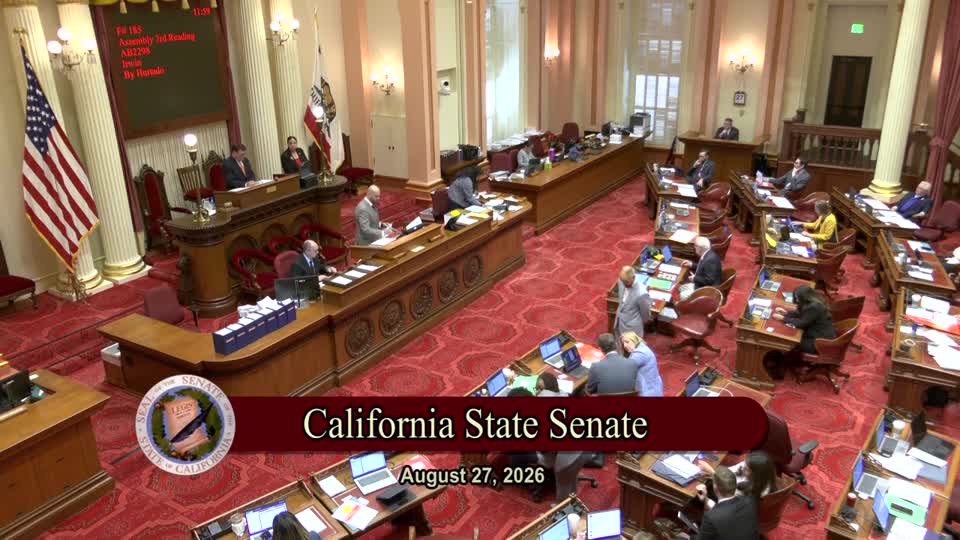 1MIN
Senate Floor
 5MIN
Senate Standing Committee on Business, Professions and Economic Development
 1MIN
Assembly Floor
 11MIN
Assembly Standing Committee on Business and Professions
Bill Author

Bill Co-Author(s):