AB 255: The Supportive-Recovery Residence Program.
- Session Year: 2025-2026
- House: Assembly
- Latest Version Date: 2025-09-11
Current Status:
Failed
(2026-01-22: Consideration of Governor's veto stricken from file.)
Introduced
In Committee
Awaiting First Chamber Vote
Passed First Chamber
In Committee
Awaiting Second Chamber Vote
Passed Second Chamber
Enacted
Existing law establishes the California Interagency Council on Homelessness to oversee the implementation of Housing First guidelines and regulations, and, among other things, identify resources, benefits, and services that can be accessed to prevent and end homelessness in California. Existing law requires a state agency or department that funds, implements, or administers a state program that provides housing or housing-related services to people experiencing homelessness or who are at risk of homelessness to revise or adopt guidelines and regulations to include enumerated Housing First policies. Existing law specifies the core components of Housing First, including services that are informed by a harm-reduction philosophy that recognizes drug and alcohol use and addiction as a part of tenants lives and where tenants are engaged in nonjudgmental communication regarding drug and alcohol use.
This bill would authorize state programs to fund supportive-recovery residences, as defined, that emphasize abstinence under these provisions as long as the state program meets specified criteria, including that at least 90% of program funds awarded to each jurisdiction is used for housing or housing-based services using a harm-reduction model.
This bill would specify requirements for applicants seeking funds under these programs and would require the state to perform periodic monitoring of select supportive-recovery residence programs to ensure that the supportive-recovery residences meet certain requirements, including that core outcomes of the supportive-recovery housing emphasize long-term housing stability and minimize returns to homelessness. The bill would also prohibit eviction on the basis of relapse, as specified. The bill would require, if a tenant is no longer interested in living in a supportive-recovery residence with an abstinence focus, is at risk of eviction, or is discharged from the program, the tenant to reside in the supportive recovery residence until the operator secures the tenant a new permanent housing placement option operated with harm-reduction principles that is also permanent housing. The bill would require supportive housing and services to support residents access to and use of medications to treat behavioral and physical health conditions, as specified, and to provide overdose prevention training and overdose reversal medication to staff and residents, as specified.
Existing law establishes the Department of Housing and Community Development and requires it to administer various programs that provide services to homeless individuals.
This bill would require the department to adopt the most recent standards approved by the National Alliance for Recovery Residences or other national standards as the minimum standard for supportive-recovery residences that receive public funds under these provisions. The bill would require the department to establish a separate process for determining if the supportive-recovery residence complies with the core components of Housing First. The bill would require the department to verify compliance with the core components of Housing First for residences seeking Housing First certification, as specified. The bill would authorize the department to charge an annual fee to verify that supportive-recovery residences comply with the core components of Housing First in an amount not to exceed the reasonable cost of administering the program, not to exceed $100, and would establish the Supportive-Recovery Residence Program Fund for collection of the fee, to be available upon appropriation by the Legislature.
Existing law establishes the California Interagency Council on Homelessness to oversee the implementation of Housing First guidelines and regulations, and, among other things, identify resources, benefits, and services that can be accessed to prevent and end homelessness in California. Existing law requires a state agency or department that funds, implements, or administers a state program that provides housing or housing-related services to people experiencing homelessness or who are at risk of homelessness to revise or adopt guidelines and regulations to include enumerated Housing First policies. Existing law specifies the core components of Housing First, including services that are informed by a harm-reduction philosophy that recognizes drug and alcohol use and addiction as a part of tenants lives and where tenants are engaged in nonjudgmental communication regarding drug and alcohol use.
This bill would authorize state programs to fund supportive-recovery residences, as defined, that emphasize abstinence under these provisions as long as the state program meets specified criteria, including that at least 90% of program funds awarded to each jurisdiction is used for housing or housing-based services using a harm-reduction model.
This bill would specify requirements for applicants seeking funds under these programs and would require the state to perform periodic monitoring of select supportive-recovery residence programs to ensure that the supportive-recovery residences meet certain requirements, including that core outcomes of the supportive-recovery housing emphasize long-term housing stability and minimize returns to homelessness. The bill would also prohibit eviction on the basis of relapse, as specified. The bill would require, if a tenant is no longer interested in living in a supportive-recovery residence with an abstinence focus, is at risk of eviction, or is discharged from the program, the tenant to reside in the supportive recovery residence until the operator secures the tenant a new permanent housing placement option operated with harm-reduction principles that is also permanent housing. The bill would require supportive housing and services to support residents access to and use of medications to treat behavioral and physical health conditions, as specified, and to provide overdose prevention training and overdose reversal medication to staff and residents, as specified.
Existing law establishes the Department of Housing and Community Development and requires it to administer various programs that provide services to homeless individuals.
This bill would require the department to adopt the most recent standards approved by the National Alliance for Recovery Residences, the Substance Abuse and Mental Health Services Administration, or other equivalent Residences or other national standards as the minimum standard for supportive-recovery residences that receive public funds under these provisions. The bill would require the department to establish a separate process for determining if the supportive-recovery residence complies with the core components of Housing First. The bill would require the department to verify compliance with the core components of Housing First for residences seeking Housing First certification, as specified. The bill would authorize the department to charge a fee for certification of a supportive-recovery residence an annual fee to verify that supportive-recovery residences comply with the core components of Housing First in an amount not to exceed the reasonable cost of administering the program, not to exceed $1,000, $100, and would establish the Supportive-Recovery Residence Program Fund for collection of the fee, to be available upon appropriation by the Legislature.
Existing law establishes the California Interagency Council on Homelessness to oversee the implementation of Housing First guidelines and regulations, and, among other things, identify resources, benefits, and services that can be accessed to prevent and end homelessness in California. Existing law requires a state agency or department that funds, implements, or administers a state program that provides housing or housing-related services to people experiencing homelessness or who are at risk of homelessness to revise or adopt guidelines and regulations to include enumerated Housing First policies. Existing law specifies the core components of Housing First, including services that are informed by a harm-reduction philosophy that recognizes drug and alcohol use and addiction as a part of tenants lives and where tenants are engaged in nonjudgmental communication regarding drug and alcohol use.
This bill would authorize state programs to fund supportive-recovery residences, as defined, that emphasize abstinence under these provisions as long as the state program meets specified criteria, including that at least 75% 90% of program funds awarded to each jurisdiction is used for housing or housing-based services using a harm-reduction model.
This bill would specify requirements for applicants seeking funds under these programs and would require the state to perform periodic monitoring of select supportive-recovery residence programs to ensure that the supportive-recovery residences meet certain requirements, including that core outcomes of the supportive-recovery housing emphasize long-term housing stability and minimize returns to homelessness. The bill would also prohibit automatic eviction on the basis of relapse, as specified. The bill would require, if a tenant is no longer interested in living in a supportive-recovery residence or is at risk of eviction, that the supportive-recovery residence provide assistance in accessing housing operated with harm-reduction principles that is also permanent housing. with an abstinence focus, is at risk of eviction, or is discharged from the program, the tenant to reside in the supportive recovery residence until the operator secures the tenant a new permanent housing placement option operated with harm-reduction principles that is also permanent housing.
Existing law requires the State Department of Health Care Services to license and regulate facilities that provide residential nonmedical services to adults who are recovering from problems related to alcohol, drug, or alcohol and drug misuse or abuse, and who need alcohol, drug, or alcohol and drug recovery treatment or detoxification services. Existing law also requires the department to certify alcohol and other drug treatment recovery services, as specified.Existing law establishes the Department of Housing and Community Development and requires it to administer various programs that provide services to homeless individuals.
This bill would require the department to adopt the most recent standards approved by the National Alliance for Recovery Residences, the Substance Abuse and Mental Health Services Administration, or other equivalent standards as the minimum standard for supportive-recovery residences that receive public funds under these provisions. The bill would require the department to establish a separate process for determining if the supportive-recovery residence complies with the core components of Housing First. The bill would authorize the department to charge a fee for certification of a supportive-recovery residence in an amount not to exceed the reasonable cost of administering the program, not to exceed $1,000, and would establish the Supportive-Recovery Residence Program Fund for collection of the fee, to be available upon appropriation by the Legislature.
Existing law establishes the California Interagency Council on Homelessness to oversee the implementation of Housing First guidelines and regulations, and, among other things, identify resources, benefits, and services that can be accessed to prevent and end homelessness in California. Existing law requires a state agency or department that funds, implements, or administers a state program that provides housing or housing-related services to people experiencing homelessness or who are at risk of homelessness to revise or adopt guidelines and regulations to include enumerated Housing First policies. Existing law specifies the core components of Housing First, including services that are informed by a harm-reduction philosophy that recognizes drug and alcohol use and addiction as a part of tenants lives and where tenants are engaged in nonjudgmental communication regarding drug and alcohol use.
This bill would authorize state programs to fund supportive-recovery residences, as defined, that emphasize abstinence under these provisions as long as the state program meets specified criteria, including that the applicant for funding provides certification from the county in which the project is located indicating that the project would not result in supportive-recovery residence units exceeding 25% of the total inventory of permanent supportive housing within the county. The bill would require a county, upon request, to determine whether the aforementioned condition is satisfied using specified data and, if satisfied, provide the certification to the applicant. By imposing additional duties on counties, this bill would impose a state-mandated local program. at least 75% of program funds awarded to each jurisdiction is used for housing or housing-based services using a harm-reduction model.
This bill would specify requirements for applicants seeking funds under these programs and would require the state to perform periodic monitoring of select supportive-recovery residence programs to ensure that the supportive-recovery residences meet certain requirements, including that core outcomes of the supportive-recovery housing emphasize long-term housing stability and minimize returns to homelessness. The bill would also prohibit automatic eviction on the basis of relapse, as specified. The bill would require, if a tenant is no longer interested in living in a supportive-recovery residence or is at risk of eviction, that the supportive-recovery residence provide assistance in accessing housing operated with harm-reduction principles that is also permanent housing.
Existing law requires the State Department of Health Care Services to license and regulate facilities that provide residential nonmedical services to adults who are recovering from problems related to alcohol, drug, or alcohol and drug misuse or abuse, and who need alcohol, drug, or alcohol and drug recovery treatment or detoxification services. Existing law also requires the department to certify alcohol and other drug treatment recovery services, as specified.
This bill would require the department to adopt the most recent standards approved by the National Alliance for Recovery Residences, the Substance Abuse and Mental Health Services Administration, or other equivalent standards as the minimum standard for supportive-recovery residences that receive public funds under these provisions. The bill would require the department to establish a separate process for determining if the supportive-recovery residence complies with the core components of Housing First. The bill would authorize the department to charge a fee for certification of a supportive-recovery residence in an amount not to exceed the reasonable cost of administering the program, not to exceed $1,000, and would establish the Supportive-Recovery Residence Program Fund for collection of the fee, to be available upon appropriation by the Legislature.
The California Constitution requires the state to reimburse local agencies and school districts for certain costs mandated by the state. Statutory provisions establish procedures for making that reimbursement.This bill would provide that no reimbursement is required by this act for a specified reason.Existing law establishes the California Interagency Council on Homelessness to oversee the implementation of Housing First guidelines and regulations, and, among other things, identify resources, benefits, and services that can be accessed to prevent and end homelessness in California. Existing law requires a state agency or department that funds, implements, or administers a state program that provides housing or housing-related services to people experiencing homelessness or who are at risk of homelessness to revise or adopt guidelines and regulations to include enumerated Housing First policies. Existing law specifies the core components of Housing First, including services that are informed by a harm-reduction philosophy that recognizes drug and alcohol use and addiction as a part of tenants lives and where tenants are engaged in nonjudgmental communication regarding drug and alcohol use.
This bill would authorize state programs to fund supportive-recovery residences, as defined, that emphasize abstinence under these provisions as long as the state program meets specified criteria, including that the applicant for funding provides certification from the county in which the project is located indicating that the project would not result in supportive-recovery residence units exceeding 25% of the total inventory of permanent supportive housing within the county. The bill would require a county, upon request, to determine whether the aforementioned condition is satisfied using specified data and, if satisfied, provide the certification to the applicant. By imposing additional duties on counties, this bill would impose a state-mandated local program.
This bill would specify requirements for applicants seeking funds under these programs and would require the state to perform periodic monitoring of select supportive-recovery residence programs to ensure that the supportive-recovery residences meet certain requirements, including that core outcomes of the supportive-recovery housing emphasize long-term housing stability and minimize returns to homelessness. The bill would also prohibit eviction on the basis of relapse, as specified. The bill would require, if a tenant is no longer interested in living in a supportive-recovery residence or is at risk of eviction, that the supportive-recovery residence provide assistance in accessing housing operated with harm-reduction principles that is also permanent housing.
Existing law requires the State Department of Health Care Services to license and regulate facilities that provide residential nonmedical services to adults who are recovering from problems related to alcohol, drug, or alcohol and drug misuse or abuse, and who need alcohol, drug, or alcohol and drug recovery treatment or detoxification services. Existing law also requires the department to certify alcohol and other drug treatment recovery services, as specified.
This bill would require the department to adopt the most recent standards approved by the National Alliance for Recovery Residences, the Substance Abuse and Mental Health Services Administration, or other equivalent standards as the minimum standard for supportive-recovery residences that receive public funds under these provisions. The bill would require the department to establish a separate process for determining if the supportive-recovery residence complies with the core components of Housing First. The bill would authorize the department to charge a fee for certification of a supportive-recovery residence in an amount not to exceed the reasonable cost of administering the program, not to exceed $1,000, and would establish the Supportive-Recovery Residence Program Fund for collection of the fee, to be available upon appropriation by the Legislature.
The California Constitution requires the state to reimburse local agencies and school districts for certain costs mandated by the state. Statutory provisions establish procedures for making that reimbursement.
This bill would provide that no reimbursement is required by this act for a specified reason.
The Legislature finds and declares all of the following:
(a)Substance use can precipitate homelessness and homelessness worsens substance use.
(b)California has the largest homeless population in the United States at 187,084 individuals as of 2024.
(c)Overdose deaths among homeless Californians from drugs and alcohol surged 488 percent between 2010 and 2020.
(d)Approximately 46 percent of homeless Californians report substance use as currently leading to health, legal, social, or financial problems.
(e)The United States Department of Housing and Urban Developments Recovery Housing Policy Brief was developed to provide clear guidance regarding the expected and effective operation of recovery housing programs, defined as housing in an abstinence-focused and peer-supported community for people recovering from substance use issues.
(f)Recovery housing programs that operated in a manner consistent with the United States Department of Housing and Urban Developments Recovery Housing Policy Brief can provide a high degree of quality and positive outcomes for program participants, fulfill a unique and specific role within a communitys homelessness services and behavioral health care systems, help provide meaningful choice in housing settings for people with substance use disorders, and should be a component of any continuum of care that needs this type of resource to prevent and end homelessness in its community.
SEC. 2.Division 10.95 (commencing with Section 11999.45) is added to the Health and Safety Code, to read:10.95.The Supportive-Recovery Residence Program11999.45.For the purposes of this division, the following definitions shall apply:
(a)Department means the Department of Housing and Community Development.
(b)Housing first model means housing that satisfies the core components of Housing First pursuant to Section 8255 of the Welfare and Institutions Code.
(c)Supportive-recovery residence means housing in a residence that serves individuals experiencing, or who are at risk of experiencing, homelessness and who have substance use disorders and that does all of the following:
(1)Satisfies the core components of Housing First pursuant to Section 8255 of the Welfare and Institutions Code.
(2)Uses substance-use-specific, peer support, and physical design features supporting individuals and families on a path to recovery from substance use disorders.
(3)Emphasizes abstinence.
(4)Offers tenants permanent housing only.
11999.50.(a)The department shall adopt the most recent standards approved by the National Alliance for Recovery Residences (NARR) or other broadly recognized national standards as the minimum standard for supportive-recovery residences (SRR) that receive public funding under this division.
(b)An SRR that is certified by an organization currently recognized as an affiliate of NARR and has adopted the standards approved by NARR, including a requirement that a federally approved opioid overdose reversal medication be readily available in case of an onsite opioid overdose emergency, may be presumed to have met the minimum best practices operating requirement adopted by the department.
(c)The department shall establish a separate process for determining if the SRR complies with the core components of Housing First pursuant to subdivision (b) of Section 8255 of the Welfare and Institutions Code.
(d)The department shall verify that the NARR affiliate ensures compliance with subdivision (c) for residences seeking Housing First certification by the NARR affiliate for the purposes of this section.
(e)The department may charge the NARR affiliate an annual fee for verifying the SRRs meet the requirements of subdivision (c) in an amount not to exceed the reasonable cost of administering the program, not to exceed one hundred dollars ($100) per unit approved as Housing First-certified.
(f)The Supportive-Recovery Residence Program Fund is hereby established in the State Treasury. All fees collected in accordance with this division shall be deposited in the fund. The moneys in the fund shall be available upon appropriation by the Legislature for the purposes of supporting the certification activities of the department.
(g)This division shall not prohibit a county contracting authority from requiring quality and performance standards that are similar to, or that exceed, the standards described in this division, when contracting for recovery residence services.
(h)A certifying organization that provides recognition, registration, or certification for supportive-recovery residences may enter into a memorandum of understanding with a county for the purpose of determining if the countys requirements meet or exceed its minimum requirements. A memorandum of understanding may include the granting of reciprocity based upon the requirements of the county contract.
SEC. 3.Section 8255 of the Welfare and Institutions Code is amended to read:8255.For purposes of this chapter:
(a)Council means the California Interagency Council on Homelessness, formerly known as the Homeless Coordinating and Financing Council established pursuant to Section 8257.
(b)Core components of Housing First means all of the following:
(1)Tenant screening and selection practices that promote accepting applicants regardless of their sobriety or use of substances, completion of treatment, or participation in services.
(2)Applicants are not rejected on the basis of poor credit or financial history, poor or lack of rental history, criminal convictions unrelated to tenancy, or behaviors that indicate a lack of housing readiness.
(3)Acceptance of referrals directly from shelters, street outreach, drop-in centers, and other parts of crisis response systems frequented by vulnerable people experiencing homelessness.
(4)Supportive services that emphasize engagement and problem solving over therapeutic goals and service plans that are highly tenant-driven without predetermined goals.
(5)Participation in services or program compliance is not a condition of permanent housing tenancy.
(6)Tenants have a lease and all the rights and responsibilities of tenancy, as outlined in the Civil, Health and Safety, and Government Codes.
(7)The use of alcohol or drugs in and of itself, without other lease violations, is not a reason for eviction.
(8)In communities with coordinated assessment and entry systems, incentives for funding promote tenant selection plans for supportive housing that prioritize eligible tenants based on criteria other than first-come-first-serve, including, but not limited to, the duration or chronicity of homelessness, vulnerability to early mortality, or high utilization of crisis services. Prioritization may include triage tools, developed through local data, to identify high-cost, high-need homeless residents.
(9)Case managers and service coordinators who are trained in and actively employ evidence-based practices for client engagement, including, but not limited to, motivational interviewing and client-centered counseling.
(10)(A)Services are informed by a harm-reduction philosophy that recognizes drug and alcohol use and addiction as a part of tenants lives, where tenants are engaged in nonjudgmental communication regarding drug and alcohol use, and where tenants are offered education regarding how to avoid risky behaviors and engage in safer practices, as well as connected to evidence-based treatment if the tenant so chooses.
(B)State departments or agencies may allow programs to fund supportive-recovery residences, as defined in Section 11999.45 of the Health and Safety Code, that have been certified pursuant to Section 11999.50 of the Health and Safety Code, and use substance-use-specific, peer support, and physical design features supporting individuals and families on a path to recovery from addiction that emphasizes abstinence and promotes self-determination in the recovery process, so long as the state program meets all of the following requirements:
(i)At least 90 percent of program funds awarded to each jurisdiction from a notice of funding availability is used for housing or housing-based services using a harm-reduction model.
(ii)The state program shall require a grantee under the program, prior to awarding subgrants, to confirm that the subgrantee has achieved successful outcomes in promoting housing retention, similar to rates of housing retention as harm-reduction programs.
(iii)The state program shall require a grantee under the program, prior to awarding subgrants, to confirm that the subgrantees services support, and do not prevent or restrict, access to prescribed medications, including for mental health and substance use disorders.
(iv)The state performs periodic monitoring of select recovery housing programs to ensure that the supportive-recovery residence complies with the following:
(I)The supportive-recovery residence otherwise complies with all other components of Housing First in this section, including low barrier to entry.
(II)Participation in a program is self-initiated.
(III)Core outcomes emphasize long-term housing stability and minimize returns to homelessness.
(IV)Policies and operations ensure individual rights of privacy, dignity and respect, and freedom from coercion and restraint, as well as continuous, uninterrupted access to the housing.
(V)Holistic services and peer-based recovery supports are available and directly communicated to all program participants along with services that align with participants choice and prioritization of personal goals of sustained recovery and abstinence from substance use.
(VI)The housing abides by local and state landlord-tenant laws governing grounds for eviction.
(VII)Relapse is not cause for eviction from housing and tenants receive relapse support.
(VIII)Eviction from a supportive-recovery residence shall only occur when a tenants behavior substantially disrupts or impacts the welfare of the recovery community in which the tenant resides. A tenant may apply to reenter the housing program if expressing a renewed commitment to living in a housing setting targeted to people in recovery with an abstinence focus. Presence of a roommate or roommates shall not be a valid basis for eviction.
(IX)If a tenant is no longer interested in living in a supportive-recovery residence with an abstinence focus, is at risk of eviction, or is discharged from the program, the tenant shall reside in the supportive recovery residence until the operator secures the tenant a new permanent housing placement option operated with harm-reduction principles that is also permanent housing. If an eviction proceeding is initiated for an alleged violation of a lease provision agreement as described in subclause (VIII), the subgrantee shall submit documentation of the alleged lease violation to the local continuum of care and any other grantor.
(X)The individual or family is also offered at least one harm-reduction housing placement option and the individual or family chooses a supportive recovery residence over housing offering a harm-reduction approach. The harm-reduction housing placement option and the supportive recovery residence do not have to be available for move in at the same time.
(XI)Supportive housing and services shall support, and shall not prevent or restrict, a residents access to and use of medications prescribed for behavioral or physical health conditions. This includes, but is not limited to, medications prescribed for the treatment of mental health conditions and substance use disorders, including alcohol use disorder and opioid use disorder. Medications may include, but are not limited to, buprenorphine, methadone, and naltrexone.
(XII)Supportive housing and services shall provide overdose prevention and response training to staff and residents and shall make overdose reversal medication available and readily accessible to staff and residents on site.
(11)The project and specific apartment may include special physical features that accommodate disabilities, reduce harm, and promote health and community and independence among tenants.
(c)Homeless has the same definition as that term is defined in Section 91.5 of Title 24 of the Code of Federal Regulations.
(d)(1)Housing First means the evidence-based model that uses housing as a tool, rather than a reward, for recovery and that centers on providing or connecting homeless people to permanent housing as quickly as possible. Housing First providers offer services as needed and requested on a voluntary basis and do not make housing contingent on participation in services.
(2)(A)Housing First includes time-limited rental or services assistance, so long as the housing and service provider assists the recipient in accessing permanent housing and in securing longer term rental assistance, income assistance, or employment, and the housing otherwise meets the core components identified in this section.
(B)For time-limited, supportive services programs serving homeless youth, programs should use a positive youth development model and be culturally competent to serve unaccompanied youth under 25 years of age. Providers should work with the youth to engage in family reunification efforts, where appropriate and when in the best interest of the youth. In the event of an eviction, programs shall make every effort, which shall be documented, to link tenants to other stable, safe, and decent housing options. Exit to homelessness should be extremely rare, and only after a tenant refuses assistance with housing search, location, and move-in assistance.
(e)State programs means any programs a California state agency or department funds, implements, or administers for the purpose of providing emergency shelter, interim housing, housing, or housing-based services to people experiencing homelessness or at risk of homelessness, with the exception of federally funded programs with requirements inconsistent with this chapter.
(f)Supportive-recovery residence has the same definition as in Section 11999.45 of the Health and Safety Code.
The Legislature finds and declares all of the following:
(a)Substance use can precipitate homelessness and homelessness worsens substance use.
(b)California has the largest homeless population in the United States at 187,084 individuals as of 2024.
(c)Overdose deaths among homeless Californians from drugs and alcohol surged 488 percent between 2010 and 2020.
(d)Approximately 46 percent of homeless Californians report substance use as currently leading to health, legal, social, or financial problems.
(e)The United States Department of Housing and Urban Developments Recovery Housing Policy Brief was developed to provide clear guidance regarding the expected and effective operation of recovery housing programs, defined as housing in an abstinence-focused and peer-supported community for people recovering from substance use issues.
(f)Recovery housing programs that operated in a manner consistent with the United States Department of Housing and Urban Developments Recovery Housing Policy Brief can provide a high degree of quality and positive outcomes for program participants, fulfill a unique and specific role within a communitys homelessness services and behavioral health care systems, help provide meaningful choice in housing settings for people with substance use disorders, and should be a component of any continuum of care that needs this type of resource to prevent and end homelessness in its community.
SEC. 2.Division 10.95 (commencing with Section 11999.45) is added to the Health and Safety Code, to read:10.95.The Supportive-Recovery Residence Program11999.45.For the purposes of this division, the following definitions shall apply:
(a)Department means the Department of Housing and Community Development.
(b)Housing first model means housing that satisfies the core components of Housing First pursuant to Section 8255 of the Welfare and Institutions Code.
(c)Supportive-recovery residence means housing in a residence that serves individuals experiencing, or who are at risk of experiencing, homelessness and who have substance use disorders and that does all of the following:
(1)Satisfies the core components of Housing First pursuant to Section 8255 of the Welfare and Institutions Code.
(2)Uses substance-use-specific, peer support, and physical design features supporting individuals and families on a path to recovery from substance use disorders.
(3)Emphasizes abstinence.
(4)Offers tenants permanent housing only.
11999.50.(a)The department shall adopt the most recent standards approved by the National Alliance for Recovery Residences (NARR), the Substance Abuse and Mental Health Services Administration, or other equivalent (NARR) or other broadly recognized national standards as the minimum standard for supportive-recovery residences (SRR) that receive public funding under this division.
(b)An SRR that is certified by an organization currently recognized as an affiliate of NARR and has adopted the standards approved by NARR, including a requirement that a federally approved opioid overdose reversal medication be readily available in case of an onsite opioid overdose emergency, may be presumed to have met the minimum best practices operating requirement adopted by the department.
(c)The department shall establish a separate process for determining if the SRR complies with the core components of Housing First pursuant to subdivision (b) of Section 8255 of the Welfare and Institutions Code.
(d)The department shall verify that the NARR affiliate ensures compliance with subdivision (c) for residences seeking Housing First certification by the NARR affiliate for the purposes of this section.
(d)(e)The department may charge a fee for certification of SRRs the NARR affiliate an annual fee for verifying the SRRs meet the requirements of subdivision (c) in an amount not to exceed the reasonable cost of administering the program, not to exceed one thousand dollars ($1,000). hundred dollars ($100) per unit approved as Housing First-certified.
(e)(f)The Supportive-Recovery Residence Program Fund is hereby established in the State Treasury. All fees collected in accordance with this division shall be deposited in the fund. The moneys in the fund shall be available upon appropriation by the Legislature for the purposes of supporting the certification activities of the department.
(f)(g)This division shall not prohibit a county contracting authority from requiring quality and performance standards that are similar to, or that exceed, the standards described in this division, when contracting for recovery residence services.
(g)(h)A certifying organization that provides recognition, registration, or certification for supportive-recovery residences may enter into a memorandum of understanding with a county for the purpose of determining if the countys requirements meet or exceed its minimum requirements. A memorandum of understanding may include the granting of reciprocity based upon the requirements of the county contract.
SEC. 3.Section 8255 of the Welfare and Institutions Code is amended to read:8255.For purposes of this chapter:
(a)Council means the California Interagency Council on Homelessness, formerly known as the Homeless Coordinating and Financing Council established pursuant to Section 8257.
(b)Core components of Housing First means all of the following:
(1)Tenant screening and selection practices that promote accepting applicants regardless of their sobriety or use of substances, completion of treatment, or participation in services.
(2)Applicants are not rejected on the basis of poor credit or financial history, poor or lack of rental history, criminal convictions unrelated to tenancy, or behaviors that indicate a lack of housing readiness.
(3)Acceptance of referrals directly from shelters, street outreach, drop-in centers, and other parts of crisis response systems frequented by vulnerable people experiencing homelessness.
(4)Supportive services that emphasize engagement and problem solving over therapeutic goals and service plans that are highly tenant-driven without predetermined goals.
(5)Participation in services or program compliance is not a condition of permanent housing tenancy.
(6)Tenants have a lease and all the rights and responsibilities of tenancy, as outlined in the Civil, Health and Safety, and Government Codes.
(7)The use of alcohol or drugs in and of itself, without other lease violations, is not a reason for eviction.
(8)In communities with coordinated assessment and entry systems, incentives for funding promote tenant selection plans for supportive housing that prioritize eligible tenants based on criteria other than first-come-first-serve, including, but not limited to, the duration or chronicity of homelessness, vulnerability to early mortality, or high utilization of crisis services. Prioritization may include triage tools, developed through local data, to identify high-cost, high-need homeless residents.
(9)Case managers and service coordinators who are trained in and actively employ evidence-based practices for client engagement, including, but not limited to, motivational interviewing and client-centered counseling.
(10)(A)Services are informed by a harm-reduction philosophy that recognizes drug and alcohol use and addiction as a part of tenants lives, where tenants are engaged in nonjudgmental communication regarding drug and alcohol use, and where tenants are offered education regarding how to avoid risky behaviors and engage in safer practices, as well as connected to evidence-based treatment if the tenant so chooses.
(B)State departments or agencies may allow programs to fund supportive-recovery residences, as defined in Section 11999.45 of the Health and Safety Code, that have been certified pursuant to Section 11999.50 of the Health and Safety Code, and use substance-use-specific, peer support, and physical design features supporting individuals and families on a path to recovery from addiction that emphasizes abstinence and promotes self-determination in the recovery process, so long as the state program meets all of the following requirements:
(i)At least 90 percent of program funds awarded to each jurisdiction from a notice of funding availability is used for housing or housing-based services using a harm-reduction model.
(ii)The state program shall require a grantee under the program, prior to awarding subgrants, to confirm that the subgrantee has achieved successful outcomes in promoting housing retention, similar to rates of housing retention as harm-reduction programs.
(iii)The state program shall require a grantee under the program, prior to awarding subgrants, to confirm that the subgrantees services support, and do not prevent or restrict, access to prescribed medications, including for mental health and substance use disorders.
(iii)(iv)The state performs periodic monitoring of select recovery housing programs to ensure that the supportive-recovery residence complies with the following:
(I)The supportive-recovery residence otherwise complies with all other components of Housing First in this section, including low barrier to entry.
(II)Participation in a program is self-initiated.
(III)Core outcomes emphasize long-term housing stability and minimize returns to homelessness.
(IV)Policies and operations ensure individual rights of privacy, dignity and respect, and freedom from coercion and restraint, as well as continuous, uninterrupted access to the housing.
(V)Holistic services and peer-based recovery supports are available and directly communicated to all program participants along with services that align with participants choice and prioritization of personal goals of sustained recovery and abstinence from substance use.
(VI)The housing abides by local and state landlord-tenant laws governing grounds for eviction.
(VII)Relapse is not cause for eviction from housing and tenants receive relapse support.
(VIII)Eviction from a supportive-recovery residence shall only occur when a tenants behavior substantially disrupts or impacts the welfare of the recovery community in which the tenant resides. A tenant may apply to reenter the housing program if expressing a renewed commitment to living in a housing setting targeted to people in recovery with an abstinence focus. Presence of a roommate or roommates shall not be a valid basis for eviction.
(IX)If a tenant is no longer interested in living in a supportive-recovery residence with an abstinence focus, is at risk of eviction, or is discharged from the program, the tenant shall reside in the supportive recovery residence until the operator secures the tenant a new permanent housing placement option operated with harm-reduction principles that is also permanent housing. If an eviction proceeding is initiated for an alleged violation of a lease provision agreement as described in subclause (VIII), the subgrantee shall submit documentation of the alleged lease violation to the local continuum of care and any other grantor.
(X)The individual or family is also offered at least one harm-reduction housing placement option and the individual or family chooses a supportive recovery residence over housing offering a harm-reduction approach. The harm-reduction housing placement option and the supportive recovery residence do not have to be available for move in at the same time.
(XI)Supportive housing and services shall support, and shall not prevent or restrict, a residents access to and use of medications prescribed for behavioral or physical health conditions. This includes, but is not limited to, medications prescribed for the treatment of mental health conditions and substance use disorders, including alcohol use disorder and opioid use disorder. Medications may include, but are not limited to, buprenorphine, methadone, and naltrexone.
(XII)Supportive housing and services shall provide overdose prevention and response training to staff and residents and shall make overdose reversal medication available and readily accessible to staff and residents on site.
(11)The project and specific apartment may include special physical features that accommodate disabilities, reduce harm, and promote health and community and independence among tenants.
(c)Homeless has the same definition as that term is defined in Section 91.5 of Title 24 of the Code of Federal Regulations.
(d)(1)Housing First means the evidence-based model that uses housing as a tool, rather than a reward, for recovery and that centers on providing or connecting homeless people to permanent housing as quickly as possible. Housing First providers offer services as needed and requested on a voluntary basis and do not make housing contingent on participation in services.
(2)(A)Housing First includes time-limited rental or services assistance, so long as the housing and service provider assists the recipient in accessing permanent housing and in securing longer term rental assistance, income assistance, or employment, and the housing otherwise meets the core components identified in this section.
(B)For time-limited, supportive services programs serving homeless youth, programs should use a positive youth development model and be culturally competent to serve unaccompanied youth under 25 years of age. Providers should work with the youth to engage in family reunification efforts, where appropriate and when in the best interest of the youth. In the event of an eviction, programs shall make every effort, which shall be documented, to link tenants to other stable, safe, and decent housing options. Exit to homelessness should be extremely rare, and only after a tenant refuses assistance with housing search, location, and move-in assistance.
(e)State programs means any programs a California state agency or department funds, implements, or administers for the purpose of providing emergency shelter, interim housing, housing, or housing-based services to people experiencing homelessness or at risk of homelessness, with the exception of federally funded programs with requirements inconsistent with this chapter.
(f)Supportive-recovery residence has the same definition as in Section 11999.45 of the Health and Safety Code.
The Legislature finds and declares all of the following:
(a)Substance use can precipitate homelessness and homelessness worsens substance use.
(b)California has the largest homeless population in the United States at 187,084 individuals as of 2024.
(c)Overdose deaths among homeless Californians from drugs and alcohol surged 488 percent between 2010 and 2020.
(d)Approximately 46 percent of homeless Californians report substance use as currently leading to health, legal, social, or financial problems.
(e)The United States Department of Housing and Urban Developments Recovery Housing Policy Brief was developed to provide clear guidance regarding the expected and effective operation of recovery housing programs, defined as housing in an abstinence-focused and peer-supported community for people recovering from substance use issues.
(f)Recovery housing programs that operated in a manner consistent with the United States Department of Housing and Urban Developments Recovery Housing Policy Brief can provide a high degree of quality and positive outcomes for program participants, fulfill a unique and specific role within a communitys homelessness services and behavioral healthcare health care systems, help provide meaningful choice in housing settings for people with substance use disorders, and should be a component of any continuum of care that needs this type of resource to prevent and end homelessness in its community.
SEC. 2.Division 10.95 (commencing with Section 11999.45) is added to the Health and Safety Code, to read:10.95.The Supportive-Recovery Residence Program11999.45.For the purposes of this division, the following definitions shall apply:
(a)Department means the State Department of Health Care Services. Department of Housing and Community Development.
(b)Housing first model means housing that satisfies the core components of Housing First pursuant to Section 8255 of the Welfare and Institutions Code.
(c)Supportive-recovery residence means housing in a residence that serves individuals experiencing, or who are at risk of experiencing, homelessness and who have substance use disorders and that does all of the following:
(1)Satisfies the core components of Housing First pursuant to Section 8255 of the Welfare and Institutions Code.
(2)Uses substance-use-specific, peer support, and physical design features supporting individuals and families on a path to recovery from substance use disorders.
(3)Emphasizes abstinence.
(4)Offers tenants permanent housing only.
11999.50.(a)The department shall adopt the most recent standards approved by the National Alliance for Recovery Residences (NARR), the Substance Abuse and Mental Health Services Administration, or other equivalent standards as the minimum standard for supportive-recovery residences (SRR) that receive public funding under this chapter. division.
(b)An SRR that is certified by an organization currently recognized as an affiliate of NARR and has adopted the standards approved by NARR, including a requirement that a federally approved opioid overdose reversal medication be readily available in case of an onsite opioid overdose emergency, may be presumed to have met the minimum best practices operating requirement adopted by the department.
(c)The department shall establish a separate process for determining if the SRR complies with the core components of Housing First pursuant to subdivision (b) of Section 8255 of the Welfare and Institutions Code.
(d)The department may charge a fee for certification of SRRs in an amount not to exceed the reasonable cost of administering the program, not to exceed one thousand dollars ($1,000).
(e)The Supportive-Recovery Residence Program Fund is hereby established in the State Treasury. All fees collected in accordance with this division shall be deposited in the fund. The moneys in the fund shall be available upon appropriation by the Legislature for the purposes of supporting the certification activities of the department.
(f)This chapter division shall not prohibit a county contracting authority from requiring quality and performance standards that are similar to, or that exceed, the standards described in this chapter, division, when contracting for recovery residence services.
(g)A certifying organization that provides recognition, registration, or certification for supportive-recovery residences may enter into a memorandum of understanding with a county for the purpose of determining if the countys requirements meet or exceed its minimum requirements. A memorandum of understanding may include the granting of reciprocity based upon the requirements of the county contract.
SEC. 3.Section 8255 of the Welfare and Institutions Code is amended to read:8255.For purposes of this chapter:
(a)Council means the California Interagency Council on Homelessness, formerly known as the Homeless Coordinating and Financing Council established pursuant to Section 8257.
(b)Core components of Housing First means all of the following:
(1)Tenant screening and selection practices that promote accepting applicants regardless of their sobriety or use of substances, completion of treatment, or participation in services.
(2)Applicants are not rejected on the basis of poor credit or financial history, poor or lack of rental history, criminal convictions unrelated to tenancy, or behaviors that indicate a lack of housing readiness.
(3)Acceptance of referrals directly from shelters, street outreach, drop-in centers, and other parts of crisis response systems frequented by vulnerable people experiencing homelessness.
(4)Supportive services that emphasize engagement and problem solving over therapeutic goals and service plans that are highly tenant-driven without predetermined goals.
(5)Participation in services or program compliance is not a condition of permanent housing tenancy.
(6)Tenants have a lease and all the rights and responsibilities of tenancy, as outlined in the Civil, Health and Safety, and Government Codes.
(7)The use of alcohol or drugs in and of itself, without other lease violations, is not a reason for eviction.
(8)In communities with coordinated assessment and entry systems, incentives for funding promote tenant selection plans for supportive housing that prioritize eligible tenants based on criteria other than first-come-first-serve, including, but not limited to, the duration or chronicity of homelessness, vulnerability to early mortality, or high utilization of crisis services. Prioritization may include triage tools, developed through local data, to identify high-cost, high-need homeless residents.
(9)Case managers and service coordinators who are trained in and actively employ evidence-based practices for client engagement, including, but not limited to, motivational interviewing and client-centered counseling.
(10)(A)Services are informed by a harm-reduction philosophy that recognizes drug and alcohol use and addiction as a part of tenants lives, where tenants are engaged in nonjudgmental communication regarding drug and alcohol use, and where tenants are offered education regarding how to avoid risky behaviors and engage in safer practices, as well as connected to evidence-based treatment if the tenant so chooses.
(B)State departments or agencies may allow programs to fund supportive-recovery residences, as defined in Section 11999.45 of the Health and Safety Code, that have been certified pursuant to Section 11999.50 of the Health and Safety Code, and use substance-use-specific, peer support, and physical design features supporting individuals and families on a path to recovery from addiction that emphasizes abstinence and promotes self-determination in the recovery process, so long as the state program meets all of the following requirements:
(i)At least 75 90 percent of program funds awarded to each jurisdiction from a notice of funding availability is used for housing or housing-based services using a harm-reduction model.
(ii)The state program shall require a grantee under the program, prior to awarding subgrants, to confirm that the subgrantee has achieved successful outcomes in promoting housing retention, similar to rates of housing retention as harm-reduction programs.
(iii)The state performs periodic monitoring of select recovery housing programs to ensure that the supportive-recovery residence complies with the following:
(I)The supportive-recovery residence otherwise complies with all other components of Housing First in this section, including low barrier to entry.
(II)Participation in a program is self-initiated.
(III)Core outcomes emphasize long-term housing stability and minimize returns to homelessness.
(IV)Policies and operations ensure individual rights of privacy, dignity and respect, and freedom from coercion and restraint, as well as continuous, uninterrupted access to the housing.
(V)Holistic services and peer-based recovery supports are available and directly communicated to all program participants along with services that align with participants choice and prioritization of personal goals of sustained recovery and abstinence from substance use.
(VI)The housing abides by local and state landlord-tenant laws governing grounds for eviction.
(VII)Relapse is not an automatic cause for eviction from housing and tenants receive relapse support.
(VIII)Eviction from a supportive-recovery residence shall only occur when a tenants behavior substantially disrupts or impacts the welfare of the recovery community in which the tenant resides. A tenant may apply to reenter the housing program if expressing a renewed commitment to living in a housing setting targeted to people in recovery with an abstinence focus. Presence of a roommate or roommates shall not be a valid basis for eviction.
(IX)If a tenant is no longer interested in living in a supportive-recovery residence model or the tenant is at risk of eviction, the housing program provides assistance in accessing housing operated with harm-reduction principles that is also permanent housing. with an abstinence focus, is at risk of eviction, or is discharged from the program, the tenant shall reside in the supportive recovery residence until the operator secures the tenant a new permanent housing placement option operated with harm-reduction principles that is also permanent housing. If an eviction proceeding is initiated for an alleged violation of a lease provision agreement as described in subclause (VIII), the subgrantee shall submit documentation of the alleged lease violation to the local continuum of care and any other grantor.
(X)The individual or family is also offered at least one harm-reduction housing placement option and the individual or family chooses a supportive recovery residence over housing offering a harm-reduction approach. The harm-reduction housing placement option and the supportive recovery residence do not have to be available for move-in move in at the same time.
(11)The project and specific apartment may include special physical features that accommodate disabilities, reduce harm, and promote health and community and independence among tenants.
(c)Homeless has the same definition as that term is defined in Section 91.5 of Title 24 of the Code of Federal Regulations.
(d)(1)Housing First means the evidence-based model that uses housing as a tool, rather than a reward, for recovery and that centers on providing or connecting homeless people to permanent housing as quickly as possible. Housing First providers offer services as needed and requested on a voluntary basis and do not make housing contingent on participation in services.
(2)(A)Housing First includes time-limited rental or services assistance, so long as the housing and service provider assists the recipient in accessing permanent housing and in securing longer term rental assistance, income assistance, or employment, and the housing otherwise meets the core components identified in this section.
(B)For time-limited, supportive services programs serving homeless youth, programs should use a positive youth development model and be culturally competent to serve unaccompanied youth under 25 years of age. Providers should work with the youth to engage in family reunification efforts, where appropriate and when in the best interest of the youth. In the event of an eviction, programs shall make every effort, which shall be documented, to link tenants to other stable, safe, and decent housing options. Exit to homelessness should be extremely rare, and only after a tenant refuses assistance with housing search, location, and move-in assistance.
(e)State programs means any programs a California state agency or department funds, implements, or administers for the purpose of providing emergency shelter, interim housing, housing, or housing-based services to people experiencing homelessness or at risk of homelessness, with the exception of federally funded programs with requirements inconsistent with this chapter.
(f)Supportive-recovery residence has the same definition as in Section 11999.45 of the Health and Safety Code.
The Legislature finds and declares all of the following:
(a)Substance use can precipitate homelessness and homelessness worsens substance use.
(b)California has the largest homeless population in the United States at 187,084 individuals as of 2024.
(c)Overdose deaths among homeless Californians from drugs and alcohol surged 488 percent between 2010 and 2020.
(d)Approximately 46 percent of homeless Californians report substance use as currently leading to health, legal, social, or financial problems.
(e)The United States Department of Housing and Urban Developments Recovery Housing Policy Brief was developed to provide clear guidance regarding the expected and effective operation of recovery housing programs, defined as housing in an abstinence-focused and peer-supported community for people recovering from substance use issues.
(f)Recovery housing programs that operated in a manner consistent with the United States Department of Housing and Urban Developments Recovery Housing Policy Brief can provide a high degree of quality and positive outcomes for program participants, fulfill a unique and specific role within a communitys homelessness services and behavioral healthcare systems, help provide meaningful choice in housing settings for people with substance use disorders, and should be a component of any continuum of care that needs this type of resource to prevent and end homelessness in its community.
SECTION 1.SEC. 2.Division 10.95 (commencing with Section 11999.45) is added to the Health and Safety Code, to read:10.95.The Supportive-Recovery Residence Program11999.45.For the purposes of this division, the following definitions shall apply:
(a)Department means the State Department of Health Care Services.
(b)Housing first model means housing that satisfies the core components of Housing First pursuant to Section 8255 of the Welfare and Institutions Code.
(c)Supportive-recovery residence means housing in a residence that serves individuals experiencing, or who are at risk of experiencing, homelessness and who have substance use disorders and that does all of the following:
(1)Satisfies the core components of Housing First pursuant to Section 8255 of the Welfare and Institutions Code.
(2)Uses substance-use-specific, peer support, and physical design features supporting individuals and families on a path to recovery from substance use disorders.
(3)Emphasizes abstinence.
(4)Offers tenants permanent housing only.
11999.50.(a)The department shall adopt the most recent standards approved by the National Alliance for Recovery Residences (NARR), the Substance Abuse and Mental Health Services Administration, or other equivalent standards as the minimum standard for supportive-recovery residences (SRR) that receive public funding under this chapter.
(b)An SRR that is certified by an organization currently recognized as an affiliate of NARR and has adopted the standards approved by NARR, including a requirement that a federally approved opioid overdose reversal medication be readily available in case of an onsite opioid overdose emergency, may be presumed to have met the minimum best practices operating requirement adopted by the department.
(c)The department shall establish a separate process for determining if the SRR complies with the core components of Housing First pursuant to subdivision (b) of Section 8255 of the Welfare and Institutions Code.
(d)The department may charge a fee for certification of SRRs in an amount not to exceed the reasonable cost of administering the program, not to exceed one thousand dollars ($1,000).
(e)The Supportive-Recovery Residence Program Fund is hereby established in the State Treasury. All fees collected in accordance with this division shall be deposited in the fund. The moneys in the fund shall be available upon appropriation by the Legislature for the purposes of supporting the certification activities of the department.
(f)This chapter shall not prohibit a county contracting authority from requiring quality and performance standards that are similar to, or that exceed, the standards described in this chapter, when contracting for recovery residence services.
(g)A certifying organization that provides recognition, registration, or certification for supportive-recovery residences may enter into a memorandum of understanding with a county for the purpose of determining if the countys requirements meet or exceed its minimum requirements. A memorandum of understanding may include the granting of reciprocity based upon the requirements of the county contract.
SEC. 2.SEC. 3.Section 8255 of the Welfare and Institutions Code is amended to read:8255.For purposes of this chapter:
(a)Council means the California Interagency Council on Homelessness, formerly known as the Homeless Coordinating and Financing Council established pursuant to Section 8257.
(b)Core components of Housing First means all of the following:
(1)Tenant screening and selection practices that promote accepting applicants regardless of their sobriety or use of substances, completion of treatment, or participation in services.
(2)Applicants are not rejected on the basis of poor credit or financial history, poor or lack of rental history, criminal convictions unrelated to tenancy, or behaviors that indicate a lack of housing readiness.
(3)Acceptance of referrals directly from shelters, street outreach, drop-in centers, and other parts of crisis response systems frequented by vulnerable people experiencing homelessness.
(4)Supportive services that emphasize engagement and problem solving over therapeutic goals and service plans that are highly tenant-driven without predetermined goals.
(5)Participation in services or program compliance is not a condition of permanent housing tenancy.
(6)Tenants have a lease and all the rights and responsibilities of tenancy, as outlined in the Civil, Health and Safety, and Government Codes.
(7)The use of alcohol or drugs in and of itself, without other lease violations, is not a reason for eviction.
(8)In communities with coordinated assessment and entry systems, incentives for funding promote tenant selection plans for supportive housing that prioritize eligible tenants based on criteria other than first-come-first-serve, including, but not limited to, the duration or chronicity of homelessness, vulnerability to early mortality, or high utilization of crisis services. Prioritization may include triage tools, developed through local data, to identify high-cost, high-need homeless residents.
(9)Case managers and service coordinators who are trained in and actively employ evidence-based practices for client engagement, including, but not limited to, motivational interviewing and client-centered counseling.
(10)(A)Services are informed by a harm-reduction philosophy that recognizes drug and alcohol use and addiction as a part of tenants lives, where tenants are engaged in nonjudgmental communication regarding drug and alcohol use, and where tenants are offered education regarding how to avoid risky behaviors and engage in safer practices, as well as connected to evidence-based treatment if the tenant so chooses.
(B)State departments or agencies may allow programs to fund supportive-recovery residences, as defined in Section 11999.45 of the Health and Safety Code, that have been certified pursuant to Section 11999.50 of the Health and Safety Code, and use substance-use-specific, peer support, and physical design features supporting individuals and families on a path to recovery from addiction that emphasizes abstinence and promotes self-determination in the recovery process, so long as the state program meets all of the following requirements:
(i)The applicant for funding provides certification from the county in which the project is located indicating that the project would not result in supportive-recovery residence units exceeding 25 percent of the total inventory of permanent supportive housing within the county. Upon request, a county shall do both of the following:(I)Using data from the most recent United States Department of Housing and Urban Development housing inventory count, determine whether the project would result in supportive-recovery residence units exceeding 25 percent of the total inventory of permanent supportive housing within the county.(II)If the project would not result in supportive-recovery residence units exceeding 25 percent of the total inventory of permanent supportive housing within the county, provide to the applicant the certification required by this clause.(i)At least 75 percent of program funds awarded to each jurisdiction from a notice of funding availability is used for housing or housing-based services using a harm-reduction model.
(ii)The state program shall require a grantee under the program, prior to awarding subgrants, to confirm that the subgrantee has achieved successful outcomes in promoting housing retention, similar to rates of housing retention as harm-reduction programs.
(iii)The state performs periodic monitoring of select recovery housing programs to ensure that the supportive-recovery residence complies with the following:
(I)The supportive-recovery residence otherwise complies with all other components of Housing First in this section, including low barrier to entry.
(II)Participation in a program is self-initiated.
(III)Core outcomes emphasize long-term housing stability and minimize returns to homelessness.
(IV)Policies and operations ensure individual rights of privacy, dignity and respect, and freedom from coercion and restraint, as well as continuous, uninterrupted access to the housing.
(V)Holistic services and peer-based recovery supports are available and directly communicated to all program participants along with services that align with participants choice and prioritization of personal goals of sustained recovery and abstinence from substance use.
(VI)The housing abides by local and state landlord-tenant laws governing grounds for eviction.
(VII)Relapse is not a an automatic cause for eviction from housing and tenants receive relapse support.
(VIII)Eviction from a supportive-recovery residence shall only occur when a tenants behavior substantially disrupts or impacts the welfare of the recovery community in which the tenant resides. A tenant may apply to reenter the housing program if expressing a renewed commitment to living in a housing setting targeted to people in recovery with an abstinence focus. Presence of a roommate or roommates shall not be a valid basis for eviction.
(IX)If a tenant is no longer interested in living in a supportive-recovery residence model or the tenant is at risk of eviction, the housing program provides assistance in accessing housing operated with harm-reduction principles that is also permanent housing. If an eviction proceeding is initiated for an alleged violation of a lease provision agreement as described in subclause (VIII), the subgrantee shall submit documentation of the alleged lease violation to the local continuum of care and any other grantor.
(X)The individual or family is also offered at least one harm-reduction housing placement option and the individual or family chooses a supportive recovery residence over housing offering a harm-reduction approach. The harm-reduction housing placement option and the supportive recovery residence do not have to be available for move-in at the same time.
(11)The project and specific apartment may include special physical features that accommodate disabilities, reduce harm, and promote health and community and independence among tenants.
(c)Homeless has the same definition as that term is defined in Section 91.5 of Title 24 of the Code of Federal Regulations.
(d)(1)Housing First means the evidence-based model that uses housing as a tool, rather than a reward, for recovery and that centers on providing or connecting homeless people to permanent housing as quickly as possible. Housing First providers offer services as needed and requested on a voluntary basis and do not make housing contingent on participation in services.
(2)(A)Housing First includes time-limited rental or services assistance, so long as the housing and service provider assists the recipient in accessing permanent housing and in securing longer term rental assistance, income assistance, or employment, and the housing otherwise meets the core components identified in this section.
(B)For time-limited, supportive services programs serving homeless youth, programs should use a positive youth development model and be culturally competent to serve unaccompanied youth under 25 years of age. Providers should work with the youth to engage in family reunification efforts, where appropriate and when in the best interest of the youth. In the event of an eviction, programs shall make every effort, which shall be documented, to link tenants to other stable, safe, and decent housing options. Exit to homelessness should be extremely rare, and only after a tenant refuses assistance with housing search, location, and move-in assistance.
(e)State programs means any programs a California state agency or department funds, implements, or administers for the purpose of providing emergency shelter, interim housing, housing, or housing-based services to people experiencing homelessness or at risk of homelessness, with the exception of federally funded programs with requirements inconsistent with this chapter.
(f)Supportive-recovery residence has the same definition as in Section 11999.45 of the Health and Safety Code.
SEC. 3.To the extent that this act has an overall effect of increasing the costs already borne by a local agency for programs or levels of service mandated by the 2011 Realignment Legislation within the meaning of Section 36 of Article XIII of the California Constitution, it shall apply to local agencies only to the extent that the state provides annual funding for the cost increase. Any new program or higher level of service provided by a local agency pursuant to this act above the level for which funding has been provided shall not require a subvention of funds by the state or otherwise be subject to Section 6 of Article XIIIB of the California Constitution.For the purposes of this division, the following definitions shall apply:
(a)Department means the State Department of Health Care Services.
(b)Housing first model means housing that satisfies the core components of Housing First pursuant to Section 8255 of the Welfare and Institutions Code.
(c)Supportive-recovery residence means housing in a residence that serves individuals experiencing, or who are at risk of experiencing, homelessness and who have substance use disorders and that does all of the following:
(1)Satisfies the core components of Housing First pursuant to Section 8255 of the Welfare and Institutions Code.
(2)Uses substance-use-specific, peer support, and physical design features supporting individuals and families on a path to recovery from substance use disorders.
(3)Emphasizes abstinence.
(4)Offers tenants permanent housing only.
11999.50.(a)The department shall adopt the most recent standards approved by the National Alliance for Recovery Residences (NARR), the Substance Abuse and Mental Health Services Administration, or other equivalent standards as the minimum standard for supportive-recovery residences (SRR) that receive public funding under this chapter.
(b)An SRR that is certified by an organization currently recognized as an affiliate of NARR and has adopted the standards approved by NARR, including a requirement that a federally approved opioid overdose reversal medication be readily available in case of an onsite opioid overdose emergency, may be presumed to have met the minimum best practices operating requirement adopted by the department.
(c)The department shall establish a separate process for determining if the SRR complies with the core components of Housing First pursuant to subdivision (b) of Section 8255 of the Welfare and Institutions Code.
(d)The department may charge a fee for certification of SRRs in an amount not to exceed the reasonable cost of administering the program, not to exceed one thousand dollars ($1,000).
(e)The Supportive-Recovery Residence Program Fund is hereby established in the State Treasury. All fees collected in accordance with this division shall be deposited in the fund. The moneys in the fund shall be available upon appropriation by the Legislature for the purposes of supporting the certification activities of the department.
(f)This chapter shall not prohibit a county contracting authority from requiring quality and performance standards that are similar to, or that exceed, the standards described in this chapter, when contracting for recovery residence services.
(g)A certifying organization that provides recognition, registration, or certification for supportive-recovery residences may enter into a memorandum of understanding with a county for the purpose of determining if the countys requirements meet or exceed its minimum requirements. A memorandum of understanding may include the granting of reciprocity based upon the requirements of the county contract.
SEC. 2.Section 8255 of the Welfare and Institutions Code is amended to read:8255.For purposes of this chapter:
(a)Council means the California Interagency Council on Homelessness, formerly known as the Homeless Coordinating and Financing Council established pursuant to Section 8257.
(b)Core components of Housing First means all of the following:
(1)Tenant screening and selection practices that promote accepting applicants regardless of their sobriety or use of substances, completion of treatment, or participation in services.
(2)Applicants are not rejected on the basis of poor credit or financial history, poor or lack of rental history, criminal convictions unrelated to tenancy, or behaviors that indicate a lack of housing readiness.
(3)Acceptance of referrals directly from shelters, street outreach, drop-in centers, and other parts of crisis response systems frequented by vulnerable people experiencing homelessness.
(4)Supportive services that emphasize engagement and problem solving over therapeutic goals and service plans that are highly tenant-driven without predetermined goals.
(5)Participation in services or program compliance is not a condition of permanent housing tenancy.
(6)Tenants have a lease and all the rights and responsibilities of tenancy, as outlined in Californias the Civil, Health and Safety, and Government codes. Codes.
(7)The use of alcohol or drugs in and of itself, without other lease violations, is not a reason for eviction.
(8)In communities with coordinated assessment and entry systems, incentives for funding promote tenant selection plans for supportive housing that prioritize eligible tenants based on criteria other than first-come-first-serve, including, but not limited to, the duration or chronicity of homelessness, vulnerability to early mortality, or high utilization of crisis services. Prioritization may include triage tools, developed through local data, to identify high-cost, high-need homeless residents.
(9)Case managers and service coordinators who are trained in and actively employ evidence-based practices for client engagement, including, but not limited to, motivational interviewing and client-centered counseling.
(10)(A)Services are informed by a harm-reduction philosophy that recognizes drug and alcohol use and addiction as a part of tenants lives, where tenants are engaged in nonjudgmental communication regarding drug and alcohol use, and where tenants are offered education regarding how to avoid risky behaviors and engage in safer practices, as well as connected to evidence-based treatment if the tenant so chooses.
(B)State departments or agencies may allow programs to fund supportive-recovery residences, as defined in Section 11999.45 of the Health and Safety Code, that have been certified pursuant to Section 11999.50 of the Health and Safety Code, and use substance-use-specific, peer support, and physical design features supporting individuals and families on a path to recovery from addiction that emphasizes abstinence and promotes self-determination in the recovery process, so long as the state program meets all of the following requirements:
(i)The applicant for funding provides certification from the county in which the project is located indicating that the project would not result in supportive-recovery residence units exceeding 25 percent of the total inventory of permanent supportive housing within the county. Upon request, a county shall do both of the following:
(I)Using data from the most recent United States Department of Housing and Urban Development housing inventory count, determine whether the project would result in supportive-recovery residence units exceeding 25 percent of the total inventory of permanent supportive housing within the county.
(II)If the project would not result in supportive-recovery residence units exceeding 25 percent of the total inventory of permanent supportive housing within the county, provide to the applicant the certification required by this clause.
(ii)The state program shall require a grantee under the program, prior to awarding subgrants, to confirm that the subgrantee has achieved successful outcomes in promoting housing retention, similar to rates of housing retention as harm-reduction programs.
(iii)The state performs periodic monitoring of select recovery housing programs to ensure that the supportive-recovery residence complies with the following:
(I)The supportive-recovery residence otherwise complies with all other components of Housing First in this section, including low barrier to entry.
(II)Participation in a program is self-initiated.
(III)Core outcomes emphasize long-term housing stability and minimize returns to homelessness.
(IV)Policies and operations ensure individual rights of privacy, dignity and respect, and freedom from coercion and restraint, as well as continuous, uninterrupted access to the housing.
(V)Holistic services and peer-based recovery supports are available and directly communicated to all program participants along with services that align with participants choice and prioritization of personal goals of sustained recovery and abstinence from substance use.
(VI)The housing abides by local and state landlord-tenant laws governing grounds for eviction.
(VII)Relapse is not a cause for eviction from housing and tenants receive relapse support.
(VIII)Eviction from a supportive-recovery residence shall only occur when a tenants behavior substantially disrupts or impacts the welfare of the recovery community in which the tenant resides. A tenant may apply to reenter the housing program if expressing a renewed commitment to living in a housing setting targeted to people in recovery with an abstinence focus. Presence of a roommate or roommates shall not be a valid basis for eviction.
(IX)If a tenant is no longer interested in living in a supportive-recovery residence model or the tenant is at risk of eviction, the housing program provides assistance in accessing housing operated with harm-reduction principles that is also permanent housing. If an eviction proceeding is initiated for an alleged violation of a lease provision agreement as described in subclause (VIII), the subgrantee shall submit documentation of the alleged lease violation to the local continuum of care and any other grantor.
(11)The project and specific apartment may include special physical features that accommodate disabilities, reduce harm, and promote health and community and independence among tenants.
(c)Homeless has the same definition as that term is defined in Section 91.5 of Title 24 of the Code of Federal Regulations.
(d)(1)Housing First means the evidence-based model that uses housing as a tool, rather than a reward, for recovery and that centers on providing or connecting homeless people to permanent housing as quickly as possible. Housing First providers offer services as needed and requested on a voluntary basis and that do not make housing contingent on participation in services.
(2)(A)Housing First includes time-limited rental or services assistance, so long as the housing and service provider assists the recipient in accessing permanent housing and in securing longer term rental assistance, income assistance, or employment. employment, and the housing otherwise meets the core components identified in this section.
(B)For time-limited, supportive services programs serving homeless youth, programs should use a positive youth development model and be culturally competent to serve unaccompanied youth under 25 years of age. Providers should work with the youth to engage in family reunification efforts, where appropriate and when in the best interest of the youth. In the event of an eviction, programs shall make every effort, which shall be documented, to link tenants to other stable, safe, and decent housing options. Exit to homelessness should be extremely rare, and only after a tenant refuses assistance with housing search, location, and move-in assistance.
(e)State programs means any programs a California state agency or department funds, implements, or administers for the purpose of providing emergency shelter, interim housing, housing, or housing-based services to people experiencing homelessness or at risk of homelessness, with the exception of federally funded programs with requirements inconsistent with this chapter.
(f)Supportive-recovery residence has the same definition as in Section 11999.45 of the Health and Safety Code.
SEC. 3.To the extent that this act has an overall effect of increasing the costs already borne by a local agency for programs or levels of service mandated by the 2011 Realignment Legislation within the meaning of Section 36 of Article XIII of the California Constitution, it shall apply to local agencies only to the extent that the state provides annual funding for the cost increase. Any new program or higher level of service provided by a local agency pursuant to this act above the level for which funding has been provided shall not require a subvention of funds by the state or otherwise be subject to Section 6 of Article XIIIB of the California Constitution.
|
Date
|
Status
|
|---|---|
| Jan 22, 2026 | Consideration of Governor's veto stricken from file. |
| Oct 1, 2025 | Consideration of Governor's veto pending. |
| Oct 1, 2025 | Vetoed by Governor. |
| Sep 16, 2025 | Enrolled and presented to the Governor at 2 p.m. |
| Sep 9, 2025 | Senate amendments concurred in. To Engrossing and Enrolling. (Ayes 79. Noes 0. Page 3101.). |
| Sep 8, 2025 | In Assembly. Concurrence in Senate amendments pending. |
| Sep 8, 2025 | Read third time. Passed. Ordered to the Assembly. (Ayes 39. Noes 0. Page 2600.). |
| Sep 2, 2025 | Read second time. Ordered to third reading. |
| Aug 29, 2025 | Read second time and amended. Ordered returned to second reading. |
| Aug 29, 2025 | From committee: Amend, and do pass as amended. (Ayes 7. Noes 0.) (August 29). |
| Jul 14, 2025 | In committee: Referred to APPR. suspense file. |
| Jun 27, 2025 | Re-referred to Com. on APPR. |
| Jun 27, 2025 | Withdrawn from committee. |
| Jun 26, 2025 | Read second time and amended. Re-referred to Com. on HEALTH. |
| Jun 25, 2025 | From committee: Amend, and do pass as amended and re-refer to Com. on HEALTH. (Ayes 11. Noes 0.) (June 24). |
| Jun 18, 2025 | Referred to Coms. on HOUSING and HEALTH. |
| Jun 4, 2025 | In Senate. Read first time. To Com. on RLS. for assignment. |
| Jun 3, 2025 | Read third time. Passed. Ordered to the Senate. (Ayes 79. Noes 0. Page 1967.) |
| May 27, 2025 | Read second time. Ordered to third reading. |
| May 23, 2025 | From committee: Do pass. (Ayes 13. Noes 0.) (May 23). |
| May 14, 2025 | In committee: Set, first hearing. Referred to suspense file. |
| Apr 30, 2025 | From committee: Do pass and re-refer to Com. on APPR. (Ayes 15. Noes 0.) (April 29). Re-referred to Com. on APPR. |
| Apr 28, 2025 | From committee: Do pass and re-refer to Com. on HEALTH. (Ayes 12. Noes 0.) (April 24). Re-referred to Com. on HEALTH. |
| Apr 22, 2025 | Re-referred to Com. on H. & C.D. |
| Apr 21, 2025 | From committee chair, with author's amendments: Amend, and re-refer to Com. on H. & C.D. Read second time and amended. |
| Apr 21, 2025 | (Pending re-refer to Com. on HEALTH) |
| Apr 21, 2025 | Assembly Rule 56 suspended. (Page 1163.) |
| Apr 7, 2025 | In committee: Hearing postponed by committee. |
| Feb 10, 2025 | Referred to Coms. on H. & C.D. and Health. |
| Jan 17, 2025 | From printer. May be heard in committee February 16. |
| Jan 16, 2025 | Read first time. To print. |
|
Date
|
Description
|
Location
|
Votes
|
|
|---|---|---|---|---|
| Sep 9, 2025 | AB 255 Haney Concurrence in Senate Amendments | Assembly Floor |
Passed |
|
| Sep 8, 2025 | Assembly 3rd Reading AB255 Haney et al. By Caballero | Senate Floor |
Passed |
|
| Aug 29, 2025 | Do pass as amended | Senate Standing Committee on Appropriations |
Passed |
|
| Jul 14, 2025 | Placed on suspense file | Senate Standing Committee on Appropriations |
Passed |
|
| Jun 24, 2025 | Do pass as amended, but first amend, and re-refer to the Committee on [Health] | Senate Standing Committee on Housing |
Passed |
|
| Jun 3, 2025 | AB 255 Haney Assembly Third Reading | Assembly Floor |
Passed |
|
| May 23, 2025 | Do pass. | Assembly Standing Committee on Appropriations |
Passed |
|
| Apr 29, 2025 | Do pass and be re-referred to the Committee on [Appropriations] | Assembly Standing Committee on Health |
Passed |
|
| Apr 24, 2025 | Do pass and be re-referred to the Committee on [Health] | Assembly Standing Committee on Housing and Community Development |
Passed |
This list shows positions taken on this bill by organizations on the date displayed, which is linked to the original source.
Positions by individuals are not included.
|
Organization
|
Position
|
Date
|
|---|---|---|
| Advocates for Reasonable Treatment | ** Against | |
| Bay Area Council | ** Support | |
| California Big City Mayors Coalition | ** Support | |
| California Catholic Conference | ** Support | |
| City and County of San Francisco (Co-source) | ** Support | |
| Code Tenderloin | ** Support | |
| County Behavioral Health Directors Association | ** Support | |
| County of Santa Clara | ** Against | |
| Gensler | ** Support | |
| Golden Gate Restaurant Association | ** Support | |
| LeadingAge California | ** Support | |
| Mayor Matt Mahan, City of San Jose | ** Support | |
| Mid Market Community Benefit District | ** Support | |
| North Bay Leadership Council | ** Support | |
| On Lok Senior Health Services | ** Support | |
| San Francisco Board of Supervisors | ** Support | |
| san francisco marin medical society | ** Support | |
| San Francisco Mayor Daniel Lurie | ** Support | |
| Tenderloin Housing Clinic | ** Support | |
| The Salvation Army | ** Support | |
| Union Rescue Mission | ** Support | |
| Union Square Alliance | ** Support | |
| United Playaz | ** Support |
GOVERNOR'S VETO
GV Bill Id:AB 255
Author:(Haney)
As Enrolled Ver:September 11, 2025
2/3 vote
SUMMARY
Creates a process for abstinence-based housing for people experiencing homelessness to comply with the Core Components of Housing First and receive up to 10% state funding to local jurisdictions for homelessness.
- Requires the Department of Housing and Community Development (HCD) rather than the
Department of Health Care Services (DHCS) to verify that the NARR affiliate certifying SRRs ensures compliance with the core components of Housing First, as specified.
- Authorize HCD to charge a National Alliance for Recovery Residences (NARR) affiliate an annual fee for verifying that SRRs comply with the core components of Housing First in an amount not to exceed the reasonable cost of administering the program, up to $100 per unit approved as Housing First-certified.
- Require a grantee under the state program, prior to awarding subgrants, to confirm that the grantee's services support, and do not prevent or restrict, access to prescribed medications, including for mental health and substance abuse disorders.
- Require supportive housing and services to support a resident's access to and use of medications prescribed for behavioral or physical health conditions, as specified.
- Require supporting housing and services to provide overdose prevention and response training to staff and residents, and to make overdose reversal medication available and readily accessible to staff and residents on site.
Governor's Veto Message
I am returning Assembly Bill 255 without my signature.
This bill would create a new category of "supportive recovery residences," allow up to 10 percent of state homelessness funds to support them, and set up a new certification and oversight system.
Recovery-focused housing is an essential part of a comprehensive homelessness response, and California recognizes the value these programs provide individuals seeking support and stability. Current law already permits local jurisdictions to receive funding within the Housing First framework, and recent guidance allows support for recovery housing without creating a duplicative and costly new statutory category. Establishing a separate certification and oversight process wrongly suggests incompatibility with Housing First, while imposing fees that would not cover implementation costs.
California remains committed to advancing recovery housing within Housing First. I encourage the author and stakeholders to continue working with my Administration to strengthen these options in ways that complement, rather than complicate, the state's approach. Any broader programmatic changes, if warranted, should be considered holistically through the annual budget process.
COMMENTS
Housing First: Housing First is an evidence-based model that uses housing as a tool, rather than a reward, for recovery and that centers on connecting people experiencing homelessness to permanent housing as quickly as possible. Housing First is not housing only – people are offered services including mental health support, job training, and substance use treatment that are essential for maintaining long-term stability and preventing returns to homelessness. These supportive services are offered to support people with housing stability and individual well-being, but participation is not required as services have been found to be more effective when a person chooses to engage. Housing First is a bipartisan, evidence-based approach that was first adopted as federal policy during the George W. Bush Administration. Various studies support the efficacy of Housing First as a policy that ends homelessness. Evidence from a systematic review of 26 studies indicates that Housing First programs decreased homelessness by 88% and improved housing stability by 41%, compared to programs that require treatment first as a condition of housing. Clients in stable housing experienced better quality of life and showed reduced hospitalization and emergency department use. Three major studies of the Pathways to Housing program – one of the first Housing First programs in the U.S. – found that Housing First programs were more successful in reducing homelessness than abstinence-based programs. Seventy-nine percent of participants remained stably housed at the end of six months in Housing First programs, compared to 27% in the control group. After two years, Housing First participants spent almost no time experiencing homelessness, while participants in the city's residential treatment program spent on average 25% of their time experiencing homelessness. Participants in the Housing First model obtained housing earlier, remained stably housed after 24 months, and reported higher perceived choice than participants in abstinence-based programs. After five years, 88% of Pathways to Housing participants remained housed, compared to only 47% of the residents in the control group. In 2016, The Denver Supportive Housing Social Impact Bond Initiative (Denver SIB), found that people who had experienced long-term homelessness, who struggled with mental health and substance use and who received supportive housing coupled with Housing First over treatment first spent significantly more time in housing. Most participants stayed housed over the long term with 86% remaining housed for over one year, 81% for two years, and 77% for three years. Denver SIB also demonstrated that stable, supportive housing can decrease police interactions and arrests and disrupt the homelessness-jail cycle. Denver SIB participants experienced a 34% reduction in police contacts, 40% reduction in arrests, 30% reduction in unique jail stays, and a 27% reduction in total jail days.
The High Cost of Housing: The high cost of housing is the cause of homelessness in California. Other states with higher rates of overdose but lower costs of housing report much lower rates of homelessness. West Virginia leads overdose deaths per capita but has one of the lowest homelessness rates in the country. A study by the National Low Income Housing Coalition found that West Virginia has 50 affordable and available rental homes for every 100 extremely-low-income households, more than double the number that California has. A family in West Virginia can afford a two-bedroom rental on less than $17 an hour – the second-lowest figure in the nation. In California a family would need more than $40 per hour to be able to afford an average two-bedroom rental.
Recovery Housing: Under existing law, "recovery housing" or "sober living homes" are residential dwellings that provide cooperative living in a residential dwelling that support an individual's personal recovery from a substance use disorder. These homes are not licensed by DHCS or any other state or local government. This bill seeks to create a new category of "supportive recovery residence" (SRR) for people who are homeless or at risk of experiencing homelessness who have mental health or substance abuse issues. Recovery housing, as currently defined under existing law, is not required to comply with Housing First requirements, although some may do so. This bill would require a SRR to comply with Housing First, which means that although the provider of the housing could emphasize abstinence, an individual would be offered options and would choose recovery housing over housing offering a harm-reduction approach; participation would be self-initiated; relapse is not a cause for eviction from housing and tenants receive relapse support; and policies and operations must ensure individual rights of privacy, dignity and respect, and freedom from coercion and restraint, as well as continuous, uninterrupted access to housing. By incorporating the principles of Housing First, an evidence-based approach to housing, supportive recovery residences will ensure greater success for individuals to remain housed.
Federal Department of Housing and Urban Development (HUD) Guidance: In 2015 HUD provided guidance to CoCs regarding the expected and effective operation of the subset of HUD-funded recovery housing programs to strengthen performance and improve the achievement of outcomes by these programs. HUD stated their intent was not to require CoCs to fund recovery housing but rather, in deciding whether to fund recovery housing, to consider the local conditions including the existing housing inventory, the need, and the preferences of people being served. HUD's guidance emphasized the need to provide people the option to choose either recovery housing or a harm-reduction models.
Housing First requires that housing providers follow landlord-tenant laws and that participants have a lease. HUD's guidance for recovery housing maintains this requirement and states that relapse should not be a reason for eviction and if people are evicted for "behavior that substantially disrupts or impacts the welfare of the recovery community," individuals must be offered a harm-reduction option for housing. This is key to ensuring that people do not fall back into homelessness and waste valuable state and local resources. This bill would allow up to 25% of funding available to address homelessness in each county to go toward SRR as long as 75% of funds go toward housing using a harm-reduction model. The harm reduction model is an approach aimed at minimizing the negative consequences associated with high-risk behaviors, particularly substance use, and adheres to Housing First. This bill incorporates the major components of HUD's guidance. People could not be evicted solely for relapse, they would be required to have a lease, and a SRR would have to comply with landlord-tenant law. If a person is evicted, the SRR would be required to connect them with housing that follows a harm-reduction model. Finally, at the time of entering housing, people experiencing homelessness would have to be offered a choice between SRR – which emphasizes sobriety – and harm-reduction housing (permanent supportive housing). SRRs would need to be certified by HCD to qualify for funding. HCD would certify that SRRs have in place the policies to conform to Housing First as outlined by this bill.
According to the Author
"Although housing that does not require sobriety works for thousands of people who aren't yet ready to enter drug free housing, it doesn't work for everyone. There are thousands of people who want, and need, to live in a strictly sober living arrangement, but they can't access it because this type of housing is limited and hard to find. This causes people to live in housing that is not best suited for their sobriety journey and puts them at a higher risk of falling back into homelessness. AB 255 aligns California policy with federal guidelines by recognizing that drug free housing is a component of the housing first model and should get some statewide funding."
Arguments in Support
According to San Francisco Mayor Daniel Lurie, a co-sponsor of this bill, "San Francisco currently has more than 3,600 shelter beds and crisis intervention units, as well as 11,500 permanent supportive housing units. These exist alongside outreach and prevention initiatives, relocation assistance, emergency housing vouchers, subsidies, and a robust coordinated entry system. Every night, the City puts a roof over the head of approximately 20,000 people, who would otherwise be living on the streets. Despite our extensive system-it is not enough. Putting an end to homelessness is going to take a multi-faceted approach, so that we can provide every individual with the treatment and housing that they need to recover. One of my top priorities is to drastically expand the number of shelter beds and crisis interventions in our City, so that we can get everyone off of the street and into housing. Additionally, a key piece of this system is abstinence-based housing for those who are in the midst of their recovery journey. We have to expand abstinence-based options; we never want someone to worry about jeopardizing their recovery in exchange for a roof over their head."
Arguments in Opposition
The Advocates for Reasonable Treatment are supportive of the goal of this bill but are opposed to the inclusion of NARR certification because it inserts a third party standard into statute.
FISCAL COMMENTS
According to the Senate Appropriations Committee:
- HCD estimates first year costs of approximately $4.12 million, which includes $1 million for one-time contracting and IT systems improvements to set up the program, and ongoing annual costs of approximately $3.12 million for 14.0 PY of full time staff to implement and administer an SRR certification and monitoring program. Specific duties include identifying eligible programs, updating regulations and contracts, training grantees, developing compliance and monitoring systems, and providing technical assistance. (primarily General Fund, with some support from the SRR Program Fund, established by this bill)
- Unknown certification fee revenues, likely in the low hundreds of thousands of dollars annually, which would be charged to SRRs seeking certification. These revenues would partially offset HCD's ongoing administrative costs. (SRR Program Fund)
- The California Interagency Council on Homelessness (Cal-ICH) estimates costs in the mid-hundreds of thousands of dollars annually in staff workload, including updating program guidelines and regulations, conducting periodic compliance monitoring of SRRs, and conducting interventions when violations occur. (General Fund)
- The California Department of Corrections and Rehabilitation (CDCR) anticipates costs of at least $500,000 that would be added as paid reimbursements to CDCR's contracts with service providers for their certification fee and staffing cost increases resulting from the bill. CDCR also notes the potential for additional cost pressures, potentially in the low millions, to the extent that new certification requirements result in fewer available sub-contractor facilities and increases in waiting lists for program availability. (General Fund)
- The California Department of Social Services (CDSS) estimates ongoing costs of approximately $200,000 annually for 1.0 PY of staff to establish new tracking mechanisms for utilization of CDSS funding on SRR programs, provide formal guidance and technical assistance to grantees, and monitor compliance and data collection to track implementation and outcomes. (General Fund)
VOTES
ASM HOUSING AND COMMUNITY DEVELOPMENT: 12-0-0
YES: Haney, Patterson, Ávila Farías, Caloza, Garcia, Kalra, Lee, Quirk-Silva, Ta, Tangipa, Wicks, Wilson
ASM HEALTH: 15-0-1
YES: Bonta, Chen, Addis, Aguiar-Curry, Arambula, Carrillo, Flora, Mark González, Krell, Patel, Patterson, Celeste Rodriguez, Schiavo, Sharp-Collins, Stefani
ABS, ABST OR NV: Sanchez
ASM APPROPRIATIONS: 13-0-2
YES: Wicks, Arambula, Calderon, Caloza, Elhawary, Fong, Mark González, Hart, Pacheco, Pellerin, Solache, Ta, Tangipa
ABS, ABST OR NV: Sanchez, Dixon
ASSEMBLY FLOOR: 79-0-0
YES: Addis, Aguiar-Curry, Ahrens, Alanis, Alvarez, Arambula, Ávila Farías, Bains, Bauer-Kahan, Bennett, Berman, Boerner, Bonta, Bryan, Calderon, Caloza, Carrillo, Castillo, Chen, Connolly, Davies, DeMaio, Dixon, Elhawary, Ellis, Flora, Fong, Gabriel, Gallagher, Garcia, Gipson, Jeff Gonzalez, Mark González, Hadwick, Haney, Harabedian, Hart, Hoover, Irwin, Jackson, Kalra, Krell, Lackey, Lee, Lowenthal, Macedo, McKinnor, Muratsuchi, Nguyen, Ortega, Pacheco, Papan, Patel, Patterson, Pellerin, Petrie-Norris, Quirk-Silva, Ramos, Ransom, Celeste Rodriguez, Michelle Rodriguez, Rogers, Blanca Rubio, Sanchez, Schiavo, Schultz, Sharp-Collins, Solache, Soria, Stefani, Ta, Tangipa, Valencia, Wallis, Ward, Wicks, Wilson, Zbur, Rivas
SENATE FLOOR: 39-0-1
YES: Allen, Alvarado-Gil, Archuleta, Arreguín, Ashby, Becker, Blakespear, Cabaldon, Caballero, Cervantes, Choi, Cortese, Dahle, Durazo, Gonzalez, Grayson, Grove, Hurtado, Jones, Laird, Limón, McGuire, McNerney, Menjivar, Niello, Ochoa Bogh, Padilla, Pérez, Reyes, Richardson, Rubio, Seyarto, Smallwood-Cuevas, Strickland, Umberg, Valladares, Wahab, Weber Pierson, Wiener
ABS, ABST OR NV: Stern
ASSEMBLY FLOOR: 79-0-1
YES: Addis, Aguiar-Curry, Ahrens, Alanis, Alvarez, Arambula, Ávila Farías, Bains, Bauer-Kahan, Bennett, Berman, Boerner, Bonta, Bryan, Calderon, Caloza, Carrillo, Castillo, Chen, Connolly, Davies, DeMaio, Elhawary, Ellis, Flora, Fong, Gabriel, Gallagher, Garcia, Gipson, Jeff Gonzalez, Mark González, Hadwick, Haney, Harabedian, Hart, Hoover, Irwin, Jackson, Johnson, Kalra, Krell, Lackey, Lee, Lowenthal, Macedo, McKinnor, Muratsuchi, Nguyen, Ortega, Pacheco, Papan, Patel, Patterson, Pellerin, Petrie-Norris, Quirk-Silva, Ramos, Ransom, Celeste Rodriguez, Michelle Rodriguez, Rogers, Blanca Rubio, Sanchez, Schiavo, Schultz, Sharp-Collins, Solache, Soria, Stefani, Ta, Tangipa, Valencia, Wallis, Ward, Wicks, Wilson, Zbur, Rivas
ABS, ABST OR NV: Dixon
UPDATED
VERSION: September 11, 2025
CONSULTANT: Lisa Engel / H. & C.D. / (916) 319-2085 FN: 0002135
CONCURRENCE IN SENATE AMENDMENTS
CSA1 Bill Id:AB 255
Author:(Haney)
As Amended Ver:August 29, 2025
Majority vote
SUMMARY
Creates a process for abstinence-based housing for people experiencing homelessness to comply with the Core Components of Housing First and receive up to 25% state funding to local jurisdictions for homelessness.
Senate Amendments make the following changes:
- Requires the Department of Housing and Community Development (HCD) rather than the
Department of Health Care Services (DHCS) to verify that the NARR affiliate certifying SRRs ensures compliance with the core components of Housing First, as specified.
- Authorize HCD to charge a National Alliance for Recovery Residences (NARR) affiliate an annual fee for verifying that SRRs comply with the core components of Housing First in an amount not to exceed the reasonable cost of administering the program, up to $100 per unit approved as Housing First-certified.
- Require a grantee under the state program, prior to awarding subgrants, to confirm that the grantee's services support, and do not prevent or restrict, access to prescribed medications, including for mental health and substance abuse disorders.
- Require supportive housing and services to support a resident's access to and use of medications prescribed for behavioral or physical health conditions, as specified.
- Require supporting housing and services to provide overdose prevention and response training to staff and residents, and to make overdose reversal medication available and readily accessible to staff and residents on site.
COMMENTS
Housing First: Housing First is an evidence-based model that uses housing as a tool, rather than a reward, for recovery and that centers on connecting people experiencing homelessness to permanent housing as quickly as possible. Housing First is not housing only – people are offered services including mental health support, job training, and substance use treatment that are essential for maintaining long-term stability and preventing returns to homelessness. These supportive services are offered to support people with housing stability and individual well-being, but participation is not required as services have been found to be more effective when a person chooses to engage. Housing First is a bipartisan, evidence-based approach that was first adopted as federal policy during the George W. Bush Administration. Various studies support the efficacy of Housing First as a policy that ends homelessness. Evidence from a systematic review of 26 studies indicates that Housing First programs decreased homelessness by 88% and improved housing stability by 41%, compared to programs that require treatment first as a condition of housing. Clients in stable housing experienced better quality of life and showed reduced hospitalization and emergency department use. Three major studies of the Pathways to Housing program – one of the first Housing First programs in the U.S. – found that Housing First programs were more successful in reducing homelessness than abstinence-based programs. Seventy-nine percent of participants remained stably housed at the end of six months in Housing First programs, compared to 27% in the control group. After two years, Housing First participants spent almost no time experiencing homelessness, while participants in the city's residential treatment program spent on average 25% of their time experiencing homelessness. Participants in the Housing First model obtained housing earlier, remained stably housed after 24 months, and reported higher perceived choice than participants in abstinence-based programs. After five years, 88% of Pathways to Housing participants remained housed, compared to only 47% of the residents in the control group. In 2016, The Denver Supportive Housing Social Impact Bond Initiative (Denver SIB), found that people who had experienced long-term homelessness, who struggled with mental health and substance use and who received supportive housing coupled with Housing First over treatment first spent significantly more time in housing. Most participants stayed housed over the long term with 86% remaining housed for over one year, 81% for two years, and 77% for three years. Denver SIB also demonstrated that stable, supportive housing can decrease police interactions and arrests and disrupt the homelessness-jail cycle. Denver SIB participants experienced a 34% reduction in police contacts, 40% reduction in arrests, 30% reduction in unique jail stays, and a 27% reduction in total jail days.
The High Cost of Housing: The high cost of housing is the cause of homelessness in California. Other states with higher rates of overdose but lower costs of housing report much lower rates of homelessness. West Virginia leads overdose deaths per capita but has one of the lowest homelessness rates in the country. A study by the National Low Income Housing Coalition found that West Virginia has 50 affordable and available rental homes for every 100 extremely-low-income households, more than double the number that California has. A family in West Virginia can afford a two-bedroom rental on less than $17 an hour – the second-lowest figure in the nation. In California a family would need more than $40 per hour to be able to afford an average two-bedroom rental.
Recovery Housing: Under existing law, "recovery housing" or "sober living homes" are residential dwellings that provide cooperative living in a residential dwelling that support an individual's personal recovery from a substance use disorder. These homes are not licensed by DHCS or any other state or local government. This bill seeks to create a new category of "supportive recovery residence" (SRR) for people who are homeless or at risk of experiencing homelessness who have mental health or substance abuse issues. Recovery housing, as currently defined under existing law, is not required to comply with Housing First requirements, although some may do so. This bill would require a SRR to comply with Housing First, which means that although the provider of the housing could emphasize abstinence, an individual would be offered options and would choose recovery housing over housing offering a harm-reduction approach; participation would be self-initiated; relapse is not a cause for eviction from housing and tenants receive relapse support; and policies and operations must ensure individual rights of privacy, dignity and respect, and freedom from coercion and restraint, as well as continuous, uninterrupted access to housing. By incorporating the principles of Housing First, an evidence-based approach to housing, supportive recovery residences will ensure greater success for individuals to remain housed.
Federal Department of Housing and Urban Development (HUD) Guidance: In 2015 HUD provided guidance to CoCs regarding the expected and effective operation of the subset of HUD-funded recovery housing programs to strengthen performance and improve the achievement of outcomes by these programs. HUD stated their intent was not to require CoCs to fund recovery housing but rather, in deciding whether to fund recovery housing, to consider the local conditions including the existing housing inventory, the need, and the preferences of people being served. HUD's guidance emphasized the need to provide people the option to choose either recovery housing or a harm-reduction models.
Housing First requires that housing providers follow landlord-tenant laws and that participants have a lease. HUD's guidance for recovery housing maintains this requirement and states that relapse should not be a reason for eviction and if people are evicted for "behavior that substantially disrupts or impacts the welfare of the recovery community," individuals must be offered a harm-reduction option for housing. This is key to ensuring that people do not fall back into homelessness and waste valuable state and local resources. This bill would allow up to 25% of funding available to address homelessness in each county to go toward SRR as long as 75% of funds go toward housing using a harm-reduction model. The harm reduction model is an approach aimed at minimizing the negative consequences associated with high-risk behaviors, particularly substance use, and adheres to Housing First. This bill incorporates the major components of HUD's guidance. People could not be evicted solely for relapse, they would be required to have a lease, and a SRR would have to comply with landlord-tenant law. If a person is evicted, the SRR would be required to connect them with housing that follows a harm-reduction model. Finally, at the time of entering housing, people experiencing homelessness would have to be offered a choice between SRR – which emphasizes sobriety – and harm-reduction housing (permanent supportive housing). SRRs would need to be certified by HCD to qualify for funding. HCD would certify that SRRs have in place the policies to conform to Housing First as outlined by this bill.
According to the Author
"Although housing that does not require sobriety works for thousands of people who aren't yet ready to enter drug free housing, it doesn't work for everyone. There are thousands of people who want, and need, to live in a strictly sober living arrangement, but they can't access it because this type of housing is limited and hard to find. This causes people to live in housing that is not best suited for their sobriety journey and puts them at a higher risk of falling back into homelessness. AB 255 aligns California policy with federal guidelines by recognizing that drug free housing is a component of the housing first model and should get some statewide funding."
Arguments in Support
According to San Francisco Mayor Daniel Lurie, a co-sponsor of this bill, "San Francisco currently has more than 3,600 shelter beds and crisis intervention units, as well as 11,500 permanent supportive housing units. These exist alongside outreach and prevention initiatives, relocation assistance, emergency housing vouchers, subsidies, and a robust coordinated entry system. Every night, the City puts a roof over the head of approximately 20,000 people, who would otherwise be living on the streets. Despite our extensive system-it is not enough. Putting an end to homelessness is going to take a multi-faceted approach, so that we can provide every individual with the treatment and housing that they need to recover. One of my top priorities is to drastically expand the number of shelter beds and crisis interventions in our City, so that we can get everyone off of the street and into housing. Additionally, a key piece of this system is abstinence-based housing for those who are in the midst of their recovery journey. We have to expand abstinence-based options; we never want someone to worry about jeopardizing their recovery in exchange for a roof over their head."
Arguments in Opposition
The Advocates for Reasonable Treatment are supportive of the goal of this bill but are opposed to the inclusion of NARR certification because it inserts a third party standard into statute.
FISCAL COMMENTS
According to the Senate Appropriations Committee:
- HCD estimates first year costs of approximately $4.12 million, which includes $1 million for one-time contracting and IT systems improvements to set up the program, and ongoing annual costs of approximately $3.12 million for 14.0 PY of full time staff to implement and administer an SRR certification and monitoring program. Specific duties include identifying eligible programs, updating regulations and contracts, training grantees, developing compliance and monitoring systems, and providing technical assistance. (primarily General Fund, with some support from the SRR Program Fund, established by this bill)
- Unknown certification fee revenues, likely in the low hundreds of thousands of dollars annually, which would be charged to SRRs seeking certification. These revenues would partially offset HCD's ongoing administrative costs. (SRR Program Fund)
- The California Interagency Council on Homelessness (Cal-ICH) estimates costs in the mid-hundreds of thousands of dollars annually in staff workload, including updating program guidelines and regulations, conducting periodic compliance monitoring of SRRs, and conducting interventions when violations occur. (General Fund)
- The California Department of Corrections and Rehabilitation (CDCR) anticipates costs of at least $500,000 that would be added as paid reimbursements to CDCR's contracts with service providers for their certification fee and staffing cost increases resulting from the bill. CDCR also notes the potential for additional cost pressures, potentially in the low millions, to the extent that new certification requirements result in fewer available sub-contractor facilities and increases in waiting lists for program availability. (General Fund)
- The California Department of Social Services (CDSS) estimates ongoing costs of approximately $200,000 annually for 1.0 PY of staff to establish new tracking mechanisms for utilization of CDSS funding on SRR programs, provide formal guidance and technical assistance to grantees, and monitor compliance and data collection to track implementation and outcomes. (General Fund)
VOTES:
ASM HOUSING AND COMMUNITY DEVELOPMENT: 12-0-0
YES: Haney, Patterson, Ávila Farías, Caloza, Garcia, Kalra, Lee, Quirk-Silva, Ta, Tangipa, Wicks, Wilson
ASM HEALTH: 15-0-1
YES: Bonta, Chen, Addis, Aguiar-Curry, Arambula, Carrillo, Flora, Mark González, Krell, Patel, Patterson, Celeste Rodriguez, Schiavo, Sharp-Collins, Stefani
ABS, ABST OR NV: Sanchez
ASM APPROPRIATIONS: 13-0-2
YES: Wicks, Arambula, Calderon, Caloza, Elhawary, Fong, Mark González, Hart, Pacheco, Pellerin, Solache, Ta, Tangipa
ABS, ABST OR NV: Sanchez, Dixon
ASSEMBLY FLOOR: 79-0-0
YES: Addis, Aguiar-Curry, Ahrens, Alanis, Alvarez, Arambula, Ávila Farías, Bains, Bauer-Kahan, Bennett, Berman, Boerner, Bonta, Bryan, Calderon, Caloza, Carrillo, Castillo, Chen, Connolly, Davies, DeMaio, Dixon, Elhawary, Ellis, Flora, Fong, Gabriel, Gallagher, Garcia, Gipson, Jeff Gonzalez, Mark González, Hadwick, Haney, Harabedian, Hart, Hoover, Irwin, Jackson, Kalra, Krell, Lackey, Lee, Lowenthal, Macedo, McKinnor, Muratsuchi, Nguyen, Ortega, Pacheco, Papan, Patel, Patterson, Pellerin, Petrie-Norris, Quirk-Silva, Ramos, Ransom, Celeste Rodriguez, Michelle Rodriguez, Rogers, Blanca Rubio, Sanchez, Schiavo, Schultz, Sharp-Collins, Solache, Soria, Stefani, Ta, Tangipa, Valencia, Wallis, Ward, Wicks, Wilson, Zbur, Rivas
SENATE FLOOR: 39-0-1
YES: Allen, Alvarado-Gil, Archuleta, Arreguín, Ashby, Becker, Blakespear, Cabaldon, Caballero, Cervantes, Choi, Cortese, Dahle, Durazo, Gonzalez, Grayson, Grove, Hurtado, Jones, Laird, Limón, McGuire, McNerney, Menjivar, Niello, Ochoa Bogh, Padilla, Pérez, Reyes, Richardson, Rubio, Seyarto, Smallwood-Cuevas, Strickland, Umberg, Valladares, Wahab, Weber Pierson, Wiener
ABS, ABST OR NV: Stern
UPDATED
VERSION: August 29, 2025
CONSULTANT: Lisa Engel / H. & C.D. / (916) 319-2085 FN: 0001921
SENATE RULES COMMITTEE Office of Senate Floor Analyses (916) 651-1520 Fax: (916) 327-4478 | AB 255 |
THIRD READING
Bill No: AB 255
Author: Haney (D), et al.
Amended: 8/29/25 in Senate
Vote: 21
SENATE HOUSING COMMITTEE: 11-0, 6/24/25
AYES: Wahab, Seyarto, Arreguín, Cabaldon, Caballero, Cortese, Durazo, Gonzalez, Grayson, Ochoa Bogh, Padilla
SENATE APPROPRIATIONS COMMITTEE: 7-0, 8/29/25
AYES: Caballero, Seyarto, Cabaldon, Dahle, Grayson, Richardson, Wahab
ASSEMBLY FLOOR: 79-0, 6/3/25 - See last page for vote
SUBJECT: The Supportive-Recovery Residence Program
SOURCE: Mayor Daniel Lurie of San Francisco
City and County of San Francisco
DIGEST:
This bill creates a process for abstinence-based housing for people experiencing homelessness to comply with the Core Components of Housing First and receive up to 10% of state homelessness funding.
ANALYSIS:
Existing law:
- Defines a “recovery residence” (RR) as a residential dwelling that provides primary housing for individuals who seek a cooperative living arrangement that supports personal recovery from a substance use disorder and that does not require licensure by the Department of Health Care Services (DHCS) or does not provide licensable services, as specified, including residential dwellings commonly referred to as “sober living homes,” “sober living environments,” or “unlicensed alcohol and drug free residences.”
- Prohibits any person, firm, partnership, association, corporation, or local governmental entity from operating, establishing, managing, conducting, or maintaining an alcoholism or drug abuse residential treatment facility to provide recovery, treatment, or detoxification services without first obtaining a current valid license from DHCS.
- Establishes the California Interagency Council on Homelessness with the purpose of coordinating the state’s response to homelessness by utilizing Housing First practices. Requires agencies and departments administering state programs created on or after July 1, 2017 to incorporate the core components of Housing First. Defines “Housing First” to mean the evidence-based model that uses housing as a tool, rather than a reward, for recovery and that centers on providing or connecting homeless people to permanent housing as quickly as possible.
- Defines, among other things, the “core components of Housing First” to mean:
- Acceptance of referrals directly from shelters, street outreach, drop-in centers, and other parts of crisis response systems frequented by vulnerable people experiencing homelessness.
- Supportive services that emphasize engagement and problem-solving over therapeutic goals and service plans that are highly tenant-driven without predetermined goals.
- Participation in services or program compliance is not a condition of permanent housing tenancy.
- Tenants have a lease and all the rights and responsibilities of tenancy, as specified.
- The use of alcohol or drugs in and of itself, without other lease violations, is not a reason for eviction.
- Establishes the Homeless Housing Assistance and Prevention Program to provide funds to help local jurisdictions combat homelessness.
This bill:
- Includes the following definitions:
- “Supportive-recovery residence” (SRR) means housing in a residence that serves individuals experiencing, or who are at risk of experiencing, homelessness and who have substance use disorders and that does all of the following:
- Satisfies the core components of Housing First.
- Uses substance-use-specific, peer support, and physical design features supporting individuals and families on a path to recovery from substance use disorders;
- Emphasizes abstinence; and
- Offers tenants permanent housing only.
- “Housing first model” means housing that satisfies the core components of Housing First.
- Requires the Department of Housing and Community Development (HCD) to adopt the most recent standards approved by the National Alliance for Recovery Residences (NARR) or other broadly recognized national standards as the minimum standard for SRR that receive public funding.
- Provides that an SRR that is certified by an organization currently recognized as an affiliate of NARR and has adopted the standards approved by NARR, including a requirement that a federally approved opioid overdose reversal medication be readily available in case of an onsite opioid overdose emergency, may be presumed to have met the minimum best practices operating requirement adopted by HCD.
- Requires HCD to establish a process for determining if the SRR complies with the core components of Housing First.
- Requires HCD to verify that the NARR affiliate ensures compliance with (4) above for residences seeking housing first certification by the NARR affiliate. Authorizes HCD to charge a fee to the NARR affiliate for verifying the SRRs meet the requirements of (4) not to exceed the reasonable cost of administering the program, not to exceed $100 per unit approved as housing-first certified.
- Provides that a county is not prohibited from requiring quality and performance standards that are similar or exceed the standards adopted by HCD when contracting for SRRs.
- Allows a certifying organization that provides recognition, registration, or certification for SRRs to enter into a memorandum of understanding with a county for the purpose of determining if the county’s requirements meet or exceed its minimum requirements.
- Authorizes a state department or agency to allow programs to fund certified SRR, so long as the state program meets all of the following requirements:
- At least 90% of program funds awarded to each jurisdiction from a notice of funding availability is used for housing or housing-based services using a harm-reduction model;
- A grantee under the program, prior to awarding sub grants, to confirm that the subgrantee has achieved successful outcomes in promoting housing retention, similar to rates of housing retention as harm-reduction programs;
- Require a grantee, prior to awarding subgrants to confirm that the subgrantees services support, and do not prevent or restrict, access to prescribed medications, including for mental health and substance abuse disorders;
- The state performs periodic monitoring of select SRRs to ensure that they comply with the following:
- The SRR otherwise complies with all other components of Housing First in this section, including low barrier to entry;
- Participation in a program is self-initiated;
- Core outcomes emphasize long-term housing stability and minimize returns to homelessness;
- Policies and operations ensure individual rights of privacy, dignity and respect, and freedom from coercion and restraint, as well as continuous, uninterrupted access to the housing;
- Holistic services and peer-based recovery supports are available and directly communicated to all program participants along with services that align with participants’ choice and prioritization of personal goals of sustained recovery and abstinence from substance use;
- The housing abides by local and state landlord-tenant laws governing grounds for eviction;
- Relapse is not a cause for eviction from housing and tenants receive relapse support;
- Eviction from a SSR shall only occur when a tenant’s behavior substantially disrupts or impacts the welfare of the recovery community in which the tenant resides. A tenant may apply to reenter the housing program if expressing a renewed commitment to living in a housing setting targeted to people in recovery with an abstinence focus. Presence of a roommate or roommates shall not be a valid basis for eviction;
- If a tenant is no longer interested in living in a supportive-recovery residence with an abstinence focus, is at risk of eviction, or is discharged from the program, the tenant shall reside in the supportive recovery residence until the operator secures the tenant a new permanent housing placement option operated with harm-reduction principals that is also permanent housing. If an eviction proceeding is initiated for an alleged violation of a lease provision agreement as described under (viii) above, the sub grantee shall submit documentation of the alleged lease violation to the local continuum of care (CoC) and any other grantor; and
- The individual or family is also offered at least one harm-reduction housing placement option and the individual or family chooses a SRR over housing offering a harm-reduction approach. The harm-reduction housing placement option and SRR do not have to be available for move-in at the same time.
- Supportive housing and services shall support, and not prevent or restrict, a recipients access to and use of medications, as specified.
- Supportive housing and services shall provide overdose prevention and response training to staff and residents and shall make overdose reversal medication available and readily accessible to staff and residents on site.
Background
Why are so many experiencing homelessness in California? The causes of homelessness are varied and complicated. Economic hardship, high cost of housing, separation from the family, domestic violence, death of the family breadwinner, mental or behavioral health, and substance use disorders can all contribute to a person experiencing homelessness. So what are the primary drivers leading to increases in homelessness?
- Available housing is not affordable. The lack of affordable housing plays a significant role in causing individuals to become homeless or creating obstacles for individuals experiencing homeless to transition into stable housing. The median home price in California was $771,270 in 2022, double the nationwide median. In addition, almost three million renter households, nearly half of rental households in California, are low-income (50-80% of the Area Median Income, or AMI), very low-income (30-50% AMI), or extremely low-income (0-30% AMI). As a result, many Californians are rent burdened (spend more than 30% of their income on rent). By income level, almost 90% of extremely low-income, 85% of very low-income, and 63% of low-income households are rent burdened.
- There is not enough housing. The lack of supply is the primary factor underlying California’s housing crunch. The state Department of Housing and Community Development (HCD) estimates that California needs to build 180,000 new homes a year to keep up with population growth[1]. More recently, HCD noted in its statewide housing plan that California must plan for more than 2.5 million homes over the next eight-year cycle, and no less than one million of those homes must meet the needs of lower-income households. This represents more than double the housing planned for in the last eight-year cycle.[2]
Comments
- Author’s statement. “Although housing that does not require sobriety works for thousands of people who aren’t yet ready to enter drug free housing, it doesn’t work for everyone. There are thousands of people who want, and need, to live in a strictly sober living arrangement, but they can’t access it because this type of housing is limited and hard to find. This causes people to live in housing that is not best suited for their sobriety journey and puts them at a higher risk of falling back into homelessness. AB 255 aligns California policy with federal policy briefs by recognizing that drug free housing is a component of the housing first model and should get some statewide funding.”
- What are the primary solutions to ending and preventing homelessness? Simply put, we need more housing; more housing at all income levels, and in particular, more housing affordable to the lowest income earners. According to the United States Interagency Council on Homelessness, in a May 2019 report, “when housing costs are more affordable and housing opportunities are more readily available, there is a lower likelihood of households becoming homeless, and households who do become homeless can exit homelessness more quickly and with greater likelihood of sustaining that housing long-term. To reduce the negative impacts of housing instability, and to end homelessness as quickly and efficiently as possible, communities are increasingly focused on expanding the supply of housing that is affordable to renter households at lower income levels, as well as ensuring that people experiencing and exiting homelessness have access to such housing.”[3]
- What is Housing First? Housing First approaches homelessness by providing permanent, affordable housing for families and individuals as quickly as possible, then providing supportive services to prevent their return to homelessness. This strategy is the evidence-based model that focuses on the idea that homeless individuals should be provided shelter and stability before underlying issues can be successfully addressed. Under the Housing First approach, anyone experiencing homelessness should be connected to a permanent home as quickly as possible, and programs should remove barriers to accessing the housing, like requirements for sobriety or absence of criminal history. It is based on the “hierarchy of need;” people must access basic necessities—like a safe place to live and food to eat—before being able to achieve quality of life or pursue personal goals. Housing First values choice in not only where to live, but whether to participate in services. This approach contrasts to the “housing readiness” model, which requires people to address predetermined goals before obtaining housing. In other words, housing readiness means housing is “earned” and can also be taken away, thus returning to homelessness. Housing First was embraced by California in 2015 through SB 1380 (Mitchell, Chapter 847, Statues of 2016), which requires all housing programs in the state to adopt this model.
- What is the recovery housing model? Recovery housing is a model that is abstinence-focused and offers peer supports for people recovering from substance abuse issues. These homes are not licensed or regulated by DHCS or any other state or local government. After treatment for substance abuse, whether by prison, hospital-based treatment programs, or therapeutic communities, many patients return to former high-risk environments or stressful family situations. Returning to these settings without a network of people to support abstinence increases chances of relapse. As a consequence, alcohol and substance use recidivism following treatment is high for both men and women. Recovery housing offers participants an option to live with other abstinence-focused residents while being offered supports through the recovery process.
- Federal guidance regarding recovery housing. The US Department of Housing and Urban Development (HUD) guidance for recovery housing or “sober living environment” (e.g., the supportive community residences contemplated in this bill) emphasizes the Housing First approach, but also recognizes the importance of providing “individual choice to support various paths towards recovery.” Some people pursuing recovery from addiction express a preference for an abstinence-focused residential or housing program where they can live among and be supported by a community of peers who are also focused on pursuing recovery from addiction – environments that are provided by recovery housing programs. However, the HUD guidance states that supporting individual choice must also mean that a community is ensuring that housing options are available for people at all stages of recovery, including people who continue to use drugs or alcohol.[4] In other words, if a person chooses an abstinence-focused/sober living program and relapses, in order to comply with Housing First principles, the relapse alone should not be treated as an automatic cause for eviction or termination.
This bill incorporates the major components of HUD’s guidance and allows up to 10% of homelessness funds to be awarded to recovery housing programs so long as those programs provide layers of protection to provide tenants with choice, while also providing flexibility for a tenant to relapse without losing their housing and returning to the streets. Specifically, this bill requires tenants to have a lease and comply with landlord-tenant law, consistent with permanent supportive housing units. At the time of entering housing, people experiencing homelessness would have to be offered a choice between an SRR – which emphasizes sobriety – and harm-reduction housing (e.g., permanent supportive housing). Eviction from an SRR may only occur when a tenant’s behavior substantially disrupts or impacts the welfare of the SRR in which the tenant resides. If an eviction is initiated, the operator must submit documentation to the local CoC or other grantee. Alternatively, if a tenant is no longer interested in living in a sober living facility, or is at risk of eviction, or is discharged from the program, the tenant shall reside in the residence until the operate secures the tenant a new permanent supportive housing unit with harm reduction principles.
Lastly, this bill requires periodic state monitoring and that grantees confirm that they are meeting successful outcomes in promoting housing retention rates analogous with housing first models.
6) Senate Appropriations Amendments. Author’s amendments taken in the Senate Appropriations Committee make the following changes:
- Authorize HCD, in addition to recent standards approved by the National Alliance for Recovery Residences (NARR), to adopt other broadly recognized national standards as the minimum standard for SRRs that receive public funding under the bill.
- Require HCD to verify that the NARR affiliate certifying SRRs ensures compliance with the core components of Housing First, as specified.
- Authorize HCD to charge a NARR affiliate an annual fee for verifying that SRRs comply with the core components of Housing First in an amount not to exceed the reasonable cost of administering the program, up to $100 per unit approved as Housing First-certified.
- Require a grantee under the state program, prior to awarding subgrants, to confirm that the grantee’s services support, and do not prevent or restrict, access to prescribed medications, including for mental health and substance abuse disorders.
- Require supportive housing and services to support a resident’s access to and use of medications prescribed for behavioral or physical health conditions, as specified.
- Require supporting housing and services to provide overdose prevention and response training to staff and residents, and to make overdose reversal medication available and readily accessible to staff and residents on site.
FISCAL EFFECT: Appropriation: No Fiscal Com.: Yes Local: No
According to the Senate Appropriations Committee:
- HCD estimates first year costs of approximately $4.12 million, which includes $1 million for one-time contracting and IT systems improvements to set up the program, and ongoing annual costs of approximately $3.12 million for 14.0 PY of full time staff to implement and administer an SRR certification and monitoring program. Specific duties include identifying eligible programs, updating regulations and contracts, training grantees, developing compliance and monitoring systems, and providing technical assistance. (primarily General Fund, with some support from the SRR Program Fund, established by this bill)
- Unknown certification fee revenues, likely in the low hundreds of thousands of dollars annually, which would be charged to SRRs seeking certification. These revenues would partially offset HCD’s ongoing administrative costs. (SRR Program Fund)
- The California Interagency Council on Homelessness (Cal-ICH) estimates costs in the mid-hundreds of thousands of dollars annually in staff workload, including updating program guidelines and regulations, conducting periodic compliance monitoring of SRRs, and conducting interventions when violations occur. (General Fund)
- The California Department of Corrections and Rehabilitation (CDCR) anticipates costs of at least $500,000 that would be added as paid reimbursements to CDCR’s contracts with service providers for their certification fee and staffing cost increases resulting from the bill. CDCR also notes the potential for additional cost pressures, potentially in the low millions, to the extent that new certification requirements result in fewer available sub-contractor facilities and increases in waiting lists for program availability. (General Fund)
- The California Department of Social Services (CDSS) estimates ongoing costs of approximately $200,000 annually for 1.0 PY of staff to establish new tracking mechanisms for utilization of CDSS funding on SRR programs, provide formal guidance and technical assistance to grantees, and monitor compliance and data collection to track implementation and outcomes. (General Fund)
SUPPORT: (Verified 8/29/25)
Mayor Daniel Lurie of San Francisco (Co-source)
City and County of San Francisco (Co-source)
Bay Area Council
California Big City Mayors Coalition
County Behavioral Health Directors Association
Mayor Matt Mahan, City of San Jose
North Bay Leadership Council
San Francisco Board of Supervisors
San Francisco Marin Medical Society
The Salvation Army
Union Rescue Mission
OPPOSITION: (Verified 8/29/25)
None received
ASSEMBLY FLOOR: 79-0, 6/3/25
AYES: Addis, Aguiar-Curry, Ahrens, Alanis, Alvarez, Arambula, Ávila Farías, Bains, Bauer-Kahan, Bennett, Berman, Boerner, Bonta, Bryan, Calderon, Caloza, Carrillo, Castillo, Chen, Connolly, Davies, DeMaio, Dixon, Elhawary, Ellis, Flora, Fong, Gabriel, Gallagher, Garcia, Gipson, Jeff Gonzalez, Mark González, Hadwick, Haney, Harabedian, Hart, Hoover, Irwin, Jackson, Kalra, Krell, Lackey, Lee, Lowenthal, Macedo, McKinnor, Muratsuchi, Nguyen, Ortega, Pacheco, Papan, Patel, Patterson, Pellerin, Petrie-Norris, Quirk-Silva, Ramos, Ransom, Celeste Rodriguez, Michelle Rodriguez, Rogers, Blanca Rubio, Sanchez, Schiavo, Schultz, Sharp-Collins, Solache, Soria, Stefani, Ta, Tangipa, Valencia, Wallis, Ward, Wicks, Wilson, Zbur, Rivas
Prepared by: Alison Hughes / HOUSING / (916) 651-4124
9/2/25 17:53:06
**** END ****
California’s Housing Future: Challenges and Opportunities. (California Department of Housing and Community Development, February 2018). https://www.hcd.ca.gov/policy-research/plans-reports/docs/sha_final_combined.pdf ↑
A home for every Californian. (Department of Housing and Community Development, March 2022). https://statewide-housing-plan-cahcd.hub.arcgis.com/ ↑
The Importance of Housing Affordability and Stability for Preventing and Ending Homelessness. (US Interagency Council on Homelessness, May 2019). https://www.usich.gov/resources/uploads/asset_library/Housing-Affordability-and-Stablility-Brief.pdf ↑
“Recovery Housing Policy Brief”. (United States Department of Housing and Urban Development, December 2015). https://files.hudexchange.info/resources/documents/Recovery-Housing-Policy-Brief.pdf ↑
SENATE COMMITTEE ON APPROPRIATIONS
Senator Anna Caballero, Chair
2025 - 2026 Regular Session
AB 255 (Haney) - The Supportive-Recovery Residence Program
Version: June 26, 2025 | Policy Vote: HOUSING 11 - 0 |
Urgency: No | Mandate: No |
Hearing Date: August 29, 2025 | Consultant: Mark McKenzie |
Bill Summary:
AB 255 would require the Department of Housing and Community Development (HCD) to establish a certification process for “supportive recovery residences” (SRRs), that provide abstinence-based housing for individuals with substance abuse disorders who are experiencing homelessness, as specified. The bill would also revise the components of Housing First and allow SRRs to qualify for up to 10% of state homelessness funding.
*********** ANALYSIS ADDENDUM – SUSPENSE FILE ***********
The following information is revised to reflect amendments
adopted by the committee on August 29, 2025
Fiscal Impact:
- HCD estimates first year costs of approximately $4.12 million, which includes $1 million for one-time contracting and IT systems improvements to set up the program, and ongoing annual costs of approximately $3.12 million for 14.0 PY of full time staff to implement and administer an SRR certification and monitoring program. Specific duties include identifying eligible programs, updating regulations and contracts, training grantees, developing compliance and monitoring systems, and providing technical assistance. (primarily General Fund, with some support from the SRR Program Fund, established by this bill)
- Unknown certification fee revenues, likely in the low hundreds of thousands of dollars annually, which would be charged to SRRs seeking certification. These revenues would partially offset HCD’s ongoing administrative costs. (SRR Program Fund)
- The California Interagency Council on Homelessness (Cal-ICH) estimates costs in the mid-hundreds of thousands of dollars annually in staff workload, including updating program guidelines and regulations, conducting periodic compliance monitoring of SRRs, and conducting interventions when violations occur. (General Fund)
- The California Department of Corrections and Rehabilitation (CDCR) anticipates costs of at least $500,000 that would be added as paid reimbursements to CDCR’s contracts with service providers for their certification fee and staffing cost increases resulting from the bill. CDCR also notes the potential for additional cost pressures, potentially in the low millions, to the extent that new certification requirements result in fewer available sub-contractor facilities and increases in waiting lists for program availability. (General Fund)
- The California Department of Social Services (CDSS) estimates ongoing costs of approximately $200,000 annually for 1.0 PY of staff to establish new tracking mechanisms for utilization of CDSS funding on SRR programs, provide formal guidance and technical assistance to grantees, and monitor compliance and data collection to track implementation and outcomes. (General Fund)
Author Amendments:
- Authorize HCD, in addition to recent standards approved by the National Alliance for Recovery Residences (NARR), to adopt other broadly recognized national standards as the minimum standard for SRRs that receive public funding under the bill.
- Require HCD to verify that the NARR affiliate certifying SRRs ensures compliance with the core components of Housing First, as specified.
- Authorize HCD to charge a NARR affiliate an annual fee for verifying that SRRs comply with the core components of Housing First in an amount not to exceed the reasonable cost of administering the program, up to $100 per unit approved as Housing First-certified.
- Require a grantee under the state program, prior to awarding subgrants, to confirm that the grantee’s services support, and do not prevent or restrict, access to prescribed medications, including for mental health and substance abuse disorders.
- Require supportive housing and services to support a resident’s access to and use of medications prescribed for behavioral or physical health conditions, as specified.
- Require supporting housing and services to provide overdose prevention and response training to staff and residents, and to make overdose reversal medication available and readily accessible to staff and residents on site.
-- END --
SENATE COMMITTEE ON
Senator Anna Caballero, Chair
2025 - 2026 Regular Session
AB 255 (Haney) - The Supportive-Recovery Residence Program
Version: | Policy Vote: |
Urgency: | Mandate: |
Hearing Date: | Consultant: |
Bill Summary:
AB 255 would require the Department of Housing and Community Development (HCD) to establish a certification process for “supportive recovery residences” (SRRs), that provide abstinence-based housing for individuals with substance abuse disorders who are experiencing homelessness, as specified. The bill would also revise the components of Housing First and allow SRRs to qualify for up to 10% of state homelessness funding.
Fiscal Impact:
- HCD estimates first year costs of approximately $4.12 million, which includes $1 million for one-time contracting and IT systems to set up the program, and ongoing annual costs of approximately $3.12 million for 14.0 PY of full time staff to implement and administer an SRR certification and monitoring program. Specific duties include identifying eligible programs, updating regulations and contracts, training grantees, developing compliance and monitoring systems, and providing technical assistance. (primarily General Fund, with some support from the SRR Program Fund, established by this bill)
- Unknown certification fee revenues, likely in the low hundreds of thousands of dollars annually, which would be charged to SRRs seeking certification. These revenues would partially offset HCD’s ongoing administrative costs. (SRR Program Fund)
- The California Interagency Council on Homelessness (Cal-ICH) estimates costs in the mid-hundreds of thousands of dollars annually in staff workload, including updating program guidelines and regulations, conducting periodic compliance monitoring of SRRs, and conducting interventions when violations occur. (General Fund)
- The California Department of Corrections and Rehabilitation (CDCR) anticipates costs of at least $500,000 that would be added as paid reimbursements to CDCR’s contracts with service providers for their certification fee and staffing cost increases resulting from the bill. CDCR also anticipates notes the potential for additional cost pressures, potentially in the low millions, to the extent that new certification requirements result in fewer available sub-contractor facilities and increases in waiting lists for program availability. (General Fund)
- The California Department of Social Services (CDSS) estimates ongoing costs of approximately $200,000 annually for 1.0 PY of staff to establish new tracking mechanisms for utilization of CDSS funding on SRR programs, provide formal guidance and technical assistance to grantees, and monitor compliance and data collection to track implementation and outcomes. (General Fund)
Background:
Current law grants the Department of Health Care Services (DHCS) the sole authority in state government to administer, license, certify, and regulate all substance use disorder (SUD) functions and programs, including licensing adult alcoholism or drug abuse recovery or treatment facilities (RTFs). Current law defines “recovery residence” (RR) as a residential dwelling that provides primary housing for individuals who seek a cooperative living arrangement that supports personal recovery from an SUD and that does not require DHCS licensure or does not provide RTF licensable services. RRs may include residential dwellings commonly referred to as “sober living homes,” “sober living environments,” or “unlicensed alcohol and drug free residences.” If a RR provides any licensable services, it must obtain a valid RTF license from DHCS.
Current law establishes the Cal-ICH with the purpose of coordinating the state’s response to homelessness by utilizing Housing First practices. Agencies and departments administering state programs created on or after July 1, 2017 must incorporate the core components of Housing First. Current law outlines the core components of Housing First, including that “services are informed by a harm-reduction philosophy that recognizes drug and alcohol use and addiction as a part of tenants’ lives, where tenants are engaged in nonjudgmental communication regarding drug and alcohol use, and where tenants are offered education regarding how to avoid risky behaviors and engage in safer practices, as well as connected to evidence-based treatment if the tenant so chooses.” Under existing law, a RR is not required to comply with Housing First, and as a result, does not qualify for state funding under state homelessness programs.
Proposed Law:
AB 255 would require HCD to establish a process to certify SRRs, and revise the components of Housing First to allow SRRs to qualify for up to 10% of funding available for state homelessness programs. Specifically, this bill would:
- Define an SRR as housing in a residence that serves individuals experiencing, or who are at risk of experiencing, homelessness and who have substance use disorders and that does all of the following:
- Satisfies the core components of Housing First.
- Uses substance-use-specific, peer support, and physical design features supporting individuals and families on a path to recovery from SUDs.
- Emphasizes abstinence.
- Offers tenants permanent housing only.
- Require HCD to adopt the most recent standards approved by the National Alliance for Recovery Residences (NARR), the Substance Abuse and Mental Health Services Administration, or other equivalent standards as the minimum standard for SRRs that receive public funding, as specified.
- Authorize an SRR certified by an organization currently recognized as an affiliate of NARR, and has adopted the standards approved by NARR, to be presumed to have met the minimum best practices operating requirement adopted by HCD.
- Require HCD to establish a separate process for determining whether the SRR complies with the core components of Housing First.
- Authorize HCD to charge a fee of up to $1,000 for certification of an SRR.
- Establish the SRR Program Fund, require certification fees to be deposited in the fund, and require the revenues to be available to support HCD’s certification activities, upon appropriation by the Legislature.
- Specify that the bill would not prohibit a county from requiring quality and performance standards that are similar or exceed the standards adopted by HCD when contracting for recovery residence services.
- Authorize a certifying organization that provides recognition, recognition, registration, or certification for SRRs to enter into a memorandum of understanding with a county to determine if the county’s requirements meet or exceed minimum requirements.
- Add to the definition of “core components of Housing First” the authorization for state departments or agencies to allow programs to fund SRRs that have been certified and use substance-use-specific, peer support, and physical design features supporting individuals and families on a path to recovery from addition that emphasizes abstinence and promotes self-determination in the recovery process, if the program meets all of the following requirements:
- At least 90% of program funds awarded to each jurisdiction are used for housing or housing-based services using a harm-reduction model.
- The state program must require a grantee, prior to awarding sub-grants, to confirm that the sub-grantee has achieved successful outcomes in promoting housing retention at a similar rate to harm-reduction programs, as specified.
- The state performs periodic monitoring of select recovery housing programs to ensure compliance with specified requirements.
Related Legislation:
AB 2893 (Ward), which was held on this Committee’s Suspense File last year, was substantially similar to this bill, but would have required the Department of Health Care Services to administer the certification off SRRs, rather than HCD.
SB 1380 (Mitchell), Chap. 847/2016, required the state to adopt a Housing First approach and required all state-funded programs to comply with Housing First.
Staff Comments:
This bill creates a new category of SRR for people who are experiencing homelessness and have substance abuse issues, and allows SRRs to qualify for state homelessness funding. The bill requires an SRR to comply with Housing First, which means maintenance of sobriety is not a requirement to reside at the residence. While a provider of SRR may emphasize abstinence, relapse is not cause for eviction. Tenants may instead receive relapse support and uninterrupted access to housing.
-- END --
SENATE COMMITTEE ON HOUSING
Senator Aisha Wahab, Chair
2025 - 2026 Regular
Bill No: AB 255 Hearing Date: June 24, 2025
Author: | Haney | ||
Version: | 4/21/2025 Amended | ||
Urgency: | No | Fiscal: | Yes |
Consultant: | Alison Hughes | ||
SUBJECT: The Supportive-Recovery Residence Program
DIGEST: This bill creates a process for abstinence-based housing for people experiencing homelessness to comply with the Core Components of Housing First and receive up to 25% of state homelessness funding.
ANALYSIS:
Existing law:
- Defines a “recovery residence” (RR) as a residential dwelling that provides primary housing for individuals who seek a cooperative living arrangement that supports personal recovery from a substance use disorder (SUD) and that does not require licensure by the Department of Health Care Services (DHCS) or does not provide licensable services, as specified, including residential dwellings commonly referred to as “sober living homes,” “sober living environments,” or “unlicensed alcohol and drug free residences.”
- Prohibits any person, firm, partnership, association, corporation, or local governmental entity from operating, establishing, managing, conducting, or maintaining an alcoholism or drug abuse residential treatment facility (RTF) to provide recovery, treatment, or detoxification services without first obtaining a current valid license from DHCS.
- Establishes the California Interagency Council on Homelessness (Cal-ICH) with the purpose of coordinating the state’s response to homelessness by utilizing Housing First practices. Requires agencies and departments administering state programs created on or after July 1, 2017 to incorporate the core components of Housing First. Defines “Housing First” to mean the evidence-based model that uses housing as a tool, rather than a reward, for recovery and that centers on providing or connecting homeless people to permanent housing as quickly as possible.
- Defines, among other things, the “core components of Housing First” to mean:
- Acceptance of referrals directly from shelters, street outreach, drop-in centers, and other parts of crisis response systems frequented by vulnerable people experiencing homelessness.
- Supportive services that emphasize engagement and problem-solving over therapeutic goals and service plans that are highly tenant-driven without predetermined goals.
- Participation in services or program compliance is not a condition of permanent housing tenancy.
- Tenants have a lease and all the rights and responsibilities of tenancy, as specified.
- The use of alcohol or drugs in and of itself, without other lease violations, is not a reason for eviction.
- Establishes the Homeless Housing Assistance and Prevention Program (HHAPP) to provide funds to help local jurisdictions combat homelessness.
This bill:
- Includes the following definitions:
- “Supportive-recovery residence” (SRR) means housing in a residence that serves individuals experiencing, or who are at risk of experiencing, homelessness and who have substance use disorders and that does all of the following:
- Satisfies the core components of Housing First.
- Uses substance-use-specific, peer support, and physical design features supporting individuals and families on a path to recovery from substance use disorders;
- Emphasizes abstinence; and
- Offers tenants permanent housing only.
- “Housing first model” means housing that satisfies the core components of Housing First.
- Requires the DHCS to adopt the most recent standards approved by the National Alliance for Recovery Residences (NARR), the Substance Abuse and Mental Health Services Administration, or other equivalent standards as the minimum standard for SRR that receive public funding.
- Provides that an SRR that is certified by an organization currently recognized as an affiliate of NARR and has adopted the standards approved by NARR, including a requirement that a federally approved opioid overdose reversal medication be readily available in case of an onsite opioid overdose emergency, may be presumed to have met the minimum best practices operating requirement adopted by DHCS.
- Requires DHCS to establish a process for determining if the SRR complies with the core components of Housing First.
- Authorizes DHCS to charge a fee for certification of SRRs in an amount not to exceed the reasonable cost of administering the program, not to exceed $1,000.
- Provides that a county is not prohibited from requiring quality and performance standards that are similar or exceed the standards adopted by DHCS when contracting for SRRs.
- Allows a certifying organization that provides recognition, registration, or certification for SRRs to enter into a memorandum of understanding with a county for the purpose of determining if the county’s requirements meet or exceed its minimum requirements.
- Authorizes a state department or agency to allow programs to fund certified SRR, so long as the state program meets all of the following requirements:
- At least 75% of program funds awarded to each jurisdiction from a notice of funding availability (NOFA) is used for housing or housing-based services using a harm-reduction model;
- A grantee under the program, prior to awarding sub grants, to confirm that the sub grantee has achieved successful outcomes in promoting housing retention, similar to rates of housing retention as harm-reduction programs;
- The state performs periodic monitoring of select SRRs to ensure that they comply with the following:
- The SRR otherwise complies with all other components of Housing First in this section, including low barrier to entry;
- Participation in a program is self-initiated;
- Core outcomes emphasize long-term housing stability and minimize returns to homelessness;
- Policies and operations ensure individual rights of privacy, dignity and respect, and freedom from coercion and restraint, as well as continuous, uninterrupted access to the housing;
- Holistic services and peer-based recovery supports are available and directly communicated to all program participants along with services that align with participants’ choice and prioritization of personal goals of sustained recovery and abstinence from substance use;
- The housing abides by local and state landlord-tenant laws governing grounds for eviction;
- Relapse is not a cause for eviction from housing and tenants receive relapse support;
- Eviction from a SSR shall only occur when a tenant’s behavior substantially disrupts or impacts the welfare of the recovery community in which the tenant resides. A tenant may apply to reenter the housing program if expressing a renewed commitment to living in a housing setting targeted to people in recovery with an abstinence focus. Presence of a roommate or roommates shall not be a valid basis for eviction;
- If a tenant is no longer interested in living in a supportive-recovery residence model or the tenant is at risk of eviction, the housing program provides assistance in accessing housing operated with harm-reduction principles that is also permanent housing. If an eviction proceeding is initiated for an alleged violation of a lease provision agreement as described under viii) above, the sub grantee shall submit documentation of the alleged lease violation to the local continuum of care (CoC) and any other grantor; and
- The individual or family is also offered at least one harm-reduction housing placement option and the individual or family chooses a SRR over housing offering a harm-reduction approach. The harm-reduction housing placement option and SRR do not have to be available for move-in at the same time.
- Requires that if a tenant is no longer interested in living in an SRR model or the tenant is at risk of eviction, the housing program must provide assistance in accessing housing operated with harm-reduction principles that is also permanent housing. If an eviction proceeding is initiated for an alleged violation of a lease provision agreement, a sub grantee shall submit documentation of the alleged lease violation to the local CoC and any other grantor.
Background
- Why are so many experiencing homelessness in California? In recent years, an increasing number of people, including unaccompanied youth, older adults, and families, have found themselves living on the street, in shelters, or in other transitional housing arrangements, such as living with friends and family, for the first time. The causes of homelessness are varied and complicated. Economic hardship, high cost of housing, separation from the family, domestic violence, death of the family breadwinner, mental or behavioral health, and substance use disorders can all contribute to a person experiencing homelessness.
While there may be a perception that people experience homelessness due to inability or disinterest in sustaining employment because of mental health or substance use issues, many individuals and families experiencing homelessness have, or recently had, jobs. A study by the California Policy Lab found that 74% of homeless individuals in Los Angeles County had a record of employment between 1995 and 2018 prior to becoming homeless; 47% were employed within four years before their first experience of homelessness; and 19% were employed in the quarter in which they became homeless[1]. However, the average annual earnings of study participants was only $9,970 in the year prior to experiencing homelessness.
So what are the primary drivers leading to increases in homelessness?
- Available housing is not affordable. The lack of affordable housing plays a significant role in causing individuals to become homeless or creating obstacles for individuals experiencing homeless to transition into stable housing. The median home price in California was $771,270 in 2022, double the nationwide median. In addition, almost three million renter households, nearly half of rental households in California, are low-income (50-80% of the Area Median Income, or AMI), very low-income (30-50% AMI), or extremely low-income (0-30% AMI). As a result, many Californians are rent burdened (spend more than 30% of their income on rent). By income level, almost 90% of extremely low-income, 85% of very low-income, and 63% of low-income households are rent burdened.
- There is not enough housing. The lack of supply is the primary factor underlying California’s housing crunch. The state Department of Housing and Community Development (HCD) estimates that California needs to build 180,000 new homes a year to keep up with population growth[2]. More recently, HCD noted in its statewide housing plan that California must plan for more than 2.5 million homes over the next eight-year cycle, and no less than one million of those homes must meet the needs of lower-income households. This represents more than double the housing planned for in the last eight-year cycle.[3]
Comments
- Author’s statement. “Although housing that does not require sobriety works for thousands of people who aren’t yet ready to enter drug free housing, it doesn’t work for everyone. There are thousands of people who want, and need, to live in a strictly sober living arrangement, but they can’t access it because this type of housing is limited and hard to find. This causes people to live in housing that is not best suited for their sobriety journey and puts them at a higher risk of falling back into homelessness. AB 255 aligns California policy with federal policy briefs by recognizing that drug free housing is a component of the housing first model and should get some statewide funding.”
- What are the primary solutions to ending and preventing homelessness? Simply put, we need more housing; more housing at all income levels, and in particular, more housing affordable to the lowest income earners. According to the United States Interagency Council on Homelessness, in a May 2019 report, “when housing costs are more affordable and housing opportunities are more readily available, there is a lower likelihood of households becoming homeless, and households who do become homeless can exit homelessness more quickly and with greater likelihood of sustaining that housing long-term. To reduce the negative impacts of housing instability, and to end homelessness as quickly and efficiently as possible, communities are increasingly focused on expanding the supply of housing that is affordable to renter households at lower income levels, as well as ensuring that people experiencing and exiting homelessness have access to such housing.”[4]
- What is the state doing to end and prevent homelessness? Beginning largely in 2017[5], the State of California and the voters have taken significant steps to invest billions of dollars for affordable housing construction, homeownership opportunities, and flexible homelessness solutions, as well as investments in infrastructure necessary to support these projects.[6] The Legislature has also created streamlined development approval processes and reduced opportunities for local governments to disapprove quality permanent housing projects and homeless shelters, which has sped-up the approval of these processes, and reduced costs associated with unreasonable project delays.[7] Further, the state has increased planning requirements to ensure that local governments create an environment to facilitate the creation of housing, and in particular, affordable housing[8], and has provided grants directly to local governments for these purposes.
According to Cal-ICH, between 2017 and 2020, CoCs across California have increased efforts to address the homelessness crisis by serving 40% more people experiencing homelessness (176,412 in 2017 compared to 246,142 in 2020)[9]. In many areas of the state, despite these efforts, for every person housed, another two fall into homelessness. There is no denying more can and should be done; however, with limited resources and looming budgetary challenges, the state should focus limited investments on evidence-based programs that ensure housing stability.
- What is Housing First? Housing First approaches homelessness by providing permanent, affordable housing for families and individuals as quickly as possible, then providing supportive services to prevent their return to homelessness. This strategy is the evidence-based model that focuses on the idea that homeless individuals should be provided shelter and stability before underlying issues can be successfully addressed. Under the Housing First approach, anyone experiencing homelessness should be connected to a permanent home as quickly as possible, and programs should remove barriers to accessing the housing, like requirements for sobriety or absence of criminal history. It is based on the “hierarchy of need;” people must access basic necessities—like a safe place to live and food to eat—before being able to achieve quality of life or pursue personal goals. Housing First values choice in not only where to live, but whether to participate in services. This approach contrasts to the “housing readiness” model, which requires people to address predetermined goals before obtaining housing. In other words, housing readiness means housing is “earned” and can also be taken away, thus returning to homelessness.
Housing First was embraced by California in 2015 through SB 1380 (Mitchell, Chapter 847, Statues of 2016), which requires all housing programs in the state to adopt this model.
- What type of housing is considered Housing First? Programs using Housing First generally fall into two categories:
- Supportive housing, which is a home that is made affordable through long-term rental assistance, paired with intensive services promoting housing stability.
- Rapid re-housing, which connects a family or individual to a home affordable through short-to medium-term rental assistance, along with moderate services designed to allow that household to increase their income sufficiently to be able to afford the apartment over the long-term.
- Housing First fact-checks. Those who criticize Housing First tend to argue three main points: (a) Housing First is “one size fits all”, (b) Housing First does not provide adequate treatment to clients, and (c) Housing First is not effective.
- Housing First is the flexible, low-barrier homelessness solution. Housing First is not housing only, nor does it preclude financing emergency shelters or other interim housing solutions. Rather, it recognizes that the needs of people experiencing homelessness vary person by person, family by family. To that end, some people merely need stable, affordable housing while struggling with economic hardships, while others need wraparound services to address physical, behavioral, or substance abuse challenges.
- Housing First does not mean housing only – it means housing “first”. Housing First means that a person does not have to earn housing, whether interim or permanent; rather people are provided housing first, in addition to any additional supports specific to their individual or familial needs.
- Housing First does not preclude evictions of disruptive tenants. Those opposed to Housing First falsely allege that tenants cannot be evicted under state law. However, state law governing Housing First specifically provides that landlord/tenant right and responsibilities extend to these programs; Housing First provides that “the use of drugs or alcohol in and of itself, without other lease violations, is not a reason for eviction.” In other words, a tenant that is otherwise disruptive to other residents or engaging in other lease violations may be evicted.
- Housing First does not preclude court ordered sobriety. Some seeking to fund non-Housing First programs falsely claim that those who are serving a court order to maintain sobriety cannot comply with Housing First principles; this is of particular importance for mothers seeking custody of their children. Housing First does not hinder a court order, and bears no relationship to a person’s housing situation. Should a person violate a court order, specified court sanctions will occur (such as penalties related to child custody). This would be no different from anyone living in a non-state subsidized housing unit who is subject to a court order.
- Housing First is the data driven solution keeping people housed, longer. According to the National Alliance to End Homelessness, Housing First has been tested again and again, and the overwhelming volume of research supports Housing First; this is why federal and state homelessness programs currently require applicants to comply with Housing First principles. For example, the Benioff Homelessness and Housing Initiative at the University of California San Francisco conducted a randomized control trial of a permanent supportive housing intervention in Santa Clara County on a Housing First basis for those with the highest needs. Of those who received treatment, 86% were successfully housed and remained housed for three years. There was also a sharp drop in utilization of emergency psychiatric services among the treatment group. Further, providing people experiencing homelessness with housing and wrap around services is incredibly cost effective and reduces burdens on the taxpayer, who pay for emergency services and jails[10].
- Housing First does not hinder homeless shelters or navigation centers from receiving state funds. For example, awardees for HHAPP have utilized funds for homeless shelters.
- Housing First saves the taxpayers money. According to the most comprehensive homelessness cost study conducted in the United States released in 2015, by prioritizing housing opportunities for persistently homeless individuals with the highest costs, it is possible to obtain savings that more than offset the cost of housing. In Santa Clara County, the average pre-housing public cost was $62,000 and the average post-housing cost was $20,000, or a nearly $43,000 annual reduction[11]. Another cost study, conducted in Los Angeles in 2009 found that public costs are overall reduced by 79% when homeless individuals are provided with permanent supportive housing[12].
- What is the recovery housing model? Recovery housing is a model that is abstinence-focused and offers peer supports for people recovering from substance abuse issues. These homes are not licensed or regulated by DHCS or any other state or local government. After treatment for substance abuse, whether by prison, hospital-based treatment programs, or therapeutic communities, many patients return to former high-risk environments or stressful family situations. Returning to these settings without a network of people to support abstinence increases chances of relapse. As a consequence, alcohol and substance use recidivism following treatment is high for both men and women. Recovery housing offers participants an option to live with other abstinence-focused residents while being offered supports through the recovery process.
- Federal guidance regarding recovery housing. The US Department of Housing and Urban Development (HUD) guidance for recovery housing or “sober living environment” (e.g., the supportive community residences contemplated in this bill) emphasizes the Housing First approach, but also recognizes the importance of providing “individual choice to support various paths towards recovery.” Some people pursuing recovery from addiction express a preference for an abstinence-focused residential or housing program where they can live among and be supported by a community of peers who are also focused on pursuing recovery from addiction – environments that are provided by recovery housing programs. However, the HUD guidance states that supporting individual choice must also mean that a community is ensuring that housing options are available for people at all stages of recovery, including people who continue to use drugs or alcohol.[13] In other words, if a person chooses an abstinence-focused/sober living program and relapses, in order to comply with Housing First principles, the relapse alone should not be treated as an automatic cause for eviction or termination.
Last year, this committee heard a substantially similar bill, AB 2893 (Ward), which did not reach the Governor’s desk. This bill differs in two key ways from the bill that was approved last year. First, this bill would allow up to 25% of homelessness funding in each county to go toward SRRs as long as 75% of funds go toward housing using a harm-reduction model. The harm reduction model is an approach aimed at minimizing the negative consequences associated with high-risk behaviors, particularly substance use, and adheres to Housing First. Last year, however, AB 2893 (Ward) only allowed up to 10% of homelessness funds to be awarded to SRR programs. Given that the data overwhelmingly demonstrates that Housing First is the evidenced practice for ensuring people experiencing homelessness secure and maintain housing, and there is very little evidence to show that sober living facilities have the same housing success rate as housing first, the author has agreed to require at least 90% of state funds be available for Housing First programs, and limit funding for SRR programs up to 10%.
Both AB 2893 (Ward) and this bill incorporate the major components of HUD’s guidance, which provide layers of protection to provide tenants with choice, while also providing flexibility for a tenant to relapse without losing their housing and returning to the streets. Specifically, both bills require tenants to have a lease and comply with landlord-tenant law, consistent with permanent supportive housing units. At the time of entering housing, people experiencing homelessness would have to be offered a choice between an SRR – which emphasizes sobriety – and harm-reduction housing (e.g., permanent supportive housing). And lastly, eviction from an SRR may only occur when a tenant’s behavior substantially disrupts or impacts the welfare of the SRR in which the tenant resides. If an eviction is initiated, the operator must submit documentation to the local CoC or other grantee.
In addition, both bills require periodic state monitoring and that grantees confirm that they are meeting successful outcomes in promoting housing retention rates analogous with housing first models.
This bill, changes a key provision contained in AB 2893 designed to ensure that a tenant is not evicted solely on the basis that they relapse. Relapse is a common experience for people recovering from substance abuse. This bill provides that “Relapse is not an automatic cause for eviction,” while AB 2893 provided the definitive statement “Relapse is not a cause for eviction.” The latter means that a tenant may be evicted for other lease violations but that relapse alone may not be a cause for eviction. According to the author, the insertion of the word “automatic” is intended to allow for an SRR to evict a tenant if they are experiencing multiple relapses, as relapses and substance use can impact other tenants. However, relapse can be a common occurrence among populations with substance abuse issues; the insertion of the word “automatic” limits the protection against eviction for relapse and gives the SRR the ability to decide what “automatic” may mean and thus putting vulnerable populations at risk of housing insecurity. The author has agreed to strike the word “automatic” from the bill. The author also agreed to clarify that if a tenant is no longer interested in living in a sober living facility, or is at risk of eviction, or is discharged from the program, the tenant shall reside in the residence until the operate secures the tenant a new permanent supportive housing unit with harm reduction principles.
9) Author’s amendments. The author is proposing to require HCD, in consultation with Cal-ICH, to oversee the certification of SRRs instead of DHCS, which does not have expertise in housing first principles.
10) Concerns Letters. Writing as a coalition, the Corporation for Supportive Housing, Housing California, and the National Alliance to End Homelessness are concerned about the bill in print because “Many recovery homes are antithetical to Housing First when requiring people to become sober before acquiring housing and evicting people who relapse. Yet, recovery housing can follow fidelity to Housing First, including housing offering an abstinence-based model of recovery for those who choose it. Abstinence, however, does not work for all. We believe AB 255 can offer choice in paths to recovery, while embracing proven Housing First principles.” This coalition, however, is concerned that unlike other models of housing, “no evidence supports recovery housing as a solution to homelessness. Recovery housing was developed in the 1800’s as a response to drug and alcohol addiction, not a response to homelessness.” This coalition requested the amendments that are agreed to by the author and the committee as outlined in Comment 8. Should this bill pass with the adoption of these amendments, this coalition’s position will move to neutral.
11) Double Referral. This bill was also referred to the Senate Health Committee.
Related/Prior Legislation
AB 2893 (Ward, 2024) — would have established a certification process for supportive community residences and adds a standard for supportive community residences that meets the state's Housing First requirements. This bill was held in the Senate Appropriations Committee.
SB 1380 (Mitchell, Chapter 847, Statutes of 2016) — required the state to adopt a Housing First approach and required all state-funded programs to comply with Housing First.
FISCAL EFFECT: Appropriation: No Fiscal Com.: Yes Local: No
POSITIONS: (Communicated to the committee before 5:00 PM on Wednesday, June 11, 2025.)
SUPPORT:
Mayor Daniel Lurie, City and County of San Francisco (Sponsor)
County Behavioral Health Directors Association, (CBHDA)
Mayor Matt Mahan, City of San Jose
North Bay Leadership Council
San Francisco Board of Supervisors
San Francisco Marin Medical Society
The Salvation Army
OPPOSITION:
None received.
-- END --
Till Von Watcher, Geoffrey Schnorr, and Nefara Riesch. Employment and Earnings Among LA County Residents Experiencing Homelessness. (California Policy Lab, February 2020). https://www.capolicylab.org/wp-content/uploads/2020/02/Employment-Among-the-Homeless-in-Los-Angeles.pdf ↑
California’s Housing Future: Challenges and Opportunities. (California Department of Housing and Community Development, February 2018). https://www.hcd.ca.gov/policy-research/plans-reports/docs/sha_final_combined.pdf ↑
A home for every Californian. (Department of Housing and Community Development, March 2022). https://statewide-housing-plan-cahcd.hub.arcgis.com/ ↑
The Importance of Housing Affordability and Stability for Preventing and Ending Homelessness. (US Interagency Council on Homelessness, May 2019). https://www.usich.gov/resources/uploads/asset_library/Housing-Affordability-and-Stablility-Brief.pdf ↑
“2017 Legislative Housing Package”. (Senate Housing Committee, October 2017). https://shou.senate.ca.gov/sites/shou.senate.ca.gov/files/2017%20Housing%20Legislative%20Package.pdf ↑
“Background on Financing Programs for Affordable Housing”. (Senate Housing Committee, October 2021). https://shou.senate.ca.gov/sites/shou.senate.ca.gov/files/Housing%20Finance%2010.2021.pdf ↑
“Overview of Housing Issues in California”. (Senate Housing Committee, October 2021). https://shou.senate.ca.gov/sites/shou.senate.ca.gov/files/Overview%20of%20housing%20issues%20-%2010.2021.pdf ↑
“Housing Element and RHNA Law: Recent Reforms”. (Senate Housing Committee, October 2021). https://shou.senate.ca.gov/sites/shou.senate.ca.gov/files/RHNA%20reform%20fact%20sheet%20-%2010.2021.pdf ↑
California Interagency Council on Homelessness. “Homeless Data Integration System”. (2021) https://bcsh.ca.gov/calich/hdis.html ↑
Maria C. Raven, Margot Kushel, Matthew J. Niedzwiecki. A randomized trial of permanent supportive housing for chronically homeless persons with high use of publicly funded services. (University of California San Francisco, September 2020). https://onlinelibrary.wiley.com/doi/full/10.1111/1475-6773.13553 ↑
Daniel Flaming, Halil Toros, and Patrick Burns. Home Not Found: The Cost of Homelessness in Silicon Valley (Economic Roundtable, 2015). http://economicrt.org/wp-content/uploads/2015/05/Home_Not_Found_2015.pdf ↑
Daniel Flaming, Patrick Burns, and Michael Matsunaga. Where we Sleep: Costs when Homeless and Housed in Los Angeles. (Economic Roundtable, 2009). http://economicrt.org/wp-content/uploads/2009/11/Where_We_Sleep_2009.pdf ↑
“Recovery Housing Policy Brief”. (United States Department of Housing and Urban Development, December 2015). https://files.hudexchange.info/resources/documents/Recovery-Housing-Policy-Brief.pdf ↑
ASSEMBLY THIRD READING
ATR Bill Id:AB 255
Author:(Haney)
As Amended Ver:April 21, 2025
Majority vote
SUMMARY
Creates a process for abstinence-based housing for people experiencing homelessness to comply with the Core Components of Housing First and receive up to 25% state funding to local jurisdictions for homelessness.
Major Provisions
- Includes the following definitions:
- "Supportive-recovery residence" (SRR) to mean housing in a residence that serves individuals experiencing, or who are at risk of experiencing, homelessness and who have substance use disorders and that does all of the following:
- Satisfies the core components of Housing First pursuant to Section 8255 of the Welfare and Institutions Code;
- Uses substance-use-specific, peer support, and physical design features supporting individuals and families on a path to recovery from substance use disorders;
- Emphasizes abstinence; and
- Offers tenants permanent housing only.
- "Housing first model" means housing that satisfies the core components of Housing First pursuant to Section 8255 of the Welfare and Institutions Code.
- Requires the Department of Health Care Services (DHCS) to adopt the most recent standards approved by the National Alliance for Recovery Residences (NARR), the Substance Abuse and Mental Health Services Administration, or other equivalent standards as the minimum standard for SRR that receive public funding.
- Provides that an SRR that is certified by an organization currently recognized as an affiliate of NARR and has adopted the standards approved by NARR, including a requirement that a federally approved opioid overdose reversal medication be readily available in case of an onsite opioid overdose emergency, may be presumed to have met the minimum best practices operating requirement adopted by DHCS.
- Requires DHCS to establish a process for determining if the SRR complies with the core components of Housing First.
- Authorizes DHCS to charge a fee for certification of SRRs in an amount not to exceed the reasonable cost of administering the program, not to exceed $1,000.
- Provides that a county is not prohibited from requiring quality and performance standards that are similar or exceed the standards adopted by DHCS when contracting for SRRs.
- Allows a certifying organization that provides recognition, registration, or certification for SRR to enter into a memorandum of understanding with a county for the purpose of determining if the county's requirements meet or exceed its minimum requirements.
- Allows a state department or agency to allow programs to fund certified SRR, so long as the state program meets all of the following requirements:
- At least 75% of program funds awarded to each jurisdiction from a notice of funding availability (NOFA) is used for housing or housing-based services using a harm-reduction model;
- A grantee under the program, prior to awarding sub grants, to confirm that the sub grantee has achieved successful outcomes in promoting housing retention, similar to rates of housing retention as harm-reduction programs;
- The state performs periodic monitoring of select SRRs to ensure that they comply with the following:
- The SRR otherwise complies with all other components of Housing First in this section, including low barrier to entry;
- Participation in a program is self-initiated;
- Core outcomes emphasize long-term housing stability and minimize returns to homelessness;
- Policies and operations ensure individual rights of privacy, dignity and respect, and freedom from coercion and restraint, as well as continuous, uninterrupted access to the housing;
- Holistic services and peer-based recovery supports are available and directly communicated to all program participants along with services that align with participants' choice and prioritization of personal goals of sustained recovery and abstinence from substance use;
- The housing abides by local and state landlord-tenant laws governing grounds for eviction;
- Relapse is not a cause for eviction from housing and tenants receive relapse support;
- Eviction from a SSR shall only occur when a tenant's behavior substantially disrupts or impacts the welfare of the recovery community in which the tenant resides. A tenant may apply to reenter the housing program if expressing a renewed commitment to living in a housing setting targeted to people in recovery with an abstinence focus. Presence of a roommate or roommates shall not be a valid basis for eviction;
- If a tenant is no longer interested in living in a supportive-recovery residence model or the tenant is at risk of eviction, the housing program provides assistance in accessing housing operated with harm-reduction principles that is also permanent housing. If an eviction proceeding is initiated for an alleged violation of a lease provision agreement as described under viii) above, the sub grantee shall submit documentation of the alleged lease violation to the local continuum of care (CoC) and any other grantor; and
- The individual or family is also offered at least one harm-reduction housing placement option and the individual or family chooses a SRR over housing offering a harm-reduction approach. The harm-reduction housing placement option and SRR do not have to be available for move-in at the same time.
- Requires that if a tenant is no longer interested in living in a SRR model or the tenant is at risk of eviction, the housing program provides assistance in accessing housing operated with harm-reduction principles that is also permanent housing. If an eviction proceeding is initiated for an alleged violation of a lease provision agreement, a sub grantee shall submit documentation of the alleged lease violation to the local CoC and any other grantor.
COMMENTS
Housing First: Housing First is an evidence-based model that uses housing as a tool, rather than a reward, for recovery and that centers on connecting people experiencing homelessness to permanent housing as quickly as possible. Housing First is not housing only – people are offered services including mental health support, job training, and substance use treatment that are essential for maintaining long-term stability and preventing returns to homelessness. These supportive services are offered to support people with housing stability and individual well-being, but participation is not required as services have been found to be more effective when a person chooses to engage. Housing First is a bipartisan, evidence-based approach that was first adopted as federal policy during the George W. Bush Administration. Various studies support the efficacy of Housing First as a policy that ends homelessness. Evidence from a systematic review of 26 studies indicates that Housing First programs decreased homelessness by 88% and improved housing stability by 41%, compared to programs that require treatment first as a condition of housing. Clients in stable housing experienced better quality of life and showed reduced hospitalization and emergency department use. Three major studies of the Pathways to Housing program – one of the first Housing First programs in the U.S. – found that Housing First programs were more successful in reducing homelessness than abstinence-based programs. Seventy-nine percent of participants remained stably housed at the end of six months in Housing First programs, compared to 27% in the control group. After two years, Housing First participants spent almost no time experiencing homelessness, while participants in the city's residential treatment program spent on average 25% of their time experiencing homelessness. Participants in the Housing First model obtained housing earlier, remained stably housed after 24 months, and reported higher perceived choice than participants in abstinence-based programs. After five years, 88% of Pathways to Housing participants remained housed, compared to only 47% of the residents in the control group. In 2016, The Denver Supportive Housing Social Impact Bond Initiative (Denver SIB), found that people who had experienced long-term homelessness, who struggled with mental health and substance use and who received supportive housing coupled with Housing First over treatment first spent significantly more time in housing. Most participants stayed housed over the long term with 86% remaining housed for over one year, 81% for two years, and 77% for three years. Denver SIB also demonstrated that stable, supportive housing can decrease police interactions and arrests and disrupt the homelessness-jail cycle. Denver SIB participants experienced a 34% reduction in police contacts, 40% reduction in arrests, 30% reduction in unique jail stays, and a 27% reduction in total jail days.
The High Cost of Housing: The high cost of housing is the cause of homelessness in California. Other states with higher rates of overdose but lower costs of housing report much lower rates of homelessness. West Virginia leads overdose deaths per capita but has one of the lowest homelessness rates in the country. A study by the National Low Income Housing Coalition found that West Virginia has 50 affordable and available rental homes for every 100 extremely-low-income households, more than double the number that California has. A family in West Virginia can afford a two-bedroom rental on less than $17 an hour – the second-lowest figure in the nation. In California a family would need more than $40 per hour to be able to afford an average two-bedroom rental.
Recovery Housing: Under existing law, "recovery housing" or "sober living homes" are residential dwellings that provide cooperative living in a residential dwelling that support an individual's personal recovery from a substance use disorder. These homes are not licensed by DHCS or any other state or local government. This bill seeks to create a new category of "supportive recovery residence" (SRR) for people who are homeless or at risk of experiencing homelessness who have mental health or substance abuse issues. Recovery housing, as currently defined under existing law, is not required to comply with Housing First requirements, although some may do so. This bill would require a SRR to comply with Housing First, which means that although the provider of the housing could emphasize abstinence, an individual would be offered options and would choose recovery housing over housing offering a harm-reduction approach; participation would be self-initiated; relapse is not a cause for eviction from housing and tenants receive relapse support; and policies and operations must ensure individual rights of privacy, dignity and respect, and freedom from coercion and restraint, as well as continuous, uninterrupted access to housing. By incorporating the principles of Housing First, an evidence-based approach to housing, supportive recovery residences will ensure greater success for individuals to remain housed.
Federal Department of Housing and Urban Development (HUD) Guidance: In 2015 HUD provided guidance to CoCs regarding the expected and effective operation of the subset of HUD-funded recovery housing programs to strengthen performance and improve the achievement of outcomes by these programs. HUD stated their intent was not to require CoCs to fund recovery housing but rather, in deciding whether to fund recovery housing, to consider the local conditions including the existing housing inventory, the need, and the preferences of people being served. HUD's guidance emphasized the need to provide people the option to choose either recovery housing or a harm-reduction models.
Housing First requires that housing providers follow landlord-tenant laws and that participants have a lease. HUD's guidance for recovery housing maintains this requirement and states that relapse should not be a reason for eviction and if people are evicted for "behavior that substantially disrupts or impacts the welfare of the recovery community," individuals must be offered a harm-reduction option for housing. This is key to ensuring that people do not fall back into homelessness and waste valuable state and local resources. This bill would allow up to 25% of funding available to address homelessness in each county to go toward SRR as long as 75% of funds go toward housing using a harm-reduction model. The harm reduction model is an approach aimed at minimizing the negative consequences associated with high-risk behaviors, particularly substance use, and adheres to Housing First. This bill incorporates the major components of HUD's guidance. People could not be evicted solely for relapse, they would be required to have a lease, and a SRR would have to comply with landlord-tenant law. If a person is evicted, the SRR would be required to connect them with housing that follows a harm-reduction model. Finally, at the time of entering housing, people experiencing homelessness would have to be offered a choice between SRR – which emphasizes sobriety – and harm-reduction housing (permanent supportive housing). SRRs would need to be certified by DHCS to qualify for funding. DHCS would certify that SRRs have in place the policies to conform to Housing First as outlined by this bill.
According to the Author
"Although housing that does not require sobriety works for thousands of people who aren't yet ready to enter drug free housing, it doesn't work for everyone. There are thousands of people who want, and need, to live in a strictly sober living arrangement, but they can't access it because this type of housing is limited and hard to find. This causes people to live in housing that is not best suited for their sobriety journey and puts them at a higher risk of falling back into homelessness. AB 255 aligns California policy with federal guidelines by recognizing that drug free housing is a component of the housing first model and should get some statewide funding."
Arguments in Support
According to San Francisco Mayor Daniel Lurie, a co-sponsor of this bill, "San Francisco currently has more than 3,600 shelter beds and crisis intervention units, as well as 11,500 permanent supportive housing units. These exist alongside outreach and prevention initiatives, relocation assistance, emergency housing vouchers, subsidies, and a robust coordinated entry system. Every night, the City puts a roof over the head of approximately 20,000 people, who would otherwise be living on the streets. Despite our extensive system-it is not enough. Putting an end to homelessness is going to take a multi-faceted approach, so that we can provide every individual with the treatment and housing that they need to recover. One of my top priorities is to drastically expand the number of shelter beds and crisis interventions in our City, so that we can get everyone off of the street and into housing. Additionally, a key piece of this system is abstinence-based housing for those who are in the midst of their recovery journey. We have to expand abstinence-based options; we never want someone to worry about jeopardizing their recovery in exchange for a roof over their head."
Arguments in Opposition
The County of Santa Clara writes in opposition, "While AB 255 attempts to prevent automatic eviction for individuals in abstinence-based housing who relapse, the County remains concerned that people will return to homelessness at a higher rate than those who participate in Housing First programs. Additionally, local governments are facing extreme uncertainty from the federal budget that will affect core funding and basic operations of safety net services. While we wait for decisions from Congress, counties are bracing for significant impacts, and any deviation of funds will impede our progress toward the development and opening of additional permanent supportive housing. In summary, the County believes AB 255 weakens the Housing First approach to ending homelessness and particularly at a time of scarce resources, is concerned about any diversion of funds towards approaches that are not evidence-based. For these reasons, the County must respectfully oppose AB 255 in its current form."
FISCAL COMMENTS
According to the Assembly Committee on Appropriations:
- Estimated ongoing General Fund (GF) costs to DHCS of an unknown amount, but likely around $5 million annually for additional staff positions to establish and oversee a certification process for recovery houses. The bill authorizes DHCS to charge a certification fee of up to $1,000, but this fee is unlikely to offset the majority of these costs.
- Estimated ongoing GF costs to the California Interagency Council on Homelessness (Cal ICH) in the high hundreds of thousands of dollars annually for additional staff positions to receive reports and periodically monitor select recovery housing programs, report results, and intervene when statute is violated. This cost estimate assumes Cal ICH will be the agency conducting "periodic monitoring" of recovery houses, although the bill does not clearly specify this.
- The California Department of Social Services (CDSS) estimates ongoing GF costs of approximately $200,000 annually for one staff position to establish new tracking mechanisms for utilization of CDSS funding on SRR programs, provide formal guidance and technical assistance to grantees, and monitor compliance and data collection to track implementation and outcomes.
VOTES
ASM HOUSING AND COMMUNITY DEVELOPMENT: 12-0-0
YES: Haney, Patterson, Ávila Farías, Caloza, Garcia, Kalra, Lee, Quirk-Silva, Ta, Tangipa, Wicks, Wilson
ASM HEALTH: 15-0-1
YES: Bonta, Chen, Addis, Aguiar-Curry, Arambula, Carrillo, Flora, Mark González, Krell, Patel, Patterson, Celeste Rodriguez, Schiavo, Sharp-Collins, Stefani
ABS, ABST OR NV: Sanchez
ASM APPROPRIATIONS: 13-0-2
YES: Wicks, Arambula, Calderon, Caloza, Elhawary, Fong, Mark González, Hart, Pacheco, Pellerin, Solache, Ta, Tangipa
ABS, ABST OR NV: Sanchez, Dixon
UPDATED
VERSION: April 21, 2025
CONSULTANT: Lisa Engel / H. & C.D. / (916) 319-2085 FN: 0000582
Date of Hearing: May 14, 2025
ASSEMBLY COMMITTEE ON APPROPRIATIONS
Buffy Wicks, Chair
ABPCA Bill Id:AB 255
Author:(Haney) – As Amended Ver:April 21, 2025
Policy Committee: | Housing and Community Development | Vote: | 12 - 0 |
Health | 15 - 0 | ||
|
|
Urgency: No State Mandated Local Program: No Reimbursable: No
SUMMARY:
This bill requires the Department of Health Care Services (DHCS) to establish a certification process for a “supportive recovery residence” (SRR), defined as a residence that provides abstinence-based housing for individuals with substance use disorders who are experiencing homelessness, as specified. This bill also expands Housing First core components to allow state agencies to fund an SRR established pursuant to this bill.
Specifically, this bill:
- Defines an SRR as a residence that serves individuals experiencing, or who are at risk of experiencing, homelessness and who have substance use disorders (SUDs), and that does all of the following:
- Satisfies the core components of Housing First, as defined in existing law.
- Uses substance use-specific services, peer support, and physical design features supporting individuals and families on a path to recovery from addiction.
- Emphasizes abstinence.
- Offers only permanent housing.
- Requires DHCS to adopt the most recent standards approved by the National Alliance for Recovery Residences (NARR), the Substance Abuse and Mental Health Services Administration, or other equivalent standards as the minimum standards for an SRR that receives public funding, as specified.
- Authorizes DHCS to charge fee for certification of SRRs, in an amount not to exceed the reasonable cost of administering the program, not to exceed $1,000.
- Requires DHCS to establish a process for determining if an SRR complies with the core components of Housing First, as defined in existing law.
- Clarifies the bill’s provisions do not prohibit a county from requiring quality and performance standards that are similar or exceed the standards adopted by DHCS when contracting for SRR services.
- Authorizes a certifying organization that provides recognition, registration, or certification for SRRs to enter into a memorandum of understanding with a county to determine if the county’s requirements meet or exceed the minimum requirements.
- Adds requirements regarding SRRs to existing law governing Housing First that, if met, permit state departments or agencies to allow programs to fund SRRs established pursuant to this bill.
FISCAL EFFECT:
- Estimated costs to DHCS of an unknown, but likely significant amount, offset to an unknown extent by certification fee revenue, to establish and oversee a certification process for recovery houses. The bill authorizes DHCS to charge a certification fee of up to $1,000. At the time this analysis was prepared, DHCS was still developing its cost estimate.
- Estimated ongoing General Fund (GF) costs to the California Interagency Council on Homelessness (Cal ICH) in the high hundreds of thousands of dollars annually for additional staff positions to receive reports and periodically monitor select recovery housing programs, report results, and intervene when statute is violated. This cost estimate assumes Cal ICH will be the agency conducting “periodic monitoring” of recovery houses, although the bill does not clearly specify this.
- The California Department of Social Services(CDSS) estimates ongoing GF costs of approximately $200,000 annually for one staff position to establish new tracking mechanisms for utilization of CDSS funding on SRR programs, provide formal guidance and technical assistance to grantees, and monitor compliance and data collection to track implementation and outcomes.
COMMENTS:
- Purpose. According to the author:
Although housing that does not require sobriety works for thousands of people who aren’t yet ready to enter drug free housing, it doesn’t work for everyone. There are thousands of people who want, and need, to live in a strictly sober living arrangement, but they can’t access it because this type of housing is limited and hard to find. This causes people to live in housing that is not best suited for their sobriety journey and puts them at a higher risk of falling back into homelessness. [This bill] aligns California policy with federal guidelines by recognizing that drug free housing is a component of the housing first model and should get some statewide funding.
- Background. Housing First. Housing First is an evidence-based model that uses housing as a tool, rather than a reward, for recovery and that centers on connecting people experiencing homelessness to permanent housing as quickly as possible. Under Housing First, people are offered services including mental health support, job training, and substance use treatment, but are not required to participate in these services because evidence suggests these services are more effective when a person volunteers to participate. SB 1380 (Mitchell), Chapter 847, Statutes of 2016, required the state to adopt a Housing First approach and required all state-funded programs to comply. Cal ICH coordinates the state’s response to homelessness by using Housing First practices.
Recovery Housing. Under existing law, “recovery housing” or “sober living homes” are residential dwellings that provide cooperative living and support for people in recovery from a SUD. These dwellings may serve as support for individuals undergoing treatment but may not provide treatment or care, whether medical or nonmedical. The state laws and licensing requirements that govern treatment and care facilities do not include recovery homes. Therefore, the state does not keep a list of recovery homes, conduct inspections, or perform any of the other activities associated with licensing facilities. The tenants of a recovery house pay rent and abide by house rules, which include maintenance of sobriety and participation in a self-help program. If a recovery home is providing any licensable services then it must obtain a valid residential treatment facility license from DHCS.
A recovery home, as defined under existing law, is not required to comply with Housing First, and, thus, doesn’t qualify for state funding under state homelessness programs. This bill creates a new category of SRR for people who are experiencing homelessness and have substance abuse issues. The bill requires an SRR to comply with Housing First, which means maintenance of sobriety is not a requirement to reside at the residence. While a provider of SRR may emphasize abstinence, relapse is not an automatic cause for eviction, as under existing law. Instead tenants could receive relapse support and uninterrupted access to housing.
Further, by requiring an SRR to comply with Housing First, this bill allows state programs to use a portion of available homelessness funding for SRRs, provided, among other conditions, the SRR is certified by DHCS and has in place the bill’s policies to conform to Housing First.
- Arguments in Support. San Francisco Mayor Daniel Lurie, a co-sponsor of this bill, writes:
Every night, the City puts a roof over the head of approximately 20,000 people, who would otherwise be living on the streets. Despite our extensive system-it is not enough. Putting an end to homelessness is going to take a multi-faceted approach, so that we can provide every individual with the treatment and housing that they need to recover. One of my top priorities is to drastically expand the number of shelter beds and crisis interventions in our City, so that we can get everyone off of the street and into housing.
- Arguments in Opposition. The County of Santa Clara writes:
The County believes [this bill] weakens the Housing First approach to ending homelessness and particularly at a time of scarce resources, and is concerned about any diversion of funds towards approaches that are not evidence-based. For these reasons, the County must respectfully oppose [this bill] in its current form.
- Prior Legislation. AB 2893 (Ward), of the 2023-24 Legislative Session, was similar to this bill. AB 2893 was held on the Senate Appropriations Committee’s suspense file.
Analysis Prepared by: Jennifer Swenson / APPR. / (916) 319-2081
Date of Hearing: April 29, 2025
ASSEMBLY COMMITTEE ON HEALTH
Mia Bonta, Chair
ABPCA Bill Id:AB 255
Author:(Haney) – As Amended Ver:April 21, 2025
SUBJECT: The Supportive-Recovery Residence Program.
SUMMARY: Requires the Department of Health Care Services (DHCS) to establish a certification process for supportive-recovery residences (SRRs). Expands Housing First (HF) core components to permit state entities to fund SRRs that use substance use-specific services, peer support, and physical design features supporting individuals and families on a path to recovery. Specifically, this bill:
- Requires DHCS to adopt the most recent standards approved by the National Alliance for Recovery Residences (NARR), the Substance Abuse and Mental Health Services Administration (SAMHSA), or other equivalent standards as the minimum standard for SRRs that receive public funding. Permits DHCS to charge a certification fee that does not exceed $1,000 for the reasonable cost of administering the program.
- Defines SRR as a residence that serves individuals experiencing, or who are at risk of experiencing, homelessness and who have substance use disorders (SUDs), and that does all of the following:
- Satisfies the core components of HF;
- Uses substance use-specific services, peer support, and physical design features supporting individuals and families on a path to recovery from addiction;
- Emphasizes abstinence; and,
- Offers tenants permanent housing only.
- Requires DHCS to establish a process for determining if the SRR complies with the core components of Housing First.
- Establishes in the State Treasury the SRR Program Fund into which all fees collected under this program will be deposited and made available to DHCS, upon appropriation by the Legislature, to support its SRR certification activities.
- Expands HF core components to permit state departments or agencies to allow programs to fund SRRs so long as the state program meets all of the following requirements:
- At least 75% of program funds awarded to each jurisdiction from a notice of funding availability is used for housing or housing-based services using a harm-reduction model;
- The state program requires a grantee under the program, prior to awarding subgrants, to confirm that the subgrantee has achieved successful outcomes in promoting housing retention, similar to rates of housing retention as harm-reduction programs;
- The state performs periodic monitoring of select SRRs to ensure programs:
- Otherwise comply with all other components of HF, including low barrier to entry;
- Participation is self-initiated;
- Holistic services and peer-based recovery supports are available and directly communicated to all program participants;
- The housing abides by local and state landlord-tenant laws governing grounds for eviction;
- Relapse is not an automatic cause for eviction from housing, and tenants receive relapse support;
- Eviction from a SRR only occurs when a tenant’s behavior substantially disrupts or impacts other people where the tenant resides, but has procedures for the tenant to reenter that SRR; and,
- The SRR finds alternative housing for a tenant who is no longer interested in living in that SRR or is at risk of eviction, including permanent housing that uses harm reduction principles at either a partner or other housing program. Requires the SRR to continue to house the tenant until they are successfully rehoused.
- Makes Legislative findings and declarations regarding the need for recovery housing programs.
EXISTING LAW:
- Establishes DHCS as the sole licensing authority for alcohol or other drug recovery or treatment facility (RTFs). Permits new licenses to be issued for a period of two years and requires DHCS to conduct onsite program visits for compliance at least once during the two-year licensing period. [Health and Safety Code (HSC) § 11834.01]
- Defines RTF to mean a premises, place, or building that provides residential nonmedical services to adults who are recovering from problems related to alcohol, drug, or alcohol and drug misuse or addiction, and who need alcohol, drug, or alcohol and drug recovery, treatment, or detoxification services. [HSC § 11834.02]
- Defines “recovery residence (RR)” as a residential dwelling that provides primary housing for individuals who seek a cooperative living arrangement that supports personal recovery from an SUD and that does not require DHCS licensure or does not provide RTF licensable services. Requires any certified program or licensed RTF to disclose to DHCS if any of its agents, partners, directors, officers, or owners, including a sole proprietor and member, has ownership or control of, or financial interest in, an RR. Permits an RR to include, but not be limited to, residential dwellings commonly referred to as “sober living homes (SLHs),” “sober living environments,” or “unlicensed alcohol and drug free residences.” [HSC § 11833.05(f)]
- Requires California agencies and departments administering state programs created on or after July 1, 2017, to collaborate with the California Interagency Council on Homelessness (Cal ICH) to adopt or revise guidelines and regulations to incorporate HF core components, except for the Returning Home Well Program, Specialized Treatment for Optimized Programming Program, and Long-Term Offender Reentry Recovery Program, all of which are administered by the Department of Corrections and Rehabilitation and fund “recovery housing.” Defines “state programs” as those that a state entity funds, implements, or administers to provide housing or housing-based services to people experiencing or are at risk of homelessness. [Welfare and Institutions Code (WIC) § 8255 and § 8256]
- Defines HF to mean the evidence-based model that uses housing as a tool, rather than a reward, for an individual’s recovery, and that centers on providing or connecting homeless people to permanent housing as quickly as possible. Specifies that HF employs various core components that include such things as engaging tenants in services informed by a harm-reduction philosophy and recognize drug and alcohol use and addiction as a part of tenants’ lives; engage tenants in nonjudgmental communication about drug and alcohol use; and offer education to avoid risky behaviors and engage tenants in safer practices with connection to evidence-based treatment, if tenants so choose. [WIC § 8255(b and d)]
- Defines “recovery housing” to mean sober living facilities and programs that provide housing in a recovery-focused and peer-supported community for people recovering from SUD issues. Makes participation for tenants voluntary, unless it is ordered by a court or is a condition of release for individuals under the jurisdiction of a county probation department or the Department of Corrections and Rehabilitation. [WIC § 8256(c)(3)]
FISCAL EFFECT: Unknown. This bill has not yet been analyzed by a fiscal committee.
COMMENTS:
- PURPOSE OF THIS BILL. According to the author, although housing that does not require sobriety works for thousands of people who aren’t yet ready to enter drug free housing, it doesn’t work for everyone. There are thousands of people who want, and need, to live in a strictly sober living arrangement, but they can’t access it because this type of housing is limited and hard to find. The author argues this causes people to live in housing that is not best suited for their sobriety journey and puts them at a higher risk of falling back into homelessness. The author concludes this bill aligns California policy with federal policy briefs by recognizing that drug free housing is a component of the HF model and should get some statewide funding.
- BACKGROUND.
- Prevalence of SUD in California. A 2024 publication from Health Management Associates and the California Health Care Foundation titled, “Substance Use Disorder in California — a Focused Landscape Analysis” reported that approximately 9% of Californians ages 12 years and older met the criteria for SUD in 2022. According to the report, the prevalence of SUD among individuals 12 years of age and older increased to 8.8% in 2022 from 8.1% in 2015. While the health care system is moving toward acknowledging SUD as a chronic illness, only 6% of Americans and 10% of Californians ages 12 and older with an SUD received treatment for their condition in 2021. More than 19,335 Californians ages 12 years and older died from the effects of alcohol from 2020 to 2021, and the total annual number of alcohol-related deaths increased by approximately 18% in the state from 2020 to 2021. Overdose deaths from both opioids and psychostimulants (such as amphetamines), are soaring. This issue, compounded by the increased availability of fentanyl, has resulted in a 10-fold increase in fentanyl related deaths between 2015 and 2019. According to the California Department of Public Health’s Overdose Prevention Initiative, 7,847 opioid-related overdose deaths occurred in California in 2023. In the first two quarters of 2024, 2,975 opioid-related overdose deaths were recorded in California.
- Alcohol and Drug Treatment Facility Licensing and Certification. DHCS has sole authority to license RTFs in the state. Licensure is required when at least one of the following services is provided: detoxification; group sessions; individual sessions; educational sessions; or, alcoholism or other drug abuse recovery or treatment planning. Additionally, facilities may be subject to other types of permits, clearances, business taxes, or local fees that may be required by the cities or counties in which the facilities are located.
As part of their licensing function, DHCS conducts reviews of RTF operations every two years, or as necessary. DHCS's SUD Compliance Division checks for compliance with statutes and regulations to ensure the health and safety of RTF residents and investigates all complaints related to RTFs, including deaths, complaints against staff, and allegations of operating without a license. DHCS has the authority to suspend or revoke a license for conduct in the operation of an RTF that is contrary to the health, morals, welfare, or safety of either an individual in, or receiving services from, the facility or to the people of the State of California. DHCS does not license alcohol and drug recovery residences with six or fewer beds that don’t provide licensable services.
Prior to January 1, 2025, alcohol and other drug programs were permitted to seek certification from DHCS. Under AB 118 (Committee on Budget), Chapter 42, Statutes of 2023, certification is now a requirement for many alcohol and drug programs, with exceptions for various licensed facility types, schools, jails, and prisons.
- RRs. An RR is a residence for people in recovery from SUDs. It may serve as support for individuals undergoing treatment but it does not provide treatment or care, whether medical or nonmedical. The state laws and licensing requirements that govern treatment and care facilities do not currently include RRs. Therefore, the state does not keep any list of registered RRs, conduct inspections of RRs, or perform any of the other activities associated with licensing facilities. According to NARR, its standard defines the spectrum of recovery-oriented housing and services and distinguishes four residence types referred to as “levels” or “levels of support.” The standard was developed with input from major regional and national recovery housing organizations, recovery residence providers from across the nation representing all four levels of support, and nationally recognized recovery support stakeholders. The NARR Standard provides guidance for certifying effective recovery residences and incorporates the collaborative values of acute care and social models of recovery. The standard is built on the lived experience of operators and residents, not the decisions of an external accreditation body. Resident wellness and opportunities to enhance recovery are at the forefront of the Standard.
An RR may be completely self-governed or have formal on-site management, but in the latter case, the managers’ duties relate to the administration of the house rather than the tenants or their recovery. The tenants of an RR pay rent and abide by house rules, which include maintenance of sobriety and participation in a self-help program. In 2016 the California Research Bureau estimated that there were at least 12,000 sober living beds, like those offered in RRs, in the state to serve an eligible population of between 25,000 and 35,000 individuals. A 2021 article “Estimating the Number of Substance Use Disorder Recovery Homes in the United States” estimates 2,432 recovery homes in California. If an RR is providing any licensable services then it must obtain a valid RTF license from DHCS.
This bill seeks to create a new category of recovery home for people who are homeless or at risk of experiencing homelessness with SUD. Recovery housing, as currently defined under existing law, is not required to comply with HF requirements, although some may do so. This bill would require an SRR to comply with HF, which means that although the provider of the housing could emphasize abstinence, an individual would be offered options and would choose recovery housing over a harm-reduction approach; participation would be self-initiated; relapse is not an automatic cause for eviction from housing and tenants receive relapse support; and policies and operations must ensure individual rights of privacy, dignity and respect, and freedom from coercion and restraint, as well as continuous, uninterrupted access to housing.
- HF. Research indicates that evidence-based approaches like supportive housing – affordable housing coupled with wrap-around services – resolves homelessness for many individuals. In addition, the state has a policy of HF, which is an approach that prioritizes providing permanent housing to people experiencing homelessness, thus ending their homelessness and serving as a platform from which they can pursue personal goals and improve their quality of life. Many state and local programs utilize these evidence-based approaches to address homelessness; however, the number of people falling into homelessness continues to overwhelm the response system and surpasses the affordable housing stock in many communities. These factors lead to persistently high rates of homelessness despite recent state and local investments. Other strategies, such as rental assistance and help with identifying and securing housing (housing navigation) can also help with those individuals who need prevention tools to avoid homelessness.
- Harm Reduction. According to the National Institutes of Health (NIH) website, harm reduction is a strategy that aims to reduce the harms associated with certain behaviors. The National Institute on Drug Abuse (NIDA) reports that decades of research have shown that some harm reduction strategies provide significant individual and public health benefits, including preventing deaths from overdoses and preventing transmission of infectious diseases among people who use drugs and the larger community. Others reduce emergency department visits and costly healthcare services, while in some cases offering people who use drugs opportunities to connect to substance use treatment and other health care services in settings relatively free of stigma. NIDA says that, as a model of substance use care distinct from treatment or recovery support, harm reduction was created by and for people who use drugs to improve health and wellbeing, including during active drug use.
- Shifting Funding. SB 1380 (Mitchell), Chapter 847, Statutes of 2016 required the state to adopt a HF approach and required all state-funded programs to comply with HF. Traditional recovery housing does not necessarily conform to HF because it is an abstinence-based approach to addressing substance abuse. This bill aims to set new guidelines for how recovery homes could continue to provide an option for abstinence but also comply with HF. This bill would allow state programs to use a portion of available funding for homelessness for SRRs, as defined, provided at least 75% of program funds awarded to each jurisdiction is used for housing or housing-based services using a harm-reduction model.
- SUPPORT. San Francisco Mayor Daniel Lurie is sponsoring this bill and states in support that, despite an extensive system of shelter beds and permanent supportive housing units, it is not enough to meet the needs of those experiencing homelessness. Mayor Lurie says that a key piece of this system is abstinence-based housing for those who are in the midst of their recovery journey. Mayor Lurie concludes that we have to expand abstinence-based options because we never want someone to worry about jeopardizing their recovery in exchange for a roof over their head.
The Bay Area Council, On Lok Senior Health Services, the Salvation Army, and United Playaz support this bill stating that overdose deaths among California’s homeless population have increased a tragic and unacceptable 488% since 2010. Substance use is both a cause and a result of homelessness, and California must do more to follow evidence-based approaches to addressing both. These supporters state that the U.S. Department of Housing and Urban Development (HUD) recognizes "the importance of providing individual choice to support various paths towards recovery” from addiction, including the “preference for an abstinence-focused residential or housing program where they can live among and be supported by a community of peers who are also focused on pursuing recovery from addiction–environments.” HUD recommends these supportive-recovery residences can and should be a component of any Continuum of Care” that needs it. They argue that current law, while well-intended, deprives homeless Californians seeking recovery from obtaining these proven lifesaving options by requiring that all state-funded housing for homeless residents tolerate onsite use of drugs and alcohol.
- OPPOSITION. The County of Santa Clara opposes this bill noting significant concerns that it undermines the HF approach and will divert funding towards abstinence-based programs that are proven to be less effective at reducing homelessness. Santa Clara argues that, while this bill attempts to prevent automatic eviction for individuals in abstinence-based housing who relapse, the County remains concerned that people will return to homelessness at a higher rate than those who participate in HF programs. Additionally, Santa Clara states that local governments are facing extreme uncertainty from the federal budget that will affect core funding and basic operations of safety net services. Santa Clara believes this bill weakens the HF approach to ending homelessness and particularly at a time of scarce resources.
- CONCERNS. The Corporation for Supportive Housing, Housing California, and the National Alliance to End Homelessness have concerns with this bill stating that unlike other models of housing, no evidence supports recovery housing as a solution to homelessness. Recovery housing was developed in the 1800’s as a response to drug and alcohol addiction, not as a response to homelessness. They recommend limiting investment to 10% of an entire grant a county receives and recommend measuring outcomes to build evidence on effectiveness of these interventions, especially as compared to other housing interventions. They also state that the addition clarifying that “relapse is not an automatic cause for eviction” is vague and invites providers to interpret as they see fit. It introduces a concept contrary to HF: permitting evictions from housing (and potential returns to homelessness) based on reasons unrelated to the tenants’ compliance with the lease terms. They argue that it allows providers opportunity to evict people from housing for relapse, even though relapse is part of recovery.
- DOUBLE REFERRAL. This bill is double referred; it was heard in the Assembly Housing and Community Development Committee on April 24, 2025 and passed by a vote of 12-0.
- RELATED LEGISLATION.
- AB 20 (DeMaio) would, among other things, delete the requirement that a state agency or department revise or adopt guidelines to include HF policies and would repeal related provisions requiring adherence to HF, as specified. Would authorize a state program to review the suitability of an applicant based on their housing readiness and impose program rules and requirements related to sobriety, substance abuse, completion of treatment, mental health, participation in services, and compliance with program rules. AB 20 failed passage in the Assembly Housing and Community Development Committee.
- AB 492 (Valencia) would require DHCS to notify a city or county, in writing, of the issuance of a new license to an RTF within the local government’s jurisdiction. AB 492 is pending on the Assembly Floor.
- AB 1037 (Elhawary) would update several SUD licensing and public health laws by expanding those authorized to receive opioid antagonists and eliminate the requirement that they receive training, and require DHCS to offer a combined application for entities to be licenses as an RTF and to provide incidental medical services. AB 1037 is pending in the Assembly Judiciary Committee.
- SB 43 (Umberg) would require all programs certified and all facilities licensed, no later than July 15, 2026, and annually each July 15 thereafter, to submit to DHCS a report of all money transfers between the program or facility and a recovery residence during the previous fiscal year. SB 43 is pending in the Senate Judiciary Committee.
- PREVIOUS LEGISLATION.
- SB 1339 (Allen) of 2024 would have required DHCS, by January 1, 2027, to establish a voluntary certification program for “supportive community residences” (SCRs) using HF core components. SB 1339 was not heard in the Assembly Health Committee.
- AB 2479 (Haney) of 2024 was substantially similar to this bill in its HF provisions, but did not include the provision requiring DHCS to certify SCRs. AB 2479 was not heard in the Senate Housing Committee.
- AB 1098 (Daly) of 2021 would have required the Secretary of California Health and Human Services to develop and publish on DHCS’s website consensus-based guidelines and nationally recognized standards for counties to use to promote the availability of high-quality RRs. AB 1098 was held on the Assembly Appropriations Committee suspense file.
- AB 1220 (Luz Rivas) Chapter 398, Statutes of 2021 restructures the Homeless Coordinating and Financing Council (HCFC), such as renaming it Cal ICH; removing all required members that are not department or agency heads and placing them on an advisory board that includes Legislative appointees and a person who has experienced homelessness; and, requiring it to meet regularly with the advisory board and seek its counsel.
- SB 992 (Hernández) Chapter 784, Statutes of 2018 requires programs licensed or certified by DHCS to disclose business relationships with RRs. SB 992 also made changes and improvements in DHCS’s licensing requirements for RTFs.
- SB 1380 (Mitchell), Chapter 847, Statutes of 2016 established HF in this state and created the HCFC.
- SB 1283 (Bates) of 2016 would have permitted a city, county, or city and county to adopt by ordinance a registration process, health and safety standards, enforcement mechanisms for structured SLHs. SB 1283 was not heard in the Senate Health Committee.
- POLICY COMMENT. Recent author’s amendments clarified that relapse is not an “automatic” cause for eviction from housing, rather than stating clearly that relapse is not a cause for eviction. While potentially intended as a clarification, the addition of “automatic” may allow SRR providers greater latitude to evict for relapse, and may run counter to the HF principles the bill otherwise attempts to protect. Should this bill move forward, the author may wish to consider if this addition provides more clarity or less, and what latitude it ultimately allows SRRs to evict a resident for relapse, which is a known part of SUD recovery. The author may also wish to consider how SAMHSA guidance could potentially change in coming years and whether referencing it as a standard is necessary in accomplishing the goals of this bill.
REGISTERED SUPPORT / OPPOSITION:
Support
Mayor Daniel Lurie, City and County of San Francisco (Sponsor)
Bay Area Council
California Catholic Conference
Code Tenderloin
Gensler
Golden Gate Restaurant Association (GGRA)
LeadingAge California
Mayor Matt Mahan, City of San Jose
Mid Market Community Benefit District
North Bay Leadership Council
On Lok Senior Health Services
The Salvation Army
Union Square Alliance
United Playaz
Opposition
County of Santa Clara
Analysis Prepared by: Logan Hess / HEALTH / (916) 319-2097
Date of Hearing: April 24, 2025
ASSEMBLY COMMITTEE ON HOUSING AND COMMUNITY DEVELOPMENT
Matt Haney, Chair
ABPCA Bill Id:AB 255 (
Author:Haney) – As Amended Ver:April 21, 2025
SUBJECT: The Supportive-Recovery Residence Program
SUMMARY: Creates a process for abstinence-based housing for people experiencing homelessness to comply with the Core Components of Housing First and receive up to 25% state funding to local jurisdictions for homelessness. Specifically, this bill:
- Includes the following definitions:
- “Supportive-recovery residence” (SRR) to mean housing in a residence that serves individuals experiencing, or who are at risk of experiencing, homelessness and who have substance use disorders and that does all of the following:
- Satisfies the core components of Housing First pursuant to Section 8255 of the Welfare and Institutions Code;
- Uses substance-use-specific, peer support, and physical design features supporting individuals and families on a path to recovery from substance use disorders;
- Emphasizes abstinence; and
- Offers tenants permanent housing only.
- “Housing first model” means housing that satisfies the core components of Housing First pursuant to Section 8255 of the Welfare and Institutions Code.
- Requires the Department of Health Care Services (DHCS) to adopt the most recent standards approved by the National Alliance for Recovery Residences (NARR), the Substance Abuse and Mental Health Services Administration, or other equivalent standards as the minimum standard for SRR that receive public funding.
- Provides that an SRR that is certified by an organization currently recognized as an affiliate of NARR and has adopted the standards approved by NARR, including a requirement that a federally approved opioid overdose reversal medication be readily available in case of an onsite opioid overdose emergency, may be presumed to have met the minimum best practices operating requirement adopted by DHCS.
- Requires DHCS to establish a process for determining if the SRR complies with the core components of Housing First.
- Authorizes DHCS to charge a fee for certification of SRRs in an amount not to exceed the reasonable cost of administering the program, not to exceed $1,000.
- Provides that a county is not prohibited from requiring quality and performance standards that are similar or exceed the standards adopted by DHCS when contracting for SRRs.
- Allows a certifying organization that provides recognition, registration, or certification for SRR to enter into a memorandum of understanding with a county for the purpose of determining if the county’s requirements meet or exceed its minimum requirements.
- Allows a state department or agency to allow programs to fund certified SRR, so long as the state program meets all of the following requirements:
- At least 75% of program funds awarded to each jurisdiction from a notice of funding availability (NOFA) is used for housing or housing-based services using a harm-reduction model;
- A grantee under the program, prior to awarding sub grants, to confirm that the sub grantee has achieved successful outcomes in promoting housing retention, similar to rates of housing retention as harm-reduction programs;
- The state performs periodic monitoring of select SRRs to ensure that they comply with the following:
- The SRR otherwise complies with all other components of Housing First in this section, including low barrier to entry;
- Participation in a program is self-initiated;
- Core outcomes emphasize long-term housing stability and minimize returns to homelessness;
- Policies and operations ensure individual rights of privacy, dignity and respect, and freedom from coercion and restraint, as well as continuous, uninterrupted access to the housing;
- Holistic services and peer-based recovery supports are available and directly communicated to all program participants along with services that align with participants’ choice and prioritization of personal goals of sustained recovery and abstinence from substance use;
- The housing abides by local and state landlord-tenant laws governing grounds for eviction;
- Relapse is not a cause for eviction from housing and tenants receive relapse support;
- Eviction from a SSR shall only occur when a tenant’s behavior substantially disrupts or impacts the welfare of the recovery community in which the tenant resides. A tenant may apply to reenter the housing program if expressing a renewed commitment to living in a housing setting targeted to people in recovery with an abstinence focus. Presence of a roommate or roommates shall not be a valid basis for eviction;
- If a tenant is no longer interested in living in a supportive-recovery residence model or the tenant is at risk of eviction, the housing program provides assistance in accessing housing operated with harm-reduction principles that is also permanent housing. If an eviction proceeding is initiated for an alleged violation of a lease provision agreement as described under viii) above, the sub grantee shall submit documentation of the alleged lease violation to the local continuum of care (CoC) and any other grantor; and
- The individual or family is also offered at least one harm-reduction housing placement option and the individual or family chooses a SRR over housing offering a harm-reduction approach. The harm-reduction housing placement option and SRR do not have to be available for move-in at the same time.
- Requires that if a tenant is no longer interested in living in a SRR model or the tenant is at risk of eviction, the housing program provides assistance in accessing housing operated with harm-reduction principles that is also permanent housing. If an eviction proceeding is initiated for an alleged violation of a lease provision agreement, a sub grantee shall submit documentation of the alleged lease violation to the local CoC and any other grantor.
EXISTING LAW:
- Establishes the California Interagency Council on Homelessness (Cal-ICH) with the purpose of coordinating the state’s response to homelessness by utilizing Housing First practices. (Welfare and Institutions Code (WIC) Section 8255)
- Requires agencies and departments administering state programs created on or after July 1, 2017 to incorporate the core components of Housing First. (WIC 8255)
- Defines “Housing First” to mean the evidence-based model that uses housing as a tool, rather than a reward, for recovery and that centers on providing or connecting homeless people to permanent housing as quickly as possible. Housing First providers offer services as needed and requested on a voluntary basis and that do not make housing contingent on participation in services. (WIC 8255)
- Defines, among other things, the “core components of Housing First” to mean:
- Acceptance of referrals directly from shelters, street outreach, drop-in centers, and other parts of crisis response systems frequented by vulnerable people experiencing homelessness;
- Supportive services that emphasize engagement and problem-solving over therapeutic goals and service plans that are highly tenant-driven without predetermined goals;
- Participation in services or program compliance is not a condition of permanent housing tenancy;
- Tenants have a lease and all the rights and responsibilities of tenancy, as outlined in California’s Civil, Health and Safety, and Government codes; and
- The use of alcohol or drugs in and of itself, without other lease violations, is not a reason for eviction. (WIC 8255)
- Defines “recovery residence” to mean a residential dwelling that provides primary housing for individuals who seek a cooperative living arrangement that supports personal recovery from a substance use disorder and that does not require licensure by the department or does not provide licensable services. Provides that a recovery residence may include, but is not limited to, residential dwellings commonly referred to as “sober living homes,” “sober living environments,” or “unlicensed alcohol and drug free residences.” (HSC 11833.05)
FISCAL EFFECT: Unknown.
COMMENTS:
Author’s Statement: According to the author, “Although housing that does not require sobriety works for thousands of people who aren’t yet ready to enter drug free housing, it doesn’t work for everyone. There are thousands of people who want, and need, to live in a strictly sober living arrangement, but they can’t access it because this type of housing is limited and hard to find. This causes people to live in housing that is not best suited for their sobriety journey and puts them at a higher risk of falling back into homelessness. AB 255 aligns California policy with federal guidelines by recognizing that drug free housing is a component of the housing first model and should get some statewide funding.”
Homelessness in California: Based on the 2024 point in time count, 187,000 people experience homelessness on any given night California. Many of those people, 78%, or 143,900 are unsheltered, meaning they are living outdoors and not in temporary shelters. Nearly half of all unsheltered people in the country were in California during the 2024 count. Homelessness grew at a higher rate in the nation (18%) than in California (3%) from 2023 to 2024, driven by a 25% jump in sheltered homeless in the US compared to 9% in California. The homelessness crisis is driven by the lack of affordable rental housing for lower income people. In the current market, 2.2 million extremely low-income and very low-income renter households are competing for 664,000 affordable rental units. Of the six million renter households in the state, 1.7 million are paying more than 50% of their income toward rent. The National Low Income Housing Coalition estimates that the state needs an additional 1.5 million housing units affordable to very-low income Californians.
Housing First: Housing First is an evidence-based model that uses housing as a tool, rather than a reward, for recovery and that centers on connecting people experiencing homelessness to permanent housing as quickly as possible. Housing First is not housing only – people are offered services including mental health support, job training, and substance use treatment that are essential for maintaining long-term stability and preventing returns to homelessness. These supportive services are offered to support people with housing stability and individual well-being, but participation is not required as services have been found to be more effective when a person chooses to engage.
Housing First is a bipartisan, evidence-based approach that was first adopted as federal policy during the George W. Bush Administration. Various studies support the efficacy of Housing First as a policy that ends homelessness. Evidence from a systematic review of 26 studies indicates that Housing First programs decreased homelessness by 88% and improved housing stability by 41%, compared to programs that require treatment first as a condition of housing. Clients in stable housing experienced better quality of life and showed reduced hospitalization and emergency department use. [1]
Three major studies of the Pathways to Housing program – one of the first Housing First programs in the U.S. – found that Housing First programs were more successful in reducing homelessness than abstinence-based programs. Seventy-nine percent of participants remained stably housed at the end of six months in Housing First programs, compared to 27% in the control group. After two years, Housing First participants spent almost no time experiencing homelessness, while participants in the city’s residential treatment program spent on average 25% of their time experiencing homelessness. Participants in the Housing First model obtained housing earlier, remained stably housed after 24 months, and reported higher perceived choice than participants in abstinence-based programs. After five years, 88% of Pathways to Housing participants remained housed, compared to only 47% of the residents in the control group.[2]
In 2016, The Denver Supportive Housing Social Impact Bond Initiative (Denver SIB), found that people who had experienced long-term homelessness, who struggled with mental health and substance use and who received supportive housing coupled with Housing First over treatment first spent significantly more time in housing. Most participants stayed housed over the long term with 86% remaining housed for over one year, 81% for two years, and 77% for three years. Denver SIB also demonstrated that stable, supportive housing can decrease police interactions and arrests and disrupt the homelessness-jail cycle. Denver SIB participants experienced a 34% reduction in police contacts, 40% reduction in arrests, 30% reduction in unique jail stays, and a 27% reduction in total jail days. [3]
The High Cost of Housing: The high cost of housing is the cause of homelessness in California. Other states with higher rates of overdose but lower costs of housing report much lower rates of homelessness. West Virginia leads overdose deaths per capita but has one of the lowest homelessness rates in the country. A study by the National Low Income Housing Coalition found that West Virginia has 50 affordable and available rental homes for every 100 extremely-low-income households, more than double the number that California has. A family in West Virginia can afford a two-bedroom rental on less than $17 an hour – the second-lowest figure in the nation. In California a family would need more than $40 per hour to be able to afford an average two-bedroom rental.
California needs an additional 2.5 million units of housing to meet the state’s need, including 643,352 for very low-income households and 394,910 for lower income households. Since 2018, California has permitted 890,000 units of new housing, with 126,000 of those being low- and very low-income units. The Legislature has passed major legislation in recent years to allow affordable housing to be built on almost any site in the state. However, the lack of housing overall and in particular the continued lack of sufficient affordable housing is a problem that is decades in the making.
Millions of Californians, who are disproportionately lower income and people of color, must make hard decisions about paying for housing at the expense of food, health care, child care, and transportation—one in three households in the state doesn't earn enough money to meet their basic needs. Currently, according to HDIS data, for every five individuals who access homelessness services in California, only one is housed each year, leaving four unhoused.
California Statewide Study of People Experiencing Homelessness (CASPEH): The University of California San Francisco Benioff Housing and Homelessness Institute conducted the CAPSEH, the largest representative study of homelessness since the mid-1990s and the first large-scale representative study to use mixed methods (surveys and in-depth interviews). They administered questionnaires to nearly 3,200 participants and conducted in-depth interviews with 365 participants. Their report provides evidence to help shape the state’s policy response to homelessness. The median age of participants was 47 (range 18-89). Participants who report a Black (26%) or Native American or Indigenous identity (12%) were overrepresented compared to the overall California population. Thirty-five percent of participants identified as Latino/x
The report found that people experiencing homelessness in California are Californians. Nine out of ten participants lost their last housing in California; 75% of participants lived in the same county as their last housing.
The median monthly household income in the six months prior to homelessness across all CASPEH participants was $960. Almost all participants met criteria to be considered “extremely low-income” or making less than 30% of the Area Median Income. Participants’ inability to afford housing was both the underlying cause of homelessness and the primary barrier to their returning to housing. Evidence and interviews with people who are experiencing homelessness shows that a small amount of shallow subsidy could keep people from falling into homelessness. This finding was true throughout California, not only in the high-cost coastal regions.
Twenty percent of participants who reported current regular substance use indicated that they wanted treatment, but were unable to receive it. Evidence shows that substance use treatment is most effective among those who choose to engage with it. A higher proportion of individuals who used substances regularly live in unsheltered environments. There is a need for increased access for those who want it, particularly those in unsheltered settings. Promising models for low-barrier, outreach-focused services (including medication treatment) should be expanded.
Statue Funding to Address Substance Use: In March of 2024, the voters approved Proposition 1 to provide additional resources to treat people with behavioral health challenges and substance use disorders. The bond authorized $6.4 billion in bonds to finance behavioral health treatment beds, supportive housing, community sites, and funding for housing veterans with behavioral health needs. The Department of Health Care Services (DHCS) will administer $4.4 billion of these funds for grants to public and private entities for behavioral health treatment and residential settings. $1.5 billion of the $4.4 billion will be awarded only to counties, cities, and tribal entities, with $30 million set aside for tribes.
Recovery Housing: Under existing law, “recovery housing” or “sober living homes” are residential dwellings that provide cooperative living in a residential dwelling that support an individual’s personal recovery from a substance use disorder. These homes are not licensed by DHCS or any other state or local government. This bill seeks to create a new category of “supportive recovery residence” (SRR) for people who are homeless or at risk of experiencing homelessness who have mental health or substance abuse issues. Recovery housing, as currently defined under existing law, is not required to comply with Housing First requirements, although some may do so. This bill would require a SRR to comply with Housing First, which means that although the provider of the housing could emphasize abstinence, an individual would be offered options and would choose recovery housing over housing offering a harm-reduction approach; participation would be self-initiated; relapse is not a cause for eviction from housing and tenants receive relapse support; and policies and operations must ensure individual rights of privacy, dignity and respect, and freedom from coercion and restraint, as well as continuous, uninterrupted access to housing. By incorporating the principles of Housing First, an evidence-based approach to housing, supportive recovery residences will ensure greater success for individuals to remain housed.
Federal Department of Housing and Urban Development (HUD) Guidance: [In 2015 HUD provided guidance to CoCs regarding the expected and effective operation of the subset of HUD-funded recovery housing programs to strengthen performance and improve the achievement of outcomes by these programs. HUD stated their intent was not to require CoCs to fund recovery housing but rather, in deciding whether to fund recovery housing, to consider the local conditions including the existing housing inventory, the need, and the preferences of people being served. HUD’s guidance emphasized the need to provide people the option to choose either recovery housing or a harm-reduction models.
Housing First requires that housing providers follow landlord-tenant laws and that participants have a lease. HUD’s guidance for recovery housing maintains this requirement and states that relapse should not be a reason for eviction and if people are evicted for “behavior that substantially disrupts or impacts the welfare of the recovery community,” individuals must be offered a harm-reduction option for housing. This is key to ensuring that people do not fall back into homelessness and waste valuable state and local resources.
This bill would allow up to 25% of funding available to address homelessness in each county to go toward SRR as long as 75% of funds go toward housing using a harm-reduction model. The harm reduction model is an approach aimed at minimizing the negative consequences associated with high-risk behaviors, particularly substance use, and adheres to Housing First.
This bill incorporates the major components of HUD’s guidance. People could not be evicted solely for relapse, they would be required to have a lease, and a SRR would have to comply with landlord-tenant law. If a person is evicted, the SRR would be required to connect them with housing that follows a harm-reduction model. Finally, at the time of entering housing, people experiencing homelessness would have to be offered a choice between SRR – which emphasizes sobriety – and harm-reduction housing (permanent supportive housing). SRRs would need to be certified by DHCS to qualify for funding. DHCS would certify that SRRs have in place the policies to conform to Housing First as outlined by this bill.
Arguments in Support: According to San Francisco Mayor Daniel Lurie, a co-sponsor of this bill, “San Francisco currently has more than 3,600 shelter beds and crisis intervention units, as well as 11,500 permanent supportive housing units. These exist alongside outreach and prevention initiatives, relocation assistance, emergency housing vouchers, subsidies, and a robust coordinated entry system. Every night, the City puts a roof over the head of approximately 20,000 people, who would otherwise be living on the streets. Despite our extensive system-it is not enough. Putting an end to homelessness is going to take a multi-faceted approach, so that we can provide every individual with the treatment and housing that they need to recover. One of my top priorities is to drastically expand the number of shelter beds and crisis interventions in our City, so that we can get everyone off of the street and into housing. Additionally, a key piece of this system is abstinence-based housing for those who are in the midst of their recovery journey. We have to expand abstinence-based options; we never want someone to worry about jeopardizing their recovery in exchange for a roof over their head.”
Arguments in Opposition: The County of Santa Clara writes in opposition, “While AB 255 attempts to prevent automatic eviction for individuals in abstinence-based housing who relapse, the County remains concerned that people will return to homelessness at a higher rate than those who participate in Housing First programs. Additionally, local governments are facing extreme uncertainty from the federal budget that will affect core funding and basic operations of safety net services. While we wait for decisions from Congress, counties are bracing for significant impacts, and any deviation of funds will impede our progress toward the development and opening of additional permanent supportive housing. In summary, the County believes AB 255 weakens the Housing First approach to ending homelessness and particularly at a time of scarce resources, is concerned about any diversion of funds towards approaches that are not evidence-based. For these reasons, the County must respectfully oppose AB 255 in its current form.”
Related Legislation:
AB 2479 (Haney) (2024) Adds requirements for recovery housing to meet to qualify for state funding under the Housing First definition. This bill was held in Senate Housing Committee.
AB 2893 (Ward) (2024) Establishes a certification process for recovery homes and adds a standard for recovery homes that meets the state’s Housing First requirements. This bill was held in Senate Appropriations Committee.
Double-referred: This bill was also referred to the Assembly Committee on Health where it will be heard should it pass out of this committee.
REGISTERED SUPPORT / OPPOSITION:
Support
Bay Area Council (Sponsor)
Mayor Daniel Lurie, City and County of San Francisco (Sponsor)
The Salvation Army (Co-Sponsor)
California Catholic Conference
Code Tenderloin
Gensler
Golden Gate Restaurant Association (GGRA)
LeadingAge California
Mayor Matt Mahan, City of San Jose
Mid Market Community Benefit District
North Bay Leadership Council
Tenderloin Housing Clinic
Union Square Alliance
United Playaz
Opposition
County of Santa Clara
Analysis Prepared by: Lisa Engel / H. & C.D. / (916) 319-2085
https://pmc.ncbi.nlm.nih.gov/articles/PMC8513528/ ↑
https://nlihc.org/sites/default/files/Housing-First-Evidence.pdf#:~:text=%E2%80%93%20Evidence%20from%20a%20systematic%20review%20of,showed%20reduced%20hospitalization%20and%20emergency%20department%20use. ↑
https://www.urban.org/research/publication/breaking-homelessness-jail-cycle-housing-first-results-denver-supportive-housing-social-impact-bond-initiative ↑
Discussed in Hearing
 49SEC
Assembly Floor
 3MIN
Senate Floor
 49SEC
Senate Standing Committee on Appropriations
 15MIN
Senate Standing Committee on Housing
 4MIN
Assembly Floor
 16MIN
Assembly Standing Committee on Health
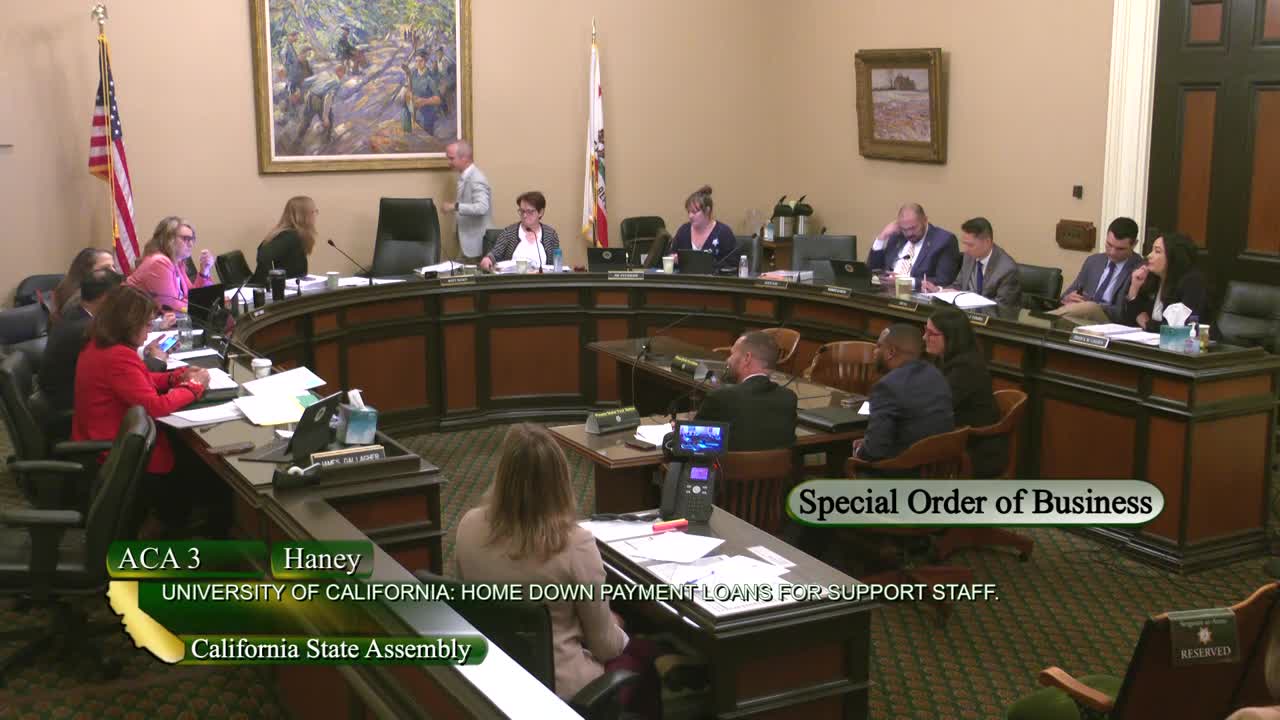 19MIN
Assembly Standing Committee on Housing and Community Development
Bill Author