AB 2563: Sex discrimination: scope.
- Session Year: 2025-2026
- House: Assembly
- Latest Version Date: 2026-09-30
Current Status:
Passed
(2026-09-30: Chaptered by Secretary of State - Chapter 952, Statutes of 2026.)
Introduced
In Committee
Awaiting First Chamber Vote
Passed First Chamber
In Committee
Awaiting Second Chamber Vote
Passed Second Chamber
Enacted
(1)The United States and California Constitutions guarantee all persons the right to equal protection of the laws. The California Constitution further recognizes the right of all persons to pursue and obtain safety, happiness, and privacy, guarantees an individuals reproductive freedom in their most intimate decisions, and prohibits disqualification of a person from entering or pursuing a business, profession, vocation, or employment because of, among other things, sex.
This bill would require, under all state laws, that any provision that prohibits discrimination on the basis of sex, discrimination on the basis of gender, or similar discrimination be interpreted to prohibit sex discrimination. The bill would define sex discrimination to include, among other things, discrimination based on any of specified actual or perceived characteristics or actions, including based on degree of conformity to sex or gender stereotypes.
This bill would provide that this interpretation reflects the existing protections of specified state constitutional laws, as described above. The bill would require these provisions to be liberally construed to effectuate the purposes of these constitutional protections. The bill would make related findings and declarations.
(2)Existing law, the Unruh Civil Rights Act (act), provides that all persons within the jurisdiction of this state are entitled to full and equal accommodations, advantages, facilities, privileges, or services in all business establishments regardless of their sex, race, color, religion, ancestry, national origin, disability status, medical condition, genetic information, marital status, sexual orientation, citizenship, primary language, or immigration status. That act defines sex to include, among other things, pregnancy, childbirth, or medical conditions related to pregnancy or childbirth.
This bill would further define, for purposes of the act, sex to include any characteristics set forth under the above-described definition of sex discrimination.
(3)Existing law, the California Fair Employment and Housing Act (FEHA), makes certain discriminatory employment and housing practices unlawful, and authorizes a person claiming to be aggrieved by an alleged unlawful practice to file a verified complaint with the Civil Rights Department. The FEHA defines various terms in connection with unlawful practices, including the term sex.
This bill would further define sex to include any characteristics set forth under the above-described definition of sex discrimination.
(4)This bill would incorporate additional changes to Section 51 of the Civil Code proposed by AB 1940 to be operative only if this bill and AB 1940 are enacted and this bill is enacted last.
This bill would incorporate additional changes to Section 12926 of the Government Code proposed by AB 1940 to be operative only if this bill and AB 1940 are enacted and this bill is enacted last.
(5)This bill would include certain provisions that become operative only if AB 1940 is enacted and takes effect on or before January 1, 2027, and amends Section 12926 of the Government Code. In that regard, the bill would expand the above-described definition of sex discrimination to include discrimination based on actual or perceived perimenopause, menopause, or postmenopause or medical conditions related to perimenopause, menopause, and postmenopause.
(1)The United States and California Constitutions guarantee all persons the right to equal protection of the laws. The California Constitution further recognizes the right of all persons to pursue and obtain safety, happiness, and privacy, guarantees an individuals reproductive freedom in their most intimate decisions, and prohibits disqualification of a person from entering or pursuing a business, profession, vocation, or employment because of, among other things, sex.
This bill would require, under all state laws, that any provision that prohibits discrimination on the basis of sex, discrimination on the basis of gender, or similar discrimination be interpreted to prohibit sex discrimination. The bill would define sex discrimination to include, among other things, discrimination based on any of specified actual or perceived characteristics or actions, including based on degree of conformity to sex or gender stereotypes.
This bill would provide that this interpretation reflects the existing protections of specified state constitutional laws, as described above. The bill would require these provisions to be liberally construed to effectuate the purposes of these constitutional protections. The bill would make related findings and declarations.
(2)Existing law, the Unruh Civil Rights Act (act), provides that all persons within the jurisdiction of this state are entitled to full and equal accommodations, advantages, facilities, privileges, or services in all business establishments regardless of their sex, race, color, religion, ancestry, national origin, disability status, medical condition, genetic information, marital status, sexual orientation, citizenship, primary language, or immigration status. That act defines sex to include, among other things, pregnancy, childbirth, or medical conditions related to pregnancy or childbirth.
This bill would further define, for purposes of the act, sex to include any actual or perceived characteristics set forth under the above-described definition of sex discrimination.
(3)Existing law, the California Fair Employment and Housing Act (FEHA), makes certain discriminatory employment and housing practices unlawful, and authorizes a person claiming to be aggrieved by an alleged unlawful practice to file a verified complaint with the Civil Rights Department. The FEHA defines various terms in connection with unlawful practices, including the term sex.
This bill would further define sex to include any actual or perceived characteristics set forth under the above-described definition of sex discrimination.
(1)The United States and California Constitutions guarantee all persons the right to equal protection of the laws. The California Constitution further recognizes the right of all persons to pursue and obtain safety, happiness, and privacy, guarantees an individuals reproductive freedom in their most intimate decisions, and prohibits disqualification of a person from entering or pursuing a business, profession, vocation, or employment because of, among other things, sex.
This bill would require, under all state laws, that any provision that prohibits discrimination on the basis of sex, discrimination on the basis of gender, or similar discrimination be interpreted to prohibit sex discrimination. The bill would define sex discrimination to include, among other things, discrimination based on any of specified actual or perceived characteristics or actions, including based on degree of conformity to sex or gender stereotypes.
This bill would provide that this interpretation reflects the existing protections of specified state constitutional laws, as described above. The bill would require these provisions to be liberally construed to effectuate the purposes of these constitutional protections.
(2)Existing law, the Unruh Civil Rights Act (act), provides that all persons within the jurisdiction of this state are entitled to full and equal accommodations, advantages, facilities, privileges, or services in all business establishments regardless of their sex, race, color, religion, ancestry, national origin, disability status, medical condition, genetic information, marital status, sexual orientation, citizenship, primary language, or immigration status. That act defines sex to include, among other things, pregnancy, childbirth, or medical conditions related to pregnancy or childbirth.
This bill would further define, for purposes of the act, sex to include any actual or perceived characteristics set forth under the above-described definition of sex discrimination.
(3)Existing law, the California Fair Employment and Housing Act (FEHA), makes certain discriminatory employment and housing practices unlawful, and authorizes a person claiming to be aggrieved by an alleged unlawful practice to file a verified complaint with the Civil Rights Department. The FEHA defines various terms in connection with unlawful practices, including the term sex.
This bill would further define sex to include any actual or perceived characteristics set forth under the above-described definition of sex discrimination.
The Legislature finds and declares that this bill is declarative of existing law and is not intended to expand or contract any existing rights or responsibilities.
SEC. 2.Section 14.3 is added to the Business and Professions Code, to read:14.3.(a)(1)Any provision that prohibits discrimination on the basis of sex, discrimination on the basis of gender, or similar discrimination shall also be interpreted as prohibiting sex discrimination, as defined in this section.
(2)In case of a conflict between the provisions of this section and other provisions of this code that set forth the scope of sex discrimination, gender discrimination, or similar discrimination, the provisions that would result in greater protections of individuals based on sex, gender, or similar discrimination shall prevail.
(3) This section shall not be construed to impair or diminish any other civil rights protection that is broader in scope.
(b)For purposes of this section, the following definitions shall apply:
(1)Discrimination includes, but is not limited to, harassment.
(2)Pregnancy or related medical conditions includes, but is not limited to, childbirth, abortion, lactation, miscarriage, fertility, and contraception.
(3)Sex discrimination includes, but is not limited to, discrimination based on any of the following actual or perceived characteristics or actions:
(A)Assigned sex or gender category, including female, male, or nonbinary.
(B)Degree of conformity to sex or gender stereotypes.
(C)Gender, including gender identity, gender expression, and access to, and use of, gender affirming care and other related health care.
(D)Pregnancy or related medical conditions.
(E)Decisionmaking, access to care, or potential or actual use of a drug, device, product, or service relating to pregnancy or related medical conditions.
(F)Sexual orientation.
(G)Variations in sex characteristics, including intersex traits or differences in sex development.
(c)This section reflects the existing protections of Sections 1, 1.1, 7, and 8 of Article I of the California Constitution recognizing the individual rights to pursue and obtain safety, happiness, and privacy, ensuring equal protection of the laws, protecting the ability to enter or pursue a business, profession, vocation, or employment, and protecting an individuals reproductive freedom. This section shall be liberally construed to effectuate the purposes of these constitutional protections.
SEC. 2.5.Section 14.3 is added to the Business and Professions Code, to read:14.3.(a)(1)Any provision that prohibits discrimination on the basis of sex, discrimination on the basis of gender, or similar discrimination shall also be interpreted as prohibiting sex discrimination, as defined in this section.
(2)In case of a conflict between the provisions of this section and other provisions of this code that set forth the scope of sex discrimination, gender discrimination, or similar discrimination, the provisions that would result in greater protections of individuals based on sex, gender, or similar discrimination shall prevail.
(3)This section shall not be construed to impair or diminish any other civil rights protection that is broader in scope.
(b)For purposes of this section, the following definitions shall apply:
(1)Discrimination includes, but is not limited to, harassment.
(2)Pregnancy or related medical conditions includes, but is not limited to, childbirth, abortion, lactation, miscarriage, fertility, and contraception.
(3)Sex discrimination includes, but is not limited to, discrimination based on any of the following actual or perceived characteristics or actions:
(A)Assigned sex or gender category, including female, male, or nonbinary.
(B)Degree of conformity to sex or gender stereotypes.
(C)Gender, including gender identity, gender expression, and access to, and use of, gender affirming care and other related health care.
(D)Pregnancy or related medical conditions.
(E)Decisionmaking, access to care, or potential or actual use of a drug, device, product, or service relating to pregnancy or related medical conditions.
(F)Sexual orientation.
(G)Variations in sex characteristics, including intersex traits or differences in sex development.
(H)Perimenopause, menopause, or postmenopause or medical conditions related to perimenopause, menopause, and postmenopause.
(c)This section reflects the existing protections of Sections 1, 1.1, 7, and 8 of Article I of the California Constitution recognizing the individual rights to pursue and obtain safety, happiness, and privacy, ensuring equal protection of the laws, protecting the ability to enter or pursue a business, profession, vocation, or employment, and protecting an individuals reproductive freedom. This section shall be liberally construed to effectuate the purposes of these constitutional protections.
SEC. 3.Section 14.1 is added to the Civil Code, to read:14.1.(a)(1)Any provision that prohibits discrimination on the basis of sex, discrimination on the basis of gender, or similar discrimination shall also be interpreted as prohibiting sex discrimination, as defined in this section.
(2)In case of a conflict between the provisions of this section and other provisions of this code that set forth the scope of sex discrimination, gender discrimination, or similar discrimination, the provisions that would result in greater protections of individuals based on sex, gender, or similar discrimination shall prevail.
(3)This section shall not be construed to impair or diminish any other civil rights protection that is broader in scope.
(b)For purposes of this section, the following definitions shall apply:
(1)Discrimination includes, but is not limited to, harassment.
(2)Pregnancy or related medical conditions includes, but is not limited to, childbirth, abortion, lactation, miscarriage, fertility, and contraception.
(3)Sex discrimination includes, but is not limited to, discrimination based on any of the following actual or perceived characteristics or actions:
(A)Assigned sex or gender category, including female, male, or nonbinary.
(B)Degree of conformity to sex or gender stereotypes.
(C)Gender, including gender identity, gender expression, and access to, and use of, gender affirming care and other related health care.
(D)Pregnancy or related medical conditions.
(E)Decisionmaking, access to care, or potential or actual use of a drug, device, product, or service relating to pregnancy or related medical conditions.
(F)Sexual orientation.
(G)Variations in sex characteristics, including intersex traits or differences in sex development.
(c)This section reflects the existing protections of Sections 1, 1.1, 7, and 8 of Article I of the California Constitution recognizing the individual rights to pursue and obtain safety, happiness, and privacy, ensuring equal protection of the laws, protecting the ability to enter or pursue a business, profession, vocation, or employment, and protecting an individuals reproductive freedom. This section shall be liberally construed to effectuate the purposes of these constitutional protections.
SEC. 3.5.Section 14.1 is added to the Civil Code, to read:14.1.(a)(1)Any provision that prohibits discrimination on the basis of sex, discrimination on the basis of gender, or similar discrimination shall also be interpreted as prohibiting sex discrimination, as defined in this section.
(2)In case of a conflict between the provisions of this section and other provisions of this code that set forth the scope of sex discrimination, gender discrimination, or similar discrimination, the provisions that would result in greater protections of individuals based on sex, gender, or similar discrimination shall prevail.
(3)This section shall not be construed to impair or diminish any other civil rights protection that is broader in scope.
(b)For purposes of this section, the following definitions shall apply:
(1)Discrimination includes, but is not limited to, harassment.
(2)Pregnancy or related medical conditions includes, but is not limited to, childbirth, abortion, lactation, miscarriage, fertility, and contraception.
(3)Sex discrimination includes, but is not limited to, discrimination based on any of the following actual or perceived characteristics or actions:
(A)Assigned sex or gender category, including female, male, or nonbinary.
(B)Degree of conformity to sex or gender stereotypes.
(C)Gender, including gender identity, gender expression, and access to, and use of, gender affirming care and other related health care.
(D)Pregnancy or related medical conditions.
(E)Decisionmaking, access to care, or potential or actual use of a drug, device, product, or service relating to pregnancy or related medical conditions.
(F)Sexual orientation.
(G)Variations in sex characteristics, including intersex traits or differences in sex development.
(H)Perimenopause, menopause, or postmenopause or medical conditions related to perimenopause, menopause, and postmenopause.
(c)This section reflects the existing protections of Sections 1, 1.1, 7, and 8 of Article I of the California Constitution recognizing the individual rights to pursue and obtain safety, happiness, and privacy, ensuring equal protection of the laws, protecting the ability to enter or pursue a business, profession, vocation, or employment, and protecting an individuals reproductive freedom. This section shall be liberally construed to effectuate the purposes of these constitutional protections.
SEC. 4.Section 51 of the Civil Code is amended to read:51.(a)This section shall be known, and may be cited, as the Unruh Civil Rights Act.
(b)All persons within the jurisdiction of this state are free and equal, and no matter what their sex, race, color, religion, ancestry, national origin, disability, medical condition, genetic information, marital status, sexual orientation, citizenship, primary language, or immigration status are entitled to the full and equal accommodations, advantages, facilities, privileges, or services in all business establishments of every kind whatsoever.
(c)This section shall not be construed to confer any right or privilege on a person that is conditioned or limited by law or that is applicable alike to persons of every sex, color, race, religion, ancestry, national origin, disability, medical condition, marital status, sexual orientation, citizenship, primary language, or immigration status, or to persons regardless of their genetic information.
(d)Nothing in this section shall be construed to require any construction, alteration, repair, structural or otherwise, or modification of any sort whatsoever, beyond that construction, alteration, repair, or modification that is otherwise required by other provisions of law, to any new or existing establishment, facility, building, improvement, or any other structure, nor shall anything in this section be construed to augment, restrict, or alter in any way the authority of the State Architect to require construction, alteration, repair, or modifications that the State Architect otherwise possesses pursuant to other laws.
(e)For purposes of this section:
(1)Disability means any mental or physical disability as defined in Sections 12926 and 12926.1 of the Government Code.
(2)(A)Genetic information means, with respect to any individual, information about any of the following:
(i)The individuals genetic tests.
(ii)The genetic tests of family members of the individual.
(iii)The manifestation of a disease or disorder in family members of the individual.
(B)Genetic information includes any request for, or receipt of, genetic services, or participation in clinical research that includes genetic services, by an individual or any family member of the individual.
(C)Genetic information does not include information about the sex or age of any individual.
(3)Medical condition has the same meaning as defined in subdivision (i) of Section 12926 of the Government Code.
(4)Race is inclusive of traits associated with race, including, but not limited to, hair texture and protective hairstyles. Protective hairstyles includes, but is not limited to, such hairstyles as braids, locs, and twists.
(5)Religion includes all aspects of religious belief, observance, and practice.
(6)Sex includes, but is not limited to, pregnancy, childbirth, or medical conditions related to pregnancy or childbirth, and any characteristic in paragraph (3) of subdivision (b) of Section 14.1. Sex also includes, but is not limited to, a persons gender. Gender means sex, and includes a persons gender identity and gender expression. Gender expression means a persons gender-related appearance and behavior whether or not stereotypically associated with the persons assigned sex at birth.
(7)Sex, race, color, religion, ancestry, national origin, disability, medical condition, genetic information, marital status, sexual orientation, citizenship, primary language, or immigration status includes any of the following:
(A)Any combination of those characteristics.
(B)A perception that the person has any particular characteristic or characteristics within the listed categories or any combination of those characteristics.
(C)A perception that the person is associated with a person who has, or is perceived to have, any particular characteristic or characteristics, or any combination of characteristics, within the listed categories.
(8)Sexual orientation has the same meaning as defined in subdivision (s) of Section 12926 of the Government Code.
(f)A violation of the right of any individual under the federal Americans with Disabilities Act of 1990 (Public Law 101-336) shall also constitute a violation of this section.
(g)Verification of immigration status and any discrimination based upon verified immigration status, where required by federal law, shall not constitute a violation of this section.
(h)Nothing in this section shall be construed to require the provision of services or documents in a language other than English, beyond that which is otherwise required by other provisions of federal, state, or local law, including Section 1632.
SEC. 4.5.Section 51 of the Civil Code is amended to read:51.(a)This section shall be known, and may be cited, as the Unruh Civil Rights Act.
(b)All persons within the jurisdiction of this state are free and equal, and no matter what their sex, race, color, religion, ancestry, national origin, disability, medical condition, genetic information, marital status, sexual orientation, citizenship, primary language, or immigration status are entitled to the full and equal accommodations, advantages, facilities, privileges, or services in all business establishments of every kind whatsoever.
(c)This section shall not be construed to confer any right or privilege on a person that is conditioned or limited by law or that is applicable alike to persons of every sex, color, race, religion, ancestry, national origin, disability, medical condition, marital status, sexual orientation, citizenship, primary language, or immigration status, or to persons regardless of their genetic information.
(d)Nothing in this section shall be construed to require any construction, alteration, repair, structural or otherwise, or modification of any sort whatsoever, beyond that construction, alteration, repair, or modification that is otherwise required by other provisions of law, to any new or existing establishment, facility, building, improvement, or any other structure, nor shall anything in this section be construed to augment, restrict, or alter in any way the authority of the State Architect to require construction, alteration, repair, or modifications that the State Architect otherwise possesses pursuant to other laws.
(e)For purposes of this section:
(1)Disability means any mental or physical disability as defined in Sections 12926 and 12926.1 of the Government Code.
(2)(A)Genetic information means, with respect to any individual, information about any of the following:
(i)The individuals genetic tests.
(ii)The genetic tests of family members of the individual.
(iii)The manifestation of a disease or disorder in family members of the individual.
(B)Genetic information includes any request for, or receipt of, genetic services, or participation in clinical research that includes genetic services, by an individual or any family member of the individual.
(C)Genetic information does not include information about the sex or age of any individual.
(3)Medical condition has the same meaning as defined in subdivision (i) of Section 12926 of the Government Code.
(4)Race is inclusive of traits associated with race, including, but not limited to, hair texture and protective hairstyles. Protective hairstyles includes, but is not limited to, such hairstyles as braids, locs, and twists.
(5)Religion includes all aspects of religious belief, observance, and practice.
(6)(A)Sex includes, but is not limited to, pregnancy, childbirth, or medical conditions related to pregnancy or childbirth, and any characteristic in paragraph (3) of subdivision (b) of Section 14.1. Sex also includes, but is not limited to, a persons gender. Gender means sex, and includes a persons gender identity and gender expression. Gender expression means a persons gender-related appearance and behavior whether or not stereotypically associated with the persons assigned sex at birth.
(B)Medical condition, as used in this paragraph, includes, but is not limited to, the conditions included in the definition of medical condition set forth in subdivision (i) of Section 12926 of the Government Code.
(7)Sex, race, color, religion, ancestry, national origin, disability, medical condition, genetic information, marital status, sexual orientation, citizenship, primary language, or immigration status includes any of the following:
(A)Any combination of those characteristics.
(B)A perception that the person has any particular characteristic or characteristics within the listed categories or any combination of those characteristics.
(C)A perception that the person is associated with a person who has, or is perceived to have, any particular characteristic or characteristics, or any combination of characteristics, within the listed categories.
(8)Sexual orientation has the same meaning as defined in subdivision (s) of Section 12926 of the Government Code.
(f)A violation of the right of any individual under the federal Americans with Disabilities Act of 1990 (Public Law 101-336) shall also constitute a violation of this section.
(g)Verification of immigration status and any discrimination based upon verified immigration status, where required by federal law, shall not constitute a violation of this section.
(h)Nothing in this section shall be construed to require the provision of services or documents in a language other than English, beyond that which is otherwise required by other provisions of federal, state, or local law, including Section 1632.
SEC. 5.Section 17.5 is added to the Code of Civil Procedure, to read:17.5.(a)(1)Any provision that prohibits discrimination on the basis of sex, discrimination on the basis of gender, or similar discrimination shall also be interpreted as prohibiting sex discrimination, as defined in this section.
(2)In case of a conflict between the provisions of this section and other provisions of this code that set forth the scope of sex discrimination, gender discrimination, or similar discrimination, the provisions that would result in greater protections of individuals based on sex, gender, or similar discrimination shall prevail.
(3)This section shall not be construed to impair or diminish any other civil rights protection that is broader in scope.
(b)For purposes of this section, the following definitions shall apply:
(1)Discrimination includes, but is not limited to, harassment.
(2)Pregnancy or related medical conditions includes, but is not limited to, childbirth, abortion, lactation, miscarriage, fertility, and contraception.
(3)Sex discrimination includes, but is not limited to, discrimination based on any of the following actual or perceived characteristics or actions:
(A)Assigned sex or gender category, including female, male, or nonbinary.
(B)Degree of conformity to sex or gender stereotypes.
(C)Gender, including gender identity, gender expression, and access to, and use of, gender affirming care and other related health care.
(D)Pregnancy or related medical conditions.
(E)Decisionmaking, access to care, or potential or actual use of a drug, device, product, or service relating to pregnancy or related medical conditions.
(F)Sexual orientation.
(G)Variations in sex characteristics, including intersex traits or differences in sex development.
(c)This section reflects the existing protections of Sections 1, 1.1, 7, and 8 of Article I of the California Constitution recognizing the individual rights to pursue and obtain safety, happiness, and privacy, ensuring equal protection of the laws, protecting the ability to enter or pursue a business, profession, vocation, or employment, and protecting an individuals reproductive freedom. This section shall be liberally construed to effectuate the purposes of these constitutional protections.
SEC. 5.5.Section 17.5 is added to the Code of Civil Procedure, to read:17.5.(a)(1)Any provision that prohibits discrimination on the basis of sex, discrimination on the basis of gender, or similar discrimination shall also be interpreted as prohibiting sex discrimination, as defined in this section.
(2)In case of a conflict between the provisions of this section and other provisions of this code that set forth the scope of sex discrimination, gender discrimination, or similar discrimination, the provisions that would result in greater protections of individuals based on sex, gender, or similar discrimination shall prevail.
(3)This section shall not be construed to impair or diminish any other civil rights protection that is broader in scope.
(b)For purposes of this section, the following definitions shall apply:
(1)Discrimination includes, but is not limited to, harassment.
(2)Pregnancy or related medical conditions includes, but is not limited to, childbirth, abortion, lactation, miscarriage, fertility, and contraception.
(3)Sex discrimination includes, but is not limited to, discrimination based on any of the following actual or perceived characteristics or actions:
(A)Assigned sex or gender category, including female, male, or nonbinary.
(B)Degree of conformity to sex or gender stereotypes.
(C)Gender, including gender identity, gender expression, and access to, and use of, gender affirming care and other related health care.
(D)Pregnancy or related medical conditions.
(E)Decisionmaking, access to care, or potential or actual use of a drug, device, product, or service relating to pregnancy or related medical conditions.
(F)Sexual orientation.
(G)Variations in sex characteristics, including intersex traits or differences in sex development.
(H)Perimenopause, menopause, or postmenopause or medical conditions related to perimenopause, menopause, and postmenopause.
(c)This section reflects the existing protections of Sections 1, 1.1, 7, and 8 of Article I of the California Constitution recognizing the individual rights to pursue and obtain safety, happiness, and privacy, ensuring equal protection of the laws, protecting the ability to enter or pursue a business, profession, vocation, or employment, and protecting an individuals reproductive freedom. This section shall be liberally construed to effectuate the purposes of these constitutional protections.
SEC. 6.Section 1207 is added to the Commercial Code, immediately following Section 1206, to read:1207.(a)(1)Any provision that prohibits discrimination on the basis of sex, discrimination on the basis of gender, or similar discrimination shall also be interpreted as prohibiting sex discrimination, as defined in this section.
(2)In case of a conflict between the provisions of this section and other provisions of this code that set forth the scope of sex discrimination, gender discrimination, or similar discrimination, the provisions that would result in greater protections of individuals based on sex, gender, or similar discrimination shall prevail.
(3)This section shall not be construed to impair or diminish any other civil rights protection that is broader in scope.
(b)For purposes of this section, the following definitions shall apply:
(1)Discrimination includes, but is not limited to, harassment.
(2)Pregnancy or related medical conditions includes, but is not limited to, childbirth, abortion, lactation, miscarriage, fertility, and contraception.
(3)Sex discrimination includes, but is not limited to, discrimination based on any of the following actual or perceived characteristics or actions:
(A)Assigned sex or gender category, including female, male, or nonbinary.
(B)Degree of conformity to sex or gender stereotypes.
(C)Gender, including gender identity, gender expression, and access to, and use of, gender affirming care and other related health care.
(D)Pregnancy or related medical conditions.
(E)Decisionmaking, access to care, or potential or actual use of a drug, device, product, or service relating to pregnancy or related medical conditions.
(F)Sexual orientation.
(G)Variations in sex characteristics, including intersex traits or differences in sex development.
(c)This section reflects the existing protections of Sections 1, 1.1, 7, and 8 of Article I of the California Constitution recognizing the individual rights to pursue and obtain safety, happiness, and privacy, ensuring equal protection of the laws, protecting the ability to enter or pursue a business, profession, vocation, or employment, and protecting an individuals reproductive freedom. This section shall be liberally construed to effectuate the purposes of these constitutional protections.
SEC. 6.5.Section 1207 is added to the Commercial Code, immediately following Section 1206, to read:1207.(a)(1)Any provision that prohibits discrimination on the basis of sex, discrimination on the basis of gender, or similar discrimination shall also be interpreted as prohibiting sex discrimination, as defined in this section.
(2)In case of a conflict between the provisions of this section and other provisions of this code that set forth the scope of sex discrimination, gender discrimination, or similar discrimination, the provisions that would result in greater protections of individuals based on sex, gender, or similar discrimination shall prevail.
(3)This section shall not be construed to impair or diminish any other civil rights protection that is broader in scope.
(b)For purposes of this section, the following definitions shall apply:
(1)Discrimination includes, but is not limited to, harassment.
(2)Pregnancy or related medical conditions includes, but is not limited to, childbirth, abortion, lactation, miscarriage, fertility, and contraception.
(3)Sex discrimination includes, but is not limited to, discrimination based on any of the following actual or perceived characteristics or actions:
(A)Assigned sex or gender category, including female, male, or nonbinary.
(B)Degree of conformity to sex or gender stereotypes.
(C)Gender, including gender identity, gender expression, and access to, and use of, gender affirming care and other related health care.
(D)Pregnancy or related medical conditions.
(E)Decisionmaking, access to care, or potential or actual use of a drug, device, product, or service relating to pregnancy or related medical conditions.
(F)Sexual orientation.
(G)Variations in sex characteristics, including intersex traits or differences in sex development.
(H)Perimenopause, menopause, or postmenopause or medical conditions related to perimenopause, menopause, and postmenopause.
(c)This section reflects the existing protections of Sections 1, 1.1, 7, and 8 of Article I of the California Constitution recognizing the individual rights to pursue and obtain safety, happiness, and privacy, ensuring equal protection of the laws, protecting the ability to enter or pursue a business, profession, vocation, or employment, and protecting an individuals reproductive freedom. This section shall be liberally construed to effectuate the purposes of these constitutional protections.
SEC. 7.Section 12.4 is added to the Corporations Code, to read:12.4.(a)(1)Any provision that prohibits discrimination on the basis of sex, discrimination on the basis of gender, or similar discrimination shall also be interpreted as prohibiting sex discrimination, as defined in this section.
(2)In case of a conflict between the provisions of this section and other provisions of this code that set forth the scope of sex discrimination, gender discrimination, or similar discrimination, the provisions that would result in greater protections of individuals based on sex, gender, or similar discrimination shall prevail.
(3)This section shall not be construed to impair or diminish any other civil rights protection that is broader in scope.
(b)For purposes of this section, the following definitions shall apply:
(1)Discrimination includes, but is not limited to, harassment.
(2)Pregnancy or related medical conditions includes, but is not limited to, childbirth, abortion, lactation, miscarriage, fertility, and contraception.
(3)Sex discrimination includes, but is not limited to, discrimination based on any of the following actual or perceived characteristics or actions:
(A)Assigned sex or gender category, including female, male, or nonbinary.
(B)Degree of conformity to sex or gender stereotypes.
(C)Gender, including gender identity, gender expression, and access to, and use of, gender affirming care and other related health care.
(D)Pregnancy or related medical conditions.
(E)Decisionmaking, access to care, or potential or actual use of a drug, device, product, or service relating to pregnancy or related medical conditions.
(F)Sexual orientation.
(G)Variations in sex characteristics, including intersex traits or differences in sex development.
(c)This section reflects the existing protections of Sections 1, 1.1, 7, and 8 of Article I of the California Constitution recognizing the individual rights to pursue and obtain safety, happiness, and privacy, ensuring equal protection of the laws, protecting the ability to enter or pursue a business, profession, vocation, or employment, and protecting an individuals reproductive freedom. This section shall be liberally construed to effectuate the purposes of these constitutional protections.
SEC. 7.5.Section 12.4 is added to the Corporations Code, to read:12.4.(a)(1)Any provision that prohibits discrimination on the basis of sex, discrimination on the basis of gender, or similar discrimination shall also be interpreted as prohibiting sex discrimination, as defined in this section.
(2)In case of a conflict between the provisions of this section and other provisions of this code that set forth the scope of sex discrimination, gender discrimination, or similar discrimination, the provisions that would result in greater protections of individuals based on sex, gender, or similar discrimination shall prevail.
(3)This section shall not be construed to impair or diminish any other civil rights protection that is broader in scope.
(b)For purposes of this section, the following definitions shall apply:
(1)Discrimination includes, but is not limited to, harassment.
(2)Pregnancy or related medical conditions includes, but is not limited to, childbirth, abortion, lactation, miscarriage, fertility, and contraception.
(3)Sex discrimination includes, but is not limited to, discrimination based on any of the following actual or perceived characteristics or actions:
(A)Assigned sex or gender category, including female, male, or nonbinary.
(B)Degree of conformity to sex or gender stereotypes.
(C)Gender, including gender identity, gender expression, and access to, and use of, gender affirming care and other related health care.
(D)Pregnancy or related medical conditions.
(E)Decisionmaking, access to care, or potential or actual use of a drug, device, product, or service relating to pregnancy or related medical conditions.
(F)Sexual orientation.
(G)Variations in sex characteristics, including intersex traits or differences in sex development.
(H)Perimenopause, menopause, or postmenopause or medical conditions related to perimenopause, menopause, and postmenopause.
(c)This section reflects the existing protections of Sections 1, 1.1, 7, and 8 of Article I of the California Constitution recognizing the individual rights to pursue and obtain safety, happiness, and privacy, ensuring equal protection of the laws, protecting the ability to enter or pursue a business, profession, vocation, or employment, and protecting an individuals reproductive freedom. This section shall be liberally construed to effectuate the purposes of these constitutional protections.
SEC. 8.Section 212.4 is added to the Education Code, to read:212.4.(a)(1)Any provision that prohibits discrimination on the basis of sex, discrimination on the basis of gender, or similar discrimination shall also be interpreted as prohibiting sex discrimination, as defined in this section.
(2)In case of a conflict between the provisions of this section and other provisions of this code that set forth the scope of sex discrimination, gender discrimination, or similar discrimination, the provisions that would result in greater protections of individuals based on sex, gender, or similar discrimination shall prevail.
(3)This section shall not be construed to impair or diminish any other civil rights protection that is broader in scope.
(b)For purposes of this section, the following definitions shall apply:
(1)Discrimination includes, but is not limited to, harassment.
(2)Pregnancy or related medical conditions includes, but is not limited to, childbirth, abortion, lactation, miscarriage, fertility, and contraception.
(3)Sex discrimination includes, but is not limited to, discrimination based on any of the following actual or perceived characteristics or actions:
(A)Assigned sex or gender category, including female, male, or nonbinary.
(B)Degree of conformity to sex or gender stereotypes.
(C)Gender, including gender identity, gender expression, and access to, and use of, gender affirming care and other related health care.
(D)Pregnancy or related medical conditions.
(E)Decisionmaking, access to care, or potential or actual use of a drug, device, product, or service relating to pregnancy or related medical conditions.
(F)Sexual orientation.
(G)Variations in sex characteristics, including intersex traits or differences in sex development.
(c)This section reflects the existing protections of Sections 1, 1.1, 7, and 8 of Article I of the California Constitution recognizing the individual rights to pursue and obtain safety, happiness, and privacy, ensuring equal protection of the laws, protecting the ability to enter or pursue a business, profession, vocation, or employment, and protecting an individuals reproductive freedom. This section shall be liberally construed to effectuate the purposes of these constitutional protections.
SEC. 8.5.Section 212.4 is added to the Education Code, to read:212.4.(a)(1)Any provision that prohibits discrimination on the basis of sex, discrimination on the basis of gender, or similar discrimination shall also be interpreted as prohibiting sex discrimination, as defined in this section.
(2)In case of a conflict between the provisions of this section and other provisions of this code that set forth the scope of sex discrimination, gender discrimination, or similar discrimination, the provisions that would result in greater protections of individuals based on sex, gender, or similar discrimination shall prevail.
(3)This section shall not be construed to impair or diminish any other civil rights protection that is broader in scope.
(b)For purposes of this section, the following definitions shall apply:
(1)Discrimination includes, but is not limited to, harassment.
(2)Pregnancy or related medical conditions includes, but is not limited to, childbirth, abortion, lactation, miscarriage, fertility, and contraception.
(3)Sex discrimination includes, but is not limited to, discrimination based on any of the following actual or perceived characteristics or actions:
(A)Assigned sex or gender category, including female, male, or nonbinary.
(B)Degree of conformity to sex or gender stereotypes.
(C)Gender, including gender identity, gender expression, and access to, and use of, gender affirming care and other related health care.
(D)Pregnancy or related medical conditions.
(E)Decisionmaking, access to care, or potential or actual use of a drug, device, product, or service relating to pregnancy or related medical conditions.
(F)Sexual orientation.
(G)Variations in sex characteristics, including intersex traits or differences in sex development.
(H)Perimenopause, menopause, or postmenopause or medical conditions related to perimenopause, menopause, and postmenopause.
(c)This section reflects the existing protections of Sections 1, 1.1, 7, and 8 of Article I of the California Constitution recognizing the individual rights to pursue and obtain safety, happiness, and privacy, ensuring equal protection of the laws, protecting the ability to enter or pursue a business, profession, vocation, or employment, and protecting an individuals reproductive freedom. This section shall be liberally construed to effectuate the purposes of these constitutional protections.
SEC. 9.Section 66262.4 is added to the Education Code, to read:66262.4.(a)(1)Any provision that prohibits discrimination on the basis of sex, discrimination on the basis of gender, or similar discrimination shall also be interpreted as prohibiting sex discrimination, as defined in this section.
(2)In case of a conflict between the provisions of this section and other provisions of this code that set forth the scope of sex discrimination, gender discrimination, or similar discrimination, the provisions that would result in greater protections of individuals based on sex, gender, or similar discrimination shall prevail.
(3)This section shall not be construed to impair or diminish any other civil rights protection that is broader in scope.
(b)For purposes of this section, the following definitions shall apply:
(1)Discrimination includes, but is not limited to, harassment.
(2)Pregnancy or related medical conditions includes, but is not limited to, childbirth, abortion, lactation, miscarriage, fertility, and contraception.
(3)Sex discrimination includes, but is not limited to, discrimination based on any of the following actual or perceived characteristics or actions:
(A)Assigned sex or gender category, including female, male, or nonbinary.
(B)Degree of conformity to sex or gender stereotypes.
(C)Gender, including gender identity, gender expression, and access to, and use of, gender affirming care and other related health care.
(D)Pregnancy or related medical conditions.
(E)Decisionmaking, access to care, or potential or actual use of a drug, device, product, or service relating to pregnancy or related medical conditions.
(F)Sexual orientation.
(G)Variations in sex characteristics, including intersex traits or differences in sex development.
(c)This section reflects the existing protections of Sections 1, 1.1, 7, and 8 of Article I of the California Constitution recognizing the individual rights to pursue and obtain safety, happiness, and privacy, ensuring equal protection of the laws, protecting the ability to enter or pursue a business, profession, vocation, or employment, and protecting an individuals reproductive freedom. This section shall be liberally construed to effectuate the purposes of these constitutional protections.
SEC. 9.5.Section 66262.4 is added to the Education Code, to read:66262.4.(a)(1)Any provision that prohibits discrimination on the basis of sex, discrimination on the basis of gender, or similar discrimination shall also be interpreted as prohibiting sex discrimination, as defined in this section.
(2)In case of a conflict between the provisions of this section and other provisions of this code that set forth the scope of sex discrimination, gender discrimination, or similar discrimination, the provisions that would result in greater protections of individuals based on sex, gender, or similar discrimination shall prevail.
(3)This section shall not be construed to impair or diminish any other civil rights protection that is broader in scope.
(b)For purposes of this section, the following definitions shall apply:
(1)Discrimination includes, but is not limited to, harassment.
(2)Pregnancy or related medical conditions includes, but is not limited to, childbirth, abortion, lactation, miscarriage, fertility, and contraception.
(3)Sex discrimination includes, but is not limited to, discrimination based on any of the following actual or perceived characteristics or actions:
(A)Assigned sex or gender category, including female, male, or nonbinary.
(B)Degree of conformity to sex or gender stereotypes.
(C)Gender, including gender identity, gender expression, and access to, and use of, gender affirming care and other related health care.
(D)Pregnancy or related medical conditions.
(E)Decisionmaking, access to care, or potential or actual use of a drug, device, product, or service relating to pregnancy or related medical conditions.
(F)Sexual orientation.
(G)Variations in sex characteristics, including intersex traits or differences in sex development.
(H)Perimenopause, menopause, or postmenopause or medical conditions related to perimenopause, menopause, and postmenopause.
(c)This section reflects the existing protections of Sections 1, 1.1, 7, and 8 of Article I of the California Constitution recognizing the individual rights to pursue and obtain safety, happiness, and privacy, ensuring equal protection of the laws, protecting the ability to enter or pursue a business, profession, vocation, or employment, and protecting an individuals reproductive freedom. This section shall be liberally construed to effectuate the purposes of these constitutional protections.
SEC. 10.Section 353.7 is added to the Elections Code, to read:353.7.(a)(1)Any provision that prohibits discrimination on the basis of sex, discrimination on the basis of gender, or similar discrimination shall also be interpreted as prohibiting sex discrimination, as defined in this section.
(2)In case of a conflict between the provisions of this section and other provisions of this code that set forth the scope of sex discrimination, gender discrimination, or similar discrimination, the provisions that would result in greater protections of individuals based on sex, gender, or similar discrimination shall prevail.
(3)This section shall not be construed to impair or diminish any other civil rights protection that is broader in scope.
(b)For purposes of this section, the following definitions shall apply:
(1)Discrimination includes, but is not limited to, harassment.
(2)Pregnancy or related medical conditions includes, but is not limited to, childbirth, abortion, lactation, miscarriage, fertility, and contraception.
(3)Sex discrimination includes, but is not limited to, discrimination based on any of the following actual or perceived characteristics or actions:
(A)Assigned sex or gender category, including female, male, or nonbinary.
(B)Degree of conformity to sex or gender stereotypes.
(C)Gender, including gender identity, gender expression, and access to, and use of, gender affirming care and other related health care.
(D)Pregnancy or related medical conditions.
(E)Decisionmaking, access to care, or potential or actual use of a drug, device, product, or service relating to pregnancy or related medical conditions.
(F)Sexual orientation.
(G)Variations in sex characteristics, including intersex traits or differences in sex development.
(c)This section reflects the existing protections of Sections 1, 1.1, 7, and 8 of Article I of the California Constitution recognizing the individual rights to pursue and obtain safety, happiness, and privacy, ensuring equal protection of the laws, protecting the ability to enter or pursue a business, profession, vocation, or employment, and protecting an individuals reproductive freedom. This section shall be liberally construed to effectuate the purposes of these constitutional protections.
SEC. 10.5.Section 353.7 is added to the Elections Code, to read:353.7.(a)(1)Any provision that prohibits discrimination on the basis of sex, discrimination on the basis of gender, or similar discrimination shall also be interpreted as prohibiting sex discrimination, as defined in this section.
(2)In case of a conflict between the provisions of this section and other provisions of this code that set forth the scope of sex discrimination, gender discrimination, or similar discrimination, the provisions that would result in greater protections of individuals based on sex, gender, or similar discrimination shall prevail.
(3)This section shall not be construed to impair or diminish any other civil rights protection that is broader in scope.
(b)For purposes of this section, the following definitions shall apply:
(1)Discrimination includes, but is not limited to, harassment.
(2)Pregnancy or related medical conditions includes, but is not limited to, childbirth, abortion, lactation, miscarriage, fertility, and contraception.
(3)Sex discrimination includes, but is not limited to, discrimination based on any of the following actual or perceived characteristics or actions:
(A)Assigned sex or gender category, including female, male, or nonbinary.
(B)Degree of conformity to sex or gender stereotypes.
(C)Gender, including gender identity, gender expression, and access to, and use of, gender affirming care and other related health care.
(D)Pregnancy or related medical conditions.
(E)Decisionmaking, access to care, or potential or actual use of a drug, device, product, or service relating to pregnancy or related medical conditions.
(F)Sexual orientation.
(G)Variations in sex characteristics, including intersex traits or differences in sex development.
(H)Perimenopause, menopause, or postmenopause or medical conditions related to perimenopause, menopause, and postmenopause.
(c)This section reflects the existing protections of Sections 1, 1.1, 7, and 8 of Article I of the California Constitution recognizing the individual rights to pursue and obtain safety, happiness, and privacy, ensuring equal protection of the laws, protecting the ability to enter or pursue a business, profession, vocation, or employment, and protecting an individuals reproductive freedom. This section shall be liberally construed to effectuate the purposes of these constitutional protections.
SEC. 11.Section 212 is added to the Evidence Code, to read:212.(a)(1)Any provision that prohibits discrimination on the basis of sex, discrimination on the basis of gender, or similar discrimination shall also be interpreted as prohibiting sex discrimination, as defined in this section.
(2)In case of a conflict between the provisions of this section and other provisions of this code that set forth the scope of sex discrimination, gender discrimination, or similar discrimination, the provisions that would result in greater protections of individuals based on sex, gender, or similar discrimination shall prevail.
(3)This section shall not be construed to impair or diminish any other civil rights protection that is broader in scope.
(b)For purposes of this section, the following definitions shall apply:
(1)Discrimination includes, but is not limited to, harassment.
(2)Pregnancy or related medical conditions includes, but is not limited to, childbirth, abortion, lactation, miscarriage, fertility, and contraception.
(3)Sex discrimination includes, but is not limited to, discrimination based on any of the following actual or perceived characteristics or actions:
(A)Assigned sex or gender category, including female, male, or nonbinary.
(B)Degree of conformity to sex or gender stereotypes.
(C)Gender, including gender identity, gender expression, and access to, and use of, gender affirming care and other related health care.
(D)Pregnancy or related medical conditions.
(E)Decisionmaking, access to care, or potential or actual use of a drug, device, product, or service relating to pregnancy or related medical conditions.
(F)Sexual orientation.
(G)Variations in sex characteristics, including intersex traits or differences in sex development.
(c)This section reflects the existing protections of Sections 1, 1.1, 7, and 8 of Article I of the California Constitution recognizing the individual rights to pursue and obtain safety, happiness, and privacy, ensuring equal protection of the laws, protecting the ability to enter or pursue a business, profession, vocation, or employment, and protecting an individuals reproductive freedom. This section shall be liberally construed to effectuate the purposes of these constitutional protections.
SEC. 11.5.Section 212 is added to the Evidence Code, to read:212.(a)(1)Any provision that prohibits discrimination on the basis of sex, discrimination on the basis of gender, or similar discrimination shall also be interpreted as prohibiting sex discrimination, as defined in this section.
(2)In case of a conflict between the provisions of this section and other provisions of this code that set forth the scope of sex discrimination, gender discrimination, or similar discrimination, the provisions that would result in greater protections of individuals based on sex, gender, or similar discrimination shall prevail.
(3)This section shall not be construed to impair or diminish any other civil rights protection that is broader in scope.
(b)For purposes of this section, the following definitions shall apply:
(1)Discrimination includes, but is not limited to, harassment.
(2)Pregnancy or related medical conditions includes, but is not limited to, childbirth, abortion, lactation, miscarriage, fertility, and contraception.
(3)Sex discrimination includes, but is not limited to, discrimination based on any of the following actual or perceived characteristics or actions:
(A)Assigned sex or gender category, including female, male, or nonbinary.
(B)Degree of conformity to sex or gender stereotypes.
(C)Gender, including gender identity, gender expression, and access to, and use of, gender affirming care and other related health care.
(D)Pregnancy or related medical conditions.
(E)Decisionmaking, access to care, or potential or actual use of a drug, device, product, or service relating to pregnancy or related medical conditions.
(F)Sexual orientation.
(G)Variations in sex characteristics, including intersex traits or differences in sex development.
(H)Perimenopause, menopause, or postmenopause or medical conditions related to perimenopause, menopause, and postmenopause.
(c)This section reflects the existing protections of Sections 1, 1.1, 7, and 8 of Article I of the California Constitution recognizing the individual rights to pursue and obtain safety, happiness, and privacy, ensuring equal protection of the laws, protecting the ability to enter or pursue a business, profession, vocation, or employment, and protecting an individuals reproductive freedom. This section shall be liberally construed to effectuate the purposes of these constitutional protections.
SEC. 12.Section 136 is added to the Family Code, to read:136.(a)(1)Any provision that prohibits discrimination on the basis of sex, discrimination on the basis of gender, or similar discrimination shall also be interpreted as prohibiting sex discrimination, as defined in this section.
(2)In case of a conflict between the provisions of this section and other provisions of this code that set forth the scope of sex discrimination, gender discrimination, or similar discrimination, the provisions that would result in greater protections of individuals based on sex, gender, or similar discrimination shall prevail.
(3)This section shall not be construed to impair or diminish any other civil rights protection that is broader in scope.
(b)For purposes of this section, the following definitions shall apply:
(1)Discrimination includes, but is not limited to, harassment.
(2)Pregnancy or related medical conditions includes, but is not limited to, childbirth, abortion, lactation, miscarriage, fertility, and contraception.
(3)Sex discrimination includes, but is not limited to, discrimination based on any of the following actual or perceived characteristics or actions:
(A)Assigned sex or gender category, including female, male, or nonbinary.
(B)Degree of conformity to sex or gender stereotypes.
(C)Gender, including gender identity, gender expression, and access to, and use of, gender affirming care and other related health care.
(D)Pregnancy or related medical conditions.
(E)Decisionmaking, access to care, or potential or actual use of a drug, device, product, or service relating to pregnancy or related medical conditions.
(F)Sexual orientation.
(G)Variations in sex characteristics, including intersex traits or differences in sex development.
(c)This section reflects the existing protections of Sections 1, 1.1, 7, and 8 of Article I of the California Constitution recognizing the individual rights to pursue and obtain safety, happiness, and privacy, ensuring equal protection of the laws, protecting the ability to enter or pursue a business, profession, vocation, or employment, and protecting an individuals reproductive freedom. This section shall be liberally construed to effectuate the purposes of these constitutional protections.
SEC. 12.5.Section 136 is added to the Family Code, to read:136.(a)(1)Any provision that prohibits discrimination on the basis of sex, discrimination on the basis of gender, or similar discrimination shall also be interpreted as prohibiting sex discrimination, as defined in this section.
(2)In case of a conflict between the provisions of this section and other provisions of this code that set forth the scope of sex discrimination, gender discrimination, or similar discrimination, the provisions that would result in greater protections of individuals based on sex, gender, or similar discrimination shall prevail.
(3)This section shall not be construed to impair or diminish any other civil rights protection that is broader in scope.
(b)For purposes of this section, the following definitions shall apply:
(1)Discrimination includes, but is not limited to, harassment.
(2)Pregnancy or related medical conditions includes, but is not limited to, childbirth, abortion, lactation, miscarriage, fertility, and contraception.
(3)Sex discrimination includes, but is not limited to, discrimination based on any of the following actual or perceived characteristics or actions:
(A)Assigned sex or gender category, including female, male, or nonbinary.
(B)Degree of conformity to sex or gender stereotypes.
(C)Gender, including gender identity, gender expression, and access to, and use of, gender affirming care and other related health care.
(D)Pregnancy or related medical conditions.
(E)Decisionmaking, access to care, or potential or actual use of a drug, device, product, or service relating to pregnancy or related medical conditions.
(F)Sexual orientation.
(G)Variations in sex characteristics, including intersex traits or differences in sex development.
(H)Perimenopause, menopause, or postmenopause or medical conditions related to perimenopause, menopause, and postmenopause.
(c)This section reflects the existing protections of Sections 1, 1.1, 7, and 8 of Article I of the California Constitution recognizing the individual rights to pursue and obtain safety, happiness, and privacy, ensuring equal protection of the laws, protecting the ability to enter or pursue a business, profession, vocation, or employment, and protecting an individuals reproductive freedom. This section shall be liberally construed to effectuate the purposes of these constitutional protections.
SEC. 13.Section 23 is added to the Financial Code, to read:23.(a)(1)Any provision that prohibits discrimination on the basis of sex, discrimination on the basis of gender, or similar discrimination shall also be interpreted as prohibiting sex discrimination, as defined in this section.
(2)In case of a conflict between the provisions of this section and other provisions of this code that set forth the scope of sex discrimination, gender discrimination, or similar discrimination, the provisions that would result in greater protections of individuals based on sex, gender, or similar discrimination shall prevail.
(3)This section shall not be construed to impair or diminish any other civil rights protection that is broader in scope.
(b)For purposes of this section, the following definitions shall apply:
(1)Discrimination includes, but is not limited to, harassment.
(2)Pregnancy or related medical conditions includes, but is not limited to, childbirth, abortion, lactation, miscarriage, fertility, and contraception.
(3)Sex discrimination includes, but is not limited to, discrimination based on any of the following actual or perceived characteristics or actions:
(A)Assigned sex or gender category, including female, male, or nonbinary.
(B)Degree of conformity to sex or gender stereotypes.
(C)Gender, including gender identity, gender expression, and access to, and use of, gender affirming care and other related health care.
(D)Pregnancy or related medical conditions.
(E)Decisionmaking, access to care, or potential or actual use of a drug, device, product, or service relating to pregnancy or related medical conditions.
(F)Sexual orientation.
(G)Variations in sex characteristics, including intersex traits or differences in sex development.
(c)This section reflects the existing protections of Sections 1, 1.1, 7, and 8 of Article I of the California Constitution recognizing the individual rights to pursue and obtain safety, happiness, and privacy, ensuring equal protection of the laws, protecting the ability to enter or pursue a business, profession, vocation, or employment, and protecting an individuals reproductive freedom. This section shall be liberally construed to effectuate the purposes of these constitutional protections.
SEC. 13.5.Section 23 is added to the Financial Code, to read:23.(a)(1)Any provision that prohibits discrimination on the basis of sex, discrimination on the basis of gender, or similar discrimination shall also be interpreted as prohibiting sex discrimination, as defined in this section.
(2)In case of a conflict between the provisions of this section and other provisions of this code that set forth the scope of sex discrimination, gender discrimination, or similar discrimination, the provisions that would result in greater protections of individuals based on sex, gender, or similar discrimination shall prevail.
(3)This section shall not be construed to impair or diminish any other civil rights protection that is broader in scope.
(b)For purposes of this section, the following definitions shall apply:
(1)Discrimination includes, but is not limited to, harassment.
(2)Pregnancy or related medical conditions includes, but is not limited to, childbirth, abortion, lactation, miscarriage, fertility, and contraception.
(3)Sex discrimination includes, but is not limited to, discrimination based on any of the following actual or perceived characteristics or actions:
(A)Assigned sex or gender category, including female, male, or nonbinary.
(B)Degree of conformity to sex or gender stereotypes.
(C)Gender, including gender identity, gender expression, and access to, and use of, gender affirming care and other related health care.
(D)Pregnancy or related medical conditions.
(E)Decisionmaking, access to care, or potential or actual use of a drug, device, product, or service relating to pregnancy or related medical conditions.
(F)Sexual orientation.
(G)Variations in sex characteristics, including intersex traits or differences in sex development.
(H)Perimenopause, menopause, or postmenopause or medical conditions related to perimenopause, menopause, and postmenopause.
(c)This section reflects the existing protections of Sections 1, 1.1, 7, and 8 of Article I of the California Constitution recognizing the individual rights to pursue and obtain safety, happiness, and privacy, ensuring equal protection of the laws, protecting the ability to enter or pursue a business, profession, vocation, or employment, and protecting an individuals reproductive freedom. This section shall be liberally construed to effectuate the purposes of these constitutional protections.
SEC. 14.Section 9.4 is added to the Fish and Game Code, to read:9.4.(a)(1)Any provision that prohibits discrimination on the basis of sex, discrimination on the basis of gender, or similar discrimination shall also be interpreted as prohibiting sex discrimination, as defined in this section.
(2)In case of a conflict between the provisions of this section and other provisions of this code that set forth the scope of sex discrimination, gender discrimination, or similar discrimination, the provisions that would result in greater protections of individuals based on sex, gender, or similar discrimination shall prevail.
(3)This section shall not be construed to impair or diminish any other civil rights protection that is broader in scope.
(b)For purposes of this section, the following definitions shall apply:
(1)Discrimination includes, but is not limited to, harassment.
(2)Pregnancy or related medical conditions includes, but is not limited to, childbirth, abortion, lactation, miscarriage, fertility, and contraception.
(3)Sex discrimination includes, but is not limited to, discrimination based on any of the following actual or perceived characteristics or actions:
(A)Assigned sex or gender category, including female, male, or nonbinary.
(B)Degree of conformity to sex or gender stereotypes.
(C)Gender, including gender identity, gender expression, and access to, and use of, gender affirming care and other related health care.
(D)Pregnancy or related medical conditions.
(E)Decisionmaking, access to care, or potential or actual use of a drug, device, product, or service relating to pregnancy or related medical conditions.
(F)Sexual orientation.
(G)Variations in sex characteristics, including intersex traits or differences in sex development.
(c)This section reflects the existing protections of Sections 1, 1.1, 7, and 8 of Article I of the California Constitution recognizing the individual rights to pursue and obtain safety, happiness, and privacy, ensuring equal protection of the laws, protecting the ability to enter or pursue a business, profession, vocation, or employment, and protecting an individuals reproductive freedom. This section shall be liberally construed to effectuate the purposes of these constitutional protections.
SEC. 14.5.Section 9.4 is added to the Fish and Game Code, to read:9.4.(a)(1)Any provision that prohibits discrimination on the basis of sex, discrimination on the basis of gender, or similar discrimination shall also be interpreted as prohibiting sex discrimination, as defined in this section.
(2)In case of a conflict between the provisions of this section and other provisions of this code that set forth the scope of sex discrimination, gender discrimination, or similar discrimination, the provisions that would result in greater protections of individuals based on sex, gender, or similar discrimination shall prevail.
(3)This section shall not be construed to impair or diminish any other civil rights protection that is broader in scope.
(b)For purposes of this section, the following definitions shall apply:
(1)Discrimination includes, but is not limited to, harassment.
(2)Pregnancy or related medical conditions includes, but is not limited to, childbirth, abortion, lactation, miscarriage, fertility, and contraception.
(3)Sex discrimination includes, but is not limited to, discrimination based on any of the following actual or perceived characteristics or actions:
(A)Assigned sex or gender category, including female, male, or nonbinary.
(B)Degree of conformity to sex or gender stereotypes.
(C)Gender, including gender identity, gender expression, and access to, and use of, gender affirming care and other related health care.
(D)Pregnancy or related medical conditions.
(E)Decisionmaking, access to care, or potential or actual use of a drug, device, product, or service relating to pregnancy or related medical conditions.
(F)Sexual orientation.
(G)Variations in sex characteristics, including intersex traits or differences in sex development.
(H)Perimenopause, menopause, or postmenopause or medical conditions related to perimenopause, menopause, and postmenopause.
(c)This section reflects the existing protections of Sections 1, 1.1, 7, and 8 of Article I of the California Constitution recognizing the individual rights to pursue and obtain safety, happiness, and privacy, ensuring equal protection of the laws, protecting the ability to enter or pursue a business, profession, vocation, or employment, and protecting an individuals reproductive freedom. This section shall be liberally construed to effectuate the purposes of these constitutional protections.
SEC. 15.Section 52 is added to the Food and Agricultural Code, to read:52.(a)(1)Any provision that prohibits discrimination on the basis of sex, discrimination on the basis of gender, or similar discrimination shall also be interpreted as prohibiting sex discrimination, as defined in this section.
(2)In case of a conflict between the provisions of this section and other provisions of this code that set forth the scope of sex discrimination, gender discrimination, or similar discrimination, the provisions that would result in greater protections of individuals based on sex, gender, or similar discrimination shall prevail.
(3)This section shall not be construed to impair or diminish any other civil rights protection that is broader in scope.
(b)For purposes of this section, the following definitions shall apply:
(1)Discrimination includes, but is not limited to, harassment.
(2)Pregnancy or related medical conditions includes, but is not limited to, childbirth, abortion, lactation, miscarriage, fertility, and contraception.
(3)Sex discrimination includes, but is not limited to, discrimination based on any of the following actual or perceived characteristics or actions:
(A)Assigned sex or gender category, including female, male, or nonbinary.
(B)Degree of conformity to sex or gender stereotypes.
(C)Gender, including gender identity, gender expression, and access to, and use of, gender affirming care and other related health care.
(D)Pregnancy or related medical conditions.
(E)Decisionmaking, access to care, or potential or actual use of a drug, device, product, or service relating to pregnancy or related medical conditions.
(F)Sexual orientation.
(G)Variations in sex characteristics, including intersex traits or differences in sex development.
(c)This section reflects the existing protections of Sections 1, 1.1, 7, and 8 of Article I of the California Constitution recognizing the individual rights to pursue and obtain safety, happiness, and privacy, ensuring equal protection of the laws, protecting the ability to enter or pursue a business, profession, vocation, or employment, and protecting an individuals reproductive freedom. This section shall be liberally construed to effectuate the purposes of these constitutional protections.
SEC. 15.5.Section 52 is added to the Food and Agricultural Code, to read:52.(a)(1)Any provision that prohibits discrimination on the basis of sex, discrimination on the basis of gender, or similar discrimination shall also be interpreted as prohibiting sex discrimination, as defined in this section.
(2)In case of a conflict between the provisions of this section and other provisions of this code that set forth the scope of sex discrimination, gender discrimination, or similar discrimination, the provisions that would result in greater protections of individuals based on sex, gender, or similar discrimination shall prevail.
(3)This section shall not be construed to impair or diminish any other civil rights protection that is broader in scope.
(b)For purposes of this section, the following definitions shall apply:
(1)Discrimination includes, but is not limited to, harassment.
(2)Pregnancy or related medical conditions includes, but is not limited to, childbirth, abortion, lactation, miscarriage, fertility, and contraception.
(3)Sex discrimination includes, but is not limited to, discrimination based on any of the following actual or perceived characteristics or actions:
(A)Assigned sex or gender category, including female, male, or nonbinary.
(B)Degree of conformity to sex or gender stereotypes.
(C)Gender, including gender identity, gender expression, and access to, and use of, gender affirming care and other related health care.
(D)Pregnancy or related medical conditions.
(E)Decisionmaking, access to care, or potential or actual use of a drug, device, product, or service relating to pregnancy or related medical conditions.
(F)Sexual orientation.
(G)Variations in sex characteristics, including intersex traits or differences in sex development.
(H)Perimenopause, menopause, or postmenopause or medical conditions related to perimenopause, menopause, and postmenopause.
(c)This section reflects the existing protections of Sections 1, 1.1, 7, and 8 of Article I of the California Constitution recognizing the individual rights to pursue and obtain safety, happiness, and privacy, ensuring equal protection of the laws, protecting the ability to enter or pursue a business, profession, vocation, or employment, and protecting an individuals reproductive freedom. This section shall be liberally construed to effectuate the purposes of these constitutional protections.
SEC. 16.Section 27 is added to the Government Code, to read:27.(a)(1)Any provision that prohibits discrimination on the basis of sex, discrimination on the basis of gender, or similar discrimination shall also be interpreted as prohibiting sex discrimination, as defined in this section.
(2)In case of a conflict between the provisions of this section and other provisions of this code that set forth the scope of sex discrimination, gender discrimination, or similar discrimination, the provisions that would result in greater protections of individuals based on sex, gender, or similar discrimination shall prevail.
(3)This section shall not be construed to impair or diminish any other civil rights protection that is broader in scope.
(b)For purposes of this section, the following definitions shall apply:
(1)Discrimination includes, but is not limited to, harassment.
(2)Pregnancy or related medical conditions includes, but is not limited to, childbirth, abortion, lactation, miscarriage, fertility, and contraception.
(3)Sex discrimination includes, but is not limited to, discrimination based on any of the following actual or perceived characteristics or actions:
(A)Assigned sex or gender category, including female, male, or nonbinary.
(B)Degree of conformity to sex or gender stereotypes.
(C)Gender, including gender identity, gender expression, and access to, and use of, gender affirming care and other related health care.
(D)Pregnancy or related medical conditions.
(E)Decisionmaking, access to care, or potential or actual use of a drug, device, product, or service relating to pregnancy or related medical conditions.
(F)Sexual orientation.
(G)Variations in sex characteristics, including intersex traits or differences in sex development.
(c)This section reflects the existing protections of Sections 1, 1.1, 7, and 8 of Article I of the California Constitution recognizing the individual rights to pursue and obtain safety, happiness, and privacy, ensuring equal protection of the laws, protecting the ability to enter or pursue a business, profession, vocation, or employment, and protecting an individuals reproductive freedom. This section shall be liberally construed to effectuate the purposes of these constitutional protections.
SEC. 16.5.Section 27 is added to the Government Code, to read:27.(a)(1)Any provision that prohibits discrimination on the basis of sex, discrimination on the basis of gender, or similar discrimination shall also be interpreted as prohibiting sex discrimination, as defined in this section.
(2)In case of a conflict between the provisions of this section and other provisions of this code that set forth the scope of sex discrimination, gender discrimination, or similar discrimination, the provisions that would result in greater protections of individuals based on sex, gender, or similar discrimination shall prevail.
(3)This section shall not be construed to impair or diminish any other civil rights protection that is broader in scope.
(b)For purposes of this section, the following definitions shall apply:
(1)Discrimination includes, but is not limited to, harassment.
(2)Pregnancy or related medical conditions includes, but is not limited to, childbirth, abortion, lactation, miscarriage, fertility, and contraception.
(3)Sex discrimination includes, but is not limited to, discrimination based on any of the following actual or perceived characteristics or actions:
(A)Assigned sex or gender category, including female, male, or nonbinary.
(B)Degree of conformity to sex or gender stereotypes.
(C)Gender, including gender identity, gender expression, and access to, and use of, gender affirming care and other related health care.
(D)Pregnancy or related medical conditions.
(E)Decisionmaking, access to care, or potential or actual use of a drug, device, product, or service relating to pregnancy or related medical conditions.
(F)Sexual orientation.
(G)Variations in sex characteristics, including intersex traits or differences in sex development.
(H)Perimenopause, menopause, or postmenopause or medical conditions related to perimenopause, menopause, and postmenopause.
(c)This section reflects the existing protections of Sections 1, 1.1, 7, and 8 of Article I of the California Constitution recognizing the individual rights to pursue and obtain safety, happiness, and privacy, ensuring equal protection of the laws, protecting the ability to enter or pursue a business, profession, vocation, or employment, and protecting an individuals reproductive freedom. This section shall be liberally construed to effectuate the purposes of these constitutional protections.
SEC. 17.Section 12926 of the Government Code is amended to read:12926.As used in this part in connection with unlawful practices, unless a different meaning clearly appears from the context:
(a)Affirmative relief or prospective relief includes the authority to order reinstatement of an employee, awards of backpay, reimbursement of out-of-pocket expenses, hiring, transfers, reassignments, grants of tenure, promotions, cease and desist orders, posting of notices, training of personnel, testing, expunging of records, reporting of records, and any other similar relief that is intended to correct unlawful practices under this part.
(b)Age refers to the chronological age of any individual who has reached a 40th birthday.
(c)Except as provided by Section 12926.05, employee does not include any individual employed by that persons parent, spouse, or child or any individual employed under a special license in a nonprofit sheltered workshop or rehabilitation facility.
(d)Employer includes any person regularly employing five or more persons, or any person acting as an agent of an employer, directly or indirectly, the state or any political or civil subdivision of the state, and cities, except as follows:
Employer does not include a religious association or corporation not organized for private profit.
(e)Employment agency includes any person undertaking for compensation to procure employees or opportunities to work.
(f)Essential functions means the fundamental job duties of the employment position the individual with a disability holds or desires. Essential functions does not include the marginal functions of the position.
(1)A job function may be considered essential for any of several reasons, including, but not limited to, any one or more of the following:
(A)The function may be essential because the reason the position exists is to perform that function.
(B)The function may be essential because of the limited number of employees available among whom the performance of that job function can be distributed.
(C)The function may be highly specialized, so that the incumbent in the position is hired based on expertise or the ability to perform a particular function.
(2)Evidence of whether a particular function is essential includes, but is not limited to, the following:
(A)The employers judgment as to which functions are essential.
(B)Written job descriptions prepared before advertising or interviewing applicants for the job.
(C)The amount of time spent on the job performing the function.
(D)The consequences of not requiring the incumbent to perform the function.
(E)The terms of a collective bargaining agreement.
(F)The work experiences of past incumbents in the job.
(G)The current work experience of incumbents in similar jobs.
(g)(1)Genetic information means, with respect to any individual, information about any of the following:
(A)The individuals genetic tests.
(B)The genetic tests of family members of the individual.
(C)The manifestation of a disease or disorder in family members of the individual.
(2)Genetic information includes any request for, or receipt of, genetic services, or participation in clinical research that includes genetic services, by an individual or any family member of the individual.
(3)Genetic information does not include information about the sex or age of any individual.
(h)Labor organization includes any organization that exists and is constituted for the purpose, in whole or in part, of collective bargaining or of dealing with employers concerning grievances, terms or conditions of employment, or of other mutual aid or protection.
(i)Medical condition means either of the following:
(1)Any health impairment related to or associated with a diagnosis of cancer or a record or history of cancer.
(2)Genetic characteristics. For purposes of this section, genetic characteristics means either of the following:
(A)Any scientifically or medically identifiable gene or chromosome, or combination or alteration thereof, that is known to be a cause of a disease or disorder in a person or that persons offspring, or that is determined to be associated with a statistically increased risk of development of a disease or disorder, and that is presently not associated with any symptoms of any disease or disorder.
(B)Inherited characteristics that may derive from the individual or family member, that are known to be a cause of a disease or disorder in a person or that persons offspring, or that are determined to be associated with a statistically increased risk of development of a disease or disorder, and that are presently not associated with any symptoms of any disease or disorder.
(j)Mental disability includes, but is not limited to, all of the following:
(1)Having any mental or psychological disorder or condition, such as intellectual disability, organic brain syndrome, emotional or mental illness, or specific learning disabilities, that limits a major life activity. For purposes of this section:
(A)Limits shall be determined without regard to mitigating measures, such as medications, assistive devices, or reasonable accommodations, unless the mitigating measure itself limits a major life activity.
(B)A mental or psychological disorder or condition limits a major life activity if it makes the achievement of the major life activity difficult.
(C)Major life activities shall be broadly construed and shall include physical, mental, and social activities and working.
(2)Any other mental or psychological disorder or condition not described in paragraph (1) that requires special education or related services.
(3)Having a record or history of a mental or psychological disorder or condition described in paragraph (1) or (2), which is known to the employer or other entity covered by this part.
(4)Being regarded or treated by the employer or other entity covered by this part as having, or having had, any mental condition that makes achievement of a major life activity difficult.
(5)Being regarded or treated by the employer or other entity covered by this part as having, or having had, a mental or psychological disorder or condition that has no present disabling effect, but that may become a mental disability as described in paragraph (1) or (2).
Mental disability does not include sexual behavior disorders, compulsive gambling, kleptomania, pyromania, or psychoactive substance use disorders resulting from the current unlawful use of controlled substances or other drugs.
(k)Veteran or military status means a member or veteran of the United States Armed Forces, United States Armed Forces Reserve, the United States National Guard, and the California National Guard.
(l)On the bases enumerated in this part means or refers to discrimination on the basis of one or more of the following: race, religious creed, color, national origin, ancestry, physical disability, mental disability, medical condition, genetic information, marital status, sex, age, sexual orientation, reproductive health decisionmaking, or veteran or military status.
(m)Physical disability includes, but is not limited to, all of the following:
(1)Having any physiological disease, disorder, condition, cosmetic disfigurement, or anatomical loss that does both of the following:
(A)Affects one or more of the following body systems: neurological, immunological, musculoskeletal, special sense organs, respiratory, including speech organs, cardiovascular, reproductive, digestive, genitourinary, hemic and lymphatic, skin, and endocrine.
(B)Limits a major life activity. For purposes of this section:
(i)Limits shall be determined without regard to mitigating measures such as medications, assistive devices, prosthetics, or reasonable accommodations, unless the mitigating measure itself limits a major life activity.
(ii)A physiological disease, disorder, condition, cosmetic disfigurement, or anatomical loss limits a major life activity if it makes the achievement of the major life activity difficult.
(iii)Major life activities shall be broadly construed and includes physical, mental, and social activities and working.
(2)Any other health impairment not described in paragraph (1) that requires special education or related services.
(3)Having a record or history of a disease, disorder, condition, cosmetic disfigurement, anatomical loss, or health impairment described in paragraph (1) or (2), which is known to the employer or other entity covered by this part.
(4)Being regarded or treated by the employer or other entity covered by this part as having, or having had, any physical condition that makes achievement of a major life activity difficult.
(5)Being regarded or treated by the employer or other entity covered by this part as having, or having had, a disease, disorder, condition, cosmetic disfigurement, anatomical loss, or health impairment that has no present disabling effect but may become a physical disability as described in paragraph (1) or (2).
(6)Physical disability does not include sexual behavior disorders, compulsive gambling, kleptomania, pyromania, or psychoactive substance use disorders resulting from the current unlawful use of controlled substances or other drugs.
(n)Notwithstanding subdivisions (j) and (m), if the definition of disability used in the federal Americans with Disabilities Act of 1990 (Public Law 101-336) would result in broader protection of the civil rights of individuals with a mental disability or physical disability, as defined in subdivision (j) or (m), or would include any medical condition not included within those definitions, then that broader protection or coverage shall be deemed incorporated by reference into, and shall prevail over conflicting provisions of, the definitions in subdivisions (j) and (m).
(o)Race, religious creed, color, national origin, ancestry, physical disability, mental disability, medical condition, genetic information, marital status, sex, age, sexual orientation, reproductive health decisionmaking, or veteran or military status includes any of the following:
(1)Any combination of those characteristics.
(2)A perception that the person has any of those characteristics or any combination of those characteristics.
(3)A perception that the person is associated with a person who has, or is perceived to have, any of those characteristics or any combination of those characteristics.
(p)Reasonable accommodation may include either of the following:
(1)Making existing facilities used by employees readily accessible to, and usable by, individuals with disabilities.
(2)Job restructuring, part-time or modified work schedules, reassignment to a vacant position, acquisition or modification of equipment or devices, adjustment or modifications of examinations, training materials or policies, the provision of qualified readers or interpreters, and other similar accommodations for individuals with disabilities.
(q)Religious creed, religion, religious observance, religious belief, and creed include all aspects of religious belief, observance, and practice, including religious dress and grooming practices. Religious dress practice shall be construed broadly to include the wearing or carrying of religious clothing, head or face coverings, jewelry, artifacts, and any other item that is part of an individual observing a religious creed. Religious grooming practice shall be construed broadly to include all forms of head, facial, and body hair that are part of an individual observing a religious creed.
(r)(1)Sex includes, but is not limited to, the following:
(A)Pregnancy or medical conditions related to pregnancy.
(B)Childbirth or medical conditions related to childbirth.
(C)Breastfeeding or medical conditions related to breastfeeding.
(2)Sex also includes, but is not limited to, a persons gender. Gender means sex, and includes a persons gender identity and gender expression. Gender expression means a persons gender-related appearance and behavior whether or not stereotypically associated with the persons assigned sex at birth.
(3)Sex also includes any characteristics listed in paragraph (3) of subdivision (b) of Section 27.
(s)Sexual orientation means heterosexuality, homosexuality, and bisexuality.
(t)Supervisor means any individual having the authority, in the interest of the employer, to hire, transfer, suspend, lay off, recall, promote, discharge, assign, reward, or discipline other employees, or the responsibility to direct them, or to adjust their grievances, or effectively to recommend that action, if, in connection with the foregoing, the exercise of that authority is not of a merely routine or clerical nature, but requires the use of independent judgment.
(u)Undue hardship means an action requiring significant difficulty or expense, when considered in light of the following factors:
(1)The nature and cost of the accommodation needed.
(2)The overall financial resources of the facilities involved in the provision of the reasonable accommodations, the number of persons employed at the facility, and the effect on expenses and resources or the impact otherwise of these accommodations upon the operation of the facility.
(3)The overall financial resources of the covered entity, the overall size of the business of a covered entity with respect to the number of employees, and the number, type, and location of its facilities.
(4)The type of operations, including the composition, structure, and functions of the workforce of the entity.
(5)The geographic separateness or administrative or fiscal relationship of the facility or facilities.
(v)National origin discrimination includes, but is not limited to, discrimination on the basis of possessing a drivers license or identification card granted under Section 12801.9 of the Vehicle Code.
(w)Race is inclusive of traits associated with race, including, but not limited to, hair texture and protective hairstyles.
(x)Protective hairstyles includes, but is not limited to, such hairstyles as braids, locs, and twists.
(y)Reproductive health decisionmaking includes, but is not limited to, a decision to use or access a particular drug, device, product, or medical service for reproductive health. This subdivision and other provisions in this part relating to reproductive health decisionmaking shall not be construed to mean that subdivision (r) of this section and other provisions in this part related to sex do not include reproductive health decisionmaking.
(z)Group or class complaint includes any complaint alleging a pattern or practice. This paragraph is declaratory of, and clarifies, existing law.
SEC. 17.5.Section 12926 of the Government Code is amended to read:12926.As used in this part in connection with unlawful practices, unless a different meaning clearly appears from the context:
(a)Affirmative relief or prospective relief includes the authority to order reinstatement of an employee, awards of backpay, reimbursement of out-of-pocket expenses, hiring, transfers, reassignments, grants of tenure, promotions, cease and desist orders, posting of notices, training of personnel, testing, expunging of records, reporting of records, and any other similar relief that is intended to correct unlawful practices under this part.
(b)Age refers to the chronological age of any individual who has reached a 40th birthday.
(c)Except as provided by Section 12926.05, employee does not include any individual employed by that persons parent, spouse, or child or any individual employed under a special license in a nonprofit sheltered workshop or rehabilitation facility.
(d)Employer includes any person regularly employing five or more persons, or any person acting as an agent of an employer, directly or indirectly, the state or any political or civil subdivision of the state, and cities, except as follows:
Employer does not include a religious association or corporation not organized for private profit.
(e)Employment agency includes any person undertaking for compensation to procure employees or opportunities to work.
(f)Essential functions means the fundamental job duties of the employment position the individual with a disability holds or desires. Essential functions does not include the marginal functions of the position.
(1)A job function may be considered essential for any of several reasons, including, but not limited to, any one or more of the following:
(A)The function may be essential because the reason the position exists is to perform that function.
(B)The function may be essential because of the limited number of employees available among whom the performance of that job function can be distributed.
(C)The function may be highly specialized, so that the incumbent in the position is hired based on expertise or the ability to perform a particular function.
(2)Evidence of whether a particular function is essential includes, but is not limited to, the following:
(A)The employers judgment as to which functions are essential.
(B)Written job descriptions prepared before advertising or interviewing applicants for the job.
(C)The amount of time spent on the job performing the function.
(D)The consequences of not requiring the incumbent to perform the function.
(E)The terms of a collective bargaining agreement.
(F)The work experiences of past incumbents in the job.
(G)The current work experience of incumbents in similar jobs.
(g)(1)Genetic information means, with respect to any individual, information about any of the following:
(A)The individuals genetic tests.
(B)The genetic tests of family members of the individual.
(C)The manifestation of a disease or disorder in family members of the individual.
(2)Genetic information includes any request for, or receipt of, genetic services, or participation in clinical research that includes genetic services, by an individual or any family member of the individual.
(3)Genetic information does not include information about the sex or age of any individual.
(h)Labor organization includes any organization that exists and is constituted for the purpose, in whole or in part, of collective bargaining or of dealing with employers concerning grievances, terms or conditions of employment, or of other mutual aid or protection.
(i)Medical condition means either of the following:
(1)Any health impairment related to or associated with a diagnosis of cancer or a record or history of cancer.
(2)Genetic characteristics. For purposes of this section, genetic characteristics means either of the following:
(A)Any scientifically or medically identifiable gene or chromosome, or combination or alteration thereof, that is known to be a cause of a disease or disorder in a person or that persons offspring, or that is determined to be associated with a statistically increased risk of development of a disease or disorder, and that is presently not associated with any symptoms of any disease or disorder.
(B)Inherited characteristics that may derive from the individual or family member, that are known to be a cause of a disease or disorder in a person or that persons offspring, or that are determined to be associated with a statistically increased risk of development of a disease or disorder, and that are presently not associated with any symptoms of any disease or disorder.
(j)Mental disability includes, but is not limited to, all of the following:
(1)Having any mental or psychological disorder or condition, such as intellectual disability, organic brain syndrome, emotional or mental illness, or specific learning disabilities, that limits a major life activity. For purposes of this section:
(A)Limits shall be determined without regard to mitigating measures, such as medications, assistive devices, or reasonable accommodations, unless the mitigating measure itself limits a major life activity.
(B)A mental or psychological disorder or condition limits a major life activity if it makes the achievement of the major life activity difficult.
(C)Major life activities shall be broadly construed and shall include physical, mental, and social activities and working.
(2)Any other mental or psychological disorder or condition not described in paragraph (1) that requires special education or related services.
(3)Having a record or history of a mental or psychological disorder or condition described in paragraph (1) or (2), which is known to the employer or other entity covered by this part.
(4)Being regarded or treated by the employer or other entity covered by this part as having, or having had, any mental condition that makes achievement of a major life activity difficult.
(5)Being regarded or treated by the employer or other entity covered by this part as having, or having had, a mental or psychological disorder or condition that has no present disabling effect, but that may become a mental disability as described in paragraph (1) or (2).
Mental disability does not include sexual behavior disorders, compulsive gambling, kleptomania, pyromania, or psychoactive substance use disorders resulting from the current unlawful use of controlled substances or other drugs.
(k)Veteran or military status means a member or veteran of the United States Armed Forces, United States Armed Forces Reserve, the United States National Guard, and the California National Guard.
(l)On the bases enumerated in this part means or refers to discrimination on the basis of one or more of the following: race, religious creed, color, national origin, ancestry, physical disability, mental disability, medical condition, genetic information, marital status, sex, age, sexual orientation, reproductive health decisionmaking, or veteran or military status.
(m)Physical disability includes, but is not limited to, all of the following:
(1)Having any physiological disease, disorder, condition, cosmetic disfigurement, or anatomical loss that does both of the following:
(A)Affects one or more of the following body systems: neurological, immunological, musculoskeletal, special sense organs, respiratory, including speech organs, cardiovascular, reproductive, digestive, genitourinary, hemic and lymphatic, skin, and endocrine.
(B)Limits a major life activity. For purposes of this section:
(i)Limits shall be determined without regard to mitigating measures such as medications, assistive devices, prosthetics, or reasonable accommodations, unless the mitigating measure itself limits a major life activity.
(ii)A physiological disease, disorder, condition, cosmetic disfigurement, or anatomical loss limits a major life activity if it makes the achievement of the major life activity difficult.
(iii)Major life activities shall be broadly construed and includes physical, mental, and social activities and working.
(2)Any other health impairment not described in paragraph (1) that requires special education or related services.
(3)Having a record or history of a disease, disorder, condition, cosmetic disfigurement, anatomical loss, or health impairment described in paragraph (1) or (2), which is known to the employer or other entity covered by this part.
(4)Being regarded or treated by the employer or other entity covered by this part as having, or having had, any physical condition that makes achievement of a major life activity difficult.
(5)Being regarded or treated by the employer or other entity covered by this part as having, or having had, a disease, disorder, condition, cosmetic disfigurement, anatomical loss, or health impairment that has no present disabling effect but may become a physical disability as described in paragraph (1) or (2).
(6)Physical disability does not include sexual behavior disorders, compulsive gambling, kleptomania, pyromania, or psychoactive substance use disorders resulting from the current unlawful use of controlled substances or other drugs.
(n)Notwithstanding subdivisions (j) and (m), if the definition of disability used in the federal Americans with Disabilities Act of 1990 (Public Law 101-336) would result in broader protection of the civil rights of individuals with a mental disability or physical disability, as defined in subdivision (j) or (m), or would include any medical condition not included within those definitions, then that broader protection or coverage shall be deemed incorporated by reference into, and shall prevail over conflicting provisions of, the definitions in subdivisions (j) and (m).
(o)Race, religious creed, color, national origin, ancestry, physical disability, mental disability, medical condition, genetic information, marital status, sex, age, sexual orientation, reproductive health decisionmaking, or veteran or military status includes any of the following:
(1)Any combination of those characteristics.
(2)A perception that the person has any of those characteristics or any combination of those characteristics.
(3)A perception that the person is associated with a person who has, or is perceived to have, any of those characteristics or any combination of those characteristics.
(p)Reasonable accommodation may include either of the following:
(1)Making existing facilities used by employees readily accessible to, and usable by, individuals with disabilities.
(2)Job restructuring, part-time or modified work schedules, reassignment to a vacant position, acquisition or modification of equipment or devices, adjustment or modifications of examinations, training materials or policies, the provision of qualified readers or interpreters, and other similar accommodations for individuals with disabilities.
(q)Religious creed, religion, religious observance, religious belief, and creed include all aspects of religious belief, observance, and practice, including religious dress and grooming practices. Religious dress practice shall be construed broadly to include the wearing or carrying of religious clothing, head or face coverings, jewelry, artifacts, and any other item that is part of an individual observing a religious creed. Religious grooming practice shall be construed broadly to include all forms of head, facial, and body hair that are part of an individual observing a religious creed.
(r)(1)Sex includes, but is not limited to, the following:
(A)Pregnancy or medical conditions related to pregnancy.
(B)Childbirth or medical conditions related to childbirth.
(C)Breastfeeding or medical conditions related to breastfeeding.
(D)Perimenopause, menopause, or postmenopause or medical conditions related to perimenopause, menopause, and postmenopause.
(2)Sex also includes, but is not limited to, a persons gender. Gender means sex, and includes a persons gender identity and gender expression. Gender expression means a persons gender-related appearance and behavior whether or not stereotypically associated with the persons assigned sex at birth.
(3)Sex also includes any characteristics listed in paragraph (3) of subdivision (b) of Section 27.
(4)Medical condition, as used in this subdivision, includes, but is not limited to, the conditions included in the definition of medical condition set forth in subdivision (i).
(s)Sexual orientation means heterosexuality, homosexuality, and bisexuality.
(t)Supervisor means any individual having the authority, in the interest of the employer, to hire, transfer, suspend, lay off, recall, promote, discharge, assign, reward, or discipline other employees, or the responsibility to direct them, or to adjust their grievances, or effectively to recommend that action, if, in connection with the foregoing, the exercise of that authority is not of a merely routine or clerical nature, but requires the use of independent judgment.
(u)Undue hardship means an action requiring significant difficulty or expense, when considered in light of the following factors:
(1)The nature and cost of the accommodation needed.
(2)The overall financial resources of the facilities involved in the provision of the reasonable accommodations, the number of persons employed at the facility, and the effect on expenses and resources or the impact otherwise of these accommodations upon the operation of the facility.
(3)The overall financial resources of the covered entity, the overall size of the business of a covered entity with respect to the number of employees, and the number, type, and location of its facilities.
(4)The type of operations, including the composition, structure, and functions of the workforce of the entity.
(5)The geographic separateness or administrative or fiscal relationship of the facility or facilities.
(v)National origin discrimination includes, but is not limited to, discrimination on the basis of possessing a drivers license or identification card granted under Section 12801.9 of the Vehicle Code.
(w)Race is inclusive of traits associated with race, including, but not limited to, hair texture and protective hairstyles.
(x)Protective hairstyles includes, but is not limited to, such hairstyles as braids, locs, and twists.
(y)Reproductive health decisionmaking includes, but is not limited to, a decision to use or access a particular drug, device, product, or medical service for reproductive health. This subdivision and other provisions in this part relating to reproductive health decisionmaking shall not be construed to mean that subdivision (r) of this section and other provisions in this part related to sex do not include reproductive health decisionmaking.
(z)Group or class complaint includes any complaint alleging a pattern or practice. This paragraph is declaratory of, and clarifies, existing law.
SEC. 18.Section 26 is added to the Harbors and Navigation Code, to read:26.(a)(1)Any provision that prohibits discrimination on the basis of sex, discrimination on the basis of gender, or similar discrimination shall also be interpreted as prohibiting sex discrimination, as defined in this section.
(2)In case of a conflict between the provisions of this section and other provisions of this code that set forth the scope of sex discrimination, gender discrimination, or similar discrimination, the provisions that would result in greater protections of individuals based on sex, gender, or similar discrimination shall prevail.
(3)This section shall not be construed to impair or diminish any other civil rights protection that is broader in scope.
(b)For purposes of this section, the following definitions shall apply:
(1)Discrimination includes, but is not limited to, harassment.
(2)Pregnancy or related medical conditions includes, but is not limited to, childbirth, abortion, lactation, miscarriage, fertility, and contraception.
(3)Sex discrimination includes, but is not limited to, discrimination based on any of the following actual or perceived characteristics or actions:
(A)Assigned sex or gender category, including female, male, or nonbinary.
(B)Degree of conformity to sex or gender stereotypes.
(C)Gender, including gender identity, gender expression, and access to, and use of, gender affirming care and other related health care.
(D)Pregnancy or related medical conditions.
(E)Decisionmaking, access to care, or potential or actual use of a drug, device, product, or service relating to pregnancy or related medical conditions.
(F)Sexual orientation.
(G)Variations in sex characteristics, including intersex traits or differences in sex development.
(c)This section reflects the existing protections of Sections 1, 1.1, 7, and 8 of Article I of the California Constitution recognizing the individual rights to pursue and obtain safety, happiness, and privacy, ensuring equal protection of the laws, protecting the ability to enter or pursue a business, profession, vocation, or employment, and protecting an individuals reproductive freedom. This section shall be liberally construed to effectuate the purposes of these constitutional protections.
SEC. 18.5.Section 26 is added to the Harbors and Navigation Code, to read:26.(a)(1)Any provision that prohibits discrimination on the basis of sex, discrimination on the basis of gender, or similar discrimination shall also be interpreted as prohibiting sex discrimination, as defined in this section.
(2)In case of a conflict between the provisions of this section and other provisions of this code that set forth the scope of sex discrimination, gender discrimination, or similar discrimination, the provisions that would result in greater protections of individuals based on sex, gender, or similar discrimination shall prevail.
(3)This section shall not be construed to impair or diminish any other civil rights protection that is broader in scope.
(b)For purposes of this section, the following definitions shall apply:
(1)Discrimination includes, but is not limited to, harassment.
(2)Pregnancy or related medical conditions includes, but is not limited to, childbirth, abortion, lactation, miscarriage, fertility, and contraception.
(3)Sex discrimination includes, but is not limited to, discrimination based on any of the following actual or perceived characteristics or actions:
(A)Assigned sex or gender category, including female, male, or nonbinary.
(B)Degree of conformity to sex or gender stereotypes.
(C)Gender, including gender identity, gender expression, and access to, and use of, gender affirming care and other related health care.
(D)Pregnancy or related medical conditions.
(E)Decisionmaking, access to care, or potential or actual use of a drug, device, product, or service relating to pregnancy or related medical conditions.
(F)Sexual orientation.
(G)Variations in sex characteristics, including intersex traits or differences in sex development.
(H)Perimenopause, menopause, or postmenopause or medical conditions related to perimenopause, menopause, and postmenopause.
(c)This section reflects the existing protections of Sections 1, 1.1, 7, and 8 of Article I of the California Constitution recognizing the individual rights to pursue and obtain safety, happiness, and privacy, ensuring equal protection of the laws, protecting the ability to enter or pursue a business, profession, vocation, or employment, and protecting an individuals reproductive freedom. This section shall be liberally construed to effectuate the purposes of these constitutional protections.
SEC. 19.Section 29 is added to the Health and Safety Code, to read:29.(a)(1)Any provision that prohibits discrimination on the basis of sex, discrimination on the basis of gender, or similar discrimination shall also be interpreted as prohibiting sex discrimination, as defined in this section.
(2)In case of a conflict between the provisions of this section and other provisions of this code that set forth the scope of sex discrimination, gender discrimination, or similar discrimination, the provisions that would result in greater protections of individuals based on sex, gender, or similar discrimination shall prevail.
(3)This section shall not be construed to impair or diminish any other civil rights protection that is broader in scope.
(b)For purposes of this section, the following definitions shall apply:
(1)Discrimination includes, but is not limited to, harassment.
(2)Pregnancy or related medical conditions includes, but is not limited to, childbirth, abortion, lactation, miscarriage, fertility, and contraception.
(3)Sex discrimination includes, but is not limited to, discrimination based on any of the following actual or perceived characteristics or actions:
(A)Assigned sex or gender category, including female, male, or nonbinary.
(B)Degree of conformity to sex or gender stereotypes.
(C)Gender, including gender identity, gender expression, and access to, and use of, gender affirming care and other related health care.
(D)Pregnancy or related medical conditions.
(E)Decisionmaking, access to care, or potential or actual use of a drug, device, product, or service relating to pregnancy or related medical conditions.
(F)Sexual orientation.
(G)Variations in sex characteristics, including intersex traits or differences in sex development.
(c)This section reflects the existing protections of Sections 1, 1.1, 7, and 8 of Article I of the California Constitution recognizing the individual rights to pursue and obtain safety, happiness, and privacy, ensuring equal protection of the laws, protecting the ability to enter or pursue a business, profession, vocation, or employment, and protecting an individuals reproductive freedom. This section shall be liberally construed to effectuate the purposes of these constitutional protections.
SEC. 19.5.Section 29 is added to the Health and Safety Code, to read:29.(a)(1)Any provision that prohibits discrimination on the basis of sex, discrimination on the basis of gender, or similar discrimination shall also be interpreted as prohibiting sex discrimination, as defined in this section.
(2)In case of a conflict between the provisions of this section and other provisions of this code that set forth the scope of sex discrimination, gender discrimination, or similar discrimination, the provisions that would result in greater protections of individuals based on sex, gender, or similar discrimination shall prevail.
(3)This section shall not be construed to impair or diminish any other civil rights protection that is broader in scope.
(b)For purposes of this section, the following definitions shall apply:
(1)Discrimination includes, but is not limited to, harassment.
(2)Pregnancy or related medical conditions includes, but is not limited to, childbirth, abortion, lactation, miscarriage, fertility, and contraception.
(3)Sex discrimination includes, but is not limited to, discrimination based on any of the following actual or perceived characteristics or actions:
(A)Assigned sex or gender category, including female, male, or nonbinary.
(B)Degree of conformity to sex or gender stereotypes.
(C)Gender, including gender identity, gender expression, and access to, and use of, gender affirming care and other related health care.
(D)Pregnancy or related medical conditions.
(E)Decisionmaking, access to care, or potential or actual use of a drug, device, product, or service relating to pregnancy or related medical conditions.
(F)Sexual orientation.
(G)Variations in sex characteristics, including intersex traits or differences in sex development.
(H)Perimenopause, menopause, or postmenopause or medical conditions related to perimenopause, menopause, and postmenopause.
(c)This section reflects the existing protections of Sections 1, 1.1, 7, and 8 of Article I of the California Constitution recognizing the individual rights to pursue and obtain safety, happiness, and privacy, ensuring equal protection of the laws, protecting the ability to enter or pursue a business, profession, vocation, or employment, and protecting an individuals reproductive freedom. This section shall be liberally construed to effectuate the purposes of these constitutional protections.
SEC. 20.Section 49 is added to the Insurance Code, to read:49.(a)(1)Any provision that prohibits discrimination on the basis of sex, discrimination on the basis of gender, or similar discrimination shall also be interpreted as prohibiting sex discrimination, as defined in this section.
(2)In case of a conflict between the provisions of this section and other provisions of this code that set forth the scope of sex discrimination, gender discrimination, or similar discrimination, the provisions that would result in greater protections of individuals based on sex, gender, or similar discrimination shall prevail.
(3)This section shall not be construed to impair or diminish any other civil rights protection that is broader in scope.
(b)For purposes of this section, the following definitions shall apply:
(1)Discrimination includes, but is not limited to, harassment.
(2)Pregnancy or related medical conditions includes, but is not limited to, childbirth, abortion, lactation, miscarriage, fertility, and contraception.
(3)Sex discrimination includes, but is not limited to, discrimination based on any of the following actual or perceived characteristics or actions:
(A)Assigned sex or gender category, including female, male, or nonbinary.
(B)Degree of conformity to sex or gender stereotypes.
(C)Gender, including gender identity, gender expression, and access to, and use of, gender affirming care and other related health care.
(D)Pregnancy or related medical conditions.
(E)Decisionmaking, access to care, or potential or actual use of a drug, device, product, or service relating to pregnancy or related medical conditions.
(F)Sexual orientation.
(G)Variations in sex characteristics, including intersex traits or differences in sex development.
(c)This section reflects the existing protections of Sections 1, 1.1, 7, and 8 of Article I of the California Constitution recognizing the individual rights to pursue and obtain safety, happiness, and privacy, ensuring equal protection of the laws, protecting the ability to enter or pursue a business, profession, vocation, or employment, and protecting an individuals reproductive freedom. This section shall be liberally construed to effectuate the purposes of these constitutional protections.
SEC. 20.5.Section 49 is added to the Insurance Code, to read:49.(a)(1)Any provision that prohibits discrimination on the basis of sex, discrimination on the basis of gender, or similar discrimination shall also be interpreted as prohibiting sex discrimination, as defined in this section.
(2)In case of a conflict between the provisions of this section and other provisions of this code that set forth the scope of sex discrimination, gender discrimination, or similar discrimination, the provisions that would result in greater protections of individuals based on sex, gender, or similar discrimination shall prevail.
(3)This section shall not be construed to impair or diminish any other civil rights protection that is broader in scope.
(b)For purposes of this section, the following definitions shall apply:
(1)Discrimination includes, but is not limited to, harassment.
(2)Pregnancy or related medical conditions includes, but is not limited to, childbirth, abortion, lactation, miscarriage, fertility, and contraception.
(3)Sex discrimination includes, but is not limited to, discrimination based on any of the following actual or perceived characteristics or actions:
(A)Assigned sex or gender category, including female, male, or nonbinary.
(B)Degree of conformity to sex or gender stereotypes.
(C)Gender, including gender identity, gender expression, and access to, and use of, gender affirming care and other related health care.
(D)Pregnancy or related medical conditions.
(E)Decisionmaking, access to care, or potential or actual use of a drug, device, product, or service relating to pregnancy or related medical conditions.
(F)Sexual orientation.
(G)Variations in sex characteristics, including intersex traits or differences in sex development.
(H)Perimenopause, menopause, or postmenopause or medical conditions related to perimenopause, menopause, and postmenopause.
(c)This section reflects the existing protections of Sections 1, 1.1, 7, and 8 of Article I of the California Constitution recognizing the individual rights to pursue and obtain safety, happiness, and privacy, ensuring equal protection of the laws, protecting the ability to enter or pursue a business, profession, vocation, or employment, and protecting an individuals reproductive freedom. This section shall be liberally construed to effectuate the purposes of these constitutional protections.
SEC. 21.Section 12.3 is added to the Labor Code, to read:12.3.(a)(1)Any provision that prohibits discrimination on the basis of sex, discrimination on the basis of gender, or similar discrimination shall also be interpreted as prohibiting sex discrimination, as defined in this section.
(2)In case of a conflict between the provisions of this section and other provisions of this code that set forth the scope of sex discrimination, gender discrimination, or similar discrimination, the provisions that would result in greater protections of individuals based on sex, gender, or similar discrimination shall prevail.
(3)This section shall not be construed to impair or diminish any other civil rights protection that is broader in scope.
(b)For purposes of this section, the following definitions shall apply:
(1)Discrimination includes, but is not limited to, harassment.
(2)Pregnancy or related medical conditions includes, but is not limited to, childbirth, abortion, lactation, miscarriage, fertility, and contraception.
(3)Sex discrimination includes, but is not limited to, discrimination based on any of the following actual or perceived characteristics or actions:
(A)Assigned sex or gender category, including female, male, or nonbinary.
(B)Degree of conformity to sex or gender stereotypes.
(C)Gender, including gender identity, gender expression, and access to, and use of, gender affirming care and other related health care.
(D)Pregnancy or related medical conditions.
(E)Decisionmaking, access to care, or potential or actual use of a drug, device, product, or service relating to pregnancy or related medical conditions.
(F)Sexual orientation.
(G)Variations in sex characteristics, including intersex traits or differences in sex development.
(c)This section reflects the existing protections of Sections 1, 1.1, 7, and 8 of Article I of the California Constitution recognizing the individual rights to pursue and obtain safety, happiness, and privacy, ensuring equal protection of the laws, protecting the ability to enter or pursue a business, profession, vocation, or employment, and protecting an individuals reproductive freedom. This section shall be liberally construed to effectuate the purposes of these constitutional protections.
SEC. 21.5.Section 12.3 is added to the Labor Code, to read:12.3.(a)(1)Any provision that prohibits discrimination on the basis of sex, discrimination on the basis of gender, or similar discrimination shall also be interpreted as prohibiting sex discrimination, as defined in this section.
(2)In case of a conflict between the provisions of this section and other provisions of this code that set forth the scope of sex discrimination, gender discrimination, or similar discrimination, the provisions that would result in greater protections of individuals based on sex, gender, or similar discrimination shall prevail.
(3)This section shall not be construed to impair or diminish any other civil rights protection that is broader in scope.
(b)For purposes of this section, the following definitions shall apply:
(1)Discrimination includes, but is not limited to, harassment.
(2)Pregnancy or related medical conditions includes, but is not limited to, childbirth, abortion, lactation, miscarriage, fertility, and contraception.
(3)Sex discrimination includes, but is not limited to, discrimination based on any of the following actual or perceived characteristics or actions:
(A)Assigned sex or gender category, including female, male, or nonbinary.
(B)Degree of conformity to sex or gender stereotypes.
(C)Gender, including gender identity, gender expression, and access to, and use of, gender affirming care and other related health care.
(D)Pregnancy or related medical conditions.
(E)Decisionmaking, access to care, or potential or actual use of a drug, device, product, or service relating to pregnancy or related medical conditions.
(F)Sexual orientation.
(G)Variations in sex characteristics, including intersex traits or differences in sex development.
(H)Perimenopause, menopause, or postmenopause or medical conditions related to perimenopause, menopause, and postmenopause.
(c)This section reflects the existing protections of Sections 1, 1.1, 7, and 8 of Article I of the California Constitution recognizing the individual rights to pursue and obtain safety, happiness, and privacy, ensuring equal protection of the laws, protecting the ability to enter or pursue a business, profession, vocation, or employment, and protecting an individuals reproductive freedom. This section shall be liberally construed to effectuate the purposes of these constitutional protections.
SEC. 22.Section 20 is added to the Military and Veterans Code, to read:20.(a)(1)Any provision that prohibits discrimination on the basis of sex, discrimination on the basis of gender, or similar discrimination shall also be interpreted as prohibiting sex discrimination, as defined in this section.
(2)In case of a conflict between the provisions of this section and other provisions of this code that set forth the scope of sex discrimination, gender discrimination, or similar discrimination, the provisions that would result in greater protections of individuals based on sex, gender, or similar discrimination shall prevail.
(3)This section shall not be construed to impair or diminish any other civil rights protection that is broader in scope.
(b)For purposes of this section, the following definitions shall apply:
(1)Discrimination includes, but is not limited to, harassment.
(2)Pregnancy or related medical conditions includes, but is not limited to, childbirth, abortion, lactation, miscarriage, fertility, and contraception.
(3)Sex discrimination includes, but is not limited to, discrimination based on any of the following actual or perceived characteristics or actions:
(A)Assigned sex or gender category, including female, male, or nonbinary.
(B)Degree of conformity to sex or gender stereotypes.
(C)Gender, including gender identity, gender expression, and access to, and use of, gender affirming care and other related health care.
(D)Pregnancy or related medical conditions.
(E)Decisionmaking, access to care, or potential or actual use of a drug, device, product, or service relating to pregnancy or related medical conditions.
(F)Sexual orientation.
(G)Variations in sex characteristics, including intersex traits or differences in sex development.
(c)This section reflects the existing protections of Sections 1, 1.1, 7, and 8 of Article I of the California Constitution recognizing the individual rights to pursue and obtain safety, happiness, and privacy, ensuring equal protection of the laws, protecting the ability to enter or pursue a business, profession, vocation, or employment, and protecting an individuals reproductive freedom. This section shall be liberally construed to effectuate the purposes of these constitutional protections.
SEC. 22.5.Section 20 is added to the Military and Veterans Code, to read:20.(a)(1)Any provision that prohibits discrimination on the basis of sex, discrimination on the basis of gender, or similar discrimination shall also be interpreted as prohibiting sex discrimination, as defined in this section.
(2)In case of a conflict between the provisions of this section and other provisions of this code that set forth the scope of sex discrimination, gender discrimination, or similar discrimination, the provisions that would result in greater protections of individuals based on sex, gender, or similar discrimination shall prevail.
(3)This section shall not be construed to impair or diminish any other civil rights protection that is broader in scope.
(b)For purposes of this section, the following definitions shall apply:
(1)Discrimination includes, but is not limited to, harassment.
(2)Pregnancy or related medical conditions includes, but is not limited to, childbirth, abortion, lactation, miscarriage, fertility, and contraception.
(3)Sex discrimination includes, but is not limited to, discrimination based on any of the following actual or perceived characteristics or actions:
(A)Assigned sex or gender category, including female, male, or nonbinary.
(B)Degree of conformity to sex or gender stereotypes.
(C)Gender, including gender identity, gender expression, and access to, and use of, gender affirming care and other related health care.
(D)Pregnancy or related medical conditions.
(E)Decisionmaking, access to care, or potential or actual use of a drug, device, product, or service relating to pregnancy or related medical conditions.
(F)Sexual orientation.
(G)Variations in sex characteristics, including intersex traits or differences in sex development.
(H)Perimenopause, menopause, or postmenopause or medical conditions related to perimenopause, menopause, and postmenopause.
(c)This section reflects the existing protections of Sections 1, 1.1, 7, and 8 of Article I of the California Constitution recognizing the individual rights to pursue and obtain safety, happiness, and privacy, ensuring equal protection of the laws, protecting the ability to enter or pursue a business, profession, vocation, or employment, and protecting an individuals reproductive freedom. This section shall be liberally construed to effectuate the purposes of these constitutional protections.
SEC. 23.Section 5.5 is added to the Penal Code, to read:5.5.(a)(1)Any provision that prohibits discrimination on the basis of sex, discrimination on the basis of gender, or similar discrimination shall also be interpreted as prohibiting sex discrimination, as defined in this section.
(2)In case of a conflict between the provisions of this section and other provisions of this code that set forth the scope of sex discrimination, gender discrimination, or similar discrimination, the provisions that would result in greater protections of individuals based on sex, gender, or similar discrimination shall prevail.
(3)This section shall not be construed to impair or diminish any other civil rights protection that is broader in scope.
(b)For purposes of this section, the following definitions shall apply:
(1)Discrimination includes, but is not limited to, harassment.
(2)Pregnancy or related medical conditions includes, but is not limited to, childbirth, abortion, lactation, miscarriage, fertility, and contraception.
(3)Sex discrimination includes, but is not limited to, discrimination based on any of the following actual or perceived characteristics or actions:
(A)Assigned sex or gender category, including female, male, or nonbinary.
(B)Degree of conformity to sex or gender stereotypes.
(C)Gender, including gender identity, gender expression, and access to, and use of, gender affirming care and other related health care.
(D)Pregnancy or related medical conditions.
(E)Decisionmaking, access to care, or potential or actual use of a drug, device, product, or service relating to pregnancy or related medical conditions.
(F)Sexual orientation.
(G)Variations in sex characteristics, including intersex traits or differences in sex development.
(c)This section reflects the existing protections of Sections 1, 1.1, 7, and 8 of Article I of the California Constitution recognizing the individual rights to pursue and obtain safety, happiness, and privacy, ensuring equal protection of the laws, protecting the ability to enter or pursue a business, profession, vocation, or employment, and protecting an individuals reproductive freedom. This section shall be liberally construed to effectuate the purposes of these constitutional protections.
SEC. 23.5.Section 5.5 is added to the Penal Code, to read:5.5.(a)(1)Any provision that prohibits discrimination on the basis of sex, discrimination on the basis of gender, or similar discrimination shall also be interpreted as prohibiting sex discrimination, as defined in this section.
(2)In case of a conflict between the provisions of this section and other provisions of this code that set forth the scope of sex discrimination, gender discrimination, or similar discrimination, the provisions that would result in greater protections of individuals based on sex, gender, or similar discrimination shall prevail.
(3)This section shall not be construed to impair or diminish any other civil rights protection that is broader in scope.
(b)For purposes of this section, the following definitions shall apply:
(1)Discrimination includes, but is not limited to, harassment.
(2)Pregnancy or related medical conditions includes, but is not limited to, childbirth, abortion, lactation, miscarriage, fertility, and contraception.
(3)Sex discrimination includes, but is not limited to, discrimination based on any of the following actual or perceived characteristics or actions:
(A)Assigned sex or gender category, including female, male, or nonbinary.
(B)Degree of conformity to sex or gender stereotypes.
(C)Gender, including gender identity, gender expression, and access to, and use of, gender affirming care and other related health care.
(D)Pregnancy or related medical conditions.
(E)Decisionmaking, access to care, or potential or actual use of a drug, device, product, or service relating to pregnancy or related medical conditions.
(F)Sexual orientation.
(G)Variations in sex characteristics, including intersex traits or differences in sex development.
(H)Perimenopause, menopause, or postmenopause or medical conditions related to perimenopause, menopause, and postmenopause.
(c)This section reflects the existing protections of Sections 1, 1.1, 7, and 8 of Article I of the California Constitution recognizing the individual rights to pursue and obtain safety, happiness, and privacy, ensuring equal protection of the laws, protecting the ability to enter or pursue a business, profession, vocation, or employment, and protecting an individuals reproductive freedom. This section shall be liberally construed to effectuate the purposes of these constitutional protections.
SEC. 24.Section 71 is added to the Probate Code, to read:71.(a)(1)Any provision that prohibits discrimination on the basis of sex, discrimination on the basis of gender, or similar discrimination shall also be interpreted as prohibiting sex discrimination, as defined in this section.
(2)In case of a conflict between the provisions of this section and other provisions of this code that set forth the scope of sex discrimination, gender discrimination, or similar discrimination, the provisions that would result in greater protections of individuals based on sex, gender, or similar discrimination shall prevail.
(3)This section shall not be construed to impair or diminish any other civil rights protection that is broader in scope.
(b)For purposes of this section, the following definitions shall apply:
(1)Discrimination includes, but is not limited to, harassment.
(2)Pregnancy or related medical conditions includes, but is not limited to, childbirth, abortion, lactation, miscarriage, fertility, and contraception.
(3)Sex discrimination includes, but is not limited to, discrimination based on any of the following actual or perceived characteristics or actions:
(A)Assigned sex or gender category, including female, male, or nonbinary.
(B)Degree of conformity to sex or gender stereotypes.
(C)Gender, including gender identity, gender expression, and access to, and use of, gender affirming care and other related health care.
(D)Pregnancy or related medical conditions.
(E)Decisionmaking, access to care, or potential or actual use of a drug, device, product, or service relating to pregnancy or related medical conditions.
(F)Sexual orientation.
(G)Variations in sex characteristics, including intersex traits or differences in sex development.
(c)This section reflects the existing protections of Sections 1, 1.1, 7, and 8 of Article I of the California Constitution recognizing the individual rights to pursue and obtain safety, happiness, and privacy, ensuring equal protection of the laws, protecting the ability to enter or pursue a business, profession, vocation, or employment, and protecting an individuals reproductive freedom. This section shall be liberally construed to effectuate the purposes of these constitutional protections.
SEC. 24.5.Section 71 is added to the Probate Code, to read:71.(a)(1)Any provision that prohibits discrimination on the basis of sex, discrimination on the basis of gender, or similar discrimination shall also be interpreted as prohibiting sex discrimination, as defined in this section.
(2)In case of a conflict between the provisions of this section and other provisions of this code that set forth the scope of sex discrimination, gender discrimination, or similar discrimination, the provisions that would result in greater protections of individuals based on sex, gender, or similar discrimination shall prevail.
(3)This section shall not be construed to impair or diminish any other civil rights protection that is broader in scope.
(b)For purposes of this section, the following definitions shall apply:
(1)Discrimination includes, but is not limited to, harassment.
(2)Pregnancy or related medical conditions includes, but is not limited to, childbirth, abortion, lactation, miscarriage, fertility, and contraception.
(3)Sex discrimination includes, but is not limited to, discrimination based on any of the following actual or perceived characteristics or actions:
(A)Assigned sex or gender category, including female, male, or nonbinary.
(B)Degree of conformity to sex or gender stereotypes.
(C)Gender, including gender identity, gender expression, and access to, and use of, gender affirming care and other related health care.
(D)Pregnancy or related medical conditions.
(E)Decisionmaking, access to care, or potential or actual use of a drug, device, product, or service relating to pregnancy or related medical conditions.
(F)Sexual orientation.
(G)Variations in sex characteristics, including intersex traits or differences in sex development.
(H)Perimenopause, menopause, or postmenopause or medical conditions related to perimenopause, menopause, and postmenopause.
(c)This section reflects the existing protections of Sections 1, 1.1, 7, and 8 of Article I of the California Constitution recognizing the individual rights to pursue and obtain safety, happiness, and privacy, ensuring equal protection of the laws, protecting the ability to enter or pursue a business, profession, vocation, or employment, and protecting an individuals reproductive freedom. This section shall be liberally construed to effectuate the purposes of these constitutional protections.
SEC. 25.Section 1105 is added to the Public Contract Code, to read:1105.(a)(1)Any provision that prohibits discrimination on the basis of sex, discrimination on the basis of gender, or similar discrimination shall also be interpreted as prohibiting sex discrimination, as defined in this section.
(2)In case of a conflict between the provisions of this section and other provisions of this code that set forth the scope of sex discrimination, gender discrimination, or similar discrimination, the provisions that would result in greater protections of individuals based on sex, gender, or similar discrimination shall prevail.
(3)This section shall not be construed to impair or diminish any other civil rights protection that is broader in scope.
(b)For purposes of this section, the following definitions shall apply:
(1)Discrimination includes, but is not limited to, harassment.
(2)Pregnancy or related medical conditions includes, but is not limited to, childbirth, abortion, lactation, miscarriage, fertility, and contraception.
(3)Sex discrimination includes, but is not limited to, discrimination based on any of the following actual or perceived characteristics or actions:
(A)Assigned sex or gender category, including female, male, or nonbinary.
(B)Degree of conformity to sex or gender stereotypes.
(C)Gender, including gender identity, gender expression, and access to, and use of, gender affirming care and other related health care.
(D)Pregnancy or related medical conditions.
(E)Decisionmaking, access to care, or potential or actual use of a drug, device, product, or service relating to pregnancy or related medical conditions.
(F)Sexual orientation.
(G)Variations in sex characteristics, including intersex traits or differences in sex development.
(c)This section reflects the existing protections of Sections 1, 1.1, 7, and 8 of Article I of the California Constitution recognizing the individual rights to pursue and obtain safety, happiness, and privacy, ensuring equal protection of the laws, protecting the ability to enter or pursue a business, profession, vocation, or employment, and protecting an individuals reproductive freedom. This section shall be liberally construed to effectuate the purposes of these constitutional protections.
SEC. 25.5.Section 1105 is added to the Public Contract Code, to read:1105.(a)(1)Any provision that prohibits discrimination on the basis of sex, discrimination on the basis of gender, or similar discrimination shall also be interpreted as prohibiting sex discrimination, as defined in this section.
(2)In case of a conflict between the provisions of this section and other provisions of this code that set forth the scope of sex discrimination, gender discrimination, or similar discrimination, the provisions that would result in greater protections of individuals based on sex, gender, or similar discrimination shall prevail.
(3)This section shall not be construed to impair or diminish any other civil rights protection that is broader in scope.
(b)For purposes of this section, the following definitions shall apply:
(1)Discrimination includes, but is not limited to, harassment.
(2)Pregnancy or related medical conditions includes, but is not limited to, childbirth, abortion, lactation, miscarriage, fertility, and contraception.
(3)Sex discrimination includes, but is not limited to, discrimination based on any of the following actual or perceived characteristics or actions:
(A)Assigned sex or gender category, including female, male, or nonbinary.
(B)Degree of conformity to sex or gender stereotypes.
(C)Gender, including gender identity, gender expression, and access to, and use of, gender affirming care and other related health care.
(D)Pregnancy or related medical conditions.
(E)Decisionmaking, access to care, or potential or actual use of a drug, device, product, or service relating to pregnancy or related medical conditions.
(F)Sexual orientation.
(G)Variations in sex characteristics, including intersex traits or differences in sex development.
(H)Perimenopause, menopause, or postmenopause or medical conditions related to perimenopause, menopause, and postmenopause.
(c)This section reflects the existing protections of Sections 1, 1.1, 7, and 8 of Article I of the California Constitution recognizing the individual rights to pursue and obtain safety, happiness, and privacy, ensuring equal protection of the laws, protecting the ability to enter or pursue a business, profession, vocation, or employment, and protecting an individuals reproductive freedom. This section shall be liberally construed to effectuate the purposes of these constitutional protections.
SEC. 26.Section 19 is added to the Public Resources Code, to read:19.(a)(1)Any provision that prohibits discrimination on the basis of sex, discrimination on the basis of gender, or similar discrimination shall also be interpreted as prohibiting sex discrimination, as defined in this section.
(2)In case of a conflict between the provisions of this section and other provisions of this code that set forth the scope of sex discrimination, gender discrimination, or similar discrimination, the provisions that would result in greater protections of individuals based on sex, gender, or similar discrimination shall prevail.
(3)This section shall not be construed to impair or diminish any other civil rights protection that is broader in scope.
(b)For purposes of this section, the following definitions shall apply:
(1)Discrimination includes, but is not limited to, harassment.
(2)Pregnancy or related medical conditions includes, but is not limited to, childbirth, abortion, lactation, miscarriage, fertility, and contraception.
(3)Sex discrimination includes, but is not limited to, discrimination based on any of the following actual or perceived characteristics or actions:
(A)Assigned sex or gender category, including female, male, or nonbinary.
(B)Degree of conformity to sex or gender stereotypes.
(C)Gender, including gender identity, gender expression, and access to, and use of, gender affirming care and other related health care.
(D)Pregnancy or related medical conditions.
(E)Decisionmaking, access to care, or potential or actual use of a drug, device, product, or service relating to pregnancy or related medical conditions.
(F)Sexual orientation.
(G)Variations in sex characteristics, including intersex traits or differences in sex development.
(c)This section reflects the existing protections of Sections 1, 1.1, 7, and 8 of Article I of the California Constitution recognizing the individual rights to pursue and obtain safety, happiness, and privacy, ensuring equal protection of the laws, protecting the ability to enter or pursue a business, profession, vocation, or employment, and protecting an individuals reproductive freedom. This section shall be liberally construed to effectuate the purposes of these constitutional protections.
SEC. 26.5.Section 19 is added to the Public Resources Code, to read:19.(a)(1)Any provision that prohibits discrimination on the basis of sex, discrimination on the basis of gender, or similar discrimination shall also be interpreted as prohibiting sex discrimination, as defined in this section.
(2)In case of a conflict between the provisions of this section and other provisions of this code that set forth the scope of sex discrimination, gender discrimination, or similar discrimination, the provisions that would result in greater protections of individuals based on sex, gender, or similar discrimination shall prevail.
(3)This section shall not be construed to impair or diminish any other civil rights protection that is broader in scope.
(b)For purposes of this section, the following definitions shall apply:
(1)Discrimination includes, but is not limited to, harassment.
(2)Pregnancy or related medical conditions includes, but is not limited to, childbirth, abortion, lactation, miscarriage, fertility, and contraception.
(3)Sex discrimination includes, but is not limited to, discrimination based on any of the following actual or perceived characteristics or actions:
(A)Assigned sex or gender category, including female, male, or nonbinary.
(B)Degree of conformity to sex or gender stereotypes.
(C)Gender, including gender identity, gender expression, and access to, and use of, gender affirming care and other related health care.
(D)Pregnancy or related medical conditions.
(E)Decisionmaking, access to care, or potential or actual use of a drug, device, product, or service relating to pregnancy or related medical conditions.
(F)Sexual orientation.
(G)Variations in sex characteristics, including intersex traits or differences in sex development.
(H)Perimenopause, menopause, or postmenopause or medical conditions related to perimenopause, menopause, and postmenopause.
(c)This section reflects the existing protections of Sections 1, 1.1, 7, and 8 of Article I of the California Constitution recognizing the individual rights to pursue and obtain safety, happiness, and privacy, ensuring equal protection of the laws, protecting the ability to enter or pursue a business, profession, vocation, or employment, and protecting an individuals reproductive freedom. This section shall be liberally construed to effectuate the purposes of these constitutional protections.
SEC. 27.Section 23 is added to the Public Utilities Code, to read:23.(a)(1)Any provision that prohibits discrimination on the basis of sex, discrimination on the basis of gender, or similar discrimination shall also be interpreted as prohibiting sex discrimination, as defined in this section.
(2)In case of a conflict between the provisions of this section and other provisions of this code that set forth the scope of sex discrimination, gender discrimination, or similar discrimination, the provisions that would result in greater protections of individuals based on sex, gender, or similar discrimination shall prevail.
(3)This section shall not be construed to impair or diminish any other civil rights protection that is broader in scope.
(b)For purposes of this section, the following definitions shall apply:
(1)Discrimination includes, but is not limited to, harassment.
(2)Pregnancy or related medical conditions includes, but is not limited to, childbirth, abortion, lactation, miscarriage, fertility, and contraception.
(3)Sex discrimination includes, but is not limited to, discrimination based on any of the following actual or perceived characteristics or actions:
(A)Assigned sex or gender category, including female, male, or nonbinary.
(B)Degree of conformity to sex or gender stereotypes.
(C)Gender, including gender identity, gender expression, and access to, and use of, gender affirming care and other related health care.
(D)Pregnancy or related medical conditions.
(E)Decisionmaking, access to care, or potential or actual use of a drug, device, product, or service relating to pregnancy or related medical conditions.
(F)Sexual orientation.
(G)Variations in sex characteristics, including intersex traits or differences in sex development.
(c)This section reflects the existing protections of Sections 1, 1.1, 7, and 8 of Article I of the California Constitution recognizing the individual rights to pursue and obtain safety, happiness, and privacy, ensuring equal protection of the laws, protecting the ability to enter or pursue a business, profession, vocation, or employment, and protecting an individuals reproductive freedom. This section shall be liberally construed to effectuate the purposes of these constitutional protections.
SEC. 27.5.Section 23 is added to the Public Utilities Code, to read:23.(a)(1)Any provision that prohibits discrimination on the basis of sex, discrimination on the basis of gender, or similar discrimination shall also be interpreted as prohibiting sex discrimination, as defined in this section.
(2)In case of a conflict between the provisions of this section and other provisions of this code that set forth the scope of sex discrimination, gender discrimination, or similar discrimination, the provisions that would result in greater protections of individuals based on sex, gender, or similar discrimination shall prevail.
(3)This section shall not be construed to impair or diminish any other civil rights protection that is broader in scope.
(b)For purposes of this section, the following definitions shall apply:
(1)Discrimination includes, but is not limited to, harassment.
(2)Pregnancy or related medical conditions includes, but is not limited to, childbirth, abortion, lactation, miscarriage, fertility, and contraception.
(3)Sex discrimination includes, but is not limited to, discrimination based on any of the following actual or perceived characteristics or actions:
(A)Assigned sex or gender category, including female, male, or nonbinary.
(B)Degree of conformity to sex or gender stereotypes.
(C)Gender, including gender identity, gender expression, and access to, and use of, gender affirming care and other related health care.
(D)Pregnancy or related medical conditions.
(E)Decisionmaking, access to care, or potential or actual use of a drug, device, product, or service relating to pregnancy or related medical conditions.
(F)Sexual orientation.
(G)Variations in sex characteristics, including intersex traits or differences in sex development.
(H)Perimenopause, menopause, or postmenopause or medical conditions related to perimenopause, menopause, and postmenopause.
(c)This section reflects the existing protections of Sections 1, 1.1, 7, and 8 of Article I of the California Constitution recognizing the individual rights to pursue and obtain safety, happiness, and privacy, ensuring equal protection of the laws, protecting the ability to enter or pursue a business, profession, vocation, or employment, and protecting an individuals reproductive freedom. This section shall be liberally construed to effectuate the purposes of these constitutional protections.
SEC. 28.Section 12.3 is added to the Revenue and Taxation Code, to read:12.3.(a)(1)Any provision that prohibits discrimination on the basis of sex, discrimination on the basis of gender, or similar discrimination shall also be interpreted as prohibiting sex discrimination, as defined in this section.
(2)In case of a conflict between the provisions of this section and other provisions of this code that set forth the scope of sex discrimination, gender discrimination, or similar discrimination, the provisions that would result in greater protections of individuals based on sex, gender, or similar discrimination shall prevail.
(3)This section shall not be construed to impair or diminish any other civil rights protection that is broader in scope.
(b)For purposes of this section, the following definitions shall apply:
(1)Discrimination includes, but is not limited to, harassment.
(2)Pregnancy or related medical conditions includes, but is not limited to, childbirth, abortion, lactation, miscarriage, fertility, and contraception.
(3)Sex discrimination includes, but is not limited to, discrimination based on any of the following actual or perceived characteristics or actions:
(A)Assigned sex or gender category, including female, male, or nonbinary.
(B)Degree of conformity to sex or gender stereotypes.
(C)Gender, including gender identity, gender expression, and access to, and use of, gender affirming care and other related health care.
(D)Pregnancy or related medical conditions.
(E)Decisionmaking, access to care, or potential or actual use of a drug, device, product, or service relating to pregnancy or related medical conditions.
(F)Sexual orientation.
(G)Variations in sex characteristics, including intersex traits or differences in sex development.
(c)This section reflects the existing protections of Sections 1, 1.1, 7, and 8 of Article I of the California Constitution recognizing the individual rights to pursue and obtain safety, happiness, and privacy, ensuring equal protection of the laws, protecting the ability to enter or pursue a business, profession, vocation, or employment, and protecting an individuals reproductive freedom. This section shall be liberally construed to effectuate the purposes of these constitutional protections.
SEC. 28.5.Section 12.3 is added to the Revenue and Taxation Code, to read:12.3.(a)(1)Any provision that prohibits discrimination on the basis of sex, discrimination on the basis of gender, or similar discrimination shall also be interpreted as prohibiting sex discrimination, as defined in this section.
(2)In case of a conflict between the provisions of this section and other provisions of this code that set forth the scope of sex discrimination, gender discrimination, or similar discrimination, the provisions that would result in greater protections of individuals based on sex, gender, or similar discrimination shall prevail.
(3)This section shall not be construed to impair or diminish any other civil rights protection that is broader in scope.
(b)For purposes of this section, the following definitions shall apply:
(1)Discrimination includes, but is not limited to, harassment.
(2)Pregnancy or related medical conditions includes, but is not limited to, childbirth, abortion, lactation, miscarriage, fertility, and contraception.
(3)Sex discrimination includes, but is not limited to, discrimination based on any of the following actual or perceived characteristics or actions:
(A)Assigned sex or gender category, including female, male, or nonbinary.
(B)Degree of conformity to sex or gender stereotypes.
(C)Gender, including gender identity, gender expression, and access to, and use of, gender affirming care and other related health care.
(D)Pregnancy or related medical conditions.
(E)Decisionmaking, access to care, or potential or actual use of a drug, device, product, or service relating to pregnancy or related medical conditions.
(F)Sexual orientation.
(G)Variations in sex characteristics, including intersex traits or differences in sex development.
(H)Perimenopause, menopause, or postmenopause or medical conditions related to perimenopause, menopause, and postmenopause.
(c)This section reflects the existing protections of Sections 1, 1.1, 7, and 8 of Article I of the California Constitution recognizing the individual rights to pursue and obtain safety, happiness, and privacy, ensuring equal protection of the laws, protecting the ability to enter or pursue a business, profession, vocation, or employment, and protecting an individuals reproductive freedom. This section shall be liberally construed to effectuate the purposes of these constitutional protections.
SEC. 29.Section 37 is added to the Streets and Highways Code, to read:37.(a)(1)Any provision that prohibits discrimination on the basis of sex, discrimination on the basis of gender, or similar discrimination shall also be interpreted as prohibiting sex discrimination, as defined in this section.
(2)In case of a conflict between the provisions of this section and other provisions of this code that set forth the scope of sex discrimination, gender discrimination, or similar discrimination, the provisions that would result in greater protections of individuals based on sex, gender, or similar discrimination shall prevail.
(3)This section shall not be construed to impair or diminish any other civil rights protection that is broader in scope.
(b)For purposes of this section, the following definitions shall apply:
(1)Discrimination includes, but is not limited to, harassment.
(2)Pregnancy or related medical conditions includes, but is not limited to, childbirth, abortion, lactation, miscarriage, fertility, and contraception.
(3)Sex discrimination includes, but is not limited to, discrimination based on any of the following actual or perceived characteristics or actions:
(A)Assigned sex or gender category, including female, male, or nonbinary.
(B)Degree of conformity to sex or gender stereotypes.
(C)Gender, including gender identity, gender expression, and access to, and use of, gender affirming care and other related health care.
(D)Pregnancy or related medical conditions.
(E)Decisionmaking, access to care, or potential or actual use of a drug, device, product, or service relating to pregnancy or related medical conditions.
(F)Sexual orientation.
(G)Variations in sex characteristics, including intersex traits or differences in sex development.
(c)This section reflects the existing protections of Sections 1, 1.1, 7, and 8 of Article I of the California Constitution recognizing the individual rights to pursue and obtain safety, happiness, and privacy, ensuring equal protection of the laws, protecting the ability to enter or pursue a business, profession, vocation, or employment, and protecting an individuals reproductive freedom. This section shall be liberally construed to effectuate the purposes of these constitutional protections.
SEC. 29.5.Section 37 is added to the Streets and Highways Code, to read:37.(a)(1)Any provision that prohibits discrimination on the basis of sex, discrimination on the basis of gender, or similar discrimination shall also be interpreted as prohibiting sex discrimination, as defined in this section.
(2)In case of a conflict between the provisions of this section and other provisions of this code that set forth the scope of sex discrimination, gender discrimination, or similar discrimination, the provisions that would result in greater protections of individuals based on sex, gender, or similar discrimination shall prevail.
(3)This section shall not be construed to impair or diminish any other civil rights protection that is broader in scope.
(b)For purposes of this section, the following definitions shall apply:
(1)Discrimination includes, but is not limited to, harassment.
(2)Pregnancy or related medical conditions includes, but is not limited to, childbirth, abortion, lactation, miscarriage, fertility, and contraception.
(3)Sex discrimination includes, but is not limited to, discrimination based on any of the following actual or perceived characteristics or actions:
(A)Assigned sex or gender category, including female, male, or nonbinary.
(B)Degree of conformity to sex or gender stereotypes.
(C)Gender, including gender identity, gender expression, and access to, and use of, gender affirming care and other related health care.
(D)Pregnancy or related medical conditions.
(E)Decisionmaking, access to care, or potential or actual use of a drug, device, product, or service relating to pregnancy or related medical conditions.
(F)Sexual orientation.
(G)Variations in sex characteristics, including intersex traits or differences in sex development.
(H)Perimenopause, menopause, or postmenopause or medical conditions related to perimenopause, menopause, and postmenopause.
(c)This section reflects the existing protections of Sections 1, 1.1, 7, and 8 of Article I of the California Constitution recognizing the individual rights to pursue and obtain safety, happiness, and privacy, ensuring equal protection of the laws, protecting the ability to enter or pursue a business, profession, vocation, or employment, and protecting an individuals reproductive freedom. This section shall be liberally construed to effectuate the purposes of these constitutional protections.
SEC. 30.Section 23 is added to the Unemployment Insurance Code, to read:23.(a)(1)Any provision that prohibits discrimination on the basis of sex, discrimination on the basis of gender, or similar discrimination shall also be interpreted as prohibiting sex discrimination, as defined in this section.
(2)In case of a conflict between the provisions of this section and other provisions of this code that set forth the scope of sex discrimination, gender discrimination, or similar discrimination, the provisions that would result in greater protections of individuals based on sex, gender, or similar discrimination shall prevail.
(3)This section shall not be construed to impair or diminish any other civil rights protection that is broader in scope.
(b)For purposes of this section, the following definitions shall apply:
(1)Discrimination includes, but is not limited to, harassment.
(2)Pregnancy or related medical conditions includes, but is not limited to, childbirth, abortion, lactation, miscarriage, fertility, and contraception.
(3)Sex discrimination includes, but is not limited to, discrimination based on any of the following actual or perceived characteristics or actions:
(A)Assigned sex or gender category, including female, male, or nonbinary.
(B)Degree of conformity to sex or gender stereotypes.
(C)Gender, including gender identity, gender expression, and access to, and use of, gender affirming care and other related health care.
(D)Pregnancy or related medical conditions.
(E)Decisionmaking, access to care, or potential or actual use of a drug, device, product, or service relating to pregnancy or related medical conditions.
(F)Sexual orientation.
(G)Variations in sex characteristics, including intersex traits or differences in sex development.
(c)This section reflects the existing protections of Sections 1, 1.1, 7, and 8 of Article I of the California Constitution recognizing the individual rights to pursue and obtain safety, happiness, and privacy, ensuring equal protection of the laws, protecting the ability to enter or pursue a business, profession, vocation, or employment, and protecting an individuals reproductive freedom. This section shall be liberally construed to effectuate the purposes of these constitutional protections.
SEC. 30.5.Section 23 is added to the Unemployment Insurance Code, to read:23.(a)(1)Any provision that prohibits discrimination on the basis of sex, discrimination on the basis of gender, or similar discrimination shall also be interpreted as prohibiting sex discrimination, as defined in this section.
(2)In case of a conflict between the provisions of this section and other provisions of this code that set forth the scope of sex discrimination, gender discrimination, or similar discrimination, the provisions that would result in greater protections of individuals based on sex, gender, or similar discrimination shall prevail.
(3)This section shall not be construed to impair or diminish any other civil rights protection that is broader in scope.
(b)For purposes of this section, the following definitions shall apply:
(1)Discrimination includes, but is not limited to, harassment.
(2)Pregnancy or related medical conditions includes, but is not limited to, childbirth, abortion, lactation, miscarriage, fertility, and contraception.
(3)Sex discrimination includes, but is not limited to, discrimination based on any of the following actual or perceived characteristics or actions:
(A)Assigned sex or gender category, including female, male, or nonbinary.
(B)Degree of conformity to sex or gender stereotypes.
(C)Gender, including gender identity, gender expression, and access to, and use of, gender affirming care and other related health care.
(D)Pregnancy or related medical conditions.
(E)Decisionmaking, access to care, or potential or actual use of a drug, device, product, or service relating to pregnancy or related medical conditions.
(F)Sexual orientation.
(G)Variations in sex characteristics, including intersex traits or differences in sex development.
(H)Perimenopause, menopause, or postmenopause or medical conditions related to perimenopause, menopause, and postmenopause.
(c)This section reflects the existing protections of Sections 1, 1.1, 7, and 8 of Article I of the California Constitution recognizing the individual rights to pursue and obtain safety, happiness, and privacy, ensuring equal protection of the laws, protecting the ability to enter or pursue a business, profession, vocation, or employment, and protecting an individuals reproductive freedom. This section shall be liberally construed to effectuate the purposes of these constitutional protections.
SEC. 31.Section 552 is added to the Vehicle Code, to read:552.(a)(1)Any provision that prohibits discrimination on the basis of sex, discrimination on the basis of gender, or similar discrimination shall also be interpreted as prohibiting sex discrimination, as defined in this section.
(2)In case of a conflict between the provisions of this section and other provisions of this code that set forth the scope of sex discrimination, gender discrimination, or similar discrimination, the provisions that would result in greater protections of individuals based on sex, gender, or similar discrimination shall prevail.
(3)This section shall not be construed to impair or diminish any other civil rights protection that is broader in scope.
(b)For purposes of this section, the following definitions shall apply:
(1)Discrimination includes, but is not limited to, harassment.
(2)Pregnancy or related medical conditions includes, but is not limited to, childbirth, abortion, lactation, miscarriage, fertility, and contraception.
(3)Sex discrimination includes, but is not limited to, discrimination based on any of the following actual or perceived characteristics or actions:
(A)Assigned sex or gender category, including female, male, or nonbinary.
(B)Degree of conformity to sex or gender stereotypes.
(C)Gender, including gender identity, gender expression, and access to, and use of, gender affirming care and other related health care.
(D)Pregnancy or related medical conditions.
(E)Decisionmaking, access to care, or potential or actual use of a drug, device, product, or service relating to pregnancy or related medical conditions.
(F)Sexual orientation.
(G)Variations in sex characteristics, including intersex traits or differences in sex development.
(c)This section reflects the existing protections of Sections 1, 1.1, 7, and 8 of Article I of the California Constitution recognizing the individual rights to pursue and obtain safety, happiness, and privacy, ensuring equal protection of the laws, protecting the ability to enter or pursue a business, profession, vocation, or employment, and protecting an individuals reproductive freedom. This section shall be liberally construed to effectuate the purposes of these constitutional protections.
SEC. 31.5.Section 552 is added to the Vehicle Code, to read:552.(a)(1)Any provision that prohibits discrimination on the basis of sex, discrimination on the basis of gender, or similar discrimination shall also be interpreted as prohibiting sex discrimination, as defined in this section.
(2)In case of a conflict between the provisions of this section and other provisions of this code that set forth the scope of sex discrimination, gender discrimination, or similar discrimination, the provisions that would result in greater protections of individuals based on sex, gender, or similar discrimination shall prevail.
(3)This section shall not be construed to impair or diminish any other civil rights protection that is broader in scope.
(b)For purposes of this section, the following definitions shall apply:
(1)Discrimination includes, but is not limited to, harassment.
(2)Pregnancy or related medical conditions includes, but is not limited to, childbirth, abortion, lactation, miscarriage, fertility, and contraception.
(3)Sex discrimination includes, but is not limited to, discrimination based on any of the following actual or perceived characteristics or actions:
(A)Assigned sex or gender category, including female, male, or nonbinary.
(B)Degree of conformity to sex or gender stereotypes.
(C)Gender, including gender identity, gender expression, and access to, and use of, gender affirming care and other related health care.
(D)Pregnancy or related medical conditions.
(E)Decisionmaking, access to care, or potential or actual use of a drug, device, product, or service relating to pregnancy or related medical conditions.
(F)Sexual orientation.
(G)Variations in sex characteristics, including intersex traits or differences in sex development.
(H)Perimenopause, menopause, or postmenopause or medical conditions related to perimenopause, menopause, and postmenopause.
(c)This section reflects the existing protections of Sections 1, 1.1, 7, and 8 of Article I of the California Constitution recognizing the individual rights to pursue and obtain safety, happiness, and privacy, ensuring equal protection of the laws, protecting the ability to enter or pursue a business, profession, vocation, or employment, and protecting an individuals reproductive freedom. This section shall be liberally construed to effectuate the purposes of these constitutional protections.
SEC. 32.Section 27 is added to the Water Code, to read:27.(a)(1)Any provision that prohibits discrimination on the basis of sex, discrimination on the basis of gender, or similar discrimination shall also be interpreted as prohibiting sex discrimination, as defined in this section.
(2)In case of a conflict between the provisions of this section and other provisions of this code that set forth the scope of sex discrimination, gender discrimination, or similar discrimination, the provisions that would result in greater protections of individuals based on sex, gender, or similar discrimination shall prevail.
(3)This section shall not be construed to impair or diminish any other civil rights protection that is broader in scope.
(b)For purposes of this section, the following definitions shall apply:
(1)Discrimination includes, but is not limited to, harassment.
(2)Pregnancy or related medical conditions includes, but is not limited to, childbirth, abortion, lactation, miscarriage, fertility, and contraception.
(3)Sex discrimination includes, but is not limited to, discrimination based on any of the following actual or perceived characteristics or actions:
(A)Assigned sex or gender category, including female, male, or nonbinary.
(B)Degree of conformity to sex or gender stereotypes.
(C)Gender, including gender identity, gender expression, and access to, and use of, gender affirming care and other related health care.
(D)Pregnancy or related medical conditions.
(E)Decisionmaking, access to care, or potential or actual use of a drug, device, product, or service relating to pregnancy or related medical conditions.
(F)Sexual orientation.
(G)Variations in sex characteristics, including intersex traits or differences in sex development.
(c)This section reflects the existing protections of Sections 1, 1.1, 7, and 8 of Article I of the California Constitution recognizing the individual rights to pursue and obtain safety, happiness, and privacy, ensuring equal protection of the laws, protecting the ability to enter or pursue a business, profession, vocation, or employment, and protecting an individuals reproductive freedom. This section shall be liberally construed to effectuate the purposes of these constitutional protections.
SEC. 32.5.Section 27 is added to the Water Code, to read:27.(a)(1)Any provision that prohibits discrimination on the basis of sex, discrimination on the basis of gender, or similar discrimination shall also be interpreted as prohibiting sex discrimination, as defined in this section.
(2)In case of a conflict between the provisions of this section and other provisions of this code that set forth the scope of sex discrimination, gender discrimination, or similar discrimination, the provisions that would result in greater protections of individuals based on sex, gender, or similar discrimination shall prevail.
(3)This section shall not be construed to impair or diminish any other civil rights protection that is broader in scope.
(b)For purposes of this section, the following definitions shall apply:
(1)Discrimination includes, but is not limited to, harassment.
(2)Pregnancy or related medical conditions includes, but is not limited to, childbirth, abortion, lactation, miscarriage, fertility, and contraception.
(3)Sex discrimination includes, but is not limited to, discrimination based on any of the following actual or perceived characteristics or actions:
(A)Assigned sex or gender category, including female, male, or nonbinary.
(B)Degree of conformity to sex or gender stereotypes.
(C)Gender, including gender identity, gender expression, and access to, and use of, gender affirming care and other related health care.
(D)Pregnancy or related medical conditions.
(E)Decisionmaking, access to care, or potential or actual use of a drug, device, product, or service relating to pregnancy or related medical conditions.
(F)Sexual orientation.
(G)Variations in sex characteristics, including intersex traits or differences in sex development.
(H)Perimenopause, menopause, or postmenopause or medical conditions related to perimenopause, menopause, and postmenopause.
(c)This section reflects the existing protections of Sections 1, 1.1, 7, and 8 of Article I of the California Constitution recognizing the individual rights to pursue and obtain safety, happiness, and privacy, ensuring equal protection of the laws, protecting the ability to enter or pursue a business, profession, vocation, or employment, and protecting an individuals reproductive freedom. This section shall be liberally construed to effectuate the purposes of these constitutional protections.
SEC. 33.Section 28 is added to the Welfare and Institutions Code, to read:28.(a)(1)Any provision that prohibits discrimination on the basis of sex, discrimination on the basis of gender, or similar discrimination shall also be interpreted as prohibiting sex discrimination, as defined in this section.
(2)In case of a conflict between the provisions of this section and other provisions of this code that set forth the scope of sex discrimination, gender discrimination, or similar discrimination, the provisions that would result in greater protections of individuals based on sex, gender, or similar discrimination shall prevail.
(3)This section shall not be construed to impair or diminish any other civil rights protection that is broader in scope.
(b)For purposes of this section, the following definitions shall apply:
(1)Discrimination includes, but is not limited to, harassment.
(2)Pregnancy or related medical conditions includes, but is not limited to, childbirth, abortion, lactation, miscarriage, fertility, and contraception.
(3)Sex discrimination includes, but is not limited to, discrimination based on any of the following actual or perceived characteristics or actions:
(A)Assigned sex or gender category, including female, male, or nonbinary.
(B)Degree of conformity to sex or gender stereotypes.
(C)Gender, including gender identity, gender expression, and access to, and use of, gender affirming care and other related health care.
(D)Pregnancy or related medical conditions.
(E)Decisionmaking, access to care, or potential or actual use of a drug, device, product, or service relating to pregnancy or related medical conditions.
(F)Sexual orientation.
(G)Variations in sex characteristics, including intersex traits or differences in sex development.
(c)This section reflects the existing protections of Sections 1, 1.1, 7, and 8 of Article I of the California Constitution recognizing the individual rights to pursue and obtain safety, happiness, and privacy, ensuring equal protection of the laws, protecting the ability to enter or pursue a business, profession, vocation, or employment, and protecting an individuals reproductive freedom. This section shall be liberally construed to effectuate the purposes of these constitutional protections.
SEC. 33.5.Section 28 is added to the Welfare and Institutions Code, to read:28.(a)(1)Any provision that prohibits discrimination on the basis of sex, discrimination on the basis of gender, or similar discrimination shall also be interpreted as prohibiting sex discrimination, as defined in this section.
(2)In case of a conflict between the provisions of this section and other provisions of this code that set forth the scope of sex discrimination, gender discrimination, or similar discrimination, the provisions that would result in greater protections of individuals based on sex, gender, or similar discrimination shall prevail.
(3)This section shall not be construed to impair or diminish any other civil rights protection that is broader in scope.
(b)For purposes of this section, the following definitions shall apply:
(1)Discrimination includes, but is not limited to, harassment.
(2)Pregnancy or related medical conditions includes, but is not limited to, childbirth, abortion, lactation, miscarriage, fertility, and contraception.
(3)Sex discrimination includes, but is not limited to, discrimination based on any of the following actual or perceived characteristics or actions:
(A)Assigned sex or gender category, including female, male, or nonbinary.
(B)Degree of conformity to sex or gender stereotypes.
(C)Gender, including gender identity, gender expression, and access to, and use of, gender affirming care and other related health care.
(D)Pregnancy or related medical conditions.
(E)Decisionmaking, access to care, or potential or actual use of a drug, device, product, or service relating to pregnancy or related medical conditions.
(F)Sexual orientation.
(G)Variations in sex characteristics, including intersex traits or differences in sex development.
(H)Perimenopause, menopause, or postmenopause or medical conditions related to perimenopause, menopause, and postmenopause.
(c)This section reflects the existing protections of Sections 1, 1.1, 7, and 8 of Article I of the California Constitution recognizing the individual rights to pursue and obtain safety, happiness, and privacy, ensuring equal protection of the laws, protecting the ability to enter or pursue a business, profession, vocation, or employment, and protecting an individuals reproductive freedom. This section shall be liberally construed to effectuate the purposes of these constitutional protections.
SEC. 34.Section 4.5 of this bill incorporates amendments to Section 51 of the Civil Code proposed by both this bill and Assembly Bill 1940. That section of this bill shall only become operative if (1) both bills are enacted and become effective on or before January 1, 2027, (2) each bill amends Section 51 of the Civil Code, and (3) this bill is enacted after Assembly Bill 1940, in which case Section 4 of this bill shall not become operative.
SEC. 35.Section 17.5 of this bill incorporates amendments to Section 12926 of the Government Code proposed by both this bill and Assembly Bill 1940. That section of this bill shall only become operative if (1) both bills are enacted and become effective on or before January 1, 2027, (2) each bill amends Section 12926 of the Government Code, and (3) this bill is enacted after Assembly Bill 1940, in which case Section 17 of this bill shall not become operative.
SEC. 36.(a)Sections 2, 3, 5, 6, 7, 8, 9, 10, 11, 12, 13, 14, 15, 16, 18, 19, 20, 21, 22, 23, 24, 25, 26, 27, 28, 29, 30, 31, 32, and 33 of this bill shall become operative only if Assembly Bill 1940 is not enacted and does not become effective on or before January 1, 2027, and does not amend Section 12926 of the Government Code, in which case Sections 2.5, 3.5, 5.5, 6.5, 7.5, 8.5, 9.5, 10.5, 11.5, 12.5, 13.5, 14.5, 15.5, 16.5, 18.5, 19.5, 20.5, 21.5, 22.5, 23.5, 24.5, 25.5, 26.5, 27.5, 28.5, 29.5, 30.5, 31.5, 32.5, and 33.5 of this bill shall not become operative.
(b)Sections 2.5, 3.5, 5.5, 6.5, 7.5, 8.5, 9.5, 10.5, 11.5, 12.5, 13.5, 14.5, 15.5, 16.5, 18.5, 19.5, 20.5, 21.5, 22.5, 23.5, 24.5, 25.5, 26.5, 27.5, 28.5, 29.5, 30.5, 31.5, 32.5, and 33.5 of this bill shall become operative only if (1) Assembly Bill 1940 and this bill are enacted and become effective on or before January 1, 2027, and (2) each bill amends Section 12926 of the Government Code, in which case Sections 2, 3, 5, 6, 7, 8, 9, 10, 11, 12, 13, 14, 15, 16, 18, 19, 20, 21, 22, 23, 24, 25, 26, 27, 28, 29, 30, 31, 32, and 33 of this bill shall not become operative.
The Legislature finds and declares that this bill is declarative of existing law and is not intended to expand or contract any existing rights or responsibilities.
SEC. 2.Section 14.3 is added to the Business and Professions Code, to read:14.3.(a)(1)Any provision that prohibits discrimination on the basis of sex, discrimination on the basis of gender, or similar discrimination shall also be interpreted as prohibiting sex discrimination, as defined in this section.
(2)In case of a conflict between the provisions of this section and other provisions of this code that set forth the scope of sex discrimination, gender discrimination, or similar discrimination, the provisions that would result in greater protections of individuals based on sex, gender, or similar discrimination shall prevail.
(3) This section shall not be construed to impair or diminish any other civil rights protection that is broader in scope.
(b)For purposes of this section, the following definitions shall apply:
(1)Discrimination includes, but is not limited to, harassment.
(2)Pregnancy or related medical conditions includes, but is not limited to, childbirth, abortion, lactation, miscarriage, fertility, and contraception.
(3)Sex discrimination includes, but is not limited to, discrimination based on any of the following actual or perceived characteristics or actions:
(A)Assigned sex or gender category, including female, male, or nonbinary.
(B)Degree of conformity to sex or gender stereotypes.
(C)Gender, including gender identity, gender expression, and access to, and use of, gender affirming care and other related health care.
(D)Pregnancy or related medical conditions.
(E)Decisionmaking, access to care, or potential or actual use of a drug, device, product, or service relating to pregnancy or related medical conditions.
(F)Sexual orientation.
(G)Variations in sex characteristics, including intersex traits or differences in sex development.
(c)This section reflects the existing protections of Sections 1, 1.1, 7, and 8 of Article I of the California Constitution recognizing the individual rights to pursue and obtain safety, happiness, and privacy, ensuring equal protection of the laws, protecting the ability to enter or pursue a business, profession, vocation, or employment, and protecting an individuals reproductive freedom. This section shall be liberally construed to effectuate the purposes of these constitutional protections.
SEC. 2.5.Section 14.3 is added to the Business and Professions Code, to read:14.3.(a)(1)Any provision that prohibits discrimination on the basis of sex, discrimination on the basis of gender, or similar discrimination shall also be interpreted as prohibiting sex discrimination, as defined in this section.
(2)In case of a conflict between the provisions of this section and other provisions of this code that set forth the scope of sex discrimination, gender discrimination, or similar discrimination, the provisions that would result in greater protections of individuals based on sex, gender, or similar discrimination shall prevail.
(3)This section shall not be construed to impair or diminish any other civil rights protection that is broader in scope.
(b)For purposes of this section, the following definitions shall apply:
(1)Discrimination includes, but is not limited to, harassment.
(2)Pregnancy or related medical conditions includes, but is not limited to, childbirth, abortion, lactation, miscarriage, fertility, and contraception.
(3)Sex discrimination includes, but is not limited to, discrimination based on any of the following actual or perceived characteristics or actions:
(A)Assigned sex or gender category, including female, male, or nonbinary.
(B)Degree of conformity to sex or gender stereotypes.
(C)Gender, including gender identity, gender expression, and access to, and use of, gender affirming care and other related health care.
(D)Pregnancy or related medical conditions.
(E)Decisionmaking, access to care, or potential or actual use of a drug, device, product, or service relating to pregnancy or related medical conditions.
(F)Sexual orientation.
(G)Variations in sex characteristics, including intersex traits or differences in sex development.
(H)Perimenopause, menopause, or postmenopause or medical conditions related to perimenopause, menopause, and postmenopause.
(c)This section reflects the existing protections of Sections 1, 1.1, 7, and 8 of Article I of the California Constitution recognizing the individual rights to pursue and obtain safety, happiness, and privacy, ensuring equal protection of the laws, protecting the ability to enter or pursue a business, profession, vocation, or employment, and protecting an individuals reproductive freedom. This section shall be liberally construed to effectuate the purposes of these constitutional protections.
SEC. 3.Section 14.1 is added to the Civil Code, to read:14.1.(a)(1)Any provision that prohibits discrimination on the basis of sex, discrimination on the basis of gender, or similar discrimination shall also be interpreted as prohibiting sex discrimination, as defined in this section.
(2)In case of a conflict between the provisions of this section and other provisions of this code that set forth the scope of sex discrimination, gender discrimination, or similar discrimination, the provisions that would result in greater protections of individuals based on sex, gender, or similar discrimination shall prevail.
(3)This section shall not be construed to impair or diminish any other civil rights protection that is broader in scope.
(b)For purposes of this section, the following definitions shall apply:
(1)Discrimination includes, but is not limited to, harassment.
(2)Pregnancy or related medical conditions includes, but is not limited to, childbirth, abortion, lactation, miscarriage, fertility, and contraception.
(3)Sex discrimination includes, but is not limited to, discrimination based on any of the following actual or perceived characteristics or actions:
(A)Assigned sex or gender category, including female, male, or nonbinary.
(B)Degree of conformity to sex or gender stereotypes.
(C)Gender, including gender identity, gender expression, and access to, and use of, gender affirming care and other related health care.
(D)Pregnancy or related medical conditions.
(E)Decisionmaking, access to care, or potential or actual use of a drug, device, product, or service relating to pregnancy or related medical conditions.
(F)Sexual orientation.
(G)Variations in sex characteristics, including intersex traits or differences in sex development.
(c)This section reflects the existing protections of Sections 1, 1.1, 7, and 8 of Article I of the California Constitution recognizing the individual rights to pursue and obtain safety, happiness, and privacy, ensuring equal protection of the laws, protecting the ability to enter or pursue a business, profession, vocation, or employment, and protecting an individuals reproductive freedom. This section shall be liberally construed to effectuate the purposes of these constitutional protections.
SEC. 3.5.Section 14.1 is added to the Civil Code, to read:14.1.(a)(1)Any provision that prohibits discrimination on the basis of sex, discrimination on the basis of gender, or similar discrimination shall also be interpreted as prohibiting sex discrimination, as defined in this section.
(2)In case of a conflict between the provisions of this section and other provisions of this code that set forth the scope of sex discrimination, gender discrimination, or similar discrimination, the provisions that would result in greater protections of individuals based on sex, gender, or similar discrimination shall prevail.
(3)This section shall not be construed to impair or diminish any other civil rights protection that is broader in scope.
(b)For purposes of this section, the following definitions shall apply:
(1)Discrimination includes, but is not limited to, harassment.
(2)Pregnancy or related medical conditions includes, but is not limited to, childbirth, abortion, lactation, miscarriage, fertility, and contraception.
(3)Sex discrimination includes, but is not limited to, discrimination based on any of the following actual or perceived characteristics or actions:
(A)Assigned sex or gender category, including female, male, or nonbinary.
(B)Degree of conformity to sex or gender stereotypes.
(C)Gender, including gender identity, gender expression, and access to, and use of, gender affirming care and other related health care.
(D)Pregnancy or related medical conditions.
(E)Decisionmaking, access to care, or potential or actual use of a drug, device, product, or service relating to pregnancy or related medical conditions.
(F)Sexual orientation.
(G)Variations in sex characteristics, including intersex traits or differences in sex development.
(H)Perimenopause, menopause, or postmenopause or medical conditions related to perimenopause, menopause, and postmenopause.
(c)This section reflects the existing protections of Sections 1, 1.1, 7, and 8 of Article I of the California Constitution recognizing the individual rights to pursue and obtain safety, happiness, and privacy, ensuring equal protection of the laws, protecting the ability to enter or pursue a business, profession, vocation, or employment, and protecting an individuals reproductive freedom. This section shall be liberally construed to effectuate the purposes of these constitutional protections.
SEC. 4.Section 51 of the Civil Code is amended to read:51.(a)This section shall be known, and may be cited, as the Unruh Civil Rights Act.
(b)All persons within the jurisdiction of this state are free and equal, and no matter what their sex, race, color, religion, ancestry, national origin, disability, medical condition, genetic information, marital status, sexual orientation, citizenship, primary language, or immigration status are entitled to the full and equal accommodations, advantages, facilities, privileges, or services in all business establishments of every kind whatsoever.
(c)This section shall not be construed to confer any right or privilege on a person that is conditioned or limited by law or that is applicable alike to persons of every sex, color, race, religion, ancestry, national origin, disability, medical condition, marital status, sexual orientation, citizenship, primary language, or immigration status, or to persons regardless of their genetic information.
(d)Nothing in this section shall be construed to require any construction, alteration, repair, structural or otherwise, or modification of any sort whatsoever, beyond that construction, alteration, repair, or modification that is otherwise required by other provisions of law, to any new or existing establishment, facility, building, improvement, or any other structure, nor shall anything in this section be construed to augment, restrict, or alter in any way the authority of the State Architect to require construction, alteration, repair, or modifications that the State Architect otherwise possesses pursuant to other laws.
(e)For purposes of this section:
(1)Disability means any mental or physical disability as defined in Sections 12926 and 12926.1 of the Government Code.
(2)(A)Genetic information means, with respect to any individual, information about any of the following:
(i)The individuals genetic tests.
(ii)The genetic tests of family members of the individual.
(iii)The manifestation of a disease or disorder in family members of the individual.
(B)Genetic information includes any request for, or receipt of, genetic services, or participation in clinical research that includes genetic services, by an individual or any family member of the individual.
(C)Genetic information does not include information about the sex or age of any individual.
(3)Medical condition has the same meaning as defined in subdivision (i) of Section 12926 of the Government Code.
(4)Race is inclusive of traits associated with race, including, but not limited to, hair texture and protective hairstyles. Protective hairstyles includes, but is not limited to, such hairstyles as braids, locs, and twists.
(5)Religion includes all aspects of religious belief, observance, and practice.
(6)Sex includes, but is not limited to, pregnancy, childbirth, or medical conditions related to pregnancy or childbirth, and any characteristic in paragraph (3) of subdivision (b) of Section 14.1. Sex also includes, but is not limited to, a persons gender. Gender means sex, and includes a persons gender identity and gender expression. Gender expression means a persons gender-related appearance and behavior whether or not stereotypically associated with the persons assigned sex at birth.
(7)Sex, race, color, religion, ancestry, national origin, disability, medical condition, genetic information, marital status, sexual orientation, citizenship, primary language, or immigration status includes any of the following:
(A)Any combination of those characteristics.
(B)A perception that the person has any particular characteristic or characteristics within the listed categories or any combination of those characteristics.
(C)A perception that the person is associated with a person who has, or is perceived to have, any particular characteristic or characteristics, or any combination of characteristics, within the listed categories.
(8)Sexual orientation has the same meaning as defined in subdivision (s) of Section 12926 of the Government Code.
(f)A violation of the right of any individual under the federal Americans with Disabilities Act of 1990 (Public Law 101-336) shall also constitute a violation of this section.
(g)Verification of immigration status and any discrimination based upon verified immigration status, where required by federal law, shall not constitute a violation of this section.
(h)Nothing in this section shall be construed to require the provision of services or documents in a language other than English, beyond that which is otherwise required by other provisions of federal, state, or local law, including Section 1632.
SEC. 4.5.Section 51 of the Civil Code is amended to read:51.(a)This section shall be known, and may be cited, as the Unruh Civil Rights Act.
(b)All persons within the jurisdiction of this state are free and equal, and no matter what their sex, race, color, religion, ancestry, national origin, disability, medical condition, genetic information, marital status, sexual orientation, citizenship, primary language, or immigration status are entitled to the full and equal accommodations, advantages, facilities, privileges, or services in all business establishments of every kind whatsoever.
(c)This section shall not be construed to confer any right or privilege on a person that is conditioned or limited by law or that is applicable alike to persons of every sex, color, race, religion, ancestry, national origin, disability, medical condition, marital status, sexual orientation, citizenship, primary language, or immigration status, or to persons regardless of their genetic information.
(d)Nothing in this section shall be construed to require any construction, alteration, repair, structural or otherwise, or modification of any sort whatsoever, beyond that construction, alteration, repair, or modification that is otherwise required by other provisions of law, to any new or existing establishment, facility, building, improvement, or any other structure, nor shall anything in this section be construed to augment, restrict, or alter in any way the authority of the State Architect to require construction, alteration, repair, or modifications that the State Architect otherwise possesses pursuant to other laws.
(e)For purposes of this section:
(1)Disability means any mental or physical disability as defined in Sections 12926 and 12926.1 of the Government Code.
(2)(A)Genetic information means, with respect to any individual, information about any of the following:
(i)The individuals genetic tests.
(ii)The genetic tests of family members of the individual.
(iii)The manifestation of a disease or disorder in family members of the individual.
(B)Genetic information includes any request for, or receipt of, genetic services, or participation in clinical research that includes genetic services, by an individual or any family member of the individual.
(C)Genetic information does not include information about the sex or age of any individual.
(3)Medical condition has the same meaning as defined in subdivision (i) of Section 12926 of the Government Code.
(4)Race is inclusive of traits associated with race, including, but not limited to, hair texture and protective hairstyles. Protective hairstyles includes, but is not limited to, such hairstyles as braids, locs, and twists.
(5)Religion includes all aspects of religious belief, observance, and practice.
(6)(A)Sex includes, but is not limited to, pregnancy, childbirth, or medical conditions related to pregnancy or childbirth. childbirth, and any characteristic in paragraph (3) of subdivision (b) of Section 14.1. Sex also includes, but is not limited to, a persons gender. Gender means sex, and includes a persons gender identity and gender expression. Gender expression means a persons gender-related appearance and behavior whether or not stereotypically associated with the persons assigned sex at birth.
(B)Medical condition, as used in this paragraph, includes, but is not limited to, the conditions included in the definition of medical condition set forth in subdivision (i) of Section 12926 of the Government Code.
(7)Sex, race, color, religion, ancestry, national origin, disability, medical condition, genetic information, marital status, sexual orientation, citizenship, primary language, or immigration status includes any of the following:
(A)Any combination of those characteristics.
(B)A perception that the person has any particular characteristic or characteristics within the listed categories or any combination of those characteristics.
(C)A perception that the person is associated with a person who has, or is perceived to have, any particular characteristic or characteristics, or any combination of characteristics, within the listed categories.
(8)Sexual orientation has the same meaning as defined in subdivision (s) of Section 12926 of the Government Code.
(f)A violation of the right of any individual under the federal Americans with Disabilities Act of 1990 (Public Law 101-336) shall also constitute a violation of this section.
(g)Verification of immigration status and any discrimination based upon verified immigration status, where required by federal law, shall not constitute a violation of this section.
(h)Nothing in this section shall be construed to require the provision of services or documents in a language other than English, beyond that which is otherwise required by other provisions of federal, state, or local law, including Section 1632.
SEC. 5.Section 17.5 is added to the Code of Civil Procedure, to read:17.5.(a)(1)Any provision that prohibits discrimination on the basis of sex, discrimination on the basis of gender, or similar discrimination shall also be interpreted as prohibiting sex discrimination, as defined in this section.
(2)In case of a conflict between the provisions of this section and other provisions of this code that set forth the scope of sex discrimination, gender discrimination, or similar discrimination, the provisions that would result in greater protections of individuals based on sex, gender, or similar discrimination shall prevail.
(3)This section shall not be construed to impair or diminish any other civil rights protection that is broader in scope.
(b)For purposes of this section, the following definitions shall apply:
(1)Discrimination includes, but is not limited to, harassment.
(2)Pregnancy or related medical conditions includes, but is not limited to, childbirth, abortion, lactation, miscarriage, fertility, and contraception.
(3)Sex discrimination includes, but is not limited to, discrimination based on any of the following actual or perceived characteristics or actions:
(A)Assigned sex or gender category, including female, male, or nonbinary.
(B)Degree of conformity to sex or gender stereotypes.
(C)Gender, including gender identity, gender expression, and access to, and use of, gender affirming care and other related health care.
(D)Pregnancy or related medical conditions.
(E)Decisionmaking, access to care, or potential or actual use of a drug, device, product, or service relating to pregnancy or related medical conditions.
(F)Sexual orientation.
(G)Variations in sex characteristics, including intersex traits or differences in sex development.
(c)This section reflects the existing protections of Sections 1, 1.1, 7, and 8 of Article I of the California Constitution recognizing the individual rights to pursue and obtain safety, happiness, and privacy, ensuring equal protection of the laws, protecting the ability to enter or pursue a business, profession, vocation, or employment, and protecting an individuals reproductive freedom. This section shall be liberally construed to effectuate the purposes of these constitutional protections.
SEC. 5.5.Section 17.5 is added to the Code of Civil Procedure, to read:17.5.(a)(1)Any provision that prohibits discrimination on the basis of sex, discrimination on the basis of gender, or similar discrimination shall also be interpreted as prohibiting sex discrimination, as defined in this section.
(2)In case of a conflict between the provisions of this section and other provisions of this code that set forth the scope of sex discrimination, gender discrimination, or similar discrimination, the provisions that would result in greater protections of individuals based on sex, gender, or similar discrimination shall prevail.
(3)This section shall not be construed to impair or diminish any other civil rights protection that is broader in scope.
(b)For purposes of this section, the following definitions shall apply:
(1)Discrimination includes, but is not limited to, harassment.
(2)Pregnancy or related medical conditions includes, but is not limited to, childbirth, abortion, lactation, miscarriage, fertility, and contraception.
(3)Sex discrimination includes, but is not limited to, discrimination based on any of the following actual or perceived characteristics or actions:
(A)Assigned sex or gender category, including female, male, or nonbinary.
(B)Degree of conformity to sex or gender stereotypes.
(C)Gender, including gender identity, gender expression, and access to, and use of, gender affirming care and other related health care.
(D)Pregnancy or related medical conditions.
(E)Decisionmaking, access to care, or potential or actual use of a drug, device, product, or service relating to pregnancy or related medical conditions.
(F)Sexual orientation.
(G)Variations in sex characteristics, including intersex traits or differences in sex development.
(H)Perimenopause, menopause, or postmenopause or medical conditions related to perimenopause, menopause, and postmenopause.
(c)This section reflects the existing protections of Sections 1, 1.1, 7, and 8 of Article I of the California Constitution recognizing the individual rights to pursue and obtain safety, happiness, and privacy, ensuring equal protection of the laws, protecting the ability to enter or pursue a business, profession, vocation, or employment, and protecting an individuals reproductive freedom. This section shall be liberally construed to effectuate the purposes of these constitutional protections.
SEC. 6.Section 1207 is added to the Commercial Code, immediately following Section 1206, to read:1207.(a)(1)Any provision that prohibits discrimination on the basis of sex, discrimination on the basis of gender, or similar discrimination shall also be interpreted as prohibiting sex discrimination, as defined in this section.
(2)In case of a conflict between the provisions of this section and other provisions of this code that set forth the scope of sex discrimination, gender discrimination, or similar discrimination, the provisions that would result in greater protections of individuals based on sex, gender, or similar discrimination shall prevail.
(3)This section shall not be construed to impair or diminish any other civil rights protection that is broader in scope.
(b)For purposes of this section, the following definitions shall apply:
(1)Discrimination includes, but is not limited to, harassment.
(2)Pregnancy or related medical conditions includes, but is not limited to, childbirth, abortion, lactation, miscarriage, fertility, and contraception.
(3)Sex discrimination includes, but is not limited to, discrimination based on any of the following actual or perceived characteristics or actions:
(A)Assigned sex or gender category, including female, male, or nonbinary.
(B)Degree of conformity to sex or gender stereotypes.
(C)Gender, including gender identity, gender expression, and access to, and use of, gender affirming care and other related health care.
(D)Pregnancy or related medical conditions.
(E)Decisionmaking, access to care, or potential or actual use of a drug, device, product, or service relating to pregnancy or related medical conditions.
(F)Sexual orientation.
(G)Variations in sex characteristics, including intersex traits or differences in sex development.
(c)This section reflects the existing protections of Sections 1, 1.1, 7, and 8 of Article I of the California Constitution recognizing the individual rights to pursue and obtain safety, happiness, and privacy, ensuring equal protection of the laws, protecting the ability to enter or pursue a business, profession, vocation, or employment, and protecting an individuals reproductive freedom. This section shall be liberally construed to effectuate the purposes of these constitutional protections.
SEC. 6.5.Section 1207 is added to the Commercial Code, immediately following Section 1206, to read:1207.(a)(1)Any provision that prohibits discrimination on the basis of sex, discrimination on the basis of gender, or similar discrimination shall also be interpreted as prohibiting sex discrimination, as defined in this section.
(2)In case of a conflict between the provisions of this section and other provisions of this code that set forth the scope of sex discrimination, gender discrimination, or similar discrimination, the provisions that would result in greater protections of individuals based on sex, gender, or similar discrimination shall prevail.
(3)This section shall not be construed to impair or diminish any other civil rights protection that is broader in scope.
(b)For purposes of this section, the following definitions shall apply:
(1)Discrimination includes, but is not limited to, harassment.
(2)Pregnancy or related medical conditions includes, but is not limited to, childbirth, abortion, lactation, miscarriage, fertility, and contraception.
(3)Sex discrimination includes, but is not limited to, discrimination based on any of the following actual or perceived characteristics or actions:
(A)Assigned sex or gender category, including female, male, or nonbinary.
(B)Degree of conformity to sex or gender stereotypes.
(C)Gender, including gender identity, gender expression, and access to, and use of, gender affirming care and other related health care.
(D)Pregnancy or related medical conditions.
(E)Decisionmaking, access to care, or potential or actual use of a drug, device, product, or service relating to pregnancy or related medical conditions.
(F)Sexual orientation.
(G)Variations in sex characteristics, including intersex traits or differences in sex development.
(H)Perimenopause, menopause, or postmenopause or medical conditions related to perimenopause, menopause, and postmenopause.
(c)This section reflects the existing protections of Sections 1, 1.1, 7, and 8 of Article I of the California Constitution recognizing the individual rights to pursue and obtain safety, happiness, and privacy, ensuring equal protection of the laws, protecting the ability to enter or pursue a business, profession, vocation, or employment, and protecting an individuals reproductive freedom. This section shall be liberally construed to effectuate the purposes of these constitutional protections.
SEC. 7.Section 12.4 is added to the Corporations Code, to read:12.4.(a)(1)Any provision that prohibits discrimination on the basis of sex, discrimination on the basis of gender, or similar discrimination shall also be interpreted as prohibiting sex discrimination, as defined in this section.
(2)In case of a conflict between the provisions of this section and other provisions of this code that set forth the scope of sex discrimination, gender discrimination, or similar discrimination, the provisions that would result in greater protections of individuals based on sex, gender, or similar discrimination shall prevail.
(3)This section shall not be construed to impair or diminish any other civil rights protection that is broader in scope.
(b)For purposes of this section, the following definitions shall apply:
(1)Discrimination includes, but is not limited to, harassment.
(2)Pregnancy or related medical conditions includes, but is not limited to, childbirth, abortion, lactation, miscarriage, fertility, and contraception.
(3)Sex discrimination includes, but is not limited to, discrimination based on any of the following actual or perceived characteristics or actions:
(A)Assigned sex or gender category, including female, male, or nonbinary.
(B)Degree of conformity to sex or gender stereotypes.
(C)Gender, including gender identity, gender expression, and access to, and use of, gender affirming care and other related health care.
(D)Pregnancy or related medical conditions.
(E)Decisionmaking, access to care, or potential or actual use of a drug, device, product, or service relating to pregnancy or related medical conditions.
(F)Sexual orientation.
(G)Variations in sex characteristics, including intersex traits or differences in sex development.
(c)This section reflects the existing protections of Sections 1, 1.1, 7, and 8 of Article I of the California Constitution recognizing the individual rights to pursue and obtain safety, happiness, and privacy, ensuring equal protection of the laws, protecting the ability to enter or pursue a business, profession, vocation, or employment, and protecting an individuals reproductive freedom. This section shall be liberally construed to effectuate the purposes of these constitutional protections.
SEC. 7.5.Section 12.4 is added to the Corporations Code, to read:12.4.(a)(1)Any provision that prohibits discrimination on the basis of sex, discrimination on the basis of gender, or similar discrimination shall also be interpreted as prohibiting sex discrimination, as defined in this section.
(2)In case of a conflict between the provisions of this section and other provisions of this code that set forth the scope of sex discrimination, gender discrimination, or similar discrimination, the provisions that would result in greater protections of individuals based on sex, gender, or similar discrimination shall prevail.
(3)This section shall not be construed to impair or diminish any other civil rights protection that is broader in scope.
(b)For purposes of this section, the following definitions shall apply:
(1)Discrimination includes, but is not limited to, harassment.
(2)Pregnancy or related medical conditions includes, but is not limited to, childbirth, abortion, lactation, miscarriage, fertility, and contraception.
(3)Sex discrimination includes, but is not limited to, discrimination based on any of the following actual or perceived characteristics or actions:
(A)Assigned sex or gender category, including female, male, or nonbinary.
(B)Degree of conformity to sex or gender stereotypes.
(C)Gender, including gender identity, gender expression, and access to, and use of, gender affirming care and other related health care.
(D)Pregnancy or related medical conditions.
(E)Decisionmaking, access to care, or potential or actual use of a drug, device, product, or service relating to pregnancy or related medical conditions.
(F)Sexual orientation.
(G)Variations in sex characteristics, including intersex traits or differences in sex development.
(H)Perimenopause, menopause, or postmenopause or medical conditions related to perimenopause, menopause, and postmenopause.
(c)This section reflects the existing protections of Sections 1, 1.1, 7, and 8 of Article I of the California Constitution recognizing the individual rights to pursue and obtain safety, happiness, and privacy, ensuring equal protection of the laws, protecting the ability to enter or pursue a business, profession, vocation, or employment, and protecting an individuals reproductive freedom. This section shall be liberally construed to effectuate the purposes of these constitutional protections.
SEC. 8.Section 212.4 is added to the Education Code, to read:212.4.(a)(1)Any provision that prohibits discrimination on the basis of sex, discrimination on the basis of gender, or similar discrimination shall also be interpreted as prohibiting sex discrimination, as defined in this section.
(2)In case of a conflict between the provisions of this section and other provisions of this code that set forth the scope of sex discrimination, gender discrimination, or similar discrimination, the provisions that would result in greater protections of individuals based on sex, gender, or similar discrimination shall prevail.
(3)This section shall not be construed to impair or diminish any other civil rights protection that is broader in scope.
(b)For purposes of this section, the following definitions shall apply:
(1)Discrimination includes, but is not limited to, harassment.
(2)Pregnancy or related medical conditions includes, but is not limited to, childbirth, abortion, lactation, miscarriage, fertility, and contraception.
(3)Sex discrimination includes, but is not limited to, discrimination based on any of the following actual or perceived characteristics or actions:
(A)Assigned sex or gender category, including female, male, or nonbinary.
(B)Degree of conformity to sex or gender stereotypes.
(C)Gender, including gender identity, gender expression, and access to, and use of, gender affirming care and other related health care.
(D)Pregnancy or related medical conditions.
(E)Decisionmaking, access to care, or potential or actual use of a drug, device, product, or service relating to pregnancy or related medical conditions.
(F)Sexual orientation.
(G)Variations in sex characteristics, including intersex traits or differences in sex development.
(c)This section reflects the existing protections of Sections 1, 1.1, 7, and 8 of Article I of the California Constitution recognizing the individual rights to pursue and obtain safety, happiness, and privacy, ensuring equal protection of the laws, protecting the ability to enter or pursue a business, profession, vocation, or employment, and protecting an individuals reproductive freedom. This section shall be liberally construed to effectuate the purposes of these constitutional protections.
SEC. 8.5.Section 212.4 is added to the Education Code, to read:212.4.(a)(1)Any provision that prohibits discrimination on the basis of sex, discrimination on the basis of gender, or similar discrimination shall also be interpreted as prohibiting sex discrimination, as defined in this section.
(2)In case of a conflict between the provisions of this section and other provisions of this code that set forth the scope of sex discrimination, gender discrimination, or similar discrimination, the provisions that would result in greater protections of individuals based on sex, gender, or similar discrimination shall prevail.
(3)This section shall not be construed to impair or diminish any other civil rights protection that is broader in scope.
(b)For purposes of this section, the following definitions shall apply:
(1)Discrimination includes, but is not limited to, harassment.
(2)Pregnancy or related medical conditions includes, but is not limited to, childbirth, abortion, lactation, miscarriage, fertility, and contraception.
(3)Sex discrimination includes, but is not limited to, discrimination based on any of the following actual or perceived characteristics or actions:
(A)Assigned sex or gender category, including female, male, or nonbinary.
(B)Degree of conformity to sex or gender stereotypes.
(C)Gender, including gender identity, gender expression, and access to, and use of, gender affirming care and other related health care.
(D)Pregnancy or related medical conditions.
(E)Decisionmaking, access to care, or potential or actual use of a drug, device, product, or service relating to pregnancy or related medical conditions.
(F)Sexual orientation.
(G)Variations in sex characteristics, including intersex traits or differences in sex development.
(H)Perimenopause, menopause, or postmenopause or medical conditions related to perimenopause, menopause, and postmenopause.
(c)This section reflects the existing protections of Sections 1, 1.1, 7, and 8 of Article I of the California Constitution recognizing the individual rights to pursue and obtain safety, happiness, and privacy, ensuring equal protection of the laws, protecting the ability to enter or pursue a business, profession, vocation, or employment, and protecting an individuals reproductive freedom. This section shall be liberally construed to effectuate the purposes of these constitutional protections.
SEC. 9.Section 66262.4 is added to the Education Code, to read:66262.4.(a)(1)Any provision that prohibits discrimination on the basis of sex, discrimination on the basis of gender, or similar discrimination shall also be interpreted as prohibiting sex discrimination, as defined in this section.
(2)In case of a conflict between the provisions of this section and other provisions of this code that set forth the scope of sex discrimination, gender discrimination, or similar discrimination, the provisions that would result in greater protections of individuals based on sex, gender, or similar discrimination shall prevail.
(3)This section shall not be construed to impair or diminish any other civil rights protection that is broader in scope.
(b)For purposes of this section, the following definitions shall apply:
(1)Discrimination includes, but is not limited to, harassment.
(2)Pregnancy or related medical conditions includes, but is not limited to, childbirth, abortion, lactation, miscarriage, fertility, and contraception.
(3)Sex discrimination includes, but is not limited to, discrimination based on any of the following actual or perceived characteristics or actions:
(A)Assigned sex or gender category, including female, male, or nonbinary.
(B)Degree of conformity to sex or gender stereotypes.
(C)Gender, including gender identity, gender expression, and access to, and use of, gender affirming care and other related health care.
(D)Pregnancy or related medical conditions.
(E)Decisionmaking, access to care, or potential or actual use of a drug, device, product, or service relating to pregnancy or related medical conditions.
(F)Sexual orientation.
(G)Variations in sex characteristics, including intersex traits or differences in sex development.
(c)This section reflects the existing protections of Sections 1, 1.1, 7, and 8 of Article I of the California Constitution recognizing the individual rights to pursue and obtain safety, happiness, and privacy, ensuring equal protection of the laws, protecting the ability to enter or pursue a business, profession, vocation, or employment, and protecting an individuals reproductive freedom. This section shall be liberally construed to effectuate the purposes of these constitutional protections.
SEC. 9.5.Section 66262.4 is added to the Education Code, to read:66262.4.(a)(1)Any provision that prohibits discrimination on the basis of sex, discrimination on the basis of gender, or similar discrimination shall also be interpreted as prohibiting sex discrimination, as defined in this section.
(2)In case of a conflict between the provisions of this section and other provisions of this code that set forth the scope of sex discrimination, gender discrimination, or similar discrimination, the provisions that would result in greater protections of individuals based on sex, gender, or similar discrimination shall prevail.
(3)This section shall not be construed to impair or diminish any other civil rights protection that is broader in scope.
(b)For purposes of this section, the following definitions shall apply:
(1)Discrimination includes, but is not limited to, harassment.
(2)Pregnancy or related medical conditions includes, but is not limited to, childbirth, abortion, lactation, miscarriage, fertility, and contraception.
(3)Sex discrimination includes, but is not limited to, discrimination based on any of the following actual or perceived characteristics or actions:
(A)Assigned sex or gender category, including female, male, or nonbinary.
(B)Degree of conformity to sex or gender stereotypes.
(C)Gender, including gender identity, gender expression, and access to, and use of, gender affirming care and other related health care.
(D)Pregnancy or related medical conditions.
(E)Decisionmaking, access to care, or potential or actual use of a drug, device, product, or service relating to pregnancy or related medical conditions.
(F)Sexual orientation.
(G)Variations in sex characteristics, including intersex traits or differences in sex development.
(H)Perimenopause, menopause, or postmenopause or medical conditions related to perimenopause, menopause, and postmenopause.
(c)This section reflects the existing protections of Sections 1, 1.1, 7, and 8 of Article I of the California Constitution recognizing the individual rights to pursue and obtain safety, happiness, and privacy, ensuring equal protection of the laws, protecting the ability to enter or pursue a business, profession, vocation, or employment, and protecting an individuals reproductive freedom. This section shall be liberally construed to effectuate the purposes of these constitutional protections.
SEC. 10.Section 353.7 is added to the Elections Code, to read:353.7.(a)(1)Any provision that prohibits discrimination on the basis of sex, discrimination on the basis of gender, or similar discrimination shall also be interpreted as prohibiting sex discrimination, as defined in this section.
(2)In case of a conflict between the provisions of this section and other provisions of this code that set forth the scope of sex discrimination, gender discrimination, or similar discrimination, the provisions that would result in greater protections of individuals based on sex, gender, or similar discrimination shall prevail.
(3)This section shall not be construed to impair or diminish any other civil rights protection that is broader in scope.
(b)For purposes of this section, the following definitions shall apply:
(1)Discrimination includes, but is not limited to, harassment.
(2)Pregnancy or related medical conditions includes, but is not limited to, childbirth, abortion, lactation, miscarriage, fertility, and contraception.
(3)Sex discrimination includes, but is not limited to, discrimination based on any of the following actual or perceived characteristics or actions:
(A)Assigned sex or gender category, including female, male, or nonbinary.
(B)Degree of conformity to sex or gender stereotypes.
(C)Gender, including gender identity, gender expression, and access to, and use of, gender affirming care and other related health care.
(D)Pregnancy or related medical conditions.
(E)Decisionmaking, access to care, or potential or actual use of a drug, device, product, or service relating to pregnancy or related medical conditions.
(F)Sexual orientation.
(G)Variations in sex characteristics, including intersex traits or differences in sex development.
(c)This section reflects the existing protections of Sections 1, 1.1, 7, and 8 of Article I of the California Constitution recognizing the individual rights to pursue and obtain safety, happiness, and privacy, ensuring equal protection of the laws, protecting the ability to enter or pursue a business, profession, vocation, or employment, and protecting an individuals reproductive freedom. This section shall be liberally construed to effectuate the purposes of these constitutional protections.
SEC. 10.5.Section 353.7 is added to the Elections Code, to read:353.7.(a)(1)Any provision that prohibits discrimination on the basis of sex, discrimination on the basis of gender, or similar discrimination shall also be interpreted as prohibiting sex discrimination, as defined in this section.
(2)In case of a conflict between the provisions of this section and other provisions of this code that set forth the scope of sex discrimination, gender discrimination, or similar discrimination, the provisions that would result in greater protections of individuals based on sex, gender, or similar discrimination shall prevail.
(3)This section shall not be construed to impair or diminish any other civil rights protection that is broader in scope.
(b)For purposes of this section, the following definitions shall apply:
(1)Discrimination includes, but is not limited to, harassment.
(2)Pregnancy or related medical conditions includes, but is not limited to, childbirth, abortion, lactation, miscarriage, fertility, and contraception.
(3)Sex discrimination includes, but is not limited to, discrimination based on any of the following actual or perceived characteristics or actions:
(A)Assigned sex or gender category, including female, male, or nonbinary.
(B)Degree of conformity to sex or gender stereotypes.
(C)Gender, including gender identity, gender expression, and access to, and use of, gender affirming care and other related health care.
(D)Pregnancy or related medical conditions.
(E)Decisionmaking, access to care, or potential or actual use of a drug, device, product, or service relating to pregnancy or related medical conditions.
(F)Sexual orientation.
(G)Variations in sex characteristics, including intersex traits or differences in sex development.
(H)Perimenopause, menopause, or postmenopause or medical conditions related to perimenopause, menopause, and postmenopause.
(c)This section reflects the existing protections of Sections 1, 1.1, 7, and 8 of Article I of the California Constitution recognizing the individual rights to pursue and obtain safety, happiness, and privacy, ensuring equal protection of the laws, protecting the ability to enter or pursue a business, profession, vocation, or employment, and protecting an individuals reproductive freedom. This section shall be liberally construed to effectuate the purposes of these constitutional protections.
SEC. 11.Section 212 is added to the Evidence Code, to read:212.(a)(1)Any provision that prohibits discrimination on the basis of sex, discrimination on the basis of gender, or similar discrimination shall also be interpreted as prohibiting sex discrimination, as defined in this section.
(2)In case of a conflict between the provisions of this section and other provisions of this code that set forth the scope of sex discrimination, gender discrimination, or similar discrimination, the provisions that would result in greater protections of individuals based on sex, gender, or similar discrimination shall prevail.
(3)This section shall not be construed to impair or diminish any other civil rights protection that is broader in scope.
(b)For purposes of this section, the following definitions shall apply:
(1)Discrimination includes, but is not limited to, harassment.
(2)Pregnancy or related medical conditions includes, but is not limited to, childbirth, abortion, lactation, miscarriage, fertility, and contraception.
(3)Sex discrimination includes, but is not limited to, discrimination based on any of the following actual or perceived characteristics or actions:
(A)Assigned sex or gender category, including female, male, or nonbinary.
(B)Degree of conformity to sex or gender stereotypes.
(C)Gender, including gender identity, gender expression, and access to, and use of, gender affirming care and other related health care.
(D)Pregnancy or related medical conditions.
(E)Decisionmaking, access to care, or potential or actual use of a drug, device, product, or service relating to pregnancy or related medical conditions.
(F)Sexual orientation.
(G)Variations in sex characteristics, including intersex traits or differences in sex development.
(c)This section reflects the existing protections of Sections 1, 1.1, 7, and 8 of Article I of the California Constitution recognizing the individual rights to pursue and obtain safety, happiness, and privacy, ensuring equal protection of the laws, protecting the ability to enter or pursue a business, profession, vocation, or employment, and protecting an individuals reproductive freedom. This section shall be liberally construed to effectuate the purposes of these constitutional protections.
SEC. 11.5.Section 212 is added to the Evidence Code, to read:212.(a)(1)Any provision that prohibits discrimination on the basis of sex, discrimination on the basis of gender, or similar discrimination shall also be interpreted as prohibiting sex discrimination, as defined in this section.
(2)In case of a conflict between the provisions of this section and other provisions of this code that set forth the scope of sex discrimination, gender discrimination, or similar discrimination, the provisions that would result in greater protections of individuals based on sex, gender, or similar discrimination shall prevail.
(3)This section shall not be construed to impair or diminish any other civil rights protection that is broader in scope.
(b)For purposes of this section, the following definitions shall apply:
(1)Discrimination includes, but is not limited to, harassment.
(2)Pregnancy or related medical conditions includes, but is not limited to, childbirth, abortion, lactation, miscarriage, fertility, and contraception.
(3)Sex discrimination includes, but is not limited to, discrimination based on any of the following actual or perceived characteristics or actions:
(A)Assigned sex or gender category, including female, male, or nonbinary.
(B)Degree of conformity to sex or gender stereotypes.
(C)Gender, including gender identity, gender expression, and access to, and use of, gender affirming care and other related health care.
(D)Pregnancy or related medical conditions.
(E)Decisionmaking, access to care, or potential or actual use of a drug, device, product, or service relating to pregnancy or related medical conditions.
(F)Sexual orientation.
(G)Variations in sex characteristics, including intersex traits or differences in sex development.
(H)Perimenopause, menopause, or postmenopause or medical conditions related to perimenopause, menopause, and postmenopause.
(c)This section reflects the existing protections of Sections 1, 1.1, 7, and 8 of Article I of the California Constitution recognizing the individual rights to pursue and obtain safety, happiness, and privacy, ensuring equal protection of the laws, protecting the ability to enter or pursue a business, profession, vocation, or employment, and protecting an individuals reproductive freedom. This section shall be liberally construed to effectuate the purposes of these constitutional protections.
SEC. 12.Section 136 is added to the Family Code, to read:136.(a)(1)Any provision that prohibits discrimination on the basis of sex, discrimination on the basis of gender, or similar discrimination shall also be interpreted as prohibiting sex discrimination, as defined in this section.
(2)In case of a conflict between the provisions of this section and other provisions of this code that set forth the scope of sex discrimination, gender discrimination, or similar discrimination, the provisions that would result in greater protections of individuals based on sex, gender, or similar discrimination shall prevail.
(3)This section shall not be construed to impair or diminish any other civil rights protection that is broader in scope.
(b)For purposes of this section, the following definitions shall apply:
(1)Discrimination includes, but is not limited to, harassment.
(2)Pregnancy or related medical conditions includes, but is not limited to, childbirth, abortion, lactation, miscarriage, fertility, and contraception.
(3)Sex discrimination includes, but is not limited to, discrimination based on any of the following actual or perceived characteristics or actions:
(A)Assigned sex or gender category, including female, male, or nonbinary.
(B)Degree of conformity to sex or gender stereotypes.
(C)Gender, including gender identity, gender expression, and access to, and use of, gender affirming care and other related health care.
(D)Pregnancy or related medical conditions.
(E)Decisionmaking, access to care, or potential or actual use of a drug, device, product, or service relating to pregnancy or related medical conditions.
(F)Sexual orientation.
(G)Variations in sex characteristics, including intersex traits or differences in sex development.
(c)This section reflects the existing protections of Sections 1, 1.1, 7, and 8 of Article I of the California Constitution recognizing the individual rights to pursue and obtain safety, happiness, and privacy, ensuring equal protection of the laws, protecting the ability to enter or pursue a business, profession, vocation, or employment, and protecting an individuals reproductive freedom. This section shall be liberally construed to effectuate the purposes of these constitutional protections.
SEC. 12.5.Section 136 is added to the Family Code, to read:136.(a)(1)Any provision that prohibits discrimination on the basis of sex, discrimination on the basis of gender, or similar discrimination shall also be interpreted as prohibiting sex discrimination, as defined in this section.
(2)In case of a conflict between the provisions of this section and other provisions of this code that set forth the scope of sex discrimination, gender discrimination, or similar discrimination, the provisions that would result in greater protections of individuals based on sex, gender, or similar discrimination shall prevail.
(3)This section shall not be construed to impair or diminish any other civil rights protection that is broader in scope.
(b)For purposes of this section, the following definitions shall apply:
(1)Discrimination includes, but is not limited to, harassment.
(2)Pregnancy or related medical conditions includes, but is not limited to, childbirth, abortion, lactation, miscarriage, fertility, and contraception.
(3)Sex discrimination includes, but is not limited to, discrimination based on any of the following actual or perceived characteristics or actions:
(A)Assigned sex or gender category, including female, male, or nonbinary.
(B)Degree of conformity to sex or gender stereotypes.
(C)Gender, including gender identity, gender expression, and access to, and use of, gender affirming care and other related health care.
(D)Pregnancy or related medical conditions.
(E)Decisionmaking, access to care, or potential or actual use of a drug, device, product, or service relating to pregnancy or related medical conditions.
(F)Sexual orientation.
(G)Variations in sex characteristics, including intersex traits or differences in sex development.
(H)Perimenopause, menopause, or postmenopause or medical conditions related to perimenopause, menopause, and postmenopause.
(c)This section reflects the existing protections of Sections 1, 1.1, 7, and 8 of Article I of the California Constitution recognizing the individual rights to pursue and obtain safety, happiness, and privacy, ensuring equal protection of the laws, protecting the ability to enter or pursue a business, profession, vocation, or employment, and protecting an individuals reproductive freedom. This section shall be liberally construed to effectuate the purposes of these constitutional protections.
SEC. 13.Section 23 is added to the Financial Code, to read:23.(a)(1)Any provision that prohibits discrimination on the basis of sex, discrimination on the basis of gender, or similar discrimination shall also be interpreted as prohibiting sex discrimination, as defined in this section.
(2)In case of a conflict between the provisions of this section and other provisions of this code that set forth the scope of sex discrimination, gender discrimination, or similar discrimination, the provisions that would result in greater protections of individuals based on sex, gender, or similar discrimination shall prevail.
(3)This section shall not be construed to impair or diminish any other civil rights protection that is broader in scope.
(b)For purposes of this section, the following definitions shall apply:
(1)Discrimination includes, but is not limited to, harassment.
(2)Pregnancy or related medical conditions includes, but is not limited to, childbirth, abortion, lactation, miscarriage, fertility, and contraception.
(3)Sex discrimination includes, but is not limited to, discrimination based on any of the following actual or perceived characteristics or actions:
(A)Assigned sex or gender category, including female, male, or nonbinary.
(B)Degree of conformity to sex or gender stereotypes.
(C)Gender, including gender identity, gender expression, and access to, and use of, gender affirming care and other related health care.
(D)Pregnancy or related medical conditions.
(E)Decisionmaking, access to care, or potential or actual use of a drug, device, product, or service relating to pregnancy or related medical conditions.
(F)Sexual orientation.
(G)Variations in sex characteristics, including intersex traits or differences in sex development.
(c)This section reflects the existing protections of Sections 1, 1.1, 7, and 8 of Article I of the California Constitution recognizing the individual rights to pursue and obtain safety, happiness, and privacy, ensuring equal protection of the laws, protecting the ability to enter or pursue a business, profession, vocation, or employment, and protecting an individuals reproductive freedom. This section shall be liberally construed to effectuate the purposes of these constitutional protections.
SEC. 13.5.Section 23 is added to the Financial Code, to read:23.(a)(1)Any provision that prohibits discrimination on the basis of sex, discrimination on the basis of gender, or similar discrimination shall also be interpreted as prohibiting sex discrimination, as defined in this section.
(2)In case of a conflict between the provisions of this section and other provisions of this code that set forth the scope of sex discrimination, gender discrimination, or similar discrimination, the provisions that would result in greater protections of individuals based on sex, gender, or similar discrimination shall prevail.
(3)This section shall not be construed to impair or diminish any other civil rights protection that is broader in scope.
(b)For purposes of this section, the following definitions shall apply:
(1)Discrimination includes, but is not limited to, harassment.
(2)Pregnancy or related medical conditions includes, but is not limited to, childbirth, abortion, lactation, miscarriage, fertility, and contraception.
(3)Sex discrimination includes, but is not limited to, discrimination based on any of the following actual or perceived characteristics or actions:
(A)Assigned sex or gender category, including female, male, or nonbinary.
(B)Degree of conformity to sex or gender stereotypes.
(C)Gender, including gender identity, gender expression, and access to, and use of, gender affirming care and other related health care.
(D)Pregnancy or related medical conditions.
(E)Decisionmaking, access to care, or potential or actual use of a drug, device, product, or service relating to pregnancy or related medical conditions.
(F)Sexual orientation.
(G)Variations in sex characteristics, including intersex traits or differences in sex development.
(H)Perimenopause, menopause, or postmenopause or medical conditions related to perimenopause, menopause, and postmenopause.
(c)This section reflects the existing protections of Sections 1, 1.1, 7, and 8 of Article I of the California Constitution recognizing the individual rights to pursue and obtain safety, happiness, and privacy, ensuring equal protection of the laws, protecting the ability to enter or pursue a business, profession, vocation, or employment, and protecting an individuals reproductive freedom. This section shall be liberally construed to effectuate the purposes of these constitutional protections.
SEC. 14.Section 9.4 is added to the Fish and Game Code, to read:9.4.(a)(1)Any provision that prohibits discrimination on the basis of sex, discrimination on the basis of gender, or similar discrimination shall also be interpreted as prohibiting sex discrimination, as defined in this section.
(2)In case of a conflict between the provisions of this section and other provisions of this code that set forth the scope of sex discrimination, gender discrimination, or similar discrimination, the provisions that would result in greater protections of individuals based on sex, gender, or similar discrimination shall prevail.
(3)This section shall not be construed to impair or diminish any other civil rights protection that is broader in scope.
(b)For purposes of this section, the following definitions shall apply:
(1)Discrimination includes, but is not limited to, harassment.
(2)Pregnancy or related medical conditions includes, but is not limited to, childbirth, abortion, lactation, miscarriage, fertility, and contraception.
(3)Sex discrimination includes, but is not limited to, discrimination based on any of the following actual or perceived characteristics or actions:
(A)Assigned sex or gender category, including female, male, or nonbinary.
(B)Degree of conformity to sex or gender stereotypes.
(C)Gender, including gender identity, gender expression, and access to, and use of, gender affirming care and other related health care.
(D)Pregnancy or related medical conditions.
(E)Decisionmaking, access to care, or potential or actual use of a drug, device, product, or service relating to pregnancy or related medical conditions.
(F)Sexual orientation.
(G)Variations in sex characteristics, including intersex traits or differences in sex development.
(c)This section reflects the existing protections of Sections 1, 1.1, 7, and 8 of Article I of the California Constitution recognizing the individual rights to pursue and obtain safety, happiness, and privacy, ensuring equal protection of the laws, protecting the ability to enter or pursue a business, profession, vocation, or employment, and protecting an individuals reproductive freedom. This section shall be liberally construed to effectuate the purposes of these constitutional protections.
SEC. 14.5.Section 9.4 is added to the Fish and Game Code, to read:9.4.(a)(1)Any provision that prohibits discrimination on the basis of sex, discrimination on the basis of gender, or similar discrimination shall also be interpreted as prohibiting sex discrimination, as defined in this section.
(2)In case of a conflict between the provisions of this section and other provisions of this code that set forth the scope of sex discrimination, gender discrimination, or similar discrimination, the provisions that would result in greater protections of individuals based on sex, gender, or similar discrimination shall prevail.
(3)This section shall not be construed to impair or diminish any other civil rights protection that is broader in scope.
(b)For purposes of this section, the following definitions shall apply:
(1)Discrimination includes, but is not limited to, harassment.
(2)Pregnancy or related medical conditions includes, but is not limited to, childbirth, abortion, lactation, miscarriage, fertility, and contraception.
(3)Sex discrimination includes, but is not limited to, discrimination based on any of the following actual or perceived characteristics or actions:
(A)Assigned sex or gender category, including female, male, or nonbinary.
(B)Degree of conformity to sex or gender stereotypes.
(C)Gender, including gender identity, gender expression, and access to, and use of, gender affirming care and other related health care.
(D)Pregnancy or related medical conditions.
(E)Decisionmaking, access to care, or potential or actual use of a drug, device, product, or service relating to pregnancy or related medical conditions.
(F)Sexual orientation.
(G)Variations in sex characteristics, including intersex traits or differences in sex development.
(H)Perimenopause, menopause, or postmenopause or medical conditions related to perimenopause, menopause, and postmenopause.
(c)This section reflects the existing protections of Sections 1, 1.1, 7, and 8 of Article I of the California Constitution recognizing the individual rights to pursue and obtain safety, happiness, and privacy, ensuring equal protection of the laws, protecting the ability to enter or pursue a business, profession, vocation, or employment, and protecting an individuals reproductive freedom. This section shall be liberally construed to effectuate the purposes of these constitutional protections.
SEC. 15.Section 52 is added to the Food and Agricultural Code, to read:52.(a)(1)Any provision that prohibits discrimination on the basis of sex, discrimination on the basis of gender, or similar discrimination shall also be interpreted as prohibiting sex discrimination, as defined in this section.
(2)In case of a conflict between the provisions of this section and other provisions of this code that set forth the scope of sex discrimination, gender discrimination, or similar discrimination, the provisions that would result in greater protections of individuals based on sex, gender, or similar discrimination shall prevail.
(3)This section shall not be construed to impair or diminish any other civil rights protection that is broader in scope.
(b)For purposes of this section, the following definitions shall apply:
(1)Discrimination includes, but is not limited to, harassment.
(2)Pregnancy or related medical conditions includes, but is not limited to, childbirth, abortion, lactation, miscarriage, fertility, and contraception.
(3)Sex discrimination includes, but is not limited to, discrimination based on any of the following actual or perceived characteristics or actions:
(A)Assigned sex or gender category, including female, male, or nonbinary.
(B)Degree of conformity to sex or gender stereotypes.
(C)Gender, including gender identity, gender expression, and access to, and use of, gender affirming care and other related health care.
(D)Pregnancy or related medical conditions.
(E)Decisionmaking, access to care, or potential or actual use of a drug, device, product, or service relating to pregnancy or related medical conditions.
(F)Sexual orientation.
(G)Variations in sex characteristics, including intersex traits or differences in sex development.
(c)This section reflects the existing protections of Sections 1, 1.1, 7, and 8 of Article I of the California Constitution recognizing the individual rights to pursue and obtain safety, happiness, and privacy, ensuring equal protection of the laws, protecting the ability to enter or pursue a business, profession, vocation, or employment, and protecting an individuals reproductive freedom. This section shall be liberally construed to effectuate the purposes of these constitutional protections.
SEC. 15.5.Section 52 is added to the Food and Agricultural Code, to read:52.(a)(1)Any provision that prohibits discrimination on the basis of sex, discrimination on the basis of gender, or similar discrimination shall also be interpreted as prohibiting sex discrimination, as defined in this section.
(2)In case of a conflict between the provisions of this section and other provisions of this code that set forth the scope of sex discrimination, gender discrimination, or similar discrimination, the provisions that would result in greater protections of individuals based on sex, gender, or similar discrimination shall prevail.
(3)This section shall not be construed to impair or diminish any other civil rights protection that is broader in scope.
(b)For purposes of this section, the following definitions shall apply:
(1)Discrimination includes, but is not limited to, harassment.
(2)Pregnancy or related medical conditions includes, but is not limited to, childbirth, abortion, lactation, miscarriage, fertility, and contraception.
(3)Sex discrimination includes, but is not limited to, discrimination based on any of the following actual or perceived characteristics or actions:
(A)Assigned sex or gender category, including female, male, or nonbinary.
(B)Degree of conformity to sex or gender stereotypes.
(C)Gender, including gender identity, gender expression, and access to, and use of, gender affirming care and other related health care.
(D)Pregnancy or related medical conditions.
(E)Decisionmaking, access to care, or potential or actual use of a drug, device, product, or service relating to pregnancy or related medical conditions.
(F)Sexual orientation.
(G)Variations in sex characteristics, including intersex traits or differences in sex development.
(H)Perimenopause, menopause, or postmenopause or medical conditions related to perimenopause, menopause, and postmenopause.
(c)This section reflects the existing protections of Sections 1, 1.1, 7, and 8 of Article I of the California Constitution recognizing the individual rights to pursue and obtain safety, happiness, and privacy, ensuring equal protection of the laws, protecting the ability to enter or pursue a business, profession, vocation, or employment, and protecting an individuals reproductive freedom. This section shall be liberally construed to effectuate the purposes of these constitutional protections.
SEC. 16.Section 27 is added to the Government Code, to read:27.(a)(1)Any provision that prohibits discrimination on the basis of sex, discrimination on the basis of gender, or similar discrimination shall also be interpreted as prohibiting sex discrimination, as defined in this section.
(2)In case of a conflict between the provisions of this section and other provisions of this code that set forth the scope of sex discrimination, gender discrimination, or similar discrimination, the provisions that would result in greater protections of individuals based on sex, gender, or similar discrimination shall prevail.
(3)This section shall not be construed to impair or diminish any other civil rights protection that is broader in scope.
(b)For purposes of this section, the following definitions shall apply:
(1)Discrimination includes, but is not limited to, harassment.
(2)Pregnancy or related medical conditions includes, but is not limited to, childbirth, abortion, lactation, miscarriage, fertility, and contraception.
(3)Sex discrimination includes, but is not limited to, discrimination based on any of the following actual or perceived characteristics or actions:
(A)Assigned sex or gender category, including female, male, or nonbinary.
(B)Degree of conformity to sex or gender stereotypes.
(C)Gender, including gender identity, gender expression, and access to, and use of, gender affirming care and other related health care.
(D)Pregnancy or related medical conditions.
(E)Decisionmaking, access to care, or potential or actual use of a drug, device, product, or service relating to pregnancy or related medical conditions.
(F)Sexual orientation.
(G)Variations in sex characteristics, including intersex traits or differences in sex development.
(c)This section reflects the existing protections of Sections 1, 1.1, 7, and 8 of Article I of the California Constitution recognizing the individual rights to pursue and obtain safety, happiness, and privacy, ensuring equal protection of the laws, protecting the ability to enter or pursue a business, profession, vocation, or employment, and protecting an individuals reproductive freedom. This section shall be liberally construed to effectuate the purposes of these constitutional protections.
SEC. 16.5.Section 27 is added to the Government Code, to read:27.(a)(1)Any provision that prohibits discrimination on the basis of sex, discrimination on the basis of gender, or similar discrimination shall also be interpreted as prohibiting sex discrimination, as defined in this section.
(2)In case of a conflict between the provisions of this section and other provisions of this code that set forth the scope of sex discrimination, gender discrimination, or similar discrimination, the provisions that would result in greater protections of individuals based on sex, gender, or similar discrimination shall prevail.
(3)This section shall not be construed to impair or diminish any other civil rights protection that is broader in scope.
(b)For purposes of this section, the following definitions shall apply:
(1)Discrimination includes, but is not limited to, harassment.
(2)Pregnancy or related medical conditions includes, but is not limited to, childbirth, abortion, lactation, miscarriage, fertility, and contraception.
(3)Sex discrimination includes, but is not limited to, discrimination based on any of the following actual or perceived characteristics or actions:
(A)Assigned sex or gender category, including female, male, or nonbinary.
(B)Degree of conformity to sex or gender stereotypes.
(C)Gender, including gender identity, gender expression, and access to, and use of, gender affirming care and other related health care.
(D)Pregnancy or related medical conditions.
(E)Decisionmaking, access to care, or potential or actual use of a drug, device, product, or service relating to pregnancy or related medical conditions.
(F)Sexual orientation.
(G)Variations in sex characteristics, including intersex traits or differences in sex development.
(H)Perimenopause, menopause, or postmenopause or medical conditions related to perimenopause, menopause, and postmenopause.
(c)This section reflects the existing protections of Sections 1, 1.1, 7, and 8 of Article I of the California Constitution recognizing the individual rights to pursue and obtain safety, happiness, and privacy, ensuring equal protection of the laws, protecting the ability to enter or pursue a business, profession, vocation, or employment, and protecting an individuals reproductive freedom. This section shall be liberally construed to effectuate the purposes of these constitutional protections.
SEC. 17.Section 12926 of the Government Code is amended to read:12926.As used in this part in connection with unlawful practices, unless a different meaning clearly appears from the context:
(a)Affirmative relief or prospective relief includes the authority to order reinstatement of an employee, awards of backpay, reimbursement of out-of-pocket expenses, hiring, transfers, reassignments, grants of tenure, promotions, cease and desist orders, posting of notices, training of personnel, testing, expunging of records, reporting of records, and any other similar relief that is intended to correct unlawful practices under this part.
(b)Age refers to the chronological age of any individual who has reached a 40th birthday.
(c)Except as provided by Section 12926.05, employee does not include any individual employed by that persons parent, spouse, or child or any individual employed under a special license in a nonprofit sheltered workshop or rehabilitation facility.
(d)Employer includes any person regularly employing five or more persons, or any person acting as an agent of an employer, directly or indirectly, the state or any political or civil subdivision of the state, and cities, except as follows:
Employer does not include a religious association or corporation not organized for private profit.
(e)Employment agency includes any person undertaking for compensation to procure employees or opportunities to work.
(f)Essential functions means the fundamental job duties of the employment position the individual with a disability holds or desires. Essential functions does not include the marginal functions of the position.
(1)A job function may be considered essential for any of several reasons, including, but not limited to, any one or more of the following:
(A)The function may be essential because the reason the position exists is to perform that function.
(B)The function may be essential because of the limited number of employees available among whom the performance of that job function can be distributed.
(C)The function may be highly specialized, so that the incumbent in the position is hired based on expertise or the ability to perform a particular function.
(2)Evidence of whether a particular function is essential includes, but is not limited to, the following:
(A)The employers judgment as to which functions are essential.
(B)Written job descriptions prepared before advertising or interviewing applicants for the job.
(C)The amount of time spent on the job performing the function.
(D)The consequences of not requiring the incumbent to perform the function.
(E)The terms of a collective bargaining agreement.
(F)The work experiences of past incumbents in the job.
(G)The current work experience of incumbents in similar jobs.
(g)(1)Genetic information means, with respect to any individual, information about any of the following:
(A)The individuals genetic tests.
(B)The genetic tests of family members of the individual.
(C)The manifestation of a disease or disorder in family members of the individual.
(2)Genetic information includes any request for, or receipt of, genetic services, or participation in clinical research that includes genetic services, by an individual or any family member of the individual.
(3)Genetic information does not include information about the sex or age of any individual.
(h)Labor organization includes any organization that exists and is constituted for the purpose, in whole or in part, of collective bargaining or of dealing with employers concerning grievances, terms or conditions of employment, or of other mutual aid or protection.
(i)Medical condition means either of the following:
(1)Any health impairment related to or associated with a diagnosis of cancer or a record or history of cancer.
(2)Genetic characteristics. For purposes of this section, genetic characteristics means either of the following:
(A)Any scientifically or medically identifiable gene or chromosome, or combination or alteration thereof, that is known to be a cause of a disease or disorder in a person or that persons offspring, or that is determined to be associated with a statistically increased risk of development of a disease or disorder, and that is presently not associated with any symptoms of any disease or disorder.
(B)Inherited characteristics that may derive from the individual or family member, that are known to be a cause of a disease or disorder in a person or that persons offspring, or that are determined to be associated with a statistically increased risk of development of a disease or disorder, and that are presently not associated with any symptoms of any disease or disorder.
(j)Mental disability includes, but is not limited to, all of the following:
(1)Having any mental or psychological disorder or condition, such as intellectual disability, organic brain syndrome, emotional or mental illness, or specific learning disabilities, that limits a major life activity. For purposes of this section:
(A)Limits shall be determined without regard to mitigating measures, such as medications, assistive devices, or reasonable accommodations, unless the mitigating measure itself limits a major life activity.
(B)A mental or psychological disorder or condition limits a major life activity if it makes the achievement of the major life activity difficult.
(C)Major life activities shall be broadly construed and shall include physical, mental, and social activities and working.
(2)Any other mental or psychological disorder or condition not described in paragraph (1) that requires special education or related services.
(3)Having a record or history of a mental or psychological disorder or condition described in paragraph (1) or (2), which is known to the employer or other entity covered by this part.
(4)Being regarded or treated by the employer or other entity covered by this part as having, or having had, any mental condition that makes achievement of a major life activity difficult.
(5)Being regarded or treated by the employer or other entity covered by this part as having, or having had, a mental or psychological disorder or condition that has no present disabling effect, but that may become a mental disability as described in paragraph (1) or (2).
Mental disability does not include sexual behavior disorders, compulsive gambling, kleptomania, pyromania, or psychoactive substance use disorders resulting from the current unlawful use of controlled substances or other drugs.
(k)Veteran or military status means a member or veteran of the United States Armed Forces, United States Armed Forces Reserve, the United States National Guard, and the California National Guard.
(l)On the bases enumerated in this part means or refers to discrimination on the basis of one or more of the following: race, religious creed, color, national origin, ancestry, physical disability, mental disability, medical condition, genetic information, marital status, sex, age, sexual orientation, reproductive health decisionmaking, or veteran or military status.
(m)Physical disability includes, but is not limited to, all of the following:
(1)Having any physiological disease, disorder, condition, cosmetic disfigurement, or anatomical loss that does both of the following:
(A)Affects one or more of the following body systems: neurological, immunological, musculoskeletal, special sense organs, respiratory, including speech organs, cardiovascular, reproductive, digestive, genitourinary, hemic and lymphatic, skin, and endocrine.
(B)Limits a major life activity. For purposes of this section:
(i)Limits shall be determined without regard to mitigating measures such as medications, assistive devices, prosthetics, or reasonable accommodations, unless the mitigating measure itself limits a major life activity.
(ii)A physiological disease, disorder, condition, cosmetic disfigurement, or anatomical loss limits a major life activity if it makes the achievement of the major life activity difficult.
(iii)Major life activities shall be broadly construed and includes physical, mental, and social activities and working.
(2)Any other health impairment not described in paragraph (1) that requires special education or related services.
(3)Having a record or history of a disease, disorder, condition, cosmetic disfigurement, anatomical loss, or health impairment described in paragraph (1) or (2), which is known to the employer or other entity covered by this part.
(4)Being regarded or treated by the employer or other entity covered by this part as having, or having had, any physical condition that makes achievement of a major life activity difficult.
(5)Being regarded or treated by the employer or other entity covered by this part as having, or having had, a disease, disorder, condition, cosmetic disfigurement, anatomical loss, or health impairment that has no present disabling effect but may become a physical disability as described in paragraph (1) or (2).
(6)Physical disability does not include sexual behavior disorders, compulsive gambling, kleptomania, pyromania, or psychoactive substance use disorders resulting from the current unlawful use of controlled substances or other drugs.
(n)Notwithstanding subdivisions (j) and (m), if the definition of disability used in the federal Americans with Disabilities Act of 1990 (Public Law 101-336) would result in broader protection of the civil rights of individuals with a mental disability or physical disability, as defined in subdivision (j) or (m), or would include any medical condition not included within those definitions, then that broader protection or coverage shall be deemed incorporated by reference into, and shall prevail over conflicting provisions of, the definitions in subdivisions (j) and (m).
(o)Race, religious creed, color, national origin, ancestry, physical disability, mental disability, medical condition, genetic information, marital status, sex, age, sexual orientation, reproductive health decisionmaking, or veteran or military status includes any of the following:
(1)Any combination of those characteristics.
(2)A perception that the person has any of those characteristics or any combination of those characteristics.
(3)A perception that the person is associated with a person who has, or is perceived to have, any of those characteristics or any combination of those characteristics.
(p)Reasonable accommodation may include either of the following:
(1)Making existing facilities used by employees readily accessible to, and usable by, individuals with disabilities.
(2)Job restructuring, part-time or modified work schedules, reassignment to a vacant position, acquisition or modification of equipment or devices, adjustment or modifications of examinations, training materials or policies, the provision of qualified readers or interpreters, and other similar accommodations for individuals with disabilities.
(q)Religious creed, religion, religious observance, religious belief, and creed include all aspects of religious belief, observance, and practice, including religious dress and grooming practices. Religious dress practice shall be construed broadly to include the wearing or carrying of religious clothing, head or face coverings, jewelry, artifacts, and any other item that is part of an individual observing a religious creed. Religious grooming practice shall be construed broadly to include all forms of head, facial, and body hair that are part of an individual observing a religious creed.
(r)(1)Sex includes, but is not limited to, the following:
(A)Pregnancy or medical conditions related to pregnancy.
(B)Childbirth or medical conditions related to childbirth.
(C)Breastfeeding or medical conditions related to breastfeeding.
(2)Sex also includes, but is not limited to, a persons gender. Gender means sex, and includes a persons gender identity and gender expression. Gender expression means a persons gender-related appearance and behavior whether or not stereotypically associated with the persons assigned sex at birth.
(3)Sex also includes any characteristics listed in paragraph (3) of subdivision (b) of Section 27.
(s)Sexual orientation means heterosexuality, homosexuality, and bisexuality.
(t)Supervisor means any individual having the authority, in the interest of the employer, to hire, transfer, suspend, lay off, recall, promote, discharge, assign, reward, or discipline other employees, or the responsibility to direct them, or to adjust their grievances, or effectively to recommend that action, if, in connection with the foregoing, the exercise of that authority is not of a merely routine or clerical nature, but requires the use of independent judgment.
(u)Undue hardship means an action requiring significant difficulty or expense, when considered in light of the following factors:
(1)The nature and cost of the accommodation needed.
(2)The overall financial resources of the facilities involved in the provision of the reasonable accommodations, the number of persons employed at the facility, and the effect on expenses and resources or the impact otherwise of these accommodations upon the operation of the facility.
(3)The overall financial resources of the covered entity, the overall size of the business of a covered entity with respect to the number of employees, and the number, type, and location of its facilities.
(4)The type of operations, including the composition, structure, and functions of the workforce of the entity.
(5)The geographic separateness or administrative or fiscal relationship of the facility or facilities.
(v)National origin discrimination includes, but is not limited to, discrimination on the basis of possessing a drivers license or identification card granted under Section 12801.9 of the Vehicle Code.
(w)Race is inclusive of traits associated with race, including, but not limited to, hair texture and protective hairstyles.
(x)Protective hairstyles includes, but is not limited to, such hairstyles as braids, locs, and twists.
(y)Reproductive health decisionmaking includes, but is not limited to, a decision to use or access a particular drug, device, product, or medical service for reproductive health. This subdivision and other provisions in this part relating to reproductive health decisionmaking shall not be construed to mean that subdivision (r) of this section and other provisions in this part related to sex do not include reproductive health decisionmaking.
(z)Group or class complaint includes any complaint alleging a pattern or practice. This paragraph is declaratory of, and clarifies, existing law.
SEC. 17.5.Section 12926 of the Government Code is amended to read:12926.As used in this part in connection with unlawful practices, unless a different meaning clearly appears from the context:
(a)Affirmative relief or prospective relief includes the authority to order reinstatement of an employee, awards of backpay, reimbursement of out-of-pocket expenses, hiring, transfers, reassignments, grants of tenure, promotions, cease and desist orders, posting of notices, training of personnel, testing, expunging of records, reporting of records, and any other similar relief that is intended to correct unlawful practices under this part.
(b)Age refers to the chronological age of any individual who has reached a 40th birthday.
(c)Except as provided by Section 12926.05, employee does not include any individual employed by that persons parent, spouse, or child or any individual employed under a special license in a nonprofit sheltered workshop or rehabilitation facility.
(d)Employer includes any person regularly employing five or more persons, or any person acting as an agent of an employer, directly or indirectly, the state or any political or civil subdivision of the state, and cities, except as follows:
Employer does not include a religious association or corporation not organized for private profit.
(e)Employment agency includes any person undertaking for compensation to procure employees or opportunities to work.
(f)Essential functions means the fundamental job duties of the employment position the individual with a disability holds or desires. Essential functions does not include the marginal functions of the position.
(1)A job function may be considered essential for any of several reasons, including, but not limited to, any one or more of the following:
(A)The function may be essential because the reason the position exists is to perform that function.
(B)The function may be essential because of the limited number of employees available among whom the performance of that job function can be distributed.
(C)The function may be highly specialized, so that the incumbent in the position is hired based on expertise or the ability to perform a particular function.
(2)Evidence of whether a particular function is essential includes, but is not limited to, the following:
(A)The employers judgment as to which functions are essential.
(B)Written job descriptions prepared before advertising or interviewing applicants for the job.
(C)The amount of time spent on the job performing the function.
(D)The consequences of not requiring the incumbent to perform the function.
(E)The terms of a collective bargaining agreement.
(F)The work experiences of past incumbents in the job.
(G)The current work experience of incumbents in similar jobs.
(g)(1)Genetic information means, with respect to any individual, information about any of the following:
(A)The individuals genetic tests.
(B)The genetic tests of family members of the individual.
(C)The manifestation of a disease or disorder in family members of the individual.
(2)Genetic information includes any request for, or receipt of, genetic services, or participation in clinical research that includes genetic services, by an individual or any family member of the individual.
(3)Genetic information does not include information about the sex or age of any individual.
(h)Labor organization includes any organization that exists and is constituted for the purpose, in whole or in part, of collective bargaining or of dealing with employers concerning grievances, terms or conditions of employment, or of other mutual aid or protection.
(i)Medical condition means either of the following:
(1)Any health impairment related to or associated with a diagnosis of cancer or a record or history of cancer.
(2)Genetic characteristics. For purposes of this section, genetic characteristics means either of the following:
(A)Any scientifically or medically identifiable gene or chromosome, or combination or alteration thereof, that is known to be a cause of a disease or disorder in a person or that persons offspring, or that is determined to be associated with a statistically increased risk of development of a disease or disorder, and that is presently not associated with any symptoms of any disease or disorder.
(B)Inherited characteristics that may derive from the individual or family member, that are known to be a cause of a disease or disorder in a person or that persons offspring, or that are determined to be associated with a statistically increased risk of development of a disease or disorder, and that are presently not associated with any symptoms of any disease or disorder.
(j)Mental disability includes, but is not limited to, all of the following:
(1)Having any mental or psychological disorder or condition, such as intellectual disability, organic brain syndrome, emotional or mental illness, or specific learning disabilities, that limits a major life activity. For purposes of this section:
(A)Limits shall be determined without regard to mitigating measures, such as medications, assistive devices, or reasonable accommodations, unless the mitigating measure itself limits a major life activity.
(B)A mental or psychological disorder or condition limits a major life activity if it makes the achievement of the major life activity difficult.
(C)Major life activities shall be broadly construed and shall include physical, mental, and social activities and working.
(2)Any other mental or psychological disorder or condition not described in paragraph (1) that requires special education or related services.
(3)Having a record or history of a mental or psychological disorder or condition described in paragraph (1) or (2), which is known to the employer or other entity covered by this part.
(4)Being regarded or treated by the employer or other entity covered by this part as having, or having had, any mental condition that makes achievement of a major life activity difficult.
(5)Being regarded or treated by the employer or other entity covered by this part as having, or having had, a mental or psychological disorder or condition that has no present disabling effect, but that may become a mental disability as described in paragraph (1) or (2).
Mental disability does not include sexual behavior disorders, compulsive gambling, kleptomania, pyromania, or psychoactive substance use disorders resulting from the current unlawful use of controlled substances or other drugs.
(k)Veteran or military status means a member or veteran of the United States Armed Forces, United States Armed Forces Reserve, the United States National Guard, and the California National Guard.
(l)On the bases enumerated in this part means or refers to discrimination on the basis of one or more of the following: race, religious creed, color, national origin, ancestry, physical disability, mental disability, medical condition, genetic information, marital status, sex, age, sexual orientation, reproductive health decisionmaking, or veteran or military status.
(m)Physical disability includes, but is not limited to, all of the following:
(1)Having any physiological disease, disorder, condition, cosmetic disfigurement, or anatomical loss that does both of the following:
(A)Affects one or more of the following body systems: neurological, immunological, musculoskeletal, special sense organs, respiratory, including speech organs, cardiovascular, reproductive, digestive, genitourinary, hemic and lymphatic, skin, and endocrine.
(B)Limits a major life activity. For purposes of this section:
(i)Limits shall be determined without regard to mitigating measures such as medications, assistive devices, prosthetics, or reasonable accommodations, unless the mitigating measure itself limits a major life activity.
(ii)A physiological disease, disorder, condition, cosmetic disfigurement, or anatomical loss limits a major life activity if it makes the achievement of the major life activity difficult.
(iii)Major life activities shall be broadly construed and includes physical, mental, and social activities and working.
(2)Any other health impairment not described in paragraph (1) that requires special education or related services.
(3)Having a record or history of a disease, disorder, condition, cosmetic disfigurement, anatomical loss, or health impairment described in paragraph (1) or (2), which is known to the employer or other entity covered by this part.
(4)Being regarded or treated by the employer or other entity covered by this part as having, or having had, any physical condition that makes achievement of a major life activity difficult.
(5)Being regarded or treated by the employer or other entity covered by this part as having, or having had, a disease, disorder, condition, cosmetic disfigurement, anatomical loss, or health impairment that has no present disabling effect but may become a physical disability as described in paragraph (1) or (2).
(6)Physical disability does not include sexual behavior disorders, compulsive gambling, kleptomania, pyromania, or psychoactive substance use disorders resulting from the current unlawful use of controlled substances or other drugs.
(n)Notwithstanding subdivisions (j) and (m), if the definition of disability used in the federal Americans with Disabilities Act of 1990 (Public Law 101-336) would result in broader protection of the civil rights of individuals with a mental disability or physical disability, as defined in subdivision (j) or (m), or would include any medical condition not included within those definitions, then that broader protection or coverage shall be deemed incorporated by reference into, and shall prevail over conflicting provisions of, the definitions in subdivisions (j) and (m).
(o)Race, religious creed, color, national origin, ancestry, physical disability, mental disability, medical condition, genetic information, marital status, sex, age, sexual orientation, reproductive health decisionmaking, or veteran or military status includes any of the following:
(1)Any combination of those characteristics.
(2)A perception that the person has any of those characteristics or any combination of those characteristics.
(3)A perception that the person is associated with a person who has, or is perceived to have, any of those characteristics or any combination of those characteristics.
(p)Reasonable accommodation may include either of the following:
(1)Making existing facilities used by employees readily accessible to, and usable by, individuals with disabilities.
(2)Job restructuring, part-time or modified work schedules, reassignment to a vacant position, acquisition or modification of equipment or devices, adjustment or modifications of examinations, training materials or policies, the provision of qualified readers or interpreters, and other similar accommodations for individuals with disabilities.
(q)Religious creed, religion, religious observance, religious belief, and creed include all aspects of religious belief, observance, and practice, including religious dress and grooming practices. Religious dress practice shall be construed broadly to include the wearing or carrying of religious clothing, head or face coverings, jewelry, artifacts, and any other item that is part of an individual observing a religious creed. Religious grooming practice shall be construed broadly to include all forms of head, facial, and body hair that are part of an individual observing a religious creed.
(r)(1)Sex includes, but is not limited to, the following:
(A)Pregnancy or medical conditions related to pregnancy.
(B)Childbirth or medical conditions related to childbirth.
(C)Breastfeeding or medical conditions related to breastfeeding.
(D)Perimenopause, menopause, or postmenopause or medical conditions related to perimenopause, menopause, and postmenopause.
(2)Sex also includes, but is not limited to, a persons gender. Gender means sex, and includes a persons gender identity and gender expression. Gender expression means a persons gender-related appearance and behavior whether or not stereotypically associated with the persons assigned sex at birth.
(3)Sex also includes any characteristics listed in paragraph (3) of subdivision (b) of Section 27.
(4)Medical condition, as used in this subdivision, includes, but is not limited to, the conditions included in the definition of medical condition set forth in subdivision (i).
(s)Sexual orientation means heterosexuality, homosexuality, and bisexuality.
(t)Supervisor means any individual having the authority, in the interest of the employer, to hire, transfer, suspend, lay off, recall, promote, discharge, assign, reward, or discipline other employees, or the responsibility to direct them, or to adjust their grievances, or effectively to recommend that action, if, in connection with the foregoing, the exercise of that authority is not of a merely routine or clerical nature, but requires the use of independent judgment.
(u)Undue hardship means an action requiring significant difficulty or expense, when considered in light of the following factors:
(1)The nature and cost of the accommodation needed.
(2)The overall financial resources of the facilities involved in the provision of the reasonable accommodations, the number of persons employed at the facility, and the effect on expenses and resources or the impact otherwise of these accommodations upon the operation of the facility.
(3)The overall financial resources of the covered entity, the overall size of the business of a covered entity with respect to the number of employees, and the number, type, and location of its facilities.
(4)The type of operations, including the composition, structure, and functions of the workforce of the entity.
(5)The geographic separateness or administrative or fiscal relationship of the facility or facilities.
(v)National origin discrimination includes, but is not limited to, discrimination on the basis of possessing a drivers license or identification card granted under Section 12801.9 of the Vehicle Code.
(w)Race is inclusive of traits associated with race, including, but not limited to, hair texture and protective hairstyles.
(x)Protective hairstyles includes, but is not limited to, such hairstyles as braids, locs, and twists.
(y)Reproductive health decisionmaking includes, but is not limited to, a decision to use or access a particular drug, device, product, or medical service for reproductive health. This subdivision and other provisions in this part relating to reproductive health decisionmaking shall not be construed to mean that subdivision (r) of this section and other provisions in this part related to sex do not include reproductive health decisionmaking.
(z)Group or class complaint includes any complaint alleging a pattern or practice. This paragraph is declaratory of, and clarifies, existing law.
SEC. 18.Section 26 is added to the Harbors and Navigation Code, to read:26.(a)(1)Any provision that prohibits discrimination on the basis of sex, discrimination on the basis of gender, or similar discrimination shall also be interpreted as prohibiting sex discrimination, as defined in this section.
(2)In case of a conflict between the provisions of this section and other provisions of this code that set forth the scope of sex discrimination, gender discrimination, or similar discrimination, the provisions that would result in greater protections of individuals based on sex, gender, or similar discrimination shall prevail.
(3)This section shall not be construed to impair or diminish any other civil rights protection that is broader in scope.
(b)For purposes of this section, the following definitions shall apply:
(1)Discrimination includes, but is not limited to, harassment.
(2)Pregnancy or related medical conditions includes, but is not limited to, childbirth, abortion, lactation, miscarriage, fertility, and contraception.
(3)Sex discrimination includes, but is not limited to, discrimination based on any of the following actual or perceived characteristics or actions:
(A)Assigned sex or gender category, including female, male, or nonbinary.
(B)Degree of conformity to sex or gender stereotypes.
(C)Gender, including gender identity, gender expression, and access to, and use of, gender affirming care and other related health care.
(D)Pregnancy or related medical conditions.
(E)Decisionmaking, access to care, or potential or actual use of a drug, device, product, or service relating to pregnancy or related medical conditions.
(F)Sexual orientation.
(G)Variations in sex characteristics, including intersex traits or differences in sex development.
(c)This section reflects the existing protections of Sections 1, 1.1, 7, and 8 of Article I of the California Constitution recognizing the individual rights to pursue and obtain safety, happiness, and privacy, ensuring equal protection of the laws, protecting the ability to enter or pursue a business, profession, vocation, or employment, and protecting an individuals reproductive freedom. This section shall be liberally construed to effectuate the purposes of these constitutional protections.
SEC. 18.5.Section 26 is added to the Harbors and Navigation Code, to read:26.(a)(1)Any provision that prohibits discrimination on the basis of sex, discrimination on the basis of gender, or similar discrimination shall also be interpreted as prohibiting sex discrimination, as defined in this section.
(2)In case of a conflict between the provisions of this section and other provisions of this code that set forth the scope of sex discrimination, gender discrimination, or similar discrimination, the provisions that would result in greater protections of individuals based on sex, gender, or similar discrimination shall prevail.
(3)This section shall not be construed to impair or diminish any other civil rights protection that is broader in scope.
(b)For purposes of this section, the following definitions shall apply:
(1)Discrimination includes, but is not limited to, harassment.
(2)Pregnancy or related medical conditions includes, but is not limited to, childbirth, abortion, lactation, miscarriage, fertility, and contraception.
(3)Sex discrimination includes, but is not limited to, discrimination based on any of the following actual or perceived characteristics or actions:
(A)Assigned sex or gender category, including female, male, or nonbinary.
(B)Degree of conformity to sex or gender stereotypes.
(C)Gender, including gender identity, gender expression, and access to, and use of, gender affirming care and other related health care.
(D)Pregnancy or related medical conditions.
(E)Decisionmaking, access to care, or potential or actual use of a drug, device, product, or service relating to pregnancy or related medical conditions.
(F)Sexual orientation.
(G)Variations in sex characteristics, including intersex traits or differences in sex development.
(H)Perimenopause, menopause, or postmenopause or medical conditions related to perimenopause, menopause, and postmenopause.
(c)This section reflects the existing protections of Sections 1, 1.1, 7, and 8 of Article I of the California Constitution recognizing the individual rights to pursue and obtain safety, happiness, and privacy, ensuring equal protection of the laws, protecting the ability to enter or pursue a business, profession, vocation, or employment, and protecting an individuals reproductive freedom. This section shall be liberally construed to effectuate the purposes of these constitutional protections.
SEC. 19.Section 29 is added to the Health and Safety Code, to read:29.(a)(1)Any provision that prohibits discrimination on the basis of sex, discrimination on the basis of gender, or similar discrimination shall also be interpreted as prohibiting sex discrimination, as defined in this section.
(2)In case of a conflict between the provisions of this section and other provisions of this code that set forth the scope of sex discrimination, gender discrimination, or similar discrimination, the provisions that would result in greater protections of individuals based on sex, gender, or similar discrimination shall prevail.
(3)This section shall not be construed to impair or diminish any other civil rights protection that is broader in scope.
(b)For purposes of this section, the following definitions shall apply:
(1)Discrimination includes, but is not limited to, harassment.
(2)Pregnancy or related medical conditions includes, but is not limited to, childbirth, abortion, lactation, miscarriage, fertility, and contraception.
(3)Sex discrimination includes, but is not limited to, discrimination based on any of the following actual or perceived characteristics or actions:
(A)Assigned sex or gender category, including female, male, or nonbinary.
(B)Degree of conformity to sex or gender stereotypes.
(C)Gender, including gender identity, gender expression, and access to, and use of, gender affirming care and other related health care.
(D)Pregnancy or related medical conditions.
(E)Decisionmaking, access to care, or potential or actual use of a drug, device, product, or service relating to pregnancy or related medical conditions.
(F)Sexual orientation.
(G)Variations in sex characteristics, including intersex traits or differences in sex development.
(c)This section reflects the existing protections of Sections 1, 1.1, 7, and 8 of Article I of the California Constitution recognizing the individual rights to pursue and obtain safety, happiness, and privacy, ensuring equal protection of the laws, protecting the ability to enter or pursue a business, profession, vocation, or employment, and protecting an individuals reproductive freedom. This section shall be liberally construed to effectuate the purposes of these constitutional protections.
SEC. 19.5.Section 29 is added to the Health and Safety Code, to read:29.(a)(1)Any provision that prohibits discrimination on the basis of sex, discrimination on the basis of gender, or similar discrimination shall also be interpreted as prohibiting sex discrimination, as defined in this section.
(2)In case of a conflict between the provisions of this section and other provisions of this code that set forth the scope of sex discrimination, gender discrimination, or similar discrimination, the provisions that would result in greater protections of individuals based on sex, gender, or similar discrimination shall prevail.
(3)This section shall not be construed to impair or diminish any other civil rights protection that is broader in scope.
(b)For purposes of this section, the following definitions shall apply:
(1)Discrimination includes, but is not limited to, harassment.
(2)Pregnancy or related medical conditions includes, but is not limited to, childbirth, abortion, lactation, miscarriage, fertility, and contraception.
(3)Sex discrimination includes, but is not limited to, discrimination based on any of the following actual or perceived characteristics or actions:
(A)Assigned sex or gender category, including female, male, or nonbinary.
(B)Degree of conformity to sex or gender stereotypes.
(C)Gender, including gender identity, gender expression, and access to, and use of, gender affirming care and other related health care.
(D)Pregnancy or related medical conditions.
(E)Decisionmaking, access to care, or potential or actual use of a drug, device, product, or service relating to pregnancy or related medical conditions.
(F)Sexual orientation.
(G)Variations in sex characteristics, including intersex traits or differences in sex development.
(H)Perimenopause, menopause, or postmenopause or medical conditions related to perimenopause, menopause, and postmenopause.
(c)This section reflects the existing protections of Sections 1, 1.1, 7, and 8 of Article I of the California Constitution recognizing the individual rights to pursue and obtain safety, happiness, and privacy, ensuring equal protection of the laws, protecting the ability to enter or pursue a business, profession, vocation, or employment, and protecting an individuals reproductive freedom. This section shall be liberally construed to effectuate the purposes of these constitutional protections.
SEC. 20.Section 49 is added to the Insurance Code, to read:49.(a)(1)Any provision that prohibits discrimination on the basis of sex, discrimination on the basis of gender, or similar discrimination shall also be interpreted as prohibiting sex discrimination, as defined in this section.
(2)In case of a conflict between the provisions of this section and other provisions of this code that set forth the scope of sex discrimination, gender discrimination, or similar discrimination, the provisions that would result in greater protections of individuals based on sex, gender, or similar discrimination shall prevail.
(3)This section shall not be construed to impair or diminish any other civil rights protection that is broader in scope.
(b)For purposes of this section, the following definitions shall apply:
(1)Discrimination includes, but is not limited to, harassment.
(2)Pregnancy or related medical conditions includes, but is not limited to, childbirth, abortion, lactation, miscarriage, fertility, and contraception.
(3)Sex discrimination includes, but is not limited to, discrimination based on any of the following actual or perceived characteristics or actions:
(A)Assigned sex or gender category, including female, male, or nonbinary.
(B)Degree of conformity to sex or gender stereotypes.
(C)Gender, including gender identity, gender expression, and access to, and use of, gender affirming care and other related health care.
(D)Pregnancy or related medical conditions.
(E)Decisionmaking, access to care, or potential or actual use of a drug, device, product, or service relating to pregnancy or related medical conditions.
(F)Sexual orientation.
(G)Variations in sex characteristics, including intersex traits or differences in sex development.
(c)This section reflects the existing protections of Sections 1, 1.1, 7, and 8 of Article I of the California Constitution recognizing the individual rights to pursue and obtain safety, happiness, and privacy, ensuring equal protection of the laws, protecting the ability to enter or pursue a business, profession, vocation, or employment, and protecting an individuals reproductive freedom. This section shall be liberally construed to effectuate the purposes of these constitutional protections.
SEC. 20.5.Section 49 is added to the Insurance Code, to read:49.(a)(1)Any provision that prohibits discrimination on the basis of sex, discrimination on the basis of gender, or similar discrimination shall also be interpreted as prohibiting sex discrimination, as defined in this section.
(2)In case of a conflict between the provisions of this section and other provisions of this code that set forth the scope of sex discrimination, gender discrimination, or similar discrimination, the provisions that would result in greater protections of individuals based on sex, gender, or similar discrimination shall prevail.
(3)This section shall not be construed to impair or diminish any other civil rights protection that is broader in scope.
(b)For purposes of this section, the following definitions shall apply:
(1)Discrimination includes, but is not limited to, harassment.
(2)Pregnancy or related medical conditions includes, but is not limited to, childbirth, abortion, lactation, miscarriage, fertility, and contraception.
(3)Sex discrimination includes, but is not limited to, discrimination based on any of the following actual or perceived characteristics or actions:
(A)Assigned sex or gender category, including female, male, or nonbinary.
(B)Degree of conformity to sex or gender stereotypes.
(C)Gender, including gender identity, gender expression, and access to, and use of, gender affirming care and other related health care.
(D)Pregnancy or related medical conditions.
(E)Decisionmaking, access to care, or potential or actual use of a drug, device, product, or service relating to pregnancy or related medical conditions.
(F)Sexual orientation.
(G)Variations in sex characteristics, including intersex traits or differences in sex development.
(H)Perimenopause, menopause, or postmenopause or medical conditions related to perimenopause, menopause, and postmenopause.
(c)This section reflects the existing protections of Sections 1, 1.1, 7, and 8 of Article I of the California Constitution recognizing the individual rights to pursue and obtain safety, happiness, and privacy, ensuring equal protection of the laws, protecting the ability to enter or pursue a business, profession, vocation, or employment, and protecting an individuals reproductive freedom. This section shall be liberally construed to effectuate the purposes of these constitutional protections.
SEC. 21.Section 12.3 is added to the Labor Code, to read:12.3.(a)(1)Any provision that prohibits discrimination on the basis of sex, discrimination on the basis of gender, or similar discrimination shall also be interpreted as prohibiting sex discrimination, as defined in this section.
(2)In case of a conflict between the provisions of this section and other provisions of this code that set forth the scope of sex discrimination, gender discrimination, or similar discrimination, the provisions that would result in greater protections of individuals based on sex, gender, or similar discrimination shall prevail.
(3)This section shall not be construed to impair or diminish any other civil rights protection that is broader in scope.
(b)For purposes of this section, the following definitions shall apply:
(1)Discrimination includes, but is not limited to, harassment.
(2)Pregnancy or related medical conditions includes, but is not limited to, childbirth, abortion, lactation, miscarriage, fertility, and contraception.
(3)Sex discrimination includes, but is not limited to, discrimination based on any of the following actual or perceived characteristics or actions:
(A)Assigned sex or gender category, including female, male, or nonbinary.
(B)Degree of conformity to sex or gender stereotypes.
(C)Gender, including gender identity, gender expression, and access to, and use of, gender affirming care and other related health care.
(D)Pregnancy or related medical conditions.
(E)Decisionmaking, access to care, or potential or actual use of a drug, device, product, or service relating to pregnancy or related medical conditions.
(F)Sexual orientation.
(G)Variations in sex characteristics, including intersex traits or differences in sex development.
(c)This section reflects the existing protections of Sections 1, 1.1, 7, and 8 of Article I of the California Constitution recognizing the individual rights to pursue and obtain safety, happiness, and privacy, ensuring equal protection of the laws, protecting the ability to enter or pursue a business, profession, vocation, or employment, and protecting an individuals reproductive freedom. This section shall be liberally construed to effectuate the purposes of these constitutional protections.
SEC. 21.5.Section 12.3 is added to the Labor Code, to read:12.3.(a)(1)Any provision that prohibits discrimination on the basis of sex, discrimination on the basis of gender, or similar discrimination shall also be interpreted as prohibiting sex discrimination, as defined in this section.
(2)In case of a conflict between the provisions of this section and other provisions of this code that set forth the scope of sex discrimination, gender discrimination, or similar discrimination, the provisions that would result in greater protections of individuals based on sex, gender, or similar discrimination shall prevail.
(3)This section shall not be construed to impair or diminish any other civil rights protection that is broader in scope.
(b)For purposes of this section, the following definitions shall apply:
(1)Discrimination includes, but is not limited to, harassment.
(2)Pregnancy or related medical conditions includes, but is not limited to, childbirth, abortion, lactation, miscarriage, fertility, and contraception.
(3)Sex discrimination includes, but is not limited to, discrimination based on any of the following actual or perceived characteristics or actions:
(A)Assigned sex or gender category, including female, male, or nonbinary.
(B)Degree of conformity to sex or gender stereotypes.
(C)Gender, including gender identity, gender expression, and access to, and use of, gender affirming care and other related health care.
(D)Pregnancy or related medical conditions.
(E)Decisionmaking, access to care, or potential or actual use of a drug, device, product, or service relating to pregnancy or related medical conditions.
(F)Sexual orientation.
(G)Variations in sex characteristics, including intersex traits or differences in sex development.
(H)Perimenopause, menopause, or postmenopause or medical conditions related to perimenopause, menopause, and postmenopause.
(c)This section reflects the existing protections of Sections 1, 1.1, 7, and 8 of Article I of the California Constitution recognizing the individual rights to pursue and obtain safety, happiness, and privacy, ensuring equal protection of the laws, protecting the ability to enter or pursue a business, profession, vocation, or employment, and protecting an individuals reproductive freedom. This section shall be liberally construed to effectuate the purposes of these constitutional protections.
SEC. 22.Section 20 is added to the Military and Veterans Code, to read:20.(a)(1)Any provision that prohibits discrimination on the basis of sex, discrimination on the basis of gender, or similar discrimination shall also be interpreted as prohibiting sex discrimination, as defined in this section.
(2)In case of a conflict between the provisions of this section and other provisions of this code that set forth the scope of sex discrimination, gender discrimination, or similar discrimination, the provisions that would result in greater protections of individuals based on sex, gender, or similar discrimination shall prevail.
(3)This section shall not be construed to impair or diminish any other civil rights protection that is broader in scope.
(b)For purposes of this section, the following definitions shall apply:
(1)Discrimination includes, but is not limited to, harassment.
(2)Pregnancy or related medical conditions includes, but is not limited to, childbirth, abortion, lactation, miscarriage, fertility, and contraception.
(3)Sex discrimination includes, but is not limited to, discrimination based on any of the following actual or perceived characteristics or actions:
(A)Assigned sex or gender category, including female, male, or nonbinary.
(B)Degree of conformity to sex or gender stereotypes.
(C)Gender, including gender identity, gender expression, and access to, and use of, gender affirming care and other related health care.
(D)Pregnancy or related medical conditions.
(E)Decisionmaking, access to care, or potential or actual use of a drug, device, product, or service relating to pregnancy or related medical conditions.
(F)Sexual orientation.
(G)Variations in sex characteristics, including intersex traits or differences in sex development.
(c)This section reflects the existing protections of Sections 1, 1.1, 7, and 8 of Article I of the California Constitution recognizing the individual rights to pursue and obtain safety, happiness, and privacy, ensuring equal protection of the laws, protecting the ability to enter or pursue a business, profession, vocation, or employment, and protecting an individuals reproductive freedom. This section shall be liberally construed to effectuate the purposes of these constitutional protections.
SEC. 22.5.Section 20 is added to the Military and Veterans Code, to read:20.(a)(1)Any provision that prohibits discrimination on the basis of sex, discrimination on the basis of gender, or similar discrimination shall also be interpreted as prohibiting sex discrimination, as defined in this section.
(2)In case of a conflict between the provisions of this section and other provisions of this code that set forth the scope of sex discrimination, gender discrimination, or similar discrimination, the provisions that would result in greater protections of individuals based on sex, gender, or similar discrimination shall prevail.
(3)This section shall not be construed to impair or diminish any other civil rights protection that is broader in scope.
(b)For purposes of this section, the following definitions shall apply:
(1)Discrimination includes, but is not limited to, harassment.
(2)Pregnancy or related medical conditions includes, but is not limited to, childbirth, abortion, lactation, miscarriage, fertility, and contraception.
(3)Sex discrimination includes, but is not limited to, discrimination based on any of the following actual or perceived characteristics or actions:
(A)Assigned sex or gender category, including female, male, or nonbinary.
(B)Degree of conformity to sex or gender stereotypes.
(C)Gender, including gender identity, gender expression, and access to, and use of, gender affirming care and other related health care.
(D)Pregnancy or related medical conditions.
(E)Decisionmaking, access to care, or potential or actual use of a drug, device, product, or service relating to pregnancy or related medical conditions.
(F)Sexual orientation.
(G)Variations in sex characteristics, including intersex traits or differences in sex development.
(H)Perimenopause, menopause, or postmenopause or medical conditions related to perimenopause, menopause, and postmenopause.
(c)This section reflects the existing protections of Sections 1, 1.1, 7, and 8 of Article I of the California Constitution recognizing the individual rights to pursue and obtain safety, happiness, and privacy, ensuring equal protection of the laws, protecting the ability to enter or pursue a business, profession, vocation, or employment, and protecting an individuals reproductive freedom. This section shall be liberally construed to effectuate the purposes of these constitutional protections.
SEC. 23.Section 5.5 is added to the Penal Code, to read:5.5.(a)(1)Any provision that prohibits discrimination on the basis of sex, discrimination on the basis of gender, or similar discrimination shall also be interpreted as prohibiting sex discrimination, as defined in this section.
(2)In case of a conflict between the provisions of this section and other provisions of this code that set forth the scope of sex discrimination, gender discrimination, or similar discrimination, the provisions that would result in greater protections of individuals based on sex, gender, or similar discrimination shall prevail.
(3)This section shall not be construed to impair or diminish any other civil rights protection that is broader in scope.
(b)For purposes of this section, the following definitions shall apply:
(1)Discrimination includes, but is not limited to, harassment.
(2)Pregnancy or related medical conditions includes, but is not limited to, childbirth, abortion, lactation, miscarriage, fertility, and contraception.
(3)Sex discrimination includes, but is not limited to, discrimination based on any of the following actual or perceived characteristics or actions:
(A)Assigned sex or gender category, including female, male, or nonbinary.
(B)Degree of conformity to sex or gender stereotypes.
(C)Gender, including gender identity, gender expression, and access to, and use of, gender affirming care and other related health care.
(D)Pregnancy or related medical conditions.
(E)Decisionmaking, access to care, or potential or actual use of a drug, device, product, or service relating to pregnancy or related medical conditions.
(F)Sexual orientation.
(G)Variations in sex characteristics, including intersex traits or differences in sex development.
(c)This section reflects the existing protections of Sections 1, 1.1, 7, and 8 of Article I of the California Constitution recognizing the individual rights to pursue and obtain safety, happiness, and privacy, ensuring equal protection of the laws, protecting the ability to enter or pursue a business, profession, vocation, or employment, and protecting an individuals reproductive freedom. This section shall be liberally construed to effectuate the purposes of these constitutional protections.
SEC. 23.5.Section 5.5 is added to the Penal Code, to read:5.5.(a)(1)Any provision that prohibits discrimination on the basis of sex, discrimination on the basis of gender, or similar discrimination shall also be interpreted as prohibiting sex discrimination, as defined in this section.
(2)In case of a conflict between the provisions of this section and other provisions of this code that set forth the scope of sex discrimination, gender discrimination, or similar discrimination, the provisions that would result in greater protections of individuals based on sex, gender, or similar discrimination shall prevail.
(3)This section shall not be construed to impair or diminish any other civil rights protection that is broader in scope.
(b)For purposes of this section, the following definitions shall apply:
(1)Discrimination includes, but is not limited to, harassment.
(2)Pregnancy or related medical conditions includes, but is not limited to, childbirth, abortion, lactation, miscarriage, fertility, and contraception.
(3)Sex discrimination includes, but is not limited to, discrimination based on any of the following actual or perceived characteristics or actions:
(A)Assigned sex or gender category, including female, male, or nonbinary.
(B)Degree of conformity to sex or gender stereotypes.
(C)Gender, including gender identity, gender expression, and access to, and use of, gender affirming care and other related health care.
(D)Pregnancy or related medical conditions.
(E)Decisionmaking, access to care, or potential or actual use of a drug, device, product, or service relating to pregnancy or related medical conditions.
(F)Sexual orientation.
(G)Variations in sex characteristics, including intersex traits or differences in sex development.
(H)Perimenopause, menopause, or postmenopause or medical conditions related to perimenopause, menopause, and postmenopause.
(c)This section reflects the existing protections of Sections 1, 1.1, 7, and 8 of Article I of the California Constitution recognizing the individual rights to pursue and obtain safety, happiness, and privacy, ensuring equal protection of the laws, protecting the ability to enter or pursue a business, profession, vocation, or employment, and protecting an individuals reproductive freedom. This section shall be liberally construed to effectuate the purposes of these constitutional protections.
SEC. 24.Section 71 is added to the Probate Code, to read:71.(a)(1)Any provision that prohibits discrimination on the basis of sex, discrimination on the basis of gender, or similar discrimination shall also be interpreted as prohibiting sex discrimination, as defined in this section.
(2)In case of a conflict between the provisions of this section and other provisions of this code that set forth the scope of sex discrimination, gender discrimination, or similar discrimination, the provisions that would result in greater protections of individuals based on sex, gender, or similar discrimination shall prevail.
(3)This section shall not be construed to impair or diminish any other civil rights protection that is broader in scope.
(b)For purposes of this section, the following definitions shall apply:
(1)Discrimination includes, but is not limited to, harassment.
(2)Pregnancy or related medical conditions includes, but is not limited to, childbirth, abortion, lactation, miscarriage, fertility, and contraception.
(3)Sex discrimination includes, but is not limited to, discrimination based on any of the following actual or perceived characteristics or actions:
(A)Assigned sex or gender category, including female, male, or nonbinary.
(B)Degree of conformity to sex or gender stereotypes.
(C)Gender, including gender identity, gender expression, and access to, and use of, gender affirming care and other related health care.
(D)Pregnancy or related medical conditions.
(E)Decisionmaking, access to care, or potential or actual use of a drug, device, product, or service relating to pregnancy or related medical conditions.
(F)Sexual orientation.
(G)Variations in sex characteristics, including intersex traits or differences in sex development.
(c)This section reflects the existing protections of Sections 1, 1.1, 7, and 8 of Article I of the California Constitution recognizing the individual rights to pursue and obtain safety, happiness, and privacy, ensuring equal protection of the laws, protecting the ability to enter or pursue a business, profession, vocation, or employment, and protecting an individuals reproductive freedom. This section shall be liberally construed to effectuate the purposes of these constitutional protections.
SEC. 24.5.Section 71 is added to the Probate Code, to read:71.(a)(1)Any provision that prohibits discrimination on the basis of sex, discrimination on the basis of gender, or similar discrimination shall also be interpreted as prohibiting sex discrimination, as defined in this section.
(2)In case of a conflict between the provisions of this section and other provisions of this code that set forth the scope of sex discrimination, gender discrimination, or similar discrimination, the provisions that would result in greater protections of individuals based on sex, gender, or similar discrimination shall prevail.
(3)This section shall not be construed to impair or diminish any other civil rights protection that is broader in scope.
(b)For purposes of this section, the following definitions shall apply:
(1)Discrimination includes, but is not limited to, harassment.
(2)Pregnancy or related medical conditions includes, but is not limited to, childbirth, abortion, lactation, miscarriage, fertility, and contraception.
(3)Sex discrimination includes, but is not limited to, discrimination based on any of the following actual or perceived characteristics or actions:
(A)Assigned sex or gender category, including female, male, or nonbinary.
(B)Degree of conformity to sex or gender stereotypes.
(C)Gender, including gender identity, gender expression, and access to, and use of, gender affirming care and other related health care.
(D)Pregnancy or related medical conditions.
(E)Decisionmaking, access to care, or potential or actual use of a drug, device, product, or service relating to pregnancy or related medical conditions.
(F)Sexual orientation.
(G)Variations in sex characteristics, including intersex traits or differences in sex development.
(H)Perimenopause, menopause, or postmenopause or medical conditions related to perimenopause, menopause, and postmenopause.
(c)This section reflects the existing protections of Sections 1, 1.1, 7, and 8 of Article I of the California Constitution recognizing the individual rights to pursue and obtain safety, happiness, and privacy, ensuring equal protection of the laws, protecting the ability to enter or pursue a business, profession, vocation, or employment, and protecting an individuals reproductive freedom. This section shall be liberally construed to effectuate the purposes of these constitutional protections.
SEC. 25.Section 1105 is added to the Public Contract Code, to read:1105.(a)(1)Any provision that prohibits discrimination on the basis of sex, discrimination on the basis of gender, or similar discrimination shall also be interpreted as prohibiting sex discrimination, as defined in this section.
(2)In case of a conflict between the provisions of this section and other provisions of this code that set forth the scope of sex discrimination, gender discrimination, or similar discrimination, the provisions that would result in greater protections of individuals based on sex, gender, or similar discrimination shall prevail.
(3)This section shall not be construed to impair or diminish any other civil rights protection that is broader in scope.
(b)For purposes of this section, the following definitions shall apply:
(1)Discrimination includes, but is not limited to, harassment.
(2)Pregnancy or related medical conditions includes, but is not limited to, childbirth, abortion, lactation, miscarriage, fertility, and contraception.
(3)Sex discrimination includes, but is not limited to, discrimination based on any of the following actual or perceived characteristics or actions:
(A)Assigned sex or gender category, including female, male, or nonbinary.
(B)Degree of conformity to sex or gender stereotypes.
(C)Gender, including gender identity, gender expression, and access to, and use of, gender affirming care and other related health care.
(D)Pregnancy or related medical conditions.
(E)Decisionmaking, access to care, or potential or actual use of a drug, device, product, or service relating to pregnancy or related medical conditions.
(F)Sexual orientation.
(G)Variations in sex characteristics, including intersex traits or differences in sex development.
(c)This section reflects the existing protections of Sections 1, 1.1, 7, and 8 of Article I of the California Constitution recognizing the individual rights to pursue and obtain safety, happiness, and privacy, ensuring equal protection of the laws, protecting the ability to enter or pursue a business, profession, vocation, or employment, and protecting an individuals reproductive freedom. This section shall be liberally construed to effectuate the purposes of these constitutional protections.
SEC. 25.5.Section 1105 is added to the Public Contract Code, to read:1105.(a)(1)Any provision that prohibits discrimination on the basis of sex, discrimination on the basis of gender, or similar discrimination shall also be interpreted as prohibiting sex discrimination, as defined in this section.
(2)In case of a conflict between the provisions of this section and other provisions of this code that set forth the scope of sex discrimination, gender discrimination, or similar discrimination, the provisions that would result in greater protections of individuals based on sex, gender, or similar discrimination shall prevail.
(3)This section shall not be construed to impair or diminish any other civil rights protection that is broader in scope.
(b)For purposes of this section, the following definitions shall apply:
(1)Discrimination includes, but is not limited to, harassment.
(2)Pregnancy or related medical conditions includes, but is not limited to, childbirth, abortion, lactation, miscarriage, fertility, and contraception.
(3)Sex discrimination includes, but is not limited to, discrimination based on any of the following actual or perceived characteristics or actions:
(A)Assigned sex or gender category, including female, male, or nonbinary.
(B)Degree of conformity to sex or gender stereotypes.
(C)Gender, including gender identity, gender expression, and access to, and use of, gender affirming care and other related health care.
(D)Pregnancy or related medical conditions.
(E)Decisionmaking, access to care, or potential or actual use of a drug, device, product, or service relating to pregnancy or related medical conditions.
(F)Sexual orientation.
(G)Variations in sex characteristics, including intersex traits or differences in sex development.
(H)Perimenopause, menopause, or postmenopause or medical conditions related to perimenopause, menopause, and postmenopause.
(c)This section reflects the existing protections of Sections 1, 1.1, 7, and 8 of Article I of the California Constitution recognizing the individual rights to pursue and obtain safety, happiness, and privacy, ensuring equal protection of the laws, protecting the ability to enter or pursue a business, profession, vocation, or employment, and protecting an individuals reproductive freedom. This section shall be liberally construed to effectuate the purposes of these constitutional protections.
SEC. 26.Section 19 is added to the Public Resources Code, to read:19.(a)(1)Any provision that prohibits discrimination on the basis of sex, discrimination on the basis of gender, or similar discrimination shall also be interpreted as prohibiting sex discrimination, as defined in this section.
(2)In case of a conflict between the provisions of this section and other provisions of this code that set forth the scope of sex discrimination, gender discrimination, or similar discrimination, the provisions that would result in greater protections of individuals based on sex, gender, or similar discrimination shall prevail.
(3)This section shall not be construed to impair or diminish any other civil rights protection that is broader in scope.
(b)For purposes of this section, the following definitions shall apply:
(1)Discrimination includes, but is not limited to, harassment.
(2)Pregnancy or related medical conditions includes, but is not limited to, childbirth, abortion, lactation, miscarriage, fertility, and contraception.
(3)Sex discrimination includes, but is not limited to, discrimination based on any of the following actual or perceived characteristics or actions:
(A)Assigned sex or gender category, including female, male, or nonbinary.
(B)Degree of conformity to sex or gender stereotypes.
(C)Gender, including gender identity, gender expression, and access to, and use of, gender affirming care and other related health care.
(D)Pregnancy or related medical conditions.
(E)Decisionmaking, access to care, or potential or actual use of a drug, device, product, or service relating to pregnancy or related medical conditions.
(F)Sexual orientation.
(G)Variations in sex characteristics, including intersex traits or differences in sex development.
(c)This section reflects the existing protections of Sections 1, 1.1, 7, and 8 of Article I of the California Constitution recognizing the individual rights to pursue and obtain safety, happiness, and privacy, ensuring equal protection of the laws, protecting the ability to enter or pursue a business, profession, vocation, or employment, and protecting an individuals reproductive freedom. This section shall be liberally construed to effectuate the purposes of these constitutional protections.
SEC. 26.5.Section 19 is added to the Public Resources Code, to read:19.(a)(1)Any provision that prohibits discrimination on the basis of sex, discrimination on the basis of gender, or similar discrimination shall also be interpreted as prohibiting sex discrimination, as defined in this section.
(2)In case of a conflict between the provisions of this section and other provisions of this code that set forth the scope of sex discrimination, gender discrimination, or similar discrimination, the provisions that would result in greater protections of individuals based on sex, gender, or similar discrimination shall prevail.
(3)This section shall not be construed to impair or diminish any other civil rights protection that is broader in scope.
(b)For purposes of this section, the following definitions shall apply:
(1)Discrimination includes, but is not limited to, harassment.
(2)Pregnancy or related medical conditions includes, but is not limited to, childbirth, abortion, lactation, miscarriage, fertility, and contraception.
(3)Sex discrimination includes, but is not limited to, discrimination based on any of the following actual or perceived characteristics or actions:
(A)Assigned sex or gender category, including female, male, or nonbinary.
(B)Degree of conformity to sex or gender stereotypes.
(C)Gender, including gender identity, gender expression, and access to, and use of, gender affirming care and other related health care.
(D)Pregnancy or related medical conditions.
(E)Decisionmaking, access to care, or potential or actual use of a drug, device, product, or service relating to pregnancy or related medical conditions.
(F)Sexual orientation.
(G)Variations in sex characteristics, including intersex traits or differences in sex development.
(H)Perimenopause, menopause, or postmenopause or medical conditions related to perimenopause, menopause, and postmenopause.
(c)This section reflects the existing protections of Sections 1, 1.1, 7, and 8 of Article I of the California Constitution recognizing the individual rights to pursue and obtain safety, happiness, and privacy, ensuring equal protection of the laws, protecting the ability to enter or pursue a business, profession, vocation, or employment, and protecting an individuals reproductive freedom. This section shall be liberally construed to effectuate the purposes of these constitutional protections.
SEC. 27.Section 23 is added to the Public Utilities Code, to read:23.(a)(1)Any provision that prohibits discrimination on the basis of sex, discrimination on the basis of gender, or similar discrimination shall also be interpreted as prohibiting sex discrimination, as defined in this section.
(2)In case of a conflict between the provisions of this section and other provisions of this code that set forth the scope of sex discrimination, gender discrimination, or similar discrimination, the provisions that would result in greater protections of individuals based on sex, gender, or similar discrimination shall prevail.
(3)This section shall not be construed to impair or diminish any other civil rights protection that is broader in scope.
(b)For purposes of this section, the following definitions shall apply:
(1)Discrimination includes, but is not limited to, harassment.
(2)Pregnancy or related medical conditions includes, but is not limited to, childbirth, abortion, lactation, miscarriage, fertility, and contraception.
(3)Sex discrimination includes, but is not limited to, discrimination based on any of the following actual or perceived characteristics or actions:
(A)Assigned sex or gender category, including female, male, or nonbinary.
(B)Degree of conformity to sex or gender stereotypes.
(C)Gender, including gender identity, gender expression, and access to, and use of, gender affirming care and other related health care.
(D)Pregnancy or related medical conditions.
(E)Decisionmaking, access to care, or potential or actual use of a drug, device, product, or service relating to pregnancy or related medical conditions.
(F)Sexual orientation.
(G)Variations in sex characteristics, including intersex traits or differences in sex development.
(c)This section reflects the existing protections of Sections 1, 1.1, 7, and 8 of Article I of the California Constitution recognizing the individual rights to pursue and obtain safety, happiness, and privacy, ensuring equal protection of the laws, protecting the ability to enter or pursue a business, profession, vocation, or employment, and protecting an individuals reproductive freedom. This section shall be liberally construed to effectuate the purposes of these constitutional protections.
SEC. 27.5.Section 23 is added to the Public Utilities Code, to read:23.(a)(1)Any provision that prohibits discrimination on the basis of sex, discrimination on the basis of gender, or similar discrimination shall also be interpreted as prohibiting sex discrimination, as defined in this section.
(2)In case of a conflict between the provisions of this section and other provisions of this code that set forth the scope of sex discrimination, gender discrimination, or similar discrimination, the provisions that would result in greater protections of individuals based on sex, gender, or similar discrimination shall prevail.
(3)This section shall not be construed to impair or diminish any other civil rights protection that is broader in scope.
(b)For purposes of this section, the following definitions shall apply:
(1)Discrimination includes, but is not limited to, harassment.
(2)Pregnancy or related medical conditions includes, but is not limited to, childbirth, abortion, lactation, miscarriage, fertility, and contraception.
(3)Sex discrimination includes, but is not limited to, discrimination based on any of the following actual or perceived characteristics or actions:
(A)Assigned sex or gender category, including female, male, or nonbinary.
(B)Degree of conformity to sex or gender stereotypes.
(C)Gender, including gender identity, gender expression, and access to, and use of, gender affirming care and other related health care.
(D)Pregnancy or related medical conditions.
(E)Decisionmaking, access to care, or potential or actual use of a drug, device, product, or service relating to pregnancy or related medical conditions.
(F)Sexual orientation.
(G)Variations in sex characteristics, including intersex traits or differences in sex development.
(H)Perimenopause, menopause, or postmenopause or medical conditions related to perimenopause, menopause, and postmenopause.
(c)This section reflects the existing protections of Sections 1, 1.1, 7, and 8 of Article I of the California Constitution recognizing the individual rights to pursue and obtain safety, happiness, and privacy, ensuring equal protection of the laws, protecting the ability to enter or pursue a business, profession, vocation, or employment, and protecting an individuals reproductive freedom. This section shall be liberally construed to effectuate the purposes of these constitutional protections.
SEC. 28.Section 12.3 is added to the Revenue and Taxation Code, to read:12.3.(a)(1)Any provision that prohibits discrimination on the basis of sex, discrimination on the basis of gender, or similar discrimination shall also be interpreted as prohibiting sex discrimination, as defined in this section.
(2)In case of a conflict between the provisions of this section and other provisions of this code that set forth the scope of sex discrimination, gender discrimination, or similar discrimination, the provisions that would result in greater protections of individuals based on sex, gender, or similar discrimination shall prevail.
(3)This section shall not be construed to impair or diminish any other civil rights protection that is broader in scope.
(b)For purposes of this section, the following definitions shall apply:
(1)Discrimination includes, but is not limited to, harassment.
(2)Pregnancy or related medical conditions includes, but is not limited to, childbirth, abortion, lactation, miscarriage, fertility, and contraception.
(3)Sex discrimination includes, but is not limited to, discrimination based on any of the following actual or perceived characteristics or actions:
(A)Assigned sex or gender category, including female, male, or nonbinary.
(B)Degree of conformity to sex or gender stereotypes.
(C)Gender, including gender identity, gender expression, and access to, and use of, gender affirming care and other related health care.
(D)Pregnancy or related medical conditions.
(E)Decisionmaking, access to care, or potential or actual use of a drug, device, product, or service relating to pregnancy or related medical conditions.
(F)Sexual orientation.
(G)Variations in sex characteristics, including intersex traits or differences in sex development.
(c)This section reflects the existing protections of Sections 1, 1.1, 7, and 8 of Article I of the California Constitution recognizing the individual rights to pursue and obtain safety, happiness, and privacy, ensuring equal protection of the laws, protecting the ability to enter or pursue a business, profession, vocation, or employment, and protecting an individuals reproductive freedom. This section shall be liberally construed to effectuate the purposes of these constitutional protections.
SEC. 28.5.Section 12.3 is added to the Revenue and Taxation Code, to read:12.3.(a)(1)Any provision that prohibits discrimination on the basis of sex, discrimination on the basis of gender, or similar discrimination shall also be interpreted as prohibiting sex discrimination, as defined in this section.
(2)In case of a conflict between the provisions of this section and other provisions of this code that set forth the scope of sex discrimination, gender discrimination, or similar discrimination, the provisions that would result in greater protections of individuals based on sex, gender, or similar discrimination shall prevail.
(3)This section shall not be construed to impair or diminish any other civil rights protection that is broader in scope.
(b)For purposes of this section, the following definitions shall apply:
(1)Discrimination includes, but is not limited to, harassment.
(2)Pregnancy or related medical conditions includes, but is not limited to, childbirth, abortion, lactation, miscarriage, fertility, and contraception.
(3)Sex discrimination includes, but is not limited to, discrimination based on any of the following actual or perceived characteristics or actions:
(A)Assigned sex or gender category, including female, male, or nonbinary.
(B)Degree of conformity to sex or gender stereotypes.
(C)Gender, including gender identity, gender expression, and access to, and use of, gender affirming care and other related health care.
(D)Pregnancy or related medical conditions.
(E)Decisionmaking, access to care, or potential or actual use of a drug, device, product, or service relating to pregnancy or related medical conditions.
(F)Sexual orientation.
(G)Variations in sex characteristics, including intersex traits or differences in sex development.
(H)Perimenopause, menopause, or postmenopause or medical conditions related to perimenopause, menopause, and postmenopause.
(c)This section reflects the existing protections of Sections 1, 1.1, 7, and 8 of Article I of the California Constitution recognizing the individual rights to pursue and obtain safety, happiness, and privacy, ensuring equal protection of the laws, protecting the ability to enter or pursue a business, profession, vocation, or employment, and protecting an individuals reproductive freedom. This section shall be liberally construed to effectuate the purposes of these constitutional protections.
SEC. 29.Section 37 is added to the Streets and Highways Code, to read:37.(a)(1)Any provision that prohibits discrimination on the basis of sex, discrimination on the basis of gender, or similar discrimination shall also be interpreted as prohibiting sex discrimination, as defined in this section.
(2)In case of a conflict between the provisions of this section and other provisions of this code that set forth the scope of sex discrimination, gender discrimination, or similar discrimination, the provisions that would result in greater protections of individuals based on sex, gender, or similar discrimination shall prevail.
(3)This section shall not be construed to impair or diminish any other civil rights protection that is broader in scope.
(b)For purposes of this section, the following definitions shall apply:
(1)Discrimination includes, but is not limited to, harassment.
(2)Pregnancy or related medical conditions includes, but is not limited to, childbirth, abortion, lactation, miscarriage, fertility, and contraception.
(3)Sex discrimination includes, but is not limited to, discrimination based on any of the following actual or perceived characteristics or actions:
(A)Assigned sex or gender category, including female, male, or nonbinary.
(B)Degree of conformity to sex or gender stereotypes.
(C)Gender, including gender identity, gender expression, and access to, and use of, gender affirming care and other related health care.
(D)Pregnancy or related medical conditions.
(E)Decisionmaking, access to care, or potential or actual use of a drug, device, product, or service relating to pregnancy or related medical conditions.
(F)Sexual orientation.
(G)Variations in sex characteristics, including intersex traits or differences in sex development.
(c)This section reflects the existing protections of Sections 1, 1.1, 7, and 8 of Article I of the California Constitution recognizing the individual rights to pursue and obtain safety, happiness, and privacy, ensuring equal protection of the laws, protecting the ability to enter or pursue a business, profession, vocation, or employment, and protecting an individuals reproductive freedom. This section shall be liberally construed to effectuate the purposes of these constitutional protections.
SEC. 29.5.Section 37 is added to the Streets and Highways Code, to read:37.(a)(1)Any provision that prohibits discrimination on the basis of sex, discrimination on the basis of gender, or similar discrimination shall also be interpreted as prohibiting sex discrimination, as defined in this section.
(2)In case of a conflict between the provisions of this section and other provisions of this code that set forth the scope of sex discrimination, gender discrimination, or similar discrimination, the provisions that would result in greater protections of individuals based on sex, gender, or similar discrimination shall prevail.
(3)This section shall not be construed to impair or diminish any other civil rights protection that is broader in scope.
(b)For purposes of this section, the following definitions shall apply:
(1)Discrimination includes, but is not limited to, harassment.
(2)Pregnancy or related medical conditions includes, but is not limited to, childbirth, abortion, lactation, miscarriage, fertility, and contraception.
(3)Sex discrimination includes, but is not limited to, discrimination based on any of the following actual or perceived characteristics or actions:
(A)Assigned sex or gender category, including female, male, or nonbinary.
(B)Degree of conformity to sex or gender stereotypes.
(C)Gender, including gender identity, gender expression, and access to, and use of, gender affirming care and other related health care.
(D)Pregnancy or related medical conditions.
(E)Decisionmaking, access to care, or potential or actual use of a drug, device, product, or service relating to pregnancy or related medical conditions.
(F)Sexual orientation.
(G)Variations in sex characteristics, including intersex traits or differences in sex development.
(H)Perimenopause, menopause, or postmenopause or medical conditions related to perimenopause, menopause, and postmenopause.
(c)This section reflects the existing protections of Sections 1, 1.1, 7, and 8 of Article I of the California Constitution recognizing the individual rights to pursue and obtain safety, happiness, and privacy, ensuring equal protection of the laws, protecting the ability to enter or pursue a business, profession, vocation, or employment, and protecting an individuals reproductive freedom. This section shall be liberally construed to effectuate the purposes of these constitutional protections.
SEC. 30.Section 23 is added to the Unemployment Insurance Code, to read:23.(a)(1)Any provision that prohibits discrimination on the basis of sex, discrimination on the basis of gender, or similar discrimination shall also be interpreted as prohibiting sex discrimination, as defined in this section.
(2)In case of a conflict between the provisions of this section and other provisions of this code that set forth the scope of sex discrimination, gender discrimination, or similar discrimination, the provisions that would result in greater protections of individuals based on sex, gender, or similar discrimination shall prevail.
(3)This section shall not be construed to impair or diminish any other civil rights protection that is broader in scope.
(b)For purposes of this section, the following definitions shall apply:
(1)Discrimination includes, but is not limited to, harassment.
(2)Pregnancy or related medical conditions includes, but is not limited to, childbirth, abortion, lactation, miscarriage, fertility, and contraception.
(3)Sex discrimination includes, but is not limited to, discrimination based on any of the following actual or perceived characteristics or actions:
(A)Assigned sex or gender category, including female, male, or nonbinary.
(B)Degree of conformity to sex or gender stereotypes.
(C)Gender, including gender identity, gender expression, and access to, and use of, gender affirming care and other related health care.
(D)Pregnancy or related medical conditions.
(E)Decisionmaking, access to care, or potential or actual use of a drug, device, product, or service relating to pregnancy or related medical conditions.
(F)Sexual orientation.
(G)Variations in sex characteristics, including intersex traits or differences in sex development.
(c)This section reflects the existing protections of Sections 1, 1.1, 7, and 8 of Article I of the California Constitution recognizing the individual rights to pursue and obtain safety, happiness, and privacy, ensuring equal protection of the laws, protecting the ability to enter or pursue a business, profession, vocation, or employment, and protecting an individuals reproductive freedom. This section shall be liberally construed to effectuate the purposes of these constitutional protections.
SEC. 30.5.Section 23 is added to the Unemployment Insurance Code, to read:23.(a)(1)Any provision that prohibits discrimination on the basis of sex, discrimination on the basis of gender, or similar discrimination shall also be interpreted as prohibiting sex discrimination, as defined in this section.
(2)In case of a conflict between the provisions of this section and other provisions of this code that set forth the scope of sex discrimination, gender discrimination, or similar discrimination, the provisions that would result in greater protections of individuals based on sex, gender, or similar discrimination shall prevail.
(3)This section shall not be construed to impair or diminish any other civil rights protection that is broader in scope.
(b)For purposes of this section, the following definitions shall apply:
(1)Discrimination includes, but is not limited to, harassment.
(2)Pregnancy or related medical conditions includes, but is not limited to, childbirth, abortion, lactation, miscarriage, fertility, and contraception.
(3)Sex discrimination includes, but is not limited to, discrimination based on any of the following actual or perceived characteristics or actions:
(A)Assigned sex or gender category, including female, male, or nonbinary.
(B)Degree of conformity to sex or gender stereotypes.
(C)Gender, including gender identity, gender expression, and access to, and use of, gender affirming care and other related health care.
(D)Pregnancy or related medical conditions.
(E)Decisionmaking, access to care, or potential or actual use of a drug, device, product, or service relating to pregnancy or related medical conditions.
(F)Sexual orientation.
(G)Variations in sex characteristics, including intersex traits or differences in sex development.
(H)Perimenopause, menopause, or postmenopause or medical conditions related to perimenopause, menopause, and postmenopause.
(c)This section reflects the existing protections of Sections 1, 1.1, 7, and 8 of Article I of the California Constitution recognizing the individual rights to pursue and obtain safety, happiness, and privacy, ensuring equal protection of the laws, protecting the ability to enter or pursue a business, profession, vocation, or employment, and protecting an individuals reproductive freedom. This section shall be liberally construed to effectuate the purposes of these constitutional protections.
SEC. 31.Section 552 is added to the Vehicle Code, to read:552.(a)(1)Any provision that prohibits discrimination on the basis of sex, discrimination on the basis of gender, or similar discrimination shall also be interpreted as prohibiting sex discrimination, as defined in this section.
(2)In case of a conflict between the provisions of this section and other provisions of this code that set forth the scope of sex discrimination, gender discrimination, or similar discrimination, the provisions that would result in greater protections of individuals based on sex, gender, or similar discrimination shall prevail.
(3)This section shall not be construed to impair or diminish any other civil rights protection that is broader in scope.
(b)For purposes of this section, the following definitions shall apply:
(1)Discrimination includes, but is not limited to, harassment.
(2)Pregnancy or related medical conditions includes, but is not limited to, childbirth, abortion, lactation, miscarriage, fertility, and contraception.
(3)Sex discrimination includes, but is not limited to, discrimination based on any of the following actual or perceived characteristics or actions:
(A)Assigned sex or gender category, including female, male, or nonbinary.
(B)Degree of conformity to sex or gender stereotypes.
(C)Gender, including gender identity, gender expression, and access to, and use of, gender affirming care and other related health care.
(D)Pregnancy or related medical conditions.
(E)Decisionmaking, access to care, or potential or actual use of a drug, device, product, or service relating to pregnancy or related medical conditions.
(F)Sexual orientation.
(G)Variations in sex characteristics, including intersex traits or differences in sex development.
(c)This section reflects the existing protections of Sections 1, 1.1, 7, and 8 of Article I of the California Constitution recognizing the individual rights to pursue and obtain safety, happiness, and privacy, ensuring equal protection of the laws, protecting the ability to enter or pursue a business, profession, vocation, or employment, and protecting an individuals reproductive freedom. This section shall be liberally construed to effectuate the purposes of these constitutional protections.
SEC. 31.5.Section 552 is added to the Vehicle Code, to read:552.(a)(1)Any provision that prohibits discrimination on the basis of sex, discrimination on the basis of gender, or similar discrimination shall also be interpreted as prohibiting sex discrimination, as defined in this section.
(2)In case of a conflict between the provisions of this section and other provisions of this code that set forth the scope of sex discrimination, gender discrimination, or similar discrimination, the provisions that would result in greater protections of individuals based on sex, gender, or similar discrimination shall prevail.
(3)This section shall not be construed to impair or diminish any other civil rights protection that is broader in scope.
(b)For purposes of this section, the following definitions shall apply:
(1)Discrimination includes, but is not limited to, harassment.
(2)Pregnancy or related medical conditions includes, but is not limited to, childbirth, abortion, lactation, miscarriage, fertility, and contraception.
(3)Sex discrimination includes, but is not limited to, discrimination based on any of the following actual or perceived characteristics or actions:
(A)Assigned sex or gender category, including female, male, or nonbinary.
(B)Degree of conformity to sex or gender stereotypes.
(C)Gender, including gender identity, gender expression, and access to, and use of, gender affirming care and other related health care.
(D)Pregnancy or related medical conditions.
(E)Decisionmaking, access to care, or potential or actual use of a drug, device, product, or service relating to pregnancy or related medical conditions.
(F)Sexual orientation.
(G)Variations in sex characteristics, including intersex traits or differences in sex development.
(H)Perimenopause, menopause, or postmenopause or medical conditions related to perimenopause, menopause, and postmenopause.
(c)This section reflects the existing protections of Sections 1, 1.1, 7, and 8 of Article I of the California Constitution recognizing the individual rights to pursue and obtain safety, happiness, and privacy, ensuring equal protection of the laws, protecting the ability to enter or pursue a business, profession, vocation, or employment, and protecting an individuals reproductive freedom. This section shall be liberally construed to effectuate the purposes of these constitutional protections.
SEC. 32.Section 27 is added to the Water Code, to read:27.(a)(1)Any provision that prohibits discrimination on the basis of sex, discrimination on the basis of gender, or similar discrimination shall also be interpreted as prohibiting sex discrimination, as defined in this section.
(2)In case of a conflict between the provisions of this section and other provisions of this code that set forth the scope of sex discrimination, gender discrimination, or similar discrimination, the provisions that would result in greater protections of individuals based on sex, gender, or similar discrimination shall prevail.
(3)This section shall not be construed to impair or diminish any other civil rights protection that is broader in scope.
(b)For purposes of this section, the following definitions shall apply:
(1)Discrimination includes, but is not limited to, harassment.
(2)Pregnancy or related medical conditions includes, but is not limited to, childbirth, abortion, lactation, miscarriage, fertility, and contraception.
(3)Sex discrimination includes, but is not limited to, discrimination based on any of the following actual or perceived characteristics or actions:
(A)Assigned sex or gender category, including female, male, or nonbinary.
(B)Degree of conformity to sex or gender stereotypes.
(C)Gender, including gender identity, gender expression, and access to, and use of, gender affirming care and other related health care.
(D)Pregnancy or related medical conditions.
(E)Decisionmaking, access to care, or potential or actual use of a drug, device, product, or service relating to pregnancy or related medical conditions.
(F)Sexual orientation.
(G)Variations in sex characteristics, including intersex traits or differences in sex development.
(c)This section reflects the existing protections of Sections 1, 1.1, 7, and 8 of Article I of the California Constitution recognizing the individual rights to pursue and obtain safety, happiness, and privacy, ensuring equal protection of the laws, protecting the ability to enter or pursue a business, profession, vocation, or employment, and protecting an individuals reproductive freedom. This section shall be liberally construed to effectuate the purposes of these constitutional protections.
SEC. 32.5.Section 27 is added to the Water Code, to read:27.(a)(1)Any provision that prohibits discrimination on the basis of sex, discrimination on the basis of gender, or similar discrimination shall also be interpreted as prohibiting sex discrimination, as defined in this section.
(2)In case of a conflict between the provisions of this section and other provisions of this code that set forth the scope of sex discrimination, gender discrimination, or similar discrimination, the provisions that would result in greater protections of individuals based on sex, gender, or similar discrimination shall prevail.
(3)This section shall not be construed to impair or diminish any other civil rights protection that is broader in scope.
(b)For purposes of this section, the following definitions shall apply:
(1)Discrimination includes, but is not limited to, harassment.
(2)Pregnancy or related medical conditions includes, but is not limited to, childbirth, abortion, lactation, miscarriage, fertility, and contraception.
(3)Sex discrimination includes, but is not limited to, discrimination based on any of the following actual or perceived characteristics or actions:
(A)Assigned sex or gender category, including female, male, or nonbinary.
(B)Degree of conformity to sex or gender stereotypes.
(C)Gender, including gender identity, gender expression, and access to, and use of, gender affirming care and other related health care.
(D)Pregnancy or related medical conditions.
(E)Decisionmaking, access to care, or potential or actual use of a drug, device, product, or service relating to pregnancy or related medical conditions.
(F)Sexual orientation.
(G)Variations in sex characteristics, including intersex traits or differences in sex development.
(H)Perimenopause, menopause, or postmenopause or medical conditions related to perimenopause, menopause, and postmenopause.
(c)This section reflects the existing protections of Sections 1, 1.1, 7, and 8 of Article I of the California Constitution recognizing the individual rights to pursue and obtain safety, happiness, and privacy, ensuring equal protection of the laws, protecting the ability to enter or pursue a business, profession, vocation, or employment, and protecting an individuals reproductive freedom. This section shall be liberally construed to effectuate the purposes of these constitutional protections.
SEC. 33.Section 28 is added to the Welfare and Institutions Code, to read:28.(a)(1)Any provision that prohibits discrimination on the basis of sex, discrimination on the basis of gender, or similar discrimination shall also be interpreted as prohibiting sex discrimination, as defined in this section.
(2)In case of a conflict between the provisions of this section and other provisions of this code that set forth the scope of sex discrimination, gender discrimination, or similar discrimination, the provisions that would result in greater protections of individuals based on sex, gender, or similar discrimination shall prevail.
(3)This section shall not be construed to impair or diminish any other civil rights protection that is broader in scope.
(b)For purposes of this section, the following definitions shall apply:
(1)Discrimination includes, but is not limited to, harassment.
(2)Pregnancy or related medical conditions includes, but is not limited to, childbirth, abortion, lactation, miscarriage, fertility, and contraception.
(3)Sex discrimination includes, but is not limited to, discrimination based on any of the following actual or perceived characteristics or actions:
(A)Assigned sex or gender category, including female, male, or nonbinary.
(B)Degree of conformity to sex or gender stereotypes.
(C)Gender, including gender identity, gender expression, and access to, and use of, gender affirming care and other related health care.
(D)Pregnancy or related medical conditions.
(E)Decisionmaking, access to care, or potential or actual use of a drug, device, product, or service relating to pregnancy or related medical conditions.
(F)Sexual orientation.
(G)Variations in sex characteristics, including intersex traits or differences in sex development.
(c)This section reflects the existing protections of Sections 1, 1.1, 7, and 8 of Article I of the California Constitution recognizing the individual rights to pursue and obtain safety, happiness, and privacy, ensuring equal protection of the laws, protecting the ability to enter or pursue a business, profession, vocation, or employment, and protecting an individuals reproductive freedom. This section shall be liberally construed to effectuate the purposes of these constitutional protections.
SEC. 33.5.Section 28 is added to the Welfare and Institutions Code, to read:28.(a)(1)Any provision that prohibits discrimination on the basis of sex, discrimination on the basis of gender, or similar discrimination shall also be interpreted as prohibiting sex discrimination, as defined in this section.
(2)In case of a conflict between the provisions of this section and other provisions of this code that set forth the scope of sex discrimination, gender discrimination, or similar discrimination, the provisions that would result in greater protections of individuals based on sex, gender, or similar discrimination shall prevail.
(3)This section shall not be construed to impair or diminish any other civil rights protection that is broader in scope.
(b)For purposes of this section, the following definitions shall apply:
(1)Discrimination includes, but is not limited to, harassment.
(2)Pregnancy or related medical conditions includes, but is not limited to, childbirth, abortion, lactation, miscarriage, fertility, and contraception.
(3)Sex discrimination includes, but is not limited to, discrimination based on any of the following actual or perceived characteristics or actions:
(A)Assigned sex or gender category, including female, male, or nonbinary.
(B)Degree of conformity to sex or gender stereotypes.
(C)Gender, including gender identity, gender expression, and access to, and use of, gender affirming care and other related health care.
(D)Pregnancy or related medical conditions.
(E)Decisionmaking, access to care, or potential or actual use of a drug, device, product, or service relating to pregnancy or related medical conditions.
(F)Sexual orientation.
(G)Variations in sex characteristics, including intersex traits or differences in sex development.
(H)Perimenopause, menopause, or postmenopause or medical conditions related to perimenopause, menopause, and postmenopause.
(c)This section reflects the existing protections of Sections 1, 1.1, 7, and 8 of Article I of the California Constitution recognizing the individual rights to pursue and obtain safety, happiness, and privacy, ensuring equal protection of the laws, protecting the ability to enter or pursue a business, profession, vocation, or employment, and protecting an individuals reproductive freedom. This section shall be liberally construed to effectuate the purposes of these constitutional protections.
SEC. 34.Section 4.5 of this bill incorporates amendments to Section 51 of the Civil Code proposed by both this bill and Assembly Bill 1940. That section of this bill shall only become operative if (1) both bills are enacted and become effective on or before January 1, 2027, (2) each bill amends Section 51 of the Civil Code, and (3) this bill is enacted after Assembly Bill 1940, in which case Section 4 of this bill shall not become operative.
SEC. 35.Section 17.5 of this bill incorporates amendments to Section 12926 of the Government Code proposed by both this bill and Assembly Bill 1940. That section of this bill shall only become operative if (1) both bills are enacted and become effective on or before January 1, 2027, (2) each bill amends Section 12926 of the Government Code, and (3) this bill is enacted after Assembly Bill 1940, in which case Section 17 of this bill shall not become operative.
SEC. 36.(a)Sections 2, 3, 5, 6, 7, 8, 9, 10, 11, 12, 13, 14, 15, 16, 18, 19, 20, 21, 22, 23, 24, 25, 26, 27, 28, 29, 30, 31, 32, and 33 of this bill shall become operative only if Assembly Bill 1940 is not enacted and does not become effective on or before January 1, 2027, and does not amend Section 12926 of the Government Code, in which case Sections 2.5, 3.5, 5.5, 6.5, 7.5, 8.5, 9.5, 10.5, 11.5, 12.5, 13.5, 14.5, 15.5, 16.5, 18.5, 19.5, 20.5, 21.5, 22.5, 23.5, 24.5, 25.5, 26.5, 27.5, 28.5, 29.5, 30.5, 31.5, 32.5, and 33.5 of this bill shall not become operative.
(b)Sections 2.5, 3.5, 5.5, 6.5, 7.5, 8.5, 9.5, 10.5, 11.5, 12.5, 13.5, 14.5, 15.5, 16.5, 18.5, 19.5, 20.5, 21.5, 22.5, 23.5, 24.5, 25.5, 26.5, 27.5, 28.5, 29.5, 30.5, 31.5, 32.5, and 33.5 of this bill shall become operative only if (1) Assembly Bill 1940 and this bill are enacted and become effective on or before January 1, 2027, and (2) each bill amends Section 12926 of the Government Code, in which case Sections 2, 3, 5, 6, 7, 8, 9, 10, 11, 12, 13, 14, 15, 16, 18, 19, 20, 21, 22, 23, 24, 25, 26, 27, 28, 29, 30, 31, 32, and 33 of this bill shall not become operative.
The Legislature finds and declares that this bill is declarative of existing law and is not intended to expand or contract any existing rights or responsibilities.
SECTION 1.SEC. 2.Section 14.3 is added to the Business and Professions Code, to read:14.3.(a)(1)Any provision that prohibits discrimination on the basis of sex, discrimination on the basis of gender, or similar discrimination shall also be interpreted as prohibiting sex discrimination, as defined in this section.
(2)In case of a conflict between the provisions of this section and other provisions of this code that set forth the scope of sex discrimination, the provisions of this section shall prevail over provisions with a narrower scope. sex discrimination, gender discrimination, or similar discrimination, the provisions that would result in greater protections of individuals based on sex, gender, or similar discrimination shall prevail.
(3) This section shall not be construed to impair or diminish any other civil rights protection that is broader in scope.
(b)For purposes of this section, the following definitions shall apply:
(1)Discrimination includes, but is not limited to, harassment.
(2)Pregnancy or related medical conditions includes, but is not limited to, childbirth, abortion, lactation, miscarriage, fertility, and contraception.
(3)Sex discrimination includes, but is not limited to, discrimination based on any of the following actual or perceived characteristics or actions:
(A)Assigned sex or gender category, including female, male, or nonbinary.
(B)Degree of conformity to sex or gender stereotypes.
(C)Gender, including gender identity, gender expression, and access to, and use of, gender affirming care and other related health care.
(D)Pregnancy or related medical conditions.
(E)Decisionmaking, access to care, or potential or actual use of a drug, device, product, or service relating to pregnancy or related medical conditions.
(F)Sexual orientation.
(G)Variations in sex characteristics, including intersex traits or differences in sex development.
(c)This section reflects the existing protections of Sections 1, 1.1, 7, and 8 of Article I of the California Constitution recognizing the individual rights to pursue and obtain safety, happiness, and privacy, ensuring equal protection of the laws, protecting the ability to enter or pursue a business, profession, vocation, or employment, and protecting an individuals reproductive freedom. This section shall be liberally construed to effectuate the purposes of these constitutional protections.
SEC. 2.SEC. 3.Section 14.1 is added to the Civil Code, to read:14.1.(a)(1)Any provision that prohibits discrimination on the basis of sex, discrimination on the basis of gender, or similar discrimination shall also be interpreted as prohibiting sex discrimination, as defined in this section.
(2)In case of a conflict between the provisions of this section and other provisions of this code that set forth the scope of sex discrimination, the provisions of this section shall prevail over provisions with a narrower scope. sex discrimination, gender discrimination, or similar discrimination, the provisions that would result in greater protections of individuals based on sex, gender, or similar discrimination shall prevail.
(3)This section shall not be construed to impair or diminish any other civil rights protection that is broader in scope.
(b)For purposes of this section, the following definitions shall apply:
(1)Discrimination includes, but is not limited to, harassment.
(2)Pregnancy or related medical conditions includes, but is not limited to, childbirth, abortion, lactation, miscarriage, fertility, and contraception.
(3)Sex discrimination includes, but is not limited to, discrimination based on any of the following actual or perceived characteristics or actions:
(A)Assigned sex or gender category, including female, male, or nonbinary.
(B)Degree of conformity to sex or gender stereotypes.
(C)Gender, including gender identity, gender expression, and access to, and use of, gender affirming care and other related health care.
(D)Pregnancy or related medical conditions.
(E)Decisionmaking, access to care, or potential or actual use of a drug, device, product, or service relating to pregnancy or related medical conditions.
(F)Sexual orientation.
(G)Variations in sex characteristics, including intersex traits or differences in sex development.
(c)This section reflects the existing protections of Sections 1, 1.1, 7, and 8 of Article I of the California Constitution recognizing the individual rights to pursue and obtain safety, happiness, and privacy, ensuring equal protection of the laws, protecting the ability to enter or pursue a business, profession, vocation, or employment, and protecting an individuals reproductive freedom. This section shall be liberally construed to effectuate the purposes of these constitutional protections.
SEC. 3.SEC. 4.Section 51 of the Civil Code is amended to read:51.(a)This section shall be known, and may be cited, as the Unruh Civil Rights Act.
(b)All persons within the jurisdiction of this state are free and equal, and no matter what their sex, race, color, religion, ancestry, national origin, disability, medical condition, genetic information, marital status, sexual orientation, citizenship, primary language, or immigration status are entitled to the full and equal accommodations, advantages, facilities, privileges, or services in all business establishments of every kind whatsoever.
(c)This section shall not be construed to confer any right or privilege on a person that is conditioned or limited by law or that is applicable alike to persons of every sex, color, race, religion, ancestry, national origin, disability, medical condition, marital status, sexual orientation, citizenship, primary language, or immigration status, or to persons regardless of their genetic information.
(d)Nothing in this section shall be construed to require any construction, alteration, repair, structural or otherwise, or modification of any sort whatsoever, beyond that construction, alteration, repair, or modification that is otherwise required by other provisions of law, to any new or existing establishment, facility, building, improvement, or any other structure, nor shall anything in this section be construed to augment, restrict, or alter in any way the authority of the State Architect to require construction, alteration, repair, or modifications that the State Architect otherwise possesses pursuant to other laws.
(e)For purposes of this section:
(1)Disability means any mental or physical disability as defined in Sections 12926 and 12926.1 of the Government Code.
(2)(A)Genetic information means, with respect to any individual, information about any of the following:
(i)The individuals genetic tests.
(ii)The genetic tests of family members of the individual.
(iii)The manifestation of a disease or disorder in family members of the individual.
(B)Genetic information includes any request for, or receipt of, genetic services, or participation in clinical research that includes genetic services, by an individual or any family member of the individual.
(C)Genetic information does not include information about the sex or age of any individual.
(3)Medical condition has the same meaning as defined in subdivision (i) of Section 12926 of the Government Code.
(4)Race is inclusive of traits associated with race, including, but not limited to, hair texture and protective hairstyles. Protective hairstyles includes, but is not limited to, such hairstyles as braids, locs, and twists.
(5)Religion includes all aspects of religious belief, observance, and practice.
(6)Sex includes, but is not limited to, pregnancy, childbirth, or medical conditions related to pregnancy or childbirth, and any actual or perceived characteristic in paragraph (3) of subdivision (b) of Section 14.1. Sex also includes, but is not limited to, a persons gender. Gender means sex, and includes a persons gender identity and gender expression. Gender expression means a persons gender-related appearance and behavior whether or not stereotypically associated with the persons assigned sex at birth.
(7)Sex, race, color, religion, ancestry, national origin, disability, medical condition, genetic information, marital status, sexual orientation, citizenship, primary language, or immigration status includes any of the following:
(A)Any combination of those characteristics.
(B)A perception that the person has any particular characteristic or characteristics within the listed categories or any combination of those characteristics.
(C)A perception that the person is associated with a person who has, or is perceived to have, any particular characteristic or characteristics, or any combination of characteristics, within the listed categories.
(8)Sexual orientation has the same meaning as defined in subdivision (s) of Section 12926 of the Government Code.
(f)A violation of the right of any individual under the federal Americans with Disabilities Act of 1990 (Public Law 101-336) shall also constitute a violation of this section.
(g)Verification of immigration status and any discrimination based upon verified immigration status, where required by federal law, shall not constitute a violation of this section.
(h)Nothing in this section shall be construed to require the provision of services or documents in a language other than English, beyond that which is otherwise required by other provisions of federal, state, or local law, including Section 1632.
SEC. 4.SEC. 5.Section 17.5 is added to the Code of Civil Procedure, to read:17.5.(a)(1)Any provision that prohibits discrimination on the basis of sex, discrimination on the basis of gender, or similar discrimination shall also be interpreted as prohibiting sex discrimination, as defined in this section.
(2)In case of a conflict between the provisions of this section and other provisions of this code that set forth the scope of sex discrimination, sex discrimination, gender discrimination, or similar discrimination, the provisions of this section shall prevail over provisions with a narrower scope. that would result in greater protections of individuals based on sex, gender, or similar discrimination shall prevail.
(3)This section shall not be construed to impair or diminish any other civil rights protection that is broader in scope.
(b)For purposes of this section, the following definitions shall apply:
(1)Discrimination includes, but is not limited to, harassment.
(2)Pregnancy or related medical conditions includes, but is not limited to, childbirth, abortion, lactation, miscarriage, fertility, and contraception.
(3)Sex discrimination includes, but is not limited to, discrimination based on any of the following actual or perceived characteristics or actions:
(A)Assigned sex or gender category, including female, male, or nonbinary.
(B)Degree of conformity to sex or gender stereotypes.
(C)Gender, including gender identity, gender expression, and access to, and use of, gender affirming care and other related health care.
(D)Pregnancy or related medical conditions.
(E)Decisionmaking, access to care, or potential or actual use of a drug, device, product, or service relating to pregnancy or related medical conditions.
(F)Sexual orientation.
(G)Variations in sex characteristics, including intersex traits or differences in sex development.
(c)This section reflects the existing protections of Sections 1, 1.1, 7, and 8 of Article I of the California Constitution recognizing the individual rights to pursue and obtain safety, happiness, and privacy, ensuring equal protection of the laws, protecting the ability to enter or pursue a business, profession, vocation, or employment, and protecting an individuals reproductive freedom. This section shall be liberally construed to effectuate the purposes of these constitutional protections.
SEC. 5.SEC. 6.Section 1207 is added to the Commercial Code, immediately following Section 1206, to read:1207.(a)(1)Any provision that prohibits discrimination on the basis of sex, discrimination on the basis of gender, or similar discrimination shall also be interpreted as prohibiting sex discrimination, as defined in this section.
(2)In case of a conflict between the provisions of this section and other provisions of this code that set forth the scope of sex discrimination, sex discrimination, gender discrimination, or similar discrimination, the provisions of this section shall prevail over provisions with a narrower scope. that would result in greater protections of individuals based on sex, gender, or similar discrimination shall prevail.
(3)This section shall not be construed to impair or diminish any other civil rights protection that is broader in scope.
(b)For purposes of this section, the following definitions shall apply:
(1)Discrimination includes, but is not limited to, harassment.
(2)Pregnancy or related medical conditions includes, but is not limited to, childbirth, abortion, lactation, miscarriage, fertility, and contraception.
(3)Sex discrimination includes, but is not limited to, discrimination based on any of the following actual or perceived characteristics or actions:
(A)Assigned sex or gender category, including female, male, or nonbinary.
(B)Degree of conformity to sex or gender stereotypes.
(C)Gender, including gender identity, gender expression, and access to, and use of, gender affirming care and other related health care.
(D)Pregnancy or related medical conditions.
(E)Decisionmaking, access to care, or potential or actual use of a drug, device, product, or service relating to pregnancy or related medical conditions.
(F)Sexual orientation.
(G)Variations in sex characteristics, including intersex traits or differences in sex development.
(c)This section reflects the existing protections of Sections 1, 1.1, 7, and 8 of Article I of the California Constitution recognizing the individual rights to pursue and obtain safety, happiness, and privacy, ensuring equal protection of the laws, protecting the ability to enter or pursue a business, profession, vocation, or employment, and protecting an individuals reproductive freedom. This section shall be liberally construed to effectuate the purposes of these constitutional protections.
SEC. 6.SEC. 7.Section 12.4 is added to the Corporations Code, to read:12.4.(a)(1)Any provision that prohibits discrimination on the basis of sex, discrimination on the basis of gender, or similar discrimination shall also be interpreted as prohibiting sex discrimination, as defined in this section.
(2)In case of a conflict between the provisions of this section and other provisions of this code that set forth the scope of sex discrimination, sex discrimination, gender discrimination, or similar discrimination, the provisions of this section shall prevail over provisions with a narrower scope. that would result in greater protections of individuals based on sex, gender, or similar discrimination shall prevail.
(3)This section shall not be construed to impair or diminish any other civil rights protection that is broader in scope.
(b)For purposes of this section, the following definitions shall apply:
(1)Discrimination includes, but is not limited to, harassment.
(2)Pregnancy or related medical conditions includes, but is not limited to, childbirth, abortion, lactation, miscarriage, fertility, and contraception.
(3)Sex discrimination includes, but is not limited to, discrimination based on any of the following actual or perceived characteristics or actions:
(A)Assigned sex or gender category, including female, male, or nonbinary.
(B)Degree of conformity to sex or gender stereotypes.
(C)Gender, including gender identity, gender expression, and access to, and use of, gender affirming care and other related health care.
(D)Pregnancy or related medical conditions.
(E)Decisionmaking, access to care, or potential or actual use of a drug, device, product, or service relating to pregnancy or related medical conditions.
(F)Sexual orientation.
(G)Variations in sex characteristics, including intersex traits or differences in sex development.
(c)This section reflects the existing protections of Sections 1, 1.1, 7, and 8 of Article I of the California Constitution recognizing the individual rights to pursue and obtain safety, happiness, and privacy, ensuring equal protection of the laws, protecting the ability to enter or pursue a business, profession, vocation, or employment, and protecting an individuals reproductive freedom. This section shall be liberally construed to effectuate the purposes of these constitutional protections.
SEC. 7.SEC. 8.Section 212.4 is added to the Education Code, to read:212.4.(a)(1)Any provision that prohibits discrimination on the basis of sex, discrimination on the basis of gender, or similar discrimination shall also be interpreted as prohibiting sex discrimination, as defined in this section.
(2)In case of a conflict between the provisions of this section and other provisions of this code that set forth the scope of sex discrimination, sex discrimination, gender discrimination, or similar discrimination, the provisions of this section shall prevail over provisions with a narrower scope. that would result in greater protections of individuals based on sex, gender, or similar discrimination shall prevail.
(3)This section shall not be construed to impair or diminish any other civil rights protection that is broader in scope.
(b)For purposes of this section, the following definitions shall apply:
(1)Discrimination includes, but is not limited to, harassment.
(2)Pregnancy or related medical conditions includes, but is not limited to, childbirth, abortion, lactation, miscarriage, fertility, and contraception.
(3)Sex discrimination includes, but is not limited to, discrimination based on any of the following actual or perceived characteristics or actions:
(A)Assigned sex or gender category, including female, male, or nonbinary.
(B)Degree of conformity to sex or gender stereotypes.
(C)Gender, including gender identity, gender expression, and access to, and use of, gender affirming care and other related health care.
(D)Pregnancy or related medical conditions.
(E)Decisionmaking, access to care, or potential or actual use of a drug, device, product, or service relating to pregnancy or related medical conditions.
(F)Sexual orientation.
(G)Variations in sex characteristics, including intersex traits or differences in sex development.
(c)This section reflects the existing protections of Sections 1, 1.1, 7, and 8 of Article I of the California Constitution recognizing the individual rights to pursue and obtain safety, happiness, and privacy, ensuring equal protection of the laws, protecting the ability to enter or pursue a business, profession, vocation, or employment, and protecting an individuals reproductive freedom. This section shall be liberally construed to effectuate the purposes of these constitutional protections.
SEC. 8.SEC. 9.Section 66262.4 is added to the Education Code, to read:66262.4.(a)(1)Any provision that prohibits discrimination on the basis of sex, discrimination on the basis of gender, or similar discrimination shall also be interpreted as prohibiting sex discrimination, as defined in this section.
(2)In case of a conflict between the provisions of this section and other provisions of this code that set forth the scope of sex discrimination, sex discrimination, gender discrimination, or similar discrimination, the provisions of this section shall prevail over provisions with a narrower scope. that would result in greater protections of individuals based on sex, gender, or similar discrimination shall prevail.
(3)This section shall not be construed to impair or diminish any other civil rights protection that is broader in scope.
(b)For purposes of this section, the following definitions shall apply:
(1)Discrimination includes, but is not limited to, harassment.
(2)Pregnancy or related medical conditions includes, but is not limited to, childbirth, abortion, lactation, miscarriage, fertility, and contraception.
(3)Sex discrimination includes, but is not limited to, discrimination based on any of the following actual or perceived characteristics or actions:
(A)Assigned sex or gender category, including female, male, or nonbinary.
(B)Degree of conformity to sex or gender stereotypes.
(C)Gender, including gender identity, gender expression, and access to, and use of, gender affirming care and other related health care.
(D)Pregnancy or related medical conditions.
(E)Decisionmaking, access to care, or potential or actual use of a drug, device, product, or service relating to pregnancy or related medical conditions.
(F)Sexual orientation.
(G)Variations in sex characteristics, including intersex traits or differences in sex development.
(c)This section reflects the existing protections of Sections 1, 1.1, 7, and 8 of Article I of the California Constitution recognizing the individual rights to pursue and obtain safety, happiness, and privacy, ensuring equal protection of the laws, protecting the ability to enter or pursue a business, profession, vocation, or employment, and protecting an individuals reproductive freedom. This section shall be liberally construed to effectuate the purposes of these constitutional protections.
SEC. 9.SEC. 10.Section 353.7 is added to the Elections Code, to read:353.7.(a)(1)Any provision that prohibits discrimination on the basis of sex, discrimination on the basis of gender, or similar discrimination shall also be interpreted as prohibiting sex discrimination, as defined in this section.
(2)In case of a conflict between the provisions of this section and other provisions of this code that set forth the scope of sex discrimination, sex discrimination, gender discrimination, or similar discrimination, the provisions of this section shall prevail over provisions with a narrower scope. that would result in greater protections of individuals based on sex, gender, or similar discrimination shall prevail.
(3)This section shall not be construed to impair or diminish any other civil rights protection that is broader in scope.
(b)For purposes of this section, the following definitions shall apply:
(1)Discrimination includes, but is not limited to, harassment.
(2)Pregnancy or related medical conditions includes, but is not limited to, childbirth, abortion, lactation, miscarriage, fertility, and contraception.
(3)Sex discrimination includes, but is not limited to, discrimination based on any of the following actual or perceived characteristics or actions:
(A)Assigned sex or gender category, including female, male, or nonbinary.
(B)Degree of conformity to sex or gender stereotypes.
(C)Gender, including gender identity, gender expression, and access to, and use of, gender affirming care and other related health care.
(D)Pregnancy or related medical conditions.
(E)Decisionmaking, access to care, or potential or actual use of a drug, device, product, or service relating to pregnancy or related medical conditions.
(F)Sexual orientation.
(G)Variations in sex characteristics, including intersex traits or differences in sex development.
(c)This section reflects the existing protections of Sections 1, 1.1, 7, and 8 of Article I of the California Constitution recognizing the individual rights to pursue and obtain safety, happiness, and privacy, ensuring equal protection of the laws, protecting the ability to enter or pursue a business, profession, vocation, or employment, and protecting an individuals reproductive freedom. This section shall be liberally construed to effectuate the purposes of these constitutional protections.
SEC. 10.SEC. 11.Section 212 is added to the Evidence Code, to read:212.(a)(1)Any provision that prohibits discrimination on the basis of sex, discrimination on the basis of gender, or similar discrimination shall also be interpreted as prohibiting sex discrimination, as defined in this section.
(2)In case of a conflict between the provisions of this section and other provisions of this code that set forth the scope of sex discrimination, sex discrimination, gender discrimination, or similar discrimination, the provisions of this section shall prevail over provisions with a narrower scope. that would result in greater protections of individuals based on sex, gender, or similar discrimination shall prevail.
(3)This section shall not be construed to impair or diminish any other civil rights protection that is broader in scope.
(b)For purposes of this section, the following definitions shall apply:
(1)Discrimination includes, but is not limited to, harassment.
(2)Pregnancy or related medical conditions includes, but is not limited to, childbirth, abortion, lactation, miscarriage, fertility, and contraception.
(3)Sex discrimination includes, but is not limited to, discrimination based on any of the following actual or perceived characteristics or actions:
(A)Assigned sex or gender category, including female, male, or nonbinary.
(B)Degree of conformity to sex or gender stereotypes.
(C)Gender, including gender identity, gender expression, and access to, and use of, gender affirming care and other related health care.
(D)Pregnancy or related medical conditions.
(E)Decisionmaking, access to care, or potential or actual use of a drug, device, product, or service relating to pregnancy or related medical conditions.
(F)Sexual orientation.
(G)Variations in sex characteristics, including intersex traits or differences in sex development.
(c)This section reflects the existing protections of Sections 1, 1.1, 7, and 8 of Article I of the California Constitution recognizing the individual rights to pursue and obtain safety, happiness, and privacy, ensuring equal protection of the laws, protecting the ability to enter or pursue a business, profession, vocation, or employment, and protecting an individuals reproductive freedom. This section shall be liberally construed to effectuate the purposes of these constitutional protections.
SEC. 11.SEC. 12.Section 136 is added to the Family Code, to read:136.(a)(1)Any provision that prohibits discrimination on the basis of sex, discrimination on the basis of gender, or similar discrimination shall also be interpreted as prohibiting sex discrimination, as defined in this section.
(2)In case of a conflict between the provisions of this section and other provisions of this code that set forth the scope of sex discrimination, sex discrimination, gender discrimination, or similar discrimination, the provisions of this section shall prevail over provisions with a narrower scope. that would result in greater protections of individuals based on sex, gender, or similar discrimination shall prevail.
(3)This section shall not be construed to impair or diminish any other civil rights protection that is broader in scope.
(b)For purposes of this section, the following definitions shall apply:
(1)Discrimination includes, but is not limited to, harassment.
(2)Pregnancy or related medical conditions includes, but is not limited to, childbirth, abortion, lactation, miscarriage, fertility, and contraception.
(3)Sex discrimination includes, but is not limited to, discrimination based on any of the following actual or perceived characteristics or actions:
(A)Assigned sex or gender category, including female, male, or nonbinary.
(B)Degree of conformity to sex or gender stereotypes.
(C)Gender, including gender identity, gender expression, and access to, and use of, gender affirming care and other related health care.
(D)Pregnancy or related medical conditions.
(E)Decisionmaking, access to care, or potential or actual use of a drug, device, product, or service relating to pregnancy or related medical conditions.
(F)Sexual orientation.
(G)Variations in sex characteristics, including intersex traits or differences in sex development.
(c)This section reflects the existing protections of Sections 1, 1.1, 7, and 8 of Article I of the California Constitution recognizing the individual rights to pursue and obtain safety, happiness, and privacy, ensuring equal protection of the laws, protecting the ability to enter or pursue a business, profession, vocation, or employment, and protecting an individuals reproductive freedom. This section shall be liberally construed to effectuate the purposes of these constitutional protections.
SEC. 12.SEC. 13.Section 23 is added to the Financial Code, to read:23.(a)(1)Any provision that prohibits discrimination on the basis of sex, discrimination on the basis of gender, or similar discrimination shall also be interpreted as prohibiting sex discrimination, as defined in this section.
(2)In case of a conflict between the provisions of this section and other provisions of this code that set forth the scope of sex discrimination, sex discrimination, gender discrimination, or similar discrimination, the provisions of this section shall prevail over provisions with a narrower scope. that would result in greater protections of individuals based on sex, gender, or similar discrimination shall prevail.
(3)This section shall not be construed to impair or diminish any other civil rights protection that is broader in scope.
(b)For purposes of this section, the following definitions shall apply:
(1)Discrimination includes, but is not limited to, harassment.
(2)Pregnancy or related medical conditions includes, but is not limited to, childbirth, abortion, lactation, miscarriage, fertility, and contraception.
(3)Sex discrimination includes, but is not limited to, discrimination based on any of the following actual or perceived characteristics or actions:
(A)Assigned sex or gender category, including female, male, or nonbinary.
(B)Degree of conformity to sex or gender stereotypes.
(C)Gender, including gender identity, gender expression, and access to, and use of, gender affirming care and other related health care.
(D)Pregnancy or related medical conditions.
(E)Decisionmaking, access to care, or potential or actual use of a drug, device, product, or service relating to pregnancy or related medical conditions.
(F)Sexual orientation.
(G)Variations in sex characteristics, including intersex traits or differences in sex development.
(c)This section reflects the existing protections of Sections 1, 1.1, 7, and 8 of Article I of the California Constitution recognizing the individual rights to pursue and obtain safety, happiness, and privacy, ensuring equal protection of the laws, protecting the ability to enter or pursue a business, profession, vocation, or employment, and protecting an individuals reproductive freedom. This section shall be liberally construed to effectuate the purposes of these constitutional protections.
SEC. 13.SEC. 14.Section 9.4 is added to the Fish and Game Code, to read:9.4.(a)(1)Any provision that prohibits discrimination on the basis of sex, discrimination on the basis of gender, or similar discrimination shall also be interpreted as prohibiting sex discrimination, as defined in this section.
(2)In case of a conflict between the provisions of this section and other provisions of this code that set forth the scope of sex discrimination, sex discrimination, gender discrimination, or similar discrimination, the provisions of this section shall prevail over provisions with a narrower scope. that would result in greater protections of individuals based on sex, gender, or similar discrimination shall prevail.
(3)This section shall not be construed to impair or diminish any other civil rights protection that is broader in scope.
(b)For purposes of this section, the following definitions shall apply:
(1)Discrimination includes, but is not limited to, harassment.
(2)Pregnancy or related medical conditions includes, but is not limited to, childbirth, abortion, lactation, miscarriage, fertility, and contraception.
(3)Sex discrimination includes, but is not limited to, discrimination based on any of the following actual or perceived characteristics or actions:
(A)Assigned sex or gender category, including female, male, or nonbinary.
(B)Degree of conformity to sex or gender stereotypes.
(C)Gender, including gender identity, gender expression, and access to, and use of, gender affirming care and other related health care.
(D)Pregnancy or related medical conditions.
(E)Decisionmaking, access to care, or potential or actual use of a drug, device, product, or service relating to pregnancy or related medical conditions.
(F)Sexual orientation.
(G)Variations in sex characteristics, including intersex traits or differences in sex development.
(c)This section reflects the existing protections of Sections 1, 1.1, 7, and 8 of Article I of the California Constitution recognizing the individual rights to pursue and obtain safety, happiness, and privacy, ensuring equal protection of the laws, protecting the ability to enter or pursue a business, profession, vocation, or employment, and protecting an individuals reproductive freedom. This section shall be liberally construed to effectuate the purposes of these constitutional protections.
SEC. 14.SEC. 15.Section 52 is added to the Food and Agricultural Code, to read:52.(a)(1)Any provision that prohibits discrimination on the basis of sex, discrimination on the basis of gender, or similar discrimination shall also be interpreted as prohibiting sex discrimination, as defined in this section.
(2)In case of a conflict between the provisions of this section and other provisions of this code that set forth the scope of sex discrimination, sex discrimination, gender discrimination, or similar discrimination, the provisions of this section shall prevail over provisions with a narrower scope. that would result in greater protections of individuals based on sex, gender, or similar discrimination shall prevail.
(3)This section shall not be construed to impair or diminish any other civil rights protection that is broader in scope.
(b)For purposes of this section, the following definitions shall apply:
(1)Discrimination includes, but is not limited to, harassment.
(2)Pregnancy or related medical conditions includes, but is not limited to, childbirth, abortion, lactation, miscarriage, fertility, and contraception.
(3)Sex discrimination includes, but is not limited to, discrimination based on any of the following actual or perceived characteristics or actions:
(A)Assigned sex or gender category, including female, male, or nonbinary.
(B)Degree of conformity to sex or gender stereotypes.
(C)Gender, including gender identity, gender expression, and access to, and use of, gender affirming care and other related health care.
(D)Pregnancy or related medical conditions.
(E)Decisionmaking, access to care, or potential or actual use of a drug, device, product, or service relating to pregnancy or related medical conditions.
(F)Sexual orientation.
(G)Variations in sex characteristics, including intersex traits or differences in sex development.
(c)This section reflects the existing protections of Sections 1, 1.1, 7, and 8 of Article I of the California Constitution recognizing the individual rights to pursue and obtain safety, happiness, and privacy, ensuring equal protection of the laws, protecting the ability to enter or pursue a business, profession, vocation, or employment, and protecting an individuals reproductive freedom. This section shall be liberally construed to effectuate the purposes of these constitutional protections.
SEC. 15.SEC. 16.Section 27 is added to the Government Code, to read:27.(a)(1)Any provision that prohibits discrimination on the basis of sex, discrimination on the basis of gender, or similar discrimination shall also be interpreted as prohibiting sex discrimination, as defined in this section.
(2)In case of a conflict between the provisions of this section and other provisions of this code that set forth the scope of sex discrimination, sex discrimination, gender discrimination, or similar discrimination, the provisions of this section shall prevail over provisions with a narrower scope. that would result in greater protections of individuals based on sex, gender, or similar discrimination shall prevail.
(3)This section shall not be construed to impair or diminish any other civil rights protection that is broader in scope.
(b)For purposes of this section, the following definitions shall apply:
(1)Discrimination includes, but is not limited to, harassment.
(2)Pregnancy or related medical conditions includes, but is not limited to, childbirth, abortion, lactation, miscarriage, fertility, and contraception.
(3)Sex discrimination includes, but is not limited to, discrimination based on any of the following actual or perceived characteristics or actions:
(A)Assigned sex or gender category, including female, male, or nonbinary.
(B)Degree of conformity to sex or gender stereotypes.
(C)Gender, including gender identity, gender expression, and access to, and use of, gender affirming care and other related health care.
(D)Pregnancy or related medical conditions.
(E)Decisionmaking, access to care, or potential or actual use of a drug, device, product, or service relating to pregnancy or related medical conditions.
(F)Sexual orientation.
(G)Variations in sex characteristics, including intersex traits or differences in sex development.
(c)This section reflects the existing protections of Sections 1, 1.1, 7, and 8 of Article I of the California Constitution recognizing the individual rights to pursue and obtain safety, happiness, and privacy, ensuring equal protection of the laws, protecting the ability to enter or pursue a business, profession, vocation, or employment, and protecting an individuals reproductive freedom. This section shall be liberally construed to effectuate the purposes of these constitutional protections.
SEC. 16.SEC. 17.Section 12926 of the Government Code is amended to read:12926.As used in this part in connection with unlawful practices, unless a different meaning clearly appears from the context:
(a)Affirmative relief or prospective relief includes the authority to order reinstatement of an employee, awards of backpay, reimbursement of out-of-pocket expenses, hiring, transfers, reassignments, grants of tenure, promotions, cease and desist orders, posting of notices, training of personnel, testing, expunging of records, reporting of records, and any other similar relief that is intended to correct unlawful practices under this part.
(b)Age refers to the chronological age of any individual who has reached a 40th birthday.
(c)Except as provided by Section 12926.05, employee does not include any individual employed by that persons parent, spouse, or child or any individual employed under a special license in a nonprofit sheltered workshop or rehabilitation facility.
(d)Employer includes any person regularly employing five or more persons, or any person acting as an agent of an employer, directly or indirectly, the state or any political or civil subdivision of the state, and cities, except as follows:
Employer does not include a religious association or corporation not organized for private profit.
(e)Employment agency includes any person undertaking for compensation to procure employees or opportunities to work.
(f)Essential functions means the fundamental job duties of the employment position the individual with a disability holds or desires. Essential functions does not include the marginal functions of the position.
(1)A job function may be considered essential for any of several reasons, including, but not limited to, any one or more of the following:
(A)The function may be essential because the reason the position exists is to perform that function.
(B)The function may be essential because of the limited number of employees available among whom the performance of that job function can be distributed.
(C)The function may be highly specialized, so that the incumbent in the position is hired based on expertise or the ability to perform a particular function.
(2)Evidence of whether a particular function is essential includes, but is not limited to, the following:
(A)The employers judgment as to which functions are essential.
(B)Written job descriptions prepared before advertising or interviewing applicants for the job.
(C)The amount of time spent on the job performing the function.
(D)The consequences of not requiring the incumbent to perform the function.
(E)The terms of a collective bargaining agreement.
(F)The work experiences of past incumbents in the job.
(G)The current work experience of incumbents in similar jobs.
(g)(1)Genetic information means, with respect to any individual, information about any of the following:
(A)The individuals genetic tests.
(B)The genetic tests of family members of the individual.
(C)The manifestation of a disease or disorder in family members of the individual.
(2)Genetic information includes any request for, or receipt of, genetic services, or participation in clinical research that includes genetic services, by an individual or any family member of the individual.
(3)Genetic information does not include information about the sex or age of any individual.
(h)Labor organization includes any organization that exists and is constituted for the purpose, in whole or in part, of collective bargaining or of dealing with employers concerning grievances, terms or conditions of employment, or of other mutual aid or protection.
(i)Medical condition means either of the following:
(1)Any health impairment related to or associated with a diagnosis of cancer or a record or history of cancer.
(2)Genetic characteristics. For purposes of this section, genetic characteristics means either of the following:
(A)Any scientifically or medically identifiable gene or chromosome, or combination or alteration thereof, that is known to be a cause of a disease or disorder in a person or that persons offspring, or that is determined to be associated with a statistically increased risk of development of a disease or disorder, and that is presently not associated with any symptoms of any disease or disorder.
(B)Inherited characteristics that may derive from the individual or family member, that are known to be a cause of a disease or disorder in a person or that persons offspring, or that are determined to be associated with a statistically increased risk of development of a disease or disorder, and that are presently not associated with any symptoms of any disease or disorder.
(j)Mental disability includes, but is not limited to, all of the following:
(1)Having any mental or psychological disorder or condition, such as intellectual disability, organic brain syndrome, emotional or mental illness, or specific learning disabilities, that limits a major life activity. For purposes of this section:
(A)Limits shall be determined without regard to mitigating measures, such as medications, assistive devices, or reasonable accommodations, unless the mitigating measure itself limits a major life activity.
(B)A mental or psychological disorder or condition limits a major life activity if it makes the achievement of the major life activity difficult.
(C)Major life activities shall be broadly construed and shall include physical, mental, and social activities and working.
(2)Any other mental or psychological disorder or condition not described in paragraph (1) that requires special education or related services.
(3)Having a record or history of a mental or psychological disorder or condition described in paragraph (1) or (2), which is known to the employer or other entity covered by this part.
(4)Being regarded or treated by the employer or other entity covered by this part as having, or having had, any mental condition that makes achievement of a major life activity difficult.
(5)Being regarded or treated by the employer or other entity covered by this part as having, or having had, a mental or psychological disorder or condition that has no present disabling effect, but that may become a mental disability as described in paragraph (1) or (2).
Mental disability does not include sexual behavior disorders, compulsive gambling, kleptomania, pyromania, or psychoactive substance use disorders resulting from the current unlawful use of controlled substances or other drugs.
(k)Veteran or military status means a member or veteran of the United States Armed Forces, United States Armed Forces Reserve, the United States National Guard, and the California National Guard.
(l)On the bases enumerated in this part means or refers to discrimination on the basis of one or more of the following: race, religious creed, color, national origin, ancestry, physical disability, mental disability, medical condition, genetic information, marital status, sex, age, sexual orientation, reproductive health decisionmaking, or veteran or military status.
(m)Physical disability includes, but is not limited to, all of the following:
(1)Having any physiological disease, disorder, condition, cosmetic disfigurement, or anatomical loss that does both of the following:
(A)Affects one or more of the following body systems: neurological, immunological, musculoskeletal, special sense organs, respiratory, including speech organs, cardiovascular, reproductive, digestive, genitourinary, hemic and lymphatic, skin, and endocrine.
(B)Limits a major life activity. For purposes of this section:
(i)Limits shall be determined without regard to mitigating measures such as medications, assistive devices, prosthetics, or reasonable accommodations, unless the mitigating measure itself limits a major life activity.
(ii)A physiological disease, disorder, condition, cosmetic disfigurement, or anatomical loss limits a major life activity if it makes the achievement of the major life activity difficult.
(iii)Major life activities shall be broadly construed and includes physical, mental, and social activities and working.
(2)Any other health impairment not described in paragraph (1) that requires special education or related services.
(3)Having a record or history of a disease, disorder, condition, cosmetic disfigurement, anatomical loss, or health impairment described in paragraph (1) or (2), which is known to the employer or other entity covered by this part.
(4)Being regarded or treated by the employer or other entity covered by this part as having, or having had, any physical condition that makes achievement of a major life activity difficult.
(5)Being regarded or treated by the employer or other entity covered by this part as having, or having had, a disease, disorder, condition, cosmetic disfigurement, anatomical loss, or health impairment that has no present disabling effect but may become a physical disability as described in paragraph (1) or (2).
(6)Physical disability does not include sexual behavior disorders, compulsive gambling, kleptomania, pyromania, or psychoactive substance use disorders resulting from the current unlawful use of controlled substances or other drugs.
(n)Notwithstanding subdivisions (j) and (m), if the definition of disability used in the federal Americans with Disabilities Act of 1990 (Public Law 101-336) would result in broader protection of the civil rights of individuals with a mental disability or physical disability, as defined in subdivision (j) or (m), or would include any medical condition not included within those definitions, then that broader protection or coverage shall be deemed incorporated by reference into, and shall prevail over conflicting provisions of, the definitions in subdivisions (j) and (m).
(o)Race, religious creed, color, national origin, ancestry, physical disability, mental disability, medical condition, genetic information, marital status, sex, age, sexual orientation, reproductive health decisionmaking, or veteran or military status includes any of the following:
(1)Any combination of those characteristics.
(2)A perception that the person has any of those characteristics or any combination of those characteristics.
(3)A perception that the person is associated with a person who has, or is perceived to have, any of those characteristics or any combination of those characteristics.
(p)Reasonable accommodation may include either of the following:
(1)Making existing facilities used by employees readily accessible to, and usable by, individuals with disabilities.
(2)Job restructuring, part-time or modified work schedules, reassignment to a vacant position, acquisition or modification of equipment or devices, adjustment or modifications of examinations, training materials or policies, the provision of qualified readers or interpreters, and other similar accommodations for individuals with disabilities.
(q)Religious creed, religion, religious observance, religious belief, and creed include all aspects of religious belief, observance, and practice, including religious dress and grooming practices. Religious dress practice shall be construed broadly to include the wearing or carrying of religious clothing, head or face coverings, jewelry, artifacts, and any other item that is part of an individual observing a religious creed. Religious grooming practice shall be construed broadly to include all forms of head, facial, and body hair that are part of an individual observing a religious creed.
(r)(1)Sex includes, but is not limited to, the following:
(A)Pregnancy or medical conditions related to pregnancy.
(B)Childbirth or medical conditions related to childbirth.
(C)Breastfeeding or medical conditions related to breastfeeding.
(2)Sex also includes, but is not limited to, a persons gender. Gender means sex, and includes a persons gender identity and gender expression. Gender expression means a persons gender-related appearance and behavior whether or not stereotypically associated with the persons assigned sex at birth.
(3)Sex also includes any actual or perceived characteristics listed in paragraph (3) of subdivision (b) of Section 27.
(s)Sexual orientation means heterosexuality, homosexuality, and bisexuality.
(t)Supervisor means any individual having the authority, in the interest of the employer, to hire, transfer, suspend, lay off, recall, promote, discharge, assign, reward, or discipline other employees, or the responsibility to direct them, or to adjust their grievances, or effectively to recommend that action, if, in connection with the foregoing, the exercise of that authority is not of a merely routine or clerical nature, but requires the use of independent judgment.
(u)Undue hardship means an action requiring significant difficulty or expense, when considered in light of the following factors:
(1)The nature and cost of the accommodation needed.
(2)The overall financial resources of the facilities involved in the provision of the reasonable accommodations, the number of persons employed at the facility, and the effect on expenses and resources or the impact otherwise of these accommodations upon the operation of the facility.
(3)The overall financial resources of the covered entity, the overall size of the business of a covered entity with respect to the number of employees, and the number, type, and location of its facilities.
(4)The type of operations, including the composition, structure, and functions of the workforce of the entity.
(5)The geographic separateness or administrative or fiscal relationship of the facility or facilities.
(v)National origin discrimination includes, but is not limited to, discrimination on the basis of possessing a drivers license or identification card granted under Section 12801.9 of the Vehicle Code.
(w)Race is inclusive of traits associated with race, including, but not limited to, hair texture and protective hairstyles.
(x)Protective hairstyles includes, but is not limited to, such hairstyles as braids, locs, and twists.
(y)Reproductive health decisionmaking includes, but is not limited to, a decision to use or access a particular drug, device, product, or medical service for reproductive health. This subdivision and other provisions in this part relating to reproductive health decisionmaking shall not be construed to mean that subdivision (r) of this section and other provisions in this part related to sex do not include reproductive health decisionmaking.
(z)Group or class complaint includes any complaint alleging a pattern or practice. This paragraph is declaratory of, and clarifies, existing law.
SEC. 17.SEC. 18.Section 26 is added to the Harbors and Navigation Code, to read:26.(a)(1)Any provision that prohibits discrimination on the basis of sex, discrimination on the basis of gender, or similar discrimination shall also be interpreted as prohibiting sex discrimination, as defined in this section.
(2)In case of a conflict between the provisions of this section and other provisions of this code that set forth the scope of sex discrimination, sex discrimination, gender discrimination, or similar discrimination, the provisions of this section shall prevail over provisions with a narrower scope. that would result in greater protections of individuals based on sex, gender, or similar discrimination shall prevail.
(3)This section shall not be construed to impair or diminish any other civil rights protection that is broader in scope.
(b)For purposes of this section, the following definitions shall apply:
(1)Discrimination includes, but is not limited to, harassment.
(2)Pregnancy or related medical conditions includes, but is not limited to, childbirth, abortion, lactation, miscarriage, fertility, and contraception.
(3)Sex discrimination includes, but is not limited to, discrimination based on any of the following actual or perceived characteristics or actions:
(A)Assigned sex or gender category, including female, male, or nonbinary.
(B)Degree of conformity to sex or gender stereotypes.
(C)Gender, including gender identity, gender expression, and access to, and use of, gender affirming care and other related health care.
(D)Pregnancy or related medical conditions.
(E)Decisionmaking, access to care, or potential or actual use of a drug, device, product, or service relating to pregnancy or related medical conditions.
(F)Sexual orientation.
(G)Variations in sex characteristics, including intersex traits or differences in sex development.
(c)This section reflects the existing protections of Sections 1, 1.1, 7, and 8 of Article I of the California Constitution recognizing the individual rights to pursue and obtain safety, happiness, and privacy, ensuring equal protection of the laws, protecting the ability to enter or pursue a business, profession, vocation, or employment, and protecting an individuals reproductive freedom. This section shall be liberally construed to effectuate the purposes of these constitutional protections.
SEC. 18.SEC. 19.Section 29 is added to the Health and Safety Code, to read:29.(a)(1)Any provision that prohibits discrimination on the basis of sex, discrimination on the basis of gender, or similar discrimination shall also be interpreted as prohibiting sex discrimination, as defined in this section.
(2)In case of a conflict between the provisions of this section and other provisions of this code that set forth the scope of sex discrimination, sex discrimination, gender discrimination, or similar discrimination, the provisions of this section shall prevail over provisions with a narrower scope. that would result in greater protections of individuals based on sex, gender, or similar discrimination shall prevail.
(3)This section shall not be construed to impair or diminish any other civil rights protection that is broader in scope.
(b)For purposes of this section, the following definitions shall apply:
(1)Discrimination includes, but is not limited to, harassment.
(2)Pregnancy or related medical conditions includes, but is not limited to, childbirth, abortion, lactation, miscarriage, fertility, and contraception.
(3)Sex discrimination includes, but is not limited to, discrimination based on any of the following actual or perceived characteristics or actions:
(A)Assigned sex or gender category, including female, male, or nonbinary.
(B)Degree of conformity to sex or gender stereotypes.
(C)Gender, including gender identity, gender expression, and access to, and use of, gender affirming care and other related health care.
(D)Pregnancy or related medical conditions.
(E)Decisionmaking, access to care, or potential or actual use of a drug, device, product, or service relating to pregnancy or related medical conditions.
(F)Sexual orientation.
(G)Variations in sex characteristics, including intersex traits or differences in sex development.
(c)This section reflects the existing protections of Sections 1, 1.1, 7, and 8 of Article I of the California Constitution recognizing the individual rights to pursue and obtain safety, happiness, and privacy, ensuring equal protection of the laws, protecting the ability to enter or pursue a business, profession, vocation, or employment, and protecting an individuals reproductive freedom. This section shall be liberally construed to effectuate the purposes of these constitutional protections.
SEC. 19.SEC. 20.Section 49 is added to the Insurance Code, to read:49.(a)(1)Any provision that prohibits discrimination on the basis of sex, discrimination on the basis of gender, or similar discrimination shall also be interpreted as prohibiting sex discrimination, as defined in this section.
(2)In case of a conflict between the provisions of this section and other provisions of this code that set forth the scope of sex discrimination, sex discrimination, gender discrimination, or similar discrimination, the provisions of this section shall prevail over provisions with a narrower scope. that would result in greater protections of individuals based on sex, gender, or similar discrimination shall prevail.
(3)This section shall not be construed to impair or diminish any other civil rights protection that is broader in scope.
(b)For purposes of this section, the following definitions shall apply:
(1)Discrimination includes, but is not limited to, harassment.
(2)Pregnancy or related medical conditions includes, but is not limited to, childbirth, abortion, lactation, miscarriage, fertility, and contraception.
(3)Sex discrimination includes, but is not limited to, discrimination based on any of the following actual or perceived characteristics or actions:
(A)Assigned sex or gender category, including female, male, or nonbinary.
(B)Degree of conformity to sex or gender stereotypes.
(C)Gender, including gender identity, gender expression, and access to, and use of, gender affirming care and other related health care.
(D)Pregnancy or related medical conditions.
(E)Decisionmaking, access to care, or potential or actual use of a drug, device, product, or service relating to pregnancy or related medical conditions.
(F)Sexual orientation.
(G)Variations in sex characteristics, including intersex traits or differences in sex development.
(c)This section reflects the existing protections of Sections 1, 1.1, 7, and 8 of Article I of the California Constitution recognizing the individual rights to pursue and obtain safety, happiness, and privacy, ensuring equal protection of the laws, protecting the ability to enter or pursue a business, profession, vocation, or employment, and protecting an individuals reproductive freedom. This section shall be liberally construed to effectuate the purposes of these constitutional protections.
SEC. 20.SEC. 21.Section 12.3 is added to the Labor Code, to read:12.3.(a)(1)Any provision that prohibits discrimination on the basis of sex, discrimination on the basis of gender, or similar discrimination shall also be interpreted as prohibiting sex discrimination, as defined in this section.
(2)In case of a conflict between the provisions of this section and other provisions of this code that set forth the scope of sex discrimination, sex discrimination, gender discrimination, or similar discrimination, the provisions of this section shall prevail over provisions with a narrower scope. that would result in greater protections of individuals based on sex, gender, or similar discrimination shall prevail.
(3)This section shall not be construed to impair or diminish any other civil rights protection that is broader in scope.
(b)For purposes of this section, the following definitions shall apply:
(1)Discrimination includes, but is not limited to, harassment.
(2)Pregnancy or related medical conditions includes, but is not limited to, childbirth, abortion, lactation, miscarriage, fertility, and contraception.
(3)Sex discrimination includes, but is not limited to, discrimination based on any of the following actual or perceived characteristics or actions:
(A)Assigned sex or gender category, including female, male, or nonbinary.
(B)Degree of conformity to sex or gender stereotypes.
(C)Gender, including gender identity, gender expression, and access to, and use of, gender affirming care and other related health care.
(D)Pregnancy or related medical conditions.
(E)Decisionmaking, access to care, or potential or actual use of a drug, device, product, or service relating to pregnancy or related medical conditions.
(F)Sexual orientation.
(G)Variations in sex characteristics, including intersex traits or differences in sex development.
(c)This section reflects the existing protections of Sections 1, 1.1, 7, and 8 of Article I of the California Constitution recognizing the individual rights to pursue and obtain safety, happiness, and privacy, ensuring equal protection of the laws, protecting the ability to enter or pursue a business, profession, vocation, or employment, and protecting an individuals reproductive freedom. This section shall be liberally construed to effectuate the purposes of these constitutional protections.
SEC. 21.SEC. 22.Section 20 is added to the Military and Veterans Code, to read:20.(a)(1)Any provision that prohibits discrimination on the basis of sex, discrimination on the basis of gender, or similar discrimination shall also be interpreted as prohibiting sex discrimination, as defined in this section.
(2)In case of a conflict between the provisions of this section and other provisions of this code that set forth the scope of sex discrimination, sex discrimination, gender discrimination, or similar discrimination, the provisions of this section shall prevail over provisions with a narrower scope. that would result in greater protections of individuals based on sex, gender, or similar discrimination shall prevail.
(3)This section shall not be construed to impair or diminish any other civil rights protection that is broader in scope.
(b)For purposes of this section, the following definitions shall apply:
(1)Discrimination includes, but is not limited to, harassment.
(2)Pregnancy or related medical conditions includes, but is not limited to, childbirth, abortion, lactation, miscarriage, fertility, and contraception.
(3)Sex discrimination includes, but is not limited to, discrimination based on any of the following actual or perceived characteristics or actions:
(A)Assigned sex or gender category, including female, male, or nonbinary.
(B)Degree of conformity to sex or gender stereotypes.
(C)Gender, including gender identity, gender expression, and access to, and use of, gender affirming care and other related health care.
(D)Pregnancy or related medical conditions.
(E)Decisionmaking, access to care, or potential or actual use of a drug, device, product, or service relating to pregnancy or related medical conditions.
(F)Sexual orientation.
(G)Variations in sex characteristics, including intersex traits or differences in sex development.
(c)This section reflects the existing protections of Sections 1, 1.1, 7, and 8 of Article I of the California Constitution recognizing the individual rights to pursue and obtain safety, happiness, and privacy, ensuring equal protection of the laws, protecting the ability to enter or pursue a business, profession, vocation, or employment, and protecting an individuals reproductive freedom. This section shall be liberally construed to effectuate the purposes of these constitutional protections.
SEC. 22.SEC. 23.Section 5.5 is added to the Penal Code, to read:5.5.(a)(1)Any provision that prohibits discrimination on the basis of sex, discrimination on the basis of gender, or similar discrimination shall also be interpreted as prohibiting sex discrimination, as defined in this section.
(2)In case of a conflict between the provisions of this section and other provisions of this code that set forth the scope of sex discrimination, sex discrimination, gender discrimination, or similar discrimination, the provisions of this section shall prevail over provisions with a narrower scope. that would result in greater protections of individuals based on sex, gender, or similar discrimination shall prevail.
(3)This section shall not be construed to impair or diminish any other civil rights protection that is broader in scope.
(b)For purposes of this section, the following definitions shall apply:
(1)Discrimination includes, but is not limited to, harassment.
(2)Pregnancy or related medical conditions includes, but is not limited to, childbirth, abortion, lactation, miscarriage, fertility, and contraception.
(3)Sex discrimination includes, but is not limited to, discrimination based on any of the following actual or perceived characteristics or actions:
(A)Assigned sex or gender category, including female, male, or nonbinary.
(B)Degree of conformity to sex or gender stereotypes.
(C)Gender, including gender identity, gender expression, and access to, and use of, gender affirming care and other related health care.
(D)Pregnancy or related medical conditions.
(E)Decisionmaking, access to care, or potential or actual use of a drug, device, product, or service relating to pregnancy or related medical conditions.
(F)Sexual orientation.
(G)Variations in sex characteristics, including intersex traits or differences in sex development.
(c)This section reflects the existing protections of Sections 1, 1.1, 7, and 8 of Article I of the California Constitution recognizing the individual rights to pursue and obtain safety, happiness, and privacy, ensuring equal protection of the laws, protecting the ability to enter or pursue a business, profession, vocation, or employment, and protecting an individuals reproductive freedom. This section shall be liberally construed to effectuate the purposes of these constitutional protections.
SEC. 23.SEC. 24.Section 71 is added to the Probate Code, to read:71.(a)(1)Any provision that prohibits discrimination on the basis of sex, discrimination on the basis of gender, or similar discrimination shall also be interpreted as prohibiting sex discrimination, as defined in this section.
(2)In case of a conflict between the provisions of this section and other provisions of this code that set forth the scope of sex discrimination, sex discrimination, gender discrimination, or similar discrimination, the provisions of this section shall prevail over provisions with a narrower scope. that would result in greater protections of individuals based on sex, gender, or similar discrimination shall prevail.
(3)This section shall not be construed to impair or diminish any other civil rights protection that is broader in scope.
(b)For purposes of this section, the following definitions shall apply:
(1)Discrimination includes, but is not limited to, harassment.
(2)Pregnancy or related medical conditions includes, but is not limited to, childbirth, abortion, lactation, miscarriage, fertility, and contraception.
(3)Sex discrimination includes, but is not limited to, discrimination based on any of the following actual or perceived characteristics or actions:
(A)Assigned sex or gender category, including female, male, or nonbinary.
(B)Degree of conformity to sex or gender stereotypes.
(C)Gender, including gender identity, gender expression, and access to, and use of, gender affirming care and other related health care.
(D)Pregnancy or related medical conditions.
(E)Decisionmaking, access to care, or potential or actual use of a drug, device, product, or service relating to pregnancy or related medical conditions.
(F)Sexual orientation.
(G)Variations in sex characteristics, including intersex traits or differences in sex development.
(c)This section reflects the existing protections of Sections 1, 1.1, 7, and 8 of Article I of the California Constitution recognizing the individual rights to pursue and obtain safety, happiness, and privacy, ensuring equal protection of the laws, protecting the ability to enter or pursue a business, profession, vocation, or employment, and protecting an individuals reproductive freedom. This section shall be liberally construed to effectuate the purposes of these constitutional protections.
SEC. 24.SEC. 25.Section 1105 is added to the Public Contract Code, to read:1105.(a)(1)Any provision that prohibits discrimination on the basis of sex, discrimination on the basis of gender, or similar discrimination shall also be interpreted as prohibiting sex discrimination, as defined in this section.
(2)In case of a conflict between the provisions of this section and other provisions of this code that set forth the scope of sex discrimination, sex discrimination, gender discrimination, or similar discrimination, the provisions of this section shall prevail over provisions with a narrower scope. that would result in greater protections of individuals based on sex, gender, or similar discrimination shall prevail.
(3)This section shall not be construed to impair or diminish any other civil rights protection that is broader in scope.
(b)For purposes of this section, the following definitions shall apply:
(1)Discrimination includes, but is not limited to, harassment.
(2)Pregnancy or related medical conditions includes, but is not limited to, childbirth, abortion, lactation, miscarriage, fertility, and contraception.
(3)Sex discrimination includes, but is not limited to, discrimination based on any of the following actual or perceived characteristics or actions:
(A)Assigned sex or gender category, including female, male, or nonbinary.
(B)Degree of conformity to sex or gender stereotypes.
(C)Gender, including gender identity, gender expression, and access to, and use of, gender affirming care and other related health care.
(D)Pregnancy or related medical conditions.
(E)Decisionmaking, access to care, or potential or actual use of a drug, device, product, or service relating to pregnancy or related medical conditions.
(F)Sexual orientation.
(G)Variations in sex characteristics, including intersex traits or differences in sex development.
(c)This section reflects the existing protections of Sections 1, 1.1, 7, and 8 of Article I of the California Constitution recognizing the individual rights to pursue and obtain safety, happiness, and privacy, ensuring equal protection of the laws, protecting the ability to enter or pursue a business, profession, vocation, or employment, and protecting an individuals reproductive freedom. This section shall be liberally construed to effectuate the purposes of these constitutional protections.
SEC. 25.SEC. 26.Section 19 is added to the Public Resources Code, to read:19.(a)(1)Any provision that prohibits discrimination on the basis of sex, discrimination on the basis of gender, or similar discrimination shall also be interpreted as prohibiting sex discrimination, as defined in this section.
(2)In case of a conflict between the provisions of this section and other provisions of this code that set forth the scope of sex discrimination, sex discrimination, gender discrimination, or similar discrimination, the provisions of this section shall prevail over provisions with a narrower scope. that would result in greater protections of individuals based on sex, gender, or similar discrimination shall prevail.
(3)This section shall not be construed to impair or diminish any other civil rights protection that is broader in scope.
(b)For purposes of this section, the following definitions shall apply:
(1)Discrimination includes, but is not limited to, harassment.
(2)Pregnancy or related medical conditions includes, but is not limited to, childbirth, abortion, lactation, miscarriage, fertility, and contraception.
(3)Sex discrimination includes, but is not limited to, discrimination based on any of the following actual or perceived characteristics or actions:
(A)Assigned sex or gender category, including female, male, or nonbinary.
(B)Degree of conformity to sex or gender stereotypes.
(C)Gender, including gender identity, gender expression, and access to, and use of, gender affirming care and other related health care.
(D)Pregnancy or related medical conditions.
(E)Decisionmaking, access to care, or potential or actual use of a drug, device, product, or service relating to pregnancy or related medical conditions.
(F)Sexual orientation.
(G)Variations in sex characteristics, including intersex traits or differences in sex development.
(c)This section reflects the existing protections of Sections 1, 1.1, 7, and 8 of Article I of the California Constitution recognizing the individual rights to pursue and obtain safety, happiness, and privacy, ensuring equal protection of the laws, protecting the ability to enter or pursue a business, profession, vocation, or employment, and protecting an individuals reproductive freedom. This section shall be liberally construed to effectuate the purposes of these constitutional protections.
SEC. 26.SEC. 27.Section 23 is added to the Public Utilities Code, to read:23.(a)(1)Any provision that prohibits discrimination on the basis of sex, discrimination on the basis of gender, or similar discrimination shall also be interpreted as prohibiting sex discrimination, as defined in this section.
(2)In case of a conflict between the provisions of this section and other provisions of this code that set forth the scope of sex discrimination, sex discrimination, gender discrimination, or similar discrimination, the provisions of this section shall prevail over provisions with a narrower scope. that would result in greater protections of individuals based on sex, gender, or similar discrimination shall prevail.
(3)This section shall not be construed to impair or diminish any other civil rights protection that is broader in scope.
(b)For purposes of this section, the following definitions shall apply:
(1)Discrimination includes, but is not limited to, harassment.
(2)Pregnancy or related medical conditions includes, but is not limited to, childbirth, abortion, lactation, miscarriage, fertility, and contraception.
(3)Sex discrimination includes, but is not limited to, discrimination based on any of the following actual or perceived characteristics or actions:
(A)Assigned sex or gender category, including female, male, or nonbinary.
(B)Degree of conformity to sex or gender stereotypes.
(C)Gender, including gender identity, gender expression, and access to, and use of, gender affirming care and other related health care.
(D)Pregnancy or related medical conditions.
(E)Decisionmaking, access to care, or potential or actual use of a drug, device, product, or service relating to pregnancy or related medical conditions.
(F)Sexual orientation.
(G)Variations in sex characteristics, including intersex traits or differences in sex development.
(c)This section reflects the existing protections of Sections 1, 1.1, 7, and 8 of Article I of the California Constitution recognizing the individual rights to pursue and obtain safety, happiness, and privacy, ensuring equal protection of the laws, protecting the ability to enter or pursue a business, profession, vocation, or employment, and protecting an individuals reproductive freedom. This section shall be liberally construed to effectuate the purposes of these constitutional protections.
SEC. 27.SEC. 28.Section 12.3 is added to the Revenue and Taxation Code, to read:12.3.(a)(1)Any provision that prohibits discrimination on the basis of sex, discrimination on the basis of gender, or similar discrimination shall also be interpreted as prohibiting sex discrimination, as defined in this section.
(2)In case of a conflict between the provisions of this section and other provisions of this code that set forth the scope of sex discrimination, sex discrimination, gender discrimination, or similar discrimination, the provisions of this section shall prevail over provisions with a narrower scope. that would result in greater protections of individuals based on sex, gender, or similar discrimination shall prevail.
(3)This section shall not be construed to impair or diminish any other civil rights protection that is broader in scope.
(b)For purposes of this section, the following definitions shall apply:
(1)Discrimination includes, but is not limited to, harassment.
(2)Pregnancy or related medical conditions includes, but is not limited to, childbirth, abortion, lactation, miscarriage, fertility, and contraception.
(3)Sex discrimination includes, but is not limited to, discrimination based on any of the following actual or perceived characteristics or actions:
(A)Assigned sex or gender category, including female, male, or nonbinary.
(B)Degree of conformity to sex or gender stereotypes.
(C)Gender, including gender identity, gender expression, and access to, and use of, gender affirming care and other related health care.
(D)Pregnancy or related medical conditions.
(E)Decisionmaking, access to care, or potential or actual use of a drug, device, product, or service relating to pregnancy or related medical conditions.
(F)Sexual orientation.
(G)Variations in sex characteristics, including intersex traits or differences in sex development.
(c)This section reflects the existing protections of Sections 1, 1.1, 7, and 8 of Article I of the California Constitution recognizing the individual rights to pursue and obtain safety, happiness, and privacy, ensuring equal protection of the laws, protecting the ability to enter or pursue a business, profession, vocation, or employment, and protecting an individuals reproductive freedom. This section shall be liberally construed to effectuate the purposes of these constitutional protections.
SEC. 28.SEC. 29.Section 37 is added to the Streets and Highways Code, to read:37.(a)(1)Any provision that prohibits discrimination on the basis of sex, discrimination on the basis of gender, or similar discrimination shall also be interpreted as prohibiting sex discrimination, as defined in this section.
(2)In case of a conflict between the provisions of this section and other provisions of this code that set forth the scope of sex discrimination, sex discrimination, gender discrimination, or similar discrimination, the provisions of this section shall prevail over provisions with a narrower scope. that would result in greater protections of individuals based on sex, gender, or similar discrimination shall prevail.
(3)This section shall not be construed to impair or diminish any other civil rights protection that is broader in scope.
(b)For purposes of this section, the following definitions shall apply:
(1)Discrimination includes, but is not limited to, harassment.
(2)Pregnancy or related medical conditions includes, but is not limited to, childbirth, abortion, lactation, miscarriage, fertility, and contraception.
(3)Sex discrimination includes, but is not limited to, discrimination based on any of the following actual or perceived characteristics or actions:
(A)Assigned sex or gender category, including female, male, or nonbinary.
(B)Degree of conformity to sex or gender stereotypes.
(C)Gender, including gender identity, gender expression, and access to, and use of, gender affirming care and other related health care.
(D)Pregnancy or related medical conditions.
(E)Decisionmaking, access to care, or potential or actual use of a drug, device, product, or service relating to pregnancy or related medical conditions.
(F)Sexual orientation.
(G)Variations in sex characteristics, including intersex traits or differences in sex development.
(c)This section reflects the existing protections of Sections 1, 1.1, 7, and 8 of Article I of the California Constitution recognizing the individual rights to pursue and obtain safety, happiness, and privacy, ensuring equal protection of the laws, protecting the ability to enter or pursue a business, profession, vocation, or employment, and protecting an individuals reproductive freedom. This section shall be liberally construed to effectuate the purposes of these constitutional protections.
SEC. 29.SEC. 30.Section 23 is added to the Unemployment Insurance Code, to read:23.(a)(1)Any provision that prohibits discrimination on the basis of sex, discrimination on the basis of gender, or similar discrimination shall also be interpreted as prohibiting sex discrimination, as defined in this section.
(2)In case of a conflict between the provisions of this section and other provisions of this code that set forth the scope of sex discrimination, sex discrimination, gender discrimination, or similar discrimination, the provisions of this section shall prevail over provisions with a narrower scope. that would result in greater protections of individuals based on sex, gender, or similar discrimination shall prevail.
(3)This section shall not be construed to impair or diminish any other civil rights protection that is broader in scope.
(b)For purposes of this section, the following definitions shall apply:
(1)Discrimination includes, but is not limited to, harassment.
(2)Pregnancy or related medical conditions includes, but is not limited to, childbirth, abortion, lactation, miscarriage, fertility, and contraception.
(3)Sex discrimination includes, but is not limited to, discrimination based on any of the following actual or perceived characteristics or actions:
(A)Assigned sex or gender category, including female, male, or nonbinary.
(B)Degree of conformity to sex or gender stereotypes.
(C)Gender, including gender identity, gender expression, and access to, and use of, gender affirming care and other related health care.
(D)Pregnancy or related medical conditions.
(E)Decisionmaking, access to care, or potential or actual use of a drug, device, product, or service relating to pregnancy or related medical conditions.
(F)Sexual orientation.
(G)Variations in sex characteristics, including intersex traits or differences in sex development.
(c)This section reflects the existing protections of Sections 1, 1.1, 7, and 8 of Article I of the California Constitution recognizing the individual rights to pursue and obtain safety, happiness, and privacy, ensuring equal protection of the laws, protecting the ability to enter or pursue a business, profession, vocation, or employment, and protecting an individuals reproductive freedom. This section shall be liberally construed to effectuate the purposes of these constitutional protections.
SEC. 30.SEC. 31.Section 552 is added to the Vehicle Code, to read:552.(a)(1)Any provision that prohibits discrimination on the basis of sex, discrimination on the basis of gender, or similar discrimination shall also be interpreted as prohibiting sex discrimination, as defined in this section.
(2)In case of a conflict between the provisions of this section and other provisions of this code that set forth the scope of sex discrimination, sex discrimination, gender discrimination, or similar discrimination, the provisions of this section shall prevail over provisions with a narrower scope. that would result in greater protections of individuals based on sex, gender, or similar discrimination shall prevail.
(3)This section shall not be construed to impair or diminish any other civil rights protection that is broader in scope.
(b)For purposes of this section, the following definitions shall apply:
(1)Discrimination includes, but is not limited to, harassment.
(2)Pregnancy or related medical conditions includes, but is not limited to, childbirth, abortion, lactation, miscarriage, fertility, and contraception.
(3)Sex discrimination includes, but is not limited to, discrimination based on any of the following actual or perceived characteristics or actions:
(A)Assigned sex or gender category, including female, male, or nonbinary.
(B)Degree of conformity to sex or gender stereotypes.
(C)Gender, including gender identity, gender expression, and access to, and use of, gender affirming care and other related health care.
(D)Pregnancy or related medical conditions.
(E)Decisionmaking, access to care, or potential or actual use of a drug, device, product, or service relating to pregnancy or related medical conditions.
(F)Sexual orientation.
(G)Variations in sex characteristics, including intersex traits or differences in sex development.
(c)This section reflects the existing protections of Sections 1, 1.1, 7, and 8 of Article I of the California Constitution recognizing the individual rights to pursue and obtain safety, happiness, and privacy, ensuring equal protection of the laws, protecting the ability to enter or pursue a business, profession, vocation, or employment, and protecting an individuals reproductive freedom. This section shall be liberally construed to effectuate the purposes of these constitutional protections.
SEC. 31.SEC. 32.Section 27 is added to the Water Code, to read:27.(a)(1)Any provision that prohibits discrimination on the basis of sex, discrimination on the basis of gender, or similar discrimination shall also be interpreted as prohibiting sex discrimination, as defined in this section.
(2)In case of a conflict between the provisions of this section and other provisions of this code that set forth the scope of sex discrimination, sex discrimination, gender discrimination, or similar discrimination, the provisions of this section shall prevail over provisions with a narrower scope. that would result in greater protections of individuals based on sex, gender, or similar discrimination shall prevail.
(3)This section shall not be construed to impair or diminish any other civil rights protection that is broader in scope.
(b)For purposes of this section, the following definitions shall apply:
(1)Discrimination includes, but is not limited to, harassment.
(2)Pregnancy or related medical conditions includes, but is not limited to, childbirth, abortion, lactation, miscarriage, fertility, and contraception.
(3)Sex discrimination includes, but is not limited to, discrimination based on any of the following actual or perceived characteristics or actions:
(A)Assigned sex or gender category, including female, male, or nonbinary.
(B)Degree of conformity to sex or gender stereotypes.
(C)Gender, including gender identity, gender expression, and access to, and use of, gender affirming care and other related health care.
(D)Pregnancy or related medical conditions.
(E)Decisionmaking, access to care, or potential or actual use of a drug, device, product, or service relating to pregnancy or related medical conditions.
(F)Sexual orientation.
(G)Variations in sex characteristics, including intersex traits or differences in sex development.
(c)This section reflects the existing protections of Sections 1, 1.1, 7, and 8 of Article I of the California Constitution recognizing the individual rights to pursue and obtain safety, happiness, and privacy, ensuring equal protection of the laws, protecting the ability to enter or pursue a business, profession, vocation, or employment, and protecting an individuals reproductive freedom. This section shall be liberally construed to effectuate the purposes of these constitutional protections.
SEC. 32.SEC. 33.Section 28 is added to the Welfare and Institutions Code, to read:28.(a)(1)Any provision that prohibits discrimination on the basis of sex, discrimination on the basis of gender, or similar discrimination shall also be interpreted as prohibiting sex discrimination, as defined in this section.
(2)In case of a conflict between the provisions of this section and other provisions of this code that set forth the scope of sex discrimination, sex discrimination, gender discrimination, or similar discrimination, the provisions of this section shall prevail over provisions with a narrower scope. that would result in greater protections of individuals based on sex, gender, or similar discrimination shall prevail.
(3)This section shall not be construed to impair or diminish any other civil rights protection that is broader in scope.
(b)For purposes of this section, the following definitions shall apply:
(1)Discrimination includes, but is not limited to, harassment.
(2)Pregnancy or related medical conditions includes, but is not limited to, childbirth, abortion, lactation, miscarriage, fertility, and contraception.
(3)Sex discrimination includes, but is not limited to, discrimination based on any of the following actual or perceived characteristics or actions:
(A)Assigned sex or gender category, including female, male, or nonbinary.
(B)Degree of conformity to sex or gender stereotypes.
(C)Gender, including gender identity, gender expression, and access to, and use of, gender affirming care and other related health care.
(D)Pregnancy or related medical conditions.
(E)Decisionmaking, access to care, or potential or actual use of a drug, device, product, or service relating to pregnancy or related medical conditions.
(F)Sexual orientation.
(G)Variations in sex characteristics, including intersex traits or differences in sex development.
(c)This section reflects the existing protections of Sections 1, 1.1, 7, and 8 of Article I of the California Constitution recognizing the individual rights to pursue and obtain safety, happiness, and privacy, ensuring equal protection of the laws, protecting the ability to enter or pursue a business, profession, vocation, or employment, and protecting an individuals reproductive freedom. This section shall be liberally construed to effectuate the purposes of these constitutional protections.
(a)(1)Any provision that prohibits discrimination on the basis of sex, discrimination on the basis of gender, or similar discrimination shall also be interpreted as prohibiting sex discrimination, as defined in this section.
(2)In case of a conflict between the provisions of this section and other provisions of this code that set forth the scope of sex discrimination, the provisions of this section shall prevail over provisions with a narrower scope.
(b)For purposes of this section, the following definitions shall apply:
(1)Discrimination includes, but is not limited to, harassment.
(2)Pregnancy or related medical conditions includes, but is not limited to, childbirth, abortion, lactation, miscarriage, fertility, and contraception.
(3)Sex discrimination includes, but is not limited to, discrimination based on any of the following actual or perceived characteristics or actions:
(A)Assigned sex or gender category, including female, male, or nonbinary.
(B)Degree of conformity to sex or gender stereotypes.
(C)Gender, including gender identity, gender expression, and access to, and use of, gender affirming care and other related health care.
(D)Pregnancy or related medical conditions.
(E)Decisionmaking, access to care, or potential or actual use of a drug, device, product, or service relating to pregnancy or related medical conditions.
(F)Sexual orientation.
(G)Variations in sex characteristics, including intersex traits or differences in sex development.
(c)This section reflects the existing protections of Sections 1, 1.1, 7, and 8 of Article I of the California Constitution recognizing the individual rights to pursue and obtain safety, happiness, and privacy, ensuring equal protection of the laws, protecting the ability to enter or pursue a business, profession, vocation, or employment, and protecting an individuals reproductive freedom. This section shall be liberally construed to effectuate the purposes of these constitutional protections.
SEC. 2.Section 14.1 is added to the Civil Code, to read:14.1.(a)(1)Any provision that prohibits discrimination on the basis of sex, discrimination on the basis of gender, or similar discrimination shall also be interpreted as prohibiting sex discrimination, as defined in this section.
(2)In case of a conflict between the provisions of this section and other provisions of this code that set forth the scope of sex discrimination, the provisions of this section shall prevail over provisions with a narrower scope.
(b)For purposes of this section, the following definitions shall apply:
(1)Discrimination includes, but is not limited to, harassment.
(2)Pregnancy or related medical conditions includes, but is not limited to, childbirth, abortion, lactation, miscarriage, fertility, and contraception.
(3)Sex discrimination includes, but is not limited to, discrimination based on any of the following actual or perceived characteristics or actions:
(A)Assigned sex or gender category, including female, male, or nonbinary.
(B)Degree of conformity to sex or gender stereotypes.
(C)Gender, including gender identity, gender expression, and access to, and use of, gender affirming care and other related health care.
(D)Pregnancy or related medical conditions.
(E)Decisionmaking, access to care, or potential or actual use of a drug, device, product, or service relating to pregnancy or related medical conditions.
(F)Sexual orientation.
(G)Variations in sex characteristics, including intersex traits or differences in sex development.
(c)This section reflects the existing protections of Sections 1, 1.1, 7, and 8 of Article I of the California Constitution recognizing the individual rights to pursue and obtain safety, happiness, and privacy, ensuring equal protection of the laws, protecting the ability to enter or pursue a business, profession, vocation, or employment, and protecting an individuals reproductive freedom. This section shall be liberally construed to effectuate the purposes of these constitutional protections.
SEC. 3.Section 51 of the Civil Code is amended to read:51.(a)This section shall be known, and may be cited, as the Unruh Civil Rights Act.
(b)All persons within the jurisdiction of this state are free and equal, and no matter what their sex, race, color, religion, ancestry, national origin, disability, medical condition, genetic information, marital status, sexual orientation, citizenship, primary language, or immigration status are entitled to the full and equal accommodations, advantages, facilities, privileges, or services in all business establishments of every kind whatsoever.
(c)This section shall not be construed to confer any right or privilege on a person that is conditioned or limited by law or that is applicable alike to persons of every sex, color, race, religion, ancestry, national origin, disability, medical condition, marital status, sexual orientation, citizenship, primary language, or immigration status, or to persons regardless of their genetic information.
(d)Nothing in this section shall be construed to require any construction, alteration, repair, structural or otherwise, or modification of any sort whatsoever, beyond that construction, alteration, repair, or modification that is otherwise required by other provisions of law, to any new or existing establishment, facility, building, improvement, or any other structure, nor shall anything in this section be construed to augment, restrict, or alter in any way the authority of the State Architect to require construction, alteration, repair, or modifications that the State Architect otherwise possesses pursuant to other laws.
(e)For purposes of this section:
(1)Disability means any mental or physical disability as defined in Sections 12926 and 12926.1 of the Government Code.
(2)(A)Genetic information means, with respect to any individual, information about any of the following:
(i)The individuals genetic tests.
(ii)The genetic tests of family members of the individual.
(iii)The manifestation of a disease or disorder in family members of the individual.
(B)Genetic information includes any request for, or receipt of, genetic services, or participation in clinical research that includes genetic services, by an individual or any family member of the individual.
(C)Genetic information does not include information about the sex or age of any individual.
(3)Medical condition has the same meaning as defined in subdivision (i) of Section 12926 of the Government Code.
(4)Race is inclusive of traits associated with race, including, but not limited to, hair texture and protective hairstyles. Protective hairstyles includes, but is not limited to, such hairstyles as braids, locs, and twists.
(5)Religion includes all aspects of religious belief, observance, and practice.
(6)Sex includes, but is not limited to, pregnancy, childbirth, or medical conditions related to pregnancy or childbirth, and any actual or perceived characteristic in paragraph (3) of subdivision (b) of Section 14.1. Sex also includes, but is not limited to, a persons gender. Gender means sex, and includes a persons gender identity and gender expression. Gender expression means a persons gender-related appearance and behavior whether or not stereotypically associated with the persons assigned sex at birth.
(7)Sex, race, color, religion, ancestry, national origin, disability, medical condition, genetic information, marital status, sexual orientation, citizenship, primary language, or immigration status includes any of the following:
(A)Any combination of those characteristics.
(B)A perception that the person has any particular characteristic or characteristics within the listed categories or any combination of those characteristics.
(C)A perception that the person is associated with a person who has, or is perceived to have, any particular characteristic or characteristics, or any combination of characteristics, within the listed categories.
(8)Sexual orientation has the same meaning as defined in subdivision (s) of Section 12926 of the Government Code.
(f)A violation of the right of any individual under the federal Americans with Disabilities Act of 1990 (Public Law 101-336) shall also constitute a violation of this section.
(g)Verification of immigration status and any discrimination based upon verified immigration status, where required by federal law, shall not constitute a violation of this section.
(h)Nothing in this section shall be construed to require the provision of services or documents in a language other than English, beyond that which is otherwise required by other provisions of federal, state, or local law, including Section 1632.
SEC. 4.Section 17.5 is added to the Code of Civil Procedure, to read:17.5.(a)(1)Any provision that prohibits discrimination on the basis of sex, discrimination on the basis of gender, or similar discrimination shall also be interpreted as prohibiting sex discrimination, as defined in this section.
(2)In case of a conflict between the provisions of this section and other provisions of this code that set forth the scope of sex discrimination, the provisions of this section shall prevail over provisions with a narrower scope.
(b)For purposes of this section, the following definitions shall apply:
(1)Discrimination includes, but is not limited to, harassment.
(2)Pregnancy or related medical conditions includes, but is not limited to, childbirth, abortion, lactation, miscarriage, fertility, and contraception.
(3)Sex discrimination includes, but is not limited to, discrimination based on any of the following actual or perceived characteristics or actions:
(A)Assigned sex or gender category, including female, male, or nonbinary.
(B)Degree of conformity to sex or gender stereotypes.
(C)Gender, including gender identity, gender expression, and access to, and use of, gender affirming care and other related health care.
(D)Pregnancy or related medical conditions.
(E)Decisionmaking, access to care, or potential or actual use of a drug, device, product, or service relating to pregnancy or related medical conditions.
(F)Sexual orientation.
(G)Variations in sex characteristics, including intersex traits or differences in sex development.
(c)This section reflects the existing protections of Sections 1, 1.1, 7, and 8 of Article I of the California Constitution recognizing the individual rights to pursue and obtain safety, happiness, and privacy, ensuring equal protection of the laws, protecting the ability to enter or pursue a business, profession, vocation, or employment, and protecting an individuals reproductive freedom. This section shall be liberally construed to effectuate the purposes of these constitutional protections.
SEC. 5.Section 1207 is added to the Commercial Code, immediately following Section 1206, to read:1207.(a)(1)Any provision that prohibits discrimination on the basis of sex, discrimination on the basis of gender, or similar discrimination shall also be interpreted as prohibiting sex discrimination, as defined in this section.
(2)In case of a conflict between the provisions of this section and other provisions of this code that set forth the scope of sex discrimination, the provisions of this section shall prevail over provisions with a narrower scope.
(b)For purposes of this section, the following definitions shall apply:
(1)Discrimination includes, but is not limited to, harassment.
(2)Pregnancy or related medical conditions includes, but is not limited to, childbirth, abortion, lactation, miscarriage, fertility, and contraception.
(3)Sex discrimination includes, but is not limited to, discrimination based on any of the following actual or perceived characteristics or actions:
(A)Assigned sex or gender category, including female, male, or nonbinary.
(B)Degree of conformity to sex or gender stereotypes.
(C)Gender, including gender identity, gender expression, and access to, and use of, gender affirming care and other related health care.
(D)Pregnancy or related medical conditions.
(E)Decisionmaking, access to care, or potential or actual use of a drug, device, product, or service relating to pregnancy or related medical conditions.
(F)Sexual orientation.
(G)Variations in sex characteristics, including intersex traits or differences in sex development.
(c)This section reflects the existing protections of Sections 1, 1.1, 7, and 8 of Article I of the California Constitution recognizing the individual rights to pursue and obtain safety, happiness, and privacy, ensuring equal protection of the laws, protecting the ability to enter or pursue a business, profession, vocation, or employment, and protecting an individuals reproductive freedom. This section shall be liberally construed to effectuate the purposes of these constitutional protections.
SEC. 6.Section 12.4 is added to the Corporations Code, to read:12.4.(a)(1)Any provision that prohibits discrimination on the basis of sex, discrimination on the basis of gender, or similar discrimination shall also be interpreted as prohibiting sex discrimination, as defined in this section.
(2)In case of a conflict between the provisions of this section and other provisions of this code that set forth the scope of sex discrimination, the provisions of this section shall prevail over provisions with a narrower scope.
(b)For purposes of this section, the following definitions shall apply:
(1)Discrimination includes, but is not limited to, harassment.
(2)Pregnancy or related medical conditions includes, but is not limited to, childbirth, abortion, lactation, miscarriage, fertility, and contraception.
(3)Sex discrimination includes, but is not limited to, discrimination based on any of the following actual or perceived characteristics or actions:
(A)Assigned sex or gender category, including female, male, or nonbinary.
(B)Degree of conformity to sex or gender stereotypes.
(C)Gender, including gender identity, gender expression, and access to, and use of, gender affirming care and other related health care.
(D)Pregnancy or related medical conditions.
(E)Decisionmaking, access to care, or potential or actual use of a drug, device, product, or service relating to pregnancy or related medical conditions.
(F)Sexual orientation.
(G)Variations in sex characteristics, including intersex traits or differences in sex development.
(c)This section reflects the existing protections of Sections 1, 1.1, 7, and 8 of Article I of the California Constitution recognizing the individual rights to pursue and obtain safety, happiness, and privacy, ensuring equal protection of the laws, protecting the ability to enter or pursue a business, profession, vocation, or employment, and protecting an individuals reproductive freedom. This section shall be liberally construed to effectuate the purposes of these constitutional protections.
SEC. 7.Section 212.4 is added to the Education Code, to read:212.4.(a)(1)Any provision that prohibits discrimination on the basis of sex, discrimination on the basis of gender, or similar discrimination shall also be interpreted as prohibiting sex discrimination, as defined in this section.
(2)In case of a conflict between the provisions of this section and other provisions of this code that set forth the scope of sex discrimination, the provisions of this section shall prevail over provisions with a narrower scope.
(b)For purposes of this section, the following definitions shall apply:
(1)Discrimination includes, but is not limited to, harassment.
(2)Pregnancy or related medical conditions includes, but is not limited to, childbirth, abortion, lactation, miscarriage, fertility, and contraception.
(3)Sex discrimination includes, but is not limited to, discrimination based on any of the following actual or perceived characteristics or actions:
(A)Assigned sex or gender category, including female, male, or nonbinary.
(B)Degree of conformity to sex or gender stereotypes.
(C)Gender, including gender identity, gender expression, and access to, and use of, gender affirming care and other related health care.
(D)Pregnancy or related medical conditions.
(E)Decisionmaking, access to care, or potential or actual use of a drug, device, product, or service relating to pregnancy or related medical conditions.
(F)Sexual orientation.
(G)Variations in sex characteristics, including intersex traits or differences in sex development.
(c)This section reflects the existing protections of Sections 1, 1.1, 7, and 8 of Article I of the California Constitution recognizing the individual rights to pursue and obtain safety, happiness, and privacy, ensuring equal protection of the laws, protecting the ability to enter or pursue a business, profession, vocation, or employment, and protecting an individuals reproductive freedom. This section shall be liberally construed to effectuate the purposes of these constitutional protections.
SEC. 8.Section 66262.4 is added to the Education Code, to read:66262.4.(a)(1)Any provision that prohibits discrimination on the basis of sex, discrimination on the basis of gender, or similar discrimination shall also be interpreted as prohibiting sex discrimination, as defined in this section.
(2)In case of a conflict between the provisions of this section and other provisions of this code that set forth the scope of sex discrimination, the provisions of this section shall prevail over provisions with a narrower scope.
(b)For purposes of this section, the following definitions shall apply:
(1)Discrimination includes, but is not limited to, harassment.
(2)Pregnancy or related medical conditions includes, but is not limited to, childbirth, abortion, lactation, miscarriage, fertility, and contraception.
(3)Sex discrimination includes, but is not limited to, discrimination based on any of the following actual or perceived characteristics or actions:
(A)Assigned sex or gender category, including female, male, or nonbinary.
(B)Degree of conformity to sex or gender stereotypes.
(C)Gender, including gender identity, gender expression, and access to, and use of, gender affirming care and other related health care.
(D)Pregnancy or related medical conditions.
(E)Decisionmaking, access to care, or potential or actual use of a drug, device, product, or service relating to pregnancy or related medical conditions.
(F)Sexual orientation.
(G)Variations in sex characteristics, including intersex traits or differences in sex development.
(c)This section reflects the existing protections of Sections 1, 1.1, 7, and 8 of Article I of the California Constitution recognizing the individual rights to pursue and obtain safety, happiness, and privacy, ensuring equal protection of the laws, protecting the ability to enter or pursue a business, profession, vocation, or employment, and protecting an individuals reproductive freedom. This section shall be liberally construed to effectuate the purposes of these constitutional protections.
SEC. 8.SEC. 9.Section 353.7 is added to the Elections Code, to read:353.7.(a)(1)Any provision that prohibits discrimination on the basis of sex, discrimination on the basis of gender, or similar discrimination shall also be interpreted as prohibiting sex discrimination, as defined in this section.
(2)In case of a conflict between the provisions of this section and other provisions of this code that set forth the scope of sex discrimination, the provisions of this section shall prevail over provisions with a narrower scope.
(b)For purposes of this section, the following definitions shall apply:
(1)Discrimination includes, but is not limited to, harassment.
(2)Pregnancy or related medical conditions includes, but is not limited to, childbirth, abortion, lactation, miscarriage, fertility, and contraception.
(3)Sex discrimination includes, but is not limited to, discrimination based on any of the following actual or perceived characteristics or actions:
(A)Assigned sex or gender category, including female, male, or nonbinary.
(B)Degree of conformity to sex or gender stereotypes.
(C)Gender, including gender identity, gender expression, and access to, and use of, gender affirming care and other related health care.
(D)Pregnancy or related medical conditions.
(E)Decisionmaking, access to care, or potential or actual use of a drug, device, product, or service relating to pregnancy or related medical conditions.
(F)Sexual orientation.
(G)Variations in sex characteristics, including intersex traits or differences in sex development.
(c)This section reflects the existing protections of Sections 1, 1.1, 7, and 8 of Article I of the California Constitution recognizing the individual rights to pursue and obtain safety, happiness, and privacy, ensuring equal protection of the laws, protecting the ability to enter or pursue a business, profession, vocation, or employment, and protecting an individuals reproductive freedom. This section shall be liberally construed to effectuate the purposes of these constitutional protections.
SEC. 9.SEC. 10.Section 212 is added to the Evidence Code, to read:212.(a)(1)Any provision that prohibits discrimination on the basis of sex, discrimination on the basis of gender, or similar discrimination shall also be interpreted as prohibiting sex discrimination, as defined in this section.
(2)In case of a conflict between the provisions of this section and other provisions of this code that set forth the scope of sex discrimination, the provisions of this section shall prevail over provisions with a narrower scope.
(b)For purposes of this section, the following definitions shall apply:
(1)Discrimination includes, but is not limited to, harassment.
(2)Pregnancy or related medical conditions includes, but is not limited to, childbirth, abortion, lactation, miscarriage, fertility, and contraception.
(3)Sex discrimination includes, but is not limited to, discrimination based on any of the following actual or perceived characteristics or actions:
(A)Assigned sex or gender category, including female, male, or nonbinary.
(B)Degree of conformity to sex or gender stereotypes.
(C)Gender, including gender identity, gender expression, and access to, and use of, gender affirming care and other related health care.
(D)Pregnancy or related medical conditions.
(E)Decisionmaking, access to care, or potential or actual use of a drug, device, product, or service relating to pregnancy or related medical conditions.
(F)Sexual orientation.
(G)Variations in sex characteristics, including intersex traits or differences in sex development.
(c)This section reflects the existing protections of Sections 1, 1.1, 7, and 8 of Article I of the California Constitution recognizing the individual rights to pursue and obtain safety, happiness, and privacy, ensuring equal protection of the laws, protecting the ability to enter or pursue a business, profession, vocation, or employment, and protecting an individuals reproductive freedom. This section shall be liberally construed to effectuate the purposes of these constitutional protections.
SEC. 10.SEC. 11.Section 136 is added to the Family Code, to read:136.(a)(1)Any provision that prohibits discrimination on the basis of sex, discrimination on the basis of gender, or similar discrimination shall also be interpreted as prohibiting sex discrimination, as defined in this section.
(2)In case of a conflict between the provisions of this section and other provisions of this code that set forth the scope of sex discrimination, the provisions of this section shall prevail over provisions with a narrower scope.
(b)For purposes of this section, the following definitions shall apply:
(1)Discrimination includes, but is not limited to, harassment.
(2)Pregnancy or related medical conditions includes, but is not limited to, childbirth, abortion, lactation, miscarriage, fertility, and contraception.
(3)Sex discrimination includes, but is not limited to, discrimination based on any of the following actual or perceived characteristics or actions:
(A)Assigned sex or gender category, including female, male, or nonbinary.
(B)Degree of conformity to sex or gender stereotypes.
(C)Gender, including gender identity, gender expression, and access to, and use of, gender affirming care and other related health care.
(D)Pregnancy or related medical conditions.
(E)Decisionmaking, access to care, or potential or actual use of a drug, device, product, or service relating to pregnancy or related medical conditions.
(F)Sexual orientation.
(G)Variations in sex characteristics, including intersex traits or differences in sex development.
(c)This section reflects the existing protections of Sections 1, 1.1, 7, and 8 of Article I of the California Constitution recognizing the individual rights to pursue and obtain safety, happiness, and privacy, ensuring equal protection of the laws, protecting the ability to enter or pursue a business, profession, vocation, or employment, and protecting an individuals reproductive freedom. This section shall be liberally construed to effectuate the purposes of these constitutional protections.
SEC. 11.SEC. 12.Section 23 is added to the Financial Code, to read:23.(a)(1)Any provision that prohibits discrimination on the basis of sex, discrimination on the basis of gender, or similar discrimination shall also be interpreted as prohibiting sex discrimination, as defined in this section.
(2)In case of a conflict between the provisions of this section and other provisions of this code that set forth the scope of sex discrimination, the provisions of this section shall prevail over provisions with a narrower scope.
(b)For purposes of this section, the following definitions shall apply:
(1)Discrimination includes, but is not limited to, harassment.
(2)Pregnancy or related medical conditions includes, but is not limited to, childbirth, abortion, lactation, miscarriage, fertility, and contraception.
(3)Sex discrimination includes, but is not limited to, discrimination based on any of the following actual or perceived characteristics or actions:
(A)Assigned sex or gender category, including female, male, or nonbinary.
(B)Degree of conformity to sex or gender stereotypes.
(C)Gender, including gender identity, gender expression, and access to, and use of, gender affirming care and other related health care.
(D)Pregnancy or related medical conditions.
(E)Decisionmaking, access to care, or potential or actual use of a drug, device, product, or service relating to pregnancy or related medical conditions.
(F)Sexual orientation.
(G)Variations in sex characteristics, including intersex traits or differences in sex development.
(c)This section reflects the existing protections of Sections 1, 1.1, 7, and 8 of Article I of the California Constitution recognizing the individual rights to pursue and obtain safety, happiness, and privacy, ensuring equal protection of the laws, protecting the ability to enter or pursue a business, profession, vocation, or employment, and protecting an individuals reproductive freedom. This section shall be liberally construed to effectuate the purposes of these constitutional protections.
SEC. 12.SEC. 13.Section 9.4 is added to the Fish and Game Code, to read:9.4.(a)(1)Any provision that prohibits discrimination on the basis of sex, discrimination on the basis of gender, or similar discrimination shall also be interpreted as prohibiting sex discrimination, as defined in this section.
(2)In case of a conflict between the provisions of this section and other provisions of this code that set forth the scope of sex discrimination, the provisions of this section shall prevail over provisions with a narrower scope.
(b)For purposes of this section, the following definitions shall apply:
(1)Discrimination includes, but is not limited to, harassment.
(2)Pregnancy or related medical conditions includes, but is not limited to, childbirth, abortion, lactation, miscarriage, fertility, and contraception.
(3)Sex discrimination includes, but is not limited to, discrimination based on any of the following actual or perceived characteristics or actions:
(A)Assigned sex or gender category, including female, male, or nonbinary.
(B)Degree of conformity to sex or gender stereotypes.
(C)Gender, including gender identity, gender expression, and access to, and use of, gender affirming care and other related health care.
(D)Pregnancy or related medical conditions.
(E)Decisionmaking, access to care, or potential or actual use of a drug, device, product, or service relating to pregnancy or related medical conditions.
(F)Sexual orientation.
(G)Variations in sex characteristics, including intersex traits or differences in sex development.
(c)This section reflects the existing protections of Sections 1, 1.1, 7, and 8 of Article I of the California Constitution recognizing the individual rights to pursue and obtain safety, happiness, and privacy, ensuring equal protection of the laws, protecting the ability to enter or pursue a business, profession, vocation, or employment, and protecting an individuals reproductive freedom. This section shall be liberally construed to effectuate the purposes of these constitutional protections.
SEC. 13.SEC. 14.Section 52 is added to the Food and Agricultural Code, to read:52.(a)(1)Any provision that prohibits discrimination on the basis of sex, discrimination on the basis of gender, or similar discrimination shall also be interpreted as prohibiting sex discrimination, as defined in this section.
(2)In case of a conflict between the provisions of this section and other provisions of this code that set forth the scope of sex discrimination, the provisions of this section shall prevail over provisions with a narrower scope.
(b)For purposes of this section, the following definitions shall apply:
(1)Discrimination includes, but is not limited to, harassment.
(2)Pregnancy or related medical conditions includes, but is not limited to, childbirth, abortion, lactation, miscarriage, fertility, and contraception.
(3)Sex discrimination includes, but is not limited to, discrimination based on any of the following actual or perceived characteristics or actions:
(A)Assigned sex or gender category, including female, male, or nonbinary.
(B)Degree of conformity to sex or gender stereotypes.
(C)Gender, including gender identity, gender expression, and access to, and use of, gender affirming care and other related health care.
(D)Pregnancy or related medical conditions.
(E)Decisionmaking, access to care, or potential or actual use of a drug, device, product, or service relating to pregnancy or related medical conditions.
(F)Sexual orientation.
(G)Variations in sex characteristics, including intersex traits or differences in sex development.
(c)This section reflects the existing protections of Sections 1, 1.1, 7, and 8 of Article I of the California Constitution recognizing the individual rights to pursue and obtain safety, happiness, and privacy, ensuring equal protection of the laws, protecting the ability to enter or pursue a business, profession, vocation, or employment, and protecting an individuals reproductive freedom. This section shall be liberally construed to effectuate the purposes of these constitutional protections.
SEC. 14.SEC. 15.Section 27 is added to the Government Code, to read:27.(a)(1)Any provision that prohibits discrimination on the basis of sex, discrimination on the basis of gender, or similar discrimination shall also be interpreted as prohibiting sex discrimination, as defined in this section.
(2)In case of a conflict between the provisions of this section and other provisions of this code that set forth the scope of sex discrimination, the provisions of this section shall prevail over provisions with a narrower scope.
(b)For purposes of this section, the following definitions shall apply:
(1)Discrimination includes, but is not limited to, harassment.
(2)Pregnancy or related medical conditions includes, but is not limited to, childbirth, abortion, lactation, miscarriage, fertility, and contraception.
(3)Sex discrimination includes, but is not limited to, discrimination based on any of the following actual or perceived characteristics or actions:
(A)Assigned sex or gender category, including female, male, or nonbinary.
(B)Degree of conformity to sex or gender stereotypes.
(C)Gender, including gender identity, gender expression, and access to, and use of, gender affirming care and other related health care.
(D)Pregnancy or related medical conditions.
(E)Decisionmaking, access to care, or potential or actual use of a drug, device, product, or service relating to pregnancy or related medical conditions.
(F)Sexual orientation.
(G)Variations in sex characteristics, including intersex traits or differences in sex development.
(c)This section reflects the existing protections of Sections 1, 1.1, 7, and 8 of Article I of the California Constitution recognizing the individual rights to pursue and obtain safety, happiness, and privacy, ensuring equal protection of the laws, protecting the ability to enter or pursue a business, profession, vocation, or employment, and protecting an individuals reproductive freedom. This section shall be liberally construed to effectuate the purposes of these constitutional protections.
SEC. 15.SEC. 16.Section 12926 of the Government Code is amended to read:12926.As used in this part in connection with unlawful practices, unless a different meaning clearly appears from the context:
(a)Affirmative relief or prospective relief includes the authority to order reinstatement of an employee, awards of backpay, reimbursement of out-of-pocket expenses, hiring, transfers, reassignments, grants of tenure, promotions, cease and desist orders, posting of notices, training of personnel, testing, expunging of records, reporting of records, and any other similar relief that is intended to correct unlawful practices under this part.
(b)Age refers to the chronological age of any individual who has reached a 40th birthday.
(c)Except as provided by Section 12926.05, employee does not include any individual employed by that persons parent, spouse, or child or any individual employed under a special license in a nonprofit sheltered workshop or rehabilitation facility.
(d)Employer includes any person regularly employing five or more persons, or any person acting as an agent of an employer, directly or indirectly, the state or any political or civil subdivision of the state, and cities, except as follows:
Employer does not include a religious association or corporation not organized for private profit.
(e)Employment agency includes any person undertaking for compensation to procure employees or opportunities to work.
(f)Essential functions means the fundamental job duties of the employment position the individual with a disability holds or desires. Essential functions does not include the marginal functions of the position.
(1)A job function may be considered essential for any of several reasons, including, but not limited to, any one or more of the following:
(A)The function may be essential because the reason the position exists is to perform that function.
(B)The function may be essential because of the limited number of employees available among whom the performance of that job function can be distributed.
(C)The function may be highly specialized, so that the incumbent in the position is hired based on expertise or the ability to perform a particular function.
(2)Evidence of whether a particular function is essential includes, but is not limited to, the following:
(A)The employers judgment as to which functions are essential.
(B)Written job descriptions prepared before advertising or interviewing applicants for the job.
(C)The amount of time spent on the job performing the function.
(D)The consequences of not requiring the incumbent to perform the function.
(E)The terms of a collective bargaining agreement.
(F)The work experiences of past incumbents in the job.
(G)The current work experience of incumbents in similar jobs.
(g)(1)Genetic information means, with respect to any individual, information about any of the following:
(A)The individuals genetic tests.
(B)The genetic tests of family members of the individual.
(C)The manifestation of a disease or disorder in family members of the individual.
(2)Genetic information includes any request for, or receipt of, genetic services, or participation in clinical research that includes genetic services, by an individual or any family member of the individual.
(3)Genetic information does not include information about the sex or age of any individual.
(h)Labor organization includes any organization that exists and is constituted for the purpose, in whole or in part, of collective bargaining or of dealing with employers concerning grievances, terms or conditions of employment, or of other mutual aid or protection.
(i)Medical condition means either of the following:
(1)Any health impairment related to or associated with a diagnosis of cancer or a record or history of cancer.
(2)Genetic characteristics. For purposes of this section, genetic characteristics means either of the following:
(A)Any scientifically or medically identifiable gene or chromosome, or combination or alteration thereof, that is known to be a cause of a disease or disorder in a person or that persons offspring, or that is determined to be associated with a statistically increased risk of development of a disease or disorder, and that is presently not associated with any symptoms of any disease or disorder.
(B)Inherited characteristics that may derive from the individual or family member, that are known to be a cause of a disease or disorder in a person or that persons offspring, or that are determined to be associated with a statistically increased risk of development of a disease or disorder, and that are presently not associated with any symptoms of any disease or disorder.
(j)Mental disability includes, but is not limited to, all of the following:
(1)Having any mental or psychological disorder or condition, such as intellectual disability, organic brain syndrome, emotional or mental illness, or specific learning disabilities, that limits a major life activity. For purposes of this section:
(A)Limits shall be determined without regard to mitigating measures, such as medications, assistive devices, or reasonable accommodations, unless the mitigating measure itself limits a major life activity.
(B)A mental or psychological disorder or condition limits a major life activity if it makes the achievement of the major life activity difficult.
(C)Major life activities shall be broadly construed and shall include physical, mental, and social activities and working.
(2)Any other mental or psychological disorder or condition not described in paragraph (1) that requires special education or related services.
(3)Having a record or history of a mental or psychological disorder or condition described in paragraph (1) or (2), which is known to the employer or other entity covered by this part.
(4)Being regarded or treated by the employer or other entity covered by this part as having, or having had, any mental condition that makes achievement of a major life activity difficult.
(5)Being regarded or treated by the employer or other entity covered by this part as having, or having had, a mental or psychological disorder or condition that has no present disabling effect, but that may become a mental disability as described in paragraph (1) or (2).
Mental disability does not include sexual behavior disorders, compulsive gambling, kleptomania, pyromania, or psychoactive substance use disorders resulting from the current unlawful use of controlled substances or other drugs.
(k)Veteran or military status means a member or veteran of the United States Armed Forces, United States Armed Forces Reserve, the United States National Guard, and the California National Guard.
(l)On the bases enumerated in this part means or refers to discrimination on the basis of one or more of the following: race, religious creed, color, national origin, ancestry, physical disability, mental disability, medical condition, genetic information, marital status, sex, age, sexual orientation, reproductive health decisionmaking, or veteran or military status.
(m)Physical disability includes, but is not limited to, all of the following:
(1)Having any physiological disease, disorder, condition, cosmetic disfigurement, or anatomical loss that does both of the following:
(A)Affects one or more of the following body systems: neurological, immunological, musculoskeletal, special sense organs, respiratory, including speech organs, cardiovascular, reproductive, digestive, genitourinary, hemic and lymphatic, skin, and endocrine.
(B)Limits a major life activity. For purposes of this section:
(i)Limits shall be determined without regard to mitigating measures such as medications, assistive devices, prosthetics, or reasonable accommodations, unless the mitigating measure itself limits a major life activity.
(ii)A physiological disease, disorder, condition, cosmetic disfigurement, or anatomical loss limits a major life activity if it makes the achievement of the major life activity difficult.
(iii)Major life activities shall be broadly construed and includes physical, mental, and social activities and working.
(2)Any other health impairment not described in paragraph (1) that requires special education or related services.
(3)Having a record or history of a disease, disorder, condition, cosmetic disfigurement, anatomical loss, or health impairment described in paragraph (1) or (2), which is known to the employer or other entity covered by this part.
(4)Being regarded or treated by the employer or other entity covered by this part as having, or having had, any physical condition that makes achievement of a major life activity difficult.
(5)Being regarded or treated by the employer or other entity covered by this part as having, or having had, a disease, disorder, condition, cosmetic disfigurement, anatomical loss, or health impairment that has no present disabling effect but may become a physical disability as described in paragraph (1) or (2).
(6)Physical disability does not include sexual behavior disorders, compulsive gambling, kleptomania, pyromania, or psychoactive substance use disorders resulting from the current unlawful use of controlled substances or other drugs.
(n)Notwithstanding subdivisions (j) and (m), if the definition of disability used in the federal Americans with Disabilities Act of 1990 (Public Law 101-336) would result in broader protection of the civil rights of individuals with a mental disability or physical disability, as defined in subdivision (j) or (m), or would include any medical condition not included within those definitions, then that broader protection or coverage shall be deemed incorporated by reference into, and shall prevail over conflicting provisions of, the definitions in subdivisions (j) and (m).
(o)Race, religious creed, color, national origin, ancestry, physical disability, mental disability, medical condition, genetic information, marital status, sex, age, sexual orientation, reproductive health decisionmaking, or veteran or military status includes any of the following:
(1)Any combination of those characteristics.
(2)A perception that the person has any of those characteristics or any combination of those characteristics.
(3)A perception that the person is associated with a person who has, or is perceived to have, any of those characteristics or any combination of those characteristics.
(p)Reasonable accommodation may include either of the following:
(1)Making existing facilities used by employees readily accessible to, and usable by, individuals with disabilities.
(2)Job restructuring, part-time or modified work schedules, reassignment to a vacant position, acquisition or modification of equipment or devices, adjustment or modifications of examinations, training materials or policies, the provision of qualified readers or interpreters, and other similar accommodations for individuals with disabilities.
(q)Religious creed, religion, religious observance, religious belief, and creed include all aspects of religious belief, observance, and practice, including religious dress and grooming practices. Religious dress practice shall be construed broadly to include the wearing or carrying of religious clothing, head or face coverings, jewelry, artifacts, and any other item that is part of an individual observing a religious creed. Religious grooming practice shall be construed broadly to include all forms of head, facial, and body hair that are part of an individual observing a religious creed.
(r)(1)Sex includes, but is not limited to, the following:
(A)Pregnancy or medical conditions related to pregnancy.
(B)Childbirth or medical conditions related to childbirth.
(C)Breastfeeding or medical conditions related to breastfeeding.
(2)Sex also includes, but is not limited to, a persons gender. Gender means sex, and includes a persons gender identity and gender expression. Gender expression means a persons gender-related appearance and behavior whether or not stereotypically associated with the persons assigned sex at birth.
(3)Sex also includes any actual or perceived characteristics listed in paragraph (3) of subdivision (b) of Section 27.
(s)Sexual orientation means heterosexuality, homosexuality, and bisexuality.
(t)Supervisor means any individual having the authority, in the interest of the employer, to hire, transfer, suspend, lay off, recall, promote, discharge, assign, reward, or discipline other employees, or the responsibility to direct them, or to adjust their grievances, or effectively to recommend that action, if, in connection with the foregoing, the exercise of that authority is not of a merely routine or clerical nature, but requires the use of independent judgment.
(u)Undue hardship means an action requiring significant difficulty or expense, when considered in light of the following factors:
(1)The nature and cost of the accommodation needed.
(2)The overall financial resources of the facilities involved in the provision of the reasonable accommodations, the number of persons employed at the facility, and the effect on expenses and resources or the impact otherwise of these accommodations upon the operation of the facility.
(3)The overall financial resources of the covered entity, the overall size of the business of a covered entity with respect to the number of employees, and the number, type, and location of its facilities.
(4)The type of operations, including the composition, structure, and functions of the workforce of the entity.
(5)The geographic separateness or administrative or fiscal relationship of the facility or facilities.
(v)National origin discrimination includes, but is not limited to, discrimination on the basis of possessing a drivers license or identification card granted under Section 12801.9 of the Vehicle Code.
(w)Race is inclusive of traits associated with race, including, but not limited to, hair texture and protective hairstyles.
(x)Protective hairstyles includes, but is not limited to, such hairstyles as braids, locs, and twists.
(y)Reproductive health decisionmaking includes, but is not limited to, a decision to use or access a particular drug, device, product, or medical service for reproductive health. This subdivision and other provisions in this part relating to reproductive health decisionmaking shall not be construed to mean that subdivision (r) of this section and other provisions in this part related to sex do not include reproductive health decisionmaking.
(z)Group or class complaint includes any complaint alleging a pattern or practice. This paragraph is declaratory of, and clarifies, existing law.
SEC. 16.SEC. 17.Section 26 is added to the Harbors and Navigation Code, to read:26.(a)(1)Any provision that prohibits discrimination on the basis of sex, discrimination on the basis of gender, or similar discrimination shall also be interpreted as prohibiting sex discrimination, as defined in this section.
(2)In case of a conflict between the provisions of this section and other provisions of this code that set forth the scope of sex discrimination, the provisions of this section shall prevail over provisions with a narrower scope.
(b)For purposes of this section, the following definitions shall apply:
(1)Discrimination includes, but is not limited to, harassment.
(2)Pregnancy or related medical conditions includes, but is not limited to, childbirth, abortion, lactation, miscarriage, fertility, and contraception.
(3)Sex discrimination includes, but is not limited to, discrimination based on any of the following actual or perceived characteristics or actions:
(A)Assigned sex or gender category, including female, male, or nonbinary.
(B)Degree of conformity to sex or gender stereotypes.
(C)Gender, including gender identity, gender expression, and access to, and use of, gender affirming care and other related health care.
(D)Pregnancy or related medical conditions.
(E)Decisionmaking, access to care, or potential or actual use of a drug, device, product, or service relating to pregnancy or related medical conditions.
(F)Sexual orientation.
(G)Variations in sex characteristics, including intersex traits or differences in sex development.
(c)This section reflects the existing protections of Sections 1, 1.1, 7, and 8 of Article I of the California Constitution recognizing the individual rights to pursue and obtain safety, happiness, and privacy, ensuring equal protection of the laws, protecting the ability to enter or pursue a business, profession, vocation, or employment, and protecting an individuals reproductive freedom. This section shall be liberally construed to effectuate the purposes of these constitutional protections.
SEC. 17.SEC. 18.Section 29 is added to the Health and Safety Code, to read:29.(a)(1)Any provision that prohibits discrimination on the basis of sex, discrimination on the basis of gender, or similar discrimination shall also be interpreted as prohibiting sex discrimination, as defined in this section.
(2)In case of a conflict between the provisions of this section and other provisions of this code that set forth the scope of sex discrimination, the provisions of this section shall prevail over provisions with a narrower scope.
(b)For purposes of this section, the following definitions shall apply:
(1)Discrimination includes, but is not limited to, harassment.
(2)Pregnancy or related medical conditions includes, but is not limited to, childbirth, abortion, lactation, miscarriage, fertility, and contraception.
(3)Sex discrimination includes, but is not limited to, discrimination based on any of the following actual or perceived characteristics or actions:
(A)Assigned sex or gender category, including female, male, or nonbinary.
(B)Degree of conformity to sex or gender stereotypes.
(C)Gender, including gender identity, gender expression, and access to, and use of, gender affirming care and other related health care.
(D)Pregnancy or related medical conditions.
(E)Decisionmaking, access to care, or potential or actual use of a drug, device, product, or service relating to pregnancy or related medical conditions.
(F)Sexual orientation.
(G)Variations in sex characteristics, including intersex traits or differences in sex development.
(c)This section reflects the existing protections of Sections 1, 1.1, 7, and 8 of Article I of the California Constitution recognizing the individual rights to pursue and obtain safety, happiness, and privacy, ensuring equal protection of the laws, protecting the ability to enter or pursue a business, profession, vocation, or employment, and protecting an individuals reproductive freedom. This section shall be liberally construed to effectuate the purposes of these constitutional protections.
SEC. 18.SEC. 19.Section 49 is added to the Insurance Code, to read:49.(a)(1)Any provision that prohibits discrimination on the basis of sex, discrimination on the basis of gender, or similar discrimination shall also be interpreted as prohibiting sex discrimination, as defined in this section.
(2)In case of a conflict between the provisions of this section and other provisions of this code that set forth the scope of sex discrimination, the provisions of this section shall prevail over provisions with a narrower scope.
(b)For purposes of this section, the following definitions shall apply:
(1)Discrimination includes, but is not limited to, harassment.
(2)Pregnancy or related medical conditions includes, but is not limited to, childbirth, abortion, lactation, miscarriage, fertility, and contraception.
(3)Sex discrimination includes, but is not limited to, discrimination based on any of the following actual or perceived characteristics or actions:
(A)Assigned sex or gender category, including female, male, or nonbinary.
(B)Degree of conformity to sex or gender stereotypes.
(C)Gender, including gender identity, gender expression, and access to, and use of, gender affirming care and other related health care.
(D)Pregnancy or related medical conditions.
(E)Decisionmaking, access to care, or potential or actual use of a drug, device, product, or service relating to pregnancy or related medical conditions.
(F)Sexual orientation.
(G)Variations in sex characteristics, including intersex traits or differences in sex development.
(c)This section reflects the existing protections of Sections 1, 1.1, 7, and 8 of Article I of the California Constitution recognizing the individual rights to pursue and obtain safety, happiness, and privacy, ensuring equal protection of the laws, protecting the ability to enter or pursue a business, profession, vocation, or employment, and protecting an individuals reproductive freedom. This section shall be liberally construed to effectuate the purposes of these constitutional protections.
SEC. 19.SEC. 20.Section 12.3 is added to the Labor Code, to read:12.3.(a)(1)Any provision that prohibits discrimination on the basis of sex, discrimination on the basis of gender, or similar discrimination shall also be interpreted as prohibiting sex discrimination, as defined in this section.
(2)In case of a conflict between the provisions of this section and other provisions of this code that set forth the scope of sex discrimination, the provisions of this section shall prevail over provisions with a narrower scope.
(b)For purposes of this section, the following definitions shall apply:
(1)Discrimination includes, but is not limited to, harassment.
(2)Pregnancy or related medical conditions includes, but is not limited to, childbirth, abortion, lactation, miscarriage, fertility, and contraception.
(3)Sex discrimination includes, but is not limited to, discrimination based on any of the following actual or perceived characteristics or actions:
(A)Assigned sex or gender category, including female, male, or nonbinary.
(B)Degree of conformity to sex or gender stereotypes.
(C)Gender, including gender identity, gender expression, and access to, and use of, gender affirming care and other related health care.
(D)Pregnancy or related medical conditions.
(E)Decisionmaking, access to care, or potential or actual use of a drug, device, product, or service relating to pregnancy or related medical conditions.
(F)Sexual orientation.
(G)Variations in sex characteristics, including intersex traits or differences in sex development.
(c)This section reflects the existing protections of Sections 1, 1.1, 7, and 8 of Article I of the California Constitution recognizing the individual rights to pursue and obtain safety, happiness, and privacy, ensuring equal protection of the laws, protecting the ability to enter or pursue a business, profession, vocation, or employment, and protecting an individuals reproductive freedom. This section shall be liberally construed to effectuate the purposes of these constitutional protections.
SEC. 20.SEC. 21.Section 20 is added to the Military and Veterans Code, to read:20.(a)(1)Any provision that prohibits discrimination on the basis of sex, discrimination on the basis of gender, or similar discrimination shall also be interpreted as prohibiting sex discrimination, as defined in this section.
(2)In case of a conflict between the provisions of this section and other provisions of this code that set forth the scope of sex discrimination, the provisions of this section shall prevail over provisions with a narrower scope.
(b)For purposes of this section, the following definitions shall apply:
(1)Discrimination includes, but is not limited to, harassment.
(2)Pregnancy or related medical conditions includes, but is not limited to, childbirth, abortion, lactation, miscarriage, fertility, and contraception.
(3)Sex discrimination includes, but is not limited to, discrimination based on any of the following actual or perceived characteristics or actions:
(A)Assigned sex or gender category, including female, male, or nonbinary.
(B)Degree of conformity to sex or gender stereotypes.
(C)Gender, including gender identity, gender expression, and access to, and use of, gender affirming care and other related health care.
(D)Pregnancy or related medical conditions.
(E)Decisionmaking, access to care, or potential or actual use of a drug, device, product, or service relating to pregnancy or related medical conditions.
(F)Sexual orientation.
(G)Variations in sex characteristics, including intersex traits or differences in sex development.
(c)This section reflects the existing protections of Sections 1, 1.1, 7, and 8 of Article I of the California Constitution recognizing the individual rights to pursue and obtain safety, happiness, and privacy, ensuring equal protection of the laws, protecting the ability to enter or pursue a business, profession, vocation, or employment, and protecting an individuals reproductive freedom. This section shall be liberally construed to effectuate the purposes of these constitutional protections.
SEC. 21.SEC. 22.Section 5.5 is added to the Penal Code, to read:5.5.(a)(1)Any provision that prohibits discrimination on the basis of sex, discrimination on the basis of gender, or similar discrimination shall also be interpreted as prohibiting sex discrimination, as defined in this section.
(2)In case of a conflict between the provisions of this section and other provisions of this code that set forth the scope of sex discrimination, the provisions of this section shall prevail over provisions with a narrower scope.
(b)For purposes of this section, the following definitions shall apply:
(1)Discrimination includes, but is not limited to, harassment.
(2)Pregnancy or related medical conditions includes, but is not limited to, childbirth, abortion, lactation, miscarriage, fertility, and contraception.
(3)Sex discrimination includes, but is not limited to, discrimination based on any of the following actual or perceived characteristics or actions:
(A)Assigned sex or gender category, including female, male, or nonbinary.
(B)Degree of conformity to sex or gender stereotypes.
(C)Gender, including gender identity, gender expression, and access to, and use of, gender affirming care and other related health care.
(D)Pregnancy or related medical conditions.
(E)Decisionmaking, access to care, or potential or actual use of a drug, device, product, or service relating to pregnancy or related medical conditions.
(F)Sexual orientation.
(G)Variations in sex characteristics, including intersex traits or differences in sex development.
(c)This section reflects the existing protections of Sections 1, 1.1, 7, and 8 of Article I of the California Constitution recognizing the individual rights to pursue and obtain safety, happiness, and privacy, ensuring equal protection of the laws, protecting the ability to enter or pursue a business, profession, vocation, or employment, and protecting an individuals reproductive freedom. This section shall be liberally construed to effectuate the purposes of these constitutional protections.
SEC. 22.SEC. 23.Section 71 is added to the Probate Code, to read:71.(a)(1)Any provision that prohibits discrimination on the basis of sex, discrimination on the basis of gender, or similar discrimination shall also be interpreted as prohibiting sex discrimination, as defined in this section.
(2)In case of a conflict between the provisions of this section and other provisions of this code that set forth the scope of sex discrimination, the provisions of this section shall prevail over provisions with a narrower scope.
(b)For purposes of this section, the following definitions shall apply:
(1)Discrimination includes, but is not limited to, harassment.
(2)Pregnancy or related medical conditions includes, but is not limited to, childbirth, abortion, lactation, miscarriage, fertility, and contraception.
(3)Sex discrimination includes, but is not limited to, discrimination based on any of the following actual or perceived characteristics or actions:
(A)Assigned sex or gender category, including female, male, or nonbinary.
(B)Degree of conformity to sex or gender stereotypes.
(C)Gender, including gender identity, gender expression, and access to, and use of, gender affirming care and other related health care.
(D)Pregnancy or related medical conditions.
(E)Decisionmaking, access to care, or potential or actual use of a drug, device, product, or service relating to pregnancy or related medical conditions.
(F)Sexual orientation.
(G)Variations in sex characteristics, including intersex traits or differences in sex development.
(c)This section reflects the existing protections of Sections 1, 1.1, 7, and 8 of Article I of the California Constitution recognizing the individual rights to pursue and obtain safety, happiness, and privacy, ensuring equal protection of the laws, protecting the ability to enter or pursue a business, profession, vocation, or employment, and protecting an individuals reproductive freedom. This section shall be liberally construed to effectuate the purposes of these constitutional protections.
SEC. 23.SEC. 24.Section 1105 is added to the Public Contract Code, to read:1105.(a)(1)Any provision that prohibits discrimination on the basis of sex, discrimination on the basis of gender, or similar discrimination shall also be interpreted as prohibiting sex discrimination, as defined in this section.
(2)In case of a conflict between the provisions of this section and other provisions of this code that set forth the scope of sex discrimination, the provisions of this section shall prevail over provisions with a narrower scope.
(b)For purposes of this section, the following definitions shall apply:
(1)Discrimination includes, but is not limited to, harassment.
(2)Pregnancy or related medical conditions includes, but is not limited to, childbirth, abortion, lactation, miscarriage, fertility, and contraception.
(3)Sex discrimination includes, but is not limited to, discrimination based on any of the following actual or perceived characteristics or actions:
(A)Assigned sex or gender category, including female, male, or nonbinary.
(B)Degree of conformity to sex or gender stereotypes.
(C)Gender, including gender identity, gender expression, and access to, and use of, gender affirming care and other related health care.
(D)Pregnancy or related medical conditions.
(E)Decisionmaking, access to care, or potential or actual use of a drug, device, product, or service relating to pregnancy or related medical conditions.
(F)Sexual orientation.
(G)Variations in sex characteristics, including intersex traits or differences in sex development.
(c)This section reflects the existing protections of Sections 1, 1.1, 7, and 8 of Article I of the California Constitution recognizing the individual rights to pursue and obtain safety, happiness, and privacy, ensuring equal protection of the laws, protecting the ability to enter or pursue a business, profession, vocation, or employment, and protecting an individuals reproductive freedom. This section shall be liberally construed to effectuate the purposes of these constitutional protections.
SEC. 24.SEC. 25.Section 19 is added to the Public Resources Code, to read:19.(a)(1)Any provision that prohibits discrimination on the basis of sex, discrimination on the basis of gender, or similar discrimination shall also be interpreted as prohibiting sex discrimination, as defined in this section.
(2)In case of a conflict between the provisions of this section and other provisions of this code that set forth the scope of sex discrimination, the provisions of this section shall prevail over provisions with a narrower scope.
(b)For purposes of this section, the following definitions shall apply:
(1)Discrimination includes, but is not limited to, harassment.
(2)Pregnancy or related medical conditions includes, but is not limited to, childbirth, abortion, lactation, miscarriage, fertility, and contraception.
(3)Sex discrimination includes, but is not limited to, discrimination based on any of the following actual or perceived characteristics or actions:
(A)Assigned sex or gender category, including female, male, or nonbinary.
(B)Degree of conformity to sex or gender stereotypes.
(C)Gender, including gender identity, gender expression, and access to, and use of, gender affirming care and other related health care.
(D)Pregnancy or related medical conditions.
(E)Decisionmaking, access to care, or potential or actual use of a drug, device, product, or service relating to pregnancy or related medical conditions.
(F)Sexual orientation.
(G)Variations in sex characteristics, including intersex traits or differences in sex development.
(c)This section reflects the existing protections of Sections 1, 1.1, 7, and 8 of Article I of the California Constitution recognizing the individual rights to pursue and obtain safety, happiness, and privacy, ensuring equal protection of the laws, protecting the ability to enter or pursue a business, profession, vocation, or employment, and protecting an individuals reproductive freedom. This section shall be liberally construed to effectuate the purposes of these constitutional protections.
SEC. 25.SEC. 26.Section 23 is added to the Public Utilities Code, to read:23.(a)(1)Any provision that prohibits discrimination on the basis of sex, discrimination on the basis of gender, or similar discrimination shall also be interpreted as prohibiting sex discrimination, as defined in this section.
(2)In case of a conflict between the provisions of this section and other provisions of this code that set forth the scope of sex discrimination, the provisions of this section shall prevail over provisions with a narrower scope.
(b)For purposes of this section, the following definitions shall apply:
(1)Discrimination includes, but is not limited to, harassment.
(2)Pregnancy or related medical conditions includes, but is not limited to, childbirth, abortion, lactation, miscarriage, fertility, and contraception.
(3)Sex discrimination includes, but is not limited to, discrimination based on any of the following actual or perceived characteristics or actions:
(A)Assigned sex or gender category, including female, male, or nonbinary.
(B)Degree of conformity to sex or gender stereotypes.
(C)Gender, including gender identity, gender expression, and access to, and use of, gender affirming care and other related health care.
(D)Pregnancy or related medical conditions.
(E)Decisionmaking, access to care, or potential or actual use of a drug, device, product, or service relating to pregnancy or related medical conditions.
(F)Sexual orientation.
(G)Variations in sex characteristics, including intersex traits or differences in sex development.
(c)This section reflects the existing protections of Sections 1, 1.1, 7, and 8 of Article I of the California Constitution recognizing the individual rights to pursue and obtain safety, happiness, and privacy, ensuring equal protection of the laws, protecting the ability to enter or pursue a business, profession, vocation, or employment, and protecting an individuals reproductive freedom. This section shall be liberally construed to effectuate the purposes of these constitutional protections.
SEC. 26.SEC. 27.Section 12.3 is added to the Revenue and Taxation Code, to read:12.3.(a)(1)Any provision that prohibits discrimination on the basis of sex, discrimination on the basis of gender, or similar discrimination shall also be interpreted as prohibiting sex discrimination, as defined in this section.
(2)In case of a conflict between the provisions of this section and other provisions of this code that set forth the scope of sex discrimination, the provisions of this section shall prevail over provisions with a narrower scope.
(b)For purposes of this section, the following definitions shall apply:
(1)Discrimination includes, but is not limited to, harassment.
(2)Pregnancy or related medical conditions includes, but is not limited to, childbirth, abortion, lactation, miscarriage, fertility, and contraception.
(3)Sex discrimination includes, but is not limited to, discrimination based on any of the following actual or perceived characteristics or actions:
(A)Assigned sex or gender category, including female, male, or nonbinary.
(B)Degree of conformity to sex or gender stereotypes.
(C)Gender, including gender identity, gender expression, and access to, and use of, gender affirming care and other related health care.
(D)Pregnancy or related medical conditions.
(E)Decisionmaking, access to care, or potential or actual use of a drug, device, product, or service relating to pregnancy or related medical conditions.
(F)Sexual orientation.
(G)Variations in sex characteristics, including intersex traits or differences in sex development.
(c)This section reflects the existing protections of Sections 1, 1.1, 7, and 8 of Article I of the California Constitution recognizing the individual rights to pursue and obtain safety, happiness, and privacy, ensuring equal protection of the laws, protecting the ability to enter or pursue a business, profession, vocation, or employment, and protecting an individuals reproductive freedom. This section shall be liberally construed to effectuate the purposes of these constitutional protections.
SEC. 27.SEC. 28.Section 37 is added to the Streets and Highways Code, to read:37.(a)(1)Any provision that prohibits discrimination on the basis of sex, discrimination on the basis of gender, or similar discrimination shall also be interpreted as prohibiting sex discrimination, as defined in this section.
(2)In case of a conflict between the provisions of this section and other provisions of this code that set forth the scope of sex discrimination, the provisions of this section shall prevail over provisions with a narrower scope.
(b)For purposes of this section, the following definitions shall apply:
(1)Discrimination includes, but is not limited to, harassment.
(2)Pregnancy or related medical conditions includes, but is not limited to, childbirth, abortion, lactation, miscarriage, fertility, and contraception.
(3)Sex discrimination includes, but is not limited to, discrimination based on any of the following actual or perceived characteristics or actions:
(A)Assigned sex or gender category, including female, male, or nonbinary.
(B)Degree of conformity to sex or gender stereotypes.
(C)Gender, including gender identity, gender expression, and access to, and use of, gender affirming care and other related health care.
(D)Pregnancy or related medical conditions.
(E)Decisionmaking, access to care, or potential or actual use of a drug, device, product, or service relating to pregnancy or related medical conditions.
(F)Sexual orientation.
(G)Variations in sex characteristics, including intersex traits or differences in sex development.
(c)This section reflects the existing protections of Sections 1, 1.1, 7, and 8 of Article I of the California Constitution recognizing the individual rights to pursue and obtain safety, happiness, and privacy, ensuring equal protection of the laws, protecting the ability to enter or pursue a business, profession, vocation, or employment, and protecting an individuals reproductive freedom. This section shall be liberally construed to effectuate the purposes of these constitutional protections.
SEC. 28.SEC. 29.Section 23 is added to the Unemployment Insurance Code, to read:23.(a)(1)Any provision that prohibits discrimination on the basis of sex, discrimination on the basis of gender, or similar discrimination shall also be interpreted as prohibiting sex discrimination, as defined in this section.
(2)In case of a conflict between the provisions of this section and other provisions of this code that set forth the scope of sex discrimination, the provisions of this section shall prevail over provisions with a narrower scope.
(b)For purposes of this section, the following definitions shall apply:
(1)Discrimination includes, but is not limited to, harassment.
(2)Pregnancy or related medical conditions includes, but is not limited to, childbirth, abortion, lactation, miscarriage, fertility, and contraception.
(3)Sex discrimination includes, but is not limited to, discrimination based on any of the following actual or perceived characteristics or actions:
(A)Assigned sex or gender category, including female, male, or nonbinary.
(B)Degree of conformity to sex or gender stereotypes.
(C)Gender, including gender identity, gender expression, and access to, and use of, gender affirming care and other related health care.
(D)Pregnancy or related medical conditions.
(E)Decisionmaking, access to care, or potential or actual use of a drug, device, product, or service relating to pregnancy or related medical conditions.
(F)Sexual orientation.
(G)Variations in sex characteristics, including intersex traits or differences in sex development.
(c)This section reflects the existing protections of Sections 1, 1.1, 7, and 8 of Article I of the California Constitution recognizing the individual rights to pursue and obtain safety, happiness, and privacy, ensuring equal protection of the laws, protecting the ability to enter or pursue a business, profession, vocation, or employment, and protecting an individuals reproductive freedom. This section shall be liberally construed to effectuate the purposes of these constitutional protections.
SEC. 29.SEC. 30.Section 552 is added to the Vehicle Code, to read:552.(a)(1)Any provision that prohibits discrimination on the basis of sex, discrimination on the basis of gender, or similar discrimination shall also be interpreted as prohibiting sex discrimination, as defined in this section.
(2)In case of a conflict between the provisions of this section and other provisions of this code that set forth the scope of sex discrimination, the provisions of this section shall prevail over provisions with a narrower scope.
(b)For purposes of this section, the following definitions shall apply:
(1)Discrimination includes, but is not limited to, harassment.
(2)Pregnancy or related medical conditions includes, but is not limited to, childbirth, abortion, lactation, miscarriage, fertility, and contraception.
(3)Sex discrimination includes, but is not limited to, discrimination based on any of the following actual or perceived characteristics or actions:
(A)Assigned sex or gender category, including female, male, or nonbinary.
(B)Degree of conformity to sex or gender stereotypes.
(C)Gender, including gender identity, gender expression, and access to, and use of, gender affirming care and other related health care.
(D)Pregnancy or related medical conditions.
(E)Decisionmaking, access to care, or potential or actual use of a drug, device, product, or service relating to pregnancy or related medical conditions.
(F)Sexual orientation.
(G)Variations in sex characteristics, including intersex traits or differences in sex development.
(c)This section reflects the existing protections of Sections 1, 1.1, 7, and 8 of Article I of the California Constitution recognizing the individual rights to pursue and obtain safety, happiness, and privacy, ensuring equal protection of the laws, protecting the ability to enter or pursue a business, profession, vocation, or employment, and protecting an individuals reproductive freedom. This section shall be liberally construed to effectuate the purposes of these constitutional protections.
SEC. 30.SEC. 31.Section 27 is added to the Water Code, to read:27.(a)(1)Any provision that prohibits discrimination on the basis of sex, discrimination on the basis of gender, or similar discrimination shall also be interpreted as prohibiting sex discrimination, as defined in this section.
(2)In case of a conflict between the provisions of this section and other provisions of this code that set forth the scope of sex discrimination, the provisions of this section shall prevail over provisions with a narrower scope.
(b)For purposes of this section, the following definitions shall apply:
(1)Discrimination includes, but is not limited to, harassment.
(2)Pregnancy or related medical conditions includes, but is not limited to, childbirth, abortion, lactation, miscarriage, fertility, and contraception.
(3)Sex discrimination includes, but is not limited to, discrimination based on any of the following actual or perceived characteristics or actions:
(A)Assigned sex or gender category, including female, male, or nonbinary.
(B)Degree of conformity to sex or gender stereotypes.
(C)Gender, including gender identity, gender expression, and access to, and use of, gender affirming care and other related health care.
(D)Pregnancy or related medical conditions.
(E)Decisionmaking, access to care, or potential or actual use of a drug, device, product, or service relating to pregnancy or related medical conditions.
(F)Sexual orientation.
(G)Variations in sex characteristics, including intersex traits or differences in sex development.
(c)This section reflects the existing protections of Sections 1, 1.1, 7, and 8 of Article I of the California Constitution recognizing the individual rights to pursue and obtain safety, happiness, and privacy, ensuring equal protection of the laws, protecting the ability to enter or pursue a business, profession, vocation, or employment, and protecting an individuals reproductive freedom. This section shall be liberally construed to effectuate the purposes of these constitutional protections.
SEC. 31.SEC. 32.Section 28 is added to the Welfare and Institutions Code, to read:28.(a)(1)Any provision that prohibits discrimination on the basis of sex, discrimination on the basis of gender, or similar discrimination shall also be interpreted as prohibiting sex discrimination, as defined in this section.
(2)In case of a conflict between the provisions of this section and other provisions of this code that set forth the scope of sex discrimination, the provisions of this section shall prevail over provisions with a narrower scope.
(b)For purposes of this section, the following definitions shall apply:
(1)Discrimination includes, but is not limited to, harassment.
(2)Pregnancy or related medical conditions includes, but is not limited to, childbirth, abortion, lactation, miscarriage, fertility, and contraception.
(3)Sex discrimination includes, but is not limited to, discrimination based on any of the following actual or perceived characteristics or actions:
(A)Assigned sex or gender category, including female, male, or nonbinary.
(B)Degree of conformity to sex or gender stereotypes.
(C)Gender, including gender identity, gender expression, and access to, and use of, gender affirming care and other related health care.
(D)Pregnancy or related medical conditions.
(E)Decisionmaking, access to care, or potential or actual use of a drug, device, product, or service relating to pregnancy or related medical conditions.
(F)Sexual orientation.
(G)Variations in sex characteristics, including intersex traits or differences in sex development.
(c)This section reflects the existing protections of Sections 1, 1.1, 7, and 8 of Article I of the California Constitution recognizing the individual rights to pursue and obtain safety, happiness, and privacy, ensuring equal protection of the laws, protecting the ability to enter or pursue a business, profession, vocation, or employment, and protecting an individuals reproductive freedom. This section shall be liberally construed to effectuate the purposes of these constitutional protections.
(a)(1)Any provision that prohibits discrimination on the basis of sex, discrimination on the basis of gender, or similar discrimination shall also be interpreted as prohibiting sex discrimination, as defined in this section.
(2)In case of a conflict between the provisions of this section and other provisions of this code that set forth the scope of sex discrimination, the provisions of this section shall prevail over provisions with a narrower scope.
(b)For purposes of this section, the following definitions shall apply:
(1)Discrimination includes, but is not limited to, harassment.
(2)Pregnancy or related medical conditions includes, but is not limited to, childbirth, abortion, lactation, miscarriage, fertility, and contraception.
(3)Sex discrimination includes, but is not limited to, discrimination based on any of the following actual or perceived characteristics or actions:
(A)Assigned sex or gender category, including female, male, or nonbinary.
(B)Degree of conformity to sex or gender stereotypes.
(C)Gender, including gender identity, gender expression, and access to, and use of, gender affirming care and other related health care.
(D)Pregnancy or related medical conditions.
(E)Decisionmaking, access to care, or potential or actual use of a drug, device, product, or service relating to pregnancy or related medical conditions.
(F)Sexual orientation.
(G)Variations in sex characteristics, including intersex traits or differences in sex development.
(c)This section reflects the existing protections of Sections 1, 1.1, 7, and 8 of Article I of the California Constitution recognizing the individual rights to pursue and obtain safety, happiness, and privacy, ensuring equal protection of the laws, protecting the ability to enter or pursue a business, profession, vocation, or employment, and protecting an individuals reproductive freedom. This section shall be liberally construed to effectuate the purposes of these constitutional protections.
SEC. 2.Section 14.1 is added to the Civil Code, to read:14.1.(a)(1)Any provision that prohibits discrimination on the basis of sex, discrimination on the basis of gender, or similar discrimination shall also be interpreted as prohibiting sex discrimination, as defined in this section.
(2)In case of a conflict between the provisions of this section and other provisions of this code that set forth the scope of sex discrimination, the provisions of this section shall prevail over provisions with a narrower scope.
(b)For purposes of this section, the following definitions shall apply:
(1)Discrimination includes, but is not limited to, harassment.
(2)Pregnancy or related medical conditions includes, but is not limited to, childbirth, abortion, lactation, miscarriage, fertility, and contraception.
(3)Sex discrimination includes, but is not limited to, discrimination based on any of the following actual or perceived characteristics or actions:
(A)Assigned sex or gender category, including female, male, or nonbinary.
(B)Degree of conformity to sex or gender stereotypes.
(C)Gender, including gender identity, gender expression, and access to, and use of, gender affirming care and other related health care.
(D)Pregnancy or related medical conditions.
(E)Decisionmaking, access to care, or potential or actual use of a drug, device, product, or service relating to pregnancy or related medical conditions.
(F)Sexual orientation.
(G)Variations in sex characteristics, including intersex traits or differences in sex development.
(c)This section reflects the existing protections of Sections 1, 1.1, 7, and 8 of Article I of the California Constitution recognizing the individual rights to pursue and obtain safety, happiness, and privacy, ensuring equal protection of the laws, protecting the ability to enter or pursue a business, profession, vocation, or employment, and protecting an individuals reproductive freedom. This section shall be liberally construed to effectuate the purposes of these constitutional protections.
SEC. 3.Section 51 of the Civil Code is amended to read:51.(a)This section shall be known, and may be cited, as the Unruh Civil Rights Act.
(b)All persons within the jurisdiction of this state are free and equal, and no matter what their sex, race, color, religion, ancestry, national origin, disability, medical condition, genetic information, marital status, sexual orientation, citizenship, primary language, or immigration status are entitled to the full and equal accommodations, advantages, facilities, privileges, or services in all business establishments of every kind whatsoever.
(c)This section shall not be construed to confer any right or privilege on a person that is conditioned or limited by law or that is applicable alike to persons of every sex, color, race, religion, ancestry, national origin, disability, medical condition, marital status, sexual orientation, citizenship, primary language, or immigration status, or to persons regardless of their genetic information.
(d)Nothing in this section shall be construed to require any construction, alteration, repair, structural or otherwise, or modification of any sort whatsoever, beyond that construction, alteration, repair, or modification that is otherwise required by other provisions of law, to any new or existing establishment, facility, building, improvement, or any other structure, nor shall anything in this section be construed to augment, restrict, or alter in any way the authority of the State Architect to require construction, alteration, repair, or modifications that the State Architect otherwise possesses pursuant to other laws.
(e)For purposes of this section:
(1)Disability means any mental or physical disability as defined in Sections 12926 and 12926.1 of the Government Code.
(2)(A)Genetic information means, with respect to any individual, information about any of the following:
(i)The individuals genetic tests.
(ii)The genetic tests of family members of the individual.
(iii)The manifestation of a disease or disorder in family members of the individual.
(B)Genetic information includes any request for, or receipt of, genetic services, or participation in clinical research that includes genetic services, by an individual or any family member of the individual.
(C)Genetic information does not include information about the sex or age of any individual.
(3)Medical condition has the same meaning as defined in subdivision (i) of Section 12926 of the Government Code.
(4)Race is inclusive of traits associated with race, including, but not limited to, hair texture and protective hairstyles. Protective hairstyles includes, but is not limited to, such hairstyles as braids, locs, and twists.
(5)Religion includes all aspects of religious belief, observance, and practice.
(6)Sex includes, but is not limited to, pregnancy, childbirth, or medical conditions related to pregnancy or childbirth. childbirth, and any actual or perceived characteristic in paragraph (3) of subdivision (b) of Section 14.1. Sex also includes, but is not limited to, a persons gender. Gender means sex, and includes a persons gender identity and gender expression. Gender expression means a persons gender-related appearance and behavior whether or not stereotypically associated with the persons assigned sex at birth.
(7)Sex, race, color, religion, ancestry, national origin, disability, medical condition, genetic information, marital status, sexual orientation, citizenship, primary language, or immigration status includes any of the following:
(A)Any combination of those characteristics.
(B)A perception that the person has any particular characteristic or characteristics within the listed categories or any combination of those characteristics.
(C)A perception that the person is associated with a person who has, or is perceived to have, any particular characteristic or characteristics, or any combination of characteristics, within the listed categories.
(8)Sexual orientation has the same meaning as defined in subdivision (s) of Section 12926 of the Government Code.
(f)A violation of the right of any individual under the federal Americans with Disabilities Act of 1990 (Public Law 101-336) shall also constitute a violation of this section.
(g)Verification of immigration status and any discrimination based upon verified immigration status, where required by federal law, shall not constitute a violation of this section.
(h)Nothing in this section shall be construed to require the provision of services or documents in a language other than English, beyond that which is otherwise required by other provisions of federal, state, or local law, including Section 1632.
SEC. 4.Section 17.5 is added to the Code of Civil Procedure, to read:17.5.(a)(1)Any provision that prohibits discrimination on the basis of sex, discrimination on the basis of gender, or similar discrimination shall also be interpreted as prohibiting sex discrimination, as defined in this section.
(2)In case of a conflict between the provisions of this section and other provisions of this code that set forth the scope of sex discrimination, the provisions of this section shall prevail over provisions with a narrower scope.
(b)For purposes of this section, the following definitions shall apply:
(1)Discrimination includes, but is not limited to, harassment.
(2)Pregnancy or related medical conditions includes, but is not limited to, childbirth, abortion, lactation, miscarriage, fertility, and contraception.
(3)Sex discrimination includes, but is not limited to, discrimination based on any of the following actual or perceived characteristics or actions:
(A)Assigned sex or gender category, including female, male, or nonbinary.
(B)Degree of conformity to sex or gender stereotypes.
(C)Gender, including gender identity, gender expression, and access to, and use of, gender affirming care and other related health care.
(D)Pregnancy or related medical conditions.
(E)Decisionmaking, access to care, or potential or actual use of a drug, device, product, or service relating to pregnancy or related medical conditions.
(F)Sexual orientation.
(G)Variations in sex characteristics, including intersex traits or differences in sex development.
(c)This section reflects the existing protections of Sections 1, 1.1, 7, and 8 of Article I of the California Constitution recognizing the individual rights to pursue and obtain safety, happiness, and privacy, ensuring equal protection of the laws, protecting the ability to enter or pursue a business, profession, vocation, or employment, and protecting an individuals reproductive freedom. This section shall be liberally construed to effectuate the purposes of these constitutional protections.
SEC. 5.Section 1207 is added to the Commercial Code, immediately following Section 1206, to read:1207.(a)(1)Any provision that prohibits discrimination on the basis of sex, discrimination on the basis of gender, or similar discrimination shall also be interpreted as prohibiting sex discrimination, as defined in this section.
(2)In case of a conflict between the provisions of this section and other provisions of this code that set forth the scope of sex discrimination, the provisions of this section shall prevail over provisions with a narrower scope.
(b)For purposes of this section, the following definitions shall apply:
(1)Discrimination includes, but is not limited to, harassment.
(2)Pregnancy or related medical conditions includes, but is not limited to, childbirth, abortion, lactation, miscarriage, fertility, and contraception.
(3)Sex discrimination includes, but is not limited to, discrimination based on any of the following actual or perceived characteristics or actions:
(A)Assigned sex or gender category, including female, male, or nonbinary.
(B)Degree of conformity to sex or gender stereotypes.
(C)Gender, including gender identity, gender expression, and access to, and use of, gender affirming care and other related health care.
(D)Pregnancy or related medical conditions.
(E)Decisionmaking, access to care, or potential or actual use of a drug, device, product, or service relating to pregnancy or related medical conditions.
(F)Sexual orientation.
(G)Variations in sex characteristics, including intersex traits or differences in sex development.
(c)This section reflects the existing protections of Sections 1, 1.1, 7, and 8 of Article I of the California Constitution recognizing the individual rights to pursue and obtain safety, happiness, and privacy, ensuring equal protection of the laws, protecting the ability to enter or pursue a business, profession, vocation, or employment, and protecting an individuals reproductive freedom. This section shall be liberally construed to effectuate the purposes of these constitutional protections.
SEC. 6.Section 12.4 is added to the Corporations Code, to read:12.4.(a)(1)Any provision that prohibits discrimination on the basis of sex, discrimination on the basis of gender, or similar discrimination shall also be interpreted as prohibiting sex discrimination, as defined in this section.
(2)In case of a conflict between the provisions of this section and other provisions of this code that set forth the scope of sex discrimination, the provisions of this section shall prevail over provisions with a narrower scope.
(b)For purposes of this section, the following definitions shall apply:
(1)Discrimination includes, but is not limited to, harassment.
(2)Pregnancy or related medical conditions includes, but is not limited to, childbirth, abortion, lactation, miscarriage, fertility, and contraception.
(3)Sex discrimination includes, but is not limited to, discrimination based on any of the following actual or perceived characteristics or actions:
(A)Assigned sex or gender category, including female, male, or nonbinary.
(B)Degree of conformity to sex or gender stereotypes.
(C)Gender, including gender identity, gender expression, and access to, and use of, gender affirming care and other related health care.
(D)Pregnancy or related medical conditions.
(E)Decisionmaking, access to care, or potential or actual use of a drug, device, product, or service relating to pregnancy or related medical conditions.
(F)Sexual orientation.
(G)Variations in sex characteristics, including intersex traits or differences in sex development.
(c)This section reflects the existing protections of Sections 1, 1.1, 7, and 8 of Article I of the California Constitution recognizing the individual rights to pursue and obtain safety, happiness, and privacy, ensuring equal protection of the laws, protecting the ability to enter or pursue a business, profession, vocation, or employment, and protecting an individuals reproductive freedom. This section shall be liberally construed to effectuate the purposes of these constitutional protections.
SEC. 7.Section 212.4 is added to the Education Code, to read:212.4.(a)(1)Any provision that prohibits discrimination on the basis of sex, discrimination on the basis of gender, or similar discrimination shall also be interpreted as prohibiting sex discrimination, as defined in this section.
(2)In case of a conflict between the provisions of this section and other provisions of this code that set forth the scope of sex discrimination, the provisions of this section shall prevail over provisions with a narrower scope.
(b)For purposes of this section, the following definitions shall apply:
(1)Discrimination includes, but is not limited to, harassment.
(2)Pregnancy or related medical conditions includes, but is not limited to, childbirth, abortion, lactation, miscarriage, fertility, and contraception.
(3)Sex discrimination includes, but is not limited to, discrimination based on any of the following actual or perceived characteristics or actions:
(A)Assigned sex or gender category, including female, male, or nonbinary.
(B)Degree of conformity to sex or gender stereotypes.
(C)Gender, including gender identity, gender expression, and access to, and use of, gender affirming care and other related health care.
(D)Pregnancy or related medical conditions.
(E)Decisionmaking, access to care, or potential or actual use of a drug, device, product, or service relating to pregnancy or related medical conditions.
(F)Sexual orientation.
(G)Variations in sex characteristics, including intersex traits or differences in sex development.
(c)This section reflects the existing protections of Sections 1, 1.1, 7, and 8 of Article I of the California Constitution recognizing the individual rights to pursue and obtain safety, happiness, and privacy, ensuring equal protection of the laws, protecting the ability to enter or pursue a business, profession, vocation, or employment, and protecting an individuals reproductive freedom. This section shall be liberally construed to effectuate the purposes of these constitutional protections.
SEC. 8.Section 353.7 is added to the Elections Code, to read:353.7.(a)(1)Any provision that prohibits discrimination on the basis of sex, discrimination on the basis of gender, or similar discrimination shall also be interpreted as prohibiting sex discrimination, as defined in this section.
(2)In case of a conflict between the provisions of this section and other provisions of this code that set forth the scope of sex discrimination, the provisions of this section shall prevail over provisions with a narrower scope.
(b)For purposes of this section, the following definitions shall apply:
(1)Discrimination includes, but is not limited to, harassment.
(2)Pregnancy or related medical conditions includes, but is not limited to, childbirth, abortion, lactation, miscarriage, fertility, and contraception.
(3)Sex discrimination includes, but is not limited to, discrimination based on any of the following actual or perceived characteristics or actions:
(A)Assigned sex or gender category, including female, male, or nonbinary.
(B)Degree of conformity to sex or gender stereotypes.
(C)Gender, including gender identity, gender expression, and access to, and use of, gender affirming care and other related health care.
(D)Pregnancy or related medical conditions.
(E)Decisionmaking, access to care, or potential or actual use of a drug, device, product, or service relating to pregnancy or related medical conditions.
(F)Sexual orientation.
(G)Variations in sex characteristics, including intersex traits or differences in sex development.
(c)This section reflects the existing protections of Sections 1, 1.1, 7, and 8 of Article I of the California Constitution recognizing the individual rights to pursue and obtain safety, happiness, and privacy, ensuring equal protection of the laws, protecting the ability to enter or pursue a business, profession, vocation, or employment, and protecting an individuals reproductive freedom. This section shall be liberally construed to effectuate the purposes of these constitutional protections.
SEC. 9.Section 212 is added to the Evidence Code, to read:212.(a)(1)Any provision that prohibits discrimination on the basis of sex, discrimination on the basis of gender, or similar discrimination shall also be interpreted as prohibiting sex discrimination, as defined in this section.
(2)In case of a conflict between the provisions of this section and other provisions of this code that set forth the scope of sex discrimination, the provisions of this section shall prevail over provisions with a narrower scope.
(b)For purposes of this section, the following definitions shall apply:
(1)Discrimination includes, but is not limited to, harassment.
(2)Pregnancy or related medical conditions includes, but is not limited to, childbirth, abortion, lactation, miscarriage, fertility, and contraception.
(3)Sex discrimination includes, but is not limited to, discrimination based on any of the following actual or perceived characteristics or actions:
(A)Assigned sex or gender category, including female, male, or nonbinary.
(B)Degree of conformity to sex or gender stereotypes.
(C)Gender, including gender identity, gender expression, and access to, and use of, gender affirming care and other related health care.
(D)Pregnancy or related medical conditions.
(E)Decisionmaking, access to care, or potential or actual use of a drug, device, product, or service relating to pregnancy or related medical conditions.
(F)Sexual orientation.
(G)Variations in sex characteristics, including intersex traits or differences in sex development.
(c)This section reflects the existing protections of Sections 1, 1.1, 7, and 8 of Article I of the California Constitution recognizing the individual rights to pursue and obtain safety, happiness, and privacy, ensuring equal protection of the laws, protecting the ability to enter or pursue a business, profession, vocation, or employment, and protecting an individuals reproductive freedom. This section shall be liberally construed to effectuate the purposes of these constitutional protections.
SEC. 10.Section 136 is added to the Family Code, to read:136.(a)(1)Any provision that prohibits discrimination on the basis of sex, discrimination on the basis of gender, or similar discrimination shall also be interpreted as prohibiting sex discrimination, as defined in this section.
(2)In case of a conflict between the provisions of this section and other provisions of this code that set forth the scope of sex discrimination, the provisions of this section shall prevail over provisions with a narrower scope.
(b)For purposes of this section, the following definitions shall apply:
(1)Discrimination includes, but is not limited to, harassment.
(2)Pregnancy or related medical conditions includes, but is not limited to, childbirth, abortion, lactation, miscarriage, fertility, and contraception.
(3)Sex discrimination includes, but is not limited to, discrimination based on any of the following actual or perceived characteristics or actions:
(A)Assigned sex or gender category, including female, male, or nonbinary.
(B)Degree of conformity to sex or gender stereotypes.
(C)Gender, including gender identity, gender expression, and access to, and use of, gender affirming care and other related health care.
(D)Pregnancy or related medical conditions.
(E)Decisionmaking, access to care, or potential or actual use of a drug, device, product, or service relating to pregnancy or related medical conditions.
(F)Sexual orientation.
(G)Variations in sex characteristics, including intersex traits or differences in sex development.
(c)This section reflects the existing protections of Sections 1, 1.1, 7, and 8 of Article I of the California Constitution recognizing the individual rights to pursue and obtain safety, happiness, and privacy, ensuring equal protection of the laws, protecting the ability to enter or pursue a business, profession, vocation, or employment, and protecting an individuals reproductive freedom. This section shall be liberally construed to effectuate the purposes of these constitutional protections.
SEC. 11.Section 23 is added to the Financial Code, to read:23.(a)(1)Any provision that prohibits discrimination on the basis of sex, discrimination on the basis of gender, or similar discrimination shall also be interpreted as prohibiting sex discrimination, as defined in this section.
(2)In case of a conflict between the provisions of this section and other provisions of this code that set forth the scope of sex discrimination, the provisions of this section shall prevail over provisions with a narrower scope.
(b)For purposes of this section, the following definitions shall apply:
(1)Discrimination includes, but is not limited to, harassment.
(2)Pregnancy or related medical conditions includes, but is not limited to, childbirth, abortion, lactation, miscarriage, fertility, and contraception.
(3)Sex discrimination includes, but is not limited to, discrimination based on any of the following actual or perceived characteristics or actions:
(A)Assigned sex or gender category, including female, male, or nonbinary.
(B)Degree of conformity to sex or gender stereotypes.
(C)Gender, including gender identity, gender expression, and access to, and use of, gender affirming care and other related health care.
(D)Pregnancy or related medical conditions.
(E)Decisionmaking, access to care, or potential or actual use of a drug, device, product, or service relating to pregnancy or related medical conditions.
(F)Sexual orientation.
(G)Variations in sex characteristics, including intersex traits or differences in sex development.
(c)This section reflects the existing protections of Sections 1, 1.1, 7, and 8 of Article I of the California Constitution recognizing the individual rights to pursue and obtain safety, happiness, and privacy, ensuring equal protection of the laws, protecting the ability to enter or pursue a business, profession, vocation, or employment, and protecting an individuals reproductive freedom. This section shall be liberally construed to effectuate the purposes of these constitutional protections.
SEC. 12.Section 9.4 is added to the Fish and Game Code, to read:9.4.(a)(1)Any provision that prohibits discrimination on the basis of sex, discrimination on the basis of gender, or similar discrimination shall also be interpreted as prohibiting sex discrimination, as defined in this section.
(2)In case of a conflict between the provisions of this section and other provisions of this code that set forth the scope of sex discrimination, the provisions of this section shall prevail over provisions with a narrower scope.
(b)For purposes of this section, the following definitions shall apply:
(1)Discrimination includes, but is not limited to, harassment.
(2)Pregnancy or related medical conditions includes, but is not limited to, childbirth, abortion, lactation, miscarriage, fertility, and contraception.
(3)Sex discrimination includes, but is not limited to, discrimination based on any of the following actual or perceived characteristics or actions:
(A)Assigned sex or gender category, including female, male, or nonbinary.
(B)Degree of conformity to sex or gender stereotypes.
(C)Gender, including gender identity, gender expression, and access to, and use of, gender affirming care and other related health care.
(D)Pregnancy or related medical conditions.
(E)Decisionmaking, access to care, or potential or actual use of a drug, device, product, or service relating to pregnancy or related medical conditions.
(F)Sexual orientation.
(G)Variations in sex characteristics, including intersex traits or differences in sex development.
(c)This section reflects the existing protections of Sections 1, 1.1, 7, and 8 of Article I of the California Constitution recognizing the individual rights to pursue and obtain safety, happiness, and privacy, ensuring equal protection of the laws, protecting the ability to enter or pursue a business, profession, vocation, or employment, and protecting an individuals reproductive freedom. This section shall be liberally construed to effectuate the purposes of these constitutional protections.
SEC. 13.Section 52 is added to the Food and Agricultural Code, to read:52.(a)(1)Any provision that prohibits discrimination on the basis of sex, discrimination on the basis of gender, or similar discrimination shall also be interpreted as prohibiting sex discrimination, as defined in this section.
(2)In case of a conflict between the provisions of this section and other provisions of this code that set forth the scope of sex discrimination, the provisions of this section shall prevail over provisions with a narrower scope.
(b)For purposes of this section, the following definitions shall apply:
(1)Discrimination includes, but is not limited to, harassment.
(2)Pregnancy or related medical conditions includes, but is not limited to, childbirth, abortion, lactation, miscarriage, fertility, and contraception.
(3)Sex discrimination includes, but is not limited to, discrimination based on any of the following actual or perceived characteristics or actions:
(A)Assigned sex or gender category, including female, male, or nonbinary.
(B)Degree of conformity to sex or gender stereotypes.
(C)Gender, including gender identity, gender expression, and access to, and use of, gender affirming care and other related health care.
(D)Pregnancy or related medical conditions.
(E)Decisionmaking, access to care, or potential or actual use of a drug, device, product, or service relating to pregnancy or related medical conditions.
(F)Sexual orientation.
(G)Variations in sex characteristics, including intersex traits or differences in sex development.
(c)This section reflects the existing protections of Sections 1, 1.1, 7, and 8 of Article I of the California Constitution recognizing the individual rights to pursue and obtain safety, happiness, and privacy, ensuring equal protection of the laws, protecting the ability to enter or pursue a business, profession, vocation, or employment, and protecting an individuals reproductive freedom. This section shall be liberally construed to effectuate the purposes of these constitutional protections.
SEC. 14.Section 27 is added to the Government Code, to read:27.(a)(1)Any provision that prohibits discrimination on the basis of sex, discrimination on the basis of gender, or similar discrimination shall also be interpreted as prohibiting sex discrimination, as defined in this section.
(2)In case of a conflict between the provisions of this section and other provisions of this code that set forth the scope of sex discrimination, the provisions of this section shall prevail over provisions with a narrower scope.
(b)For purposes of this section, the following definitions shall apply:
(1)Discrimination includes, but is not limited to, harassment.
(2)Pregnancy or related medical conditions includes, but is not limited to, childbirth, abortion, lactation, miscarriage, fertility, and contraception.
(3)Sex discrimination includes, but is not limited to, discrimination based on any of the following actual or perceived characteristics or actions:
(A)Assigned sex or gender category, including female, male, or nonbinary.
(B)Degree of conformity to sex or gender stereotypes.
(C)Gender, including gender identity, gender expression, and access to, and use of, gender affirming care and other related health care.
(D)Pregnancy or related medical conditions.
(E)Decisionmaking, access to care, or potential or actual use of a drug, device, product, or service relating to pregnancy or related medical conditions.
(F)Sexual orientation.
(G)Variations in sex characteristics, including intersex traits or differences in sex development.
(c)This section reflects the existing protections of Sections 1, 1.1, 7, and 8 of Article I of the California Constitution recognizing the individual rights to pursue and obtain safety, happiness, and privacy, ensuring equal protection of the laws, protecting the ability to enter or pursue a business, profession, vocation, or employment, and protecting an individuals reproductive freedom. This section shall be liberally construed to effectuate the purposes of these constitutional protections.
SEC. 15.Section 12926 of the Government Code is amended to read:12926.As used in this part in connection with unlawful practices, unless a different meaning clearly appears from the context:
(a)Affirmative relief or prospective relief includes the authority to order reinstatement of an employee, awards of backpay, reimbursement of out-of-pocket expenses, hiring, transfers, reassignments, grants of tenure, promotions, cease and desist orders, posting of notices, training of personnel, testing, expunging of records, reporting of records, and any other similar relief that is intended to correct unlawful practices under this part.
(b)Age refers to the chronological age of any individual who has reached a 40th birthday.
(c)Except as provided by Section 12926.05, employee does not include any individual employed by that persons parent, spouse, or child or any individual employed under a special license in a nonprofit sheltered workshop or rehabilitation facility.
(d)Employer includes any person regularly employing five or more persons, or any person acting as an agent of an employer, directly or indirectly, the state or any political or civil subdivision of the state, and cities, except as follows:
Employer does not include a religious association or corporation not organized for private profit.
(e)Employment agency includes any person undertaking for compensation to procure employees or opportunities to work.
(f)Essential functions means the fundamental job duties of the employment position the individual with a disability holds or desires. Essential functions does not include the marginal functions of the position.
(1)A job function may be considered essential for any of several reasons, including, but not limited to, any one or more of the following:
(A)The function may be essential because the reason the position exists is to perform that function.
(B)The function may be essential because of the limited number of employees available among whom the performance of that job function can be distributed.
(C)The function may be highly specialized, so that the incumbent in the position is hired based on expertise or the ability to perform a particular function.
(2)Evidence of whether a particular function is essential includes, but is not limited to, the following:
(A)The employers judgment as to which functions are essential.
(B)Written job descriptions prepared before advertising or interviewing applicants for the job.
(C)The amount of time spent on the job performing the function.
(D)The consequences of not requiring the incumbent to perform the function.
(E)The terms of a collective bargaining agreement.
(F)The work experiences of past incumbents in the job.
(G)The current work experience of incumbents in similar jobs.
(g)(1)Genetic information means, with respect to any individual, information about any of the following:
(A)The individuals genetic tests.
(B)The genetic tests of family members of the individual.
(C)The manifestation of a disease or disorder in family members of the individual.
(2)Genetic information includes any request for, or receipt of, genetic services, or participation in clinical research that includes genetic services, by an individual or any family member of the individual.
(3)Genetic information does not include information about the sex or age of any individual.
(h)Labor organization includes any organization that exists and is constituted for the purpose, in whole or in part, of collective bargaining or of dealing with employers concerning grievances, terms or conditions of employment, or of other mutual aid or protection.
(i)Medical condition means either of the following:
(1)Any health impairment related to or associated with a diagnosis of cancer or a record or history of cancer.
(2)Genetic characteristics. For purposes of this section, genetic characteristics means either of the following:
(A)Any scientifically or medically identifiable gene or chromosome, or combination or alteration thereof, that is known to be a cause of a disease or disorder in a person or that persons offspring, or that is determined to be associated with a statistically increased risk of development of a disease or disorder, and that is presently not associated with any symptoms of any disease or disorder.
(B)Inherited characteristics that may derive from the individual or family member, that are known to be a cause of a disease or disorder in a person or that persons offspring, or that are determined to be associated with a statistically increased risk of development of a disease or disorder, and that are presently not associated with any symptoms of any disease or disorder.
(j)Mental disability includes, but is not limited to, all of the following:
(1)Having any mental or psychological disorder or condition, such as intellectual disability, organic brain syndrome, emotional or mental illness, or specific learning disabilities, that limits a major life activity. For purposes of this section:
(A)Limits shall be determined without regard to mitigating measures, such as medications, assistive devices, or reasonable accommodations, unless the mitigating measure itself limits a major life activity.
(B)A mental or psychological disorder or condition limits a major life activity if it makes the achievement of the major life activity difficult.
(C)Major life activities shall be broadly construed and shall include physical, mental, and social activities and working.
(2)Any other mental or psychological disorder or condition not described in paragraph (1) that requires special education or related services.
(3)Having a record or history of a mental or psychological disorder or condition described in paragraph (1) or (2), which is known to the employer or other entity covered by this part.
(4)Being regarded or treated by the employer or other entity covered by this part as having, or having had, any mental condition that makes achievement of a major life activity difficult.
(5)Being regarded or treated by the employer or other entity covered by this part as having, or having had, a mental or psychological disorder or condition that has no present disabling effect, but that may become a mental disability as described in paragraph (1) or (2).
Mental disability does not include sexual behavior disorders, compulsive gambling, kleptomania, pyromania, or psychoactive substance use disorders resulting from the current unlawful use of controlled substances or other drugs.
(k)Veteran or military status means a member or veteran of the United States Armed Forces, United States Armed Forces Reserve, the United States National Guard, and the California National Guard.
(l)On the bases enumerated in this part means or refers to discrimination on the basis of one or more of the following: race, religious creed, color, national origin, ancestry, physical disability, mental disability, medical condition, genetic information, marital status, sex, age, sexual orientation, reproductive health decisionmaking, or veteran or military status.
(m)Physical disability includes, but is not limited to, all of the following:
(1)Having any physiological disease, disorder, condition, cosmetic disfigurement, or anatomical loss that does both of the following:
(A)Affects one or more of the following body systems: neurological, immunological, musculoskeletal, special sense organs, respiratory, including speech organs, cardiovascular, reproductive, digestive, genitourinary, hemic and lymphatic, skin, and endocrine.
(B)Limits a major life activity. For purposes of this section:
(i)Limits shall be determined without regard to mitigating measures such as medications, assistive devices, prosthetics, or reasonable accommodations, unless the mitigating measure itself limits a major life activity.
(ii)A physiological disease, disorder, condition, cosmetic disfigurement, or anatomical loss limits a major life activity if it makes the achievement of the major life activity difficult.
(iii)Major life activities shall be broadly construed and includes physical, mental, and social activities and working.
(2)Any other health impairment not described in paragraph (1) that requires special education or related services.
(3)Having a record or history of a disease, disorder, condition, cosmetic disfigurement, anatomical loss, or health impairment described in paragraph (1) or (2), which is known to the employer or other entity covered by this part.
(4)Being regarded or treated by the employer or other entity covered by this part as having, or having had, any physical condition that makes achievement of a major life activity difficult.
(5)Being regarded or treated by the employer or other entity covered by this part as having, or having had, a disease, disorder, condition, cosmetic disfigurement, anatomical loss, or health impairment that has no present disabling effect but may become a physical disability as described in paragraph (1) or (2).
(6)Physical disability does not include sexual behavior disorders, compulsive gambling, kleptomania, pyromania, or psychoactive substance use disorders resulting from the current unlawful use of controlled substances or other drugs.
(n)Notwithstanding subdivisions (j) and (m), if the definition of disability used in the federal Americans with Disabilities Act of 1990 (Public Law 101-336) would result in broader protection of the civil rights of individuals with a mental disability or physical disability, as defined in subdivision (j) or (m), or would include any medical condition not included within those definitions, then that broader protection or coverage shall be deemed incorporated by reference into, and shall prevail over conflicting provisions of, the definitions in subdivisions (j) and (m).
(o)Race, religious creed, color, national origin, ancestry, physical disability, mental disability, medical condition, genetic information, marital status, sex, age, sexual orientation, reproductive health decisionmaking, or veteran or military status includes any of the following:
(1)Any combination of those characteristics.
(2)A perception that the person has any of those characteristics or any combination of those characteristics.
(3)A perception that the person is associated with a person who has, or is perceived to have, any of those characteristics or any combination of those characteristics.
(p)Reasonable accommodation may include either of the following:
(1)Making existing facilities used by employees readily accessible to, and usable by, individuals with disabilities.
(2)Job restructuring, part-time or modified work schedules, reassignment to a vacant position, acquisition or modification of equipment or devices, adjustment or modifications of examinations, training materials or policies, the provision of qualified readers or interpreters, and other similar accommodations for individuals with disabilities.
(q)Religious creed, religion, religious observance, religious belief, and creed include all aspects of religious belief, observance, and practice, including religious dress and grooming practices. Religious dress practice shall be construed broadly to include the wearing or carrying of religious clothing, head or face coverings, jewelry, artifacts, and any other item that is part of an individual observing a religious creed. Religious grooming practice shall be construed broadly to include all forms of head, facial, and body hair that are part of an individual observing a religious creed.
(r)(1)Sex includes, but is not limited to, the following:
(A)Pregnancy or medical conditions related to pregnancy.
(B)Childbirth or medical conditions related to childbirth.
(C)Breastfeeding or medical conditions related to breastfeeding.
(2)Sex also includes, but is not limited to, a persons gender. Gender means sex, and includes a persons gender identity and gender expression. Gender expression means a persons gender-related appearance and behavior whether or not stereotypically associated with the persons assigned sex at birth.
(3)Sex also includes any actual or perceived characteristics listed in paragraph (3) of subdivision (b) of Section 27.
(s)Sexual orientation means heterosexuality, homosexuality, and bisexuality.
(t)Supervisor means any individual having the authority, in the interest of the employer, to hire, transfer, suspend, lay off, recall, promote, discharge, assign, reward, or discipline other employees, or the responsibility to direct them, or to adjust their grievances, or effectively to recommend that action, if, in connection with the foregoing, the exercise of that authority is not of a merely routine or clerical nature, but requires the use of independent judgment.
(u)Undue hardship means an action requiring significant difficulty or expense, when considered in light of the following factors:
(1)The nature and cost of the accommodation needed.
(2)The overall financial resources of the facilities involved in the provision of the reasonable accommodations, the number of persons employed at the facility, and the effect on expenses and resources or the impact otherwise of these accommodations upon the operation of the facility.
(3)The overall financial resources of the covered entity, the overall size of the business of a covered entity with respect to the number of employees, and the number, type, and location of its facilities.
(4)The type of operations, including the composition, structure, and functions of the workforce of the entity.
(5)The geographic separateness or administrative or fiscal relationship of the facility or facilities.
(v)National origin discrimination includes, but is not limited to, discrimination on the basis of possessing a drivers license or identification card granted under Section 12801.9 of the Vehicle Code.
(w)Race is inclusive of traits associated with race, including, but not limited to, hair texture and protective hairstyles.
(x)Protective hairstyles includes, but is not limited to, such hairstyles as braids, locs, and twists.
(y)Reproductive health decisionmaking includes, but is not limited to, a decision to use or access a particular drug, device, product, or medical service for reproductive health. This subdivision and other provisions in this part relating to reproductive health decisionmaking shall not be construed to mean that subdivision (r) of this section and other provisions in this part related to sex do not include reproductive health decisionmaking.
(z)Group or class complaint includes any complaint alleging a pattern or practice. This paragraph is declaratory of, and clarifies, existing law.
SEC. 16.Section 26 is added to the Harbors and Navigation Code, to read:26.(a)(1)Any provision that prohibits discrimination on the basis of sex, discrimination on the basis of gender, or similar discrimination shall also be interpreted as prohibiting sex discrimination, as defined in this section.
(2)In case of a conflict between the provisions of this section and other provisions of this code that set forth the scope of sex discrimination, the provisions of this section shall prevail over provisions with a narrower scope.
(b)For purposes of this section, the following definitions shall apply:
(1)Discrimination includes, but is not limited to, harassment.
(2)Pregnancy or related medical conditions includes, but is not limited to, childbirth, abortion, lactation, miscarriage, fertility, and contraception.
(3)Sex discrimination includes, but is not limited to, discrimination based on any of the following actual or perceived characteristics or actions:
(A)Assigned sex or gender category, including female, male, or nonbinary.
(B)Degree of conformity to sex or gender stereotypes.
(C)Gender, including gender identity, gender expression, and access to, and use of, gender affirming care and other related health care.
(D)Pregnancy or related medical conditions.
(E)Decisionmaking, access to care, or potential or actual use of a drug, device, product, or service relating to pregnancy or related medical conditions.
(F)Sexual orientation.
(G)Variations in sex characteristics, including intersex traits or differences in sex development.
(c)This section reflects the existing protections of Sections 1, 1.1, 7, and 8 of Article I of the California Constitution recognizing the individual rights to pursue and obtain safety, happiness, and privacy, ensuring equal protection of the laws, protecting the ability to enter or pursue a business, profession, vocation, or employment, and protecting an individuals reproductive freedom. This section shall be liberally construed to effectuate the purposes of these constitutional protections.
SEC. 17.Section 29 is added to the Health and Safety Code, to read:29.(a)(1)Any provision that prohibits discrimination on the basis of sex, discrimination on the basis of gender, or similar discrimination shall also be interpreted as prohibiting sex discrimination, as defined in this section.
(2)In case of a conflict between the provisions of this section and other provisions of this code that set forth the scope of sex discrimination, the provisions of this section shall prevail over provisions with a narrower scope.
(b)For purposes of this section, the following definitions shall apply:
(1)Discrimination includes, but is not limited to, harassment.
(2)Pregnancy or related medical conditions includes, but is not limited to, childbirth, abortion, lactation, miscarriage, fertility, and contraception.
(3)Sex discrimination includes, but is not limited to, discrimination based on any of the following actual or perceived characteristics or actions:
(A)Assigned sex or gender category, including female, male, or nonbinary.
(B)Degree of conformity to sex or gender stereotypes.
(C)Gender, including gender identity, gender expression, and access to, and use of, gender affirming care and other related health care.
(D)Pregnancy or related medical conditions.
(E)Decisionmaking, access to care, or potential or actual use of a drug, device, product, or service relating to pregnancy or related medical conditions.
(F)Sexual orientation.
(G)Variations in sex characteristics, including intersex traits or differences in sex development.
(c)This section reflects the existing protections of Sections 1, 1.1, 7, and 8 of Article I of the California Constitution recognizing the individual rights to pursue and obtain safety, happiness, and privacy, ensuring equal protection of the laws, protecting the ability to enter or pursue a business, profession, vocation, or employment, and protecting an individuals reproductive freedom. This section shall be liberally construed to effectuate the purposes of these constitutional protections.
SEC. 18.Section 49 is added to the Insurance Code, to read:49.(a)(1)Any provision that prohibits discrimination on the basis of sex, discrimination on the basis of gender, or similar discrimination shall also be interpreted as prohibiting sex discrimination, as defined in this section.
(2)In case of a conflict between the provisions of this section and other provisions of this code that set forth the scope of sex discrimination, the provisions of this section shall prevail over provisions with a narrower scope.
(b)For purposes of this section, the following definitions shall apply:
(1)Discrimination includes, but is not limited to, harassment.
(2)Pregnancy or related medical conditions includes, but is not limited to, childbirth, abortion, lactation, miscarriage, fertility, and contraception.
(3)Sex discrimination includes, but is not limited to, discrimination based on any of the following actual or perceived characteristics or actions:
(A)Assigned sex or gender category, including female, male, or nonbinary.
(B)Degree of conformity to sex or gender stereotypes.
(C)Gender, including gender identity, gender expression, and access to, and use of, gender affirming care and other related health care.
(D)Pregnancy or related medical conditions.
(E)Decisionmaking, access to care, or potential or actual use of a drug, device, product, or service relating to pregnancy or related medical conditions.
(F)Sexual orientation.
(G)Variations in sex characteristics, including intersex traits or differences in sex development.
(c)This section reflects the existing protections of Sections 1, 1.1, 7, and 8 of Article I of the California Constitution recognizing the individual rights to pursue and obtain safety, happiness, and privacy, ensuring equal protection of the laws, protecting the ability to enter or pursue a business, profession, vocation, or employment, and protecting an individuals reproductive freedom. This section shall be liberally construed to effectuate the purposes of these constitutional protections.
SEC. 19.Section 12.3 is added to the Labor Code, to read:12.3.(a)(1)Any provision that prohibits discrimination on the basis of sex, discrimination on the basis of gender, or similar discrimination shall also be interpreted as prohibiting sex discrimination, as defined in this section.
(2)In case of a conflict between the provisions of this section and other provisions of this code that set forth the scope of sex discrimination, the provisions of this section shall prevail over provisions with a narrower scope.
(b)For purposes of this section, the following definitions shall apply:
(1)Discrimination includes, but is not limited to, harassment.
(2)Pregnancy or related medical conditions includes, but is not limited to, childbirth, abortion, lactation, miscarriage, fertility, and contraception.
(3)Sex discrimination includes, but is not limited to, discrimination based on any of the following actual or perceived characteristics or actions:
(A)Assigned sex or gender category, including female, male, or nonbinary.
(B)Degree of conformity to sex or gender stereotypes.
(C)Gender, including gender identity, gender expression, and access to, and use of, gender affirming care and other related health care.
(D)Pregnancy or related medical conditions.
(E)Decisionmaking, access to care, or potential or actual use of a drug, device, product, or service relating to pregnancy or related medical conditions.
(F)Sexual orientation.
(G)Variations in sex characteristics, including intersex traits or differences in sex development.
(c)This section reflects the existing protections of Sections 1, 1.1, 7, and 8 of Article I of the California Constitution recognizing the individual rights to pursue and obtain safety, happiness, and privacy, ensuring equal protection of the laws, protecting the ability to enter or pursue a business, profession, vocation, or employment, and protecting an individuals reproductive freedom. This section shall be liberally construed to effectuate the purposes of these constitutional protections.
SEC. 20.Section 20 is added to the Military and Veterans Code, to read:20.(a)(1)Any provision that prohibits discrimination on the basis of sex, discrimination on the basis of gender, or similar discrimination shall also be interpreted as prohibiting sex discrimination, as defined in this section.
(2)In case of a conflict between the provisions of this section and other provisions of this code that set forth the scope of sex discrimination, the provisions of this section shall prevail over provisions with a narrower scope.
(b)For purposes of this section, the following definitions shall apply:
(1)Discrimination includes, but is not limited to, harassment.
(2)Pregnancy or related medical conditions includes, but is not limited to, childbirth, abortion, lactation, miscarriage, fertility, and contraception.
(3)Sex discrimination includes, but is not limited to, discrimination based on any of the following actual or perceived characteristics or actions:
(A)Assigned sex or gender category, including female, male, or nonbinary.
(B)Degree of conformity to sex or gender stereotypes.
(C)Gender, including gender identity, gender expression, and access to, and use of, gender affirming care and other related health care.
(D)Pregnancy or related medical conditions.
(E)Decisionmaking, access to care, or potential or actual use of a drug, device, product, or service relating to pregnancy or related medical conditions.
(F)Sexual orientation.
(G)Variations in sex characteristics, including intersex traits or differences in sex development.
(c)This section reflects the existing protections of Sections 1, 1.1, 7, and 8 of Article I of the California Constitution recognizing the individual rights to pursue and obtain safety, happiness, and privacy, ensuring equal protection of the laws, protecting the ability to enter or pursue a business, profession, vocation, or employment, and protecting an individuals reproductive freedom. This section shall be liberally construed to effectuate the purposes of these constitutional protections.
SEC. 21.Section 5.5 is added to the Penal Code, to read:5.5.(a)(1)Any provision that prohibits discrimination on the basis of sex, discrimination on the basis of gender, or similar discrimination shall also be interpreted as prohibiting sex discrimination, as defined in this section.
(2)In case of a conflict between the provisions of this section and other provisions of this code that set forth the scope of sex discrimination, the provisions of this section shall prevail over provisions with a narrower scope.
(b)For purposes of this section, the following definitions shall apply:
(1)Discrimination includes, but is not limited to, harassment.
(2)Pregnancy or related medical conditions includes, but is not limited to, childbirth, abortion, lactation, miscarriage, fertility, and contraception.
(3)Sex discrimination includes, but is not limited to, discrimination based on any of the following actual or perceived characteristics or actions:
(A)Assigned sex or gender category, including female, male, or nonbinary.
(B)Degree of conformity to sex or gender stereotypes.
(C)Gender, including gender identity, gender expression, and access to, and use of, gender affirming care and other related health care.
(D)Pregnancy or related medical conditions.
(E)Decisionmaking, access to care, or potential or actual use of a drug, device, product, or service relating to pregnancy or related medical conditions.
(F)Sexual orientation.
(G)Variations in sex characteristics, including intersex traits or differences in sex development.
(c)This section reflects the existing protections of Sections 1, 1.1, 7, and 8 of Article I of the California Constitution recognizing the individual rights to pursue and obtain safety, happiness, and privacy, ensuring equal protection of the laws, protecting the ability to enter or pursue a business, profession, vocation, or employment, and protecting an individuals reproductive freedom. This section shall be liberally construed to effectuate the purposes of these constitutional protections.
SEC. 22.Section 71 is added to the Probate Code, to read:71.(a)(1)Any provision that prohibits discrimination on the basis of sex, discrimination on the basis of gender, or similar discrimination shall also be interpreted as prohibiting sex discrimination, as defined in this section.
(2)In case of a conflict between the provisions of this section and other provisions of this code that set forth the scope of sex discrimination, the provisions of this section shall prevail over provisions with a narrower scope.
(b)For purposes of this section, the following definitions shall apply:
(1)Discrimination includes, but is not limited to, harassment.
(2)Pregnancy or related medical conditions includes, but is not limited to, childbirth, abortion, lactation, miscarriage, fertility, and contraception.
(3)Sex discrimination includes, but is not limited to, discrimination based on any of the following actual or perceived characteristics or actions:
(A)Assigned sex or gender category, including female, male, or nonbinary.
(B)Degree of conformity to sex or gender stereotypes.
(C)Gender, including gender identity, gender expression, and access to, and use of, gender affirming care and other related health care.
(D)Pregnancy or related medical conditions.
(E)Decisionmaking, access to care, or potential or actual use of a drug, device, product, or service relating to pregnancy or related medical conditions.
(F)Sexual orientation.
(G)Variations in sex characteristics, including intersex traits or differences in sex development.
(c)This section reflects the existing protections of Sections 1, 1.1, 7, and 8 of Article I of the California Constitution recognizing the individual rights to pursue and obtain safety, happiness, and privacy, ensuring equal protection of the laws, protecting the ability to enter or pursue a business, profession, vocation, or employment, and protecting an individuals reproductive freedom. This section shall be liberally construed to effectuate the purposes of these constitutional protections.
SEC. 23.Section 1105 is added to the Public Contract Code, to read:1105.(a)(1)Any provision that prohibits discrimination on the basis of sex, discrimination on the basis of gender, or similar discrimination shall also be interpreted as prohibiting sex discrimination, as defined in this section.
(2)In case of a conflict between the provisions of this section and other provisions of this code that set forth the scope of sex discrimination, the provisions of this section shall prevail over provisions with a narrower scope.
(b)For purposes of this section, the following definitions shall apply:
(1)Discrimination includes, but is not limited to, harassment.
(2)Pregnancy or related medical conditions includes, but is not limited to, childbirth, abortion, lactation, miscarriage, fertility, and contraception.
(3)Sex discrimination includes, but is not limited to, discrimination based on any of the following actual or perceived characteristics or actions:
(A)Assigned sex or gender category, including female, male, or nonbinary.
(B)Degree of conformity to sex or gender stereotypes.
(C)Gender, including gender identity, gender expression, and access to, and use of, gender affirming care and other related health care.
(D)Pregnancy or related medical conditions.
(E)Decisionmaking, access to care, or potential or actual use of a drug, device, product, or service relating to pregnancy or related medical conditions.
(F)Sexual orientation.
(G)Variations in sex characteristics, including intersex traits or differences in sex development.
(c)This section reflects the existing protections of Sections 1, 1.1, 7, and 8 of Article I of the California Constitution recognizing the individual rights to pursue and obtain safety, happiness, and privacy, ensuring equal protection of the laws, protecting the ability to enter or pursue a business, profession, vocation, or employment, and protecting an individuals reproductive freedom. This section shall be liberally construed to effectuate the purposes of these constitutional protections.
SEC. 24.Section 19 is added to the Public Resources Code, to read:19.(a)(1)Any provision that prohibits discrimination on the basis of sex, discrimination on the basis of gender, or similar discrimination shall also be interpreted as prohibiting sex discrimination, as defined in this section.
(2)In case of a conflict between the provisions of this section and other provisions of this code that set forth the scope of sex discrimination, the provisions of this section shall prevail over provisions with a narrower scope.
(b)For purposes of this section, the following definitions shall apply:
(1)Discrimination includes, but is not limited to, harassment.
(2)Pregnancy or related medical conditions includes, but is not limited to, childbirth, abortion, lactation, miscarriage, fertility, and contraception.
(3)Sex discrimination includes, but is not limited to, discrimination based on any of the following actual or perceived characteristics or actions:
(A)Assigned sex or gender category, including female, male, or nonbinary.
(B)Degree of conformity to sex or gender stereotypes.
(C)Gender, including gender identity, gender expression, and access to, and use of, gender affirming care and other related health care.
(D)Pregnancy or related medical conditions.
(E)Decisionmaking, access to care, or potential or actual use of a drug, device, product, or service relating to pregnancy or related medical conditions.
(F)Sexual orientation.
(G)Variations in sex characteristics, including intersex traits or differences in sex development.
(c)This section reflects the existing protections of Sections 1, 1.1, 7, and 8 of Article I of the California Constitution recognizing the individual rights to pursue and obtain safety, happiness, and privacy, ensuring equal protection of the laws, protecting the ability to enter or pursue a business, profession, vocation, or employment, and protecting an individuals reproductive freedom. This section shall be liberally construed to effectuate the purposes of these constitutional protections.
SEC. 25.Section 23 is added to the Public Utilities Code, to read:23.(a)(1)Any provision that prohibits discrimination on the basis of sex, discrimination on the basis of gender, or similar discrimination shall also be interpreted as prohibiting sex discrimination, as defined in this section.
(2)In case of a conflict between the provisions of this section and other provisions of this code that set forth the scope of sex discrimination, the provisions of this section shall prevail over provisions with a narrower scope.
(b)For purposes of this section, the following definitions shall apply:
(1)Discrimination includes, but is not limited to, harassment.
(2)Pregnancy or related medical conditions includes, but is not limited to, childbirth, abortion, lactation, miscarriage, fertility, and contraception.
(3)Sex discrimination includes, but is not limited to, discrimination based on any of the following actual or perceived characteristics or actions:
(A)Assigned sex or gender category, including female, male, or nonbinary.
(B)Degree of conformity to sex or gender stereotypes.
(C)Gender, including gender identity, gender expression, and access to, and use of, gender affirming care and other related health care.
(D)Pregnancy or related medical conditions.
(E)Decisionmaking, access to care, or potential or actual use of a drug, device, product, or service relating to pregnancy or related medical conditions.
(F)Sexual orientation.
(G)Variations in sex characteristics, including intersex traits or differences in sex development.
(c)This section reflects the existing protections of Sections 1, 1.1, 7, and 8 of Article I of the California Constitution recognizing the individual rights to pursue and obtain safety, happiness, and privacy, ensuring equal protection of the laws, protecting the ability to enter or pursue a business, profession, vocation, or employment, and protecting an individuals reproductive freedom. This section shall be liberally construed to effectuate the purposes of these constitutional protections.
SEC. 26.Section 12.3 is added to the Revenue and Taxation Code, to read:12.3.(a)(1)Any provision that prohibits discrimination on the basis of sex, discrimination on the basis of gender, or similar discrimination shall also be interpreted as prohibiting sex discrimination, as defined in this section.
(2)In case of a conflict between the provisions of this section and other provisions of this code that set forth the scope of sex discrimination, the provisions of this section shall prevail over provisions with a narrower scope.
(b)For purposes of this section, the following definitions shall apply:
(1)Discrimination includes, but is not limited to, harassment.
(2)Pregnancy or related medical conditions includes, but is not limited to, childbirth, abortion, lactation, miscarriage, fertility, and contraception.
(3)Sex discrimination includes, but is not limited to, discrimination based on any of the following actual or perceived characteristics or actions:
(A)Assigned sex or gender category, including female, male, or nonbinary.
(B)Degree of conformity to sex or gender stereotypes.
(C)Gender, including gender identity, gender expression, and access to, and use of, gender affirming care and other related health care.
(D)Pregnancy or related medical conditions.
(E)Decisionmaking, access to care, or potential or actual use of a drug, device, product, or service relating to pregnancy or related medical conditions.
(F)Sexual orientation.
(G)Variations in sex characteristics, including intersex traits or differences in sex development.
(c)This section reflects the existing protections of Sections 1, 1.1, 7, and 8 of Article I of the California Constitution recognizing the individual rights to pursue and obtain safety, happiness, and privacy, ensuring equal protection of the laws, protecting the ability to enter or pursue a business, profession, vocation, or employment, and protecting an individuals reproductive freedom. This section shall be liberally construed to effectuate the purposes of these constitutional protections.
SEC. 27.Section 37 is added to the Streets and Highways Code, to read:37.(a)(1)Any provision that prohibits discrimination on the basis of sex, discrimination on the basis of gender, or similar discrimination shall also be interpreted as prohibiting sex discrimination, as defined in this section.
(2)In case of a conflict between the provisions of this section and other provisions of this code that set forth the scope of sex discrimination, the provisions of this section shall prevail over provisions with a narrower scope.
(b)For purposes of this section, the following definitions shall apply:
(1)Discrimination includes, but is not limited to, harassment.
(2)Pregnancy or related medical conditions includes, but is not limited to, childbirth, abortion, lactation, miscarriage, fertility, and contraception.
(3)Sex discrimination includes, but is not limited to, discrimination based on any of the following actual or perceived characteristics or actions:
(A)Assigned sex or gender category, including female, male, or nonbinary.
(B)Degree of conformity to sex or gender stereotypes.
(C)Gender, including gender identity, gender expression, and access to, and use of, gender affirming care and other related health care.
(D)Pregnancy or related medical conditions.
(E)Decisionmaking, access to care, or potential or actual use of a drug, device, product, or service relating to pregnancy or related medical conditions.
(F)Sexual orientation.
(G)Variations in sex characteristics, including intersex traits or differences in sex development.
(c)This section reflects the existing protections of Sections 1, 1.1, 7, and 8 of Article I of the California Constitution recognizing the individual rights to pursue and obtain safety, happiness, and privacy, ensuring equal protection of the laws, protecting the ability to enter or pursue a business, profession, vocation, or employment, and protecting an individuals reproductive freedom. This section shall be liberally construed to effectuate the purposes of these constitutional protections.
SEC. 28.Section 23 is added to the Unemployment Insurance Code, to read:23.(a)(1)Any provision that prohibits discrimination on the basis of sex, discrimination on the basis of gender, or similar discrimination shall also be interpreted as prohibiting sex discrimination, as defined in this section.
(2)In case of a conflict between the provisions of this section and other provisions of this code that set forth the scope of sex discrimination, the provisions of this section shall prevail over provisions with a narrower scope.
(b)For purposes of this section, the following definitions shall apply:
(1)Discrimination includes, but is not limited to, harassment.
(2)Pregnancy or related medical conditions includes, but is not limited to, childbirth, abortion, lactation, miscarriage, fertility, and contraception.
(3)Sex discrimination includes, but is not limited to, discrimination based on any of the following actual or perceived characteristics or actions:
(A)Assigned sex or gender category, including female, male, or nonbinary.
(B)Degree of conformity to sex or gender stereotypes.
(C)Gender, including gender identity, gender expression, and access to, and use of, gender affirming care and other related health care.
(D)Pregnancy or related medical conditions.
(E)Decisionmaking, access to care, or potential or actual use of a drug, device, product, or service relating to pregnancy or related medical conditions.
(F)Sexual orientation.
(G)Variations in sex characteristics, including intersex traits or differences in sex development.
(c)This section reflects the existing protections of Sections 1, 1.1, 7, and 8 of Article I of the California Constitution recognizing the individual rights to pursue and obtain safety, happiness, and privacy, ensuring equal protection of the laws, protecting the ability to enter or pursue a business, profession, vocation, or employment, and protecting an individuals reproductive freedom. This section shall be liberally construed to effectuate the purposes of these constitutional protections.
SEC. 29.Section 552 is added to the Vehicle Code, to read:552.(a)(1)Any provision that prohibits discrimination on the basis of sex, discrimination on the basis of gender, or similar discrimination shall also be interpreted as prohibiting sex discrimination, as defined in this section.
(2)In case of a conflict between the provisions of this section and other provisions of this code that set forth the scope of sex discrimination, the provisions of this section shall prevail over provisions with a narrower scope.
(b)For purposes of this section, the following definitions shall apply:
(1)Discrimination includes, but is not limited to, harassment.
(2)Pregnancy or related medical conditions includes, but is not limited to, childbirth, abortion, lactation, miscarriage, fertility, and contraception.
(3)Sex discrimination includes, but is not limited to, discrimination based on any of the following actual or perceived characteristics or actions:
(A)Assigned sex or gender category, including female, male, or nonbinary.
(B)Degree of conformity to sex or gender stereotypes.
(C)Gender, including gender identity, gender expression, and access to, and use of, gender affirming care and other related health care.
(D)Pregnancy or related medical conditions.
(E)Decisionmaking, access to care, or potential or actual use of a drug, device, product, or service relating to pregnancy or related medical conditions.
(F)Sexual orientation.
(G)Variations in sex characteristics, including intersex traits or differences in sex development.
(c)This section reflects the existing protections of Sections 1, 1.1, 7, and 8 of Article I of the California Constitution recognizing the individual rights to pursue and obtain safety, happiness, and privacy, ensuring equal protection of the laws, protecting the ability to enter or pursue a business, profession, vocation, or employment, and protecting an individuals reproductive freedom. This section shall be liberally construed to effectuate the purposes of these constitutional protections.
SEC. 30.Section 27 is added to the Water Code, to read:27.(a)(1)Any provision that prohibits discrimination on the basis of sex, discrimination on the basis of gender, or similar discrimination shall also be interpreted as prohibiting sex discrimination, as defined in this section.
(2)In case of a conflict between the provisions of this section and other provisions of this code that set forth the scope of sex discrimination, the provisions of this section shall prevail over provisions with a narrower scope.
(b)For purposes of this section, the following definitions shall apply:
(1)Discrimination includes, but is not limited to, harassment.
(2)Pregnancy or related medical conditions includes, but is not limited to, childbirth, abortion, lactation, miscarriage, fertility, and contraception.
(3)Sex discrimination includes, but is not limited to, discrimination based on any of the following actual or perceived characteristics or actions:
(A)Assigned sex or gender category, including female, male, or nonbinary.
(B)Degree of conformity to sex or gender stereotypes.
(C)Gender, including gender identity, gender expression, and access to, and use of, gender affirming care and other related health care.
(D)Pregnancy or related medical conditions.
(E)Decisionmaking, access to care, or potential or actual use of a drug, device, product, or service relating to pregnancy or related medical conditions.
(F)Sexual orientation.
(G)Variations in sex characteristics, including intersex traits or differences in sex development.
(c)This section reflects the existing protections of Sections 1, 1.1, 7, and 8 of Article I of the California Constitution recognizing the individual rights to pursue and obtain safety, happiness, and privacy, ensuring equal protection of the laws, protecting the ability to enter or pursue a business, profession, vocation, or employment, and protecting an individuals reproductive freedom. This section shall be liberally construed to effectuate the purposes of these constitutional protections.
SEC. 31.Section 28 is added to the Welfare and Institutions Code, to read:28.(a)(1)Any provision that prohibits discrimination on the basis of sex, discrimination on the basis of gender, or similar discrimination shall also be interpreted as prohibiting sex discrimination, as defined in this section.
(2)In case of a conflict between the provisions of this section and other provisions of this code that set forth the scope of sex discrimination, the provisions of this section shall prevail over provisions with a narrower scope.
(b)For purposes of this section, the following definitions shall apply:
(1)Discrimination includes, but is not limited to, harassment.
(2)Pregnancy or related medical conditions includes, but is not limited to, childbirth, abortion, lactation, miscarriage, fertility, and contraception.
(3)Sex discrimination includes, but is not limited to, discrimination based on any of the following actual or perceived characteristics or actions:
(A)Assigned sex or gender category, including female, male, or nonbinary.
(B)Degree of conformity to sex or gender stereotypes.
(C)Gender, including gender identity, gender expression, and access to, and use of, gender affirming care and other related health care.
(D)Pregnancy or related medical conditions.
(E)Decisionmaking, access to care, or potential or actual use of a drug, device, product, or service relating to pregnancy or related medical conditions.
(F)Sexual orientation.
(G)Variations in sex characteristics, including intersex traits or differences in sex development.
(c)This section reflects the existing protections of Sections 1, 1.1, 7, and 8 of Article I of the California Constitution recognizing the individual rights to pursue and obtain safety, happiness, and privacy, ensuring equal protection of the laws, protecting the ability to enter or pursue a business, profession, vocation, or employment, and protecting an individuals reproductive freedom. This section shall be liberally construed to effectuate the purposes of these constitutional protections.
|
Date
|
Status
|
|---|---|
| Sep 30, 2026 | Chaptered by Secretary of State - Chapter 952, Statutes of 2026. |
| Sep 30, 2026 | Approved by the Governor. |
| Sep 10, 2026 | Enrolled and presented to the Governor at 3 p.m. |
| Aug 30, 2026 | Senate amendments concurred in. To Engrossing and Enrolling. (Ayes 60. Noes 15. Page 6880.). |
| Aug 30, 2026 | Senate amendments concurred in. To Engrossing and Enrolling. (Ayes 60. Noes 15.). |
| Aug 30, 2026 | Senate amendments concurred in. To Engrossing and Enrolling. |
| Aug 28, 2026 | In Assembly. Concurrence in Senate amendments pending. |
| Aug 27, 2026 | Read third time. Passed. Ordered to the Assembly. (Ayes 30. Noes 10. Page 5955.). |
| Aug 27, 2026 | Read third time. Passed. Ordered to the Assembly. (Ayes 30. Noes 10.). |
| Aug 24, 2026 | Read second time. Ordered to third reading. |
| Aug 21, 2026 | Read third time and amended. Ordered to second reading. |
| Jun 30, 2026 | Read second time. Ordered to third reading. |
| Jun 29, 2026 | From committee: Be ordered to second reading pursuant to Senate Rule 28.8. |
| Jun 17, 2026 | From committee: Do pass and re-refer to Com. on APPR. (Ayes 9. Noes 2.) (June 16). Re-referred to Com. on APPR. |
| Jun 10, 2026 | Referred to Com. on JUD. |
| May 27, 2026 | In Senate. Read first time. To Com. on RLS. for assignment. |
| May 26, 2026 | Read third time. Passed. Ordered to the Senate. (Ayes 58. Noes 17. Page 5386.) |
| May 26, 2026 | Read third time. Passed. Ordered to the Senate. (Ayes 58. Noes 17.) |
| May 26, 2026 | Read third time. Passed. Ordered to the Senate. |
| May 19, 2026 | Read second time. Ordered to third reading. |
| May 18, 2026 | Read second time and amended. Ordered returned to second reading. |
| May 14, 2026 | From committee: Amend, and do pass as amended. (Ayes 11. Noes 4.) (May 14). |
| Apr 22, 2026 | In committee: Set, first hearing. Referred to APPR. suspense file. |
| Apr 13, 2026 | Re-referred to Com. on APPR. |
| Apr 9, 2026 | Read second time and amended. |
| Apr 8, 2026 | From committee: Amend, and do pass as amended and re-refer to Com. on APPR. (Ayes 9. Noes 3.) (April 7). |
| Mar 16, 2026 | Referred to Com. on JUD. |
| Feb 21, 2026 | From printer. May be heard in committee March 23. |
| Feb 20, 2026 | Read first time. To print. |
|
Date
|
Description
|
Location
|
Votes
|
|
|---|---|---|---|---|
| Aug 30, 2026 | AB 2563 Pacheco Concurrence in Senate Amendments | Assembly Floor |
Passed |
|
| Aug 27, 2026 | Assembly 3rd Reading AB2563 Pacheco et al. By Menjivar | Senate Floor |
Passed |
|
| Jun 16, 2026 | Do pass, but first be re-referred to the Committee on [Appropriations] | Senate Standing Committee on Judiciary |
Passed |
|
| May 26, 2026 | AB 2563 Pacheco Assembly Third Reading | Assembly Floor |
Passed |
|
| May 14, 2026 | Do pass as amended. | Assembly Standing Committee on Appropriations |
Passed |
|
| Apr 7, 2026 | Do pass as amended and be re-referred to the Committee on [Appropriations] | Assembly Standing Committee on Judiciary |
Passed |
This list shows positions taken on this bill by organizations on the date displayed, which is linked to the original source.
Positions by individuals are not included.
|
Organization
|
Position
|
Date
|
|---|---|---|
| Alameda County Office Of Education | ** Support | |
| California Family Council | ** Against | |
| California Family Council (CFC) | ** Against | |
| California Federation Of Teachers | ** Support | |
| Californians United for Sex-Based Evidence in Policy and Law | ** Against | |
| California Rural Legal Assistance Foundation | ** Support | |
| California Teachers Association | ** Support | |
| California Teachers Supporting Gender-nonconforming Youth | ** Against | |
| California Women’s Law Center | ** Support | |
| CAUSE | ** Against | |
| Democrats for an Informed Approach to Gender | ** Against | |
| Feminist Majority | ** Support | |
| Lesbian, Gay, and Bisexual Alliance | ** Against | |
| Lesbian, Gay, Bisexual Alliance | ** Against | |
| Lesbian, Gay, Bisexual Alliance (LGBA) | ** Against | |
| Lesbians Advocating for a Resilient Future | ** Against | |
| LGB Alliance Foundation | ** Against | |
| LGB Courage Coalition | ** Against | |
| LGBTQ+ Inclusivity, Visibility, and Empowerment (LIVE) | ** Support | |
| Our Duty | ** Against | |
| Planned Parenthood Affiliates Of California | ** Support | |
| Women'S Liberation Front | ** Against |
CONCURRENCE IN SENATE AMENDMENTS
CSA1 Bill Id:AB 2563
Author:(Pacheco)
As Amended Ver:August 21, 2026
Majority vote
SUMMARY
Creates a consistent definition of "sex discrimination" across several codes, thereby implementing recommendations of the California Law Revision Commission.
Major Provisions
- Finds and declares that this bill is declarative of existing law and is not intended to expand or contract any existing rights or responsibilities.
- Adds or amends several code sections to clarify that "sex" includes, but is not limited to, pregnancy or medical conditions related to pregnancy, childbirth or medical conditions related to childbirth, breastfeeding or medical conditions relating to breastfeeding.
- Specifies that "pregnancy or related medical conditions" includes, but is not limited to, childbirth, abortion, lactation, miscarriage, fertility, and contraception.
- Adds or amends several code sections to clarify that "sex discrimination" includes, but is not limited to, discrimination based on any of the following characteristics or actions:
- Assigned sex or gender category, including female, male, or nonbinary.
- Degree of conformity to sex or gender stereotype.
- Gender, including gender identity, gender expression, and access to, and use of, gender affirming care and related health care.
- Pregnancy or related medical conditions.
- Decision making, access to care, or potential or actual use of a drug, device, product, or service relating to pregnancy or related medical conditions.
- Sexual orientation.
- Variations in sex characteristics, including intersex traits or differences in sex development.
- Specifies that in the case of conflict between provisions of the code that set forth the scope of sex discrimination, gender discrimination, or similar discrimination, the provisions that would result in greater protections of individuals based on sex, gender, or similar discrimination shall prevail, and that nothing in this bill shall be construed to impair or diminish any other civil rights protection that is broader in scope.
- Declares that in each of the added or amended code sections that statutory protections against sex discrimination reflect existing protections in the California Constitution recognizing the individual rights to pursue and obtain safety, happiness, and privacy, ensuring equal protection of the laws, protecting the ability to enter or pursue a business, profession, vocation, or employment, and protecting an individual′s reproductive freedom. Specifies that these sections shall be liberally construed to effectuate the purposes of these constitutional protections.
- Incorporates changes proposed by AB 1940 of the current legislative session for chaptering purposes.
Senate Amendments
Incorporate changes proposed by AB 1940 for chaptering purposes.
COMMENTS
Existing state and federal law prohibit discrimination on the basis of sex in several contexts and in several statutes, including California′s Fair Employment and Housing Act (FEHA), Unruh Civil Rights Act, and provisions in the Education Code, most notably the Educational Equity Act and the Sex Equity in Education Act. However, while the existing California statutes generally provide relatively robust protections against sex-based discrimination, they do not all define "sex" or "sex discrimination" in precisely the same way. Most of California′s anti-discrimination laws have been amended over the years to include discrimination against sexual orientation, gender, gender identity, and gender expression, including forms of gender identity and gender expression that do not conform to a stereotypical male-female binary. However, most of these statutes have been amended in piecemeal fashion and at different points of time. As such, while all of the statutes have provided more nuanced definitions of sex and gender that better reflect modern understandings, they have not done so in exactly the same way.
Although this bill is not sponsored by the California Law Revision Commission (CLRC), it nonetheless grows out of a recent CLRC report that examined ways in which California might better realize the aims of the 1972 Equal Rights Amendment (ERA). The ERA – which declared that equality of rights under the law shall not be denied or abridged on account of sex – was ratified by California, but it failed to win the support of enough states to become a part of the U.S. Constitution. Nonetheless, SCR 92 (Res. Chap. 150, Stats. 2022) authorized the California Law Revision Commission to complete a study identifying the extent to which California law complies with the principles of the ERA and "to identify any defects that prohibit compliance with the [ERA]." In September 2025, the Commission completed its review and found that, while California provided strong protections for women, often going beyond protections provided by federal law, definitions of sex discrimination were not consistent across California′s many codes, and it identified specific examples of these inconsistencies.
This bill seeks to remedy these inconsistences by providing a common definition of "sex" and "sex discrimination" across all the codes. For the most part, the definition provided by this bill accords with what is already in existing law, especially reflecting the trend in recent decades to define "sex" to include gender, gender identity, and gender expression, and more recently still to clarify that sexual discrimination includes discrimination because of a person′s gender-related appearance and behavior, whether or not stereotypically associated with the person′s assigned sex at birth. (See e.g. Education Code Section 210.7.)
Specifically, the bill slightly amends definitions of "sex" and "sex discrimination" where they appear in existing statutes and then adds this new standard definition to 26 new sections across several codes. The bill also declares that in the case of conflict between the provisions of this section and other provisions of this code that set forth the scope of ′sex discrimination, ′ the provisions that provide the greater protection shall prevail over provisions with a narrower scope." The definition of "sex discrimination" draws to a large extent from definitions that currently exist in FEHA, the Unruh Civil Rights Act, and certain provisions of the Education Code, but it puts them together in a single and standard definition.
According to the Author
In 1972, the California legislature ratified the federal Equal Rights Amendment (ERA), which declares, "Equality of rights under the law shall not be denied or abridged by the United States or by any State on account of sex." However, the amendment was not formally added to the U.S. Constitution after disputes over ratification deadlines. Rather than rely on federal action, the California Legislature directed the California Law Revision Commission to study whether California statutes reflect the principles of the ERA.
In September 2025, the Commission completed its review and found that the definitions of sex discrimination are not consistent across California′s many codes. While California has strong civil rights protections, inconsistent language can create confusion, weaken enforcement, and result in uneven protections depending on the code section. At a time when federal protections have been rolled back – including the overturning of Roe v. Wade – California must ensure that its laws are clear, consistent, and unequivocal in protecting people from discrimination based on sex.
AB 2563 aligns the definition of sex discrimination across all of California’s codes. The bill ensures that protections apply equally in every area of state law, reaffirming California′s commitment to protecting women and girls, and all people who face discrimination based on sex, amid increasing uncertainty at the federal level.
Arguments in Support
Planned Parenthood Affiliates of California (PPAC) support this bill because it "proposes a sex equity provision for each California code section." PPAC "supports a vision in which people are not discriminated against, and their health and well-being is not prejudiced based on gender, sexuality, sexual identity, sexual orientation, religion, political affiliations, age, race, disability, location, social class, socioeconomic circumstances, or other characteristics, background, or group membership." PPAC contends that by adding a definition of sex discrimination across all California codes, "AB 2563. . . ensures that protections apply equally in every area of state law, and reaffirms California’s commitment to protecting women and girls, and all people who may face discrimination based on sex.
LGBTQ+ Inclusivity, Visibility, and Empowerment (LIVE) support this bill because it will clarify "the definition of sex discrimination across California codes to ensure that Californians regardless of gender, or degree of conformity to sex and gender stereotypes, have equal protection under every section of state law that prohibits discrimination."
Arguments in Opposition
The Lesbian, Gay, Bisexual Alliance (LGBA) opposes AB 2563 because it "defies biological reality, harms women and girls, jeopardizes the medical safety of vulnerable youth, and is counterproductive for gay, lesbian, and bisexual rights." LGBA contends that allowing a biological male to claim a different "gender identity" will undermine the protection and privacy that women enjoy in female-only spaces and require female athletes to “compete against males (who retain a biological advantage over females.)” LGBA similarly believes that "protection for gender identity would make it harder to offer protections for sexual orientation, given that gays, lesbians, and bisexuals depend on same-sex only spaces for their own privacy and protection." Finally, LGBA argues against promoting gender-affirming care, citing a study which found that minors treated for gender-affirming care were disproportionately gay, lesbian, or bisexual. "This is in part due to homophobia," LGBA contends, "some people would rather be a straight person of the opposite sex than a gay person of their actual sex."
The California Family Council (CFC) opposes the bill because they believe it rewrites the definition of "sex discrimination" across the California codes to add "gender identity, gender expression, sexual orientation, intersex status, reproductive health services, and ′′degree of conformity to sex or gender stereotypes.′′ That final phrase means any policy treating a biological male as male could constitute unlawful discrimination if that person self-identifies otherwise." CFC also is concerned about the effect that defining sex discrimination this broadly will have on "female-only spaces, meaning women′s shelters, locker rooms, and girls′′ sports programs face discrimination liability for enforcing biological sex distinctions." Finally, CFC writes that it is "particularly concerned that religious schools, churches, and faith-based nonprofits are not explicitly exempt from this bill’s expanded definitions." Finally, CFC sees this bill as part of an "incremental" process that is eroding protections for parents and religious communities. AB 2563, CFC concludes, "permanently encodes gender ideology into the foundational lawyer of civil rights statutes, with no limiting principle and no conscience protection for those who recognize biological reality."
FISCAL COMMENTS
According to the Senate Appropriations Committee, pursuant to Senate Rule 28.8, negligible state costs.
VOTES:
ASM JUDICIARY: 9-3-0
YES: Kalra, Lee, Bryan, Connolly, Harabedian, Pacheco, Papan, Stefani, Zbur
NO: Macedo, Dixon, Sanchez
ASM APPROPRIATIONS: 11-4-0
YES: Wicks, Aguiar-Curry, Calderon, Caloza, Fong, Mark González, Krell, Pacheco, Pellerin, Sharp-Collins, Solache
NO: Hoover, Dixon, Ta, Tangipa
ASSEMBLY FLOOR: 58-17-5
YES: Addis, Aguiar-Curry, Ahrens, Alvarez, Arambula, Ávila Farías, Bains, Bauer-Kahan, Bennett, Berman, Boerner, Bonta, Bryan, Calderon, Caloza, Carrillo, Connolly, Elhawary, Fong, Gabriel, Garcia, Gipson, Mark González, Haney, Harabedian, Hart, Irwin, Jackson, Kalra, Krell, Lee, Lowenthal, McKinnor, Nguyen, Ortega, Pacheco, Papan, Patel, Pellerin, Petrie-Norris, Quirk-Silva, Ramos, Ransom, Michelle Rodriguez, Rogers, Blanca Rubio, Schiavo, Schultz, Sharp-Collins, Solache, Soria, Stefani, Valencia, Ward, Wicks, Wilson, Zbur, Rivas
NO: Castillo, Chen, Davies, DeMaio, Dixon, Ellis, Flora, Gallagher, Jeff Gonzalez, Hadwick, Hoover, Johnson, Macedo, Patterson, Sanchez, Ta, Tangipa
ABS, ABST OR NV: Alanis, Lackey, Muratsuchi, Celeste Rodriguez, Wallis
UPDATED
VERSION: August 21, 2026
CONSULTANT: Tom Clark / JUD. / (916) 319-2334 FN: 0004087
SENATE RULES COMMITTEE Office of Senate Floor Analyses (916) 651-4171 | AB 2563 |
THIRD READING
Bill No: AB 2563
Author: Pacheco (D), et al.
Amended: 8/21/26 in Senate
Vote: 21
SENATE JUDICIARY COMMITTEE: 9-2, 6/16/26
AYES: Umberg, Allen, Caballero, Durazo, Laird, Reyes, Stern, Wahab, Wiener
NOES: Niello, Valladares
NO VOTE RECORDED: Ashby, Weber Pierson
SENATE APPROPRIATIONS COMMITTEE: Senate Rule 28.8
ASSEMBLY FLOOR: 58-17, 5/26/26 - See last page for vote
SUBJECT: Sex discrimination: scope
SOURCE: California Women’s Law Center
Feminist Majority
DIGEST:
This bill clarifies that “sex,” as used within California antidiscrimination laws, includes gender, gender expression, gender identity, pregnancy and related conditions, and other specified traits or conditions.
Senate Floor amendments of 8/21/26 add contingent enactment language and add a co-author.
ANALYSIS:
Existing constitutional law:
- Provides for equal protection under the law as follows:
- Under the United States Constitution, provides that no state shall deny to any person within its jurisdiction the equal protection of the laws. (U.S. Constitution, 14th Amend., § 1.)
- Under the California Constitution, provides that a person may not be denied the equal protection of the laws, and that a citizen or class of citizens may not be granted privileges or immunities not granted on the same terms to all citizens. (California Constitution (Cal. Const.), Article (art.) I, § 7.)
- Provides that the State shall not discriminate against, or grant preferential treatment to, any individual or group on the basis of race, sex, color, ethnicity, or national origin in the operation of public employment, public education, or public contracting. (Cal. Const., art. I, § 31.)
Existing state law:
- Provides, pursuant to the Unruh Civil Rights Act, that all persons within the jurisdiction of this state are free and equal, and no matter what their sex, race, color, religion, ancestry, national origin, disability, medical condition, genetic information, marital status, sexual orientation, citizenship, primary language, or immigration status, are entitled to the full and equal accommodations, advantages, facilities, privileges, or services in all business establishments of every kind whatsoever. (Civil (Civ.) Code, § 51(a).)
- Provides that “sex,” for purposes of 1), includes, but is not limited to, pregnancy, childbirth, or medical conditions related to pregnancy or childbirth; or a person's gender, which means sex, and includes a person’s gender identity and gender expression. “Gender expression” means a person’s gender-related appearance and behavior whether or not stereotypically associated with the person's assigned sex at birth. (Civ. Code, § 51(e)(6).)
- Prohibits discrimination on the basis of disability, gender, gender identity, gender expression, nationality, race or ethnicity, religion, sexual orientation, any other characteristic that is contained in the definition of hate crimes, or immigration status in any program or activity conducted by an educational institution that receives, or benefits from, state financial assistance, or enrolls pupils who receive state financial assistance. (Education (Ed.) Code, § 220.)
- Defines the following for purposes of 5):
- “Gender” means sex and includes a person’s gender identity and gender expression.
- “Gender expression” means a person’s gender-related appearance and behavior, whether or not stereotypically associated with the person’s assigned sex at birth. (Ed. Code, § 210.7.)
- Establishes the Fair Employment and Housing Act (FEHA), which prohibits the following:
- Specified acts of discrimination in employment on the basis of the race, religious creed, color, national origin, ancestry, physical disability, mental disability, reproductive health decision-making, medical condition, genetic information, marital status, sex, gender, gender identity, gender expression, age, sexual orientation, or veteran or military status of any person. (Government (Gov.) Code, § 12940.)
- Specified acts of discrimination in connection with housing on the basis of the person’s race, color, religion, sex, gender, gender identity, gender expression, sexual orientation, marital status, national origin, ancestry, familial status, source of income, disability, veteran or military status, or genetic information. (Gov. Code, § 12955.)
- Provides that “sex,” for purposes of 7), includes, but is not limited to:
- Pregnancy, childbirth, or breastfeeding, or medical conditions related to pregnancy, childbirth, or breastfeeding.
- A person’s gender, which means sex, and includes a person’s gender expression; “gender expression” means a person’s gender-related appearance and behavior whether or not stereotypically associated with the person’s assigned sex at birth.
- Establishes other prohibitions on the basis of sex, gender, gender identity, and/or gender expression throughout the Codes. (See generally California Codes.)
This bill:
- States that the Legislature finds and declares that this bill is existing law and is not intended to expand or contract any existing rights or responsibilities.
- States that any provision that prohibits discrimination on the basis of sex, discrimination on the basis of gender, or similar discrimination shall also be interpreted as prohibiting sex discrimination, as defined in 4).
- States that, in the event of a conflict between the provisions of 2) and other provisions of the relevant Code that set forth the scope of sex discrimination, gender discrimination, or similar discrimination, the provisions that would result in greater protections of individuals based on sex, gender, or similar discrimination shall prevail; and that these provisions shall not be construed to impair or diminish any other civil rights protection that is broader in scope.
- Provides that, for purposes of 2) and 3), the following definitions apply:
- “Discrimination” includes, but is not limited to, harassment.
- “Pregnancy or related medical conditions” includes, but is not limited to, childbirth, abortion, lactation, miscarriage, fertility, and contraception.
- “Sex discrimination” includes, but is not limited to, discrimination on the basis of any of the following actual or perceived characteristics:
- Assigned sex or gender category, including female, male, or nonbinary.
- Degree of conformity to sex or gender stereotypes.
- Gender, including gender identity, gender expression, and access to, and use of, gender affirming care and other related health care.
- Pregnancy or other related medical conditions.
- Decision-making, access to care, or potential or actual use of a drug, device, product, or service relating to pregnancy or related medical conditions.
- Sexual orientation.
- Variations in sex characteristics, including intersex traits or differences in sex development.
- Provides that 2)-4) reflects the existing protections of the California Constitution recognizing the individual rights to pursue and obtain safety, happiness, and privacy, ensuring equal protection of the laws, protecting the ability to enter or pursue a business, profession, vocation, or employment, and protecting an individual’s reproductive freedom, and that these provisions shall be construed liberally to effectuate the purposes of these constitutional protections.
- Adds the language in 2)-5) to each of the Codes.
- Adds, to the Unruh Act and the FEHA, specific references within the definitions to the clarifying sections added to their respective Codes pursuant to 6).
Comments
In 2022, the Legislature enacted SCR 92 (Leyva, Chapter 150, Statutes of 2022), which instructed the California Law Revision Commission to determine whether California’s antidiscrimination laws might conflict with the Equal Rights Amendment (ERA), so that the state would be prepared if the ERA was actually added to the United States Constitution. The CLRC’s 2025 report found that California law already complies with a potential ERA. The CLRC also found, however, that the specific definitions of “sex” within California’s various antidiscrimination statutes are inconsistent, and while California’s most significant antidiscrimination statutes define “sex” broadly, the broad definition is not clearly employed across the Codes.
This bill adopts the CRLC’s proposed solution to clarify that “sex” has a consistent meaning throughout the state’s antidiscrimination statutes, by adopting, within each Code, a provision clarifying the definition of “sex.” The uniform definition provided by this bill accords with what is already in existing laws such as the Unruh Civil Rights Act, certain provisions of the Education Code, and the FEHA, and is intended to clarify the scope of all California antidiscrimination laws, not expand existing law. The bill also provides that, in the event that an existing provision of law conflicts with the uniform definition, the definition that results in greater protections against discrimination should prevail.
FISCAL EFFECT: Appropriation: No Fiscal Com.: Yes Local: No
SUPPORT: (Verified 8/21/26)
California Women’s Law Center (co-source)
Feminist Majority (co-source)
Alameda County Office of Education
California Rural Legal Assistance Foundation
California Teachers Association
LGBTQ+ Inclusivity, Visibility, and Empowerment
Planned Parenthood Affiliates of California
OPPOSITION: (Verified 8/21/26)
CAUSE
Democrats for an Informed Approach to Gender
Our Duty
Two individuals
ARGUMENTS IN SUPPORT: According to the California Women’s Law Center and Feminist Majority:
California has long been a national leader in advancing gender equity, with strong constitutional and statutory protections against sex discrimination. However, inconsistencies in how “sex” and “sex discrimination” are defined and interpreted across different areas of state law can create gaps in protection, limit enforcement, and leave individuals vulnerable to discrimination.
AB 2563 addresses this issue by establishing a clear, minimum standard across California law. The bill requires that all provisions prohibiting discrimination on the basis of sex or gender be interpreted to prohibit sex discrimination and defines sex discrimination to include a broad range of actual or perceived characteristics, including gender identity and expression, pregnancy and related medical conditions, reproductive health decision-making, and conformity to gender stereotypes.
By aligning statutory interpretation with California’s constitutional guarantees of equal protection, privacy, and reproductive freedom, AB 2563 strengthens existing civil rights protections and ensures they are applied broadly and as intended. This clarification is critical to protecting individuals from discrimination across employment, housing, education, healthcare, and public accommodations.
At a time when rights related to gender, identity, basic needs, and reproductive autonomy are increasingly contested nationwide, AB 2563 reaffirms California’s commitment to ensuring that all individuals can live, work, and access services free from discrimination.
ARGUMENTS IN OPPOSITION: According to CAUSE:
Women are not women due to “identity.” Women are women because our sex is determined to be female at conception. Female development in the womb and through puberty results in a body organized around the production of large, immobile egg cells- gametes- called ova in humans. Human females develop to carry our young in our uterus, give birth to our young through our cervix and vagina, and to nourish our young at our breasts, all female specific, necessary roles in human reproduction. Humans share this same reproductive process with every other mammalian species that exists or ever existed (even, in most aspects, monotremes-primitive egg-laying mammals that nurse their young.)
ASSEMBLY FLOOR: 58-17, 5/26/26
AYES: Addis, Aguiar-Curry, Ahrens, Alvarez, Arambula, Ávila Farías, Bains, Bauer-Kahan, Bennett, Berman, Boerner, Bonta, Bryan, Calderon, Caloza, Carrillo, Connolly, Elhawary, Fong, Gabriel, Garcia, Gipson, Mark González, Haney, Harabedian, Hart, Irwin, Jackson, Kalra, Krell, Lee, Lowenthal, McKinnor, Nguyen, Ortega, Pacheco, Papan, Patel, Pellerin, Petrie-Norris, Quirk-Silva, Ramos, Ransom, Michelle Rodriguez, Rogers, Blanca Rubio, Schiavo, Schultz, Sharp-Collins, Solache, Soria, Stefani, Valencia, Ward, Wicks, Wilson, Zbur, Rivas
NOES: Castillo, Chen, Davies, DeMaio, Dixon, Ellis, Flora, Gallagher, Jeff Gonzalez, Hadwick, Hoover, Johnson, Macedo, Patterson, Sanchez, Ta, Tangipa
NO VOTE RECORDED: Alanis, Lackey, Muratsuchi, Celeste Rodriguez, Wallis
Prepared by: Allison Whitt Meredith / JUD. / (916) 651-4113
8/24/26 12:12:23
**** END ****
SENATE RULES COMMITTEE Office of Senate Floor Analyses (916) 651-4171 | AB 2563 |
THIRD READING
Bill No: AB 2563
Author: Pacheco (D), et al.
Amended: 5/18/26 in Assembly
Vote: 21
SENATE JUDICIARY COMMITTEE: 9-2, 6/16/26
AYES: Umberg, Allen, Caballero, Durazo, Laird, Reyes, Stern, Wahab, Wiener
NOES: Niello, Valladares
NO VOTE RECORDED: Ashby, Weber Pierson
SENATE APPROPRIATIONS COMMITTEE: Senate Rule 28.8
ASSEMBLY FLOOR: 58-17, 5/26/26 - See last page for vote
SUBJECT: Sex discrimination: scope
SOURCE: California Women’s Law Center
Feminist Majority
DIGEST:
This bill clarifies that “sex,” as used within California antidiscrimination laws, includes gender, gender expression, gender identity, pregnancy and related conditions, and other specified traits or conditions.
ANALYSIS:
Existing constitutional law:
- Provides for equal protection under the law as follows:
- Under the United States Constitution, provides that no state shall deny to any person within its jurisdiction the equal protection of the laws. (U.S. Constitution, 14th Amend., § 1.)
- Under the California Constitution, provides that a person may not be denied the equal protection of the laws, and that a citizen or class of citizens may not be granted privileges or immunities not granted on the same terms to all citizens. (California Constitution (Cal. Const.), Article (art.) I, § 7.)
- Provides that the State shall not discriminate against, or grant preferential treatment to, any individual or group on the basis of race, sex, color, ethnicity, or national origin in the operation of public employment, public education, or public contracting. (Cal. Const., art. I, § 31.)
Existing state law:
- Provides, pursuant to the Unruh Civil Rights Act, that all persons within the jurisdiction of this state are free and equal, and no matter what their sex, race, color, religion, ancestry, national origin, disability, medical condition, genetic information, marital status, sexual orientation, citizenship, primary language, or immigration status, are entitled to the full and equal accommodations, advantages, facilities, privileges, or services in all business establishments of every kind whatsoever. (Civil (Civ.) Code, § 51(a).)
- Provides that “sex,” for purposes of 1), includes, but is not limited to, pregnancy, childbirth, or medical conditions related to pregnancy or childbirth; or a person's gender, which means sex, and includes a person’s gender identity and gender expression. “Gender expression” means a person’s gender-related appearance and behavior whether or not stereotypically associated with the person's assigned sex at birth. (Civ. Code, § 51(e)(6).)
- Prohibits discrimination on the basis of disability, gender, gender identity, gender expression, nationality, race or ethnicity, religion, sexual orientation, any other characteristic that is contained in the definition of hate crimes, or immigration status in any program or activity conducted by an educational institution that receives, or benefits from, state financial assistance, or enrolls pupils who receive state financial assistance. (Education (Ed.) Code, § 220.)
- Defines the following for purposes of 5):
- “Gender” means sex and includes a person’s gender identity and gender expression.
- “Gender expression” means a person’s gender-related appearance and behavior, whether or not stereotypically associated with the person’s assigned sex at birth. (Ed. Code, § 210.7.)
- Establishes the Fair Employment and Housing Act (FEHA), which prohibits the following:
- Specified acts of discrimination in employment on the basis of the race, religious creed, color, national origin, ancestry, physical disability, mental disability, reproductive health decision-making, medical condition, genetic information, marital status, sex, gender, gender identity, gender expression, age, sexual orientation, or veteran or military status of any person. (Government (Gov.) Code, § 12940.)
- Specified acts of discrimination in connection with housing on the basis of the person’s race, color, religion, sex, gender, gender identity, gender expression, sexual orientation, marital status, national origin, ancestry, familial status, source of income, disability, veteran or military status, or genetic information. (Gov. Code, § 12955.)
- Provides that “sex,” for purposes of 7), includes, but is not limited to:
- Pregnancy, childbirth, or breastfeeding, or medical conditions related to pregnancy, childbirth, or breastfeeding.
- A person’s gender, which means sex, and includes a person’s gender expression; “gender expression” means a person’s gender-related appearance and behavior whether or not stereotypically associated with the person’s assigned sex at birth.
- Establishes other prohibitions on the basis of sex, gender, gender identity, and/or gender expression throughout the Codes. (See generally California Codes.)
This bill:
- States that the Legislature finds and declares that this bill is existing law and is not intended to expand or contract any existing rights or responsibilities.
- States that any provision that prohibits discrimination on the basis of sex, discrimination on the basis of gender, or similar discrimination shall also be interpreted as prohibiting sex discrimination, as defined in 4).
- States that, in the event of a conflict between the provisions of 2) and other provisions of the relevant Code that set forth the scope of sex discrimination, gender discrimination, or similar discrimination, the provisions that would result in greater protections of individuals based on sex, gender, or similar discrimination shall prevail; and that these provisions shall not be construed to impair or diminish any other civil rights protection that is broader in scope.
- Provides that, for purposes of 2) and 3), the following definitions apply:
- “Discrimination” includes, but is not limited to, harassment.
- “Pregnancy or related medical conditions” includes, but is not limited to, childbirth, abortion, lactation, miscarriage, fertility, and contraception.
- “Sex discrimination” includes, but is not limited to, discrimination on the basis of any of the following actual or perceived characteristics:
- Assigned sex or gender category, including female, male, or nonbinary.
- Degree of conformity to sex or gender stereotypes.
- Gender, including gender identity, gender expression, and access to, and use of, gender affirming care and other related health care.
- Pregnancy or other related medical conditions.
- Decision-making, access to care, or potential or actual use of a drug, device, product, or service relating to pregnancy or related medical conditions.
- Sexual orientation.
- Variations in sex characteristics, including intersex traits or differences in sex development.
- Provides that 2)-4) reflects the existing protections of the California Constitution recognizing the individual rights to pursue and obtain safety, happiness, and privacy, ensuring equal protection of the laws, protecting the ability to enter or pursue a business, profession, vocation, or employment, and protecting an individual’s reproductive freedom, and that these provisions shall be construed liberally to effectuate the purposes of these constitutional protections.
- Adds the language in 2)-5) to each of the Codes.
- Adds, to the Unruh Act and the FEHA, specific references within the definitions to the clarifying sections added to their respective Codes pursuant to 6).
Comments
In 2022, the Legislature enacted SCR 92 (Leyva, Ch. 150, Stats. 2022), which instructed the California Law Revision Commission to determine whether California’s antidiscrimination laws might conflict with the Equal Rights Amendment (ERA), so that the state would be prepared if the ERA was actually added to the United States Constitution. The CLRC’s 2025 report found that California law already complies with a potential ERA. The CLRC also found, however, that the specific definitions of “sex” within California’s various antidiscrimination statutes are inconsistent, and while California’s most significant antidiscrimination statutes define “sex” broadly, the broad definition is not clearly employed across the Codes.
This bill adopts the CRLC’s proposed solution to clarify that “sex” has a consistent meaning throughout the state’s antidiscrimination statutes, by adopting, within each Code, a provision clarifying the definition of “sex.” The uniform definition provided by this bill accords with what is already in existing laws such as the Unruh Civil Rights Act, certain provisions of the Education Code, and the FEHA, and is intended to clarify the scope of all California antidiscrimination laws, not expand existing law. The bill also provides that, in the event that an existing provision of law conflicts with the uniform definition, the definition that results in greater protections against discrimination should prevail.
FISCAL EFFECT: Appropriation: No Fiscal Com.: Yes Local: No
SUPPORT: (Verified 6/30/26)
California Women’s Law Center (co-source)
Feminist Majority (co-source)
Alameda County Office of Education
California Rural Legal Assistance Foundation
California Teachers Association
LGBTQ+ Inclusivity, Visibility, and Empowerment (LIVE)
Planned Parenthood Affiliates of California
OPPOSITION: (Verified 6/30/26)
CAUSE
Democrats for an Informed Approach to Gender
Our Duty
ARGUMENTS IN SUPPORT: According to the California Women’s Law Center and Feminist Majority:
California has long been a national leader in advancing gender equity, with strong constitutional and statutory protections against sex discrimination. However, inconsistencies in how “sex” and “sex discrimination” are defined and interpreted across different areas of state law can create gaps in protection, limit enforcement, and leave individuals vulnerable to discrimination.
AB 2563 addresses this issue by establishing a clear, minimum standard across California law. The bill requires that all provisions prohibiting discrimination on the basis of sex or gender be interpreted to prohibit sex discrimination and defines sex discrimination to include a broad range of actual or perceived characteristics, including gender identity and expression, pregnancy and related medical conditions, reproductive health decision-making, and conformity to gender stereotypes.
By aligning statutory interpretation with California’s constitutional guarantees of equal protection, privacy, and reproductive freedom, AB 2563 strengthens existing civil rights protections and ensures they are applied broadly and as intended. This clarification is critical to protecting individuals from discrimination across employment, housing, education, healthcare, and public accommodations.
At a time when rights related to gender, identity, basic needs, and reproductive autonomy are increasingly contested nationwide, AB 2563 reaffirms California’s commitment to ensuring that all individuals can live, work, and access services free from discrimination.
ARGUMENTS IN OPPOSITION: According to CAUSE:
Women are not women due to “identity.” Women are women because our sex is determined to be female at conception. Female development in the womb and through puberty results in a body organized around the production of large, immobile egg cells- gametes- called ova in humans. Human females develop to carry our young in our uterus, give birth to our young through our cervix and vagina, and to nourish our young at our breasts, all female specific, necessary roles in human reproduction. Humans share this same reproductive process with every other mammalian species that exists or ever existed (even, in most aspects, monotremes-primitive egg-laying mammals that nurse their young.)
ASSEMBLY FLOOR: 58-17, 5/26/26
AYES: Addis, Aguiar-Curry, Ahrens, Alvarez, Arambula, Ávila Farías, Bains, Bauer-Kahan, Bennett, Berman, Boerner, Bonta, Bryan, Calderon, Caloza, Carrillo, Connolly, Elhawary, Fong, Gabriel, Garcia, Gipson, Mark González, Haney, Harabedian, Hart, Irwin, Jackson, Kalra, Krell, Lee, Lowenthal, McKinnor, Nguyen, Ortega, Pacheco, Papan, Patel, Pellerin, Petrie-Norris, Quirk-Silva, Ramos, Ransom, Michelle Rodriguez, Rogers, Blanca Rubio, Schiavo, Schultz, Sharp-Collins, Solache, Soria, Stefani, Valencia, Ward, Wicks, Wilson, Zbur, Rivas
NOES: Castillo, Chen, Davies, DeMaio, Dixon, Ellis, Flora, Gallagher, Jeff Gonzalez, Hadwick, Hoover, Johnson, Macedo, Patterson, Sanchez, Ta, Tangipa
NO VOTE RECORDED: Alanis, Lackey, Muratsuchi, Celeste Rodriguez, Wallis
Prepared by: Allison Whitt Meredith / JUD. / (916) 651-4113
7/1/26 16:55:18
**** END ****
Senator Thomas Umberg, Chair
2025-2026 Regular Session
Bill No: AB 2563 (Author:Pacheco)
Version: May 18, 2026
Hearing Date: June 16, 2026
Fiscal: Yes
Urgency: No
Consultant: AWM
SUBJECT
Sex discrimination: scope
DIGEST
This bill clarifies that “sex,” as used within California antidiscrimination laws, includes gender, gender expression, gender identity, pregnancy and related conditions, and other specified traits or conditions.
EXECUTIVE SUMMARY
In 2022, the Legislature enacted SCR 92 (Leyva, Ch. 150, Stats. 2022), which instructed the California Law Revision Commission to determine whether California’s antidiscrimination laws might conflict with the Equal Rights Amendment (ERA), so that the state would be prepared if the ERA was actually added to the United States Constitution. The CLRC’s 2025 report found that California law already complies with a potential ERA. The CLRC also found, however, that the specific definitions of “sex” within California’s various antidiscrimination statutes are inconsistent, and while California’s most significant antidiscrimination statutes define “sex” broadly, the broad definition is not clearly employed across the Codes.
This bill adopts the CRLC’s proposed solution to clarify that “sex” has a consistent meaning throughout the state’s antidiscrimination statutes, by adopting, within each Code, a provision clarifying the definition of “sex.” The uniform definition provided by this bill accords with what is already in existing laws such as the Unruh Civil Rights Act, certain provisions of the Education Code, and the Fair Employment and Housing Act (FEHA), and is intended to clarify the scope of all California antidiscrimination laws, not expand existing law. The bill also provides that, in the event that an existing provision of law conflicts with the uniform definition, the definition that results in greater protections against discrimination should prevail.
This bill is sponsored by the California Women’s Law Center and Feminist Majority and is supported by the Alameda County Office of Education and the California Teachers Association. This bill is opposed by Californias United for Sex-Based Evidence in Policy and Law (CAUSE) and Democrats for an Informed Approach to Gender.
PROPOSED CHANGES TO THE LAW
Existing constitutional law:
- Provides for equal protection under the law as follows:
- Under the United States Constitution, provides that no state shall deny to any person within its jurisdiction the equal protection of the laws. (U.S. Const., 14th Amend., § 1.)
- Under the California Constitution, provides that a person may not be denied the equal protection of the laws, and that a citizen or class of citizens may not be granted privileges or immunities not granted on the same terms to all citizens. (Cal. Const., art. I, § 7.)
- Provides that the State shall not discriminate against, or grant preferential treatment to, any individual or group on the basis of race, sex, color, ethnicity, or national origin in the operation of public employment, public education, or public contracting. (Cal. Const., art. I, § 31.)
Existing state law:
- Provides, pursuant to the Unruh Civil Rights Act, that all persons within the jurisdiction of this state are free and equal, and no matter what their sex, race, color, religion, ancestry, national origin, disability, medical condition, genetic information, marital status, sexual orientation, citizenship, primary language, or immigration status, are entitled to the full and equal accommodations, advantages, facilities, privileges, or services in all business establishments of every kind whatsoever. (Civ. Code, § 51(a).)
- Provides that “sex,” for purposes of 1), includes, but is not limited to, pregnancy, childbirth, or medical conditions related to pregnancy or childbirth; or a person's gender, which means sex, and includes a person’s gender identity and gender expression. “Gender expression” means a person’s gender-related appearance and behavior whether or not stereotypically associated with the person's assigned sex at birth. (Civ. Code, § 51(e)(6).)
- Prohibits discrimination on the basis of disability, gender, gender identity, gender expression, nationality, race or ethnicity, religion, sexual orientation, any other characteristic that is contained in the definition of hate crimes, or immigration status in any program or activity conducted by an educational institution that receives, or benefits from, state financial assistance, or enrolls pupils who receive state financial assistance. (Ed. Code, § 220.)
- Defines the following for purposes of 5):
- “Gender” means sex and includes a person’s gender identity and gender expression.
- “Gender expression” means a person’s gender-related appearance and behavior, whether or not stereotypically associated with the person’s assigned sex at birth. (Ed. Code, § 210.7.)
- Establishes the Fair Employment and Housing Act (FEHA), which prohibits the following:
- Specified acts of discrimination in employment on the basis of the race, religious creed, color, national origin, ancestry, physical disability, mental disability, reproductive health decisionmaking, medical condition, genetic information, marital status, sex, gender, gender identity, gender expression, age, sexual orientation, or veteran or military status of any person. (Gov. Code, § 12940.)
- Specified acts of discrimination in connection with housing on the basis of the person’s race, color, religion, sex, gender, gender identity, gender expression, sexual orientation, marital status, national origin, ancestry, familial status, source of income, disability, veteran or military status, or genetic information. (Gov. Code, § 12955.)
- Provides that “sex,” for purposes of 7), includes, but is not limited to:
- Pregnancy, childbirth, or breastfeeding, or medical conditions related to pregnancy, childbirth, or breastfeeding.
- A person’s gender, which means sex, and includes a person’s gender expression; “gender expression” means a person’s gender-related appearance and behavior whether or not stereotypically associated with the person’s assigned sex at birth.
- Establishes other prohibitions on the basis of sex, gender, gender identity, and/or gender expression throughout the Codes. (See generally California Codes.)
This bill:
- States that the Legislature finds and declares that this bill is existing law and is not intended to expand or contract any existing rights or responsibilities.
- States that any provision that prohibits discrimination on the basis of sex, discrimination on the basis of gender, or similar discrimination shall also be interpreted as prohibiting sex discrimination, as defined in 4).
- States that, in the event of a conflict between the provisions of 2) and other provisions of the relevant Code that set forth the scope of sex discrimination, gender discrimination, or similar discrimination, the provisions that would result in greater protections of individuals based on sex, gender, or similar discrimination shall prevail; and that these provisions shall not be construed to impair or diminish any other civil rights protection that is broader in scope.
- Provides that, for purposes of 2) and 3), the following definitions apply:
- “Discrimination” includes, but is not limited to, harassment.
- “Pregnancy or related medical conditions” includes, but is not limited to, childbirth, abortion, lactation, miscarriage, fertility, and contraception.
- “Sex discrimination” includes, but is not limited to, discrimination on the basis of any of the following actual or perceived characteristics:
- Assigned sex or gender category, including female, male, or nonbinary.
- Degree of conformity to sex or gender stereotypes.
- Gender, including gender identity, gender expression, and access to, and use of, gender affirming care and other related health care.
- Pregnancy or other related medical conditions.
- Decisionmaking, access to care, or potential or actual use of a drug, device, product, or service relating to pregnancy or related medical conditions.
- Sexual orientation.
- Variations in sex characteristics, including intersex traits or differences in sex development.
- Provides that 2)-4) reflects the existing protections of the California Constitution recognizing the individual rights to pursue and obtain safety, happiness, and privacy, ensuring equal protection of the laws, protecting the ability to enter or pursue a business, profession, vocation, or employment, and protecting an individual’s reproductive freedom, and that these provisions shall be construed liberally to effectuate the purposes of these constitutional protections.
- Adds the language in 2)-5) to each of the Codes.
- Adds, to the Unruh Act and the FEHA, specific references within the definitions to the clarifying sections added to their respective Codes pursuant to 6).
COMMENTS
- Author’s comment
According to the author:
In 1972, the California legislature ratified the federal Equal Rights Amendment (ERA), which declares, “Equality of rights under the law shall not be denied or abridged by the United States or by any State on account of sex.” However, the amendment was not formally added to the U.S. Constitution after disputes over ratification deadlines. Rather than rely on federal action, the California Legislature directed the California Law Revision Commission to study whether California statutes reflect the principles of the ERA.
In September 2025, the Commission completed its review and found that the definitions of sex discrimination are not consistent across California’s many codes. While California has strong civil rights protections, inconsistent language can create confusion, weaken enforcement, and result in uneven protections depending on the code section. At a time when federal protections have been rolled back – including the overturning of Roe v. Wade – California must ensure that its laws are clear, consistent, and unequivocal in protecting people from discrimination based on sex.
AB 2563 aligns the definition of sex discrimination across all of California’s codes. The bill ensures that protections apply equally in every area of state law, reaffirming California’s commitment to protecting women and girls, and all people who face discrimination based on sex, amid increasing uncertainty at the federal level.
2. California’s strong protections against sex- and gender-based discrimination and the CLRC’s report
California’s antidiscrimination statutes have, for decades, protected against discrimination on the basis of “sex.” Over that time, the Legislature has amended those statutes to make clear that “sex” is an expansive term that incorporates a wide range of stereotypes, traits, and conditions typically associated with sex. For example, the FEHA was amended in 1990 to clarify that “sex” includes pregnancy, childbirth, or medical conditions related to pregnancy or childbirth;[1] the Legislature amended the FEHA again in 2003 to clarify that “sex” includes gender;[2] and in 2011, the Legislature clarified that “sex” includes gender, gender identity, and gender expression when used in specified antidiscrimination contexts, including the Unruh Civil Rights Act, the Education Code, and the FEHA.[3] Subsequent legislation added express protections for gender, gender identity, and gender expression in other statutes; but due to the fact that these changes were made in a piecemeal fashion, the exact terminology has not remained consistent across statutes, even as the legislative intent is ultimately the same.
In 2022—inspired by a wave of optimism that the Equal Rights Amendment (ERA) would be certified and added to the United States Constitution—the Legislature adopted SCR 92 (Leyva, Ch. 150, Stats. 2022). SCR 92 instructed the CLRC to study, report on, and prepare recommended legislation to revise California law to remedy defects related to the inclusion of potentially discriminatory language on the basis of sex, and disparate impacts on the basis of sex in the enforcement of state law.
The CLRC published its report in September 2025, by which point chances that the President of the United States would direct the Archivist of the United States to certify the ERA as part of the Constitution seemed slim. The CLRC’s report nevertheless found that “California law generally appears to be aligned with the ERA.”[4] The CLRC did find, however, that while California “broadly extends protections for sex and gender,” the laws “use inconsistent terms in identifying the scope of protection.”[5] Moreover, while California’s wide-reaching antidiscrimination statutes—such as the FEHA and the Unruh Civil Rights Act—contain significant detail about the broad definition of “sex,” “not all of California’s [antidiscrimination] laws contain the same level of detail.”[6] The CLRC therefore recommended that the Legislature adopt an identical “sex equity provision” in each Code to clarify which grounds, at a minimum, constitute sex discrimination under the law.[7]
3. This bill clarifies that a broad definition of “sex” applies throughout California’s antidiscrimination laws
This bill adopts the CLRC’s recommendation and adds, to each Code, language clarifying the minimum scope of sex-based discrimination under California law. The provisions clarify that “sex” includes all of the following:
- Assigned sex or gender category, including female, male, or nonbinary.
- Degree of conformity to sex or gender stereotypes.
- Gender, including gender identity, gender expression, and access to, and use of, gender affirming care and other related health care.
- Pregnancy or related medical conditions, including childbirth, abortion, lactation, miscarriage, fertility, and contraception.
- Decisionmaking, access to care, or potential or actual use of a drug, device, product, or service relating to pregnancy or related medical conditions.
- Sexual orientation.
- Variations in sex characteristics, including intersex traits or differences in sex development.
The bill also clarifies that “discrimination” includes “harassment,” and sets forth the California Constitutional provisions that underpin these protections. The bill further provides that, in the event that an existing provision of law conflicts with the uniform definition, the definition that results in greater protections against discrimination should prevail. Within the Education Code, the provisions are placed deliberately to avoid a conflict with the statutes authorizing single-gender school pilot projects.[8]
4. Arguments in support
According to the California Women’s Law Center and Feminist Majority:
California has long been a national leader in advancing gender equity, with strong constitutional and statutory protections against sex discrimination. However, inconsistencies in how “sex” and “sex discrimination” are defined and interpreted across different areas of state law can create gaps in protection, limit enforcement, and leave individuals vulnerable to discrimination.
AB 2563 addresses this issue by establishing a clear, minimum standard across California law. The bill requires that all provisions prohibiting discrimination on the basis of sex or gender be interpreted to prohibit sex discrimination and defines sex discrimination to include a broad range of actual or perceived characteristics, including gender identity and expression, pregnancy and related medical conditions, reproductive health decision-making, and conformity to gender stereotypes.
By aligning statutory interpretation with California’s constitutional guarantees of equal protection, privacy, and reproductive freedom, AB 2563 strengthens existing civil rights protections and ensures they are applied broadly and as intended. This clarification is critical to protecting individuals from discrimination across employment, housing, education, healthcare, and public accommodations.
At a time when rights related to gender, identity, basic needs, and reproductive autonomy are increasingly contested nationwide, AB 2563 reaffirms California’s commitment to ensuring that all individuals can live, work, and access services free from discrimination.
5. Arguments in opposition
According to CAUSE:
Women are not women due to “identity.” Women are women because our sex is determined to be female at conception. Female development in the womb and through puberty results in a body organized around the production of large, immobile egg cells- gametes- called ova in humans. Human females develop to carry our young in our uterus, give birth to our young through our cervix and vagina, and to nourish our young at our breasts, all female specific, necessary roles in human reproduction. Humans share this same reproductive process with every other mammalian species that exists or ever existed (even, in most aspects, monotremes-primitive egg-laying mammals that nurse their young.)
SUPPORT
California Women’s Law Center (co-sponsor)
Feminist Majority (co-sponsor)
Alameda County Office of Education
California Teachers Association
OPPOSITION
CAUSE
Democrats for an Informed Approach to Gender
RELATED LEGISLATION
Pending legislation: AB 1940 (Calderon, 2026) adds “perimenopause, menopause, and postmenopause, or medical conditions related to perimenopause, menopause, and postmenopause” to the definition of “sex” in the FEHA. AB 1940 is pending before this Committee and is set to be heard on the same date as this bill.
Prior legislation: SCR 92 (Leyva, Ch. 150, Stats. 2022) is discussed in further detail in Comment 2 of this analysis.
PRIOR VOTES
Assembly Floor (Ayes 58, Noes 17)
Assembly Appropriations Committee (Ayes 11, Noes 4)
Assembly Judiciary Committee (Ayes 9, Noes 3)
**************
SB 1027 (Petris, Ch. 15, Stats. 1990. ↑
AB 196 (Leno, Ch. 164, Stats. 2003). ↑
AB 887 (Atkins, Ch. Stats. 2011). ↑
CLRC, Preprint Recommendation: Equal Rights Amendment (Sept. 2025) p. 39, available at https://clrc.ca.gov/pub/Printed-Reports/Pub248-I100.pdf (link current as of June 11, 2026). ↑
Id. at p. 30. ↑
Id. at p. 40. ↑
Id. at pp. 40-41. ↑
See Ed. Code, tit. 1, div. 1, pt. 1, ch. 2, art. 4.5, §§ 232 et seq. ↑
ASSEMBLY THIRD READING
ATR Bill Id:AB 2563
Author:(Pacheco)
As Amended Ver:May 18, 2026
Majority vote
SUMMARY
Creates a consistent definition of "sex discrimination" across several codes, thereby implementing recommendations of the California Law Revision Commission.
Major Provisions
- Finds and declares that this bill is declarative of existing law and is not intended to expand or contract any existing rights or responsibilities.
- Adds or amends several code sections to clarify that "sex" includes, but is not limited to, pregnancy or medical conditions related to pregnancy, childbirth or medical conditions related to childbirth, breastfeeding or medical conditions relating to breastfeeding.
- Specifies that "pregnancy or related medical conditions" includes, but is not limited to, childbirth, abortion, lactation, miscarriage, fertility, and contraception.
- Adds or amends several code sections to clarify that "sex discrimination" includes, but is not limited to, discrimination based on any of the following characteristics or actions:
- Assigned sex or gender category, including female, male, or nonbinary.
- Degree of conformity to sex or gender stereotype.
- Gender, including gender identity, gender expression, and access to, and use of, gender affirming care and related health care.
- Pregnancy or related medical conditions.
- Decision making, access to care, or potential or actual use of a drug, device, product, or service relating to pregnancy or related medical conditions.
- Sexual orientation.
- Variations in sex characteristics, including intersex traits or differences in sex development.
- Specifies that in the case of conflict between provisions of the code that set forth the scope of sex discrimination, gender discrimination, or similar discrimination, the provisions that would result in greater protections of individuals based on sex, gender, or similar discrimination shall prevail, and that nothing in this bill shall be construed to impair or diminish any other civil rights protection that is broader in scope.
- Declares that in each of the added or amended code sections that statutory protections against sex discrimination reflect existing protections in the California Constitution recognizing the individual rights to pursue and obtain safety, happiness, and privacy, ensuring equal protection of the laws, protecting the ability to enter or pursue a business, profession, vocation, or employment, and protecting an individual′s reproductive freedom. Specifies that these sections shall be liberally construed to effectuate the purposes of these constitutional protections.
COMMENTS
Existing state and federal law prohibit discrimination on the basis of sex in several contexts and in several statutes, including California′s Fair Employment and Housing Act (FEHA), Unruh Civil Rights Act, and provisions in the Education Code, most notably the Educational Equity Act and the Sex Equity in Education Act. However, while the existing California statutes generally provide relatively robust protections against sex-based discrimination, they do not all define "sex" or "sex discrimination" in precisely the same way. Most of California′s anti-discrimination laws have been amended over the years to include discrimination against sexual orientation, gender, gender identity, and gender expression, including forms of gender identity and gender expression that do not conform to a stereotypical male-female binary. However, most of these statutes have been amended in piecemeal fashion and at different points of time. As such, while all of the statutes have provided more nuanced definitions of sex and gender that better reflect modern understandings, they have not done so in exactly the same way.
Although this bill is not sponsored by the California Law Revision Commission (CLRC), it nonetheless grows out of a recent CLRC report that examined ways in which California might better realize the aims of the 1972 Equal Rights Amendment (ERA). The ERA – which declared that equality of rights under the law shall not be denied or abridged on account of sex – was ratified by California, but it failed to win the support of enough states to become a part of the U.S. Constitution. Nonetheless, SCR 92 (Res. Chap. 150, Stats. 2022) authorized the California Law Revision Commission to complete a study identifying the extent to which California law complies with the principles of the ERA and "to identify any defects that prohibit compliance with the [ERA]." In September 2025, the Commission completed its review and found that, while California provided strong protections for women, often going beyond protections provided by federal law, definitions of sex discrimination were not consistent across California′s many codes, and it identified specific examples of these inconsistencies.
This bill seeks to remedy these inconsistences by providing a common definition of "sex" and "sex discrimination" across all the codes. For the most part, the definition provided by this bill accords with what is already in existing law, especially reflecting the trend in recent decades to define "sex" to include gender, gender identity, and gender expression, and more recently still to clarify that sexual discrimination includes discrimination because of a person′s gender-related appearance and behavior, whether or not stereotypically associated with the person′s assigned sex at birth. (See e.g. Education Code Section 210.7.)
Specifically, the bill slightly amends definitions of "sex" and "sex discrimination" where they appear in existing statutes and then adds this new standard definition to 26 new sections across several codes. The bill also declares that in the case of conflict between the provisions of this section and other provisions of this code that set forth the scope of ′sex discrimination, ′ the provisions that provide the greater protection shall prevail over provisions with a narrower scope." The definition of "sex discrimination" draws to a large extent from definitions that currently exist in FEHA, the Unruh Civil Rights Act, and certain provisions of the Education Code, but it puts them together in a single and standard definition.
According to the Author
In 1972, the California legislature ratified the federal Equal Rights Amendment (ERA), which declares, "Equality of rights under the law shall not be denied or abridged by the United States or by any State on account of sex." However, the amendment was not formally added to the U.S. Constitution after disputes over ratification deadlines. Rather than rely on federal action, the California Legislature directed the California Law Revision Commission to study whether California statutes reflect the principles of the ERA.
In September 2025, the Commission completed its review and found that the definitions of sex discrimination are not consistent across California′s many codes. While California has strong civil rights protections, inconsistent language can create confusion, weaken enforcement, and result in uneven protections depending on the code section. At a time when federal protections have been rolled back – including the overturning of Roe v. Wade – California must ensure that its laws are clear, consistent, and unequivocal in protecting people from discrimination based on sex.
AB 2563 aligns the definition of sex discrimination across all of California’s codes. The bill ensures that protections apply equally in every area of state law, reaffirming California′s commitment to protecting women and girls, and all people who face discrimination based on sex, amid increasing uncertainty at the federal level.
Arguments in Support
Planned Parenthood Affiliates of California (PPAC) support this bill because it "proposes a sex equity provision for each California code section." PPAC "supports a vision in which people are not discriminated against, and their health and well-being is not prejudiced based on gender, sexuality, sexual identity, sexual orientation, religion, political affiliations, age, race, disability, location, social class, socioeconomic circumstances, or other characteristics, background, or group membership." PPAC contends that by adding a definition of sex discrimination across all California codes, "AB 2563. . . ensures that protections apply equally in every area of state law, and reaffirms California’s commitment to protecting women and girls, and all people who may face discrimination based on sex.
LGBTQ+ Inclusivity, Visibility, and Empowerment (LIVE) support this bill because it will clarify "the definition of sex discrimination across California codes to ensure that Californians regardless of gender, or degree of conformity to sex and gender stereotypes, have equal protection under every section of state law that prohibits discrimination."
Arguments in Opposition
The Lesbian, Gay, Bisexual Alliance (LGBA) opposes AB 2563 because it "defies biological reality, harms women and girls, jeopardizes the medical safety of vulnerable youth, and is counterproductive for gay, lesbian, and bisexual rights." LGBA contends that allowing a biological male to claim a different "gender identity" will undermine the protection and privacy that women enjoy in female-only spaces and require female athletes to “compete against males (who retain a biological advantage over females.)” LGBA similarly believes that "protection for gender identity would make it harder to offer protections for sexual orientation, given that gays, lesbians, and bisexuals depend on same-sex only spaces for their own privacy and protection." Finally, LGBA argues against promoting gender-affirming care, citing a study which found that minors treated for gender-affirming care were disproportionately gay, lesbian, or bisexual. "This is in part due to homophobia," LGBA contends, "some people would rather be a straight person of the opposite sex than a gay person of their actual sex."
The California Family Council (CFC) opposes the bill because they believe it rewrites the definition of "sex discrimination" across the California codes to add "gender identity, gender expression, sexual orientation, intersex status, reproductive health services, and ′′degree of conformity to sex or gender stereotypes.′′ That final phrase means any policy treating a biological male as male could constitute unlawful discrimination if that person self-identifies otherwise." CFC also is concerned about the effect that defining sex discrimination this broadly will have on "female-only spaces, meaning women′s shelters, locker rooms, and girls′′ sports programs face discrimination liability for enforcing biological sex distinctions." Finally, CFC writes that it is "particularly concerned that religious schools, churches, and faith-based nonprofits are not explicitly exempt from this bill’s expanded definitions." Finally, CFC sees this bill as part of an "incremental" process that is eroding protections for parents and religious communities. AB 2563, CFC concludes, "permanently encodes gender ideology into the foundational lawyer of civil rights statutes, with no limiting principle and no conscience protection for those who recognize biological reality."
FISCAL COMMENTS
According to the Assembly Appropriations Committee, no known state costs.
VOTES
ASM JUDICIARY: 9-3-0
YES: Kalra, Lee, Bryan, Connolly, Harabedian, Pacheco, Papan, Stefani, Zbur
NO: Macedo, Dixon, Sanchez
ASM APPROPRIATIONS: 11-4-0
YES: Wicks, Aguiar-Curry, Calderon, Caloza, Fong, Mark González, Krell, Pacheco, Pellerin, Sharp-Collins, Solache
NO: Hoover, Dixon, Ta, Tangipa
UPDATED
VERSION: May 18, 2026
CONSULTANT: Tom Clark / JUD. / (916) 319-2334 FN: 0002862
Date of Hearing: April 22, 2026
ASSEMBLY COMMITTEE ON APPROPRIATIONS
Buffy Wicks, Chair
ABPCA Bill Id:AB 2563
Author:(Pacheco) – As Amended Ver:April 9, 2026
Policy Committee: | Judiciary | Vote: | 9 - 3 |
|
| ||
|
|
Urgency: No State Mandated Local Program: No Reimbursable: No
SUMMARY:
This bill creates a consistent definition of “sex discrimination” across several codes, thereby implementing recommendations of the California Law Revision Commission (CLRC).
Specifically, this bill:
- Adds or amends 26 code sections to clarify that “sex,” as used in statutes prohibiting sex discrimination, includes pregnancy and related medical conditions, including childbirth, abortion, lactation, miscarriage, fertility, and contraception.
- Provides that “sex discrimination” includes discrimination based on assigned sex or gender category (including female, male, or nonbinary), degree of conformity to sex or gender stereotypes, gender identity and expression, access to and use of gender-affirming care, pregnancy-related decision-making, sexual orientation, and variations in sex characteristics including intersex traits.
- Adds a new Government Code section providing that any provision prohibiting sex or gender discrimination shall be interpreted as prohibiting sex discrimination as defined in the bill, and that in case of conflict, the bill’s broader definition prevails over narrower provisions.
- Declares that the bill’s protections reflect existing constitutional protections including rights to safety, happiness, privacy, equal protection, and reproductive freedom, and directs courts to liberally construe the provisions to effectuate those purposes.
- Adds a new Education Code section adopting the standard definition for higher education institutions.
FISCAL EFFECT:
Cost pressures (Trial Court Trust Fund) of an unknown but potentially significant amount to the courts to adjudicate any additional filings. By standardizing and broadening the definition of sex discrimination across all California codes — including codes where the current definition is narrower than FEHA — the bill may generate additional discrimination claims in contexts where certain characteristics were not previously expressly covered. Actual costs will depend on the number of additional cases filed and the amount of court time needed to resolve each case. It generally costs approximately $1,000 to operate a courtroom for one hour. Although courts are not funded on the basis of workload, increased pressure on the Trial Court Trust Fund may create a demand for increased funding for courts from the General Fund. The state budget provides annual General Fund backfills to the Trial Court Trust Fund to offset revenue reductions, totaling approximately $117.3 million in 2025-26.
COMMENTS:
- Purpose. According to the author:
AB 2563 aligns the definition of sex discrimination across all of California’s codes. The bill ensures that protections apply equally in every area of state law, reaffirming California’s commitment to protecting women and girls, and all people who face discrimination based on sex, amid increasing uncertainty at the federal level.
- Background. SCR 92 (Chapter 150, Statutes of 2022) directed the California Law Revision Commission to study whether California statutes comply with the principles of the federal Equal Rights Amendment. In September 2025, the CLRC completed its review and found that while California provides strong protections against sex discrimination — often exceeding federal law — the definitions of “sex” and “sex discrimination” are not consistent across the state’s codes. FEHA, the Unruh Civil Rights Act, the Educational Equity Act, and the Sex Equity in Education Act all define these terms differently, having been amended in piecemeal fashion at different points in time. This bill synthesizes the varied existing definitions into a single standard definition and adds it to 26 new code sections, with a Government Code provision establishing that in case of conflict, the broader definition prevails. The Judiciary Committee’s analysis notes that most of the characteristics included in the bill’s definition — including gender identity, gender expression, and sexual orientation — are already expressly covered in existing anti-discrimination statutes; the bill’s primary effect is harmonization rather than substantive expansion of existing law.
Analysis Prepared by: Shiran Zohar / APPR. / (916) 319-2081
Date of Hearing: April 7, 2026
ASSEMBLY COMMITTEE ON JUDICIARY
Ash Kalra, Chair
ABPCA Bill Id:AB 2563
Author:(Pacheco) – As Introduced Ver:February 20, 2026
As Proposed to be Amended
SUBJECT: Sex discrimination: scope
KEY ISSUE: should a consistent definition of “sex discrimination” be amended or added to several parts of the california code, thereby implementing the recommendations of the California Law Revision Commission?
SYNOPSIS
Existing state and federal law prohibit discrimination on the basis of sex in several contexts and in several statutes, including California’s Fair Employment and Housing Act (FEHA), Unruh Civil Rights Act, and provisions in the Education Code, among others. The 1972 Equal Rights Amendment – which declared that equality of rights under the law shall not be denied or abridged on account of sex – was ratified by California, but failed to win the support of enough states to become a part of the U.S. Constitution. Nonetheless, SCR 92 (Chap. 150, Stats., 2022) authorized the California Law Revision Commission to complete a study identifying the extent to which California law complies with the principles of the Equal Rights Amendment. In September 2025, the Commission completed its review and found that, while California provided strong protections for women, often going beyond protections provided by federal law, definitions of sex discrimination were not consistent across California’s many codes. This bill, consistent with those recommendations, adds new sections to the codes and amends others to create a consistent definition of sex discrimination across California’s codes.
The bill is supported by Planned Parenthood, the California Federation of Teachers, California Rural Legal Assistance Foundation, and LGBTQ+ Inclusivity, Visibility, and Empowerment (LIVE). It is opposed by several groups that object, for different reasons, to a definition of “sex” that goes beyond the male-female binary. The author will make an amendment in this Committee that adds a new section with the new definition to the Education Code. The amendment is reflected in the bill summary.
SUMMARY: Creates a consistent definition of “sex discrimination” across several codes, thereby implementing recommendations of the California Law Revision Commission. Specifically, this bill:
- Adds or amends several code sections to clarify that “sex,” as used in statutes that prohibit “sex discrimination,” includes any perceived characteristics of sex, as specified.
- Adds or amends several code sections to clarify that “sex” includes, but is not limited to, pregnancy or medical conditions related to pregnancy, childbirth or medical conditions related to childbirth, breastfeeding or medical conditions relating to breastfeeding.
- Specifies that “pregnancy or related medical conditions,” for purposes of 2) above, includes, but is not limited to, childbirth, abortion, lactation, miscarriage, fertility, and contraception.
- Adds or amends several code sections to clarify that “sex discrimination” includes, but is not limited to, discrimination based on any of the following actual or perceived characteristics of actions:
- Assigned sex or gender category, including female, male, or nonbinary.
- Degree of conformity to sex or gender stereotype.
- Gender, including gender identity, gender expression, and access to, and use of, gender affirming care and related health care.
- Pregnancy or related medical conditions.
- Decision making, access to care, or potential or actual use of a drug, device, product, or service relating to pregnancy or related medical conditions.
- Sexual orientation.
- Variations in sex characteristics, including intersex traits or differences in sex development.
- Adds a new section to the Government Code specifying that any provision that prohibits discrimination on the basis of sex, discrimination on the basis of gender, or similar discrimination shall also be interpreted as prohibiting sex discrimination, as defined. Provides that in case of a conflict between this new section and other provisions of the code that set forth the scope of “sex discrimination,” the provisions of the new section shall prevail over provisions with a narrower scope.
- Declares that in each of the added or amended code sections that statutory protections against sex discrimination reflect existing protections in the California Constitution recognizing the individual rights to pursue and obtain safety, happiness, and privacy, ensuring equal protection of the laws, protecting the ability to enter or pursue a business, profession, vocation, or employment, and protecting an individual’s reproductive freedom. Specifies that these sections shall be liberally construed to effectuate the purposes of these constitutional protections.
EXISTING LAW:
- Makes unlawful, under the Fair Employment and Housing Act (FEHA), certain discriminatory employment and housing practices, and authorizes a person harmed by an unlawful practice to file a verified complaint with the Civil Rights Department. (Government Code Section 12940 et seq.)
- Defines, for purposes of identifying unlawful practices under FEHA, the following terms:
- “Sex” includes, but is not limited to, the following: pregnancy or medical conditions related to pregnancy; childbirth or medical conditions related to childbirth; and breastfeeding or medical conditions relating to breastfeeding.
- Specifies that “sex” also includes but is not limited to a person’s gender. “Gender” means sex and includes a person’s gender identity and gender expression. “Gender expression” means a person’s gender-related appearance and behavior whether or not stereotypically associated with the person’s assigned sex at birth. (Government Code Section 12926 (r).)
- Prohibits, under the Unruh Civil Rights Act, a business establishment from denying any person full and equal accommodations, advantages, facilities, advantages, or services of the establishment on basis of a protected characteristics, including “sex.” Defines “sex” for this purpose to include pregnancy, childbirth, or medical conditions related to pregnancy or childbirth. Specifies that discrimination against any particular characteristic, including “sex,” includes discrimination based on a perception that the person has a particular characteristic. (Civil Code Section 51 (b), (e)(6)-(7).)
- Declares, under the Educational Equity Act, that it is the policy of the state to afford all persons in public schools with equal rights and opportunities in the educational institutions of the state, regardless of the person’s disability, gender, gender identity, gender expression, nationality, race or ethnicity, religion, sexual orientation, or any other characteristic set forth in the definition of hate crimes under Penal Code. Although the Educational Equity Act does not include “sex” in its list of protected characteristics, it includes “gender” and then defines gender to mean sex. Specifies that gender includes a person’s gender identity and gender expression. Defines “gender expression” to mean a person’s gender-related appearance and behavior whether or not stereotypically associated with the person’s assigned sex at birth. (Education Code Section 200 et seq.)
- Declares, under the Sex Equity in Education Act, that it is the policy of the state that elementary and secondary classes and courses be conducted without regard to the sex of the pupil enrolled in these classes and courses. Although the Sex Equity in Education Act lists examples of “harassment and discrimination on the basis of sex,” it does not define “sex.”) (Education Code Section 221.5 et seq.)
FISCAL EFFECT: As currently in print this bill is keyed fiscal.
COMMENTS: According to the author:
In 1972, the California legislature ratified the federal Equal Rights Amendment (ERA), which declares, “Equality of rights under the law shall not be denied or abridged by the United States or by any State on account of sex.” However, the amendment was not formally added to the U.S. Constitution after disputes over ratification deadlines. Rather than rely on federal action, the California Legislature directed the California Law Revision Commission to study whether California statutes reflect the principles of the ERA.
In September 2025, the Commission completed its review and found that the definitions of sex discrimination are not consistent across California’s many codes. While California has strong civil rights protections, inconsistent language can create confusion, weaken enforcement, and result in uneven protections depending on the code section. At a time when federal protections have been rolled back – including the overturning of Roe v. Wade – California must ensure that its laws are clear, consistent, and unequivocal in protecting people from discrimination based on sex.
AB 2563 aligns the definition of sex discrimination across all of California’s codes. The bill ensures that protections apply equally in every area of state law, reaffirming California’s commitment to protecting women and girls, and all people who face discrimination based on sex, amid increasing uncertainty at the federal level.
Existing state and federal law prohibit discrimination on the basis of sex in several contexts and in several statutes, including California’s Fair Employment and Housing Act (FEHA), Unruh Civil Rights Act, and provisions in the Education Code, most notably the Educational Equity Act and the Sex Equity in Education Act. However, while the existing California statutes generally provide relatively robust protections against sex-based discrimination, they do not all define “sex” or “sex discrimination” in precisely the same way. Most of California’s anti-discrimination laws have been amended over the years to include discrimination against sexual orientation, gender, gender identity, and gender expression, including forms of gender identity and gender expression that do not conform to a stereotypical male-female binary. However, most of these statutes have been amended in piecemeal fashion and at different points of time. As such, while all of the statutes have provided more nuanced definitions of sex and gender that better reflect modern understandings, they have not done so in exactly the same way.
Although this bill is not sponsored by the California Law Revision Commission (CLRC), it nonetheless grows out of a recent CLRC report that examined ways in which California might better realize the aims of the 1972 Equal Rights Amendment (ERA). The ERA – which declared that equality of rights under the law shall not be denied or abridged on account of sex – was ratified by California, but it failed to win the support of enough states to become a part of the U.S. Constitution. Nonetheless, SCR 92 (Chap. 150, Stats., 2022) authorized the California Law Revision Commission to complete a study identifying the extent to which California law complies with the principles of the ERA and “to identify any defects that prohibit compliance with the [ERA].” In September 2025, the Commission completed its review and found that, while California provided strong protections for women, often going beyond protections provided by federal law, definitions of sex discrimination were not consistent across California’s many codes, and it identified specific examples of these inconsistencies.
This bill seeks to remedy these inconsistences by providing a common definition of “sex” and “sex discrimination” across all of the codes. For the most part, the definition provided by this bill accords with what is already in existing law, especially reflecting the trend in recent decades to define “sex” to include gender, gender identity, and gender expression, and more recently still to clarify that sexual discrimination includes discrimination because of a person’s gender-related appearance and behavior, whether or not stereotypically associated with the person’s assigned sex at birth. (See e.g. Education Code Section 210.7.)
Specifically, the bill slightly amends definitions of “sex” and “sex discrimination” where they appear in existing statutes and then adds this new standard definition to 26 new sections across several codes. The bill also adds a new Section 27 to the Government Code that sets forth the new definition and declares that in “the case of conflict between the provisions of this section and other provisions of this code that set forth the scope of ‘sex discrimination,’ the provisions of this section shall prevail over provisions with a narrower scope.” The definition of “sex discrimination” draws to a large extent from definitions that currently exist in FEHA, the Unruh Civil Rights Act, and certain provisions of the Education Code, but it puts them together in a single and standard definition.
Most significantly, and of greatest concern to the opposition, the bill provides, throughout the code, that “sex discrimination” includes, but is not limited to, discrimination based on any of the following actual or perceived characteristics:
- Assigned sex or gender category, including male, female, or nonbinary.
- Degree of conformity to sex or gender stereotypes.
- Gender, including gender identity, gender expression, and access to, and use of, gender affirming care and other related health care.
- Pregnancy or related medical conditions.
- Decisionmaking, access to care, or potential or actual use of a drug, device, product, or service relating to pregnancy or related medical conditions.
- Sexual orientation.
- Variations in sex characteristics, including intersex traits or differences in sex development.
Most of the phrases in the definition above can already be found in existing law, even if they are not all together in one place. Although the phrase “degree of conformity to sex or gender stereotype” does not appear in existing anti-discrimination statutes, the definition of “gender expression” in the anti-discrimination provisions of the Education Code include discrimination against a person because their behavior was “not stereotypically associated with the person’s assigned sex at birth.” Although existing anti-discrimination statutes do not expressly include discrimination based on intersex traits, discrimination based on intersex traits may be reasonably construed to constitute a form of sex or gender identity discrimination. For example, the Sexual Orientation and Gender Equity in Higher Education Act requires CSU and the community colleges (and requests UC) to designate an employee as a point of contact “for the needs of lesbian, gay, bisexual, asexual, pansexual, transgender, gender-nonconforming, intersex, and two-spirit faculty, staff, and students,” suggesting that “intersex” is considered a form of protected gender identity.
Opposition concerns mostly address existing law. Opponents of the bill appear to object to existing law as much as they object to this bill. For example, the California Family Council (CFC) – which generally supports the rights of religious schools, churches, and faith-based nonprofits to reject what they consider to be the prevailing “gender ideology” – claims that the “new definition adds gender identity, gender expression, sexual orientation, intersex status, reproductive health decisions, and ‘degree of conformity to sex or gender stereotypes.’” However, with the possible exception of the last phrase and “intersex status,” all of the other characteristics that CFC lists are already expressly included within the existing definitions of sex discrimination. CFC expresses concern that religious schools, churches, and faith-based nonprofits are not exempted from existing law. This is a fair and reasonable concern, rooted in First Amendment accommodations for diverse religious belief, but CFC’s objection is more appropriately targeted at existing law than at this bill, which mostly brings consistency to definitions in existing law and makes sure that they are in all statutes that prohibit discrimination.
While CFC opposes the bill in large part on religious freedom grounds, other groups claiming to represent women, lesbians, and gay men argue that expanding the definition of “sex” to include gender identity, gender expression, and non-binary persons ignores biology and will eventually undermine hard-won rights, including participation in school sports, as well as undermining the relatively recent legal protections and social acceptance for gays and lesbians. For example, the Lesbian, Gay, and Bi-Sexual Alliance (LGBA) cite a study showing that minors who are treated with gender-affirming care are disproportionately lesbian, gay, or bisexual. LGBA suggests that this is due to a kind of “homophobia,” where youths attracted to people of the same sex believe that they are transgender and in need of gender-affirming medical treatment rather than accepting that they are gay or lesbian. One is free to agree or disagree with LGBA’s assessment, but as with CFC, LGBA’s grievances appear to have more with do with existing law than with this bill. FEHA, the Educational Equity Act, and the Sex Equity in Education Act already define “sex” to include gender identity and gender expression, and they define “gender expression” to include appearance or behavior that does not conform to stereotypes associated with the person’s assigned sex at birth. The bill offers a new definition only in the sense that it attempts to synthesize the varied wording that exists in different code sections. The bill does substantially change existing law.
Proposed author amendment. The author will amend the bill in this Committee to add a new section to the Education Code that adopts the standard definition. Specifically, the amendment will add the following language:
SEC 32. Section 66269 is added to the Education Code to read as follows:
Section 66269 (a) (1) Any provision that prohibits discrimination on the basis of sex, discrimination on the basis of gender, or similar discrimination shall also be interpreted as prohibiting sex discrimination, as defined in this section.
(2) In case of a conflict between the provisions of this section and other provisions of this code that set forth the scope of “sex discrimination,” the provisions of this section shall prevail over provisions with a narrower scope.
(b) For purposes of this section, the following definitions shall apply:
(1) “Discrimination” includes, but is not limited to, harassment.
(2) “Pregnancy or related medical conditions” includes, but is not limited to, childbirth, abortion, lactation, miscarriage, fertility, and contraception.
(3) “Sex discrimination” includes, but is not limited to, discrimination based on any of the following actual or perceived characteristics or actions:
(A) Assigned sex or gender category, including female, male, or nonbinary.
(B) Degree of conformity to sex or gender stereotypes.
(C) Gender, including gender identity, gender expression, and access to, and use of, gender affirming care and other related health care.
(D) Pregnancy or related medical conditions.
(E) Decisionmaking, access to care, or potential or actual use of a drug, device, product, or service relating to pregnancy or related medical conditions.
(F) Sexual orientation.
(G) Variations in sex characteristics, including intersex traits or differences in sex development.
(c) This section reflects the existing protections of Sections 1, 1.1, 7, and 8 of Article I of the California Constitution recognizing the individual rights to pursue and obtain safety, happiness, and privacy, ensuring equal protection of the laws, protecting the ability to enter or pursue a business, profession, vocation, or employment, and protecting an individual’s reproductive freedom. This section shall be liberally construed to effectuate the purposes of these constitutional protections.
Interaction with other legislation. As currently drafted, the bill’s effort to create a common definition of “sex” and “sex discrimination” is at odds with AB 1940 (Calderon, 2026), which the Committee will hear in the coming weeks. AB 1940 amends the existing definition of “sex” in FEHA to include perimenopause, menopause, or post-menopause or other related medical conditions. FEHA’s existing definition of “sex,” which will be adopted into the several statutes, amended or added by this bill, defines “sex” to include pregnancy or medical conditions related to pregnancy, childbirth or medical conditions related to childbirth, and breastfeeding or medical conditions related to breastfeeding. If AB 1940 adds menopause-related conditions to this list in FEHA only, the state would once again have inconsistent definitions. The author may wish to consider, therefore, adding the menopause related conditions to each of the sections added or amended by this bill. AB 1940, in addition to adding the menopause-related conditions to the existing definition, also requires the Civil Rights Department and the Office of Community Partnerships and Strategic Communications, within the Governor’s Office, to conduct campaigns to raise awareness about menopause as a form of unlawful discrimination. If effective, this educational campaign could obviate the need to expressly add menopause to the statute, given that discrimination against menopause is, according to some case law, already prohibited as form of sex, age, or disability discrimination.
ARGUMENTS IN SUPPORT: Planned Parenthood Affiliates of California (PPAC) support this bill because it “proposes a sex equity provision for each California code section.” PPAC “supports a vision in which people are not discriminated against, and their health and well-being is not prejudiced based on gender, sexuality, sexual identity, sexual orientation, religion, political affiliations, age, race, disability, location, social class, socioeconomic circumstances, or other characteristic, background, or group membership.” PPAC contends that by adding a definition of sex discrimination across all California codes, “AB 2563. . . ensures that protections apply equally in every area of state law, and reaffirms California’s commitment to protecting women and girls, and all people who may face discrimination based on sex.”
LGBTQ+ Inclusivity, Visibility, and Empowerment (LIVE) support this bill because it will clarify “the definition of sex discrimination across California codes to ensure that Californians regardless of gender, or degree of conformity to sex and gender stereotypes, have equal protection under every section of state law that prohibits discrimination.”
ARGUMENTS IN OPPOSITION: The Lesbian, Gay, Bisexual Alliance (LGBA) opposes AB 2563 because it “defies biological reality, harms women and girls, jeopardizes the medical safety of vulnerable youth, and is counterproductive for gay, lesbian, and bisexual rights.” LGBA contends that allowing a biological male to claim a different “gender identity” will undermine the protection and privacy that women enjoy in female-only spaces and require female athletes to “compete against males (who retain a biological advantage over females.)” LGBA similarly believes that “protection for gender identity would make it harder to offer protections for sexual orientation, given that gays, lesbians, and bisexuals depend on same-sex only spaces for their own privacy and protection.” Finally, LGBA argues against promoting gender-affirming care, citing a study which found that minors treated for gender-affirming care were disproportionately gay, lesbian, or bisexual. “This is in part due to homophobia,” LGBA contends, “some people would rather be a straight person of the opposite sex than a gay person of their actual sex.”
The California Family Council (CFC) opposes the bill because they believe it rewrites the definition of “sex discrimination” across the California codes to add “gender identity, gender expression, sexual orientation, intersex status, reproductive health services, and ‘degree of conformity to sex or gender stereotypes.’ That final phrase means any policy treating a biological male as male could constitute unlawful discrimination if that person self-identifies otherwise.” CFC also is concerned about the effect that defining sex discrimination this broadly will have on “female-only spaces, meaning women’s shelters, locker rooms, and girls’ sports programs face discrimination liability for enforcing biological sex distinctions.” Finally, CFC writes that it is “particularly concerned that religious schools, churches, and faith-based nonprofits are not explicitly exempt from this bill’s expanded definitions.” Finally, CFC sees this bill as part of an “incremental” process that is eroding protections for parents and religious communities. AB 2563, CFC concludes, “permanently encodes gender ideology into the foundational lawyer of civil rights statutes, with no limiting principle and no conscience protection for those who recognize biological reality.”
Other position. The California Law Revision Commission (CLRC) has no position on this bill. However, it writes to note that the bill would implement a California Law Revision
Commission recommendation to clarify the existing definitions of sex discrimination in California statutes. CLRC explains that “the recommendation was developed as a result of SCR 92, which tasked the Commission with studying California law to identify and propose revisions to comply with the proposed federal ERA. The Commission did not find any barriers to ERA compliance in California’s laws. To emphasize California’s commitment to equality, however, the Commission proposed draft legislation proposing a sex equality provision for each California code clarifying the existing definitions of sex discrimination.”
REGISTERED SUPPORT / OPPOSITION:
Support
California Rural Legal Assistance Foundation
CFT – a Union of Educators & Classified Professionals
LGBTQ+ Inclusivity, Visibility, and Empowerment
Planned Parenthood Affiliates of California
Opposition
California Family Council
California Teachers Supporting Gender-nonconforming Youth
Cause: Californians United for Sex-based Evidence in Policy and Law
Democrats for an Informed Approach to Gender
Lesbians Advocating for a Resilient Future
LGB Alliance Foundation
LGB Courage Coalition
Our Duty
Women's Liberation Front
Other
California Law Revision Commission
Analysis Prepared by: Tom Clark / JUD. / (916) 319-2334

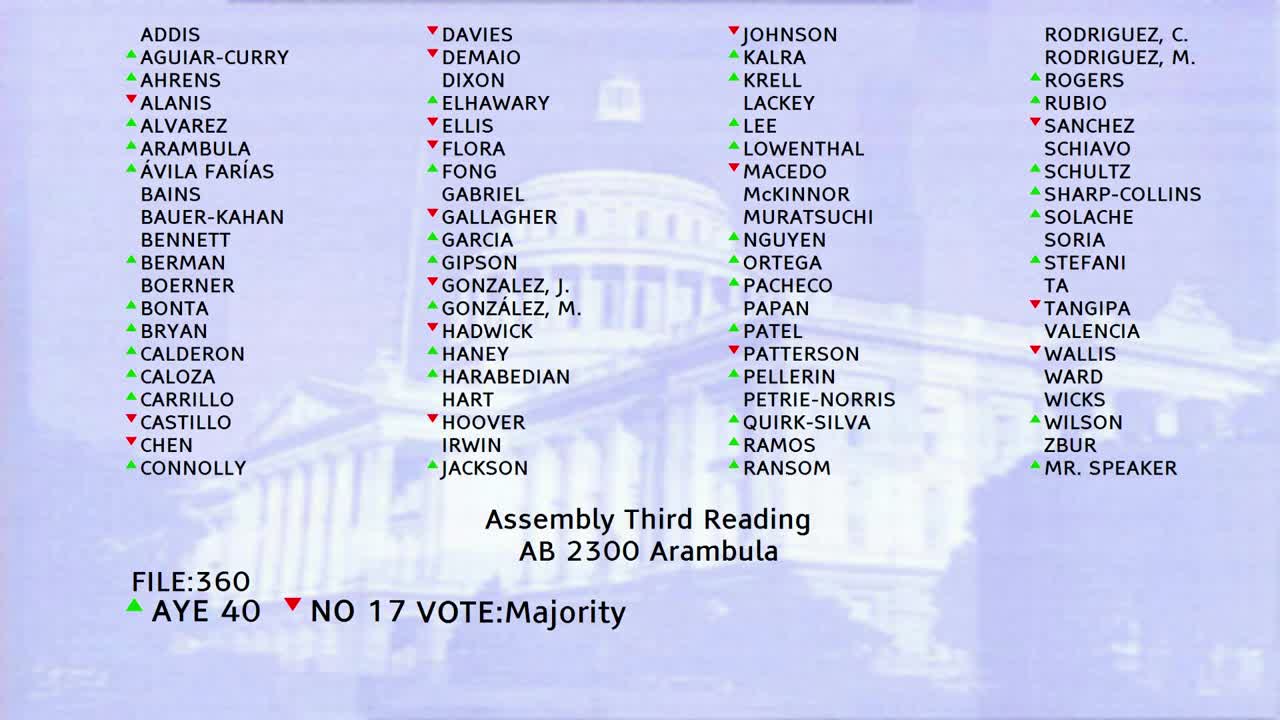

Bill Author