AB 2564: Surveillance pricing.
- Session Year: 2025-2026
- House: Assembly
- Latest Version Date: 2026-08-21
Current Status:
In Progress
(2026-08-31: In Assembly. Concurrence in Senate amendments pending.)
Introduced
In Committee
Awaiting First Chamber Vote
Passed First Chamber
In Committee
Awaiting Second Chamber Vote
Passed Second Chamber
Enacted
Existing law, the California Consumer Privacy Act of 2018 (CCPA), grants a consumer various rights with respect to personal information that is collected or sold by a business, as defined, including the right to direct a business that sells or shares personal information about the consumer to third parties not to sell or share the consumers personal information, as specified. Existing law, the California Privacy Rights Act of 2020, approved by the voters as Proposition 24 at the November 3, 2020, statewide general election, amended, added to, and reenacted the CCPA and establishes the California Privacy Protection Agency and vests the agency with full administrative power, authority, and jurisdiction to enforce those provisions.
Existing law requires a retail grocery store or grocery department within a general retail merchandise store that uses a point-of-sale system to have a clearly readable price indicated on 85% of the total number of packaged consumer commodities offered for sale, subject to specified exemptions.
This bill would, subject to certain exceptions, prohibit a retailer from engaging in surveillance pricing. The bill would define surveillance pricing to mean offering or setting a customized price for a good for a specific consumer or group of consumers, based, in whole or in part, on personally identifiable information collected through electronic surveillance technology, information, as specified, and determined in whole or in part through the use of any technology, software, program, machine-based system, or computational process that uses statistical modeling, data analytics, artificial intelligence, or other data processing techniques. The bill would also define surveillance pricing to mean random variations in prices to different consumers using a website, mobile application, or comparable online technology. The bill would provide that its provisions do not limit or impair any consumer right or remedy available under any other state or federal law. The bill would declare that any waiver of these provisions is against public policy and is void and unenforceable.
This bill would declare that its provisions further the purposes and intent of the California Privacy Rights Act of 2020.
Existing law, the California Consumer Privacy Act of 2018 (CCPA), grants a consumer various rights with respect to personal information that is collected or sold by a business, as defined, including the right to direct a business that sells or shares personal information about the consumer to third parties not to sell or share the consumers personal information, as specified. Existing law, the California Privacy Rights Act of 2020, approved by the voters as Proposition 24 at the November 3, 2020, statewide general election, amended, added to, and reenacted the CCPA and establishes the California Privacy Protection Agency and vests the agency with full administrative power, authority, and jurisdiction to enforce those provisions.
Existing law requires a retail grocery store or grocery department within a general retail merchandise store that uses a point-of-sale system to have a clearly readable price indicated on 85% of the total number of packaged consumer commodities offered for sale, subject to specified exemptions.
This bill would, subject to certain exceptions, prohibit a retailer from engaging in surveillance pricing. The bill would define surveillance pricing to mean offering or setting a customized price for a good for a specific consumer or group of consumers, based, in whole or in part, on personally identifiable information collected through electronic surveillance technology, as specified. specified, and determined in whole or in part through the use of any technology, software, program, machine-based system, or computational process that uses statistical modeling, data analytics, artificial intelligence, or other data processing techniques. The bill would also define surveillance pricing to mean random variations in prices to different consumers using a website, mobile application, or comparable online technology. The bill would declare that any waiver of these provisions is against public policy and is void and unenforceable.
This bill would declare that its provisions further the purposes and intent of the California Privacy Rights Act of 2020.
Existing law, the California Consumer Privacy Act of 2018 (CCPA), grants a consumer various rights with respect to personal information that is collected or sold by a business, as defined, including the right to direct a business that sells or shares personal information about the consumer to third parties not to sell or share the consumers personal information, as specified. Existing law, the California Privacy Rights Act of 2020, approved by the voters as Proposition 24 at the November 3, 2020, statewide general election, amended, added to, and reenacted the CCPA and establishes the California Privacy Protection Agency and vests the agency with full administrative power, authority, and jurisdiction to enforce those provisions.
Existing law requires a retail grocery store or grocery department within a general retail merchandise store that uses a point-of-sale system to have a clearly readable price indicated on 85% of the total number of packaged consumer commodities offered for sale, subject to specified exemptions.
This bill would, subject to certain exceptions, prohibit a retailer from engaging in surveillance pricing. The bill would define surveillance pricing to mean offering or setting a customized price for a good for a specific consumer or group of consumers, based, in whole or in part, on personally identifiable information collected through electronic surveillance technology, as specified. The bill would provide that only a public prosecutor, as specified, may bring an action against a violator of these provisions to recover specified civil penalties, injunctive relief, and reasonable attorneys fees and costs, and would authorize a consumer to bring an action for injunctive relief and reasonable attorneys fees and costs. The bill would declare that any waiver of these provisions is against public policy and is void and unenforceable.
This bill would declare that its provisions further the purposes and intent of the California Privacy Rights Act of 2020.
For purposes of this part, the following definitions apply:
(a)Customized discounted price means a price that is verifiably lower than the widely available and publicly disclosed bona fide market price and is based, in whole or in part, on personally identifiable information.
(b)Electronic surveillance technology includes the use of technological methods, systems, or tools, including, but not limited to, sensors, cameras, device tracking, or biometric monitoring, that are capable of gathering personally identifiable information about a consumers behavior, characteristics, location, or other personal attributes, whether in physical or digital environments.(c)(b)Goods has the same meaning as defined in Section 1761.
(d)(c)Personally identifiable information shall have the same meaning as personal information as defined in paragraph (1) of subdivision (v) of Section 1798.140 of the Civil Code and any regulations promulgated thereunder.
(e)(d)(1)Retailer shall have the same meaning as that term is defined in Section 6015 of the Revenue and Taxation Code.
(2)Retailer does not include an entity that is licensed pursuant to Article 1 (commencing with Section 11700) of Chapter 4 of Division 5 of the Vehicle Code who communicates a total price in compliance with Section 1784.41 of this code.
(f)(e)Sale price means a price that is verifiably lower than the widely available and publicly disclosed bona fide market price, available to the general public on the same terms, set without the use of personally identifiable information, and automatically applied to all relevant purchases. Sale price includes the price of an individual item, or to all or part of a transaction.
(g)(f)(1)Surveillance pricing means either of the following:
(A)Offering or setting a customized price for a good that meets both of the following:
(i)The customized price is for a specific consumer or group of consumers, based, in whole or in part, on personally identifiable information collected through electronic surveillance technology, including personally identifiable information collected through electronic surveillance technology that is gathered, purchased, or otherwise acquired from a third party.
(ii)The customized price is determined in whole or in part through the use of any technology, software, program, machine-based system, or computational process that uses statistical modeling, data analytics, artificial intelligence, or other data processing techniques.
(B)Random variations in prices to different consumers using a website, mobile application, or comparable online technology.
(2)Surveillance pricing does not include any of the following:
(A)A sale price.
(B)Offering a different price for the same good if the difference in price is based solely on costs associated with providing the good to different consumers.
(C)Offering a different price for the same good if the difference in price is based solely on the costs arising from an auction or transaction involving bidding or negotiation.
7201.(a)Except as provided in subdivision (b), a retailer shall not engage in surveillance pricing.
(b)A retailer does not engage in surveillance pricing by doing any of the following:
(1)Offering a customized discounted price to a consumer who is terminating or taking steps to terminate a subscription or membership with the retailer.
(2)Offering a customized discounted price to a consumer for items the consumer has left in their online shopping cart, if both of the following apply:(A)The customized discounted price is available on equal terms to all consumers with similar items left in their online shopping cart.(B)The retailer does not combine, pair, or cross-reference the data about the contents of the consumers online shopping cart with other personal information about the consumer in determining discount eligibility.(2)Offering a customized discounted price to reestablish a consumer as a member, rewards program, or subscription enrollee if the retailer can demonstrate all of the following:
(A)The customized discounted price is based exclusively on whether the consumer was a membership, rewards program, or subscription enrollee with the retailer.
(B)The customized discounted price is available on equal terms to all consumers the retailer seeks to reestablish as enrollees.
(C)The retailer does not combine, pair, or cross-reference data on the consumers membership, rewards or subscription enrollment status with other personally identifiable information about the consumer in determining discount eligibility or in setting or offering the discount.
(3)Offering a customized discounted price on a specific good to a consumer based on the consumers prior purchase history, if the retailer can demonstrate all of the following:
(A)The customized discounted price is based exclusively on a consumers prior purchase of a similar or related good or service from the retailer.
(B)The customized discounted price is available on equal terms to all consumers who have recently purchased the same related good or service from the retailer.
(C)The retailer does not combine, pair, or cross-reference the consumers history of purchasing that good or service with other personally identifiable information about the consumer in determining discount eligibility or in setting or offering the discount.
(4)Offering a customized discounted price on a specific good to a consumer based on the consumers saved goods if the retailer can demonstrate all of the following:
(A)The customized discounted price is based exclusively on the fact that the consumer saved that good on the retailers website.
(B)The customized discounted price is available on equal terms to all consumers with the same saved good.
(C)The retailer does not combine, pair, or cross-reference data on the consumers saved good with other personally identifiable information about the consumer in determining discount eligibility or in setting or offering the discount.
(5)Offering a customized discounted price to a consumer who is a first-time visitor to a retailers website or application if the retailer can demonstrate all of the following:
(A)The customized discounted price is based exclusively on the fact that they are visiting the retailers website or application for the first time.
(B)The customized discounted price is available on equal terms to all consumers visiting the website or application for the first time.
(C)The retailer does not combine, pair, or cross-reference data about whether the consumer has visited the retailers website or application with other personally identifiable information about the consumer in determining discount eligibility or in setting or offering the discount.
(6)Offering a customized discounted price to a consumer for a good the consumer has left in their online shopping cart if the retailer can demonstrate all of the following:
(A)The customized discounted price is based exclusively on the fact that the consumer has left that good in their shopping cart.
(B)The customized discounted price is available on equal terms to all consumers with the same good left in their online shopping cart.
(C)The retailer does not combine, pair, or cross-reference data about the contents of the consumers online shopping cart with other personally identifiable information about the consumer in determining discount eligibility or in setting or offering the discount.
(3)(7)Offering a customized discounted price on equal terms if all of the following apply:
(A)The customized discounted price is offered to any of the following groups of consumers:
(i)Consumers who affirmatively purchase or enroll in a loyalty, membership, or rewards program.
(ii)Consumers who belong to a broadly defined group, including teachers, active or retired military personnel, veterans of the United States Armed Forces, senior citizens, students, or residents of a specific geographic area.
(iii)Consumers who meet eligibility criteria, including criteria related to signing up for a mailing list, registering for promotional communications, or participating in a promotional event, if any consumer could potentially meet the eligibility criteria.
(B)If the retailer exclusively offers a customized discounted price in stores, the current eligibility criteria, available customized discounted prices, and any conditions for receiving or earning the customized discounted price are clearly and conspicuously disclosed in all stores where the discount is available prior to the point of sale while the customized discounted price is offered.
(C)(i)If the retailer offers a customized discounted price online, the current eligibility criteria, available customized discounted prices, and any conditions for receiving or earning the customized discounted price are clearly and conspicuously disclosed on the retailers internet website while the customized discounted price is offered. This subparagraph does
(ii)Clause (i) does not require a retailer to disclose available customized discounted prices on its internet website if all of the following apply:
(i)(I)The customized discounted price is not offered, determined by, available through, or advertised by the retailer, but is offered by a third-party promotional program.
(ii)(II)The third-party promotional programs primary business is offering third-party promotional programs.
(iii)(III)The third-party promotional program does not set, adjust, advise on, or direct the retail price of the good.
(iv)(IV)The retailer does not set, adjust, advise on, or direct the customized discounted price.
(iii)If a retailer offers a customized discounted price online exclusively to consumers enrolled in the retailers loyalty, membership, or rewards program and enrollees are required to log into their account to utilize their rewards, the retailer may provide the current eligibility criteria, available customized discounted prices, and any conditions for receiving or earning the discount behind the program account log-in page, provided that the disclosure otherwise complies with clause (i).
(D)The customized discounted price is made available on equal terms to all consumers who meet the disclosed eligibility criteria.
(4)(8)Setting a price or specific terms to extend credit, refusing to extend credit on specific terms, or refusing to enter into a transaction with a specific consumer, if the retailer is acting based on information contained in a consumer report, as defined by subdivision (d) of Section 603 of the federal Fair Credit Reporting Act (15 U.S.C. Sec. 1681).
(5)(9)Setting a price or specific terms to extend credit, refusing to extend credit on specific terms, or refusing to enter into a transaction with a specific commercial enterprise, if the retailer is acting based on information contained in a commercial credit report, as defined in Section 1785.42.
(c)Nothing in this part limits or impairs any consumer right or remedy available under any other state or federal law.
7202.Any waiver of this part is against public policy and is void and unenforceable.
SEC. 2.The Legislature finds and declares that this act furthers the purposes and intent of the California Privacy Rights Act of 2020.
For purposes of this part, the following definitions apply:
(a)Discounted Customized discounted price means a price that is verifiably lower than the widely available and publicly disclosed bona fide market price. price and is based, in whole or in part, on personally identifiable information.
(b)Electronic surveillance technology includes the use of technological methods, systems, or tools, including, but not limited to, sensors, cameras, device tracking, or biometric monitoring, that are capable of gathering personally identifiable information about a consumers behavior, characteristics, location, or other personal attributes, whether in physical or digital environments.
(c)Goods has the same meaning as defined in Section 1761.
(c)(d)Personally identifiable information shall have the same meaning as personal information as defined in paragraph (1) of subdivision (v) of Section 1798.140 of the Civil Code and any regulations promulgated thereunder.
(d)(e)(1)Retailer shall have the same meaning as that term is defined in Section 6015 of the Revenue and Taxation Code.
(2)Retailer does not include an entity that is licensed pursuant to Article 1 (commencing with Section 11700) of Chapter 4 of Division 5 of the Vehicle Code who communicates a total price in compliance with Section 1784.41 of this code.
(f)Sale price means a price that is verifiably lower than the widely available and publicly disclosed bona fide market price, available to the general public on the same terms, set without the use of personally identifiable information, and automatically applied to all relevant purchases. Sale price includes the price of an individual item, or to all or part of a transaction.
(e)(g)(1)Surveillance pricing means offering either of the following:
(A)Offering or setting a customized price for a good for that meets both of the following:
(i)The customized price is for a specific consumer or group of consumers, based, in whole or in part, on personally identifiable information collected through electronic surveillance technology, including personally identifiable information collected through electronic surveillance technology that is gathered, purchased, or otherwise acquired from a third party.
(ii)The customized price is determined in whole or in part through the use of any technology, software, program, machine-based system, or computational process that uses statistical modeling, data analytics, artificial intelligence, or other data processing techniques.
(2)Surveillance pricing does not include a discounted price offered to a consumer terminating or taking steps to terminate a service or membership with a person, but does include offering random(B)Random variations in prices to different customers consumers using a website, mobile application, or comparable online technology.
(2)Surveillance pricing does not include any of the following:
(A)A sale price.
(B)Offering a different price for the same good if the difference in price is based solely on costs associated with providing the good to different consumers.
(C)Offering a different price for the same good if the difference in price is based solely on the costs arising from an auction or transaction involving bidding or negotiation.
7201.(a)Except as provided in subdivision (b), a retailer shall not engage in surveillance pricing.
(b)A retailer does not engage in surveillance pricing if any of the following apply: by doing any of the following:
(1)The difference in price is based solely on costs associated with providing the good to different consumers.(2)The discounted price is publicly available and automatically applied to all relevant purchases.(3)The retailer offers a discounted price based, in whole or in part, on personally identifiable information collected through electronic surveillance technology and all of the following apply:(A)A discounted price is offered pursuant to any of the following:(i)Based on publicly disclosed eligibility criteria that any consumer could potentially meet, including, but not limited to, signing up for a mailing list, providing personal information registering for promotional communications, or participating in a promotional event. The terms and criteria for receiving the discounted price shall be conveyed clearly and conspicuously disclosed in clear and prominent terms in such a manner that an ordinary consumer would notice and understand them.(ii)To members of a broadly defined group, including, but not limited to, teachers, active or retired military, senior citizens, students, or residents of a certain area based on publicly disclosed eligibility criteria.(iii)Through a loyalty, membership, or rewards program that consumers affirmatively purchase or enroll in.(B)The current eligibility criteria, available discounts, and any conditions for receiving or earning the discounted price shall be clearly and conspicuously disclosed on the companys internet website.(C)The discounted price shall be made available to all consumers who meet the disclosed eligibility criteria.(4)The retailer satisfies both of the following:(A)The retailer is licensed pursuant to Section 11700 of the Vehicle Code.(B)The retailer communicates a total price in compliance with Section 1784.41.(1)Offering a customized discounted price to a consumer who is terminating or taking steps to terminate a subscription or membership with the retailer.
(2)Offering a customized discounted price to a consumer for items the consumer has left in their online shopping cart, if both of the following apply:
(A)The customized discounted price is available on equal terms to all consumers with similar items left in their online shopping cart.
(B)The retailer does not combine, pair, or cross-reference the data about the contents of the consumers online shopping cart with other personal information about the consumer in determining discount eligibility.
(3)Offering a customized discounted price on equal terms if all of the following apply:
(A)The customized discounted price is offered to any of the following groups of consumers:
(i)Consumers who affirmatively purchase or enroll in a loyalty, membership, or rewards program.
(ii)Consumers who belong to a broadly defined group, including teachers, active or retired military personnel, senior citizens, students, or residents of a specific geographic area.
(iii)Consumers who meet eligibility criteria, including criteria related to signing up for a mailing list, registering for promotional communications, or participating in a promotional event, if any consumer could potentially meet the eligibility criteria.
(B)If the retailer exclusively offers a customized discounted price in stores, the current eligibility criteria, available customized discounted prices, and any conditions for receiving or earning the customized discounted price are clearly and conspicuously disclosed in all stores where the discount is available prior to the point of sale while the customized discounted price is offered.
(C)If the retailer offers a customized discounted price online, the current eligibility criteria, available customized discounted prices, and any conditions for receiving or earning the customized discounted price are clearly and conspicuously disclosed on the retailers internet website while the customized discounted price is offered. This subparagraph does not require a retailer to disclose available customized discounted prices on its internet website if all of the following apply:
(i)The customized discounted price is not offered, determined by, available through, or advertised by the retailer, but is offered by a third-party promotional program.
(ii)The third-party promotional programs primary business is offering third-party promotional programs.
(iii)The third-party promotional program does not set, adjust, advise on, or direct the retail price of the good.
(iv)The retailer does not set, adjust, advise on, or direct the customized discounted price.
(D)The customized discounted price is made available on equal terms to all consumers who meet the disclosed eligibility criteria.
(4)Setting a price or specific terms to extend credit, refusing to extend credit on specific terms, or refusing to enter into a transaction with a specific consumer, if the retailer is acting based on information contained in a consumer report, as defined by subdivision (d) of Section 603 of the federal Fair Credit Reporting Act (15 U.S.C. Sec. 1681).
(5)Setting a price or specific terms to extend credit, refusing to extend credit on specific terms, or refusing to enter into a transaction with a specific commercial enterprise, if the retailer is acting based on information contained in a commercial credit report, as defined in Section 1785.42.
7202.Any waiver of this part is against public policy and is void and unenforceable.
SEC. 2.The Legislature finds and declares that this act furthers the purposes and intent of the California Privacy Rights Act of 2020.
For purposes of this part, the following definitions apply:
(a)Discounted price means a price that is verifiably lower than the widely available and publicly disclosed bona fide market price.
(b)Electronic surveillance technology includes the use of technological methods, systems, or tools, including, but not limited to, sensors, cameras, device tracking, or biometric monitoring, that are capable of gathering personally identifiable information about a consumers behavior, characteristics, location, or other personal attributes, whether in physical or digital environments.
(c)Personally identifiable information shall have the same meaning as personal information as defined in paragraph (1) of subdivision (v) of Section 1798.140 of the Civil Code and any regulations promulgated thereunder.
(d)Retailer shall have the same meaning as that term is defined in Section 6015 of the Revenue and Taxation Code.
(e)(1)Surveillance pricing means offering or setting a customized price for a good for a specific consumer or group of consumers, based, in whole or in part, on personally identifiable information collected through electronic surveillance technology, including personally identifiable information collected through electronic surveillance technology that is gathered, purchased, or otherwise acquired from a third party.
(2)Surveillance pricing does not include a discounted price offered to a consumer terminating or taking steps to terminate a service or membership with a person, but does include offering random variations in prices to different customers using a website, mobile application, or comparable online technology.
7202.7201.(a)Except as provided in subdivision (b), a retailer shall not engage in surveillance pricing.
(b)A retailer does not engage in surveillance pricing if either any of the following apply:
(1)The difference in price is based solely on costs associated with providing the good to different consumers.
(2)The discounted price is publicly available and automatically applied to all relevant purchases.
(2)(A)(3)The retailer offers a discounted price that complies with the requirements of subparagraph (B) and any based, in whole or in part, on personally identifiable information collected through electronic surveillance technology and all of the following apply:
(A)A discounted price is offered pursuant to any of the following:
(i)A discounted price is offered based Based on publicly disclosed eligibility criteria that any consumer could potentially meet, including, but not limited to, signing up for a mailing list, providing personal information registering for promotional communications, or participating in a promotional event. The terms and criteria for receiving the discounted price shall be conveyed clearly and conspicuously disclosed in clear and prominent terms in such a manner that an ordinary consumer would notice and understand them.
(ii)A discounted price is offered to To members of a broadly defined group, including, but not limited to, teachers, active or retired military, senior citizens, students, or residents of a certain area based on publicly disclosed eligibility criteria.
(iii)A discounted price is offered through Through a loyalty, membership, or rewards program that consumers affirmatively purchase or enroll in.
(B)(i)The current eligibility criteria, available discounts, and any conditions for receiving or earning the discounted price shall be clearly and conspicuously disclosed on the companys internet website.
(ii)(C)The discounted price shall be uniformly offered or made available to all consumers who meet the disclosed eligibility criteria.
(4)The retailer satisfies both of the following:
(A)The retailer is licensed pursuant to Section 11700 of the Vehicle Code.
(B)The retailer communicates a total price in compliance with Section 1784.41.
7204.(a)A retailer who violates this part shall be liable for the following penalties, upon a civil action brought by the Attorney General, a city attorney, or a county counsel, with each violation with respect to an individual consumer or transaction constituting a separate and distinct violation:(1)A civil penalty not to exceed twelve thousand five hundred dollars ($12,500).(2)For a retailer that intentionally violates this part, a civil penalty no greater than three times the amount of the penalty assessed pursuant to paragraph (1) and all revenues earned from the violation.(b)A prevailing plaintiff in an action brought pursuant to this section shall be awarded reasonable attorneys fees and costs.(c)In addition to awarding civil penalties and other monetary relief, a court may award injunctive or declaratory relief as necessary to enforce this part and to remedy any violation of its provisions.(d)A consumer may bring an action for injunctive relief as necessary to enforce this part and to remedy any violation of its provisions.(e)A prevailing plaintiff in an action brought pursuant to this section shall be awarded reasonable attorneys fees and costs.7208.7202.Any waiver of this part is against public policy and is void and unenforceable.
7209.The rights, remedies, and penalties established by this part are cumulative and shall not limit or diminish the rights, remedies, or penalties established under other laws, including, but not limited to, Chapter 6 (commencing with Section 12940) of Part 2.8 of Division 3 of Title 2 of the Government Code, or Section 51 or Title 1.81.5 (commencing with Section 1798.100) of Part 4 of Division 3 of this code.SEC. 2.The Legislature finds and declares that this act furthers the purposes and intent of the California Privacy Rights Act of 2020.
For purposes of this part, the following definitions apply:
(a)Discounted price means a price that is verifiably lower than the widely available and publicly disclosed bona fide market price.
(b)Electronic surveillance technology includes the use of technological methods, systems, or tools, including, but not limited to, sensors, cameras, device tracking, or biometric monitoring, that are capable of gathering personally identifiable information about a consumers behavior, characteristics, location, or other personal attributes, whether in physical or digital environments.
(c)Personally identifiable information shall have the same meaning as personal information as defined in paragraph (1) of subdivision (v) of Section 1798.140 of the Civil Code and any regulations promulgated thereunder.
(d)Retailer shall have the same meaning as that term is defined in Section 6015 of the Revenue and Taxation Code.
(e)(1)Surveillance pricing means offering or setting a customized price for a good for a specific consumer or group of consumers, based, in whole or in part, on personally identifiable information collected through electronic surveillance technology, including personally identifiable information collected through electronic surveillance technology that is gathered, purchased, or otherwise acquired from a third party.
(2)Surveillance pricing does not include a discounted price offered to a consumer terminating or taking steps to terminate a service or membership with a person, but does include offering random variations in prices to different customers using a website, mobile application, or comparable online technology.
7202.(a)Except as provided in subdivision (b), a retailer shall not engage in surveillance pricing.
(b)A retailer does not engage in surveillance pricing if either of the following apply:
(1)The difference in price is based solely on costs associated with providing the good to different consumers.
(2)(A)The retailer offers a discounted price that complies with the requirements of subparagraph (B) and any of the following apply:
(i)A discounted price is offered based on publicly disclosed eligibility criteria that any consumer could potentially meet, including, but not limited to, signing up for a mailing list, providing personal information registering for promotional communications, or participating in a promotional event. The terms and criteria for receiving the discounted price shall be conveyed clearly and conspicuously disclosed in clear and prominent terms in such a manner that an ordinary consumer would notice and understand them.
(ii)A discounted price is offered to members of a broadly defined group, including, but not limited to, teachers, active or retired military, senior citizens, students, or residents of a certain area based on publicly disclosed eligibility criteria.
(iii)A discounted price is offered through a loyalty, membership, or rewards program that consumers affirmatively purchase or enroll in.
(B)(i)The current eligibility criteria, available discounts, and any conditions for receiving or earning the discounted price shall be clearly and conspicuously disclosed on the companys internet website.
(ii)The discounted price shall be uniformly offered or made available to all consumers who meet the disclosed eligibility criteria.
7204.(a)Except as provided under subdivision (b), actions pursuant to this part may only be brought by the Attorney General, by any district attorney, by any city attorney of a city having a population in excess of 750,000, by a county counsel of any county within which a city has a population in excess of 750,000, by any city attorney of any city and county, or, with the consent of the district attorney, by a city prosecutor in any city having a full-time city prosecutor, in any court of competent jurisdiction.(1)In addition to any other remedy at law, a retailer that violates this part shall be liable for the following civil penalties, which shall be assessed and recovered in a civil action brought pursuant to this subdivision:7204.(a)A retailer who violates this part shall be liable for the following penalties, upon a civil action brought by the Attorney General, a city attorney, or a county counsel, with each violation with respect to an individual consumer or transaction constituting a separate and distinct violation:
(A)(1)A civil penalty not to exceed twelve thousand five hundred dollars ($12,500) for each violation, with each violation of this part constituting a separate violation with respect to each consumer or transaction involved. ($12,500).
(B)(2)For a retailer that intentionally violates this part, a civil penalty no greater than three times the amount of the penalty assessed pursuant to subparagraph (A) paragraph (1) and all revenues earned from the violation.
(2)(b)A prevailing plaintiff in an action brought pursuant to this subdivision section shall be awarded reasonable attorneys fees and costs.
(3)(c)In addition to awarding civil penalties and other monetary relief, a court may award injunctive or declaratory relief as necessary to enforce this part and to remedy any violation of its provisions.
(b)(1)(d)A consumer may bring an action for injunctive relief as necessary to enforce this part and to remedy any violation of its provisions.
(2)(e)A prevailing plaintiff in an action brought pursuant to this subdivision section shall be awarded reasonable attorneys fees and costs.
7208.Any waiver of this part is against public policy and is void and unenforceable.
7209.The rights, remedies, and penalties established by this part are cumulative and shall not limit or diminish the rights, remedies, or penalties established under other laws, including, but not limited to, Chapter 6 (commencing with Section 12940) of Part 2.8 of Division 3 of Title 2 of the Government Code, or Section 51 or Title 1.81.5 (commencing with Section 1798.100) of Part 4 of Division 3 of this code.
SEC. 2.The Legislature finds and declares that this act furthers the purposes and intent of the California Privacy Rights Act of 2020.
For purposes of this part, the following definitions apply:
(a)Discounted price means a price that is verifiably lower than the widely available and publicly disclosed bona fide market price.
(b)Electronic surveillance technology includes the use of technological methods, systems, or tools, including, but not limited to, sensors, cameras, device tracking, or biometric monitoring, that are capable of gathering personally identifiable information about a consumers behavior, characteristics, location, or other personal attributes, whether in physical or digital environments.
(c)Personally identifiable information shall have the same meaning as personal information as defined in paragraph (1) of subdivision (v) of Section 1798.140 of the Civil Code and any regulations promulgated thereunder.
(d)Retailer shall have the same meaning as that term is defined in Section 6015 of the Revenue and Taxation Code.
(e)(1)Surveillance pricing means offering or setting a customized price for a good for a specific consumer or group of consumers, based, in whole or in part, on personally identifiable information collected through electronic surveillance technology, including personally identifiable information collected through electronic surveillance technology that is gathered, purchased, or otherwise acquired from a third party.
(2)Surveillance pricing does not include a discounted price offered to a consumer terminating or taking steps to terminate a service or membership with a person, but does not include offering random variations in prices to different customers using a website, mobile application, or comparable online technology.
7202.(a)Except as provided in subdivision (b), a retailer shall not engage in surveillance pricing.
(b)Notwithstanding any other law, a A retailer does not engage in surveillance pricing if either of the following apply:
(1)The difference in price is based solely on costs associated with providing the good to different consumers.
(2)(A)The retailer offers a discounted price that complies with the requirements of subparagraph (B) and any of the following apply:
(i)A discounted price is offered based on publicly disclosed eligibility criteria that any consumer could potentially meet, including, but not limited to, signing up for a mailing list, providing personal information registering for promotional communications, or participating in a promotional event. The terms and criteria for receiving the discounted price shall be conveyed clearly and conspicuously disclosed in clear and prominent terms in such a manner that an ordinary consumer would notice and understand them.
(ii)A discounted price is offered to members of a broadly defined group, including, but not limited to, teachers, active or retired military, senior citizens, students, or residents of a certain area based on publicly disclosed eligibility criteria.
(iii)A discounted price is offered through a loyalty, membership, or rewards program that consumers affirmatively purchase or enroll in.
(B)(i)The current eligibility criteria, available discounts, and any conditions for receiving or earning the discounted price shall be clearly and conspicuously disclosed on the companys internet website.
(ii)The discounted price shall be uniformly offered or made available to all consumers who meet the disclosed eligibility criteria.
7204.(a)Except as provided under subdivision (b), actions pursuant to this part may only be brought by the Attorney General, by any district attorney, by any city attorney of a city having a population in excess of 750,000, by a county counsel of any county within which a city has a population in excess of 750,000, by any city attorney of any city and county, or, with the consent of the district attorney, by a city prosecutor in any city having a full-time city prosecutor, in any court of competent jurisdiction.
(1)In addition to any other remedy at law, a retailer that violates this part shall be liable for the following civil penalties, which shall be assessed and recovered in a civil action brought pursuant to this subdivision:
(A)A civil penalty not to exceed twelve thousand five hundred dollars ($12,500) for each violation, with each violation of this part constituting a separate violation with respect to each consumer or transaction involved.
(B)For a retailer that intentionally violates this part, a civil penalty no greater than three times the amount of the penalty assessed pursuant to subparagraph (A) and all revenues earned from the violation.
(2)A prevailing plaintiff in an action brought pursuant to this subdivision shall be awarded reasonable attorneys fees and costs.
(3)In addition to awarding civil penalties and other monetary relief, a court may award injunctive or declaratory relief as necessary to enforce this part and to remedy any violation of its provisions.
(b)(1)A consumer may bring an action for injunctive relief as necessary to enforce this part and to remedy any violation of its provisions.
(2)A prevailing plaintiff in an action brought pursuant to this subdivision shall be awarded reasonable attorneys fees and costs.
7208.Any waiver of this part is against public policy and is void and unenforceable.
7209.The rights, remedies, and penalties established by this part are cumulative and shall not limit or diminish the rights, remedies, or penalties established under other laws, including, but not limited to, Chapter 6 (commencing with Section 12940) of Part 2.8 of Division 3 of Title 2 of the Government Code, or Section 51 or Title 1.81.5 (commencing with Section 1798.100) of Part 4 of Division 3 of this code.
SEC. 2.The Legislature finds and declares that this act furthers the purposes and intent of the California Privacy Rights Act of 2020.
For purposes of this part, the following definitions apply:
(a)Discounted price means a price that is verifiably lower than the widely available and publicly disclosed bona fide market price.
(b)Electronic surveillance technology includes the use of technological methods, systems, or tools, including, but not limited to, sensors, cameras, device tracking, or biometric monitoring, that are capable of gathering personally identifiable information about a consumers behavior, characteristics, location, or other personal attributes, whether in physical or digital environments.
(c)Personally identifiable information shall have the same meaning as personal information as defined in paragraph (1) of subdivision (v) of Section 1798.140 of the Civil Code and any regulations promulgated thereunder.
(d)Retailer shall have the same meaning as that term is defined in Section 6015 of the Revenue and Taxation Code.
(e)(1)Surveillance pricing means offering or setting a customized price for a good for a specific consumer or group of consumers, based, in whole or in part, on personally identifiable information collected through electronic surveillance technology, including personally identifiable information collected through electronic surveillance technology that is gathered, purchased, or otherwise acquired from a third party.
(2)Surveillance pricing does not include a discounted price offered to a consumer terminating or taking steps to terminate a service or membership with a person, but does not include offering random variations in prices to different customers using a website, mobile application, or comparable online technology.
7202.(a)Except as provided in subdivision (b), a retailer shall not engage in surveillance pricing.
(b)Notwithstanding any other law, a retailer does not engage in surveillance pricing if either of the following apply:
(1)The difference in price is based solely on costs associated with providing the good to different consumers.
(2)(A)The retailer offers a discounted price that complies with the requirements of subparagraph (B) and any of the following apply:
(i)A discounted price is offered based on publicly disclosed eligibility criteria that any consumer could potentially meet, including, but not limited to, signing up for a mailing list, providing personal information registering for promotional communications, or participating in a promotional event. The terms and criteria for receiving the discounted price shall be conveyed clearly and conspicuously disclosed in clear and prominent terms in such a manner that an ordinary consumer would notice and understand them.
(ii)A discounted price is offered to members of a broadly defined group, including, but not limited to, teachers, active or retired military, senior citizens, students, or residents of a certain area based on publicly disclosed eligibility criteria.
(iii)A discounted price is offered through a loyalty, membership, or rewards program that consumers affirmatively purchase or enroll in.
(B)(i)The current eligibility criteria, available discounts, and any conditions for receiving or earning the discounted price shall be clearly and conspicuously disclosed on the companys internet website.
(ii)The discounted price shall be uniformly offered or made available to all consumers who meet the disclosed eligibility criteria.
7204.(a)Except as provided under subdivision (b), actions pursuant to this part may only be brought by the Attorney General, by any district attorney, by any city attorney of a city having a population in excess of 750,000, by a county counsel of any county within which a city has a population in excess of 750,000, by any city attorney of any city and county, or, with the consent of the district attorney, by a city prosecutor in any city having a full-time city prosecutor, in any court of competent jurisdiction.
(1)In addition to any other remedy at law, a retailer that violates this part shall be liable for the following civil penalties, which shall be assessed and recovered in a civil action brought pursuant to this subdivision:
(A)A civil penalty not to exceed twelve thousand five hundred dollars ($12,500) for each violation, with each violation of this part constituting a separate violation with respect to each consumer or transaction involved.
(B)For a retailer that intentionally violates this part, a civil penalty no greater than three times the amount of the penalty assessed pursuant to subparagraph (A) and all revenues earned from the violation.
(2)A prevailing plaintiff in an action brought pursuant to this subdivision shall be awarded reasonable attorneys fees and costs.
(3)In addition to awarding civil penalties and other monetary relief, a court may award injunctive or declaratory relief as necessary to enforce this part and to remedy any violation of its provisions.
(b)(1)A consumer may bring an action for injunctive relief as necessary to enforce this part and to remedy any violation of its provisions.
(2)A prevailing plaintiff in an action brought pursuant to this subdivision shall be awarded reasonable attorneys fees and costs.
7208.Any waiver of this part is against public policy and is void and unenforceable.
7209.The rights, remedies, and penalties established by this part are cumulative and shall not limit or diminish the rights, remedies, or penalties established under other laws, including, but not limited to, Chapter 6 (commencing with Section 12940) of Part 2.8 of Division 3 of Title 2 of the Government Code, or Section 51 or Title 1.81.5 (commencing with Section 1798.100) of Part 4 of Division 3 of this code.
SEC. 2.The Legislature finds and declares that this act furthers the purposes and intent of the California Privacy Rights Act of 2020.
|
Date
|
Status
|
|---|---|
| Aug 31, 2026 | In Assembly. Concurrence in Senate amendments pending. |
| Aug 31, 2026 | Read third time. Passed. Ordered to the Assembly. (Ayes 22. Noes 14.). |
| Aug 24, 2026 | Read second time. Ordered to third reading. |
| Aug 21, 2026 | Read third time and amended. Ordered to second reading. |
| Aug 18, 2026 | Read second time. Ordered to third reading. |
| Aug 17, 2026 | Read third time and amended. Ordered to second reading. |
| Jun 29, 2026 | Read second time. Ordered to third reading. |
| Jun 25, 2026 | Ordered to second reading. |
| Jun 25, 2026 | Withdrawn from committee. |
| Jun 25, 2026 | In committee: Hearing postponed by committee. |
| Jun 24, 2026 | From committee chair, with author's amendments: Amend, and re-refer to committee. Read second time, amended, and re-referred to Com. on JUD. |
| Jun 23, 2026 | From committee: Do pass and re-refer to Com. on JUD. (Ayes 5. Noes 2.) (June 22). Re-referred to Com. on JUD. |
| Jun 16, 2026 | In committee: Set, first hearing. Hearing canceled at the request of author. |
| Jun 10, 2026 | Referred to Coms. on P., D.T., & C.P. and JUD. |
| May 28, 2026 | In Senate. Read first time. To Com. on RLS. for assignment. |
| May 27, 2026 | Read third time. Passed. Ordered to the Senate. (Ayes 42. Noes 21. Page 5494.) |
| May 27, 2026 | Read third time. Passed. Ordered to the Senate. (Ayes 42. Noes 21.) |
| May 27, 2026 | Read third time. Passed. Ordered to the Senate. |
| May 18, 2026 | Read second time. Ordered to third reading. |
| May 14, 2026 | From committee: Do pass. (Ayes 10. Noes 4.) (May 14). |
| Apr 29, 2026 | In committee: Set, first hearing. Referred to APPR. suspense file. |
| Apr 20, 2026 | Re-referred to Com. on APPR. |
| Apr 16, 2026 | Read second time and amended. |
| Apr 15, 2026 | From committee: Amend, and do pass as amended and re-refer to Com. on APPR. (Ayes 8. Noes 3.) (April 14). |
| Mar 25, 2026 | From committee: Do pass and re-refer to Com. on JUD. (Ayes 10. Noes 4.) (March 25). Re-referred to Com. on JUD. |
| Mar 24, 2026 | Re-referred to Com. on P. & C.P. |
| Mar 23, 2026 | From committee chair, with author's amendments: Amend, and re-refer to Com. on P. & C.P. Read second time and amended. |
| Mar 9, 2026 | Referred to Coms. on P. & C.P. and JUD. |
| Feb 21, 2026 | From printer. May be heard in committee March 23. |
| Feb 20, 2026 | Read first time. To print. |
|
Date
|
Description
|
Location
|
Votes
|
|
|---|---|---|---|---|
| Aug 31, 2026 | Assembly 3rd Reading AB2564 Ward et al. By Wiener | Senate Floor |
Passed |
|
| Jun 22, 2026 | Do pass, but first be re-referred to the Committee on [Judiciary] | Senate Standing Committee on Privacy, Digital Technologies, and Consumer Protection |
Passed |
|
| May 27, 2026 | AB 2564 Ward Assembly Third Reading | Assembly Floor |
Passed |
|
| May 14, 2026 | Do pass. | Assembly Standing Committee on Appropriations |
Passed |
|
| Apr 14, 2026 | Do pass as amended and be re-referred to the Committee on [Appropriations] | Assembly Standing Committee on Judiciary |
Passed |
|
| Mar 25, 2026 | Do pass and be re-referred to the Committee on [Judiciary] | Assembly Standing Committee on Privacy and Consumer Protection |
Passed |
This list shows positions taken on this bill by organizations on the date displayed, which is linked to the original source.
Positions by individuals are not included.
|
Organization
|
Position
|
Date
|
|---|---|---|
| 1 individual | ** Support | |
| ACLU Cal Action | ** Support | |
| Alliance of Californians for Community Empowerment Action | ** Support | |
| American Federation of Musicians, Local 7 | ** Support | |
| American Federation Of State, County, And Municipal Employees, Afl-Cio | ** Support | |
| Association of National Advertisers | ** Against | |
| Beverly Hills Chamber Of Commerce | ** Against | |
| Buen Vecino | ** Support | |
| Building Owners and Managers Association of California | ** Against | |
| CalBroadband | ** Against | |
| California Alliance of Family Owned Businesses | ** Against | |
| California Business Properties Association | ** Against | |
| California Chamber Of Commerce | ** Against | |
| California Federation of Labor Unions | ** Support | |
| California Food and Farming Network | ** Support | |
| California Fuels And Convenience Alliance | ** Against | |
| California Grocers Association | ** Against | |
| California Low-Income Consumer Coalition | ** Support | |
| California Nurses Association | ** Support | |
| California Restaurant Association | ** Against | |
| California Retailers Association | ** Against | |
| California School Employees Association | ** Support | |
| California Work and Family Coalition | ** Support | |
| CAMEO Network | ** Support | |
| Carlsbad Chamber of Commerce | ** Against | |
| Center for AI and Digital Policy | ** Support | |
| Center for Ai and Digital Policy (CAIDP) | ** Support | |
| Center for Democracy and Technology | ** Support | |
| Center on Policy Initiatives | ** Support | |
| CFT- a Union of Educators & Classified Professionals | ** Support | |
| Chamber Of Progress | ** Against | |
| Chamber Of Progress | ** Against | |
| Chino Valley Chamber of Commerce | ** Against | |
| Cinema Association of California | ** Against | |
| Citrus Heights Chamber of Commerce | ** Against | |
| Civil Justice Association of California (CJAC) | ** Against | |
| Colusa County Chamber of Commerce | ** Against | |
| Connected Commerce Council | ** Against | |
| Consumer Attorneys Of California | ** Support | |
| Consumer Brands Association | ** Against | |
| Consumer Federation of America | ** Support | |
| Consumer Federation Of California | ** Support | |
| Consumer Reports | ** Support | |
| Consumer Reports | ** Support | |
| Consumer Watchdog | ** Support | |
| Courage California | ** Support | |
| Danville Area Chamber of Commerce | ** Against | |
| Economic Security California Action | ** Support | |
| Electronic Frontier Foundation | ** Support | |
| Electronic Privacy Information Center | ** Support | |
| Electronic Privacy Information Center (EPIC) | ** Support | |
| End Child Poverty California Powered by Grace | ** Support | |
| Equal Rights Advocates | ** Support | |
| Family Business Association of California | ** Against | |
| Friends Committee On Legislation Of California | ** Support | |
| Garden Grove Chamber Of Commerce | ** Against | |
| Gaslamp Quarter Association | ** Against | |
| Gilroy Chamber of Commerce | ** Against | |
| Greater Conejo Chamber of Commerce | ** Against | |
| Greater Conejo Valley Chamber of Commerce | ** Against | |
| Greater High Desert Chamber of Commerce | ** Against | |
| Greater Riverside Chambers of Commerce | ** Against | |
| Greater San Fernando Valley Chamber of Commerce | ** Against | |
| Greenlining Institute | ** Support | |
| Indivisible Ca: Statestrong | ** Support | |
| Institute for Local Self-Reliance | ** Support | |
| Internet.Works | ** Against | |
| Justice2jobs Coalition | ** Support | |
| Kapor Center Advocacy | ** Support | |
| LA Cañada Flintridge Chamber of Commerce and Community Association | ** Against | |
| LA Defensa | ** Support | |
| Lafayette Chamber of Commerce | ** Against | |
| LGBT Tech | ** Support | |
| Long Beach Area Chamber of Commerce | ** Against | |
| Los Angeles Alliance for a New Economy | ** Support | |
| Manhattan Beach Chamber Of Commerce | ** Against | |
| Naiop California | ** Against | |
| NextGen California | ** Support | |
| Oakland Privacy | ** Support | |
| Oceanside Chamber of Commerce | ** Against | |
| Orange County Business Council | ** Against | |
| Parent Voices California | ** Support | |
| Privacy Defense Alliance | ** Support | |
| Privacy Rights Clearinghouse | ** Support | |
| Public Law Center | ** Support | |
| Redlands Chamber of Commerce | ** Against | |
| Redondo Beach Chamber of Commerce | ** Against | |
| San Diego Regional Chamber Of Commerce | ** Against | |
| San Francisco Chamber of Commerce | ** Against | |
| San Juan Capistrano Chamber of Commerce | ** Against | |
| Santa Maria Valley Chamber of Commerce | ** Against | |
| Secure Justice | ** Support | |
| SEIU California | ** Support | |
| Sister Warriors Freedom Coalition | ** Support | |
| SMART - Transportation Division | ** Support | |
| South Bay Association of Chambers of Commerce | ** Against | |
| TechEquity | ** Support | |
| Techequity Action | ** Support | |
| Technet | ** Against | |
| Tech Oversight California | ** Support | |
| Techtonic Justice | ** Support | |
| the greater coachella valley chamber of commerce | ** Against | |
| Torrance Area Chamber of Commerce | ** Against | |
| UDW/AFSCME Local 3930 | ** Support | |
| Ultraviolet Action | ** Support | |
| USTelecom - the Broadband Association | ** Against | |
| Valley Industry and Commerce Association (VICA) | ** Against | |
| Valley Industry & Commerce Association | ** Against | |
| western center on law & poverty | ** Support | |
| Wilmington Chamber of Commerce | ** Against |
SENATE RULES COMMITTEE Office of Senate Floor Analyses (916) 651-4171 | AB 2564 |
THIRD READING
Bill No: AB 2564
Author: Ward (D), et al.
Amended: 8/21/26 in Senate
Vote: 21
SENATE PRIV., DIGITAL TECH. & CONS. PROT. COMMITTEE: 5-2, 6/22/26
AYES: Gonzalez, McNerney, Padilla, Reyes, Wiener
NOES: Jones, Ochoa Bogh
NO VOTE RECORDED: Cabaldon, Umberg
ASSEMBLY FLOOR: 42-21, 5/27/26 - See last page for vote
SUBJECT: Surveillance pricing
SOURCE: California Federation of Labor Unions
Consumer Reports
TechEquity Action
DIGEST:
This bill prohibits “surveillance pricing,” as defined, except as provided.
Senate Floor Amendments of 8/21/26 remove references to “electronic surveillance technology,” add a series of additional exemptions from the bill, loosen some disclosure requirements, and clarify its interaction with other laws.
Senate Floor Amendments of 8/17/26 refine the definition of “surveillance pricing” and reframe and expand the exclusions therefrom.
ANALYSIS:
Existing law:
- Establishes the California Consumer Privacy Act (CCPA), which grants consumers certain rights with regard to their personal information, including enhanced notice, access, and disclosure; the right to deletion; the right to restrict the sale of information; and protection from discrimination for exercising these rights. It places attendant obligations on businesses to respect those rights. (Civil (Civ.) Code § 1798.100 et seq.)
- Provides that the secret payment of allowances of rebates, refunds, commissions, or unearned discounts, whether in the form of money or otherwise, or secretly extending to certain purchasers special services or privileges not extended to all purchasers upon like terms and conditions, to the injury of a competitor and where such payment or allowance tends to destroy competition, is unlawful. (Business (Bus.) & Professions (Prof.) Code § 17045.)
- Establishes a general prohibition on unfair competition, known as the Unfair Competition Law (UCL), which covers any unlawful, unfair, or fraudulent business act or practice and unfair, deceptive, untrue, or misleading advertising, and any act prohibited under the False Advertising Law. (Bus. & Prof. Code § 17200.)
This bill:
- Prohibits retailers from engaging in “surveillance pricing.”
- Defines “surveillance pricing” as either of the following:
- Offering or setting a customized price for a good if for a specific consumer or group of consumers, based, in whole or in part, on personally identifiable information, including personally identifiable information that is gathered, purchased, or otherwise acquired from a third party. The price must be determined, at least in part, through the use of any technology or computational process that uses statistical modeling, data analytics, AI, or other data processing techniques.
- Random variations in prices to different consumers using a website, mobile application, or comparable online technology.
- Provides that a retailer does not engage in surveillance pricing by doing any of the following:
- Offering a customized discounted price to a consumer who is terminating or taking steps to terminate a subscription or membership with the retailer.
- Offering a customized discounted price to reestablish a consumer as a member, rewards program, or subscription enrollee if the retailer can demonstrate specified conditions.
- Offering a customized discounted price on a specific good to a consumer based on the consumer’s prior purchase history if the retailer can demonstrate specified conditions.
- Offering a customized discounted price on a specific good to a consumer based on the consumer’s saved goods if the retailer can demonstrate specified conditions.
- Offering a customized discounted price to a consumer who is a first-time visitor to a retailer’s website or application if the retailer can demonstrate specified conditions.
- Offering a customized discounted price to a consumer for items the consumer has left in their online shopping cart if the retailer can demonstrate specified conditions.
- Offering a customized discounted price on equal terms if all of the following apply:
- The customized discounted price is offered to any of the following groups of consumers:
- Consumers who affirmatively purchase or enroll in a loyalty, membership, or rewards program.
- Consumers who belong to a broadly defined group, as specified.
- Consumers who meet eligibility criteria, as specified.
- If the retailer exclusively offers a customized discounted price in stores, the current eligibility criteria, available customized discounted prices, and any conditions for receiving or earning the customized discounted price are clearly and conspicuously disclosed in all stores where the discount is available, as provided.
- If the retailer offers a customized discounted price online, the current eligibility criteria, available customized discounted prices, and any conditions for receiving or earning the customized discounted price are clearly and conspicuously disclosed on the retailer’s website while the customized discounted price is offered. Disclosure is not required when the customized price is offered through a third-party promotional program, as provided.
- The customized discounted price is made available on equal terms to all consumers who meet the disclosed eligibility criteria.
- The customized discounted price is offered to any of the following groups of consumers:
- Setting a price or specific terms to extend credit, refusing to extend credit on specific terms, or refusing to enter into a transaction with a specific consumer or commercial enterprise, if the retailer is acting based on information contained in a consumer or commercial credit report, as provided.
- Defines the relevant terms.
- Makes any waiver void and unenforceable.
- Finds and declares that it furthers the purposes of the California Privacy Rights Act.
Comments
Companies regularly and systematically collect, analyze, share, and sell the personal information of consumers. While this data collection can provide consumers various benefits, public fears about the widespread, unregulated amassing of personal information have only grown since privacy was made a part of California’s Constitution. One particularly troubling area of this systematic data collection is utilization of this information to engage in differential pricing for consumers based on various elements of that information.
This bill prohibits this practice of “surveillance pricing,” defined as offering or setting a customized price for a good for a specific consumer or group of consumers, based, in whole or in part, on personally identifiable information, including personally identifiable information that is gathered, purchased, or otherwise acquired from a third party. This bill provides that a retailer does not engage in surveillance pricing if a customized discount price is offered under a series of specified circumstances.
Recent amendments add a host of additional discounts not considered “surveillance pricing” where certain conditions are met. This includes a prohibition on combining, pairing, or cross-referencing information needed for the discount with other personally identifiable information in “determining discount eligibility or in setting or offering the discount.” It should be noted that the author’s stated intent with this provision is that this does not preclude using a consumer’s contact information to send the offer, for instance, so long as that information is not otherwise used in discount determinations.
It should be noted that several other states are also taking action to combat surveillance pricing. Legislation has been introduced and passed through legislatures in four other states. This increased movement toward regulating this practice is driven in part by polling that suggests consumers find surveillance pricing “fundamentally unfair” and support bans.[1]
For a more thorough overview, please see the Senate Privacy, Digital Technologies, and Consumer Protection Committee analysis of this bill, which is incorporated herein by reference.
This bill is sponsored by Consumer Reports, TechEquity, and the California Federation of Labor Unions. It is supported by a wide array of labor, advocacy, and low-income services groups, including the Western Center on Law and Poverty, Equal Rights Advocates, and LGBT Tech. It is opposed by various industry groups, including TechNet and Chamber of Progress.
According to the author, “With the rise of artificial intelligence and data collection, businesses increasingly use personal data to set prices, often leading to unfair and discriminatory pricing practices. This legislation aims to establish safeguards that ensure transparency, fairness, and consumer protections in pricing algorithms. AB 2564 will prohibit the practice of surveillance pricing by making it unlawful for businesses to use personal data when charging different prices for the same product or service, whether online or during in-store checkout.”
FISCAL EFFECT: Appropriation: No Fiscal Com.: No Local: No
SUPPORT: (Verified 8/31/26)
California Federation of Labor Unions (co-source)
Consumer Reports (co-source)
TechEquity Action (co-source)
ACLU Cal Action
Alliance of Californians for Community Empowerment Action
American Federation of Musicians, Local 7
American Federation of State, County, and Municipal Employees, AFL-CIO
Buen Vecino
California Food and Farming Network
California Nurses Association
California School Employees Association
California Work and Family Coalition
Cameo Network
Center for AI and Digital Policy
Center for Democracy and Technology
Center on Policy Initiatives
CFT- a Union of Educators & Classified Professionals
Consumer Attorneys of California
Consumer Federation of America
Consumer Federation of California
Consumer Watchdog
Courage California
Economic Security California Action
Electronic Frontier Foundation
Electronic Privacy Information Center
End Child Poverty California Powered by Grace
Equal Rights Advocates
Friends Committee on Legislation of California
Greenlining Institute
Indivisible Ca: Statestrong
Institute for Local Self-reliance
Justice2jobs Coalition
Kapor Center Advocacy
LA Defensa
Los Angeles Alliance for a New Economy
LGBT Tech
Nextgen California
Oakland Privacy
Parent Voices California
Privacy Defense Alliance
Privacy Rights Clearinghouse
Public Law Center
Secure Justice
SEIU California
Sister Warriors Freedom Coalition
Smart - Transportation Division
Tech Oversight California
Techtonic Justice
UDW/AFSCME Local 3930
Ultraviolet Action
Western Center on Law & Poverty
1 Individual
OPPOSITION: (Verified 8/31/26)
Association of National Advertisers
Beverly Hills Chamber of Commerce
Building Owners and Managers Association of California
CalBroadband
California Alliance of Family Owned Businesses
California Business Properties Association
California Chamber of Commerce
California Fuels and Convenience Alliance
California Grocers Association
California Restaurant Association
California Retailers Association
Carlsbad Chamber of Commerce
Chamber of Progress
Chino Valley Chamber of Commerce
Cinema Association of California
Citrus Heights Chamber of Commerce
Civil Justice Association of California (CJAC)
Colusa County Chamber of Commerce
Consumer Brands Association
Danville Area Chamber of Commerce
Family Business Association of California
Garden Grove Chamber of Commerce
Gaslamp Quarter Association
Gilroy Chamber of Commerce
Greater Conejo Chamber of Commerce
Greater Conejo Valley Chamber of Commerce
Greater High Desert Chamber of Commerce
Greater Riverside Chambers of Commerce
Greater San Fernando Valley Chamber of Commerce
Internet.works
La Cañada Flintridge Chamber of Commerce and Community Association
Lafayette Chamber of Commerce
Long Beach Area Chamber of Commerce
Manhattan Beach Chamber of Commerce
NAIOP California
Oceanside Chamber of Commerce
Orange County Business Council
Redlands Chamber of Commerce
Redondo Beach Chamber of Commerce
San Diego Regional Chamber of Commerce
San Francisco Chamber of Commerce
San Juan Capistrano Chamber of Commerce
Santa Maria Valley Chamber of Commerce
South Bay Association of Chambers of Commerce
Technet
The Greater Coachella Valley Chamber of Commerce
Torrance Area Chamber of Commerce
Ustelecom - the Broadband Association
Valley Industry & Commerce Association
Valley Industry and Commerce Association (VICA)
Wilmington Chamber of Commerce
Yorba Linda Chamber of Commerce
ARGUMENTS IN SUPPORT: A coalition of legal services organizations, labor associations, civil rights organizations, and consumer, privacy, and family advocacy groups, including SEIU California write:
California consumers face a new and growing threat to fair pricing. Companies now possess the technology to collect vast amounts of consumer data and deploy artificial intelligence to charge each shopper a personalized price — one calibrated not to the market, but to the maximum that an individual can be made to pay. This practice, known as surveillance pricing, exploits detailed consumer profiles built from purchase histories, location data, browsing habits, and more.
Investigations have already uncovered real-world harms. Consumer Reports revealed that Kroger built 60-plus page profiles for individual consumers from loyalty program data to infer willingness to pay. … A SFGate investigation found that the most popular hotel booking sites show prices substantially higher to San Franciscans using their online booking platforms compared with users browsing from less affluent cities, like Phoenix and Kansas City. These are not isolated incidents — they reflect an industry trend. …
While California consumers benefit from some privacy protections under the California Consumer Privacy Act, no existing federal or state law prohibits companies from using the data they collect to charge consumers individually different prices. AB 2564 closes this gap. Without legislative intervention, surveillance pricing will become the industry standard, disproportionately harming lower-income Californians who already face the highest costs of living in the nation and have the fewest alternatives.
AB 2564 protects sensible, transparently offered discounts—including for loyalty programs. The bill’s exemptions permit a vast array of discounts, and transparency provisions help ensure that discounts are not secretly discriminatory. The bill does not restrict businesses from offering lower prices — it prevents them from secretly charging higher ones based on personal data profiles.
The right to fair and affordable pricing should not be a privilege for the few but a fundamental protection for all Californians.[2]
ARGUMENTS IN OPPOSITION: A coalition led by the California Chamber of Commerce asserts:
AB 2564 prohibits “surveillance pricing,” which it loosely defines as “offering or setting a customized price for a good or service[3] for a specific consumer or group of consumers, based, in whole or in part, on personally identifiable information collected through electronic surveillance technology...”
Notably, “electronic surveillance technology” is not actually defined in AB 2564. Instead, the bill only provides a list of examples that are “included,” but no description that would help a covered entity determine if the bill applied to the consumer information in their possession. A metaphor helps illustrate the problem with definitions that only say what they “include.” Imagine trying to define what is a “pet” - but the only definition is “Pets includes dogs or cats.” Such a definition provides no helpful guidance for anything not listed, such as bird or fish. Are those “pets?” Without a descriptive definition, it is impossible to know. Under AB 2564, the term “electronic surveillance technology” has the same problem – the definition does not describe what makes something an electronic surveillance technology. Instead, it only provides examples. Without a descriptive definition, employers will be left guessing what technologies are or are not covered by the bill.
ASSEMBLY FLOOR: 42-21, 5/27/26
AYES: Addis, Aguiar-Curry, Ahrens, Alvarez, Arambula, Bauer-Kahan, Bennett, Berman, Boerner, Bonta, Bryan, Caloza, Connolly, Elhawary, Fong, Gabriel, Garcia, Mark González, Haney, Harabedian, Hart, Jackson, Kalra, Lee, Lowenthal, Muratsuchi, Ortega, Pellerin, Ramos, Ransom, Michelle Rodriguez, Rogers, Schiavo, Schultz, Sharp-Collins, Stefani, Valencia, Ward, Wicks, Wilson, Zbur, Rivas
NOES: Alanis, Ávila Farías, Castillo, Chen, Davies, DeMaio, Dixon, Ellis, Flora, Gallagher, Jeff Gonzalez, Hadwick, Hoover, Johnson, Lackey, Macedo, Patterson, Sanchez, Ta, Tangipa, Wallis
NO VOTE RECORDED: Bains, Calderon, Carrillo, Gipson, Irwin, Krell, McKinnor, Nguyen, Pacheco, Papan, Patel, Petrie-Norris, Quirk-Silva, Celeste Rodriguez, Blanca Rubio, Solache, Soria
Prepared by: Christian Kurpiewski / P., D.T., & C.P. / (916) 651-1548
8/31/26 10:27:28
**** END ****
Strong Majority of Americans Want Corporations to End Deceptive Surveillance Pricing Schemes (May 21, 2026) Groundwork Collaborative, https://groundworkcollaborative.org/news/strong-majority-of-americans-want-corporations-to-end-deceptive-surveillance-pricing-schemes/. All internet citations are current as of August 18, 2026. ↑
See Consumer Reports Investigation Uncovers Kroger’s Widespread Data Collection (May 21, 2025) Consumer Reports, https://www.consumerreports.org/media-room/press-releases/2025/05/consumer-reports-investigation-uncovers-krogers-widespread-data-collection-of-loyalty-program-members-to-create-secret-shopper-profiles/; Keith A. Spencer, Hotel booking sites show higher prices to travelers from Bay Area (February 3, 2025) SFGate, https://www.sfgate.com/travel/article/hotel-booking-sites-overcharge-bay-area-travelers-20025145.php. ↑
The definition in the bill does not include “services.” ↑
CONCURRENCE IN SENATE AMENDMENTS
CSA1 Bill Id:AB 2564
Author:(Ward)
As Amended Ver:August 21, 2026
Majority vote
SUMMARY
This bill prohibits "surveillance pricing," defined as offering or setting a customized price for a good for a specific consumer or group of consumers, based, in whole or in part, on personally identifiable information collected through electronic surveillance technology, including personally identifiable information collected through electronic surveillance technology that is gathered, purchased, or otherwise acquired from a third party.
"Surveillance pricing" does not include a discounted price offered to a consumer terminating or taking steps to terminate a service or membership with a person but does include offering random variations in prices to different customers using a website, mobile application, or comparable online technology.
Senate Amendments
- Remove enforcement from the bill.
- Provide that the definition of "retailer" does not include automotive dealers.
- Refine the definition of "surveillance pricing" and provides that a retailer does not engage in surveillance pricing by doing any of the following:
- Offering a customized discounted price to a consumer who is terminating or taking steps to terminate a subscription or membership with the retailer.
- Offering a customized discounted price to reestablish a consumer as a member, rewards program, or subscription enrollee if the retailer can demonstrate specified conditions.
- Offering a customized discounted price on a specific good to a consumer based on the consumer's prior purchase history if the retailer can demonstrate specified conditions.
- Offering a customized discounted price on a specific good to a consumer based on the consumer's saved goods if the retailer can demonstrate specified conditions.
- Offering a customized discounted price to a consumer who is a first-time visitor to a retailer's website or application if the retailer can demonstrate specified conditions.
- Offering a customized discounted price to a consumer for items the consumer has left in their online shopping cart if the retailer can demonstrate specified conditions.
- Offering a customized discounted price on equal terms if all of the following apply:
- The customized discounted price is offered to any of the following groups of consumers:
- Consumers who affirmatively purchase or enroll in a loyalty, membership, or rewards program.
- Consumers who belong to a broadly defined group, as specified.
- Consumers who meet eligibility criteria, as specified.
- If the retailer exclusively offers a customized discounted price in stores, the current eligibility criteria, available customized discounted prices, and any conditions for receiving or earning the customized discounted price are clearly and conspicuously disclosed in all stores where the discount is available, as provided.
- If the retailer offers a customized discounted price online, the current eligibility criteria, available customized discounted prices, and any conditions for receiving or earning the customized discounted price are clearly and conspicuously disclosed on the retailer's website while the customized discounted price is offered. Disclosure is not required when the customized price is offered through a third-party promotional program, as provided.
- The customized discounted price is made available on equal terms to all consumers who meet the disclosed eligibility criteria.
- The customized discounted price is offered to any of the following groups of consumers:
- Setting a price or specific terms to extend credit, refusing to extend credit on specific terms, or refusing to enter into a transaction with a specific consumer or commercial enterprise, if the retailer is acting based on information contained in a consumer or commercial credit report, as provided. Remove references to "electronic surveillance technology."
4) Add a series of additional exemptions from the bill.
5) Loosen some disclosure requirements.
6) Clarify its interaction with other laws.
COMMENTS
Surveillance pricing is the practice of using consumers' personal information – including location, device type, demographics, and credit, browsing, or shopping history – to set the price of a good based on the consumer's perceived willingness to pay. This can lead to different consumers being charged different prices for the same good based on data-driven inferences and personal characteristics. While proponents of this practice claim it enhances price efficiency, critics contend that it is a surreptitious form of economic discrimination that disproportionately impacts lower-income communities that lack adequate options for purchasing essential goods.
It is important to distinguish surveillance pricing from dynamic pricing, which adjusts prices in response to market demand. For example, Wendy's fast food restaurants appeared to briefly flirt with dynamic pricing with plans to rapidly adjust the cost of their menu items based on demand – increasing the costs at times of peak demand.[1] In contrast, surveillance pricing treats each consumer as their own economy, using algorithms to assess their willingness to pay based on personal information such as browsing history, purchase behavior, and location.
The use of surveillance pricing does not just impact the consumers with higher incomes that the AI tool has determined are willing to pay more because they are able to. Surveillance pricing tools are able to also adjust prices based upon the inferred desperation of the consumer. For example, it is conceivable that a dossier might contain information suggesting that someone is a new parent and is in a 24-hour store late at night that they do not usually frequent that carries diapers. It would not be difficult for the tool to infer that the consumer has a level of desperation and urgency and is therefore willing to pay more for the diapers than someone in a less urgent situation.
The use of AI to set prices also raises concerns regarding biases within the algorithms that may disadvantage different groups. A 2021 study from George Washington University found that Uber and Lyft charged, on average, higher prices for pickups and drop-offs in predominantly non-white neighborhoods or neighborhoods with lower incomes.[2] While it is unclear whether these disparities stem from market forces or algorithmic bias because these companies use opaque algorithms to set prices, a possible conclusion is that algorithmic price setting could reinforce structural inequities.
Because businesses often operate without transparency, the extent of surveillance pricing remains uncertain. In the summer of 2024, the Federal Trade Commission launched a study to investigate how companies leverage AI, other technologies, and consumer data to set individualized prices. A preliminary report released in January revealed that at least 250 businesses have adopted technologies capable of implementing surveillance pricing. Lina Khan, former FTC Chair, concludes in this report:
Initial staff findings show that retailers frequently use people's personal information to set targeted, tailored prices for goods and services—from a person's location and demographics, down to their mouse movements on a webpage. The FTC should continue to investigate surveillance pricing practices because Americans deserve to know how their private data is being used to set the prices they pay and whether firms are charging different people different prices for the same good or service.[3]
According to the Author
With the rise of artificial intelligence and data collection, businesses increasingly use personal data to set prices, often leading to unfair and discriminatory pricing practices. This legislation aims to establish safeguards that ensure transparency, fairness, and consumer protections in pricing algorithms. AB 2564 will prohibit the practice of surveillance pricing by making it unlawful for businesses to use personal data when charging different prices for the same product, or service whether online or during in-store checkout.
Arguments in Support
Consumer Reports and TechEquity, co-sponsors of the bill, write in support:
Not long ago, before the rise of online shopping and mass data collection, consumers could shop anonymously, confident that the price tag they saw on the shelf wasn't influenced by the store's knowledge of their family, shopping habits, online browsing, ability to pay, or any particular situation that could increase their urgency to purchase. That is no longer the case.
Companies can gather data on consumers' purchase histories, speed of click through, history of clicks, search history, likes' on social media, geolocation, IP address, device type, and more, to create a detailed portrait of a consumer. They can use artificial intelligence to make detailed inferences about consumers based on this data. These profiles, combined with technology that enables companies to display different prices to different consumers online—or send discounts on an individualized basis—means that companies have all the tools they need to implement surveillance pricing. Companies can understand when a consumer might be desperate enough to tolerate a higher price or when a loyal customer will keep coming back even in the absence of discounts.
[A] recent investigation from Consumer Reports, More Perfect Union and Groundwork Collaborative revealed that Instacart, enabled by the artificial intelligence pricing software Eversight, was running large-scale, hidden price experiments on unsuspecting customers. The team of journalists and researchers analyzed live shopping data from more than 400 Instacart shoppers across four U.S. cities. The findings show many U.S. shoppers who order grocery pickup and delivery through Instacart were unknowingly enrolled in AI-enabled experiments that can charge up to 23% more for the same item ordered from the same store at the same time. Nearly three-quarters of grocery items tested on Instacart showed different prices to different shoppers. Some items carried up to five different price points simultaneously. For example, people shopping at a Safeway in Washington, D.C., saw a dozen Lucerne eggs listed at five different prices — $3.99, $4.28, $4.59, $4.69, and $4.79. The average price variations observed in the study could cost a household of four about $1,200 per year. Instacart's algorithmic pricing experiments were found to be occurring through the platform at several of the nation's biggest grocery retailers, including Albertsons, Costco, Kroger, Safeway, Sprouts Farmers Market, and Target.
In the wake of the investigation, U.S. Senator Ruben Gallego introduced a bill to prohibit surveillance pricing citing the investigation, at least 12 other members of Congress sent letters to the FTC and to Instacart, the FTC reportedly opened an investigation into Instacart, and Instacart announced it was ending the practice.
Arguments in Opposition
Chamber of Progress writes in opposition:
Though we appreciate the efforts made to protect some personalized discounts, the amendments still leave AB 2564's central problem intact. Because of its failure to draw a clear line between using personal data to offer a higher price and using that data to offer a lower one, the bill continues to threaten many of the everyday personalized discounts Californians depend on today.
Even the discounts the bill does carve out, such as those offered through a loyalty program, remain subject to disclosure and equal-terms requirements that limit retailers' ability to tailor discounts to individual consumers and can make more valuable, targeted promotions impractical. Chamber of Progress therefore remains opposed and respectfully requests a broader safe harbor for genuine price reductions.
The latest amendments fail to adequately protect discounts Californians currently enjoy
Under Section 7201, a retailer may only offer a customized discounted price only through one of the bill's prescribed arrangements, such as a loyalty program, a broadly defined group, or an offer based on eligibility criteria that any consumer could potentially meet. Any discount that falls outside of the bill's set of "approved discounts," such as personalized deals for new or lapsed customers who have not signed up for a loyalty program, remain banned.
And even to continue offering these approved discounts, the retailer must disclose the current criteria, available discounts, and conditions, then make the discount available on equal terms to everyone who qualifies.1 Modern discounting rarely depends on one fixed criterion: retailers combine many data points in changing ways to decide which shoppers receive which offers. Requiring them to publish every criterion, combination, and possible price is often infeasible and will push businesses toward simpler, less valuable discounts – or none at all.
The cart-abandonment exception is a welcome acknowledgment that a retailer may use information about a shopper to offer a lower price. But it freezes that discount into one narrow scenario and requires cart-abandonment data to be isolated from every other signal the customer may have provided. Real-world offers are not static. They shift constantly and often combine a complex collection of data sources. The exception captures the bill's broader flaw: it forces the complexity of modern commerce into rigid categories that do not match how discounts actually work.
At a time when Californians are struggling with the cost of living, AB 2564 dictates which discounts retailers may offer and takes others off the table. Carving out discounts one at a time is no substitute for a clear rule: prohibit personalized markups and protect personalized discounts.
The bill would make common discounting and product promotion more difficult
Personalized promotions help shoppers save and let businesses compete more aggressively for customers. The bill's prescribed categories and equal-terms rule make those promotions less flexible and more expensive.
Consider a small pasta-sauce company trying to win customers in California. Most shoppers do not know the brand, and it can afford only a limited number of introductory coupons. A grocer can use purchase histories to offer those coupons to shoppers who regularly buy pasta, try new brands, or purchase products with similar ingredients. Concentrating the budget lets the company offer each shopper a meaningful discount instead of spreading a few cents across a much larger group.
AB 2564 makes that promotion harder to run. A grocer's decision to offer a coupon may depend on a complex combination of signals, including whether a shopper tries new products, buys similar products, or chooses foods with similar ingredients. That shifting mix cannot easily be converted into predefined customer segments with public eligibility rules and equal terms. Large incumbent brands can fund broad promotions and rely on name recognition. New companies often depend on focused introductory offers to persuade shoppers to try a product and retailers to keep carrying it.
A shopper may buy the same pet food from a local pet store every few weeks and then miss several purchases – perhaps switching to a rival. The store may want to offer that shopper $4 off to make the next purchase easier. Another shopper may receive a coupon for a household staple or a new alternative to a product they buy. In each case, the retailer is matching available savings with the people most likely to find them useful, not increasing anyone's price.
Instead of simply exempting these pro-consumer pricing strategies, AB 2564 makes them more difficult, if not impossible, to offer. At scale, thousands of changing product-level offers become a constantly changing set of public rules. Businesses may respond with broader but smaller discounts, fewer offers, or no personalized promotion at all. Discounts that now reach shoppers simply and automatically would come wrapped in disclosures and rigid rules, making them less relevant and less valuable.
FISCAL COMMENTS
As currently in print, this bill is keyed non-fiscal.
VOTES:
ASM PRIVACY AND CONSUMER PROTECTION: 10-4-1
YES: Bauer-Kahan, Bryan, Irwin, Lowenthal, McKinnor, Ortega, Pellerin, Ward, Wicks, Wilson
NO: Macedo, DeMaio, Hoover, Patterson
ABS, ABST OR NV: Petrie-Norris
ASM JUDICIARY: 8-3-1
YES: Kalra, Bauer-Kahan, Bryan, Connolly, Harabedian, Papan, Stefani, Zbur
NO: Macedo, Dixon, Sanchez
ABS, ABST OR NV: Pacheco
ASM APPROPRIATIONS: 10-4-1
YES: Wicks, Aguiar-Curry, Calderon, Caloza, Fong, Mark González, Krell, Pellerin, Sharp-Collins, Solache
NO: Hoover, Dixon, Ta, Tangipa
ABS, ABST OR NV: Pacheco
ASSEMBLY FLOOR: 42-21-17
YES: Addis, Aguiar-Curry, Ahrens, Alvarez, Arambula, Bauer-Kahan, Bennett, Berman, Boerner, Bonta, Bryan, Caloza, Connolly, Elhawary, Fong, Gabriel, Garcia, Mark González, Haney, Harabedian, Hart, Jackson, Kalra, Lee, Lowenthal, Muratsuchi, Ortega, Pellerin, Ramos, Ransom, Michelle Rodriguez, Rogers, Schiavo, Schultz, Sharp-Collins, Stefani, Valencia, Ward, Wicks, Wilson, Zbur, Rivas
NO: Alanis, Ávila Farías, Castillo, Chen, Davies, DeMaio, Dixon, Ellis, Flora, Gallagher, Jeff Gonzalez, Hadwick, Hoover, Johnson, Lackey, Macedo, Patterson, Sanchez, Ta, Tangipa, Wallis
ABS, ABST OR NV: Bains, Calderon, Carrillo, Gipson, Irwin, Krell, McKinnor, Nguyen, Pacheco, Papan, Patel, Petrie-Norris, Quirk-Silva, Celeste Rodriguez, Blanca Rubio, Solache, Soria
UPDATED
VERSION: August 21, 2026
CONSULTANT: Julie Salley / P. & C.P. / (916) 319-2200 FN: 0004555
"Wendy's denies plans for surge pricing after backlash," BBC News (Feb. 28, 2024). ↑
Akshat Pandey and Aylin Caliskan, "Disparate Impact of Artificial Intelligence Bias in Ridehailing Economy's Price Discrimination Algorithms" arXiv (May 3, 2021), https://arxiv.org/abs/2006.04599. ↑
Federal Trade Commission, "FTC Surveillance Pricing Study Indicates Wide Range of Personal Data Used to Set Individualized Consumer Prices" (Mar. 10, 2025), https://www.ftc.gov/news-events/news/press-releases/2025/01/ftc-surveillance-pricing-study-indicates-wide-range-personal-data-used-set-individualized-consumer. ↑
SENATE RULES COMMITTEE Office of Senate Floor Analyses (916) 651-4171 | AB 2564 |
THIRD READING
Bill No: AB 2564
Author: Ward (D), et al.
Amended: 8/21/26 in Senate
Vote: 21
SENATE PRIV., DIGITAL TECH. & CONS. PROT. COMMITTEE: 5-2, 6/22/26
AYES: Gonzalez, McNerney, Padilla, Reyes, Wiener
NOES: Jones, Ochoa Bogh
NO VOTE RECORDED: Cabaldon, Umberg
ASSEMBLY FLOOR: 42-21, 5/27/26 - See last page for vote
SUBJECT: Surveillance pricing
SOURCE: California Federation of Labor Unions
Consumer Reports
TechEquity Action
DIGEST:
This bill prohibits “surveillance pricing,” as defined, except as provided.
Senate Floor Amendments of 8/21/26 remove references to “electronic surveillance technology,” add a series of additional exemptions from the bill, loosen some disclosure requirements, and clarify its interaction with other laws.
Senate Floor Amendments of 8/17/26 refine the definition of “surveillance pricing” and reframe and expand the exclusions therefrom.
ANALYSIS:
Existing law:
- Establishes the California Consumer Privacy Act (CCPA), which grants consumers certain rights with regard to their personal information, including enhanced notice, access, and disclosure; the right to deletion; the right to restrict the sale of information; and protection from discrimination for exercising these rights. It places attendant obligations on businesses to respect those rights. (Civil (Civ.) Code § 1798.100 et seq.)
- Provides that the secret payment of allowances of rebates, refunds, commissions, or unearned discounts, whether in the form of money or otherwise, or secretly extending to certain purchasers special services or privileges not extended to all purchasers upon like terms and conditions, to the injury of a competitor and where such payment or allowance tends to destroy competition, is unlawful. (Business (Bus.) & Professions (Prof.) Code § 17045.)
- Establishes a general prohibition on unfair competition, known as the Unfair Competition Law (UCL), which covers any unlawful, unfair, or fraudulent business act or practice and unfair, deceptive, untrue, or misleading advertising, and any act prohibited under the False Advertising Law. (Bus. & Prof. Code § 17200.)
This bill:
- Prohibits retailers from engaging in “surveillance pricing.”
- Defines “surveillance pricing” as either of the following:
- Offering or setting a customized price for a good if for a specific consumer or group of consumers, based, in whole or in part, on personally identifiable information, including personally identifiable information that is gathered, purchased, or otherwise acquired from a third party. The price must be determined, at least in part, through the use of any technology or computational process that uses statistical modeling, data analytics, AI, or other data processing techniques.
- Random variations in prices to different consumers using a website, mobile application, or comparable online technology.
- Provides that a retailer does not engage in surveillance pricing by doing any of the following:
- Offering a customized discounted price to a consumer who is terminating or taking steps to terminate a subscription or membership with the retailer.
- Offering a customized discounted price to reestablish a consumer as a member, rewards program, or subscription enrollee if the retailer can demonstrate specified conditions.
- Offering a customized discounted price on a specific good to a consumer based on the consumer’s prior purchase history if the retailer can demonstrate specified conditions.
- Offering a customized discounted price on a specific good to a consumer based on the consumer’s saved goods if the retailer can demonstrate specified conditions.
- Offering a customized discounted price to a consumer who is a first-time visitor to a retailer’s website or application if the retailer can demonstrate specified conditions.
- Offering a customized discounted price to a consumer for items the consumer has left in their online shopping cart if the retailer can demonstrate specified conditions.
- Offering a customized discounted price on equal terms if all of the following apply:
- The customized discounted price is offered to any of the following groups of consumers:
- Consumers who affirmatively purchase or enroll in a loyalty, membership, or rewards program.
- Consumers who belong to a broadly defined group, as specified.
- Consumers who meet eligibility criteria, as specified.
- If the retailer exclusively offers a customized discounted price in stores, the current eligibility criteria, available customized discounted prices, and any conditions for receiving or earning the customized discounted price are clearly and conspicuously disclosed in all stores where the discount is available, as provided.
- If the retailer offers a customized discounted price online, the current eligibility criteria, available customized discounted prices, and any conditions for receiving or earning the customized discounted price are clearly and conspicuously disclosed on the retailer’s website while the customized discounted price is offered. Disclosure is not required when the customized price is offered through a third-party promotional program, as provided.
- The customized discounted price is made available on equal terms to all consumers who meet the disclosed eligibility criteria.
- The customized discounted price is offered to any of the following groups of consumers:
- Setting a price or specific terms to extend credit, refusing to extend credit on specific terms, or refusing to enter into a transaction with a specific consumer or commercial enterprise, if the retailer is acting based on information contained in a consumer or commercial credit report, as provided.
- Defines the relevant terms.
- Makes any waiver void and unenforceable.
- Finds and declares that it furthers the purposes of the California Privacy Rights Act.
Comments
Companies regularly and systematically collect, analyze, share, and sell the personal information of consumers. While this data collection can provide consumers various benefits, public fears about the widespread, unregulated amassing of personal information have only grown since privacy was made a part of California’s Constitution. One particularly troubling area of this systematic data collection is utilization of this information to engage in differential pricing for consumers based on various elements of that information.
This bill prohibits this practice of “surveillance pricing,” defined as offering or setting a customized price for a good for a specific consumer or group of consumers, based, in whole or in part, on personally identifiable information, including personally identifiable information that is gathered, purchased, or otherwise acquired from a third party. This bill provides that a retailer does not engage in surveillance pricing if a customized discount price is offered under a series of specified circumstances.
It should be noted that several other states are also taking action to combat surveillance pricing. Legislation has been introduced and passed through legislatures in four other states. This increased movement toward regulating this practice is driven in part by polling that suggests consumers find surveillance pricing “fundamentally unfair” and support bans.[1]
For a more thorough overview, please see the Senate Privacy, Digital Technologies, and Consumer Protection Committee analysis of this bill, which is incorporated herein by reference.
This bill is sponsored by Consumer Reports, TechEquity, and the California Federation of Labor Unions. It is supported by a wide array of labor, advocacy, and low-income services groups, including the Western Center on Law and Poverty, Equal Rights Advocates, and LGBT Tech. It is opposed by various industry groups, including TechNet and Chamber of Progress.
According to the author, “With the rise of artificial intelligence and data collection, businesses increasingly use personal data to set prices, often leading to unfair and discriminatory pricing practices. This legislation aims to establish safeguards that ensure transparency, fairness, and consumer protections in pricing algorithms. AB 2564 will prohibit the practice of surveillance pricing by making it unlawful for businesses to use personal data when charging different prices for the same product or service, whether online or during in-store checkout.”
FISCAL EFFECT: Appropriation: No Fiscal Com.: No Local: No
SUPPORT: (Verified 8/17/26)
California Federation of Labor Unions (co-source)
Consumer Reports (co-source)
TechEquity Action (co-source)
ACLU Cal Action
Alliance of Californians for Community Empowerment Action
American Federation of Musicians, Local 7
American Federation of State, County, and Municipal Employees, AFL-CIO
Buen Vecino
California Food and Farming Network
California Nurses Association
California School Employees Association
California Work and Family Coalition
Cameo Network
Center for AI and Digital Policy
Center for Democracy and Technology
Center on Policy Initiatives
CFT- a Union of Educators & Classified Professionals
Consumer Attorneys of California
Consumer Federation of America
Consumer Federation of California
Consumer Watchdog
Courage California
Economic Security California Action
Electronic Frontier Foundation
Electronic Privacy Information Center
End Child Poverty California Powered by Grace
Equal Rights Advocates
Friends Committee on Legislation of California
Greenlining Institute
Indivisible Ca: Statestrong
Institute for Local Self-reliance
Justice2jobs Coalition
Kapor Center Advocacy
LA Defensa
Los Angeles Alliance for a New Economy
LGBT Tech
Nextgen California
Oakland Privacy
Parent Voices California
Privacy Defense Alliance
Privacy Rights Clearinghouse
Public Law Center
Secure Justice
SEIU California
Sister Warriors Freedom Coalition
Smart - Transportation Division
Tech Oversight California
Techtonic Justice
UDW/AFSCME Local 3930
Ultraviolet Action
Western Center on Law & Poverty
1 Individual
OPPOSITION: (Verified 8/17/26)
Association of National Advertisers
Building Owners and Managers Association of California
CalBroadband
California Business Properties Association
California Chamber of Commerce
California Fuels and Convenience Alliance
California Grocers Association
California Restaurant Association
California Retailers Association
Chamber of Progress
Civil Justice Association of California
Greater Coachella Valley Chamber of Commerce
Greater Conejo Valley Chamber of Commerce
Greater San Fernando Valley Chamber of Commerce
Internet.works
NAIOP California
Orange County Business Council
Technet
USTelecom - the Broadband Association
ARGUMENTS IN SUPPORT: A coalition of legal services organizations, labor associations, civil rights organizations, and consumer, privacy, and family advocacy groups, including SEIU California write:
California consumers face a new and growing threat to fair pricing. Companies now possess the technology to collect vast amounts of consumer data and deploy artificial intelligence to charge each shopper a personalized price — one calibrated not to the market, but to the maximum that an individual can be made to pay. This practice, known as surveillance pricing, exploits detailed consumer profiles built from purchase histories, location data, browsing habits, and more.
Investigations have already uncovered real-world harms. Consumer Reports revealed that Kroger built 60-plus page profiles for individual consumers from loyalty program data to infer willingness to pay. … A SFGate investigation found that the most popular hotel booking sites show prices substantially higher to San Franciscans using their online booking platforms compared with users browsing from less affluent cities, like Phoenix and Kansas City. These are not isolated incidents — they reflect an industry trend. …
While California consumers benefit from some privacy protections under the California Consumer Privacy Act, no existing federal or state law prohibits companies from using the data they collect to charge consumers individually different prices. AB 2564 closes this gap. Without legislative intervention, surveillance pricing will become the industry standard, disproportionately harming lower-income Californians who already face the highest costs of living in the nation and have the fewest alternatives.
AB 2564 protects sensible, transparently offered discounts—including for loyalty programs. The bill’s exemptions permit a vast array of discounts, and transparency provisions help ensure that discounts are not secretly discriminatory. The bill does not restrict businesses from offering lower prices — it prevents them from secretly charging higher ones based on personal data profiles.
The right to fair and affordable pricing should not be a privilege for the few but a fundamental protection for all Californians.[2]
ARGUMENTS IN OPPOSITION: A coalition led by the California Chamber of Commerce asserts:
AB 2564 prohibits “surveillance pricing,” which it loosely defines as “offering or setting a customized price for a good or service[3] for a specific consumer or group of consumers, based, in whole or in part, on personally identifiable information collected through electronic surveillance technology...”
Notably, “electronic surveillance technology” is not actually defined in AB 2564. Instead, the bill only provides a list of examples that are “included,” but no description that would help a covered entity determine if the bill applied to the consumer information in their possession. A metaphor helps illustrate the problem with definitions that only say what they “include.” Imagine trying to define what is a “pet” - but the only definition is “Pets includes dogs or cats.” Such a definition provides no helpful guidance for anything not listed, such as bird or fish. Are those “pets?” Without a descriptive definition, it is impossible to know. Under AB 2564, the term “electronic surveillance technology” has the same problem – the definition does not describe what makes something an electronic surveillance technology. Instead, it only provides examples. Without a descriptive definition, employers will be left guessing what technologies are or are not covered by the bill.
ASSEMBLY FLOOR: 42-21, 5/27/26
AYES: Addis, Aguiar-Curry, Ahrens, Alvarez, Arambula, Bauer-Kahan, Bennett, Berman, Boerner, Bonta, Bryan, Caloza, Connolly, Elhawary, Fong, Gabriel, Garcia, Mark González, Haney, Harabedian, Hart, Jackson, Kalra, Lee, Lowenthal, Muratsuchi, Ortega, Pellerin, Ramos, Ransom, Michelle Rodriguez, Rogers, Schiavo, Schultz, Sharp-Collins, Stefani, Valencia, Ward, Wicks, Wilson, Zbur, Rivas
NOES: Alanis, Ávila Farías, Castillo, Chen, Davies, DeMaio, Dixon, Ellis, Flora, Gallagher, Jeff Gonzalez, Hadwick, Hoover, Johnson, Lackey, Macedo, Patterson, Sanchez, Ta, Tangipa, Wallis
NO VOTE RECORDED: Bains, Calderon, Carrillo, Gipson, Irwin, Krell, McKinnor, Nguyen, Pacheco, Papan, Patel, Petrie-Norris, Quirk-Silva, Celeste Rodriguez, Blanca Rubio, Solache, Soria
Prepared by: Christian Kurpiewski / P., D.T., & C.P. / (916) 651-1548
8/24/26 10:59:21
**** END ****
Strong Majority of Americans Want Corporations to End Deceptive Surveillance Pricing Schemes (May 21, 2026) Groundwork Collaborative, https://groundworkcollaborative.org/news/strong-majority-of-americans-want-corporations-to-end-deceptive-surveillance-pricing-schemes/. All internet citations are current as of August 18, 2026. ↑
See Consumer Reports Investigation Uncovers Kroger’s Widespread Data Collection (May 21, 2025) Consumer Reports, https://www.consumerreports.org/media-room/press-releases/2025/05/consumer-reports-investigation-uncovers-krogers-widespread-data-collection-of-loyalty-program-members-to-create-secret-shopper-profiles/; Keith A. Spencer, Hotel booking sites show higher prices to travelers from Bay Area (February 3, 2025) SFGate, https://www.sfgate.com/travel/article/hotel-booking-sites-overcharge-bay-area-travelers-20025145.php. ↑
The definition in the bill does not include “services.” ↑
SENATE RULES COMMITTEE Office of Senate Floor Analyses (916) 651-4171 | AB 2564 |
THIRD READING
Bill No: AB 2564
Author: Ward (D), et al.
Amended: 8/17/26 in Senate
Vote: 21
SENATE PRIV., DIGITAL TECH. & CONS. PROT. COMMITTEE: 5-2, 6/22/26
AYES: Gonzalez, McNerney, Padilla, Reyes, Wiener
NOES: Jones, Ochoa Bogh
NO VOTE RECORDED: Cabaldon, Umberg
ASSEMBLY FLOOR: 42-21, 5/27/26 - See last page for vote
SUBJECT: Surveillance pricing
SOURCE: California Federation of Labor Unions
Consumer Reports
TechEquity Action
DIGEST:
This bill prohibits “surveillance pricing,” as defined, except as provided.
Senate Floor amendments of 8/17/26 refine the definition of “surveillance pricing” and reframe and expand the exclusions therefrom.
ANALYSIS:
Existing law:
- Establishes the California Consumer Privacy Act (CCPA), which grants consumers certain rights with regard to their personal information, including enhanced notice, access, and disclosure; the right to deletion; the right to restrict the sale of information; and protection from discrimination for exercising these rights. It places attendant obligations on businesses to respect those rights. (Civil (Civ.) Code § 1798.100 et seq.)
- Provides that the secret payment of allowances of rebates, refunds, commissions, or unearned discounts, whether in the form of money or otherwise, or secretly extending to certain purchasers special services or privileges not extended to all purchasers upon like terms and conditions, to the injury of a competitor and where such payment or allowance tends to destroy competition, is unlawful. (Business (Bus.) & Professions (Prof.) Code § 17045.)
- Establishes a general prohibition on unfair competition, known as the Unfair Competition Law (UCL), which covers any unlawful, unfair, or fraudulent business act or practice and unfair, deceptive, untrue, or misleading advertising, and any act prohibited under the False Advertising Law. (Bus. & Prof. Code § 17200.)
This bill:
- Prohibits retailers from engaging in “surveillance pricing.”
- Defines “surveillance pricing” as either of the following:
- Offering or setting a customized price for a good if for a specific consumer or group of consumers, based, in whole or in part, on personally identifiable information collected through electronic surveillance technology, including personally identifiable information collected through electronic surveillance technology that is gathered, purchased, or otherwise acquired from a third party. The price must be determined, at least in part, through the use of any technology or computational process that uses statistical modeling, data analytics, AI, or other data processing techniques.
- Random variations in prices to different consumers using a website, mobile application, or comparable online technology.
- Provides that a retailer does not engage in surveillance pricing by doing any of the following:
- does not include a discounted price offered to a consumer terminating or taking steps to terminate a service or membership with a person, but does include offering random variations in prices to different customers using a website, mobile application, or comparable online technology.
- Offering a customized discounted price to a consumer whois terminating or taking steps to terminate a subscription or membership with the retailer.
- Offering a customized discounted price to a consumer for items the consumer has left in their online shopping cart, if certain conditions apply.
- Offering a customized discounted price on equal terms if all of the following apply:
- The customized discounted price is offered to any of the following groups of consumers:
- Consumers who affirmatively purchase or enroll in a loyalty, membership, or rewards program.
- Consumers who belong to a broadly defined group, as specified.
- Consumers who meet eligibility criteria, as specified.
- If the retailer exclusively offers a customized discounted price in stores, the current eligibility criteria, available customized discounted prices, and any conditions for receiving or earning the customized discounted price are clearly and conspicuously disclosed in all stores where the discount is available, as provided.
- If the retailer offers a customized discounted price online, the current eligibility criteria, available customized discounted prices, and any conditions for receiving or earning the customized discounted price are clearly and conspicuously disclosed on the retailer’s website while the customized discounted price is offered. Disclosure is not required when the customized price is offered through a third-party promotional program, as provided.
- The customized discounted price is made available on equal terms to all consumers who meet the disclosed eligibility criteria.
- The customized discounted price is offered to any of the following groups of consumers:
- Setting a price or specific terms to extend credit, refusing to extend credit on specific terms, or refusing to enter into a transaction with a specific consumer or commercial enterprise, if the retailer is acting based on information contained in a consumer or commercial credit report, as provided.
- Defines the relevant terms.
- Makes any waiver void and unenforceable.
- Finds and declares that it furthers the purposes of the California Privacy Rights Act.
Comments
Companies regularly and systematically collect, analyze, share, and sell the personal information of consumers. While this data collection can provide consumers various benefits, public fears about the widespread, unregulated amassing of personal information have only grown since privacy was made a part of California’s Constitution. One particularly troubling area of this systematic data collection is utilization of this information to engage in differential pricing for consumers based on various elements of that information.
This bill prohibits this practice of “surveillance pricing,” defined as offering or setting a customized price for a good for a specific consumer or group of consumers, based, in whole or in part, on personally identifiable information collected through electronic surveillance technology, including personally identifiable information collected through electronic surveillance technology that is gathered, purchased, or otherwise acquired from a third party. This bill provides that a retailer does not engage in surveillance pricing if a customized discount price is offered under a series of specified circumstances.
It should be noted that several other states are also taking action to combat surveillance pricing. Legislation has been introduced and passed through legislatures in four other states. This increased movement toward regulating this practice is driven in part by polling that suggests consumers find surveillance pricing “fundamentally unfair” and support bans.[1]
For a more thorough overview, please see the Senate Privacy, Digital Technologies, and Consumer Protection Committee analysis of this bill, which is incorporated herein by reference.
This bill is sponsored by Consumer Reports, TechEquity, and the California Federation of Labor Unions. It is supported by a wide array of labor, advocacy, and low-income services groups, including the Western Center on Law and Poverty, Equal Rights Advocates, and LGBT Tech. It is opposed by various industry groups, including TechNet and Chamber of Progress.
According to the author, “With the rise of artificial intelligence and data collection, businesses increasingly use personal data to set prices, often leading to unfair and discriminatory pricing practices. This legislation aims to establish safeguards that ensure transparency, fairness, and consumer protections in pricing algorithms. AB 2564 will prohibit the practice of surveillance pricing by making it unlawful for businesses to use personal data when charging different prices for the same product or service, whether online or during in-store checkout.”
FISCAL EFFECT: Appropriation: No Fiscal Com.: No Local: No
SUPPORT: (Verified 8/17/26)
California Federation of Labor Unions (co-source)
Consumer Reports (co-source)
TechEquity Action (co-source)
ACLU Cal Action
Alliance of Californians for Community Empowerment (ACCE) Action
American Federation of Musicians, Local 7
American Federation of State, County, and Municipal Employees, AFL-CIO
Buen Vecino
California Food and Farming Network
California Nurses Association
California School Employees Association
California Work and Family Coalition
Cameo Network
Center for AI and Digital Policy
Center for Democracy and Technology
Center on Policy Initiatives
CFT- a Union of Educators & Classified Professionals
Consumer Attorneys of California
Consumer Federation of America
Consumer Federation of California
Consumer Watchdog
Courage California
Economic Security California Action
Electronic Frontier Foundation
Electronic Privacy Information Center
End Child Poverty California Powered by Grace
Equal Rights Advocates
Friends Committee on Legislation of California
Greenlining Institute
Indivisible Ca: Statestrong
Institute for Local Self-reliance
Justice2jobs Coalition
Kapor Center Advocacy
LA Defensa
Los Angeles Alliance for a New Economy
LGBT Tech
Nextgen California
Oakland Privacy
Parent Voices California
Privacy Defense Alliance
Privacy Rights Clearinghouse
Public Law Center
Secure Justice
SEIU California
Sister Warriors Freedom Coalition
Smart - Transportation Division
Tech Oversight California
Techtonic Justice
UDW/AFSCME Local 3930
Ultraviolet Action
Western Center on Law & Poverty
1 Individual
OPPOSITION: (Verified 8/17/26)
Association of National Advertisers
Building Owners and Managers Association of California
CalBroadband
California Business Properties Association
California Chamber of Commerce
California Fuels and Convenience Alliance
California Grocers Association
California Restaurant Association
California Retailers Association
Chamber of Progress
Civil Justice Association of California
Greater Coachella Valley Chamber of Commerce
Greater Conejo Valley Chamber of Commerce
Greater San Fernando Valley Chamber of Commerce
Internet.works
NAIOP California
Orange County Business Council
Technet
USTelecom - the Broadband Association
ARGUMENTS IN SUPPORT: A coalition of legal services organizations, labor associations, civil rights organizations, and consumer, privacy, and family advocacy groups, including SEIU California write:
California consumers face a new and growing threat to fair pricing. Companies now possess the technology to collect vast amounts of consumer data and deploy artificial intelligence to charge each shopper a personalized price — one calibrated not to the market, but to the maximum that an individual can be made to pay. This practice, known as surveillance pricing, exploits detailed consumer profiles built from purchase histories, location data, browsing habits, and more.
Investigations have already uncovered real-world harms. Consumer Reports revealed that Kroger built 60-plus page profiles for individual consumers from loyalty program data to infer willingness to pay. … A SFGate investigation found that the most popular hotel booking sites show prices substantially higher to San Franciscans using their online booking platforms compared with users browsing from less affluent cities, like Phoenix and Kansas City. These are not isolated incidents — they reflect an industry trend. …
While California consumers benefit from some privacy protections under the California Consumer Privacy Act, no existing federal or state law prohibits companies from using the data they collect to charge consumers individually different prices. AB 2564 closes this gap. Without legislative intervention, surveillance pricing will become the industry standard, disproportionately harming lower-income Californians who already face the highest costs of living in the nation and have the fewest alternatives.
AB 2564 protects sensible, transparently offered discounts—including for loyalty programs. The bill’s exemptions permit a vast array of discounts, and transparency provisions help ensure that discounts are not secretly discriminatory. The bill does not restrict businesses from offering lower prices — it prevents them from secretly charging higher ones based on personal data profiles.
The right to fair and affordable pricing should not be a privilege for the few but a fundamental protection for all Californians.[2]
ARGUMENTS IN OPPOSITION: A coalition led by the California Chamber of Commerce asserts:
AB 2564 prohibits “surveillance pricing,” which it loosely defines as “offering or setting a customized price for a good or service[3] for a specific consumer or group of consumers, based, in whole or in part, on personally identifiable information collected through electronic surveillance technology...”
Notably, “electronic surveillance technology” is not actually defined in AB 2564. Instead, the bill only provides a list of examples that are “included,” but no description that would help a covered entity determine if the bill applied to the consumer information in their possession. A metaphor helps illustrate the problem with definitions that only say what they “include.” Imagine trying to define what is a “pet” - but the only definition is “Pets includes dogs or cats.” Such a definition provides no helpful guidance for anything not listed, such as bird or fish. Are those “pets?” Without a descriptive definition, it is impossible to know. Under AB 2564, the term “electronic surveillance technology” has the same problem – the definition does not describe what makes something an electronic surveillance technology. Instead, it only provides examples. Without a descriptive definition, employers will be left guessing what technologies are or are not covered by the bill.
ASSEMBLY FLOOR: 42-21, 5/27/26
AYES: Addis, Aguiar-Curry, Ahrens, Alvarez, Arambula, Bauer-Kahan, Bennett, Berman, Boerner, Bonta, Bryan, Caloza, Connolly, Elhawary, Fong, Gabriel, Garcia, Mark González, Haney, Harabedian, Hart, Jackson, Kalra, Lee, Lowenthal, Muratsuchi, Ortega, Pellerin, Ramos, Ransom, Michelle Rodriguez, Rogers, Schiavo, Schultz, Sharp-Collins, Stefani, Valencia, Ward, Wicks, Wilson, Zbur, Rivas
NOES: Alanis, Ávila Farías, Castillo, Chen, Davies, DeMaio, Dixon, Ellis, Flora, Gallagher, Jeff Gonzalez, Hadwick, Hoover, Johnson, Lackey, Macedo, Patterson, Sanchez, Ta, Tangipa, Wallis
NO VOTE RECORDED: Bains, Calderon, Carrillo, Gipson, Irwin, Krell, McKinnor, Nguyen, Pacheco, Papan, Patel, Petrie-Norris, Quirk-Silva, Celeste Rodriguez, Blanca Rubio, Solache, Soria
Prepared by: Christian Kurpiewski / P., D.T., & C.P. / (916) 651-1548
8/18/26 16:14:21
**** END ****
Strong Majority of Americans Want Corporations to End Deceptive Surveillance Pricing Schemes (May 21, 2026) Groundwork Collaborative, https://groundworkcollaborative.org/news/strong-majority-of-americans-want-corporations-to-end-deceptive-surveillance-pricing-schemes/. All internet citations are current as of August 18, 2026. ↑
See Consumer Reports Investigation Uncovers Kroger’s Widespread Data Collection (May 21, 2025) Consumer Reports, https://www.consumerreports.org/media-room/press-releases/2025/05/consumer-reports-investigation-uncovers-krogers-widespread-data-collection-of-loyalty-program-members-to-create-secret-shopper-profiles/; Keith A. Spencer, Hotel booking sites show higher prices to travelers from Bay Area (February 3, 2025) SFGate, https://www.sfgate.com/travel/article/hotel-booking-sites-overcharge-bay-area-travelers-20025145.php. ↑
The definition in the bill does not include “services.” ↑
SENATE RULES COMMITTEE Office of Senate Floor Analyses (916) 651-4171 | AB 2564 |
THIRD READING
Bill No: AB 2564
Author: Ward (D), et al.
Amended: 6/24/26 in Senate
Vote: 21
SENATE PRIV., DIGITAL TECH. & CONS. PROT. COMMITTEE: 5-2, 6/22/26
AYES: Gonzalez, McNerney, Padilla, Reyes, Wiener
NOES: Jones, Ochoa Bogh
NO VOTE RECORDED: Cabaldon, Umberg
ASSEMBLY FLOOR: 42-21, 5/27/26 - See last page for vote
SUBJECT: Surveillance pricing
SOURCE: California Federation of Labor Unions
Consumer Reports
TechEquity Action
DIGEST:
This bill prohibits “surveillance pricing,” as defined, except as provided.
ANALYSIS:
Existing law:
- Establishes the California Consumer Privacy Act (CCPA), which grants consumers certain rights with regard to their personal information, including enhanced notice, access, and disclosure; the right to deletion; the right to restrict the sale of information; and protection from discrimination for exercising these rights. It places attendant obligations on businesses to respect those rights. (Civil (Civ.) Code § 1798.100 et seq.)
- Provides that the secret payment of allowances of rebates, refunds, commissions, or unearned discounts, whether in the form of money or otherwise, or secretly extending to certain purchasers special services or privileges not extended to all purchasers upon like terms and conditions, to the injury of a competitor and where such payment or allowance tends to destroy competition, is unlawful. (Business (Bus.) & Professions (Prof.) Code § 17045.)
- Establishes a general prohibition on unfair competition, known as the Unfair Competition Law (UCL), which covers any unlawful, unfair, or fraudulent business act or practice and unfair, deceptive, untrue, or misleading advertising, and any act prohibited under the False Advertising Law. (Bus. & Prof. Code § 17200.)
This bill:
- Prohibits “surveillance pricing,” defined as offering or setting a customized price for a good for a specific consumer or group of consumers, based, in whole or in part, on personally identifiable information collected through electronic surveillance technology, including personally identifiable information collected through electronic surveillance technology that is gathered, purchased, or otherwise acquired from a third party. “Surveillance pricing” does not include a discounted price offered to a consumer terminating or taking steps to terminate a service or membership with a person, but does include offering random variations in prices to different customers using a website, mobile application, or comparable online technology.
- Defines other relevant terms, including:
- “Electronic surveillance technology” includes the use of technological methods, systems, or tools, including sensors, cameras, device tracking, or biometric monitoring, that are capable of gathering personally identifiable information about a consumer’s behavior, characteristics, location, or other personal attributes, whether in physical or digital environments.
- “Personally identifiable information” has the same meaning as “personal information” in the CCPA.
- Provides that a person does not engage in surveillance pricing if any of the following apply:
- The difference in price is based solely on costs associated with providing the good to different consumers.
- The discounted price is publicly available and automatically applied to all relevant purchases.
- The retailer satisfies both of the following:
- The retailer is licensed pursuant to Section 11700 of the Vehicle Code.
- The retailer communicates a total price in compliance with Section 1784.41.
- The retailer offers a discounted price based, in whole or in part, on personally identifiable information collected through electronic surveillance technology and all of the following apply:
- The current eligibility criteria, available discounts, and any conditions for receiving or earning the discounted price are clearly and conspicuously disclosed on the company’s website.
- The discounted price is made available to all consumers who meet the disclosed eligibility criteria.
- A discounted price is offered pursuant to any of the following:
- Based on publicly disclosed eligibility criteria that any consumer could potentially meet, including signing up for a mailing list, providing personal information registering for promotional communications, or participating in a promotional event. The terms and criteria for receiving the discounted price shall be conveyed clearly and conspicuously disclosed in clear and prominent terms in such a manner that an ordinary consumer would notice and understand them.
- To members of a broadly defined group, including teachers, active or retired military, senior citizens, students, or residents of a certain area, based on publicly disclosed eligibility criteria.
- Through a loyalty, membership, or rewards program that consumers affirmatively purchase or enroll in.
- Makes any waiver void and unenforceable.
- Finds and declares that it furthers the purposes of the California Privacy Rights Act.
Comments
Companies regularly and systematically collect, analyze, share, and sell the personal information of consumers. While this data collection can provide consumers various benefits, public fears about the widespread, unregulated amassing of personal information have only grown since privacy was made a part of California’s Constitution. One particularly troubling area of this systematic data collection is utilization of this information to engage in differential pricing for consumers based on various elements of that information.
This bill prohibits this practice of “surveillance pricing,” defined as offering or setting a customized price for a good for a specific consumer or group of consumers, based, in whole or in part, on personally identifiable information collected through electronic surveillance technology, including personally identifiable information collected through electronic surveillance technology that is gathered, purchased, or otherwise acquired from a third party. This bill provides exceptions for the offering of discounted pricing, such as through loyalty programs, where certain conditions are met, such as ensuring transparency about the basis for such discounts.
It should be noted that several other states are also taking action to combat surveillance pricing. Legislation has been introduced and passed through legislatures in four other states. This increased movement toward regulating this practice is driven in part by polling that suggests consumers find surveillance pricing “fundamentally unfair” and support bans.[1]
For a more thorough overview, please see the Senate Privacy, Digital Technologies, and Consumer Protection Committee analysis of this bill, which is incorporated herein by reference.
This bill is sponsored by Consumer Reports, TechEquity, and the California Federation of Labor Unions. It is supported by a wide array of labor, advocacy, and low-income services groups, including the Western Center on Law and Poverty, Equal Rights Advocates, and LGBT Tech. It is opposed by various industry groups, including TechNet and Chamber of Progress.
According to the author, “With the rise of artificial intelligence and data collection, businesses increasingly use personal data to set prices, often leading to unfair and discriminatory pricing practices. This legislation aims to establish safeguards that ensure transparency, fairness, and consumer protections in pricing algorithms. AB 2564 will prohibit the practice of surveillance pricing by making it unlawful for businesses to use personal data when charging different prices for the same product or service, whether online or during in-store checkout.”
FISCAL EFFECT: Appropriation: No Fiscal Com.: No Local: No
SUPPORT: (Verified 6/30/26)
California Federation of Labor Unions (co-sponsor)
Consumer Reports (co-sponsor)
TechEquity Action (co-sponsor)
ACLU Cal Action
Alliance of Californians for Community Empowerment (ACCE) Action
American Federation of Musicians, Local 7
American Federation of State, County, and Municipal Employees, AFL-CIO
Buen Vecino
California Food and Farming Network
California Nurses Association
California School Employees Association
California Work and Family Coalition
Cameo Network
Center for AI and Digital Policy
Center for Democracy and Technology
Center on Policy Initiatives
CFT- a Union of Educators & Classified Professionals
Consumer Attorneys of California
Consumer Federation of America
Consumer Federation of California
Consumer Watchdog
Courage California
Economic Security California Action
Electronic Frontier Foundation
Electronic Privacy Information Center
End Child Poverty California Powered by Grace
Equal Rights Advocates
Friends Committee on Legislation of California
Greenlining Institute
Indivisible Ca: Statestrong
Institute for Local Self-reliance
Justice2jobs Coalition
Kapor Center Advocacy
LA Defensa
Los Angeles Alliance for a New Economy
LGBT Tech
Nextgen California
Oakland Privacy
Parent Voices California
Privacy Defense Alliance
Privacy Rights Clearinghouse
Public Law Center
Secure Justice
SEIU California
Sister Warriors Freedom Coalition
Smart - Transportation Division
Tech Oversight California
Techtonic Justice
UDW/AFSCME Local 3930
Ultraviolet Action
Western Center on Law & Poverty
1 Individual
OPPOSITION: (Verified 6/30/26)
Association of National Advertisers
Building Owners and Managers Association of California
CalBroadband
California Business Properties Association
California Chamber of Commerce
California Fuels and Convenience Alliance
California Grocers Association
California Restaurant Association
California Retailers Association
Chamber of Progress
Civil Justice Association of California
Greater Coachella Valley Chamber of Commerce
Greater Conejo Valley Chamber of Commerce
Greater San Fernando Valley Chamber of Commerce
Internet.works
NAIOP California
Orange County Business Council
Technet
USTelecom - the Broadband Association
ARGUMENTS IN SUPPORT: A coalition of legal services organizations, labor associations, civil rights organizations, and consumer, privacy, and family advocacy groups, including SEIU California write:
California consumers face a new and growing threat to fair pricing. Companies now possess the technology to collect vast amounts of consumer data and deploy artificial intelligence to charge each shopper a personalized price — one calibrated not to the market, but to the maximum that an individual can be made to pay. This practice, known as surveillance pricing, exploits detailed consumer profiles built from purchase histories, location data, browsing habits, and more.
Investigations have already uncovered real-world harms. Consumer Reports revealed that Kroger built 60-plus page profiles for individual consumers from loyalty program data to infer willingness to pay. … A SFGate investigation found that the most popular hotel booking sites show prices substantially higher to San Franciscans using their online booking platforms compared with users browsing from less affluent cities, like Phoenix and Kansas City. These are not isolated incidents — they reflect an industry trend. …
While California consumers benefit from some privacy protections under the California Consumer Privacy Act, no existing federal or state law prohibits companies from using the data they collect to charge consumers individually different prices. AB 2564 closes this gap. Without legislative intervention, surveillance pricing will become the industry standard, disproportionately harming lower-income Californians who already face the highest costs of living in the nation and have the fewest alternatives.
AB 2564 protects sensible, transparently offered discounts—including for loyalty programs. The bill’s exemptions permit a vast array of discounts, and transparency provisions help ensure that discounts are not secretly discriminatory. The bill does not restrict businesses from offering lower prices — it prevents them from secretly charging higher ones based on personal data profiles.
The right to fair and affordable pricing should not be a privilege for the few but a fundamental protection for all Californians.[2]
ARGUMENTS IN OPPOSITION: A coalition led by the California Chamber of Commerce asserts:
AB 2564 prohibits “surveillance pricing,” which it loosely defines as “offering or setting a customized price for a good or service for a specific consumer or group of consumers, based, in whole or in part, on personally identifiable information collected through electronic surveillance technology...”
Notably, “electronic surveillance technology” is not actually defined in AB 2564. Instead, the bill only provides a list of examples that are “included,” but no description that would help a covered entity determine if the bill applied to the consumer information in their possession. A metaphor helps illustrate the problem with definitions that only say what they “include.” Imagine trying to define what is a “pet” - but the only definition is “Pets includes dogs or cats.” Such a definition provides no helpful guidance for anything not listed, such as bird or fish. Are those “pets?” Without a descriptive definition, it is impossible to know. Under AB 2564, the term “electronic surveillance technology” has the same problem – the definition does not describe what makes something an electronic surveillance technology. Instead, it only provides examples. Without a descriptive definition, employers will be left guessing what technologies are or are not covered by the bill.[3]
ASSEMBLY FLOOR: 42-21, 5/27/26
AYES: Addis, Aguiar-Curry, Ahrens, Alvarez, Arambula, Bauer-Kahan, Bennett, Berman, Boerner, Bonta, Bryan, Caloza, Connolly, Elhawary, Fong, Gabriel, Garcia, Mark González, Haney, Harabedian, Hart, Jackson, Kalra, Lee, Lowenthal, Muratsuchi, Ortega, Pellerin, Ramos, Ransom, Michelle Rodriguez, Rogers, Schiavo, Schultz, Sharp-Collins, Stefani, Valencia, Ward, Wicks, Wilson, Zbur, Rivas
NOES: Alanis, Ávila Farías, Castillo, Chen, Davies, DeMaio, Dixon, Ellis, Flora, Gallagher, Jeff Gonzalez, Hadwick, Hoover, Johnson, Lackey, Macedo, Patterson, Sanchez, Ta, Tangipa, Wallis
NO VOTE RECORDED: Bains, Calderon, Carrillo, Gipson, Irwin, Krell, McKinnor, Nguyen, Pacheco, Papan, Patel, Petrie-Norris, Quirk-Silva, Celeste Rodriguez, Blanca Rubio, Solache, Soria
Prepared by: Christian Kurpiewski / P., D.T., & C.P. / (916) 651-1548
7/1/26 16:55:19
Strong Majority of Americans Want Corporations to End Deceptive Surveillance Pricing Schemes (May 21, 2026) Groundwork Collaborative, https://groundworkcollaborative.org/news/strong-majority-of-americans-want-corporations-to-end-deceptive-surveillance-pricing-schemes/. All internet citations are current as of June 30, 2026. ↑
See Consumer Reports Investigation Uncovers Kroger’s Widespread Data Collection (May 21, 2025) Consumer Reports, https://www.consumerreports.org/media-room/press-releases/2025/05/consumer-reports-investigation-uncovers-krogers-widespread-data-collection-of-loyalty-program-members-to-create-secret-shopper-profiles/; Keith A. Spencer, Hotel booking sites show higher prices to travelers from Bay Area (February 3, 2025) SFGate, https://www.sfgate.com/travel/article/hotel-booking-sites-overcharge-bay-area-travelers-20025145.php. ↑
The definition in the bill does not include “services.” ↑
SENATE PRIVACY, DIGITAL TECHNOLOGIES, AND CONSUMER PROTECTION COMMITTEE
Senator Christopher Cabaldon, Chair
2025-2026 Regular Session
Bill No: AB 2564 (Author:Ward)
Version: April 16, 2026
Hearing Date: June 22, 2026
Fiscal: Yes
Urgency: No
Consultant: CK
SUBJECT
Surveillance pricing
DIGEST
This bill prohibits “surveillance pricing,” as defined, except as provided.
EXECUTIVE SUMMARY
Companies regularly and systematically collect, analyze, share, and sell the personal information of consumers. While this data collection can provide consumers various benefits, public fears about the widespread, unregulated amassing of personal information have only grown since privacy was made a part of California’s Constitution. One particularly troubling area of this systematic data collection is utilization of this information to engage in differential pricing for consumers based on various elements of that information.
This bill prohibits this practice of “surveillance pricing,” defined as offering or setting a customized price for a good for a specific consumer or group of consumers, based, in whole or in part, on personally identifiable information collected through electronic surveillance technology, including personally identifiable information collected through electronic surveillance technology that is gathered, purchased, or otherwise acquired from a third party. The bill provides exceptions for the offering of discounted pricing, such as through loyalty programs, where certain conditions are met, such as ensuring transparency about the basis for such discounts. Violations are subject to civil penalties.
This bill is sponsored by Consumer Reports, TechEquity, and the California Federation of Labor Unions. It is supported by a wide array of labor, advocacy, and low-income services groups, including the Western Center on Law and Poverty, Equal Rights Advocates, and LGBT Tech. It is opposed by various industry groups, including TechNet and Chamber of Progress. Should the bill pass out of this Committee, it will next be heard in the Senate Judiciary Committee.
PROPOSED CHANGES TO THE LAW
Existing law:
- Establishes the California Consumer Privacy Act (CCPA), which grants consumers certain rights with regard to their personal information, including enhanced notice, access, and disclosure; the right to deletion; the right to restrict the sale of information; and protection from discrimination for exercising these rights. It places attendant obligations on businesses to respect those rights. (Civ. Code § 1798.100 et seq.)
- Establishes the California Privacy Rights Act of 2020 (CPRA), which amends the CCPA. (Civ. Code § 798.100 et seq.; Proposition 24 (2020).)
- Grants a consumer the right to request that a business that collects personal information about the consumer disclose to the consumer the following:
- the categories of personal information it has collected about that consumer;
- the categories of sources from which the personal information is collected;
- the business or commercial purpose for collecting, selling, or sharing personal information;
- the categories of third parties with whom the business shares personal information; and
- the specific pieces of personal information it has collected about that consumer. (Civ. Code § 1798.110.)
- Provides that these provisions do not restrict a business’s ability to collect, use, retain, sell, share, or disclose consumers’ personal information that is deidentified or aggregate consumer information. (Civ. Code § 1798.145(a)(6).)
- Defines “personal information” as information that identifies, relates to, describes, is reasonably capable of being associated with, or could reasonably be linked, directly or indirectly, with a particular consumer or household. The CCPA provides a nonexclusive series of categories of information deemed to be personal information, including biometric information, geolocation data, and “sensitive personal information.” It does not include publicly available information or lawfully obtained, truthful information that is a matter of public concern. (Civ. Code § 1798.140(v).)
- Establishes the Unfair Practices Act (UPA), which is intended to safeguard the public against the creation or perpetuation of monopolies and to foster and encourage competition by prohibiting unfair, dishonest, deceptive, destructive, fraudulent, and discriminatory practices by which fair and honest competition is destroyed or prevented. (Bus. & Prof. Code § 17000 et seq.)
- Provides that the secret payment of allowances of rebates, refunds, commissions, or unearned discounts, whether in the form of money or otherwise, or secretly extending to certain purchasers special services or privileges not extended to all purchasers upon like terms and conditions, to the injury of a competitor and where such payment or allowance tends to destroy competition, is unlawful. (Bus. & Prof. Code § 17045.)
- Establishes a general prohibition on unfair competition, known as the Unfair Competition Law (UCL), which covers any unlawful, unfair, or fraudulent business act or practice and unfair, deceptive, untrue, or misleading advertising, and any act prohibited under the False Advertising Law. (Bus. & Prof. Code § 17200.)
This bill:
- Prohibits “surveillance pricing,” defined as offering or setting a customized price for a good for a specific consumer or group of consumers, based, in whole or in part, on personally identifiable information collected through electronic surveillance technology, including personally identifiable information collected through electronic surveillance technology that is gathered, purchased, or otherwise acquired from a third party. “Surveillance pricing” does not include a discounted price offered to a consumer terminating or taking steps to terminate a service or membership with a person, but does include offering random variations in prices to different customers using a website, mobile application, or comparable online technology.
- Defines other relevant terms, including:
- “Electronic surveillance technology” includes the use of technological methods, systems, or tools, including sensors, cameras, device tracking, or biometric monitoring, that are capable of gathering personally identifiable information about a consumer’s behavior, characteristics, location, or other personal attributes, whether in physical or digital environments.
- “Personally identifiable information” has the same meaning as “personal information” in the CCPA.
- Provides that a person does not engage in surveillance pricing if either of the following apply:
- The difference in price is based solely on costs associated with providing the good to different consumers.
- The retailer offers a discounted price that complies with the following:
- The current eligibility criteria, available discounts, and any conditions for receiving or earning the discounted price are clearly and conspicuously disclosed on the company’s website.
- The discounted price is uniformly offered or made available to all consumers who meet the disclosed eligibility criteria.
- One of the following apply:
- A discounted price is offered based on publicly disclosed eligibility criteria that any consumer could potentially meet, including signing up for a mailing list, providing personal information registering for promotional communications, or participating in a promotional event. The terms and criteria for receiving the discounted price shall be conveyed clearly and conspicuously disclosed in clear and prominent terms in such a manner that an ordinary consumer would notice and understand them.
- A discounted price is offered to members of a broadly defined group, including teachers, active or retired military, senior citizens, students, or residents of a certain area, based on publicly disclosed eligibility criteria.
- A discounted price is offered through a loyalty, membership, or rewards program that consumers affirmatively purchase or enroll in.
- Provides that a retailer in violation hereof is liable for the following penalties in a civil action brought by the Attorney General, a city attorney, or a county counsel, with each violation with respect to an individual consumer or transaction constituting a separate and distinct violation:
- A civil penalty not to exceed $12,500, except that intentional violations are subject to a civil penalty no greater than three times the amount of the penalty assessed and all revenues earned from the violation.
- Reasonable attorney’s fees and costs.
- Injunctive or declaratory relief.
- Authorizes a consumer to bring an action only for injunctive relief as necessary to enforce this part and to remedy any violation, and reasonable attorney’s fees and costs.
- Makes any waiver void and unenforceable.
- Clarifies that the rights, remedies, and penalties are cumulative to any others.
- Finds and declares that it furthers the purposes of the CPRA.
COMMENTS
- Surveillance pricing
Surveillance pricing is a practice where companies collect extensive personal data about consumers to implement individualized pricing strategies. Instead of charging everyone the same price, businesses utilize collected data, often using algorithms to analyze personal information, and set different prices for different customers based on their perceived willingness or ability to pay.
Companies gather data through multiple channels, including purchase history, browsing behavior, location tracking, demographic information, social media activity, and even biometric data. This information gets fed into sophisticated algorithms that create detailed consumer profiles. These profiles predict how much each individual might be willing to pay for a product or service, enabling companies to charge personalized prices that maximize revenue extraction from each customer.
The practice extends beyond simple demographic targeting. Companies can factor in real-time data like current location, the device a consumer is using, shopping patterns, and even a consumer’s emotional state inferred from online behavior.
The mass collection of consumer data as an asset is not new, but has rapidly expanded beyond just targeted advertising. This commodification of personal information has been dubbed “surveillance capitalism” by social psychologist, Shoshana Zuboff:
As we move into the third decade of the 21st century, surveillance capitalism is the dominant economic institution of our time. In the absence of countervailing law, this system successfully mediates nearly every aspect of human engagement with digital information. The promise of the surveillance dividend now draws surveillance economics into the “normal” economy, from insurance, retail, banking and finance to agriculture, automobiles, education, health care, and more. . . .
An economic order founded on the secret massive-scale extraction of human data assumes the destruction of privacy as a nonnegotiable condition of its business operations. With privacy out of the way, ill-gotten human data are concentrated within private corporations, where they are claimed as corporate assets to be deployed at will.[1]
Surveillance pricing creates several significant problems for consumers. Most fundamentally, it enables price discrimination that can be both unfair and exploitative. People may pay vastly different amounts for identical goods or services based on algorithmic assessments of their personal circumstances rather than the actual value of what they are purchasing.
This system particularly harms vulnerable populations. Consumers with limited mobility, those in underserved areas with fewer alternatives, or people facing urgent needs may be charged premium prices precisely when they have the least ability to shop around. The elderly, disabled individuals, and those with chronic health conditions often face higher prices for essential goods and services.
The practice also creates market inefficiencies and reduces genuine price competition. When companies can extract maximum revenue through personalized pricing rather than competing on value, it reduces incentives for innovation and quality improvements. Consumers lose the benefit of competitive markets driving prices down.
Perhaps most concerning is how opaque these practices are. Companies rarely disclose when and how they are using surveillance pricing, let alone explain what data they are collecting or how their algorithms work. Consumers typically have no way to know whether they are receiving a fair price or being charged a premium based on their personal profile.
This lack of transparency extends to the data collection itself. Many consumers are unaware of the extent to which their online and offline activities are being monitored and monetized. Companies often collect data through data brokers, making it nearly impossible for individuals to understand what information exists about them or how it is being used to determine prices.
The algorithmic nature of these systems adds another layer of opacity. Even when companies acknowledge using personalized pricing, they typically claim their algorithms are proprietary trade secrets. This makes it extremely difficult for consumers, regulators, or researchers to understand how pricing decisions are made or to identify discriminatory practices. A study from George Washington University found that Uber and Lyft charged, on average, higher prices for pickups and drop-offs in predominantly non-white neighborhoods or neighborhoods with lower incomes.[2] One investigation accused Uber of charging varying amounts for identical rides based on how much battery power is remaining on the device arranging the transportation.[3] In any event, the opacity of the pricing model makes it impossible to determine whether there are legitimate bases for the disparities or whether unlawful discrimination is being carried out.
The practice has prompted the Federal Trade Commission (FTC) to conduct a market study:
“Initial staff findings show that retailers frequently use people’s personal information to set targeted, tailored prices for goods and services—from a person's location and demographics, down to their mouse movements on a webpage,” said FTC Chair Lina M. Khan. “The FTC should continue to investigate surveillance pricing practices because Americans deserve to know how their private data is being used to set the prices they pay and whether firms are charging different people different prices for the same good or service.”
. . .
The staff perspective found that some [] respondents can determine individualized and different pricing and discounts based on granular consumer data, like a cosmetics company targeting promotions to specific skin types and skin tones. The perspective also found that the intermediaries the FTC examined can show higher priced products based on consumers’ search and purchase activity. As one hypothetical outlined, a consumer who is profiled as a new parent may intentionally be shown higher priced baby thermometers on the first page of their search results.
The FTC staff found that the intermediaries worked with at least 250 clients that sell goods or services ranging from grocery stores to apparel retailers. The FTC found that widespread adoption of this practice may fundamentally upend how consumers buy products and how companies compete.[4]
Recently, an investigation led to Target agreeing to pay $5 million in civil penalties and to change its pricing practices:
The lawsuit and judgement come after a KARE 11 investigation uncovered certain prices in the Target app switching when customers walked into the store.
“We learned of your news story that showed changes on the app depending on the location,” said Steve Spinella, deputy district attorney for San Diego County. “We conducted our own independent investigation to see if this was also occurring in California.”
Spinella joined six other county prosecutors in California and recently sued Target, accusing the chain of charging customers higher prices than advertised.
According to the civil complaint, prosecutors found prices posted for various items on Target.com or the Target app that then switched when a customer entered the perimeter of the store without “clearly and conspicuously disclosing the sales channel.”[5]
- Prohibiting surveillance pricing
This bill prohibits surveillance pricing. According to the author:
With the rise of artificial intelligence and data collection, businesses increasingly use personal data to set prices, often leading to unfair and discriminatory pricing practices. This legislation aims to establish safeguards that ensure transparency, fairness, and consumer protections in pricing algorithms. AB 2564 will prohibit the practice of surveillance pricing by making it unlawful for businesses to use personal data when charging different prices for the same product or service, whether online or during in-store checkout.
The bill defines “surveillance pricing” as offering or setting a customized price for a good for a specific consumer or group of consumers, based, in whole or in part, on personally identifiable information collected through electronic surveillance technology, including personally identifiable information collected through electronic surveillance technology that is gathered, purchased, or otherwise acquired from a third party. This does not include situations where the difference in price is based solely on costs associated with providing the good to different consumers.
The Electronic Frontier Foundation highlights the concerns with surveillance pricing practices:
This practice is harmful in many ways. First, surveillance pricing invades our privacy. Vendors offer us a price only after scrutinizing our personal data about what we’ve clicked online and where we’ve travelled offline. Moreover, surveillance pricing incentivizes all businesses to harvest as much of our personal data as possible. Some businesses will use it for their own surveillance pricing. Other businesses, which might not themselves use it this way, will sell it to data brokers, which in turn will sell it to others for use in surveillance pricing.
Second, surveillance pricing can disparately burden people of color and other vulnerable groups. For example, surveillance pricing led to Asian people being offered a higher price for test prep services, older people being offered a higher price for dating services, and people living in non-white neighborhoods being offered a higher price for a ride home.
Third, surveillance pricing is opaque. Many people don’t even know when they’ve been subjected to it. Those that do often cannot determine the unknown reasons for the price they’re offered. As a result, consumer advocates will be less able to publish meaningful price comparisons to help consumers make choices. And regulators will be less able to identify unlawful pricing practices.[6]
Concerns have been raised that outright banning this practice could negatively impact various programs that are beloved by consumers, many of which provide real benefits. In response, the bill has a broad carveout for situations where surveillance pricing is used to offer consumers such discounts.
Discounted prices can be provided based on surveillance pricing when sufficient transparency and fairness are ensured. First, the eligibility criteria, available discounts, and any conditions for receiving or earning the discounted price must be clearly and conspicuously disclosed on the company’s website and uniformly offered or made available to all consumers who meet the disclosed eligibility criteria. This ensures both transparency and equity. Second, the discounted price must meet one of the following criteria:
- Offered based on publicly disclosed eligibility criteria that any consumer could potentially meet, including signing up for a mailing list, providing personal information registering for promotional communications, or participating in a promotional event. The terms and criteria must be conveyed clearly and conspicuously disclosed in clear and prominent terms so that an ordinary consumer would notice and understand them.
- Offered to members of a broadly defined group, including teachers, active or retired military, senior citizens, students, or residents of a certain area.
- Offered through a loyalty, membership, or rewards program that consumers affirmatively purchase or enroll in.
Violations are subject to civil penalties of up to $12,500 for each violation. Damages are trebled for intentional violations. Consumers are also granted a limited right of action seeking injunctive relief as necessary to enforce the law and to remedy any violation thereof.
- Other jurisdictions
It should be noted that several other states are also taking action to combat surveillance pricing. Legislation has been introduced and passed through legislatures in four other states.
The New York Legislature has sent Governor Kathy Hochul a bill that would ban surveillance pricing by any entity selling goods or services to consumers in the state. The legislation provides exemptions for bona fide custom discounts connected to loyalty programs, group-based discounts, and discounts based on prior purchase history. The discounts must be offered uniformly to any consumer who meets the eligibility and there are disclosure requirements for the discount exemptions. It also prohibits advertising, promoting, labeling, or publishing a statement, display, image, offer, or announcement using surveillance pricing to a consumer.
Connecticut banned surveillance pricing by retail sellers, entities selling tangible personal property, as part of a larger omnibus bill. It further required disclosure of surveillance pricing for goods and services. It too had exemptions for discounts with some disclosure requirements. It was recently signed into law.
Maryland’s version, which was signed by its governor, is a much narrower version. It applies only to certain food retailers and broadly exempts discounts without including many of the transparency requirements included in this bill or elsewhere. Those groups in opposition to this bill argue for a model closer to that found in Maryland.
Colorado’s measure prohibited “individualized price setting” and included exemptions for discounts that were publicly disclosed. However, the legislation was much broader than its counterparts in that it applied to individualized wage setting as well. The bill was passed by Colorado’s legislature but vetoed by Governor Jared Polis.
This increased movement toward regulating this practice is driven in part by polling that suggests consumers find surveillance pricing “fundamentally unfair” and support bans:
New polling from Groundwork Collaborative and Data for Progress finds that an overwhelming majority of Americans want to ban the use of surveillance pricing – a deceptive tactic used by big corporations that weaponizes consumers’ personal data to set prices on everyday goods and services. The poll reveals that over three-quarters (76%) of Americans said they support efforts that bring an end to the algorithmic pricing scheme.
Since the start of 2026, at least 40 bills targeting personalized algorithmic pricing have been introduced in at least 24 states. Legislative momentum accelerated after Groundwork’s 2025 investigation with Consumer Reports and More Perfect Union found that Instacart was running pricing experiments on unsuspecting shoppers, a practice Instacart dropped after public backlash.
As high grocery prices drain working families’ budgets, the polling released today finds that Americans overwhelmingly believe in one fair price for all consumers – 80% of voters agree that every customer should pay the same price for the same item. Consumers are savvier than corporations give them credit for. The majority of Americans don’t buy the industry argument that banning surveillance pricing will bring an end to loyalty programs and discounts. In fact, 72% of voters say they would accept smaller discounts on average if it means all customers are offered the same price.[7]
- Stakeholder positions
A large coalition of legal services organizations, labor associations, civil rights organizations, and consumer, privacy, and family advocacy groups, including Public Law Center, SEIU California, The Greenlining Institute, and the Center for Democracy and Technology, write in support:
California consumers face a new and growing threat to fair pricing. Companies now possess the technology to collect vast amounts of consumer data and deploy artificial intelligence to charge each shopper a personalized price — one calibrated not to the market, but to the maximum that an individual can be made to pay. This practice, known as surveillance pricing, exploits detailed consumer profiles built from purchase histories, location data, browsing habits, and more.
Investigations have already uncovered real-world harms. Consumer Reports revealed that Kroger built 60-plus page profiles for individual consumers from loyalty program data to infer willingness to pay. … A SFGate investigation found that the most popular hotel booking sites show prices substantially higher to San Franciscans using their online booking platforms compared with users browsing from less affluent cities, like Phoenix and Kansas City. These are not isolated incidents — they reflect an industry trend. …
While California consumers benefit from some privacy protections under the California Consumer Privacy Act, no existing federal or state law prohibits companies from using the data they collect to charge consumers individually different prices. AB 2564 closes this gap. Without legislative intervention, surveillance pricing will become the industry standard, disproportionately harming lower-income Californians who already face the highest costs of living in the nation and have the fewest alternatives.
AB 2564 protects sensible, transparently offered discounts—including for loyalty programs. The bill’s exemptions permit a vast array of discounts, and transparency provisions help ensure that discounts are not secretly discriminatory. The bill does not restrict businesses from offering lower prices — it prevents them from secretly charging higher ones based on personal data profiles.
The right to fair and affordable pricing should not be a privilege for the few but a fundamental protection for all Californians.[8]
Chamber of Progress writes in opposition to the bill, contesting the underlying premise:
The term "surveillance pricing" suggests that companies are using personal data to charge individual consumers higher prices. We agree that no one should be charged more because of their personal data. But that is not what the evidence shows businesses are doing. What they overwhelmingly use consumer data for is the opposite: offering discounts, coupons, and targeted promotions that help families save money while enabling businesses to reach the right customers, increase sales, and operate more efficiently.
Consumer markets are intensely competitive. When shoppers can compare prices with a few taps on their phone, using personal data to charge a customer more is a losing strategy. A competitor will simply offer a better price and win the sale. The businesses that use consumer data most actively are the ones competing hardest for customers, and they compete by offering better deals, not higher prices.
In practice, personalized pricing looks like this:
- Personalized coupons. Your grocery store's app sends you a $2-off coupon for the cereal you buy every week, or a deal on diapers because you have a baby at home.
- Win-back offers. You haven't ordered from your favorite restaurant in two months. They send you a 20% off coupon to come back.
- Cart abandonment discounts. You put a pair of shoes in your online cart but don't check out. The retailer emails you a 10% off code to complete the purchase.
- New product introductions. A new snack brand enters your grocery store and the store sends a coupon to customers who already buy similar products, directing the promotion to shoppers most likely to be interested.
A coalition in opposition, led by the California Chamber of Commerce, asserts:
AB 2564 prohibits “surveillance pricing,” which it loosely defines as “offering or setting a customized price for a good or service for a specific consumer or group of consumers, based, in whole or in part, on personally identifiable information collected through electronic surveillance technology...”
Notably, “electronic surveillance technology” is not actually defined in AB 2564. Instead, the bill only provides a list of examples that are “included,” but no description that would help a covered entity determine if the bill applied to the consumer information in their possession. A metaphor helps illustrate the problem with definitions that only say what they “include.” Imagine trying to define what is a “pet” - but the only definition is “Pets includes dogs or cats.” Such a definition provides no helpful guidance for anything not listed, such as bird or fish. Are those “pets?” Without a descriptive definition, it is impossible to know. Under AB 2564, the term “electronic surveillance technology” has the same problem – the definition does not describe what makes something an electronic surveillance technology. Instead, it only provides examples. Without a descriptive definition, employers will be left guessing what technologies are or are not covered by the bill.[9]
SUPPORT
California Federation of Labor Unions (co-sponsor)
Consumer Reports (co-sponsor)
TechEquity Action (co-sponsor)
ACLU Cal Action
Alliance of Californians for Community Empowerment (ACCE) Action
American Federation of Musicians, Local 7
American Federation of State, County, and Municipal Employees, AFL-CIO
Buen Vecino
California Food and Farming Network
California Nurses Association
California School Employees Association
California Work and Family Coalition
Cameo Network
Center for AI and Digital Policy (CAIDP)
Center for Democracy and Technology
Center on Policy Initiatives
CFT- a Union of Educators & Classified Professionals
Consumer Attorneys of California
Consumer Federation of America
Consumer Federation of California
Consumer Watchdog
Courage California
Economic Security California Action
Electronic Frontier Foundation
Electronic Privacy Information Center (EPIC)
End Child Poverty California Powered by Grace
Equal Rights Advocates
Friends Committee on Legislation of California
Greenlining Institute
Indivisible Ca: Statestrong
Institute for Local Self-reliance
Justice2jobs Coalition
Kapor Center Advocacy
LA Defensa
LAANE (Los Angeles Alliance for a New Economy)
LGBT Tech
Nextgen California
Oakland Privacy
Parent Voices California
Privacy Defense Alliance
Privacy Rights Clearinghouse
Public Law Center
Secure Justice
SEIU California
Sister Warriors Freedom Coalition
Smart - Transportation Division
Tech Oversight California
Techtonic Justice
UDW/AFSCME Local 3930
Ultraviolet Action
Western Center on Law & Poverty
1 Individual
OPPOSITION
Association of National Advertisers
Building Owners and Managers Association of California
CalBroadband
California Business Properties Association
California Chamber of Commerce
California Fuels and Convenience Alliance
California Grocers Association
California Restaurant Association
California Retailers Association
Chamber of Progress
Civil Justice Association of California (CJAC)
Greater Coachella Valley Chamber of Commerce
Greater Conejo Valley Chamber of Commerce
Greater San Fernando Valley Chamber of Commerce
Internet.works
NAIOP California
Orange County Business Council
Technet
USTelecom - the Broadband Association
RELATED LEGISLATION
SB 259 (Wahab, 2025) establishes the Fair Online Pricing Act, which prohibits a price offered to a consumer through the consumer’s online device, as defined, from being generated in whole, or in part, based on any of certain input data, including the presence or absence of any software on the online device or its geolocation data. SB 259 is currently on the Assembly Floor Inactive File.
AB 446 (Ward, 2025) was significantly similar to the current bill. It was amended to apply the prohibition on surveillance pricing only to grocery establishments. AB 446 is currently on the Senate Floor Inactive File.
PRIOR VOTES:
Assembly Floor (Ayes 42, Noes 21)
Assembly Appropriations Committee (Ayes 10, Noes 4)
Assembly Judiciary Committee (Ayes 8, Noes 3)
Assembly Privacy and Consumer Protection Committee (Ayes 10, Noes 4)
**************
Zuboff, Shoshana, You Are the Object of a Secret Extraction Operation (November 12, 2021) The New York Times, https://www.nytimes.com/2021/11/12/opinion/facebook-privacy.html. All internet citations are current as of June 11, 2026. ↑
Akshat Pandey and Aylin Caliskan, Disparate Impact of Artificial Intelligence Bias in Ridehailing Economy's Price Discrimination Algorithms (May 3, 2021) arXiv, https://arxiv.org/abs/2006.04599. ↑
VICE Staff, Uber Accused of Charging People More If Their Phone Battery Is Low (April 11, 2023) VICE, https://www.vice.com/en/article/uber-surge-pricing-phone-battery/. ↑
Press Release, FTC Surveillance Pricing Study Indicates Wide Range of Personal Data Used to Set Individualized Consumer Prices (January 17, 2025) FTC, https://www.ftc.gov/news-events/news/press-releases/2025/01/ftc-surveillance-pricing-study-indicates-wide-range-personal-data-used-set-individualized-consumer. ↑
Chris Hrapsky, Target settles lawsuit alleging false advertising, overpricing; fined $5M (April 27, 2022) KARE 11 News, https://www.kare11.com/article/news/local/kare11-extras/target-settles-ca-lawsuit-alleging-false-advertising-overpricing-fined-5m/89-ba4a5441-c38e-4c9f-b524-b0d13414042f. ↑
See Julia Angwin, et al., The Tiger Mom Tax: Asians Are Nearly Twice as Likely to Get a Higher Price from Princeton Review (September 1, 2015) ProPublica, The Tiger Mom Tax: Asians Are Nearly Twice as Likely to Get a Higher Price from Princeton Review — ProPublica; New Research: Tinder’s Opaque, Unfair Pricing Algorithm Can Charge Users Up to Five-Times More For Same Service (February 8, 2022) Mozilla Foundation, https://www.mozillafoundation.org/en/blog/new-research-tinders-opaque-unfair-pricing-algorithm-can-charge-users-up-to-five-times-more-for-same-service/; Kyle Wiggers, Researchers find racial discrimination in 'dynamic pricing' algorithms used by Uber, Lyft, and others (June 12, 2020) Venture Beat, https://venturebeat.com/technology/researchers-find-racial-discrimination-in-dynamic-pricing-algorithms-used-by-uber-lyft-and-others. ↑
Strong Majority of Americans Want Corporations to End Deceptive Surveillance Pricing Schemes (May 21, 2026) Groundwork Collaborative, https://groundworkcollaborative.org/news/strong-majority-of-americans-want-corporations-to-end-deceptive-surveillance-pricing-schemes/. ↑
See Consumer Reports Investigation Uncovers Kroger’s Widespread Data Collection (May 21, 2025) Consumer Reports, https://www.consumerreports.org/media-room/press-releases/2025/05/consumer-reports-investigation-uncovers-krogers-widespread-data-collection-of-loyalty-program-members-to-create-secret-shopper-profiles/; Keith A. Spencer, Hotel booking sites show higher prices to travelers from Bay Area (February 3, 2025) SFGate, https://www.sfgate.com/travel/article/hotel-booking-sites-overcharge-bay-area-travelers-20025145.php. ↑
The definition in the bill does not include “services.” ↑
SENATE PRIVACY, DIGITAL TECHNOLOGIES, AND CONSUMER PROTECTION COMMITTEE
Senator Christopher Cabaldon, Chair
2025-2026 Regular Session
Bill No: AB 2564 (Author:Ward)
Version: April 16, 2026
Hearing Date: June 15, 2026
Fiscal: Yes
Urgency: No
Consultant: CK
SUBJECT
Surveillance pricing
DIGEST
This bill prohibits “surveillance pricing,” as defined, except as provided.
EXECUTIVE SUMMARY
Companies regularly and systematically collect, analyze, share, and sell the personal information of consumers. While this data collection can provide consumers various benefits, public fears about the widespread, unregulated amassing of personal information have only grown since privacy was made a part of California’s Constitution. One particularly troubling area of this systematic data collection is utilization of this information to engage in differential pricing for consumers based on various elements of that information.
This bill prohibits this practice of “surveillance pricing,” defined as offering or setting a customized price for a good for a specific consumer or group of consumers, based, in whole or in part, on personally identifiable information collected through electronic surveillance technology, including personally identifiable information collected through electronic surveillance technology that is gathered, purchased, or otherwise acquired from a third party. The bill provides exceptions for the offering of discounted pricing, such as through loyalty programs, where certain conditions are met, such as ensuring transparency about the basis for such discounts. Violations are subject to civil penalties.
This bill is sponsored by Consumer Reports, TechEquity, and the California Federation of Labor Unions. It is supported by a wide array of labor, advocacy, and low-income services groups, including the Western Center on Law and Poverty, Equal Rights Advocates, and LGBT Tech. It is opposed by various industry groups, including TechNet and Chamber of Progress. Should the bill pass out of this Committee, it will next be heard in the Senate Judiciary Committee.
PROPOSED CHANGES TO THE LAW
Existing law:
- Establishes the California Consumer Privacy Act (CCPA), which grants consumers certain rights with regard to their personal information, including enhanced notice, access, and disclosure; the right to deletion; the right to restrict the sale of information; and protection from discrimination for exercising these rights. It places attendant obligations on businesses to respect those rights. (Civ. Code § 1798.100 et seq.)
- Establishes the California Privacy Rights Act of 2020 (CPRA), which amends the CCPA. (Civ. Code § 798.100 et seq.; Proposition 24 (2020).)
- Grants a consumer the right to request that a business that collects personal information about the consumer disclose to the consumer the following:
- the categories of personal information it has collected about that consumer;
- the categories of sources from which the personal information is collected;
- the business or commercial purpose for collecting, selling, or sharing personal information;
- the categories of third parties with whom the business shares personal information; and
- the specific pieces of personal information it has collected about that consumer. (Civ. Code § 1798.110.)
- Provides that these provisions do not restrict a business’s ability to collect, use, retain, sell, share, or disclose consumers’ personal information that is deidentified or aggregate consumer information. (Civ. Code § 1798.145(a)(6).)
- Defines “personal information” as information that identifies, relates to, describes, is reasonably capable of being associated with, or could reasonably be linked, directly or indirectly, with a particular consumer or household. The CCPA provides a nonexclusive series of categories of information deemed to be personal information, including biometric information, geolocation data, and “sensitive personal information.” It does not include publicly available information or lawfully obtained, truthful information that is a matter of public concern. (Civ. Code § 1798.140(v).)
- Establishes the Unfair Practices Act (UPA), which is intended to safeguard the public against the creation or perpetuation of monopolies and to foster and encourage competition by prohibiting unfair, dishonest, deceptive, destructive, fraudulent, and discriminatory practices by which fair and honest competition is destroyed or prevented. (Bus. & Prof. Code § 17000 et seq.)
- Provides that the secret payment of allowances of rebates, refunds, commissions, or unearned discounts, whether in the form of money or otherwise, or secretly extending to certain purchasers special services or privileges not extended to all purchasers upon like terms and conditions, to the injury of a competitor and where such payment or allowance tends to destroy competition, is unlawful. (Bus. & Prof. Code § 17045.)
- Establishes a general prohibition on unfair competition, known as the Unfair Competition Law (UCL), which covers any unlawful, unfair, or fraudulent business act or practice and unfair, deceptive, untrue, or misleading advertising, and any act prohibited under the False Advertising Law. (Bus. & Prof. Code § 17200.)
This bill:
- Prohibits “surveillance pricing,” defined as offering or setting a customized price for a good for a specific consumer or group of consumers, based, in whole or in part, on personally identifiable information collected through electronic surveillance technology, including personally identifiable information collected through electronic surveillance technology that is gathered, purchased, or otherwise acquired from a third party. “Surveillance pricing” does not include a discounted price offered to a consumer terminating or taking steps to terminate a service or membership with a person, but does include offering random variations in prices to different customers using a website, mobile application, or comparable online technology.
- Defines other relevant terms, including:
- “Electronic surveillance technology” includes the use of technological methods, systems, or tools, including sensors, cameras, device tracking, or biometric monitoring, that are capable of gathering personally identifiable information about a consumer’s behavior, characteristics, location, or other personal attributes, whether in physical or digital environments.
- “Personally identifiable information” has the same meaning as “personal information” in the CCPA.
- Provides that a person does not engage in surveillance pricing if either of the following apply:
- The difference in price is based solely on costs associated with providing the good to different consumers.
- The retailer offers a discounted price that complies with the following:
- The current eligibility criteria, available discounts, and any conditions for receiving or earning the discounted price are clearly and conspicuously disclosed on the company’s website.
- The discounted price is uniformly offered or made available to all consumers who meet the disclosed eligibility criteria.
- One of the following apply:
- A discounted price is offered based on publicly disclosed eligibility criteria that any consumer could potentially meet, including signing up for a mailing list, providing personal information registering for promotional communications, or participating in a promotional event. The terms and criteria for receiving the discounted price shall be conveyed clearly and conspicuously disclosed in clear and prominent terms in such a manner that an ordinary consumer would notice and understand them.
- A discounted price is offered to members of a broadly defined group, including teachers, active or retired military, senior citizens, students, or residents of a certain area, based on publicly disclosed eligibility criteria.
- A discounted price is offered through a loyalty, membership, or rewards program that consumers affirmatively purchase or enroll in.
- Provides that a retailer in violation hereof is liable for the following penalties in a civil action brought by the Attorney General, a city attorney, or a county counsel, with each violation with respect to an individual consumer or transaction constituting a separate and distinct violation:
- A civil penalty not to exceed $12,500, except that intentional violations are subject to a civil penalty no greater than three times the amount of the penalty assessed and all revenues earned from the violation.
- Reasonable attorney’s fees and costs.
- Injunctive or declaratory relief.
- Authorizes a consumer to bring an action only for injunctive relief as necessary to enforce this part and to remedy any violation, and reasonable attorney’s fees and costs.
- Makes any waiver void and unenforceable.
- Clarifies that the rights, remedies, and penalties are cumulative to any others.
- Finds and declares that it furthers the purposes of the CPRA.
COMMENTS
- Surveillance pricing
Surveillance pricing is a practice where companies collect extensive personal data about consumers to implement individualized pricing strategies. Instead of charging everyone the same price, businesses utilize collected data, often using algorithms to analyze personal information, and set different prices for different customers based on their perceived willingness or ability to pay.
Companies gather data through multiple channels, including purchase history, browsing behavior, location tracking, demographic information, social media activity, and even biometric data. This information gets fed into sophisticated algorithms that create detailed consumer profiles. These profiles predict how much each individual might be willing to pay for a product or service, enabling companies to charge personalized prices that maximize revenue extraction from each customer.
The practice extends beyond simple demographic targeting. Companies can factor in real-time data like current location, the device a consumer is using, shopping patterns, and even a consumer’s emotional state inferred from online behavior.
The mass collection of consumer data as an asset is not new, but has rapidly expanded beyond just targeted advertising. This commodification of personal information has been dubbed “surveillance capitalism” by social psychologist, Shoshana Zuboff:
As we move into the third decade of the 21st century, surveillance capitalism is the dominant economic institution of our time. In the absence of countervailing law, this system successfully mediates nearly every aspect of human engagement with digital information. The promise of the surveillance dividend now draws surveillance economics into the “normal” economy, from insurance, retail, banking and finance to agriculture, automobiles, education, health care, and more. . . .
An economic order founded on the secret massive-scale extraction of human data assumes the destruction of privacy as a nonnegotiable condition of its business operations. With privacy out of the way, ill-gotten human data are concentrated within private corporations, where they are claimed as corporate assets to be deployed at will.[1]
Surveillance pricing creates several significant problems for consumers. Most fundamentally, it enables price discrimination that can be both unfair and exploitative. People may pay vastly different amounts for identical goods or services based on algorithmic assessments of their personal circumstances rather than the actual value of what they are purchasing.
This system particularly harms vulnerable populations. Consumers with limited mobility, those in underserved areas with fewer alternatives, or people facing urgent needs may be charged premium prices precisely when they have the least ability to shop around. The elderly, disabled individuals, and those with chronic health conditions often face higher prices for essential goods and services.
The practice also creates market inefficiencies and reduces genuine price competition. When companies can extract maximum revenue through personalized pricing rather than competing on value, it reduces incentives for innovation and quality improvements. Consumers lose the benefit of competitive markets driving prices down.
Perhaps most concerning is how opaque these practices are. Companies rarely disclose when and how they are using surveillance pricing, let alone explain what data they are collecting or how their algorithms work. Consumers typically have no way to know whether they are receiving a fair price or being charged a premium based on their personal profile.
This lack of transparency extends to the data collection itself. Many consumers are unaware of the extent to which their online and offline activities are being monitored and monetized. Companies often collect data through data brokers, making it nearly impossible for individuals to understand what information exists about them or how it is being used to determine prices.
The algorithmic nature of these systems adds another layer of opacity. Even when companies acknowledge using personalized pricing, they typically claim their algorithms are proprietary trade secrets. This makes it extremely difficult for consumers, regulators, or researchers to understand how pricing decisions are made or to identify discriminatory practices. A study from George Washington University found that Uber and Lyft charged, on average, higher prices for pickups and drop-offs in predominantly non-white neighborhoods or neighborhoods with lower incomes.[2] One investigation accused Uber of charging varying amounts for identical rides based on how much battery power is remaining on the device arranging the transportation.[3] In any event, the opacity of the pricing model makes it impossible to determine whether there are legitimate bases for the disparities or whether unlawful discrimination is being carried out.
The practice has prompted the Federal Trade Commission (FTC) to conduct a market study:
“Initial staff findings show that retailers frequently use people’s personal information to set targeted, tailored prices for goods and services—from a person's location and demographics, down to their mouse movements on a webpage,” said FTC Chair Lina M. Khan. “The FTC should continue to investigate surveillance pricing practices because Americans deserve to know how their private data is being used to set the prices they pay and whether firms are charging different people different prices for the same good or service.”
. . .
The staff perspective found that some [] respondents can determine individualized and different pricing and discounts based on granular consumer data, like a cosmetics company targeting promotions to specific skin types and skin tones. The perspective also found that the intermediaries the FTC examined can show higher priced products based on consumers’ search and purchase activity. As one hypothetical outlined, a consumer who is profiled as a new parent may intentionally be shown higher priced baby thermometers on the first page of their search results.
The FTC staff found that the intermediaries worked with at least 250 clients that sell goods or services ranging from grocery stores to apparel retailers. The FTC found that widespread adoption of this practice may fundamentally upend how consumers buy products and how companies compete.[4]
Recently, an investigation led to Target agreeing to pay $5 million in civil penalties and to change its pricing practices:
The lawsuit and judgement come after a KARE 11 investigation uncovered certain prices in the Target app switching when customers walked into the store.
“We learned of your news story that showed changes on the app depending on the location,” said Steve Spinella, deputy district attorney for San Diego County. “We conducted our own independent investigation to see if this was also occurring in California.”
Spinella joined six other county prosecutors in California and recently sued Target, accusing the chain of charging customers higher prices than advertised.
According to the civil complaint, prosecutors found prices posted for various items on Target.com or the Target app that then switched when a customer entered the perimeter of the store without “clearly and conspicuously disclosing the sales channel.”[5]
- Prohibiting surveillance pricing
This bill prohibits surveillance pricing. According to the author:
With the rise of artificial intelligence and data collection, businesses increasingly use personal data to set prices, often leading to unfair and discriminatory pricing practices. This legislation aims to establish safeguards that ensure transparency, fairness, and consumer protections in pricing algorithms. AB 2564 will prohibit the practice of surveillance pricing by making it unlawful for businesses to use personal data when charging different prices for the same product or service, whether online or during in-store checkout.
The bill defines “surveillance pricing” as offering or setting a customized price for a good for a specific consumer or group of consumers, based, in whole or in part, on personally identifiable information collected through electronic surveillance technology, including personally identifiable information collected through electronic surveillance technology that is gathered, purchased, or otherwise acquired from a third party. This does not include situations where the difference in price is based solely on costs associated with providing the good to different consumers.
The Electronic Frontier Foundation highlights the concerns with surveillance pricing practices:
This practice is harmful in many ways. First, surveillance pricing invades our privacy. Vendors offer us a price only after scrutinizing our personal data about what we’ve clicked online and where we’ve travelled offline. Moreover, surveillance pricing incentivizes all businesses to harvest as much of our personal data as possible. Some businesses will use it for their own surveillance pricing. Other businesses, which might not themselves use it this way, will sell it to data brokers, which in turn will sell it to others for use in surveillance pricing.
Second, surveillance pricing can disparately burden people of color and other vulnerable groups. For example, surveillance pricing led to Asian people being offered a higher price for test prep services, older people being offered a higher price for dating services, and people living in non-white neighborhoods being offered a higher price for a ride home.
Third, surveillance pricing is opaque. Many people don’t even know when they’ve been subjected to it. Those that do often cannot determine the unknown reasons for the price they’re offered. As a result, consumer advocates will be less able to publish meaningful price comparisons to help consumers make choices. And regulators will be less able to identify unlawful pricing practices.[6]
Concerns have been raised that outright banning this practice could negatively impact various programs that are beloved by consumers, many of which provide real benefits. In response, the bill has a broad carveout for situations where surveillance pricing is used to offer consumers such discounts.
Discounted prices can be provided based on surveillance pricing when sufficient transparency and fairness are ensured. First, the eligibility criteria, available discounts, and any conditions for receiving or earning the discounted price must be clearly and conspicuously disclosed on the company’s website and uniformly offered or made available to all consumers who meet the disclosed eligibility criteria. This ensures both transparency and equity. Second, the discounted price must meet one of the following criteria:
- Offered based on publicly disclosed eligibility criteria that any consumer could potentially meet, including signing up for a mailing list, providing personal information registering for promotional communications, or participating in a promotional event. The terms and criteria must be conveyed clearly and conspicuously disclosed in clear and prominent terms so that an ordinary consumer would notice and understand them.
- Offered to members of a broadly defined group, including teachers, active or retired military, senior citizens, students, or residents of a certain area.
- Offered through a loyalty, membership, or rewards program that consumers affirmatively purchase or enroll in.
Violations are subject to civil penalties of up to $12,500 for each violation. Damages are trebled for intentional violations. Consumers are also granted a limited right of action seeking injunctive relief as necessary to enforce the law and to remedy any violation thereof.
- Other jurisdictions
It should be noted that several other states are also taking action to combat surveillance pricing. Legislation has been introduced and passed through legislatures in four other states.
The New York Legislature has sent Governor Kathy Hochul a bill that would ban surveillance pricing by any entity selling goods or services to consumers in the state. The legislation provides exemptions for bona fide custom discounts connected to loyalty programs, group-based discounts, and discounts based on prior purchase history. The discounts must be offered uniformly to any consumer who meets the eligibility and there are disclosure requirements for the discount exemptions. It also prohibits advertising, promoting, labeling, or publishing a statement, display, image, offer, or announcement using surveillance pricing to a consumer.
Connecticut banned surveillance pricing by retail sellers, entities selling tangible personal property, as part of a larger omnibus bill. It further required disclosure of surveillance pricing for goods and services. It too had exemptions for discounts with some disclosure requirements. It was recently signed into law.
Maryland’s version, which was signed by its governor, is a much narrower version. It applies only to certain food retailers and broadly exempts discounts without including many of the transparency requirements included in this bill or elsewhere. Those groups in opposition to this bill argue for a model closer to that found in Maryland.
Colorado’s measure prohibited “individualized price setting” and included exemptions for discounts that were publicly disclosed. However, the legislation was much broader than its counterparts in that it applied to individualized wage setting as well. The bill was passed by Colorado’s legislature but vetoed by Governor Jared Polis.
This increased movement toward regulating this practice is driven in part by polling that suggests consumers find surveillance pricing “fundamentally unfair” and support bans:
New polling from Groundwork Collaborative and Data for Progress finds that an overwhelming majority of Americans want to ban the use of surveillance pricing – a deceptive tactic used by big corporations that weaponizes consumers’ personal data to set prices on everyday goods and services. The poll reveals that over three-quarters (76%) of Americans said they support efforts that bring an end to the algorithmic pricing scheme.
Since the start of 2026, at least 40 bills targeting personalized algorithmic pricing have been introduced in at least 24 states. Legislative momentum accelerated after Groundwork’s 2025 investigation with Consumer Reports and More Perfect Union found that Instacart was running pricing experiments on unsuspecting shoppers, a practice Instacart dropped after public backlash.
As high grocery prices drain working families’ budgets, the polling released today finds that Americans overwhelmingly believe in one fair price for all consumers – 80% of voters agree that every customer should pay the same price for the same item. Consumers are savvier than corporations give them credit for. The majority of Americans don’t buy the industry argument that banning surveillance pricing will bring an end to loyalty programs and discounts. In fact, 72% of voters say they would accept smaller discounts on average if it means all customers are offered the same price.[7]
- Stakeholder positions
A large coalition of legal services organizations, labor associations, civil rights organizations, and consumer, privacy, and family advocacy groups, including Public Law Center, SEIU California, The Greenlining Institute, and the Center for Democracy and Technology, write in support:
California consumers face a new and growing threat to fair pricing. Companies now possess the technology to collect vast amounts of consumer data and deploy artificial intelligence to charge each shopper a personalized price — one calibrated not to the market, but to the maximum that an individual can be made to pay. This practice, known as surveillance pricing, exploits detailed consumer profiles built from purchase histories, location data, browsing habits, and more.
Investigations have already uncovered real-world harms. Consumer Reports revealed that Kroger built 60-plus page profiles for individual consumers from loyalty program data to infer willingness to pay. … A SFGate investigation found that the most popular hotel booking sites show prices substantially higher to San Franciscans using their online booking platforms compared with users browsing from less affluent cities, like Phoenix and Kansas City. These are not isolated incidents — they reflect an industry trend. …
While California consumers benefit from some privacy protections under the California Consumer Privacy Act, no existing federal or state law prohibits companies from using the data they collect to charge consumers individually different prices. AB 2564 closes this gap. Without legislative intervention, surveillance pricing will become the industry standard, disproportionately harming lower-income Californians who already face the highest costs of living in the nation and have the fewest alternatives.
AB 2564 protects sensible, transparently offered discounts—including for loyalty programs. The bill’s exemptions permit a vast array of discounts, and transparency provisions help ensure that discounts are not secretly discriminatory. The bill does not restrict businesses from offering lower prices — it prevents them from secretly charging higher ones based on personal data profiles.
The right to fair and affordable pricing should not be a privilege for the few but a fundamental protection for all Californians.[8]
Chamber of Progress writes in opposition to the bill, contesting the underlying premise:
The term "surveillance pricing" suggests that companies are using personal data to charge individual consumers higher prices. We agree that no one should be charged more because of their personal data. But that is not what the evidence shows businesses are doing. What they overwhelmingly use consumer data for is the opposite: offering discounts, coupons, and targeted promotions that help families save money while enabling businesses to reach the right customers, increase sales, and operate more efficiently.
Consumer markets are intensely competitive. When shoppers can compare prices with a few taps on their phone, using personal data to charge a customer more is a losing strategy. A competitor will simply offer a better price and win the sale. The businesses that use consumer data most actively are the ones competing hardest for customers, and they compete by offering better deals, not higher prices.
In practice, personalized pricing looks like this:
- Personalized coupons. Your grocery store's app sends you a $2-off coupon for the cereal you buy every week, or a deal on diapers because you have a baby at home.
- Win-back offers. You haven't ordered from your favorite restaurant in two months. They send you a 20% off coupon to come back.
- Cart abandonment discounts. You put a pair of shoes in your online cart but don't check out. The retailer emails you a 10% off code to complete the purchase.
- New product introductions. A new snack brand enters your grocery store and the store sends a coupon to customers who already buy similar products, directing the promotion to shoppers most likely to be interested.
A coalition in opposition, led by the California Chamber of Commerce, asserts:
AB 2564 prohibits “surveillance pricing,” which it loosely defines as “offering or setting a customized price for a good or service for a specific consumer or group of consumers, based, in whole or in part, on personally identifiable information collected through electronic surveillance technology...”
Notably, “electronic surveillance technology” is not actually defined in AB 2564. Instead, the bill only provides a list of examples that are “included,” but no description that would help a covered entity determine if the bill applied to the consumer information in their possession. A metaphor helps illustrate the problem with definitions that only say what they “include.” Imagine trying to define what is a “pet” - but the only definition is “Pets includes dogs or cats.” Such a definition provides no helpful guidance for anything not listed, such as bird or fish. Are those “pets?” Without a descriptive definition, it is impossible to know. Under AB 2564, the term “electronic surveillance technology” has the same problem – the definition does not describe what makes something an electronic surveillance technology. Instead, it only provides examples. Without a descriptive definition, employers will be left guessing what technologies are or are not covered by the bill.[9]
SUPPORT
California Federation of Labor Unions (co-sponsor)
Consumer Reports (co-sponsor)
TechEquity Action (co-sponsor)
ACLU Cal Action
Alliance of Californians for Community Empowerment (ACCE) Action
American Federation of Musicians, Local 7
Buen Vecino
California Food and Farming Network
California Nurses Association
California School Employees Association
California Work and Family Coalition
Cameo Network
Center for AI and Digital Policy (CAIDP)
Center for Democracy and Technology
Center on Policy Initiatives
CFT- a Union of Educators & Classified Professionals
Consumer Attorneys of California
Consumer Federation of America
Consumer Federation of California
Consumer Watchdog
Courage California
Economic Security California Action
Electronic Frontier Foundation
Electronic Privacy Information Center (EPIC)
End Child Poverty California Powered by Grace
Equal Rights Advocates
Friends Committee on Legislation of California
Greenlining Institute
Indivisible Ca: Statestrong
Institute for Local Self-reliance
Justice2jobs Coalition
Kapor Center Advocacy
LA Defensa
LAANE (Los Angeles Alliance for a New Economy)
LGBT Tech
Nextgen California
Oakland Privacy
Parent Voices California
Privacy Defense Alliance
Privacy Rights Clearinghouse
Public Law Center
Secure Justice
SEIU California
Sister Warriors Freedom Coalition
Smart - Transportation Division
Tech Oversight California
Techtonic Justice
UDW/AFSCME Local 3930
Ultraviolet Action
Western Center on Law & Poverty
OPPOSITION
Association of National Advertisers
Building Owners and Managers Association of California
CalBroadband
California Business Properties Association
California Chamber of Commerce
California Fuels and Convenience Alliance
California Grocers Association
California Restaurant Association
California Retailers Association
Chamber of Progress
Civil Justice Association of California (CJAC)
Greater Conejo Valley Chamber of Commerce
Greater San Fernando Valley Chamber of Commerce
Internet.works
NAIOP California
Orange County Business Council
Technet
USTelecom - the Broadband Association
RELATED LEGISLATION
SB 259 (Wahab, 2025) establishes the Fair Online Pricing Act, which prohibits a price offered to a consumer through the consumer’s online device, as defined, from being generated in whole, or in part, based on any of certain input data, including the presence or absence of any software on the online device or its geolocation data. SB 259 is currently on the Assembly Floor Inactive File.
AB 446 (Ward, 2025) was significantly similar to the current bill. It was amended to apply the prohibition on surveillance pricing only to grocery establishments. AB 446 is currently on the Senate Floor Inactive File.
PRIOR VOTES:
Assembly Floor (Ayes 42, Noes 21)
Assembly Appropriations Committee (Ayes 10, Noes 4)
Assembly Judiciary Committee (Ayes 8, Noes 3)
Assembly Privacy and Consumer Protection Committee (Ayes 10, Noes 4)
**************
Zuboff, Shoshana, You Are the Object of a Secret Extraction Operation (November 12, 2021) The New York Times, https://www.nytimes.com/2021/11/12/opinion/facebook-privacy.html. All internet citations are current as of June 11, 2026. ↑
Akshat Pandey and Aylin Caliskan, Disparate Impact of Artificial Intelligence Bias in Ridehailing Economy's Price Discrimination Algorithms (May 3, 2021) arXiv, https://arxiv.org/abs/2006.04599. ↑
VICE Staff, Uber Accused of Charging People More If Their Phone Battery Is Low (April 11, 2023) VICE, https://www.vice.com/en/article/uber-surge-pricing-phone-battery/. ↑
Press Release, FTC Surveillance Pricing Study Indicates Wide Range of Personal Data Used to Set Individualized Consumer Prices (January 17, 2025) FTC, https://www.ftc.gov/news-events/news/press-releases/2025/01/ftc-surveillance-pricing-study-indicates-wide-range-personal-data-used-set-individualized-consumer. ↑
Chris Hrapsky, Target settles lawsuit alleging false advertising, overpricing; fined $5M (April 27, 2022) KARE 11 News, https://www.kare11.com/article/news/local/kare11-extras/target-settles-ca-lawsuit-alleging-false-advertising-overpricing-fined-5m/89-ba4a5441-c38e-4c9f-b524-b0d13414042f. ↑
See Julia Angwin, et al., The Tiger Mom Tax: Asians Are Nearly Twice as Likely to Get a Higher Price from Princeton Review (September 1, 2015) ProPublica, The Tiger Mom Tax: Asians Are Nearly Twice as Likely to Get a Higher Price from Princeton Review — ProPublica; New Research: Tinder’s Opaque, Unfair Pricing Algorithm Can Charge Users Up to Five-Times More For Same Service (February 8, 2022) Mozilla Foundation, https://www.mozillafoundation.org/en/blog/new-research-tinders-opaque-unfair-pricing-algorithm-can-charge-users-up-to-five-times-more-for-same-service/; Kyle Wiggers, Researchers find racial discrimination in 'dynamic pricing' algorithms used by Uber, Lyft, and others (June 12, 2020) Venture Beat, https://venturebeat.com/technology/researchers-find-racial-discrimination-in-dynamic-pricing-algorithms-used-by-uber-lyft-and-others. ↑
Strong Majority of Americans Want Corporations to End Deceptive Surveillance Pricing Schemes (May 21, 2026) Groundwork Collaborative, https://groundworkcollaborative.org/news/strong-majority-of-americans-want-corporations-to-end-deceptive-surveillance-pricing-schemes/. ↑
See Consumer Reports Investigation Uncovers Kroger’s Widespread Data Collection (May 21, 2025) Consumer Reports, https://www.consumerreports.org/media-room/press-releases/2025/05/consumer-reports-investigation-uncovers-krogers-widespread-data-collection-of-loyalty-program-members-to-create-secret-shopper-profiles/; Keith A. Spencer, Hotel booking sites show higher prices to travelers from Bay Area (February 3, 2025) SFGate, https://www.sfgate.com/travel/article/hotel-booking-sites-overcharge-bay-area-travelers-20025145.php. ↑
The definition in the bill does not include “services.” ↑
ASSEMBLY THIRD READING
ATR Bill Id:AB 2564
Author:(Ward)
As Amended Ver:April 16, 2026
Majority vote
SUMMARY
This bill would impose a blanket ban on personalized price discrimination – "surveillance pricing" – based in whole or in part on the consumer's personally identifying information.
Major Provisions
- Prohibits retailers from engaging in surveillance pricing.
- States that a retailer is not engaging in surveillance pricing if either of the following apply:
- The difference in price is based solely on costs associated with providing the good to different consumers.
- The retailer is offering a discounted price based on publicly disclosed eligibility criteria and is uniformly offered or made available to all consumers who meet the criteria. Specifically:
- A discounted price is offered based on publicly disclosed eligibility criteria that any consumer could potentially meet, including, but not limited to, signing up for a mailing list, providing personal information registering for promotional communications, or participating in a promotional event.
- A discounted price is offered to members of a broadly defined group, including, but not limited to, teachers, active or retired military, senior citizens, students, or residents of a certain area.
- A discounted price is offered through loyalty, membership, or rewards programs that consumers purchase or enroll in.
- Defines the following terms:
- "Discounted price" means a price that is verifiably lower than the widely available and publicly disclosed bona fide price.
- "Electronic surveillance technology" means the use of methods, systems, or tools, including, but not limited to, sensors, cameras, device tracking, or biometric monitoring, that are capable of gathering personally identifiable information about a consumer's behavior, characteristics, location, or other personal attributes, whether in physical or digital environments.
- "Personally identifiable information" has the same meaning as "personal information" from the California Consumer Privacy Act (CCPA).
- "Retailer" means any seller who makes any retail sale of tangible personal property, as defined.
- "Surveillance pricing" means offering or setting a customized price for a good for a specific consumer or group of consumers based on personally identifiable information collected through electronic surveillance technology.
"Surveillance pricing" does not include a discounted price offered to a consumer terminating or taking steps to terminate a service or membership with a person but does include offering random variations in prices to different customers using a website, mobile application, or comparable online technology.
- Enables public prosecutors to seek a civil penalty of $12,500 for violations, treble damages and disgorgement of revenues earned for intentional violations, and reasonable attorney's fees and costs.
- Allows a consumer to bring an action solely for injunctive relief as necessary for enforcement.
- Provides that waivers of the bill are against public policy and are void and unenforceable.
COMMENTS
Surveillance pricing is the practice of using consumers' personal information – including location, device type, demographics, and credit, browsing, or shopping history – to set the price of a good based on the consumer's perceived willingness to pay. This can lead to different consumers being charged different prices for the same good based on data-driven inferences and personal characteristics. While proponents of this practice claim it enhances price efficiency, critics contend that it is a surreptitious form of economic discrimination that disproportionately impacts lower-income communities that lack adequate options for purchasing essential goods.
It is important to distinguish surveillance pricing from dynamic pricing, which adjusts prices in response to market demand. For example, Wendy's fast food restaurants appeared to briefly flirt with dynamic pricing with plans to rapidly adjust the cost of their menu items based on demand – increasing the costs at times of peak demand.[1] In contrast, surveillance pricing treats each consumer as their own economy, using algorithms to assess their willingness to pay based on personal information such as browsing history, purchase behavior, and location.
The use of surveillance pricing does not just impact the consumers with higher incomes that the AI tool has determined are willing to pay more because they are able to. Surveillance pricing tools are able to also adjust prices based upon the inferred desperation of the consumer. For example, it is conceivable that a dossier might contain information suggesting that someone is a new parent and is in a 24-hour store late at night that they do not usually frequent that carries diapers. It would not be difficult for the tool to infer that the consumer has a level of desperation and urgency and is therefore willing to pay more for the diapers than someone in a less urgent situation.
The use of AI to set prices also raises concerns regarding biases within the algorithms that may disadvantage different groups. A 2021 study from George Washington University found that Uber and Lyft charged, on average, higher prices for pickups and drop-offs in predominantly non-white neighborhoods or neighborhoods with lower incomes.[2] While it is unclear whether these disparities stem from market forces or algorithmic bias because these companies use opaque algorithms to set prices, a possible conclusion is that algorithmic price setting could reinforce structural inequities.
Because businesses often operate without transparency, the extent of surveillance pricing remains uncertain. In the summer of 2024, the Federal Trade Commission launched a study to investigate how companies leverage AI, other technologies, and consumer data to set individualized prices. A preliminary report released in January revealed that at least 250 businesses have adopted technologies capable of implementing surveillance pricing. Lina Khan, former FTC Chair, concludes in this report:
Initial staff findings show that retailers frequently use people's personal information to set targeted, tailored prices for goods and services—from a person's location and demographics, down to their mouse movements on a webpage. The FTC should continue to investigate surveillance pricing practices because Americans deserve to know how their private data is being used to set the prices they pay and whether firms are charging different people different prices for the same good or service.[3]
According to the Author
With the rise of artificial intelligence and data collection, businesses increasingly use personal data to set prices, often leading to unfair and discriminatory pricing practices. This legislation aims to establish safeguards that ensure transparency, fairness, and consumer protections in pricing algorithms. AB 2564 will prohibit the practice of surveillance pricing by making it unlawful for businesses to use personal data when charging different prices for the same product, or service whether online or during in-store checkout.
Arguments in Support
Consumer Reports and TechEquity, co-sponsors of the bill, write in support:
Not long ago, before the rise of online shopping and mass data collection, consumers could shop anonymously, confident that the price tag they saw on the shelf wasn't influenced by the store's knowledge of their family, shopping habits, online browsing, ability to pay, or any particular situation that could increase their urgency to purchase. That is no longer the case.
Companies can gather data on consumers' purchase histories, speed of click through, history of clicks, search history, likes’ on social media, geolocation, IP address, device type, and more, to create a detailed portrait of a consumer. They can use artificial intelligence to make detailed inferences about consumers based on this data. These profiles, combined with technology that enables companies to display different prices to different consumers online—or send discounts on an individualized basis—means that companies have all the tools they need to implement surveillance pricing. Companies can understand when a consumer might be desperate enough to tolerate a higher price or when a loyal customer will keep coming back even in the absence of discounts.
[A] recent investigation from Consumer Reports, More Perfect Union and Groundwork Collaborative revealed that Instacart, enabled by the artificial intelligence pricing software Eversight, was running large-scale, hidden price experiments on unsuspecting customers. The team of journalists and researchers analyzed live shopping data from more than 400 Instacart shoppers across four U.S. cities. The findings show many U.S. shoppers who order grocery pickup and delivery through Instacart were unknowingly enrolled in AI-enabled experiments that can charge up to 23% more for the same item ordered from the same store at the same time. Nearly three-quarters of grocery items tested on Instacart showed different prices to different shoppers. Some items carried up to five different price points simultaneously. For example, people shopping at a Safeway in Washington, D.C., saw a dozen Lucerne eggs listed at five different prices — $3.99, $4.28, $4.59, $4.69, and $4.79. The average price variations observed in the study could cost a household of four about $1,200 per year. Instacart’s algorithmic pricing experiments were found to be occurring through the platform at several of the nation's biggest grocery retailers, including Albertsons, Costco, Kroger, Safeway, Sprouts Farmers Market, and Target.
In the wake of the investigation, U.S. Senator Ruben Gallego introduced a bill to prohibit surveillance pricing citing the investigation, at least 12 other members of Congress sent letters to the FTC and to Instacart, the FTC reportedly opened an investigation into Instacart, and Instacart announced it was ending the practice.
Arguments in Opposition
Chamber of Progress writes in opposition:
The term "surveillance pricing" suggests that companies are using personal data to charge individual consumers higher prices. But despite widespread speculation, there is no conclusive evidence that this is actually happening. In reality, businesses overwhelmingly use consumer data for the opposite purpose: offering discounts, coupons, and targeted promotions that help families save money while enabling businesses to reach the right customers, increase sales, and operate more efficiently.
Consumer markets are intensely competitive. When shoppers can compare prices with a few taps on their phone, using personal data to charge a customer more is a losing strategy. A competitor will simply offer a better price and win the sale. The businesses that use consumer data most actively are the ones competing hardest for customers, and they compete by offering better deals, not higher prices.
Consumers actively seek out these kinds of deals. A 2024 survey of more than 10,000 consumers found that 91% are willing to share personal data in exchange for value from brands, with discounts, loyalty points, and exclusive access cited as the top motivators. That willingness translates into everyday behavior: 70% of consumers say they value loyalty programs, and about 24% of consumers earning under $40,000 rely on them when choosing where to shop.
FISCAL COMMENTS
- Costs (General Fund) to the Department of Justice of an unknown, but potentially significant, amount to investigate and enforce violations of the bill by the Attorney General's Office. Actual costs will depend on the number of enforcement actions pursued and the resources required to investigate alleged violations, including analysis of retailer pricing systems, algorithmic review, and litigation. Civil penalty revenue recovered may partially offset enforcement costs.
- Cost pressures (Trial Court Trust Fund, General Fund) of an unknown but potentially significant amount to the courts for processing civil penalty actions brought by public prosecutors and consumer-brought injunctive actions. Actual costs will depend on the volume of enforcement actions filed and the complexity of each case. It generally costs approximately $1,000 to operate a courtroom for one hour. Although courts are not funded on the basis of workload, increased pressure on the Trial Court Trust Fund may create a demand for increased funding for courts from the General Fund. The state budget provides an annual General Fund backfill to the Trial Court Trust Fund to offset revenue reductions, totaling approximately $117.3 million in 2025-26.
The Legislative Analyst's Office recently warned of General Fund structural deficits of around $35 billion per year beginning in the 2027-28 fiscal year.
VOTES
ASM PRIVACY AND CONSUMER PROTECTION: 10-4-1
YES: Bauer-Kahan, Bryan, Irwin, Lowenthal, McKinnor, Ortega, Pellerin, Ward, Wicks, Wilson
NO: Macedo, DeMaio, Hoover, Patterson
ABS, ABST OR NV: Petrie-Norris
ASM JUDICIARY: 8-3-1
YES: Kalra, Bauer-Kahan, Bryan, Connolly, Harabedian, Papan, Stefani, Zbur
NO: Macedo, Dixon, Sanchez
ABS, ABST OR NV: Pacheco
ASM APPROPRIATIONS: 10-4-1
YES: Wicks, Aguiar-Curry, Calderon, Caloza, Fong, Mark González, Krell, Pellerin, Sharp-Collins, Solache
NO: Hoover, Dixon, Ta, Tangipa
ABS, ABST OR NV: Pacheco
UPDATED
VERSION: April 16, 2026
CONSULTANT: Julie Salley / P. & C.P. / (916) 319-2200 FN: 0002959
“Wendy's denies plans for surge pricing after backlash,” BBC News (Feb. 28, 2024). ↑
Akshat Pandey and Aylin Caliskan, “Disparate Impact of Artificial Intelligence Bias in Ridehailing Economy's Price Discrimination Algorithms” arXiv (May 3, 2021), https://arxiv.org/abs/2006.04599. ↑
Federal Trade Commission, “FTC Surveillance Pricing Study Indicates Wide Range of Personal Data Used to Set Individualized Consumer Prices” (Mar. 10, 2025), https://www.ftc.gov/news-events/news/press-releases/2025/01/ftc-surveillance-pricing-study-indicates-wide-range-personal-data-used-set-individualized-consumer. ↑
Date of Hearing: April 29, 2026
ASSEMBLY COMMITTEE ON APPROPRIATIONS
Buffy Wicks, Chair
ABPCA Bill Id:AB 2564
Author:(Ward) – As Amended Ver:April 16, 2026
Policy Committee: | Privacy and Consumer Protection | Vote: | 10 - 4 |
Judiciary | 8 - 3 | ||
|
|
Urgency: No State Mandated Local Program: No Reimbursable: No
SUMMARY:
This bill prohibits retailers from engaging in “surveillance pricing,” defined as setting or offering a customized price for a good for a specific consumer or group of consumers based on personally identifiable information collected through electronic surveillance technology, and authorizes public prosecutors to bring civil penalty actions for violations.
Specifically, this bill:
- Authorizes the Attorney General, city attorneys of cities with populations over 750,000, county counsels, and specified other public prosecutors to bring civil actions, with civil penalties up to $12,500 per violation; treble penalties plus disgorgement of revenues for intentional violations; and reasonable attorney’s fees and costs.
- Authorizes consumers to bring private actions for injunctive relief only, with recovery of reasonable attorney’s fees and costs.
- Provides that each violation with respect to an individual consumer or transaction constitutes a separate violation.
FISCAL EFFECT:
- Costs (General Fund) to the Department of Justice of an unknown, but potentially significant, amount to investigate and enforce violations of the bill by the Attorney General’s Office. Actual costs will depend on the number of enforcement actions pursued and the resources required to investigate alleged violations, including analysis of retailer pricing systems, algorithmic review, and litigation. Civil penalty revenue recovered may partially offset enforcement costs.
- Cost pressures (Trial Court Trust Fund, General Fund) of an unknown but potentially significant amount to the courts for processing civil penalty actions brought by public prosecutors and consumer-brought injunctive actions. Actual costs will depend on the volume of enforcement actions filed and the complexity of each case. It generally costs approximately $1,000 to operate a courtroom for one hour. Although courts are not funded on the basis of workload, increased pressure on the Trial Court Trust Fund may create a demand for increased funding for courts from the General Fund. The state budget provides an annual General Fund backfill to the Trial Court Trust Fund to offset revenue reductions, totaling approximately $117.3 million in 2025-26.
The Legislative Analyst’s Office recently warned of General Fund structural deficits of around $35 billion per year beginning in the 2027-28 fiscal year.
COMMENTS:
- Purpose. According to the author:
With the rise of artificial intelligence and data collection, businesses increasingly use personal data to set prices, often leading to unfair and discriminatory pricing practices. This legislation aims to establish safeguards that ensure transparency, fairness, and consumer protections in pricing algorithms. AB 2564 will prohibit the practice of surveillance pricing by making it unlawful for businesses to use personal data when charging different prices for the same product, or service whether online or during in-store checkout.
- Background. Surveillance pricing refers to the practice of using consumer data, including location, device type, browsing history, purchase patterns, and behavioral profiling, to set individualized prices for the same good based on an algorithmic assessment of each consumer’s perceived willingness or ability to pay. The practice is distinct from dynamic pricing, which adjusts prices uniformly for all consumers based on market conditions, demand, or inventory. A January 2025 Federal Trade Commission preliminary report found that at least 250 businesses had adopted technologies capable of implementing surveillance pricing. Investigative reporting has documented examples in hotel booking (prices varied by $200 to $500 per night based on the consumer’s IP address location), test preparation (higher prices in ZIP codes with higher Asian populations), travel aggregation (higher prices steered to Mac users), and in-store retail (app prices raised when a consumer’s device entered a store parking lot).
California’s existing consumer privacy framework under the California Consumer Privacy Act (CCPA) provides rights around data collection, disclosure, and the sale of personal information, but does not prohibit businesses from using lawfully collected data to set individualized prices. The CCPA permits differential pricing based on the “value provided to the business by the consumer's data” so long as the practice is disclosed. This bill closes that gap by prohibiting individualized pricing based on surveillance-collected data, while preserving discounts that are publicly disclosed, uniformly applied, and either available to any consumer meeting publicly disclosed criteria or available to broadly defined groups or affirmatively-enrolled loyalty program members.
- Support and Opposition. The bill is supported by a broad coalition of consumer protection, privacy, and labor organizations. Supporters argue that surveillance pricing allows companies to extract maximum profit from each consumer based on inferred willingness to pay, disproportionately harming lower-income Californians who already face the highest costs of living in the state. The bill is opposed by a coalition of business and industry organizations. Opponents argue that the bill’s definitions are overbroad and will create litigation risk for retailers offering common discount programs. They also argue that the bill’s absence of an intent requirement for the base civil penalty creates pass-through liability for retailers who purchase data from third parties without knowing how that data was collected.
- Related Legislation. AB 446 (Ward), of the 2025-26 Session, was substantively similar to this bill when it was heard in the Assembly. AB 446 was never referred to Assembly Appropriations, progressed to the Senate floor, and was substantially amended in Senate Appropriations to apply only to grocery establishments. The author moved the amended bill to the Senate inactive file.
Analysis Prepared by: Shiran Zohar / APPR. / (916) 319-2081
Date of Hearing: April 14, 2026
ASSEMBLY COMMITTEE ON JUDICIARY
Ash Kalra, Chair
ABPCA Bill Id:AB 2564
Author:(Ward) – As Amended Ver:March 23, 2026
As Proposed to be Amended
SUBJECT: Surveillance pricing
KEY ISSUE: SHOULD CALIFORNIA PROHIBIT BUSINESSES FROM USING SURVEILLANCE-DERIVED DATA TO VARY PRICES BETWEEN CONSUMERS FOR THE SAME GOOD OR SERVICE, SUBJECT TO NARROWLY DEFINED EXCEPTIONS, IN ORDER TO PREVENT OPAQUE AND DISCRIMINATORY PRICING PRACTICES?
SYNOPSIS
This bill prohibits the practice of “surveillance pricing,” whereby a business offers or sets a customized price for a good or service for a specific consumer or group of consumers based on personal or aggregate data collected through electronic surveillance technology. The bill targets a growing pricing model that uses data such as location, browser history, device usage, or behavioral profiling to infer a consumer’s willingness or ability to pay and adjust prices accordingly—often without the consumer’s knowledge. In response to this practice, last year the author introduced AB 446 (Ward, 2025), which prohibited “surveillance pricing” and authorized a private right of action to enforce against a violation. AB 446 passed out of this Committee before being significantly amended in the Senate. This year, the author has introduced AB 2564 which is substantially similar to AB 446. Of particular relevance to this Committee, the bill differs from the previous version in that it authorizes enforcement by a public prosecutor only. As currently in print, the bill incorporates enforcement by a public prosecutor using outdated language. The author is proposing amendments to streamline and update the enforcement language, incorporated into the SUMMARY and discussed in the analysis.
This bill is sponsored by Consumer Reports, TechEquity, and Consumer Watchdog. It enjoys broad support from consumer protection advocates, labor unions, and various other nonprofit organizations. It is opposed by business and industry advocates, including the California Chamber of Commerce, who contend that the bill is overbroad and may result in retailers being unable to provide discount programs generally.
This bill was previously heard by the Committee on Privacy and Consumer Protection where it was approved on a vote of 10-4.
SUMMARY: Prohibits retailers from engaging in surveillance pricing. Specifically, this bill:
- Defines all of the following for purposes of the bill:
- “Discounted price” means a price that is verifiably lower than the widely available and publicly disclosed bona fide market price;
- “Electronic surveillance technology” includes the use of technological methods, systems, or tools, including, but not limited to, sensors, cameras, device tracking, or biometric monitoring, that are capable of gathering personally identifiable information about a consumer’s behavior, characteristics, location, or other personal attributes, whether in physical or digital environments;
- “Personally identifiable information” has the same meaning as “personal information” as defined in paragraph (1) of subdivision (v) of section 1798.140 of the Civil Code and any regulations promulgated thereunder;
- “Retailer” has the same meaning as that term is defined in Section 6015 of the Revenue and Taxation Code.
- “Surveillance pricing” means offering or setting a customized price for a good for a specific consumer or group of consumers, based, in whole or in part, on personally identifiable information collected through electronic surveillance technology, including personally identifiable information collected through electronic surveillance technology that is gathered, purchased, or otherwise acquired from a third party. “Surveillance pricing” does not include a discounted price offered to a consumer terminating or taking steps to terminate a service or membership with a person, but does include offering random variations in prices to different customers using a website, mobile application, or comparable online technology.
- Prohibits a retailer from engaging in surveillance pricing, except as specified.
- Specifies that a retailer does not engage in surveillance pricing if either of the following apply:
- The difference in price is based solely on costs associated with providing the good to different consumers;
- The retailer offers a discounted price that complies with the requirements in c), below, and any of the following apply:
- A discounted price is offered based on publicly disclosed eligibility criteria that any consumer could potentially meet, including, but not limited to, signing up for a mailing list, providing personal information registering for promotional communications, or participating in a promotional event. The terms and criteria for receiving the discounted price shall be conveyed and clearly and conspicuously disclosed in clear and prominent terms in such a manner that an ordinary consumer would notice and understand them;
- A discounted price is offered to members of a broadly defined group, including, but not limited to, teachers, active or retired military, senior citizens, students, or residents of a certain area based on publicly disclosed eligibility criteria;
- A discounted price is offered through a loyalty, membership, or rewards program that consumers affirmatively purchase or enroll in.
- Requires the current eligibility criteria, available discounts, and any conditions for receiving or earning the discounted price to be clearly and conspicuously disclosed on the company’s internet website, and requires the discounted price to be uniformly offered or made available to all consumers who meet the disclosed eligibility criteria.
- Authorizes the Attorney General, a city attorney, or a county counsel to bring a civil claim against a retailer who violates this bill’s provisions for the following civil penalties, with each violation with respect to an individual consumer or transaction involved constituting a distinct violation:
- A civil penalty not to exceed $12,500;
- For a retailer that intentionally violates the bill, a civil penalty no greater than three times the amount of the penalty assessed, above, and all revenues earned from the violation.
- Reasonable attorney’s fees and costs.
- Authorizes a consumer to bring an action for injunctive relief as necessary to enforce this bill and to remedy any violations of its provisions and recover reasonable attorney’s fees and costs.
- Makes any waiver of this part against public policy and void and unenforceable.
- Includes a savings clause.
EXISTING LAW:
- Provides that, among other rights, all people have an inalienable right to pursue and obtain privacy. (California Constitution Article 1 Section 1.)
- Establishes the California Consumer Privacy Act (CCPA), which grants consumers certain rights with regard to their personal information, including enhanced notice, access, and disclosure; the right to deletion; the right to restrict the sale of information; and protection from discrimination for exercising these rights. Places attendant obligations on businesses to respect those rights. (Civil Code Section 1798.100 et seq.)
- Defines the following terms under the CCPA:
- “Personal information” means information that identifies, relates to, describes, is reasonably capable of being associated with, or could reasonably be linked, directly or indirectly, with a particular consumer or household. Personal information includes such information as:
- Name, alias, postal address, unique personal identifier, online identifier, IP address, email address, account name, social security number, driver’s license number, passport number, or other identifier.
- Commercial information, including records of personal property, products or services purchased, obtained, or considered, or other purchasing or consuming histories or tendencies.
- Biometric information.
- Internet activity information, including browsing history and search history.
- Geolocation data.
- Audio, electronic, visual, thermal, olfactory, or similar information.
- Professional or employment-related information. (Civil Code Section 1798.140 (v).)
- “Sensitive personal information” means personal information that reveals a person’s:
- Social security, driver’s license, state identification card, or passport number.
- Account log-in, financial account, debit card, or credit card number in combination with any required security or access code, password, or credentials.
- Precise geolocation.
- Racial or ethnic origin, citizenship or immigration status, religious or philosophical beliefs, or union membership.
- Email, mail and text messages.
- Genetic data.
- Information collected and analyzed relating to health.
- Information concerning sex life or sexual orientation. (Civil Code Section 1798.140 (ae).)
- “Personal information” means information that identifies, relates to, describes, is reasonably capable of being associated with, or could reasonably be linked, directly or indirectly, with a particular consumer or household. Personal information includes such information as:
- Establishes the California Privacy Protection Agency (Privacy Agency) and vests it with full administrative power, authority, and jurisdiction to implement and enforce the CCPA. (Civil Code Section 1798.199.10.)
- Establishes the Unfair Practices Act (UPA), which is intended to safeguard the public against the creation or perpetuation of monopolies and to foster and encourage competition by prohibiting unfair, dishonest, deceptive, destructive, fraudulent, and discriminatory practices by which fair and honest competition is destroyed or prevented. (Business and Professions Code Section (BPC) 17000 et seq.)
- Provides that the secret payment of allowances of rebates, refunds, commissions, or unearned discounts, whether in the form of money or otherwise, or secretly extending to certain purchasers special services or privileges not extended to all purchasers upon like terms and conditions, to the injury of a competitor and where such payment or allowance tends to destroy competition, is unlawful. (BPC Section 17045.)
- Establishes a general prohibition on unfair competition, known as the Unfair Competition Law (UCL), which covers any unlawful, unfair, or fraudulent business act or practice and unfair, deceptive, untrue, or misleading advertising, and any act prohibited under the False Advertising Law. (BPC Section 17200.)
- Defines “retailer” to include every seller who makes any retail sale or sales of tangible personal property, and of making retail sales at auction of tangible personal property owned by the person or others; every person engaged in the business of making sales for storage, use, or other consumption or in the business of making sales at auction for tangible personal property owned by the person or others for storage, use, or other consumption; any person conducting a race meeting under the specified provisions of the Business and Professions Code, with respect to horses which are claimed during such meeting. (Revenue and Taxation Code Section 60158.)
FISCAL EFFECT: As currently in print this bill is keyed fiscal.
COMMENTS: Over the past decade, advances in artificial intelligence, machine learning, and data collection technologies have given rise to a new and largely unregulated pricing model known as surveillance pricing—a form of individualized price discrimination in which businesses use real-time consumer data to set different prices for the same good or service based on a consumer’s perceived willingness or ability to pay. This data may include the consumer’s location, device type, browsing history, financial characteristics, or behavioral profile. The price is then algorithmically adjusted to maximize the seller’s profit from that individual consumer.
While California law provides some of the strongest privacy protections in the nation through the California Consumer Privacy Act (CCPA), existing law does not restrict businesses from using lawfully collected consumer data to change their internal pricing. The CCPA was designed to increase transparency and give consumers control over their data—but it does not prohibit a business from using that data to charge a consumer more, as long as that practice is disclosed or purportedly tied to the “value provided” by the data. In practice, this creates a loophole that permits forms of digital economic discrimination. This measure seeks to address that problem. According to the author:
With the rise of artificial intelligence and data collection, businesses increasingly use personal data to set prices, often leading to unfair and discriminatory pricing practices. This legislation aims to establish safeguards that ensure transparency, fairness, and consumer protections in pricing algorithms. AB 2564 will prohibit the practice of surveillance pricing by making it unlawful for businesses to use personal data when charging different prices for the same product, or service whether online or during in-store checkout.
The problem & legal background. Surveillance pricing—the practice of using real-time consumer data to adjust the price of goods or services for specific individuals—has emerged as a pervasive and largely unregulated feature of the digital economy. Enabled by advances in artificial intelligence, biometric surveillance, and algorithmic profiling, this pricing model allows businesses to extract maximum profit from each consumer based not on market conditions or product costs, but on a predictive assessment of the consumer’s personal habits, financial capacity, or perceived willingness to pay.
Surveillance pricing is distinct from traditional dynamic pricing, in which prices change uniformly for all consumers based on time, demand, or inventory. Instead, surveillance pricing relies on individualized inputs such as browsing history, ZIP code, geolocation, device type, demographic data, purchase patterns, and even biometric characteristics. These data points—collected through cookies, mobile apps, facial recognition, or sensor-equipped shelves—are analyzed to generate behavioral profiles and assign different prices to different consumers for the same product or service.
Real-world examples illustrate the risks. In 2022, the County of San Diego settled a $5 million lawsuit against Target Corporation for using consumers’ location data to increase online prices when a customer physically entered a store’s parking lot—without clear disclosure. (Associated Press, Target pays $5 million to settle California pricing lawsuit, Dec. 6, 2022, available at https://apnews.com/article/technology-business-lawsuits-california-target-corp-35db1e4f1ea1d43ef7a1f7f2b4630c41.) In January 2025, the Federal Trade Commission (FTC) released findings from its surveillance pricing inquiry, revealing that over 250 businesses had adopted systems capable of using personal data to algorithmically tailor prices. (FTC Press Release, FTC Surveillance Pricing Study Indicates Wide Range of Personal Data Used to Set Individualized Consumer Prices, Jan. 29, 2025 available at https://www.ftc.gov/news-events/news/press-releases/2025/01/ftc-surveillance-pricing-study-indicates-wide-range-personal-data-used-set-individualized-consumer.) Former FTC Chair Lina Khan noted that retailers routinely rely on “a person’s location and demographics, down to their mouse movements on a webpage,” to determine individualized prices. (Id.) Investigative reporting from SF Gate further confirmed that major hotel booking websites offered Bay Area consumers rates up to $500 higher than identical listings shown to users in less affluent cities—despite identical booking parameters. (SF Gate, Hotel sites quietly raising prices based on your location, January 12, 2025, available at https://www.sfgate.com/travel/article/hotel-booking-sites-overcharge-bay-area-travelers-20025145.php.)
While companies claim that such models improve pricing efficiency, critics argue that surveillance pricing redistributes consumer surplus entirely to the seller—leaving buyers with diminished bargaining power and no visibility into the pricing algorithm. The result is a non-transparent and inequitable digital marketplace in which consumers may unknowingly pay more based on private inferences drawn from their data profiles.
Despite California’s strong consumer privacy framework under the CCPA and the California Privacy Rights Act of 2020, existing law does not prohibit surveillance pricing. The CCPA provides consumers with rights to opt out of the sale or sharing of their personal information (Civil Code Section 1798.120) and mandates notice at collection (Civil Code Section 1798.100). However, it also permits businesses to charge different prices to consumers based on the “value provided to the business by the consumer’s data” (Civil Code Section 1798.125 (b)), a provision that may inadvertently authorize surveillance pricing as long as the practice is disclosed.
The absence of substantive legal limits on these practices leaves consumers with little recourse. Surveillance pricing often operates invisibly, making it difficult for consumers to detect that they are being charged more than others. There is no obligation for companies to disclose individualized pricing, no way for consumers to compare prices offered to others, and no regulatory mechanism to prevent price discrimination based on income, race, geography, or inferred behavior.
In the absence of legislative intervention, surveillance pricing risks becoming the industry default—deepening inequality, normalizing digital redlining, and undermining consumer trust in fair market practices.
Last year, the Legislature considered AB 446 (Ward, 2025), which was substantially similar to the current measure when presented to this Committee. When heard by this Committee, AB 446 prohibited any person from engaging in surveillance pricing, which was defined as “offering or setting a customized price for a good or service for a specific consumer or group of consumers, based, in whole or in part, on covered information collected through electronic surveillance technology.” In other words, the bill prohibited businesses from determining the price of a good or service based, in whole or in part, by the consumer’s personal data gathered by electronic surveillance technology. The bill also included four exemptions to the prohibition: when the difference in price is based solely on costs associated with providing the good or service to different consumers; when a discounted price is offered based on publicly disclosed eligibility criteria such as signing up for a mailing list; when the discounted price is offered to members of a broadly defined group such as teachers or veterans; and when the discount is offered through loyalty or membership rewards programs that require affirmative enrollment.
Of particular relevance to this Committee, AB 446 made a person who impermissibly engaged in surveillance pricing liable in a civil claim brought by a consumer for a civil penalty of up to $12,500 per violation for each consumer and transaction. The bill also made a person who intentionally violated its provisions liable for a civil penalty up to three times the underlying civil penalty and disgorgement, and attorneys fees and costs, and injunctive or declaratory relief. AB 446 was substantially amended in the Senate, and in its final form only applied to grocery establishments and only authorized enforcement by public prosecutors, before the author shelved it on the Senate floor.
This bill picks up where AB 446 left off when it was before the Assembly. While substantially similar to that measure, it varies slightly in that it explicitly prohibits retailers from engaging in surveillance pricing. It is possible that this change does not make a substantial difference in practice, as the only entities (or persons) authorizing a price, whether lower or higher, would be retailers of one form or another. Like AB 446, this bill also specifies that a retailer does not engage in surveillance pricing if either the price distinction is based only on the cost difference to provide the good to difference consumers or the different price is essentially a rewards program or mailing list discount, or discount for a broadly defined group of people, such as veterans or teachers, and meets specified requirements.
Additionally, where AB 446 authorized a private right of action against a business that engaged in surveillance pricing, AB 2564 primarily authorizes public prosecutors to bring claims against retailers who engage in surveillance pricing. A successful claim entitles the public prosecutor to a civil penalty of $12,500 per violation, with each violation with respect to an individual consumer or transaction constituting a distinct violation. In other words, if a single consumer buys five products from a single retailer, if that retailer modifies the price of each of those products using the consumer’s information, that single transaction could give rise to five distinct violations. Additionally, the bill authorizes a court to award treble damages and disgorgement against a retailer that intentionally violates the bill’s requirements.
Acknowledging that private individuals may be best positioned to raise an alarm and stop future harms of this nature, the bill also authorizes private individuals to bring a claim. However, AB 2564 strikes a balance between acknowledging consumers’ firsthand knowledge of potential violations against the feasibility of expansive litigation by only authorizing private individuals to seek injunctive relief and a recovery of attorney’s fees and costs.
As currently in print, this bill authorizes the Attorney General, any district attorney, any city attorney of a city having a population in excess of 750,000, any city attorney of a city and county, or, with the consent of the district attorney, a city prosecutor in any city having a full-time city prosecutor, to bring file suit. This language reflects outdated language that is no longer commonly used by this Committee to authorize public prosecutor enforcement. To align this provision with current practice and to generally streamline the provision but achieve the same effect, the author proposes the following amendment:
7204. (a) Except as provided under subdivision (b), actions pursuant to this part may only be brought by the Attorney General, by any district attorney, by any city attorney of a city having a population in excess of 750,000, by a county counsel of any county within which a city has a population in excess of 750,000, by any city attorney of any city and county, or, with the consent of the district attorney, by a city prosecutor in any city having a full-time city prosecutor, in any court of competent jurisdiction. A retailer who violates this part shall be liable for the following penalties, upon a civil action brought by the Attorney General, a city attorney, or a county counsel, with each violation with respect to an individual consumer or transaction constituting a separate and distinct violation:
(1) In addition to any other remedy at law, a retailer that violates this part shall be liable for the following civil penalties, which shall be assessed and recovered in a civil action brought pursuant to this subdivision:
(A) A civil penalty not to exceed twelve thousand five hundred dollars ($12,500) for each violation, with each violation of this part constituting a separate violation with respect to each consumer or transaction involved.
Opposition. As with its predecessor, AB 2564 has significant opposition from the business sector, including the Chamber of Commerce and TechNet. As a threshold issue, they contend the language is overbroad and insufficiently defined. In particular they point out that while the bill prohibits surveillance pricing, which is then defined by determining a price based, in whole or in part, on a consumer’s information collected through “electronic surveillance technology,” “electronic surveillance technology” is not itself defined but is instead explained by a list of technologies that constitute electronic surveillance technology. This is a common statutory drafting practice to indicate the types of circumstances of particular relevance to the bill in question where the environment itself may be changing – such as technology.
Additionally, the coalition raises concerns that the bill contradicts the California Consumer Privacy Act “by creating new consent and disclosure requirements, as well as new limitations on data usage.” As a threshold matter, this bill does not modify the CCPA. As explained in the analysis for this bill from the Assembly Committee on Privacy and Consumer Protection, even if the disclosure requirement in AB 446 overlaps with privacy-related concepts, the CCPA operates as a regulatory floor—not a ceiling. Section 25(a) of Proposition 24 expressly grants the Legislature the authority to amend the CCPA by a majority vote, provided that the amendments are consistent with and further the purpose and intent of the CCPA. In this regard, Section 3 of the Proposition provides “it is the purpose and intent of the people of the State of California to further protect consumers’ rights, including the constitutional right privacy.” Since the passage of Proposition 24, the Legislature has amended the CCPA to expand privacy protections in several bills.
Enforcement concerns. The opponents broadly contend that the bill “will hurt affordability across California by creating litigation risks for businesses that offer discounts. […] Forcing companies to litigate their ability to offer discounts seems unlikely to improve affordability in California and will certainly chill companies willingness to offer discounts to their customers.” In other words, the Chamber of Commerce and coalition members seem to believe that authorizing public prosecutors to bring claims against businesses that engage in any form of discount programs will force businesses to either stop offering the discounts all together or cancel “even potentially compliance discounts because the cost of potential litigation and shakedown demand letters is too great.” The Chamber provides an example that a grocery store seeking to sell strawberries before they spoil by selling them at a lower price may opt not to do so because the risk of litigation and a potential penalty of up to $12,500 per transaction is too great.
To be sure, if selling strawberries on the verge of spoiling triggered a penalty of $12,500, it would be reasonable to conclude that such massive liability could lead to grocers simply tossing those strawberries instead. However, a grocer who opts to decrease the cost of strawberries that may be about to spoil would not be engaging in surveillance pricing because the decision is not based on a potential shopper’s data but rather the age of the strawberries. A grocer in this scenario would likely make the decision regardless of who may shop at the store that day. Thus, the grocer would have a strong argument that this “discount” does not fall under the bill’s scope. Moreover, while the risk of litigation under AB 446, including the potential risk for unviable claims such as the strawberry scenario, may have been higher due to that version’s authorization of a private right of action, it seems the author has opted to take a narrower approach by only authorizing enforcement by public prosecutors. Public prosecutors, who both bring and defend claims involving their city or local government, are already overworked with limited resources. It seems more likely that a public prosecutor would only bring a claim to enforce against an egregious violation that they are fairly certain they can prevail on.
ARGUMENTS IN SUPPORT: This bill is sponsored by Consumer Reports, TechEquity, and Consumer Watchdog. It enjoys broad support from consumer protection advocates, labor unions, and various other nonprofit organizations. In support of the measure, the sponsors submit:
Surveillance pricing, also sometimes referred to as “personalized” pricing, is when a company uses personal data that they’ve gathered about a consumer—like data about their online search history, or inferences about family structure, health conditions, or income—to set the price of a product or the discount offered to a consumer.
If enacted, this bill would make California a leader on affordability. It prohibits surveillance pricing, while protecting transparently offered, non-discriminatory discounts. It builds on California’s data privacy and consumer protection statutes, while addressing a gap in the current law. Right now, nothing prohibits businesses from collecting or buying data about individual Californians, and then using that data against them to profile them and charge them a higher price than their neighbor. This bill would address that problem; we encourage an ‘aye’ vote.
Not long ago, before the rise of online shopping and mass data collection, consumers could shop anonymously, confident that the price tag they saw on the shelf wasn’t influenced by the store’s knowledge of their family, shopping habits, online browsing, ability to pay, or any particular situation that could increase their urgency to purchase. That is no longer the case.
Companies can gather data on consumers’ purchase histories, speed of click through, history of clicks, search history, ‘likes’ on social media, geolocation, IP address, device type, and more, to create a detailed portrait of a consumer. They can use artificial intelligence to make detailed inferences about consumers based on this data. These profiles, combined with technology that enables companies to display different prices to different consumers online—or send discounts on an individualized basis—means that companies have all the tools they need to implement surveillance pricing. Companies can understand when a consumer might be desperate enough to tolerate a higher price or when a loyal customer will keep coming back even in the absence of discounts.
Surveillance pricing can be difficult to detect, because consumers rarely have a view into what information a company has about them, or what the prices they see are based on. Still, enterprising journalists have discovered examples.
● An investigative journalist writing for SFGate looked at the prices offered for a hotel room in Manhattan for a specific date, and varied his operating system, browser, cookies, and location (his computer’s IP address). He found that when he changed his IP address from a Bay Area location to locations in Phoenix and Kansas City, the prices dropped by more than $200 per night in one instance, and more than $511 in another instance.
● ProPublica found that test-prep company Princeton Review was offering different prices for its tutoring services depending on a customer’s zipcode. The result, they found, was that Asian customers were nearly twice as likely to receive a higher price.
● The Wall Street Journal reported that Orbitz, the travel aggregation company, determined that Mac users spent more per night on hotels than Windows users, and began steering Mac users towards pricier hotels.
● A Minnesota local news site discovered that Target changed the prices displayed on its app for certain products based on whether the customer—and their device—was physically inside a Target store. When the reporters looked at the Target app while inside a store, they found that a Graco car seat was $72 more expensive than when they had been sitting on the far side of the Target parking lot, and a Dyson vacuum was $148 more expensive.
ARGUMENTS IN OPPOSITION: This bill is opposed by business and industry advocates, including the California Chamber of Commerce. They submit:
The California Chamber of Commerce and the undersigned respectfully OPPOSE AB 2564 (Ward) as amended on March 23, 2026, as a COST DRIVER, because it will outlaw a vast range of existing, consumer-friendly discounts and conflicts with California’s existing law on data collection and usage, the California Consumer Privacy Act (CCPA), as well as the CCPA’s implementing regulations. Moreover, AB 2564 uses undefined and ambiguous terms, meaning it will be difficult for employers to ascertain whether they are in compliance with its language without litigation. Because AB 2564 is enforced via legal action by private citizens or by state and local prosecutors, we expect these vagaries to add considerable litigation costs for businesses who are simply trying to offer long-standing discounts to consumers.
To be clear: we do not support any targeted price increases based on protected characteristics. Moreover, none of our members utilize any such targeted price increases. However, we are very concerned that AB 2564 will place civil penalties and litigation on non-problematic and widely-accepted practices (such as membership rewards programs or local discounts) because of its overbroad language, while banning permissible uses of data under the CCPA.
Throughout the 2025 legislative session, we offered amendments to protect existing discounts and practices related to this bill’s precursor, AB 446 (Ward – 2025), while still prohibiting businesses from using the personal identifiable information of a consumer to raise the price of goods for an individual or group of consumers. We look forward to continuing such discussions this year related to this new vehicle but remain concerned that conflicting and vague language in this bill will lead to litigation and lawsuits for non-problematic discounts.
[…]
- Concerns Over Use of Third-Party Data Triggering Liability
We also have concerns over AB 2564 creating liability for businesses that purchase data but are unaware that it was collected using electronic surveillance technology, and still face liability. The proposed language contains no mental state or intent requirement for a violation – and defines surveillance pricing broadly, to also include ”personally identifiable information collected through electronic surveillance technology that is gathered, purchased, or otherwise acquired from a third party.” As we read this language, it seems to provide that a retailer purchasing data (to confirm eligibility for a discount) from a third party would be potentially liable if the third party gathered the data using electronic surveillance technology, regardless of whether the purchased was aware of that fact. In simple terms: this seems to create pass-through liability that could catch even good-faith actors who believe they purchased non-covered data.
REGISTERED SUPPORT / OPPOSITION:
Support
Consumer Reports (co-sponsor)
Consumer Watchdog (co-sponsor)
Tech Equity (co-sponsor)
Alliance of Californians for Community Empowerment (ACCE) Action
American Federation of Musicians, Local 7
American Federation of State, County and Municipal Employees, AFL-CIO
California Federation of Labor Unions
California Federation of Teachers
California Food and Farming Network
California Low-income Consumer Coalition
California Nurses Association
California School Employees Association
California Work and Family Coalition
Center for AI and Digital Policy
Center for Democracy and Technology
Center on Policy Initiatives
Consumer Attorneys of California
Consumer Federation of America
Consumer Federation of California
Courage California
Economic Security California Action
Electronic Privacy Information Center (EPIC)
End Child Poverty California Powered by Grace
Equal Rights Advocates
Friends Committee on Legislation of California
Indivisible Ca: Statestrong
Institute for Local Self-reliance
Justice2jobs Coalition
Kapor Center Advocacy
LA Defensa
LAANE (Los Angeles Alliance for a New Economy)
LGBT Tech
Oakland Privacy
Privacy Rights Clearinghouse
Public Law Center
Secure Justice
SEIU California
Sister Warriors Freedom Coalition
Smart - Transportation Division
Tech Oversight California
UDW/AFSCME Local 3930
Ultraviolet Action
Western Center on Law and Poverty
Opposition
Association of National Advertisers
Building Owners and Managers Association of California
California Business Properties Association
California Chamber of Commerce
California Fuels and Convenience Alliance
California Grocers Association
California Retailers Association
Chamber of Progress
Civil Justice Association of California (CJAC)
Connected Commerce Council
Greater Conejo Valley Chamber of Commerce
Greater San Fernando Valley Chamber of Commerce
Internet.works
Naiop California
Orange County Business Council
Technet
Ustelecom - the Broadband Association
Analysis Prepared by: Manuela Boucher-de la Cadena / JUD. / (916) 319-2334
Date of Hearing: March 25, 2026
Fiscal:
ASSEMBLY COMMITTEE ON PRIVACY AND CONSUMER PROTECTION
Rebecca Bauer-Kahan, Chair
ABPCA Bill Id:AB 2564 (
Author:Ward) – As Amended Ver:March 23, 2026
SUBJECT: Surveillance pricing
SYNOPSIS
Surveillance pricing is the practice of using consumers’ personal information – including location, device type, demographics, and credit, browsing, or shopping history – to set the price of a good based on the consumer’s perceived willingness to pay. This can lead to different consumers being charged different prices for the same good based on data-driven inferences and personal characteristics. While proponents of this practice claim it enhances price efficiency, critics contend that it is a surreptitious form of economic discrimination that disproportionately impacts lower-income communities that lack adequate options for purchasing essential goods.
This bill, co-sponsored by Consumer Reports and Tech Equity, would impose a blanket ban on personalized price discrimination – “surveillance pricing” – based in whole or in part on the consumer’s personally identifying information. The bill defines surveillance pricing in a technology-neutral manner as offering or setting a customized price for a good for a specific consumer or group of consumers based on personally identifiable information collected through electronic surveillance technology. The bill also provides consumers with recourse against businesses that violate this prohibition. The bill is substantially similar to last year’s AB 446 (Ward), which passed this Committee on a 10-3 vote and progressed to the Senate floor before being moved to the inactive file.
The bill is supported by numerous consumer rights, privacy, and labor organizations, including the California Nurses Association, Oakland Privacy, California Federation of Labor Unions, and the Electronic Privacy Information Center. The bill is opposed by a variety of business trade associations, including the California Chamber of Commerce, the American Advertising Federation, and Chamber of Progress.
If passed by this Committee, this bill will next be heard by the Judiciary Committee.
EXISTING LAW:
- Provides that, among other rights, all people have an inalienable right to pursue and obtain privacy. (Cal. Const., art.1, § 1.)
- Establishes the California Consumer Privacy Act (CCPA), which grants consumers certain rights with regard to their personal information, including enhanced notice, access, and disclosure; the right to deletion; the right to restrict the sale of information; and protection from discrimination for exercising these rights. Places attendant obligations on businesses to respect those rights. (Civ. Code § 1798.100 et seq.)
- Defines the following terms under the CCPA:
- “Personal information” means information that identifies, relates to, describes, is reasonably capable of being associated with, or could reasonably be linked, directly or indirectly, with a particular consumer or household. Personal information includes such information as:
- Name, alias, postal address, unique personal identifier, online identifier, IP address, email address, account name, social security number, driver’s license number, passport number, or other identifier.
- Commercial information, including records of personal property, products or services purchased, obtained, or considered, or other purchasing or consuming histories or tendencies.
- Biometric information.
- Internet activity information, including browsing history and search history.
- Geolocation data.
- Audio, electronic, visual, thermal, olfactory, or similar information.
- Professional or employment-related information. (Civ. Code § 1798.140(v).)
- “Sensitive personal information” means personal information that reveals a person’s:
- Social security, driver’s license, state identification card, or passport number.
- Account log-in, financial account, debit card, or credit card number in combination with any required security or access code, password, or credentials.
- Precise geolocation.
- Racial or ethnic origin, citizenship or immigration status, religious or philosophical beliefs, or union membership.
- Email, mail and text messages.
- Genetic data.
- Information collected and analyzed relating to health.
- Information concerning sex life or sexual orientation. (Civ. Code § 1798.140(ae).)
- “Personal information” means information that identifies, relates to, describes, is reasonably capable of being associated with, or could reasonably be linked, directly or indirectly, with a particular consumer or household. Personal information includes such information as:
- Establishes the California Privacy Protection Agency (Privacy Agency) and vests it with full administrative power, authority, and jurisdiction to implement and enforce the CCPA. (Civ. Code § 1798.199.10.)
- Establishes the Unfair Practices Act (UPA), which is intended to safeguard the public against the creation or perpetuation of monopolies and to foster and encourage competition by prohibiting unfair, dishonest, deceptive, destructive, fraudulent, and discriminatory practices by which fair and honest competition is destroyed or prevented. (Bus. & Prof. Code § 17000 et seq.)
- Provides that the secret payment of allowances of rebates, refunds, commissions, or unearned discounts, whether in the form of money or otherwise, or secretly extending to certain purchasers special services or privileges not extended to all purchasers upon like terms and conditions, to the injury of a competitor and where such payment or allowance tends to destroy competition, is unlawful. (Bus. & Prof. Code § 17045.)
- Establishes a general prohibition on unfair competition, known as the Unfair Competition Law (UCL), which covers any unlawful, unfair, or fraudulent business act or practice and unfair, deceptive, untrue, or misleading advertising, and any act prohibited under the False Advertising Law. (Bus. & Prof. Code § 17200.)
THIS BILL:
- Prohibits retailers from engaging in surveillance pricing.
- States that a retailer is not engaging in surveillance pricing if either of the following apply:
- The difference in price is based solely on costs associated with providing the good to different consumers.
- The retailer is offering a discounted price based on publicly disclosed eligibility criteria and is uniformly offered or made available to all consumers who meet the criteria. Specifically:
- A discounted price is offered based on publicly disclosed eligibility criteria that any consumer could potentially meet, including, but not limited to, signing up for a mailing list, providing personal information registering for promotional communications, or participating in a promotional event.
- A discounted price is offered to members of a broadly defined group, including, but not limited to, teachers, active or retired military, senior citizens, students, or residents of a certain area.
- A discounted price is offered through loyalty, membership, or rewards programs that consumers purchase or enroll in.
- Defines the following terms:
- “Discounted price” means a price that is verifiably lower than the widely available and publicly disclosed bona fide price.
- “Electronic surveillance technology” means the use of methods, systems, or tools, including, but not limited to, sensors, cameras, device tracking, or biometric monitoring, that are capable of gathering personally identifiable information about a consumer’s behavior, characteristics, location, or other personal attributes, whether in physical or digital environments.
- “Personally identifiable information” has the same meaning as “personal information” from the California Consumer Privacy Act (CCPA).
- “Retailer” means any seller who makes any retail sale of tangible personal property, as defined.
- “Surveillance pricing” means offering or setting a customized price for a good for a specific consumer or group of consumers based on personally identifiable information collected through electronic surveillance technology.
“Surveillance pricing” does not include a discounted price offered to a consumer terminating or taking steps to terminate a service or membership with a person but does include offering random variations in prices to different customers using a website, mobile application, or comparable online technology.
- Enables certain public prosecutors to seek a civil penalty of $12,500 for violations, treble damages and disgorgement of revenues earned for intentional violations, and reasonable attorney’s fees and costs.
- Allows a consumer to bring an action solely for injunctive relief as necessary for enforcement.
- Provides that waivers of the bill are against public policy and are void and unenforceable.
COMMENTS:
1) Author’s statement. According to the author:
With the rise of artificial intelligence and data collection, businesses increasingly use personal data to set prices, often leading to unfair and discriminatory pricing practices. This legislation aims to establish safeguards that ensure transparency, fairness, and consumer protections in pricing algorithms. AB 2564 will prohibit the practice of surveillance pricing by making it unlawful for businesses to use personal data when charging different prices for the same product, or service whether online or during in-store checkout.
2) The Commodification of Personal Data. Enshrined in the state constitution by a ballot initiative in 1972, the unalienable right to privacy is guaranteed to all Californians and is enforceable against both the public and private sectors. However, for the past 20 years, experts have been warning us about the erosion of our private lives. They note that this erosion is happening one small bit at a time, likely without people even noticing. With the advent of the internet and advances in technology, it is no longer easy for people to decide which aspects of their lives should be publicly disclosed.
It has become increasingly clear that not only is our right to privacy significantly eroded, but our private information and activities are now being harvested and sold for a profit. This commodification of personal information has been dubbed “surveillance capitalism” by social psychologist, Shoshana Zuboff. In an opinion piece for The New York Times, in 2021, Dr. Zuboff warned:
As we move into the third decade of the 21st century, surveillance capitalism is the dominant economic institution of our time. In the absence of countervailing law, this system successfully mediates nearly every aspect of human engagement with digital information. The promise of the surveillance dividend now draws surveillance economics into the “normal” economy, from insurance, retail, banking and finance to agriculture, automobiles, education, health care and more. . . .
An economic order founded on the secret massive-scale extraction of human data assumes the destruction of privacy as a nonnegotiable condition of its business operations. With privacy out of the way, ill-gotten human data are concentrated within private corporations, where they are claimed as corporate assets to be deployed at will.[1]
The rapid advancement of artificial intelligence over the past five years has significantly accelerated data collection and processing. Artificial intelligence (AI) agents can be deployed to extract data, also known as scraping, from websites. Inevitably, this includes personal information of consumers that data brokers compile and sell to businesses. Even if the data does not include a significant amount of personal information, if it can be attached to an existing dossier on a consumer, AI tools can make sophisticated inferences about the person, including making inferences about very personal, sensitive parts of individuals’ lives. These businesses then integrate the acquired data with their own consumer information to create detailed consumer profiles. With AI, these profiles can be updated in real time to personalize user experiences and target advertisements more effectively.[2]
According to the author, it is estimated that 1.7 MB of data is created per second for every person on earth. That equates to about the size of an 850-page book every second. In total, the amount of data created every day around the world, about 2.5 exabytes, is equal to 7500 times the size of The Library of Congress.
3) The history of establishing sale prices. For much of history, deals at marketplaces were made via bartering, and consumers and producers alike would try to haggle a deal that would align with the buyer’s willingness, or ability, to pay for goods. This system enabled some consumers to cut deals; however, others would be taken advantage of because of the lack of transparency in how much a product costs. The bartering system was upended in mid 1800s when a Wanamaker’s department store in Philadelphia began to include price tags on their goods. John Wanamaker believed that customers would trust their retailers more if they could see the prices and therefore make informed decisions about their purchasing options.[3] He incorporated these prices into advertisements, and when customers found them to be accurate, it strengthened their confidence in the retailer. This innovation helped drive the expansion of department stores and set the standard for pricing practices for the next 150 years.
4) Individualized prices based on consumer dossiers. Surveillance pricing, also known as individualized pricing, uses AI or other technology for the real-time processing of personal information about a consumer to set a price specific to that consumer. The Federal Trade Commission (FTC) has described surveillance pricing as “an ecosystem designed to use large-scale data collection to help sellers maximize their revenues by customizing the pricing, as well as the selection of products and services, offered to each consumer.”[4]
It is important to distinguish surveillance pricing from dynamic pricing, which adjusts prices in response to market demand. For example, Wendy’s fast food restaurants appeared to briefly flirt with dynamic pricing with plans to rapidly adjust the cost of their menu items based on demand – increasing the costs at times of peak demand.[5] In contrast, surveillance pricing treats each consumer as their own economy, using algorithms to assess their willingness to pay based on personal information such as browsing history, purchase behavior, and location.
Surveillance Pricing has already impacted consumers. The sponsors of the bill acknowledge that surveillance pricing “can be difficult to detect, because consumers rarely have a view into what information a company has about them, or what the prices they see are based on.” However, they note that a number of journalists have documented examples of practice:
- An investigative journalist writing for SFGate looked at the prices offered for a hotel room in Manhattan for a specific date, and varied his operating system, browser, cookies, and location (his computer’s IP address). He found that when he changed his IP address from a Bay Area location to locations in Phoenix and Kansas City, the prices dropped by more than $200 per night in one instance, and more than $511 in another instance.
- ProPublica found that test-prep company Princeton Review was offering different prices for its tutoring services depending on a customer’s zipcode. The result, they found, was that Asian customers were nearly twice as likely to receive a higher price.
- The Wall Street Journal reported that Orbitz, the travel aggregation company, determined that Mac users spent more per night on hotels than Windows users, and began steering Mac users towards pricier hotels.
- A Minnesota local news site discovered that Target changed the prices displayed on its app for certain products based on whether the customer—and their device—was physically inside a Target store. When the reporters looked at the Target app while inside a store, they found that a Graco car seat was $72 more expensive than when they had been sitting on the far side of the Target parking lot, and a Dyson vacuum was $148 more expensive.
These examples have raised concerns about businesses’ ability to analyze a consumer’s willingness to pay and adjust prices accordingly without consumer knowledge or consent.
The use of surveillance pricing does not just impact the consumers with higher incomes that the AI tool has determined are willing to pay more because they are able to. Surveillance pricing tools are able to also adjust prices based upon the inferred desperation of the consumer. For example, it is conceivable that a dossier might contain information suggesting that someone is a new parent and is in a 24-hour store late at night that they do not usually frequent that carries diapers. It would not be difficult for the tool to infer that the consumer has a level of desperation and urgency and is therefore willing to pay more for the diapers than someone in a less urgent situation.
The use of AI to set prices also raises concerns regarding biases within the algorithms that may disadvantage different groups. A 2021 study from George Washington University found that Uber and Lyft charged, on average, higher prices for pickups and drop-offs in predominantly non-white neighborhoods or neighborhoods with lower incomes.[6] While it is unclear whether these disparities stem from market forces or algorithmic bias because these companies use opaque algorithms to set prices, a possible conclusion is that algorithmic price setting could reinforce structural inequities.
Because businesses often operate without transparency, the extent of surveillance pricing remains uncertain. In the summer of 2024, the Federal Trade Commission launched a study to investigate how companies leverage AI, other technologies, and consumer data to set individualized prices. A preliminary report released in January revealed that at least 250 businesses have adopted technologies capable of implementing surveillance pricing. Lina Khan, former FTC Chair, concludes in this report:
Initial staff findings show that retailers frequently use people’s personal information to set targeted, tailored prices for goods and services—from a person’s location and demographics, down to their mouse movements on a webpage. The FTC should continue to investigate surveillance pricing practices because Americans deserve to know how their private data is being used to set the prices they pay and whether firms are charging different people different prices for the same good or service.[7]
Surveillance pricing is an example of perfect price discrimination. Under perfect price discrimination, consumer surplus, the difference between what a consumer is willing to pay and the actual price they pay, disappears as each consumer is charged exactly what they are willing to pay.[8] Therefore, all surplus in the market is captured by the producer, which can reduce consumer welfare. The FTC has reported on this phenomenon, finding that businesses that had implemented surveillance pricing had already seen 1-5% increases in revenue.[9] In contrast, traditional competitive pricing exerts downward pressure on prices, increasing consumer surplus and overall consumer welfare, though at the cost of some inefficiency, or deadweight loss, for producers.
Research suggests that surveillance pricing, under highly competitive pressures, could lead to aggressive pricing strategies taken by all firms that result in lower prices.[10] However, this outcome depends on consumer data being used solely for pricing, data is equally available, and the data is not used for other strategic purposes. In less competitive markets, or where one firm has superior access to consumer data, surveillance pricing can instead be used to target specific consumers with personalized discounts, ads, and product recommendations. This strategy fosters customer loyalty, making those consumers less price-sensitive and increasing the cost for competitors to attract them. Competition then softens, which leads to higher costs for consumers. Smaller firms that cannot afford to collect, purchase, or process vast consumer datasets will face increasing disadvantages if surveillance pricing becomes widespread. This imbalance could further entrench market power among large corporations, reducing competition and ultimately harming consumers.
5) How this bill would affect the price of consumer goods. The author explains the impact of the bill this way:
AB 2564 would prohibit the practice of surveillance pricing by making it unlawful for retailers to use personal identifiable information when charging different prices for the same product whether online or during in-store checkout. AB 2564 would include several reasonable exemptions to ensure that consumer friendly discounts and loyalty programs remain unaffected.
Specifically, the bill prohibits the practice of using personal information that is gleaned through the use of surveillance technology and compiled into extensive dossiers on individuals to adjust the price of a good for that individual, regardless of whether the adjustment increases or decreases the price. Instead of individual pricing based on reams of personal data, retailers, as has long been the practice, will need to continue to establish a bona fide price for a product except under certain limited circumstances which allow retailers to offer lower prices through coupons, loyalty programs, or discounts for specific groups of people, such as students, seniors, or veterans. As an example of the practices that will still be allowed, businesses, as Old Navy, Michaels, Ace Hardware and Starbucks do now, can provide rewards to loyalty members that spend a certain amount or purchase a certain number of products. Retailers can also continue sending coupons and special sales to customers who provide their email or sign up for text messages.
In the event a retailer violates the law and uses surveillance pricing, the bill allows public prosecutors from the largest counties and the Attorney General to enforce the bill by seeking a civil penalty of $12,500 for violations, treble damages and disgorgement of revenues earned for intentional violations. In addition, the bill allows a consumer to bring an action solely for injunctive relief and attorney fees if necessary.
6) Concerns raised by the opposition. A coalition of business organizations oppose this bill. Primarily they argue that “it will outlaw a vast range of existing, consumer-friendly discounts and conflicts with California’s existing law on data collection and usage, the California Consumer Privacy Act (CCPA), as well as the CCPA’s implementing regulations.” Additional specific concerns from the coalition are set forth in italics and examined below.
The bill prohibits “surveillance pricing,” which it loosely defines as “offering or setting a customized price for a good or service for a specific consumer or group of consumers, based, in whole or in part, on personally identifiable information collected through electronic surveillance technology...”
Though not included in the opposition’s quote, the last part of the definition concludes, “. . . collected through electronic surveillance technology that is gathered, purchased, or otherwise acquired from a third party.” While the opposition states that surveillance pricing is “loosely defined,” the definition in the bill is similar to the descriptions used by the FTC, which describes the practice as businesses “using consumers’ detailed personal information—such as their location, demographics, and browsing history—to categorize individuals and set targeted prices for products or services.”[11] In addition, in their FTC Surveillance Pricing Study they describe the practice in the following way:
Companies that collect or obtain individualized information about their actual or potential customers can potentially use a variety of features to target prices to specific consumers
and charge particular groups higher prices or use those features to generate greater profits.[12]
As with many bills that are intended to create permanent statutes, this bill appears to be largely technology-neutral. This approach allows the law to remain relevant and enforceable despite rapidly changing technology.
Notably, “electronic surveillance technology” is not actually defined in AB 2654. Instead, the bill only provides a list of examples that are “included,” but no description that would help a covered entity determine if the bill applied to the consumer information in their possession.
Similar to the previous concern, the definition of “electronic surveillance technology” is technology neutral and in its entirety states:
“Electronic surveillance technology” includes the use of technological methods, systems, or tools, including, but not limited to, sensors, cameras, device tracking, or biometric monitoring, that are capable of gathering personally identifiable information about a consumer’s behavior, characteristics, location, or other personal attributes, whether in physical or digital environments.
This definition does not appear to be ambiguous or unclear. Regardless of the technology used, businesses are prohibited from using personal information gathered through any type of surveillance technology in order to individually adjust the price of goods.
The bill “Outlaws Consumer-Friendly Discounts – and Will Hurt Affordability Across California by Creating Litigation Risks for Businesses That Offer Discounts.” The bill’s most recent amendments create the following three-step process:
- Step (1) - Any difference in price (including discounts) is presumptively banned as “surveillance pricing” (Section 7200(e)(2) / 7202(a));
- Step (2) – Companies must prove that their discount meets one of four listed exceptions in order to be offered (Section 7202(b)(1) / 7202(b)(2)(A)(i-iii)); and
- Step (3) – For the three allowable types of discounts, businesses must then prove that their discount meets the additional requirements of subsections 7202(bb)(2)(B)(i) and (ii).”
Again, the bill simply bans individualized pricing based on surveillance data. The opposition correctly notes that the bill lays out several practices, including bona fide reasons for price differentials and discount programs generally available to the public, that do not constitute surveillance pricing:
- The difference in price is based only on the costs associated with providing the item to different customers. An example of this might be a food delivery service that charges different prices based upon the proximity of the customer to the retailer where the food is being picked up.
- A discounted price that is offered based on publicly disclosed eligibility criteria that any consumer could potentially meet, including signing up for a mailing list, providing personal information registering for promotional communications, or participating in a promotional event.
- The retailer is offering a discounted price that is offered to members of a broadly defined group such as teachers, active military, students, or seniors.
- The retailer is offering a discounted price through a loyalty, membership, or rewards program that the customer affirmatively enrolls in.
Thus, pricing differences that are not specific to an individual and based on their surveillance-derived personal information continue to be valid business practices under this bill. As long as any discount includes clear public disclosures and allows anyone who is eligible and/or enrolls in a program to receive the discount, then the company is in compliance with the law and should not face any meaningful prospect of liability under the bill. Therefore, the claim that the bill “outlaws consumer friendly discounts” is at odds with the plain language of the bill.
The bill Contradicts California’s Landmark Privacy Law – the California Consumer Privacy Act – by Creating New Consent and Disclosure Requirements, as Well as New Limitations on Data Usage.
The California Consumer Privacy Act is the definitive statute related to consumers’ privacy and their personal data – whether that data is collected online, in brick-and-mortar stores, by technological means, on paper, or by powers of observation. It is a broad, technology-neutral, industry-neutral, and comprehensive consumer data protection law, which was also voter-approved via Proposition 24 in 2020.
The CCPA relates primarily to the collection, use, selling, and sharing of Californian’s personal information by specific types of businesses. The author has characterized this bill not primarily as a privacy bill but as a consumer protection bill. The distinction being that in this case the concern is the fact that the collected data is used to discriminate against and manipulate certain customers through rapidly changing the prices of goods to allow the business to receive the maximum amount the consumer is willing to pay for a product.
In addition, it is not clear how the bill “contradicts” the CCPA. When the voters approved Proposition 24 in 2020, they established that the CCPA, as amended, was a floor and not a ceiling for privacy protection. Essentially, to protect Californians from any future legislative efforts to weaken statutory protections in the California Privacy Rights Act (CPRA), Proposition 24 provided that the CPRA’s contents may be amended by a majority vote of the Legislature if the amendments are consistent with and further the purpose and intent of the CPRA, which is to further protect consumers’ rights, including the constitutional right of privacy.[13]
Given that this bill is further limiting the use of personal information to manipulate and adjust prices, it appears to be in keeping with the CCPA by furthering Californians’ privacy rights by curbing the potential misuse of their personal information to set discriminatory prices.
7) Related legislation. AB 446 (Ward), a substantially similar bill when it was heard by this Committee (where it passed on a 10-3 vote), was narrowed in the Senate Appropriations Committee to apply only to grocery establishments. Rather than continuing with the bill the author released the following statement:
This year, I introduced AB 446 to stop companies from charging higher prices based on personal information collected through surveillance technology. Unfortunately, misinformation from the opposition and amendments imposed by the Senate Appropriations Committee have weakened the bill to the point where I am not comfortable advancing it this year. Californians deserve real, meaningful protections—not watered-down half measures—and I refuse to accept anything less. Affordability remains a top priority for me, and I will continue this fight when we reconvene in January.
ARGUMENTS IN SUPPORT: Consumer Reports and TechEquity, co-sponsors of the bill, write in support:
Not long ago, before the rise of online shopping and mass data collection, consumers could shop anonymously, confident that the price tag they saw on the shelf wasn’t influenced by the store’s knowledge of their family, shopping habits, online browsing, ability to pay, or any particular situation that could increase their urgency to purchase. That is no longer the case.
Companies can gather data on consumers’ purchase histories, speed of click through, history of clicks, search history, likes’ on social media, geolocation, IP address, device type, and more, to create a detailed portrait of a consumer. They can use artificial intelligence to make detailed inferences about consumers based on this data. These profiles, combined with technology that enables companies to display different prices to different consumers online—or send discounts on an individualized basis—means that companies have all the tools they need to implement surveillance pricing. Companies can understand when a consumer might be desperate enough to tolerate a higher price or when a loyal customer will keep coming back even in the absence of discounts.
[A] recent investigation from Consumer Reports, More Perfect Union and Groundwork Collaborative revealed that Instacart, enabled by the artificial intelligence pricing software Eversight, was running large-scale, hidden price experiments on unsuspecting customers. The team of journalists and researchers analyzed live shopping data from more than 400 Instacart shoppers across four U.S. cities. The findings show many U.S. shoppers who order grocery pickup and delivery through Instacart were unknowingly enrolled in AI-enabled experiments that can charge up to 23% more for the same item ordered from the same store at the same time. Nearly three-quarters of grocery items tested on Instacart showed different prices to different shoppers. Some items carried up to five different price points simultaneously. For example, people shopping at a Safeway in Washington, D.C., saw a dozen Lucerne eggs listed at five different prices — $3.99, $4.28, $4.59, $4.69, and $4.79. The average price variations observed in the study could cost a household of four about $1,200 per year. Instacart’s algorithmic pricing experiments were found to be occurring through the platform at several of the nation’s biggest grocery retailers, including Albertsons, Costco, Kroger, Safeway, Sprouts Farmers Market, and Target.
In the wake of the investigation, U.S. Senator Ruben Gallego introduced a bill to prohibit surveillance pricing citing the investigation, at least 12 other members of Congress sent letters to the FTC and to Instacart, the FTC reportedly opened an investigation into Instacart, and Instacart announced it was ending the practice.
In addition, a large coalition of advocacy organizations notes:
While California consumers benefit from some privacy protections under the California Consumer Privacy Act, no existing federal or state law prohibits companies from using the data they collect to charge consumers individually different prices. AB 2564 closes this gap. Without legislative intervention, surveillance pricing will become the industry standard, disproportionately harming lower-income Californians who already face the highest costs of living in the nation and have the fewest alternatives.
AB 2564 protects sensible, transparently offered discounts—including for loyalty programs. The bill’s exemptions permit a vast array of discounts, and transparency provisions help ensure that discounts are not secretly discriminatory. The bill does not restrict businesses from offering lower prices — it prevents them from secretly charging higher ones based on personal data profiles.
The right to fair and affordable pricing should not be a privilege for the few but a fundamental protection for all Californians.
ARGUMENTS IN OPPOSITION: Chamber of Progress writes in opposition:
The term “surveillance pricing” suggests that companies are using personal data to charge individual consumers higher prices. But despite widespread speculation, there is no conclusive evidence that this is actually happening. In reality, businesses overwhelmingly use consumer data for the opposite purpose: offering discounts, coupons, and targeted promotions that help families save money while enabling businesses to reach the right customers, increase sales, and operate more efficiently.
Consumer markets are intensely competitive. When shoppers can compare prices with a few taps on their phone, using personal data to charge a customer more is a losing strategy. A competitor will simply offer a better price and win the sale. The businesses that use consumer data most actively are the ones competing hardest for customers, and they compete by offering better deals, not higher prices.
In practice, personalized pricing looks like this:
- Personalized coupons. Your grocery store's app sends you a $2-off coupon for the cereal you buy every week, or a deal on diapers because you have a baby at home.
- Win-back offers. You haven't ordered from your favorite restaurant in two months. They send you a 20% off coupon to come back.
- Cart abandonment discounts. You put a pair of shoes in your online cart but don't check out. The retailer emails you a 10% off code to complete the purchase.
- New product introductions. A new snack brand enters your grocery store and the store sends a coupon to customers who already buy similar products, directing the promotion to shoppers most likely to be interested.
Consumers actively seek out these kinds of deals. A 2024 survey of more than 10,000 consumers found that 91% are willing to share personal data in exchange for value from brands, with discounts, loyalty points, and exclusive access cited as the top motivators. That willingness translates into everyday behavior: 70% of consumers say they value loyalty programs, and about 24% of consumers earning under $40,000 rely on them when choosing where to shop.
The Chamber of Progress continues:
The bill bans any retailer from offering or setting a "customized price" for goods based, in whole or in part, on personally identifiable information collected through electronic surveillance technology. Its definition of PII incorporates the CCPA's expansive definition of "personal information," which includes browsing history, purchase history, IP addresses, and device identifiers.
The bill makes no distinction between using personal data to charge a consumer a higher price and using it to offer a discount. In fact, AB 2564 prohibits any "customized price," capturing both increases and savings. A company that uses browsing history to inflate a price and a grocery store that uses purchase history to send a family a coupon are treated identically.
Eliminating these practices would cost California families real money. Digital coupons alone save the average household $1,465 each year5 Low-income families, especially those with children, are among the most active coupon users, and research published in the Journal of Business Ethics confirms that personalized pricing can direct savings toward the consumers who benefit most from discounts. Banning personalized pricing does not make the market fairer. It makes it less accessible.
REGISTERED SUPPORT / OPPOSITION:
Support
Consumer Reports (Co-Sponsor)
Tech Equity (Co-Sponsor)
American Federation of Musicians, Local 7
American Federation of State, County and Municipal Employees, Afl-cio
California Federation of Labor Unions
California Food and Farming Network
California Nurses Association
California School Employees Association
Center for Ai and Digital Policy
Center for Democracy and Technology
Center on Policy Initiatives
Consumer Attorneys of California
Consumer Federation of America
Consumer Federation of California
Courage California
Economic Security California Action
Electronic Privacy Information Center (EPIC)
End Child Poverty California Powered by Grace
Equal Rights Advocates
Friends Committee on Legislation of California
Kapor Center Advocacy
Laane (los Angeles Alliance for a New Economy)
Lgbt Tech
Oakland Privacy
Privacy Rights Clearinghouse
Public Law Center
Secure Justice
Seiu California
Smart - Transportation Division
Ultraviolet Action
Western Center on Law and Poverty
Opposition
Association of National Advertisers
Building Owners and Managers Association of California
California Business Properties Association
California Chamber of Commerce
California Fuels and Convenience Alliance
California Grocers Association
California Retailers Association
Chamber of Progress
Civil Justice Association of California (CJAC)
Connected Commerce Council
Greater Conejo Valley Chamber of Commerce
Greater San Fernando Valley Chamber of Commerce
Naiop California
Orange County Business Council
Technet
Analysis Prepared by: Julie Salley / P. & C.P. / (916) 319-2200
Zuboff, Shoshana. “You Are the Object of a Secret Extraction Operation.” The New York Times (Nov. 12, 2021) available at https://www.nytimes.com/2021/11/12/opinion/facebook-privacy.html. ↑
For more information on surveillance capitalism and the implications, see the background paper of this Committee’s March 3, 2026 informational hearing Somebody's Watching you: Californian's Privacy in the Age of Mass Surveillance. https://apcp.assembly.ca.gov/hearings/2025-26-informationaloversight-hearings. ↑
PBS, “John Wanamaker” (Mar. 10, 2025), https://www.pbs.org/wgbh/theymadeamerica/whomade/wanamaker_hi.html. ↑
Federal Trade Commission, “Issue Spotlight: The Rise of Surveillance Pricing” (January 17, 2025), https://www.ftc.gov/news-events/news/press-releases/2025/01/ftc-surveillance-pricing-study-indicates-wide-range-personal-data-used-set-individualized-consumer. ↑
“Wendy's denies plans for surge pricing after backlash,” BBC News (Feb. 28, 2024). ↑
Akshat Pandey and Aylin Caliskan, “Disparate Impact of Artificial Intelligence Bias in Ridehailing Economy's Price Discrimination Algorithms” arXiv (May 3, 2021), https://arxiv.org/abs/2006.04599. ↑
Federal Trade Commission, “FTC Surveillance Pricing Study Indicates Wide Range of Personal Data Used to Set Individualized Consumer Prices” (Mar. 10, 2025), https://www.ftc.gov/news-events/news/press-releases/2025/01/ftc-surveillance-pricing-study-indicates-wide-range-personal-data-used-set-individualized-consumer. ↑
Organisation for Economic Co-operation and Development “Personalised Pricing in the Digital Era” (Mar. 10, 2025), https://web-archive.oecd.org/temp/2022-02-22/494784-personalised-pricing-in-the-digital-era.htm ↑
Federal Trade Commission, “FTC Surveillance Pricing 6(b) Study: Research Summaries A Staff Perspective” (Jan. 17, 2025), p. 10. ↑
Zhijun Chen, Chongwoo Choe, Noriaki Matsushima, “Competitive Personalized Pricing”, Management science, vol. 66, No. 9, September 2020, p. 3799 ↑
FTC Surveillance Pricing resources. https://www.ftc.gov/news-events/features/surveillance-pricing. ↑
FTC Surveillance Pricing 6(b) Study: Research Summaries A Staff Perspective (Jan. 2025). https://www.ftc.gov/system/files/ftc_gov/pdf/p246202_surveillancepricing6bstudy_researchsummaries_redacted.pdf. ↑
Ballot Pamphlet. Primary Elec. (Nov. 3, 2020) text of Prop. 24, p. 74 ↑
Discussed in Hearing
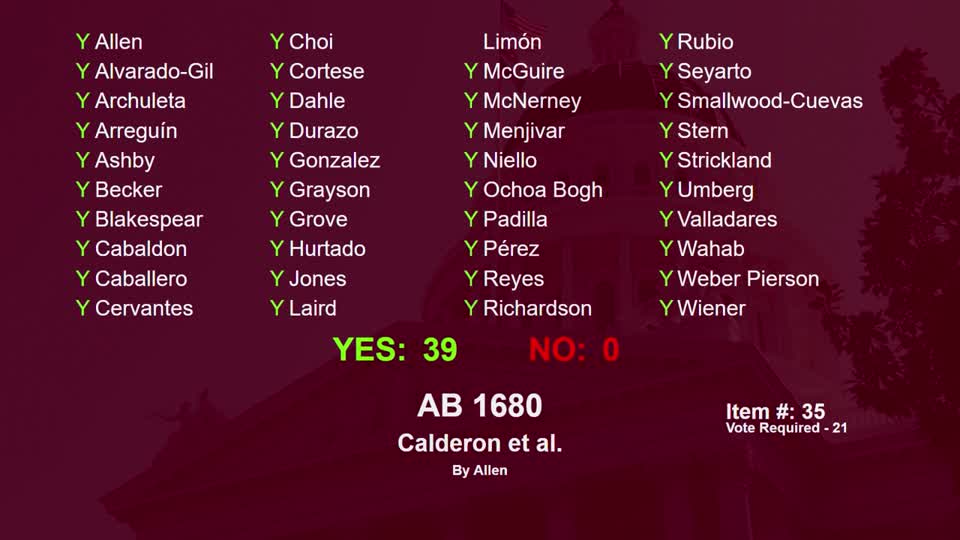 20MIN
Senate Floor
 37MIN
Senate Standing Committee on Privacy, Digital Technologies, and Consumer Protection
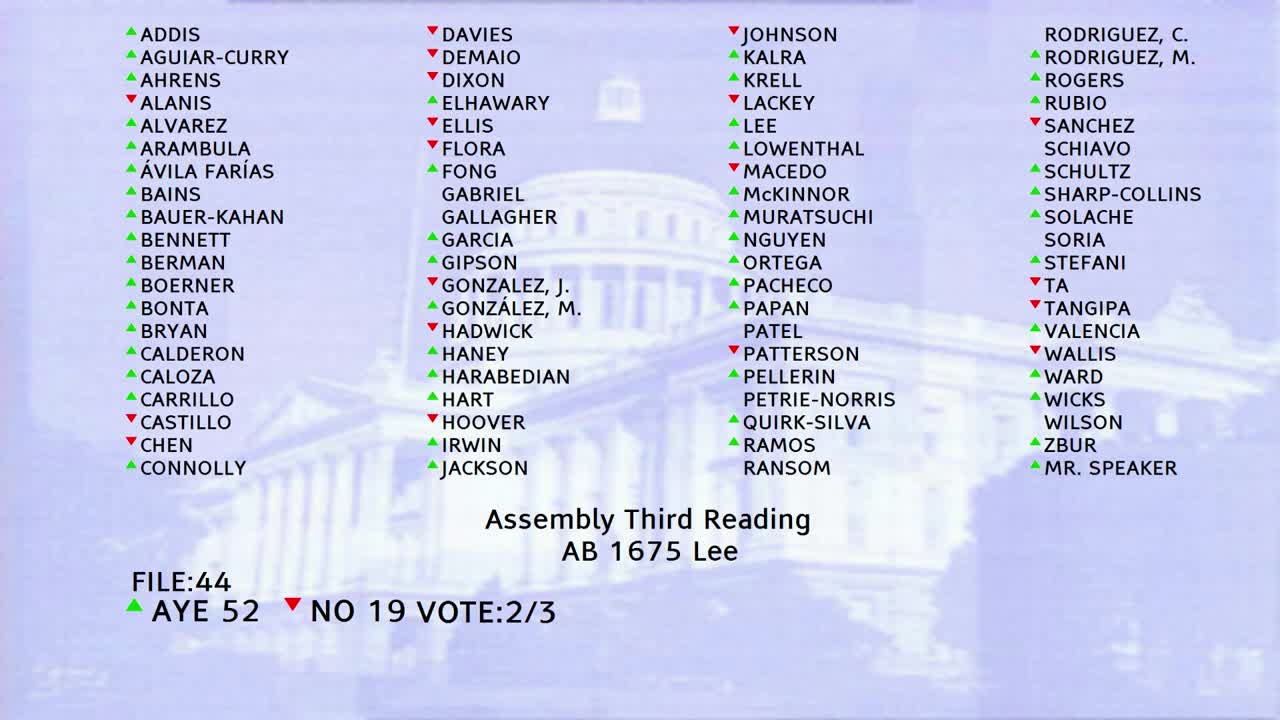 13MIN
Assembly Floor
 24MIN
Assembly Standing Committee on Judiciary
 38MIN
Assembly Standing Committee on Privacy and Consumer Protection
Bill Author


