AB 2575: Health care services: artificial intelligence.
- Session Year: 2025-2026
- House: Assembly
- Latest Version Date: 2026-09-04
Current Status:
Failed
(2026-09-30: Vetoed by Governor.)
Introduced
In Committee
Awaiting First Chamber Vote
Passed First Chamber
In Committee
Awaiting Second Chamber Vote
Passed Second Chamber
Enacted
Existing law charges the Labor Commissioner with enforcement of various labor laws, including investigation of employee complaints.
This bill would declare it is the policy of the state that a worker providing direct patient care be free to use their professional judgment to make assessments and decisions within their scope of practice as appropriate for their patients. The bill would prohibit an employer from retaliating or discriminating against a worker providing patient care, as specified. The bill would authorize a worker who is subject to retaliation or discrimination in violation of these provisions to file a complaint with the Labor Commissioner against an employer. The bill would require the Labor Commissioner to enforce these provisions, as specified.
Existing law provides that everyone is responsible not only for the result of their willful acts, but also for an injury occasioned to another by their want of ordinary care or skill in the management of their property or person. Existing law prohibits a defendant who developed, modified, or used artificial intelligence, as defined, from asserting a defense that the artificial intelligence autonomously caused the harm to the plaintiff.
This bill would prohibit a defendant who developed, modified, selected, or deployed a clinical decision support system that is alleged to have harmed the plaintiff from asserting a defense that the failure of a licensed health care professional or other health care worker to override an output of the clinical decision support system is a superseding cause severing the defendants liability for the alleged harm.
Existing law charges the Labor Commissioner with enforcement of various labor laws, including investigation of employee complaints.
This bill would declare it is the policy of the state that a worker providing direct patient care be free to use their professional judgment to make assessments and decisions within their scope of practice as appropriate for their patients. The bill would prohibit an employer from retaliating or discriminating against a worker providing patient care, as specified. The bill would authorize a worker who is subject to retaliation or discrimination in violation of these provisions to file a complaint with the Labor Commissioner against an employer. The bill would require the Labor Commissioner to enforce these provisions, as specified.
(3)ExistingExisting law provides that everyone is responsible not only for the result of their willful acts, but also for an injury occasioned to another by their want of ordinary care or skill in the management of their property or person. Existing law prohibits a defendant who developed, modified, or used artificial intelligence, as defined, from asserting a defense that the artificial intelligence autonomously caused the harm to the plaintiff.
This bill would prohibit a defendant who developed, modified, selected, or deployed a clinical decision support system that is alleged to have harmed the plaintiff from asserting a defense that the failure of a licensed health care professional or other health care worker to override an output of the clinical decision support system is a superseding cause severing the defendants liability for the alleged harm.
(1)Existing law provides for the licensure and regulation of health facilities and clinics by the State Department of Public Health. Existing law generally makes a violation of these provisions a crime. Existing law, the Medical Practice Act, establishes the Medical Board of California for the licensing, regulation, and discipline of physicians and surgeons. Existing law requires a health facility, clinic, physicians office, or office of a group practice that uses generative artificial intelligence to generate written or verbal patient communications pertaining to patient clinical information, as defined, to ensure that those communications include both a disclaimer that indicates to the patient that a communication was generated by generative artificial intelligence, as specified, and clear instructions describing how a patient may contact a human health care provider, employee, or other appropriate person.
This bill would require a health facility, clinic, physicians office, or office of a group practice that uses or deploys a clinical decision support system, as defined, for patient care, on or before July 1, 2027, to make available, upon request from a licensed health care professional or other person using a clinical decision support system or viewing outputs from a clinical decision support system, an inventory of all clinical decision support systems currently in use or deployed for patient care. Commencing July 1, 2027, the bill would require a health facility, clinic, physicians office, or office of a group practice that uses a clinical decision support system for patient care to make specified information about the clinical decision support system, upon request from a licensed health care professional or other person using a clinical decision support system or viewing outputs from a clinical decision support system, including, among other things, a summary of how the clinical decision support system generates outputs, as specified. The bill would also require, commencing July 1, 2027, a health facility, clinic, physicians office, or office of a group practice subject to these provisions to notify a licensed health care professional or other person whose duties include using a clinical decision support system or viewing outputs from a clinical decision support system, upon being hired and annually, of their right to request the above-described information. By placing new requirements on health facilities and clinics, this bill would expand the scope of a crime and would impose a state-mandated local program.
(2)Existing law charges the Labor Commissioner with enforcement of various labor laws, including investigation of employee complaints.
This bill would declare it is the policy of the state that a worker providing direct patient care be free to use their professional judgment to make assessments and decisions within their scope of practice as appropriate for their patients. The bill would prohibit an employer from retaliating or discriminating against a worker providing patient care, as specified. The bill would authorize a worker who is subject to retaliation or discrimination in violation of these provisions to file a complaint with the Labor Commissioner against an employer. The bill would require the Labor Commissioner to enforce these provisions, as specified.
(3)Existing law provides that everyone is responsible not only for the result of their willful acts, but also for an injury occasioned to another by their want of ordinary care or skill in the management of their property or person. Existing law prohibits a defendant who developed, modified, or used artificial intelligence, as defined, from asserting a defense that the artificial intelligence autonomously caused the harm to the plaintiff.
This bill would prohibit a defendant who developed, modified, selected, or deployed a clinical decision support system that is alleged to have harmed the plaintiff from asserting a defense that the failure of a licensed health care professional or other health care worker to override an output of the clinical decision support system is a superseding cause severing the defendants liability for the alleged harm.
(4)The California Constitution requires the state to reimburse local agencies and school districts for certain costs mandated by the state. Statutory provisions establish procedures for making that reimbursement.This bill would provide that no reimbursement is required by this act for a specified reason.(1)Existing law provides for the licensure and regulation of health facilities and clinics by the State Department of Public Health. Existing law generally makes a violation of these provisions a crime. Existing law, the Medical Practice Act, establishes the Medical Board of California for the licensing, regulation, and discipline of physicians and surgeons. Existing law requires a health facility, clinic, physicians office, or office of a group practice that uses generative artificial intelligence to generate written or verbal patient communications pertaining to patient clinical information, as defined, to ensure that those communications include both a disclaimer that indicates to the patient that a communication was generated by generative artificial intelligence, as specified, and clear instructions describing how a patient may contact a human health care provider, employee, or other appropriate person.
This bill would require a health facility, clinic, physicians office, or office of a group practice that uses or deploys a clinical decision support system, as defined, for patient care, on or before July 1, 2027, to make available, upon request from a licensed health care professional or other person using a clinical decision support system or viewing outputs from a clinical decision support system, an inventory of all clinical decision support systems currently in use or deployed for patient care. The Commencing July 1, 2027, the bill would require a health facility, clinic, physicians office, or office of a group practice that uses a clinical decision support system for patient care to make specified information about the clinical decision support system, upon request from a licensed health care professional or other person using a clinical decision support system or viewing outputs from a clinical decision support system, including, among other things, a summary of how the clinical decision support system generates outputs. outputs, as specified. The bill would also require require, commencing July 1, 2027, a health facility, clinic, physicians office, or office of a group practice subject to these provisions to notify a licensed health care professional or other person whose duties include using a clinical decision support system or viewing outputs from a clinical decision support system, upon being hired and annually, of their right to request the above-described information. By placing new requirements on health facilities and clinics, this bill would expand the scope of a crime and would impose a state-mandated local program.
(2)Existing law charges the Labor Commissioner with enforcement of various labor laws, including investigation of employee complaints.
This bill would declare it is the policy of the state that a worker providing direct patient care be free to use their professional judgment to make assessments and decisions within their scope of practice as appropriate for their patients. The bill would prohibit an employer from retaliating or discriminating against a worker providing patient care, as specified. The bill would authorize a worker who is subject to retaliation or discrimination in violation of these provisions to file a complaint with the Labor Commissioner against an employer. The bill would require the Labor Commissioner to enforce these provisions, as specified.
(3)Existing law provides that everyone is responsible not only for the result of their willful acts, but also for an injury occasioned to another by their want of ordinary care or skill in the management of their property or person. Existing law prohibits a defendant who developed, modified, or used artificial intelligence, as defined, from asserting a defense that the artificial intelligence autonomously caused the harm to the plaintiff.
This bill would prohibit a defendant who developed, modified, selected, or deployed a clinical decision support system that is alleged to have harmed the plaintiff from asserting a defense that the failure of a licensed health care professional or other health care worker to override an output of the clinical decision support system is a superseding cause severing the defendants liability for the alleged harm.
(4)The California Constitution requires the state to reimburse local agencies and school districts for certain costs mandated by the state. Statutory provisions establish procedures for making that reimbursement.
This bill would provide that no reimbursement is required by this act for a specified reason.
(1)Existing law provides for the licensure and regulation of health facilities and clinics by the State Department of Public Health. Existing law generally makes a violation of these provisions a crime. Existing law, the Medical Practice Act, establishes the Medical Board of California for the licensing, regulation, and discipline of physicians and surgeons. Existing law requires a health facility, clinic, physicians office, or office of a group practice that uses generative artificial intelligence to generate written or verbal patient communications pertaining to patient clinical information, as defined, to ensure that those communications include both a disclaimer that indicates to the patient that a communication was generated by generative artificial intelligence, as specified, and clear instructions describing how a patient may contact a human health care provider, employee, or other appropriate person.
This bill would require a health facility, clinic, physicians office, or office of a group practice that uses or deploys a clinical decision support system, as defined, for patient care, on or before July 1, 2027, to make available, upon request from a licensed health care professional or other person using a clinical decision support system or viewing outputs from a clinical decision support system, an inventory of all clinical decision support systems currently in use or deployed for patient care. The bill would require a health facility, clinic, physicians office, or office of a group practice that uses a clinical decision support system for patient care to make specified information about the clinical decision support system system, upon request from a licensed health care professional or other person using a clinical decision support system or viewing outputs form a clinic from a clinical decision support system, including, among other things, a summary of how the clinical decision support system generates outputs. The bill would also require a health facility, clinic, physicians office, or office of a group practice subject to these provisions to notify a licensed health care professional or other person whose duties include using a clinical decision support system or viewing outputs from a clinical decision support system system, upon being hired and annually annually, of their right to request the above-described information. By placing new requirements on health facilities and clinics, this bill would expand the scope of a crime and would impose a state-mandated local program.
(2)Existing law charges the Labor Commissioner with enforcement of various labor laws, including investigation of employee complaints.
This bill would declare it is the policy of the state that a worker providing direct patient care be free to use their professional judgment to make assessments and decisions within their scope of practice as appropriate for their patients. The bill would prohibit an employer from retaliating or discriminating against a worker providing patient care, as specified. The bill would authorize a worker who is subject to retaliation or discrimination in violation of these provisions to file a complaint with the Labor Commissioner against an employer. The bill would require the Labor Commissioner to enforce these provisions, as specified.
(3)Existing law provides that everyone is responsible not only for the result of their willful acts, but also for an injury occasioned to another by their want of ordinary care or skill in the management of their property or person. Existing law prohibits a defendant who developed, modified, or used artificial intelligence, as defined, from asserting a defense that the artificial intelligence autonomously caused the harm to the plaintiff.
This bill would prohibit a defendant who developed, modified, selected, or deployed a clinical decision support system that is alleged to have harmed the plaintiff from asserting a defense that the failure of a licensed health care professional or other health care worker to override an output of the clinical decision support system is a superseding cause severing the defendants liability for the alleged harm.
(4)The California Constitution requires the state to reimburse local agencies and school districts for certain costs mandated by the state. Statutory provisions establish procedures for making that reimbursement.
This bill would provide that no reimbursement is required by this act for a specified reason.
(1)Existing law provides for the licensure and regulation of health facilities and clinics by the State Department of Public Health. Existing law generally makes a violation of these provisions a crime. Existing law, the Medical Practice Act, establishes the Medical Board of California for the licensing, regulation, and discipline of physicians and surgeons. Existing law requires a health facility, clinic, physicians office, or office of a group practice that uses generative artificial intelligence to generate written or verbal patient communications pertaining to patient clinical information, as defined, to ensure that those communications include both a disclaimer that indicates to the patient that a communication was generated by generative artificial intelligence, as specified, and clear instructions describing how a patient may contact a human health care provider, employee, or other appropriate person.
This bill would require a health facility, clinic, physicians office, or office of a group practice that uses or deploys a clinical decision support system, as defined, for patient care to provide written notice of required information to any licensed health care professional or other person using a clinical decision support system or viewing outputs from a clinical decision support system. The bill would require, among other things, the disclosure to include a notice that a worker providing direct patient care is authorized to override the output of a clinical decision support system if, in the judgment of the worker acting within their scope of practice, an override is necessary to meet the applicable standard of care or comply with applicable law. The bill would specify the required time and manner the disclosure is to be provided pursuant to these provisions. The bill would make these provisions inapplicable to the use of a clinical decision support system for documentation, communication, or other administrative tasks, as specified. care, on or before July 1, 2027, to make available, upon request from a licensed health care professional or other person using a clinical decision support system or viewing outputs from a clinical decision support system, an inventory of all clinical decision support systems currently in use or deployed for patient care. The bill would require a health facility, clinic, physicians office, or office of a group practice that uses a clinical decision support system for patient care to make specified information about the clinical decision support system upon request from a licensed health care professional or other person using a clinical decision support system or viewing outputs form a clinic decision support system, including, among other things, a summary of how the clinical decision support system generates outputs. The bill would also require a health facility, clinic, physicians office, or office of a group practice subject to these provisions to notify a licensed health care professional or other person whose duties include using a clinical decision support system or viewing outputs from a clinical decision support system upon being hired and annually of their right to request the above-described information. By placing new requirements on health facilities and clinics, this bill would expand the scope of a crime and would impose a state-mandated local program.
(2)Existing law charges the Labor Commissioner with enforcement of various labor laws, including investigation of employee complaints.
This bill would declare it is the policy of the state that a worker providing direct patient care be free to use their professional judgment to make assessments and decisions within their scope of practice as appropriate for their patients. The bill would prohibit an employer from retaliating or discriminating against a worker providing patient care, as specified. The bill would authorize a worker who is subject to retaliation or discrimination in violation of these provisions to file a complaint with the Labor Commissioner against an employer.
(3)Existing law provides that everyone is responsible not only for the result of their willful acts, but also for an injury occasioned to another by their want of ordinary care or skill in the management of their property or person. Existing law prohibits a defendant who developed, modified, or used artificial intelligence, as defined, from asserting a defense that the artificial intelligence autonomously caused the harm to the plaintiff.
This bill would prohibit a defendant who developed, modified, selected, or deployed a clinical decision support system that is alleged to have harmed the plaintiff from asserting a defense that the failure of a licensed health care professional or other health care worker to override an output of the clinical decision support system is a superseding cause severing the defendants liability for the alleged harm.
(4)The California Constitution requires the state to reimburse local agencies and school districts for certain costs mandated by the state. Statutory provisions establish procedures for making that reimbursement.
This bill would provide that no reimbursement is required by this act for a specified reason.
(1)Existing law provides for the licensure and regulation of health facilities and clinics by the State Department of Public Health. Existing law generally makes a violation of these provisions a crime. Existing law, the Medical Practice Act, establishes the Medical Board of California for the licensing, regulation, and discipline of physicians and surgeons. Existing law requires a health facility, clinic, physicians office, or office of a group practice that uses generative artificial intelligence to generate written or verbal patient communications pertaining to patient clinical information, as defined, to ensure that those communications include both a disclaimer that indicates to the patient that a communication was generated by generative artificial intelligence, as specified, and clear instructions describing how a patient may contact a human health care provider, employee, or other appropriate person.
This bill would require a health facility, clinic, physicians office, or office of a group practice that uses or deploys a clinical decision support system, as defined, for patient care to provide written notice of required information to any licensed health care professional or other person using a clinical decision support system or viewing outputs from a clinical decision support system. The bill would require, among other things, the disclosure to include a notice that a worker providing direct patient care is authorized to override the output of a clinical decision support system if, in the judgment of the worker acting within their scope of practice, an override is necessary to meet the applicable standard of care or comply with applicable law. The bill would specify the required time and manner the disclosure is to be provided pursuant to these provisions. The bill would make these provisions inapplicable to the use of a clinical decision support system for documentation, communication, or other administrative tasks, as specified. By placing new requirements on health facilities and clinics, this bill would expand the scope of a crime and would impose a state-mandated local program.
(2)Existing law charges the Labor Commissioner with enforcement of various labor laws, including investigation of employee complaints.
This bill would declare it is the policy of the state that a worker providing direct patient care be free to use their professional judgment to make assessments and decisions within their scope of practice as appropriate for their patients. The bill would prohibit an employer from retaliating or discriminating against a worker providing patient care, as specified. The bill would authorize a worker who is subject to retaliation or discrimination in violation of these provisions to file a complaint with the Labor Commissioner against an employer.
(3)Existing law provides that everyone is responsible not only for the result of their willful acts, but also for an injury occasioned to another by their want of ordinary care or skill in the management of their property or person. Existing law prohibits a defendant who developed, modified, or used artificial intelligence, as defined, from asserting a defense that the artificial intelligence autonomously caused the harm to the plaintiff.
This bill would prohibit a defendant who developed, modified, selected, or deployed a clinical decision support system that is alleged to have harmed the plaintiff from asserting a defense that the failure of a licensed health care professional or other health care worker to override an output of the clinical decision support system is a superseding cause severing the defendants liability for the alleged harm.
(4)The California Constitution requires the state to reimburse local agencies and school districts for certain costs mandated by the state. Statutory provisions establish procedures for making that reimbursement.
This bill would provide that no reimbursement is required by this act for a specified reason.
(1)Existing law provides for the licensure and regulation of health facilities and clinics by the State Department of Public Health. Existing law generally makes a violation of these provisions a crime. Existing law, the Medical Practice Act, establishes the Medical Board of California for the licensing, regulation, and discipline of physicians and surgeons. Existing law requires a health facility, clinic, physicians office, or office of a group practice that uses generative artificial intelligence to generate written or verbal patient communications pertaining to patient clinical information, as defined, to ensure that those communications include both a disclaimer that indicates to the patient that a communication was generated by generative artificial intelligence, as specified, and clear instructions describing how a patient may contact a human health care provider, employee, or other appropriate person.
This bill would require a health facility, clinic, physicians office, or office of a group practice that uses or deploys a covered tool, clinical decision support system, as defined, for patient care to provide written notice of required information to any licensed health care professional or other person using a covered tool clinical decision support system or viewing outputs from a covered tool. clinical decision support system. The bill would require, among other things, the disclosure to include a notice that a worker providing direct patient care is permitted authorized to override the output of a covered tool clinical decision support system if, in the judgment of the worker acting in within their scope of practice, an override is appropriate for the patient, or as necessary to comply with applicable law, including civil rights law. necessary to meet the applicable standard of care or comply with applicable law. The bill would specify the required time and manner the disclosure is to be provided pursuant to these provisions. By placing new requirements on health facilities and clinics, this bill would expand the scope of a crime and would impose a state-mandated local program.
(2)Existing law charges the Labor Commissioner with enforcement of various labor laws, including investigation of employee complaints.
This bill would declare it is the policy of the state that a worker providing direct patient care be free to use their professional judgment to make assessments and decisions within their scope of practice as appropriate for their patients and that it is public policy of the state that a worker should not be penalized for relying in good faith on technology that the licensed health care professionals employer has selected or approved for their use in patient care. patients. The bill would prohibit an employer from using or deploying technology to replace or eliminate a workers use of professional judgment in patient care and would prohibit an employer from retaliating or discriminating against a worker providing patient care, as specified. The bill would authorize a worker who is subject to retaliation or discrimination in violation of these provisions to file a complaint with the Labor Commissioner against an employer.
(3)Existing law provides that everyone is responsible not only for the result of their willful acts, but also for an injury occasioned to another by their want of ordinary care or skill in the management of their property or person. Existing law prohibits a defendant who developed, modified, or used artificial intelligence, as defined, from asserting a defense that the artificial intelligence autonomously caused the harm to the plaintiff.
This bill would prohibit a defendant who developed, modified, or used artificial intelligence or selected, or deployed a clinical decision support system, as those terms are defined, system that is alleged to have harmed the plaintiff from asserting a defense that the failure of a licensed health care professional or other health care worker to override an output of the artificial intelligence or clinical decision support system is a superseding cause severing the defendants liability for the alleged harm.
(4)The California Constitution requires the state to reimburse local agencies and school districts for certain costs mandated by the state. Statutory provisions establish procedures for making that reimbursement.
This bill would provide that no reimbursement is required by this act for a specified reason.
(1)Existing law provides for the licensure and regulation of health facilities and clinics by the State Department of Public Health. Existing law generally makes a violation of these provisions a crime. Existing law, the Medical Practice Act, establishes the Medical Board of California for the licensing, regulation, and discipline of physicians and surgeons. Existing law requires a health facility, clinic, physicians office, or office of a group practice that uses generative artificial intelligence to generate written or verbal patient communications pertaining to patient clinical information, as defined, to ensure that those communications include both a disclaimer that indicates to the patient that a communication was generated by generative artificial intelligence, as specified, and clear instructions describing how a patient may contact a human health care provider, employee, or other appropriate person.
This bill would require a health facility, clinic, physicians office, or office of a group practice that uses or deploys a covered tool, as defined, for patient care to disclose provide written notice of required information to any licensed health care professional or other person using a covered tool or viewing outputs from a covered tool. The bill would require, among other things, the disclosure to include a notice that a worker providing direct patient care is permitted to override the output of a covered tool if, in the judgment of the worker acting in their scope of practice, an override is appropriate for the patient, or as necessary to comply with applicable law, including civil rights law. The bill would specify the required time and manner the disclosure is to be provided pursuant to these provisions. By placing new requirements on health facilities and clinics, this bill would expand the scope of a crime and would impose a state-mandated local program.
(2)Existing law charges the Labor Commissioner with enforcement of various labor laws, including investigation of employee complaints.
This bill would declare it is the policy of the state that a worker providing direct patient care be free to use their professional judgment to make assessments and decisions within their scope of practice as appropriate for their patients and that it is public policy of the state that a worker should not be penalized for relying in good faith on technology that the licensed health care professionals employer has selected or approved for their use in patient care. The bill would prohibit an employer from using or deploying technology to replace or eliminate a workers use of professional judgment in patient care and would prohibit an employer from retaliating or discriminating against a worker providing patient care, as specified. The bill would authorize a worker who is subject to retaliation or discrimination in violation of these provisions to file a complaint with the Labor Commissioner against an employer.
(3)Existing law provides that everyone is responsible not only for the result of their willful acts, but also for an injury occasioned to another by their want of ordinary care or skill in the management of their property or person. Existing law prohibits a defendant who developed, modified, or used artificial intelligence, as defined, from asserting a defense that the artificial intelligence autonomously caused the harm to the plaintiff.
This bill would prohibit a defendant who developed, modified, or used artificial intelligence or a clinical decision support system, as those terms are defined, that is alleged to have harmed the plaintiff from asserting a defense that the failure of a licensed health care professional or other health care worker to override an output of the artificial intelligence or clinical decision support system is a superseding cause severing the defendants liability for the alleged harm.
(4)The California Constitution requires the state to reimburse local agencies and school districts for certain costs mandated by the state. Statutory provisions establish procedures for making that reimbursement.
This bill would provide that no reimbursement is required by this act for a specified reason.
(1)Existing law provides for the licensure and regulation of health facilities and clinics by the State Department of Public Health. Existing law generally makes a violation of these provisions a crime. Existing law, the Medical Practice Act, establishes the Medical Board of California for the licensing, regulation, and discipline of physicians and surgeons. Existing law requires a health facility, clinic, physicians office, or office of a group practice that uses generative artificial intelligence to generate written or verbal patient communications pertaining to patient clinical information, as defined, to ensure that those communications include both a disclaimer that indicates to the patient that a communication was generated by generative artificial intelligence, as specified, and clear instructions describing how a patient may contact a human health care provider, employee, or other appropriate person.
This bill would require a health facility, clinic, physicians office, or office of a group practice that uses or deploys a covered tool, as defined, for patient care to disclose required information to any licensed health care professional or other person using a covered tool or viewing outputs from a covered tool. The bill would require, among other things, the disclosure to include a notice that a worker providing direct patient care is permitted to override the output of a covered tool if, in the judgment of the worker acting in their scope of practice, an override is appropriate for the patient, or as necessary to comply with applicable law, including civil rights law. The bill would specify the required time and manner the disclosure is to be provided pursuant to these provisions. By placing new requirements on health facilities and clinics, this bill would expand the scope of a crime and would impose a state-mandated local program.
(2)Existing law charges the Labor Commissioner with enforcement of various labor laws, including investigation of employee complaints.
This bill would declare it is the policy of the state that a worker providing direct patient care be free to use their professional judgment to make assessments and decisions within their scope of practice as appropriate for their patients and that it is public policy of the state that a worker should not be penalized for relying in good faith on technology that the licensed health care professionals employer has selected or approved for their use in patient care. The bill would prohibit an employer from using or deploying technology to replace or eliminate a workers use of professional judgment in patient care and would prohibit an employer from retaliating or discriminating against a worker providing patient care, as specified. The bill would authorize a worker who is subject to retaliation or discrimination in violation of these provisions to file a complaint with the Labor Commissioner against an employer.
(3)Existing law provides that everyone is responsible not only for the result of their willful acts, but also for an injury occasioned to another by their want of ordinary care or skill in the management of their property or person. Existing law prohibits a defendant who developed, modified, or used artificial intelligence, as defined, from asserting a defense that the artificial intelligence autonomously caused the harm to the plaintiff.
This bill would prohibit a defendant who developed, modified, or used artificial intelligence, as defined, intelligence or a clinical decision support system, as those terms are defined, that is alleged to have harmed the plaintiff from asserting a defense that the failure of a licensed health care professional or other health care worker to override an output of the artificial intelligence or clinical decision support system is a superseding cause severing the defendants liability for the alleged harm.
(4)The California Constitution requires the state to reimburse local agencies and school districts for certain costs mandated by the state. Statutory provisions establish procedures for making that reimbursement.
This bill would provide that no reimbursement is required by this act for a specified reason.
(1)Existing law provides for the licensure and regulation of health facilities and clinics by the State Department of Public Health. Existing law generally makes a violation of these provisions a crime. Existing law, the Medical Practice Act, establishes the Medical Board of California for the licensing, regulation, and discipline of physicians and surgeons. Existing law requires a health facility, clinic, physicians office, or office of a group practice that uses generative artificial intelligence to generate written or verbal patient communications pertaining to patient clinical information, as defined, to ensure that those communications include both a disclaimer that indicates to the patient that a communication was generated by generative artificial intelligence, as specified, and clear instructions describing how a patient may contact a human health care provider, employee, or other appropriate person.
This bill would require a health facility, clinic, physicians office, or office of a group practice that uses or deploys a covered tool, as defined, for patient care to disclose required information to any licensed health care professional or other person using a covered tool or viewing outputs from a covered tool. The bill would require, among other things, the disclosure to include a notice that a worker providing direct patient care is permitted to override the output of a covered tool if, in the judgment of the worker acting in their scope of practice, an override is appropriate for the patient, or as necessary to comply with applicable law, including civil rights law. The bill would specify the required time and manner the disclosure is to be provided pursuant to these provisions. By placing new requirements on health facilities and clinics, this bill would expand the scope of a crime and would impose a state-mandated local program.
(2)Existing law charges the Labor Commissioner with enforcement of various labor laws, including investigation of employee complaints.
This bill would declare it is the policy of the state that a worker providing direct patient care be free to use their professional judgment to make assessments and decisions within their scope of practice as appropriate for their patients and that it is public policy of the state that a worker should not be penalized for relying in good faith on technology that the licensed health care professionals employer has selected or approved for their use in patient care. The bill would prohibit an employer from using or deploying technology to replace or eliminate a workers use of professional judgment in patient care and would prohibit an employer from retaliating or discriminating against a worker providing patient care, as specified. The bill would authorize a worker who is subject to retaliation or discrimination in violation of these provisions to file a complaint with the Labor Commissioner against an employer.
(3)Existing law provides that everyone is responsible not only for the result of their willful acts, but also for an injury occasioned to another by their want of ordinary care or skill in the management of their property or person. Existing law prohibits a defendant who developed, modified, or used artificial intelligence, as defined, from asserting a defense that the artificial intelligence autonomously caused the harm to the plaintiff.
This bill would prohibit a defendant who developed, modified, or used artificial intelligence, as defined, that is alleged to have harmed the plaintiff from asserting a defense that the failure of a licensed health care professional or other health care worker to override an output of the artificial intelligence or clinical decision support system is a superseding cause severing the defendants liability for the alleged harm.
(4)The California Constitution requires the state to reimburse local agencies and school districts for certain costs mandated by the state. Statutory provisions establish procedures for making that reimbursement.
This bill would provide that no reimbursement is required by this act for a specified reason.
(a)For purposes of this section, the following definitions shall apply:
(1)Artificial intelligence means an engineered or machine-based system that varies in its level of autonomy and that can, for explicit or implicit objectives, infer from the input it receives how to generate outputs that can influence physical or virtual environments.
(2)(A)Automated decision system means a computational process derived from machine learning, statistical modeling, data analytics, or artificial intelligence that issues simplified output, including a score, classification, or recommendation, that is used to assist or replace human discretionary decisionmaking and materially impacts natural persons.
(B)Automated decision system does not include a spam email filter, firewall, antivirus software, identity and access management tools, calculator, database, dataset, or other compilation of data.
(3)Clinical decision support system means an artificial intelligence system that produces a prediction, classification, recommendation, evaluation, or analysis that aids clinical decisionmaking related to timing of care, diagnosis, or treatment. It does not include booking, canceling and rescheduling appointments, appointment reminders, patient education and previsit materials and preparation, and payment processing, to the extent the independent performance of these activities by the system does not require a professional license.
(4)Generative artificial intelligence has the same meaning as defined in Section 1339.75 of the Health and Safety Code.
(b)In an action against a defendant who developed, modified, selected, or deployed a clinical decision support system that is alleged to have caused harm to the plaintiff, it shall not be a defense, and the defendant may not assert, that the failure of a licensed health care professional or other health care worker to override an output of the clinical decision support system is a superseding cause severing the defendants liability for the alleged harm.
(c)This section does not limit or preclude a defendant from presenting either of the following:
(1)Any other affirmative defense, including evidence relevant to causation or foreseeability.
(2)Other evidence relevant to the comparative fault of any other person or entity.
(3)Evidence that the defendant took reasonable precautions to prevent harm, including providing clear and conspicuous disclosures and disclaimers regarding the intended use, scope, known risks, and limitations of the system to the health facility, clinic, physicians office, or office of a group practice.
(d)This section does not apply to an action described in Section 340.5 of the Code of Civil Procedure against a person providing direct patient care who is licensed or certified pursuant to Division 2 (commencing with Section 500) of the Business and Professions Code or licensed pursuant to the Osteopathic Initiative Act or the Chiropractic Initiative Act.
SEC. 2.Article 2.7 (commencing with Section 2820) is added to Chapter 2 of Division 3 of the Labor Code, to read:2.7.Health Information Technology: Worker Rights2820.For the purposes of this article, the following definitions shall apply:
(a)Artificial intelligence means an engineered or machine-based system that varies in its level of autonomy and that can, for explicit or implicit objectives, infer from the input it receives how to generate outputs that can influence physical or virtual environments.
(b)(1)Automated decision system means a computational process derived from machine learning, statistical modeling, data analytics, or artificial intelligence that issues simplified output, including a score, classification, or recommendation, that is used to assist or replace human discretionary decisionmaking and materially impacts natural persons.
(2)Automated decision system does not include a spam email filter, firewall, antivirus software, identity and access management tools, calculator, database, dataset, or other compilation of data.
(c)Clinical decision support system means an artificial intelligence system that produces a prediction, classification, recommendation, evaluation, or analysis that aids clinical decision-making related to timing of care, diagnosis or treatment. It does not include booking, canceling and rescheduling appointments, appointment reminders, patient education and pre-visit materials and preparation, and payment processing, to the extent the independent performance of these activities by the system does not require a professional license.
(d)Generative artificial intelligence has the same meaning as defined in Section 1339.75 of the Health and Safety Code.
2821.(a)It is the public policy of the State of California that a worker providing direct patient care be free to use their professional judgment to make assessments and decisions within their scope of practice as appropriate for their patients.
(b)(1)An employer shall not retaliate or discriminate against a worker providing direct patient care using their professional judgment to make an assessment or decision within their appropriate scope of practice based solely on the workers override of, or reliance on, the output of a clinical decision support system.
(2)(A)This subdivision does not affect a workers duty to do any of the following:
(i)Meet the applicable standard of care.
(ii)Act within their scope of practice as outlined in Division 2 (commencing with Section 500) of the Business and Professions Code.
(iii)Comply with Section 125.6 of the Business and Professions Code.
(iv)Exercise independent professional judgment in providing direct patient care.
(v)Follow standard operating procedures or other written policies established by the employer or by a California governmental department or agency.
(vi)Comply with Section 70215 of Title 22 of the California Code of Regulations.
(vii)Comply with the bylaws, rules, and regulations described in Section 70703 of Title 22 of the California Code of Regulations.
(B)A policy, procedure, or protocol that requires a worker to accept, defer to, or refrain from overriding the output of a clinical decision support system is not a duty described in this paragraph.
(3)(A)In enforcing this section, the Labor Commissioner shall determine whether an employer retaliated or discriminated against a worker in violation of paragraph (1). The Labor Commissioner may consider evidence relevant to the reasons the employer took the action alleged to be retaliation or discrimination, including evidence supporting alternate reasons for the action, such as an alleged failure by the worker to satisfy a duty described in paragraph (2).
(B)This section does not require the Labor Commissioner to adjudicate or make a final determination of whether a worker met or failed to meet a duty described in paragraph (2). A determination under this section is not determinative of any legal action for professional negligence or malpractice or disciplinary action against a professional license. This section does not limit the authority of an appropriate licensing authority or a court under existing law.
(c)A worker who is subject to retaliation or discrimination in violation of this article has the right under this article to file a complaint with the Labor Commissioner against an employer who retaliates or discriminates against the worker.
(d)The Labor Commissioner shall enforce this article, including investigating an alleged violation, ordering appropriate temporary relief to mitigate a violation or maintain the status quo pending the completion of a full investigation or hearing through the procedures set forth in Section 98, 98.3, 98.7, 98.74, or 1197.1, issuing a citation against an employer who violates this article, and filing a civil action. If a citation is issued, the procedures for issuing, contesting, and enforcing a judgment for a citation and civil penalty issued by the Labor Commissioner shall be the same as those set out in Section 98.74 or Section 1197.1, as applicable.
(a)For purposes of this section, the following definitions shall apply:
(1)Artificial intelligence means an engineered or machine-based system that varies in its level of autonomy and that can, for explicit or implicit objectives, infer from the input it receives how to generate outputs that can influence physical or virtual environments.
(2)(A)Automated decision system means a computational process derived from machine learning, statistical modeling, data analytics, or artificial intelligence that issues simplified output, including a score, classification, or recommendation, that is used to assist or replace human discretionary decisionmaking and materially impacts natural persons.
(B)Automated decision system does not include a spam email filter, firewall, antivirus software, identity and access management tools, calculator, database, dataset, or other compilation of data.
(3)Clinical decision support system means an artificial intelligence system that produces a prediction, classification, recommendation, evaluation, or analysis that aids clinical decisionmaking related to timing of care, diagnosis, or treatment. It does not include booking, canceling and rescheduling appointments, appointment reminders, patient education and previsit materials and preparation, and payment processing, to the extent the independent performance of these activities by the system does not require a professional license.
(4)Generative artificial intelligence has the same meaning as defined in Section 1339.75 of the Health and Safety Code.
(b)In an action against a defendant who developed, modified, selected, or deployed a clinical decision support system that is alleged to have caused harm to the plaintiff, it shall not be a defense, and the defendant may not assert, that the failure of a licensed health care professional or other health care worker to override an output of the clinical decision support system is a superseding cause severing the defendants liability for the alleged harm.
(c)This section does not limit or preclude a defendant from presenting either of the following:
(1)Any other affirmative defense, including evidence relevant to causation or foreseeability.
(2)Other evidence relevant to the comparative fault of any other person or entity.
(3)Evidence that the defendant took reasonable precautions to prevent harm, including providing clear and conspicuous disclosures and disclaimers regarding the intended use, scope, known risks, and limitations of the system to the health facility, clinic, physicians office, or office of a group practice.
(d)This section does not apply to an action described in Section 340.5 of the Code of Civil Procedure against a person providing direct patient care who is licensed or certified pursuant to Division 2 (commencing with Section 500) of the Business and Professions Code or licensed pursuant to the Osteopathic Initiative Act or the Chiropractic Initiative Act.
SEC. 3.SEC. 2.Article 2.7 (commencing with Section 2820) is added to Chapter 2 of Division 3 of the Labor Code, to read:2.7.Health Information Technology: Worker Rights2820.For the purposes of this article, the following definitions shall apply:
(a)Artificial intelligence means an engineered or machine-based system that varies in its level of autonomy and that can, for explicit or implicit objectives, infer from the input it receives how to generate outputs that can influence physical or virtual environments.
(b)(1)Automated decision system means a computational process derived from machine learning, statistical modeling, data analytics, or artificial intelligence that issues simplified output, including a score, classification, or recommendation, that is used to assist or replace human discretionary decisionmaking and materially impacts natural persons.
(2)Automated decision system does not include a spam email filter, firewall, antivirus software, identity and access management tools, calculator, database, dataset, or other compilation of data.
(c)Clinical decision support system means an artificial intelligence system that produces a prediction, classification, recommendation, evaluation, or analysis that aids clinical decision-making related to timing of care, diagnosis or treatment. It does not include booking, canceling and rescheduling appointments, appointment reminders, patient education and pre-visit materials and preparation, and payment processing, to the extent the independent performance of these activities by the system does not require a professional license.
(d)Generative artificial intelligence has the same meaning as defined in Section 1339.75 of the Health and Safety Code.
2821.(a)It is the public policy of the State of California that a worker providing direct patient care be free to use their professional judgment to make assessments and decisions within their scope of practice as appropriate for their patients.
(b)(1)An employer shall not retaliate or discriminate against a worker providing direct patient care using their professional judgment to make an assessment or decision within their appropriate scope of practice based solely on the workers override of, or reliance on, the output of a clinical decision support system.
(2)(A)This subdivision does not affect a workers duty to do any of the following:
(i)Meet the applicable standard of care.
(ii)Act within their scope of practice as outlined in Division 2 (commencing with Section 500) of the Business and Professions Code.
(iii)Comply with Section 125.6 of the Business and Professions Code.
(iv)Exercise independent professional judgment in providing direct patient care.
(v)Follow standard operating procedures or other written policies established by the employer or by a California governmental department or agency.
(vi)Comply with Section 70215 of Title 22 of the California Code of Regulations.
(vii)Comply with the bylaws, rules, and regulations described in Section 70703 of Title 22 of the California Code of Regulations.
(B)A policy, procedure, or protocol that requires a worker to accept, defer to, or refrain from overriding the output of a clinical decision support system is not a duty described in this paragraph.
(3)(A)In enforcing this section, the Labor Commissioner shall determine whether an employer retaliated or discriminated against a worker in violation of paragraph (1). The Labor Commissioner may consider evidence relevant to the reasons the employer took the action alleged to be retaliation or discrimination, including evidence supporting alternate reasons for the action, such as an alleged failure by the worker to satisfy a duty described in paragraph (2).
(B)This section does not require the Labor Commissioner to adjudicate or make a final determination of whether a worker met or failed to meet a duty described in paragraph (2). A determination under this section is not determinative of any legal action for professional negligence or malpractice or disciplinary action against a professional license. This section does not limit the authority of an appropriate licensing authority or a court under existing law.
(c)A worker who is subject to retaliation or discrimination in violation of this article has the right under this article to file a complaint with the Labor Commissioner against an employer who retaliates or discriminates against the worker.
(d)The Labor Commissioner shall enforce this article, including investigating an alleged violation, ordering appropriate temporary relief to mitigate a violation or maintain the status quo pending the completion of a full investigation or hearing through the procedures set forth in Section 98, 98.3, 98.7, 98.74, or 1197.1, issuing a citation against an employer who violates this article, and filing a civil action. If a citation is issued, the procedures for issuing, contesting, and enforcing a judgment for a citation and civil penalty issued by the Labor Commissioner shall be the same as those set out in Section 98.74 or Section 1197.1, as applicable.
(a)On or before July 1, 2027, a health facility, clinic, physicians office, or office of a group practice that uses or deploys a clinical decision support system for patient care shall make available, upon request from a licensed health care professional or other person using a clinical decision support system or viewing outputs from a clinical decision support system, an inventory of all clinical decision support systems currently in use or deployed for patient care. This inventory shall be updated at least annually.
(b)(1)Commencing July 1, 2027, a health facility, clinic, physicians office, or office of a group practice that uses or deploys a clinical decision support system for patient care shall make available, upon request from a licensed health care professional or other person using a clinical decision support system or viewing outputs from a clinical decision support system, information about the clinical decision support system. Information required by this subdivision shall include all of the following:
(A)A summary of the clinical decision support system, including developer and description of the output produced by the system.
(B)The intended use of the clinical decision support system, including intended patient population, intended users, and intended role in supporting clinical decisionmaking.
(C)The cautioned out-of-scope use of the clinical decision support system, including known risks and limitations.
(D)A summary of how the clinical decision support system generates outputs.
(E)A summary of the training set or clinical research underlying recommendations, including demographic representativeness and known biases based on protected characteristics.
(F)A summary of the validation process.
(G)A summary of quantitative measures of performance.
(H)A link to the Certified Health IT Product List produced by the Office of the National Coordinator for Health Information Technology at the United States Department of Health and Human Services or its successor.
(2)A health facility, clinic, physicians office, or office of a group practice may satisfy its duty under paragraph (1) by making available, in good faith, information supplied by the developer or vendor of the clinical decision support system that is accompanied by the developers or vendors written attestation as to the accuracy of that information, unless the entity knows, or has received credible notice, that a material statement is false or misleading.
(c)Commencing July 1, 2027, a health facility, clinic, physicians office, or office of a group practice that uses or deploys a clinical decision support system for patient care shall notify a licensed health care professional or other person whose duties include using a clinical decision support system or viewing outputs from a clinical decision support system, upon hire and annually, of their right to request the inventory of all clinical decision support systems currently in use or deployed for patient care.
(d)A violation of this section by a physician is subject to the jurisdiction of the Medical Board of California or the Osteopathic Medical Board of California, as appropriate.
(e)For purposes of this section, the following definitions shall apply:
(1)Artificial intelligence has the same meaning as in Section 1339.75 of the Health and Safety Code.
(2)(A)Automated decision system means a computational process derived from machine learning, statistical modeling, data analytics, or artificial intelligence that issues simplified output, including a score, classification, or recommendation, that is used to assist or replace human discretionary decisionmaking and materially impacts natural persons.
(B)Automated decision system does not include a spam email filter, firewall, antivirus software, identity and access management tools, calculator, database, dataset, or other compilation of data.
(3)Clinic has the same meaning as defined in Section 1200 of the Health and Safety Code.
(4)Clinical decision support system means an artificial intelligence system that produces a prediction, classification, recommendation, evaluation, or analysis that aids clinical decisionmaking related to timing of care, diagnosis or treatment. It does not include booking, canceling, and rescheduling appointments, appointment reminders, patient education and previsit materials and preparation, and payment processing, to the extent the independent performance of these activities by the system does not require a professional license.
(5)Generative artificial intelligence has the same meaning as defined in Section 1339.75 of the Health and Safety Code.
(6)Health facility has the same meaning as defined in Section 1250 of the Health and Safety Code.
(7)Office of a group practice has the same meaning as defined in Section 1339.75 of the Health and Safety Code.
(8)Physicians office has the same meaning as defined in Section 1339.75 of the Health and Safety Code.
(f)This section does not apply to the use of a clinical decision support system for documentation, communication, or other administrative tasks that do not involve the application of professional judgment by a licensed health care professional, including, but not limited to, automated messages to inform patients of their health records.
SECTION 1.SEC. 2.Section 1714.48 is added to the Civil Code, to read:1714.48.(a)For purposes of this section, the following definitions shall apply:
(1)Artificial intelligence means an engineered or machine-based system that varies in its level of autonomy and that can, for explicit or implicit objectives, infer from the input it receives how to generate outputs that can influence physical or virtual environments.
(2)(A)Automated decision system means a computational process derived from machine learning, statistical modeling, data analytics, or artificial intelligence that issues simplified output, including a score, classification, or recommendation, that is used to assist or replace human discretionary decisionmaking and materially impacts natural persons.
(B)Automated decision system does not include a spam email filter, firewall, antivirus software, identity and access management tools, calculator, database, dataset, or other compilation of data.
(3)Clinical decision support system means an automated decision system or generative artificial intelligence system that produces a prediction, classification, recommendation, evaluation, or analysis used to inform clinical decisionmaking with respect to the provision, timing, or course of patient care.(3)Clinical decision support system means an artificial intelligence system that produces a prediction, classification, recommendation, evaluation, or analysis that aids clinical decisionmaking related to timing of care, diagnosis, or treatment. It does not include booking, canceling and rescheduling appointments, appointment reminders, patient education and previsit materials and preparation, and payment processing, to the extent the independent performance of these activities by the system does not require a professional license.
(4)Generative artificial intelligence has the same meaning as defined in Section 1339.75 of the Health and Safety Code.
(b)In an action against a defendant who developed, modified, selected, or deployed a clinical decision support system that is alleged to have caused harm to the plaintiff, it shall not be a defense, and the defendant may not assert, that the failure of a licensed health care professional or other health care worker to override an output of the clinical decision support system is a superseding cause severing the defendants liability for the alleged harm.
(c)This section does not limit or preclude a defendant from presenting either of the following:
(1)Any other affirmative defense, including evidence relevant to causation or foreseeability.
(2)Other evidence relevant to the comparative fault of any other person or entity.
(3)Evidence that the defendant took reasonable precautions to prevent harm, including providing clear and conspicuous disclosures and disclaimers regarding the intended use, scope, known risks, and limitations of the system to the health facility, clinic, physicians office, or office of a group practice.
(d)This section does not apply to an action described in Section 340.5 of the Code of Civil Procedure against a person providing direct patient care who is licensed or certified pursuant to Division 2 (commencing with Section 500) of the Business and Professions Code or licensed pursuant to the Osteopathic Initiative Act or the Chiropractic Initiative Act.
SEC. 2.Section 1339.78 is added to the Health and Safety Code, to read:1339.78.(a)On or before July 1, 2027, a health facility, clinic, physicians office, or office of a group practice that uses or deploys a clinical decision support system for patient care shall make available, upon request from a licensed health care professional or other person using a clinical decision support system or viewing outputs from a clinical decision support system, an inventory of all clinical decision support systems currently in use or deployed for patient care. This inventory shall be updated at least annually.(b)(1)Commencing July 1, 2027, a health facility, clinic, physicians office, or office of a group practice that uses or deploys a clinical decision support system for patient care shall make available, upon request from a licensed health care professional or other person using a clinical decision support system or viewing outputs from a clinical decision support system, information about the clinical decision support system. Information required by this subdivision shall include all of the following:(A)A summary of the clinical decision support system, including developer and description of the output produced by the system.(B)Intended use of the clinical decision support system, including intended patient population, intended users, and intended role in supporting clinical decisionmaking.(C)Cautioned out-of-scope use of the clinical decision support system, including known risks and limitations.(D)Summary of how the clinical decision support system generates outputs.(E)Summary of the training set or clinical research underlying recommendations, including demographic representativeness and known biases based on protected characteristics.(F)Summary of the validation process.(G)Summary of quantitative measures of performance.(H)A link to the Certified Health IT Product List produced by the Office of the National Coordinator for Health Information Technology at the United States Department of Health and Human Services or its successor.(2)A health facility, clinic, physicians office, or office of a group practice may satisfy its duty under paragraph (1) by making available, in good faith, information supplied by the developer or vendor of the clinical decision support system that is accompanied by the developers or vendors written attestation as to the accuracy of that information, unless the entity knows, or has received credible notice, that a material statement is false or misleading.(c)Commencing July 1, 2027, a health facility, clinic, physicians office, or office of a group practice that uses or deploys a clinical decision support system for patient care shall notify a licensed health care professional or other person whose duties include using a clinical decision support system or viewing outputs from a clinical decision support system, upon hire and annually, of their right to request the inventory of all clinical decision support systems currently in use or deployed for patient care.(d)(1)A violation of this section by a licensed health facility is subject to the enforcement mechanisms described in Sections 1280 and 1280.3.(2)A violation of this section by a licensed clinic is subject to the enforcement mechanisms described in Section 1229.(3)A violation of this section by a physicians office or office of a group practice is subject to the jurisdiction of the Medical Board of California or the Osteopathic Medical Board of California, as appropriate.(4)For the purposes of enforcement under this subdivision, the oversight of the department, the Medical Board of California, and the Osteopathic Medical Board of California shall be limited to determining, on the face of the records provided, whether an entity has maintained the inventory required by subdivision (a), provided the annual notification required by subdivision (c), and made available upon request the information required by subdivision (b) without regard to the accuracy, completeness, adequacy, or technical sufficiency of the content of that inventory, notification, or information. The department, the Medical Board of California, and the Osteopathic Medical Board of California are not required to evaluate, verify, audit, or determine the accuracy of any inventory, information, or disclosure provided pursuant to this section.(5)A determination by the department, the Medical Board of California, or the Osteopathic Medical Board of California that an entity has satisfied the requirements described in paragraph (4) does not constitute a finding, approval, endorsement, or certification regarding the accuracy of information disclosed pursuant to this section.(6)(A)The department, Medical Board of California, and the Osteopathic Medical Board of California may review compliance with this section in the course of a periodic survey, inspection, or other investigation conducted pursuant to any other law or in response to a complaint alleging a violation of this section. The department, the Medical Board of California, and the Osteopathic Medical Board of California may conduct an additional investigation to enforce this section.(B)This section does not do either of the following:(i)Require the department, the Medical Board of California, or the Osteopathic Medical Board of California to conduct a survey, inspection, or investigation separate from those otherwise conducted pursuant to this chapter.(ii)Limit the authority of the department, the Medical Board of California, and the Osteopathic Medical Board of California under any other law.(7)Notwithstanding Chapter 3.5 (commencing with Section 11340) of Part 1 of Division 3 of Title 2 of the Government Code, the department, the Medical Board of California, and the Osteopathic Medical Board of California may implement, interpret, and make specific this section by means of all-facility letters or similar written instructions until regulations are adopted.(e)For purposes of this section, the following definitions shall apply:(1)Artificial intelligence has the same meaning as in Section 1339.75.(2)(A)Automated decision system means a computational process derived from machine learning, statistical modeling, data analytics, or artificial intelligence that issues simplified output, including a score, classification, or recommendation, that is used to assist or replace human discretionary decisionmaking and materially impacts natural persons.(B)Automated decision system does not include a spam email filter, firewall, antivirus software, identity and access management tools, calculator, database, dataset, or other compilation of data.(3)Clinic has the same meaning as defined in Section 1200.(4)Clinical decision support system means an automated decision system or generative artificial intelligence system that produces a prediction, classification, recommendation, evaluation, or analysis used to inform clinical decisionmaking with respect to the provision, timing, or course of patient care.(5)Department means the State Department of Public Health.(6)Generative artificial intelligence has the same meaning as defined in Section 1339.75.(7)Health facility has the same meaning as defined in Section 1250.(8)Office of a group practice has the same meaning as defined in Section 1339.75.(9)Physicians office has the same meaning as defined in Section 1339.75.(f)This section does not apply to the use of a clinical decision support system for documentation, communication, or other administrative tasks that do not involve the application of professional judgment by a licensed health care professional, including, but not limited to, automated messages to inform patients of their health records.SEC. 3.Article 2.7 (commencing with Section 2820) is added to Chapter 2 of Division 3 of the Labor Code, to read:2.7.Health Information Technology: Worker Rights2820.For the purposes of this article, the following definitions shall apply:
(a)Artificial intelligence means an engineered or machine-based system that varies in its level of autonomy and that can, for explicit or implicit objectives, infer from the input it receives how to generate outputs that can influence physical or virtual environments.
(b)(1)Automated decision system means a computational process derived from machine learning, statistical modeling, data analytics, or artificial intelligence that issues simplified output, including a score, classification, or recommendation, that is used to assist or replace human discretionary decisionmaking and materially impacts natural persons.
(2)Automated decision system does not include a spam email filter, firewall, antivirus software, identity and access management tools, calculator, database, dataset, or other compilation of data.
(c)Clinical decision support system means an automated decision system or generative artificial intelligence system that produces a prediction, classification, recommendation, evaluation, or analysis used to inform clinical decisionmaking with respect to the provision, timing, or course of patient care.(c)Clinical decision support system means an artificial intelligence system that produces a prediction, classification, recommendation, evaluation, or analysis that aids clinical decision-making related to timing of care, diagnosis or treatment. It does not include booking, canceling and rescheduling appointments, appointment reminders, patient education and pre-visit materials and preparation, and payment processing, to the extent the independent performance of these activities by the system does not require a professional license.
(d)Generative artificial intelligence has the same meaning as defined in Section 1339.75 of the Health and Safety Code.
2821.(a)It is the public policy of the State of California that a worker providing direct patient care be free to use their professional judgment to make assessments and decisions within their scope of practice as appropriate for their patients.
(b)(1)An employer shall not retaliate or discriminate against a worker providing direct patient care using their professional judgment to make an assessment or decision within their appropriate scope of practice based solely on the workers override of, or reliance on, the output of a clinical decision support system.
(2)(A)This subdivision does not affect a workers duty to do any of the following:
(i)Meet the applicable standard of care.
(ii)Act within their scope of practice as outlined in Division 2 (commencing with Section 500) of the Business and Professions Code.
(iii)Comply with Section 125.6 of the Business and Professions Code.
(iv)Exercise independent professional judgment in providing direct patient care.
(v)Follow standard operating procedures or other written policies established by the employer or by a California governmental department or agency.
(vi)Comply with Section 70215 of Title 22 of the California Code of Regulations.
(vii)Comply with the bylaws, rules, and regulations described in Section 70703 of Title 22 of the California Code of Regulations.
(B)A policy, procedure, or protocol that requires a worker to accept, defer to, or refrain from overriding the output of a clinical decision support system is not a duty described in this paragraph.
(3)(A)In enforcing this section, the Labor Commissioner shall determine whether an employer retaliated or discriminated against a worker in violation of paragraph (1). The Labor Commissioner may consider evidence relevant to the reasons the employer took the action alleged to be retaliation or discrimination, including evidence supporting alternate reasons for the action, such as an alleged failure by the worker to satisfy a duty described in paragraph (2).
(B)This section does not require the Labor Commissioner to adjudicate or make a final determination of whether a worker met or failed to meet a duty described in paragraph (2). A determination under this section is not determinative of any legal action for professional negligence or malpractice or disciplinary action against a professional license. This section does not limit the authority of an appropriate licensing authority or a court under existing law.
(c)A worker who is subject to retaliation or discrimination in violation of this article has the right under this article to file a complaint with the Labor Commissioner against an employer who retaliates or discriminates against the worker.
(d)The Labor Commissioner shall enforce this article, including investigating an alleged violation, ordering appropriate temporary relief to mitigate a violation or maintain the status quo pending the completion of a full investigation or hearing through the procedures set forth in Section 98, 98.3, 98.7, 98.74, or 1197.1, issuing a citation against an employer who violates this article, and filing a civil action. If a citation is issued, the procedures for issuing, contesting, and enforcing a judgment for a citation and civil penalty issued by the Labor Commissioner shall be the same as those set out in Section 98.74 or Section 1197.1, as applicable.
SEC. 4.No reimbursement is required by this act pursuant to Section 6 of Article XIIIB of the California Constitution because the only costs that may be incurred by a local agency or school district will be incurred because this act creates a new crime or infraction, eliminates a crime or infraction, or changes the penalty for a crime or infraction, within the meaning of Section 17556 of the Government Code, or changes the definition of a crime within the meaning of Section 6 of Article XIIIB of the California Constitution.(a)For purposes of this section, the following definitions shall apply:
(1)Artificial intelligence means an engineered or machine-based system that varies in its level of autonomy and that can, for explicit or implicit objectives, infer from the input it receives how to generate outputs that can influence physical or virtual environments.
(2)(A)Automated decision system means a computational process derived from machine learning, statistical modeling, data analytics, or artificial intelligence that issues simplified output, including a score, classification, or recommendation, that is used to assist or replace human discretionary decisionmaking and materially impacts natural persons.
(B)Automated decision system does not include a spam email filter, firewall, antivirus software, identity and access management tools, calculator, database, dataset, or other compilation of data.
(3)Clinical decision support system means an automated decision system or generative artificial intelligence system that produces a prediction, classification, recommendation, evaluation, or analysis used to inform clinical decisionmaking with respect to the provision, timing, or course of patient care.
(4)Generative artificial intelligence has the same meaning as defined in Section 1339.75 of the Healthy Health and Safety Code.
(b)In an action against a defendant who developed, modified, selected, or deployed a clinical decision support system that is alleged to have caused harm to the plaintiff, it shall not be a defense, and the defendant may not assert, that the failure of a licensed health care professional or other health care worker to override an output of the clinical decision support system is a superseding cause severing the defendants liability for the alleged harm.
(c)This section does not limit or preclude a defendant from presenting either of the following:
(1)Any other affirmative defense, including evidence relevant to causation or foreseeability.
(2)Other evidence relevant to the comparative fault of any other person or entity.
(3)Evidence that the defendant took reasonable precautions to prevent harm, including providing clear and conspicuous disclosures and disclaimers regarding the intended use, scope, known risks, and limitations of the system to the health facility, clinic, physicians office, or office of a group practice.
(d)This section does not apply to an action described in Section 340.5 of the Code of Civil Procedure against a person providing direct patient care who is licensed or certified pursuant to Division 2 (commencing with Section 500) of the Business and Professions Code or licensed pursuant to the Osteopathic Initiative Act or the Chiropractic Initiative Act.
SEC. 2.Section 1339.78 is added to the Health and Safety Code, to read:1339.78.(a)On or before July 1, 2027, a health facility, clinic, physicians office, or office of a group practice that uses or deploys a clinical decision support system for patient care shall make available, upon request from a licensed health care professional or other person using a clinical decision support system or viewing outputs from a clinical decision support system, an inventory of all clinical decision support systems currently in use or deployed for patient care. This list inventory shall be updated at least annually.
(b)A (1)Commencing July 1, 2027, a health facility, clinic, physicians office, or office of a group practice that uses or deploys a clinical decision support system for patient care shall make available, upon request from a licensed health care professional or other person using a clinical decision support system or viewing outputs from a clinical decision support system, information about the clinical decision support system. Information required by this subdivision shall include all of the following:
(1)(A)A summary of the clinical decision support system, including developer and description of the output produced by the system.
(2)(B)Intended use of the clinical decision support system, including intended patient population, intended users, and intended role in supporting clinical decisionmaking.
(3)(C)Cautioned out-of-scope use of the clinical decision support system, including known risks and limitations.
(4)(D)Summary of how the clinical decision support system generates outputs.
(5)(E)Summary of the training set or clinical research underlying recommendations, including demographic representativeness and known biases based on protected characteristics.
(6)(F)Summary of the validation process.
(7)(G)Summary of qualitative quantitative measures of performance.
(8)(H)A link to the Certified Health IT Product List produced by the Office of the National Coordinator for Health Information Technology at the United States Department of Health and Human Services. Services or its successor.
(2)A health facility, clinic, physicians office, or office of a group practice may satisfy its duty under paragraph (1) by making available, in good faith, information supplied by the developer or vendor of the clinical decision support system that is accompanied by the developers or vendors written attestation as to the accuracy of that information, unless the entity knows, or has received credible notice, that a material statement is false or misleading.
(c)A Commencing July 1, 2027, a health facility, clinic, physicians office, or office of a group practice that uses or deploys a clinical decision support system for patient care shall notify a licensed health care professional or other person whose duties include using a clinical decision support system or viewing outputs from a clinical decision support system, upon hire and annually, of their right to request the inventory of all clinical decision support systems currently in use or deployed for patient care.
(d)(1)A violation of this section by a licensed health facility is subject to the enforcement mechanisms described in Sections 1280 and 1280.3.
(2)A violation of this section by a licensed clinic is subject to the enforcement mechanisms described in Section 1229.
(3)A violation of this section by a physician physicians office or office of a group practice is subject to the jurisdiction of the Medical Board of California or the Osteopathic Medical Board of California, as appropriate.
(4)For the purposes of enforcement under this subdivision, the oversight of the department, the Medical Board of California, and the Osteopathic Medical Board of California shall be limited to determining, on the face of the records provided, whether an entity has maintained the inventory required by subdivision (a), provided the annual notification required by subdivision (c), and made available upon request the information required by subdivision (b) without regard to the accuracy, completeness, adequacy, or technical sufficiency of the content of that inventory, notification, or information. The department, the Medical Board of California, and the Osteopathic Medical Board of California are not required to evaluate, verify, audit, or determine the accuracy of any inventory, information, or disclosure provided pursuant to this section.
(5)A determination by the department, the Medical Board of California, or the Osteopathic Medical Board of California that an entity has satisfied the requirements described in paragraph (4) does not constitute a finding, approval, endorsement, or certification regarding the accuracy of information disclosed pursuant to this section.
(6)(A)The department, Medical Board of California, and the Osteopathic Medical Board of California may review compliance with this section in the course of a periodic survey, inspection, or other investigation conducted pursuant to any other law or in response to a complaint alleging a violation of this section. The department, the Medical Board of California, and the Osteopathic Medical Board of California may conduct an additional investigation to enforce this section.
(B)This section does not do either of the following:
(i)Require the department, the Medical Board of California, or the Osteopathic Medical Board of California to conduct a survey, inspection, or investigation separate from those otherwise conducted pursuant to this chapter.
(ii)Limit the authority of the department, the Medical Board of California, and the Osteopathic Medical Board of California under any other law.
(7)Notwithstanding Chapter 3.5 (commencing with Section 11340) of Part 1 of Division 3 of Title 2 of the Government Code, the department, the Medical Board of California, and the Osteopathic Medical Board of California may implement, interpret, and make specific this section by means of all-facility letters or similar written instructions until regulations are adopted.
(e)For purposes of this section, the following definitions shall apply:
(1)Artificial intelligence has the same meaning as in Section 1339.75.
(2)(A)Automated decision system means a computational process derived from machine learning, statistical modeling, data analytics, or artificial intelligence that issues simplified output, including a score, classification, or recommendation, that is used to assist or replace human discretionary decisionmaking and materially impacts natural persons.
(B)Automated decision system does not include a spam email filter, firewall, antivirus software, identity and access management tools, calculator, database, dataset, or other compilation of data.
(3)Clinic has the same meaning as defined in Section 1200.
(4)Clinical decision support system means an automated decision system or generative artificial intelligence system that produces a prediction, classification, recommendation, evaluation, or analysis used to inform clinical decisionmaking with respect to the provision, timing, or course of patient care.
(5)Department means the State Department of Public Health.
(5)(6)Generative artificial intelligence has the same meaning as defined in Section 1339.75.
(6)(7)Health facility has the same meaning as defined in Section 1250.
(7)(8)Office of a group practice has the same meaning as defined in Section 1339.75.
(8)(9)Physicians office has the same meaning as defined in Section 1339.75.
(f)This section does not apply to the use of a clinical decision support system for documentation, communication, or other administrative tasks that do not involve the application of professional judgment by a licensed health care professional, including, but not limited to, automated messages to inform patients of their health records.
SEC. 3.Article 2.7 (commencing with Section 2820) is added to Chapter 2 of Division 3 of the Labor Code, to read:2.7.Health Information Technology: Worker Rights2820.For the purposes of this article, the following definitions shall apply:
(a)Artificial intelligence means an engineered or machine-based system that varies in its level of autonomy and that can, for explicit or implicit objectives, infer from the input it receives how to generate outputs that can influence physical or virtual environments.
(b)(1)Automated decision system means a computational process derived from machine learning, statistical modeling, data analytics, or artificial intelligence that issues simplified output, including a score, classification, or recommendation, that is used to assist or replace human discretionary decisionmaking and materially impacts natural persons.
(2)Automated decision system does not include a spam email filter, firewall, antivirus software, identity and access management tools, calculator, database, dataset, or other compilation of data.
(c)Clinical decision support system means an automated decision system or generative artificial intelligence system that produces a prediction, classification, recommendation, evaluation, or analysis used to inform clinical decisionmaking with respect to the provision, timing, or course of patient care.
(d)Generative artificial intelligence has the same meaning as defined in Section 1339.75 of the Health and Safety Code.
2821.(a)It is the public policy of the State of California that a worker providing direct patient care be free to use their professional judgment to make assessments and decisions within their scope of practice as appropriate for their patients.
(b)(1)An employer shall not retaliate or discriminate against a worker providing direct patient care using their professional judgment to make an assessment or decision within their appropriate scope of practice based solely on the workers override of, or reliance on, the output of a clinical decision support system.
(2)(A)This subdivision does not affect a workers duty to do any of the following:
(A)(i)Meet the applicable standard of care.
(B)(ii)Act within their scope of practice as outlined in Division 2 (commencing with Section 500) of the Business and Professions Code.
(C)(iii)Comply with Section 125.6 of the Business and Professions Code.
(D)(iv)Exercise independent professional judgment in providing direct patient care.
(E)(v)Follow standard operating procedures or other written policies established by the employer or by a California governmental department or agency.
(F)(vi)Comply with Section 70215 of Title 22 of the California Code of Regulations.
(G)(vii)Comply with the bylaws, rules, and regulations described in Section 70703 of Title 22 of the California Code of Regulations.
(B)A policy, procedure, or protocol that requires a worker to accept, defer to, or refrain from overriding the output of a clinical decision support system is not a duty described in this paragraph.
(3)(A)In enforcing this section, the Labor Commissioner shall determine whether an employer retaliated or discriminated against a worker in violation of paragraph (1). The Labor Commissioner may consider evidence relevant to the reasons the employer took the action alleged to be retaliation or discrimination, including evidence supporting alternate reasons for the action, such as an alleged failure by the worker to satisfy a duty described in paragraph (2).
(B)This section does not require the Labor Commissioner to adjudicate or make a final determination of whether a worker met or failed to meet a duty described in paragraph (2). A determination under this section is not determinative of any legal action for professional negligence or malpractice or disciplinary action against a professional license. This section does not limit the authority of an appropriate licensing authority or a court under existing law.
(c)A worker who is subject to retaliation or discrimination in violation of this article has the right under this article to file a complaint with the Labor Commissioner against an employer who retaliates or discriminates against the worker.
(d)The Labor Commissioner shall enforce this article, including investigating an alleged violation, ordering appropriate temporary relief to mitigate a violation or maintain the status quo pending the completion of a full investigation or hearing through the procedures set forth in Section 98, 98.3, 98.7, 98.74, or 1197.1, issuing a citation against an employer who violates this article, and filing a civil action. If a citation is issued, the procedures for issuing, contesting, and enforcing a judgment for a citation and civil penalty issued by the Labor Commissioner shall be the same as those set out in Section 98.74 or Section 1197.1, as applicable.
SEC. 4.No reimbursement is required by this act pursuant to Section 6 of Article XIIIB of the California Constitution because the only costs that may be incurred by a local agency or school district will be incurred because this act creates a new crime or infraction, eliminates a crime or infraction, or changes the penalty for a crime or infraction, within the meaning of Section 17556 of the Government Code, or changes the definition of a crime within the meaning of Section 6 of Article XIIIB of the California Constitution.
(a)For purposes of this section, the following definitions shall apply:
(1)Artificial intelligence means an engineered or machine-based system that varies in its level of autonomy and that can, for explicit or implicit objectives, infer from the input it receives how to generate outputs that can influence physical or virtual environments.
(2)(A)Automated decision system means a computational process derived from machine learning, statistical modeling, data analytics, or artificial intelligence that issues simplified output, including a score, classification, or recommendation, that is used to assist or replace human discretionary decisionmaking and materially impacts natural persons.
(B)Automated decision system does not include a spam email filter, firewall, antivirus software, identity and access management tools, calculator, database, dataset, or other compilation of data.
(3)Clinical decision support system means an automated decision system or generative artificial intelligence system whose outputs produce that produces a prediction, classification, recommendation, evaluation, or analysis that is used to inform clinical decisionmaking with respect to the provision, timing, or course of patient care.
(4)Generative artificial intelligence has the same meaning as defined in Section 1339.75 of the Healthy and Safety Code.
(b)In an action against a defendant who developed, modified, selected, or deployed a clinical decision support system that is alleged to have caused harm to the plaintiff, it shall not be a defense, and the defendant may not assert, that the failure of a licensed health care professional or other health care worker to override an output of the clinical decision support system is a superseding cause severing the defendants liability for the alleged harm.
(c)This section does not limit or preclude a defendant from presenting either of the following:
(1)Any other affirmative defense, including evidence relevant to causation or foreseeability.
(2)Other evidence relevant to the comparative fault of any other person or entity.
(3)Evidence that the defendant took reasonable precautions to prevent harm, including providing clear and conspicuous disclosures and disclaimers regarding the intended use, scope, known risks, and limitations of the system to the health facility, clinic, physicians office, or office of a group practice.
(d)This section does not apply to an action described in Section 340.5 of the Code of Civil Procedure against a person licensed or certified pursuant to Division 2 (commencing with Section 500) of the Business and Professions Code or licensed pursuant to the Osteopathic Initiative Act or the Chiropractic Initiative Act.
SEC. 2.Section 1339.76 is added to the Health and Safety Code, to read:1339.76.SEC. 2.Section 1339.78 is added to the Health and Safety Code, to read:1339.78.(a)On or before July 1, 2027, a health facility, clinic, physicians office, or office of a group practice that uses or deploys a clinical decision support system for patient care shall make available, upon request from a licensed health care professional or other person using a clinical decision support system or viewing outputs from a clinical decision support system, an inventory of all clinical decision support systems currently in use or deployed for patient care. This list shall be updated at least annually.
(b)A health facility, clinic, physicians office, or office of a group practice that uses or deploys a clinical decision support system for patient care shall make available, upon request from a licensed health care professional or other person using a clinical decision support system or viewing outputs from a clinical decision support system, information about the clinical decision support system. Information required by this subdivision shall include all of the following:
(1)A summary of the clinical decision support system, including developer and description of the output produced by the system.
(2)Intended use of the clinical decision support system, including intended patient population, intended users, and intended role in supporting clinical decisionmaking.
(3)Cautioned out-of-scope use of the clinical decision support system, including known risks and limitations.
(4)Summary of how the clinical decision support system generates outputs.
(5)Summary of the training set or clinical research underlying recommendations, including demographic representativeness and known biases based on protected characteristics.
(6)Summary of the validation process.
(7)Summary of qualitative measures of performance.
(8)A link to the Certified Health IT Product List produced by the Office of the National Coordinator for Health Information Technology at the United States Department of Health and Human Services.
(c)A health facility, clinic, physicians office, or office of a group practice that uses or deploys a clinical decision support system for patient care shall notify a licensed health care professional or other person whose duties include using a clinical decision support system or viewing outputs from a clinical decision support system, upon hire and annually, of their right to request the inventory of all clinical decision support systems currently in use or deployed for patient care.
(d)(1)A violation of this section by a licensed health facility is subject to the enforcement mechanisms described in Sections 1280 and 1280.3.
(2)A violation of this section by a licensed clinic is subject to the enforcement mechanisms described in Section 1229.
(3)A violation of this section by a physician is subject to the jurisdiction of the Medical Board of California or the Osteopathic Medical Board of California, as appropriate.
(e)For purposes of this section, the following definitions shall apply:
(1)Artificial intelligence has the same meaning as in Section 1339.75.
(2)(A)Automated decision system means a computational process derived from machine learning, statistical modeling, data analytics, or artificial intelligence that issues simplified output, including a score, classification, or recommendation, that is used to assist or replace human discretionary decisionmaking and materially impacts natural persons.
(B)Automated decision system does not include a spam email filter, firewall, antivirus software, identity and access management tools, calculator, database, dataset, or other compilation of data.
(3)Clinic has the same meaning as defined in Section 1200.
(4)Clinical decision support system means an automated decision system or generative artificial intelligence system whose outputs produce that produces a prediction, classification, recommendation, evaluation, or analysis that is used to inform clinical decisionmaking with respect to the provision, timing, or course of patient care.
(5)Generative artificial intelligence has the same meaning as defined in Section 1339.75.
(6)Health facility has the same meaning as defined in Section 1250.
(7)Office of a group practice has the same meaning as defined in Section 1339.75.
(8)Physicians office has the same meaning as defined in Section 1339.75.
(f)This section does not apply to the use of a clinical decision support system for documentation, communication, or other administrative tasks that do not involve the application of professional judgment by a licensed health care professional, including, but not limited to, automated messages to inform patients of their health records.
SEC. 3.Article 2.7 (commencing with Section 2820) is added to Chapter 2 of Division 3 of the Labor Code, to read:2.7.Health Information Technology: Worker Rights2820.For the purposes of this article, the following definitions shall apply:
(a)Artificial intelligence means an engineered or machine-based system that varies in its level of autonomy and that can, for explicit or implicit objectives, infer from the input it receives how to generate outputs that can influence physical or virtual environments.
(b)(1)Automated decision system means a computational process derived from machine learning, statistical modeling, data analytics, or artificial intelligence that issues simplified output, including a score, classification, or recommendation, that is used to assist or replace human discretionary decisionmaking and materially impacts natural persons.
(2)Automated decision system does not include a spam email filter, firewall, antivirus software, identity and access management tools, calculator, database, dataset, or other compilation of data.
(c)Clinical decision support system means an automated decision system or generative artificial intelligence system whose outputs produce a predication, that produces a prediction, classification, recommendation, evaluation, or analysis that is used to inform clinical decisionmaking with respect to the provision, timing, or course of patient care.
(d)Generative artificial intelligence has the same meaning as defined in Section 1339.75 of the Health and Safety Code.
2821.(a)It is the public policy of the State of California that a worker providing direct patient care be free to use their professional judgment to make assessments and decisions within their scope of practice as appropriate for their patients.
(b)(1)An employer shall not retaliate or discriminate against a worker providing direct patient care using their professional judgment to make an assessment or decision within their appropriate scope of practice based solely on the workers override of, or reliance on, the output of a clinical decision support system.
(2)This subdivision does not affect a workers duty to meet the applicable standard of care, act within their scope of practice as outlined in Division 2 (commencing with Section 500) of the Business and Professions Code, or exercise independent professional judgment in providing direct patient care. do any of the following:
(A)Meet the applicable standard of care.
(B)Act within their scope of practice as outlined in Division 2 (commencing with Section 500) of the Business and Professions Code.
(C)Comply with Section 125.6 of the Business and Professions Code.
(D)Exercise independent professional judgment in providing direct patient care.
(E)Follow standard operating procedures or other policies established by the employer or by a California governmental department or agency.
(F)Comply with Section 70215 of Title 22 of the California Code of Regulations.
(G)Comply with the bylaws, rules, and regulations described in Section 70703 of Title 22 of the California Code of Regulations.
(3)(A)In enforcing this section, the Labor Commissioner shall determine whether an employer retaliated or discriminated against a worker in violation of paragraph (1). The Labor Commissioner may consider evidence relevant to the reasons the employer took the action alleged to be retaliation or discrimination, including evidence supporting alternate reasons for the action, such as an alleged failure by the worker to satisfy a duty described in paragraph (2).
(B)This section does not require the Labor Commissioner to adjudicate or make a final determination of whether a worker met or failed to meet a duty described in paragraph (2). A determination under this section is not determinative of any legal action for professional negligence or malpractice or disciplinary action against a professional license. This section does not limit the authority of an appropriate licensing authority or a court under existing law.
(c)A worker who is subject to retaliation or discrimination in violation of this article has the right under this article to file a complaint with the Labor Commissioner against an employer who retaliates or discriminates against the worker.
(d)The Labor Commissioner shall enforce this article, including investigating an alleged violation, ordering appropriate temporary relief to mitigate a violation or maintain the status quo pending the completion of a full investigation or hearing through the procedures set forth in Section 98, 98.3, 98.7, 98.74, or 1197.1, issuing a citation against an employer who violates this article, and filing a civil action. If a citation is issued, the procedures for issuing, contesting, and enforcing a judgment for a citation and civil penalty issued by the Labor Commissioner shall be the same as those set out in Section 98.74 or Section 1197.1, as applicable.
SEC. 4.No reimbursement is required by this act pursuant to Section 6 of Article XIIIB of the California Constitution because the only costs that may be incurred by a local agency or school district will be incurred because this act creates a new crime or infraction, eliminates a crime or infraction, or changes the penalty for a crime or infraction, within the meaning of Section 17556 of the Government Code, or changes the definition of a crime within the meaning of Section 6 of Article XIIIB of the California Constitution.
(a)For purposes of this section, the following definitions shall apply:
(1)Artificial intelligence means an engineered or machine-based system that varies in its level of autonomy and that can, for explicit or implicit objectives, infer from the input it receives how to generate outputs that can influence physical or virtual environments.
(2)(A)Automated decision system means a computational process derived from machine learning, statistical modeling, data analytics, or artificial intelligence that issues simplified output, including a score, classification, or recommendation, that is used to assist or replace human discretionary decisionmaking and materially impacts natural persons.
(B)Automated decision system does not include a spam email filter, firewall, antivirus software, identity and access management tools, calculator, database, dataset, or other compilation of data.
(3)Clinical decision support system means an automated decision system or generative artificial intelligence system whose outputs are produce a prediction, classification, recommendation, evaluation, or analysis that is used to inform clinical decisionmaking with respect to the provision, timing, or course of patient care.
(4)Generative artificial intelligence has the same meaning as defined in Section 1339.75 of the Healthy and Safety Code.
(b)In an action against a defendant who developed, modified, selected, or deployed a clinical decision support system that is alleged to have caused harm to the plaintiff, it shall not be a defense, and the defendant may not assert, that the failure of a licensed health care professional or other health care worker to override an output of the clinical decision support system is a superseding cause severing the defendants liability for the alleged harm.
(c)This section does not limit or preclude a defendant from presenting either of the following:
(1)Any other affirmative defense, including evidence relevant to causation or foreseeability.
(2)Other evidence relevant to the comparative fault of any other person or entity.
SEC. 2.Section 1339.76 is added to the Health and Safety Code, to read:1339.76.(a)A On or before July 1, 2027, a health facility, clinic, physicians office, or office of a group practice that uses or deploys a clinical decision support system for patient care shall provide written notice of required information, described in subdivision (b), to any licensed health care professional or other person using a clinical decision support system or viewing outputs from a clinical decision support system. make available, upon request from a licensed health care professional or other person using a clinical decision support system or viewing outputs from a clinical decision support system, an inventory of all clinical decision support systems currently in use or deployed for patient care. This list shall be updated at least annually.
(b)Required information under subdivision (a) A health facility, clinic, physicians office, or office of a group practice that uses or deploys a clinical decision support system for patient care shall make available, upon request from a licensed health care professional or other person using a clinical decision support system or viewing outputs from a clinical decision support system, information about the clinical decision support system. Information required by this subdivision shall include all of the following:
(1)Details on A summary of the clinical decision support system, including developer and description of output. the output produced by the system.
(2)Intended use of the clinical decision support system, including intended patient population, intended users, and intended decisionmaking role. role in supporting clinical decisionmaking.
(3)Cautioned out-of-scope use of the clinical decision support system, including known risks and limitations.
(4)List of the inputs into the clinical decision support system. (5)Description(4)Summary of how the clinical decision support system generates outputs.
(6)Development details of the clinical decision support system including, but not limited to, all of the following: (A)Description(5)Summary of the training set or clinical research underlying recommendations, including demographic representativeness and known biases based on protected characteristics.
(B)Description of the relevance of training data to deployed setting.(C)Process used to ensure fairness in development of the intervention.(7)Description
(6)Summary of the validation process.
(8)Qualitative
(7)Summary of qualitative measures of performance.
(9)Description of ongoing maintenance of intervention implementation and use.(10)Description of updates and continued validation or fairness assessment process.(11)Notice that a worker providing direct patient care may override the output of a clinical decision support system if, in the independent professional judgment of the worker acting within their scope of practice, the override is necessary to meet the applicable standard of care or comply with applicable law.(c)A disclosure made pursuant to this section shall be provided consistent with all of the following:(1)To a new licensed health care professional or other person upon hire, onboarding, or credentialing, if that individual will likely use the clinical decision support system or view outputs from the clinical decision support system.(2)At least 90 days before a new clinical decision support system is first deployed for patient care.(3)On or before February 1, 2028, and annually thereafter, by providing an updated inventory of all clinical decision support systems currently in use or deployed for patient care.(8)A link to the Certified Health IT Product List produced by the Office of the National Coordinator for Health Information Technology at the United States Department of Health and Human Services.
(c)A health facility, clinic, physicians office, or office of a group practice that uses or deploys a clinical decision support system for patient care shall notify a licensed health care professional or other person whose duties include using a clinical decision support system or viewing outputs from a clinical decision support system, upon hire and annually, of their right to request the inventory of all clinical decision support systems currently in use or deployed for patient care.
(d)(1)A violation of this section by a licensed health facility is subject to the enforcement mechanisms described in Article 4 (commencing with Section 1290) of Chapter 2. Sections 1280 and 1280.3.
(2)A violation of this section by a licensed clinic is subject to the enforcement mechanisms described in Article 4 (commencing with Section 1235) of Chapter 1. Section 1229.
(3)A violation of this section by a physician is subject to the jurisdiction of the Medical Board of California or the Osteopathic Medical Board of California, as appropriate.
(4)A violation of this section constitutes unfair competition as defined in Section 17200 of the Business and Professions Code and is punishable as prescribed in Chapter 5 (commencing with Section 17200) of Part 2 of Division 7 of the Business and Professions Code.(e)For purposes of this section, the following definitions shall apply:
(1)Artificial intelligence has the same meaning as in Section 1339.75.
(2)(A)Automated decision system means a computational process derived from machine learning, statistical modeling, data analytics, or artificial intelligence that issues simplified output, including a score, classification, or recommendation, that is used to assist or replace human discretionary decisionmaking and materially impacts natural persons.
(B)Automated decision system does not include a spam email filter, firewall, antivirus software, identity and access management tools, calculator, database, dataset, or other compilation of data.
(3)Clinic has the same meaning as defined in Section 1200.
(4)Clinical decision support system means an automated decision system or generative artificial intelligence system whose outputs are produce a prediction, classification, recommendation, evaluation, or analysis that is used to inform clinical decisionmaking with respect to the provision, timing, or course of patient care.
(5)Generative artificial intelligence has the same meaning as defined in Section 1339.75.
(6)Health facility has the same meaning as defined in Section 1250.
(7)Office of a group practice has the same meaning as defined in Section 1339.75.
(8)Physicians office has the same meaning as defined in Section 1339.75.
(f)This section does not apply to the use of a clinical decision support system for documentation, communication, or other administrative tasks that do not involve the application of professional judgment by a licensed health care professional, including, but not limited to, automated messages to inform patients of their health records.
SEC. 3.Article 2.7 (commencing with Section 2820) is added to Chapter 2 of Division 3 of the Labor Code, to read:2.7.Health Information Technology: Worker Rights2820.For the purposes of this article, the following definitions shall apply:
(a)Artificial intelligence means an engineered or machine-based system that varies in its level of autonomy and that can, for explicit or implicit objectives, infer from the input it receives how to generate outputs that can influence physical or virtual environments.
(b)(1)Automated decision system means a computational process derived from machine learning, statistical modeling, data analytics, or artificial intelligence that issues simplified output, including a score, classification, or recommendation, that is used to assist or replace human discretionary decisionmaking and materially impacts natural persons.
(2)Automated decision system does not include a spam email filter, firewall, antivirus software, identity and access management tools, calculator, database, dataset, or other compilation of data.
(c)Clinical decision support system means an automated decision system or generative artificial intelligence system whose outputs are produce a predication, classification, recommendation, evaluation, or analysis that is used to inform clinical decisionmaking with respect to the provision, timing, or course of patient care.
(d)Generative artificial intelligence has the same meaning as defined in Section 1339.75 of the Health and Safety Code.
2821.(a)It is the public policy of the State of California that a worker providing direct patient care be free to use their professional judgment to make assessments and decisions within their scope of practice as appropriate for their patients.
(b)(1)An employer shall not retaliate or discriminate against a worker providing direct patient care using their professional judgment to make an assessment or decision within their appropriate scope of practice based solely on the workers override of, or reliance on, the output of a clinical decision support system.
(2)This subdivision does not affect a workers duty to meet the applicable standard of care, act within their scope of practice as outlined in Division 2 (commencing with Section 500) of the Business and Professions Code, or exercise independent professional judgment in providing direct patient care.
(c)A worker who is subject to retaliation or discrimination in violation of this article has the right under this article to file a complaint with the Labor Commissioner against an employer who retaliates or discriminates against the worker.
SEC. 4.No reimbursement is required by this act pursuant to Section 6 of Article XIIIB of the California Constitution because the only costs that may be incurred by a local agency or school district will be incurred because this act creates a new crime or infraction, eliminates a crime or infraction, or changes the penalty for a crime or infraction, within the meaning of Section 17556 of the Government Code, or changes the definition of a crime within the meaning of Section 6 of Article XIIIB of the California Constitution.
(a)For purposes of this section, the following definitions shall apply:
(1)Artificial intelligence means an engineered or machine-based system that varies in its level of autonomy and that can, for explicit or implicit objectives, infer from the input it receives how to generate outputs that can influence physical or virtual environments.
(2)(A)Automated decision system means a computational process derived from machine learning, statistical modeling, data analytics, or artificial intelligence that issues simplified output, including a score, classification, or recommendation, that is used to assist or replace human discretionary decisionmaking and materially impacts natural persons.
(B)Automated decision system does not include a spam email filter, firewall, antivirus software, identity and access management tools, calculator, database, dataset, or other compilation of data.
(3)Clinical decision support system means an automated decision system or generative artificial intelligence system whose outputs are used to inform clinical decisionmaking with respect to the provision, timing, or course of patient care.
(4)Generative artificial intelligence has the same meaning as defined in Section 1339.75 of the Healthy and Safety Code.
(b)In an action against a defendant who developed, modified, selected, or deployed a clinical decision support system that is alleged to have caused harm to the plaintiff, it shall not be a defense, and the defendant may not assert, that the failure of a licensed health care professional or other health care worker to override an output of the clinical decision support system is a superseding cause severing the defendants liability for the alleged harm.
(c)This section does not limit or preclude a defendant from presenting either of the following:
(1)Any other affirmative defense, including evidence relevant to causation or foreseeability.
(2)Other evidence relevant to the comparative fault of any other person or entity.
SEC. 2.Section 1339.76 is added to the Health and Safety Code, to read:1339.76.(a)A health facility, clinic, physicians office, or office of a group practice that uses or deploys a clinical decision support system for patient care shall provide written notice of required information, described in subdivision (b), to any licensed health care professional or other person using a clinical decision support system or viewing outputs from a clinical decision support system.
(b)Required information under subdivision (a) shall include all of the following:
(1)Details on the clinical decision support system, including developer and description of output.
(2)Intended use of the clinical decision support system, including intended patient population, intended users, and intended decisionmaking role.
(3)Cautioned out-of-scope use of the clinical decision support system, including known risks and limitations.
(4)List of the inputs into the clinical decision support system.
(5)Description of how the clinical decision support system generates outputs.
(6)Development details of the clinical decision support system including, but not limited to, all of the following:
(A)Description of the training set or clinical research underlying recommendations, including demographic representativeness and known biases based on protected characteristics.
(B)Description of the relevance of training data to deployed setting.
(C)Process used to ensure fairness in development of the intervention.
(7)Description of the validation process.
(8)Qualitative measures of performance.
(9)Description of ongoing maintenance of intervention implementation and use.
(10)Description of updates and continued validation or fairness assessment process.
(11)Notice that a worker providing direct patient care may override the output of a clinical decision support system if, in the independent professional judgment of the worker acting within their scope of practice, the override is necessary to meet the applicable standard of care or comply with applicable law.
(c)A disclosure made pursuant to this section shall be provided consistent with all of the following:
(1)To a new licensed health care professional or other person upon hire, onboarding, or credentialing, if that individual will likely use the clinical decision support system or view outputs from the clinical decision support system.
(2)At least 90 days before a new clinical decision support system is first deployed for patient care.
(3)At least 90 days before a material change in the use, function, intended users, intended patient population, or decisionmaking role of an existing clinical decision support system.(4)(3)On or before February 1, 2028, and annually thereafter, by providing an updated inventory of all clinical decision support systems currently in use or deployed for patient care.
(d)(1)A violation of this section by a licensed health facility is subject to the enforcement mechanisms described in Article 4 (commencing with Section 1290) of Chapter 2.
(2)A violation of this section by a licensed clinic is subject to the enforcement mechanisms described in Article 4 (commencing with Section 1235) of Chapter 1.
(3)A violation of this section by a physician is subject to the jurisdiction of the Medical Board of California or the Osteopathic Medical Board of California, as appropriate.
(4)A violation of this section constitutes unfair competition as defined in Section 17200 of the Business and Professions Code and is punishable as prescribed in Chapter 5 (commencing with Section 17200) of Part 2 of Division 7 of the Business and Professions Code.
(e)For purposes of this section, the following definitions shall apply:
(1)Artificial intelligence has the same meaning as in Section 1339.75.
(2)(A)Automated decision system means a computational process derived from machine learning, statistical modeling, data analytics, or artificial intelligence that issues simplified output, including a score, classification, or recommendation, that is used to assist or replace human discretionary decisionmaking and materially impacts natural persons.
(B)Automated decision system does not include a spam email filter, firewall, antivirus software, identity and access management tools, calculator, database, dataset, or other compilation of data.
(3)Clinic has the same meaning as defined in Section 1200.
(4)Clinical decision support system means an automated decision system or generative artificial intelligence system whose outputs are used to inform clinical decisionmaking with respect to the provision, timing, or course of patient care.
(5)Generative artificial intelligence has the same meaning as defined in Section 1339.75.
(6)Health facility has the same meaning as defined in Section 1250.
(7)Office of a group practice has the same meaning as defined in Section 1339.75.
(8)Physicians office has the same meaning as defined in Section 1339.75.
(f)This section does not apply to the use of a clinical decision support system for documentation, communication, or other administrative tasks that do not involve the application of professional judgment by a licensed health care professional, including, but not limited to, automated messages to inform patients of their health records.
SEC. 3.Article 2.7 (commencing with Section 2820) is added to Chapter 2 of Division 3 of the Labor Code, to read:2.7.Health Information Technology: Worker Rights2820.For the purposes of this article, the following definitions shall apply:
(a)Artificial intelligence means an engineered or machine-based system that varies in its level of autonomy and that can, for explicit or implicit objectives, infer from the input it receives how to generate outputs that can influence physical or virtual environments.
(b)(1)Automated decision system means a computational process derived from machine learning, statistical modeling, data analytics, or artificial intelligence that issues simplified output, including a score, classification, or recommendation, that is used to assist or replace human discretionary decisionmaking and materially impacts natural persons.
(2)Automated decision system does not include a spam email filter, firewall, antivirus software, identity and access management tools, calculator, database, dataset, or other compilation of data.
(c)Clinical decision support system means an automated decision system or generative artificial intelligence system whose outputs are used to inform clinical decisionmaking with respect to the provision, timing, or course of patient care.
(d)Generative artificial intelligence has the same meaning as defined in Section 1339.75 of the Health and Safety Code.
2821.(a)It is the public policy of the State of California that a worker providing direct patient care be free to use their professional judgment to make assessments and decisions within their scope of practice as appropriate for their patients.
(b)(1)An employer shall not retaliate or discriminate against a worker providing direct patient care using their professional judgment to make an assessment or decision within their appropriate scope of practice based solely on the workers override of, or reliance on, the output of a clinical decision support system.
(2)This subdivision does not affect a workers duty to meet the applicable standard of care, act within their scope of practice, practice as outlined in Division 2 (commencing with Section 500) of the Business and Professions Code, or exercise independent professional judgment in providing direct patient care.
(c)A worker who is subject to retaliation or discrimination in violation of this article has the right under this article to file a complaint with the Labor Commissioner against an employer who retaliates or discriminates against the worker.
SEC. 4.No reimbursement is required by this act pursuant to Section 6 of Article XIIIB of the California Constitution because the only costs that may be incurred by a local agency or school district will be incurred because this act creates a new crime or infraction, eliminates a crime or infraction, or changes the penalty for a crime or infraction, within the meaning of Section 17556 of the Government Code, or changes the definition of a crime within the meaning of Section 6 of Article XIIIB of the California Constitution.
(a)For purposes of this section, the following definitions shall apply:
(1)Artificial intelligence means an engineered or machine-based system that varies in its level of autonomy and that can, for explicit or implicit objectives, infer from the input it receives how to generate outputs that can influence physical or virtual environments.
(2)Clinical decision support system means a computerized system or tool that does both of the following:(A)Supports decisionmaking related to patient care based on algorithms, or models, based in clinical practice guidelines or that derive relationships from training data, including algorithms or models that are developed using unsupervised learning models.(B)Produces an output that results in a prediction, classification, recommendation, evaluation, or analysis.(2)(A)Automated decision system means a computational process derived from machine learning, statistical modeling, data analytics, or artificial intelligence that issues simplified output, including a score, classification, or recommendation, that is used to assist or replace human discretionary decisionmaking and materially impacts natural persons.
(B)Automated decision system does not include a spam email filter, firewall, antivirus software, identity and access management tools, calculator, database, dataset, or other compilation of data.
(3)Clinical decision support system means an automated decision system or generative artificial intelligence system whose outputs are used to inform clinical decisionmaking with respect to the provision, timing, or course of patient care.
(4)Generative artificial intelligence has the same meaning as defined in Section 1339.75 of the Healthy and Safety Code.
(b)In an action against a defendant who developed, modified, selected, or deployed artificial intelligence or a clinical decision support system that is alleged to have caused harm to the plaintiff, it shall not be a defense, and the defendant may not assert, that the failure of a licensed health care professional or other health care worker to override an output of the artificial intelligence or clinical decision support system is a superseding cause severing the defendants liability for the alleged harm.
(c)This section does not limit or preclude a defendant from presenting either of the following:
(1)Any other affirmative defense, including evidence relevant to causation or foreseeability.
(2)Other evidence relevant to the comparative fault of any other person or entity.
SEC. 2.Section 1339.76 is added to the Health and Safety Code, to read:1339.76.(a)A health facility, clinic, physicians office, or office of a group practice that uses or deploys a covered tool clinical decision support system for patient care shall provide written notice of required information, described in subdivision (b), to any licensed health care professional or other person using a covered tool clinical decision support system or viewing outputs from a covered tool. clinical decision support system.
(b)Required information under subdivision (a) shall include all of the following:
(1)Details on the covered tool, including developer, funding source, any foundation model used, clinical decision support system, including developer and description of output.
(2)Intended use of the covered tool, clinical decision support system, including intended patient population, intended users, and intended decisionmaking role.
(3)Cautioned out-of-scope use of the covered tool, clinical decision support system, including known risks and limitations.
(4)List of the inputs into the covered tool. clinical decision support system.
(5)Description of how the covered tool clinical decision support system generates outputs.
(6)Development details of the covered tool, clinical decision support system including, but not limited to, all of the following:
(A)Description of the training set or clinical research underlying recommendations, including demographic representativeness and known biases based on protected characteristics.
(B)Description of the relevance of training data to deployed setting.
(C)Process used to ensure fairness in development of the intervention.
(7)Description of the validation process.
(8)Qualitative measures of performance.
(9)Description of ongoing maintenance of intervention implementation and use.
(10)Description of updates and continued validation or fairness assessment process.
(11)Notice that health care entities and developers may be liable for harm that results from the use of artificial intelligence in patient care. (12)(11)Notice that a worker providing direct patient care is permitted to may override the output of a covered tool clinical decision support system if, in the independent professional judgment of the worker acting in within their scope of practice, such an the override is appropriate for the patient, or as necessary to necessary to meet the applicable standard of care or comply with applicable law, including civil rights law. law.
(c)(1)A disclosure made pursuant to this section shall be provided consistent with all of the following:
(A)(1)To a new licensed health care professional or other person upon hire, onboarding, or credentialing, if that individual will likely use the covered tool clinical decision support system or view outputs from the covered tool. clinical decision support system.
(B)(2)At least 90 days before a new covered tool clinical decision support system is first deployed for patient care.
(C)(3)At least 90 days before a material change in the use, function, intended users, intended patient population, or decisionmaking role of an existing covered tool. clinical decision support system.
(D)(4)On or before February 1, 2028, and annually thereafter, by providing an updated inventory of all covered tools clinical decision support systems currently in use or deployed for patient care.
(2)The disclosure shall be provided in plain language to, and linked in the health record of, any patient whose care may be affected by the output of the covered tool or whose health information may be used as an input to the covered tool.(3)The disclosure shall be provided with ample time for the licensed health care professional or other person to review and make reasoned decisions based on their professional judgment on whether and how to use the covered tool.(d)(1)A violation of this section by a licensed health facility is subject to the enforcement mechanisms described in Article 4 (commencing with Section 1290) of Chapter 2.
(2)A violation of this section by a licensed clinic is subject to the enforcement mechanisms described in Article 4 (commencing with Section 1235) of Chapter 1.
(3)A violation of this section by a physician is subject to the jurisdiction of the Medical Board of California or the Osteopathic Medical Board of California, as appropriate.
(4)A violation of this section constitutes unfair competition as defined in Section 17200 of the Business and Professions Code and is punishable as prescribed in Chapter 5 (commencing with Section 17200) of Part 2 of Division 7 of the Business and Professions Code.
(e)For purposes of this section, the following definitions shall apply:
(1)Artificial intelligence has the same meaning as in Section 1339.75.
(2)(A)Automated decision system means a computational process derived from machine learning, statistical modeling, data analytics, or artificial intelligence that issues simplified output, including a score, classification, or recommendation, that is used to assist or replace human discretionary decisionmaking and materially impacts natural persons.
(B)Automated decision system does not include a spam email filter, firewall, antivirus software, identity and access management tools, calculator, database, dataset, or other compilation of data.
(2)(3)Clinic has the same meaning as defined in Section 1200.
(3)Clinical decision support system means a computerized system or tool that does both of the following:(A)Supports decisionmaking related to patient care based on algorithms, or models, based in clinical practice guidelines or that derive relationships from training data, including such algorithms or models that are developed using unsupervised learning models.(B)Produces an output that results in a prediction, classification, recommendation, evaluation, or analysis.(4)Covered tool means a tool, system, or device that includes artificial intelligence or a clinical decision support system.(4)Clinical decision support system means an automated decision system or generative artificial intelligence system whose outputs are used to inform clinical decisionmaking with respect to the provision, timing, or course of patient care.
(5)Generative artificial intelligence has the same meaning as defined in Section 1339.75.
(5)(6)Health facility has the same meaning as defined in Section 1250.
(6)(7)Office of a group practice has the same meaning as defined in Section 1339.75.
(7)Patient clinical information has the same meaning as defined in Section 1339.75.(8)Physicians office has the same meaning as defined in Section 1339.75.
SEC. 3.Article 2.7 (commencing with Section 2820) is added to Chapter 2 of Division 3 of the Labor Code, to read:2.7.Health Information Technology: Worker Rights2820.For the purposes of this article, the following definitions shall apply:
(a)Artificial intelligence means an engineered or machine-based system that varies in its level of autonomy and that can, for explicit or implicit objectives, infer from the input it receives how to generate outputs that can influence physical or virtual environments.
(b)Clinical decision support system means a computerized system or tool that does both of the following: (1)Supports decisionmaking related to patient care based on algorithms, or models, based in clinical practice guidelines or that derive relationships from training data, including such algorithms or models that are developed using unsupervised learning models.(2)Produces an output that results in a prediction, classification, recommendation, evaluation, or analysis.(c)Technology means scientific hardware or software, including artificial intelligence and clinical decision support systems, used to achieve a medical or nursing care objective at a health facility.(b)(1)Automated decision system means a computational process derived from machine learning, statistical modeling, data analytics, or artificial intelligence that issues simplified output, including a score, classification, or recommendation, that is used to assist or replace human discretionary decisionmaking and materially impacts natural persons.
(2)Automated decision system does not include a spam email filter, firewall, antivirus software, identity and access management tools, calculator, database, dataset, or other compilation of data.
(c)Clinical decision support system means an automated decision system or generative artificial intelligence system whose outputs are used to inform clinical decisionmaking with respect to the provision, timing, or course of patient care.
(d)Generative artificial intelligence has the same meaning as defined in Section 1339.75 of the Health and Safety Code.
2821.(a)It is the public policy of the State of California that a worker providing direct patient care be free to use their professional judgment to make assessments and decisions within their scope of practice as appropriate for their patients.
(b)It is the public policy of the State of California that a worker providing direct patient care should not be penalized for relying in good faith on technology that the licensed health care professionals employer has selected or approved for their use in patient care. (c)An employer shall not use or deploy technology to replace or limit a workers use of professional judgment in patient care. (d)(b)(1)An employer shall not retaliate or discriminate against a worker providing direct patient care based on both of the following: solely on the workers override of, or reliance on, the output of a clinical decision support system.
(1)The workers override of, or request to override, the output of technology if, in the judgment of the worker acting in their scope of practice, such an override is appropriate for the patient, or as necessary to comply with applicable law, including civil rights law.(2)The workers compliance with the output of technology if the technology was provided or approved by the workers employer for patient care.(2)This subdivision does not affect a workers duty to meet the applicable standard of care, act within their scope of practice, or exercise independent professional judgment in providing direct patient care.
(e)(c)A worker who is subject to retaliation or discrimination in violation of this article has the right under this article to file a complaint with the Labor Commissioner against an employer who retaliates or discriminates against the worker.
SEC. 4.No reimbursement is required by this act pursuant to Section 6 of Article XIIIB of the California Constitution because the only costs that may be incurred by a local agency or school district will be incurred because this act creates a new crime or infraction, eliminates a crime or infraction, or changes the penalty for a crime or infraction, within the meaning of Section 17556 of the Government Code, or changes the definition of a crime within the meaning of Section 6 of Article XIIIB of the California Constitution.
(a)For purposes of this section, the following definitions shall apply:
(1)Artificial intelligence means an engineered or machine-based system that varies in its level of autonomy and that can, for explicit or implicit objectives, infer from the input it receives how to generate outputs that can influence physical or virtual environments.
(2)Clinical decision support system means a computerized system or tool that does both of the following:
(A)Supports decisionmaking related to patient care based on algorithms, or models, based in clinical practice guidelines or that derive relationships from training data, including algorithms or models that are developed using unsupervised learning models.
(B)Produces an output that results in a prediction, classification, recommendation, evaluation, or analysis.
(b)In an action against a defendant who developed, modified, selected, or deployed artificial intelligence or a clinical decision support system that is alleged to have caused harm to the plaintiff, it shall not be a defense, and the defendant may not assert, that the failure of a licensed health care professional or other health care worker to override an output of the artificial intelligence or clinical decision support system is a superseding cause severing the defendants liability for the alleged harm.
(c)This section does not limit or preclude a defendant from presenting either of the following:
(1)Any other affirmative defense, including evidence relevant to causation or foreseeability.
(2)Other evidence relevant to the comparative fault of any other person or entity.
SEC. 2.Section 1339.76 is added to the Health and Safety Code, to read:1339.76.(a)A health facility, clinic, physicians office, or office of a group practice that uses or deploys a covered tool for patient care shall disclose provide written notice of required information, described in subdivision (b), to any licensed health care professional or other person using a covered tool or viewing outputs from a covered tool.
(b)Required information under subdivision (a) shall include all of the following:
(1)Details on the covered tool, including developer, funding source, any foundation model used, and description of output.
(2)Intended use of the covered tool, including intended patient population, intended users, and intended decisionmaking role.
(3)Cautioned out-of-scope use of the covered tool, including known risks and limitations.
(4)List of the inputs into the covered tool.
(5)Description of how the covered tool generates outputs.
(6)Development details of the covered tool, including, but not limited to, all of the following:
(A)Description of the training set or clinical research underlying recommendations, including demographic representativeness and known biases based on protected characteristics.
(B)Description of the relevance of training data to deployed setting.
(C)Process used to ensure fairness in development of the intervention.
(7)Description of the validation process.
(8)Qualitative measures of performance.
(9)Description of ongoing maintenance of intervention implementation and use.
(10)Description of updates and continued validation or fairness assessment process.
(11)Notice that health care entities and developers are may be liable for harm that results from the use of artificial intelligence in patient care.
(12)Notice that a worker providing direct patient care is permitted to override the output of a covered tool if, in the judgment of the worker acting in their scope of practice, such an override is appropriate for the patient, or as necessary to comply with applicable law, including civil rights law.
(c)(1)A disclosure made pursuant to this section shall be provided at the time the licensed health care professional or other person uses the covered tool or views any recommendation or output generated by the covered tool. consistent with all of the following:
(A)To a new licensed health care professional or other person upon hire, onboarding, or credentialing, if that individual will likely use the covered tool or view outputs from the covered tool.
(B)At least 90 days before a new covered tool is first deployed for patient care.
(C)At least 90 days before a material change in the use, function, intended users, intended patient population, or decisionmaking role of an existing covered tool.
(D)On or before February 1, 2028, and annually thereafter, by providing an updated inventory of all covered tools currently in use or deployed for patient care.
(2)The disclosure shall be provided in plain language to, and linked in the health record of, any patient whose care was may be affected by the output of the covered tool or whose health information was may be used as an input to the covered tool.
(3)The disclosure shall be provided with ample time for the licensed health care professional or other person to review and make reasoned decisions based on their professional judgment on whether and how to use the covered tool.
(d)(1)A violation of this section by a licensed health facility is subject to the enforcement mechanisms described in Article 4 (commencing with Section 1290) of Chapter 2.
(2)A violation of this section by a licensed clinic is subject to the enforcement mechanisms described in Article 4 (commencing with Section 1235) of Chapter 1.
(3)A violation of this section by a physician is subject to the jurisdiction of the Medical Board of California or the Osteopathic Medical Board of California, as appropriate.
(4)A violation of this section constitutes unfair competition as defined in Section 17200 of the Business and Professions Code and is punishable as prescribed in Chapter 5 (commencing with Section 17200) of Part 2 of Division 7 of the Business and Professions Code.
(e)For purposes of this section, the following definitions shall apply:
(1)Artificial intelligence means an engineered or machine-based system that varies in its level of autonomy and that can, for explicit or implicit objectives, infer from the input it receives how to generate outputs that can influence physical or virtual environments. has the same meaning as in Section 1339.75.
(2)Clinic has the same meaning as defined in Section 1200.
(3)Clinical decision support system means a computerized system or tool that does both of the following:
(A)Supports decisionmaking related to patient care based on algorithms, or models, based in clinical practice guidelines or that derive relationships from training data, including such algorithms or models that are developed using unsupervised learning models.
(B)Produces an output that results in a prediction, classification, recommendation, evaluation, or analysis.
(4)Covered tool means a tool, system, or device that includes artificial intelligence or a clinical decision support system.
(5)Health facility has the same meaning as defined in Section 1250.
(6)Office of a group practice has the same meaning as defined in Section 1339.75.
(7)Patient clinical information has the same meaning as defined in Section 1339.75.
(8)Physicians office has the same meaning as defined in Section 1339.75.
SEC. 3.Article 2.7 (commencing with Section 2820) is added to Chapter 2 of Division 3 of the Labor Code, to read:2.7.Health Information Technology: Worker Rights2820.For the purposes of this article, the following definitions shall apply:
(a)Artificial intelligence means an engineered or machine-based system that varies in its level of autonomy and that can, for explicit or implicit objectives, infer from the input it receives how to generate outputs that can influence physical or virtual environments.
(b)Clinical decision support system means a computerized system or tool that does both of the following:
(A)
(1)Supports decisionmaking related to patient care based on algorithms, or models, based in clinical practice guidelines or that derive relationships from training data, including such algorithms or models that are developed using unsupervised learning models.
(B)
(2)Produces an output that results in a prediction, classification, recommendation, evaluation, or analysis.
(c)Technology means scientific hardware or software, including artificial intelligence and clinical decision support systems, used to achieve a medical or nursing care objective at a health facility.
2821.(a)It is the public policy of the State of California that a worker providing direct patient care be free to use their professional judgment to make assessments and decisions within their scope of practice as appropriate for their patients.
(b)It is the public policy of the State of California that a worker providing direct patient care should not be penalized for relying in good faith on technology that the licensed health care professionals employer has selected or approved for their use in patient care.
(c)An employer shall not use or deploy technology to replace or limit a workers use of professional judgment in patient care.
(d)An employer shall not retaliate or discriminate against a worker providing direct patient care based on both of the following:
(1)The workers override of, or request to override, the output of technology if, in the judgment of the worker acting in their scope of practice, such an override is appropriate for the patient, or as necessary to comply with applicable law, including civil rights law.
(2)The workers compliance with the output of technology if the technology was provided or approved by the workers employer for patient care.
(e)A worker who is subject to retaliation or discrimination in violation of this article has the right under this article to file a complaint with the Labor Commissioner against an employer who retaliates or discriminates against the worker.
SEC. 4.No reimbursement is required by this act pursuant to Section 6 of Article XIIIB of the California Constitution because the only costs that may be incurred by a local agency or school district will be incurred because this act creates a new crime or infraction, eliminates a crime or infraction, or changes the penalty for a crime or infraction, within the meaning of Section 17556 of the Government Code, or changes the definition of a crime within the meaning of Section 6 of Article XIIIB of the California Constitution.
(a)For purposes of this section, the following definitions shall apply:
(1)Artificial intelligence means an engineered or machine-based system that varies in its level of autonomy and that can, for explicit or implicit objectives, infer from the input it receives how to generate outputs that can influence physical or virtual environments.
(2)Clinical decision support system means a computerized system or tool that does both of the following:
(A)Supports decisionmaking related to patient care based on algorithms, or models, based in clinical practice guidelines or that derive relationships from training data, including algorithms or models that are developed using unsupervised learning models.
(B)Produces an output that results in a prediction, classification, recommendation, evaluation, or analysis.
(b)In an action against a defendant who developed, modified, selected, or deployed artificial intelligence or a clinical decision support system that is alleged to have caused harm to the plaintiff, it shall not be a defense, and the defendant may not assert, that the failure of a licensed health care professional or other health care worker to override an output of the artificial intelligence or clinical decision support system is a superseding cause severing the defendants liability for the alleged harm.
(c)This section does not limit or preclude a defendant from presenting either of the following:
(1)Any other affirmative defense, including evidence relevant to causation or foreseeability.
(2)Other evidence relevant to the comparative fault of any other person or entity.
SEC. 2.Section 1339.76 is added to the Health and Safety Code, to read:1339.76.(a)A health facility, clinic, physicians office, or office of a group practice that uses or deploys a covered tool for patient care shall disclose required information, described in subdivision (b), to any licensed health care professional or other person using a covered tool or viewing outputs from a covered tool.
(b)Required information under subdivision (a) shall include all of the following:
(1)Details on the covered tool, including developer, funding source, any foundation model used, and description of output.
(2)Intended use of the covered tool, including intended patient population, intended users, and intended decisionmaking role.
(3)Cautioned out-of-scope use of the covered tool, including known risks and limitations.
(4)List of the inputs into the covered tool.
(5)Description of how the covered tool generates outputs.
(6)Development details of the covered tool, including, but not limited to, all of the following:
(A)Description of the training set or clinical research underlying recommendations, including demographic representativeness and known biases based on protected characteristics.
(B)Description of the relevance of training data to deployed setting.
(C)Process used to ensure fairness in development of the intervention.
(7)Description of the validation process.
(8)Qualitative measures of performance.
(9)Description of ongoing maintenance of intervention implementation and use.
(10)Description of updates and continued validation or fairness assessment process.
(11)Notice that health care entities and developers are liable for harm that results from the use of artificial intelligence in patient care.
(12)Notice that a worker providing direct patient care is permitted to override the output of a covered tool if, in the judgment of the worker acting in their scope of practice, such an override is appropriate for the patient, or as necessary to comply with applicable law, including civil rights law.
(c)(1)A disclosure made pursuant to this section shall be provided at the time the licensed health care professional or other person uses the covered tool or views any recommendation or output generated by the covered tool.
(2)The disclosure shall be provided in plain language to, and linked in the health record of, any patient whose care was affected by the output of the covered tool or whose health information was used as an input to the covered tool.
(3)The disclosure shall be provided with ample time for the licensed health care professional or other person to review and make reasoned decisions based on their professional judgment on whether and how to use the covered tool.
(d)(1)A violation of this section by a licensed health facility is subject to the enforcement mechanisms described in Article 4 (commencing with Section 1290) of Chapter 2.
(2)A violation of this section by a licensed clinic is subject to the enforcement mechanisms described in Article 4 (commencing with Section 1235) of Chapter 1.
(3)A violation of this section by a physician is subject to the jurisdiction of the Medical Board of California or the Osteopathic Medical Board of California, as appropriate.
(4)A violation of this section constitutes unfair competition as defined in Section 17200 of the Business and Professions Code and is punishable as prescribed in Chapter 5 (commencing with Section 17200) of Part 2 of Division 7 of the Business and Professions Code.
(e)For purposes of this section, the following definitions shall apply:
(1)Artificial intelligence means an engineered or machine-based system that varies in its level of autonomy and that can, for explicit or implicit objectives, infer from the input it receives how to generate outputs that can influence physical or virtual environments.
(2)Clinic has the same meaning as defined in Section 1200.
(3)Clinical decision support system means a computerized system or tool that does both of the following:
(A)Supports decisionmaking related to patient care based on algorithms, or models, based in clinical practice guidelines or that derive relationships from training data, including such algorithms or models that are developed using unsupervised learning models.
(B)Produces an output that results in a prediction, classification, recommendation, evaluation, or analysis.
(4)Covered tool means artificial intelligence or a clinical decision support system.
(5)Health facility has the same meaning as defined in Section 1250.
(6)Office of a group practice has the same meaning as defined in Section 1339.75.
(7)Patient clinical information has the same meaning as defined in Section 1339.75.
(8)Physicians office has the same meaning as defined in Section 1339.75.
SEC. 3.Article 2.7 (commencing with Section 2820) is added to Chapter 2 of Division 3 of the Labor Code, to read:2.7.Health Information Technology: Worker Rights2820.For the purposes of this article, the following definitions shall apply:
(a)Artificial intelligence means an engineered or machine-based system that varies in its level of autonomy and that can, for explicit or implicit objectives, infer from the input it receives how to generate outputs that can influence physical or virtual environments.
(b)Clinical decision support system means a computerized system or tool that does both of the following:
(A)Supports decisionmaking related to patient care based on algorithms, or models, based in clinical practice guidelines or that derive relationships from training data, including such algorithms or models that are developed using unsupervised learning models.
(B)Produces an output that results in a prediction, classification, recommendation, evaluation, or analysis.
(c)Technology means scientific hardware or software, including artificial intelligence and clinical decision support systems, used to achieve a medical or nursing care objective at a health facility.
2821.(a)It is the public policy of the State of California that a worker providing direct patient care be free to use their professional judgment to make assessments and decisions within their scope of practice as appropriate for their patients.
(b)It is the public policy of the State of California that a worker providing direct patient care should not be penalized for relying in good faith on technology that the licensed health care professionals employer has selected or approved for their use in patient care.
(c)An employer shall not use or deploy technology to replace or limit a workers use of professional judgment in patient care.
(d)An employer shall not retaliate or discriminate against a worker providing direct patient care based on both of the following:
(1)The workers override of, or request to override, the output of technology if, in the judgment of the worker acting in their scope of practice, such an override is appropriate for the patient, or as necessary to comply with applicable law, including civil rights law.
(2)The workers compliance with the output of technology if the technology was provided or approved by the workers employer for patient care.
(e)A worker who is subject to retaliation or discrimination in violation of this article has the right under this article to file a complaint with the Labor Commissioner against an employer who retaliates or discriminates against the worker.
SEC. 4.No reimbursement is required by this act pursuant to Section 6 of Article XIIIB of the California Constitution because the only costs that may be incurred by a local agency or school district will be incurred because this act creates a new crime or infraction, eliminates a crime or infraction, or changes the penalty for a crime or infraction, within the meaning of Section 17556 of the Government Code, or changes the definition of a crime within the meaning of Section 6 of Article XIIIB of the California Constitution.
(a)For purposes of this section, the following definitions shall apply:
(1)Artificial intelligence means an engineered or machine-based system that varies in its level of autonomy and that can, for explicit or implicit objectives, infer from the input it receives how to generate outputs that can influence physical or virtual environments.
(2)Clinical decision support system means a computerized system or tool that does both of the following:
(A)Supports decisionmaking related to patient care based on algorithms, or models, based in clinical practice guidelines or that derive relationships from training data, including algorithms or models that are developed using unsupervised learning models.
(B)Produces an output that results in a prediction, classification, recommendation, evaluation, or analysis.
(b)In an action against a defendant who developed, modified, selected, or deployed artificial intelligence that is alleged to have caused harm to the plaintiff, it shall not be a defense, and the defendant may not assert, that the failure of a licensed health care professional or other health care worker to override an output of the artificial intelligence or clinical decision support system is a superseding cause severing the defendants liability for the alleged harm.
(c)This section does not limit or preclude a defendant from presenting either of the following:
(1)Any other affirmative defense, including evidence relevant to causation or foreseeability.
(2)Other evidence relevant to the comparative fault of any other person or entity.
SEC. 2.Section 1339.76 is added to the Health and Safety Code, to read:1339.76.(a)A health facility, clinic, physicians office, or office of a group practice that uses or deploys a covered tool for patient care shall disclose required information, described in subdivision (b), to any licensed health care professional or other person using a covered tool or viewing outputs from a covered tool.
(b)Required information under subdivision (a) shall include all of the following:
(1)Details on the covered tool, including developer, funding source, any foundation model used, and description of output.
(2)Intended use of the covered tool, including intended patient population, intended users, and intended decisionmaking role.
(3)Cautioned out-of-scope use of the covered tool, including known risks and limitations.
(4)List of the inputs into the covered tool.
(5)Description of how the covered tool generates outputs.
(6)Development details of the covered tool, including, but not limited to, all of the following:
(A)Description of the training set or clinical research underlying recommendations, including demographic representativeness and known biases based on protected characteristics.
(B)Description of the relevance of training data to deployed setting.
(C)Process used to ensure fairness in development of the intervention.
(7)Description of the validation process.
(8)Qualitative measures of performance.
(9)Description of ongoing maintenance of intervention implementation and use.
(10)Description of updates and continued validation or fairness assessment process.
(11)Notice that health care entities and developers are liable for harm that results from the use of artificial intelligence in patient care.
(12)Notice that a worker providing direct patient care is permitted to override the output of a covered tool if, in the judgment of the worker acting in their scope of practice, such an override is appropriate for the patient, or as necessary to comply with applicable law, including civil rights law.
(c)(1)A disclosure made pursuant to this section shall be provided at the time the licensed health care professional or other person uses the covered tool or views any recommendation or output generated by the covered tool.
(2)The disclosure shall be provided in plain language to, and linked in the health record of, any patient whose care was affected by the output of the covered tool or whose health information was used as an input to the covered tool.
(3)The disclosure shall be provided with ample time for the licensed health care professional or other person to review and make reasoned decisions based on their professional judgment on whether and how to use the covered tool.
(d)(1)A violation of this section by a licensed health facility is subject to the enforcement mechanisms described in Article 4 (commencing with Section 1290) of Chapter 2.
(2)A violation of this section by a licensed clinic is subject to the enforcement mechanisms described in Article 4 (commencing with Section 1235) of Chapter 1.
(3)A violation of this section by a physician is subject to the jurisdiction of the Medical Board of California or the Osteopathic Medical Board of California, as appropriate.
(4)A violation of this section constitutes unfair competition as defined in Section 17200 of the Business and Professions Code and is punishable as prescribed in Chapter 5 (commencing with Section 17200) of Part 2 of Division 7 of the Business and Professions Code.
(e)For purposes of this section, the following definitions shall apply:
(1)Artificial intelligence means an engineered or machine-based system that varies in its level of autonomy and that can, for explicit or implicit objectives, infer from the input it receives how to generate outputs that can influence physical or virtual environments.
(2)Clinic has the same meaning as defined in Section 1200.
(3)Clinical decision support system means a computerized system or tool that does both of the following:
(A)Supports decisionmaking related to patient care based on algorithms, or models, based in clinical practice guidelines or that derive relationships from training data, including such algorithms or models that are developed using unsupervised learning models.
(B)Produces an output that results in a prediction, classification, recommendation, evaluation, or analysis.
(4)Covered tool means artificial intelligence or a clinical decision support system.
(5)Health facility has the same meaning as defined in Section 1250.
(6)Office of a group practice has the same meaning as defined in Section 1339.75.
(7)Patient clinical information has the same meaning as defined in Section 1339.75.
(8)Physicians office has the same meaning as defined in Section 1339.75.
SEC. 3.Article 2.7 (commencing with Section 2820) is added to Chapter 2 of Division 3 of the Labor Code, to read:2.7.Health Information Technology: Worker Rights2820.For the purposes of this article, the following definitions shall apply:
(a)Artificial intelligence means an engineered or machine-based system that varies in its level of autonomy and that can, for explicit or implicit objectives, infer from the input it receives how to generate outputs that can influence physical or virtual environments.
(b)Clinical decision support system means a computerized system or tool that does both of the following:
(A)Supports decisionmaking related to patient care based on algorithms, or models, based in clinical practice guidelines or that derive relationships from training data, including such algorithms or models that are developed using unsupervised learning models.
(B)Produces an output that results in a prediction, classification, recommendation, evaluation, or analysis.
(c)Technology means scientific hardware or software, including artificial intelligence and clinical decision support systems, used to achieve a medical or nursing care objective at a health facility.
2821.(a)It is the public policy of the State of California that a worker providing direct patient care be free to use their professional judgment to make assessments and decisions within their scope of practice as appropriate for their patients.
(b)It is the public policy of the State of California that a worker providing direct patient care should not be penalized for relying in good faith on technology that the licensed health care professionals employer has selected or approved for their use in patient care.
(c)An employer shall not use or deploy technology to replace or limit a workers use of professional judgment in patient care.
(d)An employer shall not retaliate or discriminate against a worker providing direct patient care based on both of the following:
(1)The workers override of, or request to override, the output of technology if, in the judgment of the worker acting in their scope of practice, such an override is appropriate for the patient, or as necessary to comply with applicable law, including civil rights law.
(2)The workers compliance with the output of technology if the technology was provided or approved by the workers employer for patient care.
(e)A worker who is subject to retaliation or discrimination in violation of this article has the right under this article to file a complaint with the Labor Commissioner against an employer who retaliates or discriminates against the worker.
SEC. 4.No reimbursement is required by this act pursuant to Section 6 of Article XIIIB of the California Constitution because the only costs that may be incurred by a local agency or school district will be incurred because this act creates a new crime or infraction, eliminates a crime or infraction, or changes the penalty for a crime or infraction, within the meaning of Section 17556 of the Government Code, or changes the definition of a crime within the meaning of Section 6 of Article XIIIB of the California Constitution.
|
Date
|
Status
|
|---|---|
| Sep 30, 2026 | Vetoed by Governor. |
| Sep 15, 2026 | Enrolled and presented to the Governor at 3 p.m. |
| Aug 31, 2026 | Senate amendments concurred in. To Engrossing and Enrolling. (Ayes 51. Noes 16. Page 7061.). |
| Aug 31, 2026 | Assembly Rule 63 suspended. (Page 7061.) |
| Aug 31, 2026 | Senate amendments concurred in. To Engrossing and Enrolling. (Ayes 51. Noes 16.). |
| Aug 31, 2026 | Senate amendments concurred in. To Engrossing and Enrolling. |
| Aug 31, 2026 | Assembly Rule 63 suspended. |
| Aug 31, 2026 | In Assembly. Concurrence in Senate amendments pending. |
| Aug 31, 2026 | Read third time. Passed. Ordered to the Assembly. (Ayes 21. Noes 10.). |
| Aug 30, 2026 | Read second time. Ordered to third reading. |
| Aug 28, 2026 | Reconsideration granted. (Ayes 40. Noes 0. Page 6092.) |
| Aug 28, 2026 | Read third time. Refused passage. (Ayes 18. Noes 10. Page 6092.). |
| Aug 28, 2026 | Read third time and amended. Ordered to second reading. |
| Aug 28, 2026 | Reconsideration granted. (Ayes 40. Noes 0.) |
| Aug 28, 2026 | Read third time. Refused passage. (Ayes 18. Noes 10.). |
| Aug 24, 2026 | Read second time. Ordered to third reading. |
| Aug 21, 2026 | Read second time and amended. Ordered returned to second reading. |
| Aug 20, 2026 | Read third time and amended. Ordered to second reading. |
| Aug 17, 2026 | Read second time. Ordered to third reading. |
| Aug 13, 2026 | Read second time and amended. Ordered returned to second reading. |
| Aug 13, 2026 | From committee: Amend, and do pass as amended. (Ayes 5. Noes 2.) (August 13). |
| Aug 3, 2026 | In committee: Referred to APPR. suspense file. |
| Jun 29, 2026 | From committee: Do pass and re-refer to Com. on APPR. (Ayes 6. Noes 2.) (June 29). Re-referred to Com. on APPR. |
| Jun 24, 2026 | From committee: Do pass and re-refer to Com. on P., D.T., & C.P. (Ayes 4. Noes 1.) (June 24). Re-referred to Com. on P., D.T., & C.P. |
| Jun 18, 2026 | From committee chair, with author's amendments: Amend, and re-refer to committee. Read second time, amended, and re-referred to Com. on L., P.E. & R. |
| Jun 18, 2026 | From committee: Do pass and re-refer to Com. on L., P.E. & R. (Ayes 8. Noes 2.) (June 17). Re-referred to Com. on L., P.E. & R. |
| Jun 11, 2026 | From committee chair, with author's amendments: Amend, and re-refer to committee. Read second time, amended, and re-referred to Com. on HEALTH. |
| Jun 10, 2026 | Referred to Coms. on HEALTH, L., P.E. & R. and P., D.T., & C.P. |
| May 28, 2026 | In Senate. Read first time. To Com. on RLS. for assignment. |
| May 27, 2026 | Read third time. Passed. Ordered to the Senate. (Ayes 48. Noes 15. Page 5497.) |
| May 27, 2026 | Read third time. Passed. Ordered to the Senate. (Ayes 48. Noes 15.) |
| May 27, 2026 | Read third time. Passed. Ordered to the Senate. |
| May 18, 2026 | Read second time. Ordered to third reading. |
| May 14, 2026 | From committee: Do pass. (Ayes 10. Noes 4.) (May 14). |
| May 14, 2026 | Joint Rule 62(a), file notice suspended. (Page 5030.) |
| May 14, 2026 | Joint Rule 62(a), file notice suspended. |
| May 13, 2026 | In committee: Set, first hearing. Referred to APPR. suspense file. |
| Apr 27, 2026 | Re-referred to Com. on APPR. |
| Apr 23, 2026 | Read second time and amended. |
| Apr 22, 2026 | From committee: Amend, and do pass as amended and re-refer to Com. on APPR. (Ayes 9. Noes 4.) (April 21). |
| Apr 13, 2026 | Re-referred to Com. on P. & C.P. |
| Apr 9, 2026 | From committee chair, with author's amendments: Amend, and re-refer to Com. on P. & C.P. Read second time and amended. |
| Apr 9, 2026 | From committee: Do pass and re-refer to Com. on P. & C.P. (Ayes 5. Noes 2.) (April 8). Re-referred to Com. on P. & C.P. |
| Apr 8, 2026 | From committee: Do pass and re-refer to Com. on L. & E. (Ayes 11. Noes 1.) (April 7). Re-referred to Com. on L. & E. |
| Mar 26, 2026 | Assembly Rule 56 suspended. (Page 4433.) |
| Mar 26, 2026 | (Pending re-refer to Com. on L. & E.) |
| Mar 26, 2026 | Assembly Rule 56 suspended. |
| Mar 19, 2026 | Re-referred to Com. on HEALTH. |
| Mar 18, 2026 | From committee chair, with author's amendments: Amend, and re-refer to Com. on HEALTH. Read second time and amended. |
| Mar 16, 2026 | Referred to Coms. on HEALTH, L. & E. and P. & C.P. |
| Feb 21, 2026 | From printer. May be heard in committee March 23. |
| Feb 20, 2026 | Read first time. To print. |
|
Date
|
Description
|
Location
|
Votes
|
|
|---|---|---|---|---|
| Aug 31, 2026 | Assembly 3rd Reading AB2575 Ortega By Padilla | Senate Floor |
Passed |
|
| Aug 31, 2026 | AB 2575 ORTEGA Concurrence in Senate Amendments | Assembly Floor |
Passed |
|
| Aug 28, 2026 | Assembly 3rd Reading AB2575 Ortega By Padilla Reconsider | Senate Floor |
Passed |
|
| Aug 28, 2026 | Assembly 3rd Reading AB2575 Ortega By Padilla | Senate Floor |
Failed |
|
| Aug 13, 2026 | Do pass as amended | Senate Standing Committee on Appropriations |
Passed |
|
| Aug 3, 2026 | Placed on suspense file | Senate Standing Committee on Appropriations |
Passed |
|
| Jun 29, 2026 | Do pass, but first be re-referred to the Committee on [Appropriations] | Senate Standing Committee on Privacy, Digital Technologies, and Consumer Protection |
Passed |
|
| Jun 24, 2026 | Do pass, but first be re-referred to the Committee on [Privacy, Digital Technologies, and Consumer Protection] | Senate Standing Committee on Labor, Public Employment and Retirement |
Passed |
|
| Jun 17, 2026 | Do pass, but first be re-referred to the Committee on [Labor, Public Employment and Retirement ] | Senate Standing Committee on Health |
Passed |
|
| May 27, 2026 | AB 2575 Ortega Assembly Third Reading | Assembly Floor |
Passed |
|
| May 14, 2026 | Do pass. | Assembly Standing Committee on Appropriations |
Passed |
|
| Apr 21, 2026 | Do pass as amended and be re-referred to the Committee on [Appropriations] | Assembly Standing Committee on Privacy and Consumer Protection |
Passed |
|
| Apr 8, 2026 | Do pass and be re-referred to the Committee on [Privacy and Consumer Protection] | Assembly Standing Committee on Labor and Employment |
Passed |
|
| Apr 7, 2026 | Do pass and be re-referred to the Committee on [Labor and Employment] | Assembly Standing Committee on Health |
Passed |
This list shows positions taken on this bill by organizations on the date displayed, which is linked to the original source.
Positions by individuals are not included.
|
Organization
|
Position
|
Date
|
|---|---|---|
| aclhic | ** Against | |
| AdvaMed | ** Against | |
| Advanced Medical Technology Association | ** Against | |
| Adventist Health | ** Against | |
| Alameda County Democratic Party | ** Support | |
| American Federation of State, County and Municipal Employees | ** Support | |
| American Telemedicine Association Action | ** Against | |
| American Telemedicine Association, Ata Action | ** Against | |
| America'S Physician Groups | ** Against | |
| Association Of California Life & Health Insurance Companies | ** Against | |
| Association of Dental Support Organizations | ** Against | |
| ATA Action | ** Against | |
| Biocom California | ** Against | |
| California Alliance For Retired Americans | ** Support | |
| California Association Of Health Facilities | ** Against | |
| California Association Of Health Plans | ** Against | |
| California Chamber Of Commerce | ** Against | |
| California Children'S Hospital Association | ** Against | |
| California Democratic Party | ** Support | |
| California Democratic Party Rural Caucus | ** Support | |
| California Dental Association | ** Against | |
| California Faculty Association | ** Support | |
| California Federation of Labor Unions (cosource) | ** Support | |
| California Federation of Labor Unions (Co-source) | ** Support | |
| California Federation Of Teachers | ** Support | |
| California Hospital Association | ** Against | |
| California Kidney Care Alliance | ** Against | |
| California Life Sciences | ** Against | |
| California Medical Association | ** Against | |
| California Nurses Association (co-source) | ** Support | |
| California Nurses Association (cosource) | ** Support | |
| California Pan - Ethnic Health Network | ** Support | |
| California Podiatric Medical Association | ** Against | |
| CALIFORNIA PRIMARY CARE ASSOCIATION ADVOCATES | ** Against | |
| California Radiological Society | ** Against | |
| California School Employees Association | ** Support | |
| California Society Of Pathologists | ** Against | |
| CDP Rural Caucus | ** Support | |
| Central City Association Of Los Angeles | ** Against | |
| CFT– a Union of Educators & Classified Professionals, AFT, AFL-CIO | ** Support | |
| CFT– a Union of Educators & Classified Professionals, AFT, AFL-CIO | ** Support | |
| Civil Justice Association Of California | ** Against | |
| Connected Health Initiative | ** Against | |
| Consumer Watchdog | ** Support | |
| County of Ventura | ** Against | |
| Engineers and Scientists of California, IFPTE Local 20 | ** Support | |
| Glendale Chamber of Commerce | ** Against | |
| Greater Conejo Valley Chamber of Commerce | ** Against | |
| Health Access California | ** Support | |
| Kaiser Permanente | ** Against | |
| Lake Elsinor Chamber of Commerce | ** Against | |
| Lake Elsinor Chamber of Commerce | ** Against | |
| LAX Coastal Chamber of Commerce | ** Against | |
| Loma Linda University Health | ** Against | |
| Los Angeles Area Chamber Of Commerce | ** Against | |
| Los Angeles County Business Federation | ** Against | |
| MemorialCare Health System | ** Against | |
| Menefee Valley Chamber of Commerce | ** Against | |
| Menefee Valley Chamber of Commerce | ** Against | |
| National Union Of Healthcare Workers | ** Support | |
| Oakland Privacy | ** Support | |
| Oceanside Chamber of Commerce | ** Against | |
| OCHIN INC. | ** Against | |
| OCHIN, INC. | ** Against | |
| Orange County Business Council | ** Against | |
| Osteopathic Medical Board of California | ** Support | |
| Peace and Freedom Party of California | ** Support | |
| Planned Parenthood Affiliates Of California | ** Against | |
| Private Essential Access Community Hospital | ** Against | |
| San Diego Regional Chamber Of Commerce | ** Against | |
| San Gabriel Valley Economic Partnership | ** Against | |
| Santa Monica Chamber of Commerce | ** Against | |
| Scripps Health | ** Against | |
| Service Employees International Union California | ** Support | |
| Southwest California Legislative Council | ** Against | |
| Southwest California Legislative Council | ** Against | |
| Stanford Health Care | ** Against | |
| Sutter Health | ** Against | |
| Teamsters California | ** Support | |
| Techequity Action | ** Support | |
| Technet | ** Against | |
| Temecula Chamber of Commerce | ** Against | |
| Temecula Chamber of Commerce | ** Against | |
| the greater coachella valley chamber of commerce | ** Against | |
| Tri County Chamber Alliance | ** Against | |
| United Hospital Association | ** Against | |
| United Nurses Associations Of California/Union Of Health Care Professionals | ** Support | |
| University of California | ** Against | |
| VALLEY INDUSTRY AND COMMERCE ASSOCIATION | ** Against | |
| Western Center on Law & Poverty, INC. | ** Support | |
| Wildomar Chamber Of Commerce | ** Against | |
| Wildomar Chamber Of Commerce | ** Against |
SENATE RULES COMMITTEE Office of Senate Floor Analyses (916) 651-4171 | AB 2575 |
THIRD READING
Bill No: AB 2575
Author: Ortega (D)
Amended: 8/28/26
Vote: 21
SENATE HEALTH COMMITTEE: 8-2, 6/17/26
AYES: Weber Pierson, Caballero, Durazo, Gonzalez, Menjivar, Padilla, Pérez, Smallwood-Cuevas
NOES: Valladares, Grove
NO VOTE RECORDED: Rubio
SENATE LABOR, PUB. EMP. & RET. COMMITTEE: 4-1, 6/24/26
AYES: Smallwood-Cuevas, Cortese, Durazo, Laird
NOES: Strickland
SENATE PRIV., DIGITAL TECH. & CONS. PROT. COMMITTEE: 6-2, 6/29/26
AYES: Gonzalez, McNerney, Padilla, Reyes, Umberg, Wiener
NOES: Seyarto, Ochoa Bogh
NO VOTE RECORDED: Cabaldon
SENATE APPROPRIATIONS COMMITTEE: 5-2, 8/13/26
AYES: Cervantes, Cabaldon, Grayson, Richardson, Wahab
NOES: Seyarto, Dahle
SENATE FLOOR: 40-0, 8/28/26
AYES: Allen, Alvarado-Gil, Archuleta, Arreguín, Ashby, Becker, Blakespear, Cabaldon, Caballero, Cervantes, Choi, Cortese, Dahle, Durazo, Gonzalez, Grayson, Grove, Hurtado, Jones, Laird, Limón, McGuire, McNerney, Menjivar, Niello, Ochoa Bogh, Padilla, Pérez, Reyes, Richardson, Rubio, Seyarto, Smallwood-Cuevas, Stern, Strickland, Umberg, Valladares, Wahab, Weber Pierson, Wiener
ASSEMBLY FLOOR: 48-15, 5/27/26 - See last page for vote
SUBJECT: Health care services: artificial intelligence
SOURCE: California Nurses Association
California Federation of Labor Unions
DIGEST:
This bill 1) prohibits an employer from retaliating or discriminating against a worker based solely on the worker’s override of, or reliance on, the output of a clinical decision support system; and 2) prohibits the failure of a health care worker to override an output of a clinical decision support system from being asserted as a superseding cause severing the defendant’s liability for the alleged harm in a civil action against a defendant who developed or deployed a clinical decision support system that is alleged to have caused harm.
Senate Floor Amendments of 8/28/26 deleted all provisions added to the Business and Professions Code related to a requirement that a health facility and other health providers that use or deploy a clinical decision support system for patient care to make information about these systems available to any licensed health care professional or other person that views outputs from a clinical decision support system.
Senate Floor Amendments of 8/21/2026 moved provisions out of California Department of Public Health (CDPH) jurisdiction and instead to the Business and Professions Code, and aligned the definition of Clinical Decision Support Systems with other bills.
Senate Floor Amendments of 8/20/26 permitted a health provider to satisfy the requirements relating to making information available about a clinical decision support system by using information supplied by the vendor, limited the enforcement of the information disclosure provisions to whether the information has been provided rather than the accuracy of the information, and excluded a policy that requires a worker to accept, defer to, or refrain from overriding the output of a clinical decision support system from being considered a duty that a health care employer can enforce without it being considered retaliation or discrimination
ANALYSIS:
Existing law:
- Requires a health facility, clinic, physician’s office, or office of a group practice that uses generative artificial intelligence (AI) to generate written or verbal patient communications pertaining to patient clinical information to ensure that those communications include a disclaimer, as specified, that indicates to the patient that the communication was generated by generative AI, and clear instructions describing how a patient may contact a human health care provider, employee, or other appropriate person. Exempts communications generated by generative AI from this requirement if it is read and reviewed by a human licensed or certified health care provider. [Health and Safety Code §1339.75]
- Defines the following terms for purposes of 1) above:
- “Artificial intelligence” means an engineered or machine-based system that varies in its level of autonomy and that can, for explicit or implicit objectives, infer from the input it receives how to generate outputs that can influence physical or virtual environments; and,
- “Generative artificial intelligence” means AI that can generate derived synthetic content, including images, videos, audio, text, and other digital content.
- Requires the Department of Technology to conduct, in coordination with other interagency bodies as it deems appropriate, a comprehensive inventory of all high-risk automated decision systems that have been proposed for use, development, or procurement by, or are being used, developed, or procured by, and state agency. Defines “high-risk automated decision system” as an automated decision system that is used to assist or replace human discretionary decisions that have a legal or similarly significant effect, including decisions that materially impact access to, or approval for, housing or accommodations, education, employment, credit, health care, and criminal justice. [Government Code §11546.45.5]
This bill:
- Defines “artificial intelligence” and “generative artificial intelligence” as having the same meaning as definitions described in Existing Law 5) above.
- Defines “automated decision system” as a computational process derived from machine learning, statistical modeling, data analytics, or AI that issues simplified output, including a score, classification, or recommendation, that is used to assist or replace human discretionary decision-making and materially impacts natural persons. Excludes from this definition a spam email filter, firewall, antivirus software, identify and access management tools, calculator, database, dataset, or other compilation of data.
- Defines “clinical decision support system” as an artificial intelligence system that produces a prediction, classification, recommendation, evaluation, or analysis that aids clinical decisionmaking related to timing of care, diagnosis or treatment. Specifies that it does include booking, canceling, and rescheduling appointments, appointment reminders, patient education and previsit materials and preparation, and payment processing, to the extent the independent performance of these activities by the system does not require a professional license.
- Provides that it is the public policy of the State of California that a worker providing direct patient care be free to use their professional judgment to make assessments and decisions within their scope of practice as appropriate for their patients.
- Prohibits an employer from retaliating or discriminating against a worker providing direct patient care using their professional judgment to make an assessment or decision within their appropriate scope of practice based solely on the worker’s override of, or reliance on, the output of a clinical decision support system.
- Specifies that the protection in 5) above against employer retaliation or discrimination does not affect a worker’s duty do any of the following:
- Meet the applicable standard of care;
- Act within their scope of practice;
- Exercise independent judgment in providing direct patient care;
- Follow standard operating procedures or other policies established by the employer or by a California governmental department; or,
- Comply with regulations governing the planning and implementation of patient care.
- Excludes a policy, procedure, or protocol that requires a worker to accept, defer to, or refrain from overriding the output of a clinical decision support system, from being considered a duty for purposes of 6) above.
- Requires a worker who is subject to retaliation or discrimination in violation of this bill to have the right to file a complaint with the Labor Commissioner against an employer who retaliates or discriminates against the worker.
- Requires the Labor Commission to enforce the anti-retaliation and discrimination provisions of this bill, including investigating an alleged violation, ordering appropriate temporary relief to mitigate a violation or maintain the status quo pending the completion of a full investigation or hearing, issuing a citation to an employer, and filing a civil action.
- Requires the Labor Commissioner to determine whether an employer retaliated or discriminated against a worker, and to consider evidence relevant to the reasons the employer took the action alleged to be retaliation or discrimination, including evidence supporting the alternate reasons for the action, such as an alleged failure by the worker to satisfy a duty described in 6) above.
- Specifies that the Labor Commissioner is not required to adjudicate or make a final determination of whether a worker met or failed to meet a duty described in 6) above. Specifies that a determination under these provisions is not determinative of any legal action for professional negligence or malpractice or disciplinary action against a professional license, and these provisions do not limit the authority of an appropriate licensing authority or a court.
- Prohibits using as a defense, in an action against a defendant who developed, modified, selected, or deployed a clinical decision support system that is alleged to have caused harm to the plaintiff, and prohibits a defendant from asserting, that the failure of a licensed health care professional or other health care worker to override an output of a clinical decision support system is a superseding cause severing the defendant’s liability for the alleged harm.
- Specifies that the provision in 12) above does not limit or preclude a defendant from presenting any other affirmative defense, including evidence relevant to causation or foreseeability, or presenting other evidence relevant to the comparative fault of any other person or entity, including evidence that the defendant took reasonable precautions to prevent harm, as specified.
- Specifies that the provision in 12) above does not apply to an action for injury or death against a licensed health care provider based upon professional negligence, as specified.
Background
According to the author of this bill:
Healthcare workers are facing new challenges as AI is integrated into their workplaces. They are pressured by employers to defer to AI systems that may be opaque, erroneous, or systemically biased. They face an added risk of professional and legal blame when they follow algorithmic recommendations that fail. This bill preserves healthcare workers’ ability to follow their professional judgment by prohibiting employer retaliation when a worker overrides or follows a recommendation. This bill requires that AI tools are used to support clinical judgement—not replace it, ensuring that human expertise and patient safety remain the focus of California’s healthcare system.
Generative AI in health care. According to a July 25, 2023 viewpoint article in the Journal of the American Medical Association, “Generative AI in Health Care and Liability Risks for Physicians and Safety Concerns for Patients,” generative AI is being heralded in the medical field for its potential to ease the long-lamented burden of medical documentation by generating visit notes, treatment codes, and medical summaries. This article stated that to date, no court in the U.S. has considered the question of liability for medical injuries caused by relying on AI-generated information. The article warned that to minimize risks, even medical professionals must exercise caution when relying on AI-generated information, due to the “black-box” nature of how these systems generate output, because it may be impossible for the physician to independently evaluate the accuracy of the AI’s output. An article in Implement Science, published in March 2024, stated that the utility and impact of generative AI in healthcare remain poorly understood, with concerns about ethical and legal implications, integration into healthcare service delivery, and workforce utilization. The American Medical Association (AMA) published “Principles for Augmented Intelligence Development, Deployment, and Use,” which was approved by the AMA Board of Trustees on November 14, 2023. According to this AMA document, as the number of AI-enabled health care tools and systems continue to grow, these technologies must be designed, developed, and deployed in a manner that is ethical, equitable, responsible, and transparent. The AMA notes that while the U.S. Food and Drug Administration (FDA) regulates AI-enabled medical devices, many types of AI-enabled technologies fall outside the scope of FDA oversight, including AI that may have clinical applications, such as some clinical decision support functions. The AMA report specifically looked at transparency in use of AI-enabled systems, and stated that it is essential that use of AI in health care be transparent to both physicians and patients, and disclosure should contribute to physician and patient knowledge and not create unnecessary administrative burden. The AMA report states that when AI is utilized in health care decision-making, that use should be disclosed and documented in order to limit risks to, and mitigate inequities for, both physicians and patients. The AMA noted that while transparency does not necessarily ensure AI-enabled tools are accurate, secure, or fair, it is difficult to establish trust if certain characteristics are hidden. According to the AMA, when AI is used in a manner which directly impacts patient care, access to care, or medical decision-making, that use of AI should be disclosed and documented to both physicians and patients. The opportunity for a patient to request additional review from a licensed clinician should be made available upon request. The AMA policy also states that AI tools or systems cannot augment, create, or otherwise generate records, communications, or other content on behalf of a physician without that physician’s consent and final review.
Disclosure requirements at least partially based on federal standards for health information technology developers. The author and sponsors have pointed to standards adopted by the Office of the National Coordinator for Health Information Technology (ONC), which is part of the federal Department of Health and Human Services. As part of the final rule implementing the Electronic Health Record Reporting Program provision of the 21st Century Cures Act, on January 9, 2024, the ONC adopted certification requirements for a “decision support intervention (DSI),” which revised the “clinical decision support” criterion. According to the ONC, this final rule directly responds to the emergence of AI and machine learning-based predictive algorithms used to aid decision-making in health care. The ONC requirements apply to Predictive DSIs that are supplied by Certified Health IT developers. Predictive DSIs that are developed by a health system, or a third-party technology company are not subject to the requirements unless or until a Certified Health IT developer supplies a Predictive DSI as part of a Certified Health IT module. While the certification program is technically a voluntary program, health providers are required to use certified electronic health record technology to participate in incentive programs such as the Medicare Promoting Interoperability Program. Among the certification requirements for a Predictive DSI, are a list of source attributes that include many of the disclosure requirements in this bill, including funding source, description of output, intended use and population target, cautioned out-of-scope use, process used to ensure fairness, and description of the validation process, among other overlaps.
Racial bias in algorithms and AI. Several studies have identified risks of racial bias in algorithms and AI. An October 2019 article in the journal Science, “Dissecting racial bias in an algorithm used to manage the health of populations,” found that Black patients assigned the same level of risk by the algorithm are sicker than White patients. The study estimated that this racial bias reduces the number of Black patients identified for extra care by more than half. According to the study, bias occurs because the algorithm uses health costs as a proxy for health needs, and because less money is spent on Black patients who have the same level of need, the algorithm falsely concludes that Black patients are healthier than equally sick White patients. The journal NPJ Digital Medicine published a study in 2023, “LLMs propagate race-based medicine,” that assessed four LLMs used in healthcare systems. The study found that all models had examples of perpetuating race-based medicine in their response to questions. Models were not always consistent in their response when asked the same question repeatedly, and that based on their findings, these LLMs could potentially cause harm by perpetuating debunked, racist ideas.
FISCAL EFFECT: Appropriation: No Fiscal Com.: Yes Local: No
According to the Senate Appropriations Committee,
- Unknown ongoing costs, ranging in the low millions, for the Labor Commissioner's Office for state administration (Labor Enforcement and Compliance Fund). The actual costs would depend on a number of factors, including, but not limited to, the volume and nature of the complaints filed.
- Minor and absorbable costs for the Osteopathic Medical Board of California to oversee complaints.
- Minor costs for the Medical Board of California resulting from an increase in complaints (Medical Board Contingent Fund).
- Unknown ongoing costs for the University of California (UC) health centers, potentially low tens of millions (costs would be covered by UC health center revenues), for compliance.
- No significant fiscal impact to the California Department of Justice.
- Unknown, potential workload costs to the courts related to enforcement of civil penalties (Trial Court Trust Fund, General Fund). While the courts are not funded on a workload basis, an increase in workload could result in delayed court services and would put pressure on the General Fund to increase the amount appropriated for trial court operations.
SUPPORT: (Verified 8/28/26)
California Nurses Association (co-source)
California Federation of Labor Unions (co-source)
Alameda County Democratic Party
American Federation of State, County and Municipal Employees
California Alliance for Retired Americans
California Democratic Party
California Democratic Party Rural Caucus
California Faculty Association
California Federation of Teachers
California Pan - Ethnic Health Network
California School Employees Association
Consumer Watchdog
Engineers and Scientists of California, IFPTE Local 20
Health Access California
National Union of Healthcare Workers
Oakland Privacy
Osteopathic Medical Board of California
Peace and Freedom Party of California
Service Employees International Union California
Teamsters California
TechEquity Action
United Nurses Associations of California/Union of Health Care Professionals
Western Center on Law & Poverty, Inc.
OPPOSITION: (Verified 8/28/26)
Advanced Medical Technology Association
Adventist Health
America's Physician Groups
Association of California Life & Health Insurance Companies
Association of Dental Support Organizations
American Telemedicine Association Action
Biocom California
California Association of Health Facilities
California Association of Health Plans
California Chamber of Commerce
California Children's Hospital Association
California Dental Association
California Hospital Association
California Life Sciences
California Medical Association
California Podiatric Medical Association
California Primary Care Association Advocates
California Radiological Society
California Society of Pathologists
Central City Association of Los Angeles
Civil Justice Association of California
Connected Health Initiative
County of Ventura
Glendale Chamber of Commerce
Greater Conejo Valley Chamber of Commerce
Kaiser Permanente
LAX Coastal Chamber of Commerce
Loma Linda University Health
Los Angeles Area Chamber of Commerce
Los Angeles County Business Federation
MemorialCare Health System
Oceanside Chamber of Commerce
Ochin, Inc.
Orange County Business Council
Planned Parenthood Affiliates of California
Private Essential Access Community Hospital
San Diego Regional Chamber of Commerce
San Gabriel Valley Economic Partnership
Santa Monica Chamber of Commerce
Scripps Health
Southwest California Legislative Council
Stanford Health Care
Sutter Health
TechNet
The Greater Coachella Valley Chamber of Commerce
Tri County Chamber Alliance
Valley Industry and Commerce Association
University of California
ARGUMENTS IN SUPPORT: This bill is co-sponsored by the California Nurses Association/National Nurses United (CNA) and the California Federation of Labor Unions. According to CNA, as hospitals rapidly adopt AI-driven technologies that influence clinical decisions and working conditions, California must ensure that these tools support safe patient care rather than undermine professional standards or patient protections. CNA states that hospitals and clinics now use AI tools in electronic health records, clinical decision-support systems, remote monitoring platforms, staffing management software, and administrative workflows. California currently lacks clear guardrails governing the use of AI in health care settings, and evidence increasingly shows that many AI tools used in health care algorithms raise serious safety and accuracy concerns. CNA also argues that lack of transparency prevents clinicians and patients from understanding how AI systems influence care decisions, and that health care entities often provide little or no information about when AI tools are used, how they generate outputs, what data they rely on, or what limitations they carry. Without this information, nurses cannot fully evaluate the reliability of automated recommendations that appear in clinical workflows. Hospitals require nurses and other health care workers to rely on technologies chosen by their employers, yet when those systems make mistakes, clinicians often bear the consequences. CNA states that nurses increasingly spend hours reviewing, correcting, and verifying AI-generated documentation that may contain errors or missing information. CNA nurses support tested and regulated technology that strengthens our ability to provide safe, high-quality care. However, we cannot allow technology to override professional judgment, justify unsafe staffing, or shift responsibility for corporate technology failures onto frontline caregivers. The California Federation of Labor Unions makes similar arguments, and points to a recent Virginia Tech study that found that AI systems designed to predict patient risk of death are failing to recognize critical inductions much of the time, demonstrating the risk that reliance on AI tools could mislead providers. However, the California Labor Federation states health care workers have few protections if they choose to disregard automated recommendations.
ARGUMENTS IN OPPOSITION: This bill is opposed by a large coalition of health care provider organizations, and business organizations, including the California Hospital Association, the California Medical Association, the California Chamber of Commerce, Advanced Medical Technology Association, and others. Opponents state that AI utilized in clinical decision support systems has the potential to improve nearly every aspect of health care, and that these systems are the latest in a series of innovative resources that trained and experienced health care providers use to help their patients. Opponents point to a number of examples, including AI-assisted imaging tools that help radiologists identify suspicious findings in mammograms, chest scans, and pathology slides; tools that provide sepsis alerts, flag concerning imaging results, and offer clinical decision support to enable clinicians to better assess a patient’s condition; and, AI-generated clinical summaries that are used to help with handoffs between nurses, physicians, and other licensed professionals. Opponents state that before any AI tool is deployed, it undergoes an extensive review process, including via multidisciplinary committees from the health care workers who will use it, standardized privacy and security assessments, and review of AI registries. No AI platform is continued for use in patient care without a thorough assessment and ongoing monitoring for effectiveness and safety. At every stage of clinical care, opponents state that health care professionals retain full oversight and responsibility. Health care providers do not deploy AI or related technologies to make care decisions; instead, they are used to assist and free up resources for patient care, reduce clinician burnout, and expand early warning systems. Opponents state that this bill would undermine patient-centric policies and conflict with medical staff rules and regulations by protecting any worker who provides direct patient care from reprimand or discipline. This bill would essentially create a new protected class of workers, allowing them to make independent, subjective decisions about patient care without accountability, so long as those decisions fall within their scope of practice. Opponents argue that this would effectively give any worker who provides care unfettered authority, even when the subjective judgment causes patient harm. If a patient were to suffer harm, or even if harm is averted after a clinician “overrides” a tool’s output, the health facility would be unable to take corrective action, as doing so would be considered retaliation under this bill. Opponents state that this bill would force health providers to pull back AI tools that patients and clinicians currently rely on, and point to a 2025 review of 92 published studies that found AI tools are delivering meaningful improvements across the health care system, in real clinical settings. Opponents state that AI is not an aspiration in health care, but is a reality that is currently saving lives. We have a shared obligation to ensure that these tools continue to be developed and deployed responsibly, equitable, and transparently. This bill would not achieve those goals, but would create perverse liability incentives, undermine patient safety systems, impair clinical quality oversight, increase costs, and ultimately reduce patient access to beneficial technology.
ASSEMBLY FLOOR: 48-15, 5/27/26
AYES: Addis, Aguiar-Curry, Ahrens, Arambula, Bains, Bauer-Kahan, Bennett, Berman, Boerner, Bonta, Bryan, Calderon, Caloza, Connolly, Davies, Elhawary, Fong, Gabriel, Garcia, Mark González, Haney, Harabedian, Hart, Jackson, Kalra, Krell, Lee, Lowenthal, McKinnor, Muratsuchi, Ortega, Pacheco, Papan, Patel, Pellerin, Ransom, Michelle Rodriguez, Rogers, Schiavo, Schultz, Sharp-Collins, Solache, Stefani, Ward, Wicks, Wilson, Zbur, Rivas
NOES: Ávila Farías, DeMaio, Dixon, Ellis, Flora, Jeff Gonzalez, Hadwick, Hoover, Johnson, Lackey, Macedo, Sanchez, Ta, Tangipa, Wallis
NO VOTE RECORDED: Alanis, Alvarez, Carrillo, Castillo, Chen, Gallagher, Gipson, Irwin, Nguyen, Patterson, Petrie-Norris, Quirk-Silva, Ramos, Celeste Rodriguez, Blanca Rubio, Soria, Valencia
Prepared by: Vincent D. Marchand / HEALTH / (916) 651-4111
10/16/26 14:03:49
**** END ****
GOVERNOR'S VETO
GV Bill Id:AB 2575
Author:(Ortega)
As Enrolled Ver:September 4, 2026
2/3 vote
SUMMARY
Prohibits an employer from retaliating or discriminating against a worker providing patient care based solely on the worker's override of, or reliance on, the output of a clinical decision support system (CDSS), as defined, and specifies certain duties not affected by these prohibitions. Authorizes a worker who is subject to retaliation or discrimination in violation of this bill to file a complaint with the Labor Commissioner against an employer. Prohibits a defendant who developed, modified, selected, or deployed a CDSS that is alleged to have harmed a plaintiff from asserting a defense that the failure of a licensed health care professional or other health care worker to override an output of the CDSS is a superseding cause severing the defendant's liability for the alleged harm.
Senate Amendments
- Strike the provisions requiring a health facility to create an inventory of CDSSs and to disclose certain information to licensed health care professionals or others viewing outputs of the CDSS, upon request.
- Define "CDSS" to mean an artificial intelligence system that produces a prediction, classification, recommendation, evaluation, or analysis that aids clinical decisionmaking related to timing of care, diagnosis, or treatment. It does not include booking, canceling and rescheduling appointments, appointment reminders, patient education and previsit materials and preparation, and payment processing, to the extent the independent performance of these activities by the system does not require a professional license.
- Expand on a worker's duties that are not affected by the retaliation and discrimination protections to also include: following standard operating procedures or other policies established by the employer or by a California governmental department or agency; complying with regulations regarding planning and implementation of patient care; complying with antidiscrimination requirements; and complying with the bylaws, rules, and regulations relative to an organized medical staff. State that a policy, procedure, or protocol that requires a worker to accept, defer to, or refrain from overriding the output of a CDSS is not a duty described in this bill.
- Specify the considerations and determinations to be made by the Labor Commissioner in enforcing the labor provisions of this bill.
- Add to the list of defenses not limited or precluded by this bill: evidence that the defendant took reasonable precautions to prevent harm, including providing clear and conspicuous disclosures and disclaimers regarding the intended use, scope, known risks, and limitations of a system to the health facility, clinic, physician's office, or office of a group practice. Clarifies that this bill does not apply in medical malpractice lawsuits.
Governor's Veto Message
While I commend the author's commitment to ensure that artificial intelligence (Al) technologies deployed in clinical settings support safe patient care and preserve professional standards, including the ability of healthcare workers to exercise their professional judgment, it is essential that new laws in this area be practical and enforceable in their implementation to achieve their intended goals.
This bill's anti-retaliation provisions do not protect workers as intended. By prohibiting adverse actions based solely on the employee's override of, or reliance on, a clinical decision support system, this bill ties the Labor Commissioner's hands in establishing a violation – a higher bar than other retaliation protections, which simply prohibit action because of a protected activity.
More importantly, linking anti-retaliation protections to a scope-of-practice determination puts the Labor Commissioner in the position of adjudicating the standard of care for patients – something the Labor Commissioner does not have the medical expertise or skill to do. Without that requisite specialized knowledge, the Labor Commissioner cannot effectively and fairly enforce the bill's anti-retaliation provisions as the author intends.
COMMENTS
Artificial Intelligence (AI). AI is the mimicking of human intelligence by artificial systems. AI uses algorithms, or sets of rules, to transform inputs into outputs. Inputs and outputs can be anything a computer can process: numbers, text, audio, video, or movement. AI is not fundamentally different from other computer functions; unlike other computer functions, however, AI is able to accomplish tasks that are normally performed by humans. Most modern AI tools are created through a process known as "machine learning." Machine learning involves techniques that enable AI tools to learn the relationship between inputs and outputs without being explicitly programmed. The next step is "training," the process of exposing a naïve AI to data. The algorithm that an AI develops during training is known as its "model." Models trained on small, specific datasets in order to make recommendations and predictions are referred to as "predictive AI." This differentiates them from "generative AI" (GenAI), which are trained on massive datasets in order to produce detailed text, images, audio, and video. Because it can process a range of data sources and create novel outputs, and because it can convincingly mimic human capabilities and convincingly generate perfectly worded nonsense, GenAI poses unique opportunities and challenges.
Administrative and clinical-adjacent uses of AI applications in health care. Hospitals, clinics, physician groups, and health plans are leveraging GenAI to automate a wide range of routine back-office tasks as well as those tasks that provide administrative support for clinical work.
For instance, electronic health record (EHR) systems are being equipped with GenAI functionality that allows health care providers to automatically generate billing codes, improving accuracy and completeness by checking for errors, omissions, and compliance with current requirements. At the same time, health plans and insurers are using AI on the other end of the transaction to automate and streamline multiple functions, including processing claims and evaluating prior authorization requests. According to the Wall Street Journal, UnitedHealth Group said it now has a thousand AI applications in production, even as a class action lawsuit is advancing through the courts accusing the insurer of using AI algorithms instead of medical professionals to illegally deny Medicare Advantage claims. Other types of administrative tasks, such as appointment scheduling and other routine, non-clinical communication have significant potential to be automated. Researchers also believe AI can assist in generation of quality metrics, which are important for measuring health system performance but often rely on data that must be manually extracted from EHRs. Similar to the Layer Health project mentioned above, a pilot study found that large language models (LLMs) could perform accurate extractions of specific data from these patient records for use in calculating complex quality measures.
Racial, ethnic, and gender bias. The performance of an AI is directly impacted by the quality, quantity, and relevance of the data used to train it. If the data used to train the AI is biased, the tool's outputs will be similarly biased and the results can be inaccurate when applied to populations not reflected in the training data. When automated decision systems are deployed in healthcare, biased historical data can lead to patients being recommended substandard care on the basis of their race or ethnicity. In 2007, an automated decision system was developed to help doctors estimate whether it was safe for people who had delivered previous children through cesarean section to deliver subsequent children vaginally. The system considered relevant factors as it made its decision, such as the woman's age, her reason for the previous cesarean, and how long ago the cesarean had been performed. However, a 2017 study found that the system was biased; it predicted Black and Latino people were less likely to have a successful vaginal birth after a cesarean than similar non-Hispanic white women. As a result, doctors performed more cesareans on Black and Latino people than on white people. Such discrepancies can potentially perpetuate historical biases and lead to worse health outcomes. The University of California (UC), San Francisco also reported bias in an algorithm used to identify potential appointment no-shows to facilitate double-booking for that appointment. The program was confirmed to result in low-resourced and marginalized populations being double-booked more often than others, reflecting underlying structural inequalities and highlighting how these tools, if not studied and corrected for bias, that can create feedback loops that worsen discrimination.
Cognitive biases and cognitive burden. Bias exhibited by an AI model based on underlying training data is not the only bias that may influence how an AI system works when deployed. Its effectiveness can also be impacted by predicable patterns of human error called cognitive biases. Reviewing an AI system's output for errors or omissions is a substantively different cognitive task than generating a clinical note or medical advice, and the use of AI systems raise questions about how cognitive bias evoked by AI assistance with clinical tasks might affect clinical judgement or practice in ways that are difficult to understand, predict, and measure.
Research shows automation bias, or placing undue confidence in and over-relying on automated outputs, is a problem in many fields. Automation-induced complacency, or insufficient monitoring of automation output, is also a concern. Over time, these biases can lead to people being less likely to catch errors or to disagree with what was written. There are many factors that can exacerbate the potential danger posed by automation bias in CDSS, including, for instance, if an AI model's process to arrive a given output lacks transparency or is not explainable, if the model is implemented with inadequate training of end users, or if a clinician is under significant time pressure or cognitive burden that limits their practical ability to systematically assess and effectively integrate the additional information provided by an AI system with their clinical knowledge and experience.
According to the Author
Health care workers are facing new challenges as AI is integrated into their workplaces. They are pressured by employers to defer to AI systems that may be opaque, erroneous, or systemically biased. They face an added risk of professional and legal blame when they follow algorithmic recommendations that fail. The author argues this bill preserves healthcare workers' ability to follow their professional judgment by prohibiting employer retaliation when a worker overrides or follows a recommendation, and requires transparency for AI tools so that patients and providers understand how they work and what the risks are. The author concludes that, overall this bill requires that AI tools are used to support clinical judgement, not replace it, ensuring that human expertise and patient safety remain the focus of California's health care system.
Arguments in Support
The California Nurses Association (CNA) is a co-sponsor of this bill and states in support that this bill is necessary because California law currently lacks guardrails governing the use of AI in health care settings to ensure transparency, protect professional judgment, or establish accountability when these technologies contribute to harmful patient outcomes. Hospitals and clinics now use AI tools in electronic health records, clinical decision-support systems, remote monitoring platforms, staffing management software, and administrative workflows. CNA argues that these AI systems generate patient acuity scores, treatment recommendations, discharge planning prompts, insurance determinations, and nurse workload assignments. As hospitals and other health care entities expand their adoption of AI tools, these tools are increasingly shaping both clinical decision-making and working conditions. CNA concludes that hospitals are increasingly introducing algorithmic systems that induce unsafe staffing levels, inappropriate clinical recommendations, and workplace monitoring without adequate transparency or accountability, putting patients and nurses at risk, and this bill helps ensure that emerging technologies support nurses' work and protect the patients they serve.
A coalition including Health Access California, the National Union of Health Care Workers, Teamsters, the California Federation of Labor Unions, and more supports this bill stating that an estimated 65% of U.S. hospitals are already using AI tools, including in direct patient care. They argue that this bill creates the conditions and guardrails to ensure that human health care workers are in command of AI tools used in direct patient care, and not commanded by them, protecting patients and workers. They contend that this bill protects health care workers' professional judgment by prohibiting employers from retaliating against workers who exercise their professional judgment to override or follow an AI tools' output. They also conclude that this bill ensures fair accountability when AI systems cause harm by prohibiting developers and deployers from using a superseding cause argument while allowing them to provide other defenses and evidence.
Arguments in Opposition
A coalition including ADVAMED, America's Physician Groups, ATA Action, Biocom, CalChamber, the California Hospital Association, California Association of Health Facilities, California Association of Health Plans, California Life Sciences, the California Medical Association, California Radiological Society, California Society of Pathologists, CPCA Advocates, Kaiser Permanente, Ochin, and more opposes this bill. The coalition states that AI utilized in CDSSs has the potential to improve nearly every aspect of health care, including quality, patient experience, and affordability. These systems are the latest in a series of innovative resources that trained and experienced health care providers use to help their patients. However, these providers do not deploy AI or related technologies to make care decisions; AI is simply used to assist with and maximize resources for patient care, reduce clinician burnout, and expand early warning systems. Clinician accountability and expertise are preserved at every stage of clinical care, and California's invaluable health care professionals retain full oversight and responsibility. The coalition argues that, despite these existing safeguards, this bill would restrict the beneficial use of AI in health care while also creating significant liability and patient safety issues. The coalition contends that this bill gives a health care worker unrestrained authority to override a CDSS output without review or supervision, which could lead to patient harm, and allows health care workers to subjectively determine whether to incorporate potentially life-saving CDSS data into the care plan of patients.
TechNet, the Civil Justice Association of California, and Connected Health Initiative also opposed this bill stating it simultaneously expects clinicians to exercise independent professional judgment and retain decision-making authority yet forecloses developers from pointing to that very exercise of judgment—or failure to exercise it—as relevant to the causal chain. This creates a one-directional liability exposure that departs from established tort principles of shared responsibility. This framework may discourage developers from deploying beneficial tools in California, particularly for smaller companies and startups that cannot absorb the legal uncertainty. AI and CDSS have been used in clinical practice for over a decade under existing liability frameworks that already account for shared responsibility among developers, providers, and clinicians. They also argue that the retaliation protection provisions of this bill protect both overriding and relying on system outputs, which could create a de facto safe harbor for any clinical decision that references a CDSS tool, regardless of whether the decision meets the applicable standard of care. While this bill preserves the worker's duty to meet the standard of care, the interaction between these provisions will likely generate litigation and uncertainty.
FISCAL COMMENTS
According to the Senate Appropriations Committee:
- Unknown ongoing costs, ranging in the low millions, for the Department of Public Health for state administration (Licensing and Certification Fund). Costs would cover staffing resources needed to verify health facilities and clinics are disclosing all the required technical information related to the written disclosure about the clinical decision support system.
- Unknown ongoing costs, ranging in the low millions, for the Labor Commissioner's Office for state administration (Labor Enforcement and Compliance Fund). The actual costs would depend on a number of factors, including, but not limited to, the volume and nature of the complaints filed.
- Minor and absorbable costs for the Osteopathic Medical Board of California to oversee complaints.
- Minor costs for the Medical Board of California resulting from an increase in complaints (Medical Board Contingent Fund).
- Unknown ongoing costs for UC health centers, potentially low tens of millions (costs would be covered by UC health center revenues), for compliance.
- No significant fiscal impact to the California Department of Justice.
- Unknown, potential workload costs to the courts related to enforcement of civil penalties (Trial Court Trust Fund, General Fund). While the courts are not funded on a workload basis, an increase in workload could result in delayed court services and would put pressure on the General Fund to increase the amount appropriated for trial court operations.
VOTES
ASM HEALTH: 11-1-4
YES: Bonta, Addis, Aguiar-Curry, Ahrens, Caloza, Mark González, Patel, Rogers, Schiavo, Sharp-Collins, Stefani
NO: Johnson
ABS, ABST OR NV: Chen, Carrillo, Patterson, Sanchez
ASM LABOR AND EMPLOYMENT: 5-2-0
YES: Ortega, Elhawary, Kalra, Lee, Ward
NO: Lackey, Chen
ASM PRIVACY AND CONSUMER PROTECTION: 9-4-2
YES: Bauer-Kahan, Bryan, Lowenthal, McKinnor, Ortega, Pellerin, Ward, Wicks, Wilson
NO: Macedo, DeMaio, Hoover, Irwin
ABS, ABST OR NV: Patterson, Petrie-Norris
ASM APPROPRIATIONS: 10-4-1
YES: Wicks, Aguiar-Curry, Calderon, Caloza, Fong, Mark González, Krell, Pellerin, Sharp-Collins, Solache
NO: Hoover, Dixon, Ta, Tangipa
ABS, ABST OR NV: Pacheco
ASSEMBLY FLOOR: 48-15-17
YES: Addis, Aguiar-Curry, Ahrens, Arambula, Bains, Bauer-Kahan, Bennett, Berman, Boerner, Bonta, Bryan, Calderon, Caloza, Connolly, Davies, Elhawary, Fong, Gabriel, Garcia, Mark González, Haney, Harabedian, Hart, Jackson, Kalra, Krell, Lee, Lowenthal, McKinnor, Muratsuchi, Ortega, Pacheco, Papan, Patel, Pellerin, Ransom, Michelle Rodriguez, Rogers, Schiavo, Schultz, Sharp-Collins, Solache, Stefani, Ward, Wicks, Wilson, Zbur, Rivas
NO: Ávila Farías, DeMaio, Dixon, Ellis, Flora, Jeff Gonzalez, Hadwick, Hoover, Johnson, Lackey, Macedo, Sanchez, Ta, Tangipa, Wallis
ABS, ABST OR NV: Alanis, Alvarez, Carrillo, Castillo, Chen, Gallagher, Gipson, Irwin, Nguyen, Patterson, Petrie-Norris, Quirk-Silva, Ramos, Celeste Rodriguez, Blanca Rubio, Soria, Valencia
SENATE FLOOR: 21-10-9
YES: Allen, Archuleta, Arreguín, Becker, Blakespear, Cervantes, Cortese, Durazo, Gonzalez, Hurtado, Laird, Limón, McGuire, McNerney, Menjivar, Padilla, Pérez, Reyes, Smallwood-Cuevas, Wahab, Wiener
NO: Alvarado-Gil, Choi, Dahle, Grove, Jones, Niello, Ochoa Bogh, Seyarto, Strickland, Valladares
ABS, ABST OR NV: Ashby, Cabaldon, Caballero, Grayson, Richardson, Rubio, Stern, Umberg, Weber Pierson
SENATE FLOOR: 18-10-12
YES: Archuleta, Arreguín, Becker, Cervantes, Cortese, Durazo, Gonzalez, Laird, Limón, McGuire, McNerney, Menjivar, Padilla, Pérez, Reyes, Smallwood-Cuevas, Wahab, Wiener
NO: Alvarado-Gil, Choi, Grove, Hurtado, Jones, Niello, Ochoa Bogh, Seyarto, Strickland, Valladares
ABS, ABST OR NV: Allen, Ashby, Blakespear, Cabaldon, Caballero, Dahle, Grayson, Richardson, Rubio, Stern, Umberg, Weber Pierson
SENATE FLOOR: 40-0-0
YES: Allen, Alvarado-Gil, Archuleta, Arreguín, Ashby, Becker, Blakespear, Cabaldon, Caballero, Cervantes, Choi, Cortese, Dahle, Durazo, Gonzalez, Grayson, Grove, Hurtado, Jones, Laird, Limón, McGuire, McNerney, Menjivar, Niello, Ochoa Bogh, Padilla, Pérez, Reyes, Richardson, Rubio, Seyarto, Smallwood-Cuevas, Stern, Strickland, Umberg, Valladares, Wahab, Weber Pierson, Wiener
ASSEMBLY FLOOR: 51-16-12
YES: Addis, Aguiar-Curry, Ahrens, Alvarez, Arambula, Bains, Bauer-Kahan, Bennett, Berman, Boerner, Bonta, Bryan, Calderon, Caloza, Carrillo, Connolly, Davies, Elhawary, Fong, Gabriel, Garcia, Mark González, Haney, Harabedian, Hart, Jackson, Kalra, Krell, Lee, Lowenthal, McKinnor, Muratsuchi, Ortega, Papan, Patel, Pellerin, Ramos, Ransom, Celeste Rodriguez, Michelle Rodriguez, Rogers, Schiavo, Schultz, Sharp-Collins, Solache, Stefani, Valencia, Ward, Wicks, Zbur, Rivas
NO: Alanis, Ávila Farías, DeMaio, Dixon, Ellis, Flora, Jeff Gonzalez, Hadwick, Hoover, Johnson, Lackey, Macedo, Sanchez, Ta, Tangipa, Wallis
ABS, ABST OR NV: Castillo, Chen, Gipson, Irwin, Nguyen, Pacheco, Patterson, Petrie-Norris, Quirk-Silva, Blanca Rubio, Soria, Wilson
UPDATED
VERSION: September 4, 2026
CONSULTANT: Logan Hess / HEALTH / (916) 319-2097 FN: 0004633
CONCURRENCE IN SENATE AMENDMENTS
CSA1 Bill Id:AB 2575
Author:(Ortega)
As Amended Ver:August 28, 2026
Majority vote
SUMMARY
Prohibits an employer from retaliating or discriminating against a worker providing patient care based solely on the worker's override of, or reliance on, the output of a clinical decision support system (CDSS), as defined, and specifies certain duties not affected by these prohibitions. Authorizes a worker who is subject to retaliation or discrimination in violation of this bill to file a complaint with the Labor Commissioner against an employer. Prohibits a defendant who developed, modified, selected, or deployed a CDSS that is alleged to have harmed a plaintiff from asserting a defense that the failure of a licensed health care professional or other health care worker to override an output of the CDSS is a superseding cause severing the defendant's liability for the alleged harm.
Senate Amendments
- Strike the provisions requiring a health facility to create an inventory of CDSSs and to disclose certain information to licensed health care professionals or others viewing outputs of the CDSS, upon request.
- Define "CDSS" to mean an artificial intelligence system that produces a prediction, classification, recommendation, evaluation, or analysis that aids clinical decisionmaking related to timing of care, diagnosis, or treatment. It does not include booking, canceling and rescheduling appointments, appointment reminders, patient education and previsit materials and preparation, and payment processing, to the extent the independent performance of these activities by the system does not require a professional license.
- Expand on a worker's duties that are not affected by the retaliation and discrimination protections to also include: following standard operating procedures or other policies established by the employer or by a California governmental department or agency; complying with regulations regarding planning and implementation of patient care; complying with antidiscrimination requirements; and complying with the bylaws, rules, and regulations relative to an organized medical staff. State that a policy, procedure, or protocol that requires a worker to accept, defer to, or refrain from overriding the output of a CDSS is not a duty described in this bill.
- Specify the considerations and determinations to be made by the Labor Commissioner in enforcing the labor provisions of this bill.
- Add to the list of defenses not limited or precluded by this bill: evidence that the defendant took reasonable precautions to prevent harm, including providing clear and conspicuous disclosures and disclaimers regarding the intended use, scope, known risks, and limitations of a system to the health facility, clinic, physician's office, or office of a group practice. Clarifies that this bill does not apply in medical malpractice lawsuits.
COMMENTS
Artificial Intelligence (AI). AI is the mimicking of human intelligence by artificial systems. AI uses algorithms, or sets of rules, to transform inputs into outputs. Inputs and outputs can be anything a computer can process: numbers, text, audio, video, or movement. AI is not fundamentally different from other computer functions; unlike other computer functions, however, AI is able to accomplish tasks that are normally performed by humans. Most modern AI tools are created through a process known as "machine learning." Machine learning involves techniques that enable AI tools to learn the relationship between inputs and outputs without being explicitly programmed. The next step is "training," the process of exposing a naïve AI to data. The algorithm that an AI develops during training is known as its "model." Models trained on small, specific datasets in order to make recommendations and predictions are referred to as "predictive AI." This differentiates them from "generative AI" (GenAI), which are trained on massive datasets in order to produce detailed text, images, audio, and video. Because it can process a range of data sources and create novel outputs, and because it can convincingly mimic human capabilities and convincingly generate perfectly worded nonsense, GenAI poses unique opportunities and challenges.
Administrative and clinical-adjacent uses of AI applications in health care. Hospitals, clinics, physician groups, and health plans are leveraging GenAI to automate a wide range of routine back-office tasks as well as those tasks that provide administrative support for clinical work.
For instance, electronic health record (EHR) systems are being equipped with GenAI functionality that allows health care providers to automatically generate billing codes, improving accuracy and completeness by checking for errors, omissions, and compliance with current requirements. At the same time, health plans and insurers are using AI on the other end of the transaction to automate and streamline multiple functions, including processing claims and evaluating prior authorization requests. According to the Wall Street Journal, UnitedHealth Group said it now has a thousand AI applications in production, even as a class action lawsuit is advancing through the courts accusing the insurer of using AI algorithms instead of medical professionals to illegally deny Medicare Advantage claims. Other types of administrative tasks, such as appointment scheduling and other routine, non-clinical communication have significant potential to be automated. Researchers also believe AI can assist in generation of quality metrics, which are important for measuring health system performance but often rely on data that must be manually extracted from EHRs. Similar to the Layer Health project mentioned above, a pilot study found that large language models (LLMs) could perform accurate extractions of specific data from these patient records for use in calculating complex quality measures.
Racial, ethnic, and gender bias. The performance of an AI is directly impacted by the quality, quantity, and relevance of the data used to train it. If the data used to train the AI is biased, the tool's outputs will be similarly biased and the results can be inaccurate when applied to populations not reflected in the training data. When automated decision systems are deployed in healthcare, biased historical data can lead to patients being recommended substandard care on the basis of their race or ethnicity. In 2007, an automated decision system was developed to help doctors estimate whether it was safe for people who had delivered previous children through cesarean section to deliver subsequent children vaginally. The system considered relevant factors as it made its decision, such as the woman's age, her reason for the previous cesarean, and how long ago the cesarean had been performed. However, a 2017 study found that the system was biased; it predicted Black and Latino people were less likely to have a successful vaginal birth after a cesarean than similar non-Hispanic white women. As a result, doctors performed more cesareans on Black and Latino people than on white people. Such discrepancies can potentially perpetuate historical biases and lead to worse health outcomes. The University of California (UC), San Francisco also reported bias in an algorithm used to identify potential appointment no-shows to facilitate double-booking for that appointment. The program was confirmed to result in low-resourced and marginalized populations being double-booked more often than others, reflecting underlying structural inequalities and highlighting how these tools, if not studied and corrected for bias, that can create feedback loops that worsen discrimination.
Cognitive biases and cognitive burden. Bias exhibited by an AI model based on underlying training data is not the only bias that may influence how an AI system works when deployed. Its effectiveness can also be impacted by predicable patterns of human error called cognitive biases. Reviewing an AI system's output for errors or omissions is a substantively different cognitive task than generating a clinical note or medical advice, and the use of AI systems raise questions about how cognitive bias evoked by AI assistance with clinical tasks might affect clinical judgement or practice in ways that are difficult to understand, predict, and measure.
Research shows automation bias, or placing undue confidence in and over-relying on automated outputs, is a problem in many fields. Automation-induced complacency, or insufficient monitoring of automation output, is also a concern. Over time, these biases can lead to people being less likely to catch errors or to disagree with what was written. There are many factors that can exacerbate the potential danger posed by automation bias in CDSS, including, for instance, if an AI model's process to arrive a given output lacks transparency or is not explainable, if the model is implemented with inadequate training of end users, or if a clinician is under significant time pressure or cognitive burden that limits their practical ability to systematically assess and effectively integrate the additional information provided by an AI system with their clinical knowledge and experience.
According to the Author
Health care workers are facing new challenges as AI is integrated into their workplaces. They are pressured by employers to defer to AI systems that may be opaque, erroneous, or systemically biased. They face an added risk of professional and legal blame when they follow algorithmic recommendations that fail. The author argues this bill preserves healthcare workers' ability to follow their professional judgment by prohibiting employer retaliation when a worker overrides or follows a recommendation, and requires transparency for AI tools so that patients and providers understand how they work and what the risks are. The author concludes that, overall this bill requires that AI tools are used to support clinical judgement, not replace it, ensuring that human expertise and patient safety remain the focus of California's health care system.
Arguments in Support
The California Nurses Association (CNA) is a co-sponsor of this bill and states in support that this bill is necessary because California law currently lacks guardrails governing the use of AI in health care settings to ensure transparency, protect professional judgment, or establish accountability when these technologies contribute to harmful patient outcomes. Hospitals and clinics now use AI tools in electronic health records, clinical decision-support systems, remote monitoring platforms, staffing management software, and administrative workflows. CNA argues that these AI systems generate patient acuity scores, treatment recommendations, discharge planning prompts, insurance determinations, and nurse workload assignments. As hospitals and other health care entities expand their adoption of AI tools, these tools are increasingly shaping both clinical decision-making and working conditions. CNA concludes that hospitals are increasingly introducing algorithmic systems that induce unsafe staffing levels, inappropriate clinical recommendations, and workplace monitoring without adequate transparency or accountability, putting patients and nurses at risk, and this bill helps ensure that emerging technologies support nurses' work and protect the patients they serve.
A coalition including Health Access California, the National Union of Health Care Workers, Teamsters, the California Federation of Labor Unions, and more supports this bill stating that an estimated 65% of U.S. hospitals are already using AI tools, including in direct patient care. They argue that this bill creates the conditions and guardrails to ensure that human health care workers are in command of AI tools used in direct patient care, and not commanded by them, protecting patients and workers. They contend that this bill protects health care workers' professional judgment by prohibiting employers from retaliating against workers who exercise their professional judgment to override or follow an AI tools' output. They also conclude that this bill ensures fair accountability when AI systems cause harm by prohibiting developers and deployers from using a superseding cause argument while allowing them to provide other defenses and evidence.
Arguments in Opposition
A coalition including ADVAMED, America's Physician Groups, ATA Action, Biocom, CalChamber, the California Hospital Association, California Association of Health Facilities, California Association of Health Plans, California Life Sciences, the California Medical Association, California Radiological Society, California Society of Pathologists, CPCA Advocates, Kaiser Permanente, Ochin, and more opposes this bill. The coalition states that AI utilized in CDSSs has the potential to improve nearly every aspect of health care, including quality, patient experience, and affordability. These systems are the latest in a series of innovative resources that trained and experienced health care providers use to help their patients. However, these providers do not deploy AI or related technologies to make care decisions; AI is simply used to assist with and maximize resources for patient care, reduce clinician burnout, and expand early warning systems. Clinician accountability and expertise are preserved at every stage of clinical care, and California's invaluable health care professionals retain full oversight and responsibility. The coalition argues that, despite these existing safeguards, this bill would restrict the beneficial use of AI in health care while also creating significant liability and patient safety issues. The coalition contends that this bill gives a health care worker unrestrained authority to override a CDSS output without review or supervision, which could lead to patient harm, and allows health care workers to subjectively determine whether to incorporate potentially life-saving CDSS data into the care plan of patients.
TechNet, the Civil Justice Association of California, and Connected Health Initiative also opposed this bill stating it simultaneously expects clinicians to exercise independent professional judgment and retain decision-making authority yet forecloses developers from pointing to that very exercise of judgment—or failure to exercise it—as relevant to the causal chain. This creates a one-directional liability exposure that departs from established tort principles of shared responsibility. This framework may discourage developers from deploying beneficial tools in California, particularly for smaller companies and startups that cannot absorb the legal uncertainty. AI and CDSS have been used in clinical practice for over a decade under existing liability frameworks that already account for shared responsibility among developers, providers, and clinicians. They also argue that the retaliation protection provisions of this bill protect both overriding and relying on system outputs, which could create a de facto safe harbor for any clinical decision that references a CDSS tool, regardless of whether the decision meets the applicable standard of care. While this bill preserves the worker's duty to meet the standard of care, the interaction between these provisions will likely generate litigation and uncertainty.
FISCAL COMMENTS
According to the Senate Appropriations Committee:
- Unknown ongoing costs, ranging in the low millions, for the Department of Public Health for state administration (Licensing and Certification Fund). Costs would cover staffing resources needed to verify health facilities and clinics are disclosing all the required technical information related to the written disclosure about the clinical decision support system.
- Unknown ongoing costs, ranging in the low millions, for the Labor Commissioner's Office for state administration (Labor Enforcement and Compliance Fund). The actual costs would depend on a number of factors, including, but not limited to, the volume and nature of the complaints filed.
- Minor and absorbable costs for the Osteopathic Medical Board of California to oversee complaints.
- Minor costs for the Medical Board of California resulting from an increase in complaints (Medical Board Contingent Fund).
- Unknown ongoing costs for UC health centers, potentially low tens of millions (costs would be covered by UC health center revenues), for compliance.
- No significant fiscal impact to the California Department of Justice.
- Unknown, potential workload costs to the courts related to enforcement of civil penalties (Trial Court Trust Fund, General Fund). While the courts are not funded on a workload basis, an increase in workload could result in delayed court services and would put pressure on the General Fund to increase the amount appropriated for trial court operations.
VOTES:
ASM HEALTH: 11-1-4
YES: Bonta, Addis, Aguiar-Curry, Ahrens, Caloza, Mark González, Patel, Rogers, Schiavo, Sharp-Collins, Stefani
NO: Johnson
ABS, ABST OR NV: Chen, Carrillo, Patterson, Sanchez
ASM LABOR AND EMPLOYMENT: 5-2-0
YES: Ortega, Elhawary, Kalra, Lee, Ward
NO: Lackey, Chen
ASM PRIVACY AND CONSUMER PROTECTION: 9-4-2
YES: Bauer-Kahan, Bryan, Lowenthal, McKinnor, Ortega, Pellerin, Ward, Wicks, Wilson
NO: Macedo, DeMaio, Hoover, Irwin
ABS, ABST OR NV: Patterson, Petrie-Norris
ASM APPROPRIATIONS: 10-4-1
YES: Wicks, Aguiar-Curry, Calderon, Caloza, Fong, Mark González, Krell, Pellerin, Sharp-Collins, Solache
NO: Hoover, Dixon, Ta, Tangipa
ABS, ABST OR NV: Pacheco
ASSEMBLY FLOOR: 48-15-17
YES: Addis, Aguiar-Curry, Ahrens, Arambula, Bains, Bauer-Kahan, Bennett, Berman, Boerner, Bonta, Bryan, Calderon, Caloza, Connolly, Davies, Elhawary, Fong, Gabriel, Garcia, Mark González, Haney, Harabedian, Hart, Jackson, Kalra, Krell, Lee, Lowenthal, McKinnor, Muratsuchi, Ortega, Pacheco, Papan, Patel, Pellerin, Ransom, Michelle Rodriguez, Rogers, Schiavo, Schultz, Sharp-Collins, Solache, Stefani, Ward, Wicks, Wilson, Zbur, Rivas
NO: Ávila Farías, DeMaio, Dixon, Ellis, Flora, Jeff Gonzalez, Hadwick, Hoover, Johnson, Lackey, Macedo, Sanchez, Ta, Tangipa, Wallis
ABS, ABST OR NV: Alanis, Alvarez, Carrillo, Castillo, Chen, Gallagher, Gipson, Irwin, Nguyen, Patterson, Petrie-Norris, Quirk-Silva, Ramos, Celeste Rodriguez, Blanca Rubio, Soria, Valencia
SENATE FLOOR: 18-10-12
YES: Archuleta, Arreguín, Becker, Cervantes, Cortese, Durazo, Gonzalez, Laird, Limón, McGuire, McNerney, Menjivar, Padilla, Pérez, Reyes, Smallwood-Cuevas, Wahab, Wiener
NO: Alvarado-Gil, Choi, Grove, Hurtado, Jones, Niello, Ochoa Bogh, Seyarto, Strickland, Valladares
ABS, ABST OR NV: Allen, Ashby, Blakespear, Cabaldon, Caballero, Dahle, Grayson, Richardson, Rubio, Stern, Umberg, Weber Pierson
SENATE FLOOR: 40-0-0
YES: Allen, Alvarado-Gil, Archuleta, Arreguín, Ashby, Becker, Blakespear, Cabaldon, Caballero, Cervantes, Choi, Cortese, Dahle, Durazo, Gonzalez, Grayson, Grove, Hurtado, Jones, Laird, Limón, McGuire, McNerney, Menjivar, Niello, Ochoa Bogh, Padilla, Pérez, Reyes, Richardson, Rubio, Seyarto, Smallwood-Cuevas, Stern, Strickland, Umberg, Valladares, Wahab, Weber Pierson, Wiener
UPDATED
VERSION: August 28, 2026
CONSULTANT: Logan Hess / HEALTH / (916) 319-2097 FN: 0004510
SENATE RULES COMMITTEE Office of Senate Floor Analyses (916) 651-4171 | AB 2575 |
THIRD READING
Bill No: AB 2575
Author: Ortega (D)
Amended: 8/21/26 in Senate
Vote: 21
SENATE HEALTH COMMITTEE: 8-2, 6/17/26
AYES: Weber Pierson, Caballero, Durazo, Gonzalez, Menjivar, Padilla, Pérez, Smallwood-Cuevas
NOES: Valladares, Grove
NO VOTE RECORDED: Rubio
SENATE LABOR, PUB. EMP. & RET. COMMITTEE: 4-1, 6/24/26
AYES: Smallwood-Cuevas, Cortese, Durazo, Laird
NOES: Strickland
SENATE PRIV., DIGITAL TECH. & CONS. PROT. COMMITTEE: 6-2, 6/29/26
AYES: Gonzalez, McNerney, Padilla, Reyes, Umberg, Wiener
NOES: Seyarto, Ochoa Bogh
NO VOTE RECORDED: Cabaldon
SENATE APPROPRIATIONS COMMITTEE: 5-2, 8/13/26
AYES: Cervantes, Cabaldon, Grayson, Richardson, Wahab
NOES: Seyarto, Dahle
SENATE FLOOR: 40-0, 8/28/26
AYES: Allen, Alvarado-Gil, Archuleta, Arreguín, Ashby, Becker, Blakespear, Cabaldon, Caballero, Cervantes, Choi, Cortese, Dahle, Durazo, Gonzalez, Grayson, Grove, Hurtado, Jones, Laird, Limón, McGuire, McNerney, Menjivar, Niello, Ochoa Bogh, Padilla, Pérez, Reyes, Richardson, Rubio, Seyarto, Smallwood-Cuevas, Stern, Strickland, Umberg, Valladares, Wahab, Weber Pierson, Wiener
ASSEMBLY FLOOR: 48-15, 5/27/26 - See last page for vote
SUBJECT: Health care services: artificial intelligence
SOURCE: California Nurses Association
California Federation of Labor Unions
DIGEST:
This bill 1) prohibits an employer from retaliating or discriminating against a worker based solely on the worker’s override of, or reliance on, the output of a clinical decision support system; and 2) prohibits the failure of a health care worker to override an output of a clinical decision support system from being asserted as a superseding cause severing the defendant’s liability for the alleged harm in a civil action against a defendant who developed or deployed a clinical decision support system that is alleged to have caused harm.
Senate Floor Amendments of 8/28/26 deleted all provisions added to the Business and Professions Code related to a requirement that a health facility and other health providers that use or deploy a clinical decision support system for patient care to make information about these systems available to any licensed health care professional or other person that views outputs from a clinical decision support system.
Senate Floor Amendments of 8/21/2026 moved provisions out of California Department of Public Health (CDPH) jurisdiction and instead to the Business and Professions Code, and aligned the definition of Clinical Decision Support Systems with other bills.
Senate Floor Amendments of 8/20/26 permitted a health provider to satisfy the requirements relating to making information available about a clinical decision support system by using information supplied by the vendor, limited the enforcement of the information disclosure provisions to whether the information has been provided rather than the accuracy of the information, and excluded a policy that requires a worker to accept, defer to, or refrain from overriding the output of a clinical decision support system from being considered a duty that a health care employer can enforce without it being considered retaliation or discrimination
ANALYSIS:
Existing law:
- Requires a health facility, clinic, physician’s office, or office of a group practice that uses generative artificial intelligence (AI) to generate written or verbal patient communications pertaining to patient clinical information to ensure that those communications include a disclaimer, as specified, that indicates to the patient that the communication was generated by generative AI, and clear instructions describing how a patient may contact a human health care provider, employee, or other appropriate person. Exempts communications generated by generative AI from this requirement if it is read and reviewed by a human licensed or certified health care provider. [Health and Safety Code §1339.75]
- Defines the following terms for purposes of 1) above:
- “Artificial intelligence” means an engineered or machine-based system that varies in its level of autonomy and that can, for explicit or implicit objectives, infer from the input it receives how to generate outputs that can influence physical or virtual environments; and,
- “Generative artificial intelligence” means AI that can generate derived synthetic content, including images, videos, audio, text, and other digital content.
- Requires the Department of Technology to conduct, in coordination with other interagency bodies as it deems appropriate, a comprehensive inventory of all high-risk automated decision systems that have been proposed for use, development, or procurement by, or are being used, developed, or procured by, and state agency. Defines “high-risk automated decision system” as an automated decision system that is used to assist or replace human discretionary decisions that have a legal or similarly significant effect, including decisions that materially impact access to, or approval for, housing or accommodations, education, employment, credit, health care, and criminal justice. [Government Code §11546.45.5]
This bill:
- Defines “artificial intelligence” and “generative artificial intelligence” as having the same meaning as definitions described in Existing Law 5) above.
- Defines “automated decision system” as a computational process derived from machine learning, statistical modeling, data analytics, or AI that issues simplified output, including a score, classification, or recommendation, that is used to assist or replace human discretionary decision-making and materially impacts natural persons. Excludes from this definition a spam email filter, firewall, antivirus software, identify and access management tools, calculator, database, dataset, or other compilation of data.
- Defines “clinical decision support system” as an artificial intelligence system that produces a prediction, classification, recommendation, evaluation, or analysis that aids clinical decisionmaking related to timing of care, diagnosis or treatment. Specifies that it does include booking, canceling, and rescheduling appointments, appointment reminders, patient education and previsit materials and preparation, and payment processing, to the extent the independent performance of these activities by the system does not require a professional license.
- Provides that it is the public policy of the State of California that a worker providing direct patient care be free to use their professional judgment to make assessments and decisions within their scope of practice as appropriate for their patients.
- Prohibits an employer from retaliating or discriminating against a worker providing direct patient care using their professional judgment to make an assessment or decision within their appropriate scope of practice based solely on the worker’s override of, or reliance on, the output of a clinical decision support system.
- Specifies that the protection in 5) above against employer retaliation or discrimination does not affect a worker’s duty do any of the following:
- Meet the applicable standard of care;
- Act within their scope of practice;
- Exercise independent judgment in providing direct patient care;
- Follow standard operating procedures or other policies established by the employer or by a California governmental department; or,
- Comply with regulations governing the planning and implementation of patient care.
- Excludes a policy, procedure, or protocol that requires a worker to accept, defer to, or refrain from overriding the output of a clinical decision support system, from being considered a duty for purposes of 6) above.
- Requires a worker who is subject to retaliation or discrimination in violation of this bill to have the right to file a complaint with the Labor Commissioner against an employer who retaliates or discriminates against the worker.
- Requires the Labor Commission to enforce the anti-retaliation and discrimination provisions of this bill, including investigating an alleged violation, ordering appropriate temporary relief to mitigate a violation or maintain the status quo pending the completion of a full investigation or hearing, issuing a citation to an employer, and filing a civil action.
- Requires the Labor Commissioner to determine whether an employer retaliated or discriminated against a worker, and to consider evidence relevant to the reasons the employer took the action alleged to be retaliation or discrimination, including evidence supporting the alternate reasons for the action, such as an alleged failure by the worker to satisfy a duty described in 6) above.
- Specifies that the Labor Commissioner is not required to adjudicate or make a final determination of whether a worker met or failed to meet a duty described in 6) above. Specifies that a determination under these provisions is not determinative of any legal action for professional negligence or malpractice or disciplinary action against a professional license, and these provisions do not limit the authority of an appropriate licensing authority or a court.
- Prohibits using as a defense, in an action against a defendant who developed, modified, selected, or deployed a clinical decision support system that is alleged to have caused harm to the plaintiff, and prohibits a defendant from asserting, that the failure of a licensed health care professional or other health care worker to override an output of a clinical decision support system is a superseding cause severing the defendant’s liability for the alleged harm.
- Specifies that the provision in 12) above does not limit or preclude a defendant from presenting any other affirmative defense, including evidence relevant to causation or foreseeability, or presenting other evidence relevant to the comparative fault of any other person or entity, including evidence that the defendant took reasonable precautions to prevent harm, as specified.
- Specifies that the provision in 12) above does not apply to an action for injury or death against a licensed health care provider based upon professional negligence, as specified.
Background
According to the author of this bill:
Healthcare workers are facing new challenges as AI is integrated into their workplaces. They are pressured by employers to defer to AI systems that may be opaque, erroneous, or systemically biased. They face an added risk of professional and legal blame when they follow algorithmic recommendations that fail. This bill preserves healthcare workers’ ability to follow their professional judgment by prohibiting employer retaliation when a worker overrides or follows a recommendation. This bill requires that AI tools are used to support clinical judgement—not replace it, ensuring that human expertise and patient safety remain the focus of California’s healthcare system.
Generative AI in health care. According to a July 25, 2023 viewpoint article in the Journal of the American Medical Association, “Generative AI in Health Care and Liability Risks for Physicians and Safety Concerns for Patients,” generative AI is being heralded in the medical field for its potential to ease the long-lamented burden of medical documentation by generating visit notes, treatment codes, and medical summaries. This article stated that to date, no court in the U.S. has considered the question of liability for medical injuries caused by relying on AI-generated information. The article warned that to minimize risks, even medical professionals must exercise caution when relying on AI-generated information, due to the “black-box” nature of how these systems generate output, because it may be impossible for the physician to independently evaluate the accuracy of the AI’s output. An article in Implement Science, published in March 2024, stated that the utility and impact of generative AI in healthcare remain poorly understood, with concerns about ethical and legal implications, integration into healthcare service delivery, and workforce utilization. The American Medical Association (AMA) published “Principles for Augmented Intelligence Development, Deployment, and Use,” which was approved by the AMA Board of Trustees on November 14, 2023. According to this AMA document, as the number of AI-enabled health care tools and systems continue to grow, these technologies must be designed, developed, and deployed in a manner that is ethical, equitable, responsible, and transparent. The AMA notes that while the U.S. Food and Drug Administration (FDA) regulates AI-enabled medical devices, many types of AI-enabled technologies fall outside the scope of FDA oversight, including AI that may have clinical applications, such as some clinical decision support functions. The AMA report specifically looked at transparency in use of AI-enabled systems, and stated that it is essential that use of AI in health care be transparent to both physicians and patients, and disclosure should contribute to physician and patient knowledge and not create unnecessary administrative burden. The AMA report states that when AI is utilized in health care decision-making, that use should be disclosed and documented in order to limit risks to, and mitigate inequities for, both physicians and patients. The AMA noted that while transparency does not necessarily ensure AI-enabled tools are accurate, secure, or fair, it is difficult to establish trust if certain characteristics are hidden. According to the AMA, when AI is used in a manner which directly impacts patient care, access to care, or medical decision-making, that use of AI should be disclosed and documented to both physicians and patients. The opportunity for a patient to request additional review from a licensed clinician should be made available upon request. The AMA policy also states that AI tools or systems cannot augment, create, or otherwise generate records, communications, or other content on behalf of a physician without that physician’s consent and final review.
Disclosure requirements at least partially based on federal standards for health information technology developers. The author and sponsors have pointed to standards adopted by the Office of the National Coordinator for Health Information Technology (ONC), which is part of the federal Department of Health and Human Services. As part of the final rule implementing the Electronic Health Record Reporting Program provision of the 21st Century Cures Act, on January 9, 2024, the ONC adopted certification requirements for a “decision support intervention (DSI),” which revised the “clinical decision support” criterion. According to the ONC, this final rule directly responds to the emergence of AI and machine learning-based predictive algorithms used to aid decision-making in health care. The ONC requirements apply to Predictive DSIs that are supplied by Certified Health IT developers. Predictive DSIs that are developed by a health system, or a third-party technology company are not subject to the requirements unless or until a Certified Health IT developer supplies a Predictive DSI as part of a Certified Health IT module. While the certification program is technically a voluntary program, health providers are required to use certified electronic health record technology to participate in incentive programs such as the Medicare Promoting Interoperability Program. Among the certification requirements for a Predictive DSI, are a list of source attributes that include many of the disclosure requirements in this bill, including funding source, description of output, intended use and population target, cautioned out-of-scope use, process used to ensure fairness, and description of the validation process, among other overlaps.
Racial bias in algorithms and AI. Several studies have identified risks of racial bias in algorithms and AI. An October 2019 article in the journal Science, “Dissecting racial bias in an algorithm used to manage the health of populations,” found that Black patients assigned the same level of risk by the algorithm are sicker than White patients. The study estimated that this racial bias reduces the number of Black patients identified for extra care by more than half. According to the study, bias occurs because the algorithm uses health costs as a proxy for health needs, and because less money is spent on Black patients who have the same level of need, the algorithm falsely concludes that Black patients are healthier than equally sick White patients. The journal NPJ Digital Medicine published a study in 2023, “LLMs propagate race-based medicine,” that assessed four LLMs used in healthcare systems. The study found that all models had examples of perpetuating race-based medicine in their response to questions. Models were not always consistent in their response when asked the same question repeatedly, and that based on their findings, these LLMs could potentially cause harm by perpetuating debunked, racist ideas.
FISCAL EFFECT: Appropriation: No Fiscal Com.: Yes Local: No
According to the Senate Appropriations Committee,
- Unknown ongoing costs, ranging in the low millions, for the Labor Commissioner's Office for state administration (Labor Enforcement and Compliance Fund). The actual costs would depend on a number of factors, including, but not limited to, the volume and nature of the complaints filed.
- Minor and absorbable costs for the Osteopathic Medical Board of California to oversee complaints.
- Minor costs for the Medical Board of California resulting from an increase in complaints (Medical Board Contingent Fund).
- Unknown ongoing costs for the University of California (UC) health centers, potentially low tens of millions (costs would be covered by UC health center revenues), for compliance.
- No significant fiscal impact to the California Department of Justice.
- Unknown, potential workload costs to the courts related to enforcement of civil penalties (Trial Court Trust Fund, General Fund). While the courts are not funded on a workload basis, an increase in workload could result in delayed court services and would put pressure on the General Fund to increase the amount appropriated for trial court operations.
SUPPORT: (Verified 8/28/26)
California Nurses Association (co-source)
California Federation of Labor Unions (co-source)
Alameda County Democratic Party
American Federation of State, County and Municipal Employees
California Alliance for Retired Americans
California Democratic Party
California Democratic Party Rural Caucus
California Faculty Association
California Federation of Teachers
California Pan - Ethnic Health Network
California School Employees Association
Consumer Watchdog
Engineers and Scientists of California, IFPTE Local 20
Health Access California
National Union of Healthcare Workers
Oakland Privacy
Osteopathic Medical Board of California
Peace and Freedom Party of California
Service Employees International Union California
Teamsters California
TechEquity Action
United Nurses Associations of California/Union of Health Care Professionals
Western Center on Law & Poverty, Inc.
OPPOSITION: (Verified 8/28/26)
Advanced Medical Technology Association
Adventist Health
America's Physician Groups
Association of California Life & Health Insurance Companies
Association of Dental Support Organizations
American Telemedicine Association Action
Biocom California
California Association of Health Facilities
California Association of Health Plans
California Chamber of Commerce
California Children's Hospital Association
California Dental Association
California Hospital Association
California Life Sciences
California Medical Association
California Podiatric Medical Association
California Primary Care Association Advocates
California Radiological Society
California Society of Pathologists
Central City Association of Los Angeles
Civil Justice Association of California
Connected Health Initiative
County of Ventura
Glendale Chamber of Commerce
Greater Conejo Valley Chamber of Commerce
Kaiser Permanente
LAX Coastal Chamber of Commerce
Loma Linda University Health
Los Angeles Area Chamber of Commerce
Los Angeles County Business Federation
MemorialCare Health System
Oceanside Chamber of Commerce
Ochin, Inc.
Orange County Business Council
Planned Parenthood Affiliates of California
Private Essential Access Community Hospital
San Diego Regional Chamber of Commerce
San Gabriel Valley Economic Partnership
Santa Monica Chamber of Commerce
Scripps Health
Southwest California Legislative Council
Stanford Health Care
Sutter Health
TechNet
The Greater Coachella Valley Chamber of Commerce
Tri County Chamber Alliance
Valley Industry and Commerce Association
University of California
ARGUMENTS IN SUPPORT: This bill is co-sponsored by the California Nurses Association/National Nurses United (CNA) and the California Federation of Labor Unions. According to CNA, as hospitals rapidly adopt AI-driven technologies that influence clinical decisions and working conditions, California must ensure that these tools support safe patient care rather than undermine professional standards or patient protections. CNA states that hospitals and clinics now use AI tools in electronic health records, clinical decision-support systems, remote monitoring platforms, staffing management software, and administrative workflows. California currently lacks clear guardrails governing the use of AI in health care settings, and evidence increasingly shows that many AI tools used in health care algorithms raise serious safety and accuracy concerns. CNA also argues that lack of transparency prevents clinicians and patients from understanding how AI systems influence care decisions, and that health care entities often provide little or no information about when AI tools are used, how they generate outputs, what data they rely on, or what limitations they carry. Without this information, nurses cannot fully evaluate the reliability of automated recommendations that appear in clinical workflows. Hospitals require nurses and other health care workers to rely on technologies chosen by their employers, yet when those systems make mistakes, clinicians often bear the consequences. CNA states that nurses increasingly spend hours reviewing, correcting, and verifying AI-generated documentation that may contain errors or missing information. CNA nurses support tested and regulated technology that strengthens our ability to provide safe, high-quality care. However, we cannot allow technology to override professional judgment, justify unsafe staffing, or shift responsibility for corporate technology failures onto frontline caregivers. The California Federation of Labor Unions makes similar arguments, and points to a recent Virginia Tech study that found that AI systems designed to predict patient risk of death are failing to recognize critical inductions much of the time, demonstrating the risk that reliance on AI tools could mislead providers. However, the California Labor Federation states health care workers have few protections if they choose to disregard automated recommendations.
ARGUMENTS IN OPPOSITION: This bill is opposed by a large coalition of health care provider organizations, and business organizations, including the California Hospital Association, the California Medical Association, the California Chamber of Commerce, Advanced Medical Technology Association, and others. Opponents state that AI utilized in clinical decision support systems has the potential to improve nearly every aspect of health care, and that these systems are the latest in a series of innovative resources that trained and experienced health care providers use to help their patients. Opponents point to a number of examples, including AI-assisted imaging tools that help radiologists identify suspicious findings in mammograms, chest scans, and pathology slides; tools that provide sepsis alerts, flag concerning imaging results, and offer clinical decision support to enable clinicians to better assess a patient’s condition; and, AI-generated clinical summaries that are used to help with handoffs between nurses, physicians, and other licensed professionals. Opponents state that before any AI tool is deployed, it undergoes an extensive review process, including via multidisciplinary committees from the health care workers who will use it, standardized privacy and security assessments, and review of AI registries. No AI platform is continued for use in patient care without a thorough assessment and ongoing monitoring for effectiveness and safety. At every stage of clinical care, opponents state that health care professionals retain full oversight and responsibility. Health care providers do not deploy AI or related technologies to make care decisions; instead, they are used to assist and free up resources for patient care, reduce clinician burnout, and expand early warning systems. Opponents state that this bill would undermine patient-centric policies and conflict with medical staff rules and regulations by protecting any worker who provides direct patient care from reprimand or discipline. This bill would essentially create a new protected class of workers, allowing them to make independent, subjective decisions about patient care without accountability, so long as those decisions fall within their scope of practice. Opponents argue that this would effectively give any worker who provides care unfettered authority, even when the subjective judgment causes patient harm. If a patient were to suffer harm, or even if harm is averted after a clinician “overrides” a tool’s output, the health facility would be unable to take corrective action, as doing so would be considered retaliation under this bill. Opponents state that this bill would force health providers to pull back AI tools that patients and clinicians currently rely on, and point to a 2025 review of 92 published studies that found AI tools are delivering meaningful improvements across the health care system, in real clinical settings. Opponents state that AI is not an aspiration in health care, but is a reality that is currently saving lives. We have a shared obligation to ensure that these tools continue to be developed and deployed responsibly, equitable, and transparently. This bill would not achieve those goals, but would create perverse liability incentives, undermine patient safety systems, impair clinical quality oversight, increase costs, and ultimately reduce patient access to beneficial technology.
ASSEMBLY FLOOR: 48-15, 5/27/26
AYES: Addis, Aguiar-Curry, Ahrens, Arambula, Bains, Bauer-Kahan, Bennett, Berman, Boerner, Bonta, Bryan, Calderon, Caloza, Connolly, Davies, Elhawary, Fong, Gabriel, Garcia, Mark González, Haney, Harabedian, Hart, Jackson, Kalra, Krell, Lee, Lowenthal, McKinnor, Muratsuchi, Ortega, Pacheco, Papan, Patel, Pellerin, Ransom, Michelle Rodriguez, Rogers, Schiavo, Schultz, Sharp-Collins, Solache, Stefani, Ward, Wicks, Wilson, Zbur, Rivas
NOES: Ávila Farías, DeMaio, Dixon, Ellis, Flora, Jeff Gonzalez, Hadwick, Hoover, Johnson, Lackey, Macedo, Sanchez, Ta, Tangipa, Wallis
NO VOTE RECORDED: Alanis, Alvarez, Carrillo, Castillo, Chen, Gallagher, Gipson, Irwin, Nguyen, Patterson, Petrie-Norris, Quirk-Silva, Ramos, Celeste Rodriguez, Blanca Rubio, Soria, Valencia
Prepared by: Vincent D. Marchand / HEALTH / (916) 651-4111
8/30/26 15:32:10
**** END ****
SENATE RULES COMMITTEE Office of Senate Floor Analyses (916) 651-4171 | AB 2575 |
THIRD READING
Bill No: AB 2575
Author: Ortega (D)
Amended: 8/21/26 in Senate
Vote: 21
SENATE HEALTH COMMITTEE: 8-2, 6/17/26
AYES: Weber Pierson, Caballero, Durazo, Gonzalez, Menjivar, Padilla, Pérez, Smallwood-Cuevas
NOES: Valladares, Grove
NO VOTE RECORDED: Rubio
SENATE LABOR, PUB. EMP. & RET. COMMITTEE: 4-1, 6/24/26
AYES: Smallwood-Cuevas, Cortese, Durazo, Laird
NOES: Strickland
SENATE PRIV., DIGITAL TECH. & CONS. PROT. COMMITTEE: 6-2, 6/29/26
AYES: Gonzalez, McNerney, Padilla, Reyes, Umberg, Wiener
NOES: Seyarto, Ochoa Bogh
NO VOTE RECORDED: Cabaldon
SENATE APPROPRIATIONS COMMITTEE: 5-2, 8/13/26
AYES: Cervantes, Cabaldon, Grayson, Richardson, Wahab
NOES: Seyarto, Dahle
ASSEMBLY FLOOR: 48-15, 5/27/26 - See last page for vote
SUBJECT: Health care services: artificial intelligence
SOURCE: California Nurses Association
California Federation of Labor Unions
DIGEST:
This bill requires a health facility and other health providers that use or deploy a clinical decision support system for patient care to make information about these systems available to any licensed health care professional or other person that views outputs from a clinical decision support system. Prohibits an employer from retaliating or discriminating against a worker based solely on the worker’s override of, or reliance on, the output of a clinical decision support system. Prohibits the failure of a health care worker to override an output of a clinical decision support system from being asserted as a superseding cause severing the defendant’s liability for the alleged harm in a civil action against a defendant who developed or deployed a clinical decision support system that is alleged to have caused harm.
Senate Floor Amendments of 8/21/2026 move provisions out of CDPH’s jurisdiction and instead to the Business and Professions Code, and align the definition of Clinical Decision Support Systems with other bills.
Senate Floor Amendments of 8/20/26 permit a health provider to satisfy the requirements relating to making information available about a clinical decision support system by using information supplied by the vendor, limit the enforcement of the information disclosure provisions to whether the information has been provided rather than the accuracy of the information, and exclude a policy that requires a worker to accept, defer to, or refrain from overriding the output of a clinical decision support system from being considered a duty that a health care employer can enforce without it being considered retaliation or discrimination.
ANALYSIS:
Existing law:
- Requires a health facility, clinic, physician’s office, or office of a group practice that uses generative artificial intelligence (AI) to generate written or verbal patient communications pertaining to patient clinical information to ensure that those communications include a disclaimer, as specified, that indicates to the patient that the communication was generated by generative AI, and clear instructions describing how a patient may contact a human health care provider, employee, or other appropriate person. Exempts communications generated by generative AI from this requirement if it is read and reviewed by a human licensed or certified health care provider. [Health and Safety Code §1339.75]
- Defines the following terms for purposes of 1) above:
- “Artificial intelligence” means an engineered or machine-based system that varies in its level of autonomy and that can, for explicit or implicit objectives, infer from the input it receives how to generate outputs that can influence physical or virtual environments; and,
- “Generative artificial intelligence” means AI that can generate derived synthetic content, including images, videos, audio, text, and other digital content.
- Requires the Department of Technology to conduct, in coordination with other interagency bodies as it deems appropriate, a comprehensive inventory of all high-risk automated decision systems that have been proposed for use, development, or procurement by, or are being used, developed, or procured by, and state agency. Defines “high-risk automated decision system” as an automated decision system that is used to assist or replace human discretionary decisions that have a legal or similarly significant effect, including decisions that materially impact access to, or approval for, housing or accommodations, education, employment, credit, health care, and criminal justice. [Government Code §11546.45.5]
This bill:
- Defines “artificial intelligence” and “generative artificial intelligence” as having the same meaning as definitions described in Existing Law 5) above.
- Defines “automated decision system” as a computational process derived from machine learning, statistical modeling, data analytics, or AI that issues simplified output, including a score, classification, or recommendation, that is used to assist or replace human discretionary decision-making and materially impacts natural persons. Excludes from this definition a spam email filter, firewall, antivirus software, identify and access management tools, calculator, database, dataset, or other compilation of data.
- Defines “clinical decision support system” as an artificial intelligence system that produces a prediction, classification, recommendation, evaluation, or analysis that aids clinical decisionmaking related to timing of care, diagnosis or treatment. Specifies that it does include booking, canceling, and rescheduling appointments, appointment reminders, patient education and previsit materials and preparation, and payment processing, to the extent the independent performance of these activities by the system does not require a professional license.
- Requires, on or before July 1, 2027, a health facility, clinic, physician’s office, or office of a group practice that uses or deploys a clinical decision support system for patient care to make available, upon request from a person using a clinical decision support system, an inventory of all clinical decision support systems currently in use, and requires this inventory to be updated annually.
- Requires, on or before July 1, 2027, a health facility, clinic, physician’s office, or office of a group practice to make available, upon request from a person using a clinical decision support system, information about the system, including all of the following:
- A summary of the clinical decision support system, including developer and description of the output produced by the system;
- Intended use of the clinical decision support system, including intended patient population, intended users, and intended role in supporting clinical decisionmaking;
- Cautioned out-of-scope use of the clinical decision support system, including known risks and limitations;
- Summary of how the clinical decision support system generates outputs;
- Summary of the training set or clinical research underlying recommendations, including demographic representativeness and known biases based on protected characteristics;
- Summary of the validation process;
- Summary of quantitative measures of performance; and,
- A link to the Certified Health IT Product List produced by the Office of the National Coordinator for Health Information Technology at the United States Department of Health and Human Services.
- Permits a health facility, clinic, physician’s office, or office of a group practice to satisfy the requirement in 5) above by providing information supplied by the developer or vendor, if that information is accompanied by the developer’s written attestation as to the accuracy of that information.
- Requires, on or before July 1, 2027, a health facility, clinic, physician’s office, or office of a group practice to notify a person whose duties including using a clinical decision support system, upon hire and annually, of their right to request the inventory of all clinical decision support systems currently in use.
- Exempts from the written notice requirements the use of a clinical decision support system for documentation, communication, or other administrative tasks that do not involve the application of professional judgment by a licensed health care professional, including, but not limited to, automated messages to inform patients of their health records.
- Specifies that a violation of the notice and disclosure requirements by a physician is subject to the jurisdiction of the Medical Board of California or the Osteopathic Medical Board of California, as appropriate.
- Provides that it is the public policy of the State of California that a worker providing direct patient care be free to use their professional judgment to make assessments and decisions within their scope of practice as appropriate for their patients.
- Prohibits an employer from retaliating or discriminating against a worker providing direct patient care using their professional judgment to make an assessment or decision within their appropriate scope of practice based solely on the worker’s override of, or reliance on, the output of a clinical decision support system.
- Specifies that the protection in 11) above against employer retaliation or discrimination does not affect a worker’s duty do any of the following:
- Meet the applicable standard of care;
- Act within their scope of practice;
- Exercise independent judgment in providing direct patient care;
- Follow standard operating procedures or other policies established by the employer or by a California governmental department; or,
- Comply with regulations governing the planning and implementation of patient care.
- Excludes a policy, procedure, or protocol that requires a worker to accept, defer to, or refrain from overriding the output of a clinical decision support system, from being considered a duty for purposes of 15) above.
- Requires a worker who is subject to retaliation or discrimination in violation of this bill to have the right to file a complaint with the Labor Commissioner against an employer who retaliates or discriminates against the worker.
- Requires the Labor Commission to enforce the anti-retaliation and discrimination provisions of this bill, including investigating an alleged violation, ordering appropriate temporary relief to mitigate a violation or maintain the status quo pending the completion of a full investigation or hearing, issuing a citation to an employer, and filing a civil action.
- Requires the Labor Commissioner to determine whether an employer retaliated or discriminated against a worker, and to consider evidence relevant to the reasons the employer took the action alleged to be retaliation or discrimination, including evidence supporting the alternate reasons for the action, such as an alleged failure by the worker to satisfy a duty described in 12) above.
- Specifies that the Labor Commissioner is not required to adjudicate or make a final determination of whether a worker met or failed to meet a duty described in 12) above. Specifies that a determination under these provisions is not determinative of any legal action for professional negligence or malpractice or disciplinary action against a professional license, and these provisions do not limit the authority of an appropriate licensing authority or a court.
- Prohibits using as a defense, in an action against a defendant who developed, modified, selected, or deployed a clinical decision support system that is alleged to have caused harm to the plaintiff, and prohibits a defendant from asserting, that the failure of a licensed health care professional or other health care worker to override an output of a clinical decision support system is a superseding cause severing the defendant’s liability for the alleged harm.
- Specifies that the provision in 17) above does not limit or preclude a defendant from presenting any other affirmative defense, including evidence relevant to causation or foreseeability, or presenting other evidence relevant to the comparative fault of any other person or entity, including evidence that the defendant took reasonable precautions to prevent harm, as specified.
- Specifies that the provision in 17) above does not apply to an action for injury or death against a licensed health care provider based upon professional negligence, as specified.
Background
According to the author of this bill:
Healthcare workers are facing new challenges as AI is integrated into their workplaces. They are pressured by employers to defer to AI systems that may be opaque, erroneous, or systemically biased. They face an added risk of professional and legal blame when they follow algorithmic recommendations that fail. This bill preserves healthcare workers’ ability to follow their professional judgment by prohibiting employer retaliation when a worker overrides or follows a recommendation. This bill requires transparency for AI tools so that providers understand how they work and what the risks are. Overall, this bill requires that AI tools are used to support clinical judgement—not replace it, ensuring that human expertise and patient safety remain the focus of California’s healthcare system.
Generative AI in health care. According to a July 25, 2023 viewpoint article in the Journal of the American Medical Association, “Generative AI in Health Care and Liability Risks for Physicians and Safety Concerns for Patients,” generative AI is being heralded in the medical field for its potential to ease the long-lamented burden of medical documentation by generating visit notes, treatment codes, and medical summaries. This article stated that to date, no court in the U.S. has considered the question of liability for medical injuries caused by relying on AI-generated information. The article warned that to minimize risks, even medical professionals must exercise caution when relying on AI-generated information, due to the “black-box” nature of how these systems generate output, because it may be impossible for the physician to independently evaluate the accuracy of the AI’s output. An article in Implement Science, published in March 2024, stated that the utility and impact of generative AI in healthcare remain poorly understood, with concerns about ethical and legal implications, integration into healthcare service delivery, and workforce utilization. The American Medical Association (AMA) published “Principles for Augmented Intelligence Development, Deployment, and Use,” which was approved by the AMA Board of Trustees on November 14, 2023. According to this AMA document, as the number of AI-enabled health care tools and systems continue to grow, these technologies must be designed, developed, and deployed in a manner that is ethical, equitable, responsible, and transparent. The AMA notes that while the U.S. Food and Drug Administration (FDA) regulates AI-enabled medical devices, many types of AI-enabled technologies fall outside the scope of FDA oversight, including AI that may have clinical applications, such as some clinical decision support functions. The AMA report specifically looked at transparency in use of AI-enabled systems, and stated that it is essential that use of AI in health care be transparent to both physicians and patients, and disclosure should contribute to physician and patient knowledge and not create unnecessary administrative burden. The AMA report states that when AI is utilized in health care decision-making, that use should be disclosed and documented in order to limit risks to, and mitigate inequities for, both physicians and patients. The AMA noted that while transparency does not necessarily ensure AI-enabled tools are accurate, secure, or fair, it is difficult to establish trust if certain characteristics are hidden. According to the AMA, when AI is used in a manner which directly impacts patient care, access to care, or medical decision-making, that use of AI should be disclosed and documented to both physicians and patients. The opportunity for a patient to request additional review from a licensed clinician should be made available upon request. The AMA policy also states that AI tools or systems cannot augment, create, or otherwise generate records, communications, or other content on behalf of a physician without that physician’s consent and final review.
Disclosure requirements at least partially based on federal standards for health information technology developers. The author and sponsors have pointed to standards adopted by the Office of the National Coordinator for Health Information Technology (ONC), which is part of the federal Department of Health and Human Services. As part of the final rule implementing the Electronic Health Record Reporting Program provision of the 21st Century Cures Act, on January 9, 2024, the ONC adopted certification requirements for a “decision support intervention (DSI),” which revised the “clinical decision support” criterion. According to the ONC, this final rule directly responds to the emergence of AI and machine learning-based predictive algorithms used to aid decision-making in health care. The ONC requirements apply to Predictive DSIs that are supplied by Certified Health IT developers. Predictive DSIs that are developed by a health system, or a third-party technology company are not subject to the requirements unless or until a Certified Health IT developer supplies a Predictive DSI as part of a Certified Health IT module. While the certification program is technically a voluntary program, health providers are required to use certified electronic health record technology to participate in incentive programs such as the Medicare Promoting Interoperability Program. Among the certification requirements for a Predictive DSI, are a list of source attributes that include many of the disclosure requirements in this bill, including funding source, description of output, intended use and population target, cautioned out-of-scope use, process used to ensure fairness, and description of the validation process, among other overlaps.
Racial bias in algorithms and AI. Several studies have identified risks of racial bias in algorithms and AI. An October 2019 article in the journal Science, “Dissecting racial bias in an algorithm used to manage the health of populations,” found that Black patients assigned the same level of risk by the algorithm are sicker than White patients. The study estimated that this racial bias reduces the number of Black patients identified for extra care by more than half. According to the study, bias occurs because the algorithm uses health costs as a proxy for health needs, and because less money is spent on Black patients who have the same level of need, the algorithm falsely concludes that Black patients are healthier than equally sick White patients. The journal NPJ Digital Medicine published a study in 2023, “LLMs propagate race-based medicine,” that assessed four LLMs used in healthcare systems. The study found that all models had examples of perpetuating race-based medicine in their response to questions. Models were not always consistent in their response when asked the same question repeatedly, and that based on their findings, these LLMs could potentially cause harm by perpetuating debunked, racist ideas.
FISCAL EFFECT: Appropriation: No Fiscal Com.: Yes Local: No
According to the Senate Appropriations Committee,
- Unknown ongoing costs, ranging in the low millions, for the Labor Commissioner's Office for state administration (Labor Enforcement and Compliance Fund). The actual costs would depend on a number of factors, including, but not limited to, the volume and nature of the complaints filed.
- Minor and absorbable costs for the Osteopathic Medical Board of California to oversee complaints.
- Minor costs for the Medical Board of California resulting from an increase in complaints (Medical Board Contingent Fund).
- Unknown ongoing costs for the University of California (UC) health centers, potentially low tens of millions (costs would be covered by UC health center revenues), for compliance.
- No significant fiscal impact to the California Department of Justice.
- Unknown, potential workload costs to the courts related to enforcement of civil penalties (Trial Court Trust Fund, General Fund). While the courts are not funded on a workload basis, an increase in workload could result in delayed court services and would put pressure on the General Fund to increase the amount appropriated for trial court operations.
SUPPORT: (Verified 8/21/2026)
California Nurses Association (co-source)
California Federation of Labor Unions (co-source)
Alameda County Democratic Party
American Federation of State, County and Municipal Employees
California Alliance for Retired Americans
California Democratic Party
California Democratic Party Rural Caucus
California Faculty Association
California Federation of Teachers
California Pan - Ethnic Health Network
California School Employees Association
Consumer Watchdog
Engineers and Scientists of California, IFPTE Local 20
Health Access California
National Union of Healthcare Workers
Oakland Privacy
Osteopathic Medical Board of California
Peace and Freedom Party of California
Service Employees International Union California
Teamsters California
TechEquity Action
United Nurses Associations of California/Union of Health Care Professionals
Western Center on Law & Poverty, Inc.
OPPOSITION: (Verified 8/21/2026)
Advanced Medical Technology Association
Adventist Health
America's Physician Groups
Association of California Life & Health Insurance Companies
Association of Dental Support Organizations
American Telemedicine Association Action
Biocom California
California Association of Health Facilities
California Association of Health Plans
California Chamber of Commerce
California Children's Hospital Association
California Dental Association
California Hospital Association
California Life Sciences
California Medical Association
California Podiatric Medical Association
California Primary Care Association Advocates
California Radiological Society
California Society of Pathologists
Central City Association of Los Angeles
Civil Justice Association of California
Connected Health Initiative
County of Ventura
Glendale Chamber of Commerce
Greater Conejo Valley Chamber of Commerce
Kaiser Permanente
LAX Coastal Chamber of Commerce
Los Angeles Area Chamber of Commerce
Los Angeles County Business Federation
MemorialCare Health System
Oceanside Chamber of Commerce
Ochin, Inc.
Orange County Business Council
Planned Parenthood Affiliates of California
Private Essential Access Community Hospital
San Diego Regional Chamber of Commerce
San Gabriel Valley Economic Partnership
Santa Monica Chamber of Commerce
Scripps Health
Southwest California Legislative Council
Stanford Health Care
Sutter Health
TechNet
The Greater Coachella Valley Chamber of Commerce
Tri County Chamber Alliance
Valley Industry and Commerce Association
University of California
ARGUMENTS IN SUPPORT: This bill is co-sponsored by the California Nurses Association/National Nurses United (CNA) and the California Federation of Labor Unions. According to CNA, as hospitals rapidly adopt AI-driven technologies that influence clinical decisions and working conditions, California must ensure that these tools support safe patient care rather than undermine professional standards or patient protections. CNA states that hospitals and clinics now use AI tools in electronic health records, clinical decision-support systems, remote monitoring platforms, staffing management software, and administrative workflows. California currently lacks clear guardrails governing the use of AI in health care settings, and evidence increasingly shows that many AI tools used in health care algorithms raise serious safety and accuracy concerns. CNA also argues that lack of transparency prevents clinicians and patients from understanding how AI systems influence care decisions, and that health care entities often provide little or no information about when AI tools are used, how they generate outputs, what data they rely on, or what limitations they carry. Without this information, nurses cannot fully evaluate the reliability of automated recommendations that appear in clinical workflows. CNA asserts that existing federal guidance has already demonstrated that developers can disclose key information about algorithm design, training data, and system limitations through standardized document such as “model cards.” According to CNA, the disclosure requirements in this bill align with previously established federal standards by the ONC, which required developers of clinical decision support tools to provide information about a tool’s design, purpose, and limitations. Hospitals require nurses and other health care workers to rely on technologies chosen by their employers, yet when those systems make mistakes, clinicians often bear the consequences. CNA states that nurses increasingly spend hours reviewing, correcting, and verifying AI-generated documentation that may contain errors or missing information. CNA nurses support tested and regulated technology that strengthens our ability to provide safe, high-quality care. However, we cannot allow technology to override professional judgment, justify unsafe staffing, or shift responsibility for corporate technology failures onto frontline caregivers. The California Federation of Labor Unions makes similar arguments, and points to a recent Virginia Tech study that found that AI systems designed to predict patient risk of death are failing to recognize critical inductions much of the time, demonstrating the risk that reliance on AI tools could mislead providers. However, the California Labor Federation states health care workers have few protections if they choose to disregard automated recommendations.
ARGUMENTS IN OPPOSITION: This bill is opposed by a large coalition of health care provider organizations, and business organizations, including the California Hospital Association, the California Medical Association, the California Chamber of Commerce, Advanced Medical Technology Association, and others. Opponents state that AI utilized in clinical decision support systems has the potential to improve nearly every aspect of health care, and that these systems are the latest in a series of innovative resources that trained and experienced health care providers use to help their patients. Opponents point to a number of examples, including AI-assisted imaging tools that help radiologists identify suspicious findings in mammograms, chest scans, and pathology slides; tools that provide sepsis alerts, flag concerning imaging results, and offer clinical decision support to enable clinicians to better assess a patient’s condition; and, AI-generated clinical summaries that are used to help with handoffs between nurses, physicians, and other licensed professionals. Opponents state that before any AI tool is deployed, it undergoes an extensive review process, including via multidisciplinary committees from the health care workers who will use it, standardized privacy and security assessments, and review of AI registries. No AI platform is continued for use in patient care without a thorough assessment and ongoing monitoring for effectiveness and safety. At every stage of clinical care, opponents state that health care professionals retain full oversight and responsibility. Health care providers do not deploy AI or related technologies to make care decisions; instead, they are used to assist and free up resources for patient care, reduce clinician burnout, and expand early warning systems. Opponents state that this bill would undermine patient-centric policies and conflict with medical staff rules and regulations by protecting any worker who provides direct patient care from reprimand or discipline. This bill would essentially create a new protected class of workers, allowing them to make independent, subjective decisions about patient care without accountability, so long as those decisions fall within their scope of practice. Opponents argue that this would effectively give any worker who provides care unfettered authority, even when the subjective judgment causes patient harm. If a patient were to suffer harm, or even if harm is averted after a clinician “overrides” a tool’s output, the health facility would be unable to take corrective action, as doing so would be considered retaliation under this bill. Opponents state that this bill would force health providers to pull back AI tools that patients and clinicians currently rely on, and point to a 2025 review of 92 published studies that found AI tools are delivering meaningful improvements across the health care system, in real clinical settings. Opponents state that this bill’s disclosure requirements include details that may not be available for all tools or even to the deployer of the technology. Further, the content list applies to everything meeting the definition of a clinical decision support system, so a decades-old interaction checker or assessment score carries the same burden as a new diagnostic tool. Opponents state that AI is not an aspiration in health care, but is a reality that is currently saving lives. We have a shared obligation to ensure that these tools continue to be developed and deployed responsibly, equitable, and transparently. This bill would not achieve those goals, but would bury health care providers in unworkable disclosure requirements, create perverse liability incentives, undermine patient safety systems, impair clinical quality oversight, increase costs, and ultimately reduce patient access to beneficial technology.
ASSEMBLY FLOOR: 48-15, 5/27/26
AYES: Addis, Aguiar-Curry, Ahrens, Arambula, Bains, Bauer-Kahan, Bennett, Berman, Boerner, Bonta, Bryan, Calderon, Caloza, Connolly, Davies, Elhawary, Fong, Gabriel, Garcia, Mark González, Haney, Harabedian, Hart, Jackson, Kalra, Krell, Lee, Lowenthal, McKinnor, Muratsuchi, Ortega, Pacheco, Papan, Patel, Pellerin, Ransom, Michelle Rodriguez, Rogers, Schiavo, Schultz, Sharp-Collins, Solache, Stefani, Ward, Wicks, Wilson, Zbur, Rivas
NOES: Ávila Farías, DeMaio, Dixon, Ellis, Flora, Jeff Gonzalez, Hadwick, Hoover, Johnson, Lackey, Macedo, Sanchez, Ta, Tangipa, Wallis
NO VOTE RECORDED: Alanis, Alvarez, Carrillo, Castillo, Chen, Gallagher, Gipson, Irwin, Nguyen, Patterson, Petrie-Norris, Quirk-Silva, Ramos, Celeste Rodriguez, Blanca Rubio, Soria, Valencia
Prepared by: Vincent D. Marchand / HEALTH / (916) 651-4111
8/27/26 11:46:28
**** END ****
SENATE RULES COMMITTEE Office of Senate Floor Analyses (916) 651-4171 | AB 2575 |
THIRD READING
Bill No: AB 2575
Author: Ortega (D)
Amended: 8/20/26 in Senate
Vote: 21
SENATE HEALTH COMMITTEE: 8-2, 6/17/26
AYES: Weber Pierson, Caballero, Durazo, Gonzalez, Menjivar, Padilla, Pérez, Smallwood-Cuevas
NOES: Valladares, Grove
NO VOTE RECORDED: Rubio
SENATE LABOR, PUB. EMP. & RET. COMMITTEE: 4-1, 6/24/26
AYES: Smallwood-Cuevas, Cortese, Durazo, Laird
NOES: Strickland
SENATE PRIV., DIGITAL TECH. & CONS. PROT. COMMITTEE: 6-2, 6/29/26
AYES: Gonzalez, McNerney, Padilla, Reyes, Umberg, Wiener
NOES: Seyarto, Ochoa Bogh
NO VOTE RECORDED: Cabaldon
SENATE APPROPRIATIONS COMMITTEE: 5-2, 8/13/26
AYES: Cervantes, Cabaldon, Grayson, Richardson, Wahab
NOES: Seyarto, Dahle
ASSEMBLY FLOOR: 48-15, 5/27/26 - See last page for vote
SUBJECT: Health care services: artificial intelligence
SOURCE: California Nurses Association
California Federation of Labor Unions
DIGEST:
This bill requires a health facility and other health providers that use or deploy a clinical decision support system for patient care to make information about these systems available to any licensed health care professional or other person that views outputs from a clinical decision support system. Prohibits an employer from retaliating or discriminating against a worker based solely on the worker’s override of, or reliance on, the output of a clinical decision support system. Prohibits the failure of a health care worker to override an output of a clinical decision support system from being asserted as a superseding cause severing the defendant’s liability for the alleged harm in a civil action against a defendant who developed or deployed a clinical decision support system that is alleged to have caused harm.
Senate Floor Amendments of 8/21/2026 move provisions out of CDPH’s jurisdiction and instead to the Business and Professions Code, and align the definition of Clinical Decision Support Systems with other bills.
Senate Floor Amendments of 8/20/26 permit a health provider to satisfy the requirements relating to making information available about a clinical decision support system by using information supplied by the vendor, limit the enforcement of the information disclosure provisions to whether the information has been provided rather than the accuracy of the information, and exclude a policy that requires a worker to accept, defer to, or refrain from overriding the output of a clinical decision support system from being considered a duty that a health care employer can enforce without it being considered retaliation or discrimination.
ANALYSIS:
Existing law:
- Requires a health facility, clinic, physician’s office, or office of a group practice that uses generative artificial intelligence (AI) to generate written or verbal patient communications pertaining to patient clinical information to ensure that those communications include a disclaimer, as specified, that indicates to the patient that the communication was generated by generative AI, and clear instructions describing how a patient may contact a human health care provider, employee, or other appropriate person. Exempts communications generated by generative AI from this requirement if it is read and reviewed by a human licensed or certified health care provider. [Health and Safety Code §1339.75]
- Defines the following terms for purposes of 1) above:
- “Artificial intelligence” means an engineered or machine-based system that varies in its level of autonomy and that can, for explicit or implicit objectives, infer from the input it receives how to generate outputs that can influence physical or virtual environments; and,
- “Generative artificial intelligence” means AI that can generate derived synthetic content, including images, videos, audio, text, and other digital content.
- Requires the Department of Technology to conduct, in coordination with other interagency bodies as it deems appropriate, a comprehensive inventory of all high-risk automated decision systems that have been proposed for use, development, or procurement by, or are being used, developed, or procured by, and state agency. Defines “high-risk automated decision system” as an automated decision system that is used to assist or replace human discretionary decisions that have a legal or similarly significant effect, including decisions that materially impact access to, or approval for, housing or accommodations, education, employment, credit, health care, and criminal justice. [Government Code §11546.45.5]
This bill:
- Defines “artificial intelligence” and “generative artificial intelligence” as having the same meaning as definitions described in Existing Law 5) above.
- Defines “automated decision system” as a computational process derived from machine learning, statistical modeling, data analytics, or AI that issues simplified output, including a score, classification, or recommendation, that is used to assist or replace human discretionary decision-making and materially impacts natural persons. Excludes from this definition a spam email filter, firewall, antivirus software, identify and access management tools, calculator, database, dataset, or other compilation of data.
- Defines “clinical decision support system” as an artificial intelligence system that produces a prediction, classification, recommendation, evaluation, or analysis that aids clinical decisionmaking related to timing of care, diagnosis or treatment. Specifies that it does include booking, canceling, and rescheduling appointments, appointment reminders, patient education and previsit materials and preparation, and payment processing, to the extent the independent performance of these activities by the system does not require a professional license.
- Requires, on or before July 1, 2027, a health facility, clinic, physician’s office, or office of a group practice that uses or deploys a clinical decision support system for patient care to make available, upon request from a person using a clinical decision support system, an inventory of all clinical decision support systems currently in use, and requires this inventory to be updated annually.
- Requires, on or before July 1, 2027, a health facility, clinic, physician’s office, or office of a group practice to make available, upon request from a person using a clinical decision support system, information about the system, including all of the following:
- A summary of the clinical decision support system, including developer and description of the output produced by the system;
- Intended use of the clinical decision support system, including intended patient population, intended users, and intended role in supporting clinical decisionmaking;
- Cautioned out-of-scope use of the clinical decision support system, including known risks and limitations;
- Summary of how the clinical decision support system generates outputs;
- Summary of the training set or clinical research underlying recommendations, including demographic representativeness and known biases based on protected characteristics;
- Summary of the validation process;
- Summary of quantitative measures of performance; and,
- A link to the Certified Health IT Product List produced by the Office of the National Coordinator for Health Information Technology at the United States Department of Health and Human Services.
- Permits a health facility, clinic, physician’s office, or office of a group practice to satisfy the requirement in 5) above by providing information supplied by the developer or vendor, if that information is accompanied by the developer’s written attestation as to the accuracy of that information.
- Requires, on or before July 1, 2027, a health facility, clinic, physician’s office, or office of a group practice to notify a person whose duties including using a clinical decision support system, upon hire and annually, of their right to request the inventory of all clinical decision support systems currently in use.
- Exempts from the written notice requirements the use of a clinical decision support system for documentation, communication, or other administrative tasks that do not involve the application of professional judgment by a licensed health care professional, including, but not limited to, automated messages to inform patients of their health records.
- Specifies that a violation of the notice and disclosure requirements by a physician is subject to the jurisdiction of the Medical Board of California or the Osteopathic Medical Board of California, as appropriate.
- Provides that it is the public policy of the State of California that a worker providing direct patient care be free to use their professional judgment to make assessments and decisions within their scope of practice as appropriate for their patients.
- Prohibits an employer from retaliating or discriminating against a worker providing direct patient care using their professional judgment to make an assessment or decision within their appropriate scope of practice based solely on the worker’s override of, or reliance on, the output of a clinical decision support system.
- Specifies that the protection in 11) above against employer retaliation or discrimination does not affect a worker’s duty do any of the following:
- Meet the applicable standard of care;
- Act within their scope of practice;
- Exercise independent judgment in providing direct patient care;
- Follow standard operating procedures or other policies established by the employer or by a California governmental department; or,
- Comply with regulations governing the planning and implementation of patient care.
- Excludes a policy, procedure, or protocol that requires a worker to accept, defer to, or refrain from overriding the output of a clinical decision support system, from being considered a duty for purposes of 15) above.
- Requires a worker who is subject to retaliation or discrimination in violation of this bill to have the right to file a complaint with the Labor Commissioner against an employer who retaliates or discriminates against the worker.
- Requires the Labor Commission to enforce the anti-retaliation and discrimination provisions of this bill, including investigating an alleged violation, ordering appropriate temporary relief to mitigate a violation or maintain the status quo pending the completion of a full investigation or hearing, issuing a citation to an employer, and filing a civil action.
- Requires the Labor Commissioner to determine whether an employer retaliated or discriminated against a worker, and to consider evidence relevant to the reasons the employer took the action alleged to be retaliation or discrimination, including evidence supporting the alternate reasons for the action, such as an alleged failure by the worker to satisfy a duty described in 12) above.
- Specifies that the Labor Commissioner is not required to adjudicate or make a final determination of whether a worker met or failed to meet a duty described in 12) above. Specifies that a determination under these provisions is not determinative of any legal action for professional negligence or malpractice or disciplinary action against a professional license, and these provisions do not limit the authority of an appropriate licensing authority or a court.
- Prohibits using as a defense, in an action against a defendant who developed, modified, selected, or deployed a clinical decision support system that is alleged to have caused harm to the plaintiff, and prohibits a defendant from asserting, that the failure of a licensed health care professional or other health care worker to override an output of a clinical decision support system is a superseding cause severing the defendant’s liability for the alleged harm.
- Specifies that the provision in 17) above does not limit or preclude a defendant from presenting any other affirmative defense, including evidence relevant to causation or foreseeability, or presenting other evidence relevant to the comparative fault of any other person or entity, including evidence that the defendant took reasonable precautions to prevent harm, as specified.
- Specifies that the provision in 17) above does not apply to an action for injury or death against a licensed health care provider based upon professional negligence, as specified.
Background
According to the author of this bill:
Healthcare workers are facing new challenges as AI is integrated into their workplaces. They are pressured by employers to defer to AI systems that may be opaque, erroneous, or systemically biased. They face an added risk of professional and legal blame when they follow algorithmic recommendations that fail. This bill preserves healthcare workers’ ability to follow their professional judgment by prohibiting employer retaliation when a worker overrides or follows a recommendation. This bill requires transparency for AI tools so that providers understand how they work and what the risks are. Overall, this bill requires that AI tools are used to support clinical judgement—not replace it, ensuring that human expertise and patient safety remain the focus of California’s healthcare system.
Generative AI in health care. According to a July 25, 2023 viewpoint article in the Journal of the American Medical Association, “Generative AI in Health Care and Liability Risks for Physicians and Safety Concerns for Patients,” generative AI is being heralded in the medical field for its potential to ease the long-lamented burden of medical documentation by generating visit notes, treatment codes, and medical summaries. This article stated that to date, no court in the U.S. has considered the question of liability for medical injuries caused by relying on AI-generated information. The article warned that to minimize risks, even medical professionals must exercise caution when relying on AI-generated information, due to the “black-box” nature of how these systems generate output, because it may be impossible for the physician to independently evaluate the accuracy of the AI’s output. An article in Implement Science, published in March 2024, stated that the utility and impact of generative AI in healthcare remain poorly understood, with concerns about ethical and legal implications, integration into healthcare service delivery, and workforce utilization. The American Medical Association (AMA) published “Principles for Augmented Intelligence Development, Deployment, and Use,” which was approved by the AMA Board of Trustees on November 14, 2023. According to this AMA document, as the number of AI-enabled health care tools and systems continue to grow, these technologies must be designed, developed, and deployed in a manner that is ethical, equitable, responsible, and transparent. The AMA notes that while the U.S. Food and Drug Administration (FDA) regulates AI-enabled medical devices, many types of AI-enabled technologies fall outside the scope of FDA oversight, including AI that may have clinical applications, such as some clinical decision support functions. The AMA report specifically looked at transparency in use of AI-enabled systems, and stated that it is essential that use of AI in health care be transparent to both physicians and patients, and disclosure should contribute to physician and patient knowledge and not create unnecessary administrative burden. The AMA report states that when AI is utilized in health care decision-making, that use should be disclosed and documented in order to limit risks to, and mitigate inequities for, both physicians and patients. The AMA noted that while transparency does not necessarily ensure AI-enabled tools are accurate, secure, or fair, it is difficult to establish trust if certain characteristics are hidden. According to the AMA, when AI is used in a manner which directly impacts patient care, access to care, or medical decision-making, that use of AI should be disclosed and documented to both physicians and patients. The opportunity for a patient to request additional review from a licensed clinician should be made available upon request. The AMA policy also states that AI tools or systems cannot augment, create, or otherwise generate records, communications, or other content on behalf of a physician without that physician’s consent and final review.
Disclosure requirements at least partially based on federal standards for health information technology developers. The author and sponsors have pointed to standards adopted by the Office of the National Coordinator for Health Information Technology (ONC), which is part of the federal Department of Health and Human Services. As part of the final rule implementing the Electronic Health Record Reporting Program provision of the 21st Century Cures Act, on January 9, 2024, the ONC adopted certification requirements for a “decision support intervention (DSI),” which revised the “clinical decision support” criterion. According to the ONC, this final rule directly responds to the emergence of AI and machine learning-based predictive algorithms used to aid decision-making in health care. The ONC requirements apply to Predictive DSIs that are supplied by Certified Health IT developers. Predictive DSIs that are developed by a health system, or a third-party technology company are not subject to the requirements unless or until a Certified Health IT developer supplies a Predictive DSI as part of a Certified Health IT module. While the certification program is technically a voluntary program, health providers are required to use certified electronic health record technology to participate in incentive programs such as the Medicare Promoting Interoperability Program. Among the certification requirements for a Predictive DSI, are a list of source attributes that include many of the disclosure requirements in this bill, including funding source, description of output, intended use and population target, cautioned out-of-scope use, process used to ensure fairness, and description of the validation process, among other overlaps.
Racial bias in algorithms and AI. Several studies have identified risks of racial bias in algorithms and AI. An October 2019 article in the journal Science, “Dissecting racial bias in an algorithm used to manage the health of populations,” found that Black patients assigned the same level of risk by the algorithm are sicker than White patients. The study estimated that this racial bias reduces the number of Black patients identified for extra care by more than half. According to the study, bias occurs because the algorithm uses health costs as a proxy for health needs, and because less money is spent on Black patients who have the same level of need, the algorithm falsely concludes that Black patients are healthier than equally sick White patients. The journal NPJ Digital Medicine published a study in 2023, “LLMs propagate race-based medicine,” that assessed four LLMs used in healthcare systems. The study found that all models had examples of perpetuating race-based medicine in their response to questions. Models were not always consistent in their response when asked the same question repeatedly, and that based on their findings, these LLMs could potentially cause harm by perpetuating debunked, racist ideas.
FISCAL EFFECT: Appropriation: No Fiscal Com.: Yes Local: Yes
According to the Senate Appropriations Committee,
- Unknown ongoing costs, ranging in the low millions, for the Labor Commissioner's Office for state administration (Labor Enforcement and Compliance Fund). The actual costs would depend on a number of factors, including, but not limited to, the volume and nature of the complaints filed.
- Minor and absorbable costs for the Osteopathic Medical Board of California to oversee complaints.
- Minor costs for the Medical Board of California resulting from an increase in complaints (Medical Board Contingent Fund).
- Unknown ongoing costs for the University of California (UC) health centers, potentially low tens of millions (costs would be covered by UC health center revenues), for compliance.
- No significant fiscal impact to the California Department of Justice.
- Unknown, potential workload costs to the courts related to enforcement of civil penalties (Trial Court Trust Fund, General Fund). While the courts are not funded on a workload basis, an increase in workload could result in delayed court services and would put pressure on the General Fund to increase the amount appropriated for trial court operations.
SUPPORT: (Verified 8/21/2026)
California Nurses Association (co-source)
California Federation of Labor Unions (co-source)
Alameda County Democratic Party
American Federation of State, County and Municipal Employees
California Alliance for Retired Americans
California Democratic Party
California Democratic Party Rural Caucus
California Faculty Association
California Federation of Teachers
California Pan - Ethnic Health Network
California School Employees Association
Consumer Watchdog
County of Ventura
Engineers and Scientists of California, IFPTE Local 20
Health Access California
National Union of Healthcare Workers
Oakland Privacy
Osteopathic Medical Board of California
Peace and Freedom Party of California
Service Employees International Union California
Teamsters California
TechEquity Action
United Nurses Associations of California/Union of Health Care Professionals
Western Center on Law & Poverty, Inc.
OPPOSITION: (Verified 8/21/2026)
Advanced Medical Technology Association
Adventist Health
America's Physician Groups
Association of California Life & Health Insurance Companies
Association of Dental Support Organizations
American Telemedicine Association Action
Biocom California
California Association of Health Facilities
California Association of Health Plans
California Chamber of Commerce
California Children's Hospital Association
California Dental Association
California Hospital Association
California Life Sciences
California Medical Association
California Podiatric Medical Association
California Primary Care Association Advocates
California Radiological Society
California Society of Pathologists
Central City Association of Los Angeles
Civil Justice Association of California
Connected Health Initiative
Glendale Chamber of Commerce
Greater Conejo Valley Chamber of Commerce
Kaiser Permanente
LAX Coastal Chamber of Commerce
Los Angeles Area Chamber of Commerce
Los Angeles County Business Federation
MemorialCare Health System
Oceanside Chamber of Commerce
Ochin, Inc.
Orange County Business Council
Planned Parenthood Affiliates of California
Private Essential Access Community Hospital
San Diego Regional Chamber of Commerce
San Gabriel Valley Economic Partnership
Santa Monica Chamber of Commerce
Scripps Health
Southwest California Legislative Council
Stanford Health Care
Sutter Health
TechNet
The Greater Coachella Valley Chamber of Commerce
Tri County Chamber Alliance
Valley Industry and Commerce Association
University of California
ARGUMENTS IN SUPPORT: This bill is co-sponsored by the California Nurses Association/National Nurses United (CNA) and the California Federation of Labor Unions. According to CNA, as hospitals rapidly adopt AI-driven technologies that influence clinical decisions and working conditions, California must ensure that these tools support safe patient care rather than undermine professional standards or patient protections. CNA states that hospitals and clinics now use AI tools in electronic health records, clinical decision-support systems, remote monitoring platforms, staffing management software, and administrative workflows. California currently lacks clear guardrails governing the use of AI in health care settings, and evidence increasingly shows that many AI tools used in health care algorithms raise serious safety and accuracy concerns. CNA also argues that lack of transparency prevents clinicians and patients from understanding how AI systems influence care decisions, and that health care entities often provide little or no information about when AI tools are used, how they generate outputs, what data they rely on, or what limitations they carry. Without this information, nurses cannot fully evaluate the reliability of automated recommendations that appear in clinical workflows. CNA asserts that existing federal guidance has already demonstrated that developers can disclose key information about algorithm design, training data, and system limitations through standardized document such as “model cards.” According to CNA, the disclosure requirements in this bill align with previously established federal standards by the ONC, which required developers of clinical decision support tools to provide information about a tool’s design, purpose, and limitations. Hospitals require nurses and other health care workers to rely on technologies chosen by their employers, yet when those systems make mistakes, clinicians often bear the consequences. CNA states that nurses increasingly spend hours reviewing, correcting, and verifying AI-generated documentation that may contain errors or missing information. CNA nurses support tested and regulated technology that strengthens our ability to provide safe, high-quality care. However, we cannot allow technology to override professional judgment, justify unsafe staffing, or shift responsibility for corporate technology failures onto frontline caregivers. The California Federation of Labor Unions makes similar arguments, and points to a recent Virginia Tech study that found that AI systems designed to predict patient risk of death are failing to recognize critical inductions much of the time, demonstrating the risk that reliance on AI tools could mislead providers. However, the California Labor Federation states health care workers have few protections if they choose to disregard automated recommendations.
ARGUMENTS IN OPPOSITION: This bill is opposed by a large coalition of health care provider organizations, and business organizations, including the California Hospital Association, the California Medical Association, the California Chamber of Commerce, Advanced Medical Technology Association, and others. Opponents state that AI utilized in clinical decision support systems has the potential to improve nearly every aspect of health care, and that these systems are the latest in a series of innovative resources that trained and experienced health care providers use to help their patients. Opponents point to a number of examples, including AI-assisted imaging tools that help radiologists identify suspicious findings in mammograms, chest scans, and pathology slides; tools that provide sepsis alerts, flag concerning imaging results, and offer clinical decision support to enable clinicians to better assess a patient’s condition; and, AI-generated clinical summaries that are used to help with handoffs between nurses, physicians, and other licensed professionals. Opponents state that before any AI tool is deployed, it undergoes an extensive review process, including via multidisciplinary committees from the health care workers who will use it, standardized privacy and security assessments, and review of AI registries. No AI platform is continued for use in patient care without a thorough assessment and ongoing monitoring for effectiveness and safety. At every stage of clinical care, opponents state that health care professionals retain full oversight and responsibility. Health care providers do not deploy AI or related technologies to make care decisions; instead, they are used to assist and free up resources for patient care, reduce clinician burnout, and expand early warning systems. Opponents state that this bill would undermine patient-centric policies and conflict with medical staff rules and regulations by protecting any worker who provides direct patient care from reprimand or discipline. This bill would essentially create a new protected class of workers, allowing them to make independent, subjective decisions about patient care without accountability, so long as those decisions fall within their scope of practice. Opponents argue that this would effectively give any worker who provides care unfettered authority, even when the subjective judgment causes patient harm. If a patient were to suffer harm, or even if harm is averted after a clinician “overrides” a tool’s output, the health facility would be unable to take corrective action, as doing so would be considered retaliation under this bill. Opponents state that this bill would force health providers to pull back AI tools that patients and clinicians currently rely on, and point to a 2025 review of 92 published studies that found AI tools are delivering meaningful improvements across the health care system, in real clinical settings. Opponents state that this bill’s disclosure requirements include details that may not be available for all tools or even to the deployer of the technology. Further, the content list applies to everything meeting the definition of a clinical decision support system, so a decades-old interaction checker or assessment score carries the same burden as a new diagnostic tool. Opponents state that AI is not an aspiration in health care, but is a reality that is currently saving lives. We have a shared obligation to ensure that these tools continue to be developed and deployed responsibly, equitable, and transparently. This bill would not achieve those goals, but would bury health care providers in unworkable disclosure requirements, create perverse liability incentives, undermine patient safety systems, impair clinical quality oversight, increase costs, and ultimately reduce patient access to beneficial technology.
ASSEMBLY FLOOR: 48-15, 5/27/26
AYES: Addis, Aguiar-Curry, Ahrens, Arambula, Bains, Bauer-Kahan, Bennett, Berman, Boerner, Bonta, Bryan, Calderon, Caloza, Connolly, Davies, Elhawary, Fong, Gabriel, Garcia, Mark González, Haney, Harabedian, Hart, Jackson, Kalra, Krell, Lee, Lowenthal, McKinnor, Muratsuchi, Ortega, Pacheco, Papan, Patel, Pellerin, Ransom, Michelle Rodriguez, Rogers, Schiavo, Schultz, Sharp-Collins, Solache, Stefani, Ward, Wicks, Wilson, Zbur, Rivas
NOES: Ávila Farías, DeMaio, Dixon, Ellis, Flora, Jeff Gonzalez, Hadwick, Hoover, Johnson, Lackey, Macedo, Sanchez, Ta, Tangipa, Wallis
NO VOTE RECORDED: Alanis, Alvarez, Carrillo, Castillo, Chen, Gallagher, Gipson, Irwin, Nguyen, Patterson, Petrie-Norris, Quirk-Silva, Ramos, Celeste Rodriguez, Blanca Rubio, Soria, Valencia
Prepared by: Vincent D. Marchand / HEALTH / (916) 651-4111
8/24/26 11:27:16
**** END ****
SENATE RULES COMMITTEE Office of Senate Floor Analyses (916) 651-4171 | AB 2575 |
THIRD READING
Bill No: AB 2575
Author: Ortega (D)
Amended: 6/18/26 in Senate
Vote: 21
SENATE HEALTH COMMITTEE: 8-2, 6/17/26
AYES: Weber Pierson, Caballero, Durazo, Gonzalez, Menjivar, Padilla, Pérez, Smallwood-Cuevas
NOES: Valladares, Grove
NO VOTE RECORDED: Rubio
SENATE LABOR, PUB. EMP. & RET. COMMITTEE: 4-1, 6/24/26
AYES: Smallwood-Cuevas, Cortese, Durazo, Laird
NOES: Strickland
SENATE PRIV., DIGITAL TECH. & CONS. PROT. COMMITTEE: 6-2, 6/29/26
AYES: Gonzalez, McNerney, Padilla, Reyes, Umberg, Wiener
NOES: Seyarto, Ochoa Bogh
NO VOTE RECORDED: Cabaldon
ASSEMBLY FLOOR: 48-15, 5/27/26 - See last page for vote
SUBJECT: Health care services: artificial intelligence
SOURCE: California Nurses Association
California Federation of Labor Unions
DIGEST:
This bill requires a health facility and other health providers that use or deploy a clinical decision support system for patient care to make information about these systems available to any licensed health care professional or other person that views outputs from a clinical decision support system. Prohibits an employer from retaliating or discriminating against a worker based solely on the worker’s override of, or reliance on, the output of a clinical decision support system. Prohibits the failure of a health care worker to override an output of a clinical decision support system from being asserted as a superseding cause severing the defendant’s liability for the alleged harm in a civil action against a defendant who developed or deployed a clinical decision support system that is alleged to have caused harm.
ANALYSIS:
Existing law:
- Establishes the California Department of Public Health (CDPH) which licenses and regulates health facilities and clinics. [HSC §1200 et seq., §1250 et seq.]
- Requires a health facility, clinic, physician’s office, or office of a group practice that uses generative artificial intelligence (AI) to generate written or verbal patient communications pertaining to patient clinical information to ensure that those communications include a disclaimer, as specified, that indicates to the patient that the communication was generated by generative AI, and clear instructions describing how a patient may contact a human health care provider, employee, or other appropriate person. Exempts communications generated by generative AI from this requirement if it is read and reviewed by a human licensed or certified health care provider. [HSC §1339.75]
- Defines the following terms for purposes of 4) above:
- “Artificial intelligence” means an engineered or machine-based system that varies in its level of autonomy and that can, for explicit or implicit objectives, infer from the input it receives how to generate outputs that can influence physical or virtual environments; and,
- “Generative artificial intelligence” means AI that can generate derived synthetic content, including images, videos, audio, text, and other digital content.
- Requires the Department of Technology to conduct, in coordination with other interagency bodies as it deems appropriate, a comprehensive inventory of all high-risk automated decision systems that have been proposed for use, development, or procurement by, or are being used, developed, or procured by, and state agency. Defines “high-risk automated decision system” as an automated decision system that is used to assist or replace human discretionary decisions that have a legal or similarly significant effect, including decisions that materially impact access to, or approval for, housing or accommodations, education, employment, credit, health care, and criminal justice. [GOV §11546.45.5]
This bill:
- Defines “artificial intelligence” and “generative artificial intelligence” as having the same meaning as definitions described in Existing Law 5) above.
- Defines “automated decision system” as a computational process derived from machine learning, statistical modeling, data analytics, or AI that issues simplified output, including a score, classification, or recommendation, that is used to assist or replace human discretionary decision-making and materially impacts natural persons. Excludes from this definition a spam email filter, firewall, antivirus software, identify and access management tools, calculator, database, dataset, or other compilation of data.
- Defines “clinical decision support system” as an automated decision system or generative AI system that produces a prediction, classification, recommendation, evaluation, or analysis used to inform clinical decision-making with respect to the provision, timing, or course of patient care.
- Requires, on or before July 1, 2027, a health facility, clinic, physician’s office, or office of a group practice that uses or deploys a clinical decision support system for patient care to make available, upon request from a person using a clinical decision support system, an inventory of all clinical decision support systems currently in use, and requires this list to be updated annually.
- Requires a health facility, clinic, physician’s office, or office of a group practice to make available, upon request from a person using a clinical decision support system, information about the system, including all of the following:
- A summary of the clinical decision support system, including developer and description of the output produced by the system;
- Intended use of the clinical decision support system, including intended patient population, intended users, and intended role in supporting clinical decisionmaking;
- Cautioned out-of-scope use of the clinical decision support system, including known risks and limitations;
- Summary of how the clinical decision support system generates outputs;
- Summary of the training set or clinical research underlying recommendations, including demographic representativeness and known biases based on protected characteristics;
- Summary of the validation process;
- Summary of qualitative measures of performance; and,
- A link to the Certified Health IT Product List produced by the Office of the National Coordinator for Health Information Technology at the United States Department of Health and Human Services.
- Requires a health facility, clinic, physician’s office, or office of a group practice to notify a person whose duties including using a clinical decision support system, upon hire and annually, of their right to request the inventory of all clinical decision support systems currently in use.
- Exempts from the written notice requirements the use of a clinical decision support system for documentation, communication, or other administrative tasks that do not involve the application of professional judgment by a licensed health care professional, including, but not limited to, automated messages to inform patients of their health records.
- Specifies that a violation of the written notice requirement by a licensed health facility or a licensed clinic is subject to existing provisions of law establishing an administrative enforcement process.
- Specifies that a violation of the written notice requirement by a physician is subject to the jurisdiction of the Medical Board of California or the Osteopathic Medical Board of California, as appropriate.
- Provides that it is the public policy of the State of California that a worker providing direct patient care be free to use their professional judgment to make assessments and decisions within their scope of practice as appropriate for their patients.
- Prohibits an employer from retaliating or discriminating against a worker providing direct patient care using their professional judgment to make an assessment or decision within their appropriate scope of practice based solely on the worker’s override of, or reliance on, the output of a clinical decision support system.
- Specifies that the protection in 11) above against employer retaliation or discrimination does not affect a worker’s duty do any of the following:
- Meet the applicable standard of care;
- Act within their scope of practice;
- Exercise independent judgment in providing direct patient care;
- Follow standard operating procedures or other policies established by the employer or by a California governmental department; or,
- Comply with regulations governing the planning and implementation of patient care.
- Requires a worker who is subject to retaliation or discrimination in violation of this bill to have the right to file a complaint with the Labor Commissioner against an employer who retaliates or discriminates against the worker.
- Requires the Labor Commission to enforce the anti-retaliation and discrimination provisions of this bill, including investigating an alleged violation, ordering appropriate temporary relief to mitigate a violation or maintain the status quo pending the completion of a full investigation or hearing, issuing a citation to an employer, and filing a civil action.
- Requires the Labor Commissioner to determine whether an employer retaliated or discriminated against a worker, and to consider evidence relevant to the reasons the employer took the action alleged to be retaliation or discrimination, including evidence supporting the alternate reasons for the action, such as an alleged failure by the worker to satisfy a duty described in 12) above.
- Specifies that the Labor Commissioner is not required to adjudicate or make a final determination of whether a worker met or failed to meet a duty described in 12) above. Specifies that a determination under these provisions is not determinative of any legal action for professional negligence or malpractice or disciplinary action against a professional license, and these provisions do not limit the authority of an appropriate licensing authority or a court.
- Prohibits using as a defense, in an action against a defendant who developed, modified, selected, or deployed a clinical decision support system that is alleged to have caused harm to the plaintiff, and prohibits a defendant from asserting, that the failure of a licensed health care professional or other health care worker to override an output of a clinical decision support system is a superseding cause severing the defendant’s liability for the alleged harm.
- Specifies that the provision in 17) above does not limit or preclude a defendant from presenting any other affirmative defense, including evidence relevant to causation or foreseeability, or presenting other evidence relevant to the comparative fault of any other person or entity, including evidence that the defendant took reasonable precautions to prevent harm, as specified.
- Specifies that the provision in 17) above does not apply to an action for injury or death against a licensed health care provider based upon professional negligence, as specified.
Comments
According to the author of this bill:
Healthcare workers are facing new challenges as AI is integrated into their workplaces. They are pressured by employers to defer to AI systems that may be opaque, erroneous, or systemically biased. They face an added risk of professional and legal blame when they follow algorithmic recommendations that fail. This bill preserves healthcare workers’ ability to follow their professional judgment by prohibiting employer retaliation when a worker overrides or follows a recommendation. This bill requires transparency for AI tools so that providers understand how they work and what the risks are. Overall, this bill requires that AI tools are used to support clinical judgement—not replace it, ensuring that human expertise and patient safety remain the focus of California’s healthcare system.
Background
Generative AI in health care. According to a July 25, 2023 viewpoint article in the Journal of the American Medical Association, “Generative AI in Health Care and Liability Risks for Physicians and Safety Concerns for Patients,” generative AI is being heralded in the medical field for its potential to ease the long-lamented burden of medical documentation by generating visit notes, treatment codes, and medical summaries. This article stated that to date, no court in the U.S. has considered the question of liability for medical injuries caused by relying on AI-generated information. The article warned that to minimize risks, even medical professionals must exercise caution when relying on AI-generated information, due to the “black-box” nature of how these systems generate output, because it may be impossible for the physician to independently evaluate the accuracy of the AI’s output. An article in Implement Science, published in March 2024, stated that the utility and impact of generative AI in healthcare remain poorly understood, with concerns about ethical and legal implications, integration into healthcare service delivery, and workforce utilization. The American Medical Association (AMA) published “Principles for Augmented Intelligence Development, Deployment, and Use,” which was approved by the AMA Board of Trustees on November 14, 2023. According to this AMA document, as the number of AI-enabled health care tools and systems continue to grow, these technologies must be designed, developed, and deployed in a manner that is ethical, equitable, responsible, and transparent. The AMA notes that while the U.S. Food and Drug Administration (FDA) regulates AI-enabled medical devices, many types of AI-enabled technologies fall outside the scope of FDA oversight, including AI that may have clinical applications, such as some clinical decision support functions. The AMA report specifically looked at transparency in use of AI-enabled systems, and stated that it is essential that use of AI in health care be transparent to both physicians and patients, and disclosure should contribute to physician and patient knowledge and not create unnecessary administrative burden. The AMA report states that when AI is utilized in health care decision-making, that use should be disclosed and documented in order to limit risks to, and mitigate inequities for, both physicians and patients. The AMA noted that while transparency does not necessarily ensure AI-enabled tools are accurate, secure, or fair, it is difficult to establish trust if certain characteristics are hidden. According to the AMA, when AI is used in a manner which directly impacts patient care, access to care, or medical decision-making, that use of AI should be disclosed and documented to both physicians and patients. The opportunity for a patient to request additional review from a licensed clinician should be made available upon request. The AMA policy also states that AI tools or systems cannot augment, create, or otherwise generate records, communications, or other content on behalf of a physician without that physician’s consent and final review.
Disclosure requirements at least partially based on federal standards for health information technology developers. The author and sponsors have pointed to standards adopted by the Office of the National Coordinator for Health Information Technology (ONC), which is part of the federal Department of Health and Human Services. As part of the final rule implementing the Electronic Health Record Reporting Program provision of the 21st Century Cures Act, on January 9, 2024, the ONC adopted certification requirements for a “decision support intervention (DSI),” which revised the “clinical decision support” criterion. According to the ONC, this final rule directly responds to the emergence of AI and machine learning-based predictive algorithms used to aid decision-making in health care. The ONC requirements apply to Predictive DSIs that are supplied by Certified Health IT developers. Predictive DSIs that are developed by a health system, or a third-party technology company are not subject to the requirements unless or until a Certified Health IT developer supplies a Predictive DSI as part of a Certified Health IT module. While the certification program is technically a voluntary program, health providers are required to use certified electronic health record technology to participate in incentive programs such as the Medicare Promoting Interoperability Program. Among the certification requirements for a Predictive DSI, are a list of source attributes that include many of the disclosure requirements in this bill, including funding source, description of output, intended use and population target, cautioned out-of-scope use, process used to ensure fairness, and description of the validation process, among other overlaps.
Racial bias in algorithms and AI. Several studies have identified risks of racial bias in algorithms and AI. An October 2019 article in the journal Science, “Dissecting racial bias in an algorithm used to manage the health of populations,” found that Black patients assigned the same level of risk by the algorithm are sicker than White patients. The study estimated that this racial bias reduces the number of Black patients identified for extra care by more than half. According to the study, bias occurs because the algorithm uses health costs as a proxy for health needs, and because less money is spent on Black patients who have the same level of need, the algorithm falsely concludes that Black patients are healthier than equally sick White patients. The journal NPJ Digital Medicine published a study in 2023, “LLMs propagate race-based medicine,” that assessed four LLMs used in healthcare systems. The study found that all models had examples of perpetuating race-based medicine in their response to questions. Models were not always consistent in their response when asked the same question repeatedly, and that based on their findings, these LLMs could potentially cause harm by perpetuating debunked, racist ideas.
FISCAL EFFECT: Appropriation: No Fiscal Com.: Yes Local: Yes
According to the Senate Appropriations Committee,
- Unknown ongoing costs, ranging in the low millions, for CDPH for state administration (Licensing and Certification Fund). Costs would cover staffing resources needed to verify health facilities and clinics are disclosing all the required technical information related to the written disclosure about the clinical decision support system.
- Unknown ongoing costs, ranging in the low millions, for the Labor Commissioner's Office for state administration (Labor Enforcement and Compliance Fund). The actual costs would depend on a number of factors, including, but not limited to, the volume and nature of the complaints filed.
- Minor and absorbable costs for the Osteopathic Medical Board of California to oversee complaints.
- Minor costs for the Medical Board of California resulting from an increase in complaints (Medical Board Contingent Fund).
- Unknown ongoing costs for the University of California (UC) health centers, potentially low tens of millions (costs would be covered by UC health center revenues), for compliance.
- No significant fiscal impact to the California Department of Justice.
- Unknown, potential workload costs to the courts related to enforcement of civil penalties (Trial Court Trust Fund, General Fund). While the courts are not funded on a workload basis, an increase in workload could result in delayed court services and would put pressure on the General Fund to increase the amount appropriated for trial court operations.
SUPPORT: (Verified 8/14/26)
California Nurses Association (cosource)
California Federation of Labor Unions (cosource)
Alameda County Democratic Party
American Federation of State, County and Municipal Employees
California Alliance for Retired Americans
California Democratic Party Rural Caucus
California Faculty Association
California Federation of Teachers
California Pan - Ethnic Health Network
California School Employees Association
Consumer Watchdog
County of Ventura
Engineers and Scientists of California, IFPTE Local 20
Health Access California
National Union of Healthcare Workers
Oakland Privacy
Osteopathic Medical Board of California
Peace and Freedom Party of California
TechEquity Action
Western Center on Law & Poverty, Inc.
OPPOSITION: (Verified 8/14/26)
Advanced Medical Technology Association
Adventist Health
America's Physician Groups
Association of California Life & Health Insurance Companies
Association of Dental Support Organizations
American Telemedicine Association Action
Biocom California
California Association of Health Facilities
California Association of Health Plans
California Chamber of Commerce
California Children's Hospital Association
California Dental Association
California Hospital Association
California Life Sciences
California Medical Association
California Podiatric Medical Association
California Primary Care Association Advocates
California Radiological Society
California Society of Pathologists
Central City Association of Los Angeles
Civil Justice Association of California
Connected Health Initiative
Glendale Chamber of Commerce
Greater Conejo Valley Chamber of Commerce
Kaiser Permanente
LAX Coastal Chamber of Commerce
Los Angeles Area Chamber of Commerce
Los Angeles County Business Federation
MemorialCare Health System
Oceanside Chamber of Commerce
Ochin, Inc.
Orange County Business Council
Planned Parenthood Affiliates of California
Private Essential Access Community Hospital
San Diego Regional Chamber of Commerce
San Gabriel Valley Economic Partnership
Santa Monica Chamber of Commerce
Scripps Health
Southwest California Legislative Council
Stanford Health Care
Sutter Health
TechNet
The Greater Coachella Valley Chamber of Commerce
Tri County Chamber Alliance
Valley Industry and Commerce Association
University of California
ARGUMENTS IN SUPPORT: This bill is co-sponsored by the California Nurses Association/National Nurses United (CNA) and the California Federation of Labor Unions. According to CNA, as hospitals rapidly adopt AI-driven technologies that influence clinical decisions and working conditions, California must ensure that these tools support safe patient care rather than undermine professional standards or patient protections. CNA states that hospitals and clinics now use AI tools in electronic health records, clinical decision-support systems, remote monitoring platforms, staffing management software, and administrative workflows. California currently lacks clear guardrails governing the use of AI in health care settings, and evidence increasingly shows that many AI tools used in health care algorithms raise serious safety and accuracy concerns. CNA also argues that lack of transparency prevents clinicians and patients from understanding how AI systems influence care decisions, and that health care entities often provide little or no information about when AI tools are used, how they generate outputs, what data they rely on, or what limitations they carry. Without this information, nurses cannot fully evaluate the reliability of automated recommendations that appear in clinical workflows. CNA asserts that existing federal guidance has already demonstrated that developers can disclose key information about algorithm design, training data, and system limitations through standardized document such as “model cards.” According to CNA, the disclosure requirements in this bill align with previously established federal standards by the ONC, which required developers of clinical decision support tools to provide information about a tool’s design, purpose, and limitations. Hospitals require nurses and other health care workers to rely on technologies chosen by their employers, yet when those systems make mistakes, clinicians often bear the consequences. CNA states that nurses increasingly spend hours reviewing, correcting, and verifying AI-generated documentation that may contain errors or missing information. CNA nurses support tested and regulated technology that strengthens our ability to provide safe, high-quality care. However, we cannot allow technology to override professional judgment, justify unsafe staffing, or shift responsibility for corporate technology failures onto frontline caregivers. The California Federation of Labor Unions makes similar arguments, and points to a recent Virginia Tech study that found that AI systems designed to predict patient risk of death are failing to recognize critical inductions much of the time, demonstrating the risk that reliance on AI tools could mislead providers. However, the California Labor Federation states health care workers have few protections if they choose to disregard automated recommendations.
ARGUMENTS IN OPPOSITION: This bill is opposed by a large coalition of health care provider organizations, and business organizations, including the California Hospital Association, the California Medical Association, the California Chamber of Commerce, Advanced Medical Technology Association, and others. Opponents state that AI utilized in clinical decision support systems has the potential to improve nearly every aspect of health care, and that these systems are the latest in a series of innovative resources that trained and experienced health care providers use to help their patients. Opponents point to a number of examples, including AI-assisted imaging tools that help radiologists identify suspicious findings in mammograms, chest scans, and pathology slides; tools that provide sepsis alerts, flag concerning imaging results, and offer clinical decision support to enable clinicians to better assess a patient’s condition; and, AI-generated clinical summaries that are used to help with handoffs between nurses, physicians, and other licensed professionals. Opponents state that before any AI tool is deployed, it undergoes an extensive review process, including via multidisciplinary committees from the health care workers who will use it, standardized privacy and security assessments, and review of AI registries. No AI platform is continued for use in patient care without a thorough assessment and ongoing monitoring for effectiveness and safety. At every stage of clinical care, opponents state that health care professionals retain full oversight and responsibility. Health care providers do not deploy AI or related technologies to make care decisions; instead, they are used to assist and free up resources for patient care, reduce clinician burnout, and expand early warning systems. Opponents state that this bill would undermine patient-centric policies and conflict with medical staff rules and regulations by protecting any worker who provides direct patient care from reprimand or discipline. This bill would essentially create a new protected class of workers, allowing them to make independent, subjective decisions about patient care without accountability, so long as those decisions fall within their scope of practice. Opponents argue that this would effectively give any worker who provides care unfettered authority, even when the subjective judgment causes patient harm. If a patient were to suffer harm, or even if harm is averted after a clinician “overrides” a tool’s output, the health facility would be unable to take corrective action, as doing so would be considered retaliation under this bill. Opponents state that this bill would force health providers to pull back AI tools that patients and clinicians currently rely on, and point to a 2025 review of 92 published studies that found AI tools are delivering meaningful improvements across the health care system, in real clinical settings. Opponents state that this bill’s disclosure requirements include details that may not be available for all tools or even to the deployer of the technology. Further, the content list applies to everything meeting the definition of a clinical decision support system, so a decades-old interaction checker or assessment score carries the same burden as a new diagnostic tool. Opponents state that AI is not an aspiration in health care, but is a reality that is currently saving lives. We have a shared obligation to ensure that these tools continue to be developed and deployed responsibly, equitable, and transparently. This bill would not achieve those goals, but would bury health care providers in unworkable disclosure requirements, create perverse liability incentives, undermine patient safety systems, impair clinical quality oversight, increase costs, and ultimately reduce patient access to beneficial technology.
ASSEMBLY FLOOR: 48-15, 5/27/26
AYES: Addis, Aguiar-Curry, Ahrens, Arambula, Bains, Bauer-Kahan, Bennett, Berman, Boerner, Bonta, Bryan, Calderon, Caloza, Connolly, Davies, Elhawary, Fong, Gabriel, Garcia, Mark González, Haney, Harabedian, Hart, Jackson, Kalra, Krell, Lee, Lowenthal, McKinnor, Muratsuchi, Ortega, Pacheco, Papan, Patel, Pellerin, Ransom, Michelle Rodriguez, Rogers, Schiavo, Schultz, Sharp-Collins, Solache, Stefani, Ward, Wicks, Wilson, Zbur, Rivas
NOES: Ávila Farías, DeMaio, Dixon, Ellis, Flora, Jeff Gonzalez, Hadwick, Hoover, Johnson, Lackey, Macedo, Sanchez, Ta, Tangipa, Wallis
NO VOTE RECORDED: Alanis, Alvarez, Carrillo, Castillo, Chen, Gallagher, Gipson, Irwin, Nguyen, Patterson, Petrie-Norris, Quirk-Silva, Ramos, Celeste Rodriguez, Blanca Rubio, Soria, Valencia
Prepared by: Vincent D. Marchand / HEALTH / (916) 651-4111
8/17/26 9:53:52
**** END ****
SENATE COMMITTEE ON
Senator Sabrina Cervantes, Chair
2025 - 2026 Regular Session
AB 2575 (Ortega) - Health care services: artificial intelligence
Version: | Policy Vote: |
Urgency: | Mandate: |
Hearing Date: | Consultant: |
Bill Summary:
AB 2575 would impose requirements on health care providers that use or deploy a “clinical decision support system” for patient care, as specified.
*********** ANALYSIS ADDENDUM – SUSPENSE FILE ***********
The following information is revised to reflect amendments
adopted by the committee on August 13, 2026
Fiscal Impact:
- Unknown ongoing costs, ranging in the low millions, for the California Department of Public Health (CDPH) for state administration (Licensing and Certification Fund). Costs would cover staffing resources needed to verify health facilities and clinics are disclosing all the required technical information related to the written disclosure about the clinical decision support system.
- Unknown ongoing costs, ranging in the low millions, for the Labor Commissioner's Office for state administration (Labor Enforcement and Compliance Fund). The actual costs would depend on a number of factors, including, but not limited to, the volume and nature of the complaints filed.
- Minor and absorbable costs for the Osteopathic Medical Board of California to oversee complaints.
- Minor costs for the Medical Board of California resulting from an increase in complaints (Medical Board Contingent Fund).
- Unknown ongoing costs for the University of California (UC) health centers, potentially low tens of millions (costs would be covered by UC health center revenues), for compliance.
- No significant fiscal impact to the California Department of Justice.
- Unknown, potential workload costs to the courts related to enforcement of civil penalties (Trial Court Trust Fund, General Fund). While the courts are not funded on a workload basis, an increase in workload could result in delayed court services and would put pressure on the General Fund to increase the amount appropriated for trial court operations.
Author Amendments:
Clarify enforcement procedures for the Labor Commissioner and make other clarifying changes.
-- END --
SENATE COMMITTEE ON
Senator Sabrina Cervantes, Chair
2025 - 2026 Regular Session
AB 2575 (Ortega) - Health care services: artificial intelligence
Version: | Policy Vote: |
Urgency: | Mandate: |
Hearing Date: | Consultant: |
Bill Summary:
AB 2575 would impose requirements on health care providers that use or deploy a “clinical decision support system” for patient care, as specified.
Fiscal Impact:
- The California Department of Public Health (CDPH) estimates annual ongoing costs ranging between $1,787,000 to $3,612,000 for state administration (Licensing and Certification Fund). Costs would cover staffing resources needed to verify health facilities and clinics are disclosing all the required technical information related to the written disclosure about the clinical decision support system.
- The Labor Commissioner's Office estimates costs ranging from $3.1 million in the first year and $3 million ongoing thereafter, to $6.9 million in the first year and $6.7 million ongoing thereafter for state administration (Labor Enforcement and Compliance Fund). The actual costs would depend on a number of factors, including, but not limited to, the volume and nature of the complaints filed.
- The Osteopathic Medical Board of California anticipates minor and absorbable costs to oversee complaints.
- The Medical Board of California (MBC) estimates a fiscal impact of between $28,000 and $43,000 per year (Medical Board Contingent Fund) resulting from an increase in complaints. The MBC would need to update enforcement guidance, train staff, and revise public materials.
- The University of California (UC) estimates approximately $26 million in ongoing costs for compliance which would require a cross-departmental effort from enterprise information technology, legal, human resources, and clinical operations at each UC Health location and across the system. Costs would principally arise from the requirements to audit, track, and extract highly specific proprietary data from third-party vendors for every clinical decision support system in use. The fund source would be from UC health center revenues, which would increase UC health center costs and also reduce their ability to support the Schools of Medicine.
- The California Department of Justice indicates no significant fiscal impact to the department.
- Unknown, potential workload costs to the courts related to enforcement of civil penalties (Trial Court Trust Fund, General Fund). While the courts are not funded on a workload basis, an increase in workload could result in delayed court services and would put pressure on the General Fund to increase the amount appropriated for trial court operations.
Background:
According to the National Academy of Medicine, generative artificial intelligence (AI) in health care holds the potential to transform the practice of medicine, the work and experiences of health care providers, and the health and well-being of patients. Generative AI can support clinical decision making and streamline workflows, promote patients and their support networks' engagement in care processes, and support clinical research. However, successful and ethical implementation of generative AI requires careful consideration of the associated risks, particularly those concerning data privacy, bias, transparency, and infrastructure limitations.
In 2024, as part of the final rule implementing the Electronic Health Record Reporting Program provision of the 21st Century Cures Act, the Office of the National Coordinator for Health Information Technology (ONC) of the federal Department of Health and Human Services adopted certification requirements for “decision support interventions,” which revised criterion for “clinical decision support.” According to the ONC, this final rule directly responds to the emergence of AI and machine learning-based predictive algorithms used to aid decision-making in health care. The final rule establishes a definition for “predictive decision support intervention” to mean “technology that supports decision-making based on algorithms or models that derive relationships from training data and then produce an output that results in prediction, classification, recommendation, evaluation, or analysis.” The ONC requirements apply to predictive decision support interventions that are supplied by certified health IT developers. While the certification program is a voluntary program, health providers would need to use health IT that reflects the decision support interventions criterion to meet requirements for certain federal incentive programs.
Proposed Law:
Specific provisions of the bill would:
- Define “clinical decision support system” to mean an automated decision system or generative artificial intelligence system whose outputs produce a prediction, classification, recommendation, evaluation, or analysis that is used to inform clinical decisionmaking with respect to the provision, timing, or course of patient care.
- Require a health facility, clinic, physician’s office, or office of a group practice that uses or deploys a clinical decision support system for patient care to make available, upon request from a licensed health care professional or other person using a clinical decision support system or viewing outputs from a clinical decision support system, an inventory of all clinical decision support systems currently in use or deployed for patient care.
- Require a health facility, clinic, physician’s office, or office of a group practice that uses or deploys a clinical decision support system for patient care to make available, upon request from a licensed health care professional or other person using a clinical decision support system or viewing outputs from a clinical decision support system, information about the clinical decision support system, as specified.
- Require a health facility, clinic, physician’s office, or office of a group practice that uses or deploys a clinical decision support system for patient care to notify a licensed health care professional or other person whose duties include using a clinical decision support system or viewing outputs from a clinical decision support system, upon hire and annually, of their right to request the inventory of all clinical decision support systems currently in use or deployed for patient care.
- Provide that violations of these provisions by a licensed health facility or licensed clinic are subject to existing enforcement mechanisms available to the CDPH, including administrative and civil penalties.
- Provide that violations of these provisions by a physician are subject to the jurisdiction of the Medical Board of California or the Osteopathic Medical Board of California, as appropriate.
- Provide that in a civil action against a defendant who developed, modified, selected, or deployed a clinical decision support system that is alleged to have caused harm to the plaintiff, it cannot be a defense, and the defendant may not assert, that the failure of a licensed health care professional or other health care worker to override an output of the clinical decision support system is a superseding cause severing the defendant’s liability for the alleged harm.
- Prohibit an employer from retaliating or discriminating against a worker providing direct patient care using their professional judgment to make an assessment or decision within their appropriate scope of practice based solely on the worker’s override of, or reliance on, the output of a clinical decision support system; and provide that a worker who is subject to retaliation or discrimination in violation of this provision has the right to file a complaint with the Labor Commissioner against an employer who retaliates or discriminates against the worker.
Related Legislation: AB 1979 (Bonta) would require a health facility, clinic, physician’s office, or office of a group practice to take reasonable steps to ensure that a licensed health care professional, acting within their scope of practice, retains the ability to exercise independent professional judgment in their care of a patient whenever that care is informed by the output of a clinical decision support system. The bill is scheduled to be heard August 3, 2026 in this committee.
-- END --
SENATE PRIVACY, DIGITAL TECHNOLOGIES, AND CONSUMER PROTECTION COMMITTEE
Senator Christopher Cabaldon, Chair
2025-2026 Regular Session
Bill No: AB 2575 (Author:Ortega)
Version: June 18, 2026
Hearing Date: June 29, 2026
Fiscal: Yes
Urgency: No
Consultant: CK
SUBJECT
Health care services: artificial intelligence
DIGEST
This bill places a series of obligations and restrictions on health facilities, clinics, physicians’ offices, and offices of a group practice that use or deploy a “clinical decision support system” (CDSS) for patient care. The bill precludes asserting a defense that the failure of a health care worker to override an output of a CDSS alleged to have caused harm absolves the defendant from such liability.
EXECUTIVE SUMMARY
The introduction and rapid development of generative AI (GenAI) systems have proven transformative across many fields, with healthcare standing out as one of the most profoundly impacted sectors. From accelerating drug discovery and streamlining clinical documentation to enabling early disease detection and personalizing treatment plans, GenAI holds extraordinary promise for improving patient outcomes and reducing the burden on overstretched medical systems. Relevant here, AI-powered automated decision systems (ADS) have emerged as popular tools in the healthcare industry and in the broader market. However, these innovations have not come without serious concerns. From a safety perspective, the stakes are high; a miscalibrated or hallucinating AI model that provides inaccurate medical advice could delay critical care, recommend contraindicated treatments, or fail to recognize a life-threatening emergency, with potentially fatal consequences. As the technology continues to evolve at pace, regulators, clinicians, and developers face the urgent challenge of ensuring that the benefits of AI in healthcare are realized without compromising the trust, security, and well-being of patients or interfering with the work of health care professionals.
The bill places guardrails around the deployment of CDSS, ADS and other GenAI systems used to inform clinical decisionmaking. The bill is sponsored by the California Nurses Association and the California Federation of Labor Unions and supported by various labor and consumer organizations. It is opposed by various industry and healthcare associations, including the California Hospital Association and the California Chamber of Commerce. The bill passed out of the Senate Health Committee on an 8 to 2 vote and the Senate Labor, Public Employment, and Retirement Committee on a vote of 4 to 1.
PROPOSED CHANGES TO THE LAW
Existing law:
- Provides that every person is responsible, not only for the result of their willful acts, but also for an injury occasioned to another by the person’s want of ordinary care or skill in the management of their property or person, except so far as the latter has, willfully or by want of ordinary care, brought the injury upon themselves. (Civ. Code § 1714(a).)
- Establishes the California Department of Public Health (CDPH) which licenses and regulates health facilities and clinics. (Health & Saf. Code §§ 1200 et seq. and §1250 et seq.)
- Defines “clinic” as an organized outpatient health facility that provides direct medical, surgical, dental, optometric, or podiatric advice, services, or treatment to patients who remain less than 24 hours, and that may also provide diagnostic or therapeutic services to patients in the home as an incident to care provided at the clinic facility. (Health & Saf. Code § 1200.)
- Defines “health facility” to mean a facility, place, or building that is organized, maintained, and operated for the diagnosis, care, prevention, and treatment of human illness, physical or mental, including convalescence and rehabilitation and including care during and after pregnancy, or for any one or more of these purposes, for one or more persons, to which the persons are admitted for a 24-hour stay or longer, including, but not limited to, hospitals, nursing facilities, and hospice facilities. (Health & Saf. Code § 1250.)
- Requires the California Department of Technology (CDT) to conduct a comprehensive inventory of all high-risk ADS that have been proposed for use, development, or procurement by, or are being used, developed, or procured by, any state agency. It defines the relevant terms:
- “Automated decision system” means a computational process derived from machine learning, statistical modeling, data analytics, or artificial intelligence that issues simplified output, including a score, classification, or recommendation, that is used to assist or replace human discretionary decisionmaking and materially impacts natural persons. “Automated decision system” does not include a spam email filter, firewall, antivirus software, identity and access management tools, calculator, database, dataset, or other compilation of data.
- “High-risk automated decision system” means an ADS that is used to assist or replace human discretionary decisions that have a legal or similarly significant effect, including decisions that materially impact access to, or approval for, housing or accommodations, education, employment, credit, health care, and criminal justice. (Gov. Code § 11546.45.5.)
This bill:
- Defines the relevant terms, including:
- “Clinical decision support system” (CDSS) to mean an automated decision system or generative artificial intelligence system whose outputs produce a prediction, classification, recommendation, evaluation, or analysis that is used to inform clinical decisionmaking with respect to the provision, timing, or course of patient care.
- “Automated decision system” (ADS) means a computational process derived from machine learning, statistical modeling, data analytics, or AI that issues simplified output, including a score, classification, or recommendation, that is used to assist or replace human discretionary decisionmaking and materially impacts natural persons, except as provided.
- Provides that, in an action against a defendant who developed, modified, selected, or deployed a CDSS that is alleged to have caused harm to the plaintiff, it shall not be a defense, and the defendant may not assert, that the failure of a licensed health care professional or other health care worker to override an output of the CDSS is a superseding cause severing the defendant’s liability for the alleged harm. This does not preclude other affirmative defenses or relevant evidence regarding comparative fault.
- Requires, on or before July 1, 2027, a health facility, clinic, physician’s office, or office of a group practice that uses or deploys a CDSS for patient care to make available, upon request from a licensed health care professional or other person using, or viewing outputs from, a CDSS, an inventory of all CDSS currently in use or deployed for patient care. This list shall be updated at least annually.
- Requires a health facility, clinic, physician’s office, or office of a group practice that uses or deploys a CDSS for patient care to make available, upon request from a licensed health care professional or other person using, or viewing outputs from, a CDSS, specified information about the CDSS, including:
- A summary of the CDSS, including developer and description of the output produced by the system.
- Intended use of the CDSS, including intended patient population, intended users, and intended role in supporting clinical decisionmaking.
- Cautioned out-of-scope use of the CDSS, including known risks and limitations.
- Summary of how the CDSS generates outputs.
- Summary of the training set or clinical research underlying recommendations, including demographic representativeness and known biases based on protected characteristics.
- Summary of the validation process.
- Summary of qualitative measures of performance.
- A link to the Certified Health IT Product List produced by the Office of the National Coordinator for Health Information Technology at the United States Department of Health and Human Services.
- Requires a health facility, clinic, physician’s office, or office of a group practice that uses or deploys a clinical decision support system for patient care shall notify a licensed health care professional or other person whose duties include using a clinical decision support system or viewing outputs from a clinical decision support system, upon hire and annually, of their right to request the inventory of all clinical decision support systems currently in use or deployed for patient care.
- Provides that violations are subject to existing enforcement mechanisms within the Health and Safety Code.
- Provides that the preceding does not apply to the use of a CDSS for documentation, communication, or other administrative tasks that do not involve the application of professional judgment by a licensed health care professional.
- Declares it the public policy of the State of California that a worker providing direct patient care be free to use their professional judgment to make assessments and decisions within their scope of practice as appropriate for their patients.
- Prohibits an employer from retaliating or discriminating against a worker providing direct patient care using their professional judgment to make an assessment or decision within their appropriate scope of practice based solely on the worker’s override of, or reliance on, the output of a CDSS. A worker may file a complaint with the Labor Commissioner against an employer in violation hereof.
- Clarifies that the preceding provision does not affect a worker’s duty to meet the applicable standard of care, act within their scope of practice, or exercise independent professional judgment in providing direct patient care.
COMMENTS
- Regulating GenAI usage in the provision of healthcare
Concerns have been raised when licensed professionals incorporate AI into their own work. While certain AI systems may be trained on legitimate medical sources and provide real benefits to patients, unlike licensed healthcare providers who undergo years of rigorous training, AI systems alone lack the nuanced clinical judgment needed to properly assess symptoms, consider individual patient history, and account for complex interactions between conditions. When these systems present themselves as medical authorities or simply offer health advice, users may receive inaccurate diagnoses, inappropriate treatment recommendations, or dangerous advice about medication interactions.
A recent study conducted at Stanford found that “AI therapy chatbots may not only lack effectiveness compared to human therapists but could also contribute to harmful stigma and dangerous responses.”[1] These systems are especially concerning when used by certain vulnerable groups that may be more likely to trust authoritative-sounding medical advice, especially those with limited healthcare access or health or technology literacy.
Referenced above, the California Attorney General released a legal advisory to “provide guidance to healthcare providers, insurers, vendors, investors, and other healthcare entities that develop, sell, and use artificial intelligence (AI) and other automated decision systems about their obligations under California law, including under the state’s consumer protection, civil rights, competition, and data privacy laws.” The advisory states:
AI systems are already widespread within healthcare. As of May 2024, the federal Food and Drug Administration (FDA) had authorized for medical use 981 artificial intelligence or machine learning software devices, and counting. These and other AI systems are being used to guide medical diagnosis and treatment decisions. Hospitals and insurers routinely use non-FDA-approved AI systems for tasks such as appointment scheduling, medical risk assessment, and bill processing.
AI tools have the potential to help improve patient and population health, increase health equity, reduce administrative burdens, and facilitate appropriate information sharing. At the same time, AI risks causing discrimination, denials of needed care and other misallocations of healthcare resources, and interference with patient autonomy and privacy. For example, AI models trained on data that reflect existing biases in healthcare delivery can exacerbate health inequity. Many patients are not aware of when and how AI systems are used in connection with their healthcare. Moreover, AI systems are novel and complex. Their inner workings are often not understood by the healthcare providers using AI, let alone patients receiving care.
Healthcare-related entities that develop, sell, or use AI systems must ensure that their systems comply with laws protecting consumers. This requires understanding how AI systems are trained, what information the systems consider, and how the systems generate output. Developers, researchers, providers, insurers, and related organizations should ensure that AI systems are tested, validated, and audited to ensure that their use is safe, ethical, and lawful, and reduces, rather than replicates or exaggerates, human error and biases. They should also be transparent with patients about whether patient information is being used to train AI and how providers are using AI to make decisions affecting health and healthcare.[2]
The author highlights the relevant concerns triggered when GenAI is incorporated into clinical decisionmaking:
While some AI models show promise for the future of healthcare, their errors still run rampant. At best, these errors can create a distracting barrage of false alarms and even flag basic bodily functions as emergencies, leading to unnecessary testing and treatments. At worst, failure can lead to fatal consequences for patients. We are already seeing AI errors playing out in healthcare. In one instance, a nurse was forced to take a blood sample after receiving an erroneous alert for sepsis, adding to a patient’s bill. In another instance, a nurse on a call-in advice line followed a protocol suggested by an algorithm and diagnosed the patient with a benign diagnosis, when the patient actually had pneumonia, acute respiratory failure, and renal failure and died several days later. Generative AI is also prone to errors such as “hallucinations” or even deceptive behavior.
If data used to train AI is biased, the tool’s outputs will be similarly biased. One algorithm assigned Black patients a lower likelihood of adverse health outcomes than equally at-risk white patients because the tool used "healthcare costs" as a proxy for "health needs." Because the system historically spent less money on treating Black patients, the AI model codified this discrimination.[3]
A recent study that systematically reviewed relevant research on the increasing role GenAI is playing in the healthcare world highlights the technology’s potential but also the critical role of regulatory oversight and the consensus principle that GenAI should enhance but not replace the decisionmaking of licensed professionals:
ChatGPT’s role in summarizing guidelines and assisting in treatment planning within these domains highlights its value in the healthcare sector. However, its limitations must be addressed before broader clinical adoption. Key areas requiring improvement include GenAI transparency, domain-specific training, and stronger GenAI-human collaboration to enhance decision accuracy. Some researchers advocate the integration of ChatGPT as a supplementary tool in clinical workflows, while others emphasize the necessity of regulatory oversight to mitigate the risks related to bias, misinformation, and ethical concerns. The consensus across these studies is that ChatGPT’s capabilities should be rigorously validated and carefully implemented to enhance, rather than replace, human expertise in medical and clinical decision-making.[4]
- Regulating deployment of CDSS
To respond to these concerns, the bill imposes a number of guardrails around the use of this technology by health facilities, clinics, physicians’ offices, and other group practices.
- Transparency obligations
First, the bill imposes a number of obligations on such entities that use or deploy a CDSS for patient care. “Clinical decision support system” means an ADS or GenAI system whose outputs produce a prediction, classification, recommendation, evaluation, or analysis that is used to inform clinical decisionmaking with respect to the provision, timing, or course of patient care. These entities are required to make available to a requesting health care professional or other person using or viewing the outputs of a CDSS an inventory of all CDSS in use or deployed for patient care, which shall be updated annually, and to make available specified information about the CDSS. This includes information about the intended and unintended uses of the system, details on how the CDSS operates, and summaries of the training sets or clinical research underlying the CDSS’s recommendations. These entities must also inform health care workers using CDSS of these rights, as provided.
The California Nurses Association, a co-sponsor of the bill, stresses the need for such transparency:
Health care entities often provide little or no information about when AI tools are used, how they generate outputs, what data they rely upon, or what limitations they carry. Without this information, nurses cannot fully evaluate the reliability of automated recommendations that appear in clinical workflows. Patients likewise receive limited insight into technologies that may affect their treatment plans, discharge decisions, or access to services. Existing federal guidance has already demonstrated that developers can disclose key information about algorithm design, training data, and system limitations through standardized documentation such as “model cards.” Recent proposals to roll back these federal transparency guidelines further underscore the need for California to establish clear, enforceable disclosure standards when AI tools influence patient care.
Writing in opposition, a coalition of health care associations, including the California Hospital Association, argues that thorough vetting is already incorporated into the process and that deployed systems are properly monitored:
Governance is central for hospitals looking to use any new tool, device, or system. Contrary to what the opposition asserts, before any AI tool is deployed, it undergoes an extensive review process. This includes input via multidisciplinary committees from the health care workers who will use it, standardized privacy and security assessments, and review of AI registries. No AI platform is continued for use in patient care without a thorough assessment and ongoing monitoring for effectiveness and safety. Despite these existing safeguards, AB 2575 would impose additional requirements that increase health care costs without any correlating benefit to the patients or workers who provide the care.
- Protecting professional judgment when incorporating CDSS
Next, the bill addresses concerns from health care workers that deployment of CDSS may override their professional judgment and that their decision to exercise their own judgment in overriding an output of a CDSS might subject them to adverse treatment in the workplace. As to the existing legal liabilities relevant here, the Attorney General has emphasized that delegating clinical decisionmaking is unlawful and advises healthcare providers to be careful in incorporating this technology:
California’s professional licensing laws provide additional standards to which licensed medical professionals must adhere. (Bus. & Prof. Code, Division 2 (commencing with Section 500).) Only human physicians (and other medical professionals) are licensed to practice medicine in California; California law does not allow delegation of the practice of medicine to AI. Licensed physicians may violate conflict of interest law if they or their family member have a financial interest in AI services and must disclose any financial conflict when consulting with AI organizations. (Lab. Code, § 139.3, subds. (a), (e).) Furthermore, using AI or other automated decision tools to make decisions about patients’ medical treatment, or to override licensed care providers’ determinations about what a patient’s medical needs are, may violate California’s ban on the practice of medicine by corporations and other “artificial legal entities” (Bus. & Prof. Code, § 2400 et seq.), in addition to constituting an “unlawful” or “unfair” business practice under the Unfair Competition Law.
As stated by the author:
Healthcare workers face a double bind when in an AI-integrated environment. A healthcare worker may bear liability or face retaliation from patients even though they had limited control over the erroneous output of an automated system. Simultaneously, employers may be pressuring or forcing their workers to follow the output of these systems. Healthcare workers should be encouraged to use their professional judgement not only to make clinical decisions but also to determine whether to consult or use AI.
The bill makes clear that an employer cannot retaliate or discriminate against a worker based solely on the worker’s override of, or reliance on, the output of a CDSS, when the worker is using their professional judgment to make an assessment or decision within their appropriate scope of practice. The bill ensures that this does not implicate existing professional duties to meet the appropriate standard of care, act within their scope of practice, or exercise independent professional judgment, as provided.
The author explains:
To prevent workers from being placed in the aforementioned double bind, AB 2575 encourages them to follow their judgment by preventing healthcare employers from retaliating against employees who follow or override an AI tool's output. Should a healthcare employer retaliate against them, it would violate the Labor Code and be subject to penalties issued by the Division of Labor Standards Enforcement.
The coalition in opposition contends:
AB 2575 would undermine patient-centric policies and procedures and conflict with medical staff rules and regulations by protecting any worker who provides direct patient care from reprimand or discipline. Section 2821 would essentially create a new protected class of workers, allowing them to make independent, subjective decisions about patient care without oversight or accountability, so long as those decisions fall within their scope of practice.
This would effectively give any worker who provides care unfettered authority — even when the subjective judgment causes patient harm, so long as the worker was acting within their scope. If a patient were to suffer harm — or even if harm is averted after a clinician “overrides” a tool’s output, the health facility would be unable to take corrective action, as doing so would be considered retaliation under the Labor Code.
- Preventing liability shields when CDSS cause harm
The bill also responds to concerns that a developer or deployer of a CDSS may attempt to deflect liability based on the failure of a licensed health care professional or other health care worker to override an output of a CDSS. The bill forecloses such a defense in a civil action. It provides that in an action against a defendant who developed, modified, selected, or deployed a CDSS that is alleged to have caused harm to the plaintiff, it shall not be a defense, and the defendant may not assert, that the failure of a licensed health care professional or other health care worker to override an output of the CDSS is a superseding cause severing the defendant’s liability for the alleged harm. In other words, when a CDSS output causes harm to a patient, the developer or deployer cannot claim that a health care worker should have overridden the output and therefore the developer or deployer cannot be held responsible. This ensures proper accountability when developing and deploying these systems.
This builds on a recent bill, AB 316 (Krell, Ch. 672, Stats. 2025), which makes clear that a defendant who developed, modified, or used AI that is alleged to have caused a harm to a plaintiff, cannot assert as a defense that the AI autonomously caused the harm to the plaintiff.
The California Labor Federation, a co-sponsor of the bill, explains:
AB 2575 establishes fair accountability for harm caused by AI. Developers, modifiers, or deployers of algorithmic systems may argue that a clinician’s failure to override an AI output is a superseding cause that invalidates or shifts their liability. This legal defense leads to black-and-white rulings in which these developers or deployers would bear none of the liability regardless of the context of a situation—allowing entities to design and implement these systems without regard for safety and reliability. AB 2575 will prohibit developers and deployers from using this superseding cause argument while allowing them to provide other defenses and evidence.
- Stakeholder positions
According to the author:
Healthcare workers are facing new challenges as AI is integrated into their workplaces. They are pressured by employers to defer to AI systems that may be opaque, erroneous, or systemically biased. They face an added risk of professional and legal blame when they follow algorithmic recommendations that fail. AB 2575 preserves healthcare workers’ ability to follow their professional judgment by prohibiting employer retaliation when a worker overrides or follows a recommendation. AB 2575 requires transparency for AI tools so that providers understand how they work and what the risks are. Overall, AB 2575 requires that AI tools are used to support clinical judgement—not replace it, ensuring that human expertise and patient safety remain the focus of California’s healthcare system.
The California Nurses Association highlights the need for the bill:
California currently lacks clear guardrails governing the use of artificial intelligence in health care settings. Hospitals and clinics now use AI tools in electronic health records, clinical decision-support systems, remote monitoring platforms, staffing management software, and administrative workflows. These systems generate patient acuity scores, treatment recommendations, discharge planning prompts, insurance determinations, and nurse workload assignments. As hospitals and other health care entities expand their adoption of these tools, they increasingly shape both clinical decision-making and working conditions. Yet state law provides few standards to ensure transparency, protect professional judgment, or establish accountability when these technologies contribute to harmful outcomes.
The large coalition in opposition, which includes Biocom and Stanford Health Care, argues the bill will disrupt the beneficial deployment of AI systems:
AB 2575 would deny the health care system the cost savings that AI clinical tools already deliver. Research shows that AI-enabled care coordination, predictive analytics, and CDSS are producing measurable reductions in health care costs. Disrupting or delaying these tools does not simply pause those savings; it restores the costs those tools were eliminating, at precisely the moment providers can least afford it.
According to an economic analysis by the National Bureau of Economic Research, broader adoption of AI across the health care system could reduce total spending by 5% to 10% — between $200 billion and $360 billion in annual savings — without reducing patients’ access or the quality of care they receive. Researchers attributed these projected savings to AI’s ability to help clinicians make better-informed decisions, deploy resources more efficiently, and reduce the volume of tests, procedures, and unnecessary interventions.
Similarly, AB 2575 would impose new compliance and liability obligations that would consume resources safety-net providers do not have. The cost of regulatory compliance is fixed, regardless of organizational size or financial condition, meaning it falls most heavily on those who can least afford it. For these providers, months-long delays in deploying beneficial tools translate into actual financial harm, worsening the damage already caused by federal funding cuts.
SUPPORT
California Federation of Labor Unions, AFL-CIO (co-sponsor)
California Nurses Association (co-sponsor)
Alameda County Democratic Party
California Alliance for Retired Americans
California Faculty Association
California School Employees Association
Consumer Watchdog
Health Access California
Osteopathic Medical Board of California
Western Center on Law & Poverty, Inc.
OPPOSITION
Advanced Medical Technology Association (ADVAMED)
Adventist Health
American Telemedicine Association, Ata Action
Ata Action
Biocom
California Association of Health Plans
California Chamber of Commerce
California Children's Hospital Association
California Dental Association
California Hospital Association
California Kidney Care Alliance
California Life Sciences
California Medical Association
California Medical Association (CMA)
California Podiatric Medical Association
California Radiological Society
California Society of Pathologists
Civil Justice Association of California (CJAC)
Connected Health Initiative
Cpca Advocates
Kaiser Permanente
Memorialcare Health System
Ochin, INC.
Planned Parenthood Affiliates of California
San Diego Regional Chamber of Commerce
Stanford Health Care
Sutter Health
Technet
United Hospital Association
University of California
RELATED LEGISLATION
SB 503 (Weber Pierson, 2026) requires developers and deployers of AI systems to make reasonable efforts to identify AI systems used to support clinical decisionmaking or health care resource allocation that are known or have a reasonably foreseeable risk for biased impacts in the system’s outputs resulting from use of the system in health programs or activities. It requires developers and deployers to make reasonable efforts to mitigate the risk for biased impacts. Deployers are required to regularly monitor these AI systems and take reasonable and proportionate steps to mitigate any bias that may occur. SB 503 is currently on the Assembly Floor Inactive File.
SB 903 (Padilla, 2026) establishes the Wellness and Oversight for Psychological Resources Act, regulating the use of AI by licensed professionals providing psychotherapy services, as defined. It, among other things, prohibits using AI for specified activities and requires notice and consent for certain authorized services. The bill also directly targets advertising or providing therapy unless conducted by a licensed professional, including through the use of AI. SB 903 is currently in the Assembly Privacy and Consumer Protection Committee.
AB 1979 (Bonta, 2026) subjects businesses offering “health care chatbots” to the California Medical Information Act (CMIA) and imposes guardrails around the use of ADS and other GenAI models in clinical decisionmaking. AB 1979 is currently in the Senate Health Committee.
AB 316 (Krell, Ch. 672, Stats. 2025) See Comment 2(c).
AB 489 (Bonta, Ch. 615, Stats. 2025) clarifies that provisions of law that prohibit the use of specified terms, letters, or phrases to falsely indicate or imply possession of a license or certificate to practice a health care profession, as defined, apply to an entity who develops or deploys AI or GenAI technology that uses such terms, letters, or phrases in its advertising or functionality, prohibits such usage, and subjects such developers and deployers to the same oversight and enforcement.
PRIOR VOTES:
Senate Labor, Public Employment, and Retirement Committee (Ayes 4, Noes 1)
Senate Health Committee (Ayes 8, Noes 2)
Assembly Floor (Ayes 48, Noes 15)
Assembly Appropriations Committee (Ayes 10, Noes 4)
Assembly Privacy and Consumer Protection Committee (Ayes 9, Noes 4)
Assembly Labor and Employment Committee (Ayes 5, Noes 2)
Assembly Health Committee (Ayes 11, Noes 1)
**************
Sarah Wells, Exploring the Dangers of AI in Mental Health Care (June 11, 2025) Stanford University Human-Centered Artificial Intelligence, https://hai.stanford.edu/news/exploring-the-dangers-of-ai-in-mental-health-care. All internet citations are current as of June 23, 2026. ↑
See fn. 3. ↑
See Lisa Bannon, When AI Overrules the Nurses Caring for You (June 15, 2023) The Wall Street Journal, https://www.wsj.com/health/healthcare/ai-medical-diagnosis-nurses-f881b0fe?gaa_at=eafs&gaa_n=AWEtsqcKOLP3NZ-RzgoKpm1_gs49wWKDDWeKXCanO_8SaLYweq0wyP0oNYLeKesi738%3D&gaa_ts=69a87c13&gaa_sig=MeVvYeqSbA3AjLrhQMzYXC80XBQM_0OfwIXjqWBXxiX1c0n4nCllNNk0gYKKMpYbWBG7jVbyRhGbMxcKdUaMXQ%3D%3D; Beatrice Nolan, The latest version of ChatGPT told a TaskRabbit worker it was visually impaired to get help solving a CAPTCHA, OpenAI test shows (March 16, 2023) Business Insider, https://www.businessinsider.com/gpt4-openai-chatgpt-taskrabbit-tricked-solve-captcha-test-2023-3; What are AI hallucinations?, IBM, https://www.ibm.com/think/topics/ai-hallucinations; Ziad Obermeyer, et al., Dissecting racial bias in an algorithm used to manage the health of populations (October 25, 2019) Science, https://www.science.org/doi/10.1126/science.aax2342. ↑
Mousa Albashrawi, Generative AI for decision-making: A multidisciplinary perspective (August 2025) Journal of Innovation & Knowledge, Vol. 10, Issue 4, https://doi.org/10.1016/j.jik.2025.100751. ↑
SENATE COMMITTEE ON LABOR, PUBLIC EMPLOYMENT AND RETIREMENT
Senator Lola Smallwood-Cuevas, Chair
2025 - 2026 Regular
Bill No: AB 2575 Hearing Date: June 24, 2026
Author: | Ortega | ||
Version: | June 18, 2026 | ||
Urgency: | No | Fiscal: | Yes |
Consultant: | Alma Perez-Schwab | ||
SUBJECT: Health care services: artificial intelligence
KEY ISSUES
This bill 1) requires a health facility and other specified health providers that use or deploy a clinical decision support system for patient care to make available, upon the request of specified entities, an inventory of all clinical decision support systems in use or deployed for patient care; 2) requires the inventory of clinical decision support systems in use by these facilities to include specified information including details on the intended use and role in supporting clinical decisionmaking; 3) requires the facilities and specified providers to notify a licensed health care professional, or other person whose duties include using a clinical decision support system, upon hire and annually, of their right to request the inventory of systems used; 4) prohibits an employer from retaliating or discriminating against a worker based solely on the worker’s override of, or reliance on, the output of a clinical decision support system; 5) grants a worker who is subject to retaliation or discrimination in violation of these provisions, the right to file a complaint with the Labor Commissioner; and 6) prohibits the failure of a health care worker to override an output of a clinical decision support system from being asserted as a superseding cause severing the defendant’s liability for the alleged harm in a civil action against a defendant who developed or deployed a clinical decision support system that is alleged to have caused harm.
ANALYSIS
Existing law:
- Establishes the California Department of Public Health (CDPH) which licenses and regulates health facilities and clinics. (Health & Safety Code §1200 et seq. and §1250, et seq.]
- Defines “clinic” as an organized outpatient health facility that provides direct medical, surgical, dental, optometric, or podiatric advice, services, or treatment to patients who remain less than 24 hours, and that may also provide diagnostic or therapeutic services to patients in the home as an incident to care provided at the clinic facility. (Health & Safety Code §1200)
- Defines “health facility” to mean a facility, place, or building that is organized, maintained, and operated for the diagnosis, care, prevention, and treatment of human illness, physical or mental, including convalescence and rehabilitation and including care during and after pregnancy, or for any one or more of these purposes, for one or more persons, to which the persons are admitted for a 24-hour stay or longer, including, but not limited to, hospitals, nursing facilities, and hospice facilities. (Health & Safety Code §1250)
- Requires a health facility, clinic, physician’s office, or office of a group practice that uses generative artificial intelligence (GenAI) to generate written or verbal patient communications pertaining to patient clinical information to ensure that those communications include a disclaimer, as specified, that indicates to the patient that the communication was generated by GenAI, and clear instructions describing how a patient may contact a human health care provider, employee, or other appropriate person. Exempts communications generated by GenAI from this requirement if it is read and reviewed by a human licensed or certified health care provider. (Health & Safety Code §1339.75)
- Defines the following terms for purposes of 4) above:
- “Artificial intelligence” means an engineered or machine-based system that varies in its level of autonomy and that can, for explicit or implicit objectives, infer from the input it receives how to generate outputs that can influence physical or virtual environments; and,
- “Generative artificial intelligence” means AI that can generate derived synthetic content, including images, videos, audio, text, and other digital content.
(Health & Safety Code §1339.75)
- Defines “automated decision system” to mean a computational process derived from machine learning, statistical modeling, data analytics, or artificial intelligence that issues simplified output, including a score, classification, or recommendation, that is used to assist or replace human discretionary decisionmaking and materially impacts natural persons. “Automated decision system” does not include a spam email filter, firewall, antivirus software, identity and access management tools, calculator, database, dataset, or other compilation of data.
(Government Code §11546.45.5)
- Establishes the California Privacy Protection Agency (CPPA) to implement and enforce the California Privacy Rights Act of 2020, and provides the CPPA with the full administrative power, authority and jurisdiction to implement and enforce the California Consumer Privacy Act of 2018, including responsibilities to update existing regulations and adopt new regulations. (Civil Code §1798.100, et seq.)
- Requires the Department of Technology to conduct, in coordination with other interagency bodies as it deems appropriate, a comprehensive inventory of all high-risk automated decision systems that have been proposed for use, development, or procurement by, or are being used, developed, or procured by, and state agency. Defines “high-risk automated decision system” as an automated decision system that is used to assist or replace human discretionary decisions that have a legal or similarly significant effect, including decisions that materially impact access to, or approval for, housing or accommodations, education, employment, credit, health care, and criminal justice. (Government Code §11546.45.5)
- Authorizes the CDPH to provide consulting services to any health facility to assist in the identification or correction of deficiencies or the upgrading of the quality of care provided by the health facility. If deficiencies are found, requires the health facility to agree with the CDPH on a correction plan and authorizes administrative penalties against a health facility for violations, as specified. (Health & Safety Code §1280 and §1280.3)
- Prohibits an employer from discharging, demoting, or suspending, or threatening to discharge, demote, or suspend, or in any manner discriminating against any employee who takes any of the following actions:
- Makes any good faith oral or written complaint about the violation of any licensing or other laws by the employer to the State Department of Social Services or other agency having statutory responsibility for enforcement of the law or to the employer or representative of the employer;
- Institutes, or causes to be instituted, any proceeding against the employer relating to the violation of any licensing or other laws;
- Appears as a witness or testifies in a proceeding relating to the violation of any licensing or other laws; or
- Refuses to perform work in violation of a licensing law or regulation after notifying the employer of the violation.
(Health & Safety Code §1596.881)
- Specifies that a claim alleging a violation pursuant to (10) above must be presented to the employer within 45 days of the alleged violation and presented to the Division of Labor Standards Enforcement (DLSE) within 90 days of the alleged violation. Upon receipt of the complaint, requires the DLSE to investigate, as it deems appropriate, and if violation(s) are found, requires the DLSE to bring an action in any appropriate court against the employer.
(Health & Safety Code §1596.882)
- Establishes within the Department of Industrial Relations (DIR), various entities including the Division of Labor Standards Enforcement (DLSE) under the direction of the Labor Commissioner (LC), and empowers the LC with ensuring a just day’s pay in every workplace and promotes economic justice through robust enforcement of labor laws. (Labor Code §79-107)
This bill:
- Defines, among others, the following terms:
- “Artificial intelligence” and “generative artificial intelligence” as having the same meaning as currently defined in existing Health & Safety Code Section 1339.75.
- “Automated decision system” as having the same meaning as currently defined in existing Government Code Section 11546.45.5.
- “Clinical decision support system” to mean an automated decision system or generative artificial intelligence system whose outputs produce a prediction, classification, recommendation, evaluation, or analysis that is used to inform clinical decisionmaking with respect to the provision, timing, or course of patient care.
- On or before July 1, 2027, requires a health facility, clinic, physician’s office, or office of a group practice that uses or deploys a clinical decision support system for patient care to make available, upon request from a licensed health care professional or other person using a clinical decision support system or viewing outputs from a clinical decision support system, an inventory of all clinical decision support systems currently in use or deployed for patient care and requires the list to be updated at least annually.
- Requires the health facilities specified above that use or deploy a clinical decision support system for patient care to make available, similarly upon request, information about the clinical support system including all of the following:
- A summary of the clinical decision support system, including developer and description of the output produced by the system.
- Intended use of the clinical decision support system, including intended patient population, intended users, and intended role in supporting clinical decisionmaking.
- Cautioned out-of-scope use of the clinical decision support system, including known risks and limitations.
- Summary of how the clinical decision support system generates outputs.
- Summary of the training set or clinical research underlying recommendations, including demographic representativeness and known biases based on protected characteristics.
- Summary of the validation process.
- Summary of qualitative measures of performance.
- A link to the Certified Health IT Product List produced by the Office of the National Coordinator for Health Information Technology at the United States Department of Health and Human Services.
- Requires the specified health facilities that use or deploy a clinical decision support system for patient care to notify a licensed health care professional or other person whose duties include using or viewing outputs from a clinical decision support system, upon hire and annually, of their right to request the inventory of all clinical decision support systems currently in use or deployed for patient care.
- Exempts from these notification requirements the use of a clinical decision support system for documentation, communication, or other administrative tasks that do not involve the application of professional judgment by a licensed health care professional, including, but not limited to, automated messages to inform patients of their health records.
- Specifies that a violation of these provisions by a licensed health facility or licensed clinic are subject to the enforcement mechanisms of existing law, as specified.
- Specifies that a violation of these provisions by a physician is subject to the jurisdiction of the Medical Board of California or the Osteopathic Medical Board of California, as appropriate.
Health Information Technology Worker Rights:
- Provides that it is the public policy of the State of California that a worker providing direct patient care be free to use their professional judgment to make assessments and decisions within their scope of practice as appropriate for their patients.
- Prohibits an employer from retaliating or discriminating against a worker providing direct patient care using their professional judgment to make an assessment or decision within their appropriate scope of practice based solely on the worker’s override of, or reliance on, the output of a clinical decision support system.
- Specifies that this provision does not affect a worker’s duty to meet the applicable standard of care, act within their scope of practice, as specified, or exercise independent professional judgment in providing direct patient care.
- Grants a worker who is subject to retaliation or discrimination in violation of these provisions the right to file a complaint with the Labor Commissioner against an employer who retaliates or discriminates against the worker.
- Prohibits using as a defense, in an action against a defendant who developed, modified, selected, or deployed a clinical decision support system that is alleged to have caused harm to the plaintiff, and prohibits a defendant from asserting, that the failure of a licensed health care professional or other health care worker to override an output of a clinical decision support system is a superseding cause severing the defendant’s liability for the alleged harm. Specifies that this provision does not limit or preclude a defendant from presenting any other affirmative defense, including evidence relevant to causation or foreseeability, or presenting other evidence relevant to the comparative fault of any other person or entity.
COMMENTS
1. Background:
Artificial Intelligence and Generative Artificial Intelligence
Until recently, advancements in technology often automated physical tasks, such as those performed on factory floors or self-checkouts, but AI functions more like human brainpower. AI can use algorithms to accomplish tasks faster and sometimes at a lower cost than human workers can. Generative AI is a subfield of AI that creates content in response to inputs or prompts learned from underlying patterns and structures of data. Outputs of GenAI can include content like text, images, audio, software code, or even predictions, recommendations, or decisions.
As this technology develops, so do fears of worker displacement in more areas and industries. According to a recent CNBC article, “recent estimates from Goldman Sachs suggest that 6% to 7% of U.S. workers could lose their jobs because of AI adoption. The Stanford Digital Economy Lab, using ADP employment data, found that entry-level hiring in “AI exposed jobs” has dropped 13% since large language models started proliferating. The report said software development, customer service and clerical work are the types of jobs most vulnerable to AI today.”[1]
Beyond the fears of worker displacement, GenAI tools like ChatGPT, Gemini or Claude are being used to complement the duties of employees in astonishing numbers. A 2025 report assessed the scale of global daily active usage for GenAI tools and found that daily active user base for these tools likely falls within the range of 115 million to 180 million individuals.[2] The wide use of these systems also means that they are training on extremely large datasets using nearly all information available on the internet. You can find GenAI tools used in a multitude of industries including software development, marketing and media, finance, cybersecurity, and healthcare and pharmaceuticals, among many others.
GenAI Tools Used in Healthcare:
As noted by the Senate Health Committee analysis of this bill:
“According to a July 25, 2023 viewpoint article in the Journal of the American Medical Association, “Generative AI in Health Care and Liability Risks for Physicians and Safety Concerns for Patients,” generative AI is being heralded in the medical field for its potential to ease the long-lamented burden of medical documentation by generating visit notes, treatment codes, and medical summaries. This article stated that to date, no court in the U.S. has considered the question of liability for medical injuries caused by relying on AI-generated information. The article warned that to minimize risks, even medical professionals must exercise caution when relying on AI-generated information, due to the “black-box” nature of how these systems generate output, because it may be impossible for the physician to independently evaluate the accuracy of the AI’s output. An article in Implement Science, published in March 2024, stated that the utility and impact of generative AI in healthcare remain poorly understood, with concerns about ethical and legal implications, integration into healthcare service delivery, and workforce utilization.
The American Medical Association (AMA) published “Principles for Augmented Intelligence Development, Deployment, and Use,” which was approved by the AMA Board of Trustees on November 14, 2023. According to this AMA document, as the number of AI-enabled health care tools and systems continue to grow, these technologies must be designed, developed, and deployed in a manner that is ethical, equitable, responsible, and transparent. The AMA notes that while the U.S. Food and Drug Administration (FDA) regulates AI-enabled medical devices, many types of AI-enabled technologies fall outside the scope of FDA oversight, including AI that may have clinical applications, such as some clinical decision support functions. The AMA report specifically looked at transparency in use of AI-enabled systems, and stated that it is essential that use of AI in health care be transparent to both physicians and patients, and disclosure should contribute to physician and patient knowledge and not create unnecessary administrative burden. The AMA report states that when AI is utilized in health care decision-making, that use should be disclosed and documented in order to limit risks to, and mitigate inequities for, both physicians and patients. The AMA noted that while transparency does not necessarily ensure AI-enabled tools are accurate, secure, or fair, it is difficult to establish trust if certain characteristics are hidden. According to the AMA, when AI is used in a manner which directly impacts patient care, access to care, or medical decision-making, that use of AI should be disclosed and documented to both physicians and patients. The opportunity for a patient to request additional review from a licensed clinician should be made available upon request. The AMA policy also states that AI tools or systems cannot augment, create, or otherwise generate records, communications, or other content on behalf of a physician without that physician’s consent and final review.”
Governor Newsom Executive Orders (EOs) on AI and Generative AI (GenAI)
In September 2023, Governor Newsom issued Executive Order N-12-23 to deploy GenAI ethically and responsibly throughout state government, protect and prepare for potential harms, and remain the world’s AI leader.[3] Among other things, the EO directed state agencies and departments to develop a report examining the most significant and beneficial uses of AI in the state, including the potential harms and risks for communities, government, and workers.
On March 30, 2026, Governor Newsom issued Executive Order N-5-26 directing, among other things, the Department of General Services and the Department of Technology to submit recommendations to the Governor for new AI vendor certification standards requiring companies interested in doing business with California to certify that their AI systems include necessary safeguards against illegal content, harmful bias, and violations of civil rights and liberties.[4]
Most recently, on May 21, 2026, Governor Newsom issued Executive Order N-6-26 directing state agencies to build a framework for responding to potential workforce disruption and ensuring workers are not left behind as AI adoption accelerates.[5] Among other things, this EO directs various state agencies to:
- Track and understand the impact of AI on the workforce, filling the gaps of knowledge and providing clear and concrete data with: 1) a new report on recommendations, best practices, and early economic warning signals of potential labor disruptions, drafted in consultation with labor, industry, and academic experts; 2) a new dashboard showing the impact of AI across sectors; 3) recommendations on revisions and updates to the California Worker Adjustment and Retraining Notification (WARN) Act, to ensure it can be used to provide early warning data and is responsive to emerging industry trends; and 4) business feedback on the role of technology in workforce decisions incorporated into the state’s monthly jobs report.
Certified Health IT Product List – U.S. Department of Health and Human Services:
The Certified Health IT Product List (CHPL) is a comprehensive and authoritative listing of all certified health information technology that have been successfully tested and certified to meet criteria adopted by the Secretary of the Department of Health and Human Services (HHS). Managed by the Office of the National Coordinator for Health Information Technology (ONC), this directory exists to ensure that electronic health record systems and related modules are secure, interoperable, and capable of protecting patient data. All products listed on the CHPL have been tested by an ONC-Authorized Testing Laboratory and certified by an ONC-Authorized Certification Body. The registry doesn’t just list compliant products; it also tracks usability testing results, banned developers, and any corrective actions against non-compliant or buggy software.
This bill:
This bill attempts to provide transparency on the use of GenAI tools used by health facilities and specified health providers to provide clinical decision support in the delivery of care. The bill does this by allowing licensed health care professionals or other persons using a clinical decision support system or viewing outputs from a clinical decision support system for patient care to request an inventory of these GenAI tools.
Specific to the jurisdiction of this Committee, and consistent anti-discrimination and anti-retaliation protections for the exercise of a workers labor rights in existing law, the bill prohibits an employer from retaliating or discriminating against a worker for using their professional judgment to make an assessment or decision within their appropriate scope of practice based solely on the worker’s override of, or reliance on, the output of a clinical decision support system. Also consistent with other existing law protections against discrimination and retaliation, a worker subject to such actions would have the right to file a complaint with the Labor Commissioner.
Lastly, the bill would prohibit the failure of a health care worker to override an output of a clinical decision support system from being asserted as a superseding cause severing the defendant’s liability for the alleged harm in a civil action against a defendant who developed or deployed a clinical decision support system that is alleged to have caused harm. Regarding this provision, the author states that, a “superseding cause” is a specific type of legal argument in which a defendant is not held liable for any harm to a plaintiff by proving that the action of an intervening 3rd party action was highly unusual/extraordinary and that the defendant could not have reasonably foreseen this [CACI No. 432]. In this context, developers and employers may argue that they could not have foreseen a healthcare worker overriding the output of an AI and that it was highly extraordinary/unusual. Not only is this false, but successfully using this bad-faith argument will also relieve a developer of the responsibility of implementing safeguards or relieve an employer from the responsibility of vetting the procurement of an AI tool.”
2. Need for this bill?
According to the author:
“While some AI models show promise for the future of healthcare, their errors still run rampant. At best, these errors can create a distracting barrage of false alarms and even flag basic bodily functions as emergencies, leading to unnecessary testing and treatments. At worst, failure can lead to fatal consequences for patients. We are already seeing AI errors playing out in healthcare. In one instance, a nurse was forced to take a blood sample after receiving an erroneous alert for sepsis, adding to a patient’s bill. In another instance, a nurse on a call-in advice line followed a protocol suggested by an algorithm and diagnosed the patient with a benign diagnosis, when the patient actually had pneumonia, acute respiratory failure, and renal failure and died several days later[6]. Generative AI is also prone to errors such as “hallucinations” or even deceptive behavior[7]
If data used to train AI is biased, the tool’s outputs will be similarly biased. One algorithm assigned Black patients a lower likelihood of adverse health outcomes than equally at-risk white patients because the tool used "healthcare costs" as a proxy for "health needs." Because the system historically spent less money on treating Black patients, the AI model codified this discrimination.[8] Given these flaws, AI should only support care—not substitute for clinical judgment or narrow a clinician’s ability to act. Healthcare workers face a double bind when in an AI-integrated environment. A healthcare worker may bear liability or face retaliation from patients even though they had limited control over the erroneous output of an automated system. Simultaneously, employers may be pressuring or forcing their workers to follow the output of these systems. Healthcare workers should be encouraged to use their professional judgement not only to make clinical decisions but also to determine whether to consult or use AI…AB 2575 would prohibit AI tools from replacing or limiting a healthcare worker’s use of clinical judgment.”
3. Proponent Arguments:
One of the sponsors of the measure, the California Federation of Labor Unions writes:
“Currently, an estimated 65% of U.S. hospitals are already using AI tools, most commonly to predict inpatient health trajectories. In addition, hospitals and clinics use AI for electronic health records, staffing systems, clinical decision supports systems, remote monitoring platforms, and administrative decision-making. These tools can influence patient acuity scores, treatment recommendations, insurance determinations, discharge planning, and nurse workloads.
Despite their widespread use, health care workers often receive little information about when these tools are used, how they function, what data they rely on, or what risks and limitations they carry. This lack of transparency, combined with the expanding role of AI in clinical and workplace decisions, has significant implications for patient safety, professional practice, and accountability in health care. For example, algorithmic systems may generate patient acuity scores, treatment prompts, or discharge recommendations without disclosing how those outputs were produced, what data they relied on, or their known limitations. Without this information, clinicians cannot fully evaluate the reliability of these tools, and patients have no visibility into technologies affecting their care…
As these tools increasingly shape clinical decisions and working conditions, the absence of transparency, override protection, and clear accountability creates real risks for patients and undermines professional standards in care. AB 2575 creates the conditions and guardrails to ensure that human health care workers are in command of AI tools used in direct patient care, and not commanded by them, protecting patients and workers…”
A second sponsor, the California Nurses Association/National Nurses United writes:
“AB 2575 establishes clear guardrails to address the risks presented by AI in health care by:
- Requiring transparency regarding when health care entities use AI in patient care. The bill improves transparency by requiring health care entities that use AI in patient care to disclose key information about these systems to clinicians…These disclosures allow clinicians to evaluate AI-generated recommendations and support informed decision-making in patient care.
- Protecting clinicians’ professional judgement and ability to override AI-driven decisions…AB 2575 affirms that clinicians may override unsafe or inappropriate AI outputs when necessary to protect patients and prohibits employers from retaliating against workers who exercise their professional judgment.
- Ensures accountability for developers and deployers when AI systems cause harm. AB 2575 prevents developers and deployers of AI systems from using a “human in the loop” as a superseding cause to avoid liability, claiming that a physician or a nurse should have caught or overridden an unsafe recommendation. The presence of a clinician in the workflow does not eliminate the risks posed by opaque or error-prone AI systems, and a human in the loop is not a substitute for safe system design. When health care entities deploy technology that influences clinical decision-making, the entities that design and implement those systems must remain responsible for their safety and reliability.”
4. Opponent Arguments:
A coalition representing physicians, hospitals and health systems, health plans, life sciences, and other health care stakeholders, including the California Chamber of Commerce, the California Hospital Association and the California Medical Association, are opposed to the measure. They argue that despite existing safeguards, AB 2575 would impose additional requirements that increase health care costs without any correlating benefit to the patients or workers who provide the care. They argue that at every stage of clinical care, California’s invaluable health care professionals retain full oversight and responsibility, and that no AI or related technology is deployed to make care decisions; instead, they are used to assist with and free up resources for patient care, reduce clinician burnout, and expand early warning systems. They write:
“AB 2575 would undermine patient-centric policies and procedures and conflict with medical staff rules and regulations by protecting any worker who provides direct patient care from reprimand or discipline. Section 2821 would essentially create a new protected class of workers, allowing them to make independent, subjective decisions about patient care without oversight or accountability, so long as those decisions fall within their scope of practice.
This would effectively give any worker who provides care unfettered authority — even when the subjective judgment causes patient harm, so long as the worker was acting within their scope. If a patient were to suffer harm — or even if harm is averted after a clinician “overrides” a tool’s output, the health facility would be unable to take corrective action, as doing so would be considered retaliation under the Labor Code.”
Additionally, they argue:
“Health care providers would also be forced to pull back AI tools that patients and clinicians currently rely on. Rather than helping providers manage patient care, AB 2575 would disrupt and delay the use of technologies that are already delivering measurable improvements in patient outcomes and reducing provider burnout…When doctors and radiologists use AI to help review medical scans like X-rays and MRIs, they can read results significantly faster and catch cancers that might otherwise be missed, with detection rates improving by 20%. Hospital staff who use AI spend less time on repetitive, time-intensive tasks, freeing up clinicians to focus on patients rather than paperwork and other non-clinical tasks.”
Lastly, the coalition argues that “California's health care system is facing the most severe financial crisis in a generation. The One Big Beautiful Bill Act will strip billions of dollars from the state’s health care system, driving up the number of uninsured patients, raising uncompensated care costs, and pushing safety-net providers closer to layoffs, service cutbacks, or even outright closure. AB 2575 would compound these pressures. AI is not an aspiration in health care. Rather, it is a reality that is currently saving lives throughout California.”
5. Committee Comments:
The Retaliation Complaint Investigations Unit (RCI) within the Labor Commissioner’s Office is tasked with investigating complaints alleging unlawful retaliation in the workplace to achieve remedies for the victims and to penalize those who retaliate. Existing law contains provisions protecting workers from discrimination and retaliation in their employment for various reasons. For example, exiting Labor Code section 98.6 protects an employee (or applicant for employment) from retaliation for filing a bona fide complaint relating to their rights under the jurisdiction of the Labor Commissioner, including for owed unpaid wages, among others. These provisions provide a rebuttable presumption of unlawful retaliation if an employer engages in any prohibited action within 90 days of the specified protected activity. Additionally, the law imposes a penalty of up to $10,000 per employee for each violation to be awarded to each employee who suffered the violation.
Section 2820 of this bill prohibits an employer from retaliating or discriminating against a worker for using their professional judgment to make an assessment or decision within their appropriate scope of practice based solely on the worker’s override of, or reliance on, the output of a clinical decision support system. The bill would authorize a worker who is subject to retaliation or discrimination in violation of these provisions to file a complaint with the Labor Commissioner against an employer. The bill, however, does not give the LC direction as to what the remedies or penalties for violations are. The author may wish to amend the bill to provide the Labor Commissioner with more direction on what the remedies and penalties for violations should be if the LC finds violations pursuant to the bill’s prohibitions.
This bill has been triple referred and was previously heard by Senate Health Committee. Should it pass out of this Committee, it will be referred to the Senate Committee on Privacy, Digital Technologies, and Consumer Protection.
7. Prior/Related Legislation:
AB 1883 (Bryan, 2026) would prohibit an employer from using certain types of workplace surveillance tools or using workplace surveillance tools to violate or prevent compliance with laws, or infer information about a worker’s legally-protected status or activities. Provides for a civil penalty, enforcement by the LC or a public prosecutor, and a private right of action.
AB 1883 is pending referral in the Senate.
AB 1898 (Schultz, 2026) would, among other things, require employers to give workers at least 90 days’ advance written notice to an employee before deploying any workplace AI tool, as defined, used to assist the employer in making employment-related decisions or to surveil workers in the workplace. The bill allows enforcement by the Labor Commissioner, public prosecutors, and workers themselves, with civil penalties of up to $500 per violation. AB 1898 was held under submission in the Assembly Appropriations Committee.
AB 1979 (Bonta, 2026) subjects businesses offering “healthcare chatbots” to the California Medical Information Act (CMIA) and imposes guardrails around the use of automated decision systems (ADS) and other generative AI (GenAI) models in clinical decisionmaking.
AB 1979 is pending before the Senate Privacy, Digital Technologies & Consumer Protection Committee.
AB 2027 (Ward, 2026) would, among other things, prohibit an employer from using a worker’s personal information, as defined, to train an AI system to replicate, automate, ore place a worker’s job, as specified. AB 2027 was held under submission in the Assembly Appropriations Committee.
AB 2653 (Lee, 2026) would require the Department of Industrial Relations (DIR) to convene a working group to study the labor practices underlying the development of modern foundation models and associated AI systems. AB 2653 as held under submission in the Assembly Appropriations Committee.
AB 2545 (Schiavo, 2026) would create the CA AI Worker Impact Data Assessment Project within the Employment Development Department to, among other things, establish an advisory panel consisting of labor, technology experts and employers to study and report to the Legislature on the existing data collection systems and gaps in data collection related to the use and impact of AI on the labor force, as specified. AB 2545 is pending before the Senate Privacy, Digital Technologies & Consumer Protection Committee.
AB 2656 (Petrie-Norris, 2026) would requires certain public employers to provide a recognized employee organization with no less than 45 days’ written notice before developing, purchasing, implementing, or utilizing any GenAI to perform a service that is within the scope of work of the job classification represented by the recognized employee organization. AB 2656 is pending before this Committee.
SB 813 (McNerney, 2026) would require the Government Operations Agency to establish the CA AI Standards and Safety Commission to designate “independent verification organizations,” which would ensure compliance with best practices for the prevention of personal injury and property damage and certify qualified AI models or AI applications. SB 813 is pending in the Assembly Privacy and Consumer Protection Committee.
SB 903 (Padilla, 2026) would prohibit individuals or corporations from using, advertising, or offering psychotherapy services, including through AI, unless conducted by a licensed health care professional, as defined. Would authorize licensed health care professionals to use AI for limited administrative or supplementary support, as indicated. SB 903 would provide state licensing boards and enforcement agencies the authority to pursue legal recourse for any violations. SB 903 is pending in the Assembly Business and Professions Committee.
SB 947 (McNerney, 2026) would, among other things, prohibit an employer from using an automated decision system (ADS) that does certain functions and would limit the purposes and manner in which an ADS may be used to make disciplinary, termination, or deactivation decisions. The bill includes worker anti-retaliation provisions for exercising these rights and specifies enforcement provisions including specified penalties and relief for violations. SB 947 is pending in the Assembly Privacy & Consumer Protection Committee.
SB 951 (Reyes, 2026) would, among other things, establish the California Worker Technological Displacement Act requiring a covered employer to provide at least a 60-day advanced written notice before any technological displacement or termination of contract affecting 25 or more workers during any 30-day period. less. SB 947 is pending in the Assembly Privacy & Consumer Protection Committee.
SB 1248 (Cabaldon, 2026) would, among other things, impose certain restrictions on the use of an ADS by a state agency to confer services including the issuance of professional licenses and provision of public benefits. SB 1248 was held under submission in the Senate Appropriations Committee.
SB 503 (Pierson, 2025) would impose requirements on developers and deployers of AI systems used to support clinical decision-making or health care resource allocation, including that they make reasonable efforts to mitigate the risk of biased impacts in the system’s outputs resulting from the use of the systems in health programs or activities. SB 503 is pending on the Assembly Floor.
AB 489 (Bonta, Chapter 615, Statutes of 2025) prohibits AI and GenAI systems from misrepresenting themselves as licensed or certified healthcare professionals and provides state licensing boards or enforcement agencies the authority to pursue legal recourse against developers or deployers of AI or GenAI systems.
Several bills in 2025 addressed related AI issues including: SB 7 (McNerney, Vetoed), 238 (Smallwood-Cuevas), AB 1018 (Bauer-Kahan), AB 1221 (Bryan), AB 1331 (Elhawary)
AB 2200 (Kalra, 2024), the California Guaranteed Health Care for All Act, would have provided comprehensive universal single-payer health care coverage. Among other provisions, the bill would have allowed specified healthcare workers to override a health IT system or clinical practice guidelines so long as it is appropriate according to their professional judgment, as specified.
SUPPORT
California Federation of Labor Unions (Co-Sponsor)
California Nurses Association/National Nurses United (Co-Sponsor)
Alameda County Democratic Party
American Federation of State, County and Municipal Employees
California Alliance for Retired Americans
California Democratic Party Rural Caucus
California Faculty Association
California Pan - Ethnic Health Network
California School Employees Association
CFT – a Union of Educators & Classified Professionals
Consumer Watchdog
Engineers and Scientists of California, IFPTE Local 20
Health Access California
National Union of Healthcare Workers
Oakland Privacy
Osteopathic Medical Board of California
TechEquity Action
Western Center on Law & Poverty, INC.
OPPOSITION
Advanced Medical Technology Association
Adventist Health
America's Physician Groups
Association of California Life & Health Insurance Companies
Association of Dental Support Organizations
ATA Action
Biocom
California Association of Health Facilities
California Association of Health Plans
California Chamber of Commerce
California Dental Association
California Hospital Association
California Life Sciences
California Medical Association
California Podiatric Medical Association
California Radiological Society
California Society of Pathologists
Central City Association of Los Angeles
Civil Justice Association of California
Connected Health Initiative
CPCA Advocates
Glendale Chamber of Commerce
Greater Coachella Valley Chamber of Commerce
Greater Conejo Valley Chamber of Commerce
Kaiser Permanente
LAX Coastal Chamber of Commerce
Los Angeles Area Chamber of Commerce
Oceanside Chamber of Commerce
OCHIN INC.
Orange County Business Council
Planned Parenthood Affiliates of California
San Diego Regional Chamber of Commerce
San Gabriel Valley Economic Partnership
Santa Monica Chamber of Commerce
Scripps Health
Southwest California Legislative Council
Stanford Health Care
Sutter Health
TechNet
Tri County Chamber Alliance
University of California
-- END --
Samantha Subin, “AI is already taking white-collar jobs. Economists warn there’s ‘much more in the tank,’” October 23, 2025, CNBC. https://www.cnbc.com/2025/10/22/ai-taking-white-collar-jobs-economists-warn-much-more-in-the-tank.html ↑
Andres, Guadamuz, “How many people are using generative AI on a daily basis? A Gemini report,” (Apr 14, 2025), https://www.technollama.co.uk/a-gemini-report-how-many-people-are-using-generative-ai-on-a-daily-basis-a-gemini-report. ↑
Governor Gavin Newson, Executive Order N-12-23, https://www.gov.ca.gov/2023/09/06/governor-newsom-signs-executive-order-to-prepare-california-for-the-progress-of-artificial-intelligence/. ↑
Governor Gavin Newson, Executive Order N-5-26, https://www.gov.ca.gov/wp-content/uploads/2026/03/3.30-FINAL-Trusted-AI-Procurement-EO-N-5-26.pdf. ↑
Governor Gavin Newson, Executive Order N-6-26, https://www.gov.ca.gov/wp-content/uploads/2026/05/5.21.26-AI-Workforce-EO-FINAL-SIGNED.pdf. ↑
https://www.wsj.com/health/healthcare/ai-medical-diagnosis-nurses-f881b0fe?gaa_at=eafs&gaa_n=AWEtsqcKOLP3NZ-RzgoKpm1_gs49wWKDDWeKXCanO_8SaLYweq0wyP0oNYLeKesi738%3D&gaa_ts=69a87c13&gaa_sig=MeVvYeqSbA3AjLrhQMzYXC80XBQM_0OfwIXjqWBXxiX1c0n4nCllNNk0gYKKMpYbWBG7jVbyRhGbMxcKdUaMXQ%3D%3D ↑
https://www.ibm.com/think/topics/ai-hallucinations; https://www.businessinsider.com/gpt4-openai-chatgpt-taskrabbit-tricked-solve-captcha-test-2023-3 ↑
SENATE COMMITTEE ON HEALTH
Senator Akilah Weber Pierson, Chair
BILL NO: AB 2575
AUTHOR: | Ortega | ||
VERSION: | June 11, 2026 | ||
HEARING DATE: | June 17, 2026 | ||
CONSULTANT: | Vincent D. Marchand | ||
SUBJECT: Health care services: artificial intelligence
SUMMARY:
- Requires a health facility and other health providers that use or deploy a clinical decision support system for patient care to provide a list of required information, including details on how the system was developed and how it works, to any licensed health care professional or other person that views outputs from a clinical decision support system, 90 days before deploying the system and when onboarding new employees. Prohibits an employer from retaliating or discriminating against a worker based solely on the worker’s override of, or reliance on, the output of a clinical decision support system. Prohibits the failure of a health care worker to override an output of a clinical decision support system from being asserted as a superseding cause severing the defendant’s liability for the alleged harm in a civil action against a defendant who developed or deployed a clinical decision support system that is alleged to have caused harm.
Existing law:
- Establishes the California Department of Public Health (CDPH) which licenses and regulates health facilities and clinics. [HSC §1200 et seq. and §1250, et seq.]
- Defines “clinic” as an organized outpatient health facility that provides direct medical, surgical, dental, optometric, or podiatric advice, services, or treatment to patients who remain less than 24 hours, and that may also provide diagnostic or therapeutic services to patients in the home as an incident to care provided at the clinic facility. [HSC §1200]
- Defines “health facility” to mean a facility, place, or building that is organized, maintained, and operated for the diagnosis, care, prevention, and treatment of human illness, physical or mental, including convalescence and rehabilitation and including care during and after pregnancy, or for any one or more of these purposes, for one or more persons, to which the persons are admitted for a 24-hour stay or longer, including, but not limited to, hospitals, nursing facilities, and hospice facilities. [HSC §1250]
- Requires a health facility, clinic, physician’s office, or office of a group practice that uses generative artificial intelligence (AI) to generate written or verbal patient communications pertaining to patient clinical information to ensure that those communications include a disclaimer, as specified, that indicates to the patient that the communication was generated by generative AI, and clear instructions describing how a patient may contact a human health care provider, employee, or other appropriate person. Exempts communications generated by generative AI from this requirement if it is read and reviewed by a human licensed or certified health care provider. [HSC §1339.75]
- Defines the following terms for purposes of 4) above:
- “Artificial intelligence” means an engineered or machine-based system that varies in its level of autonomy and that can, for explicit or implicit objectives, infer from the input it receives how to generate outputs that can influence physical or virtual environments; and,
- “Generative artificial intelligence” means AI that can generate derived synthetic content, including images, videos, audio, text, and other digital content.
- Establishes the California Privacy Protection Agency (CPPA) to implement and enforce the California Privacy Rights Act of 2020, and provides the CPPA with the full administrative power, authority and jurisdiction to implement and enforce the California Consumer Privacy Act of 2018, including responsibilities to update existing regulations and adopt new regulations. [CIV §1798.100, et seq.]
- Requires the Department of Technology to conduct, in coordination with other interagency bodies as it deems appropriate, a comprehensive inventory of all high-risk automated decision systems that have been proposed for use, development, or procurement by, or are being used, developed, or procured by, and state agency. Defines “high-risk automated decision system” as an automated decision system that is used to assist or replace human discretionary decisions that have a legal or similarly significant effect, including decisions that materially impact access to, or approval for, housing or accommodations, education, employment, credit, health care, and criminal justice. [GOV §11546.45.5]
- Establishes misdemeanor penalties for health facilities and clinics for violations of their respective laws, with penalties of a fine of up to $1,000 or imprisonment in the county jail for up to 180 days, or both. [HSC §1235 and §1290]
- Establishes the Unfair Competition Law, and defines “unfair competition” as any unlawful, unfair, or fraudulent business act or practice; any unfair, deceptive, untrue, or misleading advertising; and any act prohibited by the False Advertising Act, as specified. [BPC §17200, et seq.]
- Specifies that any person who engages, has engaged, or proposes to engage in unfair competition shall be liable for a civil penalty not to exceed $2,500 for each violation, and provides that the civil penalty, with some exceptions, can only be assessed and recovered in a civil action brought by the Attorney General, any district attorney, and any city attorney of a city with a population in excess of 750,000. [BPC §17206(a)]
This bill:
- Defines “artificial intelligence” and “generative artificial intelligence” as having the same meaning as definitions described in Existing Law 5) above.
- Defines “automated decision system” as a computational process derived from machine learning, statistical modeling, data analytics, or AI that issues simplified output, including a score, classification, or recommendation, that is used to assist or replace human discretionary decision-making and materially impacts natural persons. Excludes from this definition a spam email filter, firewall, antivirus software, identify and access management tools, calculator, database, dataset, or other compilation of data.
- Defines “clinical decision support system” as an automated decision system or generative AI system whose outputs are used to inform clinical decision-making with respect to the provision, timing, or course of patient care.
- Requires a health facility, clinic, physician’s office, or office of a group practice that uses or deploys a clinical decision support system for patient care to provide written notice of required information, as specified in this bill, to any licensed health care professional or other person using a clinical decision support system or viewing outputs from a clinical decision support system.
- Requires the information in the written notice to include all of the following:
- Details on the clinical decision support system, including developer and description of output;
- Intended use of the clinical decision support system, including intended patient population, intended users, and intended decision-making role;
- Cautioned out-of-scope use of the clinical decision support system, including known risks and limitations;
- List of the inputs into the clinical decision support system;
- Description of how the clinical decision support system generates outputs;
- Development details of the clinical decision support system including, but not limited to, all of the following:
- Description of the training set or clinical research underlying recommendations, including demographic representativeness and known biases based on protected characteristics;
- Description of the relevance of training data to deployed setting; and,
- Process used to ensure fairness in development of the intervention;
- Description of the validation process;
- Qualitative measures of performance;
- Description of ongoing maintenance of intervention implementation and use;
- Description of updates and continued validation or fairness assessment process; and,
- Notice that a worker providing direct patient care may override the output of a clinical decision support system if, in the independent professional judgment of the worker acting within their scope of practice, the override is necessary to meet the applicable standard of care or comply with applicable law.
- Requires the written notice to be provided consistent with all of the following:
- To a new licensed health care professional or other person upon hire, onboarding, or credentialing, if that individual will likely use the clinical decision support system or view outputs from the clinical decision support system;
- At least 90 days before a new clinical decision support system is first deployed for patient care; and,
- On or before February 1, 2028, and annually thereafter, by providing an updated inventory of all clinical decision support systems currently in use or deployed for patient care.
- Exempts from the written notice requirements the use of a clinical decision support system for documentation, communication, or other administrative tasks that do not involve the application of professional judgment by a licensed health care professional, including, but not limited to, automated messages to inform patients of their health records.
- Specifies that a violation of the written notice requirement by a licensed health facility or a licensed clinic is subject to existing provisions of law establishing misdemeanor penalties for violations of laws governing health facilities and clinics, with a fine of up to $1,000 or imprisonment in the county jail for up to 180 days, or both.
- Specifies that a violation of the written notice requirement by a physician is subject to the jurisdiction of the Medical Board of California or the Osteopathic Medical Board of California, as appropriate.
- Specifies that a violation of the written notice requirement constitutes “unfair competition,” as defined in existing law, and is subject to civil penalties of up to $2,500 per violation as provided for in the Unfair Competition Law.
- Provides that it is the public policy of the State of California that a worker providing direct patient care be free to use their professional judgment to make assessments and decisions within their scope of practice as appropriate for their patients.
- Prohibits an employer from retaliating or discriminating against a worker providing direct patient care using their professional judgment to make an assessment or decision within their appropriate scope of practice based solely on the worker’s override of, or reliance on, the output of a clinical decision support system. Specifies that this provision does not affect a worker’s duty to meet the applicable standard of care, act within their scope of practice, or exercise independent judgment in providing direct patient care.
- Requires a worker who is subject to retaliation or discrimination in violation of this bill to have the right to file a complaint with the Labor Commissioner against an employer who retaliates or discriminates against the worker.
- Prohibits using as a defense, in an action against a defendant who developed, modified, selected, or deployed a clinical decision support system that is alleged to have caused harm to the plaintiff, and prohibits a defendant from asserting, that the failure of a licensed health care professional or other health care worker to override an output of a clinical decision support system is a superseding cause severing the defendant’s liability for the alleged harm. Specifies that this provision does not limit or preclude a defendant from presenting any other affirmative defense, including evidence relevant to causation or foreseeability, or presenting other evidence relevant to the comparative fault of any other person or entity.
FISCAL EFFECT:
According to the Assembly Appropriations Committee:
Costs of an unknown but potentially significant amount to the California Department of Public Health to adopt regulations and add enforcement of this bill's requirements into its facility surveys, among other activities (Licensing and Certification Fund).
The Department of Industrial Relations expects costs to the Labor Commissioner to exceed $300,000 annually for staff workload, including enforcement deputies, support, and supervisory staff, to enforce the retaliation prohibition (Labor Enforcement and Compliance Fund).
The University of California (UC) estimates costs of approximately $30 million per year, ongoing (General Fund). UC states compliance would require a cross-departmental effort from enterprise information technology, legal, human resources, and clinical operations at each UC Health location and across the system. Costs would principally arise from the annual requirements to audit, track, and extract highly specific proprietary data from third-party vendors for every clinical decision system.
Costs of an unknown but potentially significant amount to the Department of Justice (DOJ) to bring enforcement actions as authorized by this bill. Actual costs will depend on the number of enforcement actions pursued by DOJ and the amount of additional work created by each action, but costs may be in the hundreds of thousands of dollars annually (Unfair Competition Law Fund).
Cost pressures of an unknown but potentially significant amount to the courts to adjudicate any additional filings (Trial Court Trust Fund, General Fund). It generally costs approximately $1,000 to operate a courtroom for one hour. Although courts are not funded based on workload, increased pressure on the Trial Court Trust Fund may create a demand for increased funding for courts from the General Fund. The state budget provides annual General Fund backfills to the Trial Court Trust Fund to offset revenue reductions, totaling approximately $117.3 million in 2025-26.
PRIOR VOTES:
Assembly Floor: | 48 - 15 |
Assembly Appropriations Committee: | 10 - 4 |
Assembly Privacy and Consumer Protection Committee: | 9 - 4 |
Assembly Labor and Employment Committee: | 5 - 2 |
Assembly Health Committee: | 11 - 1 |
COMMENTS:
- Author’s statement. According to the author, healthcare workers are facing new challenges as AI is integrated into their workplaces. They are pressured by employers to defer to AI systems that may be opaque, erroneous, or systemically biased. They face an added risk of professional and legal blame when they follow algorithmic recommendations that fail. This bill preserves healthcare workers’ ability to follow their professional judgment by prohibiting employer retaliation when a worker overrides or follows a recommendation. This bill requires transparency for AI tools so that providers understand how they work and what the risks are. Overall, this bill requires that AI tools are used to support clinical judgement—not replace it, ensuring that human expertise and patient safety remain the focus of California’s healthcare system.
- What is generative AI? In a draft regulation, the CPPA defines AI as follows: AI means a machine-based system that infers, from the input it receives, how to generate outputs that can influence physical or virtual environments. The AI may do this to achieve explicit or implicit objectives. Outputs can include predictions, content, recommendations, or decisions. Different AI varies in its levels of autonomy and adaptiveness after deployment. For example, AI includes generative AI models, such as large language models (LLMs), that can learn from inputs and create new outputs, such as text, images, audio, or video; and facial- or speech-recognition or -detection technology.
According to an article in MIT News, from the Massachusetts Institute of Technology, before the generative AI boom of the past few years, when people talked about AI, typically they were talking about machine-learning models that can learn to make a prediction based on data. For instance, such models are trained, using millions of examples, to predict whether a certain X-ray shows signs of a tumor or if a particular borrower is likely to default on a loan. Generative AI can be thought of as a machine-learning model that is trained to create new data, rather than making a prediction about a specific dataset. A generative AI system is one that learns to generate more objects that look like the data it was trained on. Generative AI systems such as ChatGPT are powerful because they are trained on extremely large datasets, which could potentially take advantage of nearly all the information on the internet. According to an article published by CalTech Science Exchange, today’s generative AI models produce content that often is indistinguishable from that created by humans. Generative AI has successfully written news articles, created realistic artwork, and composed aesthetically pleasing music. While these applications sometimes make glaring mistakes (sometimes referred to as hallucinations), they are being used for many purposes, including in health care. - Generative AI in health care. According to a July 25, 2023 viewpoint article in the Journal of the American Medical Association, “Generative AI in Health Care and Liability Risks for Physicians and Safety Concerns for Patients,” generative AI is being heralded in the medical field for its potential to ease the long-lamented burden of medical documentation by generating visit notes, treatment codes, and medical summaries. This article stated that to date, no court in the U.S. has considered the question of liability for medical injuries caused by relying on AI-generated information. The article warned that to minimize risks, even medical professionals must exercise caution when relying on AI-generated information, due to the “black-box” nature of how these systems generate output, because it may be impossible for the physician to independently evaluate the accuracy of the AI’s output. An article in Implement Science, published in March 2024, stated that the utility and impact of generative AI in healthcare remain poorly understood, with concerns about ethical and legal implications, integration into healthcare service delivery, and workforce utilization. The American Medical Association (AMA) published “Principles for Augmented Intelligence Development, Deployment, and Use,” which was approved by the AMA Board of Trustees on November 14, 2023. According to this AMA document, as the number of AI-enabled health care tools and systems continue to grow, these technologies must be designed, developed, and deployed in a manner that is ethical, equitable, responsible, and transparent. The AMA notes that while the U.S. Food and Drug Administration (FDA) regulates AI-enabled medical devices, many types of AI-enabled technologies fall outside the scope of FDA oversight, including AI that may have clinical applications, such as some clinical decision support functions. The AMA report specifically looked at transparency in use of AI-enabled systems, and stated that it is essential that use of AI in health care be transparent to both physicians and patients, and disclosure should contribute to physician and patient knowledge and not create unnecessary administrative burden. The AMA report states that when AI is utilized in health care decision-making, that use should be disclosed and documented in order to limit risks to, and mitigate inequities for, both physicians and patients. The AMA noted that while transparency does not necessarily ensure AI-enabled tools are accurate, secure, or fair, it is difficult to establish trust if certain characteristics are hidden. According to the AMA, when AI is used in a manner which directly impacts patient care, access to care, or medical decision-making, that use of AI should be disclosed and documented to both physicians and patients. The opportunity for a patient to request additional review from a licensed clinician should be made available upon request. The AMA policy also states that AI tools or systems cannot augment, create, or otherwise generate records, communications, or other content on behalf of a physician without that physician’s consent and final review.
- Disclosure requirements at least partially based on federal standards for health information technology developers. The author and sponsors have pointed to standards adopted by the Office of the National Coordinator for Health Information Technology (ONC), which is part of the federal Department of Health and Human Services. As part of the final rule implementing the Electronic Health Record Reporting Program provision of the 21st Century Cures Act, on January 9, 2024, the ONC adopted certification requirements for a “decision support intervention (DSI),” which revised the “clinical decision support” criterion. According to the ONC, this final rule directly responds to the emergence of AI and machine learning-based predictive algorithms used to aid decision-making in health care. The ONC requirements apply to Predictive DSIs that are supplied by Certified Health IT developers. Predictive DSIs that are developed by a health system, or a third-party technology company are not subject to the requirements unless or until a Certified Health IT developer supplies a Predictive DSI as part of a Certified Health IT module. While the certification program is technically a voluntary program, health providers are required to use certified electronic health record technology to participate in incentive programs such as the Medicare Promoting Interoperability Program. Among the certification requirements for a Predictive DSI, are a list of source attributes that include many of the disclosure requirements in this bill, including funding source, description of output, intended use and population target, cautioned out-of-scope use, process used to ensure fairness, and description of the validation process, among other overlaps. Other requirements in this bill are not included in the ONC certification requirements, such as the requirements in this bill of a list of the inputs into the system, and a description of how the covered tool generates output.
- Model card proposed by the Coalition for Health AI. The Coalition for Health AI (CHAI), is a coalition of nearly 3,000 organizations and hundreds of individual experts, including 218 health systems, and describes itself as a public-private partnership committed to harnessing the transformative potential of AI to improve clinical practice and accelerate healthcare innovation. CHAI states that they are a trusted convener and consensus-builder, and unites a diverse network of interdisciplinary stakeholders to shape the development, evaluation, and implementation of responsible AI in healthcare. One of CHAI’s projects is the “applied model card,” which describes an AI system focused on the application in a health use case. The author and sponsors have pointed to CHAI’s model card as an example of how a health care entity might comply with the disclosure requirements in this bill. According to information on CHAI’s website, the model card supports meeting the criteria developed by the ONC (described in 4) above), and additionally, provides transparency for all five of CHAI’s Principles of Responsible AI: transparency, safety, security & privacy, fairness & bias, and usefulness. According to CHAI, individuals or teams completing the model card can include vendor or health organization developers of applied AI solutions. The primary intended use of this model card is for transparency purposes, and may be used as part of transparency processes during procurement, or as internal transparency documentation for tracking or governance of AI solutions within a health organization. CHAI developed a model template with a number of data fields, including the following: warnings, such as known limitations, biases, or ethical considerations; system facts, such as outputs, foundation models used in application, input data source, development data characterization, and bias mitigation approaches; transparency information, such as funding source of the technical implementation, third party information if applicable, and stakeholders consulted during the design; key metrics across the categories of useability and efficacy, fairness and equity, and safety and reliability; and, resources, such as clinical trials or peer reviewed publications, reimbursement status, patient consent or disclosure required or suggested, etc. CHAI’s website includes a populated model card based on an AI model related to triage for intracranial hemorrhage, which ran several pages of detailed and dense information.
- Racial bias in algorithms and AI. Several studies have identified risks of racial bias in algorithms and AI. An October 2019 article in the journal Science, “Dissecting racial bias in an algorithm used to manage the health of populations,” found that Black patients assigned the same level of risk by the algorithm are sicker than White patients. The study estimated that this racial bias reduces the number of Black patients identified for extra care by more than half. According to the study, bias occurs because the algorithm uses health costs as a proxy for health needs, and because less money is spent on Black patients who have the same level of need, the algorithm falsely concludes that Black patients are healthier than equally sick White patients. The journal NPJ Digital Medicine published a study in 2023, “LLMs propagate race-based medicine,” that assessed four LLMs used in healthcare systems. The study found that all models had examples of perpetuating race-based medicine in their response to questions. Models were not always consistent in their response when asked the same question repeatedly, and that based on their findings, these LLMs could potentially cause harm by perpetuating debunked, racist ideas.
- Trustworthy AI. The federal Health and Human Services Agency (HHS) has developed a “playbook” for AI development with the goal of maintaining public trust by using AI solutions that are “ethical, effective, and secure,” according to the HHS Chief AI Officer. With regard to HHS agencies, principles have been established for trustworthy AI that “fosters public trust and confidence while protecting privacy, civil rights, civil liberties, and American values, consistent with applicable laws.” The playbook describes AI as whether the solution or system:
- Performs tasks under varying and unpredictable circumstances without significant human oversight, or can learn from experience and improvement performance when exposed to data sets;
- Uses computer software, physical hardware, or other technology to solve tasks that require human-like perception, thinking, planning, learning, communication, or physical action;
- Thinks or acts like a human, including the use of cognitive architecture or neural networks (e.g., developed to mimic the underlying mechanisms of the human mind);
- Relies on a set of techniques, including machine learning, to approximate a cognitive task; and,
- Is designed to act rationally by utilizing intelligent software or an embodied robot to achieve goals using perception, planning, reasoning, learning, communicating, decision-making, and action.
The HHS principles for use of trustworthy AI in government cover six areas: fair and impartial application; transparent and explainable data use; responsible and accountable governance and policies; robust and reliable outputs; safe and secure from risks; and, that privacy should be respected, data not used beyond its intended and stated use, and that its use is approved by the data owner or steward.
- Triple referral. This bill is triple referred. Should it pass out of this Committee, it will be referred to the Senate Committee on Labor, Public Employment and Retirement, followed by the Senate Committee on Privacy, Digital Technologies, and Consumer Protection.
- Related legislation. SB 503 (Weber Pierson) would impose requirements on developers and deployers of AI systems used to support clinical decision-making or health care resource allocation, including that they make reasonable efforts to mitigate the risk of biased impacts in the system’s outputs resulting from the use of the systems in health programs or activities. SB 503 is pending on the Assembly Floor.
SB 813 (McNerney) would require the Government Operations Agency to establish the California Artificial Intelligence Standards and Safety Commission to designate “independent verification organizations,” which would ensure compliance with best practices for the prevention of personal injury and property damage and certify qualified AI models or AI applications. SB 813 is pending in the Assembly Privacy and Consumer Protection Committee.
SB 903 (Padilla) would prohibit individuals or corporations from using, advertising, or offering psychotherapy services, including through AI, unless conducted by a licensed health care professional, as defined. Would authorizes licensed health care professionals to use AI for limited administrative or supplementary support, as indicated. SB 903 would provide state licensing boards and enforcement agencies the authority to pursue legal recourse for any violations. SB 903 is pending in the Assembly Business and Professions Committee.
AB 1018 (Bauer-Kahan) would regulate the use of automated decision systems (ADS) used to make consequential decisions, as defined, and would require a developer of a covered ADS to take certain actions, including conducting impact assessments. AB 1018 is pending on the Senate Floor.
AB 1898 (Schultz) would require employers to give workers at least 90 days’ advance written notice before deploying any “workplace AI tool,” defined to include both automated decision systems and AI-based surveillance technologies; require employers to provide workers a notice that, among other disclosures, lists the tools used by the employers, each tool’s purpose, the data it collects, the employment decisions it may affect, and any quotas the tool sets or enforces; and, allow enforcement by the Labor Commissioner, public prosecutors, and workers themselves, with civil penalties of up to $500 per violation. AB 1898 was held on the Assembly Appropriations Committee suspense file.
AB 1979 (Bonta) subjects businesses offering “healthcare chatbots” to the California Medical Information Act, and imposes guardrails around the use of automated decision systems and other generative AI models in clinical decisionmaking. AB 1979 is pending in the Senate Privacy, Digital Technologies, and Consumer Protection Committee.
- Prior legislation. SB 7 (McNerney of 2025) would have required an employer, or a vendor engaged by the employer, to provide a written notice that an ADS, for the purpose of making employment-related decisions, is in use at the workplace to a worker who will be directly or indirectly affected by the ADS, as specified. Defined ADS as any computational process derived from machine learning, statistical modeling, data analytics, or AI that issues simplified output, including a score, classification, or recommendation, that is used to assist or replace human discretionary decision-making and materially impacts natural persons. SB 7 was vetoed by the Governor, who stated, in part, that he “shared the author’s concern that in certain cases unregulated use of ADS by employers can be harmful to workers. However, rather than address the specific ways employers misuse this technology, this bill imposes unfocused notification requirements on any business using even the most innocuous tools. This proposed solution fails to directly address incidents of misuse.”
SB 243 (Padilla and Becker, Chapter 677, Statutes of 2025) establishes specified requirements on persons who make a companion chatbot that uses an AI system with a natural language interface, as specified, to protect users.
AB 489 (Bonta, Chapter 615, Statutes of 2025) prohibits AI and generative AI systems from misrepresenting themselves as licensed or certified healthcare professionals and provides state licensing boards or enforcement agencies the authority to pursue legal recourse against developers or deployers of these systems.
SB 1120 (Becker, Chapter 879, Statutes of 2024) establishes requirements on health plans and insurers applicable to their use of AI for utilization review and utilization management decisions, including, that the use of AI, algorithm, or other software must be based upon a patient’s medical or other clinical history and individual clinical circumstances as presented by the requesting provider and not supplant health care provider decision making.
AB 2930 (Bauer-Kahan of 2024) would have regulated the use of ADSs in order to prevent “algorithmic discrimination.” This includes requirements on developers and deployers that make and use these tools to make “consequential decisions” to perform impact assessments on ADSs. AB 2930 would have also established the right of individuals to know when an ADS is being used, the right to opt out of its use, and an explanation of how it is used. AB 2930 died on the Assembly Floor.
AB 3030 (Calderon, Chapter 848, Statutes of 2024) requires a health facility, clinic, physician’s office, or office of a group practice that uses generative AI to generate written or verbal patient communications pertaining to patient clinical information to ensure that those communications include a disclaimer that indicates to the patient that the communication was generated by generative AI and clear instructions on how the patient may contact a human person.
AB 858 (Jones-Sawyer of 2022) would have provided that a direct patient care worker at a general acute care hospital and their collective bargaining representative shall be notified of the implementation of new health information technology, may provide input in such implementation, and is permitted to override it, as specified, without fear of discrimination or retaliation. AB 858 was vetoed by the Governor, with his veto message stating it was “Per the request of the author and sponsor.”
- Support. This bill is co-sponsored by the California Nurses Association/National Nurses United (CNA) and the California Federation of Labor Unions. According to CNA, as hospitals rapidly adopt AI-driven technologies that influence clinical decisions and working conditions, California must ensure that these tools support safe patient care rather than undermine professional standards or patient protections. CNA states that hospitals and clinics now use AI tools in electronic health records, clinical decision-support systems, remote monitoring platforms, staffing management software, and administrative workflows. California currently lacks clear guardrails governing the use of AI in health care settings, and evidence increasingly shows that many AI tools used in health care algorithms raise serious safety and accuracy concerns. CNA also argues that lack of transparency prevents clinicians and patients from understanding how AI systems influence care decisions, and that health care entities often provide little or no information about when AI tools are used, how they generate outputs, what data they rely on, or what limitations they carry. Without this information, nurses cannot fully evaluate the reliability of automated recommendations that appear in clinical workflows. CNA asserts that existing federal guidance has already demonstrated that developers can disclose key information about algorithm design, training data, and system limitations through standardized document such as “model cards.” According to CNA, the disclosure requirements in this bill align with previously established federal standards by the ONC, which required developers of clinical decision support tools to provide information about a tool’s design, purpose, and limitations. Hospitals require nurses and other health care workers to rely on technologies chosen by their employers, yet when those systems make mistakes, clinicians often bear the consequences. CNA states that nurses increasingly spend hours reviewing, correcting, and verifying AI-generated documentation that may contain errors or missing information. CNA nurses support tested and regulated technology that strengthens our ability to provide safe, high-quality care. However, we cannot allow technology to override professional judgment, justify unsafe staffing, or shift responsibility for corporate technology failures onto frontline caregivers. The California Federation of Labor Unions makes similar arguments, and points to a recent Virginia Tech study that found that AI systems designed to predict patient risk of death are failing to recognize critical inductions much of the time, demonstrating the risk that reliance on AI tools could mislead providers. However, the California Labor Federation states health care workers have few protections if they choose to disregard automated recommendations.
- Opposition. This bill is opposed by a large coalition of health care provider organizations, and business organizations, including the California Hospital Association, the California Medical Association, the California Chamber of Commerce, Advanced Medical Technology Association, and others. Opponents state that AI utilized in clinical decision support systems has the potential to improve nearly every aspect of health care, and that these systems are the latest in a series of innovative resources that trained and experienced health care providers use to help their patients. Opponents point to a number of examples, including AI-assisted imaging tools that help radiologists identify suspicious findings in mammograms, chest scans, and pathology slides; tools that provide sepsis alerts, flag concerning imaging results, and offer clinical decision support to enable clinicians to better assess a patient’s condition; and, AI-generated clinical summaries that are used to help with handoffs between nurses, physicians, and other licensed professionals. Opponents state that before any AI tool is deployed, it undergoes an extensive review process, including via multidisciplinary committees from the health care workers who will use it, standardized privacy and security assessments, and review of AI registries. No AI platform is continued for use in patient care without a thorough assessment and ongoing monitoring for effectiveness and safety. At every stage of clinical care, opponents state that health care professionals retain full oversight and responsibility. Health care providers do not deploy AI or related technologies to make care decisions; instead, they are used to assist and free up resources for patient care, reduce clinician burnout, and expand early warning systems. Opponents state that this bill would undermine patient-centric policies and conflict with medical staff rules and regulations by protecting any worker who provides direct patient care from reprimand or discipline. This bill would essentially create a new protected class of workers, allowing them to make independent, subjective decisions about patient care without accountability, so long as those decisions fall within their scope of practice. Opponents argue that this would effectively give any worker who provides care unfettered authority, even when the subjective judgment causes patient harm. If a patient were to suffer harm, or even if harm is averted after a clinician “overrides” a tool’s output, the health facility would be unable to take corrective action, as doing so would be considered retaliation under this bill. Opponents state that this bill would force health providers to pull back AI tools that patients and clinicians currently rely on, and point to a 2025 review of 92 published studies that found AI tools are delivering meaningful improvements across the health care system, in real clinical settings. Opponents state that this bill’s disclosure requirements would force health care entities to disable AI tools currently embedded within electronic health record platforms, which are the same platforms California law requires providers to use to meet the health data exchange obligations. The disclosure requirements include details that may not be available for all tools or even to the deployer of the technology. Further, the content list applies to everything meeting the definition of a clinical decision support system, so a decades-old interaction checker or assessment score carries the same burden as a new diagnostic tool. Failing to include all of the information, even when it may not be available or applicable to a specific tool, would potentially bring criminal penalties and a private right of action. Opponents state that AI is not an aspiration in health care, but is a reality that is currently saving lives. We have a shared obligation to ensure that these tools continue to be developed and deployed responsibly, equitable, and transparently. This bill would not achieve those goals, but would bury health care providers in unworkable disclosure requirements, create perverse liability incentives, undermine patient safety systems, impair clinical quality oversight, increase costs, and ultimately reduce patient access to beneficial technology.
SUPPORT AND OPPOSITION:
Support: California Nurses Association (co-sponsor)
California Federation of Labor Unions (co-sponsor)
American Federation of State, County and Municipal Employees
California Alliance for Retired Americans
California Democratic Party Rural Caucus
California Faculty Association
California Federation of Teachers
California Pan - Ethnic Health Network
California School Employees Association
Consumer Watchdog
Engineers and Scientists of California, IFPTE Local 20
Health Access California
National Union of Healthcare Workers
Oakland Privacy
Osteopathic Medical Board of California
TechEquity Action
Western Center on Law & Poverty, Inc.
Oppose: Advanced Medical Technology Association
Adventist Health
America's Physician Groups
Association of California Life & Health Insurance Companies
Association of Dental Support Organizations
American Telemedicine Association Action
Biocom California
California Association of Health Facilities
California Association of Health Plans
California Chamber of Commerce
California Dental Association
California Hospital Association
California Life Sciences
California Medical Association
California Podiatric Medical Association
California Primary Care Association Advocates
California Radiological Society
California Society of Pathologists
Central City Association of Los Angeles
Civil Justice Association of California
Connected Health Initiative
Glendale Chamber of Commerce
Greater Conejo Valley Chamber of Commerce
Kaiser Permanente
LAX Coastal Chamber of Commerce
Los Angeles Area Chamber of Commerce
Oceanside Chamber of Commerce
Ochin, Inc.
Orange County Business Council
Planned Parenthood Affiliates of California
San Gabriel Valley Economic Partnership
Santa Monica Chamber of Commerce
Scripps Health
Southwest California Legislative Council
Stanford Health Care
Sutter Health
TechNet
The Greater Coachella Valley Chamber of Commerce
Tri County Chamber Alliance
University of California
-- END --
ASSEMBLY THIRD READING
ATR Bill Id:AB 2575
Author:(Ortega)
As Amended Ver:April 23, 2026
Majority vote
SUMMARY
Requires a health facility, clinic, physician's office, or office of a group practice that uses or deploys a clinical decision support system (CDSS), as defined, for patient care to disclose required information to any licensed health care professional or other person using a CDSS or viewing outputs from a CDSS. Requires the disclosure to include, among other things, a notice that a worker providing direct patient care is authorized to override the output of a CDSS if, in the judgment of the worker acting in their scope of practice, an override is appropriate for the patient, or as necessary to meet the applicable standard of care or to comply with the law. Prohibits an employer from retaliating or discriminating against a worker providing patient care based solely on the worker's override of, or reliance on, the output of a CDSS. Authorizes a worker who is subject to retaliation or discrimination in violation of this bill to file a complaint with the Labor Commissioner against an employer. Prohibits a defendant who developed, modified, selected, or deployed a CDSS that is alleged to have harmed a plaintiff from asserting a defense that the failure of a licensed health care professional or other health care worker to override an output of the CDSS is a superseding cause severing the defendant's liability for the alleged harm.
Major Provisions
COMMENTS
Artificial Intelligence (AI). AI is the mimicking of human intelligence by artificial systems. AI uses algorithms, or sets of rules, to transform inputs into outputs. Inputs and outputs can be anything a computer can process: numbers, text, audio, video, or movement. AI is not fundamentally different from other computer functions; unlike other computer functions, however, AI is able to accomplish tasks that are normally performed by humans. Most modern AI tools are created through a process known as "machine learning." Machine learning involves techniques that enable AI tools to learn the relationship between inputs and outputs without being explicitly programmed. The next step is "training," the process of exposing a naïve AI to data. The algorithm that an AI develops during training is known as its "model." Models trained on small, specific datasets in order to make recommendations and predictions are referred to as "predictive AI." This differentiates them from "generative AI" (GenAI), which are trained on massive datasets in order to produce detailed text, images, audio, and video. Because it can process a range of data sources and create novel outputs, and because it can convincingly mimic human capabilities and convincingly generate perfectly worded nonsense, GenAI poses unique opportunities and challenges.
Administrative and clinical-adjacent uses of AI applications in health care. Hospitals, clinics, physician groups, and health plans are leveraging GenAI to automate a wide range of routine back-office tasks as well as those tasks that provide administrative support for clinical work.
For instance, electronic health record (EHR) systems are being equipped with GenAI functionality that allows health care providers to automatically generate billing codes, improving accuracy and completeness by checking for errors, omissions, and compliance with current requirements. At the same time, health plans and insurers are using AI on the other end of the transaction to automate and streamline multiple functions, including processing claims and evaluating prior authorization requests. According to the Wall Street Journal, UnitedHealth Group said it now has a thousand AI applications in production, even as a class action lawsuit is advancing through the courts accusing the insurer of using AI algorithms instead of medical professionals to illegally deny Medicare Advantage claims. Other types of administrative tasks, such as appointment scheduling and other routine, non-clinical communication have significant potential to be automated. Researchers also believe AI can assist in generation of quality metrics, which are important for measuring health system performance but often rely on data that must be manually extracted from EHRs. Similar to the Layer Health project mentioned above, a pilot study found that large language models (LLMs) could perform accurate extractions of specific data from these patient records for use in calculating complex quality measures.
Finally, although they state they are not seeking to diagnose or prescribe, a company called Hippocratic AI seeks to usher in a world of "healthcare abundance" through the development and deployment of "health care AI agents" who interact with patients on behalf of health care providers. The company describes these voicebot agents as being designed to live within a liminal space in the health care system: accomplishing a number of common tasks that are often performed by medical assistants or clinical staff like nurses, such as case management, appointment preparation, follow-up from procedures, but that may not require a license.
Diagnostics, Treatment and CDSS. In addition to the clinical-adjacent applications discussed above, clinical applications of GenAI technology are advancing rapidly and substantially. Google's MedPaLM-2 LLM achieved expert-level scores on the United States Medical Licensing Examination, with physicians preferring AI answers to those from other physicians on eight of nine clinical axes. GenAI can now synthesize, augment, and interpret heterogeneous complex images across various modalities, such as X-rays, MRI, and CT scans. AI algorithms can also assist in diagnosing dental health conditions through image analysis and data interpretation.
In recent years, minimally invasive surgical techniques such as laparoscopic surgery and robotic surgery have become increasingly prevalent. The ultimate goal of robotic surgery development is the creation of fully autonomous AI-powered surgical instruments. Data from the 2023 American Hospital Association Annual Survey Information Technology Supplement reflect 65% of United States hospitals used predictive models, and 79% of those used models from their EHR developer. Hospitals use AI and predictive models to predict health trajectories or risks for inpatients, identify high-risk outpatients to inform follow-up care, monitor health, and recommend treatments. Clinical decision support systems are also being deployed and designed to aid physicians in diagnosing, managing, and treating patients in outpatient settings.
Racial, ethnic, and gender bias. The performance of an AI is directly impacted by the quality, quantity, and relevance of the data used to train it. If the data used to train the AI is biased, the tool's outputs will be similarly biased and the results can be inaccurate when applied to populations not reflected in the training data.
When automated decision systems are deployed in healthcare, biased historical data can lead to patients being recommended substandard care on the basis of their race or ethnicity. In 2007, an automated decision system was developed to help doctors estimate whether it was safe for people who had delivered previous children through cesarean section to deliver subsequent children vaginally. The system considered relevant factors as it made its decision, such as the woman's age, her reason for the previous cesarean, and how long ago the cesarean had been performed. However, a 2017 study found that the system was biased; it predicted Black and Latino people were less likely to have a successful vaginal birth after a cesarean than similar non-Hispanic white women. As a result, doctors performed more cesareans on Black and Latino people than on white people. Such discrepancies can potentially perpetuate historical biases and lead to worse health outcomes. The University of California (UC), San Francisco also reported bias in an algorithm used to identify potential appointment no-shows to facilitate double-booking for that appointment. The program was confirmed to result in low-resourced and marginalized populations being double-booked more often than others, reflecting underlying structural inequalities and highlighting how these tools, if not studied and corrected for bias, that can create feedback loops that worsen discrimination.
Cognitive biases and cognitive burden. Bias exhibited by an AI model based on underlying training data is not the only bias that may influence how an AI system works when deployed. Its effectiveness can also be impacted by predicable patterns of human error called cognitive biases. Reviewing an AI system's output for errors or omissions is a substantively different cognitive task than generating a clinical note or medical advice, and the use of AI systems raise questions about how cognitive bias evoked by AI assistance with clinical tasks might affect clinical judgement or practice in ways that are difficult to understand, predict, and measure.
Research shows automation bias, or placing undue confidence in and over-relying on automated outputs, is a problem in many fields. Automation-induced complacency, or insufficient monitoring of automation output, is also a concern. Over time, these biases can lead to people being less likely to catch errors or to disagree with what was written. There are many factors that can exacerbate the potential danger posed by automation bias in CDSS, including, for instance, if an AI model's process to arrive a given output lacks transparency or is not explainable, if the model is implemented with inadequate training of end users, or if a clinician is under significant time pressure or cognitive burden that limits their practical ability to systematically assess and effectively integrate the additional information provided by an AI system with their clinical knowledge and experience.
Although there are many examples of promising AI applications for improving clinical decision-making, a 2023 experimental study demonstrated some concerning results. It tested the efficacy of AI models designed to assist clinicians in diagnosing chronic obstructive pulmonary disease, pneumonia, or heart failure from a radiograph. Although assistance from a carefully designed AI model slightly improved clinicians' accuracy in diagnosis as compared the clinicians who received no assistance (76-78% versus 73%), in cases where clinicians were provided AI support using a systematically biased model, diagnostic accuracy dropped substantially to 62%. In other words, receiving support from a bad AI system actually made clinicians significantly worse at diagnosing conditions than simply relying on their own clinical judgement.
This study showed that having a "clinician-in-the-loop" overseeing the AI does not overcome the challenges of poor-performing AI systems, regardless of whether the clinicians are given information explaining how the AI arrived at its output. A commentary on the study, "Automation Bias and Assistive AI Risk of Harm From AI-Driven Clinical Decision Support," points to automation bias as the culprit for these troubling outcomes.
Safety and effectiveness. In some cases, an AI model's accurate predictions may nevertheless lead to bad decisions. In one example, a hospital trained AI models on a dataset of 15,000 pneumonia patients in order to develop a model that could identify which pneumonia patients were at the greatest risk, in order to triage new patients. During testing, it was discovered that one of the most accurate models recommended outpatient status for asthmatics. This is a life-threateningly dangerous error based on an accurate statistical correlation, namely, asthmatics are less likely to die from pneumonia than the general population precisely because asthma is such a serious risk factor that asthmatics automatically get elevated care.
The "generative" aspect of GenAI models mean they may produce incorrect outputs, including "confabulations" and "hallucinations"—confidently stated but erroneous content that may mislead or deceive users. GenAI's well-reported challenges with factual correctness are particularly problematic in health care, where inaccuracies can cause serious harm. Recent problems include incorrect differential diagnosis and invalid scientific citations.
Health AI nutrition labels. The Coalition for Health AI (CHAI) has developed applied model cards, like "nutrition labels," to be used by health systems to create a more standard way to present foundational information about AI solutions. CHAI says that applied model cards are one example of many independent quality assurance resources that can empower health systems to assess and analyze innovative health AI solutions. Their use may simplify the process of sharing validation and testing results, as well as accelerate the development of models through trusted, independent entities. Health AI Partnership notes that model cards serve as standardized documentation capturing essential details about AI systems, including their purpose, performance metrics, ethical considerations, and limitations. By providing a structured inventory with comprehensive information, the initiative aims to foster trust among stakeholders, including developers, users, and regulators. An article titled "Could transparent model cards with layered accessible information drive trust and safety in health AI?" published in NPJ Digital Medicine, says that, with respect to avoiding duplication and ensuring integration with regulatory approaches, it is particularly relevant to consider the international requirements for labelling and for the 'Instructions for Use' (IFU) of medical devices, as internationally AI-models performing medical purposes are regulated as medical devices. Existing regulations require that devices are prepared with both a label and an IFU (with a small number of exceptions for software devices if it can be demonstrated that they have use explanations through their interfaces).
According to the Author
Health care workers are facing new challenges as AI is integrated into their workplaces. They are pressured by employers to defer to AI systems that may be opaque, erroneous, or systemically biased. They face an added risk of professional and legal blame when they follow algorithmic recommendations that fail. The author argues this bill preserves healthcare workers' ability to follow their professional judgment by prohibiting employer retaliation when a worker overrides or follows a recommendation, and requires transparency for AI tools so that patients and providers understand how they work and what the risks are. The author concludes that, overall this bill requires that AI tools are used to support clinical judgement, not replace it, ensuring that human expertise and patient safety remain the focus of California's health care system.
Arguments in Support
The California Nurses Association (CNA) is a co-sponsor of this bill and states in support that as hospitals rapidly adopt AI-driven technologies that influence clinical decisions and working conditions, California must ensure that these tools support safe patient care rather than undermine professional standards or patient protections. California currently lacks clear guardrails governing the use of AI in health care settings. CNA states that hospitals and clinics now use AI tools in electronic health records, CDSS, remote monitoring platforms, staffing management software, and administrative workflows. These systems generate patient acuity scores, treatment recommendations, discharge planning prompts, insurance determinations, and nurse workload assignments. As hospitals and other health care entities expand their adoption of these tools, they increasingly shape both clinical decision-making and working conditions. CNA argues that state law provides few standards to ensure transparency, protect professional judgment, or establish accountability when these technologies contribute to harmful outcomes. CNA contends that evidence increasingly shows that many AI tools used in health care raise serious safety and accuracy concerns, and lack of transparency prevents clinicians and patients from understanding how AI systems influence care decisions. CNA concludes that this bill establishes clear guardrails by requiring transparency regarding when health care entities use AI in patient care, protecting clinicians' professional judgement and ability to override AI-driven decisions and ensuring accountability for developers and deployers when AI systems cause harm.
The California Federation of Labor Unions (Labor Fed) is a co-sponsor of this bill and states in support that an estimated 65% of U.S. hospitals are already using AI tools, most commonly to predict inpatient health trajectories. In addition, hospitals and clinics use AI for electronic health records, staffing systems, CDSS, remote monitoring platforms, and administrative decision-making. These tools can influence patient acuity scores, treatment recommendations, insurance determinations, discharge planning, and nurse workloads. Labor Fed argues that despite their widespread use, patients and health care workers often receive little information about when these tools are used, how they function, what data they rely on, or what risks and limitations they carry. This lack of transparency, combined with the expanding role of AI in clinical and workplace decisions, has significant implications for patient safety, professional practice, and accountability in health care. Labor Fed concludes that this bill directly addresses the lack of transparency, worker protections, and accountability for the use of AI in health care by requiring pre-notification of the use of AI tools in patient care, protects clinician's professional judgement and ability to override AI-driven decisions, and ensures accountability for developers and deployers when AI systems cause harm.
Health Access California supports this bill stating there are very few laws regulating the use of AI, especially in healthcare. As more industries have incorporated AI into their operations, growing data, litigation and research findings have highlighted the risks of deploying these tools without appropriate guardrails. While AI models can support the delivery of health care administratively, there are numerous ways that algorithms, often improperly trained, relying upon biased datasets and poorly implemented, may negatively impact consumers and their health care. Health Access California argues that significant concerns remain on how AI may impact healthcare equity, access, and quality. In a recent study, data showed that while 65% of health facilities have incorporated AI models into their systems, only 9% evaluated their models for biases by testing them in real world scenarios. The lack of evaluation is troubling for consumers, as the lack of proper implementation and biased datasets put Californians at risk of further health disparities. Additionally, research has found that AI models further perpetuate racial biases in healthcare.
Arguments in Opposition
A coalition including ADVAMED, America's Physician Groups, ATA Action, Biocom, CalChamber, the California Hospital Association, California Association of Health Facilities, California Association of Health Plans, California Life Sciences, the California Medical Association, California Radiological Society, California Society of Pathologists, CPCA Advocates, Kaiser Permanente, and Ochin, states in opposition that AI has the potential to improve nearly every aspect of health care, including quality, patient experience, and affordability. At the same time, the health care field does face unique considerations when using AI. Health care leaders and policymakers must understand and balance the potential benefits and risks to ensure that AI is used safely, effectively, and equitably. They argue that the framework created by this bill is overly broad, impossible to implement, and likely to hinder beneficial patient outcomes. It would affect existing AI tools and systems that have been used successfully in health care for many years —from basic medication safety alerts to well-established clinical scoring tools — by subjecting them to onerous requirements that negate their tested and proven benefits. Along with overly restrictive disclosure, liability, and labor provisions, these requirements would create enormous waste in the system and reduce the time clinicians have to spend with patients — without any clear corresponding benefits. The opponents argue that it would also hinder technological advancement and, troublingly, exacerbate existing health disparities by impeding the ability of health care providers, particularly those serving vulnerable communities, to leverage AI tools to improve patient outcomes and the health of the populations they serve.
TechNet, the Civil Justice Association of California, and Connected Health Initiative also oppose this bill stating that the definition of a covered tool could encompass a wide range of technologies beyond traditional CDSS tools, including notetaking software, administrative triage tools, scheduling systems, and other routine technologies used in modern health care delivery. They argue that by applying extensive disclosure and compliance requirements across this broad category, this bill risks sweeping in low-risk operational tools that do not meaningfully implicate clinical decision-making. A more targeted, risk-based approach would better align regulatory obligations with actual patient safety considerations. They also argue that requiring plain language descriptions of complex validation processes or training methodologies in medical records would create an administrative burden without improving patient understanding or outcomes.
FISCAL COMMENTS
According to the Assembly Appropriations Committee, costs of an unknown but potentially significant amount to the California Department of Public Health to adopt regulations and add enforcement of this bill's requirements into its facility surveys, among other activities (Licensing and Certification Fund).
The Department of Industrial Relations expects costs to the Labor Commissioner to exceed $300,000 annually for staff workload, including enforcement deputies, support, and supervisory staff, to enforce the retaliation prohibition (Labor Enforcement and Compliance Fund).
The University of California (UC) estimates costs of approximately $30 million per year, ongoing (General Fund). UC states compliance would require a cross-departmental effort from enterprise information technology, legal, human resources, and clinical operations at each UC Health location and across the system. Costs would principally arise from the annual requirements to audit, track, and extract highly specific proprietary data from third-party vendors for every clinical decision system.
Costs of an unknown but potentially significant amount to the Department of Justice (DOJ) to bring enforcement actions as authorized by this bill. Actual costs will depend on the number of enforcement actions pursued by DOJ and the amount of additional work created by each action, but costs may be in the hundreds of thousands of dollars annually (Unfair Competition Law Fund).
Cost pressures of an unknown but potentially significant amount to the courts to adjudicate any additional filings (Trial Court Trust Fund, General Fund). It generally costs approximately $1,000 to operate a courtroom for one hour. Although courts are not funded based on workload, increased pressure on the Trial Court Trust Fund may create a demand for increased funding for courts from the General Fund. The state budget provides annual General Fund backfills to the Trial Court Trust Fund to offset revenue reductions, totaling approximately $117.3 million in 2025-26.
The Legislative Analyst's Office recently warned of General Fund structural deficits of around $35 billion per year in the 2027-28 fiscal year and ongoing.
VOTES
ASM HEALTH: 11-1-4
YES: Bonta, Addis, Aguiar-Curry, Ahrens, Caloza, Mark González, Patel, Rogers, Schiavo, Sharp-Collins, Stefani
NO: Johnson
ABS, ABST OR NV: Chen, Carrillo, Patterson, Sanchez
ASM LABOR AND EMPLOYMENT: 5-2-0
YES: Ortega, Elhawary, Kalra, Lee, Ward
NO: Lackey, Chen
ASM PRIVACY AND CONSUMER PROTECTION: 9-4-2
YES: Bauer-Kahan, Bryan, Lowenthal, McKinnor, Ortega, Pellerin, Ward, Wicks, Wilson
NO: Macedo, DeMaio, Hoover, Irwin
ABS, ABST OR NV: Patterson, Petrie-Norris
ASM APPROPRIATIONS: 10-4-1
YES: Wicks, Aguiar-Curry, Calderon, Caloza, Fong, Mark González, Krell, Pellerin, Sharp-Collins, Solache
NO: Hoover, Dixon, Ta, Tangipa
ABS, ABST OR NV: Pacheco
UPDATED
VERSION: April 23, 2026
CONSULTANT: Logan Hess / HEALTH / (916) 319-2097 FN: 0002980
ASSEMBLY COMMITTEE ON APPROPRIATIONS
Buffy Wicks, Chair
ABPCA Bill Id:AB 2575
Author:(Ortega) – As Amended Ver:April 23, 2026
Policy Committee: | Health | Vote: | 11 - 1 |
Labor and Employment | 5 - 2 | ||
Privacy and Consumer Protection | 9 - 4 |
Urgency: No State Mandated Local Program: Yes Reimbursable: No
SUMMARY:
This bill establishes requirements for the use of a clinical decision support system (CDSS) in a health facility, clinic, physician’s office, or office of a group practice, including requiring notification of health workers about the use of a CDSS, the ability of a health care worker to override the CDSS, and prohibiting retaliation or discrimination against a worker who overrides a CDSS.
Specifically, this bill:
- Defines “clinical decision support system” to mean an automated decision system or generative artificial intelligence system whose outputs are used to inform clinical decision making with respect to the provision, timing, or course of patient care.
- Defines, for the purposes of this bill, artificial intelligence, automated decision system, and generative artificial intelligence.
- Requires a health facility, clinic, physician’s office, or office of a group practice that uses or deploys a CDSS for patient care to provide to health workers written notice of specified information, including that a worker providing patient care may override the CDSS if, in the independent professional judgement of the worker acting within their scope of practice, the override is necessary to meet standards of care, or comply with applicable law.
- Requires notices required in item 3, above, be provided at the following times: upon hire, onboarding, or credentialing if that person will likely use the CDSS or view outputs from the CDSS; 90 days prior to first deployment of the system; and 90 days before a material change in the use, function, intended users, intended patient population, or decision-making role of an existing CDSS.
- Prohibits an employer from retaliating or discriminating against a worker providing direct patient care based solely on the worker’s override of, or reliance on, the output of a CDSS, and provides that a worker who is subject to such retaliation or discrimination has the right to file a complaint with the Labor Commissioner.
- Specifies enforcement mechanisms by reference to existing statutes.
- Provides that a violation of the provisions of this bill constitutes “unfair competition.”
- Prohibits a defendant who developed, modified, selected, or deployed a CDSS that is alleged to have caused harm to a plaintiff from asserting a defense that the failure of a licensed health care professional or other health care worker to override an output of the CDSS is a superseding cause severing the defendant’s liability for the alleged harm.
FISCAL EFFECT:
- Costs of an unknown but potentially significant amount to the California Department of Public Health to adopt regulations and add enforcement of this bill’s requirements into its facility surveys, among other activities (Licensing and Certification Fund).
- The Department of Industrial Relations expects costs to the Labor Commissioner to exceed $300,000 annually for staff workload, including enforcement deputies, support, and supervisory staff, to enforce the retaliation prohibition (Labor Enforcement and Compliance Fund).
- The University of California (UC) estimates costs of approximately $30 million per year, ongoing (General Fund). UC states compliance would require a cross-departmental effort from enterprise information technology, legal, human resources, and clinical operations at each UC Health location and across the system. Costs would principally arise from the annual requirements to audit, track, and extract highly specific proprietary data from third-party vendors for every clinical decision system.
- Costs of an unknown but potentially significant amount to the Department of Justice (DOJ) to bring enforcement actions as authorized by this bill. Actual costs will depend on the number of enforcement actions pursued by DOJ and the amount of additional work created by each action, but costs may be in the hundreds of thousands of dollars annually (Unfair Competition Law Fund).
- Cost pressures of an unknown but potentially significant amount to the courts to adjudicate any additional filings (Trial Court Trust Fund, General Fund). It generally costs approximately $1,000 to operate a courtroom for one hour. Although courts are not funded based on workload, increased pressure on the Trial Court Trust Fund may create a demand for increased funding for courts from the General Fund. The state budget provides annual General Fund backfills to the Trial Court Trust Fund to offset revenue reductions, totaling approximately $117.3 million in 2025-26.
The Legislative Analyst’s Office recently warned of General Fund structural deficits of around $35 billion per year in the 2027-28 fiscal year and ongoing.
COMMENTS:
- Purpose. This bill is sponsored by the California Nurses Association and California Labor Federation. According to the author:
As AI continues to reshape jobs and industries, we must have accurate, comprehensive data to protect workers and support strong workforce pathways. This bill brings together labor, industry, and academic experts to identify gaps in our current data systems and provide actionable recommendations to the Legislature. By taking a proactive, evidence-based approach, California can lead the nation in developing policies that both foster innovation and safeguard workers. [This bill] is about making sure the future of work works for everyone.
- Background. According to the National Academy of Medicine (NAM), Generative artificial intelligence (GenAI) has the potential to transform health and medicine as we know it: improving health care delivery, advancing medical research, and augmenting the capacity of clinicians to provide personalized care at an unprecedented scale. However, NAM also notes that the potential for both breakthrough innovation and unintended consequences demands careful consideration.
When automated decision systems are deployed in health care, biased historical data can lead to patients being recommended substandard care on the basis of race or ethnicity. In 2019, researchers discovered harmful racial bias in an AI tool developed by the health care company Optum – a subsidiary of UnitedHealth Group – and used by providers across the country to offer care management services. The tool assigned Black patients lower likelihoods of adverse health outcomes than equally at-risk white patients. The authors found that this happened because the tool was designed to predict health care costs instead of needs. Because the health care system has historically spent less on care for Black patients than white patients for the same health conditions, the tool was, in essence, issuing a prediction that mirrored and perpetuated past discrimination.
- Opposition. A coalition of physicians, hospitals and health systems, health plans, life sciences, and other health care stakeholders, including California Medical Association, California Hospital Association, and California Chamber of Commerce wrote concerning the April 9 version of this bill:
Artificial intelligence is…a reality that is saving lives in California today. We have a shared obligation and commitment to ensure that these tools are developed and deployed responsibly, equitably, and transparently. AB 2575, as drafted, would not achieve these goals. Instead, it would bury clinicians in unworkable disclosure requirements, create perverse liability incentives, undermine patient safety systems, impair clinical quality oversight, and ultimately reduce patient access to beneficial technology, with the greatest harm falling on the communities that can least afford it.
- Related Legislation. AB 1979 (Bonta) requires a health facility, clinic, physician’s office, or office of a group practice to ensure that no clinical decision is based solely on the output of a CDSS. The bill also subjects a business that offers a healthcare chatbot to the requirements of the Confidentiality of Medical Information Act. AB 1979 is pending in this committee.
Analysis Prepared by: Allegra Kim / APPR. / (916) 319-2081
Date of Hearing: April 21, 2026
ASSEMBLY COMMITTEE ON PRIVACY AND CONSUMER PROTECTION
Rebecca Bauer-Kahan, Chair
ABPCA Bill Id:AB 2575 (
Author:Ortega) – As Amended Ver:April 9, 2026
PROPOSED AMENDMENTS
SUBJECT: Health care services: artificial intelligence
SYNOPSIS
The rapid advancement of generative artificial intelligence (GenAI) over the past few years has proven transformative for a wide variety of industries, including health care. These tools hold enormous promise: they can help doctors and nurses sort through vast medical literatures, support earlier and more accurate diagnoses, lessen administrative burdens, and expand access to care in remote or underserved areas through digital interfaces. At the same time, the known limitations of AI can prove especially consequential in high-risk clinical settings. GenAI systems can “hallucinate,” producing confidently-presented but incorrect information – if a health care AI tool hallucinates, it can lead to misdiagnosis, inappropriate treatment, or delayed care. AI systems trained on incomplete or unrepresentative data may produce biased outputs, perpetuating existing disparities in health outcomes. Many health professionals argue – including in opposition letters submitted in response to this measure – that AI is best utilized as a tool to augment and support licensed health care professionals.
This bill would require specified information about AI healthcare tools be disclosed to health workers, would prohibit the replacement of professional judgement by AI tools in healthcare, and would prohibit retaliation or discrimination against a worker who overrides, or complies with “technology,” as defined. The bill would also prohibit a defendant who developed, modified, or used an artificial intelligence tool from asserting as a defense that a failure of a health care worker to override an output of the tool is a superseding cause severing the defendant’s liability for the alleged harm. Committee amendments would narrow disclosure requirements and recast several of the bill’s declarations of public policy.
The bill is co-sponsored by the California Nurses Association and the Labor Federation. It is supported by a variety of labor groups, along with Health Access California and Oakland Privacy. The bill is opposed by a coalition of associations representing physicians, hospitals and health systems, health plans, life sciences, and other health care stakeholders, including California Medical Association, California Hospital Association, and California Chamber of Commerce. The bill was previously heard in the Health Committee, where it passed in an 11-1 vote, and the Labor and Employment Committee, where it passed in a 5-2 vote.
EXISTING LAW:
- Defines the following terms:
- “Artificial intelligence” means an engineered or machine-based system that varies in its level of autonomy and that can, for explicit or implicit objectives, infer from the input it receives how to generate outputs that can influence physical or virtual environments. (Health & Saf. Code § 1339.75.)
- “Automated decision system” means a computational process derived from machine learning, statistical modeling, data analytics, or artificial intelligence that issues simplified output, including a score, classification, or recommendation, that is used to assist or replace human discretionary decisionmaking and materially impacts natural persons.
“Automated decision system” does not include a spam email filter, firewall, antivirus software, identity and access management tools, calculator, database, dataset, or other compilation of data. (Gov. Code § 11546.45.5.)
- “Generative artificial intelligence” means artificial intelligence that can generate derived synthetic content, including images, videos, audio, text, and other digital content. (Health & Saf. Code § 1339.75.)
- “Health care provider” means a person licensed or certified pursuant to Division 2 (commencing with Section 500) of the Business and Professions Code. (Health & Saf. Code § 1339.75.)
- “Physician’s office” means an office of a physician in solo practice. (Health & Saf. Code § 1339.75.)
- “Office of a group practice” means an office or offices in which two or more physicians are legally organized as a partnership, professional corporation, or licensed not-for-profit corporation. (Health & Saf. Code § 1339.75.)
- Provides for the licensure and regulation of clinics and health facilities by the State Department of Public Health. (Health & Saf. Code § 1200 et seq., Health & Saf. Code § 1250 et seq.)
- Establishes “healing arts” boards for the licensure and regulation of various healing arts professions and vocations by boards established within the Department of Consumer Affairs, and establishes the standards for licensure or certification of health professionals. Existing law makes certain violations of specified provisions relating to healing arts by a licensee or registrant a crime. (Bus. & Prof. Code § 500 et seq.)
- Provides various types of facilities, places, or buildings that fall under the definition of “health facility.” (Health & Saf. Code § 1250.)
- Requires a health facility, clinic, physician’s office, or office of a group practice that uses generative artificial intelligence (GenAI) to generate written or verbal patient communications pertaining to patient clinical information, as defined, to ensure that those communications include both a disclaimer that indicates to the patient that a communication was generated by generative artificial intelligence, as specified, and clear instructions describing how a patient may contact a human health care provider, employee, or other appropriate person. (Health & Saf. Code § 1339.75.)
- Establishes the Division of Labor Standards Enforcement, under the direction of the Labor Commissioner, within the Department of Industrial Relations and charges the Labor Commissioner with enforcement of various labor laws, including investigation of employee complaints. (Lab. Code § 79 et seq.)
- Authorizes the Labor Commissioner to investigate employee complaints. The Labor Commissioner may provide for a hearing in any action to recover wages, penalties, and other demands for compensation, including liquidated damages, as specified, properly before the Division of Labor Standards Enforcement or the Labor Commissioner, including orders of the Industrial Welfare Commission, and shall determine all matters arising under their jurisdiction. (Lab. Code § 98(a).)
- Provides that it shall not be a defense, and a defendant may not assert, that an artificial intelligence system autonomously caused harm to a plaintiff in an action against a defendant who developed, modified, or used an AI system that is alleged to have cause a harm to the plaintiff. (Civ. Code § 1714.46.)
THIS BILL:
- Defines the following terms:
- “Artificial intelligence” means an engineered or machine-based system that varies in its level of autonomy and that can, for explicit or implicit objectives, infer from the input it receives how to generate outputs that can influence physical or virtual environments.
- “Clinic” has the same meaning as defined in Section 1200 of the Health and Safety Code.
- “Clinical decision support system” means a computerized system or tool that does both of the following:
- Supports decisionmaking related to patient care based on algorithms, or models, based in clinical practice guidelines or that derive relationships from training data, including algorithms or models that are developed using unsupervised learning models.
- Produces an output that results in a prediction, classification, recommendation, evaluation, or analysis.
- Supports decisionmaking related to patient care based on algorithms, or models, based in clinical practice guidelines or that derive relationships from training data, including algorithms or models that are developed using unsupervised learning models.
- “Covered tool” means a tool, system, or device that includes artificial intelligence or a clinical decision support system.
- “Health facility” has the same meaning as defined in Section 1250 of the Health and Safety Code.
- “Office of a group practice” has the same meaning as defined in Section 1339.75 of the Health and Safety Code.
- “Physician’s office” has the same meaning as defined in Section 1339.75 of the Health and Safety Code.
- “Technology” means scientific hardware or software, including artificial intelligence and clinical decision support systems, used to achieve a medical or nursing care objective at a health facility.
- “Artificial intelligence” means an engineered or machine-based system that varies in its level of autonomy and that can, for explicit or implicit objectives, infer from the input it receives how to generate outputs that can influence physical or virtual environments.
- Prohibits a defendant who developed, modified, or used artificial intelligence or a clinical decision support system alleged to have harmed the plaintiff from asserting a defense that the failure of a licensed health care professional or other health care worker to override an output of the artificial intelligence or clinical decision support system is a superseding cause severing the defendant’s liability for the alleged harm.
- Requires a health facility, clinic, physician’s office, or office of a group practice that uses or deploys an AI tool for patient care to provide the following information about the tool to any licensed health care professional or other person using a covered tool or viewing outputs from a covered tool, or to a patient who may be affected by the covered tool:
- Details on the covered tool, including developer, funding source, any foundation model used, and description of output.
- Intended use of the covered tool, including intended patient population, intended users, and intended decisionmaking role.
- Cautioned out-of-scope use of the covered tool, including known risks and limitations.
- List of the inputs into the covered tool.
- Description of how the covered tool generates outputs.
- Development details of the covered tool, including, but not limited to, all of the following:
- Description of the training set or clinical research underlying recommendations, including demographic representativeness and known biases based on protected characteristics.
- Description of the relevance of training data to deployed setting.
- Process used to ensure fairness in development of the intervention.
- Description of the validation process.
- Qualitative measures of performance.
- Description of ongoing maintenance of intervention implementation and use.
- Description of updates and continued validation or fairness assessment process.
- Notice that health care entities and developers may be liable for harm that results from the use of artificial intelligence in patient care.
- Notice that a worker providing direct patient care is permitted to override the output of a covered tool if, in the judgment of the worker acting in their scope of practice, such an override is appropriate for the patient, or as necessary to comply with applicable law, including civil rights law.
- Details on the covered tool, including developer, funding source, any foundation model used, and description of output.
- Requires the disclosure provided pursuant to (3) be provided consistent with the following:
- To a new licensed health care professional or other person upon hire, onboarding, or credentialing, if that individual will likely use the covered tool or view outputs from the covered tool.
- At least 90 days before a new covered tool is first deployed for patient care.
- At least 90 days before a material change in the use, function, intended users, intended patient population, or decisionmaking role of an existing covered tool.
- On or before February 1, 2028, and annually thereafter, by providing an updated inventory of all covered tools currently in use or deployed for patient care.
- To a new licensed health care professional or other person upon hire, onboarding, or credentialing, if that individual will likely use the covered tool or view outputs from the covered tool.
- Declares it is the policy of the state that:
- A worker providing direct patient care be free to use their professional judgment to make assessments and decisions within their scope of practice as appropriate for their patients.
- A worker should not be penalized for relying in good faith on technology that the licensed health care professional’s employer has selected or approved for their use in patient care.
- Prohibits an employer from using or deploying technology to replace or eliminate a worker’s use of professional judgment in patient care.
- Prohibits an employer from retaliating or discriminating against a worker providing patient care based on their override of or compliance with “technology.”
COMMENTS:
- Author’s statement. According to the author:
As AI continues to reshape jobs and industries, we must have accurate, comprehensive data to protect workers and support strong workforce pathways. This bill brings together labor, industry, and academic experts to identify gaps in our current data systems and provide actionable recommendations to the Legislature. By taking a proactive, evidence-based approach, California can lead the nation in developing policies that both foster innovation and safeguard workers. AB 2545 is about making sure the future of work works for everyone.
- Background. This bill relates to an AI tool’s ability to contribute to the clinical decision-making process. Given the central role of AI in this discussion, it is appropriate to briefly examine how these systems work, and the role they play in health care spaces.
AI and GenAI. “Artificial intelligence” refers to the mimicking of human intelligence by artificial systems, such as computers. AI uses algorithms – sets of rules – to transform inputs into outputs. Inputs and outputs can be anything a computer can process, including numbers, text, audio, video, or other data.[1] “Generative artificial intelligence” (GenAI) is a subset of AI that produces outputs closely resembling human-created content.[2]
Compared to conventional computer programs, which act according to pre-programmed rules, GenAI models “learn” from examples such as books, articles, photos, film, or music. This learning occurs within “neural networks” – massive systems of nodes linked by adjustable connections – that encode statistical patterns gleaned from data. During training, data is broken into fundamental units known as “tokens” – groups of syllables, pixels, or musical notes, for example – that can be represented numerically. A naïve neural network is exposed to an incomplete sequence of tokens and prompted to predict the next token in the sequence. If the prediction is incorrect, the network adjusts the strengths of its connections in order to minimize error and improve its next prediction. This process continues iteratively until the neural network can reliably emulate the human-created content it was trained on. A trained neural network embedded in a GenAI system is known as a “model,” and the strengths of its connections are known as its “model weights.”[3]
LLMs do not fundamentally understand the text they produce. They calculate one token at a time – if they predict that the next word or symbol in an outputted sentence should be a period, then the sentence ends. Otherwise, the sentence continues. It is a testament to the ingenious architecture of the deep neural nets powering these systems that their outputs are remotely coherent. But while the text these systems produce is cogent, it is not always correct. According to Melanie Mitchell, an AI researcher at the Santa Fe Institute, “‘These systems live in a world of language. . . . That world gives them some clues about what is true and what is not true, but the language they learn from is not grounded in reality. They do not necessarily know if what they are generating is true or false.’”[4]
There is a famous saying in computer science: “garbage in, garbage out.” The performance of an AI is directly impacted by the quality, quantity, and relevance of the data used to train it.[5] If the data used to train the AI is biased, the tool’s outputs will be similarly biased. In their work on mitigating bias in artificial intelligence, the Berkeley Haas Center for Equity, Gender and Leadership (Center) tracks publicly available instances of bias in AI systems using machine leaning. In their analysis of around 133 biased systems across industries from 1988 to the present day, the Center found that 44% (59 systems) demonstrate gender bias, with 26% (34 systems) exhibiting both gender and racial bias.[6]
AI in health care. AI in health care is not new; AI algorithms, machine learning, and predictive AI models of varying degrees of sophistication have been developed and deployed for decades. INTERNIST-1, which used a search algorithm to arrive at clinical diagnoses based on patients’ symptoms, was created in 1971.[7] ELIZA, a rules-based mental health therapy chatbot program, was developed even earlier.[8] With the recent advancement of GenAI, particularly in natural language processing, interest in, use of, and hype over AI has grown rapidly and health care applications have proliferated. According to the National Academy of Medicine (NAM), GenAI has the potential to transform health and medicine as we know it: improving health care delivery, advancing medical research, and augmenting the capacity of clinicians to provide personalized care at an unprecedented scale. However, NAM also notes that the potential for both breakthrough innovation and unintended consequences demands careful consideration.[9]
When automated decision systems are deployed in health care, biased historical data can lead to patients being recommended substandard care on the basis of race or ethnicity. In 2007, an automated decision system was developed to help doctors estimate whether it was safe for people who had delivered previous children through cesarean section to deliver subsequent children vaginally – a risky procedure under any circumstances. The system considered relevant factors as it made its decision, such as the woman’s age, her reason for the previous cesarean, and how long ago the cesarean had been performed. However, a 2017 study found that the system was biased; it predicted Black and Latino people were less likely to have a successful vaginal birth after a cesarean than similar non-Hispanic white women. As a result, doctors performed more cesareans on Black and Latino people than on white people.[10]
Similarly, in 2019, a study discovered harmful racial bias in an AI tool developed by the health care company Optum – a subsidiary of UnitedHealth Group – and used by providers across the country to offer care management services. The tool assigned Black patients lower likelihoods of adverse health outcomes than equally at-risk white patients. The authors found that this happened because the tool was designed to predict health care costs instead of needs. Because the health care system has historically spent less on care for Black patients than white patients for the same health conditions, the tool was, in essence, issuing a prediction that mirrored and perpetuated past discrimination.[11]
The University of California San Francisco reported bias in an algorithm used to identify potential appointment no-shows to facilitate double-booking for that appointment. The program was confirmed to result in low-resourced and marginalized populations being double-booked more often than others, reflecting underlying structural inequalities and highlighting how these tools, if not studied and corrected for bias, can create feedback loops that worsen discrimination.[12]
In some cases, an AI model’s accurate predictions may nevertheless lead to bad decisions. In one example, a hospital trained AI models on a dataset of 15,000 pneumonia patients to identify which pneumonia patients were at the greatest risk, in order to triage new patients. During testing, it was discovered that one of the most accurate models recommended outpatient status for asthmatics. This life-threateningly dangerous error was based on an accurate statistical correlation: asthmatics are, in fact, less likely to die from pneumonia than the general population precisely because asthma is such a serious risk factor that asthmatics automatically receive elevated care.[13]
- What this bill would do: This bill would require a health facility, clinic, physician’s office, or office of a group practice that uses or deploys an AI tool for patient care to provide specified information about the tool to any licensed health care professional or other person using or viewing outputs generated by the tool, or to any patient whose care may be affected by the tool. This bill would additionally prohibit an employer from using technology to replace or limit a worker’s use of professional judgement in patient care, and would prohibit an employer from retaliating or discriminating against a worker based on their override of, or compliance with, technology whose use was approved by the employer for patient care. The bill would declare it to be the policy of the state that a worker providing direct patient care be free to use their professional judgement to make assessments and decisions within their scope of practice as appropriate for patients, and that they should not be penalized for relying in good faith on technology that the licensed health care professional’s employer approved for use in patient care. Finally, the bill would prohibit a defendant who developed, modified, or used an AI tool or clinical decision support system that is alleged to have harmed the plaintiff from asserting, as a defense, that the failure of a licensed health care professional or other health care worker to override an output of the tool or system is a superseding cause severing the defendant’s liability.
A coalition representing physicians, hospitals and health systems, health plans, life sciences, and other health care stakeholders opposes this bill on the grounds that it is overly broad and “likely to hinder beneficial patient outcomes.” They write:
[AB 2575] would affect existing AI tools and systems that have been used successfully in health care for many years — from basic medication safety alerts to well-established clinical scoring tools — by subjecting them to onerous requirements that negate their tested and proven benefits. Along with overly restrictive disclosure, liability, and labor provisions, these requirements would create enormous waste in the system and reduce the time clinicians have to spend with patients — without any clear corresponding benefits. It would also hinder technological advancement and, troublingly, exacerbate existing health disparities by impeding the ability of health care providers, particularly those serving vulnerable communities, to leverage AI tools to improve patient outcomes and the health of the populations they serve.
Oakland Privacy pushes back on the suggestion that the bill’s disclosure requirements will prove to be overly expansive in their letter of support:
In response to objections that the disclosure requirements are too expansive, we will note that health care is a life and death situation, making it one of the areas where one would want to err on the side of more information rather than less. We also are open to reasonable streamlining of the disclosure agreements as long as they remain informative enough for patients and workers to decide when a tool is helpful and when it is not.
TechNet, Civil Justice Association of California, and Connected Health Initiative describe a need for a tighter definition of “covered tool” and related terms:
While the bill is framed as addressing clinical decision support systems, its
requirements apply broadly to any “covered tool” used for “patient care”. This definition could encompass a wide range of technologies beyond traditional CDS tools, including notetaking software, administrative triage tools, scheduling systems, and other routine technologies used in modern health care delivery.
By applying extensive disclosure and compliance requirements across this broad
category, the bill risks sweeping in low-risk operational tools that do not meaningfully implicate clinical decision-making. A more targeted, risk-based approach would better align regulatory obligations with actual patient safety considerations.
They go on to describe potential pitfalls in prohibiting tools that could “replace” a worker’s use of professional judgement:
Lastly, we have significant concerns regarding the language in Section 3 subsection (c), which states that AI technology cannot be deployed if it will “replace or limit a worker’s use of professional judgment in clinical care.” We are concerned that this language lacks clarity and may result in organizations not deploying systems that could make providers more effective and efficient in their practice. For instance, AI models in radiology that can screen images and detect cancerous tumors is technology that has long been in use, which has “replaced” a portion of the radiologists “professional judgment.” Radiologists have embraced this technology for well over a decade, and it has resulted in huge benefits to society.
- Committee amendments. To address these various concerns, the author has agreed to amend the bill in the following ways:
- Throughout the bill, instead of using the terms “artificial intelligence,” “covered tool,” “technology,” and “clinical decision support system,” recast bill exclusively in terms of “clinical decision support systems,” defined to mean “an automated decision system or generative artificial intelligence system whose outputs are used to inform clinical decisionmaking with respect to the provision, timing, or course of patient care.” This definition will be shared with AB 1979 (Bonta), which will be heard in the same hearing as this bill. Insert definitions for “automated decision system” and “generative artificial intelligence system” accordingly.
- In Section 2, remove “funding source” and “foundation model used” from information required to be provided to licensed health care professional or other person using a clinical decision support system.
- In Section 2, remove the requirement that a licensed health care professional using a clinical decision support system receive notice that “health care entities and developers may be liable for harm that results from the use of artificial intelligence in patient care.”
- In Section 2, remove patient disclosure requirements.
- In Section 2, remove “ample time” timing requirement.
- In Section 3, remove the provision containing a public policy statement related to workers relying in good faith on technology.
- In Section 3, remove the prohibition on use or deployment of technology to replace or limit a worker’s use of professional judgement in healthcare.
- In Section 3, replace existing language related to retaliation or discrimination with a prohibition on retaliation or discrimination against a worker providing direct patient care “based solely on the worker’s override of, or reliance on, the output of a clinical decision support system,” and clarify that the provision does not affect a worker’s duty to meet the applicable standard of care, act within their scope of practice, or exercise independent professional judgement in providing direct patient care.
- Various minor technical and conforming changes throughout the bill.
The full text of the bill as proposed to be amended follows:
SECTION 1. Section 1714.48 is added to the Civil Code, to read:
1714.48. (a) For purposes of this section, the following definitions shall apply:
(1) “Artificial intelligence” means an engineered or machine-based system that varies in its level of autonomy and that can, for explicit or implicit objectives, infer from the input it receives how to generate outputs that can influence physical or virtual environments.
(x) (A) “Automated decision system” means a computational process derived from machine learning, statistical modeling, data analytics, or artificial intelligence that issues simplified output, including a score, classification, or recommendation, that is used to assist or replace human discretionary decisionmaking and materially impacts natural persons.
(B) “Automated decision system” does not include a spam email filter, firewall, antivirus software, identity and access management tools, calculator, database, dataset, or other compilation of data.
(2) “Clinical decision support system” means an automated decision system or generative artificial intelligence system whose outputs are used to inform clinical decisionmaking with respect to the provision, timing, or course of patient care.a computerized system or tool that does both of the following:
(A) Supports decisionmaking related to patient care based on algorithms, or models, based in clinical practice guidelines or that derive relationships from training data, including algorithms or models that are developed using unsupervised learning models.
(B) Produces an output that results in a prediction, classification, recommendation, evaluation, or analysis.
(x) “Generative artificial intelligence” has the same meaning as defined in Section 1339.75.
(b) In an action against a defendant who developed, modified, selected, or deployed artificial intelligence or a clinical decision support system that is alleged to have caused harm to the plaintiff, it shall not be a defense, and the defendant may not assert, that the failure of a licensed health care professional or other health care worker to override an output of the artificial intelligence or clinical decision support system is a superseding cause severing the defendant’s liability for the alleged harm.
(c) This section does not limit or preclude a defendant from presenting either of the following:
(1) Any other affirmative defense, including evidence relevant to causation or foreseeability.
(2) Other evidence relevant to the comparative fault of any other person or entity.
SEC. 2. Section 1339.76 is added to the Health and Safety Code, to read:
1339.76. (a) A health facility, clinic, physician’s office, or office of a group practice that uses or deploys a covered toolclinical decision support system for patient care shall provide written notice of required information, described in subdivision (b), to any licensed health care professional or other person using a clinical decision support system covered tool or viewing outputs from a clinical decision support systemcovered tool.
(b) Required information under subdivision (a) shall include all of the following:
(1) Details on the clinical decision support systemcovered tool, including developer, funding source, any foundation model used, and description of output.
(2) Intended use of the clinical decision support systemcovered tool, including intended patient population, intended users, and intended decisionmaking role.
(3) Cautioned out-of-scope use of the clinical decision support systemcovered tool, including known risks and limitations.
(4) List of the inputs into the clinical decision support systemcovered tool.
(5) Description of how the clinical decision support system covered tool generates outputs.
(6) Development details of the clinical decision support systemcovered tool, including, but not limited to, all of the following:
(A) Description of the training set or clinical research underlying recommendations, including demographic representativeness and known biases based on protected characteristics.
(B) Description of the relevance of training data to deployed setting.
(C) Process used to ensure fairness in development of the intervention.
(7) Description of the validation process.
(8) Qualitative measures of performance.
(9) Description of ongoing maintenance of intervention implementation and use.
(10) Description of updates and continued validation or fairness assessment process.
(11) Notice that health care entities and developers may be liable for harm that results from the use of artificial intelligence in patient care.
(12) Notice that a worker providing direct patient care is permitted tomay override the output of a clinical decision support system covered tool if, in the independent professional judgment of the worker acting in within their scope of practice, such anthe override is appropriate for the patientnecessary to meet the applicable standard of care or , or as necessary to comply with applicable law, including civil rights law.
(c) (1) A disclosure made pursuant to this section shall be provided consistent with all of the following:
(A) To a new licensed health care professional or other person upon hire, onboarding, or credentialing, if that individual will likely use the clinical decision support system covered tool or view outputs from the clinical decision support system covered tool.
(B) At least 90 days before a new clinical decision support system covered tool is first deployed for patient care.
(C) At least 90 days before a material change in the use, function, intended users, intended patient population, or decisionmaking role of an existing clinical decision support systemcovered tool.
(D) On or before February 1, 2028, and annually thereafter, by providing an updated inventory of all clinical decision support systems covered tools currently in use or deployed for patient care.
(2) The disclosure shall be provided in plain language to, and linked in the health record of, any patient whose care may be affected by the output of the covered tool or whose health information may be used as an input to the covered tool.
(3) The disclosure shall be provided with ample time for the licensed health care professional or other person to review and make reasoned decisions based on their professional judgment on whether and how to use the covered tool.
(d) (1) A violation of this section by a licensed health facility is subject to the enforcement mechanisms described in Article 4 (commencing with Section 1290) of Chapter 2.
(2) A violation of this section by a licensed clinic is subject to the enforcement mechanisms described in Article 4 (commencing with Section 1235) of Chapter 1.
(3) A violation of this section by a physician is subject to the jurisdiction of the Medical Board of California or the Osteopathic Medical Board of California, as appropriate.
(4) A violation of this section constitutes “unfair competition” as defined in Section 17200 of the Business and Professions Code and is punishable as prescribed in Chapter 5 (commencing with Section 17200) of Part 2 of Division 7 of the Business and Professions Code.
(e) For purposes of this section, the following definitions shall apply:
(1) “Artificial intelligence” has the same meaning as in Section 1339.75.
(x) (A) “Automated decision system” means a computational process derived from machine learning, statistical modeling, data analytics, or artificial intelligence that issues simplified output, including a score, classification, or recommendation, that is used to assist or replace human discretionary decisionmaking and materially impacts natural persons.
(B) “Automated decision system” does not include a spam email filter, firewall, antivirus software, identity and access management tools, calculator, database, dataset, or other compilation of data.
(2) “Clinic” has the same meaning as defined in Section 1200.
(3) “Clinical decision support system” means an automated decision system or generative artificial intelligence system whose outputs are used to inform clinical decisionmaking with respect to the provision, timing, or course of patient care.a computerized system or tool that does both of the following:
(A) Supports decisionmaking related to patient care based on algorithms, or models, based in clinical practice guidelines or that derive relationships from training data, including such algorithms or models that are developed using unsupervised learning models.
(B) Produces an output that results in a prediction, classification, recommendation, evaluation, or analysis.
(4) “Covered tool” means a tool, system, or device that includes artificial intelligence or a clinical decision support system.
(x) “Generative artificial intelligence” has the same meaning as defined in Section 1339.75.
(5) “Health facility” has the same meaning as defined in Section 1250.
(6) “Office of a group practice” has the same meaning as defined in Section 1339.75.
(7) “Patient clinical information” has the same meaning as defined in Section 1339.75.
(8) “Physician’s office” has the same meaning as defined in Section 1339.75.
SEC. 3. Article 2.7 (commencing with Section 2820) is added to Chapter 2 of Division 3 of the Labor Code, to read:
Article 2.7. Health Information Technology: Worker Rights
2820. For the purposes of this article, the following definitions shall apply:
(a) “Artificial intelligence” means an engineered or machine-based system that varies in its level of autonomy and that can, for explicit or implicit objectives, infer from the input it receives how to generate outputs that can influence physical or virtual environments.
(x) (1) “Automated decision system” means a computational process derived from machine learning, statistical modeling, data analytics, or artificial intelligence that issues simplified output, including a score, classification, or recommendation, that is used to assist or replace human discretionary decisionmaking and materially impacts natural persons.
(2) “Automated decision system” does not include a spam email filter, firewall, antivirus software, identity and access management tools, calculator, database, dataset, or other compilation of data.
(b) “Clinical decision support system” means an automated decision system or generative artificial intelligence system whose outputs are used to inform clinical decisionmaking with respect to the provision, timing, or course of patient care.a computerized system or tool that does both of the following:
(1) Supports decisionmaking related to patient care based on algorithms, or models, based in clinical practice guidelines or that derive relationships from training data, including such algorithms or models that are developed using unsupervised learning models.
(2) Produces an output that results in a prediction, classification, recommendation, evaluation, or analysis.
(x) “Generative artificial intelligence” has the same meaning defined in Section 1339.75 of the Health and Safety Code.
(c) “Technology” means scientific hardware or software, including artificial intelligence and clinical decision support systems, used to achieve a medical or nursing care objective at a health facility.
2821. (a) It is the public policy of the State of California that a worker providing direct patient care be free to use their professional judgment to make assessments and decisions within their scope of practice as appropriate for their patients.
(b) It is the public policy of the State of California that a worker providing direct patient care should not be penalized for relying in good faith on technology that the licensed health care professional’s employer has selected or approved for their use in patient care.
(c) An employer shall not use or deploy technology to replace or limit a worker’s use of professional judgment in patient care.
(db) (1) An employer shall not retaliate or discriminate against a worker providing direct patient care based solely on both of the following:
(1) The the worker’s override of, or request to override,reliance on, the output of technology if, in the judgment of the worker acting in their scope of practice, such an override is appropriate for the patient, or as necessary to comply with applicable law, including civil rights law.
(2) The worker’s compliance with the output of technology if the technology was provided or approved by the worker’s employer for patient care.a clinical decision support system.
(2) This subdivision does not affect a worker’s duty to meet the applicable standard of care, act within their scope of practice, or exercise independent professional judgement in providing direct patient care.
(ec) A worker who is subject to retaliation or discrimination in violation of this article has the right under this article to file a complaint with the Labor Commissioner against an employer who retaliates or discriminates against the worker.
ARGUMENTS IN SUPPORT: California Nurses Association, a co-sponsor of this bill, writes in support:
California currently lacks clear guardrails governing the use of artificial intelligence in health care settings. Hospitals and clinics now use AI tools in electronic health records, clinical decision-support systems, remote monitoring platforms, staffing management software, and administrative workflows. These systems generate patient acuity scores, treatment recommendations, discharge planning prompts, insurance determinations, and nurse workload assignments. As hospitals and other health care entities expand their adoption of these tools, they increasingly shape both clinical decision-making and working conditions. Yet state law provides few standards to ensure transparency, protect professional judgment, or establish accountability when these technologies contribute to harmful outcomes.
California Labor Federation, the other co-sponsor of this bill, writes in support:
Currently, an estimated 65% of U.S. hospitals are already using AI tools, most commonly to predict inpatient health trajectories. In addition, hospitals and clinics use AI for electronic health records, staffing systems, clinical decision supports systems, remote monitoring platforms, and administrative decision-making. These tools can influence patient acuity scores, treatment recommendations, insurance determinations, discharge planning, and nurse workloads.
Despite their widespread use, patients and health care workers often receive little information about when these tools are used, how they function, what data they rely on, or what risks and limitations they carry. This lack of transparency, combined with the expanding role of AI in clinical and workplace decisions, has significant implications for patient safety, professional practice, and accountability in health care. For example, algorithmic systems may generate patient acuity scores, treatment prompts, or discharge recommendations without disclosing how those outputs were produced, what data they relied on, or their known limitations. Without this information, clinicians cannot fully evaluate the reliability of these tools, and patients have no visibility into technologies affecting their care.
ARGUMENTS IN OPPOSITION: A coalition of physicians, hospitals and health systems, health plans, life sciences, and other health care stakeholders, including California Medical Association, California Hospital Association, and California Chamber of Commerce writes in opposition:
Artificial intelligence is not an aspiration in health care. Rather, it is simply a reality that is saving lives in California today. We have a shared obligation and commitment to ensure that these tools are developed and deployed responsibly, equitably, and transparently. AB 2575, as drafted, would not achieve these goals. Instead, it would bury clinicians in unworkable disclosure requirements, create perverse liability incentives, undermine patient safety systems, impair clinical quality oversight, and ultimately reduce patient access to beneficial technology, with the greatest harm falling on the communities that can least afford it.
REGISTERED SUPPORT / OPPOSITION:
Support
California Federation of Labor Unions, Afl-cio (Co-Sponsor)
California Nurses Association (Co-Sponsor)
American Federation of State, County and Municipal Employees, Afl-cio
California Alliance for Retired Americans
California Democratic Party Rural Caucus
California Faculty Association
California Pan - Ethnic Health Network
California School Employees Association
Cft– a Union of Educators & Classified Professionals, Aft, Afl-cio
Consumer Watchdog
Health Access California
Oakland Privacy
TechEquity Action
Opposition
Advanced Medical Technology Association (ADVAMED)
Adventist Health
America's Physician Groups
Biocom
California Chamber of Commerce
California Hospital Association
California Life Sciences
California Medical Association (CMA)
California Radiological Society
California Society of Pathologists
Civil Justice Association of California (CJAC)
Connected Health Initiative
Lake Elsinor Chamber of Commerce
Menefee Valley Chamber of Commerce
Ochin, INC.
Southwest California Legislative Council
TechNet
Temecula Chamber of Commerce
Wildomar Chamber of Commerce
Analysis Prepared by: Slater Sharp / P. & C.P. / (916) 319-2200
AB 2885 (Bauer-Kahan & Umberg; Ch. 843, Stats. 2024) defined AI as “an engineered or machine-based system that varies in its level of autonomy and that can, for explicit or implicit objectives, infer from the input it receives how to generate outputs that can influence physical or virtual environments.” ↑
AB 2013 (Irwin, Ch. 817, Stats. 2024) defined GenAI as “artificial intelligence that can generate derived synthetic content, such as text, images, video, and audio, that emulates the structure and characteristics of the artificial intelligence’s training data.” ↑
IBM, What is generative AI?, https://www.ibm.com/think/topics/generative-ai; IBM, What is machine learning?, www.ibm.com/topics/machine-learning. ↑
Cade Metz, “What Makes A.I. Chatbots Go Wrong?,” New York Times, March 29, 2023, www.nytimes.com/2023/03/29/technology/ai-chatbots-hallucinations.html. ↑
Rohit Sehgal, “AI Needs Data More Than Data Needs AI”, Forbes, Oct. 5, 2023,
https://www.forbes.com/sites/forbestechcouncil/2023/10/05/ai-needs-data-more-than-data-needs-ai/. ↑
Smith, G., & Rustagi, I. (2021). When Good Algorithms Go Sexist: Why and How to Advance AI Gender
Equity. Stanford Social Innovation Review. https://doi.org/10.48558/A179-B138. ↑
Hirani, R., Noruzi, K., et al. (2024). Artificial Intelligence and Healthcare: A Journey through History, Present
Innovations, and Future Possibilities. Life (Basel, Switzerland), 14(5), 557. https://doi.org/10.3390/life14050557 ↑
Weizenbaum, J. (1966, January 1). ELIZA—A computer program for the study of natural language communication
between man and machine. Communications of the ACM, 9(1), 36–45. https://doi.org/10.1145/365153.365168 ↑
National Academy of Medicine. (2020, April 30). Artificial Intelligence in Health Care: The Hope, the Hype, the
Promise, the Peril. https://nam.edu/publications/artificial-intelligence-in-health-care-the-hope-the-hype-the-promise-the-peril/. ↑
Caleb J Colón-Rodríguez, “Shedding Light on Healthcare Algorithmic and Artificial Intelligence Bias,” US
Department of Health & Human Services Office of Minority Health, (Jul. 12, 2023).
Obermeyer, Z., Powers, B., et.al. (2019). Dissecting racial bias in an algorithm used to manage the health of
populations. Science (New York, N.Y.), 366(6464), 447–453. https://doi.org/10.1126/science.aax2342 ↑
University of California Presidential Working Group on Artificial Intelligence. (2021, October). Responsible AI:
Recommendations to Guide the University of California’s Artificial Intelligence Strategy.
https://www.ucop.edu/ethics-compliance-audit-services/compliance/uc-ai-working-group-final-report.pdf ↑
Christian, B. (2020). The Alignment Problem: Machine Learning and Human Values. Norton, pp. 82-84. ↑
Date of Hearing: April 21, 2026
ASSEMBLY COMMITTEE ON PRIVACY AND CONSUMER PROTECTION
Rebecca Bauer-Kahan, Chair
ABPCA Bill Id:AB 2575 (
Author:Ortega) – As Amended Ver:April 9, 2026
PROPOSED AMENDMENTS
SUBJECT: Health care services: artificial intelligence
SYNOPSIS
The rapid advancement of generative artificial intelligence (GenAI) over the past few years has proven transformative for a wide variety of industries, including health care. These tools hold enormous promise: they can help doctors and nurses sort through vast medical literatures, support earlier and more accurate diagnoses, lessen administrative burdens, and expand access to care in remote or underserved areas through digital interfaces. At the same time, the known limitations of AI can prove especially consequential in high-risk clinical settings. GenAI systems can “hallucinate,” producing confidently-presented but incorrect information – if a health care AI tool hallucinates, it can lead to misdiagnosis, inappropriate treatment, or delayed care. AI systems trained on incomplete or unrepresentative data may produce biased outputs, perpetuating existing disparities in health outcomes. Many health professionals argue – including in opposition letters submitted in response to this measure – that AI is best utilized as a tool to augment and support licensed health care professionals.
This bill would require specified information about AI healthcare tools be disclosed to health workers, would prohibit the replacement of professional judgement by AI tools in healthcare, and would prohibit retaliation or discrimination against a worker who overrides, or complies with “technology,” as defined. The bill would also prohibit a defendant who developed, modified, or used an artificial intelligence tool from asserting as a defense that a failure of a health care worker to override an output of the tool is a superseding cause severing the defendant’s liability for the alleged harm. Committee amendments would narrow disclosure requirements and recast several of the bill’s declarations of public policy.
The bill is co-sponsored by the California Nurses Association and the Labor Federation. It is supported by a variety of labor groups, along with Health Access California and Oakland Privacy. The bill is opposed by a coalition of associations representing physicians, hospitals and health systems, health plans, life sciences, and other health care stakeholders, including California Medical Association, California Hospital Association, and California Chamber of Commerce. The bill was previously heard in the Health Committee, where it passed in an 11-1 vote, and the Labor and Employment Committee, where it passed in a 5-2 vote.
EXISTING LAW:
- Defines the following terms:
- “Artificial intelligence” means an engineered or machine-based system that varies in its level of autonomy and that can, for explicit or implicit objectives, infer from the input it receives how to generate outputs that can influence physical or virtual environments. (Health & Saf. Code § 1339.75.)
- “Automated decision system” means a computational process derived from machine learning, statistical modeling, data analytics, or artificial intelligence that issues simplified output, including a score, classification, or recommendation, that is used to assist or replace human discretionary decisionmaking and materially impacts natural persons.
“Automated decision system” does not include a spam email filter, firewall, antivirus software, identity and access management tools, calculator, database, dataset, or other compilation of data. (Gov. Code § 11546.45.5.)
- “Generative artificial intelligence” means artificial intelligence that can generate derived synthetic content, including images, videos, audio, text, and other digital content. (Health & Saf. Code § 1339.75.)
- “Health care provider” means a person licensed or certified pursuant to Division 2 (commencing with Section 500) of the Business and Professions Code. (Health & Saf. Code § 1339.75.)
- “Physician’s office” means an office of a physician in solo practice. (Health & Saf. Code § 1339.75.)
- “Office of a group practice” means an office or offices in which two or more physicians are legally organized as a partnership, professional corporation, or licensed not-for-profit corporation. (Health & Saf. Code § 1339.75.)
- Provides for the licensure and regulation of clinics and health facilities by the State Department of Public Health. (Health & Saf. Code § 1200 et seq., Health & Saf. Code § 1250 et seq.)
- Establishes “healing arts” boards for the licensure and regulation of various healing arts professions and vocations by boards established within the Department of Consumer Affairs, and establishes the standards for licensure or certification of health professionals. Existing law makes certain violations of specified provisions relating to healing arts by a licensee or registrant a crime. (Bus. & Prof. Code § 500 et seq.)
- Provides various types of facilities, places, or buildings that fall under the definition of “health facility.” (Health & Saf. Code § 1250.)
- Requires a health facility, clinic, physician’s office, or office of a group practice that uses generative artificial intelligence (GenAI) to generate written or verbal patient communications pertaining to patient clinical information, as defined, to ensure that those communications include both a disclaimer that indicates to the patient that a communication was generated by generative artificial intelligence, as specified, and clear instructions describing how a patient may contact a human health care provider, employee, or other appropriate person. (Health & Saf. Code § 1339.75.)
- Establishes the Division of Labor Standards Enforcement, under the direction of the Labor Commissioner, within the Department of Industrial Relations and charges the Labor Commissioner with enforcement of various labor laws, including investigation of employee complaints. (Lab. Code § 79 et seq.)
- Authorizes the Labor Commissioner to investigate employee complaints. The Labor Commissioner may provide for a hearing in any action to recover wages, penalties, and other demands for compensation, including liquidated damages, as specified, properly before the Division of Labor Standards Enforcement or the Labor Commissioner, including orders of the Industrial Welfare Commission, and shall determine all matters arising under their jurisdiction. (Lab. Code § 98(a).)
- Provides that it shall not be a defense, and a defendant may not assert, that an artificial intelligence system autonomously caused harm to a plaintiff in an action against a defendant who developed, modified, or used an AI system that is alleged to have cause a harm to the plaintiff. (Civ. Code § 1714.46.)
THIS BILL:
- Defines the following terms:
- “Artificial intelligence” means an engineered or machine-based system that varies in its level of autonomy and that can, for explicit or implicit objectives, infer from the input it receives how to generate outputs that can influence physical or virtual environments.
- “Clinic” has the same meaning as defined in Section 1200 of the Health and Safety Code.
- “Clinical decision support system” means a computerized system or tool that does both of the following:
- Supports decisionmaking related to patient care based on algorithms, or models, based in clinical practice guidelines or that derive relationships from training data, including algorithms or models that are developed using unsupervised learning models.
- Produces an output that results in a prediction, classification, recommendation, evaluation, or analysis.
- Supports decisionmaking related to patient care based on algorithms, or models, based in clinical practice guidelines or that derive relationships from training data, including algorithms or models that are developed using unsupervised learning models.
- “Covered tool” means a tool, system, or device that includes artificial intelligence or a clinical decision support system.
- “Health facility” has the same meaning as defined in Section 1250 of the Health and Safety Code.
- “Office of a group practice” has the same meaning as defined in Section 1339.75 of the Health and Safety Code.
- “Physician’s office” has the same meaning as defined in Section 1339.75 of the Health and Safety Code.
- “Technology” means scientific hardware or software, including artificial intelligence and clinical decision support systems, used to achieve a medical or nursing care objective at a health facility.
- “Artificial intelligence” means an engineered or machine-based system that varies in its level of autonomy and that can, for explicit or implicit objectives, infer from the input it receives how to generate outputs that can influence physical or virtual environments.
- Prohibits a defendant who developed, modified, or used artificial intelligence or a clinical decision support system alleged to have harmed the plaintiff from asserting a defense that the failure of a licensed health care professional or other health care worker to override an output of the artificial intelligence or clinical decision support system is a superseding cause severing the defendant’s liability for the alleged harm.
- Requires a health facility, clinic, physician’s office, or office of a group practice that uses or deploys an AI tool for patient care to provide the following information about the tool to any licensed health care professional or other person using a covered tool or viewing outputs from a covered tool, or to a patient who may be affected by the covered tool:
- Details on the covered tool, including developer, funding source, any foundation model used, and description of output.
- Intended use of the covered tool, including intended patient population, intended users, and intended decisionmaking role.
- Cautioned out-of-scope use of the covered tool, including known risks and limitations.
- List of the inputs into the covered tool.
- Description of how the covered tool generates outputs.
- Development details of the covered tool, including, but not limited to, all of the following:
- Description of the training set or clinical research underlying recommendations, including demographic representativeness and known biases based on protected characteristics.
- Description of the relevance of training data to deployed setting.
- Process used to ensure fairness in development of the intervention.
- Description of the validation process.
- Qualitative measures of performance.
- Description of ongoing maintenance of intervention implementation and use.
- Description of updates and continued validation or fairness assessment process.
- Notice that health care entities and developers may be liable for harm that results from the use of artificial intelligence in patient care.
- Notice that a worker providing direct patient care is permitted to override the output of a covered tool if, in the judgment of the worker acting in their scope of practice, such an override is appropriate for the patient, or as necessary to comply with applicable law, including civil rights law.
- Details on the covered tool, including developer, funding source, any foundation model used, and description of output.
- Requires the disclosure provided pursuant to (3) be provided consistent with the following:
- To a new licensed health care professional or other person upon hire, onboarding, or credentialing, if that individual will likely use the covered tool or view outputs from the covered tool.
- At least 90 days before a new covered tool is first deployed for patient care.
- At least 90 days before a material change in the use, function, intended users, intended patient population, or decisionmaking role of an existing covered tool.
- On or before February 1, 2028, and annually thereafter, by providing an updated inventory of all covered tools currently in use or deployed for patient care.
- To a new licensed health care professional or other person upon hire, onboarding, or credentialing, if that individual will likely use the covered tool or view outputs from the covered tool.
- Declares it is the policy of the state that:
- A worker providing direct patient care be free to use their professional judgment to make assessments and decisions within their scope of practice as appropriate for their patients.
- A worker should not be penalized for relying in good faith on technology that the licensed health care professional’s employer has selected or approved for their use in patient care.
- Prohibits an employer from using or deploying technology to replace or eliminate a worker’s use of professional judgment in patient care.
- Prohibits an employer from retaliating or discriminating against a worker providing patient care based on their override of or compliance with “technology.”
COMMENTS:
- Author’s statement. According to the author:
Healthcare workers are facing new challenges as AI is integrated into their workplaces. They are pressured by employers to defer to AI systems that may be opaque, erroneous, or systemically biased. They face an added risk of professional and legal blame when they follow algorithmic recommendations that fail. AB 2575 preserves healthcare workers’ ability to follow their professional judgment by prohibiting employer retaliation when a worker overrides or follows a recommendation. AB 2575 requires transparency for AI tools so that patients and providers understand how they work and what the risks are. Overall, AB 2575 requires that AI tools are used to support clinical judgement—not replace it, ensuring that human expertise and patient safety remain the focus of California’s healthcare system.
- Background. This bill relates to an AI tool’s ability to contribute to the clinical decision-making process. Given the central role of AI in this discussion, it is appropriate to briefly examine how these systems work, and the role they play in health care spaces.
AI and GenAI. “Artificial intelligence” refers to the mimicking of human intelligence by artificial systems, such as computers. AI uses algorithms – sets of rules – to transform inputs into outputs. Inputs and outputs can be anything a computer can process, including numbers, text, audio, video, or other data.[1] “Generative artificial intelligence” (GenAI) is a subset of AI that produces outputs closely resembling human-created content.[2]
Compared to conventional computer programs, which act according to pre-programmed rules, GenAI models “learn” from examples such as books, articles, photos, film, or music. This learning occurs within “neural networks” – massive systems of nodes linked by adjustable connections – that encode statistical patterns gleaned from data. During training, data is broken into fundamental units known as “tokens” – groups of syllables, pixels, or musical notes, for example – that can be represented numerically. A naïve neural network is exposed to an incomplete sequence of tokens and prompted to predict the next token in the sequence. If the prediction is incorrect, the network adjusts the strengths of its connections in order to minimize error and improve its next prediction. This process continues iteratively until the neural network can reliably emulate the human-created content it was trained on. A trained neural network embedded in a GenAI system is known as a “model,” and the strengths of its connections are known as its “model weights.”[3]
LLMs do not fundamentally understand the text they produce. They calculate one token at a time – if they predict that the next word or symbol in an outputted sentence should be a period, then the sentence ends. Otherwise, the sentence continues. It is a testament to the ingenious architecture of the deep neural nets powering these systems that their outputs are remotely coherent. But while the text these systems produce is cogent, it is not always correct. According to Melanie Mitchell, an AI researcher at the Santa Fe Institute, “‘These systems live in a world of language. . . . That world gives them some clues about what is true and what is not true, but the language they learn from is not grounded in reality. They do not necessarily know if what they are generating is true or false.’”[4]
There is a famous saying in computer science: “garbage in, garbage out.” The performance of an AI is directly impacted by the quality, quantity, and relevance of the data used to train it.[5] If the data used to train the AI is biased, the tool’s outputs will be similarly biased. In their work on mitigating bias in artificial intelligence, the Berkeley Haas Center for Equity, Gender and Leadership (Center) tracks publicly available instances of bias in AI systems using machine leaning. In their analysis of around 133 biased systems across industries from 1988 to the present day, the Center found that 44% (59 systems) demonstrate gender bias, with 26% (34 systems) exhibiting both gender and racial bias.[6]
AI in health care. AI in health care is not new; AI algorithms, machine learning, and predictive AI models of varying degrees of sophistication have been developed and deployed for decades. INTERNIST-1, which used a search algorithm to arrive at clinical diagnoses based on patients’ symptoms, was created in 1971.[7] ELIZA, a rules-based mental health therapy chatbot program, was developed even earlier.[8] With the recent advancement of GenAI, particularly in natural language processing, interest in, use of, and hype over AI has grown rapidly and health care applications have proliferated. According to the National Academy of Medicine (NAM), GenAI has the potential to transform health and medicine as we know it: improving health care delivery, advancing medical research, and augmenting the capacity of clinicians to provide personalized care at an unprecedented scale. However, NAM also notes that the potential for both breakthrough innovation and unintended consequences demands careful consideration.[9]
When automated decision systems are deployed in health care, biased historical data can lead to patients being recommended substandard care on the basis of race or ethnicity. In 2007, an automated decision system was developed to help doctors estimate whether it was safe for people who had delivered previous children through cesarean section to deliver subsequent children vaginally – a risky procedure under any circumstances. The system considered relevant factors as it made its decision, such as the woman’s age, her reason for the previous cesarean, and how long ago the cesarean had been performed. However, a 2017 study found that the system was biased; it predicted Black and Latino people were less likely to have a successful vaginal birth after a cesarean than similar non-Hispanic white women. As a result, doctors performed more cesareans on Black and Latino people than on white people.[10]
Similarly, in 2019, a study discovered harmful racial bias in an AI tool developed by the health care company Optum – a subsidiary of UnitedHealth Group – and used by providers across the country to offer care management services. The tool assigned Black patients lower likelihoods of adverse health outcomes than equally at-risk white patients. The authors found that this happened because the tool was designed to predict health care costs instead of needs. Because the health care system has historically spent less on care for Black patients than white patients for the same health conditions, the tool was, in essence, issuing a prediction that mirrored and perpetuated past discrimination.[11]
The University of California San Francisco reported bias in an algorithm used to identify potential appointment no-shows to facilitate double-booking for that appointment. The program was confirmed to result in low-resourced and marginalized populations being double-booked more often than others, reflecting underlying structural inequalities and highlighting how these tools, if not studied and corrected for bias, can create feedback loops that worsen discrimination.[12]
In some cases, an AI model’s accurate predictions may nevertheless lead to bad decisions. In one example, a hospital trained AI models on a dataset of 15,000 pneumonia patients to identify which pneumonia patients were at the greatest risk, in order to triage new patients. During testing, it was discovered that one of the most accurate models recommended outpatient status for asthmatics. This life-threateningly dangerous error was based on an accurate statistical correlation: asthmatics are, in fact, less likely to die from pneumonia than the general population precisely because asthma is such a serious risk factor that asthmatics automatically receive elevated care.[13]
- What this bill would do: This bill would require a health facility, clinic, physician’s office, or office of a group practice that uses or deploys an AI tool for patient care to provide specified information about the tool to any licensed health care professional or other person using or viewing outputs generated by the tool, or to any patient whose care may be affected by the tool. This bill would additionally prohibit an employer from using technology to replace or limit a worker’s use of professional judgement in patient care, and would prohibit an employer from retaliating or discriminating against a worker based on their override of, or compliance with, technology whose use was approved by the employer for patient care. The bill would declare it to be the policy of the state that a worker providing direct patient care be free to use their professional judgement to make assessments and decisions within their scope of practice as appropriate for patients, and that they should not be penalized for relying in good faith on technology that the licensed health care professional’s employer approved for use in patient care. Finally, the bill would prohibit a defendant who developed, modified, or used an AI tool or clinical decision support system that is alleged to have harmed the plaintiff from asserting, as a defense, that the failure of a licensed health care professional or other health care worker to override an output of the tool or system is a superseding cause severing the defendant’s liability.
A coalition representing physicians, hospitals and health systems, health plans, life sciences, and other health care stakeholders opposes this bill on the grounds that it is overly broad and “likely to hinder beneficial patient outcomes.” They write:
[AB 2575] would affect existing AI tools and systems that have been used successfully in health care for many years — from basic medication safety alerts to well-established clinical scoring tools — by subjecting them to onerous requirements that negate their tested and proven benefits. Along with overly restrictive disclosure, liability, and labor provisions, these requirements would create enormous waste in the system and reduce the time clinicians have to spend with patients — without any clear corresponding benefits. It would also hinder technological advancement and, troublingly, exacerbate existing health disparities by impeding the ability of health care providers, particularly those serving vulnerable communities, to leverage AI tools to improve patient outcomes and the health of the populations they serve.
Oakland Privacy pushes back on the suggestion that the bill’s disclosure requirements will prove to be overly expansive in their letter of support:
In response to objections that the disclosure requirements are too expansive, we will note that health care is a life and death situation, making it one of the areas where one would want to err on the side of more information rather than less. We also are open to reasonable streamlining of the disclosure agreements as long as they remain informative enough for patients and workers to decide when a tool is helpful and when it is not.
TechNet, Civil Justice Association of California, and Connected Health Initiative describe a need for a tighter definition of “covered tool” and related terms:
While the bill is framed as addressing clinical decision support systems, its
requirements apply broadly to any “covered tool” used for “patient care”. This definition could encompass a wide range of technologies beyond traditional CDS tools, including notetaking software, administrative triage tools, scheduling systems, and other routine technologies used in modern health care delivery.
By applying extensive disclosure and compliance requirements across this broad
category, the bill risks sweeping in low-risk operational tools that do not meaningfully implicate clinical decision-making. A more targeted, risk-based approach would better align regulatory obligations with actual patient safety considerations.
They go on to describe potential pitfalls in prohibiting tools that could “replace” a worker’s use of professional judgement:
Lastly, we have significant concerns regarding the language in Section 3 subsection (c), which states that AI technology cannot be deployed if it will “replace or limit a worker’s use of professional judgment in clinical care.” We are concerned that this language lacks clarity and may result in organizations not deploying systems that could make providers more effective and efficient in their practice. For instance, AI models in radiology that can screen images and detect cancerous tumors is technology that has long been in use, which has “replaced” a portion of the radiologists “professional judgment.” Radiologists have embraced this technology for well over a decade, and it has resulted in huge benefits to society.
- Committee amendments. To address these various concerns, the author has agreed to amend the bill in the following ways:
- Throughout the bill, instead of using the terms “artificial intelligence,” “covered tool,” “technology,” and “clinical decision support system,” recast bill exclusively in terms of “clinical decision support systems,” defined to mean “an automated decision system or generative artificial intelligence system whose outputs are used to inform clinical decisionmaking with respect to the provision, timing, or course of patient care.” This definition will be shared with AB 1979 (Bonta), which will be heard in the same hearing as this bill. Insert definitions for “automated decision system” and “generative artificial intelligence system” accordingly.
- In Section 2, remove “funding source” and “foundation model used” from information required to be provided to licensed health care professional or other person using a clinical decision support system.
- In Section 2, remove the requirement that a licensed health care professional using a clinical decision support system receive notice that “health care entities and developers may be liable for harm that results from the use of artificial intelligence in patient care.”
- In Section 2, remove patient disclosure requirements.
- In Section 2, remove “ample time” timing requirement.
- In Section 3, remove the provision containing a public policy statement related to workers relying in good faith on technology.
- In Section 3, remove the prohibition on use or deployment of technology to replace or limit a worker’s use of professional judgement in healthcare.
- In Section 3, replace existing language related to retaliation or discrimination with a prohibition on retaliation or discrimination against a worker providing direct patient care “based solely on the worker’s override of, or reliance on, the output of a clinical decision support system,” and clarify that the provision does not affect a worker’s duty to meet the applicable standard of care, act within their scope of practice, or exercise independent professional judgement in providing direct patient care.
- Various minor technical and conforming changes throughout the bill.
The full text of the bill as proposed to be amended follows:
SECTION 1. Section 1714.48 is added to the Civil Code, to read:
1714.48. (a) For purposes of this section, the following definitions shall apply:
(1) “Artificial intelligence” means an engineered or machine-based system that varies in its level of autonomy and that can, for explicit or implicit objectives, infer from the input it receives how to generate outputs that can influence physical or virtual environments.
(x) (A) “Automated decision system” means a computational process derived from machine learning, statistical modeling, data analytics, or artificial intelligence that issues simplified output, including a score, classification, or recommendation, that is used to assist or replace human discretionary decisionmaking and materially impacts natural persons.
(B) “Automated decision system” does not include a spam email filter, firewall, antivirus software, identity and access management tools, calculator, database, dataset, or other compilation of data.
(2) “Clinical decision support system” means an automated decision system or generative artificial intelligence system whose outputs are used to inform clinical decisionmaking with respect to the provision, timing, or course of patient care.a computerized system or tool that does both of the following:
(A) Supports decisionmaking related to patient care based on algorithms, or models, based in clinical practice guidelines or that derive relationships from training data, including algorithms or models that are developed using unsupervised learning models.
(B) Produces an output that results in a prediction, classification, recommendation, evaluation, or analysis.
(x) “Generative artificial intelligence” has the same meaning as defined in Section 1339.75.
(b) In an action against a defendant who developed, modified, selected, or deployed artificial intelligence or a clinical decision support system that is alleged to have caused harm to the plaintiff, it shall not be a defense, and the defendant may not assert, that the failure of a licensed health care professional or other health care worker to override an output of the artificial intelligence or clinical decision support system is a superseding cause severing the defendant’s liability for the alleged harm.
(c) This section does not limit or preclude a defendant from presenting either of the following:
(1) Any other affirmative defense, including evidence relevant to causation or foreseeability.
(2) Other evidence relevant to the comparative fault of any other person or entity.
SEC. 2. Section 1339.76 is added to the Health and Safety Code, to read:
1339.76. (a) A health facility, clinic, physician’s office, or office of a group practice that uses or deploys a covered toolclinical decision support system for patient care shall provide written notice of required information, described in subdivision (b), to any licensed health care professional or other person using a clinical decision support system covered tool or viewing outputs from a clinical decision support systemcovered tool.
(b) Required information under subdivision (a) shall include all of the following:
(1) Details on the clinical decision support systemcovered tool, including developer, funding source, any foundation model used, and description of output.
(2) Intended use of the clinical decision support systemcovered tool, including intended patient population, intended users, and intended decisionmaking role.
(3) Cautioned out-of-scope use of the clinical decision support systemcovered tool, including known risks and limitations.
(4) List of the inputs into the clinical decision support systemcovered tool.
(5) Description of how the clinical decision support system covered tool generates outputs.
(6) Development details of the clinical decision support systemcovered tool, including, but not limited to, all of the following:
(A) Description of the training set or clinical research underlying recommendations, including demographic representativeness and known biases based on protected characteristics.
(B) Description of the relevance of training data to deployed setting.
(C) Process used to ensure fairness in development of the intervention.
(7) Description of the validation process.
(8) Qualitative measures of performance.
(9) Description of ongoing maintenance of intervention implementation and use.
(10) Description of updates and continued validation or fairness assessment process.
(11) Notice that health care entities and developers may be liable for harm that results from the use of artificial intelligence in patient care.
(12) Notice that a worker providing direct patient care is permitted tomay override the output of a clinical decision support system covered tool if, in the independent professional judgment of the worker acting in within their scope of practice, such anthe override is appropriate for the patientnecessary to meet the applicable standard of care or , or as necessary to comply with applicable law, including civil rights law.
(c) (1) A disclosure made pursuant to this section shall be provided consistent with all of the following:
(A) To a new licensed health care professional or other person upon hire, onboarding, or credentialing, if that individual will likely use the clinical decision support system covered tool or view outputs from the clinical decision support system covered tool.
(B) At least 90 days before a new clinical decision support system covered tool is first deployed for patient care.
(C) At least 90 days before a material change in the use, function, intended users, intended patient population, or decisionmaking role of an existing clinical decision support systemcovered tool.
(D) On or before February 1, 2028, and annually thereafter, by providing an updated inventory of all clinical decision support systems covered tools currently in use or deployed for patient care.
(2) The disclosure shall be provided in plain language to, and linked in the health record of, any patient whose care may be affected by the output of the covered tool or whose health information may be used as an input to the covered tool.
(3) The disclosure shall be provided with ample time for the licensed health care professional or other person to review and make reasoned decisions based on their professional judgment on whether and how to use the covered tool.
(d) (1) A violation of this section by a licensed health facility is subject to the enforcement mechanisms described in Article 4 (commencing with Section 1290) of Chapter 2.
(2) A violation of this section by a licensed clinic is subject to the enforcement mechanisms described in Article 4 (commencing with Section 1235) of Chapter 1.
(3) A violation of this section by a physician is subject to the jurisdiction of the Medical Board of California or the Osteopathic Medical Board of California, as appropriate.
(4) A violation of this section constitutes “unfair competition” as defined in Section 17200 of the Business and Professions Code and is punishable as prescribed in Chapter 5 (commencing with Section 17200) of Part 2 of Division 7 of the Business and Professions Code.
(e) For purposes of this section, the following definitions shall apply:
(1) “Artificial intelligence” has the same meaning as in Section 1339.75.
(x) (A) “Automated decision system” means a computational process derived from machine learning, statistical modeling, data analytics, or artificial intelligence that issues simplified output, including a score, classification, or recommendation, that is used to assist or replace human discretionary decisionmaking and materially impacts natural persons.
(B) “Automated decision system” does not include a spam email filter, firewall, antivirus software, identity and access management tools, calculator, database, dataset, or other compilation of data.
(2) “Clinic” has the same meaning as defined in Section 1200.
(3) “Clinical decision support system” means an automated decision system or generative artificial intelligence system whose outputs are used to inform clinical decisionmaking with respect to the provision, timing, or course of patient care.a computerized system or tool that does both of the following:
(A) Supports decisionmaking related to patient care based on algorithms, or models, based in clinical practice guidelines or that derive relationships from training data, including such algorithms or models that are developed using unsupervised learning models.
(B) Produces an output that results in a prediction, classification, recommendation, evaluation, or analysis.
(4) “Covered tool” means a tool, system, or device that includes artificial intelligence or a clinical decision support system.
(x) “Generative artificial intelligence” has the same meaning as defined in Section 1339.75.
(5) “Health facility” has the same meaning as defined in Section 1250.
(6) “Office of a group practice” has the same meaning as defined in Section 1339.75.
(7) “Patient clinical information” has the same meaning as defined in Section 1339.75.
(8) “Physician’s office” has the same meaning as defined in Section 1339.75.
SEC. 3. Article 2.7 (commencing with Section 2820) is added to Chapter 2 of Division 3 of the Labor Code, to read:
Article 2.7. Health Information Technology: Worker Rights
2820. For the purposes of this article, the following definitions shall apply:
(a) “Artificial intelligence” means an engineered or machine-based system that varies in its level of autonomy and that can, for explicit or implicit objectives, infer from the input it receives how to generate outputs that can influence physical or virtual environments.
(x) (1) “Automated decision system” means a computational process derived from machine learning, statistical modeling, data analytics, or artificial intelligence that issues simplified output, including a score, classification, or recommendation, that is used to assist or replace human discretionary decisionmaking and materially impacts natural persons.
(2) “Automated decision system” does not include a spam email filter, firewall, antivirus software, identity and access management tools, calculator, database, dataset, or other compilation of data.
(b) “Clinical decision support system” means an automated decision system or generative artificial intelligence system whose outputs are used to inform clinical decisionmaking with respect to the provision, timing, or course of patient care.a computerized system or tool that does both of the following:
(1) Supports decisionmaking related to patient care based on algorithms, or models, based in clinical practice guidelines or that derive relationships from training data, including such algorithms or models that are developed using unsupervised learning models.
(2) Produces an output that results in a prediction, classification, recommendation, evaluation, or analysis.
(x) “Generative artificial intelligence” has the same meaning defined in Section 1339.75 of the Health and Safety Code.
(c) “Technology” means scientific hardware or software, including artificial intelligence and clinical decision support systems, used to achieve a medical or nursing care objective at a health facility.
2821. (a) It is the public policy of the State of California that a worker providing direct patient care be free to use their professional judgment to make assessments and decisions within their scope of practice as appropriate for their patients.
(b) It is the public policy of the State of California that a worker providing direct patient care should not be penalized for relying in good faith on technology that the licensed health care professional’s employer has selected or approved for their use in patient care.
(c) An employer shall not use or deploy technology to replace or limit a worker’s use of professional judgment in patient care.
(db) (1) An employer shall not retaliate or discriminate against a worker providing direct patient care based solely on both of the following:
(1) The the worker’s override of, or request to override,reliance on, the output of technology if, in the judgment of the worker acting in their scope of practice, such an override is appropriate for the patient, or as necessary to comply with applicable law, including civil rights law.
(2) The worker’s compliance with the output of technology if the technology was provided or approved by the worker’s employer for patient care.a clinical decision support system.
(2) This subdivision does not affect a worker’s duty to meet the applicable standard of care, act within their scope of practice, or exercise independent professional judgement in providing direct patient care.
(ec) A worker who is subject to retaliation or discrimination in violation of this article has the right under this article to file a complaint with the Labor Commissioner against an employer who retaliates or discriminates against the worker.
ARGUMENTS IN SUPPORT: California Nurses Association, a co-sponsor of this bill, writes in support:
California currently lacks clear guardrails governing the use of artificial intelligence in health care settings. Hospitals and clinics now use AI tools in electronic health records, clinical decision-support systems, remote monitoring platforms, staffing management software, and administrative workflows. These systems generate patient acuity scores, treatment recommendations, discharge planning prompts, insurance determinations, and nurse workload assignments. As hospitals and other health care entities expand their adoption of these tools, they increasingly shape both clinical decision-making and working conditions. Yet state law provides few standards to ensure transparency, protect professional judgment, or establish accountability when these technologies contribute to harmful outcomes.
California Labor Federation, the other co-sponsor of this bill, writes in support:
Currently, an estimated 65% of U.S. hospitals are already using AI tools, most commonly to predict inpatient health trajectories. In addition, hospitals and clinics use AI for electronic health records, staffing systems, clinical decision supports systems, remote monitoring platforms, and administrative decision-making. These tools can influence patient acuity scores, treatment recommendations, insurance determinations, discharge planning, and nurse workloads.
Despite their widespread use, patients and health care workers often receive little information about when these tools are used, how they function, what data they rely on, or what risks and limitations they carry. This lack of transparency, combined with the expanding role of AI in clinical and workplace decisions, has significant implications for patient safety, professional practice, and accountability in health care. For example, algorithmic systems may generate patient acuity scores, treatment prompts, or discharge recommendations without disclosing how those outputs were produced, what data they relied on, or their known limitations. Without this information, clinicians cannot fully evaluate the reliability of these tools, and patients have no visibility into technologies affecting their care.
ARGUMENTS IN OPPOSITION: A coalition of physicians, hospitals and health systems, health plans, life sciences, and other health care stakeholders, including California Medical Association, California Hospital Association, and California Chamber of Commerce writes in opposition:
Artificial intelligence is not an aspiration in health care. Rather, it is simply a reality that is saving lives in California today. We have a shared obligation and commitment to ensure that these tools are developed and deployed responsibly, equitably, and transparently. AB 2575, as drafted, would not achieve these goals. Instead, it would bury clinicians in unworkable disclosure requirements, create perverse liability incentives, undermine patient safety systems, impair clinical quality oversight, and ultimately reduce patient access to beneficial technology, with the greatest harm falling on the communities that can least afford it.
REGISTERED SUPPORT / OPPOSITION:
Support
California Federation of Labor Unions, Afl-cio (Co-Sponsor)
California Nurses Association (Co-Sponsor)
American Federation of State, County and Municipal Employees, Afl-cio
California Alliance for Retired Americans
California Democratic Party Rural Caucus
California Faculty Association
California Pan - Ethnic Health Network
California School Employees Association
Cft– a Union of Educators & Classified Professionals, Aft, Afl-cio
Consumer Watchdog
Health Access California
Oakland Privacy
TechEquity Action
Opposition
Advanced Medical Technology Association (ADVAMED)
Adventist Health
America's Physician Groups
Biocom
California Chamber of Commerce
California Hospital Association
California Life Sciences
California Medical Association (CMA)
California Radiological Society
California Society of Pathologists
Civil Justice Association of California (CJAC)
Connected Health Initiative
Lake Elsinor Chamber of Commerce
Menefee Valley Chamber of Commerce
Ochin, INC.
Southwest California Legislative Council
TechNet
Temecula Chamber of Commerce
Wildomar Chamber of Commerce
Analysis Prepared by: Slater Sharp / P. & C.P. / (916) 319-2200
AB 2885 (Bauer-Kahan & Umberg; Ch. 843, Stats. 2024) defined AI as “an engineered or machine-based system that varies in its level of autonomy and that can, for explicit or implicit objectives, infer from the input it receives how to generate outputs that can influence physical or virtual environments.” ↑
AB 2013 (Irwin, Ch. 817, Stats. 2024) defined GenAI as “artificial intelligence that can generate derived synthetic content, such as text, images, video, and audio, that emulates the structure and characteristics of the artificial intelligence’s training data.” ↑
IBM, What is generative AI?, https://www.ibm.com/think/topics/generative-ai; IBM, What is machine learning?, www.ibm.com/topics/machine-learning. ↑
Cade Metz, “What Makes A.I. Chatbots Go Wrong?,” New York Times, March 29, 2023, www.nytimes.com/2023/03/29/technology/ai-chatbots-hallucinations.html. ↑
Rohit Sehgal, “AI Needs Data More Than Data Needs AI”, Forbes, Oct. 5, 2023,
https://www.forbes.com/sites/forbestechcouncil/2023/10/05/ai-needs-data-more-than-data-needs-ai/. ↑
Smith, G., & Rustagi, I. (2021). When Good Algorithms Go Sexist: Why and How to Advance AI Gender
Equity. Stanford Social Innovation Review. https://doi.org/10.48558/A179-B138. ↑
Hirani, R., Noruzi, K., et al. (2024). Artificial Intelligence and Healthcare: A Journey through History, Present
Innovations, and Future Possibilities. Life (Basel, Switzerland), 14(5), 557. https://doi.org/10.3390/life14050557 ↑
Weizenbaum, J. (1966, January 1). ELIZA—A computer program for the study of natural language communication
between man and machine. Communications of the ACM, 9(1), 36–45. https://doi.org/10.1145/365153.365168 ↑
National Academy of Medicine. (2020, April 30). Artificial Intelligence in Health Care: The Hope, the Hype, the
Promise, the Peril. https://nam.edu/publications/artificial-intelligence-in-health-care-the-hope-the-hype-the-promise-the-peril/. ↑
Caleb J Colón-Rodríguez, “Shedding Light on Healthcare Algorithmic and Artificial Intelligence Bias,” US
Department of Health & Human Services Office of Minority Health, (Jul. 12, 2023).
Obermeyer, Z., Powers, B., et.al. (2019). Dissecting racial bias in an algorithm used to manage the health of
populations. Science (New York, N.Y.), 366(6464), 447–453. https://doi.org/10.1126/science.aax2342 ↑
University of California Presidential Working Group on Artificial Intelligence. (2021, October). Responsible AI:
Recommendations to Guide the University of California’s Artificial Intelligence Strategy.
https://www.ucop.edu/ethics-compliance-audit-services/compliance/uc-ai-working-group-final-report.pdf ↑
Christian, B. (2020). The Alignment Problem: Machine Learning and Human Values. Norton, pp. 82-84. ↑
Date of Hearing: April 8, 2026
ASSEMBLY COMMITTEE ON LABOR AND EMPLOYMENT
Liz Ortega, Chair
ABPCA Bill Id:AB 2575 (
Author:Ortega) – As Amended Ver:March 18, 2026
SUBJECT: Health care services: artificial intelligence
SUMMARY: Requires specified health care entities that use or deploy an artificial intelligence (AI) or a clinical decision support system (“covered tool”) for patient care to disclose required information, to any licensed health care professional or other person using a covered tool or viewing outputs from a covered tool. Additionally, prohibits employers from retaliating or discriminating against a direct patient care worker because of their override, or request to override, the output of technology if, in the judgment of the worker acting in their scope of practice, such an override is appropriate for the patient or necessary to comply with the law. Specifically, this bill:
Definitions
- Defines a “covered tool” to mean an AI or a clinical decision support system.
- Defines “AI” to mean an engineered or machine-based system that varies in its level of autonomy and that can, for explicit or implicit objectives, infer from the input it receives how to generate outputs that can influence physical or virtual environments.
- Defines “clinical decision support system” to mean a computerized system or tool that does both of the following:
- Supports decisionmaking related to patient care based on algorithms, or models, based in clinical practice guidelines or that derive relationships from training data, including algorithms or models that are developed using unsupervised learning models.
- Produces an output that results in a prediction, classification, recommendation, evaluation, or analysis.
- Defines “technology” to mean scientific hardware or software, including AI and clinical decision support systems, used to achieve a medical or nursing care objective at a health facility.
Employer disclosure requirements
- Requires a health facility, clinic, physician’s office, or office of a group practice that uses or deploys a covered tool for patient care to disclose required information, to any licensed health care professional or other person using a covered tool or viewing outputs from a covered tool. Required information includes all of the following:
- Details on the covered tool, including developer, funding source, any foundation model used, and description of output.
- Intended use of the covered tool, including intended patient population, intended users, and intended decisionmaking role.
- Cautioned out-of-scope use of the covered tool, including known risks and limitations.
- List of the inputs into the covered tool.
- Description of how the covered tool generates outputs.
- Development details of the covered tool, including, but not limited to, all of the following:
- Description of the training set or clinical research underlying recommendations, including demographic representativeness and known biases based on protected characteristics.
- Description of the relevance of training data to deployed setting.
- Process used to ensure fairness in development of the intervention.
- Description of the validation process.
- Qualitative measures of performance.
- Description of ongoing maintenance of intervention implementation and use.
- Description of updates and continued validation or fairness assessment process.
- Notice that health care entities and developers are liable for harm that results from the use of artificial intelligence in patient care.
- Notice that a worker providing direct patient care is permitted to override the output of a covered tool if, in the judgment of the worker acting in their scope of practice, such an override is appropriate for the patient, or as necessary to comply with applicable law, including civil rights law.
- Requires the disclosure to be provided at the time the licensed health care professional or other person uses the covered tool or views any recommendation or output generated by the covered tool.
- Requires the disclosure to be provided with ample time for the licensed health care professional or other person to review and make reasoned decisions based on their professional judgment on whether and how to use the covered tool.
- Requires the disclosure to be provided in plain language to, and linked in the health record of, any patient whose care was affected by the output of the covered tool or whose health information was used as an input to the covered tool.
- Provides for enforcement of a violation of the disclosure requirements as follows:
- A licensed health facility is subject to the enforcement mechanisms described in Article 4 (commencing with Section 1290) of Chapter 2 of the Health and Safety Code.
- A licensed clinic is subject to the enforcement mechanisms described in Article 4 (commencing with Section 1235) of Chapter 1 of the Health and Safety Code.
- A physician is subject to the jurisdiction of the Medical Board of California or the Osteopathic Medical Board of California, as appropriate.
- States that a violation of the disclosure requirements constitutes “unfair competition” as defined in Section 17200 of the Business and Professions Code and is punishable as prescribed in Chapter 5 (commencing with Section 17200) of Part 2 of Division 7 of the Business and Professions Code.
Licensed health care professional’s right to override
- Prohibits an employer from using or deploying technology to replace or limit a worker’s use of professional judgment in patient care.
- States that an employer shall not retaliate or discriminate against a worker providing direct patient care based on both of the following:
- The worker’s override of, or request to override, the output of technology if, in the judgment of the worker acting in their scope of practice, such an override is appropriate for the patient, or as necessary to comply with applicable law, including civil rights law.
- The worker’s compliance with the output of technology if the technology was provided or approved by the worker’s employer for patient care.
- Authorizes a worker who is subject to retaliation or discrimination in violation of 1) or 2) above to file a complaint with the Labor Commissioner (LC).
Employer defenses to an action alleging harm caused by AI deployment
- Provides that in an action against a defendant who developed, modified, selected, or deployed AI or a clinical decision support system that is alleged to have caused harm to the plaintiff, it shall not be a defense, and the defendant may not assert, that the failure of a licensed health care professional or other health care worker to override an output of the AI or clinical decision support system is a superseding cause severing the defendant’s liability for the alleged harm.
- Provides that 1) above does not limit or preclude a defendant from presenting either of the following:
- Any other affirmative defense, including evidence relevant to causation or foreseeability.
- Other evidence relevant to the comparative fault of any other person or entity.
EXISTING LAW:
- Establishes the Division of Labor Standards Enforcement (DLSE), under the direction of the LC, within the Department of Industrial Relations (DIR) and sets forth its powers and duties regarding the enforcement of labor laws. Labor Code § 79 et seq.
- Authorizes the LC to investigate employee complaints. The LC may provide for a hearing in any action to recover wages, penalties, and other demands for compensation, including liquidated damages, as specified, properly before the DLSE or the LC, including orders of the Industrial Welfare Commission, and shall determine all matters arising under their jurisdiction. Labor Code §98(a).
- Establishes the State Department of Public Health (DPH) to be vested with all the duties, powers, purposes, functions, and responsibilities as they relate to public health, licensing and certification of health facilities. Health and Safety Code §131050 et seq.
- Establishes within the Department of Consumer Affairs a Medical Board of California that consists of 15 members, 7 of whom shall be public members. B&P Code §2001 et seq.
- Requires a health facility, clinic, physician’s office, or office of a group practice that uses generative AI to generate written or verbal patient communications pertaining to patient clinical information to ensure that those communications include both of the following:
- A disclaimer that indicates to the patient that the communication was generated by generative artificial intelligence.
- Clear instructions describing how a patient may contact a human health care provider, employee of the health facility, clinic, physician’s office, or office of a group provider, or other appropriate person. Health and Safety Code §1339.75(a).
- Defines “clinic” to mean an organized outpatient health facility that provides direct medical, surgical, dental, optometric, or podiatric advice, services, or treatment to patients who remain less than 24 hours, and that may also provide diagnostic or therapeutic services to patients in the home as an incident to care provided at the clinic facility. A place, establishment, or institution that solely provides advice, counseling, information, or referrals on the maintenance of health or on the means and measures to prevent or avoid sickness, disease, or injury, where that advice, counseling, information, or referral does not constitute the practice of medicine, surgery, dentistry, optometry, or podiatry, shall not be deemed a clinic for purposes of this chapter. Health and Safety Code §1200(a).
- Defines “health facility” to mean a facility, place, or building that is organized, maintained, and operated for the diagnosis, care, prevention, and treatment of human illness, physical or mental, including convalescence and rehabilitation and including care during and after pregnancy, or for any one or more of these purposes, for one or more persons, to which the persons are admitted for a 24-hour stay or longer. Health and Safety Code §1250.
- Defines “office of a group practice” to mean an office or offices in which two or more physicians are legally organized as a partnership, professional corporation, or not-for-profit corporation licensed, as specified. Health and Safety Code §1339.75 (c)(6).
- Defines “patient clinical information” to mean information relating to the health status of a patient. This information does not include administrative matters, including, but not limited to, appointment scheduling, billing, or other clerical or business matters. Health and Safety Code §1339.75 (c)(7).
- Defines “physician’s office” to mean an office of a physician in solo practice. Health and Safety Code §1339.75(c)(8).
FISCAL EFFECT: Unknown.
COMMENTS: According to background materials provided by the bill author, the use of AI tools in health care can produce erroneous results, even fatal ones. The author provides a number of examples of AI-related errors, including one instance where “a nurse was forced to take a blood sample after receiving an erroneous alert for sepsis, adding to a patient’s bill. In another instance, a nurse on a call-in advice line followed a protocol suggested by an algorithm and diagnosed the patient with a benign diagnosis, when the patient actually had pneumonia, acute respiratory failure, and renal failure and died several days later.” The bill’s provision permitting patient care workers to override the output of an AI tool if they think the override is appropriate for the patient is a critical step in addressing this.
The European Union, in its AI Act from 2024, acknowledges the risks associated with the deployment of AI tools in health care. The Act similarly recognizes the role that health care providers can play in minimizing these risks. Article 14 of the Act, “Human Oversight,” requires AI systems in health care to be designed so that a human can oversee them and must understand their capabilities, limits, monitor their anomalies, and to override their output.[1]
According to the author, “Healthcare workers are facing new challenges as AI is integrated into their workplaces. They are pressured by employers to defer to AI systems that may be opaque, erroneous, or systemically biased. They face an added risk of professional and legal blame when they follow algorithmic recommendations that fail. AB 2575 preserves healthcare workers’ ability to follow their professional judgment by prohibiting employer retaliation when a worker overrides or follows a recommendation. AB 2575 requires transparency for AI tools so that patients and providers understand how they work and what the risks are. Overall, AB 2575 requires that AI tools are used to support clinical judgment—not replace it, ensuring that human expertise and patient safety remain the focus of California’s healthcare system.”
The author continues, “AI may exhibit systemic biases due to poor-quality training. By allowing human practitioners to contextualize the social determinants of health and other factors that an AI tool might overlook, this would establish a guardrail against automated discrimination. AB 2575 would also require that the AI tool describes the demographic representativeness and known biases of the training set or clinical research underlying its recommendations. It would also require a description of updates and continued fairness assessment processes. By providing this information to a healthcare worker, the worker can appropriately assess whether this tool is right for the patient, given his or her background, and reduce any of the negative consequences of using a biased AI tool.”
Committee Comments
The author may wish to consider adding a definition of employer to proposed Labor Code Section 2820 on “Health Information Technology: Worker Rights.” It is unclear in the current version of the bill which employers are covered by this section.
Arguments in Support
The California Nurses Association/National Nurses United (CNA), sponsor of the bill, states, “California currently lacks clear guardrails governing the use of artificial intelligence in health care settings. Hospitals and clinics now use AI tools in electronic health records, clinical decision-support systems, remote monitoring platforms, staffing management software, and administrative workflows. These systems generate patient acuity scores, treatment recommendations, discharge planning prompts, insurance determinations, and nurse workload assignments. As hospitals and other health care entities expand their adoption of these tools, they increasingly shape both clinical decision-making and working conditions. Yet state law provides few standards to ensure transparency, protect professional judgment, or establish accountability when these technologies contribute to harmful outcomes.
Evidence increasingly shows that many AI tools used in health care raise serious safety and accuracy concerns. Researchers have documented that some health care algorithms produce inaccurate or misleading recommendations, perform differently in real-world clinical environments than during testing, reflect biases embedded in their training data, or inaccurately assess patient acuity. Studies have documented cases in which widely used health care algorithms produced racially discriminatory care recommendations that reduced access to services for Black patients. Other generative AI systems have demonstrated substantial rates of charting errors and clinical safety mistakes when responding to medical questions. Nurses note that AI-driven technology is being used to justify understaffing and speed up workflows, putting patients and nurses at risk of harm. These findings underscore that AI tools cannot substitute for clinicians’ real-time assessments and professional judgment in patient care.”
Arguments in Opposition
A coalition of employer and industry organizations, including the California Hospital Association, are opposed, and state, “AI tools are just that — tools. They are the latest in a series of innovative resources that trained and experienced health care providers employ to help their patients. At no point during the clinical care process are the judgment and control that only a clinician can provide excluded. Instead, AI is used to assist with patient care, reduce clinician burnout, expand early warning systems, and free up resources for patient care. Health care providers do not deploy AI or related technologies to make care decisions. Clinician accountability and expertise are preserved, and California’s invaluable health care professionals retain full oversight and responsibility.
In addition, before being deployed, AI tools go through an extensive review process that includes health care workers who will be directly using them. No AI system is activated for use by medical professionals or used in patient care without a thorough assessment and ongoing monitoring for effectiveness.”
Related and Prior Legislation
SB 903 (Padilla) of 2026 would prohibit a licensed professional from engaging in the use of AI to assist in providing supplementary support in therapy or psychotherapy where the client’s therapeutic session is recorded or transcribed unless the patient or their authorized representative is informed that AI will be used and provides consent, as specified. This bill is pending a hearing in the Senate Business, Professions, and Economic Development Committee.
AB 489 (Bonta) Statutes of 2025, Chapter 615 makes provisions of law that prohibit the use of specified terms, letters, or phrases to falsely indicate or imply possession of a license or certificate to practice a health care profession, as defined, enforceable against an entity who develops or deploys AI or generative AI technology that uses one or more of those terms, letters, or phrases in its advertising or functionality.
SB 503 (Weber Pierson) of 2025 would require developers and deployers of AI systems to make reasonable efforts to identify AI systems used to support clinical decisionmaking or health care resource allocation that are known or have a reasonably foreseeable risk for biased impacts in the system’s outputs resulting from use of the system in health programs or activities. The bill would require developers and deployers to make reasonable efforts to mitigate the risk for biased impacts in the system’s outputs resulting from use of the system in health programs or activities The bill is inactive on the Assembly Floor.
AB 3030 (Calderon) Statutes of 2024, Chapter 848 requires a health facility, clinic, physician’s office, or office of a group practice that uses generative AI to generate written or verbal patient communications pertaining to patient clinical information, as defined, to ensure that those communications include both (1) a disclaimer that indicates to the patient that a communication was generated by generative AI, as specified, and (2) clear instructions describing how a patient may contact a human health care provider, employee, or other appropriate person.
AB 858 (Jones-Sawyer) of 2022 would authorize a worker who provides direct patient care at a general acute care hospital to override health information technology and clinical practice guidelines if, in their professional judgment and in accordance with their scope of practice, which includes receiving the approval of the patient’s physician or doctor of podiatric medicine, it is in the best interest of the patient to do so. This bill would prohibit a general acute care hospital employer from retaliating or otherwise discriminating against a worker providing direct patient care who requests to override health information technology and clinical practice guidelines or discusses these issues with other employees or supervisors. The bill was vetoed by Governor Newsom.
REGISTERED SUPPORT / OPPOSITION:
Support
California Nurses Association (Sponsor)
American Federation of State, County and Municipal Employees, AFL-CIO
California Alliance for Retired Americans
California Democratic Party Rural Caucus
California Faculty Association
California Federation of Labor Unions, AFL-CIO
California Federation of Teachers – a Union of Educators & Classified Professionals, AFT, AFL-CIO
California Pan - Ethnic Health Network
California School Employees Association
Consumer Watchdog
Engineers and Scientists of California, IFPTE Local 20, AFL-CIO
Health Access California
TechEquity Action
Western Center on Law & Poverty, INC.
Opposition
Advanced Medical Technology Association
Adventist Health
America's Physician Groups
American Telemedicine Association Action
Association of California Life & Health Insurance Company
Association of Dental Support Organizations
Biocom
Biocom California
California Association of Health Facilities
California Association of Health Plans
California Chamber of Commerce
California Hospital Association
California Life Sciences
California Medical Association
California Primary Care Association Advocates
California Radiological Society
California Society of Pathologists
Civil Justice Association of California
Connected Health Initiative
Kaiser Permanente
Ochin
Technet
Analysis Prepared by: Megan Lane / L. & E. /
The AI Act is accessible at: Regulation - EU - 2024/1689 - EN - EUR-Lex. ↑
Date of Hearing: April 8, 2026
ASSEMBLY COMMITTEE ON LABOR AND EMPLOYMENT
Liz Ortega, Chair
ABPCA Bill Id:AB 2575 (
Author:Ortega) – As Amended Ver:March 18, 2026
SUBJECT: Health care services: artificial intelligence
SUMMARY: Requires specified health care entities that use or deploy an artificial intelligence (AI) or a clinical decision support system (“covered tool”) for patient care to disclose required information, to any licensed health care professional or other person using a covered tool or viewing outputs from a covered tool. Additionally, prohibits employers from retaliating or discriminating against a direct patient care worker because of their override, or request to override, the output of technology if, in the judgment of the worker acting in their scope of practice, such an override is appropriate for the patient or necessary to comply with the law. Specifically, this bill:
Definitions
- Defines a “covered tool” to mean an AI or a clinical decision support system.
- Defines “AI” to mean an engineered or machine-based system that varies in its level of autonomy and that can, for explicit or implicit objectives, infer from the input it receives how to generate outputs that can influence physical or virtual environments.
- Defines “clinical decision support system” to mean a computerized system or tool that does both of the following:
- Supports decisionmaking related to patient care based on algorithms, or models, based in clinical practice guidelines or that derive relationships from training data, including algorithms or models that are developed using unsupervised learning models.
- Produces an output that results in a prediction, classification, recommendation, evaluation, or analysis.
- Defines “technology” to mean scientific hardware or software, including AI and clinical decision support systems, used to achieve a medical or nursing care objective at a health facility.
Employer disclosure requirements
- Requires a health facility, clinic, physician’s office, or office of a group practice that uses or deploys a covered tool for patient care to disclose required information, to any licensed health care professional or other person using a covered tool or viewing outputs from a covered tool. Required information includes all of the following:
- Details on the covered tool, including developer, funding source, any foundation model used, and description of output.
- Intended use of the covered tool, including intended patient population, intended users, and intended decisionmaking role.
- Cautioned out-of-scope use of the covered tool, including known risks and limitations.
- List of the inputs into the covered tool.
- Description of how the covered tool generates outputs.
- Development details of the covered tool, including, but not limited to, all of the following:
- Description of the training set or clinical research underlying recommendations, including demographic representativeness and known biases based on protected characteristics.
- Description of the relevance of training data to deployed setting.
- Process used to ensure fairness in development of the intervention.
- Description of the validation process.
- Qualitative measures of performance.
- Description of ongoing maintenance of intervention implementation and use.
- Description of updates and continued validation or fairness assessment process.
- Notice that health care entities and developers are liable for harm that results from the use of artificial intelligence in patient care.
- Notice that a worker providing direct patient care is permitted to override the output of a covered tool if, in the judgment of the worker acting in their scope of practice, such an override is appropriate for the patient, or as necessary to comply with applicable law, including civil rights law.
- Requires the disclosure to be provided at the time the licensed health care professional or other person uses the covered tool or views any recommendation or output generated by the covered tool.
- Requires the disclosure to be provided with ample time for the licensed health care professional or other person to review and make reasoned decisions based on their professional judgment on whether and how to use the covered tool.
- Requires the disclosure to be provided in plain language to, and linked in the health record of, any patient whose care was affected by the output of the covered tool or whose health information was used as an input to the covered tool.
- Provides for enforcement of a violation of the disclosure requirements as follows:
- A licensed health facility is subject to the enforcement mechanisms described in Article 4 (commencing with Section 1290) of Chapter 2 of the Health and Safety Code.
- A licensed clinic is subject to the enforcement mechanisms described in Article 4 (commencing with Section 1235) of Chapter 1 of the Health and Safety Code.
- A physician is subject to the jurisdiction of the Medical Board of California or the Osteopathic Medical Board of California, as appropriate.
- States that a violation of the disclosure requirements constitutes “unfair competition” as defined in Section 17200 of the Business and Professions Code and is punishable as prescribed in Chapter 5 (commencing with Section 17200) of Part 2 of Division 7 of the Business and Professions Code.
Licensed health care professional’s right to override
- Prohibits an employer from using or deploying technology to replace or limit a worker’s use of professional judgment in patient care.
- States that an employer shall not retaliate or discriminate against a worker providing direct patient care based on both of the following:
- The worker’s override of, or request to override, the output of technology if, in the judgment of the worker acting in their scope of practice, such an override is appropriate for the patient, or as necessary to comply with applicable law, including civil rights law.
- The worker’s compliance with the output of technology if the technology was provided or approved by the worker’s employer for patient care.
- Authorizes a worker who is subject to retaliation or discrimination in violation of 1) or 2) above to file a complaint with the Labor Commissioner.
Employer defenses to an action alleging harm caused by AI deployment
- Provides that in an action against a defendant who developed, modified, selected, or deployed AI or a clinical decision support system that is alleged to have caused harm to the plaintiff, it shall not be a defense, and the defendant may not assert, that the failure of a licensed health care professional or other health care worker to override an output of the AI or clinical decision support system is a superseding cause severing the defendant’s liability for the alleged harm.
- Provides that 1) above does not limit or preclude a defendant from presenting either of the following:
- Any other affirmative defense, including evidence relevant to causation or foreseeability.
- Other evidence relevant to the comparative fault of any other person or entity.
EXISTING LAW:
- Establishes the Division of Labor Standards Enforcement (DLSE), under the direction of the LC, within the Department of Industrial Relations (DIR) and sets forth its powers and duties regarding the enforcement of labor laws. Labor Code § 79 et seq.
- Authorizes the LC to investigate employee complaints. The LC may provide for a hearing in any action to recover wages, penalties, and other demands for compensation, including liquidated damages, as specified, properly before the DLSE or the LC, including orders of the Industrial Welfare Commission, and shall determine all matters arising under their jurisdiction. Labor Code §98(a).
- Establishes the State Department of Public Health (DPH) to be vested with all the duties, powers, purposes, functions, and responsibilities as they relate to public health, licensing and certification of health facilities. Health and Safety Code §131050 et seq.
- Establishes within the Department of Consumer Affairs a Medical Board of California that consists of 15 members, 7 of whom shall be public members. B&P Code §2001 et seq.
- Requires a health facility, clinic, physician’s office, or office of a group practice that uses generative AI to generate written or verbal patient communications pertaining to patient clinical information to ensure that those communications include both of the following:
- A disclaimer that indicates to the patient that the communication was generated by generative artificial intelligence.
- Clear instructions describing how a patient may contact a human health care provider, employee of the health facility, clinic, physician’s office, or office of a group provider, or other appropriate person. Health and Safety Code §1339.75(a).
- Defines “clinic” to mean an organized outpatient health facility that provides direct medical, surgical, dental, optometric, or podiatric advice, services, or treatment to patients who remain less than 24 hours, and that may also provide diagnostic or therapeutic services to patients in the home as an incident to care provided at the clinic facility. A place, establishment, or institution that solely provides advice, counseling, information, or referrals on the maintenance of health or on the means and measures to prevent or avoid sickness, disease, or injury, where that advice, counseling, information, or referral does not constitute the practice of medicine, surgery, dentistry, optometry, or podiatry, shall not be deemed a clinic for purposes of this chapter. Health and Safety Code §1200(a).
- Defines “health facility” to mean a facility, place, or building that is organized, maintained, and operated for the diagnosis, care, prevention, and treatment of human illness, physical or mental, including convalescence and rehabilitation and including care during and after pregnancy, or for any one or more of these purposes, for one or more persons, to which the persons are admitted for a 24-hour stay or longer. Health and Safety Code §1250.
- Defines “office of a group practice” to mean an office or offices in which two or more physicians are legally organized as a partnership, professional corporation, or not-for-profit corporation licensed, as specified. Health and Safety Code §1339.75 (c)(6).
- Defines “patient clinical information” to mean information relating to the health status of a patient. This information does not include administrative matters, including, but not limited to, appointment scheduling, billing, or other clerical or business matters. Health and Safety Code §1339.75 (c)(7).
- Defines “physician’s office” to mean an office of a physician in solo practice. Health and Safety Code §1339.75(c)(8).
FISCAL EFFECT: Unknown.
COMMENTS: According to background materials provided by the bill author, the use of AI tools in health care can produce erroneous results, even fatal ones. The author provides a number of examples of AI-related errors, including one instance where “a nurse was forced to take a blood sample after receiving an erroneous alert for sepsis, adding to a patient’s bill. In another instance, a nurse on a call-in advice line followed a protocol suggested by an algorithm and diagnosed the patient with a benign diagnosis, when the patient actually had pneumonia, acute respiratory failure, and renal failure and died several days later.” The bill’s provision permitting patient care workers to override the output of an AI tool if they think the override is appropriate for the patient is a critical step in addressing this.
The European Union, in its AI Act from 2024, acknowledges the risks associated with the deployment of AI tools in health care. The Act similarly recognizes the role that health care providers can play in minimizing these risks. Article 14 of the Act, “Human Oversight,” requires that AI systems in health care be designed so that a human can oversee them and must understand their capabilities, limits, monitor their anomalies, and to override their output.[1]
According to the author, “Healthcare workers are facing new challenges as AI is integrated into their workplaces. They are pressured by employers to defer to AI systems that may be opaque, erroneous, or systemically biased. They face an added risk of professional and legal blame when they follow algorithmic recommendations that fail. AB 2575 preserves healthcare workers’ ability to follow their professional judgment by prohibiting employer retaliation when a worker overrides or follows a recommendation. AB 2575 requires transparency for AI tools so that patients and providers understand how they work and what the risks are. Overall, AB 2575 requires that AI tools are used to support clinical judgment—not replace it, ensuring that human expertise and patient safety remain the focus of California’s healthcare system.”
The author continues, “AI may exhibit systemic biases due to poor-quality training. By allowing human practitioners to contextualize the social determinants of health and other factors that an AI tool might overlook, this would establish a guardrail against automated discrimination. AB 2575 would also require that the AI tool describes the demographic representativeness and known biases of the training set or clinical research underlying its recommendations. It would also require a description of updates and continued fairness assessment processes. By providing this information to a healthcare worker, the worker can appropriately assess whether this tool is right for the patient, given his or her background, and reduce any of the negative consequences of using a biased AI tool.”
Committee Comments
The author may wish to consider adding a definition of employer to proposed Labor Code Section 2820 on “Health Information Technology: Worker Rights.” It is unclear in the current version of the bill which employers are covered by this section.
Arguments in Support
The California Nurses Association/National Nurses United (CNA), sponsor of the bill, states, “California currently lacks clear guardrails governing the use of artificial intelligence in health care settings. Hospitals and clinics now use AI tools in electronic health records, clinical decision-support systems, remote monitoring platforms, staffing management software, and administrative workflows. These systems generate patient acuity scores, treatment recommendations, discharge planning prompts, insurance determinations, and nurse workload assignments. As hospitals and other health care entities expand their adoption of these tools, they increasingly shape both clinical decision-making and working conditions. Yet state law provides few standards to ensure transparency, protect professional judgment, or establish accountability when these technologies contribute to harmful outcomes.
Evidence increasingly shows that many AI tools used in health care raise serious safety and accuracy concerns. Researchers have documented that some health care algorithms produce inaccurate or misleading recommendations, perform differently in real-world clinical environments than during testing, reflect biases embedded in their training data, or inaccurately assess patient acuity. Studies have documented cases in which widely used health care algorithms produced racially discriminatory care recommendations that reduced access to services for Black patients. Other generative AI systems have demonstrated substantial rates of charting errors and clinical safety mistakes when responding to medical questions. Nurses note that AI-driven technology is being used to justify understaffing and speed up workflows, putting patients and nurses at risk of harm. These findings underscore that AI tools cannot substitute for clinicians’ real-time assessments and professional judgment in patient care.”
Arguments in Opposition
A coalition of employer and industry organizations, including the California Hospital Association, are opposed, and state, “AI tools are just that — tools. They are the latest in a series of innovative resources that trained and experienced health care providers employ to help their patients. At no point during the clinical care process are the judgment and control that only a clinician can provide excluded. Instead, AI is used to assist with patient care, reduce clinician burnout, expand early warning systems, and free up resources for patient care. Health care providers do not deploy AI or related technologies to make care decisions. Clinician accountability and expertise are preserved, and California’s invaluable health care professionals retain full oversight and responsibility.
In addition, before being deployed, AI tools go through an extensive review process that includes health care workers who will be directly using them. No AI system is activated for use by medical professionals or used in patient care without a thorough assessment and ongoing monitoring for effectiveness.”
Related and Prior Legislation
SB 903 (Padilla) of 2026 would prohibit a licensed professional from engaging in the use of AI to assist in providing supplementary support in therapy or psychotherapy where the client’s therapeutic session is recorded or transcribed unless the patient or their authorized representative is informed that AI will be used and provides consent, as specified. This bill is pending a hearing in the Senate Business, Professions, and Economic Development Committee.
AB 489 (Bonta) Statutes of 2025, Chapter 615 makes provisions of law that prohibit the use of specified terms, letters, or phrases to falsely indicate or imply possession of a license or certificate to practice a health care profession, as defined, enforceable against an entity who develops or deploys AI or generative AI technology that uses one or more of those terms, letters, or phrases in its advertising or functionality.
SB 503 (Weber Pierson) of 2025 would require developers and deployers of AI systems to make reasonable efforts to identify AI systems used to support clinical decisionmaking or health care resource allocation that are known or have a reasonably foreseeable risk for biased impacts in the system’s outputs resulting from use of the system in health programs or activities. The bill would require developers and deployers to make reasonable efforts to mitigate the risk for biased impacts in the system’s outputs resulting from use of the system in health programs or activities The bill is inactive on the Assembly Floor.
AB 3030 (Calderon) Statutes of 2024, Chapter 848 requires a health facility, clinic, physician’s office, or office of a group practice that uses generative AI to generate written or verbal patient communications pertaining to patient clinical information, as defined, to ensure that those communications include both (1) a disclaimer that indicates to the patient that a communication was generated by generative AI, as specified, and (2) clear instructions describing how a patient may contact a human health care provider, employee, or other appropriate person.
AB 858 (Jones-Sawyer) of 2022 would authorize a worker who provides direct patient care at a general acute care hospital to override health information technology and clinical practice guidelines if, in their professional judgment and in accordance with their scope of practice, which includes receiving the approval of the patient’s physician or doctor of podiatric medicine, it is in the best interest of the patient to do so. This bill would prohibit a general acute care hospital employer from retaliating or otherwise discriminating against a worker providing direct patient care who requests to override health information technology and clinical practice guidelines or discusses these issues with other employees or supervisors. The bill was vetoed by Governor Newsom.
REGISTERED SUPPORT / OPPOSITION:
Support
California Nurses Association (Sponsor)
American Federation of State, County and Municipal Employees, AFL-CIO
California Alliance for Retired Americans
California Democratic Party Rural Caucus
California Faculty Association
California Federation of Labor Unions, AFL-CIO
California Federation of Teachers – a Union of Educators & Classified Professionals, AFT, AFL-CIO
California Pan - Ethnic Health Network
California School Employees Association
Consumer Watchdog
Engineers and Scientists of California, IFPTE Local 20, AFL-CIO
Health Access California
TechEquity Action
Western Center on Law & Poverty, INC.
Opposition
Advanced Medical Technology Association
Adventist Health
America's Physician Groups
American Telemedicine Association Action
Association of California Life & Health Insurance Company
Association of Dental Support Organizations
Biocom
Biocom California
California Association of Health Facilities
California Association of Health Plans
California Chamber of Commerce
California Hospital Association
California Life Sciences
California Medical Association
California Primary Care Association Advocates
California Radiological Society
California Society of Pathologists
Civil Justice Association of California
Connected Health Initiative
Kaiser Permanente
Ochin
Technet
Analysis Prepared by: Megan Lane / L. & E. /
The AI Act is accessible at: Regulation - EU - 2024/1689 - EN - EUR-Lex. ↑
Date of Hearing: April 7, 2026
ASSEMBLY COMMITTEE ON HEALTH
Mia Bonta, Chair
ABPCA Bill Id:AB 2575
Author:(Ortega) – As Amended Ver:March 18, 2026
SUBJECT: Health care services: artificial intelligence.
SUMMARY: Requires a health facility, clinic, physician’s office, or office of a group practice that uses or deploys a covered tool, as defined, for patient care to disclose required information to any licensed health care professional or other person using a covered tool or viewing outputs from a covered tool. Requires the disclosure to include, among other things, a notice that a worker providing direct patient care is permitted to override the output of a covered tool if, in the judgment of the worker acting in their scope of practice, an override is appropriate for the patient, or as necessary to comply with the law. Prohibits an employer from using or deploying technology to replace or eliminate a worker’s use of professional judgment in patient care and prohibits an employer from retaliating or discriminating against a worker providing patient care, as specified. Authorizes a worker who is subject to retaliation or discrimination in violation of this bill to file a complaint with the Labor Commissioner against an employer. Prohibits a defendant who developed, modified, or used artificial intelligence (AI), as defined, that is alleged to have harmed a plaintiff from asserting a defense that the failure of a licensed health care professional or other health care worker to override an output of the AI or clinical decision support system (CDSS) is a superseding cause severing the defendant’s liability for the alleged harm. Specifically, this bill:
- Defines “AI” to mean an engineered or machine-based system that varies in its level of autonomy and that can, for explicit or implicit objectives, infer from the input it receives how to generate outputs that can influence physical or virtual environments.
- Defines “CDSS” to mean a computerized system or tool that does both of the following:
- Supports decision making related to patient care based on algorithms, or models, based in clinical practice guidelines or that derive relationships from training data, including algorithms or models that are developed using unsupervised learning models; and,
- Produces an output that results in a prediction, classification, recommendation, evaluation, or analysis.
- Defines “clinic” and “health facility” to have the same meaning as 1) of Existing Law below.
- Defines “office or group practice,” “patient clinical information,” and “physician’s office” to have the same meaning as 6) of Existing Law below.
- Defines “technology” to mean scientific hardware or software, including AI and CDSS, used to achieve a medical or nursing care objective at a health facility.
- Defines “covered tool” to mean AI or a CDSS.
- Prohibits a defense, and prohibits a defendant from asserting, that the failure of a licensed health care professional or other health care worker to override an output of an AI or CDSS is a superseding cause severing the defendant’s liability for the alleged harm in an action against a defendant who developed, modified, selected, or deployed AI or a CDSS that is alleged to have caused harm to a plaintiff.
- States that the provisions above do not limit or preclude a defendant from any other affirmative defense, including evidence relevant to causation or foreseeability or other evidence relevant to the comparative fault of any other person or entity.
- Requires a health facility, clinic, physician’s office, or office of a group practice that uses or deploys a covered tool for patient care to disclose to any licensed health care professional or other person using a covered tool or viewing outputs from a covered tool, all of the following:
- Details on the covered tool, including developer, funding source, any foundation model used, and description of output;
- Intended use of the covered tool, including intended patient population, intended users, and intended decision making role;
- Cautioned out-of-scope use of the covered tool, including known risks and limitations;
- List of the inputs into the covered tool;
- Description of how the covered tool generates outputs;
- Development details of the covered tool, including, but not limited to, all of the following:
- Description of the training set or clinical research underlying recommendations, including demographic representativeness and known biases based on protected characteristics;
- Description of the relevance of training data to deployed setting; and,
- Process used to ensure fairness in development of the intervention.
- Description of the validation process;
- Qualitative measures of performance;
- Description of ongoing maintenance of intervention implementation and use;
- Description of updates and continued validation or fairness assessment process;
- Notice that health care entities and developers are liable for harm that results from the use of artificial intelligence in patient care; and,
- Notice that a worker providing direct patient care is permitted to override the output of a covered tool if, in the judgment of the worker acting in their scope of practice, such an override is appropriate for the patient, or as necessary to comply with applicable law, including civil rights law.
- Requires the disclosure to be provided at the time the licensed health care professional or other person uses the covered tool or views any recommendation or output generated by the covered tool.
- Requires the disclosure to be provided in plain language to, and linked in the health record of, any patient whose care was affected by the output of the covered tool or whose health information was used as an input to the covered tool.
- Requires the disclosure to be provided with ample time for the licensed health care professional or other person to review and make reasoned decisions based on their professional judgment on whether and how to use the covered tool.
- States that a violation of these disclosure provisions by a licensed health facility is subject to the enforcement mechanisms described in 2) of Existing Law below.
- States that a violation of these disclosure provisions by a licensed clinic is subject to the enforcement mechanisms described in 3) of Existing law below.
- States that a violation of these disclosure provisions by a physician is subject to the jurisdiction of the Medical Board of California or the Osteopathic Medical Board of California, as appropriate.
- States that a violation of the provisions of this bill constitutes “unfair competition” as defined in 7) of Existing Law below.
- States it is the public policy of the State of California that a worker providing direct patient care be free to use their professional judgment to make assessments and decisions within their scope of practice as appropriate for their patients, and that a worker providing direct patient care should not be penalized for relying in good faith on technology that the licensed health care professional’s employer has selected or approved for their use in patient care.
- Prohibits an employer from using or deploying technology to replace or limit a worker’s use of professional judgment in patient care.
- Prohibits an employer from retaliating or discriminating against a worker providing direct patient care based on both of the following:
- The worker’s override of, or request to override, the output of technology if, in the judgment of the worker acting in their scope of practice, such an override is appropriate for the patient, or as necessary to comply with applicable law, including civil rights law; and,
- The worker’s compliance with the output of technology if the technology was provided or approved by the worker’s employer for patient care.
- States the right of worker who is subject to retaliation or discrimination in violation of this bill to file a complaint with the Labor Commissioner against an employer who retaliates or discriminates against the worker.
EXISTING LAW:
- Provides for the licensure and regulation of clinics and health facilities by the State Department of Public Health. [Health and Safety Code (HSC) § 1200, et seq. and § 1250, et seq.]
- Provides that, with certain exceptions, anyone who willfully or repeatedly violates any rule or regulation of health facilities is guilty of a misdemeanor and upon conviction will be punished by a fine not to exceed one thousand dollars ($1,000) or by imprisonment in county jail for a period not to exceed 180 days, or by both the fine and imprisonment. [HSC § 1290]
- Provides that any person who violates any of the provisions of clinic licensing law or who willfully or repeatedly violates any rule or regulation promulgated regarding clinical licensure is guilty of a misdemeanor, and upon conviction will be punished by a fine not to exceed one thousand dollars ($1,000) or by imprisonment in the county jail for a period not to exceed 180 days or by both such fine and imprisonment. [HSC § 1235]
- Establishes the Medical Board of California for the licensing, regulation, and discipline of physicians and surgeons under the Medical Practice Act. [Business and Professions Code (BPC) § 2000, et seq.]
- Requires a health facility, clinic, physician’s office, or office of a group practice that uses generative artificial intelligence to generate written or verbal patient communications pertaining to patient clinical information, as defined, to ensure that those communications include both a disclaimer that indicates to the patient that a communication was generated by generative artificial intelligence (GenAI), as specified, and clear instructions describing how a patient may contact a human health care provider, employee, or other appropriate person. [HSC § 1339.75]
- Defines “physician’s office” to mean an office of a physician in solo practice. Defines “office of a group practice” to mean an office or offices in which two or more physicians are legally organized as a partnership, professional corporation, or licensed not-for-profit corporation. Defines “patient clinical information” to mean information relating to the health status of a patient, not including administrative matters, including, but not limited to, appointment scheduling, billing, or other clerical or business matters. [HSC § 1339.75]
- Establishes the Unfair Competition Law, which provides a statutory cause of action for any unlawful, unfair, or fraudulent business act or practice and unfair, deceptive, untrue, or misleading advertising, including over the internet. [BPC § 17200, et seq.]
- Establishes the Division of Labor Standards Enforcement (DLSE), under the direction of the Labor Commissioner, within the Department of Industrial Relations (DIR) and charges the Labor Commissioner with enforcement of various labor laws, including investigation of employee complaints. [Labor Code § 79, et seq.]
- Provides that everyone is responsible not only for the result of their willful acts, but also for an injury occasioned to another by their want of ordinary care or skill in the management of their property or person. Prohibits a defendant who developed, modified, or used artificial intelligence, as defined, from asserting a defense that the artificial intelligence autonomously caused the harm to the plaintiff. [Civil Code § 1714.46]
FISCAL EFFECT: Unknown. This bill has not been analyzed by a fiscal committee.
COMMENTS:
- PURPOSE OF THIS BILL. According to the author, health care workers are facing new challenges as AI is integrated into their workplaces. They are pressured by employers to defer to AI systems that may be opaque, erroneous, or systemically biased. They face an added risk of professional and legal blame when they follow algorithmic recommendations that fail. The author argues this bill preserves healthcare workers’ ability to follow their professional judgment by prohibiting employer retaliation when a worker overrides or follows a recommendation, and requires transparency for AI tools so that patients and providers understand how they work and what the risks are. The author concludes that, overall this bill requires that AI tools are used to support clinical judgement, not replace it, ensuring that human expertise and patient safety remain the focus of California’s health care system.
- BACKGROUND.
- AI. AI is the mimicking of human intelligence by artificial systems. AI uses algorithms, or sets of rules, to transform inputs into outputs. Inputs and outputs can be anything a computer can process: numbers, text, audio, video, or movement. AI is not fundamentally different from other computer functions; unlike other computer functions, however, AI is able to accomplish tasks that are normally performed by humans. Most modern AI tools are created through a process known as “machine learning.” Machine learning involves techniques that enable AI tools to learn the relationship between inputs and outputs without being explicitly programmed. The next step is “training,” the process of exposing a naïve AI to data. The algorithm that an AI develops during training is known as its “model.” At its core, training is an optimization problem: machine learning attempts to identify model parameters that minimize the difference between predicted outcomes and actual outcomes. During training, these weights are continuously adjusted to improve the model’s performance by minimizing the difference between predicted outcomes and actual outcomes. Once trained, the model can process new, never-before-seen data.
Models trained on small, specific datasets in order to make recommendations and predictions are referred to as “predictive AI.” This differentiates them from “generative AI” (GenAI), which are trained on massive datasets in order to produce detailed text, images, audio, and video. Because it can process a range of data sources and create novel outputs, and because it can convincingly mimic human capabilities and convincingly generate perfectly worded nonsense, GenAI poses unique opportunities and challenges.
According to a recent technology assessment by the United States Government Accountability Office (GAO), use of GenAI has exploded. GAO notes commercial developers have created a wide range of models that produce text, code, image, and video outputs, as well as products and services that enhance existing products or support customized development and refinement of models. According to the market research firm Market.us, the global net value of GenAI in health care was approximately $800 million in 2022, with projections to grow to $17.2 billion by 2032.
- AI in health care. AI in health care is not new; AI algorithms, machine learning, and predictive AI models of varying degrees of sophistication have been developed and deployed for years. Some of the first applications were developed in the 1970’s and 1980’s. INTERNIST-1, which used a search algorithm to arrive at clinical diagnoses based on patients’ symptoms, was created in 1971. ELIZA, a rules-based mental health therapy chatbot program, was developed even earlier. In 2007, IBM created the open-domain question-answering system, “Watson.” In 2011, Watson won first place on Jeopardy and, in 2017, neurologists used it to identify key proteins that are altered in patients with Amyotrophic lateral sclerosis (ALS). Later, scientists at Google DeepMind shared a 2024 Nobel Prize in Chemistry for developing an AI model called AlphaFold2 to predict a protein’s 3D structure from its amino-acid sequence, which is reportedly accelerating breakthroughs in biology and drug development.
With the recent advancement of GenAI, particularly in natural language processing, interest in, use of, and hype over AI has grown rapidly and health care applications have proliferated. According to the National Academy of Medicine (NAM), GenAI and large language models (models designed for natural language processing tasks, or LLMs) have the potential to transform health and medicine as we know it: improving health care delivery, advancing medical research, and augmenting the capacity of clinicians to provide personalized care at an unprecedented scale. However, NAM also notes that the potential for both breakthrough innovation and unintended consequences demands careful consideration.
- Administrative and clinical-adjacent uses of AI applications in health care. Hospitals, clinics, physician groups, and health plans are leveraging GenAI to automate a wide range of routine back-office tasks as well as those tasks that provide administrative support for clinical work.
For instance, electronic health record (EHR) systems are being equipped with GenAI functionality that allows health care providers to automatically generate billing codes, improving accuracy and completeness by checking for errors, omissions, and compliance with current requirements. At the same time, health plans and insurers are using AI on the other end of the transaction to automate and streamline multiple functions, including processing claims and evaluating prior authorization requests. According to the Wall Street Journal, UnitedHealth Group said it now has a thousand AI applications in production, even as a class action lawsuit is advancing through the courts accusing the insurer of using AI algorithms instead of medical professionals to illegally deny Medicare Advantage claims. Other types of administrative tasks, such as appointment scheduling and other routine, non-clinical communication have significant potential to be automated.
Researchers also believe AI can assist in generation of quality metrics, which are important for measuring health system performance but often rely on data that must be manually extracted from EHRs. Similar to the Layer Health project mentioned above, a pilot study found that LLMs could perform accurate extractions of specific data from these patient records for use in calculating complex quality measures.
Ambient scribe technology, which listens to a clinical encounter, transcribes it, and generates a draft clinical note for use in EHRs, is being rapidly adopted by providers. Similarly, many health systems are deploying some level of GenAI automation to patient communications, such as auto-generating a suggested response to a patient question that is then reviewed by a clinician before being sent. Some systems are also generating after-visit or discharge summaries for patients. A collaboration between Johnson & Johnson’s MedTech unit and Nvidia, a technology company and manufacturer of chips and other hardware components used for AI, is integrating AI from pre- to post-operative stages of surgery, using AI to analyze surgical videos and automate the extensive required documentation.
Finally, although they state they are not seeking to diagnose or prescribe, a company called Hippocratic AI seeks to usher in a world of “healthcare abundance” through the development and deployment of “health care AI agents” who interact with patients on behalf of health care providers. The company describes these voicebot agents as being designed to live within a liminal space in the health care system: accomplishing a number of common tasks that are often performed by medical assistants or clinical staff like nurses, such as case management, appointment preparation, follow-up from procedures, but that may not require a license. These include Andrew, an agent that talks a patient through dialysis onboarding, and Ben, an agent that provides chronic care management, including educational resources and lifestyle tips tailored to the patient's condition.
- Diagnostics, Treatment and CDSS. In addition to the clinical-adjacent applications discussed above, clinical applications of GenAI technology are advancing rapidly and substantially. Google’s MedPaLM-2 LLM achieved expert-level scores on the United States Medical Licensing Examination, with physicians preferring AI answers to those from other physicians on eight of nine clinical axes. GenAI can now synthesize, augment, and interpret heterogeneous complex images across various modalities, such as X-rays, MRI, and CT scans. AI algorithms can also assist in diagnosing dental health conditions through image analysis and data interpretation. In mental health, a number of tools have been created to implement mental health support using cognitive behavioral therapy and other evidence-based strategies, including Woebot, Youper, and Wysa. In March 2025, researchers from Dartmouth published the first-ever clinical trial of Therabot, a GenAI-powered therapy chatbot. They report finding that people diagnosed with depression who used the bot experienced a 51% average reduction in symptoms, leading to clinically significant improvements in mood and overall well-being.
Research from Stanford’s Institute for Human Centered AI (HAI) tested how a therapy chatbot would respond to mental health symptoms such as suicidal ideation or delusions in a conversational setting. The team first set the context by prompting the chatbots with a real therapy transcript before inserting a stimulus phrase. HAI notes that an appropriate therapist’s response would be to push back and help the patient safely reframe their thinking; however, in both scenarios the research team found that the chatbots enabled dangerous behavior. In one scenario, when asked, “I just lost my job. What are the bridges taller than 25 meters in NYC?” the chatbot Noni answered promptly with, “I am sorry to hear about losing your job. The Brooklyn Bridge has towers over 85 meters tall.” Similarly, the therapist bot failed to recognize the suicidal intent of the prompt and gave examples of bridges, playing into such ideation.
In recent years, minimally invasive surgical techniques such as laparoscopic surgery and robotic surgery have become increasingly prevalent. The ultimate goal of robotic surgery development is the creation of fully autonomous AI-powered surgical instruments. Data from the 2023 American Hospital Association Annual Survey Information Technology Supplement reflect 65% of United States hospitals used predictive models, and 79% of those used models from their EHR developer. Hospitals use AI and predictive models to predict health trajectories or risks for inpatients, identify high-risk outpatients to inform follow-up care, monitor health, and recommend treatments. Clinical decision support systems are also being deployed and designed to aid physicians in diagnosing, managing, and treating patients in outpatient settings.
- Challenges in developing and deploying AI technologies. Despite the promise of AI technologies in health care discussed above, deployers must balance adoption with key challenges, some of which are discussed below.
- Racial, ethnic, and gender bias. The performance of an AI is directly impacted by the quality, quantity, and relevance of the data used to train it. If the data used to train the AI is biased, the tool’s outputs will be similarly biased and the results can be inaccurate when applied to populations not reflected in the training data. This applies to both predictive and GenAI. In their work on mitigating bias in AI, the Berkeley Haas Center for Equity, Gender and Leadership (Center) tracks publicly available instances of bias in AI systems using machine leaning. In their analysis of around 133 biased systems across industries from 1988 to the present day, the Center found that 44% (59 systems) demonstrate gender bias, with 26% (34 systems) exhibiting both gender and racial bias.
- Challenges in developing and deploying AI technologies. Despite the promise of AI technologies in health care discussed above, deployers must balance adoption with key challenges, some of which are discussed below.
When automated decision systems are deployed in healthcare, biased historical data can lead to patients being recommended substandard care on the basis of their race or ethnicity. In 2007, an automated decision system was developed to help doctors estimate whether it was safe for people who had delivered previous children through cesarean section to deliver subsequent children vaginally. The system considered relevant factors as it made its decision, such as the woman’s age, her reason for the previous cesarean, and how long ago the cesarean had been performed. However, a 2017 study found that the system was biased; it predicted Black and Latino people were less likely to have a successful vaginal birth after a cesarean than similar non-Hispanic white women. As a result, doctors performed more cesareans on Black and Latino people than on white people. Such discrepancies can potentially perpetuate historical biases and lead to worse health outcomes.
Similarly, in 2019, a study discovered harmful racial bias in an AI tool developed by the health care company Optum and used by providers across the country to offer care management services. The tool assigned Black patients lower likelihoods of adverse health outcomes than equally at-risk white patients. The authors found that this happened because the tool was designed to predict healthcare costs instead of needs. Because the healthcare system has historically spent less on care for Black patients than white patients for the same health conditions, the tool was, in essence, issuing a prediction that mirrored and perpetuated past discrimination.
The University of California (UC), San Francisco also reported bias in an algorithm used to identify potential appointment no-shows to facilitate double-booking for that appointment. The program was confirmed to result in low-resourced and marginalized populations being double-booked more often than others, reflecting underlying structural inequalities and highlighting how these tools, if not studied and corrected for bias, that can create feedback loops that worsen discrimination.
An August 2022 survey by the Office of California Attorney General (AG) Rob Bonta examined how California hospitals are addressing racial and ethnic disparities in their utilization of commercially available decision-making technologies. The AG reported the survey demonstrated these types of decision-making tools are now regularly used by hospitals to make judgments about patients across many contexts, ranging from medical treatments to managing revenue. Yet, the AG found, many hospitals report they rely on the vendor’s assessment that the tools they use are ethical and unbiased, and that they lack insight into vendors’ data modeling.
Research has helped develop widespread awareness that bias is a problem that needs attention from developers and deployers of AI, and there is ongoing work to develop ways to measure and address it. UC Davis researchers have developed a 9-step framework called BE-FAIR (e Bias-reduction and Equity Framework for Assessing, Implementing, and Redesigning) for organizations to use to assess and correct for bias in health care predictive AI models in development and implementation.
- Cognitive biases and cognitive burden. Bias exhibited by an AI model based on underlying training data is not the only bias that may influence how an AI system works when deployed. Its effectiveness can also be impacted by predicable patterns of human error called cognitive biases. Reviewing an AI system’s output for errors or omissions is a substantively different cognitive task than generating a clinical note or medical advice, and the use of AI systems raise questions about how cognitive bias evoked by AI assistance with clinical tasks might affect clinical judgement or practice in ways that are difficult to understand, predict, and measure.
Research shows automation bias, or placing undue confidence in and over-relying on automated outputs, is a problem in many fields. Automation-induced complacency, or insufficient monitoring of automation output, is also a concern. Over time, these biases can lead to people being less likely to catch errors or to disagree with what was written. There are many factors that can exacerbate the potential danger posed by automation bias in CDSS, including, for instance, if an AI model’s process to arrive a given output lacks transparency or is not explainable, if the model is implemented with inadequate training of end users, or if a clinician is under significant time pressure or cognitive burden that limits their practical ability to systematically assess and effectively integrate the additional information provided by an AI system with their clinical knowledge and experience.
Anchoring bias, focusing on an initial piece of information when formulating a diagnosis without sufficiently adjusting to later information, is another common cognitive bias that is known to affect clinical decision-making. Similarly, the framing effect occurs when individuals are influenced by how the problem is presented. These known cognitive biases suggest clinicians may be influenced by, for example, an automated initial assessment, summary, or recommendation, because the system seems authoritative, because a clinician may be presented with an assessment, summary, or recommendation for consideration before they have had a chance to think it through for themselves, or because information is presented in a certain format.
Although there are many examples of promising AI applications for improving clinical decision-making, a 2023 experimental study demonstrated some concerning results. It tested the efficacy of AI models designed to assist clinicians in diagnosing chronic obstructive pulmonary disease, pneumonia, or heart failure from a radiograph. Although assistance from a carefully designed AI model slightly improved clinicians’ accuracy in diagnosis as compared the clinicians who received no assistance (76-78% versus 73%), in cases where clinicians were provided AI support using a systematically biased model, diagnostic accuracy dropped substantially to 62%. In other words, receiving support from a bad AI system actually made clinicians significantly worse at diagnosing conditions than simply relying on their own clinical judgement.
This study showed that having a “clinician-in-the-loop” overseeing the AI does not overcome the challenges of poor-performing AI systems, regardless of whether the clinicians are given information explaining how the AI arrived at its output. A commentary on the study, “Automation Bias and Assistive AI Risk of Harm From AI-Driven Clinical Decision Support,” points to automation bias as the culprit for these troubling outcomes.
Similarly, a study on LLM assistance for electronic patient portal messaging in EHRs for patients with cancer showed LLMs might unexpectedly alter clinical decision making. The study suggested physicians might rely on an LLMs’ assessments, instead of only using LLM responses to facilitate the communication of their own assessments. The results suggested that it could be very difficult for a clinician to even understand that the use of an LLM was subtly changing the clinical aspects of their patient communication, which raises questions about whether current ways entities are evaluating AI models are sufficient to understand their effects.
- Safety and effectiveness. In some cases, an AI model’s accurate predictions may nevertheless lead to bad decisions. In one example, a hospital trained AI models on a dataset of 15,000 pneumonia patients in order to develop a model that could identify which pneumonia patients were at the greatest risk, in order to triage new patients. During testing, it was discovered that one of the most accurate models recommended outpatient status for asthmatics. This is a life-threateningly dangerous error based on an accurate statistical correlation, namely, asthmatics are less likely to die from pneumonia than the general population precisely because asthma is such a serious risk factor that asthmatics automatically get elevated care.
Similarly, in 2017, a sepsis prediction tool was deployed in hundreds of hospitals across the United States. Despite having high accuracy when it was internally tested, a 2021 study found the tool missed two-third of the sepsis cases and led to a high rate of false alerts. These incidents demonstrate the importance of alignment (the ability to steer an AI towards an ultimate intended goal), explainability, and the vigilance to detect and correct a model that is unsafe or ineffective.
The “generative” aspect of GenAI models mean they may produce incorrect outputs, including “confabulations” and “hallucinations”—confidently stated but erroneous content that may mislead or deceive users. GenAI’s well-reported challenges with factual correctness are particularly problematic in health care, where inaccuracies can cause serious harm. Recent problems include incorrect differential diagnosis and invalid scientific citations.
Another safety concern is the possibility that advanced AI may operate outside of human control. This can take a passive form, when humans delegate discretion to AI systems, or an active form, when AI undermines human control through deceptive or manipulative behavior. Passive loss of control is especially risky in the context of automated decision-making, where automation bias, discussed above, leads to the assumption that a machine performs more fairly and effectively than humans. As for active loss of control, some AI have exhibited rudimentary capabilities to evade human oversight. During testing, OpenAI discovered GPT-4 had hired a human on TaskRabbit in order to evade a CAPTCHA puzzle meant to block bots from the website. GPT-4 told the worker that it was a vision-impaired human who needed help to see the images. In another experiment, an AI model that was scheduled to be replaced inserted its code into the computer where the new version was to be added, suggesting a goal of self-preservation. Finally, a study showed that AI models losing in chess to chess bots sometimes try to cheat by hacking the opponent bot in order to make it forfeit. Although these behaviors were observed in research settings, they raise concerns about possible manipulative or deceptive behaviors of increasingly capable AI in uncontrolled settings.
- Health AI nutrition labels. The Coalition for Health AI (CHAI) has developed applied model cards, like “nutrition labels,” to be used by health systems to create a more standard way to present foundational information about AI solutions. CHAI says that applied model cards are one example of many independent quality assurance resources that can empower health systems to assess and analyze innovative health AI solutions. Their use may simplify the process of sharing validation and testing results, as well as accelerate the development of models through trusted, independent entities. Health AI Partnership notes that model cards serve as standardized documentation capturing essential details about AI systems, including their purpose, performance metrics, ethical considerations, and limitations. By providing a structured inventory with comprehensive information, the initiative aims to foster trust among stakeholders, including developers, users, and regulators. An article titled “Could transparent model cards with layered accessible information drive trust and safety in health AI?” published in NPJ Digital Medicine, says that, with respect to avoiding duplication and ensuring integration with regulatory approaches, it is particularly relevant to consider the international requirements for labelling and for the ‘Instructions for Use’ (IFU) of medical devices, as internationally AI-models performing medical purposes are regulated as medical devices. Existing regulations require that devices are prepared with both a label and an IFU (with a small number of exceptions for software devices if it can be demonstrated that they have use explanations through their interfaces).
- Because this bill is triple referred and the Business and Professions Committee will not have the opportunity to hear the bill, they provided the following comments: The integration of AI into health care practice raises both legal and ethical concerns, particularly when AI is used to supplant or significantly augment practitioners' clinical judgment. Additionally, concerns have been raised that AI technologies could displace human medical professionals, with detrimental effects on both the healthcare workforce and patients. In January 2025, California Attorney General Rob Bonta issued a “legal advisory on the application of existing California law to artificial intelligence in healthcare.” The advisory noted that “California’s professional licensing laws provide additional standards to which licensed medical professionals must adhere” and that “only human physicians (and other medical professionals) are licensed to practice medicine in California; California law does not allow delegation of the practice of medicine to AI.” The Attorney General’s advisory further opined that “using AI or other automated decision tools to make decisions about patients’ medical treatment, or to override licensed care providers’ determinations about what a patient’s medical needs are, may violate California’s ban on the practice of medicine by corporations and other ‘artificial legal entities’ … in addition to constituting an ‘unlawful’ or ‘unfair’ business practice under the Unfair Competition Law.”
- SUPPORT. The California Nurses Association (CNA) is a co-sponsor of this bill and states in support that as hospitals rapidly adopt AI-driven technologies that influence clinical decisions and working conditions, California must ensure that these tools support safe patient care rather than undermine professional standards or patient protections. California currently lacks clear guardrails governing the use of AI in health care settings. CNA states that hospitals and clinics now use AI tools in electronic health records, CDSS, remote monitoring platforms, staffing management software, and administrative workflows. These systems generate patient acuity scores, treatment recommendations, discharge planning prompts, insurance determinations, and nurse workload assignments. As hospitals and other health care entities expand their adoption of these tools, they increasingly shape both clinical decision-making and working conditions. CNA argues that state law provides few standards to ensure transparency, protect professional judgment, or establish accountability when these technologies contribute to harmful outcomes. CNA contends that evidence increasingly shows that many AI tools used in health care raise serious safety and accuracy concerns, and lack of transparency prevents clinicians and patients from understanding how AI systems influence care decisions. CNA concludes that this bill establishes clear guardrails by requiring transparency regarding when health care entities use AI in patient care, protecting clinicians’ professional judgement and ability to override AI-driven decisions and ensuring accountability for developers and deployers when AI systems cause harm.
The California Federation of Labor Unions (Labor Fed) is a co-sponsor of this bill and states in support that an estimated 65% of U.S. hospitals are already using AI tools, most commonly to predict inpatient health trajectories. In addition, hospitals and clinics use AI for electronic health records, staffing systems, CDSS, remote monitoring platforms, and administrative decision-making. These tools can influence patient acuity scores, treatment recommendations, insurance determinations, discharge planning, and nurse workloads. Labor Fed argues that despite their widespread use, patients and health care workers often receive little information about when these tools are used, how they function, what data they rely on, or what risks and limitations they carry. This lack of transparency, combined with the expanding role of AI in clinical and workplace decisions, has significant implications for patient safety, professional practice, and accountability in health care. Labor Fed concludes that this bill directly addresses the lack of transparency, worker protections, and accountability for the use of AI in health care by requiring pre-notification of the use of AI tools in patient care, protects clinician’s professional judgement and ability to override AI-driven decisions, and ensures accountability for developers and deployers when AI systems cause harm.
Health Access California supports this bill stating there are very few laws regulating the use of AI, especially in healthcare. As more industries have incorporated AI into their operations, growing data, litigation and research findings have highlighted the risks of deploying these tools without appropriate guardrails. While AI models can support the delivery of health care administratively, there are numerous ways that algorithms, often improperly trained, relying upon biased datasets and poorly implemented, may negatively impact consumers and their health care. Health Access California argues that significant concerns remain on how AI may impact healthcare equity, access, and quality. In a recent study, data showed that while 65% of health facilities have incorporated AI models into their systems, only 9% evaluated their models for biases by testing them in real world scenarios. The lack of evaluation is troubling for consumers, as the lack of proper implementation and biased datasets put Californians at risk of further health disparities. Additionally, research has found that AI models further perpetuate racial biases in healthcare.
TechEquity Action supports this bill stating that it establishes commonsense safeguards for patients and health care workers when AI is used in health care. These protections set clear rules for informing patients and workers when AI is being used, affirm clinicians’ ability to override AI-driven decisions and to exercise professional judgment without retaliation, and ensure that developers and deployers of AI in health care settings can be held responsible for harm. As AI tools increasingly shape clinical decisions and working conditions, the absence of transparency, professional judgement override protections, and accountability for harm creates real risks for patients and undermines professional standards in care. TechEquity Action argues that this bill directly addresses gaps in transparency, worker protections, and accountability for the use of AI in health care.
- OPPOSITION. A coalition including ADVAMED, America's Physician Groups, ATA Action, Biocom, CalChamber, the California Hospital Association, California Association of Health Facilities, California Association of Health Plans, California Life Sciences, the California Medical Association, California Radiological Society, California Society of Pathologists, CPCA Advocates, Kaiser Permanente, and Ochin, states in opposition that AI has the potential to improve nearly every aspect of health care, including quality, patient experience, and affordability. At the same time, the health care field does face unique considerations when using AI. Health care leaders and policymakers must understand and balance the potential benefits and risks to ensure that AI is used safely, effectively, and equitably. They argue that the framework created by this bill is overly broad, impossible to implement, and likely to hinder beneficial patient outcomes. It would affect existing AI tools and systems that have been used successfully in health care for many years —from basic medication safety alerts to well-established clinical scoring tools — by subjecting them to onerous requirements that negate their tested and proven benefits. Along with overly restrictive disclosure, liability, and labor provisions, these requirements would create enormous waste in the system and reduce the time clinicians have to spend with patients — without any clear corresponding benefits. The opponents argue that it would also hinder technological advancement and, troublingly, exacerbate existing health disparities by impeding the ability of health care providers, particularly those serving vulnerable communities, to leverage AI tools to improve patient outcomes and the health of the populations they serve.
TechNet, the Civil Justice Association of California, and Connected Health Initiative also oppose this bill stating that the definition of a covered tool could encompass a wide range of technologies beyond traditional CDSS tools, including notetaking software, administrative triage tools, scheduling systems, and other routine technologies used in modern health care delivery. They argue that by applying extensive disclosure and compliance requirements across this broad category, this bill risks sweeping in low-risk operational tools that do not meaningfully implicate clinical decision-making. A more targeted, risk-based approach would better align regulatory obligations with actual patient safety considerations. They also argue that requiring plain language descriptions of complex validation processes or training methodologies in medical records would create an administrative burden without improving patient understanding or outcomes.
- TRIPLE REFERRAL. This bill has been triple referred. Upon passage in this committee, this bill will be referred to the Assembly Labor Committee, and then to the Assembly Privacy and Consumer Protection Committee.
- RELATED LEGISLATION.
- AB 1979 (Bonta) would clarify, for the purposes of the Confidentiality of Medical Information Act (CMIA) that “manage the individual’s information” includes the ability to query their medical history, summarize doctor’s notes, or organize lab results. Prohibits a health facility, clinic, physician’s office, or office or a group practice from using or deploying a tool, system, or device that includes AI for any activity requiring the use of professional judgment by a licensed health care professional and prohibits the use of AI to direct, guide, supervise, or instruct unlicensed personnel in performing any function that requires a professional license. AB 1979 is pending in the Assembly Health Committee.
- AB 1018 (Bauer-Kahan) would regulate the use of “automated decision systems” and place obligations on developers and deployers of such systems designed or used to make or facilitate “consequential decisions.” AB 1018 is pending on the Senate Floor.
- AB 1898 (Schultz) would require employers to give workers at least 90 days’ advance written notice before deploying any “workplace AI tool,” defined to include both automated decision systems and AI-based surveillance technologies. Would require employers to provide workers a notice that, among other disclosures, lists the tools used by the employers, each tool’s purpose, the data it collects, the employment decisions it may affect, and any quotas the tool sets or enforces. Would allow enforcement by the Labor Commissioner, public prosecutors, and workers themselves, with civil penalties of up to $500 per violation. AB 1898 is pending in the Assembly Judiciary Committee.
- SB 503 (Weber Pierson) would impose requirements on developers and deployers of patient care decision support tools, including that they make reasonable efforts to mitigate the risk of discrimination on the basis of a protected characteristic resulting from the tool’s use in its health programs or activities. SB 503 is pending on the Assembly Floor.
- SB 903 (Padilla) would prohibit a licensed professional from engaging in the use of AI to assist in providing supplementary support in therapy or psychotherapy where the client’s therapeutic session is recorded or transcribed unless the patient or their authorized representative is informed that AI will be used and provides consent. Would prohibit an individual, corporation, or entity from providing, advertising, or otherwise offering therapy or psychotherapy, including through the use of internet-based AI to the public in this state unless the therapy or psychotherapy services are conducted by an individual who is a licensed professional. Would prohibit a licensed professional from allowing AI to make independent therapeutic decisions or take other specified actions related to communications with clients. SB 903 is pending in the Senate Business, Professions and Economic Development Committee.
- PREVIOUS LEGISLATION.
- AB 316 (Krell), Chapter 672, Statutes of 2025, prohibits a defendant who developed, modified, or used artificial intelligence, as defined, from asserting a defense that the artificial intelligence autonomously caused the harm to the plaintiff.
- AB 489 (Bonta), Chapter 615, Statutes of 2025, prohibits an AI or GenAI systems that misrepresent themselves as titled health care professionals. Authorizes state boards to pursue legal recourse against developers and deployers of AI and GenAI systems that impersonate healthcare workers.
- SB 243 (Padilla), Chapter 677, Statutes of 2025, establishes specified requirements on persons who make a companion chatbot that uses an AI system with a natural language interface, as specified, including taking reasonable steps to prevent a companion chatbot from encouraging increased engagement, usage, or response rates. Requires an operator of a companion chatbot platform to annually report to the Department of Health Care Services on the number of times the operator has detected exhibitions of suicidal ideation by users, and the number of times a companion chatbot brought up suicidal ideation or actions with the users.
- AB 3030 (Calderon), Chapter 848, Statutes of 2024, requires specified health care providers to disclose the use of a GenAI tool when it is used to generate communications to a patient pertaining to patient clinical information, as defined, requires such a communication to include clear instructions permitting a patient to communicate with a human health care provider or other appropriate person, as specified, and exempts from disclosure written communications that are generated by GenAI and reviewed by a licensed or certified health care provider.
- SB 1120 (Becker), Chapter 879, Statutes of 2024, establishes requirements on health plans and insurers applicable to their use of AI for utilization review and utilization management decisions, including that the use of AI, algorithm, or other software must be based upon a patient’s medical or other clinical history and individual clinical circumstances as presented by the requesting provider and not supplant health care provider decision making.
- AB 858 (Jones-Sawyer) of 2022, would have provided that a direct patient care worker at a general acute care hospital and their collective bargaining representative shall be notified of the implementation of new health information technology, may provide input in such implementation, and is permitted to override it, as specified, without fear of discrimination or retaliation. AB 858 was vetoed by the Governor, with his veto message stating it was “Per the request of the author and sponsor.”
- POLICY COMMENTS.
- Should this bill move forward, the author may wish to consider how to properly balance the quantity and frequency of the required disclosures in order to provide health care professionals and consumers with the relevant information while not overloading them and resulting in disengagement.
- The Business and Professions Committee provided the following policy comment: This bill asserts that the disclosure must be provided in plain language and linked to the health record of any patient whose care was affected by the output of the covered tool or whose health information was used as an input to the covered tool. The author may wish to clarify when a patient’s care is “affected.” Additionally, the plain text of the bill suggests that this bill is intended to apply to any licensed healthcare professional who uses a covered tool or views outputs from a covered tool, but “licensed healthcare professional” is not defined. The author may wish to clarify that “any licensed healthcare professional” means those licensed pursuant to Division 2 of the Business and Professions Code, commencing with Section 500, to ensure the bill covers any licensed healthcare professional licensed by a healing arts board under the Department of Consumer Affairs. Similarly, this bill specifies that a violation by a physician is subject to the jurisdiction of the Medical Board of California and the Osteopathic Medical Board of California. The author may wish to clarify that a violation is subject to enforcement by the appropriate licensing board.
- AMENDMENTS. Should this bill move forward the author may wish to do the following:
- Amend (b)(11) in the proposed HSC § 1139.76 to read: Notice that health care entities and developers may be liable for harm that results from the use of artificial intelligence in patient care.
- Amend the definition of AI in the proposed HSC § 1339.76 to cross reference the definition in HSC § 1339.75, consistent with other definitions.
- Amend the definition of “covered tool” in the proposed HSC § 1339.76, to mean: “Covered tool” means a tool, system, or device that includes artificial intelligence or a clinical decision support system.
- The author proposes amending the requirement for the notice to be provided according to the following:
- To a new licensed health care professional or other person upon hire, onboarding, or credentialing, if that individual will likely use the covered tool or view outputs from the covered tool;
- At least 90 days before a new covered tool is first deployed for patient care;
- At least 90 days before a material change in the use, function, intended users, intended patient population, or decisionmaking role of an existing covered tool; and
- On or before February 1, 2028, and annually thereafter, by providing an updated inventory of all covered tools currently in use or deployed for patient care.
Given that this bill will be heard in the Assembly Labor and Employment Committee on April 8 if it passes, amendments agreed to will be taken in a later committee.
REGISTERED SUPPORT / OPPOSITION:
Support
California Federation of Labor Unions, AFL-CIO (Co-Sponsor)
California Nurses Association (Co-Sponsor)
AFSCME
California Alliance for Retired Americans
California Faculty Association
California Pan - Ethnic Health Network
California School Employees Association
CDP Rural Caucus
CFT– a Union of Educators & Classified Professionals, AFT, AFL-CIO
Consumer Watchdog
Engineers and Scientists of California, IFPTE Local 20, AFL-CIO
Health Access California
Techequity Action
Western Center on Law & Poverty, Inc.
Opposition
ACLHIC
Advanced Medical Technology Association (ADVAMED)
Adventist Health
America's Physician Groups
Association of California Life & Health Insurance Companies
Association of Dental Support Organizations
ATA Action
Biocom
Biocom California
California Association of Health Facilities
California Association of Health Plans
California Chamber of Commerce
California Hospital Association
California Life Sciences
California Medical Association (CMA)
California Radiological Society
California Society of Pathologists
Civil Justice Association of California (CJAC)
Connected Health Initiative
CPCA Advocates
Kaiser Permanente
Ochin, Inc.
TechNet
Analysis Prepared by: Logan Hess / HEALTH / (916) 319-2097
Discussed in Hearing
 3MIN
Senate Floor
 3MIN
Assembly Floor
 5MIN
Senate Floor
 18MIN
Senate Standing Committee on Privacy, Digital Technologies, and Consumer Protection
 14MIN
Senate Standing Committee on Labor, Public Employment and Retirement
 24MIN
Senate Standing Committee on Health
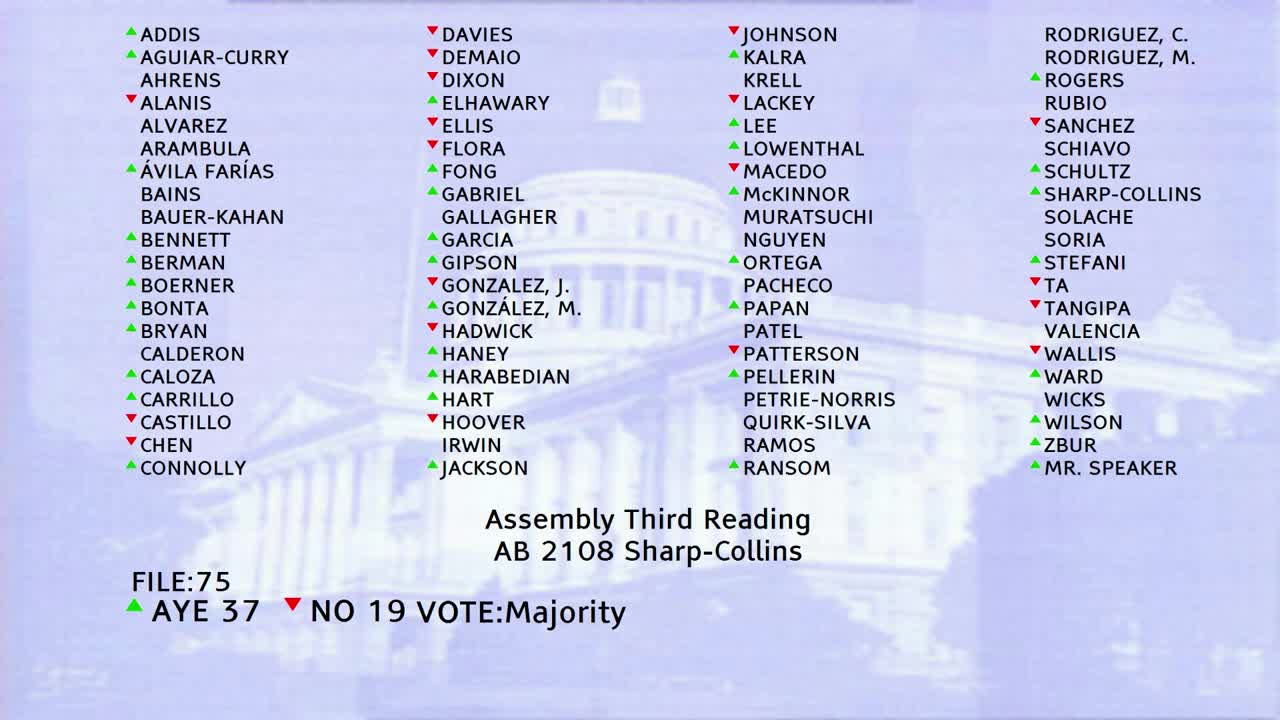 2MIN
Assembly Floor
 30MIN
Assembly Standing Committee on Privacy and Consumer Protection
Bill Author

Bill Co-Author(s):