AB 2585: California Guaranteed Income Pilot Program.
- Session Year: 2025-2026
- House: Assembly
- Latest Version Date: 2026-03-19
Current Status:
In Progress
(2026-05-14: In committee: Held under submission.)
Introduced
In Committee
Awaiting First Chamber Vote
Passed First Chamber
In Committee
Awaiting Second Chamber Vote
Passed Second Chamber
Enacted
Existing law requires the State Department of Social Services, subject to an appropriation, to administer the California Guaranteed Income Pilot Program, until January 1, 2028, to provide grants to eligible entities for the purpose of administering pilot programs and projects that provide a guaranteed income to participants. Existing law requires the department to prioritize funding for pilot programs and projects California residents who age out of the extended foster care program at or after 21 years of age or who are pregnant individuals. Existing law requires the department, in determining the methodology and manner of distributing grants, to ensure that grant funds are awarded in an equitable manner to eligible entities in both rural and urban counties and in proportion to the number of individuals anticipated to be served by an eligible entitys pilot program or project.
This bill would require the department to also prioritize pilot programs and projects that serve California residents who are parents of children between zero to 5 years of age, inclusive, or who are victims of domestic violence. The bill would remove the requirement that grant funds are awarded in proportion to the number of individuals anticipated to be served by an eligible entitys pilot program or project, and would require preference to be provided for eligible entities in regions where eligible entities have not yet been awarded grant funds pursuant to this program.
Existing law requires that every individual with exceptional needs, as defined, who is eligible be provided with educational instruction, services, or both, at no cost to their parent or guardian or, as appropriate, to them. A free appropriate public education is required to be made available to individuals with exceptional needs in accordance with specified federal regulations adopted pursuant to the federal Individuals with Disabilities Education Act. This bill would make nonsubstantive changes to those provisions.Existing law requires that every individual with exceptional needs, as defined, who is eligible be provided with educational instruction, services, or both, at no cost to their parent or guardian or, as appropriate, to them. A free appropriate public education is required to be made available to individuals with exceptional needs in accordance with specified federal regulations adopted pursuant to the federal Individuals with Disabilities Education Act.
This bill would make nonsubstantive changes to those provisions.
(a)Subject to an appropriation for this purpose in the annual Budget Act, the State Department of Social Services shall administer the California Guaranteed Income Pilot Program to provide grants to eligible entities for the purpose of administering pilot programs and projects that provide a guaranteed income to participants. The department shall prioritize funding for pilot programs and projects that serve California residents who age out of the extended foster care program at or after 21 years of age or age, who are pregnant individuals. individuals, who are parents of children between zero to five years of age, inclusive, or who are victims of domestic violence. The department, in consultation with relevant stakeholders, shall determine the methodology for, and manner of, distributing grants awarded pursuant to this chapter. In determining the methodology and manner of distributing grants, the department shall ensure that grant funds are awarded in an equitable manner to eligible entities in both rural and urban counties and in proportion to the number of individuals anticipated to be served by an eligible entitys pilot program or project. preference shall be provided for eligible entities in regions where eligible entities have not yet been awarded grant funds pursuant to this chapter.
(b)In order to receive grant funds pursuant to this chapter, an eligible entity shall do all of the following:
(1)Present commitments of additional funding for pilot programs and projects to be funded with a grant received pursuant to this chapter equal to or greater than 50 percent of the amount of funding to be provided to the pilot program or project from a grant received pursuant to this chapter.
(2)Present a plan for providing all individuals who receive guaranteed income payments funded with a grant provided under this chapter with sufficient benefits counseling and informational materials to ensure that they are aware of any impact the receipt of a guaranteed income payment from the pilot program or project may have on their eligibility for other public benefit programs.
(3)Agree to assist the department in obtaining, or to pursue, to the extent necessary, all available exemptions or waivers to ensure that guaranteed income payments made under those pilots and projects are not considered income or resources for the recipient of the guaranteed income payments or any member of their household in any means-tested federal, state, or local public benefit programs.
(c)(1)Notwithstanding any other law, guaranteed income payments received by an individual from a pilot program or project funded pursuant to this chapter shall not be considered income or resources for purposes of determining the individuals, or any member of their households, eligibility for benefits or assistance, or the amount or extent of benefits or assistance, under any state or local benefit or assistance program.
(2)The department shall, in consultation with stakeholders, and after consultation with the Legislature, identify federal benefit and assistance programs that require an exemption or waiver in order for a guaranteed income payment funded with a grant provided under this chapter to be excluded from consideration as income or resources for purposes of the federal program. Notwithstanding any other law, a state department or agency that administers a program identified by the department shall, if possible, approve an exemption or waiver, or provide any other authority deemed necessary by the department, to exclude guaranteed income payments from consideration as income or resources for purposes of the federal program, or, if the state department or agency does not have that authority, seek a federal waiver or exemption. The states failure to be granted a federal exemption or waiver, as described in this paragraph, shall not affect the departments ability to administer the California Guaranteed Income Pilot Program, and the department may consider alternatives to prevent adverse consequences for participants, in consultation with the Legislature and stakeholders.
(d)Notwithstanding any other law, for the purposes of determining eligibility to receive benefits, or the amount or extent of medical assistance, under the Medi-Cal program, a guaranteed income payment funded with a grant provided under this chapter shall not be considered income or resources for a period of 12 months from receipt. This subdivision shall only be implemented by the State Department of Health Care Services to the extent consistent with federal law and any waivers received for the implementation of this subdivision, and federal financial participation for the Medi-Cal program is available and not otherwise jeopardized.
(e)(1)The department shall review and evaluate the pilot programs and projects funded pursuant to this chapter to determine, at a minimum, the economic impact of the programs and projects and their impact on the outcomes of individuals who receive guaranteed income payments funded with a grant provided under this chapter. To the extent feasible within existing resources and evaluation design, the evaluation shall include the applicability of the lessons learned from the pilot program for the states CalWORKs program, with the objective of reaching the goals of improved outcomes for families and children living in poverty. The department shall consult with stakeholders and legislative staff on the details of, and data components to include in, the evaluation, as well as any other topics to be addressed by the review and evaluation, in advance of any decision to contract for this evaluation. Notwithstanding any other law, the department may accept and, subject to an appropriation for this purpose, expend funds from any source, public or private, for the review and evaluation.
(2)(A)The department shall submit a report to the Legislature regarding the review and evaluation conducted pursuant to paragraph (1) and shall post a copy of the report on its internet website.
(B)The report described in subparagraph (A) shall be submitted in compliance with Section 9795 of the Government Code.
(f)Upon allocation of funding to eligible entities, as described in this section, the department shall report to the Legislature, and post publicly on its internet website, information about the grants funded, including which specific eligible entities received grants, the expected number of foster youth receiving guaranteed income payments funded with a grant provided under this chapter, characteristics about, and the number of, other populations receiving guaranteed income payments funded with a grant provided under this chapter, and the length of time each guaranteed income pilot program or project will be administered.
(g)For the purposes of this section, eligible entity means either of the following:
(1)A city, county, city and county, tribe, consortium of tribes, or tribal organization, or any combination thereof.
(2)A nonprofit organization that is exempt from federal income taxation under Section 501(c)(3) or 501(c)(5) of the Internal Revenue Code of 1986, as amended, and that provides a letter of support for its pilot or project from any county or city and county in which the organization will operate its pilot or project.
SECTION 1.Section 56040 of the Education Code is amended to read:56040.(a)Every individual with exceptional needs who is eligible to receive special education instruction and related services under this part shall receive that instruction and those services at no cost to the individuals parents or, as appropriate, to the individual. A free appropriate public education shall be available to individuals with exceptional needs in accordance with Section 1412(a)(1) of Title 20 of the United States Code and Section 300.101 of Title 34 of the Code of Federal Regulations.(b)An individual, 18 to 21 years of age, inclusive, who, in the educational placement before the individuals incarceration in an adult correctional facility was not identified as being an individual with exceptional needs or did not have an individualized education program under this part, is not entitled to a free appropriate public education pursuant to Section 1412(a)(1)(B)(ii) of Title 20 of the United States Code.(a)Every individual with exceptional needs who is eligible to receive special education instruction and related services under this part, part shall receive that instruction and those services at no cost to his or her the individuals parents or, as appropriate, to him or her. the individual. A free appropriate public education shall be available to individuals with exceptional needs in accordance with Section 1412(a)(1) of Title 20 of the United States Code and Section 300.101 of Title 34 of the Code of Federal Regulations.
(b)An individual, aged 18 through 21 years, 18 to 21 years of age, inclusive, who, in the educational placement prior to his or her before the individuals incarceration in an adult correctional facility was not identified as being an individual with exceptional needs or did not have an individualized education program under this part, is not entitled to a free appropriate public education pursuant to Section 1412(a)(1)(B)(ii) of Title 20 of the United States Code.
|
Date
|
Status
|
|---|---|
| May 14, 2026 | In committee: Held under submission. |
| Apr 29, 2026 | In committee: Set, first hearing. Referred to APPR. suspense file. |
| Apr 15, 2026 | From committee: Do pass and re-refer to Com. on APPR. (Ayes 5. Noes 2.) (April 14). Re-referred to Com. on APPR. |
| Mar 23, 2026 | Re-referred to Com. on HUM. S. |
| Mar 19, 2026 | From committee chair, with author's amendments: Amend, and re-refer to Com. on HUM. S. Read second time and amended. |
| Mar 19, 2026 | Referred to Com. on HUM. S. |
| Feb 21, 2026 | From printer. May be heard in committee March 23. |
| Feb 20, 2026 | Read first time. To print. |
|
Date
|
Description
|
Location
|
Votes
|
|
|---|---|---|---|---|
| Apr 14, 2026 | Do pass and be re-referred to the Committee on [Appropriations] | Assembly Standing Committee on Human Services |
Passed |
This list shows positions taken on this bill by organizations on the date displayed, which is linked to the original source.
Positions by individuals are not included.
Date of Hearing: April 29, 2026
ASSEMBLY COMMITTEE ON APPROPRIATIONS
Buffy Wicks, Chair
ABPCA Bill Id:AB 2585
Author:(Arambula) – As Amended Ver:March 19, 2026
Policy Committee: | Human Services | Vote: | 5 - 2 |
|
| ||
|
|
Urgency: No State Mandated Local Program: No Reimbursable: No
SUMMARY:
This bill expands eligibility for the California Guaranteed Income Pilot (GIP) Program to include parents of children ages zero to five and victims of domestic violence. The bill also deletes the requirement that grant funds be awarded in proportion to the number of individuals anticipated to be served by an eligible pilot program and, instead requires preference be given to eligible entities in regions that have not yet been awarded grant funds under this program.
FISCAL EFFECT:
Estimated General Fund (GF) costs in the low tens of millions of dollars annually to fund the existing GIP program with the proposed expanded eligible population.
The state GIP program is subject to an appropriation in the annual budget act. The California Department of Social Services (CDSS) notes previous GF funding allocations totaling $40 million have been fully granted and allocated to previous populations. The 2026-27 proposed budget does not allocate additional funding for the program.
The author is requesting $15 million in the 2026–27 state budget to support a three-year GIP program.
The Legislative Analyst’s Office recently warned of General Fund structural deficits of around $35 billion per year in the 2027-28 fiscal year and ongoing.
COMMENTS:
- Purpose. According to the author:
[GIP] programs across California and the nation have demonstrated promising results, including improved financial stability, health outcomes, and participants’ ability to pursue education, employment, and safe housing. However, many regions, particularly underserved and rural areas, have not yet had the opportunity to participate in or benefit from these efforts. Because California’s communities vary widely in cost of living, economic conditions, and access to services, expanding pilots to include counties that have not previously received funding is critical. [This bill] extends the state’s GIP Program to allocate funding for parents of 0-5 year olds, victims of domestic violence, and people in previously unserved geographic areas.
- Background. To mitigate the effects of poverty, the state offers a variety of social services, including several cash assistance programs, such as the California Work Opportunity and Responsibility to Kids (CalWORKs), the Social Security Income/State Supplementary Program (SSI/SSP), Cash Assistance Program for Immigrants (CAPI), and the Refugee Cash Assistance Program (RCA).
More recently, guaranteed income programs, which provide direct cash transfers to individuals and families, have gained traction. AB 153 (Committee on Budget), Chapter 86, Statutes of 2021, established the California GIP Program to provide grants to eligible entities to implement pilot programs and projects that offer guaranteed income to California residents who are pregnant or are aging out of extended foster care.
The Budget Act of 2021 provided a $35 million GF allocation over five years for the state GIP program. CDSS, who administers the program, has directed funds through a competitive process to support seven guaranteed income pilot projects across the state. CDSS must assess the impact and implementation of the pilots and provide a report to the Legislature. The report is expected by the summer of 2028.
The Budget Act of 2024 provided an additional $5 million over five years to expand the state GIP program to support adults 60 years of age or older who are either eligible for or receiving a means-tested benefit. CDSS awarded this funding for a project in San Joaquin County with payments beginning in summer 2026. An evaluation of this effort is expected by June 30, 2030.
This bill expands program eligibility to include parents of children aged five and under and domestic violence victims and requires CDSS prioritize eligible programs in regions that have not yet received awards.
The state GIP program is dependent on an appropriation in the annual Budget Act. The 2026-27 proposed budget does not allocate additional funding for the program.
- Related Legislation. AB 661 (Lee), of this legislative session, would have required contracted entities to develop and provide recommendations to design, fund, and implement a permanent, statewide GI Program. AB 661 was held on this committee’s suspense file.
Analysis Prepared by: Jennifer Swenson / APPR. / (916) 319-2081
Date of Hearing: April 14, 2026
ASSEMBLY COMMITTEE ON HUMAN SERVICES
Alex Lee, Chair
ABPCA Bill Id:AB 2585 (
Author:Arambula) – As Amended Ver:March 19, 2026
SUBJECT: California Guaranteed Income Pilot Program
SUMMARY: Expands eligibility for the California Guaranteed Income Pilot (GIP) Program to include parents of children ages zero to five and victims of domestic violence, in addition to existing eligible participants such as former foster care youth and pregnant individuals. Specifies that preference shall be provided for eligible entities in regions where eligible entities have not yet been awarded grant funds.
EXISTING LAW:
- Requires the California Department of Social Services (CDSS), subject to an appropriation in the annual Budget Act, to administer the California GIP Program to provide grants to eligible entities for the purpose of administering pilot programs and projects that serve California residents who age out of the extended foster care program at or after 21 years of age or who are pregnant individuals. (Welfare and Institutions Code [WIC] § 18997(a))
- Requires CDSS, in consultation with relevant stakeholders, to determine the methodology for, and manner of, distributing grants awarded. Requires CDSS, in determining the methodology for, and manner of, distributing grants, to ensure that grant funds are awarded in an equitable manner to eligible entities in both rural and urban counties and in proportion to the number of individuals anticipated to be served by an eligible entity’s pilot or program. (WIC § 18997(a))
- Requires, notwithstanding any other law, guaranteed income (GI) payments received by an individual from a funded pilot program or project to not be considered income or resources for purposes of determining the individual’s, or any member of their household’s, eligibility for benefits or assistance, or the amount or extent of benefits or assistance, under any state or local benefit or assistance program. (WIC § 18997(c)(1))
- Requires CDSS to identify federal benefit and assistance programs that require an exemption or waiver for a GI payment funded with a grant provided through the GIP Program to be excluded from consideration as income or resources for purposes of the federal program. Exempts the state’s failure to be granted a federal exemption or waiver from affecting CDSS’ ability to administer the GIP Program and permits CDSS to consider alternatives to prevent adverse consequences for participants. (WIC § 18997(c)(2))
- Requires CDSS to review and evaluate the funded pilot programs and projects to determine, at a minimum, the economic impact of the programs and projects and their impact on the outcomes of individuals who receive GI payments. Requires the evaluation to include the applicability of the lessons learned from the pilot program for the state’s California Work Opportunity and Responsibility to Kids (CalWORKs) program, with the objective of reaching the goals of improved outcomes for families and children living in poverty. (WIC § 18997(e)(1))
- Requires CDSS to submit a report to the Legislature regarding the review and evaluation conducted in 5) above, and to post a copy of the report on its website. (WIC § 18997(e)(2))
- Defines “eligible entity” to mean either of the following:
- A city, county, city and county, tribe, consortium of tribes, or tribal organization, or any combination thereof; or,
- A nonprofit organization that is exempt from federal income tax under Internal Revenue Code Section 501(c)(3) or 501(c)(5) of 1986 and that provides a letter of support for its pilot or project from any county or city and county in which the organization will operate its pilot or project. (WIC § 18997(g))
- Authorizes CDSS to establish an appropriate method, process, and structure for grant management, fiscal accountability, payments to GIP program participants, and technical assistance and supports for grantees that ensure transparency and accountability in the use of state funds. (WIC § 18997.2(a))
- Requires the California GIP Program to become inoperative on July 1, 2028, and, as of January 1, 2029, is repealed. (WIC § 18997.4)
FISCAL EFFECT: Unknown, this bill has not been analyzed by a fiscal committee.
COMMENTS:
Background: Poverty in California. Despite California’s large economy and substantial public investments in programs that support families, many children continue to experience poverty or economic hardship. According to the August 2025 Public Policy Institute of California fact sheet, Poverty in California,[1] the state’s poverty rate increased from 15.2% in 2022 to 16.9% in 2023 under the California Poverty Measure, which accounts for the regional cost of living and the effects of safety-net programs. This represents approximately 6.4 million Californians living below the poverty level. Child poverty rose to 17.6% in 2023, returning to roughly its pre-COVID-19 pandemic level after temporary relief programs expired.
Economic hardship affects an even larger share of the state’s population when including those living near poverty. In 2023, 34.8% of Californians (13.2 million people) lived in poverty or near poverty, defined as having resources below 150% of the poverty line. A significant share of residents also experience deep poverty, meaning they have less than half the resources needed to meet basic needs such as housing, food, and utilities.
Poverty in California is not evenly distributed across the population. Latino Californians experience the highest poverty rate at approximately 21% and represent about half (50.6%) of Californians living in poverty, despite making up about 40.7% of the population. Other groups also experience disproportionate poverty rates, including Black Californians (17.5%) and Asian American and Pacific Islander residents (15.6%), compared to 12.8% among white residents. Poverty rates are also higher among immigrant communities and individuals with lower levels of education. Foreign-born Californians have a poverty rate of roughly 21.9%, compared to 14.8% for United States-born residents, and poverty among undocumented immigrants is estimated at 36%. Educational attainment is also strongly linked to economic stability: about 28.7% of adults without a high school diploma live in poverty, compared to 7.6% of college graduates.
Research shows that poverty can significantly affect children’s development and long-term outcomes. Children growing up in low-income households are more likely to experience unstable housing, food insecurity, and limited access to quality early learning opportunities and healthcare, which shape early development.[2] Economic hardship can also increase stress within families, affecting children’s social-emotional development, cognitive growth, and school readiness. These early disparities can contribute to differences in academic achievement, educational attainment, health outcomes and lifetime earnings. Conversely, safety net programs play a significant role in reducing poverty. In 2023, programs such as CalFresh, tax credits, housing subsidies, and school meals kept an estimated 2.6 million Californians, including about one million children, out of poverty.
California Guaranteed Income Pilot Program. The concept of GI is rooted in principles of social justice and economic security aimed at addressing the structural inequalities that perpetuate poverty and hinder upward mobility for millions of individuals and families. GI programs, which provide direct cash transfers to individuals and families, have gained traction as a promising approach to poverty alleviation.
The first state-funded California GIP Program was established through AB 153 (Committee on Budget), Chapter 86, Statutes of 2021. The 2021 Budget Act included $35 million over five years to provide grants to local pilot programs providing monthly payments of $600 to $1,200 for 12 to 18 months to pregnant individuals and former foster youth. All pilots have launched and enrollment has concluded. Through a competitive application process, the grants were awarded to seven organizations:
- Expecting Justice (launched in January 2024) provides 415 pregnant individuals who are at high risk for pre-term birth with $600 to $1,000 per month for 12 to 18 months, depending on the county, in Alameda, Contra Costa, Los Angeles, and Riverside Counties.
- Inland Southern California United Way Pilot (launched January 2024) supports 409 pregnant individuals in Riverside County with $600 per month for 12 months and 35 former foster youth in Riverside and San Bernardino Counties with $750 per month for 18 months.
- iFoster, Inc. (launched November 2023) provides 354 former foster youth statewide with $750 per month for 18 months.
- Los Angeles Section National Council of Jewish Women, Inc. (launched April 2024) provides 180 pregnant individuals in Los Angeles County with $1,000 per month for 18 months.
- City and County of San Francisco Pilot (launched October 2023) supports 150 former foster youth in San Francisco County with $1,200 per month for 18 months.
- McKinleyville Community Collaborative Pilot (launched December 2023) provides 150 pregnant individuals in Humboldt County with $920 per month for 18 months.
- Ventura County Human Services Agency Pilot (launched October 2023) provides 150 former foster youth in Ventura County with $1,000 per month for 18 months.
Evaluation findings for the California GIP Program are expected by summer 2028, which will examine the impact of the payments on health, financial, well-being, housing security, food security, participation in benefits, employment, and education.
As part of the 2024 Budget Act, CDSS received an additional $5 million to expand the GIP Program to serve adults 60 years of age and older who are either eligible for or receiving a means-tested benefit. Evaluation findings for this pilot are expected by June 30, 2030. On June 25, 2025, CDSS announced its intent to award a grant to GiveDirectly, in partnership with the Housing Authority of San Joaquin County, totaling $4.75 million, contingent upon final grant agreement execution. This pilot will serve 240 older adults living in San Joaquin County with payments beginning summer 2026.
Payments from the California GIP Program are excluded as income and resources when determining CalWORKs eligibility and grant amounts. Additionally, these payments are not counted as income but may count as resources for CalFresh eligibility, provided they include at least some non-governmental funding, as clarified in the All County Welfare Directors Letter issued on July 21, 2023.[3] To help participants understand how the program may affect their benefits, GIP Program grantees provide “benefits counseling,” allowing individuals to make informed decisions about their participation.
This bill would expand the eligibility to include parents of children ages zero to five and victims of domestic violence.
The Author has a concurrent budget request for a $10 million allocation in the 2026–27 State Budget to support a 3-year targeted GIP program that will serve pregnant individuals, parents of young children (0–5), former foster youth, and survivors of intimate partner violence. This bill would provide statutory authority for this population if it were funded in the final enacted budget.
Author’s Statement: According to the Author, “Guaranteed income pilot programs across California and the nation have demonstrated promising results, including improved financial stability, health outcomes, and participants’ ability to pursue education, employment, and safe housing. However, many regions, particularly underserved and rural areas, have not yet had the opportunity to participate in or benefit from these efforts. Because California’s communities vary widely in cost of living, economic conditions, and access to services, expanding pilots to include counties that have not previously received funding is critical. [This bill] extends the state’s Guaranteed Income Pilot Program to allocate funding for parents of 0-5 year olds, victims of domestic violence, and people in previously unserved geographic areas.”
Equity Implications: Pregnant individuals, parents of young children, foster youth, and survivors of intimate partner violence often experience significant economic instability during critical periods in their lives. Limited financial resources create barriers to stable housing, health care, safety, and long-term economic mobility. By providing direct cash assistance during these pivotal moments, this bill can help stabilize families, reduce financial stress, and improve outcomes for both parents and children.
Arguments in Support: None on file.
Arguments in Opposition: None on file.
RELATED AND PRIOR LEGISLATION:
AB 661 (Lee) of 2025, would have established the Guaranteed Income Research and Expansion Act, requiring contracted entities to develop and provide recommendations to design, fund, and implement a permanent, statewide GI Program. AB 661 was held on the Assembly Appropriations Committee suspense file.
SB 333 (Cortese) of 2024, would have established, subject to appropriation, the California SOAR GIP Program and the California SOAR GI Fund for purposes of awarding monthly payments to twelfth grade students who are homeless from April 1, 2025, to August 1, 2025.
SB 333 was held on the Assembly Appropriation Committee suspense file.
AB 2263 (Friedman) of 2024, would have established the California Guaranteed Income Statewide Feasibility Study Act, upon appropriation, to assess administrative needs, explore funding mechanisms, and identify priority populations for a permanent statewide guaranteed income program. AB 2263 was vetoed by Governor Newsom.
AB 120 (Committee on Budget), Chapter 43, Statutes of 2023, exempted all GI payments from consideration as income or resources for purposes of the CalWORKs program.
SB 187 (Committee on Budget and Fiscal Review), Chapter 50, Statutes of 2022, excluded, until July 1, 2026, any payments received by an individual from a GIP program or project from the gross income of recipients for personal income tax purposes.
SB 1341 (Cortese) of 2022, was similar to SB 333 (Cortese, 2024) and would have created the SOAR GIP for homeless students in twelfth grade, as provided. SB 1341 failed passage in the Assembly Higher Education Committee.
AB 128 (Committee on Budget), Chapter 21, Statutes of 2021, appropriated funds for the California Universal Basic Income Pilot Program to provide grant funding to local county or city pilots.
AB 153 (Committee on Budget), Chapter 86, Statutes of 2021, established the California GIP Program.
REGISTERED SUPPORT / OPPOSITION:
Support
None on file.
Opposition
None on file.
Analysis Prepared by: Bri-Ann Hernández-Mengual / HUM. S. / (916) 319-2089
Discussed in Hearing
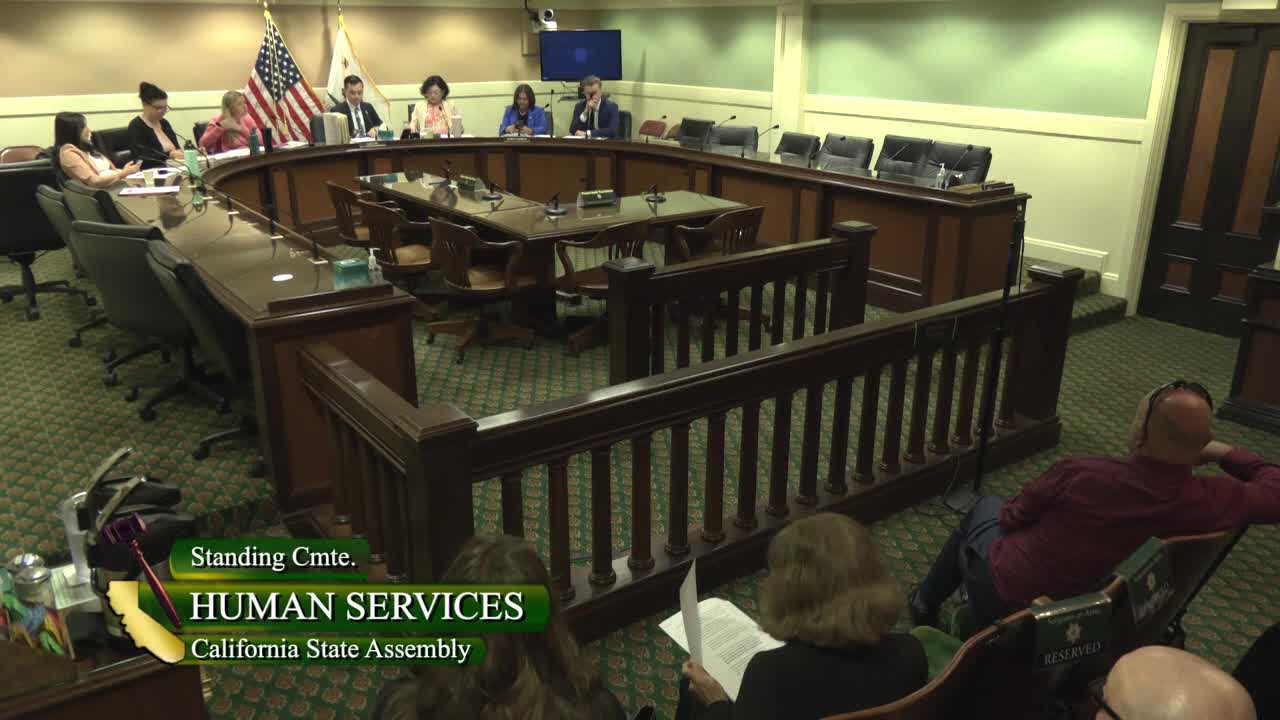 4MIN
Assembly Standing Committee on Human Services
Bill Author

Bill Co-Author(s):