AB 2592: Lobbyist ethics.
- Session Year: 2025-2026
- House: Assembly
- Latest Version Date: 2026-09-27
Current Status:
Passed
(2026-09-27: Chaptered by Secretary of State - Chapter 479, Statutes of 2026.)
Introduced
In Committee
Awaiting First Chamber Vote
Passed First Chamber
In Committee
Awaiting Second Chamber Vote
Passed Second Chamber
Enacted
Existing law requires the legislative ethics committee of each house of the Legislature to conduct at least semiannually an orientation course on the relevant ethical issues and laws related to lobbying, in consultation with the Fair Political Practices Commission. Existing law requires the committees to impose fees on lobbyists for attending these courses, as specified.
This bill would, commencing on January 1, 2029, require the Fair Political Practices Commission to develop, maintain, and offer an orientation course for registered lobbyists on the relevant ethical issues and laws relating to lobbying, and on each house of the Legislatures policies against harassment, including sexual harassment, in connection with lobbying activities. The bill would require the course be developed with the legislative ethics committees and give the committees final approval over the content of the course that relates to the Legislatures polices against harassment. The bill would require the course be available on-demand through an online platform, internet webpage, or application. The bill would authorize the commission to impose a fee on a lobbyist for the course, as specified. The bill would update cross-references.
The Political Reform Act of 1974 requires individual lobbyists to prepare certifications, as specified, for filing with the Secretary of State. The act also requires lobbying firms and certain lobbyist employers to register with the Secretary of State. A violation of the act is punishable as a misdemeanor, and any person convicted of violating the act is prohibited from acting as a lobbyist for 4 years following the date of conviction, except as specified.
This bill would prohibit a person who has been convicted of a crime of public corruption, as defined, from serving as a lobbyist for 12 years following the date of conviction. The bill would also void an existing lobbying certification in the event of such a conviction. The bill would prohibit the Secretary of State from accepting a lobbying certification from any person unless it includes a statement signed under penalty of perjury that the person has not been convicted of a crime of public corruption within the previous 12 years. Because these provisions would be part of the Political Reform Act of 1974 and a violation would therefore be a crime, this bill would impose a state-mandated local program.
The Political Reform Act of 1974, an initiative measure, provides that the Legislature may amend the act to further the acts purposes upon a 2/3 vote of each house of the Legislature and compliance with specified procedural requirements.
This bill would declare that it furthers the purposes of the act.
The California Constitution requires the state to reimburse local agencies and school districts for certain costs mandated by the state. Statutory provisions establish procedures for making that reimbursement.
This bill would provide that no reimbursement is required by this act for a specified reason.
Existing law requires the legislative ethics committee of each house of the Legislature to conduct at least semiannually an orientation course on the relevant ethical issues and laws related to lobbying, in consultation with the Fair Political Practices Commission. Existing law requires the committees to impose fees on lobbyists for attending these courses, as specified.
This bill would, commencing on January 1, 2029, require the Fair Political Practices Commission to develop, maintain, and offer an orientation course for registered lobbyists on the relevant ethical issues and laws relating to lobbying, and on each house of the legislatures policies against harassment, including sexual harassment, in connection with lobbying activities. The bill would require the course be developed with the legislative ethics committees and give the committees final approval over the content of the course that relates to the legislatures polices against harassment. The bill would require the course be available on-demand through an online platform, internet webpage, or application. The bill would authorize the commission to impose a fee on a lobbyist for the course, as specified. The bill would update cross-references.
The Political Reform Act of 1974 requires individual lobbyists to prepare certifications, as specified, for filing with the Secretary of State. The act also requires lobbying firms and certain lobbyist employers to register with the Secretary of State. A violation of the act is punishable as a misdemeanor, and any person convicted of violating the act is prohibited from acting as a lobbyist for 4 years following the date of conviction, except as specified.
This bill would prohibit a person who has been convicted of a crime of public corruption, as defined, from serving as a lobbyist for 12 years following the date of conviction. The bill would also void an existing lobbying certification in the event of such a conviction. The bill would prohibit the Secretary of State from accepting a lobbying certification from any person unless it includes a statement signed under penalty of perjury that the person has not been convicted of a crime of public corruption within the previous 12 years. Because these provisions would be part of the Political Reform Act of 1974 and a violation would therefore be a crime, this bill would impose a state-mandated local program.
The Political Reform Act of 1974, an initiative measure, provides that the Legislature may amend the act to further the acts purposes upon a 2/3 vote of each house of the Legislature and compliance with specified procedural requirements.
This bill would declare that it furthers the purposes of the act.
The California Constitution requires the state to reimburse local agencies and school districts for certain costs mandated by the state. Statutory provisions establish procedures for making that reimbursement.
This bill would provide that no reimbursement is required by this act for a specified reason.
Existing law requires the legislative ethics committee of each house of the Legislature to conduct at least semiannually an orientation course on the relevant ethical issues and laws related to lobbying, in consultation with the Fair Political Practices Commission. Existing law requires the committees to impose fees on lobbyists for attending these courses, as specified.
This bill would, commencing on January 1, 2029, require the Fair Political Practices Commission to develop, maintain, and offer an orientation course for registered lobbyists on the relevant ethical issues and laws relating to lobbying, and on each house of the legislatures policies against harassment, including sexual harassment, in connection with lobbying activities. The bill would require the course be developed with the legislative ethics committees. committees and give the committees final approval over the content of the course that relates to the legislatures polices against harassment. The bill would require the course be available on-demand through an online platform, internet webpage, or application. The bill would authorize the commission to impose a fee on a lobbyist for the course, as specified. The bill would update cross-references.
The Political Reform Act of 1974, an initiative measure, provides that the Legislature may amend the act to further the acts purposes upon a 2/3 vote of each house of the Legislature and compliance with specified procedural requirements.
This bill would declare that it furthers the purposes of the act.
Existing law requires the legislative ethics committee of each house of the Legislature to conduct at least semiannually an orientation course on the relevant ethical issues and laws related to lobbying, in consultation with the Fair Political Practices Commission. Existing law requires the committees to impose fees on lobbyists for attending these courses, as specified.
This bill would, commencing on January 1, 2029, require the Fair Political Practices Commission to develop, maintain, and offer an orientation course for registered lobbyists on the relevant ethical issues and laws relating to lobbying, and on each house of the legislatures policies against harassment, including sexual harassment, in connection with lobbying activities. The bill would require the course be developed with the legislative ethics committees. The bill would require the course be available on-demand through an online platform, internet webpage, or application. The bill would authorize the commission to impose a fee on a lobbyist for the course, as specified.
The Political Reform Act of 1974, an initiative measure, provides that the Legislature may amend the act to further the acts purposes upon a 2/3 vote of each house of the Legislature and compliance with specified procedural requirements.
This bill would declare that it furthers the purposes of the act.
This bill would state the intent of the Legislature to enact subsequent legislation that transfers the duty to provide state lobbyist ethics training from the legislative ethics committee of each house of the Legislature to the Fair Political Practices Commission, to be offered on an on-demand basisExisting law requires the legislative ethics committee of each house of the Legislature to conduct at least semiannually an orientation course on the relevant ethical issues and laws related to lobbying, in consultation with the Fair Political Practices Commission. Existing law requires the committees to impose fees on lobbyists for attending these courses, as specified.
This bill would state the intent of the Legislature to enact subsequent legislation that transfers the duty to provide state lobbyist ethics training from the legislative ethics committee of each house of the Legislature to the Fair Political Practices Commission, to be offered on an on-demand basis
(a)The appropriate legislative ethics committees shall conduct at least semiannually an orientation course of the relevant statutes and regulations governing official conduct. The curriculum and presentation of the course shall be established by house rules.
(b)The committees shall conduct at least semiannually an orientation course on the relevant ethical issues and laws relating to lobbying, in consultation with the Fair Political Practices Commission. The course shall also include information on each house of the Legislatures policies against harassment, including sexual harassment, in connection with lobbying activities. One of the semiannual courses shall be held prior to June 30 of each year. This course may be combined with the course described in subdivision (a).
(c)At least once in each biennial session, each Member of the Legislature and each designated employee of the Legislature shall attend one of these courses.
(d)The committees shall impose fees on lobbyists for attending the course described in subdivision (b). The fees shall be set at an amount that will enable the lobbyists participation in the course to be funded from those fees to the fullest extent possible.
(e)This section shall remain in effect only until January 1, 2029, and as of that date is repealed.
SEC. 2.Section 8956 is added to the Government Code, to read:8956.(a)The appropriate legislative ethics committees shall conduct at least semiannually an orientation course of the relevant statutes and regulations governing official conduct. The curriculum and presentation of the course shall be established by house rules.
(b)At least once in each biennial session, each Member of the Legislature and each designated employee of the Legislature shall attend one of these courses.
(c)This section shall become operative on January 1, 2029.
SEC. 3.Section 86100 of the Government Code is amended to read:86100.(a)The following persons shall register with the Secretary of State:
(1)Lobbying firms.
(2)Lobbyist employers under subdivision (a) of Section 82039.5 who employ one or more in-house lobbyists.
(3)Lobbying coalitions who employ at least one in-house lobbyist.
(b)(1)Each individual lobbyist shall submit a lobbyist certification under Section 86103 for filing with the Secretary of State as part of the registration of the lobbying firm in which the lobbyist is a partner, owner, officer, or employee, or as part of the registration of the lobbyist employer that employs the lobbyist.
(2)The Secretary of State shall not accept a lobbying certification from a person unless the certification includes a statement signed under penalty of perjury that the person has not been convicted of a crime of public corruption within the previous 12 years, as described in Section 86207.
(c)Lobbyist employers under subdivision (b) of Section 82039.5 who contract only for a lobbying firms services, lobbying coalitions who contract for a lobbying firms services and do not employ an in-house lobbyist, and persons described in subdivision (b) of Section 86115, are not required to register with the Secretary of State, but shall maintain records and file quarterly reports under this chapter.
(d)(1)Except as provided in paragraph (2), a registration statement shall be filed both by online or electronic means and physically, submitting the original statement in paper format.
(2)Upon certification by the Secretary of State of an online filing and disclosure system pursuant to paragraph (7) of subdivision (b) of Section 84602, a registration statement shall be filed by online or electronic means.
SEC. 4.Section 86102.5 is added to the Government Code, to read:86102.5.(a)Commencing January 1, 2029, the commission shall develop, maintain, and offer an orientation course for registered lobbyists on the relevant ethical issues and laws relating to lobbying, and on each house of the legislatures policies against harassment, including sexual harassment, in connection with lobbying activities. The curriculum of the course shall be developed in consultation with the appropriate legislative ethics committees, and the committees shall have final approval over the content of the course that relates to the legislatures policies against harassment, including sexual harassment. The course shall be available on-demand through an online platform, internet webpage, or application.
(b)The commission may impose a fee of fifty dollars ($50) on a lobbyist for the course described in subdivision (a). The commission shall adjust the fee each odd-numbered year to reflect changes in the Consumer Price Index, rounded to the nearest ten dollars ($10).
(c)Unused funds collected by the joint legislative ethics committees from lobbyists for this course pursuant to Section 8956 before January 1, 2029, shall be transferred to the commission for the purpose of developing the course.
SEC. 5.Section 86103 of the Government Code, as amended by Section 179 of Chapter 50 of the Statutes of 2021, is amended to read:86103.A lobbyist certification shall include all of the following:
(a)A recent photograph of the lobbyist, in a size prescribed by the Secretary of State.
(b)The lobbyists full name, business address, email address, and telephone number.
(c)A statement that the lobbyist has read and understands the prohibitions contained in Sections 86203 and 86205.
(d)A statement regarding the lobbyists completion of the ethics course described in subdivision (b) of Section 8956 as follows:
(1)For a lobbyist who filed a completed lobbyist certification in connection with the last regular session of the Legislature, either of the following statements:
(A)That the lobbyist has completed the ethics course within the previous 12 months.
(B)That the lobbyist will complete the ethics course no later than June 30 of the following year, in which case the certification shall be accepted on a conditional basis.
(2)In the case of a new lobbyist certification, if the lobbyist has not completed the course within the previous 12 months, the lobbyist certification shall include a statement that the lobbyist will complete the course within 12 months. The lobbyist certification shall be accepted on a conditional basis.
(3)If a lobbyist certification is accepted on a conditional basis, the lobbyist shall timely complete the ethics course and file a new lobbyist certification to replace the conditional lobbyist certification. If the lobbyist fails to timely complete the ethics course, the conditional lobbyist certification shall be void and the individual shall not act as a lobbyist under this title until the individual completes the course and files a lobbyist certification stating the date of completion. It is a violation of this section for any individual to act as a lobbyist under this title once that individuals conditional certification is void.
(4)The date and confirmation that an individual has completed the ethics course may be transmitted to the Secretary of State by the legislative ethics committee.
(e)A statement that the lobbyist has not been convicted of a crime of public corruption within the previous 12 years, as described in Section 86207.
(f)Any other information required by the commission consistent with the purposes and provisions of this chapter.
(g)Registration fees required by Section 86102 shall be paid online at the time a lobbyist certification is submitted for registration to be active.
(h)This section shall remain in effect only until January 1, 2029, and as of that date is repealed.
SEC. 6.Section 86103 is added to the Government Code, to read:86103.A lobbyist certification shall include all of the following:
(a)A recent photograph of the lobbyist, in a size prescribed by the Secretary of State.
(b)The lobbyists full name, business address, email address, and telephone number.
(c)A statement that the lobbyist has read and understands the prohibitions contained in Sections 86203 and 86205.
(d)A statement regarding the lobbyists completion of the ethics course described in subdivision (a) of Section 86102.5 as follows:
(1)For a lobbyist who filed a completed lobbyist certification in connection with the last regular session of the Legislature, either of the following statements:
(A)That the lobbyist has completed the ethics course within the previous 12 months.
(B)That the lobbyist will complete the ethics course no later than June 30 of the following year, in which case the certification shall be accepted on a conditional basis.
(2)In the case of a new lobbyist certification, if the lobbyist has not completed the course within the previous 12 months, the lobbyist certification shall include a statement that the lobbyist will complete the course within 12 months. The lobbyist certification shall be accepted on a conditional basis.
(3)If a lobbyist certification is accepted on a conditional basis, the lobbyist shall timely complete the ethics course and file a new lobbyist certification to replace the conditional lobbyist certification. If the lobbyist fails to timely complete the ethics course, the conditional lobbyist certification shall be void and the individual shall not act as a lobbyist under this title until the individual completes the course and files a lobbyist certification stating the date of completion. It is a violation of this section for any individual to act as a lobbyist under this title once that individuals conditional certification is void.
(4)The date and confirmation that an individual has completed the ethics course may be transmitted to the Secretary of State by the legislative ethics committee.
(e)A statement that the lobbyist has not been convicted of a crime of public corruption within the previous 12 years, as described in Section 86207.
(f)Any other information required by the commission consistent with the purposes and provisions of this chapter.
(g)Registration fees required by Section 86102 shall be paid online at the time a lobbyist certification is submitted for registration to be active.
(h)This section shall become operative on January 1, 2029.
SEC. 7.Section 86207 is added to the Government Code, to read:86207.(a)(1)A person who is convicted of a crime of public corruption shall not act as a lobbyist pursuant to this title for 12 years following the date of the conviction.
(2)If a person convicted of a crime of public corruption is already a registered lobbyist, the certification pursuant to this chapter shall be void upon the persons conviction.
(b)(1)For purposes of this chapter, convicted of a crime of public corruption means convicted of a crime described in Section 20 of the Elections Code.
(2)Notwithstanding Section 20 of the Elections Code, subdivision (a) applies to a person who is pardoned for a conviction of a crime of public corruption.
SEC. 8.No reimbursement is required by this act pursuant to Section 6 of Article XIIIB of the California Constitution because the only costs that may be incurred by a local agency or school district will be incurred because this act creates a new crime or infraction, eliminates a crime or infraction, or changes the penalty for a crime or infraction, within the meaning of Section 17556 of the Government Code, or changes the definition of a crime within the meaning of Section 6 of Article XIIIB of the California Constitution.
SEC. 9.The Legislature finds and declares that this bill furthers the purposes of the Political Reform Act of 1974 within the meaning of subdivision (a) of Section 81012 of the Government Code.
(a)The appropriate legislative ethics committees shall conduct at least semiannually an orientation course of the relevant statutes and regulations governing official conduct. The curriculum and presentation of the course shall be established by house rules.
(b)The committees shall conduct at least semiannually an orientation course on the relevant ethical issues and laws relating to lobbying, in consultation with the Fair Political Practices Commission. The course shall also include information on each house of the Legislatures policies against harassment, including sexual harassment, in connection with lobbying activities. One of the semiannual courses shall be held prior to June 30 of each year. This course may be combined with the course described in subdivision (a).
(c)At least once in each biennial session, each Member of the Legislature and each designated employee of the Legislature shall attend one of these courses.
(d)The committees shall impose fees on lobbyists for attending the course described in subdivision (b). The fees shall be set at an amount that will enable the lobbyists participation in the course to be funded from those fees to the fullest extent possible.
(e)This section shall remain in effect only until January 1, 2029, and as of that date is repealed.
SEC. 2.Section 8956 is added to the Government Code, to read:8956.(a)The appropriate legislative ethics committees shall conduct at least semiannually an orientation course of the relevant statutes and regulations governing official conduct. The curriculum and presentation of the course shall be established by house rules.
(b)At least once in each biennial session, each Member of the Legislature and each designated employee of the Legislature shall attend one of these courses.
(c)This section shall become operative on January 1, 2029.
SEC. 3.Section 86100 of the Government Code is amended to read:86100.(a)The following persons shall register with the Secretary of State:
(1)Lobbying firms.
(2)Lobbyist employers under subdivision (a) of Section 82039.5 who employ one or more in-house lobbyists.
(3)Lobbying coalitions who employ at least one in-house lobbyist.
(b)(1)Each individual lobbyist shall submit a lobbyist certification under Section 86103 for filing with the Secretary of State as part of the registration of the lobbying firm in which the lobbyist is a partner, owner, officer, or employee, or as part of the registration of the lobbyist employer that employs the lobbyist.
(2)The Secretary of State shall not accept a lobbying certification from a person unless the certification includes a statement signed under penalty of perjury that the person has not been convicted of a crime of public corruption within the previous 12 years, as described in Section 86207.
(c)Lobbyist employers under subdivision (b) of Section 82039.5 who contract only for a lobbying firms services, lobbying coalitions who contract for a lobbying firms services and do not employ an in-house lobbyist, and persons described in subdivision (b) of Section 86115, are not required to register with the Secretary of State, but shall maintain records and file quarterly reports under this chapter.
(d)(1)Except as provided in paragraph (2), a registration statement shall be filed both by online or electronic means and physically, submitting the original statement in paper format.
(2)Upon certification by the Secretary of State of an online filing and disclosure system pursuant to paragraph (7) of subdivision (b) of Section 84602, a registration statement shall be filed by online or electronic means.
SEC. 3.SEC. 4.Section 86102.5 is added to the Government Code, to read:86102.5.(a)Commencing January 1, 2029, the commission shall develop, maintain, and offer an orientation course for registered lobbyists on the relevant ethical issues and laws relating to lobbying, and on each house of the legislatures policies against harassment, including sexual harassment, in connection with lobbying activities. The curriculum of the course shall be developed in consultation with the appropriate legislative ethics committees, and the committees shall have final approval over the content of the course that relates to the legislatures policies against harassment, including sexual harassment. The course shall be available on-demand through an online platform, internet webpage, or application.
(b)The commission may impose a fee of fifty dollars ($50) on a lobbyist for the course described in subdivision (a). The commission shall adjust the fee each odd-numbered year to reflect changes in the Consumer Price Index, rounded to the nearest ten dollars ($10).
(c)Unused funds collected by the joint legislative ethics committees from lobbyists for this course pursuant to Section 8956 before January 1, 2029, shall be transferred to the commission for the purpose of developing the course.
SEC. 4.SEC. 5.Section 86103 of the Government Code, as amended by Section 179 of Chapter 50 of the Statutes of 2021, is amended to read:86103.A lobbyist certification shall include all of the following:
(a)A recent photograph of the lobbyist, in a size prescribed by the Secretary of State.
(b)The lobbyists full name, business address, email address, and telephone number.
(c)A statement that the lobbyist has read and understands the prohibitions contained in Sections 86203 and 86205.
(d)A statement regarding the lobbyists completion of the ethics course described in subdivision (b) of Section 8956 as follows:
(1)For a lobbyist who filed a completed lobbyist certification in connection with the last regular session of the Legislature, either of the following statements:
(A)That the lobbyist has completed the ethics course within the previous 12 months.
(B)That the lobbyist will complete the ethics course no later than June 30 of the following year, in which case the certification shall be accepted on a conditional basis.
(2)In the case of a new lobbyist certification, if the lobbyist has not completed the course within the previous 12 months, the lobbyist certification shall include a statement that the lobbyist will complete the course within 12 months. The lobbyist certification shall be accepted on a conditional basis.
(3)If a lobbyist certification is accepted on a conditional basis, the lobbyist shall timely complete the ethics course and file a new lobbyist certification to replace the conditional lobbyist certification. If the lobbyist fails to timely complete the ethics course, the conditional lobbyist certification shall be void and the individual shall not act as a lobbyist under this title until the individual completes the course and files a lobbyist certification stating the date of completion. It is a violation of this section for any individual to act as a lobbyist under this title once that individuals conditional certification is void.
(4)The date and confirmation that an individual has completed the ethics course may be transmitted to the Secretary of State by the legislative ethics committee.
(e)A statement that the lobbyist has not been convicted of a crime of public corruption within the previous 12 years, as described in Section 86207.
(e)(f)Any other information required by the commission consistent with the purposes and provisions of this chapter.
(f)(g)Registration fees required by Section 86102 shall be paid online at the time a lobbyist certification is submitted for registration to be active.
(g)(h)This section shall remain in effect only until January 1, 2029, and as of that date is repealed.
SEC. 5.SEC. 6.Section 86103 is added to the Government Code, to read:86103.A lobbyist certification shall include all of the following:
(a)A recent photograph of the lobbyist, in a size prescribed by the Secretary of State.
(b)The lobbyists full name, business address, email address, and telephone number.
(c)A statement that the lobbyist has read and understands the prohibitions contained in Sections 86203 and 86205.
(d)A statement regarding the lobbyists completion of the ethics course described in subdivision (a) of Section 86102.5 as follows:
(1)For a lobbyist who filed a completed lobbyist certification in connection with the last regular session of the Legislature, either of the following statements:
(A)That the lobbyist has completed the ethics course within the previous 12 months.
(B)That the lobbyist will complete the ethics course no later than June 30 of the following year, in which case the certification shall be accepted on a conditional basis.
(2)In the case of a new lobbyist certification, if the lobbyist has not completed the course within the previous 12 months, the lobbyist certification shall include a statement that the lobbyist will complete the course within 12 months. The lobbyist certification shall be accepted on a conditional basis.
(3)If a lobbyist certification is accepted on a conditional basis, the lobbyist shall timely complete the ethics course and file a new lobbyist certification to replace the conditional lobbyist certification. If the lobbyist fails to timely complete the ethics course, the conditional lobbyist certification shall be void and the individual shall not act as a lobbyist under this title until the individual completes the course and files a lobbyist certification stating the date of completion. It is a violation of this section for any individual to act as a lobbyist under this title once that individuals conditional certification is void.
(4)The date and confirmation that an individual has completed the ethics course may be transmitted to the Secretary of State by the legislative ethics committee.
(e)A statement that the lobbyist has not been convicted of a crime of public corruption within the previous 12 years, as described in Section 86207.
(e)(f)Any other information required by the commission consistent with the purposes and provisions of this chapter.
(f)(g)Registration fees required by Section 86102 shall be paid online at the time a lobbyist certification is submitted for registration to be active.
(g)(h)This section shall become operative on January 1, 2029.
SEC. 7.Section 86207 is added to the Government Code, to read:86207.(a)(1)A person who is convicted of a crime of public corruption shall not act as a lobbyist pursuant to this title for 12 years following the date of the conviction.
(2)If a person convicted of a crime of public corruption is already a registered lobbyist, the certification pursuant to this chapter shall be void upon the persons conviction.
(b)(1)For purposes of this chapter, convicted of a crime of public corruption means convicted of a crime described in Section 20 of the Elections Code.
(2)Notwithstanding Section 20 of the Elections Code, subdivision (a) applies to a person who is pardoned for a conviction of a crime of public corruption.
SEC. 8.No reimbursement is required by this act pursuant to Section 6 of Article XIIIB of the California Constitution because the only costs that may be incurred by a local agency or school district will be incurred because this act creates a new crime or infraction, eliminates a crime or infraction, or changes the penalty for a crime or infraction, within the meaning of Section 17556 of the Government Code, or changes the definition of a crime within the meaning of Section 6 of Article XIIIB of the California Constitution.
SEC. 6.SEC. 9.The Legislature finds and declares that this bill furthers the purposes of the Political Reform Act of 1974 within the meaning of subdivision (a) of Section 81012 of the Government Code.
(a)The appropriate legislative ethics committees shall conduct at least semiannually an orientation course of the relevant statutes and regulations governing official conduct. The curriculum and presentation of the course shall be established by house rules.
(b)The committees shall conduct at least semiannually an orientation course on the relevant ethical issues and laws relating to lobbying, in consultation with the Fair Political Practices Commission. The course shall also include information on each house of the Legislatures policies against harassment, including sexual harassment, in connection with lobbying activities. One of the semiannual courses shall be held prior to June 30 of each year. This course may be combined with the course described in subdivision (a).
(c)At least once in each biennial session, each Member of the Legislature and each designated employee of the Legislature shall attend one of these courses.
(d)The committees shall impose fees on lobbyists for attending the course described in subdivision (b). The fees shall be set at an amount that will enable the lobbyists participation in the course to be funded from those fees to the fullest extent possible.
(e)This section shall remain in effect only until January 1, 2029, and as of that date is repealed.
SEC. 2.Section 8956 is added to the Government Code, to read:8956.(a)The appropriate legislative ethics committees shall conduct at least semiannually an orientation course of the relevant statutes and regulations governing official conduct. The curriculum and presentation of the course shall be established by house rules.
(b)At least once in each biennial session, each Member of the Legislature and each designated employee of the Legislature shall attend one of these courses.
(c)This section shall become operative on January 1, 2029.
SEC. 3.Section 86102.5 is added to the Government Code, to read:86102.5.(a)Commencing January 1, 2029, the commission shall develop, maintain, and offer an orientation course for registered lobbyists on the relevant ethical issues and laws relating to lobbying, and on each house of the legislatures policies against harassment, including sexual harassment, in connection with lobbying activities. The curriculum of the course shall be developed in consultation with the appropriate legislative ethics committees. committees, and the committees shall have final approval over the content of the course that relates to the legislatures policies against harassment, including sexual harassment. The course shall be available on-demand through an online platform, internet webpage, or application.
(b)The commission may impose a fee of fifty dollars ($50) on a lobbyist for the course described in subdivision (a). The commission shall adjust the fee each odd-numbered year to reflect changes in the Consumer Price Index, rounded to the nearest ten dollars ($10).
(c)Unused funds collected by the joint legislative ethics committees from lobbyists for this course pursuant to Section 8956 before January 1, 2029, shall be transferred to the commission for the purpose of developing the course.
SEC. 4.Section 86103 of the Government Code, as amended by Section 179 of Chapter 50 of the Statutes of 2021, is amended to read:86103.A lobbyist certification shall include all of the following:
(a)A recent photograph of the lobbyist, in a size prescribed by the Secretary of State.
(b)The lobbyists full name, business address, email address, and telephone number.
(c)A statement that the lobbyist has read and understands the prohibitions contained in Sections 86203 and 86205.
(d)A statement regarding the lobbyists completion of the ethics course described in subdivision (b) of Section 8956 as follows:
(1)For a lobbyist who filed a completed lobbyist certification in connection with the last regular session of the Legislature, either of the following statements:
(A)That the lobbyist has completed the ethics course within the previous 12 months.
(B)That the lobbyist will complete the ethics course no later than June 30 of the following year, in which case the certification shall be accepted on a conditional basis.
(2)In the case of a new lobbyist certification, if the lobbyist has not completed the course within the previous 12 months, the lobbyist certification shall include a statement that the lobbyist will complete the course within 12 months. The lobbyist certification shall be accepted on a conditional basis.
(3)If a lobbyist certification is accepted on a conditional basis, the lobbyist shall timely complete the ethics course and file a new lobbyist certification to replace the conditional lobbyist certification. If the lobbyist fails to timely complete the ethics course, the conditional lobbyist certification shall be void and the individual shall not act as a lobbyist under this title until the individual completes the course and files a lobbyist certification stating the date of completion. It is a violation of this section for any individual to act as a lobbyist under this title once that individuals conditional certification is void.
(4)The date and confirmation that an individual has completed the ethics course may be transmitted to the Secretary of State by the legislative ethics committee.
(e)Any other information required by the commission consistent with the purposes and provisions of this chapter.
(f)Registration fees required by Section 86102 shall be paid online at the time a lobbyist certification is submitted for registration to be active.
(g)This section shall remain in effect only until January 1, 2029, and as of that date is repealed.
SEC. 5.Section 86103 is added to the Government Code, to read:86103.A lobbyist certification shall include all of the following:
(a)A recent photograph of the lobbyist, in a size prescribed by the Secretary of State.
(b)The lobbyists full name, business address, email address, and telephone number.
(c)A statement that the lobbyist has read and understands the prohibitions contained in Sections 86203 and 86205.
(d)A statement regarding the lobbyists completion of the ethics course described in subdivision (a) of Section 86102.5 as follows:
(1)For a lobbyist who filed a completed lobbyist certification in connection with the last regular session of the Legislature, either of the following statements:
(A)That the lobbyist has completed the ethics course within the previous 12 months.
(B)That the lobbyist will complete the ethics course no later than June 30 of the following year, in which case the certification shall be accepted on a conditional basis.
(2)In the case of a new lobbyist certification, if the lobbyist has not completed the course within the previous 12 months, the lobbyist certification shall include a statement that the lobbyist will complete the course within 12 months. The lobbyist certification shall be accepted on a conditional basis.
(3)If a lobbyist certification is accepted on a conditional basis, the lobbyist shall timely complete the ethics course and file a new lobbyist certification to replace the conditional lobbyist certification. If the lobbyist fails to timely complete the ethics course, the conditional lobbyist certification shall be void and the individual shall not act as a lobbyist under this title until the individual completes the course and files a lobbyist certification stating the date of completion. It is a violation of this section for any individual to act as a lobbyist under this title once that individuals conditional certification is void.
(4)The date and confirmation that an individual has completed the ethics course may be transmitted to the Secretary of State by the legislative ethics committee.
(e)Any other information required by the commission consistent with the purposes and provisions of this chapter.
(f)Registration fees required by Section 86102 shall be paid online at the time a lobbyist certification is submitted for registration to be active.
(g)This section shall become operative on January 1, 2029.
SEC. 4.SEC. 6.The Legislature finds and declares that this bill furthers the purposes of the Political Reform Act of 1974 within the meaning of subdivision (a) of Section 81012 of the Government Code.
(a)The appropriate legislative ethics committees shall conduct at least semiannually an orientation course of the relevant statutes and regulations governing official conduct. The curriculum and presentation of the course shall be established by house rules.
(b)The committees shall conduct at least semiannually an orientation course on the relevant ethical issues and laws relating to lobbying, in consultation with the Fair Political Practices Commission. The course shall also include information on each house of the Legislatures policies against harassment, including sexual harassment, in connection with lobbying activities. One of the semiannual courses shall be held prior to June 30 of each year. This course may be combined with the course described in subdivision (a).
(c)At least once in each biennial session, each Member of the Legislature and each designated employee of the Legislature shall attend one of these courses.
(d)The committees shall impose fees on lobbyists for attending the course described in subdivision (b). The fees shall be set at an amount that will enable the lobbyists participation in the course to be funded from those fees to the fullest extent possible.
(e)This section shall remain in effect only until January 1, 2029, and as of that date is repealed.
SEC. 2.Section 8956 is added to the Government Code, to read:8956.(a)The appropriate legislative ethics committees shall conduct at least semiannually an orientation course of the relevant statutes and regulations governing official conduct. The curriculum and presentation of the course shall be established by house rules.
(b)At least once in each biennial session, each Member of the Legislature and each designated employee of the Legislature shall attend one of these courses.
(c)This section shall become operative on January 1, 2029.
SEC. 3.Section 86102.5 is added to the Government Code, to read:86102.5.(a)Commencing January 1, 2029, the commission shall develop, maintain, and offer an orientation course for registered lobbyists on the relevant ethical issues and laws relating to lobbying, and on each house of the legislatures policies against harassment, including sexual harassment, in connection with lobbying activities. The curriculum of the course shall be developed in consultation with the appropriate legislative ethics committees. The course shall be available on-demand through an online platform, internet webpage, or application.
(b)The commission may impose a fee of fifty dollars ($50) on a lobbyist for the course described in subdivision (a). The commission shall adjust the fee each odd-numbered year to reflect changes in the Consumer Price Index, rounded to the nearest ten dollars ($10).
(c)Unused funds collected by the joint legislative ethics committees from lobbyists for this course pursuant to Section 8956 before January 1, 2029, shall be transferred to the commission for the purpose of developing the course.
SEC. 4.The Legislature finds and declares that this bill furthers the purposes of the Political Reform Act of 1974 within the meaning of subdivision (a) of Section 81012 of the Government Code.
SECTION 1.It is the intent of the Legislature to enact subsequent legislation that transfers the duty to provide state lobbyist ethics training from the legislative ethics committee of each house of the Legislature to the Fair Political Practices Commission, to be offered on an on-demand basis.It is the intent of the Legislature to enact subsequent legislation that transfers the duty to provide state lobbyist ethics training from the legislative ethics committee of each house of the Legislature to the Fair Political Practices Commission, to be offered on an on-demand basis.
|
Date
|
Status
|
|---|---|
| Sep 27, 2026 | Chaptered by Secretary of State - Chapter 479, Statutes of 2026. |
| Sep 27, 2026 | Approved by the Governor. |
| Sep 10, 2026 | Enrolled and presented to the Governor at 3 p.m. |
| Aug 30, 2026 | Senate amendments concurred in. To Engrossing and Enrolling. (Ayes 78. Noes 0. Page 6923.). |
| Aug 30, 2026 | Senate amendments concurred in. To Engrossing and Enrolling. (Ayes 78. Noes 0.). |
| Aug 30, 2026 | Senate amendments concurred in. To Engrossing and Enrolling. |
| Aug 30, 2026 | In Assembly. Concurrence in Senate amendments pending. |
| Aug 30, 2026 | Read third time. Passed. Ordered to the Assembly. (Ayes 40. Noes 0.). |
| Aug 24, 2026 | Read second time. Ordered to third reading. |
| Aug 20, 2026 | Read third time and amended. Ordered to second reading. |
| Aug 13, 2026 | Read second time. Ordered to third reading. |
| Aug 13, 2026 | From committee: Do pass. (Ayes 7. Noes 0.) (August 13). |
| Jun 29, 2026 | In committee: Referred to APPR. suspense file. |
| Jun 16, 2026 | From committee: Do pass and re-refer to Com. on APPR. with recommendation: To Consent Calendar. (Ayes 5. Noes 0.) (June 16). Re-referred to Com. on APPR. |
| Jun 10, 2026 | Referred to Com. on E. & C.A. |
| May 27, 2026 | In Senate. Read first time. To Com. on RLS. for assignment. |
| May 26, 2026 | Read third time. Passed. Ordered to the Senate. (Ayes 78. Noes 0. Page 5335.) |
| May 26, 2026 | Read third time. Passed. Ordered to the Senate. (Ayes 78. Noes 0.) |
| May 26, 2026 | Read third time. Passed. Ordered to the Senate. |
| May 18, 2026 | Read second time. Ordered to third reading. |
| May 14, 2026 | From committee: Do pass. (Ayes 15. Noes 0.) (May 14). |
| May 6, 2026 | In committee: Set, first hearing. Referred to APPR. suspense file. |
| Apr 20, 2026 | Re-referred to Com. on APPR. |
| Apr 16, 2026 | Read second time and amended. |
| Apr 15, 2026 | From committee: Amend, and do pass as amended and re-refer to Com. on APPR. (Ayes 8. Noes 0.) (April 15). |
| Mar 23, 2026 | Re-referred to Com. on ELECTIONS. |
| Mar 19, 2026 | From committee chair, with author's amendments: Amend, and re-refer to Com. on ELECTIONS. Read second time and amended. |
| Mar 19, 2026 | Referred to Com. on ELECTIONS. |
| Feb 21, 2026 | From printer. May be heard in committee March 23. |
| Feb 20, 2026 | Read first time. To print. |
|
Date
|
Description
|
Location
|
Votes
|
|
|---|---|---|---|---|
| Aug 30, 2026 | AB 2592 Pacheco Concurrence in Senate Amendments | Assembly Floor |
Passed |
|
| Aug 30, 2026 | Assembly 3rd Reading AB2592 Pacheco et al. By Laird | Senate Floor |
Passed |
|
| Aug 13, 2026 | Do pass | Senate Standing Committee on Appropriations |
Passed |
|
| Jun 29, 2026 | Placed on suspense file | Senate Standing Committee on Appropriations |
Passed |
|
| Jun 16, 2026 | Do pass, but first be re-referred to the Committee on [Appropriations] with the recommendation: To Consent Calendar | Senate Standing Committee on Elections and Constitutional Amendments |
Passed |
|
| May 26, 2026 | AB 2592 Pacheco Assembly Third Reading | Assembly Floor |
Passed |
|
| May 14, 2026 | Do pass. | Assembly Standing Committee on Appropriations |
Passed |
|
| Apr 15, 2026 | Do pass as amended and be re-referred to the Committee on [Appropriations] | Assembly Standing Committee on Elections |
Passed |
This list shows positions taken on this bill by organizations on the date displayed, which is linked to the original source.
Positions by individuals are not included.
|
Organization
|
Position
|
Date
|
|---|---|---|
| California Common Cause | ** Support | |
| Fair Political Practices Commission | ** Support |
CONCURRENCE IN SENATE AMENDMENTS
CSA1 Bill Id:AB 2592
Author:(Pacheco and Addis)
As Amended Ver:August 20, 2026
2/3 vote
SUMMARY
Transfers responsibility for lobbyist ethics training from the Assembly and Senate Legislative Ethics Committees to the Fair Political Practices Commission (FPPC), beginning in 2029. Prohibits a person who has been convicted of a crime of public corruption from serving as a lobbyist for 12 years following the date of the conviction, even if the person has been pardoned for that crime.
Senate Amendments
- Prohibit a person who has been convicted of a crime of public corruption from acting as a lobbyist for 12 years following the date of the conviction. Provide that this restriction applies to a person who is pardoned for conviction of a crime of public corruption.
- Require a person to include a statement signed under penalty of perjury on their lobbyist certification that the person has not been convicted of a crime of public corruption within the previous 12 years. Prohibit the Secretary of State (SOS) from accepting a lobbyist certification from a person who has not included that statement on the lobbyist certification.
- Provide that a person's lobbyist certification is void upon a person's conviction for public corruption.
- Provide, for the purposes of this bill, that a "crime of public corruption" means a person has been convicted of a felony involving accepting or giving, or offering to give, any bribe, the embezzlement of public money, extortion or theft of public money, perjury, or conspiracy to commit any of those crimes.
COMMENTS
As approved by the Assembly, this bill, contained only the provisions related to transferring responsibility for lobbyist ethics training to the FPPC. The Senate amendments add the provisions that prohibit a person who was convicted of a crime of public corruption from serving as a lobbyist for 12 years following the date of that conviction. Those provisions are similar to ones that were approved by the Assembly earlier this year in AB 1560 (Tangipa), of the current legislative session, though unlike AB 1560, this bill provides that the restriction of serving as a lobbyist for 12 years following the date of a public corruption conviction applies even if the person was pardoned for the conviction. This bill, as amended in the Senate, is generally consistent with prior Assembly actions.
Under the Political Reform Act (PRA), a lobbyist is an individual who is compensated to communicate directly with any elective state, state agency, or legislative official to influence legislative or administrative action on behalf of their employer or client. The PRA requires any person who qualifies as a lobbyist to register with the SOS and submit a lobbyist certification, as specified. Any lobbyist who violates these provisions may be subject to fines and criminal penalties.
Section 20 of the Elections Code lists various types of felony convictions that prevent a person from being eligible to be elected to office. The disqualifying crimes are ones that are sometimes referred to as "public trust" crimes – that is, illegal acts that involve the breach of the ethical obligation that a public servant is expected to exercise their public responsibilities in a manner that prioritizes the public interest over private gain. Elections Code Section 20 is also, to some extent, an implementing statute for Article VII, Section 8 of the California Constitution, which provides in part "Laws shall be made to exclude persons convicted of bribery, perjury, forgery, malfeasance in office, or other high crimes from office or serving on juries."
This bill applies this ethical standard to a lobbyist and prohibits a person convicted of a crime listed in Section 20 of the Elections Code from serving as a lobbyist during the 12 years following the date of the conviction. That restriction applies even if the person is pardoned for that conviction.
SB 1738 (Roberti), Chapter 84, Statutes of 1990, also known as the ″Ethics in Government Act of 1990,″ enacted a comprehensive ethics reform package. Among other provisions, SB 1738 required legislators, designated employees of the Legislature, and lobbyists to take periodic ethics orientation courses, conducted by the legislative ethics committees in the Assembly and Senate. According to prior legislative analyses, the FPPC supported the initial provision giving the legislative ethics committees, rather than the FPPC, responsibility for conducting lobbyist ethics training. State law requires that the training be offered at least semiannually, and the ethics committees generally have held the training with greater frequency. According to information from the Senate Committee on Legislative Ethics, the committees typically offer 16 lobbyist training sessions per two year legislative session, including 11 sessions prior to the June 30 deadline for lobbyists to renew their certification in the first year of the legislative session, 2 additional training sessions in the summer and fall of the first year of the session, and three dates in the second year of the legislative session.
This bill requires the FPPC to offer the training on-demand, which should provide greater flexibility for lobbyists seeking to complete their training obligations. According to a legislative analysis from 1993, the legislative ethics committees were charging $50 for the lobbyist ethics training at the time. The Senate Committee on Legislative Ethics indicates that the committees charged $25 for training between 2002-2008, and have charged $50 from 2009 to the present. While the fee is intended to cover the costs of conducting the training, the fee revenue has exceeded those costs in recent years. As a result, a surplus has developed in the account that is set aside for paying for the costs of lobbyist ethics training. Under the provisions of this bill, any such surplus remaining as of January 1, 2029, would be transferred to the FPPC to fund its lobbyist training responsibilities.
According to information from the bill′s author and sponsor, from the National Conference of State Legislatures, and from committee staff research, at least eight states—Alaska, Hawaii, Louisiana, Maine, Maryland, New York, Oregon, and Washington—require mandatory training for state lobbyists. Five of these states (Alaska, Hawaii, Louisiana, Maryland, and New York) mandate training on ethics and/or lobbying laws, and that training is administered by the state′s ethics agency. The remaining three states (Maine, Oregon, and Washington) instead focus their training exclusively on legislative codes of conduct or workplace harassment prevention, and in those cases, the training is administered by the state legislature.
California voters passed an initiative, Proposition 9, in 1974 that created the FPPC and codified significant restrictions and prohibitions on candidates, officeholders, and lobbyists. That initiative is commonly known as the PRA. Amendments to the PRA that are not submitted to the voters, such as those contained in this bill, must further the purposes of the initiative and require a two-thirds vote of both houses of the Legislature.
According to the Author
″AB 2592 strengthens ethics and accountability in California's lobbying process. Transferring lobbyist training to the FPPC will ensure consistent, standardized instruction from the state's primary authority on political ethics and campaign finance. The bill also reinforces the integrity of the lobbying profession by prohibiting individuals convicted of crimes of public corruption from serving as lobbyists for 12 years. Together, these reforms promote compliance, accountability, and public trust in California's governmental processes.″
Arguments in Support
In support of a prior version of this bill, the FPPC wrote, ″Starting January 1, 2029, AB 2592 would transfer the lobbyist training duty to the FPPC. The bill would require that the course curriculum be developed in consultation with the Legislative Ethics Committees and that the course be available on-demand through an online platform, internet webpage, or application. The bill would provide that the fee for the training is $50, subject to a biennial cost of living adjustment. The bill would also provide that any unused funds collected by the Legislative Ethics Committees from lobbyists for the course shall be transferred to the FPPC for the purpose of developing the course. While Assembly and Senate Ethics Counsel do an excellent job conducting the training, the FPPC is more appropriately suited to provide this training as the experts on the state′s lobbying laws and the agency charged with advising on the lobbying rules outside of this training. Shifting to an on-demand model will also assist lobbyists in fulfilling their training duty.″
Arguments in Opposition
None received.
FISCAL COMMENTS
According to the Senate Appropriations Committee, the FPPC indicates that it would require (1) one new analyst, at an ongoing annual cost of $107,000, and (2) annual software licensing costs of $80,000, to implement the provisions of the bill (General Fund) that require the FPPC to conduct lobbyist ethics training. The FPPC estimates $60,000 in revenue from the fee it may charge to each lobbyist that takes the training course (General Fund).
VOTES:
ASM ELECTIONS: 8-0-0
YES: Pellerin, Gallagher, Bennett, Berman, Elhawary, Johnson, Solache, Stefani
ASM APPROPRIATIONS: 15-0-0
YES: Wicks, Hoover, Aguiar-Curry, Calderon, Caloza, Dixon, Fong, Mark González, Krell, Pacheco, Pellerin, Sharp-Collins, Solache, Ta, Tangipa
ASSEMBLY FLOOR: 78-0-2
YES: Addis, Aguiar-Curry, Ahrens, Alanis, Alvarez, Arambula, Ávila Farías, Bains, Bauer-Kahan, Bennett, Berman, Boerner, Bonta, Bryan, Calderon, Caloza, Carrillo, Castillo, Chen, Connolly, Davies, DeMaio, Dixon, Elhawary, Ellis, Flora, Fong, Gabriel, Gallagher, Garcia, Gipson, Jeff Gonzalez, Mark González, Hadwick, Haney, Harabedian, Hart, Hoover, Irwin, Jackson, Johnson, Kalra, Krell, Lackey, Lee, Lowenthal, Macedo, McKinnor, Nguyen, Ortega, Pacheco, Papan, Patel, Patterson, Pellerin, Petrie-Norris, Quirk-Silva, Ramos, Ransom, Michelle Rodriguez, Rogers, Blanca Rubio, Sanchez, Schiavo, Schultz, Sharp-Collins, Solache, Soria, Stefani, Ta, Tangipa, Valencia, Wallis, Ward, Wicks, Wilson, Zbur, Rivas
ABS, ABST OR NV: Muratsuchi, Celeste Rodriguez
UPDATED
VERSION: August 20, 2026
CONSULTANT: Ethan Jones & Nichole Becker / ELECTIONS / (916) 319-2094 FN: 0004031
SENATE RULES COMMITTEE Office of Senate Floor Analyses (916) 651-4171 | AB 2592 |
THIRD READING
Bill No: AB 2592
Author: Pacheco (D) and Addis (D), et al.
Amended: 8/20/26 in Senate
Vote: 27
SENATE ELECTIONS & C.A. COMMITTEE: 5-0, 6/16/26
AYES: Wiener, Choi, Allen, Cervantes, Umberg
SENATE APPROPRIATIONS COMMITTEE: 7-0, 8/13/26
AYES: Cervantes, Seyarto, Cabaldon, Dahle, Grayson, Richardson, Wahab
ASSEMBLY FLOOR: 78-0, 5/26/26 - See last page for vote
SUBJECT: Lobbyist ethics
SOURCE: California Fair Political Practices Commission
DIGEST:
This bill transfers from the Legislature to the Fair Political Practices Commission (FPPC) the duty to provide statutorily required training to lobbyists and prohibits a person from serving as a lobbyist for 12 years after a conviction for a crime of public corruption.
Senate Floor Amendments of 8/20/26 add the contents of AB 1560 (Tangipa) of 2026 to this bill to prohibit a person from serving as a lobbyist for 12 years following conviction of specified crimes.
ANALYSIS:
Existing law:
- Regulates lobbyists through the Political Reform Act (PRA), including by requiring lobbying firms and lobbyist employers to register with the Secretary of State (SOS) and file periodic reports disclosing their activities.
- Requires, as part of the registration process, that each lobbyist submit a lobbyist certification with the SOS. This certification shall include:
- A recent photograph;
- The full name, business address, and telephone number of the lobbyist;
- A statement that the lobbyist understands the statutory gift limit; and
- A statement that the lobbyist has or will complete an ethics course.
- Prohibits a person from being a candidate for office or serving in elected office in California if the person has been convicted of a felony involving accepting, giving or offering to give any bribe, the embezzlement of public money, extortion or theft of public money, perjury, or conspiracy to commit any of these crimes.
- Requires the appropriate legislative ethics committees of each house of the Legislature to conduct, at least semiannually, an orientation course on the relevant ethical issues and laws related to lobbying, in consultation with the FPPC to satisfy the ethics course requirement. This course must include information on each house of the Legislature’s policies against harassment, including sexual harassment, in connection with lobbying activities.
- Requires the committees to impose fees on lobbyists for attending the course in 4) of existing law and requires the fees to be set at an amount to enable the lobbyist’s participation to be funded from those fees, to the fullest extent possible.
- Requires lobbyists to attend an ethics training course at least once during each two-year legislative session as a condition of registering as a lobbyist.
- Specifies administrative, civil, and criminal penalties for violating provisions of the PRA, including making any person who knowingly or willingly violates the PRA guilty of a misdemeanor. Conviction of a misdemeanor under the PRA precludes a person from being a candidate for office or acting as a lobbyist for four years, unless the court at sentencing determines this provision is not applicable.
This bill:
- Prohibits a person from serving as a lobbyist for 12 years after a felony conviction for a crime of public corruption, defined in 3) of existing law. If a person is already a registered lobbyist and is convicted of such a crime, then the person’s certification as a lobbyist shall be void upon the conviction, and the lobbyist is required to terminate their registration immediately upon conviction.
- Requires a lobbyist certification submitted to the SOS to include a statement that the lobbyist has not been convicted of a crime of public corruption within the previous 12 years.
- Prohibits the SOS from accepting a lobbying certification from a person who has indicated on the lobbying certification that they have been convicted of a crime of public corruption within the previous 12 years.
- Repeals, effective January 1, 2029, the requirements in existing law for the legislative ethics committees to conduct training for registered lobbyists and to impose fees to fund that lobbyist training.
- Requires the FPPC, beginning in 2029, to develop, maintain and offer a training course for registered lobbyists on ethical issues and laws relating to lobbying, and on the Legislature′s policies against harassment, including sexual harassment, in connection with lobbying activities.
- Requires the FPPC to consult with the appropriate legislative ethics committees in developing the training course curriculum and gives the legislative ethics committees final approval over content relating to the Legislature′s policies against harassment.
- Requires the FPPC-provided training course to be available on-demand through an online platform, internet webpage, or application.
- Permits the FPPC to impose beginning in 2029 a $50 fee per lobbyist for taking the training course and to adjust that fee for inflation in every odd-numbered year, rounded to the nearest $10.
- Requires funds collected by the Assembly and Senate Legislative Ethics Committees from lobbyist training that are unused before January 1, 2029, to be transferred to the FPPC for purposes of developing the lobbyist training.
Background
Proposition 9, which appeared on the June 1974 ballot, created the California Political Reform Act (PRA) and established California’s system of regulating lobbying activity, campaign finance, and conflicts of interest for public officials. Proposition 9 created the FPPC to implement, administer, and enforce the PRA. The PRA regulates lobbyists, including requiring lobbyists, lobbying firms, and lobbyist employers to register with the SOS and to file periodic reports disclosing their activities.
The PRA requires any person who qualifies as a lobbyist, and thus works for a lobbying firm or a lobbyist employer, to submit a lobbyist certification and include a recent photograph of the lobbyist. The SOS makes a list, with photographs, of all lobbyists publicly available on its website, which also provides lists of registered lobbying firms and lobbyist employers. The SOS publishes a directory of registered individual lobbyists, lobbying firms, and lobbyist employers.
SB 1738 (Roberti, Chapter 84, Statutes of 1990), also known as the “Ethics in Government Act of 1990,” enacted a comprehensive ethics reform package. Among other provisions, SB 1738 required legislators, designated employees of the Legislature, and lobbyists to take periodic ethics orientation courses, conducted by the legislative ethics committees in the Assembly and Senate.
Comments
Author’s Statement. This bill strengthens ethics and accountability in California’s lobbying process. Transferring lobbyist training to the FPPC will ensure consistent, standardized instruction from the state’s primary authority on political ethics and campaign finance. The bill also reinforces the integrity of the lobbying profession by prohibiting individuals convicted of crimes of public corruption from serving as lobbyists for 12 years. Together, these reforms promote compliance, accountability, and public trust in California’s governmental processes.
Crimes of Public Corruption. Existing law in Elections Code Section 20 prohibits a person from being a candidate for office or serving in elected office in California if the person has been convicted of a felony involving accepting, giving or offering to give any bribe, the embezzlement of public money, extortion or theft of public money, perjury, or conspiracy to commit any of these crimes. This bill refers to those crimes and that code section to define “crimes of public corruption” that make a person ineligible to lobby for 12 years conviction.
AB 2691 (Addis) of 2026 amends Elections Code Section 20 to expand the crimes that prohibit a person from running for office to include sexual assault and human trafficking. Thus, if both bills pass and become law, then a lobbyist would be ineligible to lobby for 12 years following the conviction of a crime of public corruption or specified sexual assault and human trafficking crimes.
Related/Prior Legislation
AB 1560 (Tangipa) of 2026 prohibits a person from serving as a lobbyist for 12 years after a conviction for a crime of public corruption.
AB 1789 (Boerner) of 2026 requires candidates and campaign treasurers beginning in 2029 to take an FPPC-provided training course on the requirements of the PRA.
AB 2055 (Levine, Chapter 964, Statutes of 2018) requires that lobbying ethics courses include information on the policies against harassment, including sexual harassment, established by each house of the Legislature.
FISCAL EFFECT: Appropriation: No Fiscal Com.: Yes Local: Yes
According to the Senate Committee on Appropriations:
FPPC indicates that it would require (1) one new analyst, at an ongoing annual cost of $107,000, and (2) annual software licensing costs of $80,000, to implement the provisions of the bill (General Fund). FPPC estimates $60,000 in revenue from the fee it may charge to each lobbyist that takes the training course (General Fund).
SUPPORT: (Verified 8/20/26)
California Fair Political Practices Commission (source)
California Common Cause
OPPOSITION: (Verified 8/20/26)
None received
ARGUMENTS IN SUPPORT: Writing in support, the FPPC, this bill’s source, states:
While Assembly and Senate Ethics Counsel do an excellent job conducting the training, the FPPC is more appropriately suited to provide this training as the experts on the state’s lobbying laws and the agency charged with advising on the lobbying rules outside of this training. Shifting to an on-demand model will also assist lobbyists in fulfilling their training duty.
California Common Cause says shifting lobbyist training to the FPPC “makes a practical and important update to California’s ethics framework” and represents a thoughtful and well-calibrated improvement to California’s ethics infrastructure.
In addition, Common Cause writes of the prohibition on lobbying after a conviction for specified crimes:
California Common Cause strongly supports efforts to protect the integrity of governmental decision-making and ensure that individuals who seek to influence public policy are held to appropriate ethical standards. Individuals convicted of serious public corruption offenses, such as bribery, embezzlement of public funds, extortion, and perjury, have engaged in conduct that undermines public trust in government and the democratic process. (This bill) addresses these concerns by establishing meaningful restrictions on lobbying activity for individuals convicted of such offenses.
ASSEMBLY FLOOR: 78-0, 5/26/26
AYES: Addis, Aguiar-Curry, Ahrens, Alanis, Alvarez, Arambula, Ávila Farías, Bains, Bauer-Kahan, Bennett, Berman, Boerner, Bonta, Bryan, Calderon, Caloza, Carrillo, Castillo, Chen, Connolly, Davies, DeMaio, Dixon, Elhawary, Ellis, Flora, Fong, Gabriel, Gallagher, Garcia, Gipson, Jeff Gonzalez, Mark González, Hadwick, Haney, Harabedian, Hart, Hoover, Irwin, Jackson, Johnson, Kalra, Krell, Lackey, Lee, Lowenthal, Macedo, McKinnor, Nguyen, Ortega, Pacheco, Papan, Patel, Patterson, Pellerin, Petrie-Norris, Quirk-Silva, Ramos, Ransom, Michelle Rodriguez, Rogers, Blanca Rubio, Sanchez, Schiavo, Schultz, Sharp-Collins, Solache, Soria, Stefani, Ta, Tangipa, Valencia, Wallis, Ward, Wicks, Wilson, Zbur, Rivas
NO VOTE RECORDED: Muratsuchi, Celeste Rodriguez
Prepared by: Carrie Cornwell / E. & C.A. / (916) 651-4106
8/24/26 14:07:36
**** END ****
8/24/26 14:07:36
SENATE RULES COMMITTEE Office of Senate Floor Analyses (916) 651-4171 | AB 2592 |
THIRD READING
Bill No: AB 2592
Author: Pacheco (D)
Amended: 4/16/26 in Assembly
Vote: 27
SENATE ELECTIONS & C.A. COMMITTEE: 5-0, 6/16/26
AYES: Wiener, Choi, Allen, Cervantes, Umberg
SENATE APPROPRIATIONS COMMITTEE: 7-0, 8/13/26
AYES: Cervantes, Seyarto, Cabaldon, Dahle, Grayson, Richardson, Wahab
ASSEMBLY FLOOR: 78-0, 5/26/26 - See last page for vote
SUBJECT: Lobbyist training
SOURCE: California Fair Political Practices Commission
DIGEST:
This bill transfers from the Legislature to the Fair Political Practices Commission (FPPC) the duty to provide statutorily required training to lobbyists.
ANALYSIS:
Existing law:
- Requires lobbying firms and lobbyists employers to register, and as part of that, each lobbyist to file a certification, which includes a statement that the lobbyist has or will complete an ethics course.
- Requires the appropriate legislative ethics committees of each house of the Legislature to conduct, at least semiannually, an orientation course on the relevant ethical issues and laws related to lobbying, in consultation with the FPPC.
- Requires the course to include information on each house of the Legislature’s policies against harassment, including sexual harassment, in connection with lobbying activities.
- Requires the committees to impose fees on lobbyists for attending this course and requires the fees to be set at an amount to enable the lobbyist’s participation to be funded from those fees to the fullest extent possible.
- Requires lobbyists to attend an ethics training course at least once during each two-year legislative session as a condition of registering as a lobbyist.
This bill:
- Repeals, effective January 1, 2029, the requirements in existing law for the legislative ethics committees to conduct training for registered lobbyists and to impose fees to fund that lobbyist training.
- Requires the FPPC, beginning in 2029, to develop, maintain and offer a training course for registered lobbyists on ethical issues and laws relating to lobbying, and on the Legislature′s policies against harassment, including sexual harassment, in connection with lobbying activities.
- Requires the FPPC to consult with the appropriate legislative ethics committees in developing the training course curriculum and gives the legislative ethics committees final approval over content relating to the Legislature′s policies against harassment.
- Requires the training course to be available on-demand through an online platform, internet webpage, or application.
- Permits the FPPC to impose a $50 fee per lobbyist for taking the training course and to adjust that fee for inflation in every odd-numbered year, rounded to the nearest $10.
- Requires funds collected by the Assembly and Senate Legislative Ethics Committees from lobbyist training that are unused before January 1, 2029, to be transferred to the FPPC for purposes of developing the lobbyist training.
Background
Proposition 9, which appeared on the June 1974 ballot, created the California Political Reform Act (PRA) and established California’s system of regulating lobbying activity, campaign finance, and conflicts of interest for public officials. Proposition 9 created the FPPC to implement, administer, and enforce the PRA. The PRA regulates lobbyists, including requiring lobbyists, lobbying firms, and lobbyist employers to register with the Secretary of State and to file periodic reports disclosing their activities.
SB 1738 (Roberti, Chapter 84, Statutes of 1990) also known as the “Ethics in Government Act of 1990,” enacted a comprehensive ethics reform package. Among other provisions, SB 1738 required legislators, designated employees of the Legislature, and lobbyists to take periodic ethics orientation courses, conducted by the legislative ethics committees in the Assembly and Senate.
Comments
Author’s Statement. Transferring lobbyist training to the FPPC ensures consistency, accountability, and public trust. As the state’s primary authority on political ethics and campaign finance, the FPPC is best equipped to provide accurate, standardized training aligned with current laws. Ultimately, this transfer promotes a more cohesive and transparent framework, one that not only supports compliance but also reinforces the ethical standards expected in California’s governmental processes.
Related/Prior Legislation
AB 1789 (Boerner) requires candidates and campaign treasurers beginning in 2029 to take an FPPC-provided training course on the requirements of the PRA.
AB 2055 (Levine, Chapter 964, Statutes of 2018) requires that lobbying ethics courses include information on the policies against harassment, including sexual harassment, established by each house of the Legislature.
FISCAL EFFECT: Appropriation: No Fiscal Com.: Yes Local: No
According to the Senate Committee on Appropriations:
FPPC indicates that it would require (1) one new analyst, at an ongoing annual cost of $107,000, and (2) annual software licensing costs of $80,000, to implement the provisions of the bill (General Fund). FPPC estimates $60,000 in revenue from the fee it may charge to each lobbyist that takes the training course (General Fund).
SUPPORT: (Verified 8/14/26)
California Fair Political Practices Commission (source)
California Common Cause
OPPOSITION: (Verified 8/14/26)
None received
ARGUMENTS IN SUPPORT: Writing in support, the FPPC, the bill’s sponsor, states:
While Assembly and Senate Ethics Counsel do an excellent job conducting the training, the FPPC is more appropriately suited to provide this training as the experts on the state’s lobbying laws and the agency charged with advising on the lobbying rules outside of this training. Shifting to an on-demand model will also assist lobbyists in fulfilling their training duty.
California Common Cause notes that the bill “makes a practical and important update to California’s ethics framework” and represents a thoughtful and well-calibrated improvement to California’s ethics infrastructure.
ASSEMBLY FLOOR: 78-0, 5/26/26
AYES: Addis, Aguiar-Curry, Ahrens, Alanis, Alvarez, Arambula, Ávila Farías, Bains, Bauer-Kahan, Bennett, Berman, Boerner, Bonta, Bryan, Calderon, Caloza, Carrillo, Castillo, Chen, Connolly, Davies, DeMaio, Dixon, Elhawary, Ellis, Flora, Fong, Gabriel, Gallagher, Garcia, Gipson, Jeff Gonzalez, Mark González, Hadwick, Haney, Harabedian, Hart, Hoover, Irwin, Jackson, Johnson, Kalra, Krell, Lackey, Lee, Lowenthal, Macedo, McKinnor, Nguyen, Ortega, Pacheco, Papan, Patel, Patterson, Pellerin, Petrie-Norris, Quirk-Silva, Ramos, Ransom, Michelle Rodriguez, Rogers, Blanca Rubio, Sanchez, Schiavo, Schultz, Sharp-Collins, Solache, Soria, Stefani, Ta, Tangipa, Valencia, Wallis, Ward, Wicks, Wilson, Zbur, Rivas
NO VOTE RECORDED: Muratsuchi, Celeste Rodriguez
Prepared by: Carrie Cornwell / E. & C.A. / (916) 651-4106
8/14/26 16:33:56
**** END ****
SENATE COMMITTEE ON
Senator Sabrina Cervantes, Chair
2025 - 2026 Regular Session
AB 2592 (Pacheco) - Lobbyist training
Version: | Policy Vote: |
Urgency: | Mandate: |
Hearing Date: | Consultant: |
Bill Summary:
AB 2592 would transfer from the Legislature to the Fair Political Practices Commission (FPPC) the duty to provide statutorily required training to lobbyists.
Fiscal Impact:
FPPC indicates that it would require (1) one new analyst, at an ongoing annual cost of $107,000, and (2) annual software licensing costs of $80,000, to implement the provisions of the bill (General Fund). FPPC estimates $60,000 in revenue from the fee it may charge to each lobbyist that takes the training course (General Fund).
Background:
The California Political Reform Act, approved by voters in 1974 through Proposition 9, established the state’s framework for regulating campaign finance, lobbying activity, and conflicts of interest involving public officials. The measure also created FPPC, which is responsible for administering and enforcing these requirements. Among its provisions, the Act requires lobbyists and lobbying entities to register and periodically disclose their activities and expenditures.
In 1990, the Legislature enacted the Ethics in Government Act, a comprehensive ethics reform measure that strengthened public accountability and transparency requirements. As part of these reforms, legislators, designated legislative employees, and lobbyists became subject to periodic ethics training intended to promote compliance with state ethics laws and standards of conduct. Current law requires these ethics orientation courses to be conducted by the Assembly and Senate ethics committees, thereby placing responsibility for administering the training within the Legislature.
Proposed Law:
This bill, among other things, would do the following:
- Repeal, effective January 1, 2029, the requirements in existing law for the legislative ethics committees to conduct training for registered lobbyists and to impose fees to fund that lobbyist training.
- Require FPPC, beginning in 2029, to develop, maintain and offer a training course for registered lobbyists on ethical issues and laws relating to lobbying, and on the Legislature′s policies against harassment, including sexual harassment, in connection with lobbying activities.
- Require FPPC to consult with the appropriate legislative ethics committees in developing the training course curriculum and gives the legislative ethics committees final approval over content relating to the Legislature′s policies against harassment.
- Require the training course to be available on-demand through an online platform, internet webpage, or application.
- Permit the FPPC to impose a $50 fee per lobbyist for taking the training course and to adjust that fee for inflation in every odd-numbered year, rounded to the nearest $10.
- Require funds collected by the Assembly and Senate Legislative Ethics Committees from lobbyist training that are unused before January 1, 2029, to be transferred to FPPC for purposes of developing the lobbyist training.
Related Legislation:
- AB 1789 (Boerner) would require candidates and campaign treasurers beginning in 2029 to take an FPPC-provided training course on the requirements of the PRA. The bill is currently pending in this Committee.
- AB 2055 (Levine, Chapter 964, Statutes of 2018) requires that lobbying ethics courses include information on the policies against harassment, including sexual harassment, established by each house of the Legislature.
-- END --
SENATE COMMITTEE ON
ELECTIONS AND CONSTITUTIONAL AMENDMENTS
Senator Scott Wiener, Chair
2025 - 2026 Regular
Bill No: Hearing Date: 6/16/26
Author: | |||
Version: |
| ||
Urgency: | Fiscal: | ||
Consultant: | |||
Subject:
DIGEST
This bill transfers from the Legislature to the Fair Political Practices Commission (FPPC) the duty to provide statutorily required training to lobbyists.
ANALYSIS
Existing law:
- Requires lobbying firms and lobbyists employers to register, and as part of that, each lobbyist to file a certification, which includes a statement that the lobbyist has or will complete an ethics course.
- Requires the appropriate legislative ethics committees of each house of the Legislature to conduct, at least semiannually, an orientation course on the relevant ethical issues and laws related to lobbying, in consultation with the FPPC.
- Requires the course to include information on each house of the Legislature’s policies against harassment, including sexual harassment, in connection with lobbying activities.
- Requires the committees to impose fees on lobbyists for attending this course and requires the fees to be set at an amount to enable the lobbyist’s participation to be funded from those fees to the fullest extent possible.
- Requires lobbyists to attend an ethics training course at least once during each two-year legislative session as a condition of registering as a lobbyist.
This bill:
- Repeals, effective January 1, 2029, the requirements in existing law for the legislative ethics committees to conduct training for registered lobbyists and to impose fees to fund that lobbyist training.
- Requires the FPPC, beginning in 2029, to develop, maintain and offer a training course for registered lobbyists on ethical issues and laws relating to lobbying, and on the Legislature′s policies against harassment, including sexual harassment, in connection with lobbying activities.
- Requires the FPPC to consult with the appropriate legislative ethics committees in developing the training course curriculum and gives the legislative ethics committees final approval over content relating to the Legislature′s policies against harassment.
- Requires the training course to be available on-demand through an online platform, internet webpage, or application.
- Permits the FPPC to impose a $50 fee per lobbyist for taking the training course and to adjust that fee for inflation in every odd-numbered year, rounded to the nearest $10.
- Requires funds collected by the Assembly and Senate Legislative Ethics Committees from lobbyist training that are unused before January 1, 2029, to be transferred to the FPPC for purposes of developing the lobbyist training.
BACKGROUND
Proposition 9, which appeared on the June 1974 ballot, created the California Political Reform Act (PRA) and established California’s system of regulating lobbying activity, campaign finance, and conflicts of interest for public officials. Proposition 9 created the FPPC to implement, administer, and enforce the PRA. The PRA regulates lobbyists, including requiring lobbyists, lobbying firms, and lobbyist employers to register with the Secretary of State and to file periodic reports disclosing their activities.
SB 1738 (Roberti), Chapter 84, Statutes of 1990, also known as the “Ethics in Government Act of 1990,” enacted a comprehensive ethics reform package. Among other provisions, SB 1738 required legislators, designated employees of the Legislature, and lobbyists to take periodic ethics orientation courses, conducted by the legislative ethics committees in the Assembly and Senate.
COMMENTS
- Author’s Statement. Transferring lobbyist training to the FPPC ensures consistency, accountability, and public trust. As the state’s primary authority on political ethics and campaign finance, the FPPC is best equipped to provide accurate, standardized training aligned with current laws. Ultimately, this transfer promotes a more cohesive and transparent framework, one that not only supports compliance but also reinforces the ethical standards expected in California’s governmental processes.
- Arguments in Support. Writing in support, the FPPC, the bill’s sponsor, states:
While Assembly and Senate Ethics Counsel do an excellent job conducting the training, the FPPC is more appropriately suited to provide this training as the experts on the state’s lobbying laws and the agency charged with advising on the lobbying rules outside of this training. Shifting to an on-demand model will also assist lobbyists in fulfilling their training duty.
California Common Cause notes that the bill “makes a practical and important update to California’s ethics framework” and represents a thoughtful and well-calibrated improvement to California’s ethics infrastructure.
RELATED/PRIOR LEGISLATION
AB 1789 (Boerner), also on today’s agenda, requires candidates and campaign treasurers beginning in 2029 to take an FPPC-provided training course on the requirements of the PRA.
AB 2055 (Levine), Chapter 964, Statutes of 2018, requires that lobbying ethics courses include information on the policies against harassment, including sexual harassment, established by each house of the Legislature.
PRIOR ACTION
Assembly Floor: | |
Assembly Appropriations Committee: | |
Assembly Committee: |
|
POSITIONS
Sponsor: California Fair Political Practices Commission
Support: California Common Cause
Oppose: None received
-- END --
ASSEMBLY THIRD READING
ATR Bill Id:AB 2592
Author:(Pacheco)
As Amended Ver:April 16, 2026
2/3 vote
SUMMARY
Transfers responsibility for lobbyist ethics training from the Assembly and Senate Legislative Ethics Committees to the Fair Political Practices Commission (FPPC), beginning in 2029.
Major Provisions
- Requires the FPPC, beginning in 2029, to maintain a training course for registered lobbyists on ethical issues and laws relating to lobbying, and on the Legislature′s policies against harassment, including sexual harassment, in connection with lobbying activities. Requires the FPPC to consult with the Assembly and Senate Legislative Ethics Committees in developing the course curriculum, and requires the Ethics Committees to have final approval over content relating to the Legislature′s policies against harassment. Requires the course to be available on-demand through an online platform, internet webpage, or application.
- Permits the FPPC to impose a $50 fee per lobbyist for taking the training course. Requires the FPPC to adjust that fee for inflation in every odd-numbered year, rounded to the nearest $10.
- Repeals, effective 2029, a requirement for the Assembly and Senate Legislative Ethics Committees to conduct, at least semiannually, a training course for registered lobbyists on ethical issues and laws related to lobbying, in consultation with the FPPC, and to impose fees to fund that lobbyist training.
- Requires funds collected by the Assembly and Senate Legislative Ethics Committees from lobbyist training that are unused before January 1, 2029, to be transferred to the FPPC for the purpose of developing its lobbyist training course.
COMMENTS
SB 1738 (Roberti), Chapter 84, Statutes of 1990, also known as the ″Ethics in Government Act of 1990,″ enacted a comprehensive ethics reform package. Among other provisions, SB 1738 required legislators, designated employees of the Legislature, and lobbyists to take periodic ethics orientation courses, conducted by the legislative ethics committees in the Assembly and Senate. According to prior legislative analyses, the FPPC supported the initial provision giving the legislative ethics committees, rather than the FPPC, responsibility for conducting lobbyist ethics training. State law requires that the training be offered at least semiannually, and the ethics committees generally have held the training with greater frequency. According to information from the Senate Committee on Legislative Ethics, the committees typically offer 16 lobbyist training sessions per two year legislative session, including 11 sessions prior to the June 30 deadline for lobbyists to renew their certification in the first year of the legislative session, 2 additional training sessions in the summer and fall of the first year of the session, and 3 dates in the second year of the legislative session. This bill requires the FPPC to offer the training on-demand, which should provide greater flexibility for lobbyists seeking to complete their training obligations. According to a legislative analysis from 1993, the legislative ethics committees were charging $50 for the lobbyist ethics training at the time. The Senate Committee on Legislative Ethics indicates that the committees charged $25 for training between 2002-2008, and have charged $50 from 2009 to the present. While the fee is intended to cover the costs of conducting the training, the fee revenue has exceeded those costs in recent years. As a result, a surplus has developed in the account that is set aside for paying for the costs of lobbyist ethics training. Under the provisions of this bill, any such surplus remaining as of January 1, 2029, would be transferred to the FPPC to fund its lobbyist training responsibilities.
According to information from the bill′s author and sponsor, from the National Conference of State Legislatures, and from committee staff research, at least eight states—Alaska, Hawaii, Louisiana, Maine, Maryland, New York, Oregon, and Washington—require mandatory training for state lobbyists. Five of these states (Alaska, Hawaii, Louisiana, Maryland, and New York) mandate training on ethics and/or lobbying laws, and that training is administered by the state′s ethics agency. The remaining three states (Maine, Oregon, and Washington) instead focus their training exclusively on legislative codes of conduct or workplace harassment prevention, and in those cases, the training is administered by the state legislature.
California voters passed an initiative, Proposition 9, in 1974 that created the FPPC and codified significant restrictions and prohibitions on candidates, officeholders, and lobbyists. That initiative is commonly known as the PRA. Amendments to the PRA that are not submitted to the voters, such as those contained in this bill, must further the purposes of the initiative and require a two-thirds vote of both houses of the Legislature.
According to the Author
″Lobbyist training currently is handled by legislative ethics staff during one of the busiest times of year, creating an unnecessary strain on limited resources. AB 2592 transfers this responsibility to the California Fair Political Practices Commission (FPPC) – the state′s primary authority on political ethics and the agency responsible for interpreting and enforcing the state′s lobbying laws. Because the FPPC already advises lobbyists and maintains up-to-date guidance, it is best positioned to provide accurate, standardized training that reflects current law. This change will streamline the process, improve access through on-demand training, and allow legislative staff to focus on their core responsibilities.″
Arguments in Support
The sponsor of this bill, the FPPC, writes in support, ″Starting January 1, 2029, AB 2592 would transfer the lobbyist training duty to the FPPC. The bill would require that the course curriculum be developed in consultation with the Legislative Ethics Committees and that the course be available on-demand through an online platform, internet webpage, or application. The bill would provide that the fee for the training is $50, subject to a biennial cost of living adjustment. The bill would also provide that any unused funds collected by the Legislative Ethics Committees from lobbyists for the course shall be transferred to the FPPC for the purpose of developing the course. While Assembly and Senate Ethics Counsel do an excellent job conducting the training, the FPPC is more appropriately suited to provide this training as the experts on the state′s lobbying laws and the agency charged with advising on the lobbying rules outside of this training. Shifting to an on-demand model will also assist lobbyists in fulfilling their training duty.″
Arguments in Opposition
None received.
FISCAL COMMENTS
According to the Assembly Appropriations Committee, this bill creates significant new workload at the FPPC, largely by transferring lobbyist orientation to the FPPC from the Legislature. The FPPC estimates it will need one new analyst, at an annual cost of $114,000, and annual software licensing costs of $80,000 (General Fund).The FPPC also anticipates approximately $60,000 in revenue from the fee the FPPC may charge to each lobbyist that takes the training course (General Fund).The Legislative Analyst′s Office recently warned of GF structural deficits of around $35 billion per year in the 2027-28 fiscal year and ongoing.
VOTES
ASM ELECTIONS: 8-0-0
YES: Pellerin, Gallagher, Bennett, Berman, Elhawary, Johnson, Solache, Stefani
ASM APPROPRIATIONS: 15-0-0
YES: Wicks, Hoover, Aguiar-Curry, Calderon, Caloza, Dixon, Fong, Mark González, Krell, Pacheco, Pellerin, Sharp-Collins, Solache, Ta, Tangipa
UPDATED
VERSION: April 16, 2026
CONSULTANT: Ethan Jones / ELECTIONS / (916) 319-2094 FN: 0002923
Date of Hearing: May 6, 2026
ASSEMBLY COMMITTEE ON APPROPRIATIONS
Buffy Wicks, Chair
ABPCA Bill Id:AB 2592
Author:(Pacheco) – As Amended Ver:April 16, 2026
Policy Committee: | Elections | Vote: | 8 - 0 |
|
| ||
|
|
Urgency: No State Mandated Local Program: No Reimbursable: No
SUMMARY:
This bill, effective January 1, 2029, transfers from the appropriate legislative ethics committees to the Fair Political Practices Committee (FPPC) the obligation to develop, maintain and offer an orientation course for registered lobbyists on the relevant ethical issues and laws relating to lobbying, and on each house of the legislature’s policies against harassment, including sexual harassment, in connection with lobbying activities.
The bill requires the FPPC to develop the lobbyist orientation course in consultation with the appropriate legislative ethics committees and provides the committees final approval over the content of the course that relates to the legislature’s policies against harassment, including sexual harassment. The bill declares that the course is to be available on-demand through an online platform, internet webpage or application. Finally, it authorizes the FPPC to charge a $50 fee, adjusted for inflation every odd-numbered year, to each lobbyist that takes the training course.
FISCAL EFFECT:
This bill creates significant new workload at the FPPC, largely by transferring lobbyist orientation to the FPPC from the Legislature. The FPPC estimates it will need one new analyst, at an annual cost of $114,000, and annual software licensing costs of $80,000 (General Fund).
The FPPC also anticipates approximately $60,000 in revenue from the fee the FPPC may charge to each lobbyist that takes the training course (General Fund).
The Legislative Analyst’s Office recently warned of GF structural deficits of around $35 billion per year in the 2027-28 fiscal year and ongoing.
COMMENTS:
Statute charges the Legislature with providing training for those lobbying state government. Specifically, the law requires at least twice a year the appropriate legislative ethics committees to provide an orientation course on the relevant ethical issues and laws relating to lobbying, in consultation with the FPPC. The law directs committees to charge fees on lobbyists for attending the orientation course at an amount that will enable the lobbyists’ participation in the course to be funded from those fees to the fullest extent possible.
This bill is sponsored by the FPPC. Statute charges the FPPC with administering and enforcing the Political Reform Act of 1974, which exists so that, among other things, the activities of lobbyists are regulated and their finances disclosed in order that improper influences will not be directed at public officials. According to the FPPC:
While Assembly and Senate Ethics Counsel do an excellent job conducting the training, the FPPC is more appropriately suited to provide this training as the experts on the state’s lobbying laws and the agency charged with advising on the lobbying rules outside of this training. Shifting to an on-demand model will also assist lobbyists in fulfilling their training duty.
There is no opposition registered against this bill.
Analysis Prepared by: Jay Dickenson / APPR. / (916) 319-2081
Date of Hearing: April 15, 2026
ASSEMBLY COMMITTEE ON ELECTIONS
Gail Pellerin, Chair
ABPCA Bill Id:AB 2592 (
Author:Pacheco) – As Amended Ver:March 19, 2026
SUBJECT: Lobbyist training.
SUMMARY: Transfers responsibility for lobbyist ethics training from the Assembly and Senate Legislative Ethics Committees to the Fair Political Practices Commission (FPPC), beginning in 2029. Specifically, this bill:
- Requires the FPPC, beginning in 2029, to maintain a training course for registered lobbyists on ethical issues and laws relating to lobbying, and on the Legislature’s policies against harassment, including sexual harassment, in connection with lobbying activities. Requires the FPPC to consult with the Assembly and Senate Legislative Ethics Committees in developing the course curriculum. Requires the course to be available on-demand through an online platform, internet webpage, or application.
- Permits the FPPC to impose a $50 fee per lobbyist for taking the training course. Requires the FPPC to adjust that fee for inflation in every odd-numbered year, rounded to the nearest $10.
- Repeals, effective 2029, a requirement for the Assembly and Senate Legislative Ethics Committees to conduct, at least semiannually, a training course for registered lobbyists on ethical issues and laws related to lobbying, in consultation with the FPPC, and to impose fees to fund that lobbyist training.
- Requires funds collected by the Assembly and Senate Legislative Ethics Committees from lobbyist training that are unused before January 1, 2029, to be transferred to the FPPC for the purpose of developing its lobbyist training course.
EXISTING LAW:
- Creates the FPPC, and makes it responsible for the impartial, effective administration and implementation of the Political Reform Act (PRA). (Government Code §§83100, 83111)
- Requires the appropriate legislative ethics committees of each house of the Legislature to conduct, at least semiannually, an orientation course on the relevant ethical issues and laws related to lobbying, in consultation with the FPPC. Requires the course to include information on each house of the Legislature’s policies against harassment, including sexual harassment, in connection with lobbying activities. Requires the committees to impose fees on lobbyists for attending this course, and requires the fees to be set at an amount to enable the lobbyist’s participation to be funded from those fees to the fullest extent possible. (Government Code §8956)
- Requires lobbyists to attend an ethics training course at least once during each two-year legislative session as a condition of registering as a lobbyist. (Government Code §86103)
FISCAL EFFECT: Unknown
COMMENTS:
- Purpose of the Bill: According to the author:
Lobbyist training currently is handled by legislative ethics staff during one of the busiest times of year, creating an unnecessary strain on limited resources.
AB 2592 transfers this responsibility to the California Fair Political Practices Commission (FPPC) – the state’s primary authority on political ethics and the agency responsible for interpreting and enforcing the state’s lobbying laws. Because the FPPC already advises lobbyists and maintains up-to-date guidance, it is best positioned to provide accurate, standardized training that reflects current law. This change will streamline the process, improve access through on-demand training, and allow legislative staff to focus on their core responsibilities.
- Lobbyist Ethics Training Overview: SB 1738 (Roberti), Chapter 84, Statutes of 1990, also known as the “Ethics in Government Act of 1990,” enacted a comprehensive ethics reform package. Among other provisions, SB 1738 required legislators, designated employees of the Legislature, and lobbyists to take periodic ethics orientation courses, conducted by the legislative ethics committees in the Assembly and Senate. According to prior legislative analyses, the FPPC supported the initial provision giving the legislative ethics committees, rather than the FPPC, responsibility for conducting lobbyist ethics training.
State law requires that the training be offered at least semiannually, and the ethics committees generally have held the training with greater frequency. According to information from the Senate Committee on Legislative Ethics, the committees typically offer 16 lobbyist training sessions per two year legislative session, including 11 sessions prior to the June 30 deadline for lobbyists to renew their certification in the first year of the legislative session, 2 additional training sessions in the summer and fall of the first year of the session, and 3 dates in the second year of the legislative session. This bill requires the FPPC to offer the training on-demand, which should provide greater flexibility for lobbyists seeking to complete their training obligations.
According to a legislative analysis from 1993, the legislative ethics committees were charging $50 for the lobbyist ethics training at the time. The Senate Committee on Legislative Ethics indicates that the committees charged $25 for training between 2002-2008, and have charged $50 from 2009 to the present. While the fee is intended to cover the costs of conducting the training, the fee revenue has exceeded those costs in recent years. As a result, a surplus has developed in the account that is set aside for paying for the costs of lobbyist ethics training. Under the provisions of this bill, any such surplus remaining as of January 1, 2029, would be transferred to the FPPC to fund its lobbyist training responsibilities. - Content of Lobbyist Ethics Training and Suggested Amendments: While the bulk of the lobbyist ethics training relates to lobbyists responsibilities under the PRA—something that is squarely in the jurisdiction of the FPPC—state law also requires the training include information on legislative policies that are outside the scope of the FPPC’s jurisdiction. Specifically, AB 2055 (Levine), Chapter 964, Statutes of 2018, requires that the lobbying ethics courses include information on the policies against harassment, including sexual harassment, established by each house of the Legislature.
While transferring the responsibility for lobbyist ethics training from the ethics committees to the FPPC, this bill also requires the FPPC to consult with the ethics committees when developing the course curriculum. Such consultation should help ensure that the lobbyist ethics training continues to provide appropriate and accurate information about the Assembly’s and Senate’s policies against harassment. However, to ensure that this bill does not create a situation where the FPPC is required to provide training on legislative policies, committee staff recommends that this bill be amended to require that the legislative ethics committees have final approval over the content of the lobbyist ethics training that relates to the legislature’s policies against harassment. - Lobbyist Training Requirements in Other States: According to information from the bill’s author and sponsor, from the National Conference of State Legislatures, and from committee staff research, at least eight states—Alaska, Hawaii, Louisiana, Maine, Maryland, New York, Oregon, and Washington—require mandatory training for state lobbyists. Five of these states (Alaska, Hawaii, Louisiana, Maryland, and New York) mandate training on ethics and/or lobbying laws, and that training is administered by the state’s ethics agency. The remaining three states (Maine, Oregon, and Washington) instead focus their training exclusively on legislative codes of conduct or workplace harassment prevention, and in those cases, the training is administered by the state legislature.
- Arguments in Support: The sponsor of this bill, the FPPC, writes in support:
Starting January 1, 2029, AB 2592 would transfer the lobbyist training duty to the FPPC. The bill would require that the course curriculum be developed in consultation with the Legislative Ethics Committees and that the course be available on-demand through an online platform, internet webpage, or application. The bill would provide that the fee for the training is $50, subject to a biennial cost of living adjustment. The bill would also provide that any unused funds collected by the Legislative Ethics Committees from lobbyists for the course shall be transferred to the FPPC for the purpose of developing the course.
While Assembly and Senate Ethics Counsel do an excellent job conducting the training, the FPPC is more appropriately suited to provide this training as the experts on the state’s lobbying laws and the agency charged with advising on the lobbying rules outside of this training. Shifting to an on-demand model will also assist lobbyists in fulfilling their training duty.
- Technical Amendment: This bill would move the operative requirement for lobbyists to complete ethics training from Section 8956 of the Government Code to Section 86102.5 of the Government Code. However, the bill does not currently propose making conforming changes to a cross reference found in Section 86103(d) of the Government Code.
Committee staff recommends a technical amendment to this bill to update the cross-reference in Section 86103(d) to reflect the changes proposed by this bill. - Previous Legislation: SB 682 (Greene) of 1993 would have transferred responsibility for lobbyist ethics training to the Secretary of State, among other provisions. SB 682 was vetoed by Governor Pete Wilson, who wrote in his veto message that “the [FPPC] is responsible for the interpretation of the [PRA] as it applies to lobbyists. Thus, the most viable agency to conduct the lobbyist training would the [FPPC], not the Office of the Secretary of State.”
- Political Reform Act of 1974: California voters passed an initiative, Proposition 9, in 1974 that created the FPPC and codified significant restrictions and prohibitions on candidates, officeholders, and lobbyists. That initiative is commonly known as the PRA. Amendments to the PRA that are not submitted to the voters, such as those contained in this bill, must further the purposes of the initiative and require a two-thirds vote of both houses of the Legislature.
REGISTERED SUPPORT / OPPOSITION:
Support
Fair Political Practices Commission (Sponsor)
Opposition
None on file.
Analysis Prepared by: Ethan Jones / ELECTIONS / (916) 319-2094
Discussed in Hearing
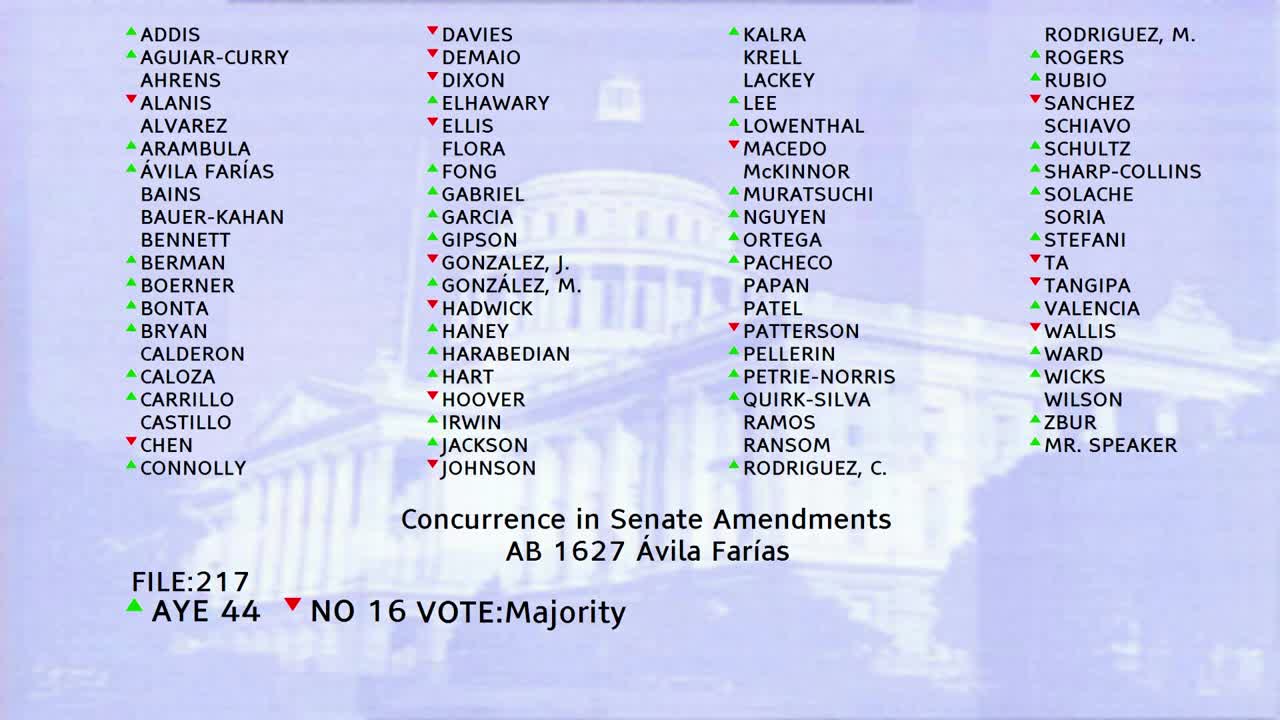 2MIN
Assembly Floor
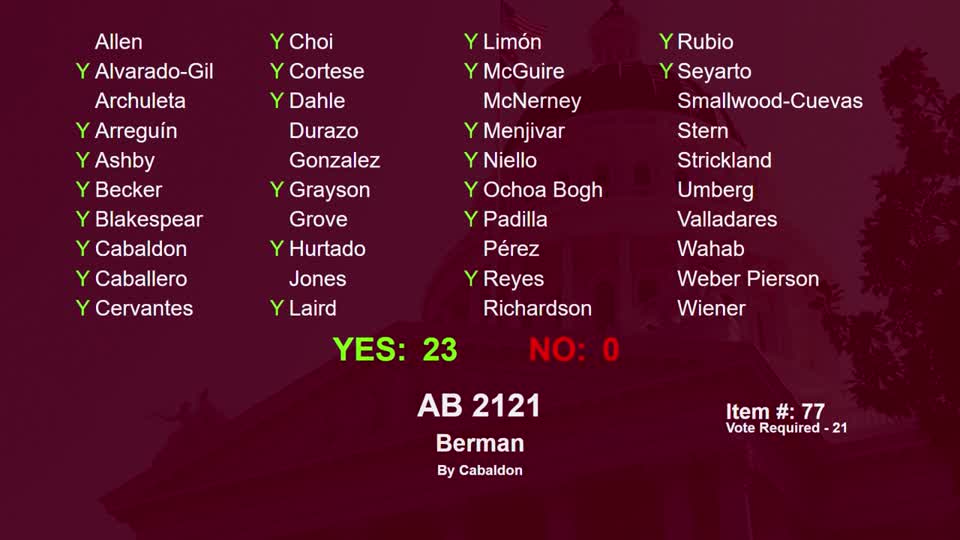 56SEC
Senate Floor
 1MIN
Assembly Floor
 4MIN
Assembly Standing Committee on Elections


Bill Co-Author(s):
