AB 2593: Corrections: treatment of prisoners.
- Session Year: 2025-2026
- House: Assembly
- Latest Version Date: 2026-08-27
Current Status:
Failed
(2026-09-27: Vetoed by Governor.)
Introduced
In Committee
Awaiting First Chamber Vote
Passed First Chamber
In Committee
Awaiting Second Chamber Vote
Passed Second Chamber
Enacted
Existing law prohibits the Department of Corrections Rehabilitation from allowing any lack of care that would injure or impair the health of an incarcerated person. Existing law prohibits the department from modifying or canceling the medical treatment of an incarcerated person if a physician certifies that the medical treatment is required to prevent certain violations of law or to prevent serious and imminent harm to the health of an incarcerated person, as specified.
This bill would prohibit a supervisor, administrator, or employee of the department from interfering with or refusing to implement prescribed health care, as specified, that results in substantial emotional distress or serious bodily injury, as defined.
Existing law prohibits the Department of Corrections Rehabilitation from allowing any lack of care that would injure or impair the health of an incarcerated person. Existing law prohibits the department from modifying or canceling the medical treatment of an incarcerated person if a physician certifies that the medical treatment is required to prevent certain violations of law or to prevent serious and imminent harm to the health of an incarcerated person, as specified.
This bill would prohibit a supervisor, administrator, or employee of the department from interfering with or refusing to implement prescribed health care, as specified, that results in substantial emotional distress or serious bodily injury, as defined.
Existing law prohibits the Department of Corrections Rehabilitation from allowing any lack of care that would injure or impair the health of an incarcerated person. Existing law prohibits the department from modifying or canceling the medical treatment of an incarcerated person if a physician certifies that the medical treatment is required to prevent certain violations of law or to prevent serious and imminent harm to the health of an incarcerated person, as specified.
This bill would prohibit a supervisor, administrator, or employee of the department from interfering with or refusing to implement prescribed health care, as specified, that results in substantial emotional distress or serious bodily injury, as defined.
(a)A supervisor, administrator, or employee of the Department of Corrections and Rehabilitation shall not knowingly countermand, change, interfere with, or refuse to implement health care prescribed or determined to be medically necessary by a licensed health care provider acting within the scope of their licensure that results in substantial emotional distress or serious bodily injury.
(b)For purposes of this section, the following terms have the following meanings:
(1)Serious bodily injury means a medically diagnosed serious impairment of physical condition, including, but not limited to, acute or protracted loss or impairment of function of any bodily member or organ.
(2)Substantial emotional distress means medically or psychiatrically diagnosed mental or emotional suffering that is acute, chronic, or protracted, or a condition that requires inpatient psychiatric treatment.
(a)A supervisor, administrator, or employee of the Department of Corrections and Rehabilitation shall not knowingly countermand, change, interfere with with, or refuse to implement health care prescribed or determined to be medically necessary by a licensed health care provider acting within the scope of their licensure that results in substantial emotional distress or serious bodily injury.
(b)For purposes of this section, serious bodily injury means a serious impairment of physical condition, including, but not limited to, the following: loss of consciousness; concussion; bone fracture; protracted loss or impairment of function of any bodily member or organ; a wound requiring extensive suturing; and serious disfigurement. the following terms have the following meanings:
(1)Serious bodily injury means a medically diagnosed serious impairment of physical condition, including, but not limited to, acute or protracted loss or impairment of function of any bodily member or organ.
(2)Substantial emotional distress means medically or psychiatrically diagnosed mental or emotional suffering that is acute, chronic, or protracted, or a condition that requires inpatient psychiatric treatment.
(a)A supervisor, administrator, or employee of the Department of Corrections and Rehabilitation shall not knowingly interfere with or refuse to implement health care prescribed or determined to be medically necessary by a licensed health care provider acting within the scope of their licensure that results in substantial emotional distress or serious bodily injury.
(b)For purposes of this section, serious bodily injury means a serious impairment of physical condition, including, but not limited to, the following: loss of consciousness; concussion; bone fracture; protracted loss or impairment of function of any bodily member or organ; a wound requiring extensive suturing; and serious disfigurement.
|
Date
|
Status
|
|---|---|
| Sep 27, 2026 | Vetoed by Governor. |
| Aug 31, 2026 | Enrolled and presented to the Governor at 4 p.m. |
| Aug 25, 2026 | Senate amendments concurred in. To Engrossing and Enrolling. (Ayes 78. Noes 0. Page 6487.). |
| Aug 25, 2026 | Senate amendments concurred in. To Engrossing and Enrolling. (Ayes 78. Noes 0.). |
| Aug 24, 2026 | In Assembly. Concurrence in Senate amendments pending. |
| Aug 24, 2026 | Read third time. Passed. Ordered to the Assembly. (Ayes 40. Noes 0. Page 5701.). |
| Aug 24, 2026 | Read third time. Passed. Ordered to the Assembly. (Ayes 40. Noes 0.). |
| Aug 13, 2026 | Read second time. Ordered to third reading. |
| Aug 13, 2026 | From committee: Do pass. (Ayes 7. Noes 0.) (August 13). |
| Aug 3, 2026 | In committee: Referred to APPR. suspense file. |
| Jun 25, 2026 | Read second time and amended. Re-referred to Com. on APPR. |
| Jun 24, 2026 | From committee: Amend, and do pass as amended and re-refer to Com. on APPR. (Ayes 6. Noes 0.) (June 23). |
| Jun 10, 2026 | Referred to Com. on PUB. S. |
| May 27, 2026 | In Senate. Read first time. To Com. on RLS. for assignment. |
| May 26, 2026 | Read third time. Passed. Ordered to the Senate. (Ayes 78. Noes 0. Page 5335.) |
| May 26, 2026 | Read third time. Passed. Ordered to the Senate. (Ayes 78. Noes 0.) |
| May 26, 2026 | Read third time. Passed. Ordered to the Senate. |
| May 18, 2026 | Read second time. Ordered to third reading. |
| May 14, 2026 | From committee: Do pass. (Ayes 15. Noes 0.) (May 14). |
| Apr 15, 2026 | In committee: Set, first hearing. Referred to APPR. suspense file. |
| Mar 25, 2026 | From committee: Do pass and re-refer to Com. on APPR. (Ayes 8. Noes 0.) (March 24). Re-referred to Com. on APPR. |
| Mar 9, 2026 | Referred to Com. on PUB. S. |
| Feb 21, 2026 | From printer. May be heard in committee March 23. |
| Feb 20, 2026 | Read first time. To print. |
|
Date
|
Description
|
Location
|
Votes
|
|
|---|---|---|---|---|
| Aug 25, 2026 | AB 2593 Elhawary Concurrence in Senate Amendments | Assembly Floor |
Passed |
|
| Aug 24, 2026 | Assembly 3rd Reading AB2593 Elhawary By Gonzalez | Senate Floor |
Passed |
|
| Aug 13, 2026 | Do pass | Senate Standing Committee on Appropriations |
Passed |
|
| Aug 3, 2026 | Placed on suspense file | Senate Standing Committee on Appropriations |
Passed |
|
| Jun 23, 2026 | Do pass as amended, but first amend, and re-refer to the Committee on [Appropriations] | Senate Standing Committee on Public Safety |
Passed |
|
| May 26, 2026 | AB 2593 Elhawary Assembly Third Reading | Assembly Floor |
Passed |
|
| May 14, 2026 | Do pass. | Assembly Standing Committee on Appropriations |
Passed |
|
| Mar 24, 2026 | Do pass and be re-referred to the Committee on [Appropriations] | Assembly Standing Committee on Public Safety |
Passed |
This list shows positions taken on this bill by organizations on the date displayed, which is linked to the original source.
Positions by individuals are not included.
|
Organization
|
Position
|
Date
|
|---|---|---|
| Aclu California Action | ** Support | |
| AFSCME | ** Support | |
| A New Way of Life Re-Entry Project | ** Support | |
| California Civil Liberties Advocacy | ** Against | |
| California Public Defenders Association | ** Support | |
| Disability Rights California | ** Support | |
| Ella Baker Center For Human Rights | ** Support | |
| Grip Training Institute | ** Support | |
| San Quentin Skunkworks | ** Support | |
| San Quentin Skunkworks. | ** Support | |
| Union Of American Physicians And Dentists | ** Support | |
| Union of American Physicians and Dentists; AFSCME, Local 206 | ** Support |
GOVERNOR'S VETO
GV Bill Id:AB 2593
Author:(Elhawary)
As Enrolled Ver:August 27, 2026
2/3 vote
SUMMARY
Prohibits the California Department of Corrections and Rehabilitation (CDCR) from denying medically necessary health care prescribed by a licensed health care provider.
Senate Amendments
1) Add that CDCR also may not change or countermand medically necessary health care prescribed by a licensed health care provider.
2) Redefine "serious bodily injury," as defined under this bill, to mean a medically diagnosed serious impairment of physical condition, including, but not limited to, acute or protracted loss or impairment of function of any bodily member.
3) Define "substantial emotional distress" to mean medically or psychiatrically diagnosed mental or emotional suffering that is acute, chronic, or protracted, or a condition that requires inpatient psychiatric treatment.
Governor's Veto Message
"This bill would prohibit a supervisor, administrator, or employee of the California Department of Corrections and Rehabilitation (CDCR) or the California Correctional Health Care Services (CCHCS) from interfering with or refusing to implement prescribed healthcare that results in substantial emotional distress or serious bodily injury.
"While well-intentioned, I am concerned this bill could ultimately weaken the quality and accountability of patient care. In particular, this bill may directly conflict with the court-ordered healthcare system established under Plata v. Newsom and may cause challenges with the federal courts, risking backsliding in the significant progress made to fully delegate healthcare back to CDCR.
"Further, this bill does not appear limited to CCHCS-employed providers and could potentially encompass healthcare recommendations from contractors, outside specialists, hospitals, or other community providers, creating uncertainty regarding either CDCR's or CCHCS's ability of independently evaluate outside treatment recommendations as they pertain to medical necessity. I am concerned about the potential liability tied to subsequent patient harm, as supervisors and clinicians may be reluctant to question or modify another provider's treatment decision even when doing so is part of their professional responsibilities or necessary to protect patient safety."
COMMENTS
As Passed by the Assembly: Prohibited the California Department of Corrections and Rehabilitation (CDCR) from denying medically necessary health care prescribed by a licensed health care provider.
Major Provisions
- Prohibited a supervisor, administrator, or employee of CDCR from knowingly interfering with or refusing to implement health care prescribed or determined to be medically necessary by a licensed health care provider acting within the scope of their licensure that results in substantial emotional distress or serious bodily injury.
- Defined "serious bodily injury" as a serious impairment of physical condition, including, but not limited to, the following: loss of consciousness; concussion; bone fracture; protracted loss or impairment of function of any bodily member or organ; a wound requiring extensive suturing; and serious disfigurement.
According to the Author
"For far too long, the voices of our incarcerated patients and the medical professionals who care for them have been pushed aside. Doctors and providers inside our prisons are often prevented from exercising their professional judgment. We have seen where that leads. It's one of the reasons California's prison health care systems ended up in federal receivership in the first place—because medical decisions were being ignored and providers were forced to practice in ways that didn't serve their patients."
"AB 2593 is about fixing that. It's about making sure the people trained to provide care can actually do their jobs and make decisions based on current medical standards. When we incarcerate someone, we take the responsibility of their care. The least we can do is make sure the professionals responsible for that care are able to practice medicine the way it's meant to be practiced."
Arguments in Support
According to AFSCME, a co-sponsor of this bill, "AB 2593 establishes an important safeguard by making clear that supervisors, administrators, or employees of CDCR may not knowingly interfere with or refuse to implement treatment that has been prescribed or determined to be medically necessary by a licensed health care provider acting within the scope of their licensure when doing so results in serious harm. This protection reinforces a fundamental principle of health care: medical decisions should be made by qualified medical professionals based on clinical judgment and patient needs."
"In correctional settings, physicians and psychiatrists must often navigate institutional pressures, operational constraints, and administrative oversight while still upholding their professional and ethical obligations to provide appropriate care. When non-medical personnel interfere with treatment decisions, it can jeopardize patient safety, undermine the professional integrity of medical providers, and expose the state to significant legal and financial risk."
"By ensuring that licensed medical professionals retain authority over medically necessary care, AB 2593 helps strengthen the integrity of the correctional health care system and supports providers in fulfilling their duty to deliver appropriate treatment. This clarity in law will help protect both patients and the physicians and psychiatrists who care for them."
Arguments in Opposition
According to California Civil Liberties Advocacy, "California law does not recognize "substantial emotional distress" as a defined legal term of art. Instead, courts and the Judicial Council have developed well-established definitions for related—but distinct—standards, including "severe emotional distress" and "serious emotional distress." For example, the Judicial Council's Civil Jury Instructions define "severe emotional distress" as distress that "is not mild or brief; it must be so substantial or long-lasting that no reasonable person in a civilized society should be expected to bear it."
"Similarly, California law defines "serious emotional distress" in negligence contexts as distress that an "ordinary, reasonable person would be unable to cope with."
"And longstanding California case law equates "severe emotional distress" with distress of such "substantial quality or enduring quality that no reasonable [person]… should be expected to endure it." (Fletcher v. Western National Life Ins. Co. (1970) 10 Cal. App.3d 376, 397; quoted in CACI No. 1600.).
"Against this backdrop, the bill's use of the phrase "substantial emotional distress" is both novel and undefined. This creates a fundamental ambiguity:
- It could be interpreted as less than "severe" or "serious" emotional distress, thereby expanding liability beyond existing tort standards; or
- It could be interpreted as coextensive with or even greater than those standards, depending on judicial construction.
"Absent a statutory definition or clear legislative intent, courts will be forced to resolve this ambiguity on a case-by-case basis. California appellate courts have repeatedly cautioned against precisely this type of indeterminate standard, particularly in the emotional distress context, where unclear thresholds can lead to inconsistent results and "burdensome case-by-case analysis." (See Thing v. La Chusa (1989) 48 Cal. 3d 644, 663–664.).
"The result here would likely be a proliferation of litigation over the meaning of a single phrase—an outcome that undermines both judicial efficiency and legislative clarity.
"For these reasons, we respectfully request the following amendment:
- Define "substantial emotional distress" explicitly in the statute, including objective criteria; or
- Replace the phrase with an existing, well-defined legal standard, such as "severe emotional distress," and incorporate the Judicial Council definition by reference.
"Either approach would provide courts, correctional staff, and litigants with clear guidance and align the bill with established California law.
"Without such clarification, AB 2593 risks creating uncertainty in application, inconsistent judicial outcomes, and expanded litigation over definitional questions that the Legislature is better positioned to resolve."
FISCAL COMMENTS
According to the Senate Appropriations Committee, "Likely major annual costs to CDCR to comply with the requirements of the bill. (General Fund)
"Potentially significant annual costs to the Department of Justice for litigation when the CDCR is sued for failing to implement prescribed health care. (General Fund)
"Unknown, potentially significant costs to the courts to adjudicate new filings. An eight-hour court day costs approximately $10,500 based on the hourly rate of court personnel including at minimum the judge, clerk, bailiff, court reporter, jury administrator, administrative staff, and jury per-diems. While the courts are not funded on a workload basis, an increase in workload could result in delayed court services and would put pressure on the General Fund to fund additional staff and resources. The FY 2026-27 Budget appropriated $70 million General Fund for this purpose. (Trial Court Trust Fund, General Fund)"
VOTES
ASM PUBLIC SAFETY: 8-0-1
YES: Schultz, Alanis, Mark González, Harabedian, Lackey, Nguyen, Ramos, Sharp-Collins
ABS, ABST OR NV: Haney
ASM APPROPRIATIONS: 15-0-0
YES: Wicks, Hoover, Aguiar-Curry, Calderon, Caloza, Dixon, Fong, Mark González, Krell, Pacheco, Pellerin, Sharp-Collins, Solache, Ta, Tangipa
ASSEMBLY FLOOR: 78-0-2
YES: Addis, Aguiar-Curry, Ahrens, Alanis, Alvarez, Arambula, Ávila Farías, Bains, Bauer-Kahan, Bennett, Berman, Boerner, Bonta, Bryan, Calderon, Caloza, Carrillo, Castillo, Chen, Connolly, Davies, DeMaio, Dixon, Elhawary, Ellis, Flora, Fong, Gabriel, Gallagher, Garcia, Gipson, Jeff Gonzalez, Mark González, Hadwick, Haney, Harabedian, Hart, Hoover, Irwin, Jackson, Johnson, Kalra, Krell, Lackey, Lee, Lowenthal, Macedo, McKinnor, Nguyen, Ortega, Pacheco, Papan, Patel, Patterson, Pellerin, Petrie-Norris, Quirk-Silva, Ramos, Ransom, Michelle Rodriguez, Rogers, Blanca Rubio, Sanchez, Schiavo, Schultz, Sharp-Collins, Solache, Soria, Stefani, Ta, Tangipa, Valencia, Wallis, Ward, Wicks, Wilson, Zbur, Rivas
ABS, ABST OR NV: Muratsuchi, Celeste Rodriguez
SENATE FLOOR: 40-0-0
YES: Allen, Alvarado-Gil, Archuleta, Arreguín, Ashby, Becker, Blakespear, Cabaldon, Caballero, Cervantes, Choi, Cortese, Dahle, Durazo, Gonzalez, Grayson, Grove, Hurtado, Jones, Laird, Limón, McGuire, McNerney, Menjivar, Niello, Ochoa Bogh, Padilla, Pérez, Reyes, Richardson, Rubio, Seyarto, Smallwood-Cuevas, Stern, Strickland, Umberg, Valladares, Wahab, Weber Pierson, Wiener
ASSEMBLY FLOOR: 78-0-1
YES: Addis, Aguiar-Curry, Ahrens, Alanis, Alvarez, Arambula, Ávila Farías, Bains, Bauer-Kahan, Bennett, Berman, Boerner, Bonta, Bryan, Calderon, Caloza, Carrillo, Castillo, Chen, Connolly, Davies, DeMaio, Dixon, Elhawary, Ellis, Flora, Fong, Gabriel, Garcia, Gipson, Jeff Gonzalez, Mark González, Hadwick, Haney, Harabedian, Hart, Hoover, Irwin, Jackson, Johnson, Kalra, Krell, Lackey, Lee, Lowenthal, Macedo, Muratsuchi, Nguyen, Ortega, Pacheco, Papan, Patel, Patterson, Pellerin, Petrie-Norris, Quirk-Silva, Ramos, Ransom, Celeste Rodriguez, Michelle Rodriguez, Rogers, Blanca Rubio, Sanchez, Schiavo, Schultz, Sharp-Collins, Solache, Soria, Stefani, Ta, Tangipa, Valencia, Wallis, Ward, Wicks, Wilson, Zbur, Rivas
ABS, ABST OR NV: McKinnor
UPDATED
VERSION: August 27, 2026
CONSULTANT: Andrew Ironside / PUB. S. / (916) 319-3744 FN: 0004644
CONCURRENCE IN SENATE AMENDMENTS
CSA1 Bill Id:AB 2593
Author:(Elhawary)
As Amended Ver:June 25, 2026
Majority vote
SUMMARY
Prohibits the California Department of Corrections and Rehabilitation (CDCR) from denying medically necessary health care prescribed by a licensed health care provider.
Senate Amendments
- Add that CDCR also may not change or countermand medically necessary health care prescribed by a licensed health care provider.
- Redefine "serious bodily injury," as defined under this bill, to mean a medically diagnosed serious impairment of physical condition, including, but not limited to, acute or protracted loss or impairment of function of any bodily member.
- Define "substantial emotional distress" to mean medically or psychiatrically diagnosed mental or emotional suffering that is acute, chronic, or protracted, or a condition that requires inpatient psychiatric treatment.
COMMENTS
As Passed by the Assembly: Prohibited the California Department of Corrections and Rehabilitation (CDCR) from denying medically necessary health care prescribed by a licensed health care provider.
Major Provisions
- Prohibited a supervisor, administrator, or employee of CDCR from knowingly interfering with or refusing to implement health care prescribed or determined to be medically necessary by a licensed health care provider acting within the scope of their licensure that results in substantial emotional distress or serious bodily injury.
- Defined "serious bodily injury" as a serious impairment of physical condition, including, but not limited to, the following: loss of consciousness; concussion; bone fracture; protracted loss or impairment of function of any bodily member or organ; a wound requiring extensive suturing; and serious disfigurement.
According to the Author
"For far too long, the voices of our incarcerated patients and the medical professionals who care for them have been pushed aside. Doctors and providers inside our prisons are often prevented from exercising their professional judgment. We have seen where that leads. It's one of the reasons California's prison health care systems ended up in federal receivership in the first place—because medical decisions were being ignored and providers were forced to practice in ways that didn't serve their patients."
"AB 2593 is about fixing that. It's about making sure the people trained to provide care can actually do their jobs and make decisions based on current medical standards. When we incarcerate someone, we take the responsibility of their care. The least we can do is make sure the professionals responsible for that care are able to practice medicine the way it's meant to be practiced."
Arguments in Support
According to AFSCME, a co-sponsor of this bill, "AB 2593 establishes an important safeguard by making clear that supervisors, administrators, or employees of CDCR may not knowingly interfere with or refuse to implement treatment that has been prescribed or determined to be medically necessary by a licensed health care provider acting within the scope of their licensure when doing so results in serious harm. This protection reinforces a fundamental principle of health care: medical decisions should be made by qualified medical professionals based on clinical judgment and patient needs."
"In correctional settings, physicians and psychiatrists must often navigate institutional pressures, operational constraints, and administrative oversight while still upholding their professional and ethical obligations to provide appropriate care. When non-medical personnel interfere with treatment decisions, it can jeopardize patient safety, undermine the professional integrity of medical providers, and expose the state to significant legal and financial risk."
"By ensuring that licensed medical professionals retain authority over medically necessary care, AB 2593 helps strengthen the integrity of the correctional health care system and supports providers in fulfilling their duty to deliver appropriate treatment. This clarity in law will help protect both patients and the physicians and psychiatrists who care for them."
Arguments in Opposition
According to California Civil Liberties Advocacy, "California law does not recognize "substantial emotional distress" as a defined legal term of art. Instead, courts and the Judicial Council have developed well-established definitions for related—but distinct—standards, including "severe emotional distress" and "serious emotional distress." For example, the Judicial Council's Civil Jury Instructions define "severe emotional distress" as distress that "is not mild or brief; it must be so substantial or long-lasting that no reasonable person in a civilized society should be expected to bear it."
"Similarly, California law defines "serious emotional distress" in negligence contexts as distress that an "ordinary, reasonable person would be unable to cope with."
"And longstanding California case law equates "severe emotional distress" with distress of such "substantial quality or enduring quality that no reasonable [person]… should be expected to endure it." (Fletcher v. Western National Life Ins. Co. (1970) 10 Cal. App.3d 376, 397; quoted in CACI No. 1600.).
"Against this backdrop, the bill's use of the phrase "substantial emotional distress" is both novel and undefined. This creates a fundamental ambiguity:
- It could be interpreted as less than "severe" or "serious" emotional distress, thereby expanding liability beyond existing tort standards; or
- It could be interpreted as coextensive with or even greater than those standards, depending on judicial construction.
"Absent a statutory definition or clear legislative intent, courts will be forced to resolve this ambiguity on a case-by-case basis. California appellate courts have repeatedly cautioned against precisely this type of indeterminate standard, particularly in the emotional distress context, where unclear thresholds can lead to inconsistent results and "burdensome case-by-case analysis." (See Thing v. La Chusa (1989) 48 Cal. 3d 644, 663–664.).
"The result here would likely be a proliferation of litigation over the meaning of a single phrase—an outcome that undermines both judicial efficiency and legislative clarity.
"For these reasons, we respectfully request the following amendment:
- Define "substantial emotional distress" explicitly in the statute, including objective criteria; or
- Replace the phrase with an existing, well-defined legal standard, such as "severe emotional distress," and incorporate the Judicial Council definition by reference.
"Either approach would provide courts, correctional staff, and litigants with clear guidance and align the bill with established California law.
"Without such clarification, AB 2593 risks creating uncertainty in application, inconsistent judicial outcomes, and expanded litigation over definitional questions that the Legislature is better positioned to resolve."
FISCAL COMMENTS
According to the Senate Appropriations Committee, "Likely major annual costs to CDCR to comply with the requirements of the bill. (General Fund)
"Potentially significant annual costs to the Department of Justice for litigation when the CDCR is sued for failing to implement prescribed health care. (General Fund)
"Unknown, potentially significant costs to the courts to adjudicate new filings. An eight-hour court day costs approximately $10,500 based on the hourly rate of court personnel including at minimum the judge, clerk, bailiff, court reporter, jury administrator, administrative staff, and jury per-diems. While the courts are not funded on a workload basis, an increase in workload could result in delayed court services and would put pressure on the General Fund to fund additional staff and resources. The FY 2026-27 Budget appropriated $70 million General Fund for this purpose. (Trial Court Trust Fund, General Fund)"
VOTES:
ASM PUBLIC SAFETY: 8-0-1
YES: Schultz, Alanis, Mark González, Harabedian, Lackey, Nguyen, Ramos, Sharp-Collins
ABS, ABST OR NV: Haney
ASM APPROPRIATIONS: 15-0-0
YES: Wicks, Hoover, Aguiar-Curry, Calderon, Caloza, Dixon, Fong, Mark González, Krell, Pacheco, Pellerin, Sharp-Collins, Solache, Ta, Tangipa
ASSEMBLY FLOOR: 78-0-2
YES: Addis, Aguiar-Curry, Ahrens, Alanis, Alvarez, Arambula, Ávila Farías, Bains, Bauer-Kahan, Bennett, Berman, Boerner, Bonta, Bryan, Calderon, Caloza, Carrillo, Castillo, Chen, Connolly, Davies, DeMaio, Dixon, Elhawary, Ellis, Flora, Fong, Gabriel, Gallagher, Garcia, Gipson, Jeff Gonzalez, Mark González, Hadwick, Haney, Harabedian, Hart, Hoover, Irwin, Jackson, Johnson, Kalra, Krell, Lackey, Lee, Lowenthal, Macedo, McKinnor, Nguyen, Ortega, Pacheco, Papan, Patel, Patterson, Pellerin, Petrie-Norris, Quirk-Silva, Ramos, Ransom, Michelle Rodriguez, Rogers, Blanca Rubio, Sanchez, Schiavo, Schultz, Sharp-Collins, Solache, Soria, Stefani, Ta, Tangipa, Valencia, Wallis, Ward, Wicks, Wilson, Zbur, Rivas
ABS, ABST OR NV: Muratsuchi, Celeste Rodriguez
SENATE FLOOR: 40-0-0
YES: Allen, Alvarado-Gil, Archuleta, Arreguín, Ashby, Becker, Blakespear, Cabaldon, Caballero, Cervantes, Choi, Cortese, Dahle, Durazo, Gonzalez, Grayson, Grove, Hurtado, Jones, Laird, Limón, McGuire, McNerney, Menjivar, Niello, Ochoa Bogh, Padilla, Pérez, Reyes, Richardson, Rubio, Seyarto, Smallwood-Cuevas, Stern, Strickland, Umberg, Valladares, Wahab, Weber Pierson, Wiener
UPDATED
VERSION: June 25, 2026
CONSULTANT: Andrew Ironside / PUB. S. / (916) 319-3744 FN: 0004053
CONCURRENCE IN SENATE AMENDMENTS
CSA1 Bill Id:AB 2593
Author:(Elhawary)
As Amended Ver:June 25, 2026
Majority vote
SUMMARY
Prohibits the California Department of Corrections and Rehabilitation (CDCR) from denying medically necessary health care prescribed by a licensed health care provider.
Senate Amendments
- Add that CDCR also may not change or countermand medically necessary health care prescribed by a licensed health care provider.
- Redefine "serious bodily injury," as defined under this bill, to mean a medically diagnosed serious impairment of physical condition, including, but not limited to, acute or protracted loss or impairment of function of any bodily member.
- Define "substantial emotional distress" to mean medically or psychiatrically diagnosed mental or emotional suffering that is acute, chronic, or protracted, or a condition that requires inpatient psychiatric treatment.
COMMENTS
As Passed by the Assembly: Prohibited the California Department of Corrections and Rehabilitation (CDCR) from denying medically necessary health care prescribed by a licensed health care provider.
Major Provisions
- Prohibited a supervisor, administrator, or employee of CDCR from knowingly interfering with or refusing to implement health care prescribed or determined to be medically necessary by a licensed health care provider acting within the scope of their licensure that results in substantial emotional distress or serious bodily injury.
- Defined "serious bodily injury" as a serious impairment of physical condition, including, but not limited to, the following: loss of consciousness; concussion; bone fracture; protracted loss or impairment of function of any bodily member or organ; a wound requiring extensive suturing; and serious disfigurement.
According to the Author
"For far too long, the voices of our incarcerated patients and the medical professionals who care for them have been pushed aside. Doctors and providers inside our prisons are often prevented from exercising their professional judgment. We have seen where that leads. It's one of the reasons California's prison health care systems ended up in federal receivership in the first place—because medical decisions were being ignored and providers were forced to practice in ways that didn't serve their patients."
"AB 2593 is about fixing that. It's about making sure the people trained to provide care can actually do their jobs and make decisions based on current medical standards. When we incarcerate someone, we take the responsibility of their care. The least we can do is make sure the professionals responsible for that care are able to practice medicine the way it's meant to be practiced."
Arguments in Support
According to AFSCME, a co-sponsor of this bill, "AB 2593 establishes an important safeguard by making clear that supervisors, administrators, or employees of CDCR may not knowingly interfere with or refuse to implement treatment that has been prescribed or determined to be medically necessary by a licensed health care provider acting within the scope of their licensure when doing so results in serious harm. This protection reinforces a fundamental principle of health care: medical decisions should be made by qualified medical professionals based on clinical judgment and patient needs."
"In correctional settings, physicians and psychiatrists must often navigate institutional pressures, operational constraints, and administrative oversight while still upholding their professional and ethical obligations to provide appropriate care. When non-medical personnel interfere with treatment decisions, it can jeopardize patient safety, undermine the professional integrity of medical providers, and expose the state to significant legal and financial risk."
"By ensuring that licensed medical professionals retain authority over medically necessary care, AB 2593 helps strengthen the integrity of the correctional health care system and supports providers in fulfilling their duty to deliver appropriate treatment. This clarity in law will help protect both patients and the physicians and psychiatrists who care for them."
Arguments in Opposition
According to California Civil Liberties Advocacy, "California law does not recognize "substantial emotional distress" as a defined legal term of art. Instead, courts and the Judicial Council have developed well-established definitions for related—but distinct—standards, including "severe emotional distress" and "serious emotional distress." For example, the Judicial Council's Civil Jury Instructions define "severe emotional distress" as distress that "is not mild or brief; it must be so substantial or long-lasting that no reasonable person in a civilized society should be expected to bear it."
"Similarly, California law defines "serious emotional distress" in negligence contexts as distress that an "ordinary, reasonable person would be unable to cope with."
"And longstanding California case law equates "severe emotional distress" with distress of such "substantial quality or enduring quality that no reasonable [person]… should be expected to endure it." (Fletcher v. Western National Life Ins. Co. (1970) 10 Cal. App.3d 376, 397; quoted in CACI No. 1600.).
"Against this backdrop, the bill's use of the phrase "substantial emotional distress" is both novel and undefined. This creates a fundamental ambiguity:
- It could be interpreted as less than "severe" or "serious" emotional distress, thereby expanding liability beyond existing tort standards; or
- It could be interpreted as coextensive with or even greater than those standards, depending on judicial construction.
"Absent a statutory definition or clear legislative intent, courts will be forced to resolve this ambiguity on a case-by-case basis. California appellate courts have repeatedly cautioned against precisely this type of indeterminate standard, particularly in the emotional distress context, where unclear thresholds can lead to inconsistent results and "burdensome case-by-case analysis." (See Thing v. La Chusa (1989) 48 Cal. 3d 644, 663–664.).
"The result here would likely be a proliferation of litigation over the meaning of a single phrase—an outcome that undermines both judicial efficiency and legislative clarity.
"For these reasons, we respectfully request the following amendment:
- Define "substantial emotional distress" explicitly in the statute, including objective criteria; or
- Replace the phrase with an existing, well-defined legal standard, such as "severe emotional distress," and incorporate the Judicial Council definition by reference.
"Either approach would provide courts, correctional staff, and litigants with clear guidance and align the bill with established California law.
"Without such clarification, AB 2593 risks creating uncertainty in application, inconsistent judicial outcomes, and expanded litigation over definitional questions that the Legislature is better positioned to resolve."
FISCAL COMMENTS
According to the Senate Appropriations Committee, "Likely major annual costs to CDCR to comply with the requirements of the bill. (General Fund)
"Potentially significant annual costs to the Department of Justice for litigation when the CDCR is sued for failing to implement prescribed health care. (General Fund)
"Unknown, potentially significant costs to the courts to adjudicate new filings. An eight-hour court day costs approximately $10,500 based on the hourly rate of court personnel including at minimum the judge, clerk, bailiff, court reporter, jury administrator, administrative staff, and jury per-diems. While the courts are not funded on a workload basis, an increase in workload could result in delayed court services and would put pressure on the General Fund to fund additional staff and resources. The FY 2026-27 Budget appropriated $70 million General Fund for this purpose. (Trial Court Trust Fund, General Fund)"
VOTES:
ASM PUBLIC SAFETY: 8-0-1
YES: Schultz, Alanis, Mark González, Harabedian, Lackey, Nguyen, Ramos, Sharp-Collins
ABS, ABST OR NV: Haney
ASM APPROPRIATIONS: 15-0-0
YES: Wicks, Hoover, Aguiar-Curry, Calderon, Caloza, Dixon, Fong, Mark González, Krell, Pacheco, Pellerin, Sharp-Collins, Solache, Ta, Tangipa
ASSEMBLY FLOOR: 78-0-2
YES: Addis, Aguiar-Curry, Ahrens, Alanis, Alvarez, Arambula, Ávila Farías, Bains, Bauer-Kahan, Bennett, Berman, Boerner, Bonta, Bryan, Calderon, Caloza, Carrillo, Castillo, Chen, Connolly, Davies, DeMaio, Dixon, Elhawary, Ellis, Flora, Fong, Gabriel, Gallagher, Garcia, Gipson, Jeff Gonzalez, Mark González, Hadwick, Haney, Harabedian, Hart, Hoover, Irwin, Jackson, Johnson, Kalra, Krell, Lackey, Lee, Lowenthal, Macedo, McKinnor, Nguyen, Ortega, Pacheco, Papan, Patel, Patterson, Pellerin, Petrie-Norris, Quirk-Silva, Ramos, Ransom, Michelle Rodriguez, Rogers, Blanca Rubio, Sanchez, Schiavo, Schultz, Sharp-Collins, Solache, Soria, Stefani, Ta, Tangipa, Valencia, Wallis, Ward, Wicks, Wilson, Zbur, Rivas
ABS, ABST OR NV: Muratsuchi, Celeste Rodriguez
UPDATED
VERSION: June 25, 2026
CONSULTANT: Andrew Ironside / PUB. S. / (916) 319-3744 FN: 0004053
SENATE RULES COMMITTEE Office of Senate Floor Analyses (916) 651-4171 | AB 2593 |
THIRD READING
Bill No: AB 2593
Author: Elhawary (D)
Amended: 6/25/26 in Senate
Vote: 21
SENATE PUBLIC SAFETY COMMITTEE: 6-0, 6/23/26
AYES: Arreguín, Seyarto, Caballero, Cortese, Pérez, Wiener
SENATE APPROPRIATIONS COMMITTEE: 7-0, 8/13/26
AYES: Cervantes, Seyarto, Cabaldon, Dahle, Grayson, Richardson, Wahab
ASSEMBLY FLOOR: 78-0, 5/26/26 - See last page for vote
SUBJECT: Corrections: treatment of prisoners
SOURCE: Union of American Physicians and Dentists; AFSCME, Local 206
DIGEST:
This bill prohibits the California Department of Corrections and Rehabilitation (CDCR) from denying medically necessary health care prescribed by a licensed health care provider.
ANALYSIS:
Existing Law:
- Establishes the position of Secretary of CDCR and vests the Secretary with responsibility for the care, custody, treatment, training, discipline, and employment of persons confined in state prisons. (Penal [Pen.] Code, § 5054.)
- Authorizes CDCR to provide medically and psychologically necessary services, including prescreening for mental disorders, competency evaluations related to classification hearings, and evaluations relating to parole determinations. (Pen. Code, § 5058.5.)
- Requires the Director of Corrections to maintain psychiatric and diagnostic clinics within state correctional institutions staffed by licensed mental health professionals. States that these clinics are responsible for conducting evaluations and studies of incarcerated individuals, including their life history, causes of criminal behavior, and recommendations for treatment, training, and rehabilitation, subject to approval by the Director. (Pen. Code, § 5079.)
- Requires that patients be provided an opportunity to report an illness or any other health problem and receive an evaluation of the condition and medically necessary treatment and follow-up by health care staff. (Cal. Code Regs., tit. 15, § 3999.206.)
- Defines “medically necessary” as health care services that are determined by the attending or primary medical, mental health, or dental care provider to be needed to protect life, prevent significant illness or disability, or alleviate severe pain, and are supported by health outcome data or clinical evidence as being an effective health care service for the purpose intended—or in the absence of available health outcome data is judged to be necessary and are supported by diagnostic information or specialty consultation. (Cal. Code Regs., tit. 15, § 3999.98.)
- Defines “health care services” as medical, mental health, dental, pharmaceutical, diagnostic, and ancillary services to identify, diagnose, evaluate, and treat a medical, mental health, or dental condition. (Cal. Code Regs., tit. 15, § 3999.98.)
- Defines “health care provider” as a Medical Doctor, Doctor of Osteopathy, Doctor of Podiatric Medicine, Clinical Psychologist, Dentist, Clinical Social Worker, Nurse Practitioner (NP), or Physician Assistant (PA). (Cal. Code Regs., tit. 15, § 3999.98.)
- Defines “health care staff” as those persons licensed by the state to provide health care services, who are employed by CDCR or are working under direct or indirect contract with CDCR to provide health care services. (Cal. Code Regs., tit. 15, § 3999.98.)
- Defines “licensed medical provider” to mean Chief Medical Executive, Deputy Medical Executive, Chief Physician and Surgeon, Physician and Surgeon, NP, PA, Nurse Anesthetist, Podiatrist, and Specialty Consultant Practitioners. (Cal. Code Regs., tit. 15, § 3999.98.)
- Requires CDCR to provide patients with the health care services that are medically necessary. (Cal. Code Regs., tit. 15, § 3999.200(a).)
- States that medically necessary health care services may be subject to approval or disapproval by the licensed medical, mental health, or dental care supervisors, or one or more of the following committees, including subcommittees thereof:
- Institutional Utilization Management (UM) Committee.
- Headquarters UM Committee.
- Statewide Medical Authorization Review Team.
- Dental Authorization Review Committee.
- Dental Program Health Care Review Committee. (Cal. Code Regs., tit. 15, § 3999.200(a).)
- States that treatment refers to attempted curative health care services and does not preclude palliative therapies to alleviate serious debilitating conditions such as pain management and nutritional support. (Cal. Code Regs., tit. 15, § 3999.200(b).)
- Prohibits CDCR from providing the following:
- Treatment for conditions that improve on their own without treatment.
- Treatment for conditions that are judged to inadequately respond to treatment including, but not limited to, the following: temporomandibular joint dysfunction; shrinkage and atrophy of the bony ridges of the jaws; benign root fragments whose removal would cause greater damage or trauma than if retained for observation; benign oral lesions; traumatic oral ulcers; or recurrent aphthous ulcers.
- Treatment for conditions that are cosmetic.
- Surgery that is not medically necessary including, but not limited to, the following: vasectomy; tubal ligation; extractions of asymptomatic teeth or root fragments unless required for a dental prosthesis or for the general health of the patient's mouth; removal of a benign bony enlargement (torus) unless required for a dental prosthesis; or surgical extraction of asymptomatic un-erupted teeth.
- Treatment that has no established outcome on morbidity or improved mortality for acute health care conditions including, but not limited to, the following: root canals on posterior teeth (bicuspids and molars); dental implants; fixed prosthodontics (dental bridges); laboratory processed crowns; or orthodontics. (Cal. Code Regs., tit. 15, § 3999.200(b)(1)-(5).)
- Authorizes that excluded treatment may be provided in cases where the following criteria are met:
- The patient's attending or primary medical, mental health, or dental care provider(s) prescribes the treatment as medically necessary; and
- The treatment is approved by the Dental Authorization Review Committee and the Dental Program Health Care Review Committee for dental treatment, or the institutional UM Committee and the headquarters UM Committee for medical or mental health treatment. The decision to approve an otherwise excluded treatment shall be based on available health care outcome data or clinical evidence supporting the effectiveness of the treatment. (Cal. Code Regs., tit. 15, § 3999.200(c)(1)-(2).)
- Requires that all terminally ill patients remaining in CDCR custody receive health care appropriate and necessary to their situation, including counseling, hospice and palliative care. (Cal. Code Regs., tit. 15, § 3999.200(d).)
- Prohibits patients in the custody of CDCR from being provided aid-in-dying drugs, as specified. (Cal. Code Regs., tit. 15, § 3999.200(d).)
- Prohibits CDCR employees, independent contractors, or other persons or entities, including other health care providers, from participating in activities under the End of Life Option Act on CDCR premises managed by or under the direct control or management of CDCR or while acting within the course and scope of any employment by, or contract with, CDCR. (Cal. Code Regs., tit. 15, § 3999.200(d).)
- Requires that each CDCR facility maintain contractual arrangements with local off-site agencies for those health services deemed to be medically necessary, as defined, and that are not provided within the facility. States that such services may include medical, surgical, laboratory, radiological, dental, and other specialized services likely to be required for a patient's health care. (Cal. Code Regs., tit. 15, § 3999.200(e).)
- Authorizes, when medically necessary services are not available for a patient within a facility, the facility’s Chief Medical Executive or Supervising Dentist to request the institution head's approval to temporarily place that patient in a community medical facility for such services. (Cal. Code Regs., tit. 15, § 3999.200(f).)
- Authorizes that, in an extreme emergency when a physician is not on duty or immediately available, the senior custodial officer on duty may, with assistance of on-duty health care staff, place a patient in a community medical facility. Requires that such emergency action be reported to the facility’s administrative and medical officers-of-the-day as soon as possible. (Cal. Code Regs., tit. 15, § 3999.200(g).)
This bill:
- Prohibits a supervisor, administrator, or employee of CDCR from knowingly countermanding, changing, interfering with, or refusing to implement health care prescribed or determined to be medically necessary by a licensed health care provider acting within the scope of their licensure, where such action results in substantial emotional distress or serious bodily injury.
- Defines “serious bodily injury” to mean a medically diagnosed serious impairment of physical condition, including, but not limited to, acute or protracted loss or impairment of function of any bodily member or organ.
- Defines “substantial emotional distress” to mean medically or psychiatrically diagnosed mental or emotional suffering that is acute, chronic, or protracted, or a condition that requires inpatient psychiatric treatment.
Background:
In September of 2018, a federal receiver directed the California Correctional Health Care Services (CCHCS) to implement a Medication-Assisted Treatment (MAT) program for inmates with substance use disorders (SUD). CCHCS developed a plan to do so as part of an overall Integrated Substance Use Disorder Treatment program (ISUDT). The 2019-2020 state budget allocated $71.3 million to the ISUDT program, and the 2020-2021 budget allocated $161.9 million to the program.
The primary SUD medication for inmates in the ISUDT and MAT programs is Suboxone, often prescribed for inmates with opioid use disorder. At this time, providers lacking waivers from the federal Drug Enforcement Administration could not prescribe Suboxone beyond three-day “bridge” orders. CDCR required all primary care providers to participate in implementation of the program. Physicians expressed that they did not have the necessary education and training at the time to be able to prescribe medications like Suboxone across the board; but were required to by CDCR policy. They argued that in the past, mental health professionals had primarily overseen treatment for SUD and patients’ other mental health needs; CCHCS significantly changed duties and increased workload by requiring primary care providers to take on primary responsibility for SUD, a complex, immediately life-threatening mental health condition.
In 2022, the California Public Employment Relations Board (PERB) ruled that CDCR and CCHCS violated labor laws when implementing statewide substance use treatment initiatives. Specifically, the Board ruled that CDCR made unilateral changes by forcing unionized providers—represented by the Union of American Physicians and Dentists, AFSCME Local 206, also the sponsors of this bill—to implement the ISUDT program and MAT program at CDCR facilities, without bargaining with the union as legally required, thereby increasing workloads without implementing pay increases.
This bill prohibits a supervisor, administrator, or employee of CDCR from knowingly countermanding, changing, interfering with, or refusing to implement health care prescribed or determined to be medically necessary by a licensed health care provider acting within the scope of their licensure, where such action results in substantial emotional distress or serious bodily injury.
This bill defines “serious bodily injury” to mean a medically diagnosed serious impairment of physical condition, including, but not limited to, acute or protracted loss or impairment of function of any bodily member or organ. This bill defines “substantial emotional distress” to mean medically or psychiatrically diagnosed mental or emotional suffering that is acute, chronic, or protracted, or a condition that requires inpatient psychiatric treatment.
Existing CDCR regulations require that patients be provided an opportunity to report an illness or any other health problem and receive an evaluation of the condition and medically necessary treatment and follow-up by health care staff. (Cal. Code Regs., tit. 15, § 3999.206.) “Medically necessary” means health care services that are determined by the attending or primary medical, mental health, or dental care provider to be needed to protect life, prevent significant illness or disability, or alleviate severe pain, and are supported by health outcome data or clinical evidence as being an effective health care service for the purpose intended—or in the absence of available health outcome data is judged to be necessary and is supported by diagnostic information or specialty consultation. (Cal. Code Regs., tit. 15, § 3999.98.) Medically necessary health care services may be subject to approval or disapproval by CDCR’s licensed medical, mental health, or dental care supervisors, as specified. (Cal. Code Regs., tit. 15, § 3999.200(a).)
FISCAL EFFECT: Appropriation: No Fiscal Com.: Yes Local: No
The Senate Appropriations Committee writes:
Likely major annual costs to CDCR to comply with the requirements of the bill. (General Fund). Potentially significant annual costs to the Department of Justice for litigation when the CDCR is sued for failing to implement prescribed health care. (General Fund). Unknown, potentially significant costs to the courts to adjudicate new filings.
SUPPORT: (Verified 8/13/26)
Union of American Physicians and Dentists; AFSCME, Local 206 (source)
A New Way of Life Re-entry Project
ACLU California Action
American Federation of State, County and Municipal Employees, AFL-CIO
California Public Defenders Association
Disability Rights California
Ella Baker Center for Human Rights
GRIP Training Institute
San Quentin Skunkworks.
OPPOSITION: (Verified 8/13/26)
None received
ASSEMBLY FLOOR: 78-0, 5/26/26
AYES: Addis, Aguiar-Curry, Ahrens, Alanis, Alvarez, Arambula, Ávila Farías, Bains, Bauer-Kahan, Bennett, Berman, Boerner, Bonta, Bryan, Calderon, Caloza, Carrillo, Castillo, Chen, Connolly, Davies, DeMaio, Dixon, Elhawary, Ellis, Flora, Fong, Gabriel, Gallagher, Garcia, Gipson, Jeff Gonzalez, Mark González, Hadwick, Haney, Harabedian, Hart, Hoover, Irwin, Jackson, Johnson, Kalra, Krell, Lackey, Lee, Lowenthal, Macedo, McKinnor, Nguyen, Ortega, Pacheco, Papan, Patel, Patterson, Pellerin, Petrie-Norris, Quirk-Silva, Ramos, Ransom, Michelle Rodriguez, Rogers, Blanca Rubio, Sanchez, Schiavo, Schultz, Sharp-Collins, Solache, Soria, Stefani, Ta, Tangipa, Valencia, Wallis, Ward, Wicks, Wilson, Zbur, Rivas
NO VOTE RECORDED: Muratsuchi, Celeste Rodriguez
Prepared by: Marshal Lawler / PUB. S. /
8/14/26 10:23:50
**** END ****
SENATE COMMITTEE ON
Senator Sabrina Cervantes, Chair
2025 - 2026 Regular Session
AB 2593 (Elhawary) - Corrections: treatment of prisoners
Version: | Policy Vote: |
Urgency: | Mandate: |
Hearing Date: | Consultant: |
Bill Summary:
AB 2593 would prohibit a California Department of Corrections and Rehabilitation (CDCR) administrator, supervisor, or employee from interring with or refusing to implement prescribed health care that results in substantial emotional distress or serious bodily harm.
Fiscal Impact:
Likely major annual costs to CDCR to comply with the requirements of the bill. (General Fund)
Potentially significant annual costs to the Department of Justice for litigation when the CDCR is sued for failing to implement prescribed health care. (General Fund)
Unknown, potentially significant costs to the courts to adjudicate new filings. An eight-hour court day costs approximately $10,500 based on the hourly rate of court personnel including at minimum the judge, clerk, bailiff, court reporter, jury administrator, administrative staff, and jury per-diems. While the courts are not funded on a workload basis, an increase in workload could result in delayed court services and would put pressure on the General Fund to fund additional staff and resources. The FY 2026-27 Budget appropriated $70 million General Fund for this purpose. (Trial Court Trust Fund, General Fund)
Proposed Law:
This bill adds Penal Code 2654 to read:
A supervisor, administrator, or employee of the Department of Corrections and Rehabilitation shall not knowingly countermand, change, interfere with, or refuse to implement health care prescribed or determined to be medically necessary by a licensed health care provider acting within the scope of their licensure that results in substantial emotional distress or serious bodily injury.
The bill defines the following terms:
- Serious bodily injury means a medically diagnosed serious impairment of physical condition, including, but not limited to, acute or protracted loss or impairment of function of any bodily member or organ
- Substantial emotional distress means medically or psychiatrically diagnosed mental or emotional suffering that is acute, chronic, or protracted, or a condition that requires inpatient psychiatric treatment.
Staff Comments:
How CDCR will apply the provisions of this bill is unclear as health care and mental health care are operating under the direction of two separate Federal Receivers. This may infringe on the Plata Receiver’s authority to make decisions as it relates to the provision and oversight of health care within CDCR. One of the issues that led to the Plata decision was related to appropriate review and the lack of both supervision and oversight of health care being provided within the prisons. The broad authority this bill would provide could fundamentally make CDCR’s efforts to fully delegate health care back to the state much more difficult. As required by Plata, California Correctional Health Care Services has developed protocols to appropriately conduct peer review and oversight of licensed medical providers and their privileges within the prisons which include various levels of review by licensed practitioners. This bill would undo these protocols.
Legislative Analyst’s Office has recommended, despite the appointment of the Receiver, the Legislature continue to exercise oversight over the delivery of prison mental health, track progress towards exiting the mental health Receivership, direct CDCR to take additional steps to address mental health vacancies (such as increasing the use of tele‑mental health), and monitor the impact of the recent salary increases for CDCR mental health staff implemented by the Receiver.
SENATE COMMITTEE ON
Senator Sabrina Cervantes, Chair
2025 - 2026 Regular Session
AB 2593 (Elhawary) - Corrections: treatment of prisoners
Version: | Policy Vote: |
Urgency: | Mandate: |
Hearing Date: | Consultant: |
Bill Summary:
AB 2593 would prohibit a California Department of Corrections and Rehabilitation (CDCR) administrator, supervisor, or employee from interring with or refusing to implement prescribed health care that results in substantial emotional distress or serious bodily harm.
Fiscal Impact:
Likely major annual costs to CDCR to comply with the requirements of the bill. (General Fund)
Potentially significant annual costs to the Department of Justice for litigation when the CDCR is sued for failing to implement prescribed health care. (General Fund)
Unknown, potentially significant costs to the courts to adjudicate new filings. An eight-hour court day costs approximately $10,500 based on the hourly rate of court personnel including at minimum the judge, clerk, bailiff, court reporter, jury administrator, administrative staff, and jury per-diems. While the courts are not funded on a workload basis, an increase in workload could result in delayed court services and would put pressure on the General Fund to fund additional staff and resources. The FY 2026-27 Budget appropriated $70 million General Fund for this purpose. (Trial Court Trust Fund, General Fund)
Proposed Law:
This bill adds Penal Code 2654 to read:
A supervisor, administrator, or employee of the Department of Corrections and Rehabilitation shall not knowingly countermand, change, interfere with, or refuse to implement health care prescribed or determined to be medically necessary by a licensed health care provider acting within the scope of their licensure that results in substantial emotional distress or serious bodily injury.
The bill defines the following terms:
- Serious bodily injury means a medically diagnosed serious impairment of physical condition, including, but not limited to, acute or protracted loss or impairment of function of any bodily member or organ
- Substantial emotional distress means medically or psychiatrically diagnosed mental or emotional suffering that is acute, chronic, or protracted, or a condition that requires inpatient psychiatric treatment.
Staff Comments:
How CDCR will apply the provisions of this bill is as health care and mental health care are operating under the direction of two separate Federal Receivers. This may infringe on the Plata Receiver’s authority to make decisions as it relates to the provision and oversight of health care within CDCR. One of the issues that led to the Plata decision was related to appropriate review and the lack of both supervision and oversight of health care being provided within the prisons. The broad authority this bill would provide could fundamentally make CDCR’s efforts to fully delegate health care back to the state much more difficult. As required by Plata, California Correctional Health Care Services has developed protocols to appropriately conduct peer review and oversight of licensed medical providers and their privileges within the prisons which include various levels of review by licensed practitioners. This bill would undo these protocols.
Legislative Analyst’s Office has recommended, despite the appointment of the Receiver, the Legislature continue to exercise oversight over the delivery of prison mental health, track progress towards exiting the mental health Receivership, direct CDCR to take additional steps to address mental health vacancies (such as increasing the use of tele‑mental health), and monitor the impact of the recent salary increases for CDCR mental health staff implemented by the Receiver.
SENATE COMMITTEE ON PUBLIC SAFETY
Senator Jesse Arreguín, Chair
2025 - 2026 Regular
Bill No: AB 2593 Hearing Date: June 23, 2026
Author: | Elhawary | ||
Version: | February 20, 2026 | ||
Urgency: | No | Fiscal: | Yes |
Consultant: | ML | ||
Subject: Corrections: treatment of prisoners
HISTORY
Source: Union of American Physicians and Dentists, AFSCME Local 206
Prior Legislation: AB 1424 (C. Rodriguez), held Assembly Appropriations, 2025
AB 701 (Ortega), held in suspense, 2025
AB 280 (Holden), died on Assembly Floor, 2023
AB 353 (Jones-Sawyer), Ch. 429, Stats. of 2023
AB 2321 (Jones-Sawyer), Ch. 781, Stats. of 2022
AB 2632 (Holden), vetoed, 2022
Support: ACLU California Action; American Federation of State, County and Municipal Employees, AFL-CIO; California Public Defenders Association; Ella Baker Center for Human Rights; GRIP Training Institute; San Quentin Skunkworks
Opposition: None known
Assembly Floor Vote: 78 - 0
PURPOSE
The purpose of this bill is to prohibit the California Department of Corrections and Rehabilitation (CDCR) from denying medically necessary health care prescribed by a licensed health care provider.
Existing law establishes the position of Secretary of CDCR and vests the Secretary with responsibility for the care, custody, treatment, training, discipline, and employment of persons confined in state prisons. (Pen. Code, § 5054.)
Existing law authorizes CDCR to provide medically and psychologically necessary services, including prescreening for mental disorders, competency evaluations related to classification hearings, and evaluations relating to parole determinations. (Pen. Code, § 5058.5.)
Existing law requires the Director of Corrections to maintain psychiatric and diagnostic clinics within state correctional institutions staffed by licensed mental health professionals. States that these clinics are responsible for conducting evaluations and studies of incarcerated individuals, including their life history, causes of criminal behavior, and recommendations for treatment, training, and rehabilitation, subject to approval by the director. (Pen. Code, § 5079.)
Existing law requires that patients be provided an opportunity to report an illness or any other health problem and receive an evaluation of the condition and medically necessary treatment and follow-up by health care staff. (Cal. Code Regs., tit. 15, § 3999.206.)
Existing law defines “medically necessary” as health care services that are determined by the attending or primary medical, mental health, or dental care provider to be needed to protect life, prevent significant illness or disability, or alleviate severe pain, and are supported by health outcome data or clinical evidence as being an effective health care service for the purpose intended—or in the absence of available health outcome data is judged to be necessary and is supported by diagnostic information or specialty consultation. (Cal. Code Regs., tit. 15, § 3999.98.)
Existing law defines “health care services” as medical, mental health, dental, pharmaceutical, diagnostic, and ancillary services to identify, diagnose, evaluate, and treat a medical, mental health, or dental condition. (Cal. Code Regs., tit. 15, § 3999.98.)
Existing law defines “health care provider” as a Medical Doctor, Doctor of Osteopathy, Doctor of Podiatric Medicine, Clinical Psychologist, Dentist, Clinical Social Worker, Nurse Practitioner (NP), or Physician Assistant (PA). (Cal. Code Regs., tit. 15, § 3999.98.)
Existing law defines “health care staff” as those persons licensed by the state to provide health care services, who are employed by CDCR or are working under direct or indirect contract with CDCR to provide health care services. (Cal. Code Regs., tit. 15, § 3999.98.)
Existing law defines “licensed medical provider” to mean Chief Medical Executive, Deputy Medical Executive, Chief Physician and Surgeon, Physician and Surgeon, NP, PA, Nurse Anesthetist, Podiatrist, and Specialty Consultant Practitioners. (Cal. Code Regs., tit. 15, § 3999.98.)
Existing law requires CDCR to provide patients with the health care services that are medically necessary. (Cal. Code Regs., tit. 15, § 3999.200(a).)
Existing law states that medically necessary health care services may be subject to approval or disapproval by the licensed medical, mental health, or dental care supervisors, or one or more of the following committees including subcommittees thereof:
- Institutional Utilization Management (UM) Committee.
- Headquarters UM Committee.
- Statewide Medical Authorization Review Team.
- Dental Authorization Review Committee.
- Dental Program Health Care Review Committee. (Cal. Code Regs., tit. 15, § 3999.200(a).)
Existing law states that treatment refers to attempted curative health care services and does not preclude palliative therapies to alleviate serious debilitating conditions such as pain management and nutritional support. (Cal. Code Regs., tit. 15, § 3999.200(b).)
Existing law prohibits CDCR from providing the following:
- Treatment for conditions that improve on their own without treatment.
- Treatment for conditions that are judged to inadequately respond to treatment including, but not limited to, the following: temporomandibular joint dysfunction; shrinkage and atrophy of the bony ridges of the jaws; benign root fragments whose removal would cause greater damage or trauma than if retained for observation; benign oral lesions; traumatic oral ulcers; or recurrent aphthous ulcers.
- Treatment for conditions that are cosmetic.
- Surgery that is not medically necessary including, but not limited to, the following: vasectomy; tubal ligation; extractions of asymptomatic teeth or root fragments unless required for a dental prosthesis or for the general health of the patient's mouth; removal of a benign bony enlargement (torus) unless required for a dental prosthesis; or surgical extraction of asymptomatic un-erupted teeth.
- Treatment that has no established outcome on morbidity or improved mortality for acute health care conditions including, but not limited to, the following: root canals on posterior teeth (bicuspids and molars); dental implants; fixed prosthodontics (dental bridges); laboratory processed crowns; or orthodontics. (Cal. Code Regs., tit. 15, § 3999.200(b)(1)-(5).)
Existing law authorizes that excluded treatment may be provided in cases where the following criteria are met:
- The patient's attending or primary medical, mental health, or dental care provider(s) prescribes the treatment as medically necessary; and
- The treatment is approved by the Dental Authorization Review Committee and the Dental Program Health Care Review Committee for dental treatment, or the institutional UM Committee and the headquarters UM Committee for medical or mental health treatment. The decision to approve an otherwise excluded treatment shall be based on available health care outcome data or clinical evidence supporting the effectiveness of the treatment. (Cal. Code Regs., tit. 15, § 3999.200(c)(1)-(2).)
Existing law requires that all terminally ill patients remaining in CDCR custody receive health care appropriate and necessary to their situation, including counseling, hospice and palliative care. (Cal. Code Regs., tit. 15, § 3999.200(d).)
Existing law prohibits patients in the custody of CDCR from being provided aid-in-dying drugs, as specified. (Cal. Code Regs., tit. 15, § 3999.200(d).)
Existing law prohibits CDCR employees, independent contractors, or other persons or entities, including other health care providers, from participating in activities under the End of Life Option Act on CDCR premises managed by or under the direct control or management of CDCR or while acting within the course and scope of any employment by, or contract with, CDCR. (Cal. Code Regs., tit. 15, § 3999.200(d).)
Existing law requires that each CDCR facility maintain contractual arrangements with local off-site agencies for those health services deemed to be medically necessary, as defined, and that are not provided within the facility. States that such services may include medical, surgical, laboratory, radiological, dental, and other specialized services likely to be required for a patient's health care. (Cal. Code Regs., tit. 15, § 3999.200(e).)
Existing law authorizes, when medically necessary services are not available for a patient within a facility, the facility’s Chief Medical Executive or Supervising Dentist to request the institution head's approval to temporarily place that patient in a community medical facility for such services. (Cal. Code Regs., tit. 15, § 3999.200(f).)
Existing law authorizes that, in an extreme emergency when a physician is not on duty or immediately available, the senior custodial officer on duty may, with assistance of on-duty health care staff, place a patient in a community medical facility. Requires that such emergency action be reported to the facility’s administrative and medical officers-of-the-day as soon as possible. (Cal. Code Regs., tit. 15, § 3999.200(g).)
This bill prohibits a supervisor, administrator, or employee of CDCR from knowingly interfering with or refusing to implement health care prescribed or determined to be medically necessary by a licensed health care provider acting within the scope of their licensure that results in substantial emotional distress or serious bodily injury.
This bill defines “serious bodily injury” as a serious impairment of physical condition, including, but not limited to, the following: loss of consciousness; concussion; bone fracture; protracted loss or impairment of function of any bodily member or organ; a wound requiring extensive suturing; and serious disfigurement.
COMMENTS
Need for This Bill
The author writes:
For far too long, the voices of our incarcerated patients and the medical professionals who care for them have been pushed aside. Doctors and providers inside our prisons are often prevented from exercising their professional judgment[.] We have seen where that leads. It’s one of the reasons California’s prison health care system ended up in federal receivership in the first place—because medical decisions were being ignored and providers were forced to practice in ways that didn’t serve their patients.
AB 2593 is about fixing that. It’s about making sure the people trained to provide care can actually do their jobs and make decisions based on current medical standards. When we incarcerate someone, we take the responsibility of their care. The least we can do is make sure the professionals responsible for that care are able to practice medicine the way it’s meant to be practiced.
Health Care at CDCR Facilities
In 2001, a class‑action lawsuit, later renamed Plata v. Newsom, was filed in federal court contending the state violated the Eighth Amendment of the U.S. Constitution prohibiting cruel and unusual punishment by providing inadequate medical care in the state’s prisons. The court found, among other problems, that the CDCR prison medical system was poorly managed; provided inadequate access to medical care; had deteriorating facilities and disorganized medical record systems; and lacked sufficient qualified physicians, nurses, and administrators to deliver medical services.[1] The court concluded that, on average, one person died every week in state prisons and that many more had been injured by the lack of reliable access to quality medical care.[2] In addition, a federal three‑judge panel in 2009 ruled that the state must reduce prison overcrowding as it was the primary reason that CDCR was unable to provide adequate health care, which was upheld by the U.S. Supreme Court.
Today, after a number of reforms, about 90,000 people are incarcerated in California prisons, down from a peak of about 170,000.[3] The state spent about $1.3 billion from the General Fund—about $7,400 per person in prison—on medical care in 2005‑06, adjusted for inflation. In contrast, the state spent about $3.3 billion (more than double) and $32,700 per person (four times more) in 2021‑22.[4] Additionally, the number of prison health care positions (including medical staff such as doctors and nurses) per person in prison has dramatically increased. Specifically, CDCR staffing of health care positions has increased from about 3 positions for every 100 people in prison in 2005‑06 to about 15 positions for every 100 people in 2021‑22.[5]
Despite these improvements, CDCR still faces significant challenges related to its mental health care services.[6] As a result, a series of federal court orders—in the case now known as Coleman v. Newsom—have directed the state to make various changes, including reducing vacancy rates below 10 percent in certain key mental health classifications. However, CDCR has struggled to meet this standard for various reasons, including the challenging working conditions at prisons and the limited pool of providers where prisons are located. In September 2025, the court—citing, in part, the ongoing failures to reduce vacancies—established a mental health Receivership “to take control of the delivery of mental health services.”[7]
The Legislative Analyst’s Office has recommended, despite the appointment of the Receiver, the Legislature continue to exercise oversight over the delivery of prison mental health, track progress towards exiting the mental health Receivership, direct CDCR to take additional steps to address mental health vacancies (such as increasing the use of tele‑mental health), and monitor the impact of the recent salary increases for CDCR mental health staff implemented by the Receiver.[8]
Public Employment Relations Board Decision Regarding CDCR Substance Use Treatment
In September of 2018, the Receiver directed the California Correctional Health Care Services (CCHCS) to implement a Medication-Assisted Treatment (MAT) program for inmates with substance-use disorders (SUD). CCHCS developed a plan to do so as part of an overall Integrated Substance Use Disorder Treatment program (ISUDT). The 2019-2020 state budget allocated $71.3 million to the ISUDT program, and the 2020-2021 budget allocated $161.9 million to the program.[9]
The primary SUD medication for inmates in the ISUDT and MAT programs is Suboxone, often prescribed for inmates with opioid use disorder. At this time, providers lacking waivers from the federal Drug Enforcement Agency could not prescribe Suboxone beyond three-day “bridge” orders. CDCR required all primary care providers to participate in implementation of the program. Physicians expressed that they did not have the necessary education and training at the time to be able to prescribe medications like Suboxone across the board, yet were required to by CDCR policy. They argued that in the past, mental health professionals had primarily overseen treatment for SUD and patients’ other mental health needs; CCHCS significantly changed duties and increased workload by requiring primary care providers to take on primary responsibility for SUD, a complex, immediately life-threatening mental health condition.[10]
In 2022, the California Public Employment Relations Board (PERB) ruled that CDCR and CCHCS violated labor laws when implementing statewide substance use treatment initiatives.[11] Specifically, the Board ruled that CDCR made unilateral changes by forcing unionized providers—represented by the Union of American Physicians and Dentists, AFSCME Local 206, also the sponsors of this bill—to implement the ISUDT program and MAT program at CDCR facilities, without bargaining with the union as legally required, thereby increasing workloads without implementing pay increases.
Effect of This Bill
This bill prohibits a supervisor, administrator, or employee of CDCR from knowingly interfering with or refusing to implement health care prescribed or determined to be medically necessary by a licensed health care provider acting within the scope of their licensure that results in substantial emotional distress or serious bodily injury.
This bill defines “serious bodily injury” as a serious impairment of physical condition, including, but not limited to, the following: loss of consciousness; concussion; bone fracture; protracted loss or impairment of function of any bodily member or organ; a wound requiring extensive suturing; and serious disfigurement. Notably, this bill does not define “substantial emotional distress.” If someone has a panic attack in CDCR custody because they have an SUD and do not have access to Suboxone, is that “substantial emotional distress”? The author and Committee may consider defining this term to avoid unconstitutional vagueness and lack of clarity when implementing the law.
Existing CDCR regulations require that patients be provided an opportunity to report an illness or any other health problem and receive an evaluation of the condition and medically necessary treatment and follow-up by health care staff. (Cal. Code Regs., tit. 15, § 3999.206.) “Medically necessary” means health care services that are determined by the attending or primary medical, mental health, or dental care provider to be needed to protect life, prevent significant illness or disability, or alleviate severe pain, and are supported by health outcome data or clinical evidence as being an effective health care service for the purpose intended—or in the absence of available health outcome data is judged to be necessary and is supported by diagnostic information or specialty consultation. (Cal. Code Regs., tit. 15, § 3999.98.) Medically necessary health care services may be subject to approval or disapproval by CDCR’s licensed medical, mental health or dental care supervisors, as specified. (Cal. Code Regs., tit. 15, § 3999.200(a).)
Argument in Support
The American Federation of State, County and Municipal Employees, AFL-CIO writes:
AB 2593 establishes an important safeguard by making clear that supervisors, administrators, or employees of CDCR may not knowingly interfere with or refuse to implement treatment that has been prescribed or determined to be medically necessary by a licensed health care provider acting within the scope of their licensure when doing so results in serious harm. This protection reinforces a fundamental principle of health care: medical decisions should be made by qualified medical professionals based on clinical judgment and patient needs.
In correctional settings, physicians and psychiatrists must often navigate institutional pressures, operational constraints, and administrative oversight while still upholding their professional and ethical obligations to provide appropriate care. When non-medical personnel interfere with treatment decisions, it can jeopardize patient safety, undermine the professional integrity of medical providers, and expose the state to significant legal and financial risk.
By ensuring that licensed medical professionals retain authority over medically necessary care, AB 2593 helps strengthen the integrity of the correctional health care system and supports providers in fulfilling their duty to deliver appropriate treatment. This clarity in law will help protect both patients and physicians and psychiatrists who care for them.
-- END --
Legislative Analyst’s Office, Overview and Update on the Prison Receivership (Nov. 8, 2023) <https://lao.ca.gov/Publications/Report/4813> [as of June 13, 2026] ↑
Ibid. ↑
Cayla Mihalovich, California shrank prisons with resentencing changes. A new study shows how that’s working, CalMatters (Sept. [Day], 2025) <https://calmatters.org/justice/2025/09/california-prisons-recidivism-study/> [as of June 13, 2026]. ↑
Overview and Update on the Prison Receivership, supra, at note 1. ↑
Ibid. ↑
Legislative Analyst's Office, Addressing Chronic Vacancies in Prison Mental Health Care (Feb. 23, 2026) <https://lao.ca.gov/Publications/Report/5134> [as of June 13, 2026] ↑
Ibid. ↑
Addressing Chronic Vacancies in Prison Mental Health Care, supra, at note 5. ↑
PERB Decision No. 2823-S. ↑
PERB Decision No. 2823-S. ↑
PERB Decision No. 2823-S. ↑
ASSEMBLY THIRD READING
ATR Bill Id:AB 2593
Author:(Elhawary)
As Introduced Ver:February 20, 2026
Majority vote
SUMMARY
Prohibits the California Department of Corrections and Rehabilitation (CDCR) from denying medically necessary health care prescribed by a licensed health care provider.
Major Provisions
- Prohibits a supervisor, administrator, or employee of CDCR from knowingly interfering with or refusing to implement health care prescribed or determined to be medically necessary by a licensed health care provider acting within the scope of their licensure that results in substantial emotional distress or serious bodily injury.
- Defines "serious bodily injury" as a serious impairment of physical condition, including, but not limited to, the following: loss of consciousness; concussion; bone fracture; protracted loss or impairment of function of any bodily member or organ; a wound requiring extensive suturing; and serious disfigurement.
COMMENTS
According to the Author
"For far too long, the voices of our incarcerated patients and the medical professionals who care for them have been pushed aside. Doctors and providers inside our prisons are often prevented from exercising their professional judgment. We have seen where that leads. It's one of the reasons California's prison health care systems ended up in federal receivership in the first place—because medical decisions were being ignored and providers were forced to practice in ways that didn't serve their patients."
"AB 2593 is about fixing that. It's about making sure the people trained to provide care can actually do their jobs and make decisions based on current medical standards. When we incarcerate someone, we take the responsibility of their care. The least we can do is make sure the professionals responsible for that care are able to practice medicine the way it's meant to be practiced."
Arguments in Support
According to AFSCME, a co-sponsor of this bill, "AB 2593 establishes an important safeguard by making clear that supervisors, administrators, or employees of CDCR may not knowingly interfere with or refuse to implement treatment that has been prescribed or determined to be medically necessary by a licensed health care provider acting within the scope of their licensure when doing so results in serious harm. This protection reinforces a fundamental principle of health care: medical decisions should be made by qualified medical professionals based on clinical judgment and patient needs."
"In correctional settings, physicians and psychiatrists must often navigate institutional pressures, operational constraints, and administrative oversight while still upholding their professional and ethical obligations to provide appropriate care. When non-medical personnel interfere with treatment decisions, it can jeopardize patient safety, undermine the professional integrity of medical providers, and expose the state to significant legal and financial risk."
"By ensuring that licensed medical professionals retain authority over medically necessary care, AB 2593 helps strengthen the integrity of the correctional health care system and supports providers in fulfilling their duty to deliver appropriate treatment. This clarity in law will help protect both patients and the physicians and psychiatrists who care for them."
Arguments in Opposition
According to California Civil Liberties Advocacy, "California law does not recognize "substantial emotional distress" as a defined legal term of art. Instead, courts and the Judicial Council have developed well-established definitions for related—but distinct—standards, including "severe emotional distress" and "serious emotional distress." For example, the Judicial Council's Civil Jury Instructions define "severe emotional distress" as distress that "is not mild or brief; it must be so substantial or long-lasting that no reasonable person in a civilized society should be expected to bear it."
"Similarly, California law defines "serious emotional distress" in negligence contexts as distress that an "ordinary, reasonable person would be unable to cope with."
"And longstanding California case law equates "severe emotional distress" with distress of such "substantial quality or enduring quality that no reasonable [person]… should be expected to endure it." (Fletcher v. Western National Life Ins. Co. (1970) 10 Cal. App.3d 376, 397; quoted in CACI No. 1600.).
"Against this backdrop, the bill's use of the phrase "substantial emotional distress" is both novel and undefined. This creates a fundamental ambiguity:
- It could be interpreted as less than "severe" or "serious" emotional distress, thereby expanding liability beyond existing tort standards; or
- It could be interpreted as coextensive with or even greater than those standards, depending on judicial construction.
"Absent a statutory definition or clear legislative intent, courts will be forced to resolve this ambiguity on a case-by-case basis. California appellate courts have repeatedly cautioned against precisely this type of indeterminate standard, particularly in the emotional distress context, where unclear thresholds can lead to inconsistent results and "burdensome case-by-case analysis." (See Thing v. La Chusa (1989) 48 Cal. 3d 644, 663–664.).
"The result here would likely be a proliferation of litigation over the meaning of a single phrase—an outcome that undermines both judicial efficiency and legislative clarity.
"For these reasons, we respectfully request the following amendment:
1. Define "substantial emotional distress" explicitly in the statute, including objective criteria; or
2. Replace the phrase with an existing, well-defined legal standard, such as "severe emotional distress," and incorporate the Judicial Council definition by reference.
"Either approach would provide courts, correctional staff, and litigants with clear guidance and align the bill with established California law.
"Without such clarification, AB 2593 risks creating uncertainty in application, inconsistent judicial outcomes, and expanded litigation over definitional questions that the Legislature is better positioned to resolve."
FISCAL COMMENTS
According to the Assembly Appropriations Committee:
- Unknown, but likely minor costs, to CDCR (General Fund) to comply with the requirements of this bill.
- Possible unknown, significant costs to the Department of Justice (General Fund) to defend litigation over the scope of the bill, including the undefined term "substantial emotional distress."
- Cost pressures (Trial Court Trust Fund, General Fund) of an unknown but potentially significant amount to the courts to adjudicate any additional filings. Actual costs will depend on the number of cases filed and the amount of court time needed to resolve each case. It generally costs approximately $1,000 to operate a courtroom for one hour. Although courts are not funded on the basis of workload, increased pressure on the Trial Court Trust Fund may create a demand for increased funding for courts from the General Fund. The state budget provides an annual General Fund backfill to the Trial Court Trust Fund to offset ongoing declining revenue. This backfill was $37.3 million in 2024-25.
The Legislative Analyst's Office recently warned of General Fund structural deficits of around $35 billion per year beginning in the 2027-28 fiscal year.
VOTES
ASM PUBLIC SAFETY: 8-0-1
YES: Schultz, Alanis, Mark González, Harabedian, Lackey, Nguyen, Ramos, Sharp-Collins
ABS, ABST OR NV: Haney
ASM APPROPRIATIONS: 15-0-0
YES: Wicks, Hoover, Aguiar-Curry, Calderon, Caloza, Dixon, Fong, Mark González, Krell, Pacheco, Pellerin, Sharp-Collins, Solache, Ta, Tangipa
UPDATED
VERSION: February 20, 2026
CONSULTANT: Andrew Ironside / PUB. S. / (916) 319-3744 FN: 0002875
Date of Hearing: April 15, 2026
ASSEMBLY COMMITTEE ON APPROPRIATIONS
Buffy Wicks, Chair
ABPCA Bill Id:AB 2593
Author:(Elhawary) – As Introduced Ver:February 20, 2026
Policy Committee: | Public Safety | Vote: | 8 - 0 |
|
| ||
|
|
Urgency: No State Mandated Local Program: No Reimbursable: No
SUMMARY:
This bill prohibits the California Department of Corrections and Rehabilitation (CDCR) from denying medically necessary health care to treat substantial emotional distress or serious bodily injury, as prescribed by a licensed health care provider.
FISCAL EFFECT:
- Unknown, but likely minor costs, to CDCR (General Fund) to comply with the requirements of this bill.
- Possible unknown, significant costs to the Department of Justice (General Fund) to defend litigation over the scope of the bill, including the undefined term “substantial emotional distress.”
- Cost pressures (Trial Court Trust Fund, General Fund) of an unknown but potentially significant amount to the courts to adjudicate any additional filings. Actual costs will depend on the number of cases filed and the amount of court time needed to resolve each case. It generally costs approximately $1,000 to operate a courtroom for one hour. Although courts are not funded on the basis of workload, increased pressure on the Trial Court Trust Fund may create a demand for increased funding for courts from the General Fund. The state budget provides an annual General Fund backfill to the Trial Court Trust Fund to offset ongoing declining revenue. This backfill was $37.3 million in 2024-25.
The Legislative Analyst’s Office recently warned of General Fund structural deficits of around $35 billion per year beginning in the 2027-28 fiscal year.
COMMENTS:
- Purpose. According to the author,
For far too long, the voices of our incarcerated patients and the medical professionals who care for them have been pushed aside….AB 2593 is about fixing that. It’s about making sure the people trained to provide care can actually do their jobs and make decisions based on current medical standards.
- Background. According to information provided by the author, physicians who have been providing high quality community standard of care to our most disenfranchised populations have historically been undermined and stymied by management or leadership to the detriment of the patients. This bill would prohibit a supervisor, administrator, or employee of CDCR from knowingly interfering with or refusing to implement health care prescribed or determined to be medically necessary by a licensed health care provider acting within the scope of their licensure if that interference or refusal results in substantial emotional distress or serious bodily injury. The bill defines “serious bodily injury” as a serious impairment of physical condition, including, but not limited to, the following: loss of consciousness; concussion; bone fracture; protracted loss or impairment of function of any bodily member or organ; a wound requiring extensive suturing; and serious disfigurement. The bill does not define “substantial emotional distress.”
Analysis Prepared by: Shiran Zohar / APPR. / (916) 319-2081
Date of Hearing:
Chief Counsel: Andrew Ironside
ASSEMBLY COMMITTEE ON
Nick Schultz, Chair
ABPCA Bill Id:
Author:() – As Ver:
SUMMARY:
Prohibits the California Department of Corrections and Rehabilitation (CDCR) from denying medically necessary health care prescribed by a licensed health care provider. Specifically, this bill:
- Prohibits a supervisor, administrator, or employee of CDCR from knowingly interfering with or refusing to implement health care prescribed or determined to be medically necessary by a licensed health care provider acting within the scope of their licensure that results in substantial emotional distress or serious bodily injury.
- Defines “serious bodily injury” as a serious impairment of physical condition, including, but not limited to, the following: loss of consciousness; concussion; bone fracture; protracted loss or impairment of function of any bodily member or organ; a wound requiring extensive suturing; and serious disfigurement.
EXISTING LAW:
- Establishes the Secretary of CDCR and vests responsibility for the care, custody, treatment, training, discipline, and employment of persons confined in state prisons. (Pen. Code, § 5054.)
- Authorizes CDCR to provide medically and psychologically necessary services, including prescreening for mental disorders, competency evaluations related to classification hearings, and evaluations relating to parole determinations. (Pen. Code, § 5058.5.)
- Requires the Director of Corrections maintain psychiatric and diagnostic clinics within state correctional institutions staffed by licensed mental health professionals. These clinics are responsible for conducting evaluations and studies of incarcerated individuals, including their life history, causes of criminal behavior, and recommendations for treatment, training, and rehabilitation, subject to approval by the director. (Pen. Code, § 5079.)
- Provides that patients shall be provided an opportunity to report an illness or any other health problem and receive an evaluation of the condition and medically necessary treatment and follow-up by health care staff. (Cal. Code Regs., tit. 15, § 3999.206.)
- Defines “medically necessary” as health care services that are determined by the attending or primary medical, mental health, or dental care provider to be needed to protect life, prevent significant illness or disability, or alleviate severe pain, and are supported by health outcome data or clinical evidence as being an effective health care service for the purpose intended or in the absence of available health outcome data is judged to be necessary and is supported by diagnostic information or specialty consultation. (Cal. Code Regs., tit. 15, § 3999.98.)
- Defines “health care services” as medical, mental health, dental, pharmaceutical, diagnostic and ancillary services to identify, diagnose, evaluate, and treat a medical, mental health, or dental condition. (Cal. Code Regs., tit. 15, § 3999.98.)
- Defines “health care provider” as a Medical Doctor, Doctor of Osteopathy, Doctor of Podiatric Medicine, Clinical Psychologist, Dentist, Clinical Social Worker, NP, or PA. (Cal. Code Regs., tit. 15, § 3999.98.)
- Defines “health care staff” as those persons licensed by the state to provide health care services, who are employed by CDCR or are working under direct or indirect contract with CDCR to provide health care services. (Cal. Code Regs., tit. 15, § 3999.98.)
- Defines “licensed medical provider” means CME, Deputy Medical Executive, Chief Physician and Surgeon, Physician and Surgeon, NP, PA, Nurse Anesthetist, Podiatrist, and Specialty Consultant Practitioners. (Cal. Code Regs., tit. 15, § 3999.98.)
- Requires CDCR to provide patients with the health care services that are medically necessary. (Cal. Code Regs., tit. 15, § 3999.200(a).)
- Provides that medically necessary health care services may be subject to approval or disapproval by the licensed medical, mental health or dental care supervisors, as specified. (Cal. Code Regs., tit. 15, § 3999.200(a).)
- Provides that patients shall be provided an opportunity to report an illness or any other health problem and receive an evaluation of the condition and medically necessary treatment and follow-up by health care staff. (Cal. Code Regs., tit. 15, § 3999.206.)
- Provides that treatment refers to attempted curative health care services and does not preclude palliative therapies to alleviate serious debilitating conditions such as pain management and nutritional support. (Cal. Code Regs., tit. 15, § 3999.200(b).)
- Prohibits CDCR from providing the following:
- Treatment for conditions that improve on their own without treatment.
- Treatment for conditions that are judged to inadequately respond to treatment including, but not limited to, the following: Temporomandibular joint dysfunction; shrinkage and atrophy of the bony ridges of the jaws; benign root fragments whose removal would cause greater damage or trauma than if retained for observation; benign oral lesions; traumatic oral ulcers; or recurrent aphthous ulcers.
- Treatment for conditions that are cosmetic.
- Surgery that is not medically necessary including, but not limited to, the following: Vasectomy; tubal ligation; extractions of asymptomatic teeth or root fragments unless required for a dental prosthesis, or for the general health of the patient's mouth; removal of a benign bony enlargement (torus) unless required for a dental prosthesis; or surgical extraction of asymptomatic un-erupted teeth.
- Treatment that has no established outcome on morbidity or improved mortality for acute health care conditions including, but not limited to, the following: Root canals on posterior teeth (bicuspids and molars); dental implants; fixed prosthodontics (dental bridges); laboratory processed crowns; or orthodontics. (Cal. Code Regs., tit. 15, § 3999.200(b)(1)-(5).)
- Treatment for conditions that improve on their own without treatment.
- Provides that excluded treatment may be provided in cases where the following criteria are met:
- The patient's attending or primary medical, mental health, or dental care provider(s) prescribes the treatment as medically necessary; and,
- The treatment is approved by the Dental Authorization Review Committee and the Dental Program Health Care Review Committee for dental treatment, or the institutional Utilization Management (UM) Committee and the headquarters UM Committee for medical or mental health treatment. The decision to approve an otherwise excluded treatment shall be based on available health care outcome data or clinical evidence supporting the effectiveness of the treatment. (Cal. Code Regs., tit. 15, § 3999.200(c)(1)-(2).)
- The patient's attending or primary medical, mental health, or dental care provider(s) prescribes the treatment as medically necessary; and,
- Provides that all terminally ill patients remaining in CDCR custody will receive health care appropriate and necessary to their situation, including counseling, hospice and palliative care. (Cal. Code Regs., tit. 15, § 3999.200(d).)
- Provides that patients in the custody of CDCR shall not be provided aid-in-dying drugs, as specified. (Cal. Code Regs., tit. 15, § 3999.200(d).)
- Prohibits CDCR employees, independent contractors, or other persons or entities, including other health care providers, from participating in activities under the End of Life Option Act on CDCR premises managed by or under the direct control or management of CDCR or while acting within the course and scope of any employment by, or contract with, CDCR. (Cal. Code Regs., tit. 15, § 3999.200(d).)
- Provides that each CDCR facility shall maintain contractual arrangements with local off-site agencies for those health services deemed to be medically necessary, as defined, and that are not provided within the facility. Such services may include medical, surgical, laboratory, radiological, dental, and other specialized services likely to be required for a patient's health care. (Cal. Code Regs., tit. 15, § 3999.200(e).)
- Provides that, when medically necessary services are not available for a patient within a facility, the facility's Chief Medical Executive or Supervising Dentist may request the institution head's approval to temporarily place that patient in a community medical facility for such services. (Cal. Code Regs., tit. 15, § 3999.200(f).)
- Provides that, in an extreme emergency when a physician is not on duty or immediately available, the senior custodial officer on duty may, with assistance of on-duty health care staff, place a patient in a community medical facility. Such emergency action shall be reported to the facility's administrative and medical officers-of-the-day as soon as possible. (Cal. Code Regs., tit. 15, § 3999.200(g).)
FISCAL EFFECT:
Unknown
COMMENTS:
- Author's Statement: According to the author, “For far too long, the voices of our incarcerated patients and the medical professionals who care for them have been pushed aside. Doctors and providers inside our prisons are often prevented from exercising their professional judgment, We have seen where that leads. It’s one of the reasons California’s prison health care system ended up in federal receivership in the first place—because medical decisions were being ignored and providers were forced to practice in ways that didn’t serve their patients.
“AB 2593 is about fixing that. It’s about making sure the people trained to provide care can actually do their jobs and make decisions based on current medical standards. When we incarcerate someone, we take the responsibility of their care. The least we can do is make sure the professionals responsible for that care are able to practice medicine the way it’s meant to be practiced.” - Need for the Bill: According to information provided by the author, “Physicians who have been providing high quality community standard of care to our most disenfranchised populations have historically been undermined and stymied by management and/or leadership to the detriment of the patients. Physicians working within CDCR have had their professional judgment interfered with and overridden by management. This has resulted in the PERB ruling in favor of CDCR physicians who had their professional judgment suppressed and overridden regarding the treatment of Substance Use Disorder Treatment. Physicians expressed that they did not have the necessary education and training at the time to be able to prescribe medications like Suboxone across the board. In the past, mental health professionals had primarily overseen treatment for SUD and patients’ other mental health needs; CCHCS significantly changed duties and increased workload by requiring PCPs to take on primary responsibility for SUD, a complex, immediately life-threatening mental health condition.
“CDCR intentionally refused to bargain in good faith regarding the potential impacts the implementation of the Integrated Substance Use Disorder Treatment (ISUDT) would have on not only the continuum of care for this medically fragile patient population, but moreover the increased liability it would create for prescribing physicians.”
This bill would prohibit a supervisor, administrator, or employee of CDCR from knowingly interfering with or refusing to implement health care prescribed or determined to be medically necessary by a licensed health care provider acting within the scope of their licensure that results in substantial emotional distress or serious bodily injury. Under existing CDCR regulations, “medically necessary” means health care services that are determined by the attending or primary medical, mental health, or dental care provider to be needed to protect life, prevent significant illness or disability, or alleviate severe pain, and are supported by health outcome data or clinical evidence as being an effective health care service for the purpose intended or in the absence of available health outcome data is judged to be necessary and is supported by diagnostic information or specialty consultation. (Cal. Code Regs., tit. 15, § 3999.98.)
This bill defines “serious bodily injury” as a serious impairment of physical condition, including, but not limited to, the following: loss of consciousness; concussion; bone fracture; protracted loss or impairment of function of any bodily member or organ; a wound requiring extensive suturing; and serious disfigurement. Notably, this bill does not define “substantial emotional distress.”
- Argument in Support: According to AFSCME, a co-sponsor of this bill: “AB 2593 establishes an important safeguard by making clear that supervisors, administrators, or employees of CDCR may not knowingly interfere with or refuse to implement treatment that has been prescribed or determined to be medically necessary by a licensed health care provider acting within the scope of their licensure when doing so results in serious harm. This protection reinforces a fundamental principle of health care: medical decisions should be made by qualified medical professionals based on clinical judgment and patient needs.
“In correctional settings, physicians and psychiatrists must often navigate institutional pressures, operational constraints, and administrative oversight while still upholding their professional and ethical obligations to provide appropriate care. When non-medical personnel interfere with treatment decisions, it can jeopardize patient safety, undermine the professional integrity of medical providers, and expose the state to significant legal and financial risk.
“By ensuring that licensed medical professionals retain authority over medically necessary care, AB 2593 helps strengthen the integrity of the correctional health care system and supports providers in fulfilling their duty to deliver appropriate treatment. This clarity in law will help protect both patients and the physicians and psychiatrists who care for them.” - Argument in Opposition: According to California Civil Liberties Advocacy, “California law does not recognize “substantial emotional distress” as a defined legal term of art. Instead, courts and the Judicial Council have developed well-established definitions for related—but distinct—standards, including “severe emotional distress” and “serious emotional distress.” For example, the Judicial Council’s Civil Jury Instructions define “severe emotional distress” as distress that “is not mild or brief; it must be so substantial or long-lasting that no reasonable person in a civilized society should be expected to bear it.”
“Similarly, California law defines “serious emotional distress” in negligence contexts as distress that an “ordinary, reasonable person would be unable to cope with.”
“And longstanding California case law equates “severe emotional distress” with distress of such “substantial quality or enduring quality that no reasonable [person]… should be expected to endure it.” (Fletcher v. Western National Life Ins. Co. (1970) 10 Cal. App.3d 376, 397; quoted in CACI No. 1600.).
“Against this backdrop, the bill’s use of the phrase “substantial emotional distress” is both novel and undefined. This creates a fundamental ambiguity:- It could be interpreted as less than “severe” or “serious” emotional distress, thereby expanding liability beyond existing tort standards; or
- It could be interpreted as coextensive with or even greater than those standards, depending on judicial construction.
- It could be interpreted as less than “severe” or “serious” emotional distress, thereby expanding liability beyond existing tort standards; or
“Absent a statutory definition or clear legislative intent, courts will be forced to resolve this ambiguity on a case-by-case basis. California appellate courts have repeatedly cautioned against precisely this type of indeterminate standard, particularly in the emotional distress context, where unclear thresholds can lead to inconsistent results and “burdensome case-by-case analysis.” (See Thing v. La Chusa (1989) 48 Cal. 3d 644, 663–664.).
“The result here would likely be a proliferation of litigation over the meaning of a single phrase—an outcome that undermines both judicial efficiency and legislative clarity.
“For these reasons, we respectfully request the following amendment:
1. Define “substantial emotional distress” explicitly in the statute, including objective criteria; or
2. Replace the phrase with an existing, well-defined legal standard, such as “severe emotional distress,” and incorporate the Judicial Council definition by reference.
“Either approach would provide courts, correctional staff, and litigants with clear guidance and align the bill with established California law.
“Without such clarification, AB 2593 risks creating uncertainty in application, inconsistent judicial outcomes, and expanded litigation over definitional questions that the Legislature is better positioned to resolve.”
- Related Legislation:
- AB 1922 (Lowenthal) would prohibit the use of mechanical restraints on an incarcerated person or juvenile who is admitted to a hospital and receiving care. AB 1922 is pending a hearing in this committee.
- AB 2259 (Ransom) would establish a pilot program at two CDCR facilities for the provision of mental health therapy either through virtual therapy or contracted license mental health providers. AB 2259 is pending hearing in this committee.
- AB 1922 (Lowenthal) would prohibit the use of mechanical restraints on an incarcerated person or juvenile who is admitted to a hospital and receiving care. AB 1922 is pending a hearing in this committee.
- Prior Legislation:
- AB 1424 (C. Rodriguez), of the 2025-2026 Legislative Session, would have
required CDCR to make infrastructure upgrades to CDCR facilities to mitigate the effects of excessive weather and natural disasters. AB 1424 was held in suspense in the Assembly Appropriations Committee.
- AB 701 (Ortega), of the 2025-2026 Legislative Session, would have required the Department of Justice (DOJ) to study the use of solitary confinement in all jails, prisons, and private detention facilities operating within the State of California. AB 701 was held in suspense in the Assembly Appropriations Committee.
- AB 280 (Holden), of the 2023-2024 Legislative Session, would have required all detention facilities to impose no limitation on services, treatment, or basic needs such as bedding, clothing and food for individuals in segregated confinement. AB 280 died on the inactive file in the Assembly.
- AB 353 (Jones-Sawyer), Chapter 429, Statutes of 2023, would require incarcerated persons to be permitted to shower at least every other day, unless access to a shower is prohibited as specified.
- AB 2321 (Jones-Sawyer), Chapter 781, Statutes of 2022, limits the use of juvenile room confinement and ensures that minors and wards confined at juvenile facilities are provided reasonable access to toilets at all hours.
- AB 2632 (Holden), of the 2021-2022 Legislative Session, would have required all detention facilities to impose no limitation on services, treatment, or basic needs such as bedding, clothing and food for individuals in segregated confinement. AB 2632 was vetoed.
- AB 701 (Ortega), of the 2025-2026 Legislative Session, would have required the Department of Justice (DOJ) to study the use of solitary confinement in all jails, prisons, and private detention facilities operating within the State of California. AB 701 was held in suspense in the Assembly Appropriations Committee.
REGISTERED SUPPORT / OPPOSITION:
Support
Union of American Physicians and Dentists. Afscme, Local 206 (Sponsor)
ACLU California Action
American Federation of State, County and Municipal Employees, Afl-cio
California Public Defenders Association
Disability Rights California
Opposition
California Civil Liberties Advocacy
Analysis Prepared by:
Discussed in Hearing
 59SEC
Assembly Floor
 57SEC
Senate Floor
 58SEC
Senate Standing Committee on Appropriations
 9MIN
Senate Standing Committee on Public Safety
 57SEC
Assembly Floor
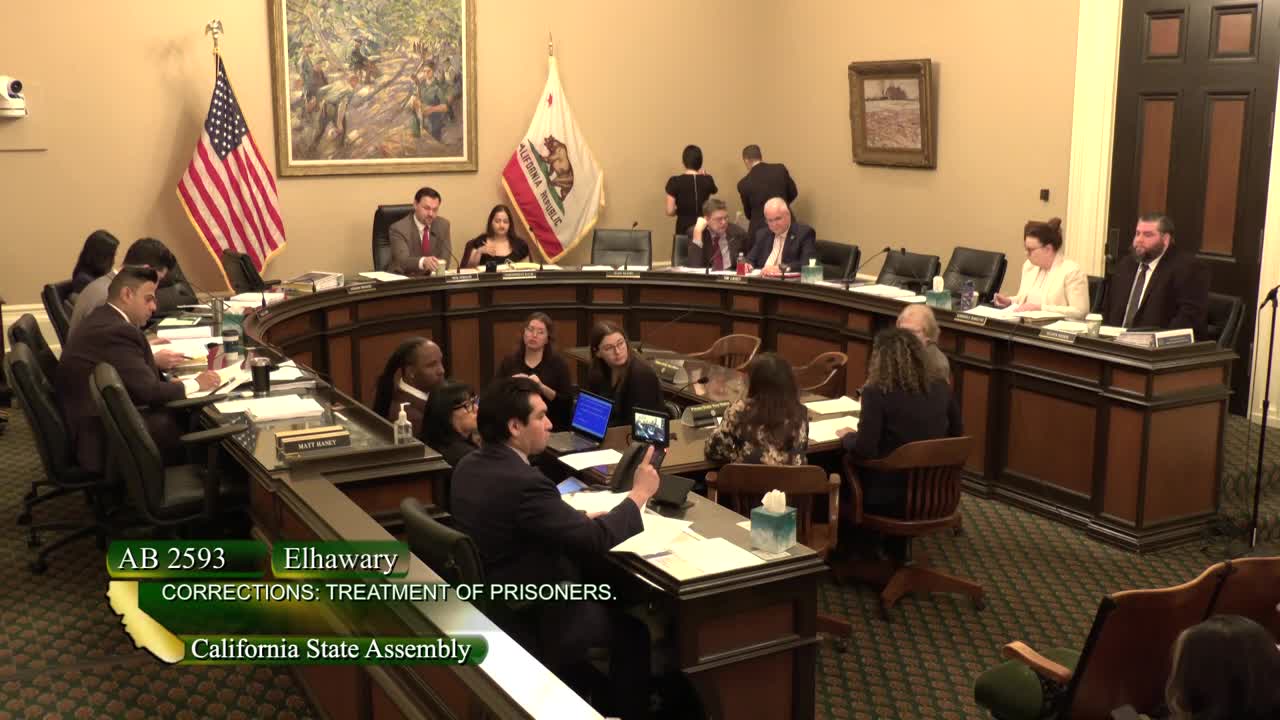 7MIN
Assembly Standing Committee on Public Safety
Bill Author

Bill Co-Author(s):