AB 2606: Oil and gas: subsurface energy transition research and demonstration projects: California State University, Bakersfield.
- Session Year: 2025-2026
- House: Assembly
- Latest Version Date: 2026-03-23
Current Status:
Failed
(2026-05-14: From committee: Without further action pursuant to Joint Rule 62(a).)
Introduced
In Committee
Awaiting First Chamber Vote
Passed First Chamber
In Committee
Awaiting Second Chamber Vote
Passed Second Chamber
Enacted
Existing law establishes the Geologic Energy Management Division in the Department of Conservation under the direction of the State Oil and Gas Supervisor, who is required to supervise the drilling, operation, maintenance, and abandonment of oil and gas wells in the state and the operation, maintenance, and removal or abandonment of tanks and facilities related to oil and gas production within an oil and gas field so as to prevent damage to life, health, property, and natural resources. Existing law requires the operator of a well to file a written notice of intention to commence drilling with, and prohibits any drilling until approval is given by, the supervisor or district deputy.
Existing law prohibits an operator from injecting a concentrated carbon dioxide fluid produced by a carbon dioxide capture, removal, or sequestration project into a Class II well, as defined, for purposes of enhanced oil recovery, including the facilitation of enhanced oil recovery from another well. This bill would provide that it is the intent of the Legislature to enact subsequent legislation authorizing California State University, Bakersfield, over a 10-year period, to establish a demonstration zone in existing oil fields for research and development purposes to test advanced carbon dioxide enhanced oil recovery techniques in partnership with local industry in order to achieve neutral or net negative emissions.Existing law establishes the California State University under the administration of the Trustees of the California State University as one of the segments of public postsecondary education in the state.
This bill would require the department, consistent with its statutory authority and in coordination with other state or federal regulatory agencies, to prioritize granting approvals for specified types of low-carbon or carbon-reducing technologies and applications. The bill would authorize the department to establish the Subsurface Low-Carbon Demonstration Project Program to facilitate partnerships among the state, the California State University system, private industry, and public entities to study and demonstrate innovative subsurface technologies using existing and idle wells.
The bill would authorize the department to establish various programs in partnership with the California State University and California State University, Bakersfield, including (1) the Regional Subsurface Energy Transition and Applied Research Program and (2) a subsurface energy research field station for applied research, field testing, monitoring, and demonstration of subsurface technologies. The bill would also authorize the department to (3) collaborate with the California Energy Research Center at California State University, Bakersfield, and recognize the center as a state-affiliated applied research, technical assistance, and policy support partner, as provided, and (4) designate and support the California Core Repository at California State University, Bakersfield, as an official state-affiliated repository, as provided.
This bill would authorize the department to establish and administer an official department office at California State University, Bakersfield, and would authorize the California State University to support and collaborate on activities across the full scope of the departments statutory responsibilities, as provided.
This bill would explicitly authorize university-based researchers associated with any of the above-described programs to serve on advisory panels, technical working groups, and research committees in an advisory capacity, and provide scientific expertise to inform regulatory development, interagency coordination, and public communication.
This bill would make legislative findings and declarations as to the necessity of a special statute for California State University, Bakersfield.
Existing law establishes the Geologic Energy Management Division in the Department of Conservation under the direction of the State Oil and Gas Supervisor, who is required to supervise the drilling, operation, maintenance, and abandonment of oil and gas wells in the state and the operation, maintenance, and removal or abandonment of tanks and facilities related to oil and gas production within an oil and gas field so as to prevent damage to life, health, property, and natural resources. Existing law requires the operator of a well to file a written notice of intention to commence drilling with, and prohibits any drilling until approval is given by, the supervisor or district deputy.
Existing law prohibits an operator from injecting a concentrated carbon dioxide fluid produced by a carbon dioxide capture, removal, or sequestration project into a Class II well, as defined, for purposes of enhanced oil recovery, including the facilitation of enhanced oil recovery from another well.
This bill would provide that it is the intent of the Legislature to enact subsequent legislation authorizing California State University, Bakersfield, over a 10-year period, to establish a demonstration zone in existing oil fields for research and development purposes to test advanced carbon dioxide enhanced oil recovery techniques in partnership with local industry in order to achieve neutral or net negative emissions.
The Legislature finds and declares all of the following:
(a)Californias oil and gas sector includes marginal and low-producing wells facing financial and regulatory challenges, including inadequate bonding requirements.
(b)Existing bonding levels often fail to cover full plugging and restoration costs, increasing the risk of orphaned wells.
(c)Orphan wells create long-term environmental and fiscal liabilities.
(d)The Legislature intends to prevent orphaning of viable wells by authorizing alternative productive uses consistent with environmental protection and public health.
(e)Facilitating alternative technologies through demonstration projects, partnerships with the California State University system, collaboration with private industry, and interdisciplinary research related to public health, biological sciences, environmental sciences, geological sciences, and engineering will promote environmental stewardship, support workforce transition in oil-dependent regions, and reduce future orphan well liabilities. Research conducted in partnership with public universities plays a critical role in informing evidence-based regulatory policy, improving environmental protection standards, advancing public health outcomes, and strengthening the scientific foundation of state decisionmaking.
(f)The State of California has previously invested significant capital resources in California State University, Bakersfield, including funding for the Energy Innovation Building, to support applied energy research, workforce development, and innovation. Leveraging this existing state-funded infrastructure to advance interdisciplinary research and demonstration projects is consistent with sound fiscal stewardship and the efficient use of public resources.
(g)California State University, Bakersfield possesses faculty expertise, laboratory capacity, and applied research infrastructure capable of supporting leading-edge research in subsurface science, engineering, environmental protection, public health, biological sciences, data analytics, and regulatory science. Collaboration between university researchers and state regulators can improve monitoring methodologies, risk assessment tools, remediation technologies, and long-term liability management.
(h)California currently has limited state-level regulatory authority over certain subsurface technologies and emerging energy applications, including some forms of carbon storage and hydrogen-related activities that may be subject to federal jurisdiction. Strengthening in-state research capacity and technical expertise will enhance the states ability to evaluate, advise on, and coordinate with federal agencies regarding these activities.
(i)Public education, workforce development, and community engagement related to subsurface energy, environmental protection, reclamation, and emerging resource technologies are essential components of a responsible transition strategy, and collaboration with the California State University can support transparent public dissemination of research findings and technical information.
SEC. 2.Article 3.7 (commencing with Section 3191) is added to Chapter 1 of Division 3 of the Public Resources Code, to read:3.7.Subsurface Energy Transition Research and Demonstration Projects3191.The department shall, consistent with the departments statutory authority and in coordination with other state or federal regulatory agencies, prioritize granting approvals for the following types of low-carbon or carbon-reducing technologies and applications:
(a)Carbon dioxide capture, utilization, and storage.
(b)Enhanced oil recovery using captured carbon dioxide.
(c)Extraction of critical minerals from produced water or oilfield brines.
(d)Hybrid geothermal operations.
(e)Hydrogen-related subsurface activities.
(f)Other emissions-mitigating or resource recovery projects consistent with state climate and environmental goals.
3191.1.(a)The department, acting through the division, may establish the Subsurface Low-Carbon Demonstration Project Program to facilitate partnerships among the state, the California State University system, private industry, and public entities to study and demonstrate innovative subsurface technologies using existing and idle wells.
(b)Projects associated with the program established pursuant to subdivision (a) shall comply with all applicable environmental and public health protections and requirements related to financial assurances.
(c)This section does not diminish existing regulatory authority or environmental review requirements.
3191.2.(a)The department may establish the Regional Subsurface Energy Transition and Applied Research Program within the California State University system for the purpose of expanding interdisciplinary academic research capacity in coordination with state conservation programs in regions experiencing workforce transition from oil and gas production. The program may support research and applied initiatives related to low-carbon energy, carbon management, emissions-reducing technologies, and related subsurface resource applications.
(b)For purposes of implementing the program, the department may collaborate with the California Energy Research Center at California State University, Bakersfield, as a pilot partner within the California State University system. The pilot program may serve as a model for implementation at other campuses within the California State University system that demonstrate relevant expertise and institutional capacity in disciplines aligned with the departments statutory mission.
3191.3.(a)The department may establish and administer an official department office at California State University, Bakersfield.
(b)California State University may support and collaborate on activities across the full scope of the departments statutory responsibilities, including, but not limited to, all of the following:
(1)Subsurface energy systems, carbon management, critical mineral extraction, geothermal resources, mining, land resource management, reclamation, and geologic hazard assessment.
(2)Public health, biological, ecological, and environmental science studies related to resource development and environmental protection.
(3)Engineering and related technical disciplines supporting safe and environmentally responsible operations and remediation.
(4)Policy research, economic analysis, data management, modeling, and regulatory support.
(5)Workforce development initiatives and grant administration.
(c)The department office established pursuant to subdivision (a) may receive and administer state, federal, and private funds consistent with state law.
(d)This section does not delegate regulatory authority from the department to the California State University.
3191.4.(a)The department, in partnership with the California State University, may establish a subsurface energy research field station for applied research, field testing, monitoring, and demonstration of subsurface technologies.
(b)The field station established pursuant to subdivision (a) may conduct carbon dioxide injection research, monitoring, and verification testing, critical mineral extraction research, hybrid geothermal evaluation, testing applicable to idle or orphan wells, and workforce training.
(c)The activities of the field station established pursuant to subdivision (a) shall be subject to all applicable requirements related to environmental review, permitting, and financial assurances.
3191.5.(a)The department may collaborate with the California Energy Research Center at California State University, Bakersfield, and recognize the center as a state-affiliated applied research, technical assistance, and policy support partner.
(b)The California Energy Research Center shall provide interdisciplinary research, analytical capacity, and technical expertise consistent with the departments mission, including, but not limited to, all of the following:
(1)Operation and coordination of research laboratories and field research facilities supporting subsurface science, engineering, environmental testing, materials analysis, water quality assessment, emissions monitoring, and related technical disciplines.
(2)Public health research, including exposure assessment, air and water quality impacts, community health analysis, and risk assessment associated with resource development, well remediation, and reclamation activities.
(3)Environmental science and biological research related to ecosystem protection, land stewardship, habitat restoration, groundwater protection, and reclamation effectiveness.
(4)Engineering research and technical evaluation, including petroleum engineering, environmental engineering, civil engineering, infrastructure integrity assessment, wellbore analysis, monitoring systems development, and site remediation technologies.
(5)Economic, fiscal, and workforce analysis related to resource development, regional economic transition, long-term liability reduction, cost-benefit evaluation, and regulatory impact assessment.
(6)Data science, reservoir modeling, geographic information systems, laboratory analysis, monitoring technology development, and quantitative risk modeling to inform evidence-based regulatory decisionmaking.
(7)Participation in advisory panels, research committees, and technical working groups in an advisory capacity to provide scientific expertise supporting interagency coordination and regulatory development.
(8)Federal grant development, administration, and collaboration with the United States Department of Energy, national laboratories, and other federal or state agencies.
(9)Public education, stakeholder engagement, workforce training, and dissemination of research findings to promote transparency and informed public participation.
(c)The California Energy Research Center may leverage existing university infrastructure, including laboratory space, research equipment, field research assets, and facilities associated with the center and related academic programs.
(d)This section does not delegate regulatory authority, permitting authority, enforcement authority, or statutory decisionmaking responsibilities to the California Energy Research Center or to the California State University.
3191.6.(a)The department may designate and support the California Core Repository at California State University, Bakersfield, as an official state-affiliated repository.
(b)The California Core Repository shall preserve geological samples and subsurface data, provide access for research and to the public, and support activities conducted pursuant to this article.
(c)The department may enter into agreements related to the operation and modernization of the California Core Repository, and the repository may receive state, federal, and private funds consistent with state law.
3191.7.University-based researchers associated with any of the programs established pursuant to this article may serve on advisory panels, technical working groups, and research committees in an advisory capacity, and provide scientific expertise to inform regulatory development, interagency coordination, and public communication. These university-based researchers shall not exercise regulatory authority.
SEC. 3.The Legislature finds and declares that a special statute is necessary and that a general statute cannot be made applicable within the meaning of Section 16 of Article IV of the California Constitution because of California State University, Bakersfields unique location near areas of state with the highest levels of oil and gas production.
SECTION 1.It is the intent of the Legislature to enact subsequent legislation authorizing California State University, Bakersfield, over a 10-year period, to establish a demonstration zone in existing oil fields for research and development purposes to test advanced carbon dioxide enhanced oil recovery techniques in partnership with local industry in order to achieve neutral or net negative emissions.It is the intent of the Legislature to enact subsequent legislation authorizing California State University, Bakersfield, over a 10-year period, to establish a demonstration zone in existing oil fields for research and development purposes to test advanced carbon dioxide enhanced oil recovery techniques in partnership with local industry in order to achieve neutral or net negative emissions.
|
Date
|
Status
|
|---|---|
| May 14, 2026 | From committee: Without further action pursuant to Joint Rule 62(a). |
| Apr 20, 2026 | In committee: Set, first hearing. Failed passage. |
| Apr 16, 2026 | Assembly Rule 56 suspended. (Page 4663.) |
| Apr 16, 2026 | (Pending re-refer to Com. on HIGHER ED.) |
| Apr 16, 2026 | Assembly Rule 56 suspended. |
| Mar 24, 2026 | Re-referred to Com. on NAT. RES. |
| Mar 23, 2026 | From committee chair, with author's amendments: Amend, and re-refer to Com. on NAT. RES. Read second time and amended. |
| Mar 23, 2026 | Referred to Coms. on NAT. RES. and HIGHER ED. |
| Feb 21, 2026 | From printer. May be heard in committee March 23. |
| Feb 20, 2026 | Read first time. To print. |
|
Date
|
Description
|
Location
|
Votes
|
|
|---|---|---|---|---|
| Apr 20, 2026 | Do pass and be re-referred to the Committee on [Higher Education] | Assembly Standing Committee on Natural Resources |
Failed |
This list shows positions taken on this bill by organizations on the date displayed, which is linked to the original source.
Positions by individuals are not included.
|
Organization
|
Position
|
Date
|
|---|---|---|
| 350 Bay Area Action | ** Against | |
| Biofuelwatch | ** Against | |
| Center For Biological Diversity | ** Against | |
| Center For Environmental Health | ** Against | |
| Center for Race, Poverty, and the Environment | ** Against | |
| Central California Asthma Collaborative | ** Against | |
| Central California Environmental Justic Network | ** Against | |
| Central Valley Air Quality Coalition | ** Against | |
| cleanearth4kids.org | ** Against | |
| Climate Action California | ** Against | |
| Food and Water Watch | ** Against | |
| Fossil Free California | ** Against | |
| Greenpeace Usa | ** Against | |
| Leadership Counsel Action, a Project of Tides Advocacy | ** Against | |
| Physicians for Social Responsibility - Los Angeles | ** Against | |
| San Francisco Baykeeper | ** Against | |
| San Francisco Bay Physicians for Social Responsibility | ** Against | |
| Santa Cruz Climate Action Network | ** Against | |
| Sierra Club California | ** Against | |
| Sunflower Alliance | ** Against | |
| The Climate Center | ** Against | |
| Valley Improvement Projects | ** Against |
Date of Hearing: April 21, 2026
ASSEMBLY COMMITTEE ON HIGHER EDUCATION
Mike Fong, Chair
ABPCA Bill Id:AB 2606 (
Author:Ellis) – As Amended Ver:March 23, 2026
SUBJECT: Oil and gas: subsurface energy transition research and demonstration projects: California State University, Bakersfield.
SUMMARY: Authorizes the Department of Conservation (DOC) to establish various programs in partnership with the California State University (CSU) and CSU Bakersfield (CSUB), including the Regional Subsurface Energy Transition and Applied Research Program and a subsurface energy research field station for applied research, field testing, monitoring, and demonstration of subsurface technologies. Authorizes DOC to collaborate with the California Energy Research Center at CSUB, and recognizes the center as a state-affiliated applied research, technical assistance, and policy support partner, as provided, and designates and supports the California Core Repository at CSUB, as an official state-affiliated repository. Specifically, this bill:
- Authorizes DOC, acting through Division of Geologic Energy Management (CalGEM), to establish the Subsurface Low-Carbon Demonstration Project Program (SLCDP Program) to facilitate partnerships among the state, the CSU system, private industry, and public entities to study and demonstrate innovative subsurface technologies using existing and idle wells.
- Authorizes DOC to establish the Regional Subsurface Energy Transition and Applied Research Program (Applied Research Program) within the CSU system for the purpose of expanding interdisciplinary academic research capacity in coordination with state conservation programs in regions experiencing workforce transition from oil and gas production. Authorizes the Applied Research Program to support research and applied initiatives related to low-carbon energy, carbon management, emissions-reducing technologies, and related subsurface resource applications.
- Authorizes DOC to collaborate with the California Energy Research Center at CSUB, as a pilot partner within the CSU system. Authorizes the pilot program to serve as a model for implementation at other campuses within the CSU system that demonstrate relevant expertise and institutional capacity in disciplines aligned with DOC’s statutory mission.
- Authorizes DOC to establish and administer an official department office at CSUB.
- Authorizes CSU to support and collaborate on activities across the full scope of the department’s statutory responsibilities, including, but not limited to, all of the following:
- Subsurface energy systems, carbon management, critical mineral extraction, geothermal resources, mining, land resource management, reclamation, and geologic hazard assessment;
- Public health, biological, ecological, and environmental science studies related to resource development and environmental protection;
- Engineering and related technical disciplines supporting safe and environmentally responsible operations and remediation;
- Policy research, economic analysis, data management, modeling, and regulatory support and,
- Workforce development initiatives and grant administration.
- Authorizes the DOC office to receive and administer state, federal, and private funds consistent with state law.
- States that this collaboration with the CSU does not delegate regulatory authority from DOC to CSU.
- Authorizes DOC, in partnership with CSU, to establish a subsurface energy research field station for applied research, field testing, monitoring, and demonstration of subsurface technologies.
- Authorizes the field station to conduct carbon dioxide injection research, monitoring, and verification testing, critical mineral extraction research, hybrid geothermal evaluation, testing applicable to idle or orphan wells, and workforce training.
- Requires the activities of the field station to be subject to all applicable requirements related to environmental review, permitting, and financial assurances.
- Authorizes DOC to collaborate with the California Energy Research Center at CSUB and recognize the center as a state-affiliated applied research, technical assistance, and policy support partner.
- Requires the California Energy Research Center to provide interdisciplinary research, analytical capacity, and technical expertise consistent with DOC’s mission, including, but not limited to, all of the following:
- Operation and coordination of research laboratories and field research facilities supporting subsurface science, engineering, environmental testing, materials analysis, water quality assessment, emissions monitoring, and related technical disciplines;
- Public health research, including exposure assessment, air and water quality impacts, community health analysis, and risk assessment associated with resource development, well remediation, and reclamation activities;
- Environmental science and biological research related to ecosystem protection, land stewardship, habitat restoration, groundwater protection, and reclamation effectiveness;
- Engineering research and technical evaluation, including petroleum engineering, environmental engineering, civil engineering, infrastructure integrity assessment, wellbore analysis, monitoring systems development, and site remediation technologies;
- Economic, fiscal, and workforce analysis related to resource development, regional economic transition, long-term liability reduction, cost-benefit evaluation, and regulatory impact assessment;
- Data science, reservoir modeling, geographic information systems, laboratory analysis, monitoring technology development, and quantitative risk modeling to inform evidence-based regulatory decisionmaking;
- Participation in advisory panels, research committees, and technical working groups in an advisory capacity to provide scientific expertise supporting interagency coordination and regulatory development;
- Federal grant development, administration, and collaboration with the United States Department of Energy, national laboratories, and other federal or state agencies; and,
- Public education, stakeholder engagement, workforce training, and dissemination of research findings to promote transparency and informed public participation.
- Authorizes the California Energy Research Center to leverage existing university infrastructure, including laboratory space, research equipment, field research assets, and facilities associated with the center and related academic programs.
- Provides that this does not delegate regulatory authority, permitting authority, enforcement authority, or statutory decisionmaking responsibilities to the California Energy Research Center or to CSU.
- Authorizes DOC to designate and support the California Core Repository at CSUB, as an official state-affiliated repository.
- Requires the California Core Repository to preserve geological samples and subsurface data, provide access for research and to the public, and support activities conducted pursuant to this bill.
- Authorizes DOC to enter into agreements related to the operation and modernization of the California Core Repository, and the repository may receive state, federal, and private funds consistent with state law.
- Authorizes university-based researchers associated with any of the programs established pursuant to this bill to serve on advisory panels, technical working groups, and research committees in an advisory capacity, and provide scientific expertise to inform regulatory development, interagency coordination, and public communication. These university-based researchers shall not exercise regulatory authority.
EXISTING LAW:
- Establishes the CSU administered by the Board of Trustees, and provides that the Trustees shall have the full power over the construction and development of any CSU campus and any buildings or other facilities or improvements (Education Code (EC) Section 89030, et seq.).
- Requires the Department of General Services (DGS), acting for the state, to negotiate and establish a model contract with standard contract provisions with the Regents of the University of California (UC) and a model contract with standard contract provisions with the CSU Trustees. Requires the trustees to, and the regents are urged to, negotiate and establish with the DGS the model contract applicable to their university by July 1, 2010 (Education Code Section 67327).
- Stipulates that “state agency” includes every state office, officer, department, division, bureau, board, and commission. As used in any section of this title that is added or amended effective on or after January 1, 1997, “state agency” does not include the CSU unless the section explicitly provides that it applies to the CSU (Government Code Section 11000).
FISCAL EFFECT: Unknown
COMMENTS: Double referral. This measure was heard by the Assembly Committee on Natural Resources (NRC) on April 20, 2026. The disposition of this measure in NRC was not available before this analysis went to print. However, a review of the issues germane to the natural resources policy implications of this measure are addressed in that Committee’s analysis.
Need for the measure. According to the author, “California’s oil and gas sector supports thousands of jobs and contributes significantly to our state’s economy, particularly in the Central Valley. However, many marginal and low-producing wells face serious challenges from high operational costs and stringent financial assurance requirements. Current bonding levels are often insufficient to fully cover plugging and restoration costs, creating risks of orphaned wells that could lead to unnecessary environmental and taxpayer liabilities. Furthermore, overly burdensome requirements can also strain responsible operators and accelerate premature well shutdowns.”
The author states that, “AB 2606 authorizes the Department of Conservation to prioritize approvals for low-carbon technologies, establish voluntary demonstration projects using existing and idle wells, and partner our world-class California State University institutions on applied research, a field station, and technical collaboration. This measure promotes responsible stewardship of existing infrastructure, encourages innovation in carbon management and resource recovery, reduces the risk of orphan wells, and supports workforce opportunities in oil-producing regions — all while maintaining full environmental protections and regulatory oversight.”
California Energy Research Center (Center) at CSUB. The Center at CSUB was created in May 2014 to bring California energy experts together to study the needs and opportunities of the energy industries. The Center at CSUB has a core mission to facilitate the engage of CSUB faculty and students in collaborative research with local energy-related industry and agencies. The Center at CSUB seeks to expand the capabilities of faculty and students to conduct research in the area of sustainable and affordable energy production.
According to the Center at CSUB, “the Center is well positioned to contribute to these efforts [contained in the provisions of this measure] through interdisciplinary capabilities in subsurface geoscience, reservoir engineering, environmental monitoring, public health assessment, and data analytics. The bill’s recognition of CSU Bakersfield as a pilot partner and its authorization of a field research station and state-affiliated research collaboration framework will enable rigorous, site-specific testing using existing and idle wells while maintaining all applicable environmental review and regulatory requirements.”
Committee comments and amendments. This measure raises several policy questions, including the balance between supporting carbon-reducing technologies and continued use of enhanced oil recovery, the role of public universities in energy development partnerships, and the long-term implications of investing in subsurface energy infrastructure as part of the State’s climate strategy.
It should be noted that while CSUB is named in this measure, the CSU has not taken a formal position on this measure.
Additionally, due to Legislative deadlines, this Committee will process the NRC amendments that the author agreed to accept. The amendments are as follows:
- To avoid permitting conflicts, Strike Public Resources Code (PRC) 3191 from the bill prioritizing permitting at CalGEM.
- Require contracts be completed consistent with EC 67327.
- Amend PRC 3191.1 (b) and 3191.4 (a) to require all projects be done within DOC’s existing statutory authorities.
- Strike reference to testing applicable to idle or orphan wells in PRC 3191.4 (b).
- Require the California Energy Research Center to leverage existing university infrastructure upon written permission of the university sharing the requested resource.
- Requires DOC to implement the provisions of the bill to the extent that funds are appropriated by the California State Legislature or otherwise available.
REGISTERED SUPPORT / OPPOSITION:
Support
None on file.
Opposition
None on file as submitted to this Committee and satisfying the Committee rules of inclusion in the analysis.
Analysis Prepared by: Jeanice Warden / HIGHER ED. / (916) 319-3960
Date of Hearing: April 20, 2026
ASSEMBLY COMMITTEE ON NATURAL RESOURCES
Isaac G. Bryan, Chair
ABPCA Bill Id:AB 2606 (
Author:Ellis) – As Amended Ver:March 23, 2026
SUBJECT: Oil and gas: subsurface energy transition research and demonstration projects: California State University, Bakersfield
SUMMARY: Authorizes the Department of Conservation (DOC) to establish various programs in partnership with the California State University (CSU) and CSU, Bakersfield, including the Regional Subsurface Energy Transition and Applied Research Program and a subsurface energy research field station for applied research, field testing, monitoring, and demonstration of subsurface technologies. Authorizes DOC to collaborate with the California Energy Research Center at CSU, Bakersfield, and recognize the center as a state-affiliated applied research, technical assistance, and policy support partner, as provided, and designate and support the California Core Repository at CSU, Bakersfield, as an official state-affiliated repository.
EXISTING LAW:
- Establishes the Division of Geologic Energy Management (CalGEM) in DOC, under the direction of the State Oil and Gas Supervisor (supervisor). (Public Resources Code (PRC) 3000 et seq.)
- Requires the supervisor to supervise the drilling, operation, maintenance, and abandonment of wells and the operation, maintenance, and removal or abandonment of tanks and facilities attendant to oil and gas production, including pipelines that are within an oil and gas field, so as to prevent, as far as possible, damage to life, health, property, and natural resources; damage to underground oil and gas deposits from infiltrating water and other causes; loss of oil, gas, or reservoir energy; and, damage to underground and surface waters suitable for irrigation or domestic purposes by the infiltration of, or the addition of, detrimental substances. (PRC 3106)
- Requires, before an owner or operator can commence drilling a well, a Notice of Intention (NOI) to drill to be submitted to CalGEM, accompanied by the appropriate fee and bond. The operator shall not commence drilling until CalGEM approves the NOI. (Title 14 California Code of Regulations 1931)
- Establishes the Displaced Oil and Gas Worker Pilot Program for the purpose of addressing employment dislocations associated with oil, gas, and related industries and providing grants for workforce training, high school diploma and GED acquisition, entrepreneurial training, among other things. Sunsets the program on January 1, 2027. (Unemployment Insurance Code 9921)
- Requires the Department of General Services (DGS), acting for the state, to negotiate and establish a model contract with standard contract provisions with the Regents of the University of California (UC) and a model contract with standard contract provisions with the Trustees of the CSU. Requires the trustees to, and the regents are urged to, negotiate and establish with the Department of General Services the model contract applicable to their university by July 1, 2010. (Education Code 67327)
THIS BILL:
- Requires DOC, consistent with DOC’s statutory authority and in coordination with other state or federal regulatory agencies, to prioritize granting approvals for the following types of low-carbon or carbon-reducing technologies and applications:
- Carbon dioxide capture, utilization, and storage (CCUS);
- Enhanced oil recovery (EOR) using captured carbon dioxide;
- Extraction of critical minerals from produced water or oilfield brines;
- Hybrid geothermal operations;
- Hydrogen-related subsurface activities; and,
- Other emissions-mitigating or resource recovery projects consistent with state climate and environmental goals.
- Authorizes DOC, acting through CalGEM, to establish the Subsurface Low-Carbon Demonstration Project Program (SLCDP Program) to facilitate partnerships among the state, the CSU system, private industry, and public entities to study and demonstrate innovative subsurface technologies using existing and idle wells.
- Requires projects associated with the program to comply with all applicable environmental and public health protections and requirements related to financial assurances.
- Provides that establishment of the SLCDP Program does not diminish existing regulatory authority or environmental review requirements.
- Authorizes DOC to establish the Regional Subsurface Energy Transition and Applied Research Program (Applied Research Program) within the CSU system for the purpose of expanding interdisciplinary academic research capacity in coordination with state conservation programs in regions experiencing workforce transition from oil and gas production. Authorizes the Applied Research Program to support research and applied initiatives related to low-carbon energy, carbon management, emissions-reducing technologies, and related subsurface resource applications.
- Authorizes DOC to collaborate with the California Energy Research Center at CSU Bakersfield, as a pilot partner within the CSU system. Authorizes the pilot program to serve as a model for implementation at other campuses within the CSU system that demonstrate relevant expertise and institutional capacity in disciplines aligned with DOC’s statutory mission.
- Authorizes DOC to establish and administer an official department office at CSU Bakersfield.
- Authorizes CSU to support and collaborate on activities across the full scope of the department’s statutory responsibilities, including, but not limited to, all of the following:
- Subsurface energy systems, carbon management, critical mineral extraction, geothermal resources, mining, land resource management, reclamation, and geologic hazard assessment;
- Public health, biological, ecological, and environmental science studies related to resource development and environmental protection;
- Engineering and related technical disciplines supporting safe and environmentally responsible operations and remediation;
- Policy research, economic analysis, data management, modeling, and regulatory support and,
- Workforce development initiatives and grant administration.
- Authorizes the DOC office to receive and administer state, federal, and private funds consistent with state law.
- States that this collaboration with the CSU does not delegate regulatory authority from DOC to CSU.
- Authorizes DOC, in partnership with CSU, to establish a subsurface energy research field station for applied research, field testing, monitoring, and demonstration of subsurface technologies.
- Authorizes the field station to conduct carbon dioxide injection research, monitoring, and verification testing, critical mineral extraction research, hybrid geothermal evaluation, testing applicable to idle or orphan wells, and workforce training.
- Requires the activities of the field station to be subject to all applicable requirements related to environmental review, permitting, and financial assurances.
- Authorizes DOC to collaborate with the California Energy Research Center at California CSU Bakersfield, and recognize the center as a state-affiliated applied research, technical assistance, and policy support partner.
- Requires the California Energy Research Center to provide interdisciplinary research, analytical capacity, and technical expertise consistent with DOC’s mission, including, but not limited to, all of the following:
- Operation and coordination of research laboratories and field research facilities supporting subsurface science, engineering, environmental testing, materials analysis, water quality assessment, emissions monitoring, and related technical disciplines;
- Public health research, including exposure assessment, air and water quality impacts, community health analysis, and risk assessment associated with resource development, well remediation, and reclamation activities;
- Environmental science and biological research related to ecosystem protection, land stewardship, habitat restoration, groundwater protection, and reclamation effectiveness;
- Engineering research and technical evaluation, including petroleum engineering, environmental engineering, civil engineering, infrastructure integrity assessment, wellbore analysis, monitoring systems development, and site remediation technologies;
- Economic, fiscal, and workforce analysis related to resource development, regional economic transition, long-term liability reduction, cost-benefit evaluation, and regulatory impact assessment;
- Data science, reservoir modeling, geographic information systems, laboratory analysis, monitoring technology development, and quantitative risk modeling to inform evidence-based regulatory decisionmaking;
- Participation in advisory panels, research committees, and technical working groups in an advisory capacity to provide scientific expertise supporting interagency coordination and regulatory development;
- Federal grant development, administration, and collaboration with the United States Department of Energy, national laboratories, and other federal or state agencies; and,
- Public education, stakeholder engagement, workforce training, and dissemination of research findings to promote transparency and informed public participation.
- Authorizes the California Energy Research Center to leverage existing university infrastructure, including laboratory space, research equipment, field research assets, and facilities associated with the center and related academic programs.
- Provides that this does not delegate regulatory authority, permitting authority, enforcement authority, or statutory decisionmaking responsibilities to the California Energy Research Center or to CSU.
- Authorizes DOC to designate and support the California Core Repository at CSU Bakersfield, as an official state-affiliated repository.
- Requires the California Core Repository to preserve geological samples and subsurface data, provide access for research and to the public, and support activities conducted pursuant to this bill.
- Authorizes DOC to enter into agreements related to the operation and modernization of the California Core Repository, and the repository may receive state, federal, and private funds consistent with state law.
- Authorizes university-based researchers associated with any of the programs established pursuant to this bill to serve on advisory panels, technical working groups, and research committees in an advisory capacity, and provide scientific expertise to inform regulatory development, interagency coordination, and public communication. These university-based researchers shall not exercise regulatory authority.
FISCAL EFFECT: Unknown
COMMENTS:
- Author’s statement:
California’s oil and gas sector supports thousands of jobs and contributes significantly to our state’s economy, particularly in the Central Valley. However, many marginal and low-producing wells face serious challenges from high operational costs and stringent financial assurance requirements. Current bonding levels are often insufficient to fully cover plugging and restoration costs, creating risks of orphaned wells that could lead to unnecessary environmental and taxpayer liabilities. Furthermore, overly burdensome requirements can also strain responsible operators and accelerate premature well shutdowns.
AB 2606 authorizes the Department of Conservation to prioritize approvals for low-carbon technologies, establish voluntary demonstration projects using existing and idle wells, and partner our world-class California State University institutions on applied research, a field station, and technical collaboration.
This measure promotes responsible stewardship of existing infrastructure, encourages innovation in carbon management and resource recovery, reduces the risk of orphan wells, and supports workforce opportunities in oil-producing regions — all while maintaining full environmental protections and regulatory oversight.
- Value of applied research and academic coordination. Almost all California state departments and agencies can and routinely do contract with the UC and the CSU system for research, technical assistance, and policy advice. In the 2006–07 fiscal year, state agencies and departments entered into more than 2,500 contracts or contract amendments with the UC or CSU (contract figures are likely greater today). Many of these contracts contain similar provisions, such as provisions dealing with issues relating to liability, intellectual property, the right to undertake additional research, the right to publish, hiring, personnel, invoicing, and payments.
California’s California Model Agreement provides standard contract terms for research, training, and service agreements between any state agency and UC/CSU campuses. DGS is required to seek the active participation of state agencies and departments that have contracts with UC or CSU.
CalGEM is a little different because it is a regulator, not a research-funding agency. Research is often indirect through interagency agreements (i.e. with the Air Resources Board, U.S. Geological Survey, national labs) that have direct contracts with UC or CSU or is structured as cooperative agreements/data-sharing rather than classic R&D contracts.
- Kern County. Kern County encompasses the Bakersfield metropolitan area, and its economy is heavily linked to petroleum extraction. The County today contributes more than three-quarters of all the oil produced onshore in California, producing about 190,000 barrels of oil per day. Last year, the Legislature enacted SB 237 (Grayson), Chapter 118, Statutes of 2025, to authorize, among other things, increased oil drilling in Kern County with up to 2,000 new oil permits.
This bill authorizes DOC to establish various programs in partnership with CSU Bakersfield, including the Applied Research Program and a subsurface energy research field station for applied research, field testing, monitoring, and demonstration of subsurface technologies. Further, the bill authorizes DOC to collaborate with the California Energy Research Center at CSU Bakersfield and recognize the center as a state-affiliated applied research, technical assistance, and policy support partner. Lastly, the bill designates and supports the California Core Repository at CSU, Bakersfield, as an official state-affiliated repository.
The intent with the bill is to establish structured opportunities for state-university-industry collaboration to research and demonstrate lower-carbon ways to manage or repurpose California’s oil and gas infrastructure (such as idle wells), reduce orphan well risks, support the workforce in oil regions, and build technical expertise — all while staying within existing environmental and regulatory guardrails.
By creating this academic, research, field testing, and federal grant writing partnership with CSU Bakersfield, this bill could create some concerns. First, it could create conflict with other applied research contracts DOC may have or pursue. Second, it assumes CSU Bakersfield has the breadth of academic and expert advice the bill calls for, and that that academic and expert advice is readily available. Lastly, the bill could create an advisorial role for applied research and demonstration biased toward oil drilling and consumption in California at a time when the state is shifting to meet 2045 carbon neutrality. Under current law, CalGEM or the DOC could contract directly with CSU Bakersfield without additional legislation.
- Alternative uses for idle oil wells. CAU Bakersfield writes in support that AB 2606 strengthens the state’s technical capacity to evaluate subsurface energy applications that intersect with federal jurisdiction, including certain carbon storage and hydrogen activities, while supporting evidence-based regulatory development and interagency coordination.
California does not currently have a way to permit subsurface technologies or uses for oil and gas wells outside of their current permitted use as it would be outside CalGEM's statutory jurisdiction. The Legislature spent two years negotiating legislation that led to SB 567 (Limón), Chapter 419, Statutes of 2025, to provide explicit authority, until January 1, 2035, for a pilot program for CalGEM to permit the conversion of up to 250 wells for use as gravity-based energy storage wells to evaluate their use, including the establishment of appropriate operating conditions and physical parameters to safely store and generate energy.
This bill authorizes CalGEM to establish the SLCDP Program to facilitate partnerships among the state, the CSU system, private industry, and public entities to study and demonstrate innovative subsurface technologies using existing and idle wells. Given the investment the Legislature made to authorize the use of one subsurface technology, for a limited term, it may not make sense to provide blanket authorization for unspecified and unlimited “subsurface technologies.”
- NOI prioritization. This bill directs CalGEM to prioritize granting approvals for CCUS, EOR captured carbon, extraction of critical minerals from produced water or oilfield brines, hybrid geothermal operations, and hydrogen-related subsurface activities.
Prioritizing permit approvals can interfere with CalGEM’s administrative processes for approving notices of intention, and delay or frustrate current project applications currently pending at CalGEM. Also, the list of projects the bill would prioritize conflicts with recently enacted legislative direction. For example, EOR uses captured carbon to extract additional oil that would not otherwise be produced, resulting in increased lifecycle greenhouse gas emissions when that oil is refined and combusted. When carbon is injected underground for EOR, the additional emissions from using the produced oil exceed the amount of carbon stored, meaning the net effect is an increase in greenhouse gas emissions. California has already prohibited EOR using carbon. The Legislature passed two bills– AB 1314 (Limón), Chapter 336, Statutes of 2022, and SB 905 (Caballero) Chapter 359, Statutes of 2022) – banning the practice in recognition of its health and safety risks and inconsistencies with state climate policy.
- Double referral. This bill is also referred to the Assembly Higher Education Committee.
- Committee amendments. The committee may wish to consider approving the following amendments, to be adopted in the Assembly Higher Education Committee on April 21 should that committee approve the bill:
- To avoid permitting conflicts, Strike PRC 3191 from the bill prioritizing permitting at CalGEM.
- Require contracts be completed consistent with Education Code 67327.
- Amend PRC 3191.1 (b) and 3191.4 (a) to require all projects be done within DOC’s existing statutory authorities.
- Strike reference to testing applicable to idle or orphan wells in PRC 3191.4 (b).
- Require the California Energy Research Center to leverage existing university infrastructure upon written permission of the university sharing the requested resource.
- Requires DOC to implement the provisions of the bill to the extent that funds are appropriated by the California State Legislature or otherwise available.
- Related legislation. AB 2157 (Connolly and Bryan) extends the Displaced Oil and Gas Worker Pilot Program indefinitely and requires DOC to contract with UC Berkeley Center to develop a recommended program design for turning the Displaced Oil and Gas Worker Pilot Program from a pilot into a permanent program able to support displaced fossil fuel workers during the clean energy transition. This bill is referred to the Assembly Appropriations Committee.
REGISTERED SUPPORT / OPPOSITION:
Support
None on file
Opposition
350 Bay Area Action
Biofuelwatch
Center for Biological Diversity
Center for Environmental Health
Center for Race, Poverty, and the Environment
Central California Asthma Collaborative
Central California Environmental Justic Network
Central Valley Air Quality Coalition
Cleanearth4kids.org
Climate Action California
Food and Water Watch
Fossil Free California
Greenpeace USA
Leadership Counsel Action, a Project of Tides Advocacy
Physicians for Social Responsibility - Los Angeles
San Francisco Bay Physicians for Social Responsibility
San Francisco Baykeeper
Santa Cruz Climate Action Network
Sierra Club California
Sunflower Alliance
The Climate Center
Valley Improvement Projects
Analysis Prepared by: Paige Brokaw / NAT. RES. /
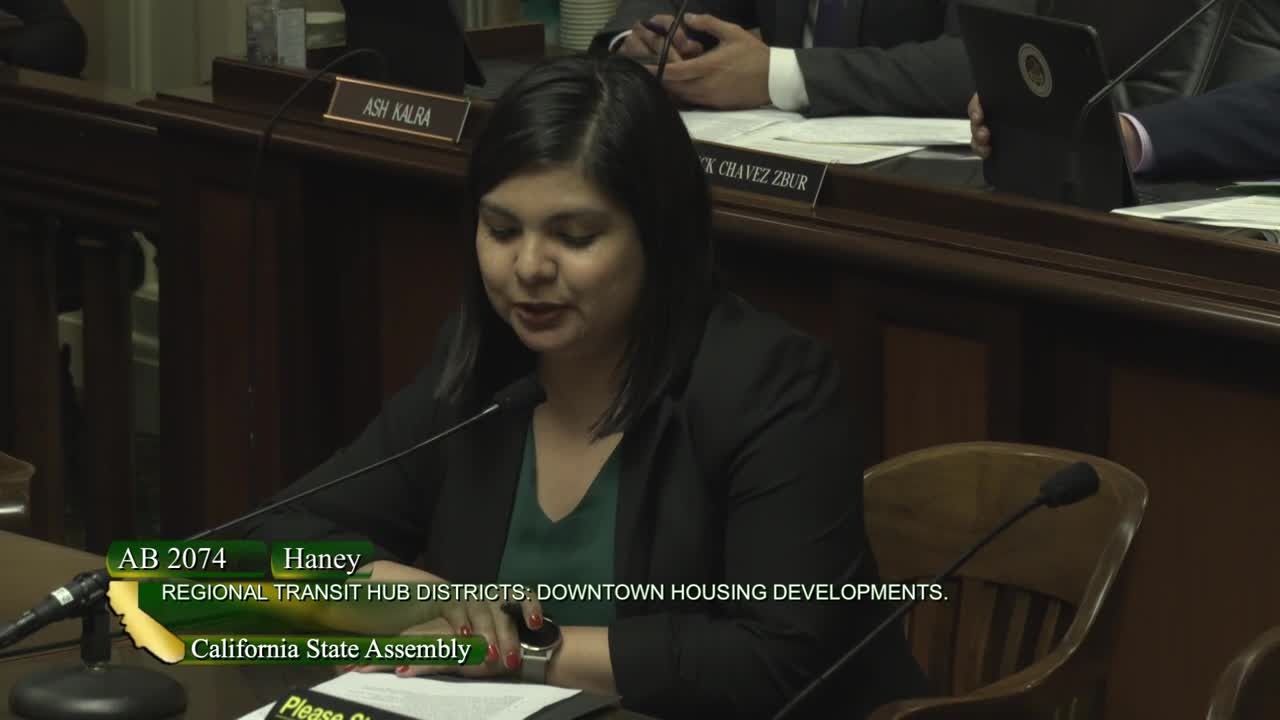
Discussed in Hearing
 6MIN
Assembly Standing Committee on Natural Resources
Bill Author
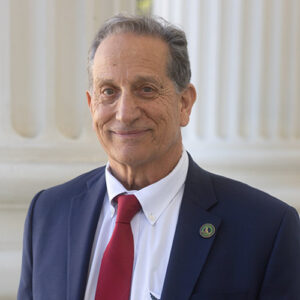
Bill Co-Author(s):