AB 2631: Criminal procedure: prohibited violations.
- Session Year: 2025-2026
- House: Assembly
- Latest Version Date: 2026-09-20
Current Status:
Passed
(2026-09-20: Chaptered by Secretary of State - Chapter 405, Statutes of 2026.)
Introduced
In Committee
Awaiting First Chamber Vote
Passed First Chamber
In Committee
Awaiting Second Chamber Vote
Passed Second Chamber
Enacted
Existing law authorizes a court to issue various orders relating to criminal investigations, including the interception of wire or electronic communications, the installation and use of a pen register or trap and trace device, or a search warrant upon specified grounds. Existing law prohibits the issuance of any orders or warrants for the purpose of investigating or recovering evidence of a prohibited violation, as defined. Existing law requires an out-of-state warrant for specified records to include an attestation that the evidence sought is not related to an investigation into, or enforcement of, a prohibited violation. Existing law prohibits the production of records by a California corporation when the corporation knows or should know that the out-of-state warrant relates to an investigation into, or enforcement of, a prohibited violation.
This bill would include exercising any rights protected by the First Amendment to the United States Constitution within the definition of prohibited violation. The bill would expand the prohibition on the production of records relating to investigation into, or enforcement of, prohibited violations to federal court orders.
Existing law authorizes a court to issue various orders relating to criminal investigations, including the interception of wire or electronic communications, the installation and use of a pen register or trap and trace device, or a search warrant upon specified grounds. Existing law prohibits the issuance of any orders or warrants for the purpose of investigating or recovering evidence of a prohibited violation, as defined. Existing law requires an out-of-state warrant for specified records to include an attestation that the evidence sought is not related to an investigation into, or enforcement of, a prohibited violation. Existing law prohibits the production of records by a California corporation when the corporation knows or should know that the out-of-state warrant relates to an investigation into, or enforcement of, a prohibited violation.
This bill would include participation in a lawful protest and criticizing the government exercising any rights protected by the First Amendment to the United States Constitution within the definition of prohibited violation. The bill would expand the prohibition on the production of records relating to investigation into, or enforcement of, prohibited violations to federal court orders.
Existing law authorizes a court to issue various orders relating to criminal investigations, including the interception of wire or electronic communications, the installation and use of a pen register or trap and trace device, or a search warrant upon specified grounds. Existing law prohibits the issuance of any orders or warrants for the purpose of investigating or recovering evidence of a prohibited violation, as defined. Existing law requires an out-of-state warrant for specified records to include an attestation that the evidence sought is not related to an investigation into, or enforcement of, a prohibited violation. Existing law prohibits the production of records by a California corporation when the corporation knows or should know that the out-of-state warrant relates to an investigation into, or enforcement of, a prohibited violation.
This bill would include participation in a lawful protest and criticizing the government within the definition of prohibited violation. The bill would expand the prohibition on the production of records relating to investigation into, or enforcement of, prohibited violations to federal court orders.
Existing law prescribes incarceration in the state prison as punishment for certain crimes. The California Constitution grants the Department of Corrections and Rehabilitation (CDCR) the sole authority to award credits earned for good behavior and approved rehabilitative or educational achievements. Existing statutory law requires CDCR to submit a report to the Legislature and the Legislative Analysts Office whenever CDCR proposes regulatory changes affecting the earning of credits by inmates.This bill would make technical, nonsubstantive changes to that requirement.Existing law prescribes incarceration in the state prison as punishment for certain crimes. The California Constitution grants the Department of Corrections and Rehabilitation (CDCR) the sole authority to award credits earned for good behavior and approved rehabilitative or educational achievements. Existing statutory law requires CDCR to submit a report to the Legislature and the Legislative Analysts Office whenever CDCR proposes regulatory changes affecting the earning of credits by inmates.
This bill would make technical, nonsubstantive changes to that requirement.
(a)For the purposes of this chapter, the following terms have the following meanings:
(1)Wire communication means any aural transfer made in whole or in part through the use of facilities for the transmission of communications by the aid of wire, cable, or other like connection between the point of origin and the point of reception (including the use of a like connection in a switching station), furnished or operated by any person engaged in providing or operating these facilities for the transmission of communications.
(2)Electronic communication means any transfer of signs, signals, writings, images, sounds, data, or intelligence of any nature in whole or in part by a wire, radio, electromagnetic, photoelectric, or photo-optical system, but does not include any of the following:
(A)Any wire communication defined in paragraph (1).
(B)Any communication made through a tone-only paging device.
(C)Any communication from a tracking device.
(D)Electronic funds transfer information stored by a financial institution in a communications system used for the electronic storage and transfer of funds.
(3)Tracking device means an electronic or mechanical device that permits the tracking of the movement of a person or object.
(4)Aural transfer means a transfer containing the human voice at any point between and including the point of origin and the point of reception.
(5)(A)Prohibited violation means any violation of law that creates liability for, or arising out of, any of the following:
(i)Providing, facilitating, or obtaining a legally protected health care activity, as defined in Section 1549.15, that is lawful under California law.
(ii)Intending or attempting to provide, facilitate, or obtain a legally protected health care activity, as defined in Section 1549.15, that is lawful under California law.
(iii)Exercising any rights protected by the First Amendment to the United States Constitution.
(B)As used in this paragraph, facilitating or facilitate means assisting, directly or indirectly in any way, with the obtaining of a legally protected health care activity, as defined in Section 1549.15, that is lawful under California law.
(b)This chapter applies to the interceptions of wire and electronic communications. It does not apply to stored communications or stored content.
(c)The act that added this subdivision is not intended to change the law as to stored communications or stored content.
SEC. 2.Section 629.52 of the Penal Code is amended to read:629.52.Upon application made under Section 629.50, the judge may enter an ex parte order, as requested or modified, authorizing interception of wire or electronic communications initially intercepted within the territorial jurisdiction of the court in which the judge is sitting, if the judge determines, on the basis of the facts submitted by the applicant, all of the following:
(a)There is probable cause to believe that an individual is committing, has committed, or is about to commit, one of the following offenses:
(1)Importation, possession for sale, transportation, manufacture, or sale of controlled substances in violation of Section 11351, 11351.5, 11352, 11370.6, 11378, 11378.5, 11379, 11379.5, or 11379.6 of the Health and Safety Code with respect to a substance containing heroin, cocaine, PCP, methamphetamine, fentanyl, or their precursors or analogs where the substance exceeds 10 gallons by liquid volume or three pounds of solid substance by weight.
(2)Murder, solicitation to commit murder, a violation of Section 209, or the commission of a felony involving a destructive device in violation of Section 18710, 18715, 18720, 18725, 18730, 18740, 18745, 18750, or 18755.
(3)A felony violation of Section 186.22.
(4)A felony violation of Section 11418, relating to weapons of mass destruction, Section 11418.5, relating to threats to use weapons of mass destruction, or Section 11419, relating to restricted biological agents.
(5)A violation of Section 236.1.
(6)A felony violation of subdivision (b) or (d) of Section 311.2 or subdivision (b) or (c) of Section 311.4.
(7)An attempt or conspiracy to commit any of the above-mentioned crimes.
(b)There is probable cause to believe that particular communications concerning the illegal activities will be obtained through that interception, including, but not limited to, communications that may be utilized for locating or rescuing a kidnap victim.
(c)There is probable cause to believe that the facilities from which, or the place where, the wire or electronic communications are to be intercepted are being used, or are about to be used, in connection with the commission of the offense, or are leased to, listed in the name of, or commonly used by the person whose communications are to be intercepted.
(d)Normal investigative procedures have been tried and have failed or reasonably appear either unlikely to succeed if tried or too dangerous.
(e)Notwithstanding any other provision in this section, no magistrate shall enter an ex parte order authorizing interception of wire or electronic communications for the purpose of investigating or recovering evidence of a prohibited violation, as defined in Section 629.51. Nothing in this subdivision prevents the interception of wire or electronic communications related to any offense enumerated in subdivision (a) solely because the communications may also involve expression protected by the First Amendment to the United States Constitution.
SEC. 3.Section 1524.2 of the Penal Code is amended to read:1524.2.(a)As used in this section, the following terms have the following meanings:
(1)The terms electronic communication services and remote computing services shall be construed in accordance with the Electronic Communications Privacy Act of 1986 in Chapter 121 (commencing with Section 2701) of Part I of Title 18 of the United States Code. This section does not apply to corporations that do not provide those services to the general public.
(2)An adverse result occurs when notification of the existence of a search warrant results in:
(A)Danger to the life or physical safety of an individual.
(B)A flight from prosecution.
(C)The destruction of or tampering with evidence.
(D)The intimidation of potential witnesses.
(E)Serious jeopardy to an investigation or undue delay of a trial.
(3)Applicant refers to the peace officer to whom a search warrant is issued pursuant to subdivision (a) of Section 1528.
(4)California corporation refers to any corporation or other entity that is subject to Section 102 of the Corporations Code, excluding foreign corporations.
(5)Foreign corporation refers to any corporation that is qualified to do business in this state pursuant to Section 2105 of the Corporations Code.
(6)Properly served means that a search warrant has been delivered by hand, or in a manner reasonably allowing for proof of delivery if delivered by United States mail, overnight delivery service, or facsimile to a person or entity listed in Section 2110 of the Corporations Code, or any other means specified by the recipient of the search warrant, including email or submission via an internet web portal that the recipient has designated for the purpose of service of process.
(b)The following provisions apply to any search warrant issued pursuant to this chapter allowing a search for records that are in the actual or constructive possession of a foreign corporation that provides electronic communication services or remote computing services to the general public, where those records would reveal the identity of the customers using those services, data stored by, or on behalf of, the customer, the customers usage of those services, the recipient or destination of communications sent to or from those customers, or the content of those communications.
(1)When properly served with a search warrant issued by the California court, a foreign corporation subject to this section shall provide to the applicant, all records sought pursuant to that warrant within five business days of receipt, including those records maintained or located outside this state.
(2)If the applicant makes a showing and the magistrate finds that failure to produce records within less than five business days would cause an adverse result, the warrant may require production of records within less than five business days. A court may reasonably extend the time required for production of the records upon finding that the foreign corporation has shown good cause for that extension and that an extension of time would not cause an adverse result.
(3)A foreign corporation seeking to quash the warrant must seek relief from the court that issued the warrant within the time required for production of records pursuant to this section. The issuing court shall hear and decide that motion no later than five court days after the motion is filed.
(4)The foreign corporation shall verify the authenticity of records that it produces by providing an affidavit that complies with the requirements set forth in Section 1561 of the Evidence Code. Those records shall be admissible in evidence as set forth in Section 1562 of the Evidence Code.
(c)(1)A California corporation that provides electronic communication services or remote computing services to the general public, when served with a warrant issued by a federal court or another state to produce records that would reveal the identity of the customers using those services, data stored by, or on behalf of, the customer, the customers usage of those services, the recipient or destination of communications sent to or from those customers, or the content of those communications, shall produce those records as if that warrant had been issued by a California court, but shall not produce records when the corporation knows or should know that the warrant relates to an investigation into, or enforcement of, a prohibited violation, as defined in Section 629.51.
(2)A California corporation shall not comply with subdivision (c) unless the warrant includes, or is accompanied by, an attestation that the evidence sought is not related to an investigation into, or enforcement of, a prohibited violation, as defined in Section 629.51.
(3)A California corporation served with a warrant described in paragraph (1) is entitled to rely on the representations made in an attestation described in paragraph (2) in determining whether the warrant relates to an investigation into, or enforcement of, a prohibited violation, as defined in Section 629.51.
(d)A cause of action shall not lie against any foreign or California corporation subject to this section, its officers, employees, agents, or other specified persons for providing records, information, facilities, or assistance in accordance with the terms of a warrant issued pursuant to this chapter.
SEC. 4.Section 1546.5 of the Penal Code is amended to read:1546.5.(a)A California corporation or a corporation whose principal executive offices are located in California that provides electronic communications services shall not, in California, provide records, information, facilities, or assistance in accordance with the terms of a warrant, court order, subpoena, wiretap order, pen register trap and trace order, or other legal process issued by, or pursuant to, the procedures of a federal court or another state or a political subdivision thereof that relates to an investigation into or enforcement of a prohibited violation, as defined in Section 629.51.
(b)The Attorney General may commence a civil action to compel any California corporation or a corporation whose principal executive offices are located in California that provides electronic communications services to comply with the provisions of this section.
(c)A California corporation or a corporation whose principal executive offices are located in California, and its officers, employees, and agents, are not subject to any cause of action for providing records, information, facilities, or assistance in accordance with the terms of a warrant, court order, subpoena, wiretap order, pen register trap and trace order, or other legal process issued by, or pursuant to, the procedures of a federal court or another state or a political subdivision thereof, except where the corporation knew or should have known that the warrant, court order, subpoena, wiretap order, pen register trap and trace order, or other legal process relates to an investigation into or enforcement of a prohibited violation, as defined in Section 629.51.
(a)For the purposes of this chapter, the following terms have the following meanings:
(1)Wire communication means any aural transfer made in whole or in part through the use of facilities for the transmission of communications by the aid of wire, cable, or other like connection between the point of origin and the point of reception (including the use of a like connection in a switching station), furnished or operated by any person engaged in providing or operating these facilities for the transmission of communications.
(2)Electronic communication means any transfer of signs, signals, writings, images, sounds, data, or intelligence of any nature in whole or in part by a wire, radio, electromagnetic, photoelectric, or photo-optical system, but does not include any of the following:
(A)Any wire communication defined in paragraph (1).
(B)Any communication made through a tone-only paging device.
(C)Any communication from a tracking device.
(D)Electronic funds transfer information stored by a financial institution in a communications system used for the electronic storage and transfer of funds.
(3)Tracking device means an electronic or mechanical device that permits the tracking of the movement of a person or object.
(4)Aural transfer means a transfer containing the human voice at any point between and including the point of origin and the point of reception.
(5)(A)Prohibited violation means any violation of law that creates liability for, or arising out of, any of the following:
(i)Providing, facilitating, or obtaining a legally protected health care activity, as defined in Section 1549.15, that is lawful under California law.
(ii)Intending or attempting to provide, facilitate, or obtain a legally protected health care activity, as defined in Section 1549.15, that is lawful under California law.
(iii)Exercising any rights protected by the First Amendment to the United States Constitution.
(B)As used in this paragraph, facilitating or facilitate means assisting, directly or indirectly in any way, with the obtaining of a legally protected health care activity, as defined in Section 1549.15, that is lawful under California law.
(b)This chapter applies to the interceptions of wire and electronic communications. It does not apply to stored communications or stored content.
(c)The act that added this subdivision is not intended to change the law as to stored communications or stored content.
SEC. 2.Section 629.52 of the Penal Code is amended to read:629.52.Upon application made under Section 629.50, the judge may enter an ex parte order, as requested or modified, authorizing interception of wire or electronic communications initially intercepted within the territorial jurisdiction of the court in which the judge is sitting, if the judge determines, on the basis of the facts submitted by the applicant, all of the following:
(a)There is probable cause to believe that an individual is committing, has committed, or is about to commit, one of the following offenses:
(1)Importation, possession for sale, transportation, manufacture, or sale of controlled substances in violation of Section 11351, 11351.5, 11352, 11370.6, 11378, 11378.5, 11379, 11379.5, or 11379.6 of the Health and Safety Code with respect to a substance containing heroin, cocaine, PCP, methamphetamine, fentanyl, or their precursors or analogs where the substance exceeds 10 gallons by liquid volume or three pounds of solid substance by weight.
(2)Murder, solicitation to commit murder, a violation of Section 209, or the commission of a felony involving a destructive device in violation of Section 18710, 18715, 18720, 18725, 18730, 18740, 18745, 18750, or 18755.
(3)A felony violation of Section 186.22.
(4)A felony violation of Section 11418, relating to weapons of mass destruction, Section 11418.5, relating to threats to use weapons of mass destruction, or Section 11419, relating to restricted biological agents.
(5)A violation of Section 236.1.
(6)A felony violation of subdivision (b) or (d) of Section 311.2 or subdivision (b) or (c) of Section 311.4.
(7)An attempt or conspiracy to commit any of the above-mentioned crimes.
(b)There is probable cause to believe that particular communications concerning the illegal activities will be obtained through that interception, including, but not limited to, communications that may be utilized for locating or rescuing a kidnap victim.
(c)There is probable cause to believe that the facilities from which, or the place where, the wire or electronic communications are to be intercepted are being used, or are about to be used, in connection with the commission of the offense, or are leased to, listed in the name of, or commonly used by the person whose communications are to be intercepted.
(d)Normal investigative procedures have been tried and have failed or reasonably appear either unlikely to succeed if tried or too dangerous.
(e)Notwithstanding any other provision in this section, no magistrate shall enter an ex parte order authorizing interception of wire or electronic communications for the purpose of investigating or recovering evidence of a prohibited violation, as defined in Section 629.51. Nothing in this subdivision prevents the interception of wire or electronic communications related to any offense enumerated in subdivision (a) solely because the communications may also involve expression protected by the First Amendment to the United States Constitution.
SEC. 2.SEC. 3.Section 1524.2 of the Penal Code is amended to read:1524.2.(a)As used in this section, the following terms have the following meanings:
(1)The terms electronic communication services and remote computing services shall be construed in accordance with the Electronic Communications Privacy Act of 1986 in Chapter 121 (commencing with Section 2701) of Part I of Title 18 of the United States Code. This section does not apply to corporations that do not provide those services to the general public.
(2)An adverse result occurs when notification of the existence of a search warrant results in:
(A)Danger to the life or physical safety of an individual.
(B)A flight from prosecution.
(C)The destruction of or tampering with evidence.
(D)The intimidation of potential witnesses.
(E)Serious jeopardy to an investigation or undue delay of a trial.
(3)Applicant refers to the peace officer to whom a search warrant is issued pursuant to subdivision (a) of Section 1528.
(4)California corporation refers to any corporation or other entity that is subject to Section 102 of the Corporations Code, excluding foreign corporations.
(5)Foreign corporation refers to any corporation that is qualified to do business in this state pursuant to Section 2105 of the Corporations Code.
(6)Properly served means that a search warrant has been delivered by hand, or in a manner reasonably allowing for proof of delivery if delivered by United States mail, overnight delivery service, or facsimile to a person or entity listed in Section 2110 of the Corporations Code, or any other means specified by the recipient of the search warrant, including email or submission via an internet web portal that the recipient has designated for the purpose of service of process.
(b)The following provisions apply to any search warrant issued pursuant to this chapter allowing a search for records that are in the actual or constructive possession of a foreign corporation that provides electronic communication services or remote computing services to the general public, where those records would reveal the identity of the customers using those services, data stored by, or on behalf of, the customer, the customers usage of those services, the recipient or destination of communications sent to or from those customers, or the content of those communications.
(1)When properly served with a search warrant issued by the California court, a foreign corporation subject to this section shall provide to the applicant, all records sought pursuant to that warrant within five business days of receipt, including those records maintained or located outside this state.
(2)If the applicant makes a showing and the magistrate finds that failure to produce records within less than five business days would cause an adverse result, the warrant may require production of records within less than five business days. A court may reasonably extend the time required for production of the records upon finding that the foreign corporation has shown good cause for that extension and that an extension of time would not cause an adverse result.
(3)A foreign corporation seeking to quash the warrant must seek relief from the court that issued the warrant within the time required for production of records pursuant to this section. The issuing court shall hear and decide that motion no later than five court days after the motion is filed.
(4)The foreign corporation shall verify the authenticity of records that it produces by providing an affidavit that complies with the requirements set forth in Section 1561 of the Evidence Code. Those records shall be admissible in evidence as set forth in Section 1562 of the Evidence Code.
(c)(1)A California corporation that provides electronic communication services or remote computing services to the general public, when served with a warrant issued by a federal court or another state to produce records that would reveal the identity of the customers using those services, data stored by, or on behalf of, the customer, the customers usage of those services, the recipient or destination of communications sent to or from those customers, or the content of those communications, shall produce those records as if that warrant had been issued by a California court, but shall not produce records when the corporation knows or should know that the warrant relates to an investigation into, or enforcement of, a prohibited violation, as defined in Section 629.51.
(2)A California corporation shall not comply with subdivision (c) unless the warrant includes, or is accompanied by, an attestation that the evidence sought is not related to an investigation into, or enforcement of, a prohibited violation, as defined in Section 629.51.
(3)A California corporation served with a warrant described in paragraph (1) is entitled to rely on the representations made in an attestation described in paragraph (2) in determining whether the warrant relates to an investigation into, or enforcement of, a prohibited violation, as defined in Section 629.51.
(d)A cause of action shall not lie against any foreign or California corporation subject to this section, its officers, employees, agents, or other specified persons for providing records, information, facilities, or assistance in accordance with the terms of a warrant issued pursuant to this chapter.
SEC. 3.SEC. 4.Section 1546.5 of the Penal Code is amended to read:1546.5.(a)A California corporation or a corporation whose principal executive offices are located in California that provides electronic communications services shall not, in California, provide records, information, facilities, or assistance in accordance with the terms of a warrant, court order, subpoena, wiretap order, pen register trap and trace order, or other legal process issued by, or pursuant to, the procedures of a federal court or another state or a political subdivision thereof that relates to an investigation into or enforcement of a prohibited violation, as defined in Section 629.51.
(b)The Attorney General may commence a civil action to compel any California corporation or a corporation whose principal executive offices are located in California that provides electronic communications services to comply with the provisions of this section.
(c)A California corporation or a corporation whose principal executive offices are located in California, and its officers, employees, and agents, are not subject to any cause of action for providing records, information, facilities, or assistance in accordance with the terms of a warrant, court order, subpoena, wiretap order, pen register trap and trace order, or other legal process issued by, or pursuant to, the procedures of a federal court or another state or a political subdivision thereof, except where the corporation knew or should have known that the warrant, court order, subpoena, wiretap order, pen register trap and trace order, or other legal process relates to an investigation into or enforcement of a prohibited violation, as defined in Section 629.51.
(a)For the purposes of this chapter, the following terms have the following meanings:
(1)Wire communication means any aural transfer made in whole or in part through the use of facilities for the transmission of communications by the aid of wire, cable, or other like connection between the point of origin and the point of reception (including the use of a like connection in a switching station), furnished or operated by any person engaged in providing or operating these facilities for the transmission of communications.
(2)Electronic communication means any transfer of signs, signals, writings, images, sounds, data, or intelligence of any nature in whole or in part by a wire, radio, electromagnetic, photoelectric, or photo-optical system, but does not include any of the following:
(A)Any wire communication defined in paragraph (1).
(B)Any communication made through a tone-only paging device.
(C)Any communication from a tracking device.
(D)Electronic funds transfer information stored by a financial institution in a communications system used for the electronic storage and transfer of funds.
(3)Tracking device means an electronic or mechanical device that permits the tracking of the movement of a person or object.
(4)Aural transfer means a transfer containing the human voice at any point between and including the point of origin and the point of reception.
(5)(A)Prohibited violation means any violation of law that creates liability for, or arising out of, any of the following:
(i)Providing, facilitating, or obtaining a legally protected health care activity, as defined in Section 1549.15, that is lawful under California law.
(ii)Intending or attempting to provide, facilitate, or obtain a legally protected health care activity, as defined in Section 1549.15, that is lawful under California law.
(iii)Participating in a lawful protest.(iv)Criticizing the government.(iii)Exercising any rights protected by the First Amendment to the United States Constitution.
(B)As used in this paragraph, facilitating or facilitate means assisting, directly or indirectly in any way, with the obtaining of a legally protected health care activity, as defined in Section 1549.15, that is lawful under California law.
(b)This chapter applies to the interceptions of wire and electronic communications. It does not apply to stored communications or stored content.
(c)The act that added this subdivision is not intended to change the law as to stored communications or stored content.
SEC. 2.Section 1524.2 of the Penal Code is amended to read:1524.2.(a)As used in this section, the following terms have the following meanings:
(1)The terms electronic communication services and remote computing services shall be construed in accordance with the Electronic Communications Privacy Act of 1986 in Chapter 121 (commencing with Section 2701) of Part I of Title 18 of the United States Code. This section does not apply to corporations that do not provide those services to the general public.
(2)An adverse result occurs when notification of the existence of a search warrant results in:
(A)Danger to the life or physical safety of an individual.
(B)A flight from prosecution.
(C)The destruction of or tampering with evidence.
(D)The intimidation of potential witnesses.
(E)Serious jeopardy to an investigation or undue delay of a trial.
(3)Applicant refers to the peace officer to whom a search warrant is issued pursuant to subdivision (a) of Section 1528.
(4)California corporation refers to any corporation or other entity that is subject to Section 102 of the Corporations Code, excluding foreign corporations.
(5)Foreign corporation refers to any corporation that is qualified to do business in this state pursuant to Section 2105 of the Corporations Code.
(6)Properly served means that a search warrant has been delivered by hand, or in a manner reasonably allowing for proof of delivery if delivered by United States mail, overnight delivery service, or facsimile to a person or entity listed in Section 2110 of the Corporations Code, or any other means specified by the recipient of the search warrant, including email or submission via an internet web portal that the recipient has designated for the purpose of service of process.
(b)The following provisions apply to any search warrant issued pursuant to this chapter allowing a search for records that are in the actual or constructive possession of a foreign corporation that provides electronic communication services or remote computing services to the general public, where those records would reveal the identity of the customers using those services, data stored by, or on behalf of, the customer, the customers usage of those services, the recipient or destination of communications sent to or from those customers, or the content of those communications.
(1)When properly served with a search warrant issued by the California court, a foreign corporation subject to this section shall provide to the applicant, all records sought pursuant to that warrant within five business days of receipt, including those records maintained or located outside this state.
(2)If the applicant makes a showing and the magistrate finds that failure to produce records within less than five business days would cause an adverse result, the warrant may require production of records within less than five business days. A court may reasonably extend the time required for production of the records upon finding that the foreign corporation has shown good cause for that extension and that an extension of time would not cause an adverse result.
(3)A foreign corporation seeking to quash the warrant must seek relief from the court that issued the warrant within the time required for production of records pursuant to this section. The issuing court shall hear and decide that motion no later than five court days after the motion is filed.
(4)The foreign corporation shall verify the authenticity of records that it produces by providing an affidavit that complies with the requirements set forth in Section 1561 of the Evidence Code. Those records shall be admissible in evidence as set forth in Section 1562 of the Evidence Code.
(c)(1)A California corporation that provides electronic communication services or remote computing services to the general public, when served with a warrant issued by a federal court or another state to produce records that would reveal the identity of the customers using those services, data stored by, or on behalf of, the customer, the customers usage of those services, the recipient or destination of communications sent to or from those customers, or the content of those communications, shall produce those records as if that warrant had been issued by a California court, but shall not produce records when the corporation knows or should know that the warrant relates to an investigation into, or enforcement of, a prohibited violation, as defined in Section 629.51.
(2)A California corporation shall not comply with subdivision (c) unless the warrant includes, or is accompanied by, an attestation that the evidence sought is not related to an investigation into, or enforcement of, a prohibited violation, as defined in Section 629.51.
(3)A California corporation served with a warrant described in paragraph (1) is entitled to rely on the representations made in an attestation described in paragraph (2) in determining whether the warrant relates to an investigation into, or enforcement of, a prohibited violation, as defined in Section 629.51.
(d)A cause of action shall not lie against any foreign or California corporation subject to this section, its officers, employees, agents, or other specified persons for providing records, information, facilities, or assistance in accordance with the terms of a warrant issued pursuant to this chapter.
SEC. 3.Section 1546.5 of the Penal Code is amended to read:1546.5.(a)A California corporation or a corporation whose principal executive offices are located in California that provides electronic communications services shall not, in California, provide records, information, facilities, or assistance in accordance with the terms of a warrant, court order, subpoena, wiretap order, pen register trap and trace order, or other legal process issued by, or pursuant to, the procedures of a federal court or another state or a political subdivision thereof that relates to an investigation into or enforcement of a prohibited violation, as defined in Section 629.51.
(b)The Attorney General may commence a civil action to compel any California corporation or a corporation whose principal executive offices are located in California that provides electronic communications services to comply with the provisions of this section.
(c)A California corporation or a corporation whose principal executive offices are located in California, and its officers, employees, and agents, are not subject to any cause of action for providing records, information, facilities, or assistance in accordance with the terms of a warrant, court order, subpoena, wiretap order, pen register trap and trace order, or other legal process issued by, or pursuant to, the procedures of a federal court or another state or a political subdivision thereof, except where the corporation knew or should have known that the warrant, court order, subpoena, wiretap order, pen register trap and trace order, or other legal process relates to an investigation into or enforcement of a prohibited violation, as defined in Section 629.51.
REVISIONS: HeadingLine 2.(a)For the purposes of this chapter, the following terms have the following meanings:
(1)Wire communication means any aural transfer made in whole or in part through the use of facilities for the transmission of communications by the aid of wire, cable, or other like connection between the point of origin and the point of reception (including the use of a like connection in a switching station), furnished or operated by any person engaged in providing or operating these facilities for the transmission of communications.
(2)Electronic communication means any transfer of signs, signals, writings, images, sounds, data, or intelligence of any nature in whole or in part by a wire, radio, electromagnetic, photoelectric, or photo-optical system, but does not include any of the following:
(A)Any wire communication defined in paragraph (1).
(B)Any communication made through a tone-only paging device.
(C)Any communication from a tracking device.
(D)Electronic funds transfer information stored by a financial institution in a communications system used for the electronic storage and transfer of funds.
(3)Tracking device means an electronic or mechanical device that permits the tracking of the movement of a person or object.
(4)Aural transfer means a transfer containing the human voice at any point between and including the point of origin and the point of reception.
(5)(A)Prohibited violation means any violation of law that creates liability for, or arising out of, either any of the following:
(i)Providing, facilitating, or obtaining a legally protected health care activity, as defined in Section 1549.15, that is lawful under California law.
(ii)Intending or attempting to provide, facilitate, or obtain a legally protected health care activity, as defined in Section 1549.15, that is lawful under California law.
(iii)Participating in a lawful protest.
(iv)Criticizing the government.
(B)As used in this paragraph, facilitating or facilitate means assisting, directly or indirectly in any way, with the obtaining of a legally protected health care activity, as defined in Section 1549.15, that is lawful under California law.
(b)This chapter applies to the interceptions of wire and electronic communications. It does not apply to stored communications or stored content.
(c)The act that added this subdivision is not intended to change the law as to stored communications or stored content.
SEC. 2.Section 1524.2 of the Penal Code is amended to read:1524.2.(a)As used in this section, the following terms have the following meanings:
(1)The terms electronic communication services and remote computing services shall be construed in accordance with the Electronic Communications Privacy Act of 1986 in Chapter 121 (commencing with Section 2701) of Part I of Title 18 of the United States Code. This section does not apply to corporations that do not provide those services to the general public.
(2)An adverse result occurs when notification of the existence of a search warrant results in:
(A)Danger to the life or physical safety of an individual.
(B)A flight from prosecution.
(C)The destruction of or tampering with evidence.
(D)The intimidation of potential witnesses.
(E)Serious jeopardy to an investigation or undue delay of a trial.
(3)Applicant refers to the peace officer to whom a search warrant is issued pursuant to subdivision (a) of Section 1528.
(4)California corporation refers to any corporation or other entity that is subject to Section 102 of the Corporations Code, excluding foreign corporations.
(5)Foreign corporation refers to any corporation that is qualified to do business in this state pursuant to Section 2105 of the Corporations Code.
(6)Properly served means that a search warrant has been delivered by hand, or in a manner reasonably allowing for proof of delivery if delivered by United States mail, overnight delivery service, or facsimile to a person or entity listed in Section 2110 of the Corporations Code, or any other means specified by the recipient of the search warrant, including email or submission via an internet web portal that the recipient has designated for the purpose of service of process.
(b)The following provisions apply to any search warrant issued pursuant to this chapter allowing a search for records that are in the actual or constructive possession of a foreign corporation that provides electronic communication services or remote computing services to the general public, where those records would reveal the identity of the customers using those services, data stored by, or on behalf of, the customer, the customers usage of those services, the recipient or destination of communications sent to or from those customers, or the content of those communications.
(1)When properly served with a search warrant issued by the California court, a foreign corporation subject to this section shall provide to the applicant, all records sought pursuant to that warrant within five business days of receipt, including those records maintained or located outside this state.
(2)If the applicant makes a showing and the magistrate finds that failure to produce records within less than five business days would cause an adverse result, the warrant may require production of records within less than five business days. A court may reasonably extend the time required for production of the records upon finding that the foreign corporation has shown good cause for that extension and that an extension of time would not cause an adverse result.
(3)A foreign corporation seeking to quash the warrant must seek relief from the court that issued the warrant within the time required for production of records pursuant to this section. The issuing court shall hear and decide that motion no later than five court days after the motion is filed.
(4)The foreign corporation shall verify the authenticity of records that it produces by providing an affidavit that complies with the requirements set forth in Section 1561 of the Evidence Code. Those records shall be admissible in evidence as set forth in Section 1562 of the Evidence Code.
(c)(1)A California corporation that provides electronic communication services or remote computing services to the general public, when served with a warrant issued by a federal court or another state to produce records that would reveal the identity of the customers using those services, data stored by, or on behalf of, the customer, the customers usage of those services, the recipient or destination of communications sent to or from those customers, or the content of those communications, shall produce those records as if that warrant had been issued by a California court, but shall not produce records when the corporation knows or should know that the warrant relates to an investigation into, or enforcement of, a prohibited violation, as defined in Section 629.51.
(2)A California corporation shall not comply with subdivision (c) unless the warrant includes, or is accompanied by, an attestation that the evidence sought is not related to an investigation into, or enforcement of, a prohibited violation, as defined in Section 629.51.
(3)A California corporation served with a warrant described in paragraph (1) is entitled to rely on the representations made in an attestation described in paragraph (2) in determining whether the warrant relates to an investigation into, or enforcement of, a prohibited violation, as defined in Section 629.51.
(d)A cause of action shall not lie against any foreign or California corporation subject to this section, its officers, employees, agents, or other specified persons for providing records, information, facilities, or assistance in accordance with the terms of a warrant issued pursuant to this chapter.
SEC. 3.Section 1546.5 of the Penal Code is amended to read:1546.5.(a)A California corporation or a corporation whose principal executive offices are located in California that provides electronic communications services shall not, in California, provide records, information, facilities, or assistance in accordance with the terms of a warrant, court order, subpoena, wiretap order, pen register trap and trace order, or other legal process issued by, or pursuant to, the procedures of a federal court or another state or a political subdivision thereof that relates to an investigation into or enforcement of a prohibited violation, as defined in Section 629.51.
(b)The Attorney General may commence a civil action to compel any California corporation or a corporation whose principal executive offices are located in California that provides electronic communications services to comply with the provisions of this section.
(c)A California corporation or a corporation whose principal executive offices are located in California, and its officers, employees, and agents, are not subject to any cause of action for providing records, information, facilities, or assistance in accordance with the terms of a warrant, court order, subpoena, wiretap order, pen register trap and trace order, or other legal process issued by, or pursuant to, the procedures of a federal court or another state or a political subdivision thereof, except where the corporation knew or should have known that the warrant, court order, subpoena, wiretap order, pen register trap and trace order, or other legal process relates to an investigation into or enforcement of a prohibited violation, as defined in Section 629.51.
SECTION 1.Section 2936 of the Penal Code is amended to read:2936.(a)The Department of Corrections and Rehabilitation shall submit a report to the relevant fiscal and policy committees of the Legislature and the Legislative Analysts Office whenever the department proposes regulatory changes pursuant to Section 32 of Article I of the California Constitution that would affect inmate credit earning.(b)A report required by subdivision (a) shall include both of the following:(1)An explanation of the rationale for each proposed change to credit earning.(2)An estimate of the impact of the proposed changes to credit earning on the size of inmate and parolee populations.(c)Reports required pursuant to subdivision (a) shall be submitted on or before the day that the regulatory changes are first submitted to the Office of Administrative Law.(a)The Department of Corrections and Rehabilitation shall submit a report to the relevant fiscal and policy committees of the Legislature and the Legislative Analysts Office whenever the department proposes regulatory changes pursuant to Section 32 of Article I of the California Constitution that would affect inmate credit earning.
(b)A report required pursuant to by subdivision (a) shall include both of the following:
(1)An explanation of the rationale for each of the proposed changes change to credit earning.
(2)An estimate of the impact of the proposed changes to credit earning on the size of inmate and parolee populations.
(c)Reports required pursuant to subdivision (a) shall be submitted on or before the day that the regulatory changes are first submitted to the Office of Administrative Law.
|
Date
|
Status
|
|---|---|
| Sep 20, 2026 | Chaptered by Secretary of State - Chapter 405, Statutes of 2026. |
| Sep 20, 2026 | Approved by the Governor. |
| Sep 10, 2026 | Enrolled and presented to the Governor at 3 p.m. |
| Aug 30, 2026 | Senate amendments concurred in. To Engrossing and Enrolling. (Ayes 63. Noes 15. Page 6882.). |
| Aug 30, 2026 | Senate amendments concurred in. To Engrossing and Enrolling. (Ayes 63. Noes 15.). |
| Aug 30, 2026 | Senate amendments concurred in. To Engrossing and Enrolling. |
| Aug 28, 2026 | In Assembly. Concurrence in Senate amendments pending. |
| Aug 27, 2026 | Read third time. Passed. Ordered to the Assembly. (Ayes 30. Noes 10. Page 6010.). |
| Aug 27, 2026 | Read third time. Passed. Ordered to the Assembly. (Ayes 30. Noes 10.). |
| Aug 24, 2026 | Read second time. Ordered to third reading. |
| Aug 20, 2026 | Read third time and amended. Ordered to second reading. |
| Aug 13, 2026 | Read second time. Ordered to third reading. |
| Aug 13, 2026 | From committee: Do pass. (Ayes 5. Noes 2.) (August 13). |
| Aug 3, 2026 | In committee: Referred to APPR. suspense file. |
| Jun 24, 2026 | From committee: Do pass and re-refer to Com. on APPR. (Ayes 5. Noes 1.) (June 23). Re-referred to Com. on APPR. |
| Jun 10, 2026 | Referred to Com. on PUB. S. |
| May 27, 2026 | In Senate. Read first time. To Com. on RLS. for assignment. |
| May 26, 2026 | Read third time. Passed. Ordered to the Senate. (Ayes 59. Noes 17. Page 5318.) |
| May 26, 2026 | Read third time. Passed. Ordered to the Senate. (Ayes 59. Noes 17.) |
| May 26, 2026 | Read third time. Passed. Ordered to the Senate. |
| May 18, 2026 | Read second time. Ordered to third reading. |
| May 14, 2026 | From committee: Do pass. (Ayes 11. Noes 4.) (May 14). |
| May 6, 2026 | In committee: Set, first hearing. Referred to APPR. suspense file. |
| Apr 15, 2026 | From committee: Do pass and re-refer to Com. on APPR. (Ayes 7. Noes 1.) (April 14). Re-referred to Com. on APPR. |
| Apr 15, 2026 | Coauthors revised. |
| Apr 7, 2026 | Re-referred to Com. on PUB. S. |
| Apr 6, 2026 | From committee chair, with author's amendments: Amend, and re-refer to Com. on PUB. S. Read second time and amended. |
| Mar 23, 2026 | Re-referred to Com. on PUB. S. |
| Mar 19, 2026 | From committee chair, with author's amendments: Amend, and re-refer to Com. on PUB. S. Read second time and amended. |
| Mar 19, 2026 | Referred to Com. on PUB. S. |
| Feb 21, 2026 | From printer. May be heard in committee March 23. |
| Feb 20, 2026 | Read first time. To print. |
|
Date
|
Description
|
Location
|
Votes
|
|
|---|---|---|---|---|
| Aug 30, 2026 | AB 2631 Bauer-Kahan Concurrence in Senate Amendments | Assembly Floor |
Passed |
|
| Aug 27, 2026 | Assembly 3rd Reading AB2631 Bauer-Kahan et al. By Reyes | Senate Floor |
Passed |
|
| Aug 13, 2026 | Do pass | Senate Standing Committee on Appropriations |
Passed |
|
| Aug 3, 2026 | Placed on suspense file | Senate Standing Committee on Appropriations |
Passed |
|
| Jun 23, 2026 | Do pass, but first be re-referred to the Committee on [Appropriations] | Senate Standing Committee on Public Safety |
Passed |
|
| May 26, 2026 | AB 2631 Bauer-Kahan Assembly Third Reading | Assembly Floor |
Passed |
|
| May 14, 2026 | Do pass. | Assembly Standing Committee on Appropriations |
Passed |
|
| Apr 14, 2026 | Do pass and be re-referred to the Committee on [Appropriations] | Assembly Standing Committee on Public Safety |
Passed |
This list shows positions taken on this bill by organizations on the date displayed, which is linked to the original source.
Positions by individuals are not included.
|
Organization
|
Position
|
Date
|
|---|---|---|
| ACLU | ** Support | |
| Electronic Frontier Foundation | ** Support | |
| Oakland Privacy | ** Support |
CONCURRENCE IN SENATE AMENDMENTS
CSA1 Bill Id:AB 2631
Author:(Bauer-Kahan)
As Amended Ver:August 20, 2026
Majority vote
SUMMARY
Adds exercising any rights protected by the First Amendment of the United States Constitution to the prohibited violations for which an order for a warrant for the interception of a wire may not be issued.
Senate Amendments
Provides that the prohibition on a magistrate entering an ex parte order authorizing interception of wire or electronic communications for purpose of investigating or recovering evidence of a prohibited violation, as specified, does not prevent the interception of wire or electronic communications related to a specified offense solely because the communications may also involve expression protected by the First Amendment to the United States Constitution.
COMMENTS
As Passed by the Assembly, this bill: Added exercising any rights protected by the First Amendment of the United States Constitution to the prohibited violations for which an order for a warrant for the interception of a wire may not be issued.
Major Provisions
- Expanded the definition of a prohibited violation to include exercising any rights protected by the First Amendment of the United States Constitution.
- Clarified that a California Corporation that provides electronic communication services or remote computing services shall not produce records when served with a warrant seeking a prohibited violation by a federal court as well as a state court.
According to the Author
″The First Amendment′s protection of free speech and anonymous political expression is not merely an abstract legal principle, it is the foundation of a functioning democracy. The Department of Homeland Security has issued hundreds of administrative subpoenas to major tech companies, including Google, Meta, Reddit, and Discord demanding names, email addresses, phone numbers, and other identifying data tied to social media accounts that track or criticize ICE. The ACLU has argued that the ability to criticize the government anonymously is ″baked into″ First Amendment rights, and yet people have reportedly faced real-world consequences, including having immigration agents appear at their homes, simply for speaking out online. When users believe their identity may be exposed for criticizing government agencies, they may self-censor, and this chilling effect does not require arrests or prosecutions to take hold. If the government can unmask and retaliate against those who document or criticize its actions, it effectively silences the public watchdogs that democracy depends on. AB 2631 protects First Amendment rights by preventing California corporations from being compelled to hand over records related to first amendment protected activities.″
Arguments in Support
According to Oakland Privacy, ″Assembly Bill 2631 is an expansion of existing California shield laws which currently protect providers and patients of reproductive and gender-affirming medical care from out of state warrants designed to seek information and/or enforce local laws that criminalize behavior that is legal and protected under California state law. AB 2631 adds to that list First Amendment-protected activities related to freedom of assembly and freedom of speech that protect peaceful dissent and the seeking of redress from public officials for harms and grievances by the people of the state. ″While nominally First Amendment activities are protected by the federal constitution for all Americans, and no state should be attempting to criminalize fundamental rights protected by the federal constitution, in practice we have seen some erosion in those rights around certain controversial issues, in particular immigration. Such efforts have been incited by disturbing language from the executive branch seeking to redefine protected activities, like protesting the way the federal government is carrying out immigration enforcement, into ″terrorism″ or other dangerous and illegal activities. ″In particular, executive order NSPM-7 equates a litany of beliefs with political violence and domestic terrorism including:″Anti-Americanism, anti-capitalism, and anti-Christianity,″ ″support for the overthrow of″ the federal government, ″extremism on migration, race, and gender,″ and opposition to ″traditional American views on family, religion, and morality.″″This profound muddying of the waters of basic Constitutional freedoms that Americans have taken for granted for centuries, as well as the implicit encouragement in the memo to go after any civil society institutions perceived to embrace any of these beliefs creates a dangerous situation for public dissent and First-Amendment protected acts of protest. It is basically a red flag for more conservative states to act to enforce limitations on the First Amendment. ″Assembly Bill 2631 seeks to ensure that California will not be complicit with any attempts to criminalize First Amendment protections for freedom of speech and assembly. ″It is sad that this expansion is needed, but it is clear that it is.″
Arguments in Opposition
None submitted.
FISCAL COMMENTS
According to the Senate Appropriations Committee, "Minor, absorbable costs to the Department of Justice to apply the expanded “prohibited violation” definition in wiretap order applications. Cases are expected to be few. (General Fund)
"Minor to modest cost pressure to the courts to adjudicate matters under the bill. More likely than not, communications evidence sought through warrants, subpoenas or other legal processes involve First Amendment protected activity, thereby increasing the universe of federal investigations potentially affected by the bill and generating court workload. An eight-hour court day costs approximately $10,500 based on the hourly rate of court personnel including at minimum the judge, clerk, bailiff, court reporter, jury administrator, administrative staff, and jury per-diems. While the courts are not funded on a workload basis, an increase in workload could result in delayed court services and would put pressure on the General Fund to fund additional staff and resources. The FY 2026-27 Budget appropriated $70 million General Fund for this purpose. (Trial Court Trust Fund, General Fund)"
VOTES:
ASM PUBLIC SAFETY: 7-1-1
YES: Schultz, Mark González, Haney, Harabedian, Nguyen, Ramos, Sharp-Collins
NO: Lackey
ABS, ABST OR NV: Alanis
ASM APPROPRIATIONS: 11-4-0
YES: Wicks, Aguiar-Curry, Calderon, Caloza, Fong, Mark González, Krell, Pacheco, Pellerin, Sharp-Collins, Solache
NO: Hoover, Dixon, Ta, Tangipa
ASSEMBLY FLOOR: 59-17-4
YES: Addis, Aguiar-Curry, Ahrens, Alvarez, Arambula, Ávila Farías, Bains, Bauer-Kahan, Bennett, Berman, Boerner, Bonta, Bryan, Calderon, Caloza, Carrillo, Connolly, Elhawary, Fong, Gabriel, Garcia, Gipson, Mark González, Haney, Harabedian, Hart, Irwin, Jackson, Kalra, Krell, Lee, Lowenthal, McKinnor, Nguyen, Ortega, Pacheco, Papan, Patel, Pellerin, Petrie-Norris, Quirk-Silva, Ramos, Ransom, Michelle Rodriguez, Rogers, Blanca Rubio, Schiavo, Schultz, Sharp-Collins, Solache, Soria, Stefani, Valencia, Wallis, Ward, Wicks, Wilson, Zbur, Rivas
NO: Castillo, Chen, DeMaio, Dixon, Ellis, Flora, Gallagher, Jeff Gonzalez, Hadwick, Hoover, Johnson, Lackey, Macedo, Patterson, Sanchez, Ta, Tangipa
ABS, ABST OR NV: Alanis, Davies, Muratsuchi, Celeste Rodriguez
SENATE FLOOR: 30-10-0
YES: Allen, Archuleta, Arreguín, Ashby, Becker, Blakespear, Cabaldon, Caballero, Cervantes, Cortese, Durazo, Gonzalez, Grayson, Hurtado, Laird, Limón, McGuire, McNerney, Menjivar, Padilla, Pérez, Reyes, Richardson, Rubio, Smallwood-Cuevas, Stern, Umberg, Wahab, Weber Pierson, Wiener
NO: Alvarado-Gil, Choi, Dahle, Grove, Jones, Niello, Ochoa Bogh, Seyarto, Strickland, Valladares
UPDATED
VERSION: August 20, 2026
CONSULTANT: Andrew Ironside / PUB. S. / (916) 319-3744, / PUB. S. / (916) 319-3744 FN: 0004405
SENATE RULES COMMITTEE Office of Senate Floor Analyses (916) 651-4171 | AB 2631 |
THIRD READING
Bill No: AB 2631
Author: Bauer-Kahan (D), et al.
Amended: 8/20/26 in Senate
Vote: 21
SENATE PUBLIC SAFETY COMMITTEE: 5-1, 6/23/26
AYES: Arreguín, Caballero, Cortese, Pérez, Wiener
NOES: Seyarto
SENATE APPROPRIATIONS COMMITTEE: 5-2, 8/13/26
AYES: Cervantes, Cabaldon, Grayson, Richardson, Wahab
NOES: Seyarto, Dahle
ASSEMBLY FLOOR: 59-17, 5/26/26 - See last page for vote
SUBJECT: Criminal procedure: prohibited violations
SOURCE: Author
DIGEST:
This bill adds exercising any rights protected by the First Amendment of the United States Constitution to the list of prohibited violations for which an order for a warrant for the interception of a wire may not be issued.
Floor Amendments of 8/20/26 clarify that this bill’s provisions do not prevent the interception of wire or electronic communications related to specified criminal offenses solely because the communications may also involve expression protected by the First Amendment to the United States Constitution.
ANALYSIS:
Existing Law:
- Provides that Congress shall make no law respecting an establishment of religion or prohibiting the free exercise thereof or abridging the freedom of speech or of the press; or the right of the people peaceably to assemble, and to petition the Government for a redress of grievances. (U.S. Const., 1st Amend.)
- Defines “legally protected health care activity” as any of the following:
- The exercise and enjoyment, or attempted exercise and enjoyment, by a person of rights to reproductive health care services, gender-affirming health care services, or gender-affirming mental health care services secured by the Constitution or laws of California or the provision by a health care service plan contract or a policy, or a certificate of health insurance, that provides for such services.
- An act or omission undertaken to aid or encourage, or attempt to aid or encourage, a person in the exercise and enjoyment or attempted exercise and enjoyment of rights to reproductive health care services, gender-affirming health care services, or gender-affirming mental health care services secured by the Constitution or laws of California.
- The provision of reproductive health care services, gender-affirming health care services, or gender-affirming mental health care services by a person duly licensed under the laws of California or the coverage of, and reimbursement for, those services or care by a health care service plan or a health insurer, if the service or care is lawful under the laws of California, regardless of the patient’s location. (Penal (Pen.) Code, § 1549.15, subd. (b)(1)(A)-(C).)
- Authorizes the Attorney General, chief deputy attorney general, chief assistant attorney general, district attorney, or the district attorney’s designee to apply to the presiding judge of the superior court for an order authorizing the interception of wire or electronic communications under specified circumstances. (Pen. Code, § 629.50, et seq.)
- Defines, for the purposes of wiretapping, “prohibited violation” to mean any violation of law that creates liability arising for, or arising out of, either of the following:
- Providing, facilitating, or obtaining a legally protected health care activity that is lawful under California law; or,
- Intending or attempting to provide, facilitate, or obtain a legally protected health care activity that is lawful under California law. (Pen. Code, § 629.51)
- Authorizes that the court may grant oral approval for an emergency interception of wire, electronic pager, or electronic cellular telephone communications without an order as specified. Requires that approval for an oral interception be conditioned upon filing with the court, within 48 hours of the oral approval, a written application for an order. States that approval of the ex parte order shall be conditioned upon filing with the judge within 48 hours of the oral approval. (Pen. Code, § 629.56.)
- States that no order entered under this chapter shall authorize the interception of any wire, electronic pager, or electronic cellular telephone or electronic communication for any period longer than is necessary to achieve the objective of the authorization, nor in any event longer than 30 days. (Pen. Code, § 629.58.)
- Requires that written reports showing what progress has been made toward the achievement of the authorized objective, including the number of intercepted communications, be submitted at least every 10 days to the judge who issued the order allowing the interception. (Pen. Code, § 629.60.)
- Requires the Attorney General to prepare and submit an annual report to the Legislature, the Judicial Council, and the Director of the Administrative Office of the United States Court on interceptions conducted under the authority of the wiretap provisions and specifies what the report shall include. (Pen. Code, § 629.62.)
- Prohibits a California corporation that provides electronic communication services or remote computing services from complying with a warrant issued by another state if it is related to a prohibited violation. (Pen. Code, § 1524.2.)
- Prohibits a California corporation or a corporation whose principal offices are located in California that provides electronic communications services from, in California, providing information or assistance with the terms of a warrant, court order, subpoena, or wiretap order that relates to the investigation or enforcement of a prohibited violation. (Pen. Code, § 1546.5.)
This bill:
- Expands the definition of a prohibited violation, for which an order for a warrant for the interception of a wire may not be issued, to include any violation of law that creates liability arising for, or arising out of, exercising any rights protected by the First Amendment of the United States Constitution.
- Clarifies that a California corporation that provides electronic communication services or remote computing services shall not produce records when served with a warrant seeking a prohibited violation by a federal court as well as a state court.
Background
Recently, federal administrative subpoenas have been sent to technology companies in an attempt to obtain the content of communications as well as subscriber information and other user information regarding people who have accounts tracking Immigration Customs and Enforcement (ICE) agents or criticizing their activities. Administrative subpoenas do not require a court order review, and they do not need to be complied with, but some companies have responded or are unsure of how to act because there is no clear statutory basis on which they can rely. This bill clarifies that they should not release information relating to a prohibited violation.
Under existing California law, the Attorney General or a district attorney may make an application to a judge of the superior court for an order authorizing the interception of a wire, electronic pager, or electronic cellular telephone. (Pen. Code, § 629.50, et. seq.) The law regulates the issuance, duration, and monitoring of these orders and imposes safeguards to protect the public from unreasonable interceptions. The law also limits the crimes for which an interception may be sought to the following:
- Importation, possession for sale, transportation or sale of controlled substances;
- Murder or solicitation of murder or commission of a felony involving a destructive device;
- A felony in violation of prohibitions on criminal street gangs;
- Possession or use of a weapon of mass destruction;
- A violation of human trafficking;
- Sexual exploitation of a minor under Penal Code Sec. 311.4; or
- An attempt or conspiracy to commit any of the above.
Existing law states that no magistrate shall enter an order authorizing interception of wire or electronic communications for the purpose of investigating or recovering evidence of a “prohibited violation.” The law also prohibits a corporation from complying with a warrant that
seeks information relating to a prohibited violation. “Prohibited violation” is currently defined to mean any violation of law that creates liability for providing, facilitating, or obtaining—or attempting or intending to provide, facilitate or obtain—a legally protected health care activity.
Existing law defines “legally protected health care activity” as any of the following:
- The exercise and enjoyment, or attempted exercise and enjoyment, by a person of rights to reproductive health care services, gender-affirming health care services, or gender-affirming mental health care services secured by the Constitution or laws of California or the provision by a health care service plan contract or a policy, or a certificate of health insurance, that provides for such services.
- An act or omission undertaken to aid or encourage, or attempt to aid or encourage, a person in the exercise and enjoyment or attempted exercise and enjoyment of rights to reproductive health care services, gender-affirming health care services, or gender-affirming mental health care services secured by the Constitution or laws of California.
- The provision of reproductive health care services, gender-affirming health care services, or gender-affirming mental health care services by a person duly licensed under the laws of California or the coverage of, and reimbursement for, those services or care by a health care service plan or a health insurer, if the service or care is lawful under the laws of California, regardless of the patient’s location. (Pen. Code, § 1549.15, subd. (b)(1)(A)-(C).)
This bill expands the definition of a prohibited violation, for which an order for a warrant for the interception of a wire may not be issued, to include any violation of law that creates liability for, or arising out of, exercising any rights protected by the First Amendment of the United States Constitution. This bill additionally clarifies that a California corporation that provides electronic communication services or remote computing services shall not produce records when served with a warrant seeking a prohibited violation by a federal court as well as a state court.
FISCAL EFFECT: Appropriation: No Fiscal Com.: Yes Local: No
The Senate Appropriations Committee writes:
Minor, absorbable costs to the Department of Justice to apply the expanded “prohibited violation” definition in wiretap order applications. Cases are expected to be few. (General Fund). Minor to modest cost pressure to the courts to adjudicate matters under the bill.
SUPPORT: (Verified 8/12/26)
Electronic Frontier Foundation
Oakland Privacy
OPPOSITION: (Verified 8/12/26)
None received
ARGUMENTS IN SUPPORT: Oakland Privacy writes:
While nominally First Amendment activities are protected by the federal constitution for all Americans, and no state should be attempting to criminalize fundamental rights protected by the federal constitution, in practice we have seen some erosion in those rights around certain controversial issues, in particular immigration. Such efforts have been incited by disturbing language from the executive branch seeking to redefine protected activities, like protesting the way the federal government is carrying out immigration enforcement, into “terrorism” or other dangerous and illegal activities.
In particular, executive order NSPM-7 equates a litany of beliefs with political violence and domestic terrorism including:
Anti-Americanism, anti-capitalism, and anti-Christianity,” “support for the overthrow of” the federal government, “extremism on migration, race, and gender,” and opposition to “traditional American views on family, religion, and morality.”
This profound muddying of the waters of basic Constitutional freedoms that Americans have taken for granted for centuries, as well as the implicit encouragement in the memo to go after any civil society institutions perceived to embrace any of these beliefs creates a dangerous situation for public dissent and First-Amendment protected acts of protest. It is basically a red flag for more conservative states to act to enforce limitations on the First Amendment.
Assembly Bill 2631 seeks to ensure that California will not be complicit with any attempts to criminalize First Amendment protections for freedom of speech and assembly.
ASSEMBLY FLOOR: 59-17, 5/26/26
AYES: Addis, Aguiar-Curry, Ahrens, Alvarez, Arambula, Ávila Farías, Bains, Bauer-Kahan, Bennett, Berman, Boerner, Bonta, Bryan, Calderon, Caloza, Carrillo, Connolly, Elhawary, Fong, Gabriel, Garcia, Gipson, Mark González, Haney, Harabedian, Hart, Irwin, Jackson, Kalra, Krell, Lee, Lowenthal, McKinnor, Nguyen, Ortega, Pacheco, Papan, Patel, Pellerin, Petrie-Norris, Quirk-Silva, Ramos, Ransom, Michelle Rodriguez, Rogers, Blanca Rubio, Schiavo, Schultz, Sharp-Collins, Solache, Soria, Stefani, Valencia, Wallis, Ward, Wicks, Wilson, Zbur, Rivas
NOES: Castillo, Chen, DeMaio, Dixon, Ellis, Flora, Gallagher, Jeff Gonzalez, Hadwick, Hoover, Johnson, Lackey, Macedo, Patterson, Sanchez, Ta, Tangipa
NO VOTE RECORDED: Alanis, Davies, Muratsuchi, Celeste Rodriguez
Prepared by: Marshal Lawler / PUB. S. /
8/24/26 13:44:39
**** END ****
SENATE RULES COMMITTEE Office of Senate Floor Analyses (916) 651-4171 | AB 2631 |
THIRD READING
Bill No: AB 2631
Author: Bauer-Kahan (D), et al.
Amended: 4/6/26 in Assembly
Vote: 21
SENATE PUBLIC SAFETY COMMITTEE: 5-1, 6/23/26
AYES: Arreguín, Caballero, Cortese, Pérez, Wiener
NOES: Seyarto
SENATE APPROPRIATIONS COMMITTEE: 5-2, 8/13/26
AYES: Cervantes, Cabaldon, Grayson, Richardson, Wahab
NOES: Seyarto, Dahle
ASSEMBLY FLOOR: 59-17, 5/26/26 - See last page for vote
SUBJECT: Criminal procedure: prohibited violations
SOURCE: Author
DIGEST:
This bill adds exercising any rights protected by the First Amendment of the United States Constitution to the list of prohibited violations for which an order for a warrant for the interception of a wire may not be issued.
ANALYSIS:
Existing Law:
- Provides that Congress shall make no law respecting an establishment of religion or prohibiting the free exercise thereof or abridging the freedom of speech or of the press; or the right of the people peaceably to assemble, and to petition the Government for a redress of grievances. (United States Constitution (U. S. Const.), 1st Amend.)
- Defines “legally protected health care activity” as any of the following:
- The exercise and enjoyment, or attempted exercise and enjoyment, by a person of rights to reproductive health care services, gender-affirming health care services, or gender-affirming mental health care services secured by the Constitution or laws of California or the provision by a health care service plan contract or a policy, or a certificate of health insurance, that provides for such services.
- An act or omission undertaken to aid or encourage, or attempt to aid or encourage, a person in the exercise and enjoyment or attempted exercise and enjoyment of rights to reproductive health care services, gender-affirming health care services, or gender-affirming mental health care services secured by the Constitution or laws of California.
- The provision of reproductive health care services, gender-affirming health care services, or gender-affirming mental health care services by a person duly licensed under the laws of California or the coverage of, and reimbursement for, those services or care by a health care service plan or a health insurer, if the service or care is lawful under the laws of California, regardless of the patient’s location. (Penal Code (Pen. Code), § 1549.15, subd. (b)(1)(A)-(C).)
- Authorizes the Attorney General, chief deputy attorney general, chief assistant attorney general, district attorney, or the district attorney’s designee to apply to the presiding judge of the superior court for an order authorizing the interception of wire or electronic communications under specified circumstances. (Pen. Code, § 629.50, et seq.)
- Defines, for the purposes of wiretapping, “prohibited violation” to mean any violation of law that creates liability arising for, or arising out of, either of the following:
- Providing, facilitating, or obtaining a legally protected health care activity that is lawful under California law; or,
- Intending or attempting to provide, facilitate, or obtain a legally protected health care activity that is lawful under California law. (Pen. Code, § 629.51)
- Authorizes that the court may grant oral approval for an emergency interception of wire, electronic pager, or electronic cellular telephone communications without an order as specified. Requires that approval for an oral interception be conditioned upon filing with the court, within 48 hours of the oral approval, a written application for an order. States that approval of the ex parte order shall be conditioned upon filing with the judge within 48 hours of the oral approval. (Pen. Code, § 629.56.)
- States that no order entered under this chapter shall authorize the interception of any wire, electronic pager, or electronic cellular telephone or electronic communication for any period longer than is necessary to achieve the objective of the authorization, nor in any event longer than 30 days. (Pen. Code, § 629.58.)
- Requires that written reports showing what progress has been made toward the achievement of the authorized objective, including the number of intercepted communications, be submitted at least every 10 days to the judge who issued the order allowing the interception. (Pen. Code, § 629.60.)
- Requires the Attorney General to prepare and submit an annual report to the Legislature, the Judicial Council, and the Director of the Administrative Office of the United States Court on interceptions conducted under the authority of the wiretap provisions and specifies what the report shall include. (Pen. Code, § 629.62.)
- Prohibits a California corporation that provides electronic communication services or remote computing services from complying with a warrant issued by another state if it is related to a prohibited violation. (Pen. Code, § 1524.2.)
- Prohibits a California corporation or a corporation whose principal offices are located in California that provides electronic communications services from, in California, providing information or assistance with the terms of a warrant, court order, subpoena, or wiretap order that relates to the investigation or enforcement of a prohibited violation. (Pen. Code, § 1546.5.)
This bill:
- Expands the definition of a prohibited violation, for which an order for a warrant for the interception of a wire may not be issued, to include any violation of law that creates liability arising for, or arising out of, exercising any rights protected by the First Amendment of the United States Constitution.
- Clarifies that a California corporation that provides electronic communication services or remote computing services shall not produce records when served with a warrant seeking a prohibited violation by a federal court as well as a state court.
Background
Recently, federal administrative subpoenas have been sent to technology companies in an attempt to obtain the content of communications as well as subscriber information and other user information regarding people who have accounts tracking Immigration Customs and Enforcement (ICE) agents or criticizing their activities. Administrative subpoenas do not require a court order review, and they do not need to be complied with, but some companies have responded or are unsure of how to act because there is no clear statutory basis on which they can rely. This bill clarifies that they should not release information relating to a prohibited violation.
Under existing California law, the Attorney General or a district attorney may make an application to a judge of the superior court for an order authorizing the interception of a wire, electronic pager, or electronic cellular telephone. (Pen. Code, § 629.50, et. seq.) The law regulates the issuance, duration, and monitoring of these orders and imposes safeguards to protect the public from unreasonable interceptions. The law also limits the crimes for which an interception may be sought to the following:
- Importation, possession for sale, transportation or sale of controlled substances;
- Murder or solicitation of murder or commission of a felony involving a destructive device;
- A felony in violation of prohibitions on criminal street gangs;
- Possession or use of a weapon of mass destruction;
- A violation of human trafficking;
- Sexual exploitation of a minor under Penal Code Sec. 311.4; or
- An attempt or conspiracy to commit any of the above.
Existing law states that no magistrate shall enter an order authorizing interception of wire or electronic communications for the purpose of investigating or recovering evidence of a “prohibited violation.” The law also prohibits a corporation from complying with a warrant that seeks information relating to a prohibited violation. “Prohibited violation” is currently defined to mean any violation of law that creates liability for providing, facilitating, or obtaining—or attempting or intending to provide, facilitate or obtain—a legally protected health care activity.
Existing law defines “legally protected health care activity” as any of the following:
- The exercise and enjoyment, or attempted exercise and enjoyment, by a person of rights to reproductive health care services, gender-affirming health care services, or gender-affirming mental health care services secured by the Constitution or laws of California or the provision by a health care service plan contract or a policy, or a certificate of health insurance, that provides for such services.
- An act or omission undertaken to aid or encourage, or attempt to aid or encourage, a person in the exercise and enjoyment or attempted exercise and enjoyment of rights to reproductive health care services, gender-affirming health care services, or gender-affirming mental health care services secured by the Constitution or laws of California.
- The provision of reproductive health care services, gender-affirming health care services, or gender-affirming mental health care services by a person duly licensed under the laws of California or the coverage of, and reimbursement for, those services or care by a health care service plan or a health insurer, if the service or care is lawful under the laws of California, regardless of the patient’s location. (Pen. Code, § 1549.15, subd. (b)(1)(A)-(C).)
This bill expands the definition of a prohibited violation, for which an order for a warrant for the interception of a wire may not be issued, to include any violation of law that creates liability for, or arising out of, exercising any rights protected by the First Amendment of the United States Constitution. This bill additionally clarifies that a California corporation that provides electronic communication services or remote computing services shall not produce records when served with a warrant seeking a prohibited violation by a federal court as well as a state court.
FISCAL EFFECT: Appropriation: No Fiscal Com.: Yes Local: No
The Senate Appropriations Committee writes:
Minor, absorbable costs to the Department of Justice to apply the expanded “prohibited violation” definition in wiretap order applications. Cases are expected to be few. (General Fund). Minor to modest cost pressure to the courts to adjudicate matters under the bill.
SUPPORT: (Verified 8/12/26)
Electronic Frontier Foundation
Oakland Privacy
OPPOSITION: (Verified 8/12/26)
None received
Oakland Privacy writes:
While nominally First Amendment activities are protected by the federal constitution for all Americans, and no state should be attempting to criminalize fundamental rights protected by the federal constitution, in practice we have seen some erosion in those rights around certain controversial issues, in particular immigration. Such efforts have been incited by disturbing language from the executive branch seeking to redefine protected activities, like protesting the way the federal government is carrying out immigration enforcement, into “terrorism” or other dangerous and illegal activities.
In particular, executive order NSPM-7 equates a litany of beliefs with political violence and domestic terrorism including:
Anti-Americanism, anti-capitalism, and anti-Christianity,” “support for the overthrow of” the federal government, “extremism on migration, race, and gender,” and opposition to “traditional American views on family, religion, and morality.”
This profound muddying of the waters of basic Constitutional freedoms that Americans have taken for granted for centuries, as well as the implicit encouragement in the memo to go after any civil society institutions perceived to embrace any of these beliefs creates a dangerous situation for public dissent and First-Amendment protected acts of protest. It is basically a red flag for more conservative states to act to enforce limitations on the First Amendment.
Assembly Bill 2631 seeks to ensure that California will not be complicit with any attempts to criminalize First Amendment protections for freedom of speech and assembly.
ASSEMBLY FLOOR: 59-17, 5/26/26
AYES: Addis, Aguiar-Curry, Ahrens, Alvarez, Arambula, Ávila Farías, Bains, Bauer-Kahan, Bennett, Berman, Boerner, Bonta, Bryan, Calderon, Caloza, Carrillo, Connolly, Elhawary, Fong, Gabriel, Garcia, Gipson, Mark González, Haney, Harabedian, Hart, Irwin, Jackson, Kalra, Krell, Lee, Lowenthal, McKinnor, Nguyen, Ortega, Pacheco, Papan, Patel, Pellerin, Petrie-Norris, Quirk-Silva, Ramos, Ransom, Michelle Rodriguez, Rogers, Blanca Rubio, Schiavo, Schultz, Sharp-Collins, Solache, Soria, Stefani, Valencia, Wallis, Ward, Wicks, Wilson, Zbur, Rivas
NOES: Castillo, Chen, DeMaio, Dixon, Ellis, Flora, Gallagher, Jeff Gonzalez, Hadwick, Hoover, Johnson, Lackey, Macedo, Patterson, Sanchez, Ta, Tangipa
NO VOTE RECORDED: Alanis, Davies, Muratsuchi, Celeste Rodriguez
Prepared by: Marshal Lawler / PUB. S. /
8/14/26 14:15:15
**** END ****
SENATE COMMITTEE ON
Senator Sabrina Cervantes, Chair
2025 - 2026 Regular Session
AB 2631 (Bauer-Kahan) - Criminal procedure: prohibited violations
Version: | Policy Vote: |
Urgency: | Mandate: |
Hearing Date: | Consultant: |
Bill Summary:
AB 2631 would add exercising any rights protected by the First Amendment of the United States Constitution to the prohibited violations for which an order for a warrant for the interception of a wire may not be issued.
Fiscal Impact:
Minor, absorbable costs to the Department of Justice to apply the expanded “prohibited violation” definition in wiretap order applications. Cases are expected to be few. (General Fund)
Minor to modest cost pressure to the courts to adjudicate matters under the bill. More likely than not, communications evidence sought through warrants, subpoenas or other legal processes involve First Amendment protected activity, thereby increasing the universe of federal investigations potentially affected by the bill and generating court workload. An eight-hour court day costs approximately $10,500 based on the hourly rate of court personnel including at minimum the judge, clerk, bailiff, court reporter, jury administrator, administrative staff, and jury per-diems. While the courts are not funded on a workload basis, an increase in workload could result in delayed court services and would put pressure on the General Fund to fund additional staff and resources. The FY 2026-27 Budget appropriated $70 million General Fund for this purpose. (Trial Court Trust Fund, General Fund)
Background:
Recently, federal administrative subpoenas have been sent to technology companies in an attempt to obtain the content of communications as well as subscriber information and other user information regarding people who have been tracking Immigration Customs and Enforcement agents or criticizing their activities. Administrative subpoenas do not require a court order review, and they do not need to be complied with, but some companies have responded or are unsure of how to act because there is no clear statutory basis on which they can rely.
Proposed Law:
This bill would include exercising any rights protected by the First Amendment to the United States Constitution within the definition of “prohibited violation.” The bill would expand the prohibition on the production of records relating to investigation into, or enforcement of, prohibited violations to federal court orders.
SENATE COMMITTEE ON PUBLIC SAFETY
Senator Jesse Arreguín, Chair
2025 - 2026 Regular
Bill No: AB 2631 Hearing Date: June 23, 2026
Author: | Bauer-Kahan | ||
Version: | April 6, 2026 | ||
Urgency: | No | Fiscal: | Yes |
Consultant: | ML | ||
Subject: Criminal procedure: prohibited violations
HISTORY
Source: Author
Prior Legislation: AB 1242 (Bauer-Kahan), Ch. 627, Stats. of 2022
AB 1356 (Bauer-Kahan), Chap. 191, Stats. of 2021
SB 54 (De Leon), Ch. 495, Stats. of 2017
Support: Electronic Frontier Foundation; Oakland Privacy
Opposition: None known
Assembly Floor Vote: 59 - 17
PURPOSE
The purpose of this bill is to add exercising any rights protected by the First Amendment of the United States Constitution to the prohibited violations for which an order for a warrant for the interception of a wire may not be issued.
Existing law provides that Congress shall make no law respecting an establishment of religion or prohibiting the free exercise thereof or abridging the freedom of speech or of the press; or the right of the people peaceably to assemble, and to petition the Government for a redress of grievances. (U.S. Const., 1st Amend.)
Existing law defines “legally protected health care activity” as any of the following:
- The exercise and enjoyment, or attempted exercise and enjoyment, by a person of rights to reproductive health care services, gender-affirming health care services, or gender-affirming mental health care services secured by the Constitution or laws of California or the provision by a health care service plan contract or a policy, or a certificate of health insurance, that provides for such services.
- An act or omission undertaken to aid or encourage, or attempt to aid or encourage, a person in the exercise and enjoyment or attempted exercise and enjoyment of rights to reproductive health care services, gender-affirming health care services, or gender-affirming mental health care services secured by the Constitution or laws of California.
- The provision of reproductive health care services, gender-affirming health care services, or gender-affirming mental health care services by a person duly licensed under the laws of California or the coverage of, and reimbursement for, those services or care by a health care service plan or a health insurer, if the service or care is lawful under the laws of California, regardless of the patient’s location. (Pen. Code, § 1549.15, subd. (b)(1)(A)-(C).)
Existing law authorizes the Attorney General, chief deputy attorney general, chief assistant attorney general, district attorney, or the district attorney’s designee to apply to the presiding judge of the superior court for an order authorizing the interception of wire or electronic communications under specified circumstances. (Pen. Code, § 629.50, et seq.)
Existing law defines, for the purposes of wiretapping, “prohibited violation” to mean any violation of law that creates liability arising for, or arising out of, either of the following:
- Providing, facilitating, or obtaining a legally protected health care activity that is lawful under California law; or,
- Intending or attempting to provide, facilitate, or obtain a legally protected health care activity that is lawful under California law. (Pen. Code, § 629.51)
Existing law authorizes that the court may grant oral approval for an emergency interception of wire, electronic pager, or electronic cellular telephone communications without an order as specified. Requires that approval for an oral interception be conditioned upon filing with the court, within 48 hours of the oral approval, a written application for an order. States that approval of the ex parte order shall be conditioned upon filing with the judge within 48 hours of the oral approval. (Pen. Code, § 629.56.)
Existing law states that no order entered under this chapter shall authorize the interception of any wire, electronic pager, or electronic cellular telephone or electronic communication for any period longer than is necessary to achieve the objective of the authorization, nor in any event longer than 30 days. (Pen. Code, § 629.58.)
Existing law requires that written reports showing what progress has been made toward the achievement of the authorized objective, including the number of intercepted communications, be submitted at least every 10 days to the judge who issued the order allowing the interception. (Pen. Code, § 629.60.)
Existing law requires the Attorney General to prepare and submit an annual report to the Legislature, the Judicial Council, and the Director of the Administrative Office of the United States Court on interceptions conducted under the authority of the wiretap provisions and specifies what the report shall include. (Pen. Code, § 629.62.)
Existing law prohibits a California corporation that provides electronic communication services or remote computing services from complying with a warrant issued by another state if it is related to a prohibited violation. (Pen. Code, § 1524.2.)
Existing law prohibits a California corporation or a corporation whose principal offices are located in California that provides electronic communications services from, in California, providing information or assistance with the terms of a warrant, court order, subpoena, or wiretap order that relates to the investigation or enforcement of a prohibited violation. (Pen. Code, § 1546.5.)
This bill expands the definition of a prohibited violation, for which an order for a warrant for the interception of a wire may not be issued, to include any violation of law that creates liability arising for, or arising out of, exercising any rights protected by the First Amendment of the United States Constitution.
This bill clarifies that a California corporation that provides electronic communication services or remote computing services shall not produce records when served with a warrant seeking a prohibited violation by a federal court as well as a state court.
COMMENTS
- Need for This Bill
The author writes:
The First Amendment's protection of free speech and anonymous political expression is not merely an abstract legal principle, it is the foundation of a functioning democracy. The Department of Homeland Security has issued hundreds of administrative subpoenas to major tech companies, including Google, Meta, Reddit, and Discord demanding names, email addresses, phone numbers, and other identifying data tied to social media accounts that track or criticize ICE. The ACLU has argued that the ability to criticize the government anonymously is "baked into" First Amendment rights, and yet people have reportedly faced real-world consequences, including having immigration agents appear at their homes, simply for speaking out online. When users believe their identity may be exposed for criticizing government agencies, they may self-censor, and this chilling effect does not require arrests or prosecutions to take hold. If the government can unmask and retaliate against those who document or criticize its actions, it effectively silences the public watchdogs that democracy depends on. AB 2631 protects First Amendment rights by preventing California corporations from being compelled to hand over records related to first amendment protected activities.
- Federal Wiretapping Related to ICE Protest
Recently, federal administrative subpoenas have been sent to technology companies in an attempt to obtain the content of communications as well as subscriber information and other user information regarding people who have accounts tracking Immigration Customs and Enforcement (ICE) agents or criticizing their activities.[1] Administrative subpoenas do not require a court order review, and they do not need to be complied with, but some companies have responded or are unsure of how to act because there is no clear statutory basis on which they can rely. This bill clarifies that they should not release information relating to a prohibited violation.
- Existing Law Governing Wiretapping
The United States Supreme Court ruled in Katz v. United States (1967) 389 U.S. 347, that telephone conversations were protected by the Fourth Amendment to the United States Constitution. Intercepting a conversation is a search and seizure similar to the search of a citizen’s home. Thus, law enforcement is constitutionally required to obtain a warrant based on probable cause and to give notice and inventory of the search.
In 1968, Congress authorized wiretapping by enacting Title III of the Omnibus Crime Control and Safe Streets Act. (See 18 U.S.C. § 2510 et seq.) Out of concern that telephonic interceptions do not limit the search and seizure to only the party named in the warrant, federal law prohibits electronic surveillance except under carefully defined circumstances. The procedural steps provided in the Act require “strict adherence” and “utmost scrutiny must be exercised to determine whether wiretap orders conform to Title III.” (United States v. Kalustian (9th Cir. 1976) 529 F.2d 585, 588.) Several of the relevant statutory requirements may be summarized as follows:
- Unlawfully intercepted communications or non-conformity with the order of authorization may result in the suppression of evidence.
- There are civil and criminal penalties for statutory violations.
- Wiretapping is limited to enumerated serious felonies.
- Only the highest-ranking prosecutor may apply for a wiretap order.
- Notice and inventory of a wiretap shall be served on specified persons within a reasonable time but not later than 90 days after the expiration of the order or denial of the application.
- Judges are required to report each individual interception. Prosecutors are required to report interceptions and statistics to allow public monitoring of government wiretapping.
Under existing California law, the Attorney General or a district attorney may make an application to a judge of the superior court for an order authorizing the interception of a wire, electronic pager, or electronic cellular telephone. (Pen. Code, § 629.50, et. seq.) The law regulates the issuance, duration, and monitoring of these orders and imposes safeguards to protect the public from unreasonable interceptions. The law also limits the crimes for which an interception may be sought to the following:
- Importation, possession for sale, transportation or sale of controlled substances;
- Murder or solicitation of murder or commission of a felony involving a destructive device;
- A felony in violation of prohibitions on criminal street gangs;
- Possession or use of a weapon of mass destruction;
- A violation of human trafficking;
- Sexual exploitation of a minor under Penal Code Sec. 311.4; or
- An attempt or conspiracy to commit any of the above.
Existing law states that no magistrate shall enter an order authorizing interception of wire or electronic communications for the purpose of investigating or recovering evidence of a “prohibited violation.” The law also prohibits a corporation from complying with a warrant that
seeks information relating to a prohibited violation. “Prohibited violation” is currently defined to mean any violation of law that creates liability for providing, facilitating, or obtaining—or attempting or intending to provide, facilitate or obtain—a legally protected health care activity.
Existing law defines “legally protected health care activity” as any of the following:
- The exercise and enjoyment, or attempted exercise and enjoyment, by a person of rights to reproductive health care services, gender-affirming health care services, or gender-affirming mental health care services secured by the Constitution or laws of California or the provision by a health care service plan contract or a policy, or a certificate of health insurance, that provides for such services.
- An act or omission undertaken to aid or encourage, or attempt to aid or encourage, a person in the exercise and enjoyment or attempted exercise and enjoyment of rights to reproductive health care services, gender-affirming health care services, or gender-affirming mental health care services secured by the Constitution or laws of California.
- The provision of reproductive health care services, gender-affirming health care services, or gender-affirming mental health care services by a person duly licensed under the laws of California or the coverage of, and reimbursement for, those services or care by a health care service plan or a health insurer, if the service or care is lawful under the laws of California, regardless of the patient’s location. (Pen. Code, § 1549.15, subd. (b)(1)(A)-(C).)
- Effect of This Bill
This bill expands the definition of a prohibited violation, for which an order for a warrant for the interception of a wire may not be issued, to include any violation of law that creates liability for, or arising out of, exercising any rights protected by the First Amendment of the United States Constitution. This bill additionally clarifies that a California corporation that provides electronic communication services or remote computing services shall not produce records when served with a warrant seeking a prohibited violation by a federal court as well as a state court.
- Argument in Support
Oakland Privacy writes:
While nominally First Amendment activities are protected by the federal constitution for all Americans, and no state should be attempting to criminalize fundamental rights protected by the federal constitution, in practice we have seen some erosion in those rights around certain controversial issues, in particular immigration. Such efforts have been incited by disturbing language from the executive branch seeking to redefine protected activities, like protesting the way the federal government is carrying out immigration enforcement, into “terrorism” or other dangerous and illegal activities.
In particular, executive order NSPM-7 equates a litany of beliefs with political violence and domestic terrorism including:
Anti-Americanism, anti-capitalism, and anti-Christianity,” “support for the overthrow of” the federal government, “extremism on migration, race, and gender,” and opposition to “traditional American views on family, religion, and morality.”
This profound muddying of the waters of basic Constitutional freedoms that Americans have taken for granted for centuries, as well as the implicit encouragement in the memo to go after any civil society institutions perceived to embrace any of these beliefs creates a dangerous situation for public dissent and First-Amendment protected acts of protest. It is basically a red flag for more conservative states to act to enforce limitations on the First Amendment.
Assembly Bill 2631 seeks to ensure that California will not be complicit with any attempts to criminalize First Amendment protections for freedom of speech and assembly.
-- END --
See Frenckel et al., Homeland Security Wants Social Media Sites to Expose Anti-ICE Accounts, N.Y. Times (Feb. 13, 2026) <https://www.nytimes.com/2026/02/13/technology/dhs-anti-ice-social-media.html> [as of June 14, 2026]. ↑
ASSEMBLY THIRD READING
ATR Bill Id:AB 2631
Author:(Bauer-Kahan)
As Amended Ver:April 6, 2026
Majority vote
SUMMARY
Adds exercising any rights protected by the First Amendment of the United States Constitution to the prohibited violations for which an order for a warrant for the interception of a wire may not be issued.
Major Provisions
- Expands the definition of a prohibited violation to include exercising any rights protected by the First Amendment of the United States Constitution
- Clarifies that a California Corporation that provides electronic communication services or remote computing services shall not produce records when served with a warrant seeking a prohibited violation by a federal court as well as a state court.
COMMENTS
According to the Author
″The First Amendment′s protection of free speech and anonymous political expression is not merely an abstract legal principle, it is the foundation of a functioning democracy. The Department of Homeland Security has issued hundreds of administrative subpoenas to major tech companies, including Google, Meta, Reddit, and Discord demanding names, email addresses, phone numbers, and other identifying data tied to social media accounts that track or criticize ICE. The ACLU has argued that the ability to criticize the government anonymously is ″baked into″ First Amendment rights, and yet people have reportedly faced real-world consequences, including having immigration agents appear at their homes, simply for speaking out online. When users believe their identity may be exposed for criticizing government agencies, they may self-censor, and this chilling effect does not require arrests or prosecutions to take hold. If the government can unmask and retaliate against those who document or criticize its actions, it effectively silences the public watchdogs that democracy depends on. AB 2631 protects First Amendment rights by preventing California corporations from being compelled to hand over records related to first amendment protected activities.″
Arguments in Support
According to Oakland Privacy, ″Assembly Bill 2631 is an expansion of existing California shield laws which currently protect providers and patients of reproductive and gender-affirming medical care from out of state warrants designed to seek information and/or enforce local laws that criminalize behavior that is legal and protected under California state law. AB 2631 adds to that list First Amendment-protected activities related to freedom of assembly and freedom of speech that protect peaceful dissent and the seeking of redress from public officials for harms and grievances by the people of the state.″While nominally First Amendment activities are protected by the federal constitution for all Americans, and no state should be attempting to criminalize fundamental rights protected by the federal constitution, in practice we have seen some erosion in those rights around certain controversial issues, in particular immigration. Such efforts have been incited by disturbing language from the executive branch seeking to redefine protected activities, like protesting the way the federal government is carrying out immigration enforcement, into ″terrorism″ or other dangerous and illegal activities. ″In particular, executive order NSPM-7 equates a litany of beliefs with political violence and domestic terrorism including:″Anti-Americanism, anti-capitalism, and anti-Christianity,″ ″support for the overthrow of″ the federal government, ″extremism on migration, race, and gender,″ and opposition to ″traditional American views on family, religion, and morality.″″This profound muddying of the waters of basic Constitutional freedoms that Americans have taken for granted for centuries, as well as the implicit encouragement in the memo to go after any civil society institutions perceived to embrace any of these beliefs creates a dangerous situation for public dissent and First-Amendment protected acts of protest. It is basically a red flag for more conservative states to act to enforce limitations on the First Amendment. ″Assembly Bill 2631 seeks to ensure that California will not be complicit with any attempts to criminalize First Amendment protections for freedom of speech and assembly. ″It is sad that this expansion is needed, but it is clear that it is.″
Arguments in Opposition
None submitted.
FISCAL COMMENTS
According to the Assembly Appropriations Committee:
- Minor, absorbable costs to the Department of Justice (DOJ) and local prosecutors (General Fund, local funds) to apply the expanded ″prohibited violation″ definition in wiretap order applications. Because wiretap orders under existing law are limited to enumerated serious felonies (drug trafficking, murder, gang crimes, human trafficking, and child sexual exploitation), the DOJ expects the incremental workload from adding First Amendment-protected activity to be minimal.
- Cost pressures (Trial Court Trust Fund, General Fund) of an unknown but potentially significant amount to the courts to adjudicate matters under the bill. Most communications evidence sought through warrants, subpoenas, or other legal process implicates First Amendment-protected activity at some level, which increases the universe of federal and out-of-state investigations potentially affected by the bill and the corresponding court workload. One hour of court time has an estimated cost of approximately $1,000; even a small number of contested matters could generate court costs exceeding the $150,000 suspense threshold. Although courts are not funded on the basis of workload, increased pressure on the Trial Court Trust Fund may create a need for increased funding for courts from the General Fund.
The state budget provides annual General Fund backfills to the Trial Court Trust Fund to offset revenue reductions, totaling approximately $117.3 million in 2025-26. The Legislative Analyst′s Office recently warned of General Fund structural deficits of around $35 billion per year beginning in the 2027-28 fiscal year.
VOTES
ASM PUBLIC SAFETY: 7-1-1
YES: Schultz, Mark González, Haney, Harabedian, Nguyen, Ramos, Sharp-Collins
NO: Lackey
ABS, ABST OR NV: Alanis
ASM APPROPRIATIONS: 11-4-0
YES: Wicks, Aguiar-Curry, Calderon, Caloza, Fong, Mark González, Krell, Pacheco, Pellerin, Sharp-Collins, Solache
NO: Hoover, Dixon, Ta, Tangipa
UPDATED
VERSION: April 6, 2026
CONSULTANT: Mary Kennedy / PUB. S. / (916) 319-3744 FN: 0002877
Date of Hearing: May 6, 2026
ASSEMBLY COMMITTEE ON APPROPRIATIONS
Buffy Wicks, Chair
ABPCA Bill Id:AB 2631
Author:(Bauer-Kahan) – As Amended Ver:April 6, 2026
Policy Committee: | Public Safety | Vote: | 7 - 1 |
|
| ||
|
|
Urgency: No State Mandated Local Program: No Reimbursable: No
SUMMARY:
This bill bars California electronic communications corporations from complying with federal and out-of-state legal process seeking records related to First Amendment-protected activity, by expanding the existing definition of “prohibited violation” — currently limited to lawful abortion care — to also cover First Amendment-protected activity, and by extending the existing compliance prohibition to federal legal process in addition to out-of-state legal process.
Specifically, this bill:
- Expands the definition of “prohibited violation” under the wiretap statute to include exercising any rights protected by the First Amendment, which has the effect of prohibiting California state courts from issuing wiretap orders in investigations of First Amendment-protected activity.
- Extends the prohibition on complying with certain orders to California corporations providing electronic communications or remote computing services to warrants issued by federal courts, in addition to out-of-state courts, when the warrant seeks records related to a prohibited violation.
FISCAL EFFECT:
- Minor, absorbable costs to the Department of Justice (DOJ) and local prosecutors (General Fund, local funds) to apply the expanded “prohibited violation” definition in wiretap order applications. Because wiretap orders under existing law are limited to enumerated serious felonies (drug trafficking, murder, gang crimes, human trafficking, and child sexual exploitation), the DOJ expects the incremental workload from adding First Amendment-protected activity to be minimal.
- Cost pressures (Trial Court Trust Fund, General Fund) of an unknown but potentially significant amount to the courts to adjudicate matters under the bill. Most communications evidence sought through warrants, subpoenas, or other legal process implicates First Amendment-protected activity at some level, which increases the universe of federal and out-of-state investigations potentially affected by the bill and the corresponding court workload. One hour of court time has an estimated cost of approximately $1,000; even a small number of contested matters could generate court costs exceeding the $150,000 suspense threshold. Although courts are not funded on the basis of workload, increased pressure on the Trial Court Trust Fund may create a need for increased funding for courts from the General Fund.
The state budget provides annual General Fund backfills to the Trial Court Trust Fund to offset revenue reductions, totaling approximately $117.3 million in 2025-26. The Legislative Analyst’s Office recently warned of General Fund structural deficits of around $35 billion per year beginning in the 2027-28 fiscal year.
COMMENTS:
- Purpose. According to the author, federal agencies have issued administrative subpoenas to major technology companies seeking identifying information about users who track or criticize government immigration enforcement activity, and individuals have reportedly faced consequences for anonymous online speech. The author argues that the bill protects First Amendment rights by preventing California corporations from being compelled to produce records related to First Amendment-protected activities.
- Background. California’s wiretap statute (Penal Code section 629.50 et seq.) authorizes the Attorney General or a district attorney to apply to a superior court for an order authorizing interception of wire, electronic pager, or electronic cellular communications, subject to strict procedural safeguards. Wiretaps may only be sought for enumerated serious felonies, including drug trafficking, murder, gang crimes, possession or use of a weapon of mass destruction, human trafficking, and sexual exploitation of minors. AB 1242 (Bauer-Kahan), Chapter 627, Statutes of 2022, established the concept of a “prohibited violation” in the wiretap statute, defined as any violation of law related to providing, facilitating, or obtaining an abortion lawful under California law. Existing law prohibits the issuance of wiretap orders related to prohibited violations and prohibits California electronic communications corporations from complying with out-of-state warrants, court orders, subpoenas, or wiretap orders related to prohibited violations. This bill expands the existing framework in two ways: it extends the corporate non-compliance directive to federal warrants, court orders, and subpoenas, and it expands the definition of “prohibited violation” to include violations related to the exercise of First Amendment rights.
The policy committee analysis notes that federal administrative subpoenas have been sent to technology companies seeking communications content and subscriber information, including information about accounts tracking or criticizing immigration enforcement. Because administrative subpoenas do not require court review, companies have had limited statutory guidance on how to respond. The expanded definition of “prohibited violation” provides a statutory basis for California corporations to decline to produce records to the extent the underlying inquiry concerns the exercise of First Amendment rights as defined in the bill.
The federal-process extension is a departure from the existing AB 1242 framework, which addresses out-of-state legal process. Federal warrants, court orders, and subpoenas are governed by federal law, and a state directive to California corporations to decline to comply with federal legal process raises questions under the Supremacy Clause that the existing out-of-state framework does not present. To the extent the bill is challenged in court, any defense costs would be borne by the Department of Justice.
Analysis Prepared by: Shiran Zohar / APPR. / (916) 319-2081
Date of Hearing:
Counsel: Mary Kennedy
ASSEMBLY COMMITTEE ON PUBLIC SAFETY
Nick Schultz, Chair
ABPCA Bill Id:AB 2631
Author:(Bauer-Kahan) – As Amended Ver:April 6, 2026
SUMMARY: Adds exercising any rights protected by the First Amendment of the United States Constitution to the prohibited violations for which an order for a warrant for the interception of a wire may not be issued. Specifically, this bill:
- Expands the definition of a prohibited violation to include exercising any rights protected by the First Amendment of the United States Constitution
- Clarifies that a California Corporation that provides electronic communication services or remote computing services shall not produce records when served with a warrant seeking a prohibited violation by a federal court as well as a state court.
EXISTING LAW:
- Provides that Congress shall make no law respecting an establishment of religion or prohibiting the free exercise thereof or abridging the freedom of speech or of the press; or the right of the people peaceably to assemble, and to petition the Government for a redress of grievances. (U.S. Const., 1st Amend.)
- Authorizes the Attorney General, chief deputy attorney general, chief assistant attorney general, district attorney or the district attorney’s designee to apply to the presiding judge of the superior court for an order authorizing the interception of wire or electronic communications under specified circumstances. (Pen. Code, § 629.50, et. seq.)
- Defines a number of terms for the purposes of sections relating to the interception of a wire communication including “prohibited violation” which means any violation of law that creates liability arising for, or arising out of either of the following: Providing, facilitating, or obtaining an abortion that is lawful under California law; or, intending or attempting to provide, facilitate, or obtain an abortion that is lawful under California law. (Pen. Code, § 629.51)
- Provides that the court may grant oral approval for an emergency interception of wire, electronic pager or electronic cellular telephone communications without an order as specified. Approval for an oral interception shall be conditioned upon filing with the court, within 48 hours of the oral approval, a written application for an order. Approval of the ex parte order shall be conditioned upon filing with the judge within 48 hours of the oral approval. (Pen. Code, § 629.56.)
- Provides that no order entered under this chapter shall authorize the interception of any wire, electronic pager or electronic cellular telephone or electronic communication for any period longer than is necessary to achieve the objective of the authorization, nor in any event longer than 30 days. (Pen. Code, § 629.58.)
- Requires that written reports showing what progress has been made toward the achievement of the authorized objective, including the number of intercepted communications, be submitted at least every 10 days to the judge who issued the order allowing the interception. (Pen. Code, § 629.60.)
- Requires the Attorney General to prepare and submit an annual report to the Legislature, the Judicial Council and the Director of the Administrative Office of the United States Court on interceptions conducted under the authority of the wiretap provisions and specifies what the report shall include. (Pen. Code, § 629.62.)
- Provides that a California corporation that provides electronic communication services or remote computing services shall not comply with a warrant issued by another state if it is related to a prohibited violation. (Pen. Code, § 1524.2.)
- Provides that a California corporation or a corporation whose principal offices are located in California that provides electronic communications services shall not, in California, provide information or assistance with the terms of a warrant, court order, subpoena or wiretap order that relates to the investigation or enforcement of a prohibited violation. (Pen. Code, § 1546.5.)
FISCAL EFFECT:
COMMENTS:
- Author Statement: According to the author, “The First Amendment's protection of free speech and anonymous political expression is not merely an abstract legal principle, it is the foundation of a functioning democracy. The Department of Homeland Security has issued hundreds of administrative subpoenas to major tech companies, including Google, Meta, Reddit, and Discord demanding names, email addresses, phone numbers, and other identifying data tied to social media accounts that track or criticize ICE. The ACLU has argued that the ability to criticize the government anonymously is "baked into" First Amendment rights, and yet people have reportedly faced real-world consequences, including having immigration agents appear at their homes, simply for speaking out online. When users believe their identity may be exposed for criticizing government agencies, they may self-censor, and this chilling effect does not require arrests or prosecutions to take hold. If the government can unmask and retaliate against those who document or criticize its actions, it effectively silences the public watchdogs that democracy depends on. AB 2631 protects First Amendment rights by preventing California corporations from being compelled to hand over records related to first amendment protected activities.”
- Federal Wiretapping Law
a) The Fourth Amendment Protects Telephone Communications.
The United States Supreme Court ruled in Katz v. United States (1967) 389 U.S. 347, that telephone conversations were protected by the Fourth Amendment to the United States Constitution. Intercepting a conversation is a search and seizure similar to the search of a citizen’s home. Thus, law enforcement is constitutionally required to obtain a warrant based on probable cause and to give notice and inventory of the search.
b) Title III Allows Wiretapping Under Strict Conditions
In 1968, Congress authorized wiretapping by enacting Title III of the Omnibus Crime Control and Safe Streets Act. (See 18 U.S.C. § 2510 et seq.) Out of concern that telephonic interceptions do not limit the search and seizure to only the party named in the warrant, federal law prohibits electronic surveillance except under carefully defined circumstances. The procedural steps provided in the Act require “strict adherence.” (United States v. Kalustian (9th Cir. 1976) 529 F.2d 585, 588), and “utmost scrutiny must be exercised to determine whether wiretap orders conform to Title III.” Several of the relevant statutory requirements may be summarized as follows:
i. Unlawfully intercepted communications or non-conformity with the order of authorization may result in the suppression of evidence.
ii. Civil and criminal penalties for statutory violations.
iii. Wiretapping is limited to enumerated serious felonies.
iv. Only the highest ranking prosecutor may apply for a wiretap order.
v. Notice and inventory of a wiretap shall be served on specified persons within a reasonable time but not later than 90 days after the expiration of the order or denial of the application.
vi. Judges are required to report each individual interception. Prosecutors are required to report interceptions and statistics to allow public monitoring of government wiretapping.
c) The Necessity Requirement
Have Other Investigative Techniques Been Tried Before Applying to the Court for a Wiretap Order?
- Wire or Electronic Communication: Under existing law, the Attorney General or a district attorney may make an application to a judge of the superior court for an application authorizing the interception of a wire, electronic pager or electronic cellular telephone. The law regulates the issuance, duration and monitoring of these orders and imposes safeguards to protect the public from unreasonable interceptions. The law also limits which crimes for which an interception may be sought to the following:
- Importation, possession for sale, transportation or sale of controlled substances;
- Murder or solicitation of murder or commission of a felony involving a destructive device;
- Importation, possession for sale, transportation or sale of controlled substances;
c) A felony in violation of prohibitions on criminal street gangs;
d) Possession or use of a weapon of mass destruction;
e) A violation of human trafficking and,
f) Sexual exploitation of a minor under Penal Code Sec. 311.4.
g) An attempt or conspiracy to commit any of the above.
- Prohibited violation: Existing law provides that no magistrate shall enter an order authorizing interception of wire or electronic communications for the purpose of investigating or recovering evidence of a prohibited violation. The law also prohibits a corporation from complying with a warrant that seeks information relating to a prohibited violation. Prohibited violation is currently defined as providing, facilitating, or obtaining, or intending to do any of those things, related to a legally protected health care activity.
This bill would expand the definition of “prohibited violation” to include exercising any rights protected by the First Amendment of the United States Constitution
- Applies to Federal warrants and subpoenas: This bill extends to subpoenas, warrants etc. issued by the federal government to existing provisions prohibiting the compliance with subpoenas, warrants, etc. by California electronic communications corporations when the subpoena, warrant, etc. is seeking information on a prohibited violation.
Federal administrative subpoenas have been sent to tech companies in an attempt to obtain the content of communications as well as subscriber information and other user information, The information being sought is often regarding people who have accounts tracking ICE agents or criticizing their activities. Administrative subpoenas do not require a court order review and they do not need to be complied with, but some companies have responded or are unsure of how to act and there is not clear statutory basis on which they can rely. This bill would clarify that they should not release information relating to a prohibited violation.[1] - Argument in Support: None submitted
- Argument in Opposition: None submitted
- Related Legislation: None
- Prior Legislation:
- AB 1242 (Bauer-Kahan), Chapter 627, Statues of 2022, in part prohibited the issuance of an order for interception of wire for a prohibited violation, defining a prohibited violation as providing, facilitating, or obtaining an abortion.
- AB 1356 (Bauer-Kahan), Chapter 191, Statutes of 2021, prohibited a person, business, or association from knowingly publicly posting, displaying, disclosing, or distributing the personal information or image of a reproductive health services patient, provider, or assistant without that person’s consent.
- SB 54 (de Leon), Chapter 495, Statutes of 2017, prohibited state and local law enforcement agencies from using money to investigate, interrogate, detain, detect, or arrest persons for immigration enforcement purposes and proscribed other activities or conduct in connection with immigration officials.
REGISTERED SUPPORT / OPPOSITION:
Support
None submitted.
Opposition
None submitted.
Analysis Prepared by:
Mary Kennedy / PUB. S. / (916) 319-3744
See Frenckel et al., Homeland Security Wants Social Media Sites to Expose Anti-ICE Accounts, N.Y.Times (Feb. 13, 2026). ↑
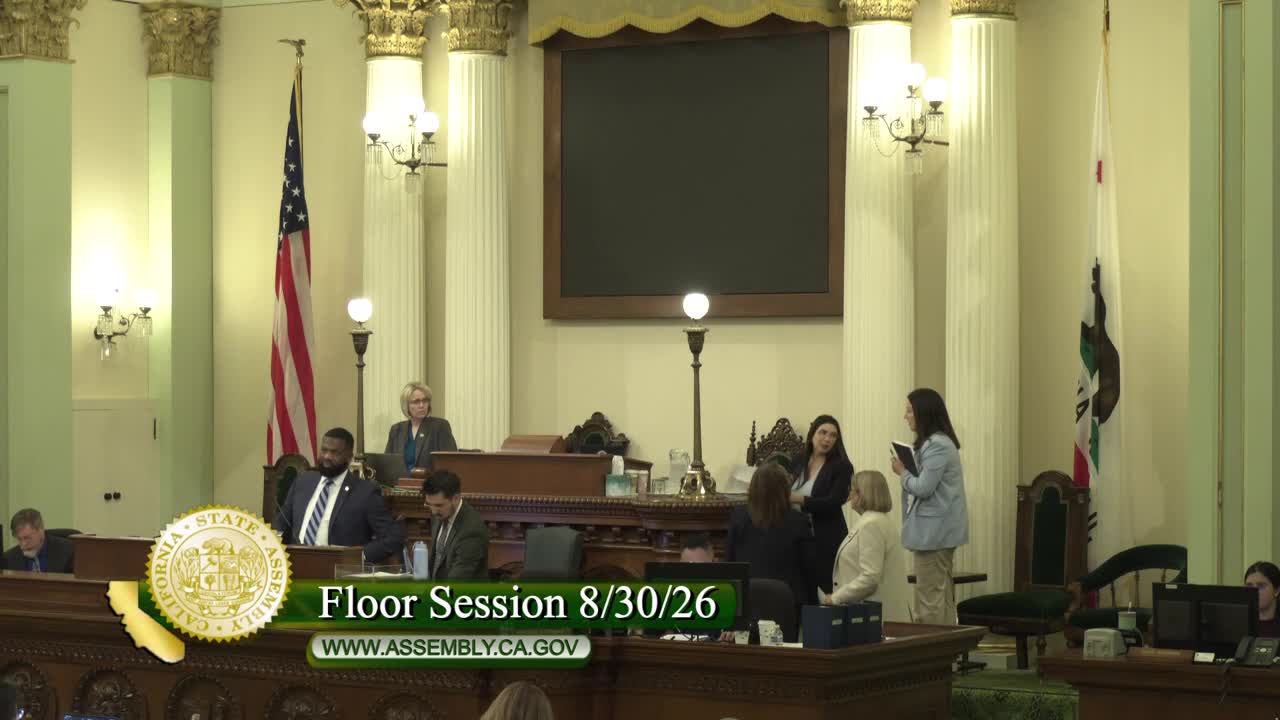
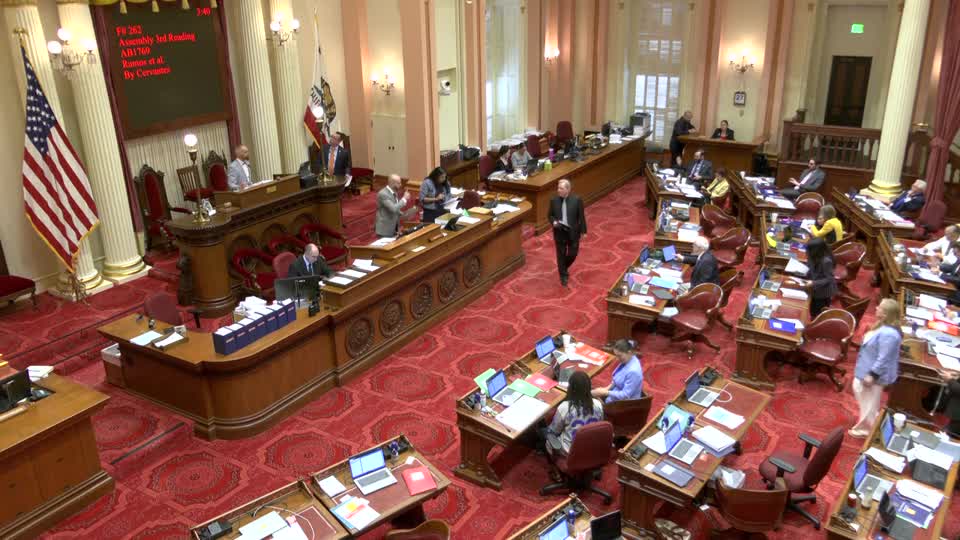
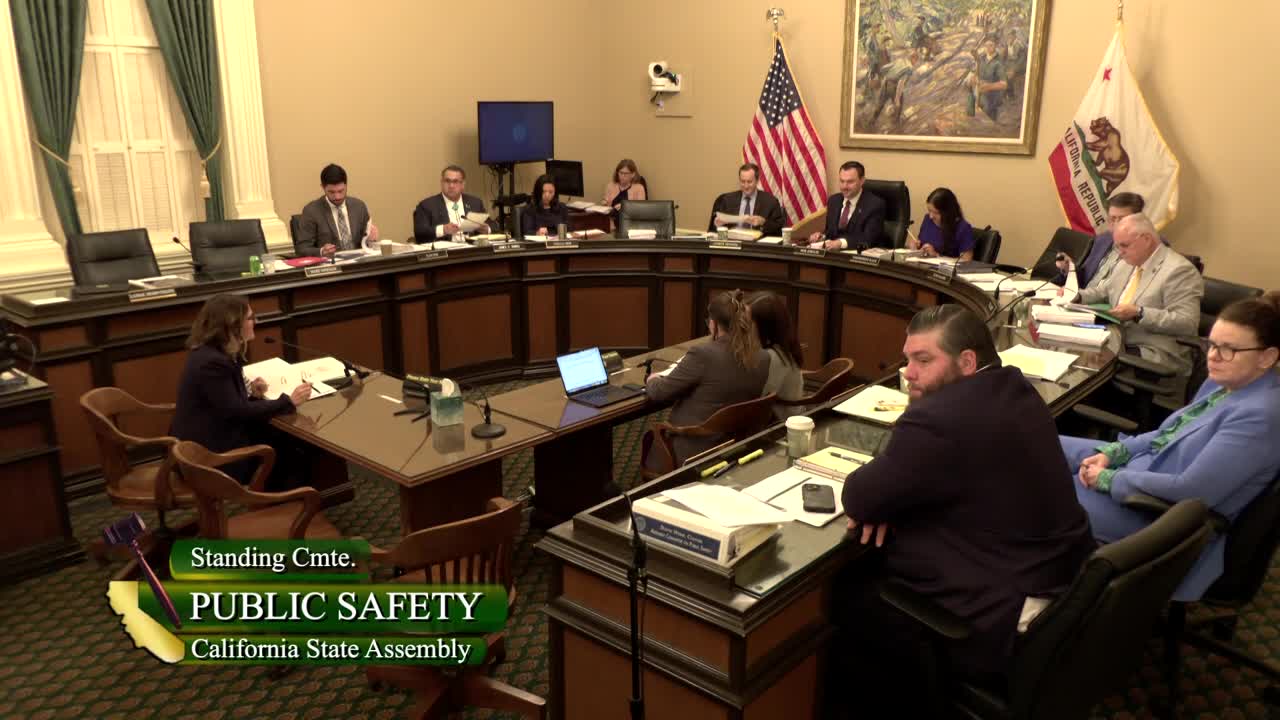
Bill Author

Bill Co-Author(s):