AB 2706: Acidified foods and low-acid foods.
- Session Year: 2025-2026
- House: Assembly
- Latest Version Date: 2026-09-30
Current Status:
Passed
(2026-09-30: Chaptered by Secretary of State - Chapter 960, Statutes of 2026.)
Introduced
In Committee
Awaiting First Chamber Vote
Passed First Chamber
In Committee
Awaiting Second Chamber Vote
Passed Second Chamber
Enacted
Existing law makes it a misdemeanor for any person to engage in the noncommercial canning of salmon, or in the commercial canning of any fish or fish product, meat or meat product, or any other food product for the use of man or animal, the sterilization of which in the opinion of the State Department of Public Health requires the use of a pressure cooker or a retort, without first obtaining a license from the department. Existing law requires the department to issue an annual license to any person on the receipt of a specified fee and evidence showing the applicant is in compliance with the departments sanitary requirements. Existing law establishes the Cannery Inspection Board to estimate specified costs for inspection and laboratory control. Existing law establishes the Cannery Inspection Fund for the receipt of moneys received pursuant to these provisions.
This bill would repeal these provisions. The bill would make related conforming changes.
Existing law, the Sherman Food, Drug, and Cosmetic Law, under the administration and enforcement of the department, provides for the regulation of various subjects relating to the manufacturing, processing, labeling, advertising, and sale of food, drugs, and cosmetics. A violation of the Sherman Food, Drug, and Cosmetic Law is punishable as a misdemeanor. Existing law makes it unlawful for any person to misbrand any food or manufacture, sell, deliver, hold, or offer for sale any food that is misbranded. Existing law prohibits a person from manufacturing, packing, or holding any processed food in this state unless the person has a valid registration from the department, except as specified. Existing law requires a registration application to be completed annually and accompanied by a specified nonreturnable registration fee.
This bill would prohibit a person from engaging in the commercial manufacturing, processing, or packing of an acidified food or low-acid food for the use or consumption by people or animals without first being registered with the department. The bill would prohibit a person from engaging in the commercial manufacturing, processing, or packing of an acidified food or low-acid food for the use or consumption by people or animals without a scheduled process, as defined, obtained from a processing authority. The bill would deem an acidified food or low-acid food that is manufactured, processed, or packed by a person without a scheduled process obtained from a processing authority as misbranded. The bill would require every person engaged in the manufacture, packing, or holding of an acidified food or low-acid food required to have a scheduled process in this state to pay $350 annually in addition to their annual registration fee. The bill would require the additional fee to be deposited into the Food Safety Fund for use by the department, upon appropriation by the Legislature, for the purpose of conducting inspections and reviews of facilities that manufacture, hold, or pack an acidified food or low-acid food required to have a scheduled process.
By expanding the scope of existing crimes, this bill would impose a state-mandated local program.
This bill would state that the Food Safety Fund is the successor fund to the Cannery Inspection Fund, and would require all moneys to be transferred to, and become a part of, the Food Safety Fund, to be available for immediate use for specified purposes. By using appropriated funds for a new purpose, the bill would make an appropriation.
The California Constitution requires the state to reimburse local agencies and school districts for certain costs mandated by the state. Statutory provisions establish procedures for making that reimbursement.
This bill would provide that no reimbursement is required by this act for a specified reason.
Existing law makes it a misdemeanor for any person to engage in the noncommercial canning of salmon, or in the commercial canning of any fish or fish product, meat or meat product, or any other food product for the use of man or animal, the sterilization of which in the opinion of the State Department of Public Health requires the use of a pressure cooker or a retort, without first obtaining a license from the department. Existing law requires the department to issue an annual license to any person on the receipt of a specified fee and evidence showing the applicant is in compliance with the departments sanitary requirements. Existing law establishes the Cannery Inspection Board to estimate specified costs for inspection and laboratory control. Existing law establishes the Cannery Inspection Fund for the receipt of moneys received pursuant to these provisions.
This bill would repeal these provisions. The bill would make related conforming changes.
Existing law, the Sherman Food, Drug, and Cosmetic Law, under the administration and enforcement of the department, provides for the regulation of various subjects relating to the manufacturing, processing, labeling, advertising, and sale of food, drugs, and cosmetics. A violation of the Sherman Food, Drug, and Cosmetic Law is punishable as a misdemeanor. Existing law makes it unlawful for any person to misbrand any food or manufacture, sell, deliver, hold, or offer for sale any food that is misbranded. Existing law prohibits a person from manufacturing, packing, or holding any processed food in this state unless the person has a valid registration from the department, except as specified. Existing law requires a registration application to be completed annually and accompanied by a specified nonreturnable registration fee.
This bill would prohibit a person from engaging in the commercial manufacturing, processing, or packing of an acidified food or low-acid food for the use or consumption by people or animals without first being registered with the department. The bill would prohibit a person from engaging in the commercial manufacturing, processing, or packing of an acidified food or low-acid food for the use or consumption by people or animals without a scheduled process, as defined, obtained from a processing authority. The bill would deem an acidified food or low-acid food that is manufactured, processed, or packed by a person without a scheduled process obtained from a processing authority as misbranded. The bill would require every person engaged in the manufacture, packing, or holding of an acidified food or low-acid food required to have a scheduled process in this state to pay $350 annually in addition to their annual registration fee. The bill would require the additional fee to be deposited into the Food Safety Fund for use by the department, upon appropriation by the Legislature, for the purpose of conducting inspections and reviews of facilities that manufacture, hold, or pack an acidified food or low-acid food required to have a scheduled process.
By expanding the scope of existing crimes, this bill would impose a state-mandated local program.
The California Constitution requires the state to reimburse local agencies and school districts for certain costs mandated by the state. Statutory provisions establish procedures for making that reimbursement.
This bill would provide that no reimbursement is required by this act for a specified reason.
Existing law provides for the licensure and regulation of health and care facilities by the State Department of Public Health, the State Department of Social Services, and the State Department of Health Care Services, depending on the type of facility.This bill would state the intent of the Legislature to enact legislation relating to health and care facility operations.Existing law provides for the licensure and regulation of health and care facilities by the State Department of Public Health, the State Department of Social Services, and the State Department of Health Care Services, depending on the type of facility.
This bill would state the intent of the Legislature to enact legislation relating to health and care facility operations.
(a)The fees or charges for the issuance or renewal of any permit, license, registration, or document pursuant to Sections 1676, 1677, 2805, 11839.25, 103625, 106700, 106890, 106925, 107080, 107090, 107095, 107160, 110210, 110470, 110471, 111130, 111140, 111630, 111923.5, 111923.6, 112405, 112510, 113060, 113065, 114065, 115035, 115065, 115080, 117923, 117995, 118045, 118210, and 118245 shall be adjusted annually by the percentage change printed in the Budget Act for those items appropriating funds to the state department. After the first annual adjustment of fees or charges pursuant to this section, the fees or charges subject to subsequent adjustment shall be the fees or charges for the prior calendar year. The percentage change shall be determined by the Department of Finance, and shall include at least the total percentage change in salaries and operating expenses of the state department. However, the total increase in amounts collected under this section shall not exceed the total increased cost of the program or service provided.
(b)The state department shall publish annually a list of the actual numerical fee charges for each permit, license, certification, or registration governed by this section.
(c)This adjustment of fees and publication of the fee list shall not be subject to the requirements of Chapter 3.5 (commencing with Section 11340) of Part 1 of Division 3 of Title 2 of the Government Code.
(d)With respect to the fees or charges pursuant to Section 103625, the actual dollar fee or charge shall be rounded to the nearest whole dollar.
SEC. 2.Section 110050 of the Health and Safety Code is amended to read:110050.(a)The Food Safety Fund is hereby created as a special fund in the State Treasury. All moneys collected by the department under subdivision (c) of Section 110466 and Sections 110470, 110471, 110485, 110959.9, 114365, 114365.6, 111130, and 113717, and under Article 7 (commencing with Section 110810) of Chapter 5, or awarded to the department pursuant to court orders or settlements for the use of food safety-related activities, shall be deposited into the fund, for use by the department, upon appropriation by the Legislature, for the purposes of providing funds necessary to carry out and implement the inspection provisions of this part relating to food, licensing, inspection, enforcement, and other provisions of Article 12 (commencing with Section 111070) of Chapter 5, relating to water, the provisions relating to education and training in the prevention of microbial contamination pursuant to Section 110485, and the registration provisions of Article 7 (commencing with Section 110810) of Chapter 5, and to carry out and implement the provisions of the California Retail Food Code (Part 7 (commencing with Section 113700) of Division 104).
(b)All moneys collected by the department pursuant to Section 110471.5 shall be deposited into the fund, for use by the department, upon appropriation by the Legislature, for the purpose of conducting inspections and reviews of facilities that manufacture, pack, or hold an acidified food or low acid-food required to have a scheduled process.
(c)The Food Safety Fund is hereby designated as the successor fund to the Cannery Inspection Fund, as provided by Section 16346 of the Government Code. All moneys shall be transferred to, and become a part of, the Food Safety Fund and be available for immediate use for the purposes specified in this section.
SEC. 3.Section 110471.5 is added to the Health and Safety Code, to read:110471.5.(a)Every person engaged in the manufacture, packing, or holding of an acidified food or low-acid food in this state required to have a scheduled process shall pay three hundred fifty dollars ($350) annually in addition to their annual registration fee paid pursuant to Section 110470.
(b)Revenue from the additional three-hundred-fifty-dollar ($350) fee described in subdivision (a) shall be deposited into the Food Safety Fund created pursuant to Section 110050.
SEC. 4.Section 110474 of the Health and Safety Code is amended to read:110474.Nothing in this chapter shall relieve a person who has a valid registration to manufacture, pack, or hold processed food issued by the department from any other requirements for licensure, registration, or certification under Article 7 (commencing with Section 110810), Article 12 (commencing with Section 111070), or Part 6 (commencing with Section 111940). The registration fee due to the department under this article from a person who holds one or more licenses, registrations, or certificates issued by the department pursuant to Article 12 (commencing with Section 111070) or Chapters 5 to 10, inclusive of Part 6 (commencing with Section 112150) shall be the fee for the single highest cost license, registration, or certificate only. Organic processed food registration fees collected pursuant to Section 110875 shall be in addition to any registration fees that may be collected under this article.
SEC. 5.Section 110480 of the Health and Safety Code is amended to read:110480.(a)The registration requirements of this article do not apply to a person whose manufacturing, packing, or holding of processed food is limited solely to temporarily holding processed foods for up to seven days for further transport if the foods are not potentially hazardous foods, as defined in Section 110005, or to a person whose manufacturing, packing, or holding of processed food is limited solely to activities authorized by any of the following:
(1)A valid bottled water or water vending machine license issued pursuant to Article 12 (commencing with Section 111070).
(2)A valid pet food license issued pursuant to Chapter 10 (commencing with Section 113025) of Part 6.
(3)A valid permit issued pursuant to Chapter 4 (commencing with Section 113700) of Part 7 to a food facility including a food facility that manufactures, packs, or holds processed food for sale at wholesale, provided the food facility that manufactures, packs, or holds processed food for sale at wholesale does not meet any of the following conditions:
(A)Has gross annual wholesale sales of processed foods of more than 25 percent of total food sales.
(B)Sells processed foods outside the jurisdiction of the local health department.
(C)Sells processed foods that require labeling pursuant to this part.
(D)Processes or handles fresh seafood, frozen seafood held in bulk for further processing, or fresh or frozen raw shellfish.
(E)Salvages processed foods for sale other than at the retail food facility.
(4)A valid cold storage license issued pursuant to Chapter 6 (commencing with Section 112350) of Part 6.
(5)A valid shellfish certificate issued pursuant to Chapter 5 (commencing with Section 112150) of Part 6.
(6)A valid frozen food locker plant license issued pursuant to Chapter 7 (commencing with Section 112500) of Part 6.
(7)A valid beer manufacturers license, winegrowers license, or wine blenders license pursuant to Division 9 (commencing with Section 23000) of the Business and Professions Code.
(8)A valid milk products plant, margarine, imitation ice cream, imitation ice milk, or a products resembling milk products plant license, issued pursuant to Division 15 (commencing with Section 32501) of the Food and Agricultural Code.
(9)A valid permit issued by a local health department to operate a processing establishment, as defined in Section 111955, that only holds or warehouses processed food, pursuant to Article 1 (commencing with Section 111950) of Chapter 4 of Part 6, provided that all of the following conditions are met:
(A)The warehouse does not manufacture or pack processed food.
(B)The warehouse does not hold fresh seafood, frozen seafood held in bulk for further processing, or fresh or frozen raw shellfish.
(C)The warehouse is not operated as an integral part of a food processing facility required to be registered pursuant to Section 110460.
(D)The warehouse facilities are located entirely within the area under the jurisdiction of the local health department.
(E)The warehouse does not salvage food as the primary business.
(b)An entity that provides food services other than the manufacturing, packing, or holding of processed food is subject to applicable provisions of the California Retail Food Code, as set forth in Part 7 (commencing with Section 113700).
(c)This section does not limit the authority of the Counties of Los Angeles, San Bernardino, and Orange, or of the City of Vernon, to conduct any inspections otherwise authorized by Chapter 4 (commencing with Section 111950) of Part 6.
SEC. 6.Article 7.5 (commencing with Section 110959.1) is added to Chapter 5 of Part 5 of Division 104 of the Health and Safety Code, to read:7.5.Acidified Foods and Low-Acid Foods110959.1.For purposes of this article, the following definitions apply:
(a)Acidified food means low-acid food to which acid or acid food is added and packaged within a hermetically sealed container with a finished equilibrium pH of 4.6 or below and a water activity greater than 0.85. This article does not apply to foods that are stored, distributed, and retailed under refrigeration.
(b)Low-acid food means shelf-stable food, other than an alcoholic beverage, packaged in a hermetically sealed container with a finished equilibrium pH greater than 4.6 and a water activity greater than 0.85. Low-acid food does not include a tomato or tomato product with a finished equilibrium pH of less than 4.7.
(c)(1)Processing authority means a person who has expert knowledge of thermal processing requirements for low-acid foods packaged in hermetically sealed containers with adequate facilities for making those determinations or expert knowledge in the acidification and processing of acidified foods. For purposes of this paragraph, determinations includes evaluating the overall effectiveness of a scheduled process to produce a safe product and using validated procedures to determine if deviations from a validated scheduled process create a risk to public health that require subsequent mitigation.
(2)A processing authority may be an independent third party retained by the processor and is not required to be affiliated with the processor or the department.
110959.2.A person shall not engage in the commercial manufacturing, processing, or packing of an acidified food or low-acid food, including any fish or fish product, or any meat or meat product, for the use or consumption by people or animals without a scheduled process, as defined in Section 113.83 or 114.83 of Title 21 of the Code of Federal Regulations and amendments thereto, obtained from a processing authority.
110959.3.An acidified food or low-acid food that is manufactured, processed, or packed by a person without a scheduled process obtained from a processing authority in accordance with this article is misbranded.
110959.5.A person shall not engage in the commercial manufacturing, processing, or packing of an acidified food or low-acid food, including any fish or fish product, or any meat or meat product, for the use or consumption by people or animals without first being registered with the department.
110959.7.A person shall not place upon the label of any bottle, can, jar, carton, case, box, barrel, or any other receptacle, vessel, or container of whatever material or nature that may be used by a packer, manufacturer, producer, jobber, or dealer for enclosing any acidified food or low-acid food, including any fish or fish product, or any meat or meat product, any statement relative to the product having been inspected by the department, unless the statement has been approved in writing by the department.
110959.9.A person who manufactures, processes, or packs any acidified food or low-acid food in violation of this article shall pay the department all reasonable costs of inspection and any laboratory examination, as determined by the department, that were necessary to ascertain that the embargoed product was packed in violation of this article. Costs paid to the department pursuant to this section shall be deposited into the Food Safety Fund created pursuant to Section 110050.
110959.15.It is the intent of the Legislature that this article be interpreted and implemented in a manner consistent with applicable federal requirements, including, but not limited to, Part 113 (Thermally Processed Low-Acid Foods Packaged in Hermetically Sealed Containers) and Part 114 (Acidified Foods) of Title 21 of the Code of Federal Regulations, as those regulations may be amended from time to time. To the extent practicable, the department shall administer and enforce this article in a manner that does not conflict with and is consistent with those federal requirements.
SEC. 7.Chapter 8 (commencing with Section 112650) of Part 6 of Division 104 of the Health and Safety Code is repealed.SEC. 8.No reimbursement is required by this act pursuant to Section 6 of Article XIIIB of the California Constitution because the only costs that may be incurred by a local agency or school district will be incurred because this act creates a new crime or infraction, eliminates a crime or infraction, or changes the penalty for a crime or infraction, within the meaning of Section 17556 of the Government Code, or changes the definition of a crime within the meaning of Section 6 of Article XIIIB of the California Constitution.
(a)The fees or charges for the issuance or renewal of any permit, license, registration, or document pursuant to Sections 1676, 1677, 2805, 11839.25, 103625, 106700, 106890, 106925, 107080, 107090, 107095, 107160, 110210, 110470, 110471, 111130, 111140, 111630, 111923.5, 111923.6, 112405, 112510, 112750, 112755, 113060, 113065, 114065, 115035, 115065, 115080, 117923, 117995, 118045, 118210, and 118245 shall be adjusted annually by the percentage change printed in the Budget Act for those items appropriating funds to the state department. After the first annual adjustment of fees or charges pursuant to this section, the fees or charges subject to subsequent adjustment shall be the fees or charges for the prior calendar year. The percentage change shall be determined by the Department of Finance, and shall include at least the total percentage change in salaries and operating expenses of the state department. However, the total increase in amounts collected under this section shall not exceed the total increased cost of the program or service provided.
(b)The state department shall publish annually a list of the actual numerical fee charges for each permit, license, certification, or registration governed by this section.
(c)This adjustment of fees and publication of the fee list shall not be subject to the requirements of Chapter 3.5 (commencing with Section 11340) of Part 1 of Division 3 of Title 2 of the Government Code.
(d)With respect to the fees or charges pursuant to Section 103625, the actual dollar fee or charge shall be rounded to the nearest whole dollar.
SECTION 1.SEC. 2.Section 110050 of the Health and Safety Code is amended to read:110050.(a)The Food Safety Fund is hereby created as a special fund in the State Treasury. All moneys collected by the department under subdivision (c) of Section 110466 and Sections 110470, 110471, 110485, 110959.9, 114365, 114365.6, 111130, and 113717, and under Article 7 (commencing with Section 110810) of Chapter 5, or awarded to the department pursuant to court orders or settlements for the use of food safety-related activities, shall be deposited into the fund, for use by the department, upon appropriation by the Legislature, for the purposes of providing funds necessary to carry out and implement the inspection provisions of this part relating to food, licensing, inspection, enforcement, and other provisions of Article 12 (commencing with Section 111070) of Chapter 5, relating to water, the provisions relating to education and training in the prevention of microbial contamination pursuant to Section 110485, and the registration provisions of Article 7 (commencing with Section 110810) of Chapter 5, and to carry out and implement the provisions of the California Retail Food Code (Part 7 (commencing with Section 113700) of Division 104).
(b)All moneys collected by the department pursuant to Section 110471.5 shall be deposited into the fund, for use by the department, upon appropriation by the Legislature, for the purpose of conducting inspections and reviews of facilities that manufacture, pack, or hold an acidified food or low acid-food required to have a scheduled process.
(c)The Food Safety Fund is hereby designated as the successor fund to the Cannery Inspection Fund, as provided by Section 16346 of the Government Code. All moneys shall be transferred to, and become a part of, the Food Safety Fund and be available for immediate use for the purposes specified in this section.
SEC. 2.SEC. 3.Section 110471.5 is added to the Health and Safety Code, to read:110471.5.(a)Every person engaged in the manufacture, packing, or holding of an acidified food or low-acid food in this state required to have a scheduled process shall pay three hundred fifty dollars ($350) annually in addition to their annual registration fee paid pursuant to Section 110470.
(b)Revenue from the additional three-hundred-fifty-dollar ($350) fee described in subdivision (a) shall be deposited into the Food Safety Fund created pursuant to Section 110050.
SEC. 3.SEC. 4.Section 110474 of the Health and Safety Code is amended to read:110474.Nothing in this chapter shall relieve a person who has a valid registration to manufacture, pack, or hold processed food issued by the department from any other requirements for licensure, registration, or certification under Article 7 (commencing with Section 110810), Article 12 (commencing with Section 111070), or Part 6 (commencing with Section 111940). The registration fee due to the department under this article from a person who holds one or more licenses, registrations, or certificates issued by the department pursuant to Article 12 (commencing with Section 111070) or Chapters 5 to 10, inclusive of Part 6 (commencing with Section 112150) shall be the fee for the single highest cost license, registration, or certificate only. Organic processed food registration fees collected pursuant to Section 110875 shall be in addition to any registration fees that may be collected under this article.
SEC. 4.SEC. 5.Section 110480 of the Health and Safety Code is amended to read:110480.(a)The registration requirements of this article do not apply to a person whose manufacturing, packing, or holding of processed food is limited solely to temporarily holding processed foods for up to seven days for further transport if the foods are not potentially hazardous foods, as defined in Section 110005, or to a person whose manufacturing, packing, or holding of processed food is limited solely to activities authorized by any of the following:
(1)A valid bottled water or water vending machine license issued pursuant to Article 12 (commencing with Section 111070).
(2)A valid pet food license issued pursuant to Chapter 10 (commencing with Section 113025) of Part 6.
(3)A valid permit issued pursuant to Chapter 4 (commencing with Section 113700) of Part 7 to a food facility including a food facility that manufactures, packs, or holds processed food for sale at wholesale, provided the food facility that manufactures, packs, or holds processed food for sale at wholesale does not meet any of the following conditions:
(A)Has gross annual wholesale sales of processed foods of more than 25 percent of total food sales.
(B)Sells processed foods outside the jurisdiction of the local health department.
(C)Sells processed foods that require labeling pursuant to this part.
(D)Processes or handles fresh seafood, frozen seafood held in bulk for further processing, or fresh or frozen raw shellfish.
(E)Salvages processed foods for sale other than at the retail food facility.
(4)A valid cold storage license issued pursuant to Chapter 6 (commencing with Section 112350) of Part 6.
(5)A valid shellfish certificate issued pursuant to Chapter 5 (commencing with Section 112150) of Part 6.
(6)A valid frozen food locker plant license issued pursuant to Chapter 7 (commencing with Section 112500) of Part 6.
(7)A valid beer manufacturers license, winegrowers license, or wine blenders license pursuant to Division 9 (commencing with Section 23000) of the Business and Professions Code.
(8)A valid milk products plant, margarine, imitation ice cream, imitation ice milk, or a products resembling milk products plant license, issued pursuant to Division 15 (commencing with Section 32501) of the Food and Agricultural Code.
(9)A valid permit issued by a local health department to operate a processing establishment, as defined in Section 111955, that only holds or warehouses processed food, pursuant to Article 1 (commencing with Section 111950) of Chapter 4 of Part 6, provided that all of the following conditions are met:
(A)The warehouse does not manufacture or pack processed food.
(B)The warehouse does not hold fresh seafood, frozen seafood held in bulk for further processing, or fresh or frozen raw shellfish.
(C)The warehouse is not operated as an integral part of a food processing facility required to be registered pursuant to Section 110460.
(D)The warehouse facilities are located entirely within the area under the jurisdiction of the local health department.
(E)The warehouse does not salvage food as the primary business.
(b)An entity that provides food services other than the manufacturing, packing, or holding of processed food is subject to applicable provisions of the California Retail Food Code, as set forth in Part 7 (commencing with Section 113700).
(c)This section does not limit the authority of the Counties of Los Angeles, San Bernardino, and Orange, or of the City of Vernon, to conduct any inspections otherwise authorized by Chapter 4 (commencing with Section 111950) of Part 6.
SEC. 5.SEC. 6.Article 7.5 (commencing with Section 110959.1) is added to Chapter 5 of Part 5 of Division 104 of the Health and Safety Code, to read:7.5.Acidified Foods and Low-Acid Foods110959.1.For purposes of this article, the following definitions apply:
(a)Acidified food means shelf-stable low-acid food to which acid or acid food is added and packaged within a hermetically sealed container with a finished equilibrium pH of 4.6 or below and a water activity greater than 0.85. This article does not apply to foods that are stored, distributed, and retailed under refrigeration.
(b)Low-acid food means shelf-stable food, other than an alcoholic beverage, packaged in a hermetically sealed container with a finished equilibrium pH greater than 4.6 and a water activity greater than 0.85. Low-acid food does not include a tomato or tomato product with a finished equilibrium pH of less than 4.7.
(c)(1)Processing authority means a person who has both of the following:
(1)Expert expert knowledge of thermal processing requirements for low-acid foods packaged in hermetically sealed containers with adequate facilities for making those determinations or expert knowledge in the acidification and processing of acidified foods. For purposes of this paragraph, determinations includes evaluating the overall effectiveness of a scheduled process to produce a safe product and using validated procedures to determine if deviations from a validated scheduled process create a risk to public health that require subsequent mitigation.
(2)Expertise sufficient to make determinations for purposes of Section 113.83 or 113.89 of Title 21 of the Code of Federal Regulations.(d)Scheduled process means the process selected by the processor as adequate under the conditions of manufacture for a given product to achieve commercial sterility or for use under the conditions of manufacture for a food in achieving and maintaining a food that will not permit the growth of microorganisms having public health significance.(2)A processing authority may be an independent third party retained by the processor and is not required to be affiliated with the processor or the department.
110959.2.A person shall not engage in the commercial manufacturing, processing, or packing of an acidified food or low-acid food, including any fish or fish product, or any meat or meat product, for the use or consumption by people or animals without a scheduled process process, as defined in Section 113.83 or 114.83 of Title 21 of the Code of Federal Regulations and amendments thereto, obtained from a processing authority.
110959.3.An acidified food or low-acid food that is manufactured, processed, or packed by a person without a scheduled process obtained from a processing authority in accordance with this article is misbranded.
110959.5.A person shall not engage in the commercial manufacturing, processing, or packing of an acidified food or low-acid food, including any fish or fish product, or any meat or meat product, for the use or consumption by people or animals without first being registered with the department.
110959.7.A person shall not place upon the label of any bottle, can, jar, carton, case, box, barrel, or any other receptacle, vessel, or container of whatever material or nature that may be used by a packer, manufacturer, producer, jobber, or dealer for enclosing any acidified food or low-acid food, including any fish or fish product, or any meat or meat product, any statement relative to the product having been inspected by the department, unless the statement has been approved in writing by the department.
110959.9.A person who manufactures, processes, or packs any acidified food or low-acid food in violation of this article shall pay the department all reasonable costs of inspection and any laboratory examination, as determined by the department, that were necessary to ascertain that the embargoed product was packed in violation of this article. Costs paid to the department pursuant to this section shall be deposited into the Food Safety Fund created pursuant to Section 110050.
110959.15.It is the intent of the Legislature that this article be interpreted and implemented in a manner consistent with applicable federal requirements, including, but not limited to, Part 113 (Thermally Processed Low-Acid Foods Packaged in Hermetically Sealed Containers) and Part 114 (Acidified Foods) of Title 21 of the Code of Federal Regulations, as those regulations may be amended from time to time. To the extent practicable, the department shall administer and enforce this article in a manner that does not conflict with and is consistent with those federal requirements.
SEC. 6.SEC. 7.Chapter 8 (commencing with Section 112650) of Part 6 of Division 104 of the Health and Safety Code is repealed.SEC. 7.SEC. 8.No reimbursement is required by this act pursuant to Section 6 of Article XIIIB of the California Constitution because the only costs that may be incurred by a local agency or school district will be incurred because this act creates a new crime or infraction, eliminates a crime or infraction, or changes the penalty for a crime or infraction, within the meaning of Section 17556 of the Government Code, or changes the definition of a crime within the meaning of Section 6 of Article XIIIB of the California Constitution.
(a)The Food Safety Fund is hereby created as a special fund in the State Treasury. All moneys collected by the department under subdivision (c) of Section 110466 and Sections 110470, 110471, 110485, 110959.9, 114365, 114365.6, 111130, and 113717, and under Article 7 (commencing with Section 110810) of Chapter 5, or awarded to the department pursuant to court orders or settlements for the use of food safety-related activities, shall be deposited in into the fund, for use by the department, upon appropriation by the Legislature, for the purposes of providing funds necessary to carry out and implement the inspection provisions of this part relating to food, licensing, inspection, enforcement, and other provisions of Article 12 (commencing with Section 111070) of Chapter 5, relating to water, the provisions relating to education and training in the prevention of microbial contamination pursuant to Section 110485, and the registration provisions of Article 7 (commencing with Section 110810) of Chapter 5, and to carry out and implement the provisions of the California Retail Food Code (Part 7 (commencing with Section 113700) of Division 104).
(b)All moneys collected by the department pursuant to Section 110471.5 shall be deposited into the fund, for use by the department, upon appropriation by the Legislature, for the purpose of conducting inspections and reviews of facilities that manufacture, pack, or hold an acidified food or low acid-food required to have a scheduled process.
SEC. 2.Section 110471.5 is added to the Health and Safety Code, to read:110471.5.(a)Every person engaged in the manufacture, packing, or holding of an acidified food or low-acid food in this state required to have a scheduled process shall pay three hundred fifty dollars ($350) annually in addition to their annual registration fee paid pursuant to Section 110470.
(b)Revenue from the additional three-hundred-fifty-dollar ($350) fee described in subdivision (a) shall be deposited into the Food Safety Fund created pursuant to Section 110050.
SEC. 3.Section 110474 of the Health and Safety Code is amended to read:110474.Nothing in this chapter shall relieve a person who has a valid registration to manufacture, pack, or hold processed food issued by the department from any other requirements for licensure, registration, or certification under Article 7 (commencing with Section 110810), Article 12 (commencing with Section 111070), or Part 6 (commencing with Section 111940). The registration fee due to the department under this article from a person who holds one or more licenses, registrations, or certificates issued by the department pursuant to Article 12 (commencing with Section 111070) or Chapters 5 to 10, inclusive of Part 6 (commencing with Section 112150) shall be the fee for the single highest cost license, registration, or certificate only. Cannery inspection fees collected pursuant to Section 112730 and organic Organic processed food registration fees collected pursuant to Section 110875 shall be in addition to any registration fees that may be collected under this article.
SEC. 4.Section 110480 of the Health and Safety Code is amended to read:110480.(a)The registration requirements of this article do not apply to a person whose manufacturing, packing, or holding of processed food is limited solely to temporarily holding processed foods for up to seven days for further transport if the foods are not potentially hazardous foods, as defined in Section 110005, or to a person whose manufacturing, packing, or holding of processed food is limited solely to activities authorized by any of the following:
(1)A valid bottled water or water vending machine license issued pursuant to Article 12 (commencing with Section 111070).
(2)A valid pet food license issued pursuant to Chapter 10 (commencing with Section 113025) of Part 6.
(3)A valid permit issued pursuant to Chapter 4 (commencing with Section 113700) of Part 7 to a food facility including a food facility that manufactures, packs, or holds processed food for sale at wholesale, provided the food facility that manufactures, packs, or holds processed food for sale at wholesale does not meet any of the following conditions:
(A)Has gross annual wholesale sales of processed foods of more than 25 percent of total food sales.
(B)Sells processed foods outside the jurisdiction of the local health department.
(C)Sells processed foods that require labeling pursuant to this part.
(D)Processes or handles fresh seafood, frozen seafood held in bulk for further processing, or fresh or frozen raw shellfish.
(E)Salvages processed foods for sale other than at the retail food facility.
(4)A valid cold storage license issued pursuant to Chapter 6 (commencing with Section 112350) of Part 6.
(5)A valid cannery license issued pursuant to Chapter 8 (commencing with Section 112650) of Part 6.(6)(5)A valid shellfish certificate issued pursuant to Chapter 5 (commencing with Section 112150) of Part 6.
(7)(6)A valid frozen food locker plant license issued pursuant to Chapter 7 (commencing with Section 112500) of Part 6.
(8)(7)A valid beer manufacturers license, winegrowers license, or wine blenders license pursuant to Division 9 (commencing with Section 23000) of the Business and Professions Code.
(9)(8)A valid milk products plant, margarine, imitation ice cream, imitation ice milk, or a products resembling milk products plant license, issued pursuant to Division 15 (commencing with Section 32501) of the Food and Agricultural Code.
(10)(9)A valid permit issued by a local health department to operate a processing establishment, as defined in Section 111955, that only holds or warehouses processed food, pursuant to Article 1 (commencing with Section 111950) of Chapter 4 of Part 6, provided that all of the following conditions are met:
(A)The warehouse does not manufacture or pack processed food.
(B)The warehouse does not hold fresh seafood, frozen seafood held in bulk for further processing, or fresh or frozen raw shellfish.
(C)The warehouse is not operated as an integral part of a food processing facility required to be registered pursuant to Section 110460.
(D)The warehouse facilities are located entirely within the area under the jurisdiction of the local health department.
(E)The warehouse does not salvage food as the primary business.
(b)An entity that provides food services other than the manufacturing, packing, or holding of processed food is subject to applicable provisions of the California Retail Food Code, as set forth in Part 7 (commencing with Section 113700).
(c)This section does not limit the authority of the Counties of Los Angeles, San Bernardino, and Orange, or of the City of Vernon, to conduct any inspections otherwise authorized by Chapter 4 (commencing with Section 111950) of Part 6.
SEC. 5.Article 7.5 (commencing with Section 110959.1) is added to Chapter 5 of Part 5 of Division 104 of the Health and Safety Code, to read:7.5.Acidified Foods and Low-Acid Foods110959.1.For purposes of this article, the following definitions apply:
(a)Acidified food means shelf-stable low-acid food to which acid or acid food is added and packaged within a hermetically sealed container with a finished equilibrium pH of 4.6 or below and a water activity greater than 0.85.
(b)Low-acid food means shelf-stable food, other than an alcoholic beverage, packaged in a hermetically sealed container with a finished equilibrium pH greater than 4.6 and a water activity greater than 0.85. Low-acid food does not include a tomato or tomato product with a finished equilibrium pH of less than 4.7.
(c)Processing authority means a person who has both of the following:
(1)Expert knowledge of thermal processing requirements for low-acid foods packaged in hermetically sealed containers with adequate facilities for making those determinations or expert knowledge in the acidification and processing of acidified foods. For purposes of this paragraph, determinations includes evaluating the overall effectiveness of a scheduled process to produce a safe product and using validated procedures to determine if deviations from a validated scheduled process create a risk to public health that require subsequent mitigation.
(2)Expertise sufficient to make determinations for purposes of Section 113.83 or 113.89 of Title 21 of the Code of Federal Regulations.
(d)Scheduled process means the process selected by the processor as adequate under the conditions of manufacture for a given product to achieve commercial sterility or for use under the conditions of manufacture for a food in achieving and maintaining a food that will not permit the growth of microorganisms having public health significance.
110959.2.A person shall not engage in the commercial manufacturing, processing, or packing of an acidified food or low-acid food, including any fish or fish product, or any meat or meat product, for the use or consumption by people or animals without a scheduled process obtained from a processing authority.
110959.3.An acidified food or low-acid food that is manufactured, processed, or packed by a person without a scheduled process obtained from a processing authority is misbranded.
110959.5.A person shall not engage in the commercial manufacturing, processing, or packing of an acidified food or low-acid food, including any fish or fish product, or any meat or meat product, for the use or consumption by people or animals without first being registered with the department.
110959.7.A person shall not place upon the label of any bottle, can, jar, carton, case, box, barrel, or any other receptacle, vessel, or container of whatever material or nature that may be used by a packer, manufacturer, producer, jobber, or dealer for enclosing any acidified food or low-acid food, including any fish or fish product, or any meat or meat product, any statement relative to the product having been inspected by the department, unless the statement has been approved in writing by the department.
110959.9.A person who manufactures, processes, or packs any acidified food or low-acid food in violation of this article shall pay the department all reasonable costs of inspection and any laboratory examination, as determined by the department, that were necessary to ascertain that the embargoed product was packed in violation of this article. Costs paid to the department pursuant to this section shall be deposited into the Food Safety Fund created pursuant to Section 110050.
SEC. 6.Chapter 8 (commencing with Section 112650) of Part 6 of Division 104 of the Health and Safety Code is repealed.SEC. 7.No reimbursement is required by this act pursuant to Section 6 of Article XIIIB of the California Constitution because the only costs that may be incurred by a local agency or school district will be incurred because this act creates a new crime or infraction, eliminates a crime or infraction, or changes the penalty for a crime or infraction, within the meaning of Section 17556 of the Government Code, or changes the definition of a crime within the meaning of Section 6 of Article XIIIB of the California Constitution.
SECTION 1.It is the intent of the Legislature to enact legislation relating to health and care facility operations.It is the intent of the Legislature to enact legislation relating to health and care facility operations.
|
Date
|
Status
|
|---|---|
| Sep 30, 2026 | Chaptered by Secretary of State - Chapter 960, Statutes of 2026. |
| Sep 30, 2026 | Approved by the Governor. |
| Sep 3, 2026 | Enrolled and presented to the Governor at 4 p.m. |
| Aug 26, 2026 | Senate amendments concurred in. To Engrossing and Enrolling. (Ayes 78. Noes 0. Page 6605.). |
| Aug 26, 2026 | Senate amendments concurred in. To Engrossing and Enrolling. (Ayes 78. Noes 0.). |
| Aug 26, 2026 | In Assembly. Concurrence in Senate amendments pending. |
| Aug 25, 2026 | Read third time. Passed. Ordered to the Assembly. (Ayes 40. Noes 0. Page 5809.). |
| Aug 25, 2026 | Read third time. Passed. Ordered to the Assembly. (Ayes 39. Noes 0.). |
| Aug 13, 2026 | Read second time. Ordered to third reading. |
| Aug 13, 2026 | From committee: Do pass. (Ayes 7. Noes 0.) (August 13). |
| Jun 22, 2026 | In committee: Referred to APPR. suspense file. |
| Jun 11, 2026 | From committee: Do pass and re-refer to Com. on APPR. (Ayes 10. Noes 0.) (June 10). Re-referred to Com. on APPR. |
| Jun 4, 2026 | From committee chair, with author's amendments: Amend, and re-refer to committee. Read second time, amended, and re-referred to Com. on HEALTH. |
| Jun 3, 2026 | In committee: Hearing postponed by committee. |
| May 27, 2026 | Referred to Com. on HEALTH. |
| May 14, 2026 | In Senate. Read first time. To Com. on RLS. for assignment. |
| May 14, 2026 | Read third time. Passed. Ordered to the Senate. (Ayes 75. Noes 0. Page 5051.) |
| May 14, 2026 | Read third time. Passed. Ordered to the Senate. (Ayes 75. Noes 0.) |
| May 7, 2026 | Read second time. Ordered to third reading. |
| May 6, 2026 | From committee: Do pass. (Ayes 13. Noes 0.) (May 6). |
| Apr 15, 2026 | From committee: Do pass and re-refer to Com. on APPR. with recommendation: To Consent Calendar. (Ayes 16. Noes 0.) (April 14). Re-referred to Com. on APPR. |
| Mar 23, 2026 | Re-referred to Com. on HEALTH. |
| Mar 19, 2026 | From committee chair, with author's amendments: Amend, and re-refer to Com. on HEALTH. Read second time and amended. |
| Mar 19, 2026 | Referred to Com. on HEALTH. |
| Feb 21, 2026 | From printer. May be heard in committee March 23. |
| Feb 20, 2026 | Read first time. To print. |
|
Date
|
Description
|
Location
|
Votes
|
|
|---|---|---|---|---|
| Aug 26, 2026 | AB 2706 Soria Concurrence in Senate Amendments | Assembly Floor |
Passed |
|
| Aug 25, 2026 | Assembly 3rd Reading AB2706 Soria By Caballero | Senate Floor |
Passed |
|
| Aug 13, 2026 | Do pass | Senate Standing Committee on Appropriations |
Passed |
|
| Jun 22, 2026 | Placed on suspense file | Senate Standing Committee on Appropriations |
Passed |
|
| Jun 10, 2026 | Do pass, but first be re-referred to the Committee on [Appropriations] | Senate Standing Committee on Health |
Passed |
|
| May 14, 2026 | AB 2706 Soria Assembly Third Reading | Assembly Floor |
Passed |
|
| May 6, 2026 | Do pass. | Assembly Standing Committee on Appropriations |
Passed |
|
| Apr 14, 2026 | Do pass and be re-referred to the Committee on [Appropriations] with recommendation: To Consent Calendar | Assembly Standing Committee on Health |
Passed |
This list shows positions taken on this bill by organizations on the date displayed, which is linked to the original source.
Positions by individuals are not included.
|
Organization
|
Position
|
Date
|
|---|---|---|
| Baldwin Richardson Foods Company | ** Support | |
| California Dairies, Inc. | ** Support | |
| California League of Food Producers | ** Support | |
| Dairy Institute Of California | ** Support | |
| Niagara Bottling | ** Support |
CONCURRENCE IN SENATE AMENDMENTS
CSA1 Bill Id:AB 2706
Author:(Soria)
As Amended Ver:June 4, 2026
2/3 vote
SUMMARY
Repeals existing law relating to the regulation of canneries which requires persons engaging in the commercial canning of food products to obtain a license from the Department of Public Health (DPH). Prohibits a person from engaging in the commercial manufacturing, processing, and packing of acidified foods and low-acid food without first registering with DPH and obtaining a scheduled process (process to ensure commercial sterility or achieving and maintaining a food that will not permit the growth of microorganisms having public health significance) from a processing authority (person with expert knowledge of the processing of low-acid and acidified foods). Deems an acidified food or low-acid food that is manufactured, processed, or packed by a person without a scheduled process obtained from a processing authority in accordance with this bill to be misbranded. Requires every person engaged in the manufacture, packing, or holding of an acidified food or low-acid food in this state who are required to have a scheduled process to pay a three hundred fifty dollar ($350) annual fee, to be deposited into the Food Safety Fund for use by DPH upon appropriation by the legislature for the purpose of conducting inspections and reviews of these facilities, as specified.
Senate Amendments
- Delete reference to "shelf stable" and specify that this bill does not apply to foods that are stored, distributed, and retailed under refrigeration;
- Authorize the processing authority to be an independent third party retained by the processor and specify that the processing authority is not required to be affiliated with the processor or DPH;
- Delete the definition of scheduled process within the bill and instead cross reference federal law and regulations which define a scheduled process and state legislative intent that this bill be interpreted and implemented in a manner consistent with applicable federal requirements, including specified federal regulations as those regulations may be amended from time to time;
- Require DPH to administer and enforce this bill in a manner that does not conflict with and is consistent with those federal requirements; and,
- Designate the Food Safety Fund as the successor fund for the cannery inspection fund. Deletes specified fees associated with the existing cannery law.
COMMENTS
Scientists classify canned and processed foods based on characteristics that can affect their safety. Low acid foods are shelf-stable non-refrigerated foods, other than alcoholic beverages, with a finished equilibrium pH greater than 4.6 and a water activity (aw) greater than 0.85. Acidified foods are low-acid foods to which acid(s) or acid food(s) are added, and which have a finished equilibrium pH of 4.6 or below and a water activity (aw) greater than 0.85. Examples of low acid foods include canned corn, green beans, mushrooms, potatoes, and most other vegetables. Examples of acidified foods, sometimes called "pickled foods," include many types of sauces, dressings, salsas, and pickles.
These foods are hermetically sealed, devoid of oxygen and generally stored without refrigeration. These conditions make these foods particularly susceptible to the growth of C. botulinum and the hazard of botulinum toxin if these foods are not properly processed. The botulinum toxin attacks the body's nerves, causing an illness called botulism which includes symptoms such as difficulty breathing, muscle paralysis, and even death.
State Level Overview. At the state level, these foods are regulated under DPH's Cannery Inspection Program, which was established in 1925. Food processors (Canneries) manufacturing these types of foods must comply with California and federal requirements and operate under a valid Cannery License that is renewed every year. Canneries engaged in general food processing activities, or in the manufacturing, packing, or holding (storing/warehousing) of foods that do not fall under acidified or low-acid foods, must operate under a valid Processed Food Registration (PFR). Canneries that manufacture acidified and/or low-acid foods, and maintain a valid PFR License, are not required to pay for Cannery Application/Renewal fees; however, canneries must pay all costs associated with cannery inspections. The current cannery law and its additional requirements (that out of state processors do not have to follow) creates a competitive disadvantage for in-state processors. Please see the Assembly Health Committee Analysis for additional background.
In place of the existing requirements, this bill repeals the cannery law and instead requires canneries to register with DPH and have a scheduled process to ensure commercial sterility obtained from a processing authority with expert knowledge needed to ensure the safety of low-acid and acidified foods, along with continuing to follow all Food and Drug Administration (FDA) requirements.
According to the Author
The Cannery Inspection Program (established in 1925), administered by DPH regulates the commercial manufacturing and packing of low-acid and acidified foods, which are susceptible to the growth of Clostridium botulinum, the bacterium that produces the deadly botulinum toxin. The author states that while the fundamental goal of ensuring food safety remains, some of the original elements of the Cannery Law are no longer necessary due to a number of factors, including the establishment of more comprehensive federal food safety laws like the Food Safety Modernization Act (FSMA). The author continues that all food processors are required to comply with FSMA, however, only processors located within California are required to comply with the California Cannery Law penalizing those operating in California and discouraging new investment in food processing. The author states that this bill reflects a move towards a more modern and streamlined approach to food safety that is in harmony with federal standards. The author concludes that this bill is a collaborative work product between her office, the Governor's office, DPH, and impacted industries to update the law in a manner that continues to protect public health but reduce costs to those operating in California.
Arguments in Support
California Dairies, Inc. (CD) supports this bill, stating that this bill updates California's cannery regulatory framework to better align with modern food production practices, strengthen public health protections, and reduce unnecessary regulatory burdens on businesses that produce low-acid and acidified foods such as milk, beverages, and other similar products. CD states that California's current Cannery Law framework is outdated, redundant in some instances to federal standards, and poorly matched to modern processing technologies and food safety systems. CD concludes that this bill will reduce unnecessary regulatory costs for businesses, and support economic growth opportunities and competitiveness for California food manufacturers while protecting public health.
Arguments in Opposition
None on file.
FISCAL COMMENTS
According to the Senate Appropriations Committee, unknown ongoing costs, potentially over $150,000, for DPH to administer the new program (Food Safety Fund); unknown increased fee revenues to support the costs of DPH administration; and unknown cost offsets from redirecting resources from the existing cannery inspection program.
VOTES:
ASM HEALTH: 16-0-0
YES: Bonta, Chen, Addis, Aguiar-Curry, Ahrens, Caloza, Carrillo, Mark González, Johnson, Patel, Patterson, Rogers, Sanchez, Schiavo, Sharp-Collins, Stefani
ASM APPROPRIATIONS: 13-0-2
YES: Wicks, Hoover, Aguiar-Curry, Caloza, Dixon, Fong, Mark González, Krell, Pacheco, Pellerin, Sharp-Collins, Solache, Tangipa
ABS, ABST OR NV: Arambula, Ta
ASSEMBLY FLOOR: 75-0-5
YES: Addis, Aguiar-Curry, Ahrens, Alanis, Alvarez, Ávila Farías, Bains, Bauer-Kahan, Bennett, Berman, Boerner, Bonta, Bryan, Calderon, Caloza, Carrillo, Castillo, Chen, Connolly, Davies, DeMaio, Dixon, Elhawary, Ellis, Fong, Gabriel, Garcia, Gipson, Jeff Gonzalez, Mark González, Hadwick, Haney, Harabedian, Hart, Hoover, Irwin, Jackson, Johnson, Kalra, Krell, Lackey, Lee, Lowenthal, Macedo, McKinnor, Muratsuchi, Nguyen, Ortega, Pacheco, Papan, Patel, Patterson, Pellerin, Petrie-Norris, Quirk-Silva, Ramos, Ransom, Michelle Rodriguez, Rogers, Blanca Rubio, Sanchez, Schiavo, Schultz, Sharp-Collins, Solache, Soria, Stefani, Tangipa, Valencia, Wallis, Ward, Wicks, Wilson, Zbur, Rivas
ABS, ABST OR NV: Arambula, Flora, Gallagher, Celeste Rodriguez, Ta
UPDATED
VERSION: June 4, 2026
CONSULTANT: Lara Flynn / Eliza Brooks / HEALTH / (916) 319-2097 FN: 0004101
06 SENATE RULES COMMITTEE Office of Senate Floor Analyses (916) 651-4171 | AB 2706 |
THIRD READING
Bill No: AB 2706
Author: Soria (D)
Amended: 6/4/26 in Senate
Vote: 27
SENATE HEALTH COMMITTEE: 10-0, 6/10/26
AYES: Weber Pierson, Valladares, Caballero, Durazo, Grove, Menjivar, Padilla, Pérez, Rubio, Smallwood-Cuevas
NO VOTE RECORDED: Gonzalez
SENATE APPROPRIATIONS COMMITTEE: 7-0, 8/13/26
AYES: Cervantes, Seyarto, Cabaldon, Dahle, Grayson, Richardson, Wahab
ASSEMBLY FLOOR: 75-0, 5/14/26 - See last page for vote
SUBJECT: Acidified foods and low-acid foods
SOURCE: Author
DIGEST:
This bill repeals the Cannery Inspection Act, including the requirement that canneries obtain a license from the California Department of Public Health (CDPH), and instead establishes requirements governing the manufacturing, processing, or packing of an acidified food or low-acid food, including a requirement that persons engaged in these activities register with CDPH and obtain a scheduled process for the packing of acidified or low-acid foods from a qualified processing authority.
ANALYSIS:
Existing federal law:
- Establishes regulations governing thermally processed low acid foods packaged in hermetically sealed containers, as well as acidified foods. [21 Code of Federal Regulations (CFR) §113 et seq., §114 et seq.]
- Requires scheduled processes for low-acid foods to be established by qualified persons who have expert knowledge of thermal processing requirements for low-acid foods in hermetically sealed containers and have adequate facilities for making such determinations. Requires the scheduled processes for acidified food to be established by a qualified person who has expert knowledge acquired through training and experience in the acidification and processing of acidified foods. [21 CFR §113.83, §114.83]
Existing state law:
- Enacts the Sherman Food, Drug and Cosmetic Law, enforced by the California Department of Public Health (CDPH), which provides broad authority for CDPH to enforce food safety requirements, including that food is not adulterated, misbranded, or falsely advertised. Requires CDPH, when adopting regulations necessary for the enforcement of the Sherman Law, to make those regulations conform with those adopted under the federal Food, Drug, and Cosmetic Act, to the extent practicable. [Health and Safety Code (HSC) §109875, et seq., and §110065]
- Requires persons engaged in the manufacture, packing, or holding of any processed food in California to have a valid processed food registration from CDPH that is required to be renewed every year. Provides for certain exemptions to this requirement, including if the manufacturing or packing of processed food is limited solely to activities authorized by a different type of food processing-related license or permit, such as a cannery license. [HSC §110460 et seq., and §110480]
- Establishes the Cannery Inspection Act (Cannery Act), which provides for the licensure and regulation of entities engaged in the canning of fish, meats, or any other food product which requires the use of a pressure cooker. Specifies that food products that do not require the use of a pressure cooker but necessitate acidulation and pH determinations are included in the Cannery Act. [HSC §112750, et seq.]
- Establishes, under the Cannery Act, a Cannery Inspection Board consisting of six members, as specified, and requires the Cannery Inspection Board to estimate the cost of the separate inspection and laboratory control required to be made for each food product subject to the Cannery Act. [HSC §112685 and §112700]
- Requires CDPH to collect from each cannery, in addition to the annual license fee, a pro rata share of the estimated cost of inspection and laboratory control. [HSC §112765]
This bill:
- Repeals the Cannery Act, including the requirement that persons or entities engaged in the commercial canning of food products that require the use of a pressure cooker, or that necessitate acidulation and pH determinations, obtain a license from CDPH.
- Replaces the Cannery Act with new provisions of law that prohibit a person from engaging in the commercial manufacturing, processing, or packing of an acidified food or low-acid food, including any fish or fish product, or any meat or meat product, for the use of consumption by people or animals without a “scheduled process,” as defined in specified federal regulations, obtained from a processing authority, as defined.
- Repeals an exemption for licensed canneries from the requirement that any person engaged in the manufacturing or packing of any processed food have a processed food registration, and instead requires those engaged in the manufacturing or packing of an acidified food or low-acid food to obtain a processed food registration.
- Requires every person engaged in the manufacture, packing, or holding of an acidified food or low-acid food in this state that is required to have a scheduled process, pursuant to this bill, to pay $350 annually in addition to their annual processed food registration fee required under existing law. Requires this $350 fee to be deposited into the Food Safety Fund, established under existing law, and used for the purpose of conducting inspections and reviews of acidified or low-acid food manufacturing facilities.
- Defines the following terms for purposes of this bill:
- “Acidified food” means low-acid food to which acid or acid food is added and packaged within a hermetically sealed container with a finished equilibrium pH of 4.6 or below and a water activity greater than 0.85. Excludes foods that are stored, distributed, and retailed under refrigeration;
- “Low-acid food” means shelf-stable food, other than an alcoholic beverage, packaged in a hermetically sealed container with a finished equilibrium pH greater than 4.6 and a water activity greater than 0.85. Excludes tomato or tomato products with a finished equilibrium pH of less than 4.7; and
- “Processing authority” means a person who has expert knowledge of thermal processing requirements for low-acid foods packaged in hermetically sealed containers with adequate facilities for making those determinations or expert knowledge in the acidification and processing of acidified foods. Specifies that “determinations” includes evaluating the overall effectiveness of a scheduled process to produce a safe product and using validated procedures to determine if deviations from a validated scheduled process create a risk to public health that require subsequent mitigation. Permits a processing authority to be an independent third party retained by the processor and is not required to be affiliated with the processor or department.
- Prohibits a person from labeling any bottle, can, jar, carton, case, box, barrel, or any other receptacle, vessel, or container of whatever material or nature that may be used by a packer or manufacturer for enclosing any acidified or low-acid food, any statement relative to the product having been inspected by CDPH unless the statement has been approved in writing by CDPH.
- Requires a person who manufactures, processes, or packs any acidified food or low-acid food in violation of this bill to pay CDPH all reasonable costs of inspection and any laboratory examination, as determined by CDPH, that were necessary to ascertain that the embargoed product was packed in violation of this bill. Requires costs paid to CDPH to be deposited in the Food Safety Fund, as specified, designates the Food Safety Fund as the successor fund to the Cannery Inspection Fund, and requires all moneys to be transferred from the Cannery Inspection Fund and to be available for immediate use for the purposes of this bill.
- States the intent of the Legislature that the provisions of this bill be interpreted and implemented in a manner consistent with applicable federal requirements.
Comments
According to the author:
Established in 1925, the Cannery Inspection Program, administered by CDPH, regulates the commercial manufacturing and packing of low-acid and acidified foods, which are susceptible to the growth of Clostridium botulinum, the bacterium that produces the deadly botulinum toxin. While the fundamental goal of ensuring food safety remains, some of the original elements of the Cannery Act are no longer necessary due to a number of factors, including the establishment of more comprehensive federal food safety laws like the Food Safety Modernization Act (FSMA). All food processors are required to comply with FSMA. However, only processors located within California are required to comply with the California Cannery Law penalizing those operating in California and discouraging new investment in food processing. This bill reflects a move towards a more modern and streamlined approach to food safety that is in harmony with federal standards. This bill is a collaborative work product between my office, the Governor’s office, CDPH, and impacted industries to update the law in a manner that continues to protect public health but reduce costs to those operating in California.
Background
Background on botulism and the enactment of the Cannery Inspection Program. The Cannery Act was enacted in 1925 in response to a number of fatalities due to botulism outbreaks in canned olives and other canned foods that were produced in California. Foodborne botulism is caused by the ingestion of food containing the neurotoxin produced by the bacterium Clostridium botulinum. This bacterium is commonly found in nature, including in the soil, the environment, and certain foods we eat, and is harmless under most conditions. However, under certain anaerobic conditions (absence of oxygen) and optimal pH, moisture, and temperature, the C. botulinum spores will germinate into vegetative cells and toxin is produced when the bacteria multiply. The botulism toxin is one of the deadliest toxins known, causing serious and potentially deadly botulism disease. Botulism is characterized by paralysis of motor and autonomic nerves, usually beginning with cranial nerves. Blurred vision, difficulty swallowing, and weakness or difficulty controlling the muscles used to speak are common initial symptoms. If not treated immediately, death may result. Hermetically sealed containers of low-acid foods and/or acidified foods that are devoid of oxygen and stored without refrigeration are particularly susceptible to the growth of C. botulinum and the hazard of toxin formation if they are not properly processed.
To prevent botulism in shelf-stable canned foods, the food is placed into their final containers, sealed, and then subject to thermal sterilization processes where the containers are placed into what is called a retort (sometimes called an autoclave), which is essentially a big pressure cooker. The retort uses one of three processes: steam, water spray or falling water, or complete water immersion. The package or containers are heated to 250 degrees Fahrenheit for several minutes under high pressure to kill bacteria and achieve commercial sterilization.
Federal canning regulations. Under the federal Food Safety Modernization Act, enforced by the FDA, commercial processors of shelf stable acidified foods and low-acid canned foods in a hermetically sealed container to be sold in the United States are required to register each establishment and to file “scheduled processes” with the FDA for each product, container size and type, and processing method. The requirements in this bill use similar definitions of low-acid and acidified foods, with the same pH and water activity levels. The federal regulations also require that qualified persons approve the scheduled processes that canneries use to achieve sterilization of these products, which this bill closely mirrors with the requirements for manufacturers to obtain a scheduled process from a qualified processing authority.
FISCAL EFFECT: Appropriation: Yes Fiscal Com.: Yes Local: Yes
According to the Senate Appropriations Committee, unknown ongoing costs, potentially over $150,000, for CDPH to administer the new program (Food Safety Fund); unknown increased fee revenues to support the costs of CDPH administration; and unknown cost offsets from redirecting resources from the existing cannery inspection program.
SUPPORT: (Verified 8/13/26)
Baldwin Richardson Foods Company
California Dairies, Inc.
California League of Food Producers
Dairy Institute of California
Niagara Bottling
OPPOSITION: (Verified 8/13/26)
None received
ARGUMENTS IN SUPPORT: This bill is supported by California Dairies, Inc., the Dairy Institute of California, Niagara Bottling, and the California League of Food Producers. Supporters note that the current cannery law framework was enacted almost a century ago, and that this model is outdated, redundant in some instances to federal standards, and poorly matched to modern processing technologies and food safety systems. Supporters state that this bill thoughtfully eliminates the application of the antiquated cannery licensing requirements and replaces them with a more appropriate framework that requires producers to obtain schedule process approval from a qualified processing authority, and to register with CDPH prior to manufacturing, processing, or packing such products. Supporters state that this bill will promote regulatory clarity for manufacturers by aligning requirements with current industry practices and federal processing standards that already govern many of these products. Doing so will reduce unnecessary regulatory costs for businesses, and will support economic growth opportunities and competitiveness for California food manufacturers while protecting public health.
Baldwin Richardson Foods Company also supports this bill, noting that their experience pursuing new acidified foods and low-acid product approvals under the existing law generally lacked clarify regarding application processes, required testing procedures, management of deviations, and regulatory and technical direction was inconsistent. The changes in this bill will better facilitate manufacturing approvals and will be a positive force for generating manufacturing investment in the state.
ASSEMBLY FLOOR: 75-0, 5/14/26
AYES: Addis, Aguiar-Curry, Ahrens, Alanis, Alvarez, Ávila Farías, Bains, Bauer-Kahan, Bennett, Berman, Boerner, Bonta, Bryan, Calderon, Caloza, Carrillo, Castillo, Chen, Connolly, Davies, DeMaio, Dixon, Elhawary, Ellis, Fong, Gabriel, Garcia, Gipson, Jeff Gonzalez, Mark González, Hadwick, Haney, Harabedian, Hart, Hoover, Irwin, Jackson, Johnson, Kalra, Krell, Lackey, Lee, Lowenthal, Macedo, McKinnor, Muratsuchi, Nguyen, Ortega, Pacheco, Papan, Patel, Patterson, Pellerin, Petrie-Norris, Quirk-Silva, Ramos, Ransom, Michelle Rodriguez, Rogers, Blanca Rubio, Sanchez, Schiavo, Schultz, Sharp-Collins, Solache, Soria, Stefani, Tangipa, Valencia, Wallis, Ward, Wicks, Wilson, Zbur, Rivas
NO VOTE RECORDED: Arambula, Flora, Gallagher, Celeste Rodriguez, Ta
Prepared by: Vincent D. Marchand / HEALTH / (916) 651-4111
8/14/26 14:22:39
**** END ****
SENATE COMMITTEE ON
Senator Sabrina Cervantes, Chair
2025 - 2026 Regular Session
AB 2706 (Soria) - Acidified foods and low-acid foods
Version: | Policy Vote: |
Urgency: | Mandate: |
Hearing Date: | Consultant: |
Bill Summary:
AB 2706 would replace the state’s cannery inspection law with new provisions governing commercial manufacturing, processing, or packing of an acidified food or low-acid food.
Fiscal Impact:
Unknown ongoing costs, potentially over $150,000, for the California Department of Public Health (CDPH) to administer the new program (Food Safety Fund); unknown increased fee revenues to support the costs of CDPH administration; and unknown cost offsets from redirecting resources from the existing cannery inspection program.
Background:
California Cannery Inspections. State law provides for the licensure and regulation by CDPH of entities engaged in the canning of fish, meats, or any other food product which requires the use of a pressure cooker. Current law requires CDPH to collect from each cannery, in addition to an annual license fee, a pro rata share of the estimated cost of inspection and laboratory control. The state’s cannery inspection law was enacted in 1925 in response to a number of fatalities due to botulism outbreaks in canned olives and other canned foods that were produced in California. Foodborne botulism is caused by the ingestion of food containing the neurotoxin produced by the bacterium Clostridium botulinum. Hermetically sealed containers of low-acid foods and/or acidified foods that are devoid of oxygen and stored without refrigeration are particularly susceptible to the growth of Clostridium botulinum and the hazard of toxin formation if they are not properly processed. To prevent botulism in shelf-stable canned foods, the food is placed into their final containers, sealed, and then subject to thermal sterilization processes where the containers are placed into a retort, which is essentially a large pressure cooker.
Federal Food Safety Modernization Act. Under the federal Food Safety Modernization Act, commercial processors of shelf stable acidified foods and low-acid canned foods in a hermetically sealed container to be sold in the United States are required to register each establishment and to file “scheduled processes” with the federal Food and Drug Administration (FDA) for each product, container size and type, and processing method. Federal regulations define “scheduled process” to mean the process selected by a processor as adequate for use under the conditions of manufacture for a food in achieving and maintaining a food that will not permit the growth of microorganisms having public health significance. It includes control of pH and other critical factors equivalent to the process established by a competent processing authority.
Proposed Law:
Specific provisions of the bill would:
- Repeal the cannery inspection law.
- Prohibit a person from engaging in the commercial manufacturing, processing, or packing of an acidified food or low-acid food, including any fish or fish product, or any meat or meat product, for the use or consumption by people or animals without: (1) a scheduled process, as defined in federal regulations, obtained from a processing authority, and (2) registering with CDPH.
- Require a person who manufactures, processes, or packs any acidified food or low-acid food in violation of these provisions to pay CDPH all reasonable costs of inspection and any laboratory examination, as determined by the department, that were necessary to ascertain that the embargoed product was packed in violation; and provide that these costs paid to CDPH be deposited into the existing Food Safety Fund.
- Require every person engaged in the manufacture, packing, or holding of an acidified food or low-acid food in this state required to have a scheduled process to pay $350 annually in addition to an annual food processor registration fee; and require that revenue from the $350 fee be deposited into the existing Food Safety Fund for use by CDPH, upon appropriation by the Legislature, for the purpose of conducting inspections and reviews of facilities that manufacture, pack, or hold an acidified food or low acid-food required to have a scheduled process.
- State the intent of the Legislature that these provisions be interpreted and implemented in a manner consistent with applicable federal requirements, as specified; and require CDPH, to the extent practicable, to administer and enforce these provisions in a manner that does not conflict with and is consistent with those federal requirements.
-- END --
SENATE COMMITTEE ON HEALTH
Senator Akilah Weber Pierson, Chair
BILL NO: AB 2706
AUTHOR: | Soria | ||
VERSION: | June 4, 2026 | ||
HEARING DATE: | June 10, 2026 | ||
CONSULTANT: | Vincent D. Marchand | ||
SUBJECT: Acidified foods and low-acid foods
SUMMARY:
Repeals the Cannery Inspection Act, including the requirement that canneries obtain a license from the California Department of Public Health (CDPH), and instead establishes requirements governing the manufacturing, processing, or packing of an acidified food or low-acid food, including a requirement that persons engaged in these activities register with CDPH and obtain a scheduled process for the packing of acidified or low-acid foods from a qualified processing authority.
Existing law:
- Enacts the Sherman Food, Drug and Cosmetic Law, enforced by the California Department of Public Health (CDPH), which provides broad authority for CDPH to enforce food safety requirements, including that food is not adulterated, misbranded, or falsely advertised. Requires CDPH, when adopting regulations necessary for the enforcement of the Sherman Law, to make those regulations conform with those adopted under the federal Food, Drug, and Cosmetic Act, to the extent practicable. [HSC §109875, et seq., and §110065]
- Requires persons engaged in the manufacture, packing, or holding of any processed food in California to have a valid processed food registration from CDPH that is required to be renewed every year. Provides for certain exemptions to this requirement, including if the manufacturing or packing of processed food is limited solely to activities authorized by a different type of food processing-related license or permit, such as a cannery license. [HSC §110460 et seq., and §110480]
- Establishes the Cannery Inspection Act (Cannery Act), which provides for the licensure and regulation of entities engaged in the canning of fish, meats, or any other food product which requires the use of a pressure cooker. Specifies that food products that do not require the use of a pressure cooker but necessitate acidulation and pH determinations are included in the Cannery Act. [HSC §112750, et seq.]
- Establishes, under the Cannery Act, a Cannery Inspection Board consisting of six members, as specified, and requires the Cannery Inspection Board to estimate the cost of the separate inspection and laboratory control required to be made for each food product subject to the Cannery Act. [HSC §112685 and §112700]
- Requires CDPH to collect from each cannery, in addition to the annual license fee, a pro rata share of the estimated cost of inspection and laboratory control. [HSC §112765]
Existing federal law:
- Establishes regulations governing thermally processed low acid foods packaged in hermetically sealed containers, as well as acidified foods. [21 CFR §113 et seq., §114 et seq.]
- Requires scheduled processes for low-acid foods to be established by qualified persons who have expert knowledge of thermal processing requirements for low-acid foods in hermetically sealed containers and have adequate facilities for making such determinations. Requires the scheduled processes for acidified food to be established by a qualified person who has expert knowledge acquired through training and experience in the acidification and processing of acidified foods. [21 CFR §113.83, §114.83]
This bill:
- Repeals the Cannery Act, including the requirement that persons or entities engaged in the commercial canning of food products that require the use of a pressure cooker, or that necessitate acidulation and pH determinations, obtain a license from CDPH.
- Replaces the Cannery Act with new provisions of law that prohibit a person from engaging in the commercial manufacturing, processing, or packing of an acidified food or low-acid food, including any fish or fish product, or any meat or meat product, for the use of consumption by people or animals without a “scheduled process,” as defined in specified federal regulations, obtained from a processing authority, as defined.
- Repeals an exemption for licensed canneries from the requirement that any person engaged in the manufacturing or packing of any processed food have a processed food registration, and instead requires those engaged in the manufacturing or packing of an acidified food or low-acid food to obtain a processed food registration.
- Requires every person engaged in the manufacture, packing, or holding of an acidified food or low-acid food in this state that is required to have a scheduled process, pursuant to this bill, to pay $350 annually in addition to their annual processed food registration fee required under existing law. Requires this $350 fee to be deposited into the Food Safety Fund, established under existing law, and used for the purpose of conducting inspections and reviews of acidified or low-acid food manufacturing facilities.
- Defines the following terms for purposes of this bill:
- “Acidified food” means low-acid food to which acid or acid food is added and packaged within a hermetically sealed container with a finished equilibrium pH of 4.6 or below and a water activity greater than 0.85. Excludes foods that are stored, distributed, and retailed under refrigeration;
- “Low-acid food” means shelf-stable food, other than an alcoholic beverage, packaged in a hermetically sealed container with a finished equilibrium pH greater than 4.6 and a water activity greater than 0.85. Excludes tomato or tomato products with a finished equilibrium pH of less than 4.7; and
- “Processing authority” means a person who has expert knowledge of thermal processing requirements for low-acid foods packaged in hermetically sealed containers with adequate facilities for making those determinations or expert knowledge in the acidification and processing of acidified foods. Specifies that “determinations” includes evaluating the overall effectiveness of a scheduled process to produce a safe product and using validated procedures to determine if deviations from a validated scheduled process create a risk to public health that require subsequent mitigation. Permits a processing authority to be an independent third party retained by the processor and is not required to be affiliated with the processor or department.
- Prohibits a person from labeling any bottle, can, jar, carton, case, box, barrel, or any other receptacle, vessel, or container of whatever material or nature that may be used by a packer or manufacturer for enclosing any acidified or low-acid food, any statement relative to the product having been inspected by CDPH unless the statement has been approved in writing by CDPH.
- Requires a person who manufactures, processes, or packs any acidified food or low-acid food in violation of this bill to pay CDPH all reasonable costs of inspection and any laboratory examination, as determined by CDPH, that were necessary to ascertain that the embargoed product was packed in violation of this bill. Requires costs paid to CDPH to be deposited in the Food Safety Fund, as specified, designates the Food Safety Fund as the successor fund to the Cannery Inspection Fund, and requires all moneys to be transferred from the Cannery Inspection Fund and to be available for immediate use for the purposes of this bill.
- States the intent of the Legislature that the provisions of this bill be interpreted and implemented in a manner consistent with applicable federal requirements.
FISCAL EFFECT:
According to the Assembly Appropriations Committee, no state costs.
PRIOR VOTES:
Assembly Floor: | 75 - 0 |
Assembly Appropriations Committee: | 13 - 0 |
Assembly Health Committee: | 16 - 0 |
COMMENTS:
- Author’s statement. According to the author, established in 1925, the Cannery Inspection Program, administered by CDPH, regulates the commercial manufacturing and packing of low-acid and acidified foods, which are susceptible to the growth of Clostridium botulinum, the bacterium that produces the deadly botulinum toxin. While the fundamental goal of ensuring food safety remains, some of the original elements of the Cannery Act are no longer necessary due to a number of factors, including the establishment of more comprehensive federal food safety laws like the Food Safety Modernization Act (FSMA). All food processors are required to comply with FSMA. However, only processors located within California are required to comply with the California Cannery Law penalizing those operating in California and discouraging new investment in food processing. This bill reflects a move towards a more modern and streamlined approach to food safety that is in harmony with federal standards. This bill is a collaborative work product between my office, the Governor’s office, CDPH, and impacted industries to update the law in a manner that continues to protect public health but reduce costs to those operating in California.
- Background on botulism and the enactment of the Cannery Inspection Program. The Cannery Act was enacted in 1925 in response to a number of fatalities due to botulism outbreaks in canned olives and other canned foods that were produced in California. Foodborne botulism is caused by the ingestion of food containing the neurotoxin produced by the bacterium Clostridium botulinum. This bacterium is commonly found in nature, including in the soil, the environment, and certain foods we eat, and is harmless under most conditions. However, under certain anaerobic conditions (absence of oxygen) and optimal pH, moisture, and temperature, the C. botulinum spores will germinate into vegetative cells and toxin is produced when the bacteria multiply. The botulism toxin is one of the deadliest toxins known, causing serious and potentially deadly botulism disease. Botulism is characterized by paralysis of motor and autonomic nerves, usually beginning with cranial nerves. Blurred vision, difficulty swallowing, and weakness or difficulty controlling the muscles used to speak are common initial symptoms. If not treated immediately, death may result. Hermetically sealed containers of low-acid foods and/or acidified foods that are devoid of oxygen and stored without refrigeration are particularly susceptible to the growth of C. botulinum and the hazard of toxin formation if they are not properly processed.
To prevent botulism in shelf-stable canned foods, the food is placed into their final containers, sealed, and then subject to thermal sterilization processes where the containers are placed into what is called a retort (sometimes called an autoclave), which is essentially a big pressure cooker. The retort uses one of three processes: steam, water spray or falling water, or complete water immersion. The package or containers are heated to 250 degrees Fahrenheit for several minutes under high pressure to kill bacteria and achieve commercial sterilization. - Federal canning regulations. Under the federal Food Safety Modernization Act, enforced by the FDA, commercial processors of shelf stable acidified foods and low-acid canned foods in a hermetically sealed container to be sold in the United States are required to register each establishment and to file “scheduled processes” with the FDA for each product, container size and type, and processing method. The requirements in this bill use similar definitions of low-acid and acidified foods, with the same pH and water activity levels. The federal regulations also require that qualified persons approve the scheduled processes that canneries use to achieve sterilization of these products, which this bill closely mirrors with the requirements for manufacturers to obtain a scheduled process from a qualified processing authority.
- Support. This bill is supported by California Dairies, Inc., the Dairy Institute of California, Niagara Bottling, and the California League of Food Producers. Supporters note that the current cannery law framework was enacted almost a century ago, and that this model is outdated, redundant in some instances to federal standards, and poorly matched to modern processing technologies and food safety systems. Supporters state that this bill thoughtfully eliminates the application of the antiquated cannery licensing requirements and replaces them with a more appropriate framework that requires producers to obtain schedule process approval from a qualified processing authority, and to register with CDPH prior to manufacturing, processing, or packing such products. Supporters state that this bill will promote regulatory clarity for manufacturers by aligning requirements with current industry practices and federal processing standards that already govern many of these products. Doing so will reduce unnecessary regulatory costs for businesses, and will support economic growth opportunities and competitiveness for California food manufacturers while protecting public health.
Baldwin Richardson Foods Company also supports this bill, noting that their experience pursuing new acidified foods and low-acid product approvals under the existing law generally lacked clarify regarding application processes, required testing procedures, management of deviations, and regulatory and technical direction was inconsistent. The changes in this bill will better facilitate manufacturing approvals and will be a positive force for generating manufacturing investment in the state.
SUPPORT AND OPPOSITION:
Support: Baldwin Richardson Foods Company
California Dairies, Inc.
California League of Food Producers
Dairy Institute of California
Niagara Bottling
Oppose: None received
-- END --
SENATE COMMITTEE ON HEALTH
Senator Akilah Weber Pierson, Chair
BILL NO: AB 2706
AUTHOR: | Soria | ||
VERSION: | March 19, 2026 | ||
HEARING DATE: | June 3, 2026 | ||
CONSULTANT: | Vincent D. Marchand | ||
SUBJECT: Acidified foods and low-acid foods
SUMMARY:
Repeals the Cannery Inspection Act, including the requirement that canneries obtain a license from the California Department of Public Health (CDPH), and instead establishes requirements governing the manufacturing, processing, or packing of an acidified food or low-acid food, including a requirement that persons engaged in these activities register with CDPH and obtain a scheduled process for the packing of acidified or low-acid foods from a qualified processing authority.
Existing law:
- Enacts the Sherman Food, Drug and Cosmetic Law, enforced by the California Department of Public Health (CDPH), which provides broad authority for CDPH to enforce food safety requirements, including that food is not adulterated, misbranded, or falsely advertised. Requires CDPH, when adopting regulations necessary for the enforcement of the Sherman Law, to make those regulations conform with those adopted under the federal Food, Drug, and Cosmetic Act, to the extent practicable. [HSC §109875, et seq., and §110065]
- Requires persons engaged in the manufacture, packing, or holding of any processed food in California to have a valid processed food registration from CDPH that is required to be renewed every year. Provides for certain exemptions to this requirement, including if the manufacturing or packing of processed food is limited solely to activities authorized by a different type of food processing-related license or permit, such as a cannery license. [HSC §110460 et seq., and §110480]
- Establishes the Cannery Inspection Act (Cannery Act), which provides for the licensure and regulation of entities engaged in the canning of fish, meats, or any other food product which requires the use of a pressure cooker. Specifies that food products that do not require the use of a pressure cooker but necessitate acidulation and pH determinations are included in the Cannery Act. [HSC §112750, et seq.]
- Establishes, under the Cannery Act, a Cannery Inspection Board consisting of six members, as specified, and requires the Cannery Inspection Board to estimate the cost of the separate inspection and laboratory control required to be made for each food product subject to the Cannery Act. [HSC §112685 and §112700]
- Requires CDPH to collect from each cannery, in addition to the annual license fee, a pro rata share of the estimated cost of inspection and laboratory control. [HSC §112765]
This bill:
- Repeals the Cannery Act, including the requirement that persons or entities engaged in the commercial canning of food products that require the use of a pressure cooker, or that necessitate acidulation and pH determinations, obtain a license from CDPH.
- Replaces the Cannery Act with new provisions of law that prohibit a person from engaging in the commercial manufacturing, processing, or packing of an acidified food or low-acid food, including any fish or fish product, or any meat or meat product, for the use of consumption by people or animals without a “scheduled process” obtained from a processing authority, as defined.
- Repeals an exemption for licensed canneries from the requirement that any person engaged in the manufacturing or packing of any processed food have a processed food registration, and instead requires those engaged in the manufacturing or packing of an acidified food or low-acid food to obtain a processed food registration.
- Requires every person engaged in the manufacture, packing, or holding of an acidified food or low-acid food in this state that is required to have a scheduled process, pursuant to this bill, to pay $350 annually in addition to their annual processed food registration fee required under existing law. Requires this $350 fee to be deposited into the Food Safety Fund, established under existing law, and used for the purpose of conducting inspections and reviews of acidified or low-acid food manufacturing facilities.
- Defines the following terms for purposes of this bill:
- “Scheduled process” means the process selected by the processor as adequate under the conditions of manufacture for a given product to achieve commercial sterility or for use under the conditions of manufacture for a food in achieving and maintaining a food that will not permit the growth of microorganisms having public health significance;
- “Acidified food” means shelf-stable low-acid food to which acid or acid food is added and packaged within a hermetically sealed container with a finished equilibrium pH of 4.6 or below and a water activity greater than 0.85;
- “Low-acid food” means shelf-stable food, other than an alcoholic beverage, packaged in a hermetically sealed container with a finished equilibrium pH greater than 4.6 and a water activity greater than 0.85. Excludes tomato or tomato products with a finished equilibrium pH of less than 4.7; and
- “Processing authority” means a person who has:
- Expert knowledge of thermal processing requirements for low-acid foods packaged in hermetically sealed containers with adequate facilities for making those determinations or expert knowledge in the acidification and processing of acidified foods. Specifies that “determinations” includes evaluating the overall effectiveness of a scheduled process to produce a safe product and using validated procedures to determine if deviations from a validated scheduled process create a risk to public health that require subsequent mitigation; and,
- Expertise sufficient to make determinations for purposes of federal regulations that require scheduled processes for low-acid foods to be established by qualified persons having expert knowledge of thermal processing requirements for low-acid foods in hermetically sealed containers, and federal regulations that require a competent processing authority to evaluate products that need to be further evaluated for potential public health significance.
- Prohibits a person from labeling any bottle, can, jar, carton, case, box, barrel, or any other receptacle, vessel, or container of whatever material or nature that may be used by a packer or manufacturer for enclosing any acidified or low-acid food, any statement relative to the product having been inspected by CDPH unless the statement has been approved in writing by CDPH.
- Requires a person who manufactures, processes, or packs any acidified food or low-acid food in violation of this bill to pay CDPH all reasonable costs of inspection and any laboratory examination, as determined by CDPH, that were necessary to ascertain that the embargoed product was packed in violation of this bill. Requires costs paid to CDPH to be deposited in the Food Safety Fund, as specified.
FISCAL EFFECT:
According to the Assembly Appropriations Committee, no state costs.
PRIOR VOTES:
Assembly Floor: | 75 - 0 |
Assembly Appropriations Committee: | 13 - 0 |
Assembly Health Committee: | 16 - 0 |
COMMENTS:
- Author’s statement. According to the author, established in 1925, the Cannery Inspection Program, administered by CDPH, regulates the commercial manufacturing and packing of low-acid and acidified foods, which are susceptible to the growth of Clostridium botulinum, the bacterium that produces the deadly botulinum toxin. While the fundamental goal of ensuring food safety remains, some of the original elements of the Cannery Act are no longer necessary due to a number of factors, including the establishment of more comprehensive federal food safety laws like the Food Safety Modernization Act (FSMA). All food processors are required to comply with FSMA. However, only processors located within California are required to comply with the California Cannery Law penalizing those operating in California and discouraging new investment in food processing. This bill reflects a move towards a more modern and streamlined approach to food safety that is in harmony with federal standards. This bill is a collaborative work product between my office, the Governor’s office, CDPH, and impacted industries to update the law in a manner that continues to protect public health but reduce costs to those operating in California.
- Background on botulism and the enactment of the Cannery Inspection Program. The Cannery Act was enacted in 1925 in response to a number of fatalities due to botulism outbreaks in canned olives and other canned foods that were produced in California. Foodborne botulism is caused by the ingestion of food containing the neurotoxin produced by the bacterium Clostridium botulinum. This bacterium is commonly found in nature, including in the soil, the environment, and certain foods we eat, and is harmless under most conditions. However, under certain anaerobic conditions (absence of oxygen) and optimal pH, moisture, and temperature, the C. botulinum spores will germinate into vegetative cells and toxin is produced when the bacteria multiply. The botulism toxin is one of the deadliest toxins known, causing serious and potentially deadly botulism disease. Botulism is characterized by paralysis of motor and autonomic nerves, usually beginning with cranial nerves. Blurred vision, difficulty swallowing, and weakness or difficulty controlling the muscles used to speak are common initial symptoms. If not treated immediately, death may result. Hermetically sealed containers of low-acid foods and/or acidified foods that are devoid of oxygen and stored without refrigeration are particularly susceptible to the growth of C. botulinum and the hazard of toxin formation if they are not properly processed.
To prevent botulism in shelf-stable canned foods, the food is placed into their final containers, sealed, and then subject to thermal sterilization processes where the containers are placed into what is called a retort (sometimes called an autoclave), which is essentially a big pressure cooker. The retort uses one of three processes: steam, water spray or falling water, or complete water immersion. The package or containers are heated to 250 degrees Fahrenheit for several minutes under high pressure to kill bacteria and achieve commercial sterilization. - Federal canning regulations. Under the federal Food Safety Modernization Act, enforced by the FDA, commercial processors of shelf stable acidified foods and low-acid canned foods in a hermetically sealed container to be sold in the United States are required to register each establishment and to file scheduled processes with the FDA for each product, container size and type, and processing method. The requirements in this bill use similar definitions of low-acid and acidified foods, with the same pH and water activity levels. The federal regulations also require that qualified persons approve the standard processes that canneries use to achieve sterilization of these products, which this bill closely mirrors with the requirements for manufacturers to obtain a “scheduled process” from a qualified “processing authority.”
- Support. This bill is supported by California Dairies, Inc., the Dairy Institute of California, Niagara Bottling, and the California League of Food Producers. Supporters note that the current cannery law framework was enacted almost a century ago, and that this model is outdated, redundant in some instances to federal standards, and poorly matched to modern processing technologies and food safety systems. Supporters state that this bill thoughtfully eliminates the application of the antiquated cannery licensing requirements and replaces them with a more appropriate framework that requires producers to obtain schedule process approval from a qualified processing authority, and to register with CDPH prior to manufacturing, processing, or packing such products. Supporters state that this bill will promote regulatory clarity for manufacturers by aligning requirements with current industry practices and federal processing standards that already govern many of these products. Doing so will reduce unnecessary regulatory costs for businesses, and will support economic growth opportunities and competitiveness for California food manufacturers while protecting public health.
Baldwin Richardson Foods Company also supports this bill, noting that their experience pursuing new acidified foods and low-acid product approvals under the existing law generally lacked clarify regarding application processes, required testing procedures, management of deviations, and regulatory and technical direction was inconsistent. The changes in this bill will better facilitate manufacturing approvals and will be a positive force for generating manufacturing investment in the state. Baldwin suggests that the language could be improved to provide greater clarity on the use of processing authorities. - Clarifying who can be a processing authority. This bill requires persons who are engaged in the manufacturing, processing, or packing of low-acid and acidified foods obtain a “scheduled process” from a “processing authority” who meets certain requirements. Those requirements involve having expert knowledge of thermal processing requirements, and expertise sufficient to make certain determinations required under federal canning regulations. However, there is nothing in this bill to ensure that this “processing authority” is independent from the manufacturing entity. The Committee may wish to consider an amendment to ensure that the processing authority is an independent, third party.
SUPPORT AND OPPOSITION:
Support: Baldwin Richardson Foods Company
California Dairies, Inc.
California League of Food Producers
Dairy Institute of California
Niagara Bottling
Oppose: None received
-- END --
ASSEMBLY THIRD READING
ATR Bill Id:AB 2706
Author:(Soria)
As Amended Ver:March 19, 2026
Majority vote
SUMMARY
Repeals existing law relating to the regulation of canneries which requires persons engaging in the commercial canning of food products to obtain a license from the Department of Public Health (DPH). Prohibits a person from engaging in the commercial manufacturing, processing, and packing of acidified foods and low-acid food without first registering with DPH and obtaining a scheduled process (process to ensure commercial sterility or achieving and maintaining a food that will not permit the growth of microorganisms having public health significance) from a processing authority (person with expert knowledge of the processing of low-acid and acidified foods). Deems an acidified food or low-acid food that is manufactured, processed, or packed by a person without a scheduled process obtained from a processing authority to be misbranded. Requires every person engaged in the manufacture, packing, or holding of an acidified food or low-acid food in this state who are required to have a scheduled process to pay a three hundred fifty dollar ($350) annual fee, to be deposited into the Food Safety Fund for use by DPH upon appropriation by the legislature for the purpose of conducting inspections and reviews of these facilities, as specified. Requires a person who violates this bill to pay DPH reasonable costs of inspection and any laboratory examination, as specified, to be deposited into the Food Safety Fund. Prohibits a person from placing any statement relative to the product having been inspected by DPH on the label of receptacle, vessel, or container as specified that may be used by a packer, manufacturer, producer, jobber or dealer for enclosing any acidified food or low-acid food, unless the statement has been approved in writing by DPH.
Major Provisions
COMMENTS
Scientists classify canned and processed foods based on characteristics that can affect their safety. Low acid foods are shelf-stable non-refrigerated foods, other than alcoholic beverages, with a finished equilibrium pH greater than 4.6 and a water activity (aw) greater than 0.85. Acidified foods are low-acid foods to which acid(s) or acid food(s) are added, and which have a finished equilibrium pH of 4.6 or below and a water activity (aw) greater than 0.85.
Examples of low acid foods include canned corn, green beans, mushrooms, potatoes, and most other vegetables. Examples of acidified foods, sometimes called "pickled foods," include many types of sauces, dressings, salsas, and pickles.
These foods are hermetically sealed, devoid of oxygen and generally stored without refrigeration. These conditions make these foods particularly susceptible to the growth of C. botulinum and the hazard of botulinum toxin if these foods are not properly processed. The botulinum toxin attacks the body's nerves, causing an illness called botulism which includes symptoms such as difficulty breathing, muscle paralysis, and even death.
To help prevent the spread of food-borne botulism, low-acid foods are regulated at the state and federal level.
State Level Overview. At the state level, these foods are regulated under DPH's Cannery Inspection Program, which was established in 1925. Food processors (Canneries) manufacturing these types of foods must comply with California and federal requirements and operate under a valid Cannery License that is renewed every year.
According to DPH's website, products made under the Cannery License must be processed under compliance with Official State Process Letters (sometimes referred to as an "S-Letter") in order to achieve commercial sterility, which means the elimination of pathogenic and spoilage microorganisms. Canneries engaged in general food processing activities, or in the manufacturing, packing, or holding (storing/warehousing) of foods that do not fall under acidified or low-acid foods, must operate under a valid Processed Food Registration (PFR).
Canneries that manufacture acidified and/or low-acid foods, and maintain a valid PFR License, are not required to pay for Cannery Application/Renewal fees; however, canneries must pay all costs associated with cannery inspections. The current cannery law and its additional requirements that out of state processors do not have to follow creates a competitive disadvantage for in-state processors. Please see the Assembly Health Committee Analysis for additional background.
In place of the existing requirements, this bill repeals the cannery law and instead requires canneries to register with DPH and have a scheduled processed to ensure commercial sterility obtained from a processing authority with expert knowledge needed to ensure the safety of low-acid and acidified foods, along with continuing to follow all Food and Drug Administration (FDA) requirements.
According to the Author
The Cannery Inspection Program (established in 1925), administered by DPH regulates the commercial manufacturing and packing of low-acid and acidified foods, which are susceptible to the growth of Clostridium botulinum, the bacterium that produces the deadly botulinum toxin. The author states that while the fundamental goal of ensuring food safety remains, some of the original elements of the Cannery Law are no longer necessary due to a number of factors, including the establishment of more comprehensive federal food safety laws like the Food Safety Modernization Act (FSMA). The author continues that all food processors are required to comply with FSMA, however, only processors located within California are required to comply with the California Cannery Law penalizing those operating in California and discouraging new investment in food processing. The author states that this bill reflects a move towards a more modern and streamlined approach to food safety that is in harmony with federal standards. The author concludes that this bill is a collaborative work product between her office, the Governor’s office, DPH, and impacted industries to update the law in a manner that continues to protect public health but reduce costs to those operating in California.
Arguments in Support
California Dairies, Inc. (CD) supports this bill, stating that this bill updates California’s cannery regulatory framework to better align with modern food production practices, strengthen public health protections, and reduce unnecessary regulatory burdens on businesses that produce low-acid and acidified foods such as milk, beverages, and other similar products. CD states that California’s current Cannery Law framework is outdated, redundant in some instances to federal standards, and poorly matched to modern processing technologies and food safety systems. CD continues that this bill thoughtfully eliminates the application of the antiquated cannery licensing requirements for low-acid food processors and replaces them with a more appropriate framework that will enhance food safety by ensuring that processes are evaluated by qualified authorities with up-to-date expertise, thereby reducing public health risks without imposing needless duplicative licensing steps. CD continues that this bill will also promote regulatory clarity for manufacturers by aligning requirements with current industry practices and federal processing standards that already govern many of these products. CD concludes that this bill will reduce unnecessary regulatory costs for businesses, and support economic growth opportunities and competitiveness for California food manufacturers while protecting public health.
Arguments in Opposition
None on file.
FISCAL COMMENTS
According to the Assembly Committee on Appropriations, no state costs.
VOTES
ASM HEALTH: 16-0-0
YES: Bonta, Chen, Addis, Aguiar-Curry, Ahrens, Caloza, Carrillo, Mark González, Johnson, Patel, Patterson, Rogers, Sanchez, Schiavo, Sharp-Collins, Stefani
ASM APPROPRIATIONS: 13-0-2
YES: Wicks, Hoover, Aguiar-Curry, Caloza, Dixon, Fong, Mark González, Krell, Pacheco, Pellerin, Sharp-Collins, Solache, Tangipa
ABS, ABST OR NV: Arambula, Ta
UPDATED
VERSION: March 19, 2026
CONSULTANT: Eliza Brooks / HEALTH / (916) 319-2097 FN: 0002484
Date of Hearing: May 6, 2026
ASSEMBLY COMMITTEE ON APPROPRIATIONS
Buffy Wicks, Chair
ABPCA Bill Id:AB 2706
Author:(Soria) – As Amended Ver:March 19, 2026
Policy Committee: | Health | Vote: | 16 - 0 |
|
| ||
|
|
Urgency: No State Mandated Local Program: Yes Reimbursable: No
SUMMARY:
This bill repeals existing law relating to the regulation of canneries, including the existing cannery license, and establishes a new regulatory framework for the manufacture, processing, and packing of acidified foods and low-acid foods.
Specifically, this bill:
- Repeals existing statutes that established a license program for canneries and makes conforming changes.
- Defines the following for purposes of this bill:
- “Scheduled process” to mean the process selected by the processor as adequate under the conditions of manufacture for a given product to achieve commercial sterility or for use under the conditions of manufacture for a food in achieving and maintaining a food that will not permit the growth or microorganisms having public health significance.
- “Acidified food” to mean a shelf-stable low-acid food to which acid or acid food is added and packaged within a hermetically sealed container with a finished equilibrium pH of 4.6 or below and a water activity greater than 0.85.
- “Low-acid food” to mean a shelf-stable food, other than an alcoholic beverage, packaged in a hermetically sealed container with a finished equilibrium pH greater than 4.6 and a water activity greater than 0.85. Excludes a tomato or tomato product with a finished equilibrium pH of less than 4.7
- “Processing authority” to mean a person who has both: (i) expert knowledge of thermal processing requirements for low-acid foods with adequate facilities for making those determinations or expert knowledge in the acidification and processing of acidified foods, as specified, and (ii) expertise sufficient to make determinations for purposes of specified federal regulations.
- “Scheduled process” to mean the process selected by the processor as adequate under the conditions of manufacture for a given product to achieve commercial sterility or for use under the conditions of manufacture for a food in achieving and maintaining a food that will not permit the growth or microorganisms having public health significance.
- Prohibits a person from engaging in the commercial manufacturing, processing, or packing of an acidified food or low-acid food, including any fish or fish product, or any meat or meat product, for the use or consumption by people or animals without a scheduled process obtained from a processing authority.
- Deems as misbranded an acidified food or low-acid food that is manufactured, processed, or packed by a person without a scheduled process obtained from a processing authority.
- Prohibits a person from engaging in commercial manufacturing, processing or packing of an acidified food or low-acid food, including any fish or fish product, or meat or meat product, for the use or consumption by people or animals without first being registered with the California Department of Public Health (CDPH).
- Prohibits a person from placing on the container enclosing any acidified food or low-acid food any statement suggesting the product was inspected by CDPH unless CDPH has approved the statement in writing.
- Requires a person who manufactures, processes, or packs any acidified food or low-acid food in violation of this bill to pay CDPH reasonable costs of inspection and any laboratory examination, as determined by CDPH, that were necessary to ascertain that the embargoed product was packed in violation of this bill, and requires such costs be deposited into the Food Safety Fund.
- Requires every person engaged in the manufacture, packing, or holding of an acidified food or low-acid food in this state required to have a scheduled process to pay $350 annually in addition to their annual registration fee paid pursuant to existing law, and requires revenue from this additional $350 fee to be deposited into the Food Safety Fund.
- Requires all moneys collected by CDPH pursuant to item 8, above, be deposited into the fund for use by CDPH upon appropriation by the Legislature for the purpose of conducting inspections and reviews of facilities that manufacture, pack, or hold an acidified food or low acid-food required to have a scheduled process.
FISCAL EFFECT:
No state costs.
COMMENTS:
- Purpose. According to the author:
[This bill] is a collaborative work product between my office, the Governor’s office, [CDPH] and impacted industries to update the law in a manner that continues to protect public health but reduce costs to those operating in California.
- Background. The Cannery Inspection Program, which was established in 1925 and is administered by CDPH, regulates the commercial manufacturing and packing of low-acid and acidified foods, which are susceptible to the growth of Clostridium botulinum, the bacterium that produces the deadly botulinum toxin. Canneries manufacturing these types of foods must comply with state and federal requirements and operate under a valid Cannery License that is renewed every year. Canneries engaged in general food processing activities, or in the manufacturing, packing, or holding of foods that are not acidified or low-acid foods, operate under a valid Processed Food Registration.
Some of the original elements of the Cannery Law are no longer necessary, due in part to the establishment of more comprehensive federal food safety laws like the Food Safety Modernization Act (FSMA), which applies to all food processors. However, only processors located within California are required to comply with the California Cannery Law, which includes some requirements that diverge from the FSMA. For example, state law requires CDPH perform an inspection of a food processing facility and the processing line, and issue a permit. Out-of-state processors are not subject to such requirements. For milk processing, in- state processors are required to have CDPH perform daily sampling, testing, and recording of the equipment that sterilizes and fills packages. This sampling requirement is repealed by this bill. The bill retains a requirement that CDPH conduct pathogen testing for in-state processors.
Analysis Prepared by: Allegra Kim / APPR. / (916) 319-2081
Date of Hearing: April 14, 2026
ASSEMBLY COMMITTEE ON HEALTH
Mia Bonta, Chair
ABPCA Bill Id:AB 2706
Author:(Soria) – As Amended Ver:March 19, 2026
SUBJECT: Acidified foods and low-acid foods.
SUMMARY: Repeals existing law relating to the regulation of canneries and the existing cannery license and establishes a new framework to regulate the manufacture, processing, and packing of acidified foods and low-acid foods. Specifically, this bill:
- Repeals existing law 5) below establishing a license program for canneries and makes conforming changes with existing law.
- Prohibits a person from engaging in the commercial manufacturing, processing, or packing of an acidified food or low-acid food, including any fish or fish product, or any meat or meat product, for the use or consumption by people or animals without a scheduled process obtained from a processing authority.
- Deems an acidified food or low-acid food that is manufactured, processed, or packed by a person without a scheduled process obtained from a processing authority misbranded.
- Prohibits a person from engaging in commercial manufacturing, processing or packing of an acidified food or low-acid food, including any fish or fish product, or any meat or meat product, for the use or consumption by people or animals without first being registered with the Department of Public Health (DPH).
- Prohibits a person from placing on the label of any bottle, can, jar, carton, case, box, or barrel, or any other receptacle, vessel, or container of whatever material or nature that may be used by a packer, manufacturer, producer, jobber or dealer for enclosing any acidified food or low-acid food, including any fish or fish product, or any meat or meat product, any statement relative to the product having been inspected by DPH, unless the statement has been approved in writing by DPH.
- Requires a person who manufactures, processes, or packs any acidified food or low-acid food in violation of this bill to pay DPH reasonable costs of inspection and any laboratory examination, as determined by DPH, that were necessary to ascertain that the embargoed product was packed in violation of this bill. Requires costs paid to DPH pursuant to this bill to be deposited into the Food Safety Fund.
- Requires every person engaged in the manufacture, packing, or holding of an acidified food or low-acid food in this state required to have a scheduled process to pay three hundred fifty dollars ($350) annually in addition to their annual registration fee paid pursuant to existing law. Requires revenue from this additional $350 fee to be deposited into the Food Safety Fund.
- Requires all moneys collected by DPH pursuant to 7) above to be deposited into the fund for use by DPH upon appropriation by the legislature for the purpose of conducting inspections and reviews of facilities that manufacture, pack, or hold an acidified food or low acid-food required to have a scheduled process.
- Defines the following for purposes of this bill:
- “Scheduled process” to mean the process selected by the processor as adequate under the conditions of manufacture for a given product to achieve commercial sterility or for use under the conditions of manufacture for a food in achieving and maintaining a food that will not permit the growth or microorganisms having public health significance.
- “Acidified food” to mean a shelf-stable low-acid food to which acid or acid food is added and packaged within a hermetically sealed container with a finished equilibrium pH of 4.6 or below and a water activity greater than 0.85.
- “Low-acid food” to mean a shelf-stable food, other than an alcoholic beverage, packaged in a hermetically sealed container with a finished equilibrium pH greater than 4.6 and a water activity greater than 0.85. Excludes from the definition of “Low-acid food” a tomato or tomato product with a finished equilibrium pH of less than 4.7
- “Processing authority” to mean a person who has both of the following:
- Expert knowledge of thermal processing requirements for low-acid foods packaged in hermetically sealed containers with adequate facilities for making those determinations or expert knowledge in the acidification and processing of acidified foods. Specifies that “determinations” include evaluating the overall effectiveness of a scheduled process to produce a safe product and using validated procedures to determine if deviations from a validated scheduled process create a risk to public health that require subsequent mitigation; and,
- Expertise sufficient to make determinations for purposes of existing federal law 3) and 4) below.
EXISTING LAW:
State Law
- Establishes the Sherman Food, Drug, and Cosmetic Law (Sherman Law), under the administration and enforcement of DPH, provides for the regulation of various subjects relating to the manufacturing, processing, labeling, advertising, and sale of food, drugs, and cosmetics. [Health and Safety Code (HSC) § 109875, et seq.]
- Requires a person who violates the Sherman Law or regulations adopted pursuant to the Sherman Law, if convicted, to be subject to imprisonment for not more than one year in a county jail or a fine of not more than one thousand dollars ($1,000), or both the imprisonment and fine. [HSC § 111825]
- Makes it unlawful for any person to manufacture, sell, deliver, hold, or offer for sale any food that is misbranded. [HSC § 110760]
- Prohibits a person from manufacturing, packing, or holding any processed food in this state unless the person has a valid registration from DPH, except as specified. [HSC § 110460]
- Establishes the existing framework for the licensure of canneries, requiring persons engaging in the commercial canning of salmon, or in the commercial canning of any fish or fish product, meat or meat product, or any other food product for the use of man or animal, the sterilization of which in the opinion of DPH requires the use of a pressure cooker or a retort, to obtain a license from DPH. [HSC § 112650, et seq.]
- Makes it a misdemeanor for any person to engage in the noncommercial canning of salmon, or in the commercial canning of any fish or fish product, meat or meat product, or any other food product for the use of man or animal, the sterilization of which in the opinion of DPH requires the use of a pressure cooker or a retort, without first obtaining a license from DPH. [HSC §112750]
- Requires DPH to issue an annual license to any person on the receipt of a specified fee and evidence showing the applicant is in compliance with DPH’s sanitary requirements. [HSC § 112755]
- Establishes the Cannery Inspection Board to estimate specified costs for inspection and laboratory control, subject to approval by DPH. [HSC § 112700]
- Establishes the Cannery Inspection Fund for the receipt of moneys received to be deposited in the fund and expended by DPH, upon appropriation by the Legislature, for the purposes of carrying out and implementing the Cannery Law. [HSC § 112845]
- Prohibits any provision in the Sherman Law from relieving a person who has a valid registration to manufacture, pack, or hold processed food issued by DPH from any other requirements for licensure, registration, or certification, as specified. Requires the registration fee due to DPH under these provisions from a person who holds one or more licenses, registrations, or certificates issued by DPH to be the fee for the single highest cost license, registration, or certificate only. Requires cannery inspection fees and organic processed food registration fees to be in addition to any registration fees that may be collected under these provisions. [HSC § 110474]
- Establishes the Food Safety Fund is as a special fund in the State Treasury. Requires all moneys collected by DPH from specified fees, or awarded to DPH pursuant to court orders or settlements for the use of food safety-related activities, to be deposited in the fund, for use by DPH, upon appropriation by the Legislature, for the purposes of providing funds necessary to carry out and implement the inspection provisions of this part relating to food, licensing, inspection, enforcement, and other provisions relating to water, the education and training in the prevention of microbial contamination and the registration provisions of California Organic Food and Farming Act, and the California Retail Food Code. [HSC § 110050]
Federal Law
- Establishes the Food, Drug and Cosmetic Act (FDCA) which provides for the regulation of various subjects relating to the processing, labeling, advertising, and sale of food, drugs, and cosmetics, including dietary supplements, enforced by the federal Food and Drug Administration (FDA). [21 United States Code (USC) § 301, et seq.]
- Requires domestic and foreign facilities that manufacture, process, pack, or hold food for human or animal consumption in the United States to register with FDA. [21 USC § 350d]
- Requires scheduled processes for low-acid foods to be established by qualified persons having expert knowledge of thermal processing requirements for low-acid foods in hermetically sealed containers and having adequate facilities for making such determinations. Requires critical factors that may affect the scheduled process to be specified in the scheduled process. Requires complete records covering all aspects of the establishment of the process and associated incubation tests to be prepared and permanently retained by the person or organization making the determination. [Title 21, Code of Federal Regulations (CFR) § 113.83]
- Requires, whenever any process is less than the scheduled process or critical factors are out of control for any low-acid food or container system, the commercial processor of that low-acid food to either fully reprocess that portion of the production involved or set aside that portion of the product involved for further evaluation as to any potential public health significance by a competent processing authority. Requires, unless this evaluation demonstrates that the product had been given a thermal process that rendered it free of microorganisms of potential public health significance, the product set aside to be either fully reprocessed to render it commercially sterile or destroyed. Requires a record to be made of the evaluation procedures used and the results. [Title 21, CFR § 113.89]
- Requires facilities to identify and evaluate known or reasonably foreseeable hazards for each type of food manufactured, processed, packed, or held at their facility to determine whether there are any hazards requiring a preventive control. [Title 21, CFR § 117.130]
- Requires facilities to implementation of risk-based preventive controls (process, food allergen, sanitation, etc.). [Title 21, CFR § 117.135]
- Establishes supplier verification requirements when a hazard is controlled upstream. [Title 21, CFR §§ 117.405–117.475]
- Requires facilities to have a written food safety plan developed and overseen by a preventive controls qualified individual. [Title 21, CFR §§ 117.126–117.180]
FISCAL EFFECT: Unknown. This bill has not been analyzed by a fiscal committee.
COMMENTS:
- PURPOSE OF THIS BILL. According to the author, the Cannery Inspection Program (established in 1925), administered by DPH regulates the commercial manufacturing and packing of low-acid and acidified foods, which are susceptible to the growth of Clostridium botulinum, the bacterium that produces the deadly botulinum toxin. The author states that while the fundamental goal of ensuring food safety remains, some of the original elements of the Cannery Law are no longer necessary due to a number of factors, including the establishment of more comprehensive federal food safety laws like the Food Safety Modernization Act (FSMA). The author continues that all food processors are required to comply with FSMA, however, only processors located within California are required to comply with the California Cannery Law penalizing those operating in California and discouraging new investment in food processing. The author states that this bill reflects a move towards a more modern and streamlined approach to food safety that is in harmony with federal standards. The author concludes that this bill is a collaborative work product between her office, the Governor’s office, DPH and impacted industries to update the law in a manner that continues to protect public health but reduce costs to those operating in California.
- BACKGROUND. Scientists classify canned and processed foods based on characteristics that can affect their safety. Low acid foods are shelf-stable non-refrigerated foods, other than alcoholic beverages, with a finished equilibrium pH greater than 4.6 and a water activity (aw) greater than 0.85. Acidified foods are low-acid foods to which acid(s) or acid food(s) are added, and which have a finished equilibrium pH of 4.6 or below and a water activity (aw) greater than 0.85.
Examples of low acid foods include canned corn, green beans, mushrooms, potatoes, and most other vegetables. Examples of acidified foods, sometimes called "pickled foods," include many types of sauces, dressings, salsas, and pickles.
These foods are hermetically sealed, devoid of oxygen and generally stored without refrigeration. These conditions make these foods particularly susceptible to the growth of C. botulinum and the hazard of botulinum toxin if these foods are not properly processed. The botulinum toxin attacks the body’s nerves, causing an illness called botulism which includes symptoms such as difficulty, breathing, muscle paralysis, and even death.
To help prevent the spread of food-borne botulism, low-acid foods are regulated at the state and federal level.
- State Level Overview. At the state level, these foods are regulated under DPH’s Cannery Inspection Program, which was established in 1925. Food processors (Canneries) manufacturing these types of foods must comply with California and federal requirements and operate under a valid Cannery License that is renewed every year.
According to DPH’s website, products made under the Cannery License must be processed under compliance with Official State Process Letters (sometimes referred to as an “S-Letter”) in order to achieve commercial sterility, which means the elimination of pathogenic and spoilage microorganisms. Canneries engaged in general food processing activities, or in the manufacturing, packing, or holding (storing/warehousing) of foods that do not fall under acidified or low-acid foods, must operate under a valid Processed Food Registration (PFR).
Canneries that manufacture acidified and/or low-acid foods, and maintain a valid PFR License, are not required to pay for Cannery Application/Renewal fees; however, canneries must pay all costs associated with cannery inspections.
Federal Level Overview. Federal regulations enforced by the FDA including existing federal law 3) and 4) above require canneries to analyze hazards and have risk-based controls in place. This includes requiring qualified experts to establish plans (scheduled processes) to ensure the safety of products. If there are deviations from these scheduled processes, the processors must either fully reprocess that portion of the production involved, or set aside that portion of the production for an evaluation to detect public health hazards.
In 2010, Congress passed the FSMA. The FSMA enables the FDA to better protect public health by helping to ensure the safety and security of the food supply. FSMA requires FDA to promulgate food safety rules that focus on preventing food safety issues rather than relying on detecting issues and reacting to them after they occur.
The FSMA’s regulations pursuant to the Act require the identification and evaluation of known or reasonably foreseeable hazards, the implementation risk-based preventive controls, the establishment of supplier verification requirements when a hazard is controlled upstream, and the development of a written food safety plan overseen by a preventive controls qualified individual.
- Differing Requirements for In State and Out of State Processors. Proponents of this bill provide information highlighting requirements for processors of aseptic milk (milk that is shelf-stable without refrigeration) for sale in California as example of where requirements for in state and out of state processors are not fully aligned. In terms of initial facility requirements, several requirements are the same whether a processor in state or out of state. All processors are required to do the following: have an FDA-approved third party process authority review and test their processing line design and specifications; have an FDA-approved third party submit their proposed design and specifications to the FDA for approval; have the California Department of Food and Agriculture (CDFA, or equivalent entity for out-of-state processors) perform interstate milk shipping inspection; have CDFA (or equivalent) seal their equipment; have CDFA (or equivalent) perform a full inspection of each line; and, have the FDA issue final approval.
However, a few of the requirements are different. In state processors are also required to have DPH perform an inspection of their processing line rendering, have DPH perform a physical inspection of the facility, and have DPH approve the processing line and issue a permit. Out-of-state processors do not have to follow any of these requirements.
This bill would bring in state processors in line with out-of-state processors by removing these additional requirements and inspections.
Similarly, there are different ongoing maintenance requirements. All processors are required to have CDFA conduct traditional milk sampling, have the processor collecting line sampling, testing and recording data (subject to FDA auditing), have FDA perform spot inspections, and have the FDA review annual state inspection reports. In state processors are additionally required to have DPH conduct pathogen testing, whereas out of state processors do not. This bill would retain the requirement for CDFA to conduct pathogen testing. In state processors are also required to have DPH perform aseptic line sampling, testing, and recording daily, whereas out of state processors do not. This bill would remove this requirement.
The current cannery law and its additional requirements that out of state processors do not have to follow creates a competitive disadvantage for in-state processors. In place of the existing requirements, this bill repeals the cannery law and instead requires canneries to register with DPH and have a scheduled processed to ensure commercial sterility obtained from a processing authority with expert knowledge needed to ensure the safety of low-acid and acidified foods, along with continuing to follow all FDA requirements.
- SUPPORT. California Dairies, Inc. (CD) supports this bill, stating that this bill updates California’s cannery regulatory framework to better align with modern food production practices, strengthen public health protections, and reduce unnecessary regulatory burdens on businesses that produce low-acid and acidified foods such as milk, beverages, and other similar products. CD states that California’s current Cannery Law framework is outdated, redundant in some instances to federal standards, and poorly matched to modern processing technologies and food safety systems. CD continues that this bill thoughtfully eliminates the application of the antiquated cannery licensing requirements for low-acid food processors and replaces them with a more appropriate framework that will enhance food safety by ensuring that processes are evaluated by qualified authorities with up-to-date expertise, thereby reducing public health risks without imposing needless duplicative licensing steps. CD continues that this bill will also promote regulatory clarity for manufacturers by aligning requirements with current industry practices and federal processing standards that already govern many of these products. CD concludes that this bill will reduce unnecessary regulatory costs for businesses, and support economic growth opportunities and competitiveness for California food manufacturers while protecting public health.
- PREVIOUS LEGISLATION. AB 1038 (Gray) of 2013 would have required the California Dairy Future Task Force, previously established by the Secretary of Food and Agriculture and consisting of dairy producers, processors, and cooperatives, to be continued in existence in order to evaluate and make recommendations on various issues relating to the specific purpose of developing a stable economic environment for all California dairy producers and processors. AB 1038 would have required that funding for the task force, not to exceed $500,000, be made available from assessment revenues paid to the secretary by handlers subject to a stabilization and marketing plan, subject to appropriation by the Legislature. AB 1038 died on the Assembly Inactive File.
REGISTERED SUPPORT / OPPOSITION:
Support
California Dairies, Inc.
California League of Food Producers
Niagara Bottling, LLC
Opposition
None on file
Analysis Prepared by: Eliza Brooks / HEALTH / (916) 319-2097
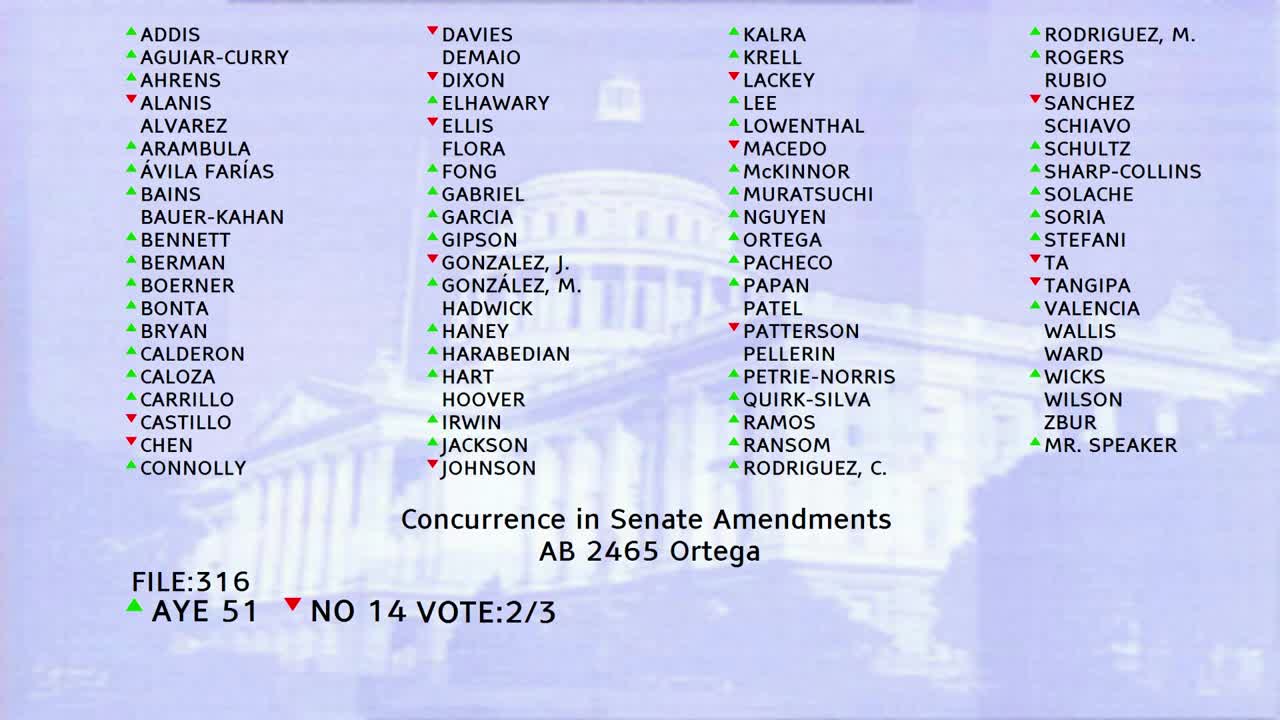
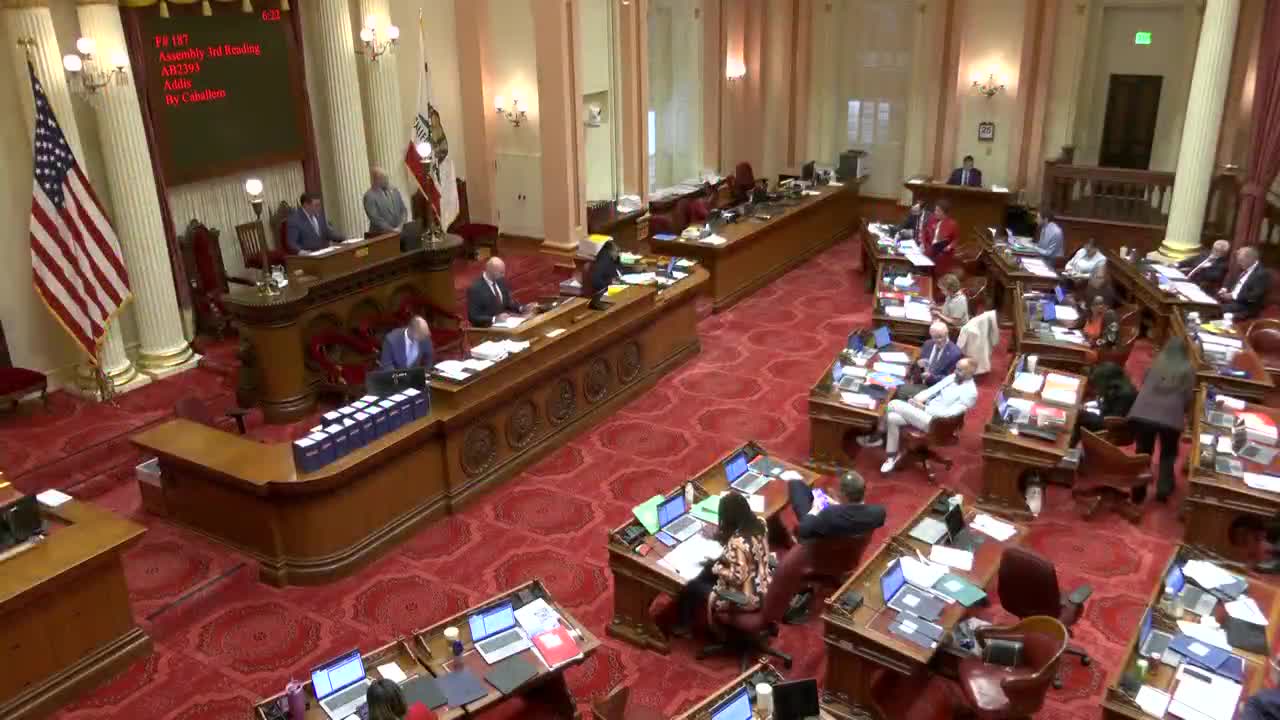
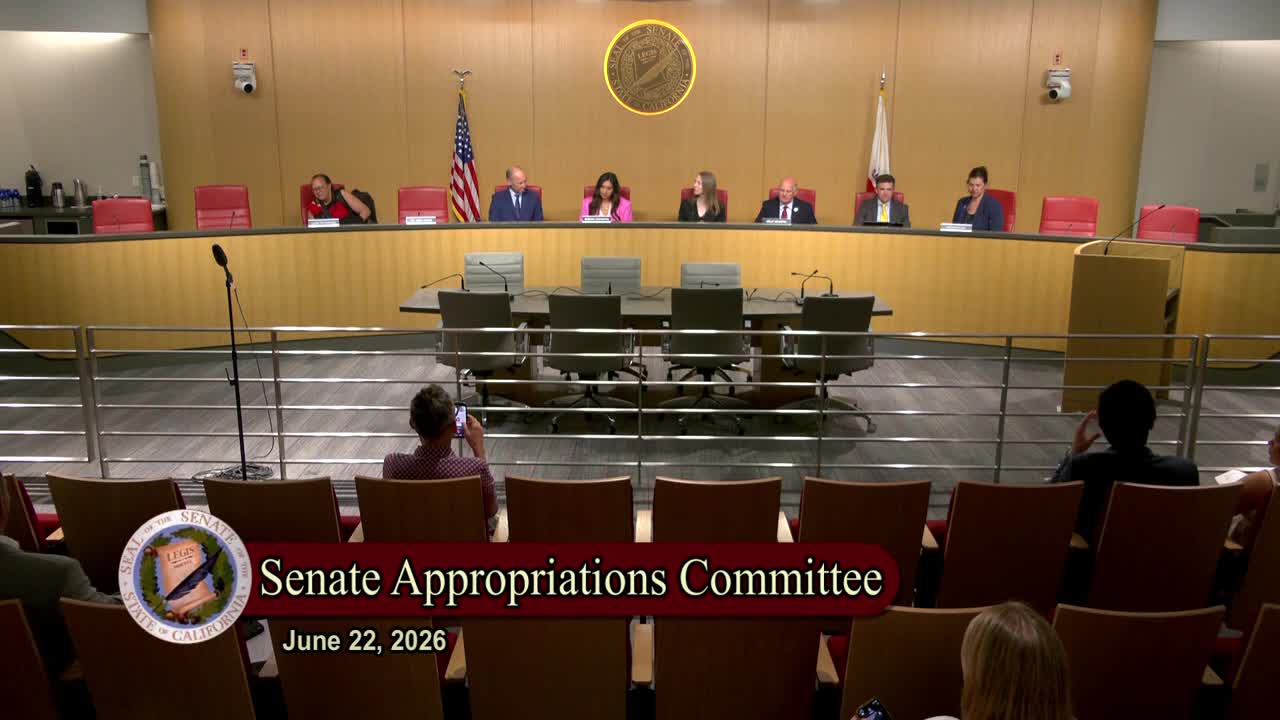
Bill Author

Bill Co-Author(s):