AB 2721: Unfair Competition Law: hotels.
- Session Year: 2025-2026
- House: Assembly
- Latest Version Date: 2026-09-03
Current Status:
Failed
(2026-09-30: Vetoed by Governor.)
Introduced
In Committee
Awaiting First Chamber Vote
Passed First Chamber
In Committee
Awaiting Second Chamber Vote
Passed Second Chamber
Enacted
Existing law, the Unfair Competition Law (UCL), makes various practices unlawful and provides that a person who engages, has engaged, or proposes to engage in unfair competition is liable for a civil penalty and subject to injunction, as specified. The UCL authorizes actions prosecuted under its provisions to be brought by certain public attorneys, including by the Attorney General, a city attorney of a city having a population in excess of 750,000, or by a county counsel of any county within which a city has a population in excess of 750,000. The UCL prohibits the distribution, as provided, of any handbill, as defined, to any individual guest rooms in any hotel where the innkeeper has expressed objection to handbill distribution, as specified. The UCL provides that these provisions do not prohibit the distribution of a handbill to guest rooms in any hotel where the distribution has been requested or approved in writing by the innkeeper, or to any individual guest room when the occupant thereof has affirmatively requested or approved the distribution of the handbill during the duration of the guests occupancy.
This bill would require, under the UCL, the operator of a hotel, as defined, with actual knowledge of a reservation with the United States Customs and Border Protection or United States Immigration and Customs Enforcement to post a prescribed notice in a prominent and accessible place where it can be seen by all workers, as provided. The bill would also require an operator of a hotel with the above-described knowledge to disclose, upon request of a guest with a reservation at the time of check-in, the potential presence of the United States Customs and Border Protection or United States Immigration and Customs Enforcement on its premises during the guests reservation. The bill would prohibit the liability of a hotel for violations of these provisions from exceeding $5,000, as provided. The bill would repeal its own provisions on January 1, 2029.
Existing law, the Unfair Competition Law (UCL), makes various practices unlawful and provides that a person who engages, has engaged, or proposes to engage in unfair competition is liable for a civil penalty and subject to injunction, as specified. The UCL authorizes actions prosecuted under its provisions to be brought by certain public attorneys, including by the Attorney General, a city attorney of a city having a population in excess of 750,000, or by a county counsel of any county within which a city has a population in excess of 750,000. The UCL prohibits the distribution, as provided, of any handbill, as defined, to any individual guest rooms in any hotel where the innkeeper has expressed objection to handbill distribution, as specified. The UCL provides that these provisions do not prohibit the distribution of a handbill to guest rooms in any hotel where the distribution has been requested or approved in writing by the innkeeper, or to any individual guest room when the occupant thereof has affirmatively requested or approved the distribution of the handbill during the duration of the guests occupancy.
This bill would require, under the UCL, the operator of a hotel, as defined, with actual knowledge of a reservation with the United States Customs and Border Protection or United States Immigration and Customs Enforcement to post a prescribed notice in a prominent and accessible place where it can be seen by all workers, as provided. The bill would also require an operator of a hotel with the above-described knowledge to disclose, upon request of a guest with a reservation and at the time of check-in, the potential presence of the United States Customs and Border Protection or United States Immigration and Customs Enforcement on its premises during the guests reservation. The bill would prohibit the liability of the operator of a hotel for violations of these provisions from exceeding $5,000. $5,000, as provided. The bill would repeal its own provisions on January 1, 2029.
Existing law, the Unfair Competition Law (UCL), makes various practices unlawful and provides that a person who engages, has engaged, or proposes to engage in unfair competition is liable for a civil penalty and subject to injunction, as specified. The UCL authorizes actions prosecuted under its provisions to be brought by certain public attorneys, including by the Attorney General, a city attorney of a city having a population in excess of 750,000, or by a county counsel of any county within which a city has a population in excess of 750,000. The UCL prohibits the distribution, as provided, of any handbill, as defined, to any individual guest rooms in any hotel where the innkeeper has expressed objection to handbill distribution, as specified. The UCL provides that these provisions do not prohibit the distribution of a handbill to guest rooms in any hotel where the distribution has been requested or approved in writing by the innkeeper, or to any individual guest room when the occupant thereof has affirmatively requested or approved the distribution of the handbill during the duration of the guests occupancy.
This bill would require, under the UCL, the operator of a hotel hotel, as defined, with actual knowledge of a reservation with the United States Customs and Border Protection or United States Immigration and Customs Enforcement to post a prescribed notice in a prominent and accessible place where it can be seen by all workers. workers, as provided. The bill would also require an operator of a hotel with the above-described knowledge to disclose, upon request of a guest with a reservation and at the time of check-in, the potential presence of the United States Customs and Border Protection or United States Immigration and Customs Enforcement on its premises during the guests reservation. The bill would prohibit the liability of the operator of a hotel for violations of these provisions from exceeding $5,000. The bill would repeal its own provisions on January 1, 2029.
Existing law, the Unfair Competition Law (UCL), makes various practices unlawful and provides that a person who engages, has engaged, or proposes to engage in unfair competition is liable for a civil penalty and subject to injunction, as specified. The UCL authorizes actions prosecuted under its provisions to be brought by certain public attorneys, including by the Attorney General, a city attorney of a city having a population in excess of 750,000, or by a county counsel of any county within which a city has a population in excess of 750,000. The UCL prohibits the distribution, as provided, of any handbill, as defined, to any individual guest rooms in any hotel where the innkeeper has expressed objection to handbill distribution, as specified. The UCL provides that these provisions do not prohibit the distribution of a handbill to guest rooms in any hotel where the distribution has been requested or approved in writing by the innkeeper, or to any individual guest room when the occupant thereof has affirmatively requested or approved the distribution of the handbill during the duration of the guests occupancy.
This bill would require, under the UCL, the operator of a hotel with actual knowledge of a reservation with the United States Customs and Border Protection or United States Immigration and Customs Enforcement to post a prescribed notice in a prominent and accessible place where it can be seen by all workers and guests. workers.
Existing law, the Unfair Competition Law (UCL), makes various practices unlawful and provides that a person who engages, has engaged, or proposes to engage in unfair competition is liable for a civil penalty and subject to injunction, as specified. The UCL authorizes actions prosecuted under its provisions to be brought by certain public attorneys, including by the Attorney General, a city attorney of a city having a population in excess of 750,000, or by a county counsel of any county within which a city has a population in excess of 750,000. The UCL prohibits the distribution, as provided, of any handbill, as defined, to any individual guest rooms in any hotel where the innkeeper has expressed objection to handbill distribution, as specified. The UCL provides that these provisions do not prohibit the distribution of a handbill to guest rooms in any hotel where the distribution has been requested or approved in writing by the innkeeper, or to any individual guest room when the occupant thereof has affirmatively requested or approved the distribution of the handbill during the duration of the guests occupancy.
This bill would require, under the UCL, the operator of a hotel to disclose the existence of any reservations that the operator knows, or should know, the hotel has with actual knowledge of a reservation with the United States Customs and Border Protection or United States Immigration and Customs Enforcement by posting to post a prescribed notice in a prominent and accessible place on the premises of the hotel that is prominently displayed to both workers and guests. where it can be seen by all workers and guests.
Existing law, the Unfair Competition Law (UCL), makes various practices unlawful and provides that a person who engages, has engaged, or proposes to engage in unfair competition is liable for a civil penalty and subject to injunction, as specified. The UCL authorizes actions prosecuted under its provisions to be brought by certain public attorneys, including by the Attorney General, a city attorney of a city having a population in excess of 750,000, or by a county counsel of any county within which a city has a population in excess of 750,000. The UCL prohibits the distribution, as provided, of any handbill, as defined, to any individual guest rooms in any hotel where the innkeeper has expressed objection to handbill distribution, as specified. The UCL provides that these provisions do not prohibit the distribution of a handbill to guest rooms in any hotel where the distribution has been requested or approved in writing by the innkeeper, or to any individual guest room when the occupant thereof has affirmatively requested or approved the distribution of the handbill during the duration of the guests occupancy.
This bill would require, under the UCL, the operator of a hotel to disclose any contracts or the existence of any reservations that it the operator knows, or should know, the hotel has with any federal agency the United States Customs and Border Protection or United States Immigration and Customs Enforcement by posting a prescribed notice in a place on the premises of the hotel that is conspicuous prominently displayed to both workers and guests.
Existing law, the Unfair Competition Law (UCL), makes various practices unlawful and provides that a person who engages, has engaged, or proposes to engage in unfair competition is liable for a civil penalty and subject to injunction, as specified. The UCL authorizes actions prosecuted under its provisions to be brought by certain public attorneys, including by the Attorney General, a city attorney of a city having a population in excess of 750,000, or by a county counsel of any county within which a city has a population in excess of 750,000. The UCL prohibits the distribution, as provided, of any handbill, as defined, to any individual guest rooms in any hotel where the innkeeper has expressed objection to handbill distribution, as specified. The UCL provides that these provisions do not prohibit the distribution of a handbill to guest rooms in any hotel where the distribution has been requested or approved in writing by the innkeeper, or to any individual guest room when the occupant thereof has affirmatively requested or approved the distribution of the handbill during the duration of the guests occupancy.
This bill would require, under the UCL, a hotel to disclose any contracts or reservations that it has with any federal agency by posting a notice in a place on the premises that is conspicuous to both workers and guests.
Existing law establishes the Business and Professions Code and prescribes general provisions for purposes of its interpretation.This bill would make nonsubstantive changes to those provisions.Existing law establishes the Business and Professions Code and prescribes general provisions for purposes of its interpretation.
This bill would make nonsubstantive changes to those provisions.
(a)(1)An operator of a hotel with actual knowledge of a reservation with the United States Customs and Border Protection or United States Immigration and Customs Enforcement on its premises shall, no later than 48 hours before the beginning of the reservation or, if actual knowledge is acquired after that time, within 1 hour of acquiring actual knowledge, post a notice in a prominent and accessible place where it can be seen by all workers that discloses the potential presence of the United States Customs and Border Protection or United States Immigration and Customs Enforcement on its premises.
(2)The operator shall ensure that the notice remains prominently displayed for the duration of the reservation.
(3)Each work shift that an operator of a hotel fails to comply with the requirements of this subdivision is a violation.
(b)An operator of a hotel with actual knowledge of a reservation with the United States Customs and Border Protection or United States Immigration and Customs Enforcement on its premises shall, upon request of a guest with a reservation at the time of check-in, disclose the potential presence of the United States Customs and Border Protection or United States Immigration and Customs Enforcement on its premises during the guests reservation.
(c)An operator who has established a protocol to comply with this section in good faith shall be found in compliance with this section.
(d)The hotel and its operator shall not be liable for loss of life, injuries, violations, penalties, liabilities, or any damages that might occur pursuant to compliance with the requirements of this section.
(e)This section does not impose any duty on an operator of a hotel to seek information.
(f)(1)A violation of this section by the operator shall be deemed engaging in unfair competition for purposes of this chapter and shall subject the hotel to a civil penalty of two thousand five hundred dollars ($2,500) for each violation.
(2)Notwithstanding paragraph (1), the liability of a hotel for violations of this section shall not exceed five thousand dollars ($5,000) per reservation with the United States Customs and Border Protection or United States Immigration and Customs Enforcement.
(g)For purposes of this section, the following definitions apply:
(1)Hotel has the same meaning as Section 17210.
(2)Operator means a person who is the owner of the hotel or who, at a minimum, meets both of the following criteria:
(A)The person is employed directly by the hotel owner or an entity charged with overseeing the day-to-day operations of the hotel.
(B)The person is classified as a manager by title and works 40 or more hours per week at the hotel.
(h)This section shall remain in effect only until January 1, 2029, and as of that date is repealed.
(a)(1)An operator of a hotel with actual knowledge of a reservation with the United States Customs and Border Protection or United States Immigration and Customs Enforcement on its premises shall, no later than 48 hours before the beginning of the reservation or, if actual knowledge is acquired after that time, within 1 hour of acquiring actual knowledge, post a notice in a prominent and accessible place where it can be seen by all workers that discloses the potential presence of the United States Customs and Border Protection or United States Immigration and Customs Enforcement on its premises.
(2)The operator shall ensure that the notice remains prominently displayed for the duration of the reservation.
(3)Each work shift that an operator of a hotel fails to comply with the requirements of this subdivision is a violation.
(b)An operator of a hotel with actual knowledge of a reservation with the United States Customs and Border Protection or United States Immigration and Customs Enforcement on its premises shall, upon request of a guest with a reservation and at the time of check-in, disclose the potential presence of the United States Customs and Border Protection or United States Immigration and Customs Enforcement on its premises during the guests reservation.
(c)An operator who has established a protocol to comply with this section in good faith shall be found in compliance with this section.
(d)The hotel and its operator shall not be liable for loss of life, injuries, violations, penalties, liabilities, or any damages that might occur pursuant to compliance with the requirements of this section.
(e)This section does not impose any duty on an operator of a hotel to seek information.
(f)(1)A violation of this section by the operator shall be deemed engaging in unfair competition for purposes of this chapter and shall subject the hotel to a civil penalty of two thousand five hundred dollars ($2,500) for each violation.
(2)Notwithstanding paragraph (1), the liability of the operator of a hotel for violations of this section shall not exceed five thousand dollars ($5,000) per reservation with the United States Customs and Border Protection or United States Immigration and Customs Enforcement.
(g)For purposes of this section, the following definitions apply:
(1)Hotel has the same meaning as Section 17210.
(2)Operator means a person who is the owner of the hotel or who, at a minimum, meets both of the following criteria:
(A)The person is employed directly by the hotel owner or an entity charged with overseeing the day-to-day operations of the hotel.
(B)The person is classified as a manager by title and works 40 or more hours per week at the hotel.
(h)This section shall remain in effect only until January 1, 2029, and as of that date is repealed.
(a)(1)An operator of a hotel with actual knowledge of a reservation with the United States Customs and Border Protection or United States Immigration and Customs Enforcement on its premises shall, no later than the time of arrival of an employee of that federal entity, 48 hours before the beginning of the reservation or, if actual knowledge is acquired after that time, within 1 hour of acquiring actual knowledge, post a notice in a prominent and accessible place where it can be seen by all workers that discloses the potential presence of the United States Customs and Border Protection or United States Immigration and Customs Enforcement on its premises.
(b)(2)The operator shall ensure that the notice remains prominently displayed for the duration of the reservation.
(3)Each work shift that an operator of a hotel fails to comply with the requirements of this subdivision is a violation.
(b)An operator of a hotel with actual knowledge of a reservation with the United States Customs and Border Protection or United States Immigration and Customs Enforcement on its premises shall, upon request of a guest with a reservation and at the time of check-in, disclose the potential presence of the United States Customs and Border Protection or United States Immigration and Customs Enforcement on its premises during the guests reservation.
(c)An operator who has established a protocol to comply with this section in good faith shall be found in compliance with this section.
(d)The hotel and its operator shall not be liable for loss of life, injuries, violations, penalties, liabilities, or any damages that might occur pursuant to compliance with the requirements of this section.
(e)This section does not impose any duty on an operator of a hotel to seek information.
(f)(1)A violation of this section shall be deemed engaging in unfair competition for purposes of this chapter. chapter and subject to a civil penalty of two thousand five hundred dollars ($2,500) for each violation.
(2)Notwithstanding paragraph (1), the liability of the operator of a hotel for violations of this section shall not exceed five thousand dollars ($5,000) per reservation with the United States Customs and Border Protection or United States Immigration and Customs Enforcement.
(g)For purposes of this section, the following definitions apply:
(1)Hotel has the same meaning as Section 17210.
(2)Operator means a person who is the owner of the hotel or who, at a minimum, meets both of the following criteria:
(A)The person is employed directly by the hotel owner or an entity charged with overseeing the day-to-day operations of the hotel.
(B)The person is classified as a manager by title and works 40 or more hours per week at the hotel.
(h)This section shall remain in effect only until January 1, 2029, and as of that date is repealed.
(a)An operator of a hotel with actual knowledge of a reservation with the United States Customs and Border Protection or United States Immigration and Customs Enforcement on its premises shall, no later than the time of arrival of an employee of that federal entity, post a notice in a prominent and accessible place where it can be seen by all workers and guests that discloses the potential presence of the United States Customs and Border Protection or United States Immigration and Customs Enforcement on its premises.
(b)The operator shall ensure that the notice remains prominently displayed for the duration of the reservation.
(c)An operator who has established a protocol to comply with this section in good faith shall be found in compliance with this section.
(d)The hotel and its operator shall not be liable for loss of life, injuries, violations, penalties, liabilities, or any damages that might occur pursuant to compliance with the requirements of this section.
(e)This section does not impose any duty on an operator of a hotel to seek information.
(f)A violation of this section shall be deemed engaging in unfair competition for purposes of this chapter.
(g)For purposes of this section, the following definitions apply:
(1)Hotel has the same meaning as Section 17210.
(2)Operator means a person who, at a minimum, meets both of the following criteria:
(A)The person is employed directly by the hotel owner or an entity charged with overseeing the day-to-day operations of the hotel.
(B)The person is classified as a manager by title and works 40 or more hours per week at the hotel.
SECTION 1.Section 17211 is added to the Business and Professions Code, to read:17211.(a)An operator of a hotel shall disclose the existence of any reservations that the operator knows, or should know, the hotel has with the United States Customs and Border Protection or United States Immigration and Customs Enforcement by posting a notice in a place on the premises of the hotel that is prominently displayed to both workers and guests.(b)(1)Except as provided in paragraph (2), the operator shall ensure that the notice is posted at least one week before the start of the reservation.(2)If the reservation is created within one week of the start date of the reservation, the operator shall ensure that the notice is posted as soon as practicable.(c)The operator shall ensure that the notice remains prominently displayed for the duration of the reservation.(d) The operator shall ensure that the notice clearly and conspicuously identifies the agency that has a reservation and the length of the reservation.(e)For purposes of this section, hotel has the same meaning as defined in Section 17210.(a)An operator of a hotel shall disclose the existence of any contracts or reservations that it the operator knows, or should know, the hotel has with any federal agency the United States Customs and Border Protection or United States Immigration and Customs Enforcement by posting a notice in a place on the premises of the hotel that is conspicuous prominently displayed to both workers and guests. For
(b)(1)Except as provided in paragraph (2), the operator shall ensure that the notice is posted at least one week before the start of the reservation.
(2)If the reservation is created within one week of the start date of the reservation, the operator shall ensure that the notice is posted as soon as practicable.
(c)The operator shall ensure that the notice remains prominently displayed for the duration of the reservation.
(d)The operator shall ensure that the notice clearly and conspicuously identifies the agency that has a reservation and the length of the reservation.
(e)For purposes of this section, hotel has the same meaning as defined in Section 17210.
A hotel shall disclose any contracts or reservations that it has with any federal agency by posting a notice in a place on the premises that is conspicuous to both workers and guests. For purposes of this section, hotel has the same meaning as defined in Section 17210.
SECTION 1.Section 1 of the Business and Professions Code is amended to read:1.This act shall be known, and may be cited, as the Business and Professions Code.This act shall be known known, and may be cited, as the Business and Professions Code.
|
Date
|
Status
|
|---|---|
| Sep 30, 2026 | Vetoed by Governor. |
| Sep 10, 2026 | Enrolled and presented to the Governor at 3 p.m. |
| Aug 30, 2026 | Senate amendments concurred in. To Engrossing and Enrolling. (Ayes 57. Noes 19. Page 6926.). |
| Aug 30, 2026 | Senate amendments concurred in. To Engrossing and Enrolling. (Ayes 57. Noes 19.). |
| Aug 30, 2026 | Senate amendments concurred in. To Engrossing and Enrolling. |
| Aug 30, 2026 | In Assembly. Concurrence in Senate amendments pending. |
| Aug 30, 2026 | Read third time. Passed. Ordered to the Assembly. (Ayes 29. Noes 11.). |
| Aug 27, 2026 | Read second time. Ordered to third reading. |
| Aug 26, 2026 | Read third time and amended. Ordered to second reading. |
| Aug 24, 2026 | Read second time. Ordered to third reading. |
| Aug 21, 2026 | Read third time and amended. Ordered to second reading. |
| Aug 13, 2026 | Read second time. Ordered to third reading. |
| Aug 13, 2026 | From committee: Do pass. (Ayes 5. Noes 2.) (August 13). |
| Aug 3, 2026 | In committee: Referred to APPR. suspense file. |
| Jul 2, 2026 | Read second time and amended. Re-referred to Com. on APPR. |
| Jul 1, 2026 | From committee: Amend, and do pass as amended and re-refer to Com. on APPR. (Ayes 10. Noes 2.) (June 30). |
| Jun 22, 2026 | From committee chair, with author's amendments: Amend, and re-refer to committee. Read second time, amended, and re-referred to Com. on JUD. |
| Jun 10, 2026 | Referred to Com. on JUD. |
| May 28, 2026 | In Senate. Read first time. To Com. on RLS. for assignment. |
| May 27, 2026 | Read third time. Passed. Ordered to the Senate. (Ayes 52. Noes 20. Page 5434.) |
| May 27, 2026 | Read third time. Passed. Ordered to the Senate. (Ayes 52. Noes 20.) |
| May 27, 2026 | Read third time. Passed. Ordered to the Senate. |
| May 18, 2026 | Read second time. Ordered to third reading. |
| May 14, 2026 | From committee: Do pass. (Ayes 11. Noes 4.) (May 14). |
| May 6, 2026 | In committee: Set, first hearing. Referred to APPR. suspense file. |
| Apr 27, 2026 | Re-referred to Com. on APPR. |
| Apr 23, 2026 | Read second time and amended. |
| Apr 22, 2026 | From committee: Amend, and do pass as amended and re-refer to Com. on APPR. (Ayes 9. Noes 4.) (April 21). |
| Mar 24, 2026 | Re-referred to Com. on P. & C.P. |
| Mar 23, 2026 | From committee chair, with author's amendments: Amend, and re-refer to Com. on P. & C.P. Read second time and amended. |
| Mar 23, 2026 | Referred to Com. on P. & C.P. |
| Feb 21, 2026 | From printer. May be heard in committee March 23. |
| Feb 20, 2026 | Read first time. To print. |
|
Date
|
Description
|
Location
|
Votes
|
|
|---|---|---|---|---|
| Aug 30, 2026 | AB 2721 Carrillo Concurrence in Senate Amendments | Assembly Floor |
Passed |
|
| Aug 30, 2026 | Assembly 3rd Reading AB2721 Carrillo et al. By Padilla | Senate Floor |
Passed |
|
| Aug 13, 2026 | Do pass | Senate Standing Committee on Appropriations |
Passed |
|
| Aug 3, 2026 | Placed on suspense file | Senate Standing Committee on Appropriations |
Passed |
|
| Jun 30, 2026 | Do pass as amended, but first amend, and re-refer to the Committee on [Appropriations] | Senate Standing Committee on Judiciary |
Passed |
|
| May 27, 2026 | AB 2721 Carrillo Assembly Third Reading | Assembly Floor |
Passed |
|
| May 14, 2026 | Do pass. | Assembly Standing Committee on Appropriations |
Passed |
|
| Apr 21, 2026 | Do pass as amended and be re-referred to the Committee on [Appropriations] | Assembly Standing Committee on Privacy and Consumer Protection |
Passed |
This list shows positions taken on this bill by organizations on the date displayed, which is linked to the original source.
Positions by individuals are not included.
|
Organization
|
Position
|
Date
|
|---|---|---|
| Asian American Hotel Owners Association | ** Against | |
| California Chamber Of Commerce | ** Against | |
| California Federation of Labor Unions, Afl-cio | ** Support | |
| California Hotel & Lodging Association | ** Against | |
| California Latino Legislative Caucus | ** Support | |
| Tri County Chamber Alliance | ** Against | |
| UNITE HERE Local 11 | ** Support |
GOVERNOR'S VETO
GV Bill Id:AB 2721
Author:(Carrillo)
As Enrolled Ver:September 3, 2026
2/3 vote
SUMMARY
This bill requires an operator of a hotel with actual knowledge of a reservation by U.S. Customs and Border Protection (CBP) or U.S. Immigration and Customs Enforcement (ICE) on the premises to post a notice in a prominent and accessible place to hotel workers that discloses the possible presence of those federal officers on the premises and requires an operator of a hotel with actual knowledge of a reservation by U.S. Customs and Border Protection or U.S. Immigration and Customs Enforcement on the premises to disclose the potential presence of U.S. Immigration and Customs Enforcement or U.S. Customs and Border Protection during a guest's reservation upon request by a guest at the time of check-in.
Governor's Veto Message
This bill requires a hotel operator with actual knowledge of a reservation by the U.S. Customs and Border Protection or U.S. Immigration and Customs Enforcement on the premises to post a notice in a prominent and accessible place to hotel workers that discloses the possible presence of those officers on the premises, and, upon request by a guest at the time of check-in, requires disclosure of this possible presence during a guest's reservation.
Recent conduct by federal agencies captured by this bill is abhorrent, and hotel employees deserve basic information about their rights should they come into contact with federal immigration officers. To that end, I signed SB 294 in 2025, and the state has greatly expanded investments and resources to help Californians, including workers, understand their rights when interacting with immigration officers.
While the intent of the author is laudable, this bill introduces considerable consumer privacy and public safety concerns by compelling hotel operators to disclose this guest information not just to their employees, but to the public. Compelling the disclosure of guest records on demand is likely in conflict with longstanding state privacy laws, and would put hotel operators in the position of determining which law they should follow. Further, requiring this information to be shared with the public could create real public safety risks on hotel properties by encouraging demonstrations or other disruptive activity. We have seen even the most peaceful protests escalate unexpectedly, which could lead to real risk for workers, demonstrators, and other hotel guests.
I encourage the Legislature to revisit this issue next year in a manner that avoids these unintended consequences and instead focuses on promoting safety and transparency for hotel employees.
COMMENTS
California leads the nation with pro-immigrant policies that have sparked change nationwide, including expanding access to higher education, expanding access to health care and public benefits, advancing protections for immigrant workers, supporting immigrant students through partnerships with school districts, and improving opportunities for economic mobility and inclusion through access to driver's licenses and pro bono immigration services.
As was seen in Minneapolis in early 2026, Immigration and Customs Enforcement (ICE) needs hotels to temporarily house their agents and detainees. Compared to previous years, Minneapolis hotels experienced a 17% occupancy boost in the weeks of the mass ICE occupation, accompanied by a 27% boost in revenue.[1] However, this uptick in occupancy was met with increased protests and cancelled events and reservations from other guests, ultimately leading to concerns that hosting ICE agents would negatively impact the hospitality industry in the long run.[2] ICE has historically also used hotels as temporary holding spaces for detainees. In 2021, when ICE's budget was just below $10 billion, the agency invested $17 million in hotel space and services at six hotels across the nation.[3] In 2025, ICE held two families, including three children who were U.S. citizens, in a Marriot hotel in Louisiana.[4]
People born outside of the United States (referred to as foreign-born people) make up approximately 17.5% of the total U.S. labor force according to the 2023 U.S. Census Bureau. However, this number varies widely by sector, with hotels rating 4th among the nation's largest industries that rely on foreign-born labor, behind building services, landscaping services, and crop production.[5] California hosts the most foreign-born hotel workers of any state (47.7 percent), demonstrating both the robust tourism industry and the demographic diversity of the state.[6] With nearly half the population of hospitality workers hailing from outside the United States, many California hotel employees, regardless of immigration status, worry about potential interactions with ICE agents who may be staying in, or working out of, the hotels.
This bill requires a hotel operator to disclose the existence of a reservation held by ICE or Border Patrol. The notice must be prominently displayed to guests and workers, and must be posted a week before the date of the reservation, or as soon as practicable if the reservation is made within a week of the start date of the reservation. The notice must remain posted for the duration of the reservation and must identify the agency that is present. The bill does not require the disclosure of individual information – merely the fact that ICE or Border Patrol is on the premises.
Importantly, the bill provides that the notice requirement applies only if the hotel knows or should know that the reservation belongs to one of those agencies. If the information is not reasonably evident to the operator, they are not liable under the bill. The bill does not have express enforcement provisions, but would be enforceable under California's Unfair Competition Law (UCL), which prohibits "unlawful, unfair, or fraudulent" activities, including "anything that [is] a business practice and that at the same time is forbidden by law."[7] An action under the UCL may be brought by the Attorney General, a district attorney, and, in certain large jurisdictions, city attorneys and county counsels, who may seek injunctive relief and civil penalties of up to $2,500.[8] While private plaintiffs who have suffered injury in fact and lost money because of unfair competition may bring a limited action for restitution and injunctive relief,[9] in practice, this bill would likely be enforced almost exclusively by public prosecutors.
According to the Author
Transparency is a cornerstone of public trust. AB 2721 ensures that hotels operating within our communities are open about any agreements with federal agencies, including ICE, so that the public is not left in the dark about how local spaces are being used. By establishing a clear, consistent statewide standard for disclosure, this measure promotes accountability, supports informed communities, and reinforces the principle that institutions serving the public must do so with honesty and openness.
Arguments in Support
UNITE HERE Local 11, sponsors of the bill, write in support:
AB 2721 is a commonsense transparency measure. When hotels enter contracts or arrangements with federal law enforcement, workers, guests, and surrounding communities deserve clear notice. Hotels are not designed or regulated to function as detention spaces, yet these activities are occurring without public disclosure, creating confusion, fear, and unsafe conditions on site.
For our members, this is not abstract. Our members have been on the frontlines raising serious concerns about the presence of federal agents in and around hotel properties, including the risk of escalating enforcement activity, protests, and unsafe conditions that no hospitality worker should be forced to navigate while simply doing their job. Workers should not have to choose between their paycheck and their safety.
[…]
AB 2721 ensures that no worker would have to walk into their workplace in the dark about federal law enforcement presence. That lack of transparency undermines safety, dignity, and trust. For these reasons, UNITE HERE Local 11 respectfully urges an AYE vote on AB 2721.
Arguments in Opposition
The California Hotel & Lodging Association writes in opposition:
To safeguard our guests and staff, hotels go to great lengths to protect guest identity and the details of their stays. Assembly Bill 2721 would erode that protection and set a precedent whereby a guest's right to privacy is implicated when they hold a certain title or position. On a fundamental level, we disagree with this perspective and oppose this measure because of the repercussions it will have not only in California, but in other states with different perspectives that will follow once a precedent is set. The hotel community recognizes we hold an important role when it comes to privacy, and we take that role seriously - a guest's right to privacy must be preserved.
Under this measure, hotels are held liable if they fail to identify a federal reservation or contract and post a notice on the premises that is conspicuous for workers and guests. This presumes, firstly, that the hotel can identify every interaction with federal employees.
There are 30+ travel management companies (TMCs) who are approved by the federal government for booking hotel rooms. Federal employees may use these channels, or they may make reservations using traditional online travel agencies (OTAs), or they can book directly with a hotel. While TMCs and OTAs can provide some information, they can only provide what they are given. In the event of disclosure of a stay by a hotel, it is likely that federal staff traveling to California will simply stop providing that information or will adjust their contracting practices to include a prohibition against disclosure of the information.
[…]
If a hotel seeks to implement controls during the check-in process to identify federal bookings, it is likely to place hotel employees in potential conflict during that process. For example, federal employees who sought not to be identified during the booking process will likely continue their attempts to avoid identification. This creates an adversarial situation where a front desk employee may be forced to act as inquisitor to a group of suspected federal employees. Nobody wants this - our employees do not sign up for this.
Alternatively, if the suspected persons are not federal employees, but the employee suspects they are and pressures them or refuses service, the hotel risks discrimination litigation at worst and poor reviews at best. This bill seeks to regulate federal agencies by placing an impossible requirement on hotels and our employees. As such, we oppose any proposal which would place employees in harms way.
FISCAL COMMENTS
According to both Appropriations Committees:
- Costs (Unfair Competition Law Fund) of an unknown but potentially significant amount to the Department of Justice (DOJ) to bring enforcement actions as authorized by this bill. Actual costs will depend on the number of enforcement actions pursued by DOJ and the amount of additional work created by each action, but costs may be in the hundreds of thousands of dollars annually. It is unclear to the committee how many hotels — and thus how many potential enforcement actions — would fall within the scope of this bill.
- Cost pressures (Trial Court Trust Fund, General Fund) of an unknown but potentially significant amount to the courts to adjudicate any additional filings. Actual costs will depend on the number of cases filed and the amount of court time needed to resolve each case. It generally costs approximately $1,000 to operate a courtroom for one hour. Although courts are not funded on the basis of workload, increased pressure on the Trial Court Trust Fund may create a demand for increased funding for courts from the General Fund. The state budget provides annual General Fund backfills to the Trial Court Trust Fund to offset revenue reductions, totaling approximately $117.3 million in 2025-26.
VOTES
ASM PRIVACY AND CONSUMER PROTECTION: 9-4-2
YES: Bauer-Kahan, Bryan, Irwin, Lowenthal, Ortega, Pellerin, Ward, Wicks, Wilson
NO: Macedo, DeMaio, Hoover, Patterson
ABS, ABST OR NV: McKinnor, Petrie-Norris
ASM APPROPRIATIONS: 11-4-0
YES: Wicks, Aguiar-Curry, Calderon, Caloza, Fong, Mark González, Krell, Pacheco, Pellerin, Sharp-Collins, Solache
NO: Hoover, Dixon, Ta, Tangipa
ASSEMBLY FLOOR: 52-20-8
YES: Addis, Aguiar-Curry, Ahrens, Alvarez, Arambula, Ávila Farías, Bauer-Kahan, Bennett, Berman, Boerner, Bonta, Bryan, Calderon, Caloza, Carrillo, Connolly, Elhawary, Fong, Gabriel, Garcia, Gipson, Mark González, Haney, Harabedian, Hart, Irwin, Jackson, Kalra, Lee, Lowenthal, Muratsuchi, Nguyen, Ortega, Pacheco, Papan, Pellerin, Ramos, Ransom, Michelle Rodriguez, Rogers, Blanca Rubio, Schultz, Sharp-Collins, Solache, Soria, Stefani, Valencia, Ward, Wicks, Wilson, Zbur, Rivas
NO: Alanis, Castillo, Chen, Davies, DeMaio, Dixon, Ellis, Flora, Gallagher, Jeff Gonzalez, Hadwick, Hoover, Johnson, Lackey, Macedo, Patterson, Sanchez, Ta, Tangipa, Wallis
ABS, ABST OR NV: Bains, Krell, McKinnor, Patel, Petrie-Norris, Quirk-Silva, Celeste Rodriguez, Schiavo
SENATE FLOOR: 29-11-0
YES: Allen, Archuleta, Arreguín, Ashby, Becker, Blakespear, Cabaldon, Caballero, Cervantes, Cortese, Durazo, Gonzalez, Grayson, Laird, Limón, McGuire, McNerney, Menjivar, Padilla, Pérez, Reyes, Richardson, Rubio, Smallwood-Cuevas, Stern, Umberg, Wahab, Weber Pierson, Wiener
NO: Alvarado-Gil, Choi, Dahle, Grove, Hurtado, Jones, Niello, Ochoa Bogh, Seyarto, Strickland, Valladares
ASSEMBLY FLOOR: 57-19-3
YES: Addis, Aguiar-Curry, Ahrens, Alvarez, Arambula, Ávila Farías, Bains, Bauer-Kahan, Bennett, Berman, Boerner, Bonta, Bryan, Calderon, Caloza, Carrillo, Connolly, Elhawary, Fong, Gabriel, Garcia, Gipson, Mark González, Haney, Harabedian, Hart, Irwin, Jackson, Kalra, Lee, Lowenthal, Muratsuchi, Nguyen, Ortega, Pacheco, Papan, Patel, Pellerin, Petrie-Norris, Quirk-Silva, Ramos, Ransom, Celeste Rodriguez, Michelle Rodriguez, Rogers, Blanca Rubio, Schiavo, Schultz, Sharp-Collins, Solache, Soria, Stefani, Valencia, Ward, Wicks, Zbur, Rivas
NO: Alanis, Castillo, Chen, Davies, DeMaio, Dixon, Ellis, Flora, Jeff Gonzalez, Hadwick, Hoover, Johnson, Lackey, Macedo, Patterson, Sanchez, Ta, Tangipa, Wallis
ABS, ABST OR NV: Krell, McKinnor, Wilson
UPDATED
VERSION: September 3, 2026
CONSULTANT: Kate Davis / Julie Salley / P. & C.P. / (916) 319-2200 FN: 0004660
Nick Halter, "ICE surge boosts Twin Cities hotels, but owners warn of long-term damage," Axios Twin Cities, (Feb. 4, 2026). ↑
Id. ↑
Office of the Inspector General, "ICE Spent Funds on Unused Beds, Missed COVID-19 Protocols and Detention Standards while Housing Migrant Families in Hotels," Department of Homeland Security, (Apr. 12, 2022). ↑
Robert Pyne, "Marriot Acknowledges Hotel in Portfolio Used to Detain Families for ICE," Visa Verge, (Aug. 21, 2025). ↑
Diana Moreno, "Foreign Workforce Dependence in U.S. Hospitality: A State to State Look," Luxury Link, (July 28, 2025). ↑
Id. ↑
Nolte v. Cedars-Sinai Medical Center (2015) 236 Cal.App.4th 1401, 1407, internal citations and nested quotation marks omitted. ↑
Bus. & Prof. Code, § 17200 et seq. ↑
Bus. & Prof. Code § 17203. ↑
CONCURRENCE IN SENATE AMENDMENTS
CSA1 Bill Id:AB 2721
Author:(Carrillo)
As Amended Ver:August 26, 2026
Majority vote
SUMMARY
This bill requires an operator of a hotel with actual knowledge of a reservation by U.S. Customs and Border Protection (CBP) or U.S. Immigration and Customs Enforcement (ICE) on the premises to post a notice in a prominent and accessible place to hotel workers that discloses the possible presence of those federal officers on the premises and requires an operator of a hotel with actual knowledge of a reservation by U.S. Customs and Border Protection or U.S. Immigration and Customs Enforcement on the premises to disclose the potential presence of U.S. Immigration and Customs Enforcement or U.S. Customs and Border Protection during a guest′s reservation upon request by a guest at the time of check-in.
Senate Amendments
- Requires that an operator of a hotel with actual knowledge of a reservation with the United States Customs and Border Protection or United States Immigration and Customs Enforcement on its premises shall, 48 hours before the beginning of the reservation or, if actual knowledge is acquired after that time, within 1 hour of acquiring actual knowledge, post a notice in a prominent and accessible place where it can be seen by all workers that discloses the potential presence of the United States Customs and Border Protection or United States Immigration and Customs Enforcement on its premises.
- Requires an operator of a hotel with actual knowledge of a reservation with the United States Customs and Border Protection or United States Immigration and Customs Enforcement on its premises shall, upon request of a guest with a reservation and at the time of check-in, disclose the potential presence of the United States Customs and Border Protection or United States Immigration and Customs Enforcement on its premises during the guest′s reservation.
- Added enforcement stating that a violation of this section by the operator shall be deemed engaging in unfair competition for purposes of this chapter and subject to a civil penalty of two thousand five hundred dollars ($2,500) for each violation.
- States that liability of a hotel for violations of this section shall not exceed five thousand dollars ($5,000) per reservation with the United States Customs and Border Protection or United States Immigration and Customs Enforcement.
- Defines the following:
- ″Hotel″ has the same meaning Business and Profession Code Section 17210.
- ″Operator″ means a person who is the owner of the hotel or who, at a minimum, meets both of the following criteria:
- The person is employed directly by the hotel owner or an entity charged with overseeing the day-to-day operations of the hotel.
- The person is classified as a ″manager″ by title and works 40 or more hours per week at the hotel.
- Sunsets the bill on December 31, 2028.
COMMENTS
California leads the nation with pro-immigrant policies that have sparked change nationwide, including expanding access to higher education, expanding access to health care and public benefits, advancing protections for immigrant workers, supporting immigrant students through partnerships with school districts, and improving opportunities for economic mobility and inclusion through access to driver′s licenses and pro bono immigration services.
As was seen in Minneapolis in early 2026, Immigration and Customs Enforcement (ICE) needs hotels to temporarily house their agents and detainees. Compared to previous years, Minneapolis hotels experienced a 17 percent occupancy boost in the weeks of the mass ICE occupation, accompanied by a 27 percent boost in revenue.[1] However, this uptick in occupancy was met with increased protests and cancelled events and reservations from other guests, ultimately leading to concerns that hosting ICE agents would negatively impact the hospitality industry in the long run.[2] ICE has historically also used hotels as temporary holding spaces for detainees. In 2021, when ICE′s budget was just below $10 billion, the agency invested $17 million in hotel space and services at six hotels across the nation.[3] In 2025, ICE held two families, including three children who were U.S. citizens, in a Marriot hotel in Louisiana.[4]
People born outside of the United States (referred to as foreign-born people) make up approximately 17.5 percent of the total U.S. labor force according to the 2023 U.S. Census Bureau. However, this number varies widely by sector, with hotels rating 4th among the nation′s largest industries that rely on foreign-born labor, behind building services, landscaping services, and crop production.[5] California hosts the most foreign-born hotel workers of any state (47.7 percent), demonstrating both the robust tourism industry and the demographic diversity of the state.[6] With nearly half the population of hospitality workers hailing from outside the United States, many California hotel employees, regardless of immigration status, worry about potential interactions with ICE agents who may be staying in, or working out of, the hotels.
This bill requires a hotel operator to disclose the existence of a reservation held by ICE or Border Patrol. The notice must be prominently displayed to guests and workers, and must be posted a week before the date of the reservation, or as soon as practicable if the reservation is made within a week of the start date of the reservation. The notice must remain posted for the duration of the reservation and must identify the agency that is present. The bill does not require the disclosure of individual information – merely the fact that ICE or Border Patrol is on the premises.
Importantly, the bill provides that the notice requirement applies only if the hotel knows or should know that the reservation belongs to one of those agencies. If the information is not reasonably evident to the operator, they are not liable under the bill. The bill does not have express enforcement provisions, but would be enforceable under California′s Unfair Competition Law (UCL), which prohibits ″unlawful, unfair, or fraudulent″ activities, including ″anything that [is] a business practice and that at the same time is forbidden by law.″[7] An action under the UCL may be brought by the Attorney General, a district attorney, and, in certain large jurisdictions, city attorneys and county counsels, who may seek injunctive relief and civil penalties of up to $2,500.[8] While private plaintiffs who have suffered injury in fact and lost money because of unfair competition may bring a limited action for restitution and injunctive relief,[9] in practice, this bill would likely be enforced almost exclusively by public prosecutors.
According to the Author
Transparency is a cornerstone of public trust. AB 2721 ensures that hotels operating within our communities are open about any agreements with federal agencies, including ICE, so that the public is not left in the dark about how local spaces are being used. By establishing a clear, consistent statewide standard for disclosure, this measure promotes accountability, supports informed communities, and reinforces the principle that institutions serving the public must do so with honesty and openness.
Arguments in Support
UNITE HERE Local 11, sponsors of the bill, write in support:
AB 2721 is a commonsense transparency measure. When hotels enter contracts or arrangements with federal law enforcement, workers, guests, and surrounding communities deserve clear notice. Hotels are not designed or regulated to function as detention spaces, yet these activities are occurring without public disclosure, creating confusion, fear, and unsafe conditions on site.
For our members, this is not abstract. Our members have been on the frontlines raising serious concerns about the presence of federal agents in and around hotel properties, including the risk of escalating enforcement activity, protests, and unsafe conditions that no hospitality worker should be forced to navigate while simply doing their job. Workers should not have to choose between their paycheck and their safety.
[…]
AB 2721 ensures that no worker would have to walk into their workplace in the dark about federal law enforcement presence. That lack of transparency undermines safety, dignity, and trust. For these reasons, UNITE HERE Local 11 respectfully urges an AYE vote on AB 2721.
Arguments in Opposition
The California Hotel & Lodging Association writes in opposition:
To safeguard our guests and staff, hotels go to great lengths to protect guest identity and the details of their stays. Assembly Bill 2721 would erode that protection and set a precedent whereby a guest′s right to privacy is implicated when they hold a certain title or position. On a fundamental level, we disagree with this perspective and oppose this measure because of the repercussions it will have not only in California, but in other states with different perspectives that will follow once a precedent is set. The hotel community recognizes we hold an important role when it comes to privacy, and we take that role seriously - a guest′s right to privacy must be preserved.
Under this measure, hotels are held liable if they fail to identify a federal reservation or contract and post a notice on the premises that is conspicuous for workers and guests. This presumes, firstly, that the hotel can identify every interaction with federal employees.
There are 30+ travel management companies (TMCs) who are approved by the federal government for booking hotel rooms. Federal employees may use these channels, or they may make reservations using traditional online travel agencies (OTAs), or they can book directly with a hotel. While TMCs and OTAs can provide some information, they can only provide what they are given. In the event of disclosure of a stay by a hotel, it is likely that federal staff traveling to California will simply stop providing that information or will adjust their contracting practices to include a prohibition against disclosure of the information.
[…]
If a hotel seeks to implement controls during the check-in process to identify federal bookings, it is likely to place hotel employees in potential conflict during that process. For example, federal employees who sought not to be identified during the booking process will likely continue their attempts to avoid identification. This creates an adversarial situation where a front desk employee may be forced to act as inquisitor to a group of suspected federal employees. Nobody wants this - our employees do not sign up for this.
Alternatively, if the suspected persons are not federal employees, but the employee suspects they are and pressures them or refuses service, the hotel risks discrimination litigation at worst and poor reviews at best. This bill seeks to regulate federal agencies by placing an impossible requirement on hotels and our employees. As such, we oppose any proposal which would place employees in harms way.
FISCAL COMMENTS
According to the Senate Appropriations Committee:
Unknown, potentially significant court cost pressure if the Attorney General (AG) brings civil actions for violations against any person who engages in a deceptive act or practice. Actual costs will depend on the number of actions filed and the amount of time needed to adjudicate each case. Jury trials would likely be few.
Potentially significant court cost pressure as the UCL permits private plaintiffs to bring civil actions, in this case where a hotel and its operator fail to post a notice disclosing the presence of federal law enforcement on the premises. Although courts are not funded based on workload, increased pressure on the Trial Court Trust Fund may create a demand for increased funding for courts. The proposed FY 2026-07 Governor′s budget would provide $70 million General Fund support (Trial Court Trust Fund, General Fund).
VOTES:
ASM PRIVACY AND CONSUMER PROTECTION: 9-4-2
YES: Bauer-Kahan, Bryan, Irwin, Lowenthal, Ortega, Pellerin, Ward, Wicks, Wilson
NO: Macedo, DeMaio, Hoover, Patterson
ABS, ABST OR NV: McKinnor, Petrie-Norris
ASM APPROPRIATIONS: 11-4-0
YES: Wicks, Aguiar-Curry, Calderon, Caloza, Fong, Mark González, Krell, Pacheco, Pellerin, Sharp-Collins, Solache
NO: Hoover, Dixon, Ta, Tangipa
ASSEMBLY FLOOR: 52-20-8
YES: Addis, Aguiar-Curry, Ahrens, Alvarez, Arambula, Ávila Farías, Bauer-Kahan, Bennett, Berman, Boerner, Bonta, Bryan, Calderon, Caloza, Carrillo, Connolly, Elhawary, Fong, Gabriel, Garcia, Gipson, Mark González, Haney, Harabedian, Hart, Irwin, Jackson, Kalra, Lee, Lowenthal, Muratsuchi, Nguyen, Ortega, Pacheco, Papan, Pellerin, Ramos, Ransom, Michelle Rodriguez, Rogers, Blanca Rubio, Schultz, Sharp-Collins, Solache, Soria, Stefani, Valencia, Ward, Wicks, Wilson, Zbur, Rivas
NO: Alanis, Castillo, Chen, Davies, DeMaio, Dixon, Ellis, Flora, Gallagher, Jeff Gonzalez, Hadwick, Hoover, Johnson, Lackey, Macedo, Patterson, Sanchez, Ta, Tangipa, Wallis
ABS, ABST OR NV: Bains, Krell, McKinnor, Patel, Petrie-Norris, Quirk-Silva, Celeste Rodriguez, Schiavo
UPDATED
VERSION: August 26, 2026
CONSULTANT: Kate Davis / P. & C.P. / (916) 319-2200 FN: 0004508
Nick Halter, ″ICE surge boosts Twin Cities hotels, but owners warn of long-term damage,″ Axios Twin Cities, (Feb. 4, 2026). ↑
Id. ↑
Office of the Inspector General, ″ICE Spent Funds on Unused Beds, Missed COVID-19 Protocols and Detention Standards while Housing Migrant Families in Hotels,″ Department of Homeland Security, (Apr. 12, 2022). ↑
Robert Pyne, ″Marriot Acknowledges Hotel in Portfolio Used to Detain Families for ICE,″ Visa Verge, (Aug. 21, 2025). ↑
Diana Moreno, ″Foreign Workforce Dependence in U.S. Hospitality: A State to State Look,″ Luxury Link, (July 28, 2025). ↑
Id. ↑
Nolte v. Cedars-Sinai Medical Center (2015) 236 Cal.App.4th 1401, 1407, internal citations and nested quotation marks omitted. ↑
Bus. & Prof. Code, § 17200 et seq. ↑
Bus. & Prof. Code § 17203. ↑
SENATE RULES COMMITTEE Office of Senate Floor Analyses (916) 651-4171 | AB 2721 |
THIRD READING
Bill No: AB 2721
Author: Carrillo (D), et al.
Amended: 8/26/26 in Senate
Vote: 21
SENATE JUDICIARY COMMITTEE: 10-2, 6/30/26
AYES: Umberg, Allen, Ashby, Caballero, Durazo, Laird, Reyes, Wahab, Weber Pierson, Wiener
NOES: Niello, Valladares
NO VOTE RECORDED: Stern
SENATE APPROPRIATIONS COMMITTEE: 5-2, 8/13/26
AYES: Cervantes, Cabaldon, Grayson, Richardson, Wahab
NOES: Seyarto, Dahle
ASSEMBLY FLOOR: 52-20, 5/27/26 - See last page for vote
SUBJECT: Unfair Competition Law: hotels
SOURCE: UNITE HERE Local 11
DIGEST:
This bill requires an operator of a hotel with actual knowledge of a reservation by U.S. Customs and Border Protection (CBP) or U.S. Immigration and Customs Enforcement (ICE) on the premises to post a notice in a prominent and accessible place to hotel workers that discloses the possible presence of those federal officers on the premises, as specified; requires an operator of a hotel with actual knowledge of a reservation by U.S. Customs and Border Protection or U.S. Immigration and Customs Enforcement on the premises to disclose the potential presence of U.S. Immigration and Customs Enforcement or U.S. Customs and Border Protection during a guest’s reservation upon request by a guest at the time of check-in; specifies that a violation of these provisions by the operator is deemed engaging in unfair competition and shall subject the hotel to a civil penalty of $2,500 for each violation; and limits the liability of the hotel for a violation of these provisions to no more than $5,000 per reservation with the U.S. Customs and Border Protection or the U.S. Immigration and Customs Enforcement.
Senate floor amendments of 8/26/26 specify an operator of a hotel with actual knowledge of a reservation by U.S. Customs and Border Protection or U.S. Immigration and Customs Enforcement on the premises must disclose the possible presence of U.S. Immigration and Customs enforcement and U.S. Customs and Border Protection upon request of the guest with a reservation at the time of check-in; clarify that a violation of its provisions by an operator shall subject the hotel to the civil penalty, as provided; and remove reference to the operator of the hotel regarding liability.
ANALYSIS:
Existing law:
- Prohibits state law enforcement agencies from using agency or department moneys or personnel to investigate, interrogate, detain, detect, or arrest persons for immigration enforcement purposes, as specified, place peace officers under the supervision of federal agencies, use immigration authorities as interpreters for law enforcement matters, transfer an individual to immigration authorities unless authorized by a judicial warrant, provide office space exclusively dedicated to immigration authorities, and contract with the federal government for the use of law enforcement agency facilities to house individuals as federal detainees for the purposes of civil immigration custody, as specified. (Government (Gov.) Code § 7284.6.)
- Prohibits a city, county, city and county, or local law enforcement agency that does not, as of January 1, 2018, have a contract with the federal government or any federal agency or a private corporation to house or detain noncitizens for purposes of civil immigration custody, from entering, on or after January 1, 2019, into a contract with the federal government or any federal agency or a private corporation, to house or detain in a locked detention facility noncitizens for purposes of civil immigration custody, and prohibits a city, county, city and county, or local law enforcement agency that, as of January 1, 2018, has an existing contract with the federal government or any federal agency or a private corporation to detain noncitizens for civil immigration custody, from renewing or modifying that contract in a manner that would expand the maximum number of contract beds that may be utilized to house or detain noncitizens for civil immigration custody. (Civil (Civ.) Code § 1670.9.)
- Prohibits a city, county, city and county, or local law enforcement agency that does not, as of June 15, 2017, have a contract with the federal government or any federal agency to detain adult noncitizens for purposes of civil immigration enforcement from entering into a new contract with the federal government or any federal agency, to house or detain in a locked detention facility owned and operated by a local entity, noncitizens for purposes of civil immigration custody. Prohibits a local government or law enforcement agency that, as of June 15, 2017, has an existing contract to detain adult noncitizens for purposes of civil immigration custody, from renewing or modifying that contract to expand the maximum number of contract beds that may be utilized to house or detain in a locked detention facility noncitizens for purposes of civil immigration custody. (Gov. Code § 7310.)
- Establishes the Unfair Competition Law (UCL) to prohibit unlawful, unfair, or fraudulent business acts or practices and unfair, deceptive, or untrue or misleading advertising, as specified, including anything that is “a business practice and that at the same time is forbidden by law.” Provides that the Attorney General, a district attorney, and city attorneys and county counsel of cities or counties of more than 750,000 people, may bring a civil action for injunctive relief and civil penalties of up to $2,500 for an unfair business practice, and permits a private plaintiff who has suffered injury in fact and lost money because of the unfair competition to bring a limited action for restitution and injunctive relief. (Business & Professions (Bus. & Prof.) Code §§ 17200 et seq., Nolte v. Cedars-Sinai Medical Center (2015) 236 Cal.App.4th 1401, 1407.)
- Defines “hotel” to mean any hotel, motel, bed and breakfast inn, or other similar transient lodging establishment, but does not include any residential hotel as defined in Health and Safety Code section 50519. (Bus. & Prof. Code § 17210.)
This bill:
- Requires a hotel operator with actual knowledge of a reservation with the CBP or ICE on its premises to, no later than the time of arrival of an employee of that federal entity, post a notice in a prominent and accessible place where it can be seen by all workers that discloses the potential presence of CBP or ICE on its premises.
- Requires the operator to ensure that the notice remains prominently displayed for the duration of the reservation.
- Specifies that each work shift that an operator of a hotel fails to comply with the requirements of (1) and (2), above, constitutes a violation of these provisions.
- Requires an operator with actual knowledge of a reservation with the U.S. Customs and Border Protection or U.S. Immigration and Customs Enforcement on its premises to, upon request of a guest with a reservation at the time of check-in, disclose the potential presence of U.S. Customs and Border Protection or U.S. Immigration and Customs Enforcement on its premises during the guest’s reservation.
- Specifies that an operator who has established a protocol to comply with this section in good faith shall be found in compliance with these provisions.
- Specifies that this bill’s requirements do not impose any duty on an operator to seek information.
- Specifies that the hotel and its operator shall not be liable for loss of life, injuries, violations, penalties, liabilities, or any damages that might occur pursuant to compliance with the requirements of these provisions.
- Deems a violation of these provisions by the operator engaging in unfair competition for the purposes of the UCL, and specifies that a violation shall subject the hotel to a civil penalty of $2,500 for each violation.
- Specifies, notwithstanding 8), above, that the liability of a hotel for violations of these provisions shall not exceed $5,000 per reservation with the U.S. Customs and Border Protection or U.S. Immigration and Customs Enforcement.
- Repeals these provisions on January 1, 2029.
- Defines, for the purposes of these provisions, the following:
- “hotel” to have the same meaning as Business and Professions Code section 17210;
- “operator” to mean a person who is the owner of the hotel or who, at a minimum, meets both of the following:
- is employed directly by the hotel owner or an entity charged with overseeing the day-to-day operations of the hotel; and
- is classified as a “manager” by title and works 40 or more hours per week at the hotel.
FISCAL EFFECT: Appropriation: No Fiscal Com.: Yes Local: No
According to the Senate Appropriations Committee:
Unknown, potentially significant court cost pressure if the Attorney General (AG) brings civil actions for violations against any person who engages in a deceptive act or practice. Actual costs will depend on the number of actions filed and the amount of time needed to adjudicate each case. Jury trials would likely be few.
Potentially significant court cost pressure as the UCL permits private plaintiffs to bring civil actions, in this case where a hotel and its operator fail to post a notice disclosing the presence of federal law enforcement on the premises. Although courts are not funded based on workload, increased pressure on the Trial Court Trust Fund may create a demand for increased funding for courts. The proposed FY 2026-07 Governor’s budget would provide $70 million General Fund support (Trial Court Trust Fund, General Fund).
SUPPORT: (Verified 8/14/26)
UNITE HERE Local 11 (source)
California Federation of Labor Unions, AFL-CIO
California Latino Legislative Caucus
OPPOSITION: (Verified 8/14/26)
Asian American Hotel Owners Association
California Chamber of Commerce
California Hotel & Lodging Association
Tri County Chamber Alliance
ARGUMENTS IN SUPPORT:
According to UNITE HERE, Local 11, which is the sponsor of AB 2721:
AB 2721 is a commonsense transparency measure. As amended, the bill requires hotels to provide notice when they knowingly host, or should know they are hosting, U.S. Immigration and Customs Enforcement (ICE) or U.S. Customs and Border Protection (CBP). The bill does not regulate federal law enforcement activities, disclose personal information, or prohibit hotels from contracting with these agencies. It simply ensures that workers and guests are informed when these agencies are present.
For our members, this issue is not abstract. Hotel workers have raised serious concerns about the presence of federal agents in hotels, including fear, uncertainty, and workplace safety concerns. Workers deserve to know the conditions of their workplace before they walk in. Families on vacation and people traveling for work likewise deserve transparency about the conditions of the places where they stay.
The Assembly amendments significantly narrowed and clarified the bill. AB 2721 now applies only to ICE and CBP reservations, only where a hotel operator knows or should know of the reservation and requires only a neutral notice identifying the agency and the duration of its stay. We appreciate these amendments and support the bill in its current form. They ensure the bill remains narrowly tailored while advancing its core purpose: transparency.
Hotels routinely provide notice when amenities are unavailable or hotel operations may be affected. AB 2721 applies that same principle of transparency to federal immigration enforcement activity. Families on vacation, business travelers, and hotel workers alike deserve to know the conditions of the places where they stay and work. No one should be left in the dark about the presence of federal immigration enforcement agencies in a hotel.
ARGUMENTS IN OPPOSITION:
According to the Asian American Hotel Owners Association, which opposes AB 2721:
While the bill has been narrowed to apply specifically to reservations associated with Immigration and Customs Enforcement (ICE) and Customs and Border Protection (CBP), the fundamental concerns remain unchanged. AB 2721 creates new legal, operational, and compliance burdens for hotel owners while establishing a troubling precedent that undermines long-standing hospitality principles centered on guest privacy and operational discretion. […]
The bill further requires hotels to publicly display notices in advance of a reservation, maintain those notices throughout the duration of the stay, and identify the government agency involved. These requirements place hotel operators in the unprecedented position of monitoring and publicly disclosing guest-related government activity. Hotels are not law enforcement agencies and should not be tasked with investigating, tracking, or publicly reporting the nature of guest reservations.
For independent hotel owners, who comprise the overwhelming majority of AAHOA's California membership, these mandates create substantial compliance challenges. Unlike large corporations with dedicated legal and compliance departments, many small business hotel owners lack the resources necessary to navigate vague statutory requirements and the legal risks associated with potential violations.
California's hospitality industry continues to face significant economic challenges, including rising labor costs, escalating insurance premiums, increased regulatory mandates, and ongoing recovery pressures in many markets. AB 2721 adds another layer of uncertainty, compliance obligations, and potential litigation exposure without providing a clear or practical framework for implementation.
ASSEMBLY FLOOR: 52-20, 5/27/26
AYES: Addis, Aguiar-Curry, Ahrens, Alvarez, Arambula, Ávila Farías, Bauer-Kahan, Bennett, Berman, Boerner, Bonta, Bryan, Calderon, Caloza, Carrillo, Connolly, Elhawary, Fong, Gabriel, Garcia, Gipson, Mark González, Haney, Harabedian, Hart, Irwin, Jackson, Kalra, Lee, Lowenthal, Muratsuchi, Nguyen, Ortega, Pacheco, Papan, Pellerin, Ramos, Ransom, Michelle Rodriguez, Rogers, Blanca Rubio, Schultz, Sharp-Collins, Solache, Soria, Stefani, Valencia, Ward, Wicks, Wilson, Zbur, Rivas
NOES: Alanis, Castillo, Chen, Davies, DeMaio, Dixon, Ellis, Flora, Gallagher, Jeff Gonzalez, Hadwick, Hoover, Johnson, Lackey, Macedo, Patterson, Sanchez, Ta, Tangipa, Wallis
NO VOTE RECORDED: Bains, Krell, McKinnor, Patel, Petrie-Norris, Quirk-Silva, Celeste Rodriguez, Schiavo
Prepared by: Ian Dougherty / JUD. / (916) 651-4113
8/27/26 22:09:25
**** END ****
SENATE RULES COMMITTEE Office of Senate Floor Analyses (916) 651-4171 | AB 2721 |
THIRD READING
Bill No: AB 2721
Author: Carrillo (D), et al.
Amended: 8/21/26 in Senate
Vote: 21
SENATE JUDICIARY COMMITTEE: 10-2, 6/30/26
AYES: Umberg, Allen, Ashby, Caballero, Durazo, Laird, Reyes, Wahab, Weber Pierson, Wiener
NOES: Niello, Valladares
NO VOTE RECORDED: Stern
SENATE APPROPRIATIONS COMMITTEE: 5-2, 8/13/26
AYES: Cervantes, Cabaldon, Grayson, Richardson, Wahab
NOES: Seyarto, Dahle
ASSEMBLY FLOOR: 52-20, 5/27/26 - See last page for vote
SUBJECT: Unfair Competition Law: hotels
SOURCE: UNITE HERE Local 11
DIGEST:
This bill requires an operator of a hotel with actual knowledge of a reservation by U.S. Customs and Border Protection or U.S. Immigration and Customs Enforcement (ICE) on the premises to post a notice in a prominent and accessible place to hotel workers that discloses the possible presence of those federal officers on the premises, as specified; requires an operator of a hotel with actual knowledge of a reservation by U.S. Customs and Border Protection or U.S. Immigration and Customs Enforcement on the premises to disclose the potential presence of U.S. Immigration and Customs Enforcement or U.S. Customs and Border Protection during a guest’s reservation upon request by a guest at the time of check-in; and specifies that liability of the operator for a violation of these provisions shall not exceed $5,000 per reservation with the U.S. Customs and Border Protection or the U.S. Immigration and Customs Enforcement.
ANALYSIS:
Existing law:
- Prohibits state law enforcement agencies from using agency or department moneys or personnel to investigate, interrogate, detain, detect, or arrest persons for immigration enforcement purposes, as specified, place peace officers under the supervision of federal agencies, use immigration authorities as interpreters for law enforcement matters, transfer an individual to immigration authorities unless authorized by a judicial warrant, provide office space exclusively dedicated to immigration authorities, and contract with the federal government for the use of law enforcement agency facilities to house individuals as federal detainees for the purposes of civil immigration custody, as specified. (Government (Gov.) Code § 7284.6.)
- Prohibits a city, county, city and county, or local law enforcement agency that does not, as of January 1, 2018, have a contract with the federal government or any federal agency or a private corporation to house or detain noncitizens for purposes of civil immigration custody, from entering, on or after January 1, 2019, into a contract with the federal government or any federal agency or a private corporation, to house or detain in a locked detention facility noncitizens for purposes of civil immigration custody, and prohibits a city, county, city and county, or local law enforcement agency that, as of January 1, 2018, has an existing contract with the federal government or any federal agency or a private corporation to detain noncitizens for civil immigration custody, from renewing or modifying that contract in a manner that would expand the maximum number of contract beds that may be utilized to house or detain noncitizens for civil immigration custody. (Civil (Civ.) Code § 1670.9.)
- Prohibits a city, county, city and county, or local law enforcement agency that does not, as of June 15, 2017, have a contract with the federal government or any federal agency to detain adult noncitizens for purposes of civil immigration enforcement from entering into a new contract with the federal government or any federal agency, to house or detain in a locked detention facility owned and operated by a local entity, noncitizens for purposes of civil immigration custody. Prohibits a local government or law enforcement agency that, as of June 15, 2017, has an existing contract to detain adult noncitizens for purposes of civil immigration custody, from renewing or modifying that contract to expand the maximum number of contract beds that may be utilized to house or detain in a locked detention facility noncitizens for purposes of civil immigration custody. (Gov. Code § 7310.)
- Establishes the Unfair Competition Law (UCL) to prohibit unlawful, unfair, or fraudulent business acts or practices and unfair, deceptive, or untrue or misleading advertising, as specified, including anything that is “a business practice and that at the same time is forbidden by law.” Provides that the Attorney General, a district attorney, and city attorneys and county counsel of cities or counties of more than 750,000 people, may bring a civil action for injunctive relief and civil penalties of up to $2,500 for an unfair business practice, and permits a private plaintiff who has suffered injury in fact and lost money because of the unfair competition to bring a limited action for restitution and injunctive relief. (Business & Professions (Bus. & Prof.) Code §§ 17200 et seq., Nolte v. Cedars-Sinai Medical Center (2015) 236 Cal.App.4th 1401, 1407.)
- Defines “hotel” to mean any hotel, motel, bed and breakfast inn, or other similar transient lodging establishment, but does not include any residential hotel as defined in Health and Safety Code section 50519. (Bus. & Prof. Code § 17210.)
This bill:
- Requires a hotel operator with actual knowledge of a reservation with the U.S. Customs and Border Protection (CBP) or U.S. Immigration and Customs Enforcement (ICE) on its premises to, no later than the time of arrival of an employee of that federal entity, post a notice in a prominent and accessible place where it can be seen by all workers that discloses the potential presence of CBP or ICE on its premises.
- Requires the operator to ensure that the notice remains prominently displayed for the duration of the reservation.
- Specifies that each work shift that an operator of a hotel fails to comply with the requirements of (1) and (2), above, constitutes a violation of these provisions.
- Requires an operator with actual knowledge of a reservation with the U.S. Customs and Border Protection or U.S. Immigration and Customs Enforcement on its premises to, upon request of a guest with a reservation at the time of check-in, disclose the potential presence of U.S. Customs and Border Protection or U.S. Immigration and Customs Enforcement on its premises during the guest’s reservation.
- Specifies that an operator who has established a protocol to comply with this section in good faith shall be found in compliance with these provisions.
- Specifies that this bill’s requirements do not impose any duty on an operator to seek information.
- Specifies that the hotel and its operator shall not be liable for loss of life, injuries, violations, penalties, liabilities, or any damages that might occur pursuant to compliance with the requirements of these provisions.
- Deems a violation of these provisions engaging in unfair competition for the purposes of the UCL and subject to a civil penalty of $2,500 for each violation.
- Specifies that the liability of the operator of a hotel for violations of these provisions shall not exceed $5,000 per reservation with the U.S. Customs and Border Protection or U.S. Immigration and Customs Enforcement.
- Repeals these provisions on January 1, 2029.
- Defines, for the purposes of these provisions, the following:
- “hotel” to have the same meaning as Business and Professions Code section 17210;
- “operator” to mean a person who is the owner of the hotel or who, at a minimum, meets both of the following:
- is employed directly by the hotel owner or an entity charged with overseeing the day-to-day operations of the hotel; and
- is classified as a “manager” by title and works 40 or more hours per week at the hotel.
FISCAL EFFECT: Appropriation: No Fiscal Com.: Yes Local: No
According to the Senate Appropriations Committee:
Unknown, potentially significant court cost pressure if the Attorney General (AG) brings civil actions for violations against any person who engages in a deceptive act or practice. Actual costs will depend on the number of actions filed and the amount of time needed to adjudicate each case. Jury trials would likely be few.
Potentially significant court cost pressure as the UCL permits private plaintiffs to bring civil actions, in this case where a hotel and its operator fail to post a notice disclosing the presence of federal law enforcement on the premises. Although courts are not funded based on workload, increased pressure on the Trial Court Trust Fund may create a demand for increased funding for courts. The proposed FY 2026-07 Governor’s budget would provide $70 million General Fund support (Trial Court Trust Fund, General Fund).
SUPPORT: (Verified 8/14/26)
UNITE HERE Local 11 (source)
California Federation of Labor Unions, AFL-CIO
California Latino Legislative Caucus
OPPOSITION: (Verified 8/14/26)
Asian American Hotel Owners Association
California Chamber of Commerce
California Hotel & Lodging Association
Tri County Chamber Alliance
ARGUMENTS IN SUPPORT:
According to UNITE HERE, Local 11, which is the sponsor of AB 2721:
AB 2721 is a commonsense transparency measure. As amended, the bill requires hotels to provide notice when they knowingly host, or should know they are hosting, U.S. Immigration and Customs Enforcement (ICE) or U.S. Customs and Border Protection (CBP). The bill does not regulate federal law enforcement activities, disclose personal information, or prohibit hotels from contracting with these agencies. It simply ensures that workers and guests are informed when these agencies are present.
For our members, this issue is not abstract. Hotel workers have raised serious concerns about the presence of federal agents in hotels, including fear, uncertainty, and workplace safety concerns. Workers deserve to know the conditions of their workplace before they walk in. Families on vacation and people traveling for work likewise deserve transparency about the conditions of the places where they stay.
The Assembly amendments significantly narrowed and clarified the bill. AB 2721 now applies only to ICE and CBP reservations, only where a hotel operator knows or should know of the reservation and requires only a neutral notice identifying the agency and the duration of its stay. We appreciate these amendments and support the bill in its current form. They ensure the bill remains narrowly tailored while advancing its core purpose: transparency.
Hotels routinely provide notice when amenities are unavailable or hotel operations may be affected. AB 2721 applies that same principle of transparency to federal immigration enforcement activity. Families on vacation, business travelers, and hotel workers alike deserve to know the conditions of the places where they stay and work. No one should be left in the dark about the presence of federal immigration enforcement agencies in a hotel.
ARGUMENTS IN OPPOSITION:
According to the Asian American Hotel Owners Association, which opposes AB 2721:
While the bill has been narrowed to apply specifically to reservations associated with Immigration and Customs Enforcement (ICE) and Customs and Border Protection (CBP), the fundamental concerns remain unchanged. AB 2721 creates new legal, operational, and compliance burdens for hotel owners while establishing a troubling precedent that undermines long-standing hospitality principles centered on guest privacy and operational discretion. […]
The bill further requires hotels to publicly display notices in advance of a reservation, maintain those notices throughout the duration of the stay, and identify the government agency involved. These requirements place hotel operators in the unprecedented position of monitoring and publicly disclosing guest-related government activity. Hotels are not law enforcement agencies and should not be tasked with investigating, tracking, or publicly reporting the nature of guest reservations.
For independent hotel owners, who comprise the overwhelming majority of AAHOA's California membership, these mandates create substantial compliance challenges. Unlike large corporations with dedicated legal and compliance departments, many small business hotel owners lack the resources necessary to navigate vague statutory requirements and the legal risks associated with potential violations.
California's hospitality industry continues to face significant economic challenges, including rising labor costs, escalating insurance premiums, increased regulatory mandates, and ongoing recovery pressures in many markets. AB 2721 adds another layer of uncertainty, compliance obligations, and potential litigation exposure without providing a clear or practical framework for implementation.
ASSEMBLY FLOOR: 52-20, 5/27/26
AYES: Addis, Aguiar-Curry, Ahrens, Alvarez, Arambula, Ávila Farías, Bauer-Kahan, Bennett, Berman, Boerner, Bonta, Bryan, Calderon, Caloza, Carrillo, Connolly, Elhawary, Fong, Gabriel, Garcia, Gipson, Mark González, Haney, Harabedian, Hart, Irwin, Jackson, Kalra, Lee, Lowenthal, Muratsuchi, Nguyen, Ortega, Pacheco, Papan, Pellerin, Ramos, Ransom, Michelle Rodriguez, Rogers, Blanca Rubio, Schultz, Sharp-Collins, Solache, Soria, Stefani, Valencia, Ward, Wicks, Wilson, Zbur, Rivas
NOES: Alanis, Castillo, Chen, Davies, DeMaio, Dixon, Ellis, Flora, Gallagher, Jeff Gonzalez, Hadwick, Hoover, Johnson, Lackey, Macedo, Patterson, Sanchez, Ta, Tangipa, Wallis
NO VOTE RECORDED: Bains, Krell, McKinnor, Patel, Petrie-Norris, Quirk-Silva, Celeste Rodriguez, Schiavo
Prepared by: Ian Dougherty / JUD. / (916) 651-4113
8/24/26 14:05:01
**** END ****
SENATE RULES COMMITTEE Office of Senate Floor Analyses (916) 651-4171 | AB 2721 |
THIRD READING
Bill No: AB 2721
Author: Carrillo (D), et al.
Amended: 7/2/26 in Senate
Vote: 21
SENATE JUDICIARY COMMITTEE: 10-2, 6/30/26
AYES: Umberg, Allen, Ashby, Caballero, Durazo, Laird, Reyes, Wahab, Weber Pierson, Wiener
NOES: Niello, Valladares
NO VOTE RECORDED: Stern
SENATE APPROPRIATIONS COMMITTEE: 5-2, 8/13/26
AYES: Cervantes, Cabaldon, Grayson, Richardson, Wahab
NOES: Seyarto, Dahle
ASSEMBLY FLOOR: 52-20, 5/27/26 - See last page for vote
SUBJECT: Unfair Competition Law: hotels
SOURCE: UNITE HERE Local 11
DIGEST:
This bill requires an operator of a hotel with actual knowledge of a reservation by U.S. Customs and Border Protection or U.S. Immigration and Customs Enforcement on the premises to post a notice in a prominent and accessible place to hotel workers that discloses the possible presence of those federal officers on the premises, as specified.
ANALYSIS:
Existing law:
- Prohibits state law enforcement agencies from using agency or department moneys or personnel to investigate, interrogate, detain, detect, or arrest persons for immigration enforcement purposes, as specified, place peace officers under the supervision of federal agencies, use immigration authorities as interpreters for law enforcement matters, transfer an individual to immigration authorities unless authorized by a judicial warrant, provide office space exclusively dedicated to immigration authorities, and contract with the federal government for the use of law enforcement agency facilities to house individuals as federal detainees for the purposes of civil immigration custody, as specified. (Government (Gov.) Code § 7284.6.)
- Prohibits a city, county, city and county, or local law enforcement agency that does not, as of January 1, 2018, have a contract with the federal government or any federal agency or a private corporation to house or detain noncitizens for purposes of civil immigration custody, from entering, on or after January 1, 2019, into a contract with the federal government or any federal agency or a private corporation, to house or detain in a locked detention facility noncitizens for purposes of civil immigration custody, and prohibits a city, county, city and county, or local law enforcement agency that, as of January 1, 2018, has an existing contract with the federal government or any federal agency or a private corporation to detain noncitizens for civil immigration custody, from renewing or modifying that contract in a manner that would expand the maximum number of contract beds that may be utilized to house or detain noncitizens for civil immigration custody. (Civil Code § 1670.9.)
- Prohibits a city, county, city and county, or local law enforcement agency that does not, as of June 15, 2017, have a contract with the federal government or any federal agency to detain adult noncitizens for purposes of civil immigration enforcement from entering into a new contract with the federal government or any federal agency, to house or detain in a locked detention facility owned and operated by a local entity, noncitizens for purposes of civil immigration custody. Prohibits a local government or law enforcement agency that, as of June 15, 2017, has an existing contract to detain adult noncitizens for purposes of civil immigration custody, from renewing or modifying that contract to expand the maximum number of contract beds that may be utilized to house or detain in a locked detention facility noncitizens for purposes of civil immigration custody. (Gov. Code § 7310.)
- Establishes the Unfair Competition Law (UCL) to prohibit unlawful, unfair, or fraudulent business acts or practices and unfair, deceptive, or untrue or misleading advertising, as specified, including anything that is “a business practice and that at the same time is forbidden by law.” Provides that the Attorney General, a district attorney, and city attorneys and county counsel of cities or counties of more than 750,000 people, may bring a civil action for injunctive relief and civil penalties of up to $2,500 for an unfair business practice, and permits a private plaintiff who has suffered injury in fact and lost money because of the unfair competition to bring a limited action for restitution and injunctive relief. (Business (Bus.) & Professions (Prof.) Code §§ 17200 et seq., Nolte v. Cedars-Sinai Medical Center (2015) 236 Cal.App.4th 1401, 1407.)
- Defines “hotel” to mean any hotel, motel, bed and breakfast inn, or other similar transient lodging establishment, but does not include any residential hotel as defined in Health and Safety Code section 50519. (Bus. & Prof. Code § 17210.)
This bill:
- Requires a hotel operator with actual knowledge of a reservation with the U.S. Customs and Border Protection (CBP) or U.S. Immigration and Customs Enforcement (ICE) on its premises to, no later than the time of arrival of an employee of that federal entity, post a notice in a prominent and accessible place where it can be seen by all workers that discloses the potential presence of CBP or ICE on its premises.
- Requires the operator to ensure that the notice remains prominently displayed for the duration of the reservation.
- Specifies that an operator who has established a protocol to comply with this section in good faith shall be found in compliance with these provisions.
- Specifies that this bill’s requirements do not impose any duty on an operator to seek information.
- Specifies that the hotel and its operator shall not be liable for loss of life, injuries, violations, penalties, liabilities, or any damages that might occur pursuant to compliance with the requirements of these provisions.
- Deems a violation of these provisions engaging in unfair competition for the purposes of the UCL.
- Defines, for the purposes of these provisions, the following:
- “hotel” to have the same meaning as Business and Professions Code section 17210;
- “operator” to mean a person who, at a minimum, meets both of the following:
- is employed directly by the hotel owner or an entity charged with overseeing the day-to-day operations of the hotel; and
- is classified as a “manager” by title and works 40 or more hours per week at the hotel.
FISCAL EFFECT: Appropriation: No Fiscal Com.: Yes Local: No
According to the Senate Appropriations Committee:
Unknown, potentially significant court cost pressure if the Attorney General (AG) brings civil actions for violations against any person who engages in a deceptive act or practice. Actual costs will depend on the number of actions filed and the amount of time needed to adjudicate each case. Jury trials would likely be few.
Potentially significant court cost pressure as the UCL permits private plaintiffs to bring civil actions, in this case where a hotel and its operator fail to post a notice disclosing the presence of federal law enforcement on the premises. Although courts are not funded based on workload, increased pressure on the Trial Court Trust Fund may create a demand for increased funding for courts. The proposed FY 2026-07 Governor’s budget would provide $70 million General Fund support (Trial Court Trust Fund, General Fund).
SUPPORT: (Verified 8/14/2026)
UNITE HERE Local 11 (Source)
California Federation of Labor Unions, AFL-CIO
California Latino Legislative Caucus
OPPOSITION: (Verified 8/14/2026)
Asian American Hotel Owners Association
California Chamber of Commerce
California Hotel & Lodging Association
Tri County Chamber Alliance
ARGUMENTS IN SUPPORT: According to UNITE HERE, Local 11, which is the sponsor of this bill:
AB 2721 is a commonsense transparency measure. As amended, the bill requires hotels to provide notice when they knowingly host, or should know they are hosting, U.S. Immigration and Customs Enforcement (ICE) or U.S. Customs and Border Protection (CBP). The bill does not regulate federal law enforcement activities, disclose personal information, or prohibit hotels from contracting with these agencies. It simply ensures that workers and guests are informed when these agencies are present.
For our members, this issue is not abstract. Hotel workers have raised serious concerns about the presence of federal agents in hotels, including fear, uncertainty, and workplace safety concerns. Workers deserve to know the conditions of their workplace before they walk in. Families on vacation and people traveling for work likewise deserve transparency about the conditions of the places where they stay.
The Assembly amendments significantly narrowed and clarified the bill. AB 2721 now applies only to ICE and CBP reservations, only where a hotel operator knows or should know of the reservation and requires only a neutral notice identifying the agency and the duration of its stay. We appreciate these amendments and support the bill in its current form. They ensure the bill remains narrowly tailored while advancing its core purpose: transparency.
Hotels routinely provide notice when amenities are unavailable or hotel operations may be affected. AB 2721 applies that same principle of transparency to federal immigration enforcement activity. Families on vacation, business travelers, and hotel workers alike deserve to know the conditions of the places where they stay and work. No one should be left in the dark about the presence of federal immigration enforcement agencies in a hotel.
ARGUMENTS IN OPPOSITION: According to the Asian American Hotel Owners Association, which opposes this bill:
While the bill has been narrowed to apply specifically to reservations associated with Immigration and Customs Enforcement (ICE) and Customs and Border Protection (CBP), the fundamental concerns remain unchanged. AB 2721 creates new legal, operational, and compliance burdens for hotel owners while establishing a troubling precedent that undermines long-standing hospitality principles centered on guest privacy and operational discretion. […]
The bill further requires hotels to publicly display notices in advance of a reservation, maintain those notices throughout the duration of the stay, and identify the government agency involved. These requirements place hotel operators in the unprecedented position of monitoring and publicly disclosing guest-related government activity. Hotels are not law enforcement agencies and should not be tasked with investigating, tracking, or publicly reporting the nature of guest reservations.
For independent hotel owners, who comprise the overwhelming majority of AAHOA's California membership, these mandates create substantial compliance challenges. Unlike large corporations with dedicated legal and compliance departments, many small business hotel owners lack the resources necessary to navigate vague statutory requirements and the legal risks associated with potential violations.
California's hospitality industry continues to face significant economic challenges, including rising labor costs, escalating insurance premiums, increased regulatory mandates, and ongoing recovery pressures in many markets. AB 2721 adds another layer of uncertainty, compliance obligations, and potential litigation exposure without providing a clear or practical framework for implementation.
ASSEMBLY FLOOR: 52-20, 5/27/26
AYES: Addis, Aguiar-Curry, Ahrens, Alvarez, Arambula, Ávila Farías, Bauer-Kahan, Bennett, Berman, Boerner, Bonta, Bryan, Calderon, Caloza, Carrillo, Connolly, Elhawary, Fong, Gabriel, Garcia, Gipson, Mark González, Haney, Harabedian, Hart, Irwin, Jackson, Kalra, Lee, Lowenthal, Muratsuchi, Nguyen, Ortega, Pacheco, Papan, Pellerin, Ramos, Ransom, Michelle Rodriguez, Rogers, Blanca Rubio, Schultz, Sharp-Collins, Solache, Soria, Stefani, Valencia, Ward, Wicks, Wilson, Zbur, Rivas
NOES: Alanis, Castillo, Chen, Davies, DeMaio, Dixon, Ellis, Flora, Gallagher, Jeff Gonzalez, Hadwick, Hoover, Johnson, Lackey, Macedo, Patterson, Sanchez, Ta, Tangipa, Wallis
NO VOTE RECORDED: Bains, Krell, McKinnor, Patel, Petrie-Norris, Quirk-Silva, Celeste Rodriguez, Schiavo
Prepared by: Ian Dougherty / JUD. / (916) 651-4113
8/15/26 10:59:53
**** END ****
SENATE COMMITTEE ON
Senator Sabrina Cervantes, Chair
2025 - 2026 Regular Session
AB 2721 (Carrillo) - Unfair Competition Law: hotels
Version: | Policy Vote: |
Urgency: | Mandate: |
Hearing Date: | Consultant: |
Bill Summary:
AB 2721 would require a hotel operator to disclose the existence of any reservation that the operator knows or should have known the hotel has with the US Customs and Border Protection or US Immigration and Customs Enforcement by posting a notice prominently displayed to both employees and guests.
Fiscal Impact:
Unknown, potentially significant court cost pressure if the Attorney General (AG) brings civil actions for violations against any person who engages in a deceptive act or practice. Actual costs will depend on the number of actions filed and the amount of time needed to adjudicate each case. Jury trials would likely be few.
Potentially significant court cost pressure as the UCL permits private plaintiffs to bring civil actions, in this case where a hotel and its operator fail to post a notice disclosing the presence of federal law enforcement on the premises. Although courts are not funded based on workload, increased pressure on the Trial Court Trust Fund may create a demand for increased funding for courts. The proposed FY 2026-07 Governor’s budget would provide $70 million General Fund support (Trial Court Trust Fund, General Fund).
Related Legislation:
SB 1257 (Arreguín), 2026 requires the AG to submit to the Legislature and post on its internet website, on or before October 30, 2027, and annually thereafter, a report regarding immigration enforcement incidents and activities conducted at designated safe locations, as specified. SB 1257 is pending in the Assembly Appropriations Committee.
SB 1103 (Pérez), 2026 requires a large home improvement retailer, as defined, to provide the AG with copies of specified documentation regarding immigration enforcement activity that occurs on the retailer’s premises and authorizes the AG or a person acting in the public interest to bring a civil action for injunctive relief. SB 1103 is pending before the Assembly Appropriations Committee.
AB 2662 (Carrillo) 2026 establishes the Working Group on Civil Rights Accountability within the Department of Justice to monitor, document, analyze, and report on alleged violations of constitutional and civil rights arising from immigration enforcement activities conducted within the state by federal agencies. AB 2662 is pending before the Senate Appropriations Committee.
AB 1807 (Gabriel), 2026 prohibits the use of state-owned property for immigration enforcement purposes, requires the Department of General Services to identify and post signage upon state-owned properties that have been used, or likely will be used, for immigration enforcement. AB 1807 is pending before the Senate Appropriations Committee.
AB 1806 (Gabriel), 2026 requires the Attorney General to conduct an independent, transparent, and thorough investigation of incidents of federal immigration enforcement officer-involved shooting of a civilian and permits the state prosecutor to criminally prosecute the federal immigration enforcement officer. AB 1806 is pending before the Senate Appropriations Committee.
Staff Comments:
Unlike the AG, who may seek significant civil penalties for UCL violations, the remedies available to private plaintiffs are more limited. They may seek neither penalties nor damages to compensate for injuries caused by the violation. Instead, private plaintiffs may seek an injunction to halt the unfair, unlawful or fraudulent practice and restitution of any gain obtained as a result of the violation. As injunctions and restitution are equitable remedies that do not require submission to a jury, private UCL actions are tried before a judge, who has the sole discretion to determine if the alleged wrongful act is an unfair, fraudulent, or unlawful business practice and to determine the appropriate equitable remedy. A court may order restitution in a UCL action without individual proof of injury if it determines that such a remedy is necessary to prevent the unfair practice. Neither public prosecutors or private plaintiffs may seek punitive damages under the UCL.
Proposed Author Amendments:
The author has a suspense file amendment which will repeal the provisions of the bill on January 1, 2029.
Senator Thomas Umberg, Chair
2025-2026 Regular Session
Bill No: AB 2721 (Author:Carrillo)
Version: June 22, 2026
Hearing Date: June 30, 2026
Fiscal: Yes
Urgency: No
Consultant: ID
SUBJECT
Unfair Competition Law: hotels
DIGEST
This bill requires an operator of a hotel with actual knowledge of a reservation by U.S. Customs and Border Protection or U.S. Immigration and Customs Enforcement on the premises to post a notice in a prominent and accessible place that discloses the possible presence of those federal officers on the premises, as specified.
EXECUTIVE SUMMARY
In the past year, the federal government has conducted unprecedented immigration enforcement sweeps and raids in cities across California. There have been numerous reports of federal agents using excessive force and causing injury and property damage while conducting these raids, and officers have often conducted such raids without identification and while using unmarked vehicles. In addition, in many instances, federal agents have stayed in local hotels. AB 2721 creates a transparency measure that requires a hotel to display a notice that U.S. Customs and Border Protection (CBP) or U.S. Immigration and Customs Enforcement (ICE) may be present on the premises whenever the hotel operator has actual knowledge of a reservation by CBP or ICE on the premises. This notice must be place in an area that is prominent and accessible to hotel workers and guests. AB 2721 requires that this notice be posted no later than the time of arrival of an employee of that federal entity, and that it remain for the duration of the reservation.
AB 2721 is sponsored by UNITE HERE Local 11, and is supported by the California Federation of Labor Unions. It is opposed by the Asian American Hotel Owners Association.
PROPOSED CHANGES TO THE LAW
Existing law:
- Prohibits state law enforcement agencies from using agency or department moneys or personnel to investigate, interrogate, detain, detect, or arrest persons for immigration enforcement purposes, as specified, place peace officers under the supervision of federal agencies, use immigration authorities as interpreters for law enforcement matters, transfer an individual to immigration authorities unless authorized by a judicial warrant, provide office space exclusively dedicated to immigration authorities, and contract with the federal government for the use of law enforcement agency facilities to house individuals as federal detainees for the purposes of civil immigration custody, as specified. (Gov. Code § 7284.6.)
- Prohibits a city, county, city and county, or local law enforcement agency that does not, as of January 1, 2018, have a contract with the federal government or any federal agency or a private corporation to house or detain noncitizens for purposes of civil immigration custody, from entering, on or after January 1, 2019, into a contract with the federal government or any federal agency or a private corporation, to house or detain in a locked detention facility noncitizens for purposes of civil immigration custody, and prohibits a city, county, city and county, or local law enforcement agency that, as of January 1, 2018, has an existing contract with the federal government or any federal agency or a private corporation to detain noncitizens for civil immigration custody, from renewing or modifying that contract in a manner that would expand the maximum number of contract beds that may be utilized to house or detain noncitizens for civil immigration custody. (Civ. Code § 1670.9.)
- Prohibits a city, county, city and county, or local law enforcement agency that does not, as of June 15, 2017, have a contract with the federal government or any federal agency to detain adult noncitizens for purposes of civil immigration enforcement from entering into a new contract with the federal government or any federal agency, to house or detain in a locked detention facility owned and operated by a local entity, noncitizens for purposes of civil immigration custody. Prohibits a local government or law enforcement agency that, as of June 15, 2017, has an existing contract to detain adult noncitizens for purposes of civil immigration custody, from renewing or modifying that contract to expand the maximum number of contract beds that may be utilized to house or detain in a locked detention facility noncitizens for purposes of civil immigration custody. (Gov. Code § 7310.)
- Establishes the Unfair Competition Law (UCL) to prohibit unlawful, unfair, or fraudulent business acts or practices and unfair, deceptive, or untrue or misleading advertising, as specified, including anything that is “a business practice and that at the same time is forbidden by law.” Provides that the Attorney General, a district attorney, and city attorneys and county counsel of cities or counties of more than 750,000 people, may bring a civil action for injunctive relief and civil penalties of up to $2,500 for an unfair business practice, and permits a private plaintiff who has suffered injury in fact and lost money because of the unfair competition to bring a limited action for restitution and injunctive relief. (Bus. & Prof. Code §§ 17200 et seq., Nolte v. Cedars-Sinai Medical Center (2015) 236 Cal.App.4th 1401, 1407.)
- Defines “hotel” to mean any hotel, motel, bed and breakfast inn, or other similar transient lodging establishment, but does not include any residential hotel as defined in Health and Safety Code section 50519. (Bus. & Prof. Code § 17210.)
This bill:
- Requires a hotel operator with actual knowledge of a reservation with the U.S. Customs and Border Protection (CBP) or U.S. Immigration and Customs Enforcement (ICE) on its premises to, no later than the time of arrival of an employee of that federal entity, post a notice in a prominent and accessible place where it can be seen by all workers and guests that discloses the potential presence of CBP or ICE on its premises.
- Requires the operator to ensure that the notice remains prominently displayed for the duration of the reservation.
- Specifies that an operator who has established a protocol to comply with this section in good faith shall be found in compliance with these provisions.
- Specifies that the bill’s requirements do not impose any duty on an operator to seek information.
- Specifies that the hotel and its operator shall not be liable for loss of life, injuries, violations, penalties, liabilities, or any damages that might occur pursuant to compliance with the requirements of these provisions.
- Deems a violation of these provisions engaging in unfair competition for the purposes of the UCL.
- Defines, for the purposes of these provisions, the following:
- “hotel” to have the same meaning as Business and Professions Code section 17210;
- “operator” to mean a person who, at a minimum, meets both of the following:
- is employed directly by the hotel owner or an entity charged with overseeing the day-to-day operations of the hotel; and
- is classified as a “manager” by title and works 40 or more hours per week at the hotel.
COMMENTS
- Author’s statement
In support of this measure, the author states:
Transparency is a cornerstone of public trust. AB 2721 ensures that hotels operating within our communities are open about any reservations with law enforcement agencies, so that the public is not left in the dark about how local spaces are being used. By establishing a clear, consistent statewide standard for disclosure, this measure promotes accountability, supports informed communities, and reinforces the principle that institutions serving the public must do so with honesty and openness.
- ICE’s unprecedented reign of terror
Since the start of its second term, the Trump Administration has expanded immigration enforcement and immigration detention to an unprecedented scale. In early 2025, the administration announced an arrest quota of 3,000 arrests a day.[1] To fund this effort, the budget reconciliation bill signed into law by President Trump in July 2025 included 170 billion dollars for immigration detention and enforcement, including 85 billion dollars for ICE.[2] That windfall represents an eight-fold increase in ICE’s budget from previous years.
As part of its effort, ICE and CBP also have conducted massive immigration enforcement sweeps and raids of entire communities and cities across the United States, specifically targeting states run by Democrats and sanctuary cities. In May of 2025, hundreds of federal agents began conducting raids and immigration sweeps across Los Angeles, detaining and arresting hundreds of individuals through “at large” arrests on the street, and often through blatant racial profiling.[3] These raids often targeted places where Latino people often work, frequent, and live.[4] Numerous reports detail immigration officers detaining and arresting U.S. citizens and those with lawful immigration status, despite detained individuals’ repeated statements to officers that they are citizens or have immigration status.[5] Federal agents often conducted these raids in civilian clothing or military uniforms, and often while masked, heavily armed, and without providing identification.[6] There have also been numerous reports of federal agents using excessive force and causing injury and property damage while conducting these raids, as well as reports that agents have denied those detained access to legal counsel.[7] As a result of these raids, there was a four-fold increase in arrests by ICE in 2025, including a record 14,000 arrests in Los Angeles alone.[8] There has also been a significant increase in immigration detention, as 68,289 individuals were in immigration detention as of February 2026, a 65 percent increase from February of last year.[9]
Many of the arrests that resulted from the Los Angeles immigration raids were made on the basis of an individual’s perceived race or ethnicity, that the individual was speaking Spanish or speaking English with an accent, the individual’s presence at a certain business like a tow yard or car wash, or on the basis of the individual’s occupation. In July 2025, a U.S. District Court judge found that these bases were not enough for reasonable suspicion to justify such stops, and ordered the federal government to stop such indiscriminate stops and arrests in Southern California.[10] However, the U.S. Supreme Court inexplicably overturned this ruling in September, holding that such reasons, including the individual’s race or ethnicity, can be sufficient to justify such stops.[11]
- AB 2721 requires hotels to disclose to guests and workers when ICE and CBP stay at the hotel
To carry out these raids, ICE and CBP have often come into cities in masse, booking into local hotels for the duration of the raids. ICE and CBP have used these reservations for lodging, and there have been reports they have also used hotels to temporarily keep detainees. During the Minneapolis immigration raids earlier this year, hotels experienced a 17 percent increase in occupancy.[12] This has caused additional fear and concern for the workers and other guests of those hotels, and have made such hotels prominent contributors to ICE and CBP’s actions. The hotel industry employs many workers who are routinely targeted or profiled by the raids. The hotels that house ICE and CBP are thus complicit in ICE and CBP’s actions, and risk creating fear among their other guests and employees.
AB 2721 attempts to provide transparency for hotel guests and workers whenever ICE or CBP are staying on the property. It requires a hotel operator who has actual knowledge of a reservation by CBP or ICE to post a notice disclosing the potential presence of ICE or CBP. This notice must be posted no later than the time of arrival of ICE or CBP, and must be posted in a prominent and accessible location where it can be seen by all workers and guests. The notice must remain for the duration of ICE or CBP’s reservation.
AB 2721 includes some limitations to this requirement and on liability for the hotel. It provides the hotel with a safe harbor, in which, if the hotel operator has established a protocol to comply with these provisions, it shall be found in compliance. It further clarifies that its requirements do not require the hotel to seek information, and that the hotel and its operator shall not be liable for any loss of life, injuries, violations, penalties, liabilities, or other damages that might occur due to compliance with the bill’s requirements. These provisions provide the hotel protection when it does not actually know of the ICE or CBP reservation, and makes clear that a hotel does not have to seek out this information.
AB 2721 specifies that a violation of its requirement shall be deemed engaging in unfair competition pursuant to the Unfair Competition Law (UCL). The UCL prohibits “unlawful, unfair, or fraudulent” activities, including anything that is “a business practice and that at the same time is forbidden by law.”[13] The Attorney General, a district attorney, and city attorneys and county counsel of cities or counties of more than 750,000 people may bring civil actions under the UCL for injunctive relief and civil penalties of up to $2,500. (Bus. & Prof. Code §§ 17200 et seq.) A private plaintiff who has suffered injury in fact and lost money because of the unfair competition also may bring a limited action for restitution and injunctive relief. (Bus. & Prof. Code § 17204.)
- Supremacy clause considerations
Under the supremacy clause of the U.S. Constitution, federal law is the “supreme law of the land.” (U.S. Const. Art. VI, Cl. 2.) Yet while immigration law is within the authority of the federal government, the states have broad police powers to regulate for the public health, safety, and general welfare. Zoning and health and safety regulations are an area of traditional state police powers (La. E. Coast Ry. Co. v. City of W. Palm Beach (2001) 266 F.3d 1324,1329.). The intergovernmental immunities doctrine prohibits a state from interfering with the federal government’s authority. Under this doctrine, states may not directly regulate the federal government or discriminate against it. (North Dakota v. U.S. (1990) 495 U.S. 423, 435.) To determine whether a state law discriminates against the federal government, courts consider whether the state law singles out the federal government for unfavorable treatment or treats a non-federal government actor better than it does the federal government. (U.S. v. California (2019) 921 F.3d 865, 886.)
While AB 2721 is specific to ICE and CBP, it regulates private businesses (hotels), not the federal government. Moreover, it does not require that hotels particularly do anything with ICE or CBP reservations, nor does it prohibit ICE or CBP from using or accessing the hotels they have reserved. It is simply a requirement regarding notice, and places the obligation to make this notice upon the hotel. Thus, AB 2721 does not interfere with the federal government’s immigration enforcement activities, and is likely constitutional.
- Considerations regarding compelled speech and privacy
The First Amendment of the United States Constitution protects an individual’s freedom of speech, as well as freedom from compelled speech. Under the First Amendment, any restriction on speech that is based on the content of the speech is presumptively unconstitutional and subject to strict scrutiny. (Reed v. Town of Gilbert (2015), 576 U.S. 155, 163.) However, when the speech involved is commercial speech, in that it solely relates to the economic interests of the speaker and its audience, it is less protected than other forms of speech. (Central Hudson Gas & Elec. Corp. v. Public Svc. Comm’n of N.Y. (1980) 447 U.S. 557, 562.) Limitations on commercial speech is generally upheld if the law advances a substantial government interest and directly advances that interest. Because AB 2721 requires hotels to place notices on its premises for both guests and employees, it may be considered compelled speech. While a hotel and its premises are commercial in nature, it can be argued that the speech required by AB 2721 does not solely relate to the hotel or its guests’ economic interests. Nonetheless, the governmental interest behind AB 2721 is substantial, as the bill is meant to provide guests and employees of the hotel transparency regarding any risks for immigration enforcement while on the property. Its required notice directly advances the interest and policy goal of increasing transparency for hotel guests and employees.
The state protects the privacy of hotel guests’ information. Civil Code section 53.5 prohibits a hotel from disclosing or producing the names or identities of guests or their personal information. (Civ. Code § 53.5.) This law was enacted in 2018 through SB 1194 (Lara, Ch. 853, Stats. 2018) as a result of reports that some hotels were sharing guests’ names and information with ICE for immigration enforcement. (See Senate Judiciary Committee Analysis for SB 1194, Apr. 2018.) SB 1194 was designed to protect hotel guests’ privacy from disclosure by the hotel. U.S. Supreme Court precedent has found that hotels enjoy fourth amendment protection and have a right to the privacy of their hotel registries, and thus cannot be compelled to share them without a warrant. (City of Los Angeles v. Patel (2015) 576 U.S. 409.)
The opposition has raised concerns with AB 2721’s provisions related to hotel guest privacy. This bill does raise some questions regarding it relation to guest privacy, as the required disclosure would compel hotels to warn of ICE or CBP presence only when there is an ICE or CBP reservation at the hotel. However, its provisions do not necessarily require any specific disclosures regarding guests. It does not require the disclosure of individual ICE or CBP officers’ names or identities, or even that they are necessarily staying in the hotel; it only requires that it be disclosed that ICE and CBP may be present on the hotel premises. Moreover, AB 2721 only deals with reservations by federal agencies in the line of duty, and not individual officers or private citizens.
- Amendments
The author has agreed to amendments that will require that the notice only be displayed in a prominent and accessible place where it can be seen by all workers, thereby removing the requirement that it be visible to guests. A mock-up of these amendments is attached at the end of this analysis.
- Arguments in support
According to UNITE HERE, Local 11, which is the sponsor of AB 2721:
AB 2721 is a commonsense transparency measure. As amended, the bill requires hotels to provide notice when they knowingly host, or should know they are hosting, U.S. Immigration and Customs Enforcement (ICE) or U.S. Customs and Border Protection (CBP). The bill does not regulate federal law enforcement activities, disclose personal information, or prohibit hotels from contracting with these agencies. It simply ensures that workers and guests are informed when these agencies are present.
For our members, this issue is not abstract. Hotel workers have raised serious concerns about the presence of federal agents in hotels, including fear, uncertainty, and workplace safety concerns. Workers deserve to know the conditions of their workplace before they walk in. Families on vacation and people traveling for work likewise deserve transparency about the conditions of the places where they stay.
The Assembly amendments significantly narrowed and clarified the bill. AB 2721 now applies only to ICE and CBP reservations, only where a hotel operator knows or should know of the reservation and requires only a neutral notice identifying the agency and the duration of its stay. We appreciate these amendments and support the bill in its current form. They ensure the bill remains narrowly tailored while advancing its core purpose: transparency.
Hotels routinely provide notice when amenities are unavailable or hotel operations may be affected. AB 2721 applies that same principle of transparency to federal immigration enforcement activity. Families on vacation, business travelers, and hotel workers alike deserve to know the conditions of the places where they stay and work. No one should be left in the dark about the presence of federal immigration enforcement agencies in a hotel.
- Arguments in opposition
According to the Asian American Hotel Owners Association, which opposes AB 2721:
While the bill has been narrowed to apply specifically to reservations associated with Immigration and Customs Enforcement (ICE) and Customs and Border Protection (CBP), the fundamental concerns remain unchanged. AB 2721 creates new legal, operational, and compliance burdens for hotel owners while establishing a troubling precedent that undermines long-standing hospitality principles centered on guest privacy and operational discretion. […]
The bill further requires hotels to publicly display notices in advance of a reservation, maintain those notices throughout the duration of the stay, and identify the government agency involved. These requirements place hotel operators in the unprecedented position of monitoring and publicly disclosing guest-related government activity. Hotels are not law enforcement agencies and should not be tasked with investigating, tracking, or publicly reporting the nature of guest reservations.
For independent hotel owners, who comprise the overwhelming majority of AAHOA's California membership, these mandates create substantial compliance challenges. Unlike large corporations with dedicated legal and compliance departments, many small business hotel owners lack the resources necessary to navigate vague statutory requirements and the legal risks associated with potential violations.
California's hospitality industry continues to face significant economic challenges, including rising labor costs, escalating insurance premiums, increased regulatory mandates, and ongoing recovery pressures in many markets. AB 2721 adds another layer of uncertainty, compliance obligations, and potential litigation exposure without providing a clear or practical framework for implementation.
SUPPORT
UNITE HERE Local 11
OPPOSITION
Asian American Hotel Owners Association
RELATED LEGISLATION
Pending Legislation:
SB 1257 (Arreguín, 2026) requires the AG to submit to the Legislature and post on its internet website, on or before October 30, 2027, and annually thereafter, a report regarding immigration enforcement incidents and activities conducted at designated safe locations, as specified. SB 1257 is currently pending in the Assembly Public Safety Committee.
SB 1103 (Pérez, 2026) requires a large home improvement retailer, as defined, to provide the AG with copies of specified documentation regarding immigration enforcement activity that occurs on the retailer’s premises within 72 hours of receipt of an administrative subpoena from the AG, and requires the large home improvement retailer to disclose on its website immigration enforcement activities that occur on its premises and any policies and practices it maintains regarding immigration enforcement activity on its premises. SB 1103 authorizes the AG or a person acting in the public interest to bring a civil action for injunctive relief against a large home improvement retailer for violating these provisions. SB 1103 is currently pending before the Assembly Judiciary Committee.
AB 2662 (Carrillo, 2026) establishes the Working Group on Civil Rights Accountability within the Department of Justice to monitor, document, analyze, and report on alleged violations of constitutional and civil rights arising from immigration enforcement activities conducted within the state by federal agencies. AB 2662 currently pending before the Senate Appropriations Committee.
AB 1807 (Gabriel, 2026) prohibits the use of state-owned property for immigration enforcement purposes, requires the Department of General Services to identify and post signage upon state-owned properties that have been used, or likely will be used, for immigration enforcement, requires state agencies to create policies to ensure the documentation of any attempts or actual uses of state-owned property for immigration enforcement, and includes various related provisions. AB 1807 will be heard in this Committee the same day as this bill.
AB 1806 (Gabriel, 2026) requires the state prosecutor to conduct an independent, transparent, and thorough investigation of incidents of federal immigration enforcement officer-involved shooting of a civilian, and permits the state prosecutor to criminally prosecute the federal immigration enforcement officer. AB 1806 also requires the state prosecutor to post and maintain each written report regarding the incident on a public website. AB 1806 is currently pending before the Assembly Public Safety Committee.
Prior Legislation:
SB 805 (Pérez, Ch. 126, Stats. 2025) required a law enforcement officer operating in California that is not uniformed to visibly display identification that includes their agency and either their name or badge number, and made a violation of this requirement a misdemeanor, among other provisions. SB 805 also required, among other provisions, that any law enforcement agency operating in California maintain and publicly post a written policy on the visible identification of sworn personnel, as specified.
SB 627 (Weiner, Ch. 125, Stats. 2025) made it a crime for a law enforcement officer to wear a facial covering in the performance of their duties, except as provided, made a violation of this prohibition punishable as an infraction or misdemeanor, and required any law enforcement agency operating in California to maintain and publicly post by July 1, 2026, a written policy limiting the use of facial coverings. Both SB 805 and SB 627 were blocked from going into effect by the courts. (U.S. v. California (2026) 173 F.4th 1060.)
SB 54 (De León, Ch. 495, Stats. 2017) prohibited state and local law enforcement agencies from using money or personnel to investigate, interrogate, detain, detect, or arrest persons for immigration enforcement purposes, subject to exception, and required the issuance and adoption by various entities of model policies limiting assistance with immigration enforcement and limiting the availability of information for immigration enforcement.
PRIOR VOTES:
Assembly Floor (Ayes 52, Noes 20)
Assembly Appropriations Committee (Ayes 11, Noes 4)
Assembly Privacy and Consumer Protection Committee (Ayes 9, Noes 4)
**************
Mock-up of Proposed Amendments for 2025-2026 AB-2721 (Carrillo)
(Amendments may be subject to technical changes required by Legislative Counsel)
Mock-up based on Version Number 96 - Amended Senate 6/22/26
The people of the State of California do enact as follows:
SECTION 1. Section 17211 is added to the Business and Professions Code, to read:
17211. (a) An operator of a hotel with actual knowledge of a reservation with the United States Customs and Border Protection or United States Immigration and Customs Enforcement on its premises shall, no later than the time of arrival of an employee of that federal entity, post a notice in a prominent and accessible place where it can be seen by all workers and guests that discloses the potential presence of the United States Customs and Border Protection or United States Immigration and Customs Enforcement on its premises.
(b) The operator shall ensure that the notice remains prominently displayed for the duration of the reservation.
(c) An operator who has established a protocol to comply with this section in good faith shall be found in compliance with this section.
(d) The hotel and its operator shall not be liable for loss of life, injuries, violations, penalties, liabilities, or any damages that might occur pursuant to compliance with the requirements of this section.
(e) This section does not impose any duty on an operator of a hotel to seek information.
(f) A violation of this section shall be deemed engaging in unfair competition for purposes of this chapter.
(g) For purposes of this section, the following definitions apply:
(1) “Hotel” has the same meaning as Section 17210.
(2) “Operator” means a person who, at a minimum, meets both of the following criteria:
(A) The person is employed directly by the hotel owner or an entity charged with overseeing the day-to-day operations of the hotel.
(B) The person is classified as a “manager” by title and works 40 or more hours per week at the hotel.
José Olivares, “Trump Administration sets quota to arrest 3,000 people a day in anti-immigration agenda,” The Guardian (May 29, 2025), https://www.theguardian.com/us-news/2025/may/29/trump-ice-arrest-quota. ↑
Bill Chappel, “How ICE grew to be the highest-funded U.S. law enforcement agency,” NPR (Jan. 21, 2026) https://www.npr.org/2026/01/21/nx-s1-5674887/ice-budget-funding-congress-trump. ↑
Wendy Fry, “Trump’s immigration crackdown upended life in California. It continues as the new year begins,” Cal Matters (Dec. 29, 2025) https://calmatters.org/justice/2025/12/immigration-2025-year-in-review/. ↑
Human Rights Watch, Report: US: ICE Abuses in Los Angeles Set Stage for Other Cities (Nov. 4, 2025), available at https://www.hrw.org/news/2025/11/04/us-ice-abuses-in-los-angeles-set-stage-for-other-cities. ↑
Lisa Desjardins, “U.S. citizens detained by immigration agents describe how they were treated,” PBS News Hour (Feb. 13, 2026), https://www.pbs.org/newshour/show/u-s-citizens-detained-by-immigration-agents-describe-how-they-were-treated. ↑
Id. ↑
Id. ↑
Elly Yu and Jordan Rynning, “ICE arrests tripled last year in LA – and more than half of those arrested had no criminal record,” LAist (Mar. 31, 2026), https://laist.com/news/ice-arrests-tripled-los-angeles-immigration-customs-enforcement-data. ↑
TRAC Immigration, “ICE Detainees,” TRAC Reports (accessed Mar. 30, 2026) https://tracreports.org/immigration/detentionstats/pop_agen_table.html. ↑
The Associated Press, “Appeals court keeps order blocking indiscriminate immigration sweeps,” NPR (Aug. 2, 2025), https://www.npr.org/2025/08/02/g-s1-80737/appeals-court-block-administration-immigration-sweeps. ↑
Pedro Vasquez Perdomo v. Kristi Noem (2025) 146 S. Ct. 1, 2025 U.S. LEXIS 2779. This unsigned per curiam decision included a brief concurrence by Justice Kavanaugh that stated that apparent ethnicity may be a relevant factor supporting reasonable suspicion to stop an individual and inquire about their immigration status, creating the now-infamous “Kavanaugh stop” that permits racial profiling in detentive stops by ICE or CBP. ↑
Nick Halter, “ICE surge boosts Twin Cities hotels, but owners warn of long-term damage,” Axios Twin Cities (Feb. 4, 2026), https://www.axios.com/local/twin-cities/2026/02/04/hotels-suffer-ice-agents-protests-vandalism-events. ↑
Nolte v. Cedars-Sinai Medical Center (2015) 236 Cal.App.4th 1401, 1407. ↑
ASSEMBLY THIRD READING
ATR Bill Id:AB 2721
Author:(Carrillo)
As Amended Ver:April 23, 2026
Majority vote
SUMMARY
Requires a hotel operator to disclose the existence of any reservations that the operator knows or should know the hotel has with U.S. Customs and Border Protection or U.S. Immigration and Customs Enforcement by posting a notice prominently displayed to both workers and guests, beginning at least one week before the start of the reservation (or as soon as practicable, if the reservation is created within a week of the start date), and continuing for the duration of the reservation.
Major Provisions
- Requires an operator of a hotel to disclose the existence of any reservations that the operator knows, or should know, the hotel has with the United States Customs and Border Protection or United States Immigration and Customs Enforcement by posting a notice in a place on the premises of the hotel that is prominently displayed to both workers and guests.
- Requires the operator to post the notice at least one week before the start of the reservation. If the reservation is created within one week of the start date of the reservation, requires the operator post the notice as soon as practicable.
- Requires that the notice remains prominently displayed for the duration of the reservation and that the notice clearly and conspicuously identifies the agency that has a reservation and the length of the reservation.
COMMENTS
California leads the nation with pro-immigrant policies that have sparked change nationwide, including expanding access to higher education, expanding access to health care and public benefits, advancing protections for immigrant workers, supporting immigrant students through partnerships with school districts, and improving opportunities for economic mobility and inclusion through access to driver's licenses and pro bono immigration services.
As was seen in Minneapolis in early 2026, Immigration and Customs Enforcement (ICE) needs hotels to temporarily house their agents and detainees. Compared to previous years, Minneapolis hotels experienced a 17% occupancy boost in the weeks of the mass ICE occupation, accompanied by a 27% boost in revenue.[1] However, this uptick in occupancy was met with increased protests and cancelled events and reservations from other guests, ultimately leading to concerns that hosting ICE agents would negatively impact the hospitality industry in the long run.[2] ICE has historically also used hotels as temporary holding spaces for detainees. In 2021, when ICE's budget was just below $10 billion, the agency invested $17 million in hotel space and services at six hotels across the nation.[3] In 2025, ICE held two families, including three children who were U.S. citizens, in a Marriot hotel in Louisiana.[4]
People born outside of the United States (referred to as foreign-born people) make up approximately 17.5% of the total U.S. labor force according to the 2023 U.S. Census Bureau. However, this number varies widely by sector, with hotels rating 4th among the nation's largest industries that rely on foreign-born labor, behind building services, landscaping services, and crop production.[5] California hosts the most foreign-born hotel workers of any state (47.7%), demonstrating both the robust tourism industry and the demographic diversity of the state.[6] With nearly half the population of hospitality workers hailing from outside the United States, many California hotel employees, regardless of immigration status, worry about potential interactions with ICE agents who may be staying in, or working out of, the hotels.
This bill requires a hotel operator to disclose the existence of a reservation held by ICE or Border Patrol. The notice must be prominently displayed to guests and workers, and must be posted a week before the date of the reservation, or as soon as practicable if the reservation is made within a week of the start date of the reservation. The notice must remain posted for the duration of the reservation and must identify the agency that is present. The bill does not require the disclosure of individual information – merely the fact that ICE or Border Patrol is on the premises.
Importantly, the bill provides that the notice requirement applies only if the hotel knows or should know that the reservation belongs to one of those agencies. If the information is not reasonably evident to the operator, they are not liable under the bill. The bill does not have express enforcement provisions, but would be enforceable under California's Unfair Competition Law (UCL), which prohibits "unlawful, unfair, or fraudulent" activities, including "anything that [is] a business practice and that at the same time is forbidden by law."[7] An action under the UCL may be brought by the Attorney General, a district attorney, and, in certain large jurisdictions, city attorneys and county counsels, who may seek injunctive relief and civil penalties of up to $2,500.[8] While private plaintiffs who have suffered injury in fact and lost money because of unfair competition may bring a limited action for restitution and injunctive relief,[9] in practice, this bill would likely be enforced almost exclusively by public prosecutors.
According to the Author
Transparency is a cornerstone of public trust. AB 2721 ensures that hotels operating within our communities are open about any agreements with federal agencies, including ICE, so that the public is not left in the dark about how local spaces are being used. By establishing a clear, consistent statewide standard for disclosure, this measure promotes accountability, supports informed communities, and reinforces the principle that institutions serving the public must do so with honesty and openness.
Arguments in Support
UNITE HERE Local 11, sponsors of the bill, write in support:
AB 2721 is a commonsense transparency measure. When hotels enter contracts or arrangements with federal law enforcement, workers, guests, and surrounding communities deserve clear notice. Hotels are not designed or regulated to function as detention spaces, yet these activities are occurring without public disclosure, creating confusion, fear, and unsafe conditions on site.
For our members, this is not abstract. Our members have been on the frontlines raising serious concerns about the presence of federal agents in and around hotel properties, including the risk of escalating enforcement activity, protests, and unsafe conditions that no hospitality worker should be forced to navigate while simply doing their job. Workers should not have to choose between their paycheck and their safety.
[…]
AB 2721 ensures that no worker would have to walk into their workplace in the dark about federal law enforcement presence. That lack of transparency undermines safety, dignity, and trust. For these reasons, UNITE HERE Local 11 respectfully urges an AYE vote on AB 2721.
Arguments in Opposition
The California Hotel & Lodging Association writes in opposition:
To safeguard our guests and staff, hotels go to great lengths to protect guest identity and the details of their stays. Assembly Bill 2721 would erode that protection and set a precedent whereby a guest's right to privacy is implicated when they hold a certain title or position. On a fundamental level, we disagree with this perspective and oppose this measure because of the repercussions it will have not only in California, but in other states with different perspectives that will follow once a precedent is set. The hotel community recognizes we hold an important role when it comes to privacy, and we take that role seriously - a guest's right to privacy must be preserved.
Under this measure, hotels are held liable if they fail to identify a federal reservation or contract and post a notice on the premises that is conspicuous for workers and guests. This presumes, firstly, that the hotel can identify every interaction with federal employees.
There are 30+ travel management companies (TMCs) who are approved by the federal government for booking hotel rooms. Federal employees may use these channels, or they may make reservations using traditional online travel agencies (OTAs), or they can book directly with a hotel. While TMCs and OTAs can provide some information, they can only provide what they are given. In the event of disclosure of a stay by a hotel, it is likely that federal staff traveling to California will simply stop providing that information or will adjust their contracting practices to include a prohibition against disclosure of the information.
[…]
If a hotel seeks to implement controls during the check-in process to identify federal bookings, it is likely to place hotel employees in potential conflict during that process. For example, federal employees who sought not to be identified during the booking process will likely continue their attempts to avoid identification. This creates an adversarial situation where a front desk employee may be forced to act as inquisitor to a group of suspected federal employees. Nobody wants this - our employees do not sign up for this.
Alternatively, if the suspected persons are not federal employees, but the employee suspects they are and pressures them or refuses service, the hotel risks discrimination litigation at worst and poor reviews at best. This bill seeks to regulate federal agencies by placing an impossible requirement on hotels and our employees. As such, we oppose any proposal which would place employees in harms way.
FISCAL COMMENTS
- Costs (Unfair Competition Law Fund) of an unknown but potentially significant amount to the Department of Justice (DOJ) to bring enforcement actions as authorized by this bill. Actual costs will depend on the number of enforcement actions pursued by DOJ and the amount of additional work created by each action, but costs may be in the hundreds of thousands of dollars annually. It is unclear to the committee how many hotels — and thus how many potential enforcement actions — would fall within the scope of this bill.
- Cost pressures (Trial Court Trust Fund, General Fund) of an unknown but potentially significant amount to the courts to adjudicate any additional filings. Actual costs will depend on the number of cases filed and the amount of court time needed to resolve each case. It generally costs approximately $1,000 to operate a courtroom for one hour. Although courts are not funded on the basis of workload, increased pressure on the Trial Court Trust Fund may create a demand for increased funding for courts from the General Fund. The state budget provides annual General Fund backfills to the Trial Court Trust Fund to offset revenue reductions, totaling approximately $117.3 million in 2025-26.
VOTES
ASM PRIVACY AND CONSUMER PROTECTION: 9-4-2
YES: Bauer-Kahan, Bryan, Irwin, Lowenthal, Ortega, Pellerin, Ward, Wicks, Wilson
NO: Macedo, DeMaio, Hoover, Patterson
ABS, ABST OR NV: McKinnor, Petrie-Norris
ASM APPROPRIATIONS: 11-4-0
YES: Wicks, Aguiar-Curry, Calderon, Caloza, Fong, Mark González, Krell, Pacheco, Pellerin, Sharp-Collins, Solache
NO: Hoover, Dixon, Ta, Tangipa
UPDATED
VERSION: April 23, 2026
CONSULTANT: Kate Davis / P. & C.P. / (916) 319-2200 FN: 0002961
Nick Halter, "ICE surge boosts Twin Cities hotels, but owners warn of long-term damage," Axios Twin Cities, (Feb. 4, 2026). ↑
Id. ↑
Office of the Inspector General, "ICE Spent Funds on Unused Beds, Missed COVID-19 Protocols and Detention Standards while Housing Migrant Families in Hotels," Department of Homeland Security, (Apr. 12, 2022). ↑
Robert Pyne, "Marriot Acknowledges Hotel in Portfolio Used to Detain Families for ICE," Visa Verge, (Aug. 21, 2025). ↑
Diana Moreno, "Foreign Workforce Dependence in U.S. Hospitality: A State to State Look," Luxury Link, (July 28, 2025). ↑
Id. ↑
Nolte v. Cedars-Sinai Medical Center (2015) 236 Cal.App.4th 1401, 1407, internal citations and nested quotation marks omitted. ↑
Bus. & Prof. Code, Section 17200 et seq. ↑
Bus. & Prof. Code Section 17203. ↑
Date of Hearing: May 6, 2026
ASSEMBLY COMMITTEE ON APPROPRIATIONS
Buffy Wicks, Chair
ABPCA Bill Id:AB 2721
Author:(Carrillo) – As Amended Ver:April 23, 2026
Policy Committee: | Privacy and Consumer Protection | Vote: | 9 - 4 |
|
| ||
|
|
Urgency: No State Mandated Local Program: No Reimbursable: No
SUMMARY:
This bill requires a hotel operator to disclose the existence of any reservations that the operator knows or should know the hotel has with U.S. Customs and Border Protection or U.S. Immigration and Customs Enforcement by posting a notice prominently displayed to both workers and guests, beginning at least one week before the start of the reservation (or as soon as practicable, if the reservation is created within a week of the start date), and continuing for the duration of the reservation.
Specifically, this bill:
- Requires the notice to clearly identify the agency and the length of the reservation.
- Provides that a violation is enforceable under the Unfair Competition Law (Business and Professions Code Section 17200 et seq.).
FISCAL EFFECT:
- Costs (Unfair Competition Law Fund) of an unknown but potentially significant amount to the Department of Justice (DOJ) to bring enforcement actions as authorized by this bill. Actual costs will depend on the number of enforcement actions pursued by DOJ and the amount of additional work created by each action, but costs may be in the hundreds of thousands of dollars annually. It is unclear to the committee how many hotels — and thus how many potential enforcement actions — would fall within the scope of this bill.
- Cost pressures (Trial Court Trust Fund, General Fund) of an unknown but potentially significant amount to the courts to adjudicate any additional filings. Actual costs will depend on the number of cases filed and the amount of court time needed to resolve each case. It generally costs approximately $1,000 to operate a courtroom for one hour. Although courts are not funded on the basis of workload, increased pressure on the Trial Court Trust Fund may create a demand for increased funding for courts from the General Fund. The state budget provides annual General Fund backfills to the Trial Court Trust Fund to offset revenue reductions, totaling approximately $117.3 million in 2025-26.
The Legislative Analyst’s Office recently warned of General Fund structural deficits of around $35 billion per year beginning in the 2027-28 fiscal year.
COMMENTS:
- Purpose. According to the author:
Transparency is a cornerstone of public trust. AB 2721 ensures that hotels operating within our communities are open about any agreements with federal agencies, including ICE, so that the public is not left in the dark about how local spaces are being used.
- Background. This bill establishes a statutory disclosure requirement applicable to hotel reservations held by ICE or U.S. Customs and Border Protection. The Privacy and Consumer Protection Committee analysis notes that ICE has used hotels to house agents and detainees, that California hosts the highest share of foreign-born hotel workers of any state at 47.7%, and that the bill is enforceable under the Unfair Competition Law, which authorizes actions by the Attorney General, district attorneys, and certain city attorneys and county counsels for injunctive relief and civil penalties of up to $2,500.
- Support and Opposition. The bill’s sponsor, UNITE HERE Local 11, writes that hotels are not designed or regulated to function as detention spaces, that members have raised concerns about federal agent presence creating unsafe conditions for hospitality workers, and that the bill establishes a statewide standard for transparency. The California Chamber of Commerce writes that businesses should not be compelled to participate in disagreements between state and federal policymakers, that political differences are short-term while statutory requirements remain indefinitely, and that disclosure requirements could create state-to-state and state-versus-federal conflicts for national companies. The California Hotel and Lodging Association also opposes the bill.
Analysis Prepared by: Shiran Zohar / APPR. / (916) 319-2081
Date of Hearing: April 21, 2026
Fiscal:
ASSEMBLY COMMITTEE ON PRIVACY AND CONSUMER PROTECTION
Rebecca Bauer-Kahan, Chair
ABPCA Bill Id:AB 2721 (
Author:Carrillo) – As Amended Ver:March 23, 2026
PROPOSED AMENDMENTS
SUBJECT: Unfair Competition Law: hotels
SYNOPSIS
Under current the federal administration, Immigration and Customs Enforcement (ICE) agents have arrested and detained thousands of people suspected of being undocumented. ICE’s presence in cities has spurred fear among communities and mass protests across the nation. ICE relies on hotel reservations for housing agents and detainees alike. ICE agents’ presence in hotels can therefore threaten the livelihood of the thousands of hotel employees who interact with agents, especially if the employees are suspected by the agents to be undocumented.
This bill requires a hotel to disclose any contracts or reservations that it has with any federal agency by posting a notice in a location on the premises that is conspicuous to both workers and guests. This bill is sponsored by UNITE HERE Local 11 and supported by UNITE HERE International Union. This bill is opposed by the California Hotel & Lodging Association and the California Chamber of Commerce.
Amendments outlined in Comment #6 narrow the disclosure requirements to ICE and Customs and Border Protection (Border Patrol) agencies, limit the bill’s application only to instances in which the hotel operator knows or should know that ICE or Border Patrol have a reservation, and add requirements for how long the notice must be posted.
EXISTING LAW:
- Prohibits, except as otherwise required by federal law, an employer or person acting on their behalf from providing voluntary consent to an immigration enforcement agent to enter any nonpublic area of a place of labor, unless the agent provides a judicial warrant, and specifies civil penalties for an employer who violates this prohibition. (Gov. Code § 7285.1.)
- Establishes the Unfair Competition Law, which provides a statutory cause of action for any unlawful, unfair, or fraudulent business act or practice and unfair, deceptive, untrue, or misleading advertising. (Bus. & Prof. Code § 17200 et seq.)
- Defines “hotel” as any hotel, motel, bed and breakfast inn, or similar transient lodging establishment. Exempts “residential hotel” from the definition, characterized as any building containing six or more guestrooms, intended or designed to be used, or which are used, renter, or hired out, to be occupied, or which are occupied, for sleeping purposes by guests, which is also the primary residence of those guests. (Bus. & Prof. § 17210(a).)
- Requires a law enforcement agency operating in California to maintain a written policy regarding the use of facial coverings. (Gov. Code § 7289.)
THIS BILL: Requires a hotel to disclose any contracts or reservations that it has with any federal agency by posting a notice on the premises that is conspicuous to both workers and guests.
COMMENTS:
1) Author’s statement. According to the author:
Transparency is a cornerstone of public trust. AB 2721 ensures that hotels operating within our communities are open about any agreements with federal agencies, including ICE, so that the public is not left in the dark about how local spaces are being used. By establishing a clear, consistent statewide standard for disclosure, this measure promotes accountability, supports informed communities, and reinforces the principle that institutions serving the public must do so with honesty and openness.
2) California is a sanctuary state. California leads the nation with pro-immigrant policies that have sparked change nationwide, including expanding access to higher education, expanding access to health care and public benefits, advancing protections for immigrant workers, supporting immigrant students through partnerships with school districts, and improving opportunities for economic mobility and inclusion through access to driver’s licenses and pro bono immigration services.
Senate Bill 54, the California Values Act, which took effect on January 1, 2018, is considered the most comprehensive state protection for undocumented immigrants. The law builds on previous “sanctuary” policies regarding assisting federal immigration efforts—and extends them—by establishing statewide non-cooperative policies between state law enforcement agencies and federal immigration authorities. This bill furthers the state’s goals to provide a place of sanctuary for the immigrant population by helping to ensure that those who are providing critical services to that population are free from threats, physical harm, and harassment.
3) The federal administration’s immigration policy. On the day of his inauguration, the current President signed an executive order declaring a national emergency at the southern border and called for the deployment of military troops to patrol the border. In addition to increasing patrols at the southern border, the President has also called for “mass deportation,” restrictions on asylum access, an “America First” trade policy, and an end to birth-right citizenship that is protected under the 14th Amendment.[1] All policies were outlined in the document that is proving to be a blueprint for this administration, Project 2025.[2]
Project 2025 contains 33 separate policies related to immigration. Among them are:
- Authorizing state and local law enforcement to participate in immigration actions.
- Creating a detention standard that includes the “flexibility to use large numbers of temporary facilities such as tents.”
- Increasing the use of civil search warrants for workplace raids.
- Deploying active-duty personnel and National Guardsmen to the border.
- Suspending all visas to people from countries that do not accept the return of immigrants ordered deported.
- Limiting Federal Emergency Management Assistance (FEMA)-issued grants to states that “comply with all aspects of federal immigration laws, including the honoring of all immigration detainers”.
- Ending birthright citizenship.
As of the writing of this analysis, 12 of the 33 policy changes are in progress and 15 have been completed.[3]
During his campaign, the President pledged to initiate “the largest domestic deportation operation in American history.”[4] In order to achieve that objective, the President has pledged to deport over 12 million people during the first two years of his presidency.[5] To support such unprecedented numbers of deportations, ICE’s annual budget has more than tripled. For years, ICE received just under $10 billion in yearly funding, well below other agencies in the Department of Homeland Security.[6] In 2025, however, ICE was granted an additional $75 billion to be distributed across four years (roughly $18.7 billion a year), making ICE the highest-funded federal law enforcement agency in the United States.[7]
ICE’s expansive budget has resulted in thousands of law enforcement personnel flooding cities, as was witnessed in Minneapolis when over 4,000 ICE agents descended upon the city, resulting in mass protests, thousands of deportations and arrests, and the fatal shooting of two United States citizens – Renee Good and Alex Pretti – by federal agents.[8] As of April 4, 2026, over 60,000 people have been placed in detention facilities by ICE agents and, of those, over 42,700 have no criminal record.[9] In addition, immigration court judges have ordered over 260,000 people be deported in the first five months of the current federal fiscal year.[10]
4) ICE agents rely on hotel reservations to operate. As was seen in Minneapolis, ICE needs hotels to temporarily house their agents and detainees. Compared to previous years, Minneapolis hotels experienced a 17 percent occupancy boost in the weeks of the mass ICE occupation, accompanied by a 27 percent boost in revenue.[11] However, this uptick in occupancy was met with increased protests and cancelled events and reservations from other guests, ultimately leading to concerns that hosting ICE agents would negatively impact the hospitality industry in the long run.[12] ICE has historically also used hotels as temporary holding spaces for detainees. In 2021, when ICE’s budget was just below $10 billion, the agency invested $17 million in hotel space and services at six hotels across the nation.[13] In 2025, ICE held two families, including three children who were U.S. citizens, in a Marriot hotel in Louisiana.[14]
People born outside of the United States (referred to as foreign-born people) make up approximately 17.5 percent of the total U.S. labor force according to the 2023 U.S. Census Bureau. However, this number varies widely by sector, with hotels rating 4th among the nation’s largest industries that rely on foreign-born labor, behind building services, landscaping services, and crop production.[15] California hosts the most foreign-born hotel workers of any state (47.7 percent), demonstrating both the robust tourism industry and the demographic diversity of the state.[16] With nearly half the population of hospitality workers hailing from outside the United States, many California hotel employees, regardless of immigration status, worry about potential interactions with ICE agents who may be staying in, or working out of, the hotels.
California has a long history of protecting immigrants and vulnerable workers. In contract negotiations with Los Angeles hotels back in 2023, Unite Here Local 11, a Southern California-based union representing thousands of hospitality workers, successfully pushed for protections for immigrant workers. The union negotiated contract provisions prohibiting hotel employers from using E-Verify, a long-standing computer-based federal program that has been used to spot and reject immigrant workers without documentation.[17] Following ICE’s announcement that they would be involved in security at the 2026 FIFA world Cup, Unite Here Local 11 sent a letter demanding hotels prohibit ICE agents from booking reservations ahead of the games.[18] If ICE is present on hotel and stadium premises, the union states that “workers must be allowed to leave or refuse to report to work without reprisal.”[19] The union is currently threatening to strike if FIFA does not issue a public statement that ICE has no place in the city or at the World Cup.[20]
5) This bill’s proposed amendments, require a prominently displayed notice to workers and guests if ICE or Border Patrol has a reservation in a hotel. As proposed to be amended (see Comment #6), this bill requires a hotel operator to disclose the existence of a reservation held by ICE or Border Patrol. The notice must be prominently displayed to guests and workers, and must be posted a week before the date of the reservation, or as soon as practicable if the reservation is made within a week of the start date of the reservation. The notice must remain posted for the duration of the reservation and must identify the agency that is present. The bill does not require the disclosure of individual information – merely the fact that ICE or Border Patrol is on the premises.
Importantly, the amendments provide that the notice requirement applies only if the hotel knows or should know that the reservation belongs to one of those agencies. If the information is not reasonably evident to the operator, they are not liable under the bill. The bill does not have express enforcement provisions, but would be enforceable under California’s Unfair Competition Law (UCL), which prohibits “unlawful, unfair, or fraudulent” activities, including “anything that [is] a business practice and that at the same time is forbidden by law.”[21] An action under the UCL may be brought by the Attorney General, a district attorney, and, in certain large jurisdictions, city attorneys and county counsels, who may seek injunctive relief and civil penalties of up to $2,500.[22] While private plaintiffs who have suffered injury in fact and lost money because of unfair competition may bring a limited action for restitution and injunctive relief,[23] in practice, this bill would likely be enforced almost exclusively by public prosecutors.
6) Amendments. In order to provide adequate notice to employees about the presence of ICE agents, the author has agreed to the following amendments. The amendments narrow the disclosure requirements to the ICE and Border Patrol agencies, limit the bill’s application only to instances in which the hotel operator knows or should know that ICE or Border Protection have a reservation, and add requirements for the length of time that the notice must be posted. The bill, in its entirety, will read as follows:
17211. (a) An operator of a hotel shall disclose the existence of any contracts or reservations that it the operator knows, or should know, it has with the United States Customs and Border Protection or the United States Immigration and Customs Enforcement any federal agency by posting a notice in a place on the premises of the hotel that is conspicuous prominently displayed to both workers and guests.
(b) (1) Except as provided in paragraph (2), the operator shall ensure that the notice is posted at least one week before the start of the reservation.
(2) If the reservation is created within one week of the start date of the reservation, the operator shall ensure that the notice is posted as soon as practicable.
(c) The operator shall ensure that the notice remains prominently displayed for the duration of the reservation.
(d) The operator shall ensure that the notice clearly and conspicuously identifies the agency that has a reservation and the length of the reservation.
(e) For purposes of this section, “hotel” has the same meaning as defined in Section 17210.
7) Concerns raised by hotels who oppose the bill. The California Hotel & Lodging Association, who represent over 6,000 hotels and boutique inns, are opposed to the bill in print due primarily to concerns regarding the erosion of guest privacy and excessive liability for hotels if ICE attempts to hide their presence. Concerns from the California Hotel & Lodging Association are set forth and examined below:
California hotels hold inviolate guest privacy; this measure undermines that protection and would set the stage for privacy violations across the nation. The opposition asserts that by disclosing the presence of federal agents, the hotel is violating the privacy of the guest. Under the California Constitution and the California Consumer Privacy Act, all individuals have a right to privacy, including the right to know what personal information is being collected and shared by businesses, as well as the right to correct or delete their collected personal information.[24] AB 2721 does not require hotels to disclose personal information, defined in statute as any information that identifies or describes an individual, including an individual’s name, social security number, physical description, home address, home telephone number, education, financial matter, and medical or employment history.[25] Disclosing the presence of ICE agents is therefore not a violation of privacy under California law, as it does not involve exposing any personal information of the officers.
Currently, protesters interested in disrupting ICE’s operations are reliant on rumors and tips to locate suspected agents. In Pittsburgh, an anonymous tip about the presence of ICE agents led to a noisy late-night protest.[26] Mass protests outside Minneapolis hotels suspected of housing ICE agents demonstrate that protesters and dedicated individuals do not need hotel disclosures to seek out federal law enforcement. Indeed, by requiring disclosures, this bill would protect hotels that are not hosting ICE agents from misinformed protesters seeking to disrupt guests’ stays.
This bill creates incentives for federal employees to hide their stays and punishes hotels if they fail to catch them. Proposed amendments discussed in Comment #6 add language specifying that hotel operators are liable only if the hotel “knows, or should know” about the reservation. This language protects hotels operators that do not have readily available information that the reservation belongs to ICE.
Workarounds will create tension during the check-in process and put employees at risk. The opposition raises concerns that this bill puts undue pressure on employees to identify or “act as inquisitor” to a group of suspected federal employees, arguing: “if the suspected persons are not federal employees, but the employee suspects they are and pressures them or refuses service, the hotel risks discrimination litigation at worst and poor reviews at best. This bill seeks to regulate federal agencies by placing an impossible requirement on hotels and our employees. As such, we oppose any proposal which would place employees in harms way.”
This bill does not require hotel employees to refuse service to suspected ICE or Border Patrol agents. The bill only requires disclosure notifications to be posted in a place accessible to workers and guests. If a guest checking in is suspected or confirmed to be an ICE or Border Patrol agent, the operator of the hotel may post a disclosure without ever confronting or pressuring the guest. In addition, given that nearly half of all employees of California hotels are born outside of the United States, and California is currently the state with the third highest number of ICE detainees – over 5,000 as of April 4, 2026 – hotels have a responsibility to protect employees from ICE agents who may be at their worksite looking to interrogate and detain suspected immigrants.[27]
ARGUMENTS IN SUPPORT: UNITE HERE Local 11, sponsors of the bill, write in support:
AB 2721 is a commonsense transparency measure. When hotels enter contracts or arrangements with federal law enforcement, workers, guests, and surrounding communities deserve clear notice. Hotels are not designed or regulated to function as detention spaces, yet these activities are occurring without public disclosure, creating confusion, fear, and unsafe conditions on site.
For our members, this is not abstract. Our members have been on the frontlines raising serious concerns about the presence of federal agents in and around hotel properties, including the risk of escalating enforcement activity, protests, and unsafe conditions that no hospitality worker should be forced to navigate while simply doing their job. Workers should not have to choose between their paycheck and their safety.
Our union has consistently taken action to protect our members from these risks. We have secured contract provisions requiring safe workplaces and limiting the use of E-Verify, mobilized workers to demand that hotels and venues refuse to host federal agents, and called for protections at major events like the World Cup and the Olympic & Paralympic Games. This bill builds on that work and on efforts by other organizations by establishing a clear, statewide standard for hotels across the state.
AB 2721 ensures that no worker would have to walk into their workplace in the dark about federal law enforcement presence. That lack of transparency undermines safety, dignity, and trust. For these reasons, UNITE HERE Local 11 respectfully urges an AYE vote on AB 2721.
ARGUMENTS IN OPPOSITION: In opposition to the bill, California Chamber of Commerce argues:
At a philosophical level, we do not believe that businesses should be compelled to participate in disagreements between California policymakers and the federal policies of the present – or any future administration. Were the situation reversed, and federal law required notice be posted by any hotels that were hosting employees of a federally disfavored group, we would similarly oppose such a law for the following reasons.
First, such political differences are necessarily short-term. Presidential administrations must end, and policies may be changed even within a President’s term. The laws passed in response, however, will linger long after a given federal policy ends or is changed. Practically speaking, if this law were to pass, but the federal administration’s policies on immigration enforcement were to change, this law would nevertheless remain in effect indefinitely.
Second, this kind of law opens the door to difficult state-to-state and state-vs-national conflicts for national companies, which we oppose. As noted above, California may pass a law aimed at posting disclosures of its disfavored groups (such as federal immigration enforcement) – because California understandably disapproves of the conduct at issue. Conversely, another state (or the federal government) may pass a law requiring hotels to publicly disclose the presence of their own disfavored group (such as practitioners of reproductive healthcare). In such a scenario, hotels are forced into disclosures that could be dangerous for their guests and appear to represent the political views of the hotel, instead of the government.
In other words: businesses end up stuck between competing political priorities for different politicians in different regions when the business is merely trying to continue to operate. We oppose such “rock-and-a-hard-place" choices for businesses operating in California.
REGISTERED SUPPORT / OPPOSITION:
Support
Unite Here Local 11 (Sponsor)
Unite Here International Union, Afl-cio
Opposition
California Chamber of Commerce
California Hotel & Lodging Association
Analysis Prepared by: Kate Davis & Julie Salley / P. & C.P. / (916) 319-2200
A Guide to Immigration Policy Changes in 2025, Bloomberg Government (May 30, 2025) https://about.bgov.com/insights/federal-policy/a-guide-to-immigration-policy-changes-in-2025/#current. ↑
Released in 2023, Project 2025 is an extensive set of plans by the Heritage Foundation designed to provide a roadmap for “the next conservative President” to downsize the federal government and fundamentally change how it works, including the tax system, immigration enforcement, social welfare programs and energy policy, particularly those designed to address climate change. In addition, it contains policies for “traditional family values.” A 900 page summary, Mandate for Leadership: The Conservative Promise, of the 20-volume, 3,000 page “governing handbook” is available at https://www.mandateforleadership.org/. ↑
Project 2025 Tracker https://www.project2025.observer/. ↑
Maria Ramirez Uribe. “Trump promised mass deportations. Where does that stand six months into his administration?” PolitiFact (July 24, 2025). https://www.politifact.com/truth-o-meter/promises/maga-meter-tracking-donald-trumps-2024-promises/promise/1617/carry-out-the-largest-domestic-deportation-operati/article/3213/. ↑
Danny Nguyen, “Erik Prince: Government needs private sector help for deportations” Politico (Feb. 26, 2025) https://www.politico.com/news/2025/02/26/trump-deportations-private-sector-00002679, ↑
Bill Chappell, “How ICE grew to be the highest-funded U.S. law enforcement agency,” NPR, (Jan. 21, 2026), https://www.npr.org/2026/01/21/nx-s1-5674887/ice-budget-funding-congress-trump#:~:text=Under%20the%202025%20law%2C%20ICE,total%20budget%20from%20recent%20years. ↑
Lauren-Brooke Eisen, “How ICE’s Budget Boom Is Changing Immigration Detention,” The Brennan Center for Justice, (Feb. 24, 2026), https://www.brennancenter.org/our-work/research-reports/how-ices-budget-boom-changing-immigration-detention#:~:text=As%20Congress%20is%20at%20an,deportation%20ecosystem%20rife%20with%20abuses.. ↑
Andrew Hazzard, “Operation Metro Surge: ICE numbers dwindle to under 1,000 agents in Minnesota,” Sahan Journal, (Feb. 25, 2026), https://sahanjournal.com/immigration/hundreds-ice-agents-leaving-minnesota-operation-metro-surge/. ↑
Transactional Records Access Clearinghouse, Immigration Detention Quick Facts. https://tracreports.org/immigration/quickfacts/detention.html ↑
Ibid. ↑
Nick Halter, “ICE surge boosts Twin Cities hotels, but owners warn of long-term damage,” Axios Twin Cities, (Feb. 4, 2026), https://www.axios.com/local/twin-cities/2026/02/04/hotels-suffer-ice-agents-protests-vandalism-events. ↑
Id. ↑
Office of the Inspector General, “ICE Spent Funds on Unused Beds, Missed COVID-19 Protocols and Detention Standards while Housing Migrant Families in Hotels,” Department of Homeland Security, (Apr. 12, 2022), https://www.oig.dhs.gov/sites/default/files/assets/2022-04/OIG-22-37-Apr22.pdf. ↑
Robert Pyne, “Marriot Acknowledges Hotel in Portfolio Used to Detain Families for ICE,” Visa Verge, (Aug. 21, 2025), https://www.visaverge.com/news/marriott-acknowledges-hotel-in-portfolio-used-to-detain-families-for-ice/. ↑
Diana Moreno, “Foreign Workforce Dependence in U.S. Hospitality: A State to State Look,” Luxury Link, (July 28, 2025), https://www.luxurylink.com/blog/where-u-s-hotel-industry-depends-most-on-foreign-workers/#:~:text=In%20California%2C%2047.7%25%20of%20hotel,highest%20percentage%20among%20all%20states. ↑
Id. ↑
Suhauna Hussain, “Southern California hotel workers ratify new contracts, ending strikes for some,” Los Angeles Times, (Mar. 25, 2026), https://www.latimes.com/business/story/2024-03-25/southern-california-hotel-workers-ratify-new-contracts-ending-some-strikes-for-some. ↑
Suhauna Hussain, “If SoCal hotels, stadiums host ICE agents, employees can miss work, union says as World Cup nears,” Los Angeles Times, (Mar. 24, 2026), https://www.latimes.com/california/story/2026-03-24/hotels-stadiums-airports-ice-agents-union-says-employees-can-refuse-work. ↑
Id. ↑
Uwa Ede-Osifo, “Workers at LA stadium threaten World Cup strike amid anger over ICE,” The Guardian, (Apr. 11, 2026), https://www.theguardian.com/us-news/2026/apr/11/sofi-stadium-los-angeles-world-cup. ↑
Nolte v. Cedars-Sinai Medical Center (2015) 236 Cal.App.4th 1401, 1407, internal citations and nested quotation marks omitted. ↑
Bus. & Prof. Code, § 17200 et seq. ↑
Bus. & Prof. Code § 17203. ↑
Cal. Civ. Code § 1798.100 et seq. ↑
Cal. Civ. Code § 1798.3(a). ↑
Bill O’Driscoll, “Late-night anti-ICE protest targets Pittsburgh hotel where agents were rumored to be staying,” Wesa 90.5, (Feb. 11, 2026), https://www.wesa.fm/identity-community/2026-02-11/pittsburgh-ice-protest-hotel. ↑
Transactional Records Access Clearinghouse, Immigration Detention Quick Facts. ↑
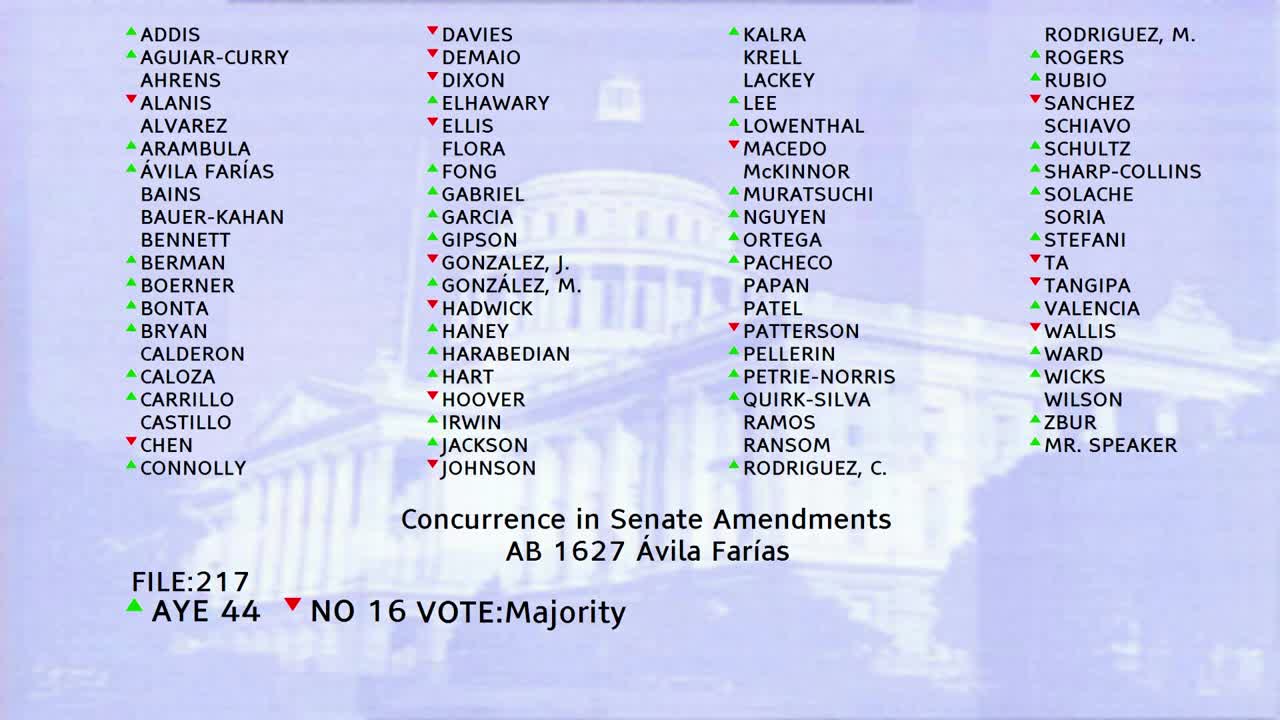
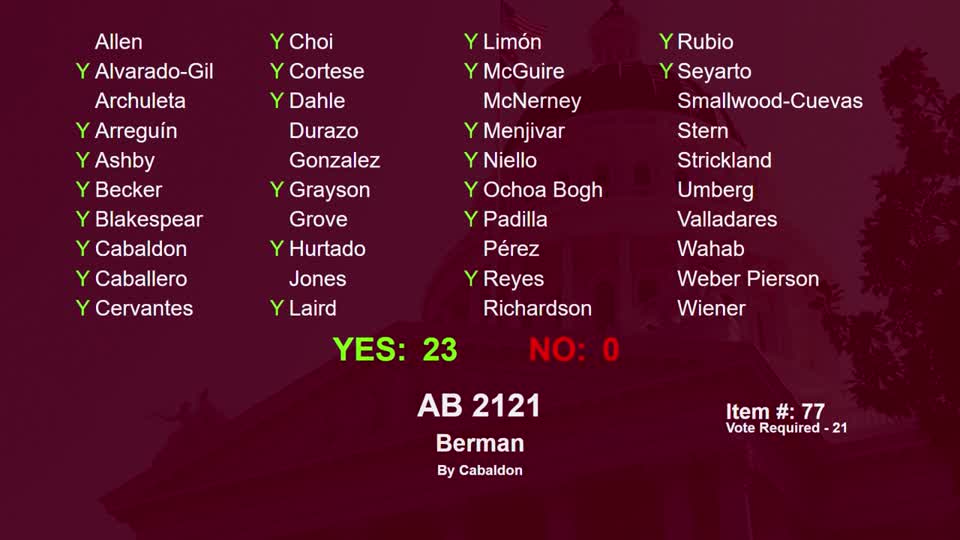
Bill Author

Bill Co-Author(s):