AB 2724: Insurance: distressed areas.
- Session Year: 2025-2026
- House: Assembly
- Latest Version Date: 2026-09-30
Current Status:
Passed
(2026-09-30: Chaptered by Secretary of State - Chapter 961, Statutes of 2026.)
Introduced
In Committee
Awaiting First Chamber Vote
Passed First Chamber
In Committee
Awaiting Second Chamber Vote
Passed Second Chamber
Enacted
Existing law creates the Department of Insurance, headed by the Insurance Commissioner, and generally regulates the business of insurance in the state. Existing law establishes the California FAIR Plan Association, a joint reinsurance association in which all insurers licensed to write basic property insurance participate to administer a program for the equitable apportionment of basic property insurance for persons who are unable to obtain that coverage through normal channels. Existing regulations authorize insurers, in distressed areas and for properties insured by the FAIR Plan that are exposed to wildfire risk, to use catastrophe modeling, as specified. Under existing regulations, a distressed area includes undermarketed ZIP Codes and distressed counties.
Existing law requires the State Fire Marshal to classify lands into fire hazard severity zones in accordance with state responsibility areas and local responsibility areas, as specified. Existing regulations establish and record wildland-urban interface (WUI) areas in accordance with these classifications.
This bill would require the department, on or before July 1, 2027, and yearly thereafter, to conduct a review and update distressed areas based on updates to the WUI designated areas. As part of the review, the bill would require the department, among other things, to hold at least one public meeting to allow interested persons to submit suggestions for additional factors to consider when evaluating FAIR Plan percentages in WUI areas. The bill would require the department, on or before January 1, 2028, to publish a list of ZIP Codes in WUI areas on its internet website and to provide this information to certain committees in the Legislature.
Existing law requires an admitted insurer with written California premiums totaling $10,000,000 or more to submit a report with specified fire risk information on its residential property policies to the commissioner on or before April 1, 2020, and every 2 years thereafter. Existing law subjects an admitted insurer that fails to submit a report to a civil penalty to be fixed by the commissioner, not to exceed $5,000, or $10,000 if the act was willful.
This bill would instead subject an admitted insurer that fails to submit a report to a civil penalty to be fixed by the commissioner, not to exceed $5,000 for each 30-day period that the insurer is not in compliance, or $10,000 for each 30-day period that the insurer is not in compliance, but not to exceed an aggregate amount of $100,000 if the act was willful. The bill would authorize the commissioner to consider an insurers violation of these provisions as the basis for other enforcement action against an insurer.
Existing law creates the Department of Insurance, headed by the Insurance Commissioner, and generally regulates the business of insurance in the state. Existing law establishes the California FAIR Plan Association, a joint reinsurance association in which all insurers licensed to write basic property insurance participate to administer a program for the equitable apportionment of basic property insurance for persons who are unable to obtain that coverage through normal channels. Existing regulations authorize insurers, in distressed areas and for properties insured by the FAIR Plan that are exposed to wildfire risk, to use catastrophe modeling, as specified. Under existing regulations, a distressed area includes undermarketed ZIP Codes and distressed counties.
Existing law requires the State Fire Marshal to classify lands into fire hazard severity zones in accordance with state responsibility areas and local responsibility areas, as specified. Existing regulations establish and record wildland-urban interface (WUI) areas in accordance with these classifications.
This bill would require the department, on or before July 1, 2027, and yearly thereafter, to conduct a review and update distressed areas based on updates to the WUI designated areas. As part of the review, the bill would require the department, among other things, to hold at least one public meeting to allow interested persons to submit suggestions for additional factors to consider when evaluating FAIR Plan percentages in WUI areas. The bill would require the department, on or before January 1, 2028, to publish a list of ZIP Codes in WUI areas on its internet website and to provide this information to certain committees in the Legislature.
Existing law requires an admitted insurer with written California premiums totaling $10,000,000 or more to submit a report with specified fire risk information on its residential property policies to the commissioner on or before April 1, 2020, and every 2 years thereafter. Existing law subjects an admitted insurer that fails to submit a report to a civil penalty to be fixed by the commissioner, not to exceed $5,000, or $10,000 if the act was willful.
This bill would instead subject an admitted insurer that fails to submit a report to a civil penalty to be fixed by the commissioner, not to exceed $5,000 for each 30-day period that the insurer is not in compliance, or $10,000 for each 30-day period that the insurer is not in compliance, but not to exceed an aggregate amount of $100,000 if the act was willful. The bill would authorize the commissioner to consider an insurers violation of these provisions as the basis for other enforcement action against an insurer.
Existing law creates the Department of Insurance, headed by the Insurance Commissioner, and generally regulates the business of insurance in the state. Existing law establishes the California FAIR Plan Association, a joint reinsurance association in which all insurers licensed to write basic property insurance participate to administer a program for the equitable apportionment of basic property insurance for persons who are unable to obtain that coverage through normal channels. Existing regulations authorize insurers, in distressed areas and for properties insured by the FAIR Plan that are exposed to wildfire risk, to use catastrophe modeling, as specified. Under existing regulations, a distressed area includes undermarketed ZIP Codes and distressed counties.
Existing law requires the State Fire Marshal to classify lands into fire hazard severity zones in accordance with state responsibility areas and local responsibility areas, as specified. Existing regulations establish and record wildland-urban interface (WUI) areas in accordance with these classifications.
This bill, bill would require the department, on or before July 1, 2027, and yearly thereafter, would require the department to conduct a review and update distressed areas based on updates to the WUI designated areas. As part of the review and update, review, the bill would require the department, among other things, to hold at least one public meeting to allow interested persons to submit suggestions for distressed areas, as specified. The bill, additional factors to consider when evaluating FAIR Plan percentages in WUI areas. The bill would require the department, on or before January 1, 2028, and yearly thereafter, would require the department to publish a bulletin with a list of ZIP Codes in distressed WUI areas on its internet website and to provide this information to certain committees in the Legislature.
Existing law requires an admitted insurer with written California premiums totaling $10,000,000 or more to submit a report with specified fire risk information on its residential property policies to the commissioner on or before April 1, 2020, and every 2 years thereafter. Existing law subjects an admitted insurer that fails to submit a report to a civil penalty to be fixed by the commissioner, not to exceed $5,000, or $10,000 if the act was willful.
This bill would instead subject an admitted insurer that fails to submit a report to a civil penalty to be fixed by the commissioner, not to exceed $5,000 for each 30-day period that the insurer is not in compliance, or $10,000 for each 30-day period that the insurer is not in compliance, but not to exceed an aggregate amount of $100,000 if the act was willful. The bill would authorize the commissioner to consider an insurers violation of these provisions as the basis for other enforcement action against an insurer.
Existing law creates the Department of Insurance, headed by the Insurance Commissioner, and generally regulates the business of insurance in the state. Existing law establishes the California FAIR Plan Association, a joint reinsurance association in which all insurers licensed to write basic property insurance participate to administer a program for the equitable apportionment of basic property insurance for persons who are unable to obtain that coverage through normal channels. Existing regulations authorize insurers, in distressed areas and for properties insured by the FAIR Plan that are exposed to wildfire risk, to use catastrophe modeling, as specified. Under existing regulations, a distressed area includes undermarketed ZIP Codes and distressed counties.
For purposes of using catastrophe modeling in insurer commitments, this bill would state that a distressed area includes only undermarketed ZIP Codes. The bill would provide that an undermarketed ZIP Code is a ZIP Code, as determined by the commissioner, that, among other things, has at least 10% of the sum of residential properties in the ZIP Code that are insured by the FAIR Plan, as specified. The bill would require the department to review and revise any regulations as necessary to implement these provisions.This bill, on or before July 1, 2027, and yearly thereafter, would require the department to review and update distressed areas. As part of the review and update, the bill would require the department, among other things, to hold at least one public meeting to allow interested persons to submit suggestions for distressed areas, as specified. The bill, on or before January 1, 2028, and yearly thereafter, would require the department to publish a bulletin with a list of ZIP Codes in distressed areas on its internet website and to provide this information to certain committees in the Legislature.
Existing law creates the Department of Insurance, headed by the Insurance Commissioner, and generally regulates the business of insurance in the state. Existing law establishes the California FAIR Plan Association, a joint reinsurance association in which all insurers licensed to write basic property insurance participate to administer a program for the equitable apportionment of basic property insurance for persons who are unable to obtain that coverage through normal channels. Existing regulations authorize insurers, in distressed areas and for properties insured by the FAIR Plan that are exposed to wildfire risk, to use catastrophe modeling, as specified. Under existing regulations, a distressed area includes undermarketed ZIP Codes and distressed counties.
For purposes of using catastrophe modeling in insurer commitments, this bill would state that a distressed area includes only undermarketed ZIP Codes. The bill would provide that an undermarketed ZIP Code is a ZIP Code, as determined by the commissioner, that, among other things, has at least 10% of the sum of residential properties in the ZIP Code that are insured by the FAIR Plan, as specified. The bill would require the department to review and revise any regulations as necessary to implement these provisions.
The Legislature finds and declares the following:
(a)The distressed areas researched and identified by the Department of Insurance mark meaningful progress toward improving insurance availability and market stability across California.
(b)In continuing to build on this foundation, there is an opportunity to further ensure that all communitiesespecially those facing elevated wildfire riskare fully supported.
(c)Regularly reviewing percentage-based ZIP Code thresholds could help better capture the unique challenges experienced by wildland-urban interface (WUI) communities. By more directly addressing the realities these areas face, the department can more effectively respond to the impacts of the current insurance landscape.
(d)WUI communities have shown resilience despite experiencing a high number of insurance policy nonrenewals, cancellations, and limitations in wildfire coverage. Recognizing the challenges of WUI areas and the on-the-ground realities can ensure that homes currently on the FAIR Plan are appropriately accounted for. This would help close existing gaps and improve coverage in some of Californias most wildfire-prone communities.
(e)By building on the progress already made, these targeted analyses of WUI areas and FAIR Plan data can help further understanding of wildfire risk and insurance, and create a more inclusive, resilient, and effective insurance framework for all Californians.
SEC. 2.Section 929.3 of the Insurance Code is amended to read:929.3.(a)Failure to submit a report pursuant to Section 929 shall subject an admitted insurer to a civil penalty to be fixed by the commissioner, not to exceed five thousand dollars ($5,000) for each 30-day period that the insurer is not in compliance, unless the failure to comply was willful, a civil penalty not to exceed ten thousand dollars ($10,000) for each 30-day period that the insurer is not in compliance, but not to exceed an aggregate amount of one hundred thousand dollars ($100,000). The commissioner shall collect the amount payable and may bring an action in the name of the people of the State of California to enforce collection. These penalties shall be in addition to other penalties provided by law.
(b)An insurer may request, and the commissioner may grant, a 30-day extension, if needed due to unintended or unforeseen delays, to submit the report. If the insurer fails to submit the report within 30 days of a written notice by the commissioner regarding the failure to submit the report, the commissioner may find that the failure to submit the report was willful and increase the civil penalty to an amount not to exceed ten thousand dollars ($10,000) for each 30-day period that the insurer is not in compliance, but not to exceed an aggregate amount of one hundred thousand dollars ($100,000).
(c)The penalty imposed by this section shall be enforced by the commissioner and may be appealed by means of a remedy provided by Section 12940, or by Chapter 5 (commencing with Section 11500) of Part 1 of Division 3 of Title 2 of the Government Code. This subdivision is the sole means for enforcement of this section.
(d)The commissioner may consider an insurers violation of this section or article as the basis for other enforcement action against an insurer, as authorized by law.
SEC. 3.Section 929.4 is added to the Insurance Code, immediately following Section 929.3, to read:929.4.(a)On or before July 1, 2027, and annually thereafter, the department shall conduct a review and update distressed areas, pursuant to Section 2644.4.8 of Title 10 of the California Code of Regulations, based on updates to the wildland-urban interface (WUI) designated areas.
(b)As part of its review pursuant to subdivision (a), the department shall do all of the following:
(1)Consult with the Department of Forestry and Fire Protection regarding wildfire hazard information and WUI designations available for the geographic areas in California.
(2)Consider the geographic analysis of ZIP Codes with at least 10, 20, and 30 percent of the sum of the following that are insured by the FAIR Plan:
(A)The number of residential properties in the ZIP Code that are insured by the FAIR Plan.
(B)The number of residential properties in the ZIP Code that are insured in the voluntary market by admitted insurers under a policy of qualifying residential property insurance.
(3)Develop and implement a process that allows for meaningful public participation that includes, at a minimum, both of the following:
(A)Holding at least one public meeting per review period to allow interested persons to submit suggestions for additional factors to consider when evaluating FAIR Plan percentages in WUI areas.
(B)Making available for public review and comment a preliminary report described in subdivision (a).
(c)The department shall publish the findings of their reviews on or before January 1, 2028, and every year thereafter, with a list of ZIP Codes in WUI areas on the departments internet website and provide the information to the Assembly Committee on Insurance and the Senate Committee on Insurance.
(d)If the percentage of homes in WUI designated areas on the FAIR Plan or without any insurance coverage reduces by 20 percent or more from the preceding year, reports pursuant to subdivision (c) may be issued every other year.
The Legislature finds and declares the following:
(a)The distressed areas researched and identified by the Department of Insurance mark meaningful progress toward improving insurance availability and market stability across California.
(b)In continuing to build on this foundation, there is an opportunity to further ensure that all communitiesespecially those facing elevated wildfire riskare fully supported.
(c)Regularly reviewing percentage-based ZIP Code thresholds could help better capture the unique challenges experienced by wildland-urban interface (WUI) communities. By more directly addressing the realities these areas face, the department can more effectively respond to the impacts of the current insurance landscape.
(d)WUI communities have shown resilience despite experiencing a high number of insurance policy nonrenewals, cancellations, and limitations in wildfire coverage. Recognizing the challenges of WUI areas and the on-the-ground realities can ensure that homes currently on the FAIR Plan are appropriately accounted for. This would help close existing gaps and improve coverage in some of Californias most wildfire-prone communities.
(e)By building on the progress already made, these targeted analyses of WUI areas and FAIR Plan data can help further understanding of wildfire risk and insurance, and create a more inclusive, resilient, and effective insurance framework for all Californians.
SEC. 2.Section 929.3 of the Insurance Code is amended to read:929.3.(a)Failure to submit a report pursuant to Section 929 shall subject an admitted insurer to a civil penalty to be fixed by the commissioner, not to exceed five thousand dollars ($5,000) for each 30-day period that the insurer is not in compliance, unless the failure to comply was willful, a civil penalty not to exceed ten thousand dollars ($10,000) for each 30-day period that the insurer is not in compliance, but not to exceed an aggregate amount of one hundred thousand dollars ($100,000). The commissioner shall collect the amount payable and may bring an action in the name of the people of the State of California to enforce collection. These penalties shall be in addition to other penalties provided by law.
(b)An insurer may request, and the commissioner may grant, a 30-day extension, if needed due to unintended or unforeseen delays, to submit the report. If the insurer fails to submit the report within 30 days of a written notice by the commissioner regarding the failure to submit the report, the commissioner may find that the failure to submit the report was willful and increase the civil penalty to an amount not to exceed ten thousand dollars ($10,000) for each 30-day period that the insurer is not in compliance, but not to exceed an aggregate amount of one hundred thousand dollars ($100,000).
(c)The penalty imposed by this section shall be enforced by the commissioner and may be appealed by means of a remedy provided by Section 12940, or by Chapter 5 (commencing with Section 11500) of Part 1 of Division 3 of Title 2 of the Government Code. This subdivision is the sole means for enforcement of this section.
(d)The commissioner may consider an insurers violation of this section or article as the basis for other enforcement action against an insurer, as authorized by law.
SEC. 3.Section 929.4 is added to the Insurance Code, immediately following Section 929.3, to read:929.4.(a)On or before July 1, 2027, and annually thereafter, the department shall conduct a review and update distressed areas, pursuant to Section 2644.4.8 of Title 10 of the California Code of Regulations, based on updates to the wildland-urban interface (WUI) designated areas.
(b)As part of its review pursuant to subdivision (a), the department shall do all of the following:
(1)Consult with the Department of Forestry and Fire Protection regarding wildfire hazard information and WUI designations available for the geographic areas in California.
(2)Consider the geographic analysis of ZIP Codes with at least 10, 20, and 30 percent of the sum of the following that are insured by the FAIR Plan:
(A)The number of residential properties in the ZIP Code that are insured by the FAIR Plan.
(B)The number of residential properties in the ZIP Code that are insured in the voluntary market by admitted insurers under a policy of qualifying residential property insurance.
(3)Develop and implement a process that allows for meaningful public participation that includes, at a minimum, both of the following:
(A)Holding at least one public meeting per review period to allow interested persons to submit suggestions for additional factors to consider when evaluating FAIR Plan percentages in WUI areas.
(B)Making available for public review and comment a preliminary report described in subdivision (a).
(c)The department shall publish the findings of their reviews on or before January 1, 2028, and every year thereafter, with a list of ZIP Codes in WUI areas on the departments internet website and provide the information to the Assembly Committee on Insurance and the Senate Committee on Insurance.
(d)If the percentage of homes in WUI designated areas on the FAIR Plan or without any insurance coverage reduces by 20 percent or more from the preceding year, reports pursuant to subdivision (c) may be issued every other year.
The Legislature finds and declares the following:
(a)The Sustainable Insurance Strategy (SIS) regulations issued distressed areas researched and identified by the Department of Insurance mark meaningful progress toward improving insurance availability and market stability across California.
(b)Building In continuing to build on this foundation, there is an opportunity, however, to further enhance these regulations to opportunity to further ensure that all communitiesespecially those facing elevated wildfire riskare fully supported.
(c)Reviewing and refining the use of Regularly reviewing percentage-based ZIP Code thresholds could help better capture the unique challenges experienced by wildland-urban interface (WUI) communities. By more directly addressing the realities these areas face, the SIS department can more effectively respond to the impacts of the current insurance landscape.
(d)WUI communities have shown resilience despite experiencing a high number of insurance policy nonrenewals, cancellations, and limitations in wildfire coverage. Aligning the definition of distressed areas with Recognizing the challenges of WUI areas and the on-the-ground realities can ensure that homes currently on the FAIR Plan are appropriately accounted for. This would help close existing gaps and improve coverage in some of Californias most wildfire-prone communities.
(e)By building on the progress already made, these targeted enhancements analyses of WUI areas and FAIR Plan data can help further understanding of wildfire risk and insurance, and create a more inclusive, resilient, and effective insurance framework for all Californians.
SEC. 2.Article 12.5 (commencing with Section 979) is added to Chapter 1 of Part 2 of Division 1 of the Insurance Code, to read:12.5.Catastrophe Modeling979.(a)On or before July 1, 2027, and yearly thereafter, the department shall review and update distressed areas pursuant to Section 2644.4.8 of Title 10 of the California Code of Regulations.(b)As part of its review and update, the department shall, at a minimum, do all of the following:(1)Consult with the Department of Forestry and Fire Protection.(2)Consider ZIP Codes with at least 10 percent of the sum of the following that are insured by the FAIR Plan:(A)The number of residential properties in the ZIP Code that are insured by the FAIR Plan.(B)The number of residential properties in the ZIP Code that are insured in the voluntary market by admitted insurers under a policy of qualifying residential property insurance.(3)Develop and implement a process that allows for meaningful public participation that includes, at a minimum, both of the following:(A)Holding at least one public meeting to allow interested persons to submit suggestions for distressed areas.(B)Making available the proposed distressed areas described in subdivision (a) for public review and comment.(c)The department shall publish a bulletin, on or before January 1, 2028, and yearly thereafter, with a list of ZIP Codes in distressed areas on the departments internet website and provide the information to the Assembly Committee on Insurance and the Senate Committee on Insurance.SEC. 2.Section 929.3 of the Insurance Code is amended to read:929.3.(a)Failure to submit a report pursuant to Section 929 shall subject an admitted insurer to a civil penalty to be fixed by the commissioner, not to exceed five thousand dollars ($5,000) or, if the act for each 30-day period that the insurer is not in compliance, unless the failure to comply was willful, a civil penalty not to exceed ten thousand dollars ($10,000). ($10,000) for each 30-day period that the insurer is not in compliance, but not to exceed an aggregate amount of one hundred thousand dollars ($100,000). The commissioner shall collect the amount payable and may bring an action in the name of the people of the State of California to enforce collection. These penalties shall be in addition to other penalties provided by law.
(b)An insurer may request, and the commissioner may grant, a 30-day extension, if needed due to unintended or unforeseen delays, to submit the report. If the insurer fails to submit the report within 30 days of a written notice by the commissioner regarding the failure to submit the report, the commissioner may find that the failure to submit the report was willful and increase the civil penalty to an amount not to exceed ten thousand dollars ($10,000). ($10,000) for each 30-day period that the insurer is not in compliance, but not to exceed an aggregate amount of one hundred thousand dollars ($100,000).
(c)The penalty imposed by this section shall be enforced by the commissioner and may be appealed by means of a remedy provided by Section 12940, or by Chapter 5 (commencing with Section 11500) of Part 1 of Division 3 of Title 2 of the Government Code. This subdivision is the sole means for enforcement of this section.
(d)The commissioner may consider an insurers violation of this section or article as the basis for other enforcement action against an insurer, as authorized by law.
SEC. 3.Section 929.4 is added to the Insurance Code, immediately following Section 929.3, to read:929.4.(a)On or before July 1, 2027, and annually thereafter, the department shall conduct a review and update distressed areas, pursuant to Section 2644.4.8 of Title 10 of the California Code of Regulations, based on updates to the wildland-urban interface (WUI) designated areas.
(b)As part of its review pursuant to subdivision (a), the department shall do all of the following:
(1)Consult with the Department of Forestry and Fire Protection regarding wildfire hazard information and WUI designations available for the geographic areas in California.
(2)Consider the geographic analysis of ZIP Codes with at least 10, 20, and 30 percent of the sum of the following that are insured by the FAIR Plan:
(A)The number of residential properties in the ZIP Code that are insured by the FAIR Plan.
(B)The number of residential properties in the ZIP Code that are insured in the voluntary market by admitted insurers under a policy of qualifying residential property insurance.
(3)Develop and implement a process that allows for meaningful public participation that includes, at a minimum, both of the following:
(A)Holding at least one public meeting per review period to allow interested persons to submit suggestions for additional factors to consider when evaluating FAIR Plan percentages in WUI areas.
(B)Making available for public review and comment a preliminary report described in subdivision (a).
(c)The department shall publish the findings of their reviews on or before January 1, 2028, and every year thereafter, with a list of ZIP Codes in WUI areas on the departments internet website and provide the information to the Assembly Committee on Insurance and the Senate Committee on Insurance.
(d)If the percentage of homes in WUI designated areas on the FAIR Plan or without any insurance coverage reduces by 20 percent or more from the preceding year, reports pursuant to subdivision (c) may be issued every other year.
The Legislature finds and declares the following:
(a)The Sustainable Insurance Strategy (SIS) regulations issued by the Department of Insurance mark meaningful progress toward improving insurance availability and market stability across California.
(b)Building on this foundation, there is an opportunity, however, to further enhance these regulations to ensure that all communitiesespecially those facing elevated wildfire riskare fully supported.
(c)Reviewing and refining the use of percentage-based thresholds could help better capture the unique challenges experienced by wildland-urban interface (WUI) communities. By more directly addressing the realities these areas face, the SIS can more effectively respond to the impacts of the current insurance landscape.
(d)WUI communities have shown resilience despite experiencing a high number of nonrenewals, cancellations, and limitations in wildfire coverage. Aligning the definition of distressed areas with on-the-ground realities can ensure that homes currently on the FAIR Plan are appropriately accounted for. This would help close existing gaps and improve coverage in some of Californias most wildfire-prone communities.
(e)By building on the progress already made, these targeted enhancements can help create a more inclusive, resilient, and effective insurance framework for all Californians.
SECTION 1.SEC. 2.Article 12.5 (commencing with Section 979) is added to Chapter 1 of Part 2 of Division 1 of the Insurance Code, to read:12.5.Catastrophe Modeling979.(a)For purposes of using catastrophe modeling in insurer commitments pursuant to Section 2644.4.8 of Title 10 of the California Code of Regulations, a distressed area shall include only undermarketed ZIP Codes.(b)For purposes of this section, undermarketed ZIP Code means a ZIP Code, as determined by the commissioner, that at least partially overlaps a high or very high fire hazard severity zone as shown on current maps published by the Department of Forestry and Fire Protection and in which the ZIP Code has at least 10 percent of the sum of the following that are insured by the FAIR Plan:(1)The number of residential properties in the ZIP Code that are insured by the FAIR Plan.(2)The number of residential properties in the ZIP Code that are insured in the voluntary market by admitted insurers under a policy of qualifying residential property insurance.(c)The commissioner shall publish an initial bulletin containing a list of the undermarketed ZIP Codes determined under this section. The commissioner shall, by subsequent bulletins, update the list of undermarketed ZIP Codes as conditions warrant, but in any event no less frequently than once per year.(d)The department shall review and revise regulations as necessary to implement this section.979.(a)On or before July 1, 2027, and yearly thereafter, the department shall review and update distressed areas pursuant to Section 2644.4.8 of Title 10 of the California Code of Regulations.
(b)As part of its review and update, the department shall, at a minimum, do all of the following:
(1)Consult with the Department of Forestry and Fire Protection.
(2)Consider ZIP Codes with at least 10 percent of the sum of the following that are insured by the FAIR Plan:
(A)The number of residential properties in the ZIP Code that are insured by the FAIR Plan.
(B)The number of residential properties in the ZIP Code that are insured in the voluntary market by admitted insurers under a policy of qualifying residential property insurance.
(3)Develop and implement a process that allows for meaningful public participation that includes, at a minimum, both of the following:
(A)Holding at least one public meeting to allow interested persons to submit suggestions for distressed areas.
(B)Making available the proposed distressed areas described in subdivision (a) for public review and comment.
(c)The department shall publish a bulletin, on or before January 1, 2028, and yearly thereafter, with a list of ZIP Codes in distressed areas on the departments internet website and provide the information to the Assembly Committee on Insurance and the Senate Committee on Insurance.
(a)For purposes of using catastrophe modeling in insurer commitments pursuant to Section 2644.4.8 of Title 10 of the California Code of Regulations, a distressed area shall include only undermarketed ZIP Codes.
(b)For purposes of this section, undermarketed ZIP Code means a ZIP Code, as determined by the commissioner, that at least partially overlaps a high or very high fire hazard severity zone as shown on current maps published by the Department of Forestry and Fire Protection and in which the ZIP Code has at least 10 percent of the sum of the following that are insured by the FAIR Plan:
(1)The number of residential properties in the ZIP Code that are insured by the FAIR Plan.
(2)The number of residential properties in the ZIP Code that are insured in the voluntary market by admitted insurers under a policy of qualifying residential property insurance.
(c)The commissioner shall publish an initial bulletin containing a list of the undermarketed ZIP Codes determined under this section. The commissioner shall, by subsequent bulletins, update the list of undermarketed ZIP Codes as conditions warrant, but in any event no less frequently than once per year.
(d)The department shall review and revise regulations as necessary to implement this section.
|
Date
|
Status
|
|---|---|
| Sep 30, 2026 | Chaptered by Secretary of State - Chapter 961, Statutes of 2026. |
| Sep 30, 2026 | Approved by the Governor. |
| Sep 10, 2026 | Enrolled and presented to the Governor at 3 p.m. |
| Aug 30, 2026 | Senate amendments concurred in. To Engrossing and Enrolling. (Ayes 64. Noes 2. Page 6926.). |
| Aug 30, 2026 | Senate amendments concurred in. To Engrossing and Enrolling. (Ayes 64. Noes 2.). |
| Aug 30, 2026 | In Assembly. Concurrence in Senate amendments pending. |
| Aug 30, 2026 | Senate amendments concurred in. To Engrossing and Enrolling. |
| Aug 30, 2026 | Read third time. Passed. Ordered to the Assembly. (Ayes 38. Noes 0.). |
| Aug 24, 2026 | Read second time. Ordered to third reading. |
| Aug 20, 2026 | Read third time and amended. Ordered to second reading. |
| Aug 13, 2026 | Read second time. Ordered to third reading. |
| Aug 13, 2026 | From committee: Do pass. (Ayes 7. Noes 0.) (August 13). |
| Aug 3, 2026 | In committee: Referred to APPR. suspense file. |
| Jun 25, 2026 | From committee: Do pass and re-refer to Com. on APPR. (Ayes 6. Noes 0.) (June 24). Re-referred to Com. on APPR. |
| May 27, 2026 | Referred to Com. on INS. |
| May 14, 2026 | In Senate. Read first time. To Com. on RLS. for assignment. |
| May 14, 2026 | Read third time. Passed. Ordered to the Senate. (Ayes 77. Noes 0. Page 5057.) |
| May 14, 2026 | Read third time. Passed. Ordered to the Senate. (Ayes 77. Noes 0.) |
| May 7, 2026 | Read second time. Ordered to Consent Calendar. |
| May 6, 2026 | From committee: Do pass. To Consent Calendar. (Ayes 14. Noes 0.) (May 6). |
| Apr 22, 2026 | From committee: Do pass and re-refer to Com. on APPR. with recommendation: To Consent Calendar. (Ayes 16. Noes 0.) (April 22). Re-referred to Com. on APPR. |
| Apr 20, 2026 | Re-referred to Com. on INS. |
| Apr 16, 2026 | From committee chair, with author's amendments: Amend, and re-refer to Com. on INS. Read second time and amended. |
| Mar 16, 2026 | Referred to Com. on INS. |
| Feb 21, 2026 | From printer. May be heard in committee March 23. |
| Feb 20, 2026 | Read first time. To print. |
|
Date
|
Description
|
Location
|
Votes
|
|
|---|---|---|---|---|
| Aug 30, 2026 | AB 2724 Bauer-Kahan Concurrence in Senate Amendments | Assembly Floor |
Passed |
|
| Aug 30, 2026 | Assembly 3rd Reading AB2724 Bauer-Kahan By Grayson | Senate Floor |
Passed |
|
| Aug 13, 2026 | Do pass | Senate Standing Committee on Appropriations |
Passed |
|
| Aug 3, 2026 | Placed on suspense file | Senate Standing Committee on Appropriations |
Passed |
|
| Jun 24, 2026 | Do pass, but first be re-referred to the Committee on [Appropriations] | Senate Standing Committee on Insurance |
Passed |
|
| May 14, 2026 | AB 2724 Bauer-Kahan Consent Calendar Second Day Regular Session | Assembly Floor |
Passed |
|
| May 6, 2026 | Do pass. To Consent Calendar. | Assembly Standing Committee on Appropriations |
Passed |
|
| Apr 22, 2026 | Do pass and be re-referred to the Committee on [Appropriations] with recommendation: To Consent Calendar | Assembly Standing Committee on Insurance |
Passed |
This list shows positions taken on this bill by organizations on the date displayed, which is linked to the original source.
Positions by individuals are not included.
|
Organization
|
Position
|
Date
|
|---|---|---|
| California Department of Insurance | ** Against | |
| California State Association of Counties (CSAC) | ** Support | |
| City of Orinda | ** Support | |
| Contra Costa County | ** Support | |
| LAFAYETTE; CITY OF | ** Support | |
| League Of California Cities | ** Support | |
| ORINDA; CITY OF | ** Support | |
| Ricardo Lara | ** Against | |
| Rural County Representatives of California (RCRC) | ** Support |
CONCURRENCE IN SENATE AMENDMENTS
CSA1 Bill Id:AB 2724
Author:(Bauer-Kahan)
As Amended Ver:August 20, 2026
Majority vote
SUMMARY
Requires the California Department of Insurance (CDI) to review and update distressed areas, on or before July 1, 2027, and yearly thereafter.
- Requires CDI to review and update distressed areas, through the following methods:
- Consult with Cal FIRE.
- Consider ZIP Codes with at least 10 percent of the sum of the following that are insured by the FAIR Plan:
- The number of residential properties in the ZIP Code that are insured by the FAIR Plan.
- The number of residential properties in the ZIP Code that are insured in the voluntary market by admitted insurers under a policy of qualifying residential property insurance.
- Develop and implement a process that allows for meaningful public participation that includes, at a minimum, both of the following:
- Holding at least one public meeting to allow interested persons to submit suggestions for distressed areas.
- Making available the proposed distressed areas for public review and comment.
- Requires CDI to publish a bulletin on or before January 1, 2028, and yearly thereafter, with a list of ZIP Codes in distressed areas, on CDI’s website, and provide the information to the Assembly Committee on Insurance and the Senate Committee on Insurance.
- Makes related findings and declarations.
Senate Amendments
- Revise findings and declarations.
- Create new intervals for the payment of non-compliance penalties regarding the submission of reports by certain admitted insurers to the Insurance Commissioner (Commissioner) every two years related to their residential property policies' fire risk.
- State that by July 1, 2027, and annually thereafter, CDI must conduct a review and update of distressed areas, pursuant to Section 2644.4.8 of Title 10 of the California Code of Regulations, based on updates of WUI-designated areas.
- Specify as part of that review, CDI must consult with the Department of Forestry and Fire Protection (Cal FIRE) regarding wildfire hazard and WUI-designated areas.
- The review must also consider analysis of ZIP Codes based on the number of properties insured by the California Fair Access to Insurance Requirements Plan Association (FAIR Plan) and by admitted insurers. T
- The review must contain a process for public participation, as specified. 5)
- Require CDI to publish the review’s findings by January 1, 2028, and annually thereafter with required information on ZIP Codes in WUI areas.
- These findings must also be provided to the Senate and Assembly Insurance Committees.
- Specifies that the findings can be published every other year if the percentage of homes in WUI-designated areas on the FAIR Plan or uninsured homes reduces by 20% or more from the preceding year.
- These findings must also be provided to the Senate and Assembly Insurance Committees.
COMMENTS
- Sustainable Insurance Strategy (SIS): On September 21, 2023, Governor Newsom issued an Executive Order that requested the Insurance Commissioner to “take prompt regulatory action to strengthen and stabilize California’s marketplace for homeowners’ insurance and commercial property insurance, and to consider whether the recent sudden deterioration of the private insurance market presents facts that support emergency regulatory action”. Following this Executive Order, the SIS was born. According to CDI the three main goals of the SIS are: accessible insurance for Californians; create a resilient insurance market; and protect communities from climate change
As part of the SIS, and as it relates to this measure, one action item is to transition homeowners and business from the FAIR Plan back into the normal insurance market with commitments from insurance companies to cover all parts of California by writing no less than 85% of their statewide market share in high wildfire risk communities. The commitment to write must be in designated distressed areas, which leads to the importance of the definition of distressed areas. CDI approved its first SIS filings in early 2026 following implementation of the SIS.
- Distressed Areas as it Relates to the SIS: "Distressed areas," as defined under the SIS and then further determined by CDI, has three components: they are in parts of California where wildfire is a threat, where insurance companies have reduced or restricted writing policies, and where there is a high concentration of FAIR Plan policies. As described by CDI: ZIP Code: Distressed areas include those with a FAIR Plan concentration rate of 15% that include high or very high wildfire hazard as defined by CAL FIRE. CDI also creates an affordability index to add ZIP Codes with lower incomes based on cost of coverage. Counties: California has 28 counties where insurance companies have rated more than 20% of properties at high or very high risk. CDI chose 20% of the threshold because it is the most inclusive while holding insurance companies accountable. FAIR Plan policies outside of highly distressed areas: Pockets of FAIR Plan policies exist in nearly every county, but lower-risk urban areas dilute the overall percentage. To target new policies where the problems are, insurance companies will take back FAIR Plan policies into the traditional market.
The most recent list of counties and ZIP Codes that fall under distressed areas can be found at [https://www.insurance.ca.gov/01-consumers/180-climate-change/upload/catastrophe-modeling-and-ratemaking-insurer-commitments-to-increase-writing-of-policies-in-high-risk-wildfire-areas-list-of-distressed-counties-and-undermarketed-zip-codes-residential-property-insurance-commitments.pdf]
According to the Author
“The Sustainable Insurance Strategy (SIS) regulations promulgated by the Department of Insurance fall short of protecting all Californians. Of particular concern are those communities in the wildland urban interface (WUI), which may not qualify as a “distressed area”, but have neighborhoods facing severe wildfire risks and insurance cancellations/nonrenewals. We must ensure that impacted communities are not left behind when determining which homes qualify for state assistance in attaining property insurance."
Arguments in Support
A coalition of cities and counties states:
"Under the Catastrophe Modeling Regulations adopted in January 2025, insurance companies are required to offer insurance to 85% of their statewide market share in distressed areas identified by the Insurance Commissioner. Distressed areas are defined by zip codes that have 15% or more property owners enrolled in the FAIR Plan and counties that have 20% or more properties that are in a high-risk area.
During the public comment period of the Catastrophe Modeling, our organizations noted our concern with the 15% statistic and noted that even with this requirement it was unclear whether insurance companies would provide coverage to all communities experiencing high insurance policies or the ability to obtain coverage.
This bill would require CDI to specifically consider the number of residential properties in the ZIP Code that are insured by the FAIR Plan, and the number of residential properties in the ZIP Code that are insured in the voluntary market by admitted insurers under a policy of qualifying residential property insurance. By reviewing the distressed areas definition this could allow more jurisdictions to have access to insurance under the Catastrophe Modeling regulations."
Arguments in Opposition
The California Insurance Commissioner, Ricardo Lara, who is opposed unless amended, states, "The current distressed area framework was developed through extensive coordination across multiple Department branches and divisions, with input from subject matter experts both within and outside the Department, in addition to receiving significant public input from across the state, as part of the broader SIS. The goal of the SIS is consistent with the goals of Proposition 103: to increase the availability and affordability of homeowners insurance in high-risk areas.
AB 2724 risks disrupting that established regulatory framework and raises serious concerns under Prop. 103. As you know, in order to amend Prop. 103, legislation must further the purposes of Prop. 103 which are, among other things, to increase the affordability and availability of insurance. The voters delegated that responsibility to the elected Insurance Commissioner when Prop. 103 was adopted. AB 2724 does not demonstrate that it would further the purposes of Prop. 103. Not only does the bill improperly substitute the Legislature's judgment for that of the Department’s technical and legal expertise, but the bill also presents significant litigation risk as an improper amendment to Prop. 103."
FISCAL COMMENTS
According to the Senate Appropriations Committee: CDI estimates costs of $84,000 in Fiscal Year (FY) 2026-27, $148,000 in FY 2027-28, and $136,000 in FY 2028-29 and ongoing to manage regulatory updates, coordinate distressed area reviews, and conduct public meetings (Insurance Fund).
Unknown costs for the California Department of Forestry and Fire Protection (CAL FIRE) to provide consultation on distressed areas.
VOTES:
ASM INSURANCE: 16-0-1
YES: Calderon, Wallis, Addis, Alvarez, Ávila Farías, Berman, Ellis, Gipson, Hadwick, Harabedian, Krell, Nguyen, Ortega, Petrie-Norris, Michelle Rodriguez, Valencia
ABS, ABST OR NV: Chen
ASM APPROPRIATIONS: 14-0-1
YES: Wicks, Hoover, Aguiar-Curry, Caloza, Dixon, Fong, Mark González, Krell, Pacheco, Pellerin, Sharp-Collins, Solache, Ta, Tangipa
ABS, ABST OR NV: Arambula
ASSEMBLY FLOOR: 77-0-3
YES: Addis, Aguiar-Curry, Ahrens, Alanis, Alvarez, Ávila Farías, Bains, Bauer-Kahan, Bennett, Berman, Boerner, Bonta, Bryan, Calderon, Caloza, Carrillo, Castillo, Chen, Connolly, Davies, DeMaio, Dixon, Elhawary, Ellis, Fong, Gabriel, Gallagher, Garcia, Gipson, Jeff Gonzalez, Mark González, Hadwick, Haney, Harabedian, Hart, Hoover, Irwin, Jackson, Johnson, Kalra, Krell, Lackey, Lee, Lowenthal, Macedo, McKinnor, Muratsuchi, Nguyen, Ortega, Pacheco, Papan, Patel, Patterson, Pellerin, Petrie-Norris, Quirk-Silva, Ramos, Ransom, Michelle Rodriguez, Rogers, Blanca Rubio, Sanchez, Schiavo, Schultz, Sharp-Collins, Solache, Soria, Stefani, Ta, Tangipa, Valencia, Wallis, Ward, Wicks, Wilson, Zbur, Rivas
ABS, ABST OR NV: Arambula, Flora, Celeste Rodriguez
UPDATED
VERSION: August 20, 2026
CONSULTANT: Kathleen O'Malley / INS. / (916) 319-2086 FN: 0004245
SENATE RULES COMMITTEE Office of Senate Floor Analyses (916) 651-4171 | AB 2724 |
THIRD READING
Bill No: AB 2724
Author: Bauer-Kahan (D)
Amended: 8/20/26 in Assembly
Vote: 21
SENATE INSURANCE COMMITTEE: 6-0, 6/24/26
AYES: Padilla, Niello, Becker, Menjivar, Richardson, Rubio
NO VOTE RECORDED: Jones
SENATE APPROPRIATIONS COMMITTEE: 7-0, 8/13/26
AYES: Cervantes, Seyarto, Cabaldon, Dahle, Grayson, Richardson, Wahab
ASSEMBLY FLOOR: 77-0, 5/14/26 (Consent) - See last page for vote
SUBJECT: Catastrophe modeling: distressed areas
SOURCE: Author
DIGEST:
This bill requires the California Department of Insurance (CDI) to review and update distressed areas, on or before July 1, 2027, and yearly thereafter. Establishes additional requirements for public input and awareness of areas classified as distressed.
Senate Floor Amendments of 8/20/26 1) Revise findings and declarations. 2) Create new intervals for the payment of non-compliance penalties regarding the submission of reports by certain admitted insurers to the Insurance Commissioner (Commissioner) every two years related to their residential property policies’ fire risk. 3) State that by July 1, 2027, and annually thereafter, CDI must conduct a review and update of distressed areas, pursuant to Section 2644.4.8 of Title 10 of the California Code of Regulations, based on updates of WUI-designated areas. 4) Specify as part of that review, CDI must consult with the Department of Forestry and Fire Protection (Cal FIRE) regarding wildfire hazard and WUI-designated areas. The review must also consider analysis of ZIP Codes based on the number of properties insured by the California Fair Access to Insurance Requirements Plan Association (FAIR Plan) and by admitted insurers. The review must contain a process for public participation, as specified. 5) Require CDI to publish the review’s findings by January 1, 2028, and annually thereafter with required information on ZIP Codes in WUI areas. These findings must also be provided to the Senate and Assembly Insurance Committees. 6) Allow these findings to be published every other year if the percentage of homes in WUI-designated areas on the FAIR Plan or uninsured homes reduces by 20% or more from the preceding year.
ANALYSIS:
Existing law:
- Creates the CDI, headed by the Commissioner, and generally regulates the business of insurance in the state.
- Establishes the FAIR Plan to assure the stability of the property insurance market, to assure the availability of basic property insurance, as defined, to encourage maximum use of the normal insurance market in obtaining basic property insurance provided by admitted insurers and licensed surplus line brokers.
- States under Section 2644.4.8 of Title 10 of the California Code of Regulations, that “distressed areas” include:
- Undermarketed ZIP Codes. An Undermarketed ZIP Code shall mean a ZIP Code, as determined by the Commissioner, which at least partially overlaps with a high or very high fire hazard severity zone as shown on current maps published by Cal FIRE and in which ZIP Code either:
- At least 15% of the sum, as specified, are insured by the FAIR Plan.
- The average premium per $1,000.00 of Coverage A in the ZIP Code is at least four dollars while the median income of the ZIP Code is no higher than the fiftieth percentile for the state.
- Distressed counties. A county is considered distressed if the percentage of structures situated in that county that are at high or very high wildfire risk is no lower than the 50th percentile of counties in the state, as determined by the Commissioner.
- Undermarketed ZIP Codes. An Undermarketed ZIP Code shall mean a ZIP Code, as determined by the Commissioner, which at least partially overlaps with a high or very high fire hazard severity zone as shown on current maps published by Cal FIRE and in which ZIP Code either:
This bill:
- Requires CDI to review and update distressed areas, through the following methods:
- Consult with Cal FIRE.
- Consider ZIP Codes with at least 10 percent of the sum of the following that are insured by the FAIR Plan:
- The number of residential properties in the ZIP Code that are insured by the FAIR Plan.
- The number of residential properties in the ZIP Code that are insured in the voluntary market by admitted insurers under a policy of qualifying residential property insurance.
- Develop and implement a process that allows for meaningful public participation that includes, at a minimum, both of the following:
- Holding at least one public meeting to allow interested persons to submit suggestions for distressed areas.
- Making available the proposed distressed areas for public review and comment.
- Requires CDI to publish a bulletin on or before January 1, 2028, and yearly thereafter, with a list of ZIP Codes in distressed areas, on CDI’s website, and provide the information to the Assembly Committee on Insurance and the Senate Committee on Insurance.
- Makes related findings and declarations.
FISCAL EFFECT: Appropriation: No Fiscal Com.: Yes Local: No
According to the Senate Appropriations Committee:
CDI estimates costs of $84,000 in Fiscal Year (FY) 2026-27, $148,000 in FY 2027-28, and $136,000 in FY 2028-29 and ongoing to manage regulatory updates, coordinate distressed area reviews, and conduct public meetings (Insurance Fund).
Unknown costs for the California Department of Forestry and Fire Protection (CAL FIRE) to provide consultation on distressed areas.
SUPPORT: (Verified 8/14/26)
California State Association of Counties (CSAC)
Contra Costa County
Lafayette; City of
League of California Cities
Orinda; City of
Rural County Representatives of California (RCRC)
OPPOSITION: (Verified 8/14/26)
Insurance Commissioner Ricardo Lara / California Department of Insurance
ARGUMENTS IN SUPPORT:
A coalition of cities and counties states:
“Under the Catastrophe Modeling Regulations adopted in January 2025, insurance companies are required to offer insurance to 85% of their statewide market share in distressed areas identified by the Insurance Commissioner. Distressed areas are defined by zip codes that have 15% or more property owners enrolled in the FAIR Plan and counties that have 20% or more properties that are in a high-risk area.
During the public comment period of the Catastrophe Modeling, our organizations noted our concern with the 15% statistic and noted that even with this requirement it was unclear whether insurance companies would provide coverage to all communities experiencing high insurance policies or the ability to obtain coverage.
This bill would require CDI to specifically consider the number of residential properties in the ZIP Code that are insured by the FAIR Plan, and the number of residential properties in the ZIP Code that are insured in the voluntary market by admitted insurers under a policy of qualifying residential property insurance. By reviewing the distressed areas definition this could allow more jurisdictions to have access to insurance under the Catastrophe Modeling regulations.”
ARGUMENTS IN OPPOSITION:
According to the California Department of Insurance:
“The Department, under the leadership of Insurance Commissioner Ricardo Lara, supports the goal of improving insurance availability in wildfire-affected communities, including those in the wildland-urban interface, and ensuring the calculation of distressed areas is transparent. However, your bill does not reflect the same level of analysis and coordinated regulatory development underlying the Department’s existing legal framework. The current distressed area framework was developed through extensive coordination across multiple Department branches and divisions, with input from subject matter experts both within and outside the Department, in addition to receiving significant public input from across the state, as part of the broader Sustainable Insurance Strategy (SIS). The goal of the SIS is consistent with the goals of Proposition 103: to increase the availability and affordability of homeowners insurance in high-risk areas.
AB 2724 risks disrupting that established regulatory framework and raises serious concerns under Prop. 103. As you know, in order to amend Prop. 103, legislation must further the purposes of Prop. 103 which are, among other things, to increase the affordability and availability of insurance. The voters delegated that responsibility to the elected Insurance Commissioner when Prop. 103 was adopted. AB 2724 does not demonstrate that it would further the purposes of Prop. 103. Not only does the bill improperly substitute the Legislature’s judgment for that of the Department’s technical and legal expertise, but the bill also presents significant litigation risk as an improper amendment to Prop. 103.”
ASSEMBLY FLOOR: 77-0, 5/14/26
AYES: Addis, Aguiar-Curry, Ahrens, Alanis, Alvarez, Ávila Farías, Bains, Bauer-Kahan, Bennett, Berman, Boerner, Bonta, Bryan, Calderon, Caloza, Carrillo, Castillo, Chen, Connolly, Davies, DeMaio, Dixon, Elhawary, Ellis, Fong, Gabriel, Gallagher, Garcia, Gipson, Jeff Gonzalez, Mark González, Hadwick, Haney, Harabedian, Hart, Hoover, Irwin, Jackson, Johnson, Kalra, Krell, Lackey, Lee, Lowenthal, Macedo, McKinnor, Muratsuchi, Nguyen, Ortega, Pacheco, Papan, Patel, Patterson, Pellerin, Petrie-Norris, Quirk-Silva, Ramos, Ransom, Michelle Rodriguez, Rogers, Blanca Rubio, Sanchez, Schiavo, Schultz, Sharp-Collins, Solache, Soria, Stefani, Ta, Tangipa, Valencia, Wallis, Ward, Wicks, Wilson, Zbur, Rivas
NO VOTE RECORDED: Arambula, Flora, Celeste Rodriguez
Prepared by: Brandon Seto / INS. / (916) 651-4110
8/24/26 13:55:39
**** END ****
SENATE RULES COMMITTEE Office of Senate Floor Analyses (916) 651-4171 | AB 2724 |
THIRD READING
Bill No: AB 2724
Author: Bauer-Kahan (D)
Amended: 4/16/26 in Assembly
Vote: 21
SENATE INSURANCE COMMITTEE: 6-0, 6/24/26
AYES: Padilla, Niello, Becker, Menjivar, Richardson, Rubio
NO VOTE RECORDED: Jones
SENATE APPROPRIATIONS COMMITTEE: 7-0, 8/13/26
AYES: Cervantes, Seyarto, Cabaldon, Dahle, Grayson, Richardson, Wahab
ASSEMBLY FLOOR: 77-0, 5/14/26 (Consent) - See last page for vote
SUBJECT: Catastrophe modeling: distressed areas
SOURCE: Author
DIGEST:
This bill requires the California Department of Insurance (CDI) to review and update distressed areas, on or before July 1, 2027, and yearly thereafter. Establishes additional requirements for public input and awareness of areas classified as distressed.
ANALYSIS:
Existing law:
- Creates the CDI, headed by the Insurance Commissioner (Commissioner), and generally regulates the business of insurance in the state.
- Establishes the California Fair Access to Insurance Requirements Plan (FAIR Plan) to assure the stability of the property insurance market, to assure the availability of basic property insurance, as defined, to encourage maximum use of the normal insurance market in obtaining basic property insurance provided by admitted insurers and licensed surplus line brokers.
- States under Section 2644.4.8 of Title 10 of the California Code of Regulations, that “distressed areas” include:
- Undermarketed ZIP Codes. An Undermarketed ZIP Code shall mean a ZIP Code, as determined by the Commissioner, which at least partially overlaps with a high or very high fire hazard severity zone as shown on current maps published by the Department of Forestry and Fire Protection (Cal FIRE) and in which ZIP Code either:
- At least fifteen percent of the sum, as specified, are insured by the FAIR Plan.
- The average premium per $1,000.00 of Coverage A in the ZIP Code is at least four dollars while the median income of the ZIP Code is no higher than the fiftieth percentile for the state.
- Distressed counties. A county is considered distressed if the percentage of structures situated in that county that are at high or very high wildfire risk is no lower than the 50th percentile of counties in the state, as determined by the Commissioner.
- Undermarketed ZIP Codes. An Undermarketed ZIP Code shall mean a ZIP Code, as determined by the Commissioner, which at least partially overlaps with a high or very high fire hazard severity zone as shown on current maps published by the Department of Forestry and Fire Protection (Cal FIRE) and in which ZIP Code either:
This bill:
- Requires CDI to review and update distressed areas, through the following methods:
- Consult with Cal FIRE.
- Consider ZIP Codes with at least 10% of the sum of the following that are insured by the FAIR Plan:
- The number of residential properties in the ZIP Code that are insured by the FAIR Plan.
- The number of residential properties in the ZIP Code that are insured in the voluntary market by admitted insurers under a policy of qualifying residential property insurance.
- Develop and implement a process that allows for meaningful public participation that includes, at a minimum, both of the following:
- Holding at least one public meeting to allow interested persons to submit suggestions for distressed areas.
- Making available the proposed distressed areas for public review and comment.
- Requires CDI to publish a bulletin on or before January 1, 2028, and yearly thereafter, with a list of ZIP Codes in distressed areas, on CDI’s website, and provide the information to the Assembly Committee on Insurance and the Senate Committee on Insurance.
- Makes related findings and declarations.
FISCAL EFFECT: Appropriation: No Fiscal Com.: Yes Local: No
According to the Senate Appropriations Committee:
CDI estimates costs of $84,000 in Fiscal Year (FY) 2026-27, $148,000 in FY 2027-28, and $136,000 in FY 2028-29 and ongoing to manage regulatory updates, coordinate distressed area reviews, and conduct public meetings (Insurance Fund).
Unknown costs for the California Department of Forestry and Fire Protection (CAL FIRE) to provide consultation on distressed areas.
SUPPORT: (Verified 8/14/26)
California State Association of Counties (CSAC)
Contra Costa County
Lafayette; City of
League of California Cities
Orinda; City of
Rural County Representatives of California (RCRC)
OPPOSITION: (Verified 8/14/26)
Insurance Commissioner Ricardo Lara / California Department of Insurance
ARGUMENTS IN SUPPORT:
A coalition of cities and counties states:
“Under the Catastrophe Modeling Regulations adopted in January 2025, insurance companies are required to offer insurance to 85% of their statewide market share in distressed areas identified by the Insurance Commissioner. Distressed areas are defined by zip codes that have 15% or more property owners enrolled in the FAIR Plan and counties that have 20% or more properties that are in a high-risk area.
During the public comment period of the Catastrophe Modeling, our organizations noted our concern with the 15% statistic and noted that even with this requirement it was unclear whether insurance companies would provide coverage to all communities experiencing high insurance policies or the ability to obtain coverage.
This bill would require CDI to specifically consider the number of residential properties in the ZIP Code that are insured by the FAIR Plan, and the number of residential properties in the ZIP Code that are insured in the voluntary market by admitted insurers under a policy of qualifying residential property insurance. By reviewing the distressed areas definition this could allow more jurisdictions to have access to insurance under the Catastrophe Modeling regulations.”
ARGUMENTS IN OPPOSITION:
According to the California Department of Insurance:
“The Department, under the leadership of Insurance Commissioner Ricardo Lara, supports the goal of improving insurance availability in wildfire-affected communities, including those in the wildland-urban interface, and ensuring the calculation of distressed areas is transparent. However, your bill does not reflect the same level of analysis and coordinated regulatory development underlying the Department’s existing legal framework. The current distressed area framework was developed through extensive coordination across multiple Department branches and divisions, with input from subject matter experts both within and outside the Department, in addition to receiving significant public input from across the state, as part of the broader Sustainable Insurance Strategy (SIS). The goal of the SIS is consistent with the goals of Proposition 103: to increase the availability and affordability of homeowners insurance in high-risk areas.
AB 2724 risks disrupting that established regulatory framework and raises serious concerns under Prop. 103. As you know, in order to amend Prop. 103, legislation must further the purposes of Prop. 103 which are, among other things, to increase the affordability and availability of insurance. The voters delegated that responsibility to the elected Insurance Commissioner when Prop. 103 was adopted. AB 2724 does not demonstrate that it would further the purposes of Prop. 103. Not only does the bill improperly substitute the Legislature’s judgment for that of the Department’s technical and legal expertise, but the bill also presents significant litigation risk as an improper amendment to Prop. 103.”
ASSEMBLY FLOOR: 77-0, 5/14/26
AYES: Addis, Aguiar-Curry, Ahrens, Alanis, Alvarez, Ávila Farías, Bains, Bauer-Kahan, Bennett, Berman, Boerner, Bonta, Bryan, Calderon, Caloza, Carrillo, Castillo, Chen, Connolly, Davies, DeMaio, Dixon, Elhawary, Ellis, Fong, Gabriel, Gallagher, Garcia, Gipson, Jeff Gonzalez, Mark González, Hadwick, Haney, Harabedian, Hart, Hoover, Irwin, Jackson, Johnson, Kalra, Krell, Lackey, Lee, Lowenthal, Macedo, McKinnor, Muratsuchi, Nguyen, Ortega, Pacheco, Papan, Patel, Patterson, Pellerin, Petrie-Norris, Quirk-Silva, Ramos, Ransom, Michelle Rodriguez, Rogers, Blanca Rubio, Sanchez, Schiavo, Schultz, Sharp-Collins, Solache, Soria, Stefani, Ta, Tangipa, Valencia, Wallis, Ward, Wicks, Wilson, Zbur, Rivas
NO VOTE RECORDED: Arambula, Flora, Celeste Rodriguez
Prepared by: Brandon Seto / INS. / (916) 651-4110
8/14/26 14:25:27
**** END ****
SENATE COMMITTEE ON
Senator Sabrina Cervantes, Chair
2025 - 2026 Regular Session
AB 2724 (Bauer-Kahan) - Catastrophe modeling: distressed areas
Version: | Policy Vote: |
Urgency: | Mandate: |
Hearing Date: | Consultant: |
Bill Summary:
AB 2724 requires the California Department of Insurance (CDI) to annually review and update distressed areas pursuant to the Sustainable Insurance Strategy (SIS) regulations, as specified.
Fiscal Impact:
- CDI estimates costs of $84,000 in Fiscal Year (FY) 2026-27, $148,000 in FY 2027-28, and $136,000 in FY 2028-29 and ongoing to manage regulatory updates, coordinate distressed area reviews, and conduct public meetings (Insurance Fund).
- Unknown costs for the California Department of Forestry and Fire Protection (CAL FIRE) to provide consultation on distressed areas.
Background:
Announced by California Insurance Commissioner Ricardo Lara in September 2023 following Executive Order N-12-23 from Governor Gavin Newsom, CDI’s SIS represents the most extensive overhaul of the state's insurance regulations since Proposition 103 enacted in 1988. Designed to stabilize a property insurance market strained by escalating climate-driven disasters, the strategy introduces major regulatory reforms that allow insurers to utilize forward-looking catastrophe modeling and incorporate reinsurance costs into their rate-making processes. In exchange, private insurers must commit to writing at least 85% of their market share in wildfire-distressed areas, a mandate intended to transition homeowners off the overburdened California Fair Access to Insurance Requirements (FAIR) Plan and back into the standard market. Ultimately, the strategy aims to restore market availability, ensure insurance premiums accurately reflect modern climate risks, and reward property owners for wildfire mitigation efforts.
Proposed Law:
- Requires CDI, by July 1, 2027, and annually thereafter, to review and update distressed areas pursuant to the SIS regulations. As part of this review, requires CDI to do all of the following:
- Consult with CAL FIRE.
- Consider ZIP Codes with at least 10 percent of the sum of the following that are insured by the FAIR Plan:
- The number of residential properties in the ZIP Code that are insured by the FAIR Plan.
- The number of residential properties in the ZIP Code that are insured in the voluntary market by admitted insurers under a policy of qualifying residential property insurance.
- Develop and implement a process that allows for meaningful public participation that includes, at a minimum, both of the following:
- Holding at least one public meeting to allow interested persons to submit suggestions for distressed areas.
- Making available the proposed distressed areas for public review and comment.
- Requires CDI, by January 1, 2028, and annually thereafter, to publish a bulletin on its website listing ZIP codes in distressed areas and to provide this information to the Assembly and Senate Insurance Committees.
- States legislative findings and declarations.
-- END --
SENATE COMMITTEE ON INSURANCE
Senator Stephen Padilla, Chair
2025 - 2026 Regular
Bill No: AB 2724 Hearing Date: June 24, 2026
Author: | Bauer-Kahan | ||
Version: | April 16, 2026 Amended | ||
Urgency: | No | Fiscal: | Yes |
Consultant: | Brandon Seto | ||
SUBJECT: Catastrophe modeling: distressed areas
DIGEST:
Requires the California Department of Insurance (CDI) to review and update distressed areas, on or before July 1, 2027, and yearly thereafter. Establishes additional requirements for public input and awareness of areas classified as distressed.
ANALYSIS:
Existing law:
- Creates the CDI, headed by the Insurance Commissioner (Commissioner), and generally regulates the business of insurance in the state.
- Establishes the California Fair Access to Insurance Requirements Plan (FAIR Plan) to assure the stability of the property insurance market, to assure the availability of basic property insurance, as defined, to encourage maximum use of the normal insurance market in obtaining basic property insurance provided by admitted insurers and licensed surplus line brokers.
- States under Section 2644.4.8 of Title 10 of the California Code of Regulations, that “distressed areas” include:
- Undermarketed ZIP Codes. An Undermarketed ZIP Code shall mean a ZIP Code, as determined by the Commissioner, which at least partially overlaps with a high or very high fire hazard severity zone as shown on current maps published by the Department of Forestry and Fire Protection (Cal FIRE) and in which ZIP Code either:
- At least fifteen percent of the sum, as specified, are insured by the FAIR Plan.
- The average premium per $1,000.00 of Coverage A in the ZIP Code is at least four dollars while the median income of the ZIP Code is no higher than the fiftieth percentile for the state.
- Distressed counties. A county is considered distressed if the percentage of structures situated in that county that are at high or very high wildfire risk is no lower than the 50th percentile of counties in the state, as determined by the Commissioner.
- Undermarketed ZIP Codes. An Undermarketed ZIP Code shall mean a ZIP Code, as determined by the Commissioner, which at least partially overlaps with a high or very high fire hazard severity zone as shown on current maps published by the Department of Forestry and Fire Protection (Cal FIRE) and in which ZIP Code either:
This bill:
- Requires CDI to review and update distressed areas, through the following methods:
- Consult with Cal FIRE.
- Consider ZIP Codes with at least 10 percent of the sum of the following that are insured by the FAIR Plan:
- The number of residential properties in the ZIP Code that are insured by the FAIR Plan.
- The number of residential properties in the ZIP Code that are insured in the voluntary market by admitted insurers under a policy of qualifying residential property insurance.
- Develop and implement a process that allows for meaningful public participation that includes, at a minimum, both of the following:
- Holding at least one public meeting to allow interested persons to submit suggestions for distressed areas.
- Making available the proposed distressed areas for public review and comment.
- Requires CDI to publish a bulletin on or before January 1, 2028, and yearly thereafter, with a list of ZIP Codes in distressed areas, on CDI’s website, and provide the information to the Assembly Committee on Insurance and the Senate Committee on Insurance.
- Makes related findings and declarations.
Background
According to the author:
“The Sustainable Insurance Strategy (SIS) regulations promulgated by the Department of Insurance fall short of protecting all Californians. Of particular concern are those communities in the wildland urban interface (WUI), which may not qualify as a “distressed area”, but have neighborhoods facing severe wildfire risks and insurance cancellations/nonrenewals. We must ensure that impacted communities are not left behind when determining which homes qualify for state assistance in attaining property insurance.”
Questions
CDI has raised concerns with the current bill language particularly regarding the linking of the bill’s provisions to the SIS, and the subsequent impact the bill may have on the established regulatory framework and distressed area methodology. The author may wish to consider amending the bill to remove the linkage with the SIS and other related concerns.
ARGUMENTS IN SUPPORT:
A coalition of cities and counties states:
“Under the Catastrophe Modeling Regulations adopted in January 2025, insurance companies are required to offer insurance to 85% of their statewide market share in distressed areas identified by the Insurance Commissioner. Distressed areas are defined by zip codes that have 15% or more property owners enrolled in the FAIR Plan and counties that have 20% or more properties that are in a high-risk area.
During the public comment period of the Catastrophe Modeling, our organizations noted our concern with the 15% statistic and noted that even with this requirement it was unclear whether insurance companies would provide coverage to all communities experiencing high insurance policies or the ability to obtain coverage.
This bill would require CDI to specifically consider the number of residential properties in the ZIP Code that are insured by the FAIR Plan, and the number of residential properties in the ZIP Code that are insured in the voluntary market by admitted insurers under a policy of qualifying residential property insurance. By reviewing the distressed areas definition this could allow more jurisdictions to have access to insurance under the Catastrophe Modeling regulations.”
ARGUMENTS IN OPPOSITION:
None received.
SUPPORT:
California State Association of Counties
Contra Costa County
Lafayette; City of
League of California Cities
Orinda; City of
Rural County Representatives of California
OPPOSITION:
None.
-- END --
Date of Hearing: May 6, 2026
ASSEMBLY COMMITTEE ON APPROPRIATIONS
Buffy Wicks, Chair
ABPCA Bill Id:AB 2724
Author:(Bauer-Kahan) – As Amended Ver:April 16, 2026
Policy Committee: | Insurance | Vote: | 16 - 0 |
|
| ||
|
|
Urgency: No State Mandated Local Program: No Reimbursable: No
SUMMARY:
This bill requires the California Department of Insurance (CDI) to annually review and update its designation of a distressed area.
Specifically, this bill:
- Requires CDI to review and update a distressed area, as defined pursuant to existing regulations, by July 1, 2027, and annually thereafter.
- Requires CDI, as part of the review and update, to: (a) consult with the Department of Forestry and Fire Protection (CAL FIRE), (b) consider zip codes with a certain concentration of residential properties insured by the California Fair Access to Insurance Requirements (FAIR) Plan, and (c) develop and implement a process that allows for meaningful public participation.
- Requires CDI to publish a bulletin with a list of zip codes in distressed areas on CDI’s website and provide the information to the Legislature by January 1, 2028, and annually thereafter.
FISCAL EFFECT:
- Costs of approximately $21,000 in fiscal year (FY) 2026-27 and $34,000 in FY 2027-28 and annually thereafter to CDI to review and track data pursuant to a public process and publish the list of distressed area zip codes (Insurance Fund). CDI notes that it may also need to update regulations.
- Likely absorbable costs to CAL FIRE to consult with CDI to review distressed areas.
COMMENTS:
- Purpose. According to the author:
The Sustainable Insurance Strategy (SIS) regulations promulgated by [CDI] fall short of protecting all Californians. Of particular concern are those communities in the wildland urban interface (WUI), which may not qualify as a “distressed area,” but have neighborhoods facing severe wildfire risks and insurance cancellations/nonrenewals. We must ensure that impacted communities are not left behind when determining which homes qualify for state assistance in attaining property insurance.
This bill is supported by local government entities.
- Background. Evolution of the FAIR Plan. The FAIR Plan is a private association of all licensed insurance companies created by the Legislature in 1968 to serve as the “insurer of last resort” for basic property insurance in the event of a market failure. Although originally envisioned to cover urban commercial property following the Watts Riots, the FAIR Plan expanded to include homeowners’ insurance across the state and, more recently, due to the continued risk of catastrophic wildfires and admitted market withdrawal, expanded to commercial coverage of farms, ranches, and other agricultural businesses. In many places, the FAIR Plan is the only insurer available to property owners. As of December 2025, the FAIR Plan’s policies in force reached over 668,000, representing a 4% increase since September 2025, and a 146% increase since September 2022.
Distressed Areas. The Insurance Commissioner’s (IC’s) SIS stems from Governor Newsom’s Executive Order requesting the IC to:
take prompt regulatory action to strengthen and stabilize California’s marketplace for homeowners’ insurance and commercial property insurance, and to consider whether the recent sudden deterioration of the private insurance market presents facts that support emergency regulator action.
One action item of the SIS is to transition homeowners and businesses from the FAIR Plan back to the normal insurance market, with commitments from insurance companies to cover all parts of California by writing no less than 85% of their statewide market share in “distressed areas” where wildfire is a threat, insurance companies have reduced or restricted writing policies, and there is a high concentration of FAIR Plan policies. An insurer must submit new rate filings to show it is meeting the targets for new polices, with an insurer that does not meet the SIS target potentially prevented from using catastrophe modeling in the future. Accordingly, the SIS intends to motivate an insurer to write more policies in distressed areas, resulting in greater depopulation from the FAIR Plan. This bill requires CDI to annually review which zip codes qualify as a distressed area to ensure the definition reflects areas in need.
Analysis Prepared by: Irene Ho / APPR. / (916) 319-2081
Date of Hearing: April 22, 2026
ASSEMBLY COMMITTEE ON INSURANCE
Lisa Calderon, Chair
ABPCA Bill Id:AB 2724 (
Author:Bauer-Kahan) – As Amended Ver:April 16, 2026
SUBJECT: Catastrophe modeling: distressed areas
SUMMARY: Requires the California Department of Insurance (CDI) to review and update distressed areas, on or before July 1, 2027. Specifically, this bill:
- Requires CDI, as part of its first review, to:
- Consult with the Department of Forestry and Fire Protection.
- Consider ZIP Codes with at least 10 percent of the sum of the following that are insured by the FAIR Plan;
- The number of residential properties in the ZIP Code that are insured by the FAIR Plan; and,
- The number of residential properties in the ZIP Code that are insured in the voluntary market by admitted insurers under a policy of qualifying residential property insurance.
- Develop and implement a process that allows for meaningful public participation that includes, at a minimum, both of the following:
- Holding at least one public meeting to allow interested persons to submit suggestions for distressed areas; and,
- Making available the proposed distressed areas for public review and comment.
- Requires CDI to publish a bulletin on or before January 1, 2028, and yearly thereafter, with a list of ZIP Codes in distressed areas on CDI’s website, and provide the information to the Assembly Committee on Insurance and the Senate Committee on Insurance.
- Makes findings and declarations.
EXISTING LAW establishes “distressed areas” pursuant to Section 2664.4.8 of Title 10 of the California Code of Regulations.
FISCAL EFFECT: Unknown.
COMMENTS:
- Purpose of the bill: According to the Author, “The Sustainable Insurance Strategy (SIS) regulations promulgated by the Department of Insurance fall short of protecting all Californians. Of particular concern are those communities in the wildland urban interface (WUI), which may not qualify as a “distressed area”, but have neighborhoods facing severe wildfire risks and insurance cancellations/nonrenewals. We must ensure that impacted communities are not left behind when determining which homes qualify for state assistance in attaining property insurance.”
- Sustainable Insurance Strategy (SIS): On September 21, 2023, Governor Newsom issued an Executive Order that requested the Insurance Commissioner to “take prompt regulatory action to strengthen and stabilize California’s marketplace for homeowners’ insurance and commercial property insurance, and to consider whether the recent sudden deterioration of the private insurance market presents facts that support emergency regulatory action”. Following this Executive Order, the SIS was born. According to CDI the three main goals of the SIS are: accessible insurance for Californians; create a resilient insurance market; and protect communities from climate change
As part of the SIS, and as it relates to this measure, one action item is to transition homeowners and business from the FAIR Plan back into the normal insurance market with commitments from insurance companies to cover all parts of California by writing no less than 85% of their statewide market share in high wildfire risk communities. The commitment to write must be in designated distressed areas, which leads to the importance of the definition of distressed areas. CDI approved its first SIS filings in early 2026 following implementation of the SIS.
- Distressed Areas as it Relates to the SIS: “Distressed areas,” as defined under the SIS and then further determined by CDI, has three components: they are in parts of California where wildfire is a threat, where insurance companies have reduced or restricted writing policies, and where there is a high concentration of FAIR Plan policies. As described by CDI: ZIP Code: Distressed areas include those with a FAIR Plan concentration rate of 15% that include high or very high wildfire hazard as defined by CAL FIRE. CDI also creates an affordability index to add ZIP Codes with lower incomes based on cost of coverage. Counties: California has 28 counties where insurance companies have rated more than 20% of properties at high or very high risk. CDI chose 20% of the threshold because it is the most inclusive while holding insurance companies accountable. FAIR Plan policies outside of highly distressed areas: Pockets of FAIR Plan policies exist in nearly every county, but lower-risk urban areas dilute the overall percentage. To target new policies where the problems are, insurance companies will take back FAIR Plan policies into the traditional market.
The most recent list of counties and ZIP Codes that fall under distressed areas can be found here LIST OF DISTRESSED COUNTIES FOR INSURER QUALIFYING RESIDENTIAL PROPERTY INSURANCE COMMITMENTS.
The estimated number of earned exposures for qualifying residential property insurance statewide, for the evaluation period ending on December 31, 2023, is 8,134,000 exposures excluding FAIR Plan. The estimated number of earned exposures for qualifying residential property insurance in both the voluntary market and the FAIR Plan inside the distressed areas of the state, for the evaluation period ending on December 31, 2023, is 1,472,000 exposures.
As part of the SIS, admitted insurers must cover at least 85% (of their marketshare) of properties in distressed areas, which means they will need to write more policies in distressed areas and remove policies from the FAIR Plan.
- Assembly Insurance Committee Oversight Hearings: The Assembly Insurance Committee has held several oversight hearings focused on the SIS, as recent as February 18, 2026. This hearing, in particular, highlighted a recent news article California Promised Insurance Relief, But Delivered Loopholes - The New York Times. AB 2724 seems to stem from this article which concludes that the definition of distressed areas may have loopholes; for example the article points out the definition established under the SIS allows insurers to write new policies that do not overlap with what the State Fire Marshal deems to be the most fire prone.
AB 2724 ensures CDI is annually reviewing distressed areas to make sure the definition accurately reflects those areas in need.
REGISTERED SUPPORT / OPPOSITION:
Support
California State Association of Counties (CSAC)
Contra Costa County
League of California Cities
Orinda; City of
Rural County Representatives of California (RCRC)
Opposition
None on file.
Analysis Prepared by: Kathleen O'Malley / INS. / (916) 319-2086
Discussed in Hearing
 58SEC
Assembly Floor
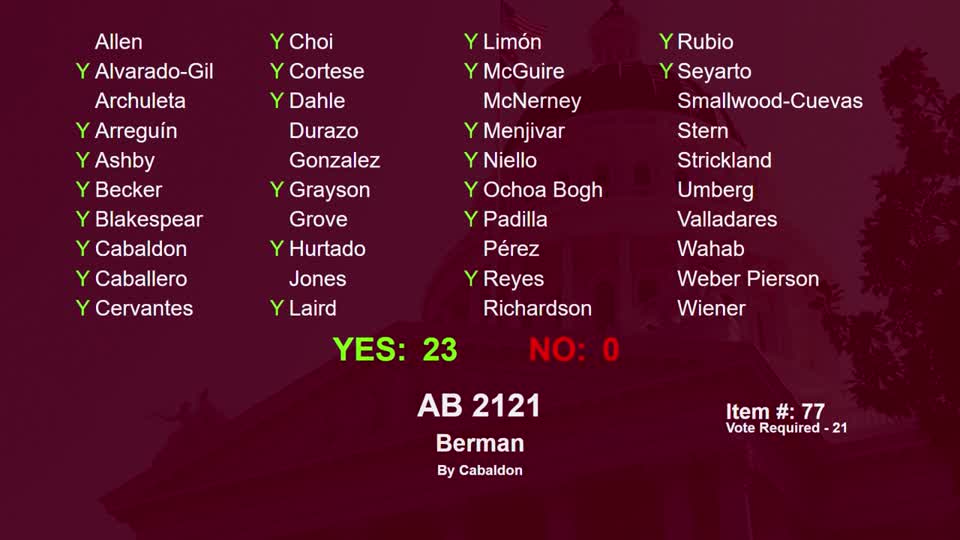 5MIN
Senate Floor
 3MIN
Senate Standing Committee on Insurance
Bill Author

Bill Co-Author(s):