AB 2779: Food labeling: quality dates, safety dates, and sell-by dates.
- Session Year: 2025-2026
- House: Assembly
- Latest Version Date: 2026-09-18
Current Status:
Passed
(2026-09-18: Chaptered by Secretary of State - Chapter 311, Statutes of 2026.)
Introduced
In Committee
Awaiting First Chamber Vote
Passed First Chamber
In Committee
Awaiting Second Chamber Vote
Passed Second Chamber
Enacted
Existing law requires, on and after July 1, 2026, a food manufacturer, processor, or retailer responsible for the labeling of food items for human consumption that chooses, or is otherwise required by law, to display a date label to communicate a quality or safety date on a food item manufactured on or after July 1, 2026, to use specified uniform terms on the date label, as provided. Existing law prohibits a person from selling or offering for sale in the state a food item for human consumption manufactured on or after July 1, 2026, that displays a quality or safety date label that is not labeled in accordance with that requirement or that is labeled with the phrase sell by, as specified.
This bill would provide that a food item for human consumption does not include a dietary supplement, as defined.
This bill would declare that it is to take effect immediately as an urgency statute.
Existing law requires, on and after July 1, 2026, a food manufacturer, processor, or retailer responsible for the labeling of food items for human consumption that chooses, or is otherwise required by law, to display a date label to communicate a quality or safety date on a food item manufactured on or after July 1, 2026, to use specified uniform terms on the date label, as provided. Existing law prohibits a person from selling or offering for sale in the state a food item for human consumption manufactured on or after July 1, 2026, that displays a quality or safety date label that is not labeled in accordance with that requirement or that is labeled with the phrase sell by, as specified.
This bill would provide that a food item for human consumption does not include a dietary supplement, as defined.
(a)On and after July 1, 2026, a food manufacturer, processor, or retailer responsible for the labeling of food items for human consumption that chooses, or is otherwise required by law, to display a date label to communicate a quality or safety date on a food item manufactured on or after July 1, 2026, shall use one of the following uniform terms on the date label:
(1)BEST if Used by, BEST if Used or Frozen by, Best if Used by, or Best if Used or Frozen by to indicate the quality date of the food item.
(2)USE by, USE by or Freeze by, Use by, or Use by or Freeze by to indicate the safety date of the food item.
(3)BB to indicate the quality date of the food item if the food item is too small to include the uniform term described in paragraph (1) or if the food item is a beverage as defined in Section 14504 of the Public Resources Code.
(4)UB to indicate the safety date of the food item if the food item is too small to include the uniform term described in paragraph (2).
(b)(1)A person shall not sell or offer for sale in the state a food item for human consumption manufactured on or after July 1, 2026, that displays a quality or safety date label that is not labeled in accordance with subdivision (a).
(2)A person shall not sell or offer for sale in the state a food item for human consumption manufactured on or after July 1, 2026, that is labeled with the phrase sell by. This paragraph does not prohibit the use of sell by dates that are presented in a coded format that are not easily readable by consumers and that do not use the phrase sell by.
(c)(1)The department may accept nonstate funds from public and private sources to, on its internet website, educate consumers about the meaning of the quality dates and safety dates specified in this section.
(2)Funds accepted by the department pursuant to paragraph (1) shall be deposited into the Consumer Education Account, which is hereby created in the Department of Food and Agriculture Fund.
(3)Notwithstanding Section 13340 of the Government Code, all funds in the Consumer Education Account are hereby continuously appropriated to the department without regard to fiscal years to carry out the purpose provided in paragraph (1).
(d)(1)This section does not prohibit, and shall not be construed to discourage, the sale, donation, or use of food after the foods quality date pursuant to paragraph (1) of subdivision (a) has passed. A retail food facility may donate a food item for human consumption that is not labeled in accordance with this section.
(2)Unless otherwise required by law, this section shall not be construed to require the use or display of a date label on a food item for human consumption unless the food item displays a date label.
(3)This section does not prohibit the use or display of a label that allows consumers to view online information about a food item for human consumption.
(4)Notwithstanding subdivisions (a) and (b), on and after July 1, 2026, a grocery store may display a label with the phrase packed on on a prepared food item and may sell or offer for sale in the state the prepared food item with that label if the prepared food item also displays a quality or safety date label in accordance with subdivision (a).
(5)This section does not prohibit a person from displaying on wine, a distilled spirit, or a wine- or distilled spirit-based product bottled or packaged on or after July 1, 2026, a label with a statement that communicates the date on which the wine, distilled spirit, or wine- or distilled spirit-based product was produced, manufactured, bottled, or packaged, or from selling or offering for sale in the state the wine, distilled spirit, or wine- or distilled spirit-based product with that label. The statement may use date formats, including, but not limited to, dates in a time, day, month, and year format and Julian dates.
(6)To the extent that any other law or a National Shellfish Sanitation Program provision governing the labeling of shellfish authorizes or requires the use of terms that conflict, or are inconsistent, with this section, this section does not apply.
(e)This section does not apply to any of the following:
(1)Infant formula.
(2)Eggs or pasteurized in-shell eggs.
(3)Beer and other malt beverages.
(f)For purposes of this section, the following definitions apply:
(1)Food item for human consumption does not include a dietary supplement as defined in Section 321(ff) of Title 21 of the United States Code.
(2)Grocery store means a store engaged in the retail sale of canned food, dry goods, fresh fruits and vegetables, and fresh meats, fish, and poultry and any area that is not separately owned within the store where food is prepared and served, including a bakery, deli, and meat and seafood counter.
(3)Prepared food item means a food item for human consumption prepared or repackaged on a grocery stores premises, using any cooking or food preparation technique.
(g)If and to the extent that any provision of this section is preempted by federal law, the provision does not apply and shall not be enforced.
SEC. 2.This act is an urgency statute necessary for the immediate preservation of the public peace, health, or safety within the meaning of Article IV of the California Constitution and shall go into immediate effect. The facts constituting the necessity are:
To ensure the correct implementation of the statute and to minimize the disruption to Californias food industry, it is necessary for this act to go into immediate effect.
(a)On and after July 1, 2026, a food manufacturer, processor, or retailer responsible for the labeling of food items for human consumption that chooses, or is otherwise required by law, to display a date label to communicate a quality or safety date on a food item manufactured on or after July 1, 2026, shall use one of the following uniform terms on the date label:
(1)BEST if Used by or by, BEST if Used or Frozen by by, Best if Used by, or Best if Used or Frozen by to indicate the quality date of the food item.
(2)USE by or by, USE by or Freeze by by, Use by, or Use by or Freeze by to indicate the safety date of the food item.
(3)BB to indicate the quality date of the food item if the food item is too small to include the uniform term described in paragraph (1) or if the food item is a beverage as defined in Section 14504 of the Public Resources Code.
(4)UB to indicate the safety date of the food item if the food item is too small to include the uniform term described in paragraph (2).
(b)(1)A person shall not sell or offer for sale in the state a food item for human consumption manufactured on or after July 1, 2026, that displays a quality or safety date label that is not labeled in accordance with subdivision (a).
(2)A person shall not sell or offer for sale in the state a food item for human consumption manufactured on or after July 1, 2026, that is labeled with the phrase sell by. This paragraph does not prohibit the use of sell by dates that are presented in a coded format that are not easily readable by consumers and that do not use the phrase sell by.
(c)(1)The department may accept nonstate funds from public and private sources to, on its internet website, educate consumers about the meaning of the quality dates and safety dates specified in this section.
(2)Funds accepted by the department pursuant to paragraph (1) shall be deposited into the Consumer Education Account, which is hereby created in the Department of Food and Agriculture Fund.
(3)Notwithstanding Section 13340 of the Government Code, all funds in the Consumer Education Account are hereby continuously appropriated to the department without regard to fiscal years to carry out the purpose provided in paragraph (1).
(d)(1)This section does not prohibit, and shall not be construed to discourage, the sale, donation, or use of food after the foods quality date pursuant to paragraph (1) of subdivision (a) has passed. A retail food facility may donate a food item for human consumption that is not labeled in accordance with this section.
(2)Unless otherwise required by law, this section shall not be construed to require the use or display of a date label on a food item for human consumption unless the food item displays a date label.
(3)This section does not prohibit the use or display of a label that allows consumers to view online information about a food item for human consumption.
(4)Notwithstanding subdivisions (a) and (b), on and after July 1, 2026, a grocery store may display a label with the phrase packed on on a prepared food item and may sell or offer for sale in the state the prepared food item with that label if the prepared food item also displays a quality or safety date label in accordance with subdivision (a).
(5)This section does not prohibit a person from displaying on wine, a distilled spirit, or a wine- or distilled spirit-based product bottled or packaged on or after July 1, 2026, a label with a statement that communicates the date on which the wine, distilled spirit, or wine- or distilled spirit-based product was produced, manufactured, bottled, or packaged, or from selling or offering for sale in the state the wine, distilled spirit, or wine- or distilled spirit-based product with that label. The statement may use date formats, including, but not limited to, dates in a time, day, month, and year format and Julian dates.
(6)To the extent that any other law or a National Shellfish Sanitation Program provision governing the labeling of shellfish authorizes or requires the use of terms that conflict, or are inconsistent, with this section, this section does not apply.
(e)This section does not apply to any of the following:
(1)Infant formula.
(2)Eggs or pasteurized in-shell eggs.
(3)Beer and other malt beverages.
(f)For purposes of this section, the following definitions apply:
(1)Food item for human consumption does not include a dietary supplement as defined in Section 321(ff) of Title 21 of the United States Code.
(2)Grocery store means a store engaged in the retail sale of canned food, dry goods, fresh fruits and vegetables, and fresh meats, fish, and poultry and any area that is not separately owned within the store where food is prepared and served, including a bakery, deli, and meat and seafood counter.
(3)Prepared food item means a food item for human consumption prepared or repackaged on a grocery stores premises, using any cooking or food preparation technique.
(g)If and to the extent that any provision of this section is preempted by federal law, the provision does not apply and shall not be enforced.
SEC. 2.This act is an urgency statute necessary for the immediate preservation of the public peace, health, or safety within the meaning of Article IV of the California Constitution and shall go into immediate effect. The facts constituting the necessity are:
To ensure the correct implementation of the statute and to minimize the disruption to Californias food industry, it is necessary for this act to go into immediate effect.
(a)On and after July 1, 2026, a food manufacturer, processor, or retailer responsible for the labeling of food items for human consumption that chooses, or is otherwise required by law, to display a date label to communicate a quality or safety date on a food item manufactured on or after July 1, 2026, shall use one of the following uniform terms on the date label:
(1)BEST if Used by or BEST if Used or Frozen by to indicate the quality date of the food item.
(2)USE by or USE by or Freeze by to indicate the safety date of the food item.
(3)BB to indicate the quality date of the food item if the food item is too small to include the uniform term described in paragraph (1) or if the food item is a beverage as defined in Section 14504 of the Public Resources Code.
(4)UB to indicate the safety date of the food item if the food item is too small to include the uniform term described in paragraph (2).
(b)(1)A person shall not sell or offer for sale in the state a food item for human consumption manufactured on or after July 1, 2026, that displays a quality or safety date label that is not labeled in accordance with subdivision (a).
(2)A person shall not sell or offer for sale in the state a food item for human consumption manufactured on or after July 1, 2026, that is labeled with the phrase sell by. This paragraph does not prohibit the use of sell by dates that are presented in a coded format that are not easily readable by consumers and that do not use the phrase sell by.
(c)(1)The department may accept nonstate funds from public and private sources to, on its internet website, educate consumers about the meaning of the quality dates and safety dates specified in this section.
(2)Funds accepted by the department pursuant to paragraph (1) shall be deposited into the Consumer Education Account, which is hereby created in the Department of Food and Agriculture Fund.
(3)Notwithstanding Section 13340 of the Government Code, all funds in the Consumer Education Account are hereby continuously appropriated to the department without regard to fiscal years to carry out the purpose provided in paragraph (1).
(d)(1)This section does not prohibit, and shall not be construed to discourage, the sale, donation, or use of food after the foods quality date pursuant to paragraph (1) of subdivision (a) has passed. A retail food facility may donate a food item for human consumption that is not labeled in accordance with this section.
(2)Unless otherwise required by law, this section shall not be construed to require the use or display of a date label on a food item for human consumption unless the food item displays a date label.
(3)This section does not prohibit the use or display of a label that allows consumers to view online information about a food item for human consumption.
(4)Notwithstanding subdivisions (a) and (b), on and after July 1, 2026, a grocery store may display a label with the phrase packed on on a prepared food item and may sell or offer for sale in the state the prepared food item with that label if the prepared food item also displays a quality or safety date label in accordance with subdivision (a).
(5)This section does not prohibit a person from displaying on wine, a distilled spirit, or a wine- or distilled spirit-based product bottled or packaged on or after July 1, 2026, a label with a statement that communicates the date on which the wine, distilled spirit, or wine- or distilled spirit-based product was produced, manufactured, bottled, or packaged, or from selling or offering for sale in the state the wine, distilled spirit, or wine- or distilled spirit-based product with that label. The statement may use date formats, including, but not limited to, dates in a time, day, month, and year format and Julian dates.
(6)To the extent that any other law or a National Shellfish Sanitation Program provision governing the labeling of shellfish authorizes or requires the use of terms that conflict, or are inconsistent, with this section, this section does not apply.
(e)This section does not apply to any of the following:
(1)Infant formula.
(2)Eggs or pasteurized in-shell eggs.
(3)Beer and other malt beverages.
(f)For purposes of this section, the following definitions apply:
(1)Food item for human consumption does not include a dietary supplement as defined in Section 321(ff) of Title 21 of the United States Code.
(1)(2)Grocery store means a store engaged in the retail sale of canned food, dry goods, fresh fruits and vegetables, and fresh meats, fish, and poultry and any area that is not separately owned within the store where food is prepared and served, including a bakery, deli, and meat and seafood counter.
(2)(3)Prepared food item means a food item for human consumption prepared or repackaged on a grocery stores premises, using any cooking or food preparation technique.
(g)If and to the extent that any provision of this section is preempted by federal law, the provision does not apply and shall not be enforced.
|
Date
|
Status
|
|---|---|
| Sep 18, 2026 | Chaptered by Secretary of State - Chapter 311, Statutes of 2026. |
| Sep 18, 2026 | Approved by the Governor. |
| Sep 10, 2026 | Enrolled and presented to the Governor at 3 p.m. |
| Aug 30, 2026 | Urgency clause adopted. Senate amendments concurred in. To Engrossing and Enrolling. (Ayes 78. Noes 0. Page 6885.). |
| Aug 30, 2026 | Urgency clause adopted. Senate amendments concurred in. To Engrossing and Enrolling. (Ayes 78. Noes 0.). |
| Aug 30, 2026 | Urgency clause adopted. Senate amendments concurred in. To Engrossing and Enrolling. |
| Aug 28, 2026 | In Assembly. Concurrence in Senate amendments pending. |
| Aug 27, 2026 | Read third time. Passed. Ordered to the Assembly. (Ayes 40. Noes 0. Page 5998.). |
| Aug 27, 2026 | Read third time. Passed. Ordered to the Assembly. (Ayes 39. Noes 0.). |
| Jul 2, 2026 | Reconsideration granted. (Ayes 37. Noes 0. Page 5190.) |
| Jul 2, 2026 | Read third time. Urgency clause adopted. Passed. Ordered to the Assembly. (Ayes 37. Noes 0. Page 5189.). |
| Jul 2, 2026 | Ordered to third reading. |
| Jul 2, 2026 | From Consent Calendar. |
| Jul 2, 2026 | Reconsideration granted. (Ayes 37. Noes 0.) |
| Jul 2, 2026 | Motion to reconsider made by Senator Ashby. |
| Jul 2, 2026 | Read third time. Urgency clause adopted. Passed. Ordered to the Assembly. (Ayes 37. Noes 0.). |
| Jun 30, 2026 | Read second time. Ordered to Consent Calendar. |
| Jun 29, 2026 | From committee: Be ordered to second reading file pursuant to Senate Rule 28.8 and ordered to Consent Calendar. |
| Jun 16, 2026 | From committee: Do pass and re-refer to Com. on APPR. with recommendation: To Consent Calendar. (Ayes 4. Noes 0.) (June 16). Re-referred to Com. on APPR. |
| Jun 9, 2026 | From committee chair, with author's amendments: Amend, and re-refer to committee. Read second time, amended, and re-referred to Com. on AGRI. |
| May 20, 2026 | Referred to Com. on AGRI. |
| May 7, 2026 | In Senate. Read first time. To Com. on RLS. for assignment. |
| May 7, 2026 | Read third time. Passed. Ordered to the Senate. (Ayes 66. Noes 0. Page 4968.) |
| May 7, 2026 | Read third time. Passed. Ordered to the Senate. (Ayes 66. Noes 0.) |
| Apr 30, 2026 | Read second time. Ordered to Consent Calendar. |
| Apr 29, 2026 | From committee: Do pass. To Consent Calendar. (Ayes 14. Noes 0.) (April 29). |
| Apr 16, 2026 | From committee: Do pass and re-refer to Com. on APPR. with recommendation: To Consent Calendar. (Ayes 8. Noes 0.) (April 15). Re-referred to Com. on APPR. |
| Mar 16, 2026 | Referred to Com. on AGRI. |
| Mar 6, 2026 | From printer. May be heard in committee April 5. |
| Mar 5, 2026 | Read first time. To print. |
|
Date
|
Description
|
Location
|
Votes
|
|
|---|---|---|---|---|
| Aug 30, 2026 | AB 2779 Irwin Concurrence - Urgency Added | Assembly Floor |
Passed |
|
| Aug 27, 2026 | Assembly 3rd Reading AB2779 Irwin By Allen Urgency Clause | Senate Floor |
Passed |
|
| Jul 2, 2026 | Consent Calendar 2nd AB2779 Irwin Motion to Reconsider Urgency Clause Reconsider | Senate Floor |
Passed |
|
| Jul 2, 2026 | Consent Calendar 2nd AB2779 Irwin Urgency Clause | Senate Floor |
Passed |
|
| Jun 16, 2026 | Do pass, but first be re-referred to the Committee on [Appropriations] with the recommendation: To Consent Calendar | Senate Standing Committee on Agriculture |
Passed |
|
| May 7, 2026 | AB 2779 Agriculture Consent Calendar Second Day Regular Session | Assembly Floor |
Passed |
|
| Apr 29, 2026 | Do pass. To Consent Calendar. | Assembly Standing Committee on Appropriations |
Passed |
|
| Apr 15, 2026 | Do pass and be re-referred to the Committee on [Appropriations] with recommendation: To Consent Calendar | Assembly Standing Committee on Agriculture |
Passed |
This list shows positions taken on this bill by organizations on the date displayed, which is linked to the original source.
Positions by individuals are not included.
|
Organization
|
Position
|
Date
|
|---|---|---|
| Consumer Healthcare Products Association | ** Support | |
| Council For Responsible Nutrition | ** Support | |
| Natural Products Association | ** Support |
CONCURRENCE IN SENATE AMENDMENTS
CSA1 Bill Id:AB 2779
Author:(Irwin)
As Amended Ver:June 9, 2026
2/3 vote. Urgency
SUMMARY
This bill would exempt dietary supplements from labeling requirement that requires food manufacturers, processors, and retailers responsible for the labeling of food items, beginning July 1, 2026, to use "BEST if Used by" to indicate quality, and "Use by" to indicate safety of a food item, and prohibits the use of the term "sell by."
Senate Amendments
1) Make technical, non-substantive amendments.
2) Add Urgency Clause.
COMMENTS
AB 660 (Irwin) of 2024 (Food and Agriculture Code (FAC) 82001) required food manufacturers, processors, and retailers responsible for the labeling of food items, beginning July 1, 2026, to use "BEST if Used by" to indicate quality, and "Use by" to indicate safety of a food item, and prohibits the use of the term "sell by." Dietary supplements were not intended to be a part of AB 660 scope.
Recent legislation, AB 899 (Muratsuchi) of 2023, and SB 862 (Committee on Health) adds a clarification that "Baby food" does not include infant formula or dietary supplements, for the purposes of health and safety code 110962 (1).
Furthermore, the dietary supplement industry has long employed expiration dating, best-by dating, and manufacturing date coding systems developed in alignment with the Food and Drug Administration (FDA) guidance and industry best practices. These systems are well-understood by the consumers who purchase dietary supplements. Because dietary supplements have different stability profiles and shelf lives than conventional foods, with quality indicators relating to active ingredient potency rather than spoilage, current dating practices appropriately reflect these unique product characteristics and do not contribute to the consumer confusion that existing law was designed to address for conventional food products.
According to the Author
This bill will clarify that dietary supplement products are not subject to the requirements of AB 660, allowing dietary supplement manufacturers to continue to indicate shelf-life in a manner that is consistent with their FDA compliance obligations and avoiding consumer confusion.
Arguments in Support
The Consumer Healthcare Products Association wrote that, "Absent the clarification provided by AB 2779, applying California's food date labeling requirements to dietary supplements would impose substantial operational and economic burdens on manufacturers, many of whom distribute products nationally. California-specific labeling requirements would necessitate state-specific packaging, separate production runs, inventory segregation, and distribution controls. These requirements would increase costs, heighten the risk of distribution errors, and strain supply chains — particularly for the small and medium-sized businesses that make up a significant portion of our membership. Ultimately, these burdens could reduce product availability for California consumers or increase prices, all without providing meaningful additional consumer protection."
Arguments in Opposition
None on file.
FISCAL COMMENTS
According to the Senate Appropriations Committee, pursuant to Senate Rule 28.8, this bill has negligible state costs.
VOTES:
ASM AGRICULTURE: 8-0-0
YES: Soria, Hadwick, Aguiar-Curry, Alanis, Connolly, Jeff Gonzalez, Irwin, Ransom
ASM APPROPRIATIONS: 14-0-1
YES: Wicks, Hoover, Arambula, Calderon, Caloza, Dixon, Fong, Mark González, Krell, Pacheco, Pellerin, Solache, Ta, Tangipa
ABS, ABST OR NV: Muratsuchi
ASSEMBLY FLOOR: 66-0-14
YES: Addis, Aguiar-Curry, Ahrens, Alanis, Alvarez, Ávila Farías, Bains, Bauer-Kahan, Bennett, Berman, Boerner, Bryan, Calderon, Caloza, Carrillo, Castillo, Connolly, Davies, DeMaio, Dixon, Elhawary, Ellis, Fong, Gabriel, Garcia, Gipson, Jeff Gonzalez, Mark González, Hadwick, Haney, Harabedian, Jackson, Johnson, Kalra, Krell, Lackey, Lee, Lowenthal, Macedo, McKinnor, Muratsuchi, Nguyen, Ortega, Pacheco, Patel, Patterson, Pellerin, Quirk-Silva, Ramos, Ransom, Michelle Rodriguez, Rogers, Blanca Rubio, Sanchez, Schiavo, Schultz, Sharp-Collins, Solache, Soria, Stefani, Ta, Tangipa, Ward, Wilson, Zbur, Rivas
ABS, ABST OR NV: Arambula, Bonta, Chen, Flora, Gallagher, Hart, Hoover, Irwin, Papan, Petrie-Norris, Celeste Rodriguez, Valencia, Wallis, Wicks
SENATE FLOOR: 37-0-3
YES: Allen, Archuleta, Arreguín, Ashby, Becker, Blakespear, Cabaldon, Caballero, Cervantes, Choi, Cortese, Dahle, Durazo, Gonzalez, Grayson, Grove, Hurtado, Jones, Laird, Limón, McGuire, McNerney, Menjivar, Niello, Ochoa Bogh, Padilla, Pérez, Reyes, Seyarto, Smallwood-Cuevas, Stern, Strickland, Umberg, Valladares, Wahab, Weber Pierson, Wiener
ABS, ABST OR NV: Alvarado-Gil, Richardson, Rubio
UPDATED
VERSION: June 9, 2026
CONSULTANT: Jim Houston / AGRI. / (916) 319-2084 FN: 0004383
SENATE RULES COMMITTEE Office of Senate Floor Analyses (916) 651-4171 | AB 2779 |
THIRD READING
Bill No: AB 2779
Author: Irwin (D)
Amended: 6/9/26 in Senate
Vote: 27 - Urgency
SENATE AGRICULTURE COMMITTEE: 4-0, 6/16/26
AYES: Caballero, Alvarado-Gil, McNerney, Padilla
NO VOTE RECORDED: Ashby
SENATE APPROPRIATIONS COMMITTEE: Senate Rule 28.8
ASSEMBLY FLOOR: 66-0, 5/7/26 (Consent) - See last page for vote
SUBJECT: Food labeling: quality dates, safety dates, and sell-by dates
SOURCE: Author
DIGEST:
This bill 1) provides that a food item for human consumption does not include a dietary supplement, as defined, and 2) includes an urgency statute for immediate preservation of the public peace, health, or safety within the meaning of Article IV of the California Constitution and shall go into immediate effect.
ANALYSIS:
Existing federal law:
1) Establishes the Federal Food, Drug, and Cosmetic Act under the U.S. Food and Drug Administration (FDA) that provides quality standards and labeling standards for food, drugs, medical devices, and cosmetics manufactured and sold in the United States (21 Code of Federal Regulations (CFR) 101 et seq.).
Existing state law:
- Establishes the Sherman Food, Drug, and Cosmetic Law to regulate the packaging, labeling, and advertising of food, including dietary supplements, cosmetics, drugs, and medical devices in California (Health and Safety Code Section 109875- 110040).
- Requires eggs being sold for human consumption to be labeled with all of the following (Food and Agricultural Code Section 27644):
- The words “Sell-by” immediately followed by the month and day in bold type.
- The “Sell-by” date shall not exceed 30 days from the date on which the eggs were packed, excluding the date of packing.
- Requires milk and cream, at the time of sale to the consumer by a retail store, to have on the container a date established by the processor as the date upon which, in order to ensure consumer quality, the product is normally removed from the shelf or similar location from which the product is offered for sale to the consumer (Food and Agricultural Code Section 36004).
- Requires raw shucked shellfish to bear a label that includes a “Sell by” date or a “Best if used by” date for packages with a capacity of less than one-half gallon, or the date shucked for packages with a capacity of one-half gallon or more (Health and Safety Code Section 114039).
- Limits the refrigerated shelf life of packages of food using a reduced-oxygen packaging method where Clostridium botulinum is identified as a microbiological hazard to no more than 30 calendar days from packaging to consumption, except the time the product is maintained frozen, or the original manufacturer’s “Sell by” or “Use by” date, whichever occurs first (Health and Safety Code Section 114057.1).
- Requires food manufacturers, processors, and retailers responsible for the labeling of food items, beginning July 1, 2026, to use "BEST if Used by" to indicate quality, and "Use by" to indicate safety of a food item, and prohibits the use of the term "sell by” (Food and Agricultural Code Section 82001).
This bill:
- Provides that a food item for human consumption does not include a dietary supplement, as defined.
- This bill would exempt dietary supplements from the labeling requirement that requires food manufacturers, processors, and retailers responsible for the labeling of food items, beginning July 1, 2026, to use “BEST if Used by” to indicate quality, and “Use by” to indicate safety of a food item, and prohibits the use of the term “sell by.”
- Places an urgency statute necessary for the immediate preservation of the public peace, health, or safety within the meaning of Article IV of the California Constitution and shall go into immediate effect. The facts constituting the necessity are:
- To ensure the correct implementation of the statute and to minimize the disruption to California’s food industry it is necessary for this act to go into immediate effect.
FISCAL EFFECT: Appropriation: No Fiscal Com.: Yes Local: No
SUPPORT: (Verified 6/29/26)
Council for Responsible Nutrition
Natural Products Association
OPPOSITION: (Verified 6/29/26)
None received
ARGUMENTS IN SUPPORT: According to the author:
“AB 660 established a standardized statewide food date-labeling framework to help consumers better distinguish between food quality and food safety while reducing unnecessary food waste. However, dietary supplements were not intended to be included within the scope of that legislation. Unlike conventional foods, dietary supplements use expiration dates and other dating systems to communicate shelf life and ingredient potency in accordance with federal requirements and established industry practices.
AB 2779 provides a clarification by expressly excluding dietary supplements from AB 660's date-labeling requirements. The bill also provides additional implementation flexibility by allowing manufacturers to use either capitalized or all-capitalized versions of the standardized date labels. AB 2779 will help ensure AB 660 is implemented as intended while providing regulatory certainty to manufacturers and avoiding consumer confusion.”
ASSEMBLY FLOOR: 66-0, 5/7/26
AYES: Addis, Aguiar-Curry, Ahrens, Alanis, Alvarez, Ávila Farías, Bains, Bauer-Kahan, Bennett, Berman, Boerner, Bryan, Calderon, Caloza, Carrillo, Castillo, Connolly, Davies, DeMaio, Dixon, Elhawary, Ellis, Fong, Gabriel, Garcia, Gipson, Jeff Gonzalez, Mark González, Hadwick, Haney, Harabedian, Jackson, Johnson, Kalra, Krell, Lackey, Lee, Lowenthal, Macedo, McKinnor, Muratsuchi, Nguyen, Ortega, Pacheco, Patel, Patterson, Pellerin, Quirk-Silva, Ramos, Ransom, Michelle Rodriguez, Rogers, Blanca Rubio, Sanchez, Schiavo, Schultz, Sharp-Collins, Solache, Soria, Stefani, Ta, Tangipa, Ward, Wilson, Zbur, Rivas
NO VOTE RECORDED: Arambula, Bonta, Chen, Flora, Gallagher, Hart, Hoover, Irwin, Papan, Petrie-Norris, Celeste Rodriguez, Valencia, Wallis, Wicks
Prepared by: Reichel Everhart / AGRI. / (916) 651-1508
7/2/26 11:57:08
**** END ****
SENATE RULES COMMITTEE Office of Senate Floor Analyses (916) 651-4171 | AB 2779 |
CONSENT
Bill No: AB 2779
Author: Irwin (D)
Amended: 6/9/26 in Senate
Vote: 27 - Urgency
SENATE AGRICULTURE COMMITTEE: 4-0, 6/16/26
AYES: Caballero, Alvarado-Gil, McNerney, Padilla
NO VOTE RECORDED: Ashby
SENATE APPROPRIATIONS COMMITTEE: Senate Rule 28.8
ASSEMBLY FLOOR: 66-0, 5/7/26 (Consent) - See last page for vote
SUBJECT: Food labeling: quality dates, safety dates, and sell-by dates
SOURCE: Author
DIGEST:
This bill 1) provides that a food item for human consumption does not include a dietary supplement, as defined, and 2) includes an urgency statute for immediate preservation of the public peace, health, or safety within the meaning of Article IV of the California Constitution and shall go into immediate effect.
ANALYSIS:
Existing federal law:
1) Establishes the Federal Food, Drug, and Cosmetic Act under the U.S. Food and Drug Administration (FDA) that provides quality standards and labeling standards for food, drugs, medical devices, and cosmetics manufactured and sold in the United States (21 CFR 101 et seq.).
Existing state law:
- Establishes the Sherman Food, Drug, and Cosmetic Law to regulate the packaging, labeling, and advertising of food, including dietary supplements, cosmetics, drugs, and medical devices in California (Health and Safety Code Section 109875- 110040).
- Requires eggs being sold for human consumption to be labeled with all of the following (Food and Agricultural Code Section 27644):
- The words “Sell-by” immediately followed by the month and day in bold type.
- The “Sell-by” date shall not exceed 30 days from the date on which the eggs were packed, excluding the date of packing.
- Requires milk and cream, at the time of sale to the consumer by a retail store, to have on the container a date established by the processor as the date upon which, in order to ensure consumer quality, the product is normally removed from the shelf or similar location from which the product is offered for sale to the consumer (Food and Agricultural Code Section 36004).
- Requires raw shucked shellfish to bear a label that includes a “Sell by” date or a “Best if used by” date for packages with a capacity of less than one-half gallon, or the date shucked for packages with a capacity of one-half gallon or more (Health and Safety Code Section 114039).
- Limits the refrigerated shelf life of packages of food using a reduced-oxygen packaging method where Clostridium botulinum is identified as a microbiological hazard to no more than 30 calendar days from packaging to consumption, except the time the product is maintained frozen, or the original manufacturer’s “Sell by” or “Use by” date, whichever occurs first (Health and Safety Code Section 114057.1).
- Requires food manufacturers, processors, and retailers responsible for the labeling of food items, beginning July 1, 2026, to use "BEST if Used by" to indicate quality, and "Use by" to indicate safety of a food item, and prohibits the use of the term "sell by” (Food and Agricultural Code Section 82001).
This bill:
- Provides that a food item for human consumption does not include a dietary supplement, as defined.
- This bill would exempt dietary supplements from the labeling requirement that requires food manufacturers, processors, and retailers responsible for the labeling of food items, beginning July 1, 2026, to use “BEST if Used by” to indicate quality, and “Use by” to indicate safety of a food item, and prohibits the use of the term “sell by.”
- Places an urgency statute necessary for the immediate preservation of the public peace, health, or safety within the meaning of Article IV of the California Constitution and shall go into immediate effect. The facts constituting the necessity are:
- To ensure the correct implementation of the statute and to minimize the disruption to California’s food industry it is necessary for this act to go into immediate effect.
FISCAL EFFECT: Appropriation: No Fiscal Com.: Yes Local: No
SUPPORT: (Verified 6/29/26)
Council for Responsible Nutrition
Natural Products Association
OPPOSITION: (Verified 6/29/26)
None received
ARGUMENTS IN SUPPORT: According to the author:
“AB 660 established a standardized statewide food date-labeling framework to help consumers better distinguish between food quality and food safety while reducing unnecessary food waste. However, dietary supplements were not intended to be included within the scope of that legislation. Unlike conventional foods, dietary supplements use expiration dates and other dating systems to communicate shelf life and ingredient potency in accordance with federal requirements and established industry practices.
AB 2779 provides a clarification by expressly excluding dietary supplements from AB 660's date-labeling requirements. The bill also provides additional implementation flexibility by allowing manufacturers to use either capitalized or all-capitalized versions of the standardized date labels. AB 2779 will help ensure AB 660 is implemented as intended while providing regulatory certainty to manufacturers and avoiding consumer confusion.”
ASSEMBLY FLOOR: 66-0, 5/7/26
AYES: Addis, Aguiar-Curry, Ahrens, Alanis, Alvarez, Ávila Farías, Bains, Bauer-Kahan, Bennett, Berman, Boerner, Bryan, Calderon, Caloza, Carrillo, Castillo, Connolly, Davies, DeMaio, Dixon, Elhawary, Ellis, Fong, Gabriel, Garcia, Gipson, Jeff Gonzalez, Mark González, Hadwick, Haney, Harabedian, Jackson, Johnson, Kalra, Krell, Lackey, Lee, Lowenthal, Macedo, McKinnor, Muratsuchi, Nguyen, Ortega, Pacheco, Patel, Patterson, Pellerin, Quirk-Silva, Ramos, Ransom, Michelle Rodriguez, Rogers, Blanca Rubio, Sanchez, Schiavo, Schultz, Sharp-Collins, Solache, Soria, Stefani, Ta, Tangipa, Ward, Wilson, Zbur, Rivas
NO VOTE RECORDED: Arambula, Bonta, Chen, Flora, Gallagher, Hart, Hoover, Irwin, Papan, Petrie-Norris, Celeste Rodriguez, Valencia, Wallis, Wicks
Prepared by: Reichel Everhart / AGRI. / (916) 651-1508
7/1/26 16:55:22
**** END ****
SENATE COMMITTEE ON AGRICULTURE
Senator Anna Caballero, Chair
2025 - 2026 Regular
Bill No: AB 2779 Hearing Date: 6/16/26
Author: | Irwin | ||
Version: | 3/5/26 | ||
Urgency: | No | Fiscal: | Yes |
Consultant: | Reichel Everhart | ||
Subject: Food labeling: quality dates, safety dates, and sell-by dates
SUMMARY
:
This bill would provide that a food item for human consumption does not include a dietary supplement, as defined. The bill includes an urgency statute for immediate preservation of the public peace, health, or safety within the meaning of Article IV of the California Constitution and shall go into immediate effect.
BACKGROUND AND EXISTING LAW
:
Existing state law:
- Establishes the Sherman Food, Drug, and Cosmetic Law to regulate the packaging, labeling, and advertising of food, including dietary supplements, cosmetics, drugs, and medical devices in California (Health and Safety Code Section 109875- 110040).
- Requires eggs being sold for human consumption to be labeled with all of the following (Food and Agricultural Code Section 27644):
- The words “Sell-by” immediately followed by the month and day in bold type.
- The “Sell-by” date shall not exceed 30 days from the date on which the eggs were packed, excluding the date of packing.
- Requires milk and cream, at the time of sale to the consumer by a retail store, to have on the container a date established by the processor as the date upon which, in order to ensure consumer quality, the product is normally removed from the shelf or similar location from which the product is offered for sale to the consumer (Food and Agricultural Code Section 36004).
- Requires raw shucked shellfish to bear a label that includes a “Sell by” date or a “Best if used by” date for packages with a capacity of less than one-half gallon, or the date shucked for packages with a capacity of one-half gallon or more (Health and Safety Code Section 114039).
- Limits the refrigerated shelf life of packages of food using a reduced-oxygen packaging method where Clostridium botulinum is identified as a microbiological hazard to no more than 30 calendar days from packaging to consumption, except the time the product is maintained frozen, or the original manufacturer’s “Sell by” or “Use by” date, whichever occurs first (Health and Safety Code - 114057.1).
- Requires food manufacturers, processors, and retailers responsible for the labeling of food items, beginning July 1, 2026, to use "BEST if Used by" to indicate quality, and "Use by" to indicate safety of a food item, and prohibits the use of the term "sell by” (Food and Agricultural Code Section 82001).
Existing federal law:
- Establishes the Federal Food, Drug, and Cosmetic Act under the U.S. Food and Drug Administration (FDA) that provides quality standards and labeling standards for food, drugs, medical devices, and cosmetics manufactured and sold in the United States (21 CFR 101 et seq.).
PROPOSED LAW
:
This bill:
- Provides that a food item for human consumption does not include a dietary supplement, as defined.
- This bill would exempt dietary supplements from labeling requirement that requires food manufacturers, processors, and retailers responsible for the labeling of food items, beginning July 1, 2026, to use "BEST if Used by" to indicate quality, and "Use by" to indicate safety of a food item, and prohibits the use of the term "sell by."
- Places an urgency statute necessary for the immediate preservation of the public peace, health, or safety within the meaning of Article IV of the California Constitution and shall go into immediate effect. The facts constituting the necessity are:
- To ensure the correct implementation of the statute and to minimize the disruption to California’s food industry it is necessary for this act to go into immediate effect.
ARGUMENTS IN SUPPORT: According to the author:
“AB 660 established a standardized statewide food date-labeling framework to help consumers better distinguish between food quality and food safety while reducing unnecessary food waste. However, dietary supplements were not intended to be included within the scope of that legislation. Unlike conventional foods, dietary supplements use expiration dates and other dating systems to communicate shelf life and ingredient potency in accordance with federal requirements and established industry practices.
AB 2779 provides a clarification by expressly excluding dietary supplements from AB 660's date-labeling requirements. The bill also provides additional implementation flexibility by allowing manufacturers to use either capitalized or all-capitalized versions of the standardized date labels. AB 2779 will help ensure AB 660 is implemented as intended while providing regulatory certainty to manufacturers and avoiding consumer confusion.”
ARGUMENTS IN OPPOSITION:
None received.
RELATED LEGISLATION
:
AB 660 (Chapter 911, Statutes of 2024): Established a standardized statewide food date-labeling framework to reduce consumer confusion and unnecessary food waste.
AB 899 (Chapter 668, Statutes of 2023): Required a manufacturer of baby food sold or distributed in this state to test a representative sample of each production aggregate of baby food product, at a proficient laboratory meeting specified criteria (including being accredited; using an analytical method; demonstrating proficiency), for toxic elements (meaning arsenic, cadmium, lead, and mercury).
PRIOR ACTIONS
:
Assembly Floor: | 66 - 0 |
Assembly Appropriations Committee: | 14 - 0 |
Assembly Agriculture Committee: | 8 - 0 |
SUPPORT
:
Council for Responsible Nutrition
Natural Products Association
OPPOSITION
:
None received
-- END --
Date of Hearing: April 29, 2026
ASSEMBLY COMMITTEE ON APPROPRIATIONS
Buffy Wicks, Chair
ABPCA Bill Id:AB 2779
Author:(Committee on Agriculture) – As Introduced Ver:March 5, 2026
Policy Committee: | Agriculture | Vote: | 8 - 0 |
|
| ||
|
|
Urgency: No State Mandated Local Program: No Reimbursable: No
SUMMARY:
This bill provides that a “food item for human consumption” does not include a dietary supplement, as defined in federal law, for purposes of compliance with food date labeling requirements established in AB 660 (Irwin), Chapter 911, Statutes of 2024.
FISCAL EFFECT:
The California Department of Food and Agriculture and the California Department of Public Health do not anticipate any costs because of this bill.
COMMENTS:
Background. AB 660, among other things, requires, beginning July 1, 2026, a food manufacturer, processor, or retailer responsible for the labeling of food items for human consumption to use “best if used by” to indicate quality and “use by” to indicate safety of a food item, and prohibits the use of the term “sell by.” According to the Assembly Agriculture Committee, dietary supplements were not intended to be included in the scope of AB 660.
Among others in support, the Council for Responsible Nutrition writes:
This clarification is important as the standardized date labels outlined in AB 660 are intended to indicate “peak freshness” or “food safety” for food products. Dietary supplement products, following FDA regulations, communicate shelf-life expiration dates, commonly using the term “expiration” or similar terms for different purposes than those captured under AB 660. AB 2779 will clarify that dietary supplement products are not subject to the requirements of AB 660, allowing dietary supplement manufacturers to continue to indicate shelf-life in a manner that is consistent with their FDA compliance obligations and avoiding consumer confusion.
Analysis Prepared by: Nikita Koraddi / APPR. / (916) 319-2081
Date of Hearing: April 15, 2026
ASSEMBLY COMMITTEE ON AGRICULTURE
Esmeralda Soria, Chair
ABPCA Bill Id:AB 2779
Author:(Committee on Agriculture) – As Introduced Ver:March 5, 2026
SUBJECT: Food labeling: quality dates, safety dates, and sell-by dates
SUMMARY: This bill would exempt dietary supplements from labeling requirement that requires food manufacturers, processors, and retailers responsible for the labeling of food items, beginning July 1, 2026, to use "BEST if Used by" to indicate quality, and "Use by" to indicate safety of a food item, and prohibits the use of the term "sell by."
EXISTING LAW:
Regulates milk and milk products and establishes standards for the manufacturing, handling, processing, and marketing of milk and milk products. (FAC 32501, 32731-32834)
Requires that there appear on the package or container of market milk, market cream, and other milk products made from market milk or any component or derivative of market milk the date established by the processor as the date on which, in order to ensure consumer quality, the product is normally removed from the shelf or similar location from which the milk product is offered for sale to the consumer. (FAC 82001)
FISCAL EFFECT: Unknown
COMMENTS: AB 660 (Irwin) of 2024 (FAC 82001) required food manufacturers, processors, and retailers responsible for the labeling of food items, beginning July 1, 2026, to use "BEST if Used by" to indicate quality, and "Use by" to indicate safety of a food item, and prohibits the use of the term "sell by." Dietary supplements were not intended to be a part of AB 660 scope.
Recent legislation, AB 899 (Muratsuchi) of 2023, and SB 862 (Committee on Health) adds a clarification that “Baby food” does not include infant formula or dietary supplements, for the purposes of health and safety code 110962 (1).
According to the author, this bill will clarify that dietary supplement products are not subject to the requirements of AB 660, allowing dietary supplement manufacturers to continue to indicate shelf-life in a manner that is consistent with their FDA compliance obligations and avoiding consumer confusion.
Supporters state this clarification is important as the standardized date labels outlined in AB 660 are intended to indicate “peak freshness” or “food safety” for food products. Dietary supplement products, following FDA regulations, communicate shelf-life expiration dates, commonly using the term “expiration” or similar terms for different purposes than those captured under AB 660. AB 2779 will clarify that dietary supplement products are not subject to the requirements of AB 660, allowing dietary supplement manufacturers to continue to indicate shelf-life in a manner that is consistent with their FDA compliance obligations and avoiding consumer confusion.
Furthermore, the dietary supplement industry has long employed expiration dating, best-by dating, and manufacturing date coding systems developed in alignment with FDA guidance and industry best practices. These systems are well-understood by the consumers who purchase dietary supplements. Because dietary supplements have different stability profiles and shelf lives than conventional foods, with quality indicators relating to active ingredient potency rather than spoilage, current dating practices appropriately reflect these unique product characteristics and do not contribute to the consumer confusion that existing law was designed to address for conventional food products.
REGISTERED SUPPORT / OPPOSITION:
Support
Council for Responsible Nutrition
Consumer Healthcare Products Association
Opposition
None on File
Analysis Prepared by: Victor Francovich / AGRI. / (916) 319-2084
Discussed in Hearing
View Older Hearings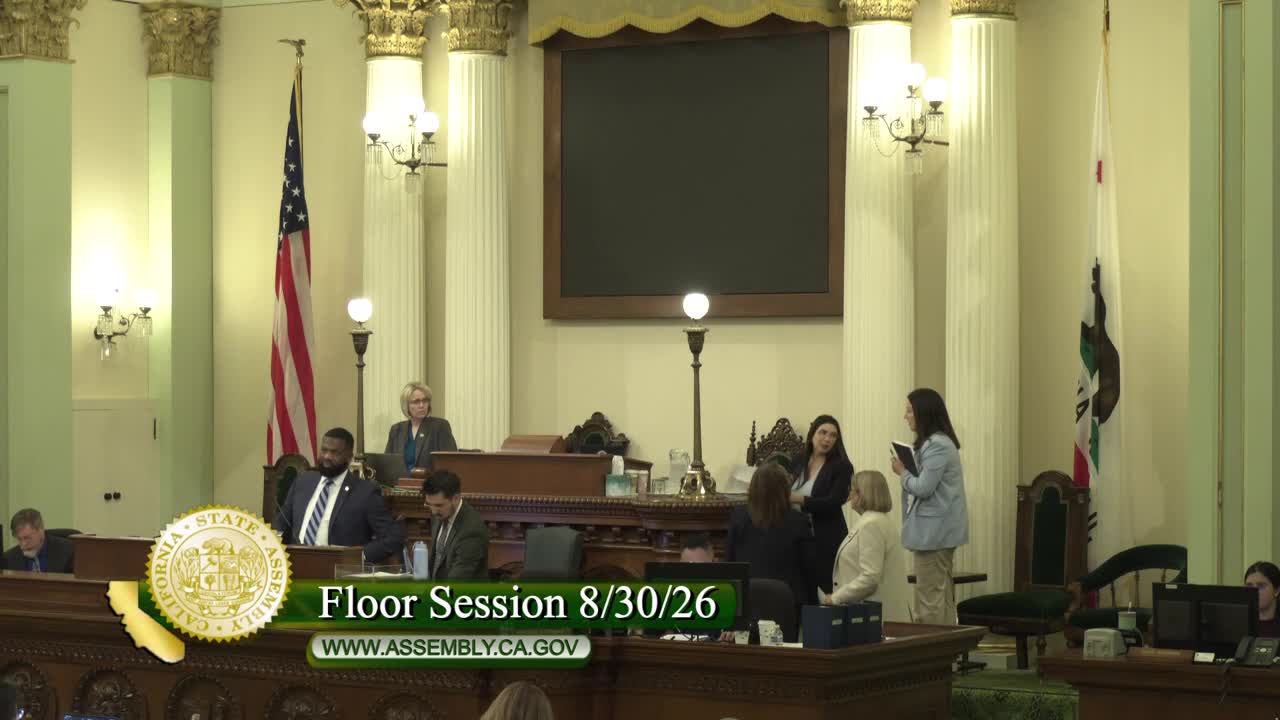

Bill Author

Bill Co-Author(s):