AB 2783: Court reporting.
- Session Year: 2025-2026
- House: Assembly
- Latest Version Date: 2026-09-18
Current Status:
Passed
(2026-09-18: Chaptered by Secretary of State - Chapter 312, Statutes of 2026.)
Introduced
In Committee
Awaiting First Chamber Vote
Passed First Chamber
In Committee
Awaiting Second Chamber Vote
Passed Second Chamber
Enacted
(1)Existing law establishes the Court Reporters Board of California for the licensure and regulation of shorthand reporters. Existing law generally requires an applicant for a license to, among other requirements, pass an examination consisting of 3 parts, one of which is labeled Dictation/Transcription (Machine/Skill). Under existing law, successful completion of the Certified Verbatim Reporter (CVR) or Certified Verbatim Reporter-Stenotype (CVR-S) certification administered through the National Verbatim Reporters Association satisfies the requirement to pass the Dictation/Transcription portion of the examination.
This bill would also allow successful completion of the Registered Professional Reporter (RPR) certification administered through the National Court Reporters Association to satisfy the requirement to pass the Dictation/Transcription portion of the examination.
(2)Existing law authorizes the superior court of 13 specified counties to conduct pilot projects, beginning on July 1, 2025, to study the potential use of remote court reporting to make the verbatim record of certain court proceedings under specified requirements. Existing law requires all pilot projects to terminate no later than July 1, 2026, and further requires the Judicial Council to prepare a report for the Legislature with the results from each participating superior court. Existing law repeals these provisions on June 1, 2027.
This bill would extend the duration of the pilot program and would require all pilot projects to terminate no later than July 1, 2028, and would repeal these provisions on January 1, 2029. The bill would require the superior courts in the Counties of Los Angeles, Mendocino, San Bernardino, San Mateo, and Tulare to submit data and information to the Judicial Council, as specified, and would require the Judicial Council to present that information and its own report to the Legislature by January 1, 2027.
This bill would declare that it is to take effect immediately as an urgency statute.
(1)Existing law establishes the Court Reporters Board of California for the licensure and regulation of shorthand reporters. Existing law generally requires an applicant for a license to, among other requirements, pass an examination consisting of 3 parts, one of which is labeled Dictation/Transcription (Machine/Skill). Under existing law, successful completion of the Certified Verbatim Reporter (CVR) or Certified Verbatim Reporter-Stenotype (CVR-S) certification administered through the National Verbatim Reporters Association satisfies the requirement to pass the Dictation/Transcription portion of the examination.
This bill would also allow successful completion of the Registered Professional Reporter (RPR) certification administered through the National Court Reporters Association to satisfy the requirement to pass the Dictation/Transcription portion of the examination.
(2)Existing law authorizes the superior court of 13 specified counties to conduct pilot projects, beginning on July 1, 2025, to study the potential use of remote court reporting to make the verbatim record of certain court proceedings under specified requirements. Existing law requires all pilot projects to terminate no later than July 1, 2026, and further requires the Judicial Council to prepare a report for the Legislature with the results from each participating superior court. Existing law repeals these provisions on June 1, 2027.
This bill would extend the duration of the pilot program and would require all pilot projects to terminate no later than July 1, 2028, and would repeal these provisions on January 1, 2029.
(a)(1)The California state licensing examination shall consist of the following three divisible parts:
(A)English.
(B)Professional Practice.
(C)Dictation/Transcription (Machine/Skill).
(2)(A)The passing grades for the Dictation/Transcription part of the examination is 95 percent.
(B)(i)The passing grades for English and Professional Practice, the two written knowledge parts of the examination, shall be determined by the Angoff criterion-referenced method.
(ii)The passing scores may vary moderately with changes in test composition.
(iii)Any examinee who obtains a grade that equals or exceeds the passing score determined by the Angoff criterion-referenced method shall be deemed to have passed the applicable portion of the examination if the other requirements of this section are met.
(b)The board shall notify each examinee electronically or in writing of their pass or fail examination results.
(c)(1)An applicant shall take and pass all three parts of the examination within three consecutive years to have passed the examination.
(2)The three-year period shall begin from the date of the examination or any part of the examination for which the applicant is first scheduled.
(d)(1)After a period of four months has elapsed, an applicant may repeat any part of the examination.
(2)An applicant shall not repeat any part of the examination unless or until a new version of the examination has been introduced.
(e)Notwithstanding subdivision (c), an applicant who passes a part of the examination shall receive conditional credit for passing that part and may retake the remaining parts.
(f)The period of time designated in subdivision (c) may be extended by the board for a period of time not to exceed one year upon the showing of extraordinary extenuating circumstances.
(g)(1)Successful completion of the Certified Verbatim Reporter (CVR), Certified Verbatim Reporter-Stenotype (CVR-S) certification administered through the National Verbatim Reporters Association, or successful completion of the Registered Professional Reporter (RPR) certification administered through the National Court Reporters Association satisfies the requirement to pass the Dictation/Transcription examination under subparagraph (C) of paragraph (1) of subdivision (a).
(2)Applicants who passed the Certified Verbatim Reporter (CVR), Certified Verbatim Reporter-Stenotype (CVR-S), or Registered Professional Reporter (RPR) certification are subject to the requirements identified under subdivision (a) for the English examination and the Professional Practice examination, all of which must be passed within three consecutive years, pursuant to subdivision (c), to have passed the California state licensing examination.
SEC. 2.Section 69959.5 of the Government Code is amended to read:69959.5.(a)For purposes of this section, remote court reporting means the use of a stenographic reporter who is not present in the courtroom to produce a verbatim record of court proceedings that are transmitted by audiovisual means to the reporter.
(b)Notwithstanding Section 69959, the Superior Courts of the Counties of Alameda, Contra Costa, Los Angeles, Mendocino, Monterey, Orange, San Bernardino, San Diego, San Joaquin, San Mateo, Santa Clara, Tulare, and Ventura are authorized to conduct pilot projects, beginning on July 1, 2025, to study the potential use of remote court reporting to make the verbatim record of certain court proceedings. Participating superior courts shall comply with all of the following requirements:
(1)The remote court reporting shall be performed only by full-time official reporters licensed pursuant to Section 8024 of the Business and Professions Code and employed by the participating superior court who have at least two years of courtroom experience in a California superior court. Court reporters who participate in the remote court reporting pilot project shall be treated in the same manner as other official reporters employed by the court, including, but not limited to, compensation, benefits, classification, seniority, job description, and bargaining units.
(2)The official reporters shall be physically located in a court facility while performing the remote court reporting. Alternatively, the superior court and the exclusive representative of the official reporters may meet and confer and reach agreement by June 30, 2025, to include additional offsite locations to test remote court reporting. Such an agreement shall also specify the equipment needed for these locations and how the participating court will provide that equipment.
(3)(A)No more than 20 percent of the total full-time official court reporters, or for courts with fewer than 10 full-time official court reporters, 2 court reporters, in the participating court may be in the pilot project.
(B)Notwithstanding subparagraph (A), in counties with a population of 2,000,000 or more, no more than 10 percent of the total full-time official court reporters in the participating court may be in the pilot project.
(C)The participating superior court shall equip courtrooms with necessary equipment by no later than June 30, 2025. For the purposes of this chapter, necessary equipment means:
(i)Individual microphones for each participant, including the judicial officer, witnesses, jury box, counsel table, and lectern or podium or other place where participants may speak.
(ii)(I)Cameras with a dedicated frontal view of the judicial officer, witnesses, jury box, counsel tables, and lectern or podium or other place where participants may speak.
(II)Notwithstanding subclause (I), the camera in the jury box shall not be utilized any time jurors or prospective jurors are present. The camera shall be removed from the courtroom, covered, or otherwise disabled in a manner to permit a juror or prospective juror and court personnel to easily recognize the camera is not active.
(iii)Speakers that allow the court reporter to be heard clearly throughout the courtroom.
(iv)Speakers and microphone for the court reporter.
(v)Camera for the court reporter.
(vi)Two-way means of communication between the court reporter and the judicial officer. Court reporters shall be given the ability to mute and unmute their own audio to maintain communication with the judicial officer.
(4)A participating court may elect to use remote court reporting in limited civil, law and motion for unlimited civil cases, family law, child support, probate, juvenile dependency, juvenile delinquency, and felony and misdemeanor criminal proceedings except preliminary hearings, trials, and death penalty cases.
(5)Transcripts created through remote court reporting as part of the pilot project may be used whenever a transcript of court proceedings is required. The fees of the official reporter and costs of transcript preparation for remote court reporting shall be the same as when an official reporter is present in the courtroom.
(6)Court reporters participating in the pilot project shall not be held responsible for failures in technology or equipment. If technology or audibility issues inhibit the court reporters ability to accurately capture and certify a verbatim record, the court shall temporarily suspend the proceeding until the issues can be resolved. A trial court shall not retaliate or threaten to retaliate against a court reporter who notifies the judicial officer that technology or audibility issues are impeding the creation and certification of the verbatim record of a proceeding.
(7)(A)Los Angeles, Mendocino, San Bernardino, San Mateo, and Tulare superior courts shall submit data and information to the Judicial Council on the results of the pilot project. In compiling feedback on the results, each superior court shall obtain feedback from the following individuals who participated in the pilot project:
(i)At least two judicial officers or, if only one judicial officer participated, that judicial officer.
(ii)At least two court reporters chosen by the exclusive bargaining representative of the official court reporters or, if only one court reporter participated, that court reporter.
(B)The Judicial Council shall compile the results from the superior courts listed in subparagraph (A) and prepare a report for the Legislature. This report shall be presented to the Legislature, along with each superior courts individual report, in accordance with Section 9795, no later than January 1, 2027.
(c)(1)All pilot projects authorized pursuant to this section shall terminate by no later than July 1, 2028. A participating superior court shall terminate its pilot project earlier if the court determines that the use of remote court reporting is prejudicing the rights of litigants or the interests of justice.
(2)This section shall remain in effect only until January 1, 2029, and as of that date is repealed.
SEC. 3.This act is an urgency statute necessary for the immediate preservation of the public peace, health, or safety within the meaning of Article IV of the California Constitution and shall go into immediate effect. The facts constituting the necessity are:
In order to mend the gap between the pilot project set to expire July 1, 2026, and the implementation of this extended program for court reporting services, it is necessary that this bill take effect immediately.
(a)(1)The California state licensing examination shall consist of the following three divisible parts:
(A)English.
(B)Professional Practice.
(C)Dictation/Transcription (Machine/Skill).
(2)(A)The passing grades for the Dictation/Transcription part of the examination is 95 percent.
(B)(i)The passing grades for English and Professional Practice, the two written knowledge parts of the examination, shall be determined by the Angoff criterion-referenced method.
(ii)The passing scores may vary moderately with changes in test composition.
(iii)Any examinee who obtains a grade that equals or exceeds the passing score determined by the Angoff criterion-referenced method shall be deemed to have passed the applicable portion of the examination if the other requirements of this section are met.
(b)The board shall notify each examinee electronically or in writing of their pass or fail examination results.
(c)(1)An applicant shall take and pass all three parts of the examination within three consecutive years to have passed the examination.
(2)The three-year period shall begin from the date of the examination or any part of the examination for which the applicant is first scheduled.
(d)(1)After a period of four months has elapsed, an applicant may repeat any part of the examination.
(2)An applicant shall not repeat any part of the examination unless or until a new version of the examination has been introduced.
(e)Notwithstanding subdivision (c), an applicant who passes a part of the examination shall receive conditional credit for passing that part and may retake the remaining parts.
(f)The period of time designated in subdivision (c) may be extended by the board for a period of time not to exceed one year upon the showing of extraordinary extenuating circumstances.
(g)(1)Successful completion of the Certified Verbatim Reporter (CVR), Certified Verbatim Reporter-Stenotype (CVR-S) certification administered through the National Verbatim Reporters Association, or successful completion of the Registered Professional Reporter (RPR) certification administered through the National Court Reporters Association satisfies the requirement to pass the Dictation/Transcription examination under subparagraph (C) of paragraph (1) of subdivision (a).
(2)Applicants who passed the Certified Verbatim Reporter (CVR), Certified Verbatim Reporter-Stenotype (CVR-S), or Registered Professional Reporter (RPR) certification are subject to the requirements identified under subdivision (a) for the English examination and the Professional Practice examination, all of which must be passed within three consecutive years, pursuant to subdivision (c), to have passed the California state licensing examination.
SEC. 2.Section 69959.5 of the Government Code is amended to read:69959.5.(a)For purposes of this section, remote court reporting means the use of a stenographic reporter who is not present in the courtroom to produce a verbatim record of court proceedings that are transmitted by audiovisual means to the reporter.
(b)Notwithstanding Section 69959, the Superior Courts of the Counties of Alameda, Contra Costa, Los Angeles, Mendocino, Monterey, Orange, San Bernardino, San Diego, San Joaquin, San Mateo, Santa Clara, Tulare, and Ventura are authorized to conduct pilot projects, beginning on July 1, 2025, to study the potential use of remote court reporting to make the verbatim record of certain court proceedings. Participating superior courts shall comply with all of the following requirements:
(1)The remote court reporting shall be performed only by full-time official reporters licensed pursuant to Section 8024 of the Business and Professions Code and employed by the participating superior court who have at least two years of courtroom experience in a California superior court. Court reporters who participate in the remote court reporting pilot project shall be treated in the same manner as other official reporters employed by the court, including, but not limited to, compensation, benefits, classification, seniority, job description, and bargaining units.
(2)The official reporters shall be physically located in a court facility while performing the remote court reporting. Alternatively, the superior court and the exclusive representative of the official reporters may meet and confer and reach agreement by June 30, 2025, to include additional offsite locations to test remote court reporting. Such an agreement shall also specify the equipment needed for these locations and how the participating court will provide that equipment.
(3)(A)No more than 20 percent of the total full-time official court reporters, or for courts with fewer than 10 full-time official court reporters, 2 court reporters, in the participating court may be in the pilot project.
(B)Notwithstanding subparagraph (A), in counties with a population of 2,000,000 or more, no more than 10 percent of the total full-time official court reporters in the participating court may be in the pilot project.
(C)The participating superior court shall equip courtrooms with necessary equipment by no later than June 30, 2025. For the purposes of this chapter, necessary equipment means:
(i)Individual microphones for each participant, including the judicial officer, witnesses, jury box, counsel table, and lectern or podium or other place where participants may speak.
(ii)(I)Cameras with a dedicated frontal view of the judicial officer, witnesses, jury box, counsel tables, and lectern or podium or other place where participants may speak.
(II)Notwithstanding subclause (I), the camera in the jury box shall not be utilized any time jurors or prospective jurors are present. The camera shall be removed from the courtroom, covered, or otherwise disabled in a manner to permit a juror or prospective juror and court personnel to easily recognize the camera is not active.
(iii)Speakers that allow the court reporter to be heard clearly throughout the courtroom.
(iv)Speakers and microphone for the court reporter.
(v)Camera for the court reporter.
(vi)Two-way means of communication between the court reporter and the judicial officer. Court reporters shall be given the ability to mute and unmute their own audio to maintain communication with the judicial officer.
(4)A participating court may elect to use remote court reporting in limited civil, law and motion for unlimited civil cases, family law, child support, probate, juvenile dependency, juvenile delinquency, and felony and misdemeanor criminal proceedings except preliminary hearings, trials, and death penalty cases.
(5)Transcripts created through remote court reporting as part of the pilot project may be used whenever a transcript of court proceedings is required. The fees of the official reporter and costs of transcript preparation for remote court reporting shall be the same as when an official reporter is present in the courtroom.
(6)Court reporters participating in the pilot project shall not be held responsible for failures in technology or equipment. If technology or audibility issues inhibit the court reporters ability to accurately capture and certify a verbatim record, the court shall temporarily suspend the proceeding until the issues can be resolved. A trial court shall not retaliate or threaten to retaliate against a court reporter who notifies the judicial officer that technology or audibility issues are impeding the creation and certification of the verbatim record of a proceeding.
(7)(A)Each participating superior court Los Angeles, Mendocino, San Bernardino, San Mateo, and Tulare superior courts shall submit data and information to the Judicial Council on the results of the pilot project. In compiling feedback on the results, each superior court shall obtain feedback from the following individuals who participated in the pilot project:
(i)At least two judicial officers or, if only one judicial officer participated, that judicial officer.
(ii)At least two court reporters chosen by the exclusive bargaining representative of the official court reporters or, if only one court reporter participated, that court reporter.
(iii)At least two attorneys who regularly practice in the participating court.(iv)The chief public defender or their designee if the remote reporting occurred in criminal or juvenile delinquency proceedings.(v)The district attorney or their designee if the remote reporting occurred in criminal or juvenile delinquency proceedings.(B)The Judicial Council shall compile the results from each participating superior court the superior courts listed in subparagraph (A) and prepare a report for the Legislature. This report shall be presented to the Legislature, along with each participating superior courts individual report, in accordance with Section 9795, within six months of the conclusion of the pilot project. no later than January 1, 2027.
(c)(1)All pilot projects authorized pursuant to this section shall terminate by no later than July 1, 2028. A participating superior court shall terminate its pilot project earlier if the court determines that the use of remote court reporting is prejudicing the rights of litigants or the interests of justice.
(2)This section shall remain in effect only until January 1, 2029, and as of that date is repealed.
SEC. 3.This act is an urgency statute necessary for the immediate preservation of the public peace, health, or safety within the meaning of Article IV of the California Constitution and shall go into immediate effect. The facts constituting the necessity are:
In order to mend the gap between the pilot project set to expire July 1, 2026, and the implementation of this extended program for court reporting services, it is necessary that this bill take effect immediately.
(a)(1)The California state licensing examination shall consist of the following three divisible parts:
(A)English.
(B)Professional Practice.
(C)Dictation/Transcription (Machine/Skill).
(2)(A)The passing grades for the Dictation/Transcription part of the examination is 95 percent.
(B)(i)The passing grades for English and Professional Practice, the two written knowledge parts of the examination, shall be determined by the Angoff criterion-referenced method.
(ii)The passing scores may vary moderately with changes in test composition.
(iii)Any examinee who obtains a grade that equals or exceeds the passing score determined by the Angoff criterion-referenced method shall be deemed to have passed the applicable portion of the examination if the other requirements of this section are met.
(b)The board shall notify each examinee electronically or in writing of their pass or fail examination results.
(c)(1)An applicant shall take and pass all three parts of the examination within three consecutive years to have passed the examination.
(2)The three-year period shall begin from the date of the examination or any part of the examination for which the applicant is first scheduled.
(d)(1)After a period of four months has elapsed, an applicant may repeat any part of the examination.
(2)An applicant shall not repeat any part of the examination unless or until a new version of the examination has been introduced.
(e)Notwithstanding subdivision (c), an applicant who passes a part of the examination shall receive conditional credit for passing that part and may retake the remaining parts.
(f)The period of time designated in subdivision (c) may be extended by the board for a period of time not to exceed one year upon the showing of extraordinary extenuating circumstances.
(g)(1)Successful completion of the Certified Verbatim Reporter (CVR), Certified Verbatim Reporter-Stenotype (CVR-S) certification administered through the National Verbatim Reporters Association, or successful completion of the Registered Professional Reporter (RPR) certification administered through the National Court Reporters Association satisfies the requirement to pass the Dictation/Transcription examination under subparagraph (C) of paragraph (1) of subdivision (a).
(2)Applicants who passed the Certified Verbatim Reporter (CVR), Certified Verbatim Reporter-Stenotype (CVR-S), or Registered Professional Reporter (RPR) certification are subject to the requirements identified under subdivision (a) for the English examination and the Professional Practice examination, all of which must be passed within three consecutive years, pursuant to subdivision (c), to have passed the California state licensing examination.
SEC. 2.Section 69959.5 of the Government Code is amended to read:69959.5.(a)For purposes of this section, remote court reporting means the use of a stenographic reporter who is not present in the courtroom to produce a verbatim record of court proceedings that are transmitted by audiovisual means to the reporter.
(b)Notwithstanding Section 69959, the Superior Courts of the Counties of Alameda, Contra Costa, Los Angeles, Mendocino, Monterey, Orange, San Bernardino, San Diego, San Joaquin, San Mateo, Santa Clara, Tulare, and Ventura are authorized to conduct pilot projects, beginning on July 1, 2025, to study the potential use of remote court reporting to make the verbatim record of certain court proceedings. Participating superior courts shall comply with all of the following requirements:
(1)The remote court reporting shall be performed only by full-time official reporters licensed pursuant to Section 8024 of the Business and Professions Code and employed by the participating superior court who have at least two years of courtroom experience in a California superior court. Court reporters who participate in the remote court reporting pilot project shall be treated in the same manner as other official reporters employed by the court, including, but not limited to, compensation, benefits, classification, seniority, job description, and bargaining units.
(2)The official reporters shall be physically located in a court facility while performing the remote court reporting. Alternatively, the superior court and the exclusive representative of the official reporters may meet and confer and reach agreement by June 30, 2025, to include additional offsite locations to test remote court reporting. Such an agreement shall also specify the equipment needed for these locations and how the participating court will provide that equipment.
(3)(A)No more than 20 percent of the total full-time official court reporters, or for courts with fewer than 10 full-time official court reporters, 2 court reporters, in the participating court may be in the pilot project.
(B)Notwithstanding subparagraph (A), in counties with a population of 2,000,000 or more, no more than 10 percent of the total full-time official court reporters in the participating court may be in the pilot project.
(C)The participating superior court shall equip courtrooms with necessary equipment by no later than June 30, 2025. For the purposes of this chapter, necessary equipment means:
(i)Individual microphones for each participant, including the judicial officer, witnesses, jury box, counsel table, and lectern or podium or other place where participants may speak.
(ii)(I)Cameras with a dedicated frontal view of the judicial officer, witnesses, jury box, counsel tables, and lectern or podium or other place where participants may speak.
(II)Notwithstanding subclause (I), the camera in the jury box shall not be utilized any time jurors or prospective jurors are present. The camera shall be removed from the courtroom, covered, or otherwise disabled in a manner to permit a juror or prospective juror and court personnel to easily recognize the camera is not active.
(iii)Speakers that allow the court reporter to be heard clearly throughout the courtroom.
(iv)Speakers and microphone for the court reporter.
(v)Camera for the court reporter.
(vi)Two-way means of communication between the court reporter and the judicial officer. Court reporters shall be given the ability to mute and unmute their own audio to maintain communication with the judicial officer.
(4)A participating court may elect to use remote court reporting in limited civil, law and motion for unlimited civil cases, family law, child support, probate, juvenile dependency, juvenile delinquency, and felony and misdemeanor criminal proceedings except preliminary hearings, trials, and death penalty cases.
(5)Transcripts created through remote court reporting as part of the pilot project may be used whenever a transcript of court proceedings is required. The fees of the official reporter and costs of transcript preparation for remote court reporting shall be the same as when an official reporter is present in the courtroom.
(6)Court reporters participating in the pilot project shall not be held responsible for failures in technology or equipment. If technology or audibility issues inhibit the court reporters ability to accurately capture and certify a verbatim record, the court shall temporarily suspend the proceeding until the issues can be resolved. A trial court shall not retaliate or threaten to retaliate against a court reporter who notifies the judicial officer that technology or audibility issues are impeding the creation and certification of the verbatim record of a proceeding.
(7)(A)Each participating superior court shall submit data and information to the Judicial Council on the results of the pilot project. In compiling feedback on the results, each superior court shall obtain feedback from the following individuals who participated in the pilot project:
(i)At least two judicial officers or, if only one judicial officer participated, that judicial officer.
(ii)At least two court reporters chosen by the exclusive bargaining representative of the official court reporters or, if only one court reporter participated, that court reporter.
(iii)At least two attorneys who regularly practice in the participating court.
(iv)The chief public defender or their designee if the remote reporting occurred in criminal or juvenile delinquency proceedings.
(v)The district attorney or their designee if the remote reporting occurred in criminal or juvenile delinquency proceedings.
(B)The Judicial Council shall compile the results from each participating superior court and prepare a report for the Legislature. This report shall be presented to the Legislature, along with each participating superior courts individual report, in accordance with Section 9795, within six months of the conclusion of the pilot project.
(c)(1)All pilot projects authorized pursuant to this section shall terminate by no later than July 1, 2028. A participating superior court shall terminate its pilot project earlier if the court determines that the use of remote court reporting is prejudicing the rights of litigants or the interests of justice.
(2)This section shall remain in effect only until January 1, 2029, and as of that date is repealed.
SEC. 3.This act is an urgency statute necessary for the immediate preservation of the public peace, health, or safety within the meaning of Article IV of the California Constitution and shall go into immediate effect. The facts constituting the necessity are:
In order to mend the gap between the pilot project set to expire July 1, 2026, and the implementation of this extended program for court reporting services, it is necessary that this bill take effect immediately.
(a)(1)The California state licensing examination shall consist of the following three divisible parts:
(A)English.
(B)Professional Practice.
(C)Dictation/Transcription (Machine/Skill).
(2)(A)The passing grades for the Dictation/Transcription part of the examination is 95 percent.
(B)(i)The passing grades for English and Professional Practice, the two written knowledge parts of the examination, shall be determined by the Angoff criterion-referenced method.
(ii)The passing scores may vary moderately with changes in test composition.
(iii)Any examinee who obtains a grade which that equals or exceeds the passing score determined by the Angoff criterion-referenced method will shall be deemed to have passed the applicable portion of the examination, assuming examination if the other requirements of this section are met.
(b)The board shall notify each examinee electronically or in writing of their pass or fail examination results.
(c)(1)An applicant shall take and pass all three parts of the examination within three consecutive years to have passed the examination.
(2)The three-year period shall begin from the date of the examination or any part of the examination for which the applicant is first scheduled.
(d)(1)After a period of four months has elapsed, an applicant may repeat any part of the examination.
(2)An applicant shall not repeat any part of the examination unless or until a new version of the examination has been introduced.
(e)Notwithstanding subdivision (c), an applicant who passes a part of the examination shall receive conditional credit for passing that part and may retake the remaining parts.
(f)The period of time designated in subdivision (c) may be extended by the board for a period of time not to exceed one year upon the showing of extraordinary extenuating circumstances.
(g)(1)Successful completion of the Certified Verbatim Reporter (CVR) or (CVR), Certified Verbatim Reporter-Stenotype (CVR-S) certification administered through the National Verbatim Reporters Association Association, or successful completion of the Registered Professional Reporter (RPR) certification administered through the National Court Reporters Association satisfies the requirement to pass the Dictation/Transcription examination under subparagraph (C) of paragraph (1) of subdivision (a).
(2)Applicants who passed the Certified Verbatim Reporter (CVR) or (CVR), Certified Verbatim Reporter-Stenotype (CVR-S) (CVR-S), or Registered Professional Reporter (RPR) certification are subject to the requirements identified under subdivision (a) for the English examination and the Professional Practice examination, all of which must be passed within three consecutive years, pursuant to subdivision (c), to have passed the California state licensing examination.
SEC. 2.Section 69959.5 of the Government Code is amended to read:69959.5.(a)For purposes of this section, remote court reporting means the use of a stenographic reporter who is not present in the courtroom to produce a verbatim record of court proceedings that are transmitted by audiovisual means to the reporter.
(b)Notwithstanding Section 69959, the Superior Courts of the Counties of Alameda, Contra Costa, Los Angeles, Mendocino, Monterey, Orange, San Bernardino, San Diego, San Joaquin, San Mateo, Santa Clara, Tulare, and Ventura are authorized to conduct pilot projects, beginning on July 1, 2025, to study the potential use of remote court reporting to make the verbatim record of certain court proceedings. Participating superior courts shall comply with all of the following requirements:
(1)The remote court reporting shall be performed only by full-time official reporters licensed pursuant to Section 8024 of the Business and Professions Code and employed by the participating superior court who have at least two years of courtroom experience in a California superior court. Court reporters who participate in the remote court reporting pilot project shall be treated in the same manner as other official reporters employed by the court, including, but not limited to, compensation, benefits, classification, seniority, job description, and bargaining units.
(2)The official reporters shall be physically located in a court facility while performing the remote court reporting. Alternatively, the superior court and the exclusive representative of the official reporters may meet and confer and reach agreement by June 30, 2025, to include additional offsite locations to test remote court reporting. Such an agreement shall also specify the equipment needed for these locations and how the participating court will provide that equipment.
(3)(A)No more than 20 percent of the total full-time official court reporters, or for courts with fewer than 10 full-time official court reporters, 2 court reporters, in the participating court may be in the pilot project.
(B)Notwithstanding subparagraph (A), in counties with a population of 2,000,000 or more, no more than 10 percent of the total full-time official court reporters in the participating court may be in the pilot project.
(C)The participating superior court shall equip courtrooms with necessary equipment by no later than June 30, 2025. For the purposes of this chapter, necessary equipment means:
(i)Individual microphones for each participant, including the judicial officer, witnesses, jury box, counsel table, and lectern or podium or other place where participants may speak.
(ii)(I)Cameras with a dedicated frontal view of the judicial officer, witnesses, jury box, counsel tables, and lectern or podium or other place where participants may speak.
(II)Notwithstanding subclause (I), the camera in the jury box shall not be utilized any time jurors or prospective jurors are present. The camera shall be removed from the courtroom, covered, or otherwise disabled in a manner to permit a juror or prospective juror and court personnel to easily recognize the camera is not active.
(iii)Speakers that allow the court reporter to be heard clearly throughout the courtroom.
(iv)Speakers and microphone for the court reporter.
(v)Camera for the court reporter.
(vi)Two-way means of communication between the court reporter and the judicial officer. Court reporters shall be given the ability to mute and unmute their own audio to maintain communication with the judicial officer.
(4)A participating court may elect to use remote court reporting in limited civil, law and motion for unlimited civil cases, family law, child support, probate, juvenile dependency, juvenile delinquency, and felony and misdemeanor criminal proceedings except preliminary hearings, trials, and death penalty cases.
(5)Transcripts created through remote court reporting as part of the pilot project may be used whenever a transcript of court proceedings is required. The fees of the official reporter and costs of transcript preparation for remote court reporting shall be the same as when an official reporter is present in the courtroom.
(6)Court reporters participating in the pilot project shall not be held responsible for failures in technology or equipment. If technology or audibility issues inhibit the court reporters ability to accurately capture and certify a verbatim record, the court shall temporarily suspend the proceeding until the issues can be resolved. A trial court shall not retaliate or threaten to retaliate against a court reporter who notifies the judicial officer that technology or audibility issues are impeding the creation and certification of the verbatim record of a proceeding.
(7)(A)Each participating superior court shall submit data and information to the Judicial Council on the results of the pilot project. In compiling feedback on the results, each superior court shall obtain feedback from the following individuals who participated in the pilot project:
(i)At least two judicial officers or, if only one judicial officer participated, that judicial officer.
(ii)At least two court reporters chosen by the exclusive bargaining representative of the official court reporters or, if only one court reporter participated, that court reporter.
(iii)At least two attorneys who regularly practice in the participating court.
(iv)The chief public defender or their designee if the remote reporting occurred in criminal or juvenile delinquency proceedings.
(v)The district attorney or their designee if the remote reporting occurred in criminal or juvenile delinquency proceedings.
(B)The Judicial Council shall compile the results from each participating superior court and prepare a report for the Legislature. This report shall be presented to the Legislature, along with each participating superior courts individual report, in accordance with Section 9795, within six months of the conclusion of the pilot project.
(c)(1)All pilot projects authorized pursuant to this section shall terminate by no later than July 1, 2026. 2028. A participating superior court shall terminate its pilot project earlier if the court determines that the use of remote court reporting is prejudicing the rights of litigants or the interests of justice.
(2)This section shall remain in effect only until June 1, 2027, January 1, 2029, and as of that date is repealed.
|
Date
|
Status
|
|---|---|
| Sep 18, 2026 | Chaptered by Secretary of State - Chapter 312, Statutes of 2026. |
| Sep 18, 2026 | Approved by the Governor. |
| Sep 3, 2026 | Enrolled and presented to the Governor at 4 p.m. |
| Aug 26, 2026 | Senate amendments concurred in. To Engrossing and Enrolling. (Ayes 79. Noes 0. Page 6653.). |
| Aug 26, 2026 | Senate amendments concurred in. To Engrossing and Enrolling. (Ayes 79. Noes 0.). |
| Aug 26, 2026 | In Assembly. Concurrence in Senate amendments pending. |
| Aug 26, 2026 | Read third time. Urgency clause adopted. Passed. Ordered to the Assembly. (Ayes 40. Noes 0. Page 5857.). |
| Aug 26, 2026 | Read third time. Urgency clause adopted. Passed. Ordered to the Assembly. (Ayes 40. Noes 0.). |
| Aug 4, 2026 | Read second time. Ordered to third reading. |
| Aug 3, 2026 | From committee: Be ordered to second reading pursuant to Senate Rule 28.8. |
| Jun 29, 2026 | From committee: Do pass and re-refer to Com. on APPR. (Ayes 11. Noes 0.) (June 29). Re-referred to Com. on APPR. |
| Jun 17, 2026 | From committee: Do pass and re-refer to Com. on B. P. & E.D. (Ayes 11. Noes 0.) (June 16). Re-referred to Com. on B. P. & E.D. |
| Jun 3, 2026 | From committee chair, with author's amendments: Amend, and re-refer to committee. Read second time, amended, and re-referred to Com. on JUD. |
| Jun 3, 2026 | Referred to Coms. on JUD. and B. P. & E.D. |
| May 27, 2026 | In Senate. Read first time. To Com. on RLS. for assignment. |
| May 26, 2026 | Read third time. Urgency clause adopted. Passed. Ordered to the Senate. (Ayes 78. Noes 0. Page 5351.). |
| May 26, 2026 | Read third time. Urgency clause adopted. Passed. Ordered to the Senate. (Ayes 78. Noes 0.). |
| May 26, 2026 | Read third time. Urgency clause adopted. Passed. Ordered to the Senate. |
| May 18, 2026 | Read second time. Ordered to third reading. |
| May 14, 2026 | From committee: Do pass. (Ayes 15. Noes 0.) (May 14). |
| Apr 29, 2026 | In committee: Set, first hearing. Referred to APPR. suspense file. |
| Apr 20, 2026 | Re-referred to Com. on APPR. |
| Apr 16, 2026 | Read second time and amended. |
| Apr 15, 2026 | From committee: Amend, and do pass as amended and re-refer to Com. on APPR. with recommendation: To Consent Calendar. (Ayes 12. Noes 0.) (April 14). |
| Mar 16, 2026 | Referred to Com. on JUD. |
| Mar 12, 2026 | From printer. May be heard in committee April 11. |
| Mar 11, 2026 | Read first time. To print. |
|
Date
|
Description
|
Location
|
Votes
|
|
|---|---|---|---|---|
| Aug 26, 2026 | AB 2783 JUD. Concurrence in Senate Amendments By KALRA | Assembly Floor |
Passed |
|
| Aug 26, 2026 | Assembly 3rd Reading AB2783 JUD. (Kalra) By Reyes Urgency Clause | Senate Floor |
Passed |
|
| Jun 29, 2026 | Do pass, but first be re-referred to the Committee on [Appropriations] | Senate Standing Committee on Business, Professions and Economic Development |
Passed |
|
| Jun 16, 2026 | Do pass, but first be re-referred to the Committee on [Business, Professions and Economic Development] | Senate Standing Committee on Judiciary |
Passed |
|
| May 26, 2026 | AB 2783 Judiciary Third Reading Urgency By KALRA | Assembly Floor |
Passed |
|
| May 14, 2026 | Do pass. | Assembly Standing Committee on Appropriations |
Passed |
|
| Apr 14, 2026 | Do pass as amended, and be re-referred to the Committee on [Appropriations] with recommendation: To Consent Calendar | Assembly Standing Committee on Judiciary |
Passed |
This list shows positions taken on this bill by organizations on the date displayed, which is linked to the original source.
Positions by individuals are not included.
|
Organization
|
Position
|
Date
|
|---|---|---|
| 17 Individuals | ** Against | |
| California Court Reporters Association | ** Support | |
| Court Reporters Board of California | ** Support | |
| Emerald Deposition Reporters | ** Against | |
| Judicial Council of California | ** Support | |
| Kuziora Deposition Reporters | ** Against | |
| Los Angeles County Court Reporters Association | ** Support | |
| National Court Reporters Association | ** Support | |
| One individual | ** Support | |
| Protect Your Record Project | ** Against | |
| Protect Your Record Project (PYRP) | ** Against | |
| SEIU California | ** Support | |
| Superior Court of Los Angeles County | ** Support |
CONCURRENCE IN SENATE AMENDMENTS
CSA1 Bill Id:AB 2783
Author:(Committee on Judiciary)
As Amended Ver:June 3, 2026
2/3 vote. Urgency
SUMMARY
Provides that completion of a certification administered through the National Court Reporter Association satisfies a specified portion of the Court Reporters exam and extends the duration of the remote court reporting pilot project from June 1, 2027, to July 1, 2028.
Major Provisions
- Adds to the list of examinations that satisfy the Dictation/Transcription component of the Court Reporter licensing exam successful completion of the Registered Professional Reporter (RPR) certification administered through the National Court Reporters Association.
- Extends the termination date for the ″remote court reporting″ pilot project, which was established in the Superior Courts of thirteen counties throughout the state, from July 1, 2026, to July 1, 2028. Extends the repeal date of the statute creating the pilot project from June 1, 2027, to January 1, 2029.
- Requires the Superior Courts of Los Angeles, Mendocino, San Bernardino, San Mateo, and Tulare to submit data and information to the Judicial Council, as specified, and requires the Judicial Council to present that information and its own report to the Legislature by January 1, 2027.
- Provides that this bill will take effect as an urgency measure.
Senate Amendments
- Require the Superior Courts of Los Angeles, Mendocino, San Bernardino, San Mateo, and Tulare to submit data and information to the Judicial Council, as specified, and require the Judicial Council to present that information and its own report to the Legislature by January 1, 2027.
- Make technical and conforming changes.
COMMENTS
This non-controversial bill makes two changes to the law governing court reporters. First, existing law establishes the Court Reporters Board of California for the purpose of licensing court reporters, and it requires a person applying for a license to pass a three-part certification exam, one of which is labeled Dictation/Transcription. Presently, an applicant must pass either the Certified Verbatim Reporter (CVR) or the Certified Verbatim-Stenotype (CVR-S) certification exam, administered by the National Verbtim Reporters Association, to satisfy the Dictation/Transcription part of the exam. This bill adds completion of the Registered Professional Reporter (RPR) certification, administered by the National Court Reporter Association, to the list of certifications that satisfy the Dictation/Transcription component.
Second, existing law also establishes a pilot project authorizing the superior courts in thirteen counties to study the potential use of remote court reporting to make the verbatim record of certain court proceedings. Existing law provides that the pilot projects shall terminate no later than July 1, 2026, and further requires the Judicial Council to prepare a report for the Legislature with the results from each participating superior court. That project is set to terminate on July 1, 2026. This bill extends the termination date for the pilot project until July 8, 2028, so that the study may be fully completed and the Judicial Council report prepared.
According to the Author
This non-controversial bill does two things. First it adds the respected certification administered by the National Court Reporter Association to the list of certifications that satisfy the Dictation/Transcription portion of the court reporter licensing exam. Second, it extends the termination date for remote reporting pilot project from July 1, 2026, to July 1, 2028.
Arguments in Support
The National Court Reporters Association writes in support:
This legislation is a critical step in preserving the integrity of California′s legal system by prioritizing the presence of certified court reporters in courtrooms.
The administration of justice relies on a ″cold record″ that is beyond reproach. Certified court reporters provide a level of precision, accountability, and immediate readback capability that cannot be replicated.
By ensuring that a qualified, dedicated professional remains the primary steward of the record, AB 2783 safeguards the due process rights of all litigants, particularly in complex cases where nuances are paramount.
Furthermore, the restoration of justice depends on the accessibility and reliability of transcripts for appellate review. Without the gold standard of a certified reporter, the risk of potentially compromising the ability of higher courts to rectify errors or uphold just verdicts rises. Passing this bill signals that California views judicial integrity not as a convenience, but as a foundational priority.
Arguments in Opposition
Protect Your Record Project (PYRP) opposes this bill. PYRP writes:
Our concern with this bill applies to the section to allow the Registered Professional Reporter (RPR) exam to be used in place of taking the current California Certified Shorthand Reporter (CSR) exam. The ultimate outcome of this bill will take remote work away from California constituents and increase work for out-of-state workers who have not qualified through the CSR exam. Reciprocity with the RPR will not help with coverage of in-person court reporting assignments in California. Almost all RPR certificate holders who want reciprocity will be domiciled outside of California.
FISCAL COMMENTS
According to the Senate Appropriations Committee, pursuant to Senate Rule 28.8, negligible state costs.
VOTES:
ASM JUDICIARY: 12-0-0
YES: Kalra, Macedo, Bauer-Kahan, Bryan, Connolly, Dixon, Harabedian, Pacheco, Papan, Sanchez, Stefani, Zbur
ASM APPROPRIATIONS: 15-0-0
YES: Wicks, Hoover, Aguiar-Curry, Calderon, Caloza, Dixon, Fong, Mark González, Krell, Pacheco, Pellerin, Sharp-Collins, Solache, Ta, Tangipa
ASSEMBLY FLOOR: 78-0-2
YES: Addis, Aguiar-Curry, Ahrens, Alanis, Alvarez, Arambula, Ávila Farías, Bains, Bauer-Kahan, Bennett, Berman, Boerner, Bonta, Bryan, Calderon, Caloza, Carrillo, Castillo, Chen, Connolly, Davies, DeMaio, Dixon, Elhawary, Ellis, Flora, Fong, Gabriel, Gallagher, Garcia, Gipson, Jeff Gonzalez, Mark González, Hadwick, Haney, Harabedian, Hart, Hoover, Irwin, Jackson, Johnson, Kalra, Krell, Lackey, Lee, Lowenthal, Macedo, McKinnor, Nguyen, Ortega, Pacheco, Papan, Patel, Patterson, Pellerin, Petrie-Norris, Quirk-Silva, Ramos, Ransom, Michelle Rodriguez, Rogers, Blanca Rubio, Sanchez, Schiavo, Schultz, Sharp-Collins, Solache, Soria, Stefani, Ta, Tangipa, Valencia, Wallis, Ward, Wicks, Wilson, Zbur, Rivas
ABS, ABST OR NV: Muratsuchi, Celeste Rodriguez
UPDATED
VERSION: June 3, 2026
CONSULTANT: Tom Clark / JUD. / (916) 319-2334 FN: 0003324
SENATE RULES COMMITTEE Office of Senate Floor Analyses (916) 651-4171 | AB 2783 |
THIRD READING
Bill No: AB 2783
Author: Committee on Judiciary , et al.
Amended: 6/3/26 in Senate
Vote: 27 - Urgency
SENATE JUDICIARY COMMITTEE: 11-0, 6/16/26
AYES: Umberg, Niello, Allen, Caballero, Durazo, Laird, Reyes, Stern, Valladares, Wahab, Wiener
NO VOTE RECORDED: Ashby, Weber Pierson
SENATE BUS., PROF. & ECON. DEV. COMMITTEE: 11-0, 6/29/26
AYES: Wahab, Choi, Archuleta, Arreguín, Caballero, Grayson, Menjivar, Niello, Smallwood-Cuevas, Strickland, Umberg
ASSEMBLY FLOOR: 78-0, 5/26/26 - See last page for vote
SUBJECT: Court reporting
SOURCE: California Court Reporters Association
DIGEST:
This bill permits an applicant to satisfy the diction/transcription component of their examination for certification as a shorthand reporter by the Court Reporters Board of California (CRB) through completion of a certification administered by the National Court Reporter Association, and extends the termination and sunset dates for the ongoing remote reporting pilot projects in specified superior courts, on an urgency basis.
ANALYSIS:
Existing law:
- Provides that an official court reporter or official court reporter pro tempore[1] of the superior court shall take down in shorthand all testimony, objections made, rulings of the court, exceptions taken, arraignments, pleas, sentences, arguments of the attorneys to the jury, and statements and remarks made and oral instructions given by the judge or other judicial officer, in the following cases:
- In a civil case, on the order of the court or at the request of a party.
- In a felony case, on the order of the court or at the request of the prosecution, the defendant, or the attorney for the defendant.
- In a misdemeanor or infraction case, on the order of the court. (Code of Civil Procedure (Code Civ. Proc.), § 269(a).)
- Requires the court to provide an official court reporter in felony, dependency, and juvenile justice proceedings. (Penal (Pen.) Code, §§ 190.9, 869; Welfare & Institutions (Welf. & Inst.) Code, §§ 347, 677.)
- Provides that no person shall be appointed to the position of official court reporter of any court unless the person has first obtained a license to practice as a certified shorthand reporter from the CRB. (Government (Gov.) Code, § 69942.)
- Establishes the requirements for obtaining a certified shorthand reporter license from the CRB, including passing an examination that consists of three divisible parts testing for English, professional practice, and dictation/transcription (machine/skill). (Gov. Code, §§ 8020, 8020.5.)
- Provides that the dictation/transcription (machine/skill) portion of the examination under 4) may be satisfied by the successful completion of the Certified Verbatim Reporter or Certified Verbatim Reporter-Stenotype certification administered through the National Verbatim Reporters Association. (Gov. Code, § 8020.5(g).)
- Provides that, in a limited civil, misdemeanor, or infraction case, if an official court reporter is unavailable to report an action or proceeding in a court, the court may order the action or proceeding to be electronically recorded for purposes of creating the verbatim record, provided that the court has the approved equipment for doing so. (Gov. Code, § 69957(a).)
- Defines “remote court reporting” as the use of a stenographic reporter who is not present in the courtroom to produce a verbatim record of court proceedings that are transmitted by audiovisual means to the reporter. (Gov. Code, § 69959(b).)
- Provides that remote court reporting shall not be used by the courts to make the record of any court proceedings, and courts shall not expand any funds to purchase equipment or software to facilitate the use of remote court reporting. (Gov. Code, § 69959(a).)
- Permits, notwithstanding 8), the Superior Courts for the Counties of Alameda, Contra Costa, Los Angeles, Mendocino, Monterey, Orange, San Bernardino, San Diego, San Joaquin, San Mateo, Santa Clara, Tulare, and Ventura to conduct pilot projects, beginning July 1, 2025, to study the potential use of remote court reporting to make the verbatim record of certain court proceedings, subject to specified labor and technology conditions. (Gov. Code, § 69959.5(b).)
- Requires each participating superior court to submit data and information to the Judicial Council on the results of a pilot project conducted under 9), including feedback from specified persons who participated, and requires the Judicial Council to compile the results and prepare a report for the Legislature within six months of the completion of the pilot project. (Gov. Code, § 69959.5(b), (c).)
- Requires all pilot projects conducted pursuant to 9) to terminate no later than July 1, 2026, or earlier if a participating superior court determines that the use of remote court reporting is prejudicing the rights of litigants or the interests of justice; and repeals the pilot project’s authorizing statute as of June 1, 2027. (Gov. Code, § 69959.5(c).)
This bill:
- Provides that an applicant for a certified shorthand court reporter license may satisfy the dictation/transcription (machine/skill) portion of their examination requirement through successful completion of the Registered Professional Reporter certification administered through the National Court Reporters Association.
- Modifies the reporting requirements for courts participating in the pilot project as follows:
- Specifies that the Los Angeles, Mendocino, San Bernardino, San Mateo, and Tulare Superior Courts must submit data and information to the Judicial Council on the results of their pilot projects.
- Eliminates categories of persons whose feedback must be included in each court’s report.
- Requires the Judicial Council’s report to the Legislature to be submitted no later than January 1, 2027.
- Extends the termination date for a superior court’s authorized remote reporting pilot project to July 1, 2028.
- Extends the sunset date on the remote reporting pilot project statute to January 1, 2029.
- Includes an urgency clause.
- Makes nonsubstantive and technical conforming changes.
Comments
Generally speaking, only a certified shorthand court reporter may take down the verbatim record of a court proceeding for the creation of the official transcript. A court reporter may be certified to take down the proceedings through typographic or shorthand means or through voicewriting. Current law mostly requires the official court reporter to be present in the courtroom while taking down the record of the proceedings; however, in 2024, the Legislature enacted AB 3013 (Maienschein, Chapter 250, Statutes of 2024), which authorized superior courts in 13 counties to implement pilot projects to test remote court reporting, as defined. To date, five superior courts have implemented pilot projects under AB 3013, and information received by Committee staff indicates that experiences with remote reporting are generally positive.
This bill extends the duration of the pilot projects authorized by AB 3013 from July 1, 2026, to July 1, 2028, and extends the sunset date on AB 3013 to January 1, 2029. This bill also modifies AB 3013’s reporting requirements to, among other things, require the Judicial Council to present its report on the pilot projects to the Legislature by January 1, 2027. This bill also extends reciprocity to a certification administered by the National Court Reporter Association for purposes of the court reporter examination; this issue will be considered by the Senate Business, Professions and Economic Development Committee. This bill contains an urgency clause because the AB 3013 pilot authorization is set to expire in July of this year.
FISCAL EFFECT: Appropriation: No Fiscal Com.: Yes Local: No
The Senate Appropriations Committee passed this bill pursuant to Senate Rule 28.8.
SUPPORT: (Verified 8/3/26)
California Court Reporters Association (source)
Judicial Council of California
Los Angeles County Court Reporters Association
SEIU California
Superior Court of Los Angeles County
One individual
OPPOSITION: (Verified 8/3/26)
Emerald Deposition Reporters
Kuziora Deposition Reporters
Protect Your Record Project
17 individuals
ARGUMENTS IN SUPPORT: According to the Superior Court of Los Angeles County:
The Superior Court of Los Angeles County launched its Remote Official Court Reporter Pilot on July 1, 2025, in select Probate, Family Law, and Juvenile Dependency courtrooms. The program enables official court reporters to work remotely from designated courthouse offices across the county. Participating courtrooms are equipped with livestream audio and video technology, allowing participants to see and hear one another through LACourtConnect, the Court’s free remote proceedings platform.
Currently, up to ten percent of the Court’s official reporters, or about twenty reporters, provide remote coverage in equipped courtrooms. Remote reporting capabilities are now in place in fifty‑two courtrooms across the county. From July 1, 2025, through March 31, 2026, reporters covered 40,107 proceedings remotely, demonstrating strong demand and reliable performance. Reporters and judicial officers receive structured training supported by videos, guides, and checklists, and SEIU representatives have participated in training and feedback to ensure labor considerations are incorporated.
In conjunction with the Court’s ongoing efforts to hire additional official court reporters, the pilot program has expanded court reporter coverage in family law and probate courtrooms. Early results indicate that remote reporting increases coverage, maintains accuracy, and supports timely access to justice, particularly in high‑volume calendars, where coverage gaps can significantly impact litigants.
ARGUMENTS IN OPPOSITION: According to Protect Your Record Project:
Our concern with this bill applies to the section to allow the Registered Professional Reporter (RPR) exam to be used in place of taking the current California Certified Shorthand Reporter (CSR) exam. The ultimate outcome of this bill will take remote work away from California constituents and increase work for out-of-state workers who have not qualified through the CSR exam. Reciprocity with the RPR will not help with coverage of in-person court reporting assignments in California. Almost all RPR certificate holders who want reciprocity will be domiciled outside of California
As of this letter, the National Court Reporters Association states they have 4,776 Registered Professional Reporters (RPRs). The potential impact to California Certified Shorthand Reporters being displaced would be significant. This would displace the remote work of your constituents and move the work out of state to court reporters who have not passed our California standards.
ASSEMBLY FLOOR: 78-0, 5/26/26
AYES: Addis, Aguiar-Curry, Ahrens, Alanis, Alvarez, Arambula, Ávila Farías, Bains, Bauer-Kahan, Bennett, Berman, Boerner, Bonta, Bryan, Calderon, Caloza, Carrillo, Castillo, Chen, Connolly, Davies, DeMaio, Dixon, Elhawary, Ellis, Flora, Fong, Gabriel, Gallagher, Garcia, Gipson, Jeff Gonzalez, Mark González, Hadwick, Haney, Harabedian, Hart, Hoover, Irwin, Jackson, Johnson, Kalra, Krell, Lackey, Lee, Lowenthal, Macedo, McKinnor, Nguyen, Ortega, Pacheco, Papan, Patel, Patterson, Pellerin, Petrie-Norris, Quirk-Silva, Ramos, Ransom, Michelle Rodriguez, Rogers, Blanca Rubio, Sanchez, Schiavo, Schultz, Sharp-Collins, Solache, Soria, Stefani, Ta, Tangipa, Valencia, Wallis, Ward, Wicks, Wilson, Zbur, Rivas
NO VOTE RECORDED: Muratsuchi, Celeste Rodriguez
Prepared by: Allison Whitt Meredith / JUD. / (916) 651-4113
8/5/26 15:12:59
**** END ****
Going forward, this analysis uses “official court reporter” to include “official court reporter pro tempore.” ↑
SENATE COMMITTEE ON
BUSINESS, PROFESSIONS AND ECONOMIC DEVELOPMENT
Senator Dr. Aisha Wahab, Chair
2025 - 2026 Regular
Bill No: Hearing Date: June 29, 2026
Author: | |||
Version: |
| ||
Urgency: | Fiscal: | ||
Consultant: | |||
Subject:
SUMMARY:
Adds the Registered Professional Reporter certification examination to the list of examinations which satisfy the dictation/transcription portion of the licensing examination for Certified Shorthand Reporters (CSRs) and extends a remote court reporting pilot project to July 1, 2028, as specified.
NOTE:
This bill was previously heard in the Senate Committee on Judiciary on June 16, 2026, and passed by a vote of 11-0.
Existing law:
- Establishes the Court Reporters Board (CRB) under the jurisdiction of the Department of Consumer Affairs to license and regulate CSRs, and sunsets the Board on January 1, 2029. (Business and Professions Code (BPC) § 8000 et seq.)
- Authorizes the CRB to appoint and fix the salary of an Executive Officer and sunsets that authority on January 1, 2029. (BPC § 8005)
- Prohibits a person from engaging in the practice of shorthand reporting unless the person is the holder of a certificate in full force and effect issued by the CRB, as specified. (BPC § 8016)
- Defines the practice of shorthand reporting as the making, by means of written symbols or abbreviations in shorthand or machine shorthand writing, or voice writing of a verbatim record of any oral court proceeding, deposition, court ordered hearing or arbitration, or proceeding before any grand jury, referee, or court commissioner. (BPC § 8017)
- Defines voice writing as a verbatim record or a proceeding using a closed microphone voice dictation silencer, steno mask, or similar device using oral shorthand and voice notes made by a CSR. (BPC § 8017.5)
- Reserves use of the title “certified shorthand reporter” and the abbreviation “C.S.R.” for licensees of the CRB and prohibits the use by nonlicensees of the words “stenographer,” or “reporter,” or of the phrases “court reporter,” “deposition reporter,” or “digital reporter,” in combination with words or phrases related to the practice of shorthand. (BPC § 8018)
- Requires the shorthand reporter licensing examination to consist of the following three divisible parts:
- English,
- Professional practice,
- Dictation/transcription (Machine/Skill). (BPC § 8020.5)
- English,
- Makes the passing grades for the English and Professional Practice, the two-written knowledge parts of the examination, to be determined by the Angoff criterion-referenced method, as specified. (BPC § 8020.5(a)(1)(B))
- Sets the passing grade for the Dictation/Transcription part of the examination at 95%. (BPC § 8020.5)
- Requires an applicant for licensure to take and pass all three parts of the licensing examination within three consecutive years to have passed the examination. (BPC § 8020.5(c)(2))
- Specifies that passage of the Certified Verbatim Reporter (CVR) or Certified Verbatim Reporter-Stenotype (CVR-S) certification administered through the National Verbatim Reporters Association satisfies the requirement to pass the Dictation/Transcription examination. (BPC § 8020.5(g)(1))
- Specifies that applicants who passed the Certified Verbatim Reporter (CVR) or Certified Verbatim Reporter-Stenotype (CVR-S) are subject to the requirements for the English examination and the Professional Practice examination, all of which must be passed within three consecutive years to have passed the California state licensing examination. (BPC § 8020.5(g)(2))
- Defines a shorthand reporting corporation as a corporation, which is authorized to render professional services, as long as that corporation and all of its shareholders, officers, directors, and employees rendering professional services who are certified shorthand reporters are in compliance with California law. (BPC § 8040)
- Authorizes a superior court to appoint as many competent shorthand reporters, to be known as Official Reporters Pro Tempore (official reporter), as deemed necessary for the performance of the duties and the exercise of the powers conferred by law upon the court and its members. (Government Code (GOV) § 69941)
- Prohibits any person from being appointed to the position of official reporter of any court unless the person has first obtained a license to practice as a shorthand reporter from the CRB. (GOV § 69942)
- Allows in those instances where an official reporter is unavailable to report an action or proceeding in a court, subject to the availability of approved equipment and equipment monitors, the court may order that, in a limited civil case, or a misdemeanor or infraction case, the action or proceeding be electronically recorded, including all the testimony, the objections made, the ruling of the court, the exceptions taken, all arraignments, pleas, and sentences of defendants in criminal cases, the arguments of the attorneys to the jury, and all statements and remarks made and oral instructions given by the judge. A transcript derived from an electronic recording may be utilized whenever a transcript of court proceedings is required, as specified. (GOV § 69957)
- Defines “remote court reporting”, for purposes of official reporters in superior courts, to mean the use of a stenographic reporter who is not present in the courtroom to produce a verbatim record of court proceedings that are transmitted by audiovisual means to the reporter. (GOV § 69959.5(a))
This bill:
- Adds to the list of examinations that satisfy the Dictation/Transcription component of the Court Reporter licensing exam to include the Registered Professional Reporter (RPR) certification administered through the National Court Reporters Association.
- Extends the termination date for the “remote court reporting” pilot project, which was established in the Superior Courts of thirteen counties throughout the state, from July 1, 2026, to July 1, 2028. Extends the repeal date of the statute creating the pilot project from June 1, 2027, to January 1, 2029.
- States that this bill is an urgency measure to mend the gap between the pilot project set to expire July 1, 2026, and the implementation of this extended program for court reporting services, it is necessary that this bill take effect .
FISCAL EFFECT:
According to the Assembly Committee on Appropriations analysis, this bill will result in minor and absorbable costs for courts (Trial Court Trust Fund). The Court Reporters Board, which administers the reporter licensing examination, is a fee-supported regulatory entity, and any incremental workload from processing applications based on the added RPR certification is absorbable within existing fee-supported resources. The extension of the existing remote court reporting pilot project does not create new obligations for the trial courts.
Nonetheless, consistent with the committee rules, this bill is a candidate for the committee’s suspense file because it has the primary purpose of creating a pilot program.
COMMENTS:
- Purpose. This is a committee bill authored by the Assembly Judiciary Committee intended to make various conforming and non-controversial updates to laws within the Committee’s jurisdiction.
- Background.
Shorthand Reporters (CSRs) and the Court Reporters Board (CRB). The CRB is responsible for licensing and disciplining CSRs. The CRB determines the educational requirements for licensure standards and approves schools. Since 1972, the CRB has permitted the certification of individuals and at one time, the registration of shorthand reporting corporations. In addition to licensing and disciplinary functions, the CRB enforces the professional standards of practice (16 CCR § 2475) for certified shorthand professionals. The CRB is scheduled to sunset on January 1, 2029, and is subject to the annual joint sunset review oversight process.
There are multiple pathways to licensure as a CSR. A majority of applicants qualify to take the CSR examination through completion of a training program from a recognized court reporting school. If an applicant graduates from a program outside of California, to qualify to take the CSR examination they must possess a certificate from the National Court Reporters Association or from the National Verbatim Reporters Association demonstrating proficiency in machine shorthand reporting or voice writing.
AB 3252 (Berman, Chapter, Statutes of 2024) revised the pass rate for the Dictation/Transcription portion of the examination from 97.5% to 95% and additionally allowed examination reciprocity to allow individuals who have passed a national certification examination to use that national certification examination passage rate to be eligible for licensure in California. Prior to this time, applicants for a California-issued shorthand certification had to take and pass the California-licensing examination only. No national certification examinations were permitted. To address workforce shortage issues that had been identified, prior to, and during the CRB’s sunset oversight review process, AB 3252 also created a pathway for examination reciprocity which permitted national examination certifications to be accepted for purposes of passing the dictation/transcription portion of the licensing examination only. That bill included the following, Certified Verbatim Reporter or Certified Verbatim Reporter-Stenotype certification administered through the National Verbatim Reporters Association. The CRB noticed that a national examination certification was inadvertently not included in those authorized examinations as specified in AB 3252. This bill simply adds the Registered Professional Reporter certification administered through the National Court Reporters Association to the list of certifications that satisfy the Dictation/Transcription component. Applicants must still take and pass the CRB’s two written tests, the English and Professional Practice examinations for licensure.
Pilot Project for Designated Courts. AB 3013 (Maienschein, Chapter 250, Statutes of 2024) established a remote court reporting pilot program to be deployed in the superior courts of specified counties, which is scheduled to sunset on June 1, 2027, and requires a report from the Judicial Council on the results from each participating court no later than July 1, 2026. This bill requires specified courts to report data to the Judicial Council, requires the Judicial Council to provide its report to the Legislature no later than January 1, 2027, and extends the termination date for the pilot project until July 1, 2028.
- Arguments in Support. SEIU California writes in support and notes [this bill] “extends the termination date for the “remote court reporting” pilot project, which was established in the Superior Courts of thirteen counties throughout the state, from July 1, 2026, to July 1, 2028. Extends the repeal date of the statute creating the pilot project from June 1, 2027, to January 1, 2029.”
The Superior Court of Los Angeles writes in support and notes, “This bill provides a necessary extension of the superior courts’ remote court reporting pilot program, which allows court reporters in participating counties to capture the record of proceedings remotely. This program reduces commuting time, enhances daily courtroom coverage, and preserves the accuracy and integrity of the official record of court proceedings.”
- Arguments in Opposition. The Protect Your Record Project writes in opposition and notes, “Our concern with this bill applies to the section to allow the Registered Professional Reporter (RPR) exam to be used in place of taking the current California Certified Shorthand Reporter (CSR) exam. The ultimate outcome of this bill will take remote work away from California constituents and increase work for out-of-state workers who have not qualified through the CSR exam. Reciprocity with the RPR will not help with coverage of in-person court reporting assignments in California. Almost all RPR certificate holders who want reciprocity will be domiciled outside of California
“As of this letter, the National Court Reporters Association states they have 4,776 Registered Professional Reporters (RPRs). The potential impact to California Certified Shorthand Reporters being displaced would be significant. This would displace the remote work of your constituents and move the work out of state to court reporters who have not passed our California standards.
It is well known nationwide that California has produced some of the most qualified court reporters in our country. The current testing ensures that consumers are getting qualified, licensed professionals.
“The RPR test is not equivalent to the current CSR exam in California. California’s test is a four–voice dictation from an actual court or deposition transcript at 200 words per minute for 13 minutes. Only the last 10 minutes is transcribed. That is writing on the machine for a sustained 13 minutes. The RPR test is a two-voice test consisting of three parts, each 5 minutes in length, at varying speed and do not have to be passed at the same time; that is writing on the machine for a sustained five minutes only and each test can be taken separately over a period of three years. The RPR and the CSR tests are not comparable.”
SUPPORT AND OPPOSITION:
Support:
SEIU California
Superior Court of Los Angeles County
Opposition:
Protect Your Record Project
Multiple individuals
-- END --
Senator Thomas Umberg, Chair
2025-2026 Regular Session
Bill No: AB 2783 (Author:Committee on Judiciary)
Version: June 3, 2026
Hearing Date: June 16, 2026
Fiscal: Yes
Urgency: Yes
Consultant: AWM
SUBJECT
Court reporting
DIGEST
This bill permits an applicant to satisfy the diction/transcription component of their examination for certification as a shorthand reporter by the Court Reporters Board of California (CRB) through completion of a certification administered by the National Court Reporter Association, and extends the termination and sunset dates for the ongoing remote reporting pilot projects in specified superior courts, on an urgency basis.
EXECUTIVE SUMMARY
Generally speaking, only a certified shorthand court reporter may take down the verbatim record of a court proceeding for the creation of the official transcript. A court reporter may be certified to take down the proceedings through typographic or shorthand means or through voicewriting. Current law mostly requires the official court reporter to be present in the courtroom while taking down the record of the proceedings; however, in 2024, the Legislature enacted AB 3013 (Maienschein, Ch. 250, Stats. 2024), which authorized superior courts in 13 counties to implement pilot projects to test remote court reporting, as defined. To date, five superior courts have implemented pilot projects under AB 3013, and information received by Committee staff indicates that experiences with remote reporting are generally positive.
This bill extends the duration of the pilot projects authorized by AB 3013 from July 1, 2026, to July 1, 2028, and extends the sunset date on AB 3013 to January 1, 2029. The bill also modifies AB 3013’s reporting requirements to, among other things, require the Judicial Council to present its report on the pilot projects to the Legislature by January 1, 2027. The bill also extends reciprocity to a certification administered by the National Court Reporter Association for purposes of the court reporter examination; this issue will be considered by the Senate Business, Professions and Economic Development Committee. The bill contains an urgency clause because the AB 3013 pilot authorization is set to expire in July of this year.
This bill is sponsored by the California Court Reporters Association and is supported by the Judicial Council of California, the Los Angeles County Court Reporters Association, SEIU California, the Superior Court of Los Angeles County, and one individual. This bill is opposed by Emerald Deposition Reporters, Kuziora Deposition Reporters, Protect Your Record Project, and 16 individuals. If this Committee passes this bill, it will be referred to the Senate Business, Professions and Economic Development Committee.
PROPOSED CHANGES TO THE LAW
Existing law:
- Provides that an official court reporter or official court reporter pro tempore[1] of the superior court shall take down in shorthand all testimony, objections made, rulings of the court, exceptions taken, arraignments, pleas, sentences, arguments of the attorneys to the jury, and statements and remarks made and oral instructions given by the judge or other judicial officer, in the following cases:
- In a civil case, on the order of the court or at the request of a party.
- In a felony case, on the order of the court or at the request of the prosecution, the defendant, or the attorney for the defendant.
- In a misdemeanor or infraction case, on the order of the court. (Code Civ. Proc., § 269(a).)
- Requires the court to provide an official court reporter in felony, dependency, and juvenile justice proceedings. (Pen. Code, §§ 190.9, 869; Welf. & Inst. Code, §§ 347, 677.)
- Provides that no person shall be appointed to the position of official court reporter of any court unless the person has first obtained a license to practice as a certified shorthand reporter from the CRB. (Gov. Code, § 69942.)
- Establishes the requirements for obtaining a certified shorthand reporter license from the CRB, including passing an examination that consists of three divisible parts testing for English, professional practice, and dictation/transcription (machine/skill). (Gov. Code, §§ 8020, 8020.5.)
- Provides that the dictation/transcription (machine/skill) portion of the examination under 4) may be satisfied by the successful completion of the Certified Verbatim Reporter or Certified Verbatim Reporter-Stenotype certification administered through the National Verbatim Reporters Association. (Gov. Code, § 8020.5(g).)
- Provides that, in a limited civil, misdemeanor, or infraction case, if an official court reporter is unavailable to report an action or proceeding in a court, the court may order the action or proceeding to be electronically recorded for purposes of creating the verbatim record, provided that the court has the approved equipment for doing so. (Gov. Code, § 69957(a).)
- Defines “remote court reporting” as the use of a stenographic reporter who is not present in the courtroom to produce a verbatim record of court proceedings that are transmitted by audiovisual means to the reporter. (Gov. Code, § 69959(b).)
- Provides that remote court reporting shall not be used by the courts to make the record of any court proceedings, and courts shall not expand any funds to purchase equipment or software to facilitate the use of remote court reporting. (Gov. Code, § 69959(a).)
- Permits, notwithstanding 8), the Superior Courts for the Counties of Alameda, Contra Costa, Los Angeles, Mendocino, Monterey, Orange, San Bernardino, San Diego, San Joaquin, San Mateo, Santa Clara, Tulare, and Ventura to conduct pilot projects, beginning July 1, 2025, to study the potential use of remote court reporting to make the verbatim record of certain court proceedings, subject to specified labor and technology conditions. (Gov. Code, § 69959.5(b).)
- Requires each participating superior court to submit data and information to the Judicial Council on the results of a pilot project conducted under 9), including feedback from specified persons who participated, and requires the Judicial Council to compile the results and prepare a report for the Legislature within six months of the completion of the pilot project. (Gov. Code, § 69959.5(b), (c).)
- Requires all pilot projects conducted pursuant to 9) to terminate no later than July 1, 2026, or earlier if a participating superior court determines that the use of remote court reporting is prejudicing the rights of litigants or the interests of justice; and repeals the pilot project’s authorizing statute as of June 1, 2027. (Gov. Code, § 69959.5(c).)
This bill:
- Provides that an applicant for a certified shorthand court reporter license may satisfy the dictation/transcription (machine/skill) portion of their examination requirement through successful completion of the Registered Professional Reporter certification administered through the National Court Reporters Association.
- Modifies the reporting requirements for courts participating in the pilot project as follows:
- Specifies that the Los Angeles, Mendocino, San Bernardino, San Mateo, and Tulare Superior Courts must submit data and information to the Judicial Council on the results of their pilot projects.
- Eliminates categories of persons whose feedback must be included in each court’s report.
- Requires the Judicial Council’s report to the Legislature to be submitted no later than January 1, 2027.
- Extends the termination date for a superior court’s authorized remote reporting pilot project to July 1, 2028.
- Extends the sunset date on the remote reporting pilot project statute to January 1, 2029.
- Includes an urgency clause.
- Makes nonsubstantive and technical conforming changes.
COMMENTS
- Author’s comment
According to the author:
This bill makes two changes to the law governing court reporters. First, existing law establishes the Court Reporters Board of California for the purpose of licensing court reporters and requires a person applying for a license to pass a three-part certification exam, one of which is labeled Dictation/Transcription. Presently, an applicant must pass either the Certified Verbatim Reporter (CVR) or the Certified Verbatim-Stenotype (CVR-S) certification exam, administered by the National Verbtim Reporters Association, to satisfy the Dictation/Transcription part of the exam. This bill adds completion of the Registered Professional Reporter (RPR) certification, administered by the National Court Reporter Association, to the list of certifications that satisfy the Dictation/Transcription component. Increased reciprocity with the national court reporter exams will
Second, existing law also establishes a pilot project authorizing the superior courts in thirteen counties to study the potential use of remote court reporting to make the verbatim record of certain court proceedings. Existing law provides that the pilot projects shall terminate no later than July 1, 2026, and further requires the Judicial Council to prepare a report for the Legislature with the results from each participating superior court. That project is set to terminate on July 1, 2026. This bill extends the termination date for the pilot project until July 8, 2028, so that the study may be fully completed and the Judicial Council report prepared. Because the existing project will terminate before the bill would otherwise become effective, an urgency clause is added in this Committee.
2. Background on the state of court reporting in California
As a general rule, the official record of a court proceeding can be made only by a shorthand reporter licensed to practice by the CRB.[2] To obtain a license, a person must pass a three-part exam and, generally, graduate from a state-approved school that takes four years to graduate.[3] One portion of the exam, which tests the applicant’s dictation and transcription skills, can be satisfied through the successful completion of the Certified Verbatim Reporter or Certified Verbatim Reporter-Stenotype certification administered through the National Verbatim Reporters Association.[4]
Felony, dependency, and juvenile justice proceedings are automatically reported;[5] in civil trials, any party may request that a court reporter make a record of the proceedings.[6] Additionally, if a party in a civil case has a fee waiver, the court must make a court reporter available for that litigant, even if the court does not otherwise provide court reporters for that case type.[7] There are exceptions to the rule requiring the record to be made by an official court reporter: in a limited civil, misdemeanor, or infraction case, the court may authorize the proceeding to be electronically recorded and transcribed after the fact by a person designated by the clerk of the court.[8]
After years of debate over how to provide litigants with better access to a verbatim record, stakeholders took two significant steps in 2024.
First, the Legislature enacted AB 3013 (Maienschein, Ch. 250, Stats. 2024), which authorizes the Superior Courts in the Counties of Alameda, Contra Costa, Los Angeles, Mendocino, Monterey, Orange, San Bernardino, San Diego, San Joaquin, San Mateo, Santa Clara, Tulare, and Ventura to conduct pilot projects into remote court reporting, i.e., court reporting in which the reporter is not physically present in the courtroom.[9] A participating court must comply with specified labor and technology requirements, and must terminate the pilot project if the court determines that the use of remote court reporting is prejudicing the rights of litigants or the interests of justice.[10] All authorized remote court reporting pilot projects must be completed by July 1, 2026, and the authorizing statute is set to sunset on June 1, 2027.[11]
Second, in December 2024, the Family Violence Appellate Project and Bay Area Legal Aid filed a writ of mandate and/or prohibition in the California Supreme Court, naming the Superior Courts for the Counties of Contra Costa, Los Angeles, Santa Clara, and San Diego as respondents, seeking an order holding that the prohibition on the use of electronic recording for the creation of a verbatim record does not bar the use of electronic recording when a court reporter is unavailable.[12] The Court heard oral argument in the proceeding on June 3, 2026, and the case was submitted on that date.[13] At the time this analysis was released, the Court has yet to release its opinion.
3. This bill extends the remote court reporting pilot project and modifies the certification requirements for court reporter licensure
According to stakeholders, the superior courts in 5 of the 13 authorized counties—Los Angeles, Mendocino, San Bernardino, San Mateo, and Tulare—have commenced remote reporting pilot projects authorized by AB 3013. Feedback provided to Committee staff is uniformly positive, however, stakeholders believe that additional time is necessary to gather data on the best remote reporting practices. This bill, therefore, extends the authorization for remote reporting pilot projects by two years, to July 1, 2028. Because the authorization for the pilot project is currently set to terminate on July 1, 2026, this bill includes an urgency clause.
The bill also modifies the data-gathering and reporting requirements to reflect the extended timeline and the counties that have implemented pilot projects. Under the bill, only the five courts that have already commenced pilot projects will be required to submit data to the Judicial Council, and Judicial Council’s final report to the Legislature must be submitted on or before January 1, 2027, rather than after the conclusion of the pilots. By moving up the date, this bill will give the Legislature more accurate information in advance of the mid-2028 pilot project expiration date.
In addition to the above, this bill adds to the list of nationally developed court reporter certifications that an applicant for licensure from the CRB may complete in lieu of one portion of the required court reporter examination. The Senate Business, Professions and Economic Development Committee, which is the second committee of referral for this bill, will consider this issue.
4. Arguments in support
According to the California Court Reporters Association
Since fiscal year 2022-23, there has been a 230.8% increase in new licensees, and these numbers are expected to grow in the years ahead. While these trends are positive, the California Court Reporters Association remains committed to taking additional measures to grow the profession and improve access to justice.
AB 2783 represents our continued commitment to growth. The bill aligns the state with national standards and advances access to justice for all Californians by expanding opportunities for additional court reporters to enter the workforce sooner, by both supporting current RPR certificate holders but also strengthening the pipeline of future reporters, without weaking the state’s rigorous professional standards. This bill will not make any changes to passing scores or knowledge testing, and all applicants will still be required to pass the English and Professional Practice portions of the exam within three consecutive years.
According to the Superior Court of Los Angeles County:
The Superior Court of Los Angeles County launched its Remote Official Court Reporter Pilot on July 1, 2025, in select Probate, Family Law, and Juvenile Dependency courtrooms. The program enables official court reporters to work remotely from designated courthouse offices across the county. Participating courtrooms are equipped with livestream audio and video technology, allowing participants to see and hear one another through LACourtConnect, the Court’s free remote proceedings platform.
Currently, up to ten percent of the Court’s official reporters, or about twenty reporters, provide remote coverage in equipped courtrooms. Remote reporting capabilities are now in place in fifty‑two courtrooms across the county. From July 1, 2025, through March 31, 2026, reporters covered 40,107 proceedings remotely, demonstrating strong demand and reliable performance. Reporters and judicial officers receive structured training supported by videos, guides, and checklists, and SEIU representatives have participated in training and feedback to ensure labor considerations are incorporated.
In conjunction with the Court’s ongoing efforts to hire additional official court reporters, the pilot program has expanded court reporter coverage in family law and probate courtrooms. Early results indicate that remote reporting increases coverage, maintains accuracy, and supports timely access to justice, particularly in high‑volume calendars, where coverage gaps can significantly impact litigants.
5. Arguments in opposition
According to Protect Your Record Project:
Our concern with this bill applies to the section to allow the Registered Professional Reporter (RPR) exam to be used in place of taking the current California Certified Shorthand Reporter (CSR) exam. The ultimate outcome of this bill will take remote work away from California constituents and increase work for out-of-state workers who have not qualified through the CSR exam. Reciprocity with the RPR will not help with coverage of in-person court reporting assignments in California. Almost all RPR certificate holders who want reciprocity will be domiciled outside of California
As of this letter, the National Court Reporters Association states they have 4,776 Registered Professional Reporters (RPRs). The potential impact to California Certified Shorthand Reporters being displaced would be significant. This would displace the remote work of your constituents and move the work out of state to court reporters who have not passed our California standards.
SUPPORT
California Court Reporters Association (co-sponsor)
Judicial Council of California
Los Angeles County Court Reporters Association
SEIU California
Superior Court of Los Angeles County
One individual
OPPOSITION
Emerald Deposition Reporters
Kuziora Deposition Reporters
Protect Your Record Project
16 individuals
RELATED LEGISLATION
Pending legislation: AB 882 (Papan, 2025) authorizes a superior court to use electronic recording technology in specified civil case types, when specified conditions are met, when no court reporter is available and the litigant cannot afford to retain a private court reporter. AB 882 is pending before this Committee.
Prior legislation:
AB 1189 (Lackey, 2026) would have provided for the certification of digital reporters by the Court Reporters Board, as specified, and permitted a certified digital reporter to, among other things, swear in witnesses and capture the record in a legal proceeding. AB 1189 died in the Assembly Judiciary Committee.
AB 3013 (Maienschein, Ch. 250, Stats. 2024) authorized specified superior courts, beginning July 1, 2025, to conduct pilot projects to study the potential use of remote court reporting to make the verbatim record of certain court proceedings. AB 3013 is discussed further in Comment 2 of this analysis.
SB 662 (Rubio, 2023) would have authorized a court to electronically record any civil case, for the purpose of creating the official record, provided that no official reporter is available, as specified; and would have allowed the CRB to issue provisional certificates to shorthand reporters who meet certain criteria. SB 662 died in the Senate Appropriations Committee.
AB 253 (Mark Stone, Ch. 419, Stats. 2019) explicitly prohibited the use of remote court reporting to make the record of any court proceeding, and established a pilot program in the Superior Court for the County of Santa Clara to conduct a one-year remote court reporting pilot.
PRIOR VOTES
Assembly Floor (Ayes 78, Noes 0)
Assembly Appropriations Committee (Ayes 15, Noes 0)
Assembly Judiciary Committee (Ayes 12, Noes 0)
**************
Going forward, this analysis uses “official court reporter” to include “official court reporter pro tempore.” ↑
Code Civ. Proc., § 269; Gov. Code, §§ 69941, 69942, 69957. ↑
Commission on the Future of California’s Court System, Report to the Chief Justice (2017), Appendix 5.1C, p. 262. ↑
Gov. Code, § 8020.5(g). ↑
Pen. Code, §§ 190.9, 869; Welf. & Inst. Code, §§ 347, 677. ↑
Code Civ. Proc., § 369(a).) ↑
Jameson v. Desta, 5 Cal.5th 594, 623. ↑
Gov. Code, § 69975(a); Cal. Rules of Ct., r. 2.952(g).) ↑
Gov. Code, § 69959.5. ↑
Ibid. ↑
Id., § 69959.5(c). ↑
See Petition, Family Violence Appellate Project v. Superior Court (filed Dec. 5, 2024) California Supreme Court Case No. S288176, p. 15. ↑
See Docket, Family Violence Appellate Project v. Superior Court, California Supreme Court Case No. S288176. ↑
ASSEMBLY THIRD READING
ATR Bill Id:AB 2783
Author:(Committee on Judiciary)
As Amended Ver:April 16, 2026
2/3 vote. Urgency
SUMMARY
Provides that completion of a certification administered through the National Court Reporter Association satisfies a specified portion of the Court Reporters exam and extends the duration of the remote court reporting pilot project from June 1, 2027, to July 1, 2028.
Major Provisions
- Adds to the list of examinations that satisfy the Dictation/Transcription component of the Court Reporter licensing exam successful completion of the Registered Professional Reporter (RPR) certification administered through the National Court Reporters Association.
- Extends the termination date for the ″remote court reporting″ pilot project, which was established in the Superior Courts of thirteen counties throughout the state, from July 1, 2026, to July 1, 2028. Extends the repeal date of the statute creating the pilot project from June 1, 2027, to January 1, 2029.
- Provides that this bill will take effect as an urgency measure.
COMMENTS
This non-controversial bill makes two changes to the law governing court reporters. First, existing law establishes the Court Reporters Board of California for the purpose of licensing court reporters, and it requires a person applying for a license to pass a three-part certification exam, one of which is labeled Dictation/Transcription. Presently, an applicant must pass either the Certified Verbatim Reporter (CVR) or the Certified Verbatim-Stenotype (CVR-S) certification exam, administered by the National Verbtim Reporters Association, to satisfy the Dictation/Transcription part of the exam. This bill adds completion of the Registered Professional Reporter (RPR) certification, administered by the National Court Reporter Association, to the list of certifications that satisfy the Dictation/Transcription component.
Second, existing law also establishes a pilot project authorizing the superior courts in thirteen counties to study the potential use of remote court reporting to make the verbatim record of certain court proceedings. Existing law provides that the pilot projects shall terminate no later than July 1, 2026, and further requires the Judicial Council to prepare a report for the Legislature with the results from each participating superior court. That project is set to terminate on July 1, 2026. This bill extends the termination date for the pilot project until July 8, 2028, so that the study may be fully completed and the Judicial Council report prepared.
According to the Author
This non-controversial bill does two things. First it adds the respected certification administered by the National Court Reporter Association to the list of certifications that satisfy the Dictation/Transcription portion of the court reporter licensing exam. Second, it extends the termination date for remote reporting pilot project from July 1, 2026, to July 1, 2028.
Arguments in Support
The National Court Reporters Association writes in support:
This legislation is a critical step in preserving the integrity of California′s legal system by prioritizing the presence of certified court reporters in courtrooms.
The administration of justice relies on a ″cold record″ that is beyond reproach. Certified court reporters provide a level of precision, accountability, and immediate readback capability that cannot be replicated.
By ensuring that a qualified, dedicated professional remains the primary steward of the record, AB 2783 safeguards the due process rights of all litigants, particularly in complex cases where nuances are paramount.
Furthermore, the restoration of justice depends on the accessibility and reliability of transcripts for appellate review. Without the gold standard of a certified reporter, the risk of potentially compromising the ability of higher courts to rectify errors or uphold just verdicts rises. Passing this bill signals that California views judicial integrity not as a convenience, but as a foundational priority.
Arguments in Opposition Unless Amended
Protect Your Record Project (PYRP) opposes this bill unless amended. PYRP writes:
Our concern with this bill applies to the section to allow the Registered Professional Reporter (RPR) exam to be used in place of taking the current California Certified Shorthand Reporter (CSR) exam. The ultimate outcome of this bill will take remote work away from California constituents and increase work for out-of-state workers who have not qualified through the CSR exam. Reciprocity with the RPR will not help with coverage of in-person court reporting assignments in California. Almost all RPR certificate holders who want reciprocity will be domiciled outside of California. . . We believe that the language should be amended to remove the RPR reciprocity and remove CVR as reciprocity changing that to be a qualifier to take the CA CSR test just as the RPR is now.
FISCAL COMMENTS
According to the Assembly Appropriations Committee, minor and absorbable costs for courts (Trial Court Trust Fund). The Court Reporters Board, which administers the reporter licensing examination, is a fee-supported regulatory entity, and any incremental workload from processing applications based on the added RPR certification is absorbable within existing fee-supported resources. The extension of the existing remote court reporting pilot project does not create new obligations for the trial courts.
Nonetheless, consistent with the committee rules, this bill is a candidate for the committee′s suspense file because it has the primary purpose of creating a pilot program.
VOTES
ASM JUDICIARY: 12-0-0
YES: Kalra, Macedo, Bauer-Kahan, Bryan, Connolly, Dixon, Harabedian, Pacheco, Papan, Sanchez, Stefani, Zbur
ASM APPROPRIATIONS: 15-0-0
YES: Wicks, Hoover, Aguiar-Curry, Calderon, Caloza, Dixon, Fong, Mark González, Krell, Pacheco, Pellerin, Sharp-Collins, Solache, Ta, Tangipa
UPDATED
VERSION: April 16, 2026
CONSULTANT: Tom Clark / JUD. / (916) 319-2334 FN: 0002660
Date of Hearing: April 29, 2026
ASSEMBLY COMMITTEE ON APPROPRIATIONS
Buffy Wicks, Chair
ABPCA Bill Id:AB 2783
Author:(Committee on Judiciary) – As Amended Ver:April 16, 2026
Policy Committee: | Judiciary | Vote: | 12 - 0 |
|
| ||
|
|
Urgency: Yes State Mandated Local Program: No Reimbursable: No
SUMMARY:
This bill adds the Registered Professional Reporter (RPR) certification, administered by the National Court Reporters Association, to the list of certifications that satisfy the Dictation/Transcription component of the court reporter licensing examination, and extends the sunset date of the remote court reporting pilot project operating in 13 superior courts from July 1, 2026 to July 1, 2028.
FISCAL EFFECT:
Minor and absorbable costs for courts (Trial Court Trust Fund). The Court Reporters Board, which administers the reporter licensing examination, is a fee-supported regulatory entity, and any incremental workload from processing applications based on the added RPR certification is absorbable within existing fee-supported resources. The extension of the existing remote court reporting pilot project does not create new obligations for the trial courts.
Nonetheless, consistent with the committee rules, this bill is a candidate for the committee’s suspense file because it has the primary purpose of creating a pilot program.
COMMENTS:
- Purpose. This committee bill is sponsored by the National Court Reporters Association, which states that AB 2378 is “a critical step in preserving the integrity of California’s legal system by prioritizing the presence of certified court reporters in courtrooms.”
- Background. Under existing law, the Court Reporters Board of California licenses shorthand court reporters and administers a three-part certification examination. Successful completion of either the Certified Verbatim Reporter (CVR) or Certified Verbatim Reporter-Stenotype (CVR-S) certification, administered by the National Verbatim Reporters Association, currently satisfies the Dictation/Transcription component. This bill adds the Registered Professional Reporter (RPR) certification, administered by the National Court Reporters Association, to that list.
Separately, existing law authorizes the superior courts of 13 counties to conduct pilot projects, beginning July 1, 2025, to study the potential use of remote court reporting for certain proceedings, and requires the Judicial Council to prepare a report with results from each participating court. The pilot is currently set to terminate on July 1, 2026, with the underlying statute repealed on June 1, 2027. This bill extends the pilot termination date to July 1, 2028, and the repeal date to January 1, 2029, to allow the study to be completed and the Judicial Council report prepared. Because the existing pilot authority would otherwise expire before this bill could take effect as a regular statute, the bill includes an urgency clause.
Analysis Prepared by: Shiran Zohar / APPR. / (916) 319-2081
Date of Hearing: April 14, 2026
ASSEMBLY COMMITTEE ON JUDICIARY
Ash Kalra, Chair
ABPCA Bill Id:AB 2783
Author:(Committee on Judiciary) – As Introduced Ver:March 11, 2026
proposed consent (As Proposed to be Amended to Add Urgency Clause)
SUBJECT: Court reporting
KEY ISSUES:
- Should a certification administered by the National Court Reporter Association be added to the list of certifications to satisfy the Dictation/Transcription component of THe court reporter licensing exam?
- Should a pilot project authorizing the superior courts of thirteen counties TO study the potential of remote court reporting be extended from July 1, 2026, to July 1, 2028?
SYNOPSIS
This non-controversial bill makes two changes to the law governing court reporters. First, existing law establishes the Court Reporters Board of California for the purpose of licensing court reporters, and requires a person applying for a license to pass a three-part certification exam, one of which is labeled Dictation/Transcription. Presently, an applicant must pass either the Certified Verbatim Reporter (CVR) or the Certified Verbatim-Stenotype (CVR-S) certification exam, administered by the National Verbtim Reporters Association, to satisfy the Dictation/Transcription part of the exam. This bill adds completion of the Registered Professional Reporter (RPR) certification, administered by the National Court Reporter Association, to the list of certifications that satisfy the Dictation/Transcription component.
Second, existing law also establishes a pilot project authorizing the superior courts in thirteen counties to study the potential use of remote court reporting to make the verbatim record of certain court proceedings. Existing law provides that the pilot projects shall terminate no later than July 1, 2026, and further requires the Judicial Council to prepare a report for the Legislature with the results from each participating superior court. That project is set to terminate on July 1, 2026. This bill extends the termination date for the pilot project until July 8, 2028, so that the study may be fully completed and the Judicial Council report prepared. Because the existing project will terminate before the bill would otherwise become effective, an urgency clause is added in this Committee.
The bill is sponsored by the California Court Reporters Association and supported by the Court Reporters Board of California and the National Court Reporters Association.
SUMMARY: Provides that completion of a certification administered through the National Court Reporter Association satisfies a specified portion of the Court Reporters exam and extends the duration of the remote court reporting pilot project from June 1, 2027, to July 1, 2028. Specifically, this bill:
- Adds to the list of examinations that satisfy the Dictation/Transcription component of the Court Reporter licensing exam successful completion of the Registered Professional Reporter (RPR) certification administered through the National Court Reporters Association.
- Extends the termination date for the “remote court reporting” pilot project, which was established in the Superior Courts of thirteen counties throughout the state, from July 1, 2026, to July 1, 2028. Extends the repeal date of the statute creating the pilot project from June 1, 2027, to January 1, 2029.
- Provides that this bill will take effect as an urgency measure.
EXISTING LAW:
- Establishes the Court Reporters Board of California for the licensure and regulation of shorthand court reporters. (Business & Professions Code Section 8000 et seq.)
- Requires an applicant for a shorthand court reporter’s license to, inter alia, pass an examination consisting of three parts, one of which is labeled Dictation/Transcription (Machine/Skill). Under existing law, successful completion of the Certified Verbatim Reporter (CVR) or Certified Verbatim Reporter-Stenotype (CVR-S) certification administered through the National Verbatim Reporters Association satisfies the requirement to pass the Dictation/Transcription portion of the examination. (Business and Professions Code Section 8020.5.)
- Authorizes the superior courts of thirteen counties to conduct pilot projects, beginning on July 1, 2025, to study the potential use of remote court reporting to make the verbatim record of certain court proceedings under specified requirements. Provides that all pilot projects shall terminate no later than July 1, 2026, and further requires the Judicial Council to prepare a report for the Legislature with the results from each participating superior court. Repeals these provisions on June 1, 2027. (Government Code Section 69959.5.)
FISCAL EFFECT: As currently in print this bill is keyed fiscal.
COMMENTS: This non-controversial bill makes two changes to the law governing court reporters. First, existing law establishes the Court Reporters Board of California for the purpose of licensing court reporters, and it requires a person applying for a license to pass a three-part certification exam, one of which is labeled Dictation/Transcription. Presently, an applicant must pass either the Certified Verbatim Reporter (CVR) or the Certified Verbatim-Stenotype (CVR-S) certification exam, administered by the National Verbtim Reporters Association, to satisfy the Dictation/Transcription part of the exam. This bill adds completion of the Registered Professional Reporter (RPR) certification, administered by the National Court Reporter Association, to the list of certifications that satisfy the Dictation/Transcription component.
Second, existing law also establishes a pilot project authorizing the superior courts in thirteen counties to study the potential use of remote court reporting to make the verbatim record of certain court proceedings. Existing law provides that the pilot projects shall terminate no later than July 1, 2026, and further requires the Judicial Council to prepare a report for the Legislature with the results from each participating superior court. That project is set to terminate on July 1, 2026. This bill extends the termination date for the pilot project until July 8, 2028, so that the study may be fully completed and the Judicial Council report prepared.
Arguments in Support: The National Court Reporters Association writes in support:
This legislation is a critical step in preserving the integrity of California’s legal system by prioritizing the presence of certified court reporters in courtrooms.
The administration of justice relies on a "cold record" that is beyond reproach. Certified court reporters provide a level of precision, accountability, and immediate readback capability that cannot be replicated.
By ensuring that a qualified, dedicated professional remains the primary steward of the record, AB 2783 safeguards the due process rights of all litigants, particularly in complex cases where nuances are paramount.
Furthermore, the restoration of justice depends on the accessibility and reliability of transcripts for appellate review. Without the gold standard of a certified reporter, the risk of potentially compromising the ability of higher courts to rectify errors or uphold just verdicts rises. Passing this bill signals that California views judicial integrity not as a convenience, but as a foundational priority.
REGISTERED SUPPORT / OPPOSITION:
Support
California Court Reporters Association (sponsor)
Court Reporters Board of California
National Court Reporters Association
Opposition
None on file
Analysis Prepared by: Tom Clark / JUD. / (916) 319-2334
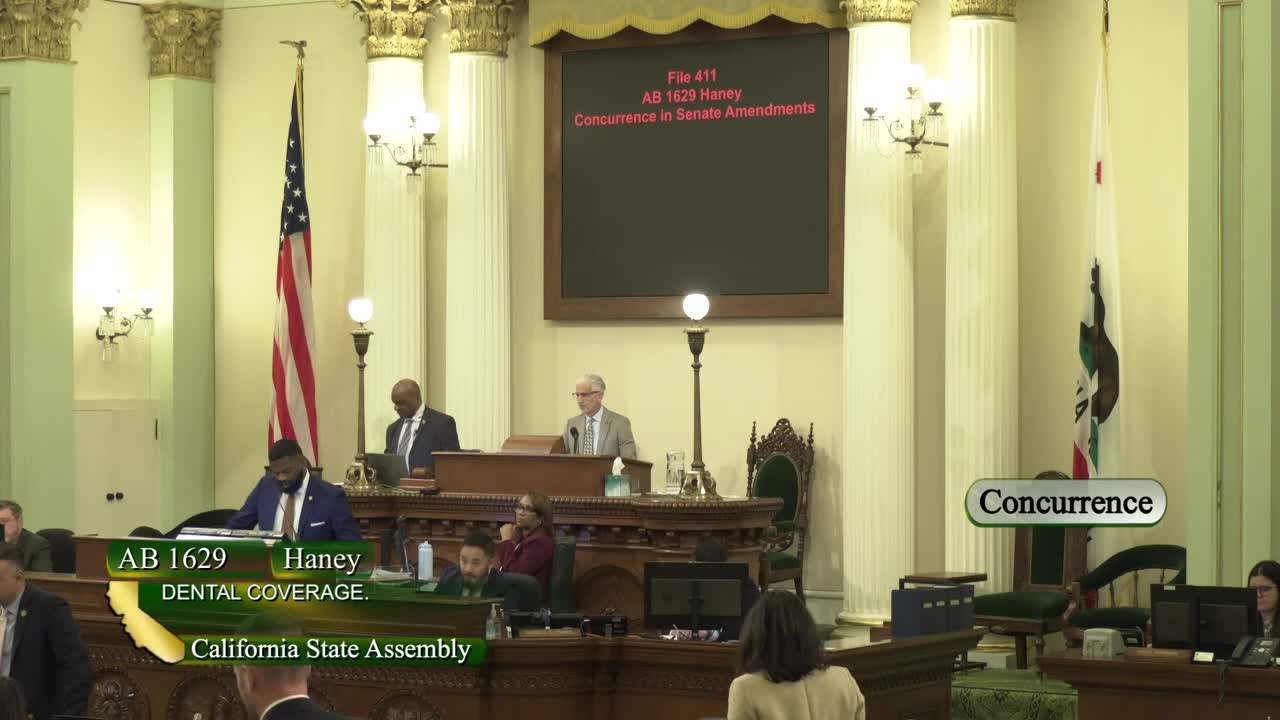
Bill Author
Bill Co-Author(s):