AB 2789: Mediation: child custody and visitation.
- Session Year: 2025-2026
- House: Assembly
- Latest Version Date: 2026-08-22
Current Status:
Passed
(2026-08-22: Chaptered by Secretary of State - Chapter 118, Statutes of 2026.)
Introduced
In Committee
Awaiting First Chamber Vote
Passed First Chamber
In Committee
Awaiting Second Chamber Vote
Passed Second Chamber
Enacted
Existing law requires the court, for purposes of deciding custody, to determine the best interests of the child based on certain factors, including the nature and amount of contact with both parents and, consistent with specified findings, requires the courts primary concern to be the health, safety, and welfare of the child. Existing law requires a court to set the contested issues for mediation when it appears on the face of a petition, application, or other pleading to obtain or modify a temporary or permanent custody or visitation order that custody, visitation, or both are contested. Existing law requires notice of mediation to be given to each party, and where a stepparent or grandparent seeks visitation rights, to the stepparent or grandparent seeking visitation rights, to each parent of the child, and to each parents counsel of record. Existing law requires notice to be given by certified mail, return receipt requested, postage prepaid, to the last known address.
This bill would require all parties to be given written notice of mediation, including, among others, by court staff when all parties are present for a court hearing. The bill would require the court to develop a notice of mediation that includes that all communications between the mediator and the disputing parties are required to be confidential and, if there has been a history of domestic violence between the parties or a protective order is in effect, that the mediator is required to meet with the parties separately and at separate times at the request of the party alleging domestic violence, as specified.
(a)Notice of mediation and of any hearing to be held pursuant to this chapter shall be given to the following persons:
(1)Where mediation is required to settle a contested issue of custody or visitation, to each party and to each partys counsel of record.
(2)Where a stepparent or grandparent seeks visitation rights, to the stepparent or grandparent seeking visitation rights, to each parent of the child, and to each parents counsel of record.
(b)Notice of mediation shall be given in writing to all parties by one of the following methods:
(1)By court staff when all parties are present for a court hearing.
(2)By court staff when a party is present at the courthouse.
(3)As part of a notice of hearing or court order filed by the court clerk, provided to a party, and served on the other party.
(4)By mail, express mail, overnight delivery, or facsimile transmission.
(5)By electronic service on parties who are represented by counsel and by the consent of parties who are self-represented, pursuant to Section 1010.6 of the Code of Civil Procedure and Rule 2.251 of the California Rules of Court.
(c)Each court shall develop a notice of mediation pursuant to subdivision (b) that includes both of the following:
(1)All communications involving the mediator shall be kept confidential between the mediator and the disputing parties pursuant to Section 3188.
(2)Where there has been a history of domestic violence between the parties, including allegations or a finding of domestic violence, or where a protective order, as defined in Section 6218, is in effect, the party alleging domestic violence may request that the appointed mediator meet with the parties separately and at separate times pursuant to Section 3181 and Rule 5.215, or successor section, of the California Rules of Court.
(a)Notice of mediation and of any hearing to be held pursuant to this chapter shall be given to the following persons:
(1)Where mediation is required to settle a contested issue of custody or visitation, to each party and to each partys counsel of record.
(2)Where a stepparent or grandparent seeks visitation rights, to the stepparent or grandparent seeking visitation rights, to each parent of the child, and to each parents counsel of record.
(b)Notice of mediation shall be given in writing to all parties by one of the following methods:
(1)By court staff when all parties are present for a court hearing.
(2)By court staff when a party is present at the courthouse.
(3)As part of a notice of hearing or court order filed by the court clerk, provided to a party, and served on the other party.
(4)By mail, express mail, overnight delivery, or facsimile transmission.
(5)By electronic service on parties who are represented by counsel and by the consent of parties who are self-represented, pursuant to Section 1010.6 of the Code of Civil Procedure and Rule 2.251 of the California Rules of Court.
(c)Each court shall develop a notice of mediation pursuant to subdivision (b) that includes both of the following:
(1)All communications involving the mediator shall be kept confidential between the mediator and the disputing parties pursuant to Section 3188.
(2)Where there has been a history of domestic violence between the parties, including allegations or a finding of domestic violence, or where a protective order, as defined in Section 6218, is in effect, the party alleging domestic violence may request that the appointed mediator meet with the parties separately and at separate times pursuant to Section 3181 Rule 2.251 and Rule 5.215, or successor section, of the California Rules of Court.
(a)Notice of mediation and of any hearing to be held pursuant to this chapter shall be given to the following persons:
(1)Where mediation is required to settle a contested issue of custody or visitation, to each party and to each partys counsel of record.
(2)Where a stepparent or grandparent seeks visitation rights, to the stepparent or grandparent seeking visitation rights, to each parent of the child, and to each parents counsel of record.
(b)Notice shall be given by certified mail, return receipt requested, postage prepaid, to the last known address.(c)Notice of mediation pursuant to Section 3188 shall state that all communications involving the mediator shall be kept confidential between the mediator and the disputing parties.(b)Notice of mediation shall be given in writing to all parties by one of the following methods:
(1)By court staff when all parties are present for a court hearing.
(2)By court staff when a party is present at the courthouse.
(3)As part of a notice of hearing or court order filed by the court clerk, provided to a party, and served on the other party.
(4)By mail, express mail, overnight delivery, or facsimile transmission.
(5)By electronic service on parties who are represented by counsel and by the consent of parties who are self-represented, pursuant to Section 1010.6 of the Code of Civil Procedure and Rule 2.251 of the California Rules of Court.
(c)Each court shall develop a notice of mediation pursuant to subdivision (b) that includes both of the following:
(1)All communications involving the mediator shall be kept confidential between the mediator and the disputing parties pursuant to Section 3188.
(2)Where there has been a history of domestic violence between the parties, including allegations or a finding of domestic violence, or where a protective order, as defined in Section 6218, is in effect, the party alleging domestic violence may request that the appointed mediator meet with the parties separately and at separate times pursuant to Section 3181 Rule 2.251 of the California Rules of Court.
|
Date
|
Status
|
|---|---|
| Aug 22, 2026 | Chaptered by Secretary of State - Chapter 118, Statutes of 2026. |
| Aug 22, 2026 | Approved by the Governor. |
| Aug 10, 2026 | Enrolled and presented to the Governor at 1 p.m. |
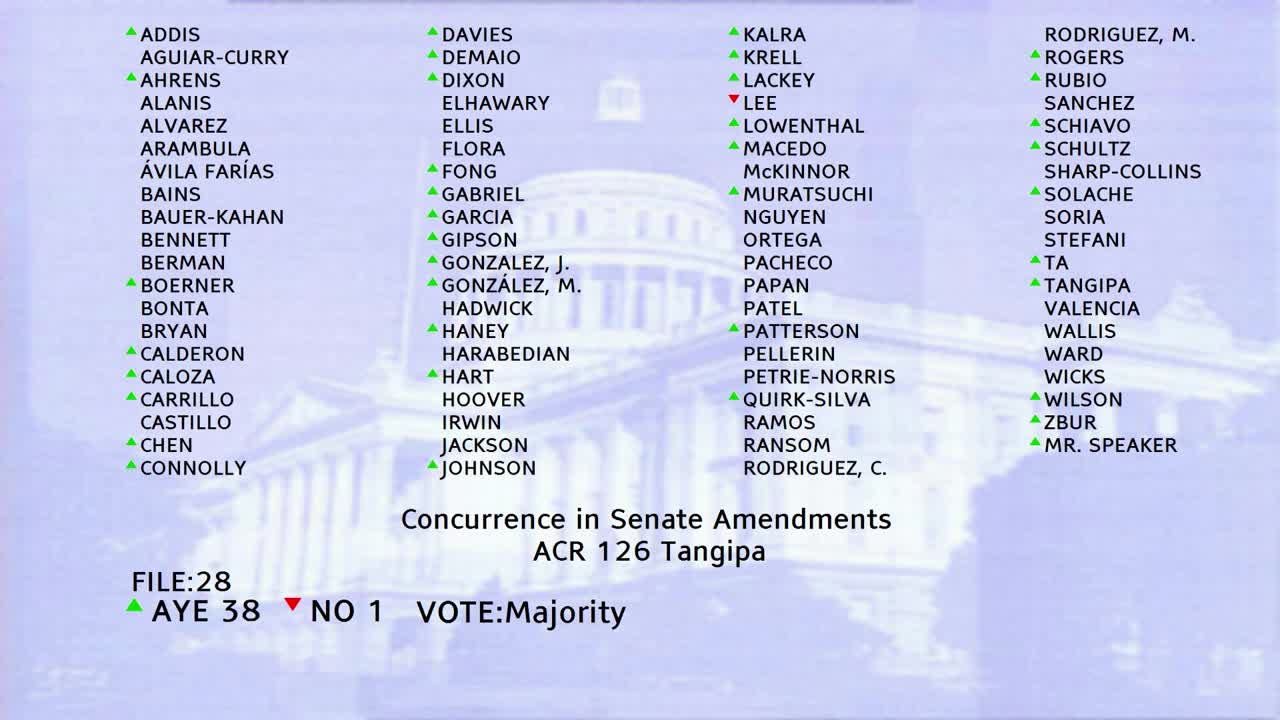
| Aug 3, 2026 | Senate amendments concurred in. To Engrossing and Enrolling. (Ayes 74. Noes 0. Page 6031.). |
| Aug 3, 2026 | Senate amendments concurred in. To Engrossing and Enrolling. (Ayes 74. Noes 0.). |
| Jun 25, 2026 | In Assembly. Concurrence in Senate amendments pending. |
| Jun 25, 2026 | Read third time. Passed. Ordered to the Assembly. (Ayes 36. Noes 0. Page 5015.). |
| Jun 25, 2026 | Read third time. Passed. Ordered to the Assembly. (Ayes 36. Noes 0.). |
| Jun 23, 2026 | Read second time. Ordered to Consent Calendar. |
| Jun 22, 2026 | From committee: Be ordered to second reading file pursuant to Senate Rule 28.8 and ordered to Consent Calendar. |
| Jun 11, 2026 | Read second time and amended. Re-referred to Com. on APPR. |
| Jun 10, 2026 | From committee: Amend, and do pass as amended and re-refer to Com. on APPR. with recommendation: To Consent Calendar. (Ayes 12. Noes 0.) (June 9). |
| May 27, 2026 | Referred to Com. on JUD. |
| May 14, 2026 | In Senate. Read first time. To Com. on RLS. for assignment. |
| May 14, 2026 | Read third time. Passed. Ordered to the Senate. (Ayes 77. Noes 0. Page 5057.) |
| May 14, 2026 | Read third time. Passed. Ordered to the Senate. (Ayes 77. Noes 0.) |
| May 7, 2026 | Read second time. Ordered to Consent Calendar. |
| May 6, 2026 | From committee: Do pass. To Consent Calendar. (Ayes 14. Noes 0.) (May 6). |
| Apr 22, 2026 | From committee: Do pass and re-refer to Com. on APPR. with recommendation: To Consent Calendar. (Ayes 12. Noes 0.) (April 21). Re-referred to Com. on APPR. |
| Mar 23, 2026 | Referred to Com. on JUD. |
| Mar 17, 2026 | From printer. May be heard in committee April 16. |
| Mar 16, 2026 | Read first time. To print. |
|
Date
|
Description
|
Location
|
Votes
|
|
|---|---|---|---|---|
| Aug 3, 2026 | AB 2789 Judiciary Concurrence in Senate Amendments By KALRA | Assembly Floor |
Passed |
|
| Jun 25, 2026 | Consent Calendar 2nd AB2789 JUD. (Kalra) | Senate Floor |
Passed |
|
| Jun 9, 2026 | Do pass as amended, but first amend, and re-refer to the Committee on [Appropriations] with the recommendation: To Consent Calendar | Senate Standing Committee on Judiciary |
Passed |
|
| May 14, 2026 | AB 2789 Judiciary Consent Calendar Second Day Regular Session | Assembly Floor |
Passed |
|
| May 6, 2026 | Do pass. To Consent Calendar. | Assembly Standing Committee on Appropriations |
Passed |
|
| Apr 21, 2026 | Do pass and be re-referred to the Committee on [Appropriations] with recommendation: To Consent Calendar | Assembly Standing Committee on Judiciary |
Passed |
This list shows positions taken on this bill by organizations on the date displayed, which is linked to the original source.
Positions by individuals are not included.
|
Organization
|
Position
|
Date
|
|---|---|---|
| Judicial Council of California | ** Support |
CONCURRENCE IN SENATE AMENDMENTS
CSA1 Bill Id:AB 2789
Author:(Committee on Judiciary)
As Amended Ver:June 11, 2026
Majority vote
SUMMARY
Expands the ways in which a court may issue notice of mediation in child custody and visitation proceedings.
Major Provisions
- Authorizes a court to provide notice of mediation in writing to all parties by one of the following methods:
- By court staff when all parties are present for a court hearing;
- By court staff when a party is present at the courthouse;
- As part of a notice of hearing or court order filed by the court clerk, provided to a party, and served on the other party;
- By mail, express mail, overnight delivery, or facsimile transmission;
- By electronic service on parties who are represented by counsel and by the consent of parties who are self-represented.
- Requires each court to develop a notice of mediation that includes both of the following:
- All communications involving the mediator shall be kept confidential between the mediator and the disputing parties, as specified;
- Where there has been a history of domestic violence between the parties, including allegations or a finding of domestic violence, or where a protective order, as defined, is in effect, the party alleging domestic violence may request that the appointed mediator meet with the parties separately and at separate times, as specified.
Senate Amendments
Correct a cross reference to the California Rules of Court.
COMMENTS
Currently, Family Code Section 3176 requires courts to provide parties to a custody and visitation dispute notice of a mediation proceeding via certified mail, return receipt requested, postage prepaid, to the parties' last known address. This process is required even when the parties appear in court in person for a hearing or other proceeding in the matter. Section 3176 has not been modified in over 20 years.
This bill seeks to modernize the Family Code to allow courts to choose the method of service for notice of mediation in custody and visitation proceedings.
The bill removes the requirement that the service be provided via certified mail, return receipt requested, and allows the court to choose from the following options:
- By court staff when all parties are present for a hearing;
- By court staff when a party is present at the courthouse;
- As part of a notice of hearing or court order filed by the court clerk, provided to a party, and served on the other party;
- By mail, express mail, overnight delivery, or fax;
- By electronic service on parties who are represented by counsel, and by the consent of parties who are self-represented, as allowable under Code of Civil Procedure Section 1010.6 and Rule 5.215 of the California Rules of Court.
The bill also requires the notice to be accompanied by a notice of mediation that includes information relating to confidentiality requirements for proceedings conducted under a confidential mediation program, and the option for a party who is also a survivor of domestic abuse to request a separate mediation without the other abusive party.
Requiring service to be completed by only one method via certified mail return receipt requested seems unnecessarily strict and cumbersome. Service to both parties who appear for a hearing or one party who is in the courthouse, both conducted by court staff, seems a reasonable and efficient alternative. Considering nearly everyone now carries their email in their pocket, allowing for service to be completed via email seems not only reasonable but highly effective. Importantly, parties must consent to notice via email if they are self-represented, acknowledging that some pro per litigants may not be aware service can occur in that manner or have regular access to email. Where the court feels it is still the most appropriate, this bill maintains the ability to provide service via mail. Considering the costs implicated by requiring every notice of mediation to be sent via certified mail, return receipt requested, this measure seems a common sense effort to not only ensure timely notice of mediation proceedings but also decrease the courts' operating costs.
According to the Author
Existing law requires that notice of child custody mediation be provided by certified mail, return receipt requested, postage prepaid, to the parties' last known address. However, in many circumstances there may be more effective and less costly ways to provide parties to a custody proceeding the required notice of mediation. This straightforward measure seeks to modernize procedures for providing notice of child custody mediation by more cost-effective methods, including electronic delivery.
Arguments in Support
This bill is sponsored by the Judicial Council of California. They submit:
Family Code section 3176 currently requires that notice of mediation must be given by certified mail, return receipt requested, postage prepaid, to the last known address. This reliance on certified mail as the sole option is outdated and creates additional costs for courts by placing restrictions on a court's ability to use technology to provide notice and potentially inhibits prompt access to court services by increasing waiting times before parties receive notice.
This proposal amends subdivision (b) in Family Code section 1376 to allow courts the ability to choose from one of five methods to provide notice of mediation. The proposed amendments increase delivery efficiency and reduce reliance on paper. These amendments also increase access to court services and will assist victims of domestic violence to understand their right to meet with a mediator separately in cases involving domestic violence.
For these reasons, the Judicial Council is pleased to sponsor Assembly Bill 2789.
Arguments in Opposition
None on file
FISCAL COMMENTS
According to the Senate Appropriations Committee, pursuant to Senate Rule 28.8, negligible state costs.
VOTES:
ASM JUDICIARY: 12-0-0
YES: Kalra, Macedo, Bauer-Kahan, Bryan, Connolly, Dixon, Harabedian, Pacheco, Papan, Sanchez, Stefani, Zbur
ASM APPROPRIATIONS: 14-0-1
YES: Wicks, Hoover, Aguiar-Curry, Caloza, Dixon, Fong, Mark González, Krell, Pacheco, Pellerin, Sharp-Collins, Solache, Ta, Tangipa
ABS, ABST OR NV: Arambula
ASSEMBLY FLOOR: 77-0-3
YES: Addis, Aguiar-Curry, Ahrens, Alanis, Alvarez, Ávila Farías, Bains, Bauer-Kahan, Bennett, Berman, Boerner, Bonta, Bryan, Calderon, Caloza, Carrillo, Castillo, Chen, Connolly, Davies, DeMaio, Dixon, Elhawary, Ellis, Fong, Gabriel, Gallagher, Garcia, Gipson, Jeff Gonzalez, Mark González, Hadwick, Haney, Harabedian, Hart, Hoover, Irwin, Jackson, Johnson, Kalra, Krell, Lackey, Lee, Lowenthal, Macedo, McKinnor, Muratsuchi, Nguyen, Ortega, Pacheco, Papan, Patel, Patterson, Pellerin, Petrie-Norris, Quirk-Silva, Ramos, Ransom, Michelle Rodriguez, Rogers, Blanca Rubio, Sanchez, Schiavo, Schultz, Sharp-Collins, Solache, Soria, Stefani, Ta, Tangipa, Valencia, Wallis, Ward, Wicks, Wilson, Zbur, Rivas
ABS, ABST OR NV: Arambula, Flora, Celeste Rodriguez
SENATE FLOOR: 36-0-4
YES: Allen, Archuleta, Arreguín, Ashby, Becker, Blakespear, Cabaldon, Caballero, Cervantes, Choi, Cortese, Durazo, Gonzalez, Grayson, Grove, Hurtado, Laird, Limón, McGuire, McNerney, Menjivar, Niello, Ochoa Bogh, Padilla, Pérez, Richardson, Rubio, Seyarto, Smallwood-Cuevas, Stern, Strickland, Umberg, Valladares, Wahab, Weber Pierson, Wiener
ABS, ABST OR NV: Alvarado-Gil, Dahle, Jones, Reyes
UPDATED
VERSION: June 11, 2026
CONSULTANT: Manuela Boucher / JUD. / (916) 319-2334 FN: 0003216
SENATE RULES COMMITTEE Office of Senate Floor Analyses (916) 651-4171 | AB 2789 |
CONSENT
Bill No: AB 2789
Author: Committee on Judiciary
Amended: 6/11/26 in Senate
Vote: 21
SENATE JUDICIARY COMMITTEE: 12-0, 6/9/26
AYES: Umberg, Niello, Allen, Ashby, Caballero, Durazo, Laird, Reyes, Valladares, Wahab, Weber Pierson, Wiener
NO VOTE RECORDED: Stern
SENATE APPROPRIATIONS COMMITTEE: Senate Rule 28.8
ASSEMBLY FLOOR: 77-0, 5/14/26 (Consent) - See last page for vote
SUBJECT: Mediation: child custody and visitation
SOURCE: Judicial Council of California
DIGEST:
This bill authorizes a court to serve a notice of mediation in a child custody matter through specified means and requires the notice of mediation to state that, where there is a history of domestic violence, the party alleging domestic violence may request that the mediator meet with the parties separately, as specified.
ANALYSIS:
Existing law:
- Establishes the procedures and requirements for custody disputes and the court’s award of physical and/or legal custody and visitation of a minor. (Family (Fam.) Code, div. 8, §§ 3000 et seq.)
- Provides that, if it appears on the face of a petition, application, or other proceeding to obtain or modify a temporary or permanent custody or visitation order that custody and/or visitation are contested, the court shall set the contested issues for mediation. (Fam. Code, § 3170(a).)
- Requires the Judicial Council of California to adopt a separate written protocol for mediations under 2) in domestic violence cases, as specified. (Fam. Code, § 3170(b).)
- Requires notice of mediation and any hearing to be held pursuant to the mediation to be given to the following persons:
- Where mediation is required to settle a contested issue of custody or visitation, to each party and to each party’s counsel of record.
- Where a stepparent or grandparent seeks visitation rights, to the stepparent or grandparent seeking visitation rights, to each parent of the child, and to each parent’s counsel of record. (Fam. Code, § 3176(a).)
- Requires notice of mediation under 4) to be given by certified mail, return receipt requested, to the last known address. (Fam. Code, § 3176(b).)
- Requires a notice of a confidential mediation, established under 8), below, to state that all communications involving the mediator shall be kept confidential between the mediator and the disputing parties. (Fam. Code, § 3176(c).)
- Provides that, when a court orders a mediation in a custody or visitation dispute and there has been a history of domestic violence between the parties or a protective order is in effect, the mediator shall, at the request of the party alleging domestic violence, meet with the parties separately and at separate times.
- A protective order is defined as a protective order issued under the Domestic Violence Prevention Act (DVPA) (Fam. Code, div. 10, §§ 6200 et seq.), including an ex parte restraining order or a protective order issued after a hearing.
- The requesting party must allege that the domestic violence occurred in a written declaration under penalty of perjury or establish that they are protected by a protective order. (Fam. Code, § 3181.)
- Permits a court, when authorized by the Judicial Council of California, to establish a confidential mediation program through which the mediator makes confidential custody or visitation recommendations only to the disputing parties, except as provided. (Fam. Code, § 3188.)
This bill:
- Permits notice of mediation of a custody or visitation dispute to be given through any of the following means:
- By court staff when all parties are present for a court hearing.
- By court staff when a party is present at the courthouse.
- As part of a notice of hearing or court order filed by the court clerk, provided to a party, and served on the other party.
- By mail, overnight delivery, or facsimile transmission.
- By electronic service on parties who are represented by counsel or who are self-represented and have consented to electronic service.
- Modifies the requirements for the notice of mediation, as follows:
- Each court must develop a notice of mediation that includes the information in (b) and (c).
- The notice must state that, if the mediation is being conducted pursuant to a confidential mediation program, all communications involving the mediator and the parties shall remain confidential, as provided by statute.
- The notice must state that, where there is a history of domestic violence between the parties, including a finding or allegation of domestic violence, or where a protective order under the DVPA is in effect, the party alleging domestic violence may request that the appointed mediator meet with the parties separately and at separate times, as provided by statute and the California Rules of Court.
Comments
When parents or guardians cannot agree on how to share custody of, or visitation rights to, their minor child, the parties must turn to the courts to work it out. When a petition for custody or visitation is filed, the family court will refer the case to mediation to see if the parties can reach an agreement with the mediator; mediated agreements can reduce the acrimony between the parties and result in less contentious proceedings, which is ultimately better for the parties and the child.
Current law requires a notice of mediation to be served on the parties via certified mail, and requires the notice to state that, if the mediation is a confidential mediation, all communications involving the mediator and the parties will be kept confidential. This bill permits the court to serve a notice of mediation through additional means, including in person when the party is already at the courthouse and electronically, if the party is represented by counsel or has consented to electronic service. This bill also clarifies the confidentiality portion of the notice of mediation and requires the notice to also provide information relating to the right of a victim of domestic violence to request that the mediator meet with parties separately and at separate times. The author has agreed to a minor amendment to correct a cross-reference.
FISCAL EFFECT: Appropriation: No Fiscal Com.: Yes Local: No
SUPPORT: (Verified 6/22/26)
Judicial Council of California (source)
OPPOSITION: (Verified 6/22/26)
None received
ARGUMENTS IN SUPPORT: According to the Judicial Council of California:
Family Code section 3176 currently requires that notice of mediation must be given by certified mail, return receipt requested, postage prepaid, to the last known address. This reliance on certified mail as the sole option is outdated and creates additional costs for courts by placing restrictions on a court’s ability to use technology to provide notice and potentially inhibits prompt access to court services by increasing waiting times before parties receive notice.
This proposal amends subdivision (b) in Family Code section 1376 to allow courts the ability to choose from one of five methods to provide notice of mediation, including via electronic service if the parties agree. The proposed amendments increase delivery efficiency and reduce reliance on paper. These amendments also increase access to court services and will assist victims of domestic violence to understand their right to meet with a mediator separately in cases involving domestic violence.
ASSEMBLY FLOOR: 77-0, 5/14/26
AYES: Addis, Aguiar-Curry, Ahrens, Alanis, Alvarez, Ávila Farías, Bains, Bauer-Kahan, Bennett, Berman, Boerner, Bonta, Bryan, Calderon, Caloza, Carrillo, Castillo, Chen, Connolly, Davies, DeMaio, Dixon, Elhawary, Ellis, Fong, Gabriel, Gallagher, Garcia, Gipson, Jeff Gonzalez, Mark González, Hadwick, Haney, Harabedian, Hart, Hoover, Irwin, Jackson, Johnson, Kalra, Krell, Lackey, Lee, Lowenthal, Macedo, McKinnor, Muratsuchi, Nguyen, Ortega, Pacheco, Papan, Patel, Patterson, Pellerin, Petrie-Norris, Quirk-Silva, Ramos, Ransom, Michelle Rodriguez, Rogers, Blanca Rubio, Sanchez, Schiavo, Schultz, Sharp-Collins, Solache, Soria, Stefani, Ta, Tangipa, Valencia, Wallis, Ward, Wicks, Wilson, Zbur, Rivas
NO VOTE RECORDED: Arambula, Flora, Celeste Rodriguez
Prepared by: Allison Whitt Meredith / JUD. / (916) 651-4113
6/24/26 16:39:44
**** END ****
Senator Thomas Umberg, Chair
2025-2026 Regular Session
Bill No: AB 2789 (Author:Committee on Judiciary)
Version: March 16, 2026
Hearing Date: June 9, 2026
Fiscal: Yes
Urgency: No
Consultant: AWM
SUBJECT
Mediation: child custody and visitation
DIGEST
This bill authorizes a court to serve a notice of mediation in a child custody matter through specified means and requires the notice of mediation to state that, where there is a history of domestic violence, the party alleging domestic violence may request that the mediator meet with the parties separately, as specified.
EXECUTIVE SUMMARY
When parents or guardians cannot agree on how to share custody of, or visitation rights to, their minor child, the parties must turn to the courts to work it out. When a petition for custody or visitation is filed, the family court will refer the case to mediation to see if the parties can reach an agreement with the mediator; mediated agreements can reduce the acrimony between the parties and result in less contentious proceedings, which is ultimately better for the parties and the child.
Current law requires a notice of mediation to be served on the parties via certified mail, and requires the notice to state that, if the mediation is a confidential mediation, all communications involving the mediator and the parties will be kept confidential. This bill permits the court to serve a notice of mediation through additional means, including in person when the party is already at the courthouse and electronically, if the party is represented by counsel or has consented to electronic service. This bill also clarifies the confidentiality portion of the notice of mediation and requires the notice to also provide information relating to the right of a victim of domestic violence to request that the mediator meet with parties separately and at separate times. The author has agreed to a minor amendment to correct a cross-reference.
This bill is sponsored by the Judicial Council of California. The Committee has not received timely opposition to this bill.
PROPOSED CHANGES TO THE LAW
Existing law:
- Establishes the procedures and requirements for custody disputes and the court’s award of physical and/or legal custody and visitation of a minor. (Fam. Code, div. 8, §§ 3000 et seq.)
- Provides that, if it appears on the face of a petition, application, or other proceeding to obtain or modify a temporary or permanent custody or visitation order that custody and/or visitation are contested, the court shall set the contested issues for mediation. (Fam. Code, § 3170(a).)
- Requires the Judicial Council of California to adopt a separate written protocol for mediations under 2) in domestic violence cases, as specified. (Fam. Code, § 3170(b).)
- Requires notice of mediation and any hearing to be held pursuant to the mediation to be given to the following persons:
- Where mediation is required to settle a contested issue of custody or visitation, to each party and to each party’s counsel of record.
- Where a stepparent or grandparent seeks visitation rights, to the stepparent or grandparent seeking visitation rights, to each parent of the child, and to each parent’s counsel of record. (Fam. Code, § 3176(a).)
- Requires notice of mediation under 4) to be given by certified mail, return receipt requested, to the last known address. (Fam. Code, § 3176(b).)
- Requires a notice of a confidential mediation, established under 8), below, to state that all communications involving the mediator shall be kept confidential between the mediator and the disputing parties. (Fam. Code, § 3176(c).)
- Provides that, when a court orders a mediation in a custody or visitation dispute and there has been a history of domestic violence between the parties or a protective order is in effect, the mediator shall, at the request of the party alleging domestic violence, meet with the parties separately and at separate times.
- A protective order is defined as a protective order issued under the Domestic Violence Prevention Act (DVPA) (Fam. Code, div. 10, §§ 6200 et seq.), including an ex parte restraining order or a protective order issued after a hearing.
- The requesting party must allege that the domestic violence occurred in a written declaration under penalty of perjury or establish that they are protected by a protective order. (Fam. Code, § 3181.)
- Permits a court, when authorized by the Judicial Council of California, to establish a confidential mediation program through which the mediator makes confidential custody or visitation recommendations only to the disputing parties, except as provided. (Fam. Code, § 3188.)
This bill:
- Permits notice of mediation of a custody or visitation dispute to be given through any of the following means:
- By court staff when all parties are present for a court hearing.
- By court staff when a party is present at the courthouse.
- As part of a notice of hearing or court order filed by the court clerk, provided to a party, and served on the other party.
- By mail, overnight delivery, or facsimile transmission.
- By electronic service on parties who are represented by counsel or who are self-represented and have consented to electronic service.
- Modifies the requirements for the notice of mediation, as follows:
- Each court must develop a notice of mediation that includes the information in (b) and (c).
- The notice must state that, if the mediation is being conducted pursuant to a confidential mediation program, all communications involving the mediator and the parties shall remain confidential, as provided by statute.
- The notice must state that, where there is a history of domestic violence between the parties, including a finding or allegation of domestic violence, or where a protective order under the DVPA is in effect, the party alleging domestic violence may request that the appointed mediator meet with the parties separately and at separate times, as provided by statute and the California Rules of Court.
COMMENTS
- Author’s comment
According to the author:
Existing law requires that notice of child custody mediation be provided by certified mail, return receipt requested, postage prepaid, to the parties’ last known address. However, in many circumstances there may be more effective and less costly ways to provide parties in a custody proceeding the required notice of mediation. This straightforward measure seeks to modernize procedures for providing notice of child custody mediation by more cost-effective methods, including electronic delivery.
2. This bill updates the options for the service, and the required contents, of a notice of mediation in a custody or visitation dispute
In custody and visitation disputes, mediation can reduce acrimony between the parties and give them space to devise custody or visitation arrangements that are in the best interests of the child.[1] When a court determines that a request to obtain or modify custody or visitation is contested, the court is required to set the matter for mediation on the contested issues.[2] Current law requires the notice of such a mediation to be served by certified mail to the parties’ last known addresses, and that the notice state that, if the mediation is conducted pursuant to the family court’s confidential mediation program, all communications involving the mediator and the parties shall be kept confidential.[3]
This bill updates the notice of mediation requirements in two ways. First, the bill expands the permissible modes of service for the notice of mediation to include in-person service when the party is at the courthouse, service in connection with a notice of hearing or court order, mail, overnight delivery, facsimile transmission, or electronic service where the party is represented or the party has consented to electronic service. According to the author, these added avenues for service will enable the courts to provide notice through less costly and more reliable means.
Second, the bill modifies the contents of the notice of mediation to include information about confidential mediation in a case where there is a history of domestic violence. Specifically, the notice must inform parties that, if there is a history of domestic violence between the parties or a protective order under the DVPA in place, the party alleging domestic violence can request that the mediator meet with the parties separately and at separate times, as provided for under current law and the California Rules of Court. The current version of the bill refers to the wrong Rule of Court, so the author has agreed to amend the bill to strike “Rule 2.251” and insert “and Rule 5.215, or successor section,”.
3. Arguments in support
According to the Judicial Council of California:
Family Code section 3176 currently requires that notice of mediation must be given by certified mail, return receipt requested, postage prepaid, to the last known address. This reliance on certified mail as the sole option is outdated and creates additional costs for courts by placing restrictions on a court’s ability to use technology to provide notice and potentially inhibits prompt access to court services by increasing waiting times before parties receive notice.
This proposal amends subdivision (b) in Family Code section 1376 to allow courts the ability to choose from one of five methods to provide notice of mediation, including via electronic service if the parties agree. The proposed amendments increase delivery efficiency and reduce reliance on paper. These amendments also increase access to court services and will assist victims of domestic violence to understand their right to meet with a mediator separately in cases involving domestic violence.
SUPPORT
Judicial Council of California (sponsor)
OPPOSITION
None received
RELATED LEGISLATION
Pending legislation: None known.
Prior legislation: None known.
PRIOR VOTES
Assembly Floor (Ayes 77, Noes 0)
Assembly Appropriations Committee (Ayes 14, Noes 0)
Assembly Judiciary Committee (Ayes 12, Noes 0)
**************
Date of Hearing: May 6, 2026
ASSEMBLY COMMITTEE ON APPROPRIATIONS
Buffy Wicks, Chair
ABPCA Bill Id:AB 2789
Author:(Committee on Judiciary) – As Introduced Ver:March 16, 2026
Policy Committee: | Judiciary | Vote: | 12 - 0 |
|
| ||
|
|
Urgency: No State Mandated Local Program: No Reimbursable: No
SUMMARY:
This bill expands the ways in which a court may issue notice of mediation in child custody and visitation proceedings and eliminates the certified mail notice requirement.
Specifically, this bill:
- Authorizes a court to provide notice of mediation in writing to all parties by one of the following methods:
- By court staff when all parties are present for a court hearing.
- By court staff when a party is present at the courthouse.
- As part of a notice of hearing or court order filed by the court clerk, provided to a party, and served on the other party.
- By mail, express mail, overnight delivery, or facsimile transmission.
- By electronic service on parties who are represented by counsel and by the consent of parties who are self-represented.
- Requires each court to develop a notice of mediation that includes both of the following:
- All communications involving the mediator shall be kept confidential between the mediator and the disputing parties, as specified.
- Where there has been a history of domestic violence between the parties, including allegations or a finding of domestic violence, or where a protective order, as defined, is in effect, the party alleging domestic violence may request that the appointed mediator meet with the parties separately and at separate times, as specified.
FISCAL EFFECT:
No state costs. The Judicial Council anticipates potential cost savings by eliminating the certified mail requirement.
COMMENTS:
- Purpose. As explained by the author:
Existing law requires that notice of child custody mediation be provided by certified mail, return receipt requested, postage prepaid, to the parties’ last known address. However, in many circumstances there may be more effective and less costly ways to provide parties to a custody proceeding the required notice of mediation.
- Background. Family Code Section 3176 requires courts to provide parties to a custody and visitation dispute notice of a mediation proceeding via certified mail, return receipt requested, postage prepaid, to the parties’ last known address. This process is required even when the parties appear in court in person for a hearing or other proceeding in the matter. Section 3176 has not been modified in over 20 years. This bill would remove the requirement that the service be provided via certified mail, return receipt requested, and allow the court to choose from a variety of other service options. The bill also requires the notice to be accompanied by a notice of mediation that includes information relating to confidentiality requirements for proceedings conducted under a confidential mediation program, and the option for a party who is also a survivor of domestic abuse to request a separate mediation without the other party.
Analysis Prepared by: Shiran Zohar / APPR. / (916) 319-2081
Date of Hearing: April 21, 2026
ASSEMBLY COMMITTEE ON JUDICIARY
Ash Kalra, Chair
ABPCA Bill Id:AB 2789
Author:(Committee on Judiciary) – As Introduced Ver:March 16, 2026
PROPOSED CONSENT
SUBJECT: Mediation: child custody and visitation
KEY ISSUE: SHOULD COURTS BE AUTHORIZED TO ISSUE NOTICE OF MEDIATION OF CHILD CUSTODY AND VISITATION PROCEEDINGS IN SPECIFIED WAYS oTHER THAN BY MAIL, IF CONSENTED TO BY ALL PARTIES?
SYNOPSIS
Existing law requires notice of mediation in custody and visitation proceedings to be sent to the parties via certified mail, return receipt requested. This bill would grant courts the latitude to provide service in a number of new ways, including via electronic service if the parties agree. Considering the vast majority of parties are likely to check their emails more often than their mailboxes, and that notice via email or in-person at a courthouse is likely to arrive much more quickly than via certified mail, this straightforward measure seems a reasonable way to promote efficiency in custody and visitation proceedings. This bill is sponsored by the Judicial Council of California and has no known opposition.
SUMMARY: Expands the ways in which a court may issue notice of mediation in child custody and visitation proceedings. Specifically, this bill:
- Authorizes a court to provide notice of mediation in writing to all parties by one of the following methods:
- By court staff when all parties are present for a court hearing;
- By court staff when a party is present at the courthouse;
- As part of a notice of hearing or court order filed by the court clerk, provided to a party, and served on the other party;
- By mail, express mail, overnight delivery, or facsimile transmission;
- By electronic service on parties who are represented by counsel and by the consent of parties who are self-represented.
- Requires each court to develop a notice of mediation that includes both of the following:
- All communications involving the mediator shall be kept confidential between the mediator and the disputing parties, as specified;
- Where there has been a history of domestic violence between the parties, including allegations or a finding of domestic violence, or where a protective order, as defined, is in effect, the party alleging domestic violence may request that the appointed mediator meet with the parties separately and at separate times, as specified.
EXISTING LAW:
- Requires notice of mediation and of any hearing held regarding child custody and mediation to be given to the following persons:
- Where mediation is required to settle a contested issue of custody or visitation, to each party and to each party’s counsel of record;
- Where a stepparent or grandparent seeks visitation rights, to the stepparent or grandparent seeking visitation rights, to each parent of the child, and to each parent’s counsel of record. (Family Code Section 3176 (a).)
- Requires notice to be given by certified mail, return receipt requested, postage prepaid, to the last known address. (Family Code Section 3176 (b).)
- Requires notice of mediation pursuant to Family Code Section 3188 to state that all communications involving the mediator are to be kept confidential between the mediator and the disputing parties. (Family Code Section 3176 (c).)
- Authorizes any court selected by the Judicial Council to voluntarily adopt a confidential mediation program as specified. (Family Code Section 3188.)
- Authorizes a document to be served electronically in an action filed with the court as specified. (Code of Civil Procedure Section 1010.6.)
- Provides direction on electronic service by express consent, electronic service required by local rule or court order, maintenance of electronic service lists by the courts, service by the parties and other persons, change of electronic service address, and electronic service by or on a court. (California Rule of Court 2.251.)
FISCAL EFFECT: As currently in print this bill is keyed fiscal.
COMMENTS: Currently, Family Code Section 3176 requires courts to provide parties to a custody and visitation dispute notice of a mediation proceeding via certified mail, return receipt requested, postage prepaid, to the parties’ last known address. This process is required even when the parties appear in court in person for a hearing or other proceeding in the matter. Section 3176 has not been modified in over 20 years.
This bill seeks to modernize the Family Code to allow courts to choose the method of service for notice of mediation in custody and visitation proceedings. According to the author:
Existing law requires that notice of child custody mediation be provided by certified mail, return receipt requested, postage prepaid, to the parties’ last known address. However, in many circumstances there may be more effective and less costly ways to provide parties to a custody proceeding the required notice of mediation. This straightforward measure seeks to modernize procedures for providing notice of child custody mediation by more cost-effective methods, including electronic delivery.
The bill would remove the requirement that the service be provided via certified mail, return receipt requested, and allow the court to choose from the following options:
- By court staff when all parties are present for a hearing;
- By court staff when a party is present at the courthouse;
- As part of a notice of hearing or court order filed by the court clerk, provided to a party, and served on the other party;
- By mail, express mail, overnight delivery, or fax;
- By electronic service on parties who are represented by counsel, and by the consent of parties who are self-represented, as allowable under Code of Civil Procedure Section 1010.6 and Rule 2.251 of the California Rules of Court.
The bill also requires the notice to be accompanied by a notice of mediation that includes information relating to confidentiality requirements for proceedings conducted under a confidential mediation program, and the option for a party who is also a survivor of domestic abuse to request a separate mediation without the other abusive party.
Requiring service to be completed by only one method via certified mail return receipt requested seems unnecessarily strict and cumbersome. Service to both parties who appear for a hearing or one party who is in the courthouse, both conducted by court staff, seems a reasonable and efficient alternative. Considering nearly everyone now carries their email in their pocket, allowing for service to be completed via email seems not only reasonable but highly effective. Importantly, parties must consent to notice via email if they are self-represented, acknowledging that some pro per litigants may not be aware service can occur in that manner or have regular access to email. Where the court feels it is still the most appropriate, this bill maintains the ability to provide service via mail. Considering the costs implicated by requiring every notice of mediation to be sent via certified mail, return receipt requested, this measure seems a common sense effort to not only ensure timely notice of mediation proceedings but also decrease the courts’ operating costs.
ARGUMENTS IN SUPPORT: This bill is sponsored by the Judicial Council of California. They submit:
Family Code section 3176 currently requires that notice of mediation must be given by certified mail, return receipt requested, postage prepaid, to the last known address. This reliance on certified mail as the sole option is outdated and creates additional costs for courts by placing restrictions on a court’s ability to use technology to provide notice and potentially inhibits prompt access to court services by increasing waiting times before parties receive notice.
This proposal amends subdivision (b) in Family Code section 1376 to allow courts the ability to choose from one of five methods to provide notice of mediation. The proposed amendments increase delivery efficiency and reduce reliance on paper. These amendments also increase access to court services and will assist victims of domestic violence to understand their right to meet with a mediator separately in cases involving domestic violence.
For these reasons, the Judicial Council is pleased to sponsor Assembly Bill 2789.
REGISTERED SUPPORT / OPPOSITION:
Support
Judicial Council of California
Opposition
None on file
Analysis Prepared by: Manuela Boucher-de la Cadena / JUD. / (916) 319-2334
Bill Author
Bill Co-Author(s):