AB 279: School libraries: model library standards.
- Session Year: 2025-2026
- House: Assembly
- Latest Version Date: 2025-06-23
Current Status:
In Progress
(2025-08-29: In committee: Held under submission.)
Introduced
In Committee
Awaiting First Chamber Vote
Passed First Chamber
In Committee
Awaiting Second Chamber Vote
Passed Second Chamber
Enacted
Existing law requires the State Board of Education to adopt standards, rules, and regulations for school library services. Existing law requires the Instructional Quality Commission, among other duties, to recommend the adoption of minimum standards for courses of study in preschool, kindergarten, elementary, and secondary schools to the state board upon request. Existing law requires the courses of study in public schools to conform to those minimum standards when adopted.
This bill would require, on or before July 1, 2028, and every 8 years thereafter, the Superintendent of Public Instruction, in consultation with the state board, to consider recommending revisions to the standards for school library services to the state board. The bill would require, if the Superintendent decides to recommend revisions, the Superintendent to convene a group of experts to assist the Superintendent in developing the recommended revisions. The bill would require the Superintendent, in consultation with the Instructional Quality Commission, to hold a minimum of 2 public hearings in order for the public to provide input on the recommended revisions. The bill would require the Superintendent, within 18 months of convening the experts, to present to the state board the revised content standards for school library services, which the state board is required to adopt, reject, or modify, as provided. The operation of the bill would be subject to an appropriation being made for its purposes in the annual Budget Act or another statute.
Existing law requires the State Board of Education to adopt standards, rules, and regulations for school library services. Existing law requires the Instructional Quality Commission, among other duties, to recommend the adoption of minimum standards for courses of study in preschool, kindergarten, elementary, and secondary schools to the state board upon request. Existing law requires the courses of study in public schools to conform to those minimum standards when adopted.
This bill would require, on or before July 1, 2028, and every 8 years thereafter, the Superintendent of Public Instruction, in consultation with the state board, to consider convening a group of experts, as provided, to recommend recommending revisions to the standards for school library services to the Instructional Quality Commission. state board. The bill would require the commission to consider developing and recommending revisions to the standards based on the recommendations of the require, if the Superintendent decides to recommend revisions, the Superintendent to convene a group of experts to the state board. assist the Superintendent in developing the recommended revisions. The bill would require the Superintendent, in consultation with the Instructional Quality Commission, to hold a minimum of 2 public hearings in order for the public to provide input on the recommended revisions. The bill would require the Superintendent, within 18 months of convening the experts, to present to the state board the revised content standards for school library services, which the state board is required to adopt, reject, or modify, as provided. The operation of the bill would be subject to an appropriation being made for its purposes in the annual Budget Act or another statute.
Existing law requires the State Board of Education to adopt standards, rules, and regulations for school library services. Existing law requires the Instructional Quality Commission, among other duties, to recommend the adoption of minimum standards for courses of study in preschool, kindergarten, elementary, and secondary schools to the state board upon request. Existing law requires the courses of study in public schools to conform to those minimum standards when adopted.
This bill would require, on or before July 1, 2028, and every 8 years thereafter, the Superintendent of Public Instruction, in consultation with the state board, to consider convening a group of experts, as provided, to recommend revisions to the standards for school library services to the Instructional Quality Commission. The bill would require the commission to consider developing and recommending revisions to the standards based on the recommendations of the group of experts to the state board. The operation of the bill would be subject to an appropriation being made for its purposes in the annual Budget Act or another statute.
(a)On or before July 1, 2028, and every eight years thereafter, the Superintendent, in consultation with the state board, shall consider recommending revisions to the standards for school library services developed pursuant to Section 18101.
(b)If the Superintendent decides to recommend revisions to the state board, the Superintendent shall convene a group of experts in the fields of literacy, technology, and media to assist the Superintendent in developing recommended revisions to the standards for school library services.
(1)The Superintendent, in consultation with the state board, shall select the experts and ensure that the group of experts includes, but is not necessarily limited to, all of the following:
(A)Teachers who work regularly with trending technologies, media literacy, artificial intelligence, and social media in kindergarten and grades 1 to 12, inclusive.
(B)Credentialed teacher librarians.
(C)Schoolsite principals.
(D)School district or county office of education administrators.
(E)University professors.
(F)Representatives of private sector business or industry with a background in technology, media, and social media.
(G)Representatives from nonprofit organizations or institutions of higher education with expertise in multilingual learners, a background in multilingual education, or both.
(2)The Superintendent, in consultation with the state board, shall ensure that one-half of the members of the group of experts are credentialed teacher librarians.
(c)(1)The Superintendent, in consultation with the Instructional Quality Commission, shall hold a minimum of two public hearings in order for the public to provide input on the revisions recommended pursuant to this section.
(2)The public hearings and meetings required by this subdivision shall be held pursuant to the Bagley-Keene Open Meeting Act (Article 9 (commencing with Section 11120) of Chapter 1 of Part 1 of Division 3 of Title 2 of the Government Code).
(d)Within 18 months of convening the experts pursuant to subdivision (b), the Superintendent shall present to the state board the revised content standards for school library services.
(e)(1)Within four months of presenting the revised content standards to the state board, the state board shall adopt, reject, or modify any revisions to the content standards.
(2)If the state board modifies the revised content standards recommended by the Superintendent pursuant to paragraph (1), the state board shall, in a meeting conducted pursuant to the Bagley-Keene Open Meeting Act, provide written reasons for its revisions. The state board shall not adopt revised content standards at the same meeting it provides its written reasons, but shall instead adopt these revisions at a subsequent meeting.
(3)If the state board rejects the revised standards for school library services recommended by the Superintendent pursuant to paragraph (1), the state board shall transmit to the Superintendent, the Governor, and the appropriate policy and fiscal committees of the Legislature, consistent with Section 9795 of the Government Code, a specific written explanation of the reasons for the rejection of the revised content standards presented by the Superintendent.
(f)The operation of this section is subject to an appropriation being made for purposes of this section in the annual Budget Act or another statute.
(a)On or before July 1, 2028, and every eight years thereafter, the Superintendent, in consultation with the state board, shall consider convening recommending revisions to the standards for school library services developed pursuant to Section 18101.
(b)If the Superintendent decides to recommend revisions to the state board, the Superintendent shall convene a group of experts in the fields of literacy technology literacy, technology, and media to recommend to assist the Superintendent in developing recommended revisions to the standards for school library services, developed pursuant to Section 18101, to the Instructional Quality Commission. services.
(1)The Superintendent, in consultation with the state board, shall select the experts and ensure that the group of experts includes, but is not necessarily limited to, all of the following:
(A)Teachers who work regularly with trending technologies, media literacy, artificial intelligence, and social media in kindergarten and grades 1 to 12, inclusive.
(B)Credentialed teacher librarians.
(C)Schoolsite principals.
(D)School district or county office of education administrators.
(E)University professors.
(F)Representatives of private sector business or industry with a background in technology, media, and social media.
(2)The Superintendent, in consultation with the state board, shall ensure that one-half of the members of the group of experts are credentialed teacher librarians.
(b)The Instructional Quality Commission shall consider developing and recommending revisions to the standards for school library services, based on the recommendations made pursuant to subdivision (a), to the state board.(c)(1)The Superintendent, in consultation with the Instructional Quality Commission, shall hold a minimum of two public hearings in order for the public to provide input on the revisions recommended pursuant to this section.
(2)The public hearings and meetings required by this subdivision shall be held pursuant to the Bagley-Keene Open Meeting Act (Article 9 (commencing with Section 11120) of Chapter 1 of Part 1 of Division 3 of Title 2 of the Government Code).
(d)Within 18 months of convening the experts pursuant to subdivision (b), the Superintendent shall present to the state board the revised content standards for school library services.
(e)(1)Within four months of presenting the revised content standards to the state board, the state board shall adopt, reject, or modify any revisions to the content standards.
(2)If the state board modifies the revised content standards recommended by the Superintendent pursuant to paragraph (1), the state board shall, in a meeting conducted pursuant to the Bagley-Keene Open Meeting Act, provide written reasons for its revisions. The state board shall not adopt revised content standards at the same meeting it provides its written reasons, but shall instead adopt these revisions at a subsequent meeting.
(3)If the state board rejects the revised standards for school library services recommended by the Superintendent pursuant to paragraph (1), the state board shall transmit to the Superintendent, the Governor, and the appropriate policy and fiscal committees of the Legislature, consistent with Section 9795 of the Government Code, a specific written explanation of the reasons for the rejection of the revised content standards presented by the Superintendent.
(c)(f)The operation of this section is subject to an appropriation being made for purposes of this section in the annual Budget Act or another statute.
(a)On or before July 1, 2028, and every eight years thereafter, the Superintendent, in consultation with the state board, shall consider convening a group of experts in the fields of literacy technology and media to recommend revisions to the standards for school library services, developed pursuant to Section 18101, to the Instructional Quality Commission.
(1)The Superintendent, in consultation with the state board, shall ensure that the group of experts includes, but is not necessarily limited to, all of the following:
(A)Teachers who work regularly with trending technologies, media literacy, artificial intelligence, and social media in grades 1 to 12, inclusive.
(B)Credentialed teacher librarians.
(C)Schoolsite principals.
(D)School district or county office of education administrators.
(E)University professors.
(F)Representatives of private sector business or industry with a background in technology, media, and social media.
(2)The Superintendent, in consultation with the state board, shall ensure that one-half of the members of the group of experts are credentialed teacher librarians.
(b)The Instructional Quality Commission shall consider developing and recommending revisions to the standards for school library services, based on the recommendations made pursuant to subdivision (a), to the state board.
(c)The operation of this section is subject to an appropriation being made for purposes of this section in the annual Budget Act or another statute.
|
Date
|
Status
|
|---|---|
| Aug 29, 2025 | In committee: Held under submission. |
| Aug 18, 2025 | In committee: Referred to suspense file. |
| Jul 17, 2025 | From committee: Do pass and re-refer to Com. on APPR. with recommendation: To Consent Calendar. (Ayes 7. Noes 0.) (July 16). Re-referred to Com. on APPR. |
| Jun 23, 2025 | From committee chair, with author's amendments: Amend, and re-refer to committee. Read second time, amended, and re-referred to Com. on ED. |
| Jun 18, 2025 | Referred to Com. on ED. |
| Jun 4, 2025 | In Senate. Read first time. To Com. on RLS. for assignment. |
| Jun 3, 2025 | Read third time. Passed. Ordered to the Senate. (Ayes 78. Noes 1. Page 1967.) |
| May 27, 2025 | Read second time. Ordered to third reading. |
| May 23, 2025 | From committee: Do pass. (Ayes 14. Noes 0.) (May 23). |
| Apr 9, 2025 | In committee: Set, first hearing. Referred to APPR. suspense file. |
| Mar 18, 2025 | Re-referred to Com. on APPR. |
| Mar 17, 2025 | Read second time and amended. |
| Mar 13, 2025 | From committee: Amend, and do pass as amended and re-refer to Com. on APPR. (Ayes 8. Noes 0.) (March 12). |
| Feb 10, 2025 | Referred to Com. on ED. |
| Jan 22, 2025 | From printer. May be heard in committee February 21. |
| Jan 21, 2025 | Read first time. To print. |
|
Date
|
Description
|
Location
|
Votes
|
|
|---|---|---|---|---|
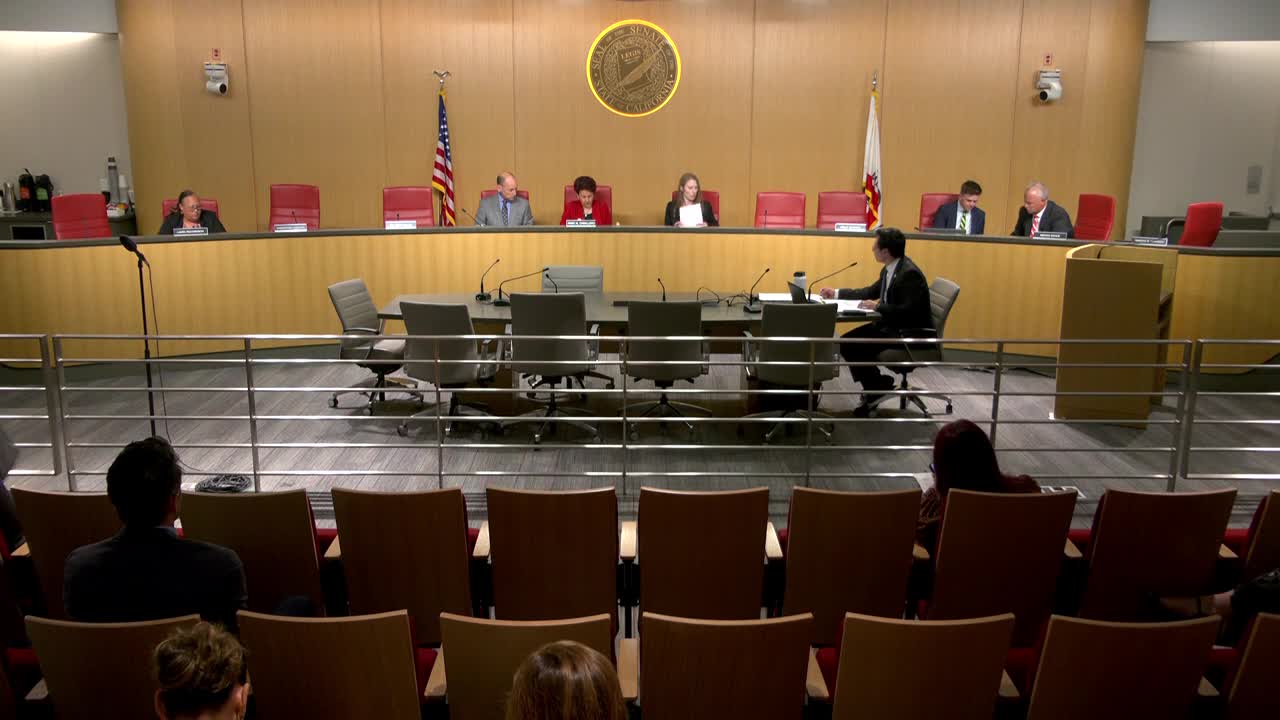
| Aug 18, 2025 | Placed on suspense file | Senate Standing Committee on Appropriations |
Passed |
|
| Jul 16, 2025 | Do pass, but first be re-referred to the Committee on [Appropriations] with the recommendation: To Consent Calendar | Senate Standing Committee on Education |
Passed |
|
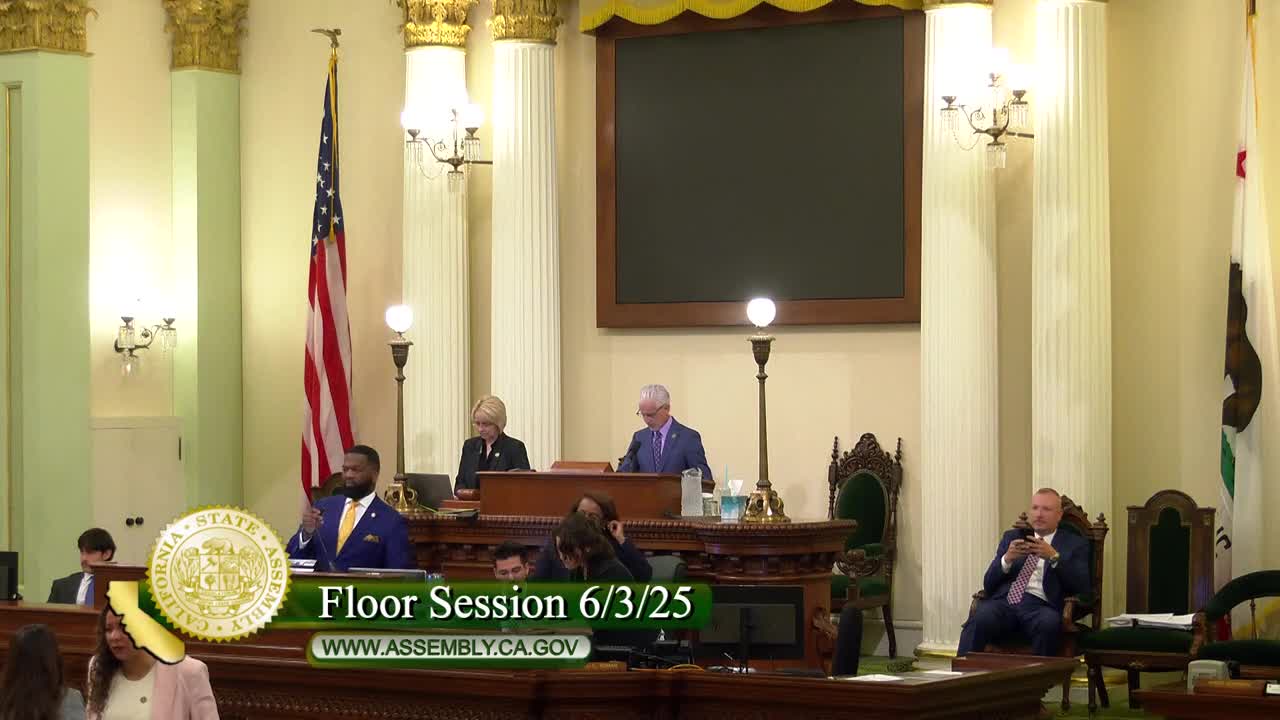
| Jun 3, 2025 | AB 279 Patel Assembly Third Reading | Assembly Floor |
Passed |
|
| May 23, 2025 | Do pass. | Assembly Standing Committee on Appropriations |
Passed |
|
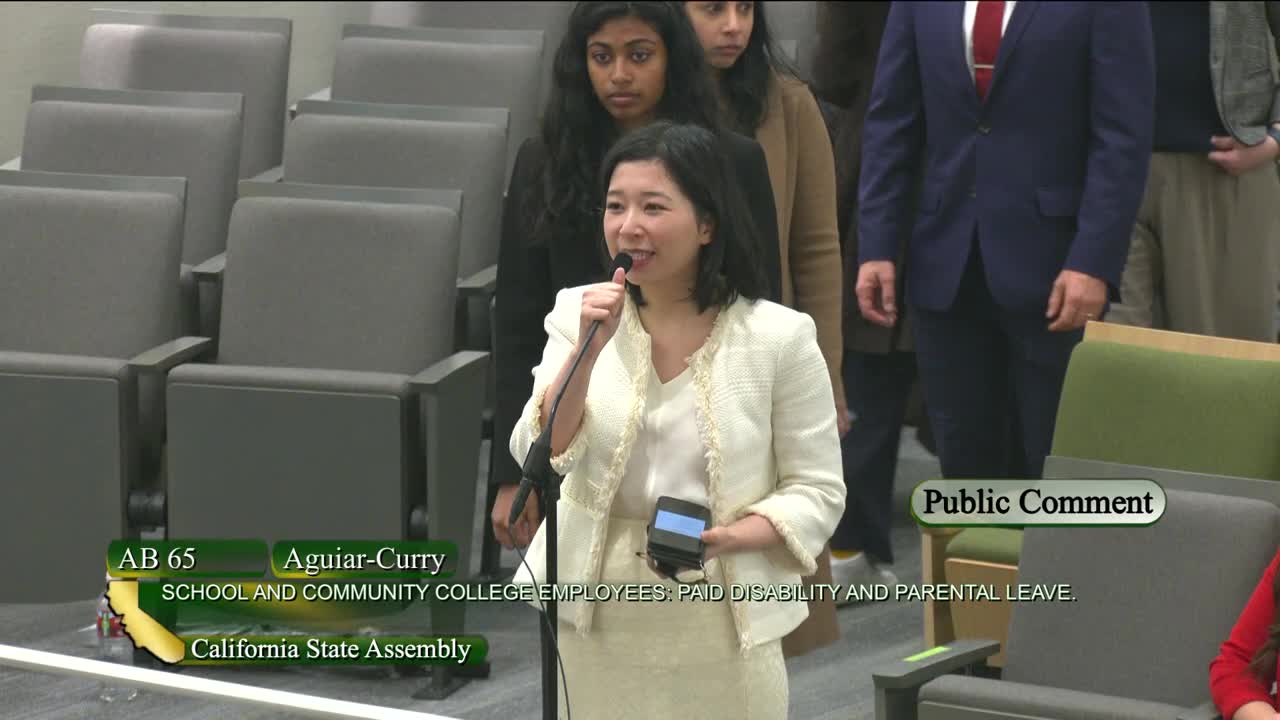
| Mar 12, 2025 | Do pass as amended and be re-referred to the Committee on [Appropriations] | Assembly Standing Committee on Education |
Passed |
This list shows positions taken on this bill by organizations on the date displayed, which is linked to the original source.
Positions by individuals are not included.
|
Organization
|
Position
|
Date
|
|---|---|---|
| California Library Association | ** Support | |
| Californians Together | ** Support | |
| California School Library Association | ** Support | |
| Los Angeles County Office Of Education | ** Support | |
| Technet | ** Support |
SENATE COMMITTEE ON APPROPRIATIONS
Senator Anna Caballero, Chair
2025 - 2026 Regular Session
AB 279 (Patel) - School libraries: model library standards
Version: June 23, 2025 | Policy Vote: ED. 7 - 0 |
Urgency: No | Mandate: No |
Hearing Date: August 18, 2025 | Consultant: Lenin Del Castillo |
Bill Summary:
This bill requires the Superintendent of Public Instruction (SPI), on or before July 1, 2028, in consultation with the State Board of Education (SBE), to consider recommending revisions to the standards for school library services.
Fiscal Impact:
The California Department of Education (CDE) estimates one-time General Fund costs of $254,000 to facilitate at least three public meetings. This estimate includes reimbursement for travel and supplies, and to support professional writers to draft and edit the final document. The bill’s provisions would be contingent upon an appropriation.
Background:
Existing law requires the governing board of each school district to provide school library services for the pupils and teachers of the district by establishing and maintaining school libraries or by contractual arrangements with another public agency.
Existing law requires that, when the English language arts/English language development (ELA/ELD) curriculum framework is next revised, the Instructional Quality Commission (IQC) consider incorporating the Model Library Standards, and consider media literacy standards at each grade level.
Existing law requires the IQC to consider incorporating media literacy content into the mathematics, science, and history-social science curriculum frameworks and instructional materials when those frameworks are next revised and instructional materials are thereafter adopted. It also requires the IQC to consider including the Model Library Standards, including media content literacy, when ELA/ELD instructional materials are next considered.
Proposed Law:
This bill requires the SPI, on or before July 1, 2028, and every eight years thereafter, in consultation with the SBE to consider recommending revisions to the standards for school library services.
This bill requires the SPI, if it decides to recommend revisions to the SBE, to convene a group of experts in the field of literacy, technology, and media to assist the SPI in developing recommended revisions to the standards for school library services. The experts that are selected shall include teachers who work regularly with trending technologies, media literacy, artificial intelligence, and social media in kindergarten and grades 1 to 12, inclusive, credentialed teacher librarians, and schoolsite principals, amongst others. The bill requires the SPI to ensure that one half of the members of the group are credentialed teacher librarians.
This bill requires the SPI, in consultation with the Instructional Quality Commission, to hold a minimum of two public hearings to allow the public to provide input on the recommended revisions. It also requires the SPI, within 18 months of convening the group of experts, to present to the SBE the revised content standards for school library services.
This bill requires SBE to adopt, reject, or modify any recommended revisions to the content standards, within four months of the presentation of recommended revisions, as specified.
The bill’s provisions would be subject to an appropriation.
Related Legislation:
AB 2876 (Berman, Chapter 927, Statutes of 2024) requires the IQC to consider including the Model Library Standards, including media literacy content, in its criteria for evaluating instructional materials when the SBE next adopts ELA/ELD instructional materials, and also consider incorporating artificial intelligence literacy content into the mathematics, science, and history-social science curriculum frameworks when those frameworks are next revised.
Staff Comments:
The existing model school library standards were adopted by the SBE in 2010 and have not been updated since. While the standards establish foundational language for the integration of media and technology literacy, many things have changed over the last 15 years, particularly the ways in which students consume media and information. This bill would require the SPI and the SBE to consider revising standards for school libraries and also establish a process for developing the standards that brings in experts in literacy, technology, and media. According to the author, “Libraries are a fundamental part of our schools and communities at large. They are learning centers and are crucial to student literacy. In our current times, there is not just a need for reading and writing literacy but also media literacy. As we know, technology has transformed media in the last decade. This new landscape requires new resources for students to better interact and learn. However, our library standards have not been updated in 15 years. By updating these standards, we will better engage in the technological world we live in and prepare our students for the media they consume.”
-- END --
SENATE COMMITTEE ON EDUCATION
Senator Sasha Renée Pérez, Chair
2025 - 2026 Regular
Bill No: AB 279 Hearing Date: July 16, 2025
Author: | |||
Version: | June 23, 2025 | ||
Urgency: | No | Fiscal: | Yes |
Consultant: | Therresa Austin | ||
Subject: School libraries: model library standards
SUMMARY
Requires the State Superintendent of Public Instruction (SPI), on or before July 1, 2028, and every eight years thereafter, in consultation with the State Board of Education (SBE) to consider recommending revisions to the standards for school library services. The bill also establishes a process by which those recommended revisions shall be developed and considered.
BACKGROUND
Existing law:
- Requires the governing board of each school district to provide school library services for the pupils and teachers of the district by establishing and maintaining school libraries or by contractual arrangements with another public agency. (Education Code (EC) § 18100)
- Requires the SBE to adopt standards, rules, and regulations for school library services. (EC § 18101)
- Requires that, when the English language arts/English language development (ELA/ELD) curriculum framework is next revised, the Instructional Quality Commission (IQC) consider incorporating the Model Library Standards, and consider media literacy standards at each grade level. (EC § 33548 (b))
- Requires the IQC to consider incorporating media literacy content into the mathematics, science, and history-social science curriculum frameworks and instructional materials when those frameworks are next revised and instructional materials are thereafter adopted. (EC § 33548 (c)(1))
- Requires the IQC to consider including the Model Library Standards, including media content literacy, when ELA/ELD instructional materials are next considered. (EC § 33548 (c)(2))
- “Media literacy” means the ability to access, analyze, evaluate, and use media and encompasses the foundational skills that lead to digital citizenship. (EC § 51206.4(a)(2))
ANALYSIS
This bill:
- Requires the SPI, on or before July 1, 2028, and every eight years thereafter, in consultation with the SBE to consider recommending revisions to the standards for school library services.
- Requires the SPI, if they decide to recommend revisions to the SBE, to convene a group of experts in the field of literacy, technology, and media to assist the SPI in developing recommended revisions to the standards for school library services.
- Requires the SPI, in consultation with SBE, to select experts that include, but are not necessarily limited to, all of the following:
- Teachers who work regularly with trending technologies, media literacy, artificial intelligence, and social media in kindergarten and grades 1 to 12, inclusive.
- Credentialed teacher librarians.
- Schoolsite principals.
- School district or county office of education administrators.
- University professors.
- Representatives of private sector business or industry with a background in technology, media, and social media.
- Representatives from nonprofit organizations or institutions of higher education with expertise in multilingual learners, a background in multilingual education, or both.
- Requires the SPI, in consultation with the SBE, to ensure that one half of the members of the group are credentialed teacher librarians.
- Requires the SPI, in consultation with SBE, to select experts that include, but are not necessarily limited to, all of the following:
- Requires the SPI, in consultation with the IQC, to hold a minimum of two public hearings to allow the public to provide input on the recommended revisions.
- Requires the SPI, within 18 months of convening the group of experts, to present to the SBE the revised content standards for school library services.
- Requires SBE to adopt, reject, or modify any recommended revisions to the content standards, within four months of the presentation of recommended revisions.
- Requires the SBE to provide written reasons for its revisions during a publicly noticed meeting if it chooses to modify the revised content standards recommended by the SPI.
- Prohibits the SBE from adopting the revised content standards at the same meeting it provides its written reasons and instead requires that they be adopted during a subsequent meeting.
- Requires the SBE to transmit a written explanation of the reasons for rejection of the revised content standards to the SPI, the Governor, and the appropriate policy and fiscal committee, if it chooses to reject the content standards.
- Requires the SBE to provide written reasons for its revisions during a publicly noticed meeting if it chooses to modify the revised content standards recommended by the SPI.
- Makes the operation of the provisions of this bill subject to an appropriation.
STAFF COMMENTS
- Need for the bill. According to the author, “Libraries are a fundamental part of our schools and communities at large. They are learning centers and are crucial to student literacy. In our current times, there is not just a need for reading and writing literacy but also media literacy. As we know, technology has transformed media in the last decade. This new landscape requires new resources for students to better interact and learn. However, our library standards have not been updated in 15 years. By updating these standards, we will better engage in the technological world we live in and prepare our students for the media they consume.”
- Model School Library Standards for California Schools. The California Model School Library Standards for California Schools, adopted by the SBE in 2010, recognize that school libraries have evolved from simply providing print materials to offering rich selections of print, media, and digital resources; from teaching basic reading literacy to teaching information literacy (the ability to access, evaluate, use, and integrate information and ideas effectively). According to the California Department of Education (CDE), the library standards include two types of standards:
- “School Library Standards for Students” that delineate what students should know and be able to do at each grade level or grade span to enable students to succeed in school, higher education, and the workforce.
- “School Library Program Standards” that describe base-level staffing, resources and infrastructure, including technology, required for school library programs to be effective and help students to meet the school library standards.
The standards for students are organized into four concepts (accessing, evaluating, using, and integrating information) that span all grades. These standards are not stand-alone standards taught in isolation but are meant to be taught collaboratively by the classroom teacher and the teacher librarian in the context of the curriculum.
While the Library Standards established important foundational language for the integration of media and technology literacy, many things have changed over the last 15 years, particularly in the ways in which students consume media and information. According to the author:
“The emergence of new technologies has transformed the media and press environments that we interact with. The dramatic increase in the use of cell phones and social media has created significant online safety issues for students. The significant use of online disinformation prevalent on the internet today were not part of the original standards and needs to be updated. Additionally, the rapidly growing use of artificial intelligence is a critical issue that should be fully integrated into the school library standards.”
At present, the CDE compiles resources on its website to support schools looking to incorporate cyber safety, media literacy, and K-12 digital citizenship within their libraries.
This bill would require the SPI and the SBE to consider revising standards for school libraries, as specified, and establish a process for developing the standards that brings in experts in literacy, technology, and media.
- Related legislation.
AB 2876 (Berman, Chapter 927, Statutes of 2024) requires the IQC to consider including the Model Library Standards, including media literacy content, in its criteria for evaluating instructional materials when the SBE next adopts ELA/ELD instructional materials, and consider incorporating artificial intelligence literacy content into the mathematics, science, and history-social science curriculum frameworks when those frameworks are next revised.
AB 873 (Berman, Chapter 815, Statutes of 2023) requires that, when the ELA/ELD curriculum framework is next revised, the IQC consider incorporating the Model Library Standards, and consider media literacy standards at each grade level; and requires the IQC to consider incorporating media literacy content into the mathematics, science, and history social science curriculum frameworks when those frameworks are next revised.
AB 2290 (Santiago, Chapter 643, Statutes of 2016) authorizes the SPI to recommend to the SBE modifications to the content standards in world languages, and authorizes the SBE to adopt, reject, or modify the modified standards by July 30, 2018.
AB 740 (Weber, 2015) would have required the SPI, by January 1, 2017, to recommend to the SBE a schedule for the regular update of academic content standards and would have granted the SBE the authority to convene academic content standards advisory committees to update the standards. AB 740 was held in the Senate Appropriations Committee.
SUPPORT
California School Library Association (sponsor)
California Library Association
Californians Together
Los Angeles County Office of Education
TechNet
Two Individuals
OPPOSITION
None received
-- END --
ASSEMBLY THIRD READING
ATR Bill Id:AB 279
Author:(Patel)
As Amended Ver:March 17, 2025
Majority vote
SUMMARY
Requires the Superintendent of Public Instruction (SPI), by July 1, 2028, and every eight years thereafter, to consider recommending revisions to the standards for school library services to the State Board of Education (SBE), and requires the SBE to adopt, reject, or modify the recommended standards within 18 months of receipt of the recommended revisions.
Major Provisions
- Requires the SPI, on or before July 1, 2028, and every eight years thereafter, in consultation with the SBE, to consider recommending revisions to the standards for school library services.
- Requires that if the SPI decides to recommend revisions to the SBE, they convene a group of experts in the fields of literacy, technology and media to assist the SPI in developing recommended divisions to the standards for school library services.
- Requires the SPI, in consultation with the SBE, to select the experts and to ensure that the group of experts includes, but is not necessarily limited to, all of the following:
- Teachers who work regularly with trending technologies, media literacy, artificial intelligence, and social media in grades kindergarten through grade 12, inclusive;
- Credentialed teacher librarians;
- Schoolsite principals;
- School district or county office of education (COE) administrators;
- University professors; and
- Representatives of private sector business or industry with a background in technology, media, and social media.
- Requires the SPI, in consultation with the SBE, to ensure that one-half of the members of the group of experts are credentialed teacher librarians.
- Requires the SPI, in consultation with the SBE, to hold a minimum of two public hearings in order for the public to provide input on the recommended revisions. Requires those hearings to be held pursuant to the Bagley-Keene Open Meeting Act.
- Requires the SPI, within 18 months of convening the experts, to present the proposed revised content standards to the SBE.
- Requires that, within four months, the SBE adopt, reject, or modify any revisions to the content standards.
- Requires that, if the SBE modifies the revised content standards, it provide written reasons for its revisions. Prohibits the SBE from adopting revised content standards at the same meeting it provides its written reasons, but instead requires that an adoption these revisions occur at a subsequent meeting.
- Requires that, if the SBE rejects the revised standards for school library services it transmit to the SPI, the Governor, and the appropriate policy and fiscal committees of the Legislature, a specific written explanation of the reasons for the rejection of the revised content standards.
- Makes these requirements subject to an appropriation for its purposes.
COMMENTS
Model School Library Standards. The current Model School Library Standards were designed to help students "prepare for success in the hypercompetitive global economy that is powered by information and knowledge." They were intended to help students to learn and work with twenty-first century skills and apply responsible research practices, be respectful to others when using digital devices, and continue to grow as lifelong learners. The standards also describe recommended baseline staffing, access, and resources for school library services needed by students to meet academic standards.
The standards are organized around four concepts followed by overarching standards that continue across all grade levels, which are meant to be taught collaboratively by the classroom teacher and the teacher librarian in the context of the curriculum. The four concepts are:
- Students access information: The student will access information by applying knowledge of the organization of libraries, print materials, digital media, and other sources.
- Students evaluate information: The student will evaluate and analyze information to determine what is appropriate to address the scope of inquiry.
- Students use information: The student will organize, synthesize, create, and communicate information.
- Students integrate information literacy skills into all areas of Learning: The student Will independently pursue information to become a lifelong learner.
Why update the Model School Library Standards? The Model School Library Standards were adopted by the SBE on September 16, 2010 and have not been updated since.
According to the California School Library Association, in the years since the Model School Library Standards were adopted the following online media trends changed how we access and evaluate information for personal and academic use:
- Social media
- Algorithms and personalized recommendations
- Mis/disinformation
- Artificial intelligence
The California School Library Association also notes that revised standards could reflect other recent developments in education, including a focus on literacy across the curriculum, whole child policies, and national standards for information literacy.
According to the Author
"Libraries are a fundamental part of our schools and communities at large. They are learning centers and are crucial to student literacy. In our current times, there is not just a need for reading and writing literacy but also media literacy. As we know, technology has transformed media in the last decade. This new landscape requires new resources for students to better interact and learn. However, our library standards have not been updated in 15 years. By updating these standards, we will better engage in the technological world we live in and prepare our students for the media they consume."
Arguments in Support
The California School Library Association (CSLA) writes, "CSLA supports the bill for several reasons. First, the current School Library Standards were approved in 2010 by the State Board of Education, which makes them 15 years old. Because these standards deal with media literacy, which now includes various elements of technology, cyber and digital safety, they are long overdue for review and update.
Second, the California Department of Education has been integrating the library standards into all of the other content frameworks as they are being updated. As a result, the state should not allow critical literacy and technology information to get this out of date. Updating the library standards now will make the task easier by clarifying what the standards for the current information landscape are rather than classroom teachers and teacher librarians having to translate outdated standards.
Finally, having quality school libraries is a critical equity issue. So many of our California communities are considered 'book deserts.' This is especially true in elementary schools where free reading materials are likely 20 to 30 years old and are likely not culturally relevant for students. The state's School Library Standards address these issues directly and provide guidance to school district leaders, administrators, classroom teachers and teacher librarians."
Arguments in Opposition
None on File
FISCAL COMMENTS
According to the Assembly Appropriations Committee, cost pressures of up to $250,000, one-time, (General Fund) to fund the California Department of Education (CDE) facilitation of three public meetings and support professional writers to draft and edit the final document.
VOTES
ASM EDUCATION: 8-0-1
YES: Muratsuchi, Hoover, Addis, Alvarez, Bonta, Castillo, Lowenthal, Patel
ABS, ABST OR NV: Garcia
ASM APPROPRIATIONS: 14-0-1
YES: Wicks, Arambula, Calderon, Caloza, Dixon, Elhawary, Fong, Mark González, Hart, Pacheco, Pellerin, Solache, Ta, Tangipa
ABS, ABST OR NV: Sanchez
UPDATED
VERSION: March 17, 2025
CONSULTANT: Tanya Lieberman / ED. / (916) 319-2087 FN: 0000571
Date of Hearing: April 9, 2025
ASSEMBLY COMMITTEE ON APPROPRIATIONS
Buffy Wicks, Chair
ABPCA Bill Id:AB 279
Author:(Patel) – As Amended Ver:March 17, 2025
Policy Committee: | Education | Vote: | 8 - 0 |
|
| ||
|
|
Urgency: No State Mandated Local Program: No Reimbursable: No
SUMMARY:
Requires the Superintendent of Public instruction (Superintendent) to consider recommending revisions to the standards for school library services to the State Board of Education (SBE) by July 1, 2028, and every eight years thereafter.
Specifically, this bill requires the Superintendent to convene a group of experts in the fields of literacy, technology, and media to assist in developing recommended revisions before submitting to the SBE and hold at least two public hearings in consultation with the Instructional Quality Commission (IQC). The requirements of the bill are subject to an appropriation being made for this purpose.
FISCAL EFFECT:
Cost pressures of up to $250,000, one-time, (General Fund) to fund the California Department of Education (CDE) facilitation of three public meetings and support professional writers to draft and edit the final document.
COMMENTS:
- Purpose. According to the author:
Libraries are a fundamental part of our schools and communities at large. They are learning centers and are crucial to student literacy. In our current times, there is not just a need for reading and writing literacy but also media literacy. As we know, technology has transformed media in the last decade. This new landscape requires new resources for students to better interact and learn. However, our library standards have not been updated in 15 years. By updating these standards, we will better engage in the technological world we live in and prepare our students for the media they consume.
- Background.
Model School Library Standards. The existing model school library standards were adopted by the SBE in 2010 and have not been updated since. According to the California School Library Association, the intervening years have seen substantial changes to online media trends and how information is accessed and evaluated for personal and academic use in the areas of social media, algorithms and personalized recommendations, misinformation, and artificial intelligence. Additionally, the association cites recent developments in education such as more focus on literacy across the curriculum, whole child policies, and national standards for information literacy, all as subjects meriting inclusion in the revised standards.
Upcoming Instructional Materials Adoption. Current law requires that when the SBE next adopts English language arts/English language development (ELA/ELD) instructional materials after January 1, 2025, the IQC consider including the Model Library Standards, including media literacy content, in its criteria for evaluating instructional materials. Because this bill would require the IQC to consider revising the Model School Library Standards in 2028, revised standards will not be included in the instructional materials adoption for these subjects.
Governor’s Budget Proposes Review of State’s Curriculum Development Process. The proposed Governor’s Budget trailer bill for 2025-26 proposes funding for a COE to contract with a research or non-profit organization to study the processes by which other states develop curriculum guidance and make recommendations on or before January 1, 2027, about how to improve and streamline California’s processes.
Analysis Prepared by: Aaron Heredia / APPR. / (916) 319-2081
Date of Hearing: March 12, 2025
ASSEMBLY COMMITTEE ON EDUCATION
Al Muratsuchi, Chair
ABPCA Bill Id:AB 279 (
Author:Patel) – As Introduced Ver:January 21, 2025
SUBJECT: School libraries: model library standards
SUMMARY: Requires, the Superintendent of Public Instruction (SPI), by July 1, 2028, and every eight years thereafter, to consider convening a group of experts in the fields of literacy technology and media to recommend revisions to the standards for school library services, to the Instructional Quality Commission (IQC). Specifically, this bill:
- Requires the SPI, on or before July 1, 2028, and every eight years thereafter, in consultation with the State Board of Education (SBE), to consider convening a group of experts in the fields of literacy technology and media to recommend revisions to the standards for school library services to the IQC.
- Requires the SPI, in consultation with the SBE, to ensure that the group of experts includes, but is not necessarily limited to, all of the following:
- Teachers who work regularly with trending technologies, media literacy, artificial intelligence, and social media in grades 1 to 12, inclusive;
- Credentialed teacher librarians;
- Schoolsite principals;
- School district or county office of education (COE) administrators;
- University professors; and
- Representatives of private sector business or industry with a background in technology, media, and social media.
- Requires the SPI, in consultation with the SBE, to ensure that one-half of the members of the group of experts are credentialed teacher librarians.
- Requires the IQC to consider developing and recommending revisions to the standards for school library services, based on the recommendations, to the SBE.
- Makes these requirements subject to an appropriation for its purposes.
EXISTING LAW:
- Requires the governing board of each school district to provide school library services for the pupils and teachers of the district by establishing and maintaining school libraries or by contractual arrangements with another public agency. (Education Code (EC) Section 18100).
- Requires the SBE to adopt standards, rules, and regulations for school library services. (EC 18101)
- Requires that, when the English language arts/English language development (ELA/ELD) curriculum framework is next revised after January 1, 2024, the IQC consider incorporating the Model Library Standards, and consider incorporating media literacy content at each grade level. (EC 33548)
- Requires that when ELA/ELD instructional materials are next adopted by the SBE after January 1, 2025, the IQC consider including the Model Library Standards, developed pursuant to Section 18101, including media literacy content, in its criteria for evaluating instructional materials.
- Requires that when mathematics, science, and history-social science instructional materials are next adopted by the SBE after January 1, 2025, the IQC consider including media literacy content in its criteria for evaluating instructional materials.
FISCAL EFFECT: Unknown
COMMENTS:
Need for the bill. According to the author, “Libraries are a fundamental part of our schools and communities at large. They are learning centers and are crucial to student literacy. In our current times, there is not just a need for reading and writing literacy but also media literacy. As we know, technology has transformed media in the last decade. This new landscape requires new resources for students to better interact and learn. However, our library standards have not been updated in 15 years. By updating these standards, we will better engage in the technological world we live in and prepare our students for the media they consume.”
Why update the Model School Library Standards? The Model School Library Standards were adopted by the SBE on September 16, 2010 and have not been updated since.
According to the California School Library Association, in the years since the Model School Library Standards were adopted the following online media trends changed how we access and evaluate information for personal and academic use:
- Social media
- Algorithms and personalized recommendations
- Mis/disinformation
- Artificial intelligence
The California School Library Association also notes that revised standards could reflect other recent developments in education, including a focus on literacy across the curriculum, whole child policies, and national standards for information literacy.
The Committee may wish to consider that this is one area of the curriculum which changes far more rapidly than the state’s curriculum process can accommodate, and that this may be an appropriate topic for consideration in the process proposed by the Governor, described below, of reviewing the state’s curriculum development and revision processes.
Update would not be in time for adoption of math or ELA/ELD materials for grades K-8. Current law requires that when ELA/ELD instructional materials are next adopted by the SBE after January 1, 2025, the IQC consider including the Model Library Standards, including media literacy content, in its criteria for evaluating instructional materials. It also requires that media literacy be considered for inclusion in the evaluation criteria for other subjects, including mathematics.
The SBE is currently conducting an instructional materials adoption in mathematics, and is planning to conduct an instructional materials adoption in ELA/ELD.
Because this bill would require the IQC to consider revising the Model School Library Standards in 2028, revised standards will not be included in the instructional materials adoption for these subjects.
Governor’s Budget proposals on ELA/ELD instructional materials adoption and review of state’s curriculum development. The proposed trailer bill to the Governor’s proposed budget for 2025-26 includes funding for a COE and a partner organization to develop guidance to support the follow-up adoption and subsequent implementation of ELA/ELD instructional materials. This would include guidance on incorporating the Model Library Standards, including media literacy content, in its criteria for evaluating instructional materials.
The Governor’s Budget also proposes an appropriation of $1 million to a COE to contract with a research or non-profit organization to study the processes by which other states develop curriculum guidance and make recommendations about how to improve and streamline California’s processes. It requires the selected organization, by January 1, 2027, to explore the following topics related to the development of curriculum guidance in other states, including:
- The process and cycle for developing curriculum frameworks and other instructional guidance and for selecting aligned instructional resources;
- How curriculum guidance and instructional resources are evaluated for the extent to which they support the teaching and learning of state content standards; and
- What additional guidance, tools, professional development or other resources, including digital resources and platforms, are provided to educators to support the teaching and learning of state content standards.
Model School Library Standards. The current Model School Library Standards were designed to help students “prepare for success in the hypercompetitive global economy that is powered by information and knowledge.” They were intended to help students to learn and work with twenty-first century skills and apply responsible research practices, be respectful to others when using digital devices, and continue to grow as lifelong learners. The standards also describe recommended baseline staffing, access, and resources for school library services needed by students to meet academic standards.
The standards are organized around four concepts followed by overarching standards that continue across all grade levels, which are meant to be taught collaboratively by the classroom teacher and the teacher librarian in the context of the curriculum. The four concepts are:
- Students access information: The student will access information by applying knowledge of the organization of libraries, print materials, digital media, and other sources.
- Students evaluate information: The student will evaluate and analyze information to determine what is appropriate to address the scope of inquiry.
- Students use information: The student will organize, synthesize, create, and communicate information.
- Students integrate information literacy skills into all areas of Learning: The student Will independently pursue information to become a lifelong learner.
Information literacy in California Model School Library standards. The California Model School Library Standards incorporate “information literacy” skills, in which students “learn to access, evaluate, use, and integrate information and ideas found in print, media, and digital resources, enabling them to function in a knowledge-based economy and technologically oriented society.” “Information” is defined broadly to include words (whether printed or spoken), visual images (including photographs and artwork), and music.
As noted above, the standards are organized into four concepts (accessing, evaluating, using, and integrating information) which contain standards spanning all of the grades. In the area of evaluating information, students are expected to be able to determine the relevance of information; assess the comprehensiveness, currency, credibility, authority, and accuracy of resources; and consider the need for additional information.
The state’s content standards for ELA also include at least one reference to media literacy. In grades 9 -12 students are expected to learn to “Integrate multiple sources of information presented in diverse media or formats (e.g., visually, quantitatively, orally) evaluating the credibility and accuracy of each source.”
Recommended Committee amendments. Staff recommends that the bill be amended to:
- Require that the SPI consider recommending revised school library standards to the SBE, and clarify that the role of the expert group is to assist in developing those recommended standards.
- Require that the SPI submit the revised standards to the SBE, instead of requiring the IQC to consider recommending revised standards to the SBE.
- Require that there be opportunities for public input on the revision of the standards, through at least two public hearings.
- Require that the SBE act on the recommended standards, within a specified time period, and through a process consistent with the last revision of content standards in world languages and visual and performing arts.
- Other technical and conforming changes.
Arguments in support. The California School Library Association (CSLA) writes, “CSLA supports the bill for several reasons. First, the current School Library Standards were approved in 2010 by the State Board of Education, which makes them 15 years old. Because these standards deal with media literacy, which now includes various elements of technology, cyber and digital safety, they are long overdue for review and update.
Second, the California Department of Education has been integrating the library standards into all of the other content frameworks as they are being updated. As a result, the state should not allow critical literacy and technology information to get this out of date. Updating the library standards now will make the task easier by clarifying what the standards for the current information landscape are rather than classroom teachers and teacher librarians having to translate outdated standards.
Finally, having quality school libraries is a critical equity issue. So many of our California communities are considered “book deserts.” This is especially true in elementary schools where free reading materials are likely 20 to 30 years old and are likely not culturally relevant for students. The state’s School Library Standards address these issues directly and provide guidance to school district leaders, administrators, classroom teachers and teacher librarians.”
Related legislation. AB 2876 (Berman), Chapter 927, Statutes of 2024, requires the IQC to consider including the Model Library Standards, including media literacy content, in its criteria for evaluating instructional materials when the SBE next adopts ELA/ELD instructional materials, and consider incorporating artificial intelligence literacy content into the mathematics, science, and history-social science curriculum frameworks when those frameworks are next revised.
AB 873 (Berman), Chapter 815, Statutes of 2023, requires that, when the ELA/ELD curriculum framework is next revised, the IQC consider incorporating the Model Library Standards, and consider media literacy standards at each grade level; and requires the IQC to consider incorporating media literacy content into the mathematics, science, and history social science curriculum frameworks when those frameworks are next revised.
AB 852 (Burke and Weber) of the 2019-20 Session would have established a process for the regular revision of academic content standards prior to the revision of curriculum frameworks. This bill was vetoed by the Governor, who stated:
This bill creates a new process to routinely evaluate and revise academic content standards. AB 852 shifts the responsibility from the State Board of Education to the State Superintendent of Public to review and recommend updates to academic content standards.
I do not support shifting this responsibility away from the State Board of Education or further complicating the current process.
AB 2862 (O’Donnell), Chapter 647, Statutes of 2016 authorizes the SPI to recommend to the SBE revisions to the content standards in visual and performing arts (VAPA), and authorizes the SBE to adopt, reject, or modify the revised standards by January 1, 2019.
AB 2290 (Santiago) Chapter 643, Statutes of 2016 authorizes the SPI to recommend to the SBE modifications to the content standards in world languages, and authorizes the SBE to adopt, reject, or modify the modified standards by July 30, 2018.
AB 740 (Weber) of the 2015-16 Session would have required the SPI, by January 1, 2017, to recommend to the SBE a schedule for the regular update of academic content standards and would have granted the SBE the authority to convene academic content standards advisory committees to update the standards. This bill was held in the Senate Appropriations Committee.
REGISTERED SUPPORT / OPPOSITION:
Support
California School Library Association
TechNet
Opposition
None on file
Analysis Prepared by: Tanya Lieberman / ED. / (916) 319-2087
Discussed in Hearing
 1MIN
Senate Standing Committee on Appropriations
 59SEC
Assembly Floor
 5MIN
Assembly Standing Committee on Education
Bill Author

Bill Co-Author(s):