AB 281: Comprehensive sexual health education and human immunodeficiency virus (HIV) prevention education: outside consultants.
- Session Year: 2025-2026
- House: Assembly
- Latest Version Date: 2025-03-17
Current Status:
Failed
(2026-02-02: Died on third reading file.)
Introduced
In Committee
Awaiting First Chamber Vote
Passed First Chamber
In Committee
Awaiting Second Chamber Vote
Passed Second Chamber
Enacted
The California Healthy Youth Act requires school districts, defined to include county boards of education, county superintendents of schools, the California School for the Deaf, the California School for the Blind, and charter schools, to ensure that all pupils in grades 7 to 12, inclusive, receive comprehensive sexual health education and human immunodeficiency virus (HIV) prevention education, as specified. The act authorizes a school district to provide that education earlier than grade 7 with age-appropriate and medically accurate information. The act requires each school district to notify parents and guardians of pupils about its plan to provide sexual health education and HIV prevention instruction for the upcoming school year and to inform them, among other things, that written and audiovisual educational materials used in this instruction are available for inspection. authorizes a school district to provide sexual health education and HIV prevention to be taught by an outside consultant, and to hold an assembly to deliver that education by guest speakers. Under the act, if a school district exercises that authorization, the school district is required to provide notice of the date of instruction, name of the organization or affiliation of each guest speaker, and information stating the right of the parent or guardian to request a copy of various laws, as specified.
This bill would require a school district, as defined, to allow a pupils parent or guardian to inspect any written or audiovisual educational material used in comprehensive sexual health education and HIV prevention education and would authorize a parent or guardian to make copies of any written educational material that will be distributed to pupils, if it is not copyrighted and has been or will be presented by an outside consultant or guest speaker. The bill would authorize a school to charge up to $0.10 per page if a parent or guardian elects to make copies of this written educational material. The bill would also require a school district to inform parents and guardians of their right to make these copies and of the training in comprehensive sexual health education and HIV prevention education of each outside consultant or guest speaker providing this instruction. By imposing additional duties on local educational agencies, the bill would impose a state-mandated local program.The California Constitution requires the state to reimburse local agencies and school districts for certain costs mandated by the state. Statutory provisions establish procedures for making that reimbursement.This bill would provide that with regard to certain mandates no reimbursement is required by this act for a specified reason.With regard to any other mandates, this bill would provide that, if the Commission on State Mandates determines that the bill contains costs so mandated by the state, reimbursement for those costs shall be made pursuant to the statutory provisions noted above.This bill would require a school district, if it elects to provide sexual health education or HIV prevention education to be taught by outside consultants, to also provide notice of the name of the organization or affiliation of the outside consultants.
The California Healthy Youth Act requires school districts, defined to include county boards of education, county superintendents of schools, the California School for the Deaf, the California School for the Blind, and charter schools, to ensure that all pupils in grades 7 to 12, inclusive, receive comprehensive sexual health education and human immunodeficiency virus (HIV) prevention education, as specified. The act authorizes a school district to provide that education earlier than grade 7 with age-appropriate and medically accurate information. The act requires each school district to notify parents and guardians of pupils about its plan to provide sexual health education and HIV prevention instruction for the upcoming school year and to inform them, among other things, that written and audiovisual educational materials used in this instruction are available for inspection.
This bill would require a school district, as defined, to allow a pupils parent or guardian to inspect any written or audiovisual educational material used in comprehensive sexual health education and HIV prevention education and would authorize a parent or guardian to make copies of any written educational material that will be distributed to pupils, if it is not copyrighted and has been or will be presented by an outside consultant or guest speaker. The bill would authorize a school to charge up to $0.10 per page if a parent or guardian elects to make copies of this written educational material. The bill would also require a school district to inform parents and guardians of their right to make these copies and of the training in comprehensive sexual health education and HIV prevention education of each outside consultant or guest speaker providing this instruction. By imposing additional duties on local educational agencies, the bill would impose a state-mandated local program.
The California Constitution requires the state to reimburse local agencies and school districts for certain costs mandated by the state. Statutory provisions establish procedures for making that reimbursement.
This bill would provide that with regard to certain mandates no reimbursement is required by this act for a specified reason.
With regard to any other mandates, this bill would provide that, if the Commission on State Mandates determines that the bill contains costs so mandated by the state, reimbursement for those costs shall be made pursuant to the statutory provisions noted above.
(a)A parent or guardian of a pupil has the right to excuse their child from all or part of comprehensive sexual health education, HIV prevention education, and assessments related to that education through a passive consent (opt-out) process. A school district shall not require active parental consent (opt-in) for comprehensive sexual health education and HIV prevention education.
(b)At the beginning of each school year, or, for a pupil who enrolls in a school after the beginning of the school year, at the time of that pupils enrollment, each school district shall notify the parent or guardian of each pupil about instruction in comprehensive sexual health education and HIV prevention education and research on pupil health behaviors and risks planned for the coming year. The notice shall do all of the following:
(1)Advise the parent or guardian that written and audiovisual educational materials used in comprehensive sexual health education and HIV prevention education are available for inspection.
(2)Advise the parent or guardian whether the comprehensive sexual health education or HIV prevention education will be taught by school district personnel or by outside consultants. A school district may provide comprehensive sexual health education or HIV prevention education, to be taught by outside consultants, and may hold an assembly to deliver comprehensive sexual health education or HIV prevention education by guest speakers, but if it elects to provide comprehensive sexual health education or HIV prevention education in either of these manners, the notice shall include the date of the instruction, the name of the organization or affiliation of each outside consultant and guest speaker, and information stating the right of the parent or guardian to request a copy of this section, Section 51933, and Section 51934. If arrangements for this instruction are made after the beginning of the school year, notice shall be made by mail or another commonly used method of notification, no fewer than 14 days before the instruction is delivered.
(3)Include information explaining the parents or guardians right to request a copy of this chapter.
(4)Advise the parent or guardian that the parent or guardian has the right to excuse their child from comprehensive sexual health education and HIV prevention education and that in order to excuse their child they must state their request in writing to the school district.
(c)Notwithstanding Section 51513, anonymous, voluntary, and confidential research and evaluation tools to measure pupils health behaviors and risks, including tests, questionnaires, and surveys containing age-appropriate questions about the pupils attitudes concerning or practices relating to sex, may be administered to any pupil in grades 7 to 12, inclusive. A parent or guardian has the right to excuse their child from the test, questionnaire, or survey through a passive consent (opt-out) process. A school district shall not require active parental consent (opt-in) for these tests, questionnaires, or surveys in grades 7 to 12, inclusive. Parents or guardians shall be notified in writing that this test, questionnaire, or survey is to be administered, given the opportunity to review the test, questionnaire, or survey if they wish, notified of their right to excuse their child from the test, questionnaire, or survey, and informed that in order to excuse their child they must state their request in writing to the school district.
(d)The use of outside consultants or guest speakers as described in paragraph (2) of subdivision (b) is within the discretion of the school district.
SECTION 1.Section 51938 of the Education Code is amended to read:51938.(a)A parent or guardian of a pupil has the right to excuse their child from all or part of comprehensive sexual health education, HIV prevention education, and assessments related to that education through a passive consent (opt-out) process. A school district shall not require active parental consent (opt-in) for comprehensive sexual health education and HIV prevention education.(b)At the beginning of each school year, or, for a pupil who enrolls in a school after the beginning of the school year, at the time of that pupils enrollment, each school district shall notify the parent or guardian of each pupil about instruction in comprehensive sexual health education and HIV prevention education and research on pupil health behaviors and risks planned for the coming year. The notice shall do all of the following:(1)Advise the parent or guardian that written and audiovisual educational materials used in comprehensive sexual health education and HIV prevention education are available for inspection and that during this inspection a parent or guardian may make copies at the parents or guardians pupils school of any written educational material that will be distributed to pupils, if it is not copyrighted and has been or will be presented by an outside consultant or guest speaker.(2)Advise the parent or guardian whether the comprehensive sexual health education or HIV prevention education will be taught by school district personnel or by outside consultants. A school district may provide comprehensive sexual health education or HIV prevention education, to be taught by outside consultants, and may hold an assembly to deliver comprehensive sexual health education or HIV prevention education by guest speakers, but if the school district elects to provide comprehensive sexual health education or HIV prevention education in either of these manners, the notice shall include the date of the instruction, the name of the organization or affiliation of each outside consultant and guest speaker, the training in comprehensive sexual health education and HIV prevention education of each outside consultant and guest speaker, and information stating the right of the parent or guardian to request a copy of this section, Section 51933, and Section 51934. If arrangements for this instruction are made after the beginning of the school year, notice shall be made by mail or another commonly used method of notification, no fewer than 14 days before the instruction is delivered.(3)Include information explaining the parents or guardians right to request a copy of this chapter.(4)Advise the parent or guardian that the parent or guardian has the right to excuse their child from comprehensive sexual health education and HIV prevention education and that in order to excuse their child they must state their request in writing to the school district.(c)A school district shall allow a pupils parent or guardian to inspect any written or audiovisual educational material used in comprehensive sexual health education and HIV prevention education. A parent or guardian may, during inspection, make copies at the parents or guardians pupils school of any written educational material that will be distributed to pupils, if it is not copyrighted and has been or will be presented by an outside consultant or guest speaker. If a parent or guardian elects to make copies, the school may charge up to ten cents ($0.10) per page. (d)Notwithstanding Section 51513, anonymous, voluntary, and confidential research and evaluation tools to measure pupils health behaviors and risks, including tests, questionnaires, and surveys containing age-appropriate questions about the pupils attitudes concerning or practices relating to sex, may be administered to any pupil in grades 7 to 12, inclusive. A parent or guardian has the right to excuse their child from the test, questionnaire, or survey through a passive consent (opt-out) process. A school district shall not require active parental consent (opt-in) for these tests, questionnaires, or surveys in grades 7 to 12, inclusive. Parents or guardians shall be notified in writing that this test, questionnaire, or survey is to be administered, given the opportunity to review the test, questionnaire, or survey if they wish, notified of their right to excuse their child from the test, questionnaire, or survey, and informed that in order to excuse their child they must state their request in writing to the school district.(e)The use of outside consultants or guest speakers as described in paragraph (2) of subdivision (b) is within the discretion of the school district.SEC. 2.No reimbursement is required by this act pursuant to Section 6 of Article XIIIB of the California Constitution for certain costs that may be incurred by a local agency or school district because, in that regard, a local agency or school district has the authority to levy service charges, fees, or assessments sufficient to pay for the program or level of service mandated by this act, within the meaning of Section 17556 of the Government Code.However, if the Commission on State Mandates determines that this act contains other costs mandated by the state, reimbursement to local agencies and school districts for those costs shall be made pursuant to Part 7 (commencing with Section 17500) of Division 4 of Title 2 of the Government Code.(a)A parent or guardian of a pupil has the right to excuse their child from all or part of comprehensive sexual health education, HIV prevention education, and assessments related to that education through a passive consent (opt-out) process. A school district shall not require active parental consent (opt-in) for comprehensive sexual health education and HIV prevention education.
(b)At the beginning of each school year, or, for a pupil who enrolls in a school after the beginning of the school year, at the time of that pupils enrollment, each school district shall notify the parent or guardian of each pupil about instruction in comprehensive sexual health education and HIV prevention education and research on pupil health behaviors and risks planned for the coming year. The notice shall do all of the following:
(1)Advise the parent or guardian that written and audiovisual educational materials used in comprehensive sexual health education and HIV prevention education are available for inspection. inspection and that during this inspection a parent or guardian may make copies at the parents or guardians pupils school of any written educational material that will be distributed to pupils, if it is not copyrighted and has been or will be presented by an outside consultant or guest speaker.
(2)Advise the parent or guardian whether the comprehensive sexual health education or HIV prevention education will be taught by school district personnel or by outside consultants. A school district may provide comprehensive sexual health education or HIV prevention education, to be taught by outside consultants, and may hold an assembly to deliver comprehensive sexual health education or HIV prevention education by guest speakers, but if it the school district elects to provide comprehensive sexual health education or HIV prevention education in either of these manners, the notice shall include the date of the instruction, the name of the organization or affiliation of each outside consultant and guest speaker, the training in comprehensive sexual health education and HIV prevention education of each outside consultant and guest speaker, and information stating the right of the parent or guardian to request a copy of this section, Section 51933, and Section 51934. If arrangements for this instruction are made after the beginning of the school year, notice shall be made by mail or another commonly used method of notification, no fewer than 14 days before the instruction is delivered.
(3)Include information explaining the parents or guardians right to request a copy of this chapter.
(4)Advise the parent or guardian that the parent or guardian has the right to excuse their child from comprehensive sexual health education and HIV prevention education and that in order to excuse their child they must state their request in writing to the school district.
(c)A school district shall allow a pupils parent or guardian to inspect any written or audiovisual educational material used in comprehensive sexual health education and HIV prevention education. A parent or guardian may, during inspection, make copies at the parents or guardians pupils school of any written educational material that will be distributed to pupils, if it is not copyrighted and has been or will be presented by an outside consultant or guest speaker. If a parent or guardian elects to make copies, the school may charge up to ten cents ($0.10) per page.
(c)(d)Notwithstanding Section 51513, anonymous, voluntary, and confidential research and evaluation tools to measure pupils health behaviors and risks, including tests, questionnaires, and surveys containing age-appropriate questions about the pupils attitudes concerning or practices relating to sex, may be administered to any pupil in grades 7 to 12, inclusive. A parent or guardian has the right to excuse their child from the test, questionnaire, or survey through a passive consent (opt-out) process. A school district shall not require active parental consent (opt-in) for these tests, questionnaires, or surveys in grades 7 to 12, inclusive. Parents or guardians shall be notified in writing that this test, questionnaire, or survey is to be administered, given the opportunity to review the test, questionnaire, or survey if they wish, notified of their right to excuse their child from the test, questionnaire, or survey, and informed that in order to excuse their child they must state their request in writing to the school district.
(d)(e)The use of outside consultants or guest speakers as described in paragraph (2) of subdivision (b) is within the discretion of the school district.
SEC. 2.No reimbursement is required by this act pursuant to Section 6 of Article XIIIB of the California Constitution for certain costs that may be incurred by a local agency or school district because, in that regard, a local agency or school district has the authority to levy service charges, fees, or assessments sufficient to pay for the program or level of service mandated by this act, within the meaning of Section 17556 of the Government Code.
However, if the Commission on State Mandates determines that this act contains other costs mandated by the state, reimbursement to local agencies and school districts for those costs shall be made pursuant to Part 7 (commencing with Section 17500) of Division 4 of Title 2 of the Government Code.
|
Date
|
Status
|
|---|---|
| Feb 2, 2026 | Died on third reading file. |
| Jan 26, 2026 | Ordered to third reading. |
| Jan 26, 2026 | From inactive file. |
| Jan 22, 2026 | Notice of intention to remove from inactive file given by Assembly Member Gallagher. |
| Jun 12, 2025 | Ordered to inactive file at the request of Assembly Member Gallagher. |
| Apr 21, 2025 | Read second time. Ordered to third reading. |
| Apr 10, 2025 | From committee: Do pass. (Ayes 5. Noes 3.) (April 9). |
| Mar 26, 2025 | In committee: Hearing postponed by committee. |
| Mar 18, 2025 | Re-referred to Com. on ED. |
| Mar 17, 2025 | From committee chair, with author's amendments: Amend, and re-refer to Com. on ED. Read second time and amended. |
| Mar 12, 2025 | In committee: Set, first hearing. Failed passage. Reconsideration granted. |
| Feb 10, 2025 | Referred to Com. on ED. |
| Jan 23, 2025 | From printer. May be heard in committee February 22. |
| Jan 22, 2025 | Read first time. To print. |
|
Date
|
Description
|
Location
|
Votes
|
|
|---|---|---|---|---|
| Apr 9, 2025 | Do pass. | Assembly Standing Committee on Education |
Passed |
|
| Mar 12, 2025 | Do pass and be re-referred to the Committee on [Appropriations] | Assembly Standing Committee on Education |
Failed |
This list shows positions taken on this bill by organizations on the date displayed, which is linked to the original source.
Positions by individuals are not included.
|
Organization
|
Position
|
Date
|
|---|---|---|
| Alameda County Office Of Education | ** Against | |
| California Baptist for Biblical Values | ** Support | |
| California Catholic Conference | ** Support | |
| California Family Council | ** Support | |
| Church State Council | ** Support | |
| Concerned Women for America | ** Support | |
| Lighthouse Baptist Church | ** Support | |
| Planned Parenthood Affiliates Of California | ** Against |
ASSEMBLY THIRD READING
ATR Bill Id:AB 281
Author:(Gallagher)
As Amended Ver:March 17, 2025
Majority vote
SUMMARY
Requires each local educational agency (LEA) and charter school, as part of its notification to parents and guardians about instruction in comprehensive sexual health education and human immunodeficiency virus (HIV) prevention education, to advise parents of the name and affiliation of any outside consultant who will be providing instruction.
Major Provisions
Requires each LEA and charter school, as part of its notification to parents and guardians about instruction in comprehensive sexual health education and HIV prevention education, to advise parents of the name and affiliation of any outside consultant who will be providing instruction.
COMMENTS
Outside consultants and guest speakers in sexual health education. Current law establishes the California Healthy Youth Act (CHYA), which requires schools to ensure that students receive comprehensive sexual health education and HIV prevention education once in middle school and once in high school. Parents have the right to excuse their children from part or all of the instruction required by the CHYA, and are notified that instructional materials used in this instruction are available for inspection.
The CHYA permits LEAs to contract with outside consultants to provide comprehensive sexual health and HIV prevention education. Current law requires that the name and affiliation of any guest speakers be included in the notice, but does not require that the same be provided about any outside consultants. In all other ways, the two types of outside providers are treated the same.
Current law requires outside consultants and guest speakers with whom school districts contract to have expertise in comprehensive sexual health education and HIV prevention education and have knowledge of the most recent medically accurate research on the relevant topic or topics covered in their instruction. Current law also requires outside consultants to abide by the same instructional requirements as teachers. Among many requirements, this instruction must be age appropriate, medically accurate and objective, teach respect for committed relationships and marriage, encourage students to speak with their parents or guardians about human sexuality, be appropriate and accessible for use with students with disabilities, and be appropriate for students of all races, genders, sexual orientations, and ethnic and cultural backgrounds.
California Department of Education (CDE) website states that parent notice must include information about outside consultants. The CDE's Frequently Asked Questions webpage about the CHYA states, "If instruction will be provided by outside consultants or guest speakers, the notice must include the name and organizational affiliation of the outside consultant or guest speaker and the date of the instruction."
How frequently are guest speakers used in comprehensive sexual health education? There is little published evidence on the use of guest speakers in sexual health education, and none addressing the use of guest speakers or outside consultants in California. In one study conducted in Massachusetts (McRee, 2014), 58% of teachers included guest speakers in comprehensive sexual health education. The authors found that teachers who taught high school and had professional preparation in health education had greater odds of using guest speakers. Teachers stated several reasons for inviting guest speakers, including introducing students to community resources and providing the most up-to-date information. The authors recommended that school districts have policies in place to help ensure that guest speaker content is aligned with goals for student learning, in light of the potential for controversy.
According to the Author
According to the author, "Parental involvement in education is a key factor in student success, benefiting not just individual students but the entire school community. When parents are informed and engaged, students tend to perform better academically, exhibit higher attendance rates, and demonstrate improved behavior.
Research shows that when parents discuss school topics with their children at home, students develop a stronger sense of confidence and responsibility toward their education. Furthermore, increased transparency reduces misunderstandings and builds collaboration between educators and families, particularly for students in vulnerable subgroups. English Learners, foster youth, and socioeconomically disadvantaged students often face additional barriers in education.
Ultimately, education is most effective when schools and families work together. This bill reinforces that partnership by ensuring that parents are not just passive recipients of information but active participants in their child's learning journey."
Arguments in Support
The California Family Council writes, "For years, parents have faced barriers when attempting to review sex education curricula, with many schools making access difficult or withholding materials. Schools should be partnering with parents, not working against them. No school should obscure curriculum from those entrusted with raising children. Parental rights in education are essential. AB 281 ensures transparency, accountability, and trust between schools and families."
Arguments in Opposition
Planned Parenthood Affiliates of California (PPAC) writes, "AB 281 proposes to additionally and explicitly require schools to provide notice of the name of each outside consultant, which is duplicative. There is significant transparency within the CHYA and its existing implementation, and it is unclear how amending this code section will benefit student-centered instruction. While PPAC also supports parental consent for these programs to encourage greater educational opportunities for more students while allowing parents and guardians control over their children's education, we continue to oppose burdensome administrative tasks on school personnel without improving the quality, accuracy, and accessibility of instruction."
FISCAL COMMENTS
This bill has been keyed non-fiscal by the Office of Legislative Counsel.
VOTES
ASM EDUCATION: 5-3-1
YES: Hoover, Addis, Alvarez, Castillo, Lowenthal
NO: Muratsuchi, Garcia, Patel
ABS, ABST OR NV: Bonta
ASM EDUCATION: 4-3-2
YES: Hoover, Alvarez, Castillo, Lowenthal
NO: Muratsuchi, Bonta, Patel
ABS, ABST OR NV: Addis, Garcia
UPDATED
VERSION: March 17, 2025
CONSULTANT: Tanya Lieberman / ED. / (916) 319-2087 FN: 0000242
Date of Hearing: April 9, 2025
ASSEMBLY COMMITTEE ON EDUCATION
Al Muratsuchi, Chair
ABPCA Bill Id:AB 281 (
Author:Gallagher) – As Amended Ver:March 17, 2025
[Note: This bill was heard on March 12, 2025, and failed passage. Reconsideration was granted. The bill was subsequently amended.]
SUBJECT: Comprehensive sexual health education and human immunodeficiency virus (HIV) prevention education: outside consultants
SUMMARY: Requires each local educational agency (LEA) and charter school, as part of its notification to parents and guardians about instruction in comprehensive sexual health education and HIV prevention education, to advise parents of the name and affiliation of any outside consultant who will be providing instruction. Specifically, this bill:
- Requires each LEA and charter school, as part of its notification to parents and guardians about instruction in comprehensive sexual health education and HIV prevention education, to advise parents of the name and affiliation of any outside consultant who will be providing instruction.
EXISTING LAW:
- Establishes the California Healthy Youth Act (CHYA), which requires school districts, defined to include county boards of education, county superintendents of schools, the California School for the Deaf, the California School for the Blind, and charter schools, to ensure that all students in grades 7 to 12, inclusive, receive comprehensive sexual health education and HIV prevention education. The Act defines “comprehensive sexual health education” for these purposes to mean education regarding human development and sexuality, including education on pregnancy, contraception, and sexually transmitted infections. Under the act, the instruction is required to adhere to specified criteria, including, among other things, that students are provided with knowledge and skills for making and implementing healthy decisions about sexuality. (Education Code (EC) 51931 et seq.)
- States that a parent or guardian of a student has the right to excuse their child from all or part of comprehensive sexual health education, HIV prevention education, and assessments related to that education through a passive consent (“opt-out”) process. A school district is prohibited from requiring active parental consent (“opt-in”) for comprehensive sexual health education and HIV prevention education. (EC 51938)
- Requires each school district to notify the parent or guardian of each student about instruction in comprehensive sexual health education and HIV prevention education and research on student health behaviors and risks planned for the coming year. Requires that the notice do all of the following:
- Advise the parent or guardian that written and audiovisual educational materials used in comprehensive sexual health education and HIV prevention education are available for inspection;
- Advise the parent or guardian whether the comprehensive sexual health education or HIV prevention education will be taught by school district personnel or by outside consultants. Authorizes a school district to provide comprehensive sexual health education or HIV prevention education taught by outside consultants, and may hold an assembly to deliver comprehensive sexual health education or HIV prevention education by guest speakers. If it elects to provide comprehensive sexual health education or HIV prevention education in either of these manners, requires the notice to include the date of the instruction, the name of the organization or affiliation of each guest speaker, and the rights of the parent or guardian to request a copy of specified provisions of law.
- Include information explaining the parent’s or guardian’s right to request a copy of the California Healthy Youth Act.
- Advise the parent or guardian that the parent or guardian has the right to excuse their child from comprehensive sexual health education and HIV prevention education, and that in order to excuse their child they must state their request in writing to the school district. (EC 51938)
- States that the use of outside consultants or guest speakers is within the discretion of the school district. (EC 51938)
- States that school districts may contract with outside consultants or guest speakers, including those who have developed multilingual curricula or curricula accessible to persons with disabilities, to deliver comprehensive sexual health education and HIV prevention education or to provide training for school district personnel. Requires that all outside consultants and guest speakers have expertise in comprehensive sexual health education and HIV prevention education and have knowledge of the most recent medically accurate research on the relevant topic or topics covered in their instruction. (EC 51936)
- Requires that instruction provided by consultants and guest speakers follow the same requirements as instruction provided by teachers, including being age appropriate, factual and medically accurate, and appropriate for different kinds of students. (EC 51933)
- Defines “school district” to include school districts, county offices of education (COEs), charter schools, and the state schools for the deaf and blind.
FISCAL EFFECT: This bill has been keyed non-fiscal by the Office of Legislative Counsel.
COMMENTS:
Need for the bill. According to the author, “Parental involvement in education is a key factor in student success, benefiting not just individual students but the entire school community. When parents are informed and engaged, students tend to perform better academically, exhibit higher attendance rates, and demonstrate improved behavior. This bill strengthens the partnership between schools and families by ensuring that parents have full access to instructional materials, allowing them to be active participants in their child’s learning.
Research shows that when parents discuss school topics with their children at home, students develop a stronger sense of confidence and responsibility toward their education. By allowing parents to review and understand comprehensive sexual health and HIV prevention education materials, this bill fosters trust between families and schools, ensuring that students receive instruction that aligns with both educational standards and parental expectations.
Furthermore, increased transparency reduces misunderstandings and builds collaboration between educators and families, particularly for students in vulnerable subgroups. English Learners, foster youth, and socioeconomically disadvantaged students often face additional barriers in education. By equipping parents with clear information and access to instructional materials, this bill ensures that all families—regardless of background—can advocate for their children's learning needs.
Ultimately, education is most effective when schools and families work together. This bill reinforces that partnership by ensuring that parents are not just passive recipients of information but active participants in their child’s learning journey.”
California Department of Education (CDE) website states that parent notice must include outside consultants. The CDE’s frequently asked questions on its webpage about the CHYA states, “If instruction will be provided by outside consultants or guest speakers, the notice must include the name and organizational affiliation of the outside consultant or guest speaker and the date of the instruction.”
Outside consultants and guest speakers. Current law permits LEAs to contract with outside consultants to provide comprehensive sexual health and HIV prevention education.
This bill would require that the notice to parents about this instruction include the name and affiliation of any outside consultants who will be providing this instruction. Current law requires that the name and affiliation of any guest speaker be included in the notice, but does not require that the same be provided about any outside consultant. In all other ways, the two types of outside providers are treated the same.
Current law requires consultants or guest speakers with whom school districts contract to have expertise in comprehensive sexual health education and HIV prevention education and have knowledge of the most recent medically accurate research on the relevant topic or topics covered in their instruction.
Current law also requires outside consultants to abide by the same instructional requirements as teachers. Among many requirements, this instruction must be age appropriate, medically accurate and objective, teach respect for committed relationships and marriage, encourage students to speak with their parents or guardians about human sexuality, be appropriate and accessible for use with students with disabilities, and be appropriate for students of all races, genders, sexual orientations, and ethnic and cultural backgrounds.
How frequently are guest speakers used in comprehensive sexual health education? There is little published evidence on the use of guest speakers in sexual health education, and none addressing the use of guest speakers in California. In one study conducted in Massachusetts (McRee, 2014), 58% of teachers included guest speakers in comprehensive sexual health education. The authors found that teachers who taught high school and had professional preparation in health education had greater odds of using guest speakers. Teachers stated several reasons for inviting guest speakers, including introducing students to community resources and providing the most up-to-date information. The authors recommended that school districts have policies in place to help ensure that guest speaker content is aligned with goals for student learning, in light of the potential for controversy.
Arguments in support. The California Family Council writes, “For years, parents have faced barriers when attempting to review sex education curricula, with many schools making access difficult or withholding materials. Schools should be partnering with parents, not working against them. No school should obscure curriculum from those entrusted with raising children. Parental rights in education are essential. AB 281 ensures transparency, accountability, and trust between schools and families.”
Arguments in opposition. Planned Parenthood Affiliates of California (PPAC) writes, “AB 281 proposes to additionally and explicitly require schools to provide notice of the name of each outside consultant, which is duplicative. There is significant transparency within the CHYA and its existing implementation, and it is unclear how amending this code section will benefit student-centered instruction. While PPAC also supports parental consent for these programs to encourage greater educational opportunities for more students while allowing parents and guardians control over their children’s education, we continue to oppose burdensome administrative tasks on school personnel without improving the quality, accuracy, and accessibility of instruction.”
Prior legislation. AB 517 (Gallagher) of the 2015-16 Session would have required that parents be provided allowed to review materials used by outside consultants and guest speakers in comprehensive sexual health and HIV prevention education, be given the opportunity to make copies of non-copyrighted materials, and be notified of the training of outside consultants and guest speakers to instruct on these topics. This bill failed passage on the Senate Floor.
AB 329 (Weber), Chapter 398, Statutes of 2015, established the CHYA, which requires that students receive specified instruction in comprehensive sexual health and HIV prevention education.
REGISTERED SUPPORT / OPPOSITION:
Support
California Baptist for Biblical Values
California Catholic Conference
California Family Council
Church State Council
Concerned Women for America
Lighthouse Baptist Church
10 individuals
Oppose
Alameda County Office of Education
Planned Parenthood Affiliates of California
Analysis Prepared by: Tanya Lieberman / ED. / (916) 319-2087
Date of Hearing: March 26, 2025
ASSEMBLY COMMITTEE ON EDUCATION
Al Muratsuchi, Chair
ABPCA Bill Id:AB 281 (
Author:Gallagher) – As Amended Ver:March 17, 2025
[Note: This bill was heard on March 12, 2025, and failed passage. Reconsideration was granted. The bill was subsequently amended.]
SUBJECT: Comprehensive sexual health education and human immunodeficiency virus (HIV) prevention education: outside consultants
SUMMARY: Requires each local educational agency (LEA) and charter school, as part of its notification to parents and guardians about instruction in comprehensive sexual health education and HIV prevention education, to advise parents of the name and affiliation of any outside consultant who will be providing instruction. Specifically, this bill:
- Requires each LEA and charter school, as part of its notification to parents and guardians about instruction in comprehensive sexual health education and HIV prevention education, to advise parents of the name and affiliation of any outside consultant who will be providing instruction.
EXISTING LAW:
- Establishes the California Healthy Youth Act, which requires school districts, defined to include county boards of education, county superintendents of schools, the California School for the Deaf, the California School for the Blind, and charter schools, to ensure that all students in grades 7 to 12, inclusive, receive comprehensive sexual health education and HIV prevention education. The Act defines “comprehensive sexual health education” for these purposes to mean education regarding human development and sexuality, including education on pregnancy, contraception, and sexually transmitted infections. Under the act, the instruction is required to adhere to specified criteria, including, among other things, that students are provided with knowledge and skills for making and implementing healthy decisions about sexuality. (Education Code (EC) 51931 et seq.)
- States that a parent or guardian of a student has the right to excuse their child from all or part of comprehensive sexual health education, HIV prevention education, and assessments related to that education through a passive consent (“opt-out”) process. A school district is prohibited from requiring active parental consent (“opt-in”) for comprehensive sexual health education and HIV prevention education. (EC 51938)
- Requires each school district to notify the parent or guardian of each student about instruction in comprehensive sexual health education and HIV prevention education and research on student health behaviors and risks planned for the coming year. Requires that the notice do all of the following:
- Advise the parent or guardian that written and audiovisual educational materials used in comprehensive sexual health education and HIV prevention education are available for inspection;
- Advise the parent or guardian whether the comprehensive sexual health education or HIV prevention education will be taught by school district personnel or by outside consultants. Authorizes a school district to provide comprehensive sexual health education or HIV prevention education, to be taught by outside consultants, and may hold an assembly to deliver comprehensive sexual health education or HIV prevention education by guest speakers, but if it elects to provide comprehensive sexual health education or HIV prevention education in either of these manners, requires the notice to include the date of the instruction, the name of the organization or affiliation of each guest speaker, and the rights of the parent or guardian to request a copy of specified provisions of law.
- Include information explaining the parent’s or guardian’s right to request a copy of the California Healthy Youth Act.
- Advise the parent or guardian that the parent or guardian has the right to excuse their child from comprehensive sexual health education and HIV prevention education, and that in order to excuse their child they must state their request in writing to the school district. (EC 51938)
- States that the use of outside consultants or guest speakers is within the discretion of the school district. (EC 51938)
- States that school districts may contract with outside consultants or guest speakers, including those who have developed multilingual curricula or curricula accessible to persons with disabilities, to deliver comprehensive sexual health education and HIV prevention education or to provide training for school district personnel. Requires that all outside consultants and guest speakers have expertise in comprehensive sexual health education and HIV prevention education and have knowledge of the most recent medically accurate research on the relevant topic or topics covered in their instruction. (EC 51936)
- Requires that instruction provided by consultants and guest speakers follow the same requirements as instruction provided by teachers, including being age appropriate, factual and medically accurate, and appropriate for different kinds of students. (EC 51933)
FISCAL EFFECT: This bill has been keyed non-fiscal by the Office of Legislative Counsel.
COMMENTS:
Need for the bill. According to the author, “Parental involvement in education is a key factor in student success, benefiting not just individual students but the entire school community. When parents are informed and engaged, students tend to perform better academically, exhibit higher attendance rates, and demonstrate improved behavior. This bill strengthens the partnership between schools and families by ensuring that parents have full access to instructional materials, allowing them to be active participants in their child’s learning.
Research shows that when parents discuss school topics with their children at home, students develop a stronger sense of confidence and responsibility toward their education. By allowing parents to review and understand comprehensive sexual health and HIV prevention education materials, this bill fosters trust between families and schools, ensuring that students receive instruction that aligns with both educational standards and parental expectations.
Furthermore, increased transparency reduces misunderstandings and builds collaboration between educators and families, particularly for students in vulnerable subgroups. English Learners, foster youth, and socioeconomically disadvantaged students often face additional barriers in education. By equipping parents with clear information and access to instructional materials, this bill ensures that all families—regardless of background—can advocate for their children's learning needs.
Ultimately, education is most effective when schools and families work together. This bill reinforces that partnership by ensuring that parents are not just passive recipients of information but active participants in their child’s learning journey.”
Outside consultants and guest speakers. Current law permits LEAs to contract with outside consultants to provide comprehensive sexual health and HIV prevention education.
This bill would require that the notice to parents about this instruction include the name and affiliation of any outside consultants who will be providing this instruction. Current law requires that the name and affiliation of any guest speaker be included in the notice, but does not require that the same be provided about any outside consultant. In all other ways, the two types of outside providers are treated the same.
Current law requires consultants or guest speakers with whom school districts contract to have expertise in comprehensive sexual health education and HIV prevention education and have knowledge of the most recent medically accurate research on the relevant topic or topics covered in their instruction.
Current law also requires outside consultants to abide by the same instructional requirements as teachers. Among many requirements, this instruction must be age appropriate, medically accurate and objective, teach respect for committed relationships and marriage, encourage students to speak with their parents or guardians about human sexuality, be appropriate and accessible for use with students with disabilities, and be appropriate for students of all races, genders, sexual orientations, and ethnic and cultural backgrounds.
How frequently are guest speakers used in comprehensive sexual health education? There is little published evidence on the use of guest speakers in sexual health education. In one study conducted in Massachusetts (McRee, 2014), 58% of teachers included guest speakers in comprehensive sexual health education. The authors found that teachers who taught high school and had professional preparation in health education had greater odds of using guest speakers. Teachers stated several reasons for inviting guest speakers, including introducing students to community resources and providing the most up-to-date information. The authors recommended that school districts have policies in place to help ensure that guest speaker content is aligned with goals for student learning, in light of the potential for controversy.
Arguments in support. The California Family Council writes, “For years, parents have faced barriers when attempting to review sex education curricula, with many schools making access difficult or withholding materials. Schools should be partnering with parents, not working against them. No school should obscure curriculum from those entrusted with raising children. Parental rights in education are essential. AB 281 ensures transparency, accountability, and trust between schools and families.”
Prior legislation. AB 517 (Gallagher) of the 2015-16 Session would have required that parents be provided allowed to review materials used by outside consultants and guest speakers in comprehensive sexual health and HIV prevention education, be given the opportunity to make copies of non-copyrighted materials, and be notified of the training of outside consultants and guest speakers to instruct on these topics. This bill failed passage on the Senate Floor.
AB 329 (Weber), Chapter 398, Statutes of 2015, established the California Healthy Youth Act, which requires that students receive specified instruction in comprehensive sexual health and HIV prevention education.
REGISTERED SUPPORT / OPPOSITION:
Support
California Baptist for Biblical Values
California Catholic Conference
California Family Council
Concerned Women for America
Lighthouse Baptist Church
1 individual
Oppose
Alameda County Office of Education
Analysis Prepared by: Tanya Lieberman / ED. / (916) 319-2087
Date of Hearing: March 12, 2025
ASSEMBLY COMMITTEE ON EDUCATION
Al Muratsuchi, Chair
ABPCA Bill Id:AB 281 (
Author:Gallagher) – As Introduced Ver:January 22, 2025
SUBJECT: Comprehensive sexual health education and human immunodeficiency virus (HIV) prevention education
SUMMARY: Authorizes parents to make copies of written educational material that will be distributed to students as part of comprehensive sexual health and HIV prevention education, and requires that parents be informed of the training of any outside consultants and guest speakers used to deliver this instruction. Specifically, this bill:
- Requires each school district, as part of its notification to parents and guardians about 1) instruction in comprehensive sexual health education and HIV prevention education, and 2) research on student health behaviors and risks planned for the coming year, to advise parents that they may make copies of any written educational material that will be distributed to students, if it is not copyrighted and has been or will be presented by an outside consultant or guest speaker.
- Requires that the notice provide information about any outside consultants providing this instruction, including the date of the instruction, and the name of the organization or affiliation of each outside consultant.
- Requires the notice to include the training in comprehensive sexual health education and HIV prevention education of any outside consultants or guest speakers.
- Requires, in addition to requiring that parents be notified of this right, school districts to allow a student’s parent or guardian to inspect any written or audiovisual educational material used in comprehensive sexual health education and HIV prevention education.
- States that a parent or guardian may, during inspection, make copies at the student’s school of any written educational material that will be distributed to students, if it is not copyrighted and has been or will be presented by an outside consultant or guest speaker. Permits, if a parent or guardian elects to make copies, the school to charge up to ten cents per page.
EXISTING LAW:
- Establishes the California Healthy Youth Act, which requires school districts, defined to include county boards of education, county superintendents of schools, the California School for the Deaf, the California School for the Blind, and charter schools, to ensure that all students in grades 7 to 12, inclusive, receive comprehensive sexual health education and HIV prevention education. The Act defines “comprehensive sexual health education” for these purposes to mean education regarding human development and sexuality, including education on pregnancy, contraception, and sexually transmitted infections. Under the act, the instruction is required to adhere to specified criteria, including, among other things, that students are provided with knowledge and skills for making and implementing healthy decisions about sexuality. (Education Code (EC) 51931 et seq.)
- States that a parent or guardian of a student has the right to excuse their child from all or part of comprehensive sexual health education, HIV prevention education, and assessments related to that education through a passive consent (“opt-out”) process. A school district is prohibited from requiring active parental consent (“opt-in”) for comprehensive sexual health education and HIV prevention education. (EC 51938)
- Requires each school district to notify the parent or guardian of each student about instruction in comprehensive sexual health education and HIV prevention education and research on student health behaviors and risks planned for the coming year. Requires that the notice do all of the following:
- Advise the parent or guardian that written and audiovisual educational materials used in comprehensive sexual health education and HIV prevention education are available for inspection;
- Advise the parent or guardian whether the comprehensive sexual health education or HIV prevention education will be taught by school district personnel or by outside consultants. Authorizes a school district to provide comprehensive sexual health education or HIV prevention education, to be taught by outside consultants, and may hold an assembly to deliver comprehensive sexual health education or HIV prevention education by guest speakers, but if it elects to provide comprehensive sexual health education or HIV prevention education in either of these manners, requires the notice to include the date of the instruction, the name of the organization or affiliation of each guest speaker, and the rights of the parent or guardian to request a copy of specified provisions of law.
- Include information explaining the parent’s or guardian’s right to request a copy of the California Healthy Youth Act.
- Advise the parent or guardian that the parent or guardian has the right to excuse their child from comprehensive sexual health education and HIV prevention education, and that in order to excuse their child they must state their request in writing to the school district. (EC 51938)
- States that the use of outside consultants or guest speakers is within the discretion of the school district. (EC 51938)
- States that school districts may contract with outside consultants or guest speakers, including those who have developed multilingual curricula or curricula accessible to persons with disabilities, to deliver comprehensive sexual health education and HIV prevention education or to provide training for school district personnel. Requires that all outside consultants and guest speakers have expertise in comprehensive sexual health education and HIV prevention education and have knowledge of the most recent medically accurate research on the relevant topic or topics covered in their instruction. (EC 51936)
- Requires that instruction provided by consultants and guest speakers follow the same requirements as instruction provided by teachers, including being age appropriate, factual and medically accurate, and appropriate for different kinds of students. (EC 51933)
FISCAL EFFECT: This bill has been keyed as a possible state mandated local program by the Office of Legislative Counsel.
COMMENTS:
Need for the bill. According to the author, “Parental involvement in education is a key factor in student success, benefiting not just individual students but the entire school community. When parents are informed and engaged, students tend to perform better academically, exhibit higher attendance rates, and demonstrate improved behavior. This bill strengthens the partnership between schools and families by ensuring that parents have full access to instructional materials, allowing them to be active participants in their child’s learning.
Research shows that when parents discuss school topics with their children at home, students develop a stronger sense of confidence and responsibility toward their education. By allowing parents to review and understand comprehensive sexual health and HIV prevention education materials, this bill fosters trust between families and schools, ensuring that students receive instruction that aligns with both educational standards and parental expectations.
Furthermore, increased transparency reduces misunderstandings and builds collaboration between educators and families, particularly for students in vulnerable subgroups. English Learners, foster youth, and socioeconomically disadvantaged students often face additional barriers in education. By equipping parents with clear information and access to instructional materials, this bill ensures that all families—regardless of background—can advocate for their children's learning needs.
Ultimately, education is most effective when schools and families work together. This bill reinforces that partnership by ensuring that parents are not just passive recipients of information but active participants in their child’s learning journey.”
Outside consultants and speakers required to have relevant knowledge and expertise, and are subject to the same content requirements, as teachers. This bill would require that the training of consultants and guest speakers be included in the notice to parents regarding comprehensive sexual health education.
Current law requires consultants or guest speakers with whom school districts contract to have expertise in comprehensive sexual health education and HIV prevention education and have knowledge of the most recent medically accurate research on the relevant topic or topics covered in their instruction.
Current law also requires outside consultants to abide by the same instructional requirements as teachers. Among many requirements, this instruction must be age appropriate, medically accurate and objective, teach respect for committed relationships and marriage, encourage students to speak with their parents or guardians about human sexuality, be appropriate and accessible for use with students with disabilities, and be appropriate for students of all races, genders, sexual orientations, and ethnic and cultural backgrounds.
How frequently are guest speakers used in comprehensive sexual health education? There is little published evidence on the use of guest speakers in sexual health education. In one study conducted in Massachusetts (McRee, 2014), 58% of teachers included guest speakers in comprehensive sexual health education. The authors found that teachers who taught high school and had professional preparation in health education had greater odds of using guest speakers. Teachers stated several reasons for inviting guest speakers, including introducing students to community resources and providing the most up-to-date information. The authors recommended that school districts have policies in place to help ensure that guest speaker content is aligned with goals for student learning, in light of the potential for controversy.
No state adopted instructional materials in Health for grades K-8. This bill pertains in part to the instructional materials used in comprehensive sexual health education. Current law requires the State Board of Education (SBE) to conduct instructional materials adoptions for grades K-8 in language arts, mathematics, science, social science, bilingual or bicultural subjects, and any other subject the SBE determines to be necessary or desirable. The SBE typically adopts instructional materials for grades K-8 after each revision of a curriculum framework.
After the revision of the Health Education Framework in 2019, the SBE scheduled an instructional materials adoption in 2020, with final consideration of programs scheduled for November 2020. While the prior adoption, in 2004, yielded four adopted programs in Health, the 2020 adoption failed to produce any publisher submissions, and the adoption was cancelled.
According to the CDE, “while the exact reasons are unknown, the lack of publisher interest could have resulted from a small pool of K-8 schools with sufficient resources prepared and interested in purchasing health instructional materials or the controversies surrounding this subject area.”
The result of the failed adoption is that school districts are unable to purchase state-adopted materials to provide to teachers. These teachers are responsible for delivering instruction on topics which can be challenging to teach, including comprehensive sexual health education, substance abuse prevention, mental health, human trafficking, and healthy relationships. The Committee may wish to consider that when there are no state-adopted materials school districts must purchase materials that have not been reviewed by the state for alignment to state standards, or teachers must develop their own materials.
Arguments in support. The California Family Council writes, “For years, parents have faced barriers when attempting to review sex education curricula, with many schools making access difficult or withholding materials. AB 281 corrects this by guaranteeing that parents can inspect and copy all non-copyrighted instructional materials, ensuring full transparency.
Under the California Healthy Youth Act, students in grades 7-12 receive mandated sex education, yet many parents remain uninformed about its content. AB 281 addresses this through:
- Parental Access – Parents must be able to review and copy instructional materials.
- Transparency in Guest Speakers – Schools must disclose the names and affiliations of outside speakers.
- Clear Notifications & Opt-Outs – Parents receive timely notice and an easy opt-out process.
Schools should be partnering with parents, not working against them. No school should obscure curriculum from those entrusted with raising children. Parental rights in education are essential. AB 281 ensures transparency, accountability, and trust between schools and families.”
Prior legislation. AB 517 (Gallagher) of the 2015-16 Session would have required that parents be provided allowed to review materials used by outside consultants and guest speakers in comprehensive sexual health and HIV prevention education, be given the opportunity to make copies of non-copyrighted materials, and be notified of the training of outside consultants and guest speakers to instruct on these topics. This bill failed passage on the Senate Floor.
AB 329 (Weber), Chapter 398, Statutes of 2015, established the California Healthy Youth Act, which requires that students receive specified instruction in comprehensive sexual health and HIV prevention education.
REGISTERED SUPPORT / OPPOSITION:
Support
California Family Council
1 individual
Opposition
None on file
Analysis Prepared by: Tanya Lieberman / ED. / (916) 319-2087
Discussed in Hearing
 10MIN
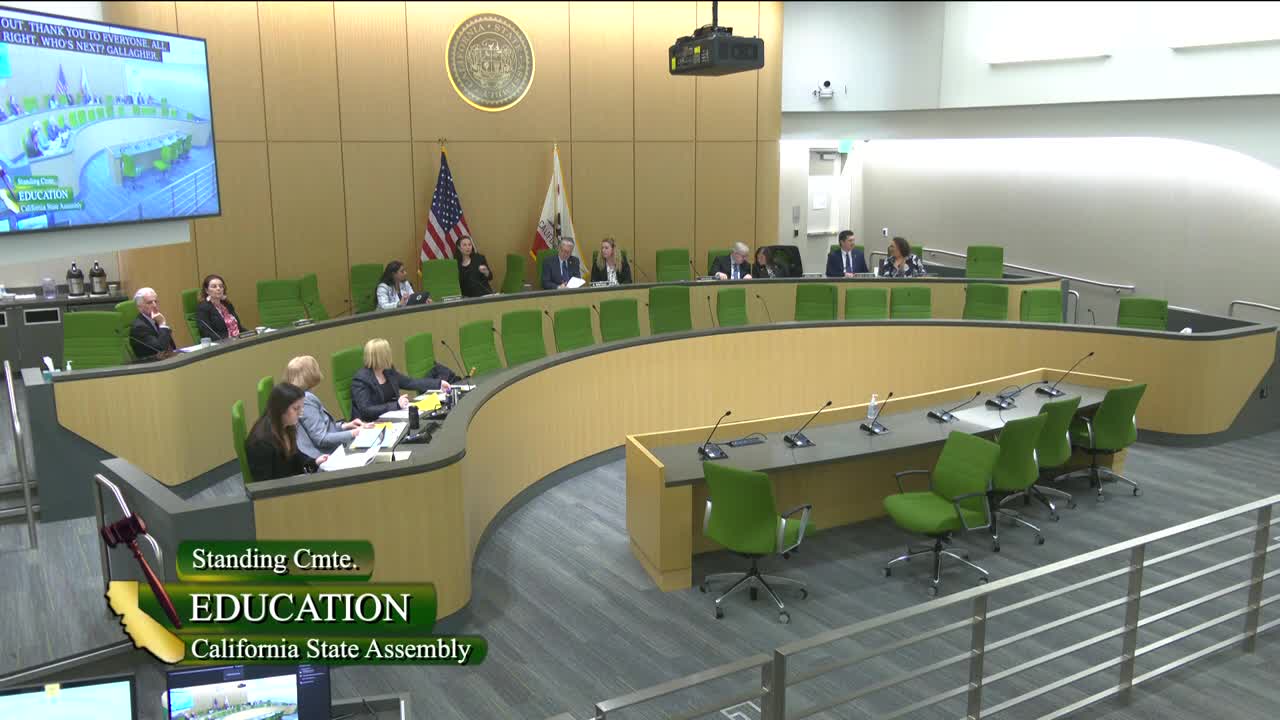
Assembly Standing Committee on Education
 47MIN
Assembly Standing Committee on Education
Bill Author

Bill Co-Author(s):