AB 308: Developmental services: safety training.
- Session Year: 2025-2026
- House: Assembly
- Latest Version Date: 2026-06-08
Current Status:
In Progress
(2026-08-13: In committee: Held under submission.)
Introduced
In Committee
Awaiting First Chamber Vote
Passed First Chamber
In Committee
Awaiting Second Chamber Vote
Passed Second Chamber
Enacted
Existing law, the Lanterman Developmental Disabilities Services Act, requires the State Department of Developmental Services to contract with regional centers for the provision of services and supports for persons with developmental disabilities and their families.
Existing law, until July 1, 2026, creates the Advisory Council on Improving Interactions between People with Intellectual and Development Disabilities and Law Enforcement, under the Department of Justice, to, among other things, evaluate existing training for peace officers specific to interactions between law enforcement and individuals with intellectual and developmental disabilities. Existing law requires the council to submit a report including recommendations to the Legislature for improving outcomes of interactions with both individuals who have an intellectual or developmental disability and mental health conditions, as specified.
This bill would require the State Department of Developmental Services to conduct a statewide evaluation of safety training services provided by regional centers, as specified. The bill would require the department, by July 1, 2028, to submit a report to the Legislature summarizing its findings and recommendations and would require the recommendations to address specified topics, including, among others, recommendations for establishing standardized, statewide protocols for responding to crises involving individuals with intellectual or developmental disabilities. The bill would state the intent of the Legislature to consider, upon receipt and consideration of that report, providing funding to the department for the purpose of developing, implementing, and sustaining safety training services statewide.
Existing law sets forth various provisions relating to mobile crisis teams, including with regard to behavioral health crisis services under the Miles Hall Lifeline and Suicide Prevention Act, involuntary commitment under the Lanterman-Petris-Short Act, and community-based mobile crisis intervention services through a Medi-Cal behavioral health delivery system under the Medi-Cal program. Existing law sets forth related provisions for mobile crisis units.Existing law requires a regional center, which serves individuals with intellectual or developmental disabilities, to implement an emergency response system for, among other groups, consumers who receive mobile crisis services. Existing law requires a regional center and a county mental health agency to develop a general plan for crisis intervention for persons served by both systems. Existing law establishes an advisory council for purposes of developing recommendations for improving outcomes of interactions between law enforcement and people with intellectual or developmental disabilities or with mental health conditions.This bill, in the case of a county that operates, or that contracts for the operation of, a mobile crisis team or unit, would authorize the county behavioral health director to develop procedures for the mobile crisis team or unit that include the handling of an emergency situation, or a crisis incident, involving an individual with an intellectual or developmental disability or an individual with a behavioral health condition.Existing law sets forth various provisions relating to mobile crisis teams, including with regard to behavioral health crisis services under the Miles Hall Lifeline and Suicide Prevention Act, involuntary commitment under the Lanterman-Petris-Short Act, and community-based mobile crisis intervention services through a Medi-Cal behavioral health delivery system under the Medi-Cal program. Existing law sets forth related provisions for mobile crisis units.
Existing law requires a regional center, which serves individuals with intellectual or developmental disabilities, to implement an emergency response system for, among other groups, consumers who receive mobile crisis services. Existing law requires a regional center and a county mental health agency to develop a general plan for crisis intervention for persons served by both systems.
Existing law establishes an advisory council for purposes of developing recommendations for improving outcomes of interactions between law enforcement and people with intellectual or developmental disabilities or with mental health conditions.
This bill, in the case of a county that operates, or that contracts for the operation of, a mobile crisis team or unit, would authorize the county behavioral health director to develop procedures for the mobile crisis team or unit that include the handling of an emergency situation, or a crisis incident, involving an individual with an intellectual or developmental disability or an individual with a behavioral health condition.
The bill would require the procedures, if developed, to address certain items, including deescalation techniques. The bill would authorize the director to develop training, in conjunction with law enforcement, for those procedures.Existing law sets forth various provisions relating to mobile crisis teams, including with regard to behavioral health crisis services under the Miles Hall Lifeline and Suicide Prevention Act, involuntary commitment under the Lanterman-Petris-Short Act, and community-based mobile crisis intervention services through a Medi-Cal behavioral health delivery system under the Medi-Cal program. Existing law sets forth related provisions for mobile crisis units.
Existing law requires a regional center, which serves individuals with intellectual or developmental disabilities, to implement an emergency response system for, among other groups, consumers who receive mobile crisis services. Existing law requires a regional center and a county mental health agency to develop a general plan for crisis intervention for persons served by both systems.
Existing law establishes an advisory council for purposes of developing recommendations for improving outcomes of interactions between law enforcement and people with intellectual or developmental disabilities or with mental health conditions.
This bill, in the case of a county that operates, or that contracts for the operation of, a mobile crisis team or unit, would authorize the county behavioral health director to develop procedures for the mobile crisis team or unit that include the handling of an emergency situation, or a crisis incident, involving an individual with an intellectual or developmental disability or an individual with a behavioral health condition.
The bill would require the procedures, if developed, to address certain items, including deescalation techniques. The bill would authorize the director to develop training, in conjunction with law enforcement, for those procedures.
Existing law requires the State Department of Social Services to establish a statewide hotline as the entry point for the Family Urgent Response System, as defined, to respond to calls from caregivers or current or former foster children or youth during moments of instability, as specified. Existing law requires the hotline to include, among other things, referrals to a county-based mobile response system, as specified, for further support and in-person response. Existing law requires the department to collect deidentified, aggregated data, including the number of current and former foster children or youth served through the statewide hotline and the disposition of each call, and requires the department to publish a report on its internet website, as specified.Existing law also requires county child welfare, probation, and behavioral health agencies, in each county or region of counties, as specified, to establish a joint county-based mobile response system that includes a mobile response and stabilization team for the purpose of providing supportive services to, among other things, address situations of instability, preserve the relationship of the caregiver and the child or youth, and stabilize the situation.This bill would authorize a county behavioral health director to develop procedures for the countys mobile response system, which may include procedures for handling an emergency situation involving an individual with autism, a behavioral health issue, or another developmental disability. The bill would require those procedures to include, among other things, deescalation techniques for an individual that takes into account their specific circumstances to preserve their safety and well-being. This bill would authorize a county behavioral health director to create training for those procedures and would require that training to be developed in conjunction with law enforcement.Existing law requires the State Department of Social Services to establish a statewide hotline as the entry point for the Family Urgent Response System, as defined, to respond to calls from caregivers or current or former foster children or youth during moments of instability, as specified. Existing law requires the hotline to include, among other things, referrals to a county-based mobile response system, as specified, for further support and in-person response. Existing law requires the department to collect deidentified, aggregated data, including the number of current and former foster children or youth served through the statewide hotline and the disposition of each call, and requires the department to publish a report on its internet website, as specified.
Existing law also requires county child welfare, probation, and behavioral health agencies, in each county or region of counties, as specified, to establish a joint county-based mobile response system that includes a mobile response and stabilization team for the purpose of providing supportive services to, among other things, address situations of instability, preserve the relationship of the caregiver and the child or youth, and stabilize the situation.
This bill would authorize a county behavioral health director to develop procedures for the countys mobile response system, which may include procedures for handling an emergency situation involving an individual with autism, a behavioral health issue, or another developmental disability. The bill would require those procedures to include, among other things, deescalation techniques for an individual that takes into account their specific circumstances to preserve their safety and well-being. This bill would authorize a county behavioral health director to create training for those procedures and would require that training to be developed in conjunction with law enforcement.
The Legislature finds and declares both of the following:
(a)Pursuant to Senate Bill 882 (Chapter 899 of the Statutes of 2022), the Department of Justice convened an advisory council to examine interactions between law enforcement and individuals with intellectual and developmental disabilities.
(b)The report issued to the Legislature in 2026 identified significant systemic gaps in the training of peace officers and in cross-system coordination, highlighted that law enforcement frequently serves as the primary responder to behavioral and mental health crises involving individuals with intellectual or developmental disabilities, and identified the need for improved preventive supports and alternatives to law enforcement response.
SEC. 2.Section 4755 is added to the Welfare and Institutions Code, to read:4755.(a)(1)The department shall conduct a statewide evaluation of safety training services provided by regional centers.
(2)The evaluation required pursuant to paragraph (1) shall include, but not be limited to, all of the following:
(A)Identification of which regional centers currently offer or fund safety training services, including service models, service codes, delivery methods, and populations served.
(B)Identification of gaps in access to safety training services across regional centers and geographic regions of the state.
(C)An analysis of the staffing, training, and community partnerships required to implement safety training services, including partnerships with law enforcement agencies, fire departments, and emergency medical service providers.
(D)An estimate of the costs associated with developing, implementing, and sustaining safety training services in regional centers that do not currently offer those services.
(E)Recommendations for standardizing safety training services statewide, including service definitions, delivery models, staffing requirements, and measurable outcome indicators.
(b)(1)The department shall submit a report to the Legislature on or before July 1, 2028, summarizing the findings and recommendations required pursuant to this section.
(2)The report shall include recommendations for all of the following:
(A)Reducing unnecessary law enforcement involvement and hospitalizations through preventive services, including safety training services delivered through regional centers.
(B)Establishing standardized, statewide protocols for responding to crises involving individuals with intellectual or developmental disabilities.
(C)Integrating safety training services into the individualized program planning process to reduce crisis incidence and improve outcomes.
(3)In developing recommendations to be included in the report pursuant to paragraph (2), the department shall prioritize culturally responsive, trauma-informed, and neurodiversity-affirming approaches, and ensure accessibility for individuals with limited verbal communication or complex support needs.
(4)(A)The requirement for submitting a report imposed under this subdivision is inoperative on January 1, 2031, pursuant to Section 10231.5 of the Government Code.
(B)A report to be submitted pursuant to this subdivision shall be submitted in compliance with Section 9795 of the Government Code.
(c)In conducting the evaluation and developing recommendations, the department may consult with stakeholders, including, but not limited to, individuals with disabilities, family members, advocacy organizations, service providers, regional centers, and representatives of law enforcement and emergency response agencies.
(d)For purposes of this section, safety training services means a structured service or program designed to increase an individuals ability to safely navigate community settings and emergency situations, including, but not limited to, all of the following:
(1)Safe interaction with peace officers, first responders, and emergency personnel.
(2)Wandering and elopement prevention strategies.
(3)Emergency preparedness and response, including recognizing and responding to fire, medical, and public safety emergencies.
(4)Strategies for seeking help, including identifying safe individuals and locations.
(5)Use of communication tools and techniques to effectively convey needs and information in high-stress or crisis situations, including augmentative and alternative communication, as appropriate.
(6)Development of individualized safety plans based on the needs and preferences of the individual.
(e)It is the intent of the Legislature to, upon receipt and review of the report required pursuant to subdivision (b), consider a one-time appropriation, and any necessary ongoing funding, to the department for the purpose of developing, implementing, and sustaining safety training services statewide, including the provision of technical assistance to regional centers and service providers.
SECTION 1.Chapter 10 (commencing with Section 8300) is added to Division 8 of the Welfare and Institutions Code, to read:10.County Behavioral Health Mobile Crisis Procedures8300.For purposes of this chapter, intellectual or developmental disability has the same meaning as developmental disability in Section 4512.8301.In the case of a county that operates, or that contracts for the operation of, a mobile crisis team or a mobile crisis unit, the county behavioral health director may develop procedures for the mobile crisis team or unit that include the handling of an emergency situation, or a crisis incident, involving an individual with an intellectual or developmental disability, including, but not limited to, autism, or involving an individual with a behavioral health condition.For purposes of this chapter, intellectual or developmental disability has the same meaning as developmental disability in Section 4512.
8301.(a)In the case of a county that operates, or that contracts for the operation of, a mobile crisis team or a mobile crisis unit, the county behavioral health director may develop procedures for the mobile crisis team or unit that include the handling of an emergency situation, or a crisis incident, involving an individual with an intellectual or developmental disability, including, but not limited to, autism, or involving an individual with a behavioral health condition.
(b)If procedures are developed pursuant to subdivision (a), they shall address all of the following:(1)Deescalation techniques for an encounter with an individual described in subdivision (a) that take into account the individuals specific circumstances, in order to preserve their safety and well-being.(2)The appropriate amount of force to use on the individual, if necessary.(3)Guidance and best practices regarding transportation of the individual to their designated health facility or care facility, if applicable.(c)(1)A county behavioral health director may develop training for procedures developed pursuant to subdivisions (a) and (b).(2)If training is developed pursuant to paragraph (1), it shall be developed in conjunction with law enforcement.For purposes of this chapter, intellectual or developmental disability has the same meaning as developmental disability in Section 4512.
8301.(a)In the case of a county that operates, or that contracts for the operation of, a mobile crisis team or a mobile crisis unit, the county behavioral health director may develop procedures for the mobile crisis team or unit that include the handling of an emergency situation, or a crisis incident, involving an individual with an intellectual or developmental disability, including, but not limited to, autism, or involving an individual with a behavioral health condition.
(b)If procedures are developed pursuant to subdivision (a), they shall address all of the following:
(1)Deescalation techniques for an encounter with an individual described in subdivision (a) that take into account the individuals specific circumstances, in order to preserve their safety and well-being.
(2)The appropriate amount of force to use on the individual, if necessary.
(3)Guidance and best practices regarding transportation of the individual to their designated health facility or care facility, if applicable.
(c)(1)A county behavioral health director may develop training for procedures developed pursuant to subdivisions (a) and (b).
(2)If training is developed pursuant to paragraph (1), it shall be developed in conjunction with law enforcement.
SECTION 1.Section 16529.5 is added to the Welfare and Institutions Code, to read:16529.5.(a)A county behavioral health director may develop procedures for the countys mobile response system, which may include, but are not limited to, the handling of an emergency situation involving an individual with autism, a behavioral health issue, or another developmental disability.(b)If a county behavioral health director develops procedures pursuant to this section, those procedures shall include all of the following:(1)Deescalation techniques for an encounter with an individual that takes into account the individuals specific circumstances to preserve their safety and well-being.(2)The appropriate amount of force to use on an individual, as necessary.(3)Guidance and best practices regarding the transportation of an individual to their designated health care facility.(c)(1)A county behavioral health director may create training for procedures developed pursuant to subdivision (a).(2)Training developed pursuant to this section shall be developed in conjunction with law enforcement.(a)A county behavioral health director may develop procedures for the countys mobile response system, which may include, but are not limited to, the handling of an emergency situation involving an individual with autism, a behavioral health issue, or another developmental disability.
(b)If a county behavioral health director develops procedures pursuant to this section, those procedures shall include all of the following:
(1)Deescalation techniques for an encounter with an individual that takes into account the individuals specific circumstances to preserve their safety and well-being.
(2)The appropriate amount of force to use on an individual, as necessary.
(3)Guidance and best practices regarding the transportation of an individual to their designated health care facility.
(c)(1)A county behavioral health director may create training for procedures developed pursuant to subdivision (a).
(2)Training developed pursuant to this section shall be developed in conjunction with law enforcement.
|
Date
|
Status
|
|---|---|
| Aug 13, 2026 | In committee: Held under submission. |
| Jun 29, 2026 | In committee: Referred to APPR. suspense file. |
| Jun 16, 2026 | From committee: Do pass and re-refer to Com. on APPR. (Ayes 5. Noes 0.) (June 15). Re-referred to Com. on APPR. |
| Jun 8, 2026 | From committee chair, with author's amendments: Amend, and re-refer to committee. Read second time, amended, and re-referred to Com. on HUMAN S. |
| May 21, 2025 | Referred to Com. on HUMAN S. |
| May 8, 2025 | In Senate. Read first time. To Com. on RLS. for assignment. |
| May 8, 2025 | Read third time. Passed. Ordered to the Senate. (Ayes 69. Noes 0. Page 1487.) |
| May 1, 2025 | Read second time. Ordered to Consent Calendar. |
| Apr 30, 2025 | From committee: Do pass. To Consent Calendar. (Ayes 7. Noes 0.) (April 29). |
| Apr 28, 2025 | Re-referred to Com. on HUM. S. |
| Apr 24, 2025 | From committee chair, with author's amendments: Amend, and re-refer to Com. on HUM. S. Read second time and amended. |
| Mar 25, 2025 | In committee: Set, first hearing. Hearing canceled at the request of author. |
| Mar 4, 2025 | Re-referred to Com. on HUM. S. |
| Mar 3, 2025 | From committee chair, with author's amendments: Amend, and re-refer to Com. on HUM. S. Read second time and amended. |
| Feb 10, 2025 | Referred to Com. on HUM. S. |
| Jan 24, 2025 | From printer. May be heard in committee February 23. |
| Jan 23, 2025 | Read first time. To print. |
|
Date
|
Description
|
Location
|
Votes
|
|
|---|---|---|---|---|
| Jun 29, 2026 | Placed on suspense file | Senate Standing Committee on Appropriations |
Passed |
|
| Jun 15, 2026 | Do pass, but first be re-referred to the Committee on [Appropriations] | Senate Standing Committee on Human Services |
Passed |
|
| May 8, 2025 | AB 308 Ramos Consent Calendar Second Day Regular Session | Assembly Floor |
Passed |
|
| Apr 29, 2025 | Do pass. To Consent Calendar. | Assembly Standing Committee on Human Services |
Passed |
This list shows positions taken on this bill by organizations on the date displayed, which is linked to the original source.
Positions by individuals are not included.
|
Organization
|
Position
|
Date
|
|---|---|---|
| Autism Business Association | ** Support | |
| Autism Heroes | ** Support | |
| Autism Heroes (Sponsor) | ** Support | |
| Autism Society Inland Empire | ** Support | |
| Autism Society Inland Empire (Sponsor) | ** Support | |
| Autism Speaks | ** Support | |
| California Academy of Child and Adolescent Psychiatry | ** Support | |
| California Indian Nations College | ** Support | |
| California State Association of Psychiatrists | ** Support | |
| Easterseals Northern California | ** Support | |
| Scdd | ** Support |
SENATE COMMITTEE ON
Senator Sabrina Cervantes, Chair
2025 - 2026 Regular Session
AB 308 (Ramos) - Developmental services: safety training
Version: | Policy Vote: |
Urgency: | Mandate: |
Hearing Date: | Consultant: |
Bill Summary:
AB 308 would require the Department of Developmental Services (DDS) to conduct a statewide evaluation of safety training services provided by regional centers.
Fiscal Impact:
- The DDS estimates costs of $129,000 ($103,000 General Fund and $26,000 federal funds) in 2026-27; $258,000 ($206,000 General Fund and $52,000 federal funds) in each of years 2027–28 and 2028–29; and $129,000 ($103,000 General Fund and $26,000 federal funds) in 2029–30 for state administration.
The DDS indicates that during the first two years, the department would conduct the assessment and evaluation of regional centers and develop the report for submission to the Legislature. If the Legislature subsequently provides funding for the development, implementation, and ongoing support of statewide safety training services, the remaining two years would be dedicated to advancing the next phase of establishing these services at the regional centers.
- Unknown General Fund cost pressures to provide funding to develop, implement, and sustain safety training services statewide.
Background:
Current law establishes the Advisory Council on Improving Interactions between People with Intellectual and Developmental Disabilities and Law Enforcement (Advisory Council) to evaluate existing training and identify gaps in training for peace officers specific to interactions with the intellectually and developmentally disabled community and with individuals with mental health disorders. In April 2026, the Advisory Council released its report.
According to the report, law enforcement is the default responder in most California jurisdictions when a person is experiencing a mental health crisis or when caregivers or others are unable to manage behaviors related to intellectual or developmental disability. Several historical factors, including the de-institutionalization of mental health services and insufficient investment in community-based services to meet community needs, have resulted in greater policing in the mental health care system. The report included several recommendations related to data collection and research, crisis response models and other systems interventions, and training. One of the recommendations in the report would require DDS to determine which regional centers have a safety training service, assess the cost of developing such a service at the regional centers that do not yet have one, and report back to the Legislature.
Proposed Law:
Specific provisions of the bill would:
- Define “safety training services” to mean a structured service or program designed to increase an individual’s ability to safely navigate community settings and emergency situations, including, but not limited to, all of the following:
- Safe interaction with peace officers, first responders, and emergency personnel.
- Wandering and elopement prevention strategies.
- Emergency preparedness and response, including recognizing and responding to fire, medical, and public safety emergencies.
- Strategies for seeking help, including identifying safe individuals and locations.
- Use of communication tools and techniques to effectively convey needs and information in high-stress or crisis situations, including augmentative and alternative communication, as appropriate.
- Development of individualized safety plans based on the needs and preferences of the individual.
- Require DDS to conduct a statewide evaluation of safety training services provided by regional centers.
- Require DDS to submit a report to the Legislature on or before July 1, 2028, including recommendations for all of the following:
- Reducing unnecessary law enforcement involvement and hospitalizations through preventive services, including safety training services delivered through regional centers.
- Establishing standardized, statewide protocols for responding to crises involving individuals with intellectual or developmental disabilities.
- Integrating safety training services into the individualized program planning process to reduce crisis incidence and improve outcomes.
- State the intent of the Legislature to, upon receipt and review of the report, consider a one-time appropriation, and any necessary ongoing funding, to the department for the purpose of developing, implementing, and sustaining safety training services statewide, including the provision of technical assistance to regional centers and service providers.
-- END --
SENATE COMMITTEE ON HUMAN SERVICES
Senator Becker, Chair
2025 - 2026 Regular
Bill No: | AB 308 | ||
Author: | Ramos | ||
Version: | June 8, 2025 | Hearing Date: | June 15, 2026 |
Urgency: | No | Fiscal: | Yes |
Consultant: | Diana Dominguez | ||
Subject: Developmental services: safety training
SUMMARY
This bill would require the Department of Developmental Services (DDS) to conduct a statewide evaluation of safety training services provided by regional centers.
ABSTRACT
Existing Law:
- Requires the Commission on Peace Office Standards and Training to adopt rules establishing minimum standards relating to the recruitment, training, and fitness of state and local law enforcement officers. (Penal Code [PEN] 13510(a-b))
- Requires that the course of basic training for law enforcement officers include adequate instruction in specified procedures and techniques relating to the handling of persons with developmental disabilities or mental illness. (PEN 13519.2 (a))
- Establishes the Advisory Council on Improving Interactions between People with Intellectual and Developmental Disabilities under the jurisdiction of the Department of Justice. (PEN 13016)
- Establishes the Lanterman Developmental Disabilities Services Act (Lanterman Act), which states that California is responsible for providing a range of services and supports sufficiently complete to meet the needs and choices of each person with developmental disabilities, regardless of age or degree of disability, and at each stage of life, and to support their integration into the mainstream life of the community. (Welfare and Institutions Code [WIC] 4500 et seq.)
- Establishes a system of nonprofit regional centers, overseen by DDS, to provide fixed points of contact in the community for all persons with developmental disabilities and their families to coordinate services and supports best suited to them throughout their lifetime. (WIC 4620)
- Authorizes a regional center to purchase services or supports for a consumer from an individual or agency that the regional center and consumer or, if appropriate, the consumer’s parents, legal guardian, or conservator, or authorized representative, determines will best accomplish all or part of that consumer’s program plan. (WIC 4648(a)(3)(A))
This Bill:
- Makes the following findings and declarations:
- The California Department of Justice convened an advisory council to examine interactions between law enforcement and individuals with intellectual and developmental disabilities.
- The report, issued to the Legislature in 2026, identified significant systemic gaps in the training of peace officers and in cross-system coordination, highlighted that law enforcement frequently serves as the primary responder to behavioral and mental health crises involving individuals with intellectual or developmental disabilities, and identified the need for improved preventative supports and alternatives to law enforcement response.
- Requires DDS to conduct a statewide evaluation of safety training services provided by regional centers.
- Requires the evaluation to include, but not be limited to, all of the following:
- Identification of which regional centers currently offer or fund safety training services, including service models, service codes, delivery methods, and populations served.
- Identification of gaps in access to safety training services across regional centers and geographic regions of the state.
- An analysis of the staffing, training, and community partnerships required to implement safety training services, including partnerships with law enforcement agencies, fire departments, and emergency medical service providers.
- An estimate of the costs associated with developing, implementing, and sustaining safety training services in regional centers that do not currently offer such services.
- Recommendations for standardizing safety training services statewide, including service definitions, delivery models, staffing requirements, and measurable outcome indicators.
- Requires DDS to submit a report to the Legislature on or before July 1, 2028, summarizing the findings and recommendations.
- Requires the report to include recommendations for all of the following:
- Reducing unnecessary law enforcement involvement and hospitalizations through preventative services, including safety training services delivered through regional centers.
- Establishing standardized, statewide protocols for responding to crises involving individuals with intellectual or developmental disabilities.
- Integrating safety training services into the Individualized Program Planning process to reduce crisis incidence and improve outcomes.
- Requires DDS, in developing recommendations to be included in the report, to prioritize culturally responsive, trauma-informed, and neurodiversity-affirming approaches, and to ensure accessibility for individuals with limited verbal communication or complex support needs.
- Makes the requirement for submitting a report imposed under this bill inoperative on January 1, 2031, pursuant to Section 10231.5 of the Government Code. Requires a report to be submitted pursuant to this bill to be submitted in compliance with Section 9795 of the Government Code.
- Provides that DDS may consult with stakeholders in conducting the evaluation and developing recommendations, including, but not limited to, individuals with disabilities, family members, advocacy organizations, service providers, regional centers, and representatives of law enforcement and emergency response agencies.
- Defines “safety training services” as a structured service or program designed to increase an individual’s ability to safely navigate community settings and emergency situations, including, but not limited to, all of the following:
- Safe interaction with peace officers, first responders, and emergency personnel.
- Wandering and elopement prevention strategies.
- Emergency preparedness and response, including recognizing and responding to fire, medical, and public safety emergencies.
- Strategies for seeking help, including identifying safe individuals and locations.
- Use of communication tools and techniques to effectively convey needs and information in high-stress or crisis situations, including augmentative and alternative communication, as appropriate.
- Development of individualized safety plans based on the needs and preferences of the individual.
- States it is the intent of the Legislature, upon receipt and review of the report required by this bill, to consider a one-time appropriation, and any necessary ongoing funding, to DDS for the purpose of developing, implementing, and sustaining safety training services statewide, including the provision of technical assistance to regional centers and service providers.
FISCAL IMPACT
This bill has been gutted and amended. The version in print has not yet been analyzed by a fiscal committee.
BACKGROUND AND DISCUSSION
Purpose of the Bill:
According to the author, “Californians with intellectual and developmental disabilities (IDD) deserve to feel safe and supported in every situation, including emergencies and interactions with first responders. AB 308 takes an important step by directing a statewide assessment of Regional Centers to better understand existing safety programs, identify opportunities to strengthen them, and establish consistent standards across California. By advancing a prevention-focused safety plan, we can build a stronger, more coordinated system that supports individuals with IDD, their families, Regional Center staff, and first responders.”
Lanterman Act
In 1969, the Lanterman Act established that individuals with developmental disabilities and their families have a right to receive the necessary services and supports required to live independently in the community. The Lanterman Act enumerates the rights of individuals with developmental disabilities, as well as the rights of their families, what services and supports are available to these individuals, and how regional centers and service providers work together to provide these services and supports. The term “developmental disability” is defined as a disability that originates before a person reaches 18 years of age, is expected to continue indefinitely, and is a significant disability for the individual. Such disabilities include, among others: epilepsy, autism spectrum disorder, intellectual disability, and cerebral palsy.
In addition to establishing the rights of individuals, the Lanterman Act also created California’s regional center system, comprised of 21 nonprofit regional centers throughout the state whose primary purpose is to connect individuals with services in the community. The Department of Finance estimates that approximately 487,114 individuals will receive developmental services in 2025–26, increasing to 526,848 in 2026–27.[1]
SB 882 Advisory Council
SB 882 (Eggman, Chapter 899, Statutes of 2022) established the Advisory Council on Improving Interactions between People with Intellectual and Developmental Disabilities and Law Enforcement (Advisory Council) to evaluate existing training and identify gaps in training for peace officers specific to interactions with the intellectually and developmentally disabled community and with individuals with mental health disorders. The Advisory Council was comprised of nine members appointed by the Governor, the Senate Committee on Rules, and the Speaker of the Assembly. The Advisory Council met 13 times over the course of two years and published its culminating report in April 2026.[2]
According to the report, law enforcement is the default responder in most California jurisdictions when a person is experiencing a mental health crisis or when caregivers or others are unable to manage behaviors related to intellectual or developmental disability. Several historical factors, including the de-institutionalization of mental health services and insufficient investment in community-based services to meet community needs, have resulted in greater policing in the mental health care system. The report additionally stated, “Existing research demonstrates that people with mental health conditions or intellectual and developmental disabilities are more likely to have encounters with law enforcement and are more likely to experience uses of force in these encounters.” The report included several recommendations related to data collection and research, crisis response models and other systems interventions, and training. This bill seeks to adopt one of the recommendations in the report, which would require DDS to determine which regional centers have a safety training service, assess the cost of developing such a service at the regional centers that do not yet have one, and report back to the Legislature.
Related/Prior Legislation:
SB 882 (Eggman, Chapter 899, Statutes of 2022) created an advisory council within the Department of Justice responsible for evaluating and reporting on existing training for peace officers related to interactions between law enforcement and people with intellectual and developmental disabilities. This bill required use of force incident reports sent to the Department of Justice by local law enforcement agencies to include information on whether the officer perceived that someone involved had an intellectual or developmental disability, among other information.
COMMENTS
As individuals with intellectual and developmental disabilities increasingly live, work, and participate in their communities, interactions with law enforcement and other first responders have become more frequent. The Legislature passed SB 882 in 2022 to establish an Advisory Council to evaluate existing training for peace officers and recommend how to improve interactions between law enforcement and people with intellectual and disabilities. This bill seeks to continue this work by requiring a statewide evaluation of safety training services available through regional centers. This bill stems directly from one of the recommendations in the SB 882 report.
PRIOR VOTES
This bill was gutted and amended on June 8, 2026, while pending in this committee. All prior votes are based on the bill before it was gutted and amended.
POSITIONS
Support:
Autism Society Inland Empire (Sponsor)
Autism Heroes (Sponsor)
Autism Speaks
California Academy of Child and Adolescent Psychiatry
SCDD
Oppose:
None received
-- END --
Date of Hearing: April 29, 2025
ASSEMBLY COMMITTEE ON HUMAN SERVICES
Alex Lee, Chair
ABPCA Bill Id:AB 308 (
Author:Ramos) – As Amended Ver:April 24, 2025
SUBJECT: Mobile crisis teams or units: procedures
SUMMARY: Authorizes a county behavioral health director to develop procedures and training for the county’s mobile crisis response system to address the handling of an emergency situation involving an individual with a developmental disability.
EXISTING LAW establishes the Advisory Council on Improving Interactions between People with Intellectual and Developmental Disabilities under the jurisdiction on the Department of Justice (DOJ). (Penal Code § 13016)
FISCAL EFFECT: This bill was keyed non-fiscal by the Legislative Counsel.
COMMENTS:
Background: According to the National Alliance on Mental Health (NAMI) and the federal Centers for Disease Control (CDC), approximately 53 million adults in the United States experienced mental illness in 2020, and 61 million American adults live with some type of disability (“Mental Health by the Numbers.” National Alliance on Mental Illness. “Disability Impacts All of Us.” Centers for Disease Control and Prevention). Of these individuals, a significant proportion struggles with a disability or mental illness that has regular and serious impacts on their daily lives. Although these individuals are no more likely to engage in criminal behavior than other adults, their disability or mental illness can lead to dramatically different interactions with law enforcement.
As police officers and agencies across the country have come under greater public scrutiny, so too has their role as first responders to incidents involving people with disabilities or mental illness. In 2020, it was estimated that around 20% of law enforcement agencies’ calls for service were to respond to incidents involving someone experiencing a mental health or substance abuse crisis (“Mental Health And Police Violence: How Crisis Intervention Teams Are Failing.” NPR). Yet despite the frequency of these interactions, a staggering number of them have deadly consequences. A database of police shootings published by The Washington Post shows that Americans with mental illnesses make up nearly a quarter of those killed by police officers (“Fatal Force.” The Washington Post. Updated 14 February 2022).
To address these issues, SB 882 (Eggman), Chapter 899, Statutes of 2022, created the Advisory Council on Improving Interactions between People with Intellectual and Development Disabilities and Law Enforcement, under DOJ, to, among other things, evaluate existing training for peace officers specific to interactions between law enforcement and individuals with intellectual and developmental disabilities and mental health conditions. According to DOJ, the duties of the SB 882 Advisory Council include:
- Evaluating the existing training for peace officers specific to interaction with individuals with intellectual or developmental disabilities;
- Evaluating the existing training for peace officers specific to interaction with individuals with mental health disabilities;
- Identifying gaps in peace officer training specific to interactions with individuals who have an intellectual or developmental disability;
- Identifying gaps in peace officer training specific to interactions with individuals who have a mental health disorder; and,
- Making recommendations to the Legislature for improving outcomes of interactions with both individuals who have an intellectual or developmental disability and mental health conditions.
The advisory council began meeting in April 2024, and is expected to release a final report with the current state of these interactions, discussion of best practices for law enforcement training, and other non-training interventions in April 2026.
This bill would allow county behavioral health directors to develop procedures in emergency situations.
Author’s Statement: According to the Author, "Mobile response units have become a new tool for many communities across our state. For many families it has become an alternative emergency response for when a love one is in need for mental health crisis stabilization, however, this new tool has inherited some of the same problems traditional emergency responders have when answering a call for a person with autism. First responders, to this day, face difficulties attempting to provide aid to individuals with intellectual disabilities due to a lack of awareness and education about the condition. [This bill] will help guide our local governments when designing trainings for their mobile response teams. Our goal is to make sure our autism families feel safe and confident when they call for help when their loved one is in a crisis."
RELATED AND PRIOR LEGISLATION:
SB 882 (Eggman), Chapter 899, Statutes of 2022, see comments above.
AB 680 (Chu) of 2019, would have required Peace Officer Standards and Training to develop mental health training courses for public safety dispatchers covering topics such as recognizing mental disabilities, conflict resolution, and de-escalation techniques when dealing with such groups. AB 680 was held on the Senate Committee on Appropriations suspense file.
SB 29 (Beall) Chapter 469, Statutes of 2015, required field training officers to undergo at least eight hours of crisis intervention behavioral health training.
SB 11 (Beall) Chapter 468, Statutes of 2015, required peace officers to undergo training related to interacting with persons with mental illness, intellectual disability, or substance abuse disorder, as specified.
REGISTERED SUPPORT / OPPOSITION:
Support
Autism Society Inland Empire (Sponsor)
Autism Business Association
Autism Heroes
Autism Speaks
California Indian Nations College
California State Association of Psychiatrists (CSAP)
California State Council on Developmental Disabilities
Easterseals Northern California
Opposition
None on file.
Analysis Prepared by: Alexandria Smith / HUM. S. / (916) 319-2089
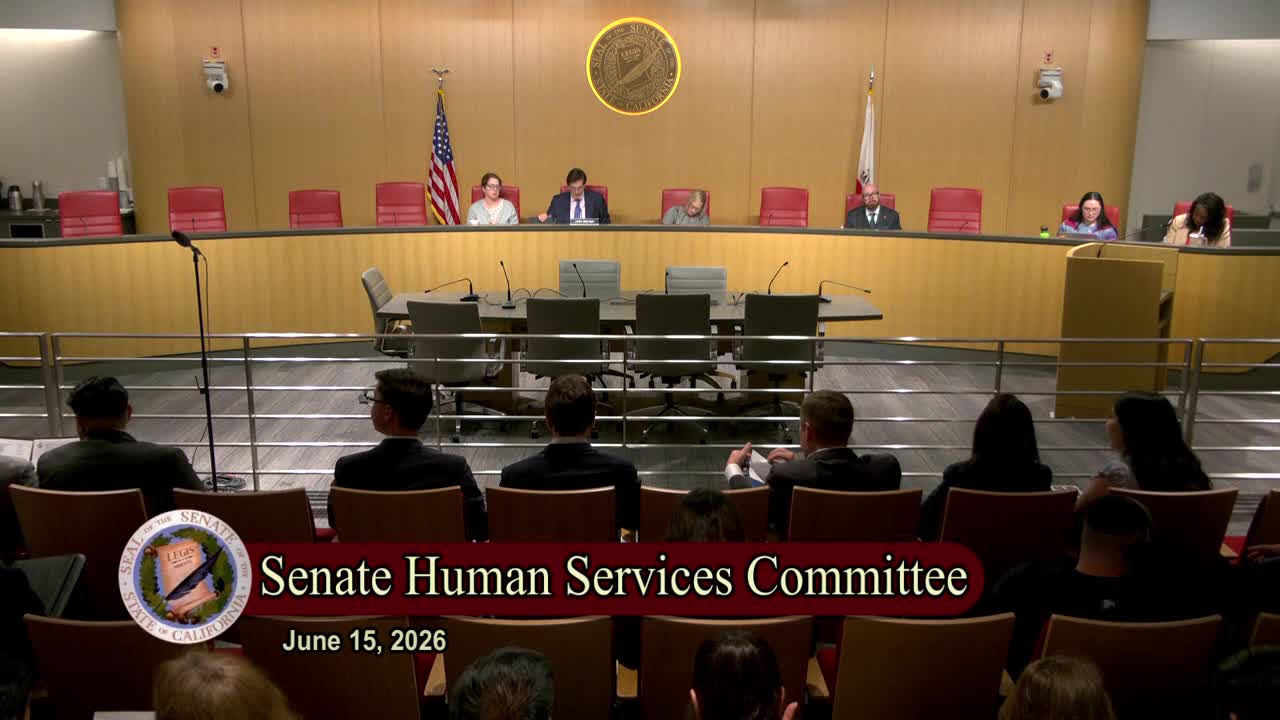
Discussed in Hearing
 6MIN
Senate Standing Committee on Human Services
Bill Author

Bill Co-Author(s):