AB 320: Public social services: eligibility: income exclusions.
- Session Year: 2025-2026
- House: Assembly
- Latest Version Date: 2025-10-13
Current Status:
Passed
(2025-10-13: Chaptered by Secretary of State - Chapter 686, Statutes of 2025.)
Introduced
In Committee
Awaiting First Chamber Vote
Passed First Chamber
In Committee
Awaiting Second Chamber Vote
Passed Second Chamber
Enacted
Existing law establishes various means-tested public social services programs administered by counties to provide eligible recipients with certain benefits, including, but not limited to, cash assistance under the California Work Opportunity and Responsibility to Kids (CalWORKs) program and health care services under the Medi-Cal program. Existing law establishes various awards under the administration of the Student Aid Commission and establishes eligibility requirements for these awards for participating students attending qualifying institutions.
Existing law establishes a system of public elementary and secondary schools in this state, and provides for their governance. Existing law establishes county boards of education and school districts throughout the state to administer the public elementary and secondary schools within their respective jurisdictions. Existing law requires county boards of education and school district governing boards to appoint at least one high school pupil as a pupil member of the board in response to a petition from high school pupils requesting the appointment of one or more pupil members. Existing law authorizes the county board of education and the governing board of a school district to award a pupil member elective course credit or monthly financial compensation, or both, as provided.
This bill would, to the extent permitted by federal law, prohibit that compensation from being considered as income or resources when determining eligibility and benefit amount for any means-tested program and any scholarships for public colleges and universities, as specified. To the extent that the bill would expand eligibility for programs administered by counties, the bill would impose a state-mandated local program.
This bill would authorize the State Department of Social Services to implement, interpret, or make specific the income exclusion for programs under its jurisdiction by means of all-county letters or similar written instructions from the department until regulations are adopted. The bill would specify that its provisions apply to programs under the departments jurisdiction beginning on the date that the department notifies the Legislature that the California Statewide Automated Welfare System can perform the necessary automation to implement the income exclusion for those programs. The bill would require the department to issue guidance as necessary to begin automation no later than July 1, 2026.
The California Constitution requires the state to reimburse local agencies and school districts for certain costs mandated by the state. Statutory provisions establish procedures for making that reimbursement.
This bill would provide that, if the Commission on State Mandates determines that the bill contains costs mandated by the state, reimbursement for those costs shall be made pursuant to the statutory provisions noted above.
Existing law establishes various means-tested public social services programs administered by counties to provide eligible recipients with certain benefits, including, but not limited to, cash assistance under the California Work Opportunity and Responsibility to Kids (CalWORKs) program, nutrition assistance under the CalFresh program, program and health care services under the Medi-Cal program. Existing law establishes various awards under the administration of the Student Aid Commission and establishes eligibility requirements for these awards for participating students attending qualifying institutions.
Existing law establishes a system of public elementary and secondary schools in this state, and provides for their governance. Existing law establishes county boards of education and school districts throughout the state to administer the public elementary and secondary schools within their respective jurisdictions. Existing law requires county boards of education and school district governing boards to appoint at least one high school pupil as a pupil member of the board in response to a petition from high school pupils requesting the appointment of one or more pupil members. Existing law authorizes the county board of education and the governing board of a school district to award a pupil member elective course credit or monthly financial compensation, or both, as provided.
This bill would, to the extent permitted by federal law, prohibit that compensation from being considered as income or assets resources when determining eligibility and benefit amount for any means-tested program and any scholarships for public colleges and universities, as specified. To the extent that the bill would expand eligibility for programs administered by counties, the bill would impose a state-mandated local program.
This bill would authorize the State Department of Social Services to implement, interpret, or make specific the income exclusion for programs under its jurisdiction by means of all-county letters or similar written instructions from the department until regulations are adopted. The bill would specify that its provisions apply to programs under the departments jurisdiction beginning on the date that the department notifies the Legislature that the California Statewide Automated Welfare System can perform the necessary automation to implement the income exclusion for those programs. The bill would require the department to issue guidance as necessary to begin automation no later than July 1, 2026.
The California Constitution requires the state to reimburse local agencies and school districts for certain costs mandated by the state. Statutory provisions establish procedures for making that reimbursement.
This bill would provide that, if the Commission on State Mandates determines that the bill contains costs mandated by the state, reimbursement for those costs shall be made pursuant to the statutory provisions noted above.
Existing law establishes various means-tested public social services programs administered by counties to provide eligible recipients with certain benefits, including, but not limited to, cash assistance under the California Work Opportunity and Responsibility to Kids (CalWORKs) program, nutrition assistance under the CalFresh program, and health care services under the Medi-Cal program. Existing law establishes various awards under the administration of the Student Aid Commission and establishes eligibility requirements for these awards for participating students attending qualifying institutions.
Existing law establishes a system of public elementary and secondary schools in this state, and provides for their governance. Existing law establishes county boards of education and school districts throughout the state to administer the public elementary and secondary schools within their respective jurisdictions. Existing law requires county boards of education and school district governing boards to appoint at least one high school pupil as a pupil member of the board in response to a petition from high school pupils requesting the appointment of one or more pupil members. Existing law authorizes the county board of education and the governing board of a school district to award a pupil member elective course credit or monthly financial compensation, or both, as provided.
This bill would, to the extent permitted by federal law, prohibit that compensation from being considered as income or assets when determining eligibility and benefit amount for any means-tested program and any scholarships for public colleges and universities, as specified. To the extent that the bill would expand eligibility for programs administered by counties, the bill would impose a state-mandated local program.
The California Constitution requires the state to reimburse local agencies and school districts for certain costs mandated by the state. Statutory provisions establish procedures for making that reimbursement.
This bill would provide that, if the Commission on State Mandates determines that the bill contains costs mandated by the state, reimbursement for those costs shall be made pursuant to the statutory provisions noted above.
(a)Notwithstanding any other law, and to the extent permitted by federal law, any compensation awarded to a pupil member pursuant to subdivision (h) of Section 1090 shall not be considered as income or resources when determining eligibility and benefit amount for any means-tested program, including, but not limited to, CalWORKs, General Assistance, Medi-Cal, and Cash Assistance Program for Immigrants (CAPI), and any scholarships for public colleges and universities, including, but not limited to, Cal Grant awards, Chafee grant awards, Middle Class Scholarship Program awards, California College Promise Grants, California State University Educational Opportunity Program (EOP) grants, Community College Extended Opportunity Programs and Services (EOPS) grants, and grants from the University of California or the California State University.
(b)Notwithstanding the rulemaking provisions of the Administrative Procedure Act (Chapter 3.5 (commencing with Section 11340) of Part 1 of Division 3 of Title 2 of the Government Code), the State Department of Social Services may implement, interpret, or make specific this section for programs under its jurisdiction by means of all-county letters or similar written instructions from the department until regulations are adopted. These all-county letters or similar instructions shall have the same force and effect as regulations until the adoption of regulations.
(c)This section shall apply to programs under the jurisdiction of the State Department of Social Services beginning on the date that the State Department of Social Services notifies the Legislature that the California Statewide Automated Welfare System can perform the necessary automation to implement this section for those programs. The department shall issue guidance as necessary to begin automation no later than July 1, 2026.
SEC. 2.Section 35120.1 is added to the Education Code, to read:35120.1.(a)Notwithstanding any other law, and to the extent permitted by federal law, any compensation awarded to a pupil member pursuant to subdivision (f) of Section 35120 shall not be considered as income or resources when determining eligibility and benefit amount for any means-tested program, including, but not limited to, CalWORKs, General Assistance, Medi-Cal, and Cash Assistance Program for Immigrants (CAPI), and any scholarships for public colleges and universities, including, but not limited to, Cal Grant awards, Chafee grant awards, Middle Class Scholarship Program awards, California College Promise Grants, California State University Educational Opportunity Program (EOP) grants, Community College Extended Opportunity Programs and Services (EOPS) grants, and grants from the University of California or the California State University.
(b)Notwithstanding the rulemaking provisions of the Administrative Procedure Act (Chapter 3.5 (commencing with Section 11340) of Part 1 of Division 3 of Title 2 of the Government Code), the State Department of Social Services may implement, interpret, or make specific this section for programs under its jurisdiction by means of all-county letters or similar written instructions from the department until regulations are adopted. These all-county letters or similar instructions shall have the same force and effect as regulations until the adoption of regulations.
(c)This section shall apply to programs under the jurisdiction of the State Department of Social Services beginning on the date that the State Department of Social Services notifies the Legislature that the California Statewide Automated Welfare System can perform the necessary automation to implement this section for those programs. The department shall issue guidance as necessary to begin automation no later than July 1, 2026.
SEC. 3.Section 11157.3 is added to the Welfare and Institutions Code, to read:11157.3.(a)For purposes of this chapter and Chapter 2 (commencing with Section 11200), notwithstanding any other law and to the extent permitted by federal law, any compensation awarded to a pupil member of a governing board of a school district pursuant to subdivision (f) of Section 35120 of the Education Code shall be exempt from consideration as income and resources.
(b)For purposes of this chapter and Chapter 2 (commencing with Section 11200), notwithstanding any other law and to the extent permitted by federal law, any compensation awarded to a pupil member of a county board of education pursuant to subdivision (h) of Section 1090 of the Education Code shall be exempt from consideration as income and resources.
(c)Notwithstanding the rulemaking provisions of the Administrative Procedure Act (Chapter 3.5 (commencing with Section 11340) of Part 1 of Division 3 of Title 2 of the Government Code), the State Department of Social Services may implement, interpret, or make specific this section by means of all-county letters or similar written instructions from the department until regulations are adopted. These all-county letters or similar instructions shall have the same force and effect as regulations until the adoption of regulations.
(d)This section shall become operative on the date the State Department of Social Services notifies the Legislature that the California Statewide Automated Welfare System can perform the necessary automation to implement this section. The department shall issue guidance as necessary to begin automation no later than July 1, 2026.
SEC. 4.If the Commission on State Mandates determines that this act contains costs mandated by the state, reimbursement to local agencies and school districts for those costs shall be made pursuant to Part 7 (commencing with Section 17500) of Division 4 of Title 2 of the Government Code.
(a)The board of supervisors may allow, as compensation, to each regular member of the county board of education a sum not to exceed the following amounts:
(1)In any class one county, each regular member of the county board of education who actually attends all meetings held may receive as compensation for the regular members services a sum not to exceed six hundred dollars ($600) per month.
(2)In any class two county, each regular member of the county board of education who actually attends all meetings held may receive as compensation for the regular members services a sum not to exceed four hundred dollars ($400) per month.
(3)In any class three county, each regular member of the county board of education who actually attends all meetings held may receive as compensation for the regular members services a sum not to exceed three hundred dollars ($300) per month.
(4)In any class four county, each regular member of the county board of education who actually attends all meetings held may receive as compensation for the regular members services a sum not to exceed two hundred dollars ($200) per month.
(5)In any class five, class six, class seven, or class eight county, each regular member of the county board of education who actually attends all meetings held may receive as compensation for the regular members services a sum not to exceed one hundred sixty dollars ($160) per month.
(b)Any regular member or pupil member who does not attend all meetings held in any month may receive as compensation for the regular members or pupil members services, an amount not greater than the maximum amount allowed by subdivision (a) or paragraph (2) of subdivision (h), as applicable, divided by the number of meetings held, and multiplied by the number of meetings actually attended.
(c)The amount of compensation shall be determined by the county board of supervisors, or, in a county having a fiscally independent county board of education, by the county board of education.
(d)A pupil member or regular member of a county board of education may be paid for any meeting for which the member is absent if the board by resolution duly adopted and included within its minutes finds that at the time of the meeting the member was performing services outside the meeting on behalf of the board, the member was ill or on jury duty, or the absence was due to a hardship deemed acceptable by the board.
(e)There may also be allowed to each regular member who uses a privately owned automobile in the discharge of necessary official duties as a member of the county board of education, the same amount as allowed by any county official in the performance of the county officials duties. The mileage rate allowed in this section shall be based on the total mileage claimed in a calendar month.
(f)For purposes of this section, the classification of counties shall be determined pursuant to Section 1205.
(g)On an annual basis, the county board of education may increase the compensation of individual regular members of the board beyond the limits delineated in this section, in an amount not to exceed 5 percent based on the present monthly rate of compensation. Any increase made pursuant to this section shall be effective upon approval by the county board of education. This action may be rejected by a majority of the voters in that county voting in a referendum established for that purpose, as prescribed by Chapter 2 (commencing with Section 9100) of Division 9 of the Elections Code.
(h)(1)The county board of education may award a pupil member either or both of the following:
(A)Elective course credit based on the number of equivalent daily instructional minutes for the pupil members services provided.
(B)Monthly financial compensation as determined by the county board of education.
(2)Notwithstanding any other law, and to the extent permitted by federal law, any compensation awarded to a pupil member pursuant to this subdivision shall not be considered as income or assets when determining eligibility and benefit amount for any means-tested program, including, but not limited to, CalWORKs, CalFresh, General Assistance, Medi-Cal, Kinship Guardianship Assistance Payment Program (Kin-GAP), or Adoption Assistance Program (AAP), and Cash Assistance Program for Immigrants (CAPI), and any scholarships for public colleges and universities, including, but not limited to, Cal Grant awards, Chafee grant awards, Middle Class Scholarship Program awards, California College Promise Grants, California State University Educational Opportunity Program (EOP) grants, Community College Extended Opportunity Programs and Services (EOPS) grants, and grants from the University of California or the California State University.
(i)As used in this section, the following definitions apply:
(1)Pupil member means a pupil board member appointed pursuant to subdivision (b) of Section 1000.
(2)Regular member means a board member elected or selected pursuant to subdivision (a) of Section 1000.
SEC. 2.Section 35120 of the Education Code is amended to read:35120.(a)(1)In a school district in which the average daily attendance for the prior school year exceeded 250,000, each regular member of the governing board of the school district who attends all meetings held may receive as compensation for the regular members services a salary as set forth by the local city charter law or applicable rules and regulations and as determined by a local compensation review committee.
(2)In a school district that is not located in a city and county, and in which the average daily attendance for the prior school year exceeded 60,000, the governing board may prescribe, as compensation for the services of each regular member of the board who attends all meetings held, a sum not to exceed one thousand five hundred dollars ($1,500) in any month.
(3)In a school district in which the average daily attendance for the prior school year was 60,000 or less, but more than 25,000, each regular member of the city board of education or the governing board of the school district who attends all meetings held may receive as compensation for the regular members services a sum not to exceed seven hundred fifty dollars ($750) in any month.
(4)In a school district in which the average daily attendance for the prior school year was 25,000 or less, but more than 10,000, each regular member of the city board of education or the governing board of the school district who attends all meetings held may receive as compensation for the regular members services a sum not to exceed four hundred dollars ($400) in any month.
(5)In a school district in which the average daily attendance for the prior school year was 10,000 or less, but more than 1,000, each regular member of the city board of education or the governing board of the school district who attends all meetings held may receive as compensation for the regular members services a sum not to exceed two hundred forty dollars ($240) in any month.
(6)In a school district in which the average daily attendance for the prior school year was 1,000 or less, but more than 150, each regular member of the city board of education or the governing board of the school district who attends all meetings held may receive as compensation for the regular members services a sum not to exceed one hundred twenty dollars ($120) in any month.
(7)In a school district in which the average daily attendance for the prior school year was less than 150, each regular member of the city board of education or the governing board of the school district who attends all meetings held may receive as compensation for the regular members services a sum not to exceed sixty dollars ($60) per month.
(8)A regular member or pupil member who does not attend all meetings held in any month may receive, as compensation for the regular members or pupil members services, an amount not greater than the maximum amount allowed by this subdivision or paragraph (2) of subdivision (f), as applicable, divided by the number of meetings held and multiplied by the number of meetings attended.
(9)For purposes of providing compensation pursuant to paragraphs (1) to (7), inclusive, average daily attendance for the prior school year may be increased by a school districts percentage of excused absences reported for the 199697 fiscal year.
(b)The compensation of regular members of the governing board of a school district newly organized or reorganized shall be governed by subdivision (a). For this purpose, the total average daily attendance in all of the schools of the school district in the school year in which the organization or reorganization became effective shall be considered the average daily attendance in the school district for the prior school year.
(c)A pupil member or regular member may be paid for any meeting when absent if the board, by resolution duly adopted and included in its minutes, finds that at the time of the meeting the member is performing services outside the meeting for the school district or districts, the member was ill or on jury duty, or the absence was due to a hardship considered acceptable by the board.
(d)Compensation provided pursuant to this section shall be a charge against the funds of the school district. If the city board of education or the governing board of the school district is the governing board of more than one school district, the compensation shall be charged against and paid by the respective school districts in the same proportion as the salary of the city superintendent of schools is charged against them. Compensation shall be reduced by an amount equal to any salary or compensation paid to the members of the city board of education from any funds of the city.
(e)On an annual basis, the governing board may increase the compensation of regular members beyond the limits delineated in this section, in an amount not to exceed 5 percent based on the present monthly rate of compensation. An increase made pursuant to this subdivision shall be effective upon approval by the governing board.
(f)(1)The governing board of a school district may award a pupil member either or both of the following:
(A)Elective course credit based on the number of equivalent daily instructional minutes for the pupil members services provided.
(B)Monthly financial compensation as determined by the governing board.
(2)Notwithstanding any other law, and to the extent permitted by federal law, any compensation awarded to a pupil member pursuant to this subdivision shall not be considered as income or assets when determining eligibility and benefit amount for any means-tested program, including, but not limited to, CalWORKs, CalFresh, General Assistance, Medi-Cal, Kinship Guardianship Assistance Payment Program (Kin-GAP), or Adoption Assistance Program (AAP), and Cash Assistance Program for Immigrants (CAPI), and any scholarships for public colleges and universities, including, but not limited to, Cal Grant awards, Chafee grant awards, Middle Class Scholarship Program awards, California College Promise Grants, California State University Educational Opportunity Program (EOP) grants, Community College Extended Opportunity Programs and Services (EOPS) grants, and grants from the University of California or the California State University.
(g)As used in this section, the following definitions apply:
(1)Pupil member means a pupil board member appointed pursuant to subdivision (d) of Section 35012.
(2)Regular member means a board member elected or selected pursuant to subdivisions (a) to (c), inclusive, of Section 35012.
SEC. 3.Section 11157.2 is added to the Welfare and Institutions Code, to read:11157.2.(a)For purposes of this chapter and Chapter 2 (commencing with Section 11200), notwithstanding any other law and to the extent permitted by federal law, any compensation awarded to a pupil member of a governing board of a school district pursuant to subdivision (f) of Section 35120 of the Education Code shall be exempt from consideration as income and resources.
(b)For purposes of this chapter and Chapter 2 (commencing with Section 11200), notwithstanding any other law and to the extent permitted by federal law, any compensation awarded to a pupil member of a county board of education pursuant to subdivision (h) of Section 1090 of the Education Code shall be exempt from consideration as income and resources.
SEC. 4.If the Commission on State Mandates determines that this act contains costs mandated by the state, reimbursement to local agencies and school districts for those costs shall be made pursuant to Part 7 (commencing with Section 17500) of Division 4 of Title 2 of the Government Code.
(a)The board of supervisors may allow, as compensation, to each regular member of the county board of education a sum not to exceed the following amounts:
(1)In any class one county, each regular member of the county board of education who actually attends all meetings held may receive as compensation for the regular members services a sum not to exceed six hundred dollars ($600) per month.
(2)In any class two county, each regular member of the county board of education who actually attends all meetings held may receive as compensation for the regular members services a sum not to exceed four hundred dollars ($400) per month.
(3)In any class three county, each regular member of the county board of education who actually attends all meetings held may receive as compensation for the regular members services a sum not to exceed three hundred dollars ($300) per month.
(4)In any class four county, each regular member of the county board of education who actually attends all meetings held may receive as compensation for the regular members services a sum not to exceed two hundred dollars ($200) per month.
(5)In any class five, class six, class seven, or class eight county, each regular member of the county board of education who actually attends all meetings held may receive as compensation for the regular members services a sum not to exceed one hundred sixty dollars ($160) per month.
(b)Any regular member or pupil member who does not attend all meetings held in any month may receive as compensation for the regular members or pupil members services, an amount not greater than the maximum amount allowed by subdivision (a) or paragraph (2) of subdivision (h), as applicable, divided by the number of meetings held, and multiplied by the number of meetings actually attended.
(c)The amount of compensation shall be determined by the county board of supervisors, or, in a county having a fiscally independent county board of education, by the county board of education.
(d)A pupil member or regular member of a county board of education may be paid for any meeting for which the member is absent if the board by resolution duly adopted and included within its minutes finds that at the time of the meeting the member was performing services outside the meeting on behalf of the board, the member was ill or on jury duty, or the absence was due to a hardship deemed acceptable by the board.
(e)There may also be allowed to each regular member who uses a privately owned automobile in the discharge of necessary official duties as a member of the county board of education, the same amount as allowed by any county official in the performance of the county officials duties. The mileage rate allowed in this section shall be based on the total mileage claimed in a calendar month.
(f)For purposes of this section, the classification of counties shall be determined pursuant to Section 1205.
(g)On an annual basis, the county board of education may increase the compensation of individual regular members of the board beyond the limits delineated in this section, in an amount not to exceed 5 percent based on the present monthly rate of compensation. Any increase made pursuant to this section shall be effective upon approval by the county board of education. This action may be rejected by a majority of the voters in that county voting in a referendum established for that purpose, as prescribed by Chapter 2 (commencing with Section 9100) of Division 9 of the Elections Code.
(h)(1)The county board of education may award a pupil member either or both of the following:
(1)(A)Elective course credit based on the number of equivalent daily instructional minutes for the pupil members services provided.
(2)(B)Monthly financial compensation as determined by the county board of education.
(2)Notwithstanding any other law, and to the extent permitted by federal law, any compensation awarded to a pupil member pursuant to this subdivision shall not be considered as income or assets when determining eligibility and benefit amount for any means-tested program, including, but not limited to, CalWORKs, CalFresh, General Assistance, Medi-Cal, Kinship Guardianship Assistance Payment Program (Kin-GAP), or Adoption Assistance Program (AAP), and Cash Assistance Program for Immigrants (CAPI), and any scholarships for public colleges and universities, including, but not limited to, Cal Grant awards, Chafee grant awards, Middle Class Scholarship Program awards, California College Promise Grants, California State University Educational Opportunity Program (EOP) grants, Community College Extended Opportunity Programs and Services (EOPS) grants, and grants from the University of California or the California State University.
(i)As used in this section, the following definitions apply:
(1)Pupil member means a pupil board member appointed pursuant to subdivision (b) of Section 1000.
(2)Regular member means a board member elected or selected pursuant to subdivision (a) of Section 1000.
SEC. 2.Section 35120 of the Education Code is amended to read:35120.(a)(1)In a school district in which the average daily attendance for the prior school year exceeded 250,000, each regular member of the governing board of the school district who attends all meetings held may receive as compensation for the regular members services a salary as set forth by the local city charter law or applicable rules and regulations and as determined by a local compensation review committee.
(2)In a school district that is not located in a city and county, and in which the average daily attendance for the prior school year exceeded 60,000, the governing board may prescribe, as compensation for the services of each regular member of the board who attends all meetings held, a sum not to exceed one thousand five hundred dollars ($1,500) in any month.
(3)In a school district in which the average daily attendance for the prior school year was 60,000 or less, but more than 25,000, each regular member of the city board of education or the governing board of the school district who attends all meetings held may receive as compensation for the regular members services a sum not to exceed seven hundred fifty dollars ($750) in any month.
(4)In a school district in which the average daily attendance for the prior school year was 25,000 or less, but more than 10,000, each regular member of the city board of education or the governing board of the school district who attends all meetings held may receive as compensation for the regular members services a sum not to exceed four hundred dollars ($400) in any month.
(5)In a school district in which the average daily attendance for the prior school year was 10,000 or less, but more than 1,000, each regular member of the city board of education or the governing board of the school district who attends all meetings held may receive as compensation for the regular members services a sum not to exceed two hundred forty dollars ($240) in any month.
(6)In a school district in which the average daily attendance for the prior school year was 1,000 or less, but more than 150, each regular member of the city board of education or the governing board of the school district who attends all meetings held may receive as compensation for the regular members services a sum not to exceed one hundred twenty dollars ($120) in any month.
(7)In a school district in which the average daily attendance for the prior school year was less than 150, each regular member of the city board of education or the governing board of the school district who attends all meetings held may receive as compensation for the regular members services a sum not to exceed sixty dollars ($60) per month.
(8)A regular member or pupil member who does not attend all meetings held in any month may receive, as compensation for the regular members or pupil members services, an amount not greater than the maximum amount allowed by this subdivision or paragraph (2) of subdivision (f), as applicable, divided by the number of meetings held and multiplied by the number of meetings attended.
(9)For purposes of providing compensation pursuant to paragraphs (1) to (7), inclusive, average daily attendance for the prior school year may be increased by a school districts percentage of excused absences reported for the 199697 fiscal year.
(b)The compensation of regular members of the governing board of a school district newly organized or reorganized shall be governed by subdivision (a). For this purpose, the total average daily attendance in all of the schools of the school district in the school year in which the organization or reorganization became effective shall be considered the average daily attendance in the school district for the prior school year.
(c)A pupil member or regular member may be paid for any meeting when absent if the board, by resolution duly adopted and included in its minutes, finds that at the time of the meeting the member is performing services outside the meeting for the school district or districts, the member was ill or on jury duty, or the absence was due to a hardship considered acceptable by the board.
(d)Compensation provided pursuant to this section shall be a charge against the funds of the school district. If the city board of education or the governing board of the school district is the governing board of more than one school district, the compensation shall be charged against and paid by the respective school districts in the same proportion as the salary of the city superintendent of schools is charged against them. Compensation shall be reduced by an amount equal to any salary or compensation paid to the members of the city board of education from any funds of the city.
(e)On an annual basis, the governing board may increase the compensation of regular members beyond the limits delineated in this section, in an amount not to exceed 5 percent based on the present monthly rate of compensation. An increase made pursuant to this subdivision shall be effective upon approval by the governing board.
(f)(1)The governing board of a school district may award a pupil member either or both of the following:
(1)(A)Elective course credit based on the number of equivalent daily instructional minutes for the pupil members services provided.
(2)(B)Monthly financial compensation as determined by the governing board.
(2)Notwithstanding any other law, and to the extent permitted by federal law, any compensation awarded to a pupil member pursuant to this subdivision shall not be considered as income or assets when determining eligibility and benefit amount for any means-tested program, including, but not limited to, CalWORKs, CalFresh, General Assistance, Medi-Cal, Kinship Guardianship Assistance Payment Program (Kin-GAP), or Adoption Assistance Program (AAP), and Cash Assistance Program for Immigrants (CAPI), and any scholarships for public colleges and universities, including, but not limited to, Cal Grant awards, Chafee grant awards, Middle Class Scholarship Program awards, California College Promise Grants, California State University Educational Opportunity Program (EOP) grants, Community College Extended Opportunity Programs and Services (EOPS) grants, and grants from the University of California or the California State University.
(g)As used in this section, the following definitions apply:
(1)Pupil member means a pupil board member appointed pursuant to subdivision (d) of Section 35012.
(2)Regular member means a board member elected or selected pursuant to subdivisions (a) to (c), inclusive, of Section 35012.
SEC. 3.Section 11157.2 is added to the Welfare and Institutions Code, to read:11157.2.(a)For purposes of this chapter and Chapter 2 (commencing with Section 11200), notwithstanding any other law and to the extent permitted by federal law, any compensation awarded to a pupil member of a governing board of a school district pursuant to subdivision (f) of Section 35120 of the Education Code shall be exempt from consideration as income and resources.
(b)For purposes of this chapter and Chapter 2 (commencing with Section 11200), notwithstanding any other law and to the extent permitted by federal law, any compensation awarded to a pupil member of a county board of education pursuant to subdivision (h) of Section 1090 of the Education Code shall be exempt from consideration as income and resources.
SEC. 4.If the Commission on State Mandates determines that this act contains costs mandated by the state, reimbursement to local agencies and school districts for those costs shall be made pursuant to Part 7 (commencing with Section 17500) of Division 4 of Title 2 of the Government Code.
|
Date
|
Status
|
|---|---|
| Oct 13, 2025 | Chaptered by Secretary of State - Chapter 686, Statutes of 2025. |
| Oct 13, 2025 | Approved by the Governor. |
| Sep 16, 2025 | Enrolled and presented to the Governor at 2 p.m. |
| Sep 9, 2025 | Senate amendments concurred in. To Engrossing and Enrolling. (Ayes 80. Noes 0. Page 3102.). |
| Sep 8, 2025 | In Assembly. Concurrence in Senate amendments pending. |
| Sep 8, 2025 | Read third time. Passed. Ordered to the Assembly. (Ayes 38. Noes 0. Page 2592.). |
| Sep 3, 2025 | Read second time. Ordered to third reading. |
| Sep 2, 2025 | Read third time and amended. Ordered to second reading. |
| Aug 29, 2025 | Read second time. Ordered to third reading. |
| Aug 29, 2025 | From committee: Do pass. (Ayes 7. Noes 0.) (August 29). |
| Jul 14, 2025 | In committee: Referred to APPR. suspense file. |
| Jul 2, 2025 | From committee: Do pass and re-refer to Com. on APPR. with recommendation: To Consent Calendar. (Ayes 7. Noes 0.) (July 2). Re-referred to Com. on APPR. |
| Jun 18, 2025 | Read second time and amended. Re-referred to Com. on ED. |
| Jun 17, 2025 | From committee: Amend, and do pass as amended and re-refer to Com. on ED. (Ayes 5. Noes 0.) (June 16). |
| May 21, 2025 | Referred to Coms. on HUMAN S. and ED. |
| May 8, 2025 | In Senate. Read first time. To Com. on RLS. for assignment. |
| May 8, 2025 | Read third time. Passed. Ordered to the Senate. (Ayes 69. Noes 0. Page 1485.) |
| May 1, 2025 | Read second time. Ordered to Consent Calendar. |
| Apr 30, 2025 | From committee: Do pass. To Consent Calendar. (Ayes 14. Noes 0.) (April 30). |
| Mar 11, 2025 | From committee: Do pass and re-refer to Com. on APPR. with recommendation: To Consent Calendar. (Ayes 6. Noes 0.) (March 11). Re-referred to Com. on APPR. |
| Feb 10, 2025 | Referred to Com. on HUM. S. |
| Jan 27, 2025 | Read first time. |
| Jan 25, 2025 | From printer. May be heard in committee February 24. |
| Jan 24, 2025 | Introduced. To print. |
|
Date
|
Description
|
Location
|
Votes
|
|
|---|---|---|---|---|
| Sep 9, 2025 | AB 320 Bennett Concurrence in Senate Amendments | Assembly Floor |
Passed |
|
| Sep 8, 2025 | Assembly 3rd Reading AB320 Bennett By Arreguín | Senate Floor |
Passed |
|
| Aug 29, 2025 | Do pass | Senate Standing Committee on Appropriations |
Passed |
|
| Jul 14, 2025 | Placed on suspense file | Senate Standing Committee on Appropriations |
Passed |
|
| Jul 2, 2025 | Do pass, but first be re-referred to the Committee on [Appropriations] with the recommendation: To Consent Calendar | Senate Standing Committee on Education |
Passed |
|
| Jun 16, 2025 | Do pass as amended, but first amend, and re-refer to the Committee on [Education] | Senate Standing Committee on Human Services |
Passed |
|
| May 8, 2025 | AB 320 Bennett Consent Calendar Second Day Regular Session | Assembly Floor |
Passed |
|
| Apr 30, 2025 | Do pass. To Consent Calendar. | Assembly Standing Committee on Appropriations |
Passed |
|
| Mar 11, 2025 | Do pass and be re-referred to the Committee on [Appropriations] with recommendation: To Consent Calendar | Assembly Standing Committee on Human Services |
Passed |
This list shows positions taken on this bill by organizations on the date displayed, which is linked to the original source.
Positions by individuals are not included.
|
Organization
|
Position
|
Date
|
|---|---|---|
| County of Los Angeles Board of Supervisors | ** Support | |
| County Of San Diego | ** Support | |
| Junior Leagues of California State Public Affairs Committee | ** Support | |
| Los Angeles County Office Of Education | ** Support |
CONCURRENCE IN SENATE AMENDMENTS
CSA1 Bill Id:AB 320
Author:(Bennett)
As Amended Ver:September 2, 2025
Majority vote
SUMMARY
Notwithstanding any other law, and to the extent permitted by federal law, exempts any compensation awarded to a pupil member of a charter school governing board or a county board of education from being considered as income or assets when determining eligibility and benefit amount for:
- Any means-tested program, including, but not limited to: California Work Opportunity and Responsibility to Kids (CalWORKs), CalFresh, General Assistance, Medi-Cal, and Cash Assistance Program for Immigrants (CAPI), and,
- Any scholarships for public colleges and universities, including, but not limited to, Cal Grant awards, Chafee grant awards, Middle Class Scholarship Program awards, California College Promise Grants, California State University Educational Opportunity Program (EOP) grants, Community College Extended Opportunity Programs and Services (EOPS) grants, and grants from the University of California or the California State University.
Senate Amendments
- Add a delayed implementation date that the California Department of Social Services (CDSS) notifies the Legislature that the California Statewide Automated Welfare System can perform the necessary automation to implement this section for those programs. Require CDSS to issue guidance as necessary to begin automation no later than July 1, 2026.
- Remove Kinship Guardianship Assistance Payment Program (Kin-GAP) and Adoption Assistance Program (AAP) from the bill.
COMMENTS
Background: CalWORKs is the state's primary cash assistance program. More specifically, CalWORKs implements the federal TANF program and provides eligible low-income families with cash grants and supportive services aimed at helping them to secure education, training, and employment. Among others, the supportive services include mental health counseling, substance use disorder treatment, or domestic violence services; job skills training; attendance in a secondary school or in a course leading to certificate of general educational development.
Unless deemed exempt or otherwise not required to participate per CalWORKs rules, parents are required to develop and participate in a WTW plan. CalWORKs-approved WTW activities can include public or private sector subsidized or unsubsidized employment; on-the-job training; community service; secondary school, adult basic education and vocational education and training when the education is needed for the recipient to become employed; specific mental health, substance use disorders, or domestic violence services if they are necessary to obtain or retain employment; and a number of other activities necessary to assist a recipient in obtaining unsubsidized employment.
As of October 2024, the maximum monthly grant for a family of three on CalWORKs (one parent and two children), if the family has no other income and lives in a high cost-of-living county, is $1,039. In 2024-25, the administration estimates the average CalWORKs grant amount to be $1,001 per month across all family sizes and income levels. CalWORKs recipients are often also eligible to receive supportive services and resources, such as subsidized child care, employment training, mental health counseling, and housing assistance.
Income Exempt from CalWORKs Eligibility Determination. Current law specifies types of income that are exempt in the CalWORKs program, including:
- Income received from guaranteed income programs;
- Income that is received too infrequently to be reasonably anticipated;
- Income from college work-study programs; an award or scholarship provided by a public or private entity to or on behalf of a dependent child;
- Federal pandemic unemployment compensation, as specified; and,
- And, income or stipend paid by the United States Census Bureau, a governmental entity, or a nonprofit organization for temporary work related to improving participation in the decennial census that is earned in the year preceding a decennial census and during the year of the decennial census.
In recent years, several legislative attempts have been made to expand the list of exempt income for eligibility. In 2023-24, efforts to exempt student grants, awards, scholarships, loans, fellowships, and apprenticeships' income were vetoed.
CalFresh. In California, SNAP funds are administered through the CalFresh program. SNAP is the federal program that provides funds to states to offer nutritional benefits to low-income individuals and families. The United States Department of Agriculture (USDA) sets SNAP eligibility standards and includes income tests, work requirements, and required documentation to apply for the benefit. The benefit is meant to assist with access to food and is distributed through various sources, depending on the state. Formerly known as food stamps, the program provides specific eligibility requirements and funding to states, with implementation at the local level conducted through the county. CalFresh is under the purview of CDSS and is facilitated through the county human services agencies. Federal, state, and local governments share in the financial obligation of the program's administration. Individuals can complete the CalFresh application online, over the phone, in-person at their county CalFresh office, or through the mail. Eligible individuals in the state receive benefits through electronic cards, known as electronic benefit transfer cards, to purchase food items, seeds, and plants that can be grown as food at home.
The USDA also sets gross and net income requirements. As these requirements are set at the federal level, California has little flexibility in setting eligibility criteria for applicants and recipients. If a family passes the gross income test, the net income test is computed, and the amount is determined by deducting certain income from a household's gross income. Currently, the maximum allowable gross income is 200% of the Federal Poverty Level, although households with elderly members or members with disabilities are not subject to gross income criteria.
Monthly benefits per household vary based on household size, income, and deductible living expenses—with larger households generally receiving more benefits than smaller households
and relatively higher-income households generally receiving fewer benefits than lower-income households. In 2023-24, about 5.3 million Californians received a total of $12 billion in CalFresh benefits, all of it federally funded, for an average monthly benefit of about $189 per recipient.
Unlike CalWORKs and other aid programs, California has little flexibility in its eligibility guidelines. Because CalFresh is federally funded, California has some, but limited flexibility, in changing eligibility for CalFresh. When computing income for purposes of determining CalFresh eligibility, certain income is exempt, such as in-kind benefits, meals, clothing, employer-provided housing, vendor payments, or money paid to a third party for a household expense by a person or organization outside of the household, among others. However, eligibility for students is viewed differently.
Current Income Exclusions for Students. California currently allows for a number of CalWORKs income exclusions to be applied when determining CalFresh eligibility in the CalFresh Manual of Policy and Procedures including, but not limited to specified tax refunds or credits, a portion of disability-based unearned income, and student earned income if the child is under 19 years old and meets specified requirements. Most recently, effective December 1, 2021, all student loans and grants excluded for CalWORKs must also be excluded for CalFresh. CDSS released All County Letter No. 21-137 giving guidance of the below, and specifically clarifying that the money must be used for educational expenses in order for the income to be considered exempt The following is the full list of educational assistance that must be excluded when determining CalFresh or benefits:
- Title IV and Bureau of Indian Affairs educational assistance;
- Grants administered by the Federal Secretary of Education;
- Loans or grants administered by:
- The community college extended opportunity services,
- The California Student Aid Commission, or,
- A college accredited by the Western Association of Schools and Colleges;
- Needs-based grants for undergraduate students;
- Awards and scholarships for dependent children;
- Grants whose proceeds are not available to the student to meet current needs;
- Any other loans that have a written agreement specifying obligation to repay and a repayment plan; and,
- Any other educational assistance when it is used for allowable educational expenses.
Equity Implications: This bill allows high school students who have the honor to participate in their county boards of education or their charter school board to still qualify for public assistance if they were previously eligible.
Compensation earned as a pupil member is considered income for means-tested aid programs, resulting in loss of eligibility for some members who receive state/federal benefits. Consequently, student members in that predicament must choose to forfeit their compensation or no longer receive benefits. This bill may level the playing field for low-income children to participate in their school boards.
According to the Author
"[This bill] expands on the provisions of AB 824 [(Bennett), Chapter 669, Statutes] of 2021, which allowed high school students to petition for a seat on their local County Boards of Education and Charter School Governing Boards. We have since discovered that compensation earned by student board members is considered "income" in means-tested programs, making some students ineligible for the aid they had previously qualified for. [This bill] ensures that any compensation awarded to a pupil member of a county board of education is not counted as income for means-tested aid programs, such as Cal-Works and Medi-Cal."
Arguments in Support
The Los Angeles County Office of Education writes, "This bill removes a significant obstacle to student leadership and civic participation while ensuring families retain access to vital assistance. Without this protection, talented and engaged students may be dissuaded from serving on school boards, depriving both their communities and themselves of a meaningful opportunity to contribute."
Arguments in Opposition
No opposition on file.
FISCAL COMMENTS
According to the Senate Appropriations Committee on July 14, 2025:
- Unknown ongoing General Fund costs, likely minor, for increased program benefits or scholarships.
- Unknown one-time General Fund costs for automation system changes. The California Department of Social Services estimates one-time General Fund costs of $58,000 for automation related to programs under its jurisdiction.
- Unknown potential costs to counties for administration related to program eligibility/benefit determinations. Cost to counties would be potentially reimbursable by the state, subject to a determination by the Commission on State Mandates.
VOTES:
ASM HUMAN SERVICES: 6-0-1
YES: Lee, Castillo, Calderon, Elhawary, Jackson, Celeste Rodriguez
ABS, ABST OR NV: Essayli
ASM APPROPRIATIONS: 14-0-1
YES: Wicks, Sanchez, Arambula, Calderon, Caloza, Dixon, Elhawary, Fong, Mark González, Hart, Pacheco, Solache, Ta, Alanis
ABS, ABST OR NV: Pellerin
ASSEMBLY FLOOR: 69-0-10
YES: Addis, Aguiar-Curry, Ahrens, Alanis, Alvarez, Ávila Farías, Bains, Bauer-Kahan, Bennett, Berman, Bonta, Bryan, Calderon, Caloza, Castillo, Chen, Connolly, Davies, DeMaio, Dixon, Elhawary, Ellis, Fong, Gabriel, Garcia, Gipson, Mark González, Hadwick, Haney, Harabedian, Hart, Hoover, Jackson, Kalra, Krell, Lackey, Lee, Lowenthal, Macedo, McKinnor, Muratsuchi, Nguyen, Ortega, Pacheco, Papan, Patel, Patterson, Pellerin, Petrie-Norris, Quirk‑Silva, Ramos, Ransom, Michelle Rodriguez, Rogers, Blanca Rubio, Schiavo, Schultz, Sharp-Collins, Solache, Soria, Stefani, Ta, Tangipa, Valencia, Ward, Wicks, Wilson, Zbur, Rivas
ABS, ABST OR NV: Arambula, Boerner, Carrillo, Flora, Gallagher, Jeff Gonzalez, Irwin, Celeste Rodriguez, Sanchez, Wallis
UPDATED
VERSION: September 2, 2025
CONSULTANT: Alexandria Smith / HUM. S. / (916) 319-2089 FN: 0001890
SENATE RULES COMMITTEE Office of Senate Floor Analyses (916) 651-1520 Fax: (916) 327-4478 | AB 320 |
THIRD READING
Bill No: AB 320
Author: Bennett (D)
Amended: 9/2/25 in Senate
Vote: 21
SENATE HUMAN SERVICES COMMITTEE: 5-0, 6/16/25
AYES: Arreguín, Ochoa Bogh, Becker, Limón, Wahab
SENATE EDUCATION COMMITTEE: 7-0, 7/2/25
AYES: Pérez, Ochoa Bogh, Cabaldon, Choi, Cortese, Gonzalez, Laird
ASSEMBLY FLOOR: 69-0, 5/8/25 (Consent) - See last page for vote
SUBJECT: Public social services: eligibility: income exclusions
SOURCE: Los Angeles County Office of Education
DIGEST:
This bill prohibits any compensation awarded to a student member of a county board of education or school district governing board from being considered as income or an asset for the purposes of determining eligibility or award for means-tested programs, including CalWORKS.
ANALYSIS:
Existing Law:
- Establishes the federal Temporary Assistance for Needy Families (TANF) program, which provides block grants to states to develop and implement their own state welfare-to-work programs designed to provide cash assistance and other supports and services to low-income families. (42 United States Code (USC) section 601 et seq.)
- Establishes under federal law the Supplemental Nutrition Assistance Program (SNAP) to promote the general welfare and to safeguard the health and wellbeing of the nation’s population by raising the levels of nutrition among low-income households. (7 USC section 2011 et seq.)
- States that SNAP shall be limited to households whose income limits their access to nutritious foods and defines what is considered income for the purposes of SNAP eligibility. (7 Code of Federal Regulations (CFR) section 273.9(a) and (b))
- Establishes the CalWORKS program to provide cash assistance and other social services for low-income families through the federal TANF program. Under CalWORKs, each county provides assistance through a combination of state, county, and federal TANF funds. (Welfare and Institutions Code [WIC] section 11200 et seq.)
- Establishes income, asset, and real property limits used to determine eligibility for the CalWORKs program, and CalWORKs grant amounts, based on family size and county of residence. (WIC section 11150 to 11160; 11450 et seq.)
- Exempts the following from being considered as income for purposes of CalWORKS eligibility:
- Income that is received too infrequently to be reasonably anticipated.
- Income from a college work study program.
- An award or scholarship provided by a public or private entity to or on behalf of a dependent child based on the child’s academic or extracurricular achievement or participation in a scholastic, educational, or extracurricular competition. (WIC section 11157(b))
- Allows a governing board of a school district to appoint a pupil to the board if a pupil petition requests it. (Education Code [EDC] section 30012 (d))
- Allows the governing board of a school district to award a pupil that is a pupil member of that governing board either or both: elective course credit based on the number of equivalent daily instructional minutes for the pupil member’s services provided and monthly financial compensation as determined by the governing board. (EDC section 35120(f))
This bill:
- Prohibits, notwithstanding any other law and to the extent permitted by federal law, any compensation given to a student for serving as a pupil member on a county board of education from being considered as income or assets for determining eligibility and benefit amount for any means-tested program, including but not limited to: CalWORKs, CalFresh, General Assistance, Medi-Cal, and Cash Assistance Program for Immigrants (CAPI), and any scholarships for public colleges and universities, including, but not limited to, Cal Grant awards, Chafee grant awards, Middle Class Scholarship Program awards, California College Promise Grants, California State University Educational Opportunity Program (EOP) grants, Community College Extended Opportunity Programs and Services (EOPS) grants, and grants from the University of California or the California State University.
- Prohibits, notwithstanding any other law and to the extent permitted by federal law, any compensation given to a student for serving as a pupil member on the governing board of a school district from being considered income or assets for determining eligibility and benefit amount for any means-tested program, including but not limited to: CalWORKs, CalFresh, General Assistance, Medi-Cal, and CAPI, and any scholarships for public colleges and universities, including, but not limited to, Cal Grant awards, Chafee grant awards, Middle Class Scholarship Program awards, California College Promise Grants, California State University EOP grants, Community College EOPS grants, and grants from the University of California or the California State University.
- Exempts compensation awarded to a pupil member of a governing board of a school district or county board of education from consideration as income or resources for the purposes of CalWORKS, to the extent allowed by federal law.
- Allows CDSS to implement this bill through all- county letters or similar written instructions until the adoptions of regulations.
- States this bill applies to programs administered by CDSS beginning on the date CDSS notifies the Legislature that the California Statewide Automated Welfare System can perform the automation necessary to complete this section. Requires the department to issue guidance as necessary to begin automation no later than July 1, 2026.
Comments
According to the author, “AB 320 expands on the provisions of AB 824 (2021), which allowed high school students to petition for a seat on their local County Boards of Education and Charter School Governing Boards. We have since discovered that compensation earned by student board members is considered ‘income’ in means-tested programs, making some students ineligible for the aid they had previously qualified for. AB 320 ensures that any compensation awarded to a pupil member of a county board of education is not counted as income for means-tested aid programs, such as Cal-WORKs and Medi-Cal.”
CalWORKs. As the California’s version of the federal TANF program, CalWORKs is the state’s largest anti-poverty program. CalWORKs provides temporary cash assistance aimed at moving children out of poverty and helping qualified low-income families meet their basic needs, such as rent, clothing, utility bills, food, and other items needed to ensure children are cared for at home and safely remain with their families. In addition to cash assistance, adult CalWORKs recipients are provided education, employment, and training services designed to help remove barriers to work and promote self-sufficiency. These services are typically outlined in a welfare-to-work plan. CDSS is the designated state agency responsible for program supervision at the state level, and counties are responsible for administering the program at the local level.
CalWORKs is funded through federal, state, county and realignments funds. The federal government gives the state a TANF block grant and CalWORKs receives a majority of that allocation. California and local governments spend a maintenance-of-effort amount as is required by federal law. The state also uses General Fund money for state-only programs and provides counties with a single allocation to fund many CalWORKs services. Funds from the 1991 realignment are also used to fund assistance payments and are part of the single allocation.
Eligibility for CalWORKs is based on family size, income level, and region.
Families must show economic hardship through income and asset tests. For example they must show proof of any income like paystubs or benefit award letter and assets like proof of ownership of cars or land. Participation in the program is also time limited; adults are only allowed to use CalWORKs for 60 months in their lifetime. Children of adults who receive cash aid can continue to receive benefits until they are 18 years old in California. Based on the welfare-to-work plan, families can have cash aid temporarily cut through “sanctions” for not complying with certain required elements of CalWORKs or their plan.
CalFresh. CalFresh is California’s version SNAP, an entitlement program that provides eligible households with federally funded monthly benefits to purchase food. CalFresh food benefits are 100 percent federally funded. CalFresh administration costs are funded with 50 percent federal funds, 35 percent General Fund, and 15% county funds, except for state-mandated program changes. CalFresh food benefits are issued through an Electronic Benefit Transfer (EBT) card which cardholders can use at point-of-sale terminals authorized by the United States Department of Agriculture, Food and Nutrition Service. Grocers and other retailers are paid directly by the federal government for the dollar value of purchases made with CalFresh food benefits. Monthly benefits per household vary based on household size, income, and deductible living expenses—with larger households generally receiving more benefits than smaller households and relatively higher-income households generally receiving fewer benefits than lower-income households. The average benefits in 2024 was $279 a month for all households, $496 for households with children, and $166 for households with older adults.
CalWORKS and CalFresh Income Exemptions. Under current law, certain types of income are considered exempt in the CalWORKs program, which means they are not counted when calculating a person’s program eligibility for the program and cash benefit amount they receive. Exempt income includes:
- Income that is received too infrequently to be reasonably anticipated
- Income from college work-study programs
- An award or scholarship provided by a public or private entity to or on behalf of a dependent child
- Federal pandemic unemployment compensation
- Income or stipends paid by the United States Census Bureau, a governmental entity, or a nonprofit organization for temporary work related to improving participation in the decennial census that is earned in the year preceding a decennial census and during the year of the decennial census.
- Income from specified Guaranteed Income programs
CalWORKS and CalFresh participants are not required to submit verification for their excluded income by state law but counties can monitor and request verification as necessary. The only type of income that requires verification is gross nonexempt income and any income that is questionable.[1]All income exemptions allowable for CalFresh are allowable for CalWORKS as well. There are exemptions that are allowed for CalWORKS that do not apply to CalFresh. For example, income from Guaranteed Income programs are exempt under CalWORKS but if the program uses government funds to fund the income stipends, it cannot be exempt from CalFresh eligibility determinations.[2]
This bill adds income paid to pupil members of county school boards and school district boards to the list of income exemptions. While this is likely allowable for CalWORKS, the fact that the income is paid with county or school district funds it will likely continue to be considered for CalFresh eligibility determinations.
Related/Prior Legislation
AB 42 (Bryan, 2025) would make any grant, award, scholarship, loan, or fellowship benefit from a private source given for educational purposes exempt from consideration as income or resources for the purposes of CalWORKS and CalFresh eligibility and award determination. AB 42 is pending on the Senate Floor.
AB 417 (Bennett, Chapter 437, Statues of 2023) Authorizes a pupil who is enrolled in a high school that is under the jurisdiction of the county board of education n, and who may be less than 18 years of age, to be selected to serve as a pupil member of the county board of education, if no petition is submitted to select a pupil who is enrolled in a high school that is under the jurisdiction of the county board of education.
AB 275 (Ward, Chapter 321, Statutes of 2023) Revised and recasts provisions related to the compensation of regular members and pupil members of county boards of education, school district governing boards, and governing bodies of charter schools and of entities managing multiple charter schools.
AB 824 (Bennett, Chapter 669, Statutes of 2021) Authorized county boards of education and charter schools to appoint one or more high school students as members of their governing bodies in response to petitions from high school pupils enrolled in their county or charter schools. This bill also created the policies and procedures required for the selection and replacement of students on the boards.
FISCAL EFFECT: Appropriation: No Fiscal Com.: Yes Local: Yes
According to the Senate Appropriations Committee, Unknown ongoing General Fund costs, likely minor, for increased program benefits or scholarships.
Unknown one-time General Fund costs for automation system changes. The California Department of Social Services estimates one-time General Fund costs of $58,000 for automation related to programs under its jurisdiction.
Unknown potential costs to counties for administration related to program eligibility/benefit determinations. Cost to counties would be potentially reimbursable by the state, subject to a determination by the Commission on State Mandates.
SUPPORT: (Verified 9/2/25)
Los Angeles County Office of Education (Source)
County of Los Angeles Board of Supervisors
County of San Diego
Junior Leagues of California State Public Affairs Committee
OPPOSITION: (Verified 9/2/25)
None received
ASSEMBLY FLOOR: 69-0, 5/8/25
AYES: Addis, Aguiar-Curry, Ahrens, Alanis, Alvarez, Ávila Farías, Bains, Bauer-Kahan, Bennett, Berman, Bonta, Bryan, Calderon, Caloza, Castillo, Chen, Connolly, Davies, DeMaio, Dixon, Elhawary, Ellis, Fong, Gabriel, Garcia, Gipson, Mark González, Hadwick, Haney, Harabedian, Hart, Hoover, Jackson, Kalra, Krell, Lackey, Lee, Lowenthal, Macedo, McKinnor, Muratsuchi, Nguyen, Ortega, Pacheco, Papan, Patel, Patterson, Pellerin, Petrie-Norris, Quirk-Silva, Ramos, Ransom, Michelle Rodriguez, Rogers, Blanca Rubio, Schiavo, Schultz, Sharp-Collins, Solache, Soria, Stefani, Ta, Tangipa, Valencia, Ward, Wicks, Wilson, Zbur, Rivas
NO VOTE RECORDED: Arambula, Boerner, Carrillo, Flora, Gallagher, Jeff Gonzalez, Irwin, Celeste Rodriguez, Sanchez, Wallis
Prepared by: Naima Ford Antal / HUMAN S. / (916) 651-1524
9/3/25 18:31:22
**** END ****
SENATE RULES COMMITTEE Office of Senate Floor Analyses (916) 651-1520 Fax: (916) 327-4478 | AB 320 |
THIRD READING
Bill No: AB 320
Author: Bennett (D)
Amended: 6/18/25 in Senate
Vote: 21
SENATE HUMAN SERVICES COMMITTEE: 5-0, 6/16/25
AYES: Arreguín, Ochoa Bogh, Becker, Limón, Wahab
SENATE EDUCATION COMMITTEE: 7-0, 7/2/25
AYES: Pérez, Ochoa Bogh, Cabaldon, Choi, Cortese, Gonzalez, Laird
SENATE APPROPRIATIONS COMMITTEE: 7-0, 8/29/25
AYES: Caballero, Seyarto, Cabaldon, Dahle, Grayson, Richardson, Wahab
ASSEMBLY FLOOR: 69-0, 5/8/25 (Consent) - See last page for vote
SUBJECT: Public social services: eligibility: income exclusions
SOURCE: Los Angeles County Office of Education
DIGEST:
This bill prohibits any compensation awarded to a student member of a county board of education or school district governing board from being considered as income or an asset for the purposes of determining eligibility or award for means-tested programs, including CalWORKS.
ANALYSIS:
Existing Law:
- Establishes the federal Temporary Assistance for Needy Families (TANF) program, which provides block grants to states to develop and implement their own state welfare-to-work programs designed to provide cash assistance and other supports and services to low-income families. (42 United States Code (USC) section 601 et seq.)
- Establishes under federal law the Supplemental Nutrition Assistance Program (SNAP) to promote the general welfare and to safeguard the health and wellbeing of the nation’s population by raising the levels of nutrition among low-income households. (7 USC section 2011 et seq.)
- States that SNAP shall be limited to households whose income limits their access to nutritious foods and defines what is considered income for the purposes of SNAP eligibility. (7 CFR section 273.9(a) and (b))
- Establishes the CalWORKS program to provide cash assistance and other social services for low-income families through the federal TANF program. Under CalWORKs, each county provides assistance through a combination of state, county, and federal TANF funds. (Welfare and Institutions Code [WIC] section 11200 et seq.)
- Establishes income, asset, and real property limits used to determine eligibility for the CalWORKs program, and CalWORKs grant amounts, based on family size and county of residence. (WIC section 11150 to 11160; 11450 et seq.)
- Exempts the following from being considered as income for purposes of CalWORKS eligibility:
- Income that is received too infrequently to be reasonably anticipated.
- Income from a college work study program.
- An award or scholarship provided by a public or private entity to or on behalf of a dependent child based on the child’s academic or extracurricular achievement or participation in a scholastic, educational, or extracurricular competition. (WIC section 11157(b))
- Allows a governing board of a school district to appoint a pupil to the board if a pupil petition requests it. (Education Code [EDC] section 30012 (d))
- Allows the governing board of a school district to award a pupil that is a pupil member of that governing board either or both: elective course credit based on the number of equivalent daily instructional minutes for the pupil member’s services provided and monthly financial compensation as determined by the governing board. (EDC section 35120(f))
This bill:
- Prohibits, notwithstanding any other law and to the extent permitted by federal law, any compensation given to a student for serving as a pupil member on a county board of education from being considered as income or assets for determining eligibility and benefit amount for any means-tested program, including but not limited to: CalWORKs, CalFresh, General Assistance, Medi-Cal, and Cash Assistance Program for Immigrants (CAPI), and any scholarships for public colleges and universities, including, but not limited to, Cal Grant awards, Chafee grant awards, Middle Class Scholarship Program awards, California College Promise Grants, California State University Educational Opportunity Program (EOP) grants, Community College Extended Opportunity Programs and Services (EOPS) grants, and grants from the University of California or the California State University.
- Prohibits, notwithstanding any other law and to the extent permitted by federal law, any compensation given to a student for serving as a pupil member on the governing board of a school district from being considered income or assets for determining eligibility and benefit amount for any means-tested program, including but not limited to: CalWORKs, CalFresh, General Assistance, Medi-Cal, and CAPI, and any scholarships for public colleges and universities, including, but not limited to, Cal Grant awards, Chafee grant awards, Middle Class Scholarship Program awards, California College Promise Grants, California State University EOP grants, Community College EOPS grants, and grants from the University of California or the California State University.
- Exempts compensation awarded to a pupil member of a governing board of a school district or county board of education from consideration as income or resources for the purposes of CalWORKS, to the extent allowed by federal law.
Comments
According to the author, “AB 320 expands on the provisions of AB 824 (2021), which allowed high school students to petition for a seat on their local County Boards of Education and Charter School Governing Boards. We have since discovered that compensation earned by student board members is considered ‘income’ in means-tested programs, making some students ineligible for the aid they had previously qualified for. AB 320 ensures that any compensation awarded to a pupil member of a county board of education is not counted as income for means-tested aid programs, such as Cal-WORKs and Medi-Cal.”
CalWORKs. As the California’s version of the federal TANF program, CalWORKs is the state’s largest anti-poverty program. CalWORKs provides temporary cash assistance aimed at moving children out of poverty and helping qualified low-income families meet their basic needs, such as rent, clothing, utility bills, food, and other items needed to ensure children are cared for at home and safely remain with their families. In addition to cash assistance, adult CalWORKs recipients are provided education, employment, and training services designed to help remove barriers to work and promote self-sufficiency. These services are typically outlined in a welfare-to-work plan. CDSS is the designated state agency responsible for program supervision at the state level, and counties are responsible for administering the program at the local level.
CalWORKs is funded through federal, state, county and realignments funds. The federal government gives the state a TANF block grant and CalWORKs receives a majority of that allocation. California and local governments spend a maintenance-of-effort amount as is required by federal law. The state also uses General Fund money for state-only programs and provides counties with a single allocation to fund many CalWORKs services. Funds from the 1991 realignment are also used to fund assistance payments and are part of the single allocation.
Eligibility for CalWORKs is based on family size, income level, and region.
Families must show economic hardship through income and asset tests. For example they must show proof of any income like paystubs or benefit award letter and assets like proof of ownership of cars or land. Participation in the program is also time limited; adults are only allowed to use CalWORKs for 60 months in their lifetime. Children of adults who receive cash aid can continue to receive benefits until they are 18 years old in California. Based on the welfare-to-work plan, families can have cash aid temporarily cut through “sanctions” for not complying with certain required elements of CalWORKs or their plan.
CalFresh. CalFresh is California’s version SNAP, an entitlement program that provides eligible households with federally funded monthly benefits to purchase food. CalFresh food benefits are 100 percent federally funded. CalFresh administration costs are funded with 50 percent federal funds, 35 percent General Fund, and 15% county funds, except for state-mandated program changes. CalFresh food benefits are issued through an Electronic Benefit Transfer (EBT) card which cardholders can use at point-of-sale terminals authorized by the United States Department of Agriculture, Food and Nutrition Service. Grocers and other retailers are paid directly by the federal government for the dollar value of purchases made with CalFresh food benefits. Monthly benefits per household vary based on household size, income, and deductible living expenses—with larger households generally receiving more benefits than smaller households and relatively higher-income households generally receiving fewer benefits than lower-income households. The average benefits in 2024 was $279 a month for all households, $496 for households with children, and $166 for households with older adults.
CalWORKS and CalFresh Income Exemptions. Under current law, certain types of income are considered exempt in the CalWORKs program, which means they are not counted when calculating a person’s program eligibility for the program and cash benefit amount they receive. Exempt income includes:
- Income that is received too infrequently to be reasonably anticipated
- Income from college work-study programs
- An award or scholarship provided by a public or private entity to or on behalf of a dependent child
- Federal pandemic unemployment compensation
- Income or stipends paid by the United States Census Bureau, a governmental entity, or a nonprofit organization for temporary work related to improving participation in the decennial census that is earned in the year preceding a decennial census and during the year of the decennial census.
- Income from specified Guaranteed Income programs
CalWORKS and CalFresh participants are not required to submit verification for their excluded income by state law but counties can monitor and request verification as necessary. The only type of income that requires verification is gross nonexempt income and any income that is questionable.[1]All income exemptions allowable for CalFresh are allowable for CalWORKS as well. There are exemptions that are allowed for CalWORKS that do not apply to CalFresh. For example, income from Guaranteed Income programs are exempt under CalWORKS but if the program uses government funds to fund the income stipends, it cannot be exempt from CalFresh eligibility determinations.[2]
This bill adds income paid to pupil members of county school boards and school district boards to the list of income exemptions. While this is likely allowable for CalWORKS, the fact that the income is paid with county or school district funds it will likely continue to be considered for CalFresh eligibility determinations.
Related/Prior Legislation
AB 42 (Bryan, 2025) would make any grant, award, scholarship, loan, or fellowship benefit from a private source given for educational purposes exempt from consideration as income or resources for the purposes of CalWORKS and CalFresh eligibility and award determination. AB 42 is pending on the Senate Floor.
AB 417 (Bennett, Chapter 437, Statues of 2023) Authorizes a pupil who is enrolled in a high school that is under the jurisdiction of the county board of education n, and who may be less than 18 years of age, to be selected to serve as a pupil member of the county board of education, if no petition is submitted to select a pupil who is enrolled in a high school that is under the jurisdiction of the county board of education.
AB 275 (Ward, Chapter 321, Statutes of 2023) Revised and recasts provisions related to the compensation of regular members and pupil members of county boards of education, school district governing boards, and governing bodies of charter schools and of entities managing multiple charter schools.
AB 824 (Bennett, Chapter 669, Statutes of 2021) Authorized county boards of education and charter schools to appoint one or more high school students as members of their governing bodies in response to petitions from high school pupils enrolled in their county or charter schools. This bill also created the policies and procedures required for the selection and replacement of students on the boards.
FISCAL EFFECT: Appropriation: No Fiscal Com.: Yes Local: Yes
According to the Senate Appropriations Committee, Unknown ongoing General Fund costs, likely minor, for increased program benefits or scholarships.
Unknown one-time General Fund costs for automation system changes. The California Department of Social Services estimates one-time General Fund costs of $58,000 for automation related to programs under its jurisdiction.
Unknown potential costs to counties for administration related to program eligibility/benefit determinations. Cost to counties would be potentially reimbursable by the state, subject to a determination by the Commission on State Mandates.
SUPPORT: (Verified 8/29/25)
County of Los Angeles Board of Supervisors
County of San Diego
Junior Leagues of California State Public Affairs Committee
Los Angeles County Office of Education
OPPOSITION: (Verified 8/29/25)
None received
ASSEMBLY FLOOR: 69-0, 5/8/25
AYES: Addis, Aguiar-Curry, Ahrens, Alanis, Alvarez, Ávila Farías, Bains, Bauer-Kahan, Bennett, Berman, Bonta, Bryan, Calderon, Caloza, Castillo, Chen, Connolly, Davies, DeMaio, Dixon, Elhawary, Ellis, Fong, Gabriel, Garcia, Gipson, Mark González, Hadwick, Haney, Harabedian, Hart, Hoover, Jackson, Kalra, Krell, Lackey, Lee, Lowenthal, Macedo, McKinnor, Muratsuchi, Nguyen, Ortega, Pacheco, Papan, Patel, Patterson, Pellerin, Petrie-Norris, Quirk-Silva, Ramos, Ransom, Michelle Rodriguez, Rogers, Blanca Rubio, Schiavo, Schultz, Sharp-Collins, Solache, Soria, Stefani, Ta, Tangipa, Valencia, Ward, Wicks, Wilson, Zbur, Rivas
NO VOTE RECORDED: Arambula, Boerner, Carrillo, Flora, Gallagher, Jeff Gonzalez, Irwin, Celeste Rodriguez, Sanchez, Wallis
Prepared by: Naima Ford Antal / HUMAN S. / (916) 651-1524
8/30/25 11:19:24
**** END ****
SENATE COMMITTEE ON APPROPRIATIONS
Senator Anna Caballero, Chair
2025 - 2026 Regular Session
AB 320 (Bennett) - Public social services: eligibility: income exclusions
Version: June 18, 2025 | Policy Vote: HUMAN S. 5 - 0, ED. 7 - 0 |
Urgency: No | Mandate: Yes |
Hearing Date: July 14, 2025 | Consultant: Agnes Lee |
Bill Summary:
AB 320 would prohibit any compensation awarded to a pupil member of a county board of education or school district governing board from being considered as income or assets when determining eligibility and benefit amount for any means-tested program, and any scholarships for public colleges and universities.
Fiscal Impact:
- Unknown ongoing General Fund costs, likely minor, for increased program benefits or scholarships.
- Unknown one-time General Fund costs for automation system changes. The California Department of Social Services estimates one-time General Fund costs of $58,000 for automation related to programs under its jurisdiction.
- Unknown potential costs to counties for administration related to program eligibility/benefit determinations. Cost to counties would be potentially reimbursable by the state, subject to a determination by the Commission on State Mandates.
Background:
Current law requires county boards of education and school district governing boards to appoint at least one high school pupil as a pupil member of the board in response to a petition from high school pupils requesting the appointment of one or more pupil members. Current law authorizes the county board of education and the governing board of a school district to award a pupil member either or both of the following:
- Elective course credit based on the number of equivalent daily instructional minutes for the pupil member’s services provided.
- Monthly financial compensation, as specified.
Various means-tested public programs use specified sources of income and resources for purposes of calculating an applicant’s program eligibility and benefits, and may allow for certain income and/or resources to be excluded from that calculation. For example, current law exempts certain income for purposes of calculating a person’s eligibility for CalWORKs, including income from college work-study programs, or an award or scholarship provided by a public or private entity to or on behalf of a dependent child.
Proposed Law:
AB 320 would prohibit any compensation awarded to a pupil member of a county board of education or school district governing board from being considered as income or assets when determining eligibility and benefit amount for any means-tested program, including, but not limited to, CalWORKs, CalFresh, General Assistance, Medi-Cal, and Cash Assistance Program for Immigrants (CAPI), and any scholarships for public colleges and universities, including, but not limited to, Cal Grant awards, Chafee grant awards, Middle Class Scholarship Program awards, California College Promise Grants, California State University Educational Opportunity Program (EOP) grants, Community College Extended Opportunity Programs and Services (EOPS) grants, and grants from the University of California or the California State University.
Related Legislation:
AB 42 (Bryan) would exempt a grant, award, scholarship, loan, or fellowship benefit provided for the purpose of attending an institution of higher education, from consideration as income for purposes of determining eligibility or grant amounts under the CalWORKs program. The bill is scheduled to be heard on July 14, 2025 in this committee.
AB 1357 (Celeste Rodriguez) would prohibit guaranteed income payments from being considered income or resources for purposes of determining eligibility for benefits, or the amount of benefits, under any means-tested program, as specified. The bill is scheduled to be heard on July 14, 2025 in this committee.
-- END --
SENATE COMMITTEE ON HUMAN SERVICES
Senator Arreguín, Chair
2025 - 2026 Regular
Bill No: | AB 320 | ||
Author: | Bennett | ||
Version: | January 24, 2025 | Hearing Date: | June 16, 2025 |
Urgency: | No | Fiscal: | Yes |
Consultant: | Naima Ford Antal | ||
Subject: Public social services: eligibility: income exclusions
SUMMARY
This bill prohibits any compensation awarded to a student member of a county board of education or school district governing board from being considered as income or an asset for the purposes of determining eligibility or award for means-tested programs, including CalWORKS.
ABSTRACT
Existing Law:
- Establishes the federal Temporary Assistance for Needy Families (TANF) program, which provides block grants to states to develop and implement their own state welfare-to-work programs designed to provide cash assistance and other supports and services to low-income families. (42 USC 601 et seq.)
- Establishes under federal law the Supplemental Nutrition Assistance Program (SNAP) to promote the general welfare and to safeguard the health and wellbeing of the nation’s population by raising the levels of nutrition among low-income households. (7 USC 2011 et seq.)
- States that SNAP shall be limited to households whose income limits their access to nutritious foods and defines what is considered income for the purposes of SNAP eligibility. (7 CFR 273.9(a) and (b))
- Establishes the CalWORKS program to provide cash assistance and other social services for low-income families through the federal TANF program. Under CalWORKs, each county provides assistance through a combination of state, county, and federal TANF funds. (Welfare and Institutions Code [WIC] 11200 et seq.)
- Establishes income, asset, and real property limits used to determine eligibility for the CalWORKs program, and CalWORKs grant amounts, based on family size and county of residence. (WIC 11150 to 11160; 11450 et seq.)
- Exempts the following from being considered as income for purposes of CalWORKS eligibility:
- Income that is received too infrequently to be reasonably anticipated.
- Income from a college work study program.
- An award or scholarship provided by a public or private entity to or on behalf of a dependent child based on the child’s academic or extracurricular achievement or participation in a scholastic, educational, or extracurricular competition. (WIC 11157(b))
- Allows a governing board of a school district to appoint a pupil to the board if a pupil petition requests it. (Education Code [EDC] 30012 (d))
- Allows the governing board of a school district to award a pupil that is a pupil member of that governing board either or both: elective course credit based on the number of equivalent daily instructional minutes for the pupil member’s services provided and monthly financial compensation as determined by the governing board. (EDC 35120(f))
This Bill:
- Prohibits, notwithstanding any other law and to the extent permitted by federal law, any compensation given to a student for serving as a pupil member on a county board of education from being considered as income or assets for determining eligibility and benefit amount for any means-tested program, including but not limited to: CalWORKs, CalFresh, General Assistance, Medi-Cal, Kinship Guardianship Assistance Payment Program (Kin-GAP), or Adoption Assistance Program (AAP), and Cash Assistance Program for Immigrants (CAPI), and any scholarships for public colleges and universities, including, but not limited to, Cal Grant awards, Chafee grant awards, Middle Class Scholarship Program awards, California College Promise Grants, California State University Educational Opportunity Program (EOP) grants, Community College Extended Opportunity Programs and Services (EOPS) grants, and grants from the University of California or the California State University.
- Prohibits, notwithstanding any other law and to the extent permitted by federal law, any compensation given to a student for serving as a pupil member on the governing board of a school district from being considered income or assets for determining eligibility and benefit amount for any means-tested program, including but not limited to: CalWORKs, CalFresh, General Assistance, Medi-Cal, Kin-GAP, or AAP, and CAPI, and any scholarships for public colleges and universities, including, but not limited to, Cal Grant awards, Chafee grant awards, Middle Class Scholarship Program awards, California College Promise Grants, California State University EOP grants, Community College EOPS grants, and grants from the University of California or the California State University.
- Exempts compensation awarded to a pupil member of a governing board of a school district or county board of education from consideration as income or resources for the purposes of CalWORKS, to the extent allowed by federal law.
FISCAL IMPACT
According to the Assembly Appropriations Committee, “CDSS anticipates the caseload impact from this bill to be negligible. Accordingly, CDSS estimates negligible costs to CalWORKs benefits and administration and one-time minor automation costs of approximately $50,000 for programing changes. CDSS notes that excluding this income for CalFresh purposes is not allowable under federal rules and that the Kin-GAP and APP programs are not means-tested. Costs to the California Student Aid Commission and the California Community Colleges Chancellor’s Office for impacts to various scholarship programs are unknown, but likely minor.”
BACKGROUND AND DISCUSSION
Purpose of the Bill:
According to the author, “AB 320 expands on the provisions of AB 824 (2021), which allowed high school students to petition for a seat on their local County Boards of Education and Charter School Governing Boards. We have since discovered that compensation earned by student board members is considered ‘income’ in means-tested programs, making some students ineligible for the aid they had previously qualified for. AB 320 ensures that any compensation awarded to a pupil member of a county board of education is not counted as income for means-tested aid programs, such as Cal-WORKs and Medi-Cal.”
CalWORKs
As the California’s version of the federal TANF program, CalWORKs is the state’s largest anti-poverty program. CalWORKs provides temporary cash assistance aimed at moving children out of poverty and helping qualified low-income families meet their basic needs, such as rent, clothing, utility bills, food, and other items needed to ensure children are cared for at home and safely remain with their families. In addition to cash assistance, adult CalWORKs recipients are provided education, employment, and training services designed to help remove barriers to work and promote self-sufficiency. These services are typically outlined in a welfare-to-work plan. CDSS is the designated state agency responsible for program supervision at the state level, and counties are responsible for administering the program at the local level.
CalWORKs is funded through federal, state, county and realignments funds. The federal government gives the state a TANF block grant and CalWORKs receives a majority of that allocation. California and local governments spend a maintenance-of-effort amount as is required by federal law. The state also uses General Fund money for state-only programs and provides counties with a single allocation to fund many CalWORKs services. Funds from the 1991 realignment are also used to fund assistance payments and are part of the single allocation.
Eligibility for CalWORKs is based on family size, income level, and region.
Families must show economic hardship through income and asset tests. For example they must show proof of any income like paystubs or benefit award letter and assets like proof of ownership of cars or land. Participation in the program is also time limited; adults are only allowed to use CalWORKs for 60 months in their lifetime. Children of adults who receive cash aid can continue to receive benefits until they are 18 years old in California. Based on the welfare-to-work plan, families can have cash aid temporarily cut through “sanctions” for not complying with certain required elements of CalWORKs or their plan.
CalFresh
CalFresh is California’s version SNAP, an entitlement program that provides eligible households with federally funded monthly benefits to purchase food. CalFresh food benefits are 100 percent federally funded. CalFresh administration costs are funded with 50 percent federal funds, 35 percent General Fund, and 15 percent county funds, except for state-mandated program changes. CalFresh food benefits are issued through an Electronic Benefit Transfer (EBT) card which cardholders can use at point-of-sale terminals authorized by the United States Department of Agriculture, Food and Nutrition Service. Grocers and other retailers are paid directly by the federal government for the dollar value of purchases made with CalFresh food benefits. Monthly benefits per household vary based on household size, income, and deductible living expenses—with larger households generally receiving more benefits than smaller households and relatively higher-income households generally receiving fewer benefits than lower-income households. The average benefits in 2024 was $279 a month for all households, $496 for households with children, and $166 for households with older adults.
CalWORKS and CalFresh Income Exemptions
Under current law, certain types of income are considered exempt in the CalWORKs program, which means they are not counted when calculating a person’s program eligibility for the program and cash benefit amount they receive. Exempt income includes:
- Income that is received too infrequently to be reasonably anticipated
- Income from college work-study programs
- An award or scholarship provided by a public or private entity to or on behalf of a dependent child
- Federal pandemic unemployment compensation
- Income or stipends paid by the United States Census Bureau, a governmental entity, or a nonprofit organization for temporary work related to improving participation in the decennial census that is earned in the year preceding a decennial census and during the year of the decennial census.
- Income from specified Guaranteed Income programs
CalWORKS and CalFresh participants are not required to submit verification for their excluded income by state law but counties can monitor and request verification as necessary. The only type of income that requires verification is gross nonexempt income and any income that is questionable.[1]All income exemptions allowable for CalFresh are allowable for CalWORKS as well. There are exemptions that are allowed for CalWORKS that do not apply to CalFresh. For example, income from Guaranteed Income programs are exempt under CalWORKS but if the program uses government funds to fund the income stipends, it cannot be exempt from CalFresh eligibility determinations.[2]
This bill adds income paid to pupil members of county school boards and school district boards to the list of income exemptions. While this is likely allowable for CalWORKS, the fact that the income is paid with county or school district funds it will likely continue to be considered for CalFresh eligibility determinations.
Related/Prior Legislation:
AB 42 (Bryan, 2025) would make any grant, award, scholarship, loan, or fellowship benefit from a private source given for educational purposes exempt from consideration as income or resources for the purposes of CalWORKS and CalFresh eligibility and award determination. AB 42 is pending in this committee.
AB 417 (Bennett, Chapter 437, Statues of 2023) Authorizes a pupil who is enrolled in a high school that is under the jurisdiction of the county board of education n, and who may be less than 18 years of age, to be selected to serve as a pupil member of the county board of education, if no petition is submitted to select a pupil who is enrolled in a high school that is under the jurisdiction of the county board of education.
AB 275 (Ward, Chapter 321, Statutes of 2023) Revised and recasts provisions related to the compensation of regular members and pupil members of county boards of education, school district governing boards, and governing bodies of charter schools and of entities managing multiple charter schools.
AB 824 (Bennett, Chapter 669, Statutes of 2021) Authorized county boards of education and charter schools to appoint one or more high school students as members of their governing bodies in response to petitions from high school pupils enrolled in their county or charter schools. This bill also created the policies and procedures required for the selection and replacement of students on the boards.
COMMENTS
This bill creates an exemption in the section of the Welfare and Institutions Code governing CalWORKS for the income student representatives receive for serving on the governing board of a school district or county school board. It also creates an overall exemption for this income source from consideration for eligibility for any means-tested program including CalFresh, scholarships, and education related grants, to the extent allowed by federal law. Allowing students to receive compensation for the time and energy they provide advocating for the needs of their fellow students is an admirable goal. Ensuring that students of all backgrounds can participate in these leadership roles brings diverse and necessary perspectives to the governing body. Though the compensation is not meant to be a living wage, and even though the students are minors in a household, the compensation can be considered part of a household’s income for the purposes of calculating benefits or eligibility for certain financial assistance programs. That income calculation could make an impact on a student’s decision to serve in the leadership position or not. This bill remove the possibility that the compensation could impact a family’s financial assistance from CalWORKS. However because CalFRESH is likely to still be impacted and programs like Kinship Guardianship Assistance Payment Program or Adoption Assistance Program are not means tested, the author may wish to remove mention of these programs from the bill.
Proposed Amendments: The author has agreed to committee amendments to remove the reference to the Kinship Guardianship Assistance Payment Program and the Adoption Assistance Program from the bill:
SECTION 1. Section 1090 (h) of the Education Code is amended to read:
(2) Notwithstanding any other law, and to the extent permitted by federal law, any compensation awarded to a pupil member pursuant to this subdivision shall not be considered as income or assets when determining eligibility and benefit amount for any means-tested program, including, but not limited to, CalWORKs, CalFresh, General Assistance, Medi-Cal, Kinship Guardianship Assistance Payment Program (Kin-GAP), or Adoption Assistance Program (AAP), and Cash Assistance Program for Immigrants (CAPI), and any scholarships for public colleges and universities, including, but not limited to, Cal Grant awards, Chafee grant awards, Middle Class Scholarship Program awards, California College Promise Grants, California State University Educational Opportunity Program (EOP) grants, Community College Extended Opportunity Programs and Services (EOPS) grants, and grants from the University of California or the California State University.
SECTION. 2. Section 35120 (f) of the Education Code is amended to read:
(2) Notwithstanding any other law, and to the extent permitted by federal law, any compensation awarded to a pupil member pursuant to this subdivision shall not be considered as income or assets when determining eligibility and benefit amount for any means-tested program, including, but not limited to, CalWORKs, CalFresh, General Assistance, Medi-Cal, Kinship Guardianship Assistance Payment Program (Kin-GAP), or Adoption Assistance Program (AAP), and Cash Assistance Program for Immigrants (CAPI), and any scholarships for public colleges and universities, including, but not limited to, Cal Grant awards, Chafee grant awards, Middle Class Scholarship Program awards, California College Promise Grants, California State University Educational Opportunity Program (EOP) grants, Community College Extended Opportunity Programs and Services (EOPS) grants, and grants from the University of California or the California State University.
Double Referral: This bill has been double-referred. Should this bill pass out of this Committee, it will be referred to the Senate Committee on Education.
PRIOR VOTES
| |
Assembly Floor: | 69 - 0 |
Assembly Appropriations Committee: | 14 - 0 |
Assembly Human Services Committee: | 6 - 0 |
POSITIONS
Support:
Los Angeles County Office of Education (Sponsor)
Junior Leagues of California State Public Affairs Committee (CALSPAC)
Oppose:
None received
-- END --
Date of Hearing: April 30, 2025
ASSEMBLY COMMITTEE ON APPROPRIATIONS
Buffy Wicks, Chair
ABPCA Bill Id:AB 320
Author:(Bennett) – As Introduced Ver:January 24, 2025
Policy Committee: | Human Services | Vote: | 6 - 0 |
|
| ||
|
|
Urgency: No State Mandated Local Program: Yes Reimbursable: Yes
SUMMARY:
This bill exempts compensation awarded to a pupil member of a charter school governing board or a county board of education from being considered as income or assets when determining eligibility and benefit amount for any means-tested public assistance program and any scholarship for a public college or university, as specified.
Specifically, this bill:
To the extent permitted by federal law, exempts compensation awarded to a pupil member of a charter school governing board or a county board of education from being considered as income or assets when determining eligibility and benefit amount for:
- Any means-tested program, including, but not limited to: California Work Opportunity and Responsibility to Kids (CalWORKs), CalFresh, General Assistance, Medi-Cal, Kinship Guardianship Assistance Payment Program (Kin-GAP), or Adoption Assistance Program (AAP), and Cash Assistance Program for Immigrants (CAPI).
- Any scholarships for public colleges and universities, including, but not limited to, Cal Grant awards, Chafee grant awards, Middle Class Scholarship Program awards, California College Promise Grants, California State University Educational Opportunity Program (EOP) grants, Community College Extended Opportunity Programs and Services (EOPS) grants, and grants from the University of California or the California State University.
FISCAL EFFECT:
- CDSS anticipates the caseload impact from this bill to be negligible. Accordingly, CDSS estimates negligible costs to CalWORKs benefits and administration and one-time minor automation costs of approximately $50,000 for programing changes. CDSS notes that excluding this income for CalFresh purposes is not allowable under federal rules and that the Kin-GAP and APP programs are not means-tested.
- Costs to the California Student Aid Commission and the California Community Colleges Chancellor’s Office for impacts to various scholarship programs are unknown, but likely minor.
COMMENTS:
- Purpose. This bill is sponsored by the Los Angeles County Office of Education. According to the author:
[This bill] expands on the provisions of AB 824 [(Bennett), Chapter 669, Statutes of] 2021, which allowed high school students to petition for a seat on their local County Boards of Education and Charter School Governing Boards. We have since discovered that compensation earned by student board members is considered “income” in means-tested programs, making some students ineligible for the aid they had previously qualified for. [This bill] ensures that any compensation awarded to a pupil member of a county board of education is not counted as income for means-tested aid programs, such as Cal-Works and Medi-Cal.
- Background. Existing law requires county boards of education and school district governing boards to appoint at least one high school pupil as a pupil member of the board in response to a petition from high school pupils requesting the appointment of one or more pupil members. Existing law authorizes the county board of education and the governing board of a school district to award a pupil member elective course credit or monthly financial compensation, or both. However, compensation earned as a pupil member is considered income for means-tested aid programs, such as CalWORKs and CalFresh, and public college and university scholarships resulting in loss of eligibility for some pupil members who receive state or federal benefits.
This bill addresses this issue by exempting compensation awarded to a pupil member of a charter school governing board or a county board of education from being considered as income or assets for means-tested public assistance program or a scholarship for a public college or university. This allows a high school student who participates on their county or charter school board to continue to qualify for public assistance and scholarships if they were previously eligible.
- Related Legislation. AB 42 (Bryan), of this legislative session, exempts additional types of educational grants and scholarships as income when determining eligibility for CalWORKs and CalFresh. AB 42 is pending in this committee.
Analysis Prepared by: Jennifer Swenson / APPR. / (916) 319-2081
Date of Hearing: March 11, 2025
ASSEMBLY COMMITTEE ON HUMAN SERVICES
Alex Lee, Chair
ABPCA Bill Id:AB 320 (
Author:Bennett) – As Introduced Ver:January 24, 2025
SUBJECT: Public social services: eligibility: income exclusions
SUMMARY: Notwithstanding any other law, and to the extent permitted by federal law, exempts any compensation awarded to a pupil member of a charter school governing board or a county board of education from being considered as income or assets when determining eligibility and benefit amount for:
- Any means-tested program, including, but not limited to: California Work Opportunity and Responsibility to Kids (CalWORKs), CalFresh, General Assistance, Medi-Cal, Kinship Guardianship Assistance Payment Program (Kin-GAP), or Adoption Assistance Program (AAP), and Cash Assistance Program for Immigrants (CAPI), and,
- Any scholarships for public colleges and universities, including, but not limited to, Cal Grant awards, Chafee grant awards, Middle Class Scholarship Program awards, California College Promise Grants, California State University Educational Opportunity Program (EOP) grants, Community College Extended Opportunity Programs and Services (EOPS) grants, and grants from the University of California or the California State University.
EXISTING LAW:
State law:
- Permits a county board of education or a governing body of a charter school to include a high school student member upon petition. (Education Code §§ 1090 & 35120)
- Establishes in state law the CalWORKs program to provide cash assistance and other social services for low-income families through Temporary Assistance for Needy Families (TANF). Under CalWORKs, each county provides assistance through a combination of state, county and federal TANF funds. (Welfare and Institutions [WIC] §§ 11120 et seq.)
- Establishes income, asset, and real property limits used to determine eligibility for the CalWORKs program and CalWORKs grant amounts, based on family size and county of residence. (WIC §§ 11150 - 11160, 11450 et seq.)
- Allows a CalWORKs applicant or recipient, to the extent permitted by federal law, to retain countable resources in an amount not to exceed $10,000 for assistance units that do not include at least one member 60 years of age or older or a disabled member, and in an amount not to exceed $15,000 for assistance units that include at least one member 60 years of age or older or a disabled member. (WIC § 11155(a))
- Exempts the following from consideration as income for purposes of public social services, including CalWORKs, programs, as specified:
- Income that is received too infrequently to be reasonably anticipated, as exempted in federal Supplemental Nutrition Assistance Program (SNAP) regulations;
- Income from college work-study programs;
- An award or scholarship provided by a public or private entity, to or on behalf of, a dependent child;
- Income or stipend paid by the United States (U.S.) Census Bureau, a governmental entity, or a nonprofit organization for temporary work related to the decennial census;
- Any federal pandemic unemployment compensation, so long as the federal pandemic unemployment compensation is exempt as income for purposes of establishing eligibility for the CalFresh program; and,
- Any Guaranteed income payments. (WIC § 11157(b-e))
- Requires all individuals over 16 years of age, unless otherwise exempt, to participate in welfare-to-work (WTW) activities as a condition of eligibility for CalWORKs. (WIC § 11320.3)
- Establishes the CalFresh program to administer the provision of federal SNAP benefits to families and individuals meeting certain criteria, as specified. (WIC §§ 18900 et seq.)
Federal law:
- Permits individual states to exclude types of income that the state does not consider when determining eligibility for TANF or Medicaid to determine SNAP eligibility in a state operations plan. (7 Code of Federal Regulations [CFR] 273.9(c)(19))
- Prohibits states from excluding the following from income calculations:
- Wages or salaries;
- Gross income from a self-employment enterprise;
- Benefits under Title I, II, IV, X, XIV or XVI of the Social Security Act, including Supplemental Security Income (SSI) benefits, TANF benefits, and foster care and adoption payments from a government source;
- Regular payments from a government source. Payments or allowances a household receives from an intermediary that are funded from a government source are considered payments from a government source;
- Worker's compensation;
- Child support payments, support or alimony payments made to the household from a non-household member;
- Annuities, pensions, retirement benefits;
- Disability benefits or old age or survivor benefits; and,
- Monies withdrawn or dividends received by a household from trust funds considered to be excludable resources under 7 CFR 273.8(e)(8).
- Provides eligibility requirements and exemptions for students under the CalFresh program. (7 CFR 273.5 et seq.)
- Establishes the Food Stamp Act of 1964. (7 United States Code [USC] Section 2011 et seq.)
- Establishes the federal TANF program, which provides block grants to states to develop and implement their own state WTW programs designed to provide cash assistance and other supports and services to low-income families (42 USC 601 et seq.)
FISCAL EFFECT: Unknown, this bill has not been analyzed by a fiscal committee.
COMMENTS:
Background: CalWORKs is the state’s primary cash assistance program. More specifically, CalWORKs implements the federal TANF program and provides eligible low-income families with cash grants and supportive services aimed at helping them to secure education, training, and employment. Among others, the supportive services include mental health counseling, substance use disorder treatment, or domestic violence services; job skills training; attendance in a secondary school or in a course leading to certificate of general educational development.
Unless deemed exempt or otherwise not required to participate per CalWORKs rules, parents are required to develop and participate in a WTW plan. CalWORKs-approved WTW activities can include public or private sector subsidized or unsubsidized employment; on-the-job training; community service; secondary school, adult basic education and vocational education and training when the education is needed for the recipient to become employed; specific mental health, substance use disorders, or domestic violence services if they are necessary to obtain or retain employment; and a number of other activities necessary to assist a recipient in obtaining unsubsidized employment.
As of October 2024, the maximum monthly grant for a family of three on CalWORKs (one parent and two children), if the family has no other income and lives in a high cost-of-living county, is $1,039. In 2024-25, the administration estimates the average CalWORKs grant amount to be $1,001 per month across all family sizes and income levels. CalWORKs recipients are often also eligible to receive supportive services and resources, such as subsidized child care, employment training, mental health counseling, and housing assistance.
Income Exempt from CalWORKs Eligibility Determination. Current law specifies types of income that are exempt in the CalWORKs program, including:
- Income received from guaranteed income programs;
- Income that is received too infrequently to be reasonably anticipated;
- Income from college work-study programs; an award or scholarship provided by a public or private entity to or on behalf of a dependent child;
- Federal pandemic unemployment compensation, as specified; and,
- And, income or stipend paid by the United States Census Bureau, a governmental entity, or a nonprofit organization for temporary work related to improving participation in the decennial census that is earned in the year preceding a decennial census and during the year of the decennial census.
In recent years, several legislative attempts have been made to expand the list of exempt income for eligibility. In 2023-24, efforts to exempt student grants, awards, scholarships, loans, fellowships, and apprenticeships' income were vetoed.
CalFresh. In California, SNAP funds are administered through the CalFresh program. SNAP is the federal program that provides funds to states to offer nutritional benefits to low-income individuals and families. The United States Department of Agriculture (USDA) sets SNAP eligibility standards and includes income tests, work requirements, and required documentation to apply for the benefit. The benefit is meant to assist with access to food and is distributed through various sources, depending on the state. Formerly known as food stamps, the program provides specific eligibility requirements and funding to states, with implementation at the local level conducted through the county. CalFresh is under the purview of CDSS and is facilitated through the county human services agencies. Federal, state, and local governments share in the financial obligation of the program’s administration. Individuals can complete the CalFresh application online, over the phone, in-person at their county CalFresh office, or through the mail. Eligible individuals in the state receive benefits through electronic cards, known as electronic benefit transfer cards, to purchase food items, seeds, and plants that can be grown as food at home.
The USDA also sets gross and net income requirements. As these requirements are set at the federal level, California has little flexibility in setting eligibility criteria for applicants and recipients. If a family passes the gross income test, the net income test is computed, and the amount is determined by deducting certain income from a household’s gross income. Currently, the maximum allowable gross income is 200% of the Federal Poverty Level, although households with elderly members or members with disabilities are not subject to gross income criteria.
Monthly benefits per household vary based on household size, income, and deductible living expenses—with larger households generally receiving more benefits than smaller households
and relatively higher-income households generally receiving fewer benefits than lower-income households. In 2023-24, about 5.3 million Californians received a total of $12 billion in CalFresh benefits, all of it federally funded, for an average monthly benefit of about $189 per recipient.
Unlike CalWORKs and other aid programs, California has little flexibility in its eligibility guidelines. Because CalFresh is federally funded, California has some, but limited flexibility, in changing eligibility for CalFresh. When computing income for purposes of determining CalFresh eligibility, certain income is exempt, such as in-kind benefits, meals, clothing, employer-provided housing, vendor payments, or money paid to a third party for a household expense by a person or organization outside of the household, among others. However, eligibility for students is viewed differently.
Current Income Exclusions for Students. California currently allows for a number of CalWORKs income exclusions to be applied when determining CalFresh eligibility in the CalFresh Manual of Policy and Procedures including, but not limited to specified tax refunds or credits, a portion of disability-based unearned income, and student earned income if the child is under 19 years old and meets specified requirements. Most recently, effective December 1, 2021, all student loans and grants excluded for CalWORKs must also be excluded for CalFresh. CDSS released All County Letter No. 21-137 giving guidance of the below, and specifically clarifying that the money must be used for educational expenses in order for the income to be considered exempt The following is the full list of educational assistance that must be excluded when determining CalFresh or benefits:
- Title IV and Bureau of Indian Affairs educational assistance;
- Grants administered by the Federal Secretary of Education;
- Loans or grants administered by:
- The community college extended opportunity services,
- The California Student Aid Commission, or,
- A college accredited by the Western Association of Schools and Colleges;
- Needs-based grants for undergraduate students;
- Awards and scholarships for dependent children;
- Grants whose proceeds are not available to the student to meet current needs;
- Any other loans that have a written agreement specifying obligation to repay and a repayment plan; and,
- Any other educational assistance when it is used for allowable educational expenses.
Author’s Statement: According to the Author, “[This bill] expands on the provisions of
AB 824 [(Bennett), Chapter 669, Statutes of] 2021, which allowed high school students to petition for a seat on their local County Boards of Education and Charter School Governing Boards. We have since discovered that compensation earned by student board members is considered “income” in means-tested programs, making some students ineligible for the aid they had previously qualified for. [This bill] ensures that any compensation awarded to a pupil member of a county board of education is not counted as income for means-tested aid programs, such as Cal-Works and Medi-Cal.”
Equity Implications: This bill allows high school students who have the honor to participate in their county boards of education or their charter school board to still qualify for public assistance if they were previously eligible.
Compensation earned as a pupil member is considered income for means-tested aid programs, resulting in loss of eligibility for some members who receive state/federal benefits. Consequently, student members in that predicament must choose to forfeit their compensation or no longer receive benefits. This bill may level the playing field for low-income children to participate in their school boards.
RELATED AND PRIOR LEGISLATION:
AB 274 (Bryan) of 2024, would have exempted grants, awards, scholarships, loans, or fellowship benefits used for educational purposes from income or resources considerations when determining eligibility for CalWORKs; would have exempted, to the extent federal law permits, CalFresh eligibility by requiring CDSS use TANF eligibility requirements to determine CalFresh eligibility. AB 274 was vetoed by Governor Newsom.
AB 372 (Nguyen) of 2023, would exclude specified income from apprenticeship or pre-apprenticeship programs for the purposes of determining CalWORKs eligibility. AB 372 was vetoed by Governor Newsom.
AB 1004 (Calderon), Chapter 99, Statutes of 2021, deleted requirements that, in order to be exempt from being considered income under the CalWORKs program, income or stipends related to the decennial census must be earned on the year of or year prior to a census, so that all such income or stipends may be exempted, regardless of when it is earned, and made those changes effective immediately.
AB 807 (Bauer-Kahan), Chapter 440, Statutes of 2019, exempted certain income, including certain scholarships and income for work on the decennial census, from being counted as income for purposes of determining CalWORKs eligibility and benefit amounts
REGISTERED SUPPORT / OPPOSITION:
Support
Los Angeles County Office of Education (Sponsor)
Opposition
None on file.
Analysis Prepared by: Alexandria Smith / HUM. S. / (916) 319-2089
Discussed in Hearing
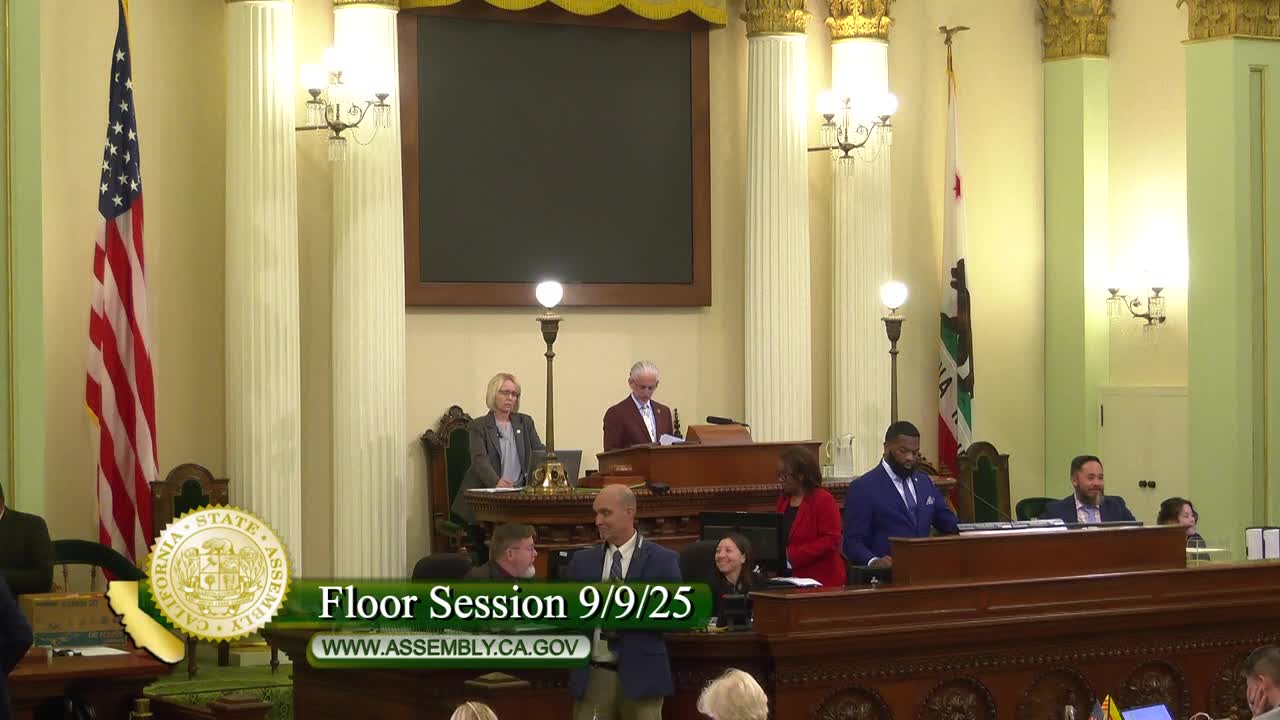 39SEC
Assembly Floor
 2MIN
Senate Floor
 4MIN
Senate Standing Committee on Human Services
 4MIN
Senate Standing Committee on Judiciary
Bill Author
Bill Co-Author(s):