AB 321: Misdemeanors.
- Session Year: 2025-2026
- House: Assembly
- Latest Version Date: 2025-10-11
Current Status:
Passed
(2025-10-11: Chaptered by Secretary of State - Chapter 611, Statutes of 2025.)
Introduced
In Committee
Awaiting First Chamber Vote
Passed First Chamber
In Committee
Awaiting Second Chamber Vote
Passed Second Chamber
Enacted
Existing law provides that a crime punishable with death, by imprisonment in the state prison, or by imprisonment in a county jail for more than one year is a felony and all other offenses, except those that are classified as infractions, are misdemeanors. Existing law further provides that a crime that is punishable, in the discretion of the court, as a felony or as a misdemeanor is a misdemeanor under certain circumstances, including when, at or before the preliminary examination or prior to a certain order being filed, the magistrate determines that the offense is a misdemeanor.
This bill would instead make a crime a misdemeanor under that condition any time the court, prior to trial, determines that the offense is a misdemeanor. The bill would also require, following a denial of a motion under this provision, a subsequent motion to be made only upon a showing of changed circumstances.
Existing law provides that a crime punishable with death, by imprisonment in the state prison, or by imprisonment in a county jail for more than one year is a felony and all other offenses, except those that are classified as infractions, are misdemeanors. Existing law further provides that a crime that is punishable, in the discretion of the court, as a felony or as a misdemeanor is a misdemeanor under certain circumstances, including when, at or before the preliminary examination or prior to a certain order being filed, the magistrate determines that the offense is a misdemeanor.
This bill would instead make a crime a misdemeanor under that condition any time the court court, prior to trial, determines that the offense is a misdemeanor. The bill would also require, following a denial of a motion under this provision, a subsequent motion to be made only upon a showing of changed circumstances.
Existing law provides that a crime punishable with death, by imprisonment in the state prison, or by imprisonment in a county jail for more than one year is a felony and all other offenses, except those that are classified as infractions, are misdemeanors. Existing law further provides that a crime that is punishable, in the discretion of the court, as a felony or as a misdemeanor is a misdemeanor under certain circumstances, including when, at or before the preliminary examination or prior to a certain order being filed, the magistrate determines that the offense is a misdemeanor.
This bill would instead make a crime a misdemeanor under that condition any time the court determines that the offense is a misdemeanor.
(a)A felony is a crime that is punishable with death, by imprisonment in the state prison, or, notwithstanding any other law, by imprisonment in a county jail under the provisions of subdivision (h) of Section 1170. Every other crime or public offense is a misdemeanor except those offenses that are classified as infractions.
(b)When a crime is punishable, in the discretion of the court, either by imprisonment in the state prison or imprisonment in a county jail under the provisions of subdivision (h) of Section 1170, or by fine or imprisonment in the county jail, it is a misdemeanor for all purposes under the following circumstances:
(1)After a judgment imposing a punishment other than imprisonment in the state prison or imprisonment in a county jail under the provisions of subdivision (h) of Section 1170.
(2)When the court, upon committing the defendant to a secure youth treatment facility, designates the offense to be a misdemeanor.
(3)When the court grants probation to a defendant and at the time of granting probation, or on application of the defendant or probation officer thereafter, the court declares the offense to be a misdemeanor.
(4)When the prosecuting attorney files in a court having jurisdiction over misdemeanor offenses a complaint specifying that the offense is a misdemeanor, unless the defendant at the time of arraignment or plea objects to the offense being made a misdemeanor, in which event the complaint shall be amended to charge the felony and the case shall proceed on the felony complaint.
(5)(A)When the court determines, prior to trial, either on its own motion or the motion of a party, that the offense is a misdemeanor, in which event the case shall proceed as if the defendant had been arraigned on a misdemeanor complaint.
(B)Following a denial of a motion pursuant to subparagraph (A), a subsequent motion pursuant to subparagraph (A) may only be made upon a showing of changed circumstances, which includes, but is not limited to, newly available facts relevant to the charge or defendants personal circumstances, or change in the applicable law.
(c)When a defendant is committed to a secure youth treatment facility for a crime punishable, in the discretion of the court, either by imprisonment in the state prison or imprisonment in a county jail under the provisions of subdivision (h) of Section 1170, or by fine or imprisonment in the county jail not exceeding one year, the offense shall, upon the discharge of the defendant from the secure youth treatment facility, thereafter be deemed a misdemeanor for all purposes.
(d)A violation of any code section listed in Section 19.8 is an infraction subject to the procedures described in Sections 19.6 and 19.7 in either of the following cases:
(1)The prosecutor files a complaint charging the offense as an infraction unless the defendant, at the time they are arraigned, after being informed of their rights, elects to have the case proceed as a misdemeanor.
(2)The court, with the consent of the defendant, determines that the offense is an infraction, in which event the case shall proceed as if the defendant had been arraigned on an infraction complaint.
(e)This section does not authorize a judge to relieve a defendant of the duty to register as a sex offender pursuant to Section 290 if the defendant is charged with an offense for which registration as a sex offender is required pursuant to Section 290, and for which the trier of fact has found the defendant guilty.
(f)When the court exercises its discretion under this section, an unfulfilled order of restitution or a restitution fine shall not be grounds for denial of a request or application for reduction.
(a)A felony is a crime that is punishable with death, by imprisonment in the state prison, or, notwithstanding any other law, by imprisonment in a county jail under the provisions of subdivision (h) of Section 1170. Every other crime or public offense is a misdemeanor except those offenses that are classified as infractions.
(b)When a crime is punishable, in the discretion of the court, either by imprisonment in the state prison or imprisonment in a county jail under the provisions of subdivision (h) of Section 1170, or by fine or imprisonment in the county jail, it is a misdemeanor for all purposes under the following circumstances:
(1)After a judgment imposing a punishment other than imprisonment in the state prison or imprisonment in a county jail under the provisions of subdivision (h) of Section 1170.
(2)When the court, upon committing the defendant to a secure youth treatment facility, designates the offense to be a misdemeanor.
(3)When the court grants probation to a defendant and at the time of granting probation, or on application of the defendant or probation officer thereafter, the court declares the offense to be a misdemeanor.
(4)When the prosecuting attorney files in a court having jurisdiction over misdemeanor offenses a complaint specifying that the offense is a misdemeanor, unless the defendant at the time of arraignment or plea objects to the offense being made a misdemeanor, in which event the complaint shall be amended to charge the felony and the case shall proceed on the felony complaint.
(5)(A)When the court determines, prior to trial, either on its own motion or the motion of a party, that the offense is a misdemeanor, in which event the case shall proceed as if the defendant had been arraigned on a misdemeanor complaint.
(B)Following a denial of a motion pursuant to subparagraph (A), a subsequent motion pursuant to subparagraph (A) may only be made upon a showing of changed circumstances. circumstances, which includes, but is not limited to, newly available facts relevant to the charge or defendants personal circumstances, or change in the applicable law.
(c)When a defendant is committed to a secure youth treatment facility for a crime punishable, in the discretion of the court, either by imprisonment in the state prison or imprisonment in a county jail under the provisions of subdivision (h) of Section 1170, or by fine or imprisonment in the county jail not exceeding one year, the offense shall, upon the discharge of the defendant from the secure youth treatment facility, thereafter be deemed a misdemeanor for all purposes.
(d)A violation of any code section listed in Section 19.8 is an infraction subject to the procedures described in Sections 19.6 and 19.7 in either of the following cases:
(1)The prosecutor files a complaint charging the offense as an infraction unless the defendant, at the time they are arraigned, after being informed of their rights, elects to have the case proceed as a misdemeanor.
(2)The court, with the consent of the defendant, determines that the offense is an infraction, in which event the case shall proceed as if the defendant had been arraigned on an infraction complaint.
(e)This section does not authorize a judge to relieve a defendant of the duty to register as a sex offender pursuant to Section 290 if the defendant is charged with an offense for which registration as a sex offender is required pursuant to Section 290, and for which the trier of fact has found the defendant guilty.
(f)When the court exercises its discretion under this section, an unfulfilled order of restitution or a restitution fine shall not be grounds for denial of a request or application for reduction.
(a)A felony is a crime that is punishable with death, by imprisonment in the state prison, or, notwithstanding any other law, by imprisonment in a county jail under the provisions of subdivision (h) of Section 1170. Every other crime or public offense is a misdemeanor except those offenses that are classified as infractions.
(b)When a crime is punishable, in the discretion of the court, either by imprisonment in the state prison or imprisonment in a county jail under the provisions of subdivision (h) of Section 1170, or by fine or imprisonment in the county jail, it is a misdemeanor for all purposes under the following circumstances:
(1)After a judgment imposing a punishment other than imprisonment in the state prison or imprisonment in a county jail under the provisions of subdivision (h) of Section 1170.
(2)When the court, upon committing the defendant to a secure youth treatment facility, designates the offense to be a misdemeanor.
(3)When the court grants probation to a defendant and at the time of granting probation, or on application of the defendant or probation officer thereafter, the court declares the offense to be a misdemeanor.
(4)When the prosecuting attorney files in a court having jurisdiction over misdemeanor offenses a complaint specifying that the offense is a misdemeanor, unless the defendant at the time of arraignment or plea objects to the offense being made a misdemeanor, in which event the complaint shall be amended to charge the felony and the case shall proceed on the felony complaint.
(5)(A)When the court determines determines, prior to trial, either on its own motion or the motion of a party, that the offense is a misdemeanor, in which event the case shall proceed as if the defendant had been arraigned on a misdemeanor complaint.
(B)Following a denial of a motion pursuant to subparagraph (A), a subsequent motion pursuant to subparagraph (A) may only be made upon a showing of changed circumstances.
(c)When a defendant is committed to a secure youth treatment facility for a crime punishable, in the discretion of the court, either by imprisonment in the state prison or imprisonment in a county jail under the provisions of subdivision (h) of Section 1170, or by fine or imprisonment in the county jail not exceeding one year, the offense shall, upon the discharge of the defendant from the secure youth treatment facility, thereafter be deemed a misdemeanor for all purposes.
(d)A violation of any code section listed in Section 19.8 is an infraction subject to the procedures described in Sections 19.6 and 19.7 in either of the following cases:
(1)The prosecutor files a complaint charging the offense as an infraction unless the defendant, at the time they are arraigned, after being informed of their rights, elects to have the case proceed as a misdemeanor.
(2)The court, with the consent of the defendant, determines that the offense is an infraction, in which event the case shall proceed as if the defendant had been arraigned on an infraction complaint.
(e)This section does not authorize a judge to relieve a defendant of the duty to register as a sex offender pursuant to Section 290 if the defendant is charged with an offense for which registration as a sex offender is required pursuant to Section 290, and for which the trier of fact has found the defendant guilty.
(f)When the court exercises its discretion under this section, an unfulfilled order of restitution or a restitution fine shall not be grounds for denial of a request or application for reduction.
(a)A felony is a crime that is punishable with death, by imprisonment in the state prison, or, notwithstanding any other law, by imprisonment in a county jail under the provisions of subdivision (h) of Section 1170. Every other crime or public offense is a misdemeanor except those offenses that are classified as infractions.
(b)When a crime is punishable, in the discretion of the court, either by imprisonment in the state prison or imprisonment in a county jail under the provisions of subdivision (h) of Section 1170, or by fine or imprisonment in the county jail, it is a misdemeanor for all purposes under the following circumstances:
(1)After a judgment imposing a punishment other than imprisonment in the state prison or imprisonment in a county jail under the provisions of subdivision (h) of Section 1170.
(2)When the court, upon committing the defendant to the Division of Juvenile Justice, a secure youth treatment facility, designates the offense to be a misdemeanor.
(3)When the court grants probation to a defendant and at the time of granting probation, or on application of the defendant or probation officer thereafter, the court declares the offense to be a misdemeanor.
(4)When the prosecuting attorney files in a court having jurisdiction over misdemeanor offenses a complaint specifying that the offense is a misdemeanor, unless the defendant at the time of arraignment or plea objects to the offense being made a misdemeanor, in which event the complaint shall be amended to charge the felony and the case shall proceed on the felony complaint.
(5)When, at or before the preliminary examination or prior to filing an order pursuant to Section 872, the magistrate When the court determines that the offense is a misdemeanor, in which event the case shall proceed as if the defendant had been arraigned on a misdemeanor complaint.
(c)When a defendant is committed to the Division of Juvenile Justice a secure youth treatment facility for a crime punishable, in the discretion of the court, either by imprisonment in the state prison or imprisonment in a county jail under the provisions of subdivision (h) of Section 1170, or by fine or imprisonment in the county jail not exceeding one year, the offense shall, upon the discharge of the defendant from the Division of Juvenile Justice, secure youth treatment facility, thereafter be deemed a misdemeanor for all purposes.
(d)A violation of any code section listed in Section 19.8 is an infraction subject to the procedures described in Sections 19.6 and 19.7 in either of the following cases:
(1)The prosecutor files a complaint charging the offense as an infraction unless the defendant, at the time they are arraigned, after being informed of their rights, elects to have the case proceed as a misdemeanor.
(2)The court, with the consent of the defendant, determines that the offense is an infraction, in which event the case shall proceed as if the defendant had been arraigned on an infraction complaint.
(e)This section does not authorize a judge to relieve a defendant of the duty to register as a sex offender pursuant to Section 290 if the defendant is charged with an offense for which registration as a sex offender is required pursuant to Section 290, and for which the trier of fact has found the defendant guilty.
(f)When the court exercises its discretion under this section, an unfulfilled order of restitution or a restitution fine shall not be grounds for denial of a request or application for reduction.
|
Date
|
Status
|
|---|---|
| Oct 11, 2025 | Chaptered by Secretary of State - Chapter 611, Statutes of 2025. |
| Oct 11, 2025 | Approved by the Governor. |
| Sep 15, 2025 | Enrolled and presented to the Governor at 4:30 p.m. |
| Sep 8, 2025 | Senate amendments concurred in. To Engrossing and Enrolling. (Ayes 55. Noes 12. Page 3023.). |
| Sep 4, 2025 | In Assembly. Concurrence in Senate amendments pending. |
| Sep 4, 2025 | Read third time. Passed. Ordered to the Assembly. (Ayes 23. Noes 13. Page 2508.). |
| Aug 20, 2025 | Read second time. Ordered to third reading. |
| Aug 19, 2025 | Read third time and amended. Ordered to second reading. |
| Jun 11, 2025 | Read second time. Ordered to third reading. |
| Jun 10, 2025 | From committee: Do pass. (Ayes 5. Noes 1.) (June 10). |
| May 29, 2025 | From committee chair, with author's amendments: Amend, and re-refer to committee. Read second time, amended, and re-referred to Com. on PUB. S. |
| May 7, 2025 | Referred to Com. on PUB. S. |
| Mar 13, 2025 | In Senate. Read first time. To Com. on RLS. for assignment. |
| Mar 13, 2025 | Read third time. Passed. Ordered to the Senate. (Ayes 52. Noes 6. Page 617.) |
| Mar 10, 2025 | Ordered to third reading. |
| Mar 10, 2025 | From Consent Calendar. |
| Mar 5, 2025 | Read second time. Ordered to Consent Calendar. |
| Mar 4, 2025 | From committee: Do pass. To Consent Calendar. (Ayes 9. Noes 0.) (March 4). |
| Feb 10, 2025 | Referred to Com. on PUB. S. |
| Jan 27, 2025 | Read first time. |
| Jan 25, 2025 | From printer. May be heard in committee February 24. |
| Jan 24, 2025 | Introduced. To print. |
|
Date
|
Description
|
Location
|
Votes
|
|
|---|---|---|---|---|
| Sep 8, 2025 | AB 321 Schultz Concurrence in Senate Amendments | Assembly Floor |
Passed |
|
| Sep 4, 2025 | Assembly 3rd Reading AB321 Schultz et al. By Wiener | Senate Floor |
Passed |
|
| Jun 10, 2025 | Do pass | Senate Standing Committee on Public Safety |
Passed |
|
| Mar 13, 2025 | The committee(s) on HOU recommend(s) that the measure be PASSED, UNAMENDED. | Assembly Floor |
Passed |
|
| Mar 4, 2025 | Do pass. To Consent Calendar. | Assembly Standing Committee on Public Safety |
Passed |
This list shows positions taken on this bill by organizations on the date displayed, which is linked to the original source.
Positions by individuals are not included.
|
Organization
|
Position
|
Date
|
|---|---|---|
| Aclu California Action | ** Support | |
| Alliance San Diego | ** Support | |
| All of Us or None Los Angeles | ** Support | |
| Asian Americans Advancing Justice Southern California | ** Support | |
| Asian Prisoner Support Committee | ** Support | |
| California Attorneys For Criminal Justice | ** Support | |
| California Coalition for Women Prisoners | ** Support | |
| California District Attorneys Association | ** Against | |
| Californians for Safety and Justice | ** Support | |
| Californians United for a Responsible Budget | ** Support | |
| California Public Defenders Association | ** Support | |
| Communities United for Restorative Youth Justice | ** Support | |
| Courage California | ** Support | |
| Drug Policy Alliance | ** Support | |
| Ella Baker Center For Human Rights | ** Support | |
| Fresh Lifelines for Youth | ** Support | |
| Friends Committee On Legislation Of California | ** Support | |
| Immigrant Legal Resource Center | ** Support | |
| Initiate Justice | ** Support | |
| Initiate Justice Action | ** Support | |
| Justice2jobs Coalition | ** Support | |
| LA Defensa | ** Support | |
| Legal Services for Prisoners with Children | ** Support | |
| Local 148 La County Public Defenders Union | ** Support | |
| New Light Wellness | ** Support | |
| Orale: Organizing Rooted in Abolition, Liberation, and Empowerment | ** Support | |
| Orange County Equality Coalition | ** Support | |
| Organizing Rooted in Abolition, Liberation, and Empowerment | ** Support | |
| Prosecutors Alliance of California, a Project of Tides Advocacy | ** Support | |
| Riverside County District Attorney | ** Against | |
| Rubicon Programs | ** Support | |
| Ryse Center | ** Support | |
| San Francisco Public Defender | ** Support | |
| Secure Justice | ** Support | |
| Sister Warriors Freedom Coalition | ** Support | |
| Smart Justice California | ** Support | |
| south bay people power | ** Support | |
| Southeast Asia Resource Action Center | ** Support | |
| Vera Institute Of Justice | ** Support |
CONCURRENCE IN SENATE AMENDMENTS
CSA1 Bill Id:AB 321
Author:(Schultz)
As Amended Ver:August 19, 2025
Majority vote
SUMMARY
Authorizes a court to reduce a felony to a misdemeanor where the charged offense is an alternate felony-misdemeanor when a court determines, prior to trial, either on its own motion or a motion by a party.
Senate Amendments
- Removes the ability of a court to grant a motion to reduce an alternate felony-misdemeanor to a misdemeanor at any time and, instead, limits the court's ability to any time prior to trial.
- States, following the denial of a motion to reduce a felony to a misdemeanor, a subsequent motion may only be made on a showing of changed circumstances, including but not limited to, newly available facts relevant to the charge or defendant's personal circumstances, or changes in the applicable law.
COMMENTS
According to the Author
"AB 321 empowers judges in criminal cases to review a prosecutor's charging decision at all stages of a case. Under current law, judges must make a final decision on whether a 'wobbler case' will move forward as a misdemeanor or felony at or before the preliminary hearing or after a guilty plea at the time of sentencing. At the time of the preliminary hearing, because there is no discovery requirement, the court often has very little information about the accused person and their alleged conduct to determine whether a misdemeanor or felony charge is appropriate.
"This bill is a streamlined amendment that permits judges to decide whether a wobbler case will move forward as a misdemeanor or felony when they have sufficient evidence to make that decision. This ensures that individuals face consequences proportionate to their actions and that public resources spent on trials are appropriate to the severity and complexity of each case. This bill would enhance court efficiency, save public funds, and lead to a more equitable criminal justice system by guarding against overcharging, mischarging, and severe penalties, particularly for vulnerable populations."
Arguments in Support
According to the San Francisco Public Defender, "The Better Informed Decisions Act ("The BID Act"), which ensures that judges in the state's criminal courts have more of an opportunity to review relevant evidence necessary during the course of a case so that they can make better informed decisions on whether a case will move forward as a misdemeanor or a felony.
The offense for which an accused individual faces trial, also known as the criminal charge against them, should match the accused individual's alleged conduct. This ensures that the individual faces consequences that are proportionate to their actions. However, as explained below, current law places strict restrictions on when judges can review charges to make sure they are fair.
Currently, for offenses called 'wobblers'—which can be classified as misdemeanors or felonies—judges must make a final decision on whether a case will move forward as a misdemeanor or felony at or before the preliminary hearing (the very beginning of a case) or after a guilty plea (at the end of a case). At the preliminary hearing stage of a case, very little information has been gathered about the accused person and their alleged conduct. The BID Act is a simple amendment that removes the time restriction that only permits judges to classify wobblers as felonies or misdemeanors at the very beginning of the case.
Under the BID Act, judges can make this decision when they have gathered sufficient information about the accused person and their conduct. The BID Act will improve court efficiency and save public funds because it will ensure that the amount of public resources spent is proportionate to the severity and complexity of each case.
Lastly, allowing judges to review charges to determine if they are supported by the evidence at a later stage in the criminal case can guard against overcharging and mischarging and thereby reduce unjust outcomes."
Arguments in Opposition
According to the California District Attorneys Association, "The August 19, 2025 amendments to AB 321 do not address CDAA's concerns. As amended, the bill would still allow a motion to be brought at any point in time during the lifespan of the felony criminal proceeding. However, once denied, a motion could then only be brought again upon a showing of changed circumstances. The new amendments clarify what some of the changed circumstances might be. This clarification does not address CDAA's concerns with forum shopping or with fact that this proposal will permit judges to make important dispositional decisions without a full hearing on the facts and circumstances of the case. As such, CDAA remains opposed to AB 321.
FISCAL COMMENTS
Unknown. This bill is keyed non-fiscal by the Legislative Counsel.
VOTES:
ASM PUBLIC SAFETY: 9-0-0
YES: Schultz, Alanis, Mark González, Haney, Harabedian, Lackey, Nguyen, Ramos, Sharp-Collins
ASSEMBLY FLOOR: 52-6-22
YES: Addis, Aguiar-Curry, Ahrens, Alanis, Alvarez, Arambula, Ávila Farías, Bauer-Kahan, Bennett, Berman, Boerner, Bonta, Bryan, Calderon, Caloza, Carrillo, Connolly, Davies, Elhawary, Flora, Fong, Gabriel, Gipson, Mark González, Haney, Harabedian, Jackson, Kalra, Krell, Lowenthal, McKinnor, Muratsuchi, Nguyen, Pacheco, Papan, Patel, Pellerin, Quirk-Silva, Ransom, Celeste Rodriguez, Michelle Rodriguez, Rogers, Blanca Rubio, Schiavo, Schultz, Sharp-Collins, Solache, Stefani, Wicks, Wilson, Zbur, Rivas
NO: Castillo, DeMaio, Macedo, Sanchez, Tangipa, Wallis
ABS, ABST OR NV: Bains, Chen, Dixon, Ellis, Essayli, Gallagher, Garcia, Jeff Gonzalez, Hadwick, Hart, Hoover, Irwin, Lackey, Lee, Ortega, Patterson, Petrie-Norris, Ramos, Soria, Ta, Valencia, Ward
UPDATED
VERSION: May 29, 2025
CONSULTANT: Kimberly Horiuchi / PUB. S. / (916) 319-3744 FN: 0001660
SENATE RULES COMMITTEE Office of Senate Floor Analyses (916) 651-1520 Fax: (916) 327-4478 | AB 321 |
THIRD READING
Bill No: AB 321
Author: Schultz (D), et al.
Amended: 8/19/25 in Senate
Vote: 21
ASSEMBLY FLOOR: 52-6, 3/13/25 - See last page for vote
SUBJECT: Misdemeanors
SOURCE: San Francisco Public Defender’s Office
DIGEST:
This bill allows a court to reduce wobbler violations any time prior to trial and allows a subsequent motion to reduce a wobbler only upon a showing of changed circumstances.
Senate floor amendments of 8/19/2025 provide that changed circumstances include, but are not limited to, newly available facts relevant to the charge or to the defendant’s personal circumstances, or a change in the applicable law.
ANALYSIS:
Existing Law:
- Recognizes that certain crimes may be punished as either a felony or a misdemeanor. (Penal (Pen.) Code, § 17, subd. (b).)
- States when a crime is punishable, in the discretion of the court, either as a felony or a misdemeanor, it is a misdemeanor for all purposes under the following circumstances:
- After a judgment imposing a punishment other than imprisonment in the state prison or imprisonment in a county jail;
- When the court, upon committing the defendant to the Division of Juvenile Justice (DJJ), designates the offense to be a misdemeanor;
- When the court grants probation to a defendant without imposition of sentence and at the time of granting probation, or on application of the defendant or probation officer thereafter, the court declares the offense to be a misdemeanor;
- When the prosecuting attorney files in a court having jurisdiction over misdemeanor offenses a complaint specifying that the offense is a misdemeanor, unless the defendant at the time of his or her arraignment or plea objects to the offense being made a misdemeanor, in which event the complaint shall be amended to charge the felony and the case shall proceed on the felony complaint;
- When, at or before the preliminary examination or prior to filing an order holding defendant to answer, the magistrate determines that the offense is a misdemeanor, in which event the case shall proceed as if the defendant had been arraigned on a misdemeanor complaint. (Pen. Code, § 17, subd. (b).)
- After a judgment imposing a punishment other than imprisonment in the state prison or imprisonment in a county jail;
- Provides that when a defendant is committed to the DJJ for a crime punishable, in the discretion of the court, either as a felony or a misdemeanor, the offense shall, upon the discharge of the defendant from DJJ, thereafter be deemed a misdemeanor for all purposes. (Pen. Code, § 17, subd. (c).)
- States that a reduction of a wobbler to a misdemeanor does not authorizes a judge to relieve a defendant of the duty to register as a sex offender if the defendant is charged with an offense for which registration as a sex offender is required, and for which the trier of fact has found the defendant guilty. (Pen. Code, § 17, subd. (e).)
This Bill:
- Allows a court to reduce wobbler violations any time prior to trial, either on its own motion or the motion of a party.
- Allows a subsequent motion to reduce a felony to a misdemeanor only upon a showing of changed circumstances, which include, but are not limited to, newly available facts relevant to the charge or the defendant’s personal circumstances, or a change in the law.
- Replaces references to the former Division of Juvenile Justice, which is now closed, with references to now-existing secure youth treatment facilities.
Background
"Offenses punishable as felonies or misdemeanors are traditionally called ‘wobblers.’” (People v. Stevens (1996) 48 Cal.App.4th 982, 987, fn. 12.) For those offenses, whether the crime is a felony depends upon the punishment imposed. (Id. at p. 987.) Unless and until a misdemeanor sentence is imposed, the conviction for a wobbler remains a felony for all purposes. (People v. Bozigian (1969), 270 Cal.App.2d 373, 379; see also U.S. v. Robinson (9th Cir. 1992) 967 F.2d 287, 283.) Only offenses that are statutorily authorized by the Legislature as wobblers may be reduced from a felony to a misdemeanor. (People v. Mauch (2008) 163 Cal.App.4th 669, 674.)
Reduction of a felony to a misdemeanor enables a defendant to avoid many, but not all, of the consequences of a felony conviction. For example, reduction of a wobbler to a misdemeanor means conviction will be treated as a misdemeanor for licensing and employment purposes or for immigration purposes, unless another statute specifies an exception. However, reduction of a felony to a misdemeanor does not relieve a defendant of the duty to register as a sex offender if the offense requires registration. (See Pen. Code, § 17, subd. (e).)
Penal Code section 17, subdivision (b) is the mechanism by which defendants can get a wobbler offenses reduced to a misdemeanor. Under the statute, there are only certain times in the proceedings when the can be reduced from a felony to a misdemeanor. The judge has the discretion to reduce a felony charge to a misdemeanor at the preliminary hearing. (Pen. Code, § 17, subd. (b)(5).) Other opportunities for reduction to a misdemeanor are in the sentencing context, namely: when the sentence imposed does not include imprisonment in state prison or county jail under realignment (Pen. Code, § 17, subd. (b)(1); or when the judge designates the offense to be a misdemeanor on commitment to the (former) Division of Juvenile Justice (Pen. Code, § 17, subd. (b)(2)); and when the court grants felony probation without the imposition of sentence, but later declared the offense to be a misdemeanor. (Pen. Code, § 17, subd. (b)(3)).
This bill expands the pre-sentencing opportunities for a judge to reduce a wobbler. Specifically, this bill allows a court to reduce a wobbler to a misdemeanor at any time before trial, rather than at the preliminary hearing, either on the court’s own motion or upon a defendant's motion. This bill provides that if the pre-trial motion to reduce a wobbler is denied, a subsequent motion can only be made if there is a showing of a change in circumstances.
In the juvenile context, this bill deletes the reference to the now-closed Division of Juvenile Justice, and instead states that the court can reduce a wobbler offense upon commitment to a secure youth treatment facility.
FISCAL EFFECT: Appropriation: No Fiscal Com.: No Local: No
SUPPORT: (Verified 8/18/25)
ACLU California Action
Alliance San Diego
Asian Prisoner Support Committee
California Attorneys for Criminal Justice
California Coalition for Women Prisoners
California Public Defenders Association
Californians for Safety and Justice
Communities United for Restorative Youth Justice
Drug Policy Alliance
Ella Baker Center for Human Rights
Friends Committee on Legislation of California
Immigrant Legal Resource Center
Initiate Justice
Initiate Justice Action
Justice2jobs Coalition
LA Defensa
Local 148 LA County Public Defenders Union
New Light Wellness
Orale: Organizing Rooted in Abolition Liberation and Empowerment
Orange County Equality Coalition
San Francisco Public Defender
Secure Justice
Sister Warriors Freedom Coalition
Smart Justice California
South Bay People Power
Southeast Asia Resource Action Center
Vera Institute of Justice
OPPOSITION: (Verified 8/18/25)
Riverside County District Attorney
California District Attorneys Association
ARGUMENTS IN SUPPORT: According to the San Francisco Public Defender, a co-sponsor of this bill:
The offense for which an accused individual faces trial, also known as the criminal charge against them, should match the accused individual’s alleged conduct. This ensures that the individual faces consequences that are proportionate to their actions. However, as explained below, current law places strict restrictions on when judges can review wobbler charges to make sure they are fair. Currently, for offenses called “wobblers”—which can be classified as misdemeanors or felonies—judges must make a final decision on whether a case will move forward as a misdemeanor or felony at or before the preliminary hearing (the very beginning of a case) or after a guilty plea (at the end of a case). At the preliminary hearing stage of a case, very little information has been gathered about the accused person and their alleged conduct. The BID Act is a simple amendment that removes the time restriction that only permits judges to classify wobblers as felonies or misdemeanors at the very beginning of the case. Under the BID Act, judges can make this decision when they have gathered sufficient information about the accused person and their conduct, before trial commences.
The BID Act will improve court efficiency and save public funds because it will ensure that the amount of public resources spent is proportionate to the severity and complexity of each case. Lastly, allowing judges to review wobbler charges to determine whether they are supported by the evidence at a later stage in the criminal case can guard against overcharging and mischarging, and thereby reduce unjust outcomes.
ARGUMENTS IN OPPOSITION: According to the California District Attorneys Association:
The May 29, 2025 amendments to AB 321 do not address CDAA’s concerns, either. As amended, the bill would still allow a motion to be brought at any point in time during the lifespan of the felony criminal proceeding. However, once denied, a motion could then only be brought again upon a showing of changed circumstances. But that “changed circumstances” requirement does not address issues with forum shopping and permit judges to make important dispositional decisions without a full hearing on the facts and circumstances of the case. As such, CDAA remains opposed to these and other amendments in subdivision (b)(5).
Our adversarial justice system is designed to give the judge both sides – all the information – so they may make the most informed, just, and appropriate decisions. For these reasons we oppose AB 321 unless amended to only address the chaptering issues related to the former DJJ and current SYTF.
ASSEMBLY FLOOR: 52-6, 3/13/25
AYES: Addis, Aguiar-Curry, Ahrens, Alanis, Alvarez, Arambula, Ávila Farías, Bauer-Kahan, Bennett, Berman, Boerner, Bonta, Bryan, Calderon, Caloza, Carrillo, Connolly, Davies, Elhawary, Flora, Fong, Gabriel, Gipson, Mark González, Haney, Harabedian, Jackson, Kalra, Krell, Lowenthal, McKinnor, Muratsuchi, Nguyen, Pacheco, Papan, Patel, Pellerin, Quirk-Silva, Ransom, Celeste Rodriguez, Michelle Rodriguez, Rogers, Blanca Rubio, Schiavo, Schultz, Sharp-Collins, Solache, Stefani, Wicks, Wilson, Zbur, Rivas
NOES: Castillo, DeMaio, Macedo, Sanchez, Tangipa, Wallis
NO VOTE RECORDED: Bains, Chen, Dixon, Ellis, Essayli, Gallagher, Garcia, Jeff Gonzalez, Hadwick, Hart, Hoover, Irwin, Lackey, Lee, Ortega, Patterson, Petrie-Norris, Ramos, Soria, Ta, Valencia, Ward
Prepared by: Sandy Uribe / PUB. S. /
8/20/25 23:06:54
**** END ****
SENATE RULES COMMITTEE Office of Senate Floor Analyses (916) 651-1520 Fax: (916) 327-4478 | AB 321 |
THIRD READING
Bill No: AB 321
Author: Schultz (D), et al.
Amended: 5/29/25 in Senate
Vote: 21
SENATE PUBLIC SAFETY COMMITTEE: 5-1, 6/10/25
AYES: Arreguín, Caballero, Gonzalez, Pérez, Wiener
NOES: Seyarto
ASSEMBLY FLOOR: 52-6, 3/13/25 - See last page for vote
SUBJECT: Misdemeanors
SOURCE: San Francisco Public Defender’s Office
DIGEST:
This bill allows a court to reduce wobbler violations any time prior to trial, either on its own motion or the motion of a party.
ANALYSIS:
Existing Law:
- Recognizes that certain crimes may be punished as either a felony or a misdemeanor. (Penal (Pen.) Code, § 17, subd. (b).)
- States when a crime is punishable, in the discretion of the court, either as a felony or a misdemeanor, it is a misdemeanor for all purposes under the following circumstances:
- After a judgment imposing a punishment other than imprisonment in the state prison or imprisonment in a county jail;
- When the court, upon committing the defendant to the Division of Juvenile Justice (DJJ), designates the offense to be a misdemeanor;
- When the court grants probation to a defendant without imposition of sentence and at the time of granting probation, or on application of the defendant or probation officer thereafter, the court declares the offense to be a misdemeanor;
- When the prosecuting attorney files in a court having jurisdiction over misdemeanor offenses a complaint specifying that the offense is a misdemeanor, unless the defendant at the time of his or her arraignment or plea objects to the offense being made a misdemeanor, in which event the complaint shall be amended to charge the felony and the case shall proceed on the felony complaint;
- When, at or before the preliminary examination or prior to filing an order holding defendant to answer, the magistrate determines that the offense is a misdemeanor, in which event the case shall proceed as if the defendant had been arraigned on a misdemeanor complaint. (Pen. Code, § 17, subd. (b).)
- After a judgment imposing a punishment other than imprisonment in the state prison or imprisonment in a county jail;
- Provides that when a defendant is committed to the DJJ for a crime punishable, in the discretion of the court, either as a felony or a misdemeanor, the offense shall, upon the discharge of the defendant from DJJ, thereafter be deemed a misdemeanor for all purposes. (Pen. Code, § 17, subd. (c).)
- States that a reduction of a wobbler to a misdemeanor does not authorizes a judge to relieve a defendant of the duty to register as a sex offender if the defendant is charged with an offense for which registration as a sex offender is required, and for which the trier of fact has found the defendant guilty. (Pen. Code, § 17, subd. (e).)
This bill:
- Allows a court to reduce wobbler violations any time prior to trial, either on its own motion or the motion of a party.
- Allows a subsequent motion to reduce a felony to a misdemeanor only upon a showing of changed circumstances.
- Replaces references to the former DJJ, which is now closed, with references to now-existing secure youth treatment facilities.
Background
"Offenses punishable as felonies or misdemeanors are traditionally called ‘wobblers.’” (People v. Stevens (1996) 48 Cal.App.4th 982, 987, fn. 12.) For those offenses, whether the crime is a felony depends upon the punishment imposed. (Id. at p. 987.) Unless and until a misdemeanor sentence is imposed, the conviction for a wobbler remains a felony for all purposes. (People v. Bozigian (1969), 270 Cal.App.2d 373, 379; see also U.S. v. Robinson (9th Cir. 1992) 967 F.2d 287, 283.) Only offenses that are statutorily authorized by the Legislature as wobblers may be reduced from a felony to a misdemeanor. (People v. Mauch (2008) 163 Cal.App.4th 669, 674.)
Reduction of a felony to a misdemeanor enables a defendant to avoid many, but not all, of the consequences of a felony conviction. For example, reduction of a wobbler to a misdemeanor means conviction will be treated as a misdemeanor for licensing and employment purposes or for immigration purposes, unless another statute specifies an exception. However, reduction of a felony to a misdemeanor does not relieve a defendant of the duty to register as a sex offender if the offense requires registration. (See Pen. Code, § 17, subd. (e).)
Penal Code section 17, subdivision (b) is the mechanism by which defendants can get a wobbler offenses reduced to a misdemeanor. Under the statute, there are only certain times in the proceedings when the can be reduced from a felony to a misdemeanor. The judge has the discretion to reduce a felony charge to a misdemeanor at the preliminary hearing. (Pen. Code, § 17, subd. (b)(5).) Other opportunities for reduction to a misdemeanor are in the sentencing context, namely: when the sentence imposed does not include imprisonment in state prison or county jail under realignment (Pen. Code, § 17, subd. (b)(1); or when the judge designates the offense to be a misdemeanor on commitment to the (former) Division of Juvenile Justice (Pen. Code, § 17, subd. (b)(2)); and when the court grants felony probation without the imposition of sentence, but later declared the offense to be a misdemeanor. (Pen. Code, § 17, subd. (b)(3)).
This bill expands the pre-sentencing opportunities for a judge to reduce a wobbler. Specifically, this bill allows a court to reduce a wobbler to a misdemeanor at any time before trial, rather than at the preliminary hearing, either on the court’s own motion or upon a defendant's motion. This bill provides that if the pre-trial motion to reduce a wobbler is denied, a subsequent motion can only be made if there is a showing of a change in circumstances.
In the juvenile context, this bill deletes the reference to the now-closed DJJ, and instead states that the court can reduce a wobbler offense upon commitment to a secure youth treatment facility.
FISCAL EFFECT: Appropriation: No Fiscal Com.: No Local: No
SUPPORT: (Verified 6/10/25)
San Francisco Public Defender (source)
ACLU California Action
Alliance San Diego
Asian Prisoner Support Committee
California Attorneys for Criminal Justice
California Coalition for Women Prisoners
California Public Defenders Association
Californians for Safety and Justice
Communities United for Restorative Youth Justice
Drug Policy Alliance
Ella Baker Center for Human Rights
Friends Committee on Legislation of California
Immigrant Legal Resource Center
Initiate Justice
Initiate Justice Action
Justice2jobs Coalition
LA Defensa
Local 148 LA County Public Defenders Union
New Light Wellness
Orale: Organizing Rooted in Abolition Liberation and Empowerment
Orange County Equality Coalition
Secure Justice
Sister Warriors Freedom Coalition
Smart Justice California
South Bay People Power
Southeast Asia Resource Action Center
Vera Institute of Justice
OPPOSITION: (Verified 6/10/25)
Riverside County District Attorney
California District Attorneys Association
ARGUMENTS IN SUPPORT:
According to the San Francisco Public Defender, a co-sponsor of this bill:
The offense for which an accused individual faces trial, also known as the criminal charge against them, should match the accused individual’s alleged conduct. This ensures that the individual faces consequences that are proportionate to their actions. However, as explained below, current law places strict restrictions on when judges can review wobbler charges to make sure they are fair. Currently, for offenses called “wobblers”—which can be classified as misdemeanors or felonies—judges must make a final decision on whether a case will move forward as a misdemeanor or felony at or before the preliminary hearing (the very beginning of a case) or after a guilty plea (at the end of a case). At the preliminary hearing stage of a case, very little information has been gathered about the accused person and their alleged conduct. The BID Act is a simple amendment that removes the time restriction that only permits judges to classify wobblers as felonies or misdemeanors at the very beginning of the case. Under the BID Act, judges can make this decision when they have gathered sufficient information about the accused person and their conduct, before trial commences.
The BID Act will improve court efficiency and save public funds because it will ensure that the amount of public resources spent is proportionate to the severity and complexity of each case. Lastly, allowing judges to review wobbler charges to determine whether they are supported by the evidence at a later stage in the criminal case can guard against overcharging and mischarging, and thereby reduce unjust outcomes.
ARGUMENTSIN OPPOSITION:
According to the California District Attorneys Association:
The May 29, 2025 amendments to AB 321 do not address CDAA’s concerns, either. As amended, the bill would still allow a motion to be brought at any point in time during the lifespan of the felony criminal proceeding. However, once denied, a motion could then only be brought again upon a showing of changed circumstances. But that “changed circumstances” requirement does not address issues with forum shopping and permit judges to make important dispositional decisions without a full hearing on the facts and circumstances of the case. As such, CDAA remains opposed to these and other amendments in subdivision (b)(5).
Our adversarial justice system is designed to give the judge both sides – all the information – so they may make the most informed, just, and appropriate decisions. For these reasons we oppose AB 321 unless amended to only address the chaptering issues related to the former DJJ and current SYTF.
ASSEMBLY FLOOR: 52-6, 3/13/25
AYES: Addis, Aguiar-Curry, Ahrens, Alanis, Alvarez, Arambula, Ávila Farías, Bauer-Kahan, Bennett, Berman, Boerner, Bonta, Bryan, Calderon, Caloza, Carrillo, Connolly, Davies, Elhawary, Flora, Fong, Gabriel, Gipson, Mark González, Haney, Harabedian, Jackson, Kalra, Krell, Lowenthal, McKinnor, Muratsuchi, Nguyen, Pacheco, Papan, Patel, Pellerin, Quirk-Silva, Ransom, Celeste Rodriguez, Michelle Rodriguez, Rogers, Blanca Rubio, Schiavo, Schultz, Sharp-Collins, Solache, Stefani, Wicks, Wilson, Zbur, Rivas
NOES: Castillo, DeMaio, Macedo, Sanchez, Tangipa, Wallis
NO VOTE RECORDED: Bains, Chen, Dixon, Ellis, Essayli, Gallagher, Garcia, Jeff Gonzalez, Hadwick, Hart, Hoover, Irwin, Lackey, Lee, Ortega, Patterson, Petrie-Norris, Ramos, Soria, Ta, Valencia, Ward
Prepared by: Sandy Uribe / PUB. S. /
6/11/25 15:55:36
**** END ****
SENATE COMMITTEE ON PUBLIC SAFETY
Senator Jesse Arreguín, Chair
2025 - 2026 Regular
Bill No: AB 321 Hearing Date: June 10, 2025
Author: | Schultz | ||
Version: | May 29, 2025 | ||
Urgency: | No | Fiscal: | No |
Consultant: | SU | ||
Subject: Misdemeanors
HISTORY
Source: San Francisco Public Defender’s Office
Prior Legislation: SB 1106 (Wiener), Ch. 734, Stats. of 2022
AB 1941 (Jones-Sawyer), Ch. 18, Stats. of 2018
AB 2479 (Bradford), ordered to the Assembly Inactive File, 2014
AB 2680 (Wright), Chapter 960, Stats. of 1998
Support: ACLU California Action; Alliance San Diego; California Attorneys for Criminal Justice; California Coalition for Women Prisoners; California Public Defenders Association; Californians for Safety and Justice; Communities United for Restorative Youth Justice; Drug Policy Alliance; Ella Baker Center for Human Rights; Friends Committee on Legislation of California; Immigrant Legal Resource Center; Initiate Justice; Initiate Justice Action; Justice2Jobs Coalition; LA Defensa; LA County Public Defenders Union, Local 148; New Light Wellness; Orange County Equality Coalition; Organizing Rooted in Abolition, Liberation and Empowerment; Secure Justice; Smart Justice California; South Bay People Power; Southeast Asian Resource Action Center; Vera Institute of Justice
Opposition: California District Attorneys Association; Riverside County District Attorney
Assembly Floor Vote: 52 - 6
PURPOSE
The purpose of this bill is to gives courts more opportunities to reduce wobbler offenses before trial, rather than just at or before a preliminary hearing.
Existing law defines a felony as a crime that is punishable with death, by imprisonment in the state prison, or by imprisonment in a county jail under the provisions of realignment. (Pen. Code, § 17, subd. (a).)
Existing law states that every other crime or public offense is a misdemeanor except those offenses classified as infractions. (Pen. Code, § 17, subd. (a).)
Existing law recognizes that certain crimes may be punished as either a felony or a misdemeanor. (Pen. Code, § 17, subd. (b).) These crimes are commonly known as “wobblers.”
Existing law states when a crime is punishable, in the discretion of the court, either as a felony or a misdemeanor, it is a misdemeanor for all purposes under the following circumstances:
- After a judgment imposing a punishment other than imprisonment in the state prison or imprisonment in a county jail;
- When the court, upon committing the defendant to the Division of Juvenile Justice (DJJ), designates the offense to be a misdemeanor;
- When the court grants probation to a defendant without imposition of sentence and at the time of granting probation, or on application of the defendant or probation officer thereafter, the court declares the offense to be a misdemeanor;
- When the prosecuting attorney files in a court having jurisdiction over misdemeanor offenses a complaint specifying that the offense is a misdemeanor, unless the defendant at the time of his or her arraignment or plea objects to the offense being made a misdemeanor, in which event the complaint shall be amended to charge the felony and the case shall proceed on the felony complaint;
- When, at or before the preliminary examination or prior to filing an order holding defendant to answer, the magistrate determines that the offense is a misdemeanor, in which event the case shall proceed as if the defendant had been arraigned on a misdemeanor complaint. (Pen. Code, § 17, subd. (b).)
Existing law provides that when a defendant is committed to the Division of Juvenile Justice (DJJ) for a crime punishable, in the discretion of the court, either as a felony or a misdemeanor, the offense shall, upon the discharge of the defendant from DJJ, thereafter be deemed a misdemeanor for all purposes. (Pen. Code, § 17, subd. (c).)
Existing law states that a reduction of a wobbler to a misdemeanor does not authorizes a judge to relieve a defendant of the duty to register as a sex offender if the defendant is charged with an offense for which registration as a sex offender is required, and for which the trier of fact has found the defendant guilty. (Pen. Code, § 17, subd. (e).)
This bill allows a court to reduce wobbler violations any time prior to trial, either on its own motion or the motion of a party.
This bill allows a subsequent motion to reduce a felony to a misdemeanor only upon a showing of changed circumstances.
This bill replaces references to the former Division of Juvenile Justice, which is now closed, with references to now-existing secure youth treatment facilities.
COMMENTS
- Need for This Bill
According to the Author:
“When making decisions that impact the trajectory of a criminal case, judges should be able to review and weigh relevant information required to make sound, informed decisions. Further, the offense for which an accused individual faces trial and punishment, also known as the criminal charge against them, should match the accused individual’s alleged conduct. This ensures that the individual faces consequences that are proportionate to their actions.
Currently, under California Penal Code 17(b)(5), for offenses called “wobblers,” judges must decide whether a case will move forward as a misdemeanor or felony at or before the preliminary hearing or after a guilty plea. At the preliminary hearing (the beginning of a criminal case), very little information has been gathered about the defendant and their alleged conduct, and both the accused person and the prosecutor are not entitled to much information. Under PC 17(b)(5), judges cannot re-classify a felony wobbler to a misdemeanor during the trial or during the lengthy post-preliminary, pretrial process during which relevant evidence is gathered and investigations are conducted. The BID Act would allow judges to classify wobbler cases as felonies or misdemeanors, when they have sufficient evidence to make this decision.
AB 321 will enhance court efficiency, save public funds, and lead to more equitable and accurate criminal justice outcomes.”
- Reducing a Felony to a Misdemeanor
"Offenses punishable as felonies or misdemeanors are traditionally called ‘wobblers.’” (People v. Stevens (1996) 48 Cal.App.4th 982, 987, fn. 12.) For those offenses, whether the crime is a felony depends upon the punishment imposed. (Id. at p. 987.) Unless and until a misdemeanor sentence is imposed, the conviction for a wobbler remains a felony for all purposes. (People v. Bozigian (1969), 270 Cal.App.2d 373, 379; see also U.S. v. Robinson (9th Cir. 1992) 967 F.2d 287, 283.) Only offenses that are statutorily authorized by the Legislature as wobblers may be reduced from a felony to a misdemeanor. (People v. Mauch (2008) 163 Cal.App.4th 669, 674.)
Reduction of a felony to a misdemeanor enables a defendant to avoid many, but not all, of the consequences of a felony conviction. For example, reduction of a wobbler to a misdemeanor means conviction will be treated as a misdemeanor for licensing and employment purposes or for immigration purposes, unless another statute specifies an exception. However, reduction of a felony to a misdemeanor does not relieve a defendant of the duty to register as a sex offender if the offense requires registration. (See Pen. Code, § 17, subd. (e).)
Penal Code section 17, subdivision (b) is the mechanism by which defendants can get a wobbler offenses reduced to a misdemeanor. Under the statute, there are only certain times in the proceedings when the can be reduced from a felony to a misdemeanor. The judge has the discretion to reduce a felony charge to a misdemeanor at the preliminary hearing. (Pen. Code, § 17, subd. (b)(5).) Other opportunities for reduction to a misdemeanor are in the sentencing context, namely: when the sentence imposed does not include imprisonment in state prison or county jail under realignment (Pen. Code, § 17, subd. (b)(1); or when the judge designates the offense to be a misdemeanor on commitment to the (former) Division of Juvenile Justice (Pen. Code, § 17, subd. (b)(2)); and when the court grants felony probation without the imposition of sentence, but later declared the offense to be a misdemeanor. (Pen. Code, § 17, subd. (b)(3)).
This bill expands the pre-sentencing opportunities for a judge to reduce a wobbler. Specifically, this bill allows a court to reduce a wobbler to a misdemeanor at any time before trial, rather than at the preliminary hearing, either on the court’s own motion or upon a defendant's motion. This bill provides that if the pre-trial motion to reduce a wobbler is denied, a subsequent motion can only be made if there is a showing of a change in circumstances.
In the juvenile context, this bill deletes the reference to the now-closed Division of Juvenile Justice, and instead states that the court can reduce a wobbler offense upon commitment to a secure youth treatment facility.
- Argument in Support
According to the San Francisco Public Defender, a co-sponsor of this bill:
The San Francisco Public Defender’s Office is a proud CO-SPONSOR of AB 321 (Schultz), The Better Informed Decisions Act (“The BID Act”), which ensures that judges in the state’s criminal courts have more time before trial, to review relevant evidence to determine whether a wobbler case will move forward as a misdemeanor or a felony. AB 321 is a common sense policy that passed the Assembly Public Safety Committee and the Assembly floor with bipartisan support….
Co-sponsors of AB 321 (Schultz) and Judicial Council have worked closely to amend the bill’s language to ensure judges are not confronted with requests to re-classify wobblers in the middle of trial, nor flooded with reclassification requests. As such, AB 321 requires such requests to be filed before trial commences. Moreover, to file a subsequent request, a party must demonstrate changed circumstances.
The offense for which an accused individual faces trial, also known as the criminal charge against them, should match the accused individual’s alleged conduct. This ensures that the individual faces consequences that are proportionate to their actions. However, as explained below, current law places strict restrictions on when judges can review wobbler charges to make sure they are fair. Currently, for offenses called “wobblers”—which can be classified as misdemeanors or felonies—judges must make a final decision on whether a case will move forward as a misdemeanor or felony at or before the preliminary hearing (the very beginning of a case) or after a guilty plea (at the end of a case). At the preliminary hearing stage of a case, very little information has been gathered about the accused person and their alleged conduct. The BID Act is a simple amendment that removes the time restriction that only permits judges to classify wobblers as felonies or misdemeanors at the very beginning of the case. Under the BID Act, judges can make this decision when they have gathered sufficient information about the accused person and their conduct, before trial commences.
The BID Act will improve court efficiency and save public funds because it will ensure that the amount of public resources spent is proportionate to the severity and complexity of each case. Lastly, allowing judges to review wobbler charges to determine whether they are supported by the evidence at a later stage in the criminal case can guard against overcharging and mischarging, and thereby reduce unjust outcomes.
- Argument in Opposition
According to the California District Attorneys Association:
Current law gives the court authority to reduce a felony to a misdemeanor prior to a preliminary hearing, immediately after the preliminary hearing, or at sentencing. The timing of the court’s authority is important. Existing law ensures that once the preliminary hearing judge, having considered all the evidence and arguments of counsel, has determined there is sufficient cause to proceed as a felony that determination cannot be undercut by another judge except upon at sentencing with the benefit of a full probation report and where both the defendant and the prosecution are able to present evidence.
Current law also gives defendants the opportunity to challenge the outcome of a preliminary hearing through a motion brought under Penal Code section 995 and related opportunities for appellate review. AB 321 would undercut these carefully crafted remedies, encourage forum shopping, and permit judges to make important dispositional decisions without a full hearing on the facts and circumstances of the case.
-- END –
ASSEMBLY THIRD READING
ATR Bill Id:AB 321
Author:(Schultz)
As Introduced Ver:January 24, 2025
Majority vote
SUMMARY
Authorizes a court to reduce a felony to a misdemeanor where the crime is an alternate felony-misdemeanor at any time during the pendency of a criminal case not otherwise prohibited by law.
Major Provisions
COMMENTS
According to the Author
"AB 321 empowers judges in criminal cases to review a prosecutor's charging decision at all stages of a case. Under current law, judges must make a final decision on whether a 'wobbler case' will move forward as a misdemeanor or felony at or before the preliminary hearing or after a guilty plea at the time of sentencing. At the time of the preliminary hearing, because there is no discovery requirement, the court often has very little information about the accused person and their alleged conduct to determine whether a misdemeanor or felony charge is appropriate.
"This bill is a streamlined amendment that permits judges to decide whether a wobbler case will move forward as a misdemeanor or felony when they have sufficient evidence to make that decision. This ensures that individuals face consequences proportionate to their actions and that public resources spent on trials are appropriate to the severity and complexity of each case. This bill would enhance court efficiency, save public funds, and lead to a more equitable criminal justice system by guarding against overcharging, mischarging, and severe penalties, particularly for vulnerable populations."
Arguments in Support
According to the San Francisco Public Defender, "The Better Informed Decisions Act ("The BID Act"), which ensures that judges in the state's criminal courts have more of an opportunity to review relevant evidence necessary during the course of a case so that they can make better informed decisions on whether a case will move forward as a misdemeanor or a felony.
The offense for which an accused individual faces trial, also known as the criminal charge against them, should match the accused individual's alleged conduct. This ensures that the individual faces consequences that are proportionate to their actions. However, as explained below, current law places strict restrictions on when judges can review charges to make sure they are fair.
Currently, for offenses called 'wobblers'—which can be classified as misdemeanors or felonies—judges must make a final decision on whether a case will move forward as a misdemeanor or felony at or before the preliminary hearing (the very beginning of a case) or after a guilty plea (at the end of a case). At the preliminary hearing stage of a case, very little information has been gathered about the accused person and their alleged conduct. The BID Act is a simple amendment that removes the time restriction that only permits judges to classify wobblers as felonies or misdemeanors at the very beginning of the case.
Under the BID Act, judges can make this decision when they have gathered sufficient information about the accused person and their conduct. The BID Act will improve court efficiency and save public funds because it will ensure that the amount of public resources spent is proportionate to the severity and complexity of each case.
Lastly, allowing judges to review charges to determine if they are supported by the evidence at a later stage in the criminal case can guard against overcharging and mischarging and thereby reduce unjust outcomes."
Arguments in Opposition
None Submitted.
FISCAL COMMENTS
Unknown. This bill is keyed non-fiscal by the Legislative Counsel.
VOTES
ASM PUBLIC SAFETY: 9-0-0
YES: Schultz, Alanis, Mark González, Haney, Harabedian, Lackey, Nguyen, Ramos, Sharp‑Collins
UPDATED
VERSION: January 24, 2025
CONSULTANT: Kimberly Horiuchi / PUB. S. / (916) 319-3744 FN: 0000032
Date of Hearing:
Counsel: Kimberly Horiuchi
ASSEMBLY COMMITTEE ON PUBLIC SAFETY
Nick Schultz, Chair
ABPCA Bill Id:AB 321
Author:(Schultz) – As Introduced Ver:January 24, 2025
SUMMARY:
Authorizes a court to reduce a felony to a misdemeanor where the crime is an alternate felony-misdemeanor at any time during the pendency of a criminal case not otherwise prohibited by law.
EXISTING LAW:
- Defines a felony as a crime that is punishable with death, by imprisonment in the state prison, or by imprisonment in a county jail under the provisions of realignment. (Pen. Code, § 17, subd. (a).)
- States that every other crime or public offense is a misdemeanor except those offenses classified as infractions. (Pen. Code, § 17, subd. (a).)
- Recognizes that certain crimes may be punished as either a felony or a misdemeanor. These crimes are commonly known as “wobblers.” (Pen. Code, § 17, subd. (b).)
- States that when a crime is punishable as either a felony or a misdemeanor, it is a misdemeanor for all purposes under the following circumstances:
- After a judgment imposing punishment other than imprisonment in state prison or imprisonment in the county jail under realignment;
- When the court, upon committing the defendant to the Division of Juvenile Justice, designates the offense to be a misdemeanor;
- When the court grants probation to a defendant without imposition of sentence, and at the time of granting probation or upon application of the defendant or probation officer thereafter, the court declares the offense to be a misdemeanor;
- When the prosecutor files a complaint in court specifying that the offense is a misdemeanor; or,
- When at or before the preliminary hearing, or before filing an order holding the defendant to answer, the magistrate determines the offense is a misdemeanor. (Pen. Code, § 17, subd. (b).)
- After a judgment imposing punishment other than imprisonment in state prison or imprisonment in the county jail under realignment;
- States that modification of a probationary sentence includes reducing a felony to a misdemeanor. (Pen. Code, § 1203.3, subd. (b)(1)(B).)
- States if a petition filed in juvenile court alleging that a minor has committed an offense that would, in the case of an adult, be punishable alternatively as a felony or a misdemeanor, the court, subject to a hearing, at any stage of a proceeding, may determine that the offense is a misdemeanor, in which event the case shall proceed as if the minor had been brought before the court on a misdemeanor petition. (Welf. & Inst. Code, § 700.3.)
FISCAL EFFECT:
Unknown
COMMENTS:
- Author's Statement: According to the author, "AB 321 empowers judges in criminal cases to review a prosecutor’s charging decision at all stages of a case. Under current law, judges must make a final decision on whether a ‘wobbler case’ will move forward as a misdemeanor or felony at or before the preliminary hearing or after a guilty plea at the time of sentencing. At the time of the preliminary hearing, because there is no discovery requirement, the court often has very little information about the accused person and their alleged conduct to determine whether a misdemeanor or felony charge is appropriate.
“This bill is a streamlined amendment that permits judges to decide whether a wobbler case will move forward as a misdemeanor or felony when they have sufficient evidence to make that decision. This ensures that individuals face consequences proportionate to their actions and that public resources spent on trials are appropriate to the severity and complexity of each case. This bill would enhance court efficiency, save public funds, and lead to a more equitable criminal justice system by guarding against overcharging, mischarging, and severe penalties, particularly for vulnerable populations.”
- Reducing a Felony to a Misdemeanor: “Offenses punishable as felonies or misdemeanors are traditionally called ‘wobblers.’” (People v. Stevens (1996) 48 Cal.App.4th 982, 987, fn. 12.) In crimes punishable as wobblers, whether the crime is charged as felony depends on the decision of the prosecutor; whether it is sentenced as a felony depends on either the prosecutor or the court. (People v. Cornell (1860) 16 Cal. 187, 188.) Unless and until a misdemeanor sentence is imposed, the conviction for a wobbler remains a felony for all purposes. (People v. Bozigian (1969) 270 Cal.App.2d 373, 379.) Reduction of a felony to a misdemeanor enables a defendant to avoid many, but not all, of the consequences of conviction. For example, reduction of a felony to a misdemeanor does not relieve a defendant of the duty to register as a sex offender if the offense requires registration.
Penal Code section 17, subdivision (b) is the mechanism by which a defendant may be sentenced to a misdemeanor, even if the case was initially filed as a felony. Existing law specifies four different times during an adult criminal proceeding where either the court or the prosecutor may reduce a charged felony to a misdemeanor.[1] First, a court may reduce a felony to a misdemeanor during the imposition of sentence where the sentence is something other than confinement in state prison or county jail. (Pen. Code, § 17, subd. (b)(1).) Second, reduction may occur when the court grants probation to a defendant on a charged felony. (Pen. Code, § 17, subd. (b)(3).) Third, a defendant’s charge may be reduced to a misdemeanor when the district attorney files a complaint specifying that the offense is a misdemeanor, unless the defendant at the time of arraignment or plea objects to the offense being made a misdemeanor. (Pen. Code, § 17, subd. (b)(4).) Finally, a court may reduce a felony to a misdemeanor at or before a preliminary hearing or prior to making a finding holding a defendant over for trial on a felony. (Pen. Code, § 17, subd. (b)(5).)
The statute does not give the court the authority to reduce a straight felony to a misdemeanor. (People v. Feyrer (2010) 48 Cal.4th 426, 441-442.) “If ultimately a misdemeanor sentence is imposed, the offense is a misdemeanor from that point on, but not retroactively.” (Id. at p. 439.) Penal Code section 17, subdivision (b) identifies the circumstances in which a wobbler offense will be treated as a misdemeanor. One circumstance lies within the discretion of the district attorney. Specifically, as noted above, Penal Code section 17, subdivision (b)(4) states that unless a defendant objects, a wobbler offense is a misdemeanor for all purposes when the district attorney files in a court having jurisdiction over misdemeanor offenses a complaint specifying that the offense is a misdemeanor. The remaining circumstances confer discretion on the court. They outline the procedural mechanisms by which a magistrate or trial court may classify an offense as a misdemeanor.
This bill proposes to remove the reference in subdivision (b)(5) limiting a court’s discretion to reduce a felony to a misdemeanor at or before a preliminary hearing, to any time without reference to whether it is before or after the preliminary hearing.
This bill is arguably necessary at this time because the law is a bit unforgiving in its timing – even in instances where a reduction would ordinarily be in the court’s discretion and consistent with the evidence. In many cases, the evidence available at or before a preliminary hearing is in its infancy. Pursuant to Proposition 115 and Penal Code section 859, the prosecutor need only demonstrate probable cause to hold the defendant over for trial and hearsay may be relied upon to make out the elements of the offense. In most cases, the investigating officer is the only person who testifies at a preliminary hearing. (See Pen. Code, § 872, subd. (b) [“…the finding of probable cause may be based in whole or in part upon the sworn testimony of a law enforcement officer or honorably retired law enforcement officer relating the statements of declarants made out of court offered for the truth of the matter asserted.”].) As noted by the author,
“AB 321 will improve court efficiency and save public funds. Misdemeanor trials usually last anywhere from a few days to a week, while felony trials can take weeks or even months, depending on the complexity of the case. Expending court resources for felony-level trials on cases that should be misdemeanors (based on evidence that becomes available to the court after the preliminary hearing) is wasteful. This bill will ensure that the amount of public resources spent is proportionate to the severity and complexity of each case. The corollary provision for youth adjudications, [Welfare and Institutions Code, section] 700.3, allows judges to re-classify wobblers at ‘at any stage of a proceeding.’ Further, no other motion heard in criminal proceedings is subject to a time restriction like 17(b) motions. AB 321 brings 17(b) motions under the same process as every other motion. … This simple change would increase court efficiency and save the state money, as well as reduce the high human cost and financial burden of over-incarceration.”
The California Supreme Court recently held in People v. Superior Court (Mitchell) (hereinafter Mitchell) (2024) 17 Cal.5th 228, that a court may not deviate from the strict timeline embedded in the phrase “at or before” a preliminary hearing.
- Mitchell: In December 2024, the California Supreme Court held that a court may not reduce a wobbler from a felony to a misdemeanor just before the beginning of a trial because Penal Code section 17, subdivision (b)(5) only authorizes a court to reduce a wobbler at or before the preliminary hearing. (Mitchell, supra, 17 Cal.5th at 243.) In Mitchell, the defendant was charged with one count of felony resisting an executive officer and one count of misdemeanor possession of methamphetamine. The district attorney also alleged a prior strike.[2] Four and a half years later, after several pretrial motions and a number of continuances, the parties announced they were ready for trial. Following pre-trial motions, defense counsel inquired of the court whether Mitchell could plead guilty to the misdemeanor possession of methamphetamine charge, if the prosecution would dismiss the felony charge of resisting an executive officer.
The district attorney declined the offer when asked by the trial court, and the court said it had no authority to force such a bargain. However, the court observed it had been a long time since the offenses were committed, and it asked whether the defendant had committed any other offenses since then. Defense counsel said they were unaware of any charges or convictions, other than another misdemeanor drug possession charge in 2018 – the same year of the instant complaint. The court, just before voir dire was scheduled to begin, agreed to reduce the resisting charge to a misdemeanor. Defendant asked for a continuance to consider enrollment in a veteran diversion program. The People filed an appeal and a writ of mandate and the court stayed the criminal proceedings until resolution of the People’s appeal.[3] On appeal, the Supreme Court held:
“[U]nless the magistrate declares the offense to be a misdemeanor at the preliminary hearing, ‘[a] wobbler offense charged as a felony is regarded as a felony for all purposes until imposition of sentence or judgment. … The Court of Appeal here correctly held that the trial court's order was unauthorized as well. [Internal citation omitted.) The preliminary hearing had already occurred, so section 17, subdivision (b)(5) was inapplicable. Any sentencing was still to come, and it was only a possibility, since Mitchell had not been convicted or pled guilty. Section 17, subdivision (b)(1) and (3) were therefore inapplicable as well. …. There is no other statutory authority for the superior court's order reducing the felony wobbler to a misdemeanor over the People's objection.” (Mitchell, 17 Cal.5th at 243, citing People v. Silva (1995) 36 Cal.App.4th 231, 235.)
The Court ultimately remanded the case back to the trial court to consider the People’s motion that the matter should probably be dismissed in the interest of justice pursuant to Penal Code section 1385, “given that Mitchell’s case was now into its seventh year.” (Mitchell, 17 Cal.5th at 254.) Therefore, the change proposed by this bill would likely improve judicial economy and reduce costs by clarifying the court’s discretion to reduce a felony to a misdemeanor at any time in the proceedings.
- Immigration Implications: This bill would create more judicial discretion to reduce a felony to a misdemeanor, where appropriate, if the defendant is charged with a wobbler. This may provide a greater level of protection for undocumented and documented immigrants in California at a time when unjustified deportations are being weaponized against communities of color. When a non-citizen defendant is convicted of a crime, particularly a felony, it poses serious immigration consequences – even to people lawfully admitted. Most felony offenses are considered “aggravated” for immigration purposes because felony offenses are usually subject to at least a one-year sentence. (8 USC § 1101(a)(43)(G) & (U).)
Immigrants convicted of “aggravated” offenses are not eligible for most forms of discretionary relief including asylum and voluntary removal, and are subject to detention without bond. (8 USC § 1227(a)(2)(A)(iii).)[4] Most drug offenses are deportable for any non-citizen. (8 U.S.C. § 1227(a)(2)(B)(i).) Additionally, any “crime of moral turpitude” is also subject to deportation. (8 U.S.C. § 1227, subd. (a)(2)(A).)
Penal Code section 18.5 states that any misdemeanor offense has a maximum incarceration period of 364 days – specifically to avoid possible immigration consequences in misdemeanor cases. The state of criminal law is usually fluid and changes often. For instance, Proposition 36 (2024), increased certain misdemeanor offenses to alternate felony-misdemeanor offenses related to controlled substances and theft. (See Health & Saf. Code, § 11370.4; Pen. Code, § 666.1.)
As the U.S. Supreme Court noted in Padilla v. Kentucky in 2010, “deportation for noncitizens who commit a removable offense is practically inevitable, barring a decision by the Attorney General to exercise his limited discretionary power to cancel removal” in an overwhelming number of cases. (Padilla v. Kentucky (2010) 130 S. Ct. 1473, 1478.) Providing more judicial discretion to reduce a felony to a misdemeanor may be useful in ensuring that non-citizen immigrants are not swept up in legal changes that may result in a long involuntary detention and summary removal.
- Retroactivity: Retroactivity[5] means whether a change in sentencing or constitutional interpretation should be applied to cases where the penalty may already be imposed and appeals exhausted. As a general matter, Penal Code section 3 states “No part of it (meaning the codes) is retroactive, unless expressly so declared.” If retroactivity is not specified, the law is not applied retroactively. However, beginning in 1965, if a defendant’s case is still pending at the time of the change and the law seeks to lessen a criminal penalty, they may be eligible for application of the new law. (In re Estrada (1965) 63 Cal.2d 740, 746 (hereinafter “Estrada”).) This is known as the “final judgement rule.”
Estrada and other cases since 1965 have held “new laws that reduce the punishment for a crime are presumptively to be applied to defendants whose judgments are not yet final.” (People v. Conley (2016) 63 Cal.4th 646, 656, citing Estrada, 63 Cal.2d at 746).).
The Estrada presumption [of retroactivity] stems from our understanding that when the Legislature determines a lesser punishment is appropriate for a particular offense or class of people, it generally does not wish the previous, greater punishment—which it now deems too severe—to apply going forward. We presume the Legislature intends the reduced penalty to be used instead in all cases in which there is no judgment or a nonfinal one, and in which it is constitutionally permissible for the new law to control. (People v. Padilla (2022) 13 Cal.5th 152, 162, emphasis added.)
Finality is broadly construed by the courts, but generally means where a criminal proceeding has not yet reached final disposition in the highest court authorized to review it. (People v. Esquivel (2021) 11 Cal.5th 671, 677.)
Recently, we held that ‘a convicted defendant who [was] placed on probation after imposition of sentence [was] suspended, and who [did] not timely appeal from the order granting probation, [could] take advantage of ameliorative statutory amendments that [took] effect during a later appeal from a judgment revoking probation and imposing sentence.’ We reasoned that the defendant's “prosecution had not been ‘reduced to final judgment at the time the ameliorative legislation was enacted as the criminal proceeding … [meaning it] ha[d] not yet reached final disposition in the highest court authorized to review it (Internal citations omitted).” (People v. Esquivel, supra, 11 Cal.5th at 677, citing People v. McKenzie (2020) 9 Cal.5th 40, 43-45.)[6]
The proposed legislation is not a clear reduction in penalty, but rather a possible requirement of criminal procedure. If a court determines that Estrada does not apply, the change would only apply prospectively.
If a defendant is pending appeal from, for example, a court’s refusal to reduce a felony to a misdemeanor between the preliminary hearing and sentencing, and Estrada is not applied, this legislative change would be of no use. If the author intends this change to be applicable to those pending appeal, it could specify that application should apply to those pending “final judgment” pursuant to Estrada.[7]
- Argument in Support: According to the San Francisco Public Defender, “The Better Informed Decisions Act (“The BID Act”), which ensures that judges in the state’s criminal courts have more of an opportunity to review relevant evidence necessary during the course of a case so that they can make better informed decisions on whether a case will move forward as a misdemeanor or a felony.
“The offense for which an accused individual faces trial, also known as the criminal charge against them, should match the accused individual’s alleged conduct. This ensures that the individual faces consequences that are proportionate to their actions. However, as explained below, current law places strict restrictions on when judges can review charges to make sure they are fair.
“Currently, for offenses called ‘wobblers’—which can be classified as misdemeanors or felonies—judges must make a final decision on whether a case will move forward as a misdemeanor or felony at or before the preliminary hearing (the very beginning of a case) or after a guilty plea (at the end of a case). At the preliminary hearing stage of a case, very little information has been gathered about the accused person and their alleged conduct. The BID Act is a simple amendment that removes the time restriction that only permits judges to classify wobblers as felonies or misdemeanors at the very beginning of the case.
“Under the BID Act, judges can make this decision when they have gathered sufficient information about the accused person and their conduct. The BID Act will improve court efficiency and save public funds because it will ensure that the amount of public resources spent is proportionate to the severity and complexity of each case.
“Lastly, allowing judges to review charges to determine if they are supported by the evidence at a later stage in the criminal case can guard against overcharging and mischarging and thereby reduce unjust outcomes.”
- Prior Legislation:
- AB 1941 (Jones-Sawyer), Chapter 18, Statutes of 2018, authorized the court to reduce an offense punishable as either a felony or a misdemeanor to a misdemeanor upon successful completion of probation, regardless of whether the court had previously imposed a felony sentence.
- SB 1106 (Weiner), Chapter 734, Statutes of 2022, prohibited the denial of a petition for expungement relief, the denial of release on parole to another state, and the denial of a petition for reduction of a conviction, solely on the basis that the person has not yet satisfied their restitution obligations.
- AB 1941 (Jones-Sawyer), Chapter 18, Statutes of 2018, authorized the court to reduce an offense punishable as either a felony or a misdemeanor to a misdemeanor upon successful completion of probation, regardless of whether the court had previously imposed a felony sentence.
REGISTERED SUPPORT / OPPOSITION:
Support
San Francisco Public Defender (Co-Sponsor)
ACLU California Action
All of Us or None Los Angeles
Asian Americans Advancing Justice Southern California
California Attorneys for Criminal Justice
California Public Defenders Association (CPDA)
Californians for Safety and Justice
Californians United for A Responsible Budget
Courage California
Drug Policy Alliance
Ella Baker Center for Human Rights
Fresh Lifelines for Youth
Friends Committee on Legislation of California
Initiate Justice
Initiate Justice Action
LA Defensa
Legal Services for Prisoners With Children
Local 148 LA County Public Defenders Union
Orange County Equality Coalition
Prosecutors Alliance of California, a Project of Tides Advocacy
Rubicon Programs
Ryse Center
Secure Justice
Smart Justice California, a Project of Tides Advocacy
Southeast Asia Resource Action Center
Vera Institute of Justice
Opposition
None on file
Analysis Prepared by:
Kimberly Horiuchi / PUB. S. / (916) 319-3744
Penal Code section 17, subdivision (b)(2) allows the court to reduce a juvenile’s felony to a misdemeanor where the juvenile is committed to custody in the Division of Juvenile Justice (since the closure of DJJ, juveniles sentenced to incarceration are held in local secured youth facilities.) ↑
The district attorney sought to enhance Mitchell’s sentence by doubling the imposed based term for a prior battery with great bodily injury. (Pen. Code, §§ 667, subd. (d)(1) and 1170, subd. (b)(5).) If sentenced to the maximum on a felony where a prior strike is alleged and found true, Mitchell could have faced as much as six years in state prison. Health and Safety Code section 11377 is a misdemeanor subject to one year in county jail and probably would have been dismissed if the defendant was sentenced to state prison. ↑
In subsequent proceedings after the trial court reinstated the felony pending an interlocutory appeal, the prosecution moved to reduce the felony charge to a misdemeanor. Mitchell then pleaded guilty to both counts (now misdemeanors), and the trial court imposed a modest fine and sentenced him to time served. (Mitchell, 17 Cal.5th 237.) However, the prosecution later requested to stay imposition of sentence to continue the appeal. ↑
See United States v. Esparza-Ponce (9th Cir. 1999) 193 F.3d 1133, 1136 [theft is a crime of moral turpitude for immigration purposes].) Among other possible consequences, a crime of moral turpitude can render a noncitizen inadmissible. (8 USC § 1182(a)(2)(A)(i)(I)) or deportable (8 USC § 1227(a)(2)(A)(i) & (ii).) ↑
The California Supreme Court in People v. Burgos (2024) 16 Cal.5th 1 ruled that a defendant was not eligible for a bifurcated trial on a gang enhancement pursuant to Penal Code section 1109, as enacted in 2021 (Stats. 2021, ch. 699, § 5.) The Court correctly rejected Estrada as applied to the defendant’s case because Penal Code section 1109 was not a criminal penalty reduction, but rather a “prophylactic rule of criminal procedure….” Accordingly, the general rule rejecting retroactivity unless otherwise specified by the statute controlled. In his concurrence, Justice Gorban asked the Legislature to consider the retroactive application of new laws, particularly where the statute is not a clear reduction of a criminal penalty, and to express their intent regarding whether any changes in that kind of legislation should be applied retroactively.
See also Padilla, supra, 13 Cal.5th at 161 (holding that “non-final” includes any case remanded following a habeas petition.) ↑
The committee surveyed prosecutors and public defenders from multiple counties and all reported never seeing this in a criminal case – meaning an instance where a court reduced a felony to a misdemeanor at a time not explicitly outlined in the statute. Therefore, it seems unlikely this will arise as a retroactivity issue. ↑
Discussed in Hearing
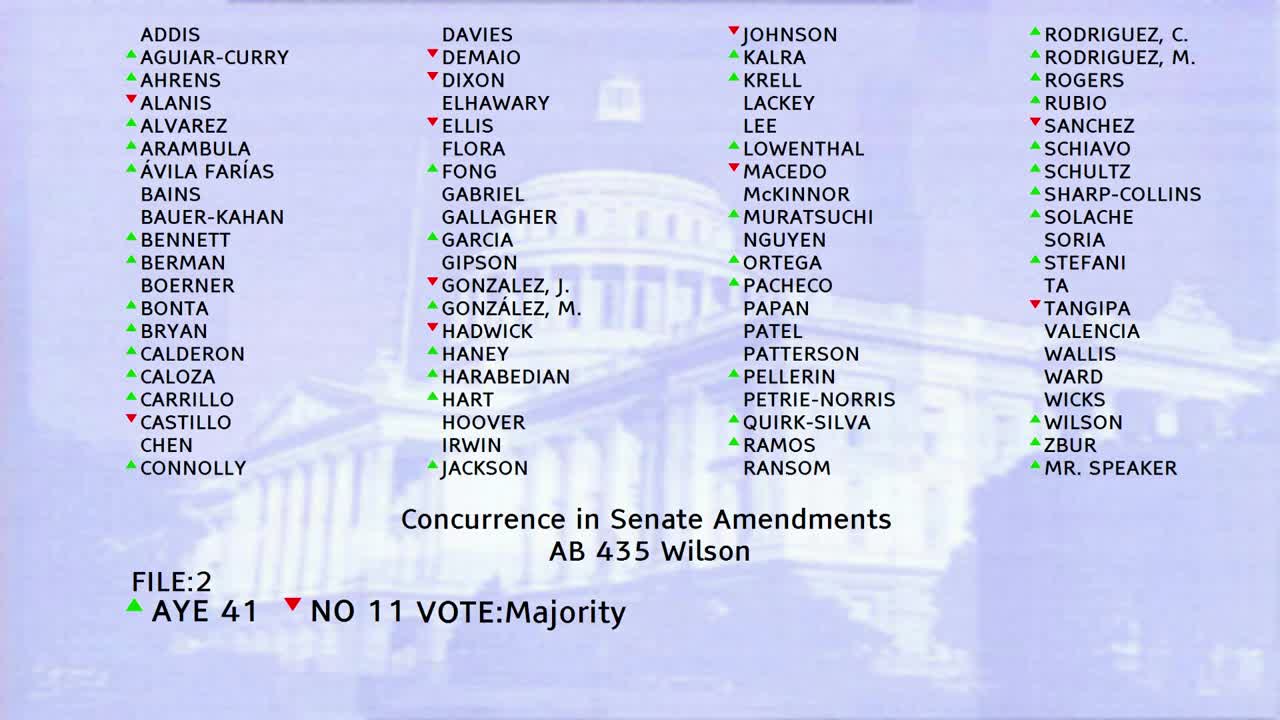 58SEC
Assembly Floor
 2MIN
Senate Floor
 18MIN
Senate Standing Committee on Public Safety
 10MIN
Assembly Floor
Bill Author

Bill Co-Author(s):