AB 338: Workforce development: the Counties of Los Angeles and Ventura: 2025 wildfires.
- Session Year: 2025-2026
- House: Assembly
- Latest Version Date: 2025-10-10
Current Status:
Passed
(2025-10-10: Chaptered by Secretary of State - Chapter 532, Statutes of 2025.)
Introduced
In Committee
Awaiting First Chamber Vote
Passed First Chamber
In Committee
Awaiting Second Chamber Vote
Passed Second Chamber
Enacted
Existing law, the California Workforce Innovation and Opportunity Act, establishes the California Workforce Development Board as the body responsible for assisting the Governor in the development, oversight, and continuous improvement of Californias workforce investment system and the alignment of education and workforce investment systems to the needs of the 21st century economy and workforce. The Budget Act of 2025 appropriated $5,000,000 to the board to support workforce development in areas of the Counties of Los Angeles and Ventura impacted by wildfires.
This bill would require the board to allocate the funds from that appropriation to the Los Angeles County Department of Economic Opportunity for, among other things, workforce development strategies, such as education or supportive services, including stipends for underemployed and unemployed low- to moderate-income individuals to ensure a skilled and sufficient workforce for the scale of rebuilding and recovery of areas in the Counties of Los Angeles and Ventura impacted by the 2025 wildfires and to support underemployed and unemployed low- to moderate-income workers affected by the fires. The bill would require the Los Angeles County Department of Economic Opportunity to reallocate $600,000 to the Economic Development Collaborative for those purposes. The bill would require the board to allow the Los Angeles County Department of Economic Opportunity to subcontract with other entities to fulfill the provisions and intent of the bill and would require the board to require quality standards and practices, as specified. The bill would require the Los Angeles County Department of Economic Opportunity to focus on employment in jobs in certain professions and industries, including construction, firefighting, and health care, or other areas essential to emergency response, disaster relief, recovery, rebuilding, and regional economic development and resilience. The bill would require individuals participating in programs funded by the bill to have access to expedited licensing and certification, if feasible.
This bill would declare that it is to take effect immediately as an urgency statute.
This bill would make legislative findings and declarations as to the necessity of a special statute for the Counties of Los Angeles and Ventura.
Existing law, the California Workforce Innovation and Opportunity Act, establishes the California Workforce Development Board as the body responsible for assisting the Governor in the development, oversight, and continuous improvement of Californias workforce investment system and the alignment of education and workforce investment systems to the needs of the 21st century economy and workforce. The Budget Act of 2025 appropriated $5,000,000 to the board to support workforce development in areas of the Counties of Los Angeles and Ventura impacted by wildfires.
This bill would require the board to allocate the funds from that appropriation to the Los Angeles County Department of Economic Opportunity for, among other things, workforce development strategies, such as education or supportive services, including stipends for underemployed and unemployed low- to moderate-income individuals to ensure a skilled and sufficient workforce for the scale of rebuilding and recovery of areas in the Counties of Los Angeles and Ventura impacted by the 2025 wildfires and to support underemployed and unemployed low- to moderate-income workers affected by the fires. The bill would require the Los Angeles County Department of Economic Opportunity to reallocate $600,000 to the Economic Development Collaborative for those purposes. The bill would require the board, among other things, to determine the most expeditious allocation, deployment, and redeployment of the funds based on the greatest need and would require the board to allow the Los Angeles County Department of Economic Opportunity to subcontract with other entities to fulfill the provisions and intent of the bill and would require the board to require quality standards and practices, as specified. The bill would require the Los Angeles County Department of Economic Opportunity to focus on employment in jobs in certain professions and industries, including construction, firefighting, and health care, or other areas essential to emergency response, disaster relief, recovery, rebuilding, and regional economic development and resilience. The bill would require individuals participating in programs funded by the bill to have access to expedited licensing and certification, if feasible.
This bill would declare that it is to take effect immediately as an urgency statute.
This bill would make legislative findings and declarations as to the necessity of a special statute for the Counties of Los Angeles and Ventura.
Existing law, the California Workforce Innovation and Opportunity Act, establishes the California Workforce Development Board as the body responsible for assisting the Governor in the development, oversight, and continuous improvement of Californias workforce investment system and the alignment of education and workforce investment systems to the needs of the 21st century economy and workforce. The act requires the establishment of a local workforce development board in each local workforce development area of the state to, among other things, plan and oversee the workforce investment system. The Budget Act of 2025 appropriated $5,000,000 to the board to support workforce development in areas of the Counties of Los Angeles and Ventura impacted by wildfires.
This bill would require the California Workforce Development Board, upon appropriation of funds, board to allocate the funds from that appropriation to the Los Angeles County Department of Economic Opportunity and the Economic Development Collaborative for, among other things, workforce development strategies, such as education or supportive services, including stipends for underemployed and unemployed low- to moderate-income individuals to ensure a skilled and sufficient workforce for the scale of rebuilding and recovery of areas in the Counties of Los Angeles and Ventura impacted by the 2025 wildfires and to support underemployed and unemployed low- to moderate-income workers affected by the fires. The bill would require the Los Angeles County Department of Economic Opportunity to reallocate $600,000 to the Economic Development Collaborative for those purposes. The bill would require the board, among other things, to determine the most expeditious allocation, deployment, and redeployment of the funds based on the greatest need and would require the board to require quality standards and practices, as specified. The bill would require the Los Angeles County Department of Economic Opportunity and the Economic Development Collaborative to focus on employment in jobs in certain professions and industries, including construction, firefighting, and health care, or other areas essential to emergency response, disaster relief, recovery, rebuilding, and regional economic development and resilience. The bill would require individuals participating in programs funded by the bill to have access to expedited licensing and certification. certification, if feasible.
This bill would declare that it is to take effect immediately as an urgency statute.
This bill would make legislative findings and declarations as to the necessity of a special statute for the Counties of Los Angeles and Ventura.
Existing law, the California Workforce Innovation and Opportunity Act, establishes the California Workforce Development Board as the body responsible for assisting the Governor in the development, oversight, and continuous improvement of Californias workforce investment system and the alignment of education and workforce investment systems to the needs of the 21st century economy and workforce. The act requires the establishment of a local workforce development board in each local workforce development area of the state to, among other things, plan and oversee the workforce investment system.
This bill would appropriate the sum of $50,000,000 from the General Fund to require the California Workforce Development Board Board, upon appropriation of funds, to allocate funds to the Los Angeles County Department of Economic Opportunity and the Economic Development Collaborative for, among other things, workforce strategies, such as education or supportive services, including stipends for underemployed and unemployed low- to moderate-income individuals to ensure a skilled and sufficient workforce for the scale of rebuilding and recovery of areas in the Counties of Los Angeles and Ventura impacted by the 2025 wildfires and to support underemployed and unemployed low- to moderate-income workers affected by the fires. The bill would require the board, among other things, to determine the most expeditious allocation, deployment, and redeployment of the funds based on the greatest need and would require the board to require quality standards and practices, as specified. The bill would require the Los Angeles County Department of Economic Opportunity and the Economic Development Collaborative to focus on employment in jobs in certain professions and industries, including construction, firefighting, and health care, or other areas essential to emergency response, disaster relief, recovery, rebuilding, and regional economic development and resilience. The bill would require individuals participating in programs funded by the bill to have access to expedited licensing and certification.
This bill would declare that it is to take effect immediately as an urgency statute.
This bill would make legislative findings and declarations as to the necessity of a special statute for the Counties of Los Angeles and Ventura.
Existing law, the California Workforce Innovation and Opportunity Act, establishes the California Workforce Development Board as the body responsible for assisting the Governor in the development, oversight, and continuous improvement of Californias workforce investment system and the alignment of education and workforce investment systems to the needs of the 21st century economy and workforce. The act requires the establishment of a local workforce development board in each local workforce development area of the state to, among other things, plan and oversee the workforce investment system.
This bill would appropriate the sum of $50,000,000 from the General Fund to the California Workforce Development Board to allocate to the South Bay Workforce Investment Board Los Angeles County Department of Economic Opportunity and the Economic Development Collaborative to train, upskill, and retrain for, among other things, workforce strategies, such as education or supportive services, including stipends for underemployed and unemployed low- to moderate-income individuals to support the ensure a skilled and sufficient workforce for the scale of rebuilding and recovery of areas in the Counties of Los Angeles and Ventura impacted by the 2025 wildfires. wildfires and to support underemployed and unemployed low- to moderate-income workers affected by the fires. The bill would require those local workforce development boards to demonstrate the board, among other things, to determine the most expeditious allocation, deployment, and redeployment of the funds based on the greatest need and would require the board to require quality standards and practices, as specified, and specified. The bill would require the Los Angeles County Department of Economic Opportunity and the Economic Development Collaborative to focus on employment in jobs in certain professions and industries, including construction, firefighting, and health care, and or other areas essential to emergency response, disaster relief recovery and mitigation, and rebuilding. relief, recovery, rebuilding, and regional economic development and resilience. The bill would require individuals participating in programs funded by the bill to have access to expedited licensing and certification.
This bill would declare that it is to take effect immediately as an urgency statute.
This bill would make legislative findings and declarations as to the necessity of a special statute for the Counties of Los Angeles and Ventura.
Existing law, the California Workforce Innovation and Opportunity Act, establishes the California Workforce Development Board as the body responsible for assisting the Governor in the development, oversight, and continuous improvement of Californias workforce investment system and the alignment of education and workforce investment systems to the needs of the 21st century economy and workforce. The act requires the establishment of a local workforce development board in each local workforce development area of the state to, among other things, plan and oversee the workforce investment system.
This bill would appropriate the sum of $50,000,000 from the General Fund to the California Workforce Development Board to allocate to the South Bay Workforce Investment Board and the Economic Development Collaborative to train, upskill, and retrain underemployed and unemployed low- to moderate-income individuals to support the rebuilding and recovery of areas in the Counties of Los Angeles and Ventura impacted by the 2025 wildfires. The bill would require those local workforce development boards to demonstrate quality standards and practices, as specified, and to focus on employment in jobs in certain professions and industries, including construction, firefighting, and health care, and other areas essential to emergency response, disaster relief recovery and mitigation, and rebuilding. The bill would require individuals participating in programs funded by the bill to have access to expedited licensing and certification.
This bill would declare that it is to take effect immediately as an urgency statute.
This bill would make legislative findings and declarations as to the necessity of a special statute for the Counties of Los Angeles and Ventura.
(a)The California Workforce Development Board shall allocate the funds appropriated to the board pursuant to paragraph (4) of subdivision (b) of Section 19.56 of the Budget Act of 2025, as amended by Assembly Bill 102 of the 202526 Regular Session, to the Los Angeles County Department of Economic Opportunity for workforce development strategies, such as education, high-road training partnerships, and other job training programs, preapprenticeships, transitional jobs, or supportive services, including stipends, for underemployed and unemployed low- to moderate-income individuals to ensure a skilled and sufficient workforce for the scale of rebuilding and recovery of areas in the Counties of Los Angeles and Ventura impacted by the 2025 wildfires and to support underemployed and unemployed low- to moderate-income workers affected by the fires. This also includes rapid response and layoff aversion, recruitment services, financial incentives, and customized training opportunities for businesses impacted by the fires and those hiring impacted workers as part of the rebuild and recovery. The funds are also for new or expanded job and business centers and operations near the fire zones to ensure close proximity of programs and services for dislocated and impacted workers and businesses.
(b)The Los Angeles County Department of Economic Opportunity shall reallocate six hundred thousand dollars ($600,000) to the Economic Development Collaborative to be used for the purposes specified in this section.
(c)Notwithstanding subdivision (a), the California Workforce Development Board may use up to 5 percent of the total allocation for state administration.
(d)The California Workforce Development Board shall allow the Los Angeles County Department of Economic Opportunity to subcontract with other entities to fulfill the provisions and intent of subdivision (a).
(e)The California Workforce Development Board shall require quality standards and practices, as defined in subdivisions (s) and (t) of Section 14005.
(f)In developing and implementing workforce development strategies funded pursuant to this section, the Los Angeles County Department of Economic Opportunity shall focus on employment in public and private sector jobs in construction, utilities, firefighting, health care, social services, education, childcare, housing, and shelter assistance, or other areas essential to emergency response, disaster relief, recovery, rebuilding, and regional economic development and resilience.
(g)To ensure there is a direct pipeline into the workforce, individuals participating in workforce programs funded pursuant to this section shall have access to expedited licensing and certification, if feasible.
SEC. 2.This act is an urgency statute necessary for the immediate preservation of the public peace, health, or safety within the meaning of Article IV of the California Constitution and shall go into immediate effect. The facts constituting the necessity are:
To ensure that the State of California is able to meet the immediate need to coordinate and mobilize workforce to rebuild communities and support workers whose lives and incomes are affected in the Counties of Los Angeles and Ventura impacted by the 2025 wildfires, it is necessary that this act take effect immediately.
SEC. 3.The Legislature finds and declares that a special statute is necessary and that a general statute cannot be made applicable within the meaning of Section 16 of Article IV of the California Constitution because of the unique circumstances facing the Counties of Los Angeles and Ventura due to extreme wildfires beginning in January 2025 that have resulted in the urgent need to support affected workers and for a skilled workforce to support the rebuilding, recovery, and economic development and resilience of areas in those counties impacted by the wildfires.
(a)The California Workforce Development Board shall allocate the funds appropriated to the board pursuant to paragraph (4) of subdivision (b) of Section 19.56 of the Budget Act of 2025, as amended by Assembly Bill 102 of the 202526 Regular Session, to the Los Angeles County Department of Economic Opportunity for workforce development strategies, such as education, high-road training partnerships, and other job training programs, preapprenticeships, transitional jobs, or supportive services, including stipends, for underemployed and unemployed low- to moderate-income individuals to ensure a skilled and sufficient workforce for the scale of rebuilding and recovery of areas in the Counties of Los Angeles and Ventura impacted by the 2025 wildfires and to support underemployed and unemployed low- to moderate-income workers affected by the fires. This also includes rapid response and layoff aversion, recruitment services, financial incentives, and customized training opportunities for businesses impacted by the fires and those hiring impacted workers as part of the rebuild and recovery. The funds are also for new or expanded job and business centers and operations near the fire zones to ensure close proximity of programs and services for dislocated and impacted workers and businesses.
(b)The Los Angeles County Department of Economic Opportunity shall reallocate six hundred thousand dollars ($600,000) to the Economic Development Collaborative to be used for the purposes specified in this section.
(c)Notwithstanding subdivision (a), the California Workforce Development Board may use up to 5 percent of the total allocation for state administration.
(d)The California Workforce Development Board shall determine the most expeditious allocation, deployment, and, if needed, redeployment of the funds based on the greatest need and, for this purpose, shall consider the number of underemployed and unemployed low- to moderate-income individuals impacted by the fires or needed for the rebuild and recovery. The board shall allow the Los Angeles County Department of Economic Opportunity to subcontract with other entities to fulfill the provisions and intent of subdivision (a).
(e)The California Workforce Development Board shall require quality standards and practices, as defined in subdivisions (s) and (t) of Section 14005.
(f)In developing and implementing workforce development strategies funded pursuant to this section, the Los Angeles County Department of Economic Opportunity shall focus on employment in public and private sector jobs in construction, utilities, firefighting, health care, social services, education, childcare, housing, and shelter assistance, or other areas essential to emergency response, disaster relief, recovery, rebuilding, and regional economic development and resilience.
(g)To ensure there is a direct pipeline into the workforce, individuals participating in workforce programs funded pursuant to this section shall have access to expedited licensing and certification, if feasible.
SEC. 2.This act is an urgency statute necessary for the immediate preservation of the public peace, health, or safety within the meaning of Article IV of the California Constitution and shall go into immediate effect. The facts constituting the necessity are:
To ensure that the State of California is able to meet the immediate need to coordinate and mobilize workforce to rebuild communities and support workers whose lives and incomes are affected in the Counties of Los Angeles and Ventura impacted by the 2025 wildfires, it is necessary that this act take effect immediately.
SEC. 3.The Legislature finds and declares that a special statute is necessary and that a general statute cannot be made applicable within the meaning of Section 16 of Article IV of the California Constitution because of the unique circumstances facing the Counties of Los Angeles and Ventura due to extreme wildfires beginning in January 2025 that have resulted in the urgent need to support affected workers and for a skilled workforce to support the rebuilding, recovery, and economic development and resilience of areas in those counties impacted by the wildfires.
(a)Upon appropriation of funds for this purpose, the The California Workforce Development Board shall allocate the funds appropriated to the board pursuant to paragraph (4) of subdivision (b) of Section 19.56 of the Budget Act of 2025, as amended by Assembly Bill 102 of the 202526 Regular Session, to the Los Angeles County Department of Economic Opportunity and the Economic Development Collaborative for workforce development strategies, such as education, high road high-road training partnerships, and other job training programs, preapprenticeships, transitional jobs, or supportive services, including stipends, for underemployed and unemployed low- to moderate-income individuals to ensure a skilled and sufficient workforce for the scale of rebuilding and recovery of areas in the Counties of Los Angeles and Ventura impacted by the 2025 wildfires and to support underemployed and unemployed low- to moderate-income workers affected by the fires. This also includes rapid response and layoff aversion, recruitment services, financial incentives, and customized training opportunities for businesses impacted by the fires and those hiring impacted workers as part of the rebuild and recovery. The funds are also for new or expanded job and business centers and operations near the fire zones to ensure close proximity of programs and services for dislocated and impacted workers and businesses.
(b)The Los Angeles County Department of Economic Opportunity shall reallocate six hundred thousand dollars ($600,000) to the Economic Development Collaborative to be used for the purposes specified in this section.
(b)The(c)Notwithstanding subdivision (a), the California Workforce Development Board may use up to 2 5 percent of the total allocation for state administration.
(c)(d)The California Workforce Development Board shall determine the most expeditious allocation, deployment, and, if needed, redeployment of the funds based on the greatest need and, for this purpose, shall consider the number of underemployed and unemployed low- to moderate-income individuals impacted by the fires or needed for the rebuild and recovery. The board shall allow the Los Angeles County Department of Economic Opportunity to subcontract with other local workforce development boards in the County of Los Angeles, including the City of Los Angeles. entities to fulfill the provisions and intent of subdivision (a).
(d)(e)The California Workforce Development Board shall require quality standards and practices, as defined in subdivisions (s) and (t) of Section 14005.
(e)(f)In developing and implementing workforce development strategies funded pursuant to this section, the Los Angeles County Department of Economic Opportunity and the Economic Development Collaborative shall focus on employment in public and private sector jobs in construction, utilities, firefighting, health care, social services, education, childcare, housing housing, and shelter assistance, or other areas essential to emergency response, disaster relief, recovery, rebuilding, and regional economic development and resilience.
(f)(g)To ensure there is a direct pipeline into the workforce, individuals participating in workforce programs funded pursuant to this section shall have access to expedited licensing and certification. certification, if feasible.
SEC. 2.This act is an urgency statute necessary for the immediate preservation of the public peace, health, or safety within the meaning of Article IV of the California Constitution and shall go into immediate effect. The facts constituting the necessity are:
To ensure that the State of California is able to meet the immediate need to coordinate and mobilize workforce to rebuild communities and support workers whose lives and incomes are affected in the Counties of Los Angeles and Ventura impacted by the 2025 wildfires, it is necessary that this act take effect immediately.
SEC. 3.The Legislature finds and declares that a special statute is necessary and that a general statute cannot be made applicable within the meaning of Section 16 of Article IV of the California Constitution because of the unique circumstances facing the Counties of Los Angeles and Ventura due to extreme wildfires beginning in January 2025 that have resulted in the urgent need to support affected workers and for a skilled workforce to support the rebuilding, recovery, and economic development and resilience of areas in those counties impacted by the wildfires.
(a)The sum of fifty million dollars ($50,000,000) is hereby appropriated from the General Fund to Upon appropriation of funds for this purpose, the California Workforce Development Board to shall allocate funds to the Los Angeles County Department of Economic Opportunity and the Economic Development Collaborative for workforce strategies, such as education, high road training partnerships, and other job training programs, preapprenticeships, transitional jobs, or supportive services, including stipends, for underemployed and unemployed low- to moderate-income individuals to ensure a skilled and sufficient workforce for the scale of rebuilding and recovery of areas in the Counties of Los Angeles and Ventura impacted by the 2025 wildfires and to support underemployed and unemployed low- to moderate-income workers affected by the fires. This also includes rapid response and layoff aversion, recruitment services, financial incentives, and customized training opportunities for businesses impacted by the fires and those hiring impacted workers as part of the rebuild and recovery. This appropriation is The funds are also for new or expanded job and business centers and operations near the fire zones to ensure close proximity of programs and services for dislocated and impacted workers and businesses.
(b)The California Workforce Development Board may use up to 2 percent of the total allocation for state administration.
(c)The California Workforce Development Board shall determine the most expeditious allocation, deployment, and, if needed, redeployment of the funds based on the greatest need and, for this purpose, shall consider the number of underemployed and unemployed low- to moderate-income individuals impacted by the fires or needed for the rebuild and recovery. The board shall allow the Los Angeles County Department of Economic Opportunity to subcontract with other local workforce development boards in the County of Los Angeles, including the City of Los Angeles.
(d)The California Workforce Development Board shall require quality standards and practices, as defined in subdivisions (s) and (t) of Section 14005.
(e)In developing and implementing workforce strategies funded pursuant to this section, the Los Angeles County Department of Economic Opportunity and the Economic Development Collaborative shall focus on employment in public and private sector jobs in construction, utilities, firefighting, health care, social services, education, childcare childcare, housing and shelter assistance, or other areas essential to emergency response, disaster relief, recovery, rebuilding, and regional economic development and resilience.
(f)To ensure there is a direct pipeline into the workforce, individuals participating in workforce programs funded pursuant to this section shall have access to expedited licensing and certification.
SEC. 2.This act is an urgency statute necessary for the immediate preservation of the public peace, health, or safety within the meaning of Article IV of the California Constitution and shall go into immediate effect. The facts constituting the necessity are:
To ensure that the State of California is able to meet the immediate need to coordinate and mobilize workforce to rebuild communities and support workers whose lives and incomes are affected in the Counties of Los Angeles and Ventura impacted by the 2025 wildfires, it is necessary that this act take effect immediately.
SEC. 3.The Legislature finds and declares that a special statute is necessary and that a general statute cannot be made applicable within the meaning of Section 16 of Article IV of the California Constitution because of the unique circumstances facing the Counties of Los Angeles and Ventura due to extreme wildfires beginning in January 2025 that have resulted in the urgent need to support affected workers and for a skilled workforce to support the rebuilding, recovery, and economic development and resilience of areas in those counties impacted by the wildfires.
(a)The sum of fifty million dollars ($50,000,000) is hereby appropriated from the General Fund to the California Workforce Development Board to allocate to the South Bay Workforce Investment Board Los Angeles County Department of Economic Opportunity and the Economic Development Collaborative to train, upskill, and retrain for workforce strategies, such as education, high road training partnerships, and other job training programs, preapprenticeships, transitional jobs, or supportive services, including stipends, for underemployed and unemployed low- to moderate-income individuals to support the ensure a skilled and sufficient workforce for the scale of rebuilding and recovery of areas in the Counties of Los Angeles and Ventura impacted by the 2025 wildfires. wildfires and to support underemployed and unemployed low- to moderate-income workers affected by the fires. This also includes rapid response and layoff aversion, recruitment services, financial incentives, and customized training opportunities for businesses impacted by the fires and those hiring impacted workers as part of the rebuild and recovery. This appropriation is also for new or expanded job and business centers and operations near the fire zones to ensure close proximity of programs and services for dislocated and impacted workers and businesses.
(b)The California Workforce Development Board may use up to 2 percent of the total allocation for state administration.
(c)The California Workforce Development Board shall determine the most expeditious allocation, deployment, and, if needed, redeployment of the funds based on the greatest need and, for this purpose, shall consider the number of underemployed and unemployed low- to moderate-income individuals impacted by the fires or needed for the rebuild and recovery. The board shall allow the Los Angeles County Department of Economic Opportunity to subcontract with other local workforce development boards in the County of Los Angeles, including the City of Los Angeles.
(b)The South Bay Workforce Investment Board and the Economic Development Collaborative shall demonstrate(d)The California Workforce Development Board shall require quality standards and practices, as defined in subdivisions (s) and (t) of Section 14005.
(c)(e)In developing and implementing workforce strategies funded pursuant to this section, the South Bay Workforce Investment Board Los Angeles County Department of Economic Opportunity and the Economic Development Collaborative shall focus on employment in public and private sector jobs in construction, utilities, firefighting, health care, social services, education, childcare housing and shelter assistance, and or other areas essential to emergency response, disaster relief recovery and mitigation, and rebuilding. relief, recovery, rebuilding, and regional economic development and resilience.
(d)(f)To ensure there is a direct pipeline into the workforce, individuals participating in workforce programs funded pursuant to this section shall have access to expedited licensing and certification.
SEC. 2.This act is an urgency statute necessary for the immediate preservation of the public peace, health, or safety within the meaning of Article IV of the California Constitution and shall go into immediate effect. The facts constituting the necessity are:
To ensure that the State of California is able to meet the immediate need to coordinate and mobilize workforce to rebuild communities and support workers whose lives and incomes are affected in the Counties of Los Angeles and Ventura impacted by the 2025 wildfires, it is necessary that this act take effect immediately.
SEC. 3.The Legislature finds and declares that a special statute is necessary and that a general statute cannot be made applicable within the meaning of Section 16 of Article IV of the California Constitution because of the unique circumstances facing the Counties of Los Angeles and Ventura due to extreme wildfires beginning in January 2025 that have resulted in the urgent need to support affected workers and for a skilled workforce to support the rebuilding and recovery rebuilding, recovery, and economic development and resilience of areas in those counties impacted by the wildfires.
(a)The sum of fifty million dollars ($50,000,000) is hereby appropriated from the General Fund to the California Workforce Development Board to allocate to the South Bay Workforce Investment Board and the Economic Development Collaborative to train, upskill, and retrain underemployed and unemployed low- to moderate-income individuals to support the rebuilding and recovery of areas in the Counties of Los Angeles and Ventura impacted by the 2025 wildfires.
(b)The South Bay Workforce Investment Board and the Economic Development Collaborative shall demonstrate quality standards and practices, as defined in subdivisions (s) and (t) of Section 14005.
(c)In developing and implementing workforce strategies funded pursuant to this section, the South Bay Workforce Investment Board and the Economic Development Collaborative shall focus on employment in public and private sector jobs in construction, utilities, firefighting, health care, social services, education, housing and shelter assistance, and other areas essential to emergency response, disaster relief recovery and mitigation, and rebuilding.
(d)To ensure there is a direct pipeline into the workforce, individuals participating in workforce programs funded pursuant to this section shall have access to expedited licensing and certification.
SEC. 2.This act is an urgency statute necessary for the immediate preservation of the public peace, health, or safety within the meaning of Article IV of the California Constitution and shall go into immediate effect. The facts constituting the necessity are:
To ensure that the State of California is able to meet the immediate need to coordinate and mobilize workforce to rebuild communities in the Counties of Los Angeles and Ventura impacted by the 2025 wildfires, it is necessary that this act take effect immediately.
SEC. 3.The Legislature finds and declares that a special statute is necessary and that a general statute cannot be made applicable within the meaning of Section 16 of Article IV of the California Constitution because of the unique circumstances facing the Counties of Los Angeles and Ventura due to extreme wildfires beginning in January 2025 that have resulted in the urgent need for a skilled workforce to support the rebuilding and recovery of areas in those counties impacted by the wildfires.
|
Date
|
Status
|
|---|---|
| Oct 10, 2025 | Chaptered by Secretary of State - Chapter 532, Statutes of 2025. |
| Oct 10, 2025 | Approved by the Governor. |
| Sep 23, 2025 | Enrolled and presented to the Governor at 4 p.m. |
| Sep 11, 2025 | Senate amendments concurred in. To Engrossing and Enrolling. (Ayes 78. Noes 1. Page 3291.). |
| Sep 10, 2025 | In Assembly. Concurrence in Senate amendments pending. |
| Sep 10, 2025 | Read third time. Urgency clause adopted. Passed. Ordered to the Assembly. (Ayes 38. Noes 1. Page 2810.). |
| Sep 8, 2025 | Read second time. Ordered to third reading. |
| Sep 5, 2025 | Read third time and amended. Ordered to second reading. |
| Sep 2, 2025 | Read second time. Ordered to third reading. |
| Aug 29, 2025 | Read second time and amended. Ordered returned to second reading. |
| Aug 29, 2025 | From committee: Amend, and do pass as amended. (Ayes 7. Noes 0.) (August 29). |
| Jul 7, 2025 | In committee: Referred to APPR. suspense file. |
| Jun 25, 2025 | From committee: Do pass and re-refer to Com. on APPR. (Ayes 5. Noes 0.) (June 25). Re-referred to Com. on APPR. |
| Jun 18, 2025 | Referred to Com. on L., P.E. & R. |
| Jun 4, 2025 | In Senate. Read first time. To Com. on RLS. for assignment. |
| Jun 3, 2025 | Read third time. Urgency clause adopted. Passed. Ordered to the Senate. (Ayes 76. Noes 0. Page 2002.). |
| May 27, 2025 | Read second time. Ordered to third reading. |
| May 23, 2025 | Read second time and amended. Ordered returned to second reading. |
| May 23, 2025 | From committee: Amend, and do pass as amended. (Ayes 11. Noes 0.) (May 23). |
| May 23, 2025 | Assembly Rule 63 suspended. (Ayes 51. Noes 16. Page 1644.) |
| May 7, 2025 | In committee: Set, first hearing. Referred to APPR. suspense file. |
| Apr 24, 2025 | From committee: Do pass and re-refer to Com. on APPR. (Ayes 6. Noes 0.) (April 23). Re-referred to Com. on APPR. |
| Apr 22, 2025 | Re-referred to Com. on L. & E. |
| Apr 21, 2025 | From committee chair, with author's amendments: Amend, and re-refer to Com. on L. & E. Read second time and amended. |
| Mar 10, 2025 | In committee: Hearing postponed by committee. |
| Feb 18, 2025 | Referred to Com. on L. & E. |
| Jan 29, 2025 | From printer. May be heard in committee February 28. |
| Jan 28, 2025 | Read first time. To print. |
|
Date
|
Description
|
Location
|
Votes
|
|
|---|---|---|---|---|
| Sep 11, 2025 | AB 338 Solache Concurrence in Senate Amendments | Assembly Floor |
Passed |
|
| Sep 10, 2025 | Assembly 3rd Reading AB338 Solache By Pérez Urgency Clause | Senate Floor |
Passed |
|
| Aug 29, 2025 | Do pass as amended | Senate Standing Committee on Appropriations |
Passed |
|
| Jul 7, 2025 | Placed on suspense file | Senate Standing Committee on Appropriations |
Passed |
|
| Jun 25, 2025 | Do pass, but first be re-referred to the Committee on [Appropriations] | Senate Standing Committee on Labor, Public Employment and Retirement |
Passed |
|
| Jun 3, 2025 | AB 338 Solache Third Reading Urgency | Assembly Floor |
Passed |
|
| May 23, 2025 | Do pass as amended. | Assembly Standing Committee on Appropriations |
Passed |
|
| Apr 23, 2025 | Do pass and be re-referred to the Committee on [Appropriations] | Assembly Standing Committee on Labor and Employment |
Passed |
This list shows positions taken on this bill by organizations on the date displayed, which is linked to the original source.
Positions by individuals are not included.
|
Organization
|
Position
|
Date
|
|---|---|---|
| California Apartment Association | ** Support | |
| California Chamber Of Commerce | ** Support | |
| California Community Colleges Chancellor's Office | ** Support | |
| California Community Foundation | ** Support | |
| California Contract Cities Association | ** Support | |
| City of Camarillo | ** Support | |
| City of Pico Rivera | ** Support | |
| County Of Los Angeles | ** Support | |
| County of Los Angeles Board of Supervisors | ** Support | |
| Early Care And Education Consortium | ** Support | |
| Los Angeles Area Chamber Of Commerce | ** Support | |
| NASW California | ** Support | |
| National Association of Social Workers California Chapter | ** Support | |
| Society of Human Resource Management | ** Support | |
| South Bay Workforce Investment Board | ** Support |
CONCURRENCE IN SENATE AMENDMENTS
CSA1 Bill Id:AB 338
Author:(Solache)
As Amended Ver:September 5, 2025
2/3 vote. Urgency
SUMMARY
Requires the California Workforce Development Board (CWDB) to allocate to the Los Angeles County Department of Economic Opportunity the funding appropriated to the CWDB in the Budget Act of 2025 to support workforce development in areas of the counties of Los Angeles and Ventura impacted by wildfires, as specified.
Senate Amendments
- Reflect the appropriation for this purpose in the Budget Act of 2025.
- Remove the requirement that the CWDB allocate funding to both the Los Angeles County Department of Economic Opportunity and the Economic Development Collaborative, and instead require the CWDB to allocate the funding to the Los Angeles County Department of Economic Opportunity, which in turn shall reallocate $600,000 of the funding to the Economic Development Collaborative.
- Increase the amount that the CWDB may use for state administration from two percent of the total allocation to 5%.
- Remove the requirement that the CWDB determine the most expeditious allocation, deployment, and, if needed, redeployment of the funds based on the greatest need and, the requirement that, for this purpose, the CWDB consider the number of underemployed and unemployed low- to moderate-income individuals impacted by the fires or needed for the rebuild and recovery.
- Specify that the Los Angeles County Department of Economic Opportunity may subcontract with other entities to fulfill the intent of the funding, instead of limiting its ability to subcontract to just local workforce development boards in the County of Los Angeles, including the City of Los Angeles.
- Add a feasibility condition to the requirement that individuals participating in workforce programs funded through the bill have access to expedited licensing and certification.
COMMENTS
A recent study on the economic and community impact of the 2025 Los Angeles wildfires, commissioned by the Southern California Leadership Council and conducted by the Los Angeles County Economic Development Corporation Institute for Applied Economics, states that "Business disruptions within the fire perimeters are projected to cause $4.6 billion to $8.9 billion in lost economic output in Los Angeles County over a five-year period (2025-2029), representing approximately 0.3% to 0.6% of the county's total economic output. The fires could lead to employment losses totaling between 24,990 and 49,110 job-years and labor income reductions ranging from $1.9 billion to $3.7 billion. Additionally, federal, state, and local governments could see tax revenue losses between $0.73 billion and $1.4 billion due to reduced business activity and employment."[1]
To mitigate these impacts and support workers in the Los Angeles region, funding to date includes:
- Up to $20 million from the federal government to support the immediate needs of workers suffering job losses:
- Up to $10 million to be coordinated by Los Angeles County and the City of Los Angeles to support humanitarian aid and cleanup efforts by creating temporary jobs in impacted areas
- Up to $10 million to the Los Angeles County Department of Economic Opportunity for workforce services that support long-term recovery and meaningful careers in the Los Angeles region
- $3 million state funding to support the Los Angeles Jobs First Collaborative's regional plan in their recovery efforts for the region
- $5 million state funding appropriated to the CWDB through the Budget Act of 2025 for the purposes outlined in this bill
According to the Author
"The Los Angeles and Ventura wildfires have devastated the region's economy including workforce disruptions and employment insecurity. Economic impacts to the Los Angeles and Ventura County areas of Southern California have a ripple effect across our state. Strategic economic recovery investments are called for to mitigate economic hardships, protect employment opportunities, and ensure the workforce necessary for rebuilding."
Arguments in Support
The County of Los Angeles is in support and states that "AB 338 represents a critical opportunity to accelerate disaster recovery and foster long-term resilience in affected communities. The bill would enable investments in high-impact programs such as customized workforce training, wage subsidies, job and business recovery centers, high road training partnerships, and expedited licensing and certification pathways—all of which are essential to ensuring an inclusive, equitable recovery."
Arguments in Opposition
None on file.
FISCAL COMMENTS
According to the Senate Appropriations Committee:
- The enacted 2025-26 state budget (AB 102, Control Section 19.56) allocates $5 million to CWDB to support workforce development in areas of Los Angeles County and Ventura County impacted by wildfires (General Fund).
- CWDB indicates that it would incur annual costs in the low hundreds of thousands of dollars annually each of the next three years to administer the allocation. The bill now specifies that CWDB's maximum allowable administrative rate would be 5% of the allocated funds, or $250,000 total. Thus, the bill would result in a cost pressure for the remainder of CWDB's administrative costs.
- The bill could result in costs to the Department of Consumer Affairs and other applicable state licensing and certification entities to provide individuals with expedited licensing and certification. The magnitude is unknown, but probably minor.
VOTES:
ASM LABOR AND EMPLOYMENT: 6-0-1
YES: Ortega, Flora, Chen, Elhawary, Kalra, Lee
ABS, ABST OR NV: Ward
ASM APPROPRIATIONS: 11-0-4
YES: Wicks, Arambula, Calderon, Caloza, Elhawary, Fong, Mark González, Hart, Pacheco, Pellerin, Solache
ABS, ABST OR NV: Sanchez, Dixon, Ta, Tangipa
ASSEMBLY FLOOR: 76-0-3
YES: Addis, Aguiar-Curry, Ahrens, Alanis, Alvarez, Arambula, Ávila Farías, Bains, Bauer-Kahan, Bennett, Berman, Boerner, Bonta, Bryan, Calderon, Caloza, Carrillo, Castillo, Chen, Connolly, Davies, DeMaio, Dixon, Elhawary, Ellis, Fong, Gabriel, Garcia, Gipson, Jeff Gonzalez, Mark González, Hadwick, Haney, Harabedian, Hart, Hoover, Irwin, Jackson, Kalra, Krell, Lackey, Lee, Lowenthal, Macedo, Muratsuchi, Nguyen, Ortega, Pacheco, Papan, Patel, Patterson, Pellerin, Petrie-Norris, Quirk-Silva, Ramos, Ransom, Celeste Rodriguez, Michelle Rodriguez, Rogers, Blanca Rubio, Sanchez, Schiavo, Schultz, Sharp-Collins, Solache, Soria, Stefani, Ta, Tangipa, Valencia, Wallis, Ward, Wicks, Wilson, Zbur, Rivas
ABS, ABST OR NV: Flora, Gallagher, McKinnor
UPDATED
VERSION: September 5, 2025
CONSULTANT: Erin Hickey / L. & E. / (916) 319-3091 FN: 0001946
https://laedc.org/wildfirereport/ ↑
SENATE RULES COMMITTEE Office of Senate Floor Analyses (916) 651-1520 Fax: (916) 327-4478 | AB 338 |
THIRD READING
Bill No: AB 338
Author: Solache (D)
Amended: 9/5/25 in Senate
Vote: 27 - Urgency
SENATE LABOR, PUB. EMP. & RET. COMMITTEE: 5-0, 6/25/25
AYES: Smallwood-Cuevas, Strickland, Cortese, Durazo, Laird
SENATE APPROPRIATIONS COMMITTEE: 7-0, 8/29/25
AYES: Caballero, Seyarto, Cabaldon, Dahle, Grayson, Richardson, Wahab
ASSEMBLY FLOOR: 76-0, 6/3/25 - See last page for vote
SUBJECT: Workforce development: the Counties of Los Angeles and Ventura: 2025 wildfires
SOURCE: Author
DIGEST:
This bill requires the California Workforce Development Board (CWDB) to allocate appropriated funds to the Los Angeles County Department of Economic Opportunity for workforce strategies to ensure a skilled and sufficient workforce for the scale of rebuilding and recovery of areas in the counties of Los Angeles and Ventura impacted by the 2025 wildfires, as specified.
Senate Floor Amendments of 9/5/25 remove the requirement that CWDB must determine the most expeditious allocation or deployment of funds, as specified.
ANALYSIS:
Existing federal law:
- Establishes the Workforce Innovation and Opportunity Act (WIOA) to help job seekers access employment, education, training, and support services to succeed in the labor market and to match employers with the skilled workers they need to compete in the global economy. (29 United States Code (USC) §3101-3361)
Existing state law:
- Creates the California Workforce Innovation and Opportunity Act to make programs and services available to individuals with employment barriers. (Unemployment Insurance Code §14000 et seq.)
- Establishes the CWDB, under the purview of the Labor and Workforce Development Agency, as the body responsible for assisting the Governor in the development, oversight, and continuous improvement of California’s workforce system, including its alignment to the needs of the economy and the workforce. (Unemployment Insurance Code §14010 et seq.)
- Requires the establishment of a local workforce development board in each local workforce development area of the state to, among other things, plan and oversee the workforce investment system. (Unemployment Insurance Code §14201)
- Defines “high road training partnership” as an initiative or project that models strategies for developing industry-based, worker-focused training partnerships, including labor-management partnerships. High road training partnerships operate via regional, industry- or sector-based training partnerships comprised of employers, workers, and their representatives including organized labor, community-based organizations, education, training, and social services providers, and labor market intermediaries. High road training partnerships demonstrate job quality standards and employment practices that include, but are not limited to, the following:
- Provision of comparatively good wages and benefits, relative to the industry, occupation, and labor market in which participating workers are employed.
- Payment of workers at or above local or regional living wage standards as well as payment at or above regional prevailing wage standards where such standards exist for the occupations in question.
- A history of investment in employee training, growth, and development.
- Provision of opportunities for career advancement and wage growth.
- Safe and healthy working conditions.
- Consistent compliance with workplace laws and regulations, including proactive efforts to remedy past problems.
- Adoption of mechanisms to include worker voice and agency in the workplace. (Unemployment Insurance Code §14005(s))
- Defines “high road construction careers” as high road training partnerships that invest in regional training partnerships comprised of local building trades councils, workforce, community, and education interests that connect to state-approved apprenticeship programs, that utilize the standard Multi-Craft Core preapprenticeship training curriculum and provide a range of supportive services and career placement assistance to women and people from underserved and underrepresented populations. (Unemployment Insurance Code §14005(t))
This bill:
- Requires CWDB to allocate appropriated funds to the Los Angeles County Department of Economic Opportunity for workforce development strategies, such as education, high road training partnerships, and other job training programs, preapprenticeships, transitional jobs, or supportive services, including stipends, for underemployed and unemployed low- to moderate-income individuals to ensure a skilled and sufficient workforce for the scale of rebuilding and recovery of areas in the Counties of Los Angeles and Ventura impacted by the 2025 wildfires and to support underemployed and unemployed low- to moderate-income workers affected by the fires.
- Specifies that this also includes rapid response and layoff aversion, recruitment services, financial incentives, and customized training opportunities for businesses impacted by the fires and those hiring impacted workers as part of the rebuild and recovery.
- Specifies the funds are also for new or expanded job and business centers and operations near the fire zones to ensure close proximity of programs and services for dislocated and impacted workers and businesses.
- Requires the CWDB to reallocate $600,000 to the Economic Development Collaborative, as specified.
- Authorizes the CWDB to use up to five percent of the total allocation for state administration.
- Requires CWDB to allow the Los Angeles County Department of Economic Opportunity to subcontract with other entities to fulfill the provisions and intent.
- Requires the CWDB to require quality standards and practices, as specified.
- Requires the Los Angeles County Department of Economic Opportunity, in developing and implementing workforce development strategies funded through this bill, to focus on employment in public and private sector jobs in construction, utilities, firefighting, health care, social services, education, childcare, housing, and shelter assistance, or other areas essential to emergency response, disaster relief, recovery, rebuilding, and regional economic development and resilience.
- Requires individuals participating in the workforce programs funded pursuant to this appropriation to have access to expedited licensing and certification, if feasible, to ensure there is a direct pipeline into the workforce.
- Adds an urgency clause.
- Finds and declares that a special statute is necessary and that a general statute cannot be made applicable because of the unique circumstances facing the Counties of Los Angeles and Ventura due to extreme wildfires beginning in January 2025 that have resulted in the urgent need to support affected workers and for a skilled workforce to support the rebuilding, recovery, and economic development and resilience of areas in those counties impacted by the wildfires.
Background
2025 Los Angeles Wildfires. On January 7, 2025, a series of wildfires ignited in the Los Angeles metropolitan area. Within days, fires swept through the Pacific Palisades and Altadena, displacing thousands of people, burning 40,000 acres, and destroying and damaging thousands of structures. By the time the fires were contained, 29 people lost their lives and countless more lost their homes, their jobs, and their neighborhoods. In March, 2025, the Senate Labor, Employment and Retirement Committee and the Assembly Labor and Employment Committee held a joint informational hearing titled “L.A. Wildfires: Ensuring an Equitable Recovery for Workers.” The committees heard from various worker, business, and regional stakeholders on the impacts of workers and businesses in the aftermath of the devastating Los Angeles-area wildfires.
A study on the economic and community impact of the 2025 Los Angeles wildfires, commissioned by the Southern California Leadership Council and conducted by the Los Angeles County Economic Development Corporation Institute for Applied Economics, found that the fires “resulted in significant economic, property, and employment losses, with total property damages estimated between $28.0 billion and $53.8 billion.” They also found that “[b]usiness disruptions within the fire perimeters are projected to cause $4.6 billion to $8.9 billion in lost economic output in Los Angeles County over a five-year period (2025-2029), representing approximately 0.3 to 0.6 percent of the county’s total economic output. The fires could lead to employment losses totaling between 24,990 and 49,110 job-years and labor income reductions ranging from $1.9 billion to $3.7 billion. Additionally, federal, state, and local governments could see tax revenue losses between $0.73 billion and $1.4 billion due to reduced business activity and employment.”[1]
As the joint informational hearing backgrounder describes, “[t]o mitigate these impacts and support workers in the LA region, the Employment Development Department awarded up to $20 million to Los Angeles County to support the immediate needs of workers suffering job losses or reduced hours in the aftermath of devastating firestorms with temporary employment. The funding also provides the kind of support needed for long-term recovery and more permanent reemployment.[2] The $20 million is 100% federally funded by two separate $10 million grants, as described below, from the U.S. Department of Labor: the Disaster Recovery National Dislocated Worker Grant and the Workforce Innovation and Opportunity Act Additional Assistance Grant.[3] [4]
The Los Angeles region received up to $10 million that will be coordinated by Los Angeles County and the City of Los Angeles to support humanitarian aid and cleanup efforts by creating temporary jobs in impacted areas. These jobs will address urgent needs such as debris removal, shelter operations, and community health support – providing critical opportunities for impacted communities to recover and rebuild.
In addition, another $10 million was awarded to the Los Angeles County Department of Economic Opportunity to address the specific needs of workers in collaboration with several of the region’s local workforce development boards. These funds will enable displaced workers to access transitional jobs, on-the-job training, and other workforce services that support long-term recovery and meaningful careers in the Los Angeles region. Program participants may also receive additional help with other needs as the recovery continues, including housing, childcare, transportation, computer training, skill upgrades, and other supportive services, depending on the specific offerings in each local area. The combined funding reflects a robust partnership between local, state, and federal agencies to quickly address the urgent impacts of the disaster, which have affected thousands of residents and businesses.”
California Workforce Development Board. The California Workforce Development Board (CWDB) was established in 1998, as outlined in the federal Workforce Investment Act. In 2014, the Workforce Investment Act was replaced by the WIOA, which outlined the vision and structure through which state workforce training and education programs are funded and administered regionally and locally. WIOA mandates the creation of a statewide strategic workforce plan. Every few years, the CWDB, in conjunction with its statewide partners, releases the Unified Strategic State Plan (State Plan).
In order to support the State Plan, CWDB was required to establish initial eligibility criteria for the federal WIOA eligible training provider list that directs training resources into training programs leading to high-demand, high-priority employment, and occupations that provide economic security, particularly those facing a shortage of skilled workers. CWDB also established eligibility criteria, to the extent feasible, which used performance and outcome measures to determine whether a provider is qualified to remain on the eligibility list.
This bill would require the CWDB to, upon appropriation of the Legislature, allocate funds to the Los Angeles County Department of Economic Opportunity and the Economic Development Collaborative to support workforce strategies for underemployed and unemployed low-to-moderate income individuals to ensure a skilled and sufficient workforce for the scale of rebuilding and recovery of areas in the counties of Los Angeles and Ventura impacted by the 2025 wildfires.
Related/Prior Legislation
AB 102 (Committee on Budget, Chapter 5, Statutes of 2025) appropriates $5 million from the General Fund to CWDB to support workforce development in areas of Los Angeles County and Ventura County impacted by wildfires.
ABx1-4 (Gabriel, Chapter 1, Statutes of 2025) amended the 2024 Budget Act to authorize emergency expenditure authority related to the 2025 Los Angeles wildfires.
SBx1-3 (Wiener, Chapter 2, Statutes of 2025) amended the 2024 Budget Act to authorize emergency expenditure authority related to the 2025 Los Angeles wildfires.
FISCAL EFFECT: Appropriation: No Fiscal Com.: Yes Local: No
According to the Senate Appropriations Committee:
- The enacted 2025-26 state budget (AB 102, Control Section 19.56) allocates $5 million to CWDB to support workforce development in areas of Los Angeles County and Ventura County impacted by wildfires (General Fund).
- CWDB indicates that it would incur annual costs in the low hundreds of thousands of dollars annually each of the next three years to administer the allocation. The bill now specifies that CWDB’s maximum allowable administrative rate would be 5 percent of the allocated funds, or $250,000 total. Thus, the bill would result in a cost pressure for the remainder of CWDB’s administrative costs.
- The bill could result in costs to the Department of Consumer Affairs and other applicable state licensing and certification entities to provide individuals with expedited licensing and certification. The magnitude is unknown, but probably minor.
SUPPORT: (Verified 9/4/25)
California Apartment Association
California Chamber of Commerce
California Community Colleges Chancellor's Office
California Community Foundation
California Contract Cities Association
City of Camarillo
City of Pico Rivera
County of Los Angeles Board of Supervisors
Early Care and Education Consortium
Los Angeles Area Chamber of Commerce
National Association of Social Workers – California Chapter
Society of Human Resources Management
South Bay Workforce Investment Board
OPPOSITION: (Verified 9/4/25)
None received
ARGUMENTS IN SUPPORT:
According to the California Chamber of Commerce,
“[AB 338], will provide funding to support workforce training and development in the aftermath of the devastating 2025 wildfires in Southern California. AB 338 directly addresses the urgent need for a skilled workforce to help rebuild and recover communities affected by these wildfires while also providing important employment opportunities. The establishment of funding for the Los Angeles County Department of Economy Opportunity and the Economic Development Collaborative to provide support services for low- to moderate-income individuals is a crucial step in ensuring that the communities impacted by the fires are able to recover in a sustainable and equitable manner. By prioritizing essential sectors such as construction, utilities, firefighting, healthcare, education, and social services, AB 338 is directly addressing the long-term needs of the region while providing meaningful employment opportunities for those most in need.”
ASSEMBLY FLOOR: 76-0, 6/3/25
AYES: Addis, Aguiar-Curry, Ahrens, Alanis, Alvarez, Arambula, Ávila Farías, Bains, Bauer-Kahan, Bennett, Berman, Boerner, Bonta, Bryan, Calderon, Caloza, Carrillo, Castillo, Chen, Connolly, Davies, DeMaio, Dixon, Elhawary, Ellis, Fong, Gabriel, Garcia, Gipson, Jeff Gonzalez, Mark González, Hadwick, Haney, Harabedian, Hart, Hoover, Irwin, Jackson, Kalra, Krell, Lackey, Lee, Lowenthal, Macedo, Muratsuchi, Nguyen, Ortega, Pacheco, Papan, Patel, Patterson, Pellerin, Petrie-Norris, Quirk-Silva, Ramos, Ransom, Celeste Rodriguez, Michelle Rodriguez, Rogers, Blanca Rubio, Sanchez, Schiavo, Schultz, Sharp-Collins, Solache, Soria, Stefani, Ta, Tangipa, Valencia, Wallis, Ward, Wicks, Wilson, Zbur, Rivas
NO VOTE RECORDED: Flora, Gallagher, McKinnor
Prepared by: Jazmin Marroquin / L., P.E. & R. / (916) 651-1556
9/8/25 21:08:15
“Impact of 2025 Los Angeles Wildfires and Comparative Study.” Los Angeles County Economic Development Corporation and Southern California Leadership Council, https://laedc.org/wildfirereport/ ↑
https://edd.ca.gov/en/about_edd/news_releases_and_announcements/$20-million-in-aid-to-support-immediate-recovery-efforts-and-workers-impacted-by-firestorms/ ↑
https://www.dol.gov/agencies/eta/grants/apply/national-dislocated-worker-grant-opportunities ↑
SENATE RULES COMMITTEE Office of Senate Floor Analyses (916) 651-1520 Fax: (916) 327-4478 | AB 338 |
THIRD READING
Bill No: AB 338
Author: Solache (D)
Amended: 8/29/25 in Senate
Vote: 27 - Urgency
SENATE LABOR, PUB. EMP. & RET. COMMITTEE: 5-0, 6/25/25
AYES: Smallwood-Cuevas, Strickland, Cortese, Durazo, Laird
SENATE APPROPRIATIONS COMMITTEE: 7-0, 8/29/25
AYES: Caballero, Seyarto, Cabaldon, Dahle, Grayson, Richardson, Wahab
ASSEMBLY FLOOR: 76-0, 6/3/25 - See last page for vote
SUBJECT: Workforce development: the Counties of Los Angeles and Ventura: 2025 wildfires
SOURCE: Author
DIGEST:
This bill requires the California Workforce Development Board (CWDB) to allocate appropriated funds to the Los Angeles County Department of Economic Opportunity for workforce strategies to ensure a skilled and sufficient workforce for the scale of rebuilding and recovery of areas in the counties of Los Angeles and Ventura impacted by the 2025 wildfires, as specified.
ANALYSIS:
Existing federal law:
- Establishes the Workforce Innovation and Opportunity Act (WIOA) to help job seekers access employment, education, training, and support services to succeed in the labor market and to match employers with the skilled workers they need to compete in the global economy. (29 United States Code (USC) §3101-3361)
Existing state law:
- Creates the California Workforce Innovation and Opportunity Act to make programs and services available to individuals with employment barriers. (Unemployment Insurance Code §14000 et seq.)
- Establishes the CWDB, under the purview of the Labor and Workforce Development Agency, as the body responsible for assisting the Governor in the development, oversight, and continuous improvement of California’s workforce system, including its alignment to the needs of the economy and the workforce. (Unemployment Insurance Code §14010 et seq.)
- Requires the establishment of a local workforce development board in each local workforce development area of the state to, among other things, plan and oversee the workforce investment system. (Unemployment Insurance Code §14201)
- Defines “high road training partnership” as an initiative or project that models strategies for developing industry-based, worker-focused training partnerships, including labor-management partnerships. High road training partnerships operate via regional, industry- or sector-based training partnerships comprised of employers, workers, and their representatives including organized labor, community-based organizations, education, training, and social services providers, and labor market intermediaries. High road training partnerships demonstrate job quality standards and employment practices that include, but are not limited to, the following:
- Provision of comparatively good wages and benefits, relative to the industry, occupation, and labor market in which participating workers are employed.
- Payment of workers at or above local or regional living wage standards as well as payment at or above regional prevailing wage standards where such standards exist for the occupations in question.
- A history of investment in employee training, growth, and development.
- Provision of opportunities for career advancement and wage growth.
- Safe and healthy working conditions.
- Consistent compliance with workplace laws and regulations, including proactive efforts to remedy past problems.
- Adoption of mechanisms to include worker voice and agency in the workplace. (Unemployment Insurance Code §14005(s))
- Defines “high road construction careers” as high road training partnerships that invest in regional training partnerships comprised of local building trades councils, workforce, community, and education interests that connect to state-approved apprenticeship programs, that utilize the standard Multi-Craft Core preapprenticeship training curriculum and provide a range of supportive services and career placement assistance to women and people from underserved and underrepresented populations. (Unemployment Insurance Code §14005(t))
This bill:
- Requires CWDB to allocate appropriated funds to the Los Angeles County Department of Economic Opportunity for workforce development strategies, such as education, high road training partnerships, and other job training programs, preapprenticeships, transitional jobs, or supportive services, including stipends, for underemployed and unemployed low- to moderate-income individuals to ensure a skilled and sufficient workforce for the scale of rebuilding and recovery of areas in the Counties of Los Angeles and Ventura impacted by the 2025 wildfires and to support underemployed and unemployed low- to moderate-income workers affected by the fires.
- Specifies that this also includes rapid response and layoff aversion, recruitment services, financial incentives, and customized training opportunities for businesses impacted by the fires and those hiring impacted workers as part of the rebuild and recovery.
- Specifies the funds are also for new or expanded job and business centers and operations near the fire zones to ensure close proximity of programs and services for dislocated and impacted workers and businesses.
- Requires the CWDB to reallocate $600,000 to the Economic Development Collaborative, as specified.
- Authorizes the CWDB to use up to five percent of the total allocation for state administration.
- Requires the CDWB to determine the most expeditious allocation, deployment, and, if needed, redeployment of the funds based on the greatest need and, for this purpose, requires CDWB to consider the number of underemployed and unemployed low- to moderate-income individuals impacted by the fires or needed for the rebuild and recovery.
- Requires CDWB to allow the Los Angeles County Department of Economic Opportunity to subcontract with other entities to fulfill the provisions and intent.
- Requires the CWDB to require quality standards and practices, as specified.
- Requires the Los Angeles County Department of Economic Opportunity, in developing and implementing workforce development strategies funded through this bill, to focus on employment in public and private sector jobs in construction, utilities, firefighting, health care, social services, education, childcare, housing, and shelter assistance, or other areas essential to emergency response, disaster relief, recovery, rebuilding, and regional economic development and resilience.
- Requires individuals participating in the workforce programs funded pursuant to this appropriation to have access to expedited licensing and certification, if feasible, to ensure there is a direct pipeline into the workforce.
- Adds an urgency clause.
- Finds and declares that a special statute is necessary and that a general statute cannot be made applicable because of the unique circumstances facing the Counties of Los Angeles and Ventura due to extreme wildfires beginning in January 2025 that have resulted in the urgent need to support affected workers and for a skilled workforce to support the rebuilding, recovery, and economic development and resilience of areas in those counties impacted by the wildfires.
Background
2025 Los Angeles Wildfires. On January 7, 2025, a series of wildfires ignited in the Los Angeles metropolitan area. Within days, fires swept through the Pacific Palisades and Altadena, displacing thousands of people, burning 40,000 acres, and destroying and damaging thousands of structures. By the time the fires were contained, 29 people lost their lives and countless more lost their homes, their jobs, and their neighborhoods. In March, 2025, the Senate Labor, Employment and Retirement Committee and the Assembly Labor and Employment Committee held a joint informational hearing titled “L.A. Wildfires: Ensuring an Equitable Recovery for Workers.” The committees heard from various worker, business, and regional stakeholders on the impacts of workers and businesses in the aftermath of the devastating Los Angeles-area wildfires.
A study on the economic and community impact of the 2025 Los Angeles wildfires, commissioned by the Southern California Leadership Council and conducted by the Los Angeles County Economic Development Corporation Institute for Applied Economics, found that the fires “resulted in significant economic, property, and employment losses, with total property damages estimated between $28.0 billion and $53.8 billion.” They also found that “[b]usiness disruptions within the fire perimeters are projected to cause $4.6 billion to $8.9 billion in lost economic output in Los Angeles County over a five-year period (2025-2029), representing approximately 0.3 to 0.6 percent of the county’s total economic output. The fires could lead to employment losses totaling between 24,990 and 49,110 job-years and labor income reductions ranging from $1.9 billion to $3.7 billion. Additionally, federal, state, and local governments could see tax revenue losses between $0.73 billion and $1.4 billion due to reduced business activity and employment.”[1]
As the joint informational hearing backgrounder describes, “[t]o mitigate these impacts and support workers in the LA region, the Employment Development Department awarded up to $20 million to Los Angeles County to support the immediate needs of workers suffering job losses or reduced hours in the aftermath of devastating firestorms with temporary employment. The funding also provides the kind of support needed for long-term recovery and more permanent reemployment.[2] The $20 million is 100% federally funded by two separate $10 million grants, as described below, from the U.S. Department of Labor: the Disaster Recovery National Dislocated Worker Grant and the Workforce Innovation and Opportunity Act Additional Assistance Grant.[3] [4]
The Los Angeles region received up to $10 million that will be coordinated by Los Angeles County and the City of Los Angeles to support humanitarian aid and cleanup efforts by creating temporary jobs in impacted areas. These jobs will address urgent needs such as debris removal, shelter operations, and community health support – providing critical opportunities for impacted communities to recover and rebuild.
In addition, another $10 million was awarded to the Los Angeles County Department of Economic Opportunity to address the specific needs of workers in collaboration with several of the region’s local workforce development boards. These funds will enable displaced workers to access transitional jobs, on-the-job training, and other workforce services that support long-term recovery and meaningful careers in the Los Angeles region. Program participants may also receive additional help with other needs as the recovery continues, including housing, childcare, transportation, computer training, skill upgrades, and other supportive services, depending on the specific offerings in each local area. The combined funding reflects a robust partnership between local, state, and federal agencies to quickly address the urgent impacts of the disaster, which have affected thousands of residents and businesses.”
California Workforce Development Board. The California Workforce Development Board (CWDB) was established in 1998, as outlined in the federal Workforce Investment Act. In 2014, the Workforce Investment Act was replaced by the WIOA, which outlined the vision and structure through which state workforce training and education programs are funded and administered regionally and locally. WIOA mandates the creation of a statewide strategic workforce plan. Every few years, the CWDB, in conjunction with its statewide partners, releases the Unified Strategic State Plan (State Plan).
In order to support the State Plan, CWDB was required to establish initial eligibility criteria for the federal WIOA eligible training provider list that directs training resources into training programs leading to high-demand, high-priority employment, and occupations that provide economic security, particularly those facing a shortage of skilled workers. CWDB also established eligibility criteria, to the extent feasible, which used performance and outcome measures to determine whether a provider is qualified to remain on the eligibility list.
This bill would require the CWDB to, upon appropriation of the Legislature, allocate funds to the Los Angeles County Department of Economic Opportunity and the Economic Development Collaborative to support workforce strategies for underemployed and unemployed low-to-moderate income individuals to ensure a skilled and sufficient workforce for the scale of rebuilding and recovery of areas in the counties of Los Angeles and Ventura impacted by the 2025 wildfires.
Related/Prior Legislation
AB 102 (Committee on Budget, Chapter 5, Statutes of 2025) appropriates $5 million from the General Fund to CWDB to support workforce development in areas of Los Angeles County and Ventura County impacted by wildfires.
ABx1-4 (Gabriel, Chapter 1, Statutes of 2025) amended the 2024 Budget Act to authorize emergency expenditure authority related to the 2025 Los Angeles wildfires.
SBx1-3 (Wiener, Chapter 2, Statutes of 2025) amended the 2024 Budget Act to authorize emergency expenditure authority related to the 2025 Los Angeles wildfires.
FISCAL EFFECT: Appropriation: No Fiscal Com.: Yes Local: No
According to the Senate Appropriations Committee:
- The enacted 2025-26 state budget (AB 102, Control Section 19.56) allocates $5 million to CWDB to support workforce development in areas of Los Angeles County and Ventura County impacted by wildfires (General Fund).
- CWDB indicates that it would incur annual costs in the low hundreds of thousands of dollars annually each of the next three years to administer the allocation. The bill now specifies that CWDB’s maximum allowable administrative rate would be 5 percent of the allocated funds, or $250,000 total. Thus, the bill would result in a cost pressure for the remainder of CWDB’s administrative costs.
- The bill could result in costs to the Department of Consumer Affairs and other applicable state licensing and certification entities to provide individuals with expedited licensing and certification. The magnitude is unknown, but probably minor.
SUPPORT: (Verified 8/29/25)
California Apartment Association
California Chamber of Commerce
California Community Colleges Chancellor's Office
California Community Foundation
California Contract Cities Association
City of Camarillo
City of Pico Rivera
County of Los Angeles Board of Supervisors
Early Care and Education Consortium
Los Angeles Area Chamber of Commerce
National Association of Social Workers – California Chapter
Society of Human Resources Management
South Bay Workforce Investment Board
OPPOSITION: (Verified 8/29/25)
None received
ARGUMENTS IN SUPPORT: According to the California Chamber of Commerce, “[AB 338], will provide funding to support workforce training and development in the aftermath of the devastating 2025 wildfires in Southern California. AB 338 directly addresses the urgent need for a skilled workforce to help rebuild and recover communities affected by these wildfires while also providing important employment opportunities. The establishment of funding for the Los Angeles County Department of Economy Opportunity and the Economic Development Collaborative to provide support services for low- to moderate-income individuals is a crucial step in ensuring that the communities impacted by the fires are able to recover in a sustainable and equitable manner. By prioritizing essential sectors such as construction, utilities, firefighting, healthcare, education, and social services, AB 338 is directly addressing the long-term needs of the region while providing meaningful employment opportunities for those most in need.”
ASSEMBLY FLOOR: 76-0, 6/3/25
AYES: Addis, Aguiar-Curry, Ahrens, Alanis, Alvarez, Arambula, Ávila Farías, Bains, Bauer-Kahan, Bennett, Berman, Boerner, Bonta, Bryan, Calderon, Caloza, Carrillo, Castillo, Chen, Connolly, Davies, DeMaio, Dixon, Elhawary, Ellis, Fong, Gabriel, Garcia, Gipson, Jeff Gonzalez, Mark González, Hadwick, Haney, Harabedian, Hart, Hoover, Irwin, Jackson, Kalra, Krell, Lackey, Lee, Lowenthal, Macedo, Muratsuchi, Nguyen, Ortega, Pacheco, Papan, Patel, Patterson, Pellerin, Petrie-Norris, Quirk-Silva, Ramos, Ransom, Celeste Rodriguez, Michelle Rodriguez, Rogers, Blanca Rubio, Sanchez, Schiavo, Schultz, Sharp-Collins, Solache, Soria, Stefani, Ta, Tangipa, Valencia, Wallis, Ward, Wicks, Wilson, Zbur, Rivas
NO VOTE RECORDED: Flora, Gallagher, McKinnor
Prepared by: Jazmin Marroquin / L., P.E. & R. / (916) 651-1556
9/2/25 17:53:10
“Impact of 2025 Los Angeles Wildfires and Comparative Study.” Los Angeles County Economic Development Corporation and Southern California Leadership Council, https://laedc.org/wildfirereport/ ↑
https://edd.ca.gov/en/about_edd/news_releases_and_announcements/$20-million-in-aid-to-support-immediate-recovery-efforts-and-workers-impacted-by-firestorms/ ↑
https://www.dol.gov/agencies/eta/grants/apply/national-dislocated-worker-grant-opportunities ↑
SENATE COMMITTEE ON
Senator Anna Caballero, Chair
2025 - 2026 Regular Session
AB 338 (Solache) - Workforce development: the Counties of Los Angeles and Ventura: 2025 wildfires
Version: | Policy Vote: |
Urgency: | Mandate: |
Hearing Date: | Consultant: |
Bill Summary:
AB 338 would require the California Workforce Development Board (CWDB), upon appropriation of funds, to allocate funds to the Los Angeles County Department of Economic Opportunity and the Economic Development Collaborative for workforce strategies to ensure a skilled and sufficient workforce for the scale of rebuilding and recovery of areas in the counties of Los Angeles and Ventura impacted by the 2025 wildfires, as specified.
*********** ANALYSIS ADDENDUM – SUSPENSE FILE ***********
The following information is revised to reflect amendments
adopted by the committee on August 29, 2025
Fiscal Impact:
- The enacted 2025-26 state budget (AB 102, Control Section 19.56) allocates $5 million to CWDB to support workforce development in areas of Los Angeles County and Ventura County impacted by wildfires (General Fund).
- CWDB indicates that it would incur annual costs in the low hundreds of thousands of dollars annually each of the next three years to administer the allocation. The bill now specifies that CWDB’s maximum allowable administrative rate would be 5 percent of the allocated funds, or $250,000 total. Thus, the bill would result in a cost pressure for the remainder of CWDB’s administrative costs.
- The bill could result in costs to the Department of Consumer Affairs and other applicable state licensing and certification entities to provide individuals with expedited licensing and certification. The magnitude is unknown, but probably minor.
Author Amendments:
- Clarify that $5 million was appropriated in the 2025-26 budget to support workforce development related to the 2025 wildfires in Los Angeles and Ventura Counties.
- Require CWDB to allocate the $5 million to the Los Angeles County Department of Economic Opportunity, and further require that entity to reallocate $600,000 to the Economic Development Collaborative, as specified.
- Increase CWDB’s administration cap from two percent to five percent.
- Provide that the bill’s licensing and certification would be done only if feasible.
-- END --
SENATE COMMITTEE ON LABOR, PUBLIC EMPLOYMENT AND RETIREMENT
Senator Lola Smallwood-Cuevas, Chair
2025 - 2026 Regular
Bill No: AB 338 Hearing Date: June 25, 2025
Author: | Solache | ||
Version: | May 23, 2025 | ||
Urgency: | Yes | Fiscal: | Yes |
Consultant: | Jazmin Marroquin | ||
SUBJECT: Workforce development: the Counties of Los Angeles and Ventura: 2025 wildfires
KEY ISSUE
This bill requires the California Workforce Development Board (CWDB), upon appropriation of funds for this purposes, to allocate funds to the Los Angeles County Department of Economic Opportunity and the Economic Development Collaborative for workforce strategies to ensure a skilled and sufficient workforce for the scale of rebuilding and recovery of areas in the counties of Los Angeles and Ventura impacted by the 2025 wildfires, as specified.
ANALYSIS
Existing federal law:
- Establishes the Workforce Innovation and Opportunity Act (WIOA) to help job seekers access employment, education, training, and support services to succeed in the labor market and to match employers with the skilled workers they need to compete in the global economy. (29 USC §3101-3361)
Existing state law:
- Creates the California Workforce Innovation and Opportunity Act to make programs and services available to individuals with employment barriers. (Unemployment Insurance Code §14000 et seq.)
- Establishes the CWDB, under the purview of the Labor and Workforce Development Agency, as the body responsible for assisting the Governor in the development, oversight, and continuous improvement of California’s workforce system, including its alignment to the needs of the economy and the workforce. (Unemployment Insurance Code §14010 et seq.)
- Requires the establishment of a local workforce development board in each local workforce development area of the state to, among other things, plan and oversee the workforce investment system. (Unemployment Insurance Code §14201)
- Defines “high road training partnership” as an initiative or project that models strategies for developing industry-based, worker-focused training partnerships, including labor-management partnerships. High road training partnerships operate via regional, industry- or sector-based training partnerships comprised of employers, workers, and their representatives including organized labor, community-based organizations, education, training, and social services providers, and labor market intermediaries. High road training partnerships demonstrate job quality standards and employment practices that include, but are not limited to, the following:
- Provision of comparatively good wages and benefits, relative to the industry, occupation, and labor market in which participating workers are employed.
- Payment of workers at or above local or regional living wage standards as well as payment at or above regional prevailing wage standards where such standards exist for the occupations in question.
- A history of investment in employee training, growth, and development.
- Provision of opportunities for career advancement and wage growth.
- Safe and healthy working conditions.
- Consistent compliance with workplace laws and regulations, including proactive efforts to remedy past problems.
- Adoption of mechanisms to include worker voice and agency in the workplace. (Unemployment Insurance Code §14005(s))
- Defines “high road construction careers” as high road training partnerships that invest in regional training partnerships comprised of local building trades councils, workforce, community, and education interests that connect to state-approved apprenticeship programs, that utilize the standard Multi-Craft Core preapprenticeship training curriculum and provide a range of supportive services and career placement assistance to women and people from underserved and underrepresented populations. (Unemployment Insurance Code §14005(t))
This bill:
- Requires CWDB, upon appropriation, to allocate funds to the Los Angeles County Department of Economic Opportunity and the Economic Development Collaborative for workforce strategies, such as education, high road training partnerships, and other job training programs, preapprenticeships, transitional jobs, or supportive services, including stipends, for underemployed and unemployed low- to moderate-income individuals to ensure a skilled and sufficient workforce for the scale of rebuilding and recovery of areas in the Counties of Los Angeles and Ventura impacted by the 2025 wildfires and to support underemployed and unemployed low- to moderate-income workers affected by the fires.
- Specifies that this also includes rapid response and layoff aversion, recruitment services, financial incentives, and customized training opportunities for businesses impacted by the fires and those hiring impacted workers as part of the rebuild and recovery.
- Specifies the funds are also for new or expanded job and business centers and operations near the fire zones to ensure close proximity of programs and services for dislocated and impacted workers and businesses.
- Authorizes the CWDB to use up to 2 percent of the total allocation for state administration.
- Requires the CDWB to determine the most expeditious allocation, deployment, and, if needed, redeployment of the funds based on the greatest need and, for this purpose, requires CDWB to consider the number of underemployed and unemployed low- to moderate-income individuals impacted by the fires or needed for the rebuild and recovery.
- Requires CDWB to allow the Los Angeles County Department of Economic Opportunity to subcontract with other local workforce development boards in the County of Los Angeles, including the City of Los Angeles
- Requires the CWDB to require quality standards and practices, as specified.
- Requires the Los Angeles County Department of Economic Opportunity and the Economic Development Collaborative, in developing and implementing workforce strategies funded through this bill, to focus on employment in public and private sector jobs in construction, utilities, firefighting, health care, social services, education, childcare, housing and shelter assistance, or other areas essential to emergency response, disaster relief, recovery, rebuilding, and regional economic development and resilience.
- Requires individuals participating in the workforce programs funded pursuant to this appropriation to have access to expedited licensing and certification to ensure there is a direct pipeline into the workforce.
- Adds an urgency clause.
- Finds and declares that a special statute is necessary and that a general statute cannot be made applicable because of the unique circumstances facing the Counties of Los Angeles and Ventura due to extreme wildfires beginning in January 2025 that have resulted in the urgent need to support affected workers and for a skilled workforce to support the rebuilding, recovery, and economic development and resilience of areas in those counties impacted by the wildfires.
COMMENTS
1. Background:
2025 Los Angeles Wildfires
On January 7, 2025, a series of wildfires ignited in the Los Angeles metropolitan area. Within days, fires swept through the Pacific Palisades and Altadena, displacing thousands of people, burning 40,000 acres, and destroying and damaging thousands of structures. By the time the fires were contained, 29 people lost their lives and countless more lost their homes, their jobs, and their neighborhoods. In March, 2025, the Senate Labor, Employment and Retirement Committee and the Assembly Labor and Employment Committee held a joint informational hearing titled “L.A. Wildfires: Ensuring an Equitable Recovery for Workers.” The committees heard from various worker, business, and regional stakeholders on the impacts of workers and businesses in the aftermath of the devastating Los Angeles-area wildfires.
A study on the economic and community impact of the 2025 Los Angeles wildfires, commissioned by the Southern California Leadership Council and conducted by the Los Angeles County Economic Development Corporation Institute for Applied Economics, found that the fires “resulted in significant economic, property, and employment losses, with total property damages estimated between $28.0 billion and $53.8 billion.” They also found that “[b]usiness disruptions within the fire perimeters are projected to cause $4.6 billion to $8.9 billion in lost economic output in Los Angeles County over a five-year period (2025-2029), representing approximately 0.3 to 0.6 percent of the county’s total economic output. The fires could lead to employment losses totaling between 24,990 and 49,110 job-years and labor income reductions ranging from $1.9 billion to $3.7 billion. Additionally, federal, state, and local governments could see tax revenue losses between $0.73 billion and $1.4 billion due to reduced business activity and employment.”[1]
As the joint informational hearing backgrounder describes, “[t]o mitigate these impacts and support workers in the LA region, the Employment Development Department awarded up to $20 million to Los Angeles County to support the immediate needs of workers suffering job losses or reduced hours in the aftermath of devastating firestorms with temporary employment. The funding also provides the kind of support needed for long-term recovery and more permanent reemployment.[2] The $20 million is 100% federally funded by two separate $10 million grants, as described below, from the U.S. Department of Labor: the Disaster Recovery National Dislocated Worker Grant and the Workforce Innovation and Opportunity Act Additional Assistance Grant.[3] [4]
The Los Angeles region received up to $10 million that will be coordinated by Los Angeles County and the City of Los Angeles to support humanitarian aid and cleanup efforts by creating temporary jobs in impacted areas. These jobs will address urgent needs such as debris removal, shelter operations, and community health support – providing critical opportunities for impacted communities to recover and rebuild.
In addition, another $10 million was awarded to the Los Angeles County Department of Economic Opportunity to address the specific needs of workers in collaboration with several of the region’s local workforce development boards. These funds will enable displaced workers to access transitional jobs, on-the-job training, and other workforce services that support long-term recovery and meaningful careers in the Los Angeles region. Program participants may also receive additional help with other needs as the recovery continues, including housing, childcare, transportation, computer training, skill upgrades, and other supportive services, depending on the specific offerings in each local area. The combined funding reflects a robust partnership between local, state, and federal agencies to quickly address the urgent impacts of the disaster, which have affected thousands of residents and businesses.”
California Workforce Development Board
The California Workforce Development Board (CWDB) was established in 1998, as outlined in the federal Workforce Investment Act. In 2014, the Workforce Investment Act was replaced by the WIOA, which outlined the vision and structure through which state workforce training and education programs are funded and administered regionally and locally. WIOA mandates the creation of a statewide strategic workforce plan. Every few years, the CWDB, in conjunction with its statewide partners, releases the Unified Strategic State Plan (State Plan).
In order to support the State Plan, CWDB was required to establish initial eligibility criteria for the federal WIOA eligible training provider list that directs training resources into training programs leading to high-demand, high-priority employment, and occupations that provide economic security, particularly those facing a shortage of skilled workers. CWDB also established eligibility criteria, to the extent feasible, which used performance and outcome measures to determine whether a provider is qualified to remain on the eligibility list.
This bill, AB 338 would require the CWDB to, upon appropriation of the Legislature, allocate funds to the Los Angeles County Department of Economic Opportunity and the Economic Development Collaborative to support workforce strategies for underemployed and unemployed low-to-moderate income individuals to ensure a skilled and sufficient workforce for the scale of rebuilding and recovery of areas in the counties of Los Angeles and Ventura impacted by the 2025 wildfires.
2. Need for this bill?
According to the author:
“The Los Angeles and Ventura wildfires have devastated the region’s economy including workforce disruptions and employment insecurity. Economic impacts to the Los Angeles and Ventura County areas of Southern California have a ripple effect across our state. Strategic economic recovery investments are called for to mitigate economic hardships, protect employment opportunities, and ensure the workforce necessary for rebuilding. […]
Upon an appropriation of funding being made available, the California Workforce Development Board will allocate funds to the Los Angeles County Department of Economic Opportunity and the Economic Development Collaborative to support workforce recovery strategies in the impacted areas. AB 338 outlines workforce recovery priorities to ensure a skilled and sufficient workforce for the scale of rebuilding and economic recovery in the Counties of Los Angeles and Ventura impacted by the 2025 wildfires.”
3. Proponent Arguments:
According to the Los Angeles Area Chamber of Commerce:
“In the aftermath of the wildfires’ devestation, we must rebuild impacted communities, infrastructure, and businesses. Wildfire damages, according to AccuWeather’s report, are estimated at $250 billion dollars; this figure makes the Los Angeles wildfires the costliest natural disaster in U.S. history. Local governments are looking to the state for leadership during this critical time to rebuild Pacific Palisades, Altadena, and other impacted areas.
If passed, AB 338 appropriates $50 million from the general fund to support the South Bay Workforce Investment Board and the Economic Development Collaborative to train, upskill, and retrain underemployed and unemployed low- to moderate- income individuals to support rebuilding and recovery. The bill would focus on employment opportunities in particular industries and trades, including but not limited to construction, firefighting, healthcare, and disaster recovery. The bill would also provide access to expedited licensing and certification for individuals participating in the workforce programs.
The rebuilding and recovery process from the wildfires is an opportunity to invest in the most vulnerable sections of the workforce so that they may thrive. The workforce investment will not only benefit the portion of the workforce eligible for the programs, but it also benefits fire-impacted residents and business owners by directing skilled professionals to support with recovery.”
4. Opponent Arguments:
None received.
5. Prior Legislation:
ABx1-4 (Gabriel, Chapter 1, Statutes of 2025) amended the 2024 Budget Act to authorize emergency expenditure authority related to the 2025 Los Angeles wildfires.
SBx1-3 (Wiener, Chapter 2, Statutes of 2025) amended the 2024 Budget Act to authorize emergency expenditure authority related to the 2025 Los Angeles wildfires.
SUPPORT
California Apartment Association
California Chamber of Commerce
California Community Colleges Chancellor's Office
City of Camarillo
County of Los Angeles Board of Supervisors
Early Care and Education Consortium
Los Angeles Area Chamber of Commerce
National Association of Social Workers – California Chapter (NASW-CA)
Society of Human Resources Management
South Bay Workforce Investment Board
OPPOSITION
None received.
-- END --
“Impact of 2025 Los Angeles Wildfires and Comparative Study.” Los Angeles County Economic Development Corporation and Southern California Leadership Council, https://laedc.org/wildfirereport/ ↑
https://edd.ca.gov/en/about_edd/news_releases_and_announcements/$20-million-in-aid-to-support-immediate-recovery-efforts-and-workers-impacted-by-firestorms/ ↑
https://www.dol.gov/agencies/eta/grants/apply/national-dislocated-worker-grant-opportunities ↑
ASSEMBLY THIRD READING
ATR Bill Id:AB 338
Author:(Solache)
As Amended Ver:May 23, 2025
2/3 vote. Urgency
SUMMARY
Requires the California Workforce Development Board (CWDB), upon appropriation of funds for this purpose, to allocate funds to the Los Angeles County Department of Economic Opportunity and the Economic Development Collaborative for workforce strategies for underemployed and unemployed low- to moderate-income individuals, as specified.
Major Provisions
- Requires the CWDB, upon appropriation of funds for this purpose, to allocate funds to the Los Angeles County Department of Economic Opportunity and the Economic Development Collaborative for workforce strategies, such as education, high road training partnerships, and other job training programs, preapprenticeships, transitional jobs, or supportive services, including stipends, for underemployed and unemployed low- to moderate-income individuals to ensure a skilled and sufficient workforce for the scale of rebuilding and recovery of areas in the Counties of Los Angeles and Ventura impacted by the 2025 wildfires and to support underemployed and unemployed low- to moderate-income workers affected by the fires.
- Provides that this also includes rapid response and layoff aversion, recruitment services, financial incentives, and customized training opportunities for businesses impacted by the fires and those hiring impacted workers as part of the rebuild and recovery.
- Provides that the funds are also for new or expanded job and business centers and operations near the fire zones to ensure close proximity of programs and services for dislocated and impacted workers and businesses.
- Authorizes the CWDB to use up to 2% of the total allocation for state administration.
- Requires the CWDB to determine the most expeditious allocation, deployment, and, if needed, redeployment of the funds based on the greatest need and, for this purpose, requires the CWDB to consider the number of underemployed and unemployed low- to moderate-income individuals impacted by the fires or needed for the rebuild and recovery.
- Requires the CWDB to allow the Los Angeles County Department of Economic Opportunity to subcontract with other local workforce development boards in the County of Los Angeles, including the City of Los Angeles.
- Requires the CWDB to require quality standards and practices, as specified.
- Requires the Los Angeles County Department of Economic Opportunity and the Economic Development Collaborative, in developing and implementing workforce strategies funded through this appropriation, to focus on employment in public and private sector jobs in construction, utilities, firefighting, health care, social services, education, childcare, housing and shelter assistance, or other areas essential to emergency response, disaster relief, recovery, rebuilding, and regional economic development and resilience.
- Requires, to ensure there is a direct pipeline into the workforce, individuals participating in workforce programs funded pursuant to this section to have access to expedited licensing and certification.
- Adds an urgency clause.
- Finds and declares that a special statute is necessary and that a general statute cannot be made applicable because of the unique circumstances facing the Counties of Los Angeles and Ventura, as specified.
COMMENTS
A recent study on the economic and community impact of the 2025 Los Angeles wildfires, commissioned by the Southern California Leadership Council and conducted by the Los Angeles County Economic Development Corporation Institute for Applied Economics, states that "Business disruptions within the fire perimeters are projected to cause $4.6 billion to $8.9 billion in lost economic output in Los Angeles County over a five-year period (2025-2029), representing approximately 0.3 to 0.6% of the county's total economic output. The fires could lead to employment losses totaling between 24,990 and 49,110 job-years and labor income reductions ranging from $1.9 billion to $3.7 billion. Additionally, federal, state, and local governments could see tax revenue losses between $0.73 billion and $1.4 billion due to reduced business activity and employment."[1]
To mitigate these impacts and support workers in the LA region, funding to date includes:
- Up to $20 million from the federal government to support the immediate needs of workers suffering job losses:
- Up to $10 million to be coordinated by Los Angeles County and the City of Los Angeles to support humanitarian aid and cleanup efforts by creating temporary jobs in impacted areas
- Up to $10 million to the Los Angeles County Department of Economic Opportunity for workforce services that support long-term recovery and meaningful careers in the Los Angeles region
- $3 million state funding to support the Los Angeles Jobs First Collaborative's regional plan in their recovery efforts for the region
The author also indicates that he has submitted a $50 million budget request for the funding proposed by this bill.
According to the Author
"The Los Angeles and Ventura wildfires have devastated the region's economy including workforce disruptions and employment insecurity. Economic impacts to the Los Angeles and Ventura County areas of Southern California have a ripple effect across our state. Strategic economic recovery investments are called for to mitigate economic hardships, protect employment opportunities, and ensure the workforce necessary for rebuilding."
The author adds that the bill benefits underserved and marginalized communities in that "This bill would ensure that the State of California is able to meet the immediate need to coordinate and mobilize workforce to rebuild communities and support workers whose lives and incomes are affected in the Counties of Los Angeles and Ventura impacted by the 2025 wildfires. Importantly, the fund will prioritize equity. Allocations would be determined based on greatest need and to support workers whose underemployed and unemployed low- to moderate-income individuals affected by the fires. Amendments for the legislation aim to include ability to utilize funds for supportive services and stipends."
Arguments in Support
The Los Angeles Area Chamber of Commerce is in support and states that "The rebuilding and recovery process from the wildfires is an opportunity to invest in the most vulnerable sections of the workforce so that they may thrive. The workforce investment will not only benefit the portion of the workforce eligible for the programs, but it also benefits fire-impacted residents and business owners by directing skilled professionals to support with recovery."
Arguments in Opposition
None on file.
FISCAL COMMENTS
According to the Assembly Appropriations Committee:
- One-time GF cost pressures to appropriate an unknown amount of funds to CWDB. The author is requesting a $50 million appropriation for this purpose in the 2025-26 state budget.
- Cost pressures of an unknown amount to CWDB to administer appropriated funds (GF). Although it is unclear whether CWDB must oversee how DEO and EDC utilize their respective allocations or any subcontracts, this bill allows CWDB to use up to 2% ($1 million) of funds for administrative costs, which CWDB notes is sufficient.
- Cost pressures of an unknown, but potentially significant amount, in excess of $150,000, to the Department of Consumer Affairs and other applicable state licensing and certification entities to provide individuals with expedited licensing and certification (special fund).
VOTES
ASM LABOR AND EMPLOYMENT: 6-0-1
YES: Ortega, Flora, Chen, Elhawary, Kalra, Lee
ABS, ABST OR NV: Ward
ASM APPROPRIATIONS: 11-0-4
YES: Wicks, Arambula, Calderon, Caloza, Elhawary, Fong, Mark González, Hart, Pacheco, Pellerin, Solache
ABS, ABST OR NV: Sanchez, Dixon, Ta, Tangipa
UPDATED
VERSION: May 23, 2025
CONSULTANT: Erin Hickey / L. & E. / (916) 319-3091 FN: 0000765
https://laedc.org/wildfirereport/ ↑
Date of Hearing: May 7, 2025
ASSEMBLY COMMITTEE ON APPROPRIATIONS
Buffy Wicks, Chair
ABPCA Bill Id:AB 338
Author:(Solache) – As Amended Ver:April 21, 2025
Policy Committee: | Labor and Employment | Vote: | 6 - 0 |
|
| ||
|
|
Urgency: Yes State Mandated Local Program: No Reimbursable: No
SUMMARY:
This bill appropriates $50 million from the General Fund (GF) to the California Workforce Development Board (CWDB) to allocate to the Los Angeles County Department of Economic Opportunity (DEO) and the Economic Development Collaborative (EDC).
Specifically, this bill:
- Appropriates $50 million to CWDB to allocate to the DEO and EDC, which must use the funds to: (a) ensure a skilled and sufficient workforce for the scale of rebuilding and recovery of areas impacted by the 2025 wildfires in the Counties of Los Angeles and Ventura and (b) support underemployed and unemployed low- to moderate-income workers affected by the fires.
- Authorizes CWDB to use up to 2% of the total allocation ($1 million) for administrative purposes. CWDB must determine the most expeditious allocation of funds that considers the above-described recovery and workforce factors.
- Requires CWDB to allow the DEO and EDC to subcontract with other local workforce development boards in the County of Los Angeles (but not the County of Ventura).
- Requires individuals participating in workforce programs funded pursuant to this appropriation to have access to expedited licensing and certification.
FISCAL EFFECT:
- One-time GF costs of $50 million to make the specified appropriation to CWDB. The author is requesting an appropriation for this purpose in the 2025-26 state budget.
- Cost pressures of an unknown amount to CWDB to administer these allocations (GF). Although it is unclear whether CWDB must oversee how DEO and EDC utilize their respective allocations or any subcontracts, this bill allows CWDB to use up to 2% ($1 million) of funds for administrative costs, which CWDB notes is sufficient.
- Costs of an unknown, but potentially significant amount, in excess of $150,000, to the Department of Consumer Affairs and other applicable state licensing and certification entities to provide individuals with expedited licensing and certification (special fund).
COMMENTS:
- Purpose. According to the author:
The Los Angeles and Ventura wildfires have devastated the region’s economy including workforce disruptions and employment insecurity. Economic impacts to the Los Angeles and Ventura County areas of Southern California have a ripple effect across our state. Strategic economic recovery investments are called for to mitigate economic hardships, protect employment opportunities, and ensure the workforce necessary for rebuilding.
This bill is supported by Los Angeles County, the City of Camarillo, other regional entities, and workforce groups.
- DEO and EDC. The DEO is Los Angeles County’s central economic and workforce development hub, helping residents connect to new career pathways, start and certify a business, and access life-changing opportunities. The EDC is a non-profit with a mission to create empowered business owners, connected community partners, and informed civic leaders in the greater Ventura and Santa Barbara County region. This bill appropriates $50 million to CWDB to allocate to the DEO and EDC to carry out broad workforce development efforts to support economic recovery after the January 2025 Los Angeles-area wildfire disaster.
Analysis Prepared by: Irene Ho / APPR. / (916) 319-2081
Date of Hearing: April 23, 2025
ASSEMBLY COMMITTEE ON LABOR AND EMPLOYMENT
Liz Ortega, Chair
ABPCA Bill Id:AB 338 (
Author:Solache) – As Amended Ver:April 21, 2025
SUBJECT: Workforce development: the Counties of Los Angeles and Ventura: 2025 wildfires
SUMMARY: Appropriates $50 million from the General Fund to the California Workforce Development Board (CWDB) to allocate to the Los Angeles County Department of Economic Opportunity and the Economic Development Collaborative for workforce strategies for underemployed and unemployed low- to moderate-income individuals, as specified. Specifically, this bill:
- Appropriates $50 million from the General Fund to the CWDB to allocate to the Los Angeles County Department of Economic Opportunity and the Economic Development Collaborative for workforce strategies, such as education, high road training partnerships, and other job training programs, preapprenticeships, transitional jobs, or supportive services, including stipends, for underemployed and unemployed low- to moderate-income individuals to ensure a skilled and sufficient workforce for the scale of rebuilding and recovery of areas in the Counties of Los Angeles and Ventura impacted by the 2025 wildfires and to support underemployed and unemployed low- to moderate-income workers affected by the fires.
- Provides that this also includes rapid response and layoff aversion, recruitment services, financial incentives, and customized training opportunities for businesses impacted by the fires and those hiring impacted workers as part of the rebuild and recovery.
- Provides that this appropriation is also for new or expanded job and business centers and operations near the fire zones to ensure close proximity of programs and services for dislocated and impacted workers and businesses.
- Authorizes the CWDB to use up to 2 percent of the total allocation for state administration.
- Requires the CWDB to determine the most expeditious allocation, deployment, and, if needed, redeployment of the funds based on the greatest need and, for this purpose, requires the CWDB to consider the number of underemployed and unemployed low- to moderate-income individuals impacted by the fires or needed for the rebuild and recovery.
- Requires the CWDB to allow the Los Angeles County Department of Economic Opportunity to subcontract with other local workforce development boards in the County of Los Angeles, including the City of Los Angeles.
- Requires the CWDB to require quality standards and practices, as specified.
- Requires the Los Angeles County Department of Economic Opportunity and the Economic Development Collaborative, in developing and implementing workforce strategies funded through this appropriation, to focus on employment in public and private sector jobs in construction, utilities, firefighting, health care, social services, education, childcare, housing and shelter assistance, or other areas essential to emergency response, disaster relief, recovery, rebuilding, and regional economic development and resilience.
- Requires, to ensure there is a direct pipeline into the workforce, individuals participating in workforce programs funded pursuant to this section to have access to expedited licensing and certification.
- Adds an urgency clause.
- Finds and declares that a special statute is necessary and that a general statute cannot be made applicable because of the unique circumstances facing the Counties of Los Angeles and Ventura, as specified.
EXISTING LAW:
- Establishes the CWDB to assist the Governor in the development, oversight, and continuous improvement of California’s workforce investment system and the alignment of the education and workforce investment systems to the needs of the 21st century economy and workforce. Unemployment Insurance Code § 14010 et seq.
- Creates the California Workforce Innovation and Opportunity Act to make programs and services available to individuals with employment barriers. Unemployment Insurance Code § 14000 et seq.
- Requires the establishment of a local workforce development board in each local workforce development area of the state to, among other things, plan and oversee the workforce investment system. Unemployment Insurance Code § 14201.
FISCAL EFFECT: Unknown
COMMENTS: A recent study on the economic and community impact of the 2025 Los Angeles wildfires, commissioned by the Southern California Leadership Council and conducted by the Los Angeles County Economic Development Corporation Institute for Applied Economics, states that “Business disruptions within the fire perimeters are projected to cause $4.6 billion to $8.9 billion in lost economic output in Los Angeles County over a five-year period (2025-2029), representing approximately 0.3 to 0.6 percent of the county’s total economic output. The fires could lead to employment losses totaling between 24,990 and 49,110 job-years and labor income reductions ranging from $1.9 billion to $3.7 billion. Additionally, federal, state, and local governments could see tax revenue losses between $0.73 billion and $1.4 billion due to reduced business activity and employment.”[1]
To mitigate these impacts and support workers in the LA region, funding to date includes:
- Up to $20 million from the federal government to support the immediate needs of workers suffering job losses:
- Up to $10 million to be coordinated by Los Angeles County and the City of Los Angeles to support humanitarian aid and cleanup efforts by creating temporary jobs in impacted areas
- Up to $10 million to the Los Angeles County Department of Economic Opportunity for workforce services that support long-term recovery and meaningful careers in the Los Angeles region
- $3 million state funding to support the Los Angeles Jobs First Collaborative’s regional plan in their recovery efforts for the region
The author also indicates that he has submitted an accompanying budget request for the funding proposed by this bill.
According to the author, “The Los Angeles and Ventura wildfires have devastated the region’s economy including workforce disruptions and employment insecurity. Economic impacts to the Los Angeles and Ventura County areas of Southern California have a ripple effect across our state. Strategic economic recovery investments are called for to mitigate economic hardships, protect employment opportunities, and ensure the workforce necessary for rebuilding.”
The author adds that the bill benefits underserved and marginalized communities in that “This bill would ensure that the State of California is able to meet the immediate need to coordinate and mobilize workforce to rebuild communities and support workers whose lives and incomes are affected in the Counties of Los Angeles and Ventura impacted by the 2025 wildfires. Importantly, the fund will prioritize equity. Allocations would be determined based on greatest need and to support workers whose underemployed and unemployed low- to moderate-income individuals affected by the fires. Amendments for the legislation aim to include ability to utilize funds for supportive services and stipends.”
Arguments in Support
The Los Angeles Area Chamber of Commerce is in support and states that “The rebuilding and recovery process from the wildfires is an opportunity to invest in the most vulnerable sections of the workforce so that they may thrive. The workforce investment will not only benefit the portion of the workforce eligible for the programs, but it also benefits fire-impacted residents and business owners by directing skilled professionals to support with recovery.”
Arguments in Opposition
None on file.
Prior and Related Legislation
ABx1-4 (Gabriel), Chapter 1, Statutes of 2025 amended the 2024 Budget Act to authorize emergency expenditure authority related to the 2025 Los Angeles wildfires.
SBx1-3 (Wiener) Chapter 2, Statutes of 2025 amended the 2024 Budget Act to authorize emergency expenditure authority related to the 2025 Los Angeles wildfires.
REGISTERED SUPPORT / OPPOSITION:
Support
Calchamber
City of Camarillo
Los Angeles Area Chamber of Commerce
NASW California
Society of Human Resources Management
South Bay Workforce Investment Board
Opposition
None on file.
Analysis Prepared by: Erin Hickey / L. & E. /
https://laedc.org/wildfirereport/ ↑
Discussed in Hearing
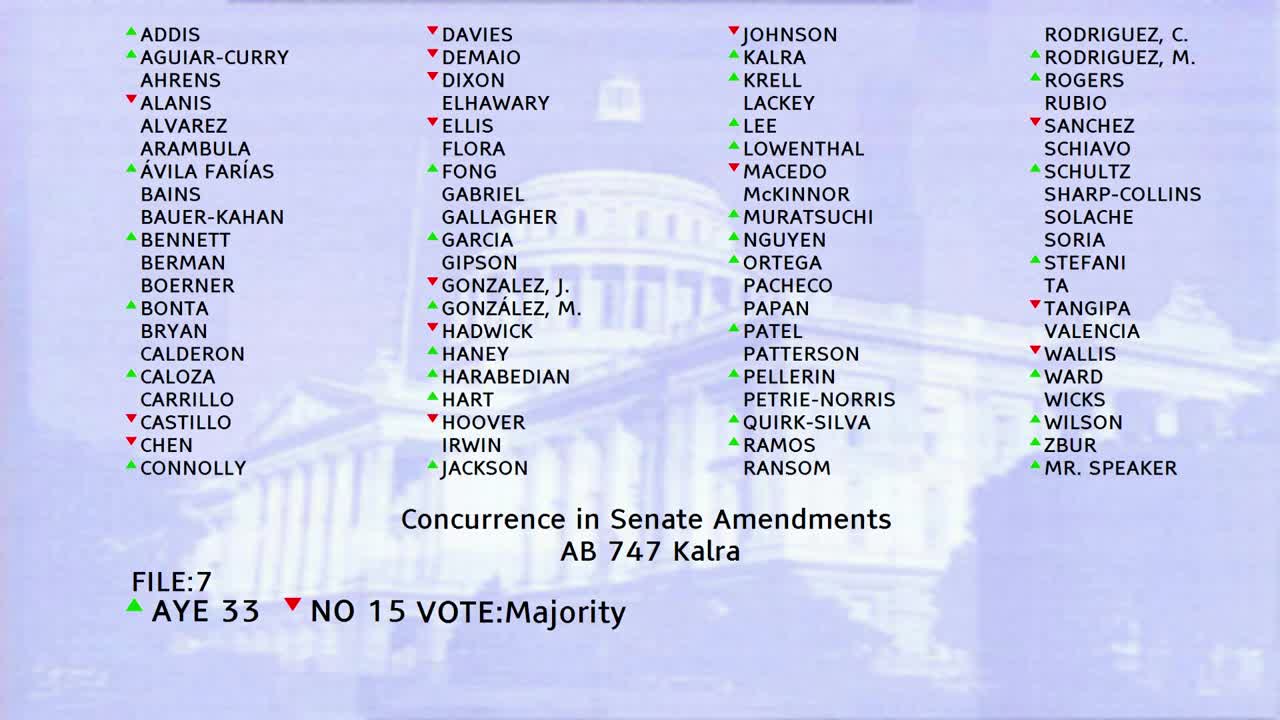 3MIN
Assembly Floor
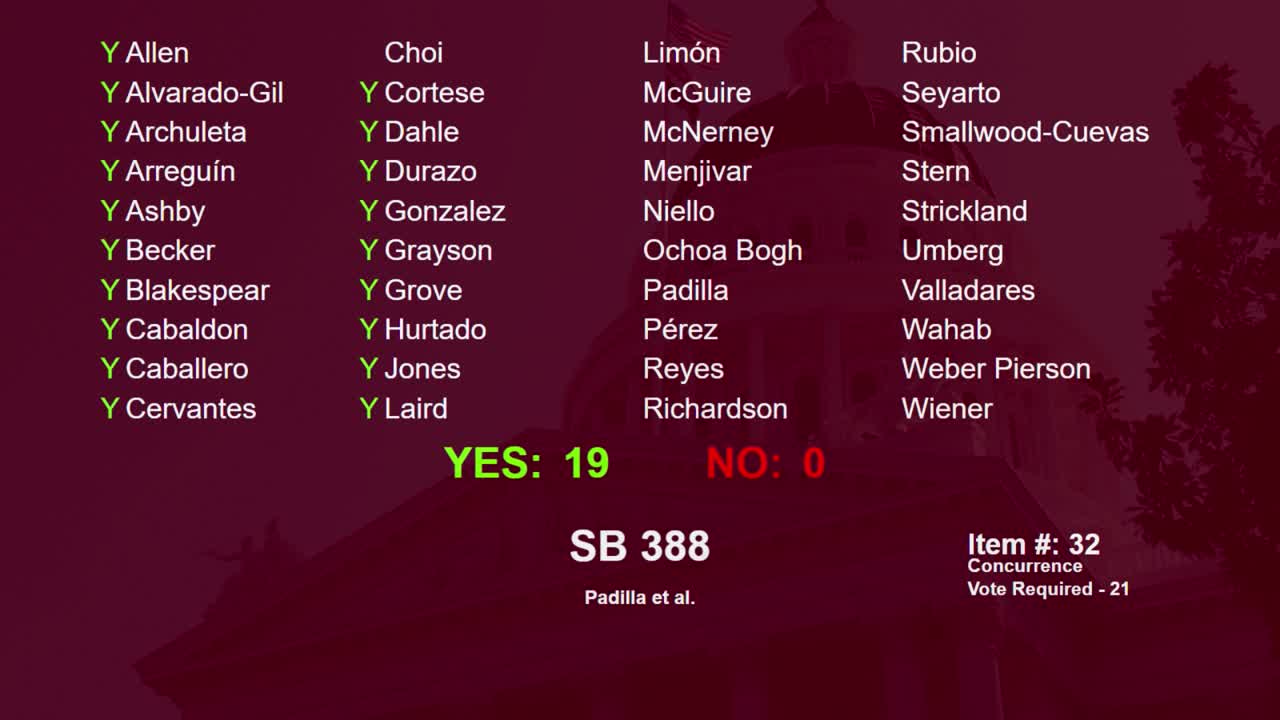 2MIN
Senate Floor
 24SEC
Senate Standing Committee on Appropriations
 5MIN
Senate Standing Committee on Labor, Public Employment and Retirement
 2MIN
Assembly Floor
 9MIN
Assembly Standing Committee on Labor and Employment
Bill Author

Bill Co-Author(s):