AB 339: Local public employee organizations: notice requirements.
- Session Year: 2025-2026
- House: Assembly
- Latest Version Date: 2025-10-13
Current Status:
Passed
(2025-10-13: Chaptered by Secretary of State - Chapter 687, Statutes of 2025.)
Introduced
In Committee
Awaiting First Chamber Vote
Passed First Chamber
In Committee
Awaiting Second Chamber Vote
Passed Second Chamber
Enacted
Existing law, the Meyers-Milias-Brown Act, contains various provisions that govern collective bargaining of local represented employees and delegates jurisdiction to the Public Employment Relations Board to resolve disputes and enforce the statutory duties and rights of local public agency employers and employees. Existing law requires the governing body of a public agency to meet and confer in good faith regarding wages, hours, and other terms and conditions of employment with representatives of recognized employee organizations.
Existing law requires the governing body of a public agency, and boards and commissions designated by law or by the governing body, to give reasonable written notice, except in cases of emergency, as specified, to each recognized employee organization affected of any ordinance, rule, resolution, or regulation directly relating to matters within the scope of representation proposed to be adopted by the governing body or the designated boards and commissions.
This bill would require the governing body of a public agency, and boards and commissions designated by law or by the governing body of a public agency, to give the recognized employee organization no less than 45 days written notice before issuing a request for proposals, request for quotes, or renewing or extending an existing contract to perform services that are within the scope of work of the job classifications represented by the recognized employee organization, subject to certain exceptions. The bill would require the notice to include specified information, including the anticipated duration of the contract. The bill would also require the public agency, if an emergency or other exigent circumstance prevents the public agency from providing the written notice described above, to provide as much advance notice as is practicable under the circumstances. By imposing new duties on local public agencies, the bill would impose a state-mandated local program.
The California Constitution requires the state to reimburse local agencies and school districts for certain costs mandated by the state. Statutory provisions establish procedures for making that reimbursement.
This bill would provide that no reimbursement shall be made pursuant to these statutory provisions for costs mandated by the state pursuant to this act, but would recognize that a local agency or school district may pursue any available remedies to seek reimbursement for these costs.
Existing law, the Meyers-Milias-Brown Act, contains various provisions that govern collective bargaining of local represented employees and delegates jurisdiction to the Public Employment Relations Board to resolve disputes and enforce the statutory duties and rights of local public agency employers and employees. Existing law requires the governing body of a public agency to meet and confer in good faith regarding wages, hours, and other terms and conditions of employment with representatives of recognized employee organizations.
Existing law requires the governing body of a public agency, and boards and commissions designated by law or by the governing body, to give reasonable written notice, except in cases of emergency, as specified, to each recognized employee organization affected of any ordinance, rule, resolution, or regulation directly relating to matters within the scope of representation proposed to be adopted by the governing body or the designated boards and commissions.
This bill would require the governing body of a public agency, and boards and commissions designated by law or by the governing body of a public agency, to give the recognized employee organization no less than 60 45 days written notice before issuing a request for proposals, request for quotes, or renewing or extending an existing contract to perform services that are within the scope of work of the job classifications represented by the recognized employee organization, subject to certain exceptions. The bill would require the notice to include specified information, including the anticipated duration of the contract. The bill would also require the public agency, if an emergency or other exigent circumstance prevents the public agency from providing the written notice described above, to provide as much advance notice as is practicable under the circumstances. If the recognized employee organization demands to meet and confer after receiving the written notice, the bill would require the public agency and recognized employee organization to meet and confer in good faith within a reasonable time, as specified. By imposing new duties on local public agencies, the bill would impose a state-mandated local program.
The California Constitution requires the state to reimburse local agencies and school districts for certain costs mandated by the state. Statutory provisions establish procedures for making that reimbursement.
This bill would provide that no reimbursement shall be made pursuant to these statutory provisions for costs mandated by the state pursuant to this act, but would recognize that a local agency or school district may pursue any available remedies to seek reimbursement for these costs.
Existing law, the Meyers-Milias-Brown Act, contains various provisions that govern collective bargaining of local represented employees and delegates jurisdiction to the Public Employment Relations Board to resolve disputes and enforce the statutory duties and rights of local public agency employers and employees. Existing law requires the governing body of a public agency to meet and confer in good faith regarding wages, hours, and other terms and conditions of employment with representatives of recognized employee organizations.
Existing law requires the governing body of a public agency, and boards and commissions designated by law or by the governing body, to give reasonable written notice, except in cases of emergency, as specified, to each recognized employee organization affected of any ordinance, rule, resolution, or regulation directly relating to matters within the scope of representation proposed to be adopted by the governing body or the designated boards and commissions.
This bill would require the governing body of a public agency, and boards and commissions designated by law or by the governing body of a public agency, to give the recognized employee organization no less than 60 days written notice before issuing a request for proposals, request for quotes, or renewing or extending an existing contract to perform services that are within the scope of work of the job classifications represented by the recognized employee organization. organization, subject to certain exceptions. The bill would require the notice to include specified information, including the anticipated duration of the contract. The bill would also require the public agency, if an emergency or other exigent circumstance prevents the public agency from providing the written notice described above, to provide as much advance notice as is practicable under the circumstances. If the recognized employee organization demands to meet and confer after receiving the written notice, the bill would require the public agency and recognized employee organization to meet and confer in good faith within a reasonable time, as specified. By imposing new duties on local public agencies, the bill would impose a state-mandated local program.
The California Constitution requires the state to reimburse local agencies and school districts for certain costs mandated by the state. Statutory provisions establish procedures for making that reimbursement.
This bill would provide that no reimbursement shall be made pursuant to these statutory provisions for costs mandated by the state pursuant to this act, but would recognize that a local agency or school district may pursue any available remedies to seek reimbursement for these costs.
Existing law, the Meyers-Milias-Brown Act, contains various provisions that govern collective bargaining of local represented employees and delegates jurisdiction to the Public Employment Relations Board to resolve disputes and enforce the statutory duties and rights of local public agency employers and employees. Existing law requires the governing body of a public agency to meet and confer in good faith regarding wages, hours, and other terms and conditions of employment with representatives of recognized employee organizations.
Existing law requires the governing body of a public agency, and boards and commissions designated by law or by the governing body, to give reasonable written notice, except in cases of emergency, as specified, to each recognized employee organization affected of any ordinance, rule, resolution, or regulation directly relating to matters within the scope of representation proposed to be adopted by the governing body or the designated boards and commissions.
This bill would require the governing body of a public agency, and boards and commissions designated by law or by the governing body of a public agency, to give the recognized employee organization no less than 120 60 days written notice before issuing a request for proposals, request for quotes, or renewing or extending an existing contract to perform services that are within the scope of work of the job classifications represented by the recognized employee organization. The bill would require the notice to include specified information, including the anticipated duration of the contract. The bill would also require the public agency, if an emergency or other exigent circumstance prevents the public agency from providing the written notice described above, to provide as much advance notice as is practicable under the circumstances. If the recognized employee organization demands to meet and confer after receiving the written notice, the bill would require the public agency and recognized employee organization to meet and confer in good faith within a reasonable time, as specified. By imposing new duties on local public agencies, the bill would impose a state-mandated local program.
The California Constitution requires the state to reimburse local agencies and school districts for certain costs mandated by the state. Statutory provisions establish procedures for making that reimbursement.
This bill would provide that no reimbursement shall be made pursuant to these statutory provisions for costs mandated by the state pursuant to this act, but would recognize that a local agency or school district may pursue any available remedies to seek reimbursement for these costs.
Existing law, the Meyers-Milias-Brown Act, contains various provisions that govern collective bargaining of local represented employees and delegates jurisdiction to the Public Employment Relations Board to resolve disputes and enforce the statutory duties and rights of local public agency employers and employees. Existing law requires the governing body of a public agency to meet and confer in good faith regarding wages, hours, and other terms and conditions of employment with representatives of recognized employee organizations.
Existing law requires the governing body of a public agency, and boards and commissions designated by law or by the governing body, to give reasonable written notice, except in cases of emergency, as specified, to each recognized employee organization affected of any ordinance, rule, resolution, or regulation directly relating to matters within the scope of representation proposed to be adopted by the governing body or the designated boards and commissions.
This bill would require the governing body of a public agency, and boards and commissions designated by law or by the governing body of a public agency, to give the recognized employee organization no less than 120 days written notice before issuing a request for proposals, request for quotes, or renewing or extending an existing contract to perform services that are within the scope of work of the job classifications represented by the recognized employee organization. The bill would require the notice to include specified information, including the anticipated duration of the contract. The bill would also require the public agency, if an emergency or other exigent circumstance prevents the public agency from providing the written notice described above, to provide as much advance notice as is practicable under the circumstances. If the recognized employee organization demands to meet and confer within 30 days of after receiving the written notice, the bill would require the public agency and recognized employee organization to promptly meet and confer in good faith, faith within a reasonable time, as specified. By imposing new duties on local public agencies, the bill would impose a state-mandated local program.
The California Constitution requires the state to reimburse local agencies and school districts for certain costs mandated by the state. Statutory provisions establish procedures for making that reimbursement.
This bill would provide that no reimbursement shall be made pursuant to these statutory provisions for costs mandated by the state pursuant to this act, but would recognize that a local agency or school district may pursue any available remedies to seek reimbursement for these costs.
Existing law, the Meyers-Milias-Brown Act, contains various provisions that govern collective bargaining of local represented employees and delegates jurisdiction to the Public Employment Relations Board to resolve disputes and enforce the statutory duties and rights of local public agency employers and employees. Existing law requires the governing body of a public agency to meet and confer in good faith regarding wages, hours, and other terms and conditions of employment with representatives of recognized employee organizations.
Existing law requires the governing body of a public agency, and boards and commissions designated by law or by the governing body, to give reasonable written notice, except in cases of emergency, as specified, to each recognized employee organization affected of any ordinance, rule, resolution, or regulation directly relating to matters within the scope of representation proposed to be adopted by the governing body or the designated boards and commissions.
This bill would require the governing body of a public agency, and boards and commissions designated by law or by the governing body of a public agency, to give the recognized employee organization no less than 120 days written notice before issuing a request for proposals, request for quotes, or renewing or extending an existing contract to perform services that are within the scope of work of the job classifications represented by the recognized employee organization. The bill would require the notice to include specified information, including the anticipated duration of the contract. The bill would also require the public agency, if an emergency or other exigent circumstance prevents the public agency from providing the written notice described above, to provide as much advance notice as is practicable under the circumstances. If the recognized employee organization demands to meet and confer within 30 days of receiving the written notice, the bill would require the public agency and recognized employee organization to promptly meet and confer in good faith, as specified. By imposing new duties on local public agencies, the bill would impose a state-mandated local program.
The California Constitution requires the state to reimburse local agencies and school districts for certain costs mandated by the state. Statutory provisions establish procedures for making that reimbursement.
This bill would provide that no reimbursement shall be made pursuant to these statutory provisions for costs mandated by the state pursuant to this act, but would recognize that a local agency or school district may pursue any available remedies to seek reimbursement for these costs.
(a)Except as provided in subdivision (c), the governing body of a public agency, and boards and commissions designated by law or by the governing body of a public agency, shall give the recognized employee organization no less than 45 days written notice before issuing a request for proposals, request for quotes, or renewing or extending an existing contract, to perform services that are within the scope of work of the job classifications represented by the recognized employee organization.
(b)The written notice specified in subdivision (a) shall include all of the following:
(1)The anticipated duration of the contract.
(2)The scope of work under the contract.
(3)The anticipated cost of the contract.
(4)The draft solicitation, or if not yet drafted, any information that would normally be included in a solicitation.
(5)The reason the public agency believes the contract is necessary.
(c)If an emergency or other exigent circumstance prevents the public agency from providing the amount of notice required by subdivision (a), the public agency shall provide as much advance notice as is practicable under the circumstances.
(d)This section does not apply to any of the following contracts:
(1)A contract for construction, alteration, demolition, installation, repair, or maintenance work that is subject to Chapter 1 (commencing with Section 1720) of Part 7 of Division 2 of the Labor Code or a contract for highly specialized data, software, or services related to that construction, alteration, demolition, installation, repair, or maintenance work.
(2)A contract for services described in Section 4525 or 4529.10 or that is related to the planning, design, administration, oversight, review, or delivery of public works, residential, commercial, or industrial buildings, or other infrastructure projects subject to adopted uniform codes or standards.
(e)(1)Nothing in this section exempts contracts from the notice, meet and confer, or other requirements of applicable laws, including this chapter.
(2)This section shall not be interpreted to affect other bargaining rights and obligations under this chapter that were not created by this section.
(3)This section shall not diminish any rights of an employee or recognized employee organization provided by a memorandum of understanding.
(4)This section shall not invalidate any provision of a memorandum of understanding in effect on the operative date of this section.
SEC. 2.No reimbursement shall be made pursuant to Part 7 (commencing with Section 17500) of Division 4 of Title 2 of the Government Code for costs mandated by the state pursuant to this act. It is recognized, however, that a local agency or school district may pursue any remedies to obtain reimbursement available to it under Part 7 (commencing with Section 17500) and any other law.
(a)Except as provided in subdivision (c), the governing body of a public agency, and boards and commissions designated by law or by the governing body of a public agency, shall give the recognized employee organization no less than 60 45 days written notice before issuing a request for proposals, request for quotes, or renewing or extending an existing contract, to perform services that are within the scope of work of the job classifications represented by the recognized employee organization.
(b)The written notice specified in subdivision (a) shall include all of the following:
(1)The anticipated duration of the contract.
(2)The scope of work under the contract.
(3)The anticipated cost of the contract.
(4)The draft solicitation, or if not yet drafted, any information that would normally be included in a solicitation.
(5)The reason the public agency believes the contract is necessary.
(c)If an emergency or other exigent circumstance prevents the public agency from providing the amount of notice required by subdivision (a), the public agency shall provide as much advance notice as is practicable under the circumstances.
(d)If the recognized employee organization demands to meet and confer after receiving the written notice, the public agency and recognized employee organization shall, within a reasonable time, meet and confer in good faith relating to the public agencys proposed decision to enter into the contract and any negotiable effects thereof.(e)(1)This section shall not diminish any rights of an employee or recognized employee organization provided by law or a memorandum of understanding.(2)This section shall not invalidate any provision of a memorandum of understanding in effect on the operative date of this section.(3)(d)This section does not apply to a any of the following contracts:
(1)A contract for construction, alteration, demolition, installation, repair, or maintenance work that is subject to Chapter 1 (commencing with Section 1720) of Part 7 of Division 2 of the Labor Code or a contract for highly specialized data, software, or services related to that construction, alteration, demolition, installation, repair, or maintenance work.
(2)A contract for services described in Section 4525 or 4529.10 or that is related to the planning, design, administration, oversight, review, or delivery of public works, residential, commercial, or industrial buildings, or other infrastructure projects subject to adopted uniform codes or standards.
(f)(e)(1)Nothing in this section shall be construed to exempt exempts contracts from the notice, meet and confer, or other procedural requirements of applicable to contracting for services under existing collective bargaining laws, including this chapter. laws, including this chapter.
(2)This section shall not be interpreted to affect other bargaining rights and obligations under this chapter that were not created by this section.
(3)This section shall not diminish any rights of an employee or recognized employee organization provided by a memorandum of understanding.
(4)This section shall not invalidate any provision of a memorandum of understanding in effect on the operative date of this section.
SEC. 2.No reimbursement shall be made pursuant to Part 7 (commencing with Section 17500) of Division 4 of Title 2 of the Government Code for costs mandated by the state pursuant to this act. It is recognized, however, that a local agency or school district may pursue any remedies to obtain reimbursement available to it under Part 7 (commencing with Section 17500) and any other law.
(a)Except as provided in subdivision (c), the governing body of a public agency, and boards and commissions designated by law or by the governing body of a public agency, shall give the recognized employee organization no less than 60 days written notice before issuing a request for proposals, request for quotes, or renewing or extending an existing contract, to perform services that are within the scope of work of the job classifications represented by the recognized employee organization.
(b)The written notice specified in subdivision (a) shall include all of the following:
(1)The anticipated duration of the contract.
(2)The scope of work under the contract.
(3)The anticipated cost of the contract.
(4)The draft solicitation, or if not yet drafted, any information that would normally be included in a solicitation.
(5)The reason the public agency believes the contract is necessary.
(c)If an emergency or other exigent circumstance prevents the public agency from providing the amount of notice required by subdivision (a), the public agency shall provide as much advance notice as is practicable under the circumstances.
(d)If the recognized employee organization demands to meet and confer after receiving the written notice, the public agency and recognized employee organization shall, within a reasonable time, meet and confer in good faith relating to the public agencys proposed decision to enter into the contract and any negotiable effects thereof.
(e)(1)This section shall not diminish any rights of an employee or recognized employee organization provided by law or a memorandum of understanding.
(2)This section shall not invalidate any provision of a memorandum of understanding in effect on the operative date of this section.
(3)This section does not apply to a contract for construction, alteration, demolition, installation, repair, or maintenance work that is subject to Chapter 1 (commencing with Section 1720) of Part 7 of Division 2 of the Labor Code or a contract for highly specialized data, software, or services related to that construction, alteration, demolition, installation, repair, or maintenance work.
(f)Nothing in this section shall be construed to exempt contracts from the notice, meet and confer, or other procedural requirements applicable to contracting for services under existing collective bargaining laws, including this chapter.
SEC. 2.No reimbursement shall be made pursuant to Part 7 (commencing with Section 17500) of Division 4 of Title 2 of the Government Code for costs mandated by the state pursuant to this act. It is recognized, however, that a local agency or school district may pursue any remedies to obtain reimbursement available to it under Part 7 (commencing with Section 17500) and any other law.
(a)Except as provided in subdivision (c), the governing body of a public agency, and boards and commissions designated by law or by the governing body of a public agency, shall give the recognized employee organization no less than 120 60 days written notice before issuing a request for proposals, request for quotes, or renewing or extending an existing contract, to perform services that are within the scope of work of the job classifications represented by the recognized employee organization.
(b)The written notice specified in subdivision (a) shall include all of the following:
(1)The anticipated duration of the contract.
(2)The scope of work under the contract.
(3)The anticipated cost of the contract.
(4)The draft solicitation, or if not yet drafted, any information that would normally be included in a solicitation.
(5)The reason the public agency believes the contract is necessary.
(c)If an emergency or other exigent circumstance prevents the public agency from providing the amount of notice required by subdivision (a), the public agency shall provide as much advance notice as is practicable under the circumstances.
(d)If the recognized employee organization demands to meet and confer after receiving the written notice, the public agency and recognized employee organization shall, within a reasonable time, meet and confer in good faith relating to the public agencys proposed decision to enter into the contract and any negotiable effects thereof.
(e)At the request of the exclusive representative, the parties shall reopen negotiations on all or a part of a memorandum of understanding to reach a mutual agreement concerning the subjects set forth in subdivisions (a) and (b).(f)(e)(1)This section shall not diminish any rights of an employee or recognized employee organization provided by law or a memorandum of understanding.
(2)This section shall not invalidate any provision of a memorandum of understanding in effect on the operative date of this section.
SEC. 2.No reimbursement shall be made pursuant to Part 7 (commencing with Section 17500) of Division 4 of Title 2 of the Government Code for costs mandated by the state pursuant to this act. It is recognized, however, that a local agency or school district may pursue any remedies to obtain reimbursement available to it under Part 7 (commencing with Section 17500) and any other law.
(a)Except as provided in subdivision (c), the governing body of a public agency, and boards and commissions designated by law or by the governing body of a public agency, shall give the recognized employee organization no less than 120 days written notice before issuing a request for proposals, request for quotes, or renewing or extending an existing contract, to perform services that are within the scope of work of the job classifications represented by the recognized employee organization.
(b)The written notice specified in subdivision (a) shall include all of the following:
(1)The anticipated duration of the contract.
(2)The scope of work under the contract.
(3)The anticipated cost of the contract.
(4)The draft solicitation, or if not yet drafted, any information that would normally be included in a solicitation.
(5)The reason the public agency believes the contract is necessary.
(c)If an emergency or other exigent circumstance prevents the public agency from providing the amount of notice required by subdivision (a), the public agency shall provide as much advance notice as is practicable under the circumstances.
(d)If the recognized employee organization demands to meet and confer within 30 days of after receiving the written notice, the public agency and recognized employee organization shall promptly shall, within a reasonable time, meet and confer in good faith relating to the public agencys proposed decision to enter into the contract and any negotiable effects thereof.
(e)At the request of the exclusive representative, the parties shall reopen negotiations on all or a part of a memorandum of understanding to reach a mutual agreement concerning the subjects set forth in subdivisions (a) and (b).
(f)(1)This section shall not diminish any rights of an employee or recognized employee organization provided by law or a memorandum of understanding.
(2)This section shall not invalidate any provision of a memorandum of understanding in effect on the operative date of this section.
SEC. 2.No reimbursement shall be made pursuant to Part 7 (commencing with Section 17500) of Division 4 of Title 2 of the Government Code for costs mandated by the state pursuant to this act. It is recognized, however, that a local agency or school district may pursue any remedies to obtain reimbursement available to it under Part 7 (commencing with Section 17500) and any other law.
(a)Except as provided in subdivision (c), the governing body of a public agency, and boards and commissions designated by law or by the governing body of a public agency, shall give the recognized employee organization no less than 120 days written notice before issuing a request for proposals, request for quotes, or renewing or extending an existing contract, to perform services that are within the scope of work of the job classifications represented by the recognized employee organization.
(b)The written notice specified in subdivision (a) shall include all of the following:
(1)The anticipated duration of the contract.
(2)The scope of work under the contract.
(3)The anticipated cost of the contract.
(4)The draft solicitation, or if not yet drafted, any information that would normally be included in a solicitation.
(5)The reason the public agency believes the contract is necessary.
(c)If an emergency or other exigent circumstance prevents the public agency from providing the amount of notice required by subdivision (a), the public agency shall provide as much advance notice as is practicable under the circumstances.
(d)If the recognized employee organization demands to meet and confer within 30 days of receiving the written notice, the public agency and recognized employee organization shall promptly meet and confer in good faith relating to the public agencys proposed decision to enter into the contract and any negotiable effects thereof.
(e)At the request of the exclusive representative, the parties shall reopen negotiations on all or a part of a memorandum of understanding to reach a mutual agreement concerning the subjects set forth in subdivisions (a) and (b).
(f)(1)This section shall not diminish any rights of an employee or recognized employee organization provided by law or a memorandum of understanding.
(2)This section shall not invalidate any provision of a memorandum of understanding in effect on the operative date of this section.
SEC. 2.No reimbursement shall be made pursuant to Part 7 (commencing with Section 17500) of Division 4 of Title 2 of the Government Code for costs mandated by the state pursuant to this act. It is recognized, however, that a local agency or school district may pursue any remedies to obtain reimbursement available to it under Part 7 (commencing with Section 17500) and any other law.
|
Date
|
Status
|
|---|---|
| Oct 13, 2025 | Chaptered by Secretary of State - Chapter 687, Statutes of 2025. |
| Oct 13, 2025 | Approved by the Governor. |
| Sep 15, 2025 | Enrolled and presented to the Governor at 4:30 p.m. |
| Sep 8, 2025 | Senate amendments concurred in. To Engrossing and Enrolling. (Ayes 52. Noes 12. Page 3024.). |
| Sep 4, 2025 | In Assembly. Concurrence in Senate amendments pending. |
| Sep 4, 2025 | Read third time. Passed. Ordered to the Assembly. (Ayes 28. Noes 11. Page 2518.). |
| Sep 2, 2025 | Read second time. Ordered to third reading. |
| Aug 29, 2025 | Read second time and amended. Ordered returned to second reading. |
| Aug 29, 2025 | From committee: Amend, and do pass as amended. (Ayes 5. Noes 2.) (August 29). |
| Aug 18, 2025 | In committee: Referred to suspense file. |
| Jul 15, 2025 | Read second time and amended. Re-referred to Com. on APPR. |
| Jul 14, 2025 | From committee: Amend, and do pass as amended and re-refer to Com. on APPR. (Ayes 4. Noes 1.) (July 9). |
| Jun 18, 2025 | From committee chair, with author's amendments: Amend, and re-refer to committee. Read second time, amended, and re-referred to Com. on L., P.E. & R. |
| Jun 13, 2025 | In committee: Set, first hearing. Hearing canceled at the request of author. |
| Jun 11, 2025 | Referred to Com. on L., P.E. & R. |
| Jun 3, 2025 | In Senate. Read first time. To Com. on RLS. for assignment. |
| Jun 2, 2025 | Read third time. Passed. Ordered to the Senate. (Ayes 51. Noes 11. Page 1899.) |
| May 27, 2025 | Read second time. Ordered to third reading. |
| May 23, 2025 | Read second time and amended. Ordered returned to second reading. |
| May 23, 2025 | From committee: Amend, and do pass as amended. (Ayes 11. Noes 2.) (May 23). |
| May 23, 2025 | Assembly Rule 63 suspended. (Ayes 51. Noes 16. Page 1644.) |
| Apr 9, 2025 | In committee: Set, first hearing. Referred to APPR. suspense file. |
| Mar 19, 2025 | From committee: Do pass and re-refer to Com. on APPR. (Ayes 4. Noes 0.) (March 19). Re-referred to Com. on APPR. |
| Feb 18, 2025 | Referred to Com. on P. E. & R. |
| Jan 29, 2025 | From printer. May be heard in committee February 28. |
| Jan 28, 2025 | Read first time. To print. |
|
Date
|
Description
|
Location
|
Votes
|
|
|---|---|---|---|---|
| Sep 8, 2025 | AB 339 Ortega Concurrence in Senate Amendments | Assembly Floor |
Passed |
|
| Sep 4, 2025 | Assembly 3rd Reading AB339 Ortega By Durazo | Senate Floor |
Passed |
|
| Aug 29, 2025 | Do pass as amended | Senate Standing Committee on Appropriations |
Passed |
|
| Aug 18, 2025 | Placed on suspense file | Senate Standing Committee on Appropriations |
Passed |
|
| Jul 9, 2025 | Do pass as amended, but first amend, and re-refer to the Committee on [Appropriations] | Senate Standing Committee on Labor, Public Employment and Retirement |
Passed |
|
| Jun 2, 2025 | AB 339 Ortega Assembly Third Reading | Assembly Floor |
Passed |
|
| May 23, 2025 | Do pass as amended. | Assembly Standing Committee on Appropriations |
Passed |
|
| Mar 19, 2025 | Do pass and be re-referred to the Committee on [Appropriations] | Assembly Standing Committee on Public Employment and Retirement |
Passed |
This list shows positions taken on this bill by organizations on the date displayed, which is linked to the original source.
Positions by individuals are not included.
|
Organization
|
Position
|
Date
|
|---|---|---|
| Abrazar, Inc. | ** Against | |
| Advocate Association of California Water Agencies | ** Against | |
| american council of engineering companies | ** Against | |
| American Federation of State, County and Municipal Employees Local 57 | ** Support | |
| American Institute Of Architects California | ** Against | |
| American Society of Civil Engineers, Region 9 | ** Against | |
| American Staffing Association | ** Against | |
| Aresis Ensemble | ** Against | |
| Aresis Ensemble (City Garage) | ** Against | |
| Associated General Contractors | ** Against | |
| Association of California Healthcare Districts | ** Against | |
| Association Of California Water Agencies | ** Against | |
| Association Of Community Human Service Agencies | ** Against | |
| Bay Area Air Quality Management District | ** Against | |
| Bay Area Bioscience Education Community | ** Against | |
| Bowman Consulting Group Ltd. | ** Against | |
| Building a Generation | ** Against | |
| CalChamber | ** Against | |
| California Alliance Of Child And Family Services | ** Against | |
| California Animal Welfare Association | ** Against | |
| California Association For Local Economic Development | ** Against | |
| California Association Of Joint Powers Authorities | ** Against | |
| CALIFORNIA ASSOCIATION OF PUBLIC HOSPITALS & HEALTH SYSTEMS | ** Against | |
| California Association Of Recreational Park Districts | ** Against | |
| California Association Of Recreation & Park Districts | ** Against | |
| California Association Of Sanitation Agencies | ** Against | |
| California Association of Social Rehabilitation Agencies | ** Against | |
| California Behavioral Health Association | ** Against | |
| California Behavioral Health Planning Council | ** Against | |
| California Building Officials | ** Against | |
| California Chapters of the American Public Works Association | ** Against | |
| California Contract Cities Association | ** Against | |
| California Federation of Labor Unions | ** Support | |
| California Geotechnical Engineering Association | ** Against | |
| California Geotechnical Engineers Association | ** Against | |
| California Landscape Contractor'S Association | ** Against | |
| California & Nevada Civil Engineers and Land Surveyors Association | ** Against | |
| California-Nevada Section, American Water Works Association | ** Against | |
| California Nurses Association | ** Support | |
| California Park & Recreation Society | ** Against | |
| California Parks and Recreation Society | ** Against | |
| California Professional Firefighters | ** Support | |
| California Safety and Legislative Board of Smart – Transportation Division | ** Support | |
| California School Employees Association | ** Support | |
| California Special Districts Association | ** Against | |
| California Staffing Professionals | ** Against | |
| California State Association Of Counties | ** Against | |
| California State Sheriffs' Association | ** Against | |
| California Teachers Association | ** Support | |
| California Transit Association | ** Against | |
| CalNonprofits | ** Against | |
| C&A: Social Impact Consulting | ** Against | |
| Center For Biological Diversity | ** Support | |
| Central Coast Alliance United for a Sustainable Economy | ** Support | |
| Ceres Community Project | ** Against | |
| CHILDREN'S INSTITUTE | ** Against | |
| City of Bakersfield | ** Against | |
| City of Bartow | ** Against | |
| City Of Beaumont | ** Against | |
| City of Chino Hills | ** Against | |
| City of Colton | ** Against | |
| City of Concord | ** Against | |
| City of Eureka | ** Against | |
| City of Fortuna | ** Against | |
| City of Foster City | ** Against | |
| City of Hesperia | ** Against | |
| City of Hughson | ** Against | |
| City of Indian Wells | ** Against | |
| City Of Inglewood | ** Against | |
| City Of Kerman | ** Against | |
| City Of Kingsburg | ** Against | |
| city of laguna niguel | ** Against | |
| City of La Habra | ** Against | |
| City of Lakeport | ** Against | |
| City of Lakewood | ** Against | |
| City of La Mirada | ** Against | |
| City of La Puente | ** Against | |
| City of La Verne | ** Against | |
| City Of Lincoln | ** Against | |
| City Of Livermore | ** Against | |
| City Of Lomita | ** Against | |
| City Of Los Banos | ** Against | |
| City of Madera | ** Against | |
| City of Manteca | ** Against | |
| City Of Martinez | ** Against | |
| City Of Merced | ** Against | |
| City of Montclair | ** Against | |
| City of Norwalk | ** Against | |
| City of Orinda | ** Against | |
| City of Palm Desert | ** Against | |
| city of paramount | ** Against | |
| City Of Pittsburg | ** Against | |
| City of Redwood City | ** Against | |
| City of Riverside | ** Against | |
| City Of San Bernardino | ** Against | |
| City of San Jose | ** Against | |
| City of Simi Valley | ** Against | |
| City of Sunnyvale | ** Against | |
| City Of Upland | ** Against | |
| City Of Vernon | ** Against | |
| City of Vista | ** Against | |
| City Of Waterford | ** Against | |
| City of Whittier | ** Against | |
| Coachella Valley Water District | ** Against | |
| Coastal Nonprofit Consulting | ** Against | |
| Collective Resilience | ** Against | |
| Community Bridges | ** Against | |
| Conejo Recreation and Park District | ** Against | |
| Contra Costa Water District | ** Against | |
| County Health Executives Association Of California | ** Against | |
| County of Butte | ** Against | |
| County of Contra Costa | ** Against | |
| County of Fresno | ** Against | |
| County of Humboldt | ** Against | |
| County Of Kern | ** Against | |
| County Of Kings | ** Against | |
| County of Lake | ** Against | |
| County Of Los Angeles | ** Against | |
| County Of Madera | ** Against | |
| County of Merced | ** Against | |
| County of Orange | ** Against | |
| County Of Placer | ** Against | |
| County of Riverside | ** Against | |
| county of sacramento | ** Against | |
| County of San Benito | ** Against | |
| County of San Bernardino | ** Against | |
| County of San Joaquin | ** Against | |
| County of San Luis Obispo | ** Against | |
| County of San Mateo | ** Against | |
| County of Santa Clara | ** Against | |
| County of Siskiyou | ** Against | |
| County of Sutter | ** Against | |
| County of Tulare | ** Against | |
| County of Ventura | ** Against | |
| Courage California | ** Support | |
| Creative Alternatives | ** Against | |
| Cucamonga Valley Water District | ** Against | |
| Desert Water Agency | ** Against | |
| Dietz Hydroseeding Co. | ** Against | |
| Duc Learning Center | ** Against | |
| Echo Park United Methodist Church | ** Support | |
| El Dorado Irrigation District | ** Against | |
| Elsinore Valley Municipal Water District | ** Against | |
| Equal Rights Advocates | ** Support | |
| Families Forward | ** Against | |
| Family Service Association | ** Against | |
| Federal Technology Solutions INC. | ** Against | |
| Five Keys | ** Against | |
| Geri's Screenprinting, LLC | ** Against | |
| Greenpeace Usa | ** Support | |
| Hayward Area Recreation And Park District | ** Against | |
| Healthcare Services, Inc. | ** Against | |
| Helix Water District | ** Against | |
| Hinderliter, de Llamas & Associates | ** Against | |
| IATSE Local 33 | ** Support | |
| Immigrant Legal Defense | ** Against | |
| Jewish Family Service of San Diego | ** Against | |
| Jurupa Community Services District | ** Against | |
| KidSTREAM Children's Museum | ** Against | |
| LA Plaza United Methodist Church | ** Support | |
| Las Virgenes Municipal Water District | ** Against | |
| League Of California Cities | ** Against | |
| Los Angeles Alliance for a New Economy | ** Support | |
| Los Angeles Black Worker Center | ** Support | |
| Lutheran Office Of Public Policy - California | ** Support | |
| Meet Each Need with Dignity | ** Against | |
| Mel Smith Electric, INC. | ** Against | |
| Mend-Meet Each Need With Dignity | ** Against | |
| MENDOCINO; COUNTY OF | ** Against | |
| Merced County Board of Supervisors | ** Against | |
| Mountain Homeless Coalition | ** Against | |
| National Security Systems | ** Against | |
| National Union Of Healthcare Workers | ** Support | |
| Natures Image, INC. | ** Against | |
| Nbs | ** Against | |
| Nevada County | ** Against | |
| NEWPORT BEACH; CITY OF | ** Against | |
| NORWALK; CITY OF | ** Against | |
| OCEANSIDE; CITY OF | ** Against | |
| Office of Samoan Affairs | ** Against | |
| Olivenhain Municipal Water District | ** Against | |
| Open Heart Kitchen | ** Against | |
| Orange County Business Council | ** Against | |
| Orange County Employees Association | ** Support | |
| Orange County Sanitation District | ** Against | |
| Otay Water District | ** Against | |
| Oxnard Performing Arts Center Corporation | ** Against | |
| Path | ** Against | |
| Peace Officers Research Association Of California | ** Support | |
| Peninsula Family Service | ** Against | |
| Placer County Board of Supervisors | ** Against | |
| Professional Engineers In California Government | ** Support | |
| Public Advocates Inc. | ** Support | |
| Public Risk Innovation Solutions and Management | ** Against | |
| Queen of Hearts Therapeutic Riding Center, INC. | ** Against | |
| Raíces Y Cariño | ** Against | |
| Richmond Community Foundation | ** Against | |
| Rural County Representatives of California | ** Against | |
| Sacramento Area Sewer District | ** Against | |
| Sacra/profana | ** Against | |
| San Diego Humane Society | ** Against | |
| San Francisco Study Center | ** Against | |
| Santa Barbara County Action Network | ** Support | |
| Service Employees International Union, California | ** Support | |
| Silicon Valley Council of Nonprofits | ** Against | |
| South San Joaquin Irrigation District | ** Against | |
| Tahoe City Public Utility District | ** Against | |
| Techequity Action | ** Support | |
| The Ace Agency | ** Against | |
| The Aresis Ensemble INC. | ** Against | |
| The Can Man | ** Against | |
| The Nonprofit Partnership | ** Against | |
| Town of Apple Valley | ** Against | |
| Town of Truckee | ** Against | |
| Transportation California | ** Against | |
| Tree People | ** Against | |
| Turning point | ** Against | |
| Turning Point Community Programs | ** Against | |
| UAW Region 6 | ** Support | |
| Union Of American Physicians And Dentists | ** Support | |
| Urban Counties of California | ** Against | |
| Urban Habitat | ** Support | |
| Valley Center Municipal Water District | ** Against | |
| Visitability | ** Against | |
| Vistability | ** Against | |
| Vista Irrigation District | ** Against | |
| Water Replenishment District | ** Against | |
| Waymakers | ** Against | |
| West Valley Water District | ** Against | |
| Yorba Linda Water District | ** Against |
CONCURRENCE IN SENATE AMENDMENTS
CSA1 Bill Id:AB 339
Author:(Ortega)
As Amended Ver:August 29, 2025
Majority vote
SUMMARY
Requires public agencies regulated by the Meyers-Milias-Brown Act (MMBA) to give a recognized employee organization (REO) no less than 45 days' written notice regarding contracts to perform services that are within the scope of work of job classifications represented by the REO, among other provisions.
Senate Amendments
1) Reduce the timeframe in which a public agency must give written notice to the REO before issuing a request for proposals, request for quotes, or renewing or extending an existing contract from 120 days to 45 days.
2) Remove the requirement that the public agency meet and confer in good faith with a REO within a reasonable time regarding the public agency's proposed decision to enter into the contract and negotiate the effects thereof.
3) Expand the applicability exemption to include contracts relating to the planning, design, administration, oversight, review, or delivery of public works, residential, commercial, or industrial buildings, or other infrastructure projects that are subject to adopted uniform codes or standards, as provided.
4) Clarify, relating to notice, meet and confer, and other requirements of applicable existing laws, that the proposed changes by this bill must not: i) be interpreted to affected other bargaining rights or obligations that were not created, as provided; ii) diminish any right of an employee or REO provided by a memorandum of understanding; and, iii) invalidate any provision of a MOU in effect on the operative date of the section of existing law proposed to be changed by this bill.
COMMENTS
Common Sense and Cents: Contracting Out – A Need for Increased Public Transparency, Scrutiny, and Accountability
Government contracting of public services, generally, is to provide a particular service for a common public need. For example, in California, to address significant wildfires, the state may, and does, regularly contract with a private company or companies to operate specialized aircraft for firefighting purposes to cover terrain that is difficult to access by traditional ground equipment and personnel.
Governments also contract with nonprofits to provide services to individuals or communities where it lacks sufficient or cost-effective access, and nonprofits may help to fill a void for an otherwise deficiency in access to, or absence of, such services. In this instance, nonprofits help serve a critical role to assist government in needed access and service provision where many nonprofits can, and do, fulfill not only their mission with the financial support of public or private monies, or both, but also work to adhere to the mandates of governmental contract performance requirements while providing a service. However, there are instances where, for example, the nonprofit sector has not been immune from engaging in questionable practices; thus, raising concerns regarding transparency, accountability, and service provision.[1]
"Government transparency strengthens democracy, promotes fiscal responsibility, checks corruption, and bolsters public confidence. Sunshine laws enshrine transparency into the fabric of government by guaranteeing citizens access to information regarding government expenditures and policies. When government contractors assume control of public services, in many cases they are able to circumvent sunshine laws and shield important information from disclosure. Corporations may refuse to release records that would otherwise be available by claiming that transparency would hurt their bottom lines. Many times, contractors claim that the information is a "trade secret" or "proprietary" and legally protected from public review.
"To protect the public's right-to-information, decision-maker- should adopt strong sunshine laws that require government contractors to follow the same disclosure rules as government entities. As an additional protection, state and local governments should also include disclosure requirements in contracts." ("Closing the Books: How Government Contractors Hid Public Records," at p 2. In the Public Interest (ITPI), March 2015.)
In the above-referenced report, ITPI reviewed government contracting practices in several states. Generally, the report specifically identifies among the various states reviewed, how government contractors: a) can hide their fees; b) hide how they spend public funds; and, c) hide indicators of service quality.
In another ITPI report, it's analysis of 22 specific case studies of government contracting in a variety of sectors found that, companies: a) reduce the quality and accessibility of the service for its users and recipients; b) reduce the number of workers, eliminate staff trainings, lower employee compensation, and neglect worker safety (these profit-making measures not only harm employees, but also can impact the service itself); c) remove or fail to implement protections for the general public; and, d) remove or fail to implement protections for the environment.[2]
Additionally, an ITPI memo in 2019, "Protecting the Common Good in Public Services," notes, among other things, that, "[as] local and state policymakers look for ways to balance their government budgets, some consider privatization of important public services as a way to save money. But, as shown repeatedly in many localities, privatization is not a cure for financial woes. [It] can actually increase costs for a city, compromise the quality of critical services relied on by residents, and harm the local community and economy. Policy makers may also lose the ability to ensure accountability and exercise critical oversight over public services. Privatization can also outsource responsibilities traditionally performed by government that can have long-lasting negative consequences for residents and undermine the very idea of the common good."
Some of the public services privatization risks identified in the memo are: a) little or no cost savings; b) reduced service quality; loss of middle-class jobs; c) loss of accountability and transparency; lack of adequate monitoring and oversight; and, d) money leaves the community.
In the ITPI reports and memo, suggested approaches to address the common findings center on the overall theme of contractual performance, and more specifically, the need for increased transparency, accountability, and increased monitoring for efficacy by government officials.
This Bill
This bill does not prohibit contracting out, but provides guardrails towards improving compliance that increase public transparency and accountability to taxpayers.
Please see the various policy committee analyses for a full discussion of this bill.
According to the Author
"Local governments use a procurement process, often involving RFPs and requests for qualifications (RFQs), for externally contracted services. This process is distinct from formal competitive bidding and can have different requirements regarding public bidding laws and disclosure. Additionally, proposals submitted in response to an RFP or RFQ are typically exempt from disclosure under the California Public Records Act.
When local governments decide to contract out the work of their public employees, the Meyers-Milias-Brown Act (MMBA) and the Public Employment Relations Board (PERB) case law requires the agency to notify the union and bargain over either the decision or its impacts. However, very few local governments comply with this requirement. Unions are unaware that their bargaining unit work has been contracted out until it’s too late to meaningfully engage their existing bargaining rights."
Arguments in Support
Generally, labor organizations in support of this bill express that the practice of contracting out unionized work weakens bargaining power and worker protections. Although existing law requires employer to negotiate with unions before contracting out bargaining unit work, local government employers rarely comply with this requirement. They expressly note that this bill does not prohibit contacting out. Rather, it is intended to improve compliance and employer-employee relations at the local government level.
Other non-labor organizations supporters articulate a belief that a strong public sector is critical to fulfilling the missions of their organizations, and that during times of uncertainty, local government jobs help stabilize communities by providing job security and healthcare. However, the contracting out of that work is counterproductive to those important attributes by destabilizing and degrading the working conditions for workers across all sectors.
Arguments in Opposition
Generally, local government agency opponents assert, among other things, that the notice, and meet and confer requirements will restrict local public agencies’ ability to ensure necessary services are provided to the public, especially when urgent action is needed. This bill expands beyond the requirements of the Meyers-Milias-Brown Act (governing local public employer-employee relations).
Community-based organizations, such as nonprofits, contend that they operate on tight budgets, and cannot afford delays to provide services to communities and individuals most in need. With federal government (budgetary) actions, resources are declining and operational costs are increasing while the demand for their services is unprecedented. They further contend that this bill will reduce their ability to pursue new or renew partnered efforts and reduce public dollars to already under-resourced communities.
FISCAL COMMENTS
According to the Senate Committee on Appropriations, by imposing specified duties on local officials, this bill creates a state-mandated local program. To the extent the Commission on State Mandates determines that the provisions of this bill create a new program or impose a higher level of service on local agencies, local agencies could claim reimbursement of those costs. The magnitude is unknown, but potentially in excess of $50,000 annually (General Fund, see Staff Comments). Further, this bill would not have a fiscal impact to the Public Employment Relations Board.
VOTES:
ASM PUBLIC EMPLOYMENT AND RETIREMENT: 4-0-3
YES: McKinnor, Boerner, Elhawary, Garcia
ABS, ABST OR NV: Lackey, Alanis, Nguyen
ASM APPROPRIATIONS: 11-2-2
YES: Wicks, Arambula, Calderon, Caloza, Elhawary, Fong, Mark González, Hart, Pacheco, Pellerin, Solache
NO: Dixon, Tangipa
ABS, ABST OR NV: Sanchez, Ta
ASSEMBLY FLOOR: 51-11-17
YES: Addis, Aguiar-Curry, Ahrens, Alvarez, Arambula, Ávila Farías, Bains, Bauer-Kahan, Bennett, Berman, Boerner, Bonta, Bryan, Calderon, Caloza, Connolly, Elhawary, Fong, Gabriel, Garcia, Gipson, Mark González, Haney, Harabedian, Jackson, Kalra, Krell, Lee, Lowenthal, McKinnor, Muratsuchi, Ortega, Papan, Pellerin, Quirk-Silva, Ramos, Ransom, Celeste Rodriguez, Michelle Rodriguez, Rogers, Schiavo, Schultz, Sharp-Collins, Soria, Stefani, Valencia, Ward, Wicks, Wilson, Zbur, Rivas
NO: DeMaio, Dixon, Ellis, Flora, Gallagher, Jeff Gonzalez, Hadwick, Hoover, Macedo, Patterson, Tangipa
ABS, ABST OR NV: Alanis, Carrillo, Castillo, Chen, Davies, Hart, Irwin, Lackey, Nguyen, Pacheco, Patel, Petrie-Norris, Blanca Rubio, Sanchez, Solache, Ta, Wallis
SENATE FLOOR: 28-11-1
YES: Allen, Archuleta, Arreguín, Ashby, Becker, Blakespear, Cabaldon, Caballero, Cervantes, Cortese, Durazo, Gonzalez, Grayson, Hurtado, Limón, McGuire, McNerney, Menjivar, Padilla, Pérez, Richardson, Rubio, Smallwood-Cuevas, Stern, Umberg, Wahab, Weber Pierson, Wiener
NO: Alvarado-Gil, Choi, Dahle, Grove, Jones, Laird, Niello, Ochoa Bogh, Seyarto, Strickland, Valladares
ABS, ABST OR NV: Reyes
UPDATED
VERSION: August 29, 2025
CONSULTANT: Michael Bolden / P. E. & R. / (916) 319-3957 FN: 0001653
See, “San Francisco police poised to cut contract of scandal-ridding SF SAFE nonprofit.” The San Francisco Standard, February 16, 2024; “Performance Audit of the City of Oakland’s Homelessness Services: Better Strategy and data are needed for more effective and accountable service delivery and positive outcomes for Oakland’s homeless residents.” Oakland City Auditor, September 2022; and, “Exclusive” How Sacramento’s NAACP branch leaders mismanaged county funds and hired themselves.” The Sacramento Bee, January 8, 2024. ↑
“Cutting Corners: How Government Contractors Harm the Public in Pursuit of Profit, ITPI, April 2016. ↑
SENATE RULES COMMITTEE Office of Senate Floor Analyses (916) 651-1520 Fax: (916) 327-4478 | AB 339 |
THIRD READING
Bill No: AB 339
Author: Ortega (D)
Amended: 8/29/25 in Senate
Vote: 21
SENATE LABOR, PUB. EMP. & RET. COMMITTEE: 4-1, 7/9/25
AYES: Smallwood-Cuevas, Cortese, Durazo, Laird
NOES: Strickland
ASSEMBLY FLOOR: 51-11, 6/2/25 - See last page for vote
SENATE APPROPRIATIONS COMMITTEE: 5-2, 8/29/25
AYES: Caballero, Cabaldon, Grayson, Richardson, Wahab
NOES: Seyarto, Dahle
SUBJECT: Local public employee organizations: notice requirements
SOURCE: Service Employees International Union, California
American Federation of State, County and Municipal Employees
California Federation of Labor Unions
DIGEST:
This bill requires public agencies regulated by the Meyers-Milias-Brown Act (MMBA) to give a recognized employee organization no less than 45 days’ written notice regarding contracts to perform services that are within the scope of work of job classifications represented by the recognized employee organization.
ANALYSIS:
Existing law:
- Authorizes counties to contract for special services on behalf of the following public entities: the county, any county officer or department, or any district or court in the county. Special services or special skills contracts shall be with persons specially trained, experienced, expert and competent to perform the special services. (Government Code §31000)
- Authorizes counties to contract with temporary help firms for temporary help to assist county agencies, departments, or offices during any peak load, temporary absence, or emergency other than a labor dispute, provided the board determines that it is in the economic interest of the county to provide such temporary help by contract, rather than employing persons for such purpose. Use of temporary help under this section shall be limited to a period of not to exceed 90 days for any single peak load, temporary absence, or emergency situation. (Government Code §31000.4)
- Authorizes cities to contract with any specially trained and experienced person, firm, or corporation for special services and advice in financial, economic, accounting, engineering, legal, or administrative matters. (Government Code §37103)
- Authorizes the legislative body of any public or municipal corporation or district to contract with and employ any persons for special services and advice in financial, economic, accounting, engineering, legal, or administrative matters if such persons are specially trained, experienced, and competent to perform the special services required. (Government Code §53060)
- Provides several statutory frameworks under California law to provide public employees collective bargaining rights, govern public employer-employee relations, and limit labor strife and economic disruption in the public sector through a reasonable method of resolving disputes regarding wages, hours and other terms and conditions of employment between public employers and recognized public employee organizations or their exclusive representatives. These include the MMBA which provides for public employer-employee relations between local government employers and their employees, including some, but not all public transit districts. (Government Code §3500 et seq.)
- Establishes PERB, a quasi-judicial administrative agency charged with administering certain statutory frameworks governing employer-employee relations, resolving disputes, and enforcing the statutory duties and rights of public agency employers and employee organizations. (Government Code §3541)
This bill:
- Requires the public agency to give the recognized union no less than 45 days’ written notice before issuing a request for proposals, request for quotes, or renewing or extending an existing contract, to perform services that are within the scope of work of the job classifications represented by the recognized employee organization.
- Requires the written notice to include all of the following:
- The anticipated duration of the contract.
- The scope of work under the contract.
- The anticipated cost of the contract.
- The draft solicitation, or if not yet drafted, any information that would normally be included in a solicitation.
- The reason the public agency believes the contract is necessary.
- Provides that if an emergency or other exigent circumstance prevents the public agency from providing the required amount of notice the public agency shall provide as much advance notice as is practicable under the circumstances.
- Declares that this bill’s provisions do not apply to any of the following:
- A contract for construction, alteration, demolition, installation, repair, or maintenance work that is subject to Chapter 1 (commencing with Section 1720) of Part 7 of Division 2 of the Labor Code or a contract for highly specialized data, software, or services related to that construction, alteration, demolition, installation, repair, or maintenance work.
- A contract for services described in Section 4525 or 4529.10 or that is related to the planning, design, administration, oversight, review, or delivery of public works, residential, commercial, or industrial buildings, or other infrastructure projects subject to adopted uniform codes or standards.
- Provides that nothing in this bill exempts contracts from the notice, meet and confer, or other requirements of applicable law.
- Prohibits anyone from interpreting this bill to affect existing bargaining rights and obligations under the Myers-Milias-Brown Act that this bill’s provisions did not create.
- Declares that this bill’s provisions shall not diminish any rights of an employee or recognized employee organization provided by a memorandum of understanding.
- States that this bill’s provisions shall not invalidate any provision of a memorandum of understanding in effect on the bill’s operative date.
- Provides that no reimbursement shall be made pursuant to Part 7 (commencing with Section 17500) of Division 4 of Title 2 of the Government Code for costs mandated by the state pursuant to this act.
- Recognizes, however, that a local agency or school district may pursue any remedies to obtain reimbursement available to it under Part 7 (commencing with Section 17500) and any other law.
Background:
Need for this bill?According to the author:
“Local governments use a procurement process, often involving RFPs and requests for qualifications (RFQs), for externally contracted services. This process is distinct from formal competitive bidding and can have different requirements regarding public bidding laws and disclosure. Additionally, proposals submitted in response to an RFP or RFQ are typically exempt from disclosure under the California Public Records Act.
When local governments decide to contract out the work of their public employees, the MMBA and the Public Employment Relations Board (PERB) case law requires the agency to notify the union and bargain over either the decision or its impacts. However, very few local governments comply with this requirement. Unions are unaware that their bargaining unit work has been contracted out until it’s too late to meaningfully engage their existing bargaining rights.”
Related/Prior Legislation:
AB 2557 (Ortega, 2024) would have placed requirements on local governmental agencies related to contracting out services, as specified. This bill died in the Senate Appropriations Committee.
AB 2561 (McKinnor, Chapter 409, Statutes of 2024) required a public agency to present the status of vacancies and recruitment and retention efforts during a public hearing before the governing board at least once per fiscal year and entitles the union for a bargaining unit to make a presentation at the public hearing, as specified.
AB 2489 (Ward, 2024) would have required a local government that wants to contract for special services or temporary help already performed by union employees to notify, in writing, the exclusive representative of the workforce, at least 10 months before beginning a procurement process to contract for special services that are currently, or were in the previous 10 years, performed by employees of the county, any county officer or department, or any district court in the county represented by an employee organization, of its determination to begin that process. This bill died in the Assembly Appropriations Committee.
AB 1250 (Jones-Sawyer, 2017) would have prohibited a county from contracting for personal services currently or customarily performed by that county’s employees unless it made specified findings. The Senate Rules Committee held this bill in committee.
FISCAL EFFECT: Appropriation: No Fiscal Com.: Yes Local: Yes
According to the Senate Appropriations Committee:
- By imposing specified duties on local officials, this bill creates a state-mandated local program. To the extent the Commission on State Mandates determines that the provisions of this bill create a new program or impose a higher level of service on local agencies, local agencies could claim reimbursement of those costs. The magnitude is unknown, but potentially in excess of $50,000 annually (General Fund).
- This bill would not have a fiscal impact to the Public Employment Relations Board.
SUPPORT: (Verified 8/29/25)
Service Employees International Union, California (Co-source)
American Federation of State, County and Municipal Employees (Co-source)
California Federation of Labor Unions (Co-source)
American Federation of State, County and Municipal Employees Local 57
California Nurses Association
California Professional Firefighters
California Safety and Legislative Board, Smart – Transportation Division
California School Employees Association
California Teachers Association
Center for Biological Diversity
Central Coast Alliance United for a Sustainable Economy
Courage California
Echo Park United Methodist Church
Equal Rights Advocates
Greenpeace USA
IATSE Local 33
LA Plaza United Methodist Church
Los Angeles Alliance for a New Economy
Los Angeles Black Worker Center
Lutheran Office of Public Policy - California
National Union of Healthcare Workers
Orange County Employees Association
Peace Officers Research Association of California
Professional Engineers in California Government
Public Advocates INC.
Santa Barbara County Action Network
Techequity Action
UAW Region 6
Union of American Physicians and Dentists
Urban Habitat
OPPOSITION: (Verified 8/29/25)
Abrazar, INC.
Advocate Association of California Water Agencies
American Council of Engineering Companies
American Institute of Architects California
American Society of Civil Engineers, Region 9
American Staffing Association
Aresis Ensemble (City Garage)
Associated General Contractors
Association of California Healthcare Districts
Association of California Water Agencies
Association of Community Human Service Agencies
Bay Area Air Quality Management District
Bay Area Bioscience Education Community
Bowman Consulting Group Ltd.
Building a Generation
C&A: Social Impact Consulting
CalChamber
California & Nevada Civil Engineers and Land Surveyors Association
California Alliance of Child and Family Services
California Animal Welfare Association
California Association for Local Economic Development
California Association of Joint Powers Authorities
California Association of Public Hospitals & Health Systems
California Association of Recreation & Park Districts
California Association of Recreational Park Districts
California Association of Sanitation Agencies
California Association of Social Rehabilitation Agencies
California Behavioral Health Association
California Behavioral Health Planning Council
California Building Officials
California Chapters of the American Public Works Association
California Contract Cities Association
California Geotechnical Engineering Association
California Geotechnical Engineers Association
California Landscape Contractor's Association
California Park & Recreation Society
California Parks and Recreation Society
California Special Districts Association
California Staffing Professionals
California State Association of Counties
California State Sheriffs' Association
California Transit Association
California-Nevada Section, American Water Works Association
CalNonprofits
Ceres Community Project
Children's Institute
City of Bakersfield
City of Barstow
City of Beaumont
City of Chino Hills
City of Colton
City of Concord
City of Eureka
City of Fortuna
City of Foster City
City of Hesperia
City of Hughson
City of Indian Wells
City of Inglewood
City of Kerman
City of Kingsburg
City of La Habra
City of La Mirada
City of La Puente
City of La Verne
City of Laguna Niguel
City of Lakeport
City of Lakewood
City of Lincoln
City of Livermore
City of Lomita
City of Los Banos
City of Madera
City of Manteca
City of Martinez
City of Merced
City of Montclair
City of Norwalk
City of Orinda
City of Palm Desert
City of Paramount
City of Pittsburg
City of Redwood City
City of Riverside
City of San Bernardino
City of San Jose
City of Simi Valley
City of Sunnyvale
City of Upland
City of Vernon
City of Vista
City of Waterford
City of Whittier
Coachella Valley Water District
Coastal Nonprofit Consulting
Collective Resilience
Community Bridges
Conejo Recreation and Park District
Contra Costa Water District
County Health Executives Association of California
County of Butte
County of Contra Costa
County of Fresno
County of Humboldt
County of Kern
County of Kings
County of Lake
County of Los Angeles
County of Madera
County of Merced
County of Orange
County of Placer
County of Riverside
County of Sacramento
County of San Benito
County of San Bernardino
County of San Joaquin
County of San Luis Obispo
County of San Mateo
County of Santa Clara
County of San Joaquin
County of Siskiyou
County of Sutter
County of Tulare
County of Ventura
Creative Alternatives
Cucamonga Valley Water District
Desert Water Agency
Dietz Hydroseeding Co.
Duc Learning Center
El Dorado Irrigation District
Elsinore Valley Municipal Water District
Families Forward
Family Services Association
Federal Technology Solutions INC.
Five Keys
Geri's Screenprinting, LLC
Hayward Area Recreation and Park District
Healthcare Services, INC.
Helix Water District
Hinderliter, De Llamas & Associates
Immigrant Legal Defense
Jewish Family Service of San Diego
Jurupa Community Services District
Kidstream Children's Museum
Las Virgenes Municipal Water District
League of California Cities
Meet Each Need With Dignity
Mel Smith Electric, INC.
Mend-meet Each Need With Dignity
Mendocino; County of
Merced County Board of Supervisors
Mountain Homeless Coalition
National Security Systems
Natures Image, INC.
Nbs
Nevada County
Newport Beach; City of
Norwalk; City of
Oceanside; City of
Office of Samoan Affairs
Olivenhain Municipal Water District
Open Heart Kitchen
Orange County Business Council
Orange County Sanitation District
Otay Water District
Oxnard Performing Arts Center Corporation
Path
Peninsula Family Service
Placer County Board of Supervisors
Public Risk Innovation, Solutions, and Management
Queen of Hearts Therapeutic Riding Center, INC.
Raíces y Cariño
Richmond Community Foundation
Rural County Representatives of California
Sacra/Profana
Sacramento Area Sewer District
San Diego Humane Society
San Francisco Study Center
Silicon Valley Council of Nonprofits
South San Joaquin Irrigation District
Tahoe City Public Utility District
The Ace Agency
The Aresis Ensemble INC.
The Can Man
The Nonprofit Partnership
Town of Apple Valley
Town of Truckee
Transportation California
Tree People
Turning Point
Urban Counties of California
Valley Center Municipal Water District
Visitability
Vista Irrigation District
Water Replenishment District
Waymakers
West Valley Water District
Yorba Linda Water District
ARGUMENTS IN SUPPORT:
According to California Federation of Labor Unions:
“Contracting out by local government has eliminated good union public sector jobs that provide a path to the middle class. Large-scale privatization has led to the decline of public sector union density and a reduction in working conditions and lower wages. Contracting out practices that fail to adhere to responsible contracting standards further undermine collective bargaining rights of public sector workers while simultaneously reducing the quality of essential services and increasing the cost of public service delivery.”
ARGUMENTS IN OPPOSITION:
According to the County of Los Angeles:
“AB 339 undermines timely service delivery and creates disincentives for finalizing labor agreements. It applies to contracts overlapping with represented job classifications, impacting a vast majority of LA County contracts. It also expands obligations under the Meyers-Milias-Brown Act (MMBA), interfering with longstanding contracting practices and provisions in Memoranda of Understanding (MOUs), ultimately harming public services.
The bill’s lack of a clear definition for emergencies weakens emergency contracting authority and creates inefficiencies. In disasters, such as the January wildfires in Los Angeles, AB 339 would delay recovery, increase costs, and worsen community suffering.”
ASSEMBLY FLOOR: 51-11, 6/2/25
AYES: Addis, Aguiar-Curry, Ahrens, Alvarez, Arambula, Ávila Farías, Bains, Bauer-Kahan, Bennett, Berman, Boerner, Bonta, Bryan, Calderon, Caloza, Connolly, Elhawary, Fong, Gabriel, Garcia, Gipson, Mark González, Haney, Harabedian, Jackson, Kalra, Krell, Lee, Lowenthal, McKinnor, Muratsuchi, Ortega, Papan, Pellerin, Quirk-Silva, Ramos, Ransom, Celeste Rodriguez, Michelle Rodriguez, Rogers, Schiavo, Schultz, Sharp-Collins, Soria, Stefani, Valencia, Ward, Wicks, Wilson, Zbur, Rivas
NOES: DeMaio, Dixon, Ellis, Flora, Gallagher, Jeff Gonzalez, Hadwick, Hoover, Macedo, Patterson, Tangipa
NO VOTE RECORDED: Alanis, Carrillo, Castillo, Chen, Davies, Hart, Irwin, Lackey, Nguyen, Pacheco, Patel, Petrie-Norris, Blanca Rubio, Sanchez, Solache, Ta, Wallis
Prepared by: Glenn Miles / L., P.E. & R. / (916) 651-1556
9/2/25 17:53:11
**** END ****
SENATE COMMITTEE ON APPROPRIATIONS
Senator Anna Caballero, Chair
2025 - 2026 Regular Session
AB 339 (Ortega) - Local public employee organizations: notice requirements
Version: July 15, 2025 | Policy Vote: L., P.E. & R. 4 - 1 |
Urgency: No | Mandate: Yes |
Hearing Date: August 29, 2025 | Consultant: Robert Ingenito |
Bill Summary:
AB 339 would require public agencies regulated by the Meyers-Milias-Brown Act (MMBA) to give a recognized employee organization no less than 60 days’ written notice regarding contracts to perform services that are within the scope of work of job classifications represented by the recognized employee organization.
*********** ANALYSIS ADDENDUM – SUSPENSE FILE ***********
The following information is revised to reflect amendments
adopted by the committee on August 29, 2025
Fiscal Impact:
- By imposing specified duties on local officials, this bill creates a state-mandated local program. To the extent the Commission on State Mandates determines that the provisions of this bill create a new program or impose a higher level of service on local agencies, local agencies could claim reimbursement of those costs. The magnitude is unknown, but potentially in excess of $50,000 annually (General Fund, see Staff Comments).
- This bill would not have a fiscal impact to the Public Employment Relations Board.
Author Amendments:
- Remove the meet and confer requirement.
- Expand the exemption for public works projects, as specified.
- Reduce the notification period from 60 days to 45 days.
-- END --
SENATE COMMITTEE ON
Senator Anna Caballero, Chair
2025 - 2026 Regular Session
AB 339 (Ortega) - Local public employee organizations: notice requirements
Version: | Policy Vote: |
Urgency: | Mandate: |
Hearing Date: | Consultant: |
Bill Summary:
AB 339 would require public agencies regulated by the Meyers-Milias-Brown Act (MMBA) to give a recognized employee organization no less than 60 days’ written notice regarding contracts to perform services that are within the scope of work of job classifications represented by the recognized employee organization.
Fiscal Impact:
- By imposing specified duties on local officials, this bill creates a state-mandated local program. To the extent the Commission on State Mandates determines that the provisions of this bill create a new program or impose a higher level of service on local agencies, local agencies could claim reimbursement of those costs. The magnitude is unknown, but potentially in excess of $50,000 annually (General Fund, see Staff Comments).
- This bill would not have a fiscal impact to the Public Employment Relations Board.
Background:
Current law authorizes local agencies to contract out for certain special services or temporary labor under the following circumstances:
- A county board of supervisors may contract for certain types of special services on behalf of the county, any county officer or department, or any district or court in the county, if those persons are specially trained, experienced, expert, and competent to perform those services.
- A county board of supervisors may contract with temporary help firms for temporary help to assist county agencies, departments, or offices during any peak load, temporary absence, or emergency other than a labor dispute, if the board determines that it is in the economic interest of the county to do so. Current law limits the use of temporary help to no more than 90 days for any single peak load, temporary absence, or emergency situation.
- A legislative body of a city may contract with any specially trained and experienced person, firm, or corporation for special services and advice in financial, economic, accounting, engineering, legal, or administrative matters.
- A legislative body of a public or municipal corporation or district may contract with persons performing special services in regard to financial, economic, accounting, engineering, legal, and administrative matters if those persons are specially trained and experienced and competent to perform the special services required.
Generally, the decision to contract out for services is a public action. When a governing body awards a contract, it must be done at a public meeting, and the contract itself and other supporting documents are subject to release under the California Public Records Act (CPRA).
AB 2561 (McKinnor, 2024) requires a local public agency to present during a public hearing, at least once per fiscal year, the status of vacancies and related recruitment and retention efforts, with the affected bargaining unit’s recognized employee organization also entitled to make a presentation.
Proposed Law:
This bill, among other things, would do the following:
- Require the public agency to give the recognized union no less than 60 days’ written notice before issuing a request for proposals, request for quotes, or renewing or extending an existing contract, to perform services that are within the scope of work of the job classifications represented by the recognized employee organization, subject to specified exceptions.
- Require the specified written notice to include (1) the anticipated duration of the contract, (2) the scope of work under the contract, (3) the anticipated cost of the contract, (4) the draft solicitation, or if not yet drafted, any information that would normally be included in a solicitation, and (5) the reason the public agency believes the contract is necessary.
- Provide that if an emergency or other exigent circumstance prevents the public agency from providing the required amount of notice the public agency shall provide as much advance notice as is practicable under the circumstances.
- Require the public agency and the union, if the union demands so, to meet and confer within a reasonable time in good faith relating to the public agency’s proposed decision to enter into the contract and any negotiable effects thereof.
- Provide that the bill’s provisions shall not diminish any rights of an employee or recognized union provided by law or a memorandum of understanding.
- Provide that the bill’s provisions shall not invalidate any provision of a memorandum of understanding in effect on the operative date of this bill.
- Provide that no reimbursement shall be made pursuant to Part 7 (commencing with Section 17500) of Division 4 of Title 2 of the Government Code for costs mandated by the state pursuant to this act.
- Recognize, however, that a local agency or school district may pursue any remedies to obtain reimbursement available to it under Part 7 (commencing with Section 17500) and any other law.
Related Legislation:
- AB 2557 (Ortega, 2024) would have placed requirements on local governmental agencies related to contracting out services, as specified. The bill was held under submission on the Suspense File of this Committee.
- AB 2561 (McKinnor, Chapter 409, Statutes of 2024) required a public agency to present the status of vacancies and recruitment and retention efforts during a public hearing before the governing board at least once per fiscal year and entitles the union for a bargaining unit to make a presentation at the public hearing, as specified.
- AB 2489 (Ward, 2024) would have required a local government that wants to contract for special services or temporary help already performed by union employees to notify, in writing, the exclusive representative of the workforce, at least 10 months before beginning a procurement process to contract for special services that are currently, or were in the previous 10 years, performed by employees of the county, any county officer or department, or any district court in the county represented by an employee organization, of its determination to begin that process. The bill was held under submission on the Suspense File of the Assembly Appropriations Committee.
- AB 1250 (Jones-Sawyer, 2017) would have prohibited a county from contracting for personal services currently or customarily performed by that county’s employees unless it made specified findings. The Senate Rules Committee held this bill in committee.
Staff Comments:
Staff notes that while the bill has been crafted in an effort to eliminate the potential of creating a new mandate, the Commission on State Mandates cites two decisions where the courts have determined that the evidence contradicts what is in statute. For example, Carmel Valley Fire Protection Dist v. State of California (1987) 190 Cal. App. 3rd 521, 541 notes: As a general defense against the order to reimburse, State insists that the Legislature itself concluded that the claimed costs are not reimbursable. This determination took the combined form of disclaimers, findings, and budget control language. State interprets this self-serving legislation, as well as the legislative and gubernatorial deletions, as forever sweeping away State’s obligation to reimburse the state-mandated costs at issue. Consequently, any order that ignores these restrictions on payments would amount to a court-ordered appropriation. As we shall conclude, these efforts are merely transparent attempts to do indirectly that which cannot lawfully be done directly.
Also, Long Beach Unified School District v. State of California (1990) 225 Cal App. 3rd 155, 184 notes: Having concluded that certain appropriations are generally available to reimburse Long Beach Unified School District (LBUSD), we turn to an additional issue raised by the State: that the “finding” by the Legislature that the Executive Order does not impose a “state mandated local program” prevents reimbursement. Unsupported legislative disclaimers are insufficient to defeat reimbursement. (Carmel Valley.) As discussed, LBUSD, pursuant to Section 6, has a constitutional right to reimbursement of its costs in providing an increased service mandated by the state. The Legislature cannot limit a constitutional right. (Hale v. Bohannon (1952) 38 Cal. 2nd 458, 471 [2441 P. 2d 4].
This bill would result in local agencies (nearly 4,000 across all cities, counties and special districts) incurring costs to (1) provide advance notice prior to procuring a contract, and (2) meet and confer with the recognized employee organization. Staff notes that this bill would apply to thousands of public contracts for services performed by private entities, including nonprofit organizations, that provide public services. Some or all of these local costs could be subject to state-reimbursement from the General Fund, should a local agency submit a successful claim with the Commission on State Mandates. Staff notes that contracting for services is a discretionary action, so it is unclear whether the local costs to comply with the bill’s mandated duties are reimbursable. Ultimately, any impacts to the State General Fund would be subject to a determination by the Commission on State Mandates.
-- END --
SENATE COMMITTEE ON LABOR, PUBLIC EMPLOYMENT AND RETIREMENT
Senator Lola Smallwood-Cuevas, Chair
2025 - 2026 Regular
Bill No: AB 339 Hearing Date: July 9, 2025
Author: | Ortega | ||
Version: | June 18, 2025 | ||
Urgency: | No | Fiscal: | Yes |
Consultant: | Glenn Miles | ||
SUBJECT: Local public employee organizations: notice requirements
KEY ISSUE
This bill requires public agencies regulated by the Meyers-Milias-Brown Act (MMBA) to give a recognized employee organization no less than 60 days’ written notice regarding contracts to perform services that are within the scope of work of job classifications represented by the recognized employee organization.
ANALYSIS
Existing law:
- Authorizes counties to contract for special services on behalf of the following public entities: the county, any county officer or department, or any district or court in the county. Special services or special skills contracts shall be with persons specially trained, experienced, expert and competent to perform the special services. (Government Code (GC) §31000)
- Authorizes counties to contract with temporary help firms for temporary help to assist county agencies, departments, or offices during any peak load, temporary absence, or emergency other than a labor dispute, provided the board determines that it is in the economic interest of the county to provide such temporary help by contract, rather than employing persons for such purpose. Use of temporary help under this section shall be limited to a period of not to exceed 90 days for any single peak load, temporary absence, or emergency situation. (GC §31000.4)
- Authorizes cities to contract with any specially trained and experienced person, firm, or corporation for special services and advice in financial, economic, accounting, engineering, legal, or administrative matters. (GC §37103)
- Authorizes the legislative body of any public or municipal corporation or district to contract with and employ any persons for special services and advice in financial, economic, accounting, engineering, legal, or administrative matters if such persons are specially trained, experienced, and competent to perform the special services required. (GC §53060)
- Provides several statutory frameworks under California law to provide public employees collective bargaining rights, govern public employer-employee relations, and limit labor strife and economic disruption in the public sector through a reasonable method of resolving disputes regarding wages, hours and other terms and conditions of employment between public employers and recognized public employee organizations or their exclusive representatives. These include the Meyers-Milias-Brown Act (MMBA) which provides for public employer-employee relations between local government employers and their employees, including some, but not all public transit districts. (Government Code §3500 et seq.)
- Establishes PERB, a quasi-judicial administrative agency charged with administering certain statutory frameworks governing employer-employee relations, resolving disputes, and enforcing the statutory duties and rights of public agency employers and employee organizations. (Government Code §3541)
This bill:
- Requires the public agency to give the recognized union no less than 60 days’ written notice before issuing a request for proposals, request for quotes, or renewing or extending an existing contract, to perform services that are within the scope of work of the job classifications represented by the recognized employee organization.
- Requires the written notice to include all of the following:
- The anticipated duration of the contract.
- The scope of work under the contract.
- The anticipated cost of the contract.
- The draft solicitation, or if not yet drafted, any information that would normally be included in a solicitation.
- The reason the public agency believes the contract is necessary.
- Provides that if an emergency or other exigent circumstance prevents the public agency from providing the required amount of notice the public agency shall provide as much advance notice as is practicable under the circumstances.
- Requires the public agency and the union, if the union demands so, to meet and confer within a reasonable time in good faith relating to the public agency’s proposed decision to enter into the contract and any negotiable effects thereof.
- Provides that the bill’s provisions shall not diminish any rights of an employee or recognized union provided by law or a memorandum of understanding.
- Provides that the bill’s provisions shall not invalidate any provision of a memorandum of understanding in effect on the operative date of this bill.
- Provides that no reimbursement shall be made pursuant to Part 7 (commencing with Section 17500) of Division 4 of Title 2 of the Government Code for costs mandated by the state pursuant to this act.
- Recognizes, however, that a local agency or school district may pursue any remedies to obtain reimbursement available to it under Part 7 (commencing with Section 17500) and any other law.
COMMENTS
1. Committee Amendments
The committee recognizes the importance of ensuring that local public employers adhere to the long-standing state policy that public agency employees, not private contractors, perform public agency work. This bill supports that policy.
However, the committee acknowledges the many concerns expressed by several groups regarding this bill’s potential unintended consequences. While unable to address all opposition concerns, the committee recommends the author take the following amendments in this committee to ensure that certain contracts for specialized public works projects are exempt from the bill’s provisions to avoid interruptions in key projects. The committee also encourages the author to continue to work with opposition to address their remaining concerns if the bill proceeds:
Government Code 3504.1
(e) (1) This section shall not diminish any rights of an employee or recognized employee organization provided by law or a memorandum of understanding.
(2) This section shall not invalidate any provision of a memorandum of understanding in effect on the operative date of this section.
(3) This section does not apply to a contract for construction, alteration, demolition, installation, repair, or maintenance work that is subject to Chapter 1 (commencing with Section 1720) of Part 7 of Division 2 of the Labor Code or a contract for highly specialized data, software, or services related to that construction, alteration, demolition, installation, repair, or maintenance work.
(f) Nothing in this section shall be construed to exempt such contracts from the notice, meet and confer, or other procedural requirements applicable to contracting for services under existing collective bargaining laws, including the Meyers-Milias-Brown Act.
2. Need for this bill?
According to the author:
“Local governments use a procurement process, often involving RFPs and requests for qualifications (RFQs), for externally contracted services. This process is distinct from formal competitive bidding and can have different requirements regarding public bidding laws and disclosure. Additionally, proposals submitted in response to an RFP or RFQ are typically exempt from disclosure under the California Public Records Act.
When local governments decide to contract out the work of their public employees, the Meyers-Milias-Brown Act (MMBA) and the Public Employment Relations Board (PERB) case law requires the agency to notify the union and bargain over either the decision or its impacts. However, very few local governments comply with this requirement. Unions are unaware that their bargaining unit work has been contracted out until it’s too late to meaningfully engage their existing bargaining rights.”
3. Proponent Arguments
According to Service Employees International Union, California:
“Under the Meyers-Milias-Brown Act (MMBA), California local governments are generally required to notify employee unions before contracting for work traditionally performed by bargaining unit members. This notice is part of the obligation to engage in good faith bargaining and allows the union to negotiate the decision or the impacts of contracting out represented employees. However, since the beginning of the privatization movement, local governments have rarely complied with this requirement. As local governments have increasingly shifted public services to the private sector, union density has declined, resulting in lower wages and working conditions for all Californians.
AB 339 would require local governments to notify unions of plans to contract out bargaining unit work 60 days before engaging in an RFP or RFQ process. This notification will allow unions to exercise their right to bargain over the decision or impacts of contracting out before employers begin the process to do so. The 60-day timeframe will allow both parties to schedule and complete multiple negotiation sessions, if needed.”
According to California Federation of Labor Unions:
“Contracting out by local government has eliminated good union public sector jobs that provide a path to the middle class. Large-scale privatization has led to the decline of public sector union density and a reduction in working conditions and lower wages. Contracting out practices that fail to adhere to responsible contracting standards further undermine collective bargaining rights of public sector workers while simultaneously reducing the quality of essential services and increasing the cost of public service delivery.”
4. Opponent Arguments:
According to the County of Los Angeles:
“AB 339 undermines timely service delivery and creates disincentives for finalizing labor agreements. It applies to contracts overlapping with represented job classifications, impacting a vast majority of LA County contracts. It also expands obligations under the Meyers-Milias-Brown Act (MMBA), interfering with longstanding contracting practices and provisions in Memoranda of Understanding (MOUs), ultimately harming public services.
The bill’s lack of a clear definition for emergencies weakens emergency contracting authority and creates inefficiencies. In disasters, such as the January wildfires in Los Angeles, AB 339 would delay recovery, increase costs, and worsen community suffering.”
According to the California Association of Nonprofits:
“AB 339 would require nearly every contract proposed by local agencies to be subject to notice and possibly meet-and-confer requirements. This is impractical in execution, and unworkable for ensuring provision of public services, which are often carried out faithfully by nonprofit organizations. Furthermore, there is a lack of clarity about what topics are allowed to be discussed during the ‘demand to meet-and-confer’, such as limiting discussion purely to the RFP language. As written, AB 339 could deter local agencies from working in partnership with local community organizations like nonprofits, who are at the front lines of providing critical local services, and who are already under attack by the federal government, adding considerable uncertainty to our sector’s ongoing financial viability.”
According to a coalition of contracting organization representatives, including the American Council of Engineering Companies:
“AB 339 will significantly delay public works projects and could grind building permit processing, design, and construction of needed housing or infrastructure projects to a halt. Public works projects involve multiple phases of design, which require a diverse array of services – including site assessments, geotechnical services, land surveys, plan check, and traffic studies, to name just a few – that cannot be fully known until earlier phases have [been] completed, making it impossible for agencies to complete all of AB 339's notification pauses at the outset of a project. These notices would therefore be compounded, causing projects to be delayed by multiples of the 60-day pause before a shovel ever touches the ground.”
5. Prior Legislation:
AB 2557 (Ortega, 2024) would have placed requirements on local governmental agencies related to contracting out services, as specified. This bill died in the Senate Appropriations Committee.
AB 2561 (McKinnor, Chapter 409, Statutes of 2024) required a public agency to present the status of vacancies and recruitment and retention efforts during a public hearing before the governing board at least once per fiscal year and entitles the union for a bargaining unit to make a presentation at the public hearing, as specified.
AB 2489 (Ward, 2024) would have required a local government that wants to contract for special services or temporary help already performed by union employees to notify, in writing, the exclusive representative of the workforce, at least 10 months before beginning a procurement process to contract for special services that are currently, or were in the previous 10 years, performed by employees of the county, any county officer or department, or any district court in the county represented by an employee organization, of its determination to begin that process. This bill died in the Assembly Appropriations Committee.
AB 1250 (Jones-Sawyer, 2017) would have prohibited a county from contracting for personal services currently or customarily performed by that county’s employees unless it made specified findings. The Senate Rules Committee held this bill in committee.
SUPPORT
Service Employees International Union, California (Co-sponsor)
American Federation of State, County and Municipal Employees (Co-sponsor)
California Federation of Labor Unions (Co-sponsor)
California Nurses Association
California Professional Firefighters
California Safety and Legislative Board, Smart – Transportation Division
California School Employees Association
California Teachers Association
Center for Biological Diversity
Central Coast Alliance United for a Sustainable Economy
Courage California
Echo Park United Methodist Church
Equal Rights Advocates
Greenpeace USA
IATSE Local 33
LA Plaza United Methodist Church
Los Angeles Alliance for a New Economy
Los Angeles Black Worker Center
Lutheran Office of Public Policy - California
National Union of Healthcare Workers
Peace Officers Research Association of California
Professional Engineers in California Government
Public Advocates INC.
Santa Barbara County Action Network
Tech Equity Action
UAW Region 6
Union of American Physicians and Dentists
Urban Habitat
OPPOSITION
Abrazar, INC.
Advocate Association of California Water Agencies
American Council of Engineering Companies
American Institute of Architects California
American Society of Civil Engineers, Region 9
American Staffing Association
Aresis Ensemble (City Garage Theatre)
Association of California Healthcare Districts
Association of California Water Agencies
Association of Community Human Service Agencies
Bay Area Air Quality Management District
Bay Area Bioscience Education Community
Building a Generation
C&A: Social Impact Consulting
Cal Chamber
California & Nevada Civil Engineers and Land Surveyors Association
California Alliance of Child and Family Services
California Animal Welfare Association
California Association for Local Economic Development
California Association of Nonprofits
California Association of Public Hospitals & Health Systems
California Association of Recreation & Park Districts
California Association of Sanitation Agencies
California Behavioral Health Association
California Building Officials
California Chapters of the American Public Works Association
California Contract Cities Association
California Geotechnical Engineers Association
California Landscape Contractors Association
California Parks & Recreation Society
California Special Districts Association
California Staffing Professionals
California State Association of Counties
California State Sheriffs' Association
California Transit Association
California-Nevada Section, American Water Works Association
Ceres Community Project
Children's Institute
City of Bakersfield
City of Barstow
City of Beaumont
City of Chino Hills
City of Colton
City of Eureka
City of Fortuna
City of Foster City
City of Inglewood
City of Kerman
City of La Habra
City of La Verne
City of Lakeport
City of Lincoln
City of Livermore
City of Lomita
City of Los Banos
City of Madera
City of Manteca
City of Martinez
City of Montclair
City of Newport Beach
City of Norwalk
City of Pittsburg
City of Redwood City
City of Simi Valley
City of Upland
City of Vernon
City of Vista
City of Waterford
City of Whittier
Coastal Nonprofit Consulting
Collective Resilience
Community Bridges
Contra Costa Water District
County Health Executives Association of California
County of Butte
County of Contra Costa
County of Fresno
County of Humboldt
County of Kern
County of Kings
County of Lake
County of Los Angeles
County of Mendocino
County of Merced
County of Nevada
County of Orange
County of Placer
County of Riverside
County of Sacramento
County of San Benito
County of San Bernardino
County of San Joaquin
County of San Mateo
County of Santa Clara
County of Santa Clara Office of the County Counsel
County of Siskiyou
County of Sutter
County of Tulare
County of Ventura
Creative Alternatives
DUC Learning Center
Elsinore Valley Municipal Water District
Family Service Association
Helix Water District
Immigrant Legal Defense
Jewish Family Service of San Diego
Jurupa Community Services District
Kidstream Children's Museum
League of California Cities
Mend-Meet Each Need With Dignity
Mountain Homeless Coalition
Office of Samoan Affairs
Open Heart Kitchen
Orange County Business Council
Orange County Sanitation District
Oxnard Performing Arts Center Corporation
PATH
Peninsula Family Service
Public Risk Innovation, Solutions, and Management
Queen of Hearts Therapeutic Riding Center, INC.
Raíces Y Cariño
Richmond Community Foundation
Rural County Representatives of California
SACRA/PROFANA
San Diego Humane Society
San Francisco Study Center
Silicon Valley Council of Nonprofits
South San Joaquin Irrigation District
The Aresis Ensemble INC.
The Can Man
The Nonprofit Partnership
Town of Apple Valley
Town of Truckee
Transportation California
Tree People
Turning Point
Turning Point Community Programs
Urban Counties of California
VistAbility
Waymakers
-- END --
ASSEMBLY THIRD READING
ATR Bill Id:AB 339
Author:(Ortega)
As Amended Ver:May 23, 2025
Majority vote
SUMMARY
Requires the governing body of a public agency, board, and commission to give a recognized employee organization written notice regarding contracts to perform services that are within the scope of work of job classifications represented by the recognized employee organization.
Major Provisions
- Require written notice no less than 120 days before issuing a request for proposals (RFP), request for quotes (RFQ), or renewing or extending an existing contract, and the notice to include: (a) the anticipated duration of the contract; (b) the scope of work under the contract; (c) the anticipated cost of the contract; (d) the draft solicitation, or if not yet drafted, any information that would normally be included in a solicitation; and, (e) the reason the public agency believes the contract is necessary.
- Require the public agency to provide as much notice as practicable under the circumstances, if an emergency or other exigent circumstance prevents the public agency from providing notice, as described in (1), above.
- Require, if the recognized employee organization (REO) demands to meet and confer after receiving the written notice, the public agency and REO must meet and confer in good faith within a reasonable time relating to the public agency's proposed decision to enter into the contract and negotiate its effects.
- Require the parties to reopen negotiations on all or part of the MOU to reach a mutual agreement concerning the subjects in (1), above, at the request of the exclusive representative.
- Establish that the aforementioned provisions must not diminish any rights of an employee or REI provided by law or a MOU, and that the proposed statute must not invalidate any MOU provision in effect on the operative of these provisions.
COMMENTS
Government Contracting Public Services: Ongoing Questions and Concerns Regarding the Use of Public Funds, Transparency, Accountability, and Quality of Service Delivery
Government contracting of public services, generally, is to provide a particular service for a common public need. For example, in California, to address significant wildfires, the state may, and does, regularly contract with a private company or companies to operate specialized aircraft for firefighting purposes to cover terrain that is difficult to access by traditional ground equipment and personnel.
Governments also contract with nonprofits to provide services to individuals or communities where it lacks sufficient or cost-effective access, and nonprofits may help to fill a void for an otherwise deficiency in access to, or absence of, such services. In this instance, nonprofits help serve a critical role to assist government in needed access and service provision where many nonprofits can, and do, fulfill not only their mission with the financial support of public or private monies, or both, but also work to adhere to the mandates of governmental contract performance requirements while providing a service. However, there have been instances where, for example, the nonprofit sector has not been immune from engaging in questionable practices; thus, raising concerns regarding transparency, accountability, and service provision.
"Government transparency strengthens democracy, promotes fiscal responsibility, checks corruption, and bolsters public confidence. Sunshine laws enshrine transparency into the fabric of government by guaranteeing citizens access to information regarding government expenditures and policies. When government contractors assume control of public services, in many cases they are able to circumvent sunshine laws and shield important information from disclosure. Corporations may refuse to release records that would otherwise be available by claiming that transparency would hurt their bottom lines. Many times, contractors claim that the information is a "trade secret" or "proprietary" and legally protected from public review. To protect the public's right-to-information, decision-makers should adopt strong sunshine laws that require government contractors to follow the same disclosure rules as government entities. As an additional protection, state and local governments should also include disclosure requirements in contracts." ("Closing the Books: How Government Contractors Hid Public Records," at p 2. In the Public Interest (ITPI), March 2015.)
Nexus to Local Public Employment Relations
Existing law, known as the Meyers-Milias-Brown Act (MMBA), regulates public employment relations between local public agencies and their employees represented by a recognized employee organization by providing a reasonable of resolving disputes regarding wages, hours, and other terms and conditions of employment. In addition, the scope of representation includes all matters relating to employment conditions and employer-employee relations, including, but not limited to, wages, hours, and other terms and conditions of employment, while excluding other specified items. Towards addressing concerns regarding vacancy rates in local government, enacted last year as part of the MMBA, local public agencies are required to present the status of vacancies, and recruitment and retention efforts during a public hearing at least once per fiscal year before the governing board, and the recognized employee organization is entitled to also make a public presentation regarding the same subject and pertaining to positions within that bargaining unit at the hearing, among other provisions.
Where a local public agency contracts for services and its represented employees perform the same or similar services within the scope of work of the classification, indeed, such contracting that may or does impact those classifications, more likely than not, may be within the scope of representation under the MMBA; thereby, being subject to bargaining under that act.
Some Existing Laws Applicable to the State Relating to Contracting and Comparison to This Bill
Section 10337 (c) of the Public Contract Code (PCC) requires the State Personnel Board (SPB) to review a proposed or executed contract if it receives a request to conduct a review from an employee organization representing state employees. However, the review is restricted to the question as to whether the contract complies with existing law, as provided. Further, if the employee organizations requests, the SPB Executive Officer must grant the employee organization the opportunity to present its case against the contract and the reasons why it should be referred to the board for a hearing, and upon a showing of good cause by an employee organization, SPB Executive Officer must schedule the disputed contract for a hearing before the board for the purposes of receiving evidence and hearing arguments concerning the propriety of the disputed contract. Section 10337 (a) of the PCC authorizes the SPB to direct a state agency to transmit a contract to an employee organization for review when it has reason to believe that a proposed contract is not compliant with existing law. However, if requested to do so by an employee organization, the SPB must direct a state agency to transmit the contract for it to review. In some respects, what is proposed by this bill may be analogous to the PCC, as discussed.
In addition, Section 19132 of the Government Code requires the SPB to review the adequacy of any proposed or executed contract, as provided, at the request of an employee organization that represents state employees, but need not review the contract again after its execution. Further, unless certain prescribed circumstances exist (e.g., an emergency), a state agency that proposes to execute a contract must first notify all organizations that represent state employees who perform the type of work to be contracted before executing the contract, among other provisions. What is proposed by this bill with respect to the notice requirement also may be analogous to this Section of the Government Code.
In comparing what is proposed by this bill to what is required by the state when contracting, this bill prescribes a specific timeframe for the notice, specific information that must be included in the notice, and requires a meet and confer process, where the standards under existing law as applied to the state, are less prescriptive. Nevertheless, this bill also seeks to promote and ensure prudent local government contracting practices in this regard.
Please see the policy committee analysis for a full discussion of this bill.
According to the Author
"[This bill] requires local governments to give their employee unions 120 days' notice before engaging in a [RFP] or [RFQ] process as part of a plan to outsource public jobs and contract with private entities for services that local government employees customarily perform. As experienced civil servants, local government employees can offer valuable input during the RFP and RFQ process, including potential cost-saving and efficiency measures that can keep the work in-house.
"The practice of contracting out work that can be performed by public employees eliminates local government jobs and moves wealth out of our communities and into the private sector. The quality of everything from permitting operations to sanitation has declined as a result of this widespread practice. With the public sector under attack at the federal level, it's important now more than ever that we protect public dollars and good jobs that enrich our communities."
Arguments in Support
The Service Employees International Union of California states, among other things, that, "[u]nder the [MMBA], California local governments are generally required to notify employee unions before contracting for work traditionally performed by bargaining unit members. This notice is part of the obligation to engage in good faith bargaining and allows the union to negotiate the decision or the impacts of contracting out represented employees. However, since the beginning of the privatization movement, local governments have rarely complied with this requirement. As local governments have increasingly shifted public services to the private sector, union density has declined, resulting in lower wages and working conditions for all Californians. This bill is a reasonable, common-sense proposal to help address the threat of privatization."
In part, the American Federation of State, County and Municipal Employees, AFL-CIO states that, "[t]his bill reinforces existing requirements under the [MMBA] and [PERB] precedent by setting a reasonable timeline for compliance. [The] PERB has consistently ruled that public employers must negotiate in good faith with recognized employee organizations over decisions that impact terms and conditions of employment, including the practice of contracting out (i.e., outsourcing) bargaining unit work. However, in practice, the lack of clear timeframes has led to disputes and confusion, which frequently result in delays and litigation. By establishing reasonable timeframes for notice and consultation, [this bill] promotes transparency, accountability, and fairness while reducing avoidable disputes between public employers and employee organizations.
The California Federation of Labor Unions, AFL-CIO states in part that, "[c]ontracting out by local government has eliminated good union public sector jobs that provide a path to the middle class. Large scale privatization has led to the decline of public sector union density and a reduction in working conditions and lower wages. Contracting out practices that fail to adhere to responsible contracting standards further undermine collective bargaining rights of public sector workers while simultaneously reducing the quality of essential services and increasing the cost of public service delivery. [This bill] will improve transparency and protect public sector worker rights, by requiring local governments to notify public sector unions of their plans to contract out bargaining unit work 120 days before engaging in the [RFP/Q] processes. This allows public sector unions to engage with their employers during the contracting out process and adds a layer of transparency and accountability to public spending on private contracts."
Others offer similar statements in support of this bill.
Arguments in Opposition
A large coalition consisting of local government interests and others express that because this bill would apply to any contract within the scope of work of any job classification represented by an employee organization, every contract would subject to the notice and meet and confer requirements proposed in this bill, which is broader than existing MMBA requirements. In addition, they state that, "[t]he lack of [defining] emergency or exigent circumstances undermines existing contracting authority…," and that, "… this provision only applies to the initial notice requirement – not the meet and confer provisions – making the provision nearly meaningless in an emergency circumstance." Further, they assert that, "[this bill] undermines the existing provisions in the MMBA that ensure that negotiating parties can reach a final agreement on a [memorandum of understanding (MOU)]…," and that, "… reopening negotiations indefinitely" would result in labor strife. Finally, in disputing assertions by the sponsors regarding disclosure of RFPs/Qs, the coalition expresses that, RFPs/Qs are "… typically public by nature and subject to competitive bidding processes and regulations, while contracts are almost always disclosable public records under the Public Records Act…" and that, this bill "represents a sweeping change to the fundamental work of local governments."
Among other things, the Merced County Board of Supervisors (BOS) states that, "[this bill] would place costly, impractical, and burdensome requirements on local agencies that contract with vital service providers such as nonprofits, community-based organizations, and other private entities, threatening the delivery of essential services to everyone, but especially services for California's most vulnerable. There are more than 4,800 local agencies in the state, most of which rely – at least in part – on contractors to provide a variety of local programs and services that, given our current public sector workforce shortages, would be difficult to provide without their capable assistance. […] limiting these partnerships will result in increased costs, service reductions, and the potential elimination of essential programs, leaving those who rely on these services without support. With the proposed requirements of [this bill], […] we anticipate (1) fewer nonprofit providers, community-based organizations, and other private service providers willing to engage with local agencies, (2) exacerbated already-demanding caseloads and workloads for our existing staff, and (3) increased costs for local agencies. The Merced County BOS offers other statements similar to those of the coalition, as noted above.
Others offer similar statements in opposition to this bill.
FISCAL COMMENTS
The Assembly Committee on Appropriations states that this bill would result in the following:
- Costs of an unknown, but potentially significant amount, in excess of $150,000, across local agencies (nearly 4,000 cities, counties, and special districts) to plan and provide advance notice prior to procuring a contract, meet and confer with the recognized employee organization, and reopen MOU negotiations. If the Commission on State Mandates determines this bill's requirements to be a reimbursable state mandate, the state would need to reimburse these costs to local agencies (General Fund).
- Minor and absorbable costs to PERB, with the potential for minor cost savings to PERB by establishing a bright-line rule on information requests relating to certain unfair practice charges.
VOTES
ASM PUBLIC EMPLOYMENT AND RETIREMENT: 4-0-3
YES: McKinnor, Boerner, Elhawary, Garcia
ABS, ABST OR NV: Lackey, Alanis, Nguyen
ASM APPROPRIATIONS: 11-2-2
YES: Wicks, Arambula, Calderon, Caloza, Elhawary, Fong, Mark González, Hart, Pacheco, Pellerin, Solache
NO: Dixon, Tangipa
ABS, ABST OR NV: Sanchez, Ta
UPDATED
VERSION: May 23, 2025
CONSULTANT: Michael Bolden / P. E. & R. / (916) 319-3957 FN: 0000852
Date of Hearing: April 9, 2025
ASSEMBLY COMMITTEE ON APPROPRIATIONS
Buffy Wicks, Chair
ABPCA Bill Id:AB 339
Author:(Ortega) – As Introduced Ver:January 28, 2025
Policy Committee: | Public Employment and Retirement | Vote: | 4 - 0 |
|
| ||
|
|
Urgency: No State Mandated Local Program: Yes Reimbursable: Yes
SUMMARY:
This bill requires a local agency to give a recognized employee organization written notice before issuing a request for a contract to perform similar services and provides a process to reopen the parties’ memorandum of understanding (MOU) in response to the contract.
Specifically, this bill:
- Requires a local agency to give a recognized employee organization at least 120 days’ written notice containing specified information before issuing a request for proposals or quotes to perform services, or renewing or extending such a contract, within the scope of work of the represented employees.
- Requires the local agency to provide as much advance notice as practicable under the circumstances if an emergency or other exigent circumstance prevents 120-day notice.
- Requires the local agency to promptly meet and confer in good faith with the recognized employee organization if demanded by the organization within 30 days of receiving the notice. At the request of the exclusive representative, the parties must reopen negotiations on related parts of their MOU.
FISCAL EFFECT:
Costs of an unknown, but potentially significant amount, in excess of $150,000, across local agencies (nearly 4,000 cities, counties, and special districts) to plan and provide advance notice prior to procuring a contract, meet and confer with the recognized employee organization, and reopen MOU negotiations. If the Commission on State Mandates determines this bill’s requirements to be a reimbursable state mandate, the state would need to reimburse these costs to local agencies (General Fund).
COMMENTS:
- Purpose. According to the author, this bill requires a local government to give an employee union 120-day notice before engaging in a request for proposal process “as part of a plan to outsource public jobs and contract with private entities for services that local government employees customarily perform.” The author adds, “As experienced civil servants, local government employees can offer valuable input during the [request] process, including potential cost-saving and efficiency measures that can keep the work in-house.”
- Contracting Out. The Assembly Public Employment and Retirement Committee’s analysis of this bill summarizes findings from that committee’s 2023 informational hearing, where panelists expressed concerns about the “ongoing and increasing reliance” on contractors to “fill public sector vacancies, or to perform the duties of willing and capable existing and prospective public employees.” Panelists also detailed the practice’s “deleterious effects on wage growth, employee morale, employer-employee relations, and the need to ensure operational consistency and quality in the provision of services to the public that could be performed by permanent employees.” In light of these concerns, AB 2561 (McKinnor), Chapter 409, Statutes of 2024, requires a local public agency to present during a public hearing, at least once per fiscal year, the status of vacancies and related recruitment and retention efforts, with the affected bargaining unit’s recognized employee organization also entitled to make a presentation.
This bill requires a local agency to give a recognized employee organization at least 120 days’ written notice before issuing a request to contact out for services within the scope of work of the represented employees. The notice must contain specified information, such as the anticipated cost of the contract and the reason the agency believes the contract is necessary. Although this bill allows a shorter notice period in the case of an emergency or other exigent circumstance, this bill also requires the agency to meet and confer with the recognized employee organization within 30 days of receiving the notice and provides for the reopening of the MOU between parties to reach a mutual agreement regarding the contract.
- Support and Opposition. This bill is sponsored by SEIU California, which argues, “If unions are notified of intentions to contract out bargaining unit work, they can exercise their right to offer alternatives or propose terms to limit the negative impacts on workers and constituents who receive government services.” This bill is co-sponsored and supported by other labor organizations.
This bill is opposed by a coalition of local government employer entities, led by the Urban Counties of California, which argues this bill “would be impractical in its execution, is unworkable for ensuring provision of public services, and disincentivizes reaching final agreement in local labor negotiations.” This bill is also opposed by other employer groups.
The California Association of Nonprofits does not have a position on this bill, but is analyzing the bill “to find a path forward that threads the needle of ensuring robust public employment, improving the ability of nonprofits to partner with government, and continuing to ensure quality services for Californians.”
- Prior Legislation. AB 2489 (Ward), of the 2023-24 Legislative Session, would have required a local agency to notify the affected workforce of the agency’s intent to contract out for special services and temporary help and required a contractor to demonstrate the contractor’s employees meet or exceed the minimum qualifications of civil service employees performing the same work. AB 2489 was held on this committee’s suspense file.
AB 2557 (Ortega), of the 2023-24 Legislative Session, would have imposed new requirements on a local agency seeking to contract out for special services and temporary help, including posting contracts online and providing advance notice to the affected workforce. AB 2557 was held on the Senate Appropriations Committee’s suspense file.
Analysis Prepared by: Irene Ho / APPR. / (916) 319-2081
Date of Hearing: March 19, 2025
ASSEMBLY COMMITTEE ON PUBLIC EMPLOYMENT AND RETIREMENT
Tina S. McKinnor, Chair
ABPCA Bill Id:AB 339 (
Author:Ortega) – As Introduced Ver:January 28, 2025
SUBJECT: Local public employee organizations: notice requirements
SUMMARY: Requires the governing body of a public agency, board, and commission to give a recognized employee organization written notice regarding contracts to perform services that are within the scope of work of job classifications represented by the recognized employee organization. Specifically, this bill:
- Requires such written notice no less than 120 days before issuing a request for proposals (RFP), request for quotes (RFQ), or renewing or extending an existing contract.
- Requires the notice to include: (a) the anticipated duration of the contract; (b) the scope of work under the contract; (c) the anticipated cost of the contract; (d) the draft solicitation, or if not yet drafted, any information that would normally be included in a solicitation; and, (e) the reason the public agency believes the contract is necessary.
- Requires the public agency to provide as much notice as practicable under the circumstances, if an emergency or other exigent circumstance prevents the public agency from providing notice, as described in (1), above.
- Requires the public agency to promptly meet and confer in good faith with the recognized employee organization relating to the agency’s proposed decision to enter into the contract and any relating negotiable effects, if the recognized employee demands to meet and confer within 30 days of receiving the written notice.
- Requires the parties to reopen negotiations on all or part of the memorandum of understanding (MOU) to reach a mutual agreement concerning the subjects in (1) and (2), above, at the request of the exclusive representative.
- Establishes that the aforementioned provisions must not diminish any rights of an employee or recognized employee organization provided by law or a MOU, and that the proposed statute must not invalidate any MOU provision in effect on its operative date.
- Includes provisions relating to reimbursement.
EXISTING LAW:
- Authorizes a county Boards of Supervisors (BOS) to contract for special services on behalf of the county, county officers or departments, or district courts in the county, and requires that the contract be with persons specially trained, experienced, and have expertise and competence to perform the special services, and establishes that special services consist of services, advice, education or training for financial, economic, accounting (including the preparation and issuance of payroll checks or warrants), engineering, legal, medical, therapeutic, administrative, architectural, airport or building security matters, laundry services, or linen services, and may include maintenance or custodial matters, as prescribed, among other provisions. (Section 31000 of the Government (Gov.) Code.)
- Authorizes the BOS to contract with temporary help firms for temporary help to assist county agencies, departments, or offices during any peak load, temporary absence, or emergency other than a labor dispute, provided that the BOS determines that is in the county’s economic interest to provide temporary help, rather than employ individuals for that purposes, and limits temporary help to 90 days or less for any single peak load, temporary absence, or emergency situation. (Section 31000.4 of the Gov. Code.)
- Authorizes the legislative body of cities to contract with any specially trained and experienced person, firm or corporation for special services and advice in financial, economic, accounting, engineering, legal, or administrative matters. (Section 37103 of the Gov. Code.)
- Authorizes the legislative body of any public or municipal corporation to contract with, and employ any persons for district special services and advice in financial, economic, accounting, engineering, legal, or administrative matters if such persons are specially trained, experienced and competent to perform the special services required, among other provisions. (Section 53060 of the Gov. Code.)
- Authorizes the state, county free libraries, school districts, and community college districts, respectively, to enter into personal services contracts, and establishes the conditions that must be met when procuring such contracts. (Sections 19130 et seq. of the Gov. Code. relating to the state, and Sections 19104.5 et seq., 45103.1 et seq., and 88003.1 et seq. of the Education Code related to county free libraries, school districts, and community college districts, respectively.)
FISCAL EFFECT: Unknown. This bill is flagged as fiscal by Legislative Counsel.
COMMENTS:
- Government Contracting Public Services: Ongoing Questions and Concerns Regarding the Use of Public Funds, Transparency, Accountability, and Quality of Service Delivery
Government contracting of public services, generally, is to provide a particular service for a common public need. For example, in California, to address significant wildfires, the state may, and does, regularly contract with a private company or companies to operate specialized aircraft for firefighting purposes to cover terrain that is difficult to access by traditional ground equipment and personnel.
Governments also contract with nonprofits to provide services to individuals or communities where it lacks sufficient or cost-effective access, and nonprofits may help to fill a void for an otherwise deficiency in access to, or absence of, such services. In this instance, nonprofits help serve a critical role to assist government in needed access and service provision where many nonprofits can, and do, fulfill not only their mission with the financial support of public or private monies, or both, but also work to adhere to the mandates of governmental contract performance requirements while providing a service. However, there are instances where, for example, the nonprofit sector has not been immune from engaging in questionable practices; thus, raising concerns regarding transparency, accountability, and service provision.[1]
“Government transparency strengthens democracy, promotes fiscal responsibility, checks corruption, and bolsters public confidence. Sunshine laws enshrine transparency into the fabric of government by guaranteeing citizens access to information regarding government expenditures and policies. When government contractors assume control of public services, in many cases they are able to circumvent sunshine laws and shield important information from disclosure. Corporations may refuse to release records that would otherwise be available by claiming that transparency would hurt their bottom lines. Many times, contractors claim that the information is a “trade secret” or “proprietary” and legally protected from public review.
“To protect the public’s right-to-information, decision-maker- should adopt strong sunshine laws that require government contractors to follow the same disclosure rules as government entities. As an additional protection, state and local governments should also include disclosure requirements in contracts.” (“Closing the Books: How Government Contractors Hid Public Records,” at p 2. In the Public Interest (ITPI), March 2015.)
In the aforementioned report, ITPI reviewed government contracting practices in several states. Generally, the report specifically identifies among the various states reviewed, how government contractors: a) can hide their fees; b) hide how they spend public funds; and, c) hide indicators of service quality.
In another ITPI report, it’s analysis of 22 specific case studies of government contracting in a variety of sectors found that, companies: a) reduce the quality and accessibility of the service for its users and recipients; b) reduce the number of workers, eliminate staff trainings, lower employee compensation, and neglect worker safety (these profit-making measures not only harm employees, but also can impact the service itself); c) remove or fail to implement protections for the general public; and, d) remove or fail to implement protections for the environment.[2]
Additionally, an ITPI memo in 2019, “Protecting the Common Good in Public Services,” among other things, notes that, “[as] local and state policymakers look for ways to balance their government budgets, some consider privatization of important public services as a way to save money. But, as shown repeatedly in many localities, privatization is not a cure for financial woes. [It] can actually increase costs for a city, compromise the quality of critical services relied on by residents, and harm the local community and economy. Policy makers may also lose the ability to ensure accountability and exercise critical oversight over public services. Privatization can also outsource responsibilities traditionally performed by government that can have long-lasting negative consequences for residents and undermine the very idea of the common good.”
Some of the public services privatization risks identified in the memo are: a) little or no cost savings; b) reduced service quality; loss of middle-class jobs; c) loss of accountability and transparency; lack of adequate monitoring and oversight; and, d) money leaves the community.
In the ITPI reports and memo, suggested approaches to address the common findings center on the overall theme of contractual performance, and more specifically, the need for increased transparency, accountability, and increased monitoring for efficacy by government officials.
- Increasing Reliance by Public Employers on Contracting Out for Services
The committee is reminded of its informational hearing on May 10, 2023, titled “Strengthening California through the Public Sector and Its Workforce,” which focused on various subjects, including contracting out of public employee work.
During that hearing, the committee heard from a number of panelists, including experts from the University of California at Berkeley Labor Center, where data was provided and substantial concerns were expressed by other panelists about the ongoing and increasing reliance by public employers, including the state – as an employer, on a contingent, part-time, temporary, contracted out, or retired annuitant workforce to fill public sector vacancies, or to perform the duties of willing and capable existing and prospective public employees. These concerns also detailed how public employers are increasingly relying on these forms of employment and in a manner that has deleterious effects on wage growth, employee morale, employer-employee relations, and the need to ensure operational consistency and quality in the provision of services to the public that could be performed by permanent employees.
These concerns also detailed how public employers are increasingly relying on these forms of employment and in a manner that has deleterious effects on wage growth, employee morale, employer-employee relations, and the need to ensure operational consistency and quality in the provision of services to the public that could be performed by permanent employees.
Following the committee’s hearing last year, on April 17, 2024, the committee held another information relating to that subject titled: “Public Service Delivery and Workforce Wellbeing – Addressing the Vacancy Crisis in Local Government,” where civil service vacancies, impacts of vacancies on the civil service workforce and services, and collaborative solutions to address civil service vacancies, were discussed.
- Nexus to Local Public Employment Relations
Existing law, known as the Meyers-Milias-Brown Act (MMBA), regulates public employment relations between local public agencies and their employees represented by a recognized employee organization by providing a reasonable of resolving disputes regarding wages, hours, and other terms and conditions of employment. In addition, the scope of representation includes all matters relating to employment conditions and employer-employee relations, including, but not limited to, wages, hours, and other terms and conditions of employment, while excluding other specified items. (Sections. 3500 et seq. of the Gov. Code).
Following information hearings by this committee relating to vacancies in the public sector, as previously discussed, recently enacted within this statute, local public agencies are required to present the status of vacancies, and recruitment and retention efforts during a public hearing at least once per fiscal year before the governing board, and the recognized employee organization is entitled to also make a public presentation regarding the same subject and pertaining to positions within that bargaining unit at the hearing, among other provisions. (Section 3502.3 of the Gov. Code.)
Where a local public agency contracts for services and its represented employee perform the same or similar services within the scope of work of the classification, indeed, such contracting that may or does impact those classifications, more likely than not, may be within the scope of representation under the MMBA; thereby, being subject to bargaining under that act.
- Some Existing Laws Applicable to the State Relating to Contracting and Comparison to This Bill
Section 10337 (c) of the Public Contract Code (PCC) requires the State Personnel Board (SPB) to review a proposed or executed contract if it receives a request to conduct a review from an employee organization representing state employees. However, the review is restricted to the question as to whether the contract complies with existing law, as provided. Further, if the employee organizations requests, the SPB Executive Officer must grant the employee organization the opportunity to present its case against the contract and the reasons why it should be referred to the board for a hearing, and upon a showing of good cause by an employee organization, SPB Executive Officer must schedule the disputed contract for a hearing before the board for the purposes of receiving evidence and hearing arguments concerning the propriety of the disputed contract. Section 10337 (a) authorizes the SPB to direct a state agency to transmit a contract to an employee organization for review when it has reason to believe that a proposed contract is not compliant with existing law. However, if requested to do so by an employee organization, the SPB must direct a state agency to transmit the contract for it to review. In some respects, Section 3502.3 of the Gov. Code discussed under the prior comment may be analogous to Section 10337, ibid.
In addition, Section 19132 of the Gov. Code requires the SPB to review the adequacy of any proposed or executed contract, as provided, at the request of an employee organization that represents state employees, but need not review the contract again after its execution. Further, unless certain prescribed circumstances exist (e.g., an emergency), a state agency that proposes to execute a contract must first notify all organizations that represent state employees who perform the type of work to be contracted before executing the contract, among other provisions. What is proposed by this bill with respect to the notice requirement may be analogous to Section 19132, ibid.
In comparing what is proposed by this bill to what is required by the state when contracting, this bill prescribes a specific timeframe for the notice, specific information that must be included in the notice, and requires a meet and confer process, where the standards under existing law, as applied to the state, are less prescriptive. Nevertheless, this bill may be viewed as promoting and ensuring prudent government practices with regard to transparency, accountability, and efficacy in the expenditure of limited taxpayer monies.
- Statement by the Author
“[This bill] requires local governments to give their employee unions 120 days’ notice before engaging in a [RFP] or [RFQ] process as part of a plan to outsource public jobs and contract with private entities for services that local government employees customarily perform. As experienced civil servants, local government employees can offer valuable input during the RFP and RFQ process, including potential cost-saving and efficiency measures that can keep the work in-house.
“The practice of contracting out work that can be performed by public employees eliminates local government jobs and moves wealth out of our communities and into the private sector. The quality of everything from permitting operations to sanitation has declined as a result of this widespread practice. With the public sector under attack at the federal level, it's important now more than ever that we protect public dollars and good jobs that enrich our communities.”
- Comments by Supporters
The Service Employees International Union of California states, among other things, that, “[u]nder the [MMBA], California local governments are generally required to notify employee unions before contracting for work traditionally performed by bargaining unit members. This notice is part of the obligation to engage in good faith bargaining and allows the union to negotiate the decision or the impacts of contracting out represented employees. However, since the beginning of the privatization movement, local governments have rarely complied with this requirement. As local governments have increasingly shifted public services to the private sector, union density has declined, resulting in lower wages and working conditions for all Californians. This bill is a reasonable, common-sense proposal to help address the threat of privatization.”
Among other things, the American Federation of State, County and Municipal Employees, AFL-CIO states that, “[t]his bill reinforces existing requirements under the [MMBA] and [PERB] precedent by setting a reasonable timeline for compliance. [The] PERB has consistently ruled that public employers must negotiate in good faith with recognized employee organizations over decisions that impact terms and conditions of employment, including the practice of contracting out (i.e., outsourcing) bargaining unit work. However, in practice, the lack of clear timeframes has led to disputes and confusion, which frequently result in delays and litigation. Local governments have faced challenges in complying with the MMBA due to inadequate notice to employee organizations. By requiring public agencies to provide at least 120 days’ written notice before issuing a [RFP] or renewing contracts for services within represented job classifications, [this bill] ensures that timelines are clear and consistent, good faith bargaining is facilitated, and emergency flexibility is maintained… [by codifying] PERB standards into a clear and actionable framework to ensure that public agencies comply with their collective bargaining obligations in a timely manner. By establishing reasonable timeframes for notice and consultation, [this bill] promotes transparency, accountability, and fairness while reducing avoidable disputes between public employers and employee organizations.
The California Federation of Labor Unions, AFL-CIO states in part that, “Contracting out by local government has eliminated good union public sector jobs that provide a path to the middle class. Large scale privatization has led to the decline of public sector union density and a reduction in working conditions and lower wages. Contracting out practices that fail to adhere to responsible contracting standards further undermine collective bargaining rights of public sector workers while simultaneously reducing the quality of essential services and increasing the cost of public service delivery. [This bill] will improve transparency and protect public sector worker rights, by requiring local governments to notify public sector unions of their plans to contract out bargaining unit work 120 days before engaging in the RFP or RFQ process. This allows public sector unions to engage with their employers during the contracting out process and adds a layer of transparency and accountability to public spending on private contracts.”
The Peace Officers’ Research Association of California states in part that, “[…] this bill strengthens protections for public employees and ensures transparency in contract decisions that could impact union jobs. The 120-day notice requirement gives employee organizations time to respond, advocate for their members, and uphold fair bargaining practices.”
- Comments by Opponents
A large coalition consisting of local government interests and others express that because this bill would apply to any contract within the scope of work of any job classification represented by an employee organization, every contract would subject to the notice and meet and confer requirements proposed in this bill, which is broader than existing MMBA requirements. In addition, they state that, “[t]he lack of [defining] emergency or exigent circumstances undermines existing contracting authority…,” and that, “… this provision only applies to the initial notice requirement – not the meet and confer provisions – making the provision nearly meaningless in an emergency circumstance.” Further, they assert that, “[this bill] undermines the existing provisions in the MMBA that ensure that negotiating parties can reach a final agreement on a [memorandum of understanding (MOU)]…,” and that, “… reopening negotiations indefinitely” would result in labor strife. Finally, in disputing assertions by the sponsors regarding disclosure of RFPs/Qs, the coalition expresses that, RFPs/Qs are “… typically public by nature and subject to competitive bidding processes and regulations, while contracts are almost always disclosable public records under the Public Records Act…” and that, this bill “represents a sweeping change to the fundamental work of local governments.”
Among other things, the California Contract Cities Association (CCCA) states that, “[this bill] will “[…] unnecessarily place a new financial burden on cities as an unfunded mandate…; “[…] reduce the efficiency of the contract service delivery model that many of our member cities rely upon to provide local services to their communities,” and, “[…] cause sever delays in procuring services” (with particular mention in this regard of the 120 days’ written notice requirement, and in the event of emergency situations).
- Committee Staff Comment: It is noted that the CCCA mentions challenges with respect to contracting in emergency situations. However, Section 3504.1 (c) of this bill includes an exception to the 120 days’ (advance) notice requirement by expressly stipulating “as much advance notice as practicable under the circumstances” relating to an emergency or other exigent circumstance.
Among other things, the Merced County BOS states that, “[this bill] would place costly, impractical, and burdensome requirements on local agencies that contract with vital service providers such as nonprofits, community-based organizations, and other private entities, threatening the delivery of essential services to everyone, but especially services for California’s most vulnerable. There are more than 4,800 local agencies in the state, most of which rely – at least in part – on contractors to provide a variety of local programs and services that, given our current public sector workforce shortages, would be difficult to provide without their capable assistance. […] limiting these partnerships will result in increased costs, service reductions, and the potential elimination of essential programs, leaving those who rely on these services without support. With the proposed requirements of [this bill], […] we anticipate (1) fewer nonprofit providers, community-based organizations, and other private service providers willing to engage with local agencies, (2) exacerbated already-demanding caseloads and workloads for our existing staff, and (3) increased costs for local agencies. The Merced County BOS offers other statements similar to those of the coalition, as noted above.
- Comments by Others
While continuing to review this bill and without formally registering a position at this time, the California Association of Nonprofits (CalNonprofits) expresses that they continue to “… engage and have open discussions with both the proponents and stakeholders who have expressed concerns.” Among other things, CalNonprofits also states that, “[n]ew federal threats are emerging every day that target civil service workers and nonprofit organizations…,” and that, “…[to] defend against these threats…, [collaboration] on policies [is necessary] to ensure we can mutually keep California communities safe and healthy with valued services and fair contacting practices.” Further, “[g]overnment and nonprofits have always been interdependent, and our successful partnership is critical for meeting Californians’ needs. To effectively collaborate, we rely on contacts, policies, and processes that lay out critical details governing our shared goals and working relationships to drive the results.”
- Prior or Related Legislation
Assembly Bill 393 (Connolly, 2025) proposes to require the California Department of Corrections and Rehabilitation and the State Department of State Hospitals, before entering into a personal services contract to have a contractor fill a budgeted State Bargaining Unit 16 physician position, to take specified actions. This bill is currently pending in the Assembly Committee on Public Employment and Retirement.
Assembly Bill 24 (DeMaio, 2025) establishes legislative intent to enact a constitutional amendment to achieve cost savings for the state and balance the budget by, among other things, requiring state government agencies to competitively source or contract out services. This bill is currently pending in the Assembly Committee on Rules.
Chapter 409, Statutes of 2024 (Assembly Bill 2561, McKinnor) requires certain actions by local public agencies and provides certain entitlements to recognized employee organizations relating to employment vacancies, recruitment, and retention efforts, among other provisions.
Assembly Bill 2557 (Ortega, 2024) proposes to makes changes to existing law relating to contracts by local governments (i.e., counties, cities, local public agencies, and municipal corporations) for certain services by requiring such contracts to include specific standards and requirements, among other provisions. This bill is currently pending in the Assembly Committee on Public Employment and Retirement. This bill was held in the Senate Appropriations Committee.
Assembly Bill 2489 (Ward, 2024) proposed to makes changes to existing law relating to contracts by local governments, i.e., counties, cities, local public agencies, and municipal corporations, for certain services by requiring the local governing body, as prescribed, to provide written notice to the exclusive representative of the workforce affected by the contract, among other provisions. This bill was held in the Assembly Appropriations Committee.
Assembly Bill 775 (Arambula, 2023) proposed to require the DSH to establish a physician registry for the Patton State Hospital under a three-year pilot program by January 1, 2025, among other provisions. This bill was held in the Senate Appropriations Committee.
Assembly Bill 657 (Cooper, 2021) originally proposed to establish certain prohibitions and reporting requirements relating to a state agency contracting with a professional, as defined, among other provisions. This bill was substantially amended to address an unrelated subject.
Senate Bill 422 (Pan, 2021) proposed to amend existing law relating to the use of personal services contracts by the state by establishing a health professional registry consisting of existing state employees for supplemental, temporary work that would otherwise be performed by health contractors from private company medical registries, among other provisions. This bill was vetoed by the Governor who stated that:
“This bill is unclear on implementation and does not demonstrate how it would significantly reduce DSH’s reliance on contractors. While I am supportive of ideas to reduce state reliance on contractors, the creation of the registry and the determination of associated compensation are matters that are more appropriately handled through the budget and labor negotiations processes.”
Assembly Bill 1250 (Jones-Sawyer, 2017) proposed to establish specific standards for the use of personal service contracts by counties and cities, among other provisions. This bill was held by the Senate Committee on Rules.
Chapter 504, Statues of 2014 (Assembly Bill 2387, Pan) exempted the Commission on Peace Officer Standards and Training (POST) from certain notification requirements when entering into personal services contracts, as specified, and exempts both the POST and the Office of Emergency Services from the requirement of obtaining three competitive bids when those contracts are solely for the services of instructors for public safety training.
Chapter 196, Statutes of 2013 (Assembly Bill 583, Gomez) requires the board of trustees, common council, or other legislative body of a city or the board of trustees of a library district in which a withdrawal from the county free library system becomes effective on or after January 1, 2012 to comply with specified requirements before entering into a contract to operate the city’s or the district’s libraries with a private contractor that will employ library staff to achieve cost savings, among other provisions.
Chapter 611, Statutes of 2011 (Assembly Bill 438, Williams) imposed specified requirements, until January 1, 2019, on a city or library district that intends to withdraw from a county free library system and operate libraries with a private contractor that will employ library staff to achieve cost savings.
Senate Bill 906 (Alarcon, 2003) proposed to establish standards for the use of personal service contracts by local government, similar to those of state government and school districts, for work currently or customarily performed by civil service employees. This bill failed passage by the Assembly.
Chapter 894, Statutes of 2002 (Senate Bill 1419, Alarcon) establishes standards for the use of personal service contracts in school and community college districts.
REGISTERED SUPPORT / OPPOSITION:
Support
Service Employees International Union, California (Sponsor)
American Federation of State, County and Municipal Employees, AFL-CIO (Co-Sponsor)
California Federation of Labor Unions, AFL-CIO (Co-Sponsor)
Peace Officers Research Association of California
Opposition
American Council of Engineering Companies
American Institute of Architects California
American Staffing Association
Association of California Healthcare Districts
Association of California Water Agencies
California Chamber of Commerce
California Building Officials
California Contract Cities Association
California Geotechnical Engineers Association
California Special Districts Association
California Staffing Professionals
California State Association of Counties
California State Sheriffs' Association
County Health Executives Association of California
County of Contra Costa
County of Fresno
County of Lake
County of Merced
County of Placer
County of Sacramento
County of San Mateo
County of Santa Clara
County of Siskiyou
League of California Cities
Mendocino County Board of Supervisors
Merced County Board of Supervisors
Public Risk Innovation, Solutions, and Management
Rural County Representatives of California
South San Joaquin Irrigation District
Transportation California
Urban Counties of California
Analysis Prepared by: Michael Bolden / P. E. & R. / (916) 319-3957
See, “San Francisco police poised to cut contract of scandal-ridding SF SAFE nonprofit.” The San Francisco Standard, February 16, 2024; “Performance Audit of the City of Oakland’s Homelessness Services: Better Strategy and data are needed for more effective and accountable service delivery and positive outcomes for Oakland’s homeless residents.” Oakland City Auditor, September 2022; and, “Exclusive” How Sacramento’s NAACP branch leaders mismanaged county funds and hired themselves.” The Sacramento Bee, January 8, 2024. ↑
“Cutting Corners: How Government Contractors Harm the Public an Pursuit of Profit, ITPI, April 2016. ↑
Discussed in Hearing
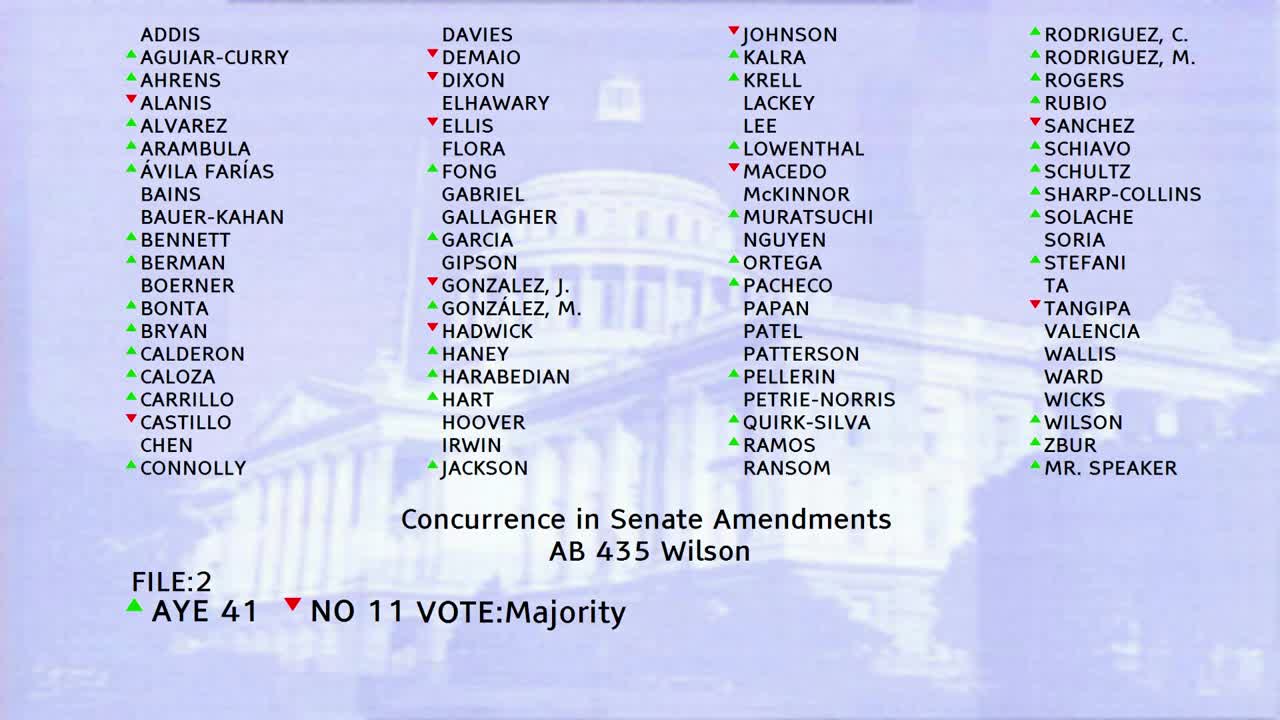 2MIN
Assembly Floor
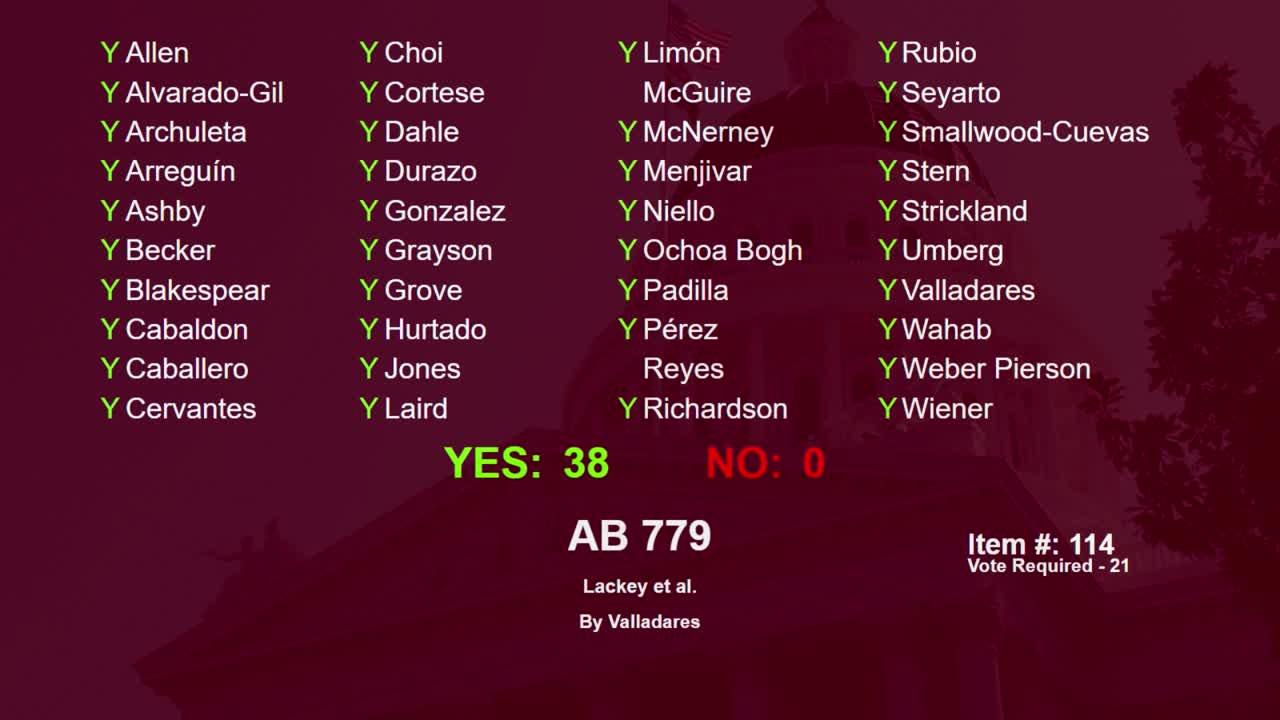 2MIN
Senate Floor
 1MIN
Senate Standing Committee on Appropriations
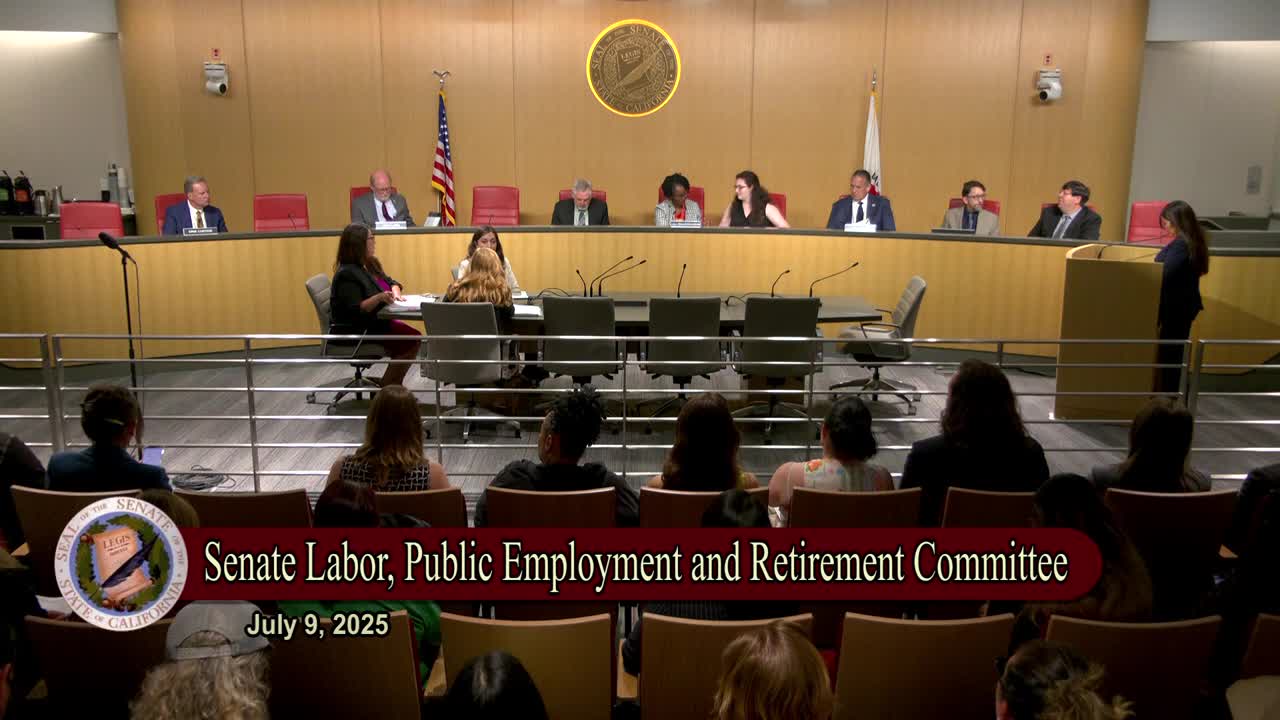 43MIN
Senate Standing Committee on Labor, Public Employment and Retirement
 1MIN
Assembly Floor
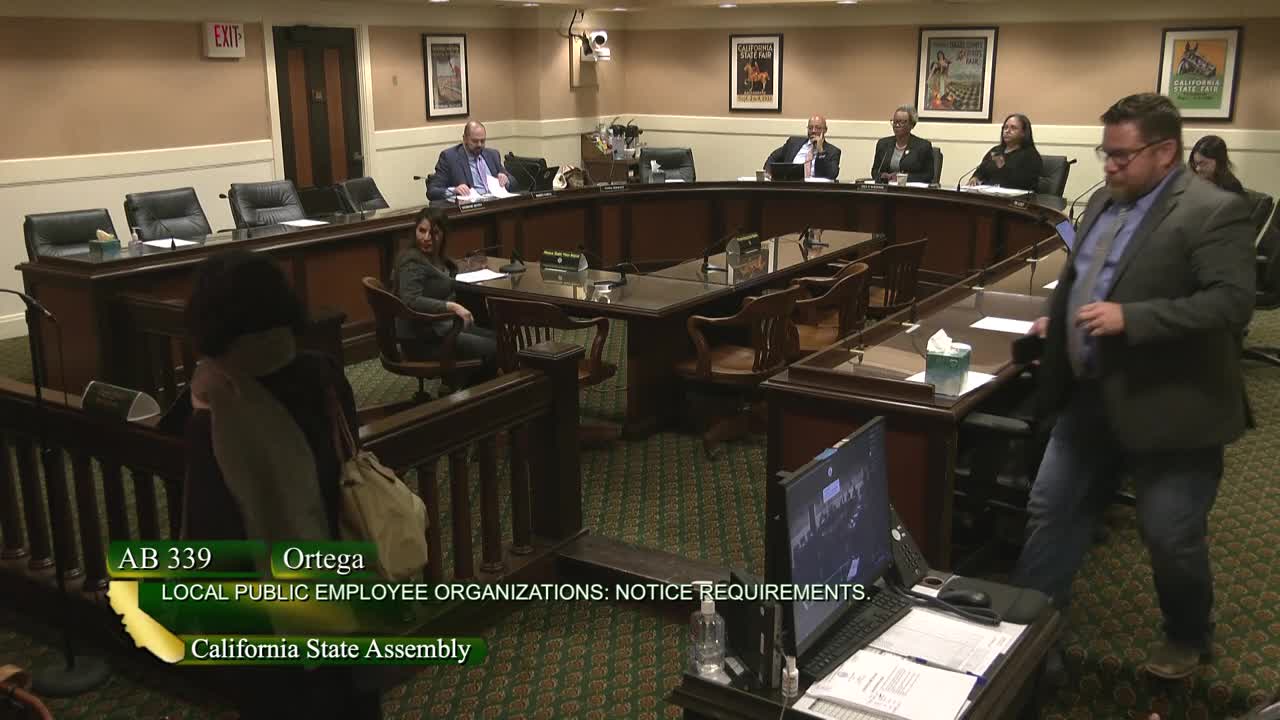 15MIN
Assembly Standing Committee on Public Employment and Retirement
Bill Author

Bill Co-Author(s):