AB 343: California Public Records Act: elected or appointed officials.
- Session Year: 2025-2026
- House: Assembly
- Latest Version Date: 2025-10-01
Current Status:
Passed
(2025-10-01: Chaptered by Secretary of State - Chapter 142, Statutes of 2025.)
Introduced
In Committee
Awaiting First Chamber Vote
Passed First Chamber
In Committee
Awaiting Second Chamber Vote
Passed Second Chamber
Enacted
Existing law, the California Public Records Act, requires state and local agencies to make their records available for public inspection, unless an exemption from disclosure applies. That law exempts from disclosure specified information relating to elected or appointed officials, and makes specified disclosures of information relating to elected or appointed officials a crime. The law defines elected or appointed official for that purpose to include, among other things, a judge or court commissioner, a federal judge or federal defender, and a judge of a federally recognized Indian tribe.
This bill would additionally include in the definition of the term elected or appointed official, a retired judge or court commissioner, an active or retired judge of the State Bar Court, a retired federal judge or federal defender, a retired judge of a federally recognized Indian tribe, and an appointee of a court to serve as childrens counsel in a family or dependency proceeding. By expanding a crime related to the unauthorized disclosure of information about elected or appointed officials, this bill would impose a state-mandated local program.
Existing constitutional provisions require that a statute that limits the right of access to the meetings of public bodies or the writings of public officials and agencies be adopted with findings demonstrating the interest protected by the limitation and the need for protecting that interest.
This bill would make legislative findings to that effect.
The California Constitution requires the state to reimburse local agencies and school districts for certain costs mandated by the state. Statutory provisions establish procedures for making that reimbursement.
This bill would provide that no reimbursement is required by this act for a specified reason.
Existing law, the California Public Records Act, requires state and local agencies to make their records available for public inspection, unless an exemption from disclosure applies. That law exempts from disclosure specified information relating to elected or appointed officials, and makes specified disclosures of information relating to elected or appointed officials a crime. The law defines elected or appointed official for that purpose to include, among other things, a judge or court commissioner, a federal judge or federal defender, and a judge of a federally recognized Indian tribe.
This bill would additionally include in the definition of the term elected or appointed official, a retired judge or court commissioner, a retired federal judge or federal defender, a retired judge of a federally recognized Indian tribe, and an appointee of a court to serve as childrens counsel in a family or dependency proceeding. By expanding a crime related to the unauthorized disclosure of information about elected or appointed officials, this bill would impose a state-mandated local program.
Existing constitutional provisions require that a statute that limits the right of access to the meetings of public bodies or the writings of public officials and agencies be adopted with findings demonstrating the interest protected by the limitation and the need for protecting that interest.
This bill would make legislative findings to that effect.
The California Constitution requires the state to reimburse local agencies and school districts for certain costs mandated by the state. Statutory provisions establish procedures for making that reimbursement.
This bill would provide that no reimbursement is required by this act for a specified reason.
For purposes of Article 3 (commencing with Section 7928.200) of Chapter 14 of Part 5, elected or appointed official includes, but is not limited to, all of the following:
(a)A state constitutional officer.
(b)A Member of the Legislature.
(c)An active or retired judge, court commissioner, or judge of the State Bar Court.
(d)A district attorney.
(e)A public defender.
(f)A member of a city council.
(g)A member of a board of supervisors.
(h)An appointee of the Governor.
(i)An appointee of the Legislature.
(j)A mayor.
(k)A city attorney.
(l)A police chief or sheriff.
(m)A public safety official.
(n)A state administrative law judge.
(o)An active or retired federal judge or federal defender.
(p)A member of the United States Congress or appointee of the President of the United States.
(q)An active or retired judge of a federally recognized Indian tribe.
(r)An appointee of a court to serve as childrens counsel in a family or dependency proceeding.
SEC. 2.The Legislature finds and declares that Section 1 of this act, which amends Section 7920.500 of the Government Code, imposes a limitation on the publics right of access to the meetings of public bodies or the writings of public officials and agencies within the meaning of Section 3 of Article I of the California Constitution. Pursuant to that constitutional provision, the Legislature makes the following findings to demonstrate the interest protected by this limitation and the need for protecting that interest:
The California Public Records Act protects personal information, such as residence addresses and personal telephone numbers, of elected or appointed officials from disclosure. The need to protect elected or appointed officials and their families from harassment or targeted violence outweighs the interest in public disclosure of this information.
SEC. 3.No reimbursement is required by this act pursuant to Section 6 of Article XIIIB of the California Constitution because the only costs that may be incurred by a local agency or school district will be incurred because this act creates a new crime or infraction, eliminates a crime or infraction, or changes the penalty for a crime or infraction, within the meaning of Section 17556 of the Government Code, or changes the definition of a crime within the meaning of Section 6 of Article XIIIB of the California Constitution.
For purposes of Article 3 (commencing with Section 7928.200) of Chapter 14 of Part 5, elected or appointed official includes, but is not limited to, all of the following:
(a)A state constitutional officer.
(b)A Member of the Legislature.
(c)An active or retired judge or court commissioner. judge, court commissioner, or judge of the State Bar Court.
(d)A district attorney.
(e)A public defender.
(f)A member of a city council.
(g)A member of a board of supervisors.
(h)An appointee of the Governor.
(i)An appointee of the Legislature.
(j)A mayor.
(k)A city attorney.
(l)A police chief or sheriff.
(m)A public safety official.
(n)A state administrative law judge.
(o)An active or retired federal judge or federal defender.
(p)A member of the United States Congress or appointee of the President of the United States.
(q)An active or retired judge of a federally recognized Indian tribe.
(r)An appointee of a court to serve as childrens counsel in a family or dependency proceeding.
SEC. 2.The Legislature finds and declares that Section 1 of this act, which amends Section 7920.500 of the Government Code, imposes a limitation on the publics right of access to the meetings of public bodies or the writings of public officials and agencies within the meaning of Section 3 of Article I of the California Constitution. Pursuant to that constitutional provision, the Legislature makes the following findings to demonstrate the interest protected by this limitation and the need for protecting that interest:
The California Public Records Act protects personal information, such as residence addresses and personal telephone numbers, of elected or appointed officials from disclosure. The need to protect elected or appointed officials and their families from harassment or targeted violence outweighs the interest in public disclosure of this information.
SEC. 3.No reimbursement is required by this act pursuant to Section 6 of Article XIIIB of the California Constitution because the only costs that may be incurred by a local agency or school district will be incurred because this act creates a new crime or infraction, eliminates a crime or infraction, or changes the penalty for a crime or infraction, within the meaning of Section 17556 of the Government Code, or changes the definition of a crime within the meaning of Section 6 of Article XIIIB of the California Constitution.
For purposes of Article 3 (commencing with Section 7928.200) of Chapter 14 of Part 5, elected or appointed official includes, but is not limited to, all of the following:
(a)A state constitutional officer.
(b)A Member of the Legislature.
(c)A An active or retired judge or court commissioner.
(d)A district attorney.
(e)A public defender.
(f)A member of a city council.
(g)A member of a board of supervisors.
(h)An appointee of the Governor.
(i)An appointee of the Legislature.
(j)A mayor.
(k)A city attorney.
(l)A police chief or sheriff.
(m)A public safety official.
(n)A state administrative law judge.
(o)A An active or retired federal judge or federal defender.
(p)A member of the United States Congress or appointee of the President of the United States.
(q)A An active or retired judge of a federally recognized Indian tribe.
(r)An appointee of a court to serve as childrens counsel in a family or dependency proceeding.
SEC. 2.The Legislature finds and declares that Section 1 of this act, which amends Section 7920.500 of the Government Code, imposes a limitation on the publics right of access to the meetings of public bodies or the writings of public officials and agencies within the meaning of Section 3 of Article I of the California Constitution. Pursuant to that constitutional provision, the Legislature makes the following findings to demonstrate the interest protected by this limitation and the need for protecting that interest:
The California Public Records Act protects personal information, such as residence addresses and personal telephone numbers, of elected or appointed officials from disclosure. The need to protect elected or appointed officials and their families from harassment or targeted violence outweighs the interest in public disclosure of this information.
SEC. 3.No reimbursement is required by this act pursuant to Section 6 of Article XIIIB of the California Constitution because the only costs that may be incurred by a local agency or school district will be incurred because this act creates a new crime or infraction, eliminates a crime or infraction, or changes the penalty for a crime or infraction, within the meaning of Section 17556 of the Government Code, or changes the definition of a crime within the meaning of Section 6 of Article XIIIB of the California Constitution.
|
Date
|
Status
|
|---|---|
| Oct 1, 2025 | Chaptered by Secretary of State - Chapter 142, Statutes of 2025. |
| Oct 1, 2025 | Approved by the Governor. |
| Sep 15, 2025 | Enrolled and presented to the Governor at 4:30 p.m. |
| Sep 8, 2025 | Senate amendments concurred in. To Engrossing and Enrolling. (Ayes 79. Noes 0. Page 3024.). |
| Sep 4, 2025 | In Assembly. Concurrence in Senate amendments pending. |
| Sep 4, 2025 | Read third time. Passed. Ordered to the Assembly. (Ayes 39. Noes 0. Page 2520.). |
| Sep 2, 2025 | Ordered to special consent calendar. |
| Aug 29, 2025 | Read second time. Ordered to third reading. |
| Aug 29, 2025 | From committee: Do pass. (Ayes 7. Noes 0.) (August 29). |
| Jul 7, 2025 | In committee: Referred to APPR. suspense file. |
| Jul 1, 2025 | From committee chair, with author's amendments: Amend, and re-refer to committee. Read second time, amended, and re-referred to Com. on APPR. |
| Jun 25, 2025 | From committee: Do pass and re-refer to Com. on APPR. with recommendation: To Consent Calendar. (Ayes 12. Noes 0.) (June 24). Re-referred to Com. on APPR. |
| Jun 11, 2025 | Referred to Com. on JUD. |
| Jun 3, 2025 | In Senate. Read first time. To Com. on RLS. for assignment. |
| Jun 2, 2025 | Read third time. Passed. Ordered to the Senate. (Ayes 79. Noes 0. Page 1820.) |
| May 27, 2025 | Read second time. Ordered to third reading. |
| May 23, 2025 | From committee: Do pass. (Ayes 14. Noes 0.) (May 23). |
| Apr 9, 2025 | In committee: Set, first hearing. Referred to APPR. suspense file. |
| Mar 4, 2025 | From committee: Do pass and re-refer to Com. on APPR. with recommendation: To Consent Calendar. (Ayes 12. Noes 0.) (March 4). Re-referred to Com. on APPR. |
| Feb 10, 2025 | Referred to Com. on JUD. |
| Jan 30, 2025 | From printer. May be heard in committee March 1. |
| Jan 29, 2025 | Read first time. To print. |
|
Date
|
Description
|
Location
|
Votes
|
|
|---|---|---|---|---|
| Sep 8, 2025 | AB 343 Pacheco Concurrence in Senate Amendments | Assembly Floor |
Passed |
|
| Sep 4, 2025 | Special Consent AB343 Pacheco et al. | Senate Floor |
Passed |
|
| Aug 29, 2025 | Do pass | Senate Standing Committee on Appropriations |
Passed |
|
| Jul 7, 2025 | Placed on suspense file | Senate Standing Committee on Appropriations |
Passed |
|
| Jun 24, 2025 | Do pass, but first be re-referred to the Committee on [Appropriations] with the recommendation: To Consent Calendar | Senate Standing Committee on Judiciary |
Passed |
|
| Jun 2, 2025 | AB 343 Pacheco Assembly Third Reading | Assembly Floor |
Passed |
|
| May 23, 2025 | Do pass. | Assembly Standing Committee on Appropriations |
Passed |
|
| Mar 4, 2025 | Do pass and be re-referred to the Committee on [Appropriations] with recommendation: To Consent Calendar | Assembly Standing Committee on Judiciary |
Passed |
This list shows positions taken on this bill by organizations on the date displayed, which is linked to the original source.
Positions by individuals are not included.
|
Organization
|
Position
|
Date
|
|---|---|---|
| California Judges Association | ** Support | |
| California Tribal Business Alliance | ** Support | |
| Judicial Council of California | ** Support | |
| Rob Bonta, Attorney General | ** Support |
CONCURRENCE IN SENATE AMENDMENTS
CSA1 Bill Id:AB 343
Author:(Pacheco)
As Amended Ver:July 1, 2025
Majority vote
SUMMARY
Expands the definition of "elected or appointed official" so that protections in existing law against disclosure of personal identifying information about such officials apply to more officials.
Major Provisions
- Expands the definition of "elected or appointed official" to include the following:
- A retired judge or court commissioner.
- A retired federal judge or federal defender.
- A retired judge of a federally recognized Indian tribe.
- An appointee of a court to serve as children's counsel in a family or dependency proceeding.
- An active or retired judge of the State Bar Court.
- Makes the following legislative finding to demonstrate the interest protected by the bill's limitation on the right of the public to access public records and the need for protecting that interest:
The California Public Records Act protects personal information, such as residence addresses and personal telephone numbers, of elected or appointed officials from disclosure. The need to protect elected or appointed officials and their families from harassment or targeted violence outweighs the interest in public disclosure of this information
Senate Amendments
Adds an active or retired judge of the State Bar Court in the definition of "elected or appointed official."
COMMENTS
This bill, sponsored by the California Judges Association, seeks to expand the definition of "elected or appointed official" so that protections in existing law against disclosure of personal identifying information of elected and appointed officials would apply to a retired judge or court commissioner; retired federal judge or federal defender; retired judge of a federally recognized Indian tribe; an active or retired judge of the State Bar Court; and an attorney appointed by a court to serve as children's counsel in a family or dependency proceeding. By including these individuals in the definition of "elected or appointed official," some personal information about them would be prohibited from being posted on an agency's internet website; and disclosure of the information would be a crime in specific limited circumstances.
Public Records and Public Access to Such Records. Under the California Public Records Act (CPRA), public records are open to inspection at all times during the office hours of a public agency for inspection by the public, unless exempted. (Government Code (GC) Section 7922.525.) A public record is defined as any writing containing information relating to the conduct of the public's business prepared, owned, used, or retained by any public agency regardless of physical form or characteristics. (GC Section 7920.530.) The CPRA allows a public agency 10 days or, in specified "unusual circumstances," an additional 14 days after the 10-day period to respond to a request for the requested public record, and authorizes the agency to charge a fee for its "direct costs of duplication" of the record. (Sections GC 7922.530(a), 7922.535.)
Despite the CPRA's general rule that public records are open to inspection and subject to disclosure, the CPRA provides exceptions providing that a document, or a portion thereof, is not subject to public disclosure. An exemption can be explicit in the CPRA itself, pursuant to another law, or justified by the agency's determination that, based on the facts of the particular case, the public interest served by not disclosing the record clearly outweighs the public interest served by disclosure of the record. (See GC Sections 7922.000, 7922.525, 7922.530.)
Limits (and Inconsistencies) in Existing Law Regarding Disclosure of Address and Telephone Information Regarding Public Employees and Elected and Appointed Officials. Existing law provides that information about the home address and phone number of a public employee is generally exempt from disclosure under the CPRA pursuant to GC Section 7928.300. Therefore, except in specified circumstances, an agency is required to redact information about the employee's home address and /or phone number (and similar information about the employee) from any record that otherwise would be open to the public and subject to disclosure.
On the other hand, existing law does not explicitly prohibit the inspection and disclosure of the home address and telephone number of an elected or appointed official in response to a CPRA request. An agency is required to provide public access to any record, including the home address information, unless the agency made an argument under GC Section 7922.000 that on the facts of the particular case, the public interest served by not disclosing the record clearly outweighed the public interest served by disclosure of the record. However, in what appears to be a compromise between the public's interest in transparency and an official's interest in privacy (and safety), existing law limits the disclosure of information about elected and appointed officials in two ways. First, it prohibits a state or local agency from publicly posting the home address, telephone number, or both the name and assessor parcel number of any elected or appointed official on the internet without first obtaining the written permission of that individual. (GC Section 7928.205.) Second, existing law prohibits a person from knowingly posting the home address or telephone number of any elected or appointed official, or of the official's residing spouse or child, on the internet knowing that person is an elected or appointed official and intending to cause imminent great bodily harm that is likely to occur or threatening to cause imminent great bodily harm to that individual. (GC Section 7928.210.) Violation is a misdemeanor, unless the violation leads to the bodily injury of the official, or his or her residing spouse or child, in which case the violation is a misdemeanor or a felony. (Ibid.)
What is the rationale for this difference in laws governing disclosure of private information, depending on whether the person is a public employee, as opposed to an elected or appointed official? It appears that the Legislature may have concluded that the public has a greater interest in knowing the home address of an elected or appointed official. For example, unless otherwise specifically provided, no person is eligible to be elected or appointed to an elective office unless that person is a registered voter and otherwise qualified to vote for that office at the time that nomination papers are issued to the person or at the time of the person's appointment. (Elections Code Section 201.) In other words, unless otherwise specified, the person appointed or elected to an office must live in the geographic area that the office represents. There is a strong public interest –for not only residents who live in the geographic area represented by the office, but also the press, and the public in general – in knowing where the official lives.
This bill. As explained above, existing law prohibits a state or local agency from publicly posting the home address, telephone number, or both the name and assessor parcel number of any elected or appointed official on the internet without first obtaining the written permission of that individual. (GC Section 7928.205.) And existing law makes it a crime for a person to knowingly post the home address or telephone number of any elected or appointed official, or of the official's residing spouse or child, on the internet knowing that person is an elected or appointed official and intending to cause imminent great bodily harm that is likely to occur or threatening to cause imminent great bodily harm to that individual. (GC Section 7928.210.)
This bill would apply those provisions to a retired judge or court commissioner; retired federal judge or federal defender; retired judge of a federally recognized Indian tribe; and an attorney appointed by a court to serve as children's counsel in a family or dependency proceeding; an active or retired judge of the State Bar Court. Most of these individuals would meet the definition of an "elected or appointed official" in current law if they are active, rather than retired; or if they worked for the state or a local government, rather than the federal government). The only entirely new addition to the definition is an attorney who has been court-appointed "to serve as children's counsel in a family or dependency proceeding." Such proceedings are notoriously contentious and can be dangerous as the result of domestic violence and anger about court proceedings in which high-stakes child custody and parental rights, among other issues, are decided. It makes sense that an attorney representing a child – who literally is caught in the middle of the dispute between or about the child's parents – may need their personal information to be protected from disclosure by an agency, just like any other "elected or appointed official."
According to the Author
Nationwide elected and appointed officials face rising threats and violence against themselves and their family members. AB 343 extends the definition of elected or appointed official to retired state, federal, and tribal judges, court commissioners, and federal defenders, adding safeguards to these essential professions. The bill also includes children's counsel appointed by the court in a family or dependency proceeding as they often are subjected to threats from disgruntled relatives at their law offices and homes.
Arguments in Support
The California Judges Association, sponsor of the bill, writes the following to explain why the bill is necessary:
California already has some of the strongest privacy laws in the country, including those additional protections for elected and appointed officials. . . . Unfortunately, the definition of elected and appointed official does not expressly include retired judges on any level – state, federal, or tribal. Because threats to judicial officials don't stop just because a judge retires from the bench, AB 343 seeks to ensure the existing protections continue into retirement.
. . . Unfortunately, children's counsel are too often subjected to threats to their safety at their law offices and homes because of their important work. Reportedly, a litigant recently learned the home addresses of several attorneys believed to be children's counsel in Family Court [. . .]. Children's counsel in both Family Court and Juvenile Dependency performs similar functions (i.e. home visits, investigation regarding allegations of child abuse) as some parties that are currently included as elected and appointed officials such as an employee of the district attorney or public defender. AB 343 seeks to extend the elected and appointed official's designation to these court appointed children's counsel.
Arguments in Opposition
None on file
FISCAL COMMENTS
The Senate Appropriations Committee writes regarding the fiscal impact:
- Unknown, potentially significant cost to the state funded trial court system (Trial Court Trust Fund, General Fund) to adjudicate civil and criminal actions. This bill allows specified officials whose information has been made public to bring a civil action seeking injunction or declarative relief, which may lead to additional case filings that otherwise would not have been commenced, with attendant workload and resource costs to the court. The expanded crime in this bill will also increase costs to the trial courts. Defendants are constitutionally guaranteed certain rights during criminal proceedings, including the right to a jury trial and the right to counsel (at public expense if the defendants are unable to afford the costs of representation).
The fiscal impact of this bill to the courts will depend on many unknowns, including the numbers of people charged with an offense and the factors unique to each case. An eight-hour court day costs approximately $10,500 in staff in workload. This is a conservative estimate, based on the hourly rate of court personnel including at minimum the judge, clerk, bailiff, court reporter, jury administrator, administrative staff, and jury per-diems. If court days exceed 10, costs to the trial courts could reach hundreds of thousands of dollars. In 2023–24, over 4.8 million cases were filed statewide in the superior courts, including 451,647 misdemeanor cases, and 179,821 felony cases. Filings increased over the past year, driven mostly by misdemeanors and infractions, and civil limited cases. While the courts are not funded on a workload basis, an increase in workload could result in delayed court services and would put pressure on the General Fund to fund additional staff and resources and to increase the amount appropriated to backfill for trial court operations.
- Unknown, potentially significant costs (General Fund) to the Department of Corrections and Rehabilitation (CDCR) to incarcerate people for the crime expanded by this bill. The Legislative Analyst's Office (LAO) estimates the average annual cost to incarcerate one person in state prison is $133,000. The annual cost of operating a mental health crisis bed at CDCR is around $400,000. As part of the ongoing Coleman court case, CDCR has been incurring fines monthly since April 2023 for failing to reduce vacancy rates for five mental health classifications. The state has paid over $200 million in fines to date, and is still accruing fines. Thus, if even if just one person is sentenced to state prison for one year under this bill, it will add significant costs pressures to CDCR.
- Unknown, potentially significant costs (local funds, General Fund) to the counties to incarcerate people for the crime expanded by this bill. The average annual cost to incarcerate one person in county jail varies by county, but likely ranges from $70,000 to $90,000 per year. For example, in 2021, Los Angeles County budgeted $1.3 billion for jail spending, including $89,580 per incarcerated person. Actual incarceration costs to counties will depend on the number of convictions and the length of each sentence. Generally, county incarceration costs are not reimbursable state mandates pursuant to Proposition 30 (2012).
- Potential cost pressures (General Fund) to the Department of State Hospitals (DSH), in order to adequately house, treat, and care for persons committed to DSH that otherwise would not. Cost pressures to DSH are connected with an increase in state prison sentences. Expanding a crime will increase the number of defendants declared incompetent to stand trial (IST), or committed to DSH due to their being not guilty by reason of insanity. DSH's proposed budget for fiscal year 2025-26 totals $3.4 billion – an increase of $3.4 million from the 2024 Budget Act. An increase the DSH population would result in the need for additional funding.
- No significant fiscal impact to the Department of Justice (DOJ). However, DOJ notes to staff that, while the impact of this would not pose a significant impact to the DOJ, as numerous bills this session may result in no significant impact to the DOJ, should an aggregate of these bills chapter, the DOJ would submit a workload BCP for additional resources to process the increase to the DOJ workload.
VOTES:
ASM JUDICIARY: 12-0-0
YES: Kalra, Bauer-Kahan, Bryan, Connolly, Chen, Essayli, Harabedian, Pacheco, Papan, Sanchez, Stefani, Zbur
ASM APPROPRIATIONS: 14-0-1
YES: Wicks, Arambula, Calderon, Caloza, Dixon, Elhawary, Fong, Mark González, Hart, Pacheco, Pellerin, Solache, Ta, Tangipa
ABS, ABST OR NV: Sanchez
ASSEMBLY FLOOR: 79-0-0
YES: Addis, Aguiar-Curry, Ahrens, Alanis, Alvarez, Arambula, Ávila Farías, Bains, Bauer-Kahan, Bennett, Berman, Boerner, Bonta, Bryan, Calderon, Caloza, Carrillo, Castillo, Chen, Connolly, Davies, DeMaio, Dixon, Elhawary, Ellis, Flora, Fong, Gabriel, Gallagher, Garcia, Gipson, Jeff Gonzalez, Mark González, Hadwick, Haney, Harabedian, Hart, Hoover, Irwin, Jackson, Kalra, Krell, Lackey, Lee, Lowenthal, Macedo, McKinnor, Muratsuchi, Nguyen, Ortega, Pacheco, Papan, Patel, Patterson, Pellerin, Petrie-Norris, Quirk-Silva, Ramos, Ransom, Celeste Rodriguez, Michelle Rodriguez, Rogers, Blanca Rubio, Sanchez, Schiavo, Schultz, Sharp-Collins, Solache, Soria, Stefani, Ta, Tangipa, Valencia, Wallis, Ward, Wicks, Wilson, Zbur, Rivas
SENATE FLOOR: 39-0-1
YES: Allen, Alvarado-Gil, Archuleta, Arreguín, Ashby, Becker, Blakespear, Cabaldon, Caballero, Cervantes, Choi, Cortese, Dahle, Durazo, Gonzalez, Grayson, Grove, Hurtado, Jones, Laird, Limón, McGuire, McNerney, Menjivar, Niello, Ochoa Bogh, Padilla, Pérez, Richardson, Rubio, Seyarto, Smallwood-Cuevas, Stern, Strickland, Umberg, Valladares, Wahab, Weber Pierson, Wiener
ABS, ABST OR NV: Reyes
UPDATED
VERSION: July 1, 2025
CONSULTANT: Alison Merrilees / JUD. / (916) 319-2334 FN: 0001605
SENATE RULES COMMITTEE Office of Senate Floor Analyses (916) 651-1520 Fax: (916) 327-4478 | AB 343 |
THIRD READING
Bill No: AB 343
Author: Pacheco (D), et al.
Amended: 7/1/25 in Senate
Vote: 21
SENATE JUDICIARY COMMITTEE: 12-0, 6/24/25
AYES: Umberg, Niello, Allen, Arreguín, Ashby, Caballero, Durazo, Laird, Stern, Wahab, Weber Pierson, Wiener
NO VOTE RECORDED: Valladares
SENATE APPROPRIATIONS COMMITTEE: 7-0, 8/29/25
AYES: Caballero, Seyarto, Cabaldon, Dahle, Grayson, Richardson, Wahab
ASSEMBLY FLOOR: 79-0, 6/2/25 - See last page for vote
SUBJECT: California Public Records Act: elected or appointed officials
SOURCE: California Judges Association
DIGEST:
This bill expands the definition of “elected or appointed official” under the California Public Records Act (CPRA) to include retired judges, court commissioners, federal judges, federal defenders, or judges of a federally recognized Indian tribe, active or retired State Bar Court judges, and appointees of a court to serve as children’s counsel in a family or dependency proceeding.
ANALYSIS:
Existing law:
- Provides, pursuant to the California Constitution, that the people have the right of access to information concerning the conduct of the people’s business, and, therefore, the meetings of public bodies and the writings of public officials and agencies are required to be open to public scrutiny. (California Constitution, Article (Cal. const. art.) I, § 3(b)(1).)
- Requires a statute to be broadly construed if it furthers the people’s right of access, and narrowly construed if it limits the right of access. (Cal. const. art. I, § 3(b)(1).)
- Requires a statute that limits the public’s right of access to be adopted with findings demonstrating the interest protected by the limitation and the need for protecting that interest. (Cal. const. art. I, § 3(b)(1).)
- Governs the disclosure of information collected and maintained by public agencies pursuant to the CPRA. (Government (Gov.) Code §§ 7920.000 et seq.)
- Provides that the home addresses, home telephone numbers, personal cellular telephone numbers, and birthdates of all employees of a public agency are not public records and are not open to public inspection. (Gov. Code § 7928.300(a).)
- Prohibits a person from knowingly posting the home address or telephone number of any elected or appointed official, or of the official’s residing spouse or child, on the internet knowing that person is an elected or appointed official and intending to cause imminent great bodily harm that is likely to occur or threatening to cause imminent great bodily harm to that individual, and provides that a violation is a misdemeanor, unless the violation leads to the bodily injury of the official, or their residing spouse or child, in which case the violation is a misdemeanor or a felony. (Gov. Code § 7928.210.)
- Prohibits any person, business, or association from soliciting, selling, or trading on the internet the home address or telephone number of an elected or appointed official with the intent to cause imminent great bodily harm to the official or to any person residing at the official’s home address. Authorizes an official whose home address of telephone number is solicited, sold, or traded in violation of this prohibition to bring an action in court and provides that they can get specified damages. (Gov. Code § 7928.230.)
- Prohibits a state or local agency from publicly posting the home address, telephone number, or both the name and assessor parcel number of any elected or appointed official on the internet without first obtaining the written permission of that individual. (Gov. Code § 7928.205.)
- Defines an “elected or appointed official” to include, among others, judges, court commissioners, federal judges, federal defenders, and a judge of a federally recognized Indian tribe. (Gov. Code § 7920.500.)
This bill:
- Expands the definition of “elected or appointed official” to include: a retired judge, court commissioner, federal judge, federal defender, or judge of a federally recognized Indian tribe; an active or retired State Bar Court judge; and an appointee of a court to serve as children’s counsel in a family or dependency proceeding.
- States that the Legislature finds and declares that the limitation on the access to public records in this bill is necessary to protect elected or appointed officials and their families from harassment or targeted violence.
Comments
The recent events in Minnesota where elected politicians and their spouses were targeted in their homes and, in one instance, tragically killed provides a stark reminder that serving in public office poses risks for those who choose to serve and their family.[1] This bill seeks to extend existing protections under the CPRA that relate to the disclosure of the home address or telephone number of an elected or appointed official to: retired judges, court commissioners, federal judges, federal defenders and judges of a federally recognized Indian tribe; an active or retired State Bar Court judge; and an appointee of a court to serve as children’s counsel in a family or dependency proceeding. The author and sponsor of this bill argue this is needed to ensure retired judicial officers continue to have their personal information protected and to ensure that persons being appointed as counsel in family or dependency proceedings have their personal information protected as well due to the often-heightened emotional and sensitive nature of those proceedings.
Access to information concerning the conduct of the people’s business is a fundamental and necessary right of every person in this state. (Gov. Code § 7921.000.) In 2004, the right of public access was enshrined in the California Constitution with the passage of Proposition 59 (Nov. 3, 2004, statewide general election),[2] which amended the California Constitution to specifically protect the right of the public to access and obtain government records: “The people have the right of access to information concerning the conduct of the people’s business, and therefore . . . the writings of public officials and agencies shall be open to public scrutiny.” (Cal. Const., art. I, sec. 3 (b)(1).) In 2014, voters approved Proposition 42 (Jun. 3, 2014, statewide direct primary election)[3] to further increase public access to government records by requiring local agencies to comply with the CPRA and the Ralph M. Brown Act[4], and with any subsequent statutory enactment amending either act, as provided. (Cal. Const., art. I, sec. 3 (b)(7).)
Under the CPRA, public records are open to inspection by the public at all times during the office hours of the agency, unless they are exempt from disclosure. (Gov. Coed § 7922.525.) A public record is defined as any writing containing information relating to the conduct of the public’s business that is prepared, owned, used, or retained by any public agency regardless of physical form or characteristics. (Gov. Code § 7920.530.) There are several general categories of documents or information that are permissively exempt from disclosure under the CPRA essentially due to the character of the information. The exempt information can be withheld by the public agency with custody of the information, but it also may be disclosed if it is shown that the public’s interest in disclosure outweighs the public’s interest in non-disclosure of the information. (CBS, Inc. v. Block (1986) 42 Cal.3d 646, at 652.). Additionally, some records are prohibited from disclosure or are specifically stated to not be public records. (see Gov. Code § 7924.110(a).) For example, the home addresses, home telephone numbers, personal cellular telephone numbers, and birthdates of all employees of a public agency are not public records and are not open to public inspection. (Gov. Code § 7928.300(a).)
The CPRA provides existing civil and criminal protections for the disclosure or posting of information of an “elected or appointed official” with the intent to cause imminent great bodily harm to the official or to any person residing at the official’s home address. (Gov. Code § 7928.210 & 7928.230.) Additionally, a state or local agency is prohibited from publicly posting the home address, telephone number, or both the name and assessor parcel number of any elected or appointed official on the internet without first obtaining the written permission of that individual. (Gov. Code § 7928.205.)
California generally recognizes that public access to information concerning the conduct of the people’s business is a fundamental and necessary right. (Cal. Const., art. I, § 3; Gov. Code, § 7921.000.) At the same time, the state recognizes that this right must be balanced against the right to privacy. (Cal. Const., art. I, § 1.) By expanding the definition of “elected or appointed official,” this bill arguably limits access to public records. This bill states this limitation is necessary to protect elected or appointed officials and their families from harassment or targeted violence and that this outweighs the interest in public disclosure of their personal information. In light of the concerns raised by this bill, this limitation seems warranted and consistent with the public policy of protecting the personal information of elected or appointed officials.
FISCAL EFFECT: Appropriation: No Fiscal Com.: Yes Local: Yes
The Senate Appropriations Committee writes regarding the fiscal impact:
- Unknown, potentially significant cost to the state funded trial court system (Trial Court Trust Fund, General Fund) to adjudicate civil and criminal actions. This bill allows specified officials whose information has been made public to bring a civil action seeking injunction or declarative relief, which may lead to additional case filings that otherwise would not have been commenced, with attendant workload and resource costs to the court. The expanded crime in this bill will also increase costs to the trial courts. Defendants are constitutionally guaranteed certain rights during criminal proceedings, including the right to a jury trial and the right to counsel (at public expense if the defendants are unable to afford the costs of representation).
The fiscal impact of this bill to the courts will depend on many unknowns, including the numbers of people charged with an offense and the factors unique to each case. An eight-hour court day costs approximately $10,500 in staff in workload. This is a conservative estimate, based on the hourly rate of court personnel including at minimum the judge, clerk, bailiff, court reporter, jury administrator, administrative staff, and jury per-diems. If court days exceed 10, costs to the trial courts could reach hundreds of thousands of dollars. In 2023–24, over 4.8 million cases were filed statewide in the superior courts, including 451,647 misdemeanor cases, and 179,821 felony cases. Filings increased over the past year, driven mostly by misdemeanors and infractions, and civil limited cases. While the courts are not funded on a workload basis, an increase in workload could result in delayed court services and would put pressure on the General Fund to fund additional staff and resources and to increase the amount appropriated to backfill for trial court operations.
- Unknown, potentially significant costs (General Fund) to the Department of Corrections and Rehabilitation (CDCR) to incarcerate people for the crime expanded by this bill. The Legislative Analyst’s Office (LAO) estimates the average annual cost to incarcerate one person in state prison is $133,000. The annual cost of operating a mental health crisis bed at CDCR is around $400,000. As part of the ongoing Coleman court case, CDCR has been incurring fines monthly since April 2023 for failing to reduce vacancy rates for five mental health classifications. The state has paid over $200 million in fines to date, and is still accruing fines. Thus, if even if just one person is sentenced to state prison for one year under this bill, it will add significant costs pressures to CDCR.
- Unknown, potentially significant costs (local funds, General Fund) to the counties to incarcerate people for the crime expanded by this bill. The average annual cost to incarcerate one person in county jail varies by county, but likely ranges from $70,000 to $90,000 per year. For example, in 2021, Los Angeles County budgeted $1.3 billion for jail spending, including $89,580 per incarcerated person. Actual incarceration costs to counties will depend on the number of convictions and the length of each sentence. Generally, county incarceration costs are not reimbursable state mandates pursuant to Proposition 30 (2012).
- Potential cost pressures (General Fund) to the Department of State Hospitals (DSH), in order to adequately house, treat, and care for persons committed to DSH that otherwise would not. Cost pressures to DSH are connected with an increase in state prison sentences. Expanding a crime will increase the number of defendants declared incompetent to stand trial (IST), or committed to DSH due to their being not guilty by reason of insanity. DSH’s proposed budget for fiscal year 2025-26 totals $3.4 billion – an increase of $3.4 million from the 2024 Budget Act. An increase the DSH population would result in the need for additional funding.
- No significant fiscal impact to the Department of Justice (DOJ). However, DOJ notes to staff that, while the impact of this would not pose a significant impact to the DOJ, as numerous bills this session may result in no significant impact to the DOJ, should an aggregate of these bills chapter, the DOJ would submit a workload BCP for additional resources to process the increase to the DOJ workload.
SUPPORT: (Verified 8/29/25)
California Judges Association (Source)
California Tribal Business Alliance
Judicial Council of California
Rob Bonta, Attorney General
OPPOSITION: (Verified 8/29/25)
None received
ARGUMENTS IN SUPPORT: The author writes:
California law prohibits the online posting of an elected or appointed official's home address, telephone number, and parcel number without their permission. Nationwide elected and appointed officials face rising threats and violence against themselves and their family members. AB 343 extends the definition of elected or appointed official to retired state, federal, and tribal judges, court commissioners, and federal defenders, adding safeguards to these essential professions. This bill also includes children's counsel appointed by the court in a family or dependency proceeding as they often are subjected to threats from disgruntled relatives at their law offices and homes.
The California Judges Association, the sponsor of this bill, writes in support stating:
In recent years, violence against judges has seen a significant increase nationwide. According to the U.S. Marshals Service, the entity in charge of protecting federal judges, they assessed 5,873 threats and inappropriate communications against the judiciary between 2021 and 2022. In general, federal judges, prosecutors, and court officials have faced over 4,500 threats in total—an unfortunate 400% increase since 2015. Additionally, state court facilities have recently been targeted nationwide by bomb threats, while state supreme court justices handling controversial cases experience rising incidents of threats and intimidation. There have been numerous instances of individuals with malicious intent using information found in public records to locate the address of an elected or appointed official.
Nationwide elected and appointed officials face rising threats and violence against themselves and their family members. Unfortunately, the recent assassination of a Kentucky district judge in his own chamber’s, the attempted murder of a Nevada district judge, and the violent harassment on public official’s family members highlight the continued need to ensure existing safeguards from improper disclosure of personal and sensitive information don’t end when a person retires. Current law provides additional disclosure protections to elected and appointed officials, as defined in Government Code Section 7920.500, beyond the other privacy laws. Unfortunately, this limited definition only applies to active state and federal judges, court commissioners, and tribal judges. This bill extends the definition to retired state, federal, and tribal judges, court commissioners, and federal defenders. Additionally, this bill also includes children’s counsels appointed by the court in a family or dependency proceeding to ensure children’s voices remain heard. […]
Additionally, in some jurisdictions, when children need representation and an advocate in family, probate, or juvenile dependency court, the court appoints children’s counsel. These court appointees essentially give voice to the interests and concerns of children. Unfortunately, children’s counsel is too often subjected to threats to their safety at their law offices and homes because of their important work. Reportedly, a litigant recently learned the home addresses of several attorneys believed to be children’s counsel in Family Court and went to the homes of the attorneys (and other professionals involved in the Family Court system) to take audio recordings and video recordings for publication in various social media platforms.
Children’s counsel in both Family Court and Juvenile Dependency performs similar functions (i.e. home visits, investigation regarding allegations of child abuse) as some parties that are currently included as elected and appointed officials such as an employee of the district attorney or public defender.
ASSEMBLY FLOOR: 79-0, 6/2/25
AYES: Addis, Aguiar-Curry, Ahrens, Alanis, Alvarez, Arambula, Ávila Farías, Bains, Bauer-Kahan, Bennett, Berman, Boerner, Bonta, Bryan, Calderon, Caloza, Carrillo, Castillo, Chen, Connolly, Davies, DeMaio, Dixon, Elhawary, Ellis, Flora, Fong, Gabriel, Gallagher, Garcia, Gipson, Jeff Gonzalez, Mark González, Hadwick, Haney, Harabedian, Hart, Hoover, Irwin, Jackson, Kalra, Krell, Lackey, Lee, Lowenthal, Macedo, McKinnor, Muratsuchi, Nguyen, Ortega, Pacheco, Papan, Patel, Patterson, Pellerin, Petrie-Norris, Quirk-Silva, Ramos, Ransom, Celeste Rodriguez, Michelle Rodriguez, Rogers, Blanca
Rubio, Sanchez, Schiavo, Schultz, Sharp-Collins, Solache, Soria, Stefani, Ta, Tangipa, Valencia, Wallis, Ward, Wicks, Wilson, Zbur, Rivas
Prepared by: Amanda Mattson / JUD. / (916) 651-4113
8/29/25 20:33:26
**** END ****
Steven Karnowski, et. al, The man suspected of shooting 2 Minnesota lawmakers is in custody after surrendering to the police, AP News, (June 16, 2025), available at https://apnews.com/article/minnesota-lawmakers-shot-8ce70a94c9eb90688baaa1a71faef6cc. ↑
Prop. 59 was placed on the ballot by a unanimous vote of both houses of the Legislature. (SCA 1 (Burton, Ch. 1, Stats. 2004).) ↑
Prop. 42 was placed on the ballot by a unanimous vote of both houses of the Legislature. (SCA 3 (Leno, Ch. 123, Stats. 2013).) ↑
The Ralph M. Brown Act is the open meetings laws that applies to local agencies. (Gov. Code §§ 59450 et. seq.) ↑
Senator Thomas Umberg, Chair
2025-2026 Regular Session
Bill No: AB 343 (Author:Pacheco)
Version: January 29, 2025
Hearing Date: June 24, 2025
Fiscal: Yes
Urgency: No
AMConsultant:
SUBJECT
California Public Records Act: elected or appointed officials
DIGEST
This bill expands the definition of “elected or appointed official” under the California Public Records Act to include retired judges, court commissioners, federal judges, federal defenders, or judges of a federally recognized Indian tribe, and an appointee of a court to serve as children’s counsel in a family or dependency proceeding.
EXECUTIVE SUMMARY
The recent events in Minnesota where elected politicians and their spouses were targeted in their homes and, in one instance, tragically killed provides a stark reminder that serving in public office poses risks for those who choose to serve and their family.[1] This bill seeks to extend existing protections under the CPRA that relate to the disclosure of the home address or telephone number of an elected or appointed official to: retired judges, court commissioners, federal judges, federal defenders and judges of a federally recognized Indian tribe; and an appointee of a court to serve as children’s counsel in a family or dependency proceeding. The author and sponsor of the bill argue this is needed to ensure retired judicial officers continue to have their personal information protected and to ensure that persons being appointed as counsel in family or dependency proceedings have their personal information protected as well due to the often-heightened emotional and sensitive nature of those proceedings. The bill is sponsored by the California Judges Association. The Committee received no timely opposition.
PROPOSED CHANGES TO THE LAW
Existing law:
- Provides, pursuant to the California Constitution, that the people have the right of access to information concerning the conduct of the people’s business, and, therefore, the meetings of public bodies and the writings of public officials and agencies are required to be open to public scrutiny. (Cal. const. art. I, § 3(b)(1).)
- Requires a statute to be broadly construed if it furthers the people’s right of access, and narrowly construed if it limits the right of access. (Cal. const. art. I, § 3(b)(1).)
- Requires a statute that limits the public’s right of access to be adopted with findings demonstrating the interest protected by the limitation and the need for protecting that interest. (Cal. const. art. I, § 3(b)(1).)
- Governs the disclosure of information collected and maintained by public agencies pursuant to the CPRA. (Gov. Code §§ 7920.000 et seq.)
- States that the Legislature, mindful of the individual right to privacy, finds and declares that access to information concerning the conduct of the people’s business is a fundamental and necessary right of every person in this state. (Gov. Code § 7921.000.)
- Defines “public records” as any writing containing information relating to the conduct of the public’s business prepared, owned, used, or retained by any state or local agency regardless of physical form or characteristics. (Gov. Code § 7920.530.)
- Provides that all public records are accessible to the public upon request, unless the record requested is exempt from public disclosure. (Gov. Code § 7922.530.)
- Provides that the home addresses, home telephone numbers, personal cellular telephone numbers, and birthdates of all employees of a public agency are not public records and are not open to public inspection. (Gov. Code § 7928.300(a).)
- Prohibits a person from knowingly posting the home address or telephone number of any elected or appointed official, or of the official’s residing spouse or child, on the internet knowing that person is an elected or appointed official and intending to cause imminent great bodily harm that is likely to occur or threatening to cause imminent great bodily harm to that individual, and provides that a violation is a misdemeanor, unless the violation leads to the bodily injury of the official, or their residing spouse or child, in which case the violation is a misdemeanor or a felony. (Gov. Code § 7928.210.)
- Prohibits any person, business, or association from soliciting, selling, or trading on the internet the home address or telephone number of an elected or appointed official with the intent to cause imminent great bodily harm to the official or to any person residing at the official’s home address. Authorizes an official whose home address of telephone number is solicited, sold, or traded in violation of this prohibition to bring an action in court and provides that they can get specified damages. (Gov. Code § 7928.230.)
- Prohibits a state or local agency from publicly posting the home address, telephone number, or both the name and assessor parcel number of any elected or appointed official on the internet without first obtaining the written permission of that individual. (Gov. Code § 7928.205.)
- Defines an “elected or appointed official” to include, among others, judges, court commissioners, federal judges, federal defenders, and a judge of a federally recognized Indian tribe. (Gov. Code §§ 7920.500.)
This bill:
- Expands the definition of “elected or appointed official” to include a retired judge, court commissioner, federal judge, federal defender, or judge of a federally recognized Indian tribe, and an appointee of a court to serve as children’s counsel in a family or dependency proceeding.
- States that the Legislature finds and declares that the limitation on the access to public records in this bill is necessary to protect elected or appointed officials and their families from harassment or targeted violence.
COMMENTS
- Stated need for the bill
The author writes:
California law prohibits the online posting of an elected or appointed official's home address, telephone number, and parcel number without their permission. Nationwide elected and appointed officials face rising threats and violence against themselves and their family members. AB 343 extends the definition of elected or appointed official to retired state, federal, and tribal judges, court commissioners, and federal defenders, adding safeguards to these essential professions. The bill also includes children's counsel appointed by the court in a family or dependency proceeding as they often are subjected to threats from disgruntled relatives at their law offices and homes.
- The CPRA, public records, and protections for elected or appointed officials
Access to information concerning the conduct of the people’s business is a fundamental and necessary right of every person in this state. (Gov. Code § 7921.000.) In 2004, the right of public access was enshrined in the California Constitution with the passage of Proposition 59 (Nov. 3, 2004, statewide general election),[2] which amended the California Constitution to specifically protect the right of the public to access and obtain government records: “The people have the right of access to information concerning the conduct of the people’s business, and therefore . . . the writings of public officials and agencies shall be open to public scrutiny.” (Cal. Const., art. I, sec. 3 (b)(1).) In 2014, voters approved Proposition 42 (Jun. 3, 2014, statewide direct primary election)[3] to further increase public access to government records by requiring local agencies to comply with the CPRA and the Ralph M. Brown Act[4], and with any subsequent statutory enactment amending either act, as provided. (Cal. Const., art. I, sec. 3 (b)(7).)
Under the CPRA, public records are open to inspection by the public at all times during the office hours of the agency, unless they are exempt from disclosure. (Gov. Coed § 7922.525.) A public record is defined as any writing containing information relating to the conduct of the public’s business that is prepared, owned, used, or retained by any public agency regardless of physical form or characteristics. (Gov. Code § 7920.530.) There are several general categories of documents or information that are permissively exempt from disclosure under the CPRA essentially due to the character of the information. The exempt information can be withheld by the public agency with custody of the information, but it also may be disclosed if it is shown that the public’s interest in disclosure outweighs the public’s interest in non-disclosure of the information. (CBS, Inc. v. Block (1986) 42 Cal.3d 646, at 652.). Additionally, some records are prohibited from disclosure or are specifically stated to not be public records. (see Gov. Code § 7924.110(a).) For example, the home addresses, home telephone numbers, personal cellular telephone numbers, and birthdates of all employees of a public agency are not public records and are not open to public inspection. (Gov. Code § 7928.300 (a).)
The CPRA provides existing civil and criminal protections for the disclosure or posting of information of an “elected or appointed official” with the intent to cause imminent great bodily harm to the official or to any person residing at the official’s home address. (Gov. Code § 7928.210 & 7928.230.) Additionally, a state or local agency is prohibited from publicly posting the home address, telephone number, or both the name and assessor parcel number of any elected or appointed official on the internet without first obtaining the written permission of that individual. (Gov. Code § 7928.205.)
California generally recognizes that public access to information concerning the conduct of the people’s business is a fundamental and necessary right. (Cal. Const., art. I, § 3; Gov. Code, § 7921.000.) At the same time, the state recognizes that this right must be balanced against the right to privacy. (Cal. Const., art. I, § 1.) By expanding the definition of “elected or appointed official,” the bill arguably limits access to public records. The bill states this limitation is necessary to protect elected or appointed officials and their families from harassment or targeted violence and that this outweighs the interest in public disclosure of their personal information. In light of the concerns raised by this bill, this limitation seems warranted and consistent with the public policy of protecting the personal information of elected or appointed officials.
- Prior limitations on the public disclosure of information about elected and appointed officials was held to violate the First Amendment
In 2017, a statute under the CPRA was challenged on several grounds, including that it violates the First Amendment of the U.S. Constitution. (Publius v. Boyer-Vine (E.D. Cal. 2017) 237 F.Supp.3d 997.) That statute prohibited a person, business, or association from publicly posting or publicly displaying on the internet the home address or telephone number of any elected or appointed official if that official has, either directly or through an agent, made a written demand of that person, business, or association to not disclose the official’s home address or telephone number (Gov. Code § 7928.215(b); previously Gov. Code § 6254.21(c)(1).)[5] The basis for enacting this provision was to protect the personal safety of covered officials and their families, which is a state interest of the highest order; however, a federal district court held that the statute violated the First Amendment’s overbreadth doctrine. (Id. at 1019.) The district court found that the statute was not narrowly tailored; and that is was both overinclusive because it prohibited publication of the information, regardless of whether the information was widely available to the public or had previously been disclosed, and underinclusive because it irrationally punished just publication on the internet but did not address other forms of publication, such as in newspapers. (Id. at 1020.)
This bill does not seem to raise the same First Amendment issues under the Publius case as the existing provisions under the CPRA prohibiting the posting or soliciting of information of an elected or public official requires intent to cause imminent great bodily harm to the official or to any person residing at the official’s home address. Further statutes prohibiting posting of said information specifically only apply to state or local governments.
- Statements in support
The California Judges Association, the sponsor of the bill, writes in support stating:
In recent years, violence against judges has seen a significant increase nationwide. According to the U.S. Marshals Service, the entity in charge of protecting federal judges, they assessed 5,873 threats and inappropriate communications against the judiciary between 2021 and 2022. In general, federal judges, prosecutors, and court officials have faced over 4,500 threats in total—an unfortunate 400% increase since 2015. Additionally, state court facilities have recently been targeted nationwide by bomb threats, while state supreme court justices handling controversial cases experience rising incidents of threats and intimidation. There have been numerous instances of individuals with malicious intent using information found in public records to locate the address of an elected or appointed official.
Nationwide elected and appointed officials face rising threats and violence against themselves and their family members. Unfortunately, the recent assassination of a Kentucky district judge in his own chamber’s, the attempted murder of a Nevada district judge, and the violent harassment on public official’s family members highlight the continued need to ensure existing safeguards from improper disclosure of personal and sensitive information don’t end when a person retires. Current law provides additional disclosure protections to elected and appointed officials, as defined in Government Code Section 7920.500, beyond the other privacy laws. Unfortunately, this limited definition only applies to active state and federal judges, court commissioners, and tribal judges. This bill extends the definition to retired state, federal, and tribal judges, court commissioners, and federal defenders. Additionally, this bill also includes children’s counsels appointed by the court in a family or dependency proceeding to ensure children’s voices remain heard. […]
Additionally, in some jurisdictions, when children need representation and an advocate in family, probate, or juvenile dependency court, the court appoints children’s counsel. These court appointees essentially give voice to the interests and concerns of children. Unfortunately, children’s counsel is too often subjected to threats to their safety at their law offices and homes because of their important work. Reportedly, a litigant recently learned the home addresses of several attorneys believed to be children’s counsel in Family Court and went to the homes of the attorneys (and other professionals involved in the Family Court system) to take audio recordings and video recordings for publication in various social media platforms.
Children’s counsel in both Family Court and Juvenile Dependency performs similar functions (i.e. home visits, investigation regarding allegations of child abuse) as some parties that are currently included as elected and appointed officials such as an employee of the district attorney or public defender.
SUPPORT
California Judges Association (sponsor)
OPPOSITION
None
RELATED LEGISLATION
Pending Legislation: None known.
Prior Legislation: AB 1785 (Pacheco, Ch. 551, Stats. 2024) prohibited a state or local agency from publicly posting, as defined, the home address, telephone number, or both the name and assessor parcel number associated with the home address of any elected or appointed official on the internet without first obtaining the written permission of that individual.
PRIOR VOTES
Assembly Floor (Ayes 79, Noes 0)
Assembly Appropriations Committee (Ayes 14, Noes 0)
Assembly Judiciary Committee (Ayes 12, Noes 0)
**************
Steven Karnowski, et. al, The man suspected of shooting 2 Minnesota lawmakers is in custody after surrendering to the police, AP News, (June 16, 2025), available at https://apnews.com/article/minnesota-lawmakers-shot-8ce70a94c9eb90688baaa1a71faef6cc. ↑
Prop. 59 was placed on the ballot by a unanimous vote of both houses of the Legislature. (SCA 1 (Burton, Ch. 1, Stats. 2004).) ↑
Prop. 42 was placed on the ballot by a unanimous vote of both houses of the Legislature. (SCA 3 (Leno, Ch. 123, Stats. 2013).) ↑
The Ralph M. Brown Act is the open meetings laws that applies to local agencies. (Gov. Code §§ 59450 et. seq.) ↑
In 2021 the CPRA was recodified by AB 473 (Chow, Ch. 614, Stats. 2021). Prior to the recodification, the equivalent to Section 7928.215 of the Government Code was Section 6254.21(c)(1) of that code. As such, the Plubius case refers to Section 6254.21(c)(1) throughout. ↑
ASSEMBLY THIRD READING
ATR Bill Id:AB 343
Author:(Pacheco)
As Introduced Ver:January 29, 2025
Majority vote
SUMMARY
Expands the definition of ″elected or appointed official″ so that protections in existing law against disclosure of personal identifying information about such officials apply to more officials.
Major Provisions
- Expands the definition of ″elected or appointed official″ to include the following:
- A retired judge or court commissioner.
- A retired federal judge or federal defender.
- A retired judge of a federally recognized Indian tribe.
- An appointee of a court to serve as children′s counsel in a family or dependency proceeding.
- Makes the following legislative finding to demonstrate the interest protected by the bill′s limitation on the right of the public to access public records and the need for protecting that interest:
The California Public Records Act protects personal information, such as residence addresses and personal telephone numbers, of elected or appointed officials from disclosure. The need to protect elected or appointed officials and their families from harassment or targeted violence outweighs the interest in public disclosure of this information.
COMMENTS
This bill, sponsored by the California Judges Association, seeks to expand the definition of ″elected or appointed official″ so that protections in existing law against disclosure of personal identifying information of elected and appointed officials would apply to a retired judge or court commissioner; retired federal judge or federal defender; retired judge of a federally recognized Indian tribe; and an attorney appointed by a court to serve as children′s counsel in a family or dependency proceeding. By including these individuals in the definition of ″elected or appointed official,″ some personal information about them would be prohibited from being posted on an agency′s internet website; and disclosure of the information would be a crime in specific limited circumstances.
Public Records and Public Access to Such Records. Under the California Public Records Act (CPRA), public records are open to inspection at all times during the office hours of a public agency for inspection by the public, unless exempted. (Government Code (GC) Section 7922.525.) A public record is defined as any writing containing information relating to the conduct of the public′s business prepared, owned, used, or retained by any public agency regardless of physical form or characteristics. (GC Section 7920.530.) The CPRA allows a public agency 10 days or, in specified ″unusual circumstances,″ an additional 14 days after the 10-day period to respond to a request for the requested public record, and authorizes the agency to charge a fee for its ″direct costs of duplication″ of the record. (GC Sections 7922.530(a), 7922.535.)
Despite the CPRA′s general rule that public records are open to inspection and subject to disclosure, the CPRA provides exceptions providing that a document, or a portion thereof, is not subject to public disclosure. An exemption can be explicit in the CPRA itself, pursuant to another law, or justified by the agency′s determination that, based on the facts of the particular case, the public interest served by not disclosing the record clearly outweighs the public interest served by disclosure of the record. (See GC Sections 7922.000, 7922.525, 7922.530.)
Limits (and Inconsistencies) in Existing Law Regarding Disclosure of Address and Telephone Information Regarding Public Employees and Elected and Appointed Officials. Existing law provides that information about the home address and phone number of a public employee is generally exempt from disclosure under the CPRA pursuant to GC Section 7928.300. Therefore, except in specified circumstances, an agency is required to redact information about the employee′s home address and /or phone number (and similar information about the employee) from any record that otherwise would be open to the public and subject to disclosure.
On the other hand, existing law does not explicitly prohibit the inspection and disclosure of the home address and telephone number of an elected or appointed official in response to a CPRA request. An agency is required to provide public access to any record, including the home address information, unless the agency made an argument under GC Section 7922.000 that on the facts of the particular case, the public interest served by not disclosing the record clearly outweighed the public interest served by disclosure of the record. However, in what appears to be a compromise between the public′s interest in transparency and an official′s interest in privacy (and safety), existing law limits the disclosure of information about elected and appointed officials in two ways. First, it prohibits a state or local agency from publicly posting the home address, telephone number, or both the name and assessor parcel number of any elected or appointed official on the internet without first obtaining the written permission of that individual. (GC Section 7928.205.) Second, existing law prohibits a person from knowingly posting the home address or telephone number of any elected or appointed official, or of the official′s residing spouse or child, on the internet knowing that person is an elected or appointed official and intending to cause imminent great bodily harm that is likely to occur or threatening to cause imminent great bodily harm to that individual. (GC Section 7928.210.) Violation is a misdemeanor, unless the violation leads to the bodily injury of the official, or his or her residing spouse or child, in which case the violation is a misdemeanor or a felony. (Ibid.)
What is the rationale for this difference in laws governing disclosure of private information, depending on whether the person is a public employee, as opposed to an elected or appointed official? It appears that the Legislature may have concluded that the public has a greater interest in knowing the home address of an elected or appointed official. For example, unless otherwise specifically provided, no person is eligible to be elected or appointed to an elective office unless that person is a registered voter and otherwise qualified to vote for that office at the time that nomination papers are issued to the person or at the time of the person′s appointment. (Elections Code Section 201.) In other words, unless otherwise specified, the person appointed or elected to an office must live in the geographic area that the office represents. There is a strong public interest –for not only residents who live in the geographic area represented by the office, but also the press, and the public in general – in knowing where the official lives.
This bill. As explained above, existing law prohibits a state or local agency from publicly posting the home address, telephone number, or both the name and assessor parcel number of any elected or appointed official on the internet without first obtaining the written permission of that individual. (GC Section 7928.205.) And existing law makes it a crime for a person to knowingly post the home address or telephone number of any elected or appointed official, or of the official′s residing spouse or child, on the internet knowing that person is an elected or appointed official and intending to cause imminent great bodily harm that is likely to occur or threatening to cause imminent great bodily harm to that individual. (GC Section 7928.210.)
This bill would apply those provisions to a retired judge or court commissioner; retired federal judge or federal defender; retired judge of a federally recognized Indian tribe; and an attorney appointed by a court to serve as children′s counsel in a family or dependency proceeding. Most of these individuals would meet the definition of an ″elected or appointed official″ in current law if they are active, rather than retired; or if they worked for the state or a local government, rather than the federal government). The only entirely new addition to the definition is an attorney who has been court-appointed ″to serve as children′s counsel in a family or dependency proceeding.″ Such proceedings are notoriously contentious and can be dangerous as the result of domestic violence and anger about court proceedings in which high-stakes child custody and parental rights, among other issues, are decided. It makes sense that an attorney representing a child – who literally is caught in the middle of the dispute between or about the child′s parents – may need their personal information to be protected from disclosure by an agency, just like any other ″elected or appointed official.″
According to the Author
Nationwide elected and appointed officials face rising threats and violence against themselves and their family members. AB 343 extends the definition of elected or appointed official to retired state, federal, and tribal judges, court commissioners, and federal defenders, adding safeguards to these essential professions. The bill also includes children′s counsel appointed by the court in a family or dependency proceeding as they often are subjected to threats from disgruntled relatives at their law offices and homes.
Arguments in Support
The California Judges Association, sponsor of the bill, writes the following to explain why the bill is necessary:
California already has some of the strongest privacy laws in the country, including those additional protections for elected and appointed officials. For example, elected officials, many members of law enforcement, and select groups have protection from DMV and Voter Registration records. . . . Unfortunately, the definition of elected and appointed official does not expressly include retired judges on any level – state, federal, or tribal. Because threats to judicial officials don′t stop just because a judge retires from the bench, AB 343 seeks to ensure the existing protections continue into retirement.
. . . Unfortunately, children′s counsel are too often subjected to threats to their safety at their law offices and homes because of their important work. Reportedly, a litigant recently learned the home addresses of several attorneys believed to be children′s counsel in Family Court and went to the homes of the attorneys (and other professionals involved in the Family Court system) to take audio recordings and video recordings for publication in various social media platforms. Children′s counsel in both Family Court and Juvenile Dependency performs similar functions (i.e. home visits, investigation regarding allegations of child abuse) as some parties that are currently included as elected and appointed officials such as an employee of the district attorney or public defender. AB 343 seeks to extend the elected and appointed official′s designation to these court appointed children′s counsel.
Arguments in Opposition
None on file
FISCAL COMMENTS
According to the Assembly Appropriations Committee:
- Cost pressures (Trial Court Trust Fund, General Fund) of an unknown but potentially significant amount to the courts to adjudicate civil and criminal violations of the disclosure prohibition expanded by this bill. Actual costs will depend on the number of civil actions and criminal charges filed, and the length of related court proceedings. It generally costs approximately $1,000 to operate a courtroom for one hour. Although courts are not funded on the basis of workload, increased pressure on the Trial Court Trust Fund may create a demand for increased funding for courts from the General Fund. The fiscal year 2024-25 state budget provides $37.3 million ongoing General Fund to backfill declining revenue to the Trial Court Trust Fund.
- Costs (local funds, General Fund) of an unknown but potentially significant amount to the counties and the California Department of Corrections and Rehabilitation to incarcerate people convicted of criminal violations of the disclosure prohibition expanded by this bill. Actual incarceration costs will depend on the number of convictions, the length of each sentence, and whether each sentence must be served in county jail or state prison. The average annual cost to incarcerate one person in county jail is approximately $29,000. The Legislative Analyst′s Office (LAO) estimates the average annual cost to incarcerate one person in state prison is $133,000. Although county incarceration costs are generally not considered reimbursable state mandates pursuant to Proposition 30 (2012), overcrowding in county jails creates cost pressure on the General Fund because the state has historically granted new funding to counties to offset overcrowding resulting from 2011 public safety realignment.
VOTES
ASM JUDICIARY: 12-0-0
YES: Kalra, Bauer-Kahan, Bryan, Connolly, Chen, Essayli, Harabedian, Pacheco, Papan, Sanchez, Stefani, Zbur
ASM APPROPRIATIONS: 14-0-1
YES: Wicks, Arambula, Calderon, Caloza, Dixon, Elhawary, Fong, Mark González, Hart, Pacheco, Pellerin, Solache, Ta, Tangipa
ABS, ABST OR NV: Sanchez
UPDATED
VERSION: January 29, 2025
CONSULTANT: Alison Merrilees / JUD. / (916) 319-2334 FN: 0000508
Date of Hearing: April 9, 2025
ASSEMBLY COMMITTEE ON APPROPRIATIONS
Buffy Wicks, Chair
ABPCA Bill Id:AB 343
Author:(Pacheco) – As Introduced Ver:January 29, 2025
Policy Committee: | Judiciary | Vote: | 12 - 0 |
|
| ||
|
|
Urgency: No State Mandated Local Program: Yes Reimbursable: No
SUMMARY:
This bill prohibits public disclosure of the personal identifying information of court-appointed counsel for children in family or dependency proceedings and specified retired judges, court commissioners, and federal defenders.
Specifically, this bill expands the definition of an “elected or appointed official” in the Public Records Act (PRA) to include a retired judge or court commissioner, a retired federal judge or federal defender, a retired judge of a federally recognized Indian tribe, and an appointee of a court to serve as children’s counsel in a family or dependency proceeding.
FISCAL EFFECT:
- Cost pressures (Trial Court Trust Fund, General Fund) of an unknown but potentially significant amount to the courts to adjudicate civil and criminal violations of the disclosure prohibition expanded by this bill. Actual costs will depend on the number of civil actions and criminal charges filed, and the length of related court proceedings. It generally costs approximately $1,000 to operate a courtroom for one hour. Although courts are not funded on the basis of workload, increased pressure on the Trial Court Trust Fund may create a demand for increased funding for courts from the General Fund. The fiscal year 2024-25 state budget provides $37.3 million ongoing General Fund to backfill declining revenue to the Trial Court Trust Fund.
- Costs (local funds, General Fund) of an unknown but potentially significant amount to the counties and the California Department of Corrections and Rehabilitation to incarcerate people convicted of criminal violations of the disclosure prohibition expanded by this bill. Actual incarceration costs will depend on the number of convictions, the length of each sentence, and whether each sentence must be served in county jail or state prison. The average annual cost to incarcerate one person in county jail is approximately $29,000. The Legislative Analyst’s Office (LAO) estimates the average annual cost to incarcerate one person in state prison is $133,000. Although county incarceration costs are generally not considered reimbursable state mandates pursuant to Proposition 30 (2012), overcrowding in county jails creates cost pressure on the General Fund because the state has historically granted new funding to counties to offset overcrowding resulting from 2011 public safety realignment.
COMMENTS:
- Purpose. According to the author, “Nationwide elected and appointed officials face rising threats and violence against themselves and their family members.” This bill is intended to extend protections in existing law against disclosure of personal identifying information to additional elected and appointed officials.
- Background. The PRA generally requires a government agency to make a public record available to a member of the public upon request, unless the record is exempt from disclosure due to state or federal law, or the agency can show the public interest in nondisclosure of the record clearly outweighs the public interest in disclosure. The PRA includes exemptions that prohibit the disclosure of the personal identifying information of certain appointed and elected officials. Existing law defines an “appointed or elected official” to include a state constitutional officer, certain state and local elected officials, a judge or court commissioner, and a district attorney or public defender, among others.
The PRA prohibits a person from publicly posting or displaying on the internet the home address or telephone number of any elected or appointed official if the official has made a written demand not disclose their information. An official whose information has been made public in violation of this provision may bring a civil action seeking injunction or declarative relief. The PRA also prohibits a person from knowingly posting the home address or telephone number of any elected or appointed official on the internet knowing that person is an elected or appointed official and intending to cause imminent great bodily harm that is likely to occur or threatening to cause imminent great bodily harm to that individual. A violation of this prohibition is a misdemeanor. If a violation results in bodily injury to the official, the offense may be charged as a misdemeanor or a felony.
This bill expands the definition of “appointed or elected official” to include a retired judge or court commissioner, a retired federal judge or federal defender, a retired judge of a federally recognized Indian tribe, and a court-appointed attorney who serves as children’s counsel in a family or dependency proceeding. As a result, a person who publically discloses the personal information of any of these officials in violation of the PRA may be subject to civil or criminal liability under this bill.
Analysis Prepared by: Annika Carlson / APPR. / (916) 319-2081
Date of Hearing: March 4, 2025
ASSEMBLY COMMITTEE ON JUDICIARY
Ash Kalra, Chair
ABPCA Bill Id:AB 343
Author:(Pacheco) – As Introduced Ver:January 29, 2025
PROPOSED CONSENT
SUBJECT: California Public Records Act: elected or appointed officials
KEY ISSUES:
- SHOULD a retired judge or court commissioner; retired federal judge or federal defender; retired judge of a federally recognized Indian tribe; and an attorney appointed BY a court to serve as children’s counsel in a family or dependency proceeding BE CONSIDERED AN “elected or appointed official” SO THAT their IDENTIFYING INFORMATION is not posted on a public agency’s internet website?
- should the disclosures of the personal identifying information of these individuals, like other elected or appointed officialS, be a crime under specified circumstances?
SYNOPSIS
Existing law, in what appears to be a compromise between the public’s interest in transparency and an official’s interest in privacy (and safety), limits the disclosure of information about a person who is an “elected or appointed official” in two ways. First, it prohibits a state or local agency from publicly posting the home address, telephone number, or both the name and assessor parcel number of any elected or appointed official on the internet without first obtaining the written permission of that individual. (Section 7928.205.) Second, existing law prohibits a person from knowingly posting the home address or telephone number of any elected or appointed official, or of the official’s residing spouse or child, on the internet knowing that person is an elected or appointed official and intending to cause imminent great bodily harm that is likely to occur or threatening to cause imminent great bodily harm to that individual. (Section 7928.210.)
This bill, sponsored by the California Judges Association, would expand the definition of “elected or appointed official” to include a retired judge or court commissioner; retired federal judge or federal defender; retired judge of a federally recognized Indian tribe; and an attorney appointed by a court to serve as children’s counsel in a family or dependency proceeding. It has no opposition (or other support) on file.
SUMMARY: Expands the definition of “elected or appointed official” so that protections in existing law against disclosure of personal identifying information about such officials apply to more such persons. Specifically, this bill:
- Expands the definition of “elected or appointed official” to include the following:
- A retired judge or court commissioner.
- A retired federal judge or federal defender.
- A retired judge of a federally recognized Indian tribe.
- An appointee of a court to serve as children’s counsel in a family or dependency proceeding.
- Makes the following legislative finding to demonstrate the interest protected by the bill’s limitation on the right of the public to access public records and the need for protecting that interest:
The California Public Records Act protects personal information, such as residence addresses and personal telephone numbers, of elected or appointed officials from disclosure. The need to protect elected or appointed officials and their families from harassment or targeted violence outweighs the interest in public disclosure of this information.
EXISTING LAW:
- Provides that the people have the right of access to information concerning the conduct of the people’s business and, therefore, the writings of public officials and agencies shall be open to public scrutiny. Specifies that any law or rule that limits the public right of access shall be adopted with findings demonstrating the interest protected by the limitation. (California Constitution, art. I, Section 3.)
- Provides that, in enacting the California Public Records Act (CPRA), the Legislature, mindful of the right of individuals to privacy, finds and declares that access to information concerning the conduct of the people’s business is a fundamental and necessary right of every person in this state. (Government Code Section 7921.000. All further statutory references are to this code, unless otherwise indicated.)
- Defines “public records” to include any writing containing information relating to the conduct of the public’s business prepared, owned, used, or retained by any state or local agency regardless of physical form or characteristics and those in the custody of, or maintained by, the Governor’s office means any writing prepared on or after January 6, 1975. (Section 7920.530.)
- Provides that public records are open to inspection at all times during the office hours of a state or local agency and every person has a right to inspect any public record, exempted as otherwise provided; and that any reasonably segregable portion of a record shall be available for inspection by any person requesting the record after deletion of the portions that are exempted by law. (Section 7922.525.)
- Requires a public agency to determine whether it has disclosable public records in its possession within ten days or, in specified “unusual circumstances,” within 14 days of the ten-day period, of its receipt of a request for public records and to promptly notify the person making the request of the determination and the reasons therefor. (Section 7922.535 (a).)
- Requires a public agency to justify withholding any record by demonstrating that the record in question is exempt under express provisions of this division, or that on the facts of the particular case the public interest served by not disclosing the record clearly outweighs the public interest served by disclosure of the record. (Section 7922.000.)
- Provides that the home addresses, home telephone numbers, personal cellular telephone numbers, and birthdates of all employees of a public agency are not public records and shall not be deemed to be public records or open to public inspection. (Section 7928.300 (a).)
- Provides that an agency may, in addition to maintaining public records for public inspection during its office hours, comply with its obligations to make its records open for inspection by posting any public record on its internet website and, in response to a request for a public record posted on the internet website, directing a member of the public to the location on the internet website where the public record is posted. (Section 7922.545 (a).)
- Provides that notwithstanding 8), a state or local agency shall not publicly post the home address, telephone number, or both the name and assessor parcel number of any elected or appointed official on the internet without first obtaining the written permission of that individual. (Section 7928.205.)
- Prohibits a person from knowingly posting the home address or telephone number of any elected or appointed official, or of the official’s residing spouse or child, on the internet knowing that person is an elected or appointed official and intending to cause imminent great bodily harm that is likely to occur or threatening to cause imminent great bodily harm to that individual, and provides that a violation is a misdemeanor, unless the violation leads to the bodily injury of the official, or his or her residing spouse or child, in which case the violation is a misdemeanor or a felony. (Section 7928.210.)
- Defines “elected or appointed official” to include, but not be limited to, all of the following:
- A state constitutional officer.
- A Member of the Legislature.
- A judge or court commissioner.
- A district attorney.
- A public defender.
- A member of a city council.
- A member of a board of supervisors.
- An appointee of the Governor.
- An appointee of the Legislature.
- A mayor.
- A city attorney.
- A police chief or sheriff.
- A public safety official.
- A state administrative law judge.
- A federal judge or federal defender.
- A member of the United States Congress or appointee of the President of the United States.
- A judge of a federally recognized Indian tribe. (Section 7920.500.)
FISCAL EFFECT: As currently in print this bill is keyed fiscal.
COMMENTS: This bill, sponsored by the California Judges Association, seeks to expand the definition of “elected or appointed official” so that protections in existing law against disclosure of personal identifying information of elected and appointed officials would apply to a retired judge or court commissioner; retired federal judge or federal defender; retired judge of a federally recognized Indian tribe; and an attorney appointed by a court to serve as children’s counsel in a family or dependency proceeding. By including these individuals in the definition of “elected or appointed official,” some personal information about them would be prohibited from being posted on an agency’s internet website; and disclosure of the information would be a crime in specific limited circumstances. According to the author:
Nationwide elected and appointed officials face rising threats and violence against themselves and their family members. AB 343 extends the definition of elected or appointed official to retired state, federal, and tribal judges, court commissioners, and federal defenders, adding safeguards to these essential professions. The bill also includes children's counsel appointed by the court in a family or dependency proceeding as they often are subjected to threats from disgruntled relatives at their law offices and homes.
Public Records and Public Access to Such Records. Access to information concerning the conduct of the people’s business is a fundamental and necessary right of every person in this state. (Section 7921.000.) In 2004, the right of public access was enshrined in the California Constitution with the passage of Proposition 59 (Nov. 3, 2004, statewide general election), placed on the ballot by a unanimous vote of both houses of the Legislature. (SCA 1 (Burton, Ch. 1, Stats. 2004), which amended the California Constitution to specifically protect the right of the public to access and obtain government records: “The people have the right of access to information concerning the conduct of the people’s business, and therefore . . . the writings of public officials and agencies shall be open to public scrutiny.” (Cal. Const., art. I, sec. 3 (b)(1).) In 2014, voters approved Proposition 42 (Jun. 3, 2014, statewide direct primary election), placed on the ballot by a unanimous vote of both houses of the Legislature, (SCA 3 (Leno, Ch. 123, Stats. 2013), to further increase public access to government records by requiring local agencies to comply with the CPRA and the Ralph M. Brown Act, and with any subsequent statutory enactment amending either act, as provided. (Cal. Const., art. I, sec. 3 (b)(7).)
Under the California Public Records Act (CPRA), public records are open to inspection at all times during the office hours of a public agency for inspection by the public, unless exempted. (Section 7922.525.) A public record is defined as any writing containing information relating to the conduct of the public’s business prepared, owned, used, or retained by any public agency regardless of physical form or characteristics. (Section 7920.530.) The CPRA allows a public agency 10 days or, in specified “unusual circumstances,” an additional 14 days after the 10-day period to respond to a request for the requested public record, and authorizes the agency to charge a fee for its “direct costs of duplication” of the record. (Sections 7922.530 (a), 7922.535.)
Despite the CPRA’s general rule that public records are open to inspection and subject to disclosure, the CPRA provides exceptions providing that a document, or a portion thereof, is not subject to public disclosure. An exemption can be explicit in the CPRA itself, pursuant to another law, or justified by the agency’s determination that, based on the facts of the particular case, the public interest served by not disclosing the record clearly outweighs the public interest served by disclosure of the record. (See Sections 7922.000, 7922.525, 7922.530.)
Limits (and Inconsistencies) in Existing Law Regarding Disclosure of Address and Telephone Information Regarding Public Employees and Elected and Appointed Officials. Existing law provides a number of disclosure rules for public records that contain information about the home address and phone numbers of public employees and officials. These provisions generally act as exceptions to the CPRA’s general rule that records in the possession of a public agency, including all content of those records, are open to the public and subject to disclosure upon request. These provisions are different (and arguably inconsistent), depending on whether the address or phone number at issue is for an employee of an agency or an official.
On one hand, information about the home address and phone number of a public employee is generally exempt from disclosure under the CPRA pursuant to Section 7928.300. Therefore, except in specified circumstances, an agency is required to redact information about the employee’s home address and /or phone number (and similar information about the employee) from any record that otherwise would be open to the public and subject to disclosure. If the record were not otherwise public (because it contained only personal information, for example), the agency would be required to withhold the entire record.
On the other hand, existing law does not explicitly prohibit the inspection and disclosure of the home address and telephone number of an elected or appointed official in response to a CPRA request. An agency is required to provide public access to any record, including the home address information, unless the agency made an argument under Section 7922.000 that on the facts of the particular case, the public interest served by not disclosing the record clearly outweighed the public interest served by disclosure of the record. However, in what appears to be a compromise between the public’s interest in transparency and an official’s interest in privacy (and safety), existing law limits the disclosure of information about elected and appointed officials in two ways. First, it prohibits a state or local agency from publicly posting the home address, telephone number, or both the name and assessor parcel number of any elected or appointed official on the internet without first obtaining the written permission of that individual. (Section 7928.205.) Second, existing law prohibits a person from knowingly posting the home address or telephone number of any elected or appointed official, or of the official’s residing spouse or child, on the internet knowing that person is an elected or appointed official and intending to cause imminent great bodily harm that is likely to occur or threatening to cause imminent great bodily harm to that individual. (Section 7928.210.) Violation is a misdemeanor, unless the violation leads to the bodily injury of the official, or his or her residing spouse or child, in which case the violation is a misdemeanor or a felony. (Ibid.)
What is the rationale for this difference in laws governing disclosure of private information, depending on whether the person is a public employee, as opposed to an elected or appointed official? It appears that the Legislature may have concluded that the public has a greater interest in knowing the home address of an elected or appointed official. For example, unless otherwise specifically provided, no person is eligible to be elected or appointed to an elective office unless that person is a registered voter and otherwise qualified to vote for that office at the time that nomination papers are issued to the person or at the time of the person’s appointment. (Elections Code Section 201.) In other words, unless otherwise specified, the person appointed or elected to an office must live in the geographic area that the office represents. There is a strong public interest –for not only residents who live in the geographic area represented by the office, but also the press, and the public in general – in knowing where the official lives.
Some limitations on the public disclosure of information about elected and appointed officials have been held to violate the First Amendment because of their overbreadth. The prohibition on a public agency posting information about an elected or appointed official on the internet became law in 1999 (Chap. 621, Stats. of 1998). In 2005, the publication prohibition was greatly expanded by AB 1595 ((Evans) Chap. 343, Stats. 2005), which prohibited any “person, business, or association” from publicly posting or publicly displaying on the Internet the home address or telephone number of any elected or appointed official if “that official has, either directly or through an agent designated under paragraph (3), made a written demand of that person, business, or association to not disclose his or her home address or telephone number.” (former Section 6254.21 (c), now codified at Section 7928.215.) While the rationale for this provision was to protect the personal safety of covered officials and their families—“a state interest of the highest order”—a federal district court held that it violated the First Amendment’s overbreadth doctrine. (Publius v. Boyer-Vine (E.D. Cal. 2017) 237 F. Supp. 3d 997, 1019.) The district court held that the law was not narrowly tailored; rather, it was both overinclusive (prohibiting publication of the information, regardless of whether the information were widely available to the public or had previously been disclosed) and underinclusive (because it irrationally punished just one type of publication--on the internet--but did not address other forms of publication, such as in newspapers). (Id. at p. 1020.)
This bill. While Section 7928.215 is no longer available as a tool for an “elected or appointed official” to force an internet website to remove a post of their personal identifying information upon request, other privacy protections remain available to these officials. As explained above, existing law prohibits a state or local agency from publicly posting the home address, telephone number, or both the name and assessor parcel number of any elected or appointed official on the internet without first obtaining the written permission of that individual. (Section 7928.205.) And existing law makes it a crime for a person to knowingly post the home address or telephone number of any elected or appointed official, or of the official’s residing spouse or child, on the internet knowing that person is an elected or appointed official and intending to cause imminent great bodily harm that is likely to occur or threatening to cause imminent great bodily harm to that individual. (Section 7928.210.)
This bill would apply those provisions to a retired judge or court commissioner; retired federal judge or federal defender; retired judge of a federally recognized Indian tribe; and an attorney appointed by a court to serve as children’s counsel in a family or dependency proceeding. Most of these individuals would meet the definition of an “elected or appointed official” in current law if they are active, rather than retired; or if they worked for the state or a local government, rather than the federal government). The only entirely new addition to the definition is an attorney who has been court-appointed “to serve as children’s counsel in a family or dependency proceeding.” Such proceedings are notoriously contentious and can be dangerous as the result of domestic violence and anger about court proceedings in which high-stakes child custody and parental rights, among other issues, are decided. It makes sense that an attorney representing a child – who literally is caught in the middle of the dispute between or about the child’s parents – may need their personal information to be protected from disclosure by an agency, just like any other “elected or appointed official.”
ARGUMENTS IN SUPPORT: The California Judges Association, sponsor of the bill, writes the following to explain why the bill is necessary:
California already has some of the strongest privacy laws in the country, including those additional protections for elected and appointed officials. For example, elected officials, many members of law enforcement, and select groups have protection from DMV and Voter Registration records. . . . Unfortunately, the definition of elected and appointed official does not expressly include retired judges on any level – state, federal, or tribal. Because threats to judicial officials don’t stop just because a judge retires from the bench, AB 343 seeks to ensure the existing protections continue into retirement.
. . . Unfortunately, children’s counsel are too often subjected to threats to their safety at their law offices and homes because of their important work. Reportedly, a litigant recently learned the home addresses of several attorneys believed to be children’s counsel in Family Court and went to the homes of the attorneys (and other professionals involved in the Family Court system) to take audio recordings and video recordings for publication in various social media platforms. Children’s counsel in both Family Court and Juvenile Dependency performs similar functions (i.e. home visits, investigation regarding allegations of child abuse) as some parties that are currently included as elected and appointed officials such as an employee of the district attorney or public defender. AB 343 seeks to extend the elected and appointed official’s designation to these court appointed children’s counsel.
REGISTERED SUPPORT / OPPOSITION:
Support
The California Judges Association (sponsor)
Opposition
None on file
Analysis Prepared by: Alison Merrilees / JUD. / (916) 319-2334
Discussed in Hearing
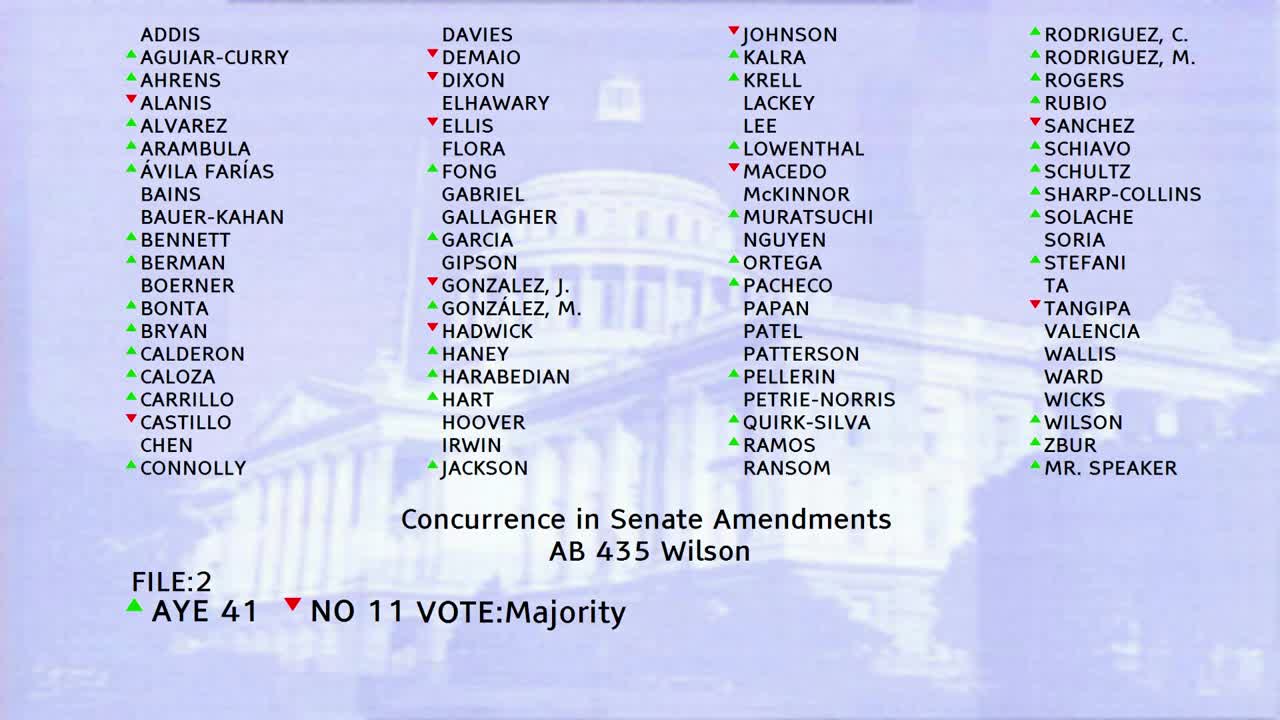 55SEC
Assembly Floor
 51SEC
Senate Standing Committee on Appropriations
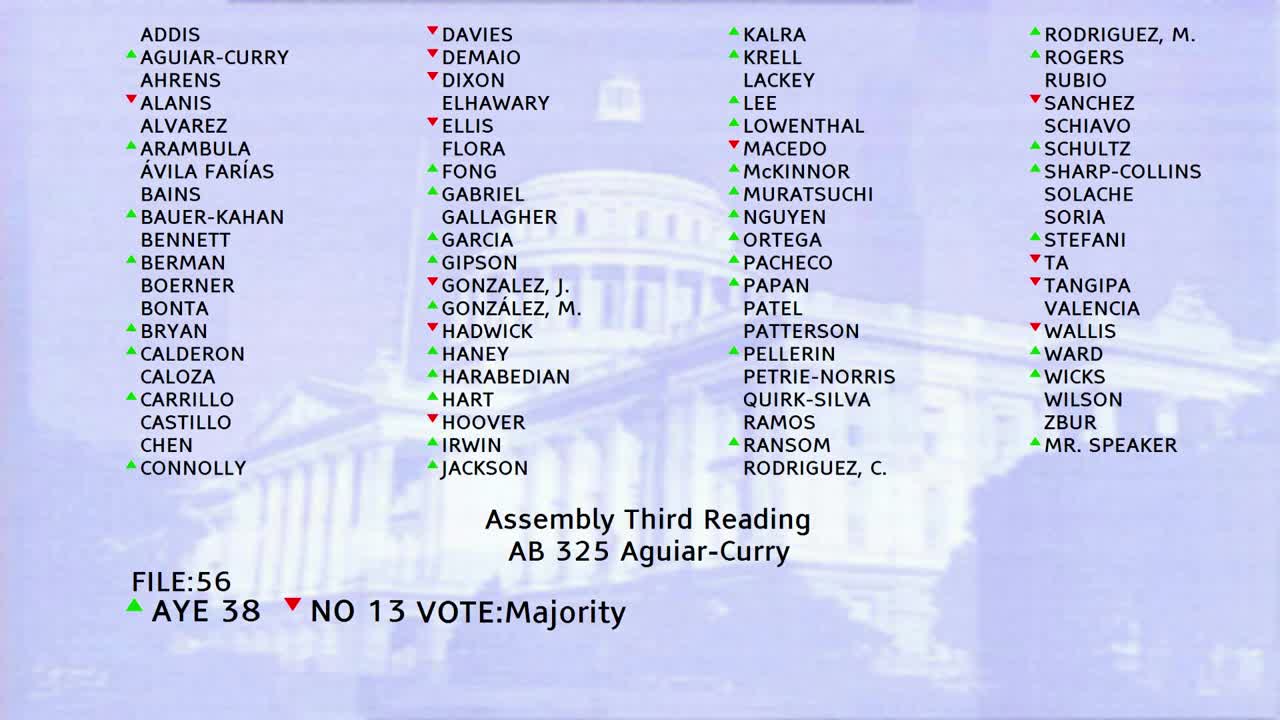 1MIN
Assembly Floor
Bill Author

Bill Co-Author(s):
