AB 357: Coastal resources: coastal development permit application: higher education housing project.
- Session Year: 2025-2026
- House: Assembly
- Latest Version Date: 2025-10-03
Current Status:
Passed
(2025-10-03: Chaptered by Secretary of State - Chapter 256, Statutes of 2025.)
Introduced
In Committee
Awaiting First Chamber Vote
Passed First Chamber
In Committee
Awaiting Second Chamber Vote
Passed Second Chamber
Enacted
The California Coastal Act of 1976, which is administered by the California Coastal Commission, requires a person wishing to perform or undertake any development in the coastal zone to obtain a coastal development permit. The act provides for the submission and approval of long-range land use development plans as an alternative to project-by-project review to promote greater efficiency for the planning of public works or state university or college or private university development projects and provides for amendments to those plans. The act places limits on the conditions the commission may impose on projects contained in a plan that has been certified by the commission. The act authorizes the commission to, after a public hearing, by regulation, adopt procedures for the issuance by the executive director of the commission of waivers from coastal development permit requirements for any development that is de minimis, as specified.
This bill would require the commission to defer to the state university or college or private university in determining the number of vehicle parking spaces necessary for residents of student, faculty, or staff housing facilities, as provided. The bill would authorize the executive director to determine that a proposed amendment to a public works plan or long-range development plan is de minimis and would provide the procedures for the determination and approval of amendments that are de minimis. The bill would require the commission to track and publish on a public portion of its internet website any public works plans or long-range development plans, amendments to public works plans or long-range development plans, and notices of impending development submitted by a state university or college or private university to the commission for approval, as specified.
The Coastal Act of 1976, which is administered by the California Coastal Commission, requires a person wishing to perform or undertake any development in the coastal zone to obtain a coastal development permit. The act provides for the submission and approval of long-range land use development plans as an alternative to project-by-project review to promote greater efficiency for the planning of state university or college or private university development projects and provides for amendments to those plans. The act places limits on the conditions the commission may impose on projects contained in a plan that has been certified by the commission. The act authorizes the commission to, after a public hearing, by regulation, adopt procedures for the issuance by the executive director of waivers from coastal development permit requirements for any development that is de minimis, as specified.
This bill would prohibit the commission from denying or imposing conditions on specified amendments to a long-range development plan submitted by a state university or college or private university for the purpose of developing a student housing project or faculty and staff housing project. The bill would require the commission to defer to the state university or college or private university in determining the number of vehicle parking spaces necessary for residents of student, faculty, or staff housing facilities, as provided. The bill would require the commission to approve or deny a complete application for a coastal development permit for a student housing project or a faculty and staff housing project within 90 days of submittal, except as specified. The bill would authorize the executive director to determine that a proposed amendment to a public works plan or long-range development plan is de minimis and would provide the procedures for the determination and approval of amendments that are de minimis. The bill would require the commission to track and publish on a public portion of its internet website any public works plans or long-range development plans, amendments to public works plans or long-range development plans, and notices of impending development submitted by a state university or college or private university to the commission for approval, as specified.
The Coastal Act of 1976, which is administered by the California Coastal Commission, requires a person wishing to perform or undertake any development in the coastal zone to obtain a coastal development permit. The act provides for the submission and approval of long-range land use development plans as an alternative to project-by-project review to promote greater efficiency for the planning of state university or college or private university development projects and provides for amendments to those plans. The act places limits on the conditions the commission may impose on projects contained in a plan that has been certified by the commission.
This bill would prohibit the commission from denying or imposing conditions on specified amendments to a long-range development plan submitted by a state university or college or private university for the purpose of developing a student housing project or faculty and staff housing project. The bill would require the commission to defer to the state university or college or private university in determining the number of vehicle parking spaces necessary for residents of student, faculty, or staff housing facilities, as provided. The bill would require the commission to approve or deny a complete application for a coastal development permit for a student housing project or a faculty and staff housing project within 90 days of submittal, except as specified.
The Coastal Act of 1976, which is administered by the California Coastal Commission, requires a person wishing to perform or undertake any development in the coastal zone to obtain a coastal development permit. Existing law excludes a specified power facility from this provision.
This bill would also include, as part of that exclusion, require the commission to approve or deny a complete application for a coastal development permit for a student housing projects and project or a faculty and staff housing projects, as defined. project within 90 days of submittal, except as specified.
The Coastal Act of 1976, which is administered by the California Coastal Commission, requires a person wishing to perform or undertake any development in the coastal zone to obtain a coastal development permit. Existing law excludes a specified power facility from this provision.
This bill would also include, as part of that exclusion, student housing projects and faculty and staff housing projects, as defined.
(a)To promote greater efficiency for the planning of any public works or state university or college or private university development projects, and as an alternative to project-by-project review, public works plans or state university or college or private university long-range development plans may be submitted to the commission for review in the same manner prescribed for the review of local coastal programs as set forth in Chapter 6 (commencing with Section 30500).
(b)If a public works plan or long-range development plan is submitted before certification of the local coastal programs for the jurisdictions affected by the proposed plan, the commission shall certify whether the proposed plan is consistent with Chapter 3 (commencing with Section 30200).
(c)The commission shall, by regulation, provide for the submission and distribution to the public, before public hearings on a proposed public works plan or long-range development plan, detailed environmental information sufficient to enable the commission to determine the consistency of the plan with the policies of this division.
(d)If a public works plan is submitted after the certification of local coastal programs, the plan shall be certified by the commission only if it finds, after full consultation with the affected local governments, that the proposed plan is in conformity with certified local coastal programs in jurisdictions affected by the proposed public works.
(e)Each state university or college or private university shall coordinate and consult with local government in the preparation of long-range development plans so as to be consistent, to the fullest extent feasible, with the appropriate local coastal program.
(f)Where a public works plan or long-range development plan has been certified by the commission, any subsequent review by the commission of a specific project contained in the certified plan shall be limited to imposing conditions consistent with Sections 30607 and 30607.1.
(g)(1)When considering the certification of, or an amendment to, a long-range development plan, the commission shall prioritize the provision of active transportation and public transportation facilities over vehicle parking spaces.
(2)For student, faculty, or staff housing facilities proposed for inclusion in a long-range development plan, or subject to commission review under a long-range development plan, the commission shall defer to the state university or college or private university in determining the number of vehicle parking spaces necessary for residents of those facilities.
(h)A certified long-range development plan may be amended by the state university or college or private university, but no amendment shall take effect until it has been certified by the commission. Any proposed amendment shall be submitted to, and processed by, the commission in the same manner as prescribed for amendment of a local coastal program.
SEC. 2.Section 30605.1 is added to the Public Resources Code, to read:30605.1.(a)The executive director of the commission may determine that a proposed amendment to a public works plan or long-range development plan submitted by a state university or college or private university is de minimis if the executive director determines that the proposed amendment would have no impact, either individually or cumulatively, on coastal resources and is consistent with the policies of Chapter 3 (commencing with Section 30200).
(b)(1)The executive director shall make a determination as to whether the proposed amendment is de minimis within 10 working days of the date of a complete submittal by the state university or college or private university. If the proposed amendment is determined to be de minimis, the proposed amendment shall be noticed in the agenda of the next regularly scheduled meeting of the commission.
(2)If three members of the commission object to the executive directors determination that the proposed amendment is de minimis, the proposed amendment shall be set for public hearing in accordance with the procedures specified by regulation for amendments to public works plans and long-range development plans or, at the request of the state university or college or private university, be returned to the state university or college or private university. If the proposed amendment is set for public hearing, any applicable time requirements shall commence from the date on which the objection to the de minimis determination was made.
(3)If three or more members of the commission do not object to the de minimis determination, the amendment shall become part of the certified public works plan or long-range development plan upon adjournment of the commission meeting on that date.
SEC. 3.Section 30605.2 is added to the Public Resources Code, to read:30605.2.The commission shall track and publish on a public portion of its internet website any public works plans or long-range development plans, amendments to public works plans or long-range development plans, and notices of impending development submitted by a state university or college or private university to the commission for approval. Information provided to the public shall include at least a description of the plan, plan amendment, or notice of impending development, the status of the plan, plan amendment, or notice of impending development in the approval process, any conditions imposed by the commission for approval of the plan, plan amendment, or notice of impending development, and the length of time to approval or denial of the plan, plan amendment, or notice of impending development. Information on the internet website shall be updated no less than monthly.
(a)To promote greater efficiency for the planning of any public works or state university or college or private university development projects, and as an alternative to project-by-project review, public works plans or state university or college or private university long-range development plans may be submitted to the commission for review in the same manner prescribed for the review of local coastal programs as set forth in Chapter 6 (commencing with Section 30500).
(b)If a public works plan or long-range development plan is submitted before certification of the local coastal programs for the jurisdictions affected by the proposed plan, the commission shall certify whether the proposed plan is consistent with Chapter 3 (commencing with Section 30200).
(c)The commission shall, by regulation, provide for the submission and distribution to the public, before public hearings on a proposed public works plan or long-range development plan, detailed environmental information sufficient to enable the commission to determine the consistency of the plan with the policies of this division.
(d)If a public works plan is submitted after the certification of local coastal programs, the plan shall be certified by the commission only if it finds, after full consultation with the affected local governments, that the proposed plan is in conformity with certified local coastal programs in jurisdictions affected by the proposed public works.
(e)Each state university or college or private university shall coordinate and consult with local government in the preparation of long-range development plans so as to be consistent, to the fullest extent feasible, with the appropriate local coastal program.
(f)Where a public works plan or long-range development plan has been certified by the commission, any subsequent review by the commission of a specific project contained in the certified plan shall be limited to imposing conditions consistent with Sections 30607 and 30607.1.
(g)(1)When considering the certification of, or an amendment to, a long-range development plan, the commission shall prioritize the provision of active transportation and public transportation facilities over vehicle parking spaces.
(2)For student, faculty, or staff housing facilities proposed for inclusion in a long-range development plan, or subject to commission review under a long-range development plan, the commission shall defer to the state university or college or private university in determining the number of vehicle parking spaces necessary for residents of those facilities.
(h)(1)A certified long-range development plan may be amended by the state university or college or private university, but no amendment shall take effect until it has been certified by the commission. Any proposed amendment shall be submitted to, and processed by, the commission in the same manner as prescribed for amendment of a local coastal program.
(2)The commission shall not deny or impose conditions on an amendment to a long-range development plan submitted by a state university or college or private university for the purpose of developing a student housing project or a faculty and staff housing project, as those terms are defined in Section 67329.2 of the Education Code, on the basis that the amendment does any of the following:(A)(i)Increases the allowable height of a project under the long-range development plan by no more than 20 feet over the original maximum allowable height, if any.(ii)The commission may deny or impose conditions on an amendment pursuant to clause (i) if those changes result in a specific, adverse impact on the surrounding wildlife, and there is no feasible method to satisfactorily mitigate or avoid the adverse impact identified.(B)Increases the allowable density for a project site under the long-range development plan by no more than 10 percent over the original maximum allowable density, if any. The allowable increase shall be calculated in housing units or beds, or both, as applicable.(C)(i)Changes aesthetic design characteristics of a project under the long-range development plan.(ii)The commission may deny or impose conditions on an amendment pursuant to clause (i) if those changes result in a specific, adverse impact on the surrounding wildlife, and there is no feasible method to satisfactorily mitigate or avoid the adverse impact identified.(D)Lowers the parking requirements for a project under the long-range development plan.(i)For purposes of this section, specific adverse impact means a significant, quantifiable, direct, negative, and unavoidable impact, based on objective, identified, and written environmental protections, policies, or conditions.SEC. 2.Section 30614.5 is added to the Public Resources Code, to read:30614.5.(a)Within 90 days of submittal of a complete application for a coastal development permit for a student housing project or a faculty and staff housing project, as those terms are defined in Section 67329.2 of the Education Code, the commission shall approve or deny the application.(b)The time period specified in subdivision (a) may be extended if either of the following occurs:(1)Substantial changes are proposed in the project by the state university or college or private university that may involve new significant environmental effects or a substantial increase in the severity of previously identified significant effects.(2)There are changes in the environmental circumstances under which the project is undertaken related to natural disasters, including, but not limited to, earthquakes, dam failures, mudslides, floods, sea level rise, coastal erosion, and wildland and urban fires.SEC. 2.Section 30605.1 is added to the Public Resources Code, to read:30605.1.(a)The executive director of the commission may determine that a proposed amendment to a public works plan or long-range development plan submitted by a state university or college or private university is de minimis if the executive director determines that the proposed amendment would have no impact, either individually or cumulatively, on coastal resources and is consistent with the policies of Chapter 3 (commencing with Section 30200).
(b)(1)The executive director shall make a determination as to whether the proposed amendment is de minimis within 10 working days of the date of a complete submittal by the state university or college or private university. If the proposed amendment is determined to be de minimis, the proposed amendment shall be noticed in the agenda of the next regularly scheduled meeting of the commission.
(2)If three members of the commission object to the executive directors determination that the proposed amendment is de minimis, the proposed amendment shall be set for public hearing in accordance with the procedures specified by regulation for amendments to public works plans and long-range development plans or, at the request of the state university or college or private university, be returned to the state university or college or private university. If the proposed amendment is set for public hearing, any applicable time requirements shall commence from the date on which the objection to the de minimis determination was made.
(3)If three or more members of the commission do not object to the de minimis determination, the amendment shall become part of the certified public works plan or long-range development plan upon adjournment of the commission meeting on that date.
SEC. 3.Section 30605.2 is added to the Public Resources Code, to read:30605.2.The commission shall track and publish on a public portion of its internet website any public works plans or long-range development plans, amendments to public works plans or long-range development plans, and notices of impending development submitted by a state university or college or private university to the commission for approval. Information provided to the public shall include at least a description of the plan, plan amendment, or notice of impending development, the status of the plan, plan amendment, or notice of impending development in the approval process, any conditions imposed by the commission for approval of the plan, plan amendment, or notice of impending development, and the length of time to approval or denial of the plan, plan amendment, or notice of impending development. Information on the internet website shall be updated no less than monthly.
(a)To promote greater efficiency for the planning of any public works or state university or college or private university development projects projects, and as an alternative to project-by-project review, plans for public works plans or state university or college or private university long-range land use development plans may be submitted to the commission for review in the same manner prescribed for the review of local coastal programs as set forth in Chapter 6 (commencing with Section 30500). If any plan for
(b)If a public works plan or state university or college development project long-range development plan is submitted prior to before certification of the local coastal programs for the jurisdictions affected by the proposed public works, plan, the commission shall certify whether the proposed plan is consistent with Chapter 3 (commencing with Section 30200). The
(c)The commission shall, by regulation, provide for the submission and distribution to the public, prior to before public hearings on the a proposed public works plan or long-range development plan, detailed environmental information sufficient to enable the commission to determine the consistency of the plans plan with the policies of this division. If any such plan for
(d)If a public works plan is submitted after the certification of local coastal programs, any such the plan shall be approved certified by the commission only if it finds, after full consultation with the affected local governments, that the proposed plan for public works is in conformity with certified local coastal programs in jurisdictions affected by the proposed public works. Each
(e)Each state university or college or private university shall coordinate and consult with local government in the preparation of long-range development plans so as to be consistent, to the fullest extent feasible, with the appropriate local coastal program. Where a plan for a
(f)Where a public works plan or state university or college or private university development project long-range development plan has been certified by the commission, any subsequent review by the commission of a specific project contained in the certified plan shall be limited to imposing conditions consistent with Sections 30607 and 30607.1. A
(g)(1)When considering the certification of, or an amendment to, a long-range development plan, the commission shall prioritize the provision of active transportation and public transportation facilities over vehicle parking spaces.
(2)For student, faculty, or staff housing facilities proposed for inclusion in a long-range development plan, or subject to commission review under a long-range development plan, the commission shall defer to the state university or college or private university in determining the number of vehicle parking spaces necessary for residents of those facilities.
(h)(1)A certified long-range development plan may be amended by the state university or college or private university, but no amendment shall take effect until it has been certified by the commission. Any proposed amendment shall be submitted to, and processed by, the commission in the same manner as prescribed for amendment of a local coastal program.
(2)The commission shall not deny or impose conditions on an amendment to a long-range development plan submitted by a state university or college or private university for the purpose of developing a student housing project or a faculty and staff housing project, as those terms are defined in Section 67329.2 of the Education Code, on the basis that the amendment does any of the following:
(A)(i)Increases the allowable height of a project under the long-range development plan by no more than 20 feet over the original maximum allowable height, if any.
(ii)The commission may deny or impose conditions on an amendment pursuant to clause (i) if those changes result in a specific, adverse impact on the surrounding wildlife, and there is no feasible method to satisfactorily mitigate or avoid the adverse impact identified.
(B)Increases the allowable density for a project site under the long-range development plan by no more than 10 percent over the original maximum allowable density, if any. The allowable increase shall be calculated in housing units or beds, or both, as applicable.
(C)(i)Changes aesthetic design characteristics of a project under the long-range development plan.
(ii)The commission may deny or impose conditions on an amendment pursuant to clause (i) if those changes result in a specific, adverse impact on the surrounding wildlife, and there is no feasible method to satisfactorily mitigate or avoid the adverse impact identified.
(D)Lowers the parking requirements for a project under the long-range development plan.
(i)For purposes of this section, specific adverse impact means a significant, quantifiable, direct, negative, and unavoidable impact, based on objective, identified, and written environmental protections, policies, or conditions.
SECTION 1.SEC. 2.Section 30614.5 is added to the Public Resources Code, to read:30614.5.(a)Within 90 days of submittal of a complete application for a coastal development permit for a student housing project or a faculty and staff housing project, as those terms are defined in Section 67329.2 of the Education Code, the commission shall approve or deny the application.
(b)The time period specified in subdivision (a) may be extended if either of the following occurs:
(1)Substantial changes are proposed in the project by the state university or college or private university that may involve new significant environmental effects or a substantial increase in the severity of previously identified significant effects.
(2)There are changes in the environmental circumstances under which the project is undertaken related to natural disasters, including, but not limited to, earthquakes, dam failures, mudslides, floods, sea level rise, coastal erosion, and wildland and urban fires.
(a)Within 90 days of submittal of a complete application for a coastal development permit for a student housing project or a faculty and staff housing project, as those terms are defined in Section 67329.2 of the Education Code, the commission shall approve or deny the application.
(b)The time period specified in subdivision (a) may be extended if either of the following occurs:
(1)Substantial changes are proposed in the project by the state university or college or private university that may involve new significant environmental effects or a substantial increase in the severity of previously identified significant effects.
(2)There are changes in the environmental circumstances under which the project is undertaken related to natural disasters, including, but not limited to, earthquakes, dam failures, mudslides, floods, sea level rise, coastal erosion, and wildland and urban fires.
SECTION 1.Section 30600 of the Public Resources Code is amended to read:30600.(a)Except as provided in subdivision (e), and in addition to obtaining any other permit required by law from any local government or from any state, regional, or local agency, a person, as defined in Section 21066, wishing to perform or undertake any development in the coastal zone, other than a facility subject to Section 25500 or a student housing project and a faculty and staff housing project, as those terms are defined in Section 67329.2 of the Education Code, shall obtain a coastal development permit.(b)(1)Before certification of its local coastal program, a local government may, with respect to any development within its area of jurisdiction in the coastal zone and consistent with Sections 30604, 30620, and 30620.5, establish procedures for the filing, processing, review, modification, approval, or denial of a coastal development permit. Those procedures may be incorporated and made a part of the procedures relating to any other appropriate land use development permit issued by the local government.(2)A coastal development permit from a local government shall not be required by this subdivision for a development on tidelands, submerged lands, or on public trust lands, whether filled or unfilled, or for a development by a public agency for which a local government permit is not otherwise required.(c)If before certification of its local coastal program, a local government does not exercise the option provided in subdivision (b), or a development is not subject to the requirements of subdivision (b), a coastal development permit shall be obtained from the commission or from a local government as provided in subdivision (d).(d)After certification of its local coastal program or pursuant to Section 30600.5, a coastal development permit shall be obtained from the local government as provided for in Section 30519 or Section 30600.5.(e)This section does not apply to any of the following projects, except that notification by the agency or public utility performing any of the following projects shall be made to the commission within 14 days from the date of the commencement of the project:(1)Immediate emergency work necessary to protect life or property or immediate emergency repairs to public service facilities necessary to maintain service as a result of a disaster in a disaster-stricken area in which a state of emergency has been proclaimed by the Governor pursuant to Chapter 7 (commencing with Section 8550) of Division 1 of Title 2 of the Government Code.(2)Emergency projects undertaken, carried out, or approved by a public agency to maintain, repair, or restore an existing highway, as defined in Section 360 of the Vehicle Code, except for a highway designated as an official state scenic highway pursuant to Section 262 of the Streets and Highways Code, within the existing right-of-way of the highway, damaged as a result of fire, flood, storm, earthquake, land subsidence, gradual earth movement, or landslide, within one year of the damage. This paragraph does not exempt from this section a project undertaken, carried out, or approved by a public agency to expand or widen a highway damaged by fire, flood, storm, earthquake, land subsidence, gradual earth movement, or landslide.(a)Except as provided in subdivision (e), and in addition to obtaining any other permit required by law from any local government or from any state, regional, or local agency, any a person, as defined in Section 21066, wishing to perform or undertake any development in the coastal zone, other than a facility subject to Section 25500, 25500 or a student housing project and a faculty and staff housing project, as those terms are defined in Section 67329.2 of the Education Code, shall obtain a coastal development permit.
(b)(1)Prior to Before certification of its local coastal program, a local government may, with respect to any development within its area of jurisdiction in the coastal zone and consistent with the provisions of Sections 30604, 30620, and 30620.5, establish procedures for the filing, processing, review, modification, approval, or denial of a coastal development permit. Those procedures may be incorporated and made a part of the procedures relating to any other appropriate land use development permit issued by the local government.
(2)A coastal development permit from a local government shall not be required by this subdivision for any a development on tidelands, submerged lands, or on public trust lands, whether filled or unfilled, or for any a development by a public agency for which a local government permit is not otherwise required.
(c)If prior to before certification of its local coastal program, a local government does not exercise the option provided in subdivision (b), or a development is not subject to the requirements of subdivision (b), a coastal development permit shall be obtained from the commission or from a local government as provided in subdivision (d).
(d)After certification of its local coastal program or pursuant to the provisions of Section 30600.5, a coastal development permit shall be obtained from the local government as provided for in Section 30519 or Section 30600.5.
(e)This section does not apply to any of the following projects, except that notification by the agency or public utility performing any of the following projects shall be made to the commission within 14 days from the date of the commencement of the project:
(1)Immediate emergency work necessary to protect life or property or immediate emergency repairs to public service facilities necessary to maintain service as a result of a disaster in a disaster-stricken area in which a state of emergency has been proclaimed by the Governor pursuant to Chapter 7 (commencing with Section 8550) of Division 1 of Title 2 of the Government Code.
(2)Emergency projects undertaken, carried out, or approved by a public agency to maintain, repair, or restore an existing highway, as defined in Section 360 of the Vehicle Code, except for a highway designated as an official state scenic highway pursuant to Section 262 of the Streets and Highways Code, within the existing right-of-way of the highway, damaged as a result of fire, flood, storm, earthquake, land subsidence, gradual earth movement, or landslide, within one year of the damage. This paragraph does not exempt from this section any a project undertaken, carried out, or approved by a public agency to expand or widen a highway damaged by fire, flood, storm, earthquake, land subsidence, gradual earth movement, or landslide.
|
Date
|
Status
|
|---|---|
| Oct 3, 2025 | Chaptered by Secretary of State - Chapter 256, Statutes of 2025. |
| Oct 3, 2025 | Approved by the Governor. |
| Sep 24, 2025 | Enrolled and presented to the Governor at 3 p.m. |
| Sep 12, 2025 | Senate amendments concurred in. To Engrossing and Enrolling. (Ayes 78. Noes 0. Page 3372.). |
| Sep 12, 2025 | In Assembly. Concurrence in Senate amendments pending. |
| Sep 11, 2025 | Read third time. Passed. Ordered to the Assembly. (Ayes 40. Noes 0. Page 2920.). |
| Aug 26, 2025 | Read second time. Ordered to third reading. |
| Aug 25, 2025 | From committee: Be ordered to second reading pursuant to Senate Rule 28.8. |
| Aug 13, 2025 | In committee: Hearing postponed by committee. |
| Jul 14, 2025 | Re-referred to Com. on APPR. |
| Jul 14, 2025 | Withdrawn from committee. |
| Jul 10, 2025 | Read second time and amended. Re-referred to Com. on HOUSING. |
| Jul 9, 2025 | From committee: Amend, and do pass as amended and re-refer to Com. on HOUSING. (Ayes 7. Noes 0.) (July 8). |
| Jun 30, 2025 | From committee chair, with author's amendments: Amend, and re-refer to committee. Read second time, amended, and re-referred to Com. on N.R. & W. |
| Jun 18, 2025 | Referred to Coms. on N.R. & W. and HOUSING. |
| Jun 9, 2025 | In Senate. Read first time. To Com. on RLS. for assignment. |
| Jun 5, 2025 | Read third time. Passed. Ordered to the Senate. (Ayes 76. Noes 0. Page 2104.) |
| May 27, 2025 | Read second time. Ordered to third reading. |
| May 23, 2025 | From committee: Do pass. (Ayes 14. Noes 0.) (May 23). |
| May 14, 2025 | In committee: Set, first hearing. Referred to suspense file. |
| May 1, 2025 | Re-referred to Com. on APPR. |
| Apr 30, 2025 | Read second time and amended. |
| Apr 29, 2025 | From committee: Amend, and do pass as amended and re-refer to Com. on APPR. (Ayes 12. Noes 0.) (April 28). |
| Feb 18, 2025 | Referred to Com. on NAT. RES. |
| Jan 31, 2025 | From printer. May be heard in committee March 2. |
| Jan 30, 2025 | Read first time. To print. |
|
Date
|
Description
|
Location
|
Votes
|
|
|---|---|---|---|---|
| Sep 12, 2025 | AB 357 Alvarez Concurrence in Senate Amendments | Assembly Floor |
Passed |
|
| Sep 11, 2025 | Assembly 3rd Reading AB357 Alvarez By Wiener | Senate Floor |
Passed |
|
| Jul 8, 2025 | Do pass as amended, but first amend, and re-refer to the Committee on [Housing] | Senate Standing Committee on Natural Resources and Water |
Passed |
|
| Jun 5, 2025 | AB 357 Alvarez Assembly Third Reading | Assembly Floor |
Passed |
|
| May 23, 2025 | Do pass. | Assembly Standing Committee on Appropriations |
Passed |
|
| Apr 28, 2025 | Do pass as amended and be re-referred to the Committee on [Appropriations] | Assembly Standing Committee on Natural Resources |
Passed |
This list shows positions taken on this bill by organizations on the date displayed, which is linked to the original source.
Positions by individuals are not included.
|
Organization
|
Position
|
Date
|
|---|---|---|
| Abundant Housing LA | ** Support | |
| American Planning Association, California Chapter | ** Support | |
| Associated General Contractors Of California | ** Support | |
| Bay Area Council | ** Support | |
| California Apartment Association | ** Support | |
| California Coastal Protection Network | ** Against | |
| California Council For Affordable Housing | ** Support | |
| California Home Building Alliance | ** Support | |
| California YIMBY | ** Support | |
| Circulate San Diego | ** Support | |
| Citizens Planning Association | ** Against | |
| Committees for Land, Air, Water and Species | ** Against | |
| Construction Employers Association | ** Support | |
| East Bay YIMBY | ** Support | |
| GENup | ** Support | |
| Green Policy Initiative | ** Support | |
| Grow the Richmond | ** Support | |
| Inner City Law Center | ** Support | |
| Institute for Responsive Government Action | ** Support | |
| Mountain View YIMBY | ** Support | |
| Napa-Solano for Everyone | ** Support | |
| NextGen California | ** Support | |
| Northern Neighbors | ** Support | |
| Peninsula for Everyone | ** Support | |
| San Diego Regional Chamber Of Commerce | ** Support | |
| San Francisco Yimby | ** Support | |
| Santa Barbara County Action Network | ** Against | |
| Santa Cruz Yimby | ** Support | |
| Santa Rosa Yimby | ** Support | |
| SLOCo YIMBY | ** Support | |
| South Bay Yimby | ** Support | |
| South Pasadena Residents for Responsible Growth | ** Support | |
| SPUR | ** Support | |
| Streets for All | ** Support | |
| Student Homes Coalition | ** Support | |
| Triton Housing Commission | ** Support | |
| University Of California Student Association | ** Support | |
| Urban Environmentalists LA | ** Support | |
| Ventura County YIMBY | ** Support | |
| Welcoming Neighbors Home | ** Support | |
| Yimby Action | ** Support | |
| YIMBY Los Angeles | ** Support | |
| Youthbridge Housing | ** Support |
CONCURRENCE IN SENATE AMENDMENTS
CSA1 Bill Id:AB 357
Author:(Alvarez)
As Amended Ver:July 10, 2025
Majority vote
SUMMARY
Authorizes the executive director of the California Coastal Commission (Commission) to determine that a proposed amendment to a public works plan or long-range development plan (LRDP) submitted by a state university or college or private university is de minimis if the executive director determines that the proposed amendment would have no impact, either individually or cumulatively, on coastal resources and is consistent with the Coastal Act.
Senate Amendments
- Require the Commission to defer to the state university or college or private university in determining the number of vehicle parking spaces necessary for residents of student, faculty, or staff housing facilities, as provided.
- Strike the requirement for the Commission to approve or deny a complete application for a coastal development permit (CDP) for a student housing project or a faculty and staff housing project within 90 days of submittal.
- Authorize the executive director of the Commission to determine that a proposed amendment to a public works plan or LRDP is de minimis and would provide the procedures for the determination and approval of amendments that are de minimis.
- Require the Commission to track and publish on a public portion of its internet website any public works plans or LRDPs, amendments to public works plans or LRDPs, and notices of impending development submitted by a state university or college or private university to the Commission for approval, as specified.
COMMENTS
As of 2024, as many as 417,000 students in the state's three higher educational systems – California Community College (CCC), University of California (UC), and California State University (CSU) – lacked stable housing. A 2023 Community College of California survey found roughly 25% of community college students in the state are homeless.
The state created a plan in the 2021-2022 budget to increase the enrollment of in-state students in the UC system over five years, which, in part, has also contributed to exacerbating the housing shortage. The UC system does plan to address demand from California residents in the long term by adding between 23,000 and 33,000 full-time equivalent students by 2030. Increased housing will be needed to accommodate that increased enrollment.
In the coastal zone, there are 10 of the 23 CSUs; four UCs; numerous CCCs; and, at least 4 private non-profit colleges. Many of these colleges are planning housing projects to address the housing shortage.
Those higher education institutions located in whole or in part in the coastal zone can submit a LRDP and seek certification for it from the Commission to facilitate greater efficiency for the planning of any university development project and as an alternative to project-by-project review by the Commission. A LRDP is a comprehensive physical development and land use plan that governs development, land use, and resource protection on university property. The adoption of a LRDP by the college and subsequent certification by the Commission results in the delegation to the college of the authority to authorize most on-campus development consistent with the plan without a CDP, subject to Commission oversight.
For universities that have LRDPs, any development – to build a new housing project, for instance - would be submitted to the Commission to review for consistency with the LRDP. The Executive Director has 10 days from receipt to review the Notice of Impending Development for whether it provides sufficient information to determine if the proposed development is consistent with the certified LRDP.
AB 357, to accelerate housing development, would authorize the executive director of the Commission to determine that a proposed amendment to a public works plan or LRDP is de minimis and would provide the procedures for the determination and approval of amendments that are de minimis.
According to the Author
AB 357 accelerates the availability of affordable housing for students, faculty, and staff at public universities in California's coastal areas. It aims to reduce bureaucratic delays, which contribute to rising housing costs, and alleviate pressure on vulnerable renters. By ensuring that those who serve our communities can live close to their workplaces and studies, this bill enhances education, promotes equity, and strengthens California's future.
Arguments in Support
The California Home Building Alliance writes that at institutions of higher education currently in the Coastal Zone, AB 357 would eliminate a redundancy of environmental standards in student housing development, streamlining the creation of new units and making a substantial step towards addressing the ongoing student housing crisis in California.
Arguments in Opposition
None on file
FISCAL COMMENTS
According to the Senate Appropriations Committee, this bill was approved pursuant to Senate Rule 28.8 due to negligible state costs.
VOTES:
ASM NATURAL RESOURCES: 12-0-2
YES: Bryan, Alanis, Ellis, Flora, Garcia, Haney, Hoover, Kalra, Pellerin, Schultz, Wicks, Zbur
ABS, ABST OR NV: Connolly, Muratsuchi
ASM APPROPRIATIONS: 14-0-1
YES: Wicks, Arambula, Calderon, Caloza, Dixon, Elhawary, Fong, Mark González, Hart, Pacheco, Pellerin, Solache, Ta, Tangipa
ABS, ABST OR NV: Sanchez
ASSEMBLY FLOOR: 76-0-3
YES: Addis, Aguiar-Curry, Ahrens, Alanis, Alvarez, Arambula, Ávila Farías, Bains, Bauer-Kahan, Bennett, Berman, Boerner, Bonta, Bryan, Calderon, Caloza, Carrillo, Castillo, Chen, Connolly, Davies, DeMaio, Dixon, Elhawary, Ellis, Flora, Fong, Gabriel, Gallagher, Garcia, Gipson, Jeff Gonzalez, Mark González, Hadwick, Haney, Harabedian, Hart, Hoover, Irwin, Jackson, Kalra, Krell, Lackey, Lee, Lowenthal, Macedo, McKinnor, Nguyen, Pacheco, Papan, Patel, Patterson, Pellerin, Petrie-Norris, Quirk-Silva, Ramos, Ransom, Celeste Rodriguez, Michelle Rodriguez, Rogers, Blanca Rubio, Sanchez, Schiavo, Schultz, Sharp-Collins, Solache, Soria, Stefani, Ta, Tangipa, Valencia, Wallis, Ward, Wicks, Wilson, Rivas
ABS, ABST OR NV: Muratsuchi, Ortega, Zbur
UPDATED
VERSION: July 10, 2025
CONSULTANT: Paige Brokaw / NAT. RES. / (916) 319-2092 FN: 0001849
Office of Senate Floor Analyses (916) 651-1520 Fax: (916) 327-4478 | AB 357 |
THIRD READING
Bill No: AB 357
Author: Alvarez (D)
Amended: 7/10/25 in Senate
Vote: 21
SENATE NATURAL RES. & WATER COMMITTEE: 7-0, 7/8/25
AYES: Limón, Seyarto, Allen, Grove, Hurtado, Laird, Stern
SENATE APPROPRIATIONS COMMITTEE: Senate Rule 28.8
ASSEMBLY FLOOR: 76-0, 6/5/25 - See last page for vote
SUBJECT: Coastal resources: coastal development permit application: higher education housing project
SOURCE: Student HOMES Coalition
DIGEST:
This bill requires the California Coastal Commission to defer to the state university or college or private university in determining the number of vehicle parking spaces necessary for residents of student, faculty, or staff housing facilities, authorizes the commission’s executive director to determine that a proposed amendment to a public works plan or long-range development plan is de minimis, and provides procedures for the determination and approval of de minimis amendments, among other provisions, as provided.
ANALYSIS:
Existing law:
- Defines “student housing project” as one or more housing facilities to be occupied by students of one or more campuses and owned by a participating college or university or participating nonprofit entity. These facilities are determined to be educational facilities, which also may include dining, academic and student support service spaces, and other necessary and usual attendant and related facilities and equipment, and defines “faculty and staff housing project” as one or more housing facilities to be occupied by faculty or staff of one or more campuses, and owned by a participating college or university or participating nonprofit entity. (Education Code §67329.2 (e))
- Pursuant to the California Coastal Act of 1976 (Coastal Act) (Public Resources Code (PRC) §§30000 et seq.):
- Establishes the California Coastal Commission (Coastal Commission) in the California Natural Resources Agency.
- Regulates development in the coastal zone and requires a new development to comply with specified requirements. (PRC §§30000 et seq.):
- The coastal zone means the coastal land and waters of California, and includes the lands that extend inland generally 1,000 yards from the mean high tide line, as specified, with various exceptions, including the San Francisco Bay. (PRC §30103)
- Includes legislative findings and declarations that:
- It is important for the Coastal Commission to encourage the protection of existing and the provision of new affordable housing opportunities for persons of low and moderate income in the coastal zone. (PRC §30604)
- The basic goals of the state for the coastal zone include to:
- Protect, maintain, and, where feasible, enhance and restore the overall quality of the coastal zone environment and its natural and artificial resources, and
- Ensure orderly, balanced utilization and conservation of coastal zone resources taking into account the social and economic needs of the people of the state. (PRC §30001.5)
- Defines “development” to mean, among other things, the placement or erection of any solid material or structure on land or in water. “Structure” includes, but is not limited to, any building, road, pipe, flume, conduit, siphon, aqueduct, telephone line, and electrical power transmission and distribution line. (PRC §30106)
- Requires a person planning to perform or undertake any development in the coastal zone to obtain a coastal development permit (CDP) from the Coastal Commission or local government enforcing a certified local coastal program (LCP). (PRC §30600)
- Authorizes, to promote greater efficiency for the planning of any public works or state university or college or private university development projects and as an alternative to project-by-project review, plans for public works or state university or college or private university Long-Range Development Plans (LRDPs) to be submitted to the Coastal Commission for review in the same manner prescribed for the review of a LCP. Requires each state university or college or private university to coordinate and consult with local government in the preparation of LRDPs so as to be consistent, to the fullest extent feasible, with the appropriate LCP. Requires any proposed amendment to be submitted to, and processed by, the Coastal Commission in the same manner as prescribed for amendment of a LCP. (PRC §30605)
This bill:
- Requires the Coastal Commission to prioritize the provision of active transportation and public transportation facilities over vehicle parking spaces when considering the certification of a LDRP or LRDP amendment.
- Requires the Coastal Commission to defer to the state university or college or private university in determining the number of vehicle parking spaces necessary for residents of those facilities for student, faculty, or staff housing facilities proposed for inclusion in a LRDP or subject to Coastal Commission review under a LRDP.
- Authorizes the Coastal Commission’s Executive Director (Executive Director) to determine that a proposed amendment to a public works plan (PWP) or LRDP submitted by a state university or college or private university is de minimis if the Executive Director determines that the proposed amendment would have no impact, either individually or cumulatively, on coastal resources and is consistent with Coastal Act policies:
- Requires the Executive Director to make a determination as to whether a proposed amendment is de minimis within 10 working days of the date of a complete submittal, as provided.
- Requires the proposed amendment to be noticed in the agenda of the next regularly scheduled Coastal Commission meeting if the proposed amendment is determined to be de minimis.
- Requires the proposed amendment to be set for public hearing or returned to the state university or college or private university upon request if three Coastal Commissioners object to the Executive Director’s determination that the proposed amendment is de minimis, as provided. Otherwise, requires the proposed amendment to become part of the certified PWP or LRDP upon adjournment of the Coastal Commission meeting if three or more Coastal Commissioners do not object, as provided.
- Requires the Coastal Commission to track and publish on its internet website any PWPs or LRDPs, amendments to PWPs or LRDPs, and notices of impending development submitted by a state university or college or private university to the Coastal Commission for approval:
- Requires the internet website to be updated no less than monthly.
- Requires the information provided to the public to include a description of the plan, plan amendment, or notice of impending development; the status in the approval process of the plan, plan amendment, or notice of impending development; any conditions imposed upon the plan, plan amendment, or notice of impending development; and the length of time to approval or denial, as provided.
[NOTE: See the Senate Natural Resources and Water Committee bill analysis for additional information regarding this bill.]
FISCAL EFFECT: Appropriation: No Fiscal Com.: Yes Local: No
SUPPORT: (Verified 8/25/25)
Student HOMES Coalition (Source)
Abundant Housing LA
American Planning Association, California Chapter
Associated General Contractors of California
Bay Area Council
California Apartment Association
California Council for Affordable Housing
California YIMBY
Circulate San Diego
Construction Employers’ Association
East Bay YIMBY
GENup
Green Policy Initiative
Grow the Richmond
Inner City Law Center
Institute for Responsive Government Action
Mountain View YIMBY
Napa-Solano for Everyone
NextGen California
Northern Neighbors
Peninsula for Everyone
San Diego Regional Chamber of Commerce
San Francisco YIMBY
Santa Cruz YIMBY
Santa Rosa YIMBY
SLOCo YIMBY
South Bay YIMBY
South Pasadena Residents for Responsible Growth
SPUR
Streets For All
Triton Housing Commission
University of California Student Association
Urban Environmentalists LA
Ventura County YIMBY
Welcoming Neighbors Home
YIMBY Action
YIMBY Los Angeles
YouthBridge Housing
OPPOSITION: (Verified 8/25/25)
None received
ARGUMENTS IN SUPPORT: According to the author, “357 would accelerate much-needed housing while maintaining environmental safeguards through a time-bound process, helping campuses in coastal areas build more efficiently.”
“The goal is not to bypass environmental safeguards, but to create smart, streamlined pathways that meet urgent student needs while respecting California’s coastal values.”
“With tools like AB 357, thoughtful local planning, and continued collaboration, California can tackle the student housing crisis and preserve its iconic coast for future generations.”
ASSEMBLY FLOOR: 76-0, 6/5/25
AYES: Addis, Aguiar-Curry, Ahrens, Alanis, Alvarez, Arambula, Ávila Farías, Bains, Bauer-Kahan, Bennett, Berman, Boerner, Bonta, Bryan, Calderon, Caloza, Carrillo, Castillo, Chen, Connolly, Davies, DeMaio, Dixon, Elhawary, Ellis, Flora, Fong, Gabriel, Gallagher, Garcia, Gipson, Jeff Gonzalez, Mark González, Hadwick, Haney, Harabedian, Hart, Hoover, Irwin, Jackson, Kalra, Krell, Lackey, Lee, Lowenthal, Macedo, McKinnor, Nguyen, Pacheco, Papan, Patel, Patterson, Pellerin, Petrie-Norris, Quirk-Silva, Ramos, Ransom, Celeste Rodriguez, Michelle Rodriguez, Rogers, Blanca Rubio, Sanchez, Schiavo, Schultz, Sharp-Collins, Solache, Soria, Stefani, Ta, Tangipa, Valencia, Wallis, Ward, Wicks, Wilson, Rivas
NO VOTE RECORDED: Muratsuchi, Ortega, Zbur
Prepared by: Katharine Moore / N.R. & W. / (916) 651-4116
8/27/25 16:36:32
**** END ****
ASSEMBLY THIRD READING
ATR Bill Id:AB 357
Author:(Alvarez)
As Amended Ver:April 30, 2025
Majority vote
SUMMARY
Requires, within 90 days of submittal of a complete application for a coastal development permit (CDP) for a student housing project or a faculty and staff housing project the California Coastal Commission to approve or deny the application.
Major Provisions
- Allows the 90-day time period to be extended if either of the following occurs:
- Substantial changes are proposed in the project by the state university or college or private university; or,
- There are changes in the environmental circumstances under which the project is undertaken related to natural disasters.
COMMENTS
As of 2024, as many as 417,000 students in the state's three higher educational systems – California Community College (CCC), University of California (UC), and California State University (CSU) – lacked stable housing. A 2023 Community College of California survey found roughly 25% of community college students in the state are homeless.
The state created a plan in the 2021-2022 budget to increase the enrollment of in-state students in the UC system over five years, which, in part, has also contributed to exacerbating the housing shortage. The UC system does plan to address demand from California residents in the long term by adding between 23,000 and 33,000 full-time equivalent students by 2030. Increased housing will be needed to accommodate that increased enrollment.
In response to the acute housing shortage, the Legislature has approved streamlined environmental review for student housing projects under the California Environmental Quality Act (CEQA).
In the coastal zone, there are 10 of the 23 CSUs; four UCs; numerous CCCs; and, at least four private non-profit colleges. Many of these colleges are planning housing projects to address the housing shortage.
AB 357 requires the Coastal Commission to review CDPs for student and faculty housing within 90-days.
According to the Author
AB 357 accelerates the availability of affordable housing for students, faculty, and staff at public universities in California's coastal areas. It aims to reduce bureaucratic delays, which contribute to rising housing costs, and alleviate pressure on vulnerable renters. By ensuring that those who serve our communities can live close to their workplaces and studies, this bill enhances education, promotes equity, and strengthens California's future.
Arguments in Support
YIMBY Action writes that by removing unnecessary regulatory hurdles, the bill facilitates the construction of much-needed housing for educational institutions, reducing delays and costs associated with permitting. These changes help address California's housing shortage while ensuring that essential housing projects move forward efficiently.
Arguments in Opposition
None on file for the current version of the bill
FISCAL COMMENTS
According to the Assembly Appropriations Committee, under the existing Permit Streamlining Act, the Coastal Commission has 180 days from receipt of a complete application to take final action on a CDP. This bill cuts that timeline in half. The Coastal Commission will require additional staff resources to comply with the bill.
The Coastal Commission estimates ongoing annual costs of approximately $375,000 (General Fund) to hire two staff to assist with the expedited review and action on CDPs for university housing projects in the coastal zone.
VOTES
ASM NATURAL RESOURCES: 12-0-2
YES: Bryan, Alanis, Ellis, Flora, Garcia, Haney, Hoover, Kalra, Pellerin, Schultz, Wicks, Zbur
ABS, ABST OR NV: Connolly, Muratsuchi
ASM APPROPRIATIONS: 14-0-1
YES: Wicks, Arambula, Calderon, Caloza, Dixon, Elhawary, Fong, Mark González, Hart, Pacheco, Pellerin, Solache, Ta, Tangipa
ABS, ABST OR NV: Sanchez
UPDATED
VERSION: April 30, 2025
CONSULTANT: Paige Brokaw / NAT. RES. / (916) 319-2092 FN: 0000551
Date of Hearing: May 14, 2025
ASSEMBLY COMMITTEE ON APPROPRIATIONS
Buffy Wicks, Chair
ABPCA Bill Id:AB 357
Author:(Alvarez) – As Amended Ver:April 30, 2025
Policy Committee: | Natural Resources | Vote: | 12 - 0 |
|
| ||
|
|
Urgency: No State Mandated Local Program: No Reimbursable: No
SUMMARY:
This bill requires the California Coastal Commission (CCC) to approve or deny an application for a coastal development permit (CDP) for a student housing project or a faculty and staff housing project, as defined, within 90 days of submittal of a complete application. The bill allows for an extension to the 90-day time period if either of two specified conditions are met.
The aforementioned conditions include:
1) Substantial changes are proposed in the project by the state university or college or private university that may involve new significant environmental effects or a substantial increase in the severity of previously identified significant effects.
2) There are changes in the environmental circumstances under which the project is undertaken related to natural disasters, including earthquakes, dam failures, mudslides, floods, sea level rise, coastal erosion, and wildland and urban fires.
FISCAL EFFECT:
Under the existing Permit Streamlining Act, CCC has 180 days from receipt of a complete application to take final action on a CDP. This bill cuts that timeline in half. CCC will require additional staff resources to comply with the bill.
CCC estimates ongoing annual costs of approximately $375,000 (General Fund) to hire two staff to assist with the expedited review and action on CDPs for university housing projects in the coastal zone.
COMMENTS:
1) Purpose. According to the author:
AB 357 accelerates the availability of affordable housing for students, faculty, and staff at public universities in California's coastal areas. It aims to reduce bureaucratic delays, which contribute to rising housing costs, and alleviate pressure on vulnerable renters. By ensuring that those who serve our communities can live close to their workplaces and studies, this bill enhances education, promotes equity, and strengthens California's future.
2) Background. According to a 2024 Legislative Analyst’s Office report, the state does not have a definitive count of the number of college students experiencing housing insecurity. To derive estimates, the state’s university systems began conducting surveys last year, which found that rates of students reporting homelessness at some point over the last 12 months ranged from 8% of respondents at the University of California (UC) to 24% of respondents at California Community Colleges (CCC).
The coastal zone represents 1% of California, stretching 840 miles from the border of Oregon to Mexico, and houses 10 California State Universities, four UCs, and numerous CCCs. Many of these colleges are planning housing projects to address the housing shortage.
Coastal Act Review. Like all other public agencies, CCC is subject to the Permit Streamlining Act. Once it receives an initial application, CCC has 30 days to notify the applicant of any additional materials needed to complete the application. There is no timeline for when the applicant must respond or provide the requested information. Once CCC receives the updated application, it has another 30 days to review it to determine whether it is complete. If incomplete, the 30-day cycle restarts. Once the application is complete, CCC is required to take a final action within 180 days. This time limit may be extended one time for up to 90 days upon the mutual consent of the agency and the applicant. If an agency fails to approve or disapprove the permit within the specified time limits, the permit is subject to being deemed approved.
Long Range Development Plans (LRDPs). Under the Coastal Act, a UC, CSU, or private university may submit an LRDP to facilitate greater efficiency for the planning of a university development project and as an alternative to project-by-project review. An LRDP is a comprehensive physical development and land use plan that governs development, land use, and resource protection on a campus. The adoption of an LRDP by the college, and subsequent certification by CCC, results in the delegation to the college the authority to authorize most on-campus development consistent with the plan without a CDP, subject to CCC oversight.
For a college that has an LRDP, any change (to build a new housing project, for example) is submitted to CCC to review for consistency with the LRDP. The executive director of CCC or their designee has 10 days from receipt to review the Notice of Impending Development (NOID) and decide whether the NOID provides sufficient information to determine if the proposed development is consistent with the certified LRDP.
YouthBridge Housing, a campus organization at UC Santa Barbara, argues that “extensive reviews and redesigns required by the Commission have resulted in project delays, increased costs, and an overall reduction in the number of units constructed,” thereby exacerbating campus housing shortages and negatively impacting students’ academic success.
A coalition of environmental organizations notes that Coastal Act review is necessary to ensure that university housing is safe from climate change and to protect sensitive resources and public coastal access. The coalition contends that claims that CCC has blocked housing for students are not borne out by the evidence and that that the commission has “approved literally thousands of new housing units over the last twenty-five years either through the highly expedited and streamlined process of LRDPs or through [CDPs].”
Analysis Prepared by: Nikita Koraddi / APPR. / (916) 319-2081
Date of Hearing: April 28, 2025
ASSEMBLY COMMITTEE ON NATURAL RESOURCES
Isaac G. Bryan, Chair
ABPCA Bill Id:AB 357 (
Author:Alvarez) – As Introduced Ver:January 30, 2025
SUBJECT: Coastal resources: coastal development permit: exclusions
SUMMARY: Exempts student and faculty housing projects on college campuses from the California Coastal Act.
EXISTING LAW:
- Defines “student housing project” as one or more housing facilities to be occupied by students of one or more campuses and owned by a participating college or university or participating nonprofit entity. These facilities are determined to be educational facilities, which also may include dining, academic and student support service spaces, and other necessary and usual attendant and related facilities and equipment, and defines “faculty and staff housing project” as one or more housing facilities to be occupied by faculty or staff of one or more campuses, and owned by a participating college or university or participating nonprofit entity. (Education Code 67329.2 (e))
- Pursuant to the California Coastal Act of 1976 (Coastal Act):
- Regulates development in the coastal zone and requires a new development to comply with specified requirements. (Public Resources Code (PRC) 30000)
- Defines “development” to mean, among other things, the placement or erection of any solid material or structure on land or in water. “Structure” includes, but is not limited to, any building, road, pipe, flume, conduit, siphon, aqueduct, telephone line, and electrical power transmission and distribution line. (PRC 30106)
- Requires all new development to minimize risks to life and property in areas of high geologic, flood, and fire hazard; assure stability and structural integrity, and neither create nor contribute significantly to erosion, geologic instability, or destruction of the site or surrounding area or in any way require the construction of protective devices that would substantially alter natural landforms along bluffs and cliffs; be consistent with requirements imposed by an air pollution control district or the State Air Resources Board as to each particular development; minimize energy consumption and vehicle miles traveled; and, where appropriate, protect special communities and neighborhoods that, because of their unique characteristics, are popular visitor destination points for recreational uses. (PRC 30253 (f))
- Provides that the Legislature finds and declares that it is important for the California Coastal Commission (Commission) to encourage the protection of existing and the provision of new affordable housing opportunities for persons of low- and moderate-income in the coastal zone. (PRC 30604 (g))
- Authorizes, to promote greater efficiency for the planning of any public works or state university or college or private university development projects and as an alternative to project-by-project review, plans for public works or state university or college or private university long-range land use development plans (LRDPs) to be submitted to the Commission for review in the same manner prescribed for the review of a local coastal plan (LCP). Requires each state university or college or private university to coordinate and consult with local government in the preparation of LRDPs so as to be consistent, to the fullest extent feasible, with the appropriate LCP. Requires any proposed amendment to be submitted to, and processed by, the Commission in the same manner as prescribed for amendment of a LCP. (PRC 30605)
FISCAL EFFECT: Unknown
COMMENTS:
- Author’s statement:
AB 357 accelerates the availability of affordable housing for students, faculty, and staff at public universities in California's coastal areas. It aims to reduce bureaucratic delays, which contribute to rising housing costs, and alleviate pressure on vulnerable renters. By ensuring that those who serve our communities can live close to their workplaces and studies, this bill enhances education, promotes equity, and strengthens California's future.
- Student housing. As of 2024, as many as 417,000 students in the state’s three higher educational systems – California Community College (CCC), University of California (UC), and California State University (CSU) – lacked stable housing. A 2023 Community College of California survey found roughly 25% of community college students in the state are homeless.
According to the Legislative Analyst’s Office (LAO) (May 2024), despite a high degree of legislative interest in student housing insecurity, the state does not have a definitive count of the number of higher education students experiencing housing insecurity or a reliable measure of changes over time. To derive estimates, UC, CSU, and CCC and the California Student Aid Commission began conducting surveys last year, which found that rates of students reporting homelessness at some point over the last 12 months ranged from 8% of respondents at UC to 24% of respondents at CCC.
Unlike the Regional Housing Needs Assessment for local housing need, there is not a state-wide formula for determining housing needs across higher education campuses. Each campus of the UC and CSU is responsible for assessing its campus housing based on enrollment, existing housing, housing guarantee policies for incoming students, and available land for potential future housing projects. The state created a plan in the 2021-2022 budget to increase the enrollment of in-state students in the UC system over five years, which, in part, has also contributed to exacerbating the housing shortage. The UC system does plan to address demand from California residents in the long term by adding between 23,000 and 33,000 full-time equivalent students by 2030. Increased housing will be needed to accommodate that increased enrollment.
In response to the acute housing shortage, the Legislature has approved streamlined environmental review for student housing projects under the California Environmental Quality Act (CEQA).
SB 886 (Wiener), Chapter 663, Statutes of 2022, exempts a public university housing project (i.e., for students, faculty and/or staff) that meets specified conditions, until January 1, 2030. These conditions are intended to guard against the approval of projects with significant environmental impacts that go undisclosed and unmitigated – endangering workers, residents and the greater environment.
SB 312 (Wiener), Chapter 284, Statutes of 2023, relaxes several conditions attached to the CEQA exemption for public university housing projects established by SB 886 (Wiener). The legislation followed a February 2023 court ruling blocking a proposed housing project at UC Berkeley, which now plans to build 1,200 units of housing, including 160 for people who were formerly homeless.
Further, the LAO notes that the state has begun supporting the construction of student housing at all three higher educational segments. Historically, the higher education segments’ student housing facilities have been self-supported, generating their own fee revenue to cover their capital and operating costs. Under the Higher Education Student Housing Program, the state has approved 35 new student housing construction projects (15 CCC projects, 11 CSU projects, and 5 UC projects). By subsidizing project costs, the program intends to increase the supply of housing while also lowering housing charges for some students.
- Planned housing projects. The coastal zone represents 1% of California, stretching 840 miles from the border of Oregon to Mexico. It extends inland generally 1,000 yards from the mean high tide line of the sea. In significant coastal estuarine, habitat, and recreational areas, it extends inland to the first major ridgeline paralleling the sea or five miles from the mean high tide line of the sea, whichever is less, and in developed urban areas the zone generally extends inland less than 1,000 yards. In the coastal zone, there are:
- 10 of the 23 CSUs (Humboldt, San Francisco, Monterey Bay, Cal Poly San Luis Obispo, Channel Islands, LA, Dominguez Hills, Long Beach, San Marcos, and San Diego)
- Four UCs (Santa Barbara, San Diego, Santa Cruz (partially) and Irvine (partially))
- Numerous CCCs are in the coastal zone (including, but not limited to Cuesta College, Santa Barbara City College, College of the Redwoods, Cabrillo, Monterey, Los Angeles, Harbor College, and Santa Monica College, and the bay area CCCs are overseen by the San Francisco Bay Conservation and Development Commission)
- At least 4 private non-profit colleges (Pepperdine University, Point Loma Nazarene, Laguna College of Art and Design, National University (South Campus))
Many of these colleges are planning housing projects to address the housing shortage.
In January, CSU San Diego announced it is proposing two student housing projects that will add nearly 4,500 student beds to the campus. The college hopes to begin demolition in May 2025, with project completion slated for January 2034.
Over the next decade, CSU Cal Poly plans to add 4,000 beds to campus housing in nine buildings on the existing sites of parking lots and a residence hall. The first phase will add 1,300 beds and open in fall 2026; subsequent phases are anticipated to open every year thereafter with construction complete in 2030.
UC Santa Barbara (UCSB) continues to advance on a development plan that will create 3,500 new student beds on the main campus. The first phase of the two-part project includes 2,224 new student beds and is expected to be ready for occupancy by the fall of 2027; an additional 1,400 beds are projected to be completed by 2029. In fact, on April 10, the Commission unanimously approved an LRDP amendment and Notice of Impending Development (NOID), after 3 months of review, for UCSB for the construction of the San Benito Student Housing Project, consisting of 7 new buildings containing 2,238 student and staff beds.
Cabrillo Community College in Santa Cruz is planning to start construction on a student housing project in November 2025 and finish in 2027. That housing would be occupied by both Cabrillo students (60%) and families, and UC Santa Cruz students (40%).
 Coastal Act review. Like all other public agencies, the Commission is subject to the Permit Streamlining Act (Government Code 65957). Once it receives an initial application, the Commission has 30 days to notify the applicant of any additional materials needed to complete the application. There is no timeline for when the applicant must respond or provide the requested information, but when the Commission does, it has another 30 days to review it to determine whether it is complete. If not, the 30-day cycle starts again. Once the application is complete, the Commission is required to take a final action within 180 days. That time limit may be extended one time for up to 90 days upon the mutual consent of the agency and the applicant. If an agency fails to approve or disapprove the permit within the time limits specified, the permit is subject to being deemed approved.
- Long Range Development Plans. Under the Coastal Act, a UC, CSU, or private university can submit a LRDP to facilitate greater efficiency for the planning of any university development project and as an alternative to project-by-project review. A LRDP is a comprehensive physical development and land use plan that governs development, land use, and resource protection on a campus. The adoption of a LRDP by the college and subsequent certification by the Commission results in the delegation to the college of the authority to authorize most on-campus development consistent with the plan without a CDP, subject to Commission oversight.
For colleges that have LRDPs, any change – to build a new housing project, for instance, would be submitted to the Commission to review for consistency with the LRDP. The Executive Director or her designee has 10 days from receipt to review the NOID whether it provides sufficient information to determine if the proposed development is consistent with the certified LRDP. (Title 14 of the California Code of Regulations 13549 (b))
According to the Commission, the three Universities with LRDPs include UC Santa Cruz, UCSB, and Pepperdine. Also, Santa Barbara City College has a Public Works Plan (PWP) that functions like a LRDP. The Coastal Act provides for CCCs to self-govern through PWPs, not LRDPs. For all other colleges and universities, they go through the CDP process like any other applicant. (It is worth noting all campuses have LRDPs under the California Environmental Quality Act.) Some campuses have expressed frustration that LRDPs can stymie project approval because the detailed document doesn’t reflect modern needs of housing projects, and amending an LRDP can be time-consuming.
- Author’s complaints with the Coastal Act. The Coastal Act exists because the coastal zone is unique to the rest of California’s land mass and necessitates additional review, which inherently adds more time and resources to a proposed development.
The author cites two examples of specific student housing projects that experienced delays and cost increases as a result of Coastal Commission review.
- UCSB - Manzanita Village (2002): Experienced a 2-year delay as a result of Coastal Commission requirements surrounding wetlands and a significant project budget escalation; and,
- UCSB - San Clemente Villages (2014): Experienced a 2-year delay as a result of Coastal Commission concerns and significant project budget escalation driven by rising steel costs and increased parking requirements.
It appears that the modifications the Commission required for the Manzanita project not only prevented wetland destruction, but gave the university a proud example of the university’s sustainability. According to UCSB’s publication The Current:
When UC Santa Barbara built the Manzanita Village student housing project in 1999, the California Coastal Commission required that it mitigate the project's impact on the neighboring wetlands by replacing lost habitat at a ratio of at least three to one.
UCSB's Cheadle Center for Biodiversity and Ecological Restoration (CCBER) worked with a Santa Barbara landscape architectural firm and civil engineers to go beyond these requirements, restoring six acres of California grassland, vernal pools, meadows, and marshes. The restoration site was awarded the American Society of Landscape Architects' 2008 General Design Award, and was featured in an eight-page section of the April issue of Landscape Architecture magazine.
While the landscape architects created a beautiful and functional design for the area, CCBER focused on the restoration of native plants and animals. Together, they created a site that is now a national model for restoration. The Manzanita project also received special recognition from the Regional Water Quality Control Board for CCBER's innovative and responsible water management.
UCSB's CCBER is now focused the in-progress San Clemente Villages graduate student housing restoration site, which will use bioswales (vegetated, shallow, landscaped depressions designed to capture, treat, and infiltrate stormwater runoff as it moves downstream) to treat 100 percent of storm water runoff from the 13-acre site and the adjacent three acres of the expanded El Colegio Road.
- Committee amendments. The Coastal Act provides unique protections to the coastal zone that are separate and distinct from CEQA. The Coastal Act includes protections for coastal agriculture, protection of views to and along the ocean and scenic coastal areas, and maintenance and enhancement of public access to the coast. Further, all new development is required to minimize risk to life and property in areas of high geologic, flood, and fire hazard; assure geologic stability; minimize energy consumption and vehicle miles travelled, and, where appropriate, protect special communities and neighborhoods that, because of their unique characteristics, are popular visitor destination points for recreational uses.
Exempting all student and faculty/staff housing from the Coastal Act prevents opportunities for college campuses to have a second set of eyes, so to speak, from the Commission to review a project that could cause harm, and miss opportunities to make improvements that benefit the campus community and the environment, as UCSB’s Manzanita project did.
Therefore, the Committee may wish to consider amending the bill to maintain Coastal Act review, but require review to be conducted within 90-days.
- Related legislation:
AB 1212 (Patel) facilitates the acquisition, construction, rehabilitation, and preservation of affordable rental housing for University of California faculty and employees to allow them to access and maintain housing stability. This bill has been referred to the Assembly Housing & Community Development Committee.
AB 2650 (Alvarez, 2024) provided that any density bonus, concessions, incentives, waivers or reductions of development standards, and parking ratios to which an applicant is entitled under the Density Bonus Law be permitted notwithstanding the Coastal Act. This bill was held in the Senate Appropriations Committee.
SB 312 (Wiener), Chapter 284, Statutes of 2024, relaxes several conditions attached to exemption for public university housing projects established by SB 886 (Wiener) in 2022.
SB 886 (Wiener), Chapter 663, Statutes of 2022, provided a CEQA exemption until January 1, 2030, for certain UC, CSU, and community college faculty, staff, and student housing projects if they meet certain environmental standards.
REGISTERED SUPPORT / OPPOSITION:
Support
Abundant Housing LA
American Planning Association, California Chapter
Associated General Contractors of California
California Yimby
Construction Employers' Association
East Bay Yimby
Genup
Grow the Richmond
Mountain View Yimby
Napa-solano for Everyone
Northern Neighbors
Peninsula for Everyone
Santa Cruz Yimby
Santa Rosa Yimby
SF Yimby
South Bay Yimby
South Pasadena Residents for Responsible Growth
Streets for All
Student Homes Coalition
Urban Environmentalists LA
Ventura County Yimby
Welcoming Neighbors Home
Yimby Action
Yimby LA
Yimby SLO
Opposition
California Coastal Protection Network
Citizens Planning Association
Committees for Land, Air, Water and Species
Santa Barbara County Action Network
Analysis Prepared by: Paige Brokaw / NAT. RES. /
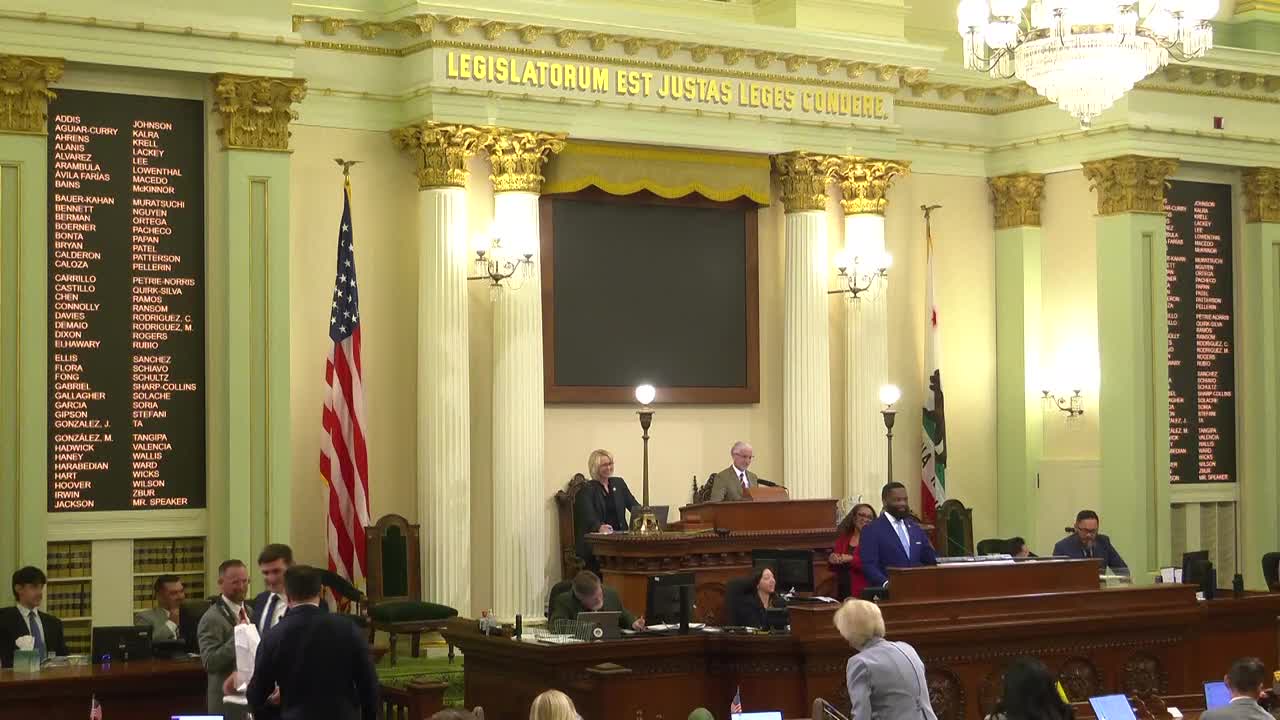
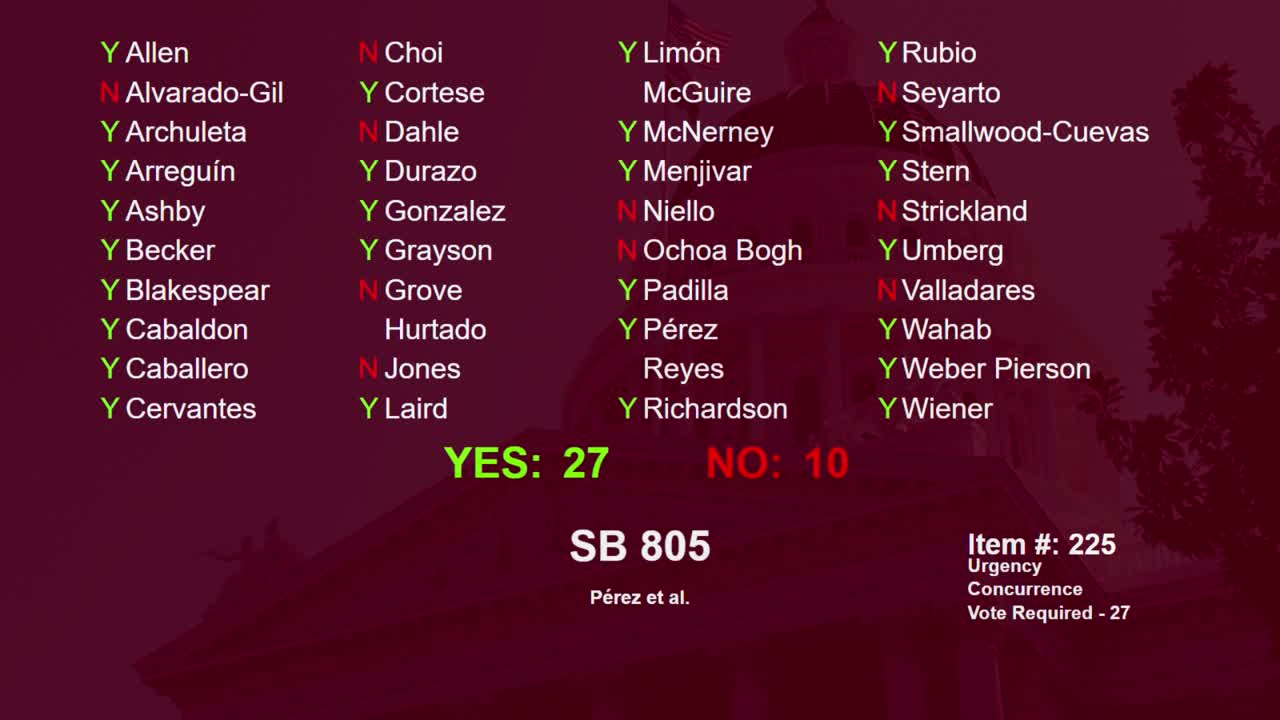
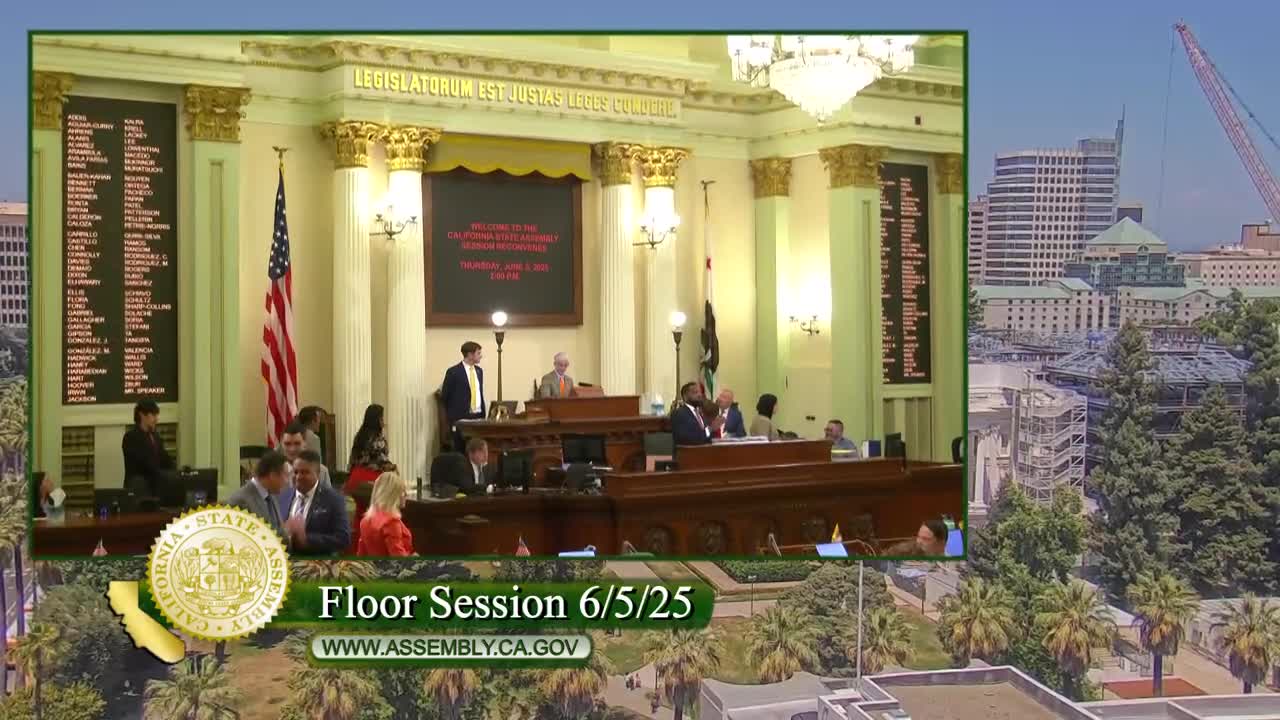
Bill Author

Bill Co-Author(s):