AB 372: Office of Emergency Services: state matching funds: water system infrastructure improvements.
- Session Year: 2025-2026
- House: Assembly
- Latest Version Date: 2025-08-29
Current Status:
In Progress
(2025-09-03: Ordered to inactive file at the request of Senator Allen.)
Introduced
In Committee
Awaiting First Chamber Vote
Passed First Chamber
In Committee
Awaiting Second Chamber Vote
Passed Second Chamber
Enacted
Existing law establishes, within the office of the Governor, the Office of Emergency Services (OES), under the direction of the Director of Emergency Services. Existing law charges the OES with coordinating various emergency activities within the state. The California Emergency Services Act, contingent upon an appropriation by the Legislature, requires the OES to enter into a joint powers agreement pursuant to the Joint Exercise of Powers Act with the Department of Forestry and Fire Protection to develop and administer a comprehensive wildfire mitigation program relating to structure hardening and retrofitting and prescribed fuel modification activities. Existing law authorizes the joint powers authority to establish financial assistance limits and matching funding or other recipient contribution requirements for the program, as provided.
This bill, contingent on funding being appropriated pursuant to a specified bond act, upon appropriation by the Legislature, would establish the Rural Water Infrastructure for Wildfire Resilience Program within the OES for the distribution of state matching funds to urban wildland interface communities, as defined, in designated high fire hazard severity zones or very high fire hazard severity zones to improve water system infrastructure, as prescribed. The bill would require the OES to work in coordination with the Department of Water Resources, the State Water Resources Control Board, the Office of the State Fire Marshal, and other state entities as the OES determines to be appropriate, to achieve the purposes of the program. The bill would require the OES to develop criteria and a scoring methodology to prioritize the distribution of state matching funds provided under the program to rural communities based upon specified criteria.
Existing law establishes, within the office of the Governor, the Office of Emergency Services (OES), under the direction of the Director of Emergency Services. Existing law charges the OES with coordinating various emergency activities within the state. The California Emergency Services Act, contingent upon an appropriation by the Legislature, requires the OES to enter into a joint powers agreement pursuant to the Joint Exercise of Powers Act with the Department of Forestry and Fire Protection to develop and administer a comprehensive wildfire mitigation program relating to structure hardening and retrofitting and prescribed fuel modification activities. Existing law authorizes the joint powers authority to establish financial assistance limits and matching funding or other recipient contribution requirements for the program, as provided.
This bill, contingent on funding being appropriated pursuant to a bond act, as specified, specified bond act, would establish the Rural Water Infrastructure for Wildfire Resilience Program within the OES for the distribution of state matching funds to communities within the Wildland Urban Interface urban wildland interface communities, as defined, in designated high fire hazard severity zones or very high fire hazard severity zones to improve water system infrastructure, as prescribed. The bill would require the OES to work in coordination with the Department of Water Resources, the State Water Resources Control Board, the Office of the State Fire Marshal, and other state entities as the OES determines to be appropriate, to achieve the purposes of the program. The bill would require the OES to develop criteria and a scoring methodology to prioritize the distribution of state matching funds provided under the program to rural communities based upon specified criteria.
Existing law establishes, within the office of the Governor, the Office of Emergency Services (OES), under the direction of the Director of Emergency Services. Existing law charges the OES with coordinating various emergency activities within the state. The California Emergency Services Act, contingent upon an appropriation by the Legislature, requires the OES to enter into a joint powers agreement pursuant to the Joint Exercise of Powers Act with the Department of Forestry and Fire Protection to develop and administer a comprehensive wildfire mitigation program relating to structure hardening and retrofitting and prescribed fuel modification activities. Existing law authorizes the joint powers authority to establish financial assistance limits and matching funding or other recipient contribution requirements for the program, as provided.
This bill, contingent on funding being appropriated pursuant to a bond act, as specified, would establish the Rural Water Infrastructure for Wildfire Resilience Program within the OES for the distribution of state matching funds to communities within the Wildland Urban Interface in designated high fire hazard severity zones or very high fire hazard severity zones to improve water system infrastructure, as prescribed. The bill would require the OES to work in coordination with the Department of Water Resources, the State Water Resources Control Board, the Office of the State Fire Marshal, and other state entities as the OES determines to be appropriate, to achieve the purposes of the program. The bill would require the OES to develop criteria and a scoring methodology to prioritize the distribution of state matching funds provided under the program to rural communities based upon specified criteria.
The Legislature finds and declares all of the following:
(a)Californias rural landscapes and communities have been ground zero for large-scale environmental and economic devastation during the past decades by virtue of the Angora, Caldor, Camp, August Complex, and Dixie Fires.
(b)Aging water infrastructure, combined with insufficient resources to prepare for adequate wildfire response, have left many rural communities at high risk for future unchecked fire activity.
(c)More than 2,000,000 California households, approximately one in four residential structures in California, are located within or in wildfire movement proximity to high or very high fire hazard severity zones identified on maps created by the Department of Forestry and Fire Protection.
(d)Postfire costs associated with the destruction inflicted upon communities such as Grizzly Flats, Paradise, and Greenville have been in the tens of billions of dollars.
(e)Congress has taken affirmative fiscal action by budgeting for funding last year and is poised to repeat that action this year, as evidenced in House Report 117-400, to invest in fire prevention activities in the Tahoe Basin and elsewhere through projects such as water delivery system improvements for expanded water flow and fire hydrant installation.
(f)While California is taking the necessary actions to mitigate the intensity and frequency of fire in the rural parts of the state, local governments need state support for necessary water infrastructure investments to prepare for and aid in fire suppression capacity.
SEC. 2.Section 8586.10 is added to the Government Code, immediately following Section 8586.9, to read:8586.10.(a)As used in this section:
(1)Office means the Office of Emergency Services.
(2)Rural Water Infrastructure for Wildfire Resilience Program or program means the Rural Water Infrastructure for Wildfire Resilience Program established in subdivision (b).
(b)The Rural Water Infrastructure for Wildfire Resilience Program is hereby established within the office for the distribution of state matching funds to urban wildland interface communities, as defined in Section 13108.5 of the Health and Safety Code, in high fire hazard severity zones or very high fire hazard severity zones designated by the State Fire Marshal pursuant to Article 9 (commencing with Section 4201) of Chapter 1 of Part 2 of Division 4 of the Public Resources Code or by a local agency pursuant to Chapter 6.8 (commencing with Section 51175) of Part 1 of Division 1 of Title 5, to improve water system infrastructure, for purposes consistent with the services and improvements to aid in the protection of property from fire, as described in Section 53750.5. Improvements described in this subdivision include, but are not limited to, all of the following:
(1)Upgrading and upsizing waterlines.
(2)Installing additional fire hydrants connected to water systems.
(3)Enhancing water system delivery and distribution capacity.
(4)Creating interconnections between water systems for the purpose of improving water delivery and distribution capacity.
(5)Backup power generation.
(c)The office shall work in coordination with the Department of Water Resources, the State Water Resources Control Board, the Office of the State Fire Marshal, and other state entities as the office determines to be appropriate, to achieve the purposes of the program.
(d)The office shall develop criteria and a scoring methodology to prioritize the distribution of state matching funds provided under the program to rural communities based upon criteria that include, but are not limited to, all of the following:
(1)Community water systems that maintain 15,000 water service connections or fewer.
(2)Water infrastructure improvements and projects to aid in fire suppression for properties located near outstanding national resource waters, headwaters, or both, as those terms are used in the federal Clean Water Act (33 U.S.C. Sec. 1251 et seq.).
(3)Water infrastructure improvements and projects to aid in fire suppression that are identified in, and consistent with one or more of, the following plans:
(A)A community wildfire protection plan, a California Fire Safe Council action plan, a National Fire Protection Associations Firewise USA Community Wildfire Risk Assessment, a local hazard mitigation plan, or other local plan that addresses the hazards and risks from wildfire.
(B)A community water system master plan, hydraulic modeling, or professional engineering reports showing the need for and impact of proposed improvements.
(e)The operation of this section is contingent upon funding being appropriated by the Legislature to the Office of Emergency Services pursuant to the Safe Drinking Water, Wildfire Prevention, Drought Preparedness, and Clean Air Bond Act of 2024, approved by the voters at the November 5, 2024, statewide general election, for purposes consistent with the Rural Water Infrastructure for Wildfire Resilience Program authorized under this section.
The Legislature finds and declares all of the following:
(a)Californias rural landscapes and communities have been ground zero for large-scale environmental and economic devastation during the past decades by virtue of the Angora, Caldor, Camp, August Complex, and Dixie fires. Fires.
(b)Aging water infrastructures, infrastructure, combined with insufficient resources to prepare for adequate wildfire response, have left many rural communities at high risk for future unchecked fire activity.
(c)More than 2,000,000 California households, approximately one in four residential structures in California, are located within or in wildfire movement proximity to high or very high fire hazard severity zones identified on maps created by the Department of Forestry and Fire Protection.
(d)Postfire costs associated with the destruction inflicted upon communities such as Grizzly Flats, Paradise, and Greenville have been in the tens of billions of dollars.
(e)Congress has taken affirmative fiscal action by budgeting for funding last year and is poised to repeat that action this year, as evidenced in House Report 117-400, to invest in fire prevention activities in the Tahoe Basin and elsewhere through projects such as water delivery system improvements for expanded water flow and fire hydrant installation.
(f)While California is taking the necessary actions to mitigate the intensity and frequency of fire in the rural parts of the state, local governments need state support for necessary water infrastructure investments to prepare for and aid in fire suppression capacity.
SEC. 2.Section 8586.10 is added to the Government Code, immediately following Section 8586.9, to read:8586.10.(a)As used in this section:
(1)Office means the Office of Emergency Services.
(2)Rural Water Infrastructure for Wildfire Resilience Program or program means the Rural Water Infrastructure for Wildfire Resilience Program established in subdivision (b).
(b)The Rural Water Infrastructure for Wildfire Resilience Program is hereby established within the office for the distribution of state matching funds to communities within the Wildland Urban Interface urban wildland interface communities, as defined in Section 13108.5 of the Health and Safety Code, in high fire hazard severity zones or very high fire hazard severity zones designated by the State Fire Marshal pursuant to Article 9 (commencing with Section 4201) of Chapter 1 of Part 2 of Division 4 of the Public Resources Code or by a local agency pursuant to Chapter 6.8 (commencing with Section 51175) of Part 1 of Division 1 of Title 5, to improve water system infrastructure, for purposes consistent with the services and improvements to aid in the protection of property from fire, as described in Section 53750.5. Improvements described in this subdivision include, but are not limited to, all of the following:
(1)Upgrading and upsizing waterlines.
(2)Installing additional fire hydrants connected to water systems.
(3)Enhancing water system delivery and distribution capacity.
(4)Creating interconnections between water systems for the purpose of improving water delivery and distribution capacity.
(5)Backup power generation.
(c)The office shall work in coordination with the Department of Water Resources, the State Water Resources Control Board, the Office of the State Fire Marshal, and other state entities as the office determines to be appropriate, to achieve the purposes of the program.
(d)The office shall develop criteria and a scoring methodology to prioritize the distribution of state matching funds provided under the program to rural communities based upon criteria that include, but are not limited to, both all of the following:
(1)Community water systems that maintain 15,000 water service connections or fewer.
(2)Water infrastructure improvements and projects to aid in fire suppression for properties located near outstanding national resource waters, headwaters, or both, as those terms are used in the federal Clean Water Act (33 U.S.C. Sec. 1251 et seq.).
(3)Water infrastructure improvements and projects to aid in fire suppression that are identified in, and consistent with one or more of, the following plans:
(A)A community wildfire protection plan, a California Fire Safe Council action plan, a National Fire Protection Associations Firewise USA Community Wildfire Risk Assessment, a local hazard mitigation plan, or other local plan that addresses the hazards and risks from wildfire.
(B)A community water system master plan, hydraulic modeling, or professional engineering reports showing the need for and impact of proposed improvements.
(e)The operation of this section is contingent upon funding being appropriated by the Legislature to the Office of Emergency Services pursuant to the Safe Drinking Water, Wildfire Prevention, Drought Preparedness, and Clean Air Bond Act of 2024, approved by the voters at the November 5, 2024, statewide general election, for purposes consistent with the Rural Water Infrastructure for Wildfire Resilience Program authorized under this section.
SEC. 3.The operation of this act is contingent upon funding being appropriated by the Legislature to the Office of Emergency Services pursuant to a bond act approved by the voters on or after the statewide general election scheduled for November 5, 2024, including, but not limited to, a climate or natural resources bond, for purposes consistent with the Rural Water Infrastructure for Wildfire Resilience Program authorized in Section 2 of this act.The Legislature finds and declares all of the following:
(a)Californias rural landscapes and communities have been ground zero for large-scale environmental and economic devastation during the past decades by virtue of the Angora, Caldor, Camp, August Complex, and Dixie fires.
(b)Aging water infrastructures, combined with insufficient resources to prepare for adequate wildfire response, have left many rural communities at high risk for future unchecked fire activity.
(c)More than 2,000,000 California households, approximately one in four residential structures in California, are located within or in wildfire movement proximity to high or very high fire hazard severity zones identified on maps created by the Department of Forestry and Fire Protection.
(d)Postfire costs associated with the destruction inflicted upon communities such as Grizzly Flats, Paradise, and Greenville have been in the tens of billions of dollars.
(e)Congress has taken affirmative fiscal action by budgeting for funding last year and is poised to repeat that action this year, as evidenced in House Report 117-400, to invest in fire prevention activities in the Tahoe Basin and elsewhere through projects such as water delivery system improvements for expanded water flow and fire hydrant installation.
(f)While California is taking the necessary actions to mitigate the intensity and frequency of fire in the rural parts of the state, local governments need state support for necessary water infrastructure investments to prepare for and aid in fire suppression capacity.
SEC. 2.Section 8586.10 is added to the Government Code, immediately following Section 8586.9, to read:8586.10.(a)As used in this section:
(1)Office means the Office of Emergency Services.
(2)Rural Water Infrastructure for Wildfire Resilience Program or program means the Rural Water Infrastructure for Wildfire Resilience Program established in subdivision (b).
(b)The Rural Water Infrastructure for Wildfire Resilience Program is hereby established within the office for the distribution of state matching funds to communities within the Wildland Urban Interface in high fire hazard severity zones or very high fire hazard severity zones designated by the State Fire Marshal pursuant to Article 9 (commencing with Section 4201) of Chapter 1 of Part 2 of Division 4 of the Public Resources Code or by a local agency pursuant to Chapter 6.8 (commencing with Section 51175) of Part 1 of Division 1 of Title 5, to improve water system infrastructure, for purposes consistent with the services and improvements to aid in the protection of property from fire, as described in Section 53750.5. Improvements described in this subdivision include, but are not limited to, all of the following:
(1)Upgrading and upsizing waterlines.
(2)Installing additional fire hydrants connected to water systems.
(3)Enhancing water system delivery and distribution capacity.
(4)Creating interconnections between water systems for the purpose of improving water delivery and distribution capacity.
(5)Backup power generation.
(c)The office shall work in coordination with the Department of Water Resources, the State Water Resources Control Board, the Office of the State Fire Marshal, and other state entities as the office determines to be appropriate, to achieve the purposes of the program.
(d)The office shall develop criteria and a scoring methodology to prioritize the distribution of state matching funds provided under the program to rural communities based upon criteria that include, but are not limited to, both of the following:
(1)Community water systems that maintain 15,000 water service connections or fewer.
(2)Water infrastructure improvements and projects to aid in fire suppression for properties located near outstanding national resource waters, headwaters, or both, as those terms are used in the federal Clean Water Act (33 U.S.C. Sec. 1251 et seq.).
(3)Water infrastructure improvements and projects to aid in fire suppression that are identified in, and consistent with one or more of, the following plans:
(A)A community wildfire protection plan, a California Fire Safe Council action plan, a National Fire Protection Associations Firewise USA Community Wildfire Risk Assessment, a local hazard mitigation plan, or other local plan that addresses the hazards and risks from wildfire.
(B)A community water system master plan, hydraulic modeling, or professional engineering reports showing the need for and impact of proposed improvements.
SEC. 3.The operation of this act is contingent upon funding being appropriated by the Legislature to the Office of Emergency Services pursuant to a bond act approved by the voters on or after the statewide general election scheduled for November 5, 2024, including, but not limited to, a climate or natural resources bond, for purposes consistent with the Rural Water Infrastructure for Wildfire Resilience Program authorized in Section 2 of this act.
|
Date
|
Status
|
|---|---|
| Sep 3, 2025 | Ordered to inactive file at the request of Senator Allen. |
| Sep 2, 2025 | Read second time. Ordered to third reading. |
| Aug 29, 2025 | Read second time and amended. Ordered returned to second reading. |
| Aug 29, 2025 | From committee: Amend, and do pass as amended. (Ayes 7. Noes 0.) (August 29). |
| Aug 18, 2025 | In committee: Referred to suspense file. |
| Jul 16, 2025 | From committee: Do pass and re-refer to Com. on APPR. with recommendation: To Consent Calendar. (Ayes 7. Noes 0.) (July 16). Re-referred to Com. on APPR. |
| Jun 24, 2025 | From committee: Do pass and re-refer to Com. on N.R. & W. (Ayes 15. Noes 0.) (June 24). Re-referred to Com. on N.R. & W. |
| Jun 11, 2025 | Referred to Coms. on G.O. and N.R. & W. |
| Jun 3, 2025 | In Senate. Read first time. To Com. on RLS. for assignment. |
| Jun 2, 2025 | Read third time. Passed. Ordered to the Senate. (Ayes 79. Noes 0. Page 1822.) |
| May 27, 2025 | Read second time. Ordered to third reading. |
| May 23, 2025 | From committee: Do pass. (Ayes 13. Noes 0.) (May 23). |
| May 14, 2025 | In committee: Set, first hearing. Referred to suspense file. |
| Apr 30, 2025 | From committee: Do pass and re-refer to Com. on APPR. with recommendation: To Consent Calendar. (Ayes 7. Noes 0.) (April 29). Re-referred to Com. on APPR. |
| Apr 22, 2025 | Re-referred to Com. on E.S & T.M. |
| Apr 21, 2025 | From committee chair, with author's amendments: Amend, and re-refer to Com. on E.S & T.M. Read second time and amended. |
| Apr 8, 2025 | From committee: Do pass and re-refer to Com. on E.S & T.M. (Ayes 7. Noes 0.) (April 7). Re-referred to Com. on E.S & T.M. |
| Mar 28, 2025 | Referred to Coms. on E.M and E.S & T.M. |
| Feb 4, 2025 | From printer. May be heard in committee March 6. |
| Feb 3, 2025 | Read first time. To print. |
|
Date
|
Description
|
Location
|
Votes
|
|
|---|---|---|---|---|
| Aug 29, 2025 | Do pass as amended | Senate Standing Committee on Appropriations |
Passed |
|
| Aug 18, 2025 | Placed on suspense file | Senate Standing Committee on Appropriations |
Passed |
|
| Jul 16, 2025 | Do pass, but first be re-referred to the Committee on [Appropriations] with the recommendation: To Consent Calendar | Senate Standing Committee on Natural Resources and Water |
Passed |
|
| Jun 24, 2025 | Do pass, but first be re-referred to the Committee on [Natural Resources and Water] | Senate Standing Committee on Governmental Organization |
Passed |
|
| Jun 2, 2025 | AB 372 Bennett Assembly Third Reading | Assembly Floor |
Passed |
|
| May 23, 2025 | Do pass. | Assembly Standing Committee on Appropriations |
Passed |
|
| Apr 29, 2025 | Do pass and be re-referred to the Committee on [Appropriations] with recommendation: To Consent Calendar | Assembly Standing Committee on Environmental Safety and Toxic Materials |
Passed |
|
| Apr 7, 2025 | Do pass and be re-referred to the Committee on [Environmental Safety and Toxic Materials] | Assembly Standing Committee on Emergency Management |
Passed |
This list shows positions taken on this bill by organizations on the date displayed, which is linked to the original source.
Positions by individuals are not included.
|
Organization
|
Position
|
Date
|
|---|---|---|
| Association Of California Water Agencies | ** Support | |
| California Association of Environmental Health Administrators | ** Support | |
| California Catholic Conference | ** Support | |
| California Democratic Party Rural Caucus | ** Support | |
| California State Association Of Counties | ** Support | |
| California Water Association | ** Support | |
| CDP Rural Caucus | ** Support | |
| El Dorado Irrigation District | ** Support | |
| Elsinore Valley Municipal Water District | ** Support | |
| League Of California Cities | ** Support | |
| Northern California Youth Policy Coalition | ** Support | |
| North Tahoe Public Utility District | ** Support | |
| Placer County Water Agency | ** Support | |
| Rural County Representatives of California | ** Support | |
| Sierra Business Council | ** Support | |
| South Tahoe Public Utility District | ** Support | |
| Tahoe City Public Utility District | ** Support | |
| Tahoe Water for Fire Suppression Partnership | ** Support | |
| Upper San Gabriel Valley Municipal Water District | ** Support |
SENATE RULES COMMITTEE Office of Senate Floor Analyses (916) 651-1520 Fax: (916) 327-4478 | AB 372 |
THIRD READING
Bill No: AB 372
Author: Bennett (D)
Amended: 8/29/25 in Senate
Vote: 21
SENATE GOVERNMENTAL ORG. COMMITTEE: 15-0, 6/24/25
AYES: Padilla, Archuleta, Ashby, Blakespear, Cervantes, Choi, Dahle, Hurtado, Jones, Ochoa Bogh, Richardson, Rubio, Smallwood-Cuevas, Wahab, Weber Pierson
SENATE NATURAL RES. & WATER COMMITTEE: 7-0, 7/16/25
AYES: Limón, Seyarto, Allen, Grove, Hurtado, Laird, Stern
SENATE APPROPRIATIONS COMMITTEE: 7-0, 8/29/25
AYES: Caballero, Seyarto, Cabaldon, Dahle, Grayson, Richardson, Wahab
ASSEMBLY FLOOR: 79-0, 6/2/25 - See last page for vote
SUBJECT: Office of Emergency Services: state matching funds: water system infrastructure improvements
SOURCE: Tahoe Water For Fire Suppression Partnership
DIGEST:
This bill establishes, contingent on funding being appropriated pursuant to the Safe Drinking Water, Wildfire Prevention, Drought Preparedness, and Clean Air Bond Act of 2024 (Prop. 4) the Rural Water Infrastructure for Wildfire Resilience Program (Program) for the distribution of state matching funds to urban wildland interface communities, in high and very high fire hazard severity zones (FHSZ) to improve water system infrastructure, as specified.
ANALYSIS:
Existing law:
- Establishes, within the office of the Governor, the Office of Emergency Services (OES), under the direction of the Director of OES, and charges OES with coordinating various activities within the state.
- Requires OES, contingent upon an appropriation by the Legislature, to enter into a joint powers agreement with the Department of Forestry and Fire Protection (CAL FIRE) to develop and administer a comprehensive wildfire mitigation program relating to structure hardening and retrofitting and prescribed fuel modification activities.
This bill:
- Establishes the Program, within OES, for the distribution of state matching funds to urban wildland interface communities, in high FHSZs or very high FHSZs designated by the State Fire Marshal (SFM) or by a local agency, to improve water system infrastructure, for purposes consistent with the services and improvements to aid in the protection of property from fire, as specified.
- Requires OES to work in coordination with the Department of Water Resources (DWR), the State Water Resources Control Board, the SFM, and other state entities as OES determines to be appropriate, to achieve the purposes of the Program.
- Requires OES to develop criteria and a scoring methodology to prioritize the distribution of state matching funds provided under the Program to rural communities based upon specified criteria.
- Provides that the operation of this section is contingent upon funding being appropriated by the Legislature to OES for purposes consistent with the Program authorized by this bill.
Background
Author Statement. According to the author’s office, “California has experienced a growing number of wildfires with ten of the largest twenty fires occurring since 2020. Our water systems were designed to provide safe drinking water, however the prevalence of fires in this state demands us to re-examine how we prepare for fires. The voters of California made clear with their support of Proposition 4 that they want this state to invest in fire suppression and prevention. AB 372 creates the Rural Water Infrastructure for Wildfire Resilience Program so that small water suppliers, many of which serve disadvantaged communities, can invest in upgrading waterlines, installing additional fire hydrants, enhancing water delivery, and backup power generation. These are the types of intelligent, forward-thinking, actions and investments that we need to make in order to reduce loss and save lives.”
California’s Worsening Wildfire Reality. The State of California has the main responsibility for wildfire response activities on about one-third of California’s land area. With over 39 million residents, the State of California is the most populous state in the nation and has the third largest land area among the states (163,695 square miles). OES serves as the state’s leadership hub during all major emergencies and disasters. This includes responding, directing, and coordinating state and federal resources and mutual aid assets across all regions to support the diverse communities across the state.
In 2021, the DWR released the Small Water Systems and Rural Communities Drought and Water Shortage Contingency Planning and Risk Assessment report. Issued in two parts, the report both identifies the vulnerability of small water systems and rural communities to drought and water shortages (Part II) and offers recommendations for enhancing drought contingency planning in these areas (Part I).
In this report, DWR evaluated the drought and water shortage risks for 2,419 small water suppliers. The findings revealed that 47 out of the state’s 58 counties have small water suppliers ranking in the top 10% for water shortage risk (a total of 240 suppliers). Notably, 61% of these high-risk suppliers (149 in total) are located in zones with high or very high fire hazard severity. This indicates that numerous small and rural communities across the state face a significant risk of water depletion during droughts or other disasters, and that communities in high wildfire-risk areas are particularly vulnerable—potentially compromising their ability to manage fires effectively.
Fire Hazard Severity Zones. FHSZs, newly constructed homes must meet heightened fire-resistant building standards. Anyone hoping to sell a home also has to alert would-be-buyers of the elevated danger with a disclosure form. For those in very high FHSZs, the law requires a 100-foot circle around a property free of brush, dead trees, and other flammable materials. Need subdivisions also need to be carefully designed with multiple evacuation routes, adequate water supply infrastructure, and built-in-fuel breaks in place.
The Wildland-Urban Interface (WUI) is the transition zone where human development meets wildland vegetation. These are spaces where homes and communities directly border forests, grasslands, or brush lands. According to an article in CalMatters titled “The LA County fires devastated homes in the wildland urban interface. Here’s what that is” notes that their analysis revealed that as of 2020, nearly 14 million Californians lived in the sprawling seven million acre zone that makes up California’s WUI areas. According to the article, “[w]hile under three percent of the statewide WUI has been affected by wildfire in the last decade, thousands of homes in the zone have been destroyed.”
California’s Wildfire Mitigation Program. AB 38 (Wood, Chapter 391, Statutes of 2019) required OES to enter into a joint powers agreement with CAL FIRE to develop and administer a comprehensive wildfire mitigation program to encourage cost-effective structure hardening and retrofitting and to facilitate vegetation management, as specified. Known as the California Wildfire Mitigation Program (CWMP), this effort encourages cost-effective wildfire resilience measures to create fire-resistant homes, businesses, public buildings, and public spaces. Mitigation measures such as home hardening, vegetation management, defensible space, and other fuel modification activities provide neighborhood and community-wide benefits against wildfire. Existing law authorizes the CWMP to establish financial assistance limits and matching funding or other recipient contribution requirements for the program, as specified.
Safe Drinking Water, Wildfire Prevention, Drought Preparedness, and Clean Air Bond Act of 2024. The Bond Act was placed on the 2024 general election ballot as Proposition 4 by SB 867 (Allen, Chapter 83, Statutes of 2024), and was approved by voters with 59.8% of the 15 million votes cast. Prop. 4 authorizes the issuance of $10 billion worth of bonds pursuant to the State General Obligation Bond Law to finance projects for safe drinking water, drought, flood, and water resilience, wildfire and forest resilience, coastal resilience, extreme heat mitigation, biodiversity and nature-based climate solutions, climate-smart, sustainable, and resilient farms, ranches, and working lands, park creation and outdoor access, and clean air programs.
Of that $10 billion, Prop. 4 makes $135 million available, upon appropriation by the Legislature, to OES for a wildfire mitigation grant program to provide, among other things: loans, direct assistance, and matching funds for projects that: prevent wildfires, increase resilience, maintain existing wildfire risk reduction projects, reduce the risk of wildfires to communities, or increase home or community hardening.
Rural Water Infrastructure for Wildfire Resilience Program. This bill establishes the Program to provide state matching funds for critical water infrastructure improvements in urban wildland interface communities located in high and very high FHSZs. Under the Program, funding may be used for improvements such as upgrading water lines, installing fire hydrants, increasing water delivery capacity, and adding backup power systems. To prioritize limited funds, this bill requires OES to develop criteria based on factors such as small system size, proximity to critical water sources, and alignment with existing wildfire protection or water system plans. The Program is contingent upon funding appropriated by the Legislature pursuant to Prop. 4, approved by the voters in November of 2024.
Prior/Related Legislation
SB 90 (Seyarto, 2025) explicitly specifies certain projects eligible for wildfire mitigation grant program funding from Prop. 4, as specified. (Held in the Senate Appropriations Committee Suspense File)
AB 307 (Petrie-Norris, 2025) would have required $10 million of the $25 million made available by Prop. 4 for CAL FIRE to be allocated for purposes of the ALERTCalifornia fire camera mapping system. (Never heard in the Assembly Natural Resources Committee)
SB 1088 (Alvarado-Gil, 2024) would have, contingent upon funding appropriated pursuant to a future bond act, establishes the Rural and Small Community Fire Resilience Program, within OES, for the distribution of state matching funds to communities within the WUI to improve water system infrastructure, as specified. (Held in Assembly Appropriations Committee)
FISCAL EFFECT: Appropriation: No Fiscal Com.: Yes Local: No
According to the Senate Appropriations Committee, OES reports annual ongoing costs of approximately $703,000 for two additional staff to support the proposed program (General Fund or other funds). OES notes it would require at least seven percent of funding to develop and implement the program, as well as provide technical assistance and monitor grants awarded.
Unknown likely significant General Fund cost pressures, ranging in the tens of millions of dollars, to fund the proposed Rural Water Infrastructure for Wildfire Resilience Program.
SUPPORT: (Verified 8/29/25)
Tahoe Water For Fire Suppression Partnership (Source)
Association of California Water Agencies
California Association of Environmental Health Administrators
California State Association of Counties
California Water Association
CDP Rural Caucus
El Dorado Irrigation District
Elsinore Valley Municipal Water District
League of California Cities
North Tahoe Public Utility District
Northern California Youth Policy Coalition
Placer County Water Agency
Rural County Representatives of California
Sierra Business Council
South Tahoe Public Utility District
Tahoe City Public Utility District
Upper San Gabriel Valley Municipal Water District
OPPOSITION: (Verified 8/29/25)
None received
ARGUMENTS IN SUPPORT: In support of the bill, the Tahoe Water For Fire Suppression Partnership write that, “[t]his bill will develop a program for the distribution of state matching funds to WUI communities located in designated “High” and “Very High” Fire Hazard Severity Zones 9as classified by the State Fire Marshal), to improve and upgrade rural water systems infrastructure and accelerate the installation of resilient water infrastructure to address community wildfire suppression needs.”
ASSEMBLY FLOOR: 79-0, 6/2/25
AYES: Addis, Aguiar-Curry, Ahrens, Alanis, Alvarez, Arambula, Ávila Farías, Bains, Bauer-Kahan, Bennett, Berman, Boerner, Bonta, Bryan, Calderon, Caloza, Carrillo, Castillo, Chen, Connolly, Davies, DeMaio, Dixon, Elhawary, Ellis, Flora, Fong, Gabriel, Gallagher, Garcia, Gipson, Jeff Gonzalez, Mark González, Hadwick, Haney, Harabedian, Hart, Hoover, Irwin, Jackson, Kalra, Krell, Lackey, Lee, Lowenthal, Macedo, McKinnor, Muratsuchi, Nguyen, Ortega, Pacheco, Papan, Patel, Patterson, Pellerin, Petrie-Norris, Quirk-Silva, Ramos, Ransom, Celeste Rodriguez, Michelle Rodriguez, Rogers, Blanca Rubio, Sanchez, Schiavo, Schultz, Sharp-Collins, Solache, Soria, Stefani, Ta, Tangipa, Valencia, Wallis, Ward, Wicks, Wilson, Zbur, Rivas
Prepared by: Brian Duke / G.O. / (916) 651-1530
9/2/25 17:56:25
**** END ****
SENATE COMMITTEE ON
Senator Anna Caballero, Chair
2025 - 2026 Regular Session
AB 372 (Bennett) - Office of Emergency Services: state matching funds: water system infrastructure improvements
Version: | Policy Vote: |
Urgency: | Mandate: |
Hearing Date: | Consultant: |
Bill Summary:
AB 372 establishes, contingent upon funding appropriated pursuant to the Safe Drinking Water, Wildfire Prevention, Drought Preparedness, and Clean Air Bond Act of 2024 (Proposition 4), a Rural Water Infrastructure for Wildfire Resilience Program in the Office of Emergency Services (OES). AB 372 specifies the purpose of the program is for the distribution of state matching funds to wildland-urban interface (WUI) communities in high or very high fire hazard severity zones (FHSZs) to improve water system infrastructure to aid in the protection of property from fire.
*********** ANALYSIS ADDENDUM – SUSPENSE FILE ***********
The following information is revised to reflect amendments
adopted by the committee on August 29, 2025
Fiscal Impact:
- OES reports annual ongoing costs of approximately $703,000 for two additional staff to support the proposed program (General Fund or other funds). OES notes it would require at least 7 percent of funding to develop and implement the program, as well as provide technical assistance and monitor the grants awarded.
- Unknown likely significant General Fund cost pressures, ranging in the tens of millions of dollars, to fund the proposed Rural Water Infrastructure for Wildfire Resilience Program.
Committee Amendments:
Delete the reference to Proposition 4 bond funds, instead making the program contingent upon an appropriation by the Legislature.
-- END --
SENATE COMMITTEE ON APPROPRIATIONS
Senator Anna Caballero, Chair
2025 - 2026 Regular Session
AB 372 (Bennett) - Office of Emergency Services: state matching funds: water system infrastructure improvements
Version: April 21, 2025 | Policy Vote: G.O. 15 - 0, N.R. & W. 7 - 0 |
Urgency: No | Mandate: No |
Hearing Date: August 18, 2025 | Consultant: Janelle Miyashiro |
Bill Summary:
AB 372 establishes, contingent upon funding appropriated pursuant to the Safe Drinking Water, Wildfire Prevention, Drought Preparedness, and Clean Air Bond Act of 2024 (Proposition 4), a Rural Water Infrastructure for Wildfire Resilience Program in the Office of Emergency Services (OES). AB 372 specifies the purpose of the program is for the distribution of state matching funds to wildland-urban interface (WUI) communities in high or very high fire hazard severity zones (FHSZs) to improve water system infrastructure to aid in the protection of property from fire.
Fiscal Impact:
- OES reports annual ongoing costs of approximately $703,000 for two additional staff to support the proposed program (Proposition 4 bond funds, General Fund, or other funds). Proposition 4 allows up to 7 percent of funding appropriated to be spent on administration over the lifetime of funds appropriated for each program. OES notes it would require the full 7 percent of funding to develop and implement the program, as well as provide technical assistance and monitor the grants awarded. To the extent program administration exceeds the allowed 7 percent threshold, there may be additional General Fund cost pressures to support operation of the program.
- Unknown likely significant Proposition 4 bond funds cost pressures, ranging in the tens of millions of dollars, to fund the proposed Rural Water Infrastructure for Wildfire Resilience Program.
Background:
The Safe Drinking Water, Wildfire Prevention, Drought Preparedness, and Clean Air Bond Act of 2024 (SB 867 (Allen, Chapter 83, Statutes of 2024) (Act) authorized a $10 billion bond to be placed before the state’s voters for approval. The Act, upon appropriation by the Legislature, provides $3.8 billion for safe drinking water, drought, flood, and water resilience programs; $1.5 billion for wildfire and forest resilience programs; $1.2 billion for coastal resilience programs; $450 million for extreme heat mitigation programs; $1.2 billion for biodiversity protection and nature-based climate solution programs; $300 million for climate-smart, sustainable, and resilient farms, ranches, and working lands programs; $700 million for park creation and outdoor access programs; and $850 million for clean energy programs.
Of the $1.5 billion for wildfire prevention, including reducing community wildfire risk and restoring the health and resilience of forests and landscapes, the Act made $135 million available to OES. OES, in coordination with the Department of Forestry and Fire Protection (CAL FIRE), is required to administer this grant program for projects that prevent wildfires, increase resilience, maintain existing wildfire risk reduction projects, reduce the risk of wildfire to communities, or increase home or community hardening. The grant program will provide loans, direct assistance, and matching funds for eligible projects.
Eligible projects include, but are not limited to, grants to local agencies, state agencies, joint powers authorities, tribes, resource conservation districts, fire safe councils, and nonprofit organizations for structure hardening of critical community infrastructure, wildfire smoke mitigation, evacuation centers, including community clean air centers, structure hardening projects that reduce the risk of wildfire for entire neighborhoods and communities, water delivery system improvements for fire suppression purposes for communities in very high or high fire hazard areas, wildfire buffers, and incentives to remove structures that significantly increase hazard risk.
The Act became Proposition 4 on the November 5, 2024 statewide ballot and passed with a vote of 9,055,116 to 6,086,414 (59.8% to 40.2%).
Proposed Law:
- Establishes a Rural Water Infrastructure for Wildfire Resilience Program within OES for the distribution of state matching funds to WUI communities in high or very high FHSZs to improve water system infrastructure consistent with the services and improvements to aid in the protection of property from fire. Eligible improvement projects include, but are not limited to, all of the following:
- Upgrading and upsizing waterlines.
- Installing additional fire hydrants connected to water systems.
- Enhancing water system delivery and distribution capacity.
- Creating interconnections between water systems for the purpose of improving water delivery and distribution capacity.
- Backup power generation.
- Requires OES to work with the Department of Water Resources, the State Water Resources Control Board, and the Office of the State Fire Marshal, and other state entities.
- Requires OES to develop criteria and a scoring methodology to prioritize the distribution of state matching funds provided under the program. Criteria include, but are not limited to, all of the following:
- Community water systems that maintain 15,000 water service connections or fewer.
- Water infrastructure improvements and projects to aid in fire suppression for properties located near outstanding national resource waters, headwaters, or both.
- Water infrastructure improvements and projects to aid in fire suppression that are identified in, and consistent with one or more of, the following plans:
- A community wildfire protection plan, a California Fire Safe Council action plan, a National Fire Protection Association’s Firewise USA Community Wildfire Risk Assessment, a local hazard mitigation plan, or other local plan that addresses the hazards and risks from wildfire.
- A community water system master plan, hydraulic modeling, or professional engineering reports showing the need for and impact of proposed improvements.
- Provides that operation of the program is contingent upon funding appropriated by the Legislature to OES pursuant to Proposition 4 bond funds.
- States legislative findings and declarations.
Related Legislation:
SB 90 (Seyarto, 2025) would have explicitly specified certain projects eligible for wildfire mitigation grant program funding from Proposition 4. SB 90 was held on the Suspense File in this committee.
-- END --
SENATE COMMITTEE ON NATURAL RESOURCES AND WATER
Senator Monique Limón, Chair
2025 - 2026 Regular
Bill No: AB Hearing Date: July 16, 2025
Author: | Bennett | ||
Version: | April 21, 2025 Amended | ||
Urgency: | No | Fiscal: | Yes |
Consultant: | Genevieve Wong | ||
Subject: Office of Emergency Services: state matching funds: water system infrastructure improvements
SUMMARY
This bill would establish the Rural Water Infrastructure for Wildfire Resilience Program in the Governor’s Office of Emergency Services (Cal OES) for the distribution of state matching funds to urban wildland interface communities.
BACKGROUND AND EXISTING LAW
Wildfire in California. Catastrophic and devastating wildfires have occurred repeatedly in the state in recent years. Thirteen of the 20 largest and 15 of the 20 most destructive wildland fires in state history have occurred since 2015. The 2020 August Complex Fire in northern California – the largest fire in California’s modern history – burned over one million acres, and the 2021 Dixie Fire was almost one million acres. Two wildland fires in recent years burned over the crest of the Sierras, which had not been previously observed. In the last several years, tens of thousands of structures – mostly homes – have been destroyed from wildland fire, insured losses incurred are in the billions of dollars, prime habitat has been destroyed or damaged, and, tragically, hundreds of lives have been lost. Most recently, the Palisades and Eaton Fires in Los Angeles in January resulted in the loss of approximately 17,250 structures and 30 deaths.
Small water suppliers and rural communities. Pursuant to AB 1668 (Friedman, Chapter 15, Statutes of 2018), the Department of Water Resources (DWR) issued Small Water Systems and Rural Communities Drought and Water Shortage Contingency Planning and Risk Assessment in 2021. This report, released in two parts, identified small water systems and rural communities at risk of drought and water shortage vulnerability (Part II) and made recommendations for improving drought contingency planning for those areas (Part I).
DWR examined the relative risk of drought and water shortage for 2,419 small water suppliers in the report. The results show that a vast majority of the state’s counties (47 of the 58 counties) have small water suppliers in the top 10 percent of risk scores (240 suppliers) for water shortage. Of those in the top 10 percent, over half (61 percent or 149 suppliers) are located in high or very high fire hazard severity zones. In other words, there are many small and rural communities across the state that are at high risk of running out of water during a drought or other disaster. Also, many communities located in areas with a high risk for wildfire are at high risk of water shortage, which could impact their capacity to suppress fires when they occur.
The report recommended that the state support small community water systems to install additional infrastructure to improve drought and water shortage preparedness and response. The report noted that most water systems under 1,000 connections have difficulty ensuring water supplies during natural disaster events, regardless of the development of planning materials, due to their inherent lack of economies of scale to finance needed infrastructure improvements and the high cost of emergency response activities. The minimum infrastructure resiliency measures to help ensure sustainable water supplies include, among others, having source and distribution system capacity to meet wildfire flow requirements.
In 2021, the University of California (UC) Division of Agriculture and Natural Resources and the UC Los Angeles, Luskin Center for Innovation released Wildfire & Water Supply in California: Advancing a Research & Policy Agenda, which noted the following on this issue:
“Wildfires bring new challenges to water system planners. The challenges include protecting infrastructure, treating increased contamination loads post-fire, cleaning water reservoirs, rebuilding destroyed infrastructure, and maintaining power and water access during a fire to, among other things, provide critical support to fire fighters… Wildfire is one of several climate threats that water utility planners are expected to account for, and the approximately 2,800 community water systems in the state have vastly different planning and operational capacities. Wildfire may threaten the processes to secure, store, treat, and deliver reliable water supplies to first responders and communities. The scale of the problem is evident in a recent Department of Water Resources estimate that “over half of the top at-risk [water] suppliers are in high or very high-risk zones for wildfire, as defined by [Department of Forestry and Fire Protection]” (2020 Water Resilience Portfolio). This is a water equity issue that leaves (often already vulnerable) communities to deal with compounding disasters.”
Further, this report notes that policy does not support water suppliers’ direct and indirect financing of firefighting activities, although it often represents an outsized portion of water supplier budgets. The paper recommends, among other things, further investing in targeted support for water systems’ continuous service in wildfire events.
Prepare California Initiative. Cal OES administers this initiative, which provides funding to build community resilience in areas most susceptible to natural disasters. It seeks to reduce long-term risks from natural disasters, such as flooding, earthquakes, wildfires, landslides, extreme heat, and drought, by investing in local capacity building and mitigation projects designed to protect communities. The initiative offers matching funding for the non-federal cost share for the federal Building Resilient Infrastructure and Communities program. This includes funding actions to reduce or eliminate long-term risk to life and property from natural hazards and their effects, such as retrofits of buildings or structures to protect them from a hazard or removal of structures from a hazard area.
The Safe Drinking Water, Wildfire Prevention, Drought Preparedness, and Clean Air Bond Act of 2024 (Proposition 4). The Safe Drinking Water, Wildfire Prevention, Drought Preparedness, and Clean Air Bond Act of 2024 (SB 867 (Allen, Chapter 83, Statutes of 2024)) (Act) authorized a $10 billion bond to be placed before the state’s voters for approval. The Act became Proposition 4 on the November 5, 2024 statewide ballot and passed with a vote of 9,055,116 to 6,086,414 (59.8% to 40.2%).
Proposition 4, upon appropriation by the Legislature, provides $3.8 billion for safe drinking water, drought, flood, and water resilience programs; $1.5 billion for wildfire and forest resilience programs; $1.2 billion for coastal resilience programs; $450 million for extreme heat mitigation programs; $1.2 billion for biodiversity protection and nature-based climate solution programs; $300 million for climate-smart, sustainable, and resilient farms, ranches, and working lands programs; $700 million for park creation and outdoor access programs; and $850 million for clean energy programs.
Of these funds, Proposition 4 allocates $135,000,000 to Cal OES for a wildfire mitigation grant program to provide loans, rebates, direct assistance, and matching funds for projects that prevent wildfires, increase resilience, maintain existing wildfire risk reduction projects, reduce the risk of wildfires to communities, or increase home or community hardening. Eligible projects include, but are not limited to, grants for structural hardening of critical community infrastructure, wildfire smoke mitigation, evacuation centers, structure hardening projects that reduce the risk of wildfire for entire neighborhoods and communities, water delivery system improvements for fire suppression purposes for community in very high or high fire hazard areas, wildfire buffers, and incentives to remove structures that significantly increase hazard risk.
Existing law:
- Establishes Cal OES within the Governor’s Office under the supervision of the OES director. (Government Code (GOV) §8585)
- Cal OES is responsible for the state’s emergency and disaster response services for natural, technological, or man-made disasters and emergencies, including responsibility for activities necessary to prevent, respond to, recover from, and mitigate the effects of emergencies and disasters to people and property. (GOV §8585)
- Establishes DWR in the California Natural Resources Agency (CNRA) under the control of the DWR director. (Water Code §120)
- DWR is responsible for the State Water Project, as well as drought planning, statewide water resources planning, dam safety, flood planning and management, overseeing sustainable groundwater management, and water use efficiency. (Various Water Code sections)
- Establishes the Department of Forestry and Fire Protection (CAL FIRE) in CNRA under the control of the CAL FIRE director. (Public Resources Code (PRC) §701)
- CAL FIRE is responsible for the fire protection, fire prevention, maintenance, and enhancement of the state’s forest, range, and brushland resources, contract fire protection, associated emergency services, and assistance in civil disasters and other nonfire emergencies. (PRC §713)
- Directs a city or county, upon the next revision of the housing element of a general plan on or after January 1, 2014, to include a set of feasible implementation measures designed to carry out specified goals, policies, and objectives, including designing adequate infrastructure if a new development is located in a state responsibility area or in a very high fire hazard severity zone, including water supplies for structural fire suppression. (GOV §65302)
PROPOSED LAW
This bill would:
- Establish the Rural Water Infrastructure for Wildfire Resilience Program within Cal OES for the distribution of state matching funds to urban wildland interface communities in high fire hazard severity zones or very high fire hazard severity zones designated by the State Fire Marshal (SFM) or by a local agency to improve water system infrastructure, as provided.
- Require Cal OES to work in coordination with DWR, State Water Board, SFM, and other state entities as Cal OES determines to be appropriate, to achieve the purposes of the program.
- Require Cal OES to develop criteria and a scoring methodology to prioritize the distribution of state matching funds provided under the program to rural communities based upon criteria such as:
- Community water systems that maintain 15,000 water service connections or fewer;
- Water infrastructure improvements and projects to aid in fire suppression for properties located near outstanding national resource waters, headwaters, or both; and
- Water infrastructure improvements and projects to aid in fire suppression that are identified in, and consistent with:
- A community wildfire protection plan, a California Fire Safe Council action plan, a National Fire Protection Association’s Firewise USA Community Wildfire Risk Assessment, a local hazard mitigation plan, or other local plan that addresses the hazards and risks from fire.
- A community water system master plan, hydraulic modeling, or professional engineering reports showing the need for and impact of proposed improvements.
- Make the operation of this bill contingent upon funding being appropriated by the Legislature to Cal OES pursuant to Proposition 4 for purposes consistent with the Program.
ARGUMENTS IN SUPPORT
According to the author, “California has experienced a growing number of wildfires with ten of the largest twenty fires occurring since 2020. Our water systems were designed to provide safe drinking water, however the prevalence of fires in this state demands us to re-examine how we prepare for fires. The voters of California made clear with their support of Proposition 4 that they want this state to invest in fire suppression and prevention. AB 372 creates the Rural Water Infrastructure for Wildfire Resilience Program so that small water suppliers, many of which serve disadvantaged communities, can invest in upgrading waterlines, installing additional fire hydrants, enhancing water delivery, and backup power generation. These are the types of intelligent, forward-thinking, actions and investments that we need to make in order to reduce loss and save lives.”
ARGUMENTS IN OPPOSITION
None received
COMMENTS
This bill is double referred. This bill has been referred to both the Senate Committee on Governmental Organization and this Committee for hearing. This Committee is the second Committee of referral. This bill was heard in the Senate Committee on Governmental Organization on June 24, 2025, and passed out with a vote of 15 - 0. Elements of this bill under the jurisdiction of the Senate Committee on Government Organization are included here for completeness and context only.
Need for the bill. This bill seeks to address a growing recognition that aging and outdated municipal water infrastructure in rural communities at risk of catastrophic wildfire is incapable of providing the required water flowrates, water storage capacities, and fire hydrant coverage to meet modern firefighting standards. Further, the infrastructure investments required to upgrade these rural water systems are beyond what can be financed through local ratepayer revenue alone due to the rural, low-density nature of these communities. While there are state programs to fund water infrastructure at DWR and wildfire prevention and response at CAL FIRE, there are no programs that are specifically designed to ensure water infrastructure can meet wildfire response needs.
This bill would create a program at Cal OES to do so. Specifically, the program would fund upgrading and upsizing waterlines, installing additional fire hydrants of water systems, enhancing water system delivery and distribution capacity, and backup power generation.
Looks familiar. Last year, this Committee passed SB 1088 (Alvarado-Gil) which is very similar to this bill. SB 1088 was held in the Assembly Appropriations Committee on the suspense file.
The three main differences between this bill and SB 1088 is that this bill:
- Specifically lists backup power generation as an improvement eligible for funding under the program;
- Adds water infrastructure improvements and projects to aid in fire suppression for properties near certain national resource waters or headwaters as a specific priority criteria for funding; and
- Specifically makes the operation of the program contingent on Proposition 4 moneys.
The Senate Natural Resources and Water Committee analysis for SB 1088 had suggested that the author consider integrating the proposed program into the Prepare California Initiative. The author of this bill may also wish to consider that same suggestion.
Related legislation
SB 90 (Seyarto) of the current legislative session would have explicitly specified certain projects eligible for wildfire mitigation grant program funding from Proposition 4, as specified. This bill was held in the Senate Appropriations Committee on the suspense file.
SB 746 (Alvarado-Gil) of the current legislative session would have codified the Urban Water Community Drought Relief program and the Small Community Drought Relief program at the Department of Water Resources (DWR). Further, this bill would authorize these programs, upon appropriation, to fund projects that provide benefits in addition to drought relief, including projects that reduce the risk of wildfires for communities through water delivery system improvements for fire suppression purposes in high- and very high-fire hazard severity zones, among other things. This bill was held in the Senate Appropriations Committee on the suspense file.
AB 367 (Bennett) of the current legislative session would require water suppliers in high or very high fire hazard severity zones in Ventura County, the Ventura County Fire Department, and Ventura County Office of Emergency Services to take certain actions that would help ensure effective fire response and ensure adequate water availability to aid in fire suppression. This bill is pending before the Senate Local Government Committee.
SB 867 (Allen, Chapter 83, Statutes of 2024) authorized placing Proposition 4 on the 2024 general election ballot, as specified.
SB 1088 (Alvarado-Gil, 2024) would have, contingent upon funding appropriated pursuant to a future bond act, establishes the Rural and Small Community Fire Resilience Program, within Cal OES, for the distribution of state matching funds to communities within the WUI to improve water system infrastructure, as specified. This bill was held in Assembly Appropriations Committee.
SB 470 (Alvarado-Gil, 2023) would have authorized certain programs at DWR, upon appropriation, to fund projects that provide benefits in addition to drought relief, including projects that reduce the risk of wildfires for communities through water delivery system improvements for fire suppression purposes in high- and very high-fire hazard severity zones, among other things. This bill was vetoed by the Governor.
SUPPORT
Tahoe Water for Fire Suppression Partnership (sponsor)
Association of California Water Agencies (ACWA)
California Association of Environmental Health Administrators (CAEHA)
California Catholic Conference
California State Association of Counties (CSAC)
California Water Association
California Democratic Party Rural Caucus
El Dorado Irrigation District
Elsinore Valley Municipal Water District
League of California Cities
North Tahoe Public Utility District
Northern California Youth Policy Coalition
Placer County Water Agency
Rural County Representatives of California (RCRC)
Sierra Business Council
South Tahoe Public Utility District
Tahoe City Public Utility District
Upper San Gabriel Valley Municipal Water District
OPPOSITION
None Received
-- END --
SENATE COMMITTEE ON GOVERNMENTAL ORGANIZATION
Senator Steve Padilla
Chair
2025 - 2026 Regular
Bill No: AB Hearing Date: 6/24/2025
Author: | Bennett | ||
Version: | Amended | ||
Urgency: | Fiscal: | ||
Consultant: | |||
SUBJECT:
DIGEST: This bill establishes, contingent on funding being appropriated pursuant to the Safe Drinking Water, Wildfire Prevention, Drought Preparedness, and Clean Air Bond Act of 2024 (Prop. 4) the Rural Water Infrastructure for Wildfire Resilience Program (Program) for the distribution of state matching funds to urban wildland interface communities, in high and very high fire hazard severity zones (FHSZ) to improve water system infrastructure, as specified.
ANALYSIS:
Existing law:
- Establishes, within the office of the Governor, the Office of Emergency Services (OES), under the direction of the Director of OES, and charges OES with coordinating various activities within the state.
- Requires OES, contingent upon an appropriation by the Legislature, to enter into a joint powers agreement (JPA) with the Department of Forestry and Fire Protection (CAL FIRE) to develop and administer a comprehensive wildfire mitigation program relating to structure hardening and retrofitting and prescribed fuel modification activities.
- Authorizes the JPA to establish financial assistance limits and matching funding or other recipient contribution requirements for the program, as specified.
- Defines “urban wildland interface community” to mean a community listed in “Communities at Risk from Wild Fires,” produced by CAL FIRE, Fire and Resource Assessment Program, pursuant to the National Fire Pan, federal Fiscal Year 2001 Department of the Interior and Related Agencies Appropriations AC (Public Law 106-291).
This bill:
- Establishes the Program, within OES, for the distribution of state matching funds to urban wildland interface communities, in high FHSZs or very high FHSZs designated by the State Fire Marshal (SFM) or by a local agency, to improve water system infrastructure, for purposes consistent with the services and improvements to aid in the protection of property from fire, as specified. Improvements described in this bill include, but are not limited to, all of the following:
- Upgrading and upsizing waterlines.
- Installing additional fire hydrants connected to water systems.
- Enhancing water system delivery and distribution capacity.
- Creating interconnections between water systems for the purpose of improving water delivery and distribution capacity.
- Backup power generation.
- Requires OES to work in coordination with the Department of Water Resources (DWR), the State Water Resources Control Board (SWRC Board), the SFM, and other state entities as OES determines to be appropriate, to achieve the purposes of the Program.
- Requires OES to develop criteria and a scoring methodology to prioritize the distribution of state matching funds provided under the Program to rural communities based upon criteria that include, but are not limited to, all of the following:
- Community water systems that maintain 15,000 water service connections or fewer.
- Water infrastructure improvements and projects to aid in fire suppression for properties located near outstanding national resource waters, headwaters, or both, as those terms are used in the federal Clean Water Act, as specified.
- Water infrastructure improvements and projects to aid in fire suppression that are identified in, and consistent with one or more of, the following plans:
- A community wildfire protection plan, a California Fire Safe Council action plan, a National Fire Protection Association’s Firewise USA Community Wildfire Risk Assessment, a local hazard mitigation plan, or other local plan that addresses hazards and risks from wildfire.
- A community water system master plan, hydraulic modeling, or professional engineering reports showing the need for and impact of proposed improvements.
- Provides that the operation of this section is contingent upon funding being appropriated by the Legislature to OES pursuant to Prop. 4, approved by the voters on November 5, 2024, statewide general election, for purposes consistent with the Program authorized by this bill.
- Includes related legislative findings and declarations.
Background
Author Statement. According to the author’s office, “California has experienced a growing number of wildfires with ten of the largest twenty fires occurring since 2020. Our water systems were designed to provide safe drinking water, however the prevalence of fires in this state demands us to re-examine how we prepare for fires. The voters of California made clear with their support of Proposition 4 that they want this state to invest in fire suppression and prevention. AB 372 creates the Rural Water Infrastructure for Wildfire Resilience Program so that small water suppliers, many of which serve disadvantaged communities, can invest in upgrading waterlines, installing additional fire hydrants, enhancing water delivery, and backup power generation. These are the types of intelligent, forward-thinking, actions and investments that we need to make in order to reduce loss and save lives.”
California’s Worsening Wildfire Reality. The State of California has the main responsibility for wildfire response activities on about one-third of California’s land area. With over 39 million residents, the State of California is the most populous state in the nation and has the third largest land area among the states (163,695 square miles). OES serves as the state’s leadership hub during all major emergencies and disasters. This includes responding, directing, and coordinating state and federal resources and mutual aid assets across all regions to support the diverse communities across the state.
Cal FIRE works to safeguard California through fire prevention and protection, emergency response, and stewardship of natural resource systems. Wildfire response activities help limit the spread of large wildfires and stop them from damaging communities and harming residents. The state also runs programs to reduce the chances that wildfires will start and to limit the damage they cause when they do occur—also known as wildfire prevention and mitigation.
A series of 14 destructive wildfire’s tore through the Los Angeles area of Southern California in January, 2025, placing an estimated 330,000 people on an evacuation advisory, with approximately 190,000 individuals facing mandatory evacuation. The fires damaged or destroyed over 18,000 structures and claimed the lives of 30 Californians. According to the report Whiplash: How Big Swings in Precipitation Fueled the L.A. Fires published at the Yale School of the Environment, “[i]n 2023 and 2024, the city experienced unusually wet winters, which spurred the growth of grasses and shrubs. Then the rain stopped. Since July, the city has received a mere three-hundredths of an inch of precipitation. The result has been acre after acre of desiccated brush – the perfect kindling for wildfires.” The causes of the fires are still under investigation.
In 2021, the Department of Water Resources (DWR) released the Small Water Systems and Rural Communities Drought and Water Shortage Contingency Planning and Risk Assessment report. Issued in two parts, the report both identifies the vulnerability of small water systems and rural communities to drought and water shortages (Part II) and offers recommendations for enhancing drought contingency planning in these areas (Part I).
In this report, DWR evaluated the drought and water shortage risks for 2,419 small water suppliers. The findings revealed that 47 out of the state’s 58 counties have small water suppliers ranking in the top 10% for water shortage risk (a total of 240 suppliers). Notably, 61% of these high-risk suppliers (149 in total) are located in zones with high or very high fire hazard severity. This indicates that numerous small and rural communities across the state face a significant risk of water depletion during droughts or other disasters, and that communities in high wildfire-risk areas are particularly vulnerable—potentially compromising their ability to manage fires effectively.
The report highlights that water systems serving fewer than 1,000 connections often struggle to maintain water supplies during natural disasters, regardless of their planning efforts, due to their limited economies of scale and the high costs of emergency response measures. Among the recommended resiliency improvements is ensuring that water sources and distribution systems have adequate capacity to meet the increased flow demands required during wildfires.
According to CAL FIRE, water delivery infrastructure does pose a challenge for some of the communities in CAL FIRE service areas, as some hydrant systems cannot support fire operations at the required flow rate and volume. In some cases, using an older hydrant has caused water pipes to collapse, which can cutoff water delivery to that specific neighborhood in the aftermath of an incident.
FHSZs fall into the following classifications: moderate, high, and very high based on consistent statewide criteria and based on the severity of fire hazard that is expected to prevail in those areas. FHSZ maps evaluate “hazard” based on the physical conditions that create a likelihood and expected fire behavior over a 30 to 50-year period without considering mitigation measures such as home hardening, defensible space, vegetation management, or fuel reduction efforts.
Fire Hazard Severity Zones. FHSZs, newly constructed homes must meet heightened fire-resistant building standards. Anyone hoping to sell a home also has to alert would-be-buyers of the elevated danger with a disclosure form. For those in very high FHSZs, the law requires a 100-foot circle around a property free of brush, dead trees, and other flammable materials. Need subdivisions also need to be carefully designed with multiple evacuation routes, adequate water supply infrastructure, and built-in-fuel breaks in place.
The Wildland-Urban Interface (WUI) is the transition zone where human development meets wildland vegetation. These are spaces where homes and communities directly border forests, grasslands, or brushlands. According to an article in CalMatters titled “The LA County fires devastated homes in the wildland urban interface. Here’s what that is” notes that their analysis revealed that as of 2020, nearly 14 million Californians lived in the sprawling seven million acre zone that makes up California’s WUI areas. According to the article, “[w]hile under three percent of the statewide WUI has been affected by wildfire in the last decade, thousands of homes in the zone have been destroyed.”
California’s Wildfire Mitigation Program. AB 38 (Wood, Chapter 391, Statutes of 2019) required OES to enter into a joint powers agreement with CAL FIRE to develop and administer a comprehensive wildfire mitigation program to encourage cost-effective structure hardening and retrofitting and to facilitate vegetation management, as specified. Known as the California Wildfire Mitigation Program (CWMP), this effort encourages cost-effective wildfire resilience measures to create fire-resistant homes, businesses, public buildings, and public spaces. Mitigation measures such as home hardening, vegetation management, defensible space, and other fuel modification activities provide neighborhood and community-wide benefits against wildfire. Existing law authorizes the CWMP to establish financial assistance limits and matching funding or other recipient contribution requirements for the program, as specified.
Safe Drinking Water, Wildfire Prevention, Drought Preparedness, and Clean Air Bond Act of 2024. The Bond Act was placed on the 2024 general election ballot as Proposition 4 by SB 867 (Allen, Chapter 83, Statutes of 2024), and was approved by voters with 59.8% of the 15 million votes cast. Prop. 4 authorizes the issuance of $10 billion worth of bonds pursuant to the State General Obligation Bond Law to finance projects for safe drinking water, drought, flood, and water resilience, wildfire and forest resilience, coastal resilience, extreme heat mitigation, biodiversity and nature-based climate solutions, climate-smart, sustainable, and resilient farms, ranches, and working lands, park creation and outdoor access, and clean air programs.
Of that $10 billion, Prop. 4 makes $135 million available, upon appropriation by the Legislature, to OES for a wildfire mitigation grant program to provide, among other things: loans, direct assistance, and matching funds for projects that: prevent wildfires, increase resilience, maintain existing wildfire risk reduction projects, reduce the risk of wildfires to communities, or increase home or community hardening.
Further, Prop. 4 provides that eligible projects for funding pursuant to the $135 million allocated to OES include, but are not limited to, grants to local agencies, state agencies, JPAs, tribes, resource conservation districts, fire safe councils, and nonprofit organizations for structure hardening of critical community infrastructure, wildfire smoke mitigation, evacuation centers (including community clean air centers), structure hardening projects that reduce risk of wildfire for entire neighborhoods and communities, water delivery system improvements for fire suppression purposes for communities in very high or high fire hazard areas, wildfire buffers, and incentives to remove structures that significantly increase hazard risk.
Rural Water Infrastructure for Wildfire Resilience Program. This bill establishes the Program to provide state matching funds for critical water infrastructure improvements in urban wildland interface communities located in high and very high FHSZs. Under the Program, funding may be used for improvements such as upgrading water lines, installing fire hydrants, increasing water delivery capacity, and adding backup power systems. To prioritize limited funds, this bill requires OES to develop criteria based on factors such as small system size, proximity to critical water sources, and alignment with existing wildfire protection or water system plans. The Program is contingent upon funding appropriated by the Legislature pursuant to Prop. 4, approved by the voters in November of 2024.
Back to the Future. This bill is substantially similar to SB 1088 (Alvarado-Gil, 2024) which would have established a rural and Small Community Fire Resilience Program for the distribution of state matching funds to communities within the WUI to improve water system infrastructure. That bill was held in the Assembly Appropriations Committee Suspense File.
Prior/Related Legislation
SB 90 (Seyarto, 2025) explicitly specifies certain projects eligible for wildfire mitigation grant program funding from Prop. 4, as specified. (Held in the Senate Appropriations Committee Suspense File)
AB 307 (Petrie-Norris, 2025) would have required $10 million of the $25 million made available by Prop. 4 for CAL FIRE to be allocated for purposes of the ALERTCalifornia fire camera mapping system. (Never heard in the Assembly Natural Resources Committee)
SB 867 (Allen, Chapter 83, Statutes of 2024) authorized placing Prop. 4 on the 2024 general election ballot, as specified.
SB 1088 (Alvarado-Gil, 2024) would have, contingent upon funding appropriated pursuant to a future bond act, establishes the Rural and Small Community Fire Resilience Program, within OES, for the distribution of state matching funds to communities within the WUI to improve water system infrastructure, as specified. (Held in Assembly Appropriations Committee)
FISCAL EFFECT: Appropriation: No Fiscal Com.: Yes Local: No
SUPPORT:
Tahoe Water For Fire Suppression Partnership (Source)
Association of California Water Agencies
California Association of Environmental Health Administrators
California State Association of Counties
California Water Association
CDP Rural Caucus
El Dorado Irrigation District
Elsinore Valley Municipal Water District
League of California Cities
North Tahoe Public Utility District
Northern California Youth Policy Coalition
Placer County Water Agency
Rural County Representatives of California
Sierra Business Council
South Tahoe Public Utility District
Tahoe City Public Utility District
Upper San Gabriel Valley Municipal Water District
OPPOSITION:
None received
ARGUMENTS IN SUPPORT: In support of the bill, the Tahoe Water For Fire Suppression Partnership write that, “[t]his bill will develop a program for the distribution of state matching funds to WUI communities located in designated “High” and “Very High” Fire Hazard Severity Zones 9as classified by the State Fire Marshal), to improve and upgrade rural water systems infrastructure and accelerate the installation of resilient water infrastructure to address community wildfire suppression needs.”
DUAL-REFERRAL: Senate Committee on Governmental Organization and Senate Committee on Natural Resources and Water
ASSEMBLY THIRD READING
ATR Bill Id:AB 372
Author:(Bennett)
As Amended Ver:April 21, 2025
Majority vote
SUMMARY
Establishes, contingent upon funding appropriated from a 2024 bond act, the Rural Water Infrastructure for Wildfire Resilience Program (Program) for the distribution of state matching funds to urban wildland interface communities in high and very high fire hazard severity zones.
Major Provisions
- Establishes the Program within the Office of Emergency Services (Cal OES) for the distribution, as specified below, of state matching funds to urban wildland interface communities, as defined in statute, in high fire hazard severity zones or very high fire hazard severity zones as designated by the State Fire Marshal or a local agency.
- Requires that, under the Program, funds be distributed to communities to improve water system infrastructure to aid in the protection of property from fire, as specified, including, but not limited to, all of the following:
- Upgrading and upsizing waterlines;
- Installing additional fire hydrants connected to water systems;
- Enhancing water system delivery and distribution capacity;
- Creating interconnections between water systems for the purpose of improving water delivery and distribution capacity; and,
- Backup power generation.
- Requires Cal OES to work in coordination with the Department of Water Resources (DWR), the State Water Resources Control Board (State Water Board), the Office of the State Fire Marshal, and other state entities that Cal OES determines to be appropriate, to achieve the purposes of the Program.
- Requires Cal OES to develop criteria and a scoring methodology to prioritize the distribution of state matching funds provided under the Program to rural communities based upon criteria that include, but are not limited to, the following:
- Community water systems that maintain 15,000 water service connections or fewer;
- Water infrastructure improvements and projects to aid in fire suppression for properties located near outstanding national resource waters, headwaters, or both, as specified; and,
- Water infrastructure improvements and projects to aid in fire suppression that are identified in, and consistent with one or more of, the following plans:
- A community wildfire protection plan, a California Fire Safe Council action plan, a National Fire Protection Association′s Firewise USA Community Wildfire Risk Assessment, a local hazard mitigation plan, or other local plan that addresses the hazards and risks from wildfire; or,
- A community water system master plan, hydraulic modeling, or professional engineering reports showing the need for and impact of proposed improvements.
- Provides that the operation of the Program is contingent upon the Legislature appropriating funding to Cal OES pursuant to Proposition 4, the Safe Drinking Water, Wildfire Prevention, Drought Preparedness, and Clean Air Bond Act of 2024, approved by the voters in the November 5, 2024, statewide general election, for purposes consistent with the Program.
COMMENTS
Climate change and wildfires in California: Climate change, especially rising temperatures and periodic droughts, have made substantial contributions to the area burned in wildfires in California. According to most climatologists, the planet is starting to experience shifts in climate patterns and an increased frequency of extreme weather events. Wildfires that threaten thousands of homes are now an annual occurrence, as autumn days with severe fire-weather prone weather have more than doubled in California since the 1980s.
Palisades and Eaton Fires: At its height, the fires placed an estimated 331,335 people on an evacuation advisory, with nearly 192,000 residents facing mandatory evacuation and roughly 140,000 subject to warnings. The blazes burned a combined 37,469 acres and leveled entire communities in the Pacific Palisades and Altadena neighborhoods of LA County. The Eaton Fire became the second most destructive fire in California history after destroying 9,418 buildings. The Palisades Fire is the third most destructive fire in state history with 6,837 structures destroyed.
Proposition 4: In July 2024, the Legislature approved SB 867 (Allen), Chapter 83, Statues of 2024, authorizing a $10 billion bond measure entitled the ″Safe Drinking Water, Wildfire Prevention, Drought Preparedness, and Clean Air Bond Act of 2024.″ Largely designed to increase the state′s resilience to the impacts of climate change, the measure was placed on the statewide ballot as Proposition 4 and subsequently approved by voters in November. This bond measure builds on significant funding for state funded climate‑related programs. The bond measure includes a number of requirements to guide how funds are administered and overseen by about 30 different state agencies, departments, boards, commissions, conservancies, and offices. Much of the funding is to be provided as grants for eligible applicants including local agencies, nonprofit organizations, tribes, and utilities.
According to the Author
″California has experienced a growing number of wildfires with ten of the largest twenty fires occurring since 2020. Our water systems were designed to provide safe drinking water, however the prevalence of fires in this state demands us to re-examine how we prepare for fires. The voters of California made clear with their support of Proposition 4 that they want this state to invest in fire suppression and prevention. AB 372 creates the Rural Water Infrastructure for Wildfire Resilience Program so that small water suppliers, many of which serve disadvantaged communities, can invest in upgrading waterlines, installing additional fire hydrants, enhancing water delivery, and backup power generation. These are the types of intelligent, forward-thinking, actions and investments that we need to make in order to reduce loss and save lives.″
Arguments in Support
The Association of California Water Agencies (ACWA) writes, ″ ACWA is writing to express our support for AB 372, which would, contingent on funding being appropriated pursuant to Proposition 4, establish the Rural Water Infrastructure for Wildfire Resilience Program (Program) within the California Office of Emergency Services. This Program would distribute state matching funds to communities within the Wildland Urban Interface (WUI) in designated high fire hazard severity zones or very high fire hazard severity zones to improve water system infrastructure. AB 372 would provide funding to communities within the WUI to improve their water system infrastructure, for purposes consistent with the services and improvements to aid in the protection of property from fire, as specified.″
The League of California Cities adds, ″AB 372 would require the OES to develop criteria and a scoring methodology to prioritize the distribution of state matching funds provided under the program to rural communities. Communities with less than 15,000 connections would benefit from this program to help improve back up power generation, upgrade and upsize waterlines, install additional fire hydrants, enhance water system delivery and distribution capacity, and create interconnections between water systems. These investments are necessary to protecting communities and structures from catastrophic wildfire.″
Arguments in Opposition
None on file.
FISCAL COMMENTS
According to the Assembly Committee on Appropriations,
″1) Ongoing cost pressures of approximately $703,000 to OES for three positions to establish the Program, coordinate with other state agencies, develop specified criteria and scoring methodology, and manage grantees (bond funds). Additionally, cost pressures of an unknown amount, likely in the tens of millions of dollars, to appropriate funding for the Program instead of other eligible Proposition 4 projects (bond funds). Proposition 4 requires $135 million be available, upon appropriation by the Legislature, to OES for a wildfire mitigation grant program. Eligible grant program projects include grants to local agencies for water delivery system improvements for purposes of fire suppression, for communities in very high or high FHSZs. Proposition 4 allows up to 7% of appropriated program funding to be spent on administration over the lifetime of the funds.
2) Costs of an unknown amount to State Water Board to issue permits for water system infrastructure improvements and conduct related oversight and enforcement (Safe Drinking Water Account and Waste Discharge Permit Fund). State Water Board estimates that for every $25 million in total grant funds appropriated, assuming a per grant amount of less than $5 million, State Water Board would incur costs of approximately $1.25 million. Generally, smaller maximum grant amounts result in a proportionately higher number of grants per appropriation, thus increasing staff resources needed to issue a greater number of permits and engage in oversight activities. State Water Board also anticipates costs to assist OES in developing the Program′s scoring criteria.
3) Likely minor and absorbable costs to DWR and SFM to coordinate with OES.″
VOTES
ASM EMERGENCY MANAGEMENT: 7-0-0
YES: Ransom, Hadwick, Arambula, Bains, Bennett, Calderon, DeMaio
ASM ENVIRONMENTAL SAFETY AND TOXIC MATERIALS: 7-0-0
YES: Connolly, Ellis, Bauer-Kahan, Castillo, Lee, McKinnor, Papan
ASM APPROPRIATIONS: 13-0-2
YES: Wicks, Arambula, Calderon, Caloza, Dixon, Elhawary, Fong, Mark González, Hart, Pacheco, Pellerin, Solache, Ta
ABS, ABST OR NV: Sanchez, Tangipa
UPDATED
VERSION: April 21, 2025
CONSULTANT: Mike Dayton / E.M. / (916) 319-3802 FN: 0000619
Date of Hearing: May 14, 2025
ASSEMBLY COMMITTEE ON APPROPRIATIONS
Buffy Wicks, Chair
ABPCA Bill Id:AB 372
Author:(Bennett) – As Amended Ver:April 21, 2025
Policy Committee: | Emergency Management | Vote: | 7 - 0 |
Environmental Safety and Toxic Materials | 7 - 0 | ||
|
|
Urgency: No State Mandated Local Program: No Reimbursable: No
SUMMARY:
This bill establishes the Rural Water Infrastructure for Wildfire Resilience Program (Program) within the Office of Emergency Services (OES).
Specifically, this bill:
- Establishes, contingent on funding appropriated by the Legislature to OES pursuant to Proposition 4 (2024), the Program within OES to distribute state matching funds to communities within the Wildland Urban Interface (WUI) in high or very high fire hazard severity zones (FHSZs) for water system infrastructure improvement. OES must develop a scoring methodology to prioritize distribution of funds to rural communities meeting certain criteria.
- Requires OES to coordinate with the Department of Water Resources (DWR), State Water Resources Control Board (State Water Board), Office of the State Fire Marshal (SFM), and other state entities to achieve Program purposes.
FISCAL EFFECT:
- Ongoing cost pressures of approximately $703,000 to OES for three positions to establish the Program, coordinate with other state agencies, develop specified criteria and scoring methodology, and manage grantees (bond funds). Additionally, cost pressures of an unknown amount, likely in the tens of millions of dollars, to appropriate funding for the Program instead of other eligible Proposition 4 projects (bond funds).
Proposition 4 requires $135 million be available, upon appropriation by the Legislature, to OES for a wildfire mitigation grant program. Eligible grant program projects include grants to local agencies for water delivery system improvements for purposes of fire suppression, for communities in very high or high FHSZs. Proposition 4 allows up to 7% of appropriated program funding to be spent on administration over the lifetime of the funds.
- Costs of an unknown amount to State Water Board to issue permits for water system infrastructure improvements and conduct related oversight and enforcement (Safe Drinking Water Account and Waste Discharge Permit Fund). State Water Board estimates that for every $25 million in total grant funds appropriated, assuming a per grant amount of less than $5 million, State Water Board would incur costs of approximately $1.25 million. Generally, smaller maximum grant amounts result in a proportionately higher number of grants per appropriation, thus increasing staff resources needed to issue a greater number of permits and engage in oversight activities. State Water Board also anticipates costs to assist OES in developing the Program’s scoring criteria.
- Likely minor and absorbable costs to DWR and SFM to coordinate with OES.
COMMENTS:
- Purpose. According to the author:
The voters of California made clear with their support of Proposition 4 that they want this state to invest in fire suppression and prevention. AB 372 creates the [Program] so that small water suppliers, many of which serve disadvantaged communities, can invest in upgrading waterlines, installing additional fire hydrants, enhancing water delivery, and backup power generation.
This bill is supported by various water districts and local government associations.
- Water Infrastructure in Rural Communities. A 2021 report by DWR noted that most water systems under 1,000 connections have difficulty ensuring water supply during natural disaster events, regardless of emergency planning efforts, due to such systems’ inherent lack of economies of scale to finance costly, needed infrastructure improvements. According to the Department of Forestry and Fire Protection (CAL FIRE), water delivery infrastructure poses a challenge for some communities in CAL FIRE service areas, as some hydrant systems cannot support fire operations at the required flow rate and volume. Additionally, using an older hydrant has caused water pipes to collapse, which can cut off water delivery to a neighborhood in the aftermath of a fire. This bill establishes, upon appropriation of Proposition 4 funds, a grant program administered by OES to distribute state matching funds to WUI communities in high or very high FHSZs to support water system infrastructure improvements.
- Prior Legislation. SB 1088 (Alvarado-Gil), of the 2023-24 Legislative Session, was substantially similar to this bill. SB 1088 was held on this committee’s suspense file.
Analysis Prepared by: Irene Ho / APPR. / (916) 319-2081
Date of Hearing: April 29, 2025
ASSEMBLY COMMITTEE ON ENVIRONMENTAL SAFETY AND TOXIC MATERIALS
Damon Connolly, Chair
ABPCA Bill Id:AB 372 (
Author:Bennett) – As Amended Ver:April 21, 2025
SUBJECT: Office of Emergency Services: state matching funds: water system infrastructure improvements
SUMMARY: Establishes, contingent upon funding appropriated from a 2024 bond act, the Rural Water Infrastructure for Wildfire Resilience Program (Program) for the distribution of state matching funds to urban wildland interface communities in high and very high fire hazard severity zones. Specifically, this bill:
- Makes legislative findings about wildfires in California.
- Establishes the Program within the Office of Emergency Services (Cal OES) for the distribution, as specified below, of state matching funds to urban wildland interface communities, as defined in statute, in high fire hazard severity zones or very high fire hazard severity zones as designated by the State Fire Marshal or a local agency.
- Requires that, under the Program, funds be distributed to communities to improve water system infrastructure to aid in the protection of property from fire, as specified, including, but not limited to, all of the following:
- Upgrading and upsizing waterlines;
- Installing additional fire hydrants connected to water systems;
- Enhancing water system delivery and distribution capacity;
- Creating interconnections between water systems for the purpose of improving water delivery and distribution capacity; and,
- Backup power generation.
- Requires Cal OES to work in coordination with the Department of Water Resources (DWR), the State Water Resources Control Board (State Water Board), the Office of the State Fire Marshal, and other state entities that Cal OES determines to be appropriate, to achieve the purposes of the Program.
- Requires Cal OES to develop criteria and a scoring methodology to prioritize the distribution of state matching funds provided under the Program to rural communities based upon criteria that include, but are not limited to, the following:
- Community water systems that maintain 15,000 water service connections or fewer;
- Water infrastructure improvements and projects to aid in fire suppression for properties located near outstanding national resource waters, headwaters, or both, as specified; and,
- Water infrastructure improvements and projects to aid in fire suppression that are identified in, and consistent with one or more of, the following plans:
- A community wildfire protection plan, a California Fire Safe Council action plan, a National Fire Protection Association’s Firewise USA Community Wildfire Risk Assessment, a local hazard mitigation plan, or other local plan that addresses the hazards and risks from wildfire; or,
- A community water system master plan, hydraulic modeling, or professional engineering reports showing the need for and impact of proposed improvements.
- Provides that the operation of the Program is contingent upon the Legislature appropriating funding to Cal OES pursuant to Proposition 4, the Safe Drinking Water, Wildfire Prevention, Drought Preparedness, and Clean Air Bond Act of 2024, approved by the voters in the November 5, 2024, statewide general election, for purposes consistent with the Program.
EXISTING LAW:
- Defines "urban wildland interface community" as a community listed in "Communities at Risk from Wild Fires," produced by the California Department of Forestry and Fire Protection (CalFire), Fire and Resource Assessment Program, pursuant to the National Fire Plan, federal Fiscal Year 2001 Department of the Interior and Related Agencies Appropriations Act (Public Law 106-291). (Health and Safety Code § 13108.5)
- Establishes Cal OES within the office of the Governor and makes Cal OES responsible for the state’s emergency response services for natural, manmade, or war-caused emergencies. (Government Code (GC) § 8550)
- Requires the State Fire Marshal to identify areas in the state as moderate, high, and very high fire hazard severity zones based on consistent statewide criteria and based on the severity of fire hazard that is expected to prevail in those areas. Requires that the identification of moderate, high, and very high fire hazard severity zones be based on fuel loading, slope, fire weather, and other relevant factors including areas where winds have been identified by the Office of the State Fire Marshal as a major cause of wildfire spread. (GC § 51178)
- Requires a local agency to designate, by ordinance, moderate, high, and very high fire hazard severity zones in its jurisdiction within 120 days of receiving recommendations from the State Fire Marshal. (GC § 51179)
- Requires the State Fire Marshal to classify lands within state responsibility areas into fire hazard severity zones. Requires that each zone embrace relatively homogeneous lands and be based on fuel loading, slope, fire weather, and other relevant factors present, including areas where winds have been identified as a major cause of wildfire spread. Requires the State Fire Marshal to periodically review zones designated and rated, and, as necessary, to revise zones or their ratings or repeal the designation of zones. (Public Resource Code §§ 4202 and 4204)
- Enacts the Safe Drinking Water, Wildfire Prevention, Drought Preparedness, and Clean Air Bond Act of 2024, which, if approved by the voters, would authorize the issuance of $10 billion of bonds pursuant to the State General Obligation Bond Law to finance projects for safe drinking water, drought, flood, and water resilience, wildfire and forest resilience, coastal resilience, extreme heat mitigation, biodiversity and nature-based climate solutions, climate-smart, sustainable, and resilient farms, ranches, and working lands, park creation and outdoor access, and clean air programs. These provisions, as Proposition 4, were approved by the voters in the November 5, 2024, statewide general election. (Public Resources Code § 90000 et seq.)
FISCAL EFFECT: Unknown.
COMMENTS:
Need for the bill: According to the author, "California has experienced a growing number of wildfires with ten of the largest twenty fires occurring since 2020. Our water systems were designed to provide safe drinking water, however the prevalence of fires in this state demands us to re-examine how we prepare for fires. The voters of California made clear with their support of Proposition 4 that they want this state to invest in fire suppression and prevention. AB 372 creates the Rural Water Infrastructure for Wildfire Resilience Program so that small water suppliers, many of which serve disadvantaged communities, can invest in upgrading waterlines, installing additional fire hydrants, enhancing water delivery, and backup power generation. These are the types of intelligent, forward-thinking, actions and investments that we need to make in order to reduce loss and save lives."
Wildfires in California: According to the California Air Resources Board, climate change, primarily caused by the burning of fossil fuels, is increasing the frequency and severity of wildfires, not only in California but also all over the world. Since 1950, as spring and summer temperatures increase and spring snowmelt occurs earlier, the area burned by California wildfires has been growing each year. The Office of Environmental Health Hazard Assessment (OEHHA) noted in 2022 that the area burned by wildfires and the number of large fires (10,000 acres or more) across the state have increased markedly in the last 20 years—trends influenced by altered fuel conditions and climate change. Wildfires in 2020 burned an unprecedented 4 million acres across California. In 2021, about 2.6 million acres burned, making it the second highest burn year, followed by 2018, with 1.5 million acres burned. In other data, CalFire, states that as of 2024, half of the state's 20 largest fires in recorded history had occurred over the previous five years, with all but one of the state's largest fires occurring in the 21st century. CalFire data also show that four out of the five most destructive wildfires in California history happened in just the last 10 years. In 2025, the Eaton and Palisades fires in Los Angeles County destroyed over 16,000 structures and burned 38,000 acres combined; in 2018, the Camp Fire in Butte County destroyed nearly 19,000 structures and burned 153,000 acres; and in 2017, the Tubbs Fire in Napa and Sonoma counties destroyed more than 5,500 structures and burned nearly 37,000 acres. The State Water Board notes that public water systems can sustain heavy impacts during a wildfire.
Water infrastructure and wildfires: Water infrastructure and fighting wildfires are inextricably and complexly linked. Wendy Broley, executive director of the California Urban Water Agencies, explained this situation in February 19, 2025, to the Public Policy Institute of California as follows: "Climate change is fundamentally changing circumstances, and we do have to adapt. Water is a factor in several climate risks, including drought, flooding, and wildfire. But we can’t solve for one issue, like wildfire, without considering the other potential risks at the same time. Urban water systems are very interconnected; change to one part of the system will have a ripple effect across the whole system. We need to look at this more holistically, in terms of a range of water-related climate risks. If you’re only trying to solve the wildfire problem, you’d say we need more flows to fight fires. So you’d need bigger pipes and more storage. But designing water systems to fight these kinds of fires would be incredibly costly. And installing larger pipes for larger flows, under normal conditions, can lead to the water staying in the pipes for longer, which leads to water quality challenges. And water systems need to protect public health by providing safe drinking water."
The December 2021 University of California policy brief, "Wildfire & Water Supply in California: Advancing a Research and Policy Agenda," describes the distinct dilemma California faces in regards to the wildfire and water supply interface as follows:
"Wildfires bring new challenges to water system planners. The challenges include protecting infrastructure, treating increased contamination loads post-fire, cleaning water reservoirs, rebuilding destroyed infrastructure, and maintaining power and water access during a fire to, among other things, provide critical support to fire fighters. Water systems may also need to support their customers with interim drinking water during fire recovery and must ensure that the community can trust that tap water is safe as families and businesses return home. We need to identify policy and funding solutions to mitigate the impact of future fires on water systems and their ability to recover water quality quickly, provide water to displaced families, and restore trust in the tap.
California’s current and expected intensity in future fire regimes presents new challenges for community water supply planners in many parts of the state. Wildfire is one of several climate threats that water utility planners are expected to account for, and the approximately 2,800 community water systems in the state have vastly different planning and operational capacities. Wildfire may threaten the processes to secure, store, treat, and deliver reliable water supplies to first responders and communities. The scale of the problem is evident in a recent Department of Water Resources estimate that "over half of the top at-risk [water] suppliers are in high or very high-risk zones for wildfire, as defined by CalFire" (2020 Water Resilience Portfolio). This is a water equity issue that leaves (often already vulnerable) communities to deal with compounding disasters.
The ability of water systems to maintain power during wildfires is critical for supporting firefighting efforts and minimizing damage to infrastructure. As systems divert water supply to help fight wildfire, and as fires contaminate water sources, water suppliers face impairments to both water quantity and quality in their mandate to maintain reliable water delivery to communities. As noted above, the runoff and debris flows after a fire also deliver sediment and contaminant loads downstream that can critically impair water reservoirs.
Moreover, policy does not support water suppliers’ direct and indirect financing of firefighting activities, although it often represents an outsized portion of water supplier budgets which fireflow sometimes represents. The Governor’s Office of Planning and Research, the Department of Water Resources, and the State Water Board have begun working on monitoring and support for this issue, but more attention and resources may be needed."
Small water systems: Pursuant to AB 1668 (Friedman, Chapter 15, Statutes of 2018), DWR issued the "Small Water Systems and Rural Communities Drought and Water Shortage Contingency Planning and Risk Assessment" in March 2021, to identify small water suppliers and rural communities that may be at risk of drought and water shortage vulnerability and to propose recommendations and information in support of improving their situation. For the report, DWR examined the relative risk of drought and water shortage for 2,419 small water suppliers. The results show that a vast majority of the state’s counties (47 of the 58 counties) have small water suppliers in the top 10% of risk scores (240 suppliers) for water shortage. Of those in the top 10%, over half (61% or 149 suppliers) are located in high or very high fire hazard severity zones, as defined by CalFire. Overall, the report indicates that many small water suppliers at risk of water shortage are in high or very high fire hazard severity zones. Among other recommendations, the report recommended that, "The state should support small water systems with technical assistance on drought and water shortage planning, preparation, and response… The state should support small community water systems, and noncommunity water systems that are schools, to install additional infrastructure for improving drought and water shortage preparedness and response (e.g., a backup well or water meters)." In the report, the State Water Board indicates that most water systems under 1,000 connections have difficulty ensuring water supplies during natural disaster events, regardless of the development of planning materials, due to their inherent lack of economies of scale to finance needed infrastructure improvements and the high cost of emergency response activities.
This bill: The goal of this bill is to provide funding for improvements in water system infrastructure for wildfire defense and protection of people and property in high and very high fire hazard severity zones. It does this by establishing the Program within Cal OES to authorize the state to provide matching funds from Proposition 4 (see more on this below) to small water systems for infrastructure improvements such as upgrading and upsizing waterlines; installing additional fire hydrants connected to water systems; enhancing water system delivery and distribution capacity; creating interconnections between water systems for the purpose of improving water delivery and distribution capacity; and, backup power generation. This bill also requires Cal OES to develop criteria and a scoring methodology to prioritize the distribution of state matching funds provided under the Program to rural communities.
Proposition 4: On November 5, 2024, California voters approved Proposition 4, the Safe Drinking Water, Wildfire Prevention, Drought Preparedness, and Clean Air Bond Act of 2024, which was a legislatively referred bond act (through SB 867, Allen, Chapter 83, Statutes of 2024). Proposition 4, which was approved by nearly 60% of the voters in that election, authorizes $10 billion in state general obligation bonds for various projects to reduce climate risks and impacts, including funding projects to safeguard drinking water, combat wildfires, protect natural lands, and improve resilience against floods and extreme heat. At least 40% of Proposition 4 funds will be spent to benefit communities considered the most vulnerable to climate change and environmental effects, prioritizing support for populations that might lack the resources to cope with those impacts. Proposition 4 allocated $3.8 billion for safe drinking water and water resilience ($1.9 billion to increase the amount and quality of water available for people to use); $1.95 billion for wildfire prevention and extreme heat mitigation; $1.9 billion for protection of natural lands, parks, and wildlife; $1.2 billion for protection of coastal lands, bays, and oceans; $850 million for clean energy; and, $300 million for agriculture.
This bill: This bill provides that the operation of the Program established by this bill is contingent upon the Legislature appropriating funding to Cal OES pursuant to Proposition 4 for purposes consistent with the Program.
Arguments in support: The California Water Association writes in support, "California’s rural communities face significant wildfire threats, exacerbated by aging water infrastructure and limited resources for fire suppression. AB 372 is a vital step in addressing these challenges by providing state matching funds for critical water system improvements in designated high and very high fire hazard severity zones. The program will support infrastructure upgrades such as upsizing waterlines, installing additional fire hydrants, enhancing water distribution capacity, and establishing interconnections between water systems to improve fire response efforts… By prioritizing funding for community water systems with 15,000 or fewer service connections and projects that align with wildfire risk mitigation plans, AB 372 ensures that resources are directed to the communities most in need. This targeted approach strengthens California’s ability to protect lives, property, and natural resources from the devastating impacts of wildfires."
The Rural County Representatives of California (RCRC) writes in support, "Rural communities are at the forefront of many of the state’s natural disasters and lack the resources of larger agencies for prevention and recovery efforts. One way to visualize the growing challenge is to look at the State’s newest Fire Hazard Severity Zones as recommended by the State Fire Marshal, which highlights increased areas of "hazard" across the state, including many rural counties. These hazards are further enhanced by large and remote geographical areas, as well as limited responders and budgets. AB 372 would distribute state matching funds to communities within the Wildland Urban Interface in designated high fire hazard severity zones or very high fire hazard severity zones to improve water system infrastructure… If implemented properly, this strategy will enhance communities of the greatest need that have identified their challenges but may not yet have the resources to implement their plans. Furthermore, this program is well-aligned with the taxpayer intent behind Proposition 4 to bolster the state’s efforts in fire prevention."
Arguments in opposition: None received.
Related legislation:
- SB 746 (Alvarado-Gil). Would require the Department of Water Resources to establish the Urban Water Community Drought Relief program and the Small Community Drought Relief program to provide grants for interim or immediate drought relief. Would, upon a specified appropriation, authorize funding for benefits in addition to drought relief, including, among other projects, projects that reduce the risk of wildfire for entire neighborhoods and communities through water delivery system improvements for fire suppression purposes in high fire hazard severity zone communities or very high fire hazard severity zone communities, as designated by the State Fire Marshal or by a local agency. This bill is pending in the Senate Committee on Appropriations.
- SB 1088 (Alvarado-Gil, 2024). Would have established the Rural Water Infrastructure for Community Wildfire Protection Program within Cal OES for the distribution of state matching funds to communities within the Wildland Urban Interface in designated high fire hazard severity zones or very high fire hazard severity zones to improve water system infrastructure, as prescribed. This bill, which was similar to AB 372, was held on the suspense file in the Assembly Committee on Appropriations.
- SB 867 (Allen, Chapter 83, Statutes of 2024). Enacted the Safe Drinking Water, Wildfire Prevention, Drought Preparedness, and Clean Air Bond Act of 2024, which authorized the issuance of bonds in the amount of $10 billion to finance projects for safe drinking water; drought, flood, and water resilience; wildfire and forest resilience; coastal resilience; extreme heat mitigation, biodiversity and nature-based climate solutions; climate-smart, sustainable, and resilient farms, ranches, and working lands; park creation and outdoor access; and. clean air programs. This bill, as Proposition 4, was approved by the voters in the November 5, 2024, statewide general election.
- SB 1014 (Dodd, 2024). Would have required the Deputy Director of Community Wildfire Preparedness and Mitigation to prepare a Wildfire Risk Mitigation Planning Framework, a Wildfire Risk Baseline and Forecast, and a Wildfire Mitigation Scenarios Report, as specified. This bill was held on the suspense file in the Assembly Committee on Appropriations.
- SB 470 (Alvarado-Gil, 2024). Would have codified the Urban Water Community Drought Relief program and the Small Community Drought Relief program at the Department of Water Resources and would have authorized the program, upon appropriation, to fund projects that provide benefits in addition to drought relief, including projects that reduce the risk of wildfires for communities through water delivery system improvements for fire suppression purposes in high- and very high-fire hazard severity zones, as specified. This bill was vetoed by Governor Newsom.
Double referral: This bill was double referred to the Assembly Committees on Emergency Management, where it passed on a 7 – 0 vote on April 7, 2025, and Environmental Safety and Toxic Materials.
REGISTERED SUPPORT / OPPOSITION:
Support
Association of California Water Agencies
California Association of Environmental Health Administrators
California Water Association
El Dorado Irrigation District
League of California Cities
North Tahoe Public Utility District
Placer County Water Agency
Rural County Representatives of California
Sierra Business Council
South Tahoe Public Utility District
Tahoe City Public Utility District
Upper San Gabriel Valley Municipal Water District
Opposition
None on file.
Analysis Prepared by: Shannon McKinney / E.S. & T.M. / (916) 319-3965
Date of Hearing: April 7, 2025
ASSEMBLY COMMITTEE ON EMERGENCY MANAGEMENT
Rhodesia Ransom, Chair
ABPCA Bill Id:AB 372 (
Author:Bennett) – As Introduced Ver:February 3, 2025
SUBJECT: Office of Emergency Services: state matching funds: water system infrastructure improvements
SUMMARY: Would, contingent on funding being appropriated pursuant to a bond act, establish the Rural Water Infrastructure for Wildfire Resilience Program within the California Office of Emergency Services (Cal OES) for the distribution of state matching funds to communities within the Wildland Urban Interface in designated high fire severity zones or very high fire hazard severity zones to improve water system infrastructure. Specifically, this bill:
- Establishes the Rural Water Infrastructure for Wildfire Resilience Program within Cal OES for the distribution of state matching funds to communities within the Wildland Urban Interface in designated high fire severity zones or very high fire hazard severity zones to improve water system infrastructure by the following:
(a) upgrading and upsizing water lines;
(b) installing additional fire hydrants connected to water systems;
(c) enhancing water system delivery and distribution capacity to ensure adequate water flow for community fire prevention and fire suppression activities;
(d) creating interconnections between water systems for the purpose of improving water delivery and distribution capacity for fire suppression activities; and/or
(e) backup power generation.
- Requires funds distributed to communities under the Rural Water Infrastructure for Wildfire Resilience Program be consistent with Government Code Section 53750.5, which describes the distinctions between the fire service and water service with respect to hydrants, as specified.
- Requires Cal OES to work in coordination with the Department of Water Resources (DWR), the State Water Resources Control Board, the Office of the State Fire Marshal, and others as specified for the purposes of the Rural and Small Community Fire Resilience Program.
- Requires Cal OES to develop scoring criteria and a scoring methodology to prioritize the distribution of state matching funds provided under the program to:
- community water systems that maintain 15,000 water service connections or fewer;
- water infrastructure improvements to aid fire suppression for properties located near outstanding national resource waters or headwaters, as specified; and
- water infrastructure improvements to aid in fire suppression that are consistent with community wildfire protection and water system plans, as specified.
- Provides the establishment of the Rural Water Infrastructure for Wildfire Resilience Program is contingent upon funding being appropriated by the Legislature to Cal OES pursuant to a bond act approved by the voters on or after the statewide general election scheduled for November 5, 2024, as specified.
- Makes legislative findings and declarations related to devastating fires in rural landscapes and communities, the vulnerability of aging water infrastructure to fires in rural communities, the vast number of California households located in high or very high fire hazard severity zones, postfire costs in the tens of billions of dollars inflicted upon the communities of Grizzly Flats, Paradise, and Greenville, recent Congressional action to improve water delivery system improvements, and how local governments need state support for necessary water infrastructure investments to prepare for fire suppression capacity.
EXISTING LAW:
- Establishes the California Office of Emergency Services (Cal OES) within the office of the Governor and makes Cal OES responsible for the state’s emergency and disaster response services for natural, technological, or manmade disasters and emergencies. (Government Code Section 8550)
- Authorizes the Governor to proclaim a state of emergency and local officials and local governments to proclaim a local emergency, when specified conditions of disaster or extreme peril to the safety of persons and property exist, and authorizes the Governor or the appropriate local government to exercise certain powers in response to that emergency. (Government Code Section 8558)
- Establishes DWR within the Natural Resources Agency and sets forth its powers and duties relating to water resources (Water Code Section 120)
- Requires the State Fire Marshal to classify lands within state responsibility areas into fire hazard severity zones and requires that local agencies also designate fire hazard severity zones in their jurisdiction after receiving recommendations from the State Fire Marshal. These classifications shall be based on fuel loading, slope, fire weather, and other relevant factors (Public Resource Code Section 4204, Government Code Sections 51178)
- Directs a city or county, upon the next revision of the housing element of a general plan on or after January 1, 2014, to include a set of feasible implementation measures designed to carry out specified goals, policies, and objectives, including designing adequate infrastructure if a new development is located in a state responsibility area or in a very high fire hazard severity zone, including water supplies for structural fire suppression (Government Code Section 65302).
- Defines “hydrants” as hydrants and other infrastructure used to distribute water that aids in the protection of property from fire, as specified, and makes legislative finding and declarations of existing laws describing the purposes of hydrants and how hydrants are used by fire and water services. (Government Code Section 53750.5)
FISCAL EFFECT: Unknown. This bill has not been analyzed by a fiscal committee.
COMMENTS:
Purpose of the bill: According to the author, “California has experienced a growing number of wildfires with ten of the largest twenty fires occurring since 2020. Our water systems were designed to provide safe drinking water, however the prevalence of fires in this state demands us to re-examine how we prepare for fires. The voters of California made clear with their support of Proposition 4 that they want this state to invest in fire suppression and prevention. AB 372 creates the Rural Water Infrastructure for Wildfire Resilience Program so that small water suppliers, many of which serve disadvantaged communities, can invest in upgrading waterlines, installing additional fire hydrants, enhancing water delivery, and backup power generation. These are the types of intelligent, forward-thinking, actions and investments that we need to make in order to reduce loss and save lives.”
Equity impact: According to the author’s staff, “California fires disproportionately put at risk vulnerable communities, especially given the lack of insurance coverage in many parts of the state. Of particular concern is when conflagrations destroy major parts of communities. Media coverage of the Southern California fires often focused attention at the destruction of Pacific Palisades however the Eaton Canyon fire razed a historically Black community, harming decades of built up generational wealth for many California residents. 61% of homes lost in Altadena were Black households. A University of California Los Angeles data brief highlighted the disproportionate impact that the Eaton Canyon fire had on Black residents. Of particular concern is that lack of insurance coverage and rising home prices, mean that unless these residents are able to rebuild and keep their homes, it is unlikely that their children will be able to inherit these properties, or otherwise keep this generational wealth – further exacerbating a growing income divide. Given the loss of structures in Altadena, it seems like moving towards a policy where home owners and communities take comprehensive measures to harden their homes could have reduce both the loss of lives and the loss of property.”
“The counties most affected by the 10 largest fires – Butte, Tehama, and Trinity counties each have poverty rates above the national average. For context, the national poverty rate, as of 2023, was 11.1%, and California’s poverty rate was reported to be 18.9%. Trinity County (20.8% poverty rate) and Butte County (19.9% poverty rate) both have poverty rates higher than either the state or national average, while Tehama’s poverty rate (15%) remains higher than the national average, but lower than the state average. Ultimately, the communities most in need of public funding to upgrade their water system, are also among our most financially disadvantaged,’ concludes the author’s staff.
Climate change and wildfires in California: Climate change, especially rising temperatures and periodic droughts, have made substantial contributions to the area burned in wildfires in California. According to most climatologists, the planet is starting to experience shifts in climate patterns and an increased frequency of extreme weather events. Wildfires that threaten thousands of homes are now an annual occurrence, as autumn days with severe fire-weather prone weather have more than doubled in California since the 1980s. Over the last four decades, the wildfires have increased in size and intensity with five of the eight largest fires in California history occurring in 2020 alone. California’s Fourth Climate Change Assessment projects that by 2100, if climate change continues on this trajectory, the frequency of extreme wildfires would increase, and the average area burned statewide would increase by 77 percent.
Wildfires are a severe and growing threat to lives, property, and infrastructure in California. The confluence of a changing climate, urbanization, and constraints on forest management has added urgency to the need to enhance our strategy to address this threat. The 2021 and 2022 Budget Acts committed $2.8 billion over four years to continue strengthening forest and wildfire resilience statewide to mitigate the ongoing impact of climate change on California’s wildlands continues to drive critically dry fuel conditions and longer, more severe fire seasons. In Cal FIRE’s 2020 Fire Siege Report, the Director states, “at the end of 2020, we closed the book on, arguably, the worst fire year ever experienced on the west coast, and specifically in California. Since 2015, the term “unprecedented” has been used year over year as conditions have worsened, and the operational reality of a changing climate sets in. In California, the 2020 Fire Siege claimed the lives of 28 civilians and three firefighters, destroyed 9,248 structures and consumed 4.2 million acres.
Palisades and Eaton Fires: At its height, the fires placed an estimated 331,335 people on an evacuation advisory, with nearly 192,000 residents facing mandatory evacuation and roughly 140,000 subject to warnings. The blazes burned a combined 37,469 acres and leveled entire communities in the Pacific Palisades and Altadena neighborhoods of LA County.
The Eaton Fire became the second most destructive fire in California history after destroying 9,418 buildings. The Palisades Fire is the third most destructive fire in state history with 6,837 structures destroyed. As firefighters were battling the largest conflagrations, additional fires broke out in the Los Angeles area. Crews were able to stop the forward spread and contain the blazes. These fires included the Lidia, Archer, Woodley, Sunset, Kenneth, Hurst and Auto fires, which burned close to 2,400 acres between them.
Two weeks after the initial fires, the Hughes Fire began near Castaic Lake in northern Los Angeles County on January 22 and quickly grew to over 10,000 acres. It was fully contained on January 30 after covering 10,425 acres.
Small water suppliers and rural communities: Pursuant to AB 1668 (Friedman, Chapter 15, Statutes of 2018), DWR issued the Small Water Systems and Rural Communities Drought and Water Shortage Contingency Planning and Risk Assessment in 2021. This report, released in two parts, identified small water systems and rural communities at risk of drought and water shortage vulnerability (Part II) and made recommendations for improving drought contingency planning for those areas (Part I).
DWR examined the relative risk of drought and water shortage for 2,419 small water suppliers in the report. The results show that a vast majority of the state’s counties (47 of the 58 counties) have small water suppliers in the top 10% of risk scores (240 suppliers) for water shortage. Of those in the top 10%, over half (61% or 149 suppliers) are located in high or very high fire hazard severity zones. In other words, there are many small and rural communities across the state that are at high risk of running out of water during a drought or other disaster. Also, many communities located in areas with a high risk for wildfire are at high risk of water shortage, which could impact their capacity to suppress fires when they occur.
The report recommended that the state support small community water systems to install additional infrastructure to improve drought and water shortage preparedness and response. The report noted that most water systems under 1,000 connections have difficulty ensuring water supplies during natural disaster events, regardless of the development of planning materials, due to their inherent lack of economies of scale to finance needed infrastructure improvements and the high cost of emergency response activities.
According to CAL FIRE, water delivery infrastructure does pose a challenge for some of the communities in CAL FIRE service areas, as some hydrant systems cannot support fire operations at the required flow rate and volume. In some cases, using an older hydrant has caused water pipes to collapse, which can cutoff water delivery to that specific neighborhood in the aftermath of an incident.
Proposition 4: In July 2024, the Legislature approved Chapter 83 (SB 867, Allen), authorizing a $10 billion bond measure entitled the “Safe Drinking Water, Wildfire Prevention, Drought Preparedness, and Clean Air Bond Act of 2024.” Largely designed to increase the state’s resilience to the impacts of climate change, the measure was placed on the statewide ballot as Proposition 4 and subsequently approved by voters in November. This bond measure builds on significant funding for state funded climate‑related programs. The bond measure includes a number of requirements to guide how funds are administered and overseen by about 30 different state agencies, departments, boards, commissions, conservancies, and offices. Much of the funding is to be provided as grants for eligible applicants including local agencies, nonprofit organizations, tribes, and utilities. Remaining funding will support state‑led activities, such as addressing deferred maintenance and wildfire resilience activities at state parks and projects at the Salton Sea.
Arguments in support: The Association of California Water Agencies (ACWA) writes in support, “ ACWA is writing to express our support for AB 372, which would, contingent on funding being appropriated pursuant to Proposition 4, establish the Rural Water Infrastructure for Wildfire Resilience Program (Program) within the California Office of Emergency Services. This Program would distribute state matching funds to communities within the Wildland Urban Interface (WUI) in designated high fire hazard severity zones or very high fire hazard severity zones to improve water system infrastructure. AB 372 would provide funding to communities within the WUI to improve their water system infrastructure, for purposes consistent with the services and improvements to aid in the protection of property from fire, as specified.”
The League of California Cities adds in support, “AB 372 would require the OES to develop criteria and a scoring methodology to prioritize the distribution of state matching funds provided under the program to rural communities. Communities with less than 15,000 connections would benefit from this program to help improve back up power generation, upgrade and upsize waterlines, install additional fire hydrants, enhance water system delivery and distribution capacity, and create interconnections between water systems. These investments are necessary to protecting communities and structures from catastrophic wildfire.”
Related legislation: SB 746 (Alvarado-Gil) of this Session. Would requires the Department of Water Resources to establish in the department the Urban Water Community Drought Relief program and the Small Community Drought Relief program to provide grants for similar interim or immediate drought relief. These programs, upon a specified appropriation, would authorize funding for benefits in addition to drought relief, including, among other projects, projects that reduce the risk of wildfire for entire neighborhoods and communities through water delivery system improvements for fire suppression purposes in high fire hazard severity zone communities or very high fire hazard severity zone communities, as designated by the State Fire Marshal or by a local agency.
Prior legislation: SB 1088 (Alvarado-Gil) of the 2023-24 Session. Would have established the Rural Water Infrastructure for Community Wildfire Protection Program within the OES for the distribution of state matching funds to communities within the Wildland Urban Interface in designated high fire hazard severity zones or very high fire hazard severity zones to improve water system infrastructure, as prescribed. (Died in the Assembly Committee on Appropriations)
SB 867 (Allen) of the 2023-24 Session, Chapter 83, Statutes of 2024. Authorized the Safe Drinking Water, Wildfire Prevention, Drought Preparedness, and Clean Air Bond Act of 2024, which, if approved by the voters, would authorize the issuance of bonds in the amount of $10,000,000,000 pursuant to the State General Obligation Bond Law to finance projects for safe drinking water, drought, flood, and water resilience, wildfire and forest resilience, coastal resilience, extreme heat mitigation, biodiversity and nature-based climate solutions, climate-smart, sustainable, and resilient farms, ranches, and working lands, park creation and outdoor access, and clean air programs.
REGISTERED SUPPORT / OPPOSITION:
Support
Tahoe Water for Fire Suppression Partnership (sponsor)
Association of California Water Agencies (ACWA)
League of California Cities
Opposition
None on file.
Analysis Prepared by: Mike Dayton / E.M. / (916) 319-3802
Discussed in Hearing
 1MIN
Senate Standing Committee on Appropriations
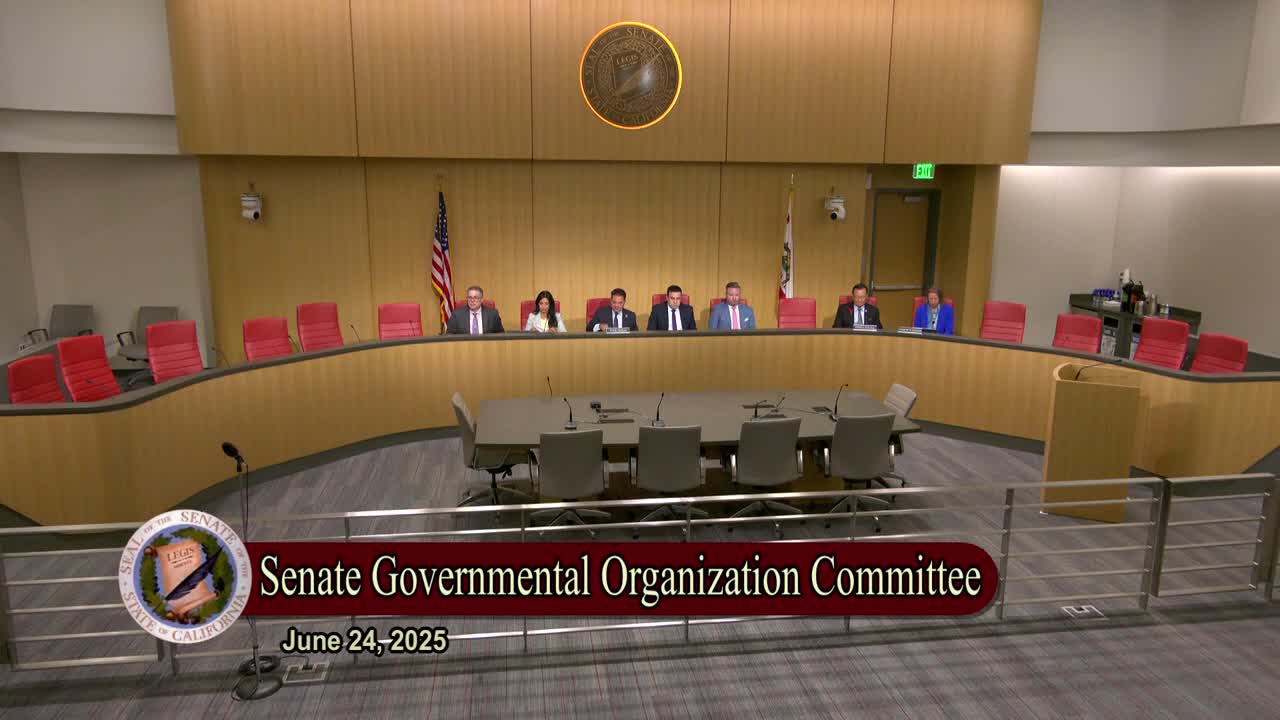 6MIN
Senate Standing Committee on Governmental Organization
 1MIN
Assembly Floor
Bill Author
Bill Co-Author(s):